Skip to content
  • Home
  • about ~ wander.essence ~
    • ~ the places i’ve been ~
    • ~ places i’ve been in the u.s.a. ~
  • Travel Destinations
    • America
      • Boston
      • Delaware
      • District of Columbia
        • Washington
      • Georgia
        • Atlanta
      • Maryland
      • New Jersey
        • Cape May
      • New York
        • Adirondacks
        • Buffalo
        • Niagara Falls
      • Pennsylvania
        • Pittsburgh
      • South Carolina
      • Tennessee
        • Nashville
      • Virginia
    • American Road Trips
      • Canyon & Cactus Road Trip
      • Florida Road Trip
        • Everglades
        • Fort Lauderdale
        • Florida Keys
        • Miami
        • St. Augustine
      • Four Corners Road Trip
        • Arizona
          • Monument Valley
          • Petrified Forest National Park
          • Sunset Crater National Monument
          • Walnut Canyon National Monument
          • Winslow
          • Wupatki National Monument
        • Colorado
          • Colorado National Monument
          • Colorado Towns
          • Great Sand Dunes National Park
          • Grand Junction
        • New Mexico
        • Utah
          • Arches National Park
          • Canyonlands
          • Navajo National Monument
          • Dead Horse Point State Park
          • Hovenweep National Monument
          • Moab
          • Valley of the Gods
          • Natural Bridges National Monument
      • Great Lakes Road Trip
        • Michigan
        • Minnesota
        • Wisconsin
      • Midwestern Triangle
        • Illinois
          • Carbondale
          • Murphysboro
        • Kentucky
          • Covington
          • Lexington
          • Louisville
        • Ohio
          • Cincinnati
      • Road Trip to Nowhere
        • Nebraska
        • North Dakota
        • South Dakota
      • Tex-New Mex Road Trip
        • Texas & New Mexico Road Trip
        • New Mexico
        • Texas
    • International Travel
      • Africa
        • african meanderings {& musings}
        • Egypt
          • Cairo
        • Ethiopia
        • Morocco
      • Asia
        • Cambodia
        • China
          • China Diaries
          • Guangxi Province
        • India
          • Rishikesh
          • Varanasi
        • Japan
          • Kyoto
        • Myanmar
        • Oman
          • a nomad in the land of nizwa
          • Nizwa
        • Singapore
        • South Korea
          • catbird in korea
        • Thailand
        • Turkey
          • Cappadocia
        • Vietnam
      • Central America
        • Costa Rica
        • El Salvador
        • Nicaragua
        • Panama
          • Bocas del Toro
          • Panama City
      • Europe
        • In Search of a Thousand Cafés
        • Croatia
          • Dalmatia
            • Istria
            • Dubrovnik
            • Plitvice Lakes National Park
            • Split
            • Zadar
            • Zagreb
        • Czech Republic
          • Český Krumlov
        • England
        • France
        • Greece
        • Hungary
          • Budapest
          • Esztergom
        • Iceland
        • Italy
          • Bergamo
          • Cinque Terre
          • The Dolomites
          • Florence
          • Rome
          • Tuscany
          • Venice
          • Verona
          • Via Francigena
        • Portugal
        • Spain
          • Camino de Santiago
            • packing list for el camino de santiago 2018
      • North America
        • Canada
          • The Maritimes
            • New Brunswick
            • Nova Scotia
            • Prince Edward Island
          • Ontario
        • Mexico
          • Guanajuato
          • Mexico City
            • Teotihuacán
          • Querétaro
          • San Miguel de Allende
      • South America
        • Colombia
        • Ecuador
          • Cuenca
          • Quito
    • how to make the most of a staycation
      • Coronavirus Coping
  • Imaginings
    • imaginings: the call to place
  • Travel Preparation
    • journeys: anticipation & preparation
  • Travel Creativity
    • on keeping a travel journal
    • on creating art from travels
      • Art Journaling
    • photography inspiration
      • Photography
    • writing prompts: prose
      • Prose
        • Fiction
        • Travel Essay
        • Travelogue
    • writing prompts: poetry
      • Poetry
  • On Journey
    • on journey: taking ourselves from here to there
  • Books & Movies
    • books | international a-z |
    • books & novels | u.s.a. |
    • books | history, spirituality, personal growth & lifestyle |
    • movies | international a-z |
    • movies | u.s.a. |
  • On Returning Home
    • on returning home
  • Annual recap
    • twenty-fifteen
    • twenty-eighteen
    • twenty-nineteen
    • twenty-twenty
    • twenty-twenty-one
    • twenty twenty-two
    • twenty twenty-three
    • twenty twenty-four
    • twenty twenty-five
  • Contact

Enter your email address to follow this blog and receive notifications of new posts by email.

Join 1,060 other subscribers
Follow ~ wander.essence ~ on WordPress.com
  • Home
  • about ~ wander.essence ~
    • ~ the places i’ve been ~
    • ~ places i’ve been in the u.s.a. ~
  • Travel Destinations
    • America
      • Boston
      • Delaware
      • District of Columbia
        • Washington
      • Georgia
        • Atlanta
      • Maryland
      • New Jersey
        • Cape May
      • New York
        • Adirondacks
        • Buffalo
        • Niagara Falls
      • Pennsylvania
        • Pittsburgh
      • South Carolina
      • Tennessee
        • Nashville
      • Virginia
    • American Road Trips
      • Canyon & Cactus Road Trip
      • Florida Road Trip
        • Everglades
        • Fort Lauderdale
        • Florida Keys
        • Miami
        • St. Augustine
      • Four Corners Road Trip
        • Arizona
          • Monument Valley
          • Petrified Forest National Park
          • Sunset Crater National Monument
          • Walnut Canyon National Monument
          • Winslow
          • Wupatki National Monument
        • Colorado
          • Colorado National Monument
          • Colorado Towns
          • Great Sand Dunes National Park
          • Grand Junction
        • New Mexico
        • Utah
          • Arches National Park
          • Canyonlands
          • Navajo National Monument
          • Dead Horse Point State Park
          • Hovenweep National Monument
          • Moab
          • Valley of the Gods
          • Natural Bridges National Monument
      • Great Lakes Road Trip
        • Michigan
        • Minnesota
        • Wisconsin
      • Midwestern Triangle
        • Illinois
          • Carbondale
          • Murphysboro
        • Kentucky
          • Covington
          • Lexington
          • Louisville
        • Ohio
          • Cincinnati
      • Road Trip to Nowhere
        • Nebraska
        • North Dakota
        • South Dakota
      • Tex-New Mex Road Trip
        • Texas & New Mexico Road Trip
        • New Mexico
        • Texas
    • International Travel
      • Africa
        • african meanderings {& musings}
        • Egypt
          • Cairo
        • Ethiopia
        • Morocco
      • Asia
        • Cambodia
        • China
          • China Diaries
          • Guangxi Province
        • India
          • Rishikesh
          • Varanasi
        • Japan
          • Kyoto
        • Myanmar
        • Oman
          • a nomad in the land of nizwa
          • Nizwa
        • Singapore
        • South Korea
          • catbird in korea
        • Thailand
        • Turkey
          • Cappadocia
        • Vietnam
      • Central America
        • Costa Rica
        • El Salvador
        • Nicaragua
        • Panama
          • Bocas del Toro
          • Panama City
      • Europe
        • In Search of a Thousand Cafés
        • Croatia
          • Dalmatia
            • Istria
            • Dubrovnik
            • Plitvice Lakes National Park
            • Split
            • Zadar
            • Zagreb
        • Czech Republic
          • Český Krumlov
        • England
        • France
        • Greece
        • Hungary
          • Budapest
          • Esztergom
        • Iceland
        • Italy
          • Bergamo
          • Cinque Terre
          • The Dolomites
          • Florence
          • Rome
          • Tuscany
          • Venice
          • Verona
          • Via Francigena
        • Portugal
        • Spain
          • Camino de Santiago
            • packing list for el camino de santiago 2018
      • North America
        • Canada
          • The Maritimes
            • New Brunswick
            • Nova Scotia
            • Prince Edward Island
          • Ontario
        • Mexico
          • Guanajuato
          • Mexico City
            • Teotihuacán
          • Querétaro
          • San Miguel de Allende
      • South America
        • Colombia
        • Ecuador
          • Cuenca
          • Quito
    • how to make the most of a staycation
      • Coronavirus Coping
  • Imaginings
    • imaginings: the call to place
  • Travel Preparation
    • journeys: anticipation & preparation
  • Travel Creativity
    • on keeping a travel journal
    • on creating art from travels
      • Art Journaling
    • photography inspiration
      • Photography
    • writing prompts: prose
      • Prose
        • Fiction
        • Travel Essay
        • Travelogue
    • writing prompts: poetry
      • Poetry
  • On Journey
    • on journey: taking ourselves from here to there
  • Books & Movies
    • books | international a-z |
    • books & novels | u.s.a. |
    • books | history, spirituality, personal growth & lifestyle |
    • movies | international a-z |
    • movies | u.s.a. |
  • On Returning Home
    • on returning home
  • Annual recap
    • twenty-fifteen
    • twenty-eighteen
    • twenty-nineteen
    • twenty-twenty
    • twenty-twenty-one
    • twenty twenty-two
    • twenty twenty-three
    • twenty twenty-four
    • twenty twenty-five
  • Contact

wander.essence

wander.essence

Home from Morocco & Italy

Home sweet home!May 10, 2019
I'm home from Morocco & Italy. :-)

Italy trip

Traveling to Italy from MoroccoApril 23, 2019
On my way to Italy!

Leaving for Morocco

Casablanca, here I come!April 4, 2019
I'm on my way to Casablanca. :-)

Home from our Midwestern Triangle Road Trip

Driving home from Lexington, KYMarch 6, 2019
Home sweet home from the Midwest. :-)

Leaving for my Midwestern Triangle Road Trip

Driving to IndianaFebruary 24, 2019
Driving to Indiana.

Returning home from Portugal

Home sweet home from Spain & Portugal!November 6, 2018
Home sweet home from Spain & Portugal!

Leaving Spain for Portugal

A rendezvous in BragaOctober 26, 2018
Rendezvous in Braga, Portgual after walking the Camino de Santiago. :-)

Leaving to walk the Camino de Santiago

Heading to Spain for the CaminoAugust 31, 2018
I'm on my way to walk 790 km across northern Spain on the Camino de Santiago.

Home from my Four Corners Road Trip

Home Sweet Home from the Four CornersMay 25, 2018
Home Sweet Home from the Four Corners. :-)

My Four Corners Road Trip!

Hitting the roadMay 1, 2018
I'm hitting the road today for my Four Corners Road Trip: CO, UT, AZ, & NM!

Recent Posts

  • the january cocktail hour: a belated nicaraguan christmas & a trip to costa rica’s central pacific coast February 3, 2026
  • bullet journals as a life repository: bits of mine from 2025 & 2026 January 4, 2026
  • twenty twenty-five: nicaragua {twice}, mexico & seven months in costa rica {with an excursion to panama} December 31, 2025
  • the december cocktail hour: mike’s surgery, a central highlands road trip & christmas in costa rica December 31, 2025
  • top ten books of 2025 December 28, 2025
  • the november cocktail hour: a trip to panama, a costa rican thanksgiving & a move to lake arenal condos December 1, 2025
  • panama: the caribbean archipelago of bocas del toro November 24, 2025
  • a trip to panama city: el cangrejo, casco viejo & the panama canal November 22, 2025
  • the october cocktail hour: a trip to virginia, a NO KINGS protest, two birthday celebrations, & a cattle auction October 31, 2025
  • the september cocktail hour: a nicoya peninsula getaway, a horseback ride to la piedra del indio waterfalls & a fall bingo card September 30, 2025
  • the august cocktail hour: local gatherings, la fortuna adventures, & a “desfile de caballistas”  September 1, 2025
  • the july cocktail hour: a trip to ometepe, nicaragua; a beach getaway to tamarindo; & homebody activities August 3, 2025
  • the june cocktail hour: our first month in costa rica June 30, 2025

Archives

  • February 2026
  • January 2026
  • December 2025
  • November 2025
  • October 2025
  • September 2025
  • August 2025
  • June 2025
  • May 2025
  • April 2025
  • March 2025
  • February 2025
  • January 2025
  • December 2024
  • November 2024
  • October 2024
  • September 2024
  • August 2024
  • July 2024
  • June 2024
  • May 2024
  • April 2024
  • March 2024
  • February 2024
  • January 2024
  • December 2023
  • November 2023
  • September 2023
  • August 2023
  • June 2023
  • May 2023
  • April 2023
  • March 2023
  • February 2023
  • January 2023
  • December 2022
  • November 2022
  • October 2022
  • September 2022
  • August 2022
  • June 2022
  • May 2022
  • April 2022
  • March 2022
  • February 2022
  • January 2022
  • December 2020
  • November 2020
  • October 2020
  • September 2020
  • August 2020
  • July 2020
  • June 2020
  • May 2020
  • April 2020
  • March 2020
  • February 2020
  • January 2020
  • December 2019
  • November 2019
  • October 2019
  • September 2019
  • August 2019
  • July 2019
  • June 2019
  • May 2019
  • April 2019
  • March 2019
  • February 2019
  • January 2019
  • December 2018
  • November 2018
  • October 2018
  • September 2018
  • August 2018
  • July 2018
  • June 2018
  • May 2018
  • April 2018
  • March 2018

Blog Stats

  • 126,392 hits
February 2026
M T W T F S S
 1
2345678
9101112131415
16171819202122
232425262728  
« Jan    

Categories

  • Aït-Ben-Haddou (4)
  • Abingdon (1)
  • Abiquiu (1)
  • Acquapendente (2)
  • Adirondacks (3)
  • Africa (39)
  • Ainokura (2)
  • Alabama (1)
  • Alajuela (3)
  • Alamogordo (1)
  • Albuquerque (3)
  • Alexandria (1)
  • Alma (1)
  • Alpe di Siusi (1)
  • Alsace-Lorraine (1)
  • Alto Adige Wine Road (1)
  • Amarante (2)
  • America (69)
  • American Bison (1)
  • American books (22)
  • American Road Trips (255)
  • American Visionary Art Museum (1)
  • Americana (1)
  • Andrew Johnson National Historic Site (1)
  • Annapolis Valley (1)
  • Annual recap (10)
  • Anticipation (45)
  • Antietam National Battlefield (2)
  • Aramak Tour (1)
  • Arches National Park (8)
  • architecture (1)
  • Arena Stage (1)
  • Arizona (28)
  • Aroumd (2)
  • Art Journaling (9)
  • Asciano (1)
  • Asia (41)
  • Assisi (1)
  • Astorga (2)
  • Atapuerca (1)
  • Athens (1)
  • Atlanta (7)
  • Austin (2)
  • Aveiro (2)
  • Azofra (2)
  • Aztec Ruins National Monument (1)
  • óbidos (1)
  • Baños (2)
  • Badlands National Park (1)
  • Bagan (1)
  • Bagno Vignoni (2)
  • Bajos del Toro (1)
  • Balcony House (1)
  • Bali (9)
  • Baltimore (7)
  • Baltimore Museum of Art (1)
  • Bandelier National Monument (1)
  • Bangkok (2)
  • Bear Butte (1)
  • Beatrice (1)
  • Beihai (1)
  • Belize (2)
  • Beppu (1)
  • Bergamo (3)
  • Big Bend National Park (2)
  • Bijagua (2)
  • Bismarck (3)
  • Bismarck Art Alley (1)
  • Bitchu-Takahashi (1)
  • Blue Falls of Costa Rica (1)
  • Bluff (1)
  • Bluff Fort Historic Site (1)
  • Bocas del Toro (2)
  • Bocas Town (1)
  • Bogotá (4)
  • Bolsena (2)
  • Bolzano (2)
  • Bonanzaville (1)
  • Books (47)
  • Bosque de Chapultepec (1)
  • Boston (2)
  • Boulder (1)
  • Boys Town (1)
  • Braga (3)
  • Brookings (1)
  • Brunico/Bruneck (1)
  • Budapest (1)
  • Buffalo (9)
  • Bukit Peninsula (1)
  • Bullet journaling (1)
  • Buonconvento (2)
  • Burano (2)
  • Burgos (4)
  • Cañas (2)
  • Cabo da Roca (1)
  • Caddo Lake (2)
  • Cairo (3)
  • California (4)
  • Cambodia (4)
  • Cambridge (1)
  • Camino de Santiago (64)
  • Campagnano di Roma (2)
  • Canada (15)
  • Canyon & Cactus Road Trip (4)
  • Canyon de Chelly (3)
  • Canyonlands (3)
  • Cape May (7)
  • Cappadocia (2)
  • Capranica (1)
  • Carbondale (9)
  • Carlsbad (1)
  • Carlsbad Caverns National Park (2)
  • Cartagena (4)
  • Casablanca (9)
  • Casco Viejo (1)
  • Castellina in Chianti (1)
  • Catarata del Toro (1)
  • Catskill Mountains (1)
  • Cedar Creek & Belle Grove National Historical Park (1)
  • Central America (43)
  • Central Highlands (1)
  • Centro Histórico (1)
  • Chaco Culture National Historical Park (4)
  • challenge: a call to place (38)
  • Channel Islands National Park (3)
  • Chapel in the Hills (1)
  • Charles Pinckney National Historic Site (1)
  • Charleston (11)
  • Chefchaouen (5)
  • Cheyenne (2)
  • Cheyenne Depot Museum (1)
  • Cheyenne Frontier Days Old West Museum (1)
  • Chicago (3)
  • Chillicothe (2)
  • Chimayó (1)
  • Chimney Rock (1)
  • China (8)
  • Chinatown (1)
  • Christmas (5)
  • Churchill Downs (1)
  • Cihuatán (1)
  • Cincinnati (15)
  • Cincinnati Art Museum (1)
  • Cinque Terre (10)
  • Cinquera (1)
  • Civita di Bagnoregio (1)
  • Cloudcroft (1)
  • Cocktail Hour (23)
  • Cocoa Beach (2)
  • Coeur d'Alene (1)
  • Collalbo/Klobenstein (1)
  • Colle di Val d'Elsa (2)
  • Colombia (9)
  • Colorado (31)
  • Colorado National Monument (3)
  • Colorado Towns (6)
  • Colorful (1)
  • Condesa (1)
  • Connecticut (1)
  • Cordoba (1)
  • Coronavirus Coping (14)
  • Cortina d’Ampezzo (1)
  • Costa Nova (1)
  • Costa Rica (21)
  • Covington (7)
  • Cowgirls of the West (1)
  • Coyoacán (1)
  • Crazy Horse Memorial (1)
  • Crestone (1)
  • Crete (1)
  • Croatia (3)
  • Cuenca (3)
  • Curves (1)
  • Custer (1)
  • Custer State Park (1)
  • Czech Republic (1)
  • Dakota Dinosaur Museum (1)
  • Dali (1)
  • Dalmatia (1)
  • De Smet (1)
  • Dead Horse Point State Park (1)
  • Dead Sea (1)
  • Deadwood (3)
  • decay (1)
  • Delaware (9)
  • Delphi (1)
  • Denver (1)
  • destinations (44)
  • Devils Tower National Monument (2)
  • Diamante Eco Adventure Park (1)
  • Dickinson (1)
  • District of Columbia (22)
  • Dobbiaco/Toblach (1)
  • Dolores Hidalgo (1)
  • Drawing (7)
  • Dubrovnik (1)
  • Durango (1)
  • Dwight D. Eisenhower Memorial (1)
  • Ecuador (14)
  • Egypt (3)
  • El Cangrejo (1)
  • El Salvador (6)
  • El-Khorbat (1)
  • Embudo (1)
  • Enchanted Rock State Natural Area (1)
  • England (3)
  • Erg Chebbi (3)
  • Española (1)
  • Essaouira (4)
  • Esztergom (1)
  • Ethiopia (3)
  • Europe (121)
  • Evan Williams Bourbon Experience (1)
  • Everglades (3)
  • Evora (1)
  • Fargo (2)
  • Fès (3)
  • Fenghuang (1)
  • Fez (2)
  • Fiction (6)
  • Findlay Market (1)
  • Finisterre (2)
  • Finland (1)
  • Fira (1)
  • Fiumicino (2)
  • Flatirons Vista Trail (1)
  • Flight 93 National Memorial (1)
  • Florence (8)
  • Florida Keys (3)
  • Florida Road Trip (5)
  • Formello (1)
  • Fort Abraham Lincoln State Park (1)
  • Fort Atkinson State HIstorical Park (1)
  • Fort Calhoun (1)
  • Fort Collins (2)
  • Fort Lauderdale (2)
  • Fort Mandan (1)
  • Fort McHenry National Monument and Historic Shrine (1)
  • Fort Robinson State Park (1)
  • Fort Sumter and Fort Moultrie National Historical Park (1)
  • Fort Union Trading Post National Historic Site (1)
  • Four Corners Road Trip (74)
  • France (7)
  • Frazier Museum (1)
  • Fredericksburg (1)
  • Fucecchio (1)
  • Fundy National Park (1)
  • G Adventures Tour (10)
  • Gallina (2)
  • Gambassi Terme (2)
  • Gateway Arch National Park (1)
  • Gavin's Point Dam (1)
  • George Rogers Clark National Historical Park (2)
  • Georgia (7)
  • Gerald R. Ford Birthsite (1)
  • Germany (1)
  • Gettysburg National Military Park (1)
  • Goals (3)
  • Gothenburg (1)
  • Grand Junction (1)
  • Great Falls (2)
  • Great Lakes Road Trip (6)
  • Great Sand Dunes National Park (2)
  • Grecia (1)
  • Greece (3)
  • Greeneville (1)
  • Greenville (1)
  • Greve in Chianti (1)
  • Guadalupe Mountains National Park (1)
  • Guanacaste (11)
  • Guanajuato (5)
  • Guangxi Province (4)
  • Guatapé (5)
  • Guatemala (2)
  • Guilin (1)
  • Guimarães (2)
  • Halifax (3)
  • Halong Bay (1)
  • Hanoi (1)
  • Heidelberg (1)
  • Hida Furukawago (2)
  • High Road to Taos (1)
  • Hikes & Walks (202)
  • HISTORIC NAKASENDO TRAIL (1)
  • Hoa Lu (1)
  • Holbrook (1)
  • Holidays (6)
  • Hong Kong (1)
  • Hopewell Culture National Historical Park (2)
  • Hopewell Rocks Provincial Park (1)
  • Hotel Hacienda Guachipelin (1)
  • Hovenweep National Monument (1)
  • Hubbell Trading Post (1)
  • Hungary (1)
  • Iceland (1)
  • Idaho (1)
  • Illinois (17)
  • Imaginings (45)
  • Imlil (2)
  • India (7)
  • Indiana (6)
  • Indonesia (9)
  • Ingapirca (2)
  • Inle Lake (1)
  • Innichen/San Candido (1)
  • International Books (31)
  • International Peace Garden (1)
  • International Travel (335)
  • Iowa (1)
  • Isla Bastimentos (1)
  • Isla Carenero (1)
  • Isla Colón (1)
  • Istanbul (2)
  • Istria (1)
  • Italy (62)
  • Jamestown (1)
  • Japan (20)
  • Japan Alps (4)
  • Jefferson (1)
  • Jewel Cave National Monument (1)
  • Jimbaran (1)
  • Joachim Regional Museum & Prairie Outpost Park (1)
  • Johnstown Flood National Memorial (1)
  • Jordan (3)
  • Joseph N. Nicollet Tower and Interpretive Center (1)
  • Joshua Tree National Park (3)
  • Joslyn Art Museum (1)
  • Journaling (9)
  • Joya de Cerén (1)
  • Kansas (2)
  • Kathmandu (2)
  • Kentucky (17)
  • KMAC (1)
  • Knife River Indian Villages (2)
  • Kunming (1)
  • Kurashiki Bikan Historical Quarter (1)
  • Kyoto (5)
  • Kyushu (4)
  • La Fortuna (2)
  • La Giustiniana (2)
  • La Peñol (1)
  • La Romita (1)
  • La Spezia (6)
  • Lago d'Iseo (1)
  • Lago di Garda (1)
  • Lago di Garda (1)
  • Laguna de Apoyo (1)
  • Laguna Quilotoa (2)
  • Languedoc-Roussillon (1)
  • Latacunga (3)
  • laundry (1)
  • Lazio (6)
  • León (2)
  • León (2)
  • Leeds (1)
  • Lens-Artists (2)
  • Lewis & Clark Interpretive Center (2)
  • Lexington (8)
  • Lijiang (1)
  • Lincoln Boyhood Home National Memorial (2)
  • Lincoln City (3)
  • lines (1)
  • Lisbon (8)
  • Logroño (3)
  • Lombardy (3)
  • Longji Rice Terraces (1)
  • Longreads (6)
  • Looking ahead (3)
  • Lorca (2)
  • Lory State Park (1)
  • Los Alamos (3)
  • Los Angeles (3)
  • Louisiana (1)
  • Louisville (13)
  • Low Road to Taos (1)
  • Lucca (3)
  • Luckenbach (1)
  • Lunenburg (1)
  • Madison (1)
  • Madison County Historical Society Museum (1)
  • Magnolia Plantations & Gardens (1)
  • Magome-juku (1)
  • Mahone Bay (1)
  • Maine (1)
  • Managua (5)
  • Manarola (1)
  • Mandalay (1)
  • Mandan (1)
  • Manhattan Project National Historical Park (1)
  • Mapmaking (2)
  • Marfa (1)
  • Market towns near Cuenca (2)
  • markets (1)
  • Marrakech (7)
  • Maryland (11)
  • Massachusetts (2)
  • Matagalpa (2)
  • Mathews (1)
  • Meadowlark Botanical Gardens (4)
  • Medellín (5)
  • Medora (5)
  • Memoir (4)
  • Merzouga (5)
  • Mesa Verde National Park (4)
  • Meteora (1)
  • Mexico (11)
  • Mexico City (7)
  • Miami (3)
  • Michigan (4)
  • Middletown (1)
  • Midwestern Triangle (30)
  • Minas Basin (1)
  • Mine of Santa Brigida (1)
  • Mineral de Pozos (1)
  • Ministers Island (1)
  • Minnesota (1)
  • Minnesota (3)
  • Minot (1)
  • Minuteman Missile National Historic Site (1)
  • Mirador de Catarina (1)
  • Mississippi (1)
  • Missouri (4)
  • Missouri National Recreation River (1)
  • Missouri River Basin Lewis & Clark Center (2)
  • Mitchell (1)
  • Moab (2)
  • Montalcino (1)
  • Montana (1)
  • Montefiascone (1)
  • Montefioralle (1)
  • Montepulciano (1)
  • Monteriggioni (3)
  • Monteroni d'Arbia (1)
  • Monterosi (1)
  • Monterosso al Mare (2)
  • Monteverde (1)
  • Monthly recap (23)
  • Monument Valley (1)
  • Moorhead (1)
  • Morocco (37)
  • Mount Pleasant (1)
  • Mt. Rushmore National Memorial (1)
  • Mulberry Bend Overlook (1)
  • Murano (2)
  • Murphysboro (10)
  • Muruzabal (1)
  • Muscat (1)
  • Museum of the Shenandoah Valley (1)
  • Muxia (2)
  • Myanmar (2)
  • Nagoya (4)
  • Nagoya Castle (2)
  • Nanning (3)
  • Naoshima (1)
  • Narita (5)
  • Nashville (8)
  • National Gallery of Art (2)
  • natural bridges (1)
  • Natural Bridges National Monument (2)
  • Navajo National Monument (2)
  • Nebraska (21)
  • Nepal (4)
  • New Belgium Brewing (1)
  • New Brunswick (6)
  • New Castle (2)
  • New England Road Trip (2)
  • New Hampshire (2)
  • New Jersey (7)
  • New Mexico (12)
  • New Mexico (1)
  • New Mexico (12)
  • New York (16)
  • Newport (1)
  • Niagara Falls (7)
  • Nicaragua (25)
  • Nice (1)
  • Nicoya Peninsula (1)
  • Nizwa (3)
  • Norfolk (1)
  • Normandy (1)
  • North America (22)
  • North Dakota (26)
  • North Dakota Heritage Center (2)
  • North Platte (1)
  • Norway (1)
  • Nosara (1)
  • Nova Scotia (5)
  • Nuevo Arenal (1)
  • Nusa Dua (1)
  • Oakland (1)
  • Oakton (23)
  • Ogallala (1)
  • Ohio (17)
  • Ohkay Owingeh Pueblo (1)
  • Oia (1)
  • Okayama (4)
  • Oklahoma (1)
  • Oklahoma City (1)
  • Old Market (1)
  • Omaha (5)
  • Oman (4)
  • Ometepe (15)
  • On Journey (44)
  • On Returning Home (40)
  • On-a-Slant Village (1)
  • Ontario (4)
  • Orisson (2)
  • Ortesei/St. Ulrich (1)
  • Orvieto (1)
  • Otavalo (2)
  • Ouray (1)
  • Pagosa Springs (1)
  • Pamplona (2)
  • Panama (4)
  • Panama Canal (2)
  • Panama City (2)
  • Panchimalco (1)
  • Panzano in Chianti (1)
  • Paris (2)
  • Parque Nacional Cajas (2)
  • Parque Nacional Cotopaxi (2)
  • Parque Nacional Volcán Poás (1)
  • Parque Nacional Volcán Tenorio (2)
  • Parque Nactional Volcán Rincón de la Vieja (2)
  • pastels (1)
  • Patterns (3)
  • Peña de Bernal (1)
  • Pecos National Historical Park (1)
  • Peniche (1)
  • Pennsylvania (14)
  • Perugia (2)
  • Petrified Forest National Park (5)
  • petroglyphs (1)
  • Phnom Penh (3)
  • Photography (266)
  • Phuket (2)
  • Pilgrimage (75)
  • Ping'An (1)
  • Pisa (1)
  • Pittsburgh (11)
  • Playa Costa del Sol (1)
  • Playa Hermosa (3)
  • Plitvice Lakes National Park (1)
  • Poetry (33)
  • Pokhara (2)
  • Polanco (1)
  • Ponca State Park (1)
  • Ponte a Cappiano (1)
  • Porto (4)
  • Portovenere (1)
  • Portugal (25)
  • Prairie Homestead Historic Site (1)
  • Prince Edward Island (2)
  • Prose (207)
  • Puerta del Diablo (1)
  • Querétaro (4)
  • Quito (2)
  • Rapid City (6)
  • Red Cloud (1)
  • Redlin Art Center (1)
  • Regent (1)
  • Rehoboth (2)
  • Renon (1)
  • Renon/Ritten Plateau (1)
  • Reverse culture shock (2)
  • Richmond (7)
  • Riobamba (2)
  • Rishikesh (2)
  • Rittner Horn (1)
  • Riverbend Park (1)
  • Road Trip to Nowhere (63)
  • Rocky Mountain National Park (1)
  • Roma Norte (2)
  • Rome (16)
  • Roof Squares (1)
  • Route 66 (1)
  • Ruidoso (1)
  • Sackville (1)
  • Sahara (3)
  • Saint John (1)
  • Saint-Jean-Pied-de-Port (4)
  • San Ángel (1)
  • San Francisco (2)
  • San Gimignano (5)
  • San José (2)
  • San Juan del Sur (2)
  • San Juan Skyway Scenic Byway (3)
  • San Lorenzo Nuovo (1)
  • San Miguel de Allende (6)
  • San Miniato (1)
  • San Quirico d'Orcia (4)
  • San Salvador (5)
  • San Sebastián Bernal (1)
  • San Simeon (2)
  • Sant'Antimo (1)
  • Santa Barbara (2)
  • Santa Fe (5)
  • Santa Maddalena (1)
  • Santa Rosa de Lima (1)
  • Santiago (4)
  • Santo Domingo de la Calzada (2)
  • Santorini (1)
  • Sarchí (1)
  • Sámara (1)
  • Scandinavian Heritage Center (1)
  • Scotts Bluff National Monument (1)
  • Semarapura (2)
  • Shanghai (1)
  • Shenandoah National Park (1)
  • Shepherdstown (1)
  • Shibao Shan (2)
  • Shikoku 88-Temple Pilgrimage Route (4)
  • Shirakawa-go (2)
  • Shreveport (1)
  • Sidemen (1)
  • Siem Reap (3)
  • Siena (2)
  • Silverton (1)
  • Singapore (3)
  • Sintra (2)
  • Sioux Falls (2)
  • Sisseton (1)
  • Smithsonian American Art Museum (SAAM) (5)
  • Smithsonian National Museum of Asian Art (2)
  • South America (25)
  • South Carolina (12)
  • South Dakota (24)
  • South Dakota Art Museum (1)
  • South Korea (5)
  • Spain (68)
  • Spearfish (2)
  • Spello (1)
  • Spirit Mound Historic Prairie (1)
  • Split (1)
  • Springfield (3)
  • St. Andrews by-the-Sea (1)
  • St. Augustine (2)
  • St. Louis (2)
  • Stanton (1)
  • Staycation (8)
  • Stonewall (1)
  • Street Art (2)
  • Sturgis (2)
  • Suchitoto (1)
  • Sullivan's Island (2)
  • Sunset Crater National Monument (1)
  • Sunsets (1)
  • Supreme Court of the United States (2)
  • Sweden (1)
  • Swedish Heritage Center (1)
  • Takayama (3)
  • Tam Coc (1)
  • Tamarindo (1)
  • Tangier (3)
  • Taos (4)
  • Tejutepeque (2)
  • Telluride (2)
  • Tennessee (10)
  • Teotihuacán (1)
  • Terlingua (1)
  • Termas de Papallacta (2)
  • Tex-New Mex Road Trip (16)
  • Texas (8)
  • Texas & New Mexico Road Trip (20)
  • Thailand (3)
  • Thanksgiving (1)
  • The Battery (1)
  • The Dolomites (4)
  • The Enchanted Highway (1)
  • The Journey Museum (1)
  • The Maritimes (10)
  • The Veneto (5)
  • The Walters Art Museum (1)
  • Theodore Roosevelt National Park (4)
  • Tigua (2)
  • Tilarán (11)
  • Tinghir (2)
  • Toadstool Geologic Park (1)
  • Todra Gorge (1)
  • Tokushima (1)
  • Tokyo (6)
  • Topeka (1)
  • Torres del Rio (2)
  • Travel (657)
  • Travel Creativity (363)
  • Travel Essay (201)
  • Travel Inspiration (45)
  • Travel photography (245)
  • Travel Preparation (49)
  • Travel videos (48)
  • Travelogue (202)
  • Trentino & South Tyrol (5)
  • Trinidad & Tobago (2)
  • Tronadora (7)
  • Truchas (1)
  • Tsumago-juku (1)
  • Turkey (5)
  • Tuscany (31)
  • twenty twenty-five (1)
  • twenty twenty-four (1)
  • twenty twenty-three (1)
  • twenty twenty-two (1)
  • twenty twenty-two (2)
  • twenty-eighteen (1)
  • twenty-fifteen (1)
  • twenty-nineteen (1)
  • twenty-twenty (2)
  • twenty-twenty-one (1)
  • Ubud (1)
  • Uluwatu (1)
  • Ulysses S Grant National Historic Site (1)
  • Umbria (10)
  • Union Market (2)
  • United Arab Emirates (UAE) (2)
  • Utah (26)
  • Valley City (1)
  • Valley of the Gods (1)
  • Varanasi (2)
  • Vatican City (1)
  • Vatican Museums (1)
  • Venice (2)
  • Venice (5)
  • Ventosa (2)
  • Vermillion (1)
  • Vermont (2)
  • Vernazza (1)
  • Verona (2)
  • Vetralla (1)
  • Via Francigena (15)
  • Vicksburg (1)
  • Vienna (10)
  • Vietnam (4)
  • Villamayor de Monjardín (2)
  • Villamayor del Rio (1)
  • Vincennes (3)
  • Virginia (41)
  • Virginia Museum of Fine Arts (5)
  • Viterbo (2)
  • Volcán Chimborazo (2)
  • Volcán Cotopaxi (2)
  • Volterra (2)
  • Volubilis (1)
  • Wall (4)
  • Walnut Canyon National Monument (1)
  • Washburn (2)
  • Washington (20)
  • Watertown (2)
  • Watford City (1)
  • West Virginia (1)
  • White Sands National Park (2)
  • Wigwam Motel (1)
  • Wilber (1)
  • Wildlife (1)
  • Wildwood (3)
  • William Howard Taft National Historic Site (1)
  • Wilmington (3)
  • Winchester (1)
  • Wind Cave National Park (1)
  • Window Rock Navajo Tribal Park (1)
  • Winslow (3)
  • Wisconsin (2)
  • Writing (248)
  • Wupatki National Monument (2)
  • Wyoming (6)
  • Xi'an (1)
  • Yangon (1)
  • Yangshuo (1)
  • Yankton (1)
  • Yokohama (4)
  • Yorktown (2)
  • Yufuin (1)
  • Yunnan Province (2)
  • Zadar (1)
  • Zagreb (1)
  • Zarcero (1)
  • Zhangjiajie (1)
  • Ōsu Kannon Temple (2)
  • Český Krumlov (1)

Africa America American books American Road Trips Annual recap Anticipation Arches National Park Arizona Art Journaling Asia Bali Books Buffalo Camino de Santiago Canada Carbondale Casablanca Central America challenge: a call to place Charleston China Cincinnati Cinque Terre Cocktail Hour Colombia Colorado Coronavirus Coping Costa Rica Delaware destinations District of Columbia Ecuador Europe Four Corners Road Trip G Adventures Tour Guanacaste Hikes & Walks Illinois Imaginings Indonesia International Books International Travel Italy Japan Journaling Kentucky Louisville Maryland Mexico Midwestern Triangle Monthly recap Morocco Murphysboro Nashville Nebraska New Mexico New York Nicaragua North America North Dakota Oakton Ohio Ometepe On Journey On Returning Home Pennsylvania Photography Pilgrimage Pittsburgh Poetry Portugal Prose Road Trip to Nowhere Rome South America South Carolina South Dakota Spain Tennessee Tex-New Mex Road Trip Texas & New Mexico Road Trip The Maritimes Tilarán Travel Travel Creativity Travel Essay Travel Inspiration Travelogue Travel photography Travel Preparation Travel videos Tuscany Umbria Utah Via Francigena Vienna Virginia Washington Writing

Pages

  • about ~ wander.essence ~
  • books & novels | u.s.a. |
  • books | history, spirituality, personal growth & lifestyle |
  • books | international a-z |
  • how to make the most of a staycation
  • movies | international a-z |
  • movies | u.s.a. |
  • on creating art from travels
  • on keeping a travel journal
  • packing list for el camino de santiago 2018
  • photography inspiration
  • writing prompts: poetry
  • writing prompts: prose
  • ~ places i’ve been in the u.s.a. ~
  • ~ the places i’ve been ~
  • Contact

Translate

Goodreads

Blogs I Follow

Unknown's avatar
Unknown's avatar
Unknown's avatar
Unknown's avatar
Unknown's avatar
Unknown's avatar
Unknown's avatar
Unknown's avatar
Unknown's avatar
Unknown's avatar
Unknown's avatar
Unknown's avatar
Unknown's avatar
Unknown's avatar
Unknown's avatar
Unknown's avatar

Top Posts & Pages

  • the call to place: japan
  • Contact
  • poetic journeys: A R I Z O N A
  • utah: points southwest
  • of hoodoos & badlands
  • norfolk, nebraska: childhood home of johnny carson
  • jude's photo challenge: being creative with depth of field
  • croatia: dalmatia
  • hopping on & hopping off through lisbon
  • three days in chicago

wander.essence

wander.essence
  • Home
  • about ~ wander.essence ~
  • Travel Destinations
  • Imaginings
  • Travel Preparation
  • Travel Creativity
  • On Journey
  • Books & Movies
  • On Returning Home
  • Annual recap
  • Contact

~ wander.essence ~

where travel meets art

  • Home
  • about ~ wander.essence ~
    • ~ the places i’ve been ~
    • ~ places i’ve been in the u.s.a. ~
  • Travel Destinations
    • America
      • Boston
      • Delaware
      • District of Columbia
        • Washington
      • Georgia
        • Atlanta
      • Maryland
      • New Jersey
        • Cape May
      • New York
        • Adirondacks
        • Buffalo
        • Niagara Falls
      • Pennsylvania
        • Pittsburgh
      • South Carolina
      • Tennessee
        • Nashville
      • Virginia
    • American Road Trips
      • Canyon & Cactus Road Trip
      • Florida Road Trip
        • Everglades
        • Fort Lauderdale
        • Florida Keys
        • Miami
        • St. Augustine
      • Four Corners Road Trip
        • Arizona
          • Monument Valley
          • Petrified Forest National Park
          • Sunset Crater National Monument
          • Walnut Canyon National Monument
          • Winslow
          • Wupatki National Monument
        • Colorado
          • Colorado National Monument
          • Colorado Towns
          • Great Sand Dunes National Park
          • Grand Junction
        • New Mexico
        • Utah
          • Arches National Park
          • Canyonlands
          • Navajo National Monument
          • Dead Horse Point State Park
          • Hovenweep National Monument
          • Moab
          • Valley of the Gods
          • Natural Bridges National Monument
      • Great Lakes Road Trip
        • Michigan
        • Minnesota
        • Wisconsin
      • Midwestern Triangle
        • Illinois
          • Carbondale
          • Murphysboro
        • Kentucky
          • Covington
          • Lexington
          • Louisville
        • Ohio
          • Cincinnati
      • Road Trip to Nowhere
        • Nebraska
        • North Dakota
        • South Dakota
      • Tex-New Mex Road Trip
        • Texas & New Mexico Road Trip
        • New Mexico
        • Texas
    • International Travel
      • Africa
        • african meanderings {& musings}
        • Egypt
          • Cairo
        • Ethiopia
        • Morocco
      • Asia
        • Cambodia
        • China
          • China Diaries
          • Guangxi Province
        • India
          • Rishikesh
          • Varanasi
        • Japan
          • Kyoto
        • Myanmar
        • Oman
          • a nomad in the land of nizwa
          • Nizwa
        • Singapore
        • South Korea
          • catbird in korea
        • Thailand
        • Turkey
          • Cappadocia
        • Vietnam
      • Central America
        • Costa Rica
        • El Salvador
        • Nicaragua
        • Panama
          • Bocas del Toro
          • Panama City
      • Europe
        • In Search of a Thousand Cafés
        • Croatia
          • Dalmatia
            • Istria
            • Dubrovnik
            • Plitvice Lakes National Park
            • Split
            • Zadar
            • Zagreb
        • Czech Republic
          • Český Krumlov
        • England
        • France
        • Greece
        • Hungary
          • Budapest
          • Esztergom
        • Iceland
        • Italy
          • Bergamo
          • Cinque Terre
          • The Dolomites
          • Florence
          • Rome
          • Tuscany
          • Venice
          • Verona
          • Via Francigena
        • Portugal
        • Spain
          • Camino de Santiago
            • packing list for el camino de santiago 2018
      • North America
        • Canada
          • The Maritimes
            • New Brunswick
            • Nova Scotia
            • Prince Edward Island
          • Ontario
        • Mexico
          • Guanajuato
          • Mexico City
            • Teotihuacán
          • Querétaro
          • San Miguel de Allende
      • South America
        • Colombia
        • Ecuador
          • Cuenca
          • Quito
    • how to make the most of a staycation
      • Coronavirus Coping
  • Imaginings
    • imaginings: the call to place
  • Travel Preparation
    • journeys: anticipation & preparation
  • Travel Creativity
    • on keeping a travel journal
    • on creating art from travels
      • Art Journaling
    • photography inspiration
      • Photography
    • writing prompts: prose
      • Prose
        • Fiction
        • Travel Essay
        • Travelogue
    • writing prompts: poetry
      • Poetry
  • On Journey
    • on journey: taking ourselves from here to there
  • Books & Movies
    • books | international a-z |
    • books & novels | u.s.a. |
    • books | history, spirituality, personal growth & lifestyle |
    • movies | international a-z |
    • movies | u.s.a. |
  • On Returning Home
    • on returning home
  • Annual recap
    • twenty-fifteen
    • twenty-eighteen
    • twenty-nineteen
    • twenty-twenty
    • twenty-twenty-one
    • twenty twenty-two
    • twenty twenty-three
    • twenty twenty-four
    • twenty twenty-five
  • Contact
  • Travel

three days in chicago

wanderessence1025's avatar wanderessence1025 January 17, 2022

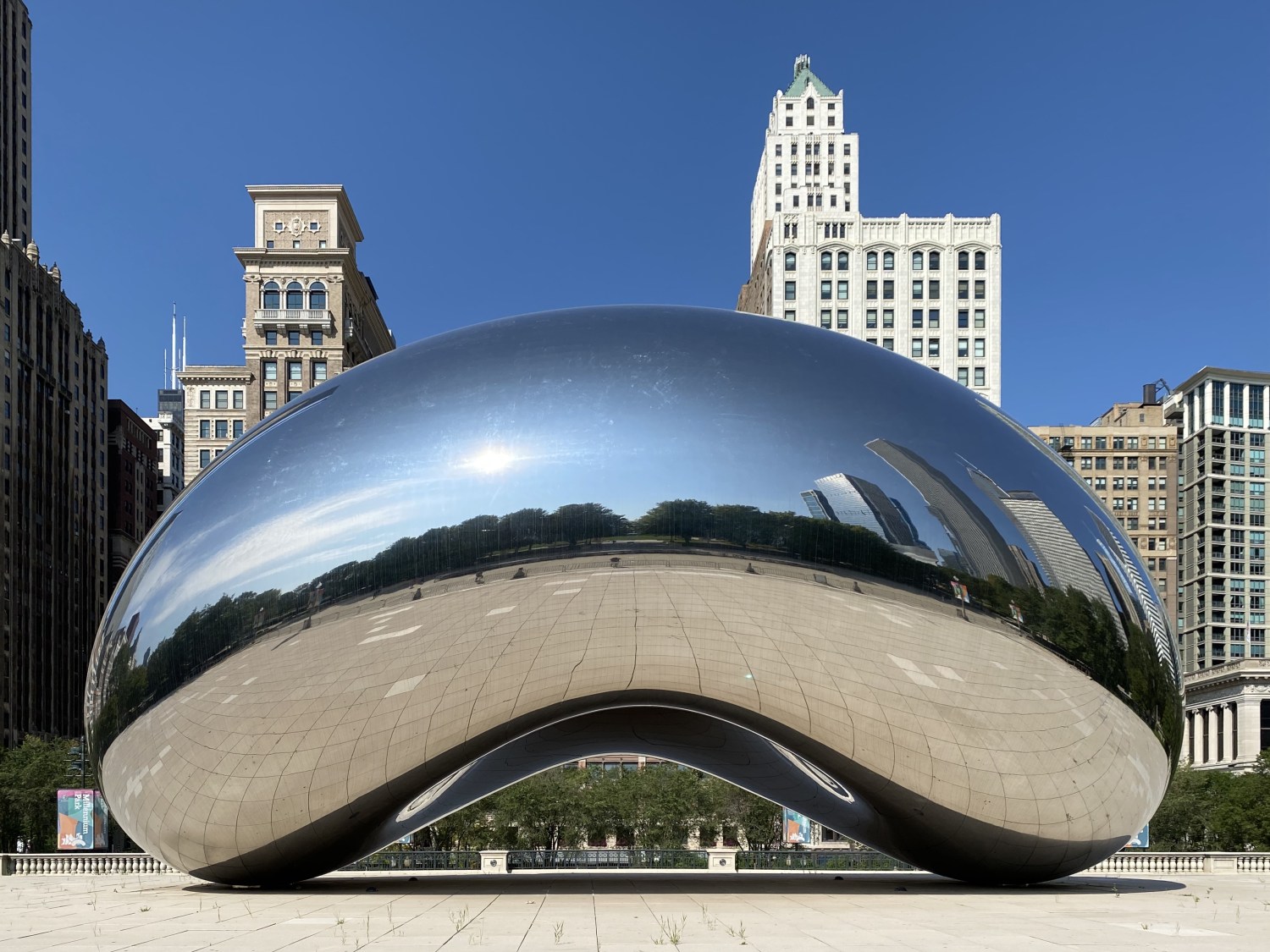
Chicago is a city: of soaring and gleaming architecture, of towering views, of Lake Michigan shoreline, of Crown Fountain, of the mirrored “Bean,” of serpentine bridges, of The Chicago Theatre in “Everyone’s Neighborhood,” of Marina City’s corncobs, of pizza, Italian food and hatch chili, of art from Gauguin to Calder to El Greco, of temples of worship, of colorful murals and diverse neighborhoods, of Frank Lloyd Wright and Ernest Hemingway, of rusted figures walking in a crowd through Grant Park, of the University of Chicago, of the old Pullman factory with its integrated town and amenities, of the Chicago Cubs, and of the impossibly turquoise Chicago River.

Our top 10 sights to see in Chicago were:

10) Riverwalk
9) Bahá’i Temple House of Worship
8) Pullman National Monument
7) Ukrainian Village
6) Pilsen murals
5) Agora in Grant Park
4) The Art Institute
3) Chicago 360
2) A lakefront bicycle ride
1) Chicago River Boat Architecture Tour

This “video/slideshow” encapsulates our three day trip in August of 2020.

********

This is my first ever “video.” Hopefully I can improve over time as I’m able to figure out more special features of iMovie and, especially, as I’m able to incorporate more actual video into the slideshows.

Thank you for watching! 🙂

Share this:

  • Share on X (Opens in new window) X
  • Share on Facebook (Opens in new window) Facebook
  • More
  • Email a link to a friend (Opens in new window) Email
  • Print (Opens in new window) Print
  • Share on Pinterest (Opens in new window) Pinterest
Like Loading...
  • America
  • Canada
  • Central America

happy belated new year: looking ahead to twenty twenty-two

wanderessence1025's avatar wanderessence1025 January 7, 2022

Happy belated New Year! I’ve enjoyed having my year off from blogging but I’m ready to open it up again for 2022. I didn’t accomplish anything I set out to do; instead I focused on restoring my health and trying to make the most of life while struggling through another year of pandemic.

I don’t intend to write much this year. Instead, I want to experiment with making videos of some of my travels, focusing on travels since the pandemic began and maybe some of my past travels. If I’m able to travel any this year, I’ll try to make some for those travels as well.

There’s one big caveat. I’ve never made a video before; I’ll have to learn as I go along. Since I don’t actually have much video footage, they’ll be mostly slideshow videos (with photos only) set to music.  I’ll try to take more videos while traveling in the future.  The only writing I’ll do is a list of my “Top 10” for a destination, and maybe a paragraph of highlights. That will be the extent of it.

Mostly, I just want to have fun and challenge myself to learn something new.

Here are some pages from my 2022 bullet journal where I plot out my year as I’d like it to be.  Who knows if any of it will happen, especially with the pandemic still tearing its way through the world.  We can always hope.

my overall goals
my overall goals
Word of the year, as yet unknown, & some goals
my travel dreams for 2022
January cover page
January cover page
my reading goals
my reading goals

Happy New Year! I wish all of you good health and much happiness in 2022.

Share this:

  • Share on X (Opens in new window) X
  • Share on Facebook (Opens in new window) Facebook
  • More
  • Email a link to a friend (Opens in new window) Email
  • Print (Opens in new window) Print
  • Share on Pinterest (Opens in new window) Pinterest
Like Loading...
  • America
  • American Road Trips
  • Annual recap

twenty twenty-one: from insurrection to omicron, with a great lakes road trip & a jaunt to croatia

wanderessence1025's avatar wanderessence1025 January 3, 2022

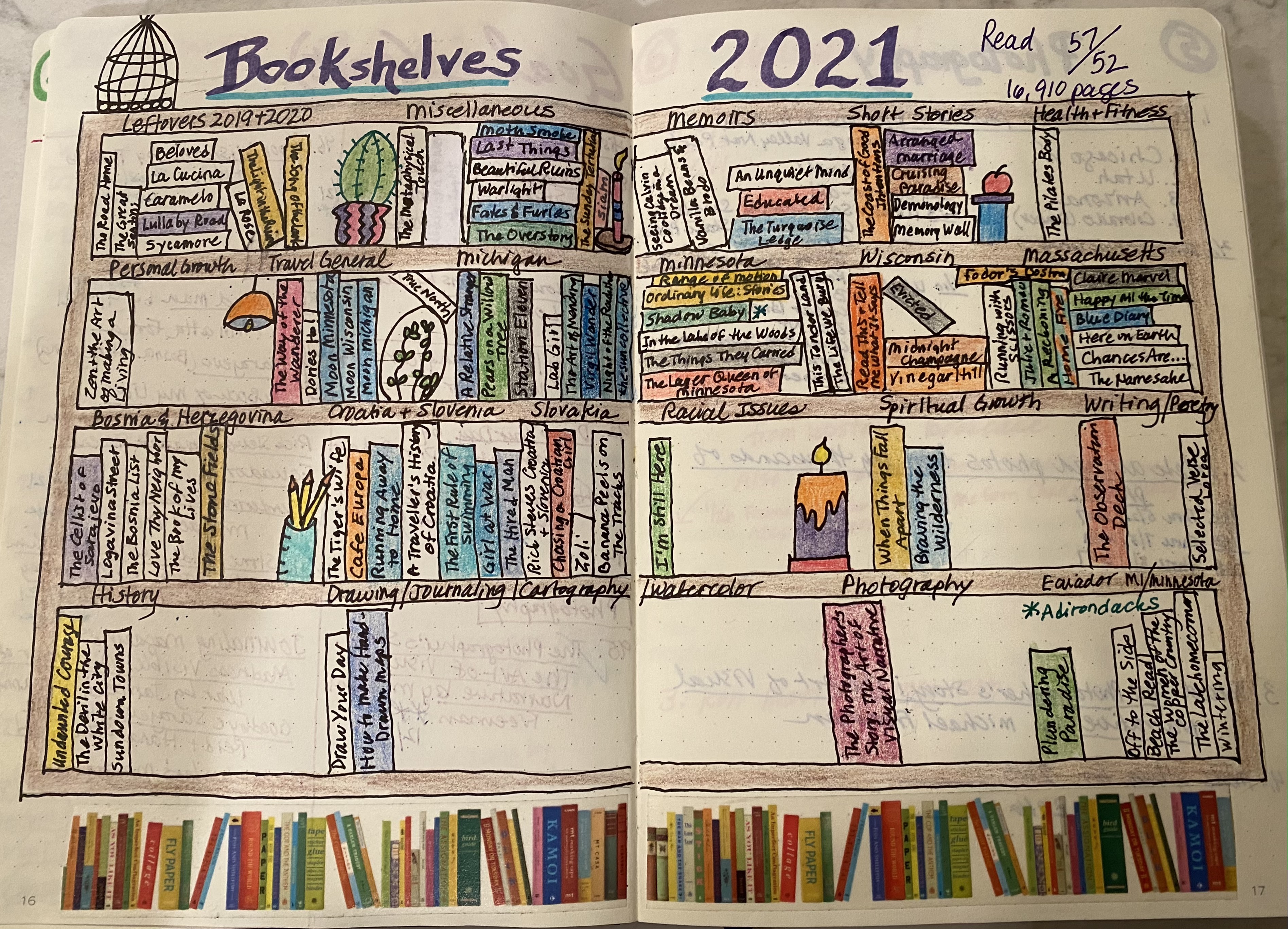
Twenty twenty-one was:  A year of insurrections, the inauguration of a new president, and the impeachment of an ex-president, sadly without a conviction. A year of justices, injustices and utter lack of justice. A year of glimmers of hope that we were emerging from our pandemic due to availability of a vaccine and a booster, thwarted by two Greek letter variants: Delta and Omicron, and by people who either refused to do their part for the common good or were unable to access the vaccine. A year of continued attempts to heal my laryngopharyngeal reflux including some unpleasant tests and a partial laproscopic fundoplication. A partial year of working on the mind-body connection with The Cure for Chronic Pain and Curable. A year of a molar implant and a crown. A year of walking outdoors and yoga practice. A year of a “Great Lakes Road Trip” through Minnesota, Wisconsin and Michigan; a two-week trip to Croatia; and a long weekend in Boston. A year of our eldest son coming home to live with us and returning to college in data science. A year of my daughter making prepared meals for a market, a long-time dream of hers. A year of our youngest son continuing to live in Nicaragua. A year of flags commemorating those dead from Covid, a lavender farm, and “Les Colombes” (The Doves) at the Cathedral. A year of continuing to wear a mask everywhere and to keep the requisite social distance. A year off from blogging, a much-needed break, but still not accomplishing much. A year of favorite movies: The Dig, Nomadland, Minari, Summer of Soul, Mama Weed, Stillwater, Coda, Belfast, King Richard, and Don’t Look Up. A year of favorite books: A Reckoning by May Sarton, The Hired Man by Aminatta Forna, The Cellist of Sarajevo by Steven Galloway, Station Eleven by Emily St. John Mandel, and Undaunted Courage by Stephen E. Ambrose. Read 57/52 books for the year (My Year in Books: 2021). A year in which the word of the year was vaccine, or “vax.”

IMG_1513

My year in books

January was: A month of three “I”s: insurrection, impeachment and inauguration on three consecutive Wednesdays. A month of dark energy, white supremacy, hatred, violence – all an inflection point in U.S. history, outcome as yet unknown. A month of fires in the fireplace and games of Scrabble, Ticket to Ride and Yahtzee. A month where snow fell on the last day after a two-year snow drought. A month of walks in the neighborhood, around Reston lakes, in Eakin Park, and along the Glade Trail. A month where Poonam tripped on tree roots and couldn’t get up. A month of coconut water, chocolate, hot cocoa and hot water with honey. A month of lobster rolls, chili dogs, and Vietnamese food. A month of haircuts, hair straightening, and pedicures. A month of Adam breaking up with Anna and getting baptized in the name of Jesus in Nicaragua. A month of Luxor and The Dig. A month of Sarah beginning to create dishes to sell in Shields Market and working more at Soul ‘n Vinegar. A month of the Wolf Moon and bitter winds and sunshine. A month of hiking boots, umbrellas and warm woolly sweaters. A month dreaming about Minnesota, and reading Educated and The Coast of Good Intentions. A month of frantic tweeting, doomscrolling, celebrating Trump getting suspended from Twitter, and getting myself suspended temporarily from Facebook. A month of dreams about caravans of actors in a lost world after a “Georgian flu” pandemic. A month of signing up and waiting not-too-patiently for the ever-elusive COVID vaccine. A month of new coronavirus mutations from Spain, U.K., South Africa and Brazil. A month of Bernie memes with woolen mittens. A month of normalcy restored in our government.

Insurrection
Insurrection
Impeachment
Impeachment
"Unity is the path."
“Unity is the path.”

February was: A month of snow mixed with rain and ice, a month of messy whiteness, slippery paths and bitter cold. A month of drab landscapes, naked brittle trees, biting winds, misery and gloom. A month, too, of hope, with the Lunar New Year, Valentine’s Day, President’s Day, Darina’s birthday, Mike’s birthday, and getting the first shot of the Pfizer COVID vaccine. A month when the groundhog saw his shadow, foretelling six more weeks of winter. A month of winter storms and a deep freeze in Texas with millions losing power and water, while Senator Ted Cruz took off for Cancún and Alexandria Ocasio-Cortez (AOC) went to Texas and raised millions of $$ for suffering Texans. A month of reading about Wisconsin: thousands of small lakes, Great Lakes, cheese curds, fish fries, fish boils, hiking, biking and canoeing. A month of getting exposed to COVID, but NOT getting infected (I always wear a mask indoors). A month of movies including Sophie Scholl, where the heroine was loaded like a torpedo into a guillotine; Hemingway and Gellhorn, where writers immersed themselves in the Spanish Civil War; of Two for the Road, The Song of Sparrows and Nomadland, which reminded me of Adam and his “van life.” A month of Yahtzee and Ticket to Ride and fires in the fireplace and sushi from Ariake and chili rellenos from Anita’s Mexican. A month of Sarah getting exposed to COVID at Joe’s (but testing negative) and enjoying creating meals for Shields Market. A month when Adam moved to Managua and drank too much over Anna, with whom “things are complicated.” A month of chili dogs and Pad Thai for Lunar New Year. A month of Republican senators failing to hold Trump accountable for inciting insurrection on January 6, by acquitting him in a “mock” trial. A month of French toast with brioche, triple sec and blood orange for Shrove Tuesday. A month when I met virtually with a new gastroenterologist, Dr. Emil Valle, who ordered some unpleasant tests. A month of a physical, an eye exam and visits to my dentist and oral surgeon. A month of slogs through the muddy trails at Mason Neck State Park (the Bay View Trail), where we talked by phone to Alex, saw Belmont Bay and crossed boardwalks over freshwater marshes. A month of walking on the Woodmarsh Trail at Elizabeth Hartwell Mason Neck National Wildlife Refuge, where we saw migrating tundra swans in the Great Marsh off the Potomac River on a rare 50 degree day for Mike’s 67th birthday. A month under the Snow Moon. A month where we finished Normal People and Crash Landing on You. A month where I had my first Zoom chat with Darina and a Zoom chat with my friend Jayne in Jersey. A month utterly absorbed in Station Eleven, and also enjoying Vinegar Hill and Cruising Paradise. A month of finishing 5 books, making my total for the year 12/52. A month of the U.S. hitting and surpassing 500,000 COVID deaths.

Amanda Gorman's words
Amanda Gorman’s words
walking in the snow
walking in the snow
Senate acquits Trump again
500,000 covid deaths
Mike's 67th birthday
Mike’s 67th birthday
Mike at Mason Neck State Park
Mason Neck State Park

March was: A month of lengthening days, greening grasses and leaves, rain, sunshine, wind, warmth and cold. A month of daffodils, forsythia, crab apples, weeping cherries, grape hyacinths, & cherry blossoms. A month under the Worm Moon. A month of a successful molar implant & crown (#30). A month of fires in the fireplace and games of Scrabble where I chalked up one victory. A month where I endured a horribly uncomfortable Esophageal Function Test and a 24-Hour Ambulatory pH and Impedance test. A month where the Democrats passed a $1.9 trillion stimulus bill. A month of getting my second COVID vaccine (Pfizer) and Sarah getting both of hers. A month during which March 11 marked one year since COVID was declared a pandemic. A month commemorating Japan’s tsunami, earthquake and nuclear disaster of 10 years ago. A month of outdoor dining at Kalypso and Ariake. A month of walks around Burke Lake and too many other walks to count, several with Poonam. A month of an ultrasound on my thyroid, which was normal. A month of searching for and buying bedroom furniture after 32 years of marriage. A month of take-out from Cafesano & East Wind Vietnamese. A month of mass shootings: Asians in Atlanta and grocery shoppers in Boulder. A month where we finally finished Mad Men and watched the Turkish movie One -> Way to Tomorrow (Yarina tek bilet). A month exploring with Lewis & Clark in Undaunted Courage, learning about the Balkans in Café Europa, traipsing through Vietnam with Tim O’Brien in The Things They Carried, and climbing trees in The Overstory. A month of finishing 8 books, making my total for the year 20/52.

a walk on the CCT
a walk on the CCT
me wearing the miserable 24-hour-Ambulatory Ph & Impedance test
flowers on my walks
flowers on my walks
Burke Lake
Burke Lake
me at Lake Anne
me at Lake Anne
Mike at Lake Anne
Mike at Lake Anne
blossoms
blossoms

April was: A month of Riverbend Park bluebells, cherry blossoms, redbuds, dogwoods and turtles. A month under the Pink Moon. A month when our son in Nicaragua wrote a ranting text revealing he’s hopelessly mired in conspiracy theories and drinking again. A month when he went silent after we sent him a harsh and brutally honest message. A month of celebrating Easter with a take-out Thai meal on our screened porch with Barbara. A month when my son Alex came from Denver for a month-long visit and finally made the decision to go back to school in data science. A month of dining: inside at Artie’s (twice), Seasons 52, and Maru Korean Cuisine & Sushi; in a parklet at Los Cuates in Old Town Alexandria; on decks at Little Nickel & Stella’s Market in Richmond with Sarah; and under a parking lot awning at Vienna Inn. A month of day trips: to Old Town Alexandria for an art walk with Mike and to Historic Annapolis with Poonam. A month of an overnight visit with Sarah in Richmond for her 37th birthday. A month of take-out from food trucks at Oakton Swim & Racquet Club. A month of a CAT scan on my sinuses, which showed a mucous retention cyst in my right maxillary sinus and a nasal septum deviation, all of which are considered minor. A month of more doctor visits and a new medication regimen to deal with my LPR. A month when Derek Chauvin was convicted of murder in the death of George Floyd, the first police officer to be convicted of murder in forever. A month beginning a revitalization of our front lawn under the direction of Betty’s Azalea Ranch. A month where we finished watching Schitt’s Creek, Not Safe for Work, and Unorthodox. A month mired in Wisconsin’s & Michigan’s rigid Catholicism with Midnight Champagne, Read This and Tell Me What It Says, and Pears on a Willow Tree. A month of living in besieged Sarajevo in The Cellist of Sarajevo. A month of finishing 6 books, making my total for the year 26/52.

Meadowlark Garden
Meadowlark Garden
Meadowlark Garden
Meadowlark Garden
Meadowlark Garden
Meadowlark Garden
Mike at Artie's
Mike at Artie’s
bluebells at Riverbend
Great Falls
Great Falls
bluebells at Riverbend
Old Town Alexandria
Old Town Alexandria
Old Town Alexandria
Old Town Alexandria
Annapolis
Annapolis
spring flowers
spring flowers
daffodils
daffodils
the James River in Richmond
a walk under the bridge in Richmond
the James River in Richmond
Mike and Alex at Maru Korean Cuisine & Sushi

May was a month of: farmer’s markets and a first time return to the movie theater to see what turned out to be a private screening of Together Together. Dining: inside at East Wind, take-out from Anita’s for Cinco de Mayo & Lebanese Taverna for a family gathering, a Mother’s Day brunch at Clarity with Alex & Mike. Wrapping up watching The Mess You Leave Behind and Behind Her Eyes. Finishing only one book, Home Fire by Kamila Shamsie, bringing my total to 27/52 books for the year. Exploring Minnesota and Wisconsin on our Great Lakes Road Trip. Indiana Dunes, grottoes, and the confluence of the Mississippi and Wisconsin Rivers. Smoked salmon and trout, walleye tacos, cheese curds, chicken & wild rice soup, and cherry pies. Marine art, the birthplace of waterskiing, and a 16-foot-tall work boot. The SPAM Museum, flat endless farmland, Jolly Green Giant statues, Blue Mounds, Pipestone quarries, and invisible petroglyphs. German towns, waterfalls, reconciliation in Mankato, a bank robbery in Northfield. Strolling through sculpture gardens and across old stone bridges, driving through the University of Minnesota, bicycling around lakes in Minneapolis, and singing to musical murals. Browsing the Minnesota History Museum and learning about iron ore, lumber, the collapse of Interstate 35 in 2007, Minnesota weather, and Sinclair Lewis. Paying our respects to George Floyd, Prince and Bob Dylan, peeking into the On Being studio, and meeting Charlie Brown and the gang in St. Paul. Being charmed in Stillwater. Watching huge freighters go through the Duluth canal under the Aerial Lift Bridge. Railroads and rolling stock in Duluth. Hiking the Blind Ash Bay trail in Voyageurs National Park, having dinner at the Arrowhead Lodge, learning about Koochiching County and Bronko Nagurski in International Falls, and canoeing in search of pictographs on Hegman Lake in Boundary Waters Canoe Area Wilderness (BWCAW). Climbing up Palisade Head for sweeping views of Lake Superior, hiking the High Falls Trail at Tettegouche State Park, admiring the Split Rock Lighthouse, and stopping briefly at Gooseberry Falls State Park. Friday night fish fries and ice cream at Bridgeman’s after a seaplane flight over Duluth. Driving along Rt. 13 in Wisconsin, exploring Bayfield and Ashland, and cruising through Apostle Islands National Lakeshore on a cold and blustery day. Exploring waterfalls at Copper Falls State Park, climbing inside of a giant sturgeon at the Freshwater Fishing Hall of Fame, stopping for a beer flight at Jacob Leinenkugel Brewing Co. in Chippewa Falls, and stopping to pay our respects to veterans at the Highground, topped off by an old-fashioned Chinese meal at Shaw Lee in Wisconsin Rapids.

City of Fairfax
City of Fairfax
me in Fairfax
me in Fairfax
Fairfax, VA
Fairfax, VA
pansies in Fairfax
pansies in Fairfax
Alex and me at Clarity for Mother's Day
Alex and me at Clarity for Mother’s Day
Indiana Dunes National Park
Dickeyville Grotto in Wisconsin
Wyalusing State Park, WI
Valley Fish & Cheese in Prairie du Chien, WI
View from Granddad Bluff overlooking LaCrosse, WI
LaCrosse, Wi
LaCrosse, Wi
Red Wing, Minnesota
Red Wing, Minnesota
Rochester, MN
Rochester, MN
Spam Museum, Austin, MN
Blue Mounds State Park, MN
Pipestone National Monument, MN
Jeffers Petroglyphs
Jeffers Petroglyphs
Minneopa State Park & Falls, MN
Northfield, MN
Northfield, MN
Minnehaha Falls, Minneapolis, MN
Minneapolis Sculpture Garden
Spoonbridge and Cherry at the Minneapolis Sculpture Garden
Walker Art Center, Minneapolis
Mike biking around Lake Harriet
Minneapolis, MN
Minneapolis, MN
Minneapolis, MN
Minneapolis, MN
George Floyd Square, Minneapolis, MN
Cathedral of St. Paul, St. Paul, MN
Minnesota History Museum
Bob Dylan mural in Minneapolis
Stillwater, MN
Stillwater, MN
Duluth, MN
Duluth, MN
Duluth, MN
Duluth, MN
Voyageur's National Park, MN
Voyageur’s National Park, MN
Voyageur's National Park, MN
Voyageur’s National Park, MN
Voyageur's National Park, MN
Voyageur’s National Park, MN
Arrowhead Lodge near Voyageurs NP
Voyageur statue near Rainy Lake Visitor Center
birch tree in Voyageurs
Smoking Bear in International Falls, MN
Canadian border at International Falls, MN
Mike canoeing in Boundary Waters, MN
pictrographs at Boundary Waters
me portaging at Boundary Waters
Mike portaging
Mike portaging
Palisade Head, MN
Palisade Head, MN
Tettegouche State Park
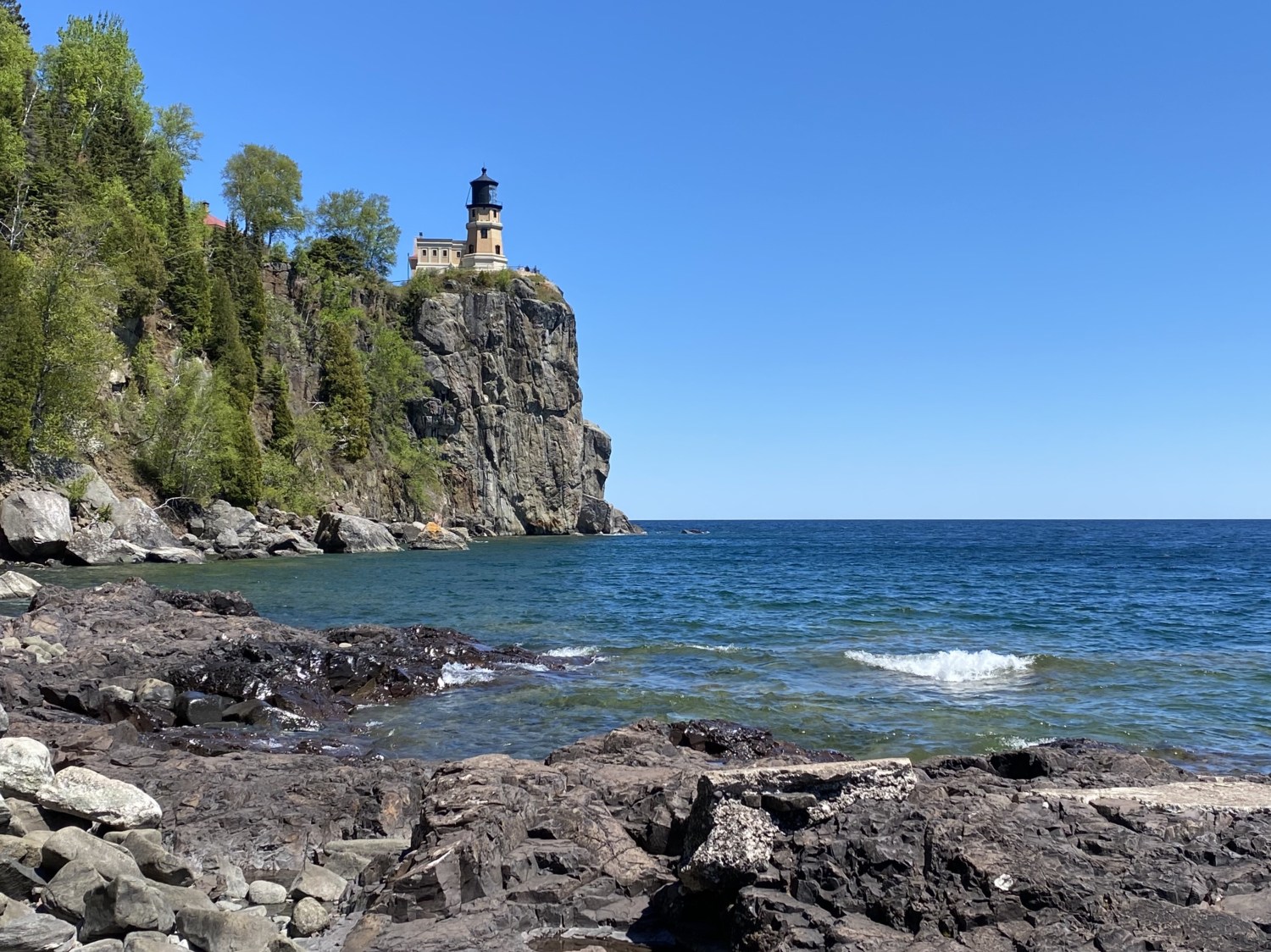
Split Rock Lighthouse State Park
flying Beaver Air in Duluth
aerial view of Duluth from the seaplane
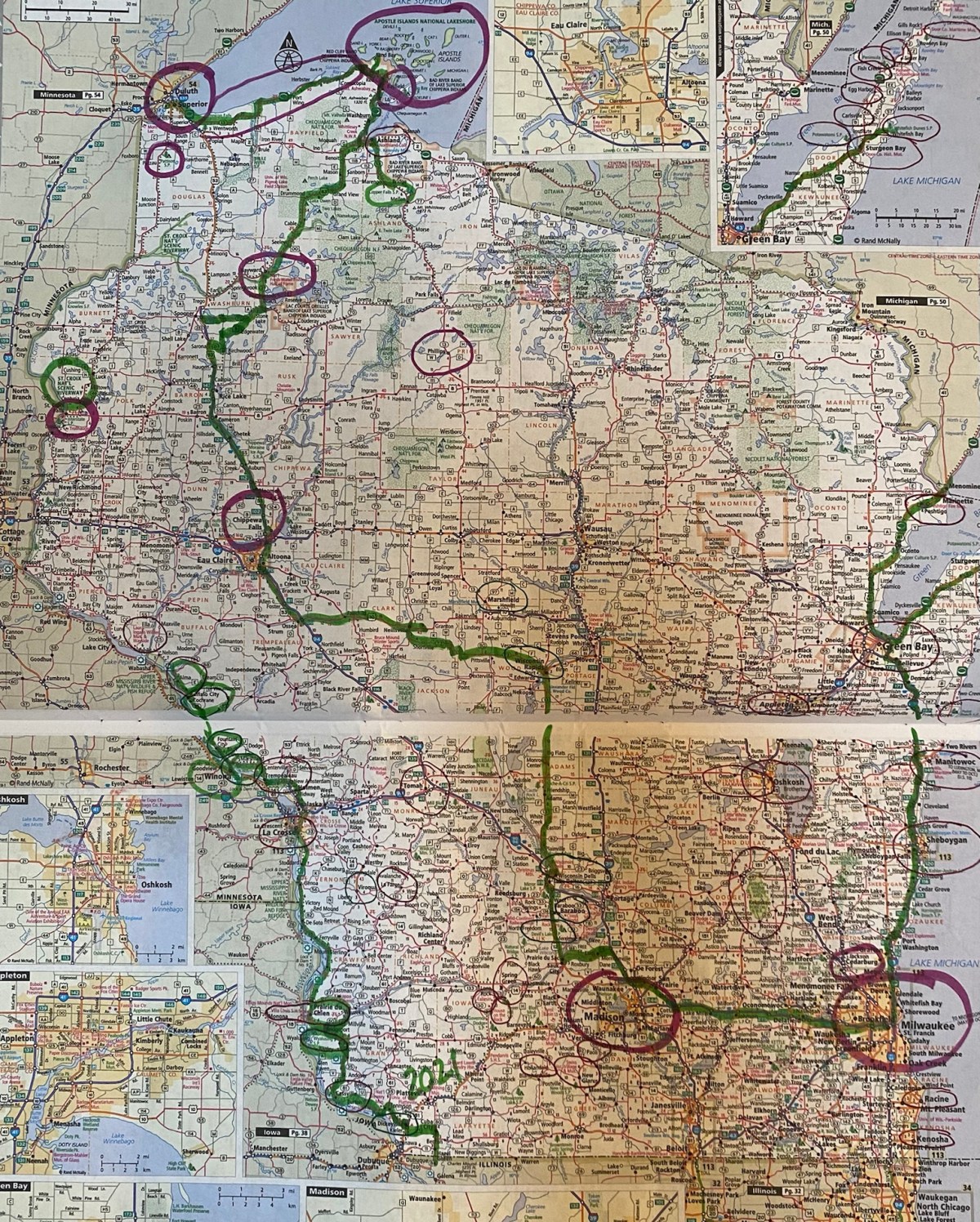
Minnesota PolarSteps
Port Wing, Wisconsin
Cornucopia, WI
Cornucopia, WI
Cornucopia, WI
Cornucopia, WI
Bayfield, WI
Bayfield, WI
Ashland, Wisconsin
Ashland, Wisconsin
Ashland, Wisconsin
Ashland, Wisconsin
Apostle Islands National Lakeshore
Copper Falls State Park
Freshwater Fishing Hall of Fame in Hayward, WI
me at Jacob Leinenkugel Brewing Co in Chippewa Falls, WI
Mike at Jacob Leinenkugel Brewing Co in Chippewa Falls, WI

June was a month of: Exploring Wisconsin & Michigan on our Great Lakes Road Trip. Walking through Witches Gulch and watching a dog jump over an abyss to Stand Rock in Wisconsin Dells. Climbing the steep trail at Devil’s Lake State Park to the Devil’s Doorway. Enjoying a Bodega Bowl in the shadow of the Wisconsin State Capitol in Madison, and wandering around the beautiful University of Wisconsin campus. Strolling State Street and enjoying dumplings at Chen’s Noodles & Dumplings. Cheese curds and beer at Lakefront Brewery in Milwaukee. Walking through the “Streets of Old Milwaukee” and the European Village and learning about Nelson Mandela at the Milwaukee Public Museum. Glimpsing all-things-beer including Miller Brewing and the Pabst Mansion, then meeting “the Fonz” on the Riverwalk. Exploring the Public Market and the Historic Third Ward. Learning about maritime history in Sturgeon Bay and walking along limestone bedrock fronting Lake Michigan at Cave Point County Park. A conflagration and whitefish at a fish boil at Pelletier’s in Fish Creek. A stunning sunset at Sunset Beach at Fish Creek. Wearing cheeseheads and doing the “Lambeau Leap” at Lambeau Field in Green Bay. Visiting the Sand Point Lighthouse in Escanaba and the Marquette Harbor Lighthouse in Marquette, Michigan. Watching The Sand Lot on a big screen at the Delft Bistro. Exploring Miners Castle, Miners Beach, Sable Falls, and the Au Sable Lighthouse Trail (accompanied by black flies and mosquitoes aplenty) at Pictured Rocks National Lakeshore. A 2-hour sunset cruise with Pictured Rocks Cruises after eating pasties at Muldoon’s Pasties. “Yoosta be a Yooper” in Munising, MI. Waterfalls in Munising and Tahquamenon Falls State Park, the Edmund Fitzgerald and other shipwrecks at Whitefish Point’s Shipwreck Museum and a ship moving glacially through the Soo Locks at Sault Ste. Marie. Bicycling around Mackinac Island and then driving through the Tunnel of Trees to Petoskey. Enjoying thatch houses at Charlevoix, walking the Cottonwood Trail at Sleeping Bear Dunes National Lakeshore, and having a lovely dinner at The Cove in Leland, with views of weathered shanties on the Fishtown dock. Driving by Jim Harrison’s old home — writer’s cottage and all. Driving through cherry orchards and wineries up the slim Mission Peninsula, where we found another lighthouse. Coming face-to-face with the DeVos evangelical mission in Holland. Having a bad experience with our Airbnb in Detroit, which turned out to be in a derelict neighborhood, and losing most of our money. Wandering through Ann Arbor and watching In the Heights at the Michigan Theatre. Learning about the history of cars and American innovation at The Henry Ford in Dearborn. Learning about an obscure battle in the War of 1812 at the River Raisin National Battlefield Park. Visiting the Johnstown Flood National Memorial and learning about over 2,000 people who died in that horrible flood of 1889. Paying my respects to the 9/11 heroes of Flight 93 at the Flight 93 National Memorial. Having new landscaping installed in our front yard and new bedroom furniture delivered. Enjoying food from the Jambalaya Brothers Food Truck and welcoming Alex back home to live while he goes back to NOVA. A cookout for Father’s Day with Barb and Alex. Beginning my immunotherapy for allergies. Dinner at Barcelona Wine Bar. “Les Colombes” (The Doves) at Washington National Cathedral and a mediocre lunch at Cactus Cantina. Our first Uber Eats at La Ong Thai Bistro. Wrapping up watching Masterpiece Theater’s Us, Bless This Mess, and The Mindy Project. Finishing only one book, A Relative Stranger: Stories by Charles Baxter, bringing my total to 28/52 books for the year.

Stand Rock, Wisconsin Dells
Witches Gulch, Wisconsin Dells
Wisconsin Dells
Wisconsin Dells
Devils Lake State Park, WI
me at Devils Lake State Park
me at Lucille in Madison, WI
Lucille in Madison, WI
the Majestic in Madison, WI
Madison, WI
Madison, WI
Milwaukee, WI
Milwaukee, WI
Milwaukee, WI
Milwaukee, WI
Milwaukee Art Museum
Milwaukee Public Museum
Miller Brewing in Milwaukee
Pabst Mansion, Milwaukee
Milwaukee Public Market
The Fonz at Riverwalk, Milwaukee
Riverwalk, Milwaukee
me at dinner at Beans & Barley, Milwaukee
view from the Door County Maritime Museum, WI
Cave Point County Park, WI
Pelletier's Fish Boil
Pelletier’s Fish Boil
Pelletier's Fish Boil
Pelletier’s Fish Boil
Fish Creek, WI
Fish Creek, WI
Lambeau Field, Green Bay, WI
home of the Packers, Green Bay
PolarSteps through Wisconsin
House of Ludington in Escanaba, MI
Marquette Harbor Lighthouse, Michigan
watching The Sandlot at the Delft Bistro in Marquette, MI
Mike at Miners Beach, Pictured Rocks National Lakeshore
Me at Miners Beach, Pictured Rocks National Lakeshore
Miners Falls
Miners Falls
Miners Falls
Miners Falls
hike to Miners Falls
Log Slide Overlook at Pictured Rocks
pasties in Munising, MI
Pictured Rocks National Lakeshore
Wagner Falls, Munising
Tahquamenon Falls State Park, MI
Shipwreck Museum at Whitefish Point, MI
Sault Ste. Marie, MI
Mackinac Island, MI
Mackinac Island, MI
Mackinac Island, MI
Mackinac Island, MI
riding bikes on Mackinac Island, MI
Mike at Mackinac Island
Mackinac Island, MI
Mackinac Island, MI
Mackinac Island, MI
Mackinac Island, MI
Mackinac Island, MI
Mackinac Island, MI
Tunnel of Trees, MI
Tunnel of Trees, MI
me at Mim's Mediterranean Grill, Petoskey, MI
me at Mim’s Mediterranean Grill, Petoskey, MI
Mim's Mediterranean Grill, Petoskey, MI
Mim’s Mediterranean Grill, Petoskey, MI
Charlevoix, MI
Charlevoix, MI
South Pierhead Lighthouse, Charlevoix, MI
Charlevoix, MI
Charlevoix, MI
Mike at Sleeping Bear Dunes National Lakeshore
bookstore in Leland on the Leelanau Peninsula, MI
Fishtown, MI
Fishtown, MI
Fishtown, MI
Fishtown, MI
Fishtown, MI
Fishtown, MI
Fishtown, MI
Fishtown, MI
Mission Point Lighthouse at the Old Mission Peninsula, MI
Old Mission Peninsula
Tri-Cities Historical Museum, Holland, MI
Holland, MI
Holland, MI
beach at Holland, MI
Gerald R. Ford Presidential Museum, Grand Rapids, MI
Michigan State Capitol, Lansing, MI
Ann Arbor, MI
Ann Arbor, MI
University of Michigan stadium
University of Michigan
Ann Arbor, MI
Ann Arbor, MI
Ann Arbor, MI
Ann Arbor, MI
Ann Arbor, MI
Ann Arbor, MI
Ann Arbor, MI
Ann Arbor, MI
Ann Arbor, MI
Ann Arbor, MI
The Henry Ford, Dearborn, MI
Michigan Polar Steps
Flight 93 National Memorial, Stoystown, PA
Washington National Cathedral
me at Washington National Cathedral
"Les Colombes" (The Doves) at Washington National Cathedral
“Les Colombes” (The Doves) at Washington National Cathedral

July was a month of: Allergy shots, haircuts, a massage, a pneumonia shot, pedicures in purple at Orchid Nails, and yoga & karma meditation at Beloved Yoga (& one yoga session at Holy Comforter). Pleasant afternoons here & there and at Blooming Hill Lavender Farm. Lunch at Kalypso and a couple of walks with Jayne when she visited from California. Solo weekend time when Mike took his annual trip to Ohio with his high school buddies. First shot of the Moderna vaccine for Alex. Losing to Alex & Mike at Ticket to Ride. Enjoying food out at Enatye, Artie’s, Tsunami Sushi, Season 52, and Maru Korean Cuisine & Sushi with Alex to celebrate an “A” in his public speaking class. Enjoying Food Truck Fridays at Roaming Coyote & Empanadas de Mendoza. Jiving to Summer of Soul with Mike and enjoying Mama Weed followed by dinner at Yama Chen’s on my own; watching Stillwater with Mike at Cinema Arts. Being probed by videostroboscopy with Dr. Steven Bielamowicz at George Washington University Hospital with his determination that sinus problems were NOT the primary cause of my LPR. Starting to feel better with my LPR. Finishing Hemingway. Wrapping up five books, my favorites being Virgil Wander, Siam, Evicted, and Girl at War, bringing my total to 33/52 books for the year.

Blooming Hill Lavender Farm
Lake Anne, Reston
Lake Anne, Reston
Jayne and me at Lake Anne
Tsunami Sushi
Tsunami Sushi

August was a month of: Continuing allergy shots. Visiting Sarah in Richmond & dinner at Bacchus. Playing Exploding Kittens with Alex. Watching a family of deaf fishermen and their hearing (& singing) daughter in Coda at Cinema Arts. Enjoying a meal at Istanbul Blue with Alex to celebrate finishing his summer semester with two “A”s. Eating a low carb / high protein diet to shrink my liver in preparation for a laproscopic partial fundoplication. Having the surgery & staying overnight in Reston Hospital. Basking in sunflowers at the Van Gogh Immersive Experience. Seeing Dr. Whittington and finding my teeth are super sensitive to cold due to gum recession. Visiting the orthopedic doctor due to pain in my right hip and pins & needles in my right thigh; starting a round of steroids. A liquid diet for two weeks after the surgery. Dropping 7.8 pounds due to the surgery and diet restrictions. Enjoying a royal blue pedicure at Orchid Nails. Getting my flu shot. Streaming movies: Land, Supernova, Pray Away, and The Mauritanian. Walking with Poonam to see her new house under construction and getting drenched during the walk home. Watching & waiting as Jayne’s house in South Lake Tahoe was threatened by the Caldor Fire. Finishing The Kominsky Method. Watching the six-episode The White Lotus. Finishing up three books, my favorites being The Lager Queen of Minnesota, Lullaby Road, and The Sun Collective, bringing my total to 36/52 books for the year.

the James River in Richmond, VA
Van Gogh Immersive Experience in D.C.

September was a month of: Haircuts and hair straightening. Two acupuncture treatments, one of which helped and the second of which caused some kind of damage. Watching Alfred Hitchcock’s Strangers on a Train and Do the Right Thing with Alex for his film class. Meals at Woodlands, Seasons 52, East Wind Vietnamese, and Eerkins Uyghur Cuisine, topped off with ice cream from Woody’s. Barbara’s birthday celebration on our deck with Thai food; dim sum at Mama Chang with Alex & Louisa. A walk with Poonam at Eakin Park. A surprisingly spot-on speech by George W. Bush about 9/11 and the threat posed by extremists in the U.S. today. Visiting the National Mall to see the flags commemorating those who have died of COVID in the U.S. (681,520 as of that day). Booking Croatia hotel and AirBnbs. My first massage at Srila Thai Massage. Patrick’s death in Offspring. Finishing The Chair. Finishing six books, my favorites being The Light in the Ruins, The Hired Man, and The First Rule of Swimming, bringing my total to 42/52 books for the year. Flying off on Lufthansa across the Atlantic to Frankfurt, Germany and onward to Zagreb, Croatia.

the National Mall COVID flags

October was a month of: Walking among the disheveled and forlorn populace of Zagreb, Croatia, & eating pizza and fluffy pillows of warm bread with beer and rakija. Taking a funicular to the Upper Town and visiting the Museum of Broken Relationships with its sad tales and detritus of heartbreak. Chatting with the waiter at the Bulldog Café about divisive matters of the world. Walking around the Green Horseshoe and finding actors rehearsing an opera on the portico of the Croatian National Theatre. Driving to the Eastern Riviera in Opatija and promenading down the Lungomare to meet a woman surrounded by seagulls. Enjoying the vineyard views of Istria from the hill town of Motovun. Enjoying harbor views and seafood at Gostionica “La Gondola” in Rovinj. Walking through the Old Town and to the Church of St. Euphenia after checking out the rock-carved “beaches.” Bicycling on a trail leading to a rocky beach, where we swam under the shade of cypresses and Aleppo pines. Visiting the Roman amphitheater and strolling through Pula. Being serenaded by waterfalls as we traipsed through Plitvice National Park in the pouring rain on boardwalks lined with tropical plants and marsh grasses growing out of limestone. Driving through tunnels and over the mountains to Zadar, where we listened to the Sea Organ and watched the “Greeting to the Sun,” a light show powered by the sun’s energy. Enjoying a fabulous dinner of John Dory fillet at Restaurant Bruschetta in Zadar and then strolling along the Riva. Climbing up to St. Michael’s Fortress in Šibenik and enjoying a waterfront lunch. Wandering around the beaches of Primošten. Arriving in Split to cold and blustery weather and stopping for a warm-up with pear brandy at Semafor. Braving a miserable rainy and cold day in Split visiting Diocletian’s Palace, and then visiting it again the next day when the sun came out. Visiting the Venetian bell tower at noon and getting an earful of clanging bells. Driving to the Marjan Peninsula and visiting Kašjuni Beach and then driving to Trogir and strolling the waterfront promenade. Eating one of our best meals of avocado & shrimp salad and stuffed green peppers with mashed potatoes at Semafor. Taking the ferry to Hvar and renting a quad where we zoomed through tunnels and mountain roads over the Island, with an enjoyable stop at a hidden winery in Jelsa. Taking a ferry to the Pelješac Peninsula and enjoying oysters at Mali Ston. Braving the hair-raising cliff drive into Dubrovnik. Strolling around Dubrovnik and stopping in at Buža I, where concrete stairs led to a beach. Eating grilled calamari at Konoba Jezuite while bundled in a pink blanket against the frigid bura. Taking our COVID tests with (luckily) negative results. Walking around the Dubrovnik City Walls and up to the Fort of St. Lawrence, where we had a birds’-eye view of the City Walls. Eating Bosnian meatballs at the Taj Mahal. Taking the cable car to Mount Srd, where we had a great view of all of Dubrovnik. Climbing to Park Gradac for views and then eating our final meal at Restaurant Jezuite. Returning home to Virginia. Getting our COVID booster shots. Enjoying dinner with Karen and Michael for my 66th birthday at Barcelona. Celebrating more of my birthday with Barb, Alex and Mike at home. Working on the course The Cure for Chronic Pain, getting a Thai massage, and voting early for Terry McAuliffe for Virginia’s governor. Losing my car key while walking on the CCT. Going to Holy Comforter and eating at Anita’s. Driving in the Virginia countryside and enjoying Halloween decorations and fall colors on Halloween day. Streaming In the Land of Blood and Honey at home. Finishing the final season of Atypical. Finishing three books, my favorite being The Stone Fields: Love and Death in the Balkans, bringing my total to 45/52 books for the year.

me in Zagreb
me in Zagreb
Croatian National Theatre, Zagreb
Zagreb, Croatia
Zagreb, Croatia
Opatija, Croatia
Opatija, Croatia
Opatija, Croatia
Opatija, Croatia
Motovun, Croatia
Motovun, Croatia
St. Stephen's in Motovun
St. Stephen’s in Motovun
mural in Motovun
mural in Motovun
view from Motovun in Istria, Croatia
Motovun
Motovun
me at the "beach" in Rovinj
me at the “beach” in Rovinj
Mike at the beach in Rovinj
Mike and his bike in Rovinj
Amphitheater in Pula
laundry in Rovinj
laundry in Rovinj
Plitvice National Park
St. Donatus Church in Zadar
me in Zadar
me in Zadar
"Greeting to the Sun" in Zadar
“Greeting to the Sun” in Zadar
Mike at "Greeting to the Sun" in Zadar
Mike at “Greeting to the Sun” in Zadar
Zadar, Croatia
Zadar, Croatia
Zadar, Croatia
Zadar, Croatia
sunset in Zadar, Croatia
dinner at Bruschetta in Zadar
St. Michael's Fortress in Šibenik
St. Michael’s Fortress in Šibenik
Mike at St. Michael's Fortress
Mike at St. Michael’s Fortress
garden of St. Lawrence's Monastery in Šibenik
garden of St. Lawrence’s Monastery in Šibenik
Primošten
Primošten
Primošten
Primošten
Primošten
Primošten
Diocletian's Palace in Split (in the rain)
Diocletian’s Palace in Split (in the rain)
Entry vestibule to Diocletian's Palace
Entry vestibule to Diocletian’s Palace
me rubbing Bishop Gregory of Nin's toe for good luck
me rubbing Bishop Gregory of Nin’s toe for good luck
Diocletian's Palace
Diocletian’s Palace
view of Split from the Bell Tower
Cathedral of St. Domnius in Split
me at Cathedral of St. Domnius in Split
The Bell Tower in Split
Trogir, Croatia
Trogir, Croatia
Cathedral of St. Lawrence in Trogir
Milna on Hvar Island
view from Hvar
view from Hvar
Hvar
Hvar
Cathedral of St. Stephen in Hvar
me at Buža I in Dubrovnik
me at konoba Jezuite in Dubrovnik
Jesuit steps in Dubrovnik made famous by Game of Thrones
Dubrovnik from outside the walls
City Walls of Dubrovnik
view from the City Walls
City Walls, Dubrovnik
King's Landing from Game of Thrones?
King’s Landing from Game of Thrones?
King's Landing from Game of Thrones?
King’s Landing from Game of Thrones?
view of Dubrovnik's City Walls from Fort of St. Lawrence
view of Dubrovnik’s City Walls from Fort of St. Lawrence
a little beach area in Dubrovnik
Dubrovnik from Mt. Srd
Game of Thrones
Game of Thrones
view of Fort of St. Lawrence and City Walls from Park Gradac
Karen, me, Mike, and Michael on my 66th birthday at barcelona
Skeletons at Lake Anne Center
Halloween decorations in Round Hill, VA

November was a month of: Virginians electing a fascist governor (Glenn Youngkin). Visiting my dad and feeling saddened by his decline. Sitting with Sarah at the Joe’s Inn bar talking to a Vietnamese guy named Khanh. Attempting healing through Beloved Yoga sessions, yoga with Ann Gillespie, The Cure for Chronic Pain, visionboards, Curable, and massages at Srila Thai Massage. Enjoying meals at Seasons 52, Aracosia McLean (with Alex to celebrate midterms), Fin’s Sushi, Seoul-Boston, Curry Mantra, & Maru Korean Cuisine. Taking a long weekend trip to Boston where we walked the Freedom Trail, admired harvest doors in Beacon Hill, fought chaotic rain to get to the Isabella Stewart Gardner Museum, and strolled through Cambridge. Day-tripping to Luckett’s and enjoying sandwiches at Puccio’s New York Deli in Leesburg, accompanied by anger at the acquittal of Kyle Rittenhouse, who murdered two people and shot three in “self-defense.” Enjoying Van Morrison’s songs in Belfast at Cinema Arts. A jury finding white supremacist rally organizers liable for Charlottesville violence in 2017 and awarding $25 million to plaintiffs. A Georgia jury finding three White men guilty of murdering Black Ahmaud Arbery in 2020 in what amounted to a modern-day lynching. Celebrating a lovely Thanksgiving with Barbara and Alex, playing Codenames and Ticket to Ride. Finding out about the emergence of the Omicron variant of COVID in South Africa and bracing for more of COVID just when we thought we were coming out of it. Finishing four books, my favorites being A Reckoning and Claire Marvel, bringing my total to 49/52 books for the year.

Fall trees in Virginia
Boston Public Garden
Boston Irish Famine Memorial
Old State House and Boston Massacre Site
Faneuil Hall
Faneuil Hall
Paul Revere
Paul Revere
Copp's Hill Burying Ground
Copp’s Hill Burying Ground
Copp's Hill Burying Ground
Copp’s Hill Burying Ground
Beacon Hill
Beacon Hill
Beacon Hill, Boston
Beacon Hill, Boston
Acorn Street in Beacon Hill
Isabella Stewart Gardner Museum
1XOiyizGSVK6FVhISxxHNQ
Isabella Stewart Gardner Museum
Ray and Maria Stata Center at MIT
MIT campus
MIT campus
MIT campus
MIT campus
Central Square in Cambridge
Longfellow House - Washington's Headquarters
Longfellow House – Washington’s Headquarters
the CCT trail in Oakton, VA

December was a month of: Continued yoga practice, JournalSpeak, Curable, and a massage. Video chats with our son in Nicaragua for his 29th birthday and for Christmas. Decorating the Christmas tree with Alex, accompanied by egg nog & Christmas carols. Enjoying meals at Cafesano, Taco Bamba, Sweetwater, & Sweet Ginger. Meeting my friend Leah from California at Pearl Dive for lunch and bottomless mimosas after two years of not seeing each other. Strolling through the Winter Walk of Lights at Meadowlark Gardens with Alex and Louisa. Doing the hilarious “Amazing Race,” a kind of couples scavenger hunt through Vienna, arranged by our church, and losing. Driving around with Mike, Sarah and Alex on Christmas Eve with bourbon-spiked hot apple cider, critiquing or applauding Christmas decorations and singing “Feliz Navidad” at the tops of our lungs. Celebrating a lovely Christmas with Barbara, Alex, and Sarah. Playing games of Chinese Checkers and Trekking the World. Finishing TV series including Homeland, Crazy Ex-Girlfriend, and Married. Streaming movies at home: The Courier, King Richard, and Don’t Look Up. Finishing eight books, my favorites being Happy All the Time and Moth Smoke, bringing my total to 57/52 books for the year.

Winter Walk of Lights at Meadowlark Gardens, Vienna, VA
Leah and me at Pearl Dive Oyster Palace
our Christmas tree
our Christmas tree
our foyer
our foyer
me with Mike
me with Mike
Mike, Sarah & Bagel, Alex and me

Here are some of my previous years’ recap posts. I now wish I had one for every year of my life, as they serve as great reminders of my adventures, joys and tribulations in years past!

  • twenty-twenty: the year of coronavirus
  • twenty-nineteen
  • twenty-eighteen
  • twenty-seventeen
  • twenty-sixteen
  • Sadly, I didn’t do one in 2015. 😦
  • twenty-fourteen
  • twenty-thirteen
  • weekly photo challenge: my 2012 in pictures


Share this:

  • Share on X (Opens in new window) X
  • Share on Facebook (Opens in new window) Facebook
  • More
  • Email a link to a friend (Opens in new window) Email
  • Print (Opens in new window) Print
  • Share on Pinterest (Opens in new window) Pinterest
Like Loading...
  • America
  • Annual recap
  • Arena Stage

twenty-twenty: the year of coronavirus

wanderessence1025's avatar wanderessence1025 December 14, 2020

In twenty-twenty, I: Went about my business oblivious to the calamities that would befall us in the year ahead. Was frustrated and angered by my youngest son’s refusal to finish a massage therapy course he’d committed to and we’d paid for. Suffered a sprained ankle in the Walters Art Gallery in Baltimore. Watched helplessly as COVID-19 descended upon us, causing my daughter to lose two of her jobs and my son to escape to Nicaragua. Got sick with a continually mis-diagnosed throat problem in early March.  Later found out I had laryngopharyngeal reflux and had a STRETTA procedure to tighten my wide-open lower esophageal sphincter, with little relief.  Watched as COVID ran rampant through America under an utter lack of leadership from our criminal-in-chief who continually called it a “hoax,” causing it to expand exponentially throughout society. Watched as racial inequities were exposed during the pandemic and Black Lives Matter protests. Was aghast at the white supremacy attitudes that were emboldened by our racist wanna-be-president.  Took a lot of walks outdoors.  Learned to wear a mask everywhere and keep the requisite “social distance.” Cancelled our planned trip to Chicago in May, but then went by car in late August, wearing a mask everywhere.  Fell in love with Chicago and the amazing architecture and vibes there. Went on a month-long “Canyon & Cactus Road Trip” through southwest Utah and southern Arizona, again wearing masks everywhere. Wrapped up my blog as of December 14 for at least the next year.

In January, I: Had my annual chili dog at the Vienna Inn, Laotian noodles at Sen Khao, dragon rolls, and Beyond Burgers. Meditated 10 minutes a day. Walked, did Pilates and lifted weights regularly. Played Czech Games Codenames with the family when my daughter came for a late holiday visit. Woke up to snow one morning, and watched it melt away by afternoon. Visited my father in Yorktown, stopping for fresh oysters in Tappahannock. Saw the Wolf Moon, the first full moon of the year.  Failed miserably at drinking 4 containers of water a day. Got reprimanded by my dental hygienist for not using a Waterpik. Researched Trinidad & Tobago and decided not to go this year. Saw the fabulous movie Just Mercy and another called Honeyland about Macedonian wild beekeepers in the Balkans. Read 5 books out of my goal of 60 for the year, with the best being Flight & Other Stories by José Skinner and the queen of water by Laura Resau. Did my first art journal spread. Found cute little birdhouses at a craft store. Went to Masala Art for lunch, walked around the waterfront, and saw the play A Thousand Splendid Suns at Arena Stage Theater. Felt angry and disgusted with Republicans for not voting to hear witnesses in the impeachment trial for Trump. Started a beginning level Spanish class, and realized quickly how little I remember from four years in high school.

chili dog at the Vienna Inn
January snow day
January snow day
a snow-clad tree
a snow-clad tree
our neighborhood in snow
Laotian noodles at Sen Khao
miniature bird houses
the suburban girl goes to the city
Mike going to the city
Mike at D.C. waterfront in front of a S'MORES trailer
Mike at D.C. waterfront in front of a S’MORES trailer

In February, I: Was incensed when our son decided not to complete his Massage Therapy school, which would have required him only to show up for 20 days and give a maximum of four massages each day; this poor decision would leave him just as unprepared to go out into the world as he was when we allowed him to move back in last May.  Felt utterly disrespected for our attempts to help him by spending thousands of dollars for the course and letting him live for free in our house. Met our friends Karen and Michael for dinner at Red Kimono and much-needed drinks at Jimmy’s. Went into a period of depression and got derailed on all my February plans and goals. Visited The Sackler and the Freer Galleries in Washington and had dinner at Circa at Clarendon after. Attended a series of talks at Church of the Holy Comforter on “Practical Spirituality” about different ways to approach prayer during Lent. Saw the movies Portrait of a Lady on Fire and And Then We Danced, both of which were good but too long. Went to Baltimore for the weekend and visited the Baltimore Museum of Art and The Walters Art Museum, where I toppled after missing the bottom step on a marble staircase, spraining my left ankle. Met my roommate from nursing school at Watertable in Baltimore, after 44 years of not seeing her, and found a lot in common. Foolishly walked 6 miles to the American Visionary Art Museum and around Federal Hill and the Inner Harbor with my sprained ankle. Visited the doctor when I returned home from the weekend away, and ended up having to wear a tall walking boot for at least two weeks. Attended my Spanish classes and studied regularly. Did Pilates, walked and lifted weights until I sprained my ankle. Read 6 books (bringing my total to 11) out of my goal of 60 for the year, with the best being Archipelago by Monique Roffey and The Writer’s Field Guide to the Craft of Fiction by Michael Noll. Started reading about Chicago and booked our plane tickets for May 13-18.

Age Old Cities: A Virtual Journey from Palmyra to Mosul at the Sackler Gallery
Sackler Gallery
Sackler Gallery
Country Scenes and Mount Fuji by Hokusai at the Sackler
Hokusai at the Sackler
Freer Gallery
Freer Gallery
me at Circa
me at Circa
Flatbread at Circa
Flatbread at Circa
Baltiimore Museum of Art
Georgia O'Keefe at the Baltiimore Museum of Art
Georgia O’Keefe at the Baltiimore Museum of Art
Matisse at the Baltiimore Museum of Art
Walters Art Museum
Walters Art Museum
The Saint Francis Missal at the Walters Art Museum
Walters Art Museum
Walters Art Museum
Adam and Eve at the Walters Art Museum - the last thing I saw before my fall
Adam and Eve at the Walters Art Museum – the last thing I saw before my fall
American Visionary Art Museum
Cross Street Market in Federal Hill, Baltimore
wall mural in Federal Hill, Baltimore
Federal Hill, Baltimore
Baltimore's Inner Harbor
Baltimore’s Inner Harbor
Baltimore's Inner Harbor
Baltimore’s Inner Harbor
Baltimore's Inner Harbor
Baltimore’s Inner Harbor
Barnes and Noble at the Inner Harbor
National Katyń Memorial in Baltimore
Fort McHenry, where the "Star Spangled Banner" was born
Fort McHenry, where the “Star Spangled Banner” was born
me with my walking boot

In March, I: Celebrated Mike’s 66th birthday at home with his sister and our youngest son, eating takeout Thai and playing Codenames.  Got the first of a two-part series of the Shringrix vaccine. Voted for Joe Biden in the Democratic Primary. Continued going to Spanish classes until the coronavirus hit and all classes were cancelled.  Felt a chest cold coming on, with some trouble breathing on March 5. Went to a Saturday evening service at Church of the Holy Comforter, with a wine social after.  Reconnected with people at Holy Comforter who we hadn’t seen in over 15 years. Listened as our son told us he saw all signs pointing to the apocalypse; he wanted to find a like-minded community in Bali or Portugal. Found out our son’s Vipassana retreat, due to begin March 18, was cancelled because of the coronavirus.  Got in a huge fight with our son.  Went to a Contemplative Prayer meeting and meditated on the word “Love.” Was able to take off my walking boot after two weeks due to improvement in my sprained ankle. Called my older son in Denver to wish him a happy 29th birthday on the 10th.  Saw the movies The Assistant and Hope Gap, both of which I enjoyed.  Had our last dinner out, Italian, at Alta Strada. Helplessly watched as the coronavirus started closing down the economy and the stock market started crashing, entering Bear Market territory, on 3/11. Hunkered down in our home, and Mike started working from home on the 12th. Was informed by our son that he was going to Costa Rica on the 15th to join a community as he thought all signs were evident for a collapse of the U.S. Took our son to BWI and he flew out, arriving in Costa Rica at 8:00 a.m. the 16th. Was upset to find Soul n’ Vinegar shut down, leaving our daughter out of one of her jobs. Stocked up on groceries, toilet paper, wine, liquor and beer for the long haul on 3/17. Walked with Poonam from my Spanish class at Riverbend Park, keeping 6 feet of distance between us.  Read 6 books (bringing my total to 17) out of my goal of 60 for the year, with the best being Golden Child by Claire Adam, Clock Dance by Anne Tyler, and In the Loyal Mountains by Rick Bass. Watched helplessly as coronavirus cases in the U.S. continued to skyrocket, surpassing China and Italy on 3/27 with 85,996 confirmed cases as of 3/27.  Felt pleased yet sad that Governor Ralph Northam ordered Virginians to stay at home until June 10. Was shocked to find that the U.S. had 164,610 cases and 3,073 deaths by 3/31.  Still felt congestion and some trouble breathing on 3/31, but my doctor said since I didn’t have a fever or cough, it was probably just allergies. Felt angry that our government hadn’t done more to prepare for this.

a walk around Lake Anne
Mike and I prepare to go out to a movie and dinner before "stay at home" advice
Mike and I prepare to go out to a movie and dinner before “stay at home” advice
me at Alta Strada - our last dinner out before isolating
me at Alta Strada – our last dinner out before isolating
gnocchi at Alta Strada
a walk around Meadowlark Gardens on 3/16
Mike's bikeride 3/20
Mike’s bikeride 3/20
mulch ready to spread
"Look for the Helpers"
“Look for the Helpers”
Words of hope
Words of hope
spring arrives in a ghost town

In April, I: Felt depressed that the coronavirus showed no signs of abating and we had no idea how long it would last.  Hunkered down in our house under “stay-in-place” orders. Cancelled our trip to Chicago for mid-May. Did a challenge with my daughter to write a short story using six words: chaise lounge, nostalgia, grapefruit juice, yellow raincoat, monopoly, and fountain pen. Did 10 days of meditations with Davidj online. Heard from our son in Costa Rica who was regretting his decision to go there. Played “Hey Robot” using Alexa on an online Zoom call with two of my adult children. Learned in the meditations that the way to make uncertainty finite instead of infinite is to assign a start moment and an ending moment to the period of uncertainty; breathe it into your heart and breathe it out.  Watched our church services for Palm Sunday and Easter on YouTube.  Was depressed by news that jobless claims hit 6.6 million. Felt miserable for the second month with constant congestion and throat-clearing. Made cauliflower kuku, enjoyed cherry blossoms, and was inundated with rain. Got take-out dinners from Anita’s Mexican, Enatye Ethiopian, the Vienna Inn, and East Wind Vietnamese.  Had a family Zoom meeting with everyone on Easter Sunday. Continued and finished taking Spanish level 100 classes on Zoom.  Saw my doctor virtually; she prescribed an antibiotic that did nothing, and then Prednisone, which did nothing. Had a happy hour by FaceTime with my sister Steph and my brother Rob. Wished my daughter Sarah a happy 36th birthday by phone because she was busy all day with friends. Found out our son had moved to Nicaragua and planned to stay there indefinitely. Read 5 books (bringing my total to 22) out of my goal of 60 for the year, with the best being Night at the Fiestas by Kirsten Valdez Quade and The Girl with the Louding Voice by Abi Daré. Was shocked to see U.S. COVID-19 cases skyrocket to 1,040,488, and deaths rise to 60,945; Virginia cases were 14,961 and deaths 522.

cherry blossoms
cherry blossoms
me along the gravel trail
skunk cabbage
skunk cabbage
redbud
redbud
Japanese maple
Japanese maple
more cherry blossoms
woodsy path
woodsy path
azaleas
azaleas
stream in the woods
stream in the woods
buds in Vienna
buds in Vienna
Stay Strong America!
white fluffiness
white fluffiness
pretty dangles
pretty dangles
red azaleas
red azaleas
red and white azaleas

In May, I: Continued our lockdown due to coronavirus. Did a project for 31 days of taking a different walk every day, drawing a map, and writing down some thoughts for each day. Took prednisone for my constant congestion, with no effect. Encountered families out flying kites, playing Frisbee, bicycling and decidedly NOT practicing social distancing on many of my walks.  Tried to get Mexican take-out at Anita’s for Cinco de Mayo but they were totally overwhelmed and we never got our meal. Watched a little bird repeatedly hurl himself against our front storm door. Got take-out dinners at Adyar Ananda, Vienna Inn, East Wind Vietnamese, Anita’s, Enatye Ethiopian, and Cafesano. Marveled at the Flower Moon. Watched church services for Holy Comforter on Zoom. Was sick for the entire months of March (since 3/5), April, and May, with no diagnosis or relief in sight. Went to INOVA Medical Center for evaluation, where I tested negative for COVID-19, as well as a negative chest x-ray and EKG. Continued to be (mis)diagnosed with allergies and started taking XYZAL and Flonase. Took another round of antibiotics that did nothing. Listened to “On Being” podcast interviews with Ocean Vuong, Brother David Steindl-Rast, and, lastly, Devendra Banhart, with a discussion about the book When Things Fall Apart; I realized that things do fall apart, so this pandemic will fall apart too. Celebrated Mother’s day with a Zoom call with my daughter and oldest son, and later on FaceTime with my youngest son in Nicaragua. Continued taking my Spanish classes on Zoom: Buenos días! Walked the labyrinth at Holy Comforter serenaded by a cacophony of lawnmowers and weed whackers. Became increasingly outraged about police killing unarmed black men, Ahmaud Arbery and George Floyd, about our country’s criminal and idiotic lack of leadership, and about all the conspiracy theories swirling around. Listened to Marc Maron’s WTF podcast about the death of his girlfriend, filmmaker Lynn Shelton, then watched one of her movies: Your Sister’s Sister. Felt thrilled that Twitter is finally putting fact checks on the liar Trump’s tweets. Finished six books during the month (bringing my total for the year to 28/60), my favorites being My Name is Lucy Barton by Elizabeth Strout, The Looming Tower by Lawrence Wright, and Eleanor Oliphant is Completely Fine by Gail Honeyman. Saw an allergist who tested 20 allergens and I found I have allergies to cat dander (I’ve always known this), grass and dust mites.  Started a steroid nasal spray. Saw an ENT specialist by Zoom who didn’t agree allergies were the cause of my problems and told me not to take the nasal spray.  Instead scheduled a nasal endoscopy for June 8, and told me to try Prilosec for acid reflux (!). Was shocked to see U.S. COVID-19 cases skyrocket to 1,770,384, and deaths rise to 103,775; Virginia cases were 43,611 and deaths 1,370. Worldwide cases at the end of May were 6,082,549, and 369,544 people had died so far.

Lake Audubon
Lake Audubon
Lake Audubon
Lake Audubon
Lake Thoreau
Lake Thoreau
Lake Newport
Lake Newport
Hunters Woods Elementary School
May 24
May 24
pretty in lavender
pretty in lavender
May 26
May 26
flowers around Lake Anne
irises at Meadowlark
May 29
May 29
irises at Meadowlark
gazebo at Meadowlark Gardens
peony
peony
peony bud
peony bud

In June, I: Got my hair straightened and cut, finally. Felt furious watching Trump’s political stunt where he unleashed unidentified “soldiers” to tear gas peaceful protesters in Lafayette Square so he could have a “photo op” holding up a Bible, which I would bet he’s never opened in his life.  Celebrated the multi-racial make up of the protests, the statements of support from many businesses and even the NFL (although I’d say it’s too little too late), and the peaceful response of many police forces, who knelt with protestors or marched with them. Ventured out to our first outdoor restaurant since lockdown, the Lebanese Taverna, where sadly the menu was much reduced and was missing many of my favorite dishes. Imbibed in wine in the vineyards of Philip Carter Winery of Virginia.  Had a nasal endoscopy where the ENT found liquid bubbling up from above my voice box, and handed over a diagnosis of laryngopharyngeal reflux. Worked on changing my diet, cutting out acidic or fatty foods like citrus and tomatoes, eliminating caffeine and alcohol. Celebrated my sister’s 62nd birthday with a happy hour by Zoom with my siblings. Returned to the allergist, who found I have allergies to mold, dust mites, grass, and only a moderate degree to tree pollen. Changed some of my bedding to allergen-impermeable covers, an expensive proposition. Bought fresh veggies at the farmer’s market for the first time; everyone was required to wear masks and keep socially distanced from vendors and other shoppers. Went to another outdoor dinner at Kalypso’s at Lake Anne. Continued my Spanish classes by Zoom through the month. Had a massage by a young man who told me all about his holistic coaching dreams. Drove into D.C. to see the new Black Lives Matter Plaza.  Stood at the spot, in front of the historic St. John’s Church, where Trump posed with the Bible after attacking protestors with rubber bullets, batons and tear gas; we took turns holding the book by Doris Kearns Goodwin, Leadership in Turbulent Times, to express our belief that we need leadership during these turbulent times, and the leader we have is incapable of leading.  Watched the movie 13th, about how race, justice and mass incarceration intersect in the U.S., as I attempted to educate myself on #blacklivesmatter and racism in America. Watched the 2014 movie Selma, which chronicles the tumultuous three-month period in 1965, when Dr. Martin Luther King, Jr. led a dangerous campaign to secure equal voting rights in the face of violent opposition. Listened to a 6-episode NPR podcast, White Lies, about the murder of Jim Reeb, a white Unitarian Minister who came to Selma after the attacks to join in the movement and was beaten and murdered by four white men who were angry over Civil Rights activists who were “invading” their town and supporting the cause of black people. Felt angry and appalled that Trump held a COVID rally in Tulsa, Oklahoma on Saturday, June 20; felt happy that though he’d touted over a million people requesting tickets, only over 6,000 showed up (still too many). Ate at East Wind Vietnamese restaurant, our first indoor restaurant experience since March 14.  Got plants for our screened-in porch, so our outdoor space is now more inviting. Continued the Prilosec for 28 days, then started Nexium for 14 days, with slight improvement in my reflux symptoms. Took my first bike ride in over 10 years and made it to 9.12 miles; by the time I finished, my butt was killing me and I was stiff from being in that biking position for an hour! Heard from our son in Nicaragua, and he seemed to have fallen in love with surfing. Worked minimally on my project for the month of doing a watercolor a day. Finished 3 books during the month (bringing my total for the year to 31/60), my favorites being Four Seasons in Rome by Anthony Doerr and News of the World by Paulette Jiles. Was infuriated that our leadership has succeeded in “Making America Great Again,” as we have the highest number of COVID cases in the world, 2,483,463 as of June 28, 2020, and the highest number of deaths at 125,033; the U.S. has 25% of worldwide cases and deaths, despite having only 4.2% of the population.  Felt slightly relieved that in Virginia, we are doing better than much of the country, with 60,570 cases and 1,700 deaths; our Democrat governor has imposed restrictions and has made rules about mask-wearing inside public places.

meze at Lebanese Taverna
Philip Carter Winery
fullsizeoutput_1d7f2
Black Lives Matter Plaza
me at St. John's
me at St. John’s
signs capture the sentiment
Enough is Enough
Enough is Enough
Black Lives Matter Plaza
Andrew Jackson statue
signs capture the sentiment
the fenced-in White House
St. John's Episcopal Church
St. John’s Episcopal Church
Vote out racism
Vote out racism
a mural in D.C.
a mural in D.C.
Lake Newport
Lake Newport
Spokes bicycle shop
Spokes bicycle shop
palm trees inspired by Mystique Artist -Geethu
inspired by Viviana Gonzalez
Juneteenth
Juneteenth

In July, I: Went to the gym for the first time since lockdown. Continued to deal with my laryngopharyngeal reflux (LPR), feeling slightly better some days, and worse others. Began immediately to cut out tomatoes, alcohol, coffee, onions, and many other high acid foods. Finally went out for indoor dining at Woodlands Pure Vegetarian Indian Cuisine, Enatye Ethiopian Restaurant, and Artie’s.  Got takeout at Yoko Sushi because they weren’t yet open for indoor dining. Went indoors for dinner to Seasons 52.  Wore a mask every time I went indoors in a public place.  Ventured out for my first pedicure.  Went on a mural walk, which I wrote about here: a mural walk in washington on a hot july day. Started going to Club Pilates again and went on a bikeride at least once a week, usually around 10-11 miles. Listened to the excellent Crooked Media podcast called This Land, hosted by Rebecca Nagle, which told all about events leading up to the Supreme Court’s decision that much of eastern Oklahoma is an Indian reservation. Walked around Meadowlark Botanical Gardens. Went to Richmond with my husband to visit our daughter, Sarah, who I hadn’t seen since January. Went to Monument Avenue to see what was left of the four Confederate statues, and the Robert E. Lee statue, which is slated to be removed unless a case before the court decides against its removal. Got take-out and enjoyed a picnic outdoors at Maymont Park, and went to the Virginia Museum of Fine Arts to see the exhibit: Treasures of Ancient Egypt: Sunken Cities.  Finished 4 books during the month (bringing my total for the year to 35/60), my favorite being Scorpionfish by Natalie Bakopoulos. Was infuriated that our leadership had succeeded in “Making America Great Again,” as we had the highest number of COVID cases in the world, 4,502,500 as of July 31, 2020, and the highest number of deaths at 152,431.  Felt slightly relieved that in Virginia, we were doing better than much of the country, with 88,904 cases and 2,141 deaths.

bicycling on the W&OD in Vienna, VA
hydrangeas in Reston
Mike at Enatye Ethiopian
me at Artie's
me at Artie’s
The Torch mural in D.C.
Marvin Gaye mural in D.C.
D.C. murals
D.C. murals
D.C. murals
D.C. murals
D.C. murals
D.C. murals
lavender pretties
lavender pretties
the Korean Garden at Meadowlark
lotus at Meadowlark
lotus at Meadowlark
ex-Confederate statue in Richmond, VA
General Robert E. Lee statue in Richmond
Egypt exhibit at the VMFA
July flowers
July flowers
Mike at Seasons 52
Mike at Seasons 52
me at Seasons 52
me at Seasons 52

In August, I: Continued the 28-day maintenance diet from the book The Acid Watcher Diet: A 28-Day Reflux Prevention and Healing Program, by Dr. Jonathan Aviv.  Continued to try medications to help with my LPR, to no avail. Started dining in at restaurants, going early and on weeknights to avoid any crowding: P.F. Chang, Artie’s, Jaleo, and Istanbul Blue. Got drenched as Tropical Storm Isaias moved into the area. Lifted weights and rode the exercise bike at Oak Marr and continued Pilates and my 10-mile bike rides once a week.  Went to the National Museum of Women in the Arts to see “Graciela Itrubide’s Mexico” and the regular collection. Had an Upper Endoscopy where I found that my lower esophageal sphincter is totally open, causing my reflux problem.   Had an Upper GI x-ray with barium and found that my GI system is sluggish, that my esophagus is not working properly. Went to the dentist for a regular checkup and found that my #30 molar had cracked in half (probably exacerbated by the Upper Endoscopy where they put a hard mouth guard in during the procedure).  Walked with my friend Poonam and had coffee afterward, socially distanced. Had my #30 molar extracted and was directed to return in three months to start the implant. Saw the GI doctor for a STRETTA consultation, and found that after I do that procedure, which should help toughen the muscle around my lower esophageal sphincter, I will likely have to have another treatment to help the function of my esophagus. Drove to Macedonia, Ohio, halfway to Chicago, where we hiked in Cuyahoga Valley National Park the next morning.  Spent four days in Chicago, the Windy City. Went on a public art walk and an architecture walk in the Loop, seeing “The Bean” and Crown Fountain, which wasn’t operating because of coronavirus. Flipped off Trump Tower along the Chicago River. Enjoyed the Impressionist paintings at the Art Institute. Saw great views of Chicago at 360° Chicago. Took a bike ride along the Lakeshore. Strolled around the 9-sided Bahá’i Temple of Worship in Wilmette. Walked among the headless and armless iron sculptures, called Agora, at Grant Park. Learned all about company towns and labor strikes at Pullman National Monument. Was serenaded by bagpipes at University of Chicago’s Rockefeller Chapel as the university welcomed the Class of 2024. Saw a number of Frank Lloyd Wright’s houses, including Robie House and Frank Lloyd Wright Home and Studio. Enjoyed colorful street murals at Pilsen. Visited Ukrainian Village and had potato pancakes and vodka at Tryzub Ukrainian Kitchen. Went to Boystown and Wrigleyville, where we admired the classic Wrigley Field, home of the Chicago Cubs. Enjoyed the amazing Chicago River Boat Architecture Tour and learned all about the famous architecture along the Chicago River. Drove back the long haul of 12+ hours in one day to get back home again. Finished 3 books during the month (bringing my total for the year to 38/60), my favorite being Taft by Ann Patchett. Felt our leadership was hopeless as we had the highest number of COVID cases in the world, over 6,000,000 as of August 31, 2020, and the highest number of deaths at 183,474.  Felt only marginally relieved that in Virginia, we were holding steady, with 120,594 cases and 2,580 deaths.

Juchiteca con cerveza (Juchiteca with Beer), Juchitán, 1984
Peregrinación, (Procession), Chalma, 1984
To Kiss the Spirits: Now This Is What It Is Really Like, 1993 by Hollis Sigler
Pregnant Nana, 1993 by Niki de Saint-Phalle
Medusa, from the series "Ricas y famosas," 1999 by Daniela Rossell
Medusa, from the series “Ricas y famosas,” 1999 by Daniela Rossell
Raft Expedition, 2001 by Justine Kurland
Black Lives Matter at Jaleo
Brandywine Falls at Cuyahoga Valley National Park
Ledges Trail at Cuyahoga Valley National Park
Crown Fountain at Millennium Park
Cloud Gate, aka "The Bean" at Millennium Park
Cloud Gate, aka “The Bean” at Millennium Park
Jay Prtizker Pavilion at Millennium Park
Chicago Theatre
Chicago Theatre
Chicago River
Chicago River
Picasso's unnamed sculpture
Picasso’s unnamed sculpture
painting at the Art Institute
American Gothic at the Art Institute
Georgia O'Keeffe at the Art Institute
Georgia O’Keeffe at the Art Institute
El Greco at the Art Institute
modern wing of the Art Institute
The Art Institute
The Art Institute
me on our bikeride
me on our bikeride
marina along the lakefront
view of the city from the lakefront
Chicago River
Chicago River
mural in Chicago
mural in Chicago
our humble Airbnb in West Town
view of Chicago from 360 Chicago
360 Chicago
360 Chicago
360 Chicago
360 Chicago
Chicago Water Tower
Chicago Water Tower
Bahá'i Temple of Worship
Bahá’i Temple of Worship
me at the Bahá'i Temple of Worship
me at the Bahá’i Temple of Worship
Bahá'i Temple of Worship
Bahá’i Temple of Worship
Mike at Bahá'i Temple of Worship
Mike at Bahá’i Temple of Worship
pizza at Coalfire
pizza at Coalfire
Agora
Agora
murals in Chicago
murals in Chicago
Rockefeller Chapel at University of Chicago
Robie House by Frank Lloyd Wright
quad at University of Chicago
Pullman National Monument
mural in Pilsen
mural in Pilsen
mural in Pilsen
mural in Pilsen
Pilsen
Pilsen
mural in Pilsen
mural in Pilsen
mural in Pilsen
mural in Pilsen
Ernest Hemingway Birthplace Home
Oak Park
Oak Park
Oak Park
Oak Park
Oak Park
Oak Park
Oak Park
Oak Park
Ukrainian Village
Ukrainian Village
Ukrainian Village
Ukrainian Village
Ukrainian Village
Ukrainian Village
Ukrainian Village
Ukrainian Village
mural in Ukrainian Village
Tryzub Ukrainian Kitchen
potato latkes
potato latkes
Boystown
Boystown
Wrigley Field
Wrigley Field
Chicago River Boat Architecture Tour
Chicago Riverwalk
Chicago Riverwalk

In September, I: Continued walking around the Reston Lakes and in my neighborhood and doing Pilates once a week. Dined outdoors at Kalypso at Lake Anne. Got my flu shot. Had a belated birthday celebration with Barbara, my sister-in-law by having a take-out Thai dinner on our screened porch. Dined in at Ariake Japanese restaurant. Had a COVID test in preparation for my STRETTA procedure, which came back negative. Had the procedure at Fair Oaks Hospital on the 17th, where the doctor applied heat to toughen up my lower esophagus.  Went on a liquid diet for two days and a very soft diet for the next two weeks. Missed my father’s 90th birthday because I was recovering from my procedure and I didn’t want to gather with 24 people I didn’t know. Went to the U.S. Supreme Court in Washington to pay our respects to Ruth Bader Ginsburg, who died on the 18th. Stopped by the new Dwight D. Eisenhower Memorial, with its stainless steel tapestry depicting the Pointe du Hoc promontory of France’s Normandy Coastline during peacetime by Tomas Osinski; it is a symbol of the peace Eisenhower won during World War II and maintained as President. Stood in line at the Fairfax County Government Center for 1 hour and 40 minutes to cast my early vote for an all blue ticket, especially for Joe Biden for President. Found out our youngest son had an accident on a motorbike in Nicaragua and displaced his collarbone. Purposely avoided the first debate between Trump and Biden, which Jake Tapper called “a hot mess, inside a dumpster fire, inside a train wreck.” Finished 5 books during the month (bringing my total for the year to 43/60), my favorite being The Great Believers by Rebecca Makkai and Migratory Animals by Mary Helen Specht. Continued to be infuriated by Trump on his non-COVID response, as we had the highest number of cases in the world, over 7,219,800 as of September 30, 2020, and the highest number of deaths at 205,859.  Felt slightly relieved that in Virginia, we were holding fairly steady, with 147,516 cases and 3,187 deaths.

Me at Kalypso
Me at Kalypso
Mike at Kalypso
Mike at Kalypso
me with Mike at Lake Anne
sushi at Ariake
sushi at Ariake
ramen at Ariake
ramen at Ariake
sailboats at Lake Anne
sailboat regatta at Lake Anne
butterfly at Lake Anne
walk around Lake Anne
a friendly visitor at our window
RIP Ruth Bader Ginsburg
U.S. Supreme Court
U.S. Supreme Court
RIP Ruth Bader Ginsburg
U.S. Supreme Court
U.S. Supreme Court
RIP Ruth Bader Ginsburg
U.S. Supreme Court
U.S. Supreme Court
U.S. Supreme Court
U.S. Supreme Court
RIP Ruth Bader Ginsburg
U.S. Supreme Court
U.S. Supreme Court
Dwight D. Eisenhower Memorial
me wearing mask at Dwight D. Eisenhower Memorial
Dwight D. Eisenhower Memorial
flowers in Reston
flowers in Reston

In October, I: Graduated from a very soft diet to a “soft diet.” Doubted that Trump really got coronavirus when he “tested positive” and was later taken to Walter Reed Hospital. Watched in horror as he continued to call the virus a “hoax” after he “got it.” Visited my father for a belated 90th birthday with Mike and Sarah. Went to dinner at Artie’s and Seasons 52. Broke in stiff new hiking boots on local walks. Took a leisurely photo stroll around Meadowlark Gardens. Had a follow-up exam after my STRETTA procedure, but was disappointed I wasn’t seeing much improvement. Took off for a three-day drive across country to Denver, Colorado on what would be my month-long “Canyon & Cactus Road Trip.” Visited the Denver Botanic Gardens, where I wandered through a “Ghost Forest” and encountered skeletons on rafts and inner tubes. Went on a hike at Chautauqua Park and shopped in the cute, but deserted, town of Boulder. Was the oldest person by far at Happy Camper Pizza, a Denver eatery, where I went with my son and his girlfriend. Visited the Denver Art Museum, marveled over the gold dome of the Colorado State Capitol, and wandered through the Clyfford Still Museum. Encountered the Big Blue Bear and the Mayan Theatre. Visited with some bison at Rocky Mountain Arsenal National Wildlife Refuge and then, after picking Mike up at the airport, dragged him back there with me. Drove with Mike to Green River, Utah where we met up with Alex and Ariana. Hiked the narrow slot canyon, Little Wild Horse Canyon, in the San Rafael Swell. Wandered amidst goblin-shaped rock formations at Goblin Valley State Park after picnicking at a red picnic table. Hiked throughout Capitol Reef National Park and learned about the Mormon community and the orchards there. Stopped for astounding scenic overlooks at Grand Staircase Escalante National Monument. Strolled among towering sandstone chimneys at Kodachrome Basin State Park. Encountered more bulbous columns called hoodoos at Bryce Canyon National Park on the Queen’s Garden and Navajo Loop Trail.  Turned 65, officially becoming a senior citizen in Bryce, Utah. Climbed ever upward in snow and 4°F temps to Cedar Breaks National Monument, where my fingers nearly froze off in just a few minutes of being outdoors. Hiked the Scout Lookout Trail at Zion National Park, where Ariana was the only one of us to make it to the top of Angel’s Landing. Hiked the Emerald Pool Trails at Zion. Decked myself out in neoprene socks, water shoes and waterproof pants to hike and wade up the Narrows at Zion. Enjoyed a fabulous bacon-wrapped meatloaf Napoleon at Switchback Grille in Springdale, UT, and said our goodbyes to Alex and Ariana as they headed back to Denver the next morning. Squeezed in a couple more hikes in Zion and then drove to Coral Pink Sand Dunes State Park.  Learned about the Mormons and other parties vying for scarce water at Pipe Spring National Monument. Enjoyed an excellent belated birthday dinner in St. George at the Painted Pony Restaurant. Hiked the Petrified Dunes Trail at Snow Canyon State Park. Did the Fire Wave Hike at Valley of Fire State Park in Nevada.  Stayed Halloween night in Las Vegas, Nevada so that Mike could catch an early flight back home the next morning. Finished 3 books during the month (bringing my total for the year to 46/60), my favorites being Saint Maybe by Anne Tyler and The Glovemaker by Ann Weisgarber.

Mike at Artie's
Mike at Artie’s
Me at Artie's
Me at Artie’s
ghosts in the trees in Reston
Meadowlark Botanical Gardens
"Ghost Forest" at Denver Botanic Gardens
“Ghost Forest” at Denver Botanic Gardens
"So Proud of My Children" by Nicholas Kadzungura at Denver Botanic Gardeens
“So Proud of My Children” by Nicholas Kadzungura at Denver Botanic Gardeens
Denver Botanic Gardens
skeleton at Denver Botanic Gardens
Ariana and Alex at Happy Camper Pizza in Denver
Rocky Mountain Arsenal National Wildlife Refuge
Ariana, Alex and Mike at Little Wild Horse Canyon in the San Rafael Swell
Little Wild Horse Canyon in the San Rafael Swell
Goblin Valley State Park
Capitol Reef National Park
Alex at Capitol Reef National Park
Capitol Reef National Park
me at Chimney Rock at Capitol Reef National Park
Alex & Ariana at Chimney Rock at Capitol Reef National Park
Chimney Rock at Capitol Reef National Park
Torrey Trading Post
Torrey Trading Post
Aspens in Dixie National Forest
Grand Escalante National Monument
Juniper berries
Juniper berries
Grand Escalante National Monument
picnic on the way to Kodachrome Basin State Park
Kodachrome Basin State Park
Ariana at Kodachrome Basin State Park
Kodachrome Basin State Park
Bryce Canyon National Park
Natural Bridge at Bryce Canyon National Park
Cedar Breaks National Monument
Zion National Park
Zion National Park
Virgin River at Zion National Park
Zion National Park
Zion National Park
Zion National Park
Zion National Park
Zion National Park
Zion National Park
Zion National Park
Zion National Park
Angel's Landing at Zion National Park
Angel’s Landing at Zion National Park
Zion National Park
Zion National Park
Mike at Zion National Park
Angels Landing viewpoint - Zion National Park
Angels Landing viewpoint – Zion National Park
Zion National Park
Zion National Park
Zion National Park
Zion National Park
me at Zion National Park
Middle Emerald Pool at Zion National Park
Virgin River at Zion National Park
Mike going into the Narrows
me in the Narrows
me in the Narrows
the Narrows at Zion National Park
the Narrows at Zion National Park (photo by Ariana Sites)
the Narrows at Zion National Park
me, Alex and Ariana at Switchback Grille
Zion National Park
Zion National Park
Zion National Park
Zion National Park
Zion National Park
Zion National Park
Mike and me at Zion National Park
our Airbnb in Sprindale, UT
Airbnb in Springdale, UT
me at Oscar's Cafe in Springdale with mask
me at Oscar’s Cafe in Springdale with mask
me at Oscar's Cafe in Springdale without mask
me at Oscar’s Cafe in Springdale without mask
Zion National Park
Zion National Park
Zion National Park
Zion National Park
Zion National Park
Zion National Park
Zion National Park
Zion National Park
Trading Post outside of Zion
Coral Pink Sand Dunes State Park
Pipe Spring National Monument
St. George, UT
St. George, UT
skeletons in St. George, UT
Brigham Young Home, St. George, UT
Mike at Snow Canyon State Park
Snow Canyon State Park
me at Snow Canyon State Park
Snow Canyon State Park
Valley of Fire State Park, Nevada
Mike at Valley of Fire State Park, Nevada
Valley of Fire State Park, Nevada
me at Valley of Fire State Park, Nevada

In November, I: Said goodbye to Mike as he flew home from Las Vegas.  Crossed into Arizona and fell in love with chartreuse leaves in Oak Canyon on the way to Sedona. Passed way too many Trump/Pence signs on the way to Montezuma Castle National Monument and Montezuma Well. Hiked the Eagles Nest Loop at Red Rock State Park in Sedona. Sat quietly under Buddhist prayer flags at Amitabha Stupa & Peace Park in Sedona, turned the prayer wheel, and walked 3x clockwise offering lots of prayers. Got a wonderful 90-minute hot stone massage at Namti Spa. Spent Election Day nearly getting struck by lightning at Tuzigoot National Monument.  Drove through Jerome and Prescott, where I was utterly turned off by a large group of Trumpers at the Courthouse. Spent a day in Phoenix at the Phoenix Art Museum and the Heard Museum.  Visited Casa Grande Ruins National Monument. Met a huge variety of cacti at Desert Botanical Garden and wandered through Old Town Scottsdale. Visited Saguaro National Park (West and East). Avoided rattlesnakes on a climb to see petrogylphs by the Hohokam people at the Signal Hill Trail. Wandered through the Arizona-Sonora Desert Museum, finding javelinas and more cacti: hedgehog, barrel, staghorn, teddy bear cholla, catclaw, dwarf organ pipe cactus, Woolly Jacket prickly pear, Cowboy Whiskers Prickly Pear and ocotillo.  Followed a van in Tucson with a bumper sticker: “BIDEN 2020: He won’t inject you with bleach.” Found out Biden won the election and was elated! Went to Tumacácori National Historical Park and Tubac, where I bought some colorful cactus and coyote yard ornaments. Lit a candle for our country and my children at Mission San Xavier del Bac. Gobbled down Indian fry bread at Cafe Santa Rosa in Tucson. Wandered through the charming but scruffy town of Bisbee, a former copper mining town. Missed the shootout at the OK Corral in Tombstone. Took a fabulous hike at the sky island of Chiricahua National Monument. Got a flat tire driving on a dirt road to Fort Bowie, but didn’t even visit there after all that. Drove along the Mission Trail in El Paso, Texas. Stopped in Abilene, TX to see Frontier Texas! and the Grace Museum. Stopped at William Jefferson Clinton Birthplace Home, Hot Springs National Park, and Little Rock Central High School National Historic Site in Arkansas.  Returned home from my Canyon & Cactus Road Trip on November 14, after having driven 6,907.8 miles. Celebrated Mike’s and my 32nd anniversary at Artie’s. Had a quiet Thanksgiving with just the two of us, but enjoyed a Zoom family call with everyone. Finished 1 book during the month (bringing my total for the year to 47/60) and realized I would never make my goal of reading 60 books. Watched helplessly as we once again saw the highest number of cases in the world, over 13,447,300 as of November 30, 2020, and the highest number of deaths at 266,758.  Also felt dismayed that in Virginia, our cases were growing, with 235,942 cases and 4,058 deaths.

Montezuma Castle National Monument, AZ
Montezuma Well, AZ
Montezuma Well, AZ
Red Rock State Park, Sedona, AZ
Amitabha Stupa, Sedona, AZ
Tuzigoot National Monument, AZ
Phoenix Art Museum, AZ
Heard Museum, Phoenix, AZ
Casa Grande Ruins National Monument, AZ
Desert Botanical Garden, Phoenix, AZ
Saguaro National Park West, Tucson, AZ
Arizona-Sonora Desert Museum, Tucson, AZ
Tubac, AZ
Tubac, AZ
Mission San Xavier del Bac, Tucson, AZ
Saguaro National Park East, Tucson, AZ
Bisbee, AZ
Bisbee, AZ
Tombstone, AZ
Tombstone, AZ
Tombstone, AZ
Tombstone, AZ
Chiricahua National Monument, AZ
Ysleta Mission in El Paso, TX
Frontier Texas! in Abilene, TX
Grace Museum, Abilene, TX
Paramount Theatre, Abilene, TX
Hot Springs National Park, Arkansas
Magnolia gas station near Little Rock Central High School National Historic Site, Little Rock, Arkansas
Mike's Thanksgiving mask-turkey
Mike’s Thanksgiving mask-turkey
me on Thanksgiving Day

In December, I: Had the first stage of an implant done on my #30 tooth. Was restricted to another soft-food diet for several days. Went on an Embassy Row Walking Tour in D.C. on a rare +60°F Sunday. Fell short of my reading goal of 60 books by only reading 48 as of December 14. Got a Blue Spruce Christmas tree and decorated it. Felt hopeless to have hit 16,258,573 COVID cases as of December 14, 2020, and the highest number of deaths at 299,193.  Also felt dismayed that in Virginia, our cases were growing to 281,909 cases and 4,411 deaths.  Felt hopeful that as of Monday, the 14th, COVID vaccines were being shipped out all over the country. Felt relief that the Electoral College on Monday, December 14 officially made Joe Biden the 46th president of the United States.

implant of #30 tooth
Embassy of Cameroon, D.C.
Royal Netherlands Embassy
The President Woodrow Wilson House
Embassy Row walk
Embassy Row walk
Embassy of Japan
Embassy of Japan
Embassy Row walk
Embassy Row walk
Islamic Center
Islamic Center
Embassy of the Republic of South Africa
Nelson Mandela
Nelson Mandela
Turkish Embassy
Turkish Embassy
British Embassy
British Embassy
British Embassy
British Embassy
statue of Winston Churchill
J. Khalil Gibran Memorial
U.S. Naval Observatory / V.P. Pence's temporary house, soon to be VP Kamala Harris'
U.S. Naval Observatory / V.P. Pence’s temporary house, soon to be VP Kamala Harris’
former Iranian Embassy
Embassy of Bolivia
Embassy of Bolivia
Embassy of Brazil
Embassy of Brazil
Embassy of Sri Lanka
Clinton's D.C. home
Clinton’s D.C. home
Embassy of Guyana
Embassy of Guyana
Kalorama neighborhood
French Ambassador's home
French Ambassador’s home
Kalorama neighborhood
me on D.C.'s version of the Spanish Steps
me on D.C.’s version of the Spanish Steps
Spanish Steps of D.C.
Kalorama neighborhood
our blue spruce Christmas tree
Lady Liberty keeps on shining
LOVE!
LOVE!

************

Overall, we barely survived our fourth year of the Trump Presidency and a horrific year under the coronavirus pandemic. Luckily, we voted the grifter out in the 2020 election, although he has refused to concede and has continued to claim the election was rigged in Biden’s favor (with no evidence). He continues to rile up his supporters, along with the Republicans’ complicity, and cause civil unrest in a relentless attack on our democracy.  I continue to be disgusted by him and his sycophants, brainwashed as they all are.  I call them all out for being traitors and trying to overthrow our democracy.

I had a great time on the few adventures I was able to have, including a trip to Baltimore and Chicago, as well as my “Canyon & Cactus Road Trip” to Utah and Arizona. I continued my forays into journaling, drawing and watercolor, but that fell by the wayside as I went full force trying to close out my blog by writing about all my 2019 travels by mid-December.

I plan to take the next year (or more) off from blogging, as I’ve done it now for 10 years and want to try something different, although I don’t know what.  This will be my last blog post, unless I decide later to take up blogging again.

Overall, it was one of the worst years ever, with many setbacks (physical and emotional challenges) along the way. There were a few bright spots in the scant journeys we took, but overall, between the struggling economy; the relentless attacks on democracy; the political divide on such a simple thing as mask-wearing; the pervasive pandemic, my children’s struggles, and my own health issues, it was a thumbs-down year! Overall, I was grudgingly grateful for all the lessons learned, even the tough ones.

I hope everyone has a wonderful holiday season and a fantastic 2021.  It’s got to be better than twenty-twenty, right?

**********

Here are some of my previous years’ recap posts. I now wish I had one for every year of my life, as they serve as great reminders of my adventures, joys and tribulations in years past!
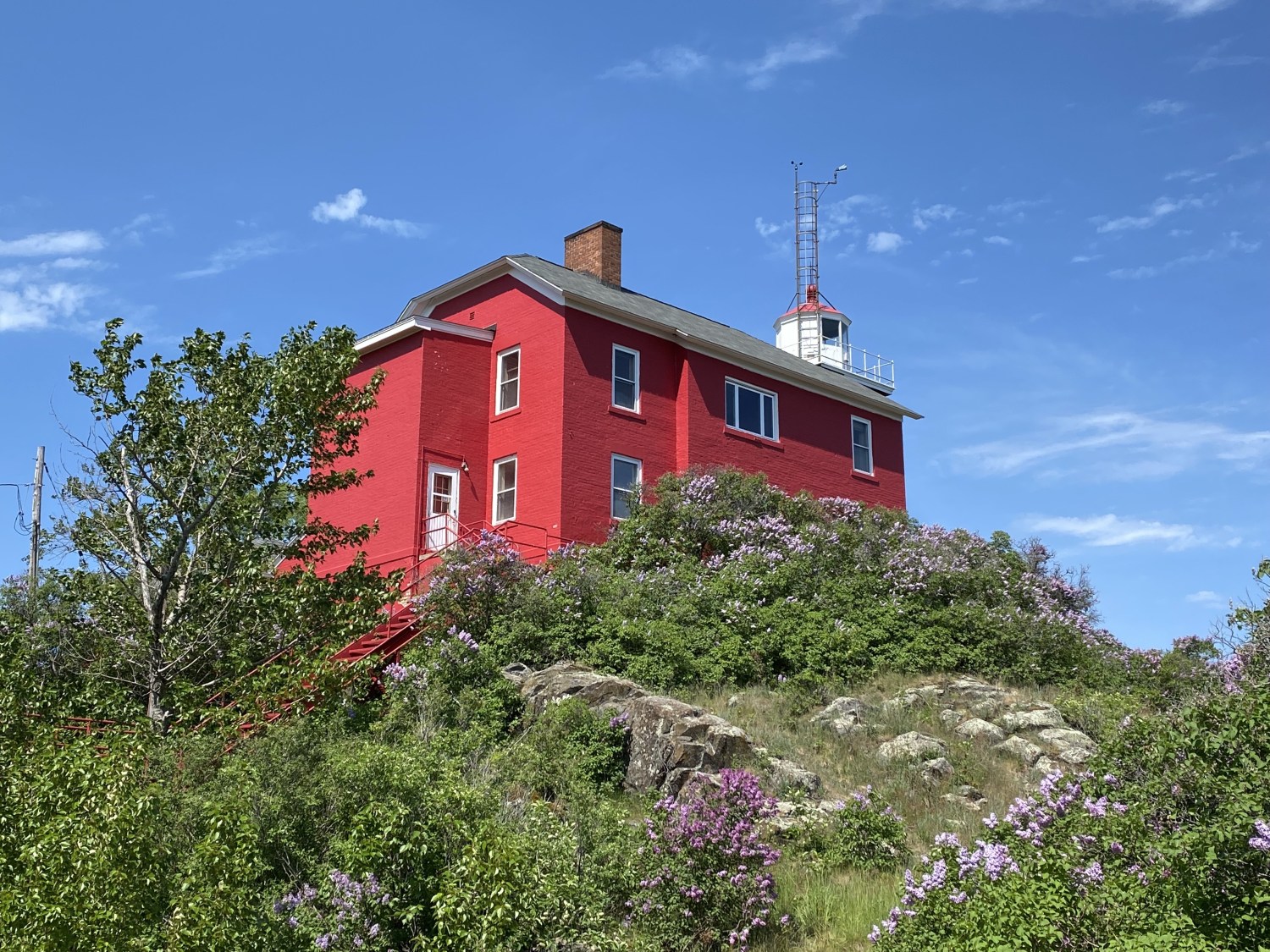
  • twenty-nineteen
  • twenty-eighteen
  • twenty-seventeen
  • twenty-sixteen
  • Sadly, I didn’t do one in 2015. 😦
  • twenty-fourteen
  • twenty-thirteen
  • weekly photo challenge: my 2012 in pictures

Share this:

  • Share on X (Opens in new window) X
  • Share on Facebook (Opens in new window) Facebook
  • More
  • Email a link to a friend (Opens in new window) Email
  • Print (Opens in new window) Print
  • Share on Pinterest (Opens in new window) Pinterest
Like Loading...
  • American Road Trips
  • Colorado
  • Nebraska

on returning home from a road trip to nowhere

wanderessence1025's avatar wanderessence1025 December 13, 2020

From Sunday, September 1 to Friday, October 4, 2019, I went on a massive road trip, which I called the “Road Trip to Nowhere;” it was the longest road trip I’ve ever taken other than the one I took after college in 1979.  I mainly covered the horizontal lands of the Great Plains: Nebraska, South Dakota and North Dakota, but I also made stops in Ohio; Illinois; Wyoming; Colorado; Topeka, Kansas; St. Louis, Missouri; and Greeneville, Tennessee. Overall, I drove 7,505.6 miles.

The trip was all about the Lewis & Clark expedition and the Missouri River; pioneers, farmers, and Native Americans in the Great Plains; stark landscapes such as the Badlands and Theodore Roosevelt National Park; soldiers in various forts in the Great Plains; and the American bison. I loved stopping at small museums where I learned about local culture and was introduced to artists such as Harvey Dunn, Terry Redlin and Karl Bodmer – artists who captured the Great Plains both past and present. I encountered the World’s Largest Buffalo; the world’s largest ball of stamps; the World’s Only Corn Palace; and giant grasshoppers, fish and pheasants on the Enchanted Highway. I found replicas of Viking ships and Scandinavian churches. I crossed the Canadian border and extended a hand to our northern neighbors at the International Peace Garden.  I visited the childhood homes of novelists and celebrities such as Willa Cather and Johnny Carson. I learned more American history here than I have in any of my other travels, and even in all my years of schooling.

biggest ball of stamps at Boys Town, Omaha
Joslyn Museum, Omaha
Fairmont Antiques & Mercantile in Omaha
DeSoto National Wildlife Refuge - The Missouri River
DeSoto National Wildlife Refuge – The Missouri River
"First Council" sculpture at Fort Atkinson State Historical Park
“First Council” sculpture at Fort Atkinson State Historical Park
Swedish Heritage Center in Oakland, NE
Johnny Carson in Norfolk, Ne
Yankton, South Dakota
Ponca State Park, NE
Sioux Falls, South Dakota
Corn Palace, Mitchell, South Dakota
"The Prairie is My Garden" by Harvey Dunn
“The Prairie is My Garden” by Harvey Dunn
Painting by Terry Redlin
Hjemkomst Center, Moorhead, MN
International Peace Garden in North Dakota/Canada

I did most of this trip solo, but Mike flew to Rapid City, South Dakota and accompanied me to Denver, CO, from where he flew back home.  We visited our son in Denver and went on several hikes with him. I also spent several days with my sister in Murphysboro, Illinois on my way home.

me at Scandinavian Heritage Park in Minot, North Dakota
murals in Bismarck, North Dakota
On-a-Slant Village in Mandan, North Dakota
Enchanted Highway, North Dakota
Fort Union, North Dakota
Theodore Roosevelt National Park, North Dakota
bison in Theodore Roosevelt National Park
Theodore Roosevelt National Park
Devils Tower National Monument, Wyoming
Hulett, Wyoming
Hulett, Wyoming
Tatanka: Story of the Bison, Rapid City, South Dakota
Sturgis, South Dakota
Spearfish Canyon National Scenic Byway
Wall Drug, South Dakota
Badlands National Park, South Dakota
Journey Museum, Rapid City, South Dakota
Mount Rushmore, Rapid City, South Dakota
Crazy Horse Memorial, South Dakota

Here is my Polarsteps map for the trip, the first showing the journey all the way from my home in Virginia, and the second concentrated on the Dakotas and Nebraska, the focus of my “Road Trip to Nowhere.”

From Virginia to Road Trip to Nowhere
Road Trip to Nowhere: Nebraska and the Dakotas

I wrote quite a number of posts about my “Road Trip to Nowhere:”

  1. call to place: the road trip to nowhere
  2. anticipation & preparation: road trip to nowhere
  3. on journey: virginia to cincinnati on a “road trip to nowhere”
  4. art journal spreads: tiffany glass & road trip to nowhere
  5. art journal spreads: road trip to nowhere {illinois to nebraska}
  6. art journal spreads: nebraska to south dakota
  7. on journey: finding justice in cincinnati, ohio, and onward to springfield, illinois
  8. lincoln’s boyhood home in springfield, illinois
  9. art journal spreads: south dakota to north dakota
  10. on journey: springfield to omaha (& a first encounter with the corps of discovery)
  11. the epitome of kindness at boys town in omaha
  12. the gerald ford birthsite in omaha
  13. the joslyn art museum in omaha
  14. art journal spreads: north dakota
  15. a walk around the old market in omaha, nebraska
  16. art journal spreads: bismarck to medora, north dakota
  17. tower of the four winds & the desoto national wildlife refuge
  18. nebraska: fort atkinson state historical park & the swedish heritage center
  19. native american portraits
  20. norfolk, nebraska: childhood home of johnny carson
  21. art journal spreads: medora, north dakota to wall, south dakota
  22. on journey: following lewis & clark from yankton to ponca state park
  23. a day in sioux falls, south dakota
  24. sioux falls to mitchell corn palace to the ingalls home
  25. brookings to watertown, south dakota
  26. on journey: watertown, south dakota to fargo, north dakota
  27. fargo to jamestown, north dakota
  28. north dakota’s big skies & the international peace garden
  29. north dakota: the scandinavian heritage center & the knife river indian villages
  30. washburn, north dakota: the lewis & clark interpretive center and fort mandan
  31. the north dakota heritage center {the horse, native peoples & north dakota history}
  32. the north dakota heritage center in bismarck: adaptation gallery
  33. bismarck art alley
  34. mandan to the enchanted highway to watford city, north dakota
  35. fort union trading post national historic site & grasshopper encounters
  36. theodore roosevelt national park (north unit)
  37. theodore roosevelt national park (south unit)
  38. the north dakota cowboy hall of fame & medora
  39. on journey: medora to devils tower to deadwood, south dakota
  40. tatanka: story of the bison & spearfish canyon
  41. south dakota: sturgis, bear butte & wall
  42. the badlands, south dakota
  43. south dakota: minuteman missile national historic site & prairie homestead historic site
  44. the journey museum in rapid city, south dakota
  45. south dakota: mount rushmore & jewel cave national monument
  46. south dakota: crazy horse memorial & chapel in the hills
  47. south dakota: custer state park
  48. south dakota: custer, wind cave national park, & rapid city
  49. on journey: rapid city, s.d. to toadstool geologic park to fort robinson state park
  50. scotts bluff national monument in nebraska
  51. chimney rock national historic site, nebraska
  52. cheyenne, wyoming: the wyoming state capitol, sanford’s grub, & the wrangler
  53. the cheyenne depot museum & cowgirls of the west
  54. cheyenne: a historic walk, frontier days, & mid mod etc.
  55. rocky mountain national park, colorado
  56. around & about fort collins, colorado
  57. denver: flatirons vista & larimer square
  58. denver to grand island, nebraska: front street, fort cody trading post, & a pony express station
  59. grand island, nebraska to topeka, kansas: wilber, beatrice & red cloud
  60. topeka, kansas: brown v. board of education national historic site
  61. ulysses s. grant national historic site in st. louis & a couple of days in murphysboro, illinois
  62. greeneville, tennessee: andrew johnson national historic site & homeward bound

Chapel in the Hills, South Dakota
horsebackriding in Custer State Park, South Dakota
The Needles Highway, Custer State Park, South Dakota
Custer, SD
Custer, SD
Fort Robinson State Park
Toadstool Geological Park, NE
Scotts Bluff, NE
Scotts Bluff, NE
Chimney Rock, NE
Chimney Rock, NE
painted cowboy boots in Cheyenne, Wyoming
Rocky Mountain National Park, Colorado
Arthur's Rock Trail at Lory State Park, CO
Arthur’s Rock Trail at Lory State Park, CO
Mike and Alex in Fort Collins, CO
Flatirons Vista hike in Colorado
Front Street in Ogallala, NE
Homestead National Monument in Beatrice, NE
Willa Cather's Childhood Home in Red Cloud, Nebraska
Willa Cather’s Childhood Home in Red Cloud, Nebraska
Brown v. Board of Education Historic Site in Topeka, KS
the main house at White Haven at Ulysses S. Grant Historic Site
Makanda, Illinois
Makanda, Illinois
Andrew Johnson Homestead in Greeneville, TN

Besides filling three journals on this trip with details and observations, I also did some art journal spreads in the journals.

art journal spreads for Road Trip to Nowhere

I sent some postcards home to myself from each of the three major states I visited.

Nebraska:

postcard from Nebraska

South Dakota:

postcard from South Dakota

North Dakota:

postcard from North Dakota

Overall, this was a fantastic trip where I learned much about the history of our country and the settlers and Native Americans who shaped it.

*September 1 to October 4, 2019*

**Drove: 7,505.6 miles**

Share this:

  • Share on X (Opens in new window) X
  • Share on Facebook (Opens in new window) Facebook
  • More
  • Email a link to a friend (Opens in new window) Email
  • Print (Opens in new window) Print
  • Share on Pinterest (Opens in new window) Pinterest
Like Loading...
  • American Road Trips
  • Andrew Johnson National Historic Site
  • Greeneville

greeneville, tennessee: andrew johnson national historic site & homeward bound

wanderessence1025's avatar wanderessence1025 December 13, 2020

I left my sister’s house in Murphysboro and drove through Carbondale, population 25,900. The road took me past Crab Orchard Lake and Devil’s Kitchen Lake; I was surprised to find southern Illinois so chock-full of lakes. By 8:00, I was driving by the Crab Orchard National Wildlife Refuge, wishing I could stop as I love wildlife refuges.  Sadly, I had a 7 hour drive ahead to Greeneville, Tennessee.

It was a long drive in Illinois past House of Judah, Lion’s Den Adult Superstore, Ferne Clyffe State Park, Shawnee National Forest, Dixon Springs State Park, Metropolis, and Fort Massac State Park.  Soon I crossed the Ohio River and was welcomed into “Kentucky: Unbridled Spirit.”

In my hour and a half drive through a corner of Kentucky, I passed the Purple Toad Winery, River Heritage Museum, Patti’s 1880s Settlement, and Clarks River.  Tim McGraw sang that the “highway don’t care.” There was the Land Between the Lakes National Recreation Area and Mineral Mound State Park.  Johnny Cash sang “Hurt,” a song that holds warm memories, and often brings tears to my eyes. I was on the lookout for escaping inmates near the Kentucky State Penitentiary.  Old Dominion sang “Said Nobody,” a song I love to sing along with because it makes me smile. Cadiz advertised itself as “Front Porch to the Land Between the Lakes.”  I’d never explored this area before, but there was no time.  I passed the Jefferson Davis Monument State Historic Site and then I crossed into “Tennessee: The Volunteer State.”

I always wondered why Tennessee is called The Volunteer State so I finally looked it up. Google knows all.  According to Culture Trip: “Tennessee earned the nickname after the state’s overwhelming involvement in the War of 1812. A little over 15 years after gaining statehood, patriotic Tennesseans were eager to participate in the war effort. With General Andrew Jackson – a fellow Tennessean – leading the charge, over 1,500 soldiers stepped up to the plate.” 

So much of history was intertwining on my Road Trip to Nowhere.  This new knowledge was now mixed with my newfound knowledge of the War of 1812 from my visit to Baltimore’s Fort McHenry (fort mchenry & returning home from baltimore before the pandemic).

Tennessee is an endless state when you’re driving west to east or east to west.  I passed the Robert Penn Warren Birthplace Museum, Fort Campbell Army Post, and Paris Landing State Park.  Alabama appropriately sang “Dixieland Delight.” By 11:00, I was skirting Nashville. Later I sailed past the Hermitage Home of President Andrew Johnson; I’d be visiting the Andrew Johnson National Historic Site at the end of this day’s journey.

Of course it was appropriate for me to be listening to country music as I drove around Nashville.  Hayes Carll sang “Chances Are” and Jason Aldean sang “Crazy Town.” At a rest area, I found a sign: “Welcome to the Soundtrack of America: Made in Tennessee.”  No doubt, Nashville is a music town. We had a grand time visiting Nashville in December of 2017. 

I’m always amazed by so many adult bookstores or superstores in the Midwest, an area of the country that claims to be so hooked on Christianity. Huge billboards advertised “Love Shack Adult Superstore;” this was only one of many. 

It was early October and the leaves were changing color a bit, or they were just dying and turning brown. Kudzu was taking over the trees along the Obed Scenic River.  I saw signs for Great Smoky Mountains National Park just past Frozen Head State Park and Clinch River. Apparently, according to a tour guide in Zion National Park in October 2020, Smoky Mountains National Park is the most visited national park in the U.S. 

Near Knoxville at around 3:20, Chris Stapleton sang “You’re as smooth as Tennessee Whiskey.” Before long, I passed Pigeon Forge, Gatlinburg, and Cumberland Gap National Historic Park. Hayden Carll sang “For the Sake of the Song,” and before I knew it, I was at the Andrew Johnson National Historic Site by 4:35.  I’d have less than a half hour to see the site, but I could see more the following morning.

Andrew Johnson National Historic Site

Andrew Johnson National Historic Site honors the 17th president (April 15, 1865 to March 3, 1869) and preserves his tailor shop and homes.  His gravesite remains an active military National Cemetery.

IMG_5603

statue of Andrew Johnson

Andrew Johnson is known for his belief in the Constitution, the Union, and the common man. 

Early Years

Andrew Johnson had humble origins. He rose from poverty and obscurity from his birth in 1808 in Raleigh, North Carolina. His parents were poor and uneducated; his father died when Andrew was 3 years old after saving two of his wealthy employers from drowning in an icy pond. The replica building shown below is based on Johnson’s birthplace — preserved in Raleigh, N.C.

birthplace of Andrew Johnson in Raleigh, N.C.
replica of Johnson's Raleigh birthplace
replica of Johnson’s Raleigh birthplace
inside the birthplace home

A few years after his father’s death, his destitute mother apprenticed Andrew and his brother to a local tailor. After getting into a legal dispute with the tailor, he and his brother ran away at age 15. Two years later, Johnson returned to Raleigh to try to settle the dispute. Then he led his mother and stepfather over the Appalachians to Greeneville, Tennessee. 

the tailor shop
the tailor shop
the tailor shop
the tailor shop

Andrew Johnson and his family lived in a two-story brick house from sometime in the 1830s until 1851. In 1842, Johnson purchased his first slave, 14-year-old Dolly.  She was scheduled to be auctioned, but after she approached Andrew and asked him to buy her, he bought both her and her 12-year-old brother Sam. Dolly, her brother Sam, and Johnson’s other slaves worked in and around this little home doing the family’s cooking, cleaning, and other domestic chores.

Political Life

During these years, Johnson’s life changed dramatically as he ventured from the tailoring trade into politics. After being elected alderman of Greeneville, he became mayor.  In 1843, Johnson introduced a homestead bill.  It became law in 1862: anyone who agreed to live on and farm a 160-acre parcel of public land could claim ownership after five years (I wrote about the Homestead Act here: grand island, nebraska to topeka, kansas: wilber, beatrice & red cloud).

From then on his rise was steady — to state representative, state senator, and United States representative. In 1853, he was elected governor of Tennessee and was sent to the United States Senate in 1857.

IMG_5526

Andrew Johnson’s early home in Greeneville, Tennessee

Johnson believed secession was unconstitutional. Southerners felt betrayed by him and he was nearly killed by hostile crowds during a train ride through Virginia in 1861.

IMG_5586

Greeneville Union Convention

The Civil War brought hardships for the Johnsons. Johnson’s wife Eliza, other family and some slaves escaped through enemy lines during the Civil War.  They didn’t return until 1869, when Johnson’s presidential term ended.

Tennessee was under Union rule by 1862 and President Lincoln appointed Johnson, the Southern unionist, to serve as Tennessee’s military governor. The Confederates still occupied pro-Union East Tennessee. They harassed his sons and confiscated his property, using his house as a hospital and army headquarters.

Johnson believed in gradual freedom for slaves. According to local tradition, Johnson freed his slaves, including Dolly and her family, on August 8, 1864; as Tennessee’s Military Governor, Johnson proclaimed freedom for all enslaved men in Tennessee a year before slavery was formally abolished by the 13th Amendment to the Constitution.

Despite Johnson’s slow progress in restoring civil government in Tennessee, Northerners, impressed by his commitment to the Union, nominated Johnson as Lincoln’s running mate. This was done to win support in the upper South.  In 1865, Johnson became Vice President of the United States.

Johnson as President

Upon Lincoln’s assassination on April 15, 1865, Johnson became the 17th president.

fullsizeoutput_1fe75

Lincoln’s Assassination

Reconstruction

Most Republicans were confident that Johnson would support a harsh Reconstruction program for the South. But with Congress not yet in session, he was able to fashion his own Reconstruction plan, modeled after Lincoln’s post-war plans, without interference from the legislative branch.

Johnson began appointing provisional governors and granting them impressive powers in return for their agreement to repeal the ordinances of secession and to ratify the 13th Amendment to abolish slavery. He stood by the Constitution in opposing the rights of secession from the Union by the Southern states. He was convinced that the seceded states were still part of the Union.  According to Johnson, the ending of the war brought the states back into their proper alignment with the Union; all that was necessary after the war was for each state to elect officers who would swear to support the Union and the Constitution. Johnson fought, in essence, for a lenient policy toward the South.

He opposed the 14th Amendment. He vetoed the Civil Rights and statehood acts for Nebraska and Colorado because he questioned their constitutionality. Amid great political turmoil, he reopened seaports, federal courts and post offices in the South.

The Republicans believed the defeated Southern states were territories to be ruled over until certain conditions were met, including the abolition of slavery, the granting of civil rights to blacks, and the establishment of solid political control by the Republican Party.  In effect, they saw the South as a conquered territory to be remolded by the government. Johnson, having never declared himself a Republican, did not wish to compromise with them.

Johnson battled with his most determined opponents, the Radical Republicans, led by Thaddeus Stevens in the House and Charles Sumner, Benjamin Wade and Zachariah Chandler in the Senate.  Stevens and Sumner held views on racial equality considered extreme in their day.  For these men, Johnson’s refusal to support their legislation – civil rights to former slaves and extension of federal assistance to individuals in need — marked the beginning of a long battle between the president and Congress. Johnson alienated even the moderates of the Republican party.  Rebuffed and angered, the Republican Congress overrode those vetoes and continued the battle with the president.

The Southern states faced economic crisis, with money invested in slaves or Confederate bonds gone, and Confederate money worthless. Plantations couldn’t afford to pay help since slaves had been freed. Land values plummeted and most white southerners blamed the Republican carpetbaggers, who had gained a reputation for corruption and aroused the bitter hostility of native whites.  Black leaders began to emerge and found political offices in the U.S. Senate and the House of Representatives. However, blacks never controlled any state government and faced growing terrorism from groups such as the Ku Klux Klan.

Johnson vetoed a total of 29 bills, most pertaining to Republican Reconstruction.  Congress overturned 15. Johnson defended the vetoes time and again on the grounds that Congress had overstepped its constitutional authority.

Johnson consistently opposed legislation designed to expand the federal government’s role in state governments’ affairs.  His staunch defense of states’ rights and limited federal government suited his Southern constituents and won their approval. Yet Johnson believed that secession from the Union was unwise as well as unconstitutional, which in turn alienated those supporters.

Johnson also opposed high tariffs, convinced they helped big business but made goods more expensive for the working classes. He fought federal government intervention in economic matters, such as road and canal building, even though they were popular enterprises in the mid-19th century. He felt too much government intervention would destroy the self-reliant spirit.

He had great faith in the ordinary working man.  He advocated using excess public lands for homesteading.  He supported public education. He also favored elimination of the electoral college in favor of a direct election process for the offices of president, vice president and U.S. Senators.

In March of 1867, he signed a bill establishing Howard University, an African-American institution of higher learning in Washington, D.C.

His administration was shaped by his unwavering belief in the Constitution. 

Foreign Affairs

During Johnson’s term, a new era of communications was opened up with the completion of the transatlantic telegraph cable between the United States and England on July 27, 1866.

In the spring of 1867, Russia sold its territory on the Alaskan peninsula to the United States for a price of $7.2 million for over 500,000 square miles. Even though congressmen thought the price too high, Secretary of State William Seward realized the value of the region’s natural resources. In April 1867, Alaska became a U.S. territory.

In 1867, the U.S. annexed the Midway Islands.  Napoleon III withdrew support from Maximilian in Mexico during the same year.

Impeachment

Congress passed the Tenure of Office Act requiring Senate approval before a president could remove an appointee. When Secretary of War Edwin M. Stanton opposed his policies, Johnson declared the act unconstitutional — a violation of executive powers bestowed upon the president by the Constitution — and removed Stanton. He also believed that since Stanton had been appointed by Lincoln, not by him, he was not bound by the Act’s provision that the president could not remove federal office holders during the term of the president who appointed them without the consent of the Senate.

The radicals in Congress had long searched unsuccessfully for evidence of criminal charges to bring against President Johnson. On February 24, 1868, Andrew Johnson became the first president ever to be impeached by the House of Representatives for violating the Tenure of Office Act by defiantly removing the Secretary of War. A trial was held in the Senate from March to May 1868.  Johnson was acquitted by a single vote.

Impeachment is an accusation of wrongdoing. It does not mean removal from office.  Any civil officer of the United States can be impeached, but removal from office occurs only if there is a conviction by the Senate. To convict a defendant, two-thirds of the Senate members present must vote guilty.

His most far-reaching achievement was the purchase of Alaska from Russia in 1867.

In December of 1868, he proclaimed general amnesty for secessionists.

Johnson returned to Greeneville in 1869 after Ulysses S. Grant was inaugurated.

Final Years

In 1875, Andrew Johnson became a U.S. Senator representing the state of Tennessee.  He is the only former president to return to the U.S. Senate. In the Senate, in March of 1875, he spoke out against the Reconstruction program and the political corruption of the Grant administration.

Johnson suffered a stroke that left him paralyzed a few months later.  Four days after that stroke, on July 31, 1875, he suffered a second stroke and died. He was only 66 years old.

In 1926, the Supreme Court ruled that the Tenure of Office Act was unconstitutional.  Johnson was finally vindicated for his removal of Stanton in defiance of that Act.

*********

For dinner that evening, I went to Brumley’s Tavern inside the General Morgan Inn.  I had Brumley’s Crab Soup (she-crab soup), a Pinot Gris, a salad with arugula, candied walnuts, spring lettuces, strawberries, Bleu cheese, candied Georgia pecans, and apple cider vinaigrette, with shrimp added.

IMG_5548

salad at Brumley’s Tavern

At the bar, I talked with a 91-year-old woman who drank Scotch at the bar every night.  She went sky-diving in May and broke her leg!

I also talked to a couple who sold their house in Detroit and bought a farm in Greeneville, with horses, goats, and all kinds of animals. Dale said he loved it and didn’t miss Detroit at all.  He was my age, having graduated from high school in 1974.  He said coming to the tavern and meeting bartender Tim was what convinced them to pick Greeneville. They’d been in the area for five years.

*Steps: 3,198; 1.36 miles.  Drove 464.4 miles.*

*Thursday, October 3, 2019*

***********

On Friday morning I visited the Andrew Johnson National Cemetery. He was buried atop Signal Hill in 1875 wrapped in a United States flag, with a copy of the Constitution resting beneath his head. His wife Eliza is buried beside him under this monument erected by the family in 1878. Immediate family members and many descendants are also buried in the family plot.  It is now known as Monument Hill.

His eagle-topped obelisk reads, “His Faith in the People Never Wavered.”

IMG_5556

Andrew Johnson’s burial spot at Andrew Johnson National Cemetery

The president’s burial site was designated a national cemetery in 1906.  The War Department developed and maintained it until 1942.  Its management was then transferred to the National Park Service and it is now part of the Andrew Johnson National Historic Site.

view from Andrew Johnson National Cemetery
Andrew Johnson National Cemetery

I returned to the Visitor Center to get a ticket for the Andrew Johnson Homestead tour at 10:30.  Since I was early, I walked around the town of Greeneville.

The Valentine Sevier Home is the oldest house standing in Greeneville. Built around 1795 by Valentine Sevier, a wealthy political leader and philanthropist of the late 18th and early 19th centuries, it was later owned by President Andrew Johnson.

Greeneville, Tennessee
Greene County Courthouse
Greeneville, Tennessee
Greeneville Town Hall
Greeneville, Tennessee
First Presbyterian Church, founded in 1780
General Morgan Inn
General Morgan Inn
Greeneville mural
Greeneville mural
Greeneville, Tennessee
Valentine Sevier Home
Clawson-McDowell Brown Home, built 1810

I found the rather strange Capitol of State of Franklin. The State of Franklin was an unrecognized and autonomous territory located in what is today Eastern Tennessee. Franklin was created in 1784 from part of the territory west of the Appalachian Mountains that had been offered by North Carolina as a cession to Congress to help pay off debts related to the American War for Independence. It was founded with the intent of becoming the fourteenth state of the new United States.

Below is a replica of the building which is believed to have served as the capitol of the State of Franklin from 1785 until 1788.  At constitutional conventions held here, competing proposals engendered bitter controversy and resulted in the first political pamphlets produced west of the Appalachians.  The Franklin Legislature, which also met here, challenged the authority of North Carolina by passing laws to levy taxes, raise a militia, establish courts, authorize the performance of marriages and open a land office.

Capitol of State of Franklin

I took a tour of the Andrew Johnson Homestead at 10:30. This was Andrew Johnson’s residence both before and after his Presidency. The house is now restored to its 1869-1875 appearance, the time period following Johnson’s return home from Washington D.C.

fullsizeoutput_1b0d5

Andrew Johnson Homestead

During the Civil War the home was used by both Union and Confederate troops as headquarters. After the war, the Johnson family remodeled their home, bringing in new furniture, wallpaper, and gifts received in Washington. Many of these original furnishings and belongings are found within the home today.

Andrew Johnson Homestead
Yellow Fruitless Mulberry on the grounds
cancellation stamp for Andrew Johnson National Historic Site

(All information about Andrew Johnson is from signs as well as the website of the Andrew Johnson National Historic Site, all prepared by the National Park Service).

Before leaving Greeneville, I came across a funny fall display at United Methodist Church.

IMG_5692

Flippin’ for Jesus

**************

I left Greeneville at 11:15 and had a six hour drive home to Virginia. My Road Trip to Nowhere was coming to an end.

Continuing through Tennessee, I passed Wild Wilma’s Fireworks, Warrior’s Path State Park, and a sign “Bristol: Country Music’s Roots.” After a Fireworks Supermarket was the Birthplace of Country Music Museum in Bristol.  After gobbling down an Arby’s Classic Beef and Cheddar, I crossed into my home state: “Welcome to Virginia: Virginia is for Lovers.”

I’ve taken this route through Virginia many times.  I passed Emory & Henry College, Damascus, and Antiques at Winterhurst. A sign informed me I was “Entering Virginia’s Technology Corridor.” Pierce Brosnan sang from Mama Mia!, “When All Is Said and Done.” More kudzu gobbled up trees along the road. I passed Hungry Mother State Park and the Settler’s Museum of Southwest Virginia.

I saw a sign for the Stephen F. Austin Birthplace.  I’d never heard of him, so I looked him up.  He was an American empresario (1793-1836). He was known as the “Father of Texas” and the founder of Texas.  He led the second, and ultimately the successful, colonization of the region by bringing 300 families from the U.S. to the region in 1825.

An empresario is a person who had been granted the right to settle on land in exchange for recruiting and taking responsibility for settling the eastern areas of Coahuila y Tejas in the early 19th century. The word is Spanish for “entrepreneur.”

Austin inadvertently encouraged the spread of slavery into this territory.  Although Mexico banned slavery in 1836, Texas gained independence that year and continued to develop an economy dominated by slavery in the eastern part of the territory.

I drove up I-81 through the Shenandoah Valley passing the Draper Valley Pentecostal Holiness Church, Pulaski, Radford University, sunflower fields, Virginia Tech in Blacksburg, and muted fall colors in the surrounding mountains. Then there was Roanoke College, Natural Bridge State Park, Cave Mountain Lake, and Washington and Lee University in Lexington. 

Before long I was passing the Shenandoah Battlefield National Historic District and the entrance to Shenandoah National Park’s Skyline Drive.

Near Staunton, I passed the Frontier Museum of Virginia and the Woodrow Wilson Presidential Library and Museum. Soon, I was sailing past more institutions of higher learning: Bridgewater College and James Madison University in Harrisonburg. 

The mountains were showing their colors and I was excited that I was returning home to fall!

By 5:17, I was on I-66E and had 58 miles to home. I passed the Shenandoah River, mountains, and Sky Meadows State Park.

By the time I returned home, it was 6:15.  I had driven a total of 7,505.6 miles on my Road Trip to Nowhere.  I’d never been so happy to be out of the car! 🙂

*Drove 412.7 miles*

*Friday, October 4, 2019*


Share this:

  • Share on X (Opens in new window) X
  • Share on Facebook (Opens in new window) Facebook
  • More
  • Email a link to a friend (Opens in new window) Email
  • Print (Opens in new window) Print
  • Share on Pinterest (Opens in new window) Pinterest
Like Loading...
  • American Road Trips
  • Carbondale
  • Illinois

ulysses s. grant national historic site in st. louis & a couple of days in murphysboro, illinois

wanderessence1025's avatar wanderessence1025 December 12, 2020

I arrived at the Ulysses S. Grant National Historic Site in St. Louis, Missouri around 4:00, just an hour before it closed.  I had to rush through, and then I was on my way to my sister’s house in Murphysboro, Illinois.

fullsizeoutput_1fe4a

Visitor Center at Ulysses S. Grant National Historic Site in St. Louis, Missouri

Ulysses S. Grant was one of the most famous Americans of his era.  As commanding general of the U.S. Army during the Civil War, he led the fight to preserve the Union.  As 18th President (1869-77), he championed the civil rights of African Americans. However his second term was fraught with political public scandals and corruption.

Few people know about his rise to fame or his personal life. As a young officer, Grant visited White Haven, a plantation owned by “Colonel” Frederick Dent. Here, he met and courted Julia Dent, his future wife. Ulysses and Julia lived at White Haven 1854-59 and raised their young family.  Grant helped manage his father-in-law’s plantation and its enslaved workers. Grant himself owned at least one enslaved man, William Jones. The Grant family fought poverty and hardship as they struggled through a weak economy, health problems, and even a frost-filled summer. They moved to Galena, Illinois about a year before the outbreak of the Civil War.

fullsizeoutput_1fe3c

Ulysses and Julia Grant

Today, White Haven commemorates the lives and loving partnership of the Grants against the turbulent backdrop of the 19th century. For some, White Haven was a place of leisure, entertainment and family.  For others it was a place of backbreaking labor, daily struggles and longing for freedom. At White Haven, one can experience the nation’s division over slavery and its aftermath through one family’s perspective.

Colonel Dent named the property White Haven after his family home in Maryland.  Paint analysis indicated the house was painted various colors in the 19th century, including Paris Green with a dark green trim. A typical color of the Victorian period, a purchase of the color was dated to 1874, during Grant’s ownership.  It is a surprising color to find based on the historic name of the property.

IMG_2171

the main house at White Haven

the main house at White Haven
Inside the main house

Grant was from Ohio, a free state where abolitionist activities flourished. Young Ulysses learned from his father that slavery was morally wrong. Julia Dent was born and raised in the slave state of Missouri, where her father, Colonel Dent, taught her that slavery was the proper relationship between blacks and whites. Dent owned at least 30 enslaved African Americans, vital to his wealth, status, and the success of the plantation.

When the Civil War came, Grant’s support of the Union never wavered. Dent, while professing support for the Union, did not believe the federal government should compel a state to remain in the Union. When Union authorities in St. Louis began requiring loyalty oaths, Dent refused to sign.

Julia was caught in the middle, supporting her husband’s efforts to preserve the Union.  At the same time, she had enjoyed a comfortable life made possible by slave labor. She felt strongly that the Dent slaves were “family,” content in their servitude.

Grant demonstrated his patriotism by immediately offering his services at the outbreak of the Civil War. Frequently separated from family, he endured physical hardships, illness, political scheming, and public accusations of wrongdoing.  Through it all, he kept sight of his duty to his country.

White Haven’s enslaved African Americans watched the unfolding events with hope and interest. Slavery remained legal in the border state of Missouri, and the state was exempt from President Lincoln’s Emancipation Proclamation. Yet by early 1864, all the Dent slaves had illegally fled White Haven. Little is known about these people’s lives after slavery.

Below are some of the belongings of the enslaved people at White Haven. “Diviners’ bundles” or “conjurers’ caches,” were used in African ritualistic religious practices. Pieces of slate pencils suggest enslaved people were secretly learning to read and write. Decorative china pieces show what African Americans used to serve the Dents and Grants.

"Diviners' bundles" or "conjurers' caches"
“Diviners’ bundles” or “conjurers’ caches”
hairbrush and slate pencils
Crockery bowls and whetstone
Decorative china pieces

The White Haven property is about 850 acres and includes cleared fields, orchards, large wooded areas, and hills cut by streams and creeks. A variety of grains, vegetables, fruits and other crops were produced at White Haven and then taken to markets in the city. Cleared timber from the property was sold as firewood or to nearby coal mines as bracing for mine shafts.

Female slaves who supported the lifestyle of the owners of White Haven spent a majority of time in the winter kitchen preparing meals. Although the slaves performed work typical of the time, they could not choose what work they did, nor did they directly benefit from their labor.  They worked under harsh conditions and always at the whim of their owners.

inside the winter kitchen, attached to the house

Remaining invisible in the presence of whites, slaves at the same time created personal identity and kinship ties among themselves. Because whites limited their involvement with work spaces, slaves claimed these places as their own.  Away from the eyes and ears of the Dents, they conversed and conducted activities in areas such as the laundry room, the kitchens, and the cabins.

The large horse stable, ice house, and chicken house were vital parts of the farm operation.

fullsizeoutput_1fe47

Summer kitchen at White Haven


IMG_5388

Ice House (left) and Chicken House (right)

In the late 1850s, St. Louis farmers and plantations struggled against bad weather, illness, and a nationwide economic depression. Unable to recover from these conditions, Dent and Grant sold off their livestock and farm equipment in 1859.  That same year, Grant freed his slave, William Jones. The number of enslaved people owned by Colonel Dent declined from thirty on the 1850 census to seven on the 1860 census.

painting of White Haven

Grant accepted the Republican presidential nomination in 1868 out of his sense of duty to ensure that what had been won through war — an indivisible Union and citizenship for blacks — would not be lost through partisan politics.

Grant assumed the presidency believing a nonpartisan approach would smooth the process of reunion and ensure all citizens equal rights.  He quickly found out this would not be the case.  For eight years, Grant struggled to place the freedmen on equal civil footing, but deteriorating race relations in southern states, public interest in other domestic issues, and waning Republican support resulted in limited success. The Panic of 1873 plunged the nation into a severe economic depression.

One of Ulysses Grant’s most appealing traits was an unassuming nature that helped him to easily make and keep friends. He maintained friendships with people from childhood on, through the ups and downs of life.

Grant’s views on equality and justice evolved throughout his life. Recognizing that prejudice was a result of ignorance and fear, Grant believed education was the only means to eradicate this.  He believed citizens in a democracy have both rights and responsibilities.  He understood those responsibilities to include knowledge of how our government works and participating in it, as well as not infringing on the rights of others and being a productive citizen.

At the end of Grant’s presidency, people encouraged him to run for an unprecedented third term.  Grant had had enough and informed the Republican Party that he would not consider re-nomination. 

After leaving the Presidency in 1877, Grant wrote: “I was never as happy in my life as the day I left the White House.  I felt like a boy getting out of school.”

Released from public responsibilities, Grant prepared to realize a lifelong dream — traveling abroad.  During his world tour, he often took solitary walks, exploring back streets and observing people at work and play. He served as unofficial ambassador wherever he went.  His speeches expressed the desire to build and strengthen friendly relations with other nations.

He became the most widely traveled former president up to that time, but more important for Grant, he obtained a better understanding of different cultures, religions and countries. As he traveled to over 25 countries, his belief that democracy was the best form of government was reinforced.

The adventure did not end until Julia, having had enough, insisted on returning home when Grant suggested visiting Australia.  The world tour depleted his funds. Then he lost his fortune by trusting too much in the scheme of a friend who swindled him. Only by writing his memoirs was he able to leave something for his beloved family after he died of throat cancer (probably from smoking so many cigars).

Historic assessments of Grant’s legacy have varied over the years.  Historians have hailed his military genius. However, conservative 20th century surveys have traditionally ranked Grant among the worst presidents.  Perceptions of him as an incompetent president can be attributed to scandals exposed during his presidency, involving members of his cabinet, public officials, and individuals with whom Grant was acquainted. Historians have asserted Grant’s innocence, but also blamed him for being politically naive in continuing to associate with those under investigation.

Modern historians have had a more positive assessment of his presidency, including civil rights enforcement, equal rights for blacks, and civil service reform; he was also legislatively proactive. He avoided war with Spain over Cuba, restored cordial relations with Great Britain, and directed the U.S. onto the world stage.  In the West, he halted white efforts to annihilate the Plains Indians. He also reestablished a sound currency and provided the basis for the orderly growth of the American economy.

Grant has been regarded as an embattled president who performed a difficult job during Reconstruction following the Civil War.

main house at White Haven
cancellation stampe for Ulysses S. Grant National Historic Site

(Information about White Haven and Ulysses S. Grant comes from signs and pamphlets from the National Park Service).

**********

I left the site at closing and crossed the Mississippi River by 5:30;  I was met by the sign: “Welcome to Illinois: The Land of Lincoln From the People of Illinois.” I went through Red Bud, where a cow grazed placidly beside a church. I passed a yard decorated with witches and a big cemetery on a hill. A sign advertised: Spinach Can Collectibles.

I arrived at my sister Stephanie’s house by 7:20.  We had beers and chatted. She gave me a tour of her house, which she’s fixed up nicely since my visit in February. We Face-timed with my brother Robbie in New Jersey.  He had recently had an infection in his foot, which was serious as he has diabetes. He had a treatment where maggots ate the dead flesh, and he had a big hole in his foot; he said he could see the tendon!  So scary!

We spent much of the evening talking about Trump and the impeachment proceedings.

***********

Monday, October 1: In the morning, we took Steph’s dog Babe for a walk in the neighborhood.

IMG_5465

a morning walk in the neighborhood

Then she showed me more of her house, gardens and the pond she dug herself.

My sister's living room
My sister’s living room
dining room
dining room
collectible toys
collectible toys
flowers from her garden
Stephanie's art work
Stephanie’s art work
a poster in Steph's house
a poster in Steph’s house
collectible toys
collectible toys
Stephanie's art work
Stephanie’s art work
collectible toys
collectible toys
Stephanie's art work
Stephanie’s art work
collectible toys
collectible toys
Steph's pond
Steph’s pond
Steph's pond
Steph’s pond
Steph's garden
Steph’s garden

We took a drive to Makanda, a cute little “town” nearby.  It really consisted of a wooden sidewalk in front of a few shops. The aroma of coffee wafted through the air, and the scent of patchouli incense greeted us in a Himalayan shop.

fullsizeoutput_1a2e3

Makanda


fullsizeoutput_1a2e0

Makanda

fullsizeoutput_1b0d4

At pb+j, I bought a cute scarf and a pair of earrings with green stones at the ends. The long-haired shop owner told us the railroad company wanted to put up a big tower with fencing around it, but the community wanted them to locate it somewhere else so it wouldn’t ruin their views and their community.

At Makanda Trading Co, I bought two pendants (no chains), one a fossilized stone and one a deep raspberry with blue veins.

goodies inside Makanda's shops
goodies inside Makanda’s shops
goodies inside Makanda's shops
goodies inside Makanda’s shops

We drove to Giant City State Park Lodge and enjoyed a lunch of Chicken and Dumplings (they were heavy spaetzle-like dumplings). We shared corn fritters and Steph ordered a dill pickle soup (strange!) and a patty melt with onions and Swiss cheese.

Giant City State Park Lodge

After lunch, we returned to Carbondale and stopped in the Target. Later, after relaxing a bit, we went out for our traditional sushi, Sapporo and hot sake at Fujiyama Restaurant.  I had a Dragon Roll: shrimp tempura, cucumbers topped with avocado. Steph had a Pink Lady Roll: spicy crab, cream cheese, avocado, and cucumber topped with crunchies wrapped in pink soy paper.

Pink Lady Roll at Fujiyama Restaurant
Dragon Roll at Fujiyama Restaurant

We talked a long time with the sushi chef, a young pony-tailed guy from Indonesia.  Steph told him all about the chickens she’d had when she lived in Los Angeles. She talked about her birds and animals and how she doesn’t travel much because of them. He talked about going to West Virginia and enjoying taking pictures of the fall leaves.

I told him about my brief afternoon in Indonesia while I was doing a study abroad in Singapore. We talked about Japanese culture and the language and I told him of the immature students I had when I taught at university there. He was quite engaged in our conversation.  I guess it helped that we were the only customers at the sushi bar.

We watched an episode of Gentleman Jack, which I’d never heard of or seen, when we returned home.

*********

Wednesday, October 2: We walked Babe with Steph’s 81-year-old neighbor and friend Carolyn.  In the afternoon, we went to lunch at one of our favorite places, Longbranch Cafe and Bakery. I had an extra-large orange juice, and Huevos Green: Two corn tortillas topped with two eggs (fried), black beans, cheddar cheese, sour cream, salsa, crushed red pepper and fresh cilantro.  I added sauteed spinach for a dollar.

I did a little shopping at a new shop I’d discovered early on in my trip, maurices. I bought a number of things there, especially a bunch of flannel shirts for the cooler weather.

We went to AMC Theatres to watch Downton Abbey. We had reclining theater seats that were roomy and comfortable.

fullsizeoutput_1fe5b

flower in Steph’s garden

We had a beer back at Steph’s house and then went to the Global Gourmet in Carbondale, where I had another chat (like I had in February) with world traveler Andrea.

We had Moscow mules and shared a variety of small dishes:

  • Cajun crab cakes topped with remoulade & scallions
  • Smoked salmon on pea-scallion pancakes with red onion, dill sauce, capers, lemon, and fresh dill
  • Mushrooms sauteed in butter with garlic, herbs and red wine served with a baguette
  • Brie topped with bacon and onions.

For dessert, I had a warm pumpkin pie with a dollop of whipped cream.

Cajun Crab Cakes at Global Gourmet
sauteed mushrooms at at Global Gourmet
pumpkin pie at Global Gourmet

My sister and I really love to eat!!

Back at her house, we watched Gentleman Jack again.

The next morning, I would do the next leg of my trip home: Murphysboro to Greeneville, Tennesssee.

********

*From Topeka to Murphysboro & around: 470.4 miles*

*Monday, September 29 to Wednesday, October 2, 2019*

Share this:

  • Share on X (Opens in new window) X
  • Share on Facebook (Opens in new window) Facebook
  • More
  • Email a link to a friend (Opens in new window) Email
  • Print (Opens in new window) Print
  • Share on Pinterest (Opens in new window) Pinterest
Like Loading...
  • America
  • American Road Trips
  • Kansas

topeka, kansas: brown v. board of education national historic site

wanderessence1025's avatar wanderessence1025 December 11, 2020

I spent the night in Topeka, Kansas so I could visit the Brown v. Board of Education National Historic Site in the morning before taking off through Missouri and Illinois.

The site commemorates the May 17, 1954 U.S. Supreme Court ruling in Brown v. Board of Education that segregation is unconstitutional.  The museum outlines the long struggle for civil rights in the United States.

IMG_5380

Brown v. Board of Education National Historic Site

In 1952, the NAACP consolidated four of the five cases involving school segregation as Brown v. Board of Education; these cases were deliberately drawn from different areas of the country.  Emphasis on the South would have introduced political complications to an already complex case. Topeka, Kansas was chosen as the lead case for the same reason. Also, the African American schools in Topeka were essentially equal to white schools, so segregation itself, not equality, would be the issue in question, according to the National Park Service.

Monroe Elementary School was one of four segregated elementary schools for African Americans in Topeka. Unlike Southern states that required segregation, Kansas law only permitted segregation in elementary schools and only in cities with more than 15,000 residents.

The National Historic Site is housed in Monroe Elementary School.

fullsizeoutput_1fdeb

Brown v. Board of Education National Historic Site in Monroe Elementary School

Linda Brown attended this school rather than Sumner School in her neighborhood because she was African American.  Her father Oliver Brown and twelve other parents joined a lawsuit against the Topeka School Board in 1951.  The case became known as Brown v. Board of Education.

fullsizeoutput_1fe23

Oliver Brown

I watched a film about the long struggle for Civil Rights and education in the U.S.

In 1619, the first Africans arrived in the English colonies.  Their status as enslaved people or servants is unclear, but laws restricting the freedoms of Africans began to appear by the 1640s. Slave labor spread across the South’s tobacco, rice, and cotton plantations. By the 1700s, the South had become a society whose prosperity and way of life was intertwined with slavery.

I learned about Frederick Douglass (1818-1895), an escaped slave who pressed for equal rights, and advanced the cause of emancipation and women’s suffrage.

fullsizeoutput_1fdef

Frederick Douglass

For most Americans, education was the path to economic and social advancement. Before the Civil War, enslaved people were forbidden to study.

However, churches and missionary societies established schools for free African Americans in both the North and South, and in the western territories  Slave codes prohibited formal schooling of enslaved persons, but many obtained basic education informally. By 1860, 32,629 African Americans were enrolled in schools in the United States.

The power of education was recognized by both the enslavers and the enslaved. An 1852 reward notice offered $50 for the return of a runaway slave. 

fullsizeoutput_1fdf7

Education and Slavery

After the Civil War, in 1865, the Thirteenth Amendment to the Constitution abolished slavery.

The Civil War and the struggle for equality
The 13th Amendment
The 13th Amendment

In the period immediately following the Civil War, Southern state governments enacted Black Codes to maintain dominance over the newly freed African American labor force. To combat this pervasive Southern white resistance, the federal government intervened to enforce the Constitution’s guarantee of equality for all citizens. This period was known as the Radical Reconstruction of the South.

Tactics for regaining all-white political control during and after Reconstruction included violence and intimidation of African American voters, and ballot rigging. Social control was exerted through Jim Crow laws, discriminating against and segregating African Americans.

After the Civil War, access to public education was unequal. African American children were forced to study apart from whites, often in inferior schools. In the Southwest and West, many children of Asian, Mexican and Native American descent were also classified as colored or non-white and then segregated and simply excluded from state-sponsored schools.

Thus, African American hopes for an equal place in post-war society were not realized. Civil rights gained during the era of Reconstruction were eroded by white resistance and compromise by the federal government.

During Reconstruction, many institutions of higher learning opened for African Americans including Howard University, Hampton Institute, St. Augustine’s College, Atlanta University, and Fisk University. These colleges provided the opportunity to gain an education that fostered individual and collective advancement.

The Civil Rights Act of 1866 explicitly declared African Americans to be citizens of the U.S. and granted them equal protection in laws.  This was drafted prior to the 14th Amendment and was designed to counteract discriminatory state laws known as “Black Codes” that restricted the freedom of African Americans after the abolition of slavery.

Reconstruction Legislation
Charles Sumner, architect of reconstruction legislation

The Fourteenth Amendment to the Constitution was passed in 1868. It granted citizenship to all persons born or naturalized in the United States—including former slaves—and guaranteed all citizens “equal protection of the law,” according to History: 14th Amendment.

fullsizeoutput_1fdfb

14th Amendment

In 1870, the 15th Amendment granted African-American men the right to vote.

fullsizeoutput_1fdfd

15th Amendment

By 1870, the Freedman’s Bureau established over 4,000 schools for over 250,000 African American students in the South, increasing literacy among African Americans dramatically.

fullsizeoutput_1fdf2

Education for African Americans

The Civil Rights Act of 1875 was meant to guarantee freedom of access, regardless of race, to public places.  This law was the last civil rights legislation passed until 1957.  The U.S. Supreme Court declared this act unconstitutional in 1883.

In 1896, the Supreme Court’s Plessy v. Ferguson decision declared the practice of segregation constitutional.  The ruling established the “separate but equal” doctrine, which was used to defend segregation until 1954. While segregated facilities for non-whites were legitimized by this decision, the reality of unequal status for non-whites had long been entrenched in law and society since the arrival of the first African slaves in the Americas. After the Civil War, groups opposed to granting full equality to African Americans created a series of legal obstacles, now called Jim Crow laws, which kept African Americans from enjoying rights granted by the Constitution.

This is still going on today, with politicians and states openly and blatantly trying to disenfranchise black voters, deny black citizens housing and healthcare, and to otherwise systemically “keep them in their place.”

Colored Waiting Room
Segregation - "separate but equal"
Segregation – “separate but equal”

At the beginning of the 20th century, there was a significant increase in public schools for African American and white children.  However, with some notable exceptions, African American schools generally had fewer facilities and received lower funding than those for whites.  In 1948-49, for example, the Clarendon County School Board in South Carolina spent an average of $43 on each African American child, and $179 on each white child.

The principle of “separate but equal” was in most cases not applied in practice. It was really just a way of maintaining the dominance of whites. Psychological research in the 1930s suggested that segregation itself created a sense of inferiority in African Americans, likely to have a lasting, debilitating effect, regardless of the equality of facilities.

The following map shows school segregation before Brown. Green: Segregation Required.  Blue: Segregation Permitted.  Red: Segregation Prohibited.  White: No Specific Legislation or Segregation.

fullsizeoutput_1fe32

School Segregation Before Brown

On May 17, 1954, the U.S. Supreme Court issued its landmark Brown v. Board of Education decision. The court’s nine justices agreed unanimously that separate schools based on race were unconstitutional. In overturning Plessy v. Ferguson and the “separate but equal doctrine,” Brown v. Board of Education helped launch the modern civil rights movement.

The five lawsuits of Brown v. Board of Education grew out of grassroots community activism, guided by strategies developed by African American activist organizations.

fullsizeoutput_1fe22

The 1954 Supreme Court decision

fullsizeoutput_1fe34

Ending school segregation

The Brown decision was announced in Topeka’s afternoon newspaper on May 17, 1954.

The Topeka State Journal

In May 1955, the Supreme Court ordered that integration be implemented with “all deliberate speed,” a controversial phrase reflecting the court’s concern over Brown’s reception.  Rather than comply, Prince Edward County, VA, closed its schools from 1959 to 1964, an example of Virginia’s “massive resistance” strategy.  The Supreme Court finally ordered the county to open and integrate the schools.  In other places desegregation was met with angry — often violent — resistance, and openly segregated public facilities persisted into the 1960s.

On February 29, 1956, Autherine Lucy (left) arrived at the U.S. District Court to petition the court to order the University of Alabama to re-admit her to classes.  Her legal team included Thurgood Marshall (tall man, center) and Arthur Shores (carrying coat, right).

fullsizeoutput_1a2ed

A legal team proceeds to US District Court

Children became the pioneers in the attempts to desegregate public schools following the Brown decision. They faced fierce intimidation.  Little Rock Central High School (LRCHS) in Little Rock, Arkansas was the site of forced desegregation in 1957.

fullsizeoutput_1fe20

children as pioneers – Little Rock Central High School

Civil Rights action against segregation and discrimination took many forms – bus boycotts, marches, sit-ins, and voter registration campaigns.  Protestors often encountered verbal abuse, physical intimidation, and incarceration.  In some cases they were murdered.  The violence, seen on TV, began to change public opinion in favor of stronger federal protection of civil rights.

In 1960, four African American students from North Carolina Agricultural and Technical College launched the southern sit-in movement at a segregated Woolworth’s lunch counter in Greensboro, North Carolina. On June 9, 1960, Howard University student Dion Diamond was surrounded by white objectors during a lunch counter sit-in at an Arlington, Virginia drugstore. He and other black students occupied counter seats to protest denied service for blacks.

lunch counter sit-ins

In May, 1961, a bus carrying black and white Congress of Racial Equality (CORE) “freedom riders” was firebombed outside Anniston, Alabama. Violent reaction to peaceful direct action forced the federal government to intervene to protect its citizens.

fullsizeoutput_1fdfe

firebombed bus in Alabama

In 1962, integrationists promised to go to jail if the governor called in the National Guard on an upcoming desegregation protest in Albany, Georgia on July 25.

fullsizeoutput_1fe01

Integrationist chant “freedom” and wave their pledges

In 1964, President Lyndon Johnson signed the Civil Rights Act outlawing racial discrimination in employment, voting rights, and use of public facilities.

fullsizeoutput_1fe12

The Civil Rights Act, 1964

In 1965, members of the Southern Christian Leadership (SCLC) and Student Nonviolent Coordinating Committee (SNCC) organized a march to highlight the continued use of voting restrictions against African Americans. Members planned to march from Selma, Alabama to Montgomery, the state capital.  On March 7, known now as “Bloody Sunday,” the marchers were stopped and attacked by police with clubs, tear gas, and mounted charges as they crossed the Edmund Pettus Bridge.  After two weeks of further peaceful protest and police violence, the march reconvened and eventually reached Montgomery.

This march is dramatized in the movie Selma, which is excellent.

fullsizeoutput_1fe0c

Marching for the Vote

The Voting Rights Act of 1965, also signed by President Lyndon Johnson, reversed nearly a century of Jim Crow laws. 

fullsizeoutput_1fe13

The Voting Rights Act, 1965

Below, a young African American boy observed Ku Klux Klansmen preparing to march in Durham, NC on April 24, 1965.

fullsizeoutput_1fdf9

Ku Klux Klansmen prepare to march in 1965

Two great leaders in the fight for civil rights were Martin Luther King, Jr. and Congressman John Lewis, among many others.

The Martin Luther King, Jr. Memorial in Washington, D.C.
President Obama presented the 2010 Presidential Medal of Freedom to Congressman John Lewis

In the photo below, activist Ieshia Evans peacefully protested again police brutality outside the Baton Rouge Police Department in Louisiana on July 9, 2016.

fullsizeoutput_1fe18

activist Ieshia Evans protests police brutality

I walked through a classroom in Monroe Elementary School.

Classroom in Monroe Elementary School

I left Monroe Elementary School and took a walk on the grounds.  I felt disheartened that despite the great strides that have been made in civil rights for African Americans, there is still great systemic oppression, unfair laws, disenfranchisement, imprisonment and free labor provided by non-white inmates in private prisons, and general racist attitudes in our society. I wonder when people will ever look kindly and lovingly at their fellow man and understand that we are all created EQUAL – in every way.

Monroe Elementary School
cancellation stamp for Brown v. Board of Education National Historic Site

(All information is from signs and pamphlets from the National Park Service.)

Near the Brown v. Board of Education Site is a mural depicting African Americans in Topeka.

mural near Brown v. Board of Education site

********

After leaving the historic site at 11:00 a.m., I was on the road to St. Louis, Missouri (MO) where I would stop at the Ulysses S. Grant National Historic Site. I paid the Kansas toll and drove through Bonner Springs, Leavenworth, and finally through Kansas City.  I was welcomed to Missouri. I saw signs for the American Jazz Museum.  A sign informed me that there were “690 road deaths in MO this year: Every 1 Matters.” Another emphasized traffic safety as well: “One good turn signal deserves another.” Passions Adult Toy Outlet beckoned drivers to make a stop.  I passed signs for Lake of the Ozarks as vultures circled overhead. Buckshort Trading Company promised it was “unique as its name.”  I could have stopped at the Blackwater Historic District but I knew there wasn’t enough time. I crossed the Missouri River and Hominy Creek. 

Another road sign warned: “Drive Sober: Not Shaken or Stirred.” Another promised “Jesus Saves.” I could have stopped at Frumpy Joe’s Food and Drink, but I already felt frumpy from too many hours in the car, so I sped by. There was an out for marijuana possession: “Possession Charge? Jungle Law.”  Another sign said “Where Are You Going? Heaven or Hell?”

I crossed the Missouri River again and saw signs for Spirit of St. Louis Airport.  I arrived in St. Louis at 3:42, just barely in time to make it to the Ulysses S. Grant site before they closed.

*Monday, September 30, 2019*


Share this:

  • Share on X (Opens in new window) X
  • Share on Facebook (Opens in new window) Facebook
  • More
  • Email a link to a friend (Opens in new window) Email
  • Print (Opens in new window) Print
  • Share on Pinterest (Opens in new window) Pinterest
Like Loading...
  • American Road Trips
  • Beatrice
  • Nebraska

grand island, nebraska to topeka, kansas: wilber, beatrice & red cloud

wanderessence1025's avatar wanderessence1025 December 10, 2020

When I left Grand Island, Nebraska at 7:22 a.m. it was dark, rainy, foggy and 62°F. I could see lightning strikes on a horizon thick with cornstalks. Giant water sprinklers hovered over the crops and more lightning zigzagged the sky. By the time I got on 80E, the sky released a downpour.

fullsizeoutput_1a31a

on the road in Nebraska

I had to drive a long way out of the way today, backtracking a good distance, to get to my destinations. I wanted to see the Willa Cather Childhood Home in Red Cloud, Nebraska, but as it was a Sunday, it didn’t open until 1:00.  I had read two of the author’s books, O Pioneers! and My Àntonia, both set in Nebraska, and visiting Red Cloud was a priority for me. I had also read The Professor’s House; I had loved all her books. But I also wanted to see the Homestead National Monument of America, which was open from 9:00-5:00.  You can see the route I had to take on the map below.  This amounted to a lot of driving.

On top of that, once I left Red Cloud, I had to drive 3 1/2 more hours east and south to get to Topeka, where I planned to stay the night.

fullsizeoutput_1fe5e

my route through Nebraska today

Past the town of Beaver Crossing (457 population) were cornfields, silos, trees and farms. I had to stop for a train. At a town called Friend, I found Friend Fertilizer and Friend Christian Assembly.  I stopped at a nice little market for a snack. The town of Crete looked nothing like the Crete of Greece, but it was a substantial town with a population of 6,960.

I hit the town of Wilber and was surprised to find it is the “Czech Capital of the USA.” I saw the Wilber Czech Museum, Czech Cellar, and Czech’erd Flag Bar. Huge silos hunkered down on the edge of town.

The Czechs left a land rich in history and culture. The first university in Central Europe was established in Prague over 100 years before Columbus discovered America. Throughout generations of wars and oppression, the Czech people kept alive their language, music, arts and customs, and they brought them to the New World.

Charles Culek, who came to  Nebraska in 1856, was the first permanent Czech settler.  The first Czechs came to Saline County in 1865. In all, some 50,000 Czechs settled in Nebraska, most of them from the province of Bohemia.

Like other pioneers, Czechs survived the hardships of frontier life and thrived in the new land. They found freedom from oppression and opportunity for their children.

According to a pamphlet crated by the Wilber Chamber of Commerce, “Pride of heritage runs deep through this community that was written about in Willa Cather’s book, My Àntonia. The Wilber Czech Festival was a meeting place for homesick Czechs, eager to wear their traditional festival costumes, play their music, dance, drink and feast together with friends and relatives.”

Wilber, Czech Capital USA
Wilber, Nebraska
Wilber, Nebraska
Wilber Czech Museum
Wilber Czech Museum
Hotel Wilber
Hotel Wilber
Hotel Wilber
Hotel Wilber
Wilber, Nebraska
Wilber, Nebraska
Czech Capital: Wilber

A ribbon of birds unfurled above me as I headed to the town of Beatrice (pronounced Bee-aáa-trice).  At Turkey Creek, a dead deer lay along the roadside. The corn everywhere was tan, gold, and dry. I wondered when it was harvested.  Sunflowers and browning corn were all around.  A sign defined “‘FETUS’: Latin for Little One.”

on the road to Beatrice, NE

By 10:00 a.m., I arrived at Homestead National Monument of America in Beatrice. The building is shaped like a plow. The monument preserves the T-shaped, 160-acre claim that Daniel Freeman filed on January 1, 1863. It includes the school that some of Freeman’s children attended, a typical eastern Nebraska cabin, and 100 acres of restored tallgrass prairie.

fullsizeoutput_1fd7d

Homestead National Monument of America

fullsizeoutput_1fd9c

Homestead National Monument of America

fullsizeoutput_1fd7c

Homesteading image

fullsizeoutput_1fd7f

Do you live near a Homestead?

I watched a 10-minute film about the Homestead Act, pioneers and the Native Americans who were displaced. I wandered through the museum.

The Homestead Act, which offered 160 acres of public land free to homesteaders, was passed by Congress with little opposition, and President Lincoln signed it on May 20, 1862.

Surveyors relied on the 1875 Land Ordinance Act. They laid out 36-square-mile townships, which were then split into 640-acre (one square mile) sections. These sections were then subdivided into four 160-acre homesteads. Initially, 160 acres was thought to be the ideal size for a family farm.

The government had to decide who got land.  If you were over 21 or head of a household, you qualified for 160 free acres. That included women, as well as immigrants eligible to become citizens. African Americans became eligible after the 13th Amendment abolished slavery in 1865 and the 14th Amendment guaranteed equal treatment (1868).

Before receiving title to the land, homesteaders had to live on it for five years, build a home, and cultivate crops.

Settlers had to build a home first, and they used whatever material was available, whether logs, stones, tarpaper, canvas or sod.  Most homes were basic, often crude structures, frequently just a single all-purpose room.

fullsizeoutput_1fd88

houses built by homesteaders

The Homestead Act gave people land, not farms. Many were unprepared for the sweat and toil needed to break the sod.  Plows cracked, muscles ached. Homesteaders had to build fences, dig wells, and buy or make tools.

fullsizeoutput_1fd89

Farming on the homestead

Daily life revolved around planting, harvesting, raising livestock, cooking meals, and canning preserves. Every member of the family worked the fields or tended vegetable gardens. People kept hogs, chickens, and milk cows for their own use, or to sell eggs and butter when harvests were poor.

Preparing food on the Homestead
Yager's Hybrid Corn
Yager’s Hybrid Corn

After a bountiful harvest, a Montana farmer showed off abundant corn, wheat, potatoes, vegetables.. and even a watermelon in 1914.

fullsizeoutput_1fdae

fruits of the land

Disaster at the hands of nature was an ever-present threat. The wintry blizzards, summer hailstorms, droughts, and tornadoes that greeted settlers often came as a shock. During the Great Depression of the 1930s, a prolonged Midwest drought created a “dustbowl” as arid topsoil simply blew away.

Place for Sale
Place for Sale
California or Bust
California or Bust

In addition to the daily struggle for survival, nearly all homesteaders had to cope with isolation.  They responded by forging friendships, building communities, and coming together to pray, dance, mourn their losses or find a mate.

As the Homestead Act was being debated, American Indians were not part of the conversation.

Nineteenth century Americans believed in Manifest Destiny, the idea that the U.S. had a God-given duty to expand westward and tame the continent. Manifest Destiny viewed the West as empty, unused land – although it was in fact home to thousands of American Indian communities.  Manifest Destiny obviously had a negative impact on native populations.

fullsizeoutput_1fda5

Manifest Destiny

The American Indian Removal Act of 1830 had already set a precedent for taking native lands. Under that law, Congress pushed more than a dozen eastern tribes westward. On the Trail of Tears, thousands of members of the Choctaw, Cherokee, Chickasaw, Muscogee (Creek), and Seminole tribes died during a forced removal to American Indian Territory (Oklahoma) from their ancestral homes in the southeastern United States.

fullsizeoutput_1fda7

In the museum, I learned a lot about the Homestead Act and the pioneers who took up a homestead.

Factories back east had to supply the new western farms with agricultural equipment.  In 1831, Cyrus McCormick demonstrated the first successful horse-drawn reaper, which cut as much grain per day as 10 workers. In 1837, blacksmith John Deere developed a steel plow tough enough to break hard prairie sod. Technology eased the back-breaking work and made farms more efficient.

Settlers needed water for gardens and livestock, for drinking, cooking, and, occasionally, for bathing. Daniel Haladay patented the first American windmill in 1854. Dozens of companies soon competed. Windmills were sturdy, long-lasting, and best of all, exploited a free source of power.

IMG_5201

Windmill

A hay stacker, like other agricultural machines, let farmers work the land more efficiently – but also required a cash investment that was beyond many new homesteaders.

In the half-century from 1860-1910, steam power and gasoline engines rapidly took over the burden of working the land. Mass-produced equipment replaced handcrafted tools.

Homesteading meant many things to many people. For factory workers it offered escape from crowded cities. For those who had been enslaved, it represented freedom. For single women it was a way to gain independence and for immigrants it promised a new life.

Railroads and other promoters nurtured these hopes, painting the West as a place to realize the American Dream. Their advertisements often promised perfect soil, abundant rain… and guaranteed success. But reality was not always so rosy.  Homesteading was hard.  Weather could be harsh. Locusts and grasshoppers were regular scourges.  Survival was particularly difficult for those new to farming.

outhouse facts
outhouse facts
outhouse facts
outhouse facts
free government land!
Hay Stacker Model
Hay Stacker Model
A Promise of Paradise
Iron plow
Iron plow
California or Bust
California or Bust

Schoolhouses were often the first buildings built by homesteaders. Early schools were simple. The Freeman School nearby taught kids the three Rs from 1872 to 1967. It was the longest continuously operating one-room school in Nebraska and is now part of Homestead National Monument of America.

Homesteader Schools
Homesteader Schools
McGuffey's Third Eclectic Reader
McGuffey’s Third Eclectic Reader

In 1863, Daniel Freeman and other homesteaders began to file claims, mostly in the Great Plains states and Nebraska and Dakota territories.

Daniel Freeman needed to file his homestead claim quickly.  The Civil War was raging and Freeman apparently had to return to his Union Army regiment. He supposedly convinced the local land agent to open his office just past midnight on January 1, 1863, the day the Homestead Act took effect.

The Freeman family prospered, becoming prominent citizens. Daniel Freeman is buried on his homestead.

fullsizeoutput_1fdac

the first homesteader, Daniel Freeman

In 1866, Congress extended homesteading to the five public land states in the South: Florida, Alabama, Mississippi, Louisiana and Arkansas.

The 1887 Dawes Act carved Indian reservations into 160-acre allotments, similar to homesteads. Though the intentions may have been good, the consequences were devastating. American Indians were assigned the worst land on the reservations. Land left over could be given to non-Indians, and large tracts were leased to non-Indian farmers and ranchers.  American Indian tribes lost 60% of their reservations before the Dawes Act was repealed in 1934.

In 1889, the Oklahoma Territory opened to homesteaders with a “land run.” Thousands joined the frenzied sprint to stake claims.

From 1901-1920, homesteading peaked.  The Land Office issued over 800,000 patents.

In 1913, Willa Cather published Prairie Trilogy.

From 1930-1940, the Land Office issued 40,000 homestead patents, many in the Southwest.

In 1936, Homestead National Monument was established.

From 1960-1986, public lands in Alaska were opened to homesteaders.

Ken Deardorff, a 29-year-old Californian and Vietnam Veteran, wanted a fresh start.  He filed a claim alongside a salmon-filled river in southwest Alaska.  His 1974 homestead was the last patented under the Homestead Act, which expired two years later in the lower 48 states, and in 1986 in Alaska.

Like homesteaders a century before, Deardorff’s family fended for itself.  They lived far from town. Deardorff fished, hunted, and trapped before selling the land in 1993.

IMG_5181

the last homesteader

In 1976, Congress repealed the Homestead Act in the lower 48 states.  In 1986, Congress repealed the Act in Alaska.

In 1988, the last homestead patent was issued.

People took pride in the communities they had built.  They felt the achievement of having land to pass on to their children.  And for the 40% who ultimately gained ownership of their homesteads, there was the personal reward of knowing they had beaten the odds.

IMG_5188

A life well lived

For over 123 years, homesteading offered immigrants a roadmap from serfdom to citizenship and property ownership. It offered the same to the nation’s own disenfranchised – former slaves, veterans of the Civil and World Wars, emigrants from northeast factory towns, and southern sharecroppers – men and women.

After visiting the museum, I walked outdoors on the grounds. The cabin was built by George W. Palmer in 1867 in Logan Township, some 14 miles from Beatrice. He used oak, ash, and other hardwoods cut from the banks of Bear Creek for his cabin walls.

Palmer proved up his homestead claim in 1875.  Along with his wife and five children, he had built a home, planted crops, and lived on the land for five years as required by the Homestead Act.

Homestead National Monument
cancellation stamp for Homestead National Monument

I left Homestead National Monument at 11:40, driving on 136W for 72 miles.  By noon, blue skies were peeking out but it remained very humid. The land became pretty with gently rolling farmland, corn and green trees. By noon, it was a sultry 80°F.

Finally, Gilead brought blue skies. Cornstalks turned bright green to the south, but were brown to the north.  I loved how the wind rushed over the grasses and cornstalks. A herd of Black Angus grazed in red grasses that were whipped about by the wind. Corsages of clouds were pinned on the blue sky.  Red, gold and green grasses were giving in to the wind.  Black and brown cows swished their long tails.

***********

I reached Red Cloud (population 1,020) by 1:24, just in time for the 1:30 tour of Willa Cather’s Childhood Home. Cather achieved recognition for her novels of frontier life on the Great Plains.

Author Willa Cather was born in Virginia in 1873 and moved with her family to live in Webster County, Nebraska at the age of nine.  After graduating from Red Cloud High School in 1890, she attended university in Lincoln, Nebraska for five years, then moved to the east coast for the remainder of her life.  She died in 1947 and was buried in New Hampshire.

The years in Red Cloud were important and formative years in the writer’s life.  Six of her twelve novels are set in the Red Cloud and Webster County of her youth, including One of Ours, which won the Pulitzer Prize in 1922.

Red Cloud was given many names in Cather’s fiction: Black Hawk, Moonstone, Haverford, Sweetwater, Hanover, and Frankfort. But the town itself as Cather knew it, with its small-town politics and deep cultural currents, deeply informed her writing. Cather put Red Cloud on the map of famous literary destinations, along with William Faulkner’s Oxford, Mississippi and Mark Twain’s Hannibal, Missouri.

fullsizeoutput_1fdd2

Knowing Nebraska

The milestones of the author’s career include: her first publications in Nebraska; her first professional journalism work in Pittsburgh; her farewell to journalism in 1912; and the publication in 1913 of O Pioneers!, which she came to see as her first successful novel.

fullsizeoutput_1a2f5

Willa Cather

Built around 1879, this is the house in which Willa Cather lived from 1884 to 1890.

fullsizeoutput_1fdde

Willa Cather’s Childhood Home in Red Cloud, Nebraska

Willa Cather's Childhood Home
Willa Cather’s Childhood Home
Willa Cather's Childhood Home
Willa Cather’s Childhood Home
Willa Cather's Childhood Home
Willa Cather’s Childhood Home
Willa Cather's Childhood Home
Willa Cather’s Childhood Home

Willa used to use her father’s office as a laboratory to dissect animals. She shared the attic room with her siblings, then she got her own room, which she wallpapered. The wallpaper is in bad disrepair now.

fullsizeoutput_1fdc4

the attic room Willa shared with her sisters

The Miners were Willa’s inspiration for the Harlings in My Ántonia. The Miner girls were all artists. We went into the Miners’ home, which is also known as the Harling home.

fullsizeoutput_1a2fb

Miners’ home

Miners' home
Miners’ home
Miners' home
Miners’ home

I took a short walk around the neighborhood of Red Cloud.

fullsizeoutput_1fddc

a home in Red Cloud, Nebraska

Willa Cather went to the University of Nebraska and spent time all over the world and in New York.  Though The Song of the Lark is set in Colorado, the guide said she recognized Red Cloud in the book, so she thinks it is really Red Cloud. In The Professor’s House, Willa was similar to the professor in that she had a sewing room she didn’t want to leave.  There are many questions about her sexuality as the closest people to her were women and she had a long-time woman partner, but her letters were not revealing in that respect.

The town of Red Cloud includes the Farmer’s and Merchant’s Bank Building, built in 1888-1889. The bank’s founding president was Silas Garber. Cather took inspiration from the Garber family to write about Captain and Mrs Forrester in her 1923 novel, A Lost Lady.  She also used the building as inspiration in her 1935 novel, Lucy Gayheart.

Designed in the Renaissance Revival style, it has been listed on the National Register of Historic Places since 1981.

Red Cloud, Nebraska
Red Cloud, Nebraska
Red Cloud, Nebraska
Red Cloud, Nebraska
bank building
bank building
bank building
bank building
Red Cloud, Nebraska
Red Cloud, Nebraska

Willa Cather’s life and works are showcased in the museum. Cather is known as a famous Nebraskan, yet she lived in Nebraska just over a decade. Later, Cather made her home in New York City, though the Nebraska prairie often called to her.

Cather’s travels took her far and wide, from great cities to remote and beautiful landscapes, and in turn her books included the various locales she lived in and visited. She traveled all around the United States, and visited Italy, France, England and Canada. For more than 20 years, she tried to spend part of each year in Jaffrey, New Hampshire. Jaffrey Center’s Old Burying Ground was chosen as her final resting place.

Cather was inspired to write her third novel, The Song of the Lark (1915) by Olive Fremstad’s improbable rise from Midwestern obscurity to stardom at the Metropolitan Opera.  In the novel, Thea Kronborg, like Fremstad, was a Swedish-American who became a celebrated singer throughout the world, despite humble beginnings in Moonstone, Colorado.

Cather’s fifth novel, One of Ours, tells the story of Claude Wheeler, an aimless Nebraska boy who finds both purpose and place as an officer in France during the First World War. It was a best seller at the time of its release, winning praise from many soldiers of the Great War, and in 1923 received the Pulitzer Prize for the novel.

In her 11th novel, Lucy Gayheart, Willa Cather returned to a familiar setting — rural Nebraska — to tell the story of a pianist who makes her way from Haverford, a Red Cloud-esque town on the Platte River, to Chicago, to pursue her musical studies. Long overlooked, Cather’s penultimate novel is now considered by many to be one of her best.

Cather felt a great affinity for the Southwest and loved New Mexico in particular. After becoming intrigued by Jean-Baptiste Lamy, the first bishop of Santa Fe (and all of New Mexico), a Frenchman, whose bronze stands before the Romanesque St. Francis Cathedral he built, she researched his life and began writing Death Comes for the Archbishop (1927).

Sapphira and the Slave Girl, published in 1940, is set in 1856 and explores the contentious relationships between Sapphira Colbert, an embittered white slave owner; Rachel, Sapphira’s daughter, an abolitionist; and Nancy, a young slave on the Colbert farm. Cather focuses on the divide between the worlds of the white slave-owning class and the people they have subjected, exploring the shameful history of her family and country.

Among the Cather family’s books and magazines were dozens of ledgers, accounts and correspondence related to farming and finance.

Sapphira and the Slave Girl by Willa Cather
childhood dress
childhood dress
One of Ours by Willa Cather
Lucy Gayheart by Willa Cather
The Song of the Lark and Opera House Tickets with advertising from Merchant's Gargling Oil Liniment
The Song of the Lark and Opera House Tickets with advertising from Merchant’s Gargling Oil Liniment
the works of Willa Cather
receipts and papers from the Cather household

On April 24, 1947, Cather died of a cerebral hemorrhage, at the age of 73, in her home in Manhattan.

fullsizeoutput_1fdce

Cather’s words from 1941

************

By 3:00, I’d left Red Cloud and by 3:10, Kansas welcomed me. I drove over White Rock Creek and past Lebanon and Waconda Lake. Brown and white painted cows grazed the land. I wondered about the reddish brown (coppery) tassels on a crop.  I later looked it up and found it was sorghum, used in the manufacture of syrup.  The stalks are harvested and crushed.  Kansas is ranked 1st in the nation for grain sorghum production, growing more than 46% of the country’s crop.  The state also ranks 2nd in sorghum for silage production in the U.S.

The land flattened out as I headed east through Kansas on 81S. White cows gathered around a pond.  I passed the Ottowa County History Museum, huge water sprinklers, and the Solomon River.

Finally, I was on I-70E to Topeka, Kansas.  Signs along the road read: PET ME! Greyhound Hall of Fame. Joe Snuffy’s Old Fashioned Grill.  Russell Stover Candies. Eisenhower Presidential Library & Museum and Boyhood Home.  Abilene, Kansas was the home of President Dwight D. Eisenhower.

Muddy Creek promised White Tail and Wild Game Hunting. Chapman was home of Joe Engle, Astronaut. Sunlight stretched out over stubby harvested fields. Another sign admonished: Smile: Your Mom Chose Life. Near the Smoky Hill River, a sign advertised Taylor-Made Guns.  Fort Riley: Home of the Big Red One.

“U.S. Cavalry Museum: First Territorial Capital” was near Manhattan. There was the Tallgrass Prairie National Preserve.  ALMA: City of Native Stone (I saw this stone used in buildings in Manhattan, Kansas in a future visit). I bypassed the Historical and Native Stone Scenic Byway.

More signs dotted the highway: Yak n’ Yarn. Prairie Fire Winery. Prairie Point: KC’s Must See Quilt Shop.  The sky at this time in the evening, as the sun was setting, was stunning. Flat bottomed clouds exuberantly blossomed above.  Finally: “Life Has Many Choices.  Eternity Has Two. What Is Yours?”

I arrived in Topeka, Kansas at 7:00 after a long day of driving. I went to dinner at Olive Garden: a Bud Light and a huge salad with warm garlic breadsticks.  I also had Pasta e Fagioli Soup – white and red beans, ground beef, fresh tomatoes, and tubetti pasta in a savory broth.

IMG_5309

My salad at Olive Garden

The 22-year-old waiter was friendly and talkative.  He said he grew up in Topeka but wanted to get out of there. He planned to join the military and go to California. I showed him my Polarsteps app and he said, “Wow!  Are you traveling all over the country?”  I said, “No, just Nebraska and the two Dakotas.  I’m on my way home now.”  He said he hoped he could do that one day.  I told him I was 63 and I didn’t start traveling in earnest until I was 55.  “It’s better to do it while you’re young if you can!” I told him. I wished him luck.

He kept saying he would bring me a whole new salad, as I planned to take half of mine along to have for lunch the following day. I said I’d just take the leftovers as I don’t like to waste food. He asked if I’d like him to bring a whole new soup for lunch tomorrow!  I told him no, and thanked him.  When I left, I forgot my credit card and he came running out to bring it to me.  I was so grateful he’d caught me, otherwise it would have been such a hassle.

*Steps: 6,122, or 2.59 miles.  Drove 459.6 miles*

*Sunday, September 29, 2019*

Share this:

  • Share on X (Opens in new window) X
  • Share on Facebook (Opens in new window) Facebook
  • More
  • Email a link to a friend (Opens in new window) Email
  • Print (Opens in new window) Print
  • Share on Pinterest (Opens in new window) Pinterest
Like Loading...
  • Athens
  • Crete
  • Delphi

on returning home from greece in 2012

wanderessence1025's avatar wanderessence1025 December 9, 2020
Athens

Three days in Athens and this is what I remember. After arriving and standing at the baggage claim for a long time, as every other passenger departed with their bags, I realized my luggage had gone on a trip of its own to some unknown destination. It certainly wasn’t in Athens!

I used to pack a carry-on bag with pajamas, toiletries, and a change of clothes, JUST IN CASE. But because I’d been so lucky, I didn’t have a carry-on bag at all. All I had were the clothes on my back, a small backpack with my camera (but no charger for my battery), my phone (but no charger), money, credit cards and my passport.

After leaving my contact information with Eygpt Air, I moved in to the Acropolis View Hotel, with a rooftop terrace that offered a perfect view of the Acropolis.

I remember the Plaka neighborhood, the old Turkish quarter which used to be the whole of Athens when it was declared capital of Greece. Its paved narrow streets ran along the base of the northeastern slope of the Acropolis and passed right by the Acropolis Museum. It was a tourist-friendly and charming neighborhood with leafy trees, outdoor cafes and shops selling artsy jewelry, Grecian urns, T-shirts, paintings of the Greek islands, souvenirs and trinkets.

I remember the new 130-million-euro Acropolis Museum, opened with much fanfare in 2009.  This huge modernist building collects the surviving treasures of the Acropolis, a total of over 4,000 artifacts.  The museum’s collections focus on the Acropolis of the 5th century BC, generally agreed to be the height of Greece’s artistic achievement.  There I found the glass floor sloped upwards in sync with the finds displayed from the slopes of the Acropolis, votive offerings from the sanctuaries where the gods were worshiped, everyday household items used by Athenians of all historical periods, as well as two clay statues of Nike at the entrance.  In the Archaic Gallery, I learned of the 7th century BC, until the end of the Persian Wars (480/79 BC), characterized by the development of the city-state and the transition from aristocracy to tyranny and, eventually, democracy. It is also characterized by great achievements in the economy, art and intellectual life.  Most statues were 6th century kore  (maiden) statues in draped gowns and elaborate braids, carrying a bird, pomegranate or wreath.

I remember the top floor Parthenon Gallery, a glass atrium built in alignment with the temple — the museum’s highlight. It held an installation of the frieze of the Parthenon on the rectangular cement core that had exactly the same dimensions as the cella of the Parthenon. The British Museum bought the original Parthenon Marbles after Lord Elgin absconded with them in 1801; currently more than half the frieze is in Britain.

I loved the design of the museum and how it was interwoven with the Acropolis itself; I also loved all the natural light and especially the layout of the Parthenon Gallery, which was the closest thing to being able to experience the Acropolis as a whole.

Back at the hotel, I took a glass of wine up to the 5th floor terrace of the hotel and sat on a wrought-iron chair and soaked up the Acropolis view. It was amazing, with the sun setting and the golden light washing over it. It was such a pleasant spot, with a cool breeze and amazing ancient history right in front of me. Athens spread out in every direction all around. I was already in love with Greece, and I hadn’t even been here a full day.

When I returned to my room after dinner, I was again hit by the realization that I had no luggage.  It seemed I had temporarily forgotten my little misfortune.  During the day, I had bought a toothbrush and toothpaste and a round hairbrush.  I took off the only clothes I had, washed the only underwear I had, and tried to sleep, tossing and turning with visions of Plaka, the Acropolis, colorful mussels saganaki, and my capricious vagabond bag.

P8303856
fullsizeoutput_1e582
P8313865
P8313876
P8313878
fullsizeoutput_1e584
P8313899
P8313902
fullsizeoutput_1e586
P8313917
P8313923
fullsizeoutput_1e588
P8313937

My second morning in Athens, I remember putting on my same old clothes and heading to the lobby, hoping to find some word of my bag.  Sadly, there had been no word at the front desk, nor had Egypt Air called me directly.  I ate breakfast in the lobby cafe.  They had quite a spread of hard-boiled eggs, toast, bread, cakes, cucumbers, tomatoes, cheese, and olives.

I remember the Acropolis, considered the most important ancient site in the Western world. The weather was beautiful, so cheery that it was difficult to dwell on my worries.  The Acropolis stood before me, beckoning.

The Acropolis’s first temples were built in honor of the goddess Athena during the Mycenaean era. People lived on the Acropolis until the 6th century BC, but in 510 BC the Delphic oracle determined it should be the province of the gods.

The Acropolis has been ravaged over the centuries by foreign occupiers, foreign archeologists, visitors’ footsteps, earthquakes and, recently, pollution and acid rain.  In 1687, the Venetians fired on the Turks, who had stored gunpowder in the Parthenon, and a destructive explosion occurred.   Major restoration still continues to this day, with many original sculptures moved to the Acropolis Museum.  In 1987, the Acropolis became a World Heritage-listed site.

I remember the Odeon of Herodes Atticus, built in AD 161 by wealthy Roman Herodes Atticus in memory of his wife.   Uncovered in the mid-19th century and completely restored between 1950-1961, it was now the venue for performances of drama, music and dance during the Athens Festival, part of the Hellenic Festival from late May to October.

I remember heading up a slippery marble walkway, to the Propylaia, the grand entrance to the Acropolis. It is aligned with the Parthenon, the world’s first example of one building designed in relation to another.  It appeared everything was under renovation, as there was scaffolding everywhere.

I remember the Parthenon, which means “virgin’s apartment,” dedicated to Athena Parthenos.  Its double purpose was to house the great statue of Athena commissioned by Pericles and to serve as a new treasury.

I remember just to the north of the Parthenon was the Erechtheion, built where Poseidon struck the ground with his trident, and where Athena produced the olive tree.

I wandered around, trying to imagine what life must have been like thousands of years ago. Though the Acropolis was in ruins, it still stood majestically over Athena’s city, a commanding presence and reminder of the great accomplishments of ancient Greece. This reminder possibly represented a kind of hope for the Greek people, who were on the verge of bankruptcy. Or possibly it reflected the impending doom that Greek citizens certainly felt as they teetered on the edge of financial insolvency.  It felt to me like a mix of hope and sadness.

I remember the circular path called the Peripatos that went around the slopes and intersected the Panathenaic Way at the western approach.  These slopes were home to many sanctuaries that played important roles in the religious lives of the ancient Athenians.   I remember the north slope, with its simple shrines, the ones that are sometimes called “rustic.”  These were places where divinities of nature, fertility and healing were worshiped on a more personal level.  Some shrines were nestled along the steep cliffs and pathways.   I came across a group of shallow caves at the northwest corner of the north slope where Apollo, Pan, and (probably) the Nymphs were worshiped.

I remember the cult places on the south slope, which received monumental, architectural embellishments, such as the Theatre of Dionysos.  The first theatre here was built during the 6th century BC, and during the golden age in the 5th century, politicians sponsored dramas by writers such as Sophocles and Euripides, with some light relief provided by the comedies of Aristophanes.

I remember taking the hop-on, hop-off Athens Open Tour after I finished walking all around the Acropolis and its slopes.  We passed the Temple of Zeus, Hadrian’s Arch, Parliament and the National Gardens, Syntagma Square, the Bernaki Museum, the Presidential Residence, the Panathenaic Stadium, the National Library, Omonia Square, the National Archeological Museum, and Karaiskaki Square.

I remember disembarking at Thession, so I could walk down the main central shopping street: Ermou. I intended to buy some clothes just in case my suitcase didn’t arrive, since I was leaving for Crete the next day. I had continued to check my phone in case I’d missed a call from Egypt Air, but there was nothing. I started at the traditional Monastiraki Flea Market, a festive place with permanent antiques, furniture, collectibles, jewelry, handicrafts and bric-a-brac.

Along the pedestrian section of Ermou, with its eclectic mix of stores and shopping strips, I came across some modern-day clothing stores. Here, I popped in and out and started a buying spree. First stop, I bought two tank tops and two pairs of shorts. As I continued in and out of stores, I ended up buying a number of tops, two pairs of pants, three pairs of shorts, underwear, and pajamas. After all was said and done, I had spent 262€ (or $341)!!! Each time before I made a purchase, I checked my phone to see if Egypt Air had called about my bag, but there was never any missed call or any message. I figured as soon as they let me know they had found my bag, I would stop purchasing stuff and head back to the hotel.

My bag of stuff was heavy, and I was hot, tired and irritable, so I stopped at a little cafe to grab a drink and a bite to eat. After eating a delicious spinach pie and being refreshed by a lemonade, I walked the rest of the way to Syntagma Square, where I caught the Hop On Hop Off bus again.

As I sat on the bus, I noticed a lot of police activity down below, with police blocking off one of the streets.  Word was from some people on the bus that a neo-Nazi demonstration was due to occur in an hour or so.  Later I read in an online publication called Contra Info that the demonstration was more AGAINST neo-Nazis.  According to Contra Info‘s story, Athens: Brief summary of the antifascist demo on September 1st:  Around 2,500 people attended an antifascist demo in Athens last Saturday, September 1st. The idea of the demo was to arrive at the square to confront a group of ‘autonomous’ fascists, a Strasserist faction of the local nationalist circles, who practice the political strategy of entryism to lead dissident groups towards the neo-Nazi ways. It was crazy that I almost ended up in the middle of this demonstration!!

After getting off the bus, I walked the several blocks back to my hotel, and there, lo and behold (!), right in front of me in the hotel lobby, was my red suitcase!!   A wave of happiness, relief, even ecstasy, washed over me.  I asked the desk clerk when the bag appeared and they said it arrived a couple of hours ago.   The only regret of course was that Egypt Air never called to let me know they found the bag, which would have 1) eased my worries and 2) saved me from spending 262€ on new clothes that I DID NOT NEED!!!

I hauled my suitcase immediately up to my room, took a shower and changed into one of the cute knit dresses I had packed.  I was so happy to have clean clothes and all my belongings!!  I had to figure that the clothes I bought were a sunk cost, never to be recovered except in wearing the clothes over time…..

I remember how happy I felt to sleep in my own pajamas and to charge the battery on my camera and on my phone. It was a happy reunion with all my belongings.

P9013954
fullsizeoutput_1e58b
fullsizeoutput_1e591
fullsizeoutput_1e592
fullsizeoutput_1e593
fullsizeoutput_1e594
fullsizeoutput_1e595
P9013974
fullsizeoutput_1e596
P9013977
fullsizeoutput_1e597
P9013981
fullsizeoutput_1e598
fullsizeoutput_17262
fullsizeoutput_1e59c
fullsizeoutput_1e59e
fullsizeoutput_1e59f
fullsizeoutput_1e5a0
fullsizeoutput_1e5a1
fullsizeoutput_1e5a2
P9013999
fullsizeoutput_1e5a4
fullsizeoutput_1e5a5
P9014008
P9014013
P9014018
P9014020
fullsizeoutput_1e5a8
fullsizeoutput_1e5a9
fullsizeoutput_1e5aa
fullsizeoutput_1e5ab
fullsizeoutput_1e5ae
P9014030
fullsizeoutput_1e5b0
P9014041
P9014048
P9014051
fullsizeoutput_1e5b6
fullsizeoutput_1e5b7
fullsizeoutput_1e5b9
fullsizeoutput_1e5bb
P9014078
fullsizeoutput_1e5bd
fullsizeoutput_1e5be
P9014091
fullsizeoutput_1e5bf
fullsizeoutput_1e5c0
fullsizeoutput_1e5c2
fullsizeoutput_314e
P9014120
fullsizeoutput_1e5c8
fullsizeoutput_1e5c9
P9014131
fullsizeoutput_246a

modern and ancient markets: monastiraki flea market & the ancient agora

Sunday, September 2:  I started this morning by repacking my newly arrived bag, trying to squeeze in all the extra stuff I bought.  I had to check out of the Acropolis View Hotel because I was flying to Crete that evening at 5:00, so I would leave my bag in the hotel all day as I explored more of Athens.

I strolled down Ermou Street wondering why there was hardly anyone about.  Though it was after 10 a.m., it was practically deserted.  I noticed quickly that all the shops were closed.  And then it dawned on me that it was Sunday.  How many of us lose track of the days while we are traveling?  I was totally messed up on my days, as every day seemed like Sunday to me!!

I came to a tiny church in the middle of a square.  It looked like someone plopped it down in the middle of the modern shopping street, but I knew it was here long before the shopping street appeared.  This 11th century Greek Orthodox Church of Kapnikarea was beautiful, but so out-of-place here! This church was built around 1050 over a pagan temple originally built for the worship of a goddess, possibly Athena or Demeter.

I continued down the road until I came to Monastiraki Square, bustling with its Sunday Flea Market.  There had been a church and monastery on this site since at least the 10th century, with the current church being built in 1678.  The monastery once owned many of the surrounding buildings, which were later destroyed, but the area’s name Monastiraki means “little monastery.”

Finally, I came upon the entrance to the Ancient Agora, which was once the heart of ancient Athens, first developed in the 6th century BC.  The Persians destroyed it in 480 BC, but a new Agora was built to replace it right away.  It flourished by Pericles’ time and did so until AD 267, when the Herulians, a Gothic tribe from Scandinavia, finally destroyed it.  The Agora in its day was the center of commercial, political, administrative and social activity.  Socrates expounded on his philosophy here and St. Paul converted people to Christianity here in AD 49, according to Lonely Planet Greece.

Up on a hill in front of me was a very nice temple, the Temple of Hephaestus, the best-preserved Doric temple in Greece.  Dedicated to Hephaestus, patron god of metal working and craftsmanship, it was surrounded in its day by foundries and metalwork shops.

One of the architects for the Parthenon, Iktinos, built this in 449 BC and it remained standing largely as built.  It had 34 columns and a frieze on the eastern side showing nine of the twelve Labors of Heracles.  From the 7th century until 1834, it served as the Greek Orthodox church of St. George Akamates.

In 1834, the first King of Greece, Otto I, was officially welcomed at this church. Otto ordered the building to be used as a museum, in which capacity it remained until 1934, when it reverted to its status of an ancient monument and archaeological research was allowed.

At the south end of the Agora, I came upon the Church of the Holy Apostles.  This was particularly significant as the only monument in the Agora, other than the Temple of Hephaestus, to survive intact since its foundation, and for its architecture: it was the first significant church of the middle Byzantine period in Athens, and marks the beginning of the so-called “Athenian type”, successfully combining the simple four-pier with the cross-in-square forms, according to Wikipedia.

The Agora Museum had a model of the Agora as well as artifacts assembled from the site. This was the world’s first shopping arcade, built from 159-138 BC by King Attalos II of Pergamum. It was two stories high and in its day had two aisles with expensive shops.

After my long and hot walk through the Agora, I was ready to sit and have a light lunch and something to drink. I found an inviting little cafe where I ordered orange Fanta, water, and some delicious lemon chicken soup. Yum!

After lunch, I headed back toward the Monastiraki Flea Market on my way to Keramikos, the city’s cemetery from the 12th century BC until Roman times.  There was so much bustle on the streets around Monastiraki Square that it was a photographer’s dream.

I only had a little time left before I had to head to the airport, so I walked down the street to Keramikos to explore one of Athens’ old cemeteries.

fullsizeoutput_1e63a
fullsizeoutput_1e63b
P9024169
fullsizeoutput_1e63d
P9024176
P9024182
P9024185
P9024190
P9024194
fullsizeoutput_1e640
fullsizeoutput_1726c
fullsizeoutput_1e642
P9024209
fullsizeoutput_1e644
P9024221
P9024225
fullsizeoutput_1e648
fullsizeoutput_1f38

graffiti in athens: youth crying out to be heard in the midst of economic crisis?

The first thing that struck me about the streets of modern-day Athens was that there was hardly a surface that wasn’t covered by graffiti.  It didn’t surprise me that googling “graffiti in athens” brought up much discussion on the subject.  In Matt Barrett’s Athens Survival Guide: Graffiti and Wall Art in Athens, the author noted that the word “graffiti” comes from the Greek graphi, which means “to write.”  He said that nowadays the graffiti is a cry from disaffected kids who want to be noticed, to have a voice.  He added that nothing was sacred, including restored Neoclassical buildings, ancient stones in the Agora, or even previous graffiti art.

According to Time Magazine Photos: Protest Graffiti Art in Athens, the Greek economic crisis and recession had become a major inspiration for street artists in the capital.

If the economic crisis and austerity measures were responsible for what was called “Protest Art” by many publications, then it appeared it had been going on since at least 2008, four years after Athens hosted the Olympic Games. I found online references to Athens street art going back to at least that date.

I was heartbroken to see Greece going through this terrible economic crisis. It was too bad for the Greek people, who worked hard and normally tried to enjoy life to the fullest. I talked to many Greeks during my travels, and I found, without exception, they were quite worried. You could see it in the lines on their faces, in the way they clicked the strings of worry beads, and in their fascinating street art.

P9024236
P9024237
P9024240
fullsizeoutput_1e64b
P9024243

kerameikos: an ancient cemetery

After lunch and making my way through the markets, I headed to Kerameikos, the potters’ quarter of the city, from which the English word “ceramic” is derived.  This was also the site of an important cemetery from the 12th century BC to Roman times, as well as numerous funerary sculptures erected along the road out of the city towards Eleusis.

It was quite a long walk in the sun along a pedestrian walkway, and I was struck by all the graffiti on the walls along the path. I was happy to escape into the air-conditioned Kerameikos Museum, a small neoclassical building that housed an extensive collection of burial-related artifacts, varying from large-scale marble sculpture to funerary urns, jewelry, and toys. The original burial monument sculptures were displayed within the museum, having been replaced by plaster replicas on the original grounds. The museum incorporated inner and outer courtyards, where the larger sculptures were kept.

Outside on the grounds, the shade provided some relief from the heat. I was too hot and exhausted to study what was what. I just wandered about aimlessly taking pictures of random interesting things.

The Sacred Gate was one of the gates of the city wall built by Themistocles in 478 B.C.   It allowed the passage of the river Eridanos and of the Sacred Way, the processional way that led to Eleusis. It was protected by two square towers and had a courtyard divided into two parts, one of which was occupied by the bank of the river.

At this point I confess that I was not really paying attention to ancient history. It was getting close to the time I needed to make my way to the airport for my flight to Crete. I was tired of ancient things and was looking forward to exploring and relaxing in the Greek islands.

P9024245
fullsizeoutput_1e64c
fullsizeoutput_1e64d
fullsizeoutput_1e64e
P9024255
P9024259
fullsizeoutput_1e652
fullsizeoutput_1e653
fullsizeoutput_1e654
fullsizeoutput_1e655
fullsizeoutput_1e657
fullsizeoutput_1e65b

journey to crete: travel dilemmas and the search for the elusive barbara studios

Coming back from Kerameikos, I first took the Hop On Hop Off Bus back to my hotel; since I only bought the ticket yesterday, it was still good through today.  So I arrived back at my hotel in plenty of time to take the metro to the airport for my flight to Crete.

That morning at breakfast, I spoke at some length with a woman from Wisconsin whose husband was Greek-American. She and her husband had come to Greece every year for over 10 years. She told me in great detail what I needed to do to take the metro to the airport and then, even though I already knew where the metro stop was, they both insisted on walking with me to show me the way. It all seemed so simple, although it was quite a long walk over cobblestone sidewalks. Feeling totally confident, I had decided to take the metro to the airport and I left plenty of time to do just that.

However, once I got back to the hotel in the afternoon, I was tired and sweaty. I saw my big fat suitcase sitting there, bulging with all the new stuff I bought. I thought of lugging it the 6 blocks or so, then carrying it through the metro, changing trains, and then walking some small distance from the metro to the airport. It seemed too overwhelming. I asked the hotel clerk how much it would be to take a taxi, knowing of course that the pickup FROM the airport was 55 euros. He told me it was 40 euros TO the airport.

I knew I shouldn’t do it.  For about 8 euros, and just a little hassle, I could get to the airport and I had time to do just that.  I hesitated.  And then I found myself telling the clerk to call the taxi.

IN TRANSIT

I am so lazy sometimes!! It’s so ridiculous.  Sometimes the act of traveling, the logistics of getting from one place to another, can be too much to deal with.  The thing I always try to remind myself when I have to get from one place to another over seemingly insurmountable odds, is that travel is simply putting one foot in front of the other.  One step at a time.  Sometimes you can’t let yourself think of the whole journey and how many hardships you might encounter along the way.

In that moment, I was thinking of the whole journey. If I had just put one foot in front of the other, I would have eventually made it there and I would have saved 32 euros. I would have also felt proud of myself for doing it. But I opted out. I took the lazy man’s route. And to be honest, it felt good. Sitting in the back of the taxi, mindlessly watching the city go by. Yes. That’s what I was talking about.

I got dropped off curbside at the airport with plenty of time to spare. In fact the drive was so short, I wondered how on earth the taxi drivers could justify charging 40 euros!! And this in a country on the verge of bankruptcy, where things should, logically speaking, have been cheap.

Anyway, because I got to the airport early, it was quite a long wait for my one hour flight to Crete.  The flight, which cost me $137, was also not the cheapest route to Crete, but the 12-hour boat ride that cost around 70€ did not seem like a good option comparatively speaking.  The flight I didn’t regret.  Not one bit.

While I was sitting on the plane, I pulled out my Booking.com ticket for Barbara Studios, the charming hotel where I would be staying. I knew the hotel was in a place called Rethymno.  But the plane was flying to the airport at Heraklion, otherwise known as Iraklio.  (I’ll call it Heraklion).  As I studied the map of Crete for the first time (you’d think I would have figured this out earlier than NOW!), I saw that Crete was quite a huge island.  And I saw that Heraklion was quite some distance from Rethymno.  I asked someone on the plane about how long it would take me to get from Heraklion to Rethymno and they said about 1 1/2 hours by bus.

Hmmm.  That wasn’t very good planning, was it?  We flew over Santorini, which looked quite small from the air, and I thought, oh good, at least Santorini should be easy.  But as we approached Crete, I was shocked to see it was like coming onto a mainland.  This was not an island.  This looked like a continent!!  I was thinking, what have I done?  I felt sick.  Why hadn’t I planned this better?  Here I was coming into this big island and I didn’t even know how I was going to get from place to place.  And then I started to calculate.  I was arriving on Crete around 6 p.m., I would arrive in Rethymno no earlier than 8:00 this Sunday evening and then I would stay three nights total.  I would need to leave Rethymno at 6 a.m. on Wednesday, September 5 to get back to Heraklion for the 8:20 a.m. Sea Jets boat to Santorini, which I booked in the USA before leaving home.

What was I thinking?? I had boxed myself in and had only allotted myself two days (but 3 nights) in Crete.  I could see by the large section on Crete in the Lonely Planet, which I hadn’t even read yet, and by the size of the island from the airplane, two days was NOT enough.

CRETE

When I disembarked from the airplane, everyone seemed to disburse as if they knew where they were going.  It was a very small airport.  There seemed to be no information anywhere.  I asked some uniformed men out front where to catch the bus to Rethymno.  They told me I had to walk somewhere (they waved randomly in the air) and catch a taxi to the bus terminal, and then take the bus from there.

I walked back inside the airport.  There was a Budget Car office.  Out of curiosity, I asked the price of a rental car for my time in Crete.  He told me 110 euros.  I thought that wasn’t a bad price at all for total freedom.  I signed on and was out of there in a half hour.

The road from Heraklion to Rethymno was a good straight, but hilly, road and it was impossible to get lost.  I felt free, my windows open, my hair blowing in the wind.  I felt like Easy Rider, or Jack Kerouac On the Road.  The scenery was beautiful with the golden glow from the sunset and the darkening blue Mediterranean on my right.

It was when I got to Rethymno that the trouble began.  The owners of Barbara Studios told me by email that they were a short walk from the port.  I figured all I had to do was find the port and I would find Barbara Studios.  Ha!  Little did I know.  I kept driving in the direction of the port, but I came to dead-end streets, one-way streets, police directing traffic away from the waterfront road.  Pretty soon, I was driving around in circles totally confused.  At this point I still had not purchased a Greek SIM card for my phone, so I had no way to call the hotel.

I had also printed out a map which showed how to walk from the bus terminal.  It took me forever to find the bus terminal, but when I did and I tried to drive following the map, I couldn’t do it.  This was because the streets are one-way streets which didn’t allow me to drive in the direction I needed to go!  Finally, over an hour after I arrived in Rethymno, I parked in a parking lot as close to the port I could get.  I left my suitcase in the car and went in search of Barbara Studios on foot.

I came to a lovely little restaurant and I asked someone there if they knew of Barbara Studios. Luckily, I was close!! They showed me an alley and told me to turn left on the next alley I encountered. I walked back and forth not seeing anything. I finally saw a nondescript door that said “Rooms to Let ~ Barbara Dokimaki.” I saw a buzzer and I pushed it. Barbara answered the door and invited me into a compact but beautiful courtyard abloom with flowers and surrounded by three stories of rooms. She was kind and welcoming and showed me my room, but she didn’t speak much English. She brought her husband Panos, who did. I told him I’d been lost driving around Rethymno for over an hour. I’d never been so happy to find a place in my life. I’d arrived at my home away from home.

It turned out, as this charming hotel was on an alley where no one could drive, I would have never found it had I stayed in the car. There was also no parking on the streets near the hotel and Panos advised me not to leave my car in the port parking lot as there was free parking about a 10 minute walk away. On his advice, I moved the car to the free parking near the Rethymno Fort and trekked down a straight street in the dark back to the hotel.

After taking care of all of this, it was almost 10:00.  I asked Panos where I could eat, and he highly recommended Alana, whose back door was across the alley from Barbara’s front door.  It was a most lovely end to a stressful day:  Alana: Mediterranean-Cretan Cuisine.  I had a glass of red wine, accompanied by Ioli sparkling water, in an outdoor cafe filled with leafy plants.

I ordered Minoan Olive Leaf pasta with tomato, oregano, onion, green pepper, rocket, wild mushroom pesto, crumbled feta and mint leaves for 8.60€. Each bite was a taste of heaven.

Since it was late, the restaurant wasn’t too busy, and the hostess had time to chat. She told me she was studying medical ethics at the university in Rethymno.  This topic was interesting to me as I worked for a brief time at a small think tank in Washington called Center for Ethical Solutions.  I did research for the founder on the ethics of kidney transplant tourism.  This young lady was studying whether embryos should be harvested for the purpose of curing diseases.  We talked about this ethical dilemma for awhile.  Then a nice handsome Greek-Australian waiter came by and asked me where I was from and since he’d spent time in America, we talked about his time there and what I was doing in Greece and in Oman.

A slice of happiness.  Perfect.

fullsizeoutput_1e684
P9024286
P9024292

the venetian-turkish lanes of beautiful rethymno

Monday, September 3:  The sleeping at Barbara Studios was lovely, with a breeze billowing the curtains into the room and the chirping of birds in the courtyard.  I wanted to sleep in, but since I only had two days in Crete, I made myself get up and take a shower.  There was a little kitchenette in the hotel, a coffee-maker and toaster, bread and jam and orange juice in the refrigerator.  I showered, prepared the little breakfast, and thought about what I would do with the day ahead.

I headed out into the streets of the old Venetian-Turkish quarter of Rethymno.  The town, which used to be inhabited by the Minoans as early as the 4th century BC, began a period of growth when the Venetian conquerors of the island (who ruled from 1210-1645) decided to put a commercial stop between Heraklion and Hania (also spelled Chania).  Today’s old town, one of the best preserved in Crete, is almost entirely built by the Venetians.

The town has an aristocratic demeanor, with its narrow streets of wood-balconied houses dating from the 16th century, arched doorways, stone staircases, and Byzantine and Hellenic-Roman remains. The Ottomans, who ruled from the end of Venetian rule until 1897, put their own flourishes on the town by adding such architectural elements as minarets.

In 2012, the city’s main income was from tourism. Agriculture also played a strong role in the local economy, especially olive oil and other Mediterranean products. The town was also the base of the Philosophical School and the University Library of the University of Crete as well as the School of Social and Political Sciences.

I simply strolled through the streets this sunny morning, popping in and out of shops to check out the beautiful things for sale as I made my way slowly to the 16th-century Rethymno Fortress. I stopped in to buy some colorful earrings in a shop where I chatted awhile with the young Greek shopkeeper, who wanted to add me to Facebook after I took a photo of her and her shop.

Later I also bought a couple of necklaces, which were lightweight craft pieces and not expensive at all. Artists on the street sold beautiful watercolors and pen & ink drawings of the Greek islands, which I would have loved to buy but I didn’t want to deal with carrying them around Greece for the next couple of weeks. I love these kinds of wandering moments while traveling, where I pop in and out of places with no time constraints, chatting with local shopkeepers.

I came upon an outdoor movie theater with an outdoor cafe. It looked so inviting, but it also looked possibly like the season was over. The movie posters stuck on the walls looked torn and faded, a little worse for wear.

After enjoying my stroll, I headed toward the Rethymno Fortress, a remnant from Venetian days…. I passed the blue Mediterranean along the way.

Barbara Studios
Barbara Studios
Barbara Studios
Barbara Studios
fullsizeoutput_2944
fullsizeoutput_17261
P9034312
fullsizeoutput_4115
P9034319
P9034327
P9034341
P9034343
fullsizeoutput_1e685
P9034345

rethymno fortress & lunch at symposium

After walking along the Mediterranean, where I saw a lone fisherman standing on a rock and an older lady swimming off another set of rocks, I climbed the steep hill to Rethymno Fortress.

The Fortezza is the 16th century Venetian fortress, almost in the center of the old town.

Rethymno became a city because the Venetians, who were a marine power, created it as an intermediate station between Heraklion and Hania. At that time, the city needed protection from the Turks, so they organized Crete’s military and built a fort. The foundation stone was laid on 8 April 1540 but the walls were only completed just before 1570.

These walls were not strong enough to withstand an attack by the Pasha of Algiers in 1571, so the people of Rethymno and the Venetian Senate decided to build a fortress which could shelter all the houses in the town. The hill of Paleokastro was chosen and work began on the Fortezza.

The foundation stone of the Fortezza was laid in 1573. Work on the walls and the public buildings within them was completed by 1580. During the years it was being built, 107,142 Cretans took part in compulsory labor and 40,205 pack animals were requisitioned to work on the Fortezza.

As it turned out, the Fortezza of Rethymno was not used for the defense of the island but simply to cover the needs of the Venetian garrison and administration. In case of danger – in other words the Turkish invasion – the inhabitants used it as a refuge.

Rethymno fell to the Ottoman Turks in 1646. The layout of the Fortezza does not appear to have changed significantly during the Turkish occupation, although there is insufficient information on the subject.

Fairly early on, the Turns converted the Venetian cathedral of San Niccol into the Mosque of Sultan Ibrahim Han. More houses were also built, mainly on the south and east sides of the fortress, for the Turkish garrison and administration.

At the turn of the 20th century almost the whole of the interior of the Fortezza was full of residential buildings. Immediately after the Second World War, however, the inhabitants of the Fortezza began to move out to other parts of Rethymno.

I spent quite a long time walking around the grounds and the perimeter of the huge fort, admiring the amazing view of the Mediterranean, the port, the red-roofed houses of Rethymno, and the more modern town inland. It was quite hot up there and I eventually made my way back down from the fort and into the old town, where I stopped for lunch at an outdoor cafe called Symposium, where I had a delicious omelet and a lemon Fanta.

After lunch, I headed to my car back near the fort. This morning Panos from Barbara Studios suggested I might want to explore the town of Hania this afternoon. Apparently, it was about a 45 minute drive west from Rethymno. So off I went…

Rethymno Fortress
Rethymno Fortress
Rethymno Fortress
Rethymno Fortress
me at Rethymno Fortress
view from Rethymno Fortress
Rethymno Fortress
Rethymno Fortress
Rethymno Fortress
Rethymno Fortress
flower at Rethymno Fortress
Rethymno
Rethymno
Symposium
Symposium
omelet for lunch
omelet for lunch

the venetian quarter of hania

After lunch in Rethymno, I drove west 60km (about 50 minutes) to Hania (also spelled Chania).  Panos at Barbara Studios was raving about it this morning and suggested I should go see the town while in Crete.  Of course, since I only had 2 days, I figured I should go today, so I can explore other parts of the island tomorrow.

I loved driving my zippy little rental car, and I cruised along with the windows open. More rolling hills and the happy blue Mediterranean lay to my right as I drove westward. I found what I thought was the old Venetian quarter and nabbed a parking spot right on the coastal road along the Sea of Crete. I didn’t have any particular sights to see here; I figured I would wander and see whatever there was to see.

I walked along the harbor, passing by some colorful waterfront cafes. I had already decided that when I returned to Rethymno, I would go to a particular cafe for a Mythos beer, after which I would shower, relax and go out for a late dinner. So I didn’t stop at these cute cafes.

I wandered into the harbor with its marina. I adore marinas, and I especially love old fishing boats with character.

I came across the Church of Agios Nikolaos, which was built as part of the Dominican Monastery of St. Nicholas in 1320. During the Turkish occupation (1665-1898) it was used as barracks for Turkish troops before it was turned into a mosque. The unusual two-floor minaret, with two balconies, was added to the northwest corner. The mosque, known as the Hioughar Tzamissi or the Sovereign’s Mosque, was the most important in the city. Hania was the first area to be taken by the Ottomans and the sword of Turk Darvish, who was first to enter the city, was kept there. A 1944 earthquake threatened the minaret.

I wandered through narrow little lanes with Venetian and Turkish architecture and fairly nice open air cafes. I walked through quiet residential lanes with beautiful doors and potted plants and old-fashioned bicycles in front.

I walked a circuit around the town and made a stop at a little cafe in front of the Church of Agios Nikolaos, where I had a cool fresh-squeezed orange juice.

I was thinking as I walked that the town looked a little shabby, not nearly as nice as Rethymno.  I should have just stayed in my little town.  It was only later, after I’d left Hania and returned to Rethymno, that I realized it was no wonder I had found the town shabby.  I was in the wrong area of the old town.

The problem was that I didn’t do my homework.  If I had simply looked at the map of Hania in my Lonely Planet Greece, I would have easily figured out that the right place to be was on the west side of the Venetian port and the marina, not directly south, as I was.

I still enjoyed myself, despite the heat and being a little disappointed. I was not overly impressed with the commercial area. The nicest part was strolling through the residential streets in quiet and solitude. Once I escaped the commercial area, I found the neighborhoods charming and peaceful. There was no point in dwelling on how I missed Firkas Fortress or the truly atmospheric part of town. I missed it and that was that.

My philosophy of travel was changing all the time. I used to create a checklist and would beat myself up trying to see everything on that list. I had loosened up a lot as the years had gone by. Now, I figured I would see what I see, and forget the rest. What else could I do with limited time and resources?

fullsizeoutput_1e691
fullsizeoutput_1476
P9034432
fullsizeoutput_7e3
P9034436
P9034438
fullsizeoutput_1e695
fullsizeoutput_3851
P9034449
fullsizeoutput_1e69b
P9034461
fullsizeoutput_1e69c
fullsizeoutput_1e69d
fullsizeoutput_1ee0
fullsizeoutput_1e69f
fullsizeoutput_1e6a0
fullsizeoutput_1e6a1

back to rethymno & musings over mousaka

I drove back to Rethymno from Hania and on the way in, I passed by an adorable little church right along the sea.

Across the street I found some colorful graffiti on a wall. Obviously the street artists were not confined to Athens.

After stopping at this place to take some photos, I parked my car again by the Fort and meandered back through the town.

I headed directly to Cafe Galero, where I ordered my first Mythos beer in Greece.  Cafe Galero was a huge cafe in the center of the old town of Rethymno.  Large groups seemed to congregate here.  The cafe also had an internet cafe upstairs, which I used after I relaxed and enjoyed people-watching.  I caught up on my emails and Facebook.

After this little respite, I headed back to Barbara Studios to take a shower and lie down a bit before going out to dinner at Erofili Restaurant.  Their menu described the restaurant as such: “Traditional Cretan and Mediterranean cuisine, a great selection of the finest Greek wines in a beautiful outdoor garden in the old town.”

The hostess at the restaurant seated me perfunctorily, as if I were somebody to be shaken off. As I sat waiting for service, listening to the beautiful music of Vivaldi’s Four Seasons, I began to wonder if maybe I died and only my soul was wandering around in the world. Maybe I died so seamlessly that I didn’t even know that I died, perhaps in my sleep or so suddenly that I never even realized it. For as little as I was noticed sometimes, as a middle-aged single woman, I felt I was invisible.

I mused about this and thought that even if I were invisible, it would not ruin my time here. I had no one, no one to love me or to share these moments, yet I was still enjoying them. It was as if I were having a romance with the place, with Greece, with Rethymno, with Erofili, with the food, with the music, with the moment. I thought of a quote I recently came across: “Collect moments, not things.” And I thought to myself this was exactly what I was doing. I was adding to my own personal collective experience of happy moments, even if I was all alone.

I ordered red wine, as always my drink of choice, and “mousakas ~ fresh Cretan, mince, eggplant, potatoes and cream made of fresh milk.” It was piping hot, rich and delicious.

While eating, I looked around at my fellow diners, fellow adventurers or locals, who were sharing this place with me.  There was the woman with bulging eyes who looked like Hugh Grant’s sister in the movie Notting Hill.  There were two large & sturdy women, not fat and flabby, but solid and strong, like Amazons.  Then there was the group of four possibly British or Australian men.  They seemed to be having a grand time together.  Other couples were quietly sharing a meal as if they’d exhausted every possible topic of conversation in all their years together.  I wondered if all these people were happy.  Were they simply content?  Were they passionate about their lives and this moment?  Were they bored and just going through the motions?  Were they having insurmountable problems yet still trying to make the best of things?  Were they quietly going crazy with loneliness?  Or with sadness?  I didn’t know.  But I wondered.  I would have loved to know the stories of these people.  But of course, I was outside of their lives, just an observer.  Never to know the truth.

P9034501
fullsizeoutput_2341
fullsizeoutput_4297
fullsizeoutput_1e6a2
fullsizeoutput_1e6a3
fullsizeoutput_1e6a4
P9034516
fullsizeoutput_3d6d
fullsizeoutput_1e6a5
fullsizeoutput_1e6a7
fullsizeoutput_1e6a8

plakias in southern crete

Tuesday, September 4:  This morning, I  headed out at 8:20 a.m. into the old town to search for breakfast.  I was surprised to find the whole town was practically shut down, except the dependable Cafe Galero.  I ordered a Continental breakfast: a boiled egg, orange juice, coffee, toast and marmalade, and coffee.  I headed straightaway for my car near the Fort, and drove the southern route to Plakias.

I drove a curvaceous & hilly route south to Plakias, a quiet resort on the south coast of Crete. The beach was set between two huge wind tunnels, the gorges of Selia and Kourtaliotis. I drove through the Selia gorge and experienced the wind tunnel effect; I felt like I’d be blown over the edge of the road into the depths of the canyon. I passed by a beautiful white church and graveyard and when I stopped to take some photos, the wild wind whipped my hair into a frenzy and nearly knocked me off-balance.

I arrived in the beautiful seaside town and saw the beach chairs and umbrellas lined up like candy on a shelf. I want to get a feel for the town, so I drove through to the other side where I could see the shining Mediterranean, glowing like a mirror of sunlight.

After my little drive, where, believe it or not, I got lost and headed up and up into the mountains and then got pointed right back down again by a local lady, I went to lounge on the beach and swam in the sea. I relaxed here for quite a while, reading and soaking up the sun. I didn’t know why, but the Mediterranean Sea felt as blue and cool as it looked. Not too salty, it was like floating in a liquid sky. I could have floated here the whole afternoon.

A lumbering Greek man came by to collect a fee for use of his chair & umbrella. It was about 2 euros, but all I had was a 20. He disappeared with my 20, telling me he would bring change. He didn’t come and didn’t come and I began to believe I’d been ripped off. Finally, I saw him collecting and giving change to other sunbathers and I went to track him down for my change. He looked startled that I was confronting him. Did he think I could forget 18 euros? Finally, he went off again and came back with my change.

After lounging and swimming, floating and reading, I wandered down the street looking for a restaurant that appealed to me.  I found the Kri-Kri Taverna, with a pine awning-type roof, potted tropical plants, and lively Greek music circling the room like a Cretan folk dance.  I ordered “mineral water with gas” and aubergines saganaki, a piping hot dish of aubergines, tomato, and melted feta cheese.  I ate slowly, savoring every bite, and thought about this love affair I was having with Greek food.  I wondered why everything tasted so good here. Was it the dry, cool and breezy air?  Was it just the simple act of sitting at an outdoor cafe in Greece?  Was it because of the idea of being on a Greek island and tasting food that came fresh off the land?  Was it the romantic reputation of Greece?  Whatever it was, I had yet to taste a bad meal.  With each bite, I soaked up ambiance, ancient history, and whimsy.

After my delicious lunch, I hopped back into my car and headed east toward Moni Preveli and Preveli Beach…

P9044535
P9044548
fullsizeoutput_1e6a9
fullsizeoutput_1e6aa
P9044564
fullsizeoutput_1e6ac
P9044575
P9044583
fullsizeoutput_1e6b4
fullsizeoutput_1e6b5
fullsizeoutput_7af
fullsizeoutput_29d5
P9044608
fullsizeoutput_1e6b6

moni preveli, preveli beach, & triopetra

After lunch, I drove 14km east to Moni Preveli, a monastery that sits high above the Libyan Sea in peaceful isolation.  It seemed that the first core of the Monastery was organized on the area of the Monastery of Saint John the Baptist during the II Byzantine period of Crete, around the 10th or the beginning of the 11th century, when many monasteries were established on the south coast of Crete.  The oldest date related to the monastery was 1594, and it is engraved on a bell of the monastery. The monastery was probably founded during the Venetian occupation by a feudal lord known as Prevelis. When in 1649 the Turks occupied Crete, they destroyed numerous church establishments, among them the monastery of Preveli.

After the battle of Crete in 1941, the Germans plundered the monastery after many Allied soldiers were sheltered here before being evacuated to Egypt. Even after some were evacuated, a large number of English, New Zealand and Australian soldiers remained on the island because they had no means of getting away. Although the occupying forces ordered very harsh reprisals against the local population if they provided shelter to these remaining Allied troops, the Monastery of Preveli and the neighboring villages became for many of them a place of safe shelter and a point from which they could escape. The monks and the local people organized themselves into groups to guard the area, to care for and protect the Allied soldiers who were dispersed in various hideouts known only to the locals.

Eventually, German officers came to the Monastery and put the monks through a terrible interrogation. The monks were arrested and sent to Firka prison, where they were charged with “illegal possession of guns and a radio, the provision of care to British fugitives and to Greeks, persecuted by the occupying forces.” After the powerful intervention by the Bishop of Kydonias and Apokoronou Agathangelos Xirouhakis with the German authorities, the monks were released in a short time and returned to their Monastery. They found it almost wholly devastated and so had to begin again on the work of reconstruction, strengthened by the sympathy and help of the local population and of other monasteries of Crete.

On this Tuesday, a number of people were here to visit the monastery, but sadly, it was closed for several hours for an afternoon rest. All we could do was stand outside the gates and take some pictures. I wasn’t about to wait for two more hours for it to open, so I headed off to explore other beaches on the south coast.

First stop, Preveli Beach, a lovely stretch of sand below the monastery.  Also called Palm Beach (Paralia Finikodasous), it was at the mouth of the Kourtaliotis Gorge.  I stood at the top of a cliff and admired the beach, but as I had another destination in mind, I chose not to walk down the steep path to the beach.

I wanted to go to Triopetra, which means “three rocks.”  Panos at Barbara Studios had recommended it to me that morning, so I decided I wanted to see it.  I drove inland to get to it, through the town of Spili, because I’d been told by the locals that it was a rather difficult road along the coast.

At Triopetra, the cove stretched west to three rocks rising from the sea.  From my viewpoint, I could only see two.  It was quite secluded and apparently a destination for yoga-practitioners because of its peaceful setting.   A set of domatia and two tavernas sat above its quiet sandy beach.  Domatia in Greece were as cheap and as safe as hotels, and allowed you to stay in a Greek home and absorb some local culture.

I paid for yet another lounge chair, and I sat and swam until I got nipped at by something in the water. I loved the sea here! It was so cool and delectable. After enjoying this secluded spot for quite some time, I got in my car and headed back to Rethymno. This would be my last night in Crete, and tomorrow I had to get up at the crack of dawn to take the ferry to Santorini. I was excited about Santorini, but I wasn’t at all ready to leave Crete!

fullsizeoutput_2234
P9044619
fullsizeoutput_bcf
fullsizeoutput_1e6b8
P9044629
fullsizeoutput_1a64
fullsizeoutput_1e6bd
fullsizeoutput_1e6be
fullsizeoutput_1e6bf
fullsizeoutput_1e6c0
fullsizeoutput_4335
P9044657
fullsizeoutput_1977

last night in rethymno, a protest, & dinner at the lemon tree garden

I returned to Rethymno for my last evening in Crete. 😦  After having a Mythos beer at Cafe Galano, soaking up the atmosphere and watching the stylish Europeans stroll past, I used the internet upstairs.  I returned to Barbara Studios to take a shower and a little nap, and then headed back into the streets again to wander and have some dinner.

I passed a cute little church with some Orthodox priests talking outside. I took a picture of the church but I felt taking a picture of the priests was an intrusion, so I didn’t.

I was strolling when suddenly a group of people carrying a big banner and shouting things marched down the middle of the street. Their banner said something about Neo-Nazis; the word “STOP” was also on the banner, so I assumed they are protesting AGAINST Neo-Nazis. But I could have been wrong. I asked several people on the street, but no one spoke English well enough to give me an answer.

After that bit of excitement, I went for dinner to the Lemon Tree Garden.  This old-town taverna had a lovely courtyard full of lemon trees that cast a green glow over everyone’s faces.

I tried to take a picture of myself by propping my camera on an ashtray. An elderly gentleman sitting catty-corner to me laughed gently, amused by my sad attempts. Yet he didn’t offer to take a picture. He seemed friendly, but possibly he didn’t speak English. He had white hair, a white goatee and mustache, and was dressed in all white. His wife was similarly white-haired and dressed in all white. They both looked very elegant, but I hardly heard them speak a word to each other during the entire meal.

Beautiful music set a romantic mood, so I ordered a glass of red wine (I was so predictable, wasn’t I?) and a Greek omelet.

Everyone around me seemed quietly content. They were not boisterous, not laughing infectiously. I wondered if it would be better to be sitting across from someone special in quiet companionship than to be sitting alone. Sometimes when with another person, I felt more alone than when I was by myself. Sometimes it was too difficult to share the yearnings of my heart with a person I loved. Sometimes I wanted to talk about a me that didn’t include him, and I was afraid I would hurt him. When I was alone, I didn’t feel that quiet desperation I sometimes felt with someone I loved, when communication was failing us. There was no pressure, no huge chasm staring me in the face.

I knew so many people who were unhappy in their marriages. And other people who were deliriously happy. Or just quietly content. I knew people who see-sawed between happiness, boredom and unhappiness. We all did this, I thought, in our relationships. Nothing was perfect, being alone or being with someone. It was all ups and downs, highs and lows, or bland sameness. I thought happiness was just momentary, fleeting, and I had to enjoy it when it flitted by, lighting up my life like a firefly. It was now, it was this moment.

And the next morning, I would leave it behind and toss myself once again into the great unknown.

fullsizeoutput_4263
P9044680
fullsizeoutput_1e6c3
P9044685
fullsizeoutput_1e6c5
P9044692

a cretan sunrise, a fond farewell to crete, & taking the “sea jets” ferry to santorini

Wednesday, September 5:  I woke up at 5 a.m. to leave Barbara Studios by 5:45.  I rolled my suitcase for 15 minutes in darkness along uneven sidewalks interspersed with patches of cobblestones.  I reached my car beneath Rethymno Fort to begin my drive in the darkness to Heraklion.

As I drove, I saw the most beautiful sunrise in front of me in the eastern sky over the Sea of Crete. I kept pulling off the highway to take pictures. A couple of times I feared for my life as big trucks passed me by, blaring their horns. Maybe I was taking too many risks in my choice of parking spots on the shoulder of a big highway. But, I did get some lovely sunrise shots!

I had arranged with the rental car company to drop my car at the port, rather than the airport. I was told to leave the car with a quarter tank of gas and to park it in the parking lot of the port, unlocked, with the key under the mat. I didn’t like this. What if someone absconded with the car? Would I be held responsible? I guess it all ended up okay as I didn’t see any additional charges from the car rental company on my credit card.

The Sea Jets ferry left at 8:20 a.m. with me on board.  The ferry I pictured and the ferry I was on were two different things.  I pictured a ferry with open decks and sea spraying over the railings.  This ferry had car parking on the bottom level, all enclosed, and two upper decks with cushioned seats, again all enclosed.  You could walk through a door in the rear of the ferry to go outside, but there was only one bench along the inside edge of the deck and the rest was standing room only.  Mostly smokers were standing outside.

I found a seat inside on the upper deck and, after eating a ridiculously large and sugary glazed doughnut and a sweet cappuccino, I took an hour nap. When I woke up, I pulled out my booking.com hotel reservation for Hotel Galinia. Surprise, surprise! No wonder my hotel was only 35 euros a night. The location was near the southern tip of the caldera; Fira, the island’s most popular town lay in the middle and Oia, supposed to be the most beautiful, was at the northern tip. Once again I had booked a hotel without giving the location much thought. I did fine in Athens, with a great location at the Acropolis View Hotel, and it turned out that Rethymno and Barbara Studios in Crete was gorgeous, so I had no regrets about that either. But now I’d picked the spot furthest away from all the action and logistically, it would be a hassle. Obviously, I was not a very good trip planner!

The ferry trip was supposed to be slightly over 2 hours, from 8:20 to 10:25, but we didn’t actually arrive in Santorini until 11:30. Since I thought we would arrive at 10:25, I went to the outside deck to stand at 10:00, so I could see the caldera of Santorini from the deck. Needless to say, I had a long wait. But because I arrived so early, I was able to stake out a good vantage point before the crowds come out.

When we finally arrived at the port in Santorini, I made my way down to the lower-level cargo hold, retrieved my bag, and moved with the masses off of the ferry.  I rolled my suitcase along the port landing, looking for some way to get to Akrothirion, home of Hotel Galinia.

I came across a driver who told me he would charge 20 euros to get there!! Twenty euros on an island the size of Santorini?? I waved him off, because directly in front of me, I saw Kronos Rent a Car.  I asked the Kronos guy the cost to rent a car, and he told me 25 euros a day, or 35 euros if I wanted insurance.  I went for it, with insurance.  My gosh, if it cost 20 euros to get to Akrothirion, and then who knows how much to get to Fira and to Oia, then I could be spending much more than that on transportation.

I took the car, tossed in my suitcase, and off I went, climbing the curvy switchbacks up the caldera from the port to the cliff edge, then south to Akrothirion, only about 20 minutes. I had arrived in Santorini! And what I had seen from the ferry decks and from my car looked fabulous!

fullsizeoutput_1e6c6
P9054708
P9054756
fullsizeoutput_1e6ee
fullsizeoutput_1e6ed

villa galinia in akrotírion, santorini

I arrived at my hotel, Villa Galinia, in Akrotírion within a half hour after I get my rental car.  I was anxious to deposit my stuff and start exploring Santorini.  Akrotírion was at the far southern end of Santorini, away from the bustle and crowds of Fira and the picturesque beauty of Oia.  Akrotírion had a different kind of beauty altogether, not like the whitewashed villages up north, but more like the earth-toned buildings and landscape of Crete.  I liked the area’s windswept beauty, its southern view of the sea and the caldera, and its relative seclusion from the crowds.  This place became my peaceful little oasis while in Santorini.

The owners were a married Greek couple. The wife was sweet and welcoming, despite the fact that she neither spoke nor understood much English. She took good care of me, and I knew she had a gentle heart.

This hotel was only 35 euros a night, the cheapest place I stayed in Greece, and it included breakfast. Though the location was on the outskirts of the action, with a car, I found it was no problem at all. This was my little home away from home in Santorini.

Villa Galinia
Villa Galinia
Villa Galinia
Villa Galinia
Villa Galinia
Villa Galinia
Villa Galinia
Villa Galinia

the picturesque village of oia, santorini. {chapter 1}.

Even though I was at the southernmost end of Santorini, I decided I would start my exploration at the northwestern-most tip, with Oia (pronounced ee-ah), and then work my way down.  I wanted to see the sun set at each point (north, center and south) in the three nights I was here.  I’d start with sunset in Oia tonight; Thursday, I’d watch sunset in Fira, and Friday night I’d see the view from Akrotírion.  This was my plan, anyway.

I left the hotel in my little car, and zipped up the island. I came to the crowded town of Fira, where I had to make my way slowly through throngs of young sun-bronzed European couples, hand in hand. Numerous times on the road, I passed couples riding together on Quads/ATVs, motor scooters, mopeds, and motorbikes, their hair dancing in the wind. After I saw people riding on these ATVs, I wished I had known about them. I would have rented one of these myself! Of course I would have had a hard time hauling my suitcase on one, but if I had made it to the hotel with my suitcase, an ATV would have been the perfect mode of transportation. If I ever went back to Santorini, I would rent one of these four-wheeled vehicles. I didn’t care how old I was!

In the town, I strolled and admired the beautiful views, snapping photos along the way. The views that people see in most photographs from Santorini are taken in Oia; it’s the most picturesque of the whole island.

In 1956 a major earthquake near Amorgos island resulted in the demolishing of many buildings in the north of Santorini, leading people to desert its villages. Oia reflects the rebirth of Santorini following this earthquake. Between the restoration of the buildings and the focus on upscale tourism, Oia is now one of the most beautiful villages in the Cyclades.

The village is built on a steep slope of the caldera, and many dwellings sit in niches cut into the porous volcanic rock. The town is noted for its picturesque architecture: its medieval Venetian houses, a throwback to Venetian rule over the island, and small in-cave village homes. There is a large Catholic population here, as well as medieval fortifications to protect from pirates.

Oia, Santorini
Oia, Santorini
Oia, Santorini
Oia, Santorini
Oia, Santorini
Oia, Santorini
Oia, Santorini
Oia, Santorini
Oia, Santorini
Oia, Santorini
Oia, Santorini
Oia, Santorini
Oia, Santorini
Oia, Santorini
Oia, Santorini
Oia, Santorini
Oia, Santorini
Oia, Santorini
Oia, Santorini
Oia, Santorini
Oia, Santorini
Oia, Santorini
Oia, Santorini
Oia, Santorini
Oia, Santorini
Oia, Santorini
Oia, Santorini
Oia, Santorini
Oia, Santorini
Oia, Santorini
Oia, Santorini
Oia, Santorini
Oia, Santorini
Oia, Santorini
Oia, Santorini
Oia, Santorini
Oia, Santorini
Oia, Santorini
Oia, Santorini
Oia, Santorini
Oia, Santorini
Oia, Santorini
Oia, Santorini
Oia, Santorini
Oia, Santorini
Oia, Santorini
Oia, Santorini
Oia, Santorini
Oia, Santorini
Oia, Santorini
Oia, Santorini
Oia, Santorini

buschetta and beer in oia. {chapter 2}

As the afternoon stretched on and heated up in Oia, I decided I better get something to eat before I keeled over.  It hit me that I had been up since 5:00 a.m. for my travel from Crete, so I stopped at a beautiful cafe overlooking the pristine village spilling down the caldera wall.  I wanted to eat, drink, and inhale the fresh air and the atmosphere that was Santorini.

The cafe was quiet except for two British couples who were having a feast nearby. I ordered a Greek beer and some bruschetta, smothered with tomatoes, olives and feta cheese, and drizzled with olive oil.

I wanted a light snack because I was hoping to have dinner at a restaurant here in Oia during sunset. However, this plate of bruschetta, smothered in olive oil, turned out to be quite filling. Plus, I should have known better than to have a beer in the afternoon. As the heat of the afternoon wrapped around me, and the delicious bruschetta filled my stomach, the beer added its soothing effect. Pretty soon, I was feeling quite drowsy.

I was interrupted from my drowsiness by the sight of the donkey-riding garbage collector.

I wondered how on earth I would make it here in Oia until sunset?

my lunch spot in Oia, Santorini
bruschetta lunch
bruschetta lunch

a sleepy afternoon in oia. {chapter 3}

I spent the rest of the afternoon in Oia wandering around, popping in and out of shops, taking pictures, and trying to keep myself awake so I could make it till sunset.  It was 4:00 in the afternoon, still 3 hours to wait.  The sun was beating down on me and I was fading fast.  If my hotel were in Oia, I could go take a nap and then come back out, but if I gave up now, I would have to drive all the way back to the south of the island and I’d miss Oia’s famous sunset.

I stopped in at a little internet cafe, just so I could sit for a bit. The young exuberant Greek shopkeeper, when he found out I was American, told me he was going to America to work. Feeling a little jaded about the U.S. economy, I asked him what he would do there. He said, “Make a lot of money!” Hmmm. Did he know the situation in the USA at that time? He told me there was a large Greek community in Astoria, New York, so he would go for six months, make big bucks, and come back. He didn’t say what kind of work he would do. I was skeptical but I didn’t want to burst his bubble.

I realized I was too tired to walk around for 3 more hours. The big bruschetta lunch, along with the beer, did me in. I decided to leave and drive back to Villa Galinia. Oh well, maybe I would see the sunset tonight in Akrotírion, after taking a nap, and I’d come back to Oia another night.

At Villa Galinia, I took a short nap and showered because I was hot and sweaty. I headed up the island again to look for a good sunset view near my hotel in the south.

I came across a place called “Unique Sunset View.” This was a place set up expressly for the purpose of viewing the sunset. All the chairs faced out toward the sea. I happened to sit beside a British couple from Northampton, southeast of London, who were at the end of their week-long holiday. They told me about some of the things they had done in Santorini; one of them had taken a traditional boat tour to the volcano. They said I should do that. They also told me about Perissa and some of the nice beaches on the outer side of the island.

I ordered a glass of red wine and a vegetable crepe, which was mediocre. However, it was great to have the companionship of this friendly couple as we watched the sun glide slowly from the sky. It was a lovely view and I enjoyed the evening, despite the poor quality of the food.

Soon after sunset, the British couple left to go eat a real dinner, but the crepe was enough for me since I had that bruschetta so late in the afternoon. I returned to Villa Galinia, where I opened my window to the sea breeze, read a book, and dropped off into a sweet sleep.

Oia, Santorini
Oia, Santorini
Oia, Santorini
Oia, Santorini
Oia, Santorini
Oia, Santorini
me in Oia, Santorini
Oia, Santorini
Oia, Santorini
Oia, Santorini
Oia, Santorini
Oia, Santorini
Oia, Santorini
Oia, Santorini
Oia, Santorini
Oia, Santorini
Oia, Santorini
Oia, Santorini
Oia, Santorini
Oia, Santorini
Oia, Santorini
Oia, Santorini
Oia, Santorini
Oia, Santorini
Oia, Santorini
Oia, Santorini
Oia, Santorini
“Unique Sunset View"
“Unique Sunset View”
me at “Unique Sunset View"
me at “Unique Sunset View”

the lively village of fira {santorini}

Thursday, September 6:  Today I headed to the stunning village of Fira, the capital of the island of Santorini, as well as its most central and important village.  It was also the most crowded village on the island, brimming with tourists of every nationality.

On my way to Fira, I stopped at a travel agent I passed along the way, where I booked a tour for tomorrow morning to see the volcano.  I also booked the speed ferry (5 hours) going back to Athens for the early evening of Saturday, September 8.  The travel agent tried to convince me to take the slow ferry, warning:  “It’s not good to take the fast boat because of the weather.”  I looked around and saw nothing but sunshine, warmth and blue skies; I couldn’t imagine what might be the problem.  I stuck with my fast ferry decision.

Fira is perched on the edge of an impressive multicolored cliff and offers a great panorama over the submerged volcano. Multitudes of white-painted houses sit on stepped streets beside blue-domed churches and sun-bathed verandas. Plateia Theotokopoulou (Theotokopoulou Square) is the main square of Fira and is where all the locals meet. The narrow winding streets are filled with all kinds of cafes, restaurants, bars, night clubs, art galleries and shops selling gold jewelry, scarves, shoes, clothing, paintings, pottery and every other kind of imaginable souvenir.

I wandered through the streets, stopping at the Catholic Cathedral, the Orthodox Cathedral, and numerous cute shops. I located the cable car, which I would need to take the next morning to get to the old port for my volcano tour.

I was awestruck by the spectacular scenery, the pristine lanes and dwellings, the royal blue domes mirroring the impossibly blue Mediterranean Sea. I was drawn into shops full of colorful goods and wanted to buy them all. I didn’t know why, but I always had the urge to “own” beauty, but of course, it was an impossible and bottomless desire to fulfill. I bought some scarves and a colorful embroidered bag that the shopkeeper told me was made in Thailand. Everywhere I went, I encountered the global nature of the marketplace.

I wondered if people who lived here became immune to the beauty of this place, like many of us do when we live in a place, day in and day out. I was only here for 4 days, so I couldn’t imagine growing bored with it. My overall feeling was awe. I was awestruck. I was also at peace, loving the lifestyle, the easy-going pace. I thought I could stay here for a good long time.

The only drawback was the crowds of tourists. I was sure August was worse than September, but the crowds still lingered this month. Mostly there were couples in this romantic place. Middle aged couples close to me in age. Or young exuberant and beautiful couples, holding hands, infatuated with one another and with this romantic place. I felt like I was in a romance, but not with a person. With the mood, the atmosphere, the scenery, the lifestyle. With Greece.

Fira, Santorini
Fira, Santorini
Fira, Santorini
Fira, Santorini
Fira, Santorini
Fira, Santorini
Fira, Santorini
Fira, Santorini
Fira, Santorini
Fira, Santorini
Fira, Santorini
Fira, Santorini
Fira, Santorini
Fira, Santorini
Fira, Santorini
Fira, Santorini
Fira, Santorini
Fira, Santorini
Fira, Santorini
Fira, Santorini
Fira, Santorini
Fira, Santorini
Fira, Santorini
Fira, Santorini
Fira, Santorini
Fira, Santorini
Fira, Santorini
Fira, Santorini
Fira, Santorini
Fira, Santorini
Fira, Santorini
Fira, Santorini
me in Fira, Santorini
Fira, Santorini
Fira, Santorini

the catholic cathedral of saint john the baptist in fira

In Fira, I came upon the Catholic Cathedral of Saint John the Baptist.

The peach exterior of the cathedral, as well as its size, made it stand out from afar. There was also a wonderfully ornate clock tower with bells.  The inside was just as decorative with large religious portraits framed with pillars. The dome from the interior was lilac blue and other parts were colored orange and cream.  The cathedral was not that old; it was restored and opened in 1975 after suffering from the earthquake of 1956.

Catholic Cathedral of Saint John the Baptist

the orthodox metropolitan cathedral in fira

The Orthodox Metropolitan Cathedral in Fira sat prominently toward the bottom of the town and could be seen from many points of Santorini.

Rolling arches surrounded a courtyard filled with gardens and there was also an impressive bell tower. The curves of the arches were mirrored in the design of the dome above.

There was a nice mosaic on the outside of the cathedral but close inspection revealed it only dated from 1975.  No photography was allowed inside.

Orthodox Metropolitan Cathedral in Fira

sardines & caper leaves at a cafe with a view {fira, santorini}

I made a stop at a lovely outdoor cafe called Mama Thira Taverna, about midway between Fira and Firostefani. I was enticed by the cool display out front and by more promising views of the caldera and the sea.

I ordered sardines with caper leaves, and as I waited, I enjoyed the view. The waiter, a Greek-Australian, was quite friendly. I was a little confused because he looked Greek, but perfect English came out of his mouth. He told me he went to high school in Greece but was brought up in Australia, so he spoke both Greek and English fluently. He lived and worked in Santorini for 6 months and then in Athens for 6 months. His room in Santorini, a small room he shared with someone else, was “adequate,” but he was homesick for his nice home with rooftop terrace in Athens.

I was so used to having lunch or dinner in utter silence, so it was nice to have a little conversation with a local. I was feeling on the outside of things in Santorini because it seemed to be such a “couples-only” place.

I ate all my sardines, which I thoroughly enjoyed. It was weird; I’d only ever had sardines out of a can, and these were quite different. After I was done, the handsome waiter came to pick up my plate. He said, “You didn’t like the caper leaves?” I said, “What? These? I’m supposed to eat these?” (They just looked like decorative leaves to me!) He said, “You should try them.”

I did.  They were cool, refreshing, like the slight breeze dancing over this brilliant village on the edge of the aquamarine sea.  Why was it that certain things stood out like an oasis in a parched desert?  These caper leaves had the flavor of capers themselves, but with an intriguing twist.  Every bite was enticing and delectable.  They were like cool mint in my mouth, so fresh!  How, I thought, how could I be so excited about a leaf?  Was it just the setting, the breeze, the sun glimmering on the sea below?

There were certain tastes that would always be intertwined with experiences in my life. Dill in Cappadocia, Turkey; gelato in Provence; green onions and Asian sauces in Vietnam… the list went on. These caper leaves were one of those things. I’d never had them before and my introduction to them here in Santorini would always be memorable. I imagined anytime I had them again, I would be transported back to a lazy afternoon at Mama Thira Taverna. Fira. Santorini. Greece.

Oh happy day!

P9065023
sardines and caper leaves

the museum of prehistoric thera {fira, santorini}

The Museum of Prehistoric Thera in Fira, Santorini displayed amazing finds that were excavated from Ancient Akrotiri, the Minoan outpost that was buried during the volcanic eruption of 1650 B.C.  To date, only 5% of this area had been excavated.  The museum housed stunning frescoes, ceramics and a gold ibex figurine, about 10 cm in length and dating from the 17th century B.C.

There was a model of the plan and architecture of the city and its organization as an urban center.

A wall painting of blue monkeys depicted the Theran landscape in shape and colors. The blue monkeys, foreign to the Aegean, clambered on the rocks, moving freely in all directions. All were depicted in profile except one, which was shown in frontal view, a bold rendering in Aegean wall paintings (Information from a placard at the Museum).

The wall painting of the monkeys, a masterpiece by an avant-garde painter, combined a certain restraint in color and a registering of the momentary, thus creating an atmosphere that realistically conveyed the monkeys’ character. This indicated the painter must have had a direct image of the animals, which would have been imported to the Aegean from the Eastern Mediterranean.

The other impressive find was the gold ibex. It was discovered in 1999 in mint condition inside a wooden box, inside a clay chest, next to large piles of pairs of horns, mainly of goats. It was still too early to draw conclusions about the figure’s significance. It was one of the few items of wealth left by the Minoans in their flight from the volcanic eruption; most everything found so far were household items that the Minoans would have abandoned because they didn’t have much value.

Other impressive and beautiful household items were excavated from Ancient Akrotiri: fossils of plants that flourished before the human habitation of Thera; Neolithic pottery; Early Cycladic marble figurines, pottery, and metal artifacts; Middle Cycladic pottery including bird jugs decorated with swallows; plaster casts of furniture, household equipment, bronze vessels, tools and weapons; and magnificent wall painting ensembles or fragments. There were also numerous clay vases.

Museum of Prehistoric Thera

red beach near akrotírion

The only beach I visited in Santorini was Red Beach, near Ancient Akrotiri, with its high red cliffs.  I was actually not much in a beach mood here; for some reason I was most interested in just admiring the landscape and the whitewashed villages.  But while here, I figured I should check out some of the beaches on the east and south coasts of Santorini.

Red Beach looked interesting enough, but for some reason didn’t entice me for a swim. I climbed around a promontory over a rocky path and checked it out. Then I left.  I returned to Villa Galinia to have a beer on the deck, take a shower, and then head back to Oia for its spectacular sunset.

Red Beach
Red Beach
Red Beach
Red Beach
me at Red Beach
me at Red Beach

dinner at skala in oia {chapter four}

After my shower at Villa Galinia, I headed to Oia, AGAIN, to try to see the sunset.  This time I would arrive about an hour before; I hoped to stake out a good seat at Skala, a lovely outdoor cafe overlooking the caldera, and hopefully, the sunset.

I arrived in plenty of time and took a seat at Skala, the Lonely Planet-recommended cafe that had an amazing view.  However, as soon as I arrived, I noticed that, though the view was stupendous, it would NOT give me a view of the sunset.  As Skala sat on the inside edge of the northernmost tip of the caldera, it looked south.  The sunset would be further at the western tip of Oia.

I needed to eat and run. I ordered red wine, as always, and some pasta with tomatoes and capers. It was quite light and delicious; I loved the taste that capers gave to any dish. They were so refreshing and tangy.

The waiter never offered me bread, nor was he friendly at all. I wondered what it is these people think of a single woman coming into a restaurant. Did they look at me as an annoyance, someone who would probably order small quantities of food, and thus not spend a lot of money? Or did they look at me as if I was some person with a disfiguring or contagious disease? Leprosy, perhaps? Maybe they thought my solitude was infectious, that if they interacted with me too much, they would “catch” my single state. I had to say by this time in Santorini, I was starting to get annoyed by the “romance” of it all. By the couples holding hands, hugging each other, taking pictures together, zipping along the roads on their ATVs, arms wrapped around each other. I was annoyed by the prevailing attitude here that two is better than one.

As I sat and enjoyed the fading light of the setting sun over Oia and the caldera, I noticed a couple having a problem with their food. Though they were getting ALL the attention from the waiter (I was being virtually ignored…), the young woman apparently found something in her food and called the waiter. I couldn’t tell what it was (a bug? a hair?), but there was a discussion going on that seemed quite animated. Finally, the young lady got up and left the restaurant in a huff. Her baffled partner apologized to the waiter for her outburst and then followed suit.

I understood people being upset to find foreign bodies in their food, but unless the wait staff was really rude, or neglectful, I wouldn’t raise a big stink like this woman did. I would quietly point out the problem and wait for them to resolve it. Some people were so finicky about their food! And rude to boot.

I, the quiet, ignored customer, enjoyed my food in solitude, asked for the check, and quickly made my escape to try to find the perfect point to watch the sunset.

me in Oia
me in Oia
Oia
Oia
Skala
Skala
dinner at Skala
dinner at Skala
me at Skala
me at Skala
Oia
Oia

the famous oia sunset. {chapter five}

Finally, I made it to the western tip of Oia to see the fabulous sunset.  According to Wikipedia, “the famous Oia sunset, considered by many to be one of the most beautiful in the world, keeps tourists flocking down to the castle, waiting for the moment when the sun slips down on the calm sea of the caldera.  In the evening hordes of people arrive simply to watch its sunset. Every available seat, wall, step or patch of ground is occupied and picnicking while watching the sunset is almost de rigueur.”

I found a spot to stand and watched the sun sink slowly into the sea. Because I stopped for dinner at Skala, I was too late to grab one of the prime views, but it was lovely just the same.

Oia sunset
Oia sunset
Oia sunset
Oia sunset
Oia sunset
Oia sunset
Oia sunset
Oia sunset
Oia sunset
Oia sunset
shop in Oia
shop in Oia

I don’t know where I’m a-gonna go when the volcano blows… {Nea Kameni & Palia Kameni}

Friday, September 7:  Today I took a traditional boat to visit the two active volcanoes at Santorini.  Before that though, I headed to Fira, where I finally, 8 days into my trip, bought a SIM card for my phone.  This would make things easier, say, when I got lost or when I needed to arrange tours or transportation or accommodation.  Finally, I felt like a local!  I also bought a new camera card, because I was so worried something would happen to my camera and I would lose all my pictures.  I decided I would divide my pictures between 2 cards.  If I lost my camera, or dropped it by accident into the sea, then at least I’d have half of my pictures. I also stopped in my favorite internet cafe in Fira to reserve a room near the Piraeus port, where my speed ferry would arrive close to 11:30 p.m. tomorrow night.

I took the cable car down to the old port, where tourists of all nationalities piled into a traditional boat which took us to Nea Kameni.   Nea Kameni and Palia Kameni (the new and old burnt islands) were formed over the past two millennia by repeated eruptions of lava and ash (Wikipedia). Major eruptions over the past 300 years took place in 1707–1712, 1866–1870, 1925–1928, and 1939-1941. The last small eruption happened in 1950.  Santorini is essentially what remains after an enormous volcanic explosion that destroyed the earliest settlements on a formerly single island, and created the current geological caldera.

We were quite a colorful assortment on this lovely traditional boat. I loved the feeling of being on a boat, bobbing over the waves with the smell of salt in the air. It was fun to see Santorini’s caldera from the water, with its white villages of Fira and Oia perched on the cliff edges. We arrived at Nea Kameni, climbed over 5 other traditional boats at the dock and then up a gravelly path toward the first of three craters.

The first and second craters we saw were not active, but the third one, called King George III, was.  There was a small sulfur vent near the top of the crater that our guide told us to put our hands over to feel the steam.

Our guide told us that geologists had instruments set up all over the volcano, which was a protected scientific site. They could predict when the volcano would erupt, but not how big the eruption would be. She said, however, that a greater threat was the volcano of Columbo, about 7 km off the coast of Oia; it lay submerged 16 meters under the sea. Because this volcano was unable to release its steam, scientists were more worried about what this volcano might do.

Our guide told us that Santorini was the site of one of the largest volcanic eruptions in recorded history: the Minoan eruption, which occurred some 3600 years before at the height of the Minoan civilization. The eruption left a large caldera surrounded by volcanic ash deposits hundreds of meters deep.

She also told us the Minoans knew there was going to be a volcanic eruption from the frequent earthquakes, so they tried to escape. However, the theory was that a big tsunami killed them all either on their way to Crete or when they arrived in Crete. They believed this because, though many ancient ruins were found on Santorini, no skeletal remains had been found.

After our tour of Nea Kameni, we climbed on the boat again and headed to Palia Kameni.  Here there were “hot springs” where we could swim.  It was not actually that hot, only 27 degrees Celsius (80 degrees Fahrenheit) versus a temperature of 20 degrees (68 F) in the sea.  It was basically just a small cove.  We all jumped off the boat into the sea and swam into the cove, where the “warmth” was barely noticeable.  It was a lot of fun, though!  And refreshing after our hot trek up to the craters of Nea Kameni.

After our swim, the boat headed back to the old port of Fira.  The wind had become fierce and the waves much more choppy since we departed this morning.  We lurched over the waves until we finally disembark at the port.

Going to see the volcanoes, I couldn’t help thinking of the lyrics of Jimmy Buffet’s “Volcano:” “I don’t know where I’m a-gonna go when the volcano blows.”

I did know where I was a-gonna go after this volcano trip.  I was going back into Fira for a gyro sandwich filled with veggies and cold French fries and a Coke Zero, and then I was a-gonna head back to Villa Galinia to relax by the pool.

fullsizeoutput_1e871
fullsizeoutput_1e872
fullsizeoutput_1e873
fullsizeoutput_1e875
fullsizeoutput_1e876
fullsizeoutput_1e877
P9075273
fullsizeoutput_1e879
P9075285
P9075289
fullsizeoutput_1e87d
fullsizeoutput_1e880
fullsizeoutput_1e883
fullsizeoutput_181e
fullsizeoutput_1e886
P9075328
fullsizeoutput_1e887

akrotírion: a lively cemetery, churches, and caldera views {santorini}

I returned from the volcano trip to Villa Galinia, where I sat by the pool and relaxed, and then headed out to explore Akrotírion.  I found a beautiful little church with a colorful and lively (!) cemetery out back.   It was obvious that this little cemetery was well-tended by friends or relatives of the deceased who wanted to keep the memories of their loved ones alive!

I felt a lot of joy visiting this cemetery.  What a dichotomy, to find such a celebration of life in a place inhabited by the dead.

fullsizeoutput_1e88c
fullsizeoutput_36c0
P9075353
fullsizeoutput_2365
fullsizeoutput_3450
fullsizeoutput_1e88d
fullsizeoutput_1e88e
P9075365

my last sunset in santorini ~ stani in fira

After relaxing by the pool at Villa Galinia, and exploring a bit of Akrotírion, I headed into Fira for my last sunset view.  So far I had seen the sunset from Akrotírion and Oia;  tonight, my last night in Santorini,  I would see it from Fira.

I ate at Stani Tavern with its “sunset & volcano view.” I was actually a little disappointed with this view, because I got here late and so was seated behind a bunch of couples.  The restaurant was small, and it was difficult to get an uninterrupted view without intruding on these other diners.  Also, because this evening the wind had whipped up quite a bit, the restaurant had pulled a plastic cover over one side of the outdoor patio.  This also hindered the view.

It was still a pleasant atmosphere, even though I didn’t get many good pictures. I did get to peruse the menu though, and I found this unintelligible transliteration which hints at some wise folk saying:

The three characteristics of Santorini old people used to say as following:
the churches more many of the houses
the donkeys more many of the persons and
the wine more very from water
I don’t know for the two first but
the last one sure remains is in effect

I wasn’t sure exactly what they were trying to say, but it seemed it was complimentary toward wine.  If so, I was in agreement!

I ordered tagliatelle with fresh salmon, which was good but quite heavy.  I also had my normal glass of red wine.  After dinner, the waiter brought me a complimentary sweet drink called Mastika.  This was a liquor seasoned with mastic, a resin gathered from the mastic tree, a small evergreen tree native to the Mediterranean region. The name of the resin is derived from the Greek “to chew, to gnash the teeth” (Wikipedia).

After dinner, I walked through the bright and lively lanes of Fira, stopping into shops here and there. I ended up buying a cool bracelet with a Greek symbol on it.

Then I went into a colorful shoe shop where I bought two pairs of Greek-style sandals, one silver and one red. Like I really needed to buy any more of ANYTHING to lug around in my suitcase for another week.

I returned to Villa Galinia for my last night in Santorini, where I read until I fell asleep. All night long, I tossed and turned, alternating between my contented dream world and the real world outside my window ~ of howling wind, banging shutters, frantic wind chimes, and rushing water overflowing from the pool. Though fitful, it was not unpleasant. Not unpleasant at all.

I’d be so sad to leave Santorini the next day.

fullsizeoutput_1e88f
P9075372
fullsizeoutput_1e890
fullsizeoutput_35e5
P9075384
fullsizeoutput_1e891

bidding adieu to santorini

Saturday, September 8:  This morning I took my time checking out of Villa Galinia.  The ferry for Athens didn’t leave until 6:40 that evening, so I had a long day ahead.   I lingered over breakfast, reorganized and re-packed my suitcase with all my new purchases, and then went back into Fira, where I took a little walk through the white-washed village one last time.

All day, the wind was howling and whistling over the island, a bright & cheery tempest.  I wondered if this was the “weather” that the tour company warned about when I decided to take the fast ferry tonight.

I stopped for lunch at Mama’s House, a Rick Steves-recommended restaurant.   According to Steves, this was a good budget choice with unpretentious Greek fare.  I ordered some tzatziki, a yogurt, cucumber and garlic appetizer, and some eggplant rolls.   As these were both “starters,” I figured it would be okay to eat two things, but as always, I was surprised by the portion sizes.  They were both delicious, but, along with the bread that came with the tzakziki, I could barely make a dent in the meal.

I had plenty of time to kill, so I drove back to Oia, where I saw a cool painted cross I want to buy. I walked around the town, found the little cross which was hand-painted by the shop’s owner, and took more photos.

On my way back, I took the route along the outer edge of the island, where I saw vineyards, beaches, and a hill covered in windmills. It was quite a lovely drive out in the country, away from the tourist crowds of Oia and Fira.

Finally, I returned to Villa Galinia, where I sat by the pool for a while, whiling the hours away. Finally, I went to the little “Restaurant” in Akrotirion, where, since I was barely hungry, I ate a colorful Greek salad with tomatoes, onions, olives and feta cheese.

Finally, at around 6:00, I headed to the new port to take the speed ferry to Athens. I was sad to leave the islands and return to the mainland, especially because there were so many other islands I would have loved to explore. Of course, I knew I’d have fun on the mainland too, although it would be a different vibe altogether.

Little did I know what a torturous evening awaited me.

fullsizeoutput_1e892
P9085394
fullsizeoutput_1e893
fullsizeoutput_1e894
fullsizeoutput_12d7
P9085412
P9085413
P9085415
P9085418
P9085420
fullsizeoutput_14177
fullsizeoutput_14176
fullsizeoutput_17260
P9085430
P9085438
fullsizeoutput_1e897
fullsizeoutput_1e898
P9085445
P9085449
fullsizeoutput_1e899
fullsizeoutput_1e89a
fullsizeoutput_4451
fullsizeoutput_1e89c
P9085483
fullsizeoutput_1e8a1
fullsizeoutput_3c95
P9085490

a lurching 5-hour ferry ride to piraeus

I reluctantly headed to the new port in Santorini, where I turned in my rental car and climbed the ramp of this ferry, thinking it was the SuperJet Sea Jets ferry to Piraeus.  However, I was turned away on the ramp when I showed my ticket.  I was told to join the hordes of people lined up inside a low-slung building at the opposite end of the port. This ferry, shown in the picture below, was similar to the one I took from Crete to Santorini.  It was apparently the SLOW ferry.  I was to take the FAST ferry tonight.   FAST being 5 hours from Santorini to Piraeus.

At about 6:30 p.m., the SuperJets ferry came speeding into the dock like Superman on steroids. Within moments of its arrival, hundreds of us were lined up and boarding, tossing our suitcases into the hold and taking our seats. It had been quite windy all day in Santorini and the boat was rocking as it sat on the dock. The light was waning as it got close to sunset. We boarded and within minutes the boat was underway. Like airline hostesses, the boat crew went through detailed instructions about what to do if the ferry sank. They warned that there would be rough seas, so they expected a lot of “health problems.” They pointed out a huge collection of vomit bags at the front of the ferry and in the pockets behind each seat.

The rest of the evening, I experienced the most torturous and miserable five hours I had ever spent on a boat. The wind was whipping the sea into huge angry waves. The boat rocked violently, like one of those carnival rides that lurches you side to side and forwards and backwards and up and down. Immediately, people around me were vomiting into their little foil-lined paper bags. A couple from Russia advised that we should keep our eyes on the horizon. We did so, unrelentingly, but soon the sun sank below the horizon and there was nothing but blackness to look at. There was nowhere to anchor our eyes or to keep our bearings.

All around me people were either actively vomiting or they were grasping their stomachs with a green and sickly glow on their faces. Luckily, I didn’t eat much before getting on board, just a light Greek salad, so even though I was extremely uncomfortable from the lurching, I never actually felt sick. Thank goodness! However, there was nothing to do to make the time pass. It was impossible to sleep with the violent motion, and reading a book would have contributed to the motion sickness. The ride felt like an eternity.

We made one stop, an hour after leaving Santorini, at Folegandros. Some people had arranged to get off there. One guy, a couple of rows up from me, who had gone through countless vomit bags, decided to get off even though he intended to go all the way to Piraeus. Once we left Folegandros, we were captive on this nightmare boat ride for the next 4 hours.

Now, I understood why everyone had warned me not to take the fast ferry in tonight’s “weather.” I ignored such sage advice at my peril!

Finally, at around 11:30 p.m., we arrived at Piraeus. Everyone practically ran to get off the boat. I’d never been so happy to see land again! Before leaving Santorini, I made arrangements to stay at the Triton Hotel in Piraeus. When I asked directions on the phone before leaving, they said there were no street names, but the hotel was within walking distance. They told me they were located directly behind the tallest building surrounding the port. When I got off the boat, I looked around and set my sights on the tallest building. I found it and headed for it. Sure enough, there was the Hotel Triton, right behind it.

It was really a nice hotel for the price of 50 euros.  It was clean and artfully decorated.

fullsizeoutput_1fb91

a ferry in Santorini

a-wandering in athens

Sunday, September 9: In the morning, I found the hotel had a huge breakfast buffet.  I helped myself to coffee, eggs, and numerous pastries; I packed my bag, and walked down to the port to take a few pictures.  Again, though I planned to take the metro back to the Acropolis View Hotel, I found a taxi there for 15 euros.  I took it, once again succumbing to the easy route.  Finally, I was back home at the Acropolis View Hotel.

Back to the mainland for five more days….

Greece’s Parliament was built between 1836 and 1842, after being designed by a Bavarian architect.  Originally it was the royal palace, and from its balcony the constitution (syntagma) was declared on September 3, 1843.  In 1935 the palace became the seat of the Greek parliament.  When the monarchy was abolished in 1974, the royal family moved to a new palace, renamed the presidential palace.

The war memorial, the Tomb of the Unknown Soldier, sits in front of the Parliament, and is guarded by the city’s presidential guards, wearing kilts and pom-pom shoes.  This is based on clothing worn by the mountain fighters, called klephts, in the War of Independence.  After watching the interesting little parade-dance changing of the guard in front of the Parliament, I headed to the National Gardens.

The National Gardens were formerly the royal gardens designed by Queen Amalia. They were nice enough, except maybe a little unkempt. After strolling through the gardens, I walked to Hadrian’s Arch, through which I could see the Acropolis on its rock-solid perch.

Hadrian’s Arch was erected by Hadrian in AD 132, probably to commemorate the Temple of Olympian Zeus. Inscriptions show it also divided the ancient and modern city.

Next to Hadrian’s Arch was the Temple of Olympian Zeus, the largest temple in Greece.  This temple was begun in the 6th century BC but was abandoned for lack of money.  Other leaders tried to complete it in vain, until finally Hadrian completed it in AD 131. It took more than 700 years to build.

Only 15 of the temple’s impressively huge 104 Corinthian columns remained standing. One of the columns was blown over by high winds in 1852. Hadrian put a huge statue of Zeus in the cella, and in typical egomaniac fashion, put an equally large statue of himself beside it.

By this time, I was quite hot and sweaty, but I had it in my mind to go see Athens’ first cemetery, the resting place of many famous Greeks.

I took off across the westbound highway and walked up and down streets looking for the cemetery. No matter which way I turned the map, and no matter which direction I walked on the streets, I couldn’t find any cemetery. Finally, I gave up in frustration and headed to Plakas, where I stopped for a sandwich and some lemonade at an outdoor cafe.

After this late lunch, I headed back to the Acropolis View Hotel, where I had a glass of wine on the terrace and took a nap.

In the evening, I went with a group to a musical museum and a Greek taverna to hear some Greek folk singers.

Triton Hotel
Triton Hotel
Triton Hotel
Triton Hotel
Triton Hotel
Triton Hotel
The port
The port
fullsizeoutput_1fb9c
Greek Parliament
Greek Parliament
National Gardens
National Gardens
National Gardens
National Gardens
National Gardens
National Gardens
National Gardens
National Gardens
fullsizeoutput_1fb9e
fullsizeoutput_1fb9f
Hadrian's Arch
Hadrian’s Arch
fullsizeoutput_1fba1
Temple of Olympian Zeus
P9095601
fullsizeoutput_1fba3
P9095603
P9095610
fullsizeoutput_1fbbb
fullsizeoutput_1fba4
view from the Acropolis View Hotel
me on the terrace of Acropolis View Hotel
Greek Taverna
Greek Taverna
Greek folk dancers
Greek folk dancers
Greek folk dancers
Greek folk dancers
Greek folk dancers
Greek folk dancers
Greek folk dancers
Greek folk dancers
Greek folk dancers
Greek folk dancers
Greek folk dancers
Greek folk dancers

delphi: the temple of apollo, the sanctuary of athena {& the oracle of delphi}

Monday, September 10:  For my last three days on the mainland, I arranged tours with G.O. Tours.  The first was a two-day tour to Delphi – Meteora Monasteries.   I usually tried to avoid tours because I hated getting stuck in large groups that included people I didn’t like; I disliked the large-scale “tourist restaurants” where they invariably took you for meals; and I didn’t like not having freedom to linger in a place I found fascinating or to rush through a place I found boring.  Not only that, but I hated being captive on a bus that had no toilets.  Neither did I like having to stay in a group and listen to a long-winded tour guide.  I also got extremely irritated when the tour took you to a large-scale tourist trap where they sold a bunch of overpriced souvenirs.

However, I decided to take these tours because I didn’t really want to hassle with going back and forth to the airport to rent a car; nor did I feel like driving the five hours from Athens to Meteora or the several hours to Delphi and then to Meteora. I determined I wanted to see Meteora on this trip to Greece, and I was tired enough by this time on my trip that I wanted someone else to take care of logistics.

The total cost for this tour was 162€, which included the tour, entrance fees to the sites, dinner, hotel and breakfast. Drinks and lunch were not included. On top of that, because I was a single person, I got penalized and had to pay a single supplement of 28 euros. So, my total cost was 190 euros, or around $248. Very steep, I know!

The first day of the trip, we left for Delphi via Thebes, Levadia and the picturesque village of Arachova, on the slopes of Mount Parnassus; we would arrive in Delphi and visit the Archeological Site. After this visit we were to depart for Kalambaka, the town at the foot of the Meteora Monasteries.

On the way there, our tour guide, an older frumpy woman with orange dyed hair, told us a bunch of random facts about Greece. I had no idea of the truth of these “facts,” but here they are just the same.

She told us that Salonica, also known as Thessalonica, was the second largest city in Greece with 2 million people.   It was the capital of the Central Macedonia region.  The Sea of Thessalonia was part of the Aegean Sea.

All of Greece had 11 million people and Athens had 5 million.  We drove along the Sea of the Saronic Gulf.  She said you could swim in these seas from April to the end of October.  Piraeus is the main harbor and was 10 km from Athens.

She then told us about the Greek flag.  The cross represents Eastern Orthodox Christianity, the established religion of the Greek people of Greece and Cyprus.  Ninety-six percent of Greeks are Greek Orthodox and 4% Catholics and Protestants. The blue color represents the sea and heaven.  The nine stripes represent the nine syllables of the Greek phrase that means “Freedom or Death.”

Other flags that you could see in Greece were the blue flag with a star which was the European Union flag.  Greece had been a member of the EU since 1991.

On the highway, we passed by the town of Thebes.  Here legend had it that Europa was kidnapped and taken to Crete.  The guide pointed out the pistachio tree orchards in the area.  She also pointed out the numerous little shrines along the highway for people who died in car accidents.  They were filled with olive oil and water.  Sometimes people stopped and took the oil and water and lit the lamp.  Sometimes they put flowers in the shrines. Or they put coins in them, and then the local priest collected them and gave them to poor families.  Sometimes these shrines had pictures of the people who died.

Mount Parnassus is a 2,500 meter mountain of limestone that towers above Delphi,  and offers scenic views of the surrounding olive groves and countryside. According to Greek mythology, this mountain was sacred to Apollo and the Corycian nymphs, and the home of the Muses.   There were at that time two ski resorts on the mountain.  Windmills dotted the surrounding mountain tops.  Also, aluminum was made from the bauxite found on Parnassus.

Delphi was not a town but the religious and spiritual center of the ancient Greek world, used for the worship of Apollo. It was considered the geographical center of the earth, where two eagles released by Zeus from opposite ends of the universe met.  There was a conical stone there that was considered the navel of the earth.  Delphi sat majestically on the slopes of Mount Parnassus, overlooking the Gulf of Corinth and spreading into a valley of olive and cypress trees.

The guide told us the story of Apollo. I apologize if this is a little disjointed, but this was how I heard it and wrote it down.  When Apollo was 4 days old, he left the island of Delos.  At Delphi, he killed a python.  He went to Thembi (?) to purify himself and spent 7 years there.  He was born on February 7.  In honor of the number seven, the games were held every seven years. (This was what our guide told us, but I found later that the Pythian Games were held every 4 years to commemorate Apollo’s victory over the python.) Apollo converted to a dolphin and asked sailors to become priests, or priestesses (pythias).   First young priestesses served as the Oracle of Delphi, but the young maidens kept running off with the pilgrims who were seeking answers.  Later the priestesses were required to be 50 years old, and even later 80 years old. They had to purify themselves in the Castalian Spring before entering the Temple of Apollo.

Delphi reached its pinnacle between the 6th and 4th centuries BC, when multitudes of pilgrims came to ask advice of the Oracle, which was believed to speak for Apollo.  The rituals at Delphi were kept alive until the 2nd century AD, when the oracle’s influence began to fade.  The Byzantine emperor Theodosius abolished the sanctuary in the 4th century AD.

We walked past the Roman Agora up the Sacred Way, climbing up the hill past the Athenian Treasury.  Here, I took off from the rest of the tour group because they were moving too slow for my taste.   I came to the 4th century BC Temple of Apollo, which had in its day a statue of Apollo and an eternal flame.  This was where the Oracle of Delphi was housed.   I couldn’t linger because I wanted to climb all the way up past the Theater, where dramatic and lyric contests were held, and up to the top of the hill where the Stadium was.   The Stadium was home not only to the athletic games, but also to musical events.  I made it to the Stadium, but I was winded from climbing so quickly.  Then, because there was not time allotted in our tour to see the Sanctuary of Athena Pronaia, I ran back down the hill, and quite a distance down the road, then down another hill to the Sanctuary of Athena, which was the coolest place in Delphi.   Why the tour had no time allotted for this, I didn’t know.  I barely made it back to the bus on time, and I was covered in sweat.

The Sanctuary of Athena was the site of the 4th century BC tholos, the most striking of Delphi’s monuments.  This circular structure had 20 columns on a three-stepped podium.  The columns looked like camouflage because some were re-erected in the 1940s.  The white blotches on each column were the original marble, and the darker portions were new material.

The Delphi Oracle

There are more than 500 supposed Oracular statements which have survived from various sources referring to the oracle at Delphi. Many are anecdotal, and have survived as proverbs. Several are ambiguously phrased, apparently in order to show the oracle in a good light regardless of the outcome. Such prophesies were admired for their dexterity of phrasing. One such famous prediction was the answer to an unknown person who was inquiring as to whether it would be safe for him to join a military campaign; the answer was: “Go, return not die in war”, which can have two entirely opposite meanings, depending on where a missing comma is supposed to be – before or after the word “not.”

To read more about the oracular statements, see Wikipedia: List of Oracular Statements from Delphi.

Thebes?
Thebes?
Delphi
Delphi
Delphi
Delphi
Delphi
Delphi
Delphi
Delphi
Delphi
Delphi
Delphi
Delphi
Delphi
Delphi
Delphi
Delphi
Delphi
Delphi
Delphi
Delphi
Delphi
Delphi
Delphi
Delphi
Delphi
Delphi
Temple of Apollo
Temple of Apollo
Temple of Apollo
Temple of Apollo
me at Temple of Apollo
Delphi
Delphi
Delphi
Delphi
Delphi
Delphi
Delphi
Delphi
Delphi
Delphi
Delphi
Delphi
Sanctuary of Athena
Sanctuary of Athena
Sanctuary of Athena
Sanctuary of Athena
Sanctuary of Athena
Sanctuary of Athena
Sanctuary of Athena
Sanctuary of Athena

————————————–

After we finished at Delphi, we headed to lunch at one of those large tourist-type restaurants that exist solely for large tour groups. I had some Symposium Feta in a pot with tomatoes and peppers.  For dessert I couldn’t help but try some rich Greek yogurt with fig preserves.  It was delicious!  I ate with a couple of women I met along the way: Elena from Moscow, Vanessa from Montreal, and Gina from New Jersey.

Finally, after lunch we drove through the flat lands of Thessaly, the granary of Greece, toward Meteora. Here they grew cotton, grapes, tobacco and rice. Our guide pointed out Mount Olympus, the highest mountain in Greece at 3,000 meters.  All the gods of mythology lived here.

The guide told us that the Thessalonians burned their fields when they saw the Turks coming in one of the wars.  She also told us that women were allowed to eat with their husbands in Thessaly, where in other parts of the country, sharing a table with their men was strictly forbidden.

Finally, we arrived at the town of Kalambaka near Meteora, where we had dinner and stayed the night at the Orpheus Hotel. The next day, we would explore the Meteora Monasteries….

fullsizeoutput_1fc10
P9105820
P9105826
P9105833
fullsizeoutput_1fc11
fullsizeoutput_1fc14
fullsizeoutput_1fc15
P9105860
Orpheus Hotel
Orpheus Hotel
Orpheus Hotel
Orpheus Hotel
Orpheus Hotel
Orpheus Hotel

the meteora monasteries

Tuesday, September 11:  Today, we visited the Meteora monasteries.  The tour was sadly very limited, and today was the day I most regretted being on a tour. If I had driven on my own, I would have visited more of the monasteries and stopped for many more photos.  However, being stuck on a bus and limited by a timetable, I felt like I only saw a small sliver of what there was to see in Meteora.

Though the tour was two days long, we spent all the first day driving to Delphi, visiting the archeological site briefly, then driving to Meteora.  This morning, we got an early start after a decent buffet breakfast, but we headed straightaway to an icon factory, where we were given a demonstration on how icons were made, and then we were left to browse in the large icon and souvenir shop.  Though I admittedly did buy something, a copy of a Byzantine icon which is supposed to bring luck on “new beginnings,” as well as a small bell much like one found in a monastery, I still considered this 45-minute stop a waste of time. Considering that we only got a couple of hours at the monasteries, and then had to drive 5 hours back to Athens, I felt sorely disappointed that I missed much of what there was to see in Meteora.

According to Lonely Planet Greece, as well as Wikipedia, the name Meteora derives from the Greek adjective meteoros, which means “suspended in the air.”  The jutting pinnacles and cliffs of the Meteora were once sediments of an inland sea.  The rocks, composed of a mixture of sandstone and conglomerate (limestone, marble, serpentine and metamorphic, interspersed with layers of sand and shale), were formed about 60 million years ago.  A series of earth movements pushed the seabed upwards, creating a high plateau and causing many fault lines to appear in the thick layer of sandstone. Continuous weathering by water, wind and temperature extremes turned them into huge rock pillars, marked by horizontal lines which geologists maintain were made by the waters of a prehistoric sea.

By the 11th century AD, natural caves that had been carved out of these pillars had become homes for hermit monks. By the 14th century, the Byzantine power of the Roman Empire was fizzling out, and the Turks were invading Greece. Monks began to seek safe haven from the bloodshed and built monasteries atop the pillars. In the early monasteries, removable ladders were used to access the monasteries. Later, windlasses were used so monks could be hauled up in nets.

Eventually, 24 monasteries were built on these pinnacles.  In 2012, six were active religious sites, occupied by monks or nuns. They were accessible by staircases cut into the rock formations. They were created to serve monks and nuns following the teachings of the Greek Orthodox Church.

The first monastery we visited was Moni Agious Stephanou, or the Monastery of St. Stephen, founded around 1400, serving as a nunnery. Although less spectacular than the others, it was the easiest monastery to visit and the nuns were welcoming.

According to Sacred Destinations: Agios Stefanos Monastery, Meteora, Moni Agious Stefanou was founded by St. Antoninus Cantacuzene, who is thought to be a son of the Serb ruler Nicephorus II of Epirus, around 1400.

The monastery suffered much damage in the 20th century: it was bombed during World War II by the Nazis, who believed it was harboring insurgents. Then it was desecrated during the subsequent Civil War. In the latter period, most of the frescoes were defaced by Communist rebels.

St. Stephen’s was virtually abandoned until 1961, when it became a nunnery. It was inhabited by 28 nuns led by Abbess Agathi Antoniou.

The grounds of the monastery were beautifully manicured and the views to the town of Kalambaka below were spectacular.

There were different types of artistically designed bells; one was rung for breakfast, one for lunch and one for dinner.

After leaving the Monastery of St. Stephen, we drove past the famous Moni Agias Triados, or Holy Trinity Monastery, where scenes in the 1981 James Bond film, For Your Eyes Only, were filmed. This monastery was one of the more difficult to access, but it didn’t matter because it wasn’t on our tour!  We stopped along the road and were released briefly from our bus captivity to get out and take photos.

Because I ran quite a distance down the road from the bus to get as many pictures as I could, I arrived back to the bus late, only to be berated in a screeching voice by our carrot-headed guide: “You’re late! Why did you run all the way down the road? I told you only 5 minutes!” I yelled back: “We don’t have enough time! You’re rushing us way too much!! This is ridiculous! You stop us for 45 minutes at an icon factory and yet you won’t give us an extra 5 minutes to take pictures!!” She yelled back, “We have a 7 hour drive back to Athens this afternoon. We have a timetable!” Here she was exaggerating wildly, as the drive back to Athens from Meteora was actually only 5 hours. We were both fuming by this time and I was really irritated with this bitchy woman as well as myself for deciding to come on this blasted tour!! LIVE & LEARN!!

Finally, we both settled down, although I was seething inside. For me, travel is about a lot of things: experiencing a culture, enjoying the food and wine, lingering and soaking up the atmosphere, meeting interesting people, pushing myself outside my comfort zone, learning about myself, journaling about my adventures, and TAKING PICTURES. I love to take my time searching out interesting angles and light and subject matter. Not that I’m always successful, but I like to try. And a tour simply isn’t conducive to that.

We continued down the road only a slight distance to the 2nd of the two monasteries we would see, Moni Agias Varvaras Rousanou, or the Monastery of St. Barbara.  We walked from a high cliff where we had a view of some of the pinnacles, down a path and then up a small wooden bridge to St. Barbara.   The steep structure of this monastery was a stunning accomplishment.  This was home to an order of 15 nuns.

As we walked up the bridge to St. Barbara, we could see a beautiful garden down below.

Inside the very small monastery, which was packed with tourists, the nuns sold hand painted rocks with the monastery on the front. They sold the rocks alone or they would make them into a necklace. I couldn’t help but buy one because I loved quirky jewelry and it helped to support the monastery.

We got a tour of the beautiful stained-glass-illuminated katholikon; it was gorgeous but tiny and of course we weren’t allowed to take pictures.

From the deck of Monastery of St. Barbara, we could see Grand Meteora Monastery, which was built on the highest rock in the valley at 613 meters above sea level.  St. Athanasios founded it in the 14th century and it became the richest and most powerful monastery because of a Serbian emperor Symeon Uros, who turned all his wealth over to the monastery and became a monk.  Maybe this was why we saw so many Serbian priests visiting the Monastery of St. Barbara on this day.

I loved the Meteora monasteries, but sadly the ones we saw were overrun by tourists.  Also, we only went inside of 2 of the 6 operating monasteries.  I really wished I had gone alone and hiked on the trails between the monasteries.  It was a beautiful day and I would have loved it.  I was going to have to return one day.

After we finished at Monastery of St. Barbara, we headed into the town of Kalambaka, where we had lunch at the Meteora Restaurant.  This restaurant had been run by the same family since 1925.  We went into the kitchen where the owner and her daughters and sons were cooking a variety of different dishes in a cloud of steam.  We were allocated bread, a meat dish of our choosing, and two vegetables for about 10 euros.

The lamb meatballs I had here were delectable! They were one of those things in life that taste so good you don’t ever want to stop eating them, even when you’re stuffed. This was one of my favorite meals in Greece, after the cabbage rolls which I would eat the next two nights in Athens, and the eggplant rolls in Santorini.

We left the restaurant at around 1:30 p.m. and headed back to Athens, driving over much of the same course we traveled to get here, except veering off at Lamia to take a scenic route along the Gulf of Evia.  Our guide told us that Mama Mia! was filmed along this route.  According to Wikipedia, most of the outdoor scenes were filmed on location at the small Greek island of Skopelos, and the seaside hamlet of Damouchari in the Pelion area of Greece. On Skopelos, Kastani beach on the south west coast was the film’s main location site. The producers built a beach bar and jetty along the beach, but removed both set pieces after production wrapped.

Either way, from our bus, we were unable to see this location, so I don’t even know why our lunatic guide told us this.

We arrived back in Athens around 6:30, exactly 5 hours after leaving Kalambaka.  Surprise, surprise!  It wasn’t anywhere near seven hours, as the guide claimed during our yelling match!

Meteora
Meteora
one of the bells rung for meals at the Monastery of St. Stephen
we can light candles and say prayers at Monastery of St. Stephen
This is NOT actually a monk from the monastery but one of a group of visiting priests from Serbia. I’m sure he was thrilled that I asked him to pose!!
on the grounds of Monastery of St. Stephen
the view from Monastery of St. Stephen to Kalambaka down below
me next to the Icon of the Archangel Michael at the Monastery of St. Stephen
on the grounds of Monastery of St. Stephen
Icon of the Archangel Michael at the Monastery of St. Stephen
the gardens at the Monastery of St. Stephen
Meteora
Meteora
Meteora
Meteora
Moni Agiou Stefanou, or the Holy Monastery of St. Stephen
Meteora
Meteora
Moni Agias Triados, or Holy Trinity Monastery, where For Your Eyes Only was filmed
Moni Agias Triados, or Holy Trinity Monastery
Meteora
Meteora
Meteora
Meteora
a view of the other town at the foot of Meteora, Kastraki, with Alsos Rock on the left and Holy Spirit Rock on the right, and Moni Agias Varvaras Rousanou in the right foreground
Meteora
Meteora
me at the top of one of the Meteora pillars
the entrance to Moni Agias Varvaras Rousanou, or the Monastery of St. Barbara
Monastery of St. Barbara
the garden at the Monastery of St. Barbara
Monastery of St. Barbara
Meteora
Meteora
Meteora
Meteora
Meteora
Meteora
Meteora
Meteora
Meteora
Meteora
The stones painted with the monastery by the nuns. They will write your name on the back and make them into necklaces.
me with my handpainted necklace
a view of Moni Megalou Meteorou, or Grand Meteora Monastery
lunch at the Meteora Restaurant
Meteora Restaurant
Meteora Restaurant
the proprietor at the Meteora Restaurant cooks up a feast
homemade lamb meatballs & green peppers
Meteora Restaurant
Meteora Restaurant
Meteora Restaurant
Meteora Restaurant
Meteora Restaurant
Meteora Restaurant
Meteora Restaurant
Meteora Restaurant
Meteora Restaurant
Meteora Restaurant
Meteora Restaurant
Meteora Restaurant
Meteora Restaurant
Meteora Restaurant

argolis tour. {stop #1: the corinth canal}

Wednesday, September 12:  Today I took a one day tour with G.O. Tours to Argolis.  The tour cost 101 euros (~ $130), including lunch.  My vacation in Greece was winding down, as I would leave the next evening. I was desperately trying to squeeze in as many things as I could see in my final days.

The tour was described as such: Leave by the coastal road along the Saronic Gulf to the Corinth Canal, which connects the Aegean Sea with the Ionian Sea, (short stop). Drive to Mycenae, the Homeric city of Atreides, the city “rich in gold” of the ancient poets.  Visit the Lion’s Gate, the Cyclopean Walls, the Royal Tombs, etc.  Depart for Nauplion through the fertile plains of Argolis, the picturesque town nestling at the foot of a cliff crowned by the mighty ramparts of the Palamidi Fortress (short photo stop), leave for Epidauros, to visit the Theatre (4th century B.C.) famous for its astonishing acoustics.  Return to Athens by the national road connecting Epidauros with Corinth.  Lunch in Mycenae.

The G.O. Tours system for picking up tourists by bus from a variety of hotels, driving them to a central spot near Syntagma Square, and then redistributing them to their proper buses for the day, was puzzling and confusing, at least for tourists.  I was sure the tour company itself had a grip on the process.  Finally, after being directed to and fro, I boarded a small bus with about 15 people for our Argolis tour.  This tour size was much more to my liking than the 30+ person tour of yesterday.

As I was sitting on the bus, I saw a beautiful petite lady asking one of the G.O. Tours guides on the sidewalk where she should go for the Argolis tour.  He shook his head, not knowing where to send her.  I knocked on my window and told her to come on board.  She sat behind me and introduced herself as Marie-Claire from South Africa.  She told me she was on a 7 week tour of Europe and it was the first time she’d ever traveled alone.  Her excitement was so infectious that I was drawn to her and we spent much of the day sharing stories about our travels.

We drove for about an hour out of Athens, where we made our first stop at the Corinth Canal.  According to Lonely Planet Greece, the idea to cut a canal through the Corinth Isthmus to link the Ionian and Aegean Seas originated with the tyrant Periander, of Ancient Corinth, at the end of the 7th century BC.   The magnitude of the task was so daunting that he gave up, and instead he created a paved slipway, called a diolkos in Greek.  Across this slipway, sailors dragged small ships on rollers.  This method was used for 2,000 years, until the 13th century.

Many other leaders played with the idea of building a canal here, including Alexander the Great and Caligula, but in AD 67, Nero was the one who began the digging.  He used a golden pickaxe to strike the first blow.  He then departed the scene, leaving 6,000 Jewish prisoners to do the rest of the digging.  Then the Gauls invaded and put a stop to the whole project.

A French engineering company finally completed the canal in the 19th century (1883-93).

The canal separates the Peloponnese from the Greek mainland, thus effectively making the former an island. The builders dug the canal through the Isthmus at sea level, so no locks are used. It is 6.4 kilometers (4.0 mi) in length and only 21.3 metes (70 ft) wide at its base, making it impassable for most modern ships.  The vertical sides rise 90 meters above the water. The canal helped to make Piraeus a major Mediterranean port at one time.   However, because only small ships can now pass through it, today it has little economic importance (Wikipedia: Corinth Canal).

The narrowness of the canal makes navigation difficult; its high rock walls channel high winds down its length, and the different times of the tides in the two gulfs cause strong tidal currents in the channel.  The canal’s high limestone walls have been persistently unstable from the start. Although it was formally opened in July 1893 it was not opened to navigation until the following November, due to landslips. It was soon found that the wake from ships passing through the canal undermined the walls, causing further landslips.

The canal is too narrow for modern ocean freighters.  Ships can only pass through the canal one at a time on a one-way system. Larger ships have to be towed by tugs.  The canal is nowadays mostly used by tourist ships; 11,000 ships per year travel through the waterway (Wikipedia).

We got out of the bus for a short stop and stood on one of the bridges built over the canal, where we could look at the seas at each end.  The solid rock sides were sturdy and impenetrable, much like a fortress, and the canal was very narrow at the bottom.

After our short stop, we drove on toward Mycenae.

Corinth Canal
Corinth Canal
Driving on through the Greek countryside

ancient mycenae

After seeing the Corinth Canal, we headed down the road to Ancient Mycenae, the most powerful kingdom in Greece for 400 years (from 1600-1200 BC).   Homer himself talked of Mycenae in “The Iliad” and “The Odyssey,” where he described the ancient city as “rich in gold.”  Myth and history are intertwined here, and amateur archeologist Heinrich Schliemann (1822-90), found evidence, since found to be dubious, at Troy and Mycenae, that Homer’s legends might be true.

Legends aside, historical evidence shows that Mycenae was first settled by Neolithic people in the 6th millennium B.C.   Between 2100 and 1900 BC, the city was invaded by people of Indo-European descent who brought an advanced culture to the primitive Mycenae. This new civilization is now called the Mycenaean.

Archeological evidence shows the palaces of the Mycenaean kingdoms declined around 1200 BC and the palace itself was destroyed by fire in 1100 BC. It is uncertain as to whether this was done by outsiders or as a result of internal battles between the various Mycenaean kingdoms.

We first went to the museum, where we saw pottery, weaponry, jewelry and the important early clay tablets written in Linear B, an early language first uncovered in Knossos.

Then we entered the Citadel of Mycenae through the Lion Gate, built of massive stone blocks topped by two rearing stone lionesses.

Inside the Citadel we saw Grave Circle A, which was the royal cemetery that contained six grave shafts.  When Schliemann excavated five of these, he found an immense gold treasure, including the well-preserved gold death mask of, he thought, Agamemnon.  It turned out the mask was of some unknown king who died 300 years before Agamemnon.

We walked up the main path to Agamemnon’s Palace.  The rooms to the north were the private royal apartments, and one was believed to be the very room where Agamemnon was murdered.

The former glory days of Mycenae were hard to imagine here, as the ruins were so, well, ruined.  But it was fun to imagine that the stuff of legends once took place at this ancient and sacred spot.

After we left Ancient Mycenae, we stopped at the Treasury of Atreus, a tholos tomb shaped like a beehive.  This was known to be the tomb of Agamemnon. A 40-meter long passage led to the immense beehive chamber.  Its stone blocks got steadily smaller as the structure tapered to its central point.

Then it was lunchtime, but, as in the typical tour, the hotel restaurant was quite the tourist trap, with nondescript food for large groups. I didn’t even bother to photograph this most uninspired meal.

museum in Mycenae
museum in Mycenae
museum in Mycenae
museum in Mycenae
museum in Mycenae
museum in Mycenae
museum in Mycenae
museum in Mycenae
museum in Mycenae
museum in Mycenae
Lions Gate
Lions Gate
me at the Lion's Gate
me at the Lion’s Gate
Mycenae
Mycenae
Mycenae
Mycenae
Mycenae
Mycenae
Mycenae
Mycenae
Mycenae
Mycenae
Mycenae
Mycenae
Treasury of Atreus
Treasury of Atreus
Treasury of Atreus
Treasury of Atreus

a short stop in the quaint town of nafplio

After lunch we made a short stop for photos in the pretty town of Nafplio.  Sitting beneath the Palamidi Fortress on the Argolic Gulf, this town of narrow streets, Venetian houses, and neoclassical mansions was the first capital of Greece after Independence (between 1833 and 1834).  It had such a strategic position as a major port that it had three fortresses: the huge fortress of Palamidi, the smaller Akronafplia and the tiny Bourtzi on an islet west of the old town.

We only stopped briefly near the tiny Bourtzi Fortress, which sat on an island near Nafplio’s port.  The Venetians built most of the existing structure.

Looking toward the town, we could see quayside cafes and boutiques.

Marie-Claire and I took pictures of each other with a view over the Argolic Gulf.

Looking inland, we could see the Palamidi Fortress standing on a 216 meter-high rock.  Built by the Venetians between 1711 and 1714, it was regarded as a masterpiece of military architecture, according to Lonely Planet Greece.   It’s a typical baroque fortress.  In 1715 it was captured by the Turks and remained under their control until 1822, when it was captured by the Greeks.

According to Wikipedia, there are approximately 857 steps in the winding stairs from the town to the fortress. However, to reach the top of the fortress there are over one thousand. Locals in the town of Nafplio will say there are 999 steps to the top of the castle, and specials can be found on menus that incorporate this number to catch a tourist’s eye.

Sadly, we didn’t have time to climb up the estimated 999 steps to the top, because we had to move on to Epidauros.

Nafplio
Nafplio
Bourtzi Fortress
Bourtzi Fortress
Palamidi Fortress
Palamidi Fortress
me at Nafplio
me at Nafplio

epidauros & last night in athens… 😦

After leaving Nafplio, we headed finally to Epidauros.  Its sanctuary of Ascelpius (the god of medicine) was a place where visitors flocked to seek cures for their ailments.  These days most visitors came to see the well-preserved World Heritage-listed Theatre of Epidauros, which is still used today for the Hellenic Festival for Classical Greek theater, as well as more modern plays, opera and music (Lonely Planet Greece).

We stopped in the museum first, where we found statues, stone inscriptions recording medical cures, surgical instruments, votive offerings and partial reconstructions of the sanctuary’s once-elaborate tholos.  The tholos is believed to have been the most impressive building of the sanctuary besides the theater, and fragments of its intricately carved ceiling adorned the walls of the museum.

The 3rd-century limestone theater was well-known for its amazing acoustics and seated up to 14,000 people. We walked around the theater, climbing up to the top and back down again.

In my eyes, the bonus to today’s trip was meeting Marie-Claire. She truly inspired me. She was on a 7-week tour of Europe which she managed to do on 5,000 euros!! I had spent more than 2,500 euros in two weeks! Obviously, I was not a frugal traveler. I liked to treat myself well when I was on holiday, but if I were a little more frugal, I could travel more and for a longer period of time!

The following summer, I hoped to take a 5-week trip to Spain, Portugal and Morocco for 5,000 euros!! I hoped that would include the air fare as well. I needed to pack lighter, use more public transportation (NOT over-priced taxis), and eat out less. I also needed to shop less. I usually stayed in moderate but charming hotels, so I didn’t think I was willing to skimp further on my accommodation. But if I didn’t eat lunch out, and was smarter about my transport, I thought I could do it.

Marie-Claire was particularly entranced by Portugal, and she told me I should visit Sintra, which was a major tourist center because of its 19th-century Romantic architecture and landscapes.  In addition to the Sintra Mountains and Sintra-Cascais Nature Park, royal retreats, estates, castles and 8th-9th century buildings dotted the town.  Also in Sintra were Castelo dos Mouros, the Pena National Palace and the Sintra National Palace.

She also loved Alfama, the oldest district in Lisbon. During the times of Moorish domination, Alfama constituted the whole of the city. Alfama became inhabited by the fishermen and the poor, and its condition as the neighborhood of the poor continues to this day. Alfama has remained a picturesque labyrinth of narrow streets and small squares. Lately the neighborhood has been invigorated with old house renovations and new restaurants where Fado – Portuguese typical melancholy music – can be enjoyed.

Also in Portugal, Marie-Claire loved Óbidos, which hosted a Medieval Market every July where people dressed in Medieval costumes.

In Spain, she recommended Montserrat.  This was a spectacularly beautiful Benedictine monk mountain retreat about one hour northwest of Barcelona by train.  Not only was Montserrat Monastery of significant religious importance, but the natural beauty surrounding the monastery was supposedly breathtaking.

Finally, she told me I should go to three islands in Venice: Murano, Torcello & Burano.  She said Murano was okay for its glass, but she loved the pastel houses of Burano.  Of course, Italy was not on my itinerary for the next year, so this would have to wait…

I loved Marie-Claire’s enthusiasm and determination. She had been married for 40 years, but, when she couldn’t convince her husband to come with her, she saved up enough money and planned the trip herself. This was her first trip alone and she was loving every minute. I wanted to cheer her on, but she didn’t seem to need any cheering. In fact, she inspired me to make my own dreams a reality!

In the evening when I returned to Athens, I relaxed and enjoyed my own company on the terrace of my favorite Acropolis Restaurant and ordered, for the second consecutive night, the delicious cabbage rolls.  Of course, I enjoyed the Greek wine again, on this, my last night in Athens.

Epidauros museum
Epidauros museum
Epidauros museum
Epidauros museum
Epidauros museum
Epidauros museum
Epidauros museum
Epidauros museum
Epidauros theatre
Epidauros theatre
me at Epidauros theatre
Epidauros theatre
Epidauros theatre
Epidauros theatre
Epidauros theatre
Epidauros theatre
Epidauros theatre
driving back to Athens
me at the Acropolis View Hotel
view from the Acropolis View Hotel
me at the Acropolis View Hotel
view from the Acropolis View Hotel
the Acropolis from the Acropolis View Hotel
Acropolis Restaurant
cabbage rolls
cabbage rolls

on display {national archeological museum in athens}

Thursday, September 13:  Today, my last day in Greece, I went to visit the amazing National Archeological Museum and its excellent collection of Greek antiquities.  The museum, housed in a 19th-century neoclassical building, showcases sculptures, pottery, jewelry, frescoes and artifacts discovered in Greece, from the Neolithic  Age (6800-3300 BC) to the Cycladic Civilization (Early Bronze Age: 3200-2000 BC) to the Mycenaean Civilization (1600-1100 BC).  I was bowled over by this stunning and beautifully displayed collection that revealed such a sweeping history of mankind.  There were times when I felt so overwhelmed by the significance of this collection, that I became choked up.

People say one should visit this museum before seeing the original sites within Greece.  However, during my trip, I had seen the major sites, including the Acropolis, Mycenae, Delphi, & Epidaurus.  Despite recommendations to the contrary,  I found it amazing to see the treasures found in all of these sites in one culminating grand finale.  I found my reaction to this display quite surprising, as I was not normally an avid historian.  I was simply awestruck by this collection.

The Prehistoric Collection represented the major civilizations that flourished in the Aegean from the 7th millennium to around 1050 BC.  It included objects from the Neolithic Period and the Bronze Age, from mainland Greece, the Aegean islands and Troy.  The most important exhibits were the treasures from the royal tombs at Mycenae, the famous Cycladic marble figurines, and the superbly preserved wall paintings from Thera with their large-scale compositions.

The Sculpture Collection presented ancient Greek sculpture from the 8th century BC to the end of the 4th century BC.  The treasury of large-scale sculpture occupied 30 rooms on the ground floor, arranged in a broad circle around the periphery of the old building.  The exhibits came from excavations in cemeteries, such as the Kerameikos and in sanctuaries, including the Athenian Acropolis.

The Bronze Collection was famous for its unique, large-scale original statues, such as the Poseidon or Zeus from Artemision, the Marathon youth, and the jockey from Artemision.

Below is a small sampling of what was on display in this stunning museum.  Luckily, visitors WERE allowed to take non-flash photos within.

National Archeological Museum, Athens

Back in Oman After a Sweet Escape 🙂

Friday, September 14:  I returned early in the morning from Greece and spent my first day home unpacking, doing laundry, tallying my finances from my trip (ouch!) and straightening my house.  I had to return to work the following day, a Saturday… 😦

I was still in the Greek frame of mind on Friday evening, sipping a glass of wine and dreaming of the impossibly blue Mediterranean, the whitewashed villages along the caldera of Santorini, the charming villages and beaches of Crete, and the ancient world of Athens, Thira, Delphi and Mycenae.  And the food, the glorious food… 🙂  (Of which about 5 pounds had attached to my body…)

BACK TO WORK ~ BOOTED FROM OFFICE!

I didn’t open my university email even one time in the six weeks I was on vacation for this very reason.  I didn’t want to be upset by anything that had to do with work.  No one wants to find out while they are on vacation that they’ve been sacked, that their house has burned down, that they’ve been demoted, or WHATEVER!!  I didn’t want my peace of mind ruined, or even threatened, during my time of relaxation and leisure.

I found upon my return that the office I shared with two other people (it was bad enough we didn’t have our own private offices!) had been confiscated by the university administration (for what use I’m not clear). I was told upon my return to pack up my stuff and move to a newer building across the campus with a lot of other Foundation Institute teachers into a bullpen area full of cubicles. It wasn’t that bad really, but the worst thing was that I was separated from my closest friends all the way across the campus.

It was so nice to be welcomed back to the real world. 😦

*Friday, August 31 to Wednesday, September 12, 2012*

Share this:

  • Share on X (Opens in new window) X
  • Share on Facebook (Opens in new window) Facebook
  • More
  • Email a link to a friend (Opens in new window) Email
  • Print (Opens in new window) Print
  • Share on Pinterest (Opens in new window) Pinterest
Like Loading...

Posts pagination

Previous 1 … 16 17 18 … 67 Next
Blog at WordPress.com.
a pura vida year in costa rica

living abroad in Guanacaste

Lush Life Layers

Lake Garda Tourist

Susana Cabaço

Spiritual Insights & Personal Empowerment

Monkey's Tale

An Adventure Travel Blog

Journey with my Sketchbook

"My sketchbook is a witness of what I am experiencing, scribbling things whenever they happen." - Vincent Van Gogh

The Eternal Traveller

Remembering past journeys, recording current trips and planning for the next one!

Lookoom

Put pictures on your travel dreams

Still Restlessjo

Roaming, at home and abroad

The Creative Life Adventure

Living a creative life

Inside My Sling Bag

Living, Loving, Laughing, Learning and (Being) Lucrative

Introvert Awakenings

My path less traveled. Rediscovering self after surviving the abuse that almost sunk me. Goal of strengthening and thriving on my adult legs. 👣🙏🏻 #recovery #forgiveness

Changcha Travel Tales

LightWriteLife

I love light, I love to write, I love life - I create my words and images to capture the light in my life.

the rak's sphere

Phosphene's Write

Live your life!! Life is beautiful!!

Image Earth Travel

Travel and Photography Site

Nanchi.blog

Lookoom

Mettez des images sur vos rêves de voyages

Retire In Branson

Old Bird Travels Solo!

THE MATURE ART OF TRAVELLING ALONE. MY NEW EMAIL IS: OldBirdTravels@proton.me PLEASE LIKE AND SHARE AT THE BOTTOM OF THE POST!

P e d r o L

storytelling the world

Welcome

RECYCLE YOUR PAIN

Motivation

Jim's Travel Culture and History Blog

World travel culture and history

Charlotte Digregorio's Writer's Blog

This blog is for those who wish to be creative, authors, people in the healing professions, business people, freelancers, journalists, poets, and teachers. You will learn about how to write well, and about getting published. Both beginning and experienced writers will profit from this blog and gain new creative perspectives. Become inspired from global writers, and find healing through the written word.

Musings of the Mind

Come journey with me as we navigate through this thing called life

robynsewsthisandthat

This is where I share my passions

Saania's diary - reflections, learnings, sparkles

Life is all about being curious, asking questions, and discovering your passion. And it can be fun!

The Wild Heart of Life

Creative Nonfiction & Poetry

deventuretime

Avid adventurer, travel blogger, and experience seeker. Starting each morning with a desire to see the world through a different lens.

Stu's Camino

The Frugal Foodies

Feeding an Empty Belly and Starving Mind

The Lost-o-graph

photographs

Our travels and thoughts through photographs. It does not matter, sunrise or sunset, just have fun in between.

My Serene Words

seeking solace in the horizon of life and beyond

HANNA'S WALK

Walks Stories and Nature

One Girl, Two Dogs & Two Thousand Miles

Brawnerology

Everything Family Travel: Work Hard, Play Hard

ROAD TO NARA

Culture and Communities at the Heart Of India

MEERYABLE

Explore, discover and experience the world through Meery's Eye. Off the beat budget traveler. Explore places, cultural and heritage. Sustainable trotter. shareable tales of Meery is Meeryable

Poetry 365

citysonnet.wordpress.com/

photography, poetry, paintings

Poetry collection

Work by Rain Alchemist

Eúnoia

Following my heart, Daring to dream, Living without regrets

VICENTE ROMERO - Paintings

Still Smiling

Smiling through the good times and the bad

flaviavinci

John Wreford Photographer

Words and Pictures from the Middle East

Lower the Bar for More Fun

Traveling the World, Expecting Less, and Experiencing More

~ wander.essence ~
Blog at WordPress.com.
  • Subscribe Subscribed
    • ~ wander.essence ~
    • Join 1,032 other subscribers
    • Already have a WordPress.com account? Log in now.
    • ~ wander.essence ~
    • Subscribe Subscribed
    • Sign up
    • Log in
    • Report this content
    • View site in Reader
    • Manage subscriptions
    • Collapse this bar
 

Loading Comments...
 

You must be logged in to post a comment.

    %d