
These posts cover our slow trip through Scandinavia from August 4 to October 30, 2026. I will be posting one long post a week about each area where we stay. I like to write one post about a particular place so that I can revisit our travels in one spot on my blog, according to location. I can also refer others to the post if they plan to travel to the destination and want ideas. I welcome you to read the entire post, read parts of the posts that interest you, simply look at the pictures, or not to read it at all. All who would like to come along are welcome.
You can find our itinerary here: anticipation & preparation: a slow motion journey through scandinavia.
Tuesday, August 18-Tuesday, August 25: We made our way from Aarhus, Denmark to Helsinki, Finland where we spent a week dipping our feet into Finnish culture. With our visit to Finland, I have now traveled to 45 countries! We still have three places to visit in Finland: Tampere, Vaasa, and Turku.
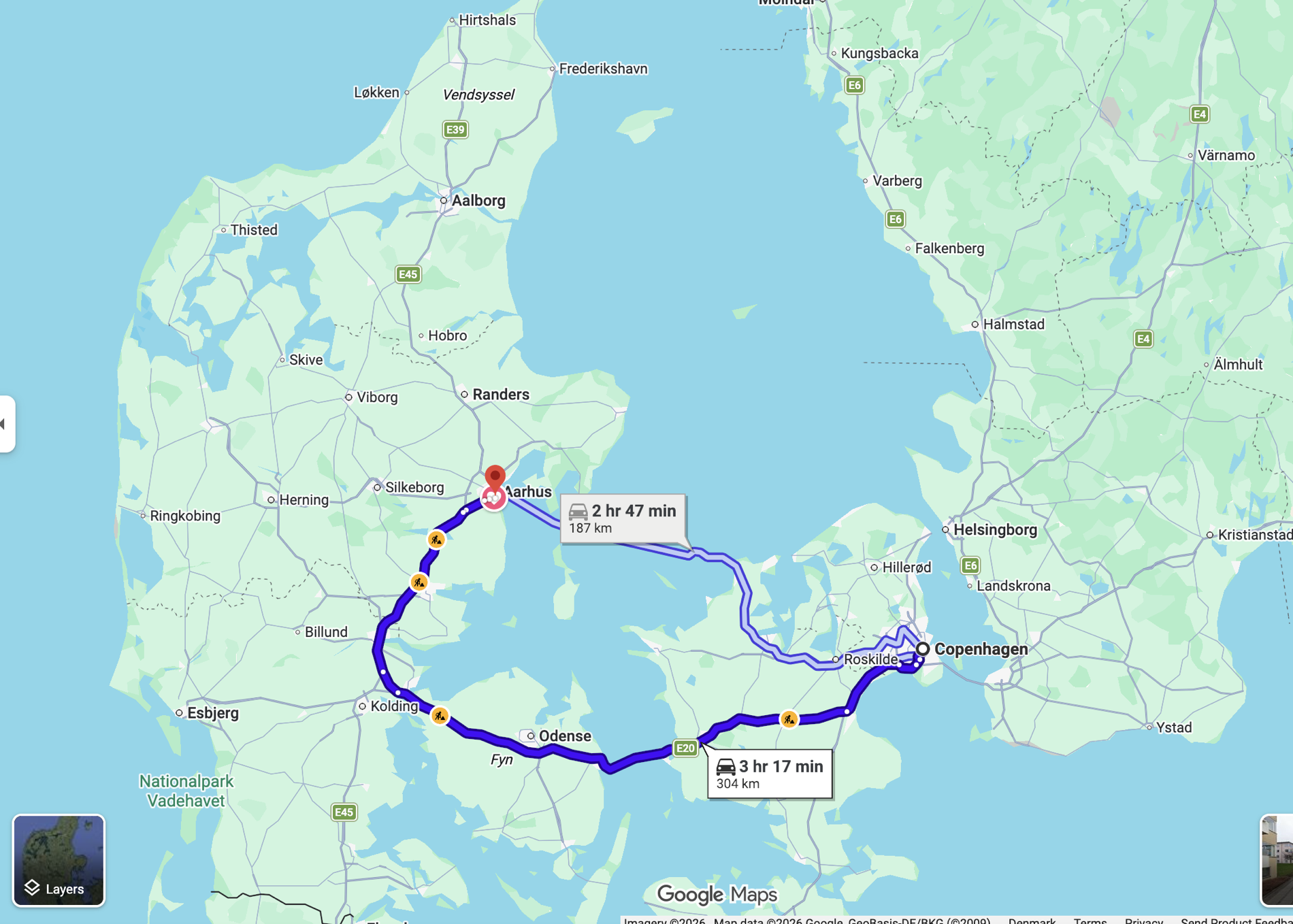
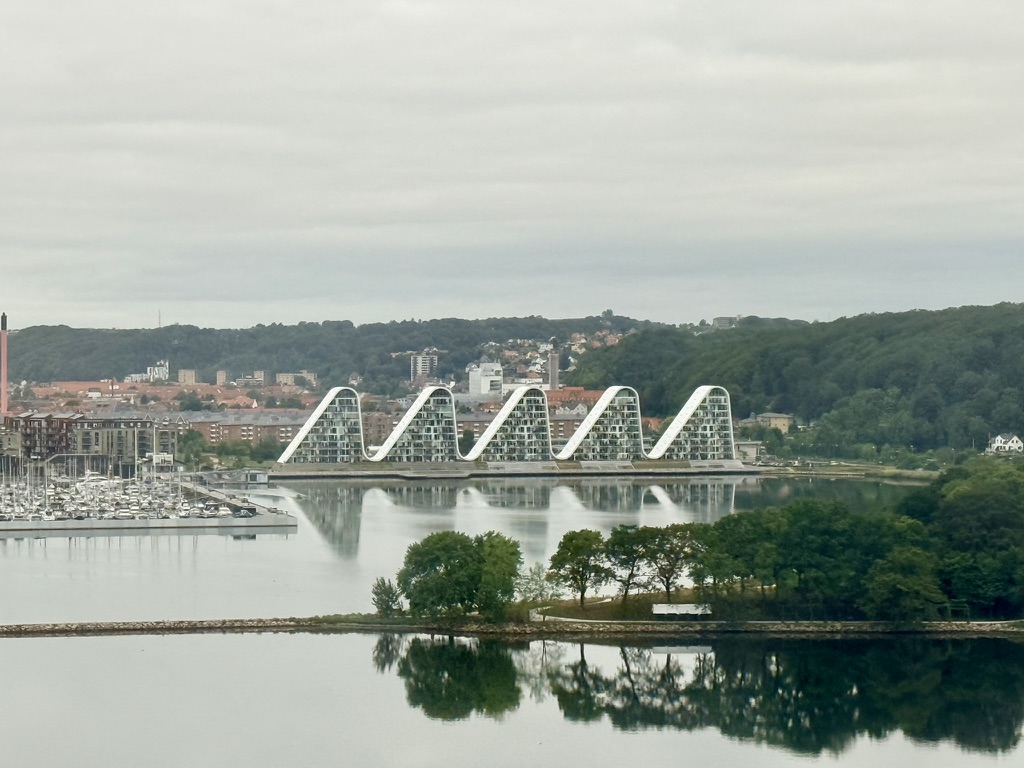
Aarhus to Copenhagen
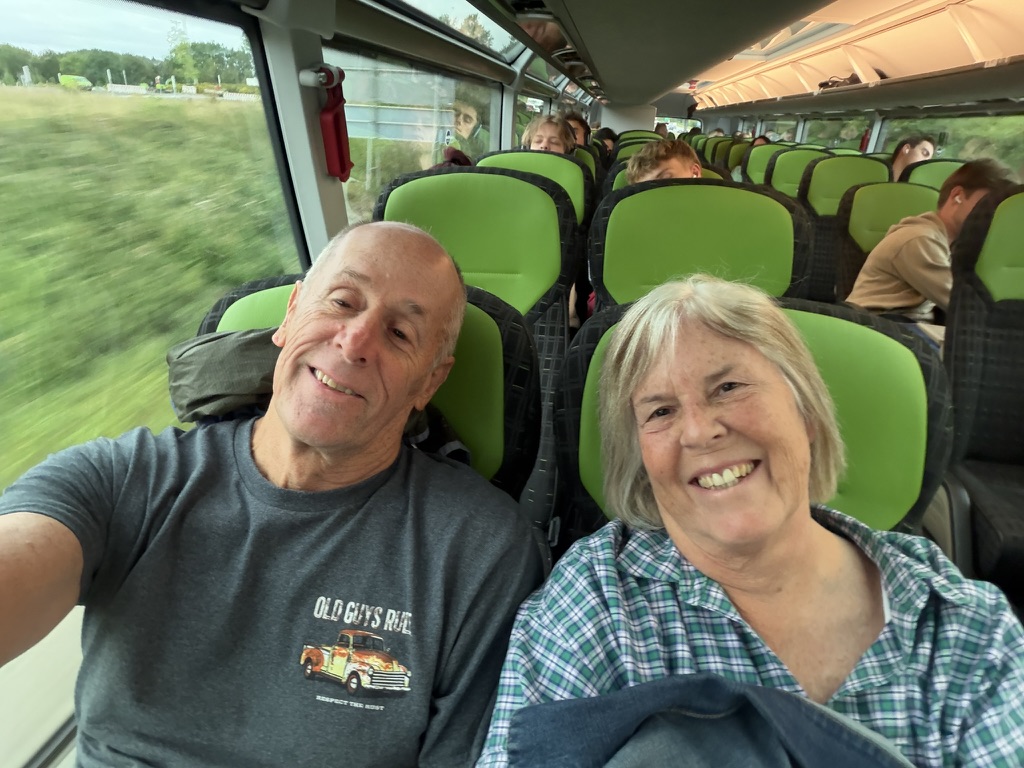
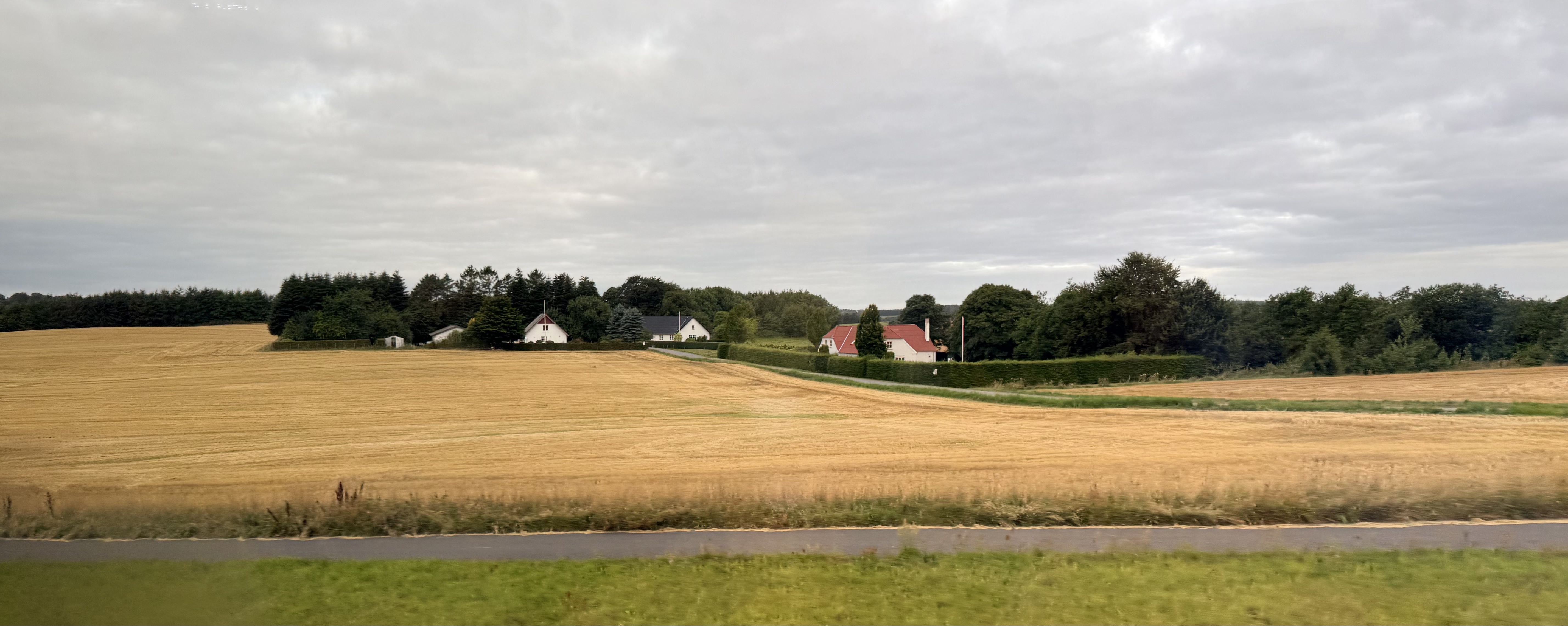
We checked out of our Airbnb in Aarhus on Tuesday morning at about 6:20 a.m. to make our way by bus to the central bus station and catch the 7:20 3 1/2 hour FlixBus back to Copenhagen. We thought we were going to be dropped at the Copenhagen bus station and then would have to make our way by train to the airport, so we were surprised and relieved when the bus driver told us that we could stay on the bus until the last stop – at the airport! Whew!
Flight to Helsinki on FinnAir
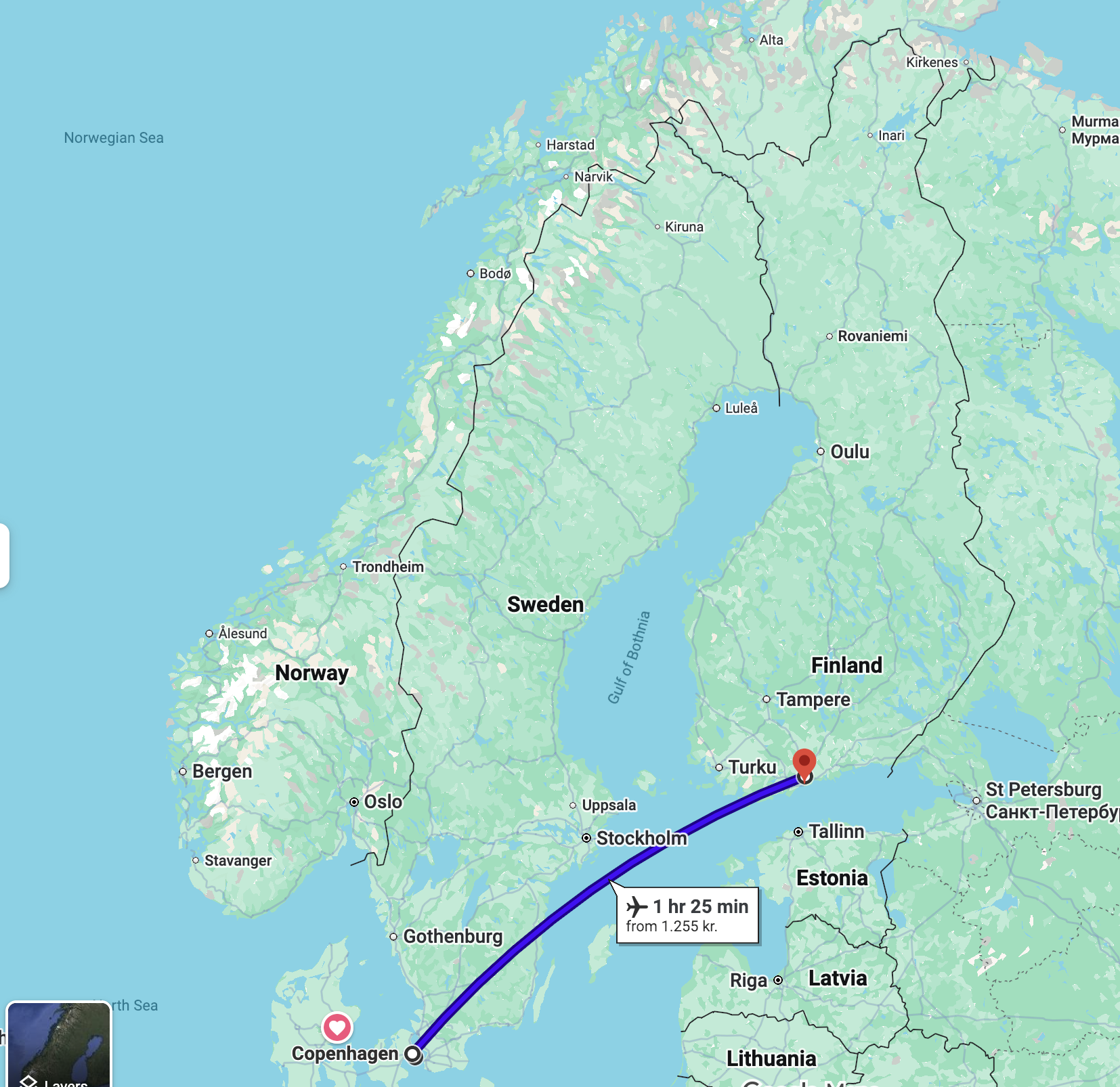
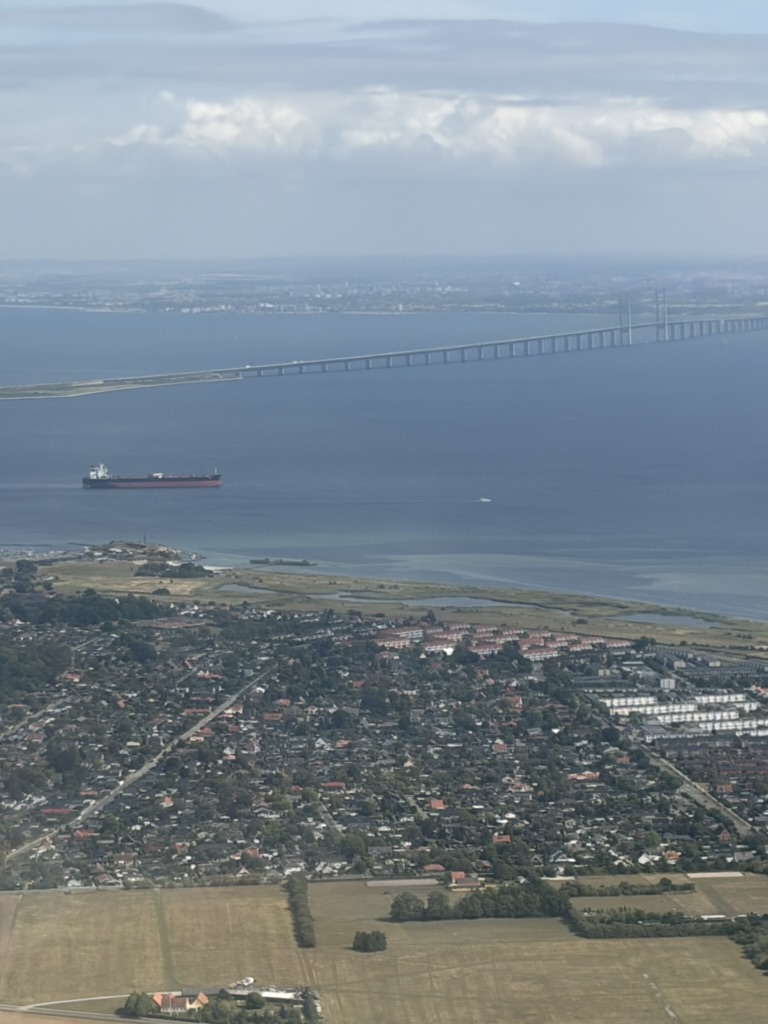
We made it to the airport in time for our FinnAir flight from Copenhagen to Helsinki Vantaa, a 1 1/2 hour flight.
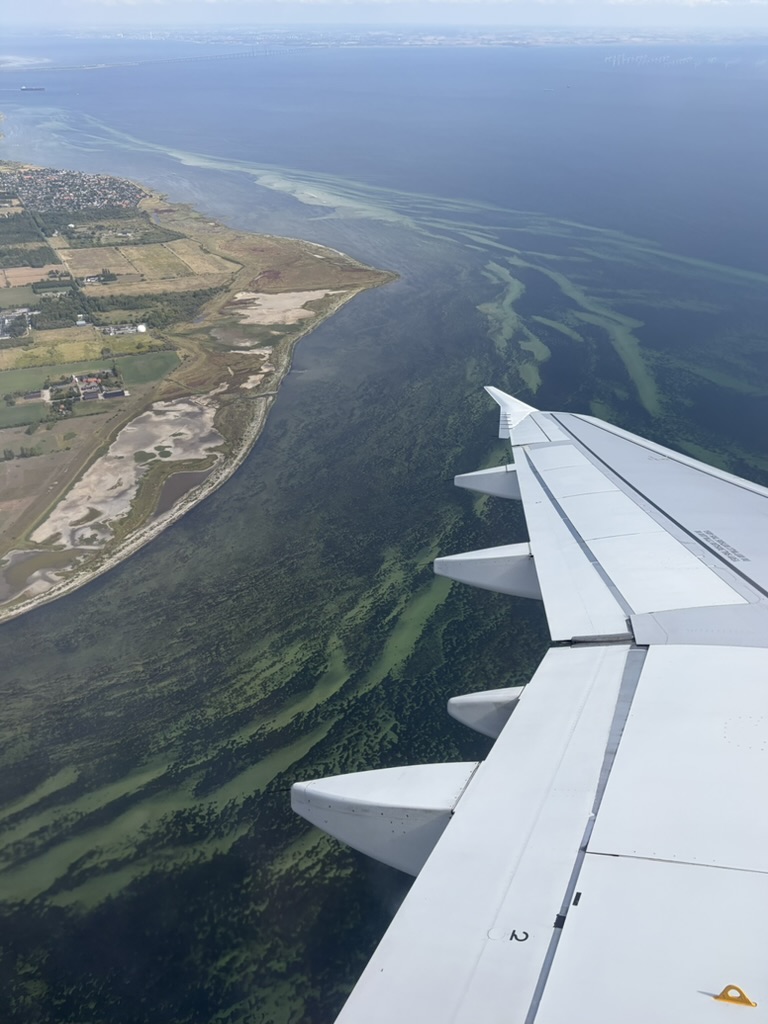
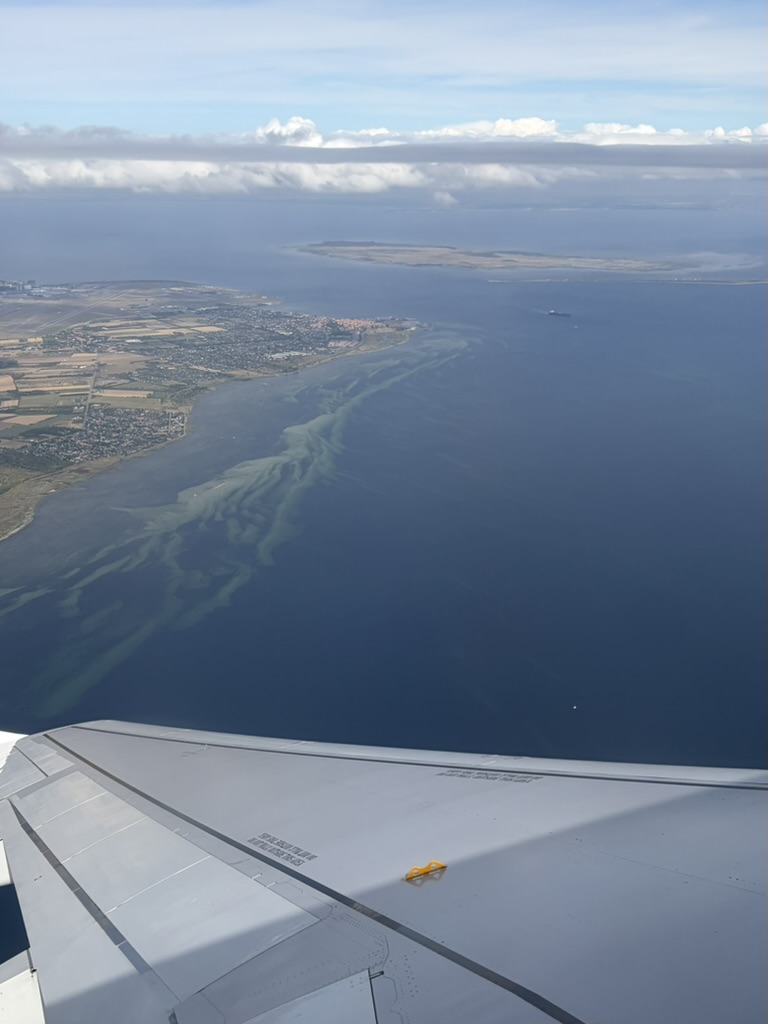
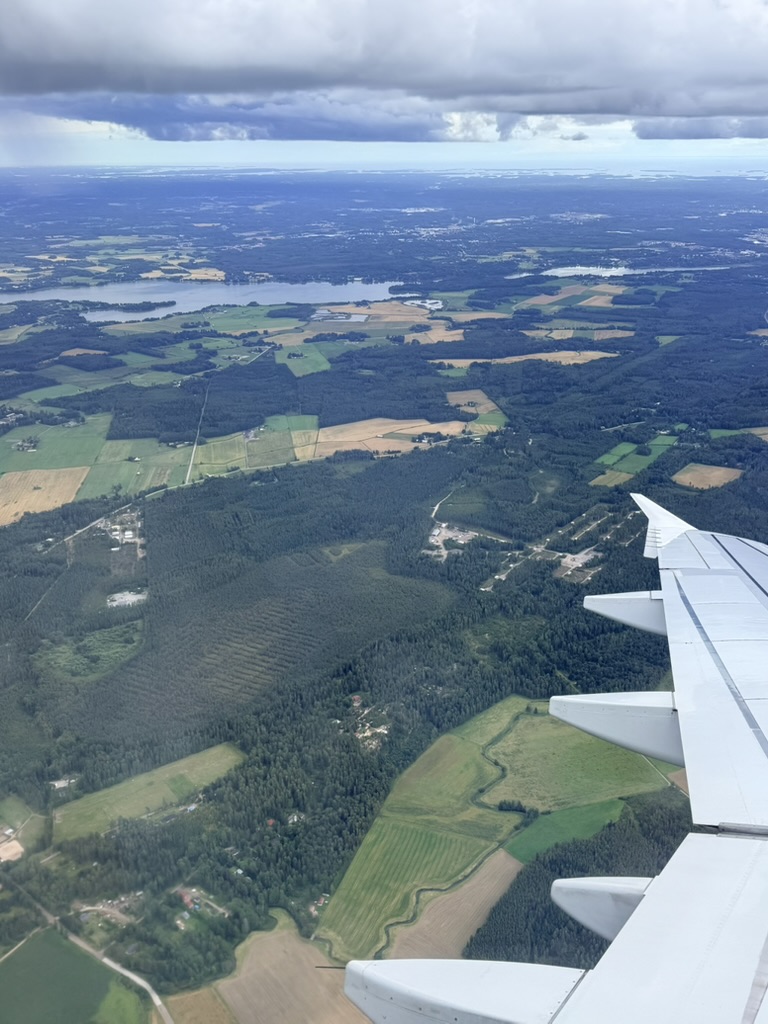
As we took off from Copenhagen, we could see the Øresund Bridge connecting Denmark to Sweden. It is the 2nd largest bridge in Europe and combines railway and road in a single structure. It runs nearly 8km (5 mi) from the Swedish coast to the artificial island of Peberholm in the middle of the strait. The Øresund is completed by the 4km (2 1/2 mi) Øresund tunnel from Peberholm to the Danish island of Amager.
Construction began in 1995 and the bridge opened to traffic in July of 2000. The bridge lends its name to the Nordic Noir TV series The Bridge, which Mike and I have watched in its entirety.
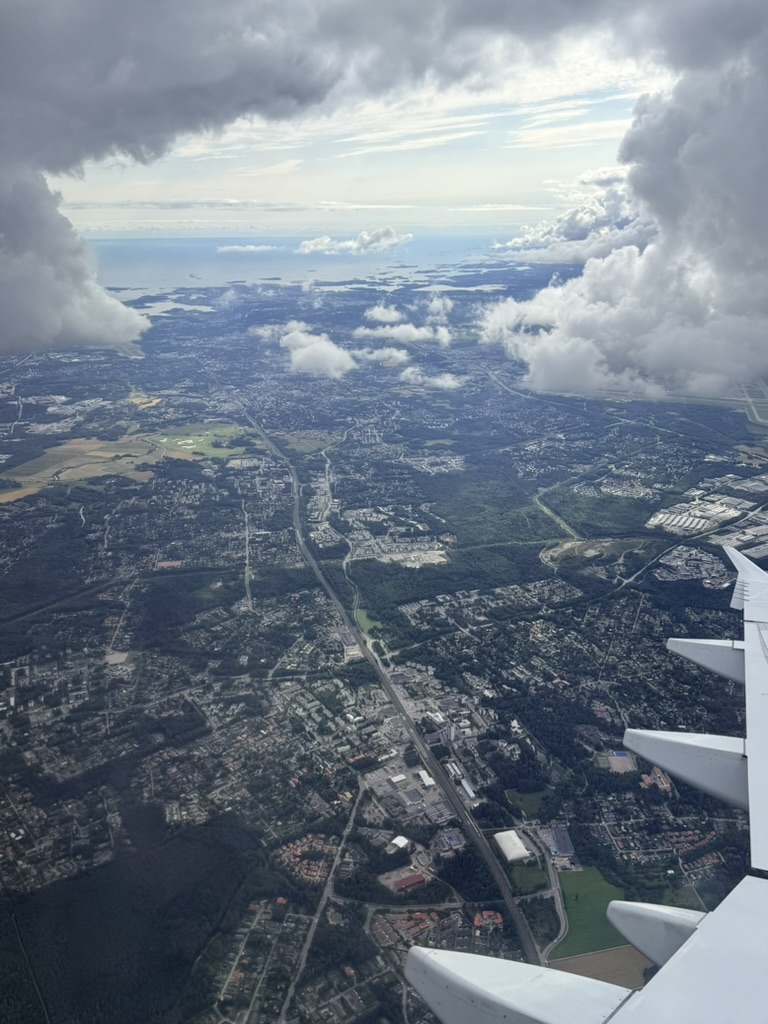
We landed in Helsinki around the scheduled time of 16:20 and made our way to our Airbnb apartment in the Uusimaa neighborhood of Helsinki.
Our Airbnb apartment: Aleksis kiven katu 43B 27, Helsinki, Uusimaa
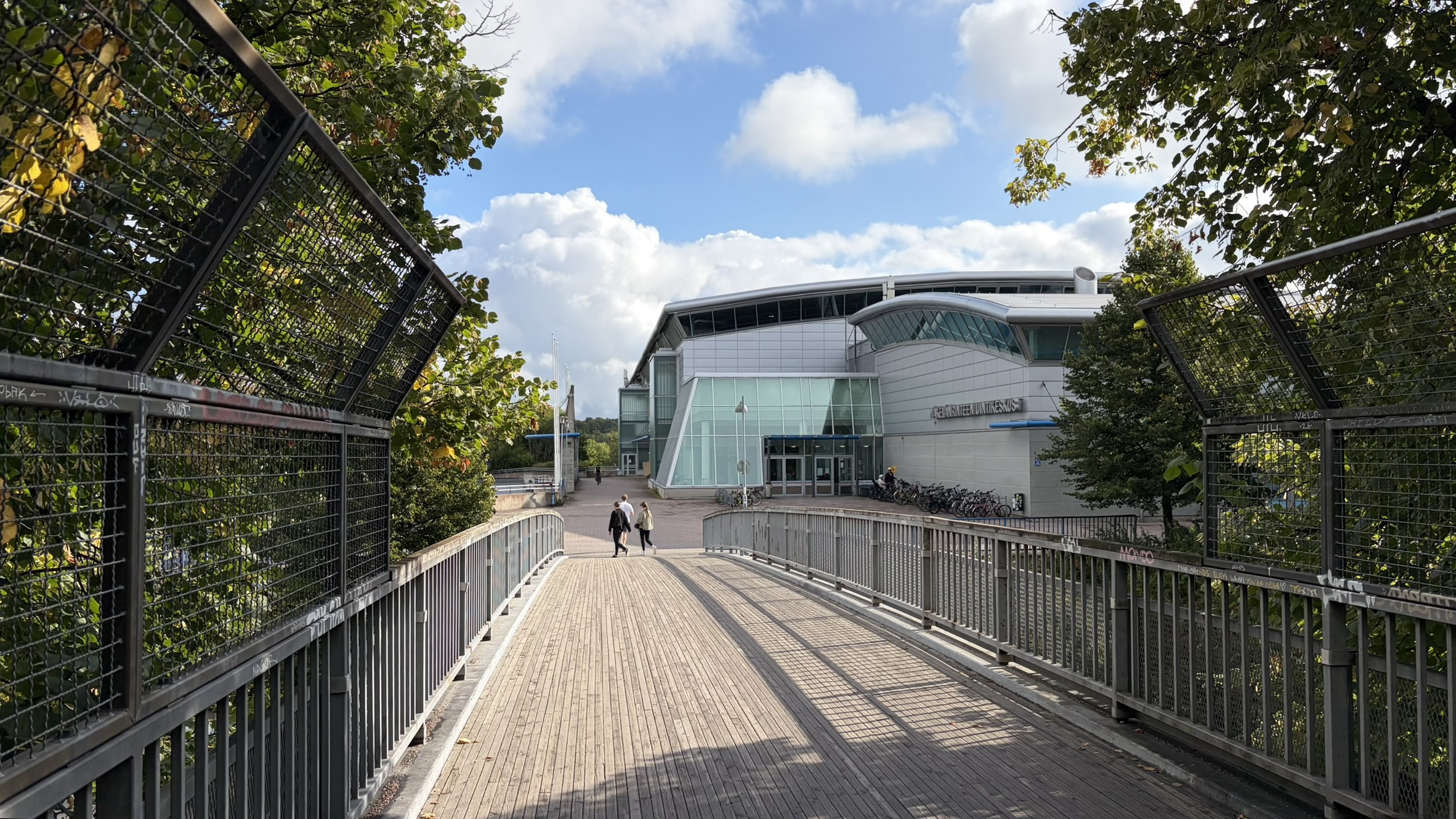
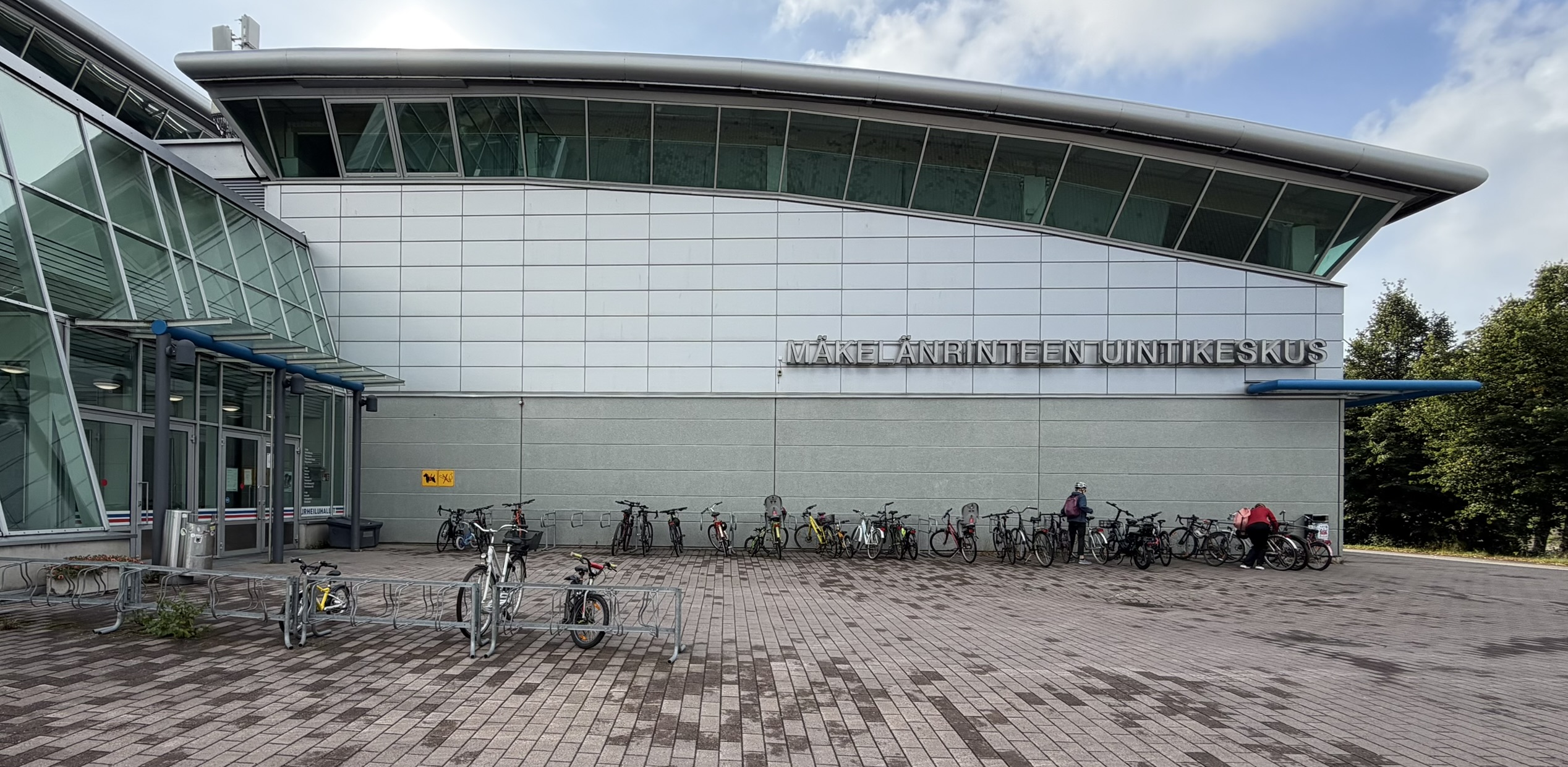
The Airbnb host is Miira, but Mira lives in northern Sweden and works in Malmö. Her mother Anja met us and showed us around the wonderful apartment. Anja was married to a diplomat who is now deceased. They served a stint in Moscow and then another immediately following in Washington, D.C., which she loved. She told us she does a super water aerobics routine several times a week and Mike perked up when she revealed there was a pool nearby, Mäkelänrinteen Uintikeskus. Yes, the Finnish language, which we don’t know at all, has super long unpronounceable words!
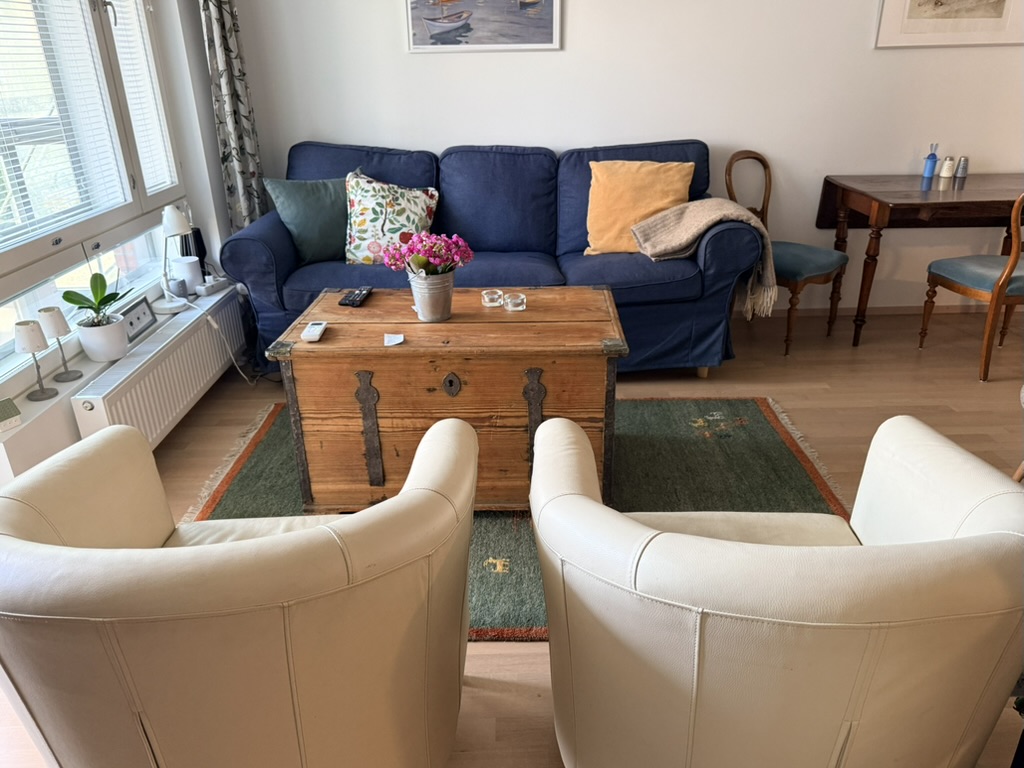
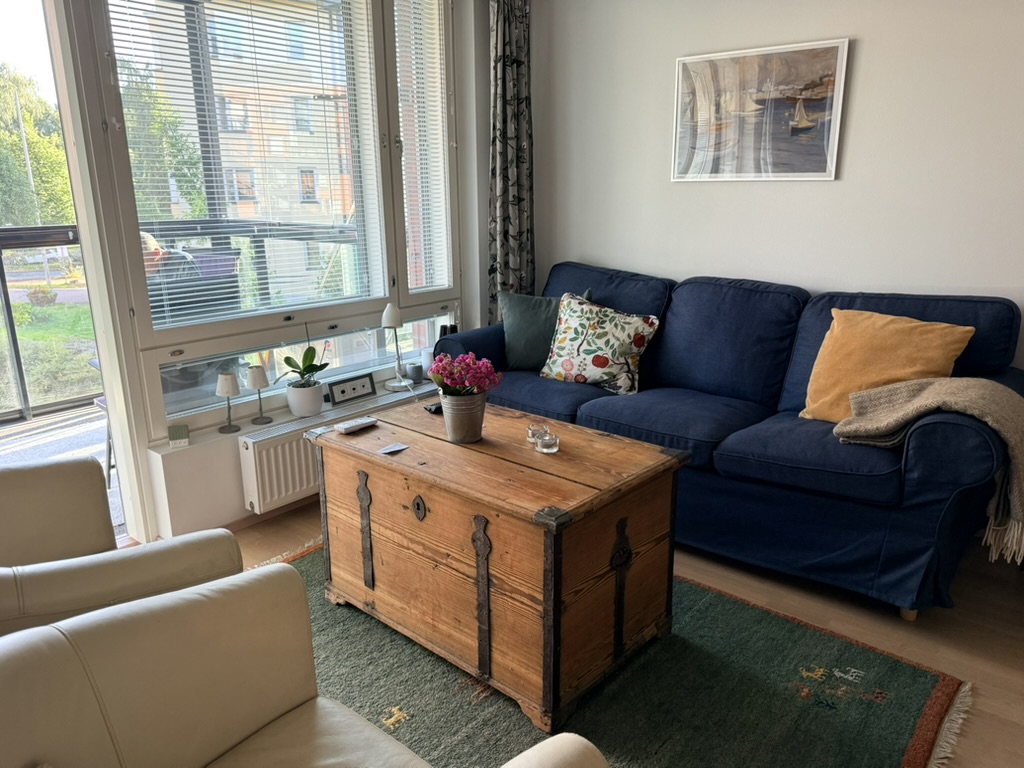
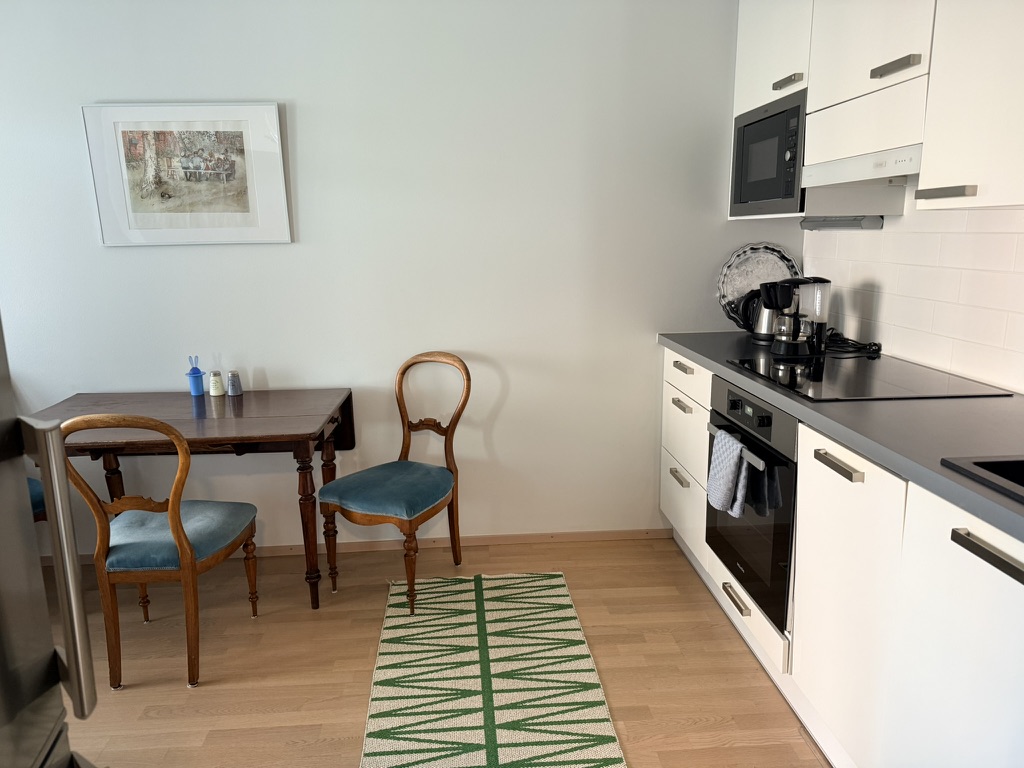
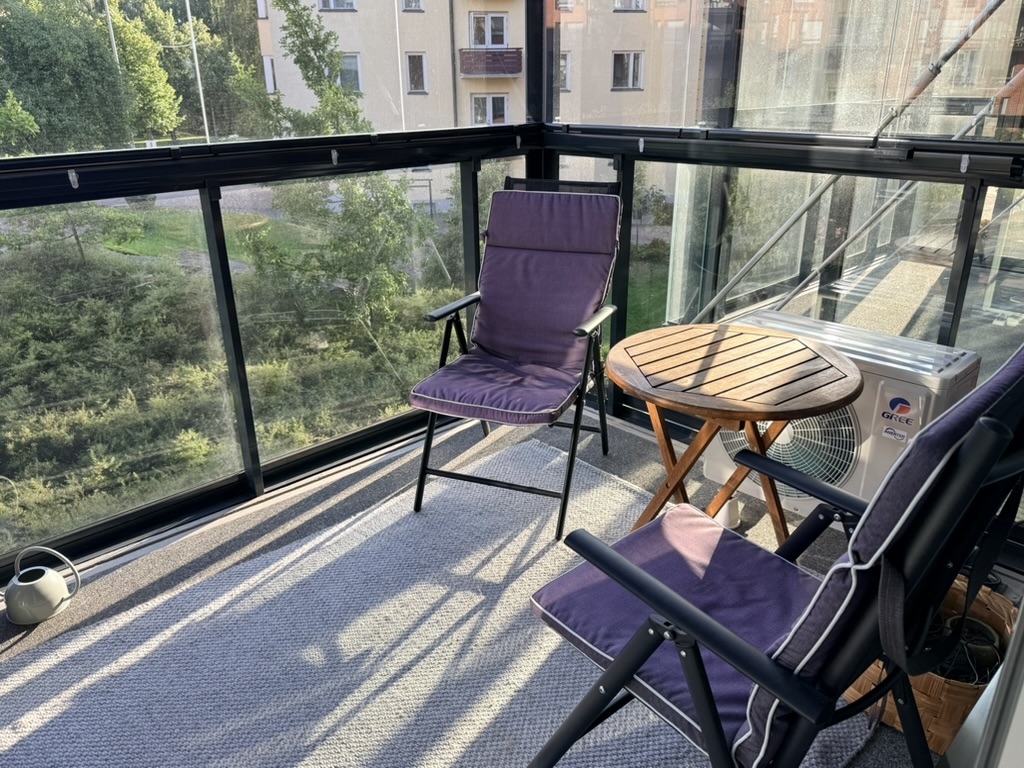
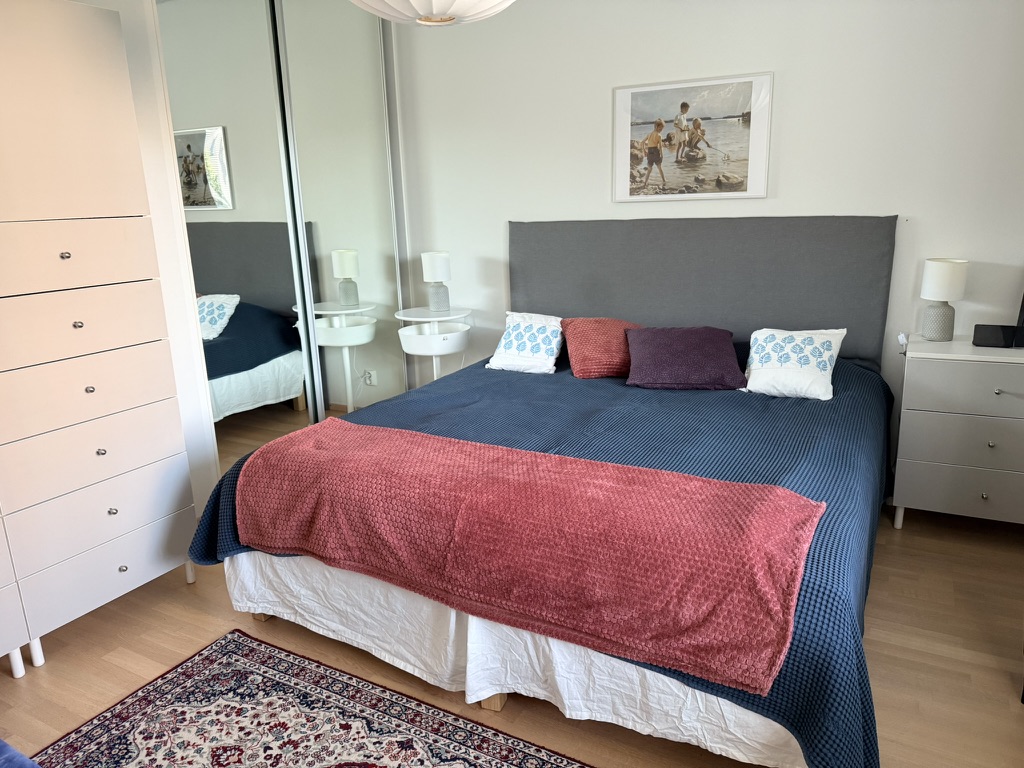
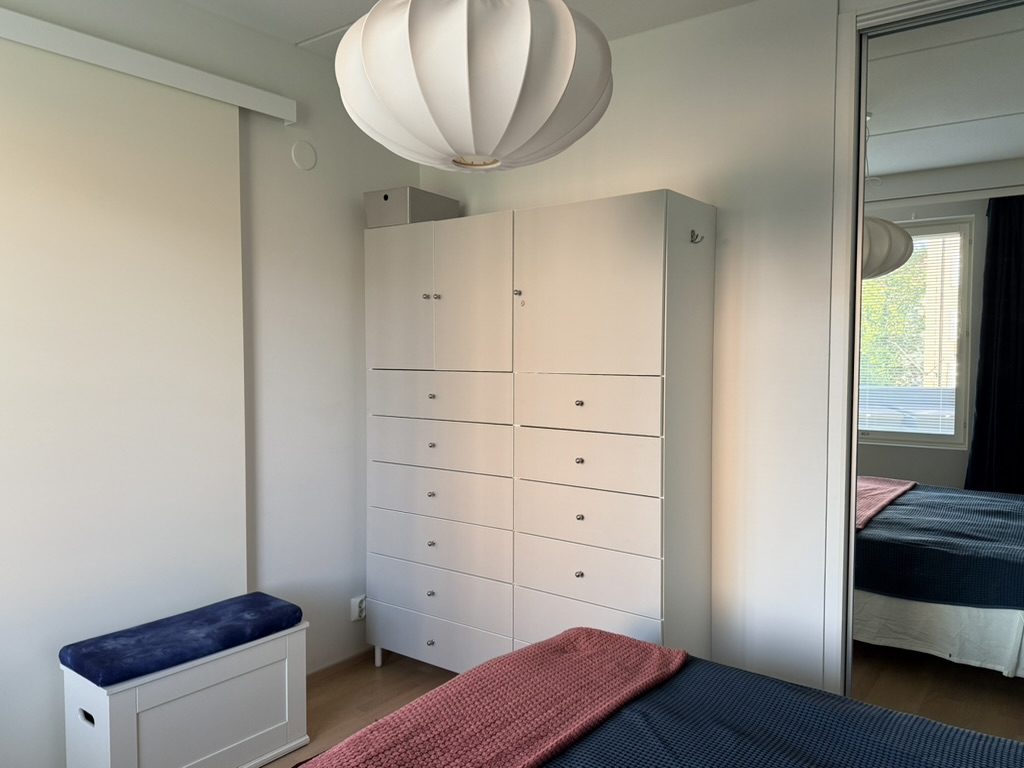
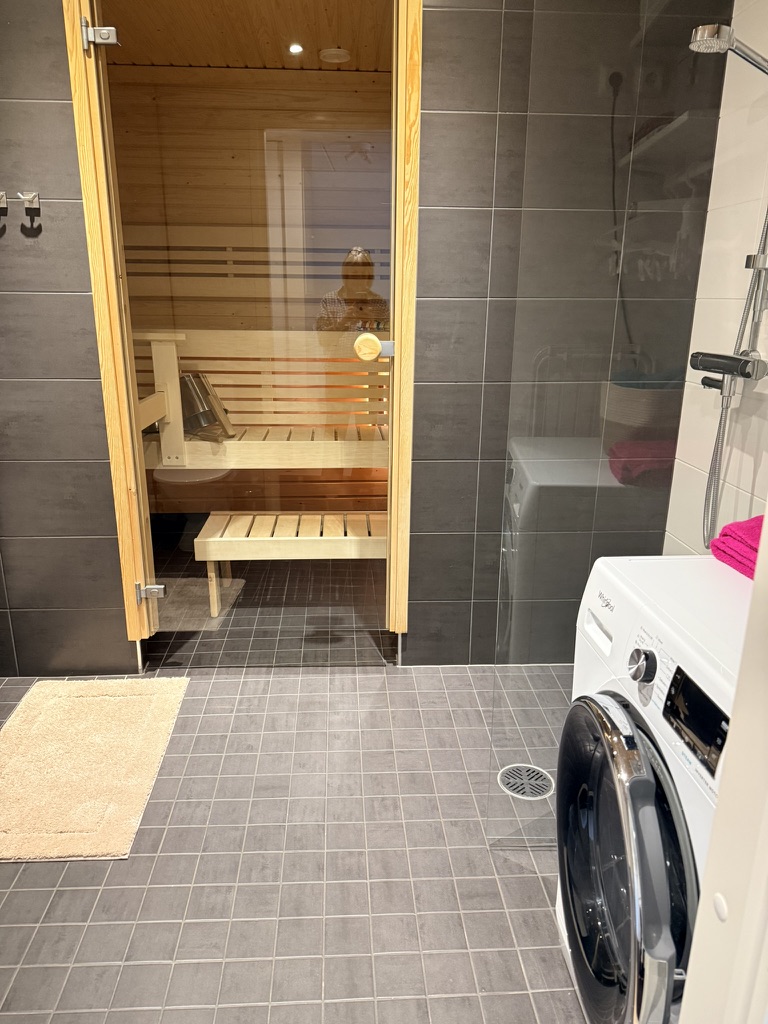
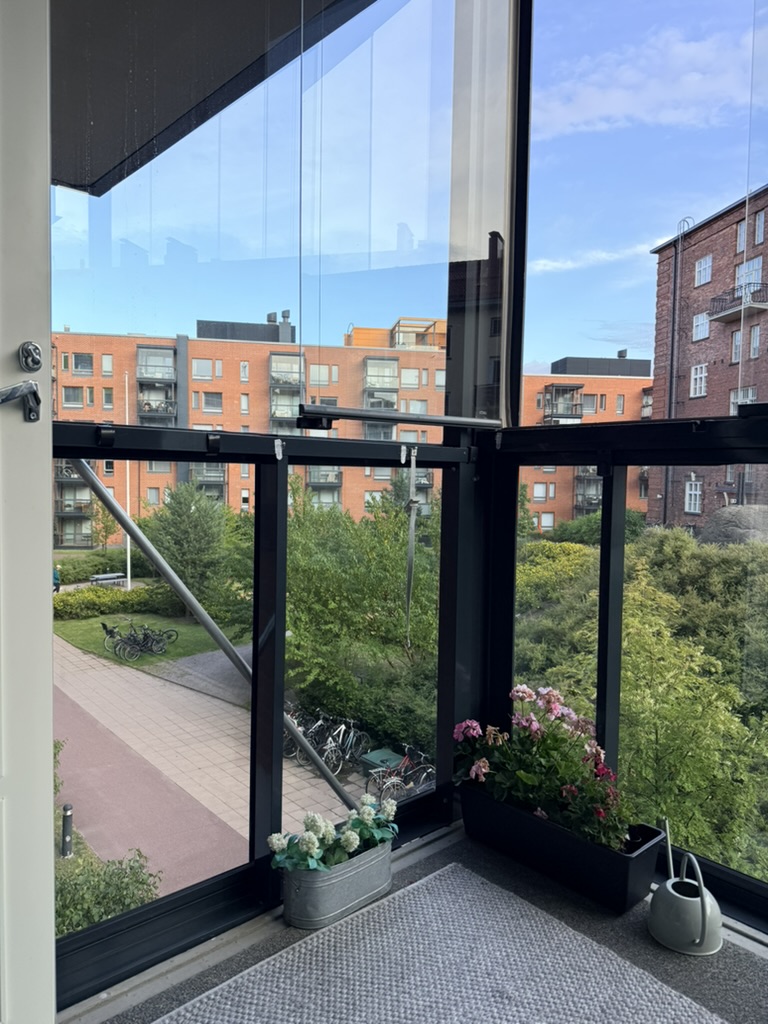
Our apartment is the best so far on our trip. It’s not at all cluttered, as Miira doesn’t stay here much unless she’s in Helsinki to visit her mother or her sons. It has a nicely stocked kitchen, nice firm king-sized bed, a comfortable living room, a sauna, a washing machine/dryer, and a glassed in balcony. It’s on the 3rd floor and it has an elevator.
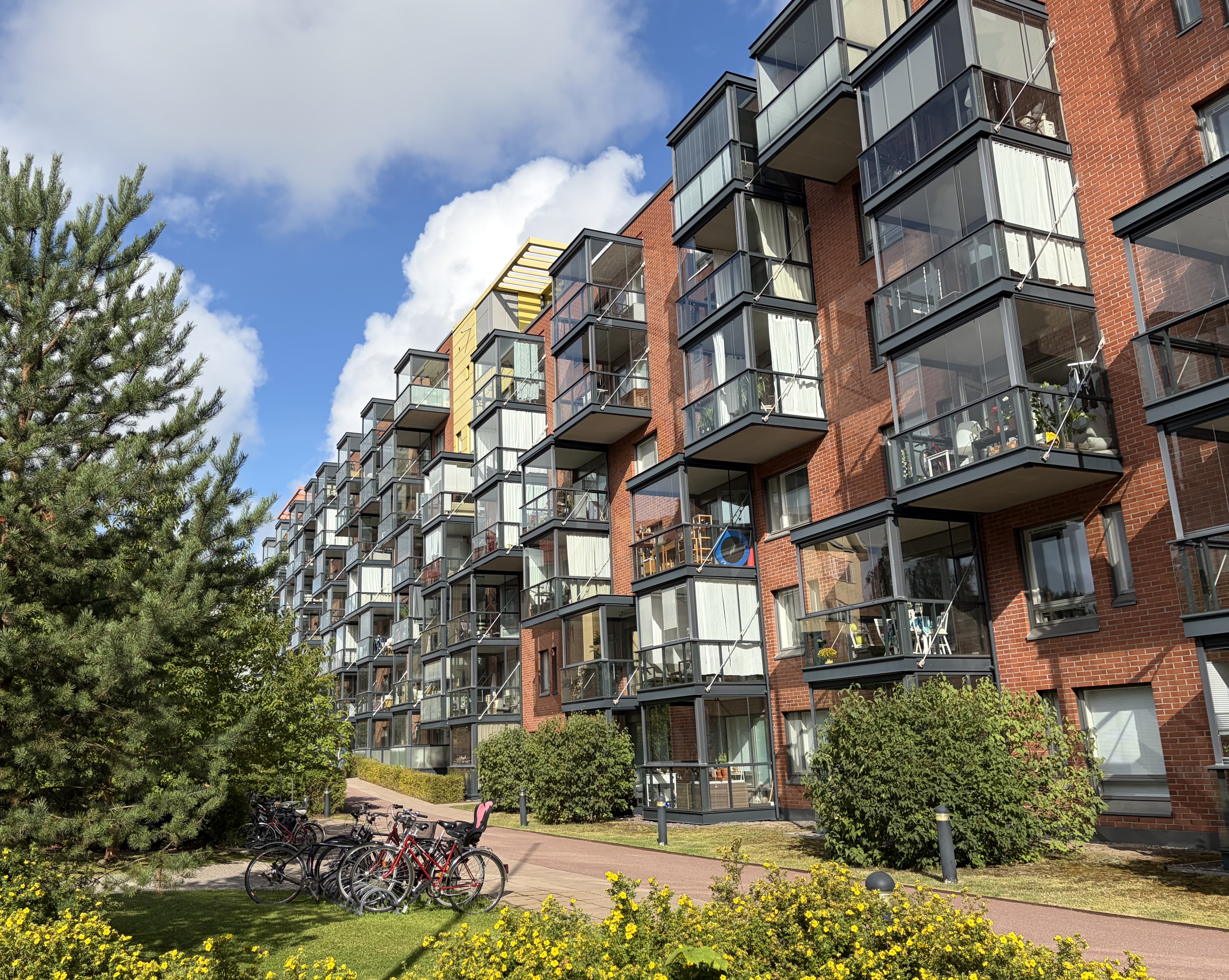
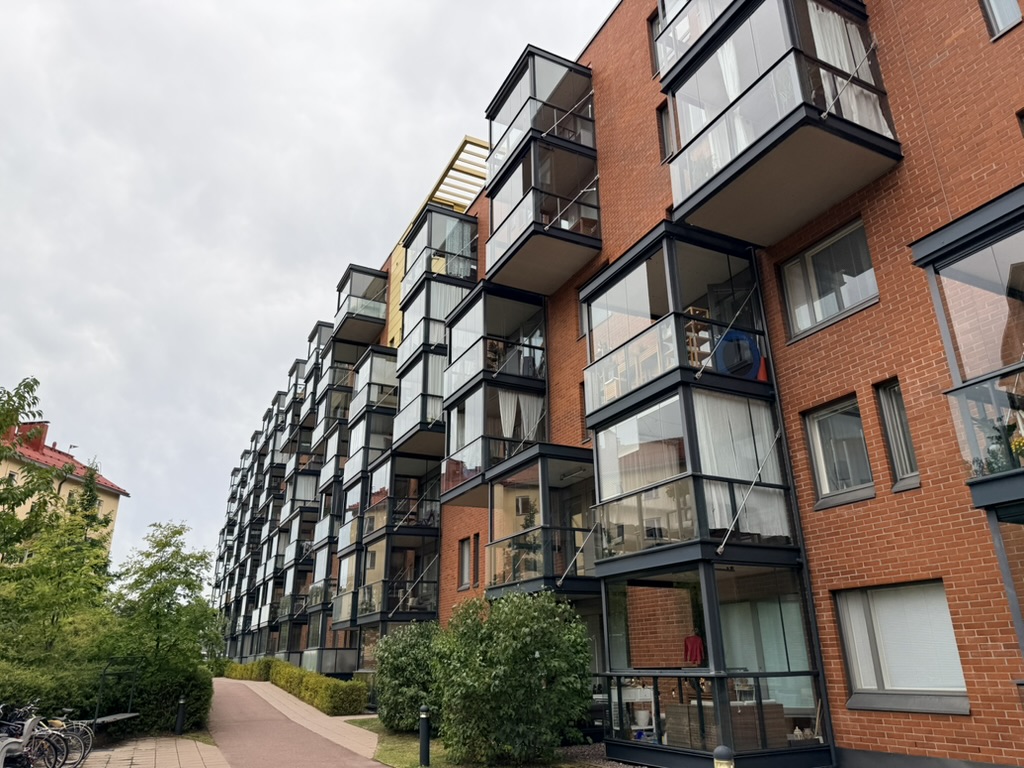
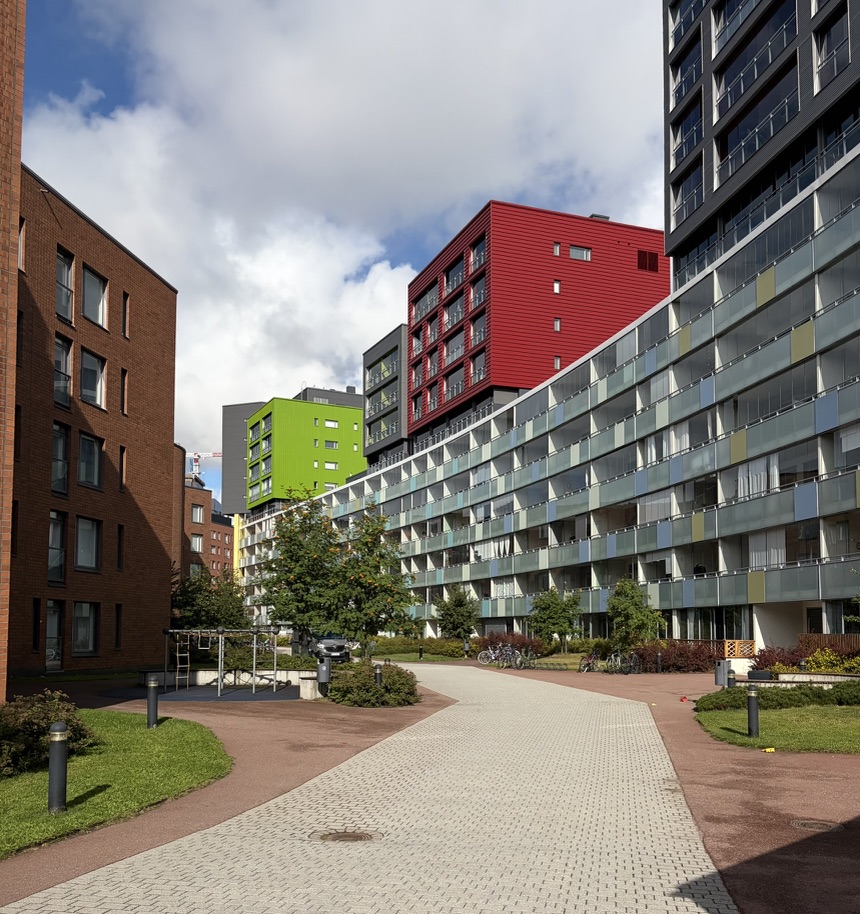
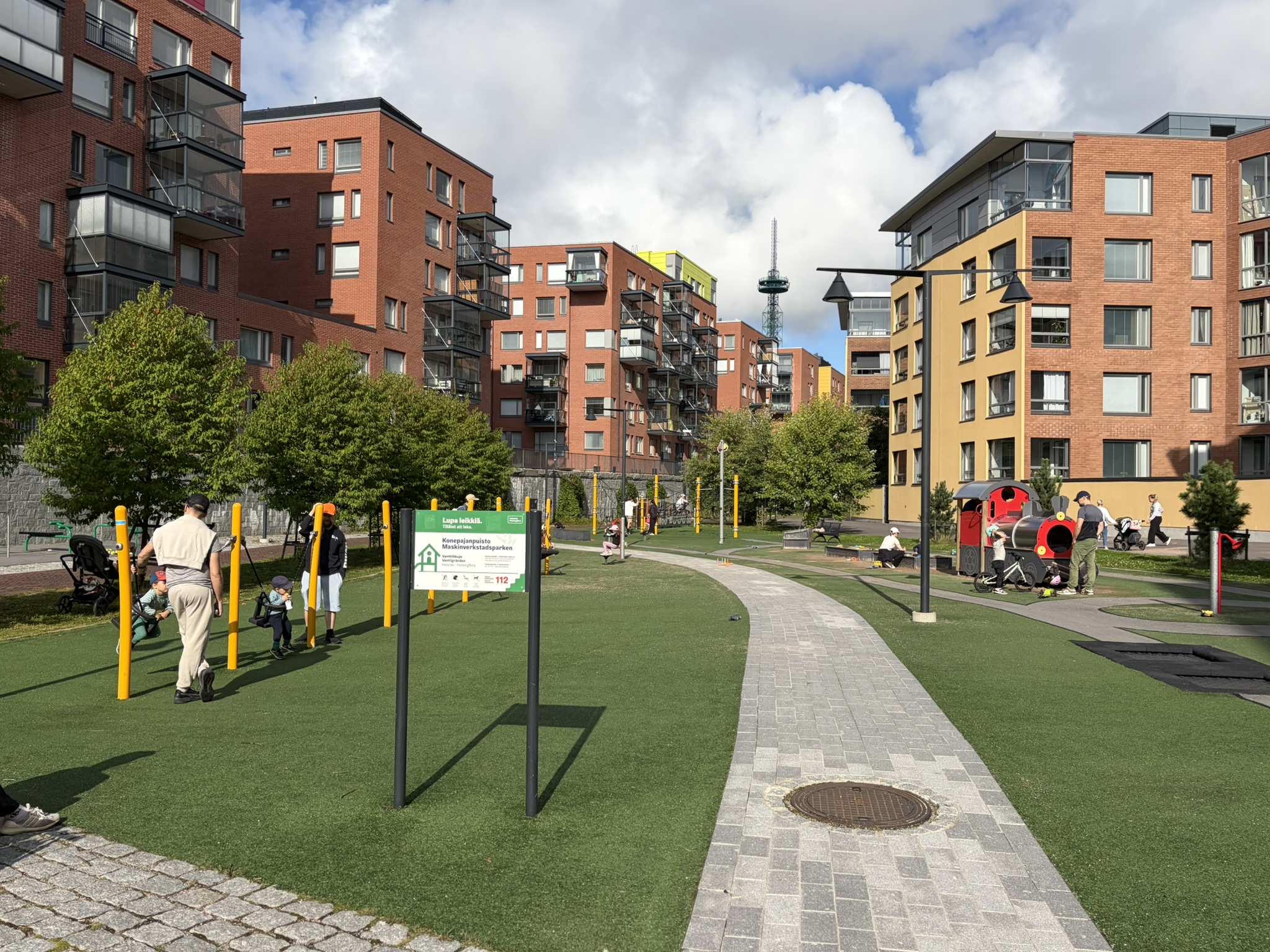
Most of the apartment complexes in Helsinki, especially in our neighborhood, seem very new, with green spaces and playgrounds for children.
Visiting markets and dining in
On our travels we immerse ourselves in sights, history and culture, but we also love our culinary explorations. Every culture has its own foods, many of which we love to sample. How else to live like a local? How can one really understand a place without checking out markets, supermarkets, cafés and restaurants? Not only are the foods unique to a locale, but each market or café has its own aesthetic. As someone who loves design and organization, I find the way markets and restaurants are organized and designed fascinating.
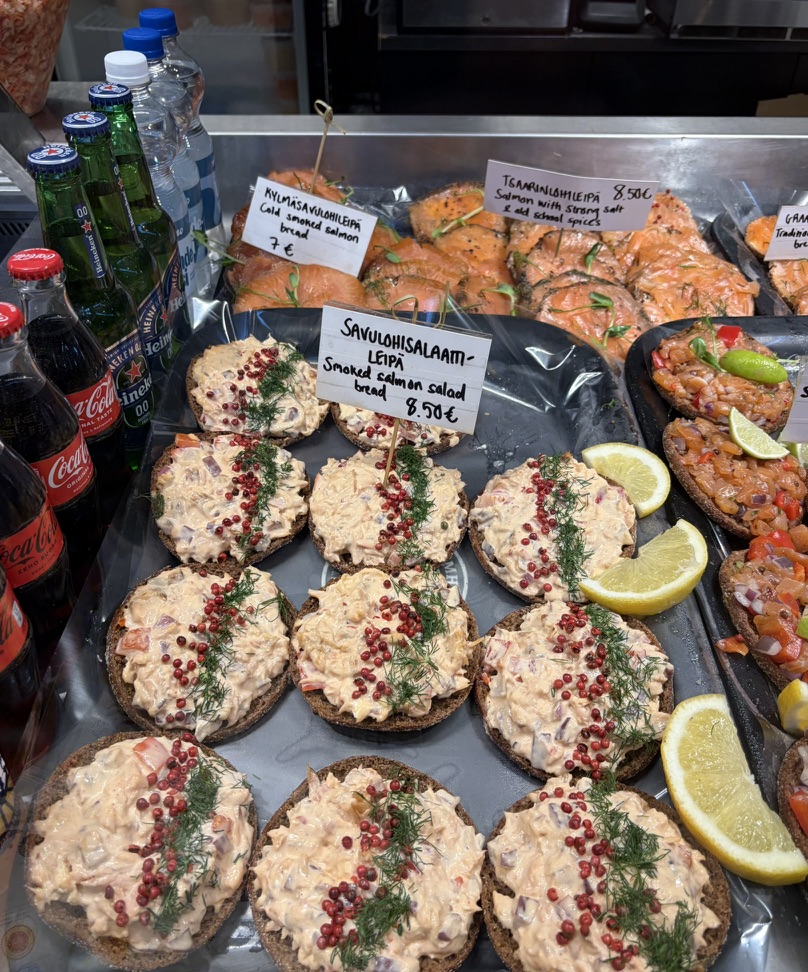
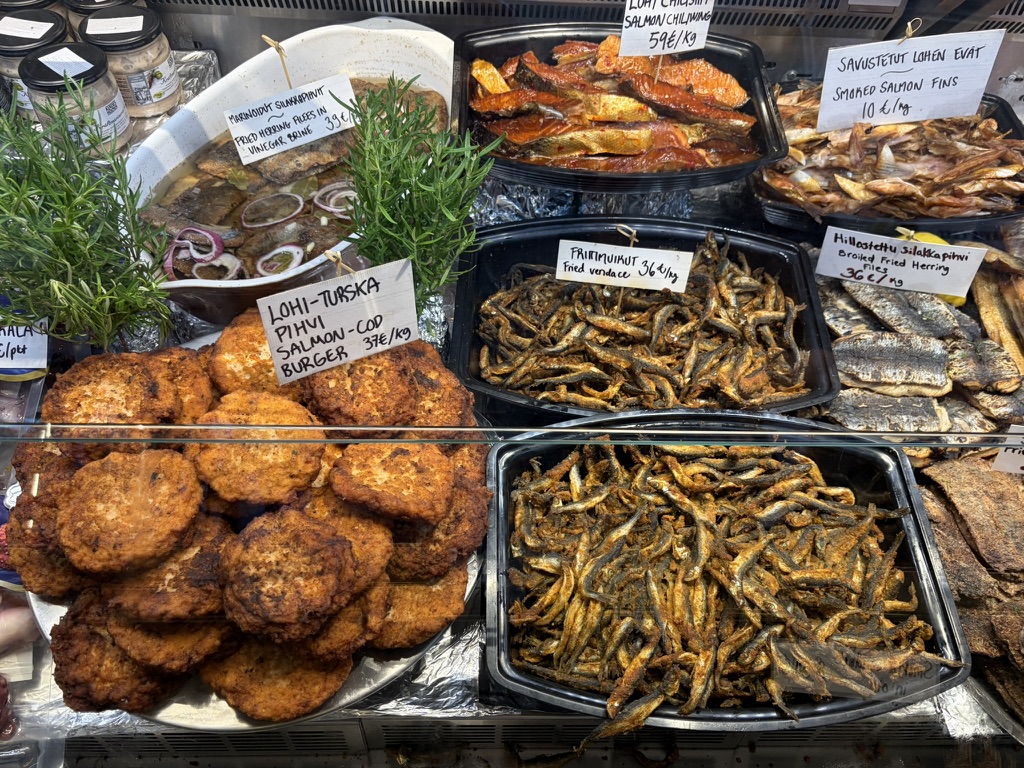
Because we are staying in Airbnbs throughout Denmark, Finland and Sweden (only two in Norway), we seek out the local markets immediately upon our arrival. Here in Finland, we have found every kind of salmon, from fresh to smoked to flamed, as well as other seafood. We also love to sample the seafood spreads we find in supermarkets. Here in Finland, we’ve tried shrimp with chili/mayo sauce, whereas in Denmark, we feasted on crab spread, salmon spread and ham spread.
On our first day, we headed straight to Helsinki’s most famous Old Market Hall, as well as Market Square.
Old Market Hall
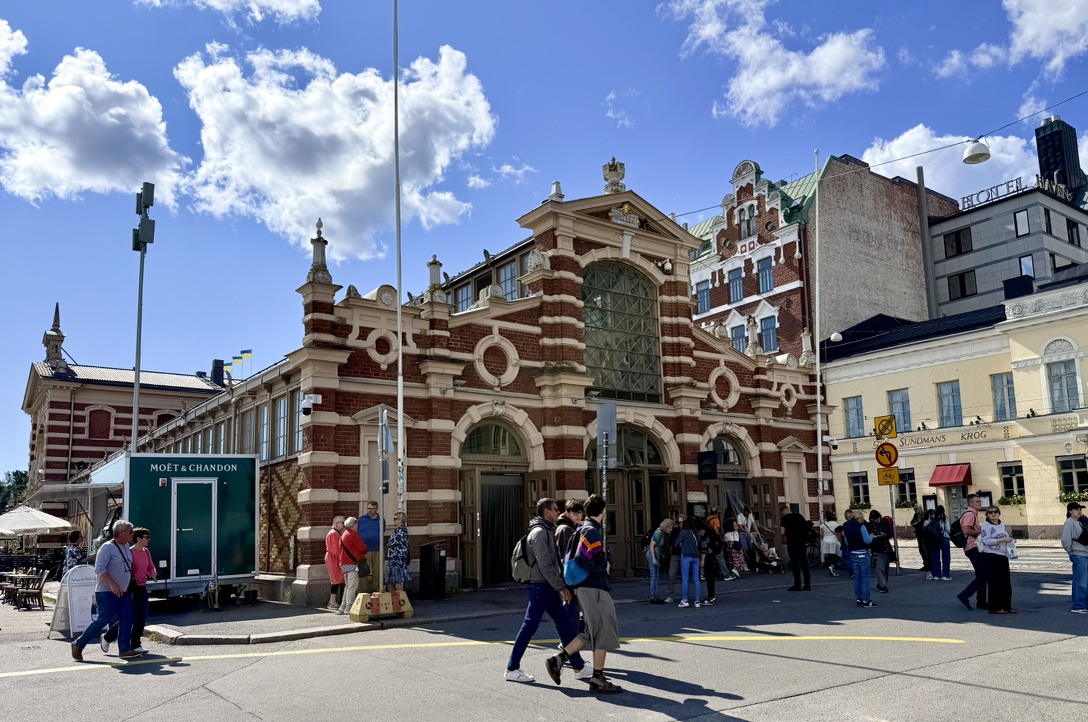
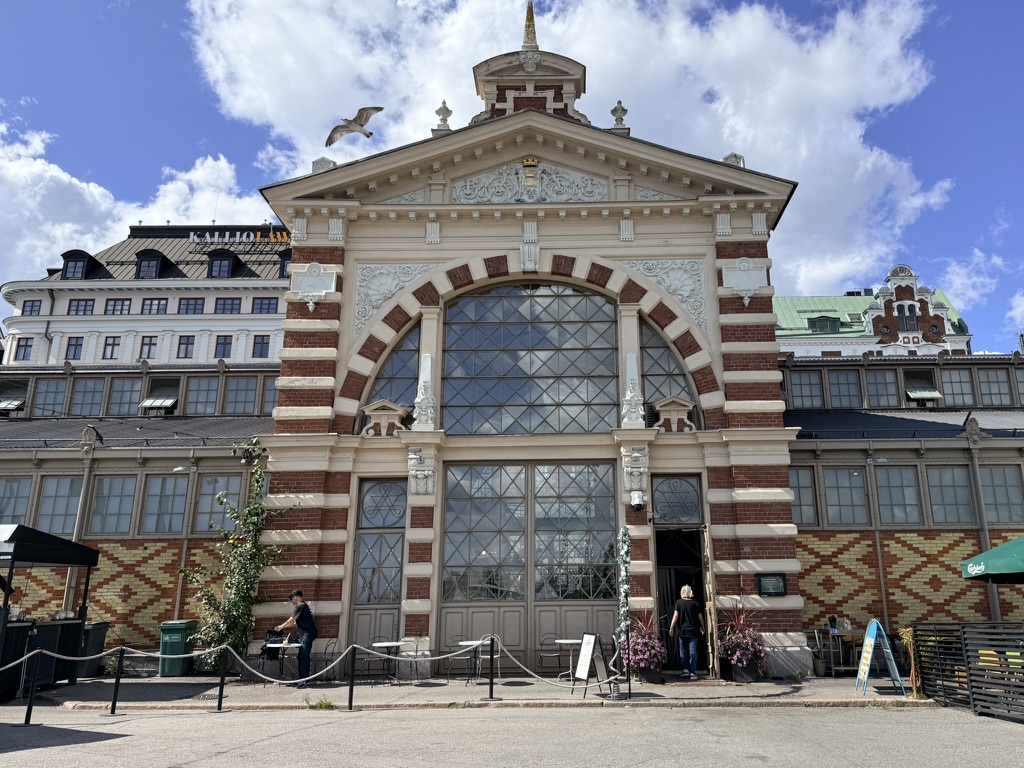
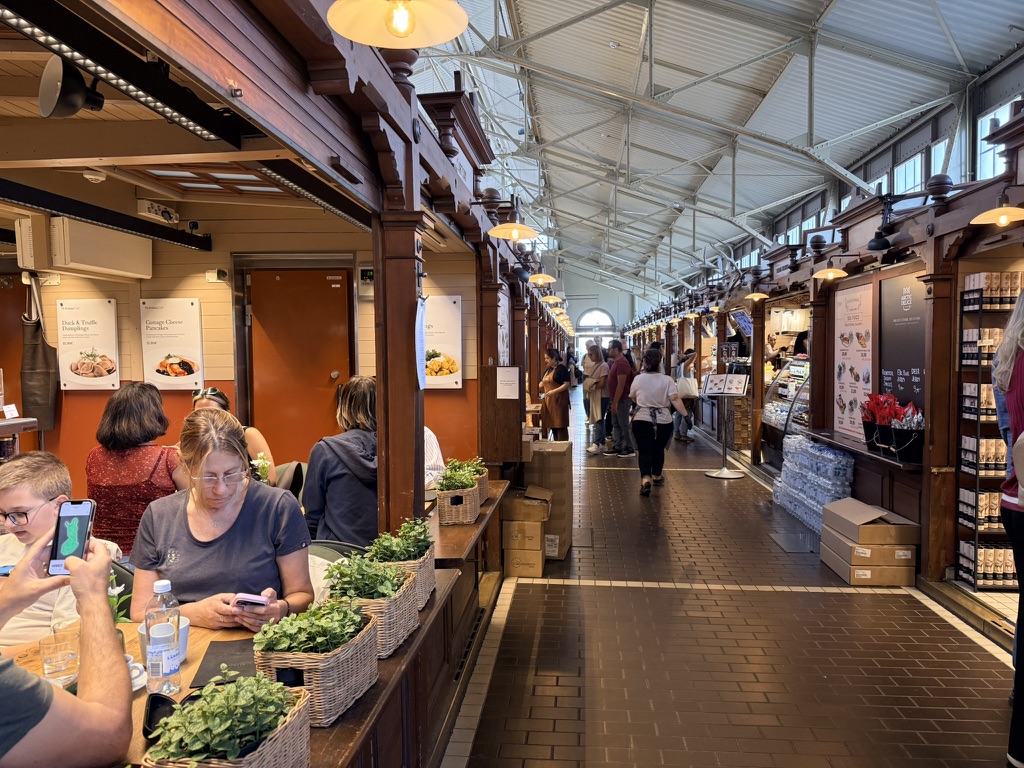
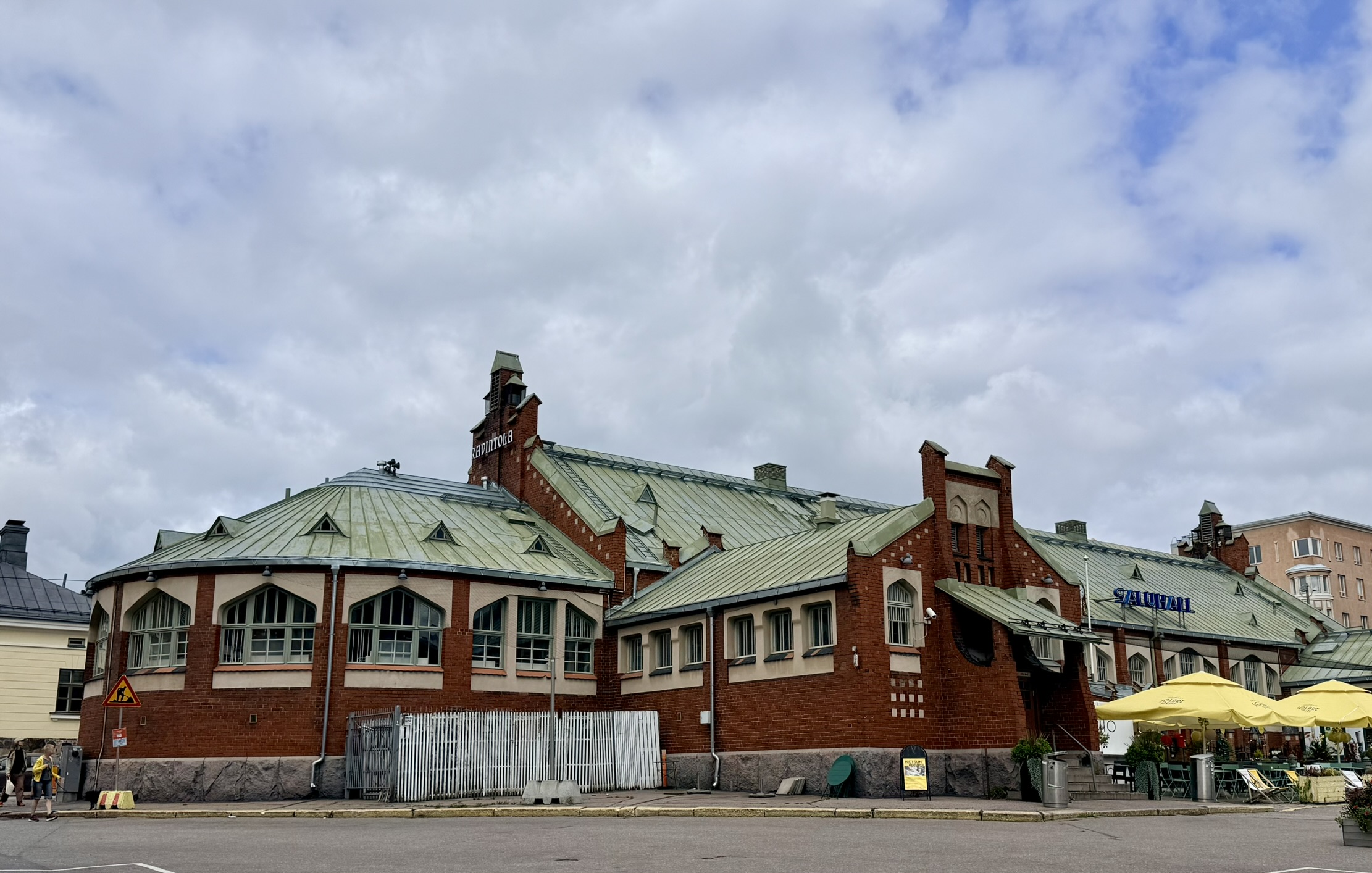
The Old Market Hall is the oldest market in Finland and has been serving customers since 1889. A red brick structure, it sits in Helsinki Market Square along the South Harbor. It has an amazing number of restaurants serving everything from moose dumplings to meatballs to salmon soup to reindeer egg rolls. On top of that, there are vendors selling every kind of seafood imaginable, especially salmon and the famous vendace, or Coregonus albula, found in lakes in Finland and Sweden.
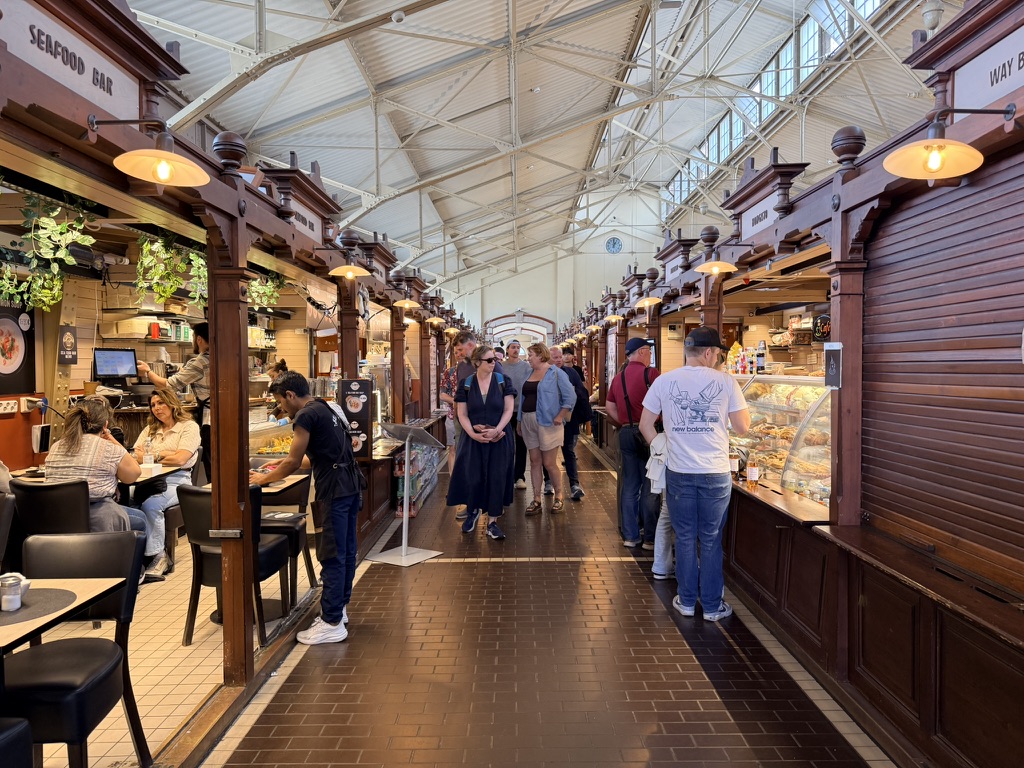
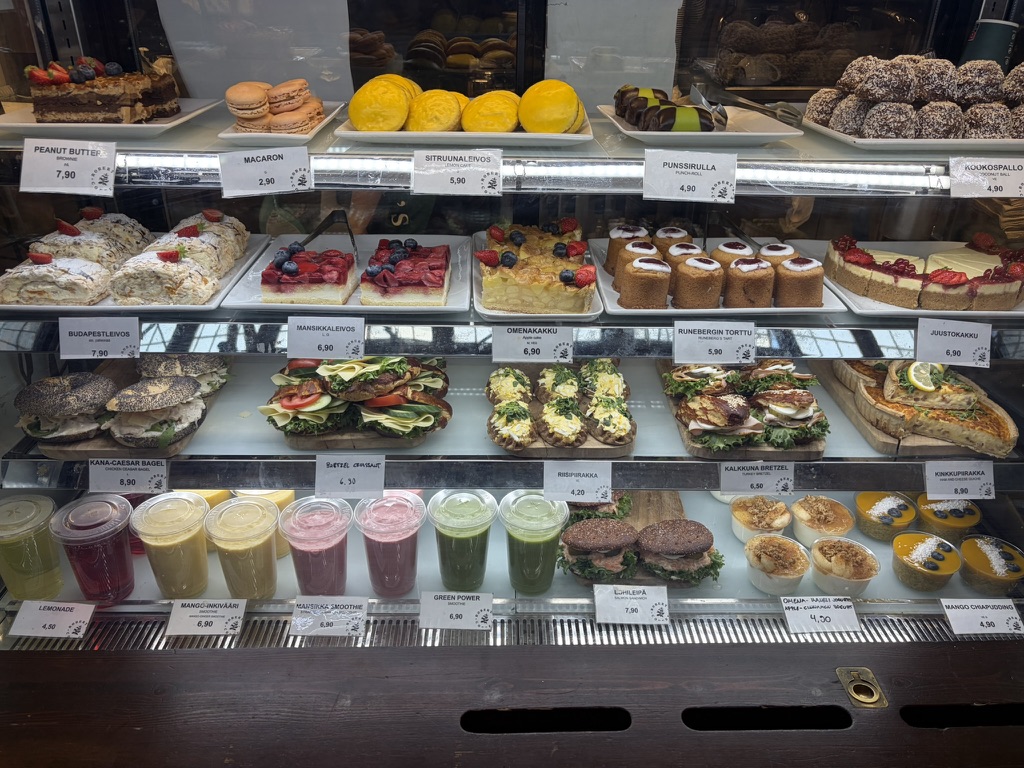
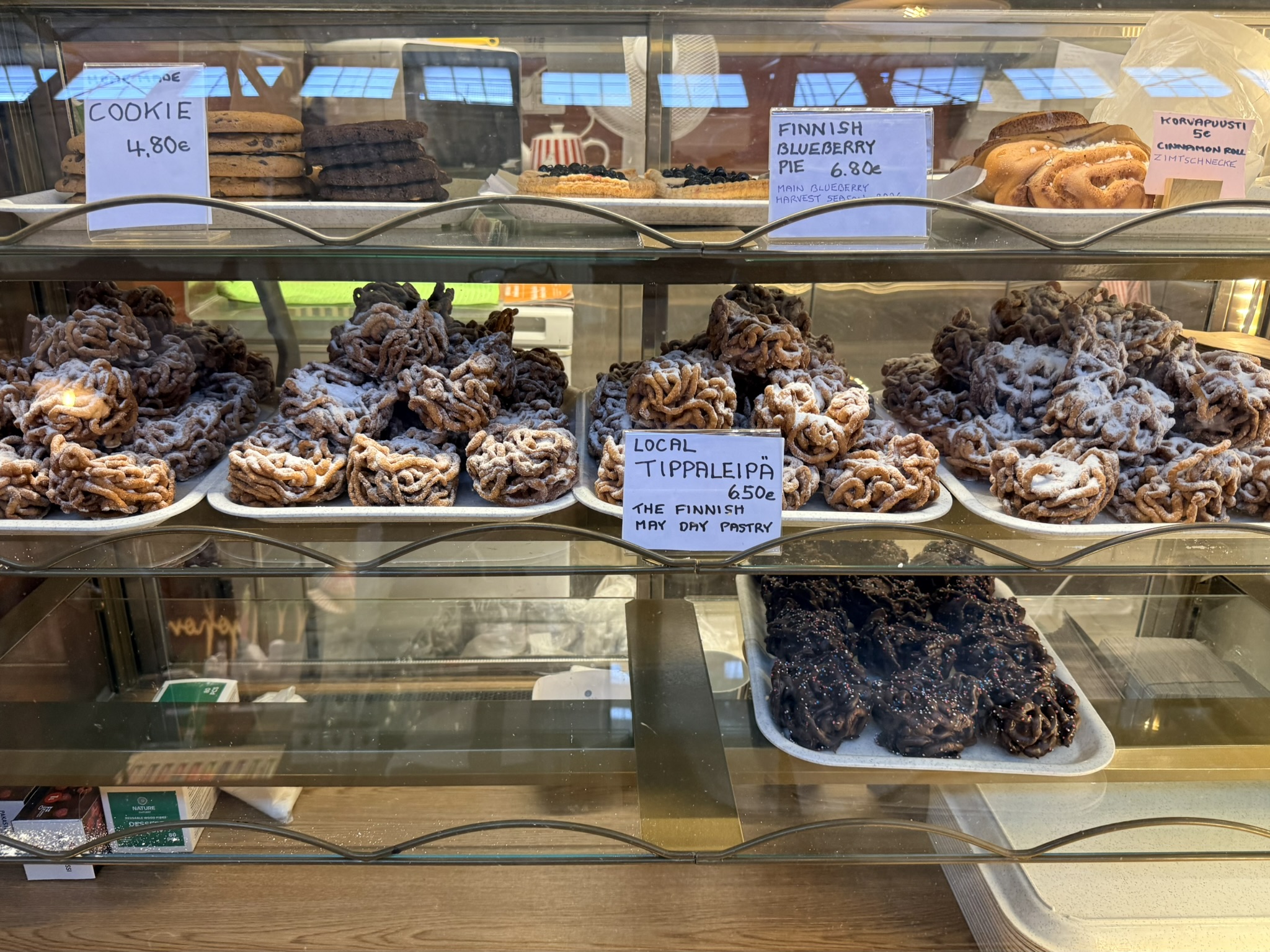
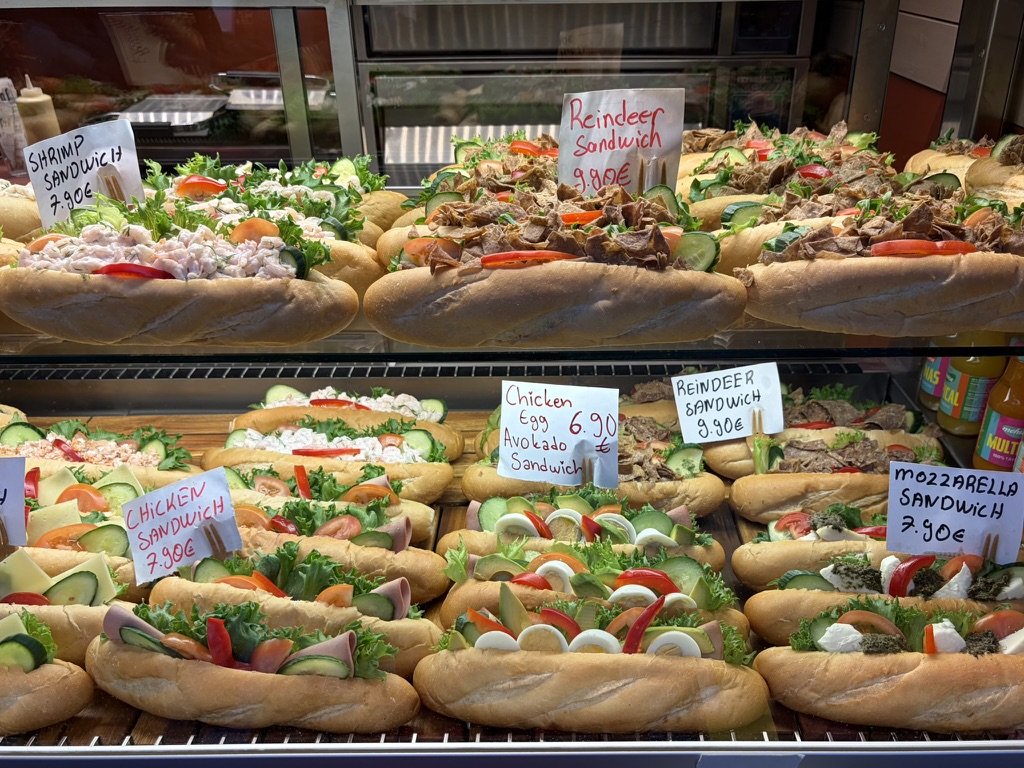
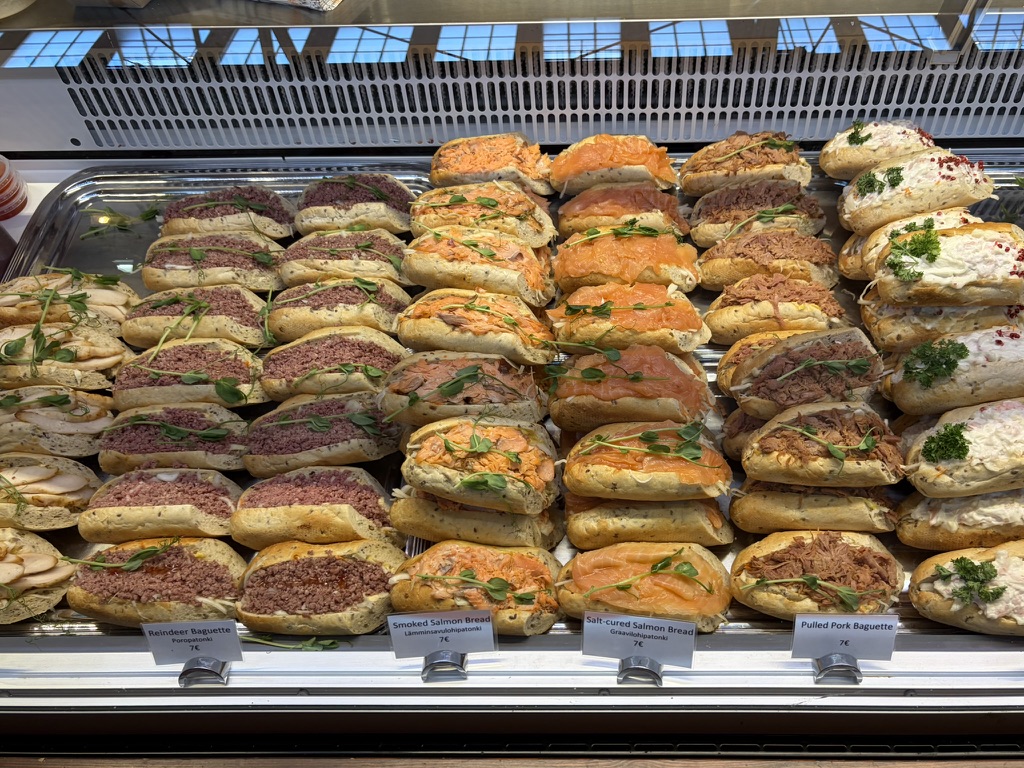
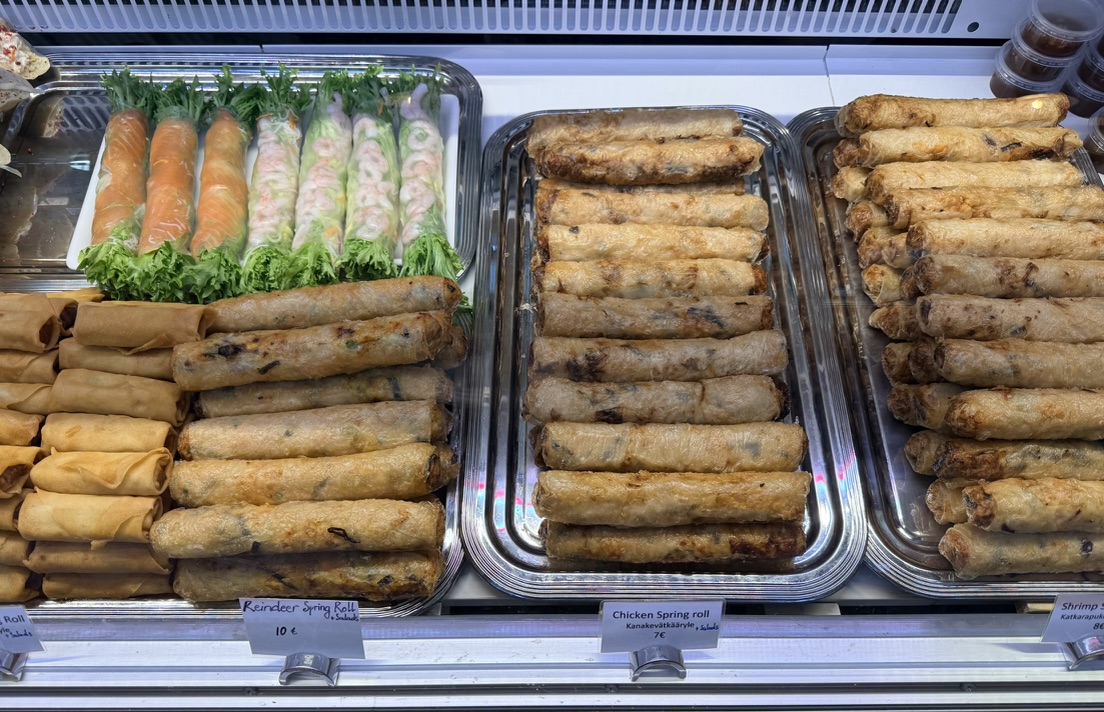
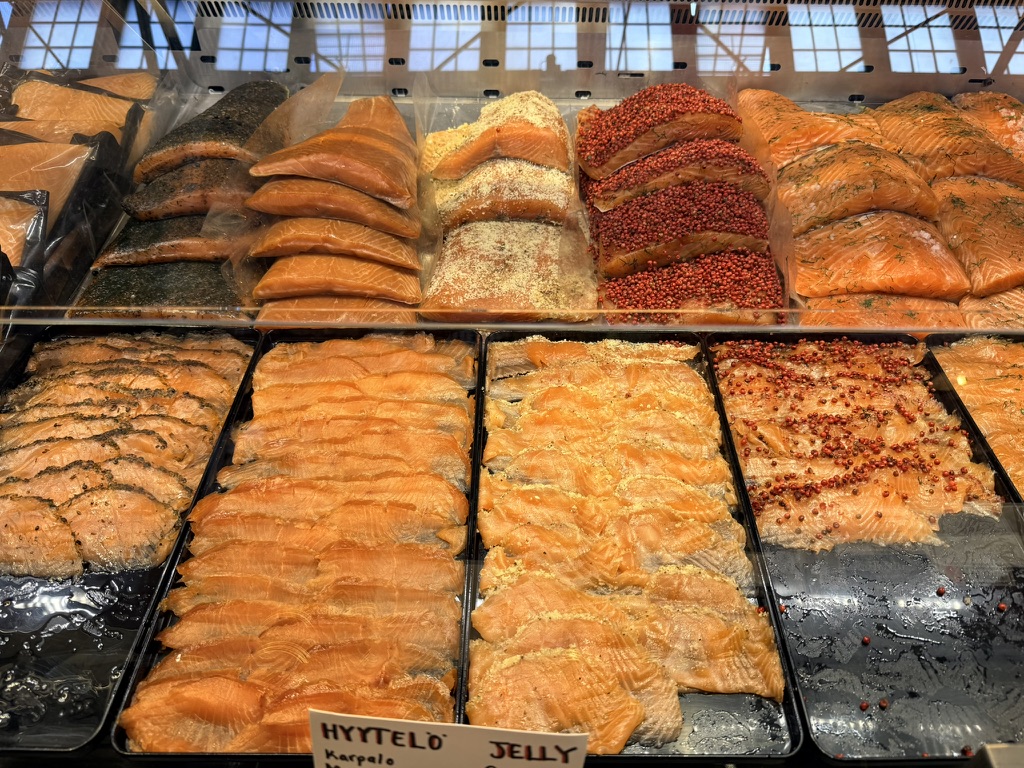
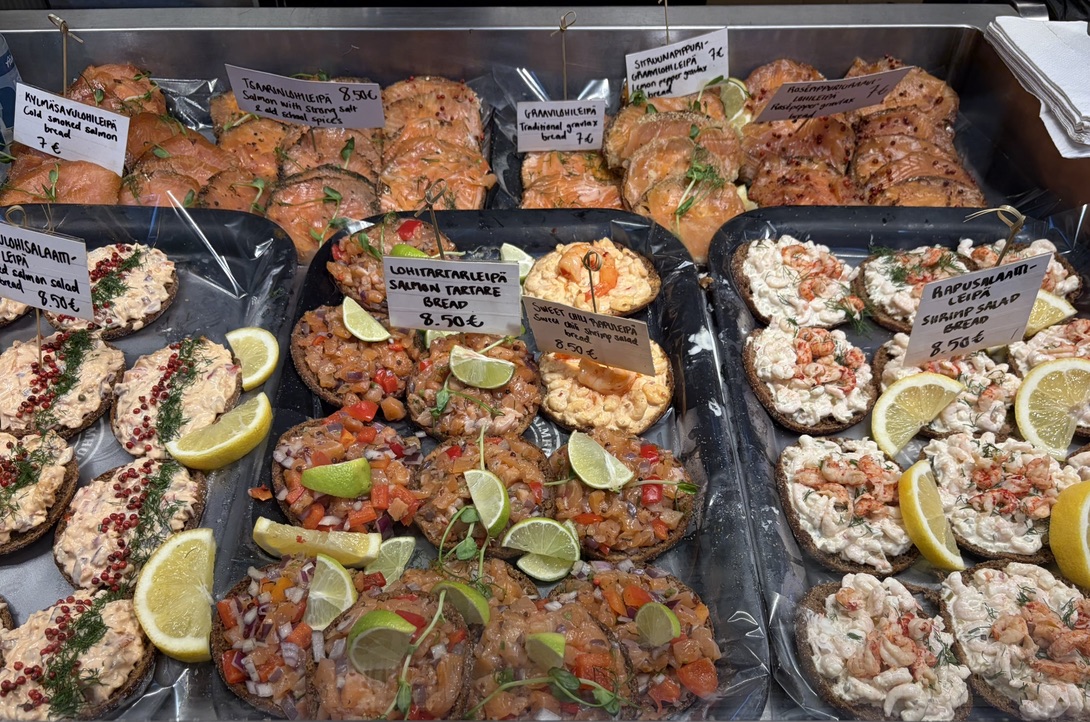
Market Square
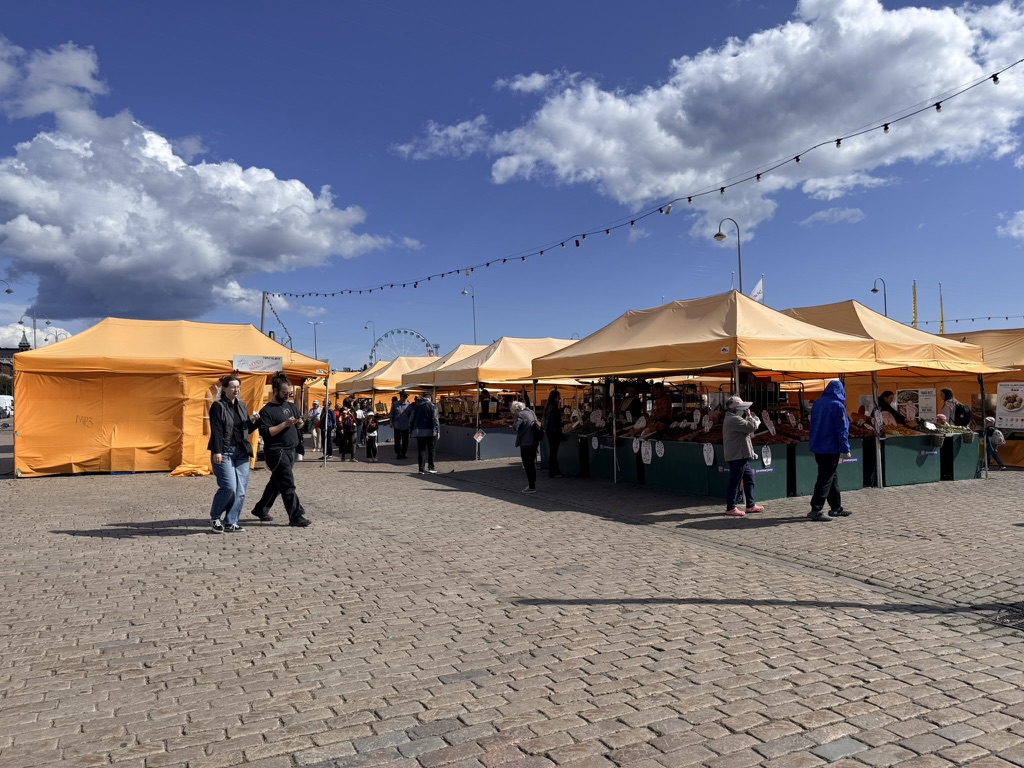
Market Square sits catty-corner from Old Market Hall. Here fruit and vegetable vendors are set up under tents. We understand some of the tents are heated for winter eating. The booths here sell traditional market foods and treats, as well as handicrafts and souvenirs. Prepared food is also available. Here we bought a good sampling of berries: lingonberries, cloudberries, and wild blueberries, as well as apples and vegetables.
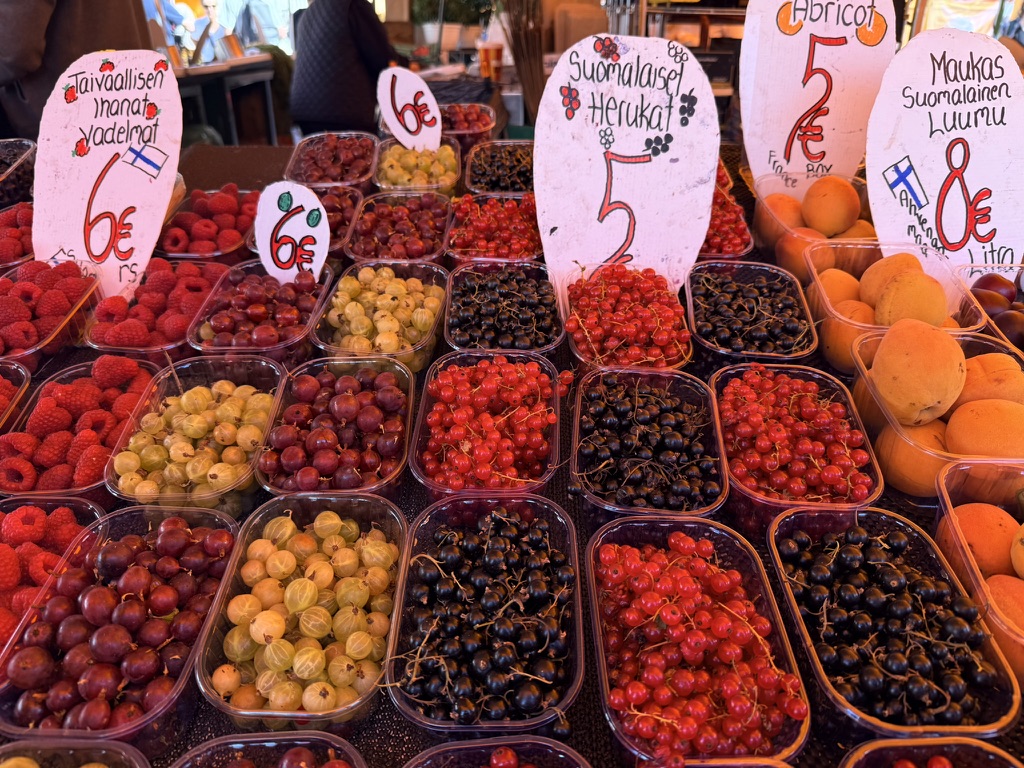
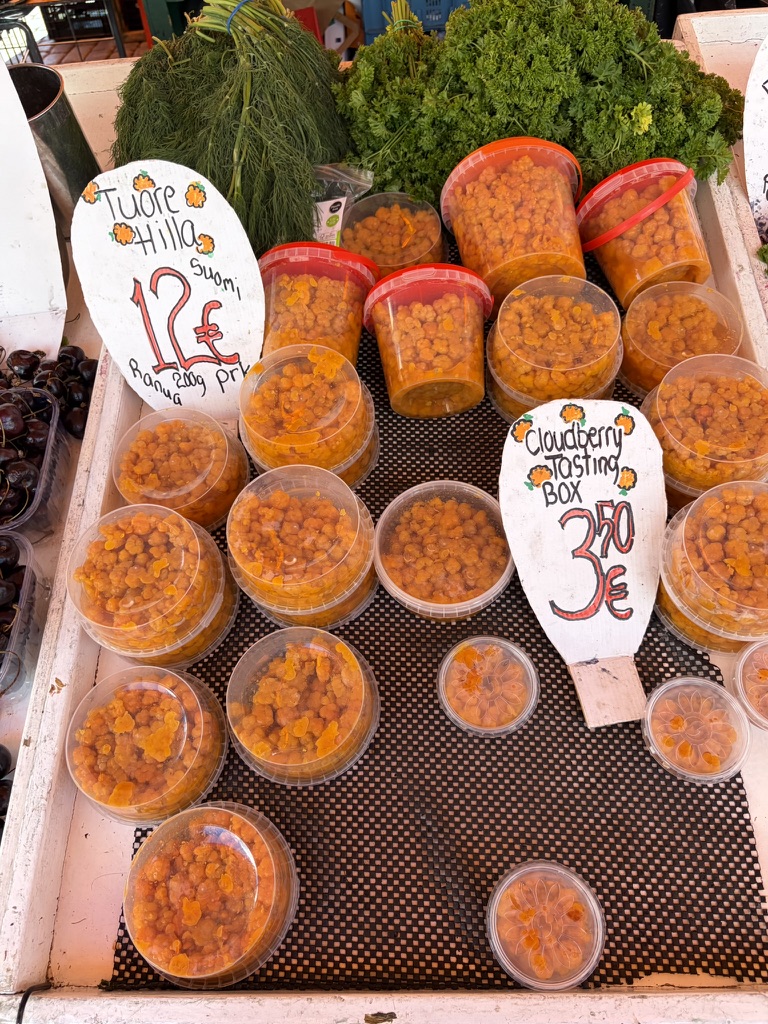
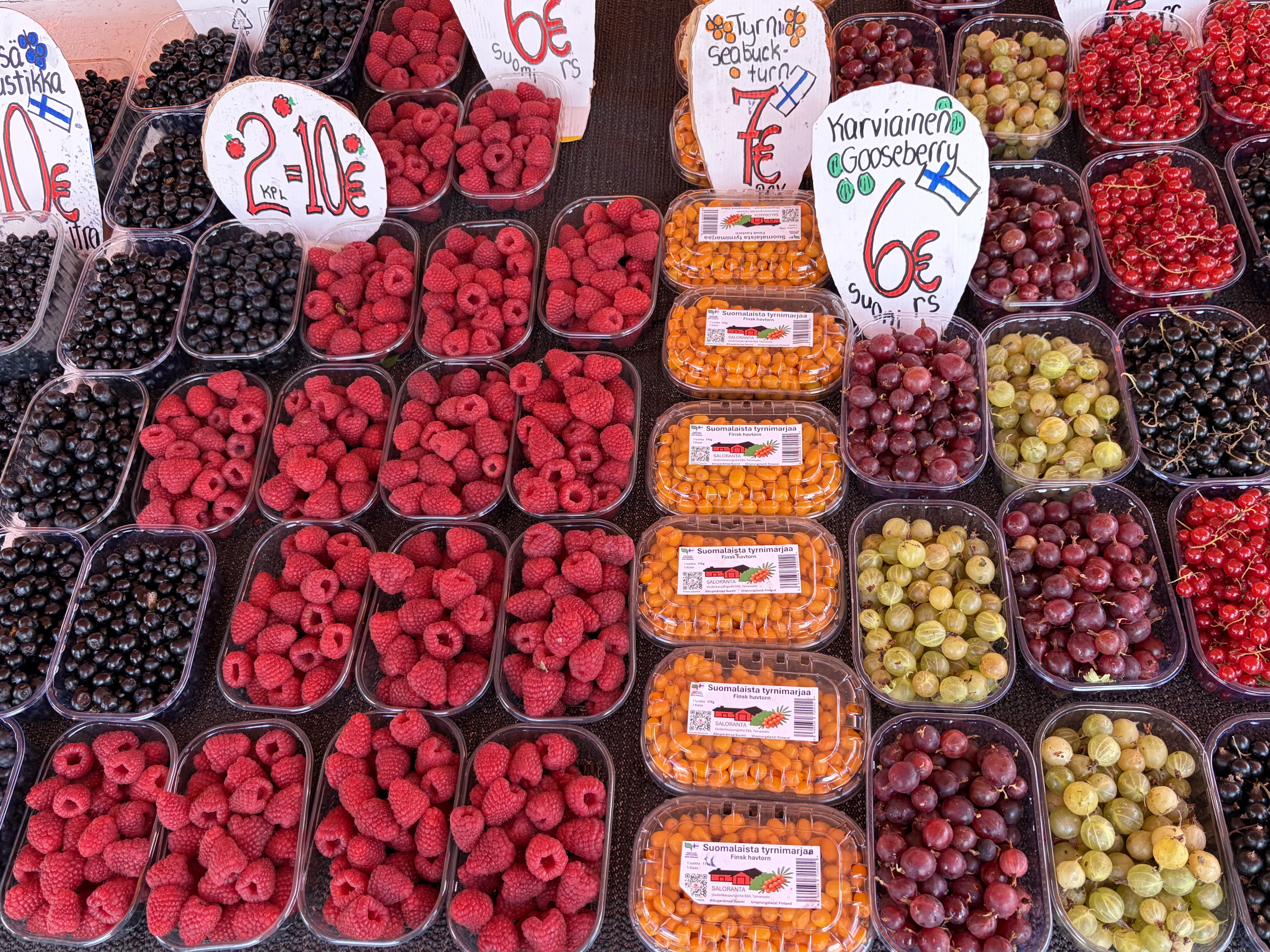
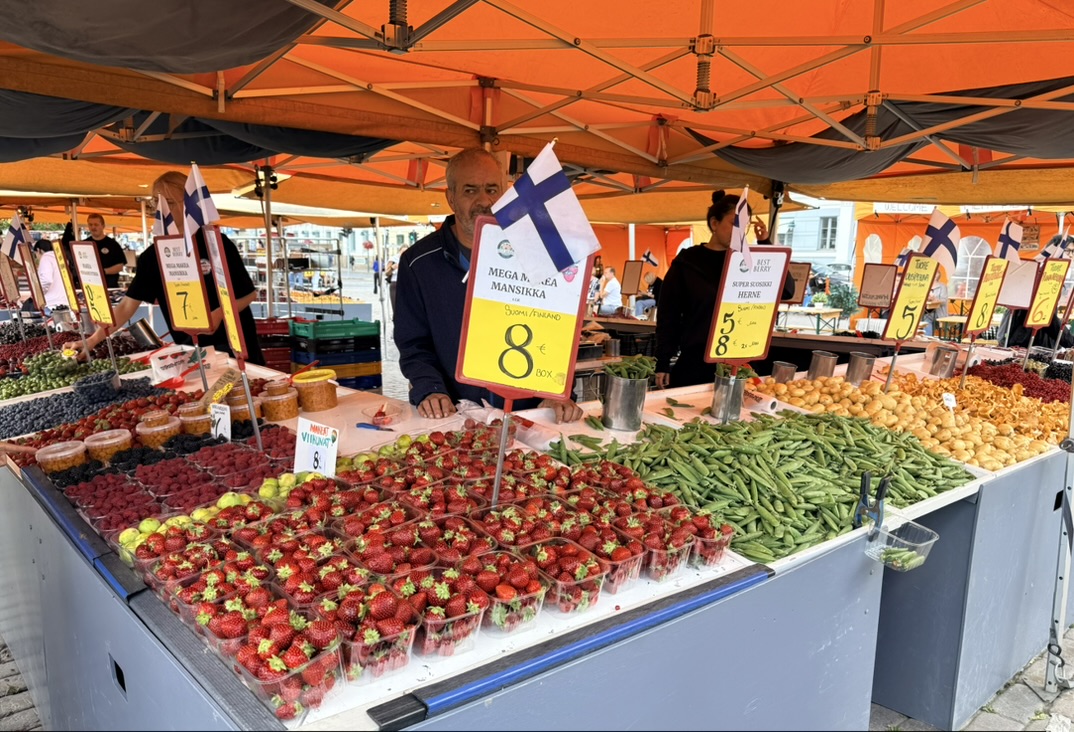
There is a new Market Hall near our apartment but we simply walked through to check it out. It mostly has restaurants and bars in it. It also has a supermarket.
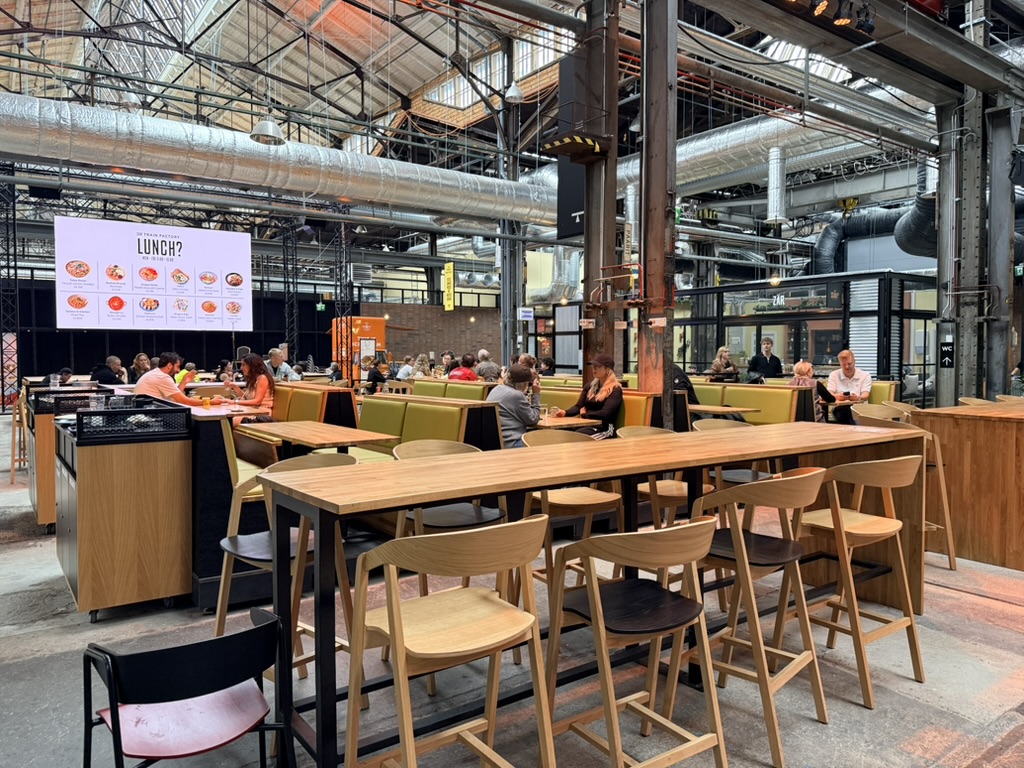
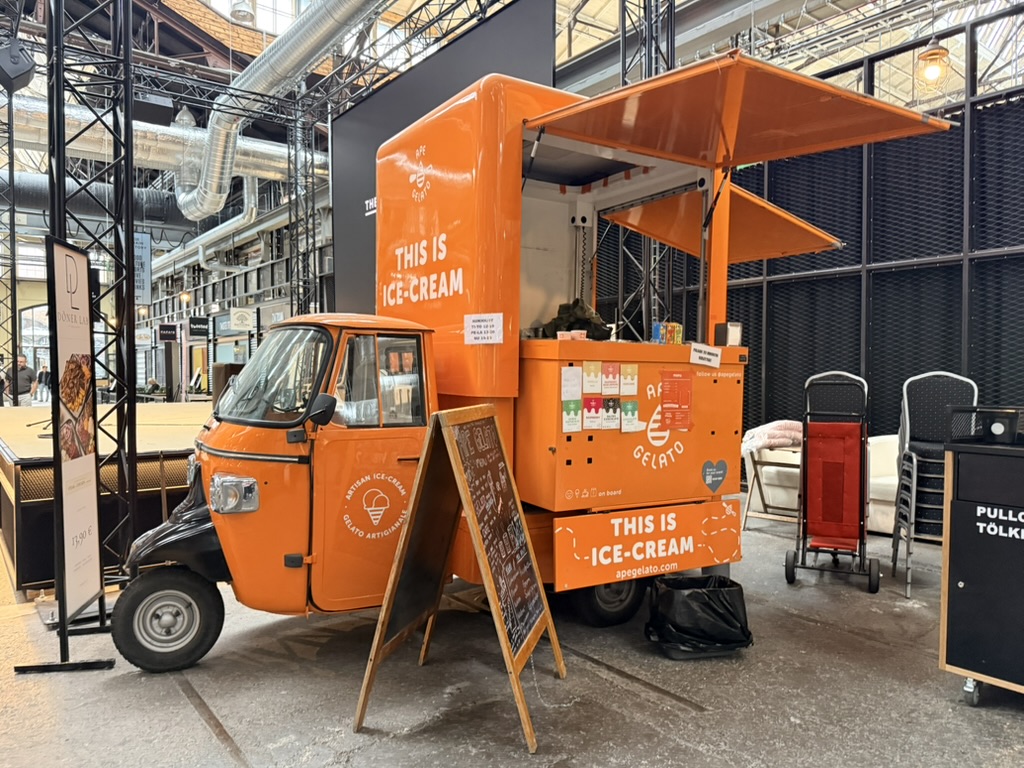
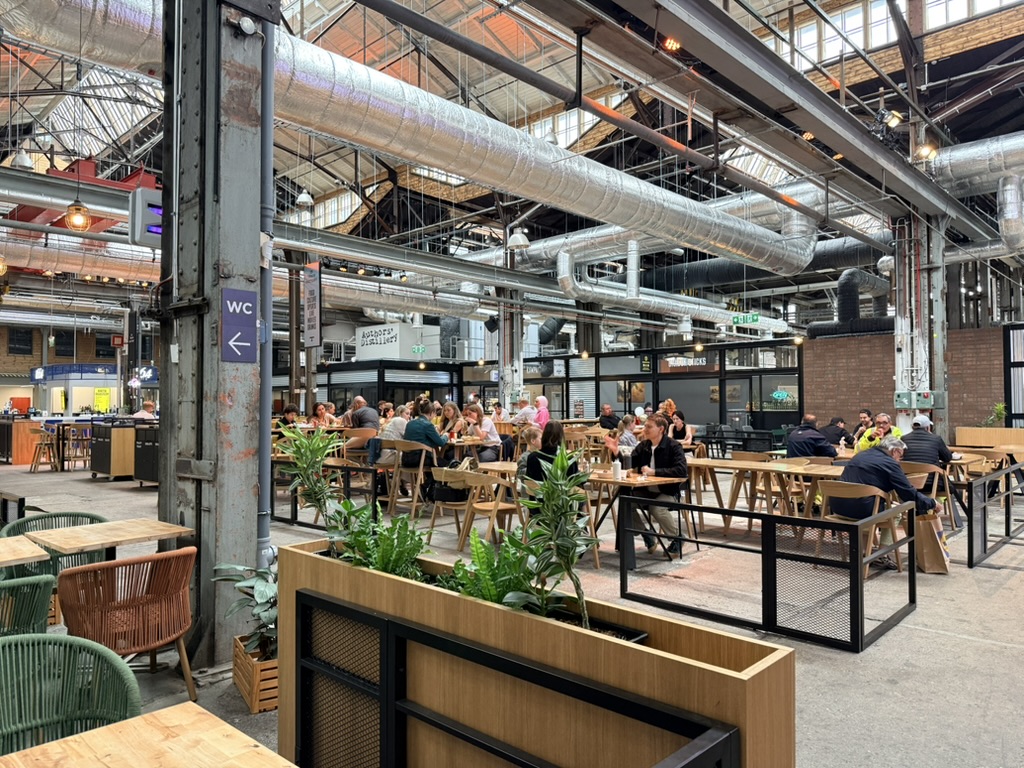
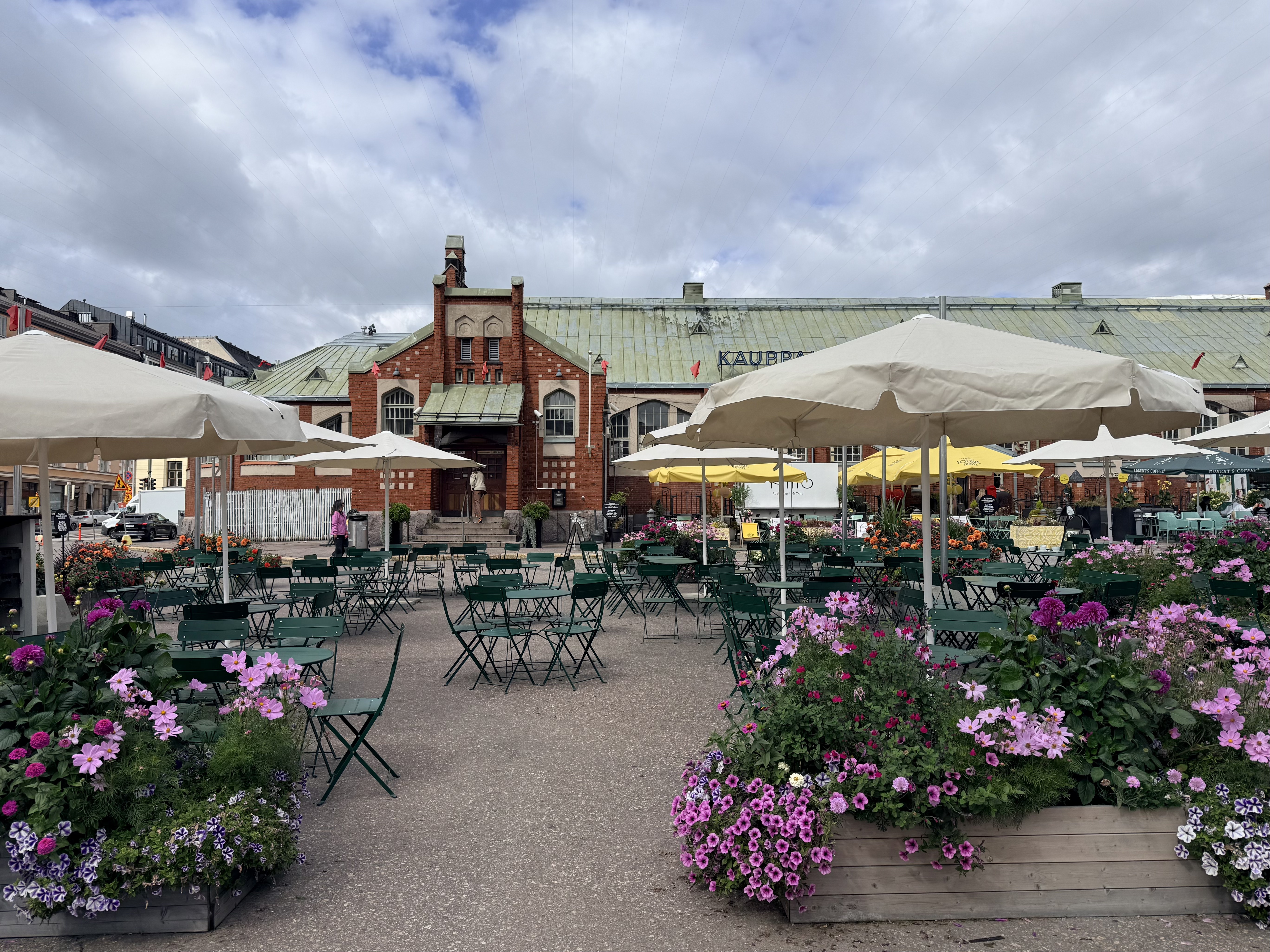
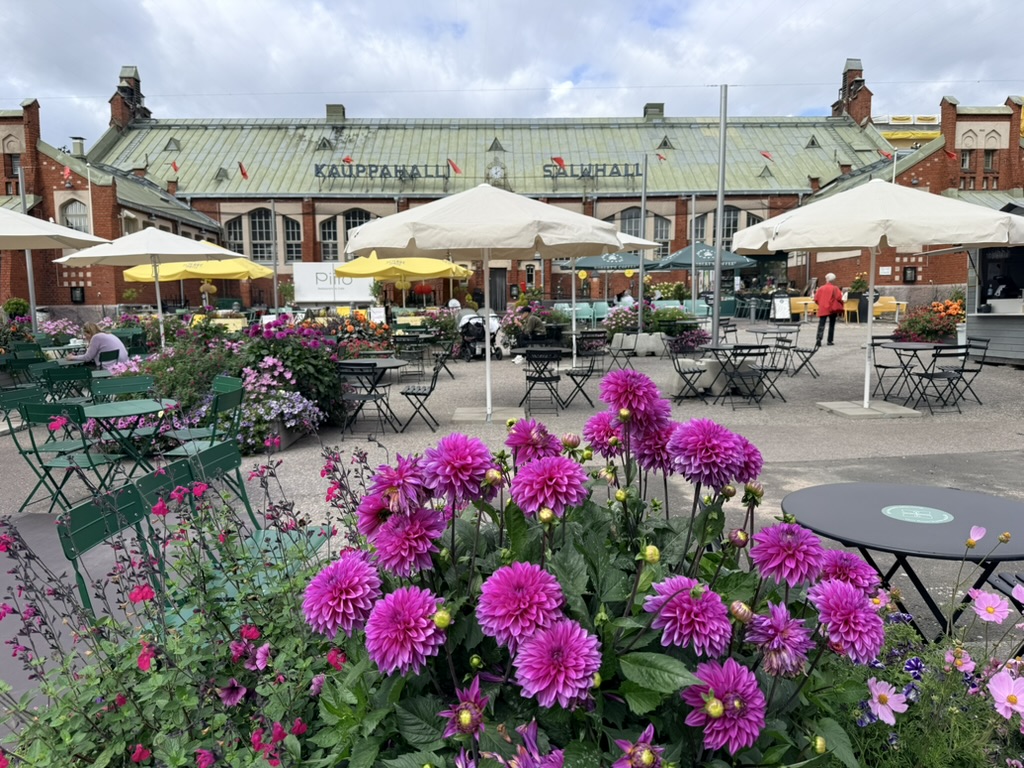
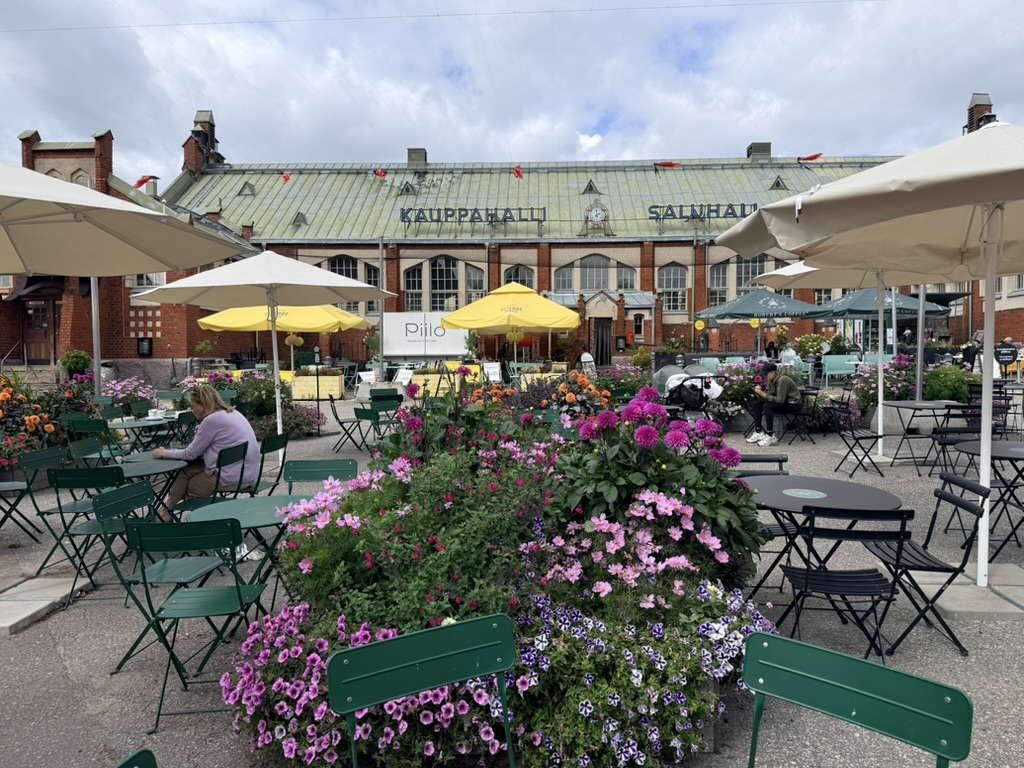
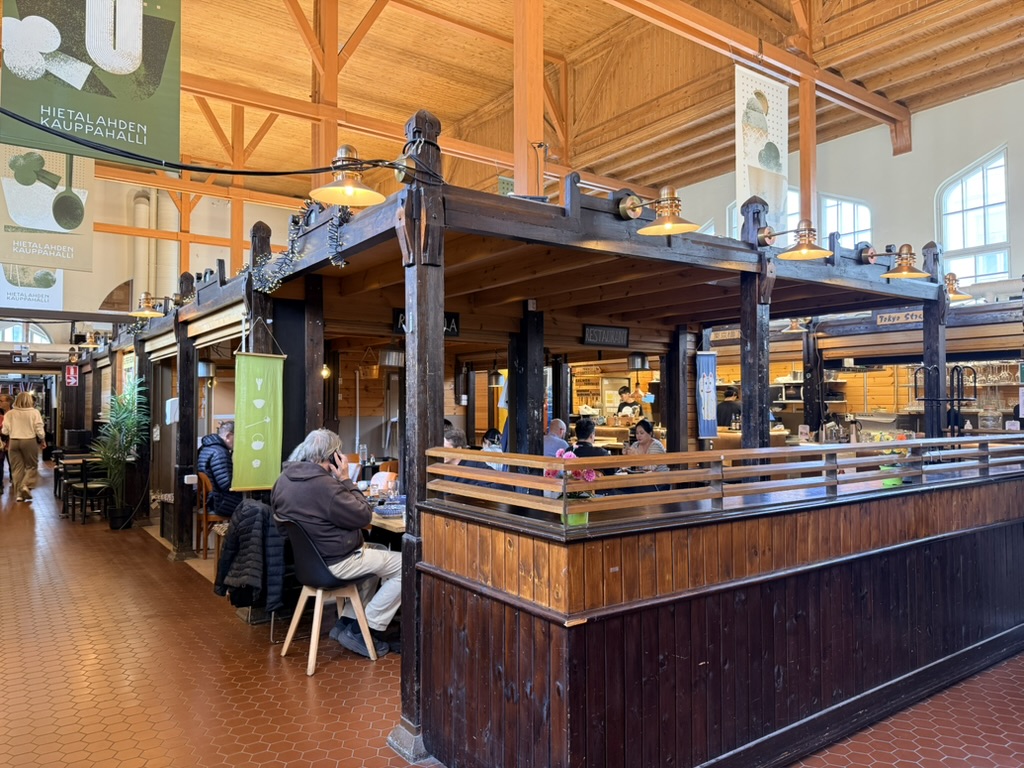
Hietalahdentori kauppahalli
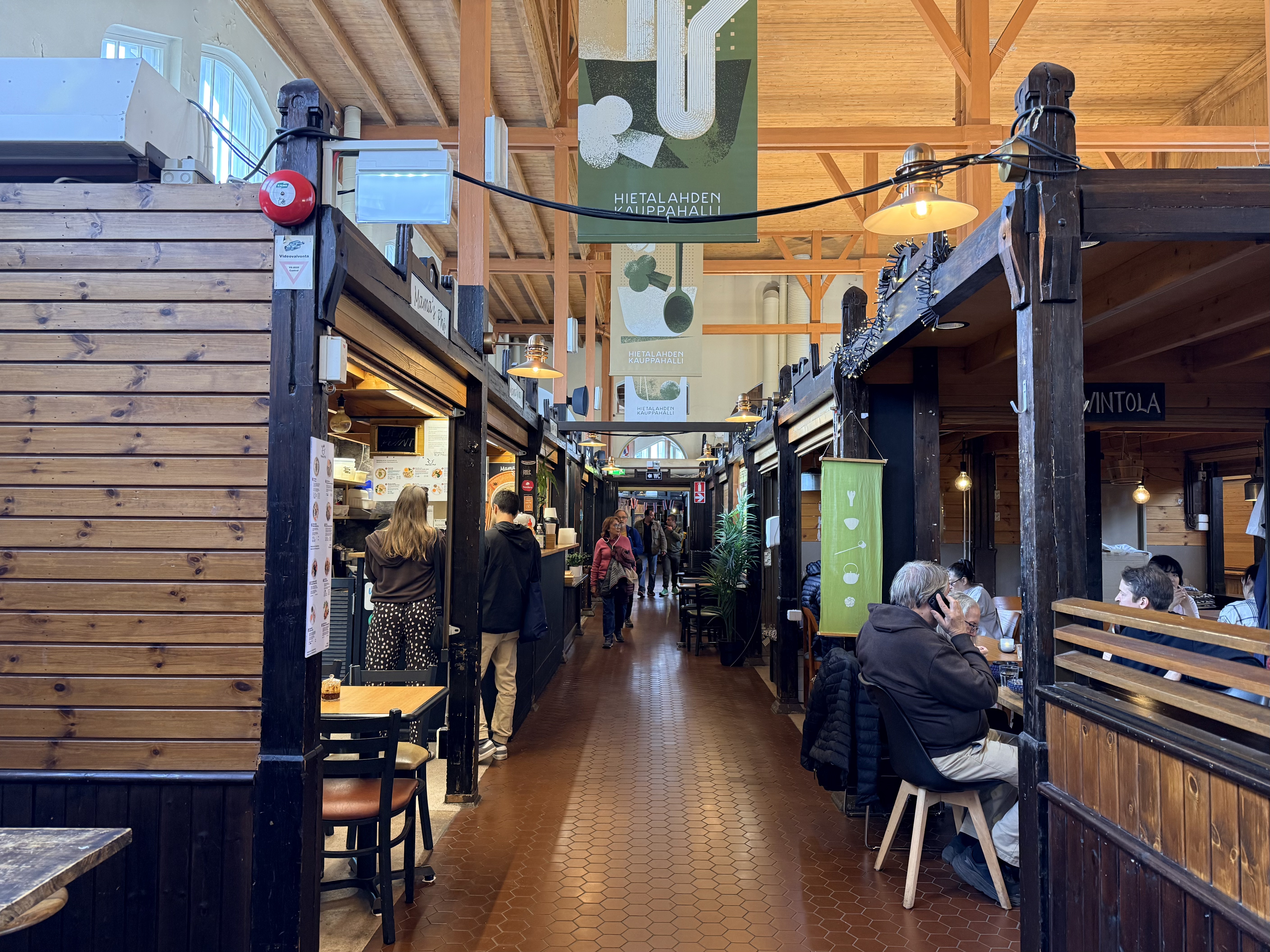
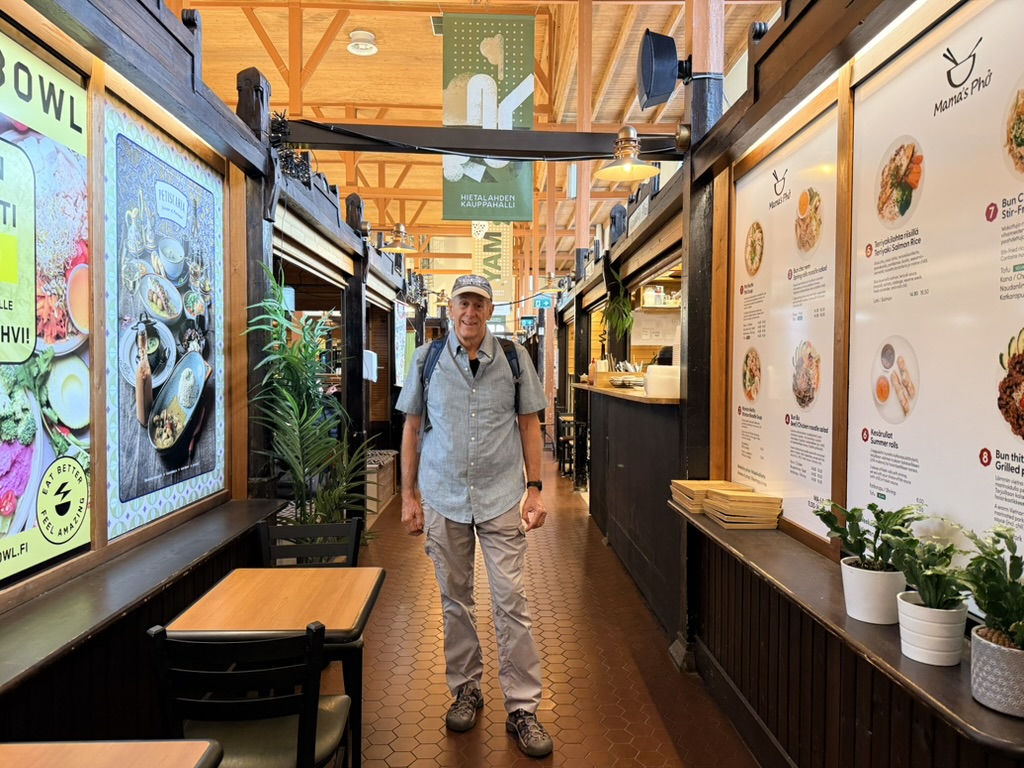
Hietalahti Market Hall is another of Helsinki’s old market halls, located near another harbor in the city; here are restaurants that offer international foods such as Japanese, Filipino, Portuguese and Italian cuisine. The 1903 building was originally believed to have been a Russian horse barracks, but it has functioned as a market hall since its inception.
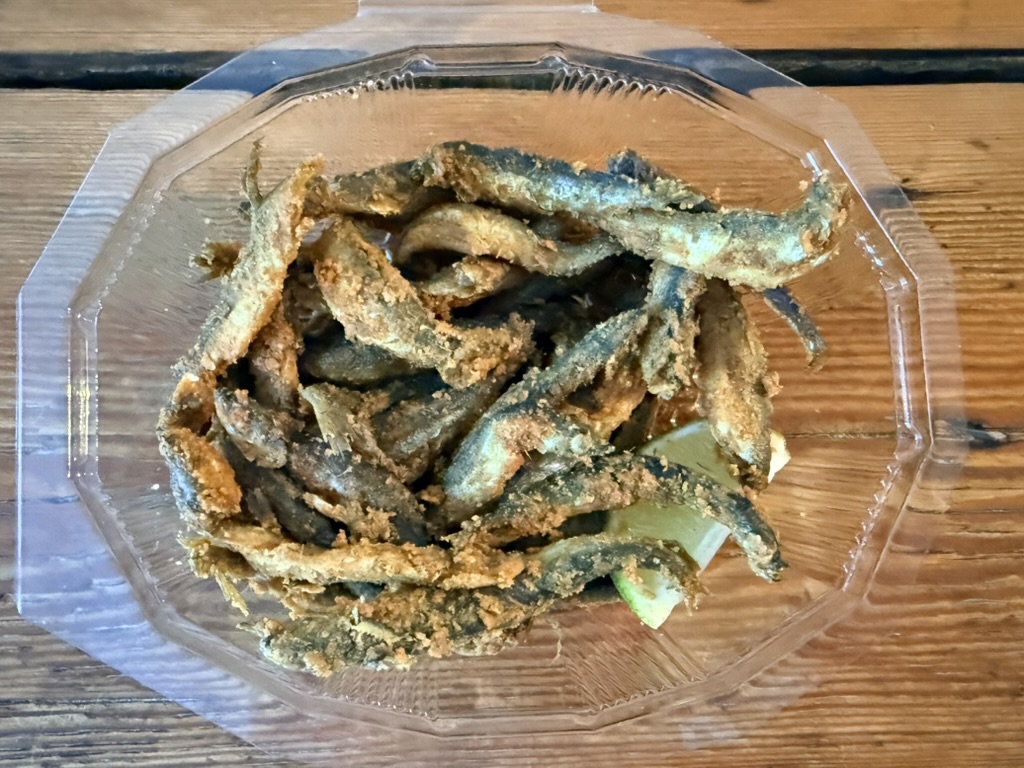
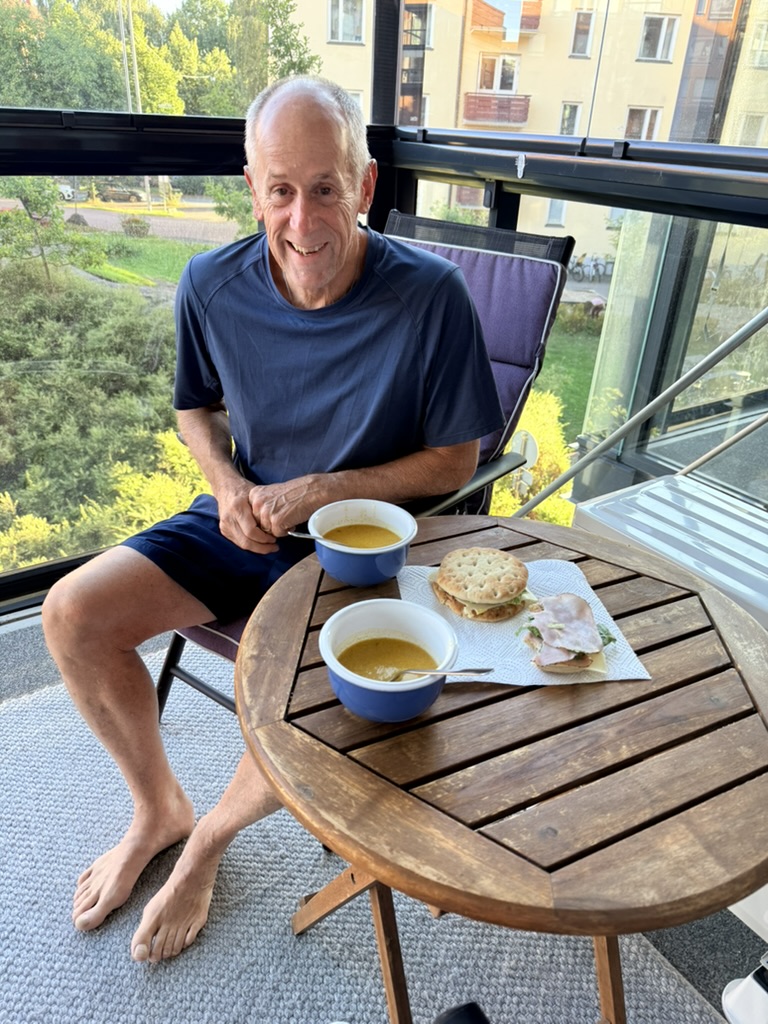
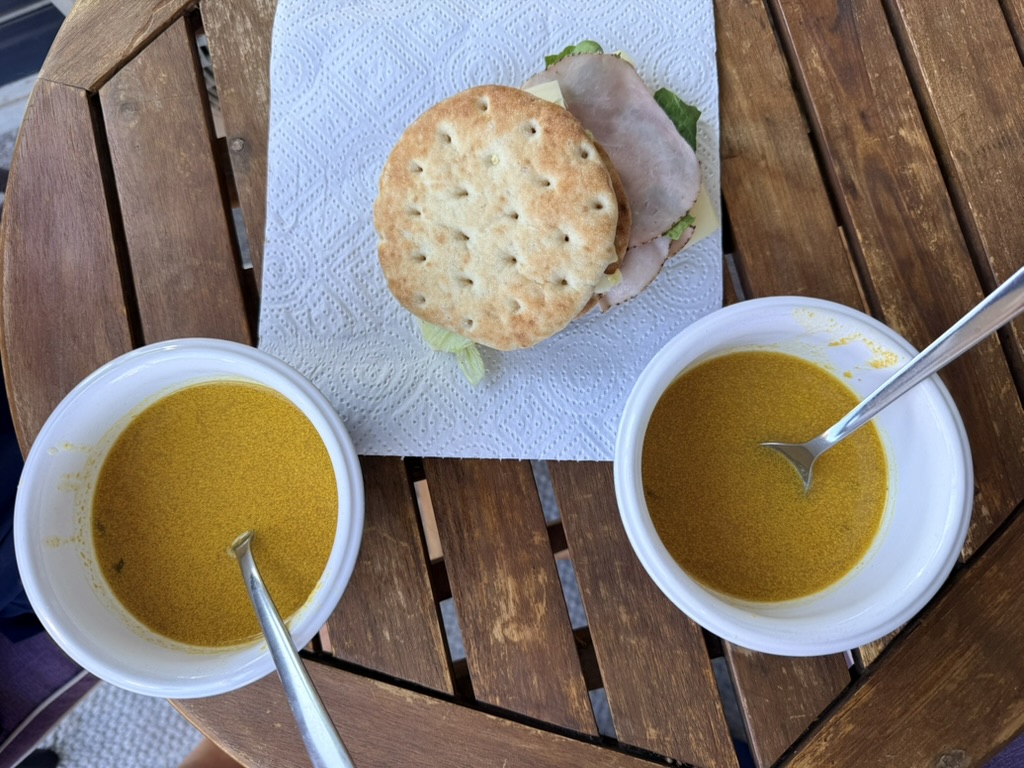
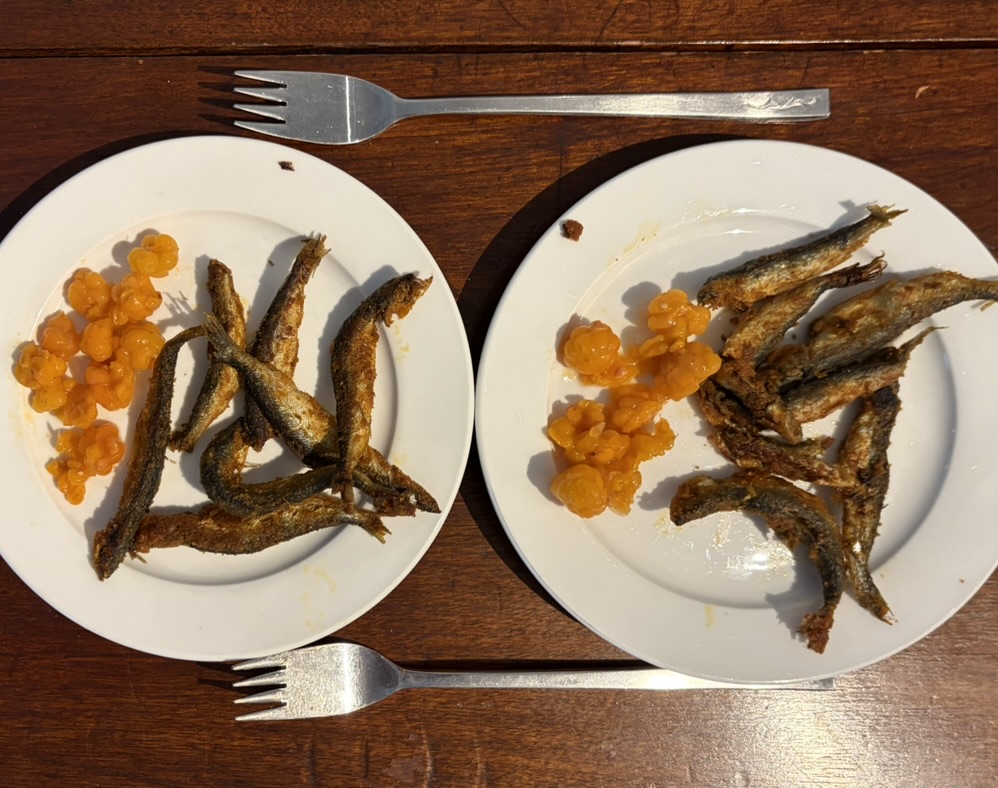
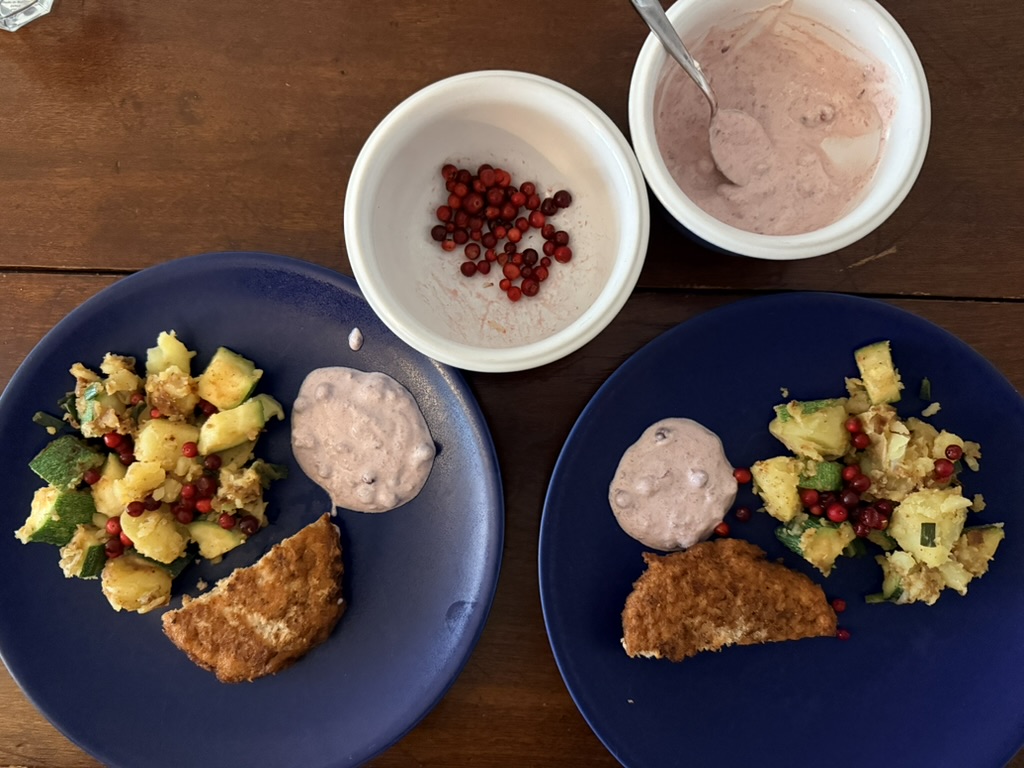
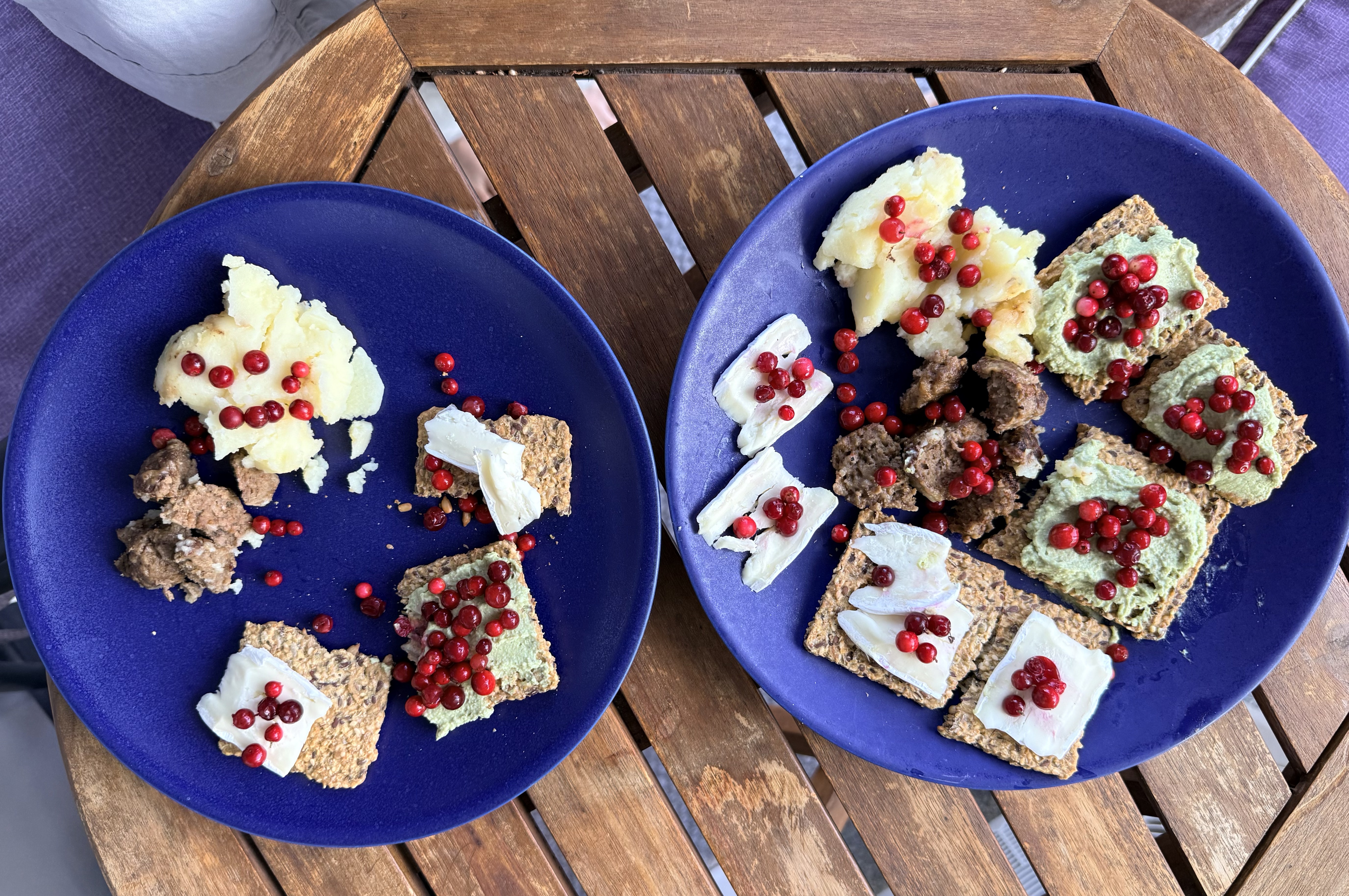
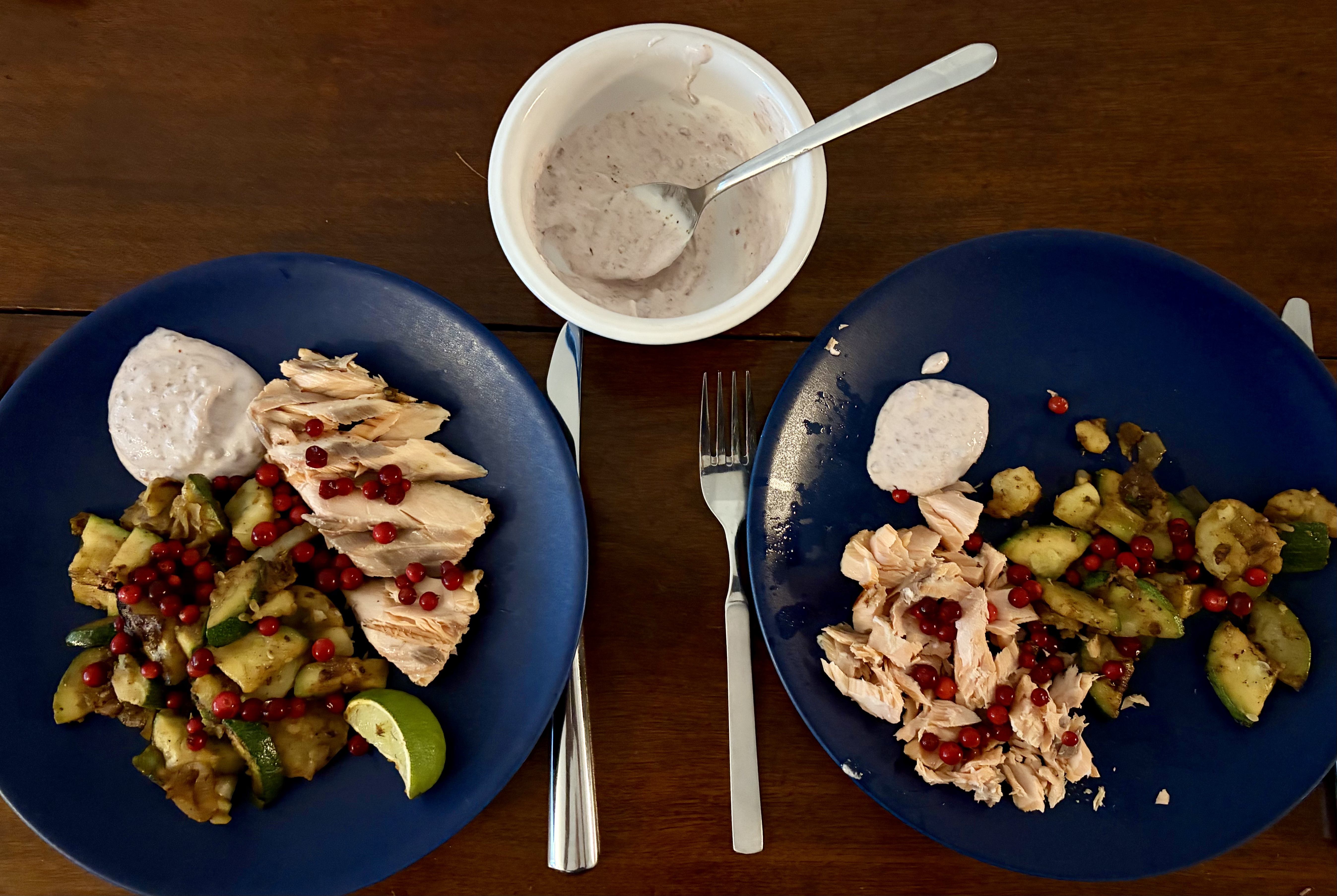
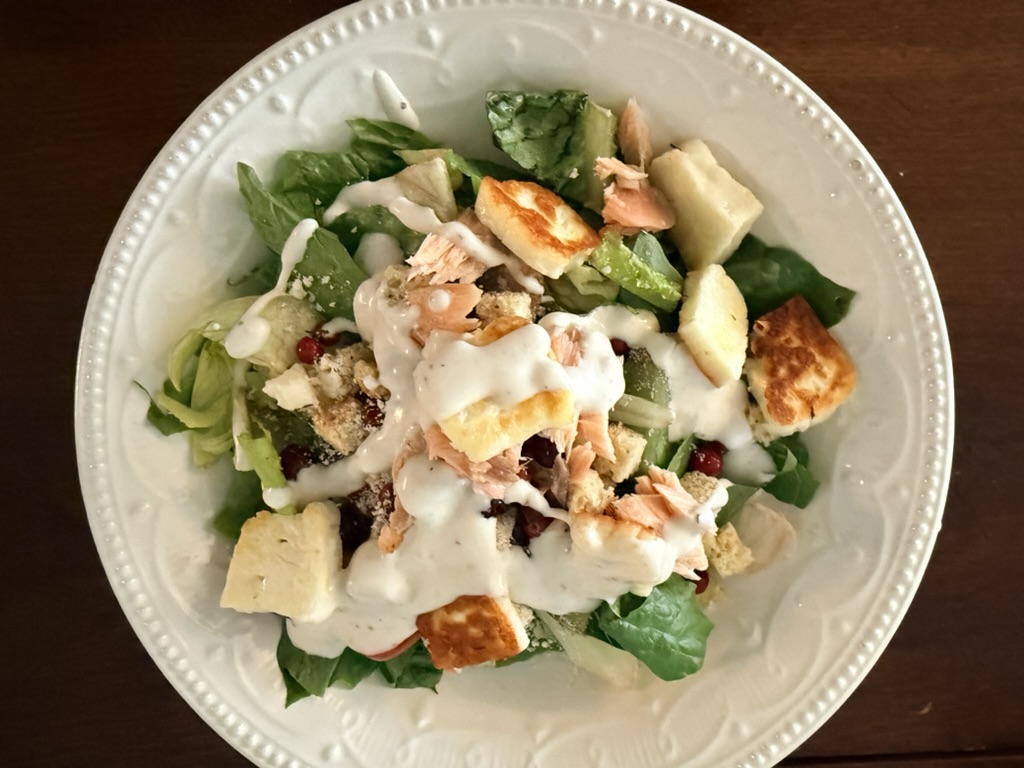
We’ve prepared snacks such as vendace, crackers with brie and lingonberries, crackers with hummus, and crackers with shirmp chili mayo spread. For lunch we’ve made pumpkin soup and ham & cheese sandwiches and we often make sandwiches to take along on outings. For dinner, we’ve made salmon & cod cakes or flamed salmon with zucchini and potatoes, along with a sauce concocted by Mike of yogurt, Dijon mustard, raspberry jam, and a tomato, garlic and pepper seasoning. One day for lunch we enjoyed a Caesar salad with halloumi and flamed salmon.
Dining out in Helsinki
We’ve been good so far at keeping our dining out to a minimum. We eat out dinner two nights and lunches three times. We find lunches out make the most sense because we’re usually out and about during the days. At night, we’re too exhausted to go out. We’re pretty much nighttime homebodies. But we love to eat out because we thrive on sampling the different foods offered and to check out the decor and feel of the places.
DingDing Restaurant
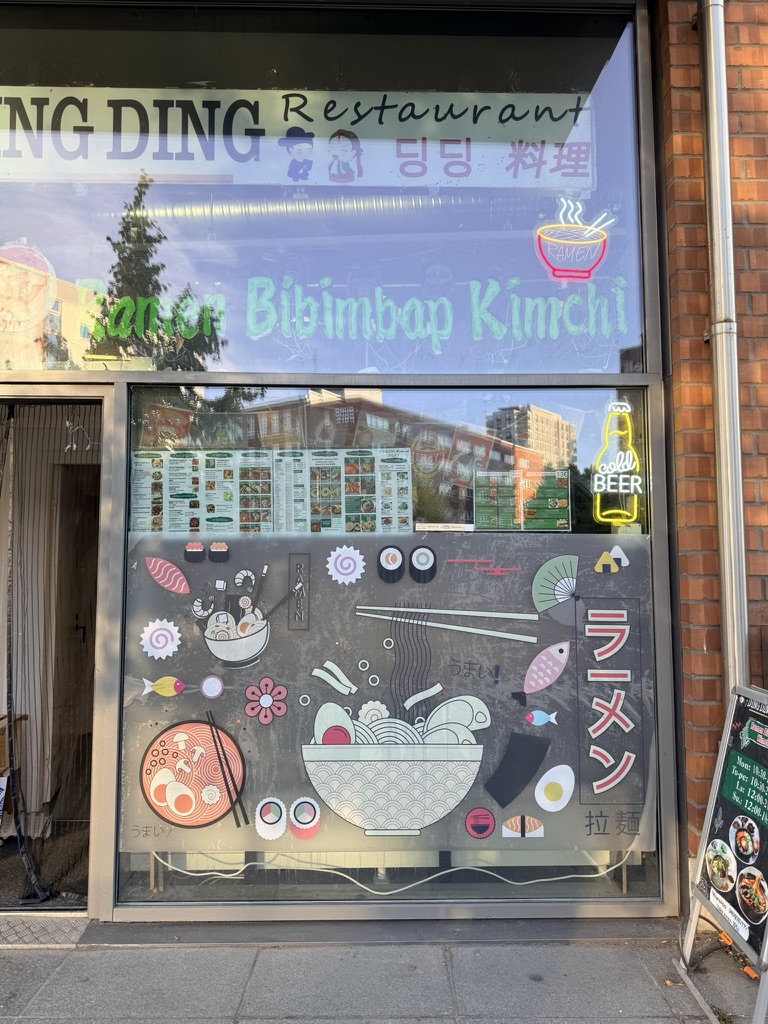
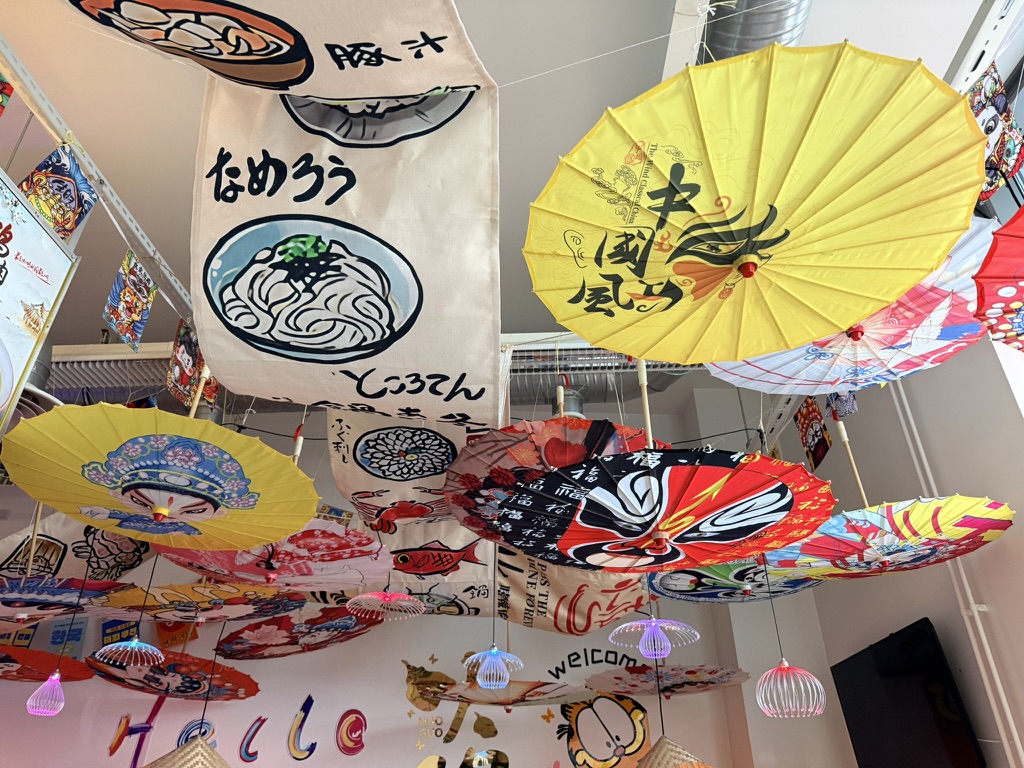
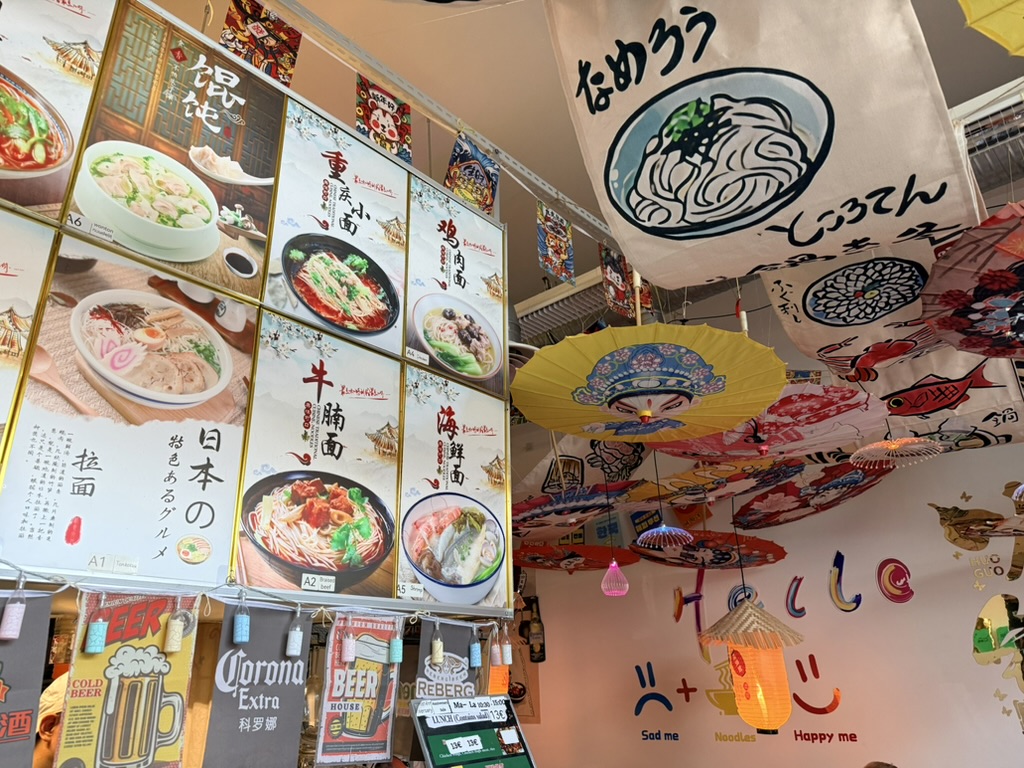
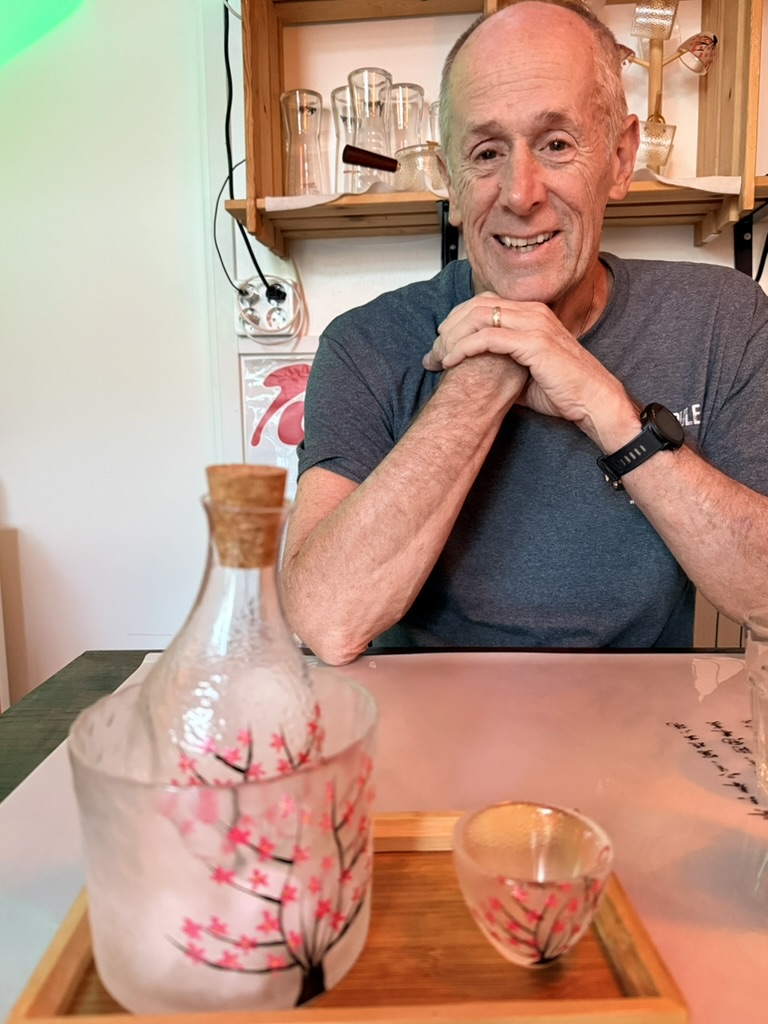
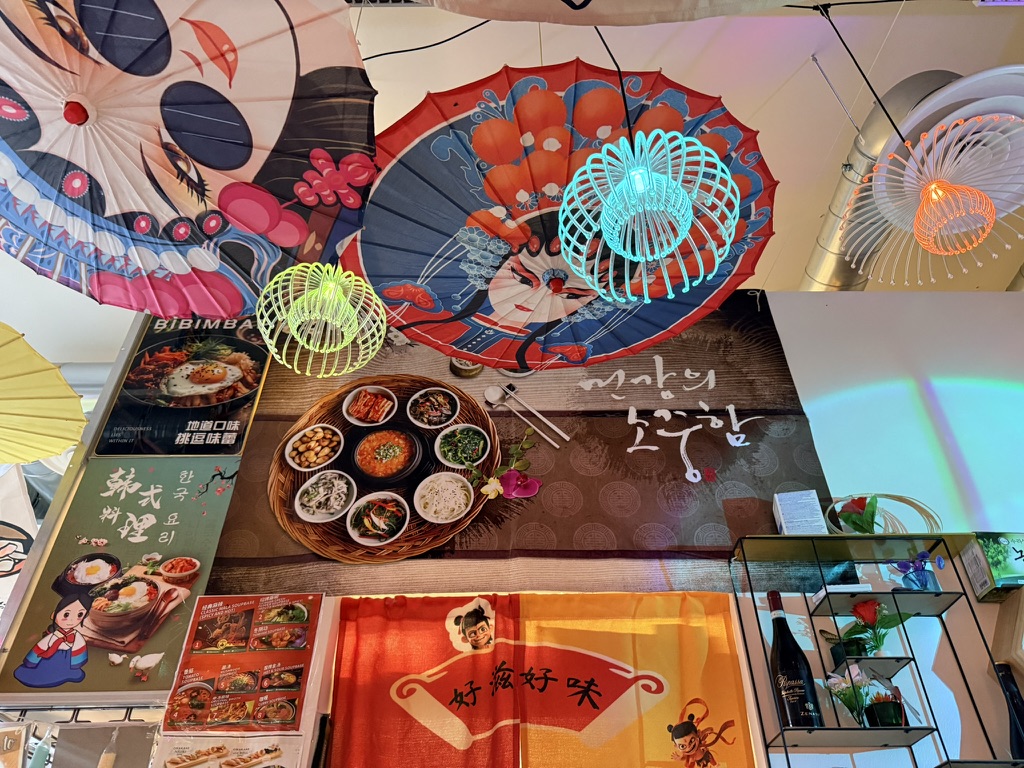
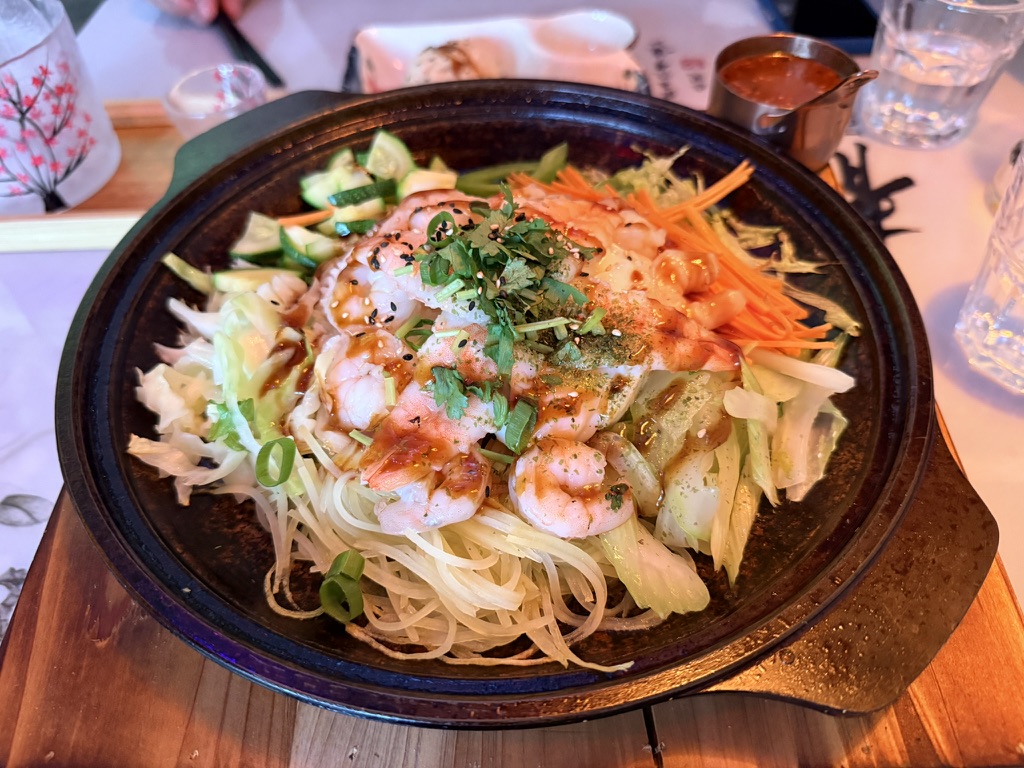
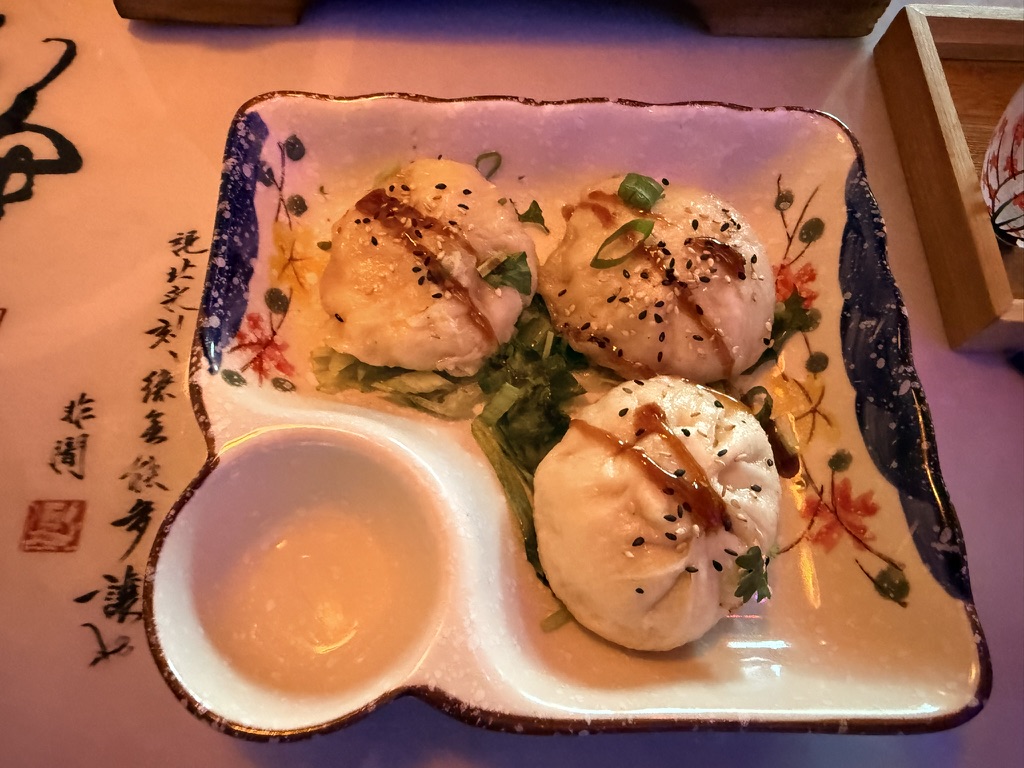
Dinner #1: Our first night in a place tends to be a night we eat out. For one, we’re tired from the move and two, we haven’t had time to buy any groceries. Our first night in Helsinki we ate at a little hole in the wall around the corner from our apartment, DingDing Restaurant. It was cutely decorated with umbrellas on the ceiling. We shared Shrimp Bibimbap and Steamed Buns with Chicken. The Steamed Buns were especially delectable!
Cella Ravintola
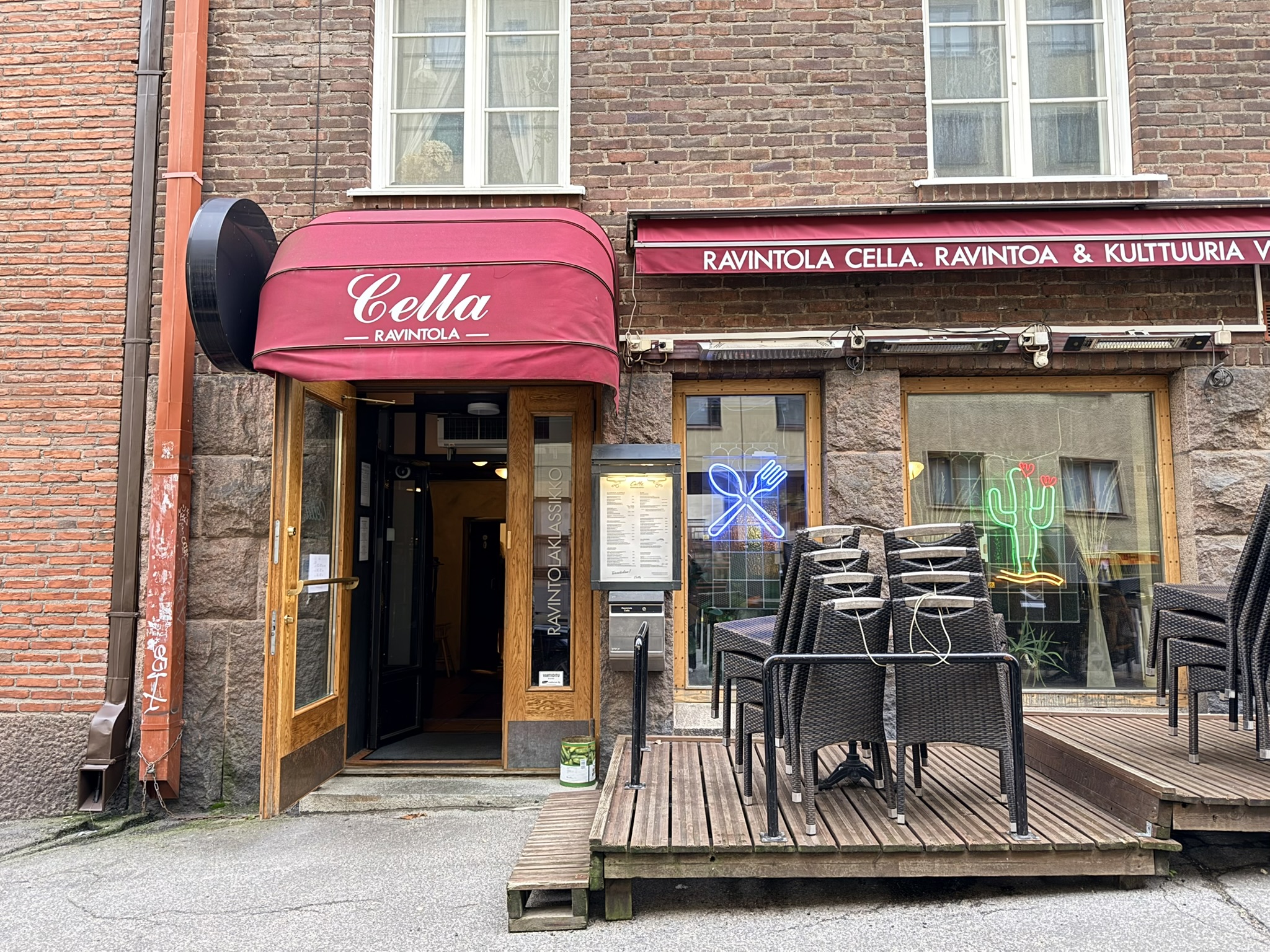
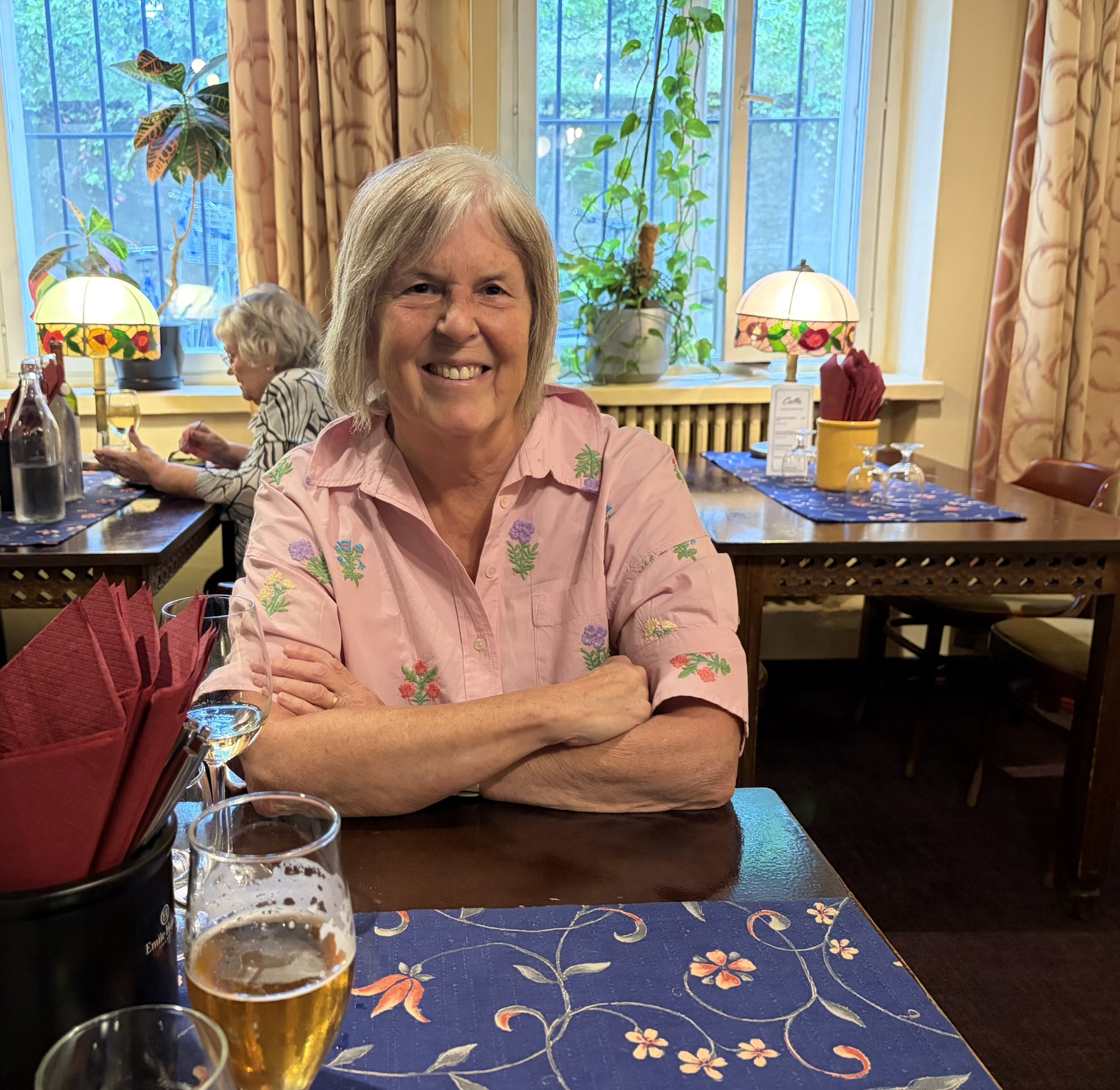
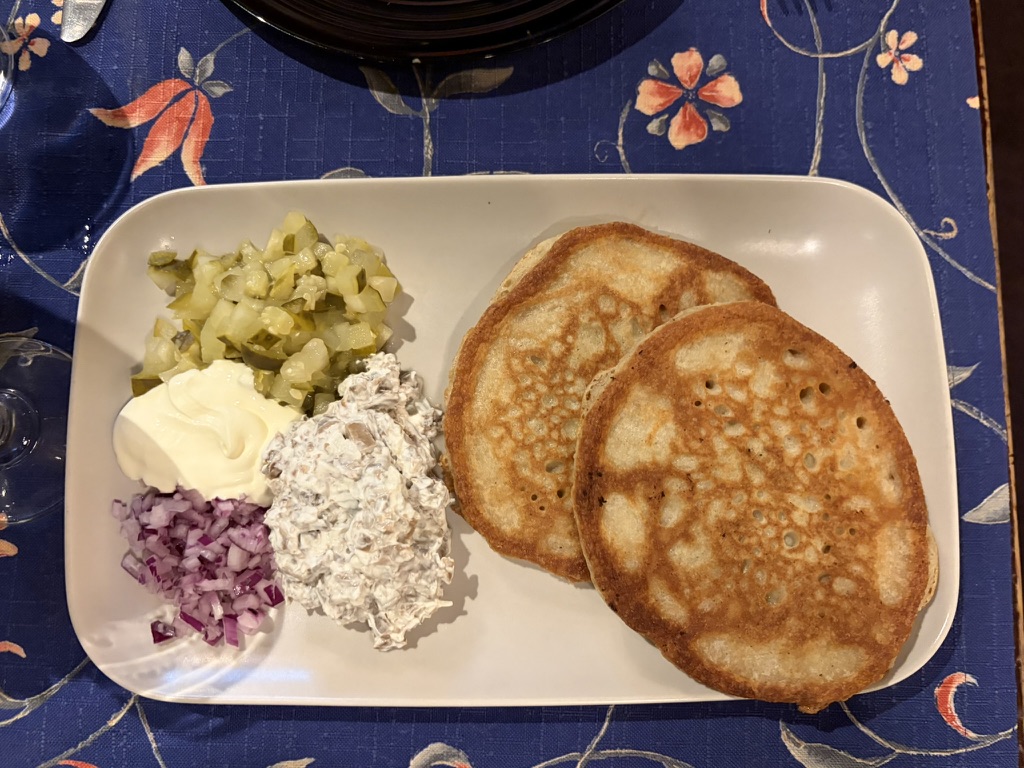
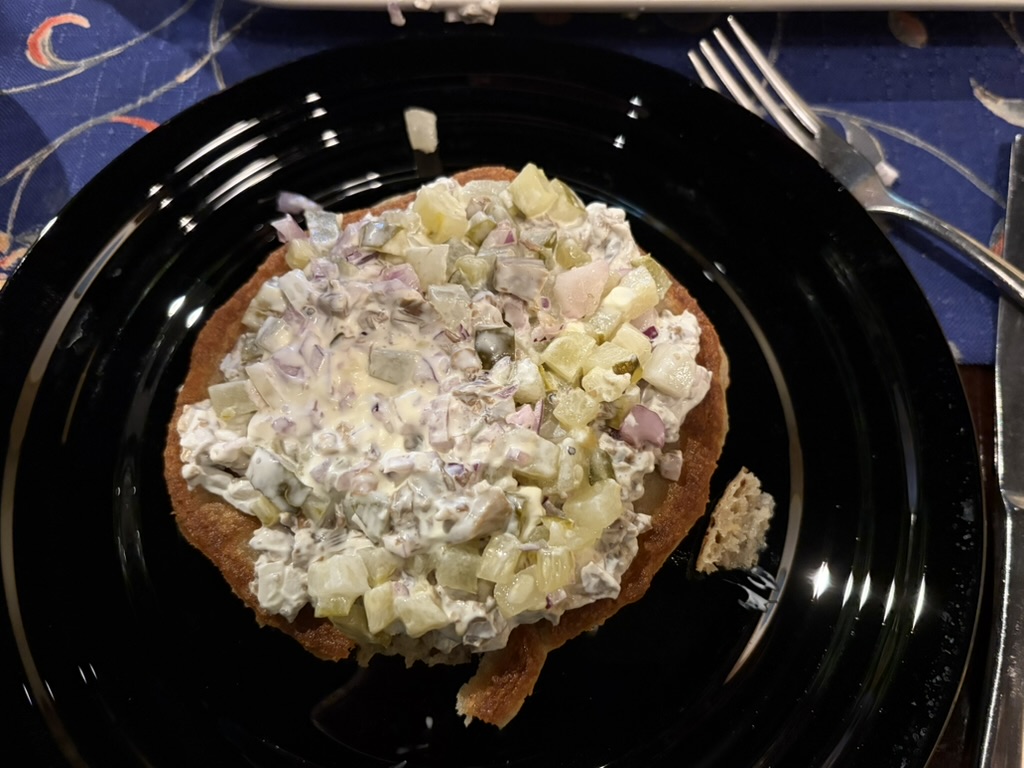
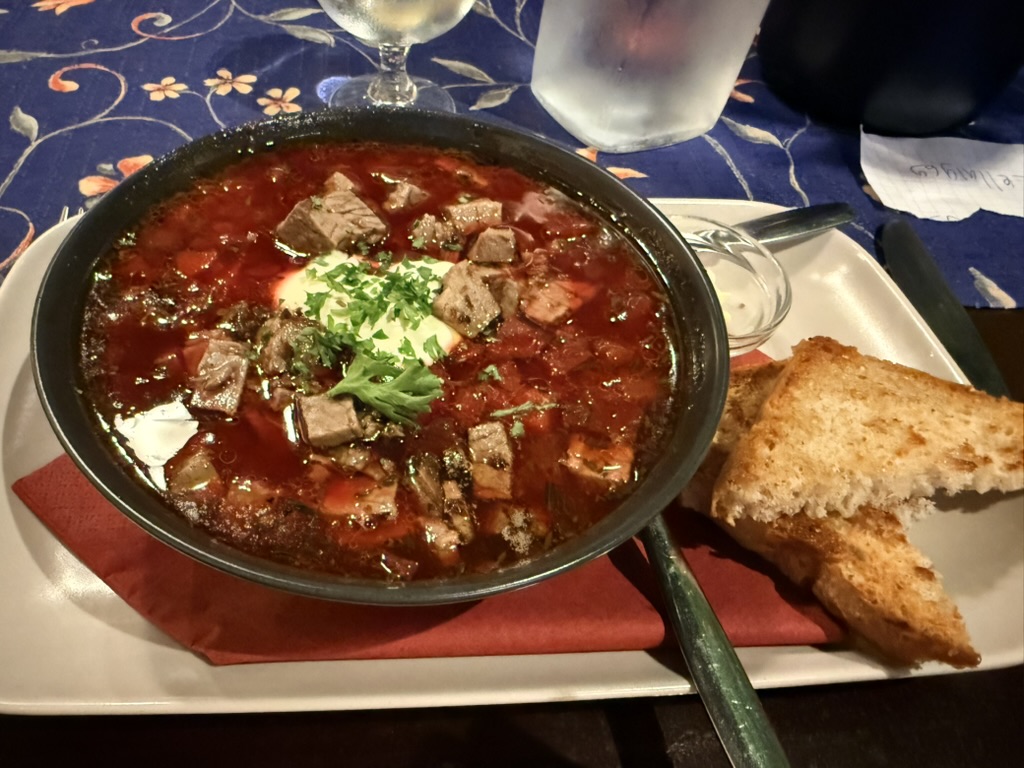
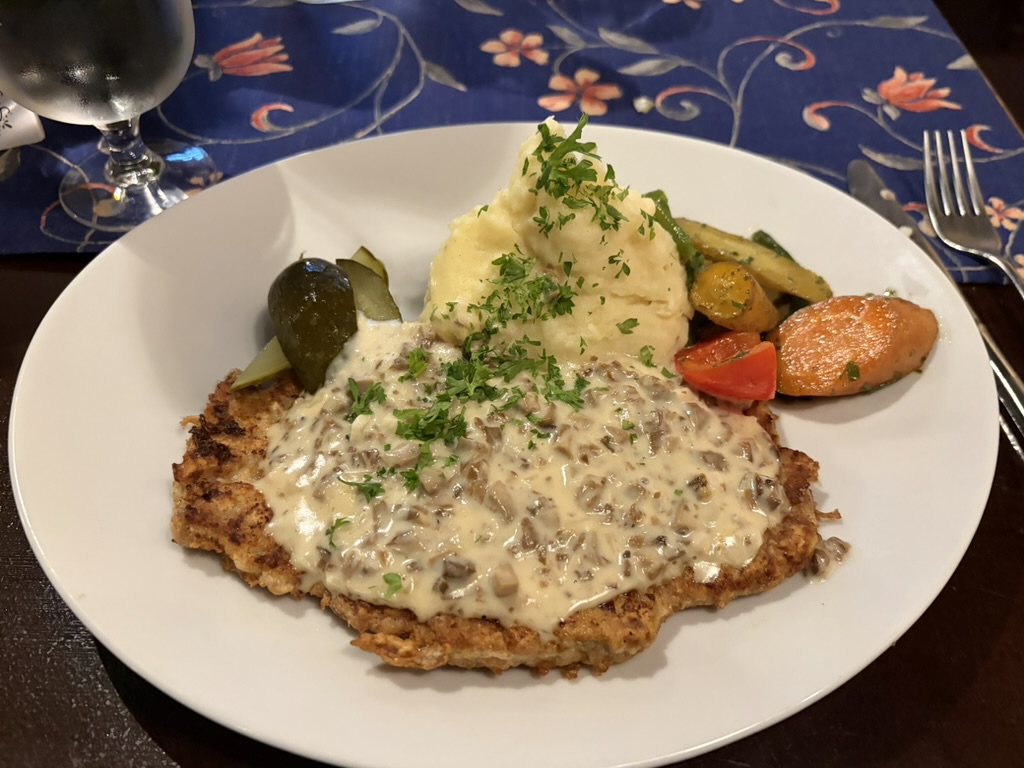
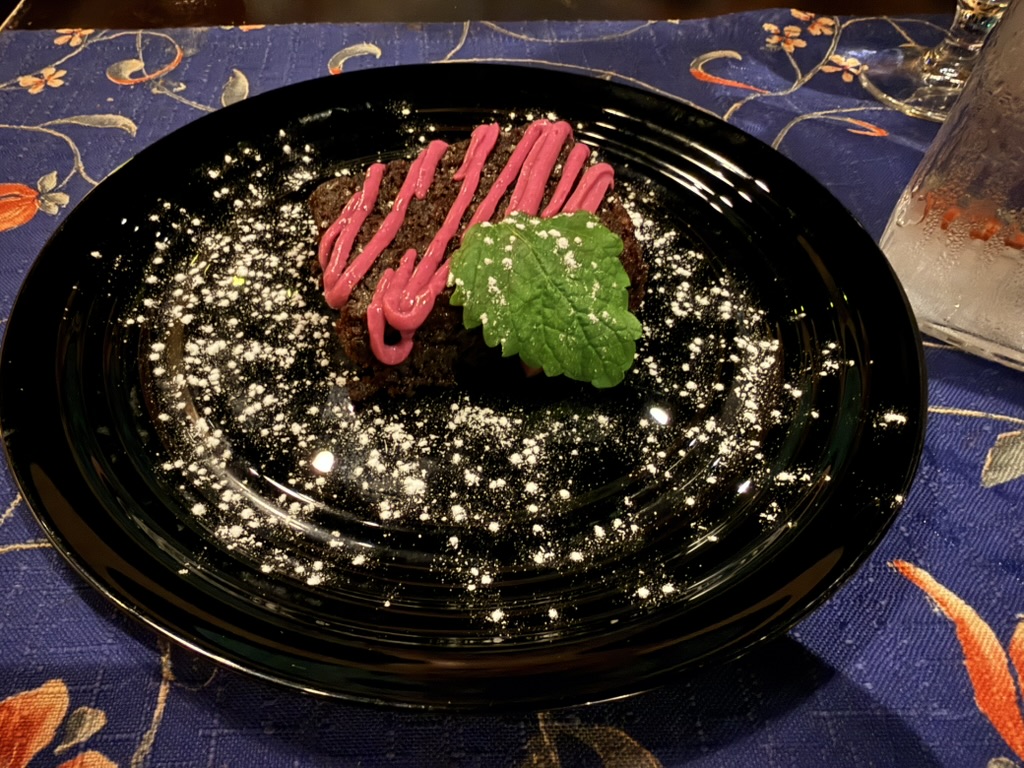
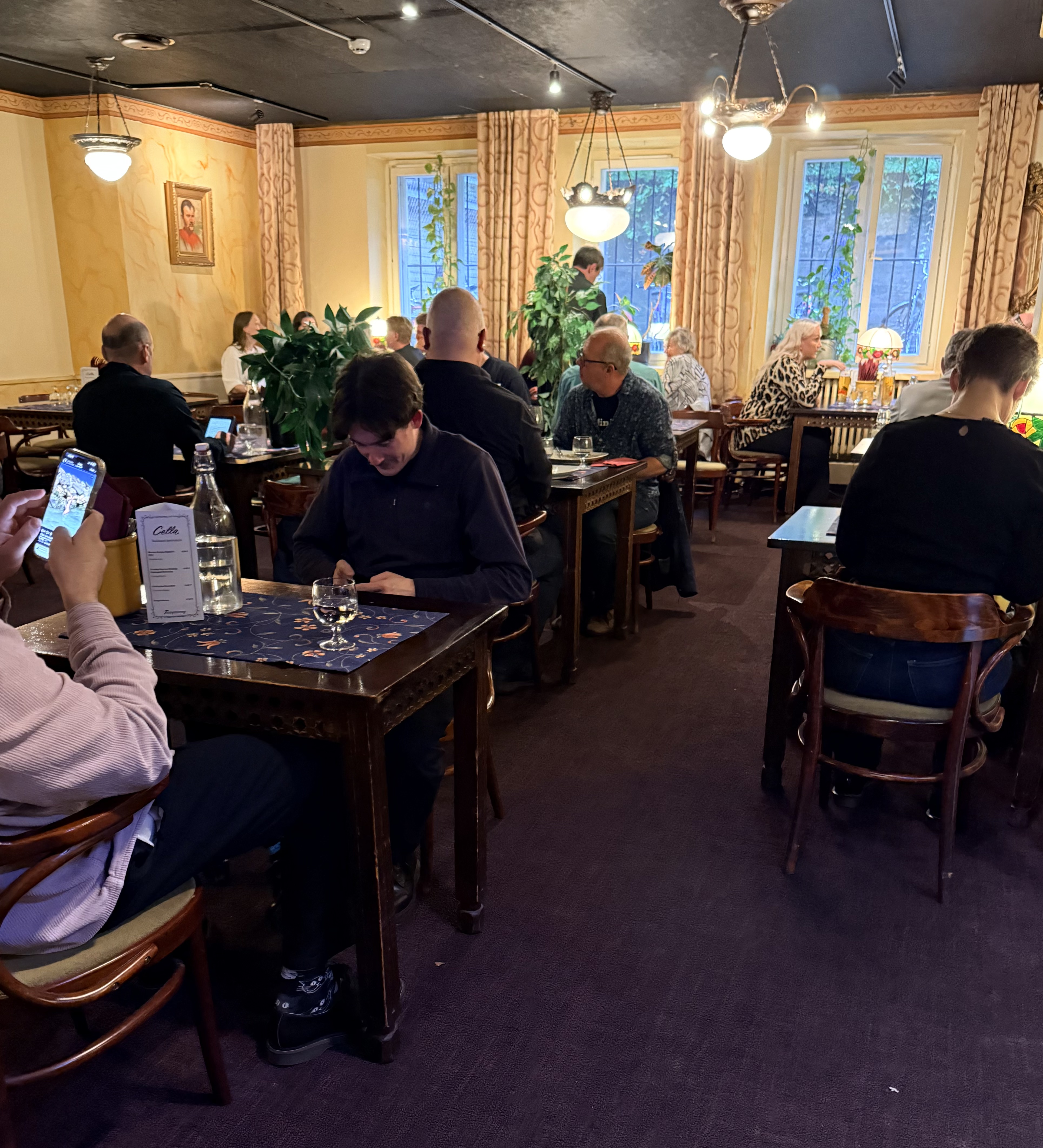
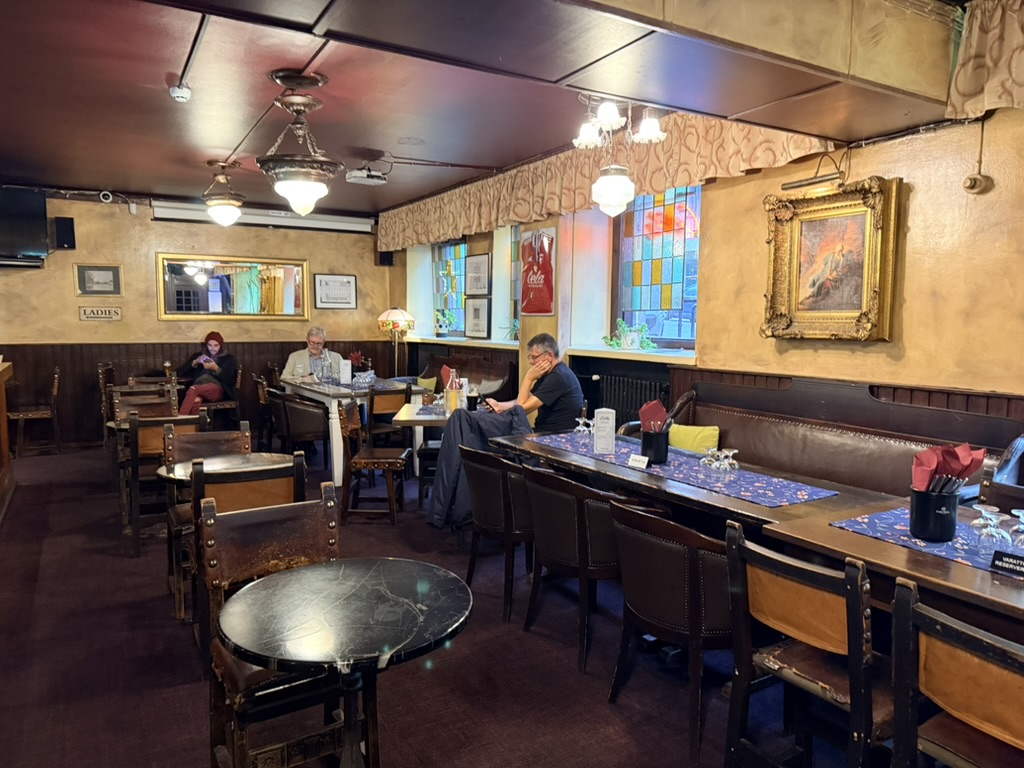
Dinner #2: We ate dinner out at the cozy Cella Ravintola (Restaurant) that serves traditional Finnish fare. We ordered Blinis with wild mushroom salad accompanied by diced pickled cucumber, red onion and sour cream; Classic Borscht with bread and butter; and Hunter’s schnitzel with wild mushroom sauce. We topped off our meal with a warm Chocolate Beetroot Cake with cream cheese and beetroot frosting. It was a delicious and cozy experience, especially on a cold and windy Sunday. We lingered for nearly two hours in this place.
Old Market Hall: Story Restaurant
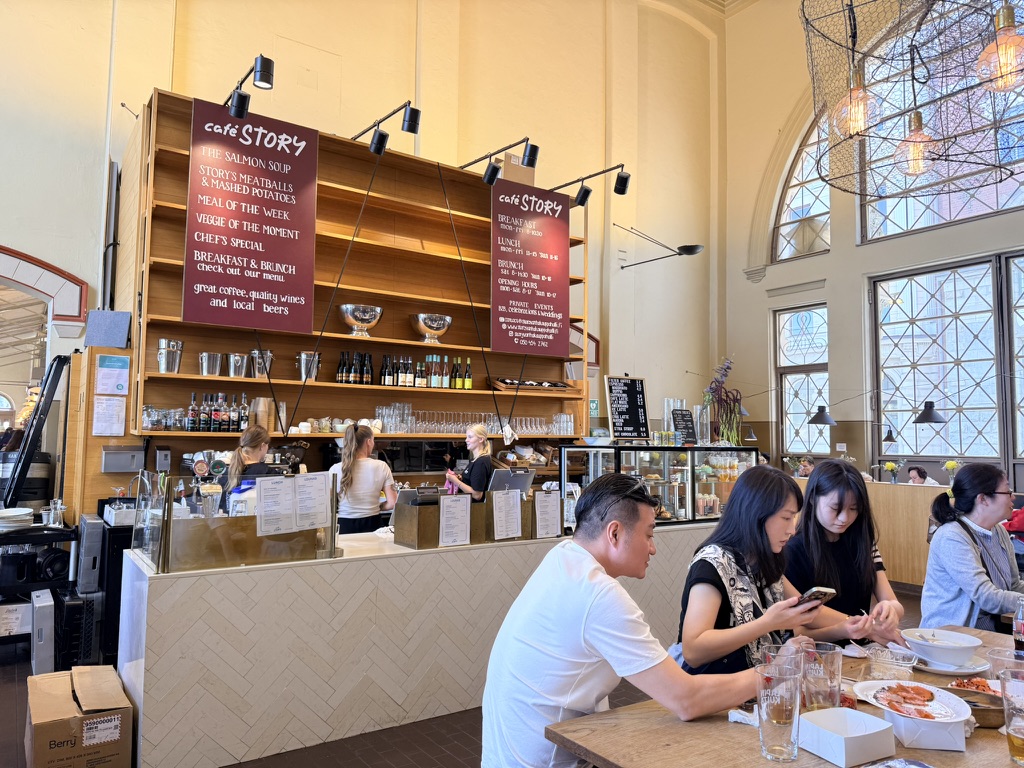
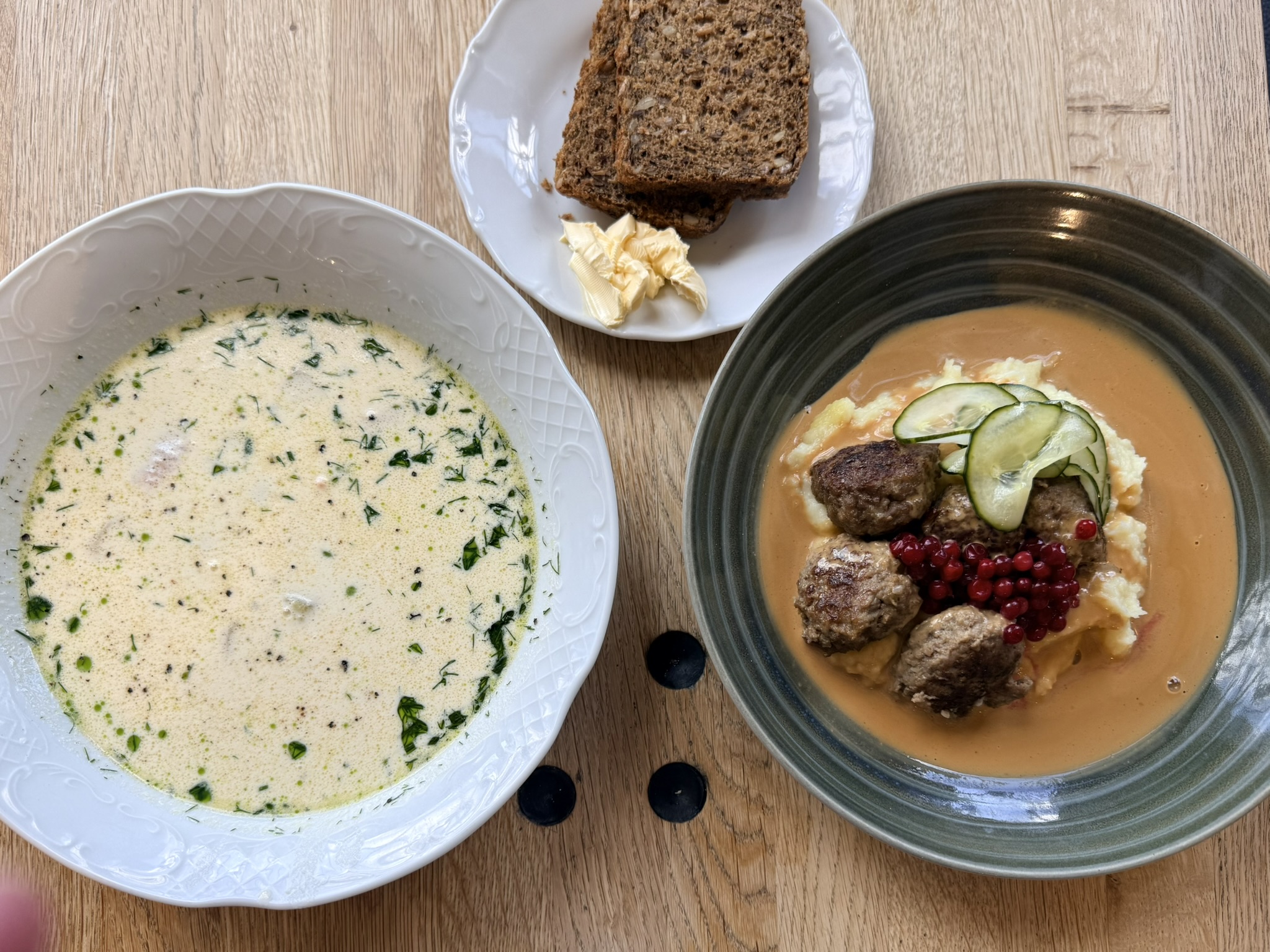
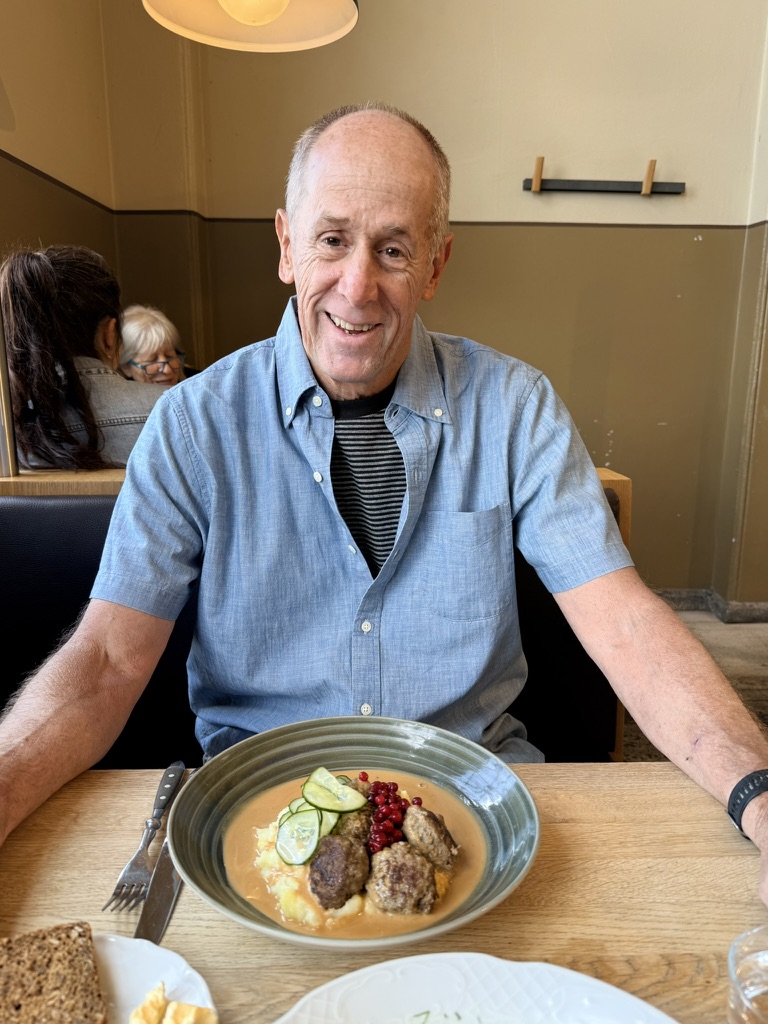
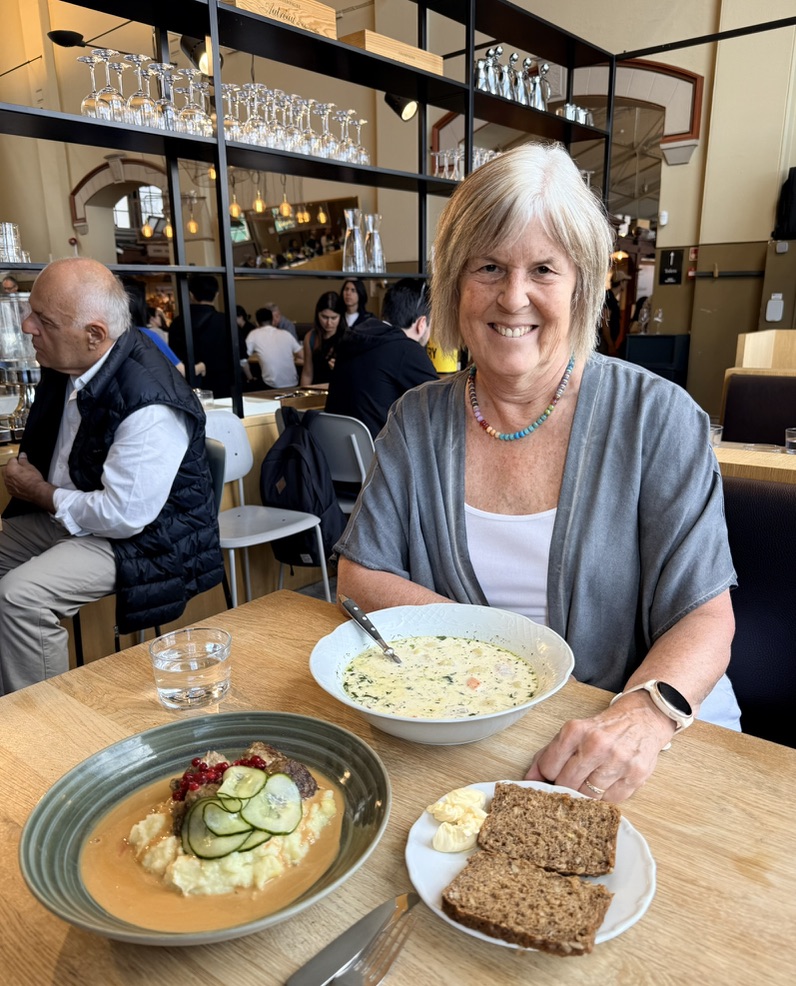
Lunch #1: We had our first lunch out at Story Restaurant in Old Market Hall. I loved Story’s Salmon Soup and Mike enjoyed his Story’s Meatballs, accompanied by mashed potatoes with lingonberries and creamy sauce.
Hanna Maria
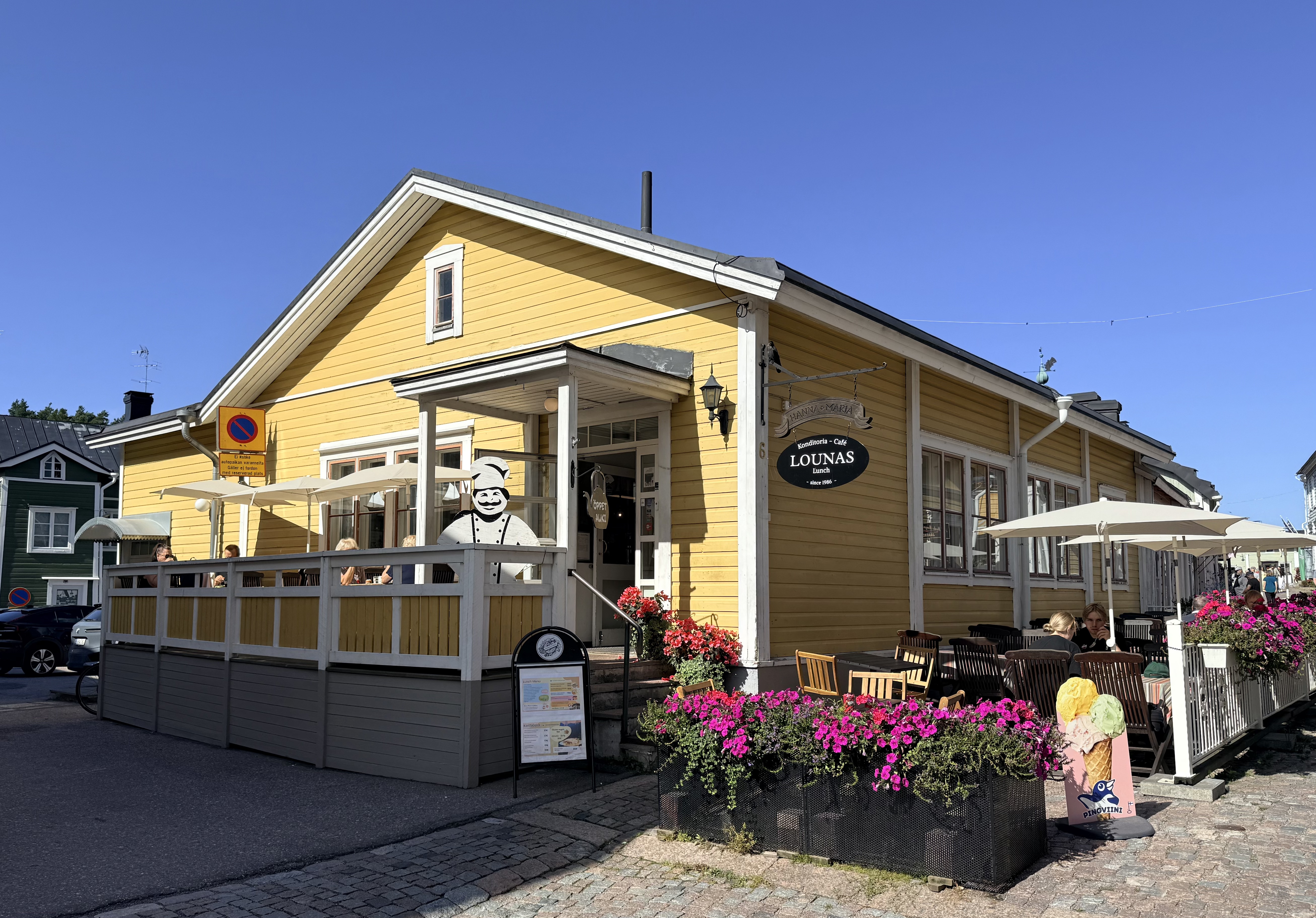
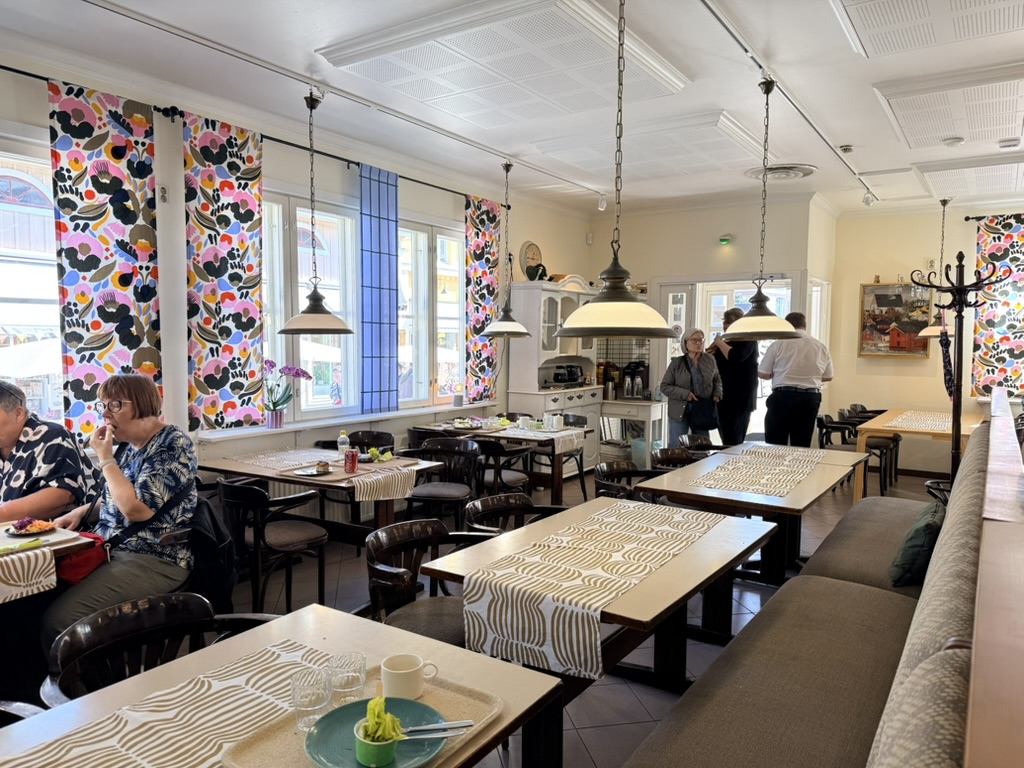
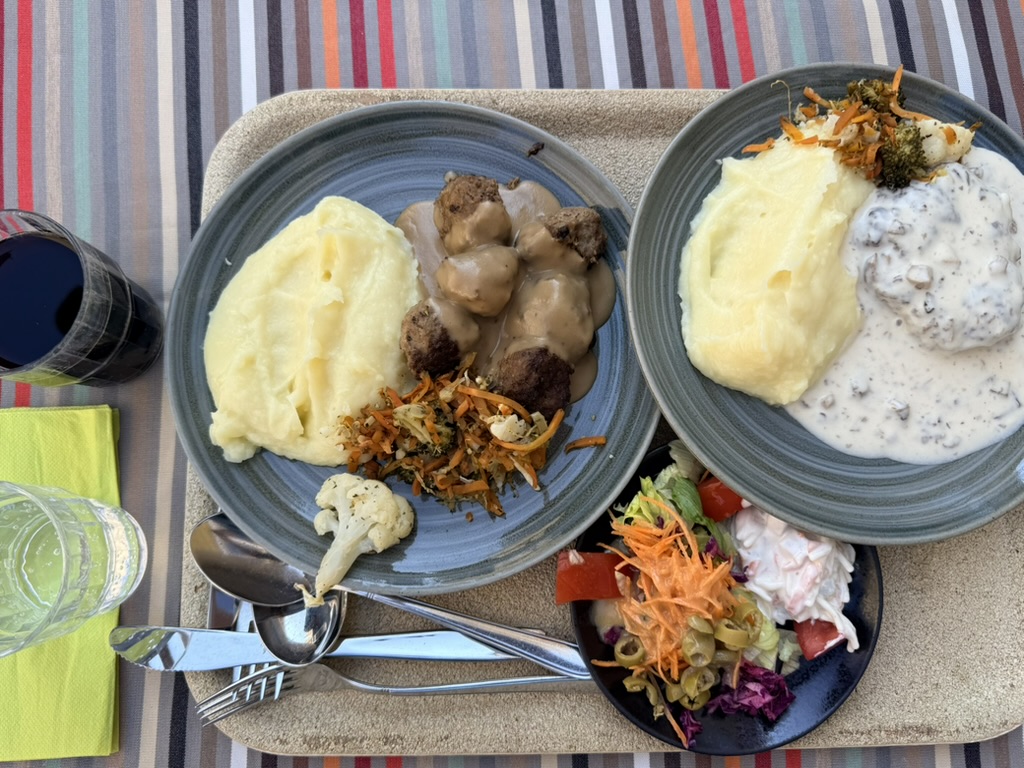
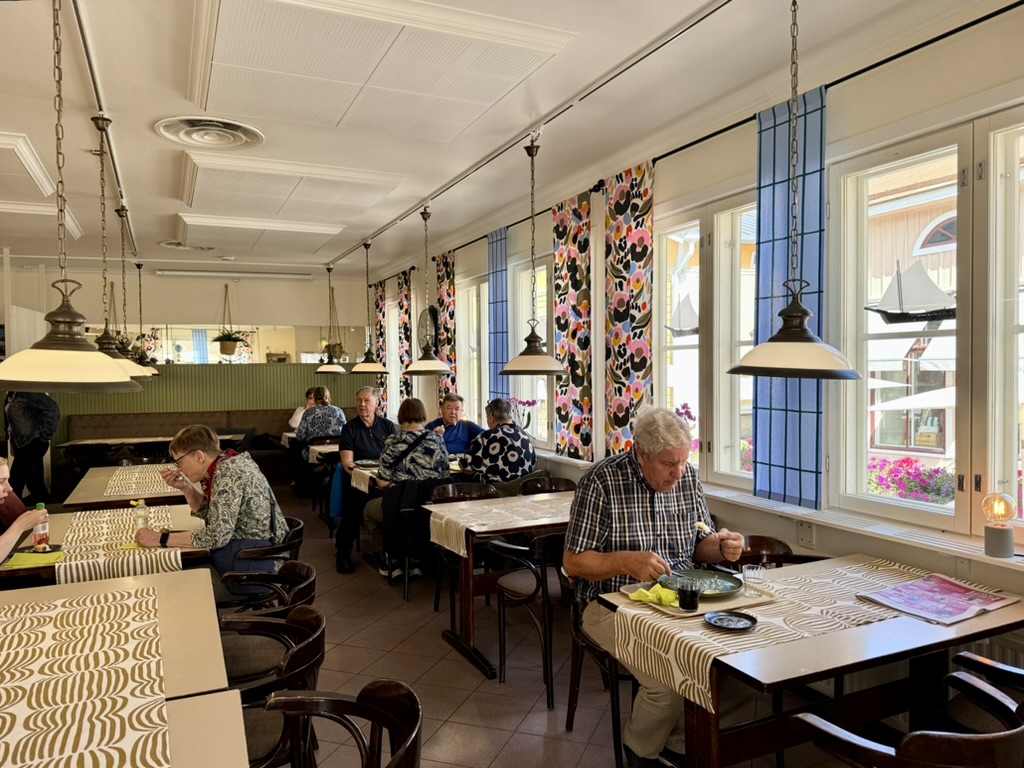
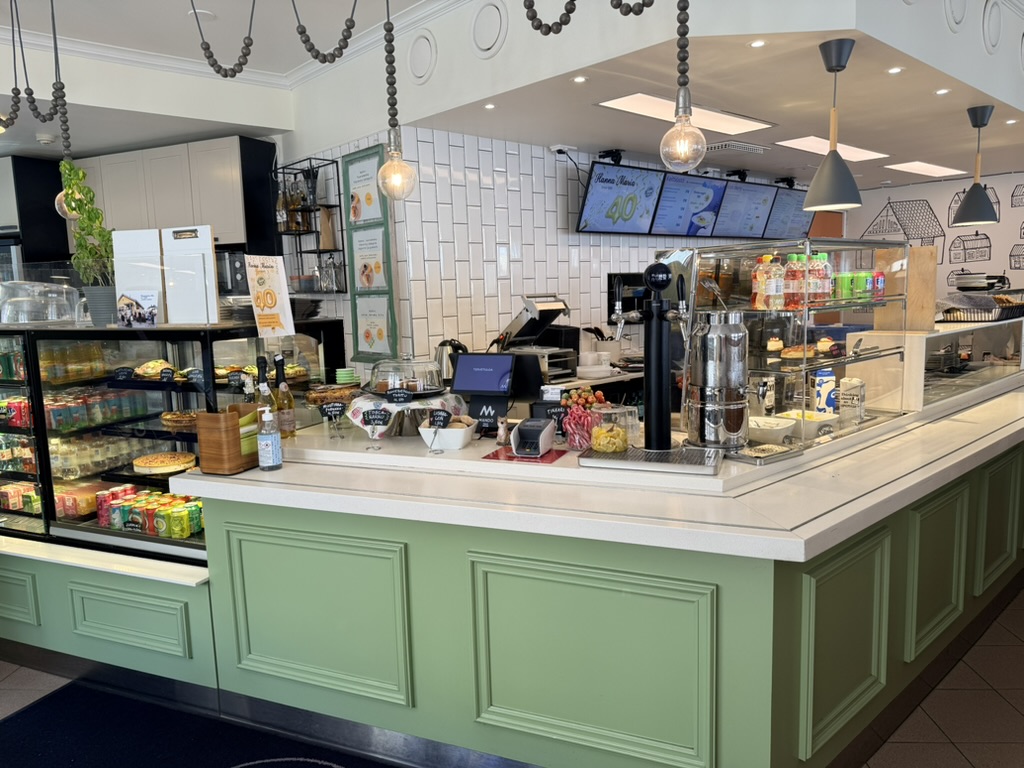
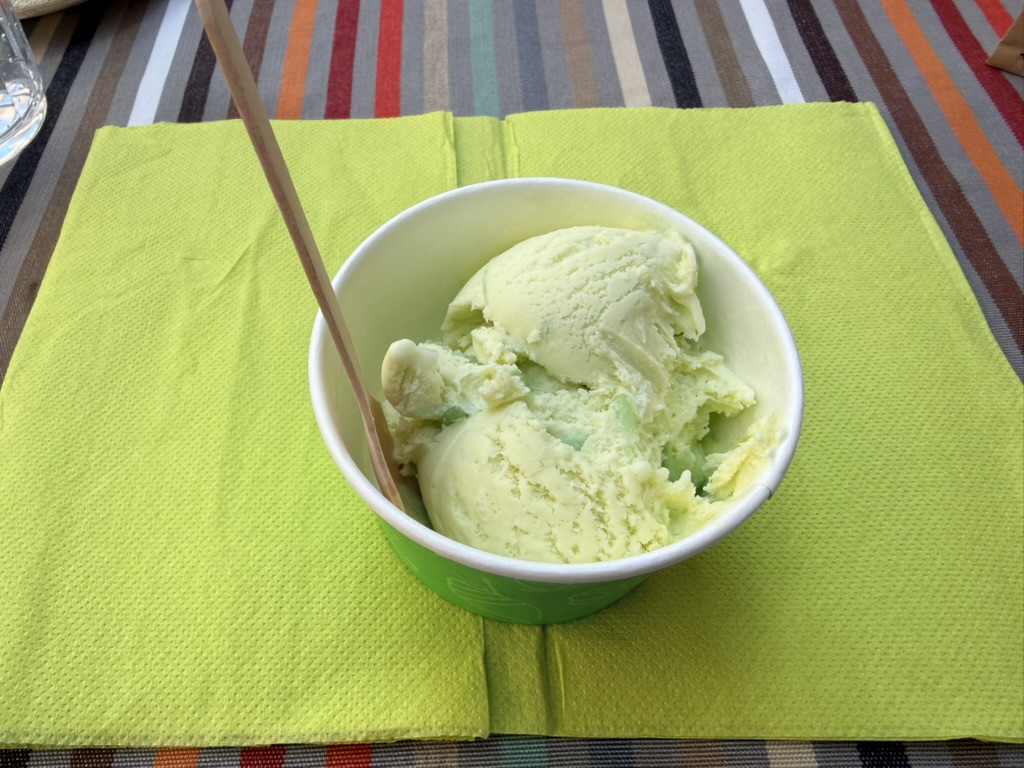
Lunch #2: In Porvoo we ate lunch at Hanna Maria, a cafeteria-style spot where I got meatballs with gravy and mashed potatoes and Mike got a ground beef patty with mushroom sauce and mashed potatoes. Ice cream was also included in the lunch. Mine was a delicious pear flavor.
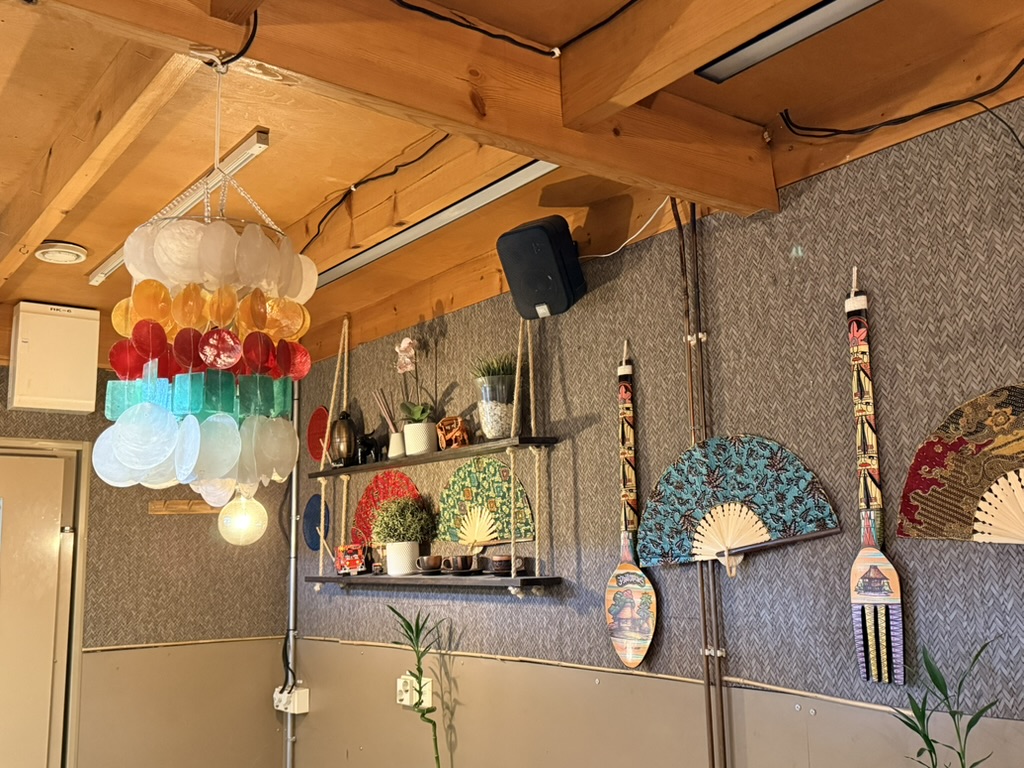
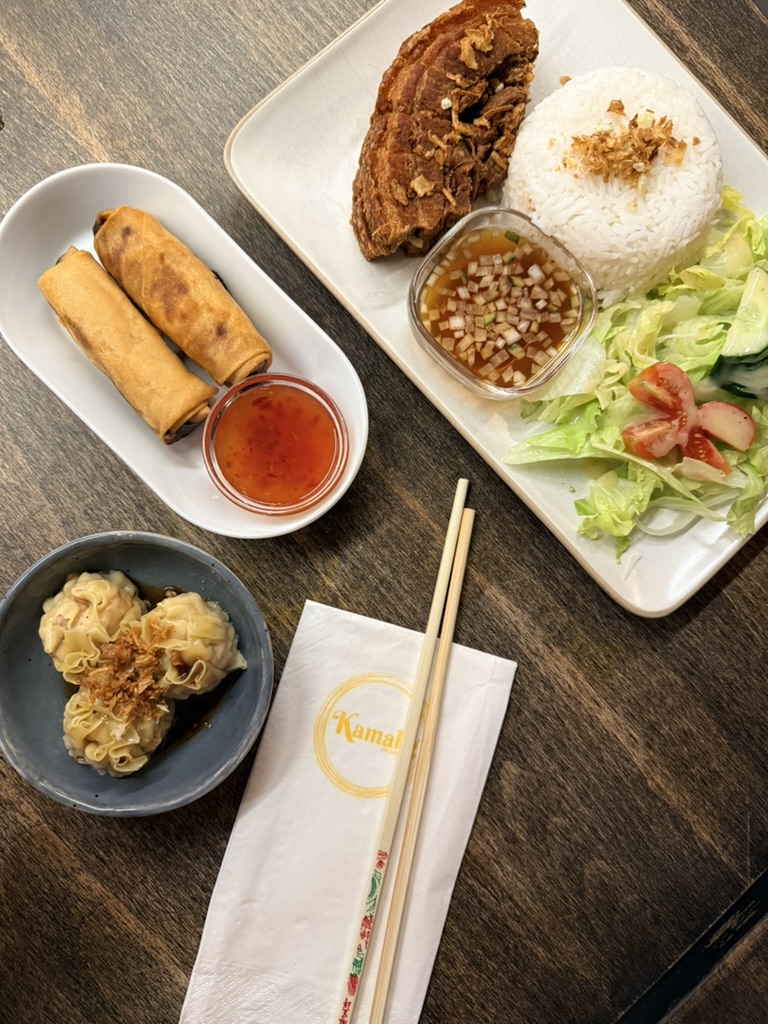
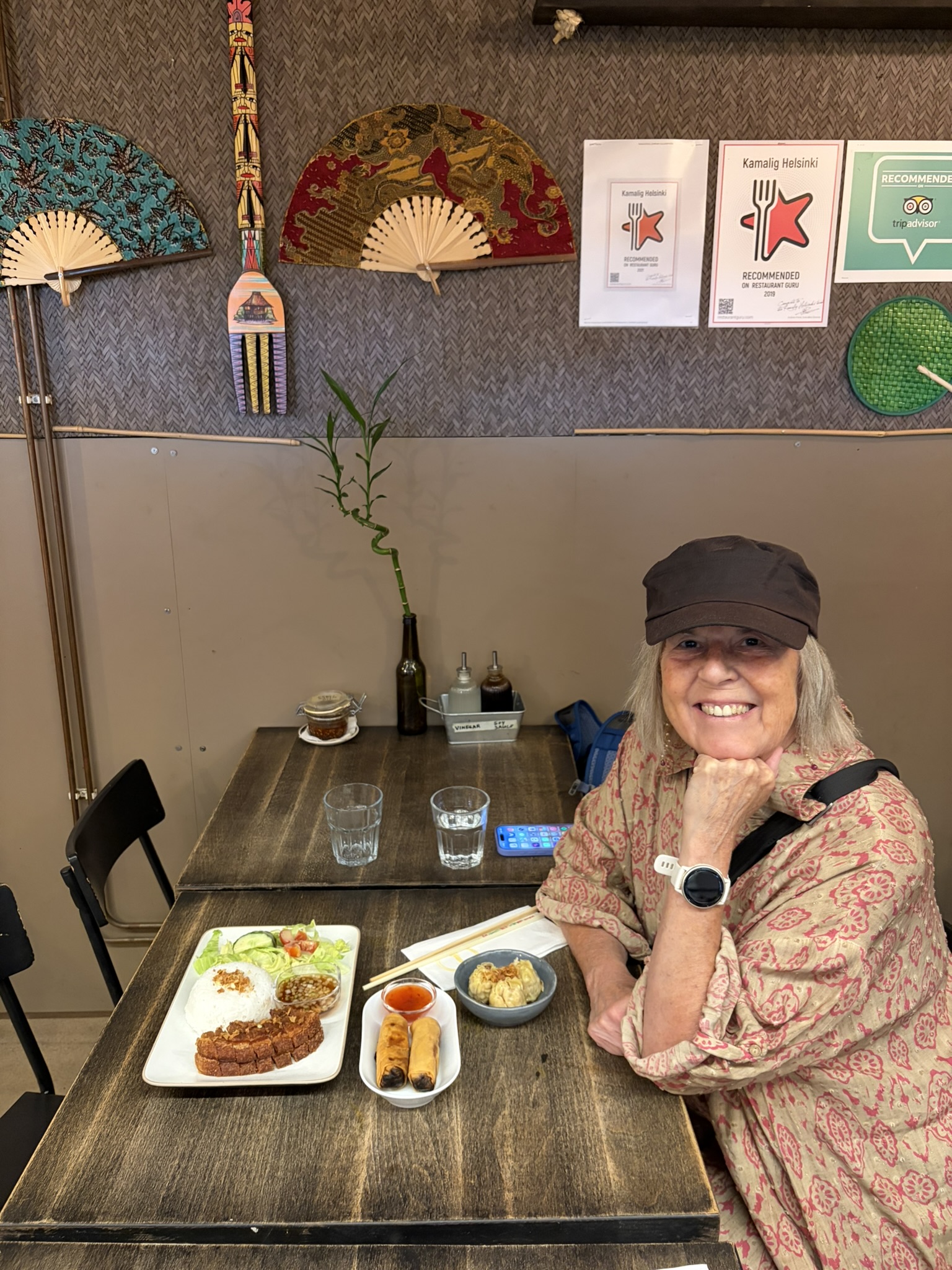
Lunch #3: We ate our last lunch at Kamalig Filipino Eatery at Hietalahti Market Hall. Most of the restaurants in this market hall were international rather than Finnish. Our lunch here was mediocre. We had pork dumplings, crispy pork belly, and vegan spring rolls.
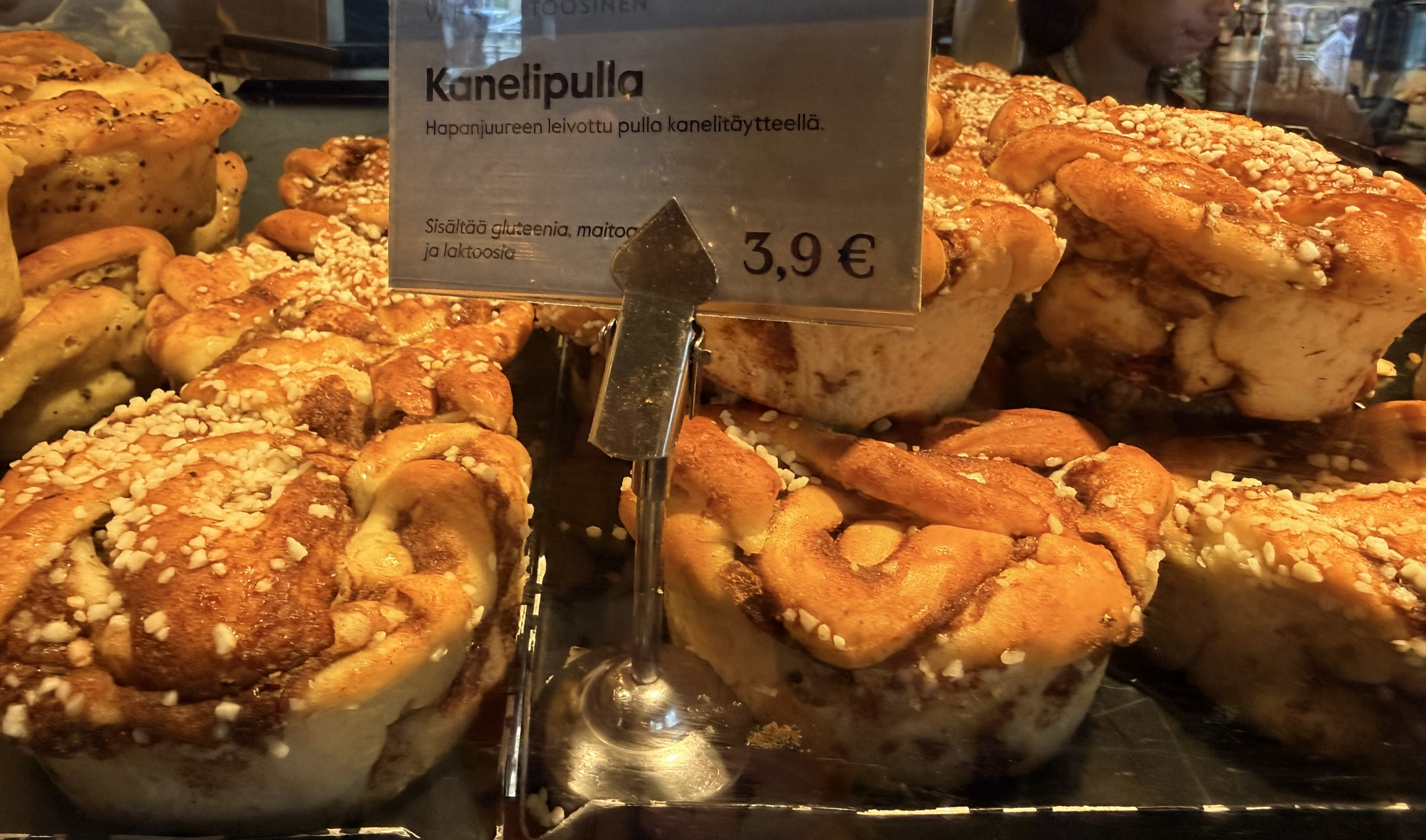
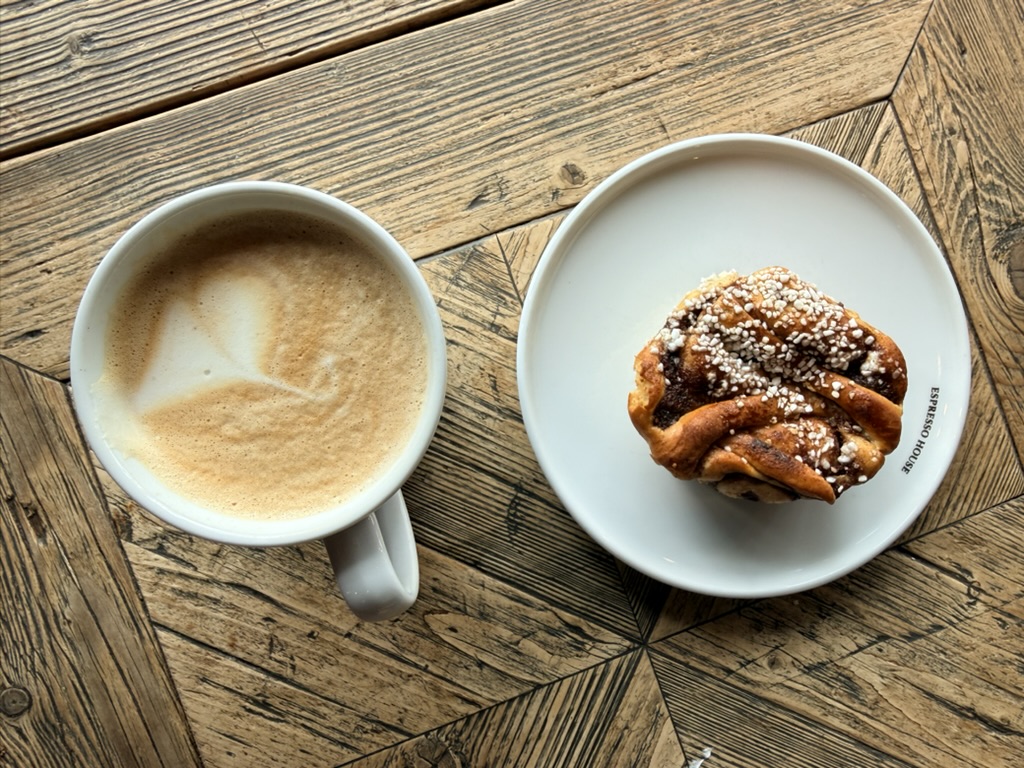
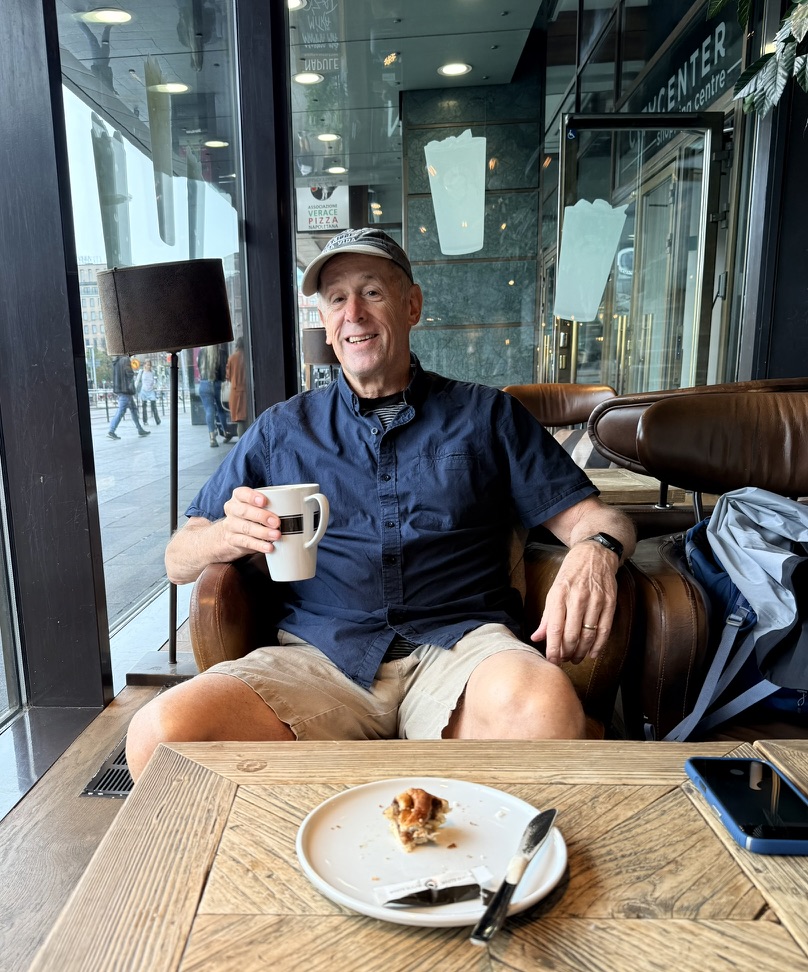
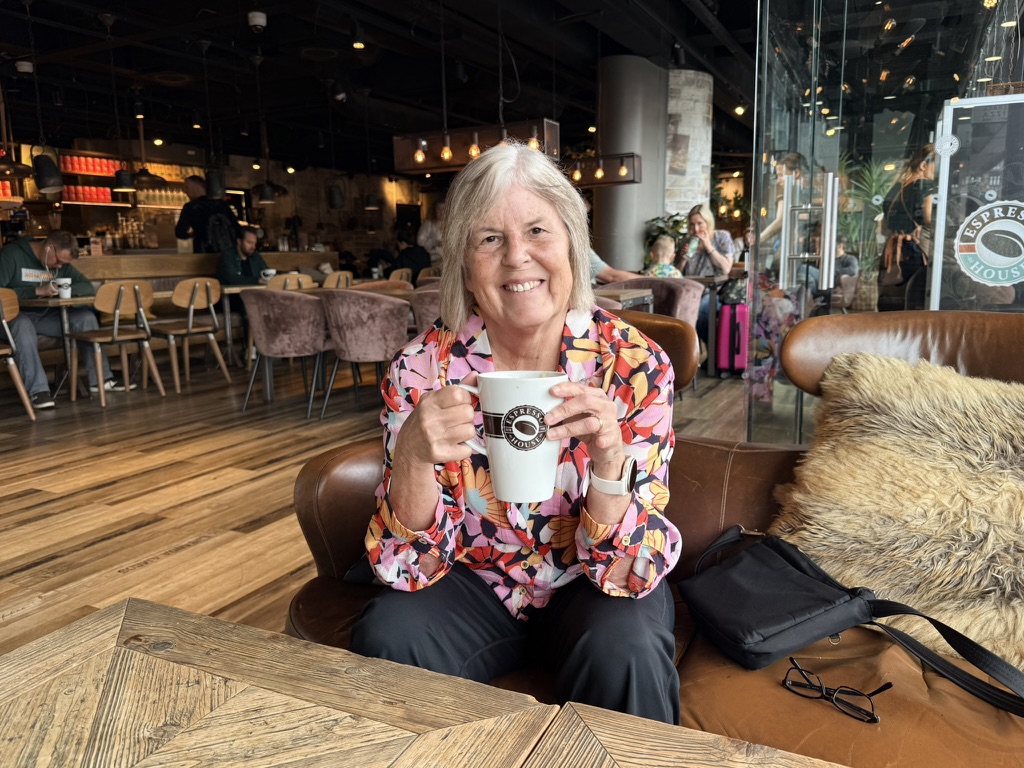
We often stop for coffee and a Danish in the mornings between breakfast and lunch. Here, we enjoyed a snack time with a cinnamon bun and latte at Espresso House, across from the Helsinki Central Railway Station.
Activities and Sights in Helsinki
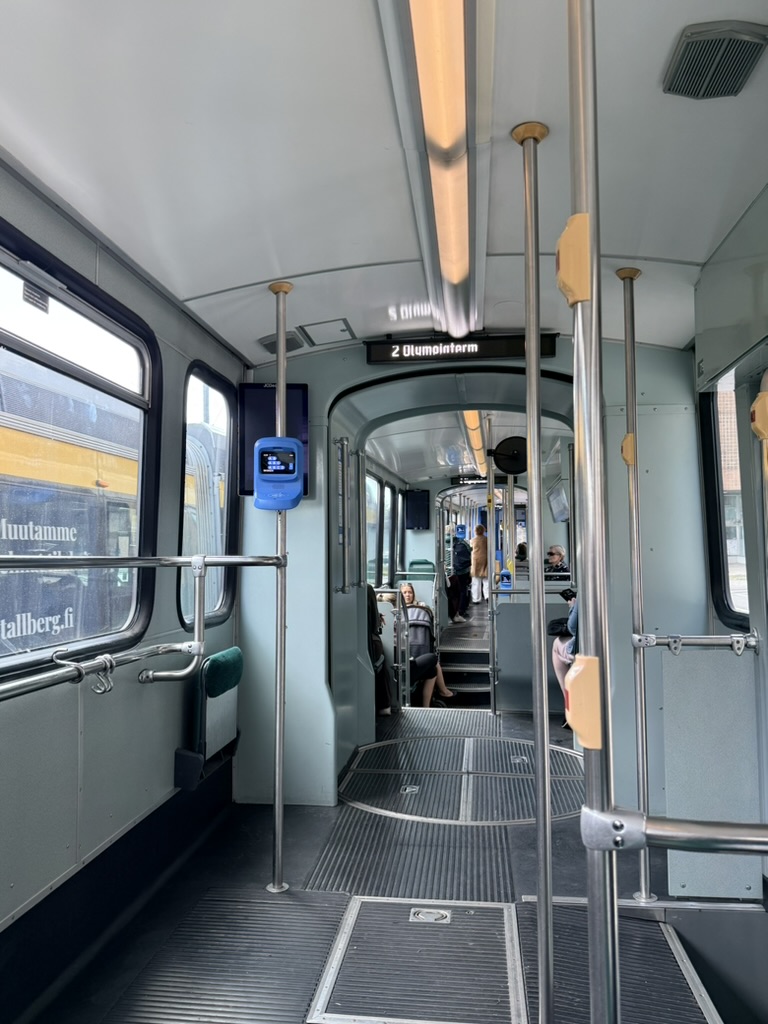
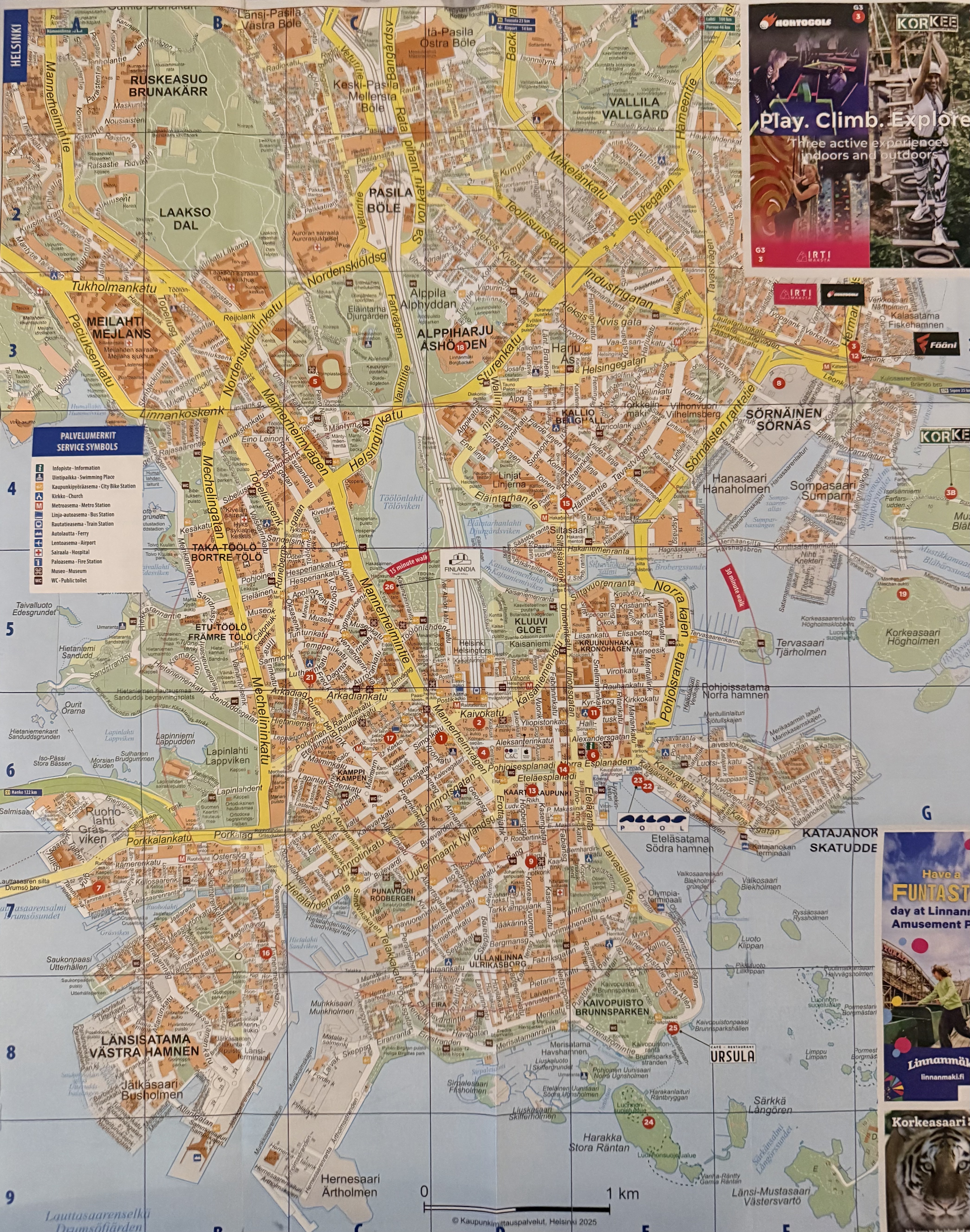
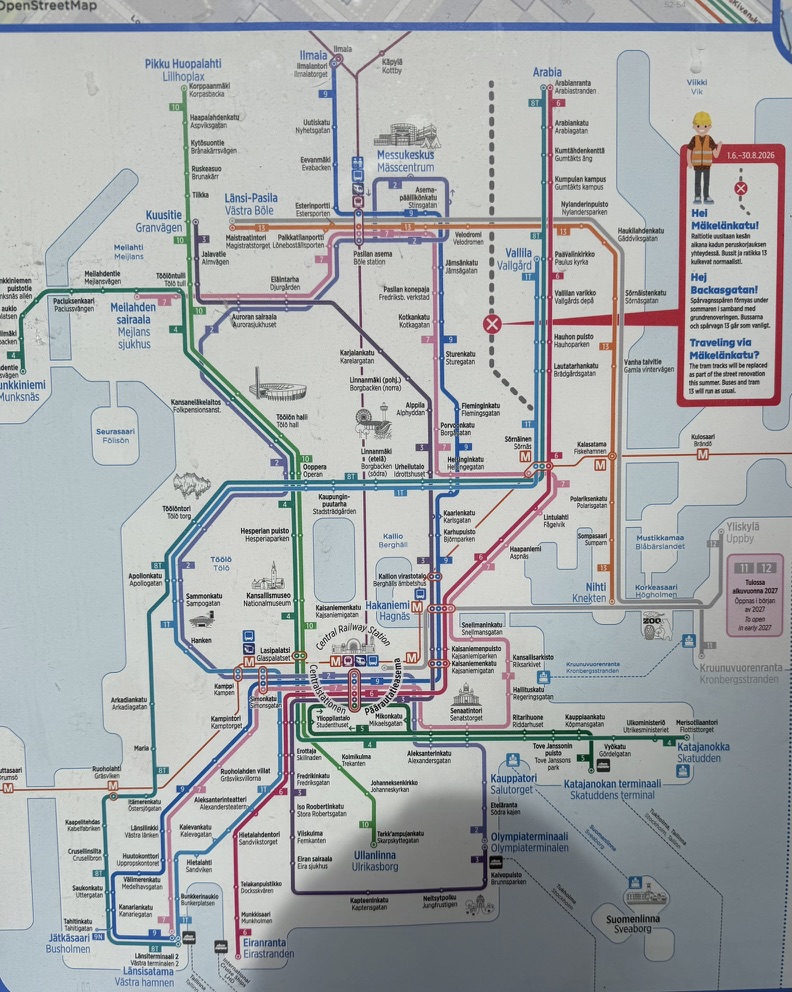
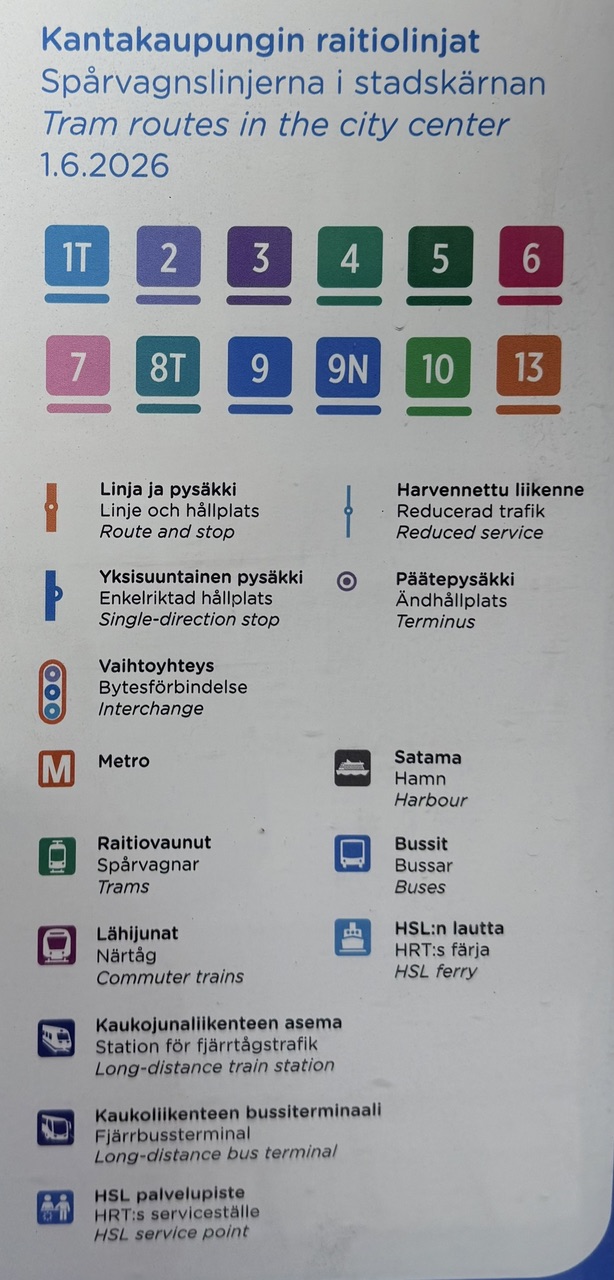
There is a lot to see and do around Helsinki, so we were busy going to and fro. It helps that the city has an excellent transport system.
Transport in Helsinki
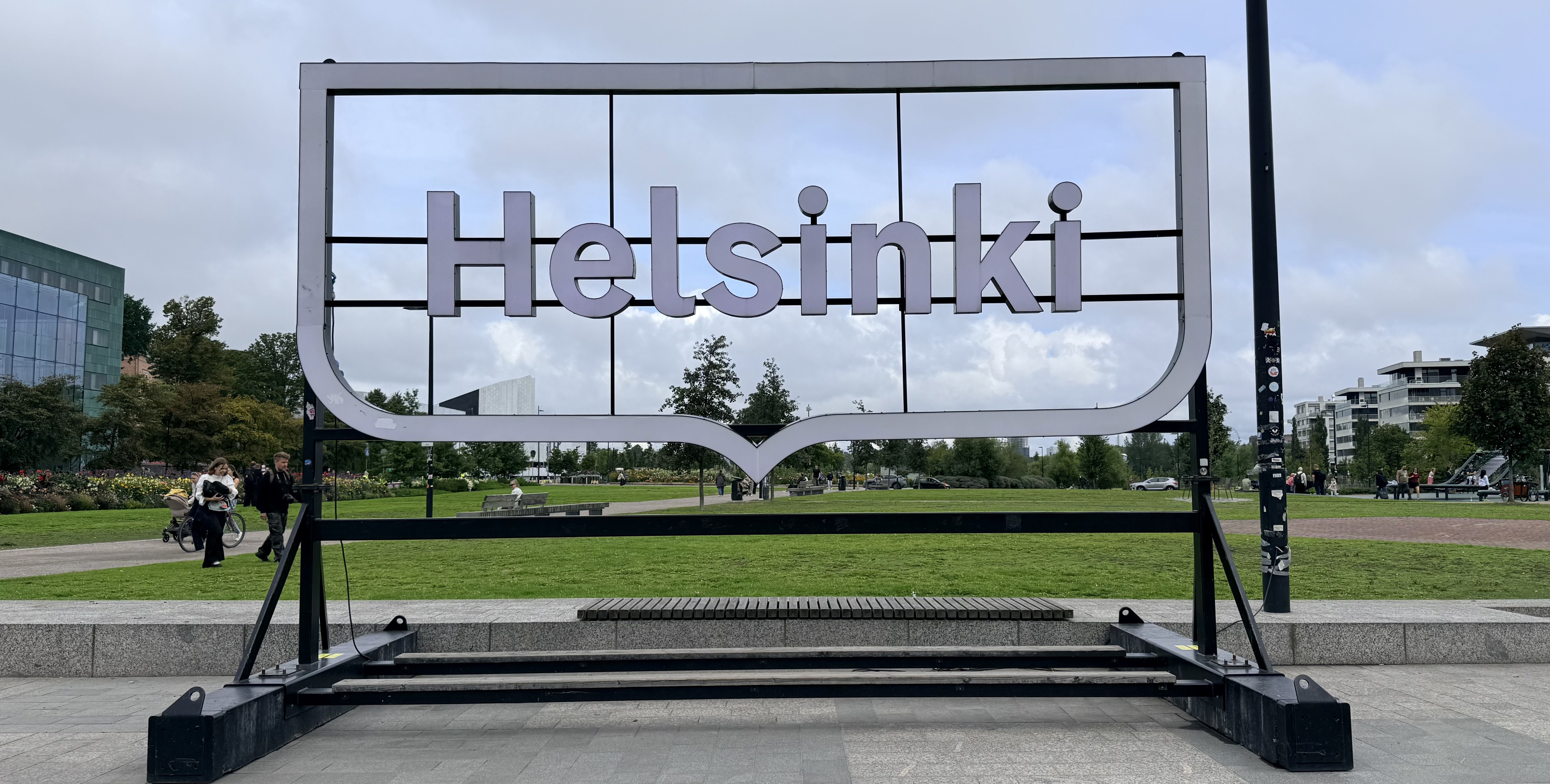
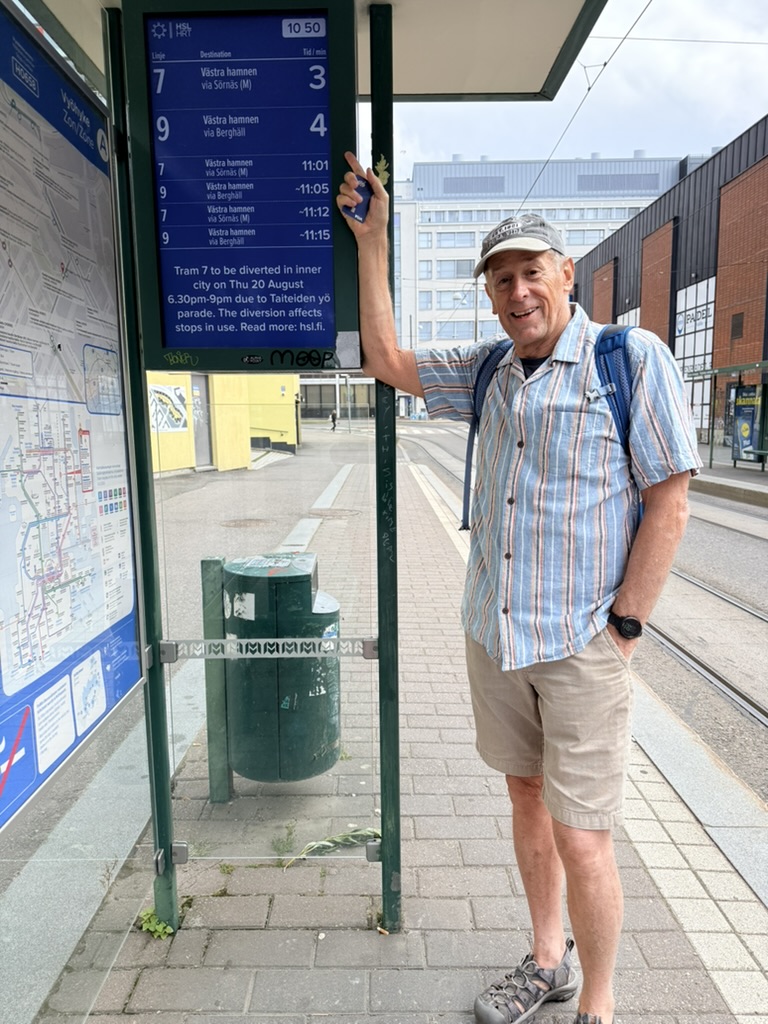
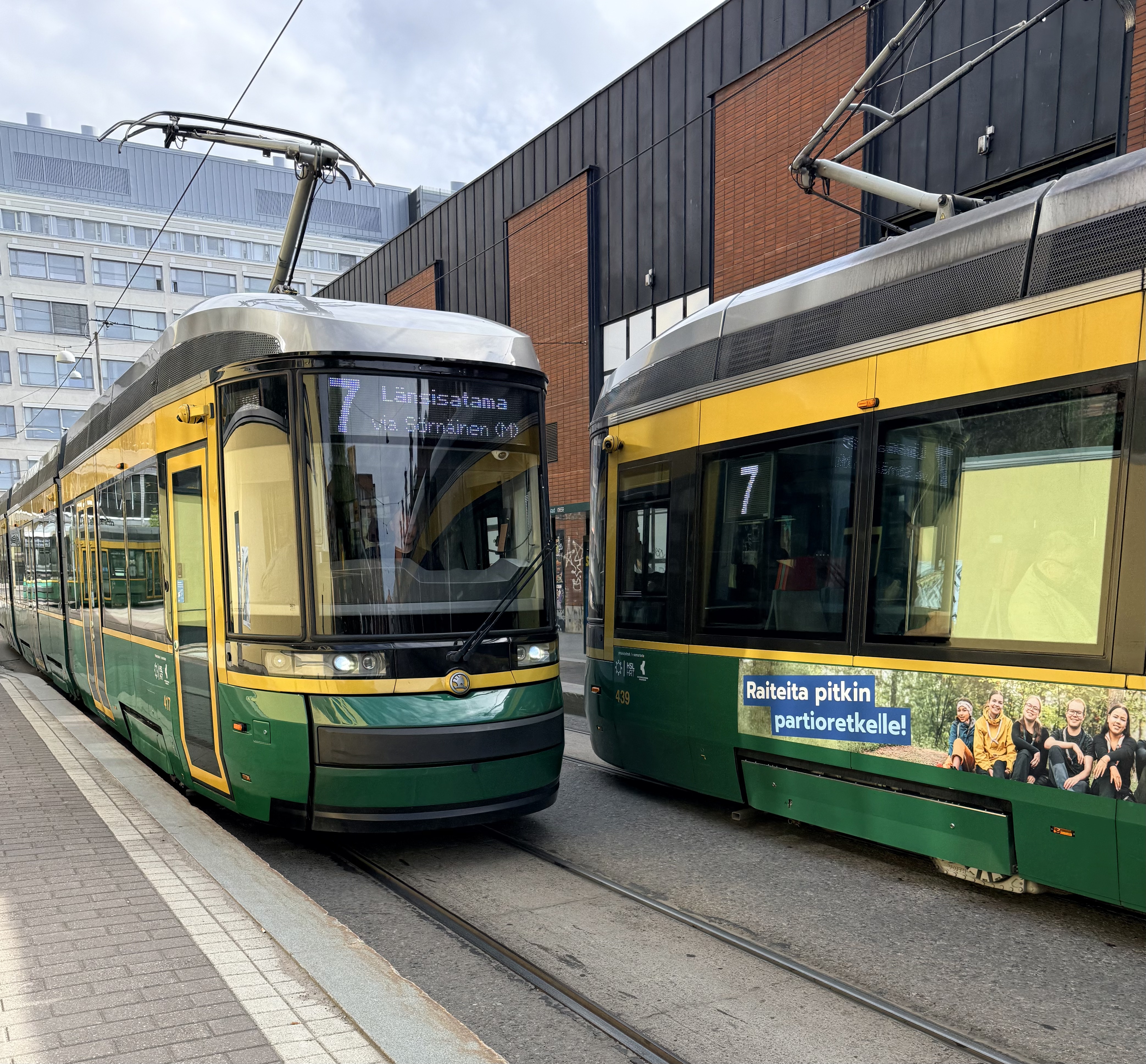
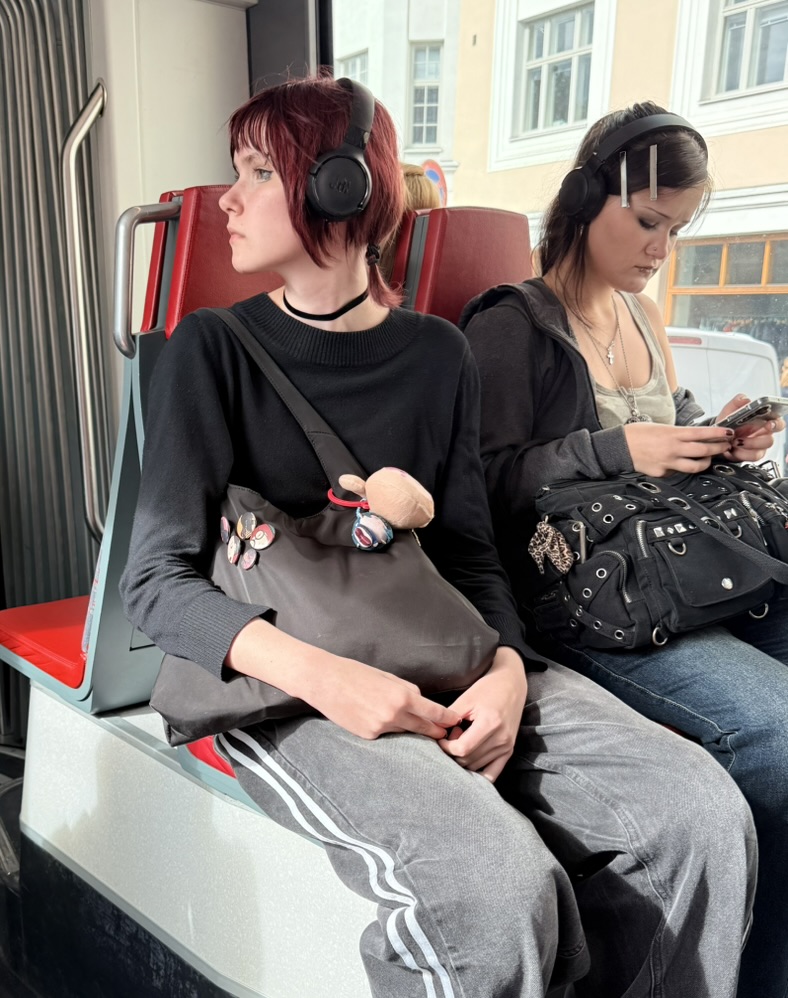
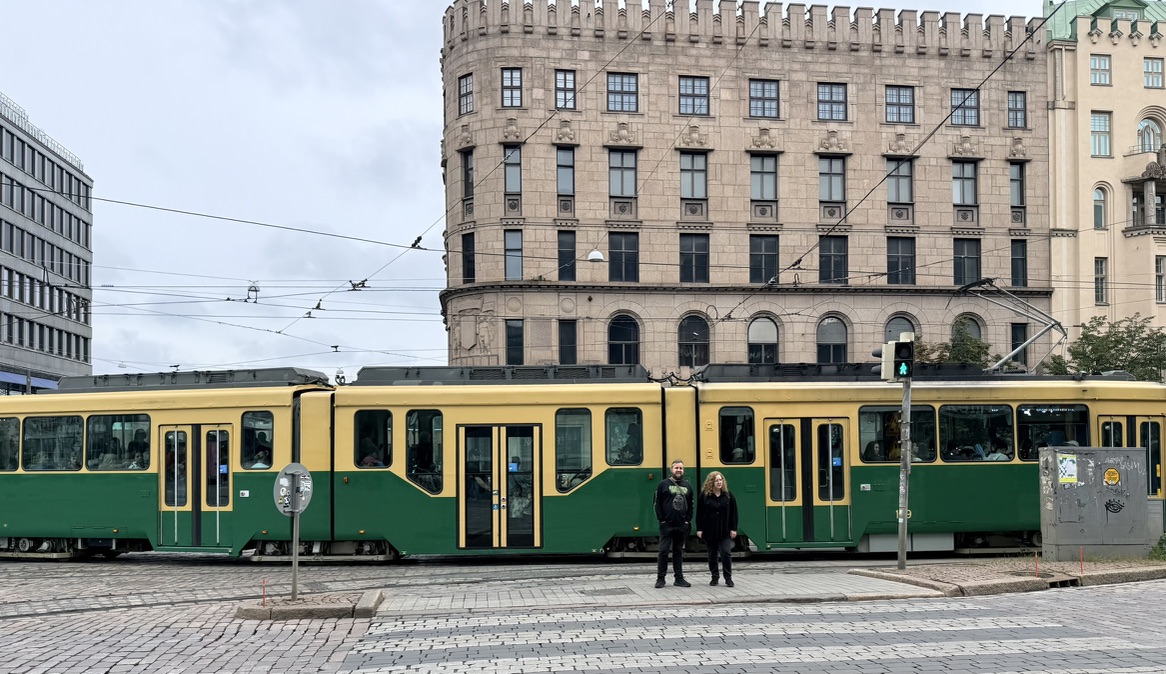
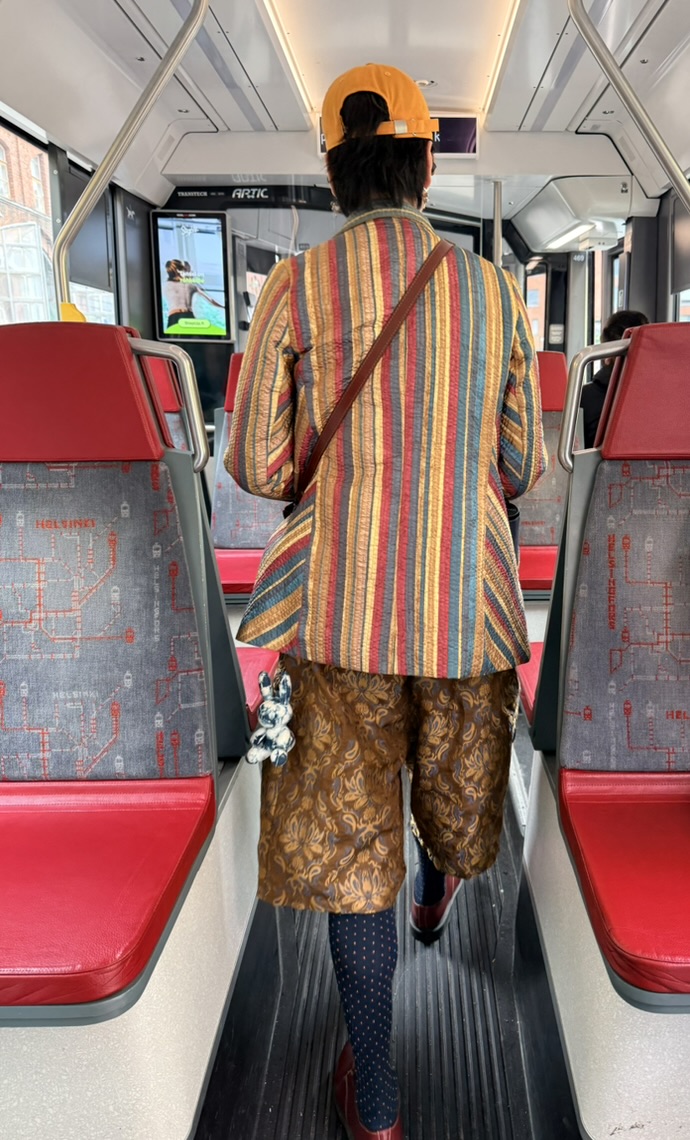
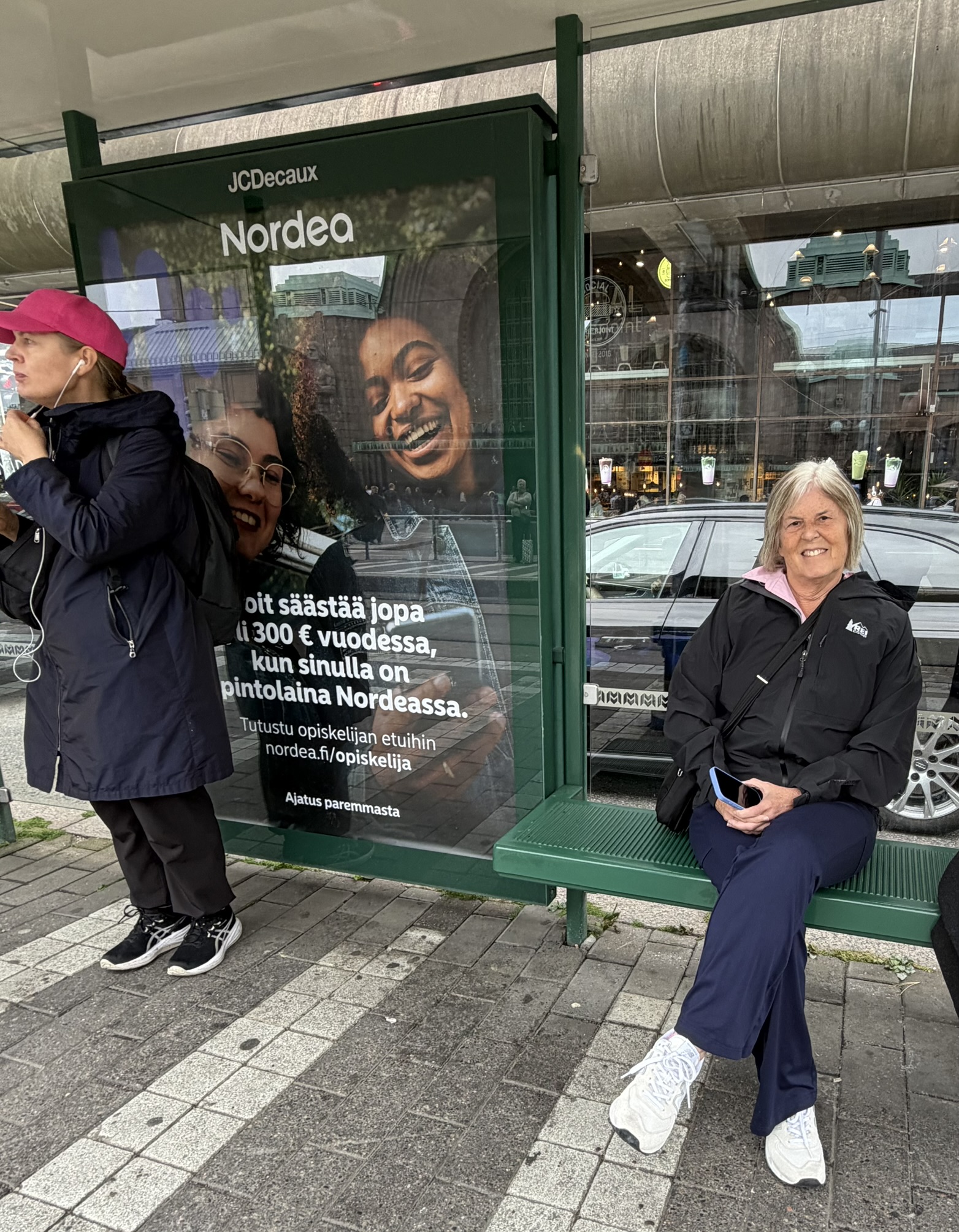
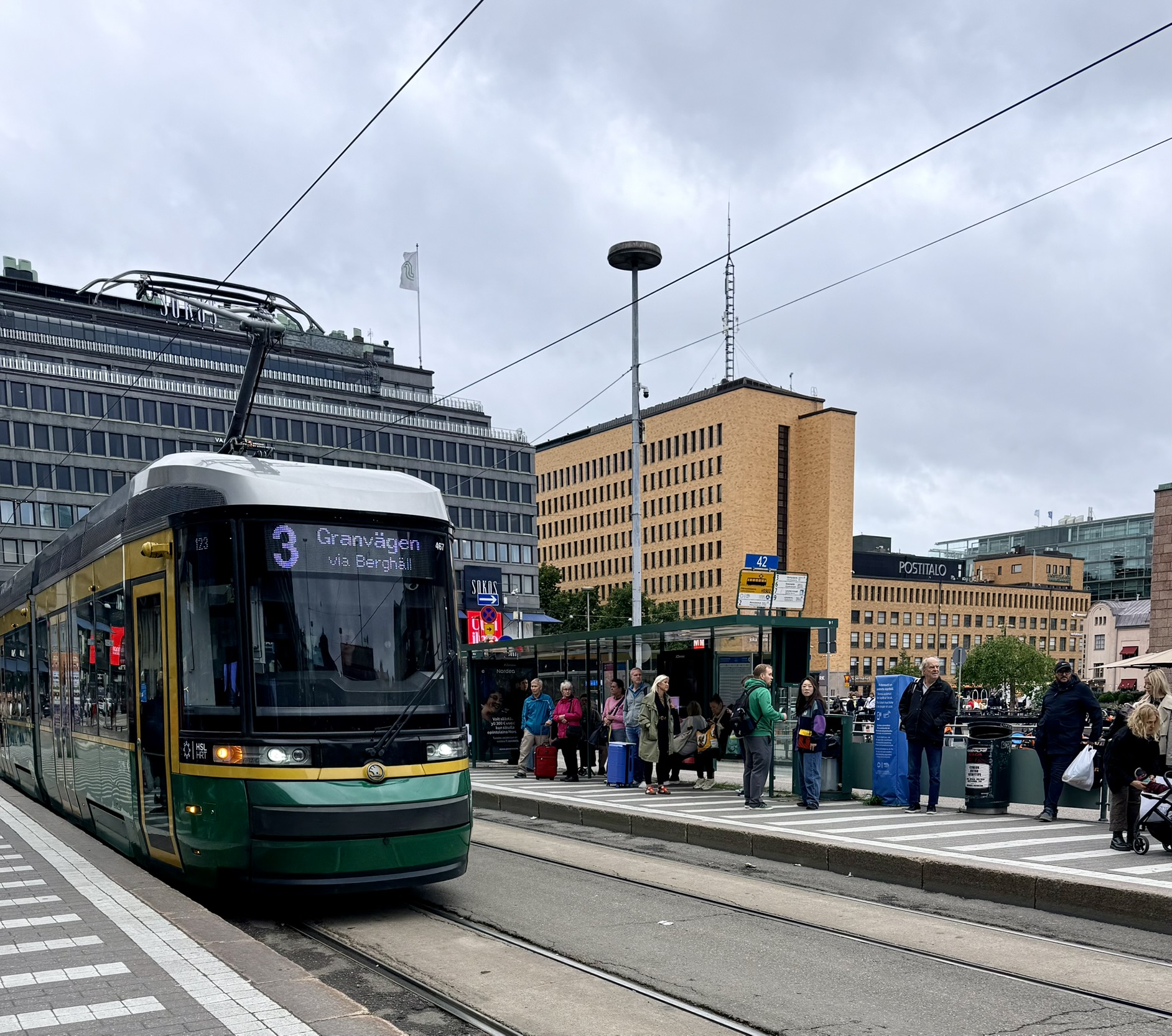
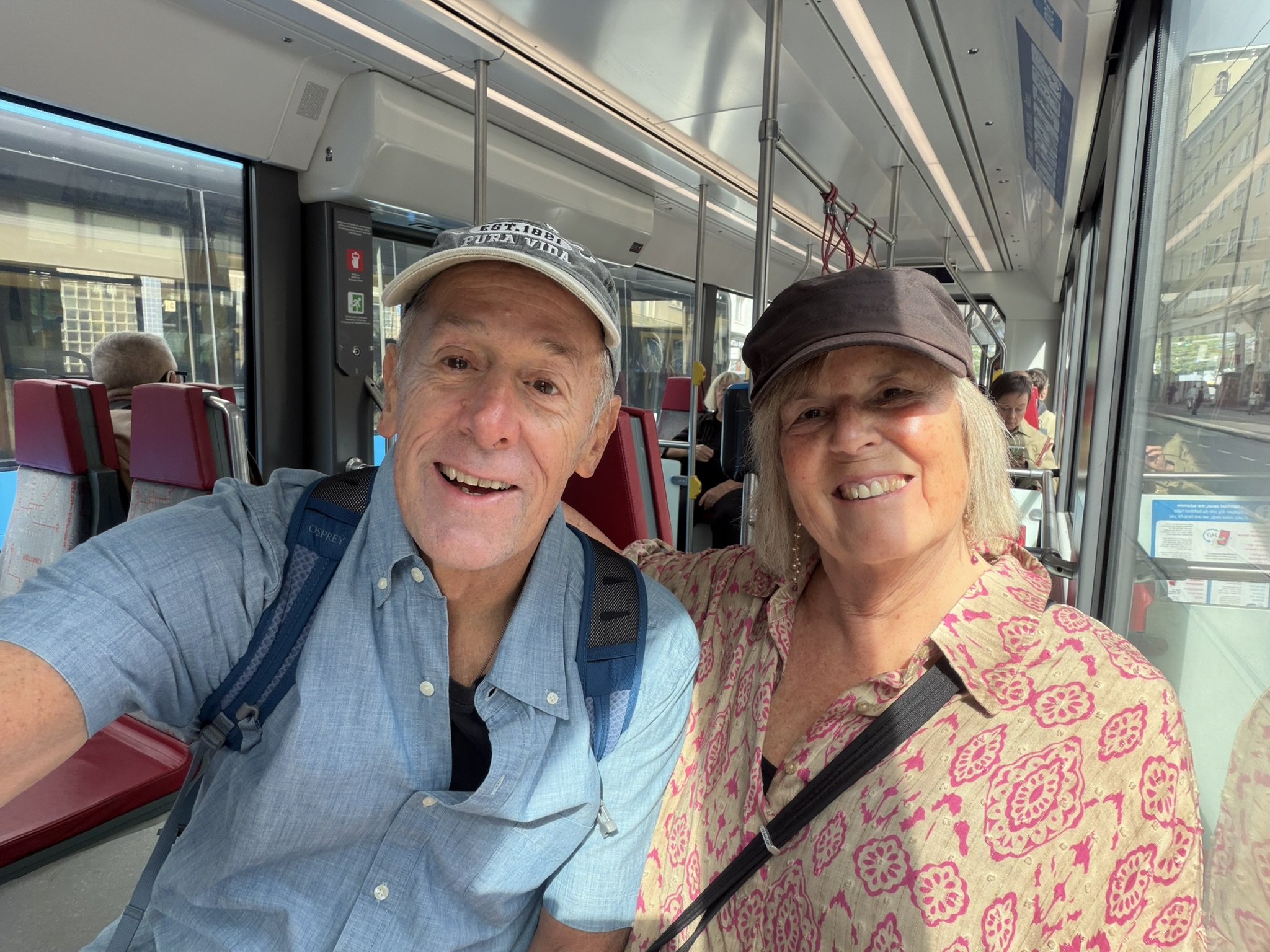
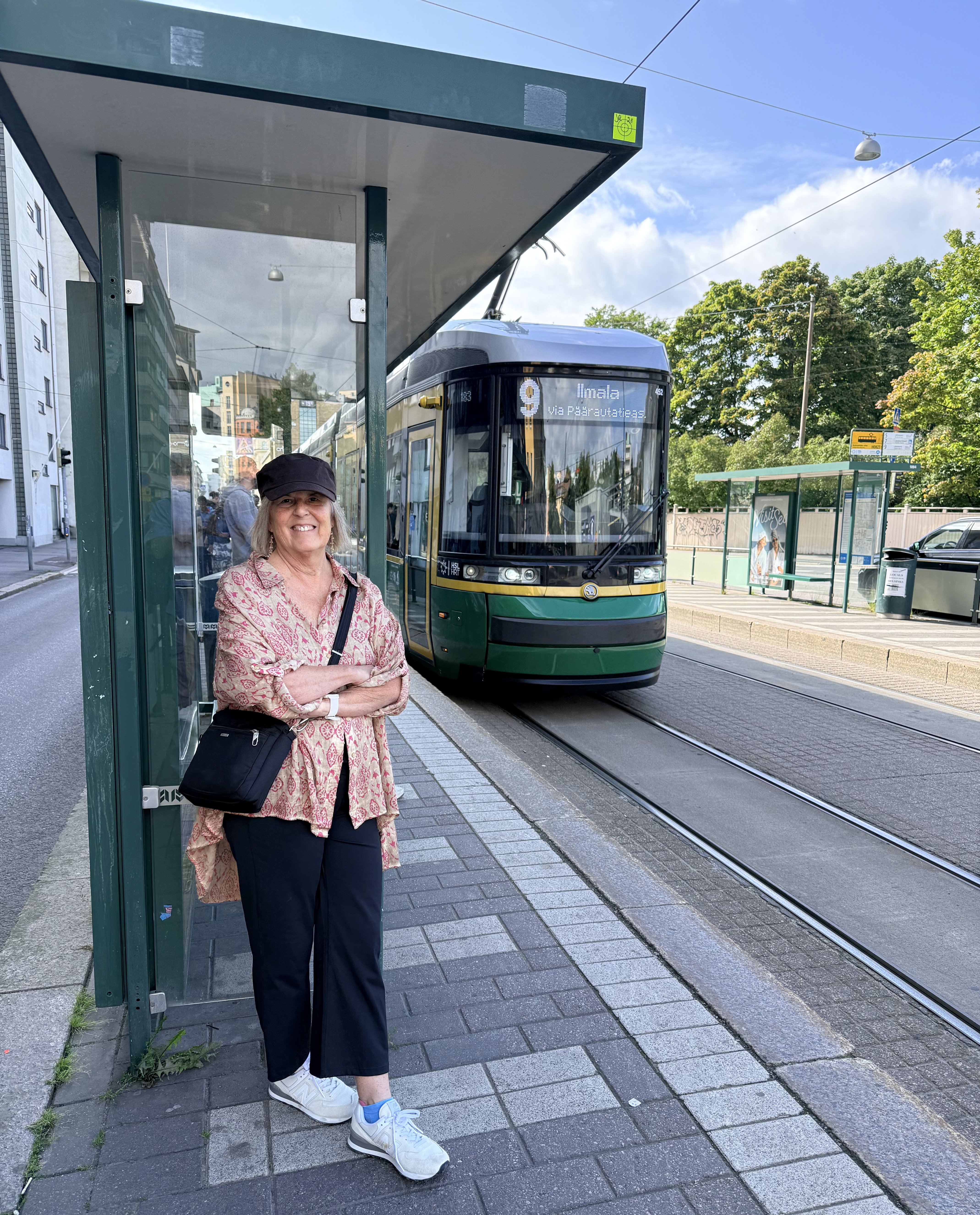
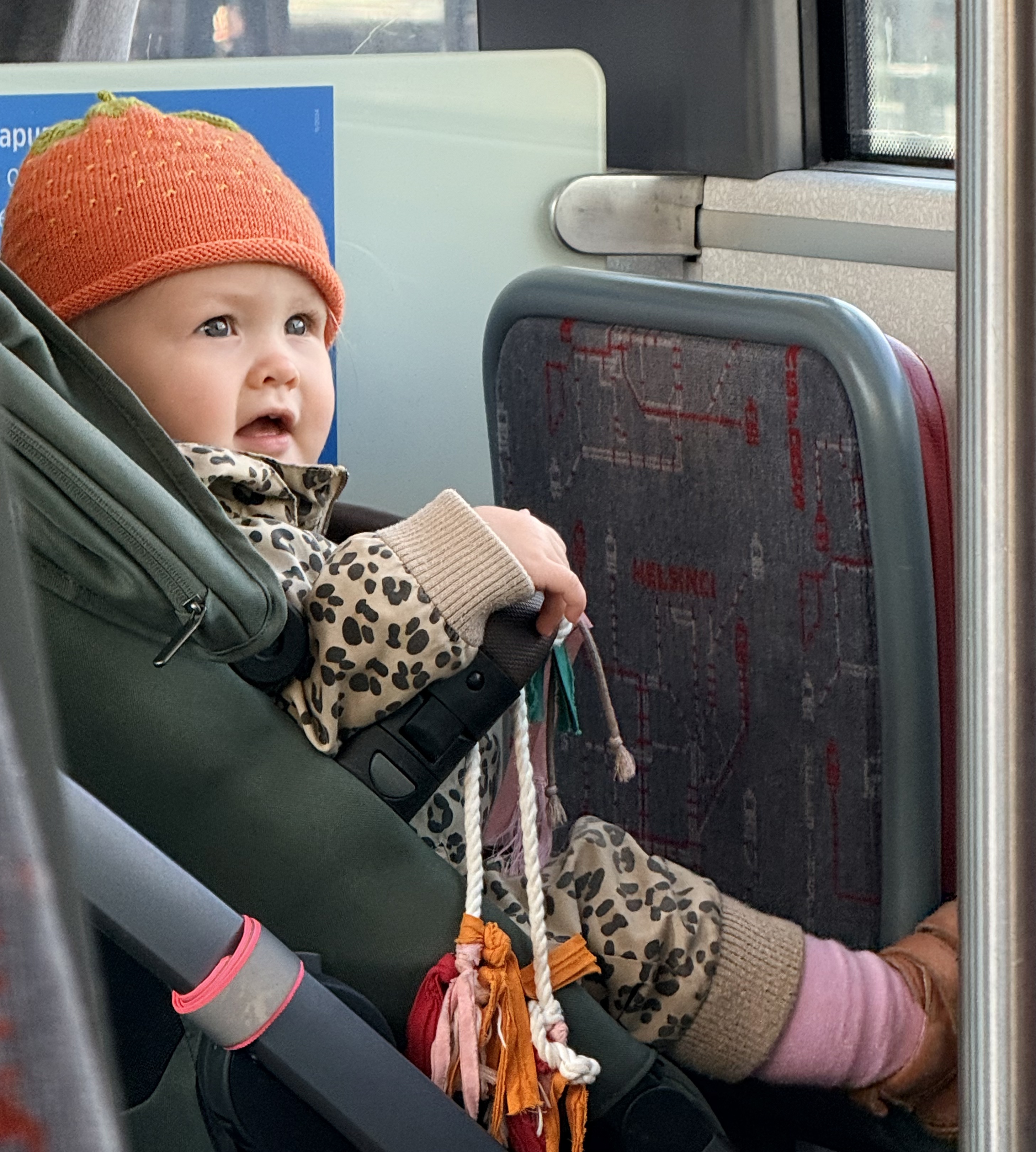
Helsinki is abuzz with every imaginable means of transportation darting here and there, with access points everywhere: trains, metro, trams, buses and bicycles. In an article we found from the World Economic Forum, we found that “Helsinki has topped rankings as the world’s most future-ready city for urban transport thanks to government funding, electric vehicle use and public transport.” The city makes large investments in transport infrastructure, which pays off. It is the top city, followed by Amsterdam, Stockholm, San Francisco and Munich.
The city is also aiming for 30% of all vehicles to be electric by 2030. To make this possible, the city is “installing hundreds of extra charging points, thanks to $14 million in funding from Finland’s central government.”
This is what good governance looks like. Here’s pointing at you, U.S.A.!
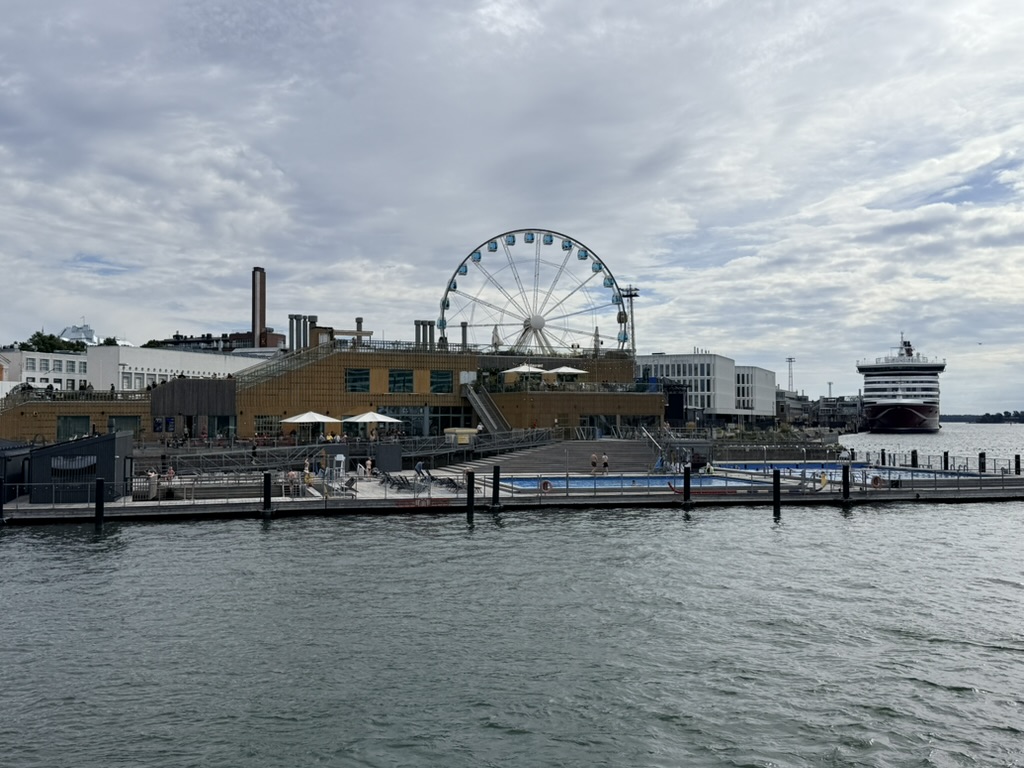
South Harbour (Eteläsatama)
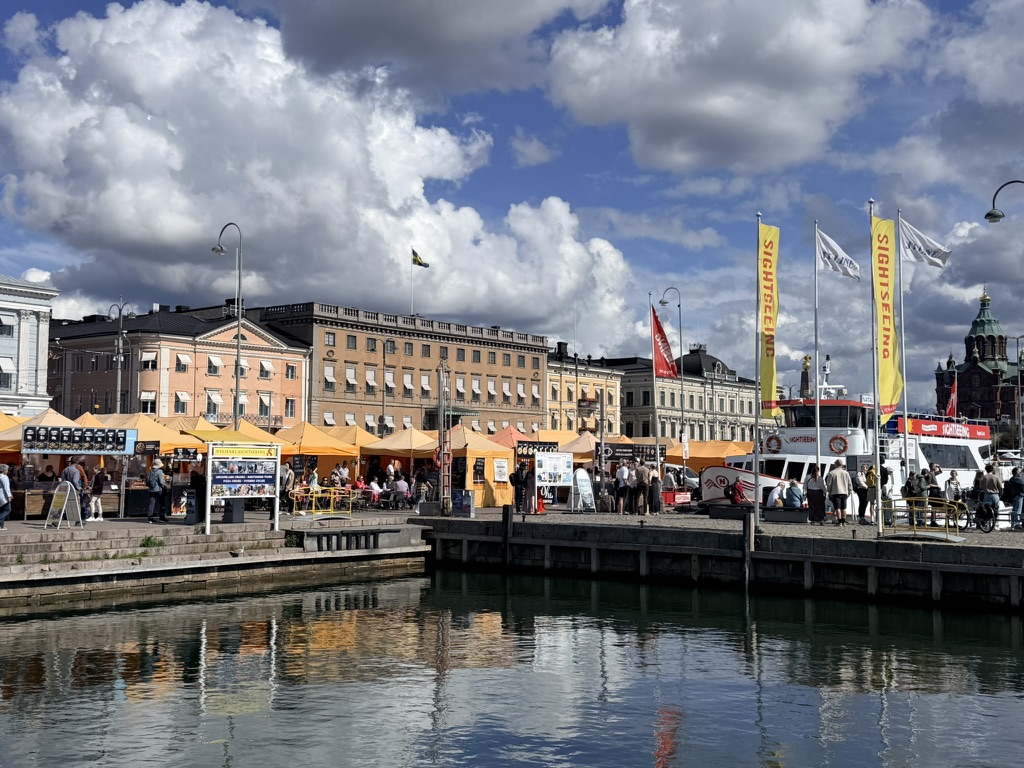
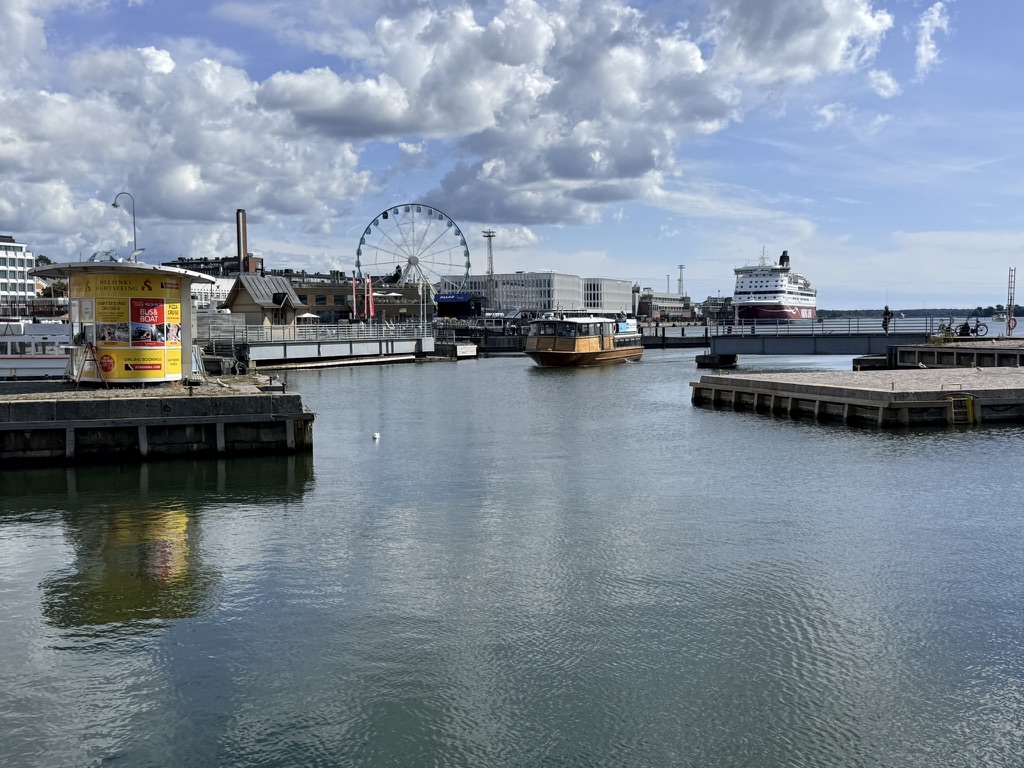
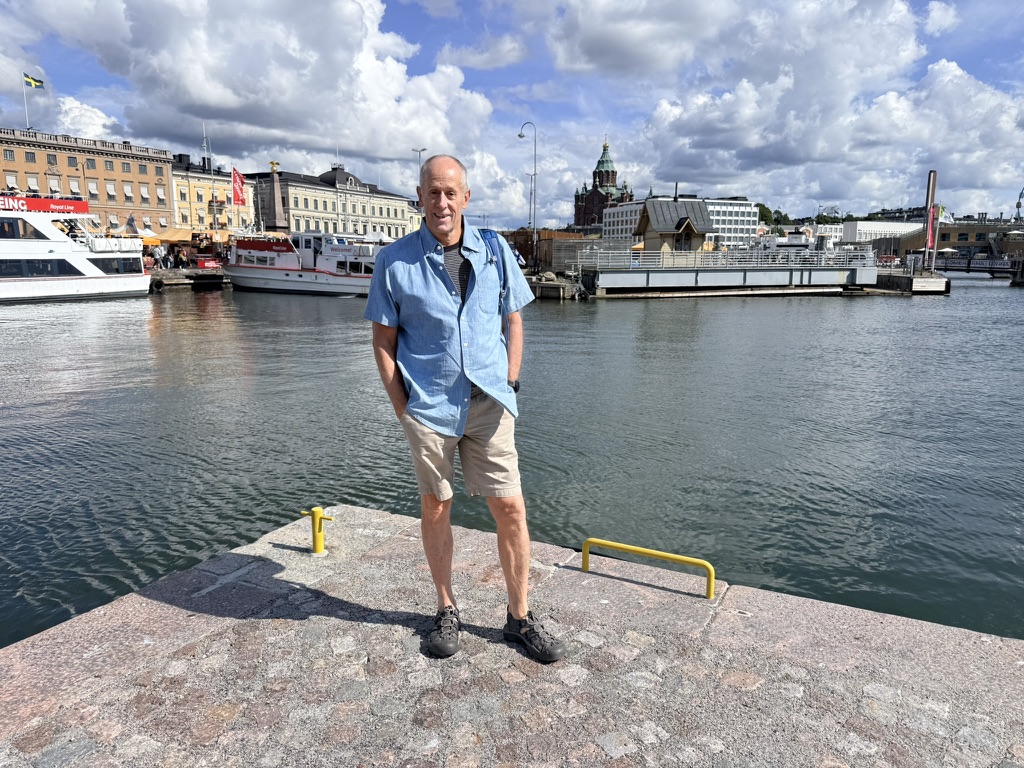
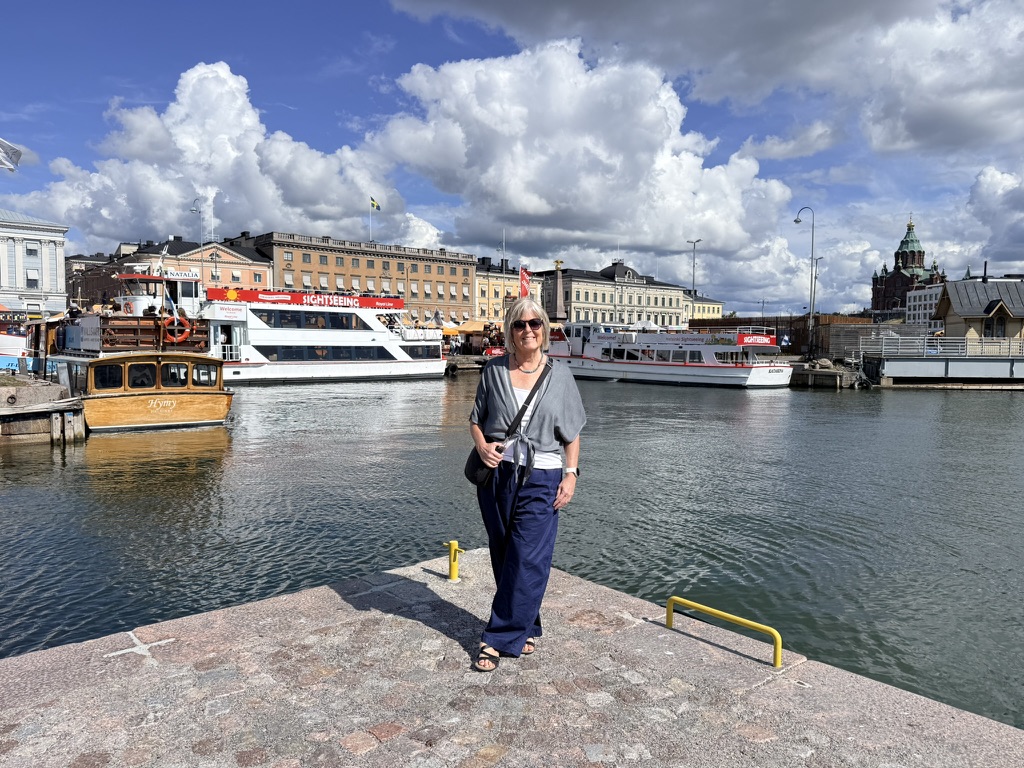
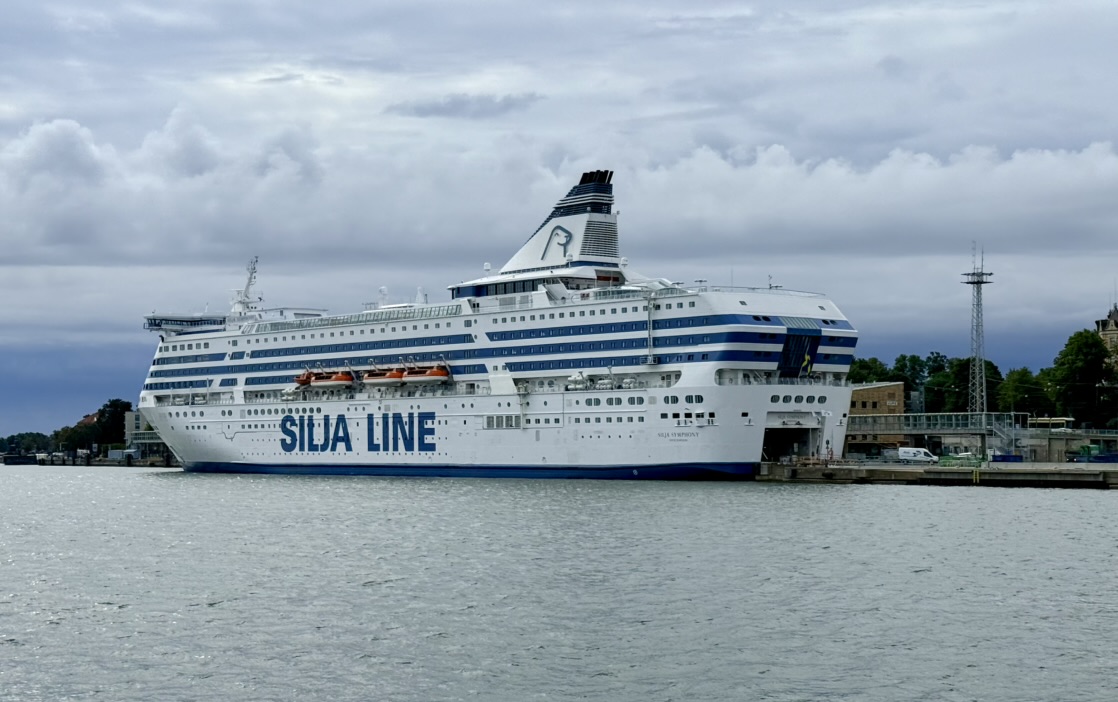
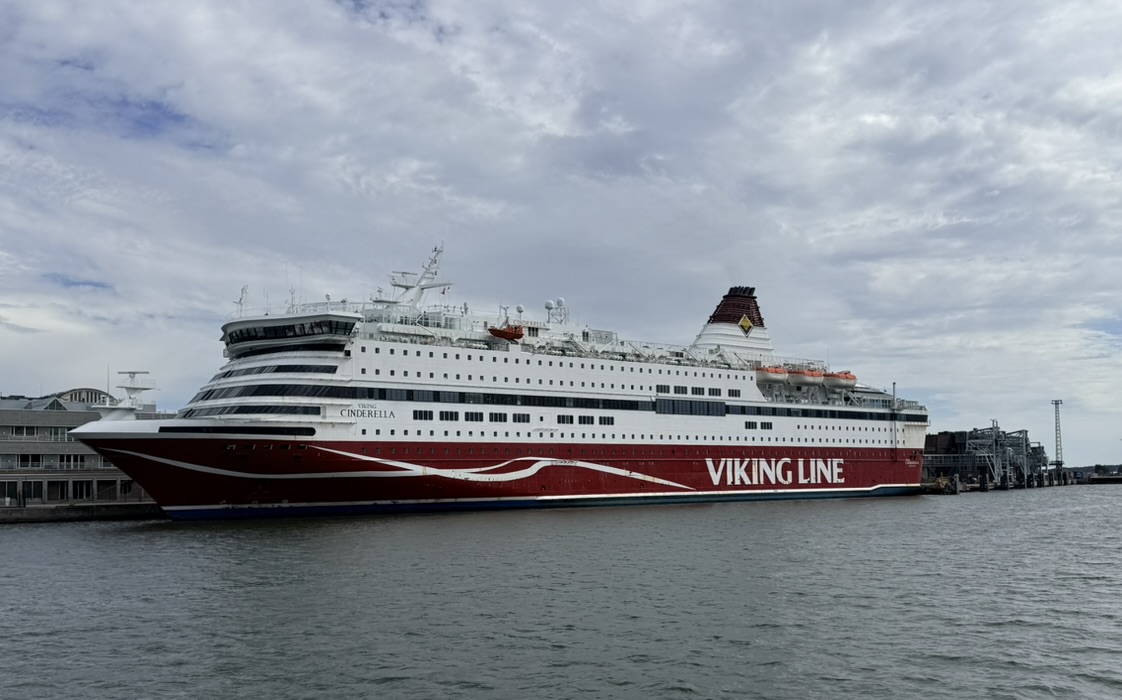
South Harbour is a bay and harbor area next to Helsinki’s city center. Each year, some 4.7 million passengers in liner traffic and some 37,000 international cruise passengers travel through it, as well as tons of cargo. Most of the harbour’s traffic is to Stockholm, Sweden and Tallinn, Estonia.
Helsinki Cathedral
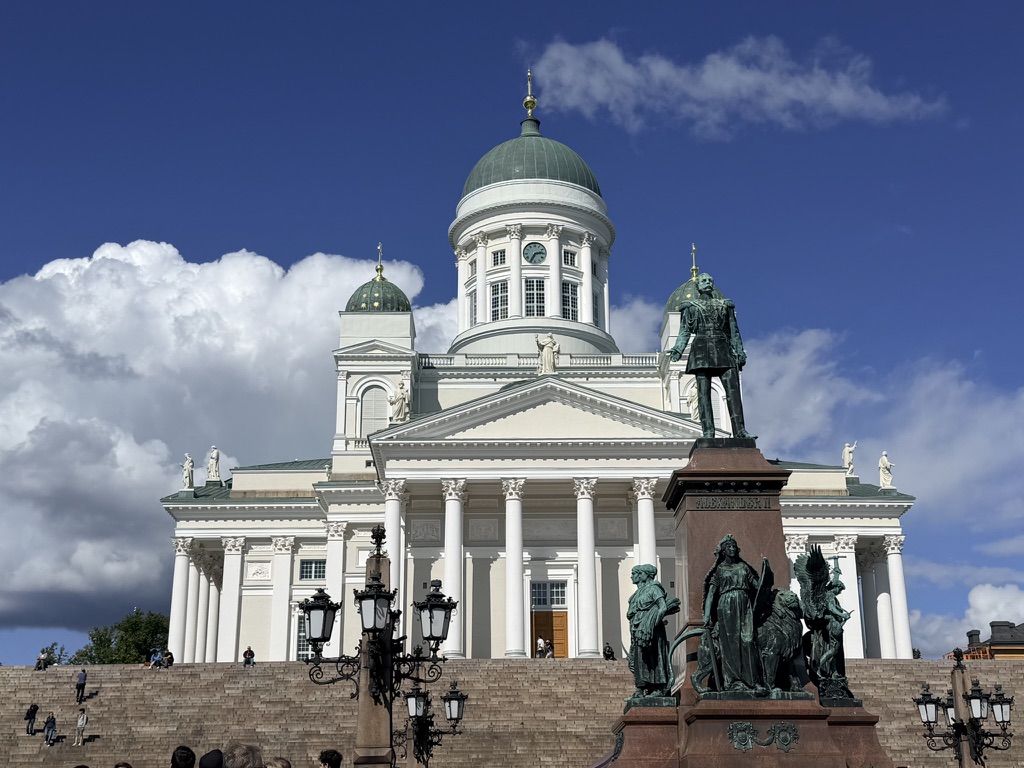
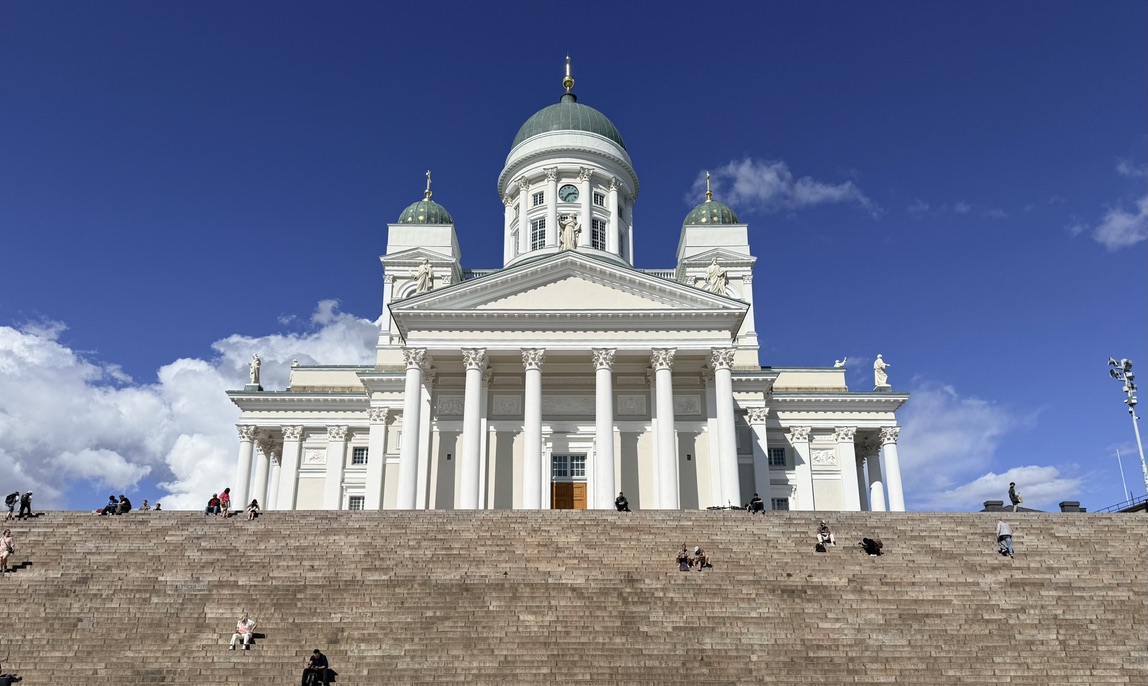
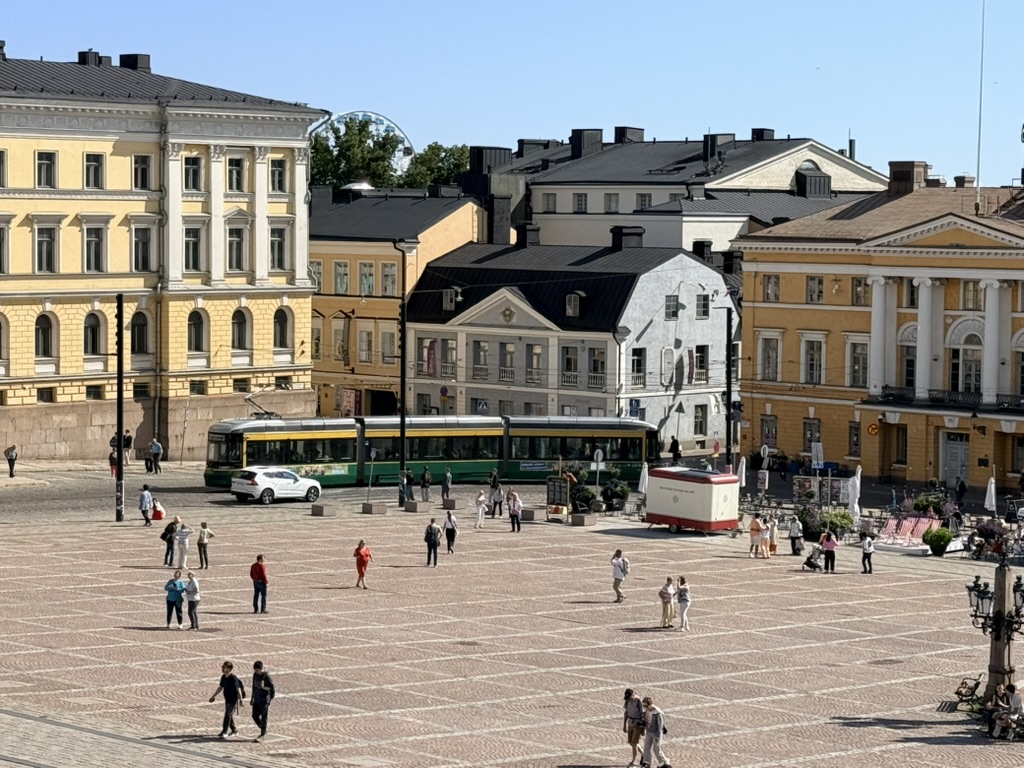
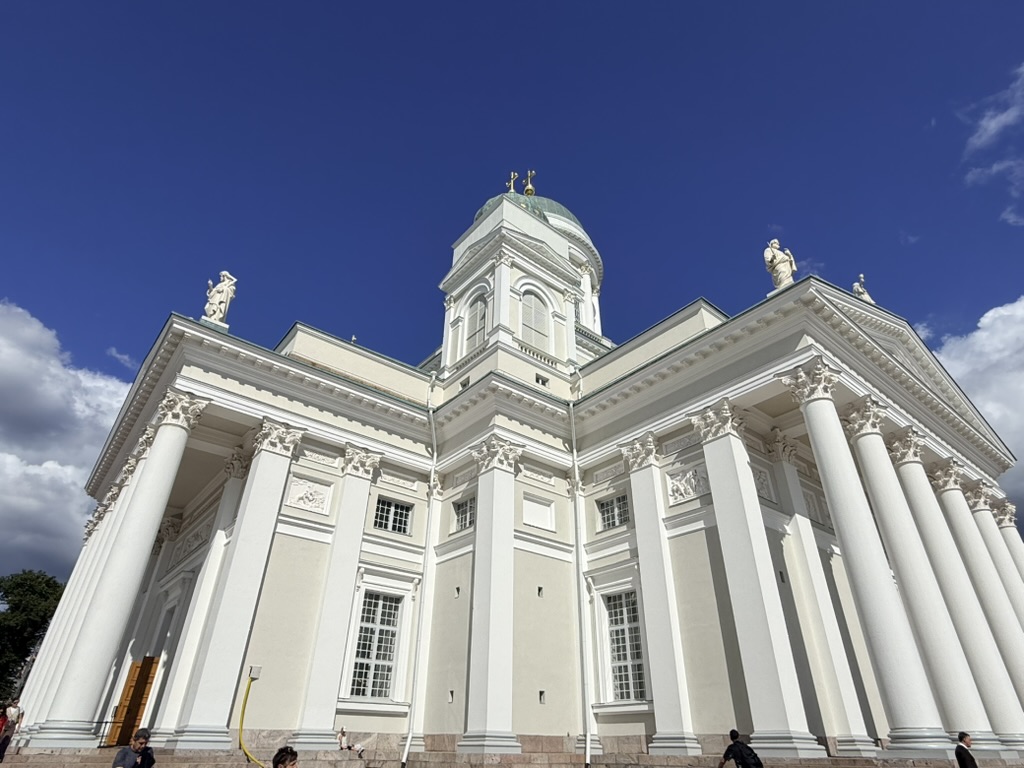
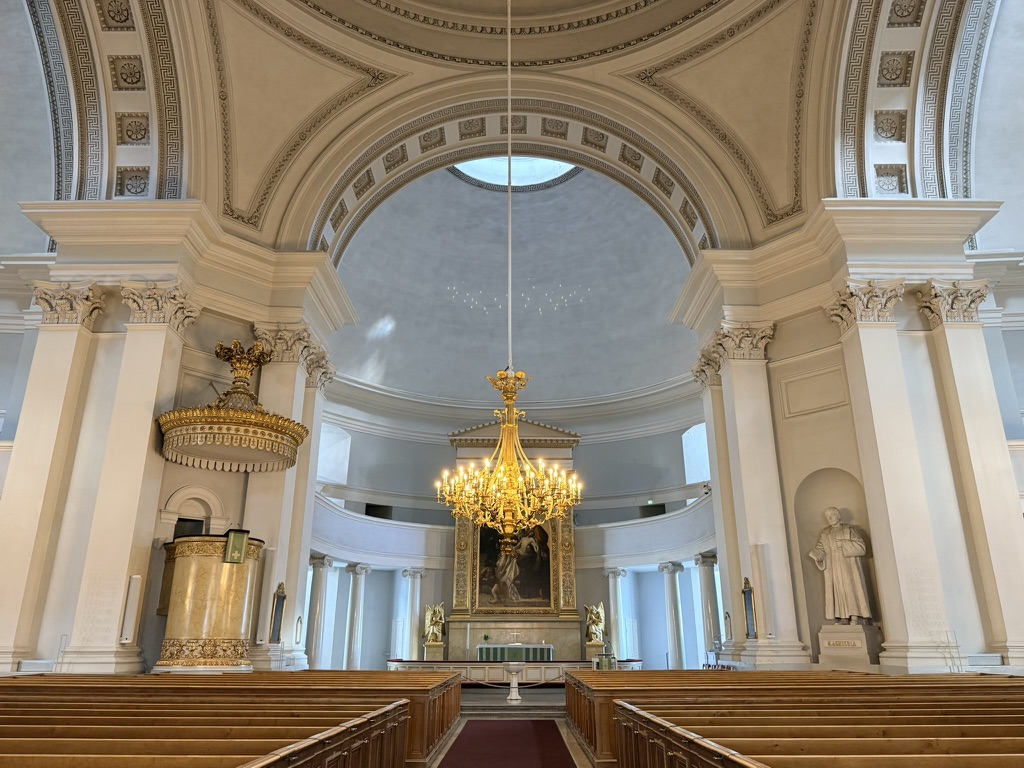
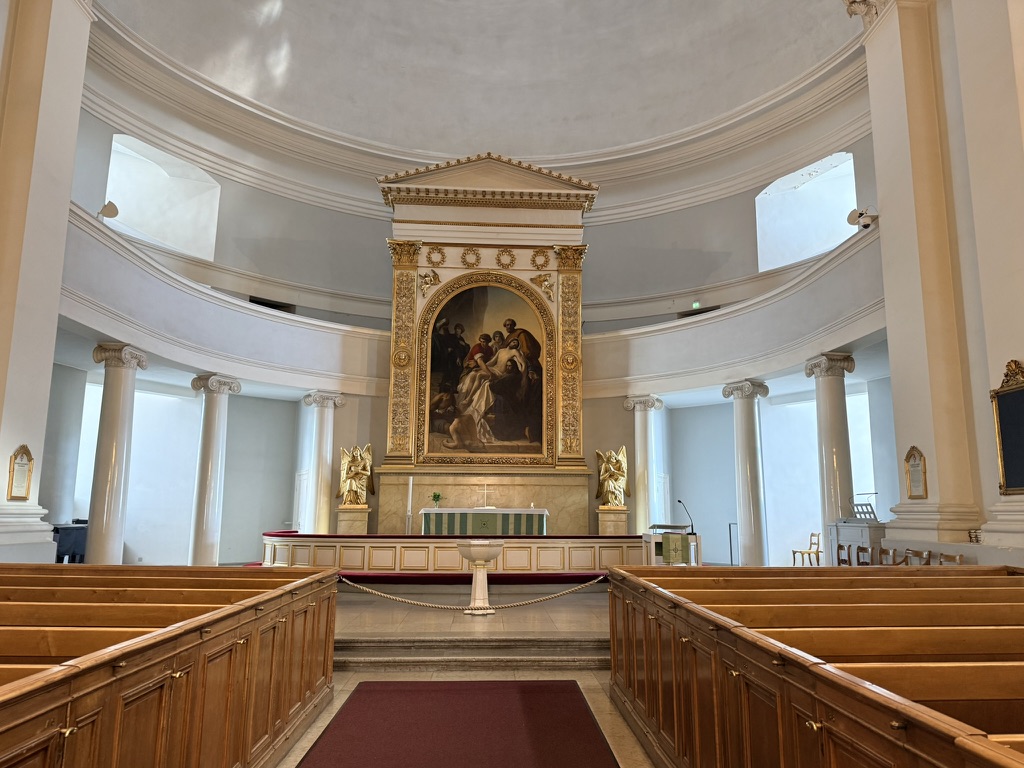
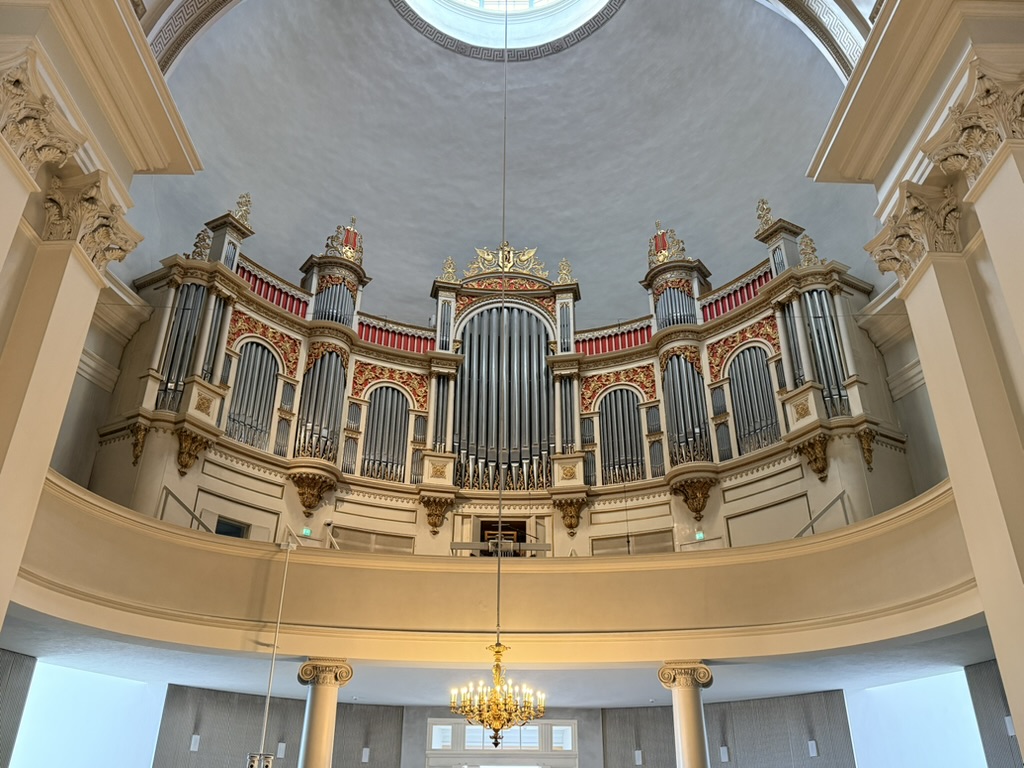
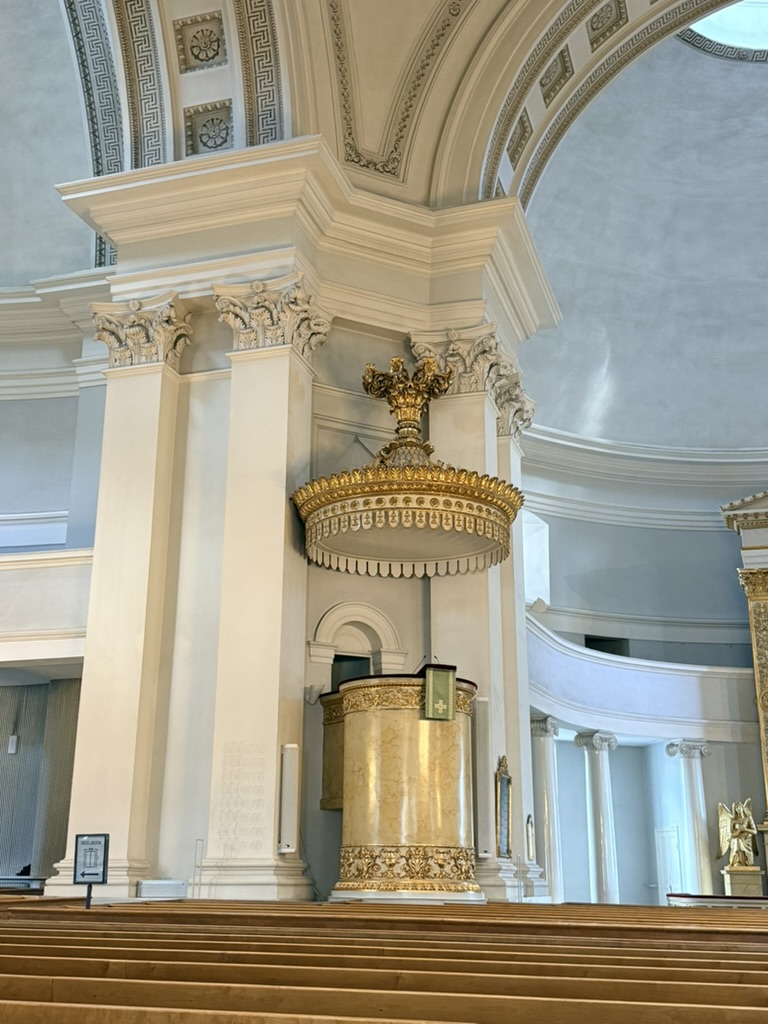
The neoclassical-style Helsinki Cathedral was built from 1830 to 1852 as a tribute to the Grand Duke of Finland, Emperor Nicholas I of Russia. It is the the Finnish Evangelical Lutheran cathedral of the Diocese of Helsinki. It sits imposingly on a hill and then atop a raised platform and thus dominates the landscape.
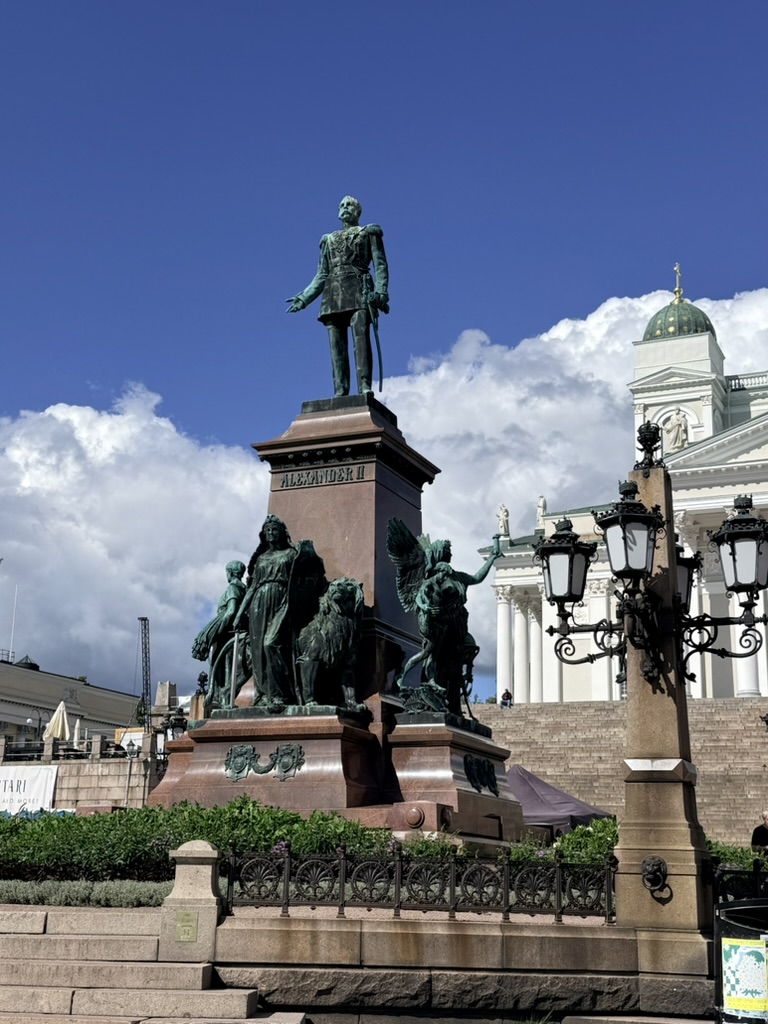
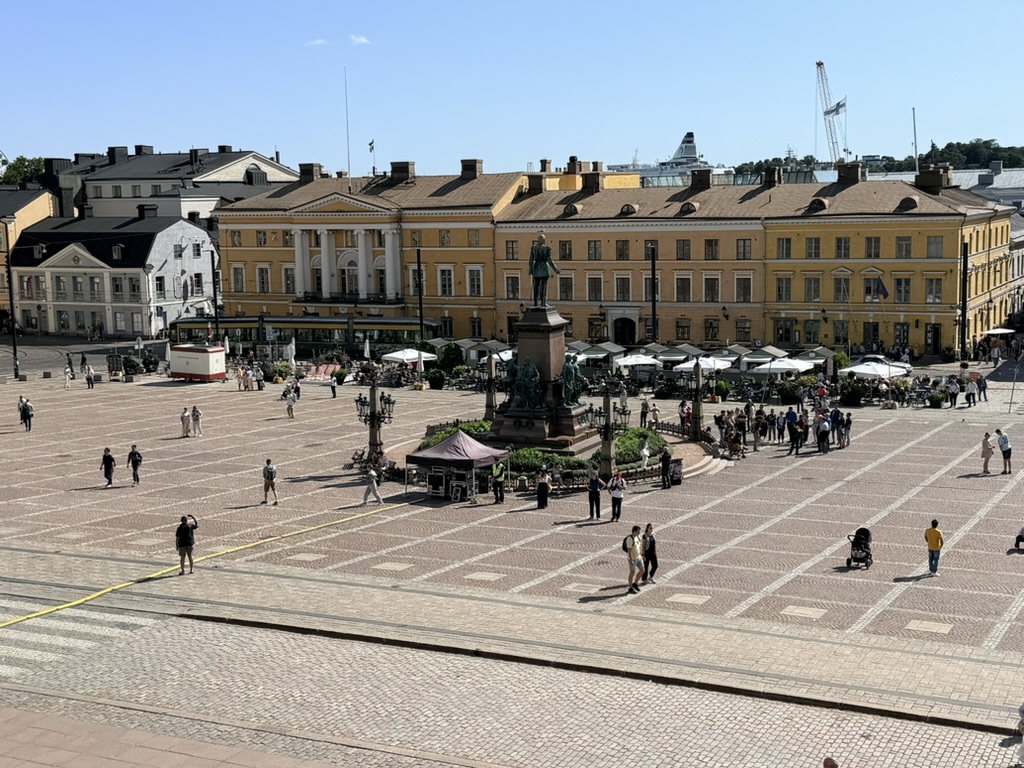
Mike didn’t want to go inside, but I paid 10 euros to go in. The interior is plain and unadorned and even a bit boring. It sits on the edge of Senate Square, where a statue of Emperor Alexander II stands in the center of the square.
Suomenlinna Sea Fortress
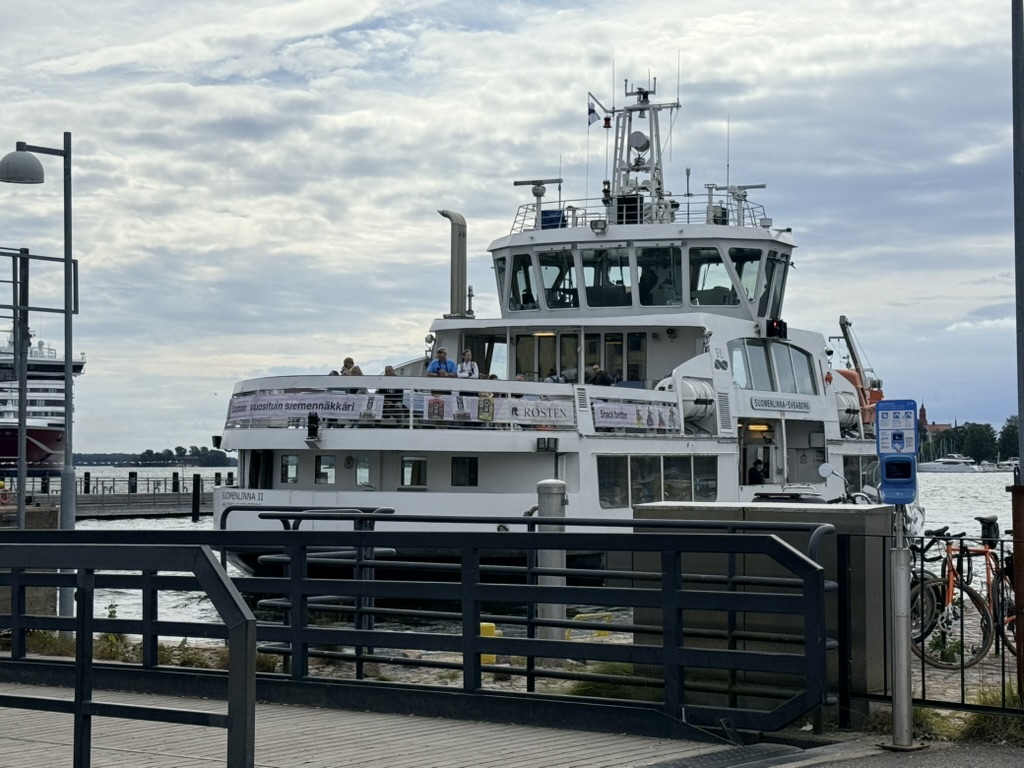
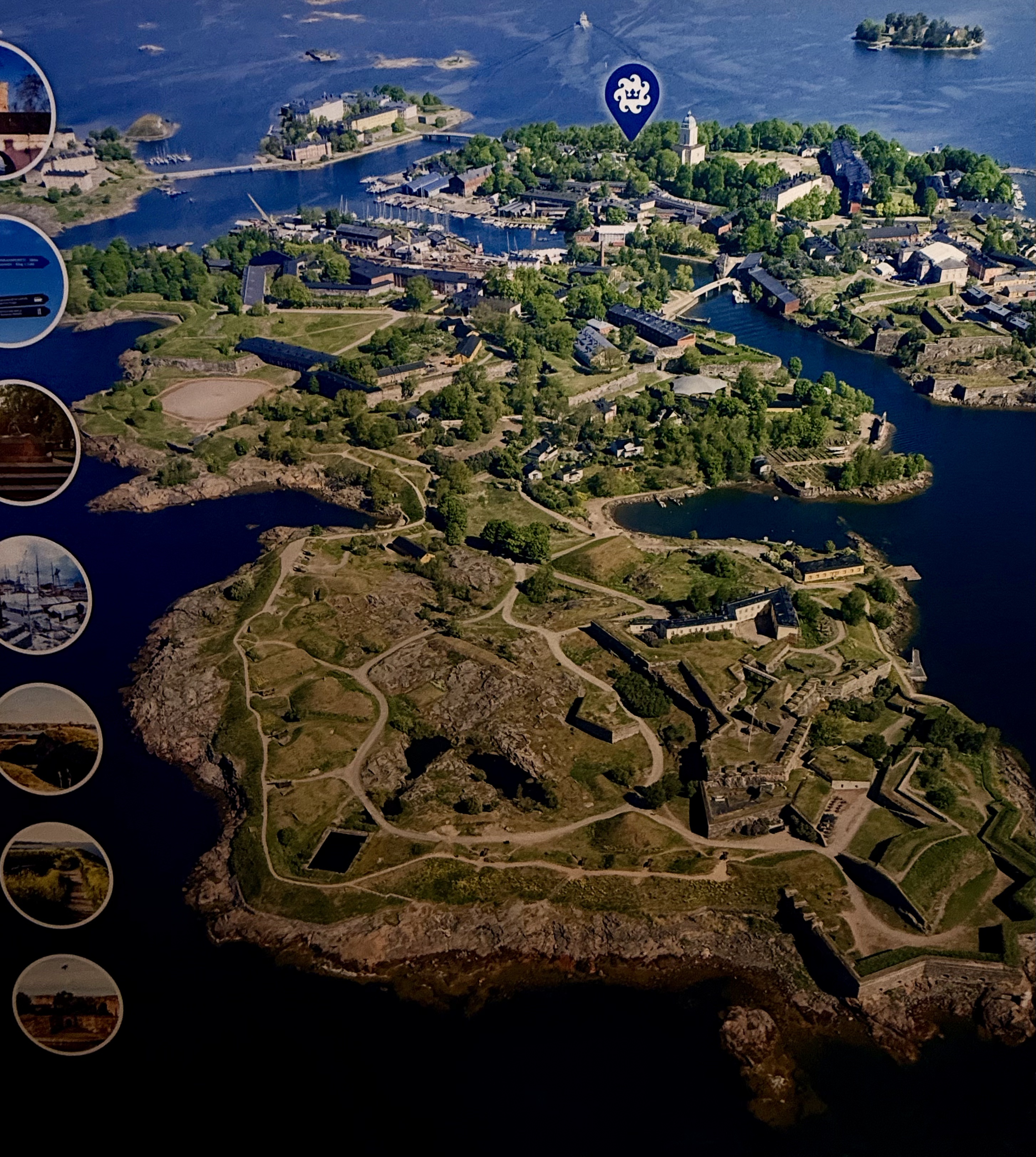
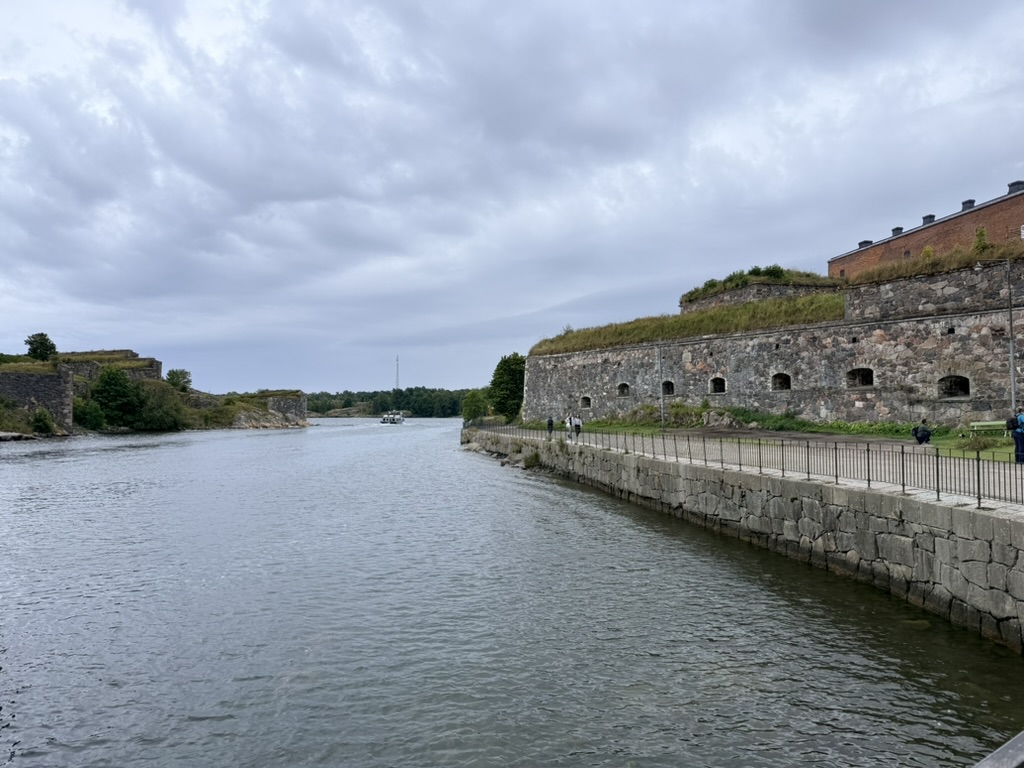
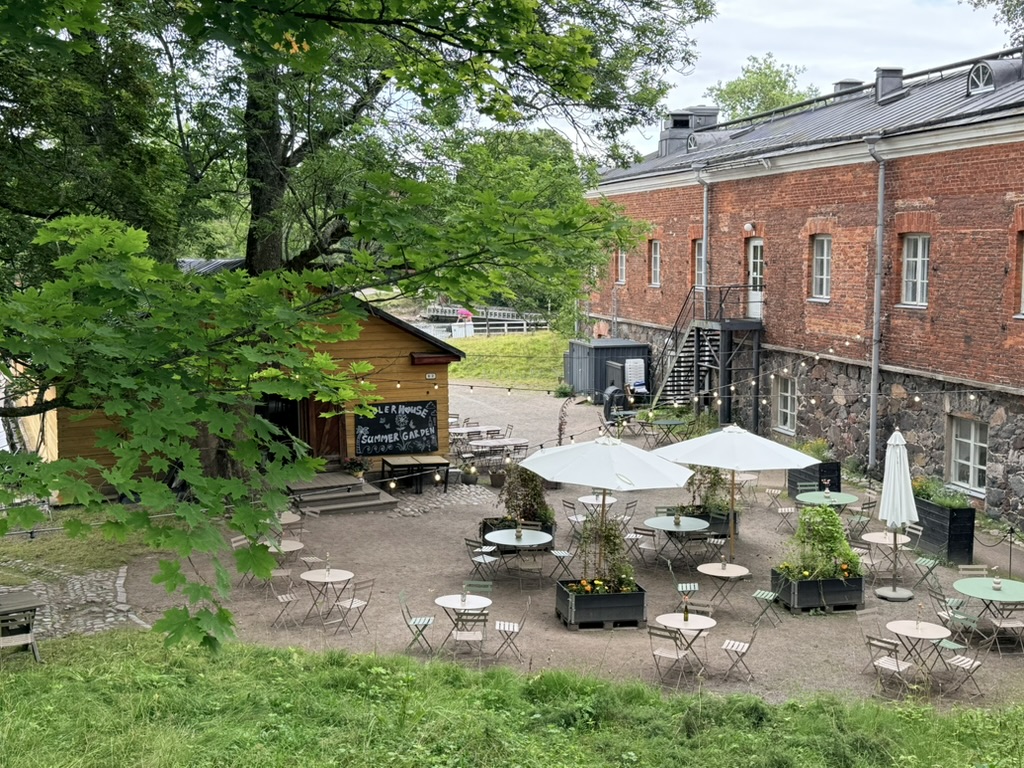
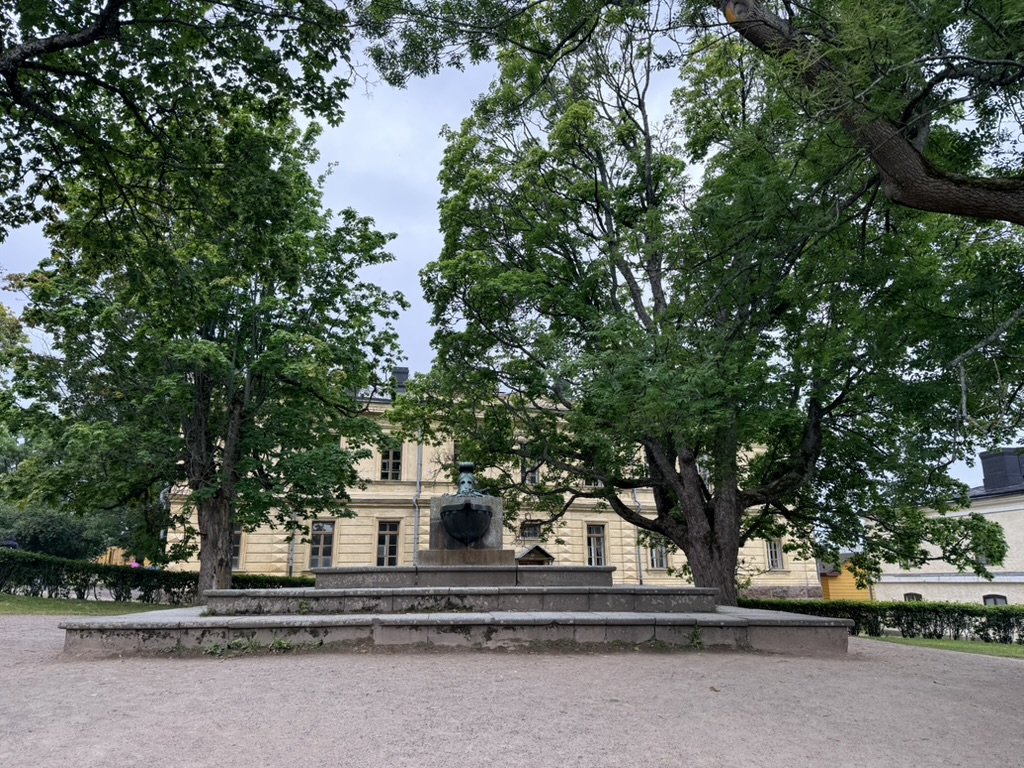
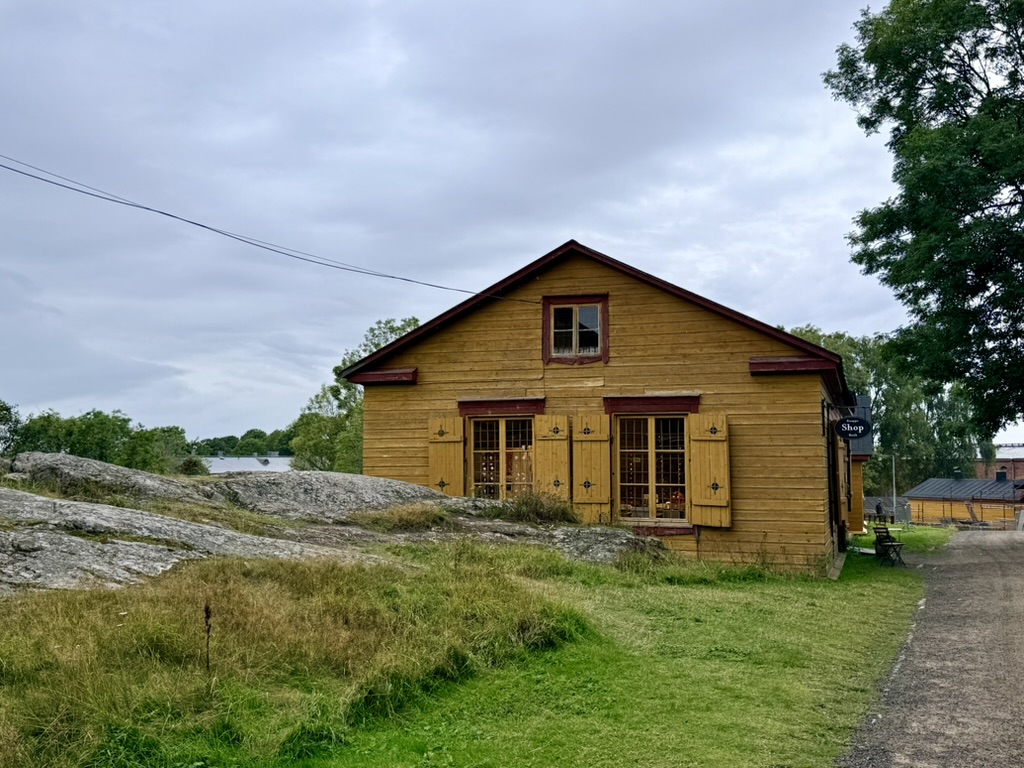
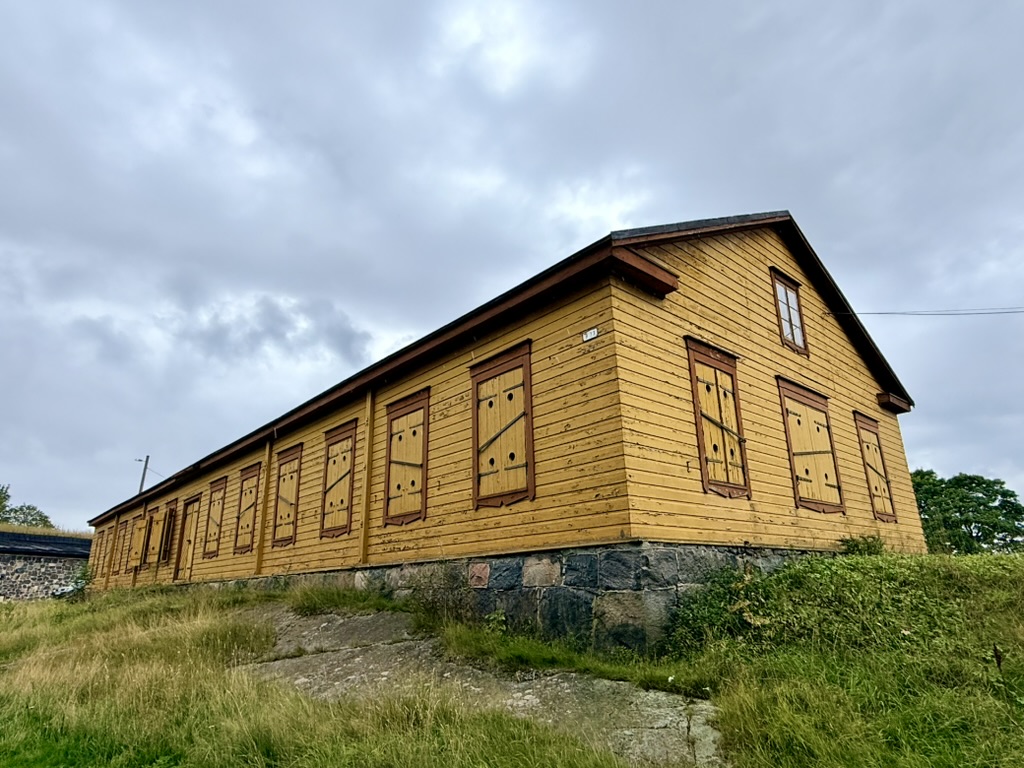
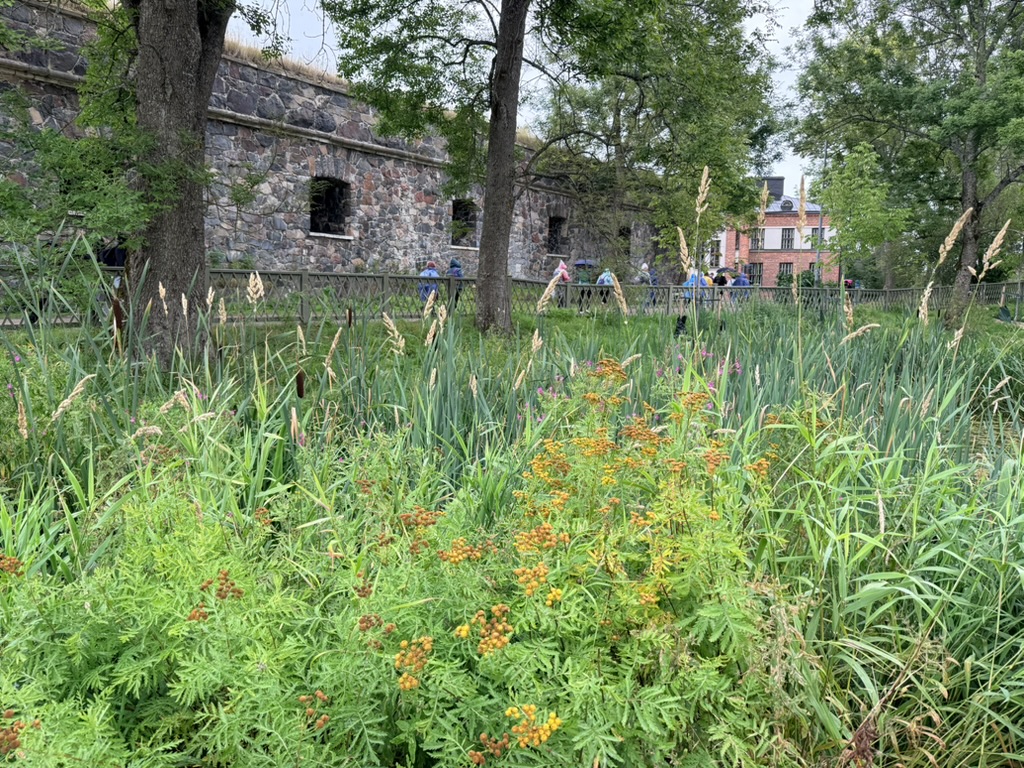
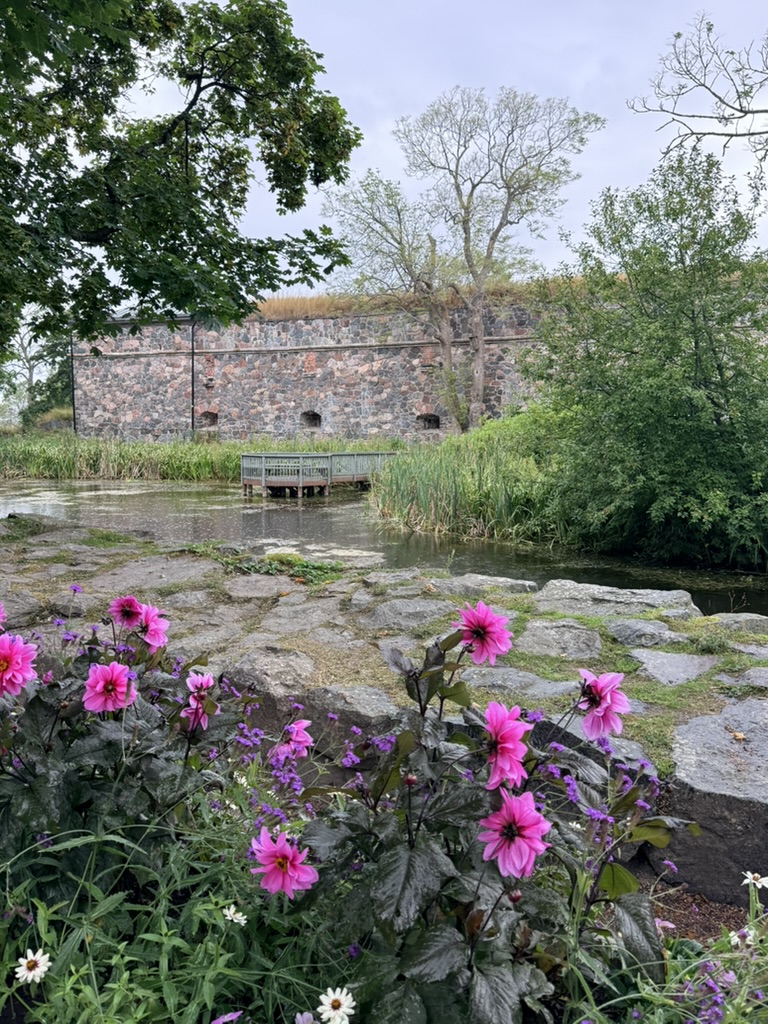
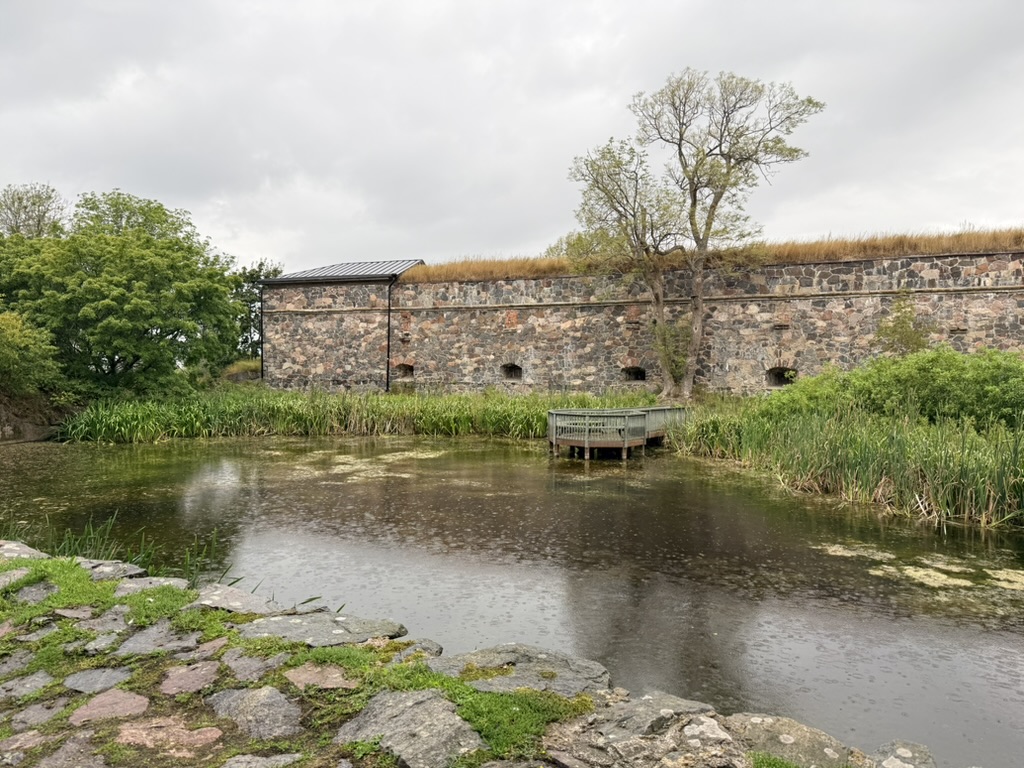
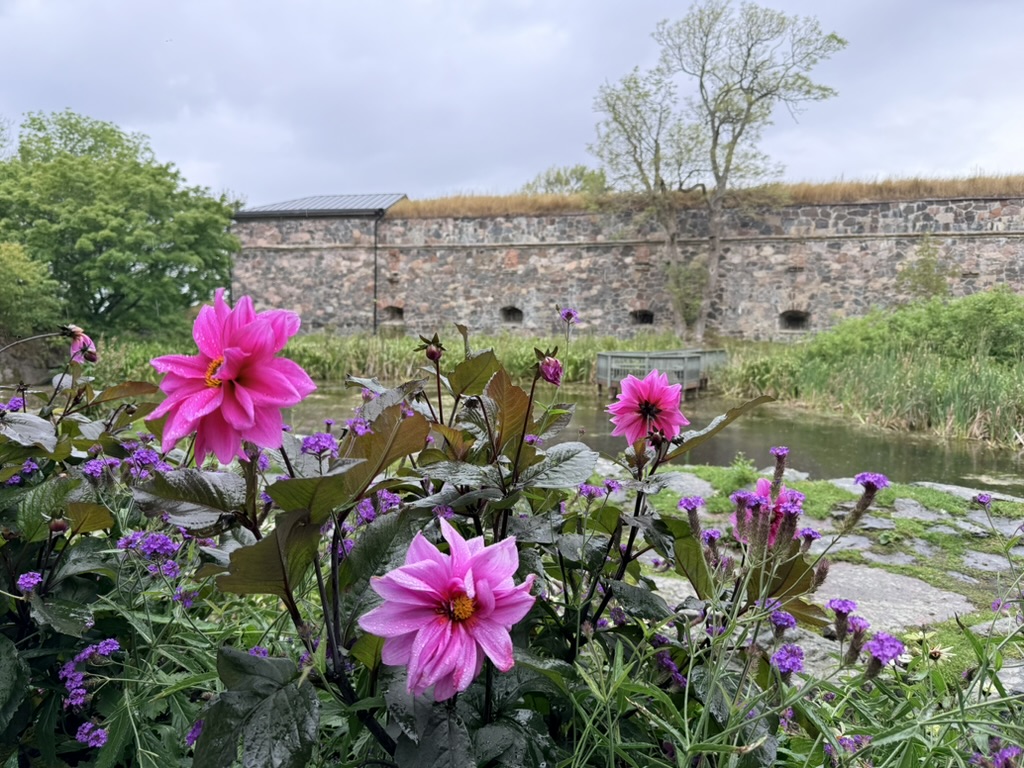
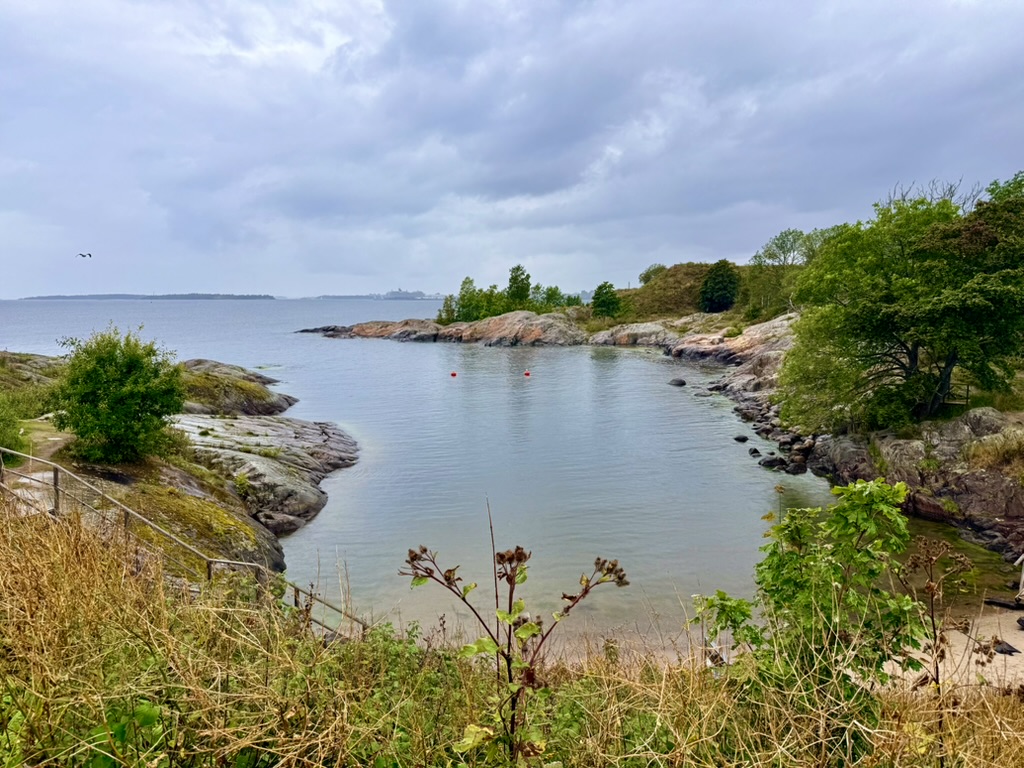
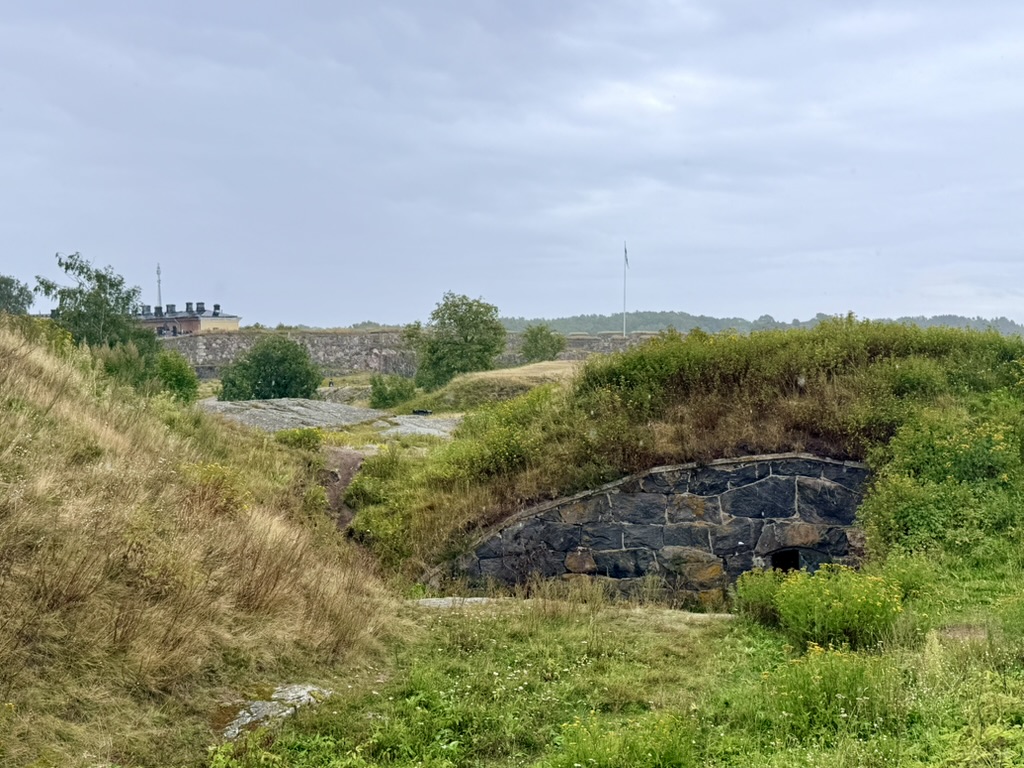
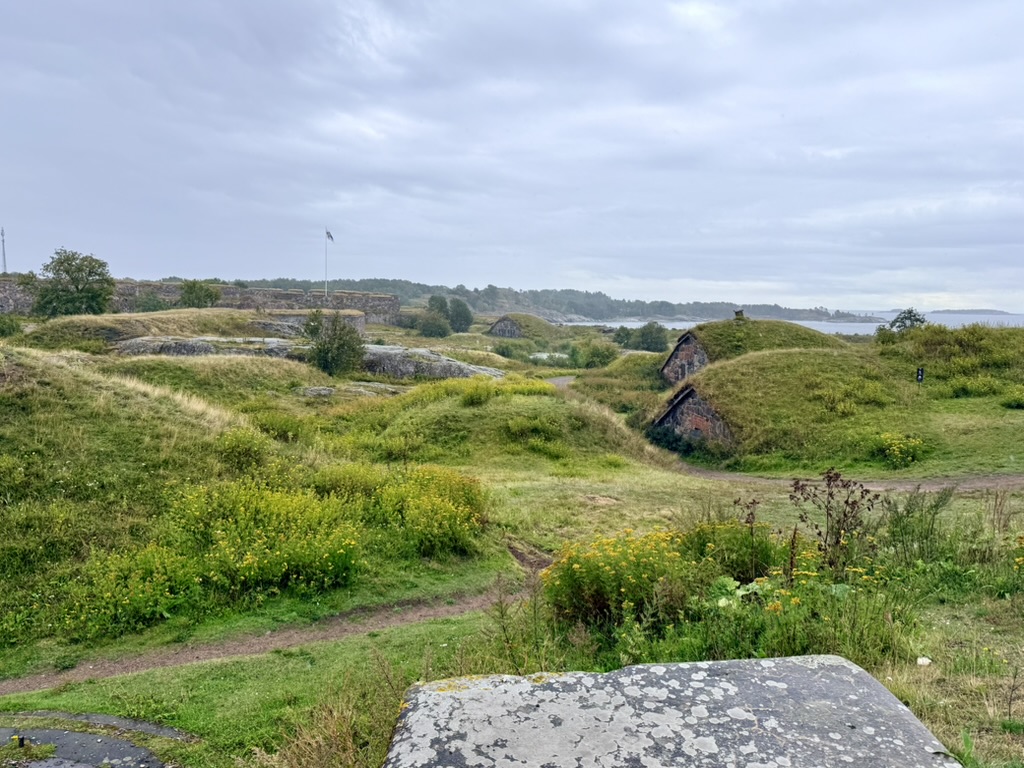
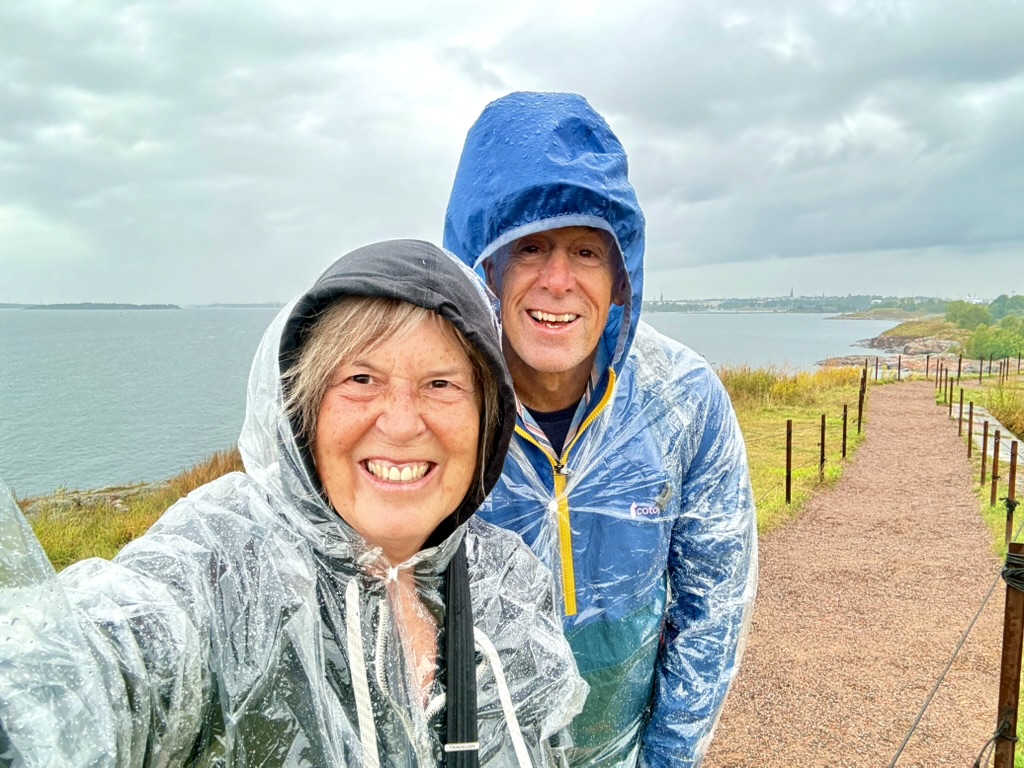
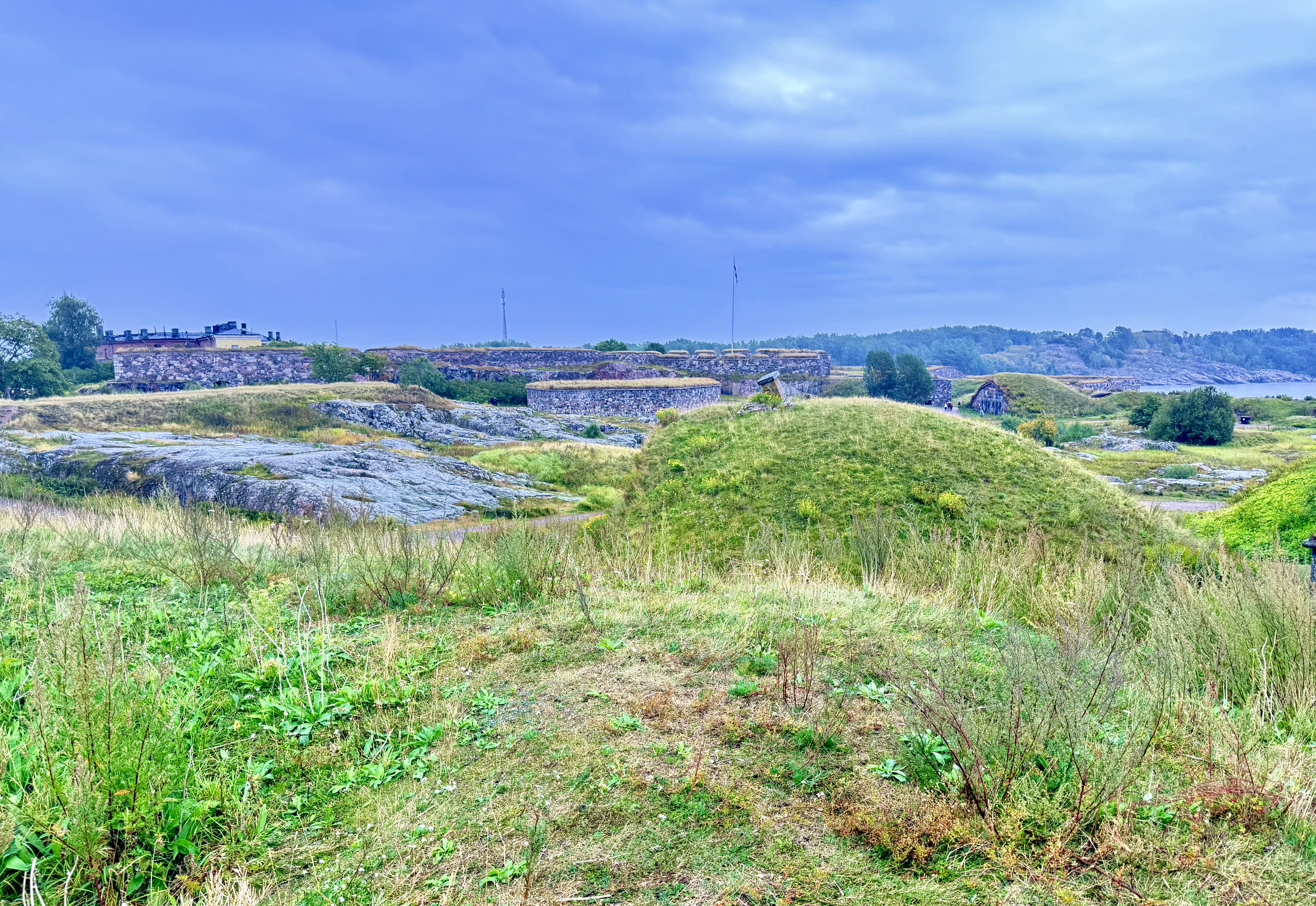
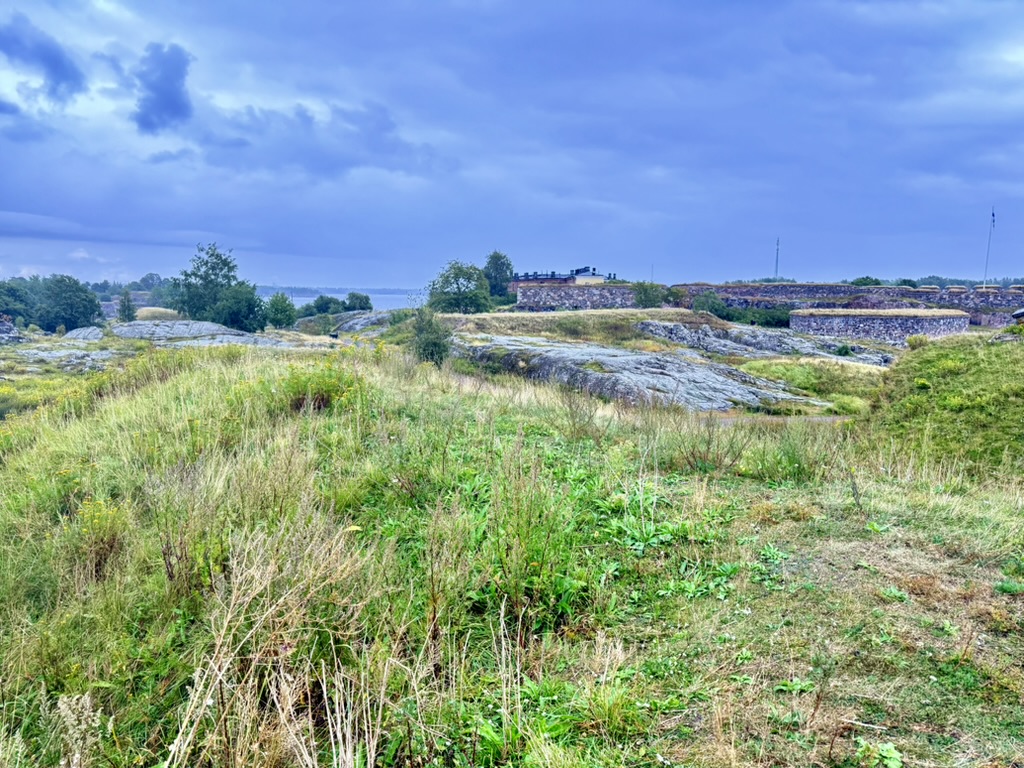
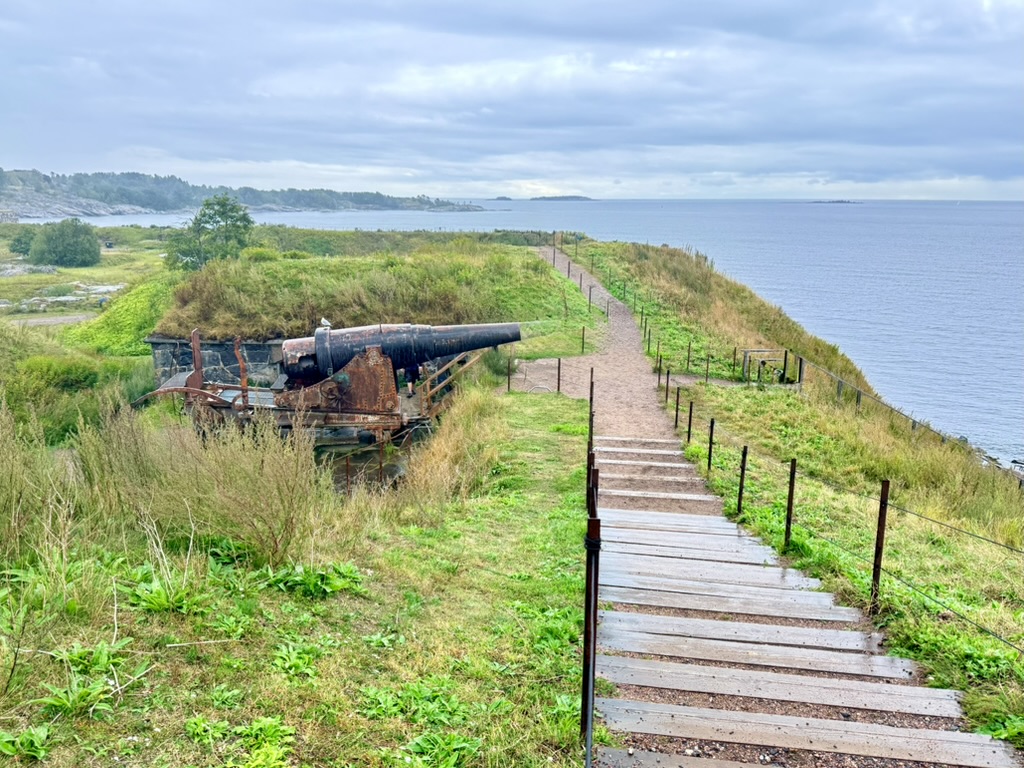
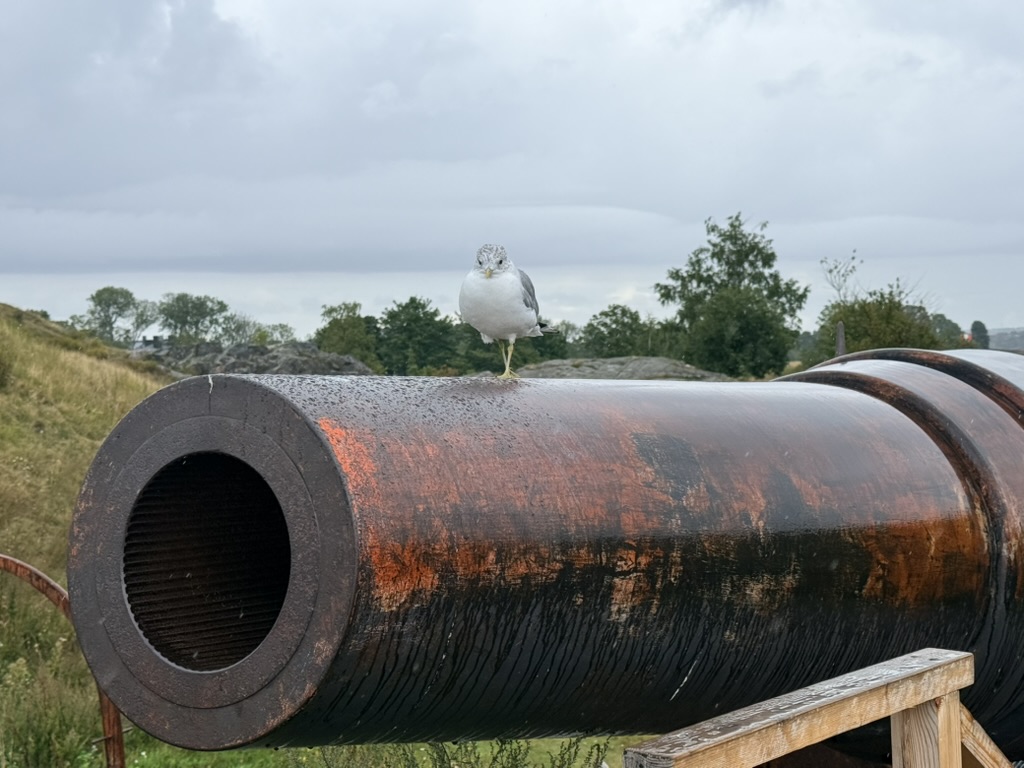
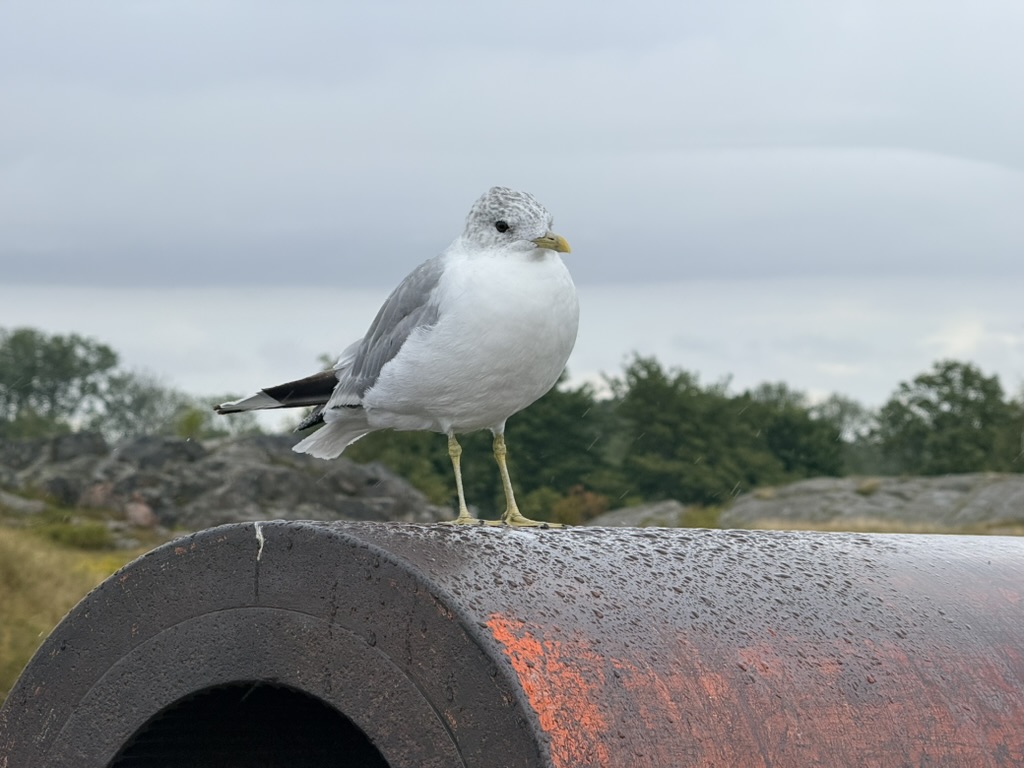
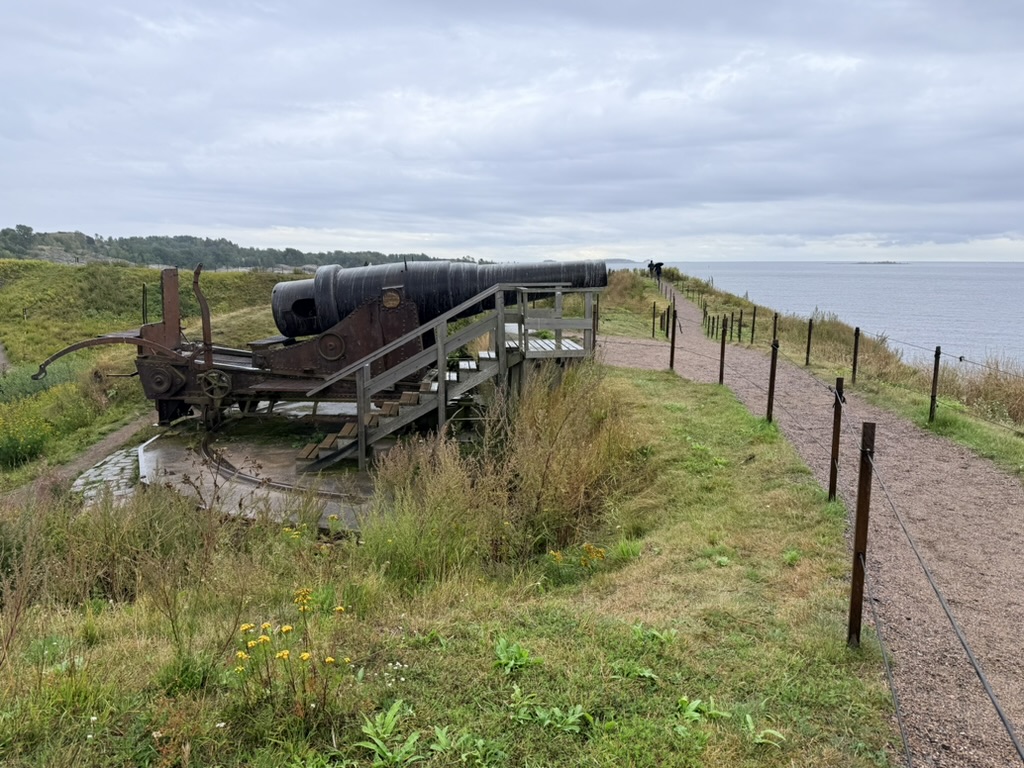
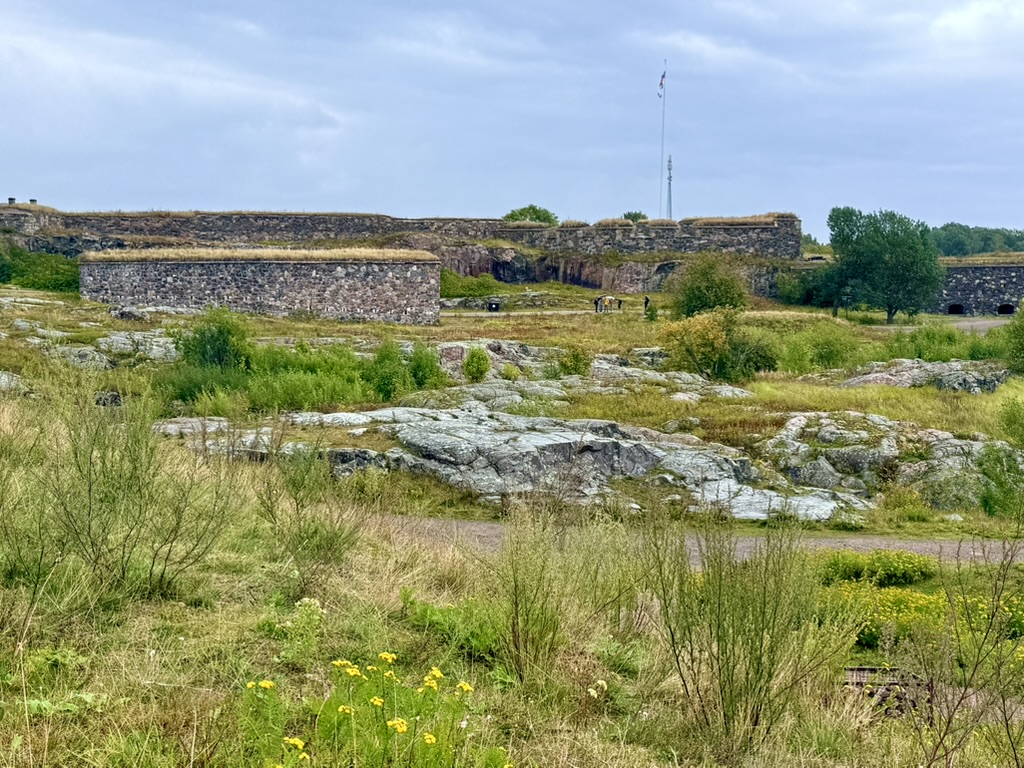
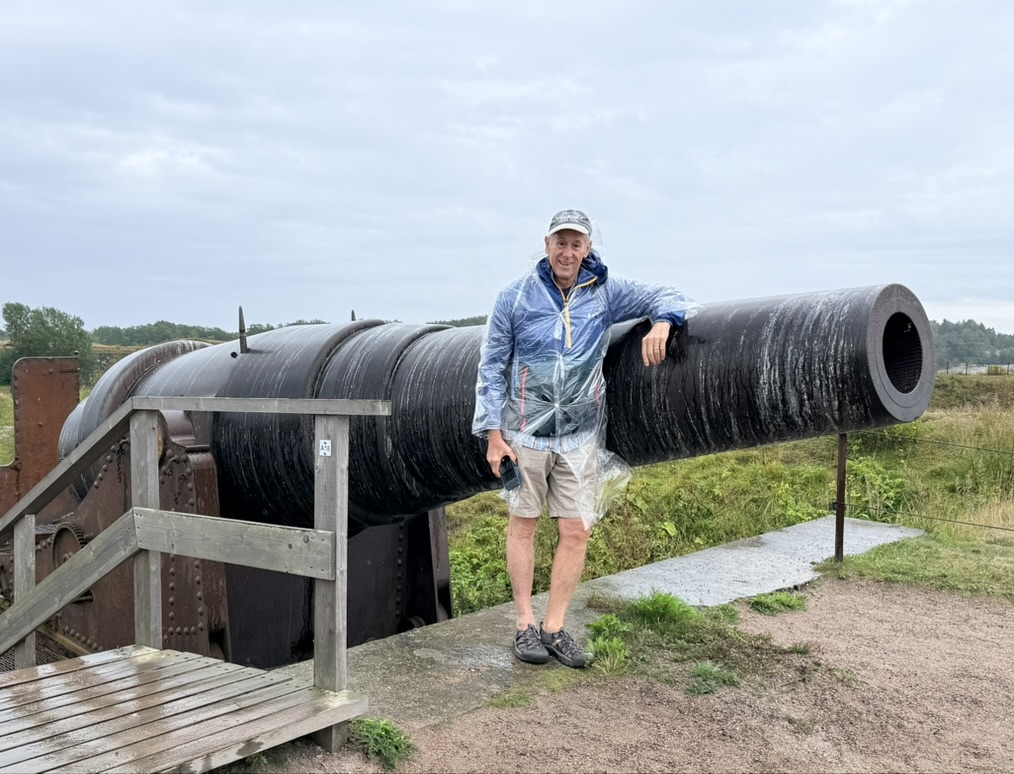
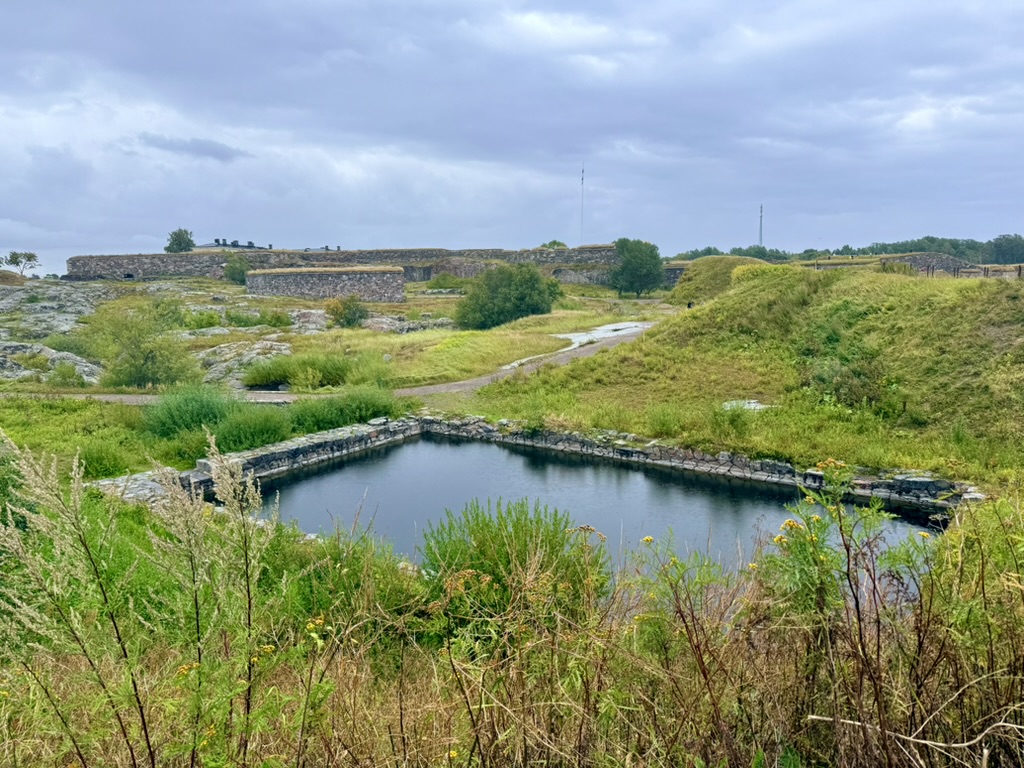
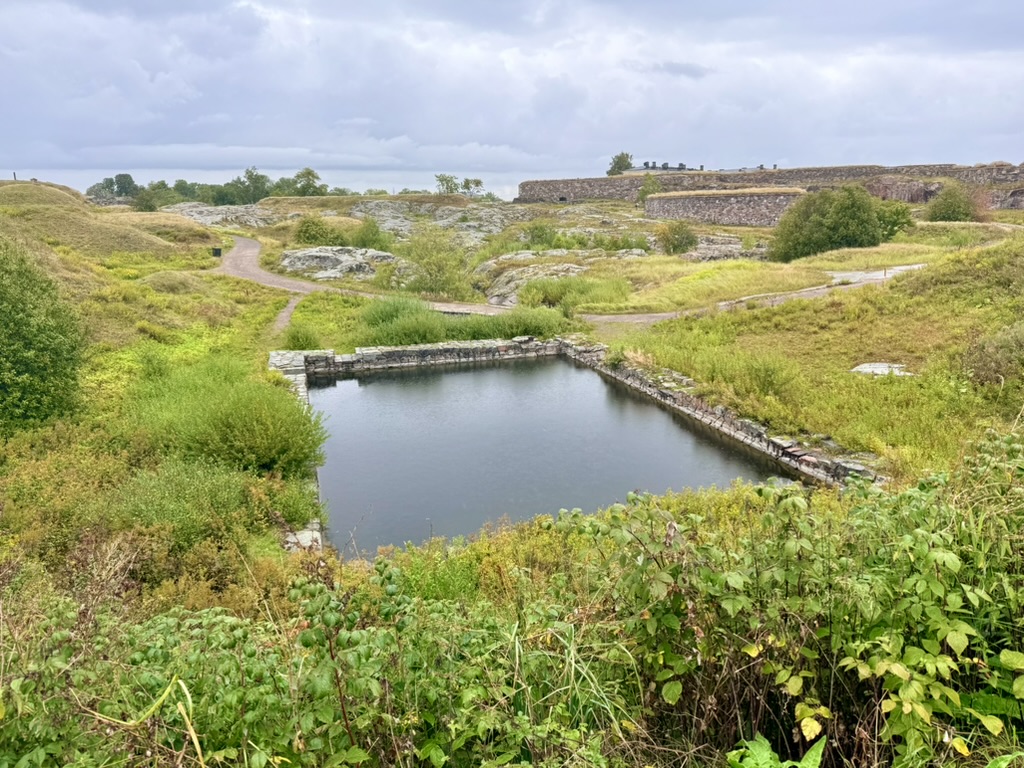
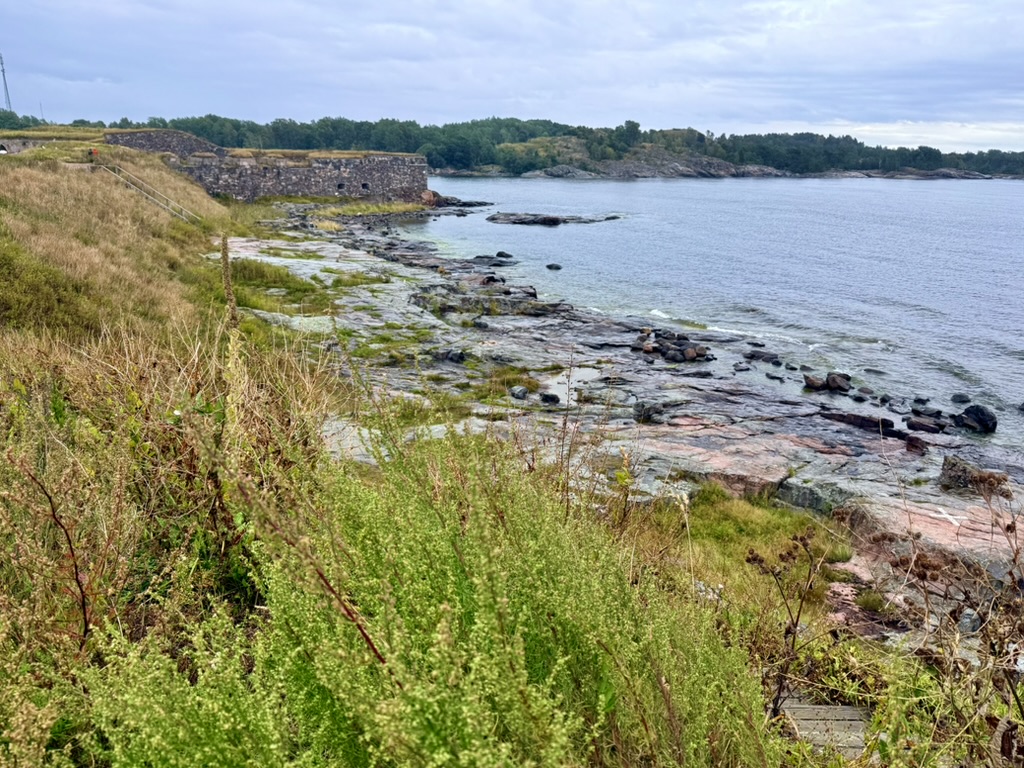
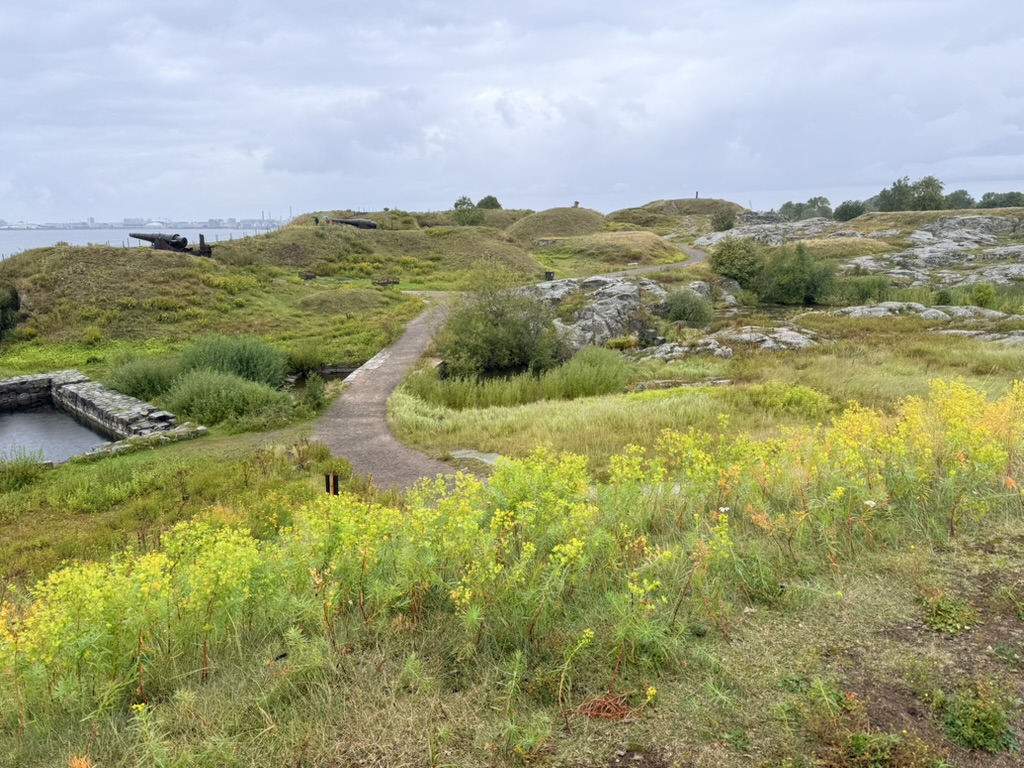
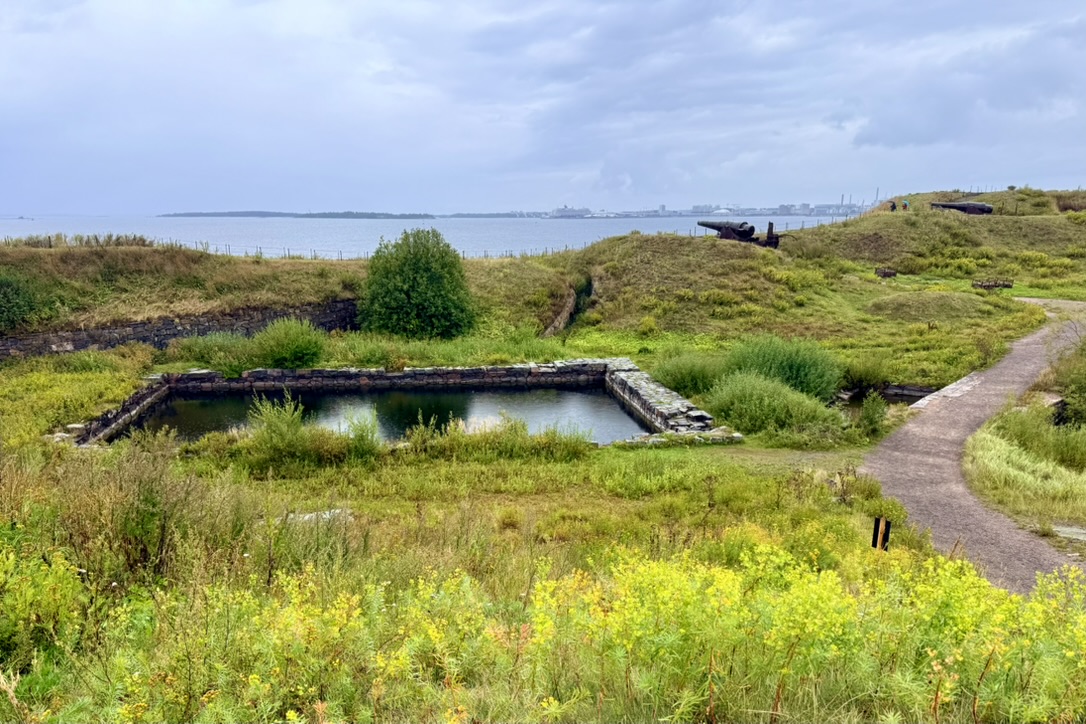
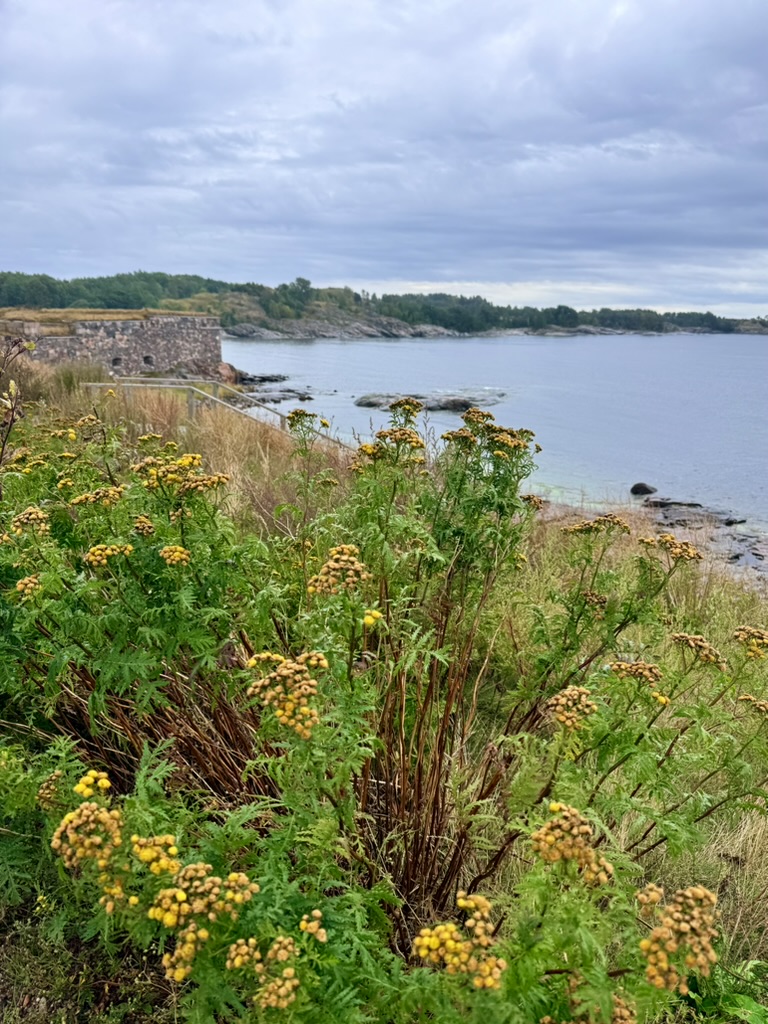
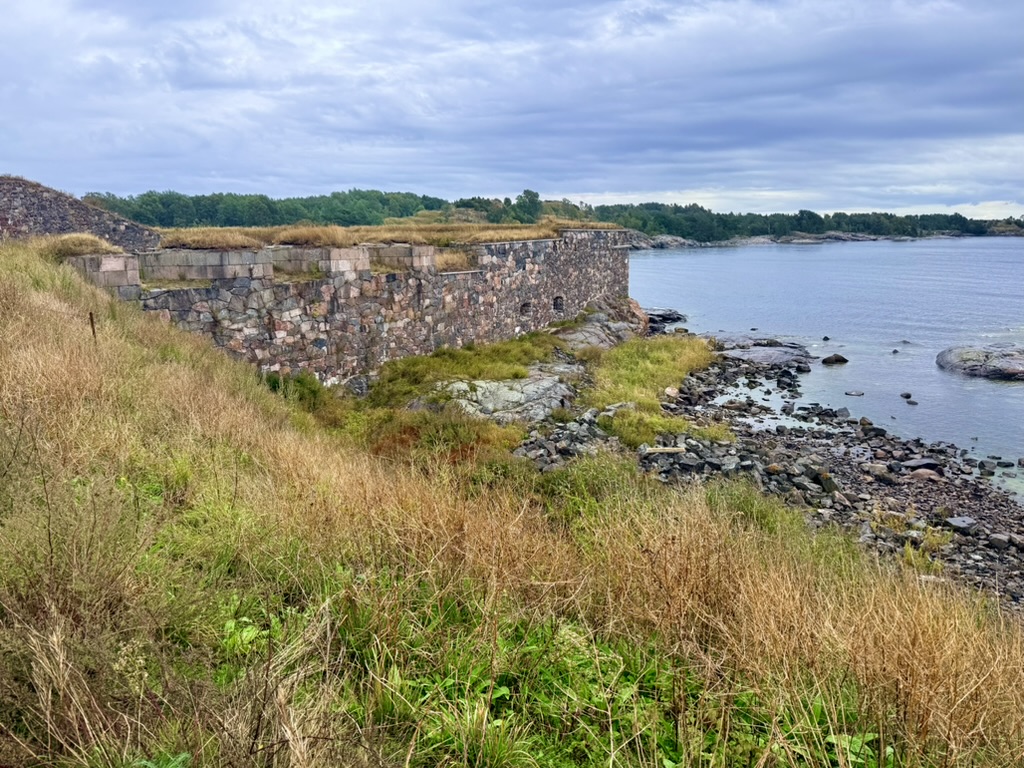
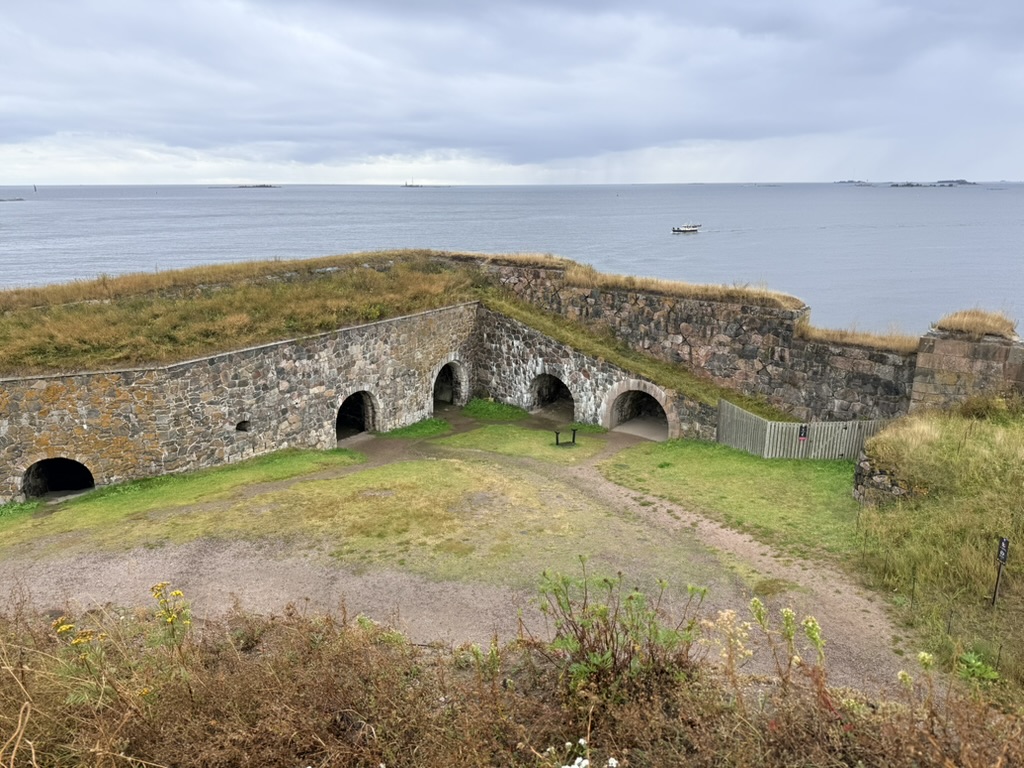
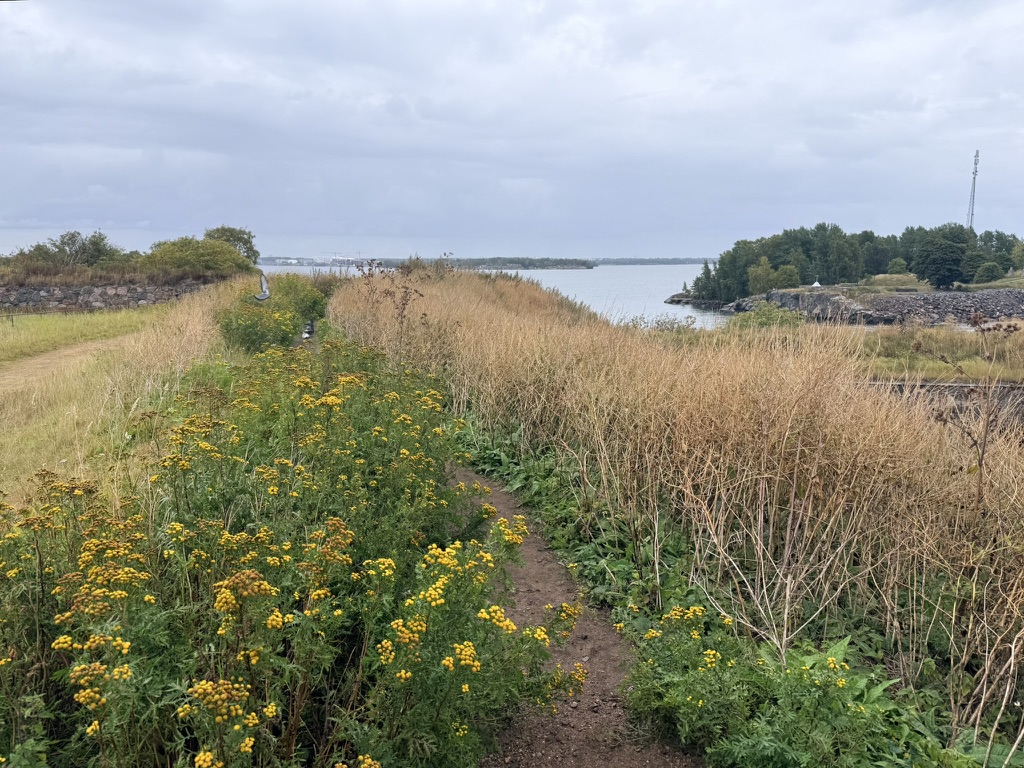
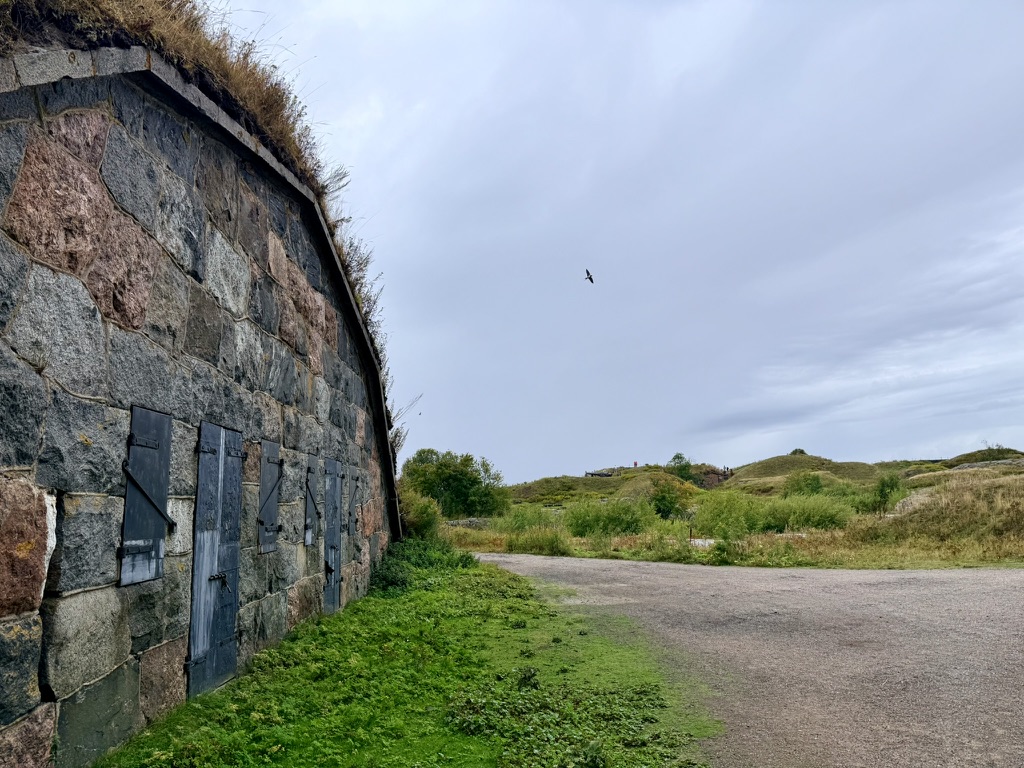
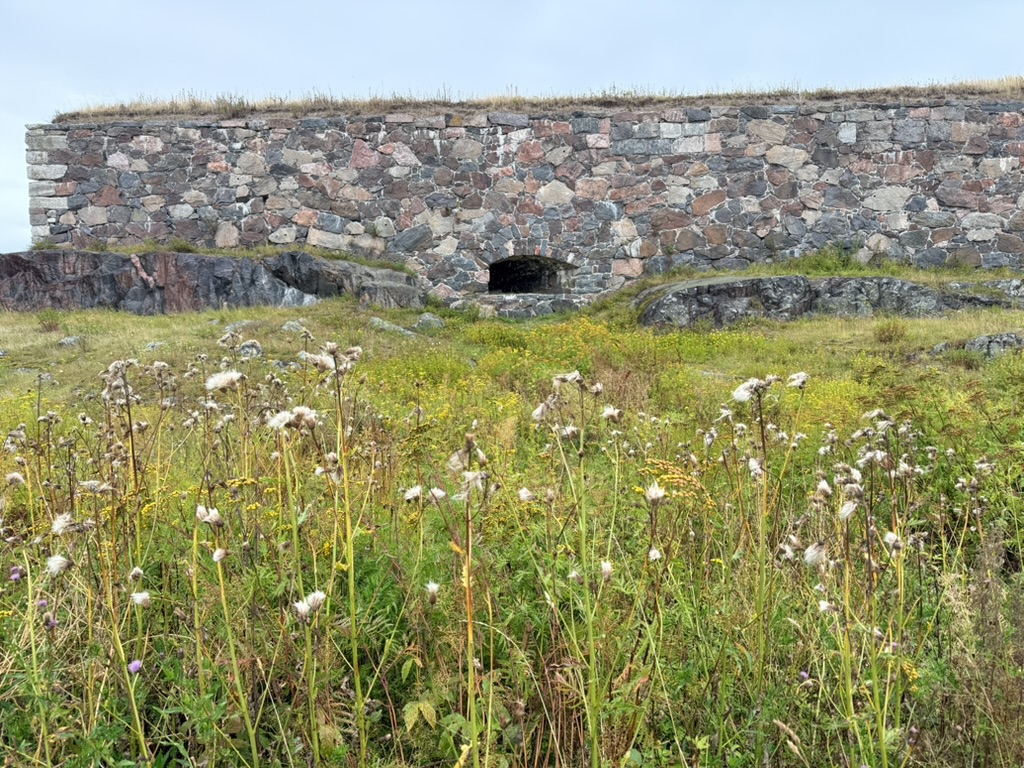
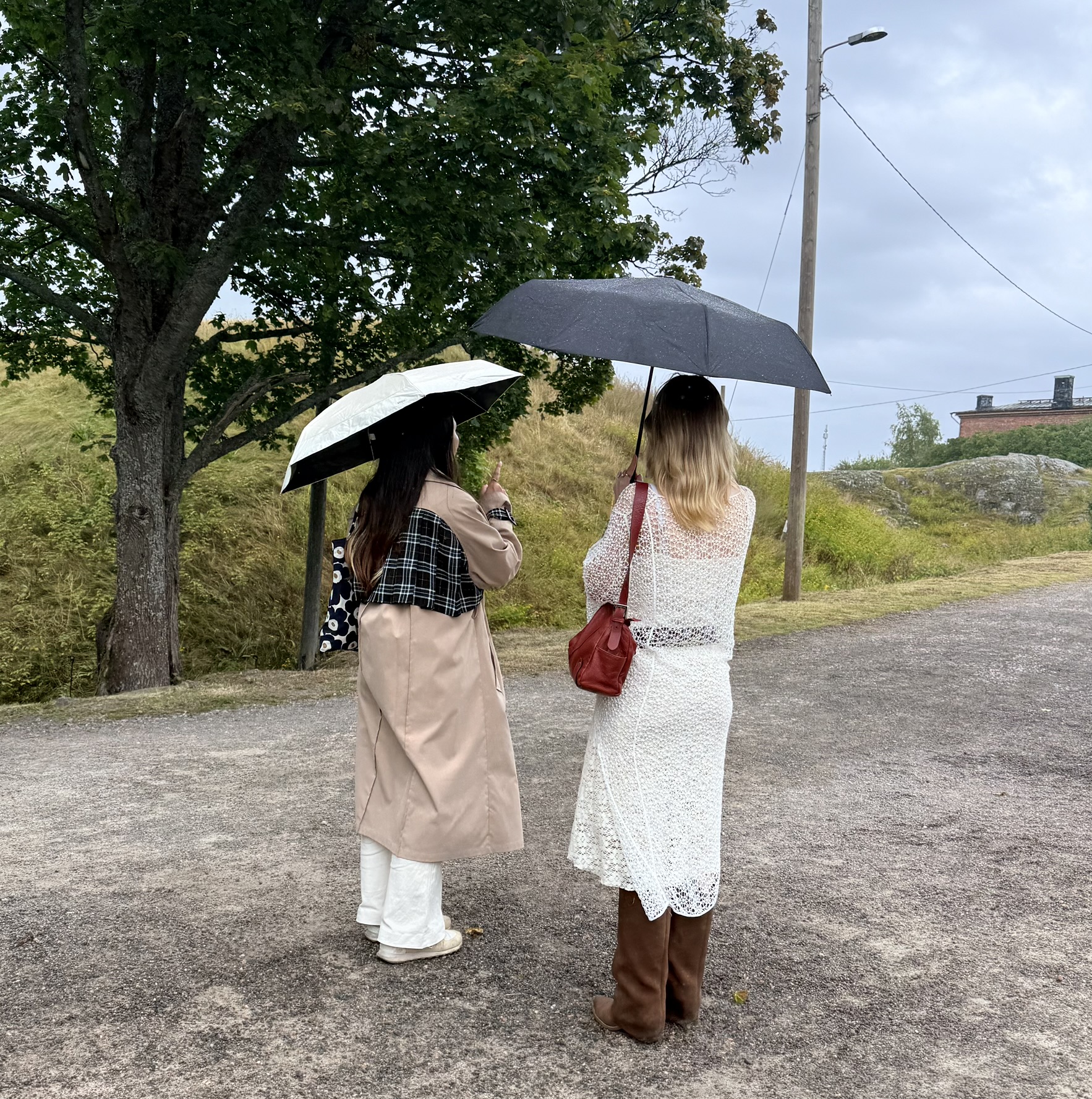
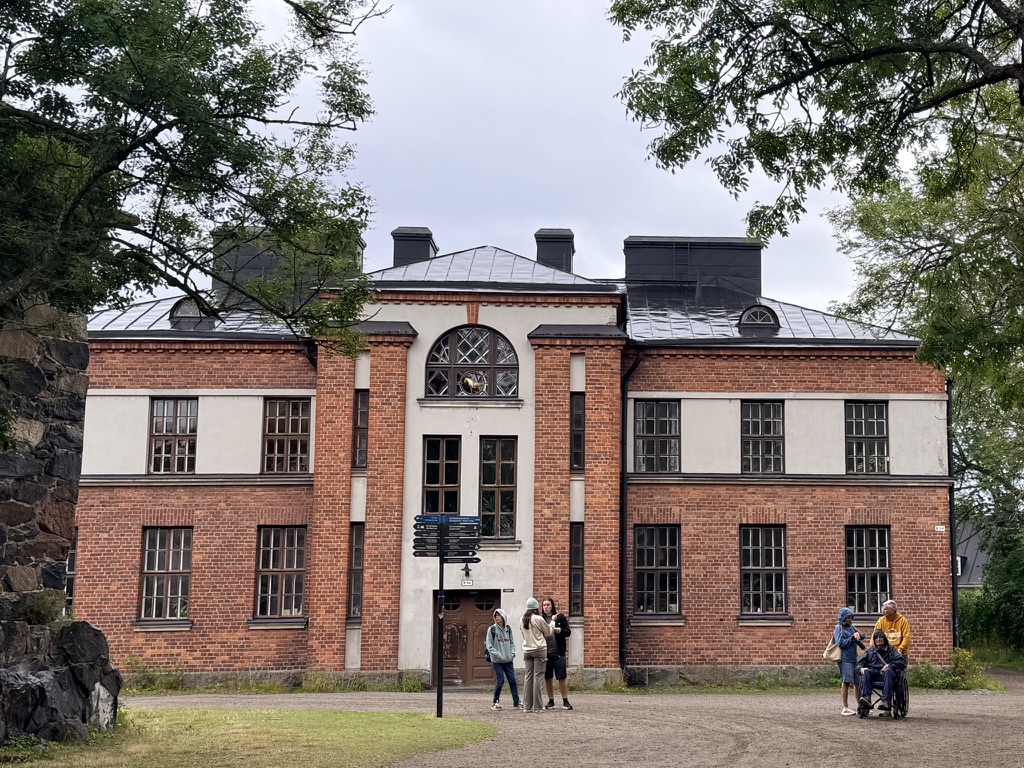
We spent what turned out to be a rainy day taking a ferry to Suomenlinna Sea Fortress, a sea fortress composed of eight islands, of which six have been fortified. The fortress was designated a UNESCO World Heritage site in 1991. It is also a maritime district of Helsinki, where about 800 residents live and, depending on the season, about 400-500 people work. About 200 buildings from different eras are spread out over 80 hectares of land. Many of the buildings have been converted to cafés, shops or museums.
The fortress alone has about 6 kilometers of walls and over a hundred cannons remaining.
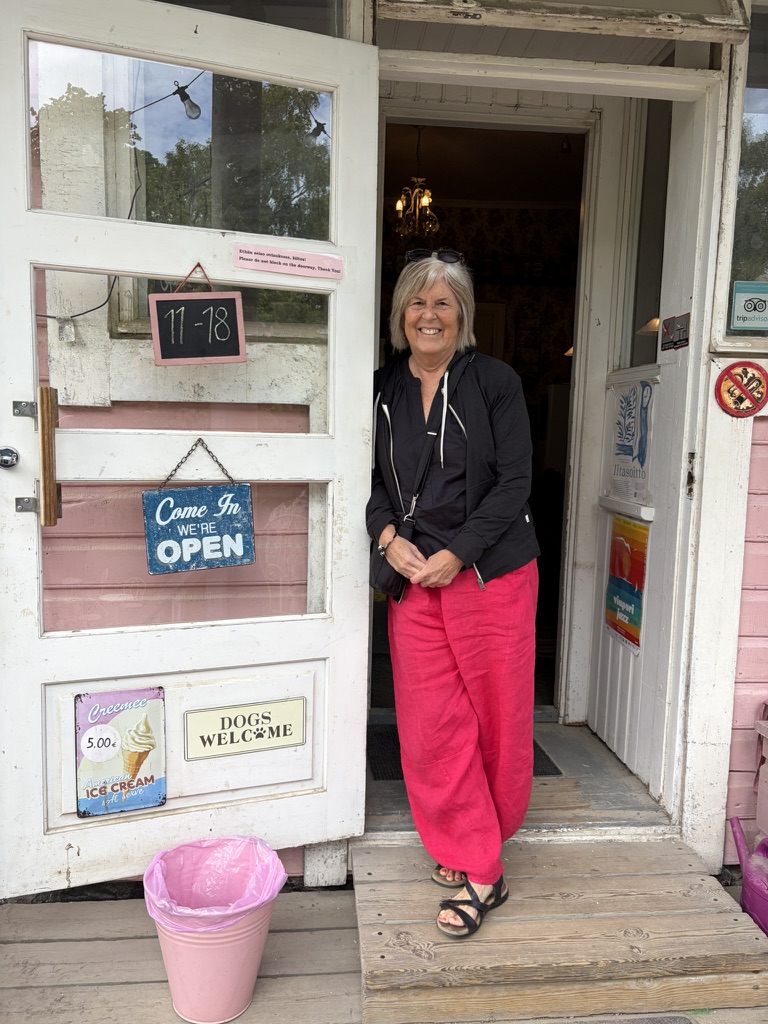
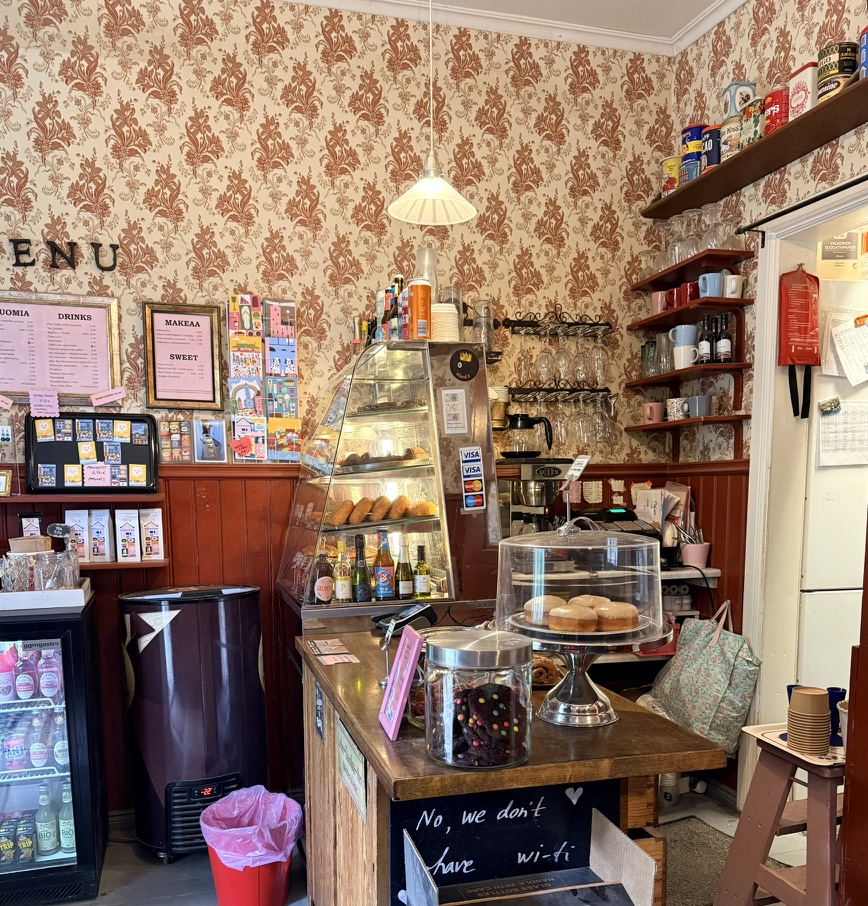
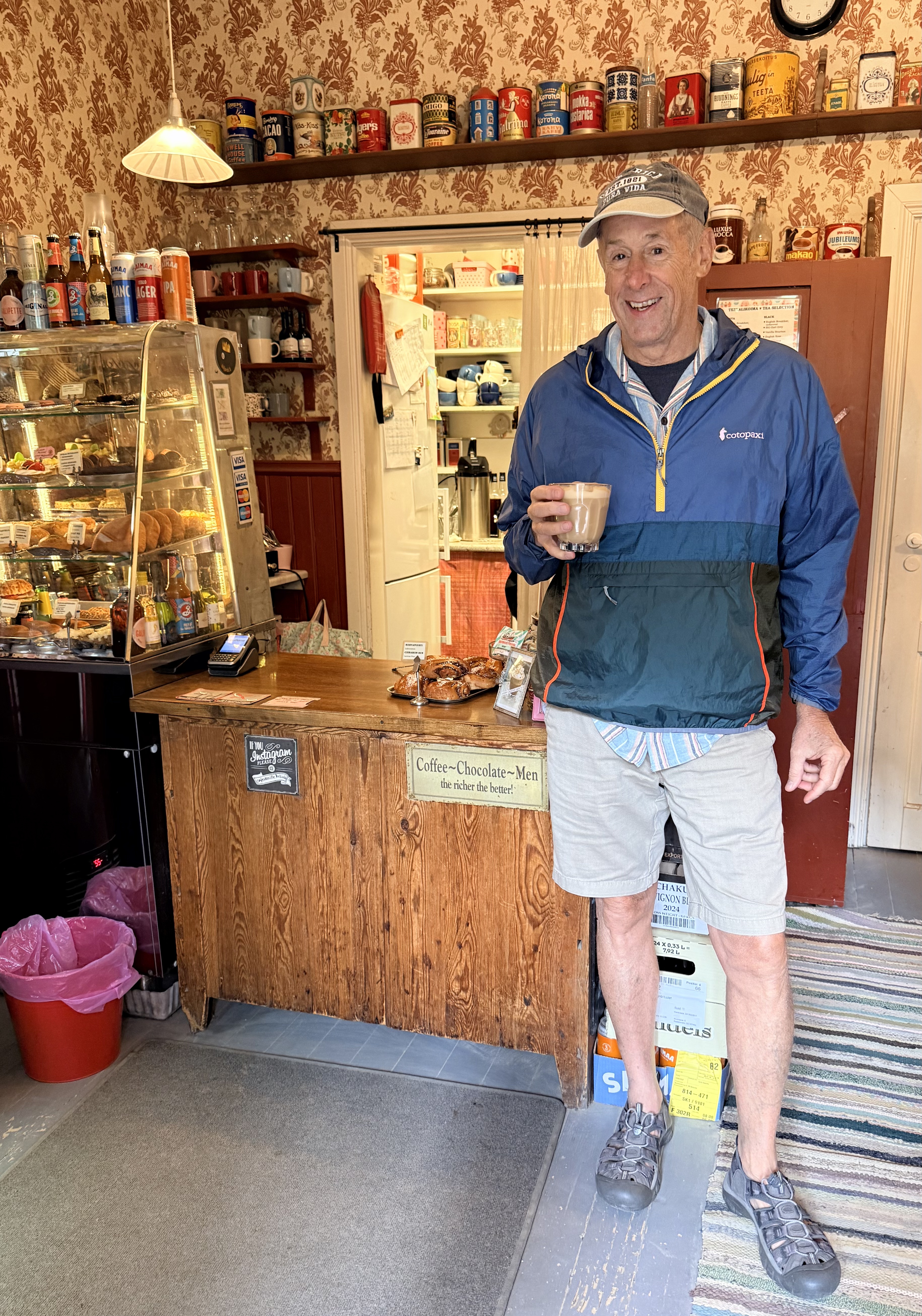
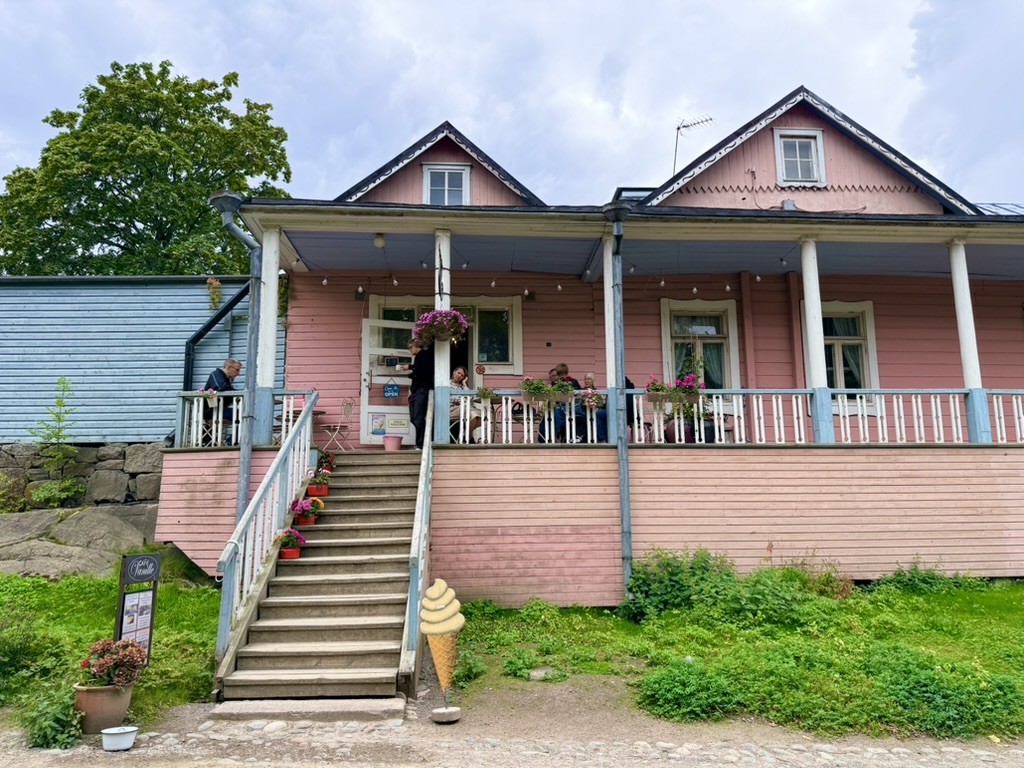
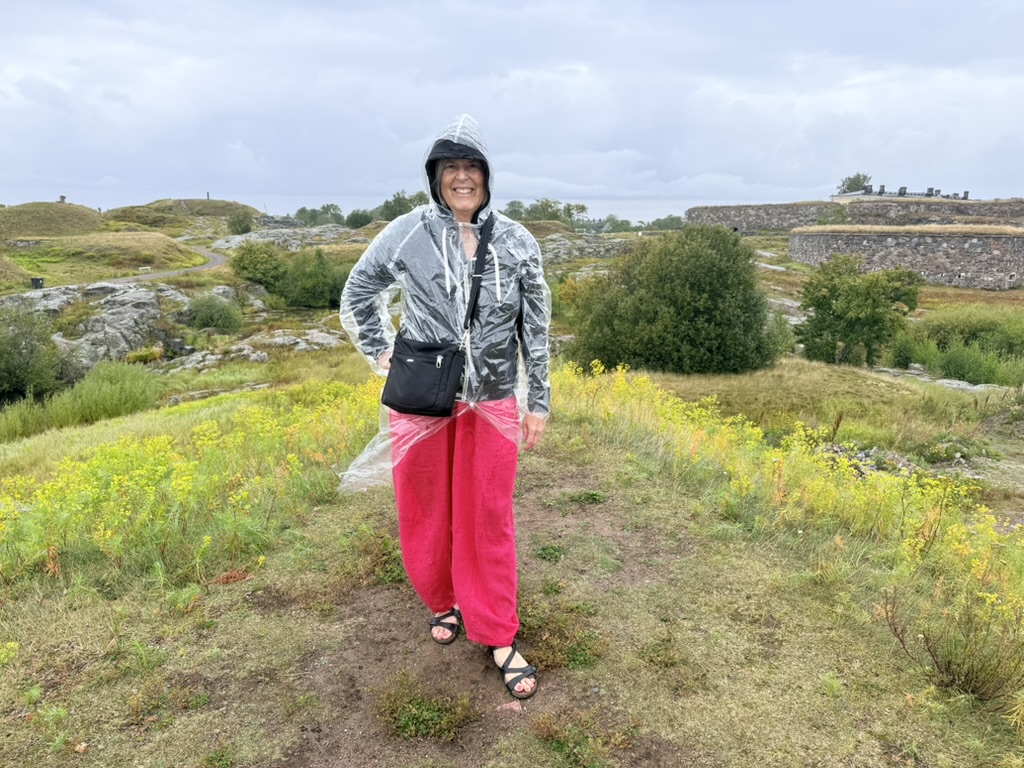
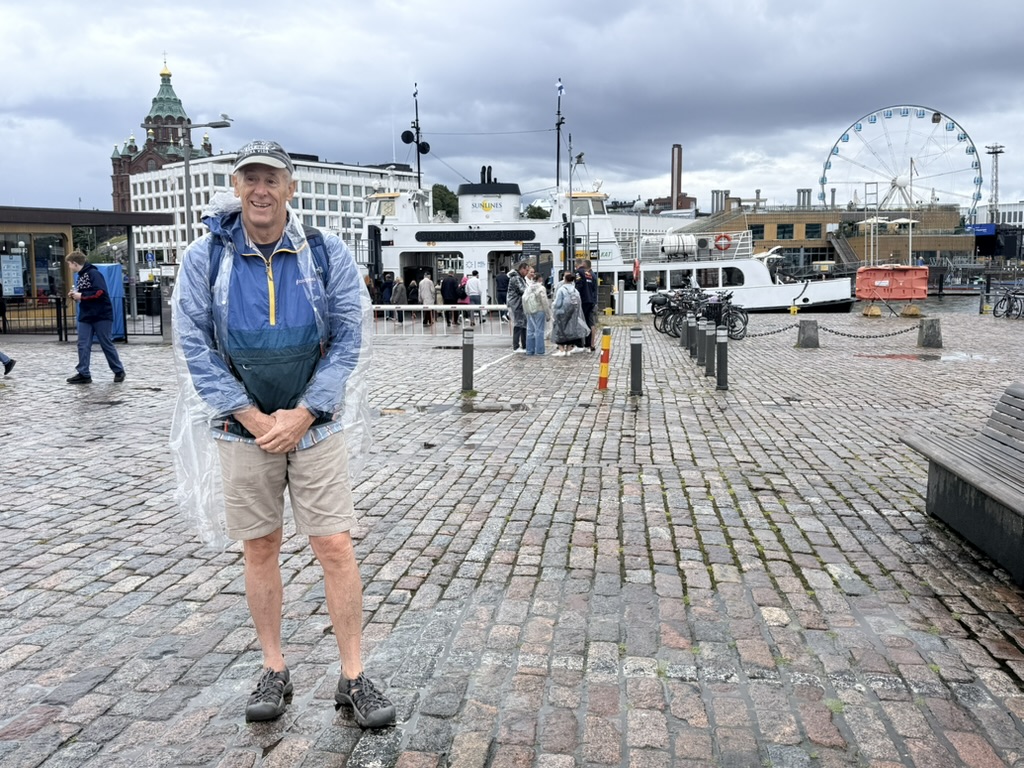
As soon as we got off the ferry, it started sprinkling, despite a weather forecast that called for rain at 4:00. As we planned to do our outings in the morning, we stupidly had left our umbrellas and raincoats in the apartment. We wandered around in the rain, stopping for pastries at Café Vanille, and getting soggy as we walked. Luckily we came upon a little shop that sold cheap rain ponchos, which we bought.
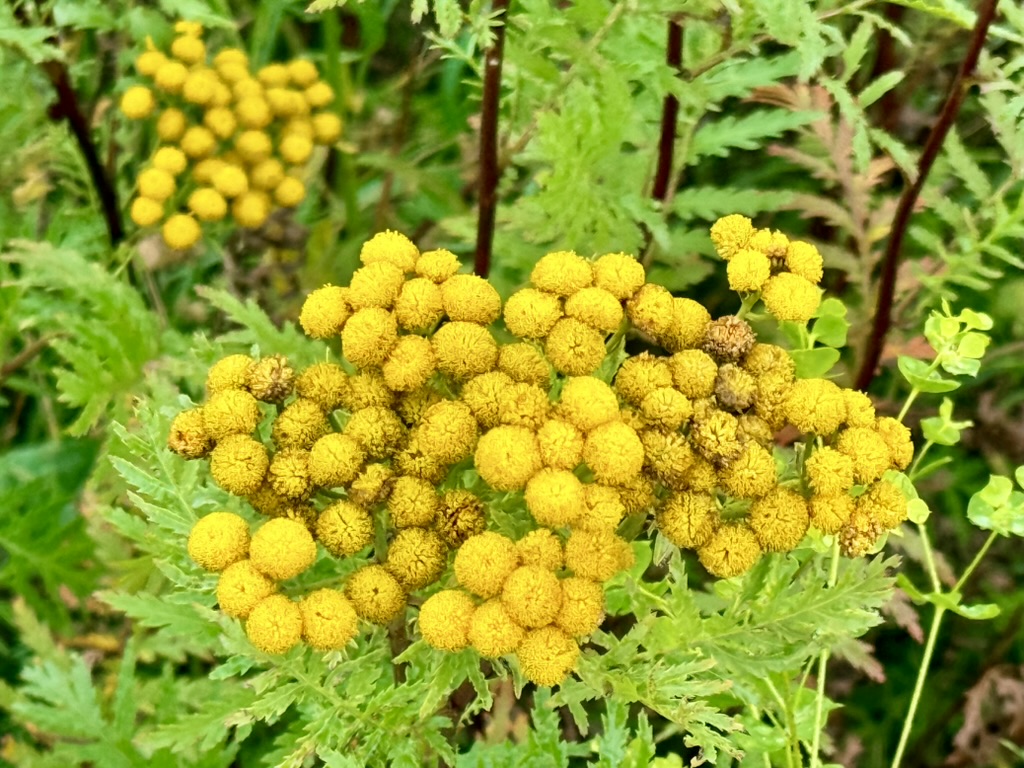
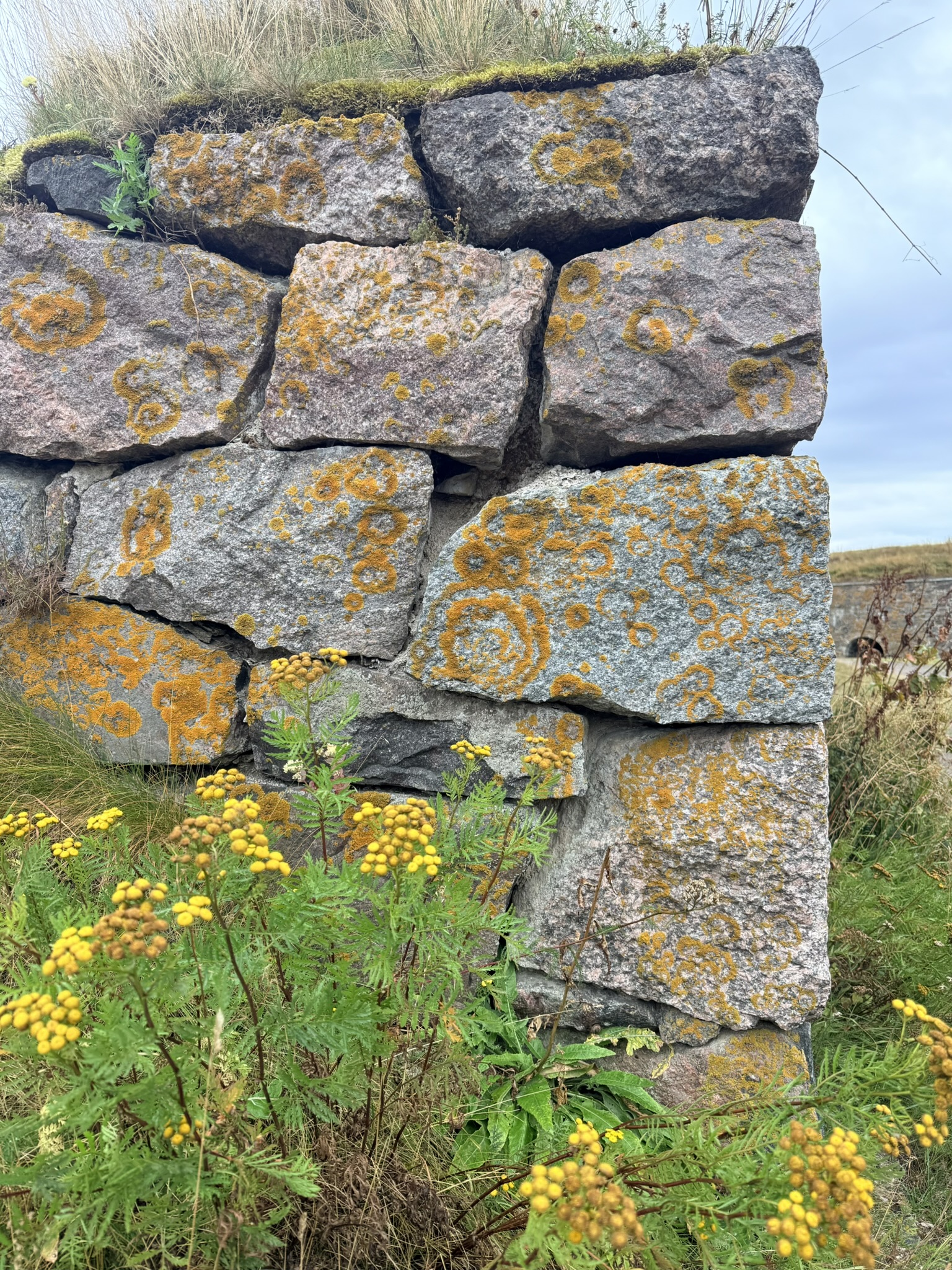
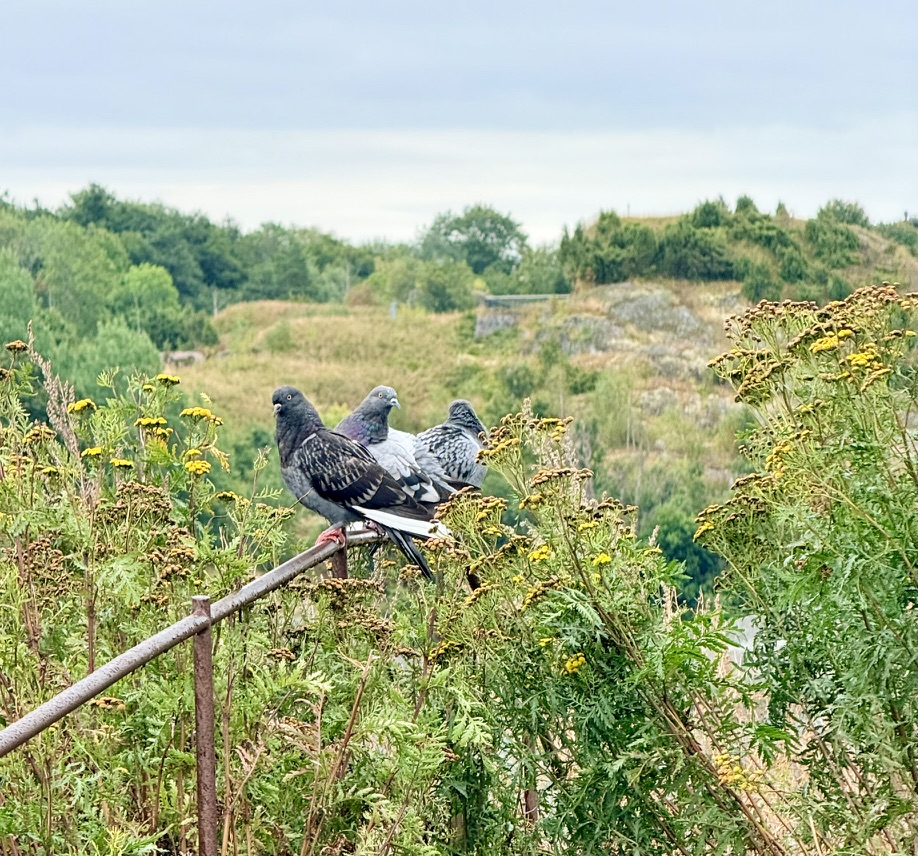
I love these kinds of windblown places at the edges of the world. There is nothing that mesmerizes me so much as grasses blowing in a breeze. Though it was cold and damp wandering through the fortress, it was still atmospheric and lovely in a wild kind of way.
The Swedish Crown began construction of the fortress in 1748 as a defense against Russia. Russia seized the fortress in 1808, which led to their eventual seizure of Finland in 1809 and the subsequent establishment of the Grand Duchy of Finland, an autonomous state within the Russian Empire. Russia abandoned the fortress after Finland declared independence in 1917.


Esplanadi, Marimekko, & miela
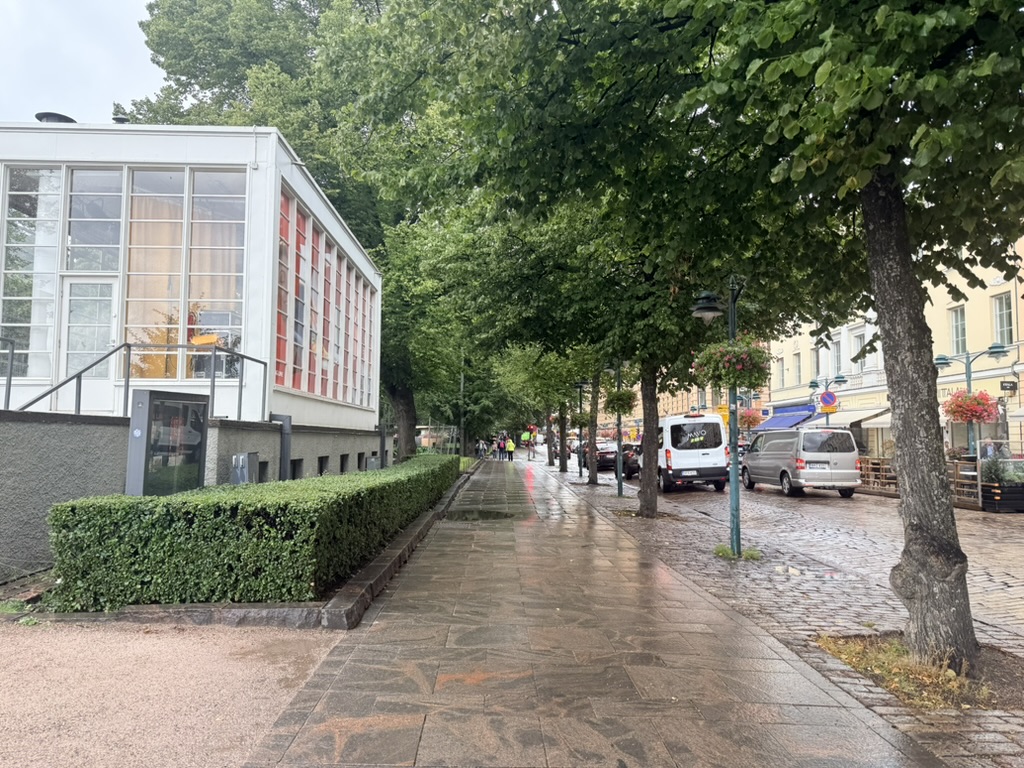
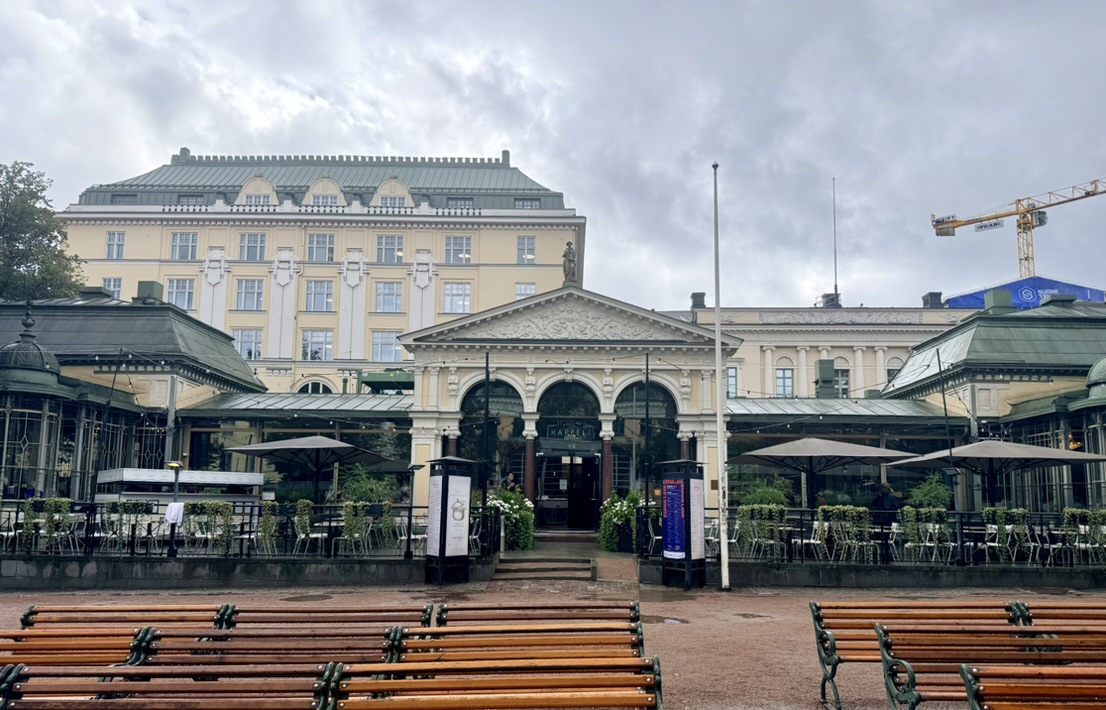
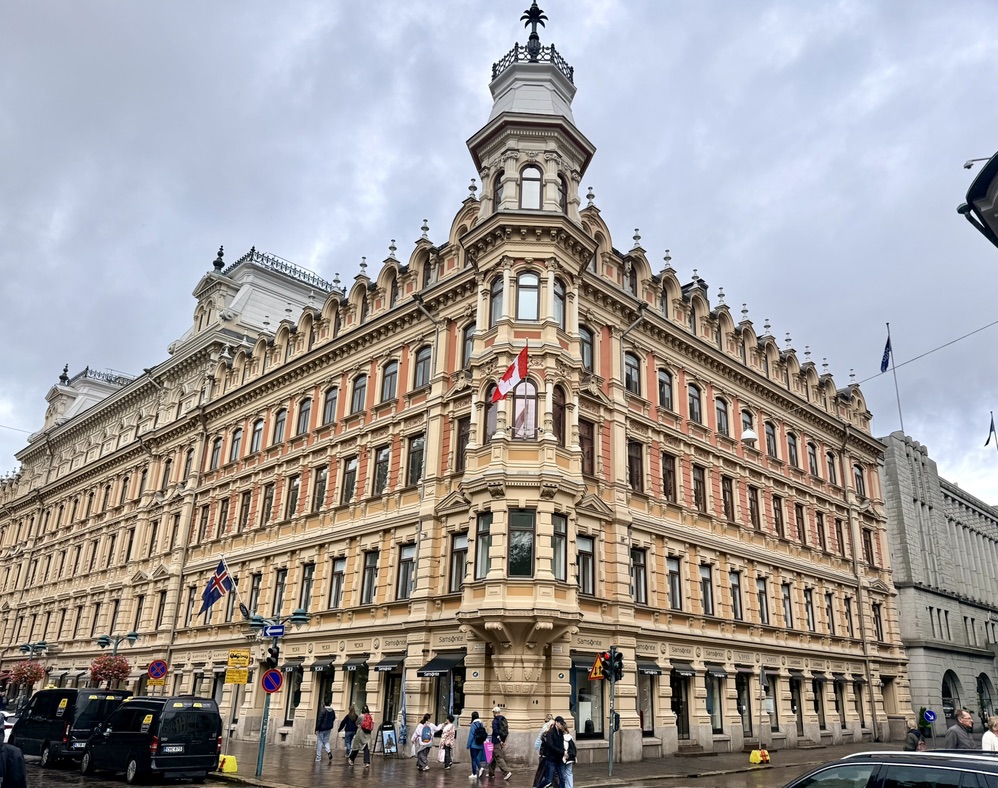
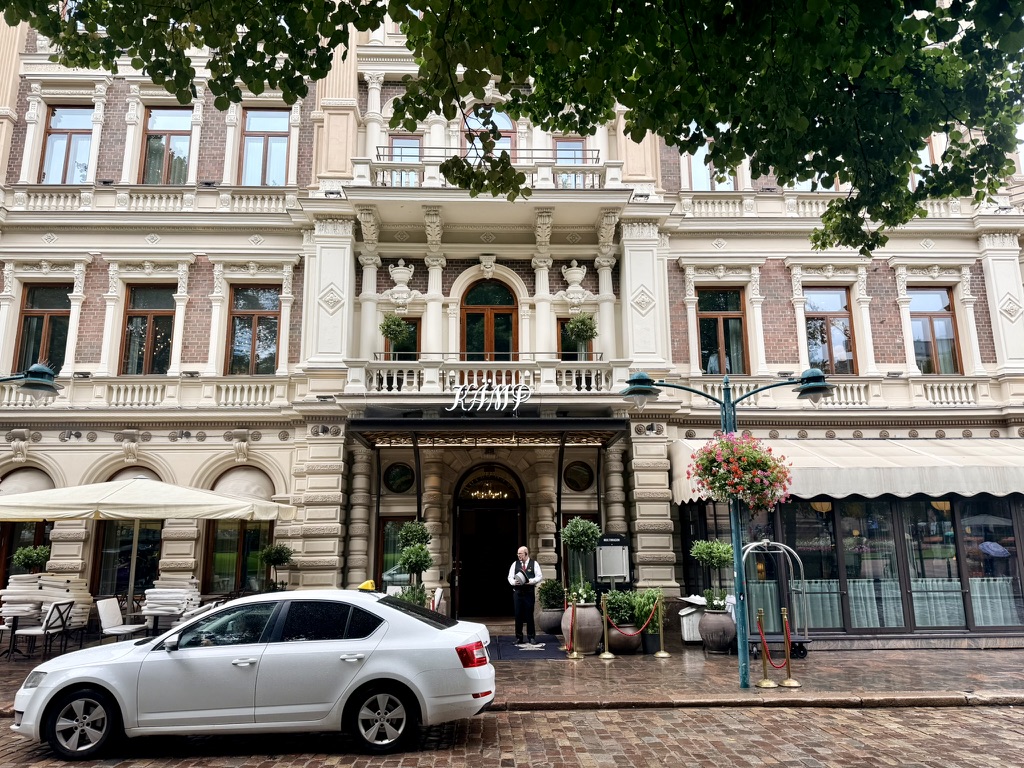
After our outing to Suomenlinna, we walked down Esplanadi, colloquially known as Espa, an esplanade and urban park perpendicular to the harbor. The edge of the park is lined with upscale shops and classical imposing buildings.
Mike almost lost his life as he stood at the edge of the park with his back to the road taking a picture. A silent electric bus ran inches away from his back. One step off the curb and he would have been flattened.
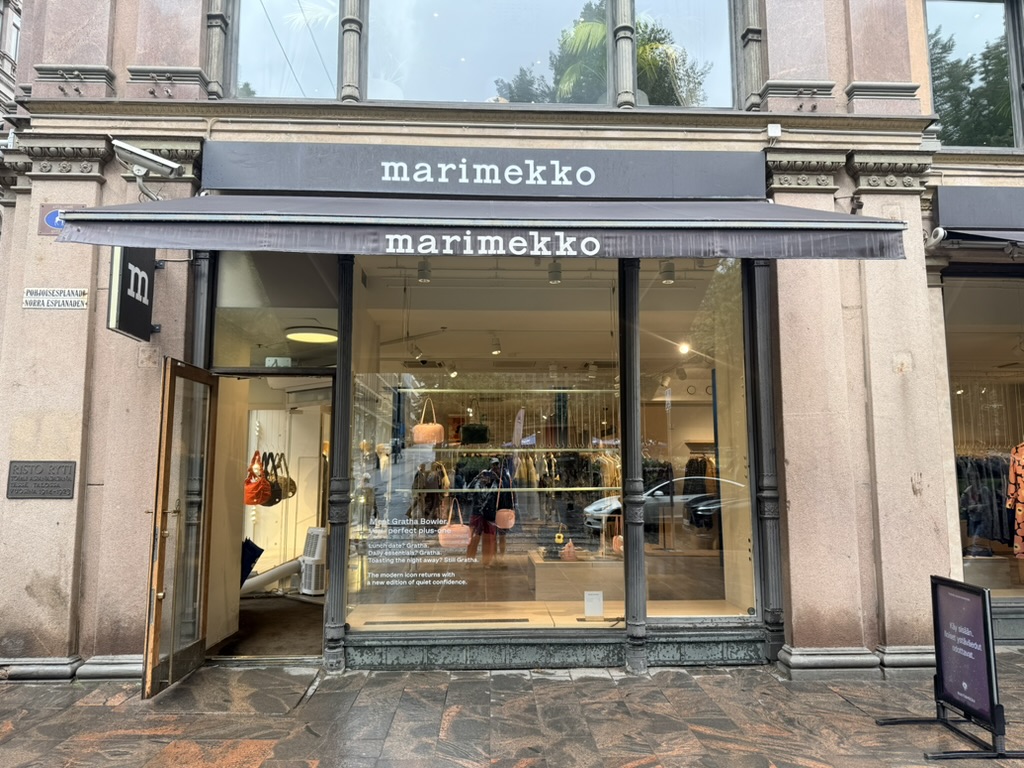
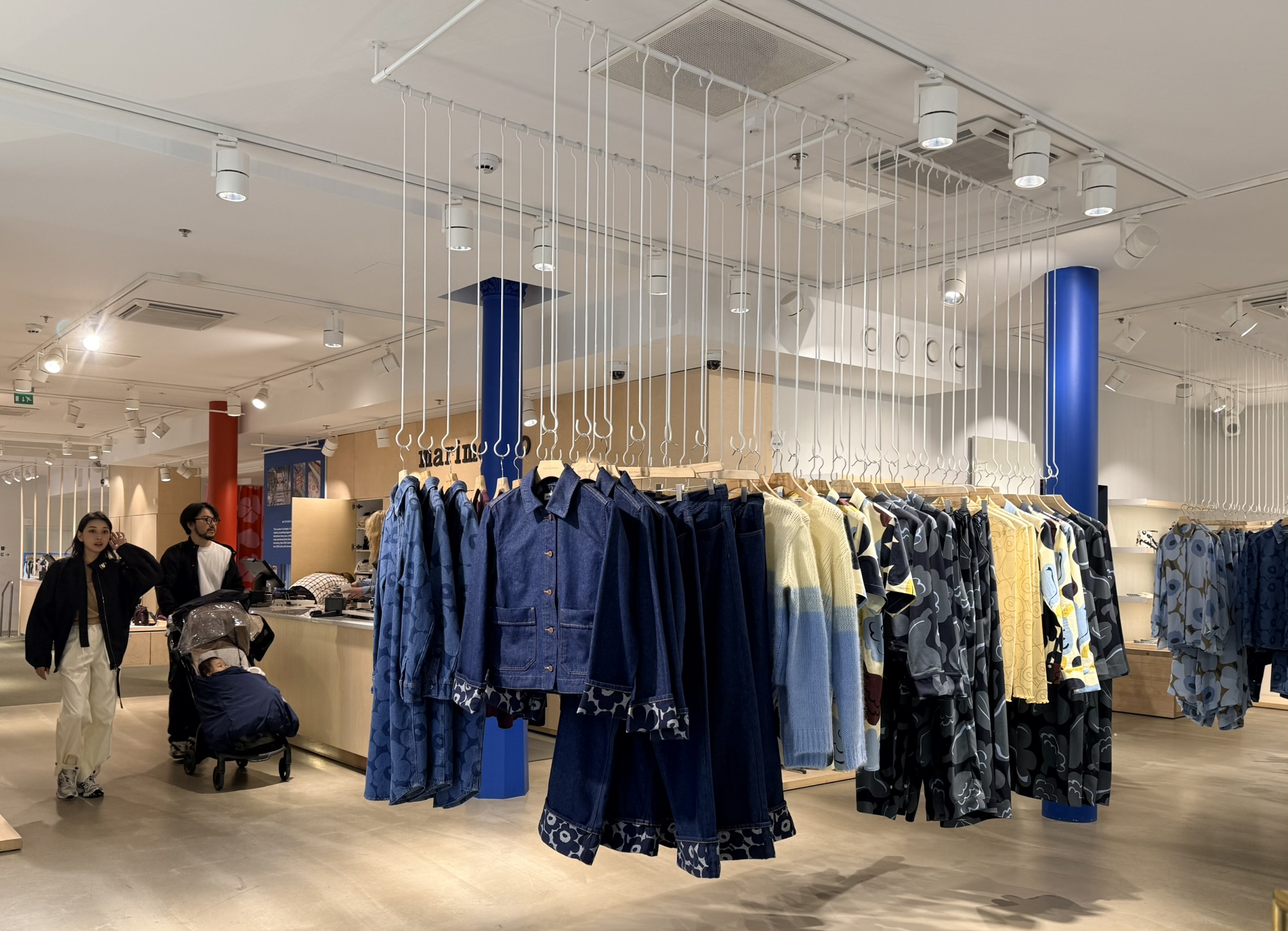
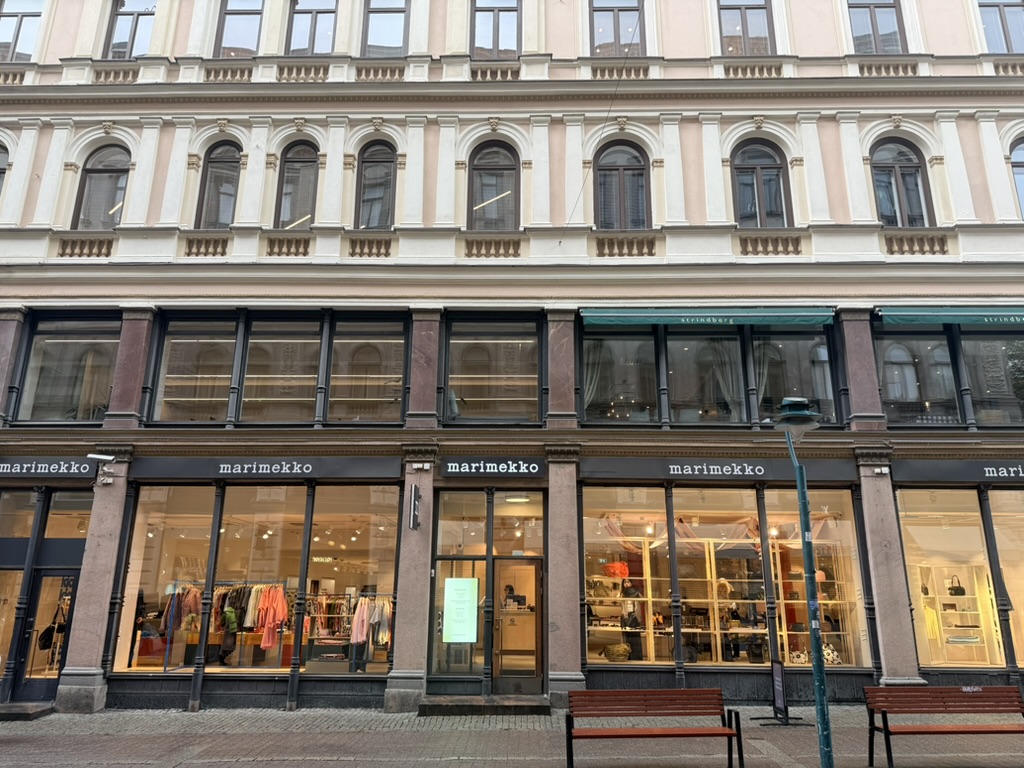
Of course we had to dip into the upscale marimekko store, a Finnish textile and clothing company that sells stylish and very expensive clothes and housewares.
On our way to a bus stop, we stopped into a store called miela, where I bought a very cute Finnish top with a black and white design that will be my “anniversary present.” Mike says I have a shell game going on at this time of year because I have my birthday in October, our anniversary in November, and Christmas in December. I start buying things and say, “This will be for my birthday (or anniversary or Christmas).” He now makes a note in Quicken to keep track of all my shenanigans under the guise of “gifts.” He’s nixed the idea of “gifts” for other isolated holidays such as Goundhog Day, Thanksgiving, Veteran’s Day. But I keep trying! 🙂
A day trip to Porvoo
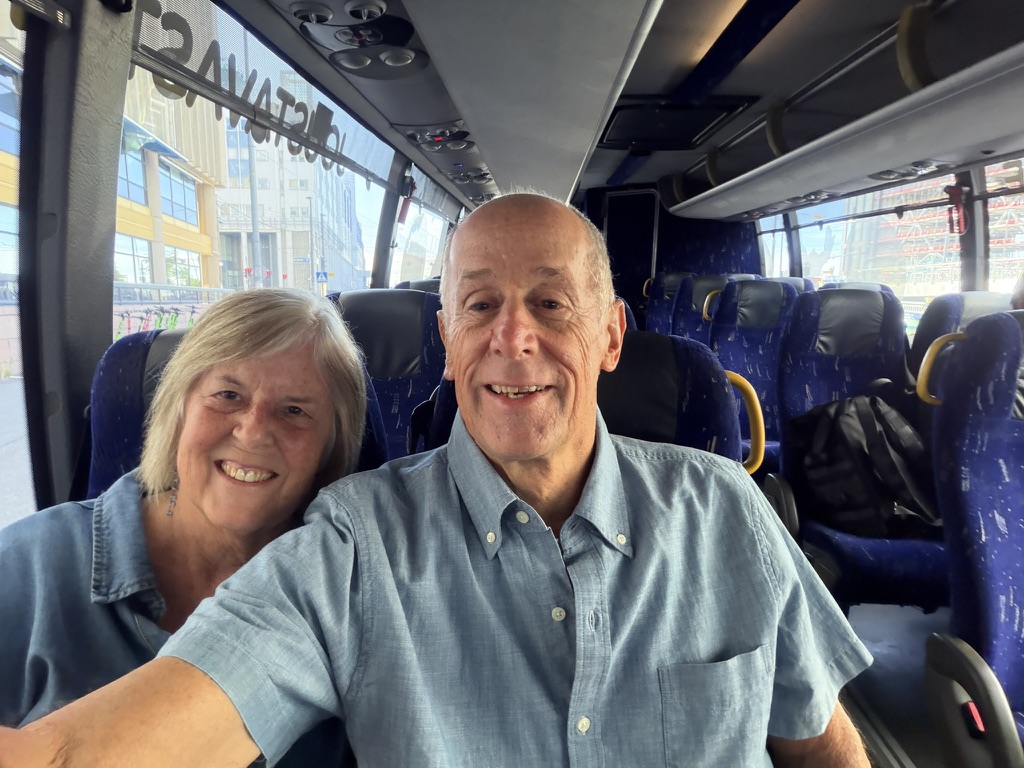
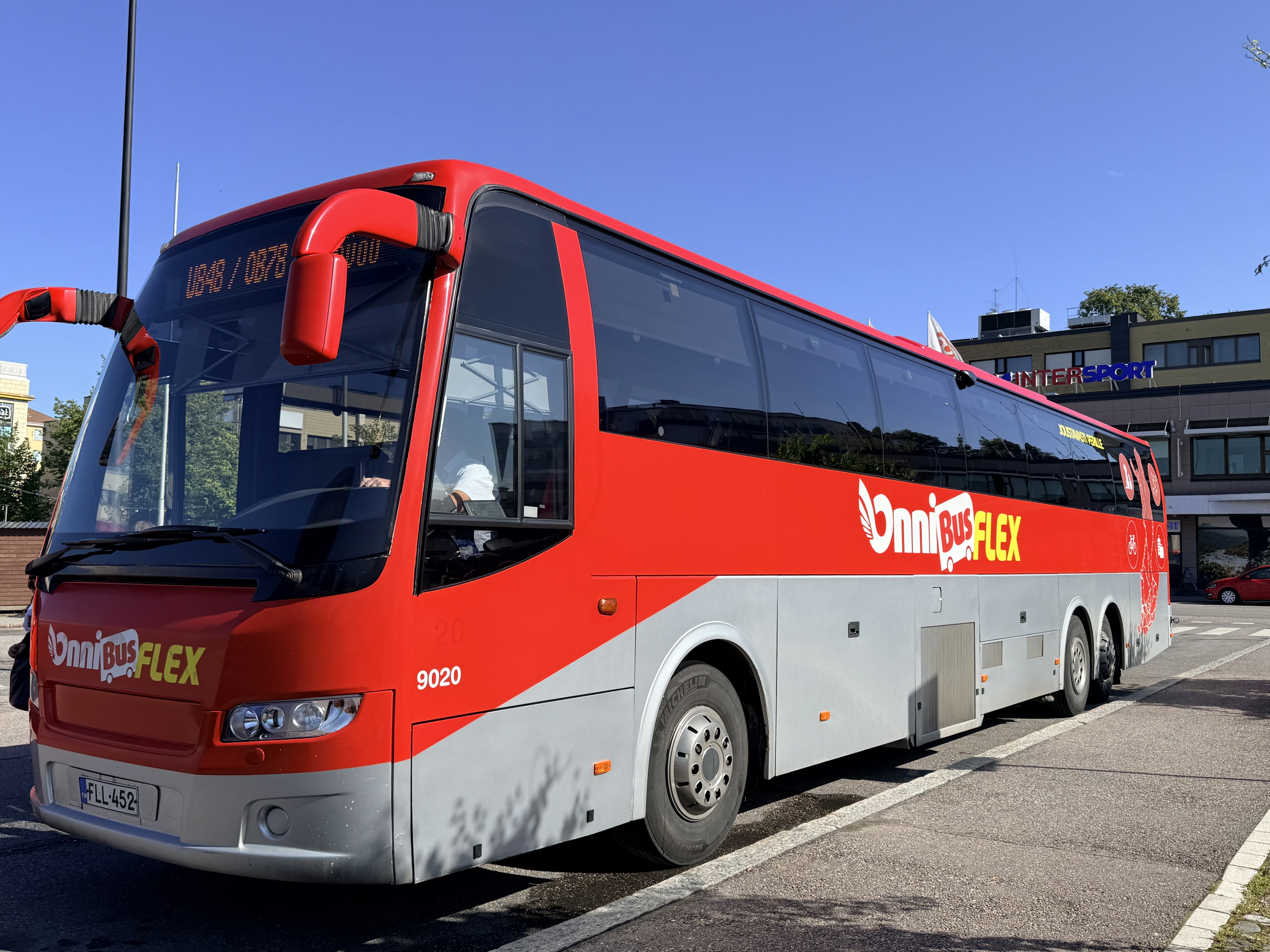
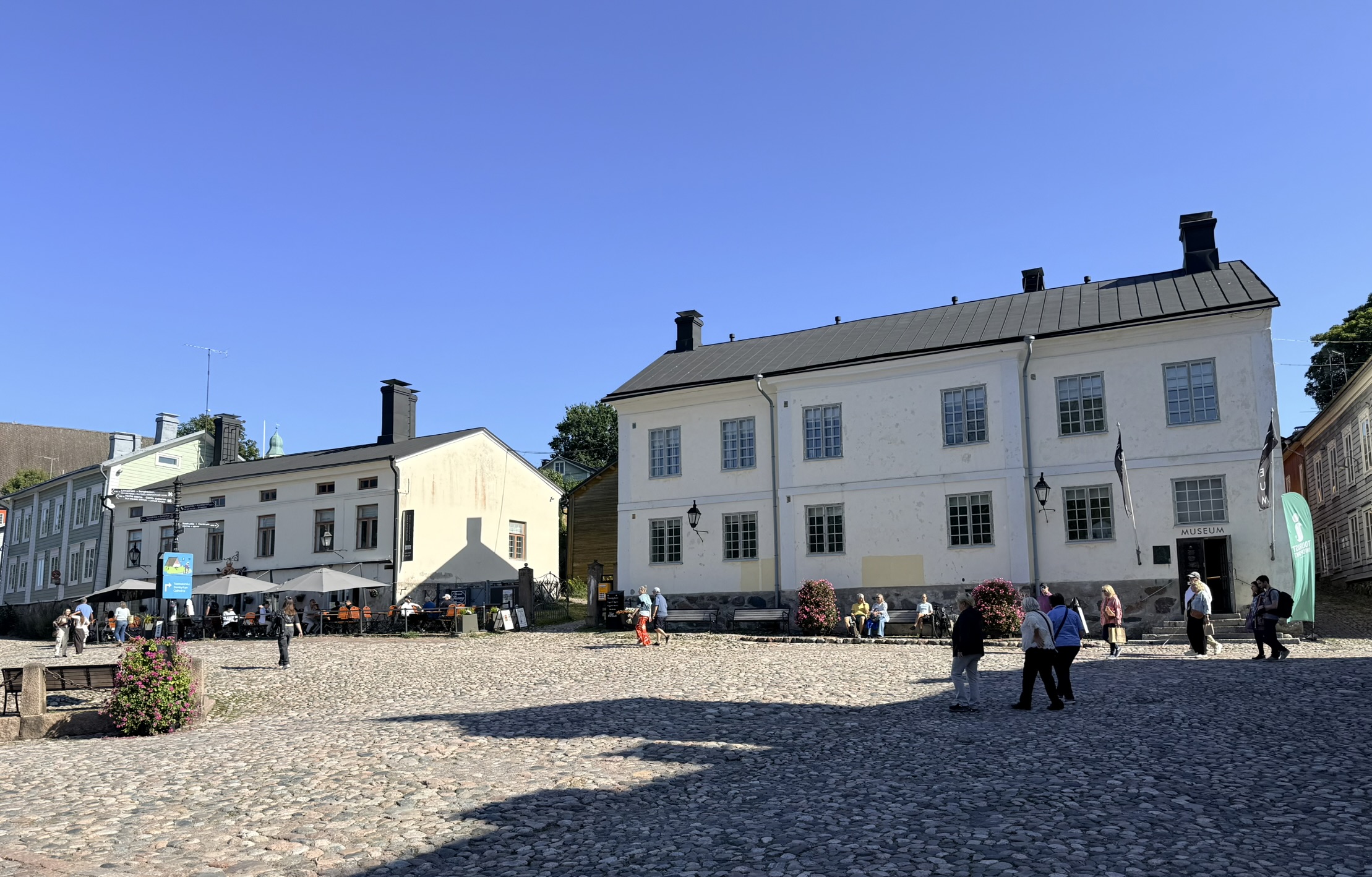
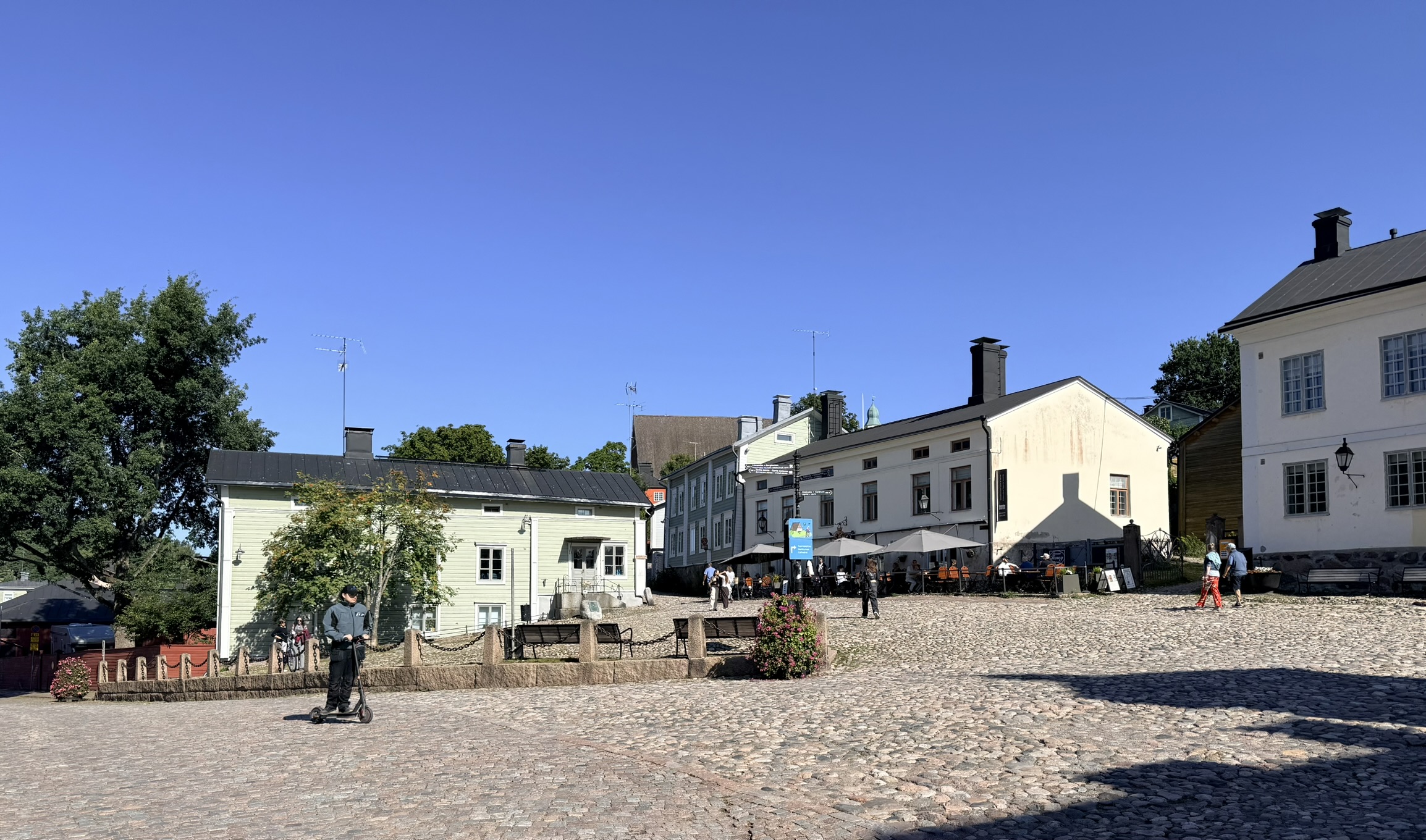
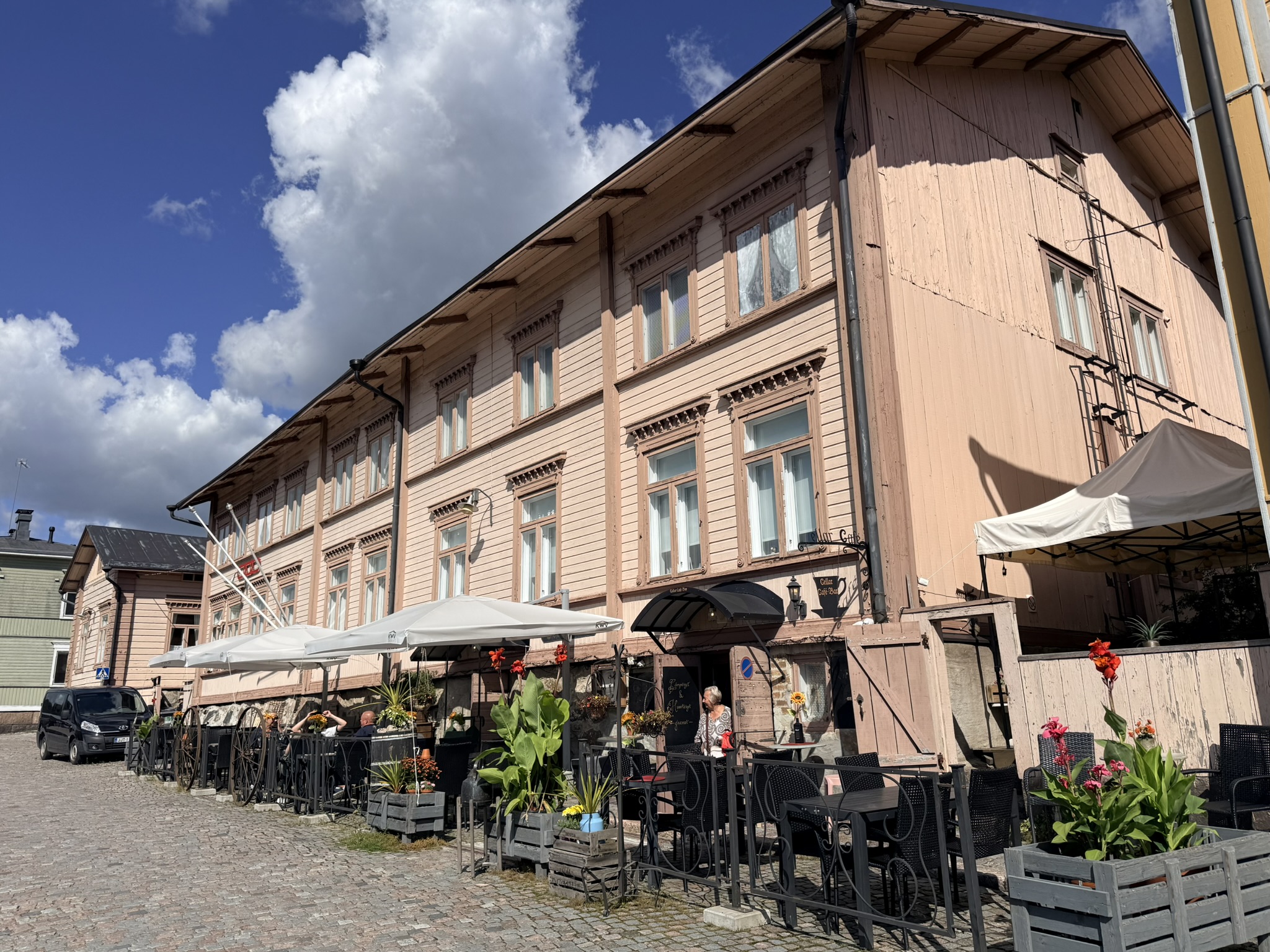
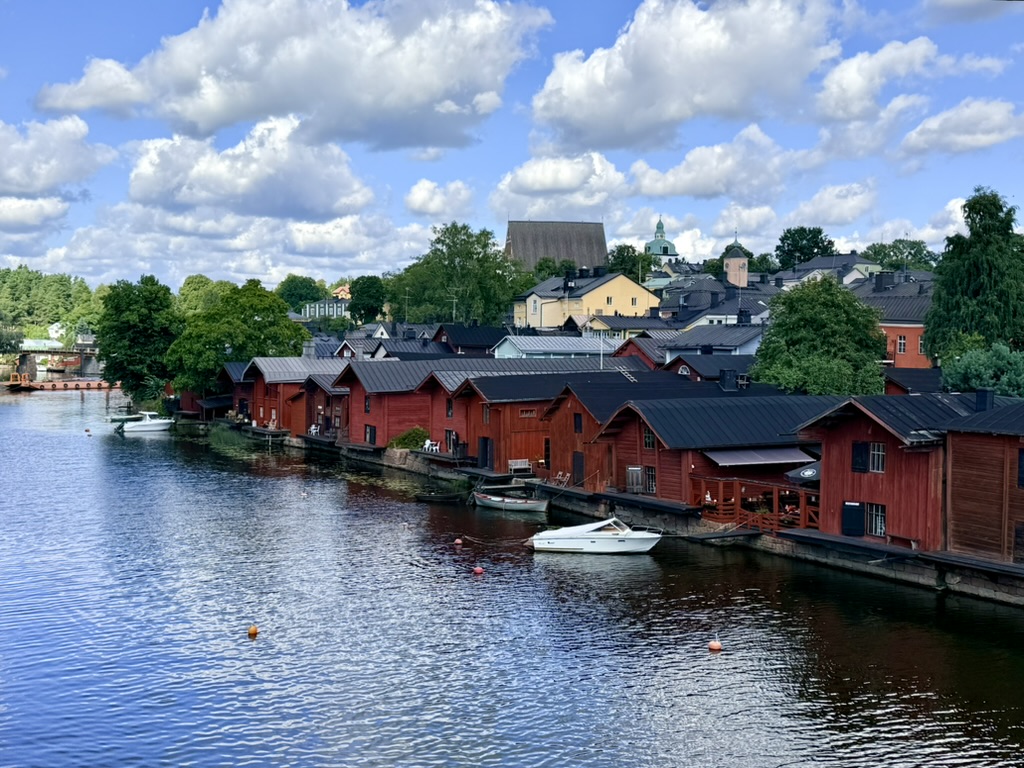
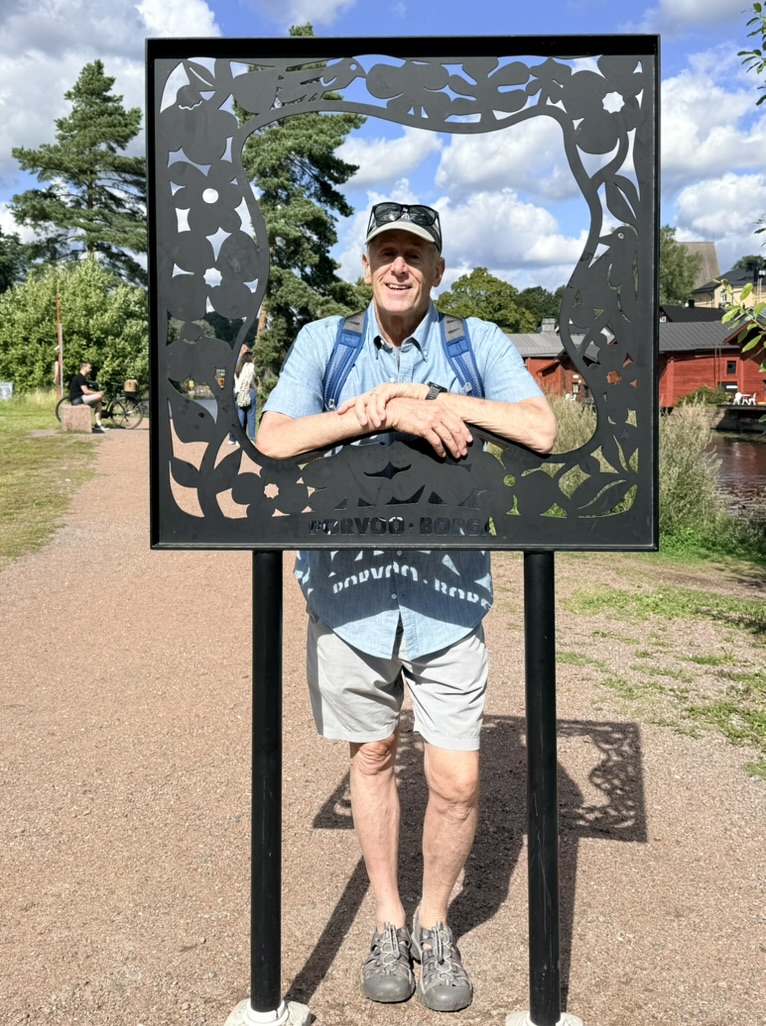
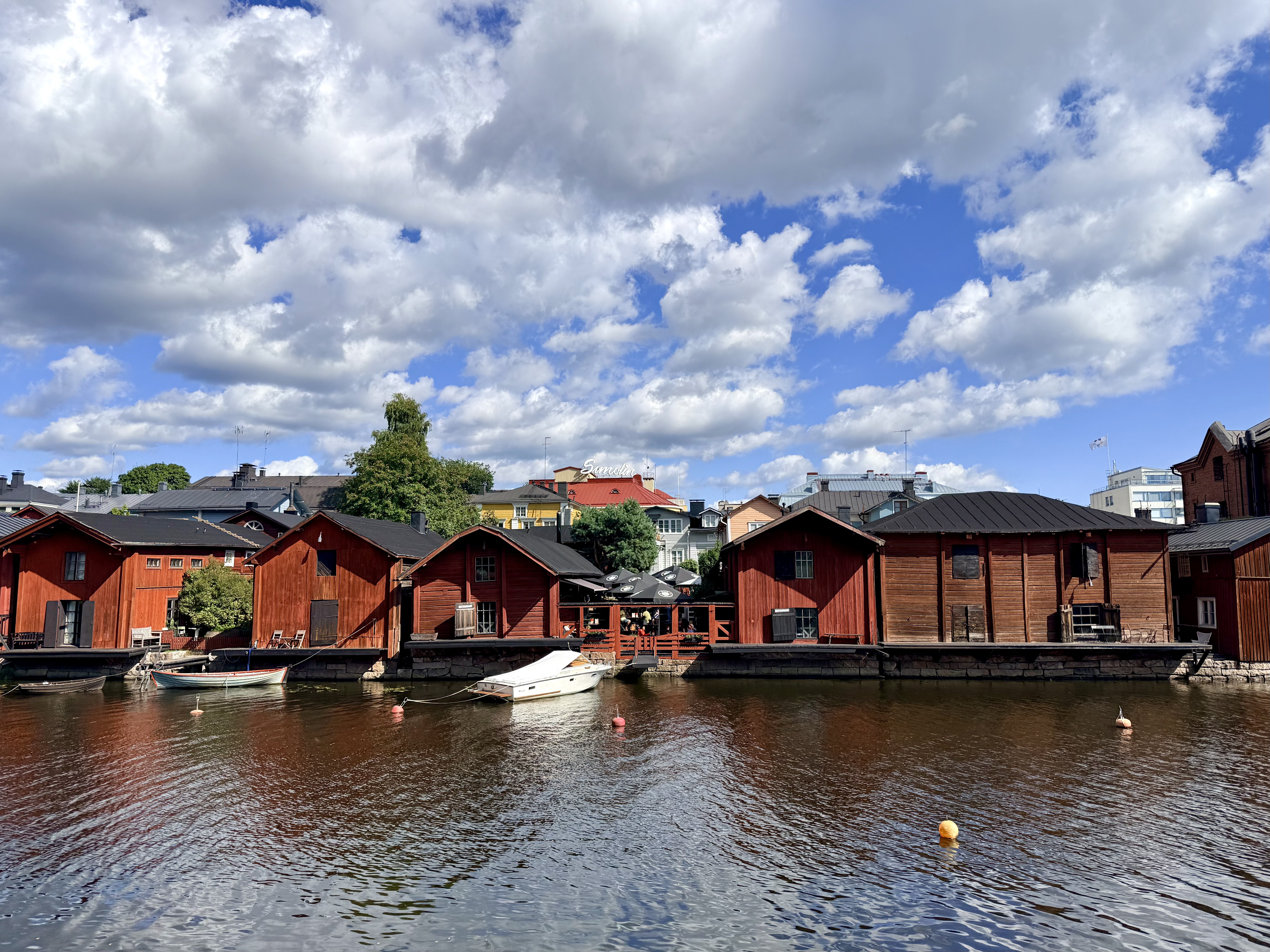
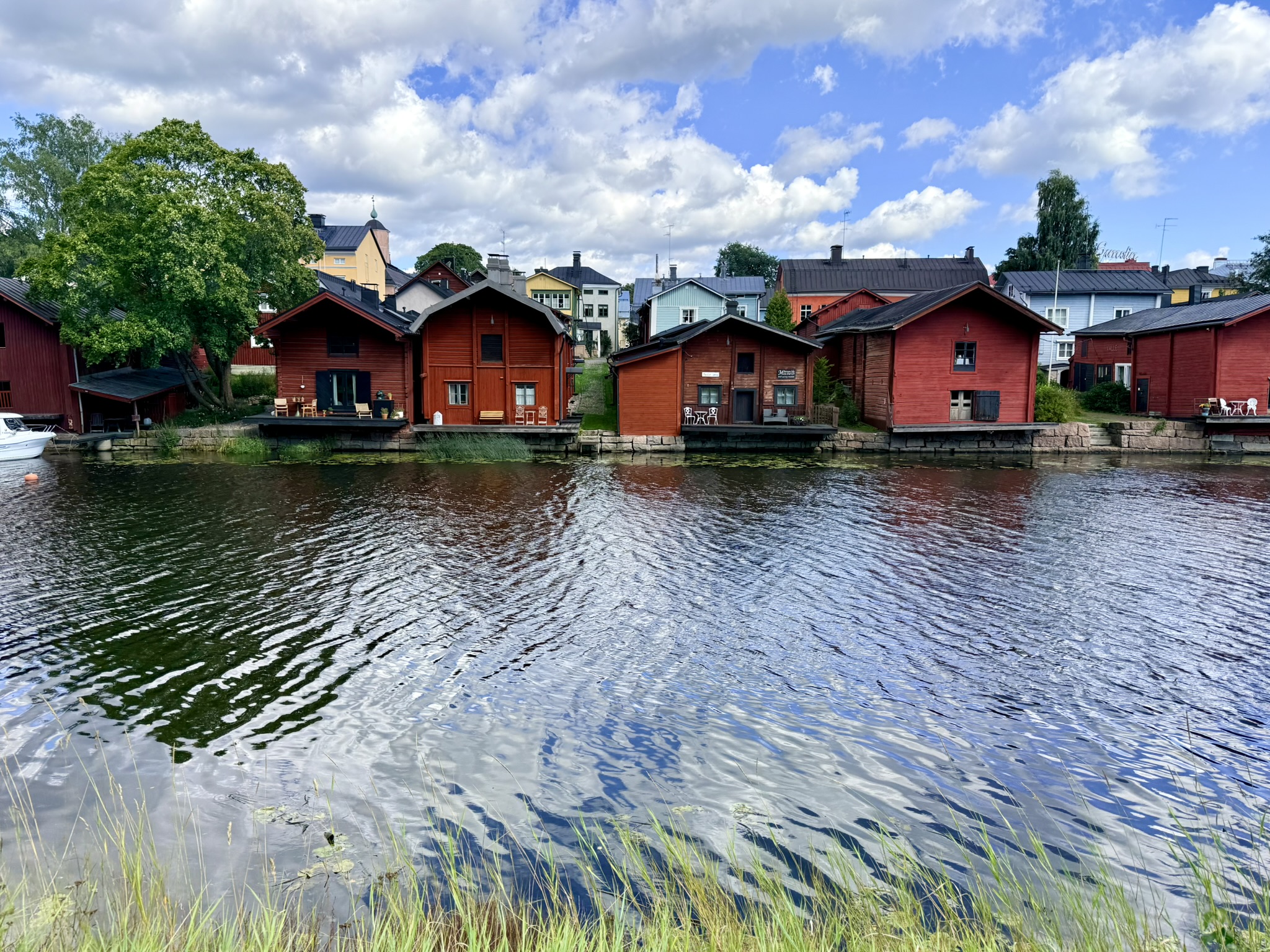
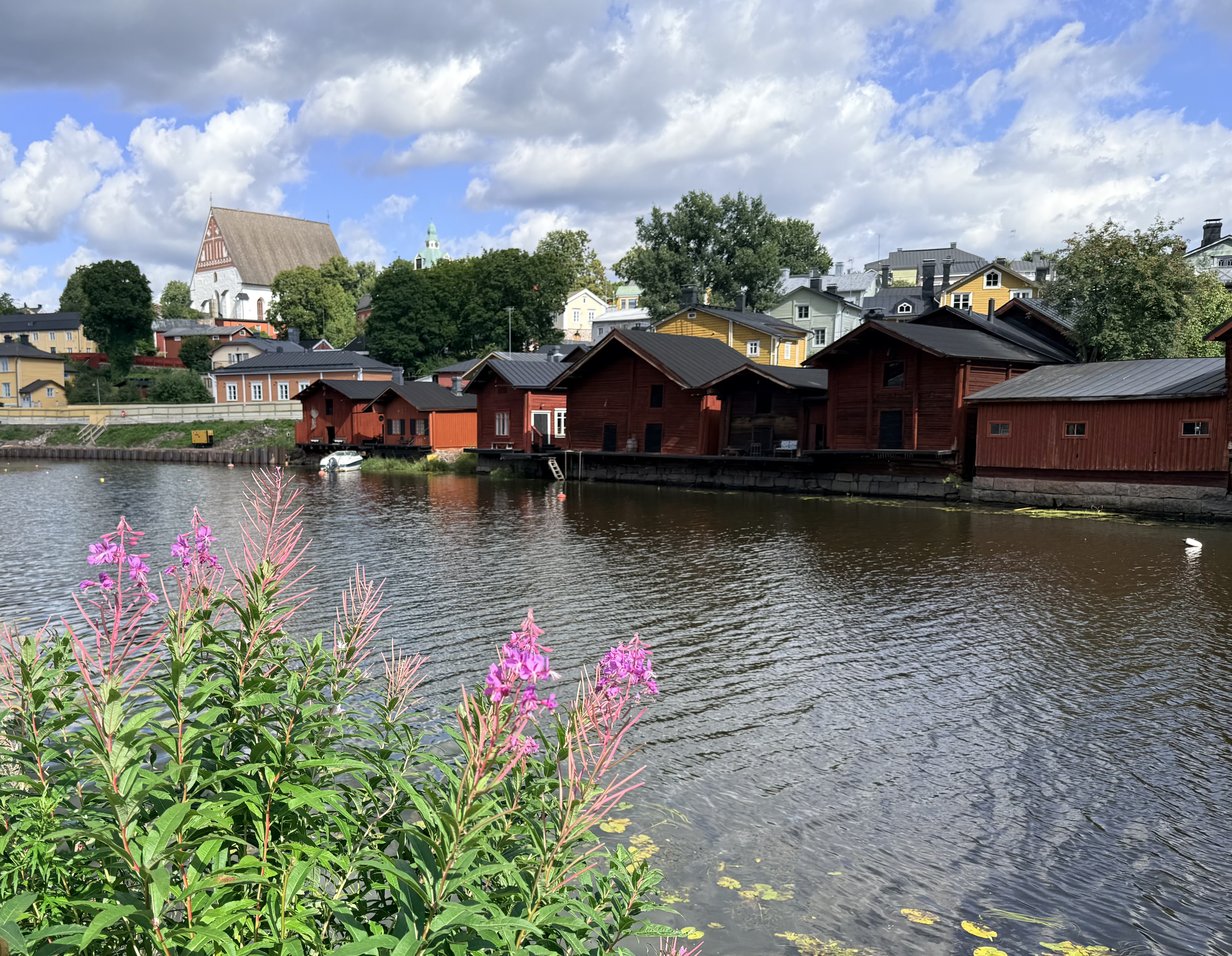
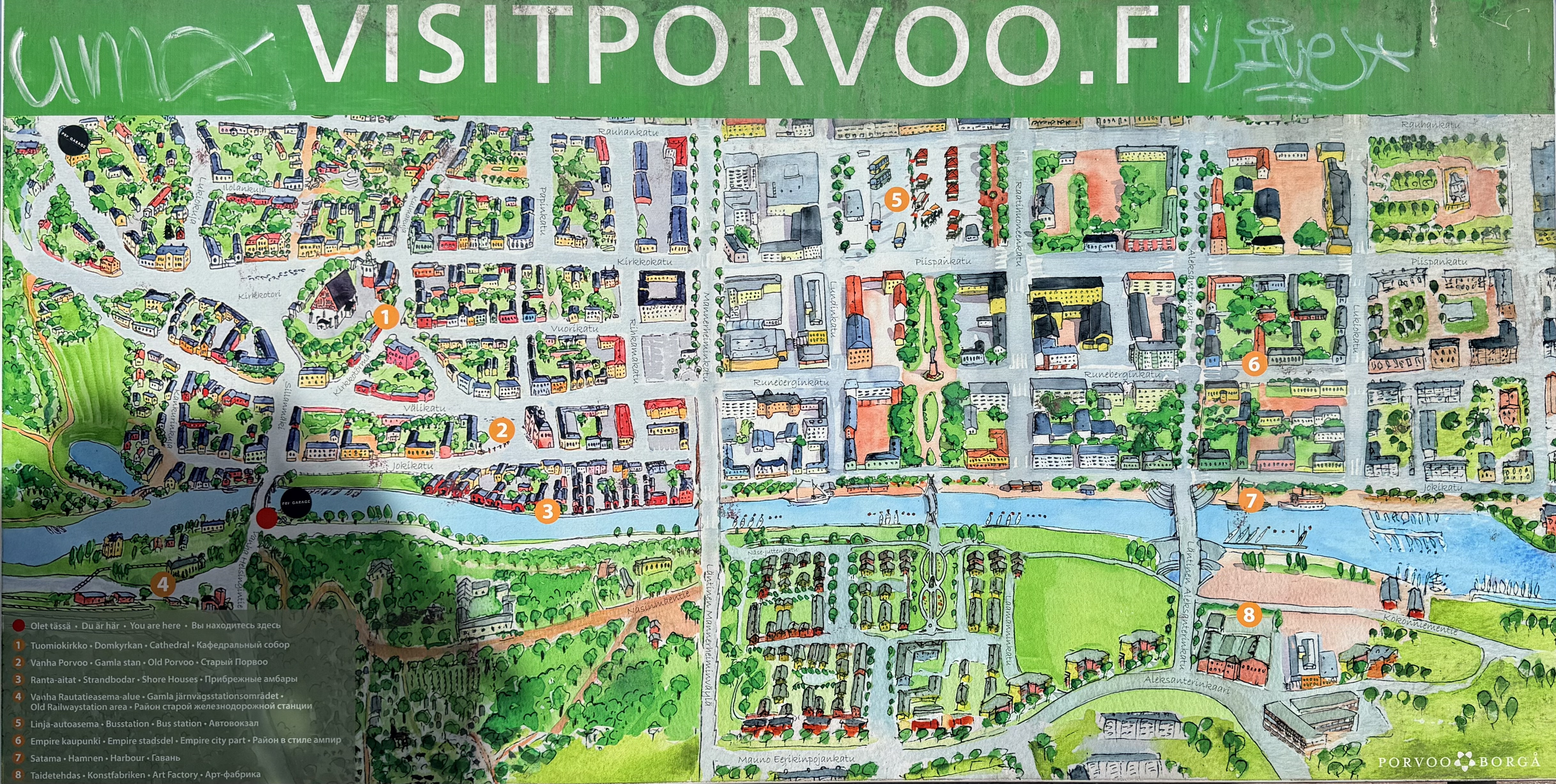
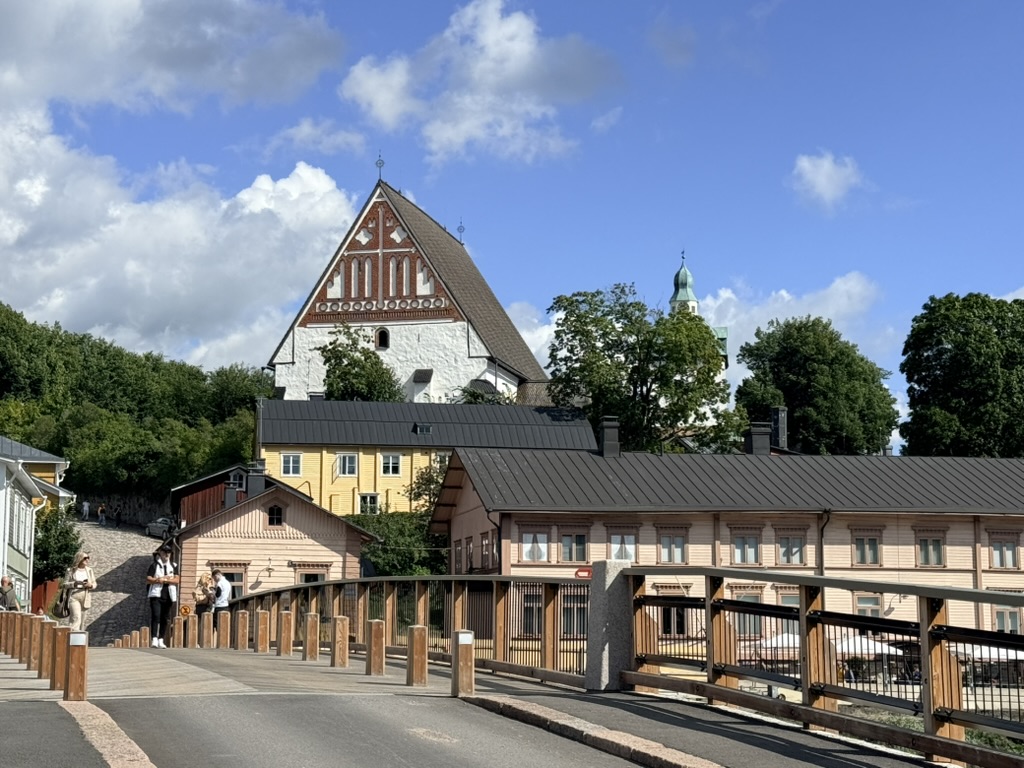
We took a day trip by OnniBus to the town of Porvoo, about an hour ride east from Helsinki. The labyrinthine alleys and wooden houses dating from the 18th and 19th centuries and the shore barns in Old Porvoo are reminiscent of the medieval town of Porvoo.
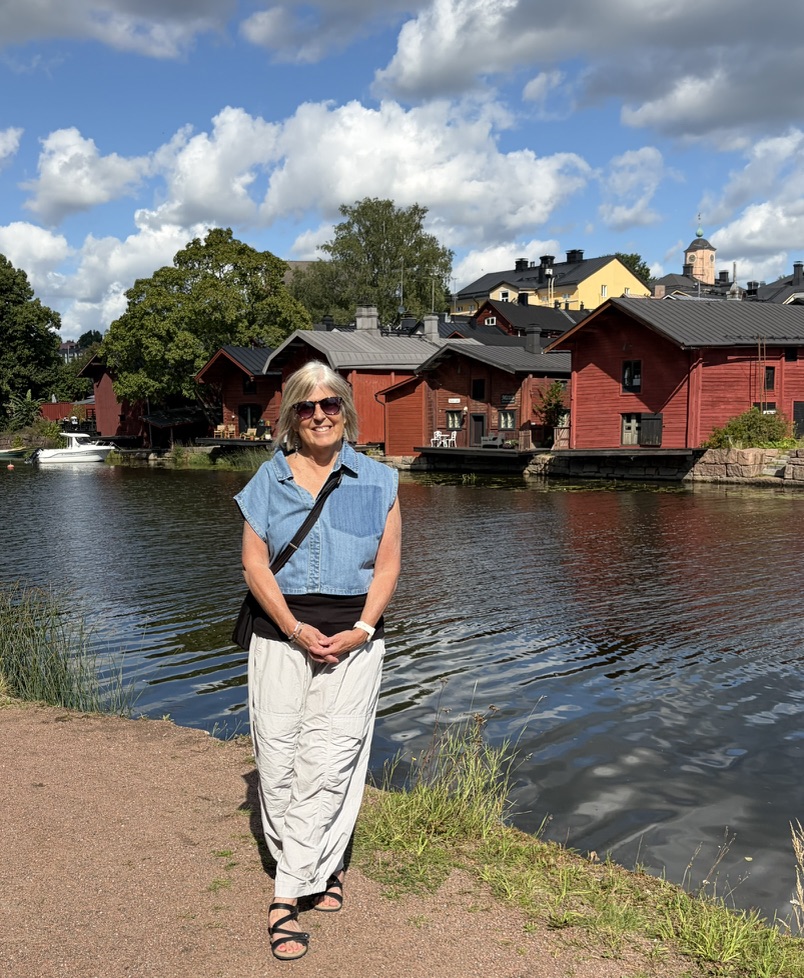
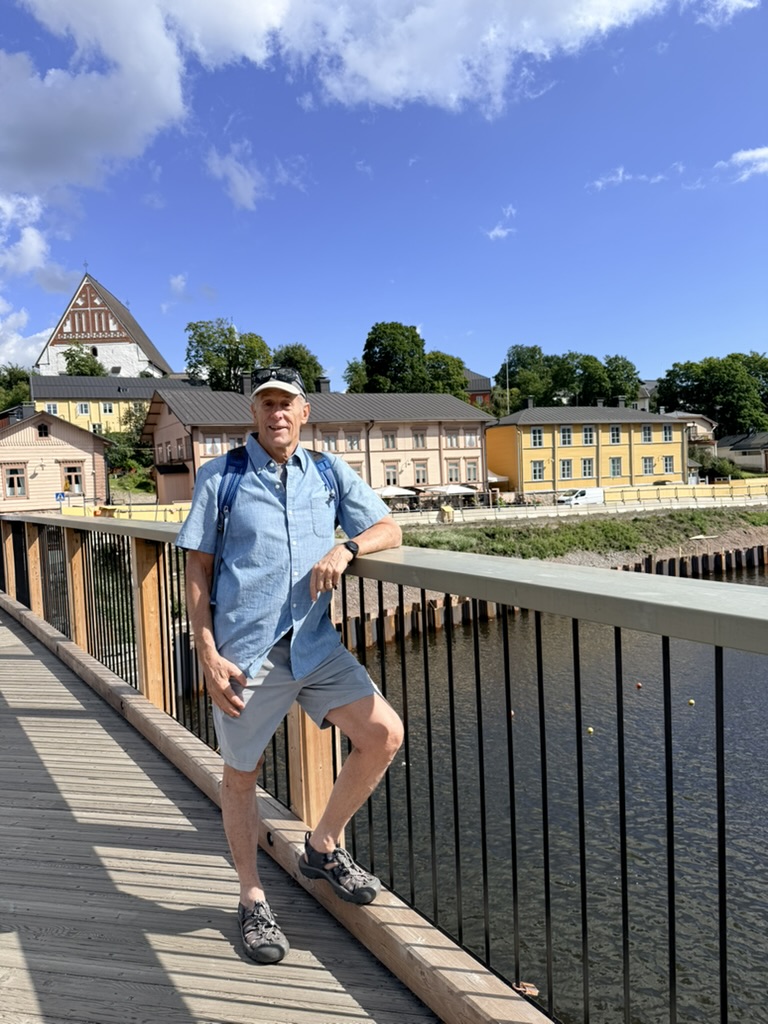
I know towns such as these are touristy, but I love them all the same. Old Town Porvoo was charming and colorful and had lots of cute shops, cafes and restaurants. We were also lucky to have blue skies and cool dry weather, so the whole experience was quite pleasant.
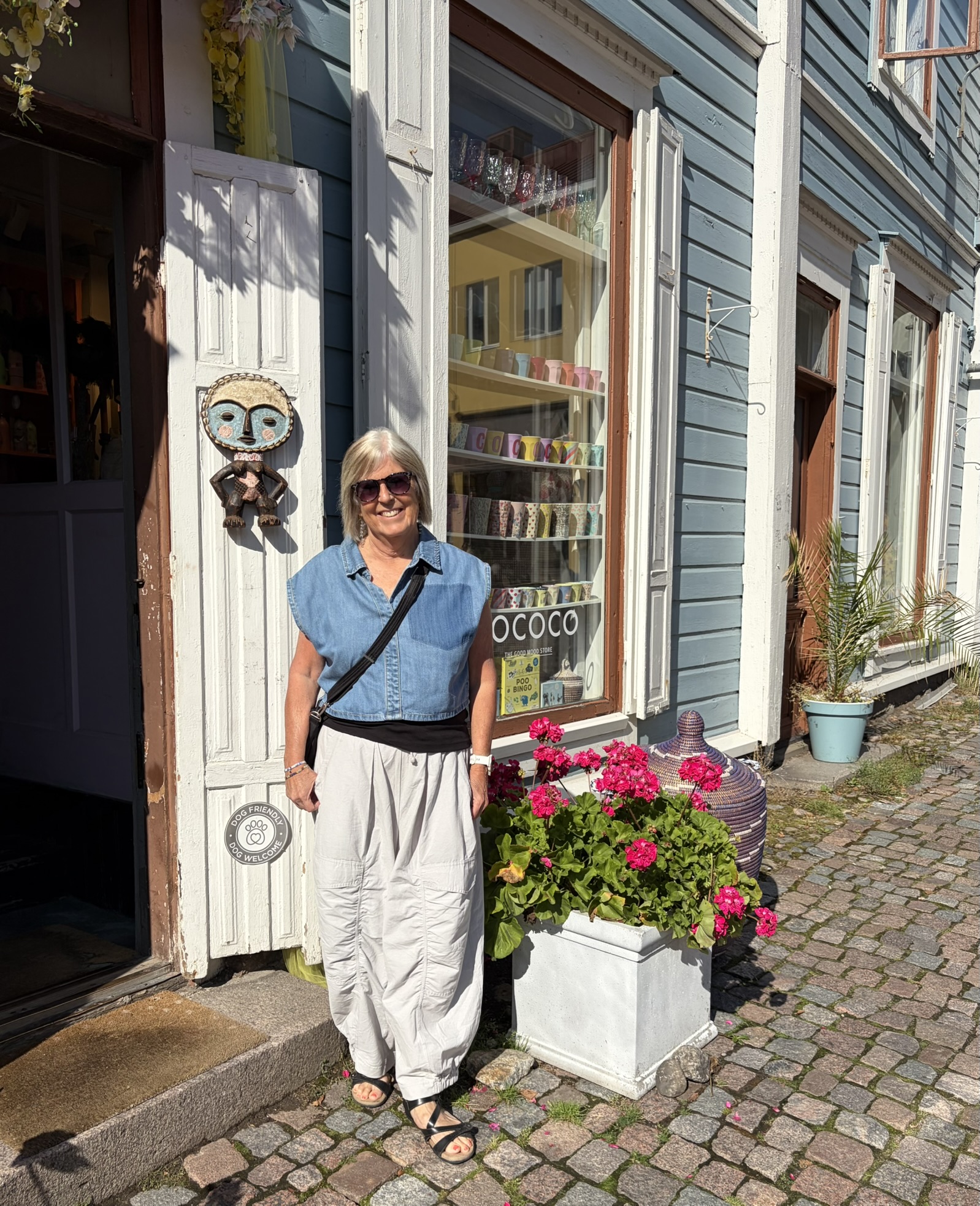
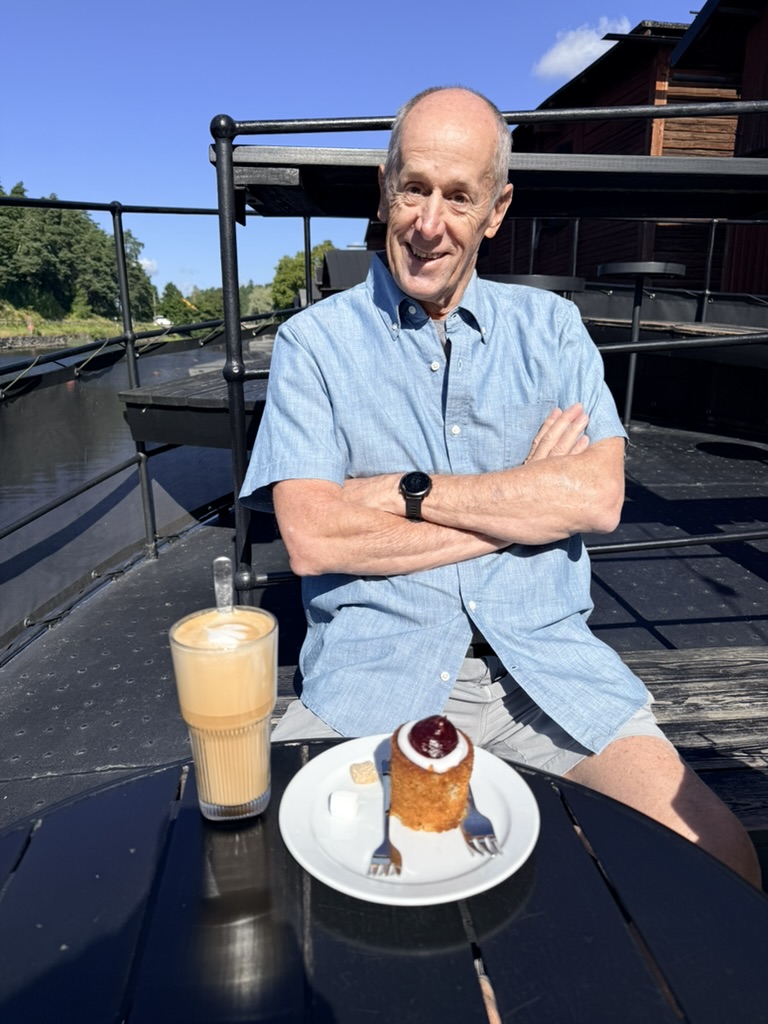
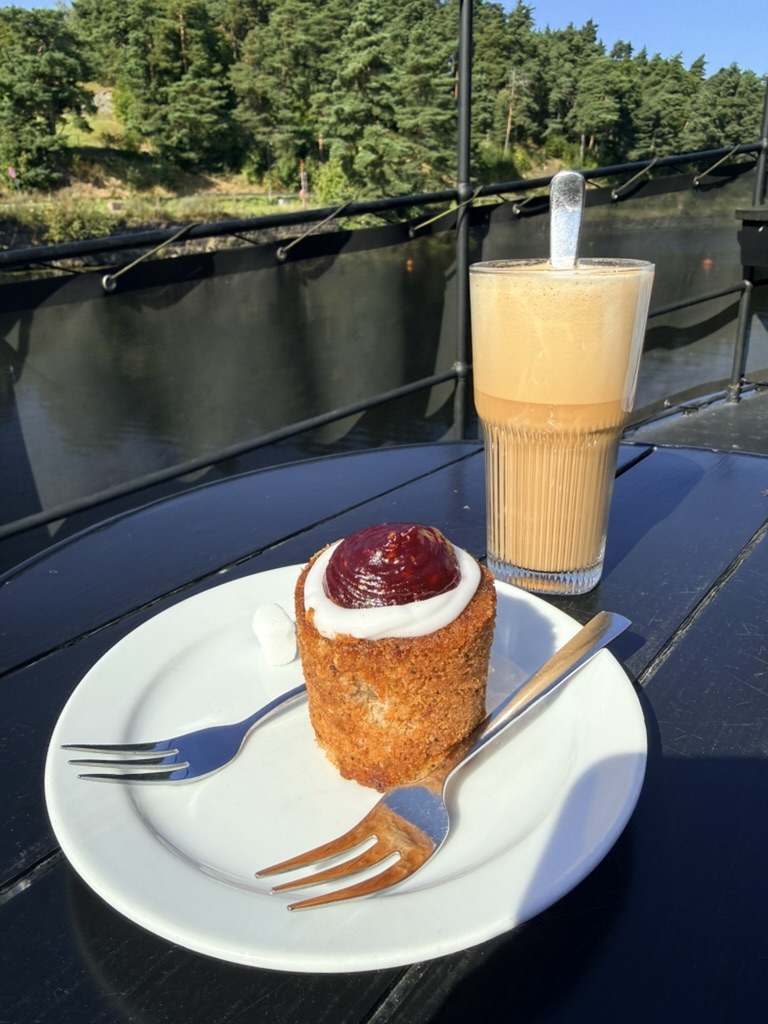
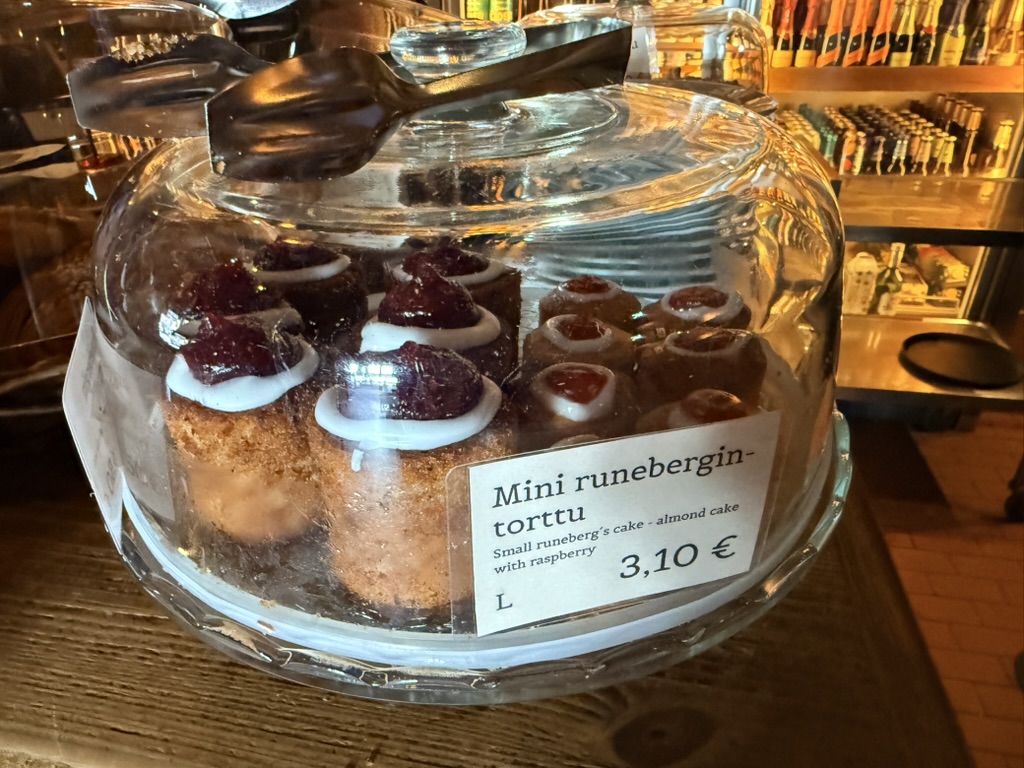
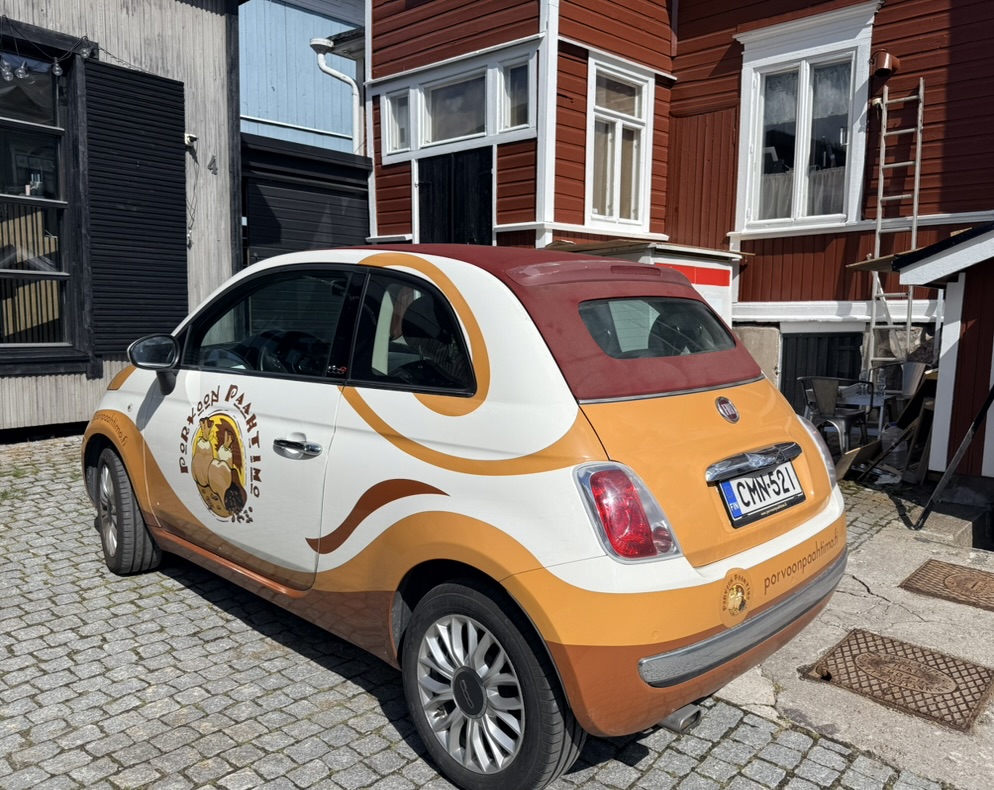
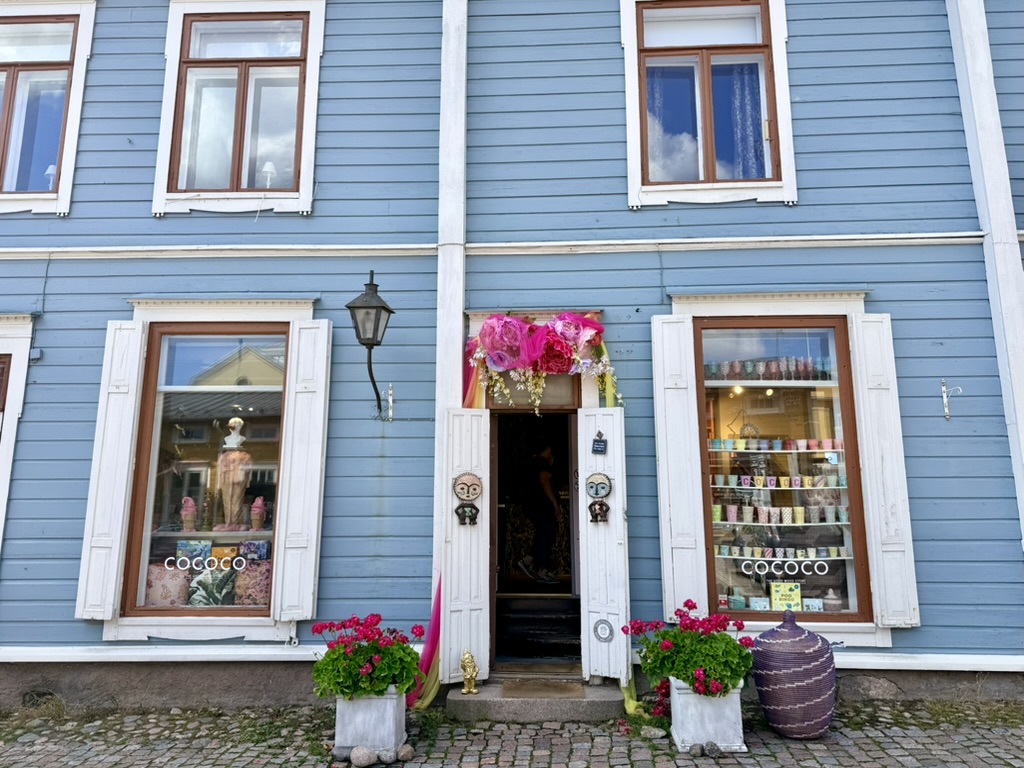
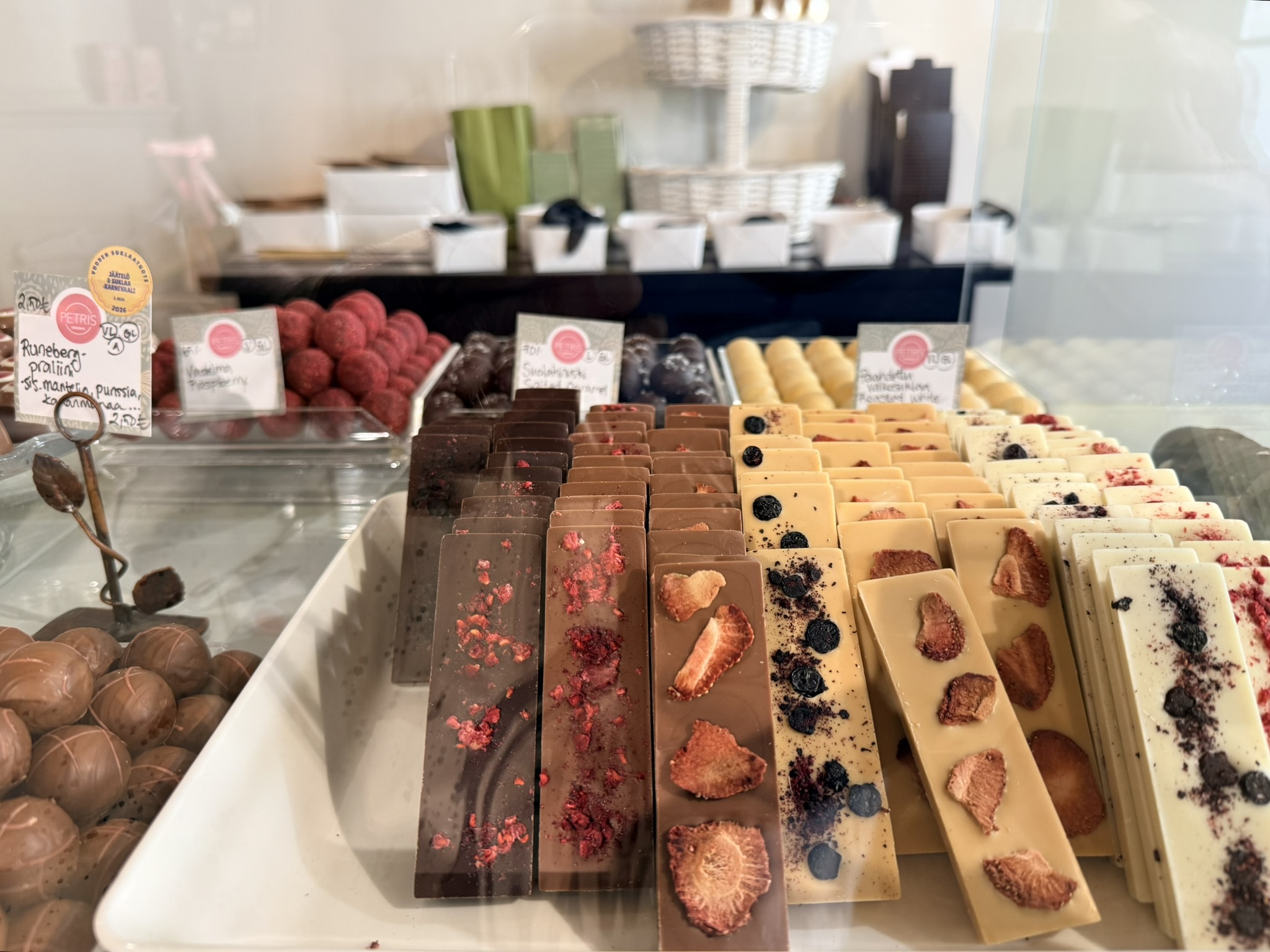
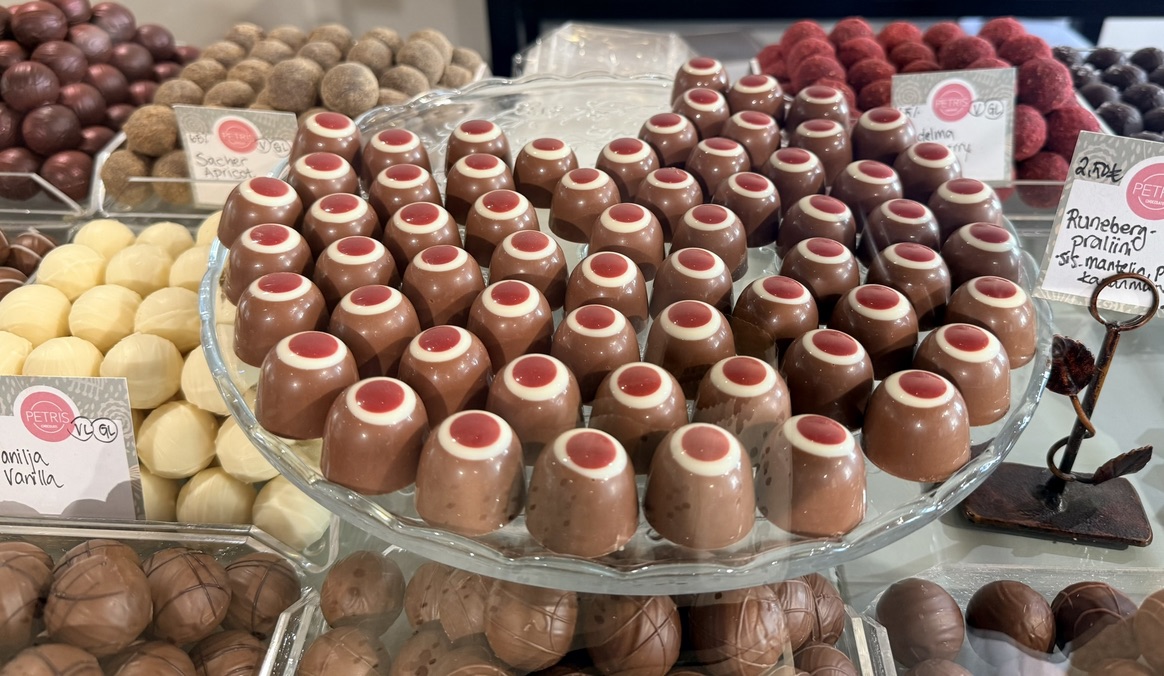
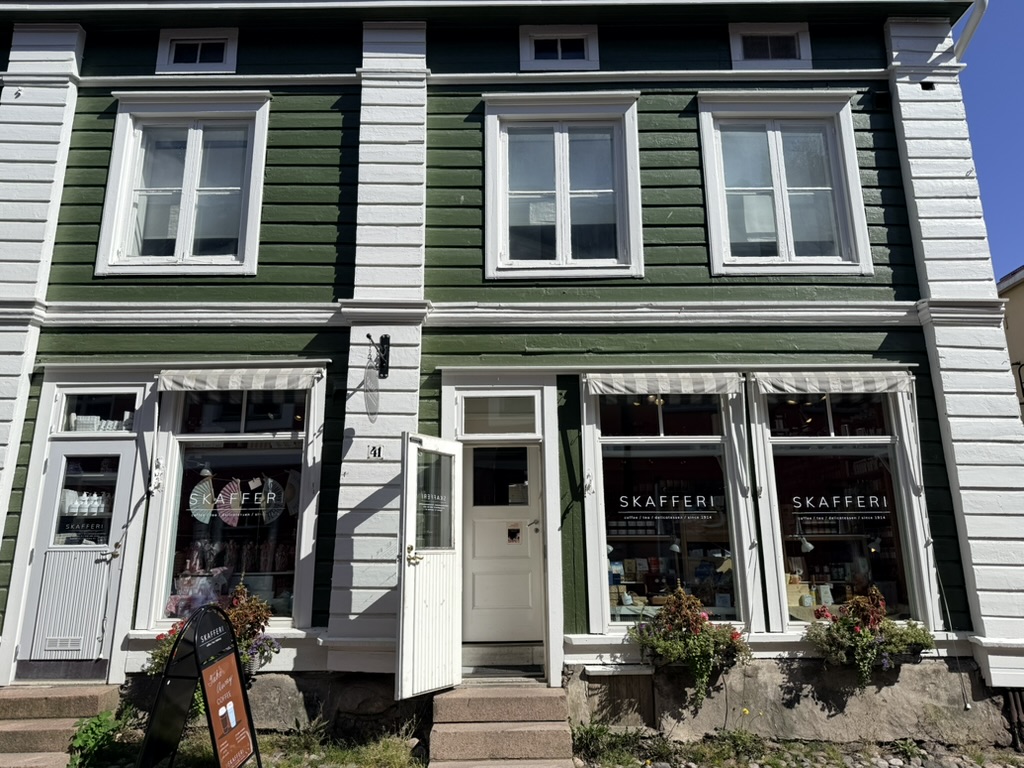
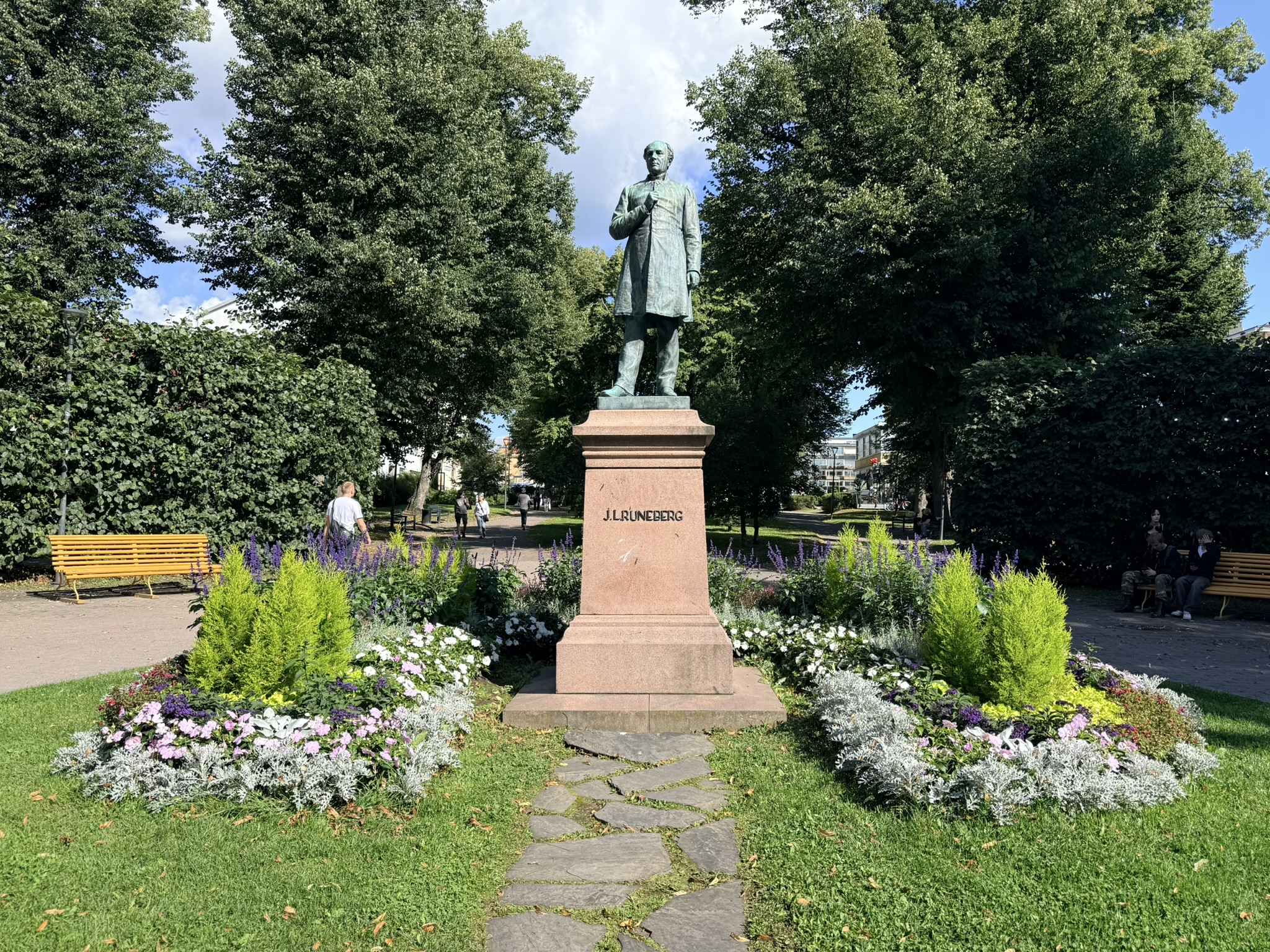
We stopped at Porvoon Paahtimo, a waterside cafe, to try the town’s famous Runeberg Cake, named after the famous Finnish national poet Johan Ludvig Runeberg (1804–1877), who lived in Porvoo from 1837 until his death. I fell in love with a little shop called Cococo Porvoo that had the cutest melamine cups in Japanese-inspired designs; I bought two of these, one for my daughter Sarah and one for me. I also bought a cute kimono there. :-). We stopped at a chocolate shop where we bought some decorative chocolate bars and saw a plate of chocolates that mimicked the Runeberg cakes.
We were incredibly impressed by this neat, tidy and inviting town! I highly recommend going as a day trip from Helsinki.
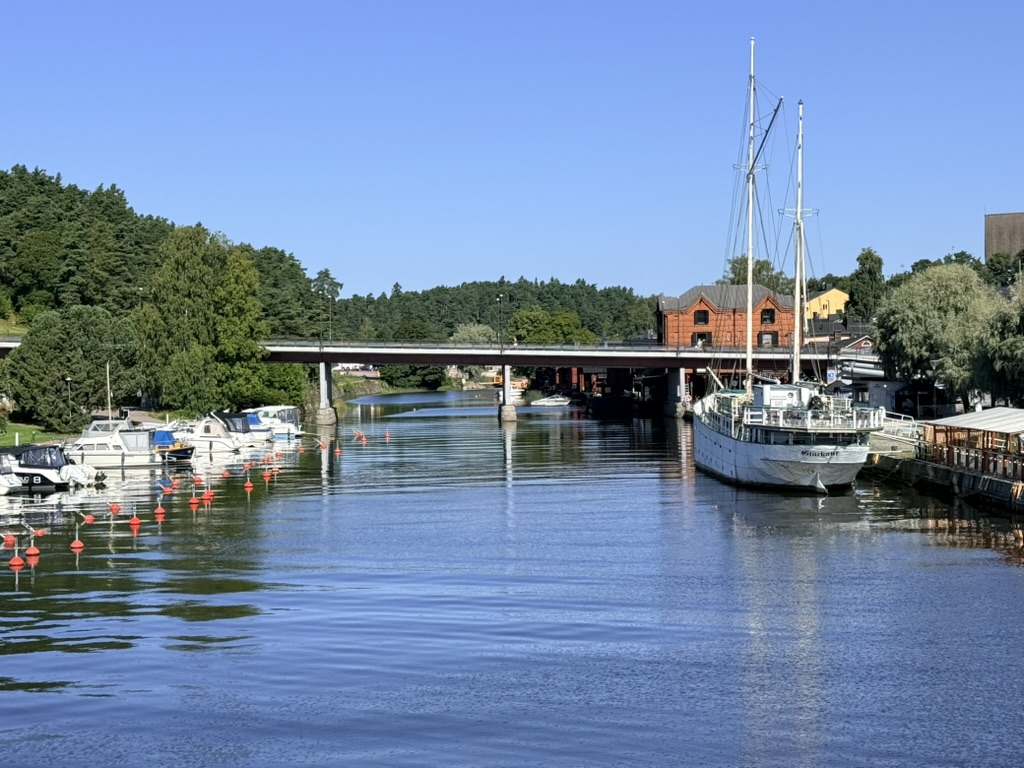
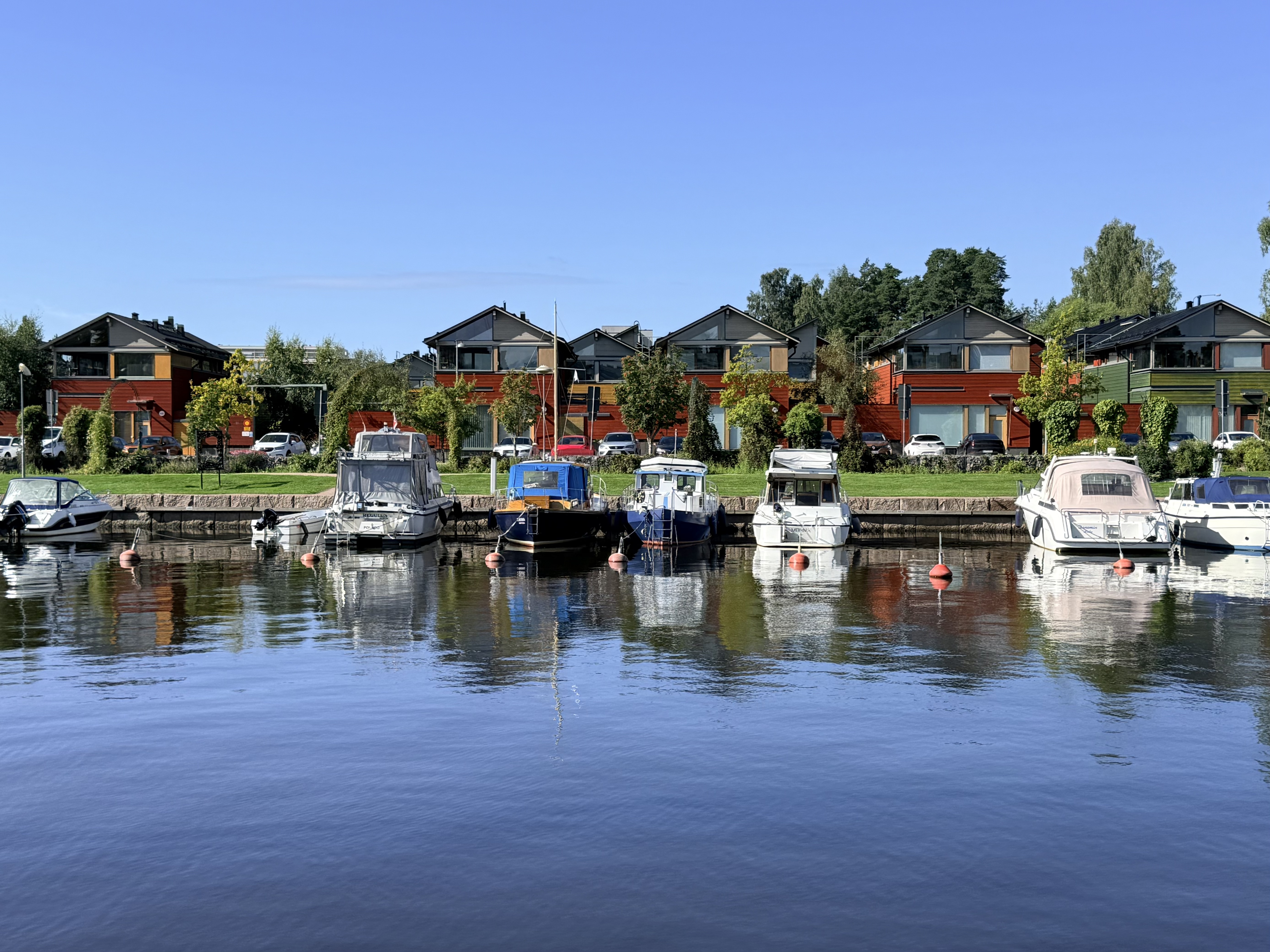
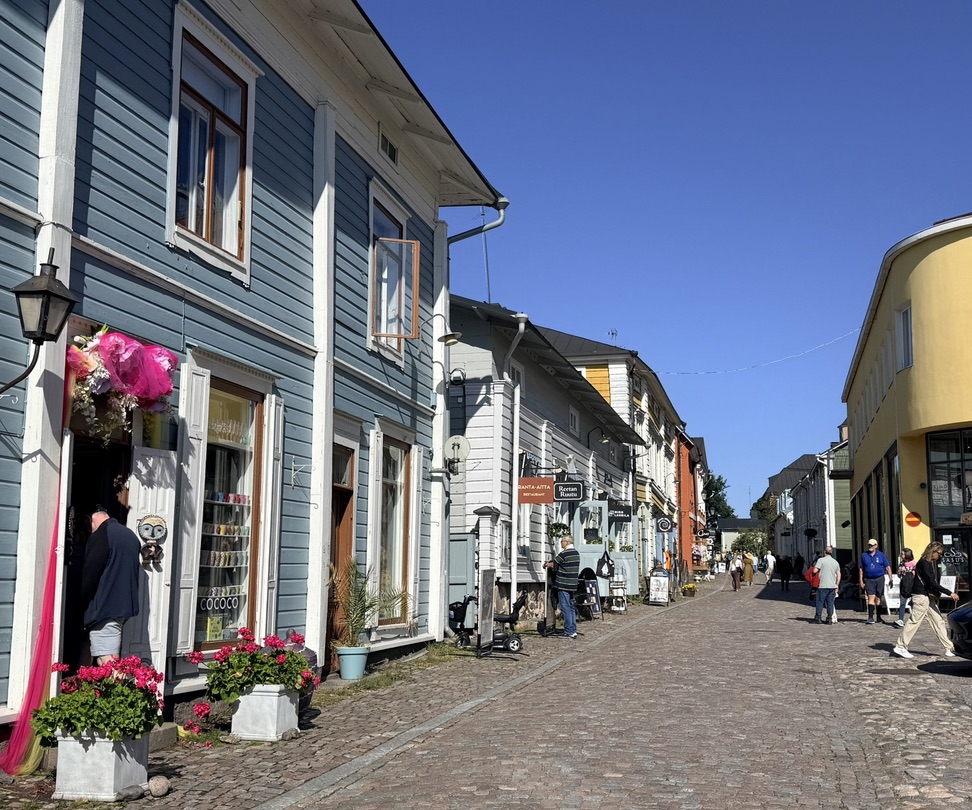
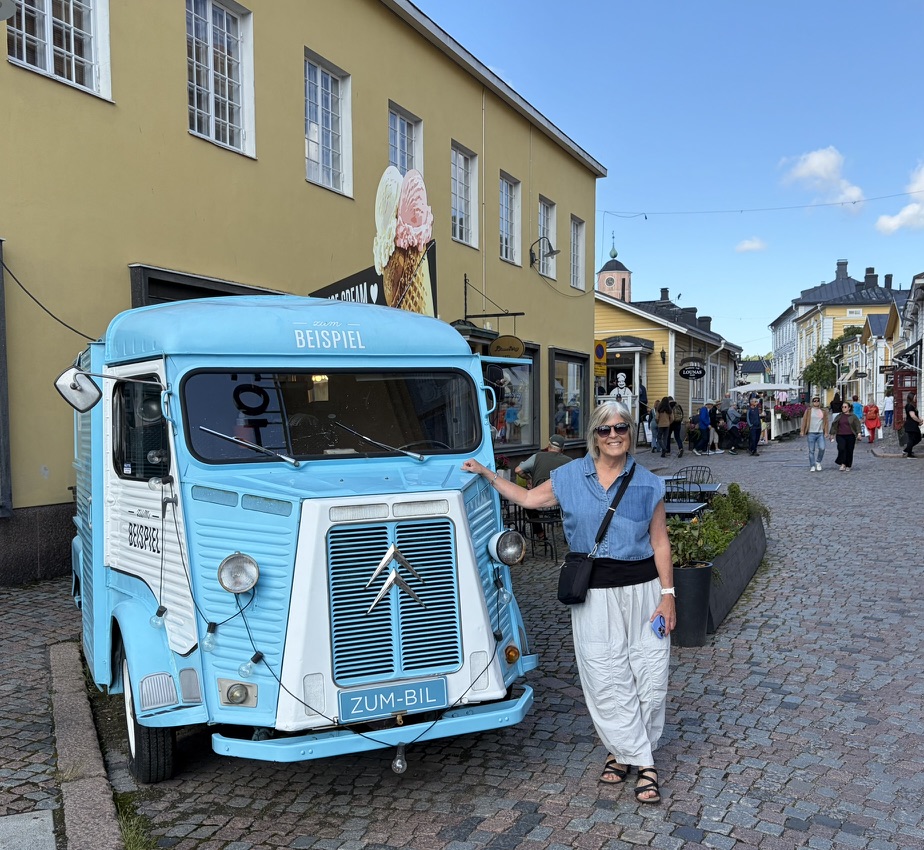
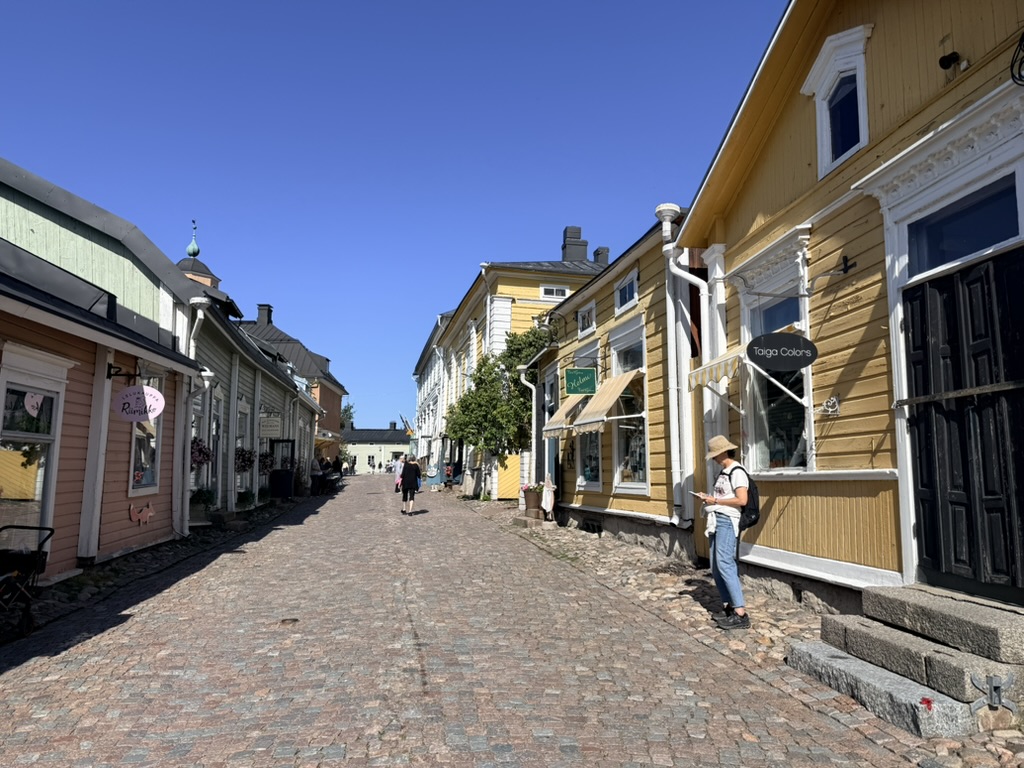
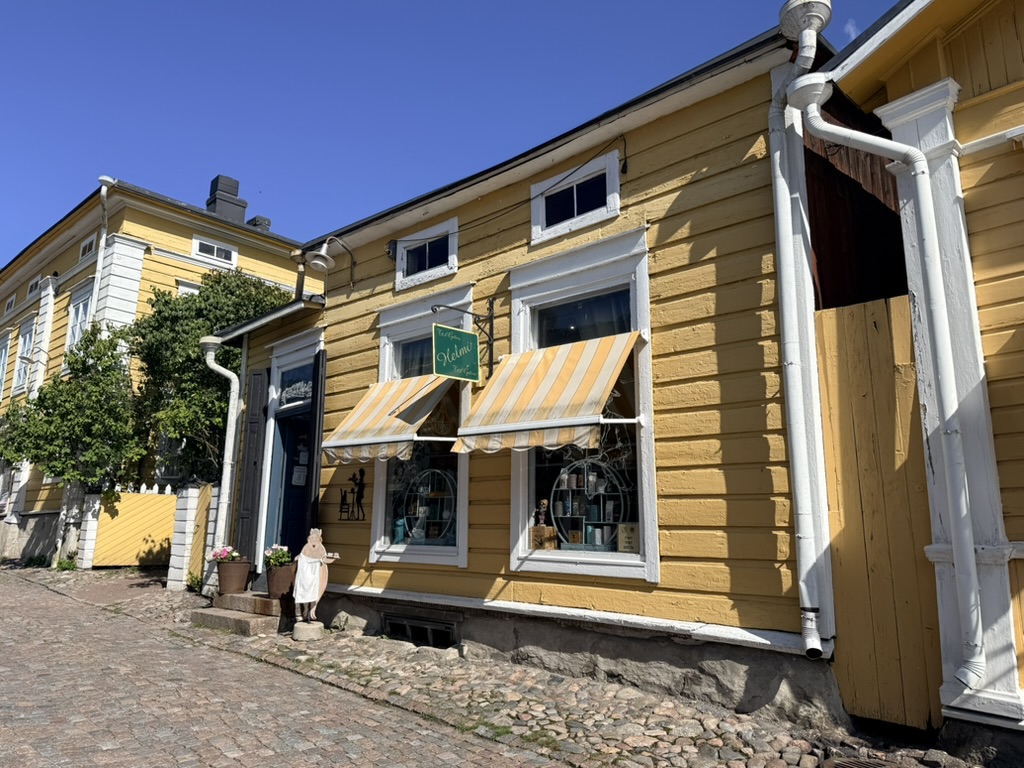
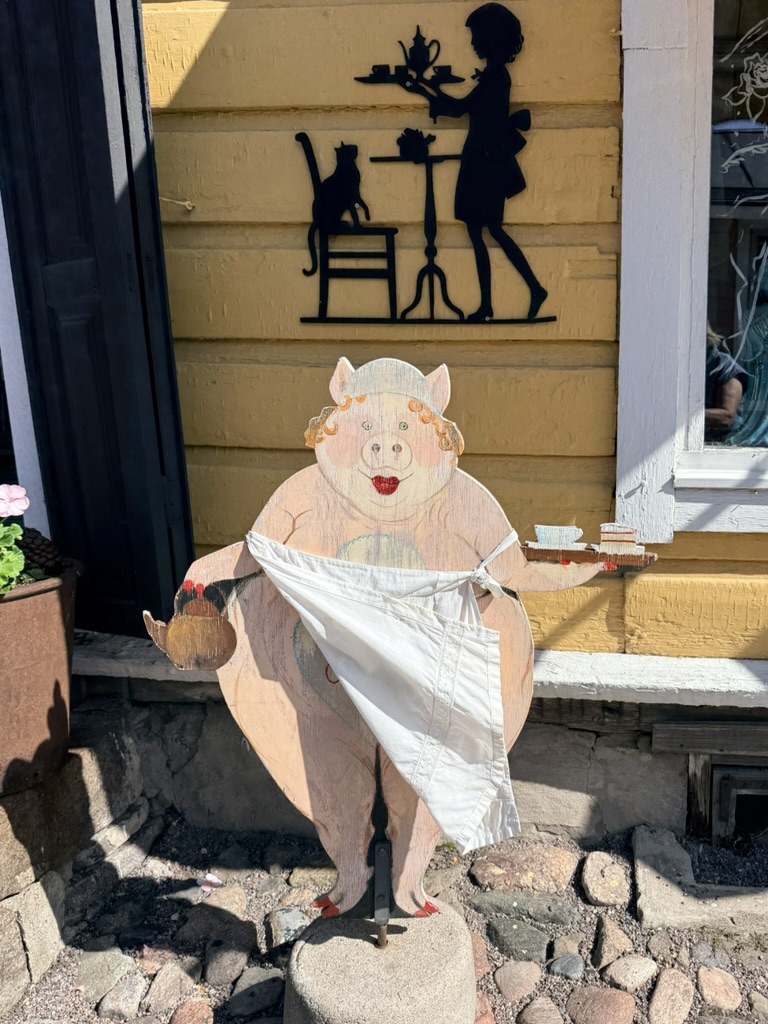
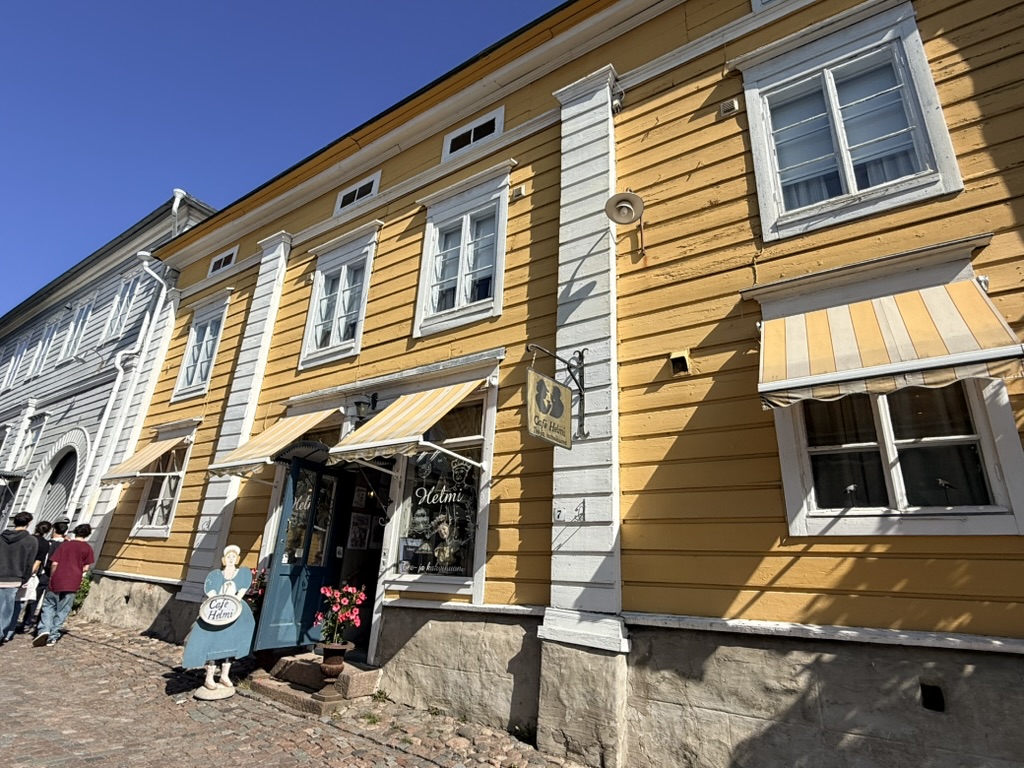
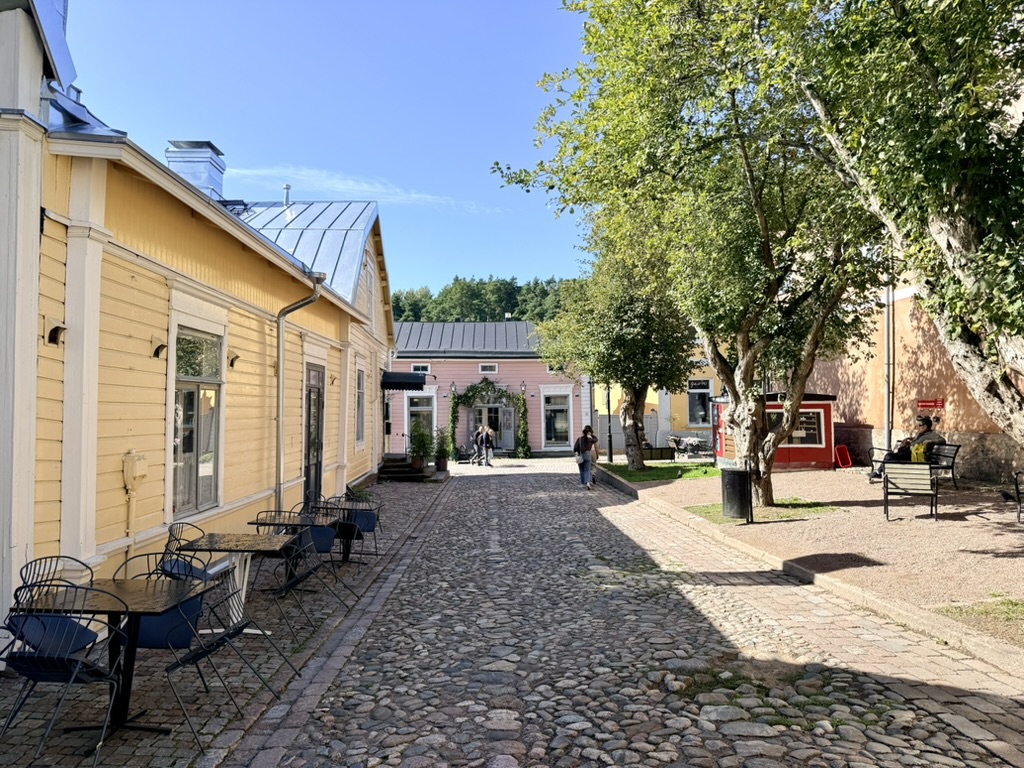
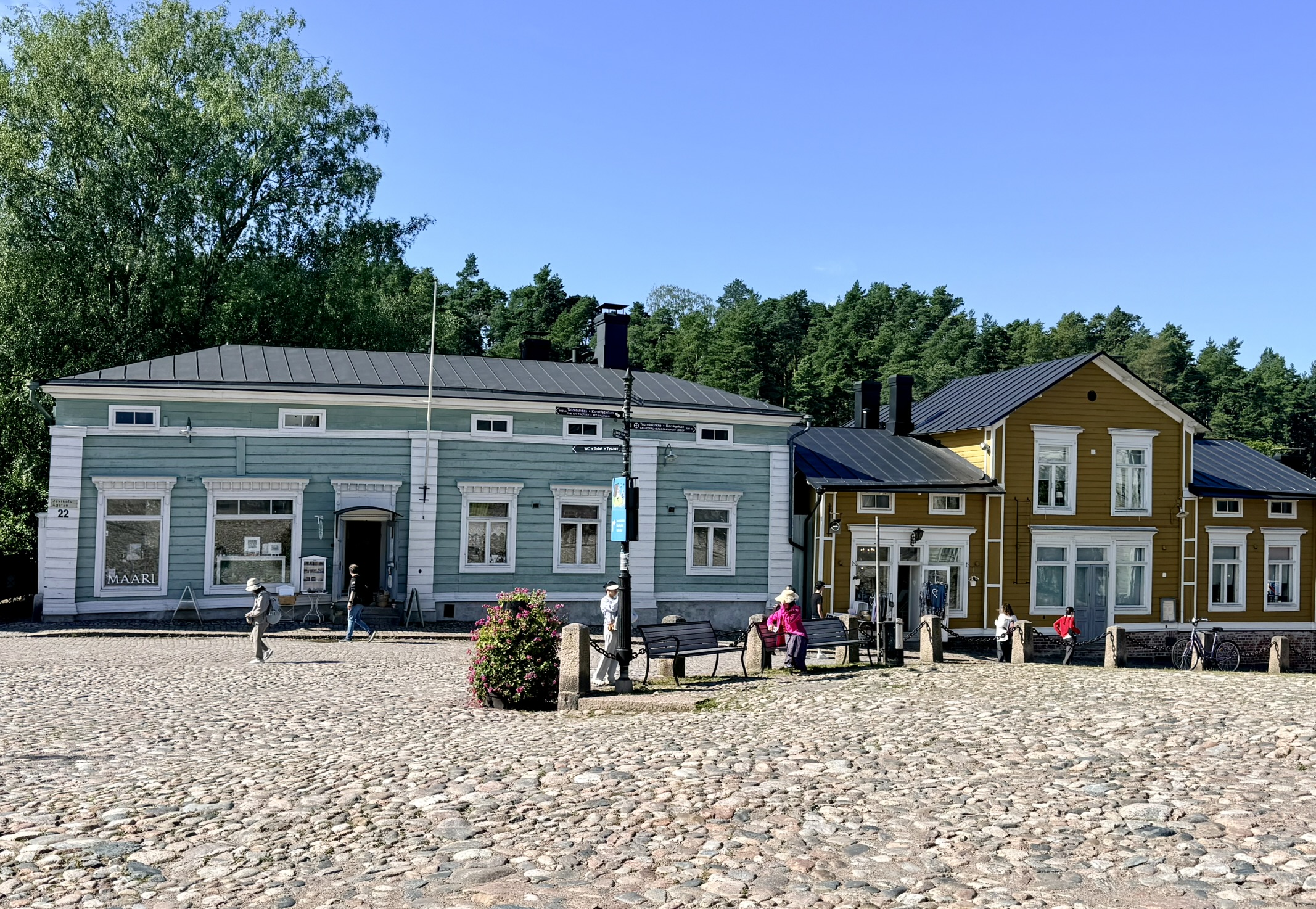
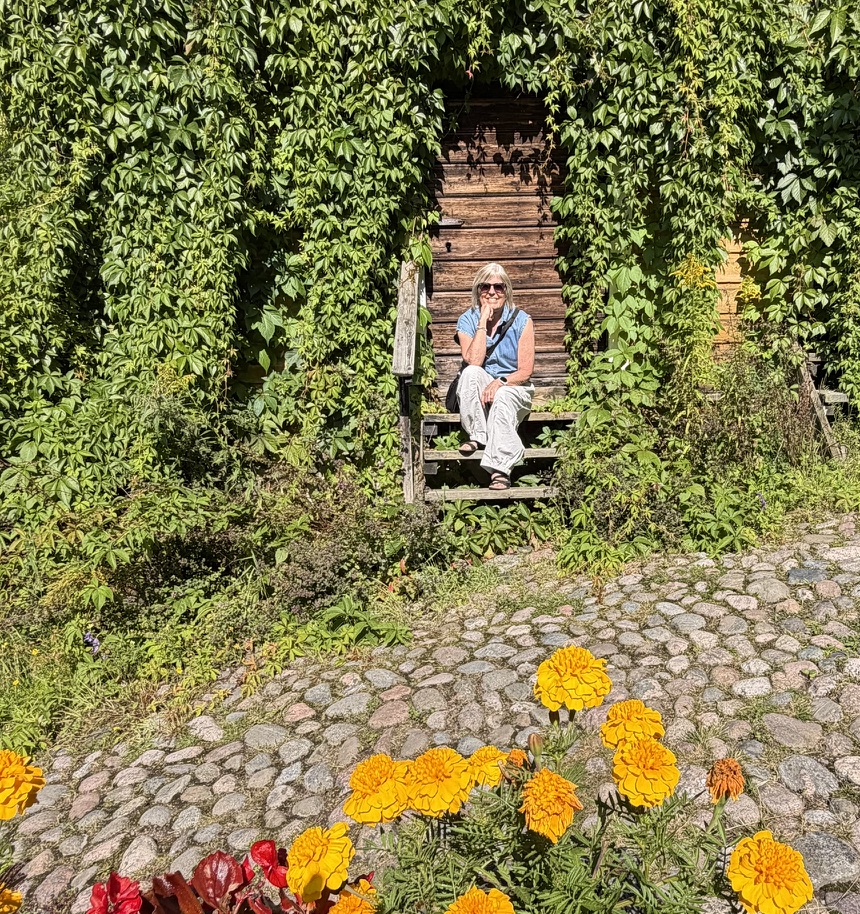
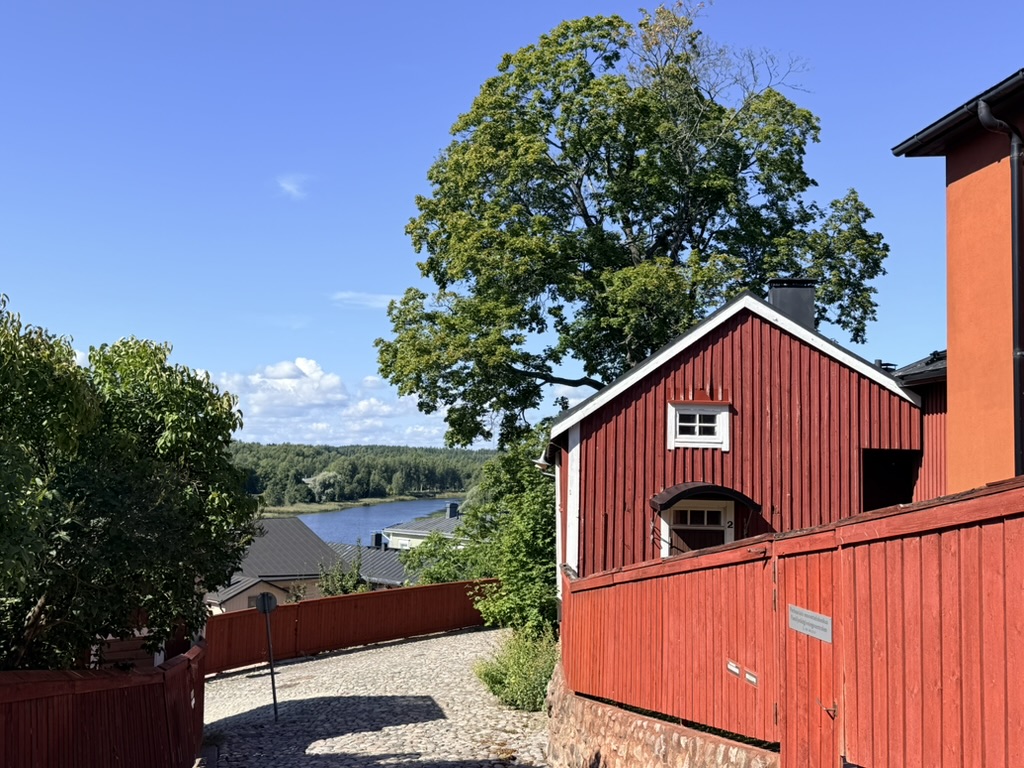
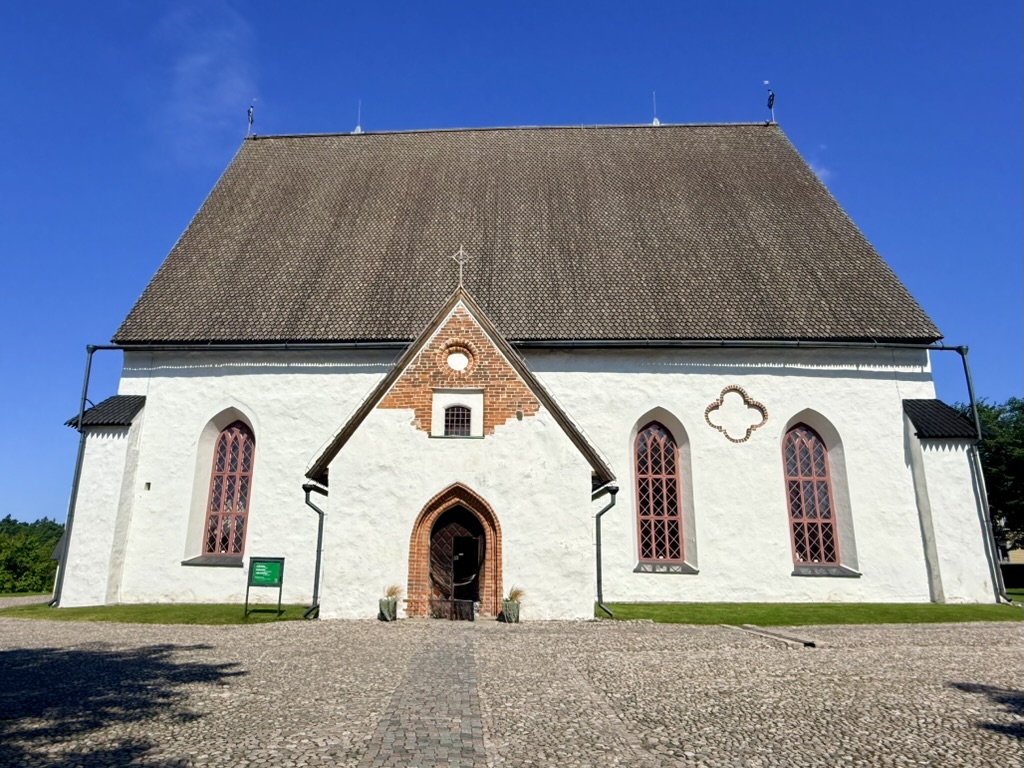
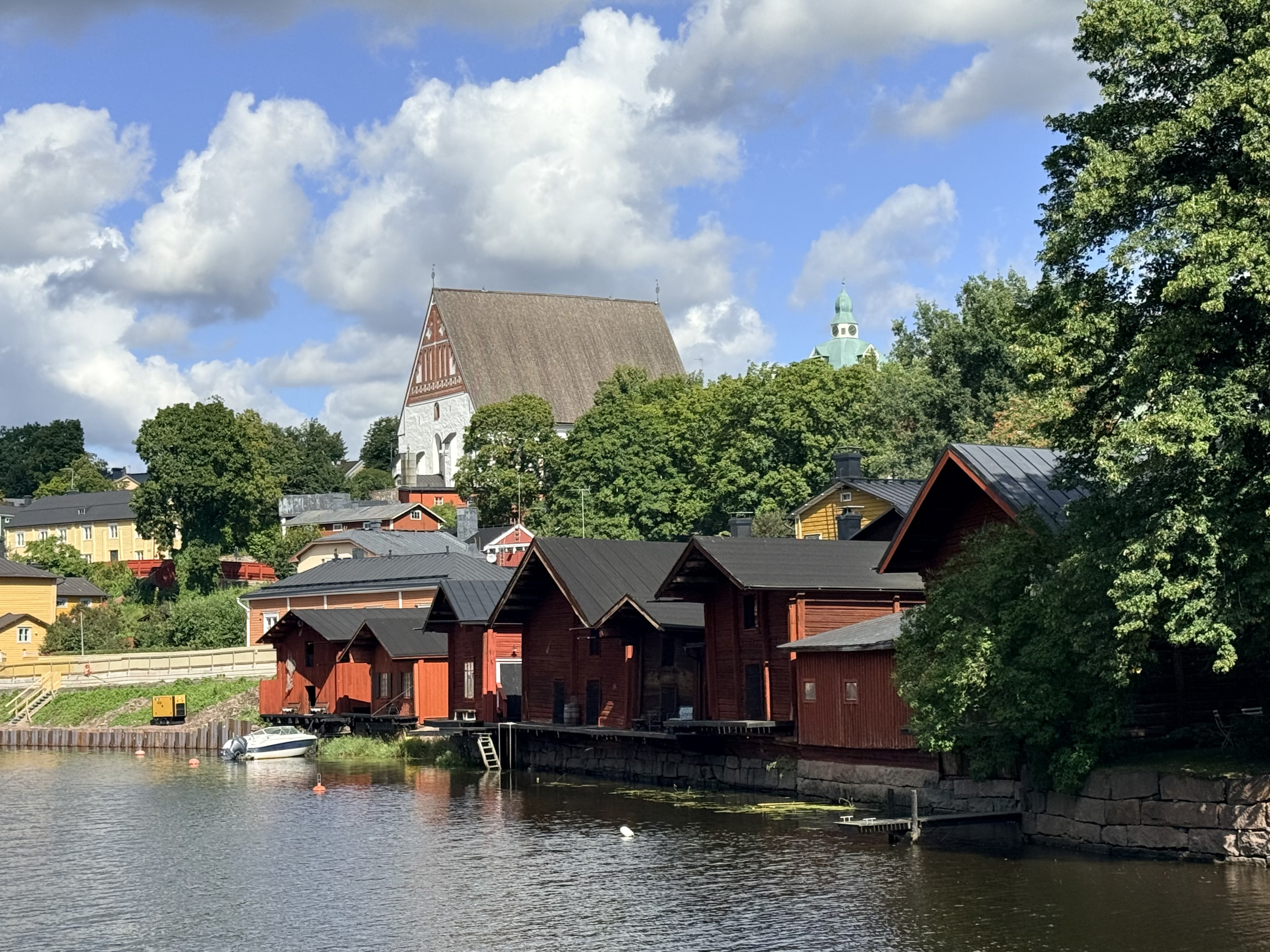
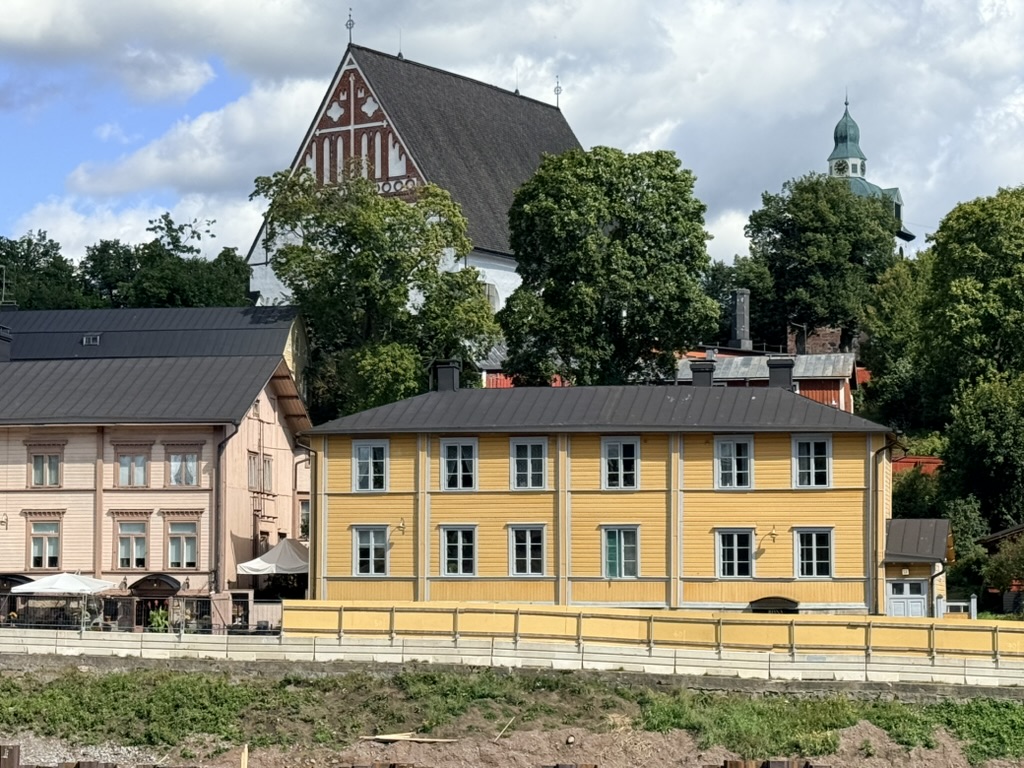
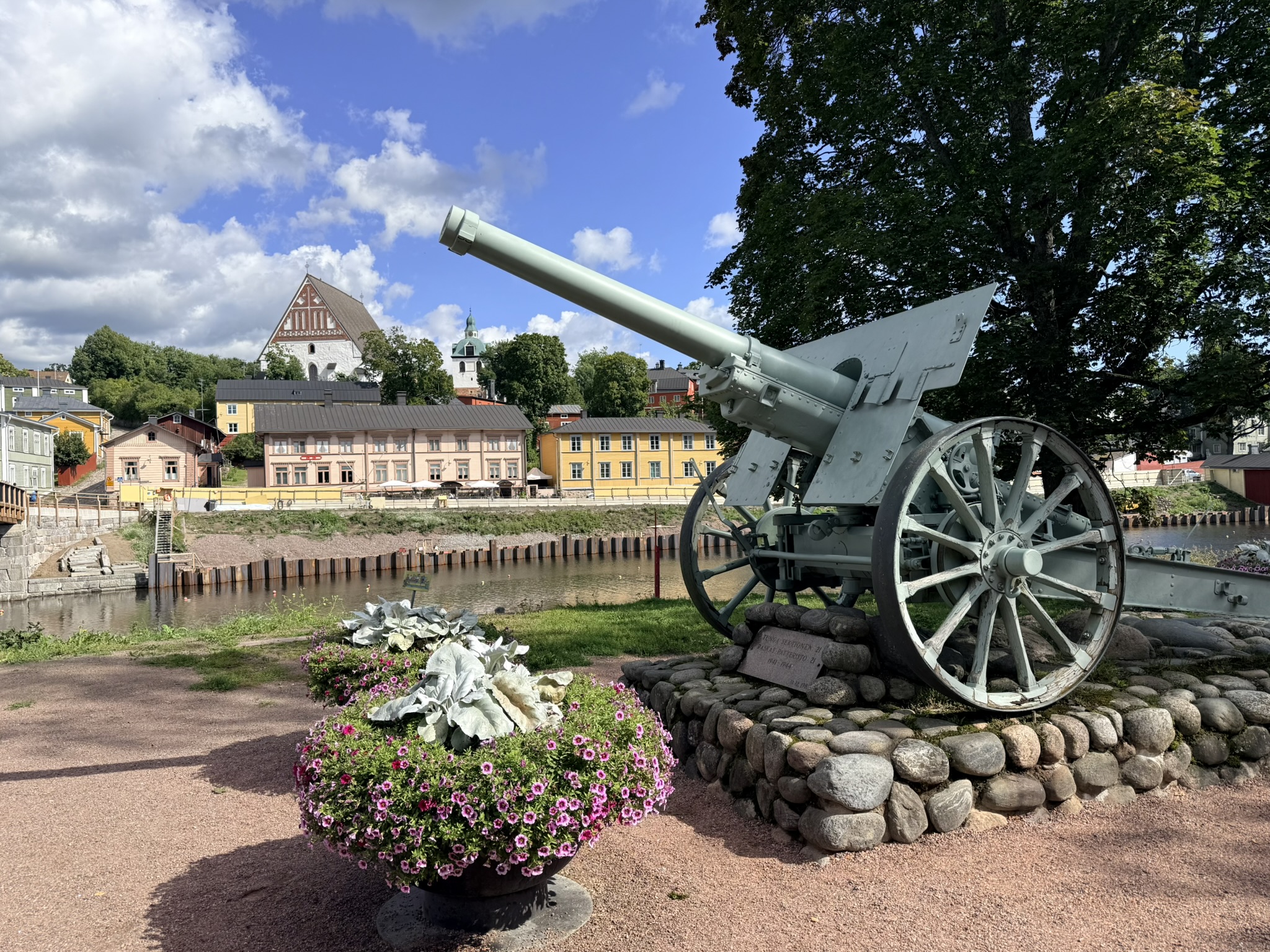
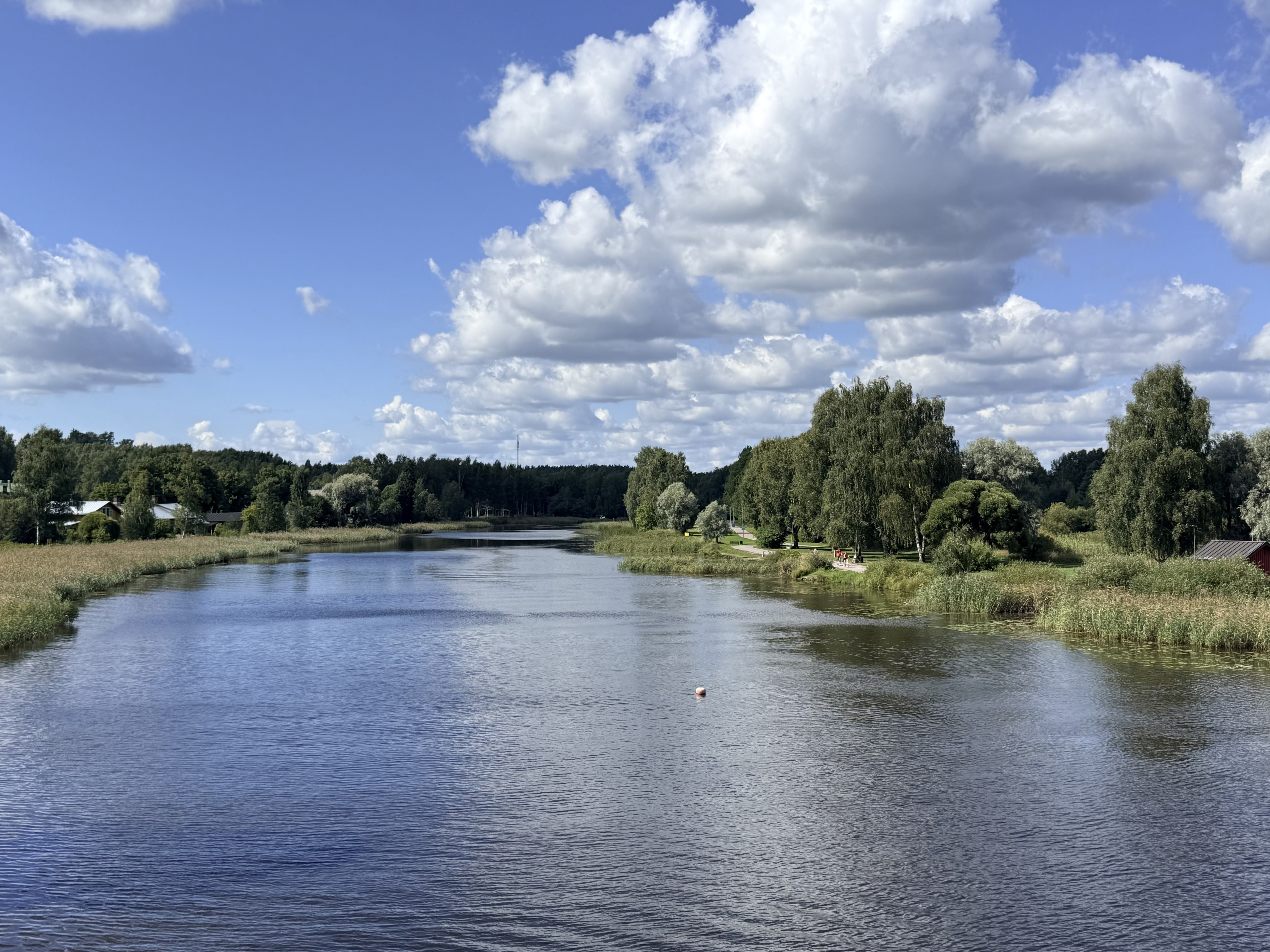
Porvoo’s riverside landscape is dominated by the steep-roofed Gothic Porvoo Cathedral, which took on its current form in the 15th century. There was already a wooden church with a stone sacristy on the same site in the 13th century, and a small grey stone church in the 14th century. It is located along the medieval King’s Road.
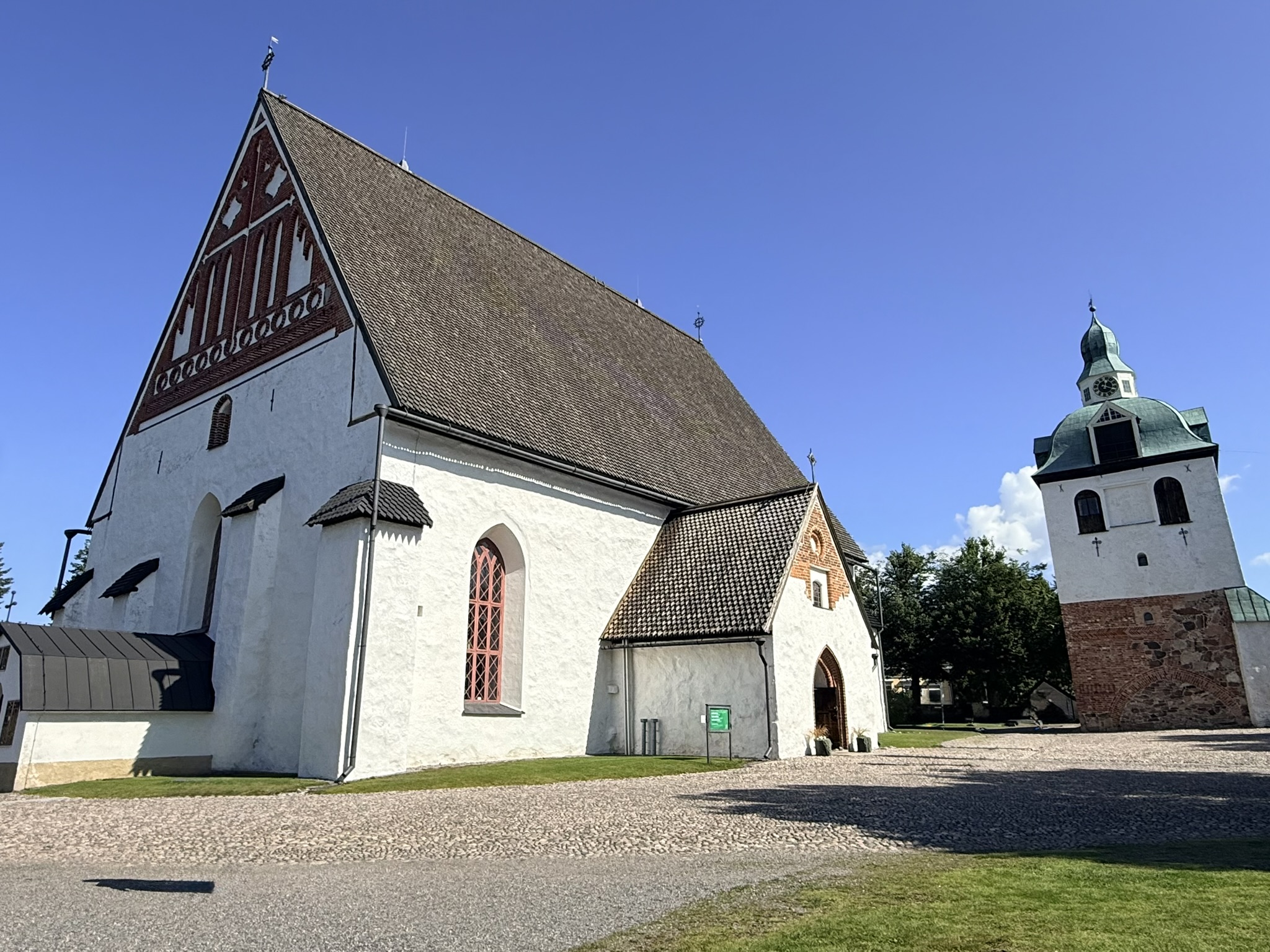
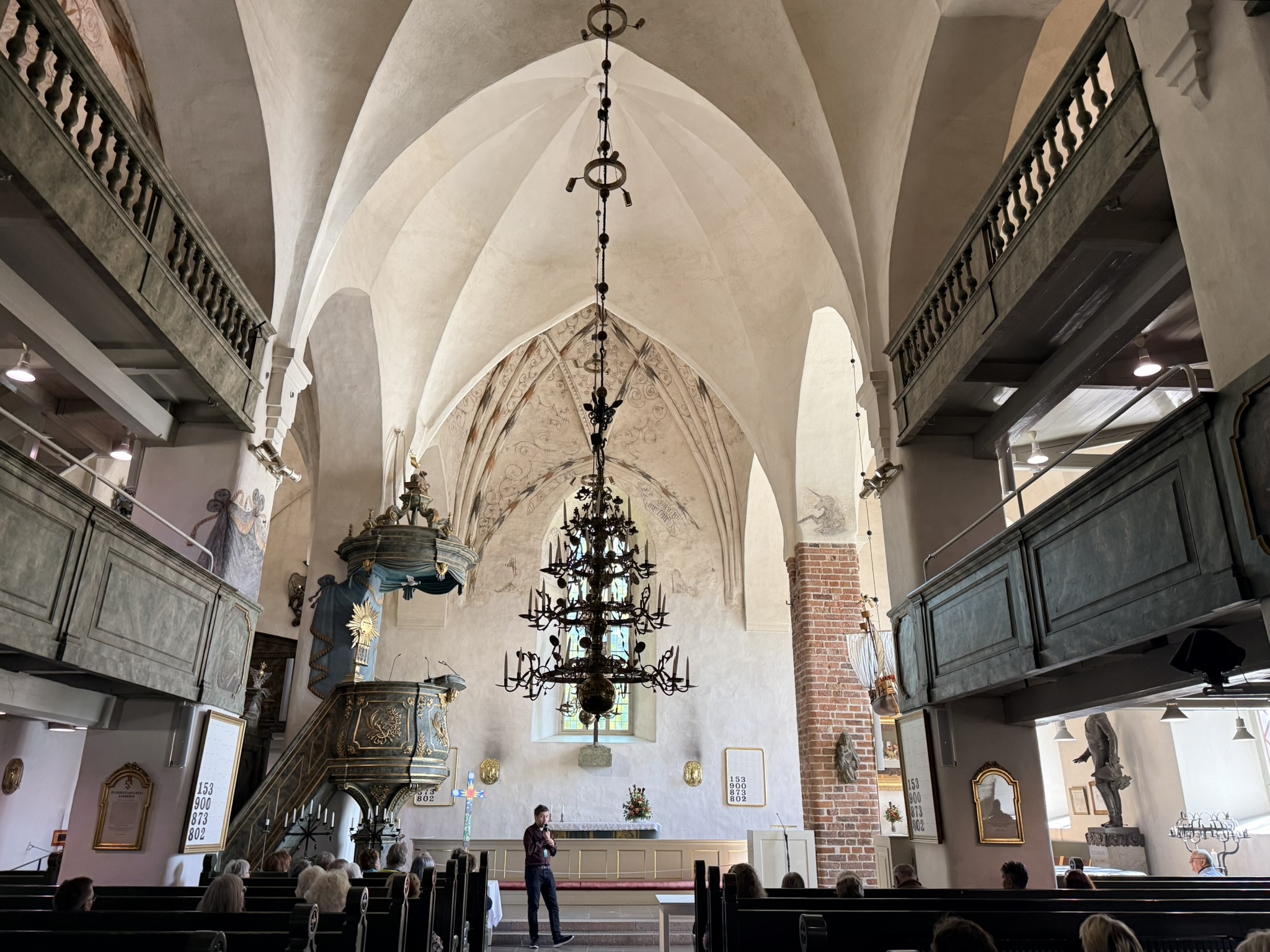
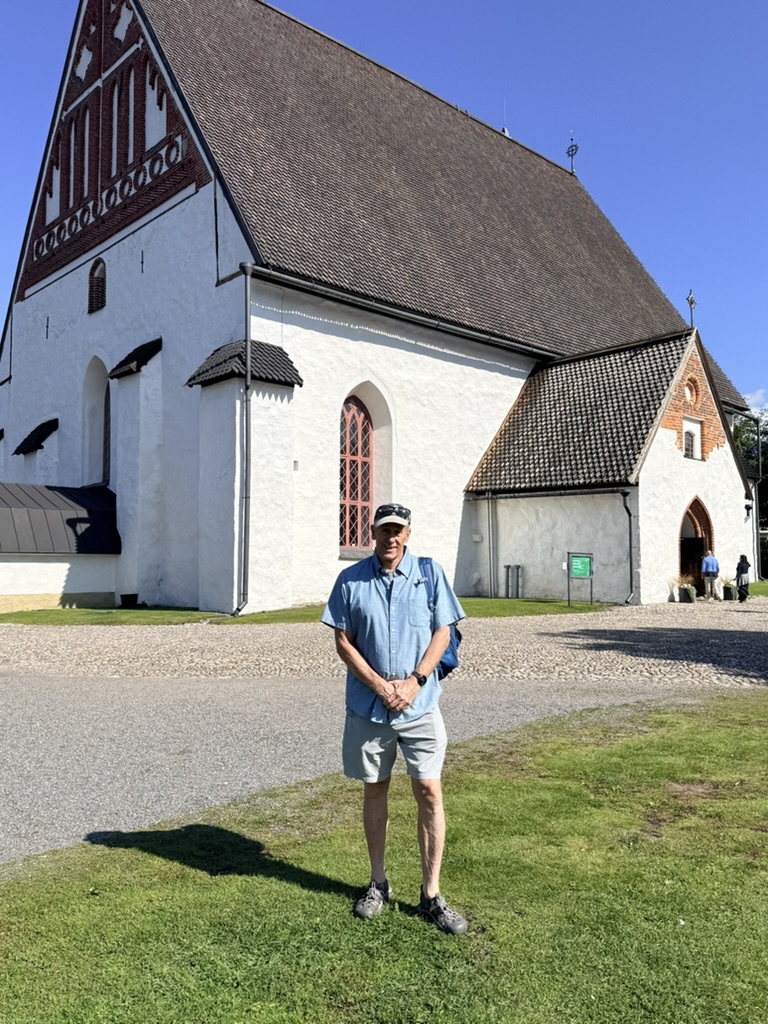
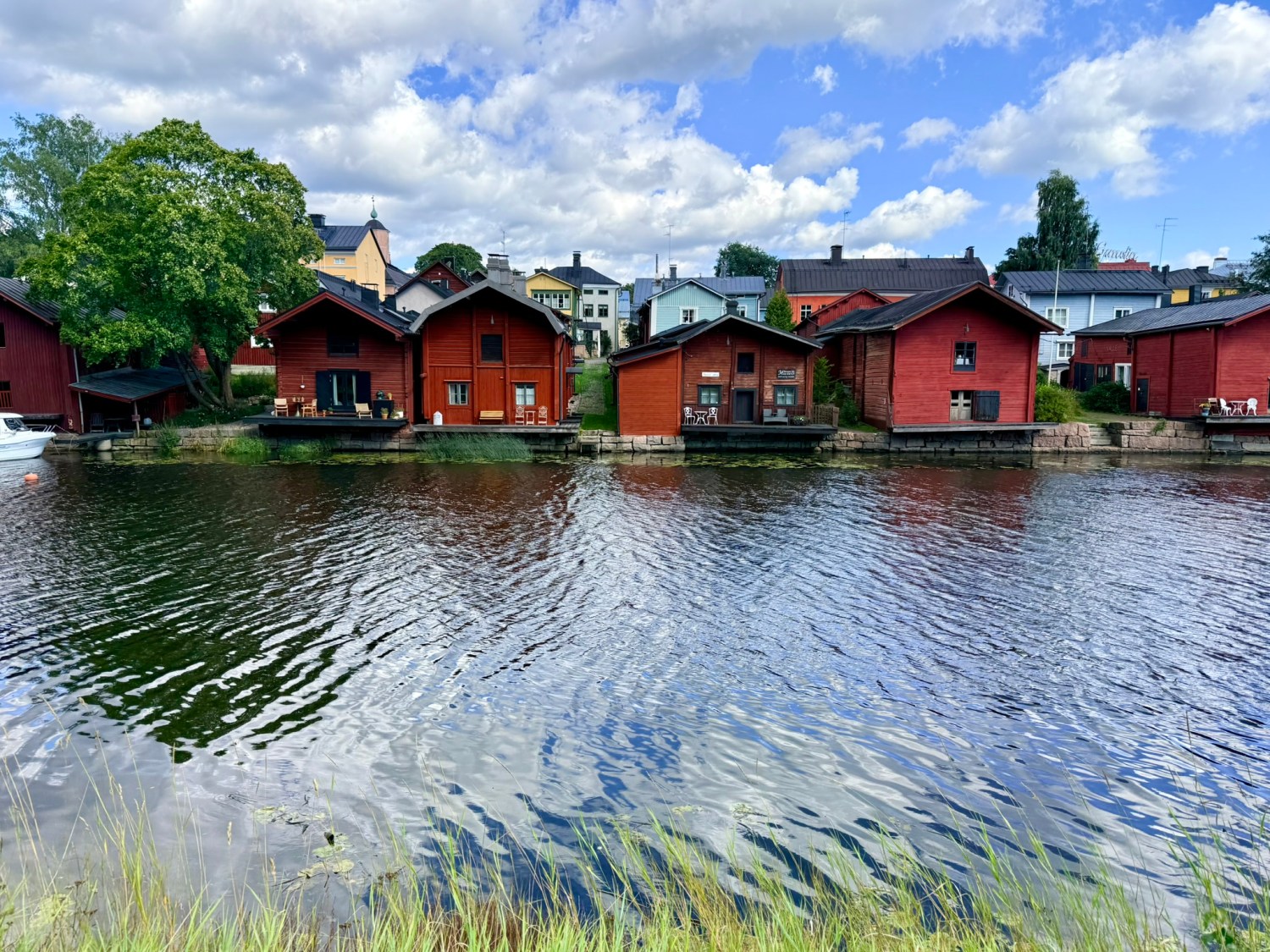
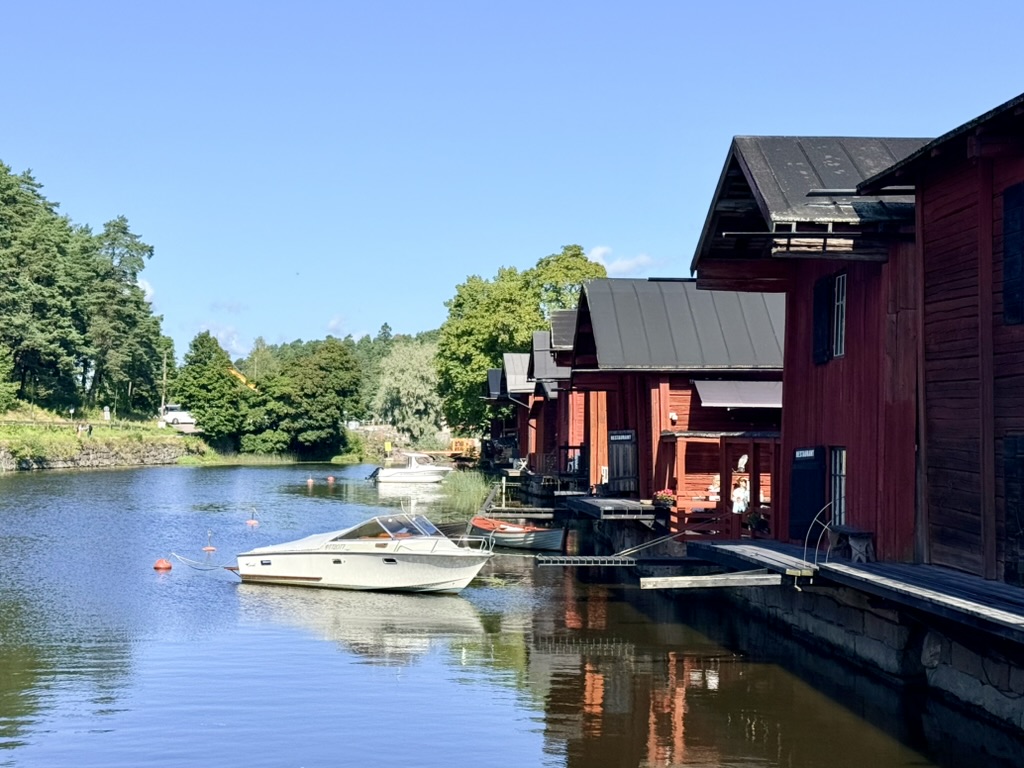
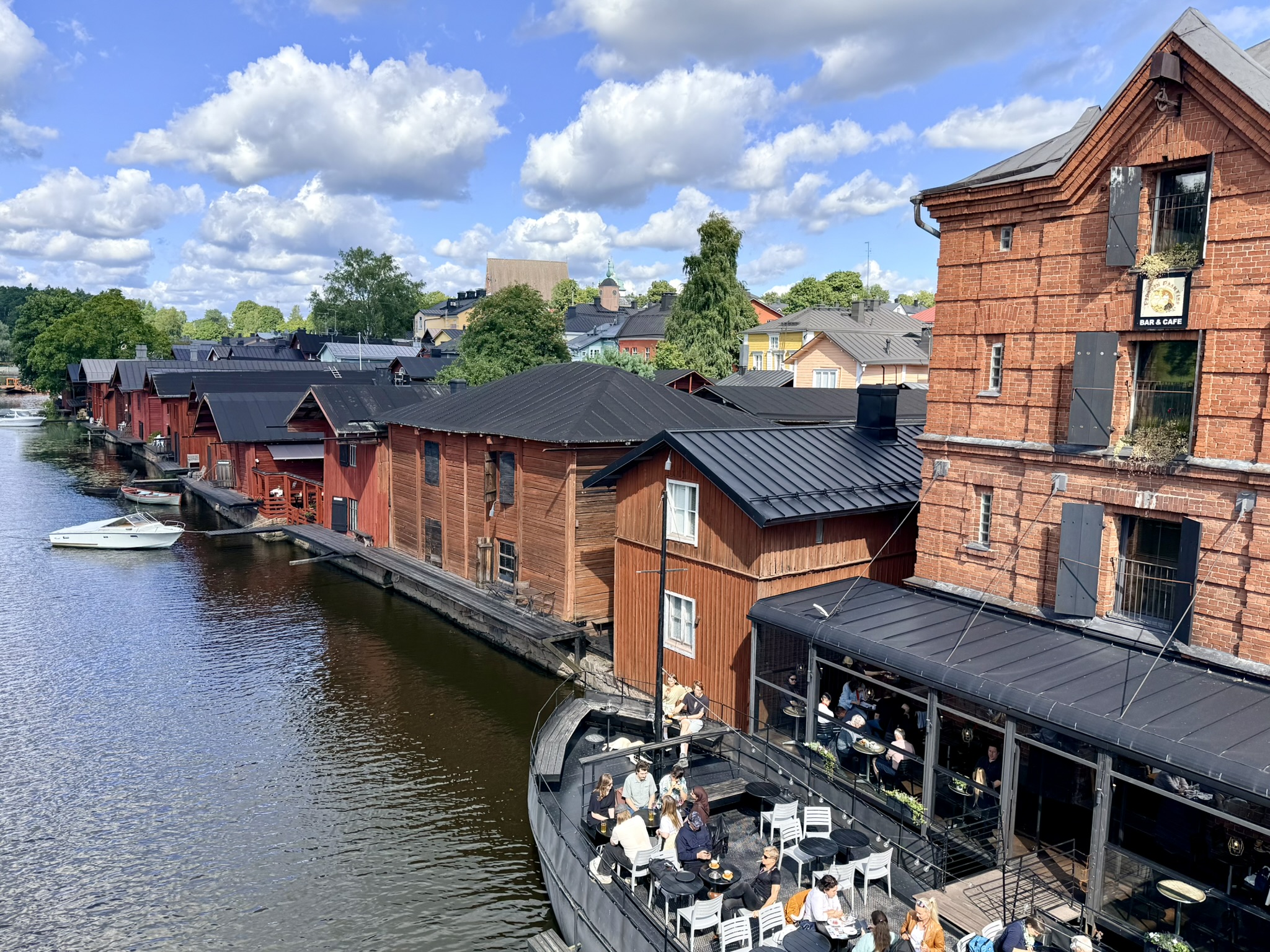
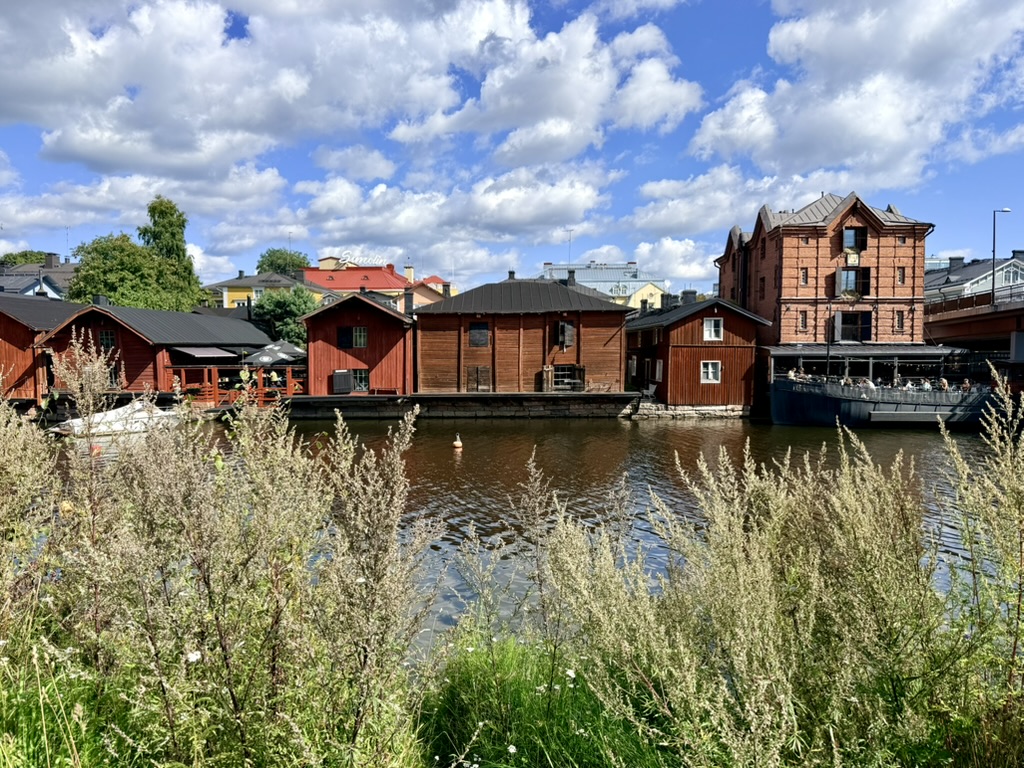
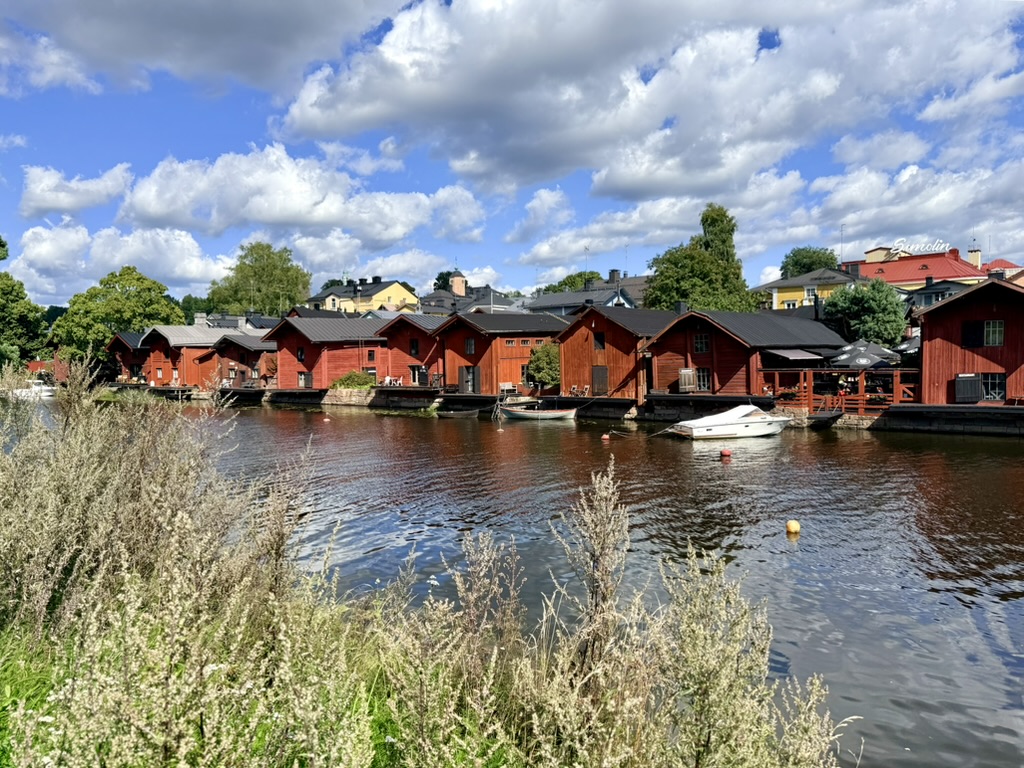
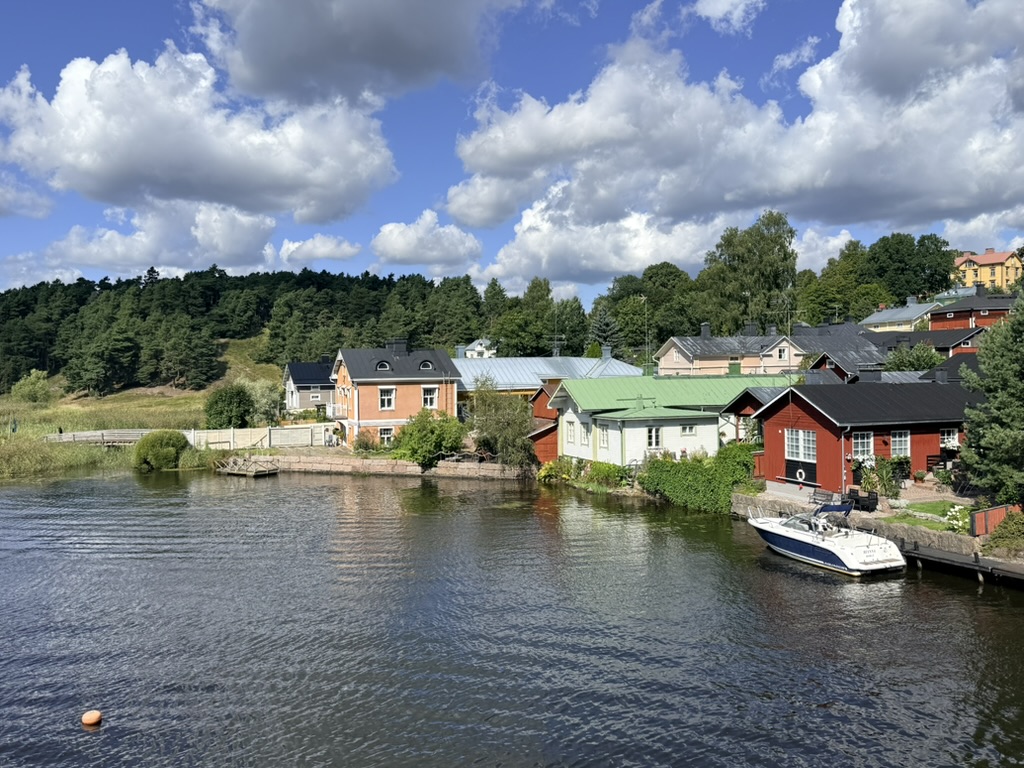
The most scenic part of the Old Town of Porvoo is seen by strolling along the far side of the Porvoonjoki River and looking across to the line of red-ochre painted riverside warehouses; they are one of the most photographed national landscapes in Finland.
The Helsinki Central Railway Station
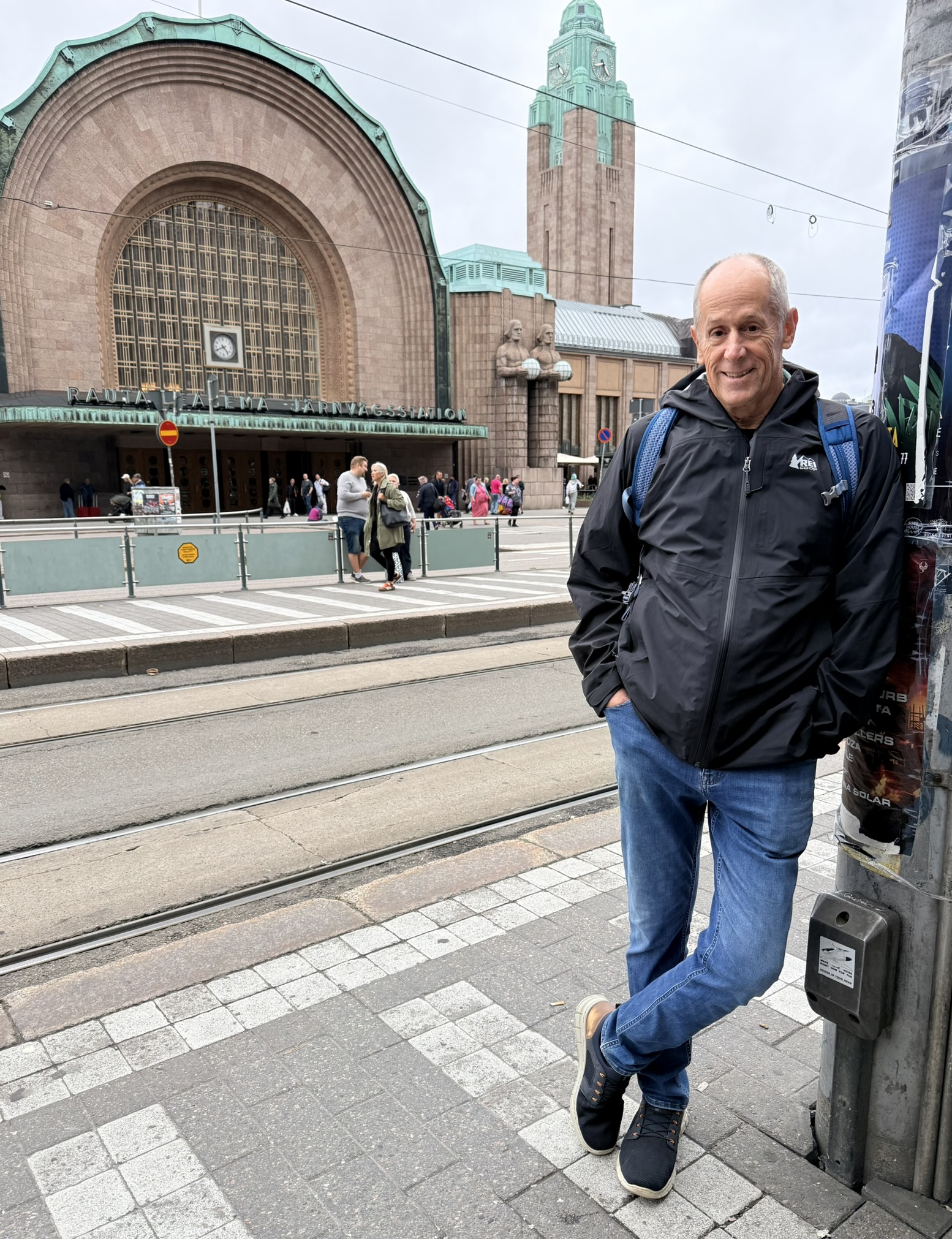
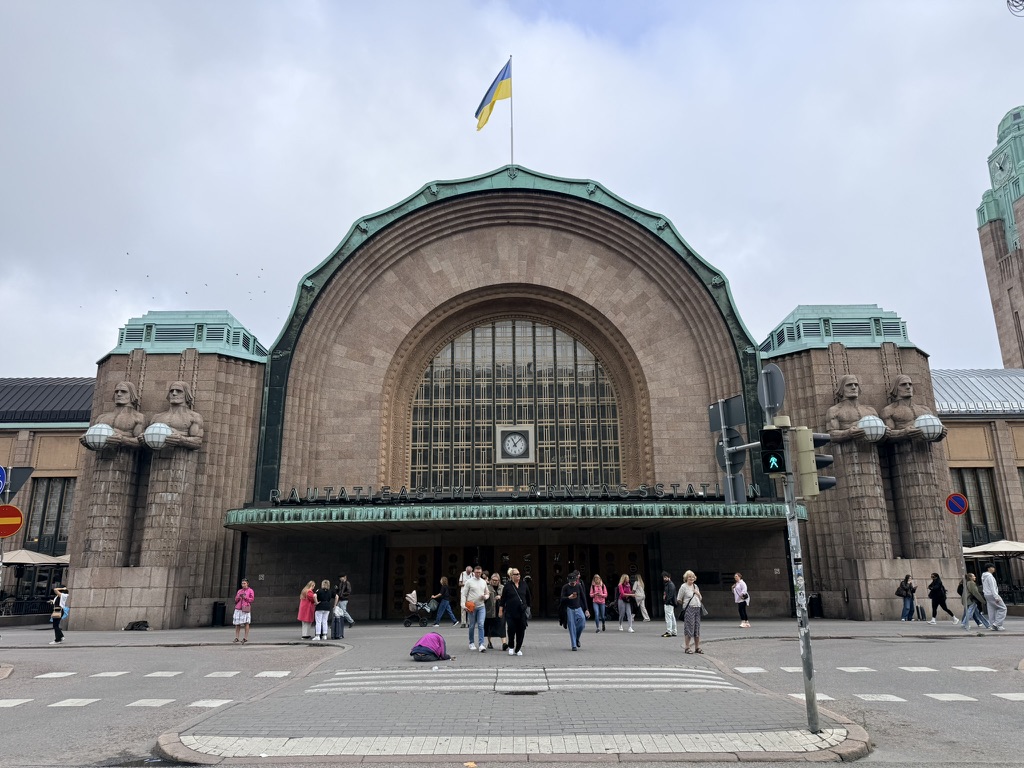
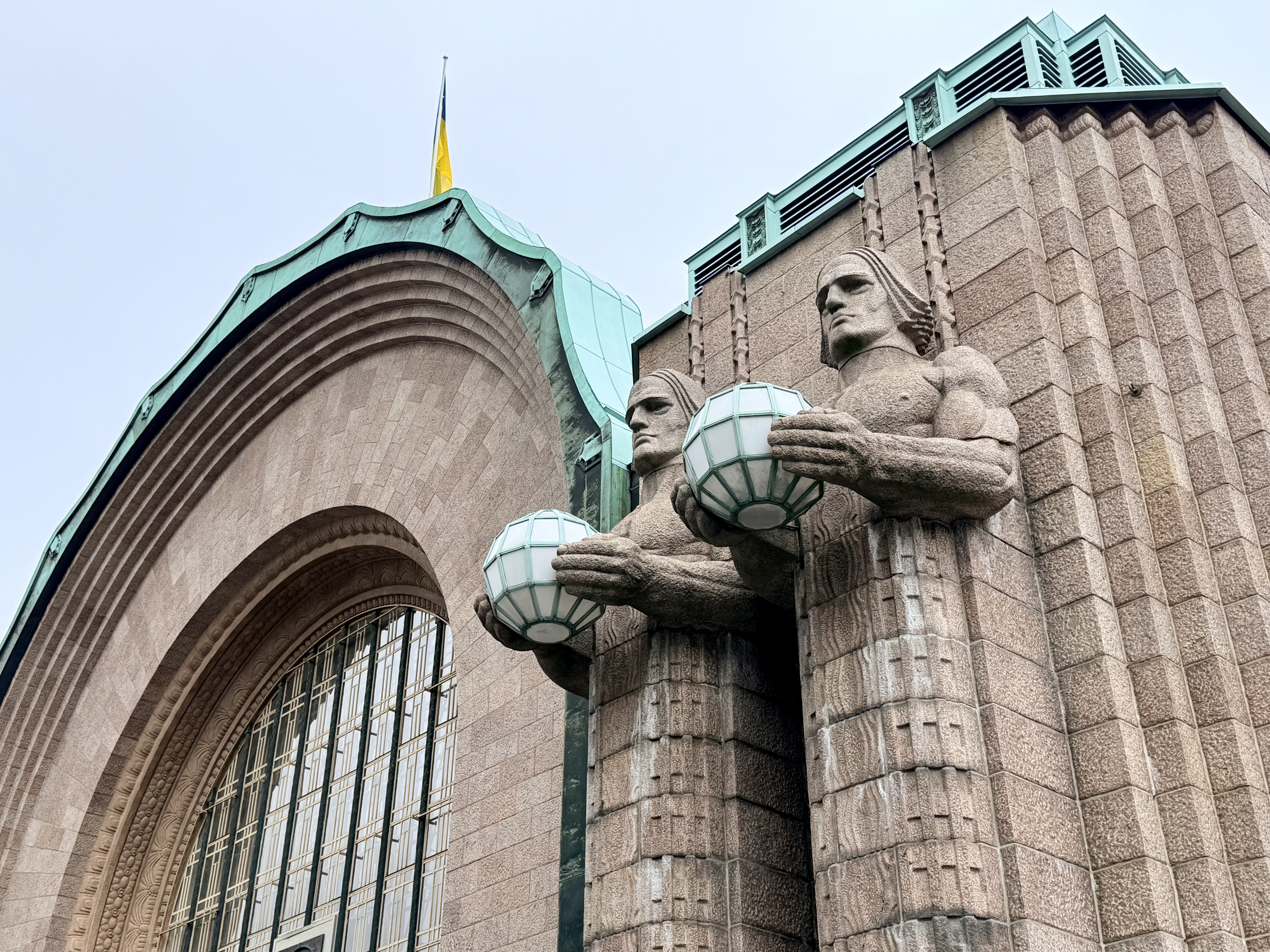
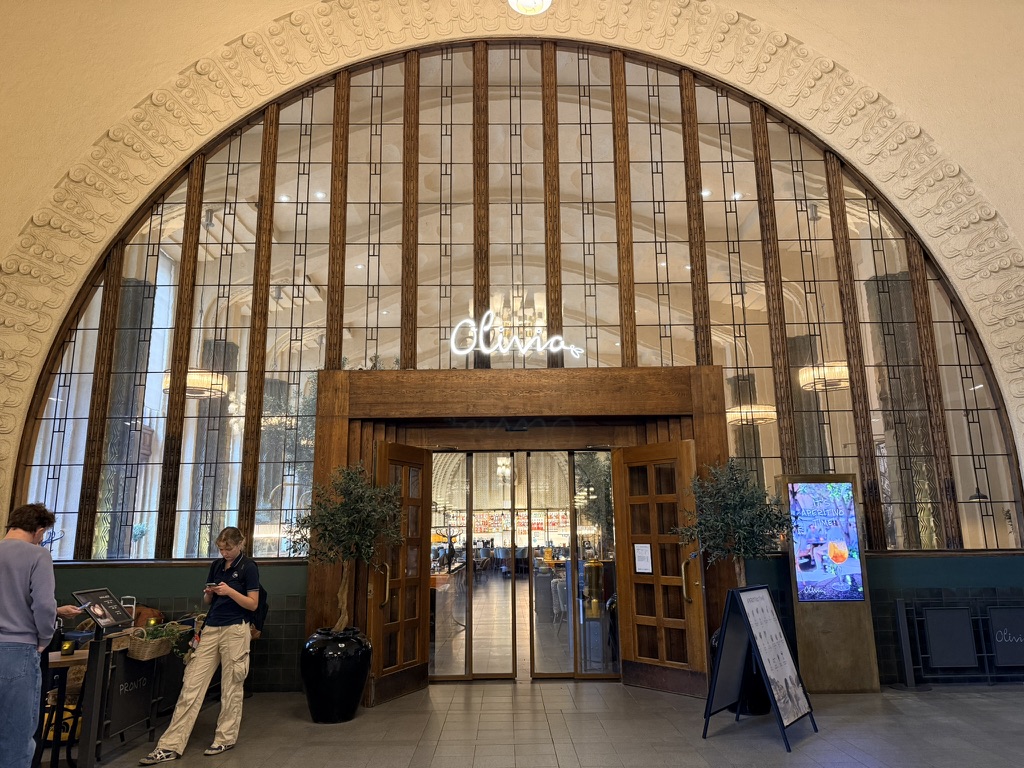
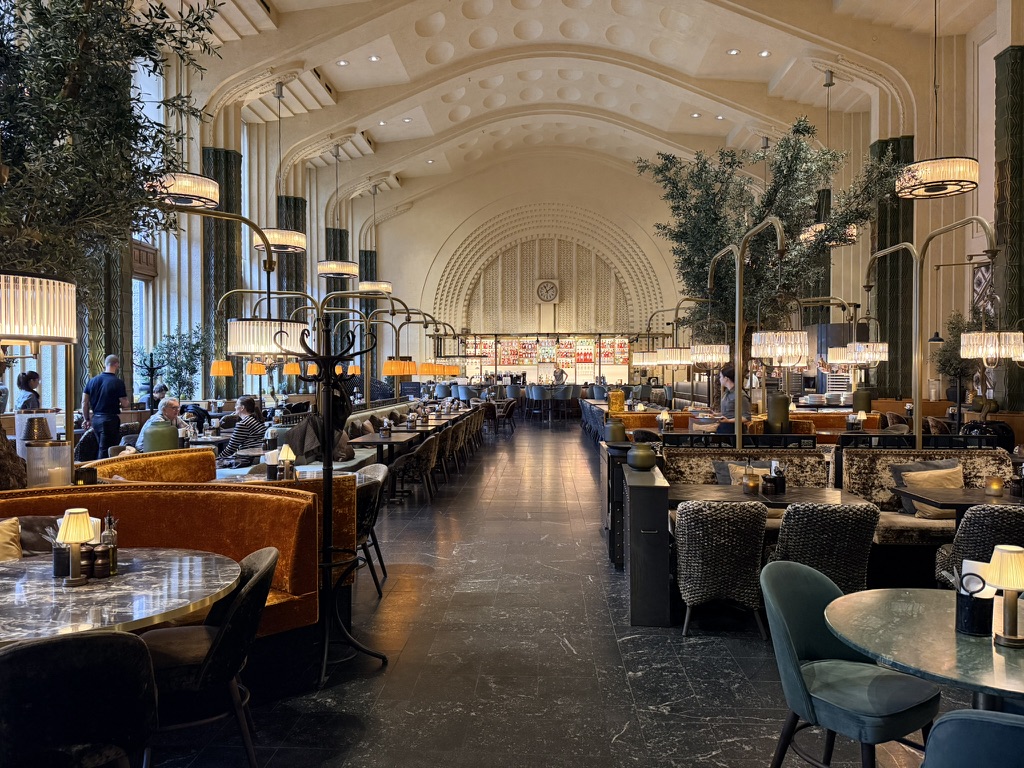
The Helsinki Central Railway Station building, with its granite face, was inaugurated in 1919. The building is known for its clock tower and the Lyhdynkantajat (“The Lantern Bearers”) statues created by Emil Wikström. Helsinki Central was chosen as one of the world’s most beautiful railway stations by BBC in 2013. It has become the symbol of the entire railway network in Finland.
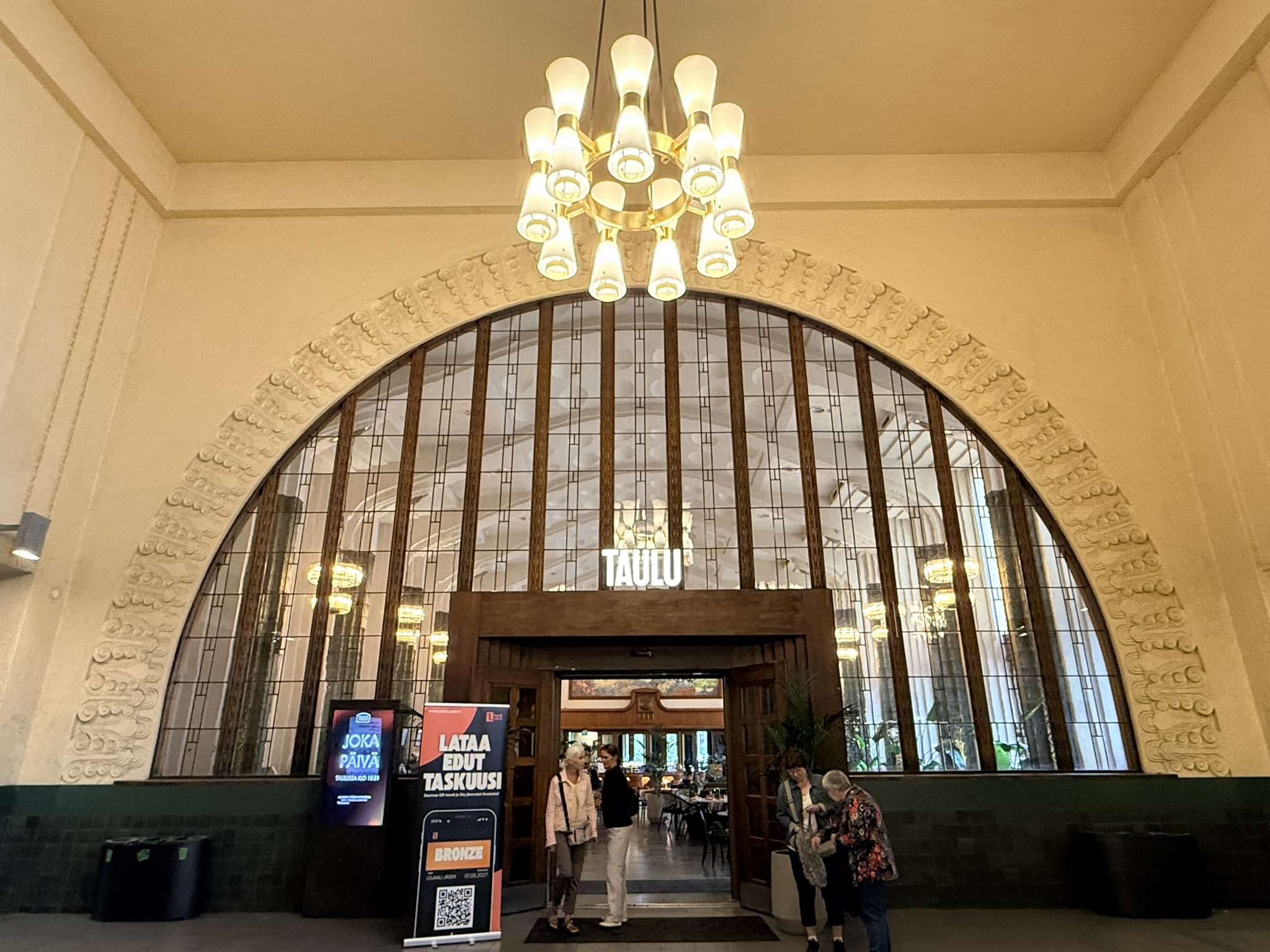
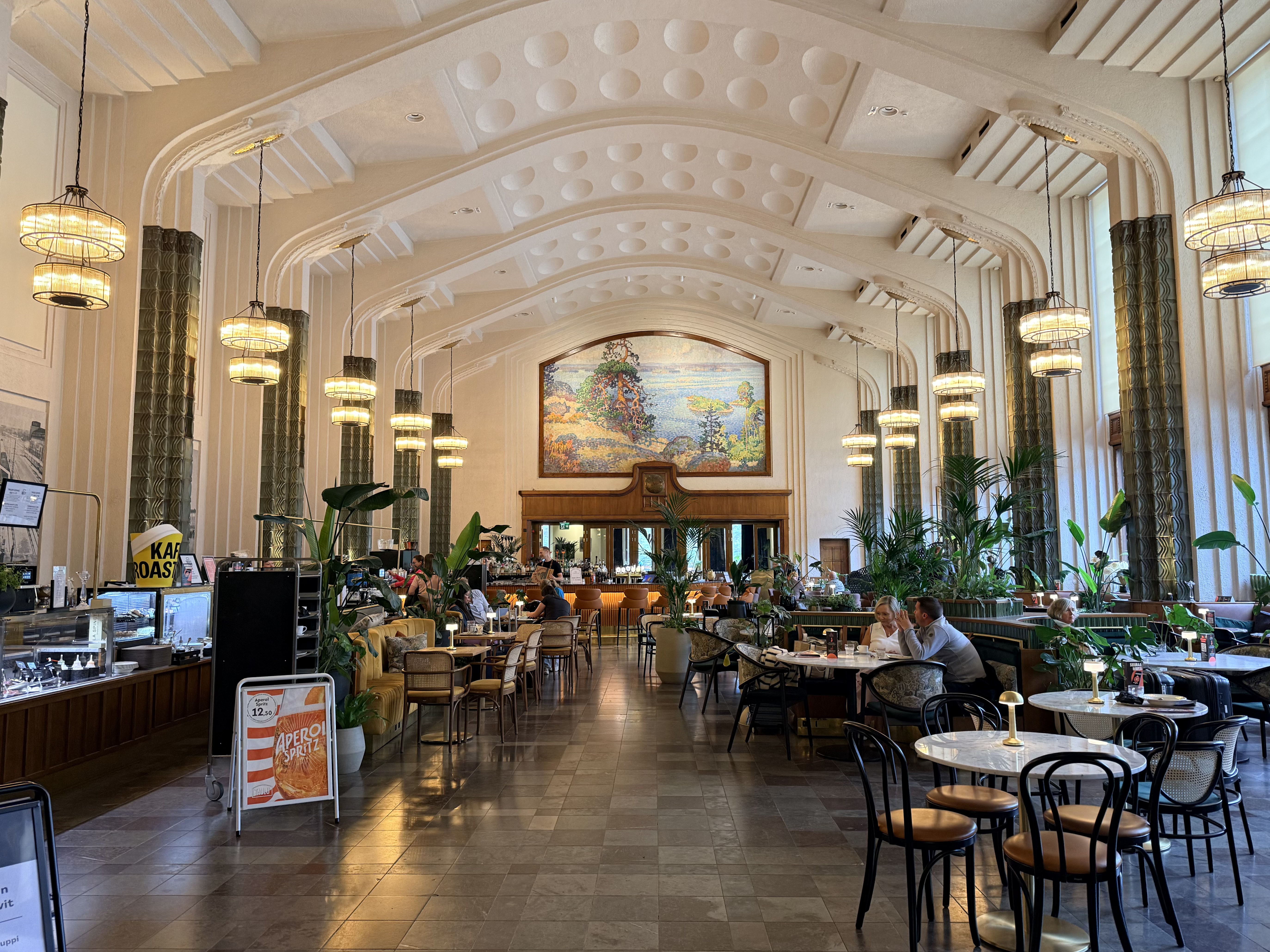
The railway tracks in Helsinki were built in the 1860s. There are a couple of gorgeous restaurants inside the station.
Oodi Helsinki Central Library
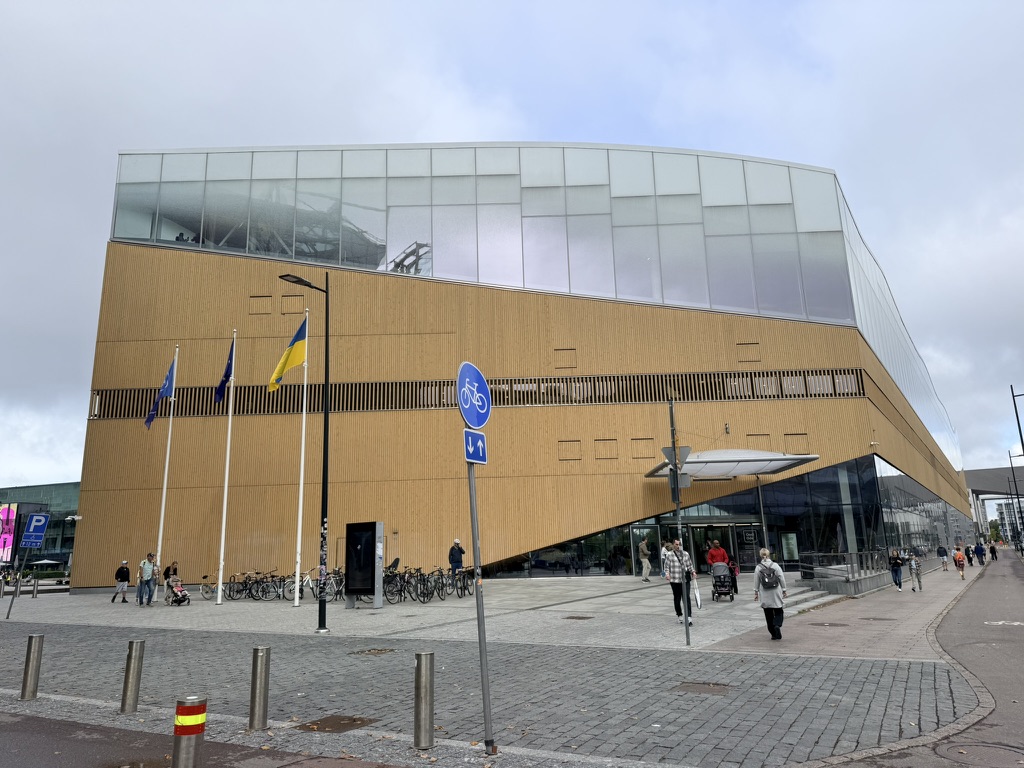
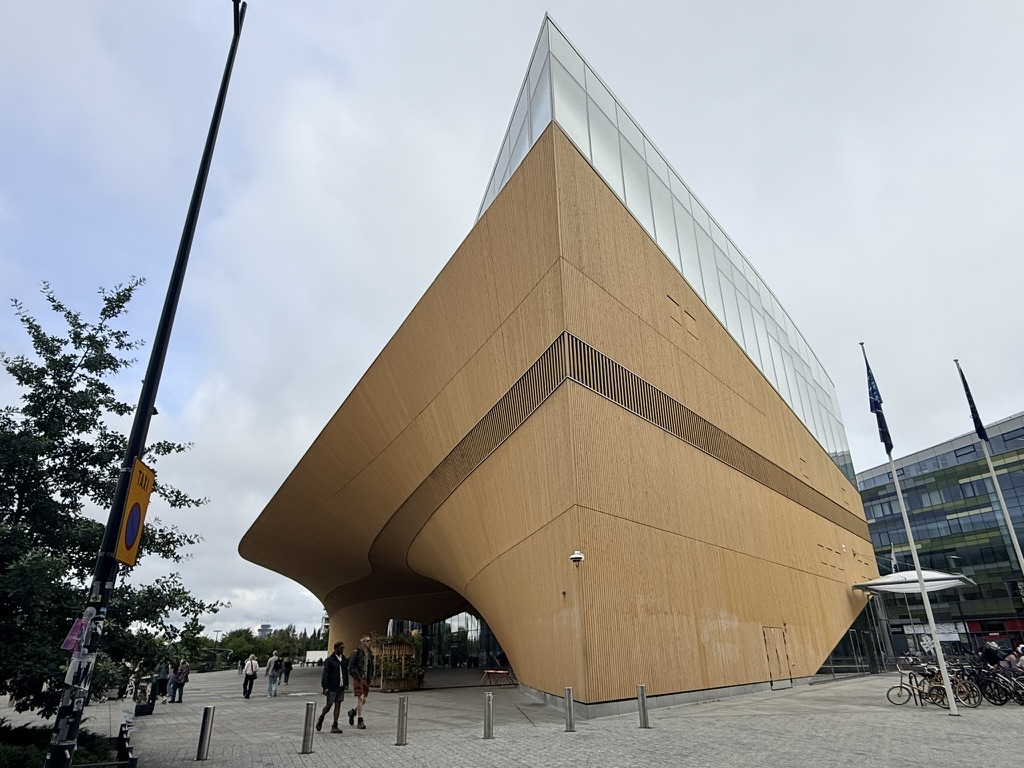
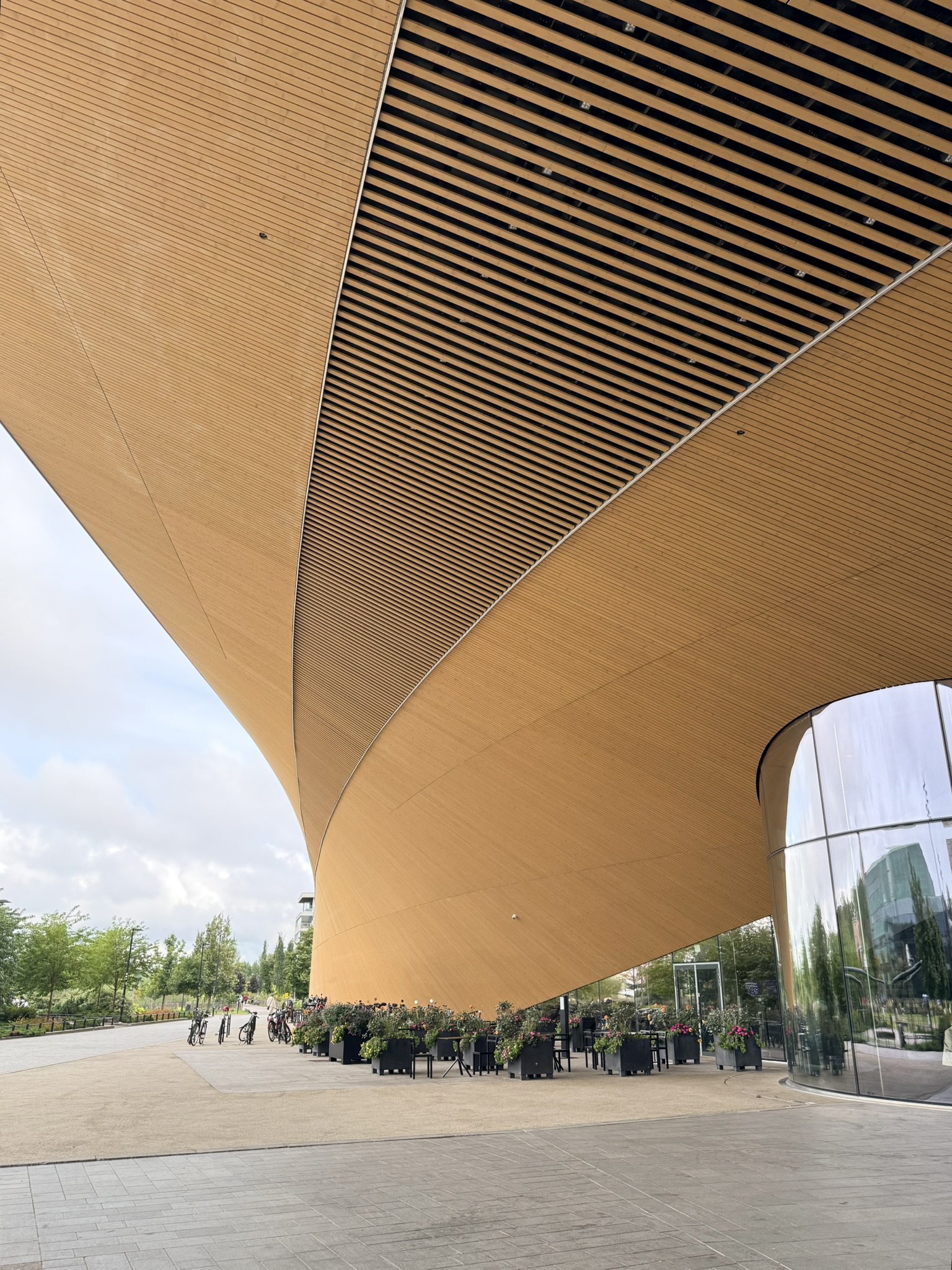
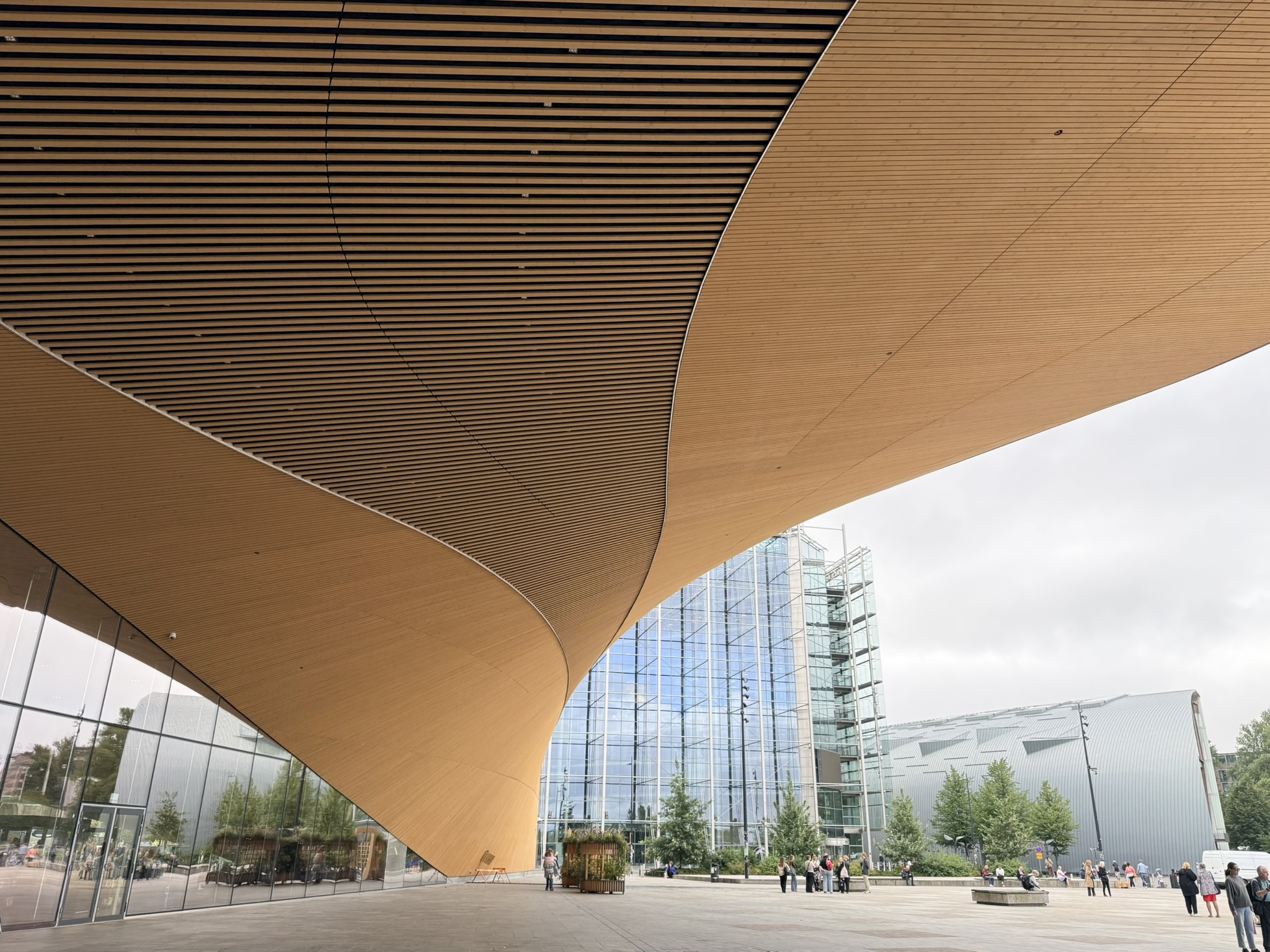
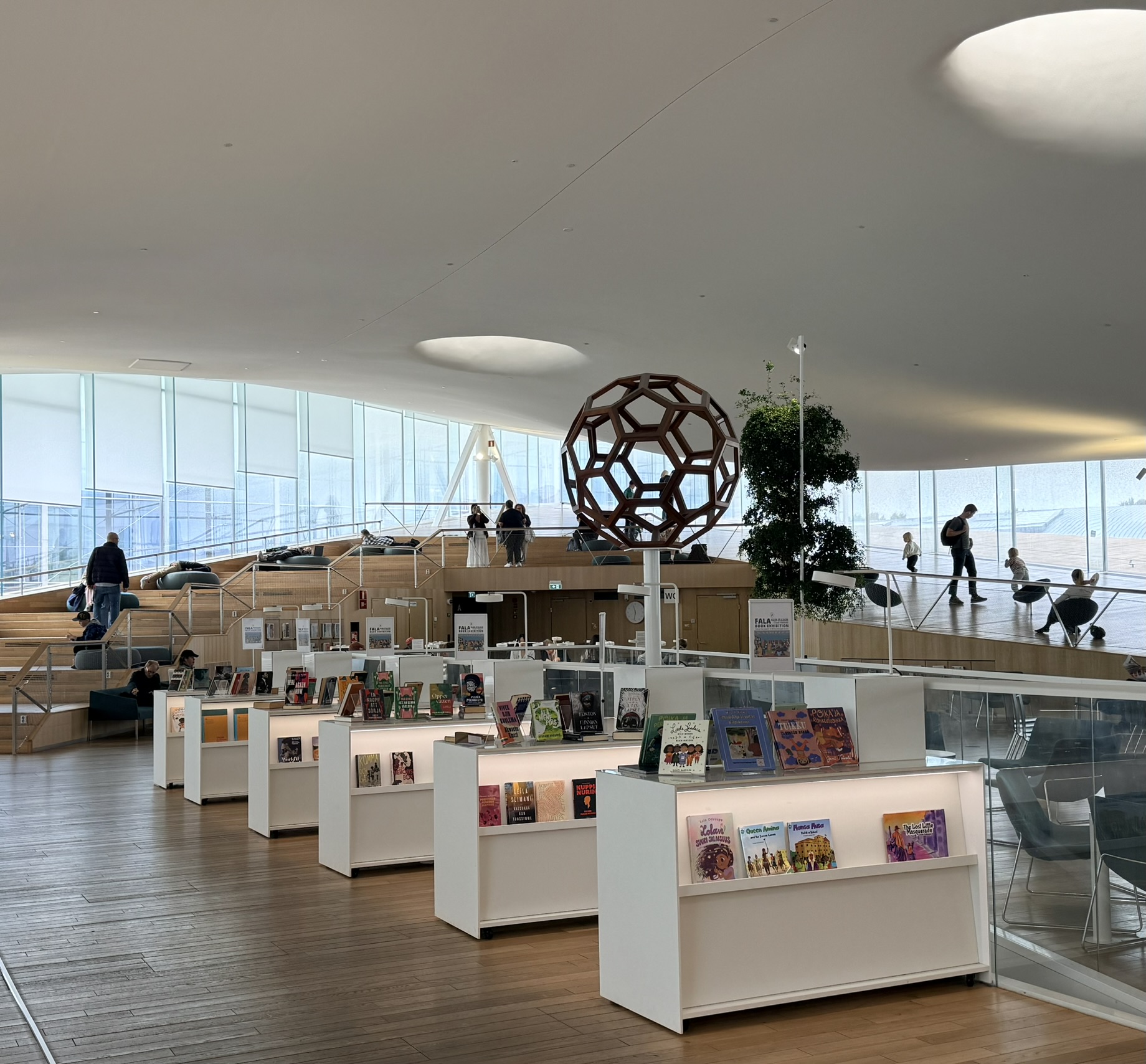
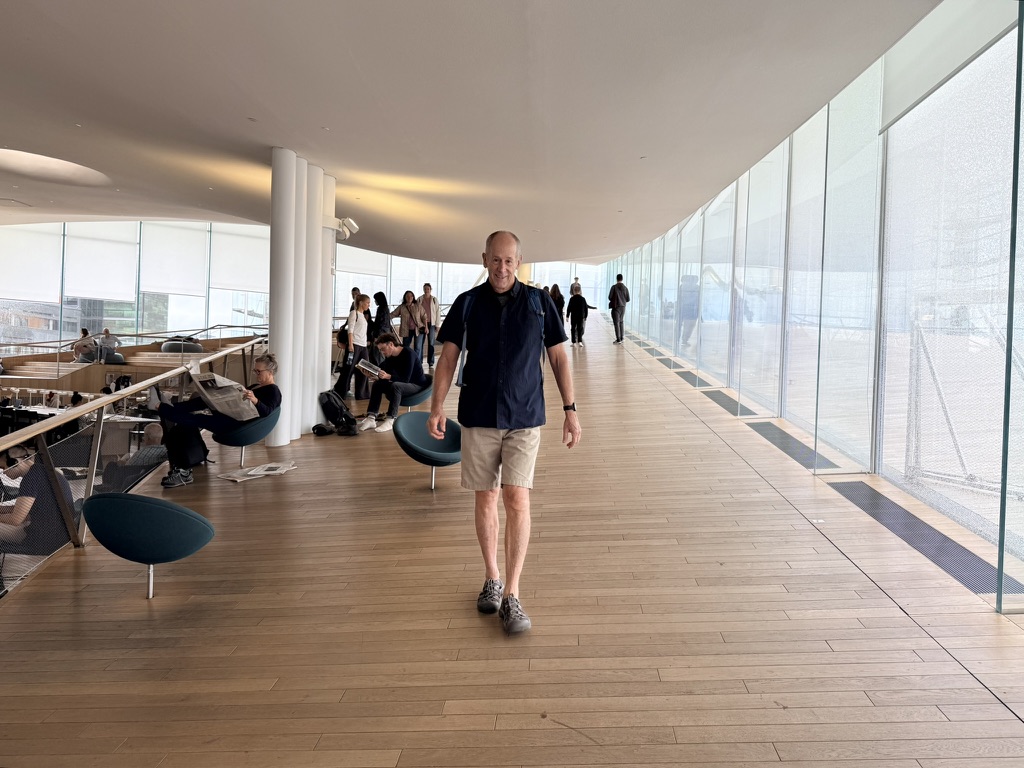
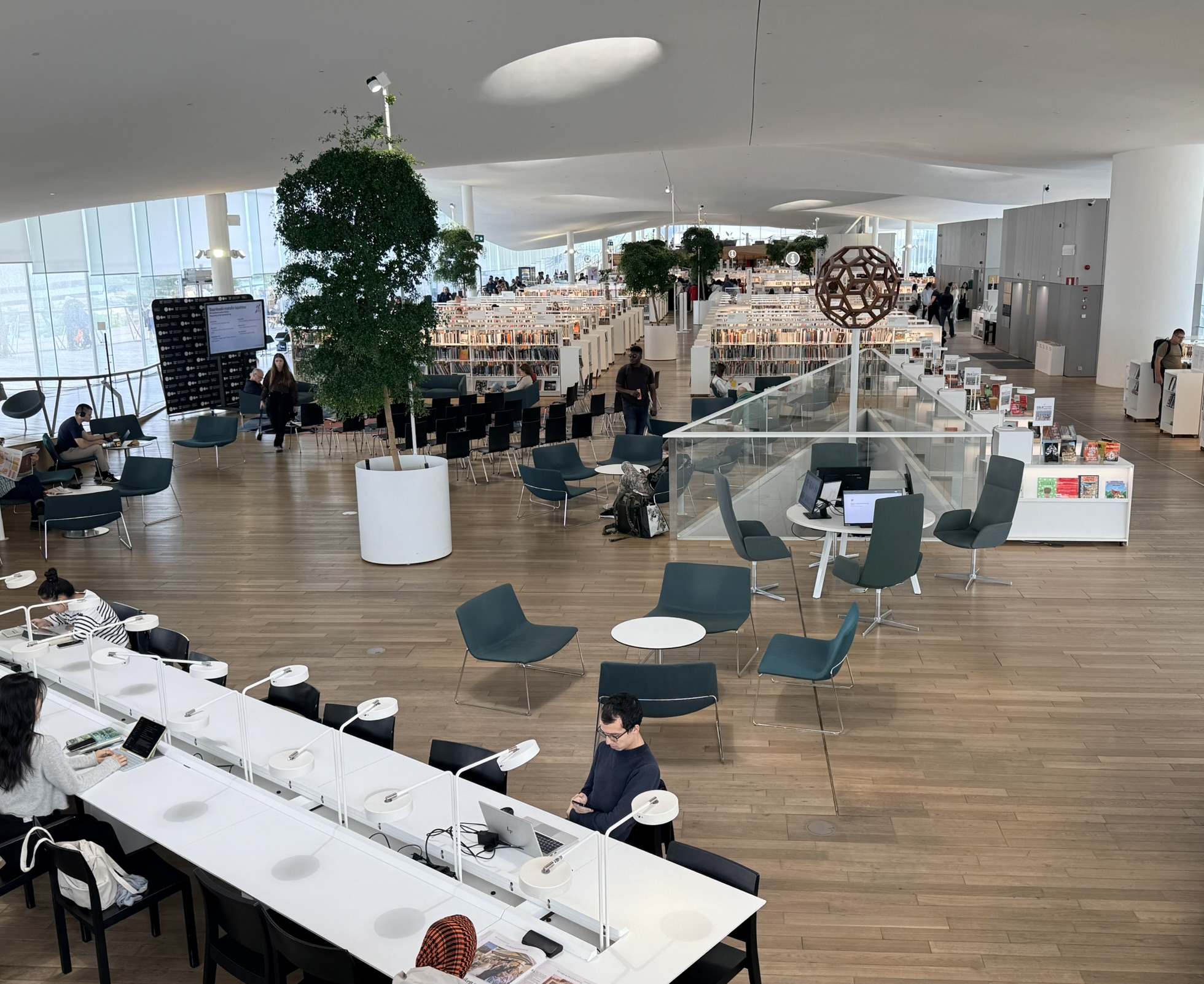
Oodi Helsinki Central Library is a public library in Helsinki but despite its name, it is not Helsinki’s main library; the name reflects its central location in the city. Still, it stands out as a reflection of the Finns’ desire to learn. A design competition in 2012 to build the library was won by the Finnish architectural firm ALA Architects over 543 other competitors.
Apart from the top floor, Oodi’s facade is made entirely from wood, which softens the general appearance of the architecture around Töölö Bay. The wood used for the exterior wall is spruce. The building, with its passive solar design, is regarded as energy-efficient due to its use of local materials and its use of sunlight. It uses almost no energy.
In December of 2016, it was announced that the new library would be named Oodi (“Ode”) in Finnish and Ode in Swedish; it was chosen from a pool of some 1,600 names proposed by the public. “Oodi” was chosen because it’s easy to remember, easy to say, and easy to translate. The selection jury also did not want to name the new library after a person.
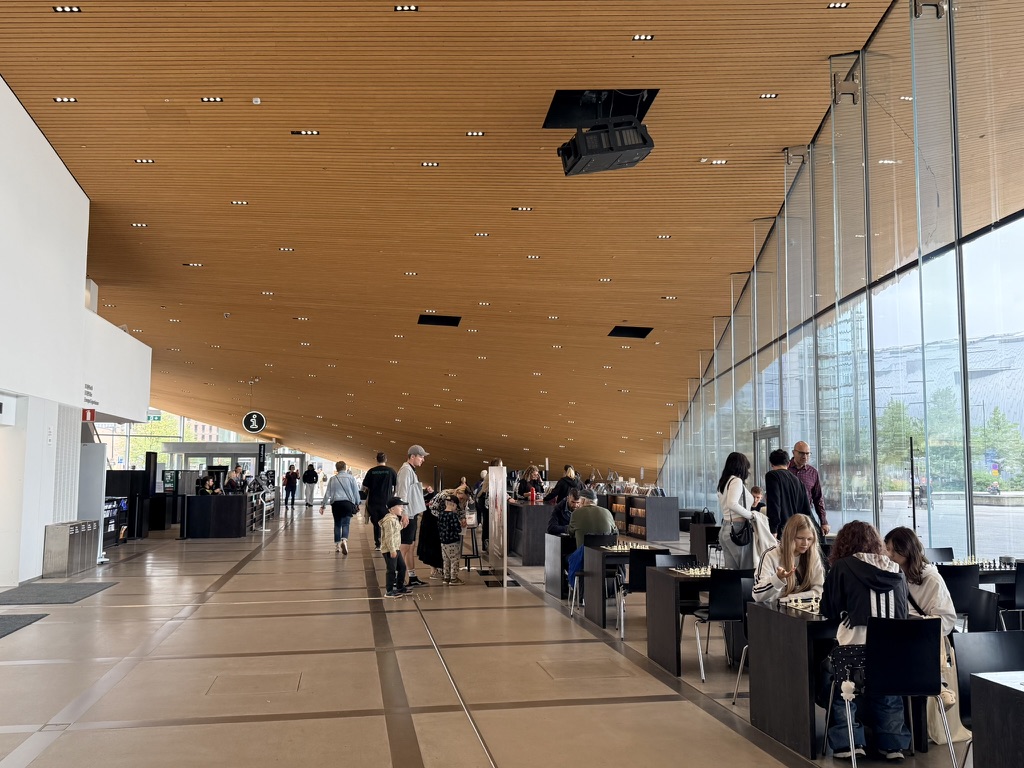
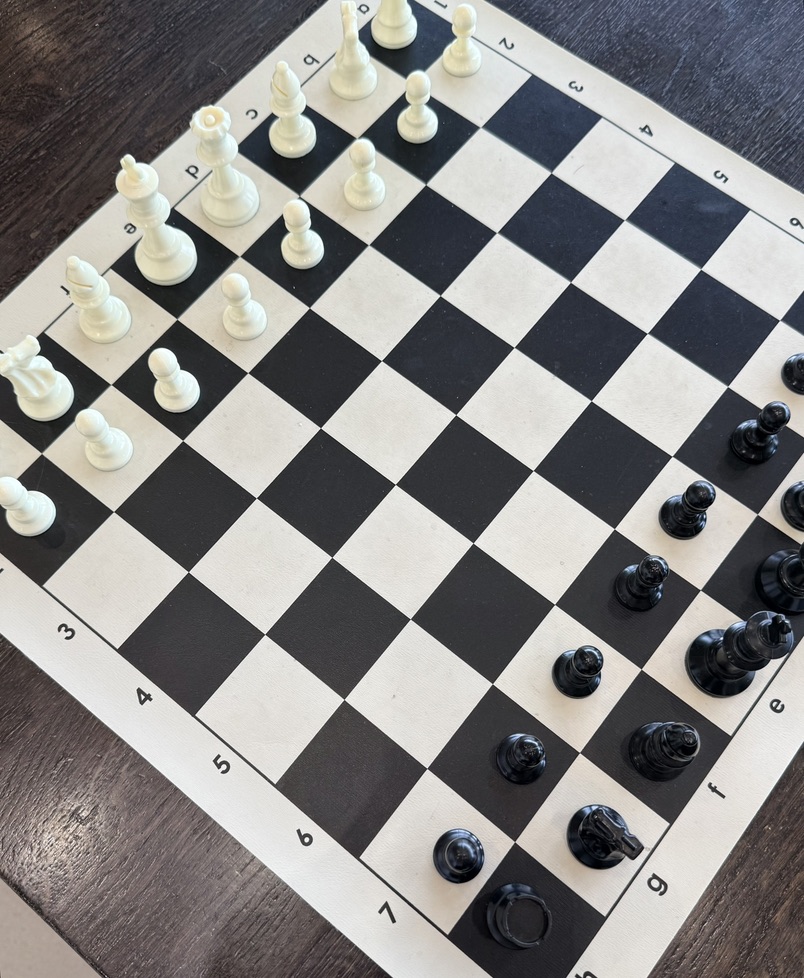
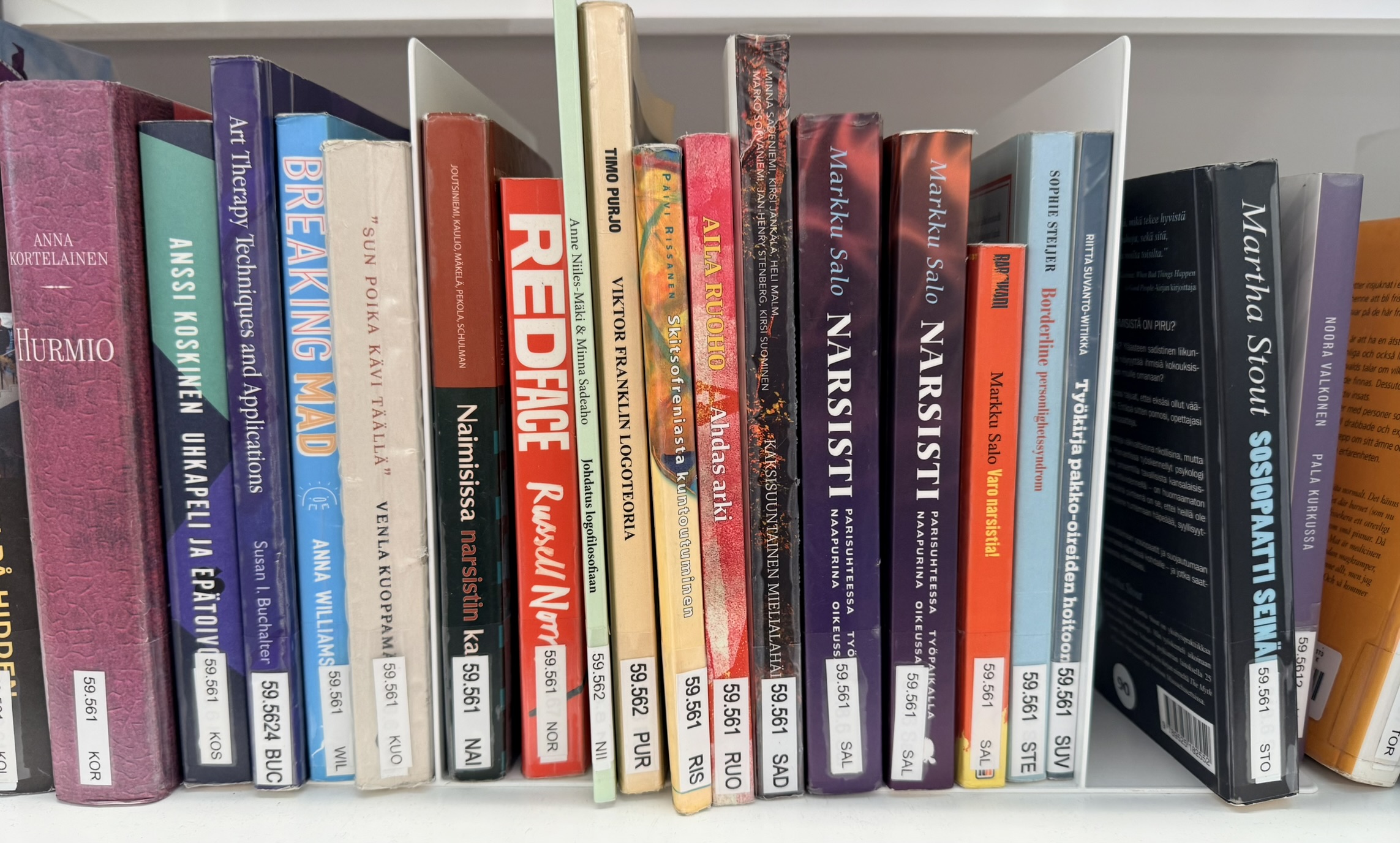
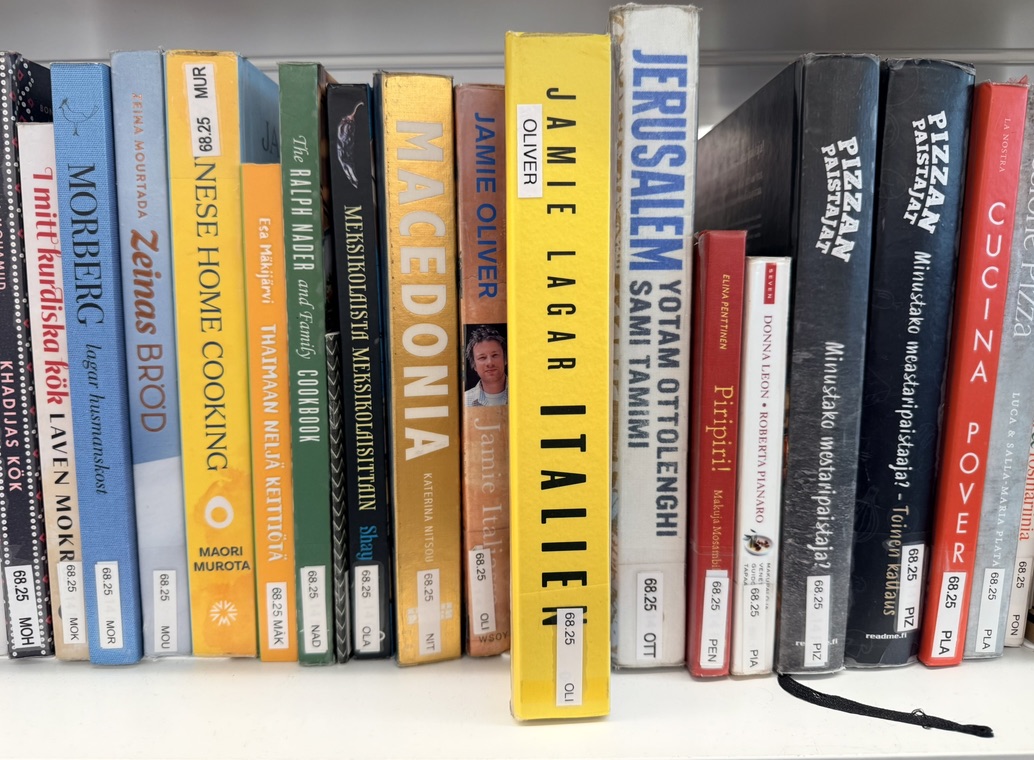
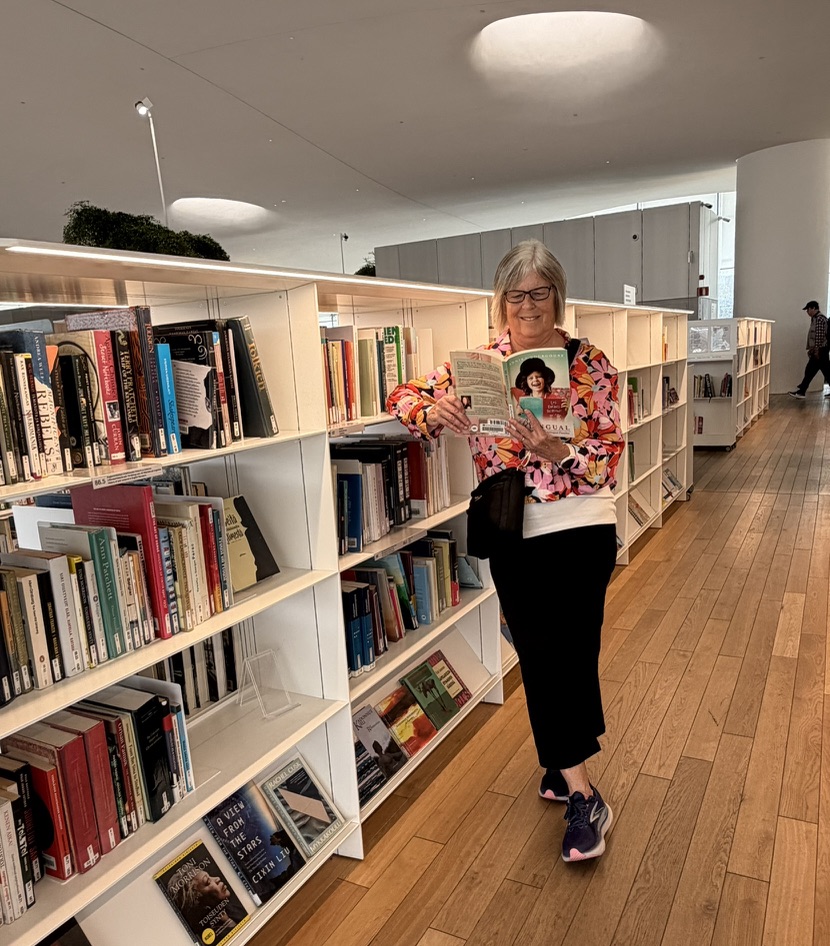
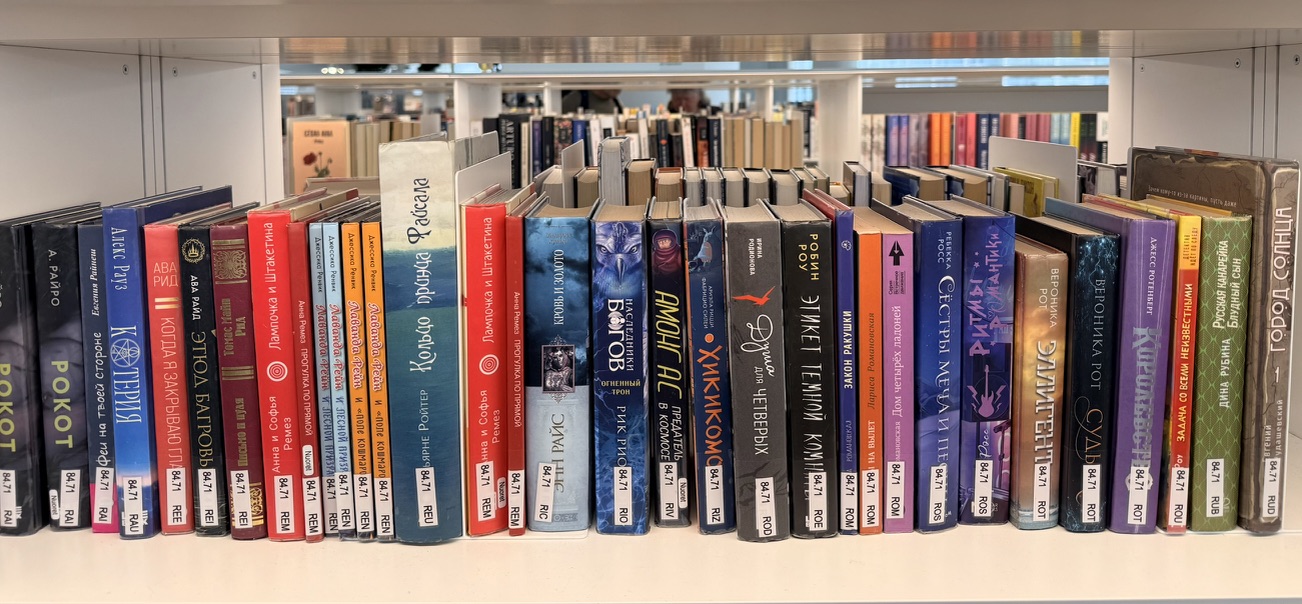
Inside is a gorgeous and airy space that invites the public to play chess, read books, play, study, socialize, or relax. As someone who loves books, it was my idea of heaven. It had enough activity not to be stodgy and enough light to make it playful. I wandered through the stacks, picking up books to flip through them time and again, and dreaming of all the other worlds I could experience here.
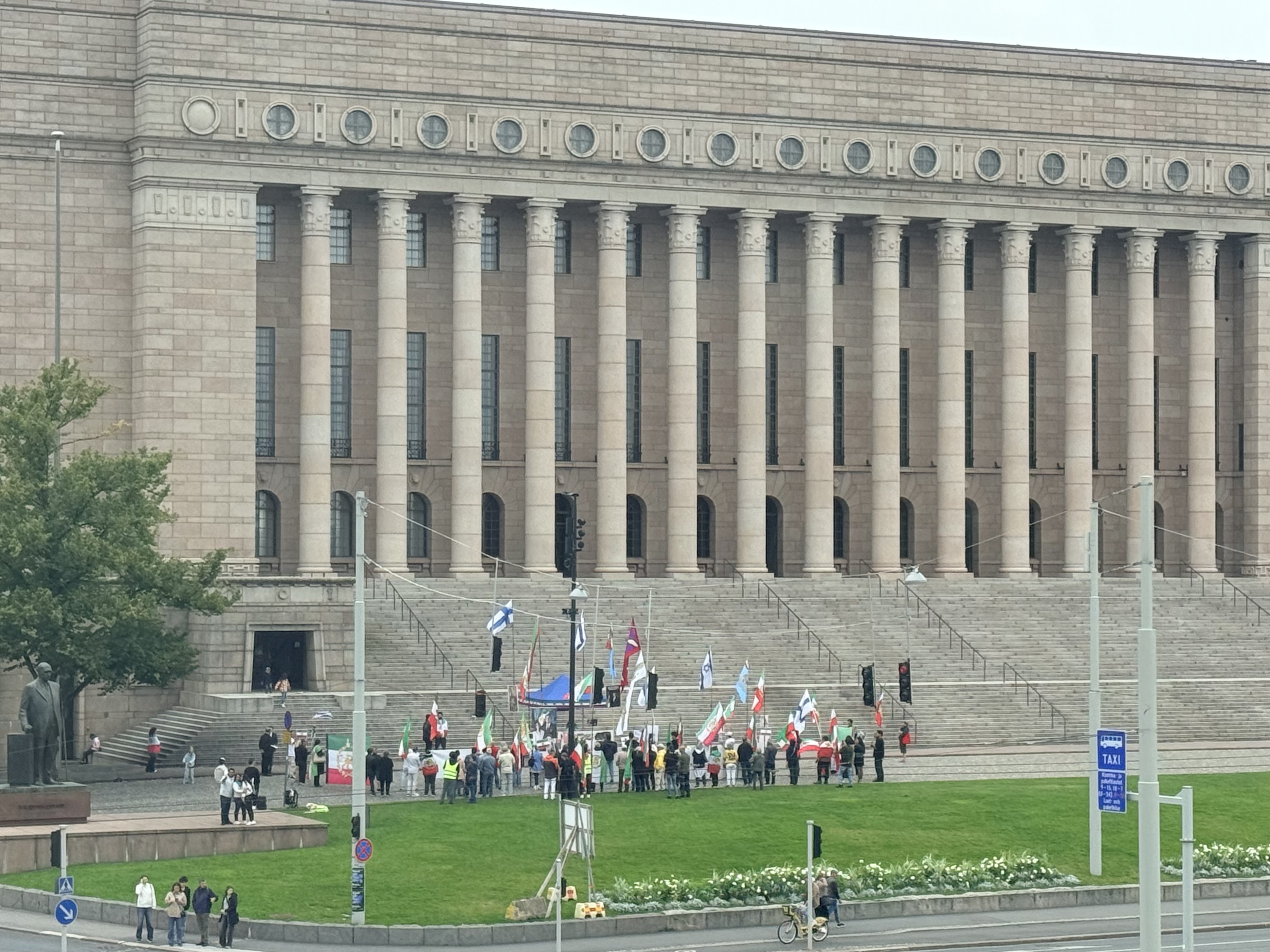
From the rooftop of the Oodi, we could see the Finland Parliament building and The Helsinki Music Centre.
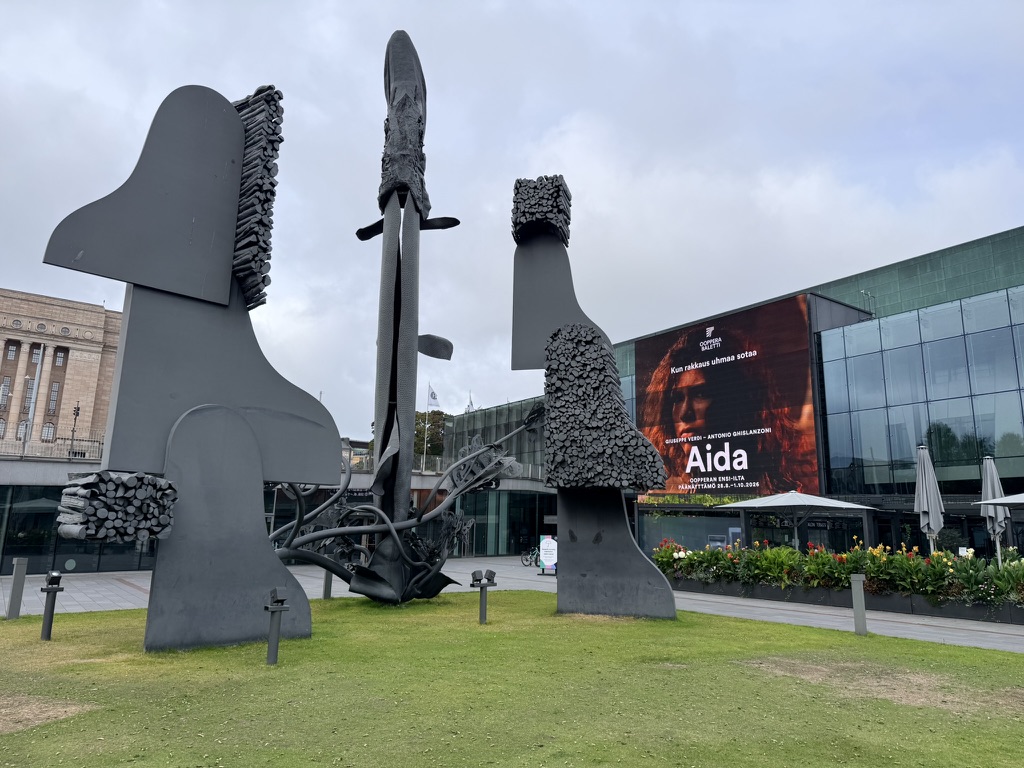
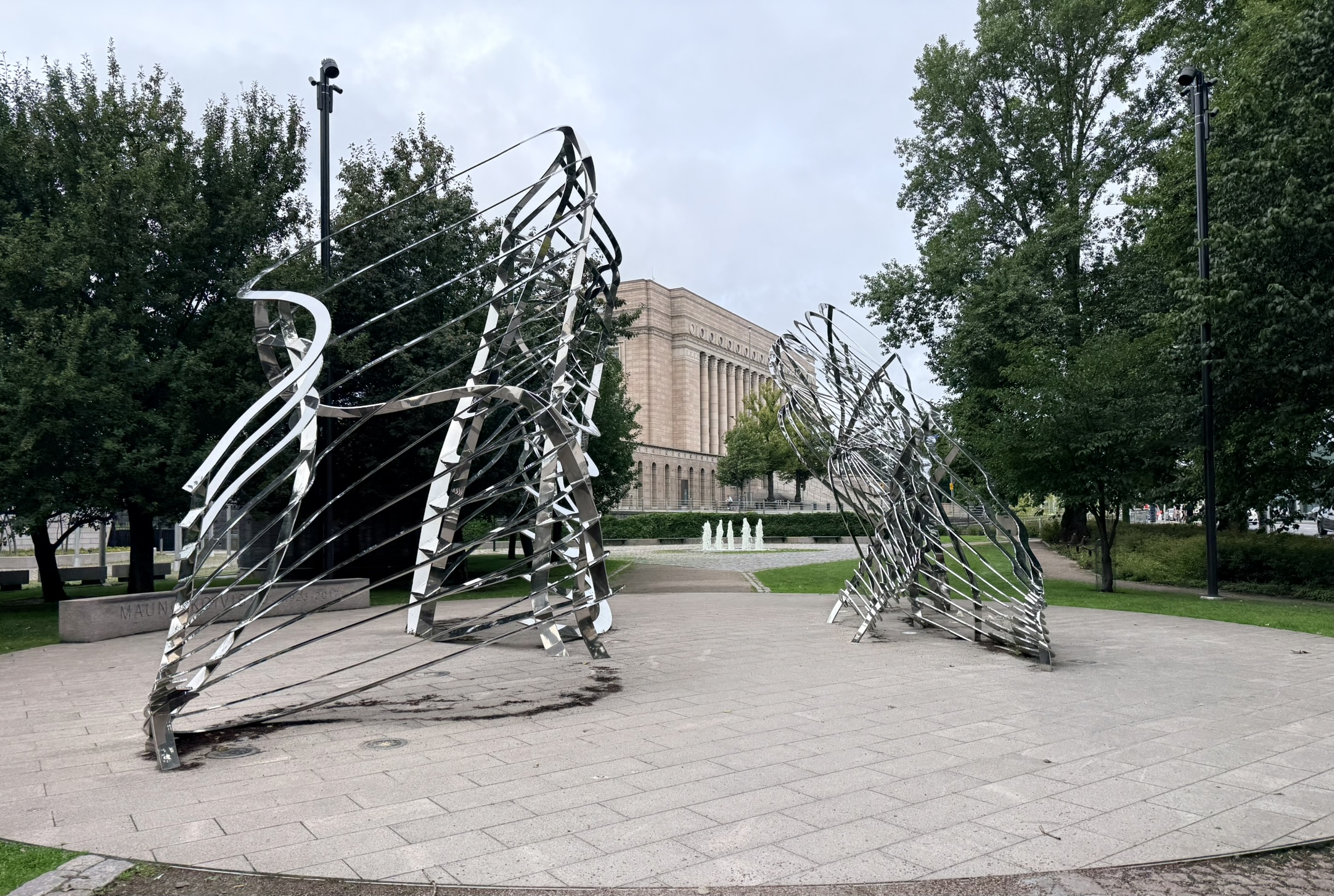
In the square in front of the library, we found the interesting sculpture Laulupuut or “Song Trees” (Pikes song) by Reijo Hukkanen. The sculpture was erected in August of 2012. The pike at its center has alder branches entwined around it. Next to the pike are two towers made of concert grand pianos and piles of firewood. Apparently, it was inspired by Aaro Hellaakoski’s poem in which a pike rose from the sea and began to sing a song so melodic that the birds in the trees stopped singing.
We also saw a marathon going on in the square, with runners passing at around the 22-mile mark.
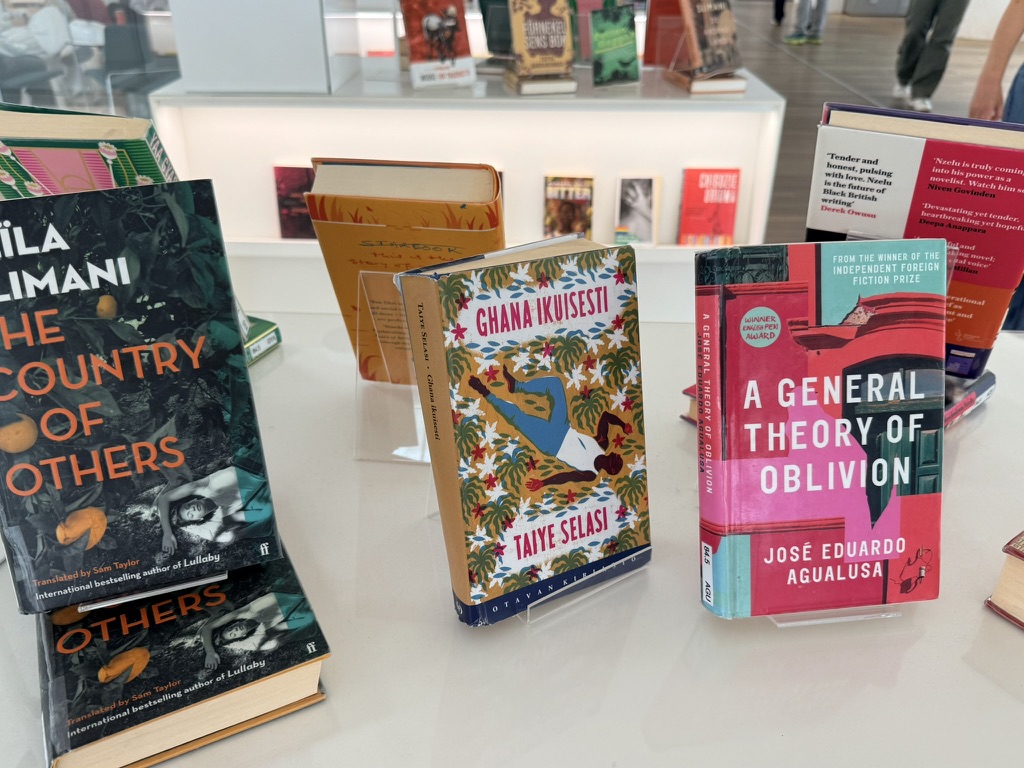
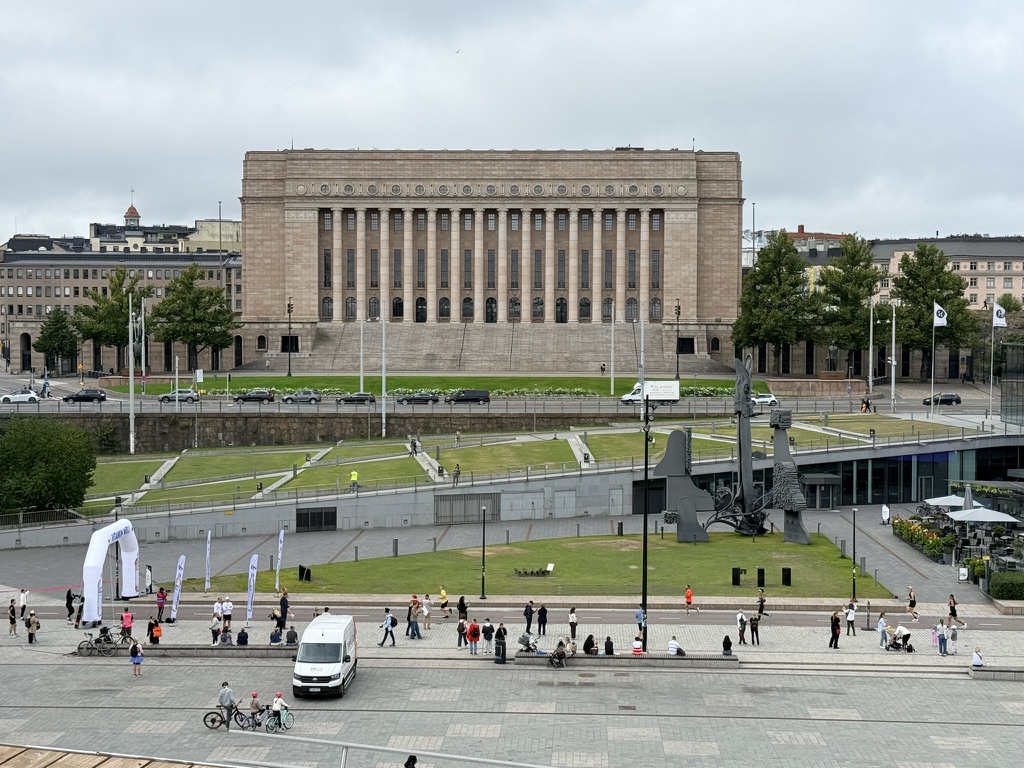
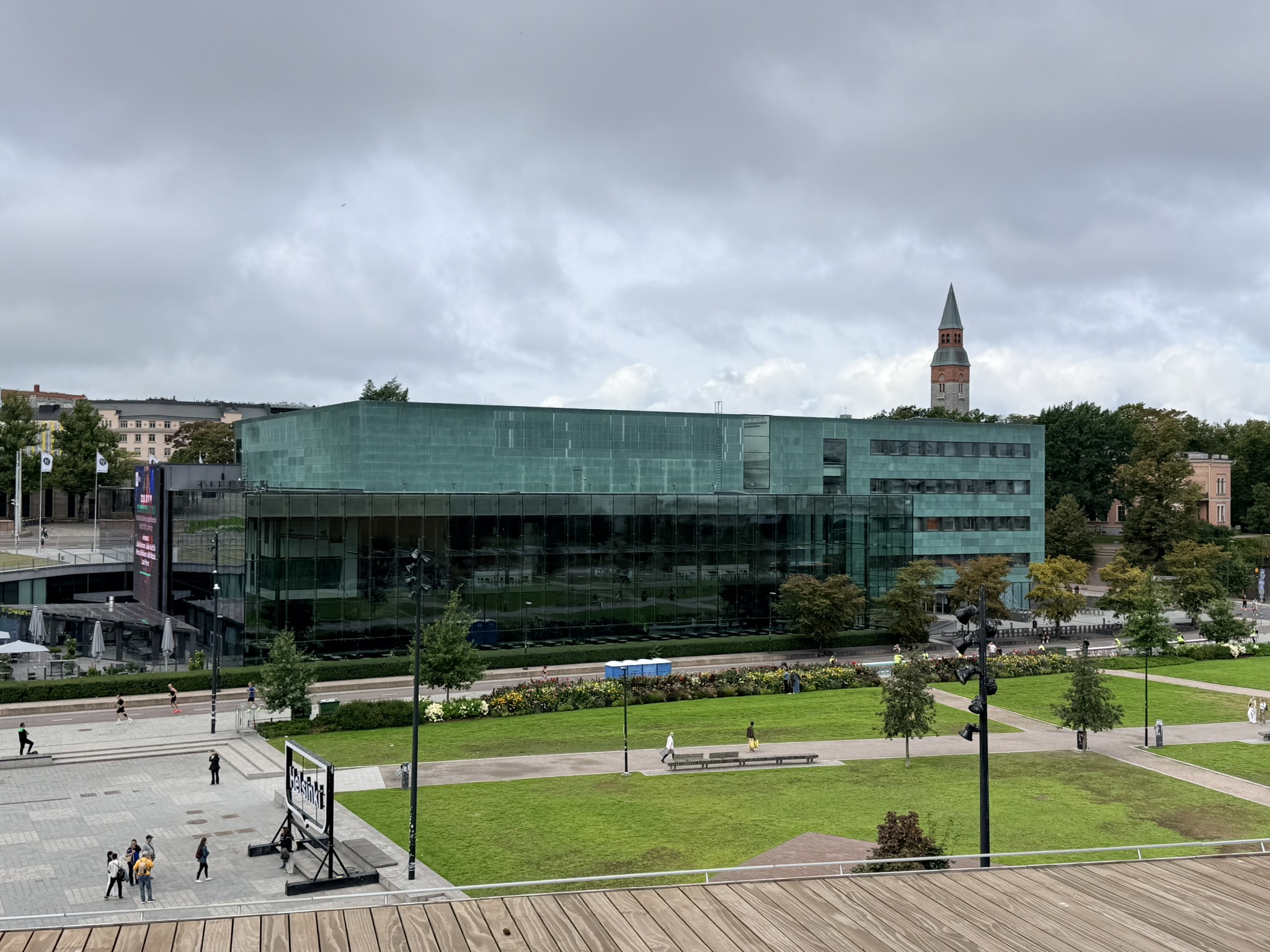
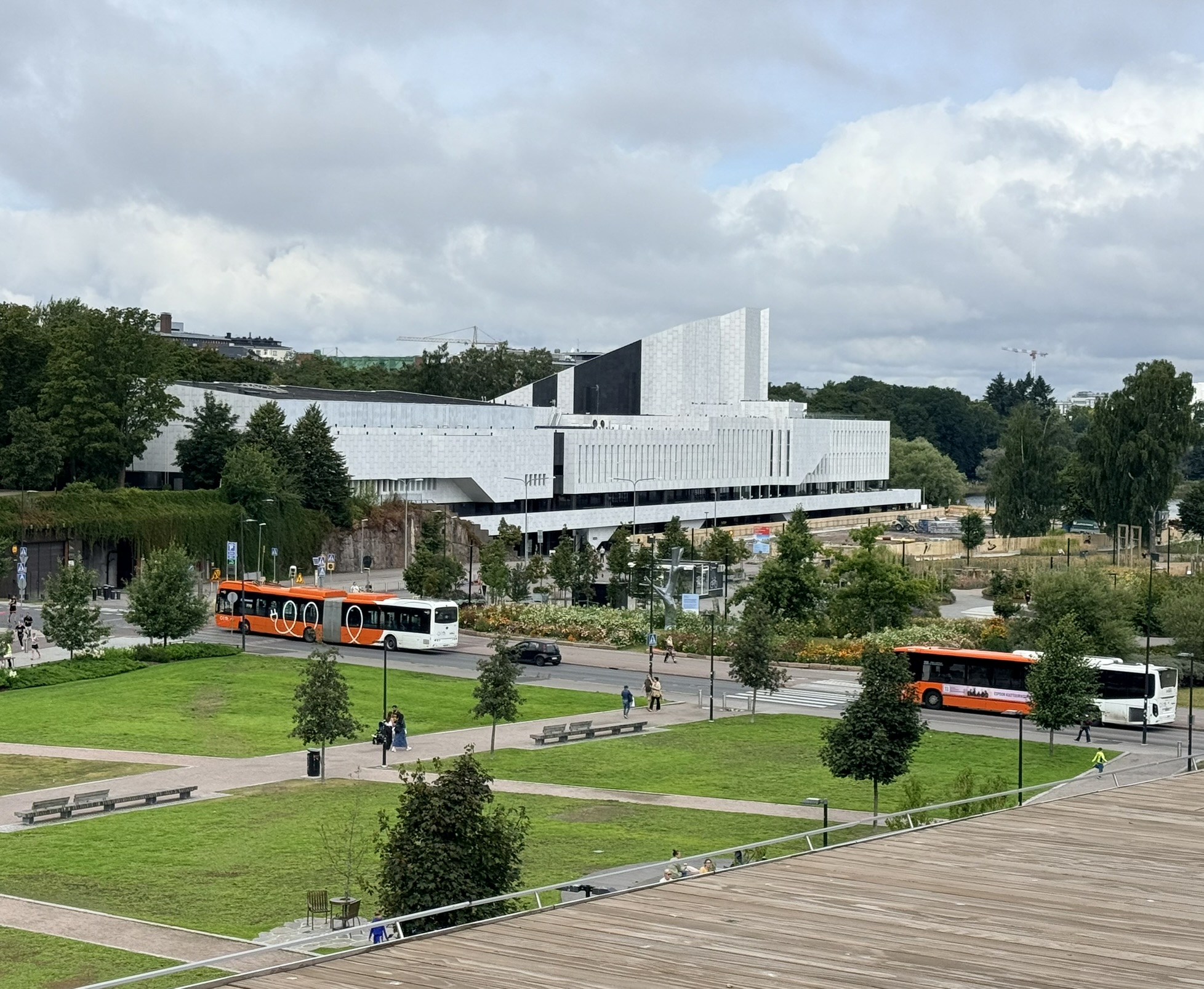
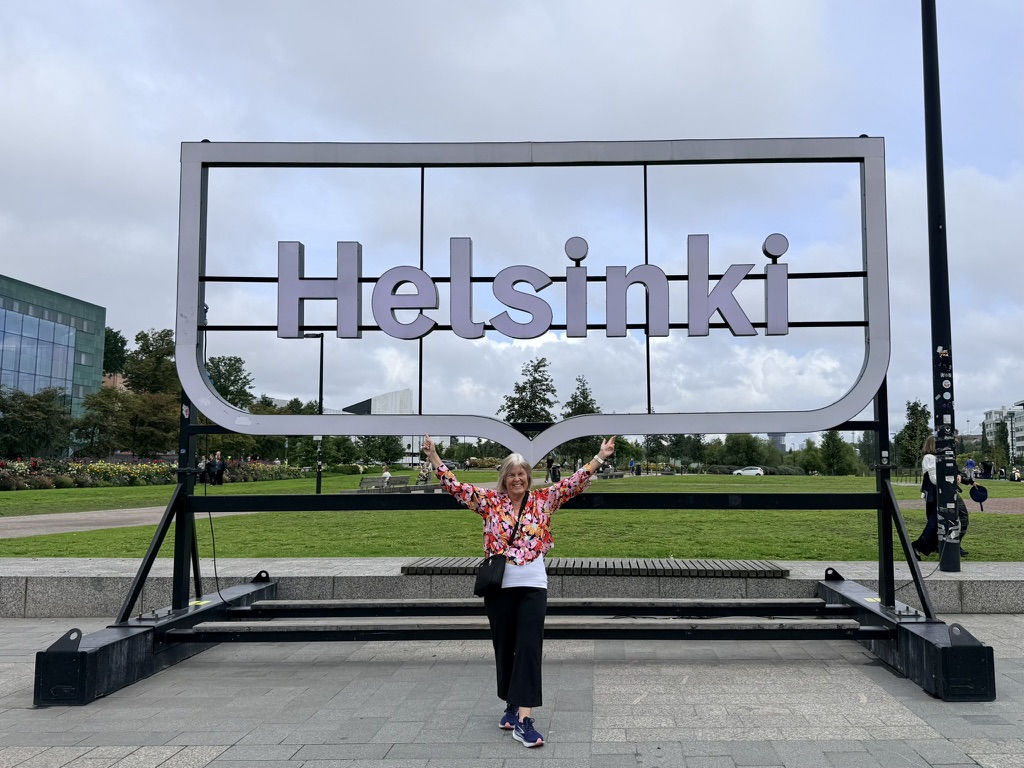
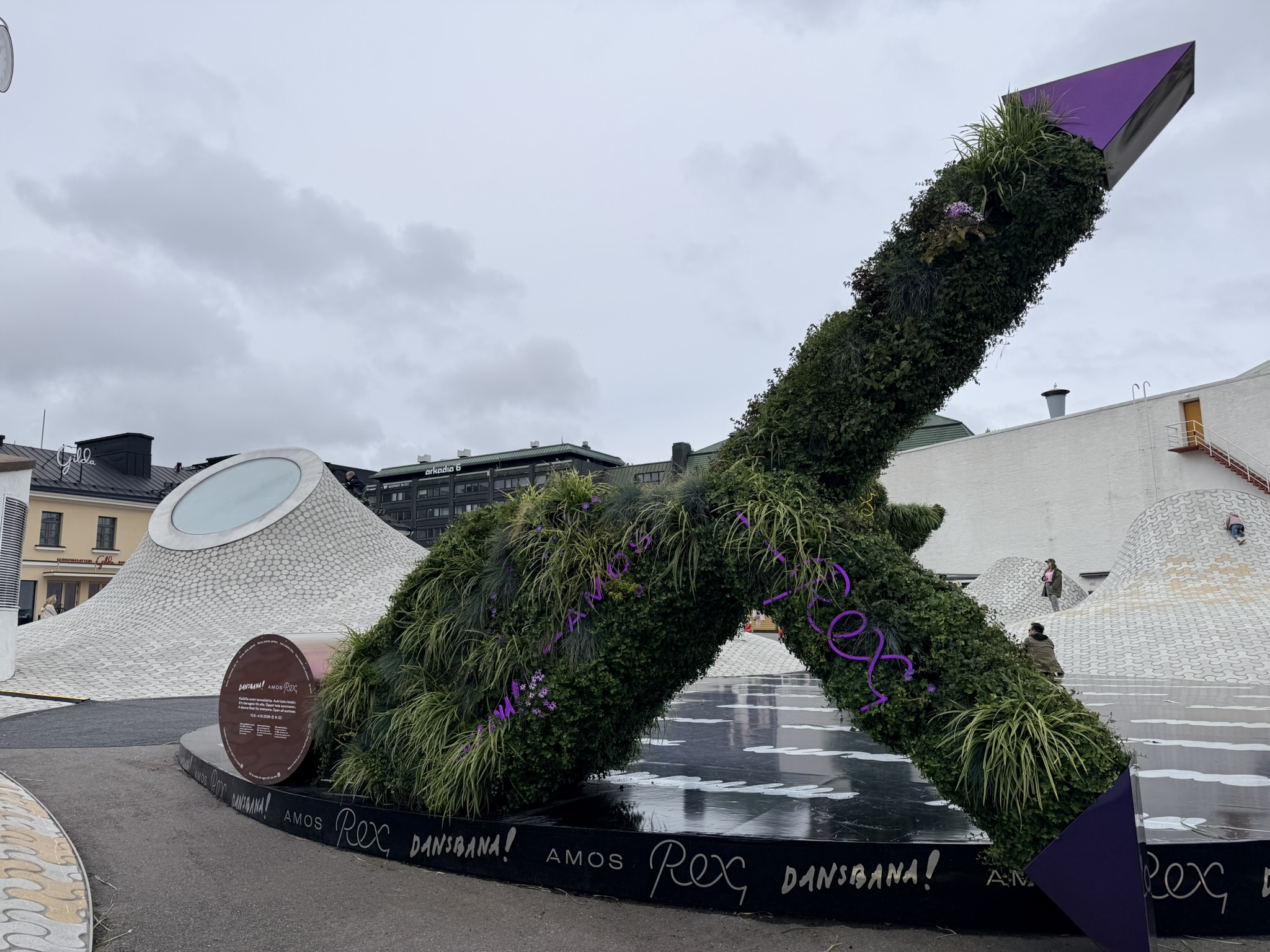
Outside Amos Rex
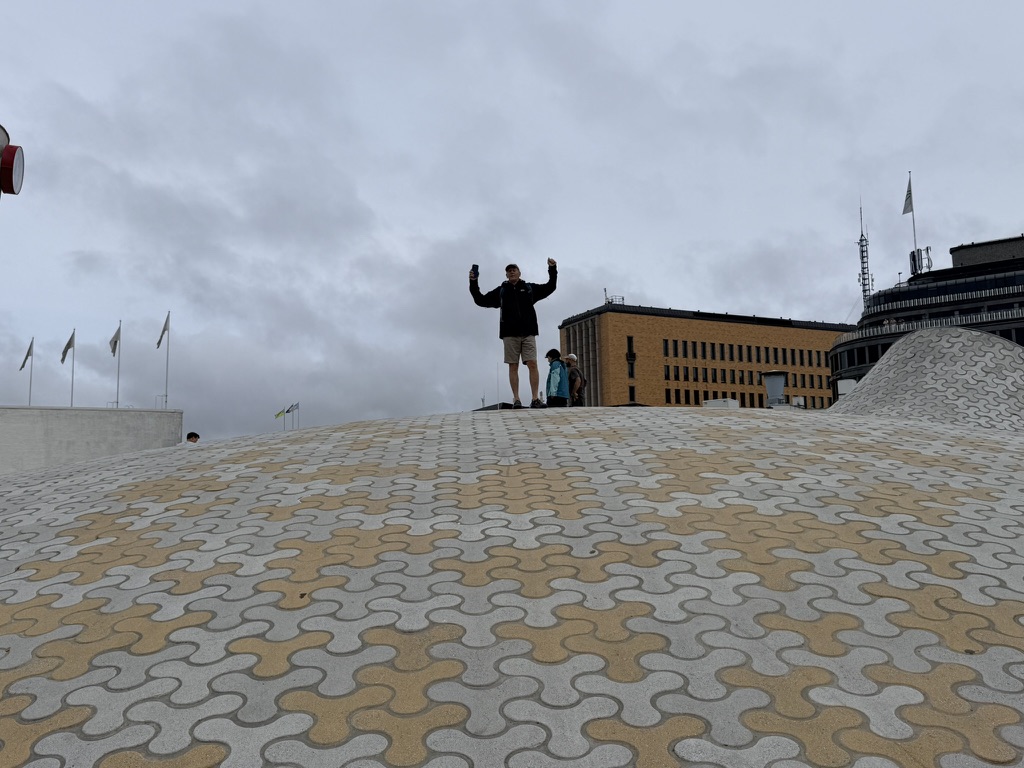
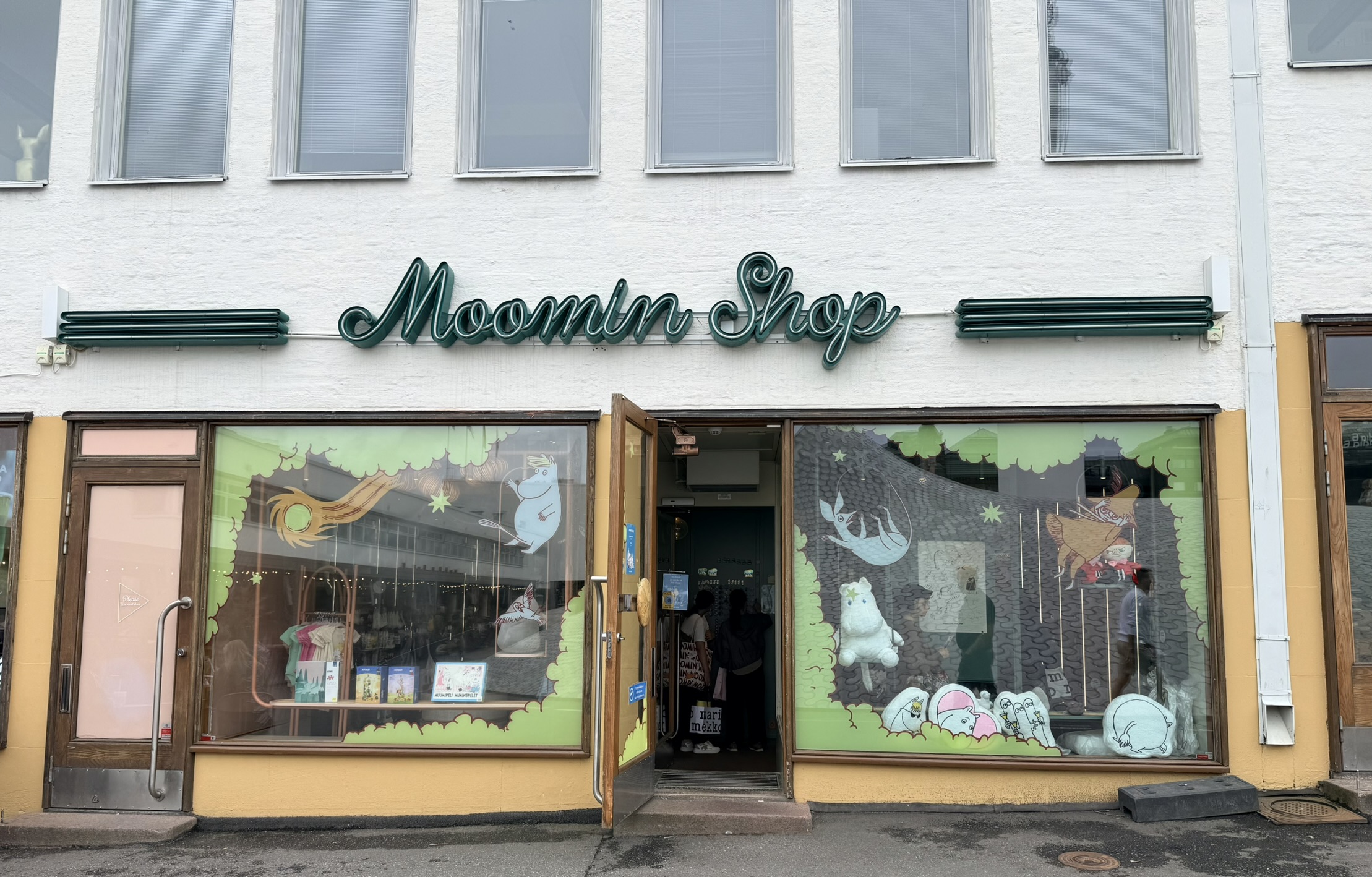
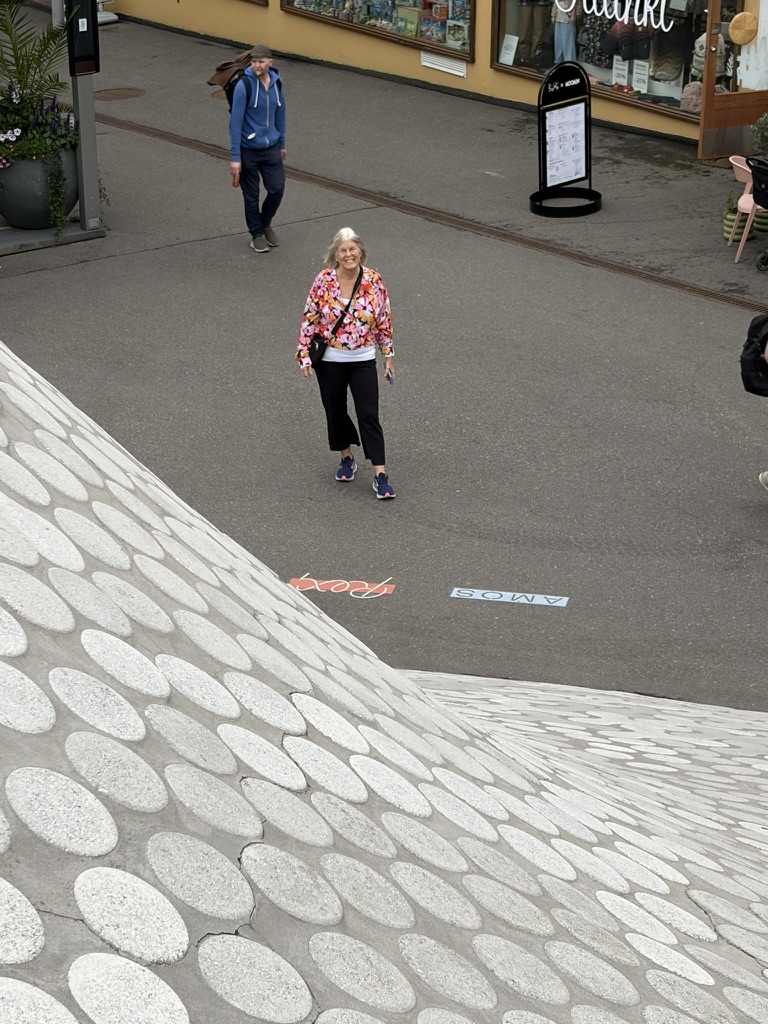
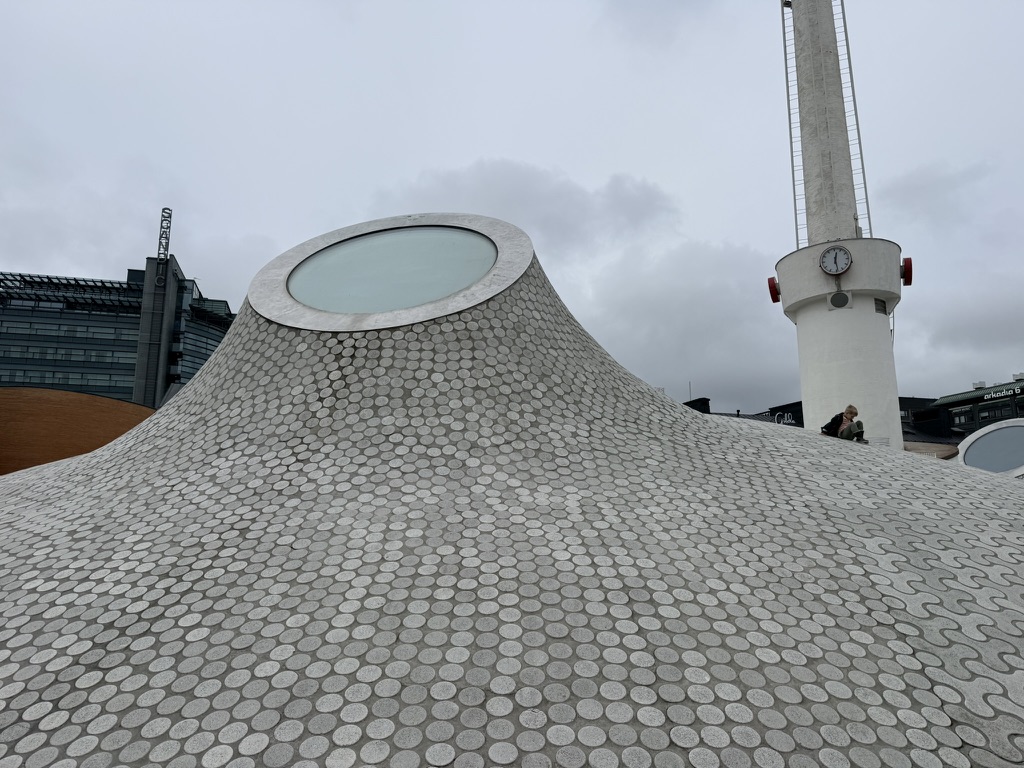
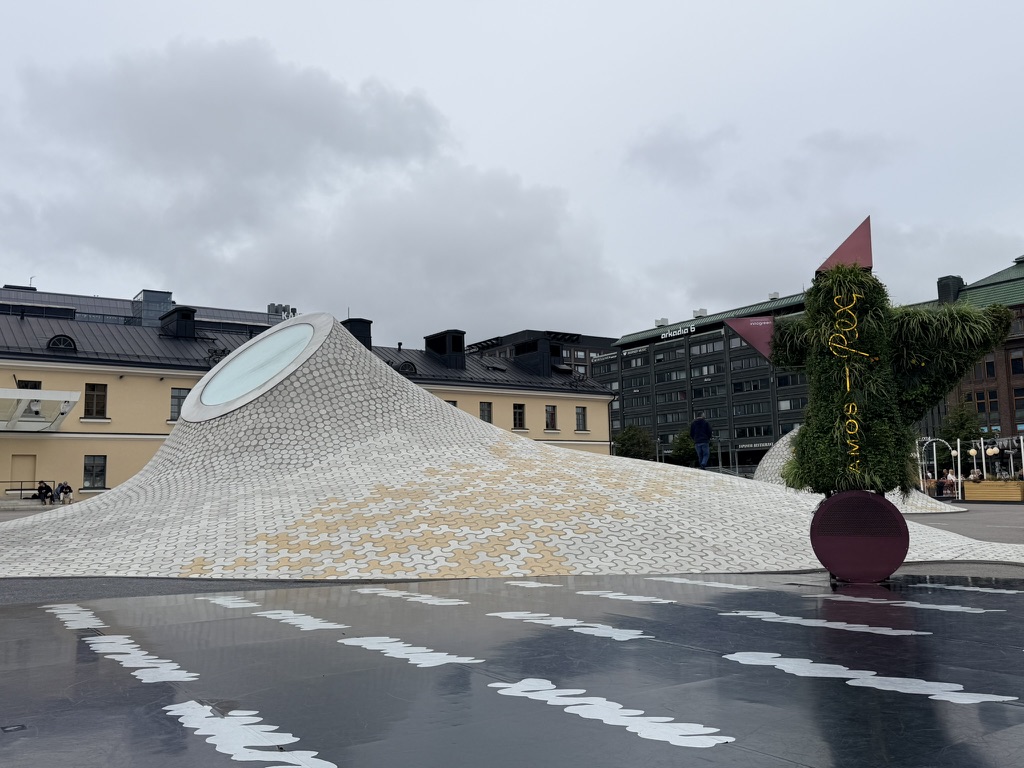
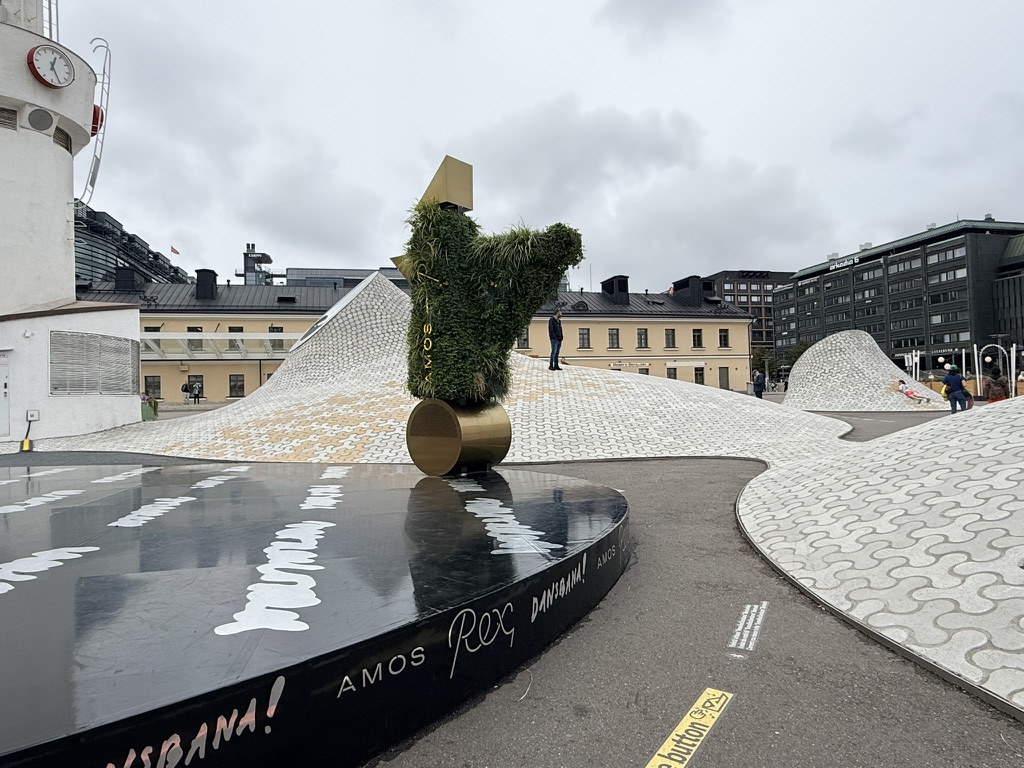
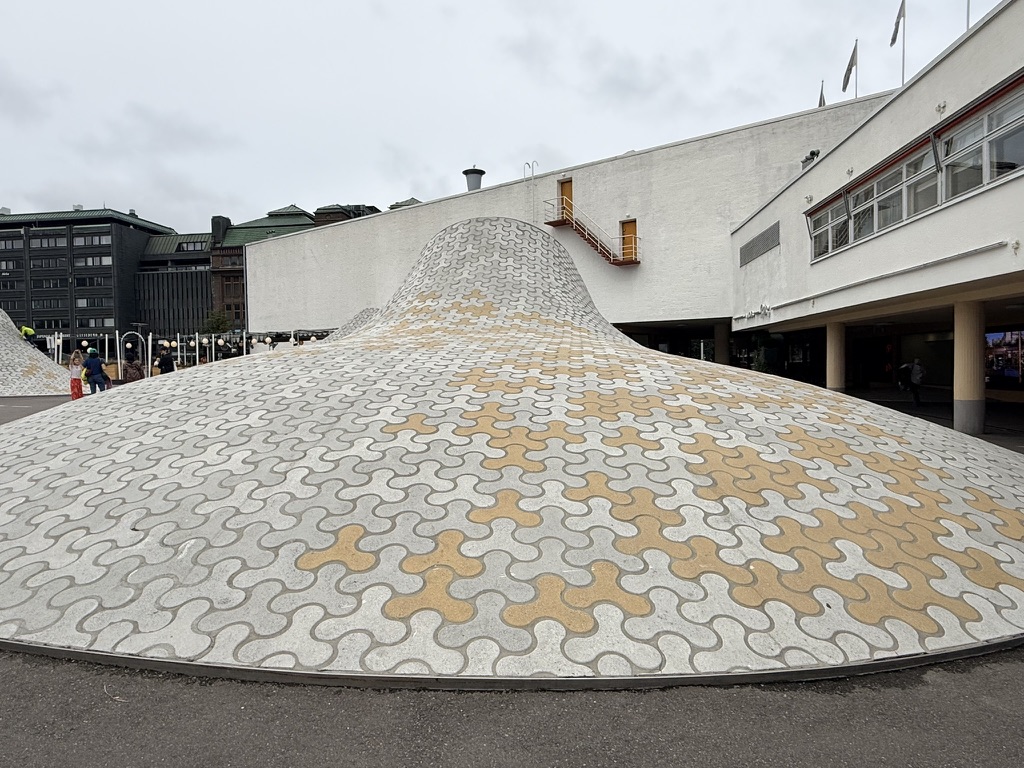
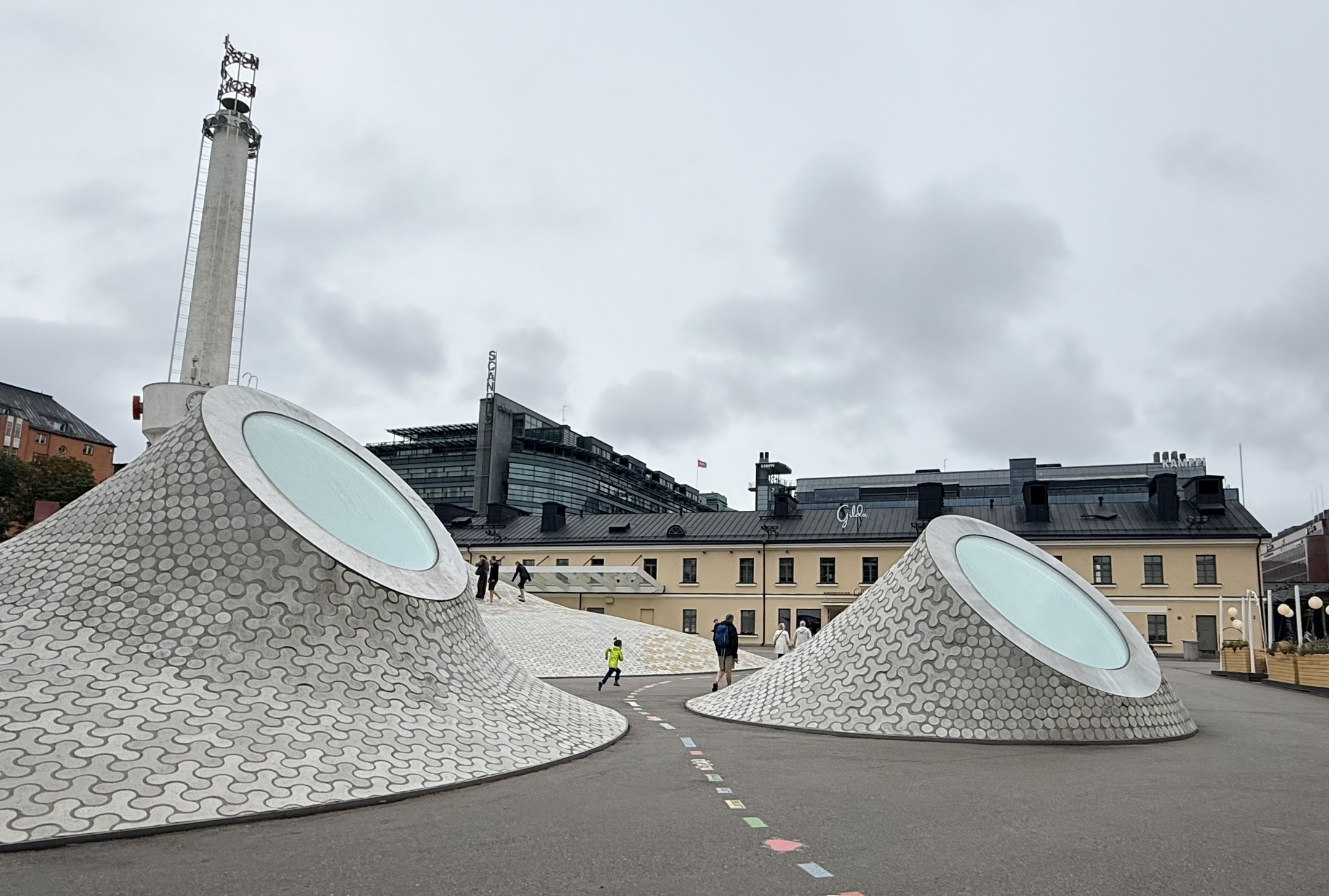
Amos Rex is a contemporary art museum in Helsinki. A key feature of the museum’s design is its interactive rooftop domes, which serve as both artistic elements and functional skylights, allowing natural light to filter into the underground spaces. We had decided to choose two museums to visit in Helsinki, and this wasn’t one that we chose. Thus we just walked around the rooftop domes.
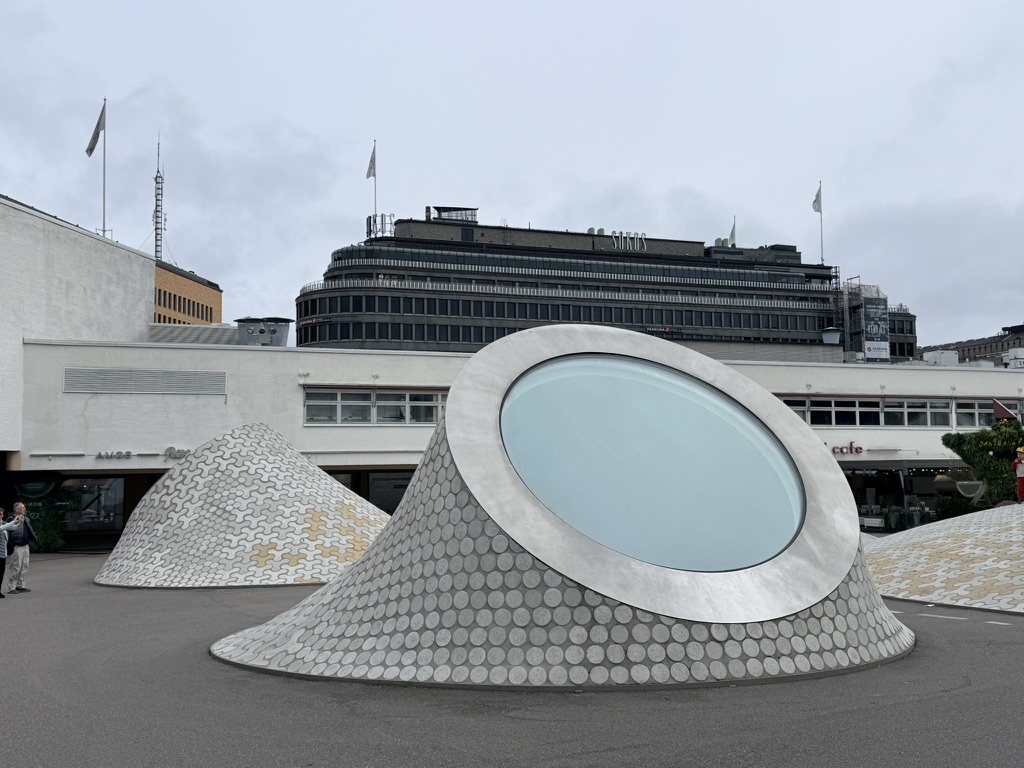
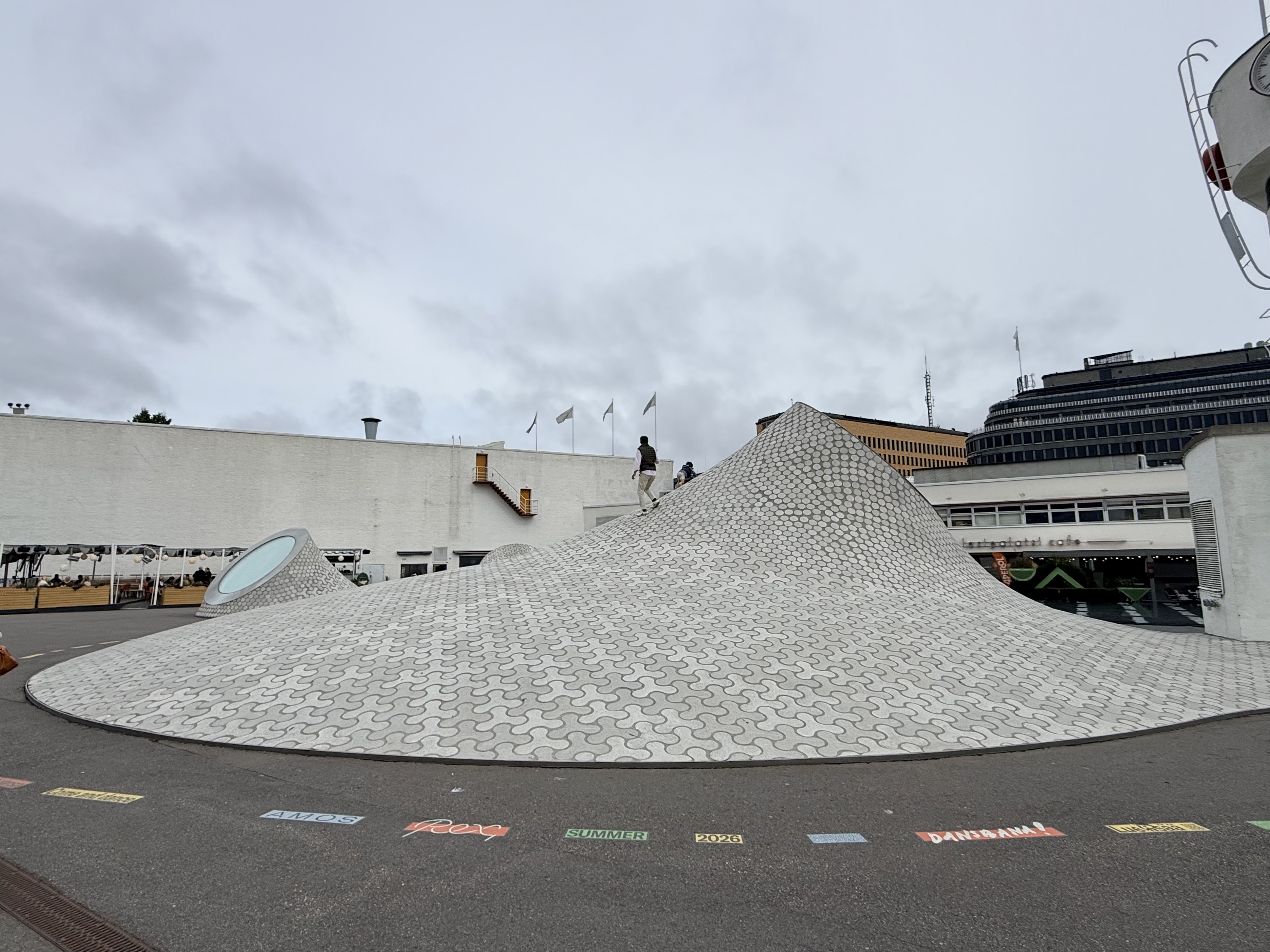
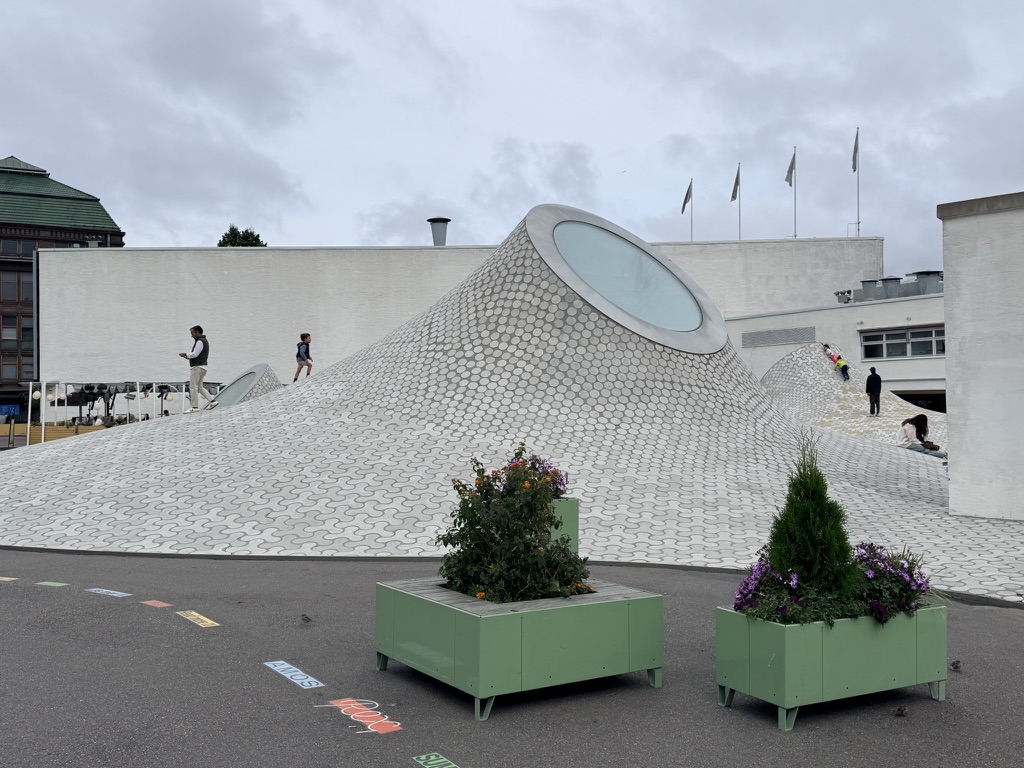
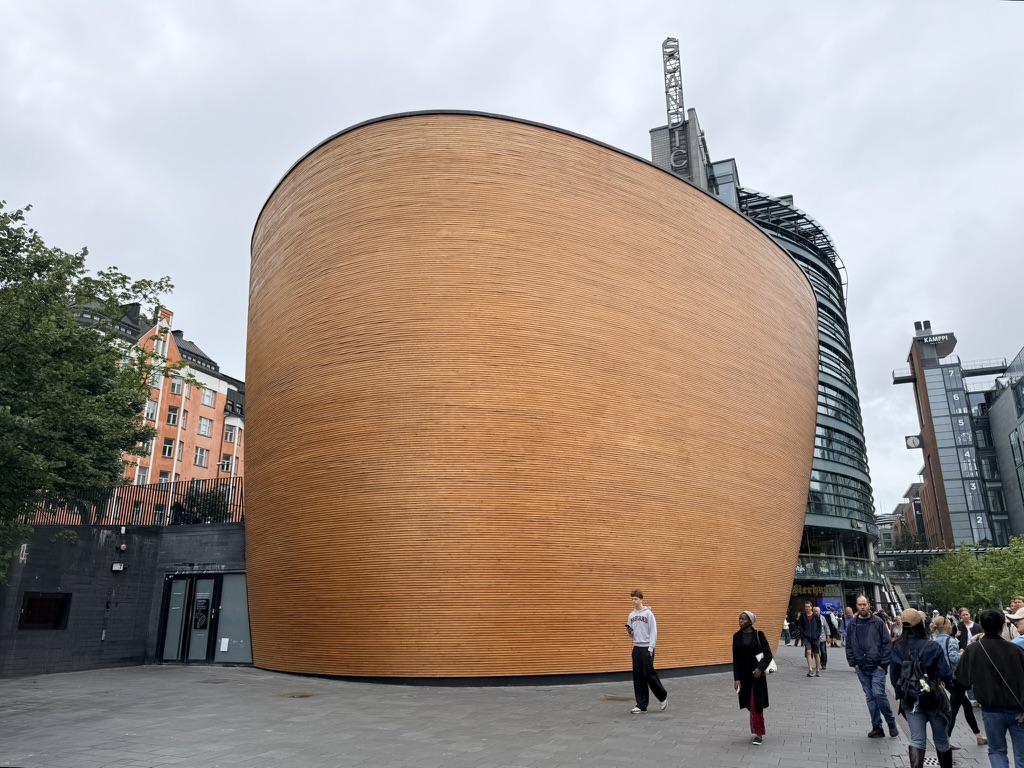
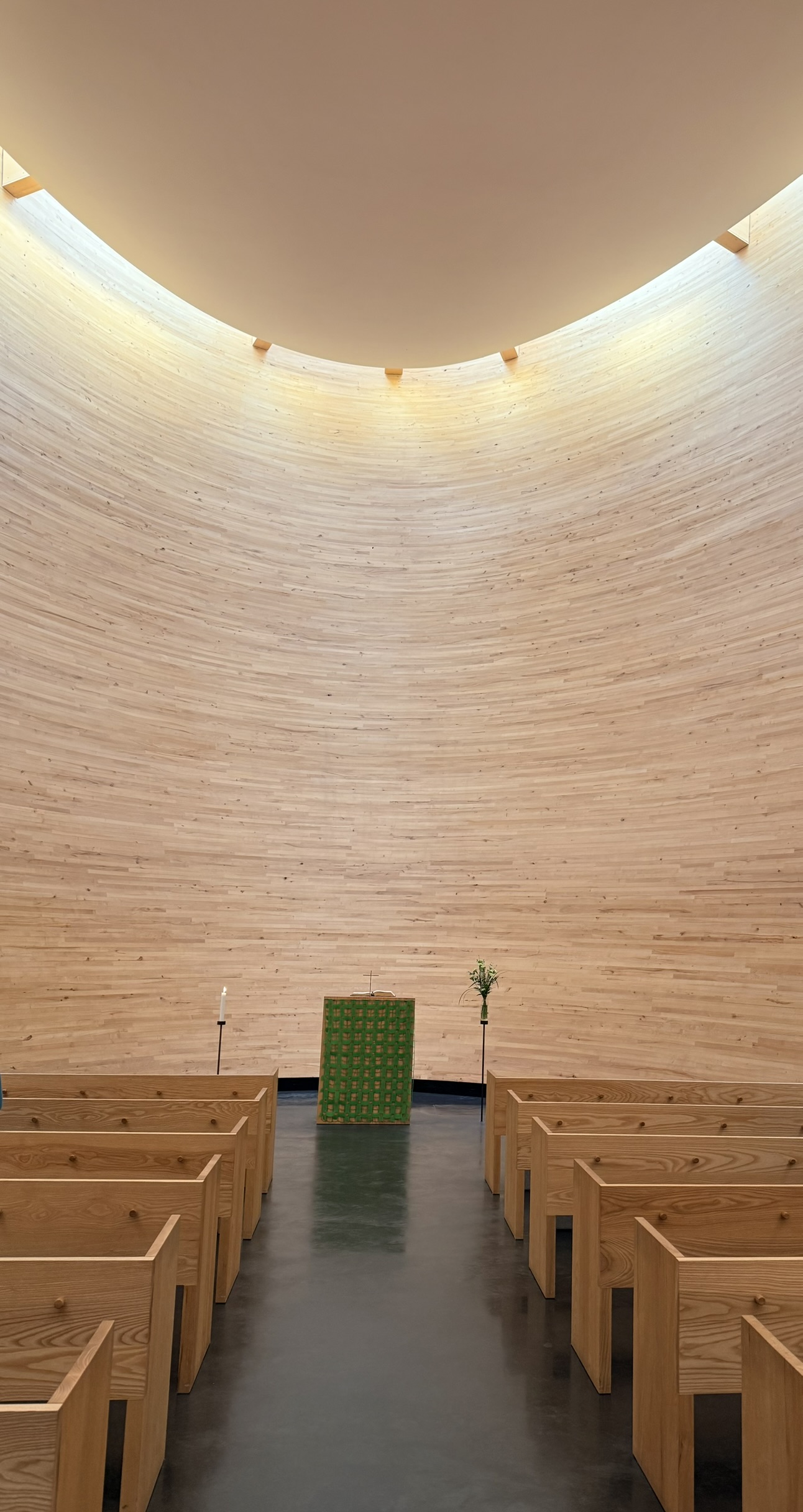
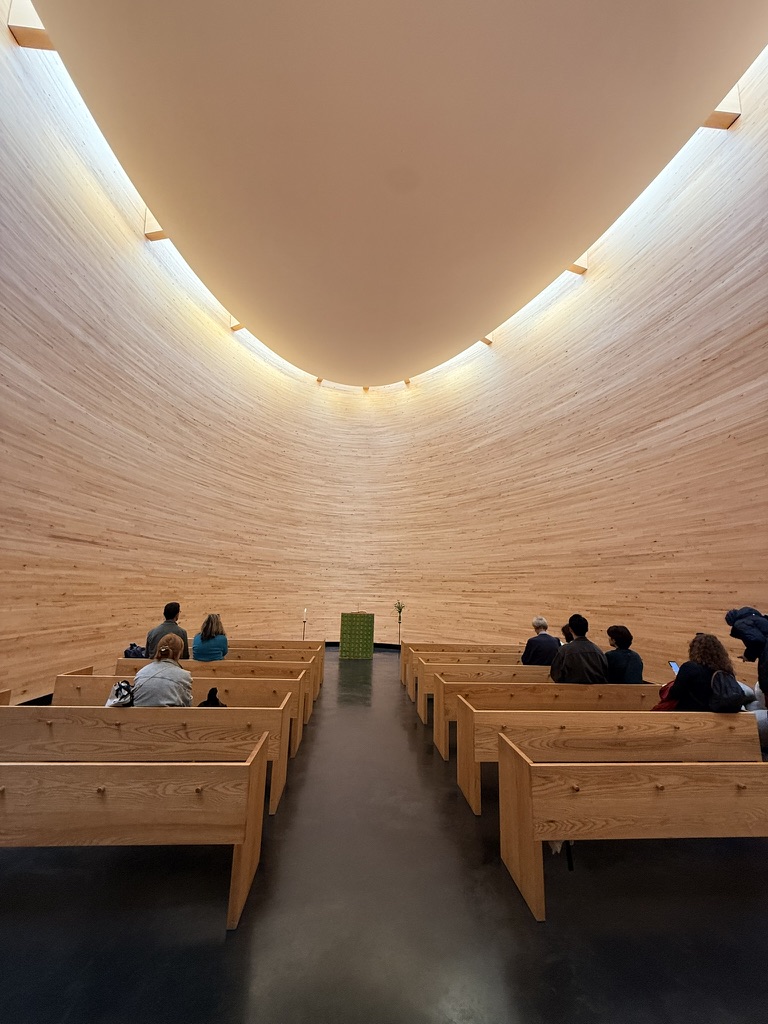
Kamppi Chapel
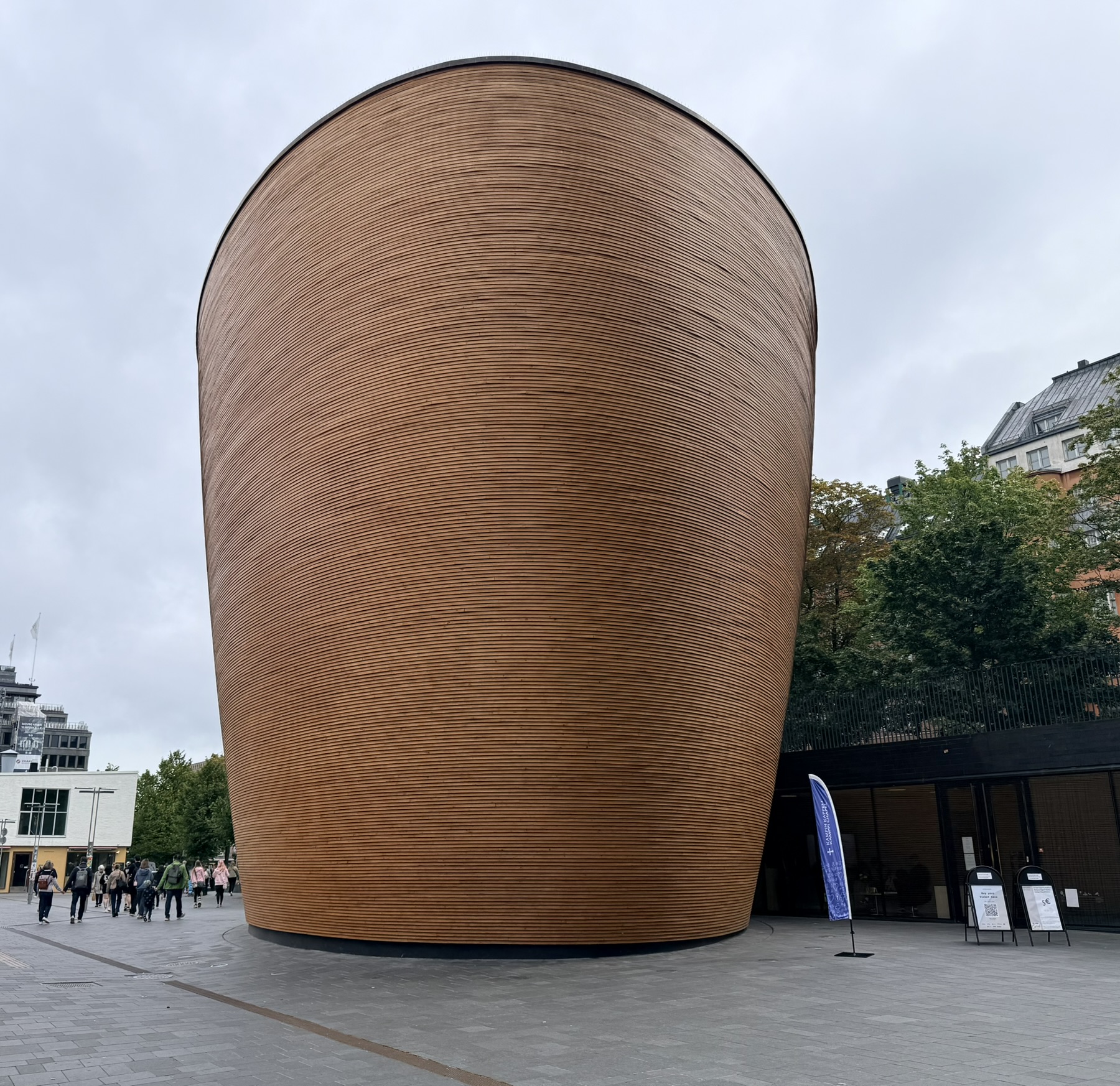
Unveiled in 2012, the Kamppi Chapel was intended as a place of silence for everyone, regardless of their outlook on life or religion. The building consists mainly of a simple silent space void of religious symbols. The acoustic design aimed to prevent outside sounds from invading the silent space. It is wooden in structure: the facade consists of a veneered spruce batten. The interior is clad in tar alder and the doors are ash.
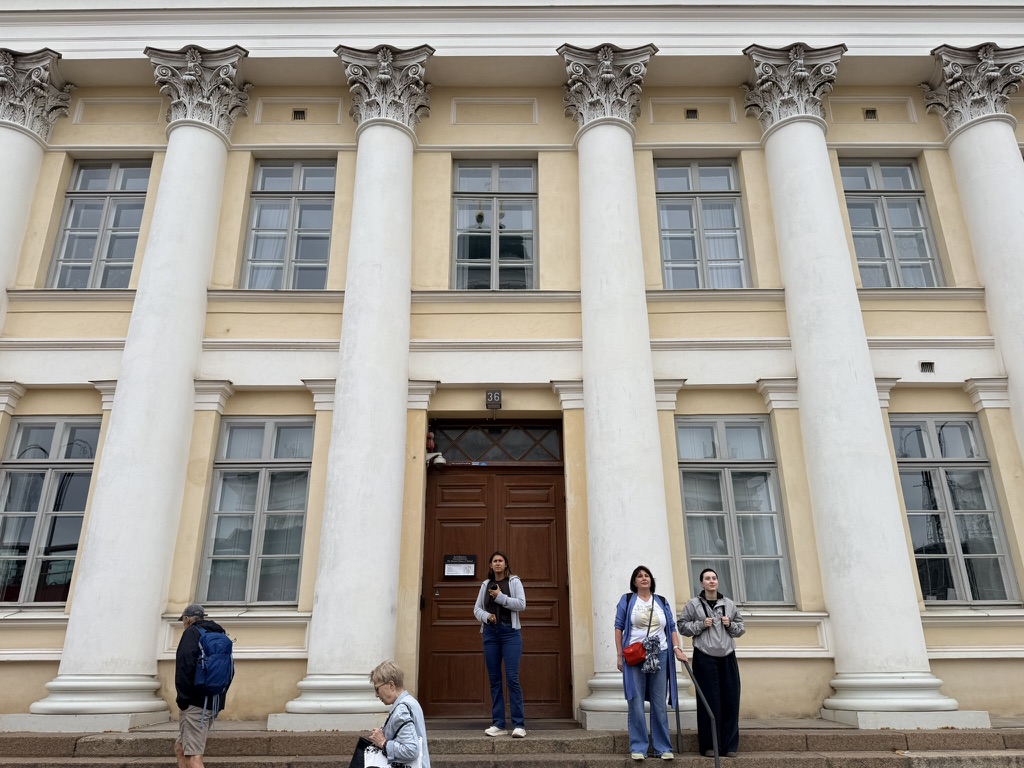
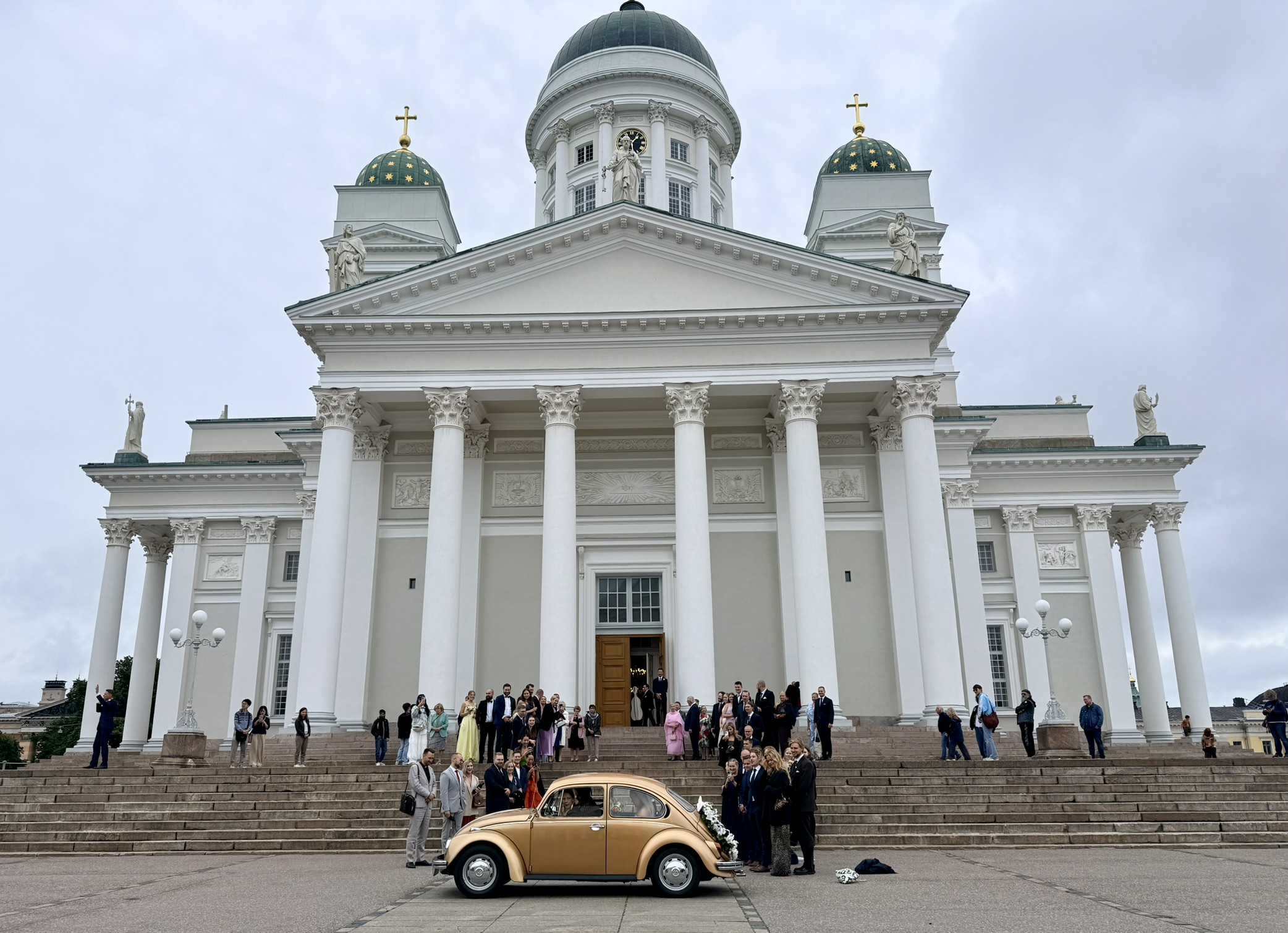
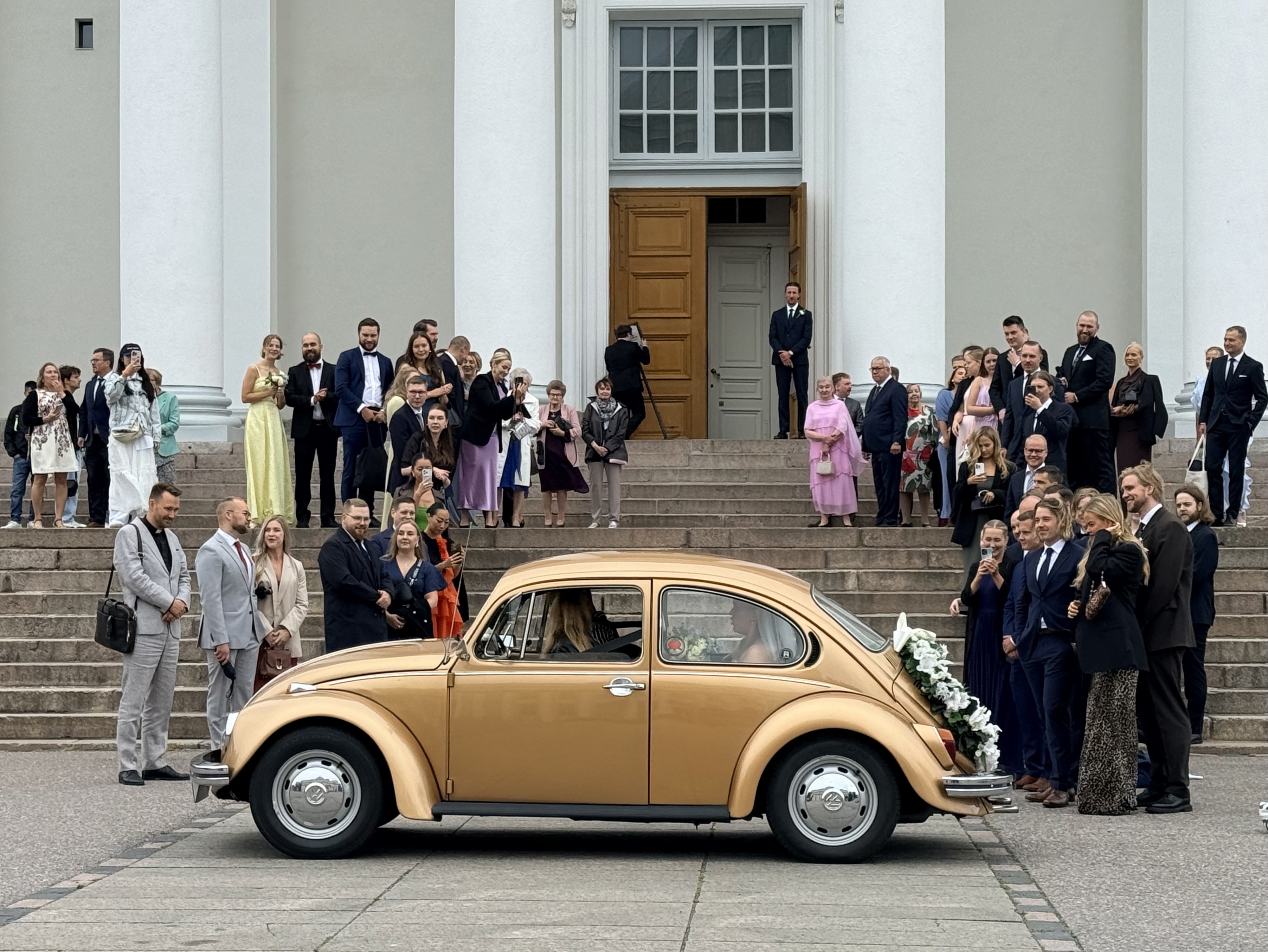
National Library of Finland (closed) and a glimpse at a wedding party leaving Helsinki Cathedral
The National Library of Finland was closed the day we stopped by, but directly across from it, we saw a wedding party departing Helsinki Cathedral. The bride, groom and a driver chirped off in a gold-colored VW Beetle. It was so cute!
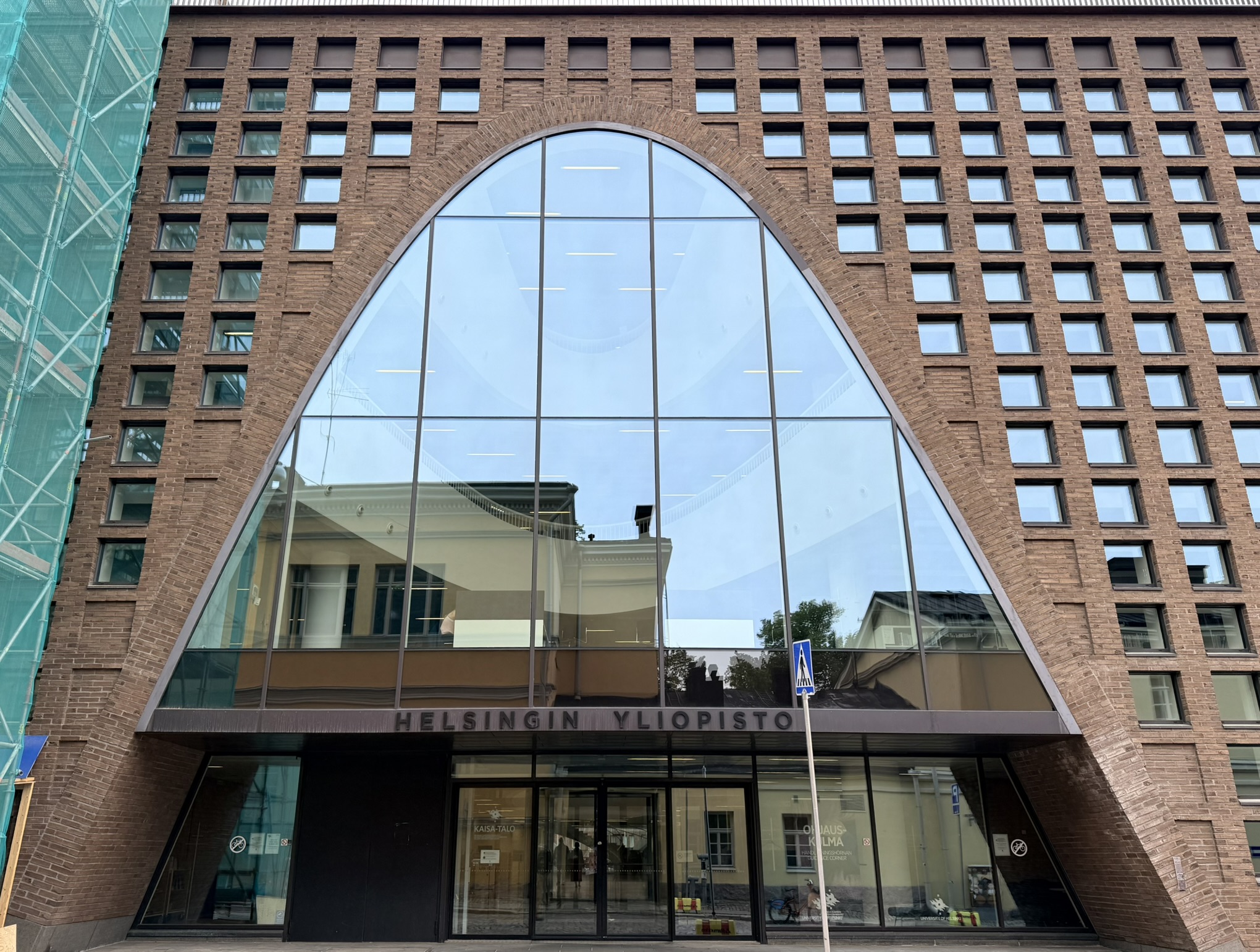
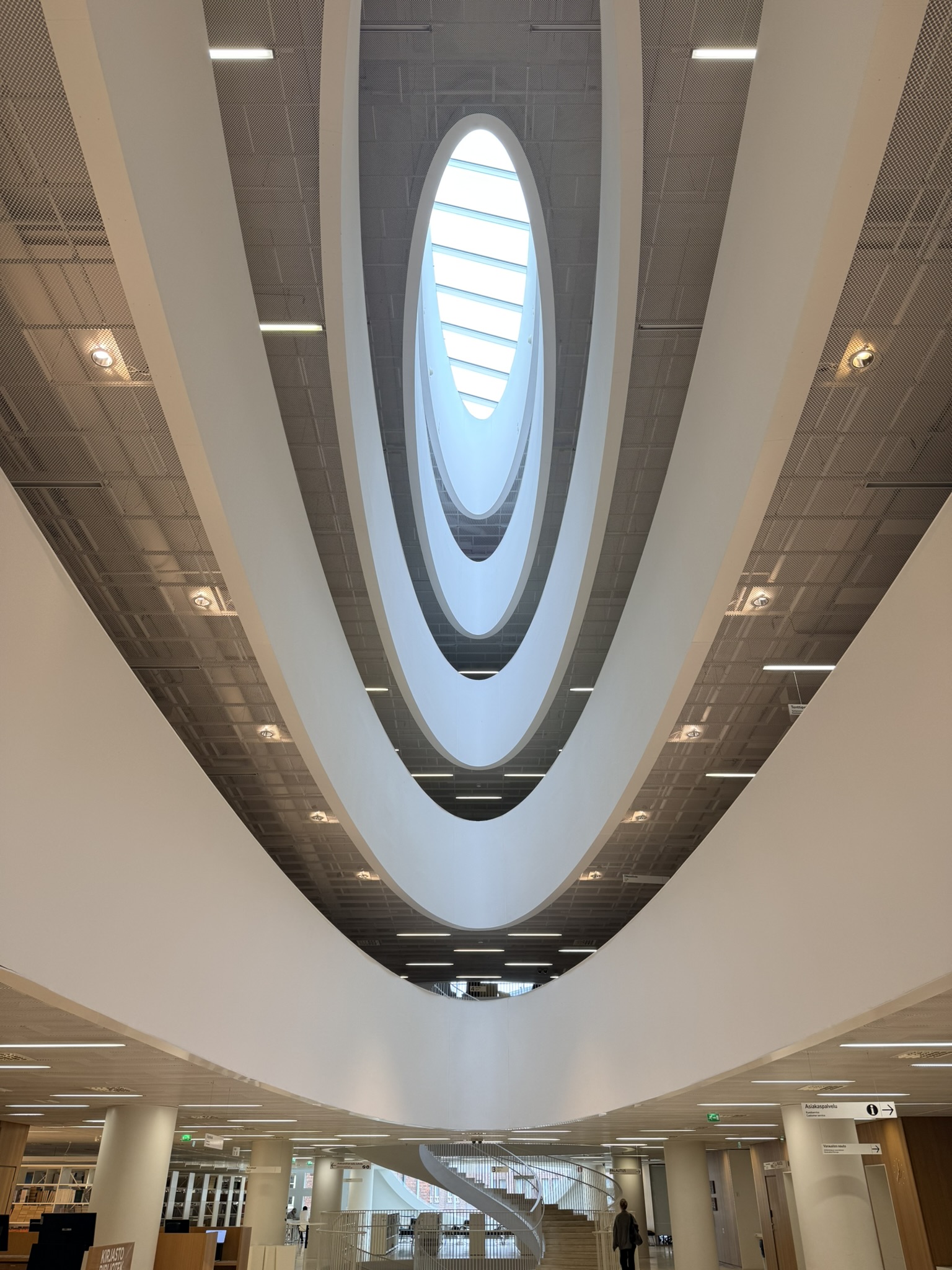
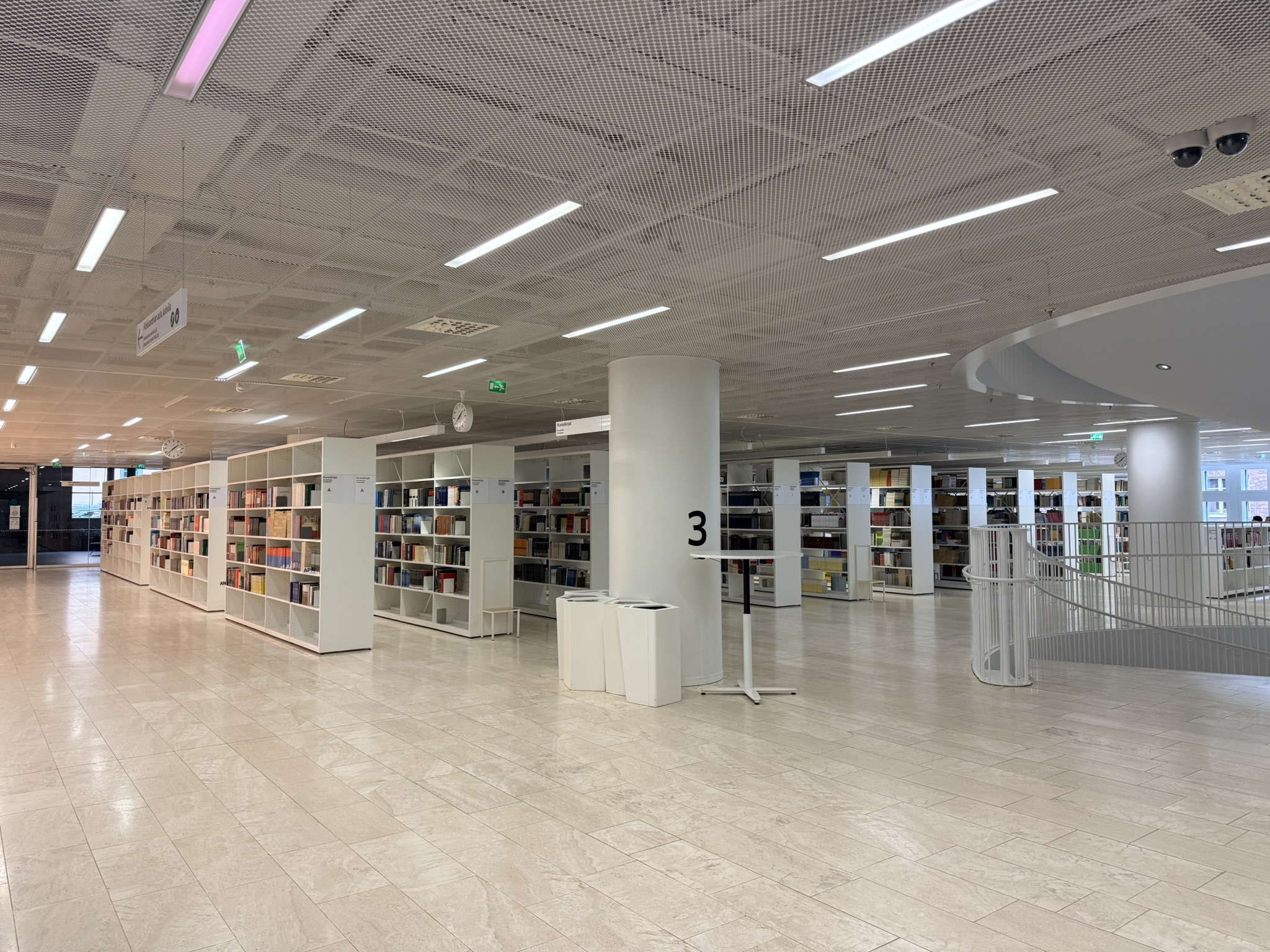
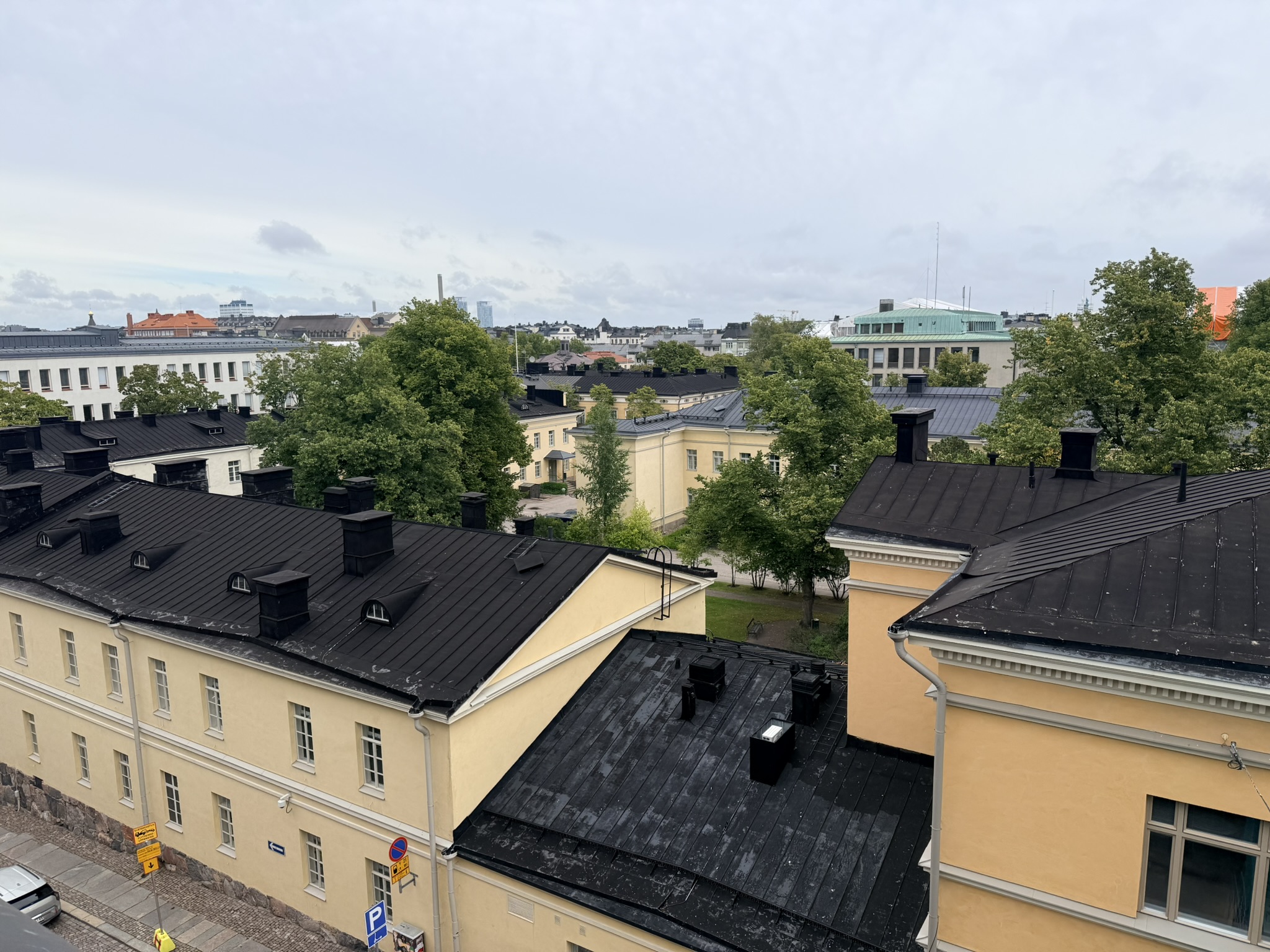
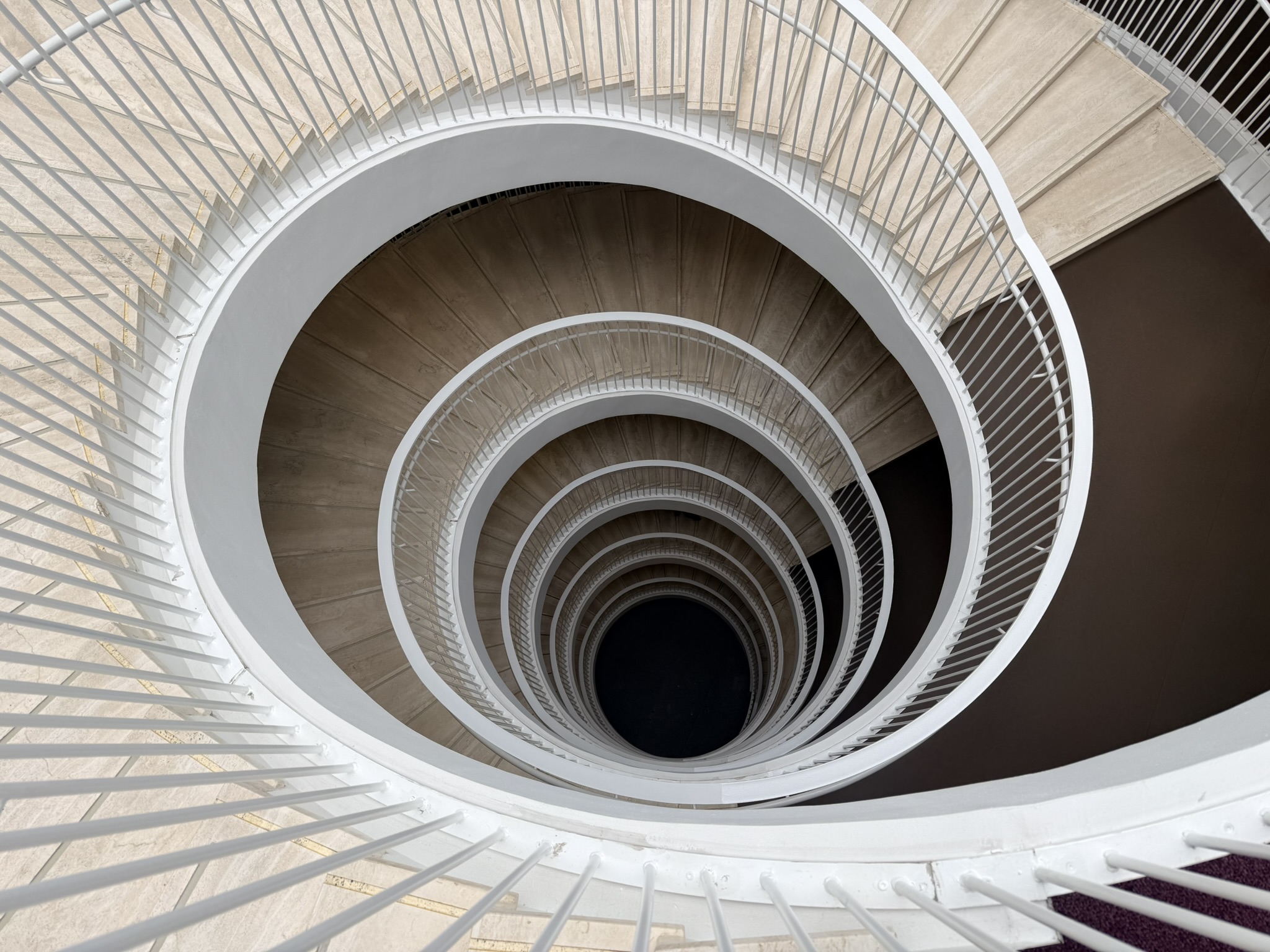
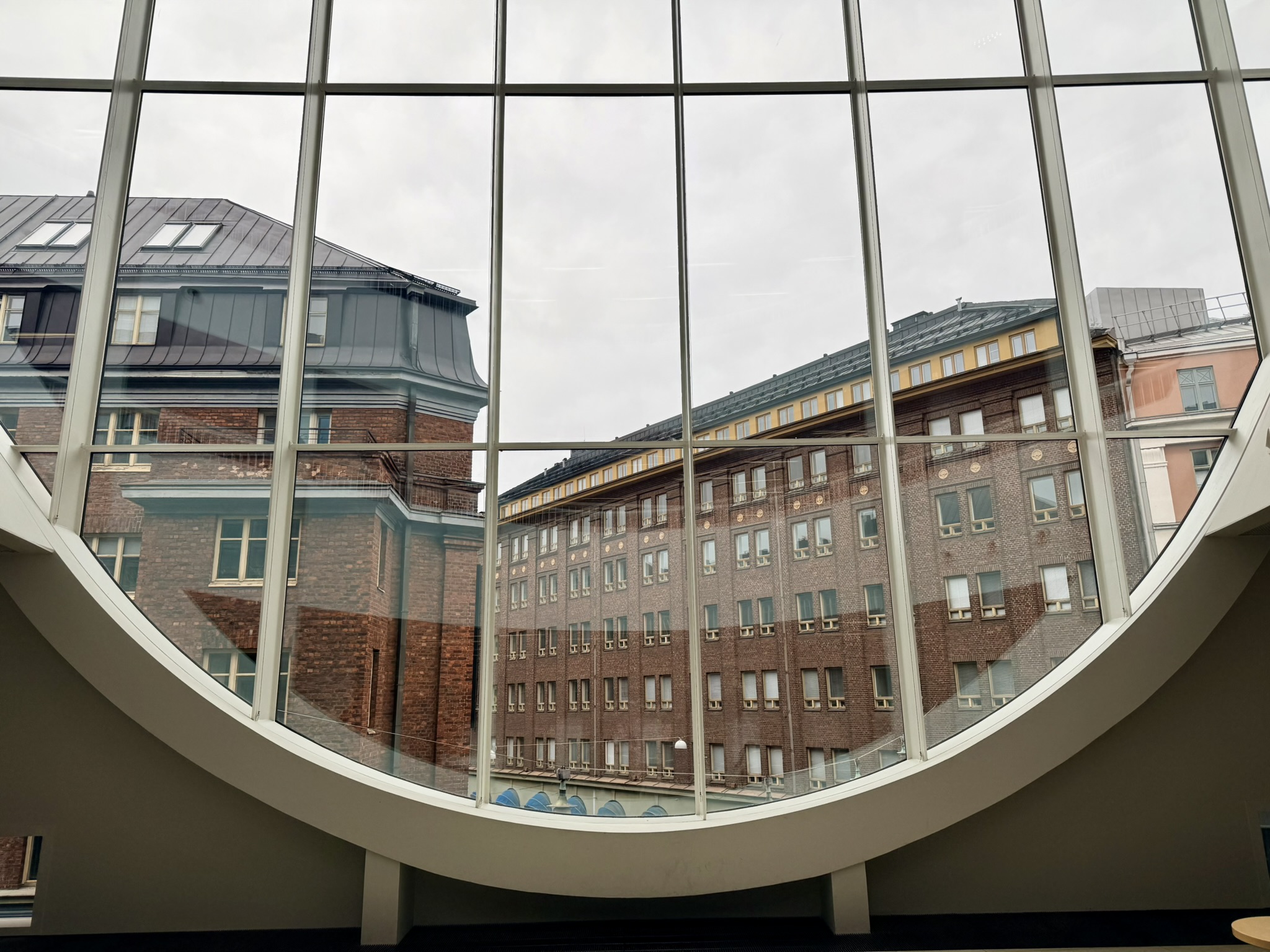
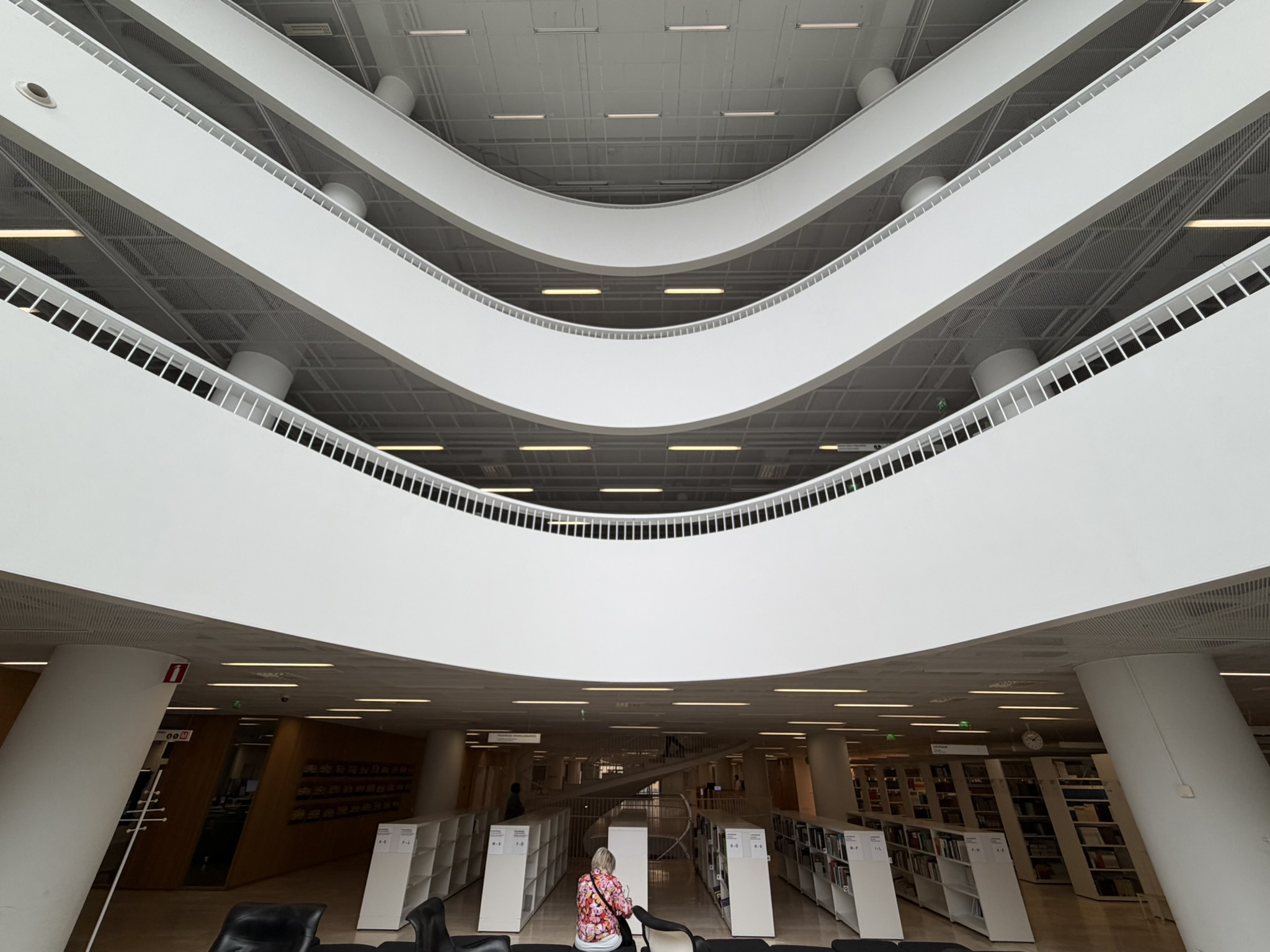
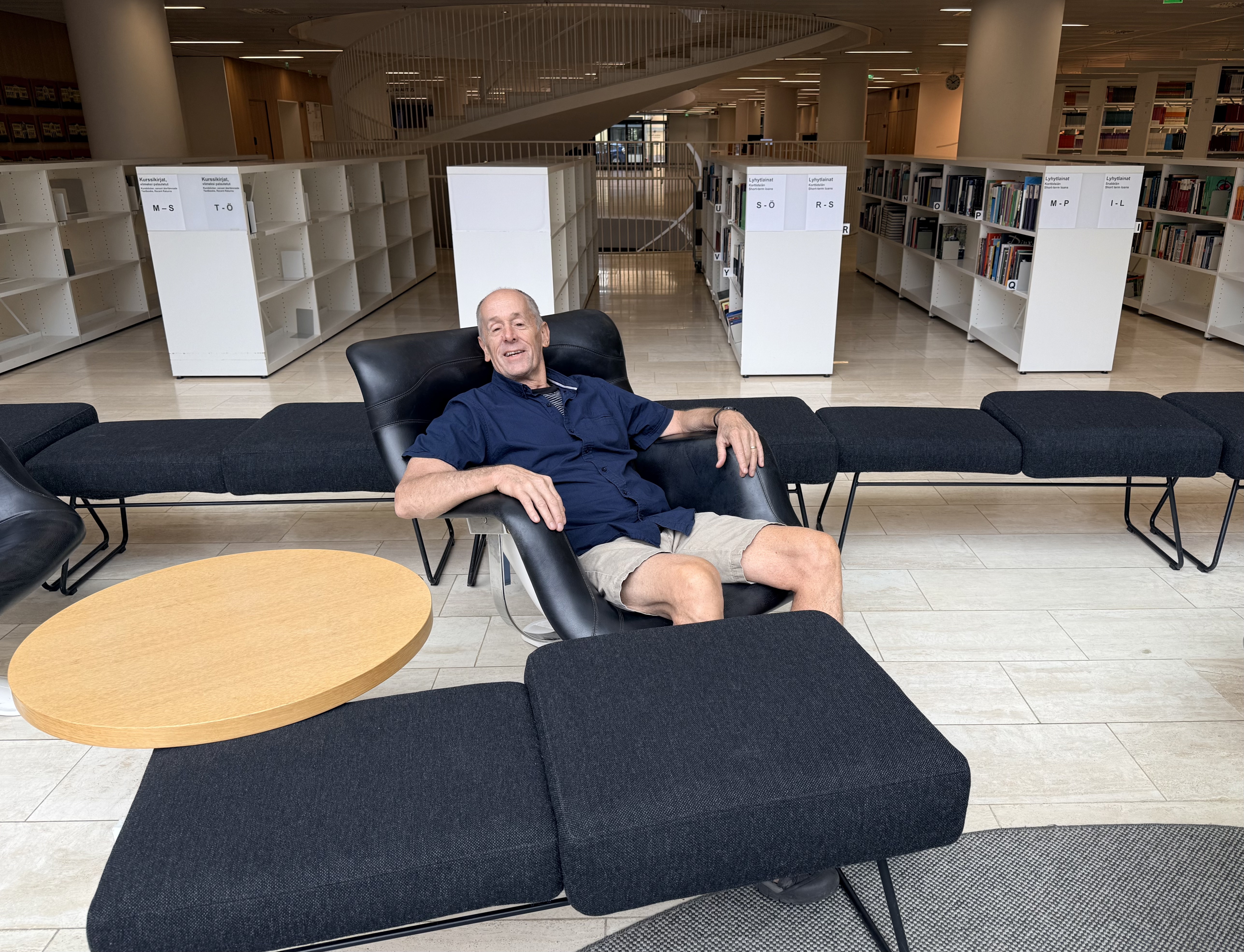
Helsinki University Library Kaisa
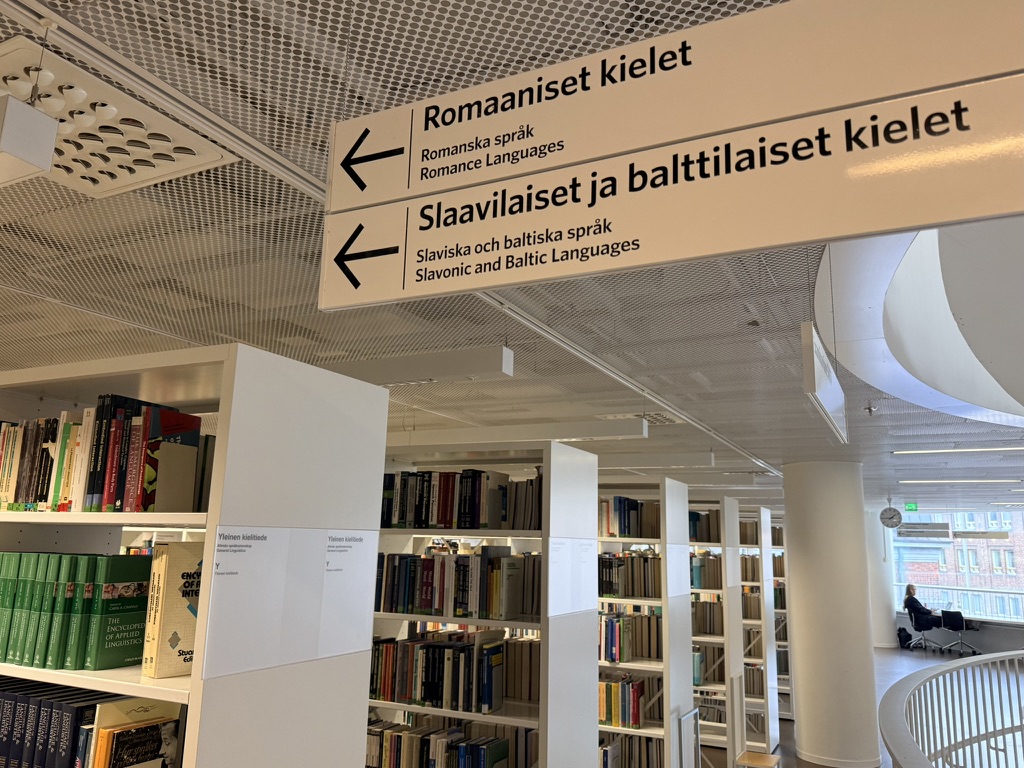
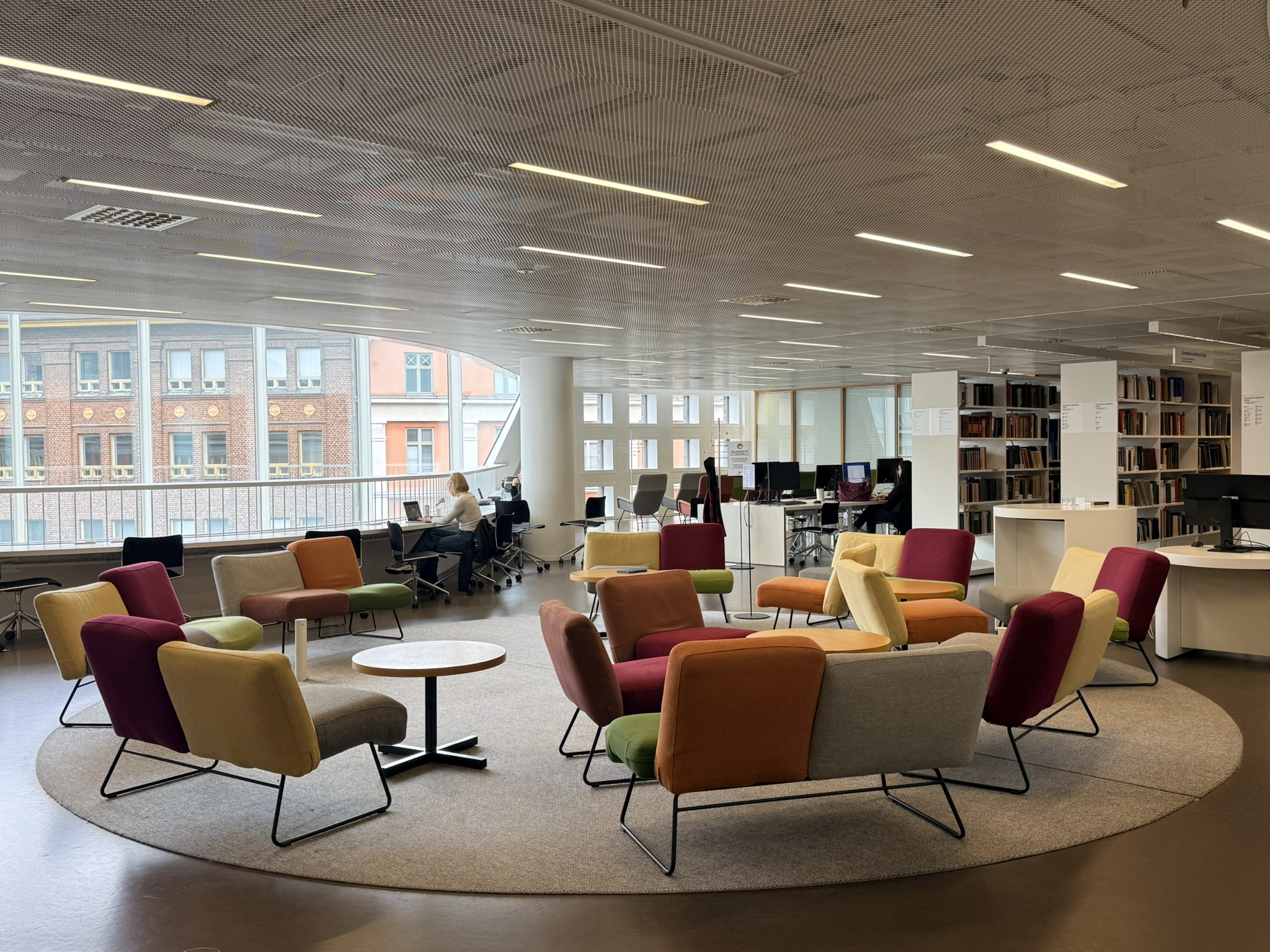
Established in 2010, the Helsinki University Library is the largest multidisciplinary library in Finland. It is an independent institute of the University of Helsinki and is open to all information seekers. Anyone over the age of 15 who lives in Finland can borrow books from it.
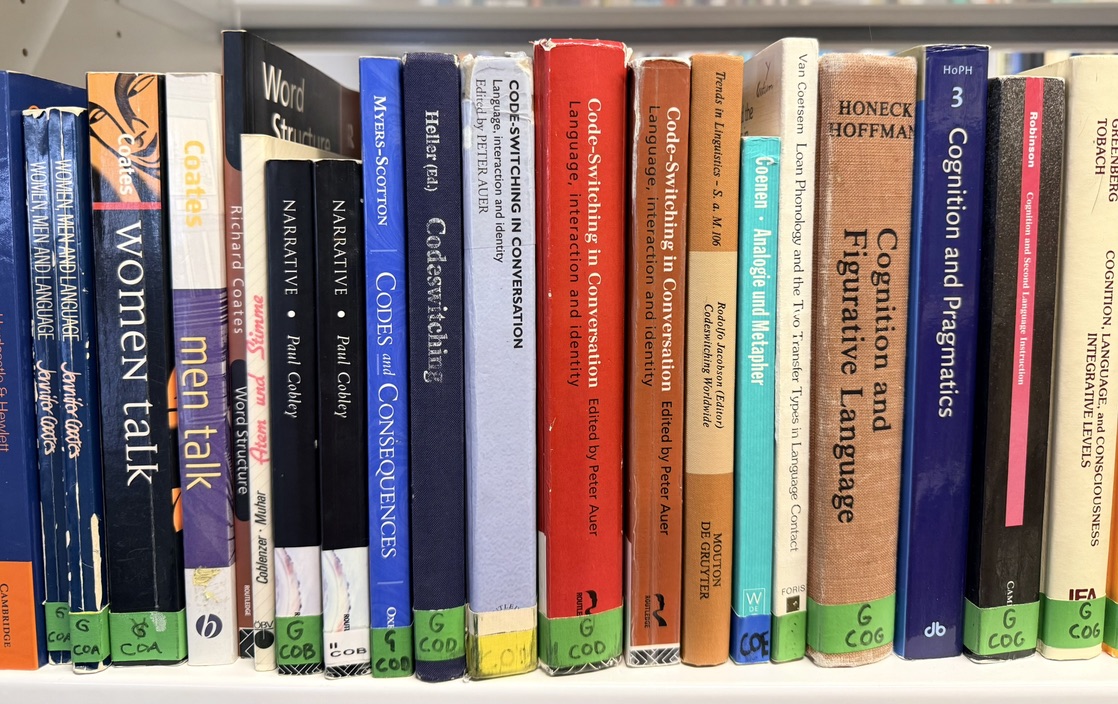
We wandered around the architecturally intriguing library in complete silence. For such a large facility, it was nearly empty. We wandered around looking at the stacks, grouped by subject matter. I couldn’t help but think how little knowledge I have of anything. The amount of information to be had in this world is overwhelming. My interests are so limited. They most definitely do not lean toward the sciences or math. As an English major, I have spent much of my life immersed in fiction, particularly Literary Fiction. I love most of all reading about human beings in their everyday lives; I’m interested mainly in the human condition, the challenges we face, the relationships we hold on to and those we leave behind, the struggles we have living in often dysfunctional families and in a harsh world. To me human nature is the most interesting subject in the world. My other interests are broad rather than specific: politics, international affairs, cultural affairs, design and architecture, travel, photography, and languages (even though I’m unsuccessful at retaining them).
To think of all the information I COULD have at my fingertips, at places such as this and, nowadays, a click away on the internet. Any day, I could decide to broaden my knowledge. I could walk into a library and pick up a book on any subject and educate myself in that subject. It is truly amazing what is available to us as humans in this day and age.
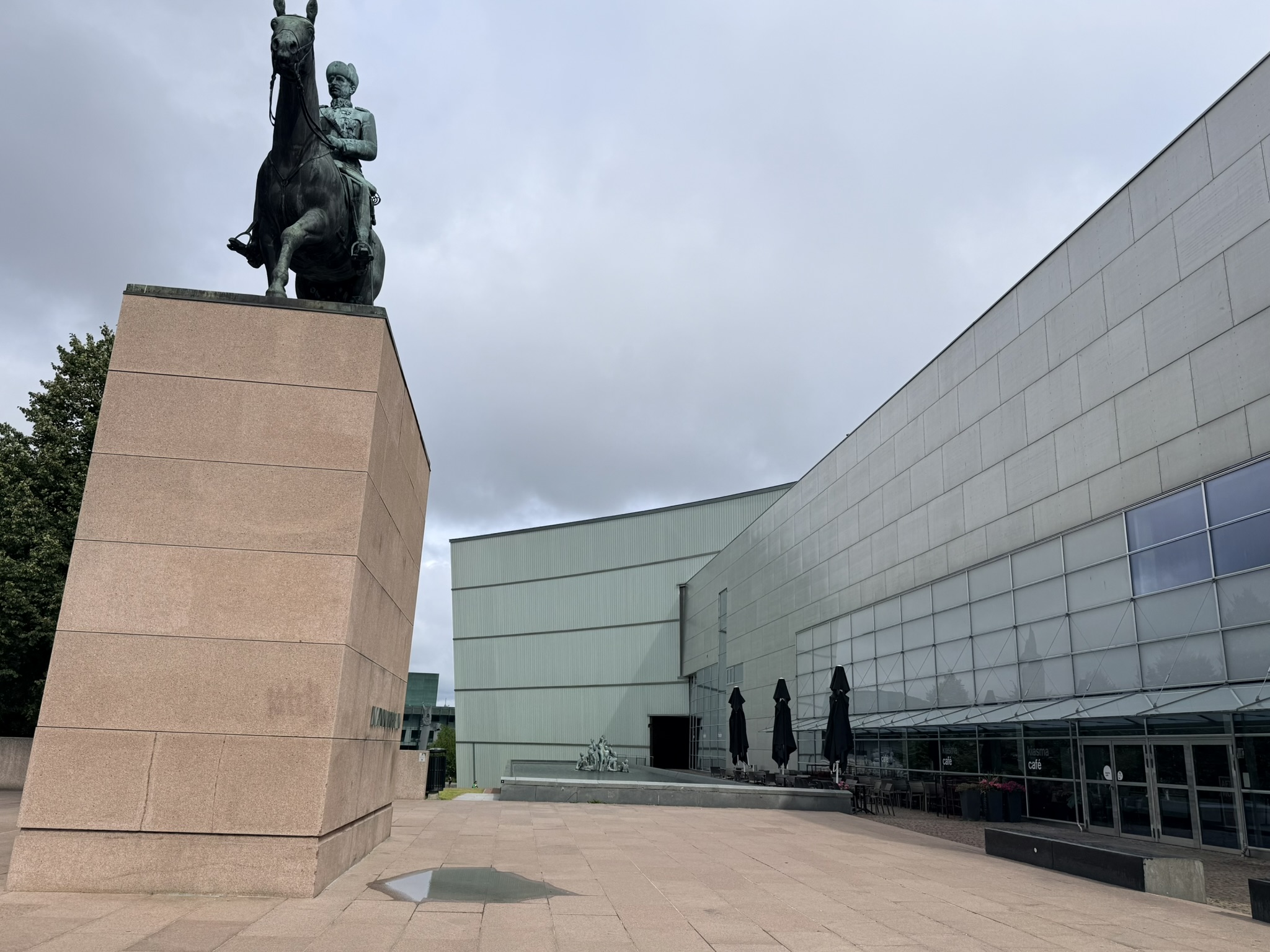
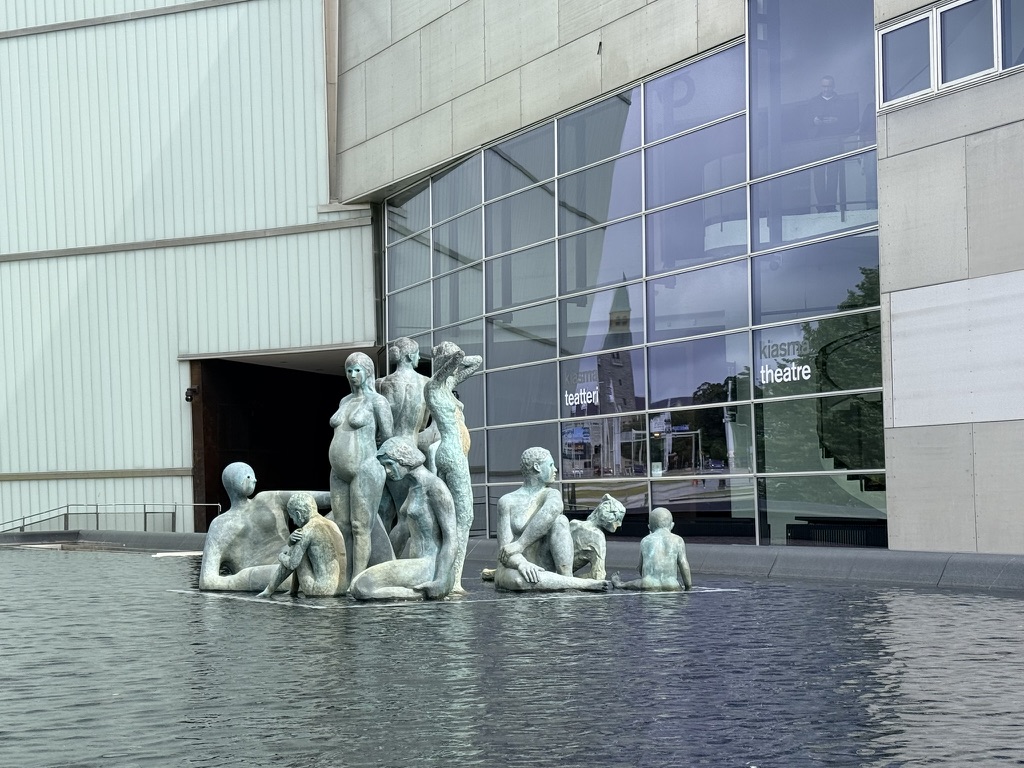
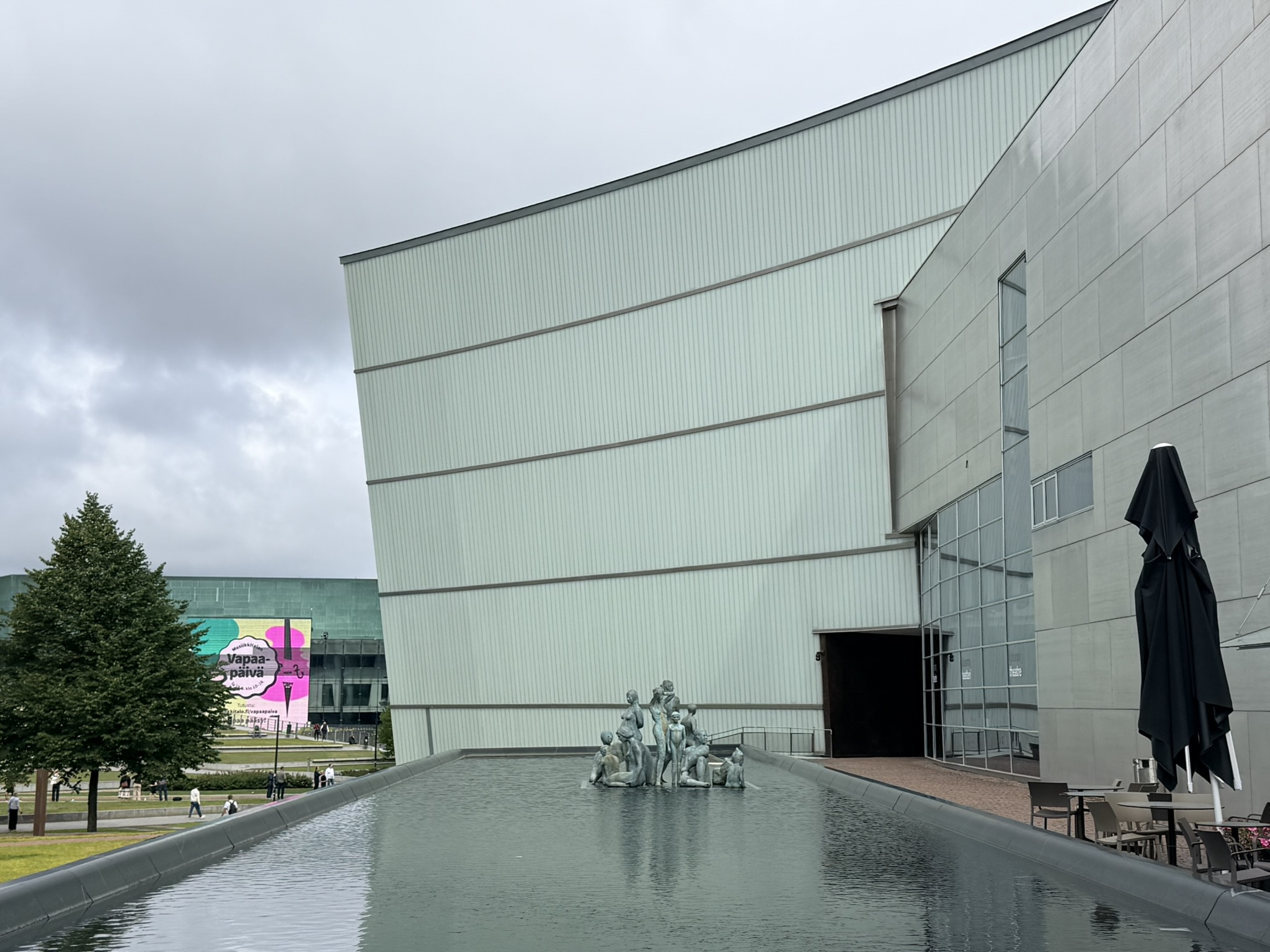
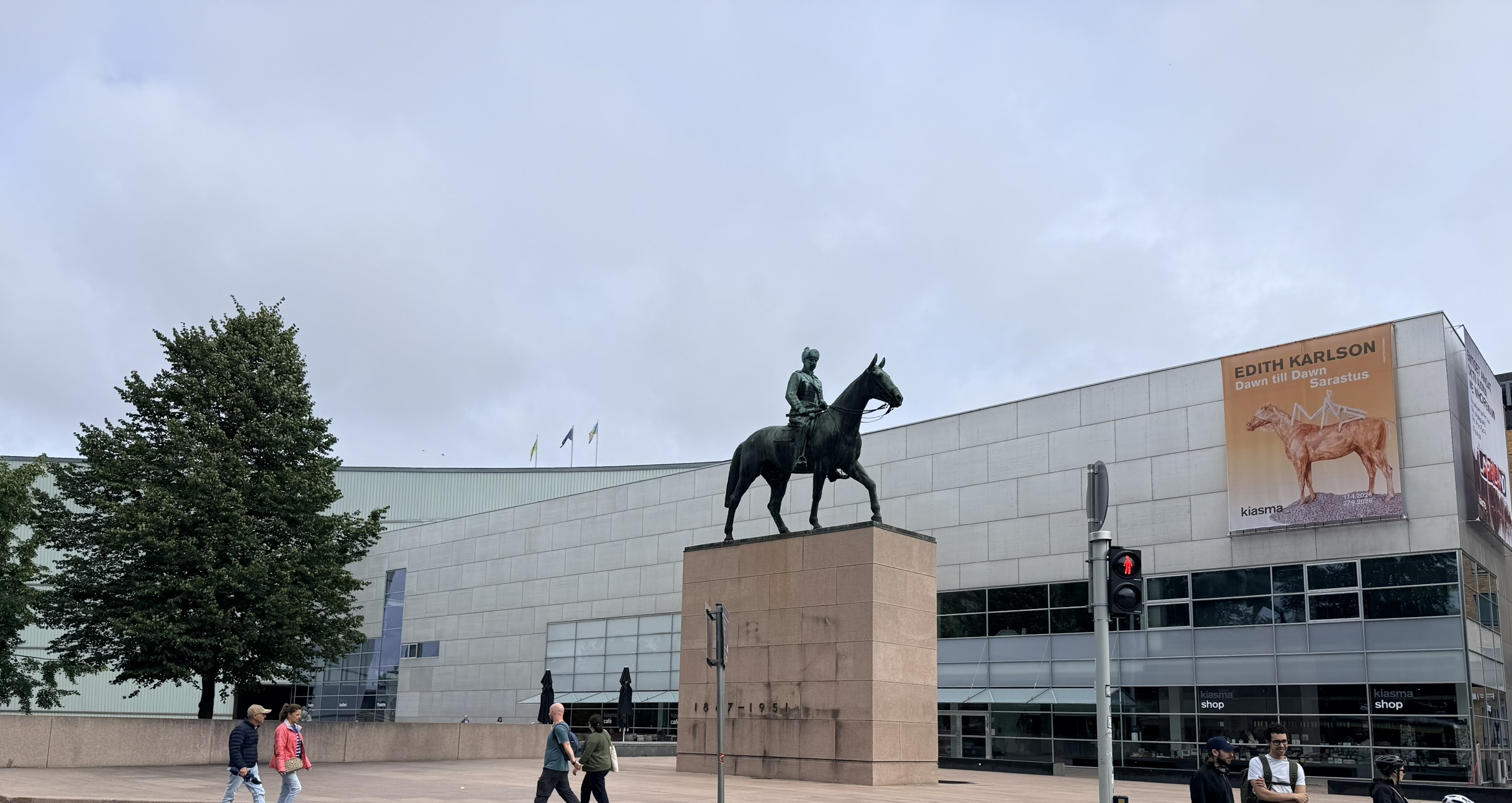
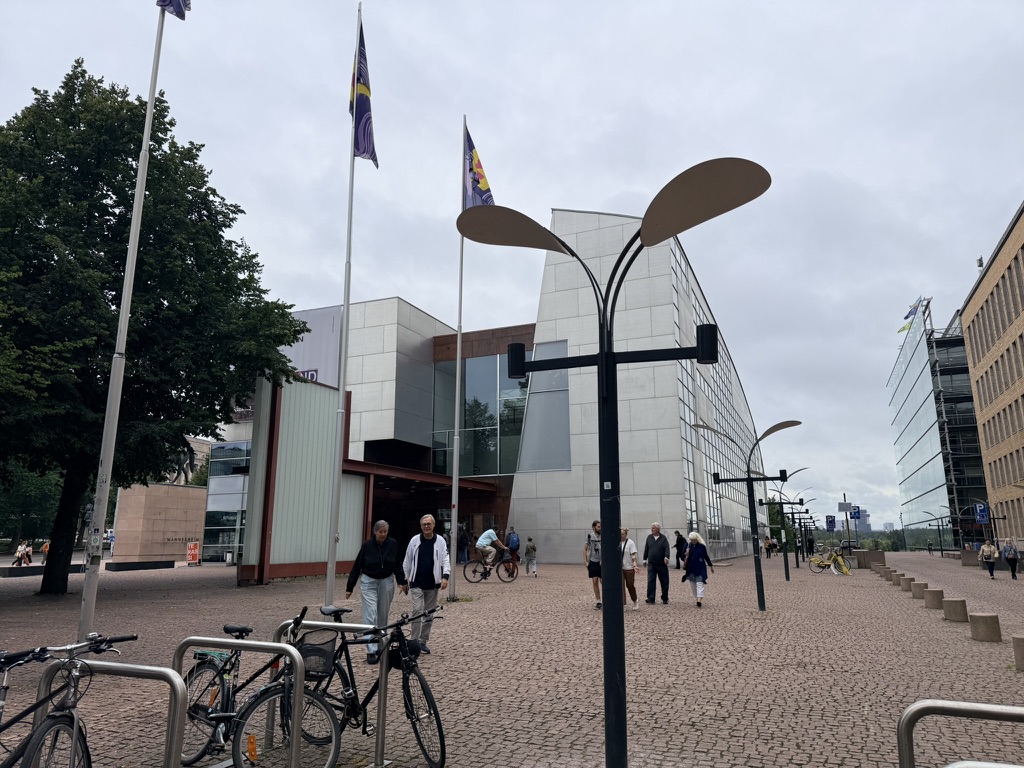
Museum of Contemporary Art Kiasma
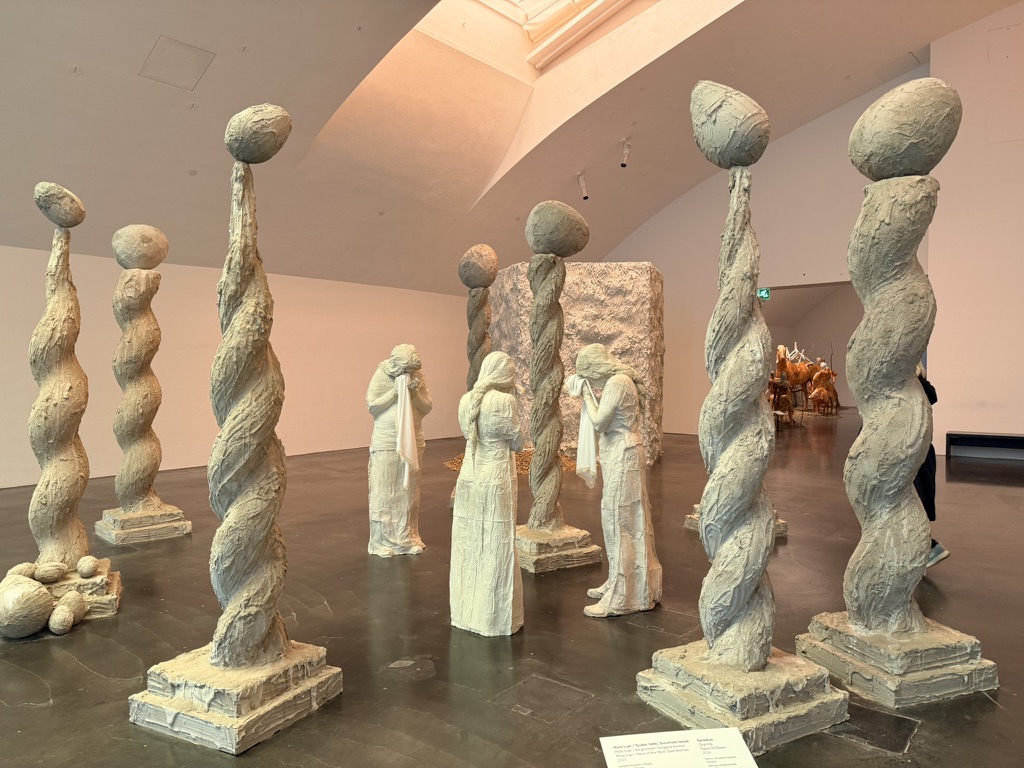
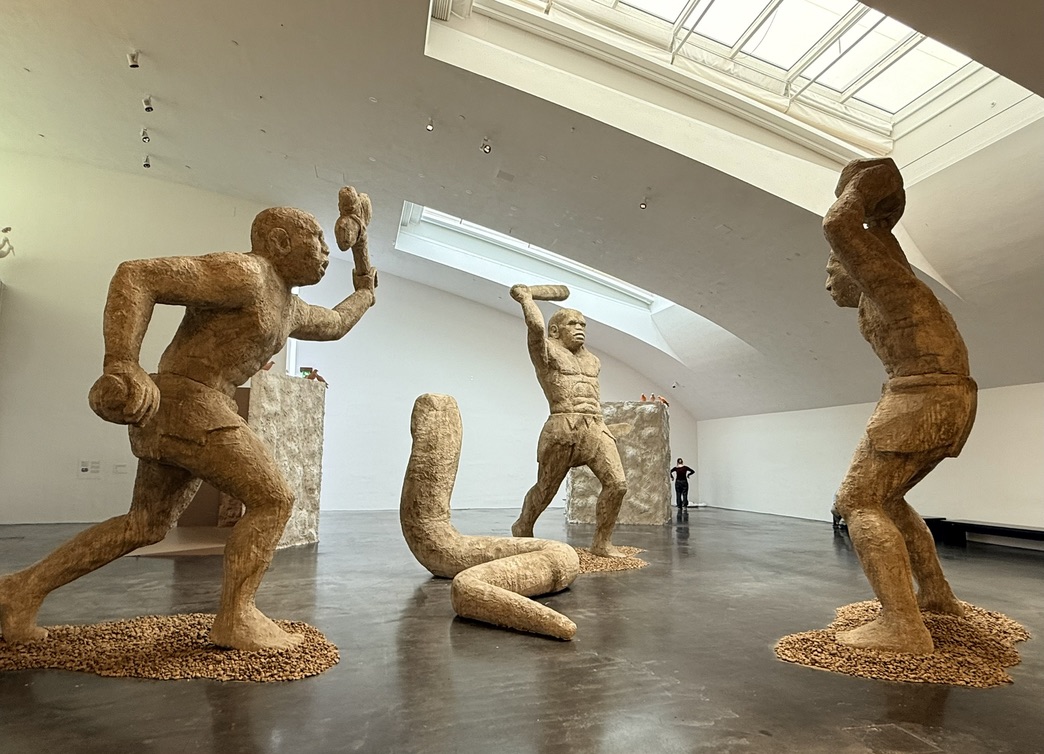
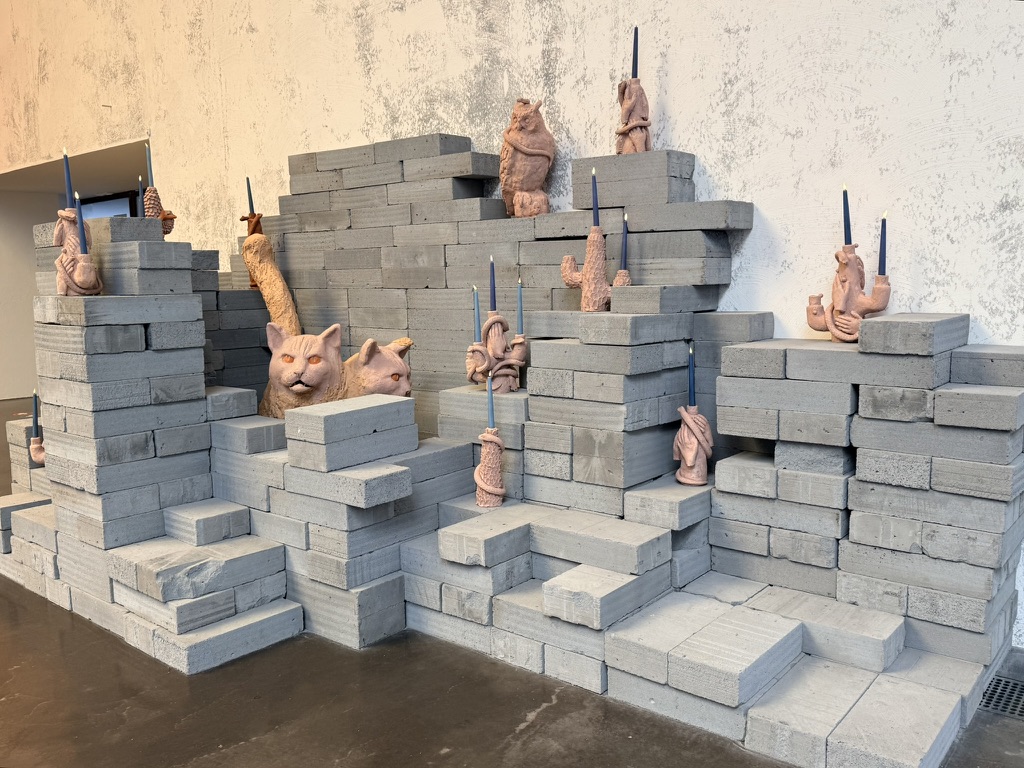
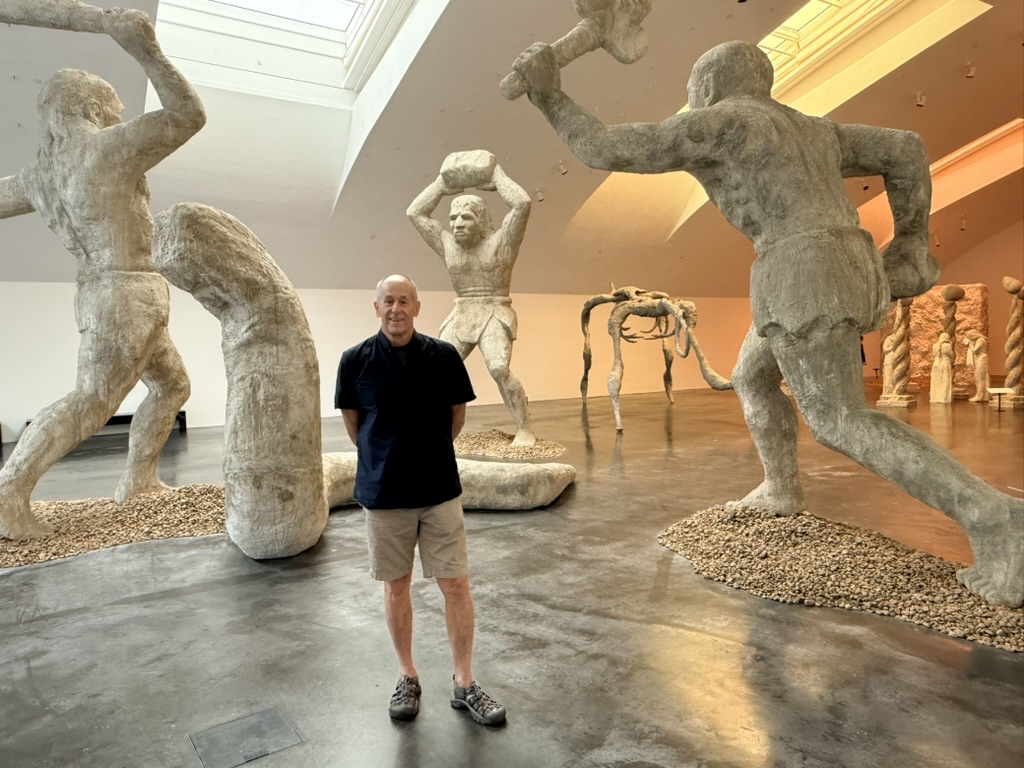
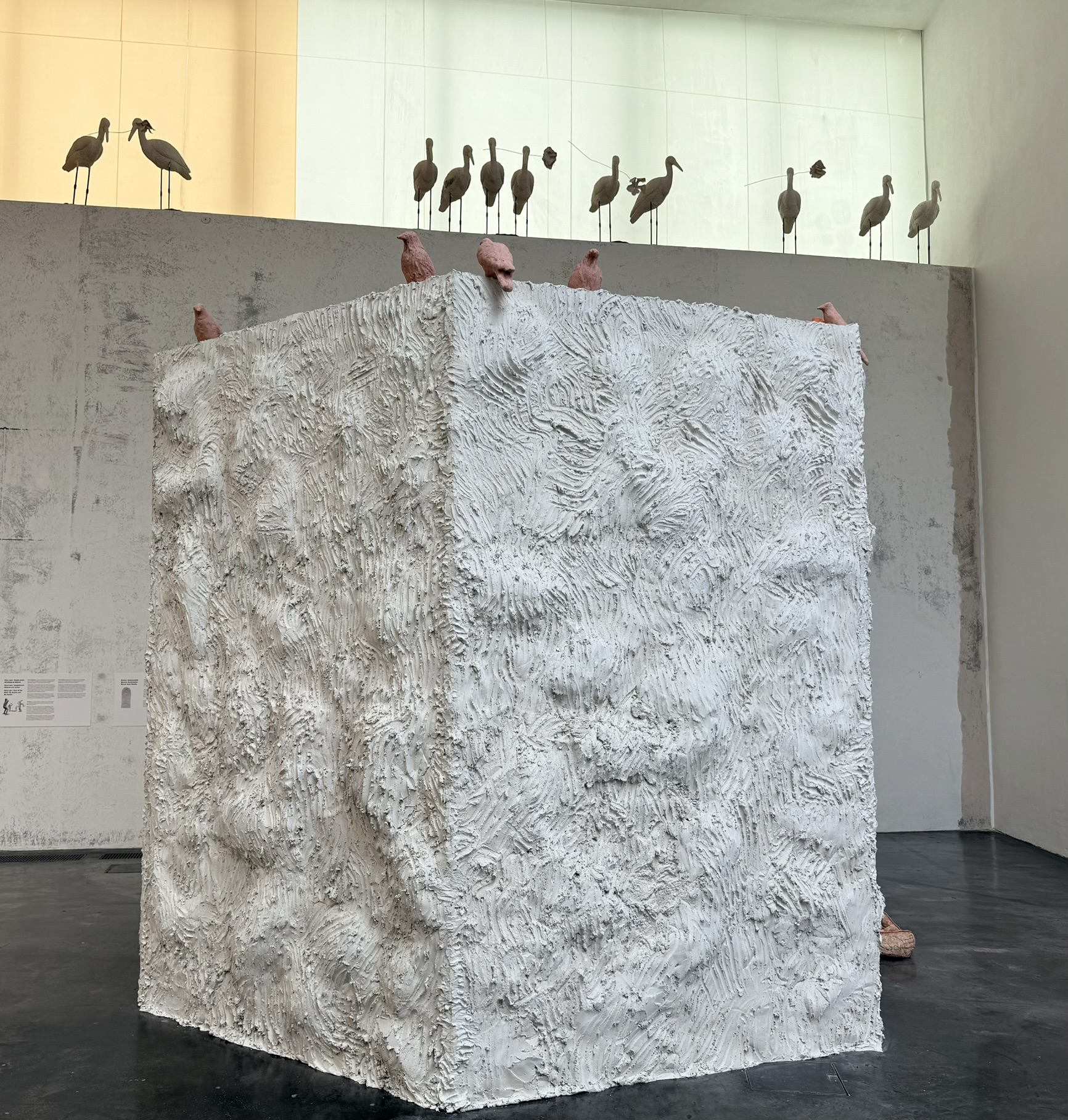
Kiasma is a contemporary art museum that is part of the Finnish National Gallery. Its mission is to showcase contemporary art and celebrate the art of our time.
The Kiasma museum building was designed by American architect Steven Koll. His entry, Chiasma, won first prize in the 1993 architectural design competition for the museum of contemporary art from a total of 516 entries. Kiasma opened to the public in May of 1988.
Kiasma has galleries on five floors, connected by ramps, stairs and elevators. It uses Finnish light to great effect.
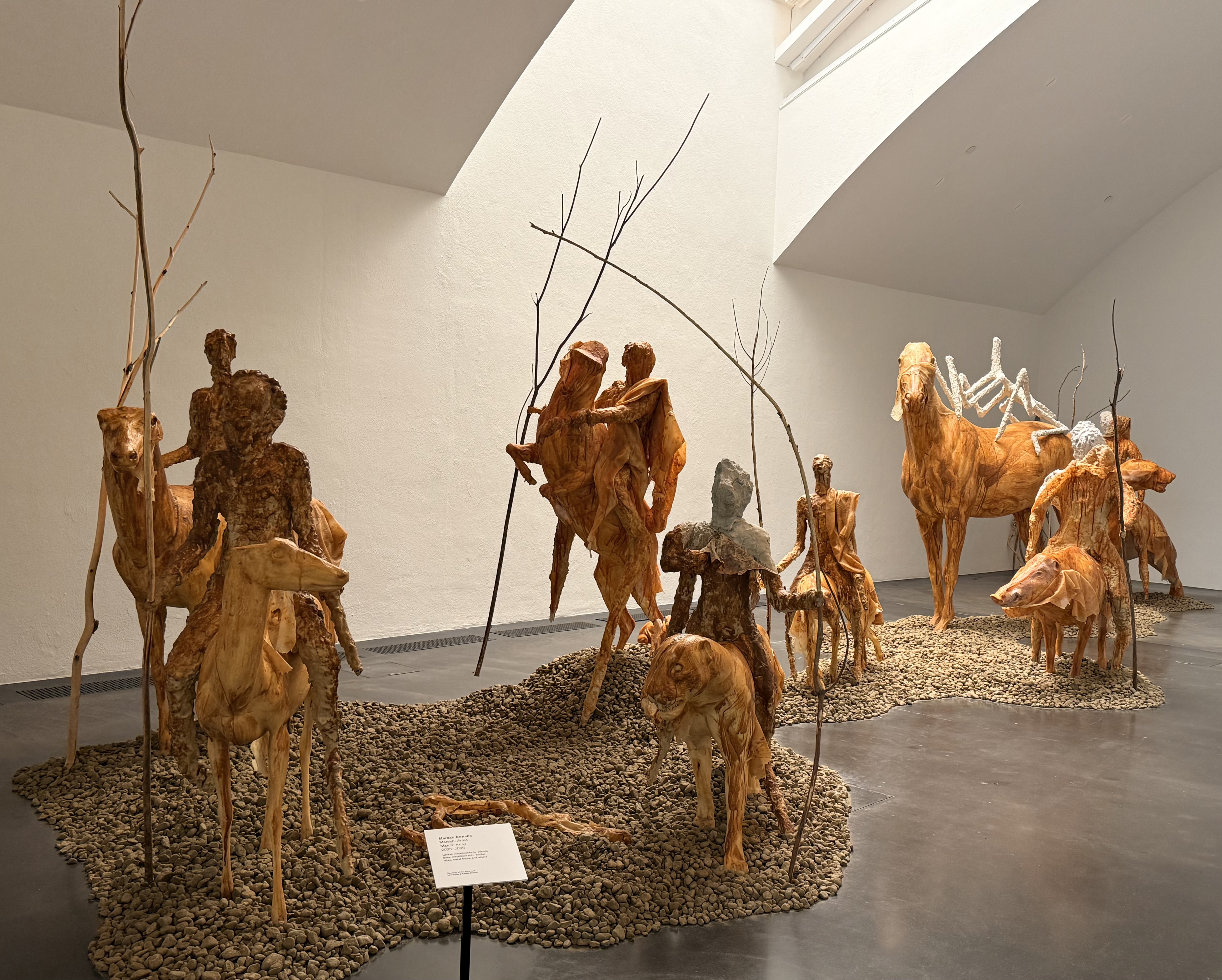
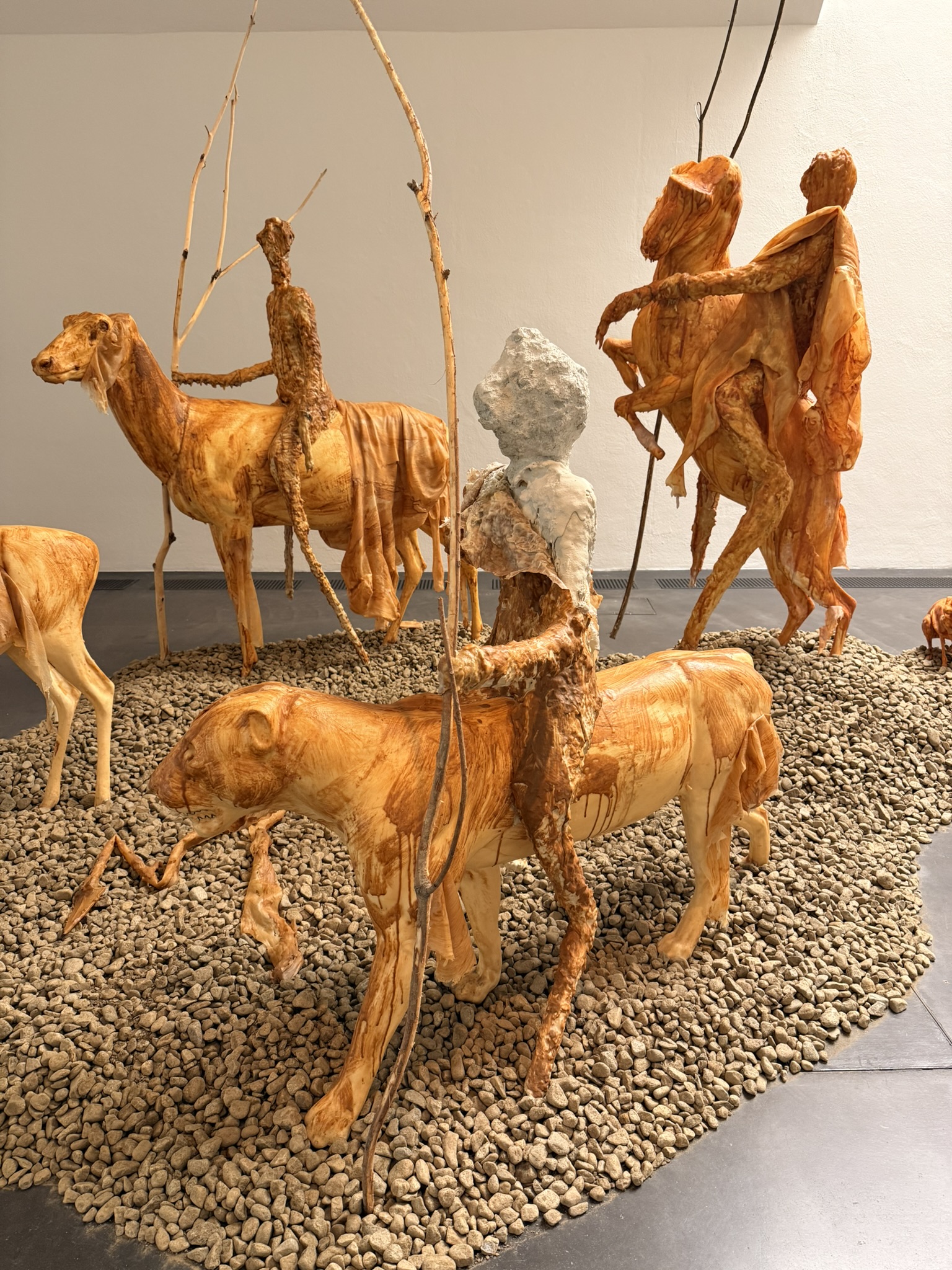
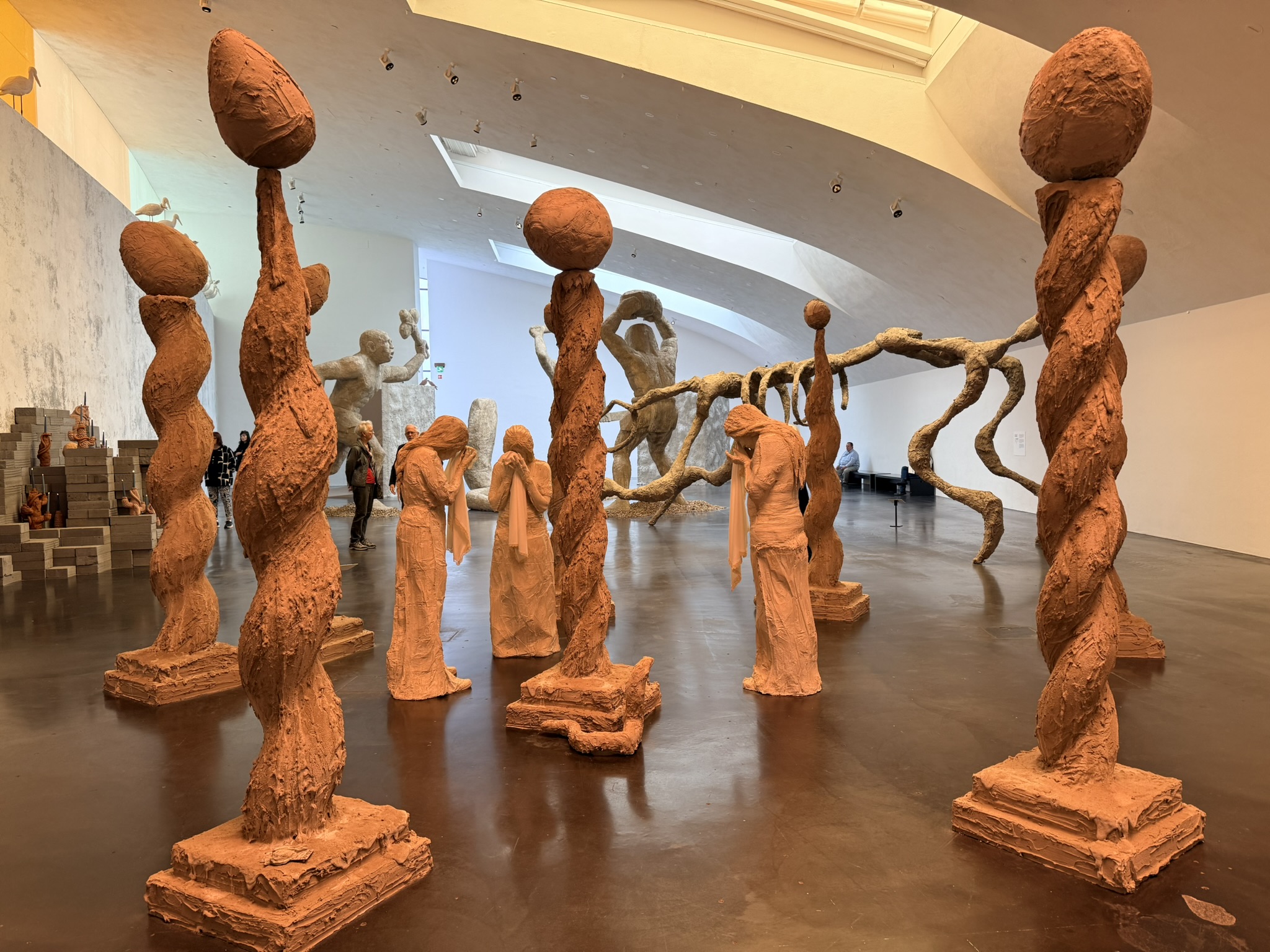
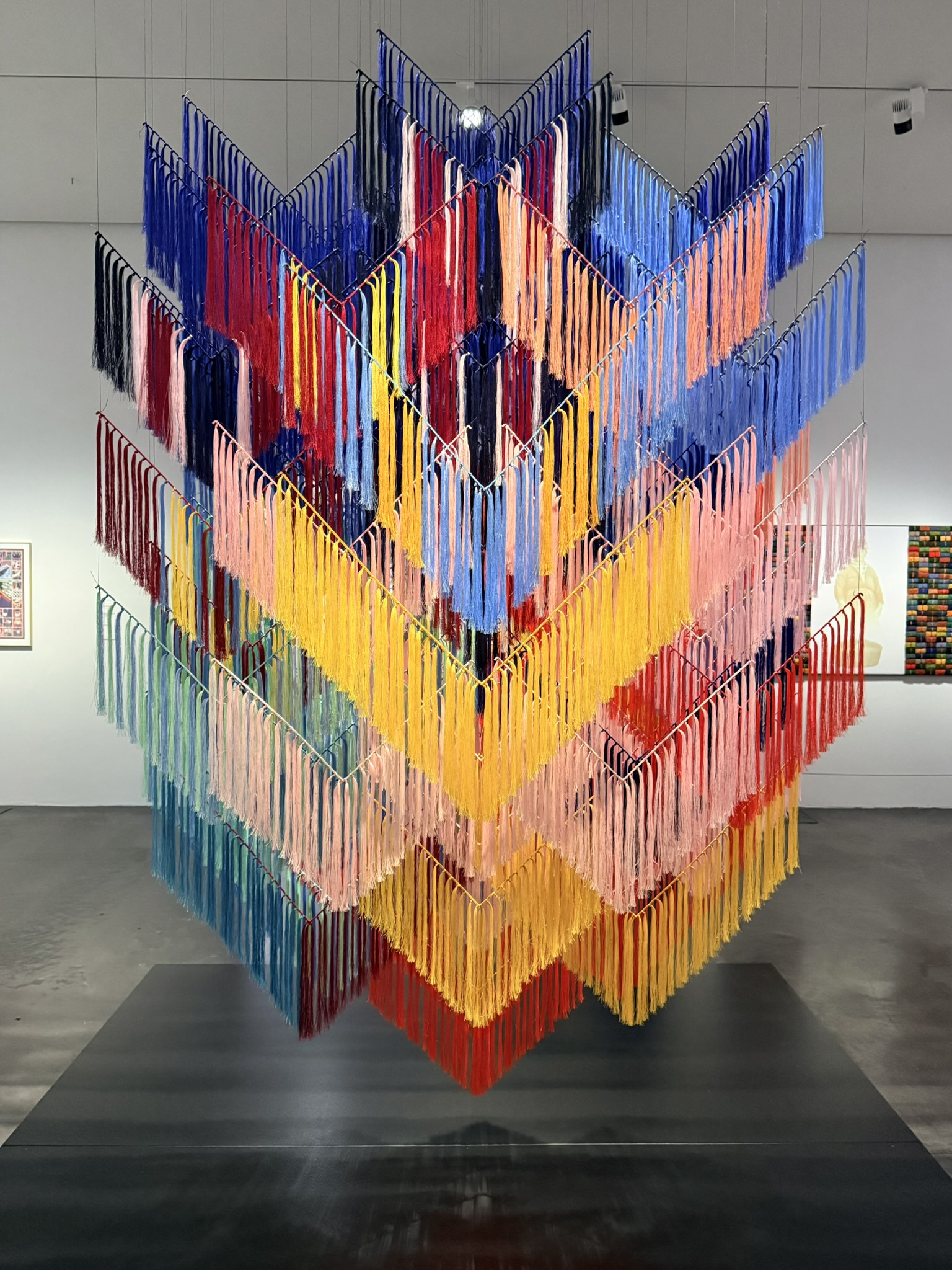
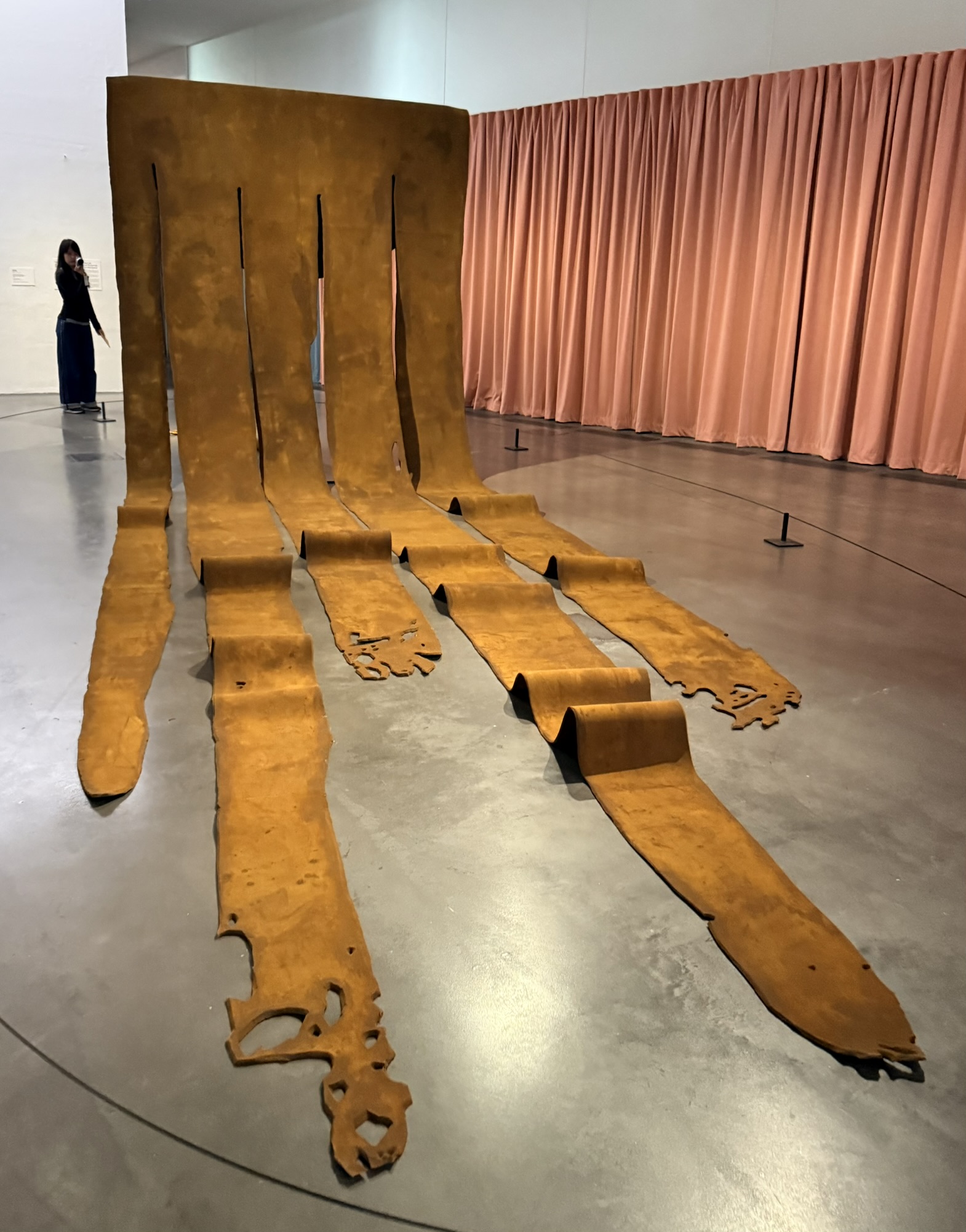
The gallery had a number of interesting exhibitions the day we visited:
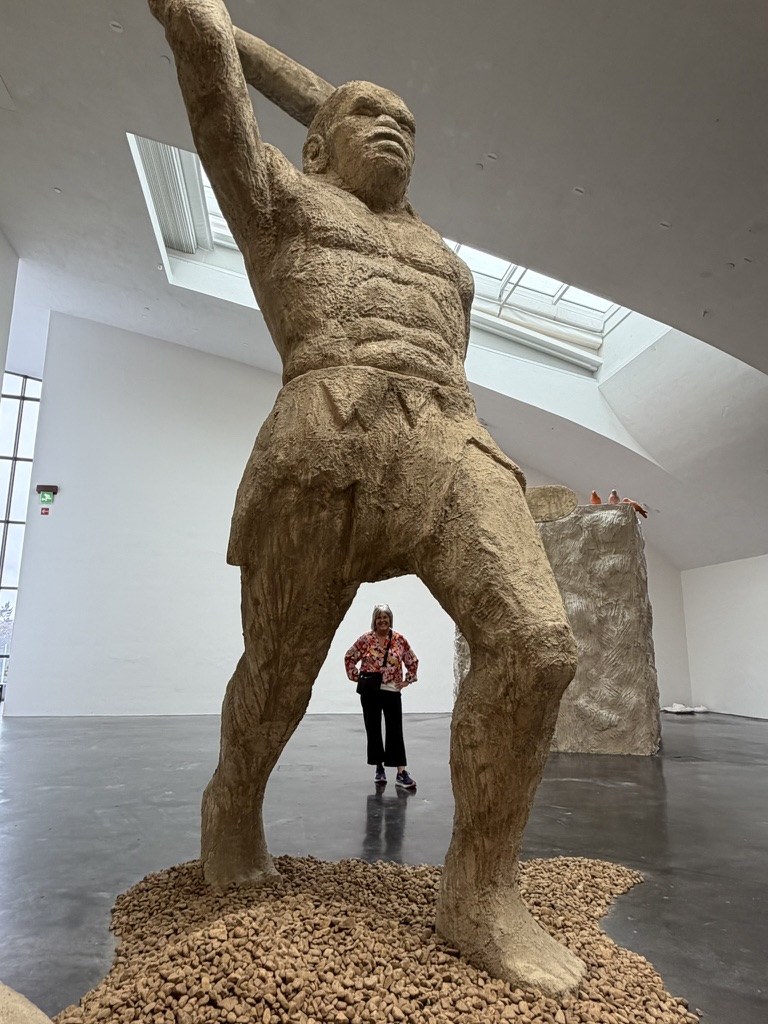
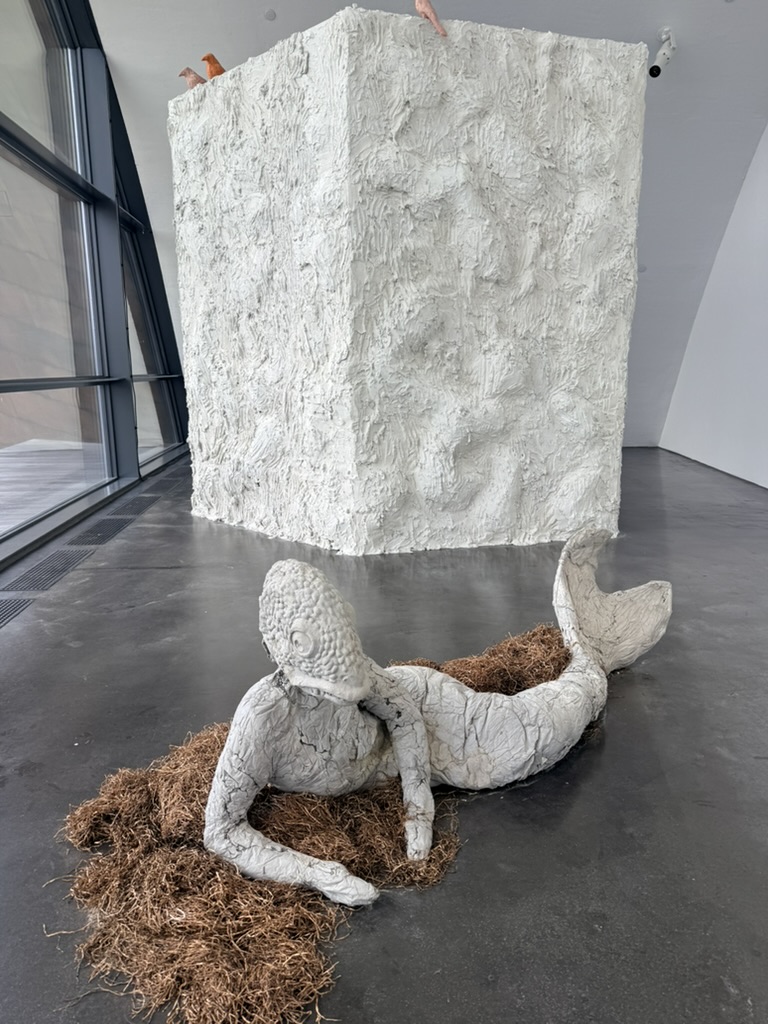
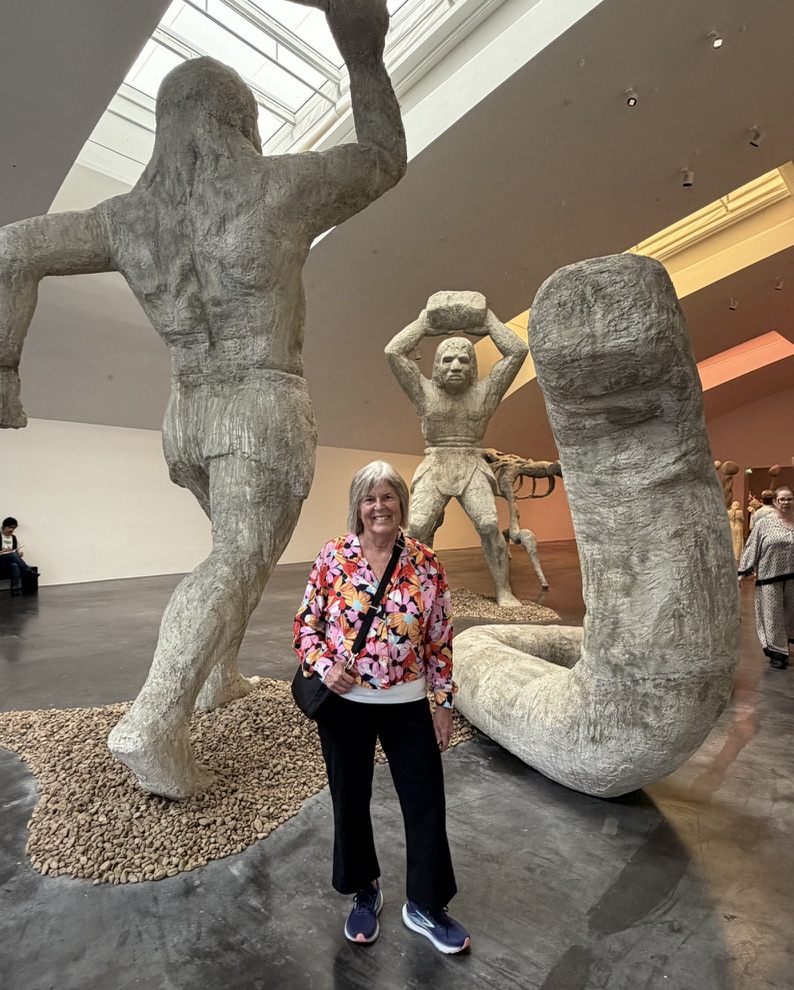
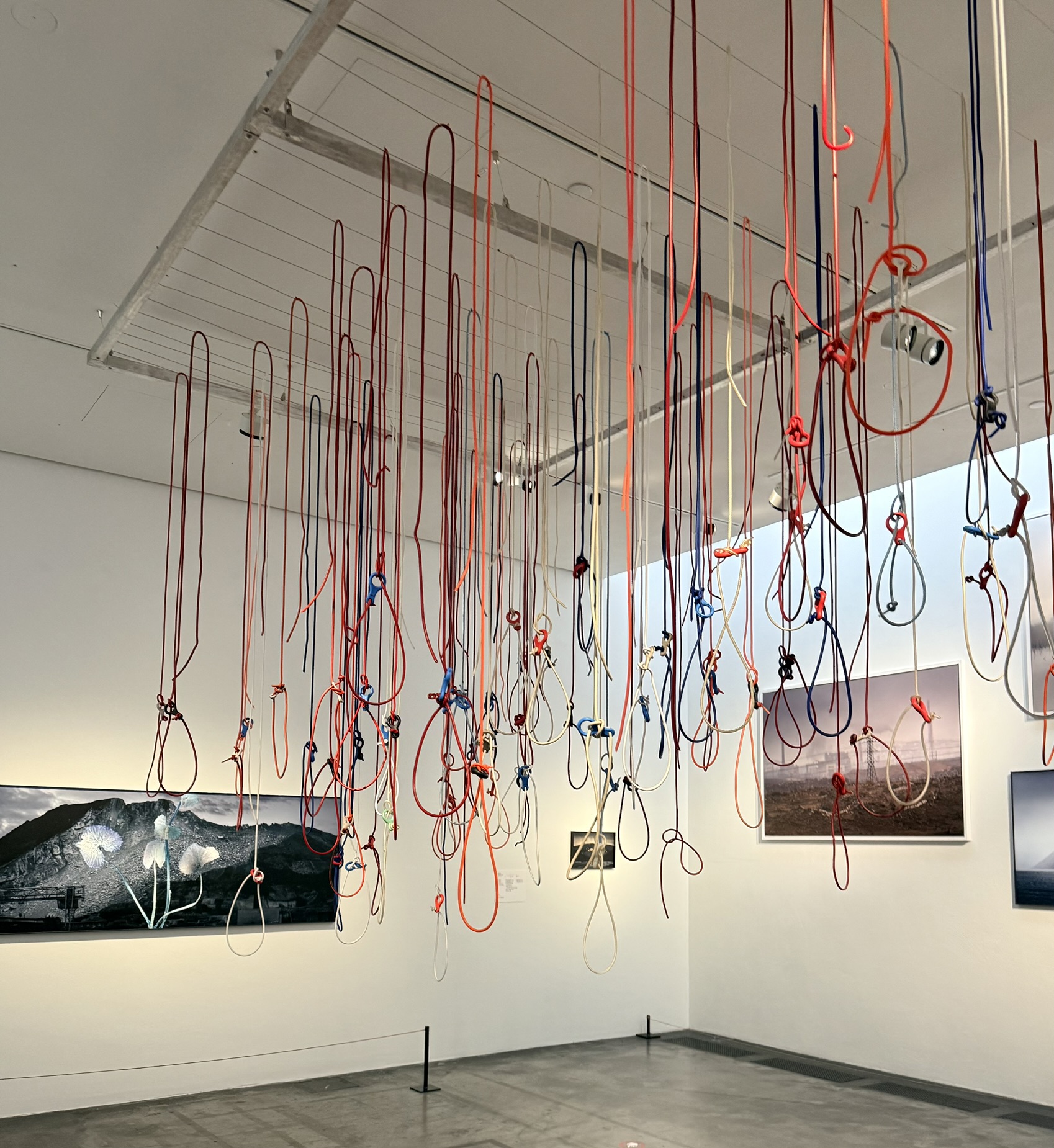
- “Dawn till Dawn” by Edith Karlson. Humans, animals and mythic creatures made of clay, silicone, and more, as if the sculptures were unfinished or had emerged out of the mists of time. We sense a transition to becoming something new. Humans and animals are united by a tenacious drive to live and the ability to adapt, even to extreme situations. Alongside crises and losses comes hope.
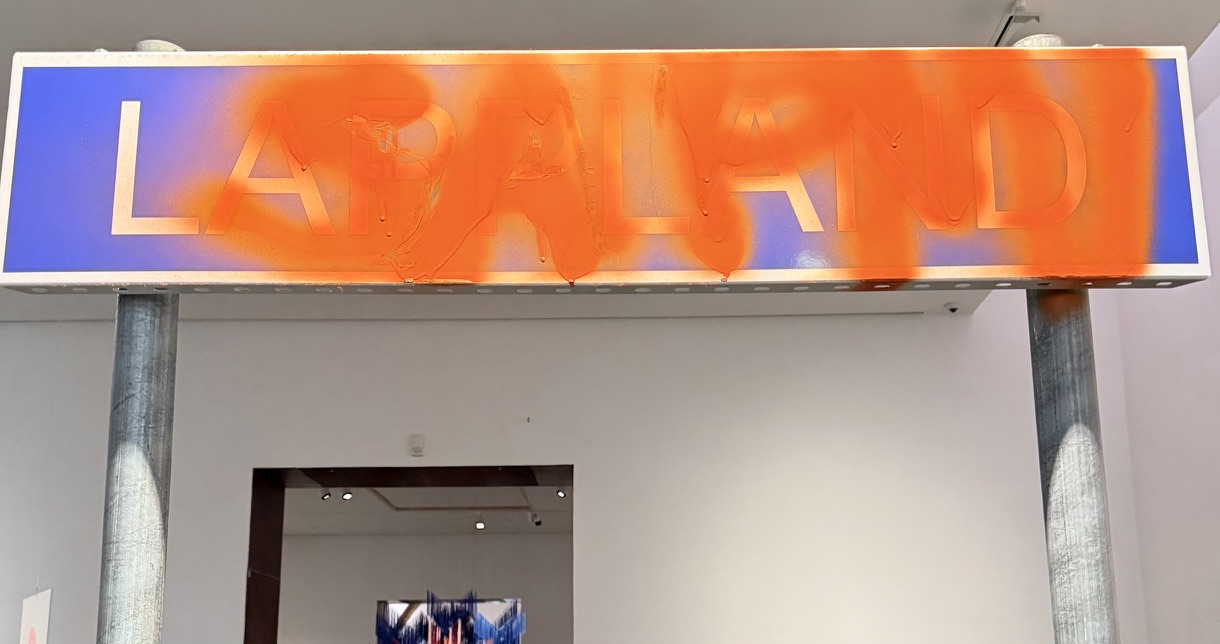
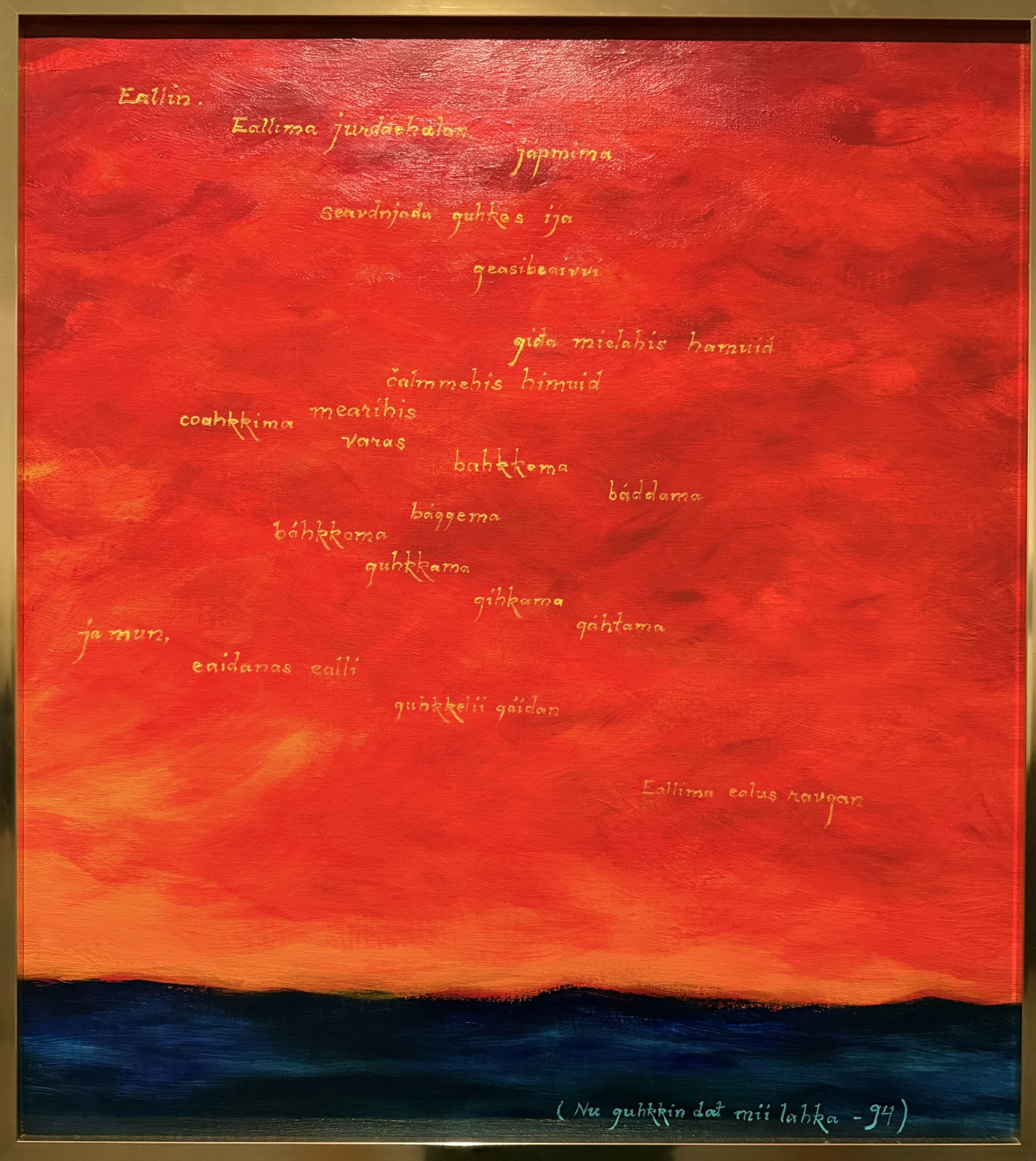
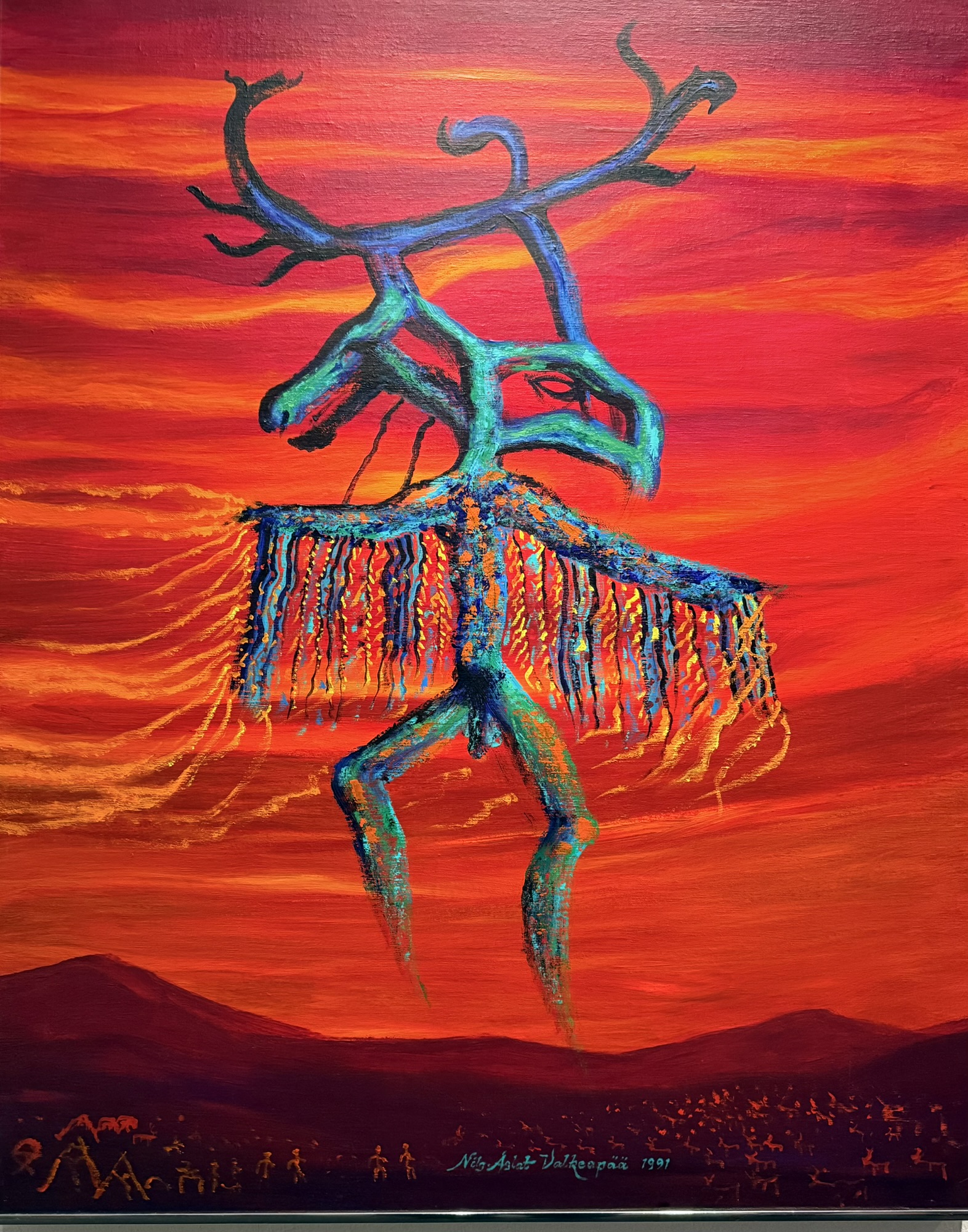
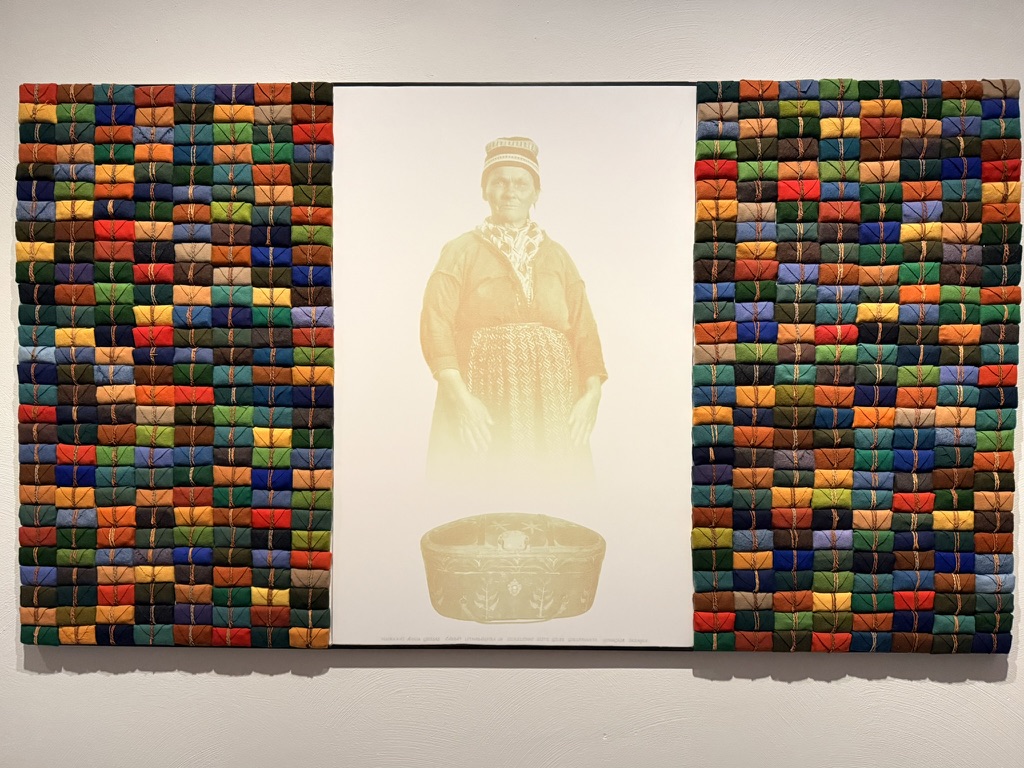
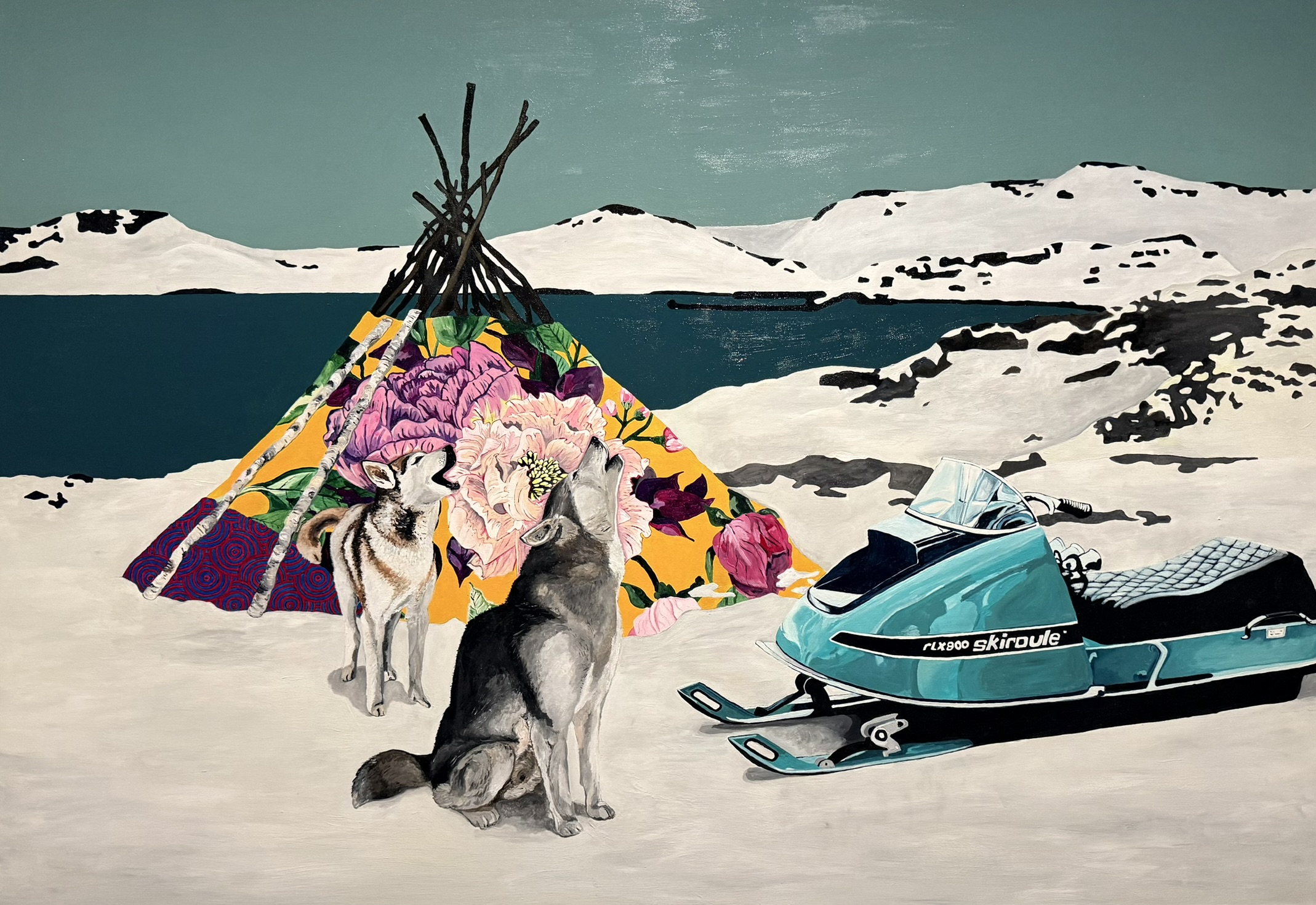
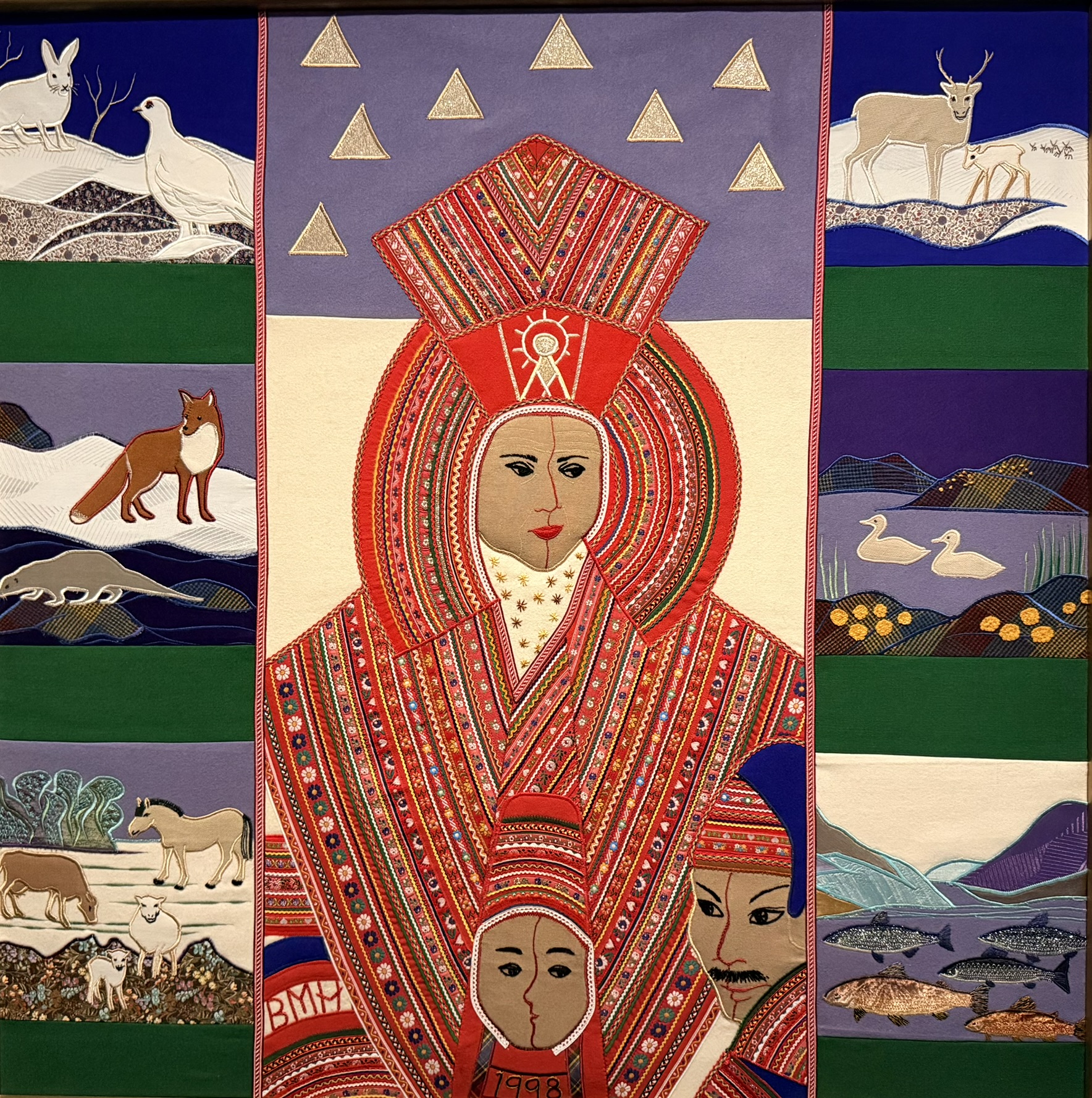
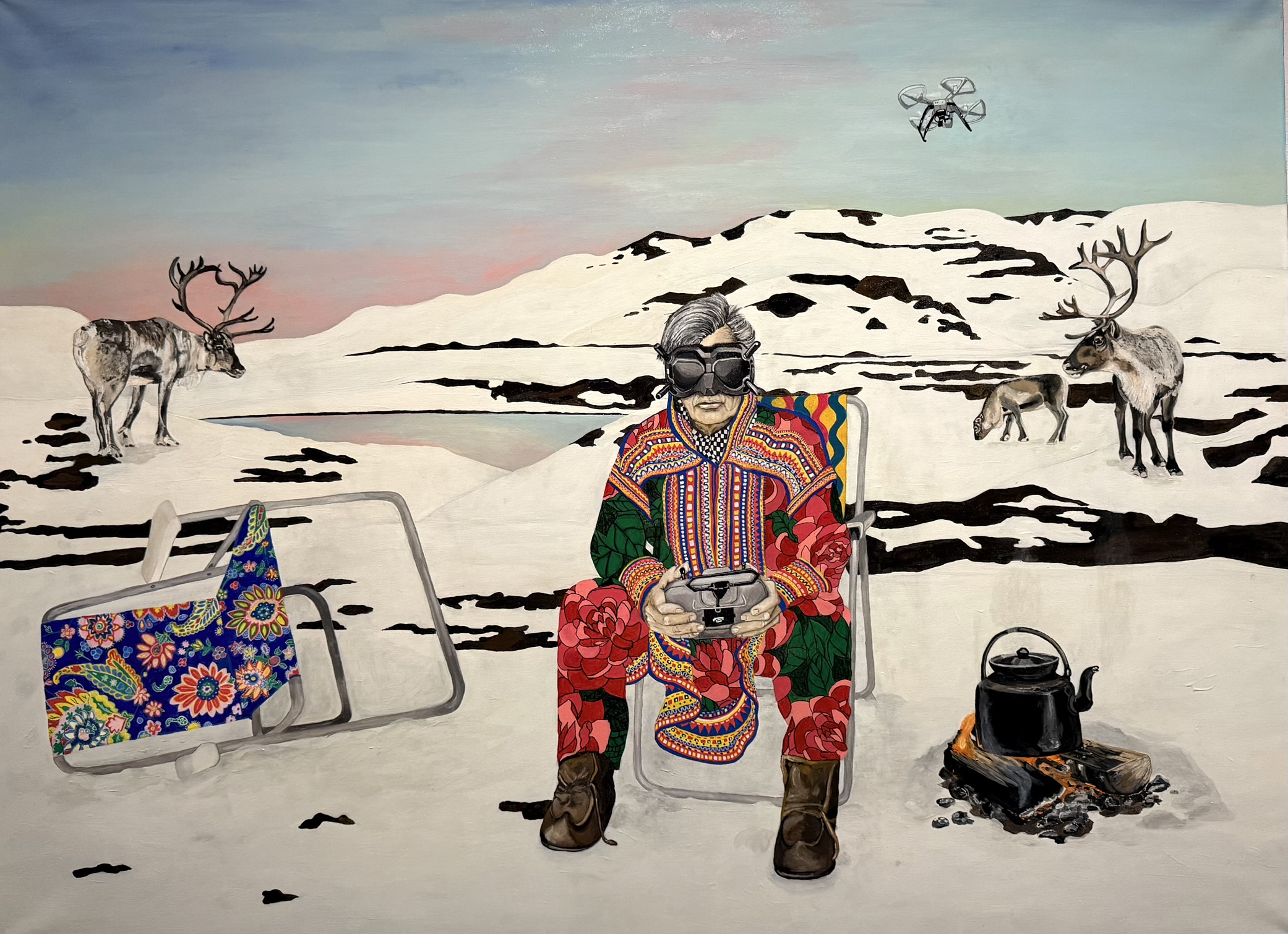
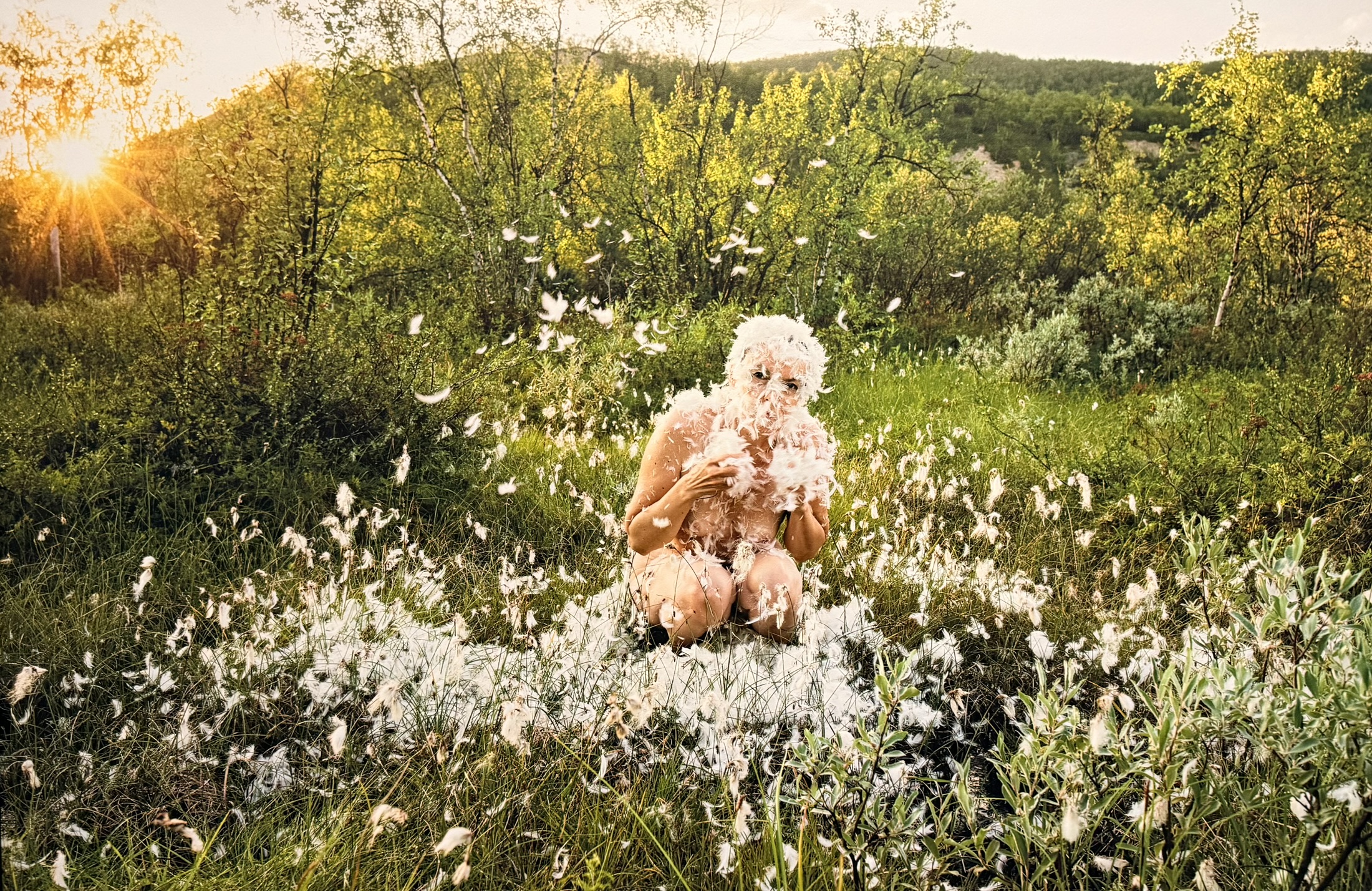
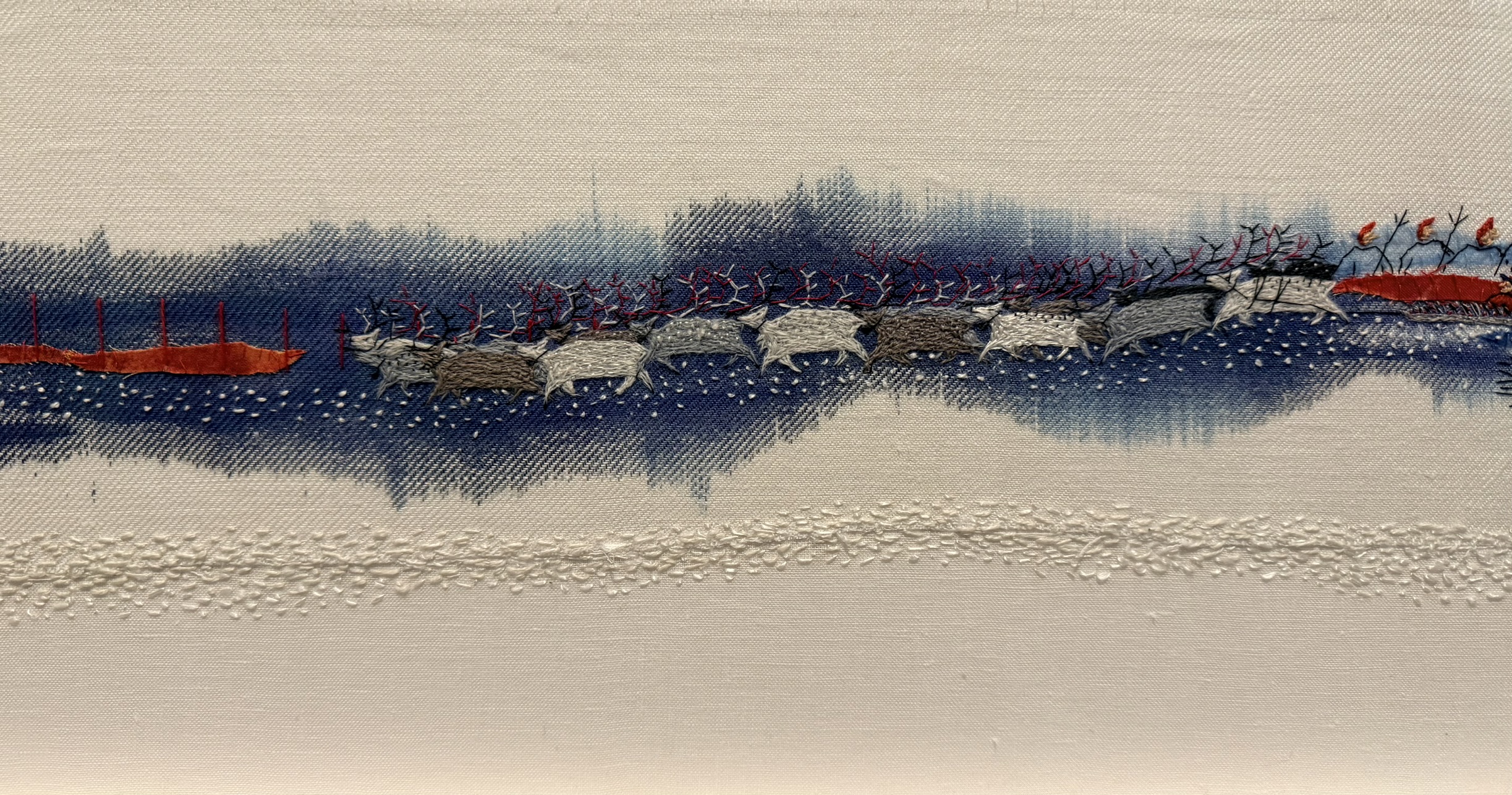
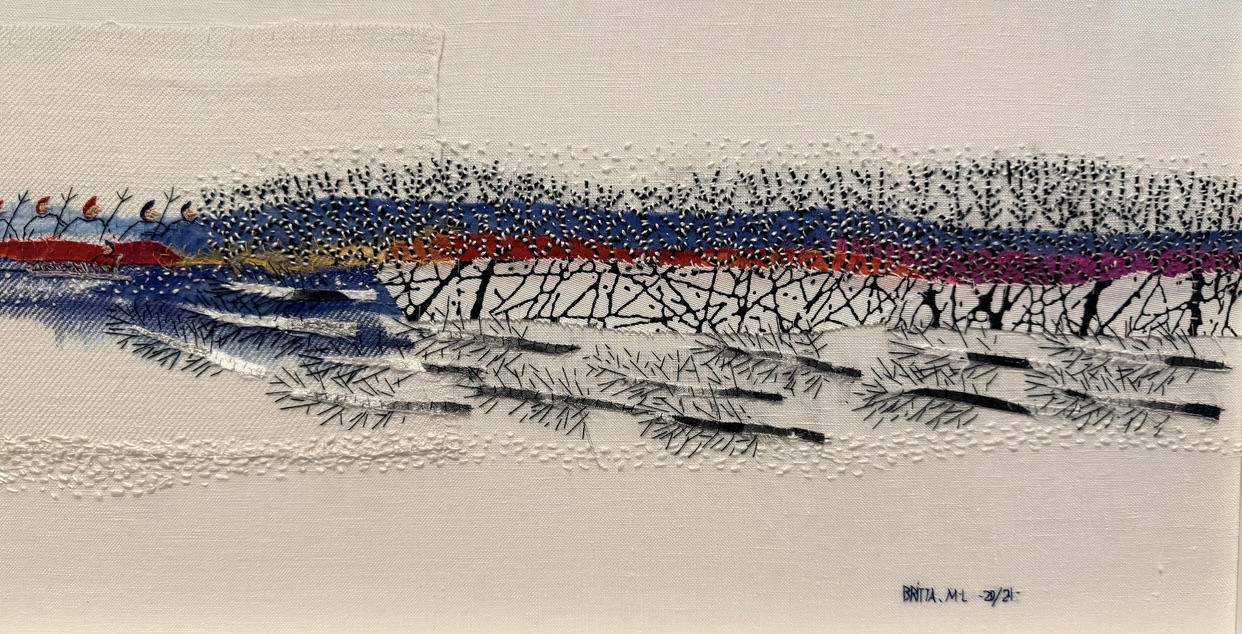
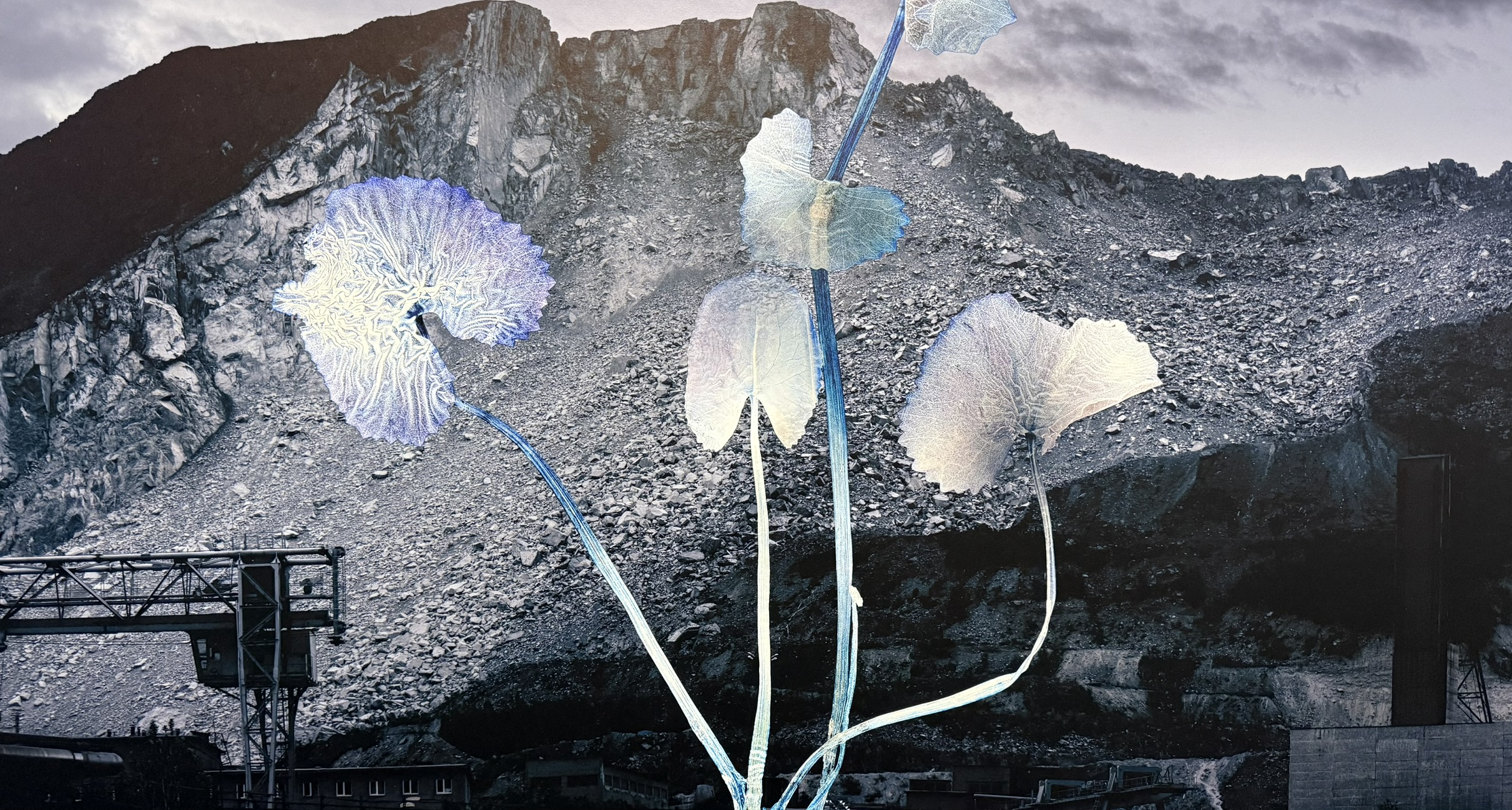
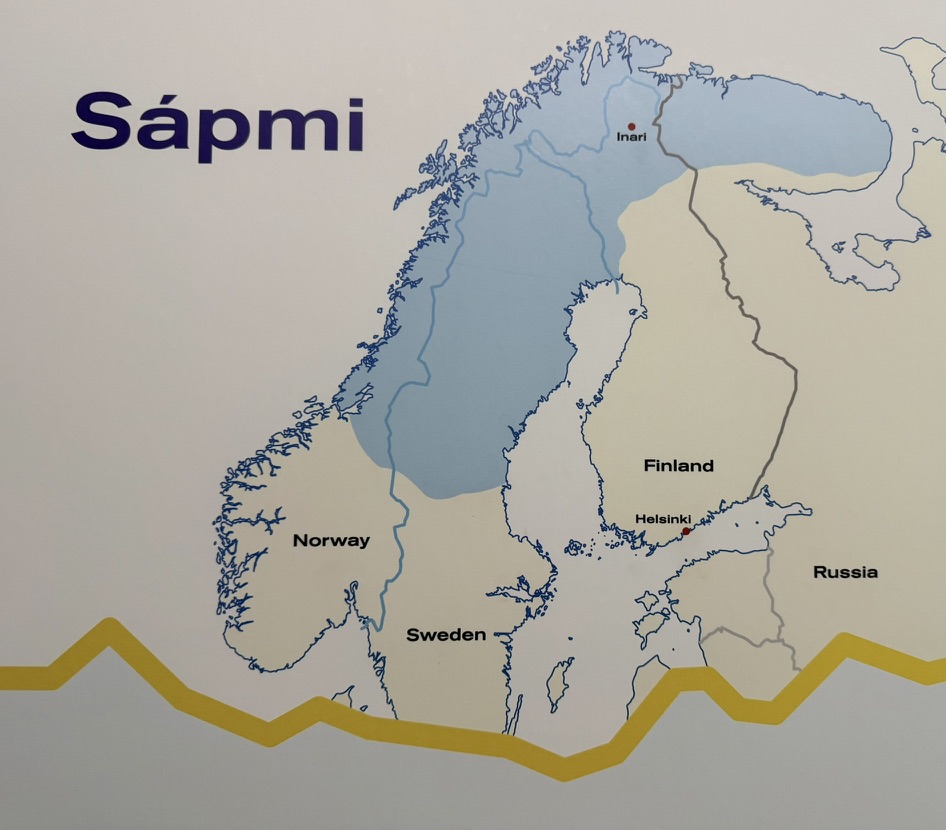
- “We Who Remain: Sámi Art in Focus” – Before the Nordic nation-states came into existence, there was Sápmi – the land of the Sámi. As the Sámi people’s ancestral homeland, Sápmi challenges familiar Nordic ideas of statehood and nationality. The exhibition traces what the Sámi have endured in the past and what they continue to face today.
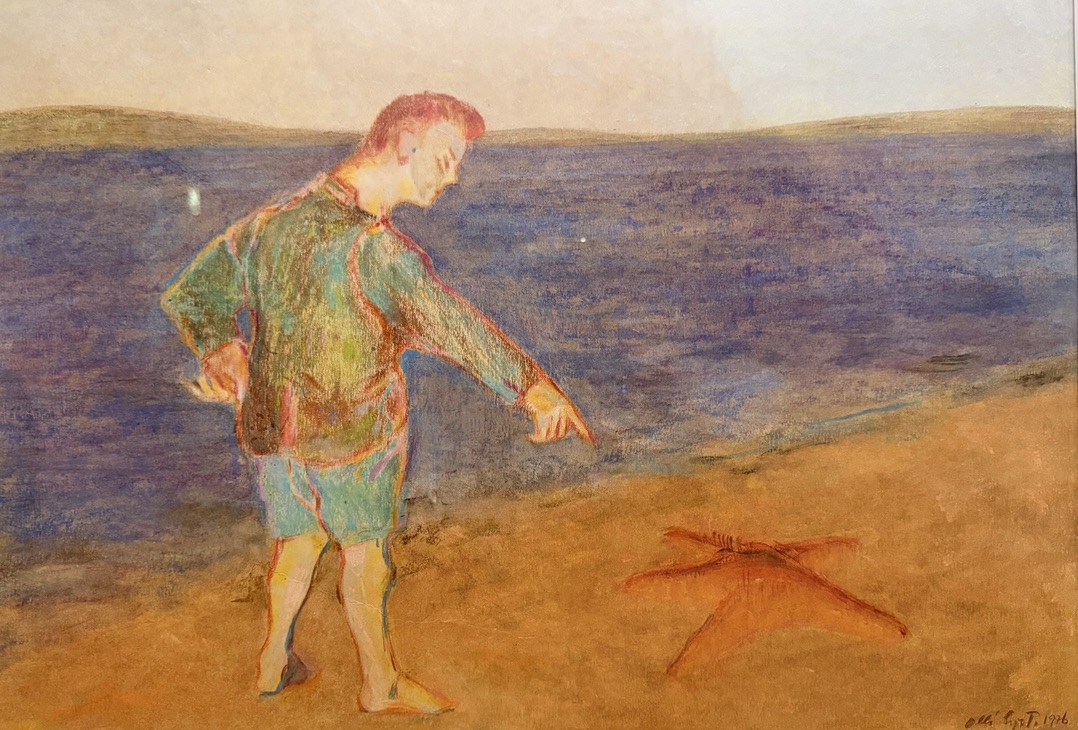
- “A Dream in Four Colours” – explores how artists draw inspiration from dreams and the subconscious.
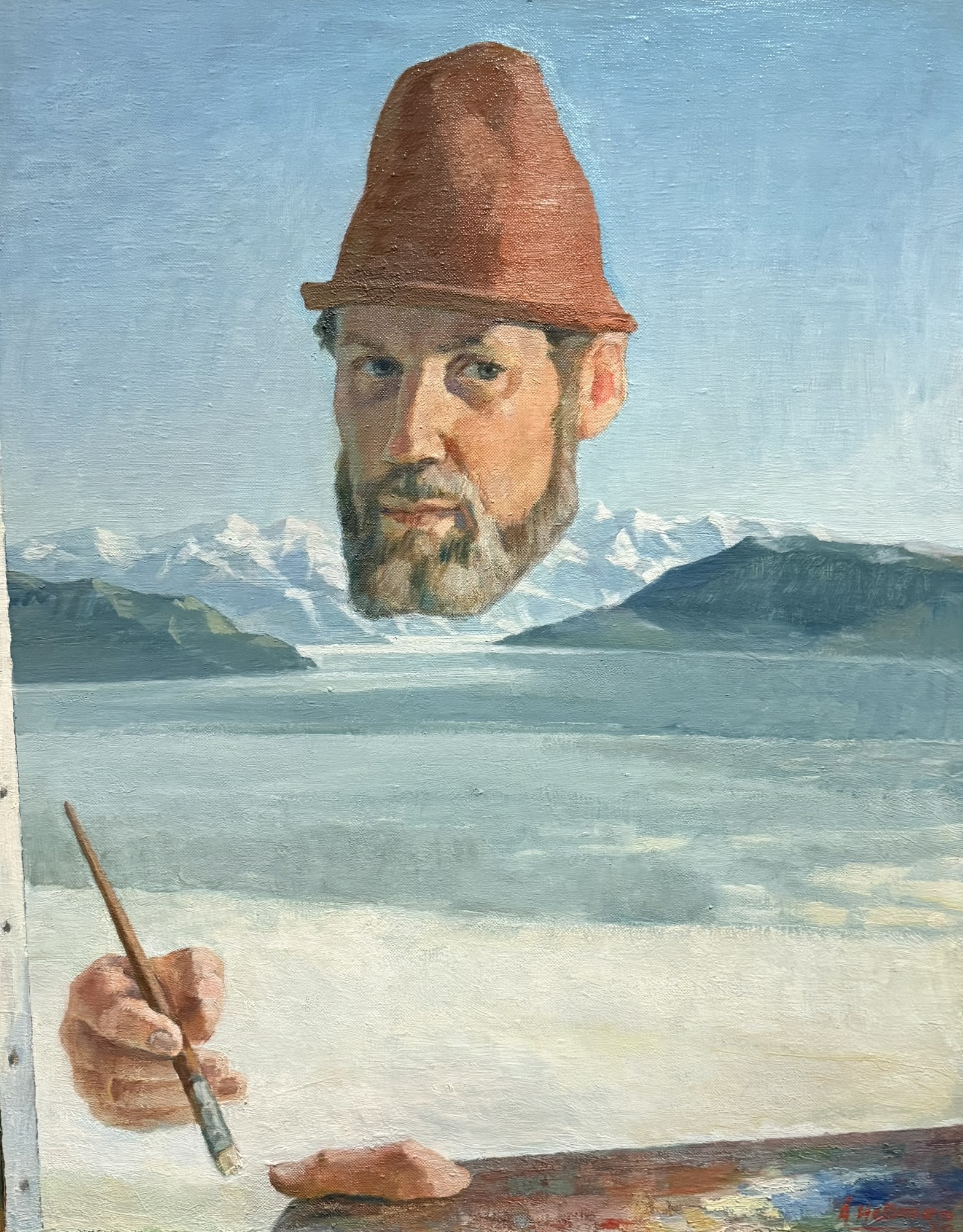
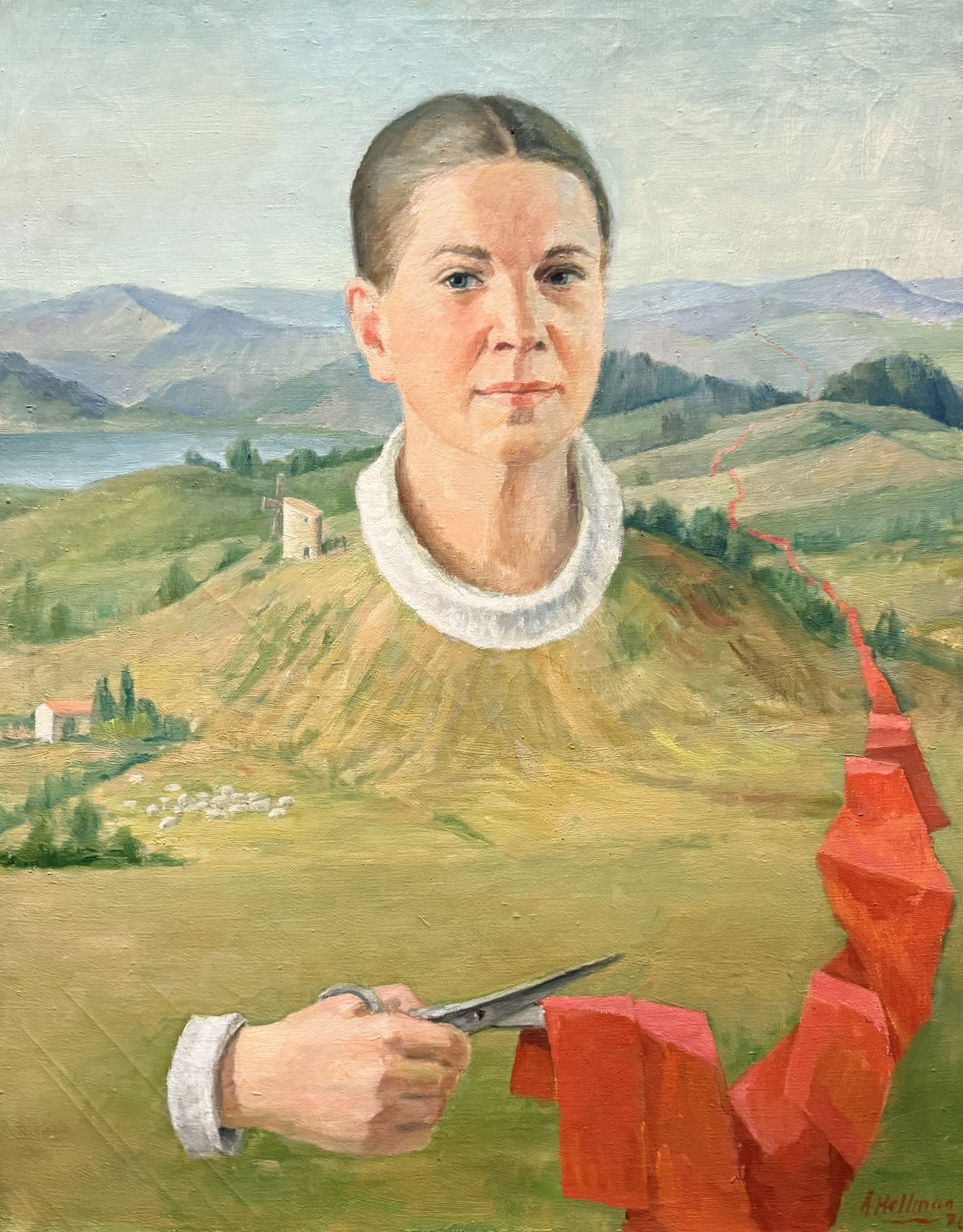
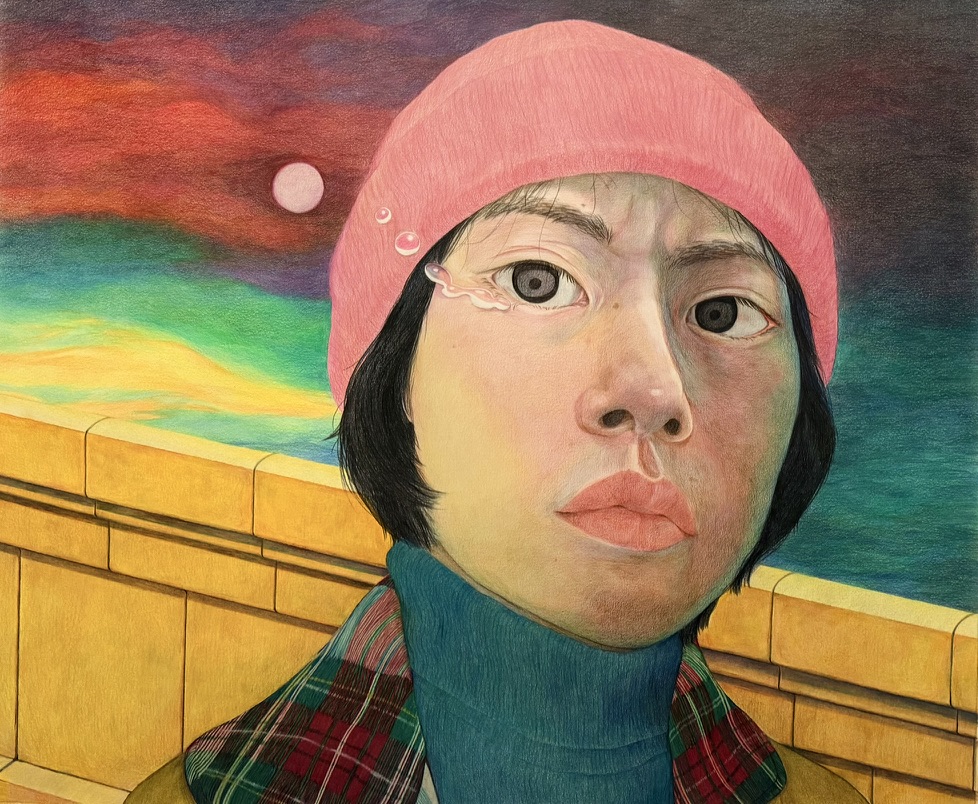
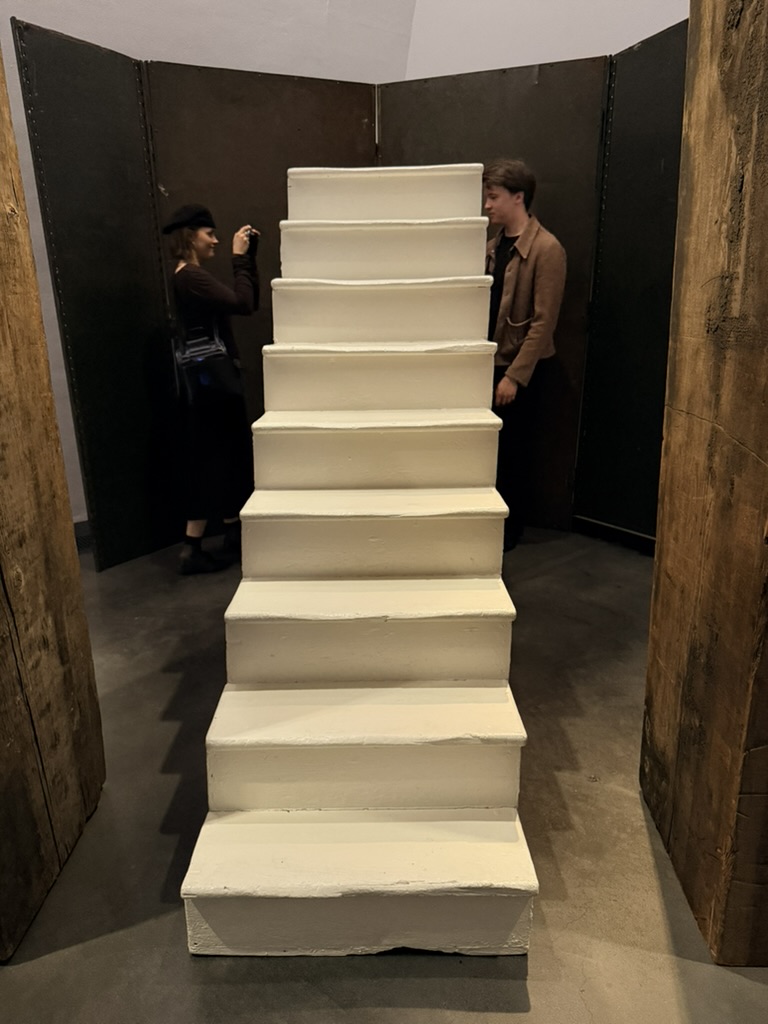
Ateneum
Ateneum is one of three museums forming the Finnish National Gallery. It has the biggest collections of classical art in Finland, including Finnish art extensively from 18th-century rococo portraiture to the experimental art movements of the 20th century. The collections also include some 650 international works of art.
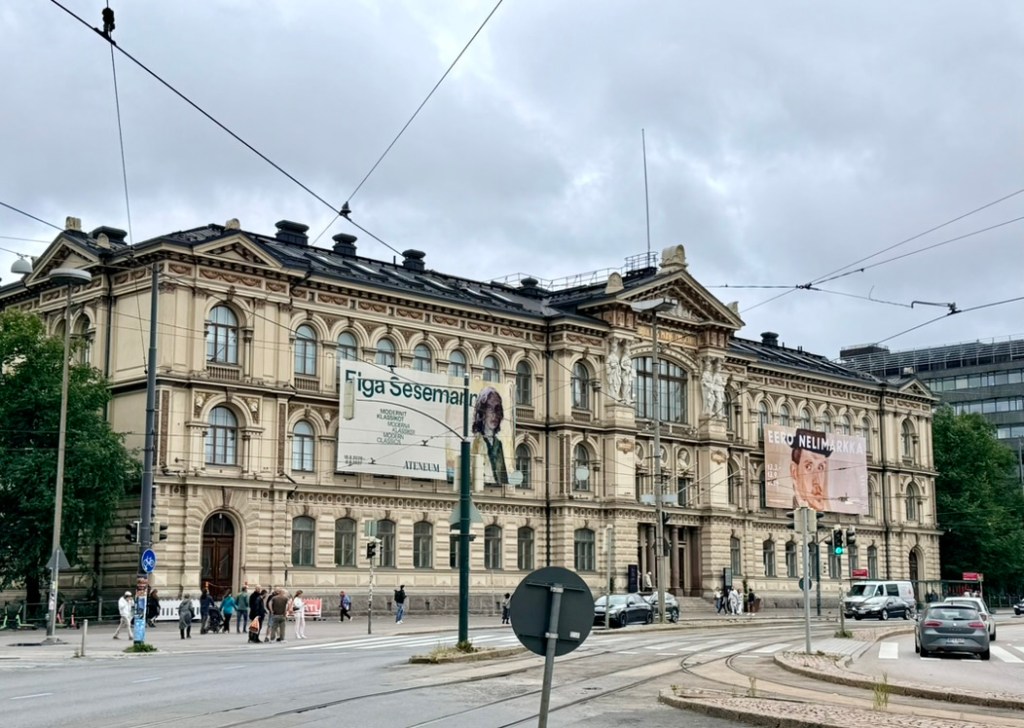
We visited Ateneum on a dreary Sunday afternoon and saw three exhibits there:
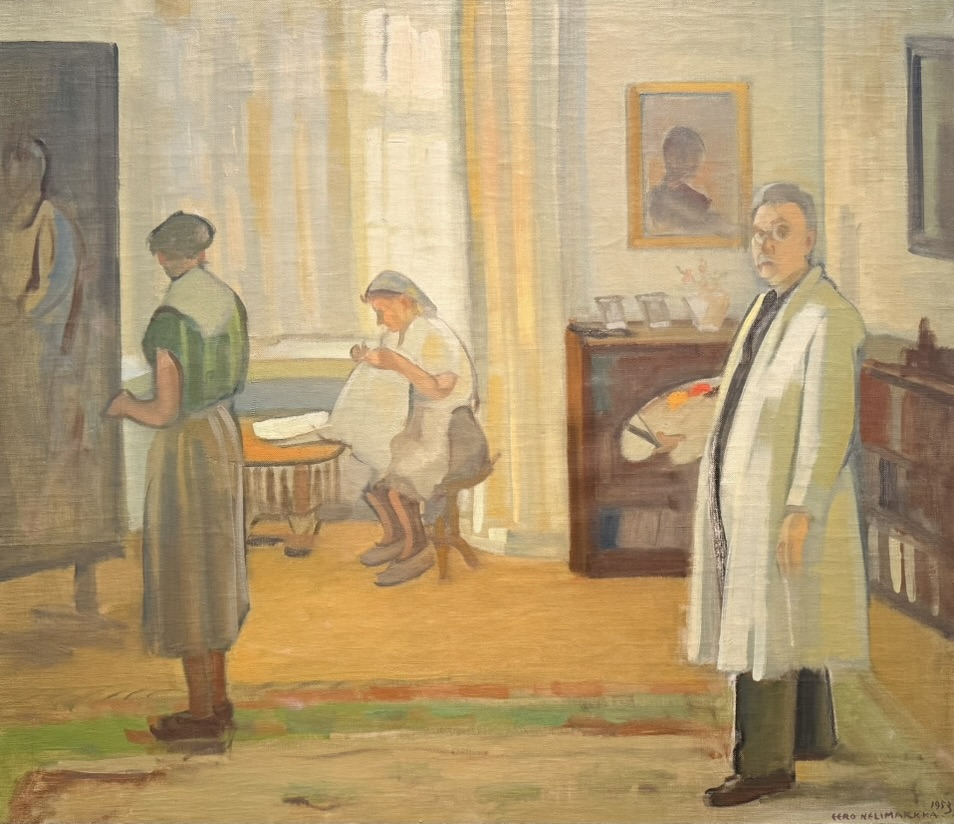
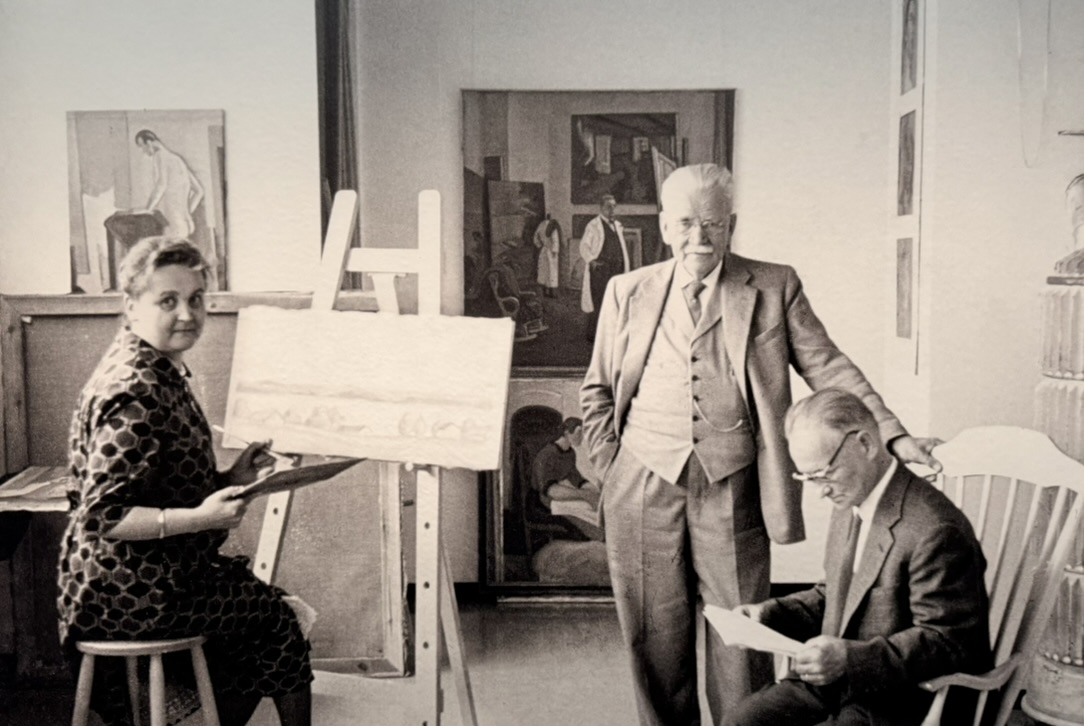
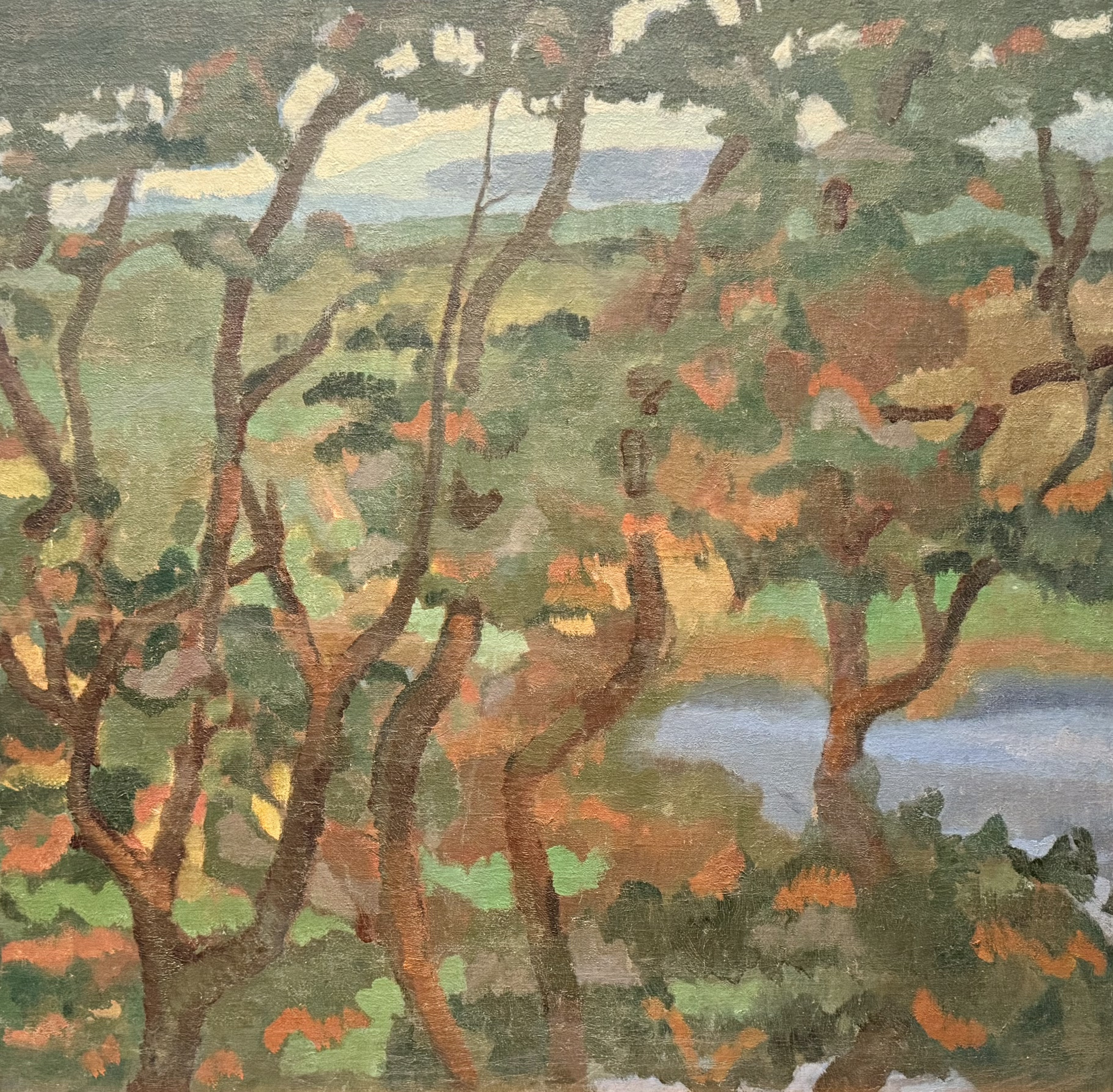
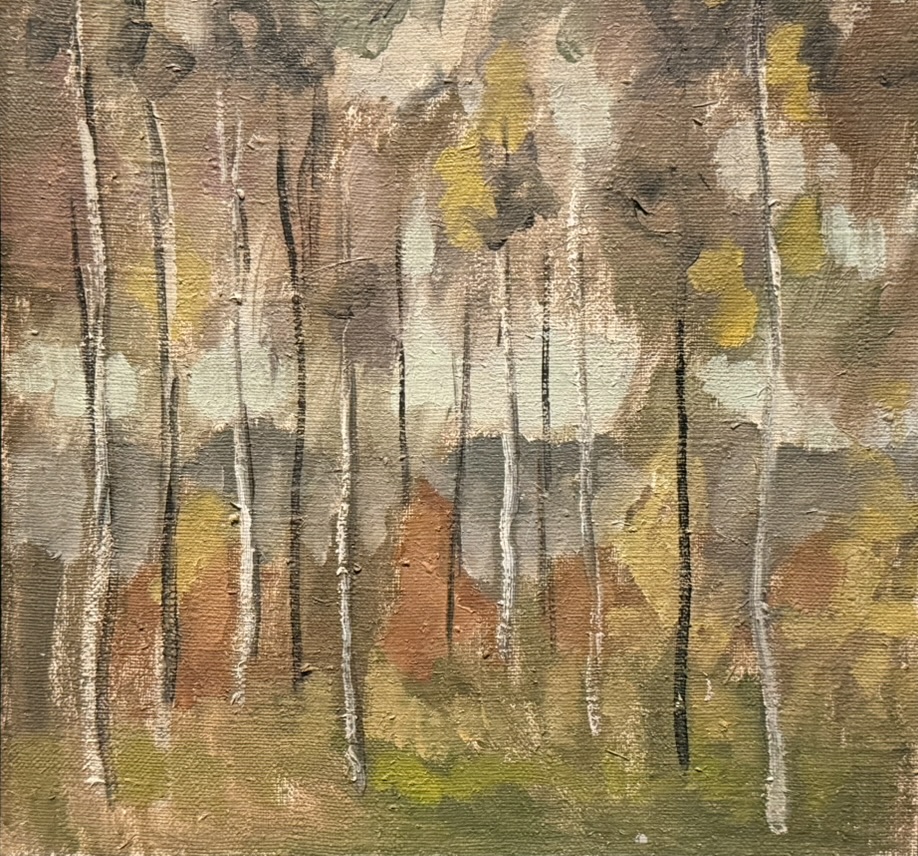
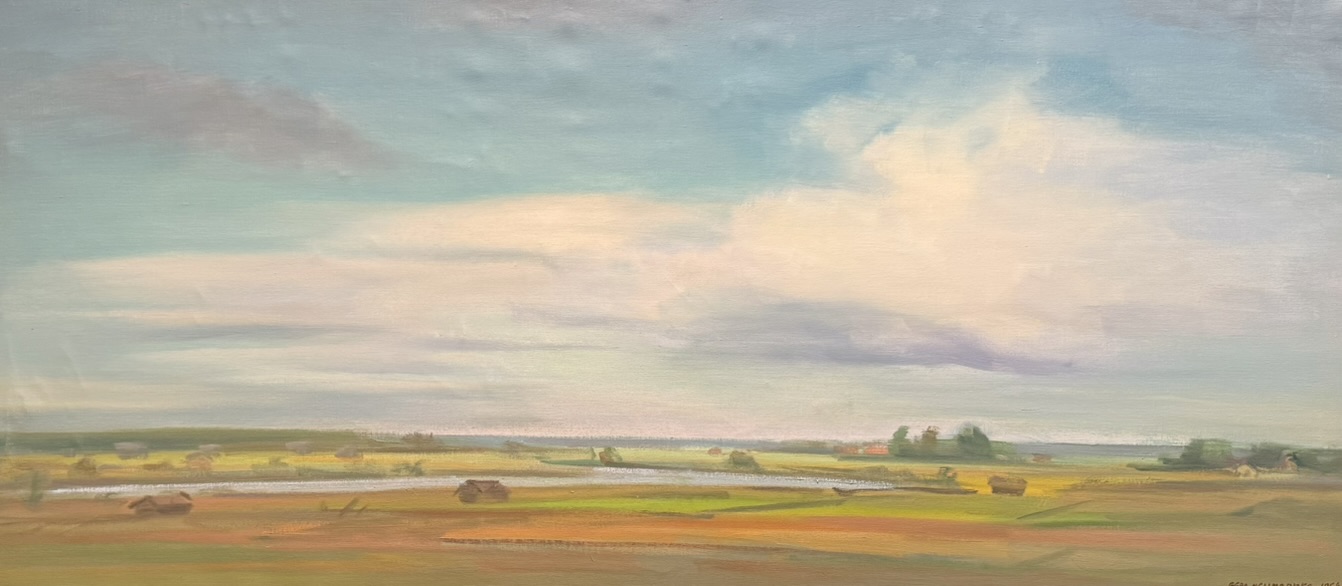
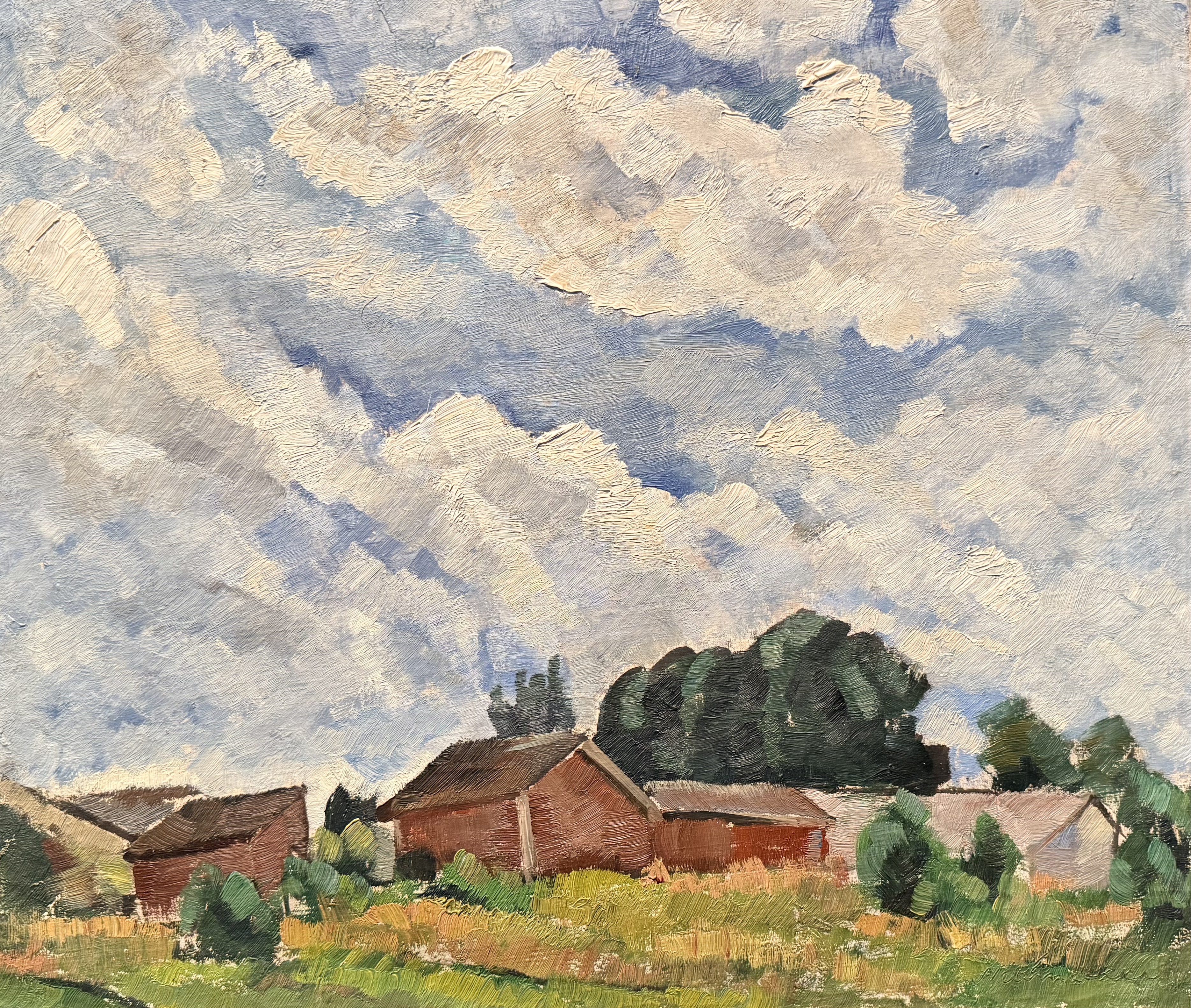
1 ) Eero Nelimarkka is known as a painter of the landscapes of South Osstrobothnia, but he was also skilled in portraying people. His work includes many characterful portraits, as well as many self-portraits. I especially enjoyed the landscape and town paintings and the loving portraits of his wife, Saima.
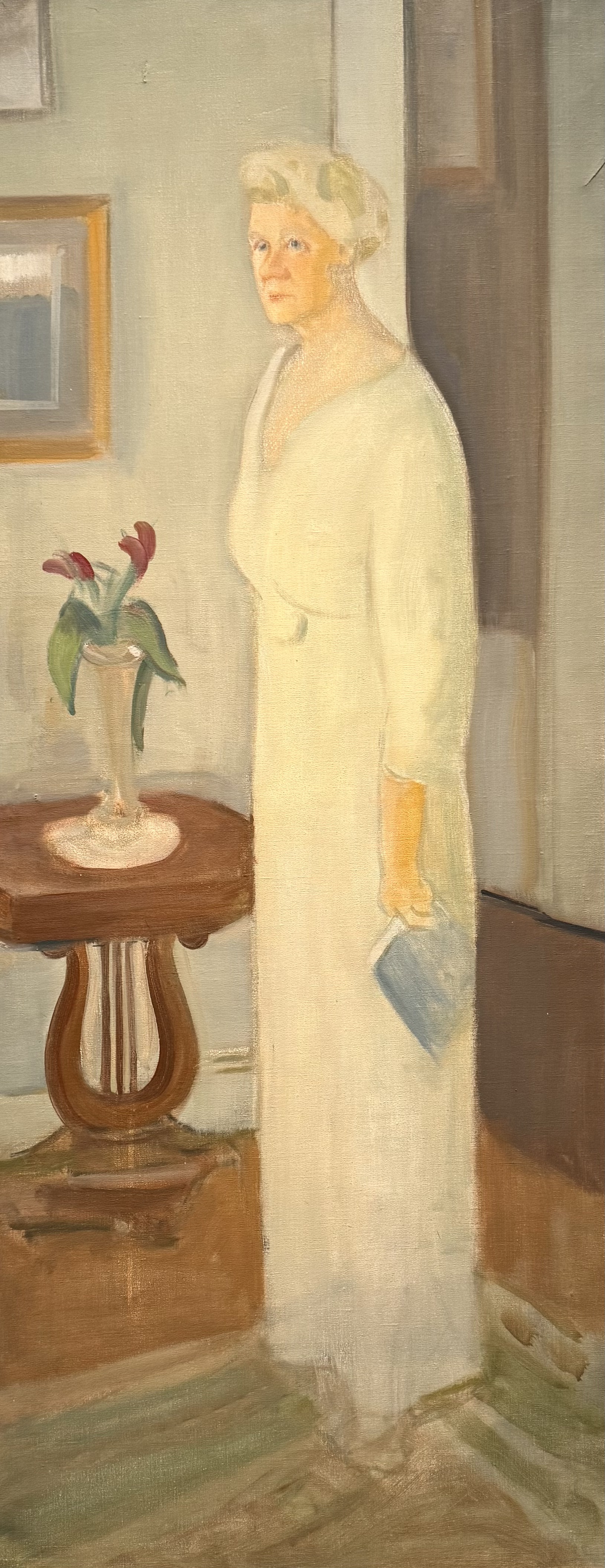
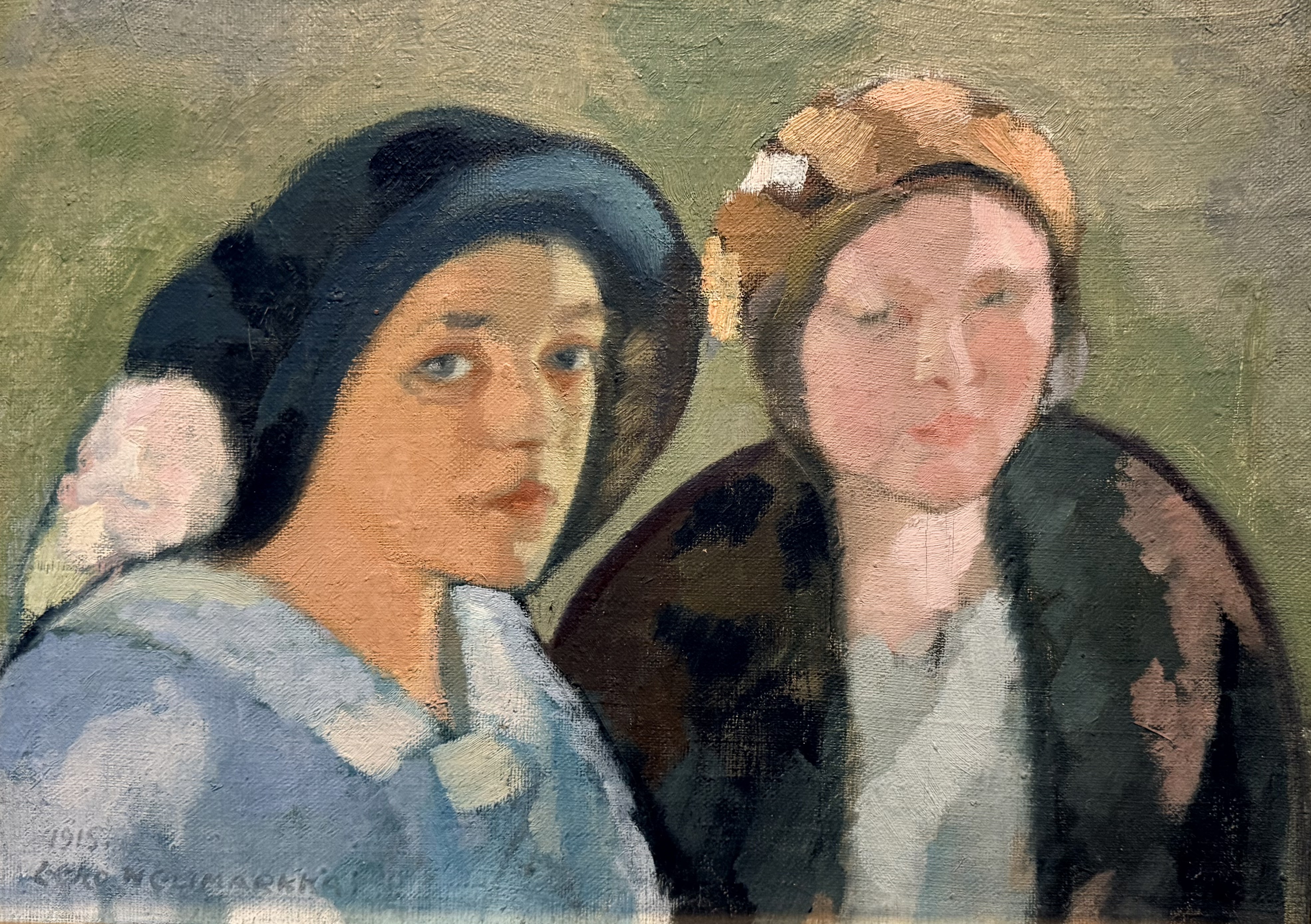
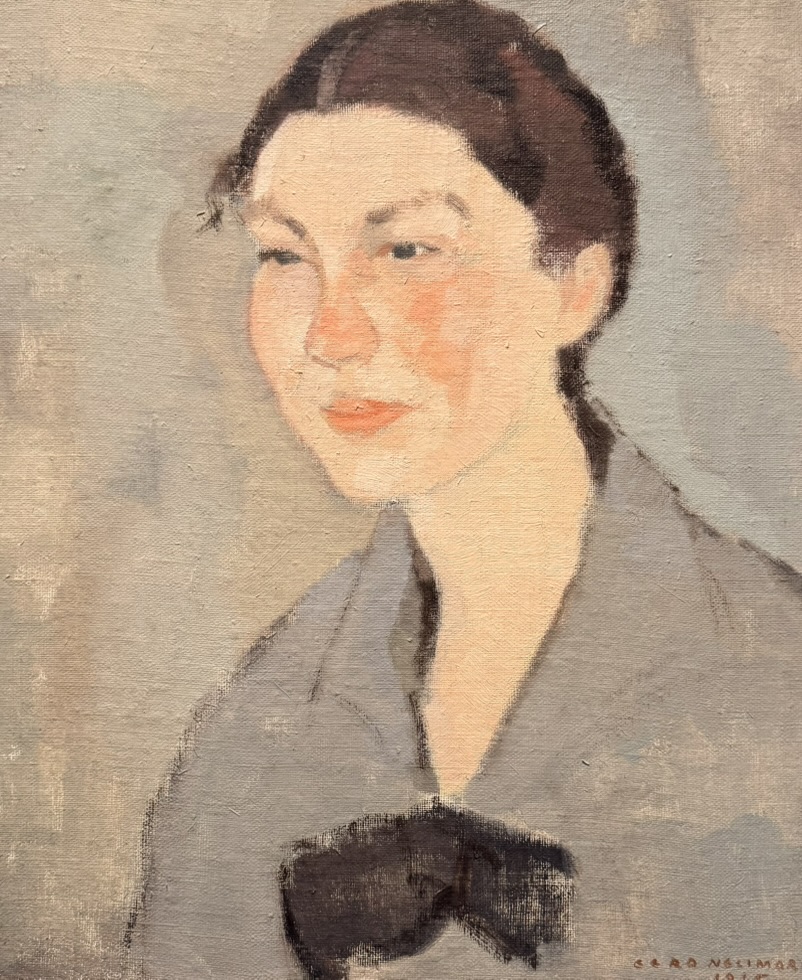
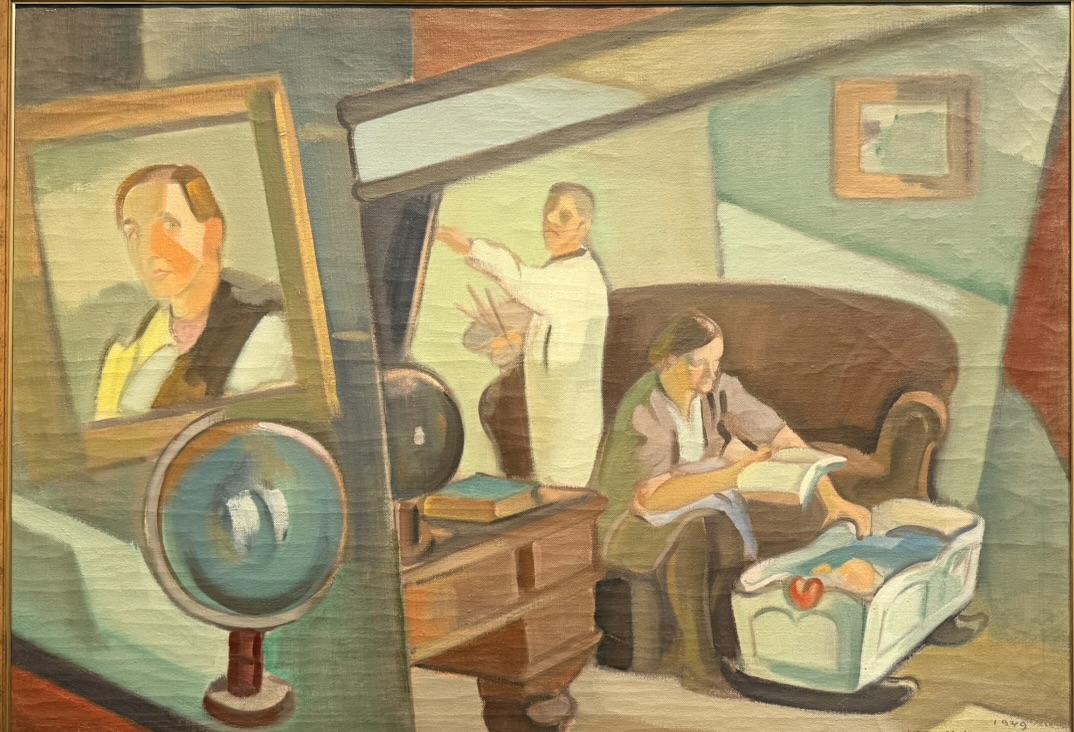
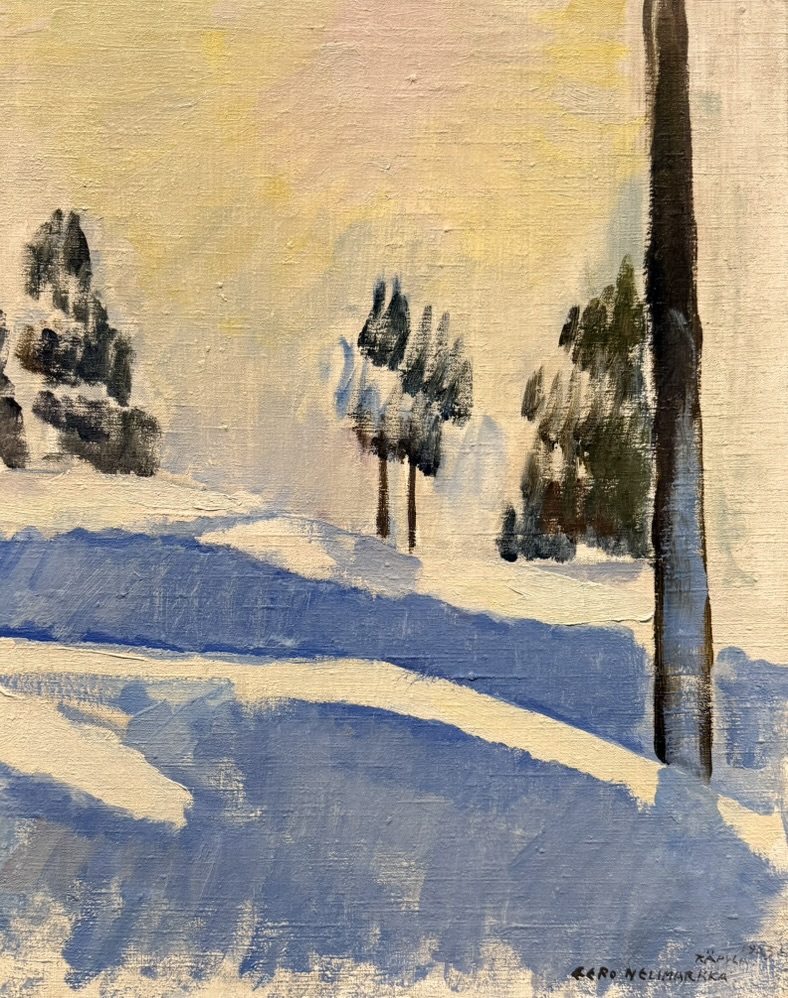
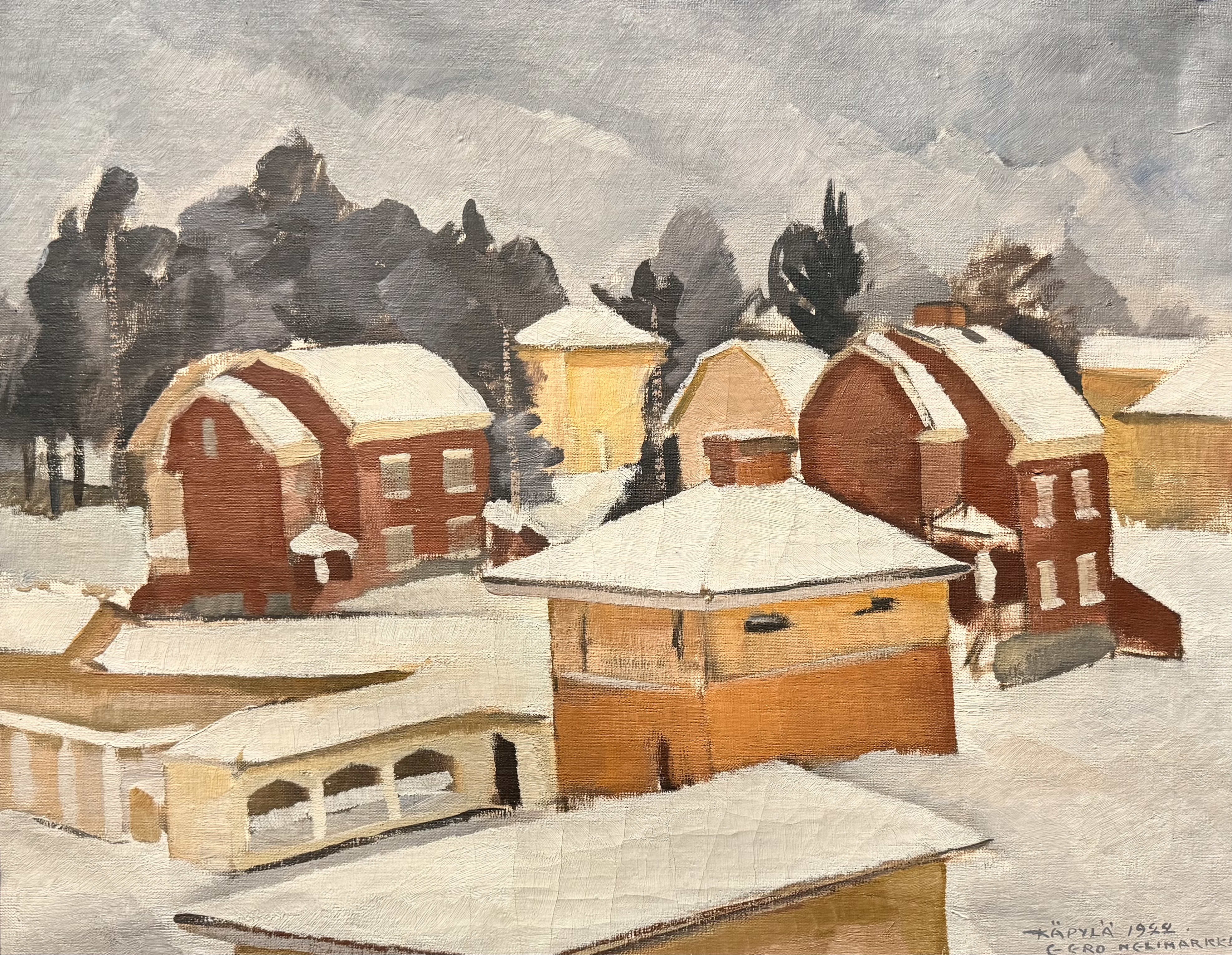
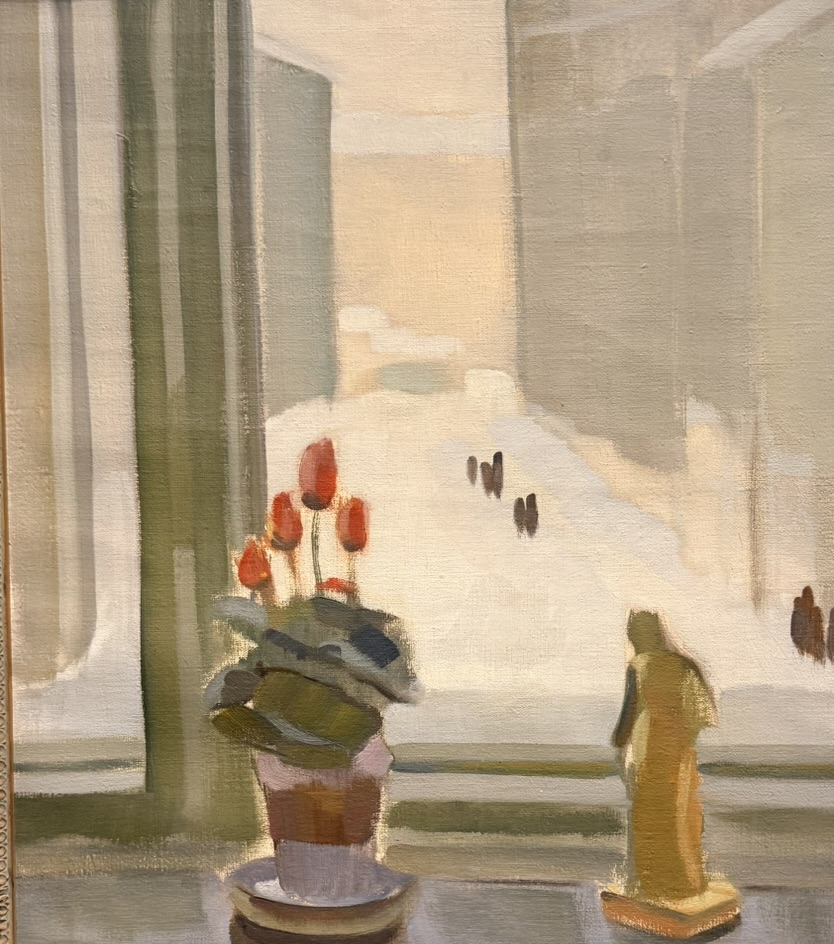
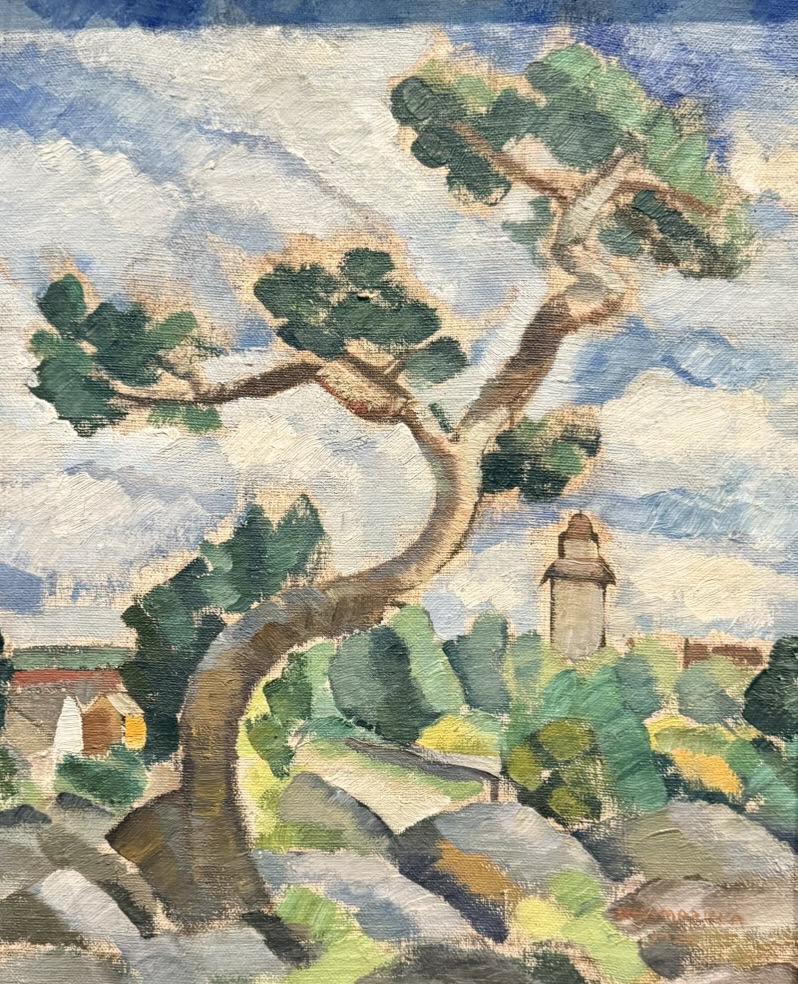
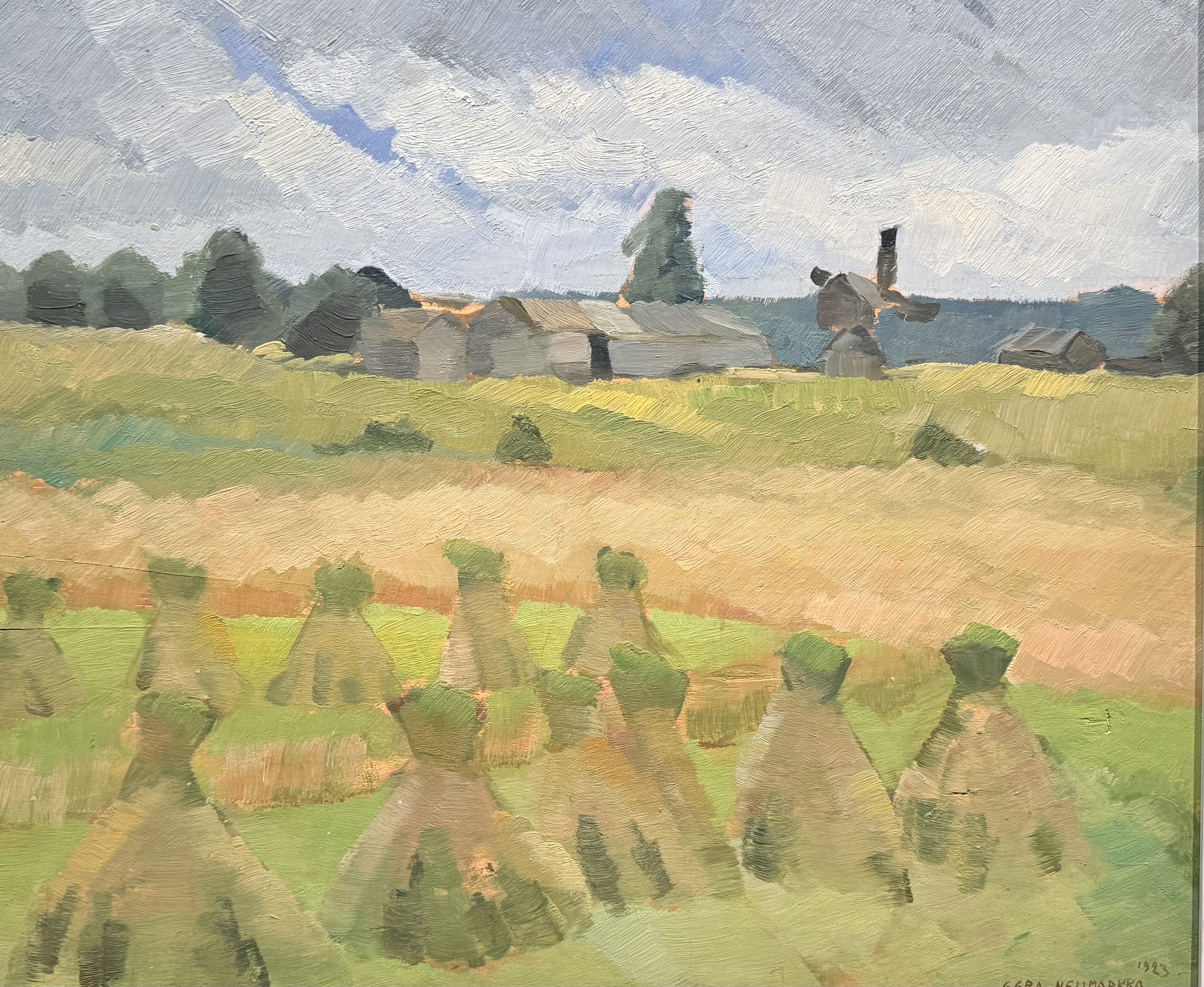
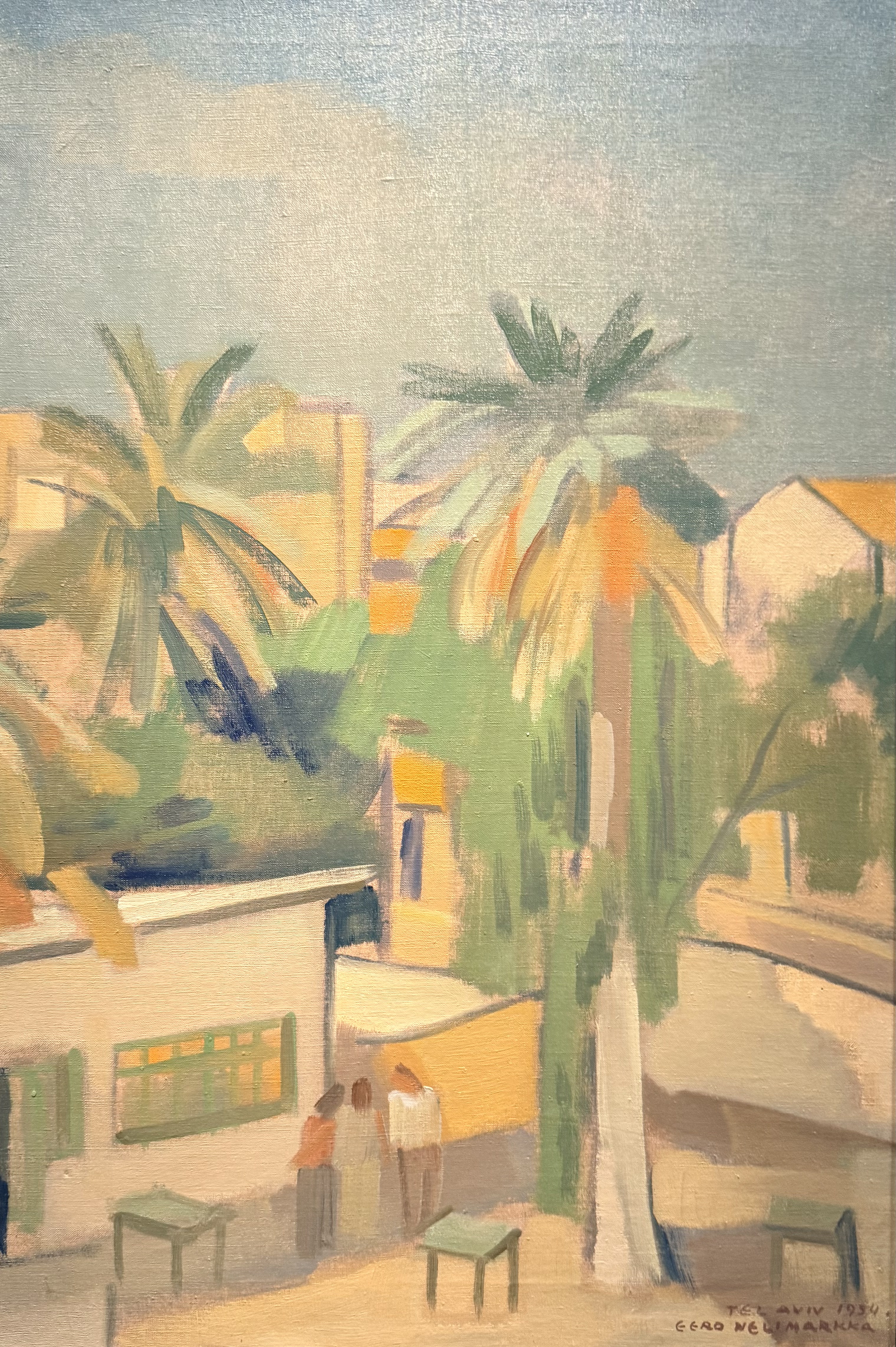
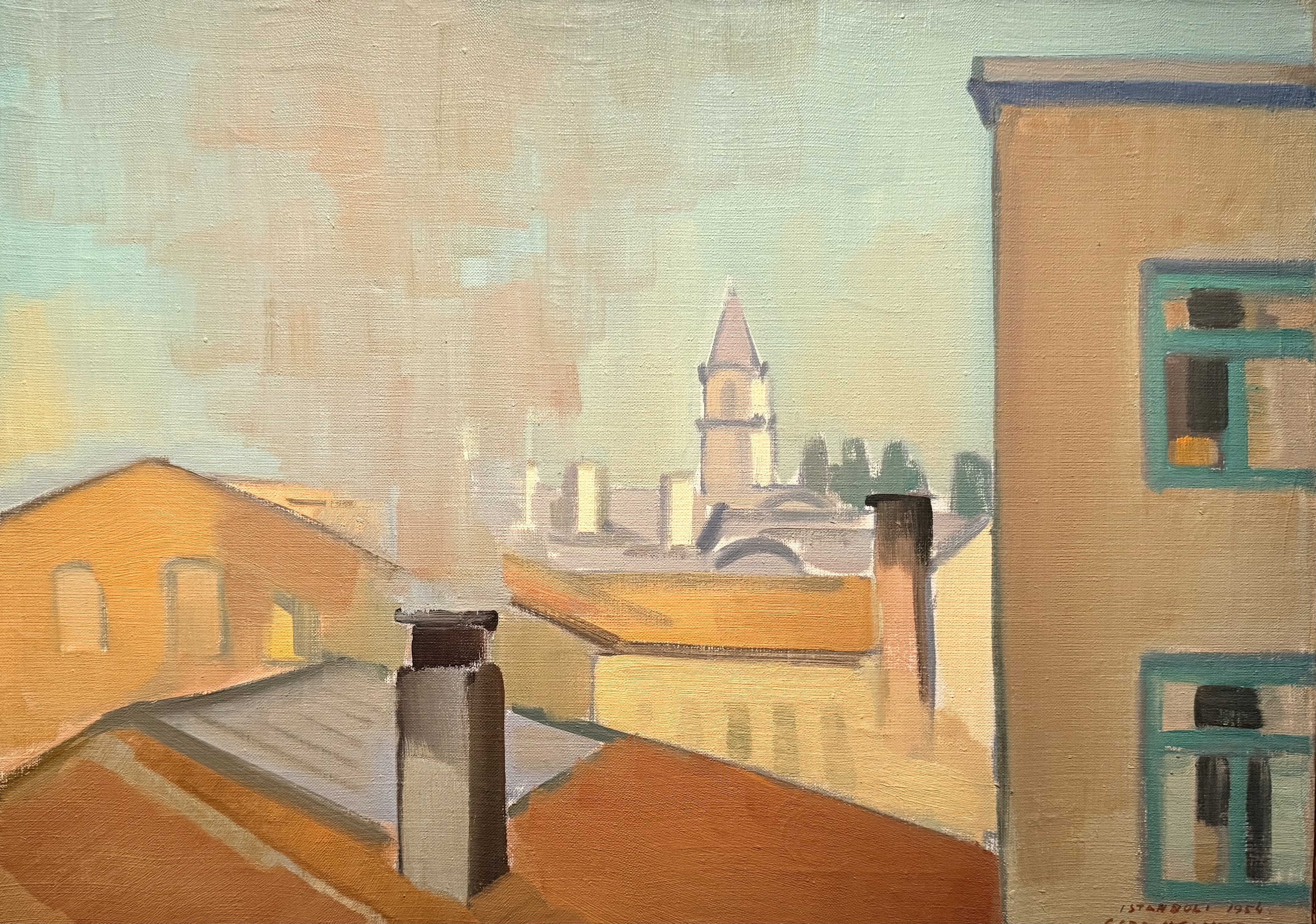
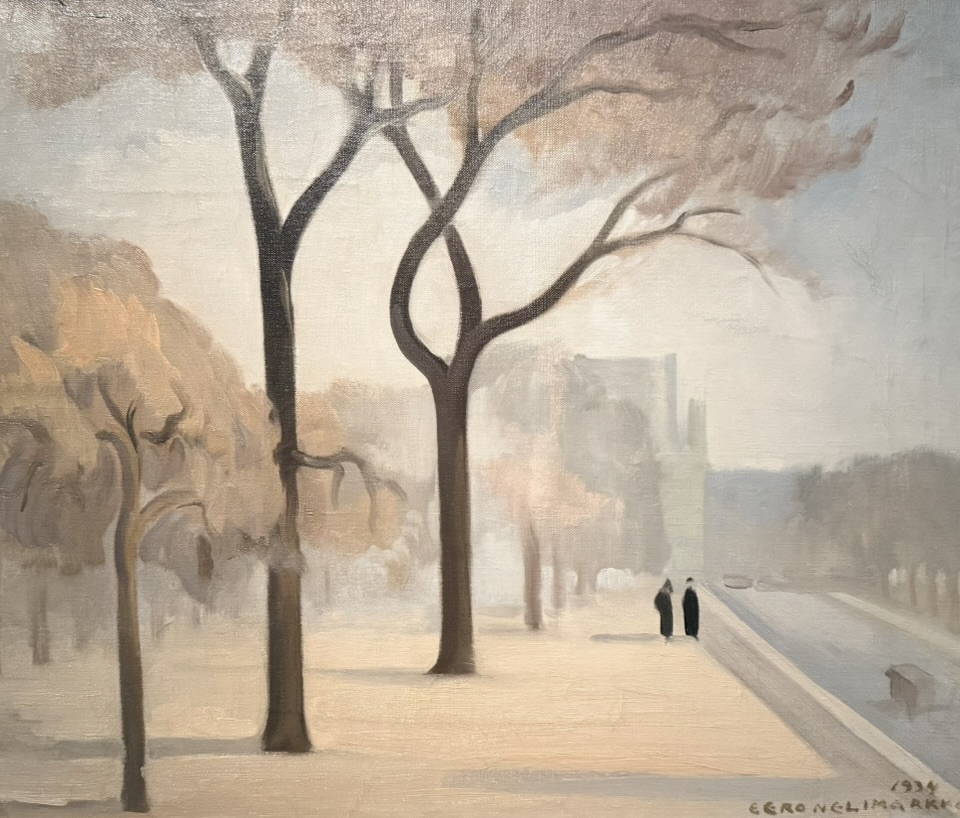
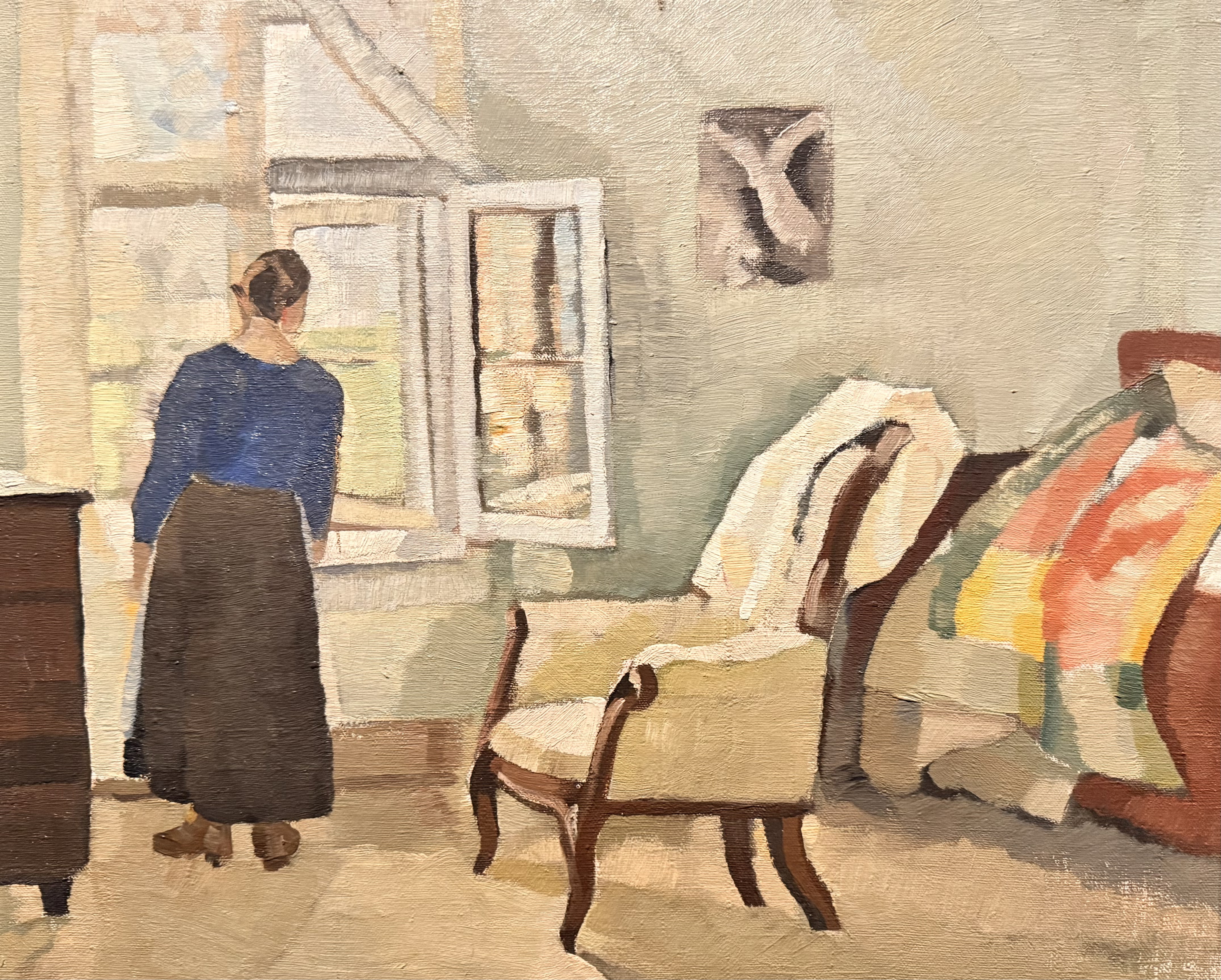
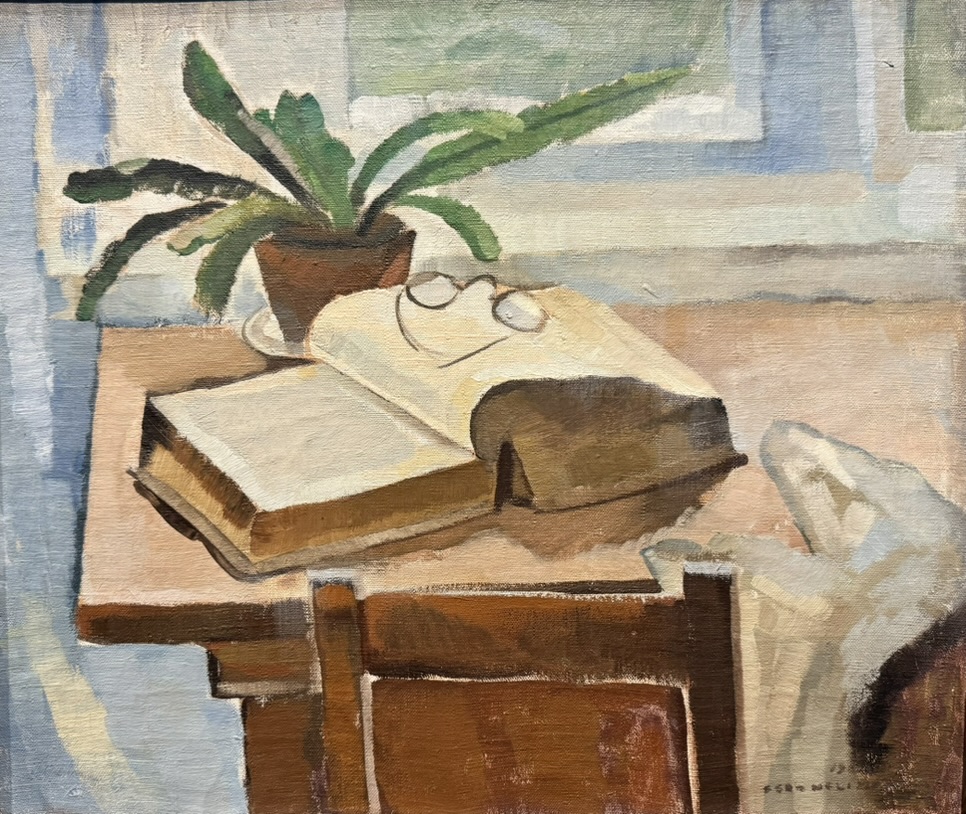
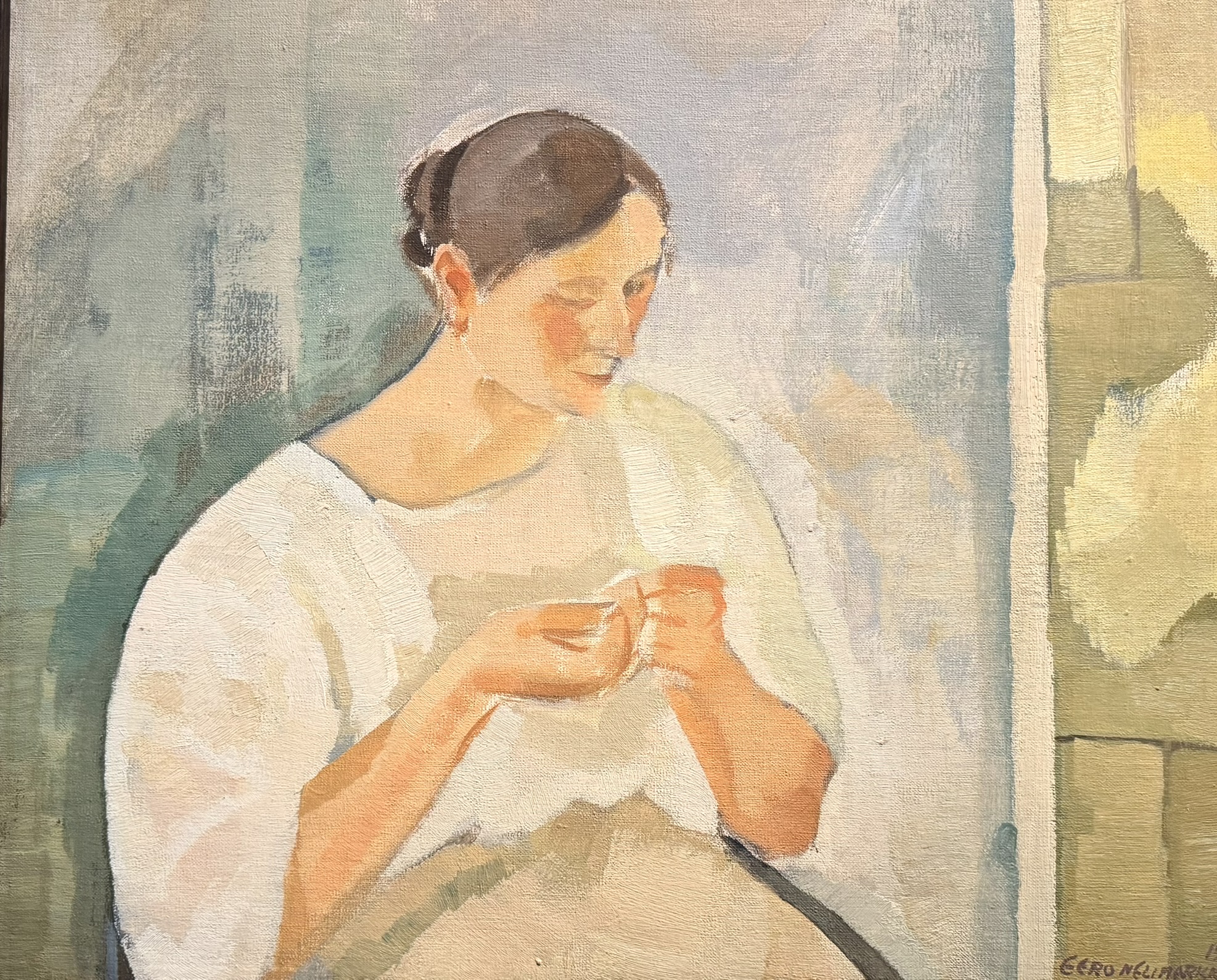
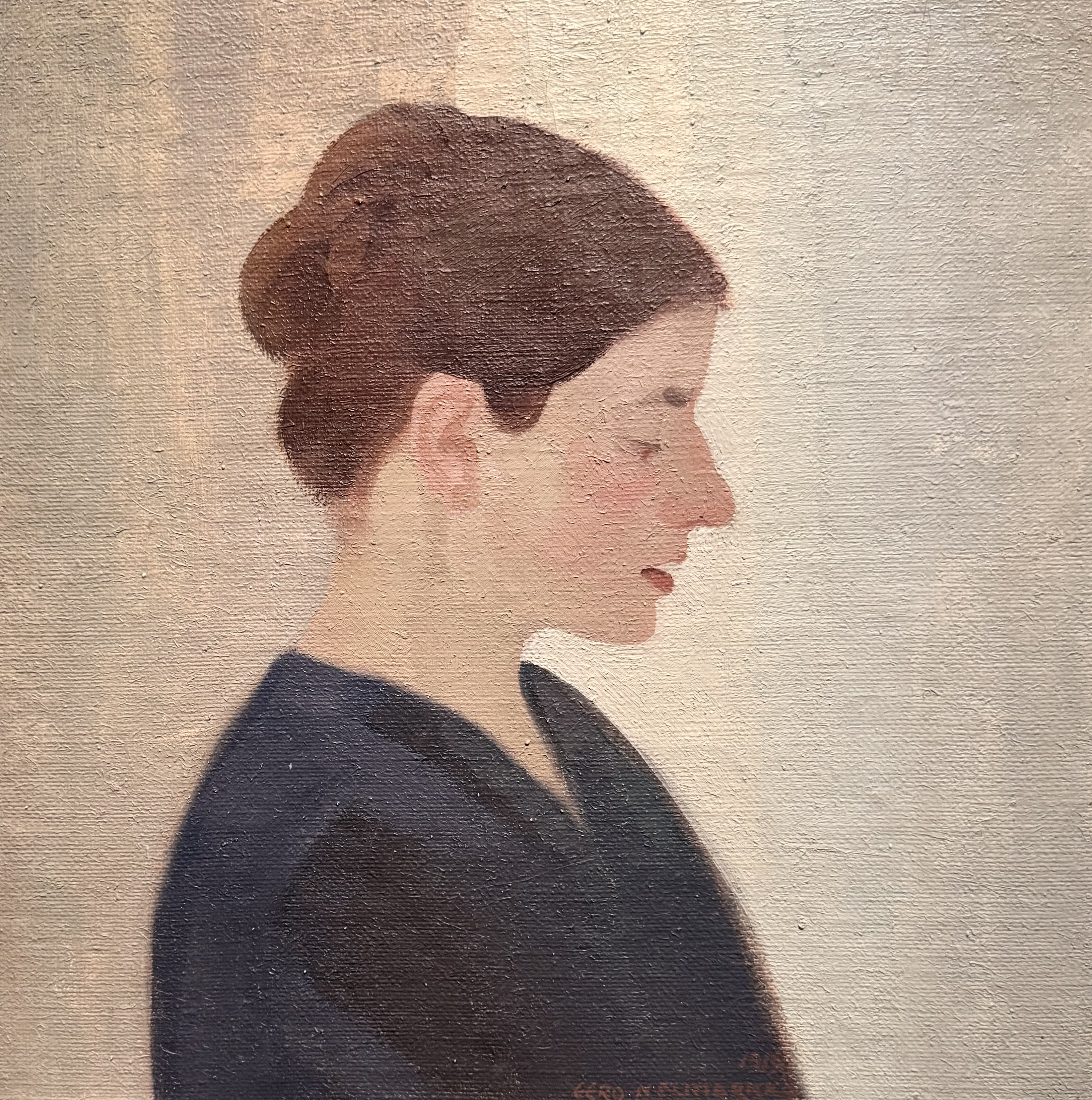
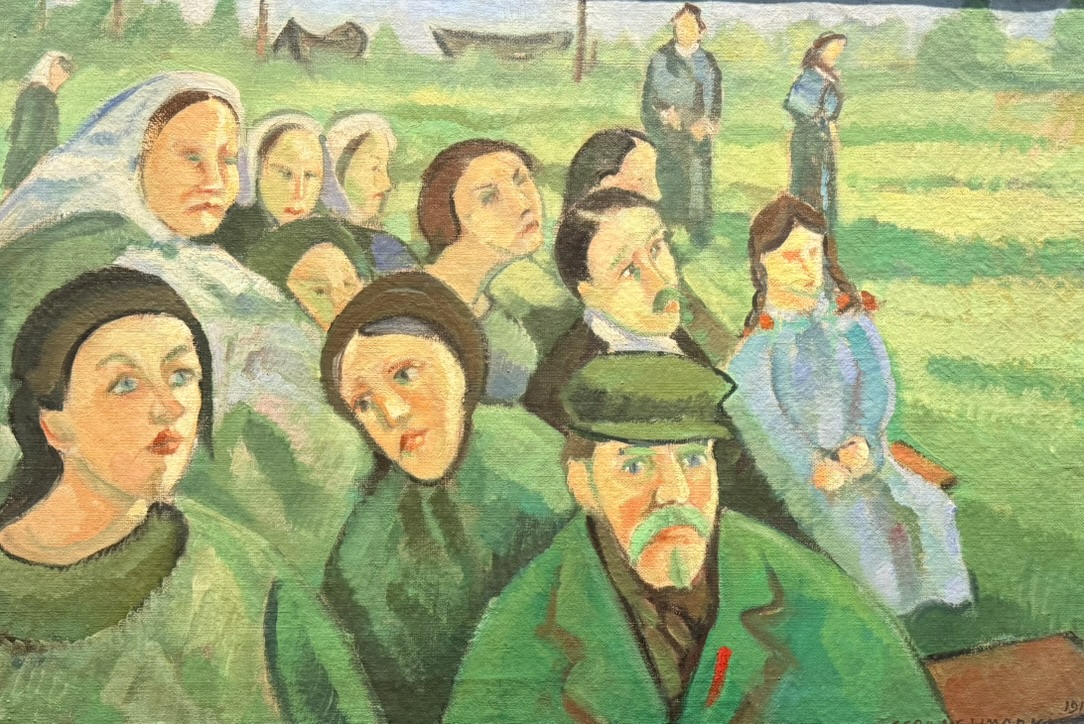
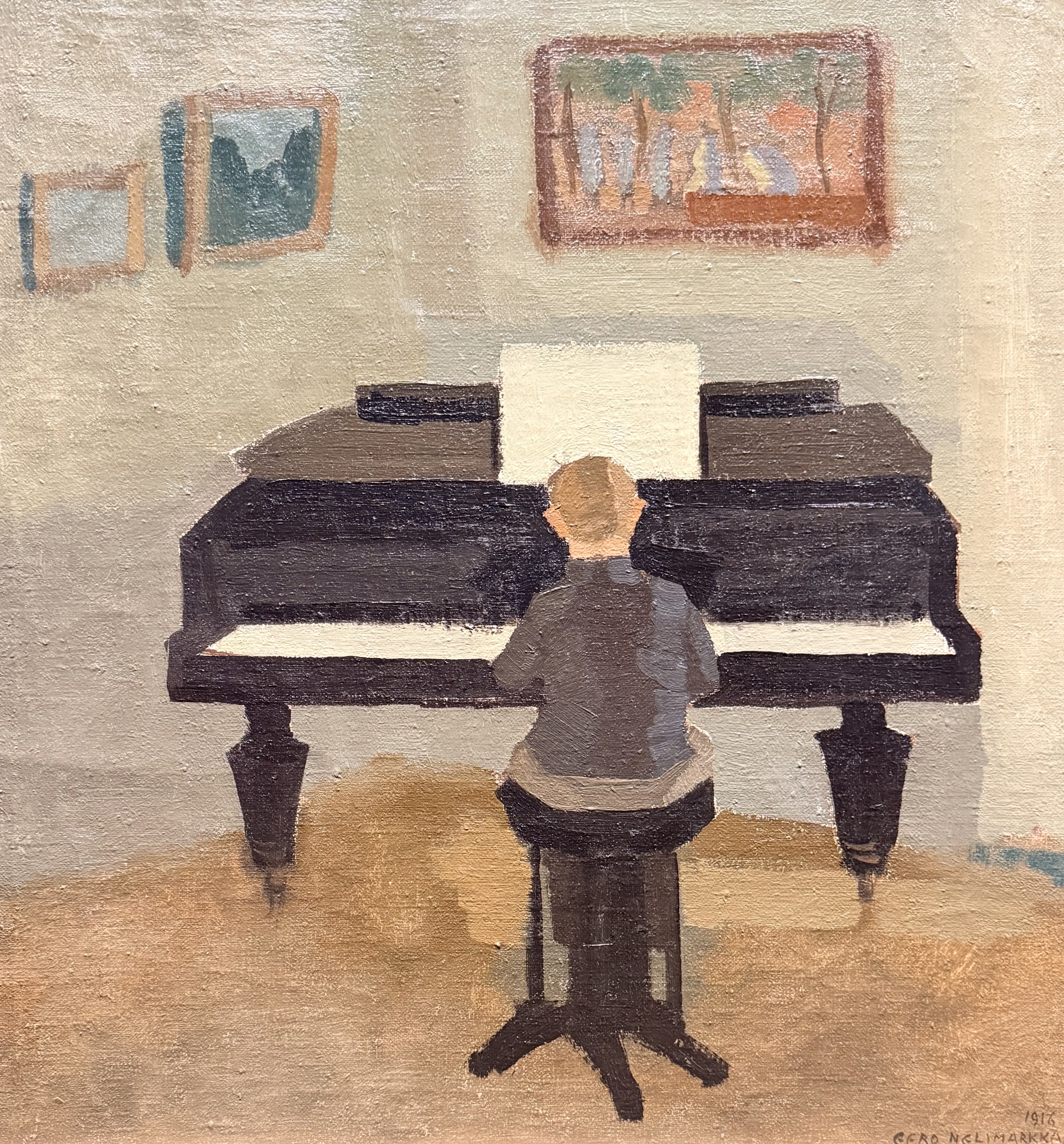
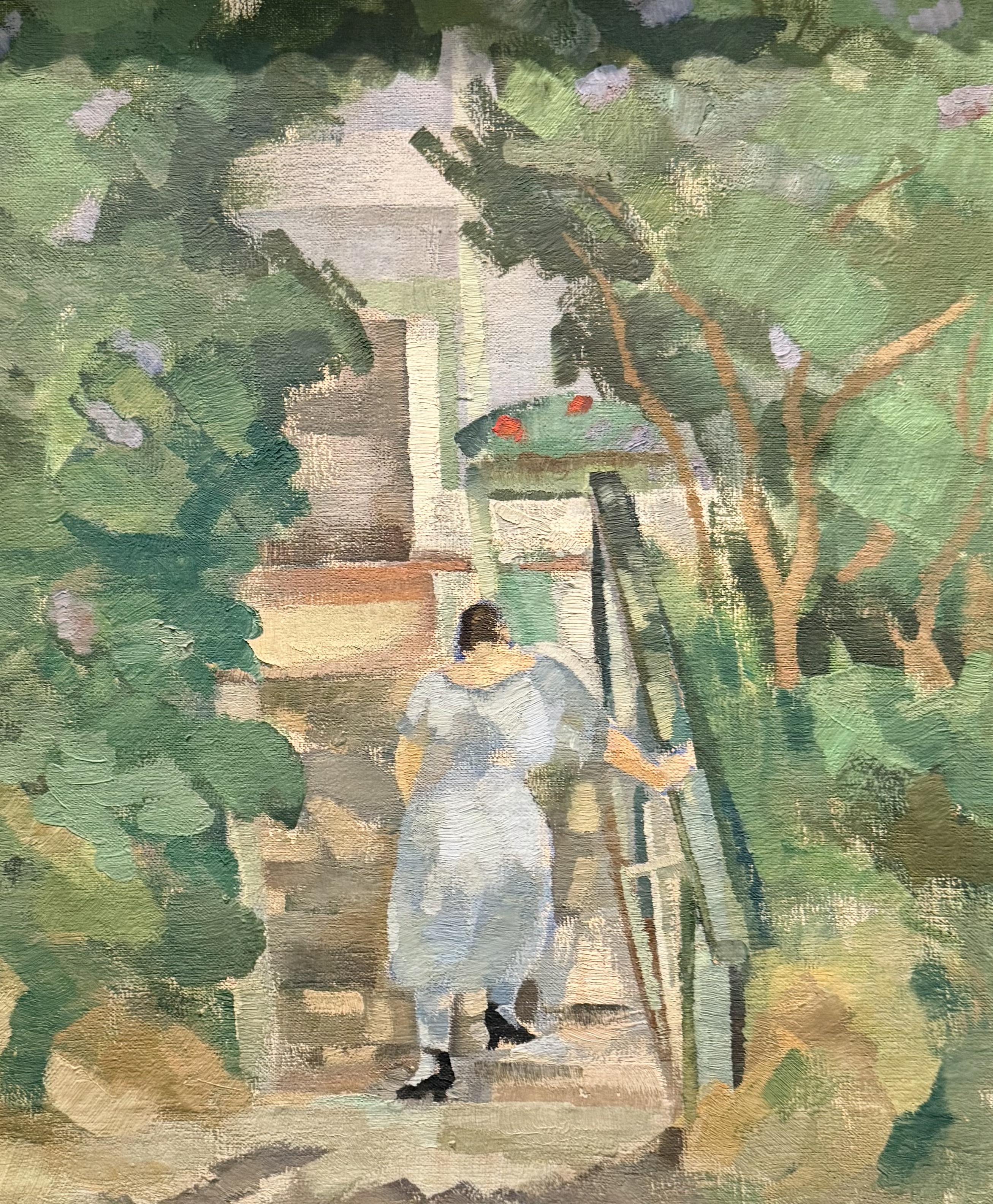
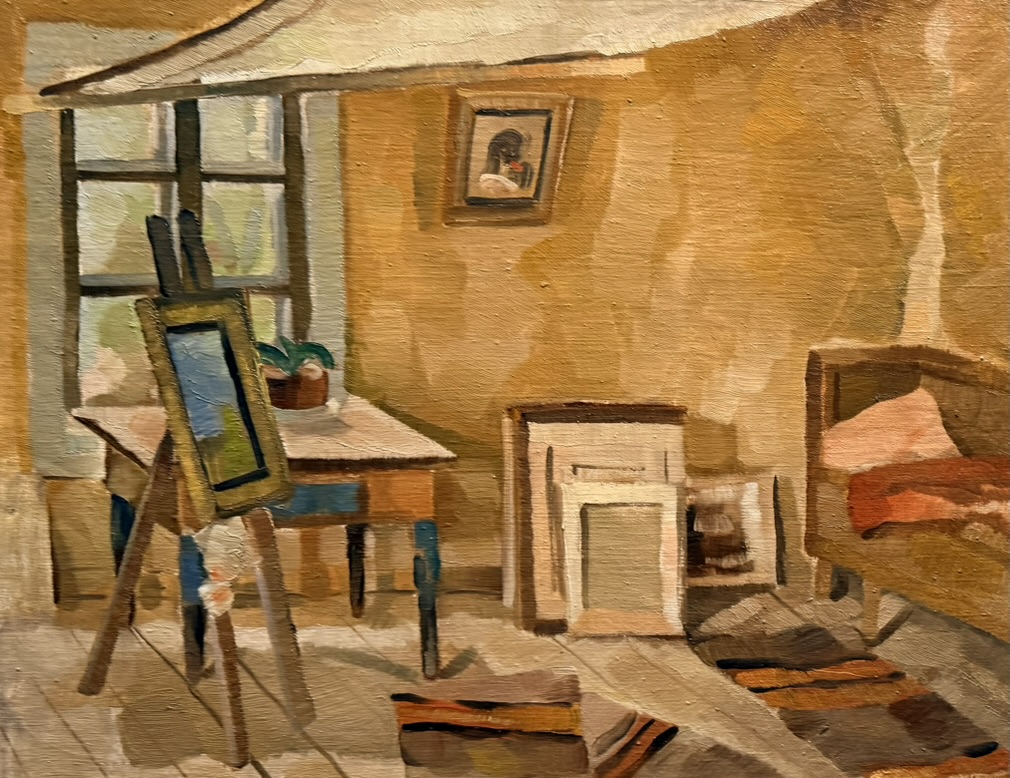
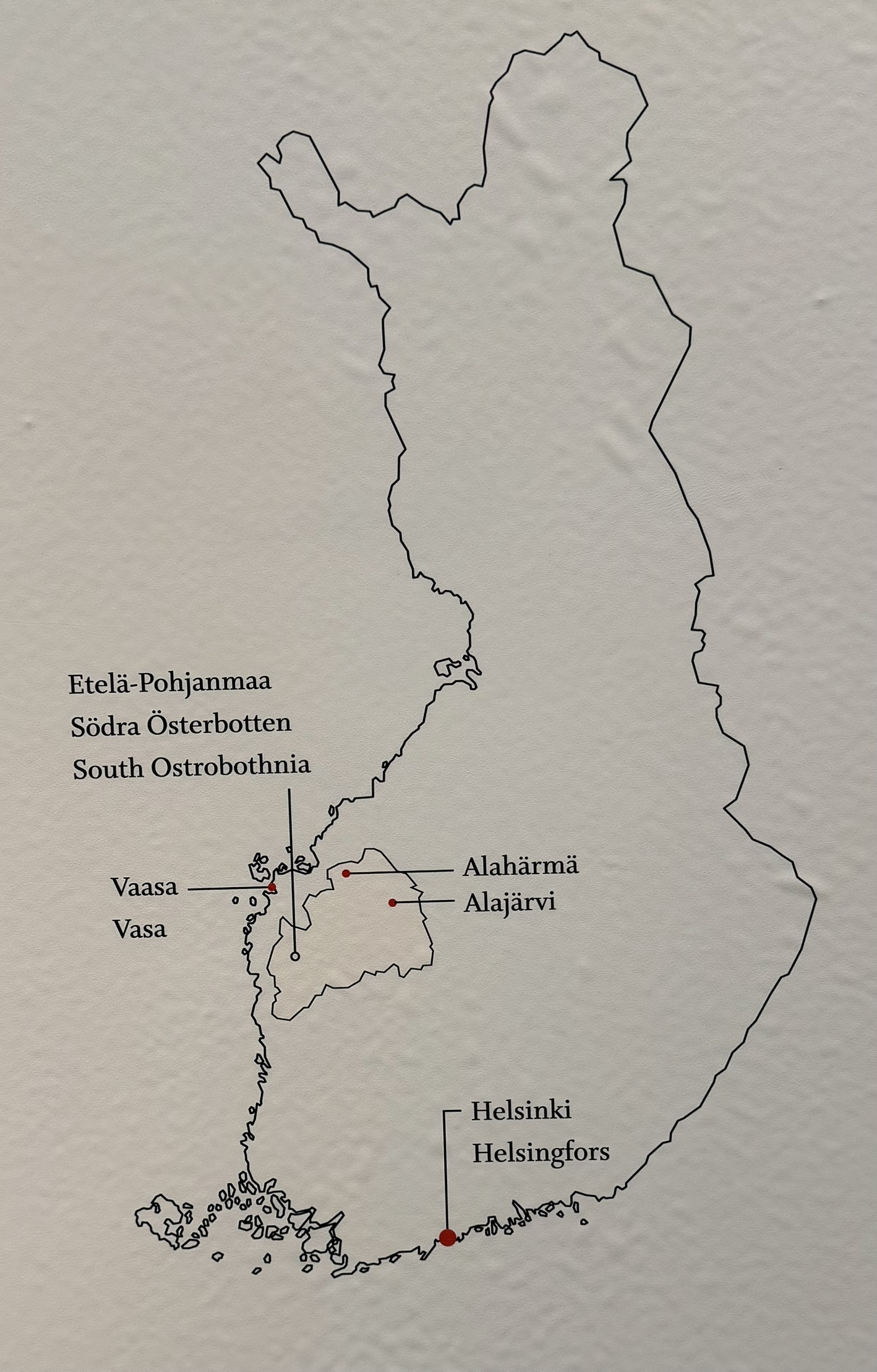
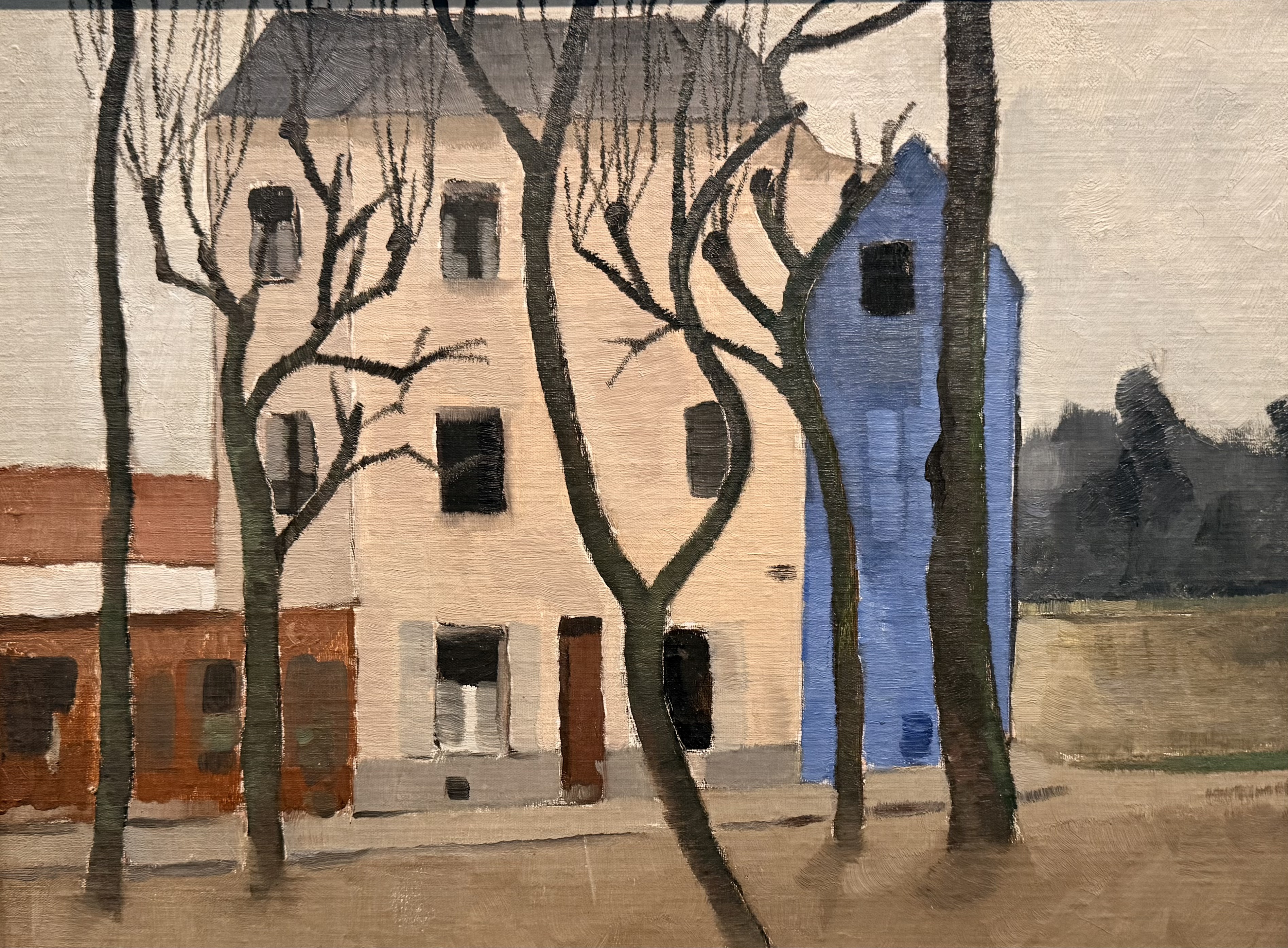
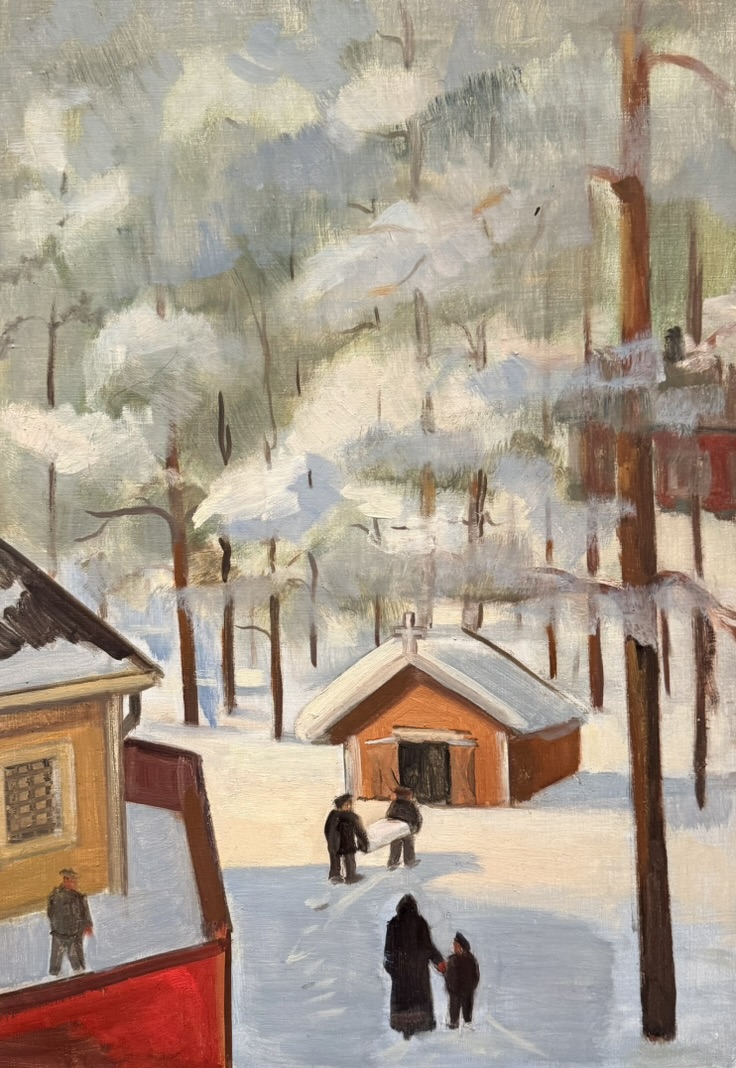
2) “A Question of Time” sheds light on today’s big questions through the mirror of visual arts. The exhibition offers a fresh look at Finland’s oldest and most extensive art collection.
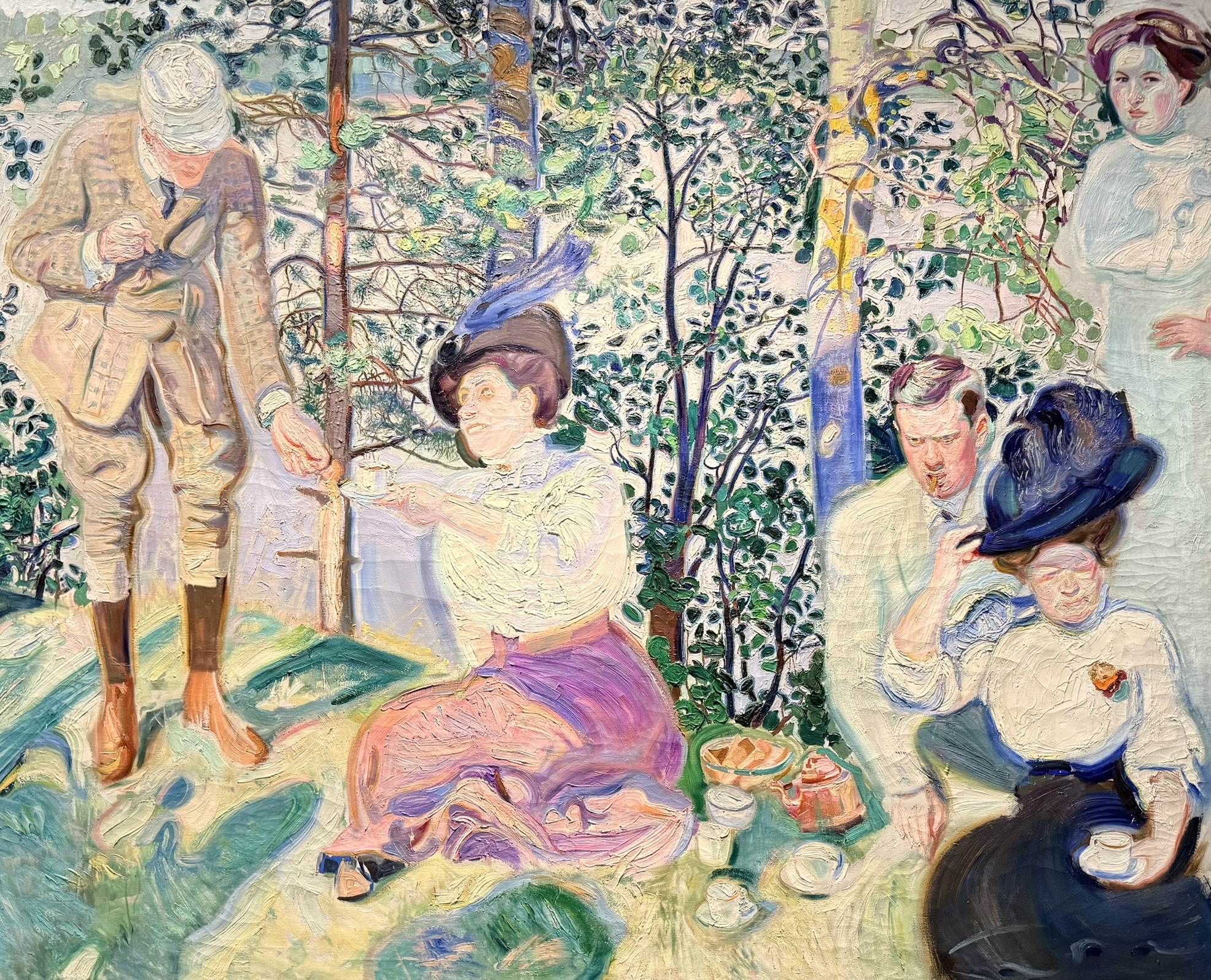
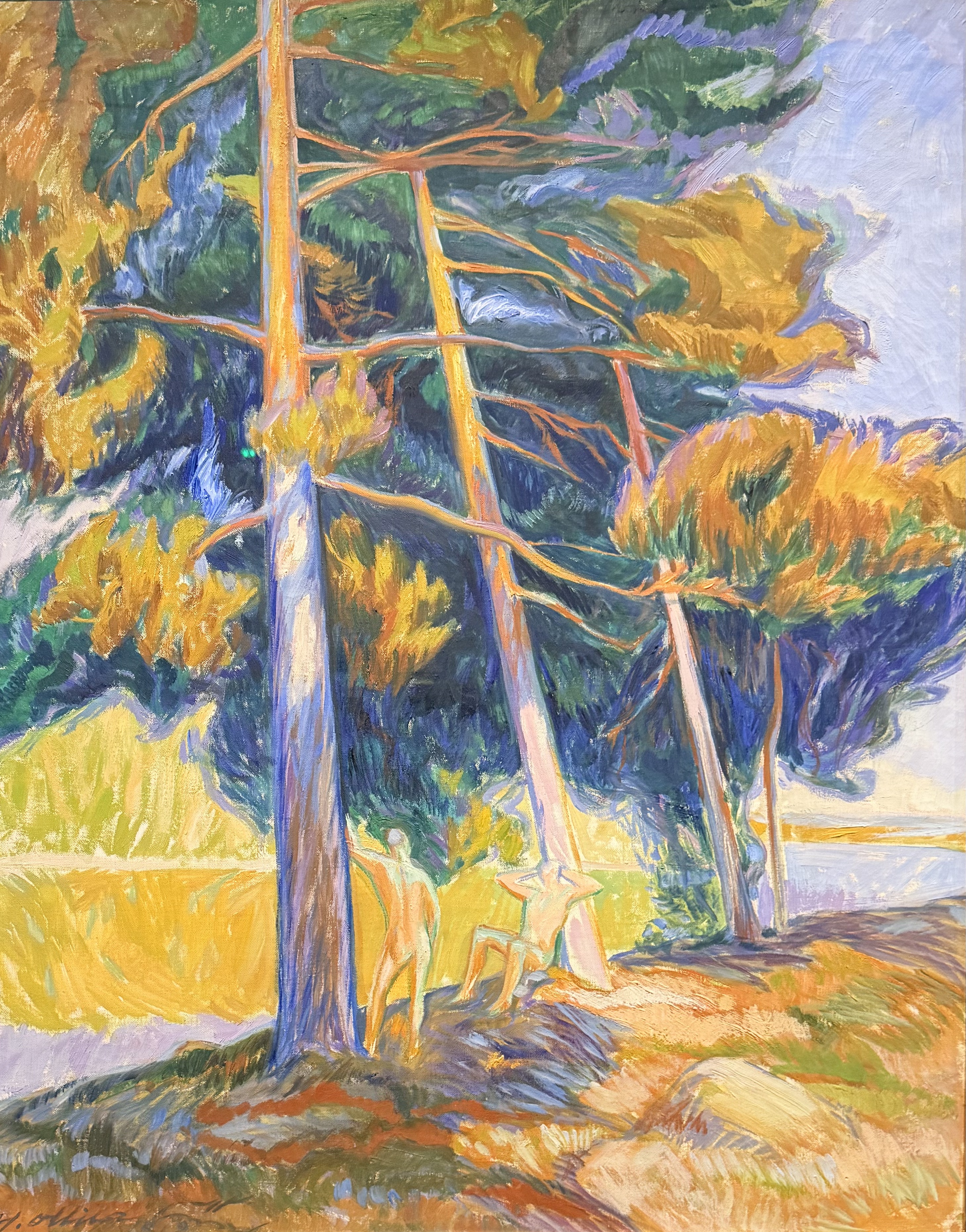
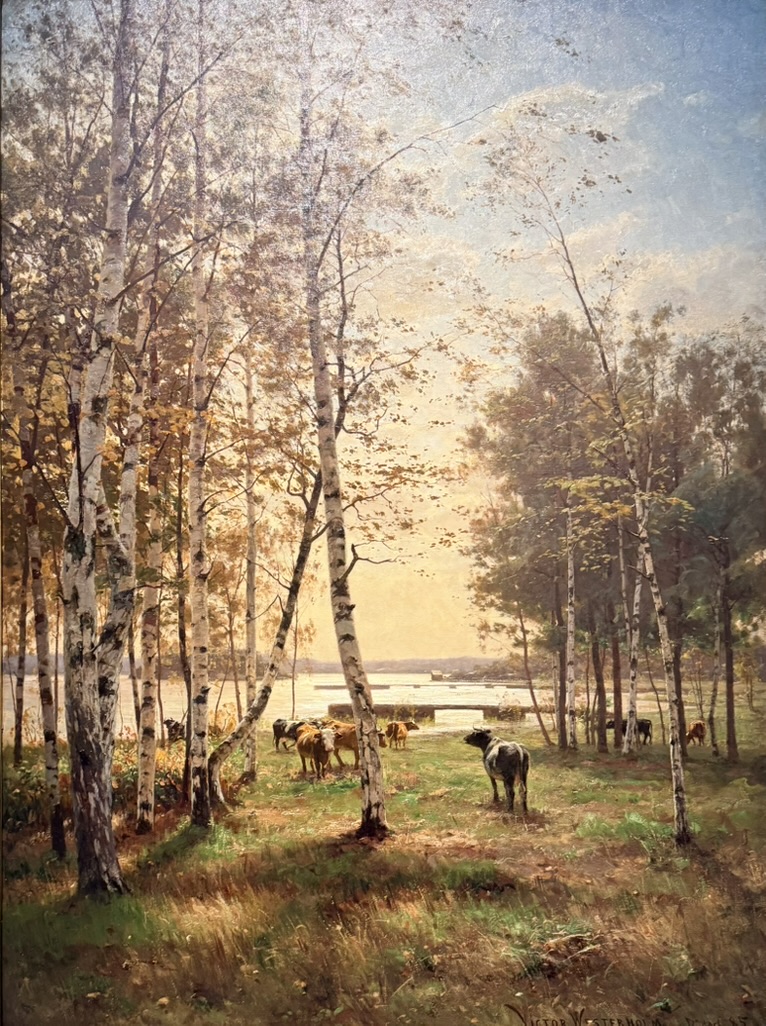
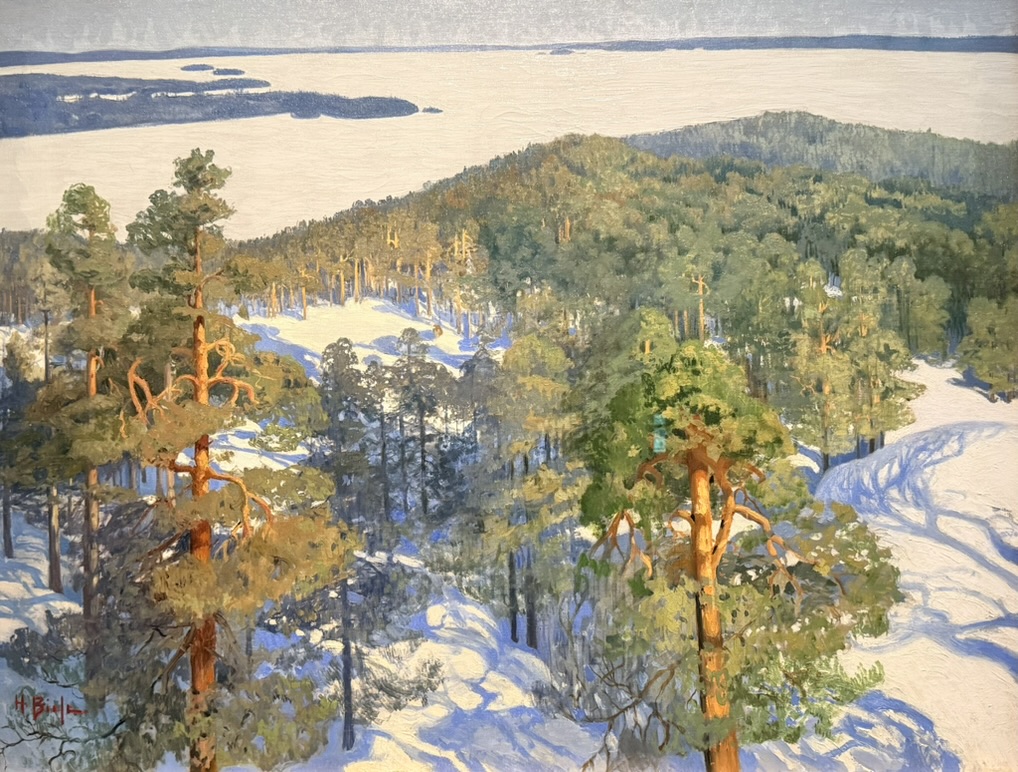
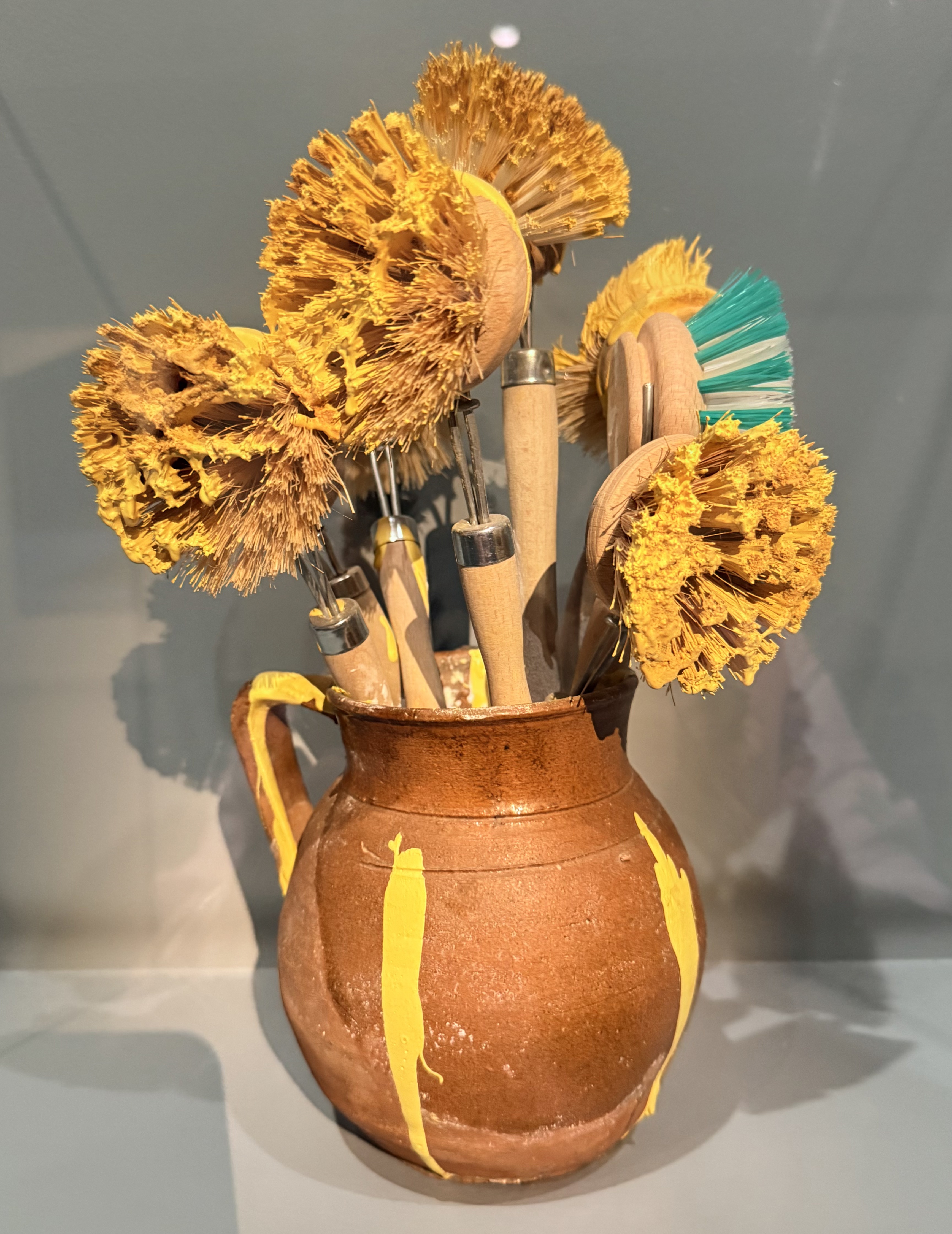
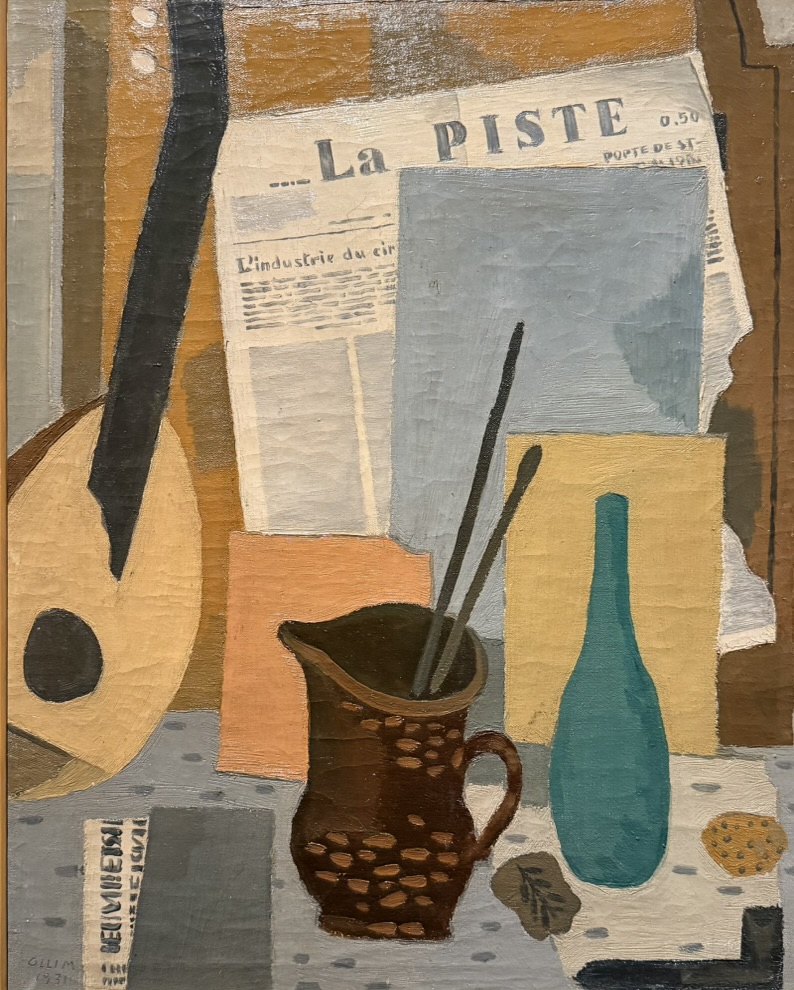
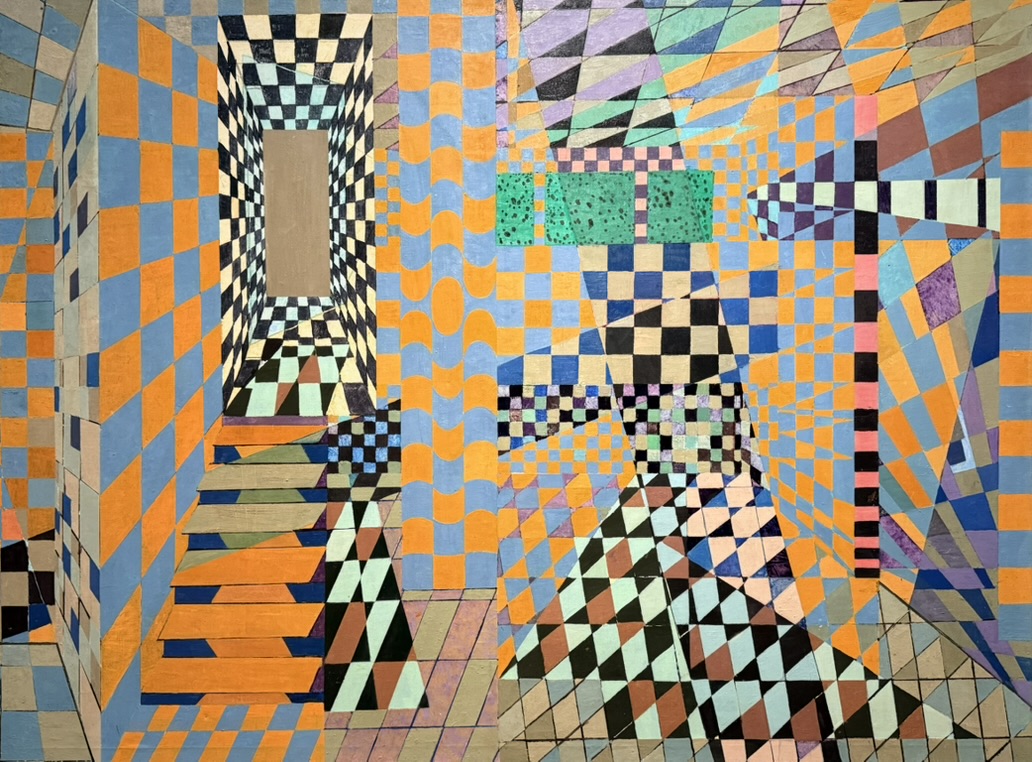
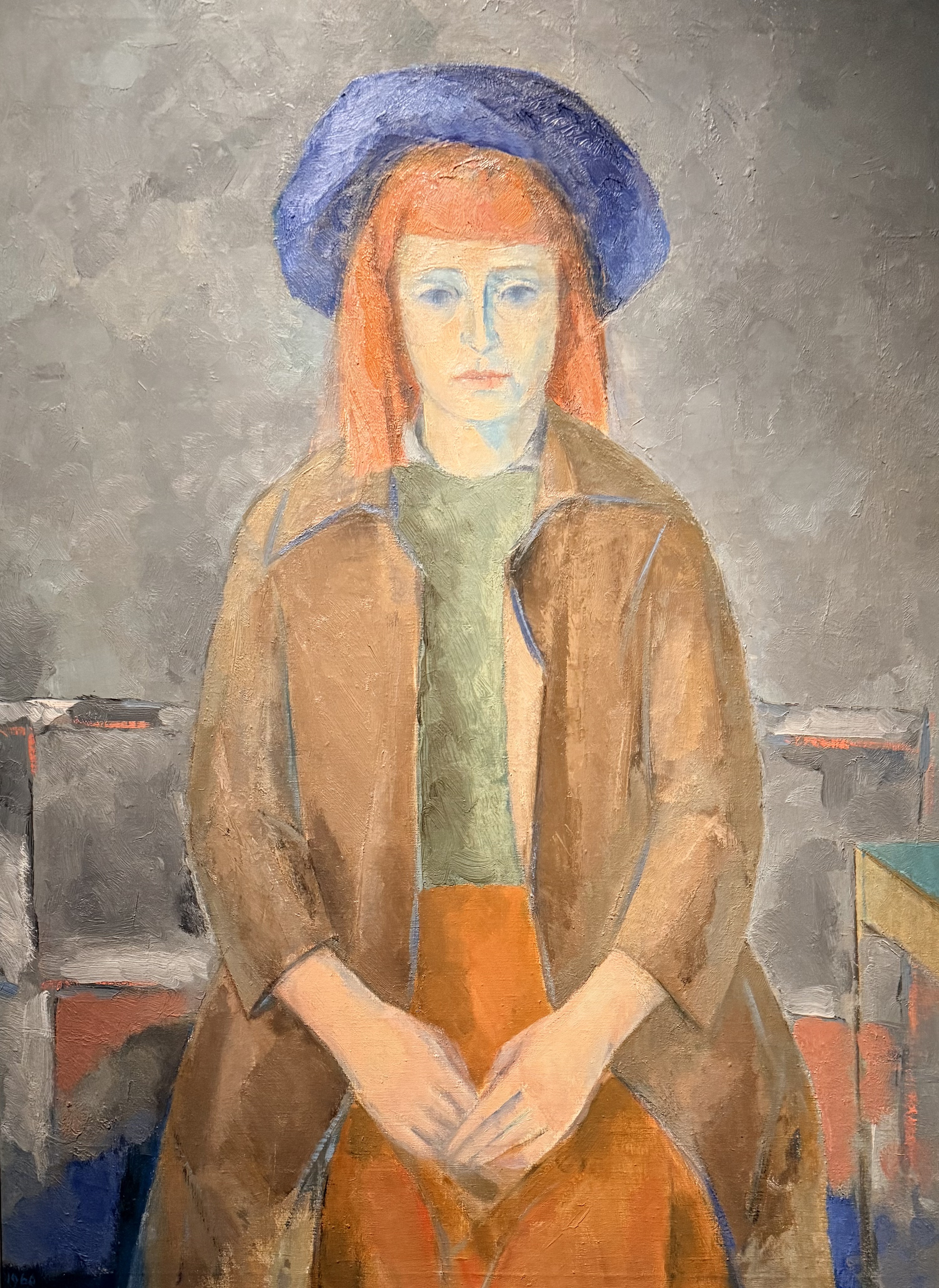
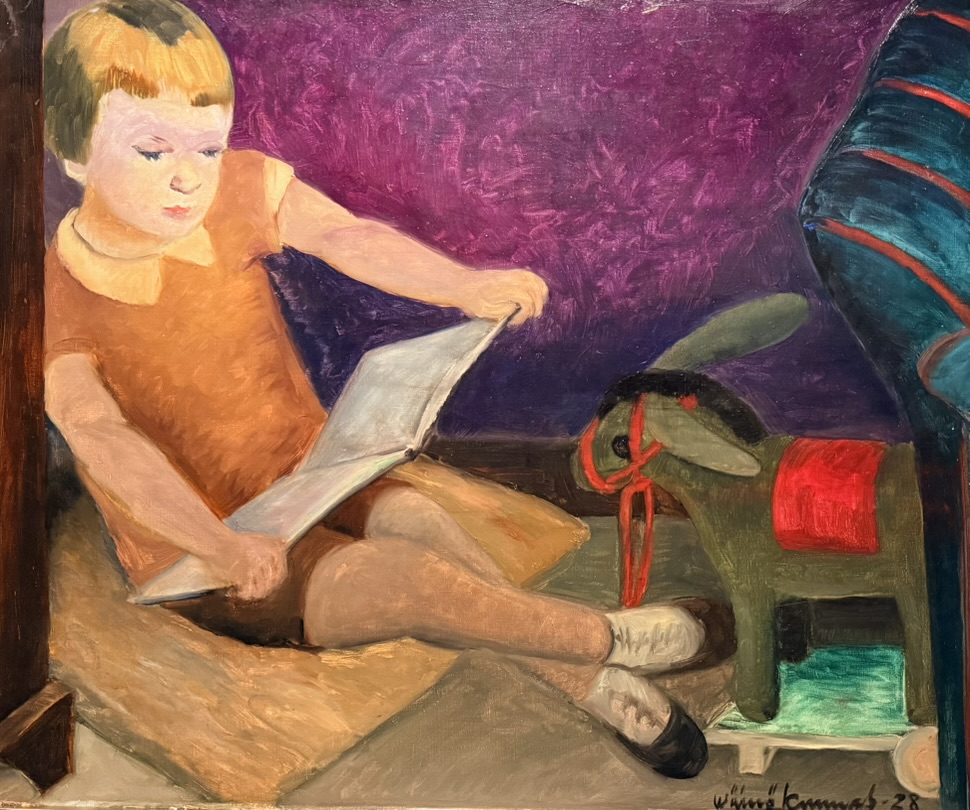
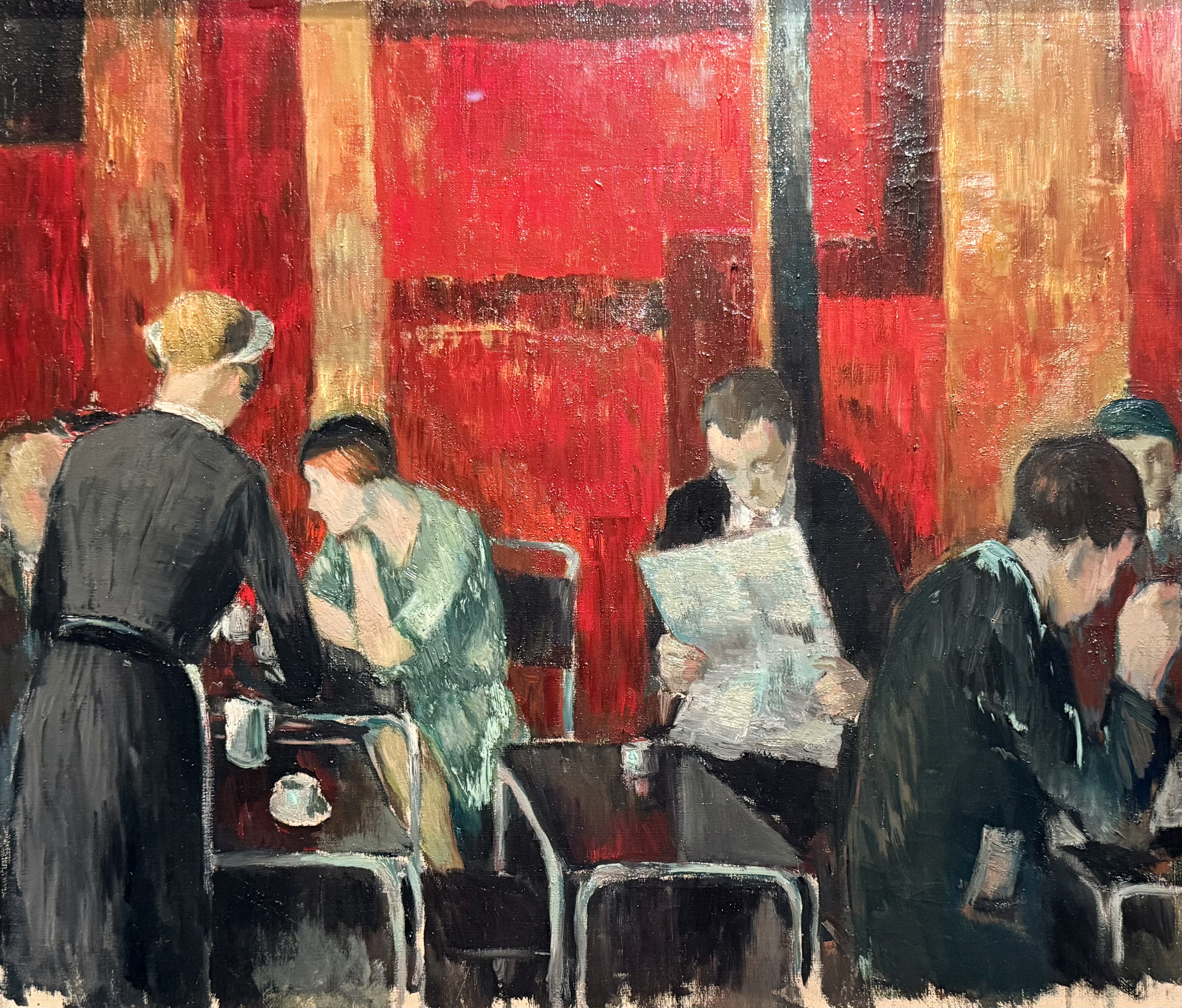
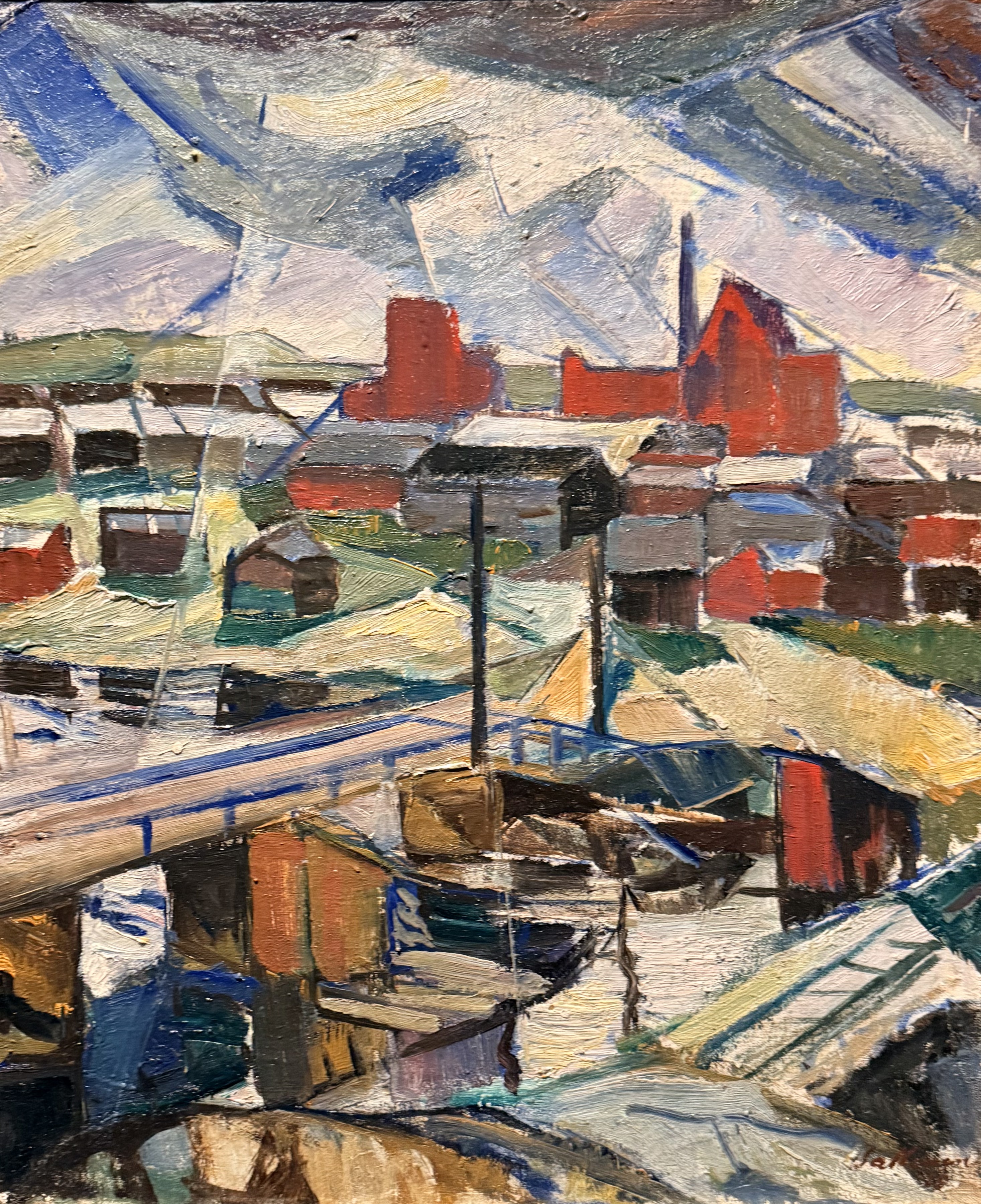
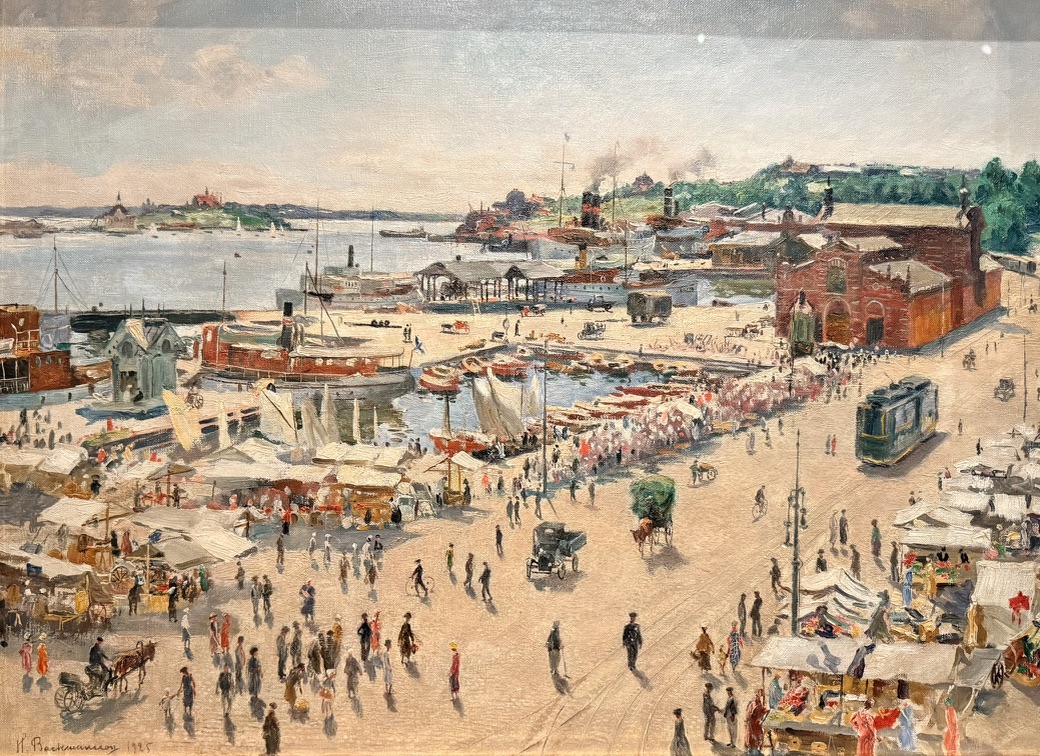
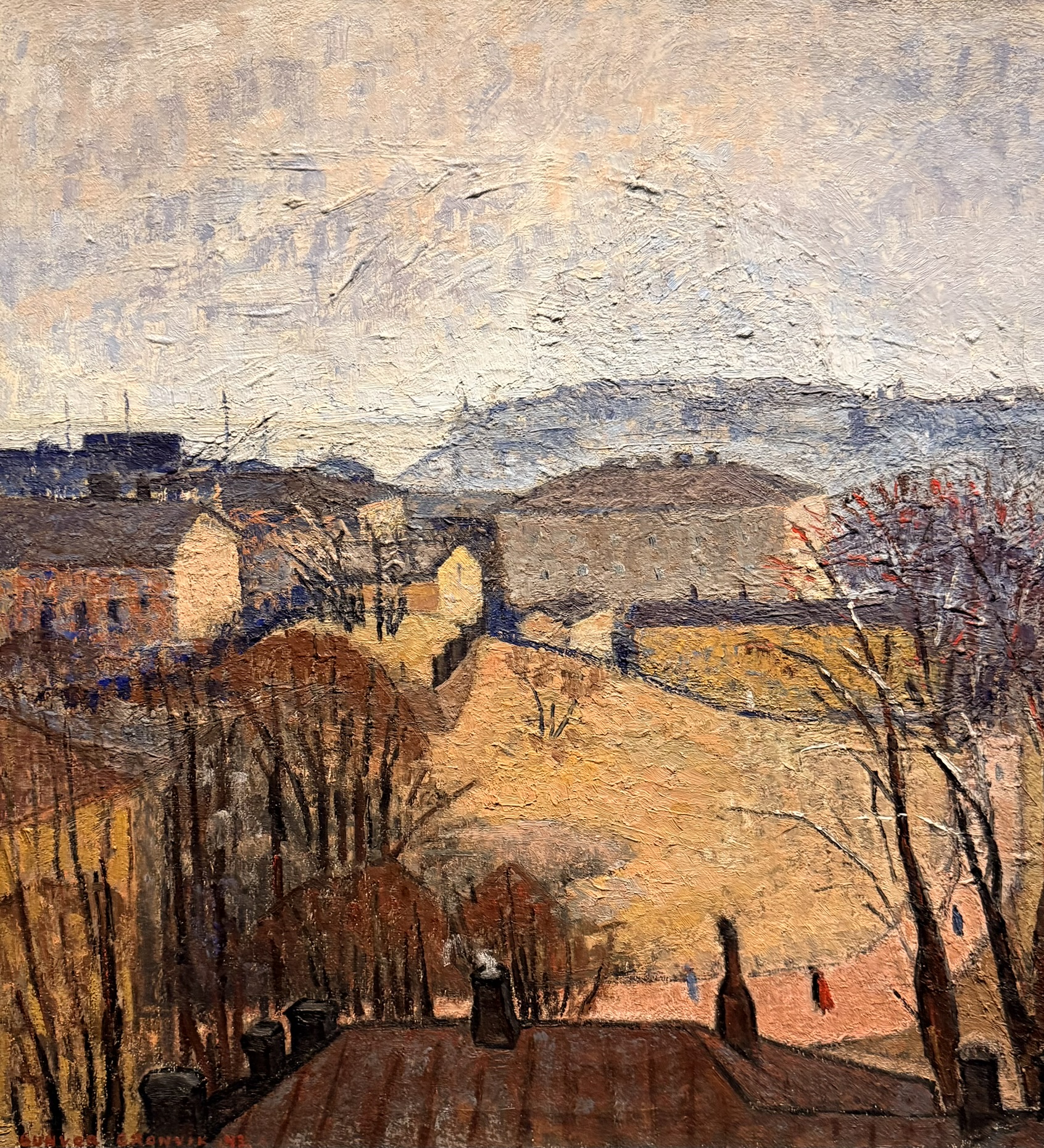
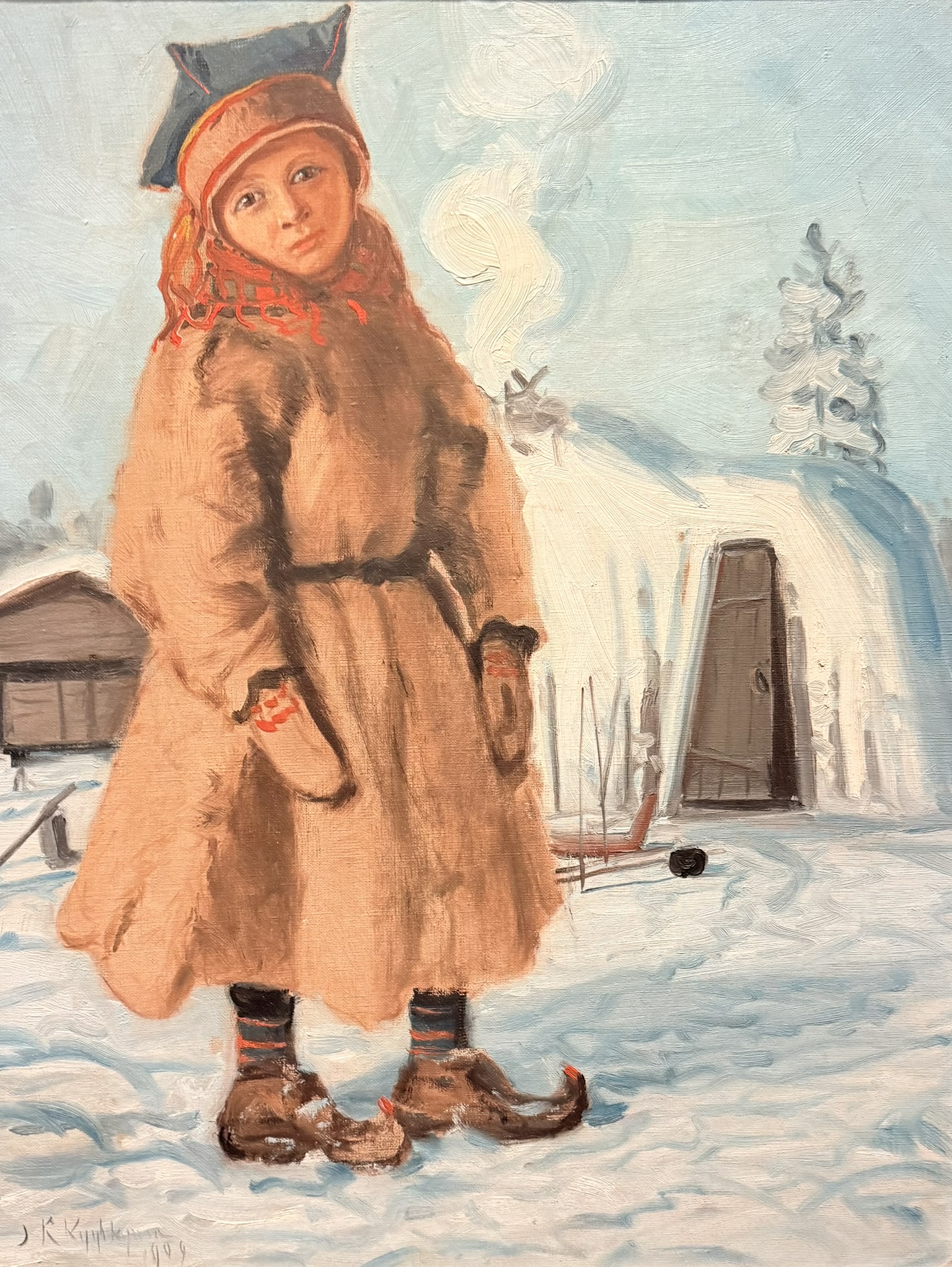
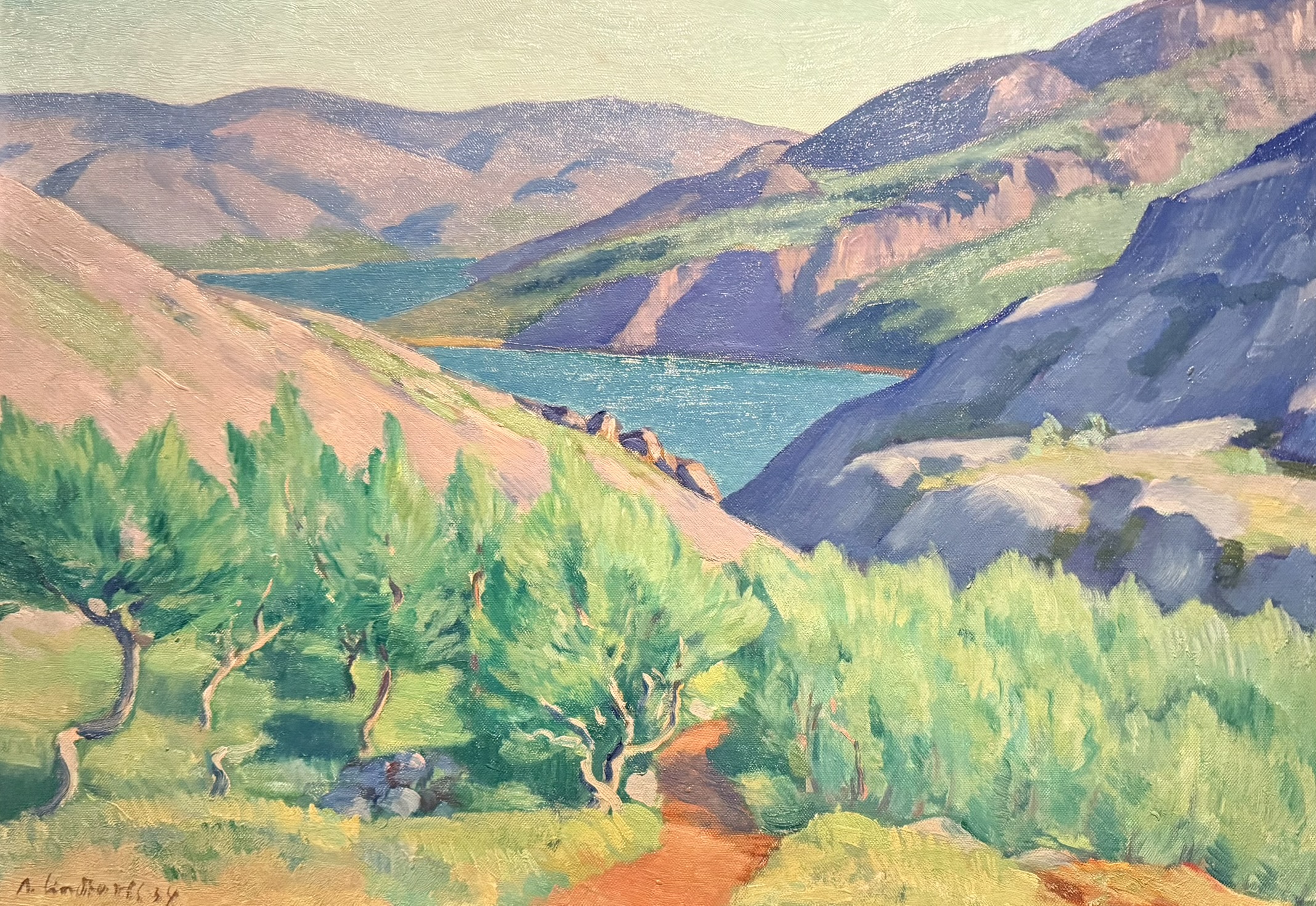
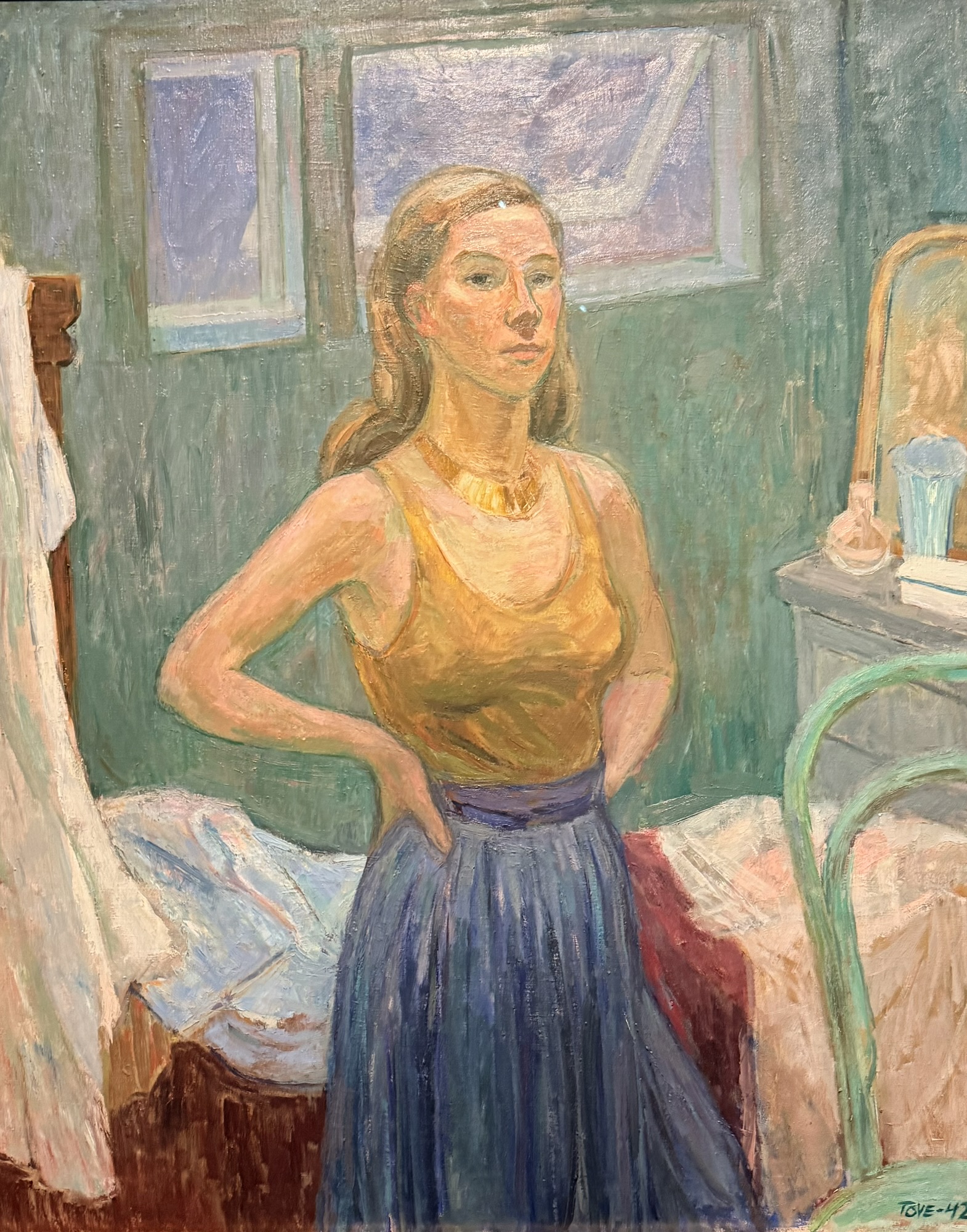
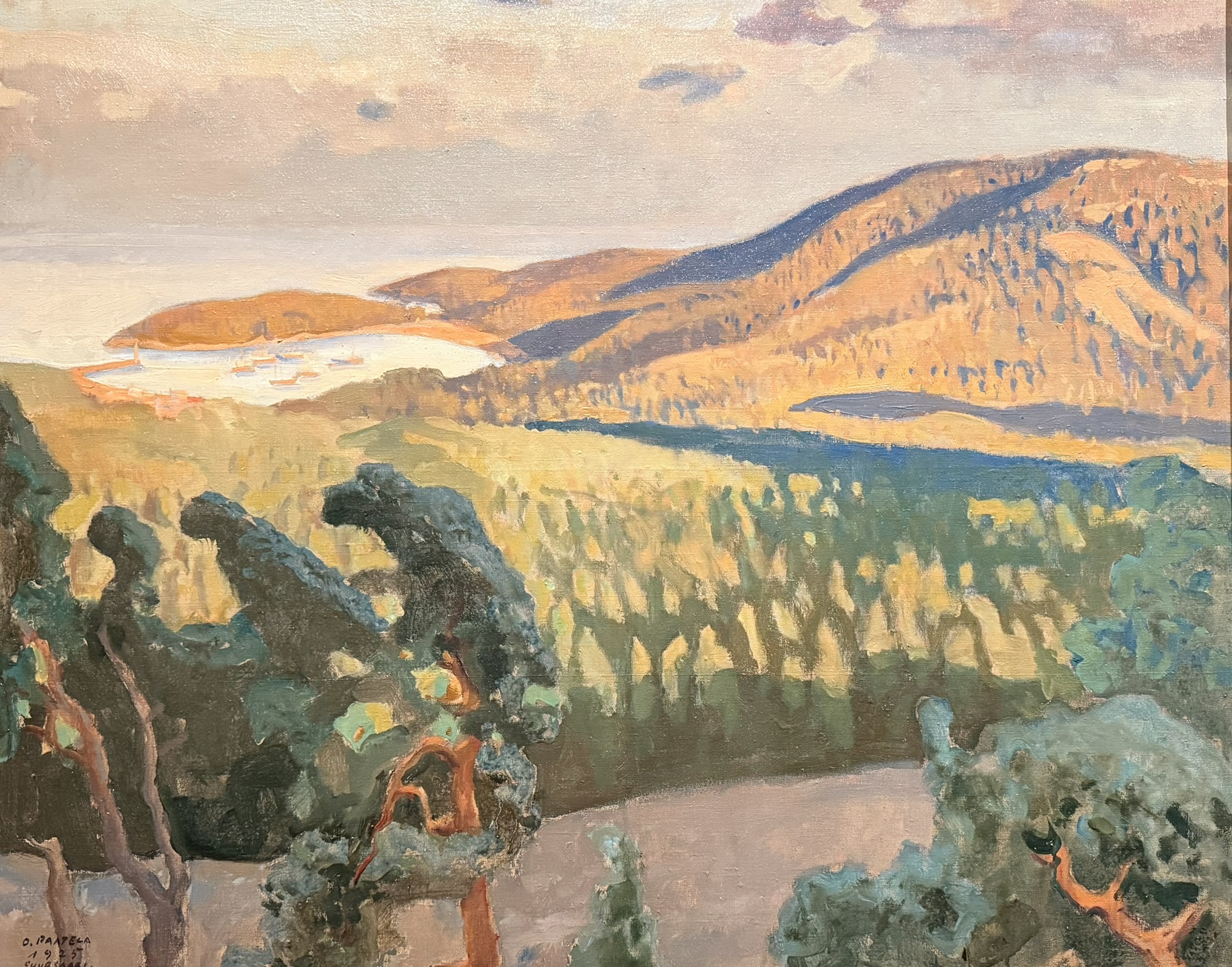
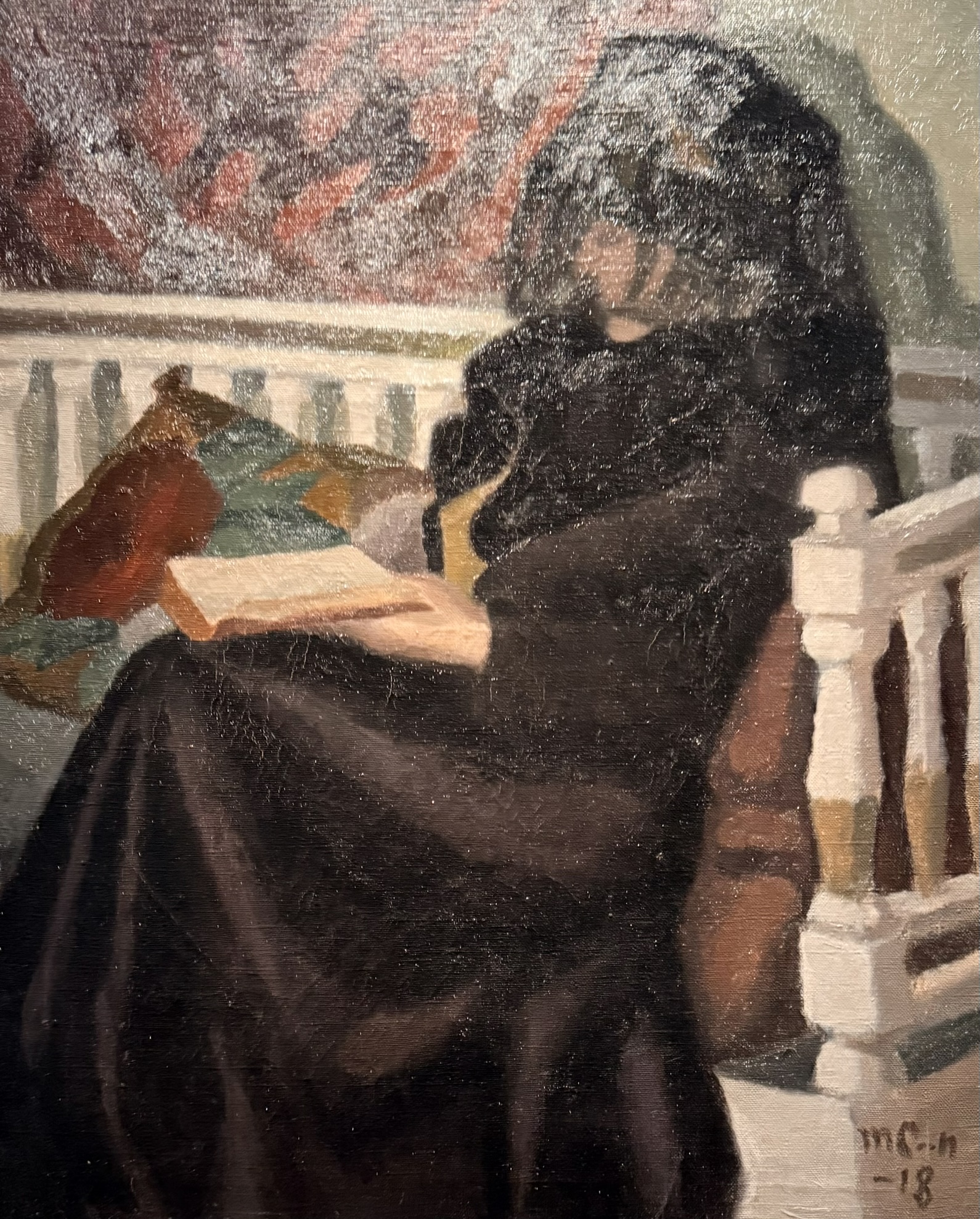
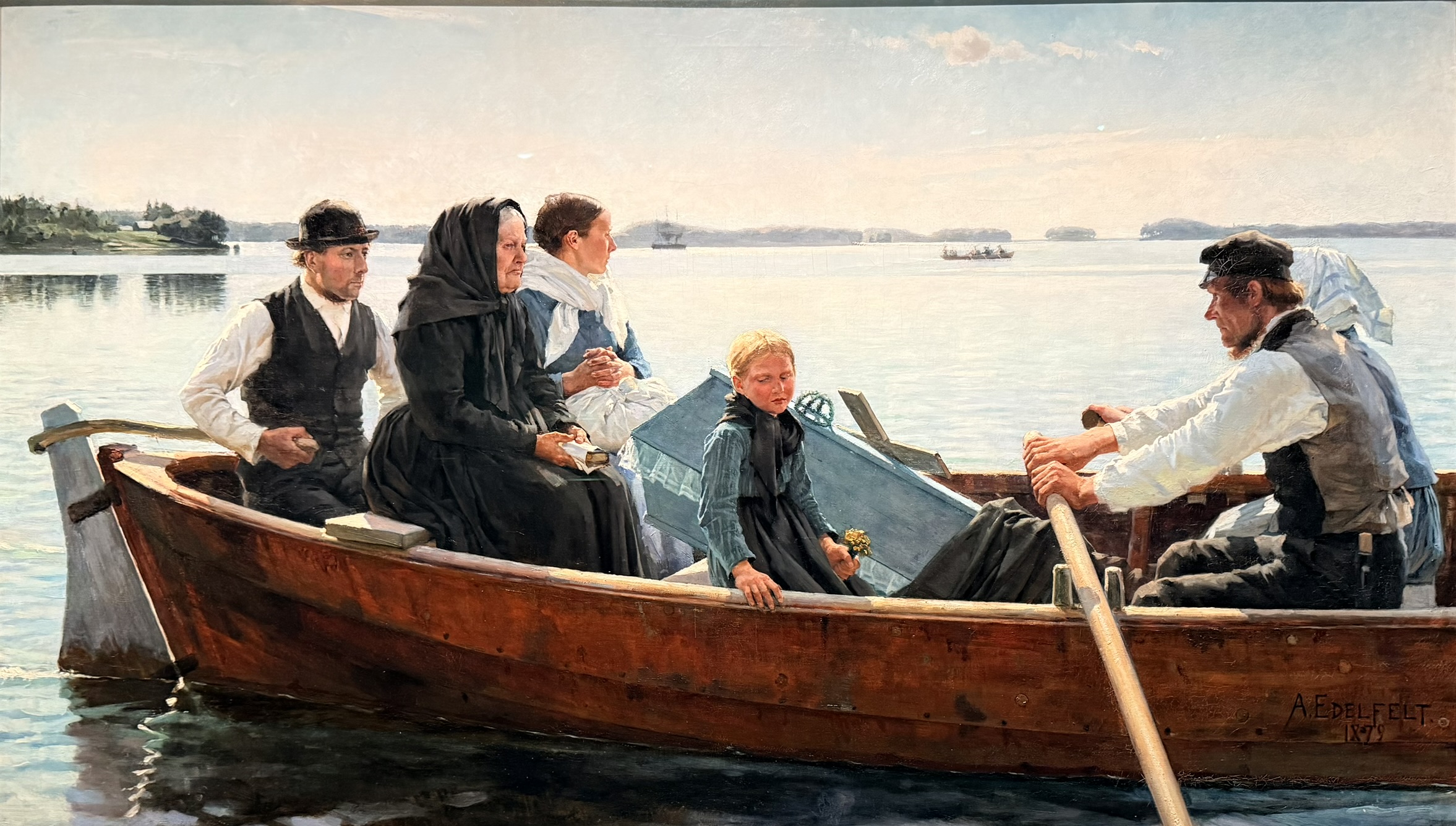
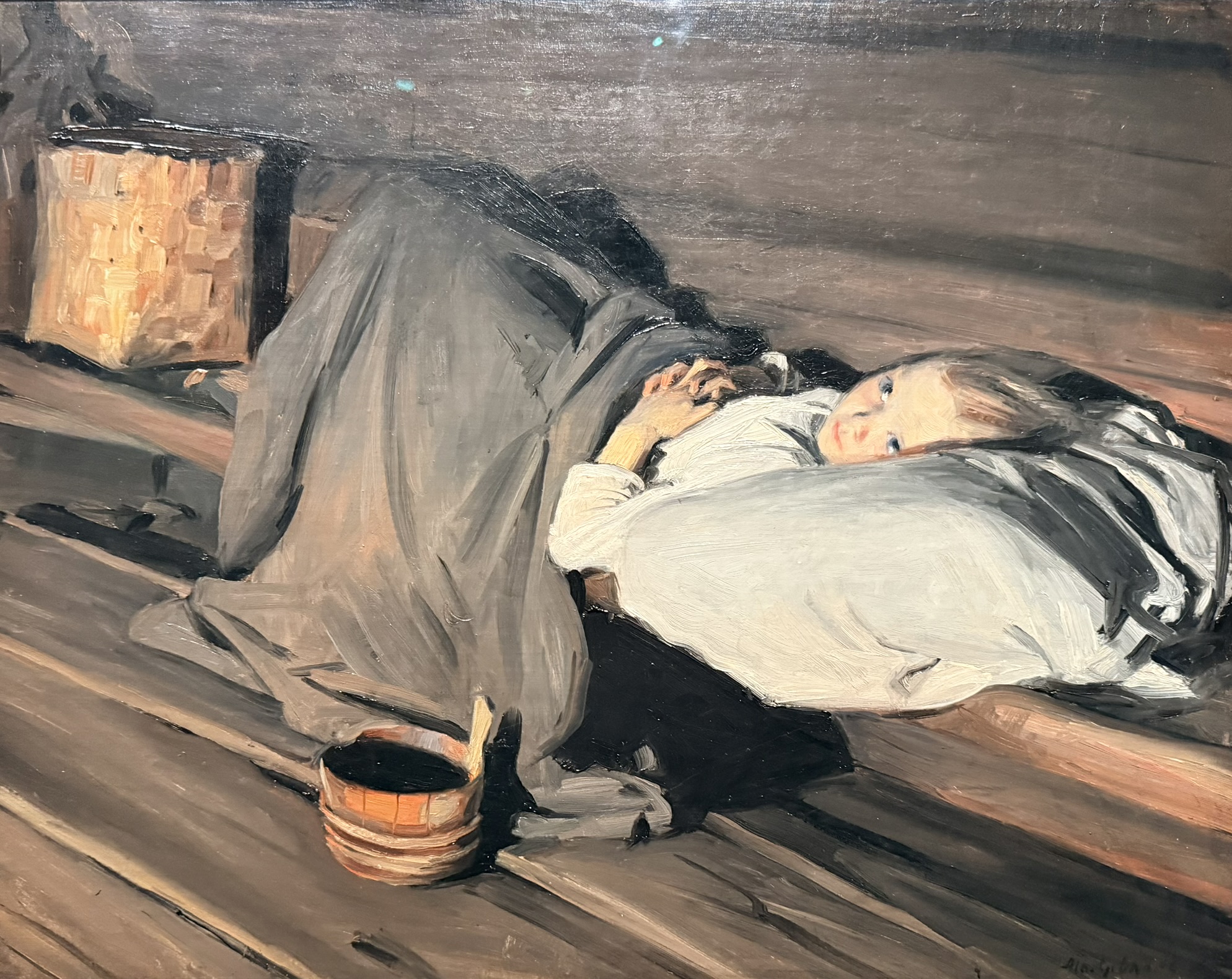
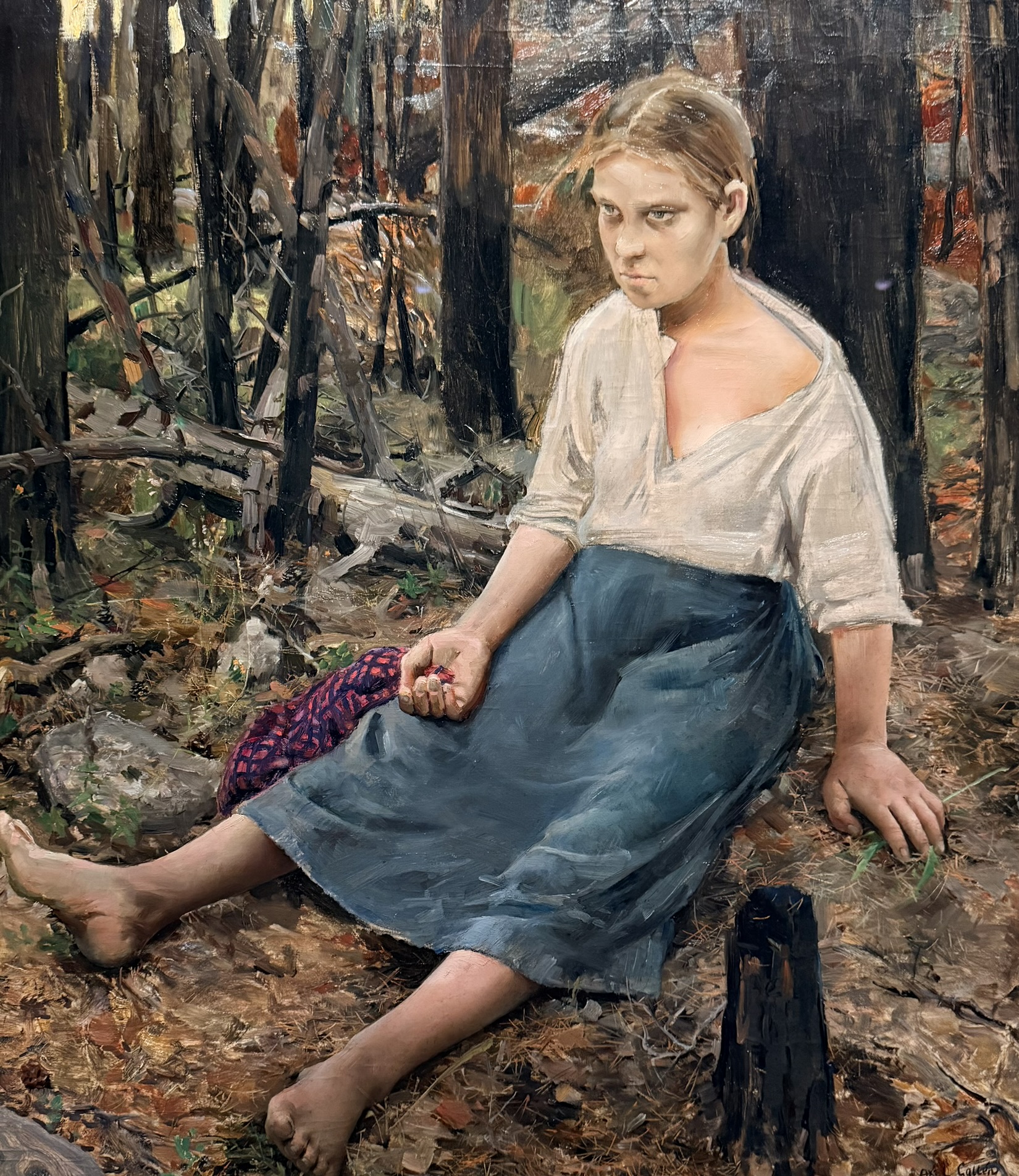
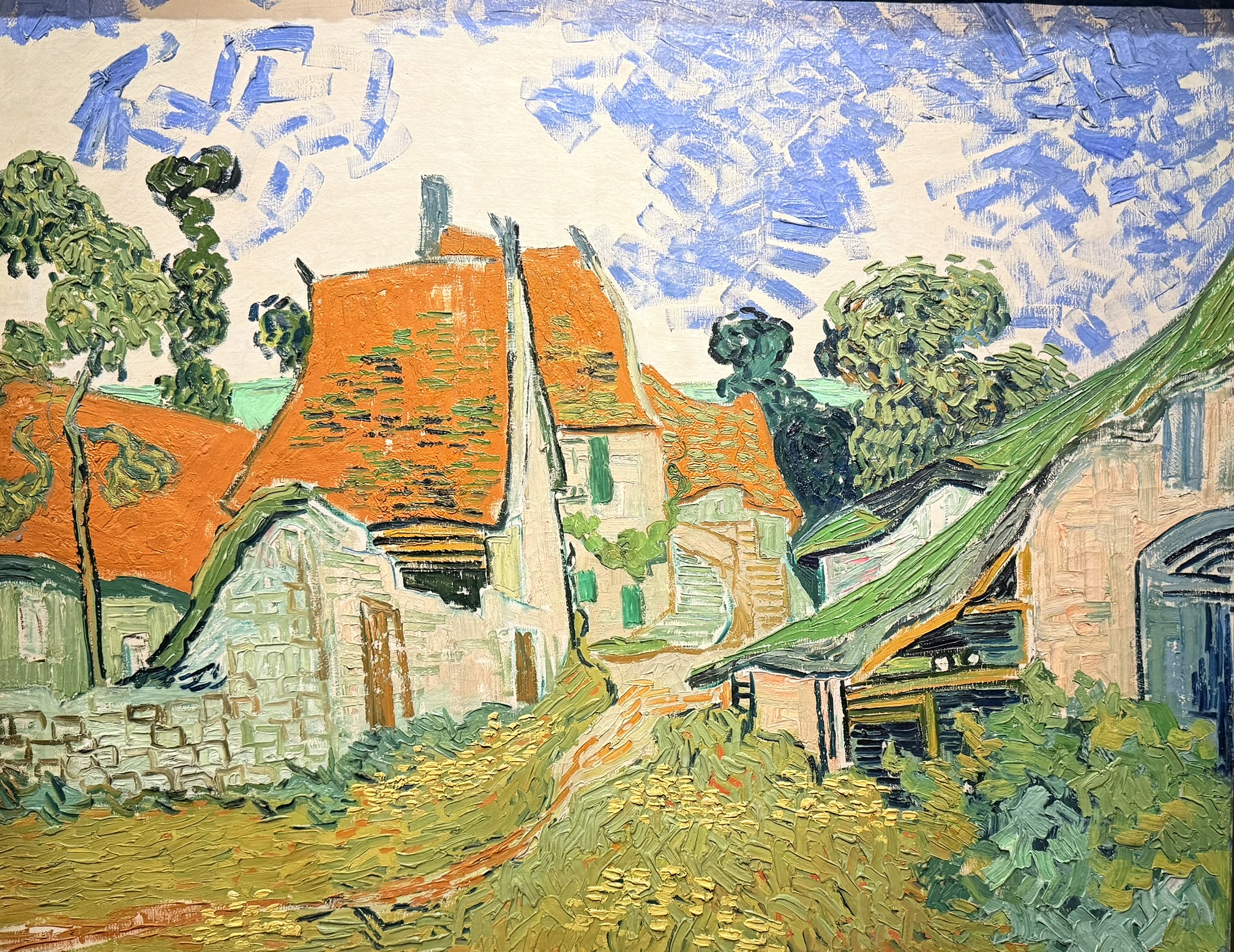
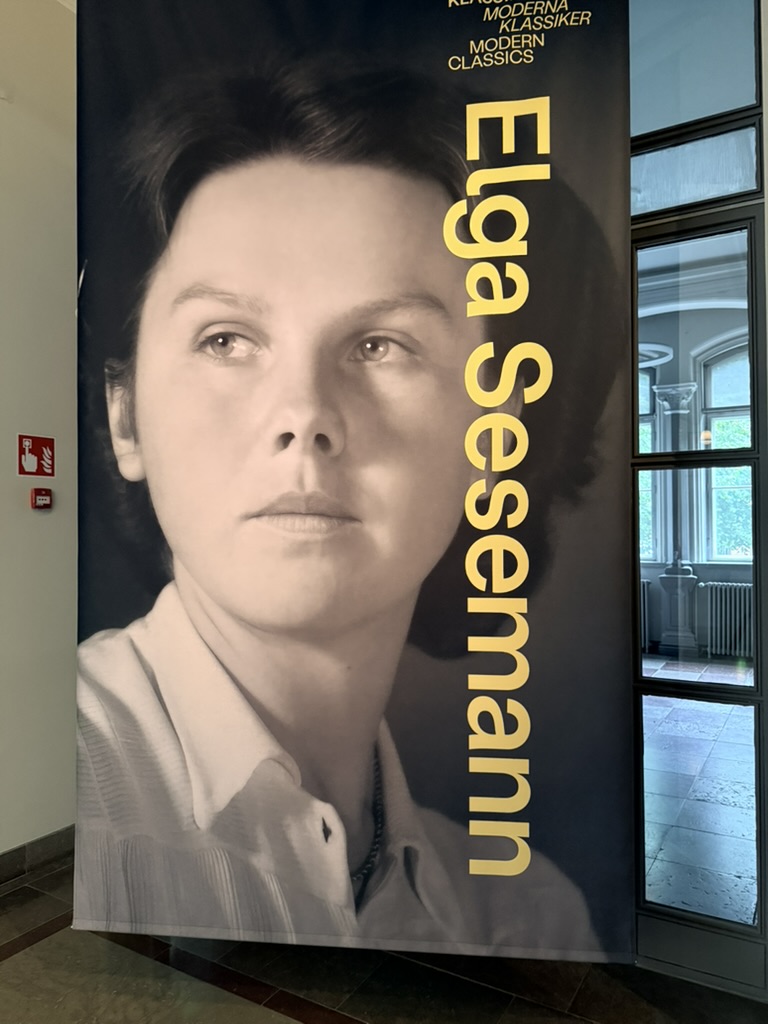
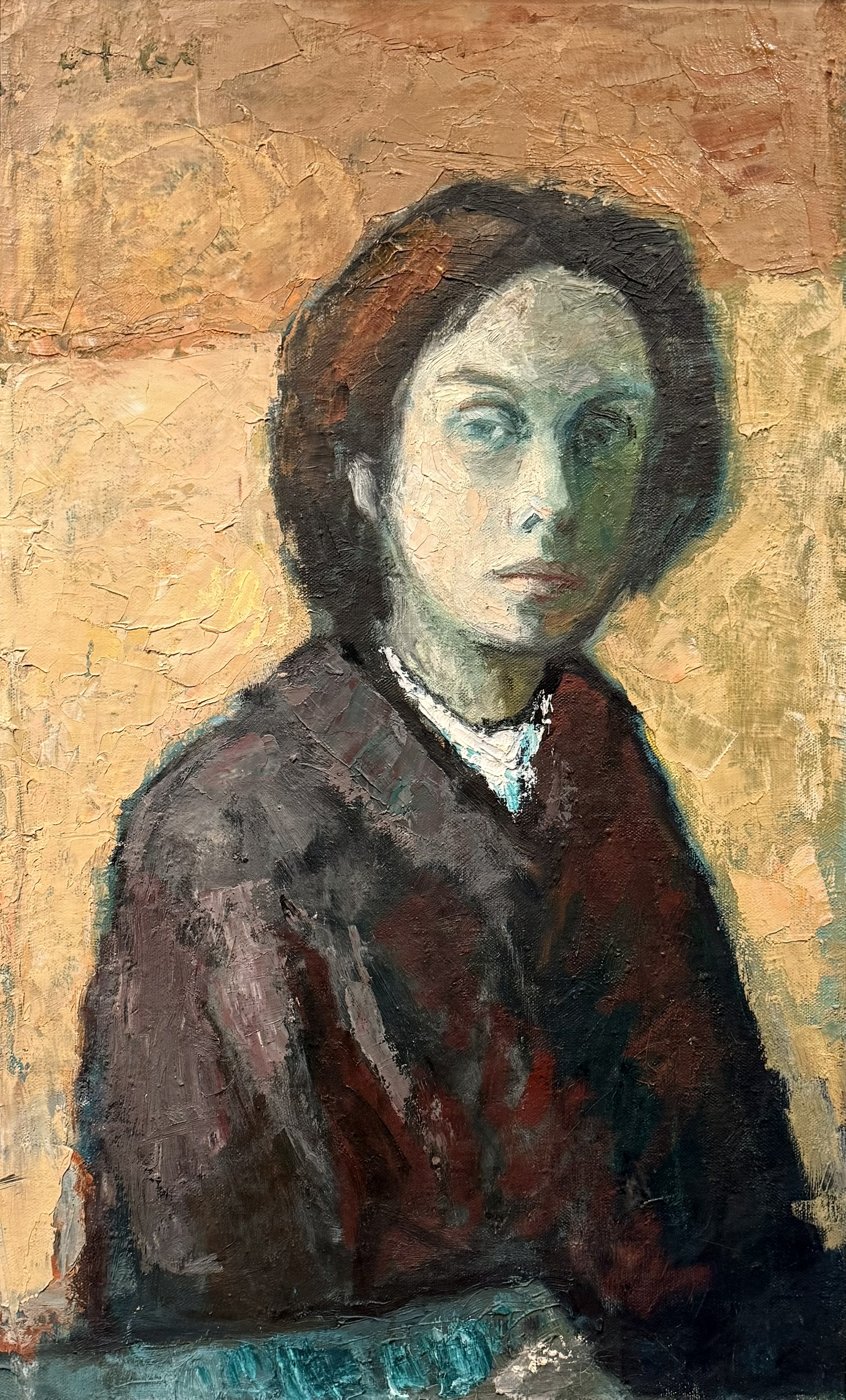
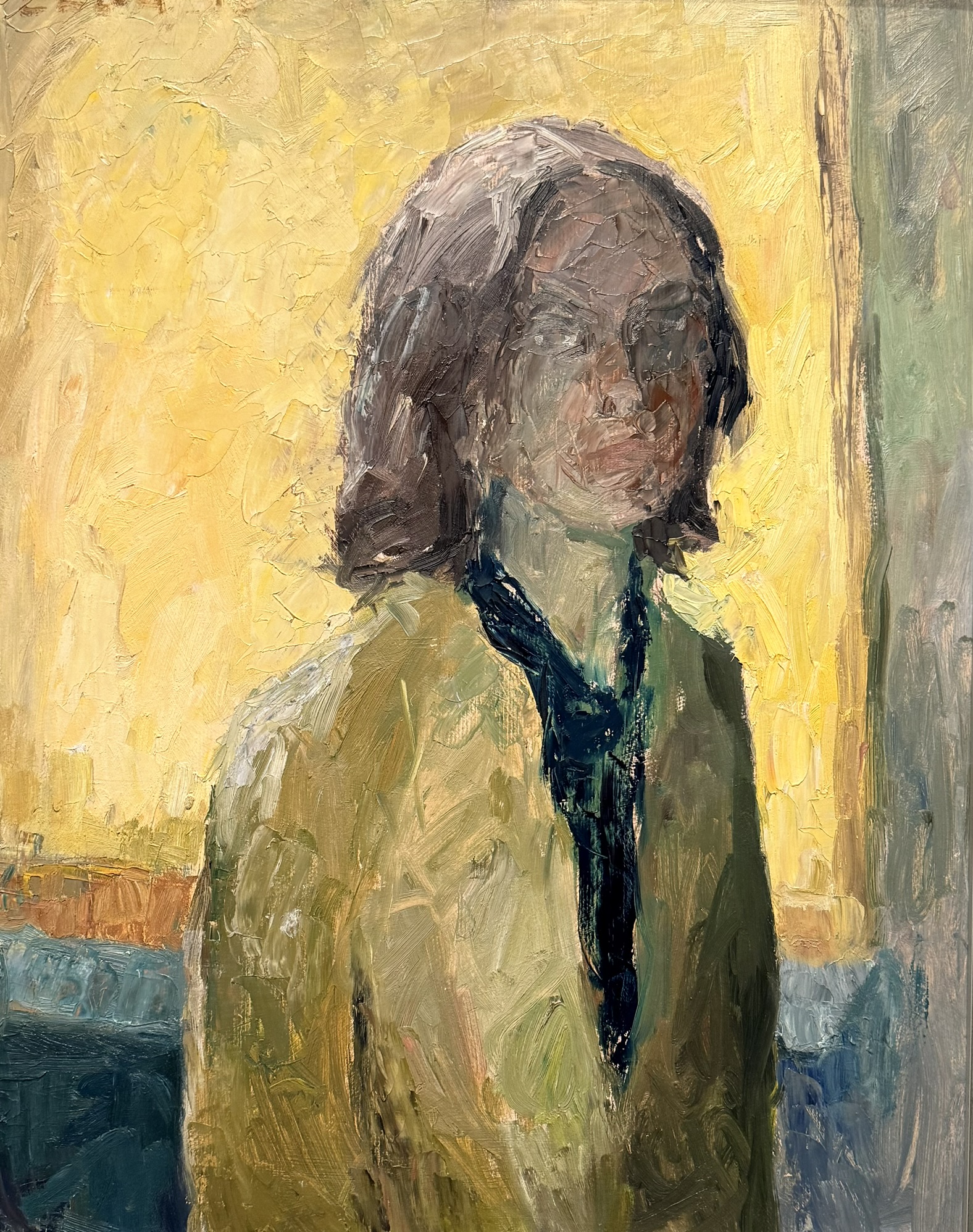
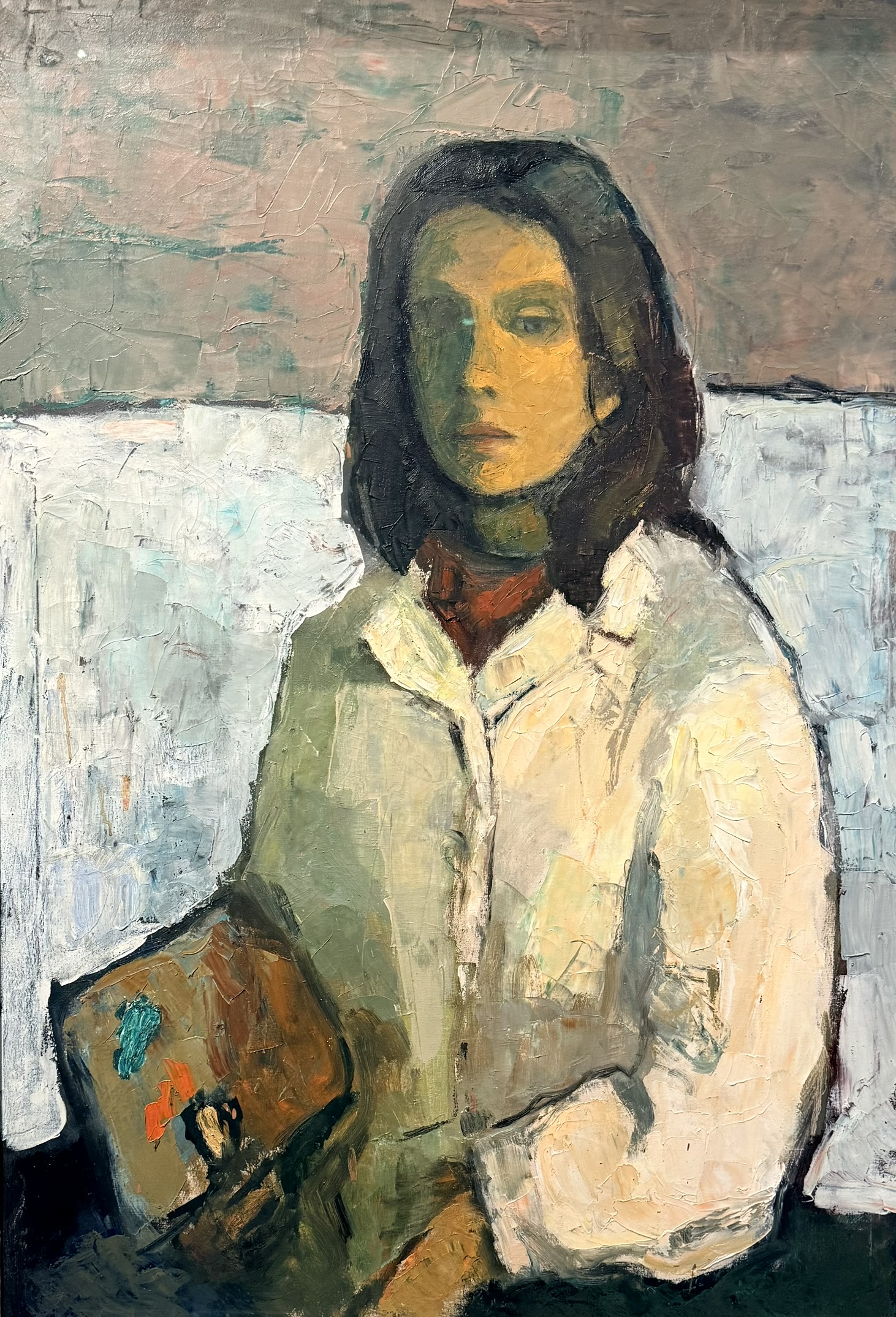
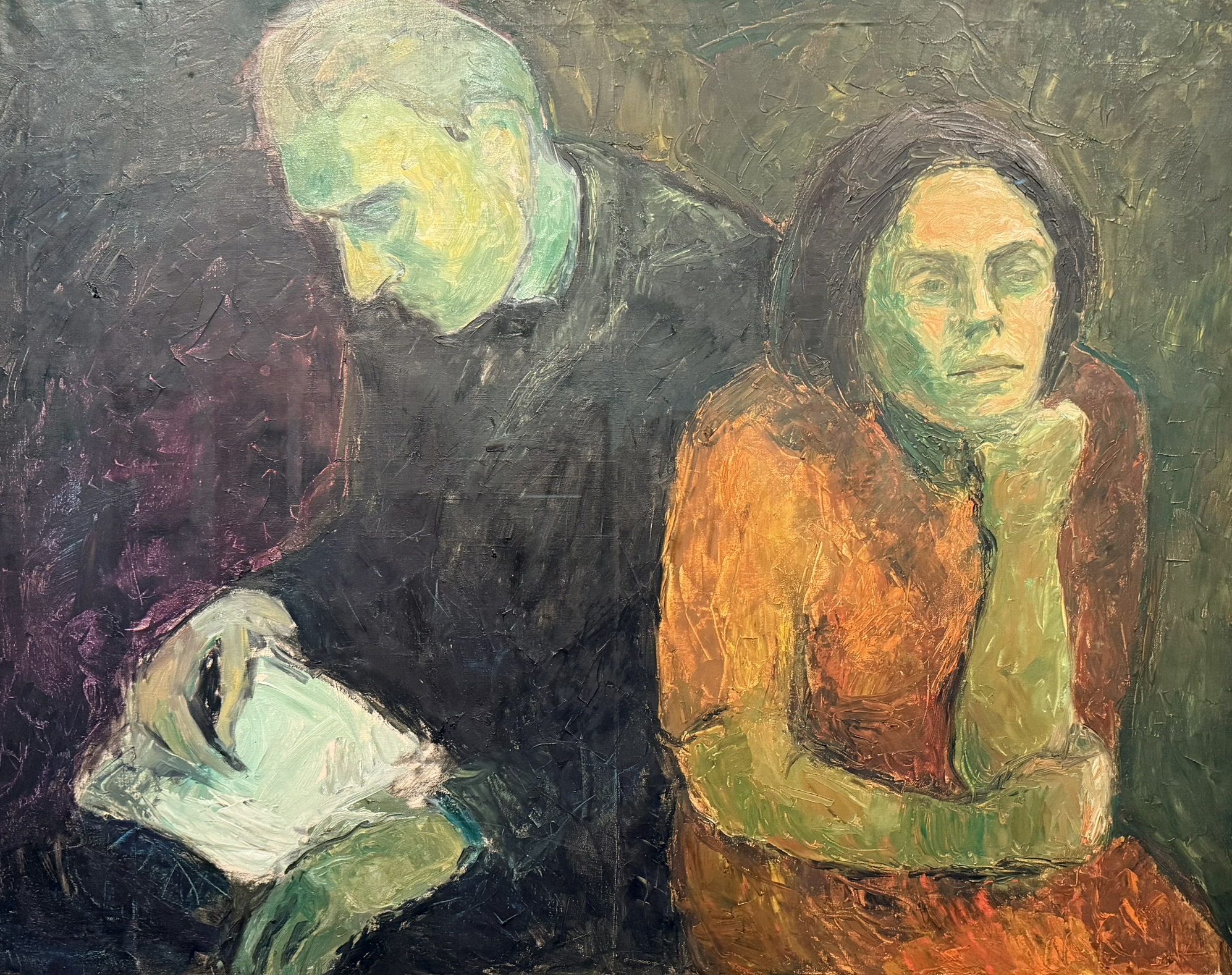
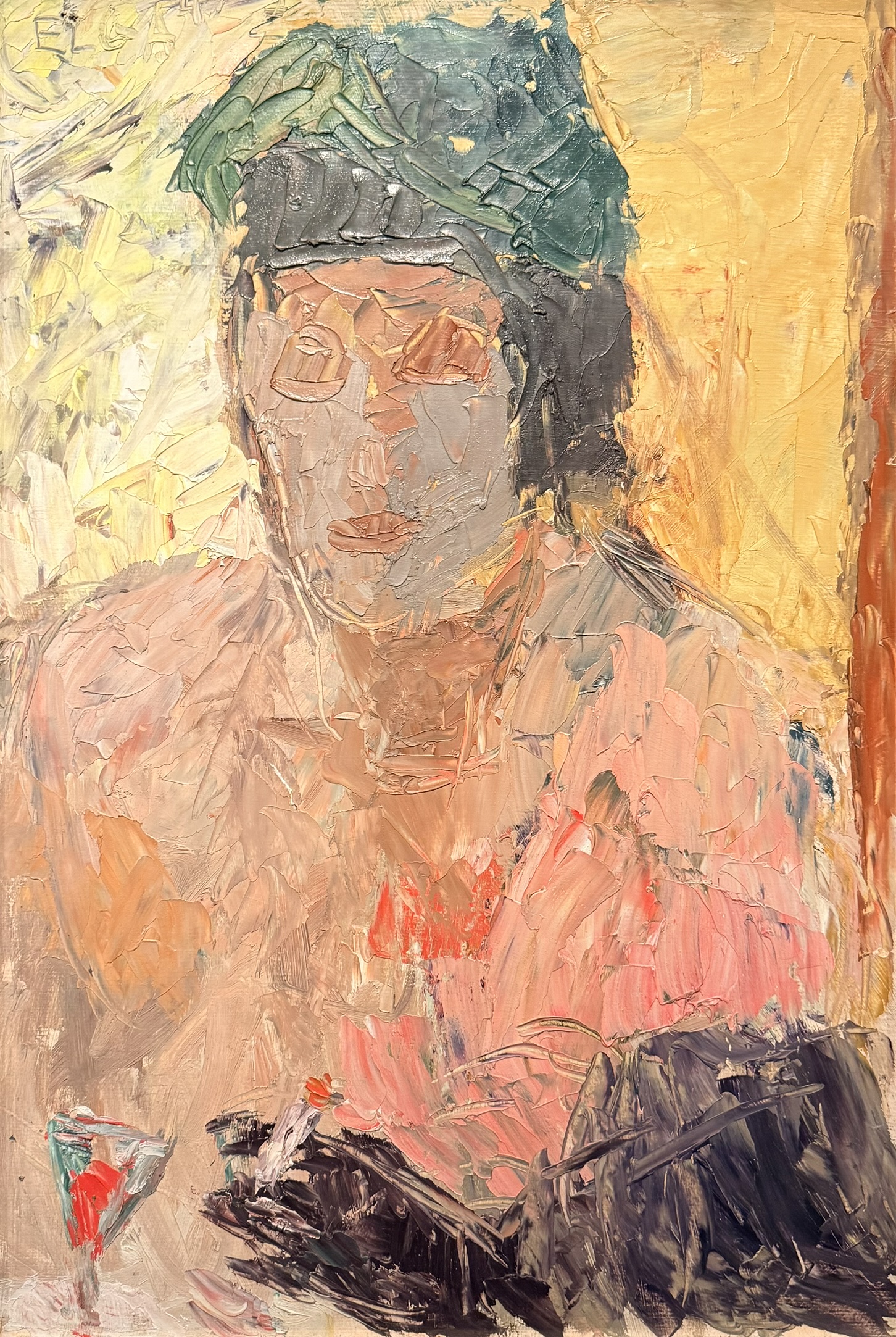
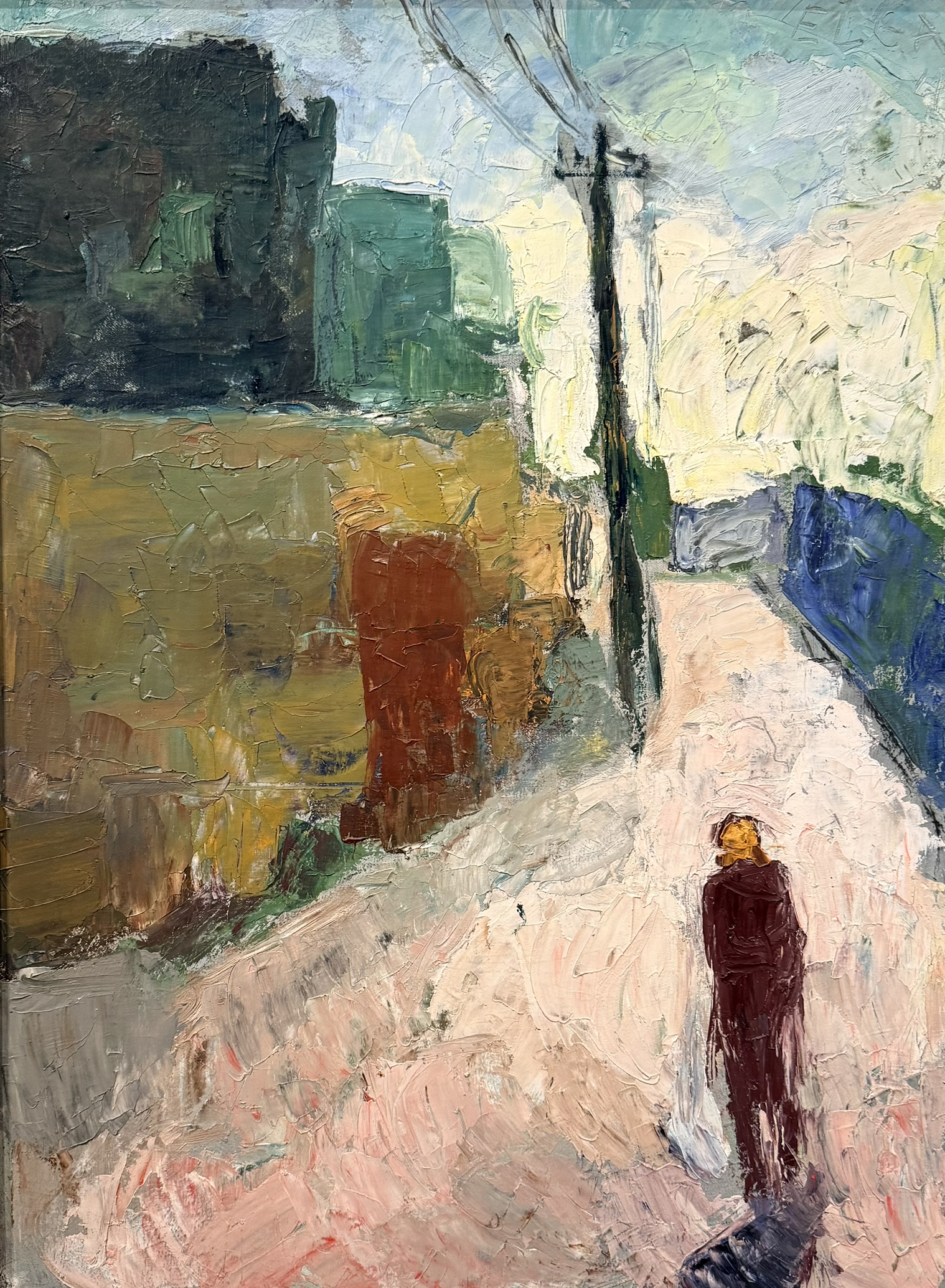
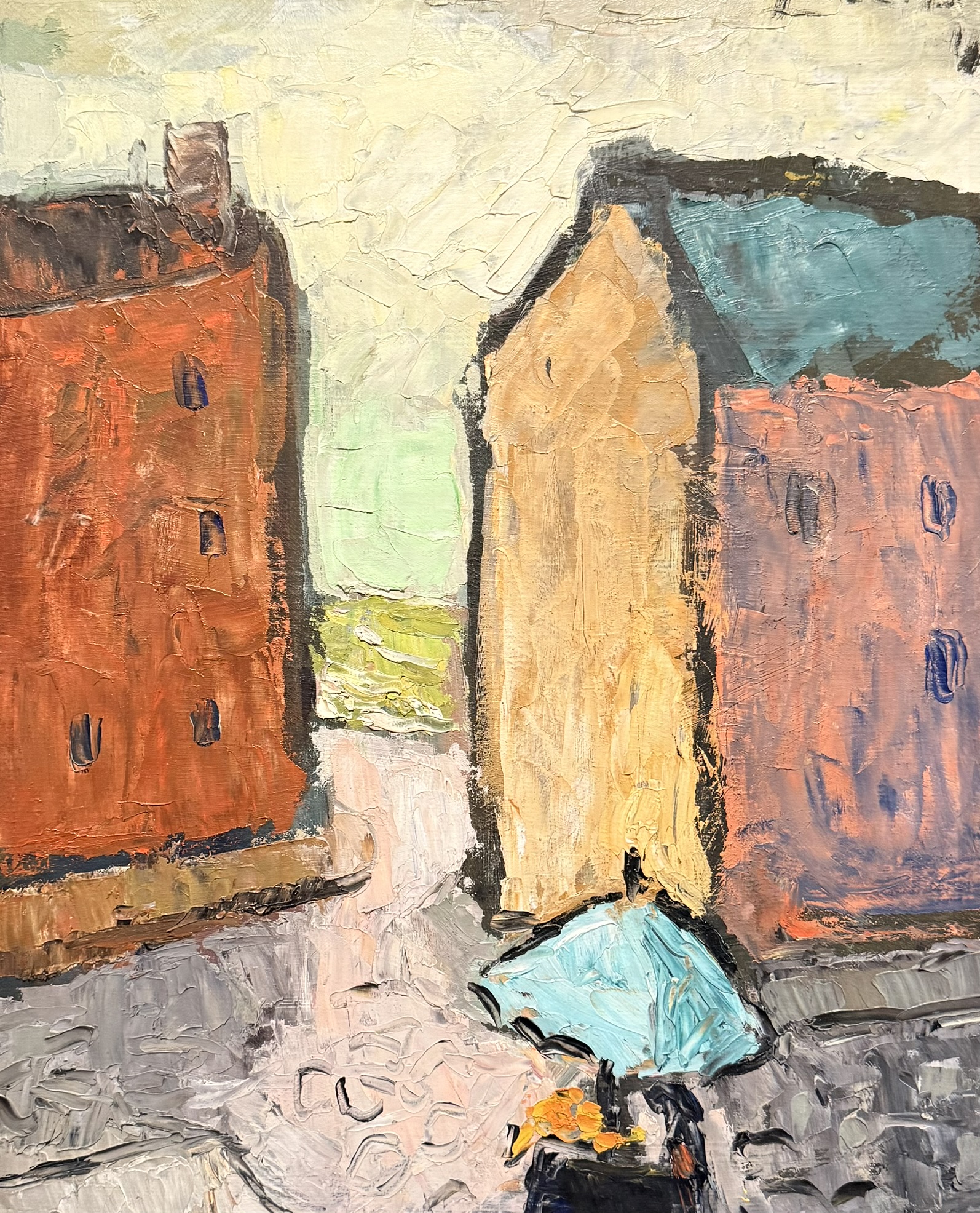
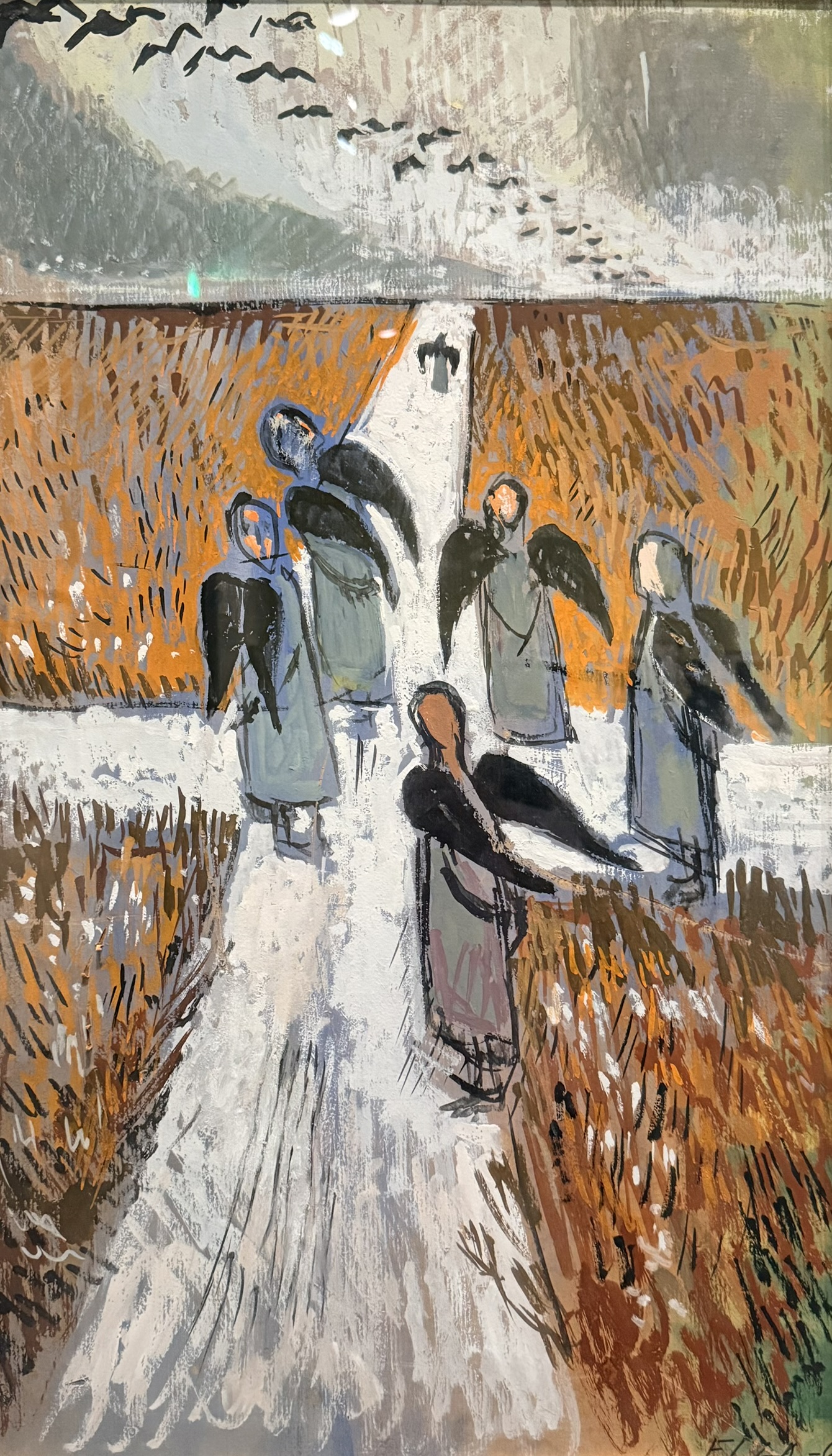
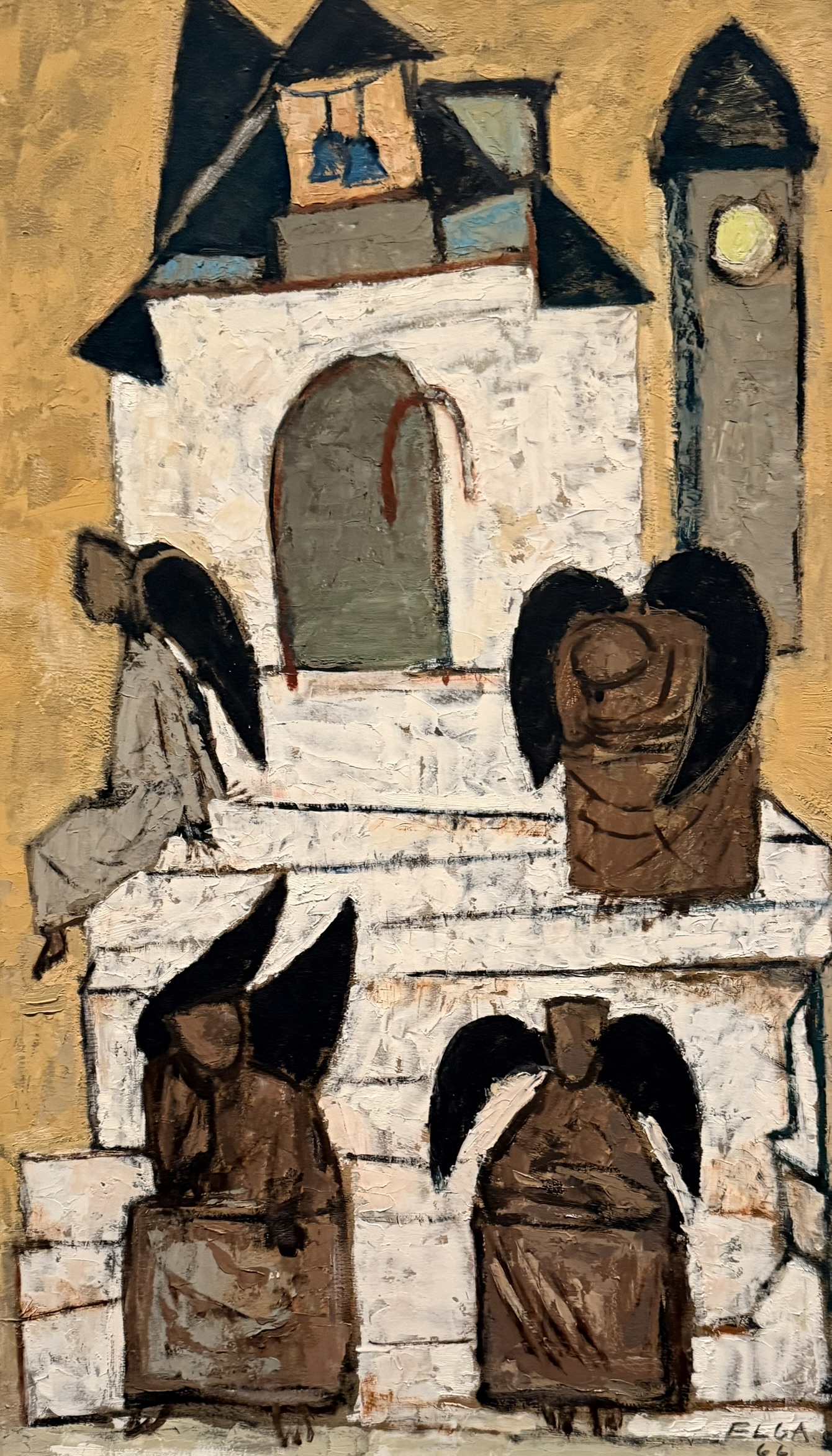
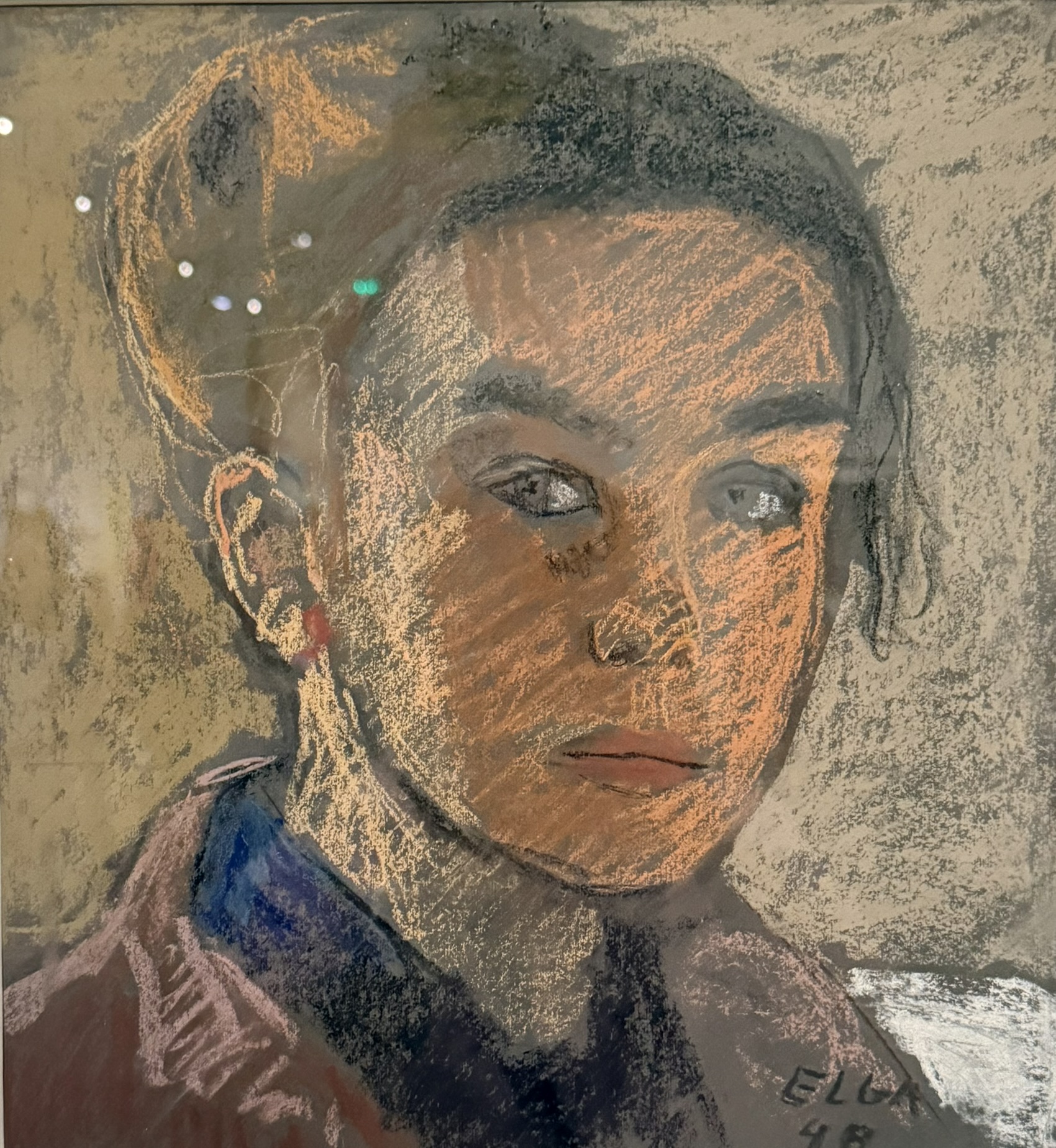
3) Elga Sesemann (1922-2007) is known for her expressive style. She began her career in the 1940s and continued to work actively until the mid-1990s. Her range is extensive and her style of expression changed many times over the decades.
I loved her early portraits, especially self-portraits. I admired the heavy brushstrokes and wondered why her eyes were almost always scrubbed out. I didn’t care for the last change in her style to totally abstract art, which I didn’t photograph.
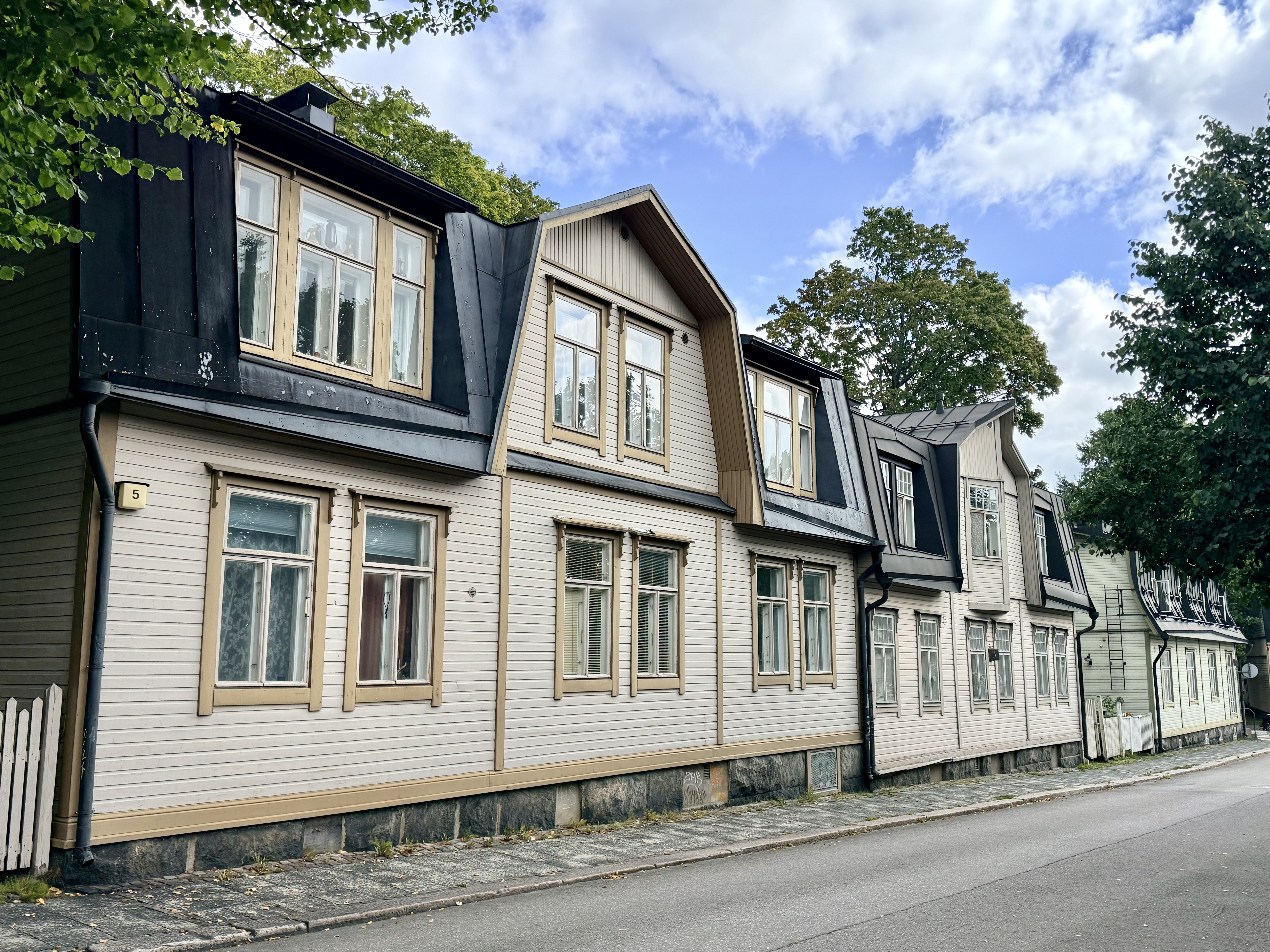
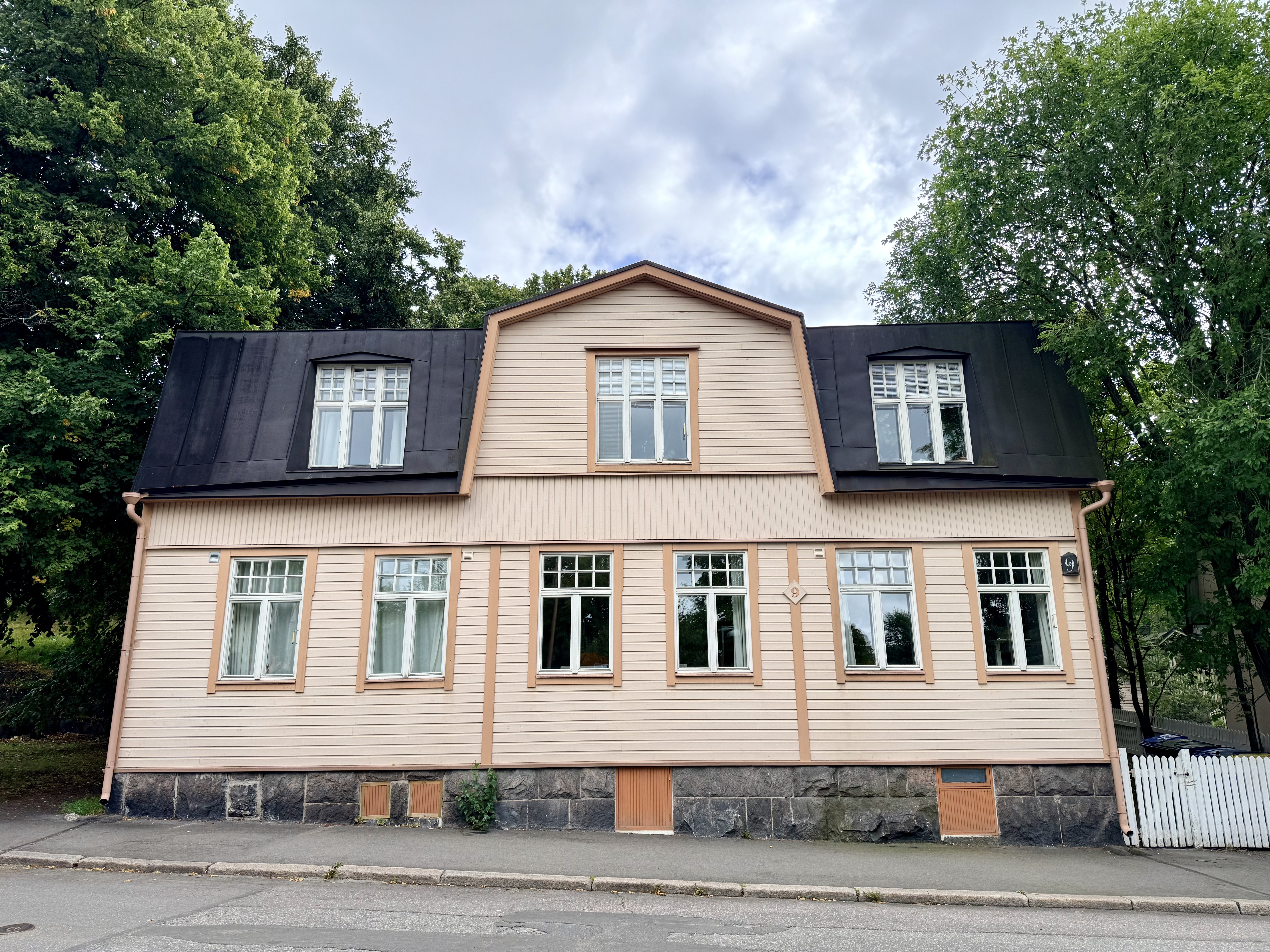
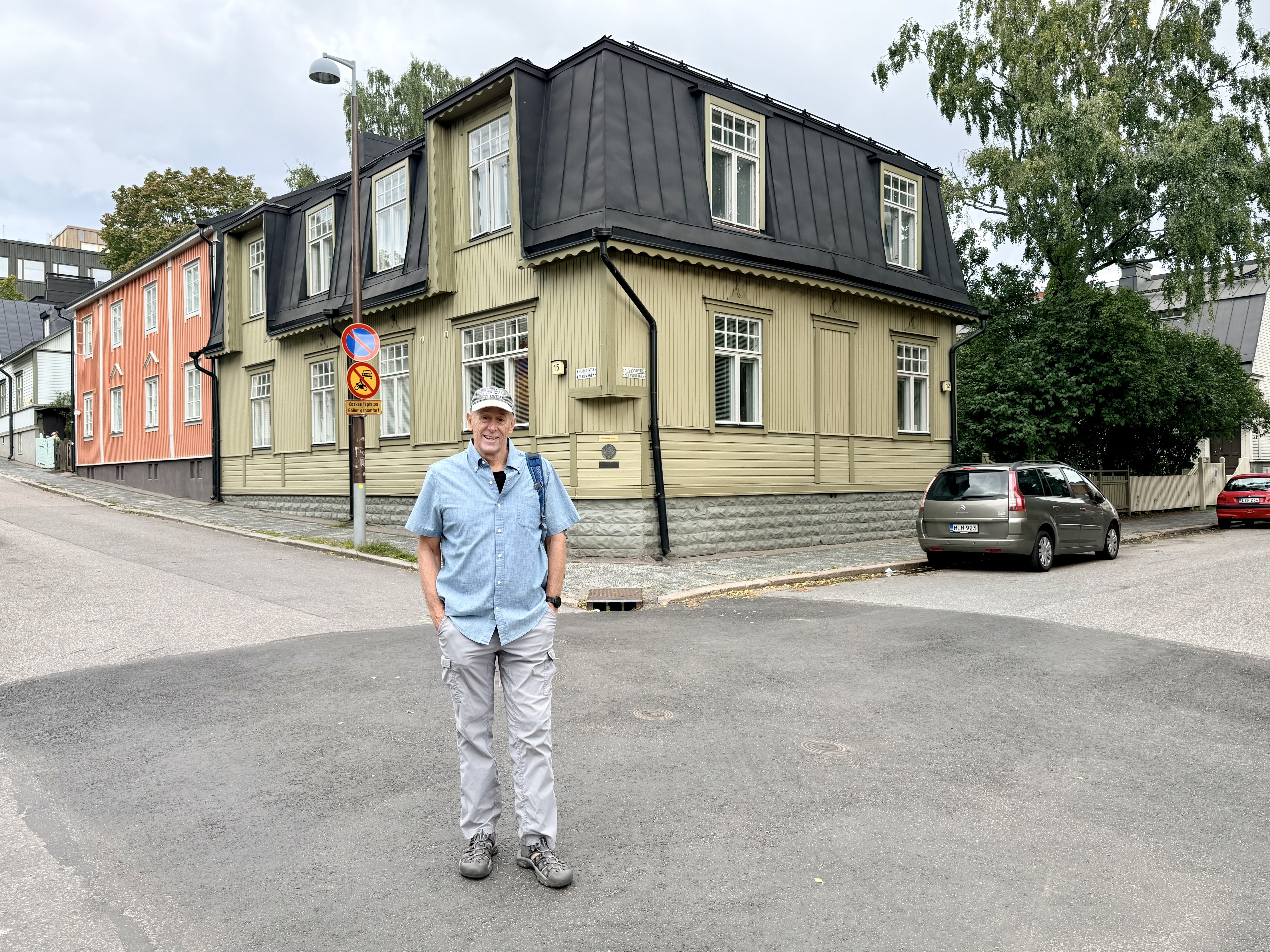
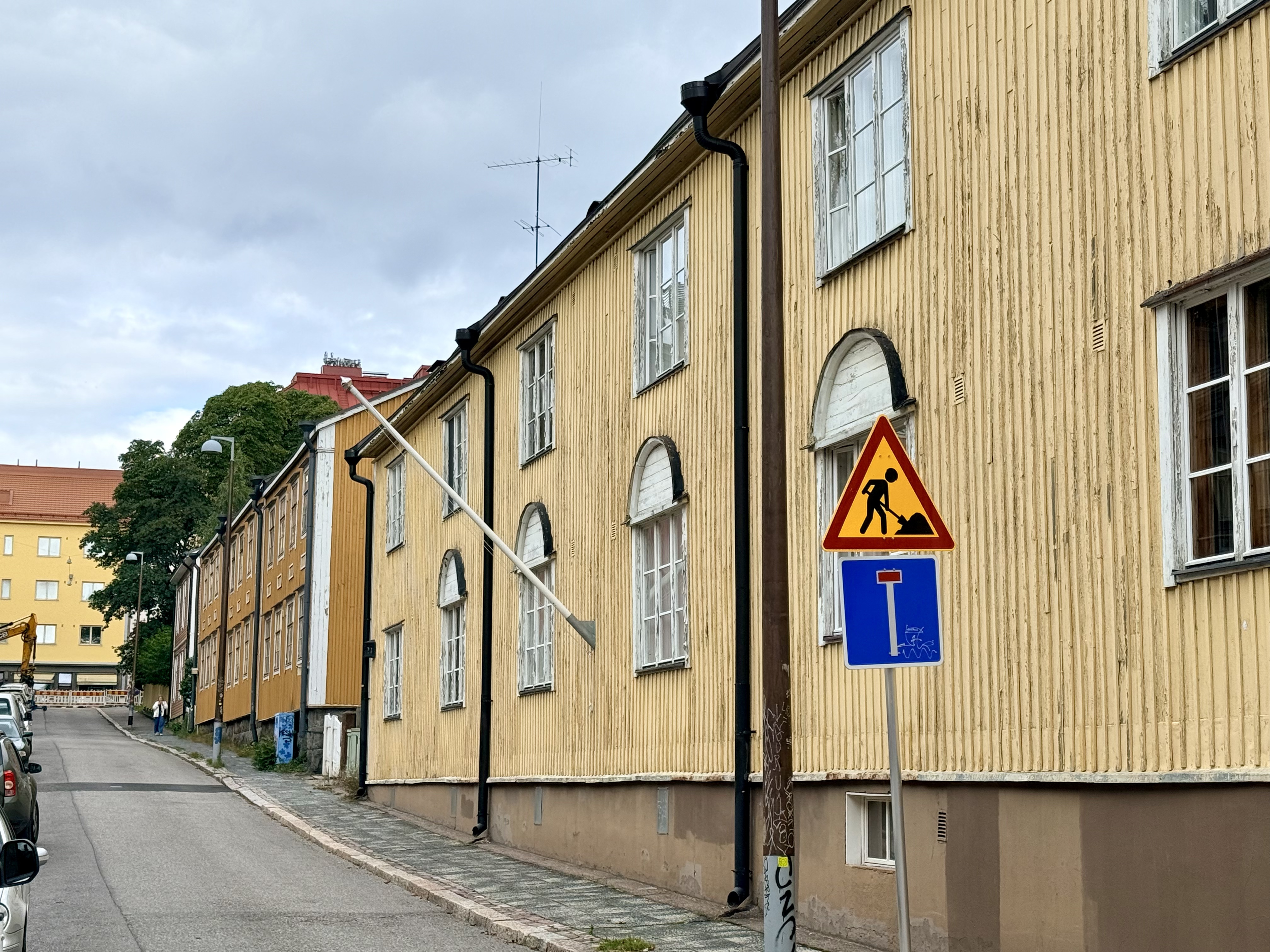
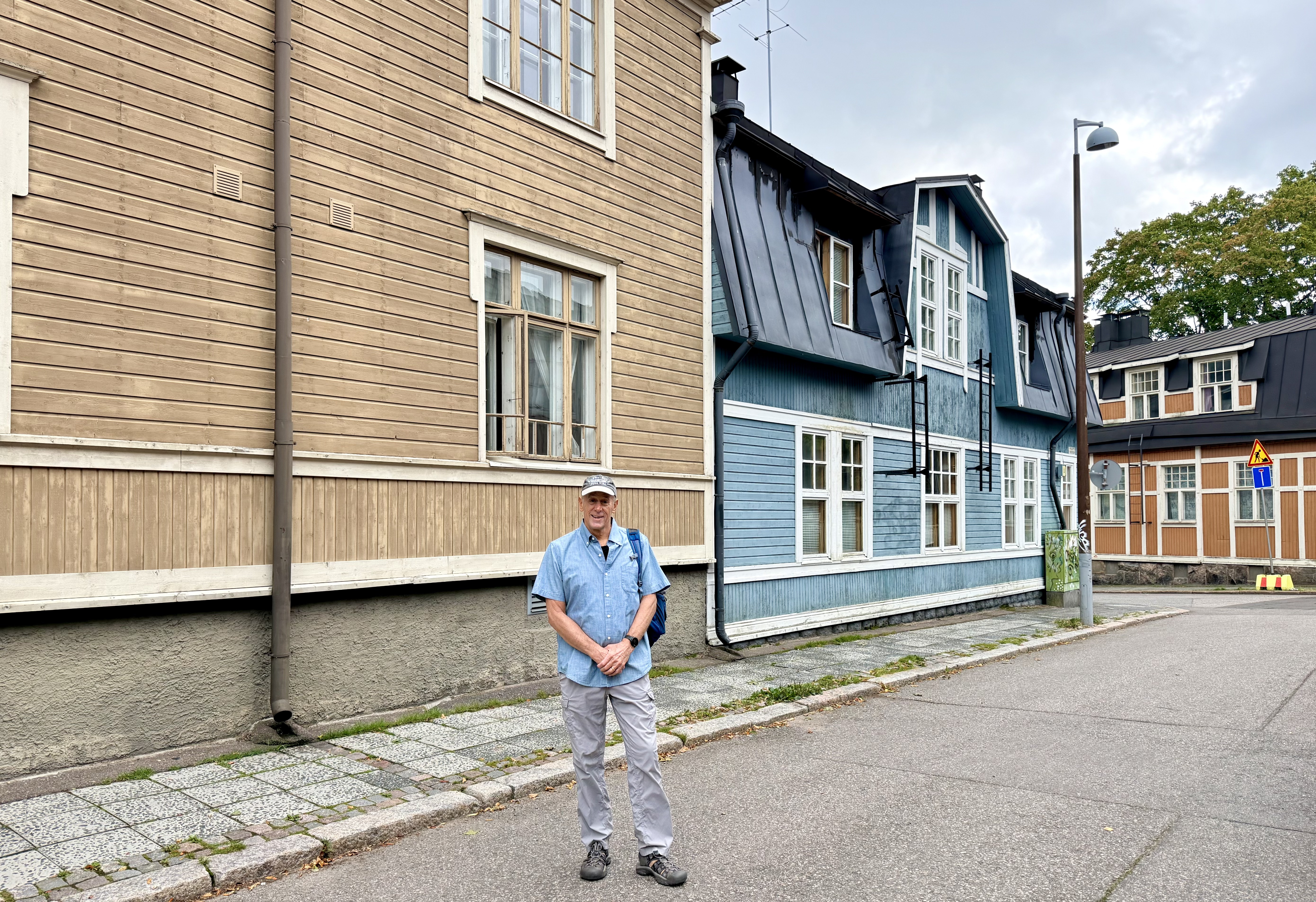
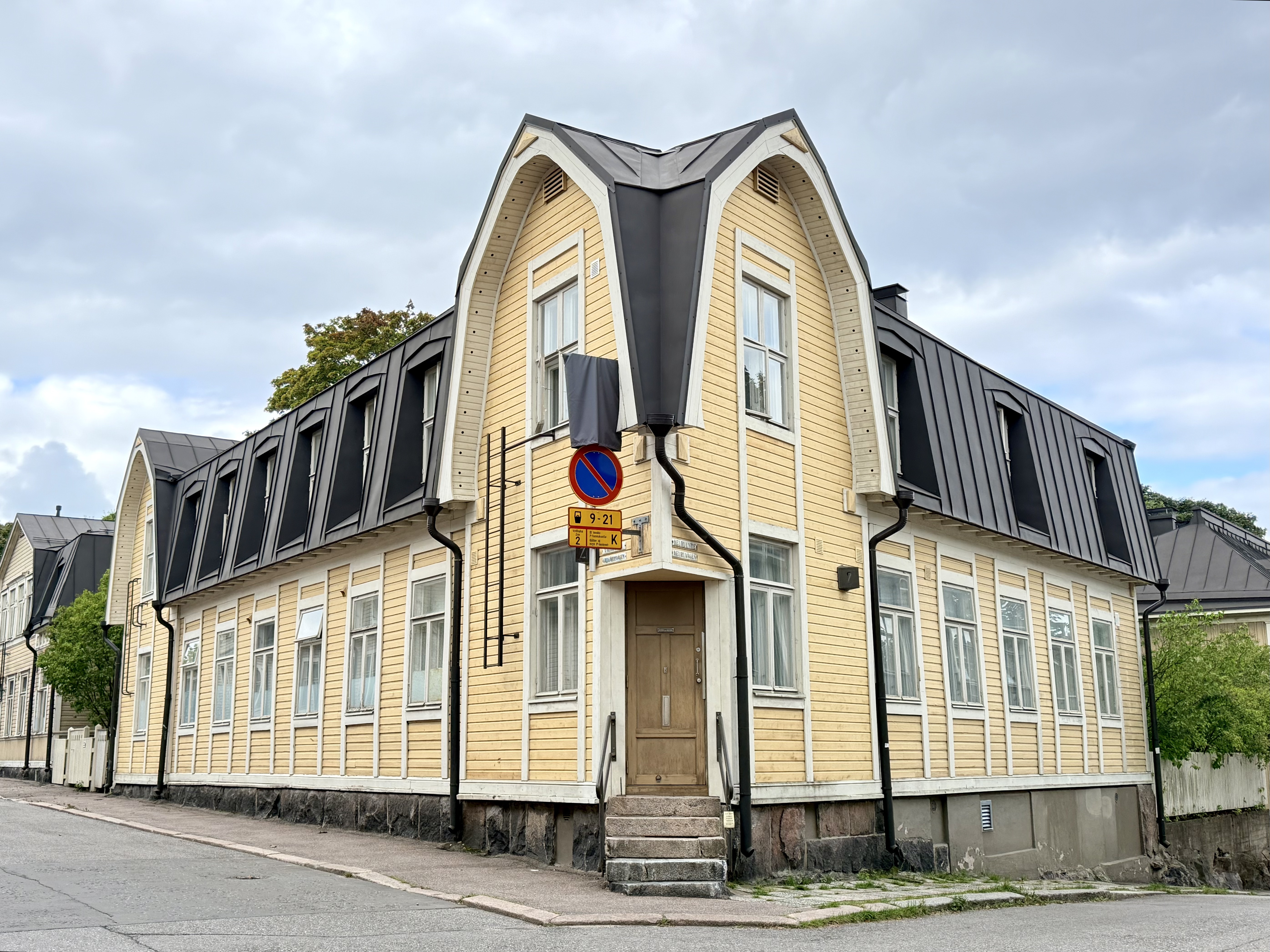
Puu-Vallila
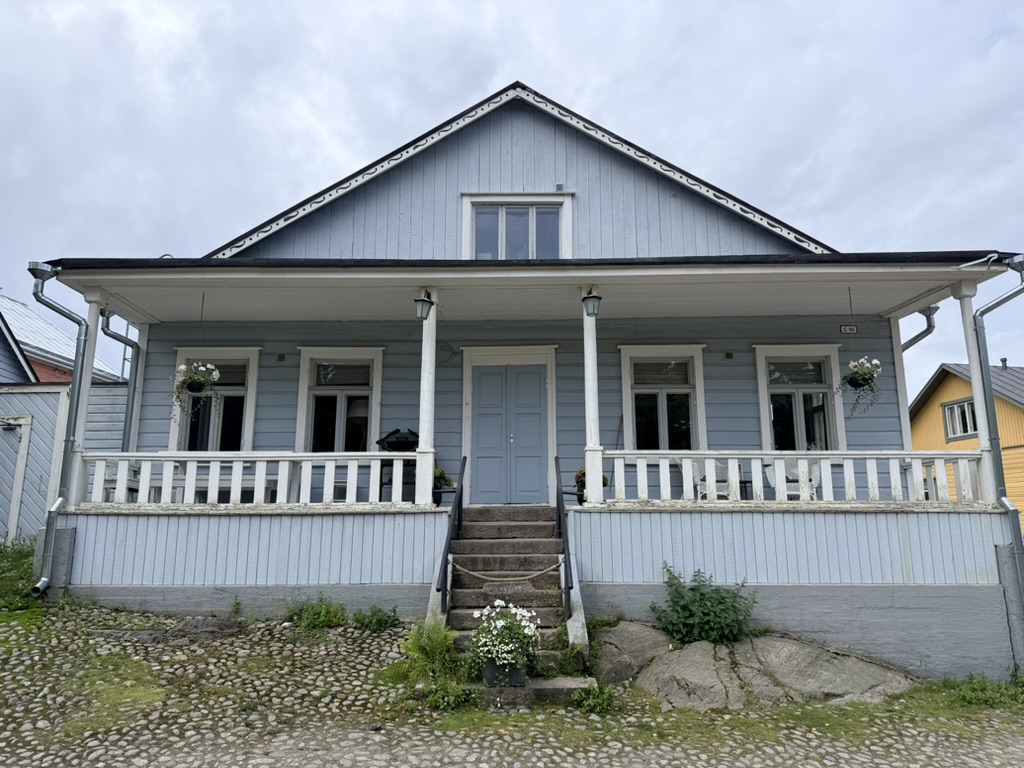
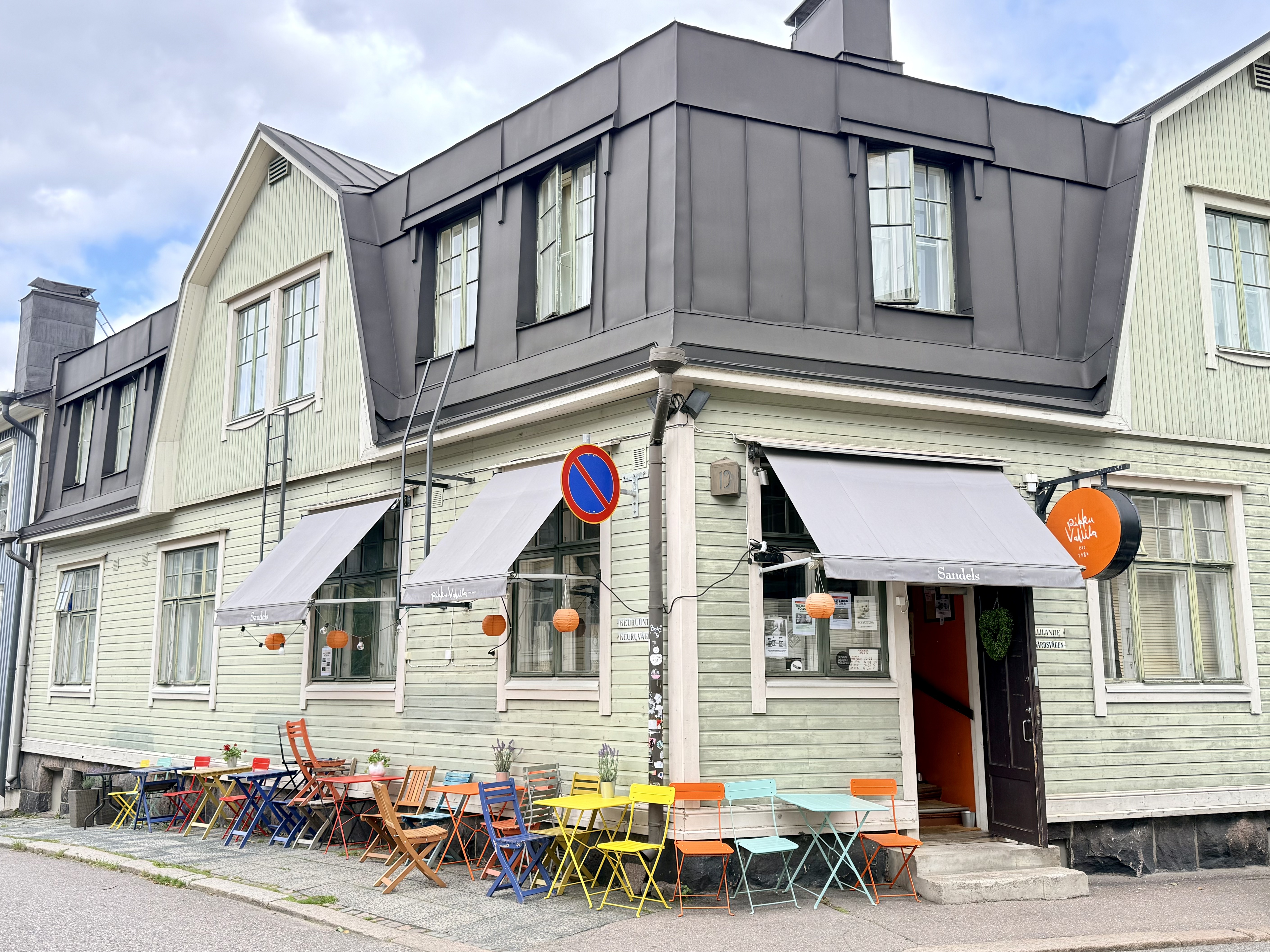
Puu-Vallila is a residential area in the Vallila District of Helsinki, built in the 1910s. It was under threat of demolition for a long time, but was renovated in the 1980s. The area is protected as a block of residential buildings of cultural and historical value and of urban design.
The planning of Puu-Vallila began in the early 1900s. Later, industry began to emerge in the vicinity and workers moved there. Two-story wooden houses were built in the area, with apartments typically consisting of a spacious room and a kitchen. In the 1920s, 70 % of the residents were low-income workers.
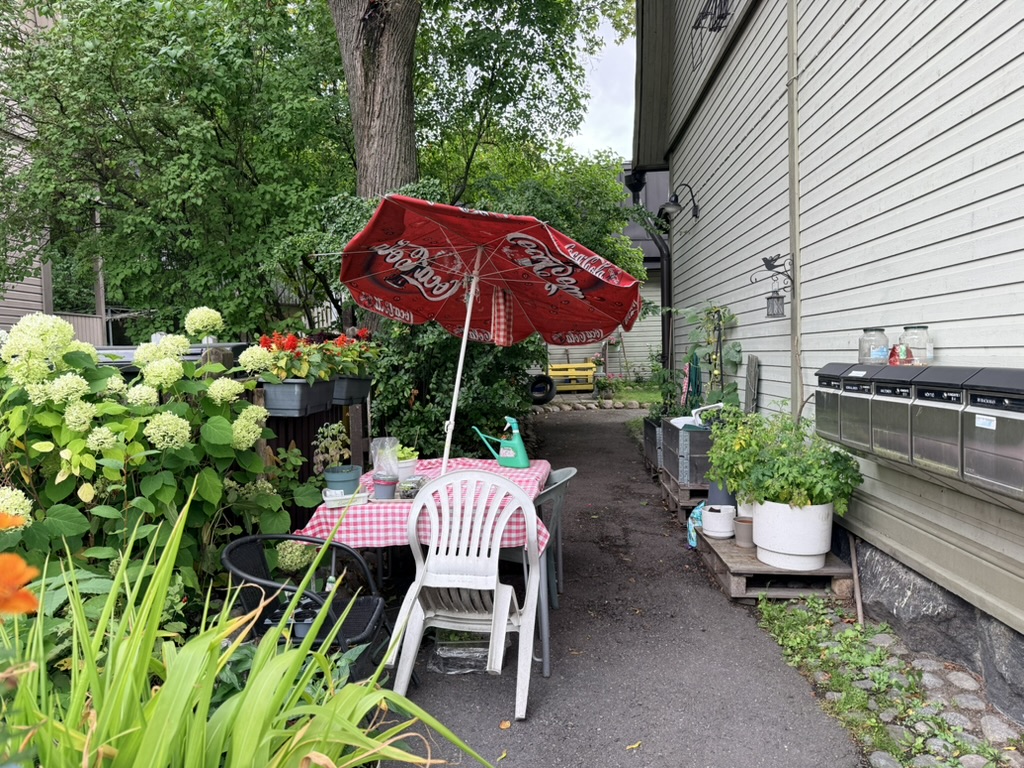
We always enjoy finding cute residential areas in cities we visit, and this one was quiet and quaint, although it seemed that most houses could use a refreshing coat of paint.
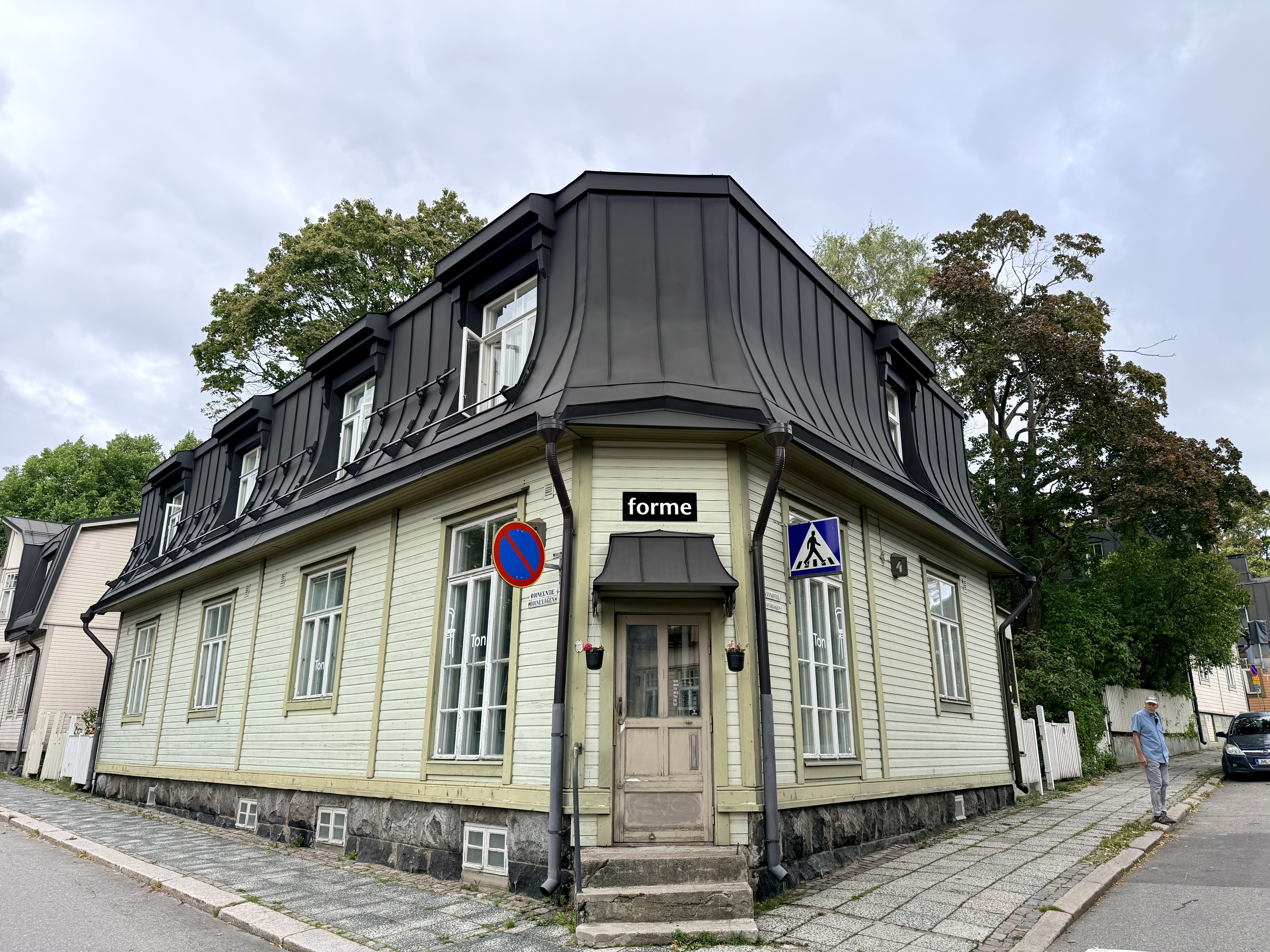
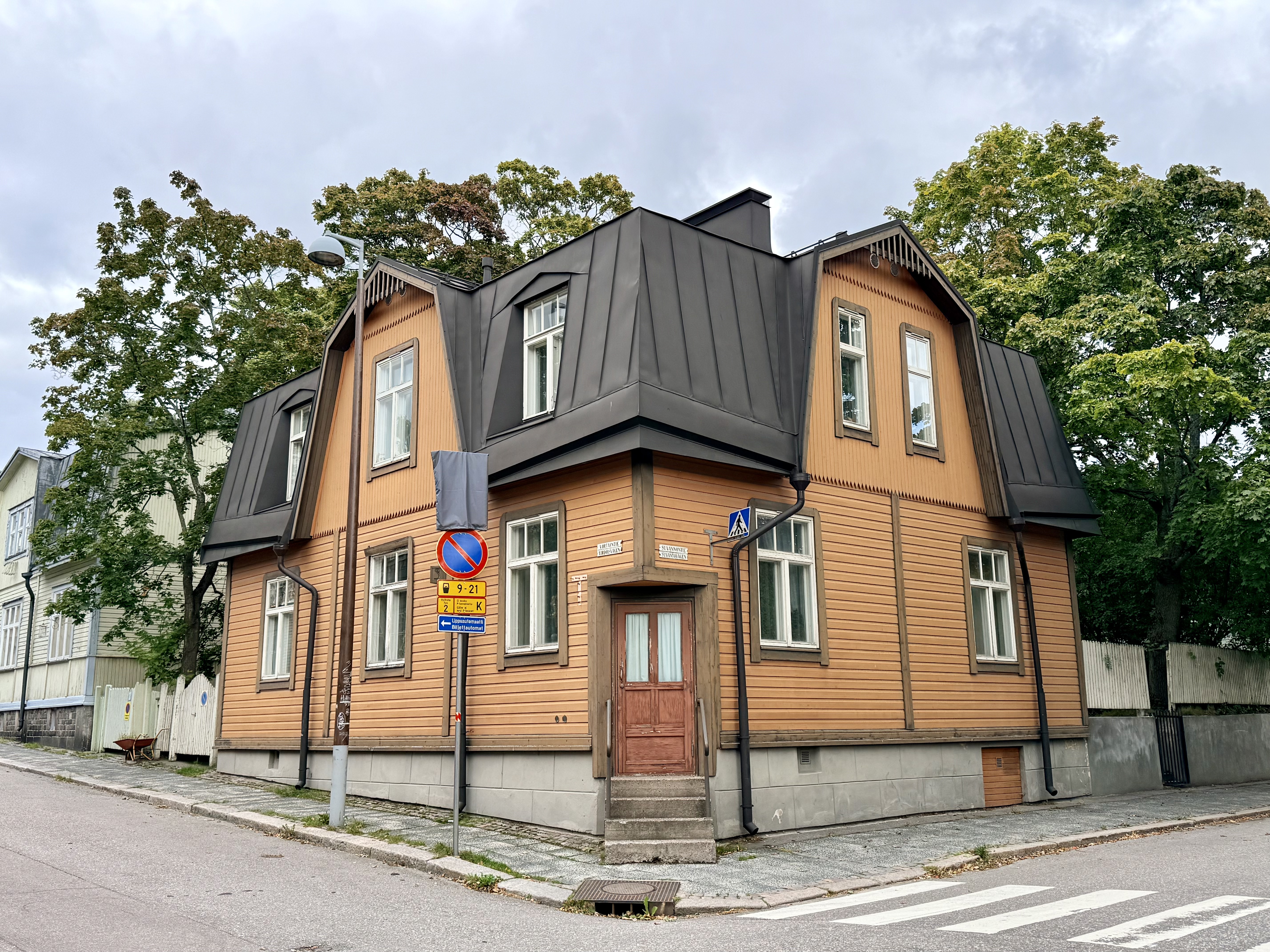
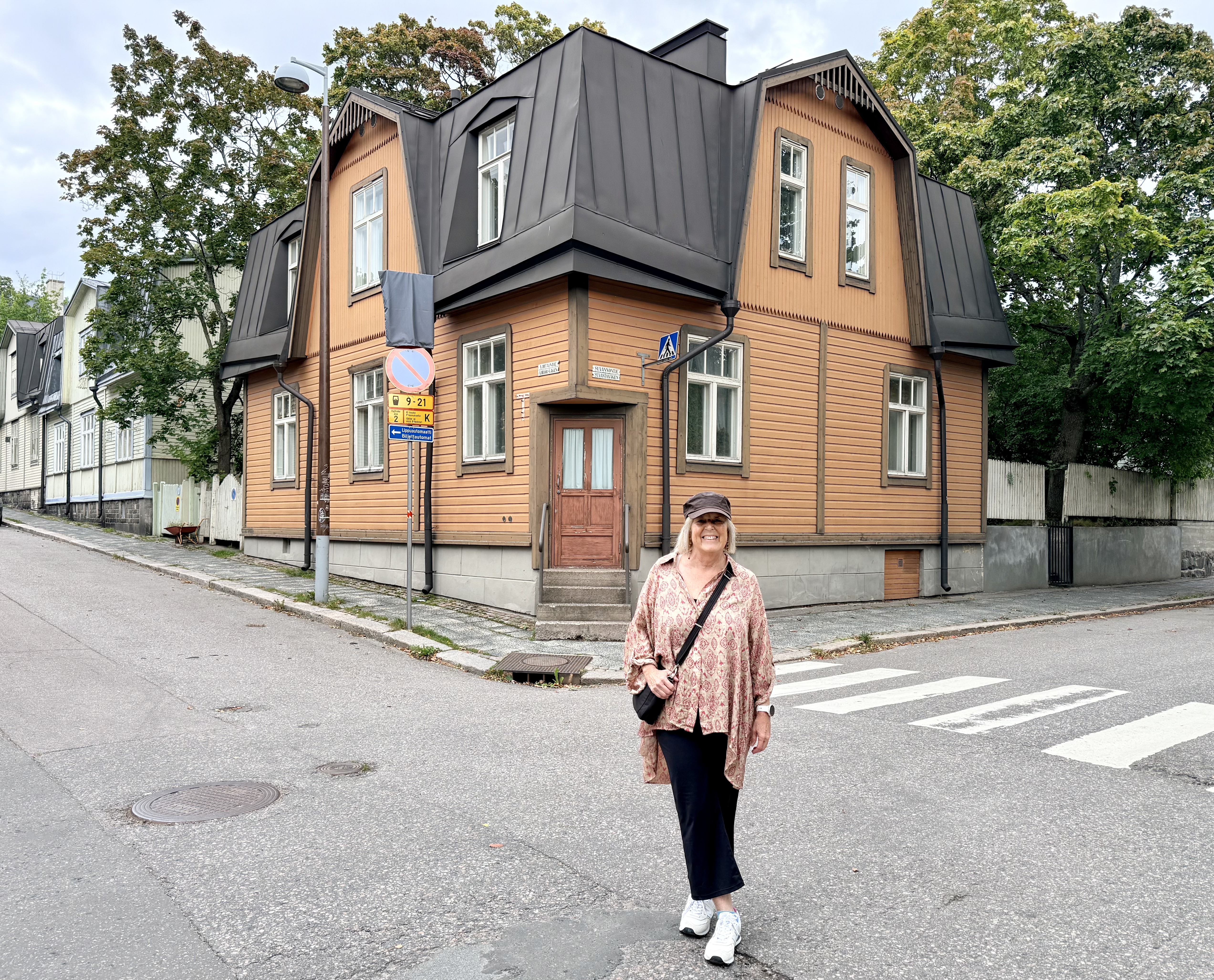
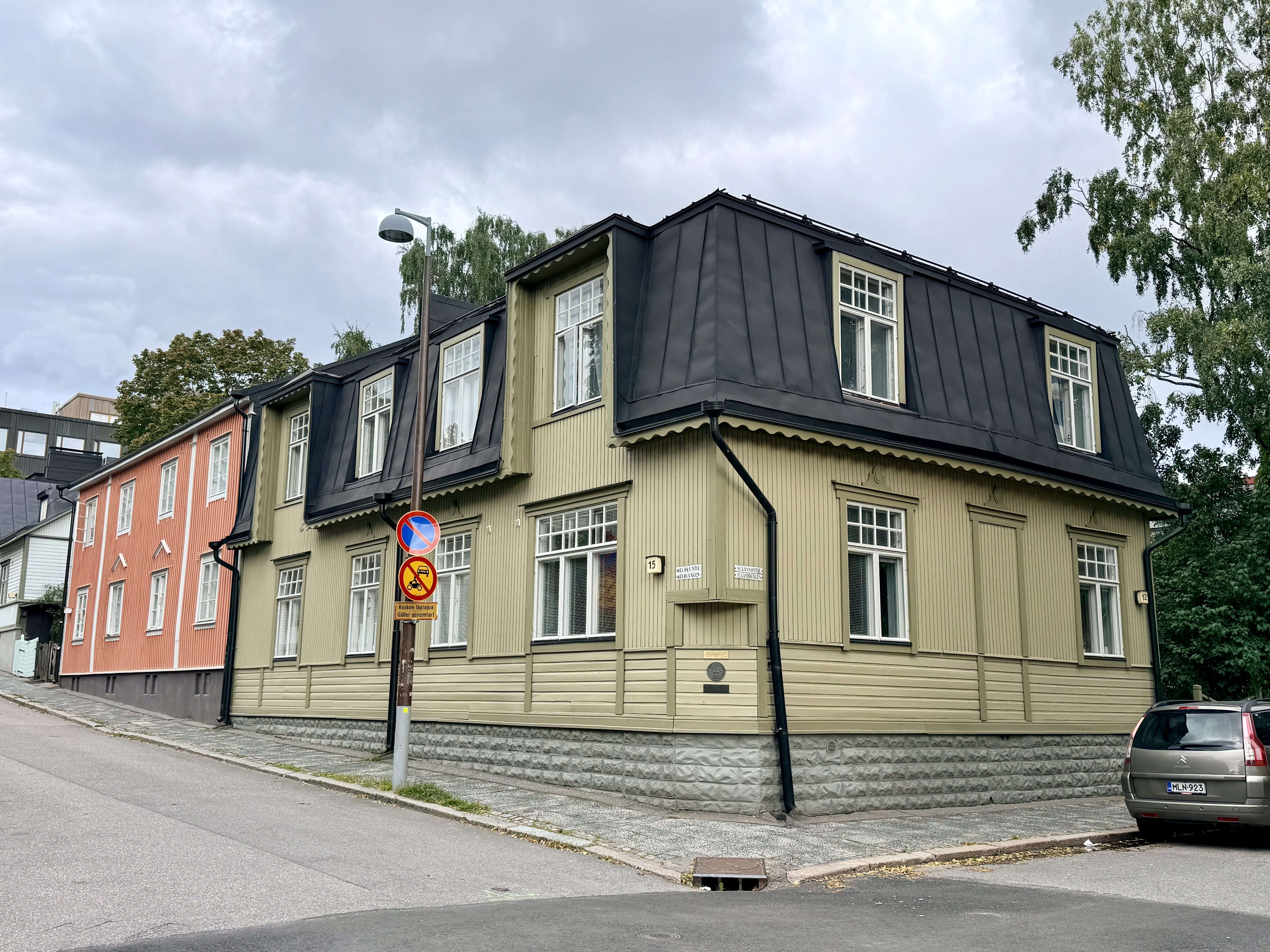
Street art & street scenes in Helsinki
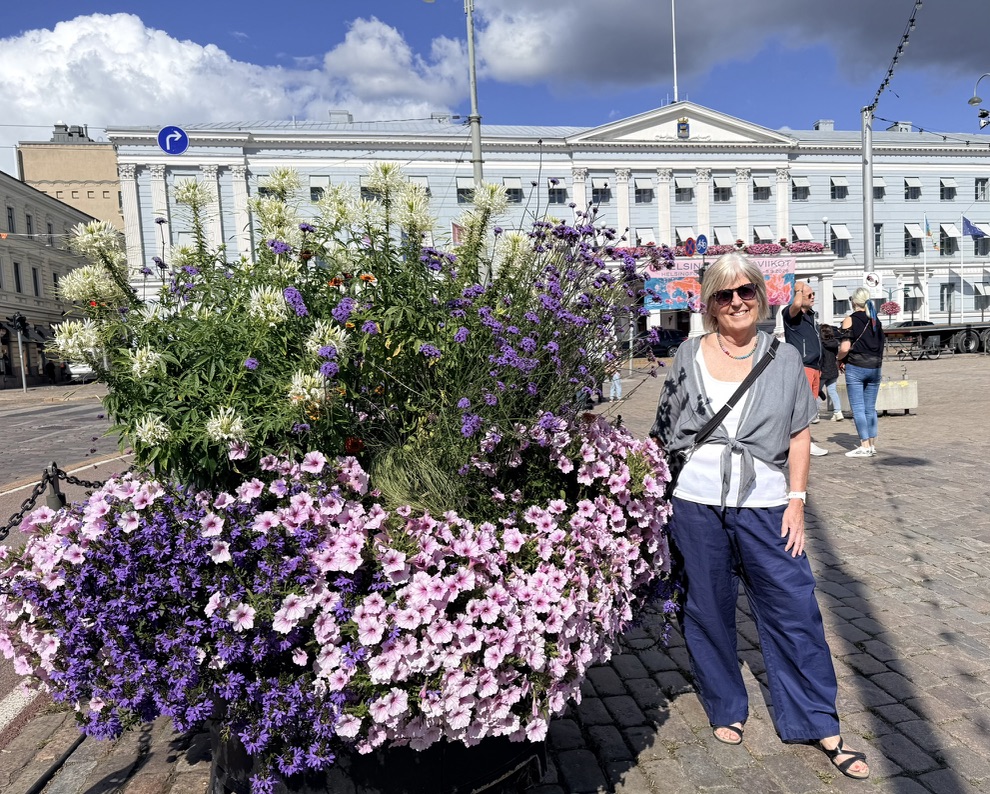
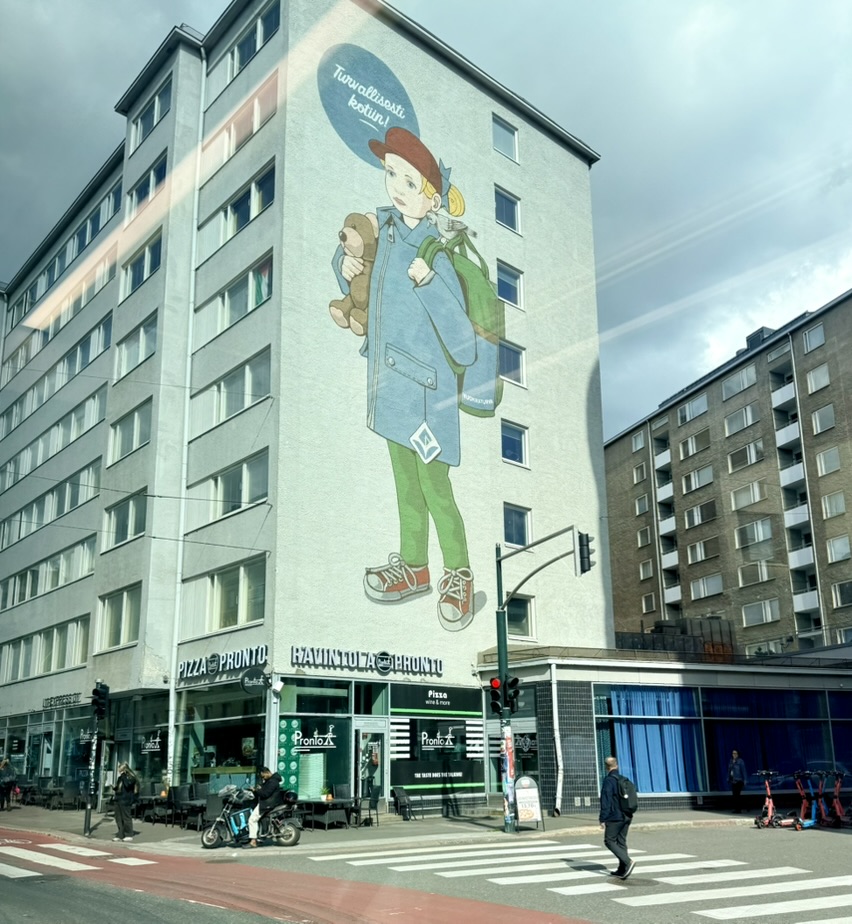
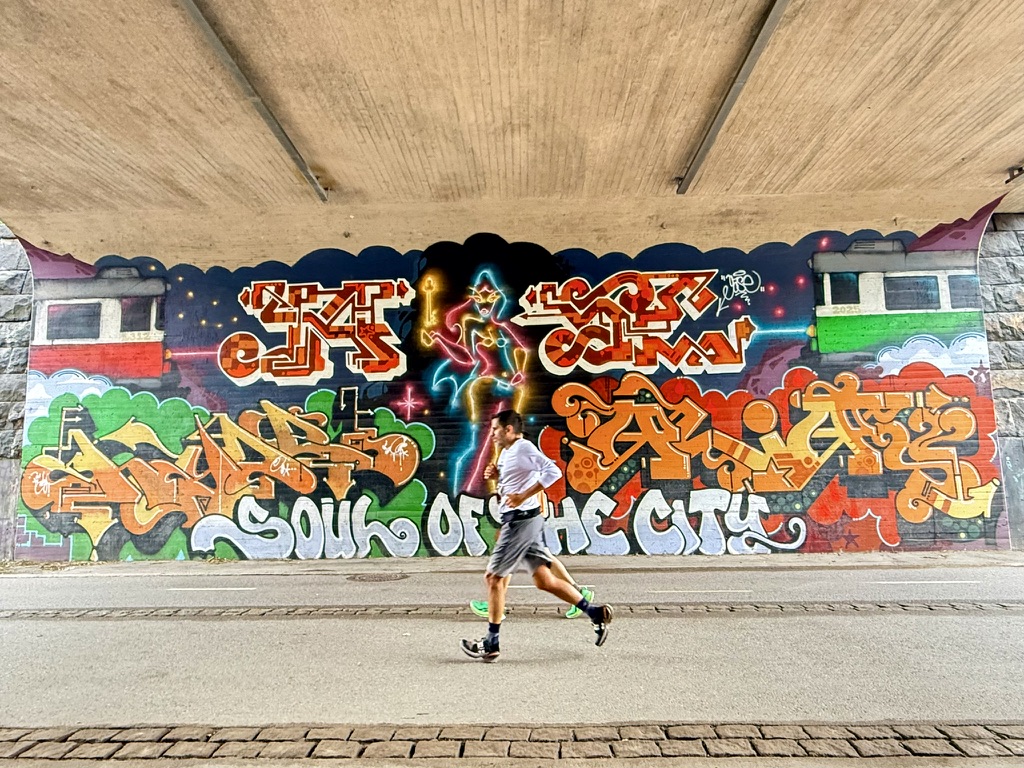
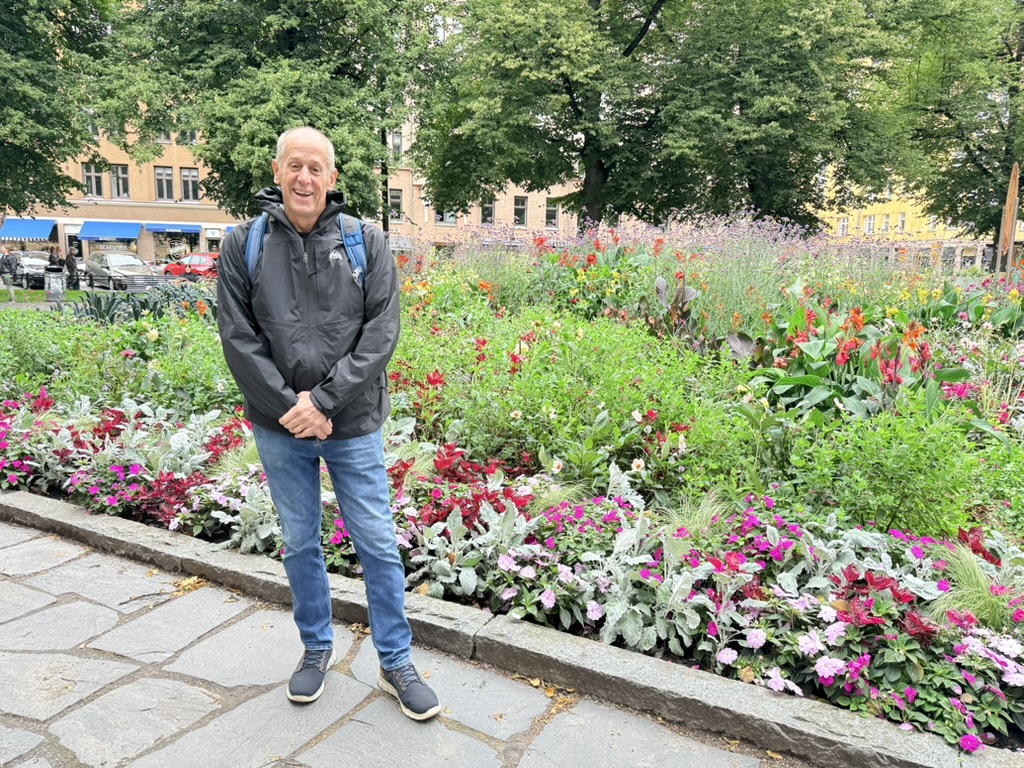
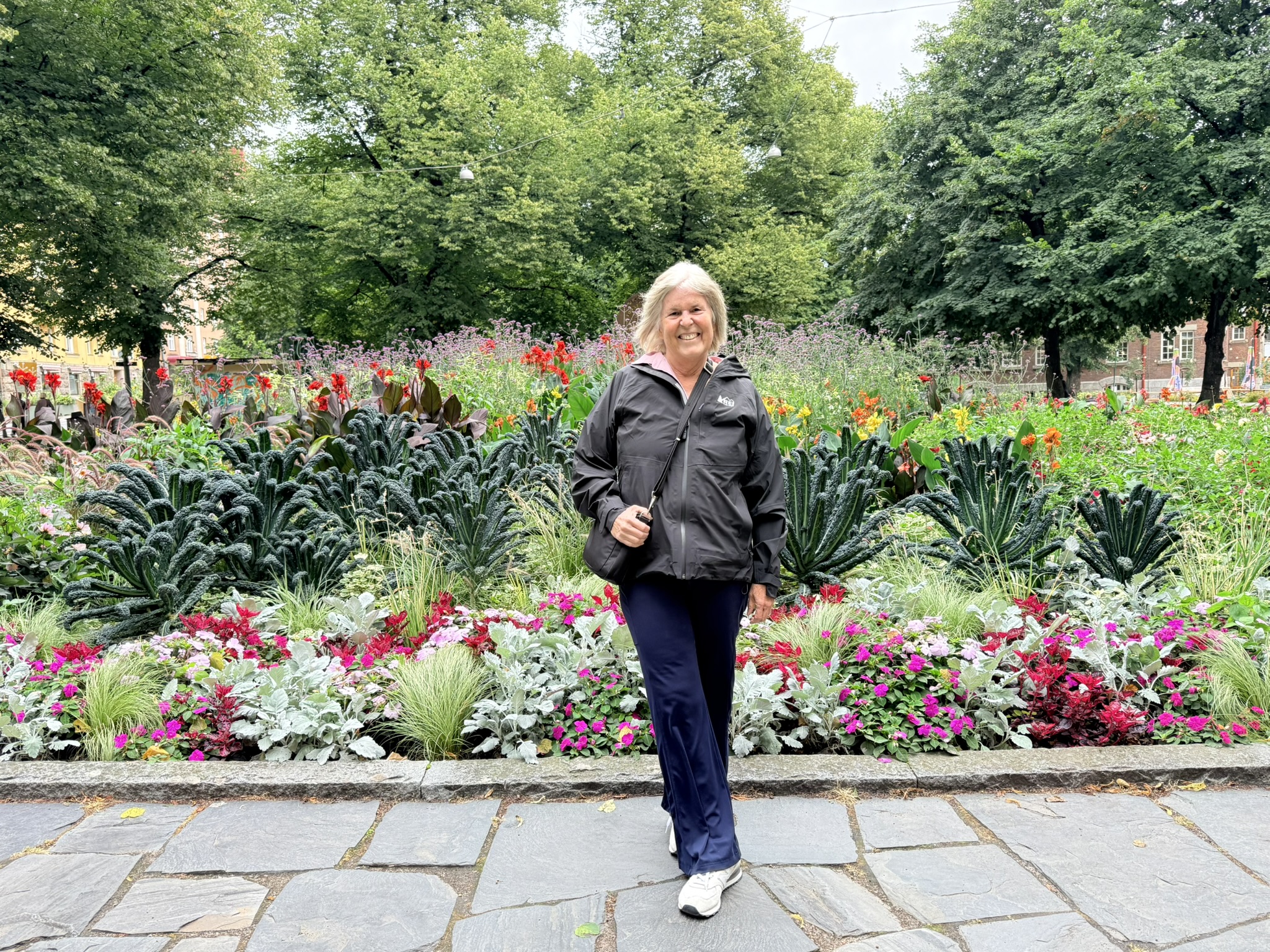
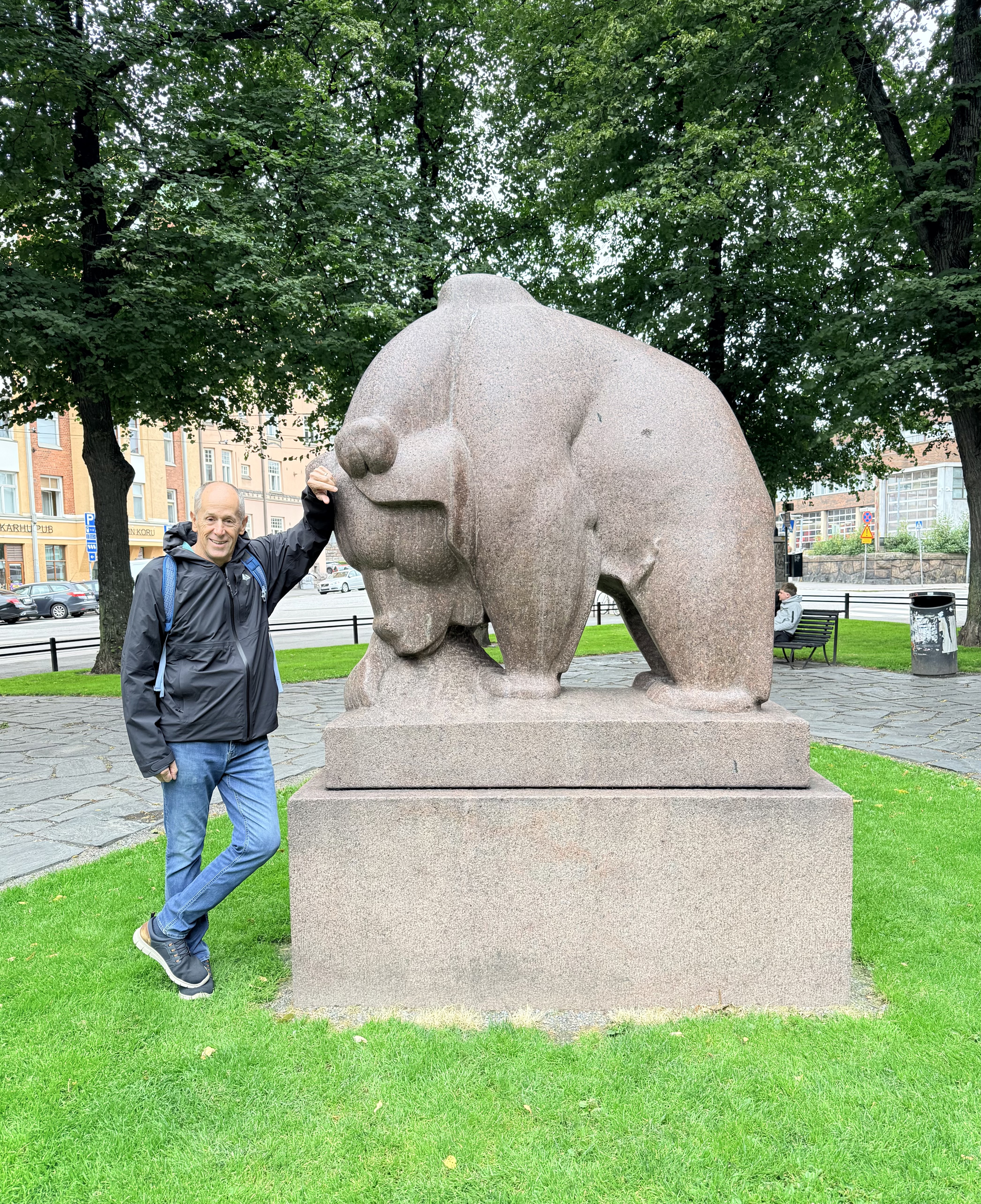
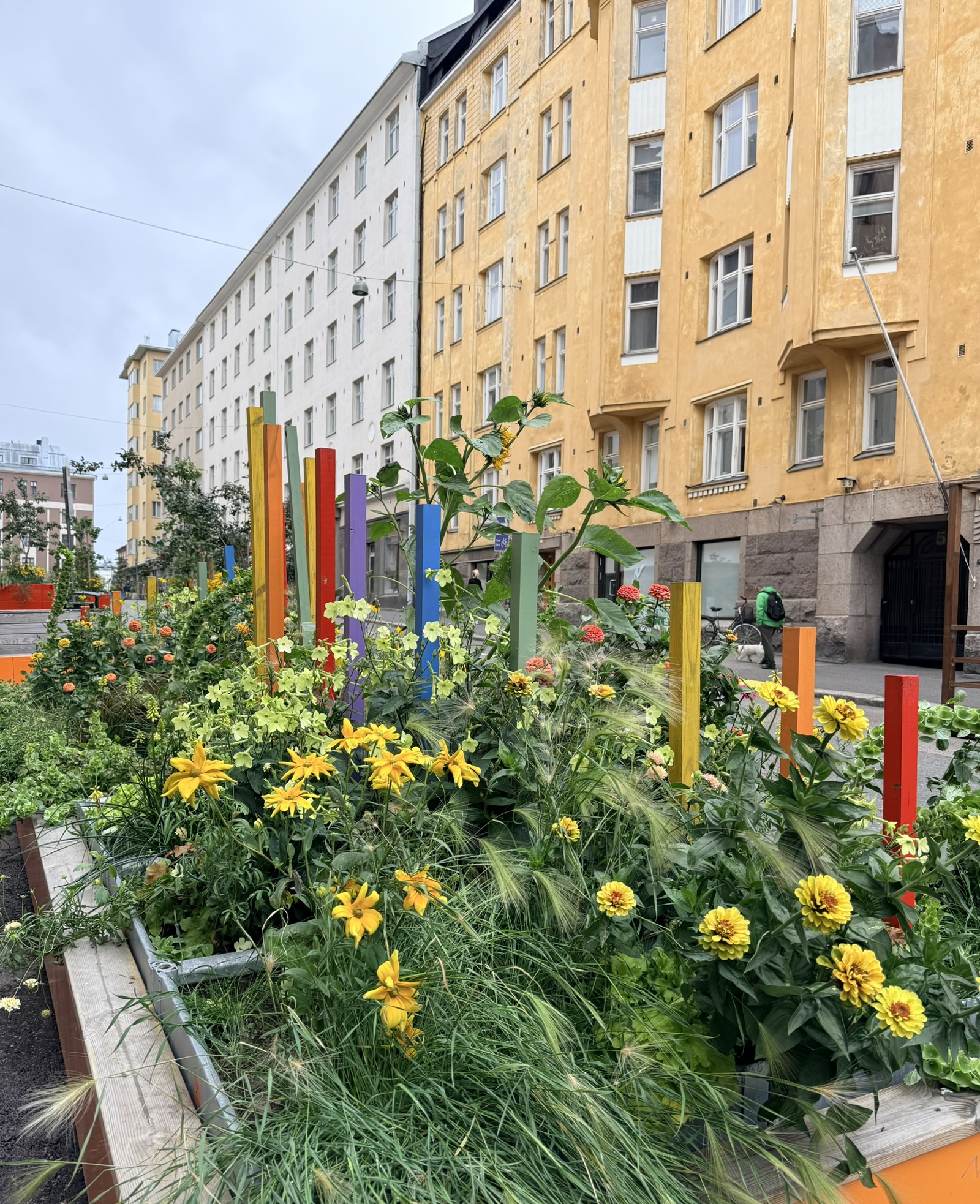
Helsinki doesn’t seem to be known for its street art. One guide book suggested we take a walk along the Baana pedestrian and bicycle path from the Museum of Contemporary Art Kiasma to Ruoholdhti. We started to walk there but a marathon was being run and the only “street art” we saw was what I call graffiti, with a few of the marathoners running by. Another day we found the cute Bear on the Anthill (sculpture in Kallio) in a pretty garden area. We always enjoyed the flower boxes on some pedestrian-centered streets.
Homebody Stuff & Finnish Sauna culture
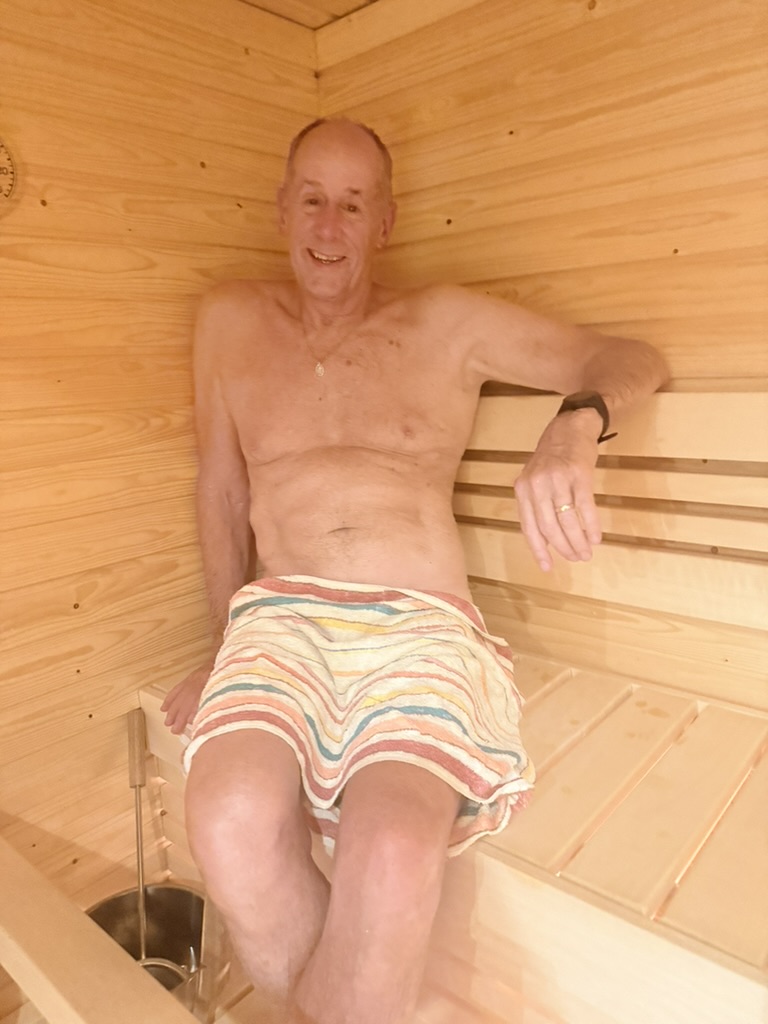
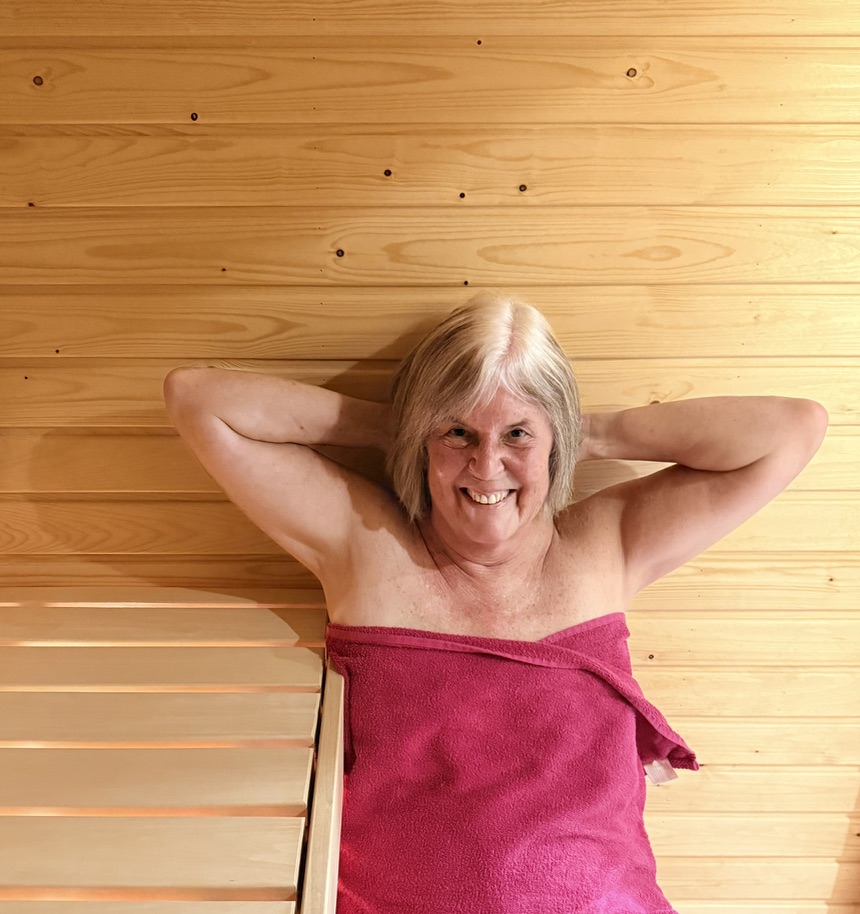
We continued with our normal routines on this trip, and in Finland, we’ve added another routine: the Finnish Sauna. Since we had an electric sauna in our apartment and the sauna is so important to Finnish culture, we definitely took advantage.
The sauna is an important part of Finnish identity and cultural heritage. Typical saunas today are continuously heated wooden saunas in summer cottages and electric saunas in city apartments. It is estimated that there are 3 million saunas in Finland. In the private sauna, people enjoy silence and relax by lounging on the benches. Public saunas however are social places where people chat with strangers.
Traditionally, saunas are taken without clothes but it depends on the place and company. The sauna has nothing to do with sex; any mention of sex is considered tasteless by Finns.
The typical sauna is done as follows: 1) Take a shower. 2) Use a cloth or disposable seat cover under your bottom. 3) Sit in the sauna for 10 minutes. 4) Take an equally long cooling break outdoors or in a cold shower. Three steam rounds is common.
The normal temperature is 70-90 degrees. 100 degrees is also common. 120 degrees is only for tough people! The lower benches are not as hot as the high ones. Only the upper bench people are allowed to throw water on the stones, which sends a hot blast of steam into the whole sauna.
It is recommended to drink plenty of water or beer or both!
Normal routines
In the evenings, we watched our regular shows: Sommerdahl, The New Adventures of Old Christine, AnotherSelf , Ted Lasso, Old Money, Trying, The Killing, and Furious. In Helsinki, I’ve been reading The Berry Pickers by Amanda Peters along with Lucy by the Sea (Amgash #4) by Elizabeth Strout. Whenever I start an Elizabeth Strout book, I’m flabbergasted by how much I love her writing. I find I’m not making as much time as usual to read, as I usually spend most of my time editing photos, writing my blog, reading up on places we visit, plotting out our transport options, and keeping touch with the family at home. This week we talked to Adam, Alex & family, and Sarah.
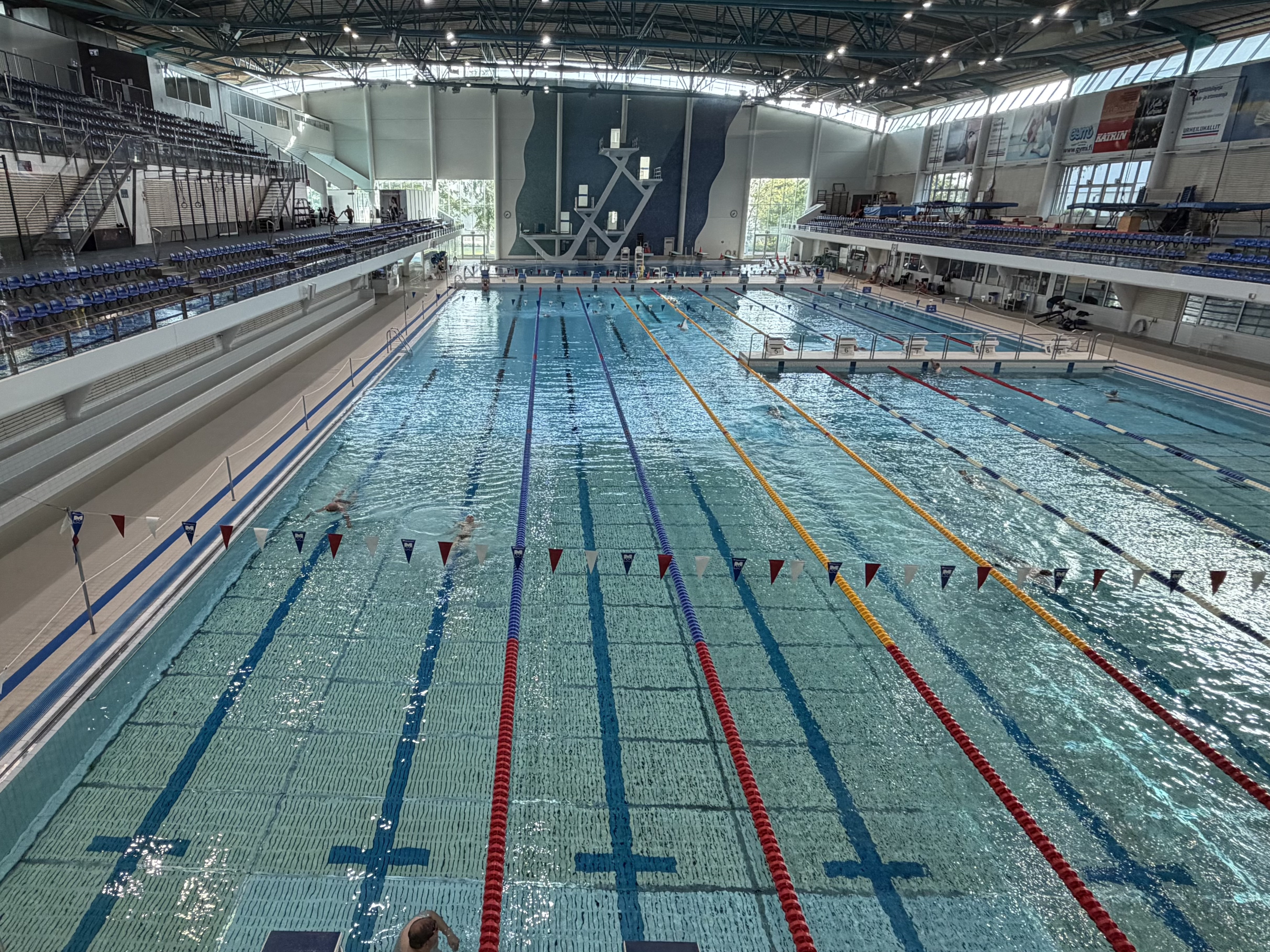
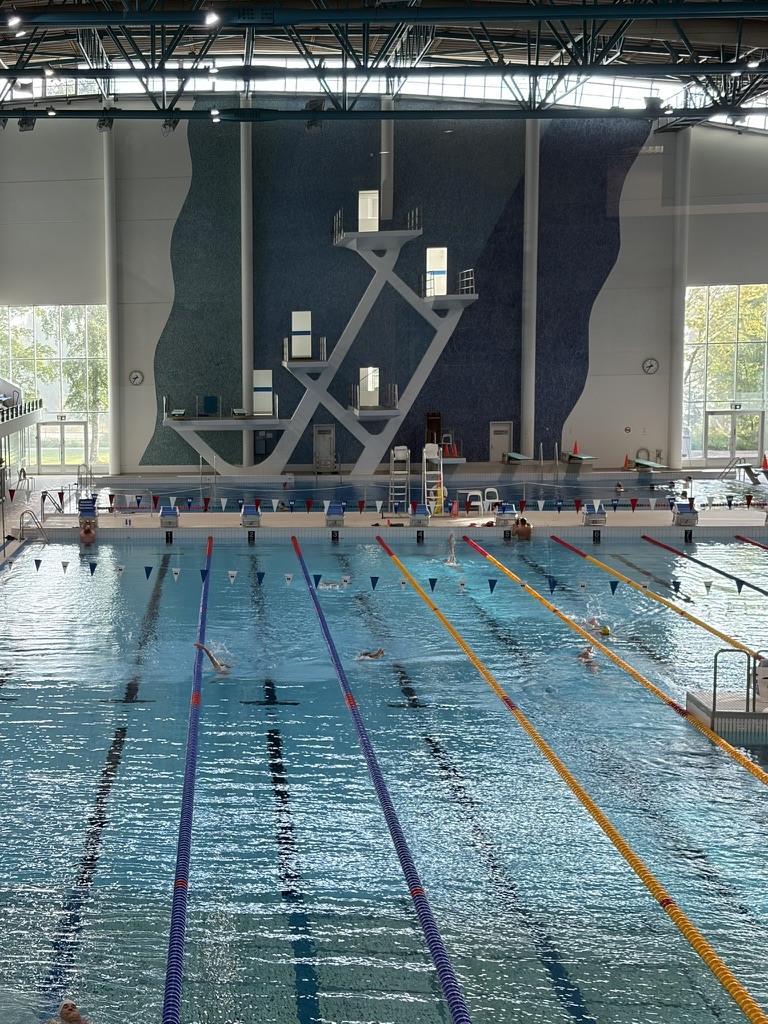
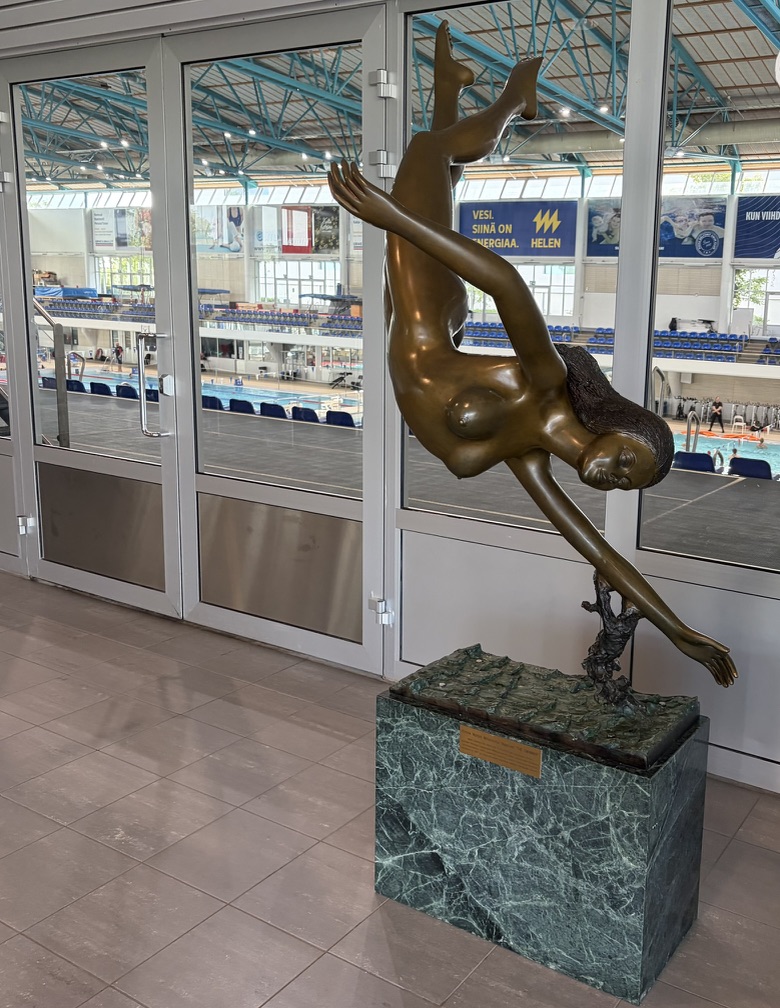
Mike found a great swimming and exercise facility, Mäkelänrinteen Uiniikeskus, which has an indoor 50-meter pool, a diving pool and platforms, a kids’ pool area, saunas, jacuzzi-type pools, basketball sports hall, indoor track, and exercise and weight rooms. Biking is prevalent in Helsinki but it’s hillier here than in Denmark and we never tried bike-riding in the city. We love the hustle and bustle of the Helsinki. It’s a great place for people-watching.
On Tuesday, August 25, we headed by train to Tampere, where we’ll stay for 5 nights.
Discover more from ~ wander.essence ~
Subscribe to get the latest posts sent to your email.


What a busy week. You managed to fit lots in and it all looks amazing.
LikeLike
Two libraries, you spoil me! Everything looks lovely and so clean – literally and also figuratively with clean lines to some of the architecture, the more modern buildings anyway. Not your usual boxy constructions. We could learn a lot from their public transport systems too.
LikeLike