
These posts cover our slow trip through the Scandinavian/Nordic countries from August 4 to October 30, 2026. I will be posting one long post a week about each area where we stay. I like to write one post about a particular place so that I can revisit our travels in one spot on my blog, according to location. I can also refer others to the post if they plan to travel to the destination and want ideas. I welcome you to read the entire post, read parts of the posts that interest you, simply look at the pictures, or not to read it at all. All who would like to come along are welcome.
You can find our itinerary here: anticipation & preparation: a slow motion journey through scandinavia.
**************
Thursday, September 10 – Thursday, September 17: This week we moved from Turku, Finland to Bergen, Norway.
Turku, Finland to Bergen, Norway
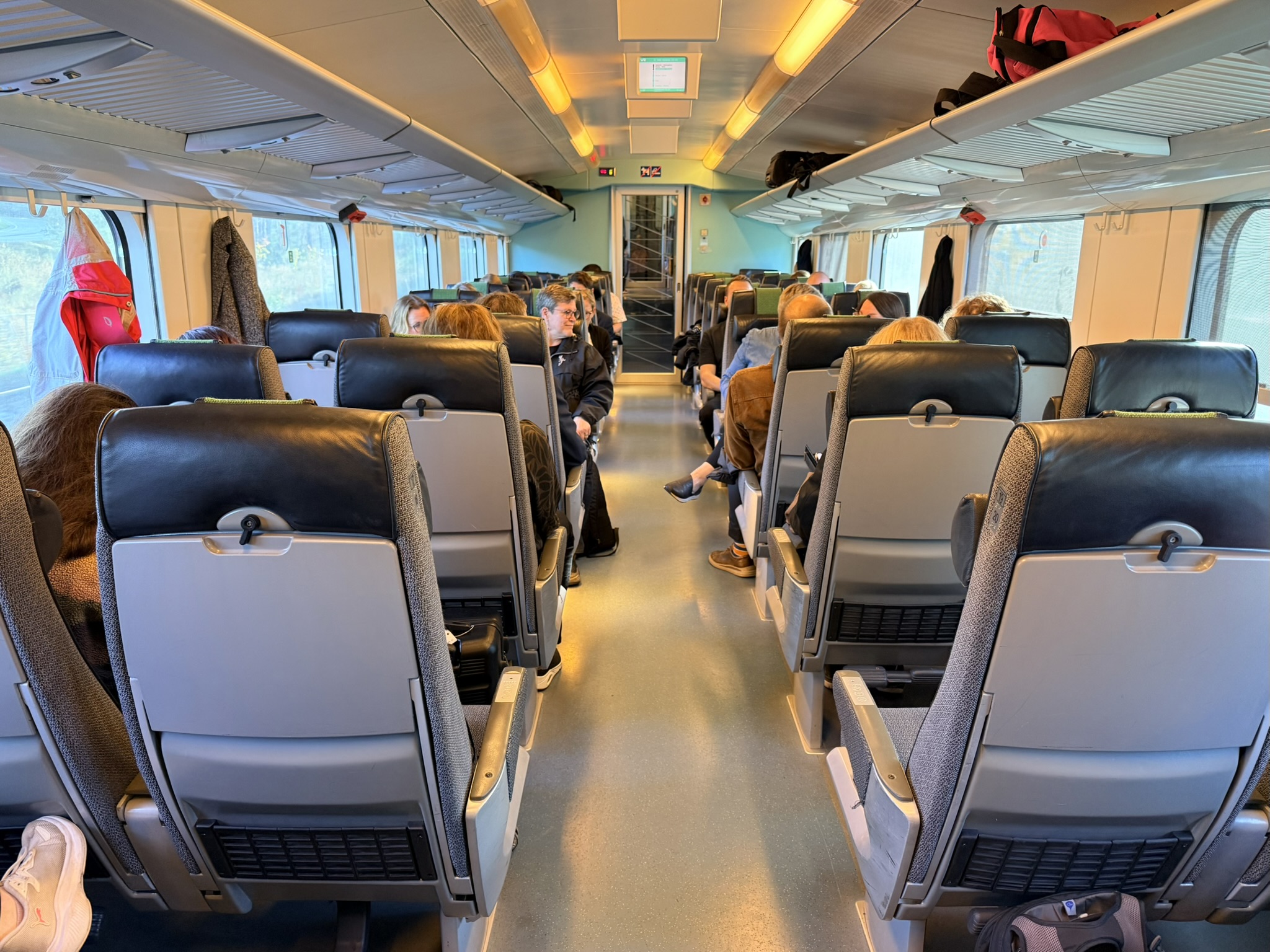
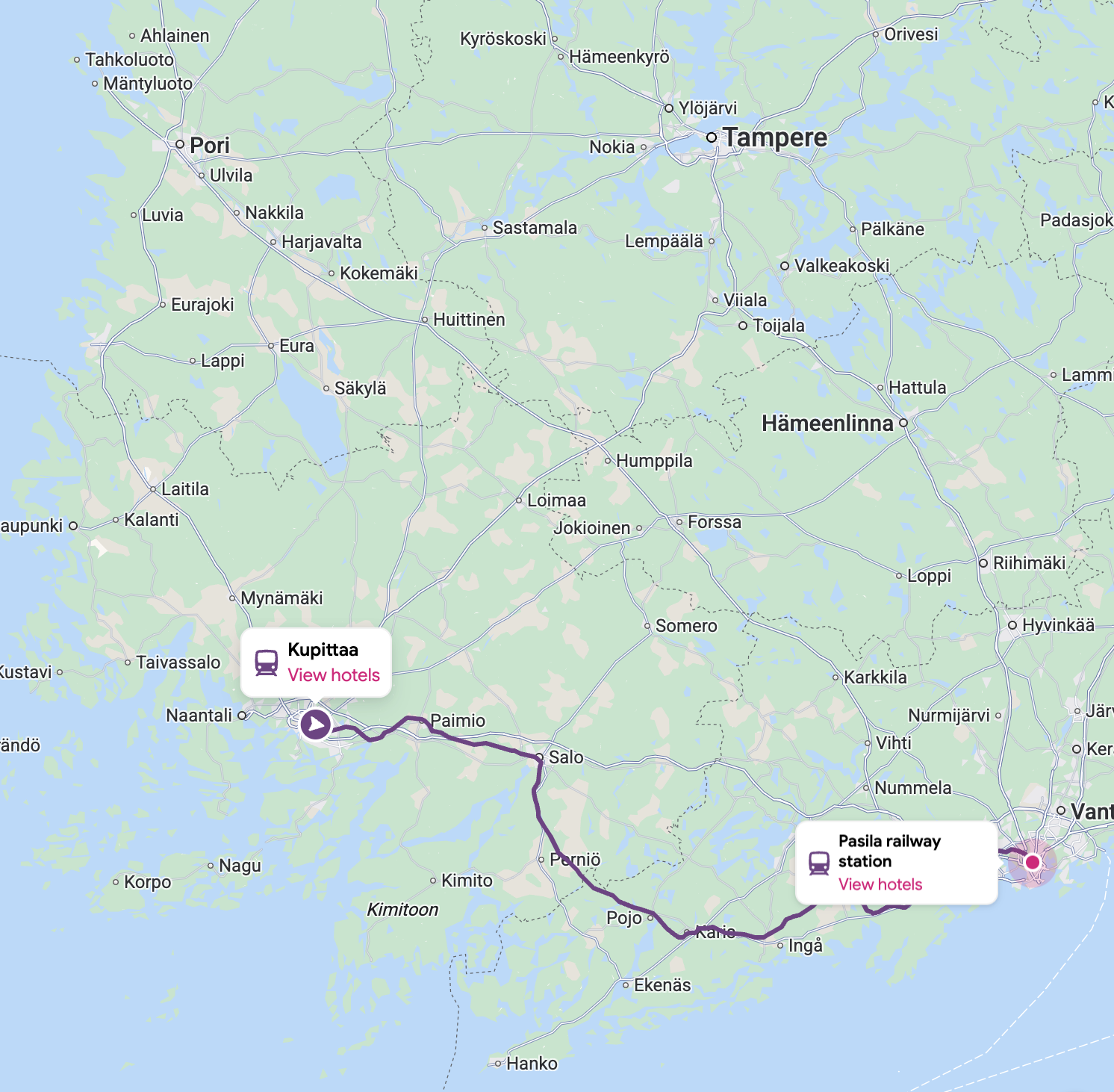
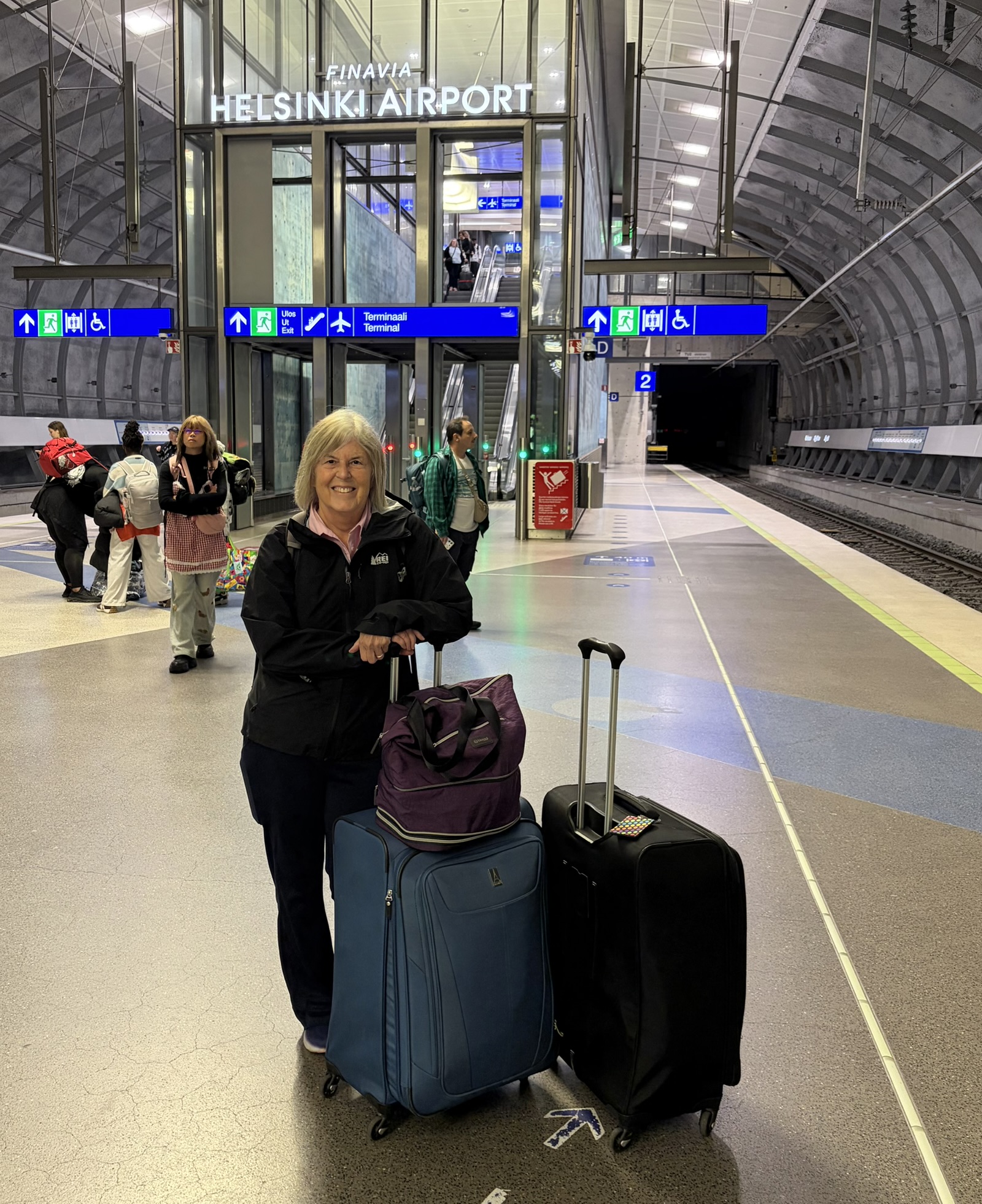
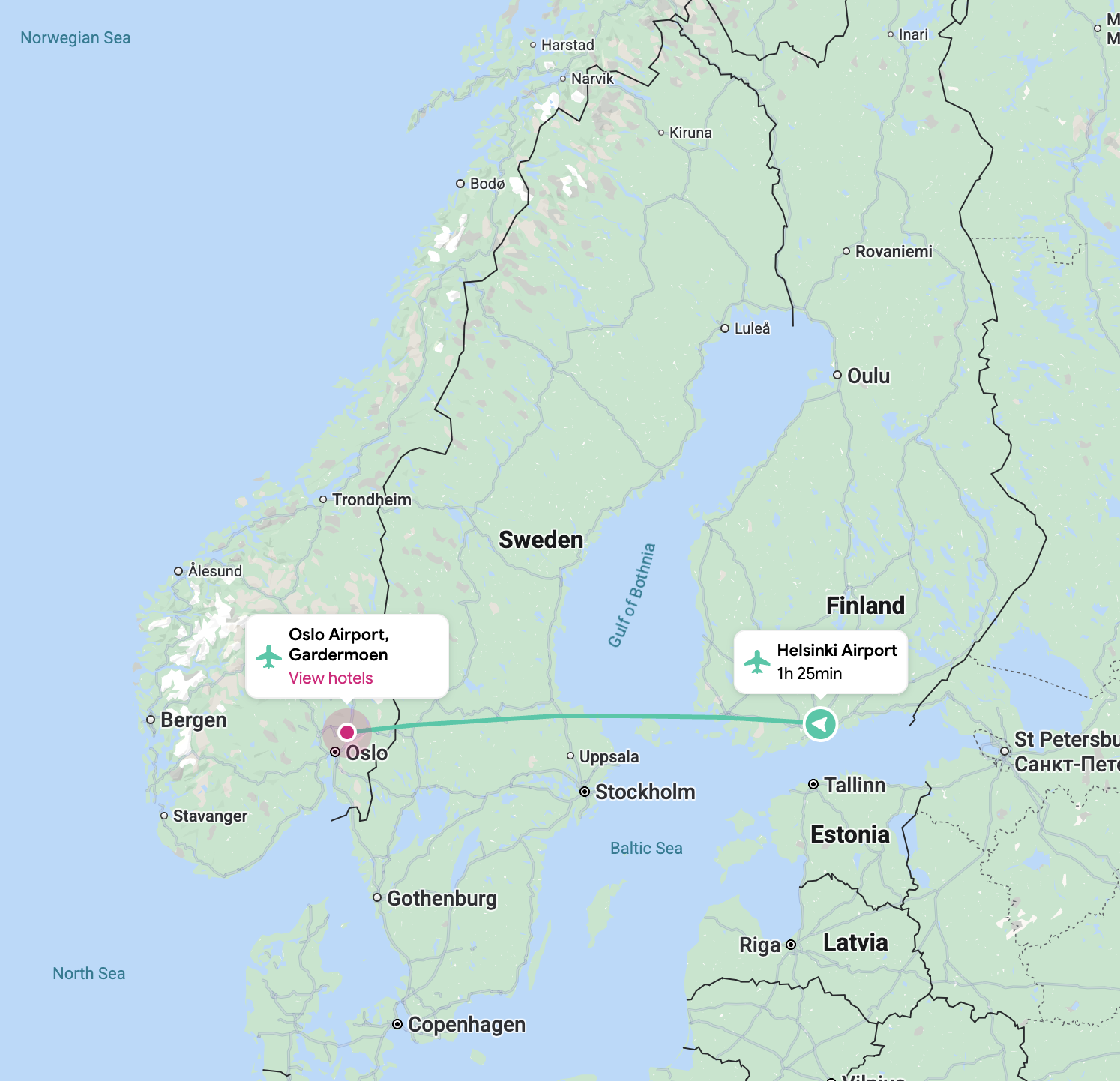
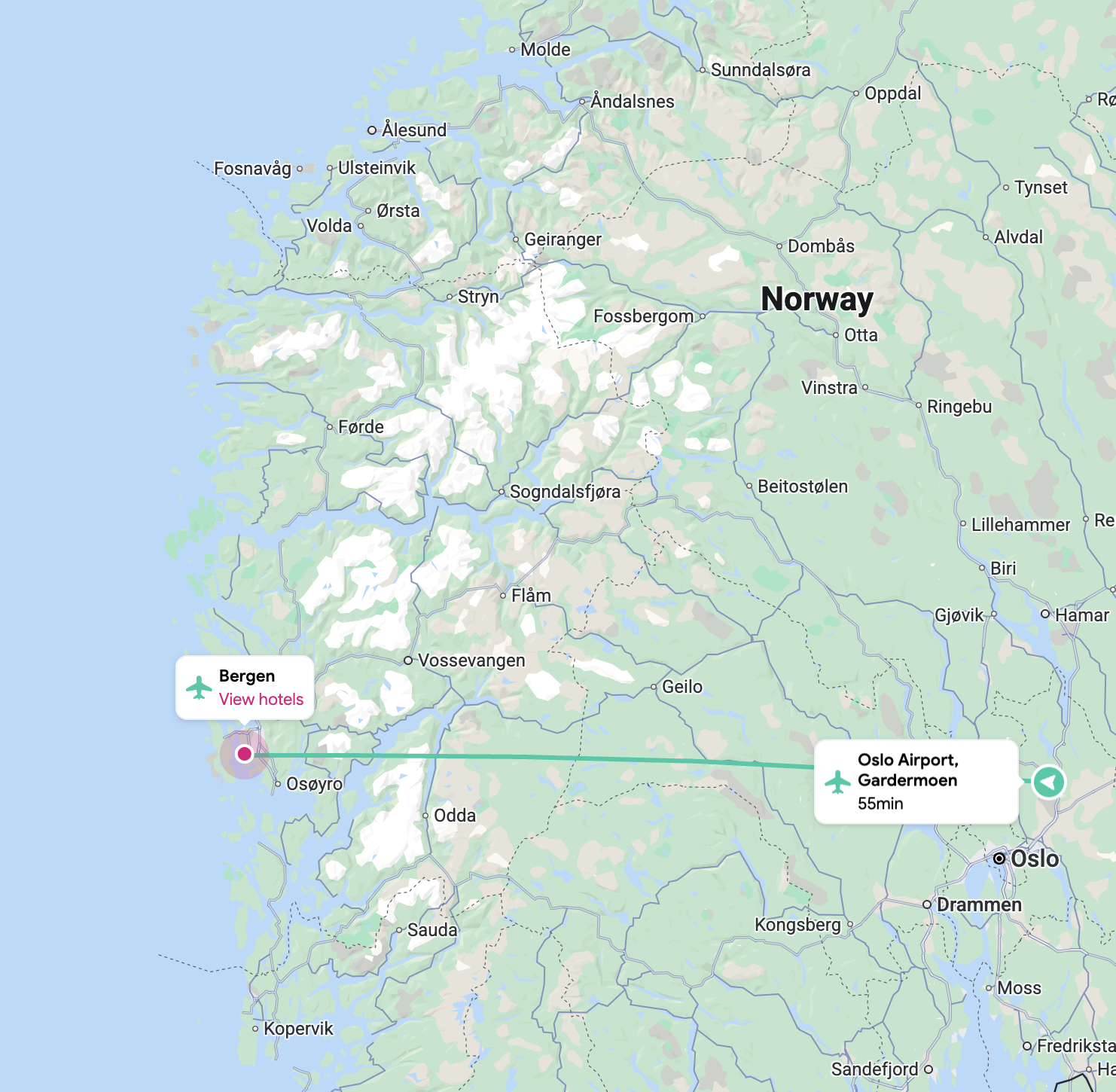
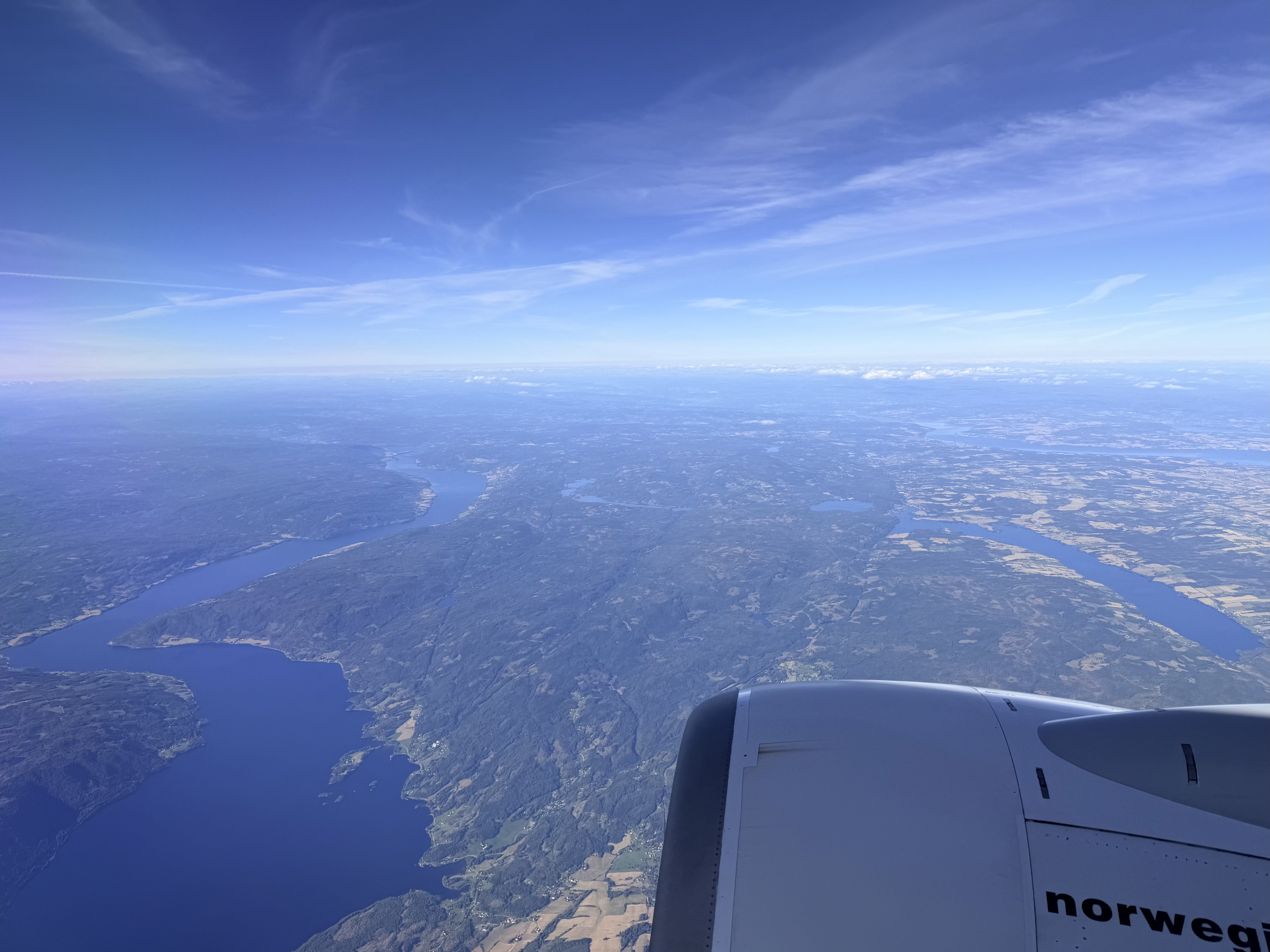
This morning, we left our apartment in Turku at 7:30 and took the 2-hour VR train (8:34-10:34) from Turku to Pasila in Helsinki. We then took a commuter train another 20 minutes to the airport. At 1:55 we took a Norwegian Air flight to Oslo-Hardermoen Airport after a 1 hr 10 minute flight. Then we took another flight to Bergen at 3:40 for less than an hour, and then the light rail for 45 minutes to the next-to-last stop from the city center, at Nonneseter. We checked into our apartment at 5:45 (equivalent to 6:45 in Finland). After our 11-hour travel day, we were exhausted.
Now that I’m in Norway, I’m visiting my 46th country! 🙂
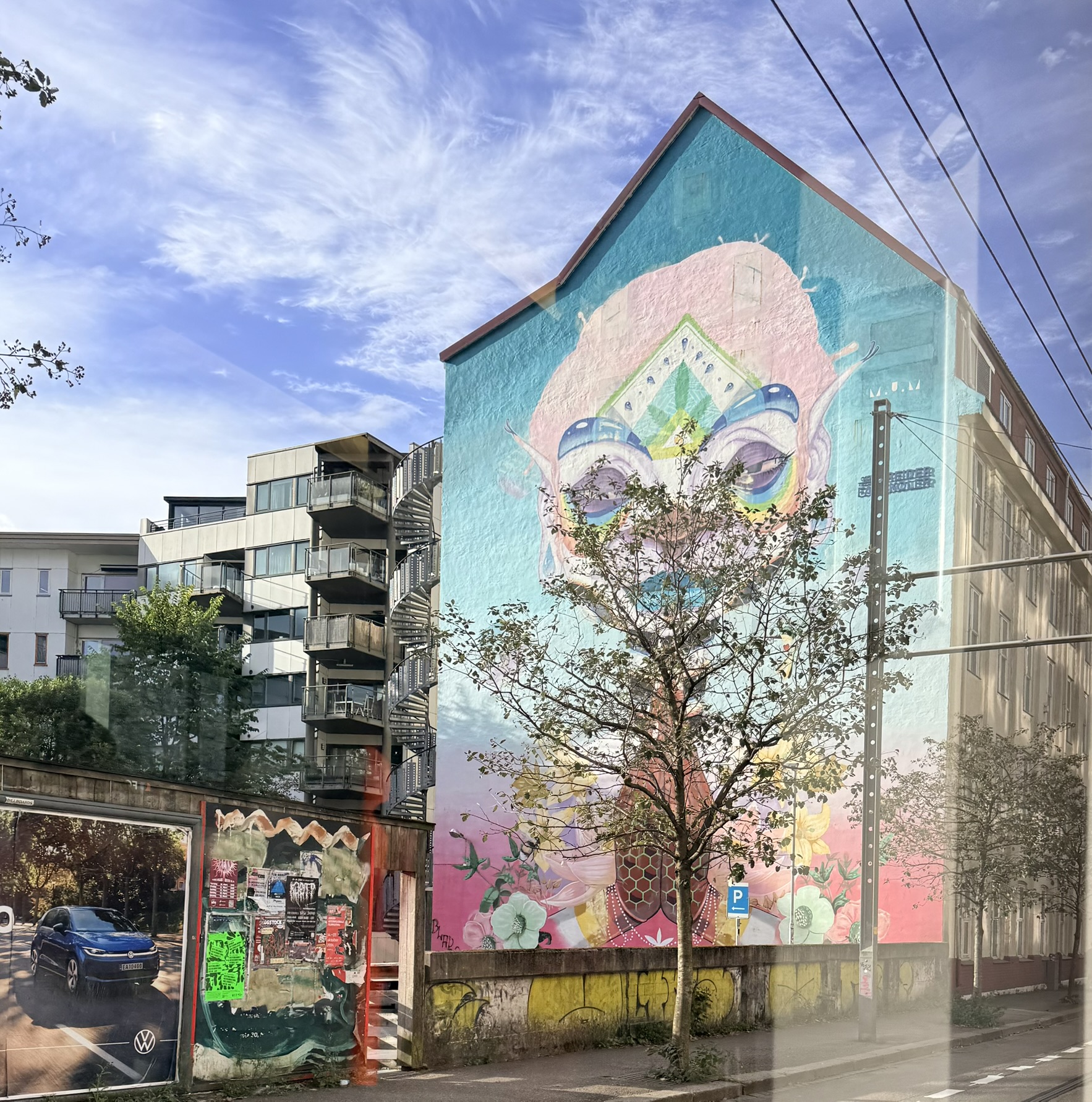
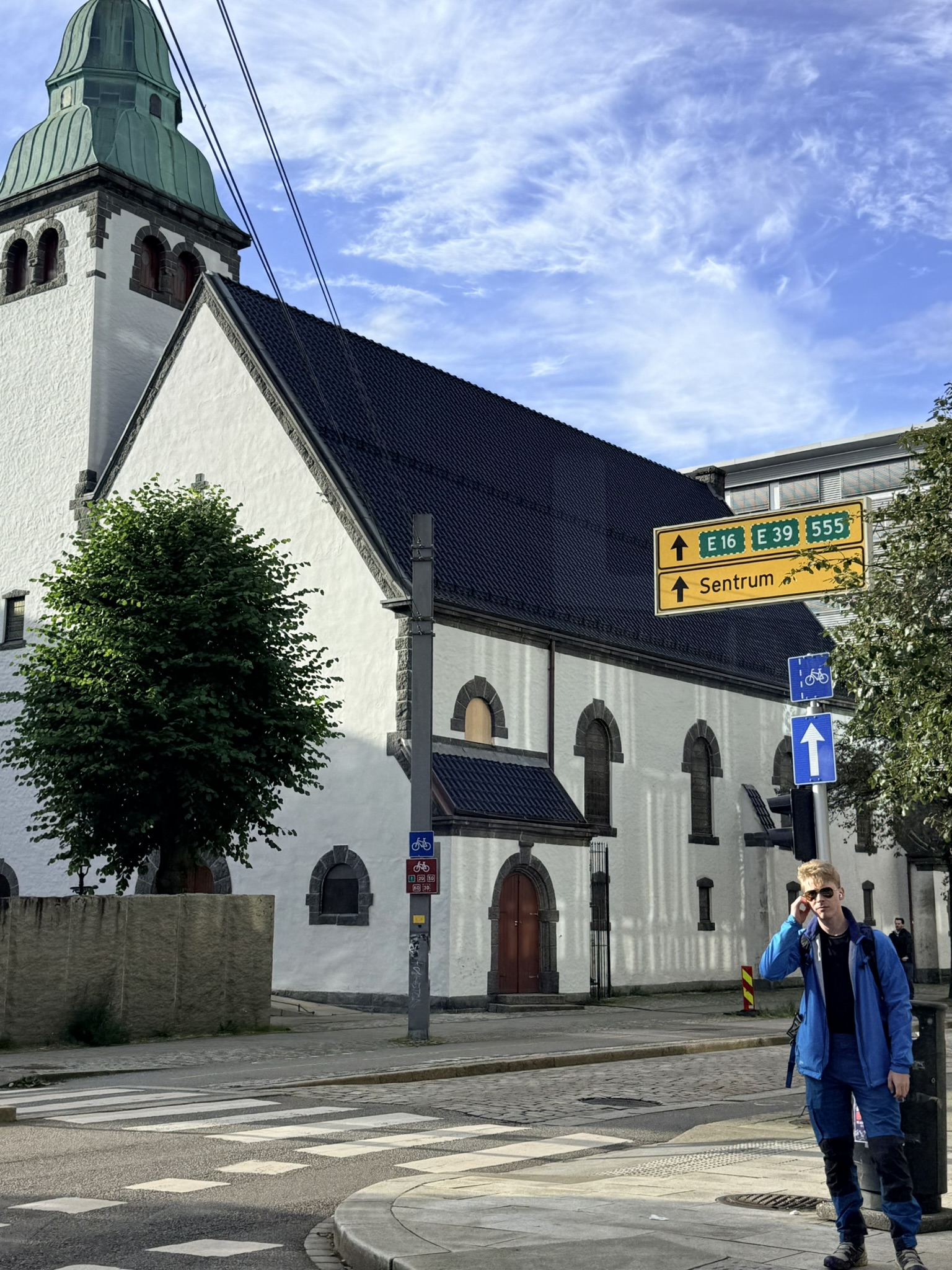
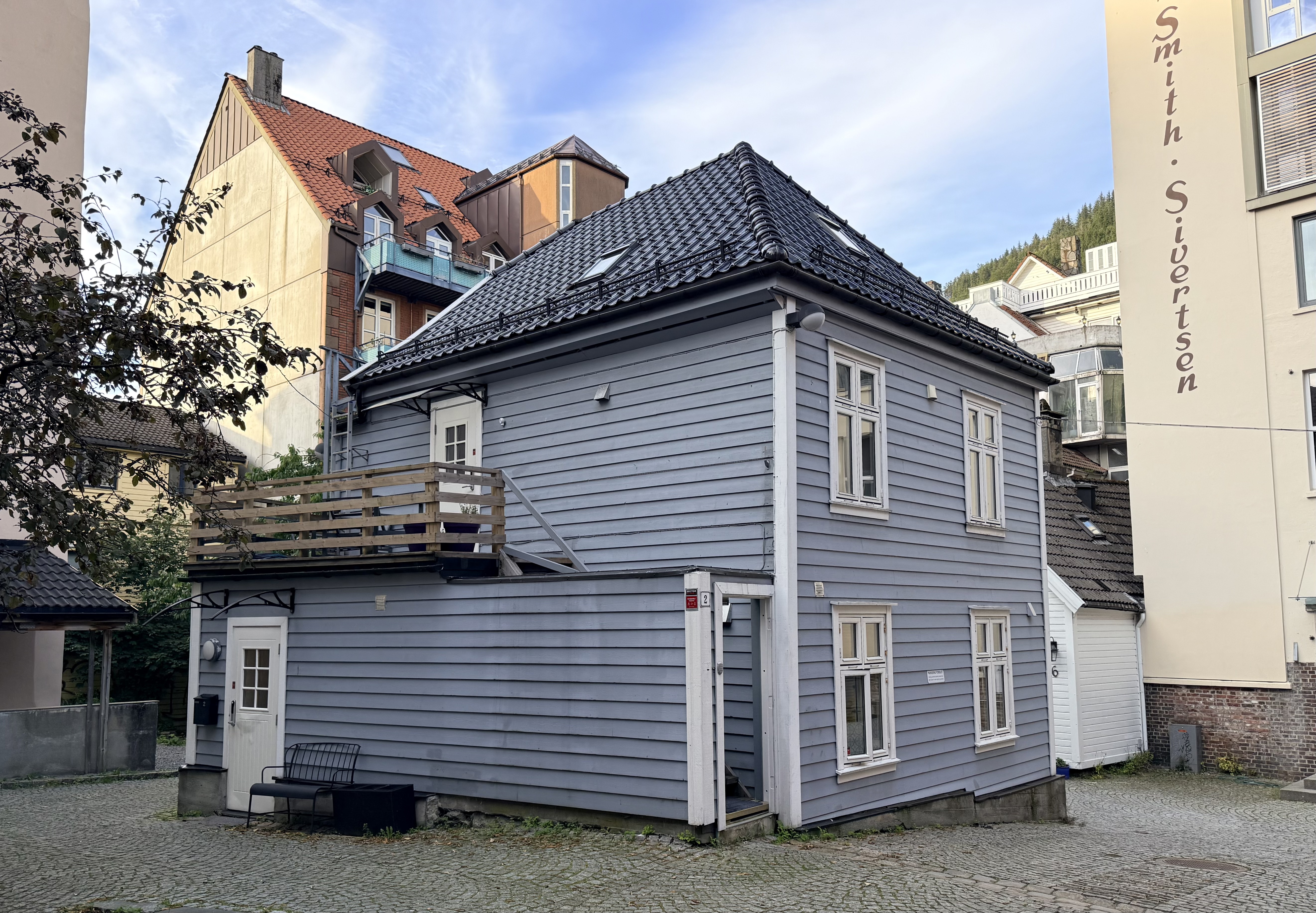
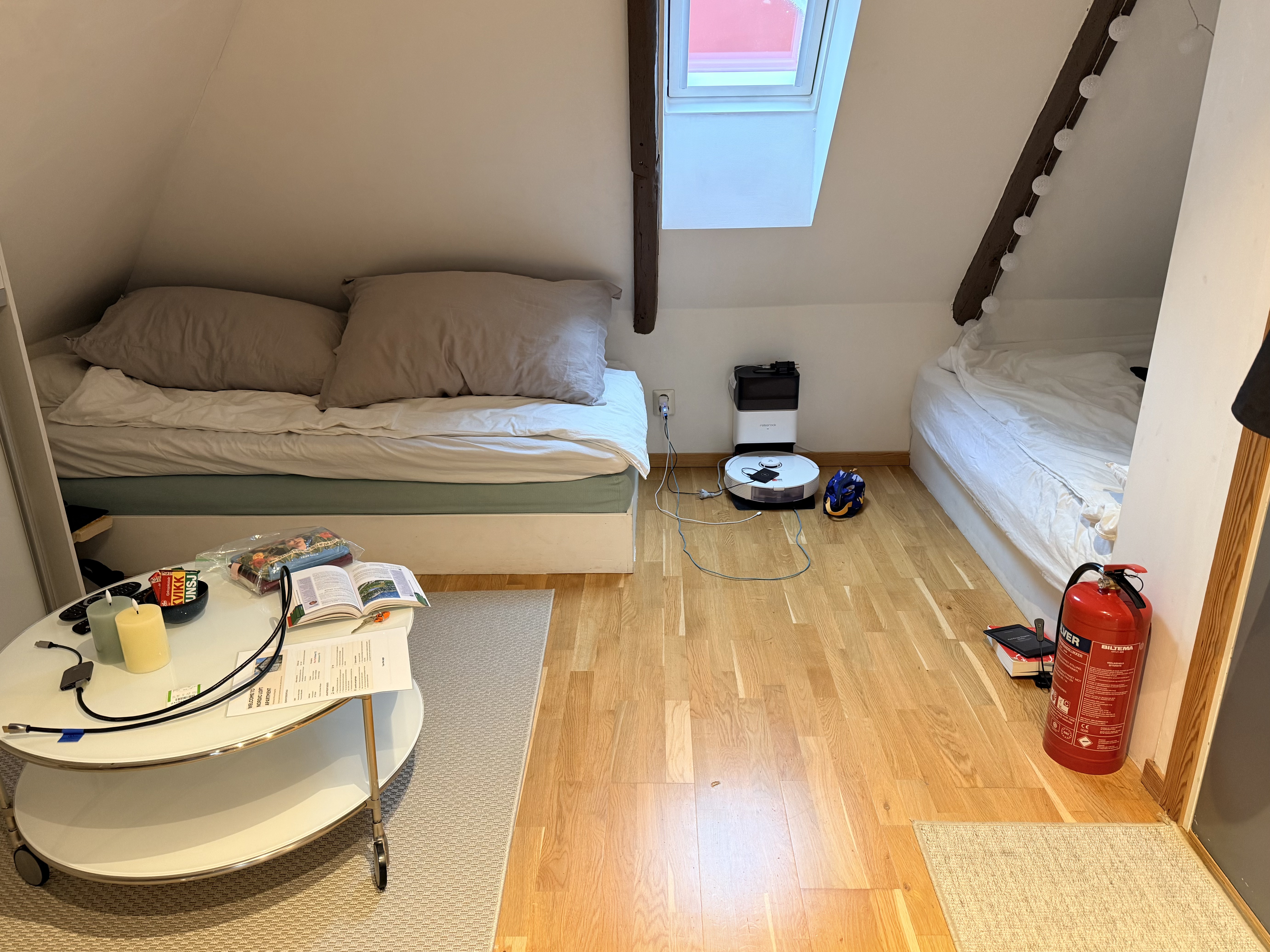
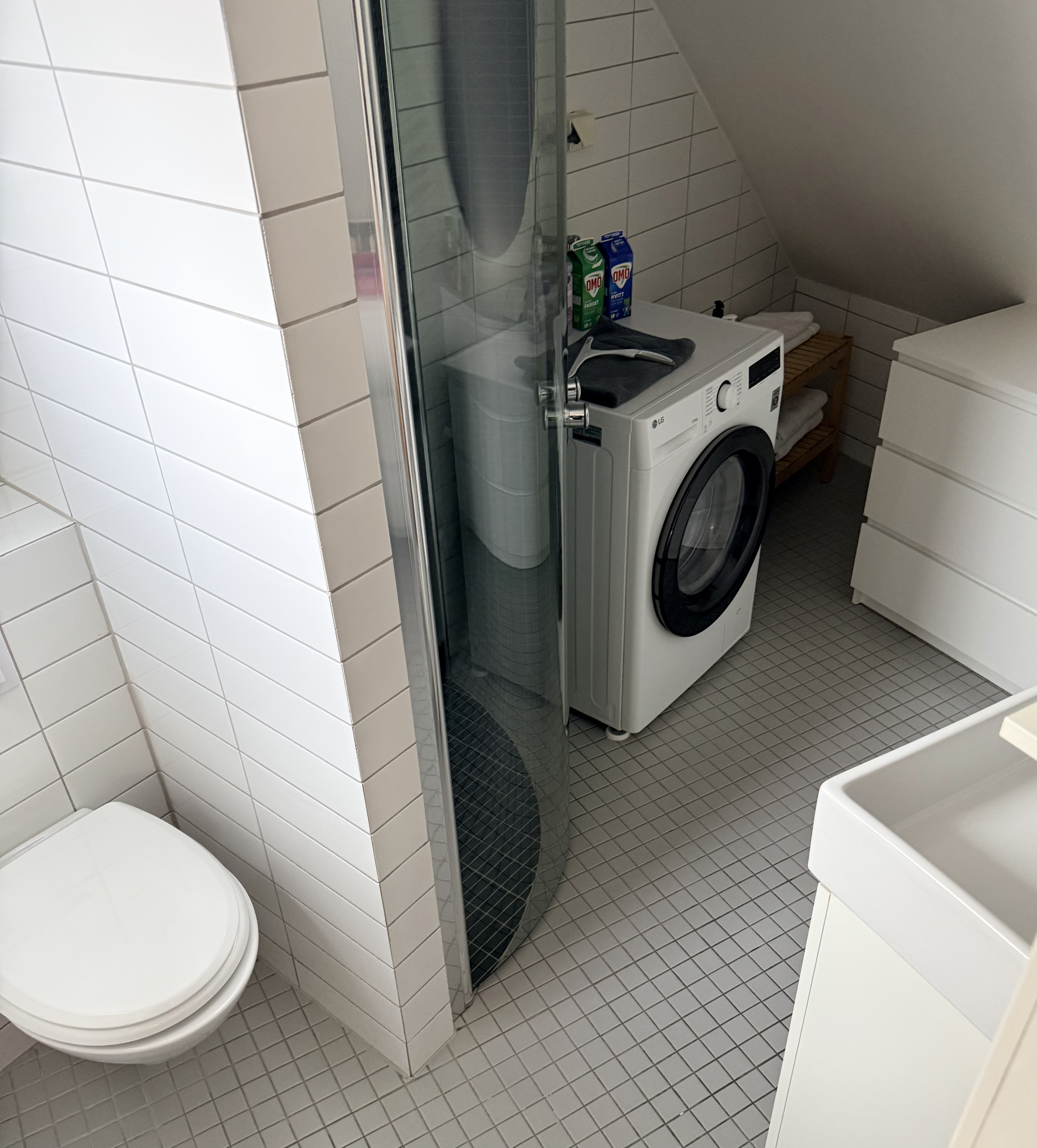
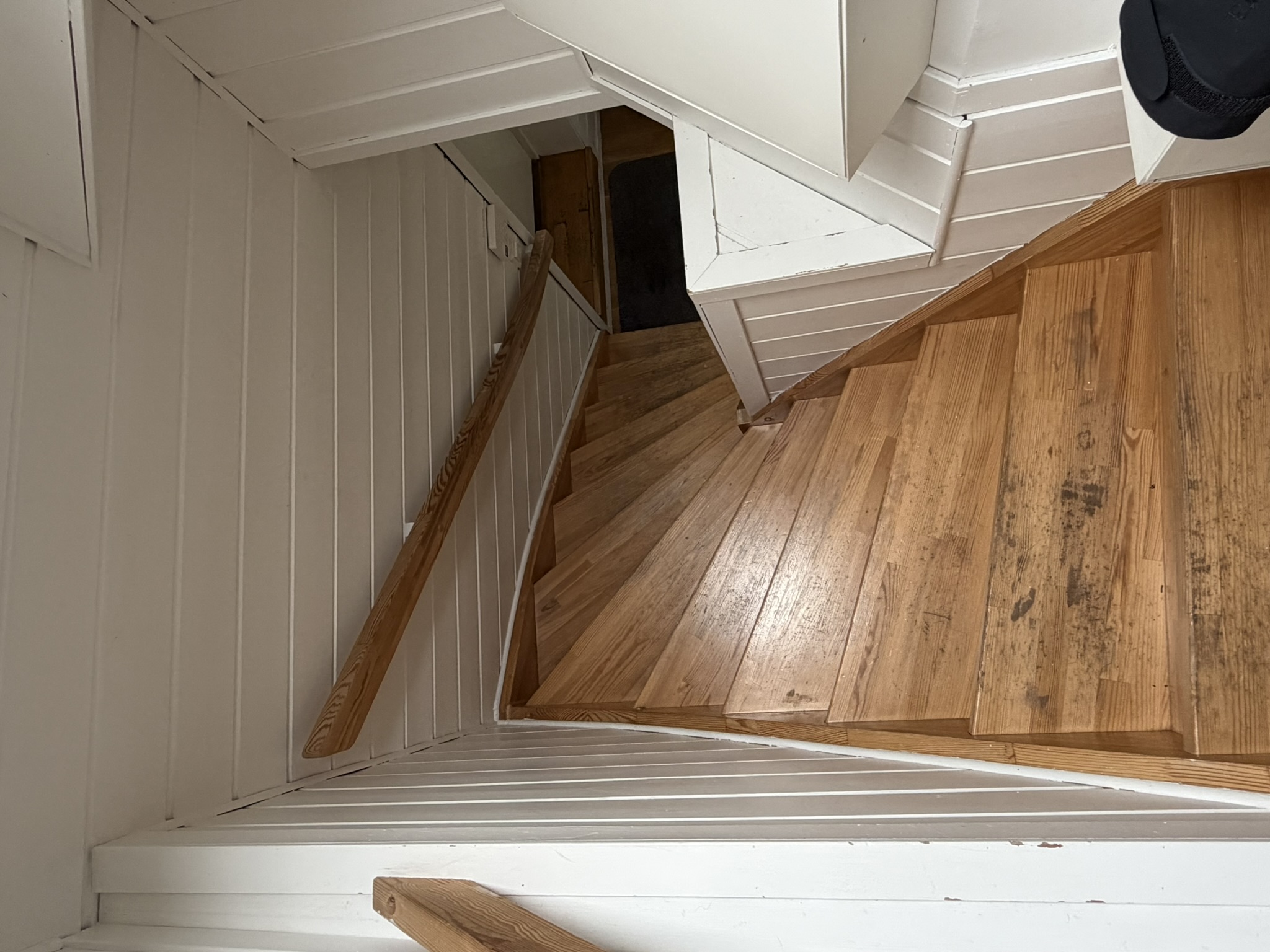
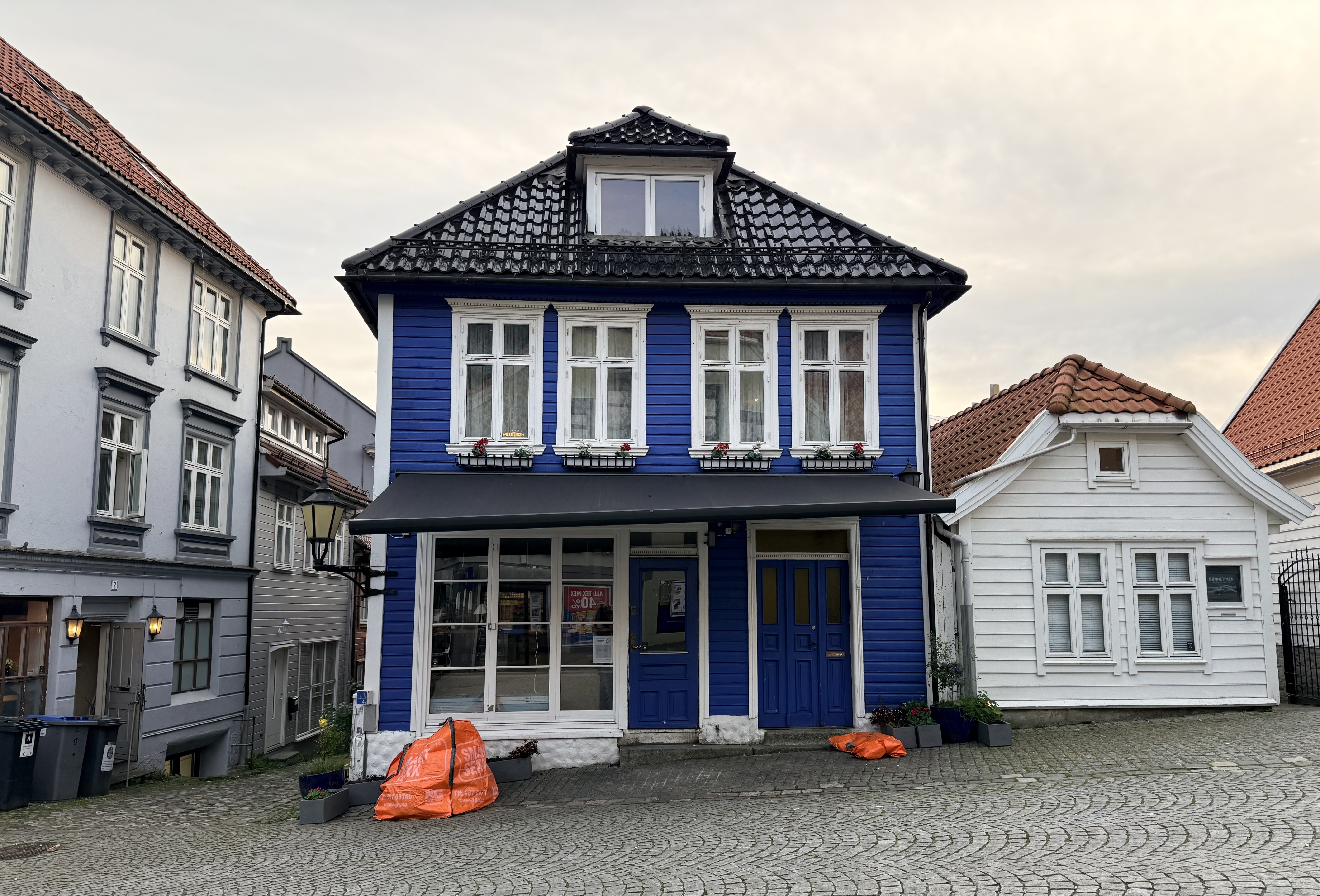
Our Airbnb apartment: Condominium in Bergen, Norway on Veversmauet 2 H 103, Bergen, Vestland, Norway
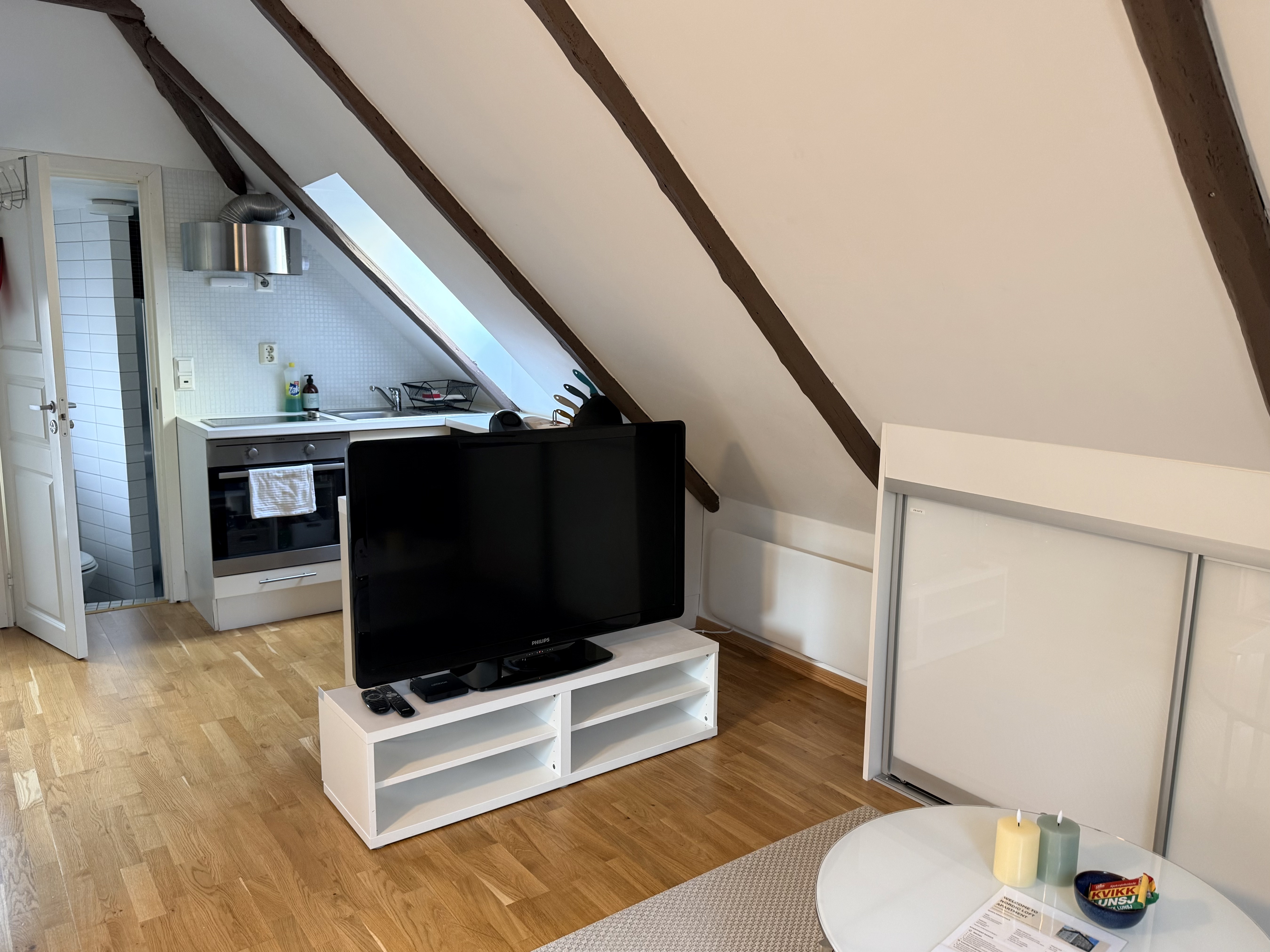
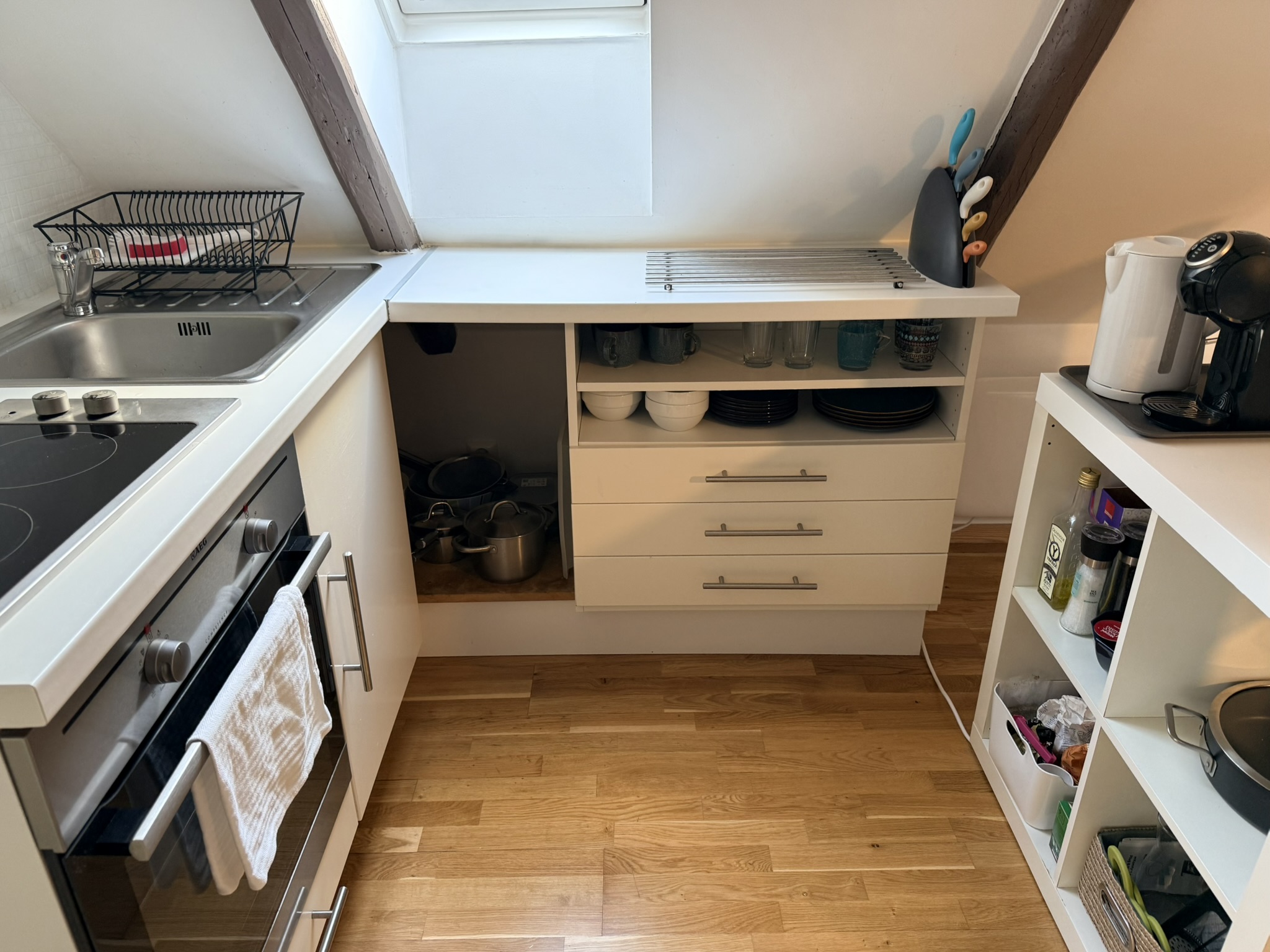
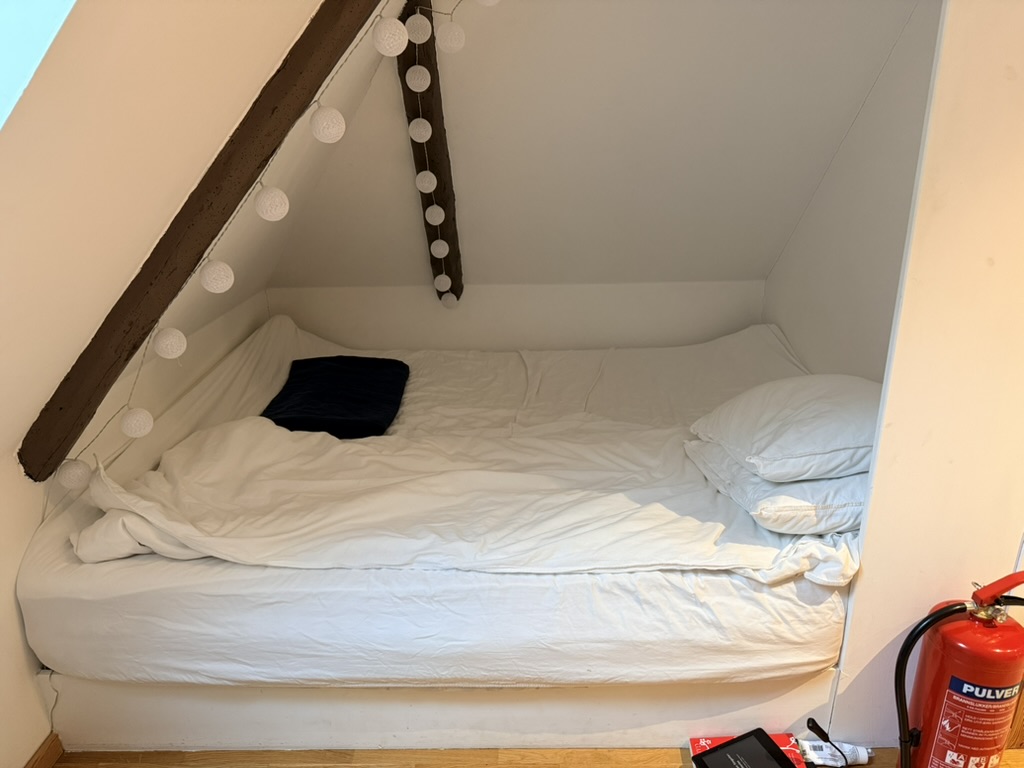
The next three weeks will be a challenging time for us as we squeeze into rabbit hutch accommodations. We have a tiny attic apartment, basically one room, here in Bergen. The selling point for this one was its location in the heart of Bergen’s city center. Also, the price was a factor, as every place in Bergen is outrageously expensive. After this, we’ll spend two weeks in tiny accommodations including a small cabin on the Hurtigruten MS Vesterålen for three nights, and mostly tiny hotels in Svolvær, Bodø, Trondheim, Geiranger and Lillehammer. Once we arrive in Oslo, our apartments for the last month of our time in Norway and Sweden should be normal-sized accommodations.
I knew our place would be small, but I have to admit I was disappointed that it is as small as it is. But Mike reminded me that I’ve lived in much smaller places, such as I did when I worked a year in South Korea and a semester in Japan. I lasted a whole year in Korea in a tiny apartment, so I guess I can survive a week in this tiny place in Bergen!
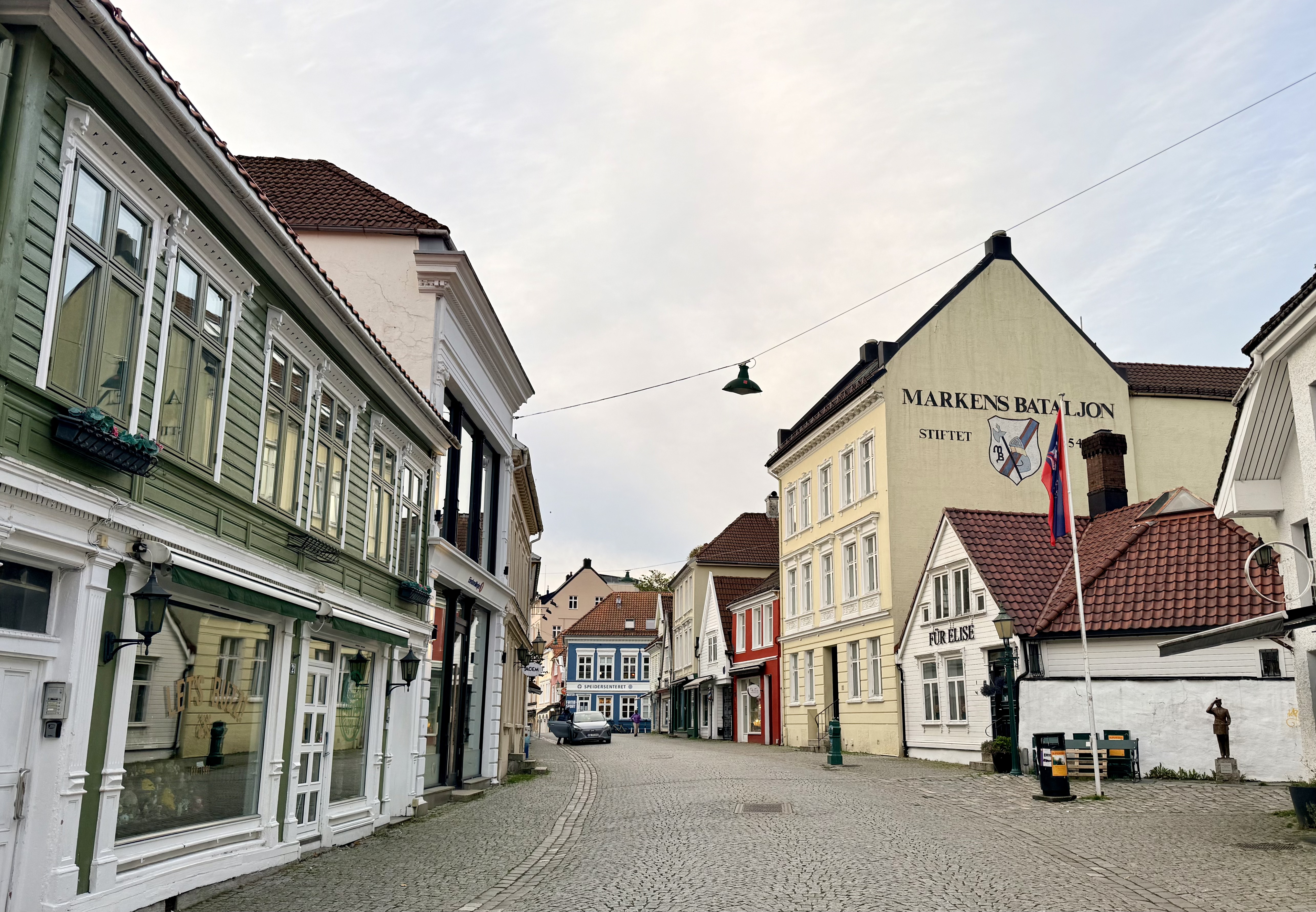
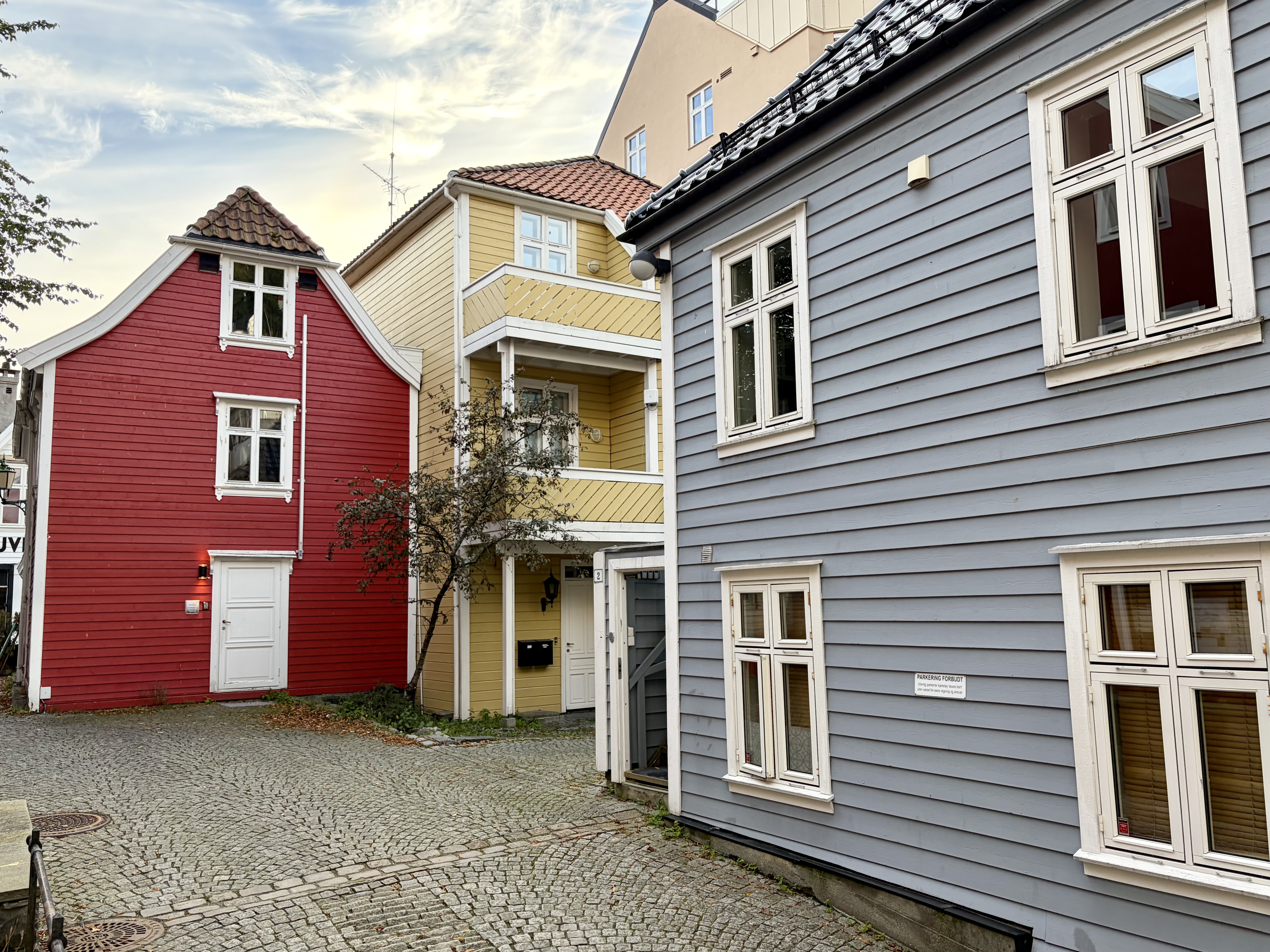
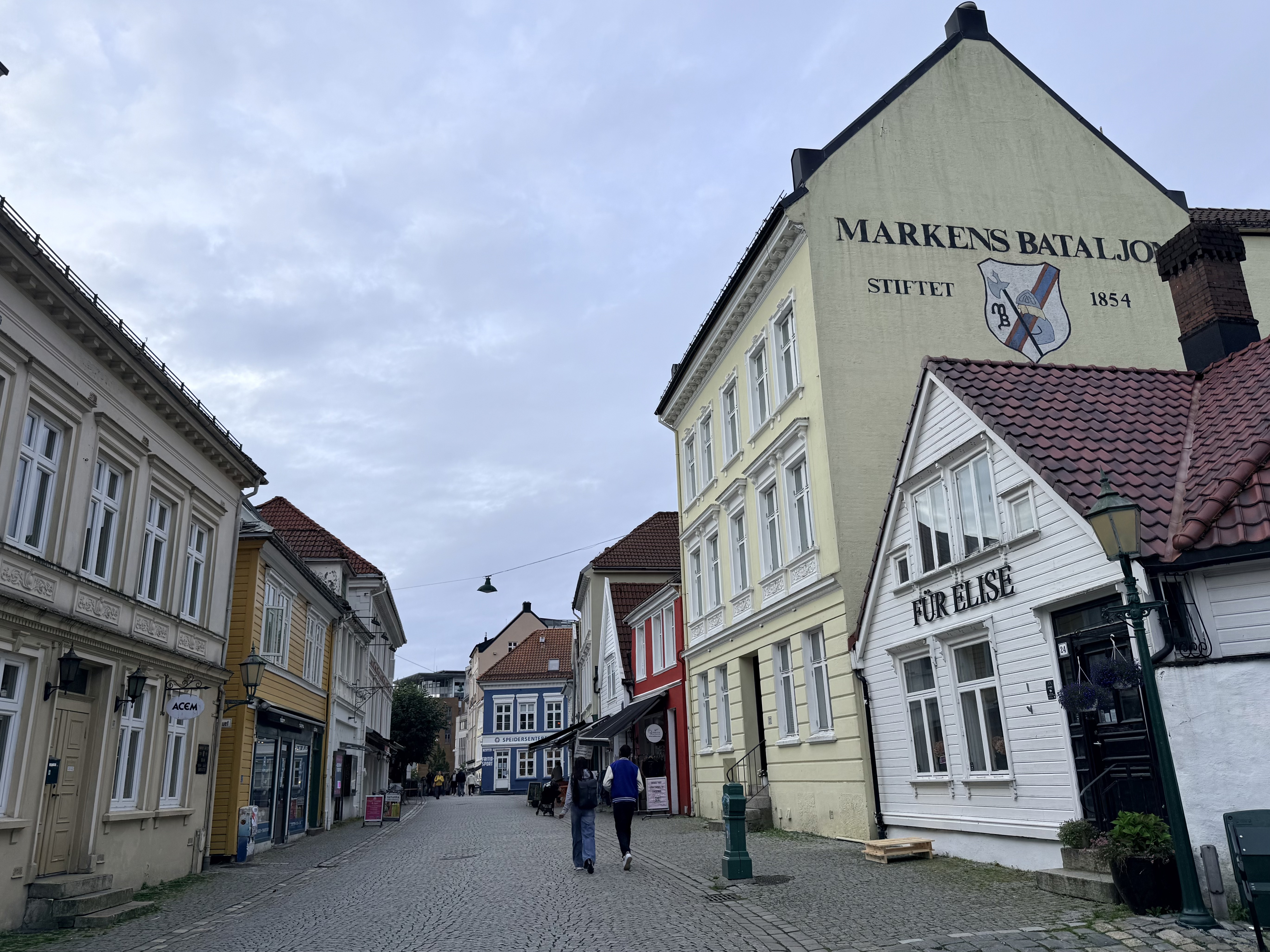
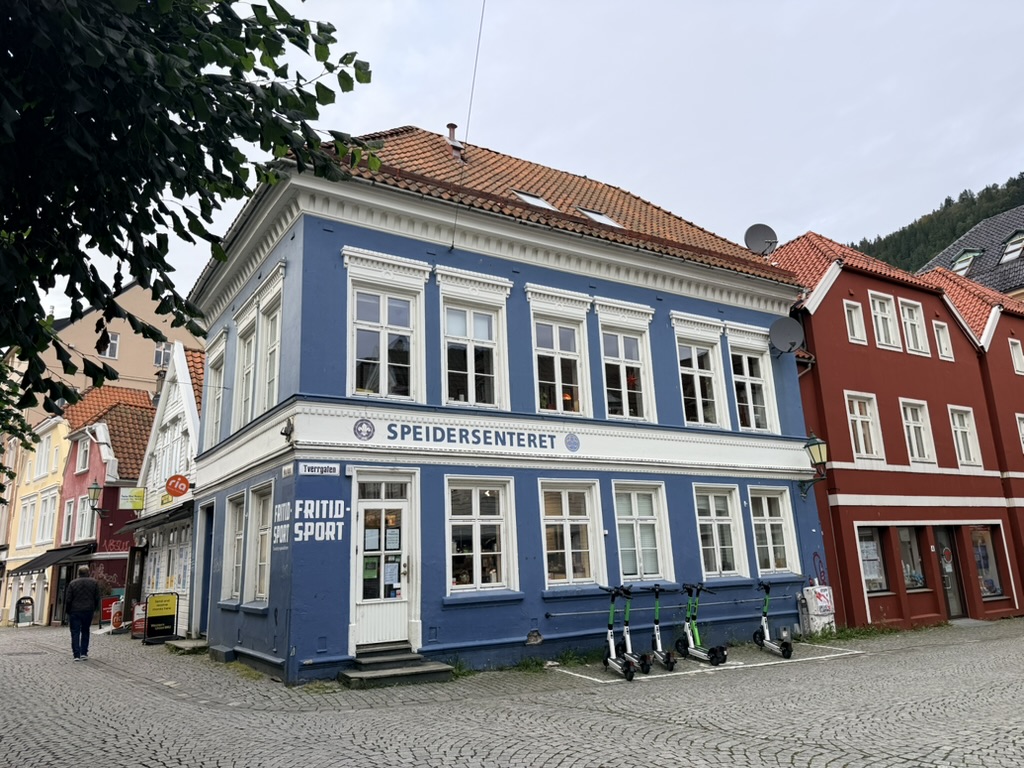
a few tidbits about Bergen, Norway
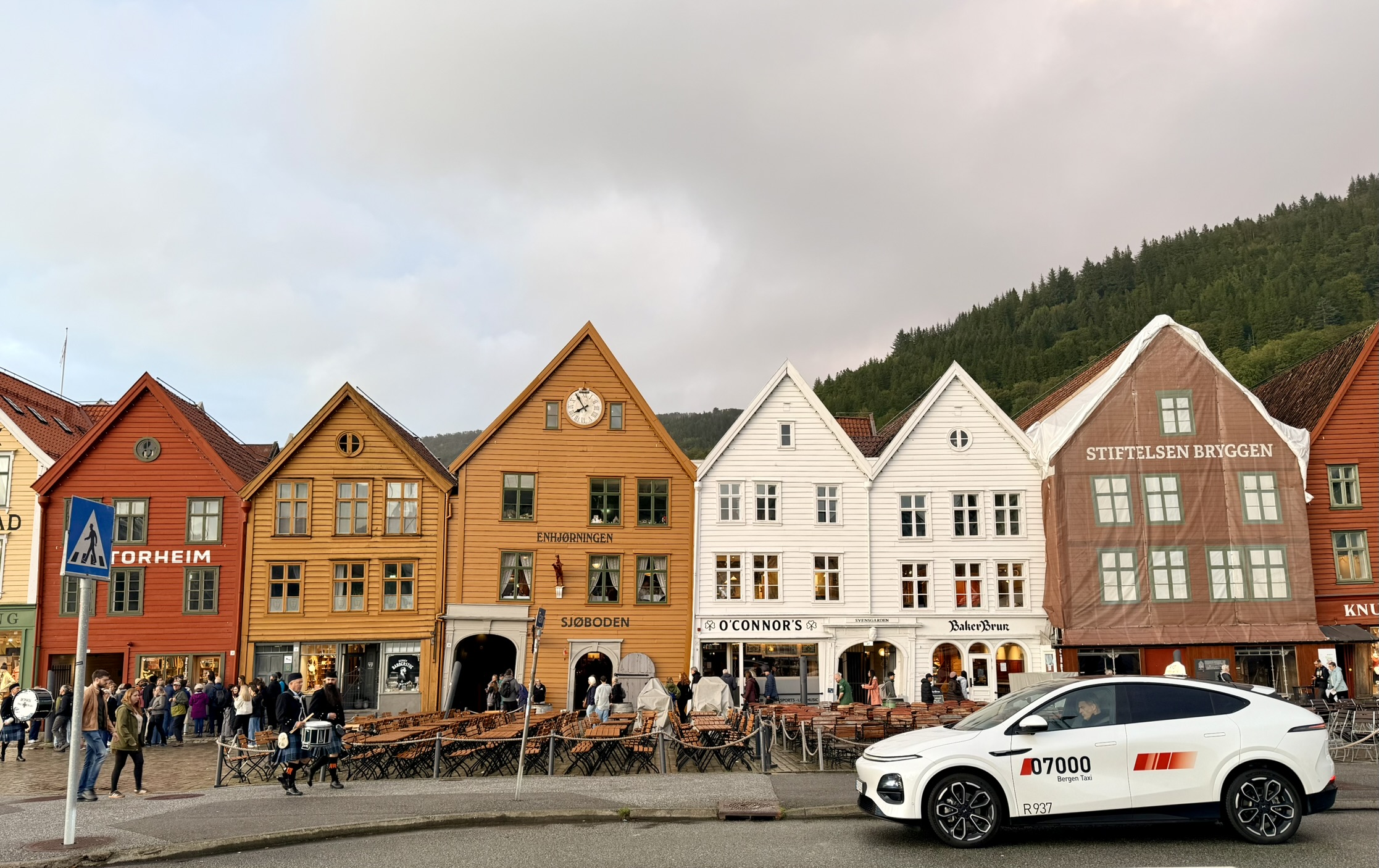
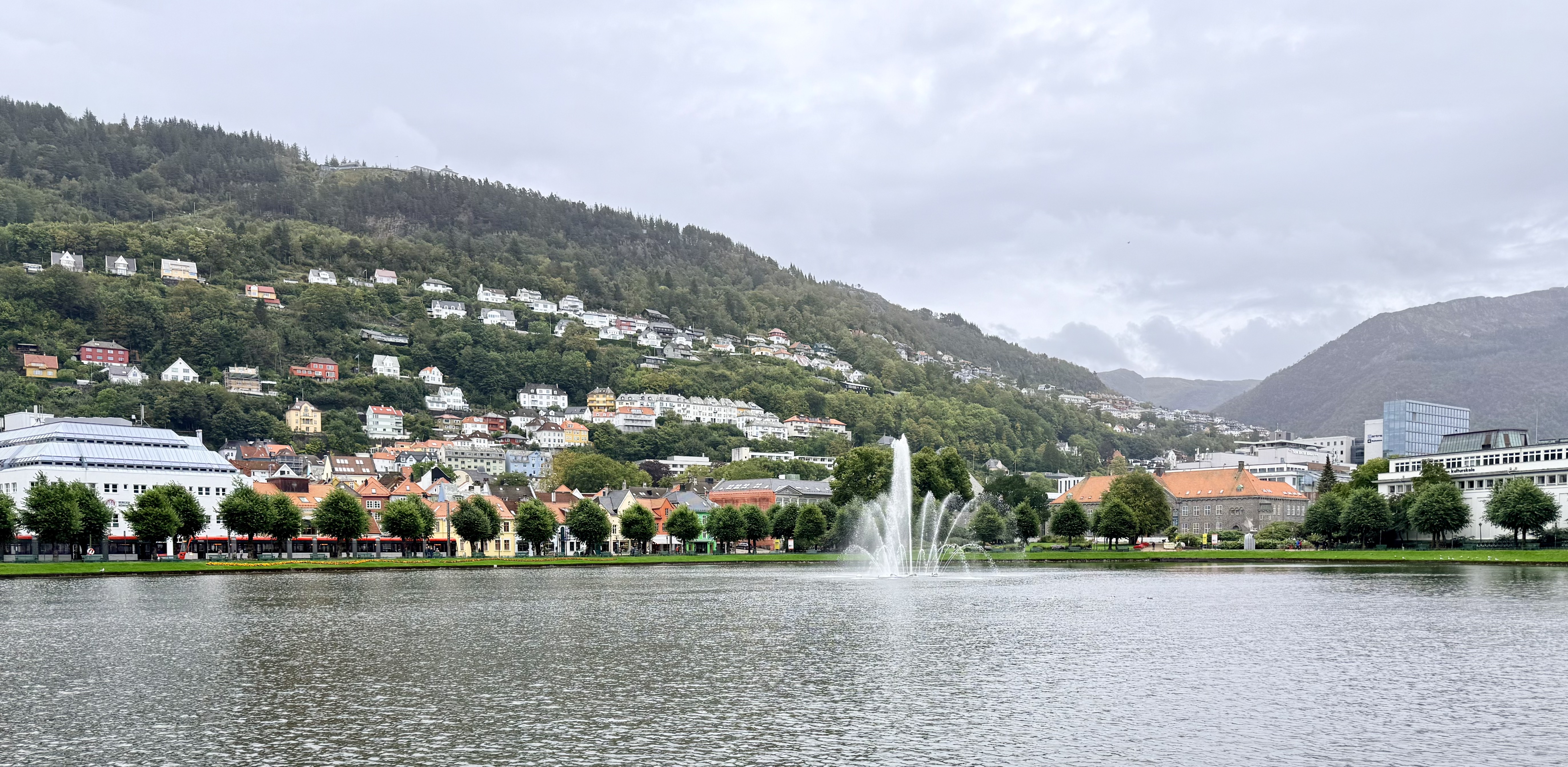
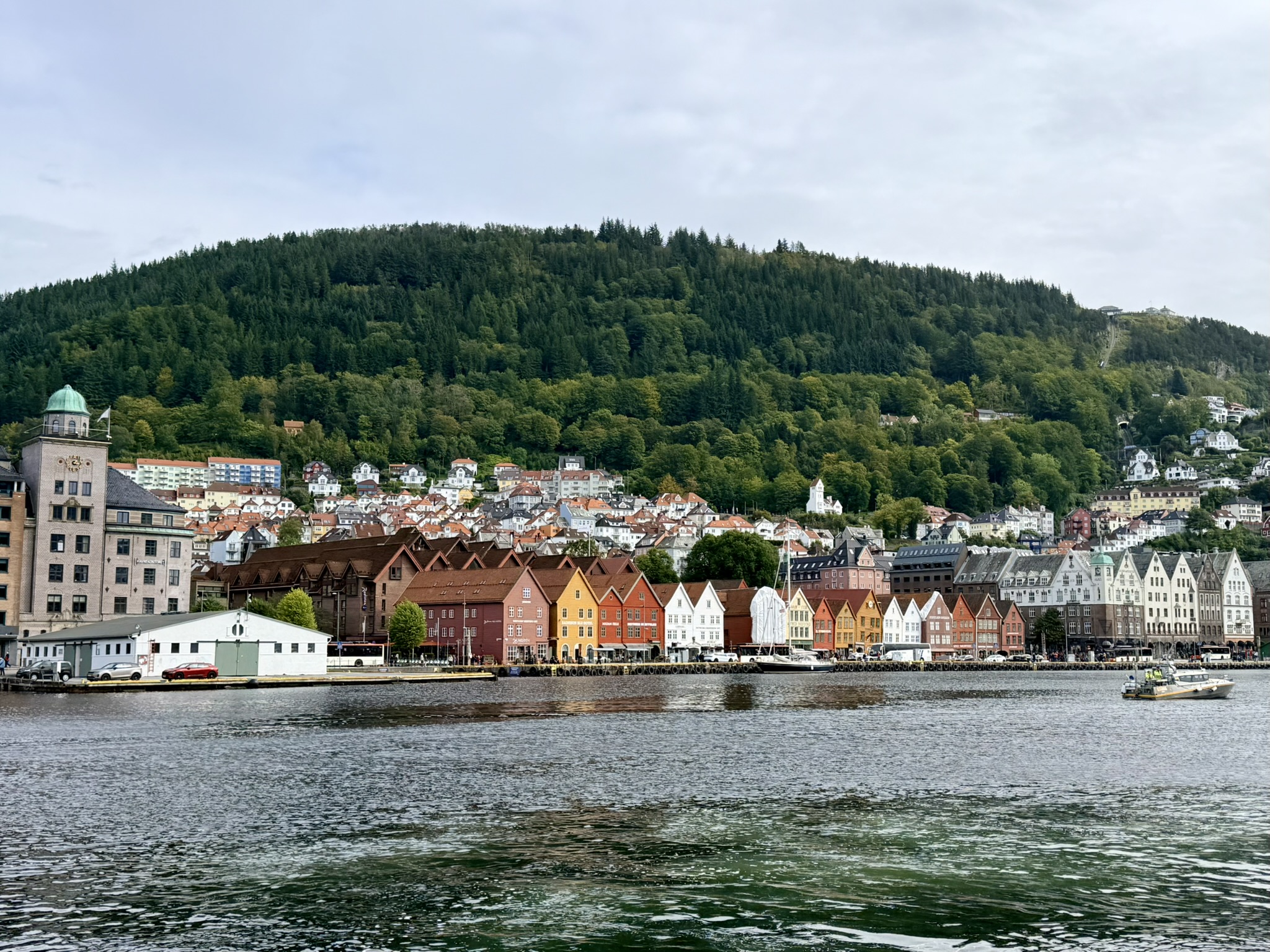
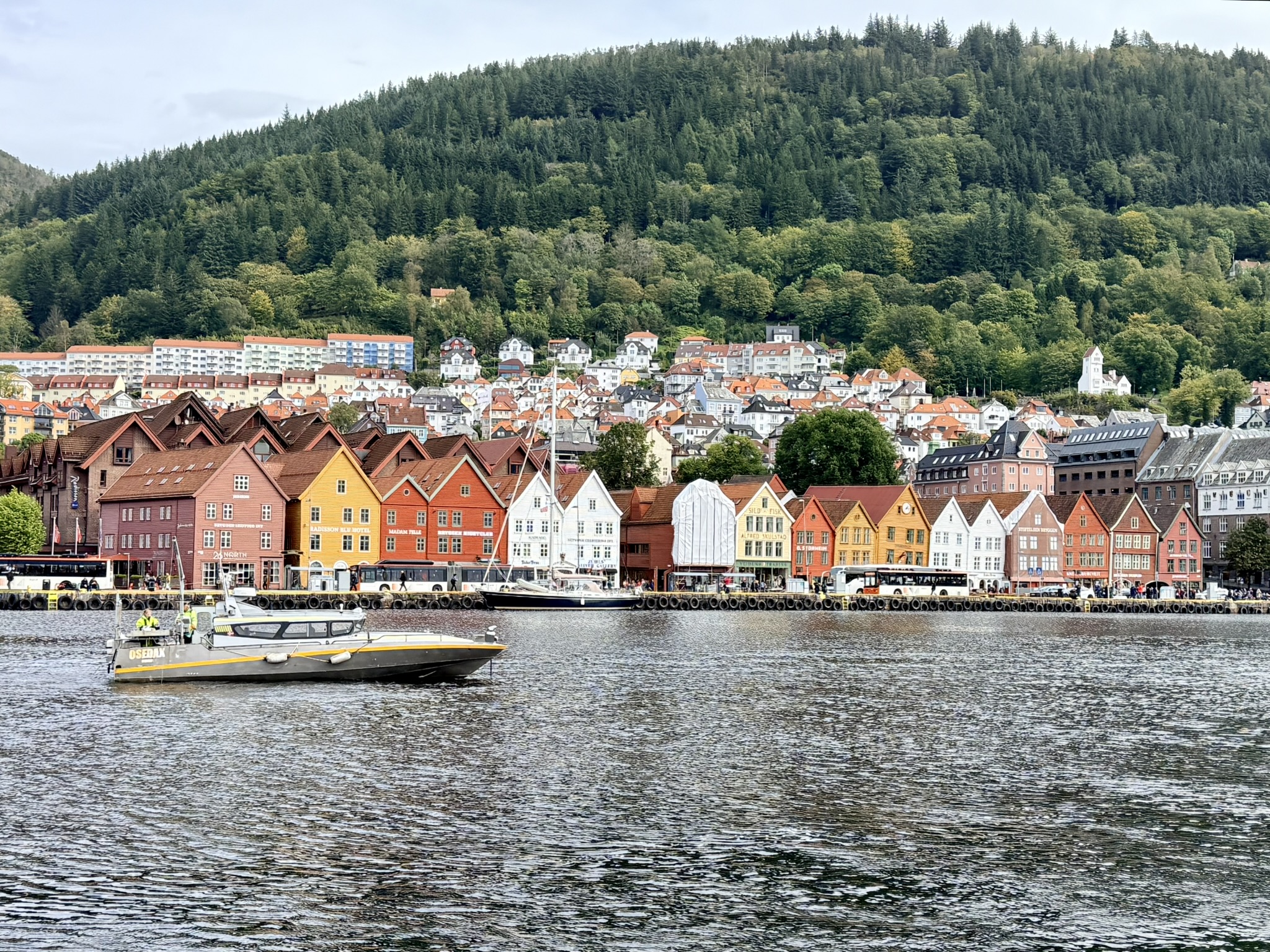
Bergen sits on the west coast of Norway and is the country’s second largest city after Oslo. The mountains surrounding the city have earned it the nickname of “city of seven mountains.” What remains of the quays, Bryggen, is a World Heritage Site.
According to tradition, the city was founded in 1070 by King Olav Kyrre and was named Bjørgvin, ‘the green meadow among the mountains.’ The city has been hit by numerous fires over the years.
Trading in Bergen may have started as early as the 1020s. From the 1300s, Bergen was a major port for the export of dried fish and cold liver oil. The Hanseatic League controlled Bryggen and long dominated the trade of dried fish from Norway. Until 1789, Bergen enjoyed exclusive rights to mediate trade between the northern part of the country and abroad, and it was the largest city in Norway until the 1830s when it was overtaken by the capital, Christiania (now known as Oslo).
The city is an international center for aquaculture, shipping, the offshore petroleum industry and subsea technology, and a national centre for higher education, media, tourism and finance. Bergen Port is Norway’s busiest in terms of both freight and passengers, with over 300 cruise ship calls a year. Most of the passengers are said to be British or German, but we ran into many Americans and Chinese from the cruise ships.
Bergen has a mild winter climate with significant precipitation; on average the city experiences around 200 days with over a millimeter of precipitation during a year.
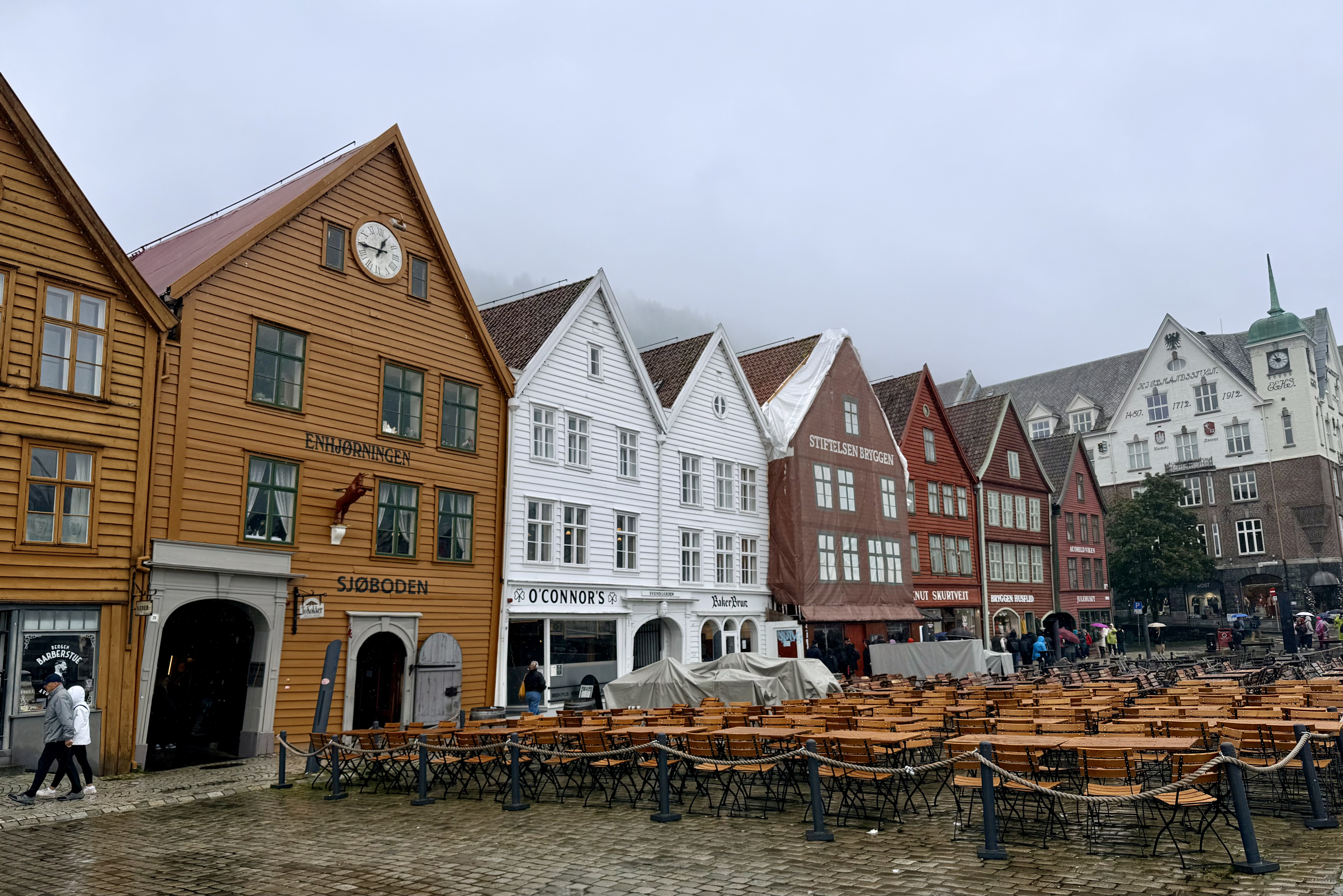
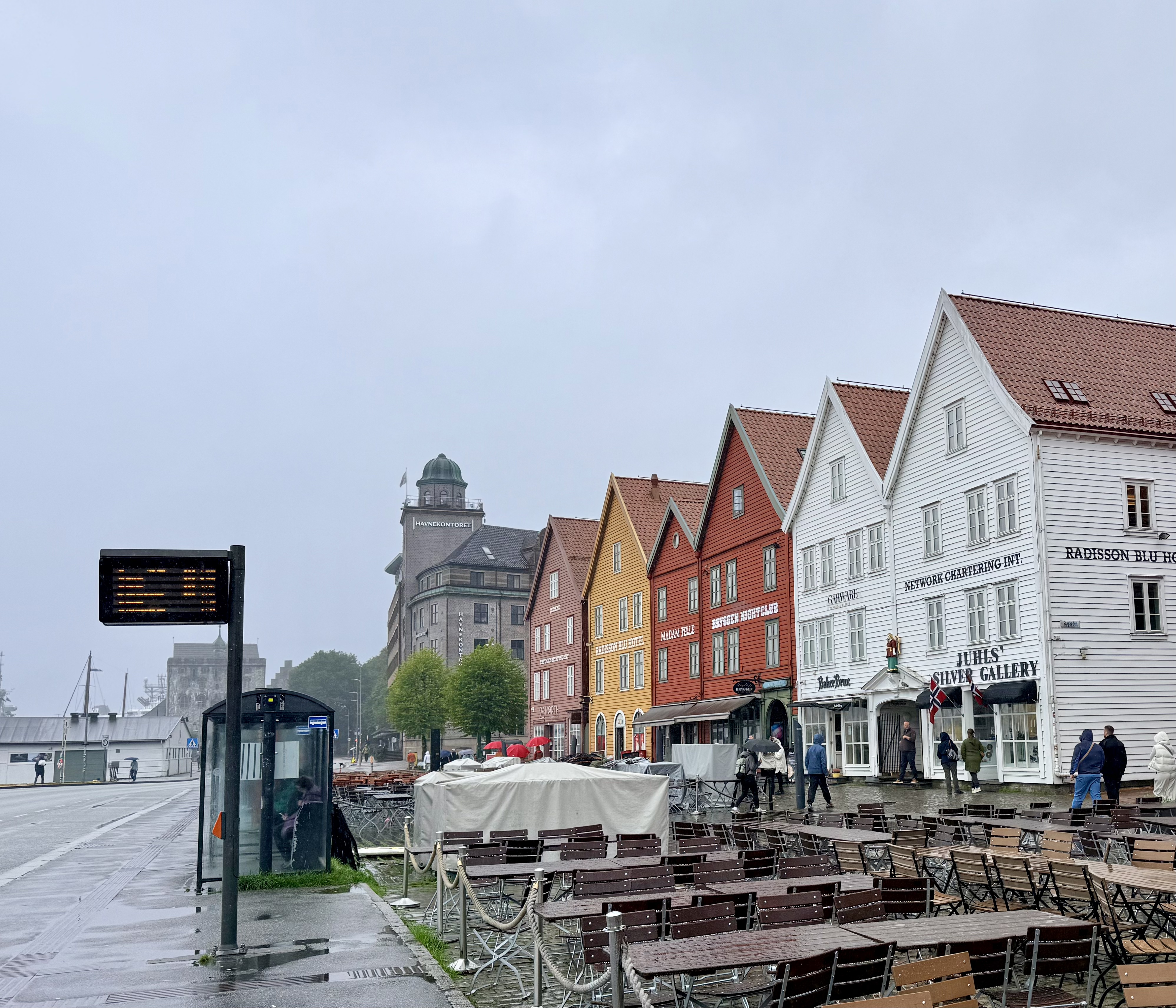
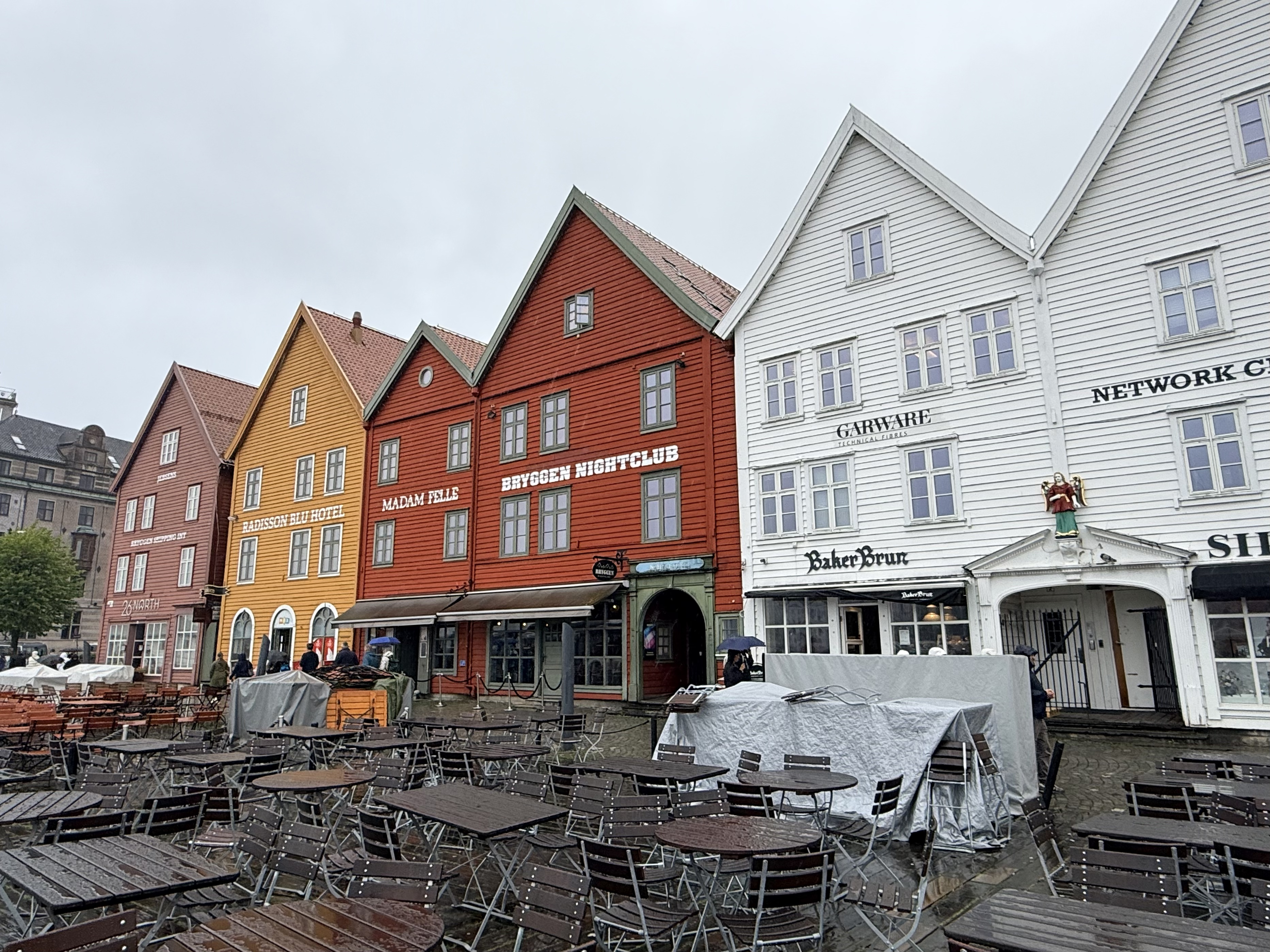
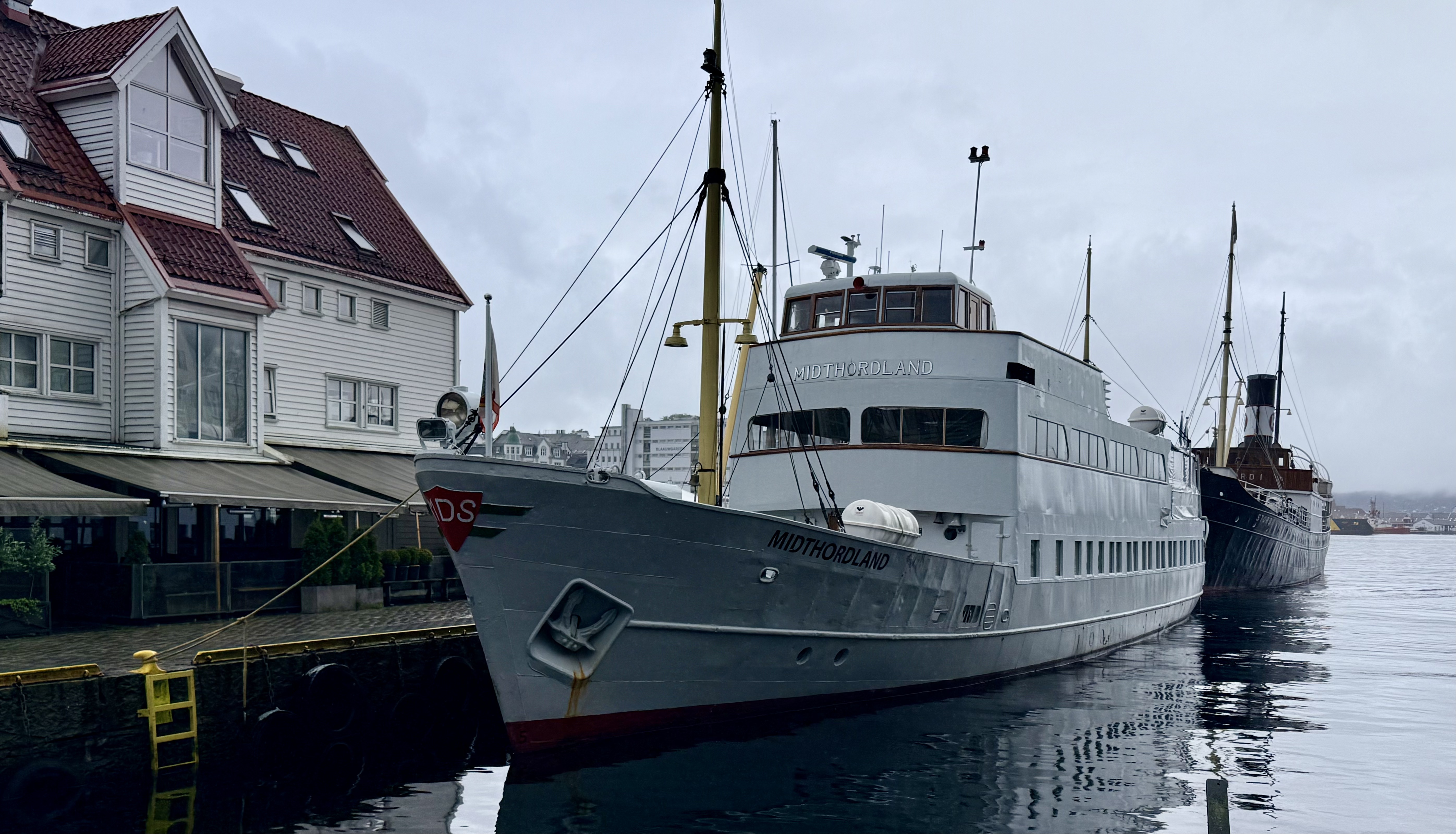
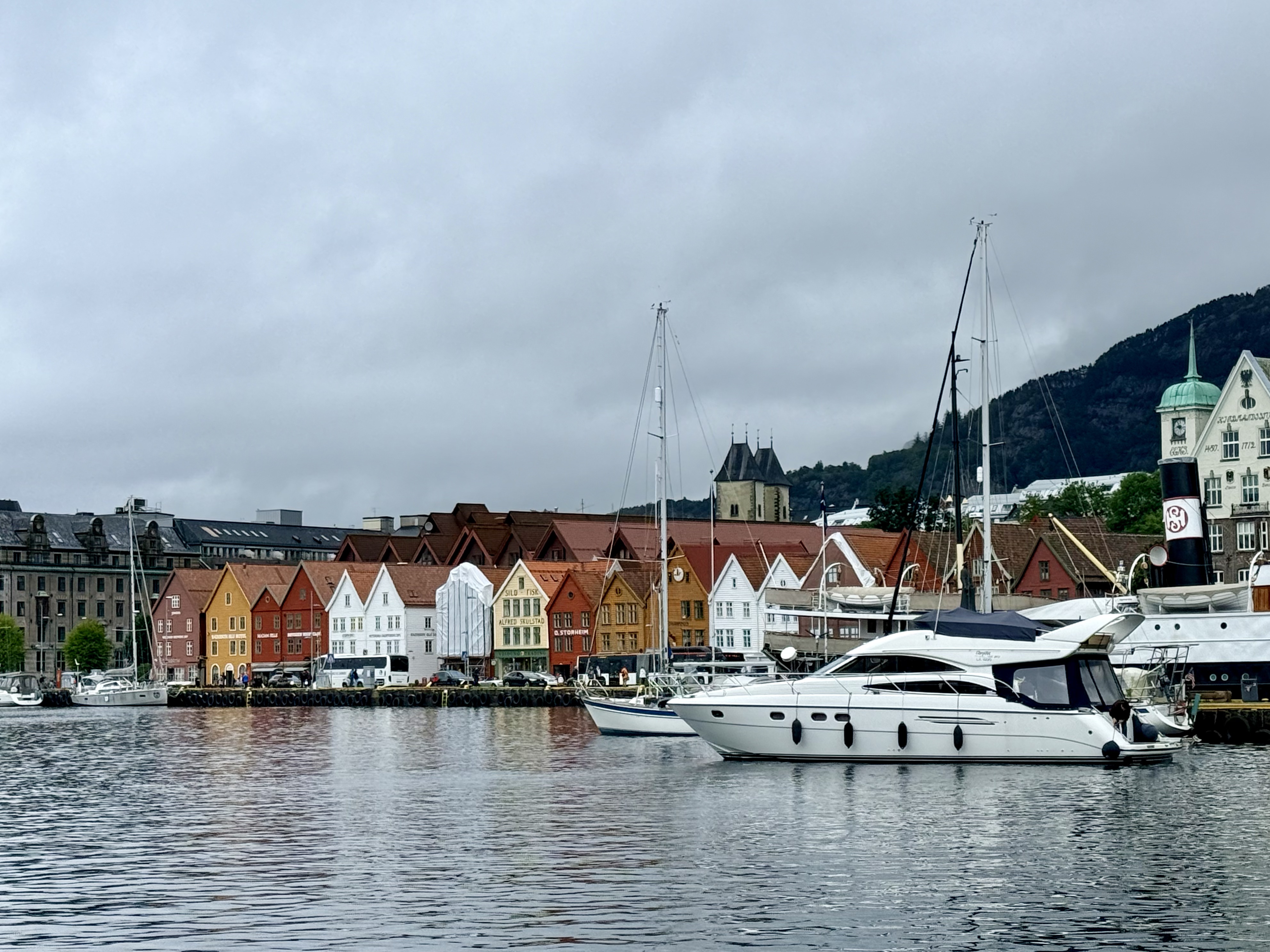
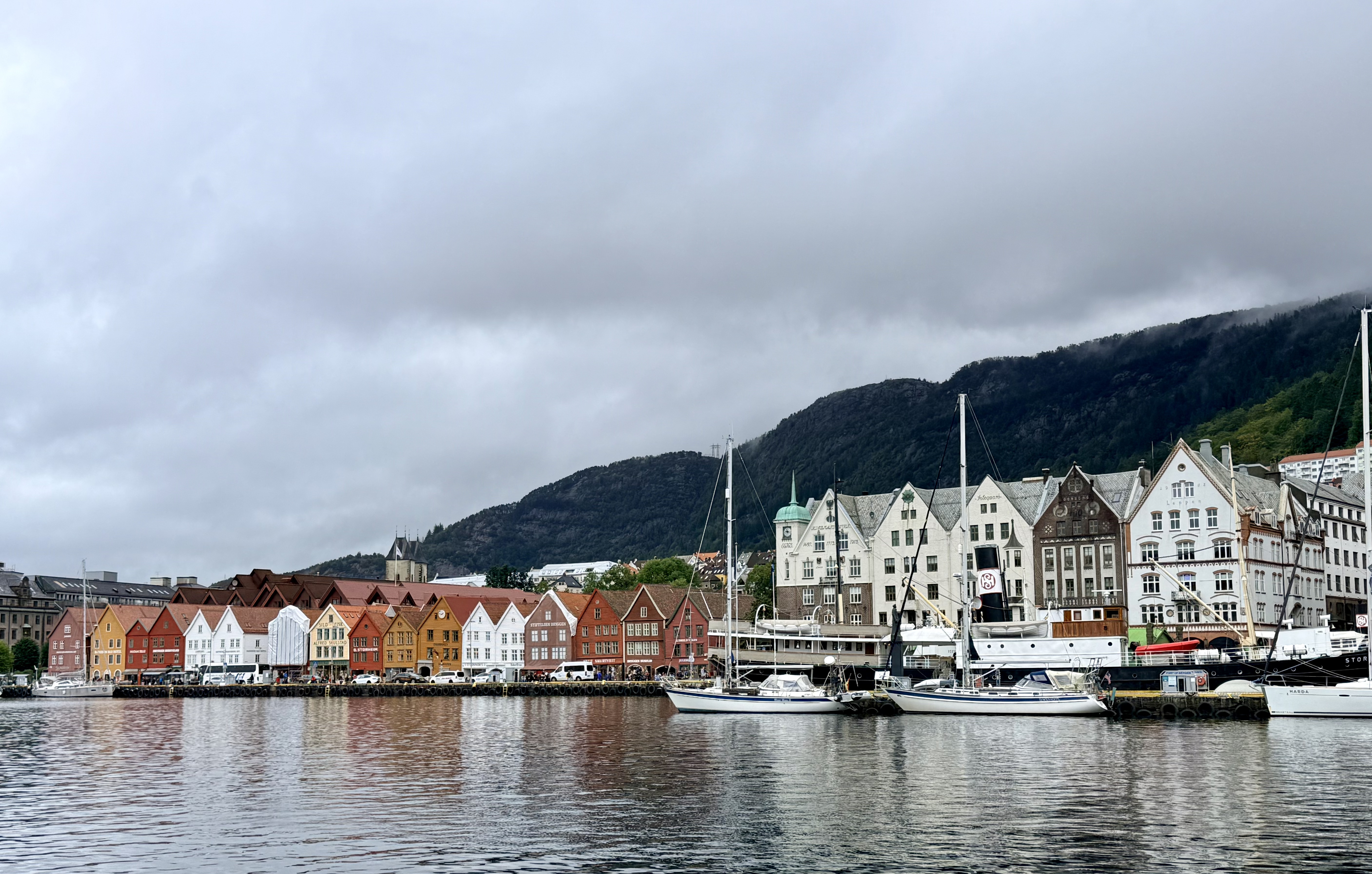
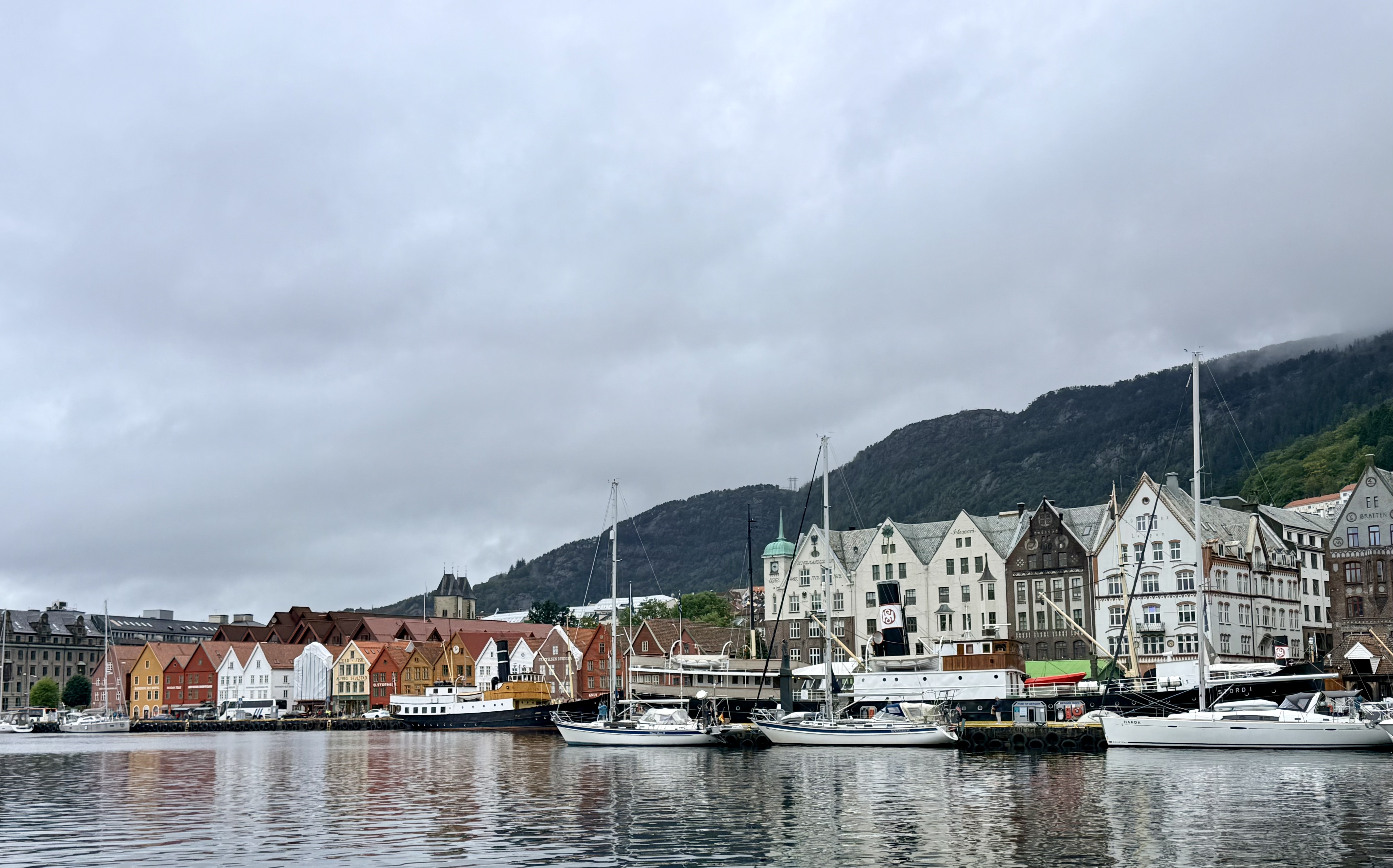
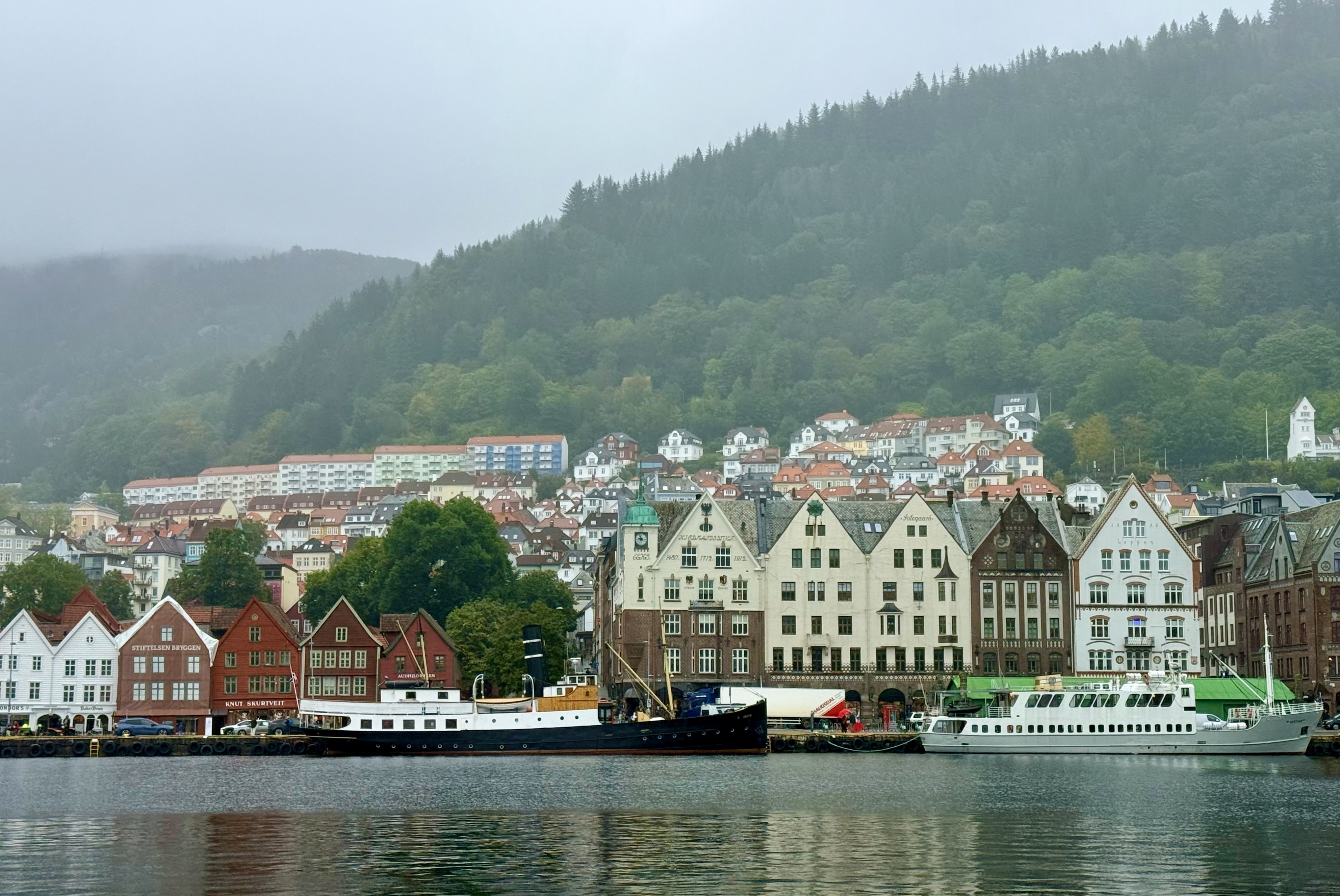
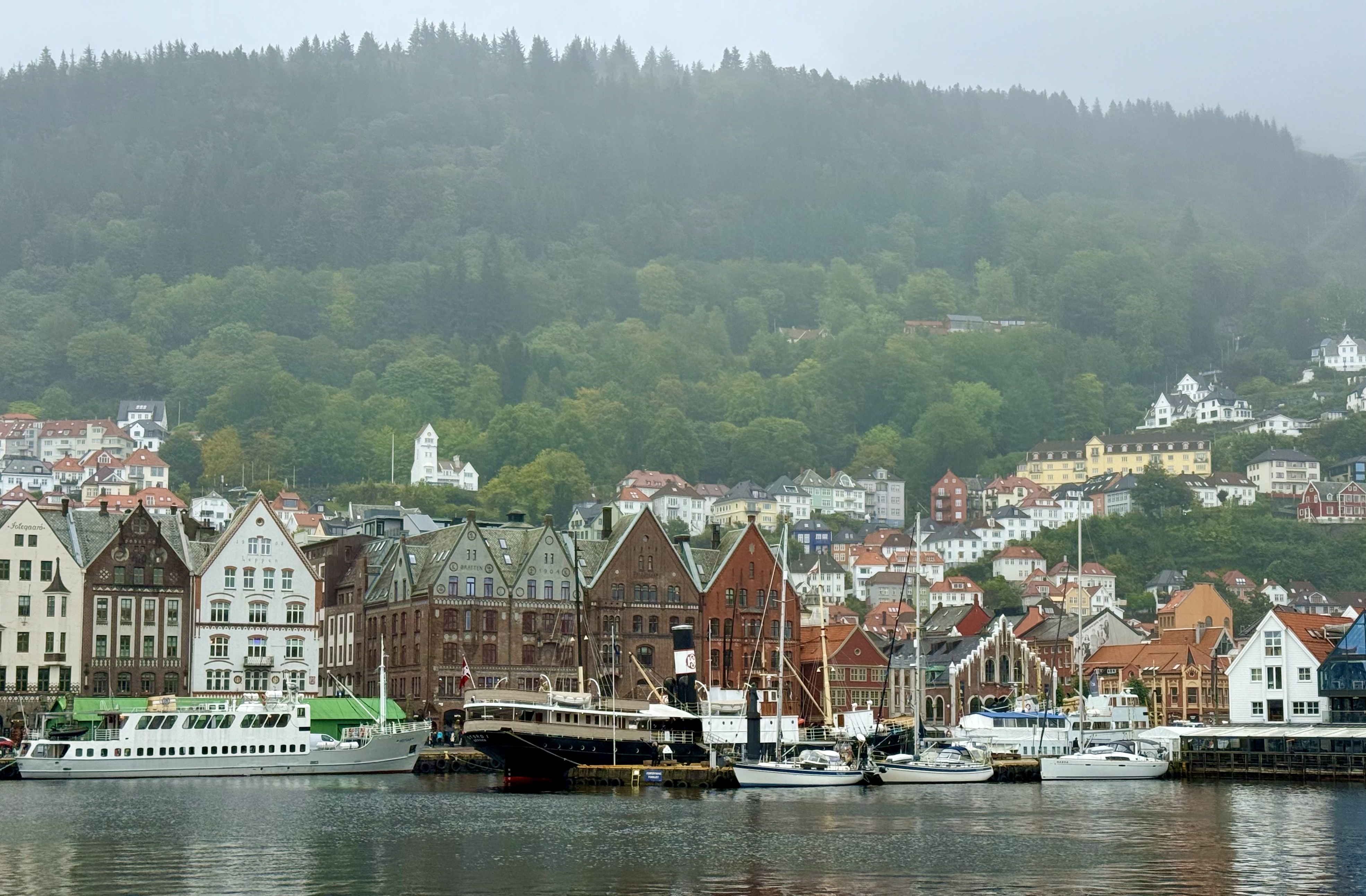
Bryggen & Vågen (Bergen Harbor)
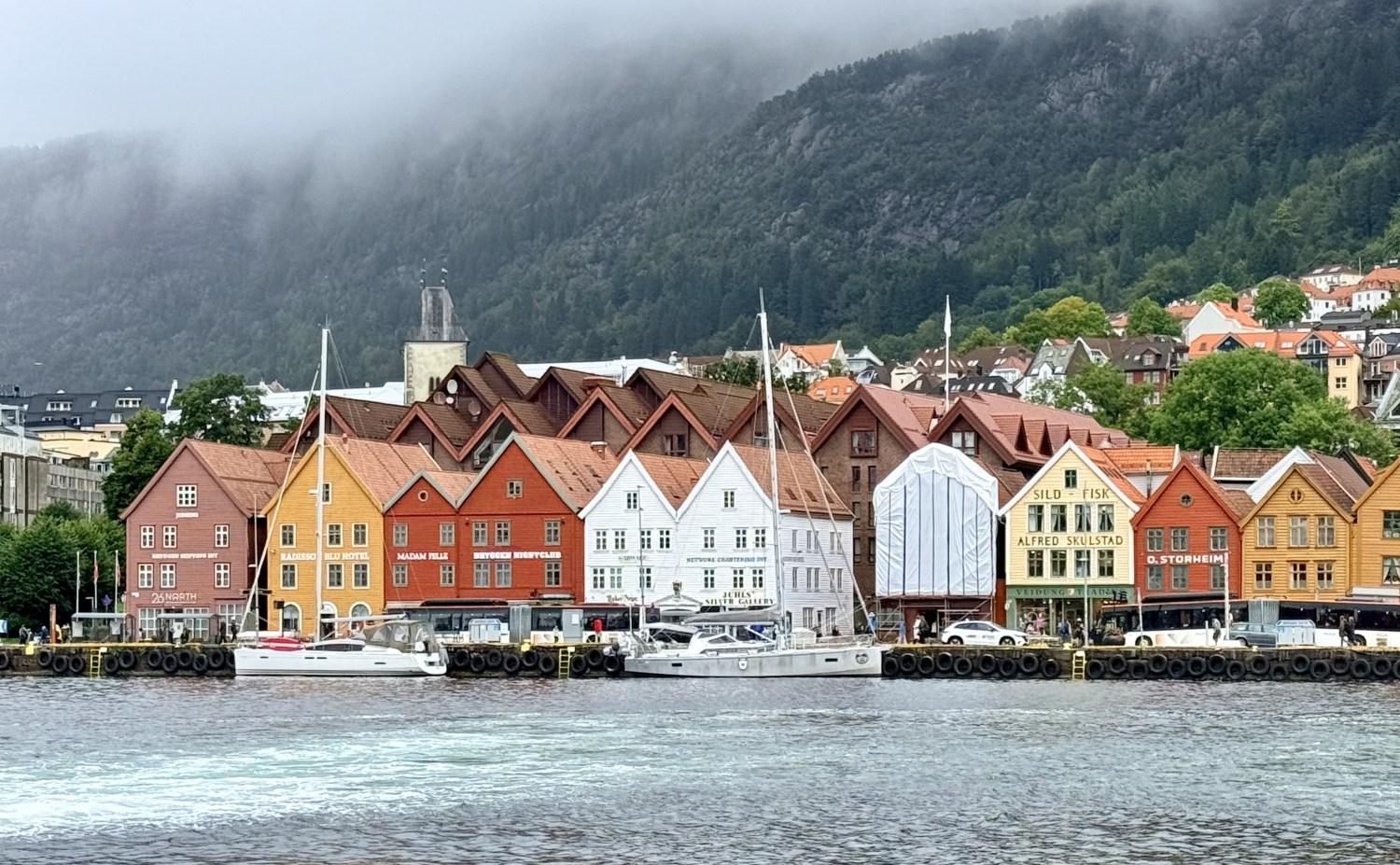
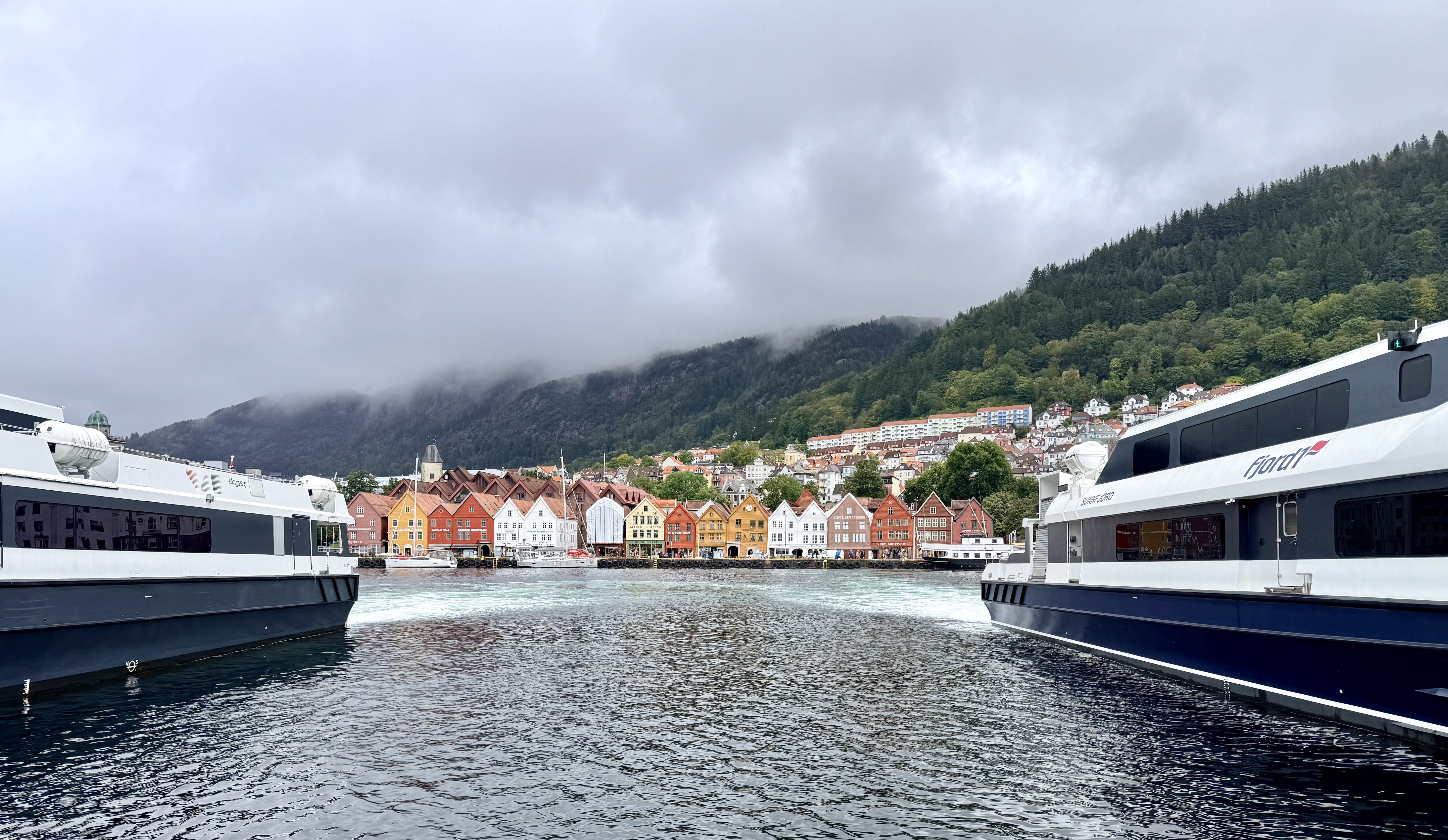
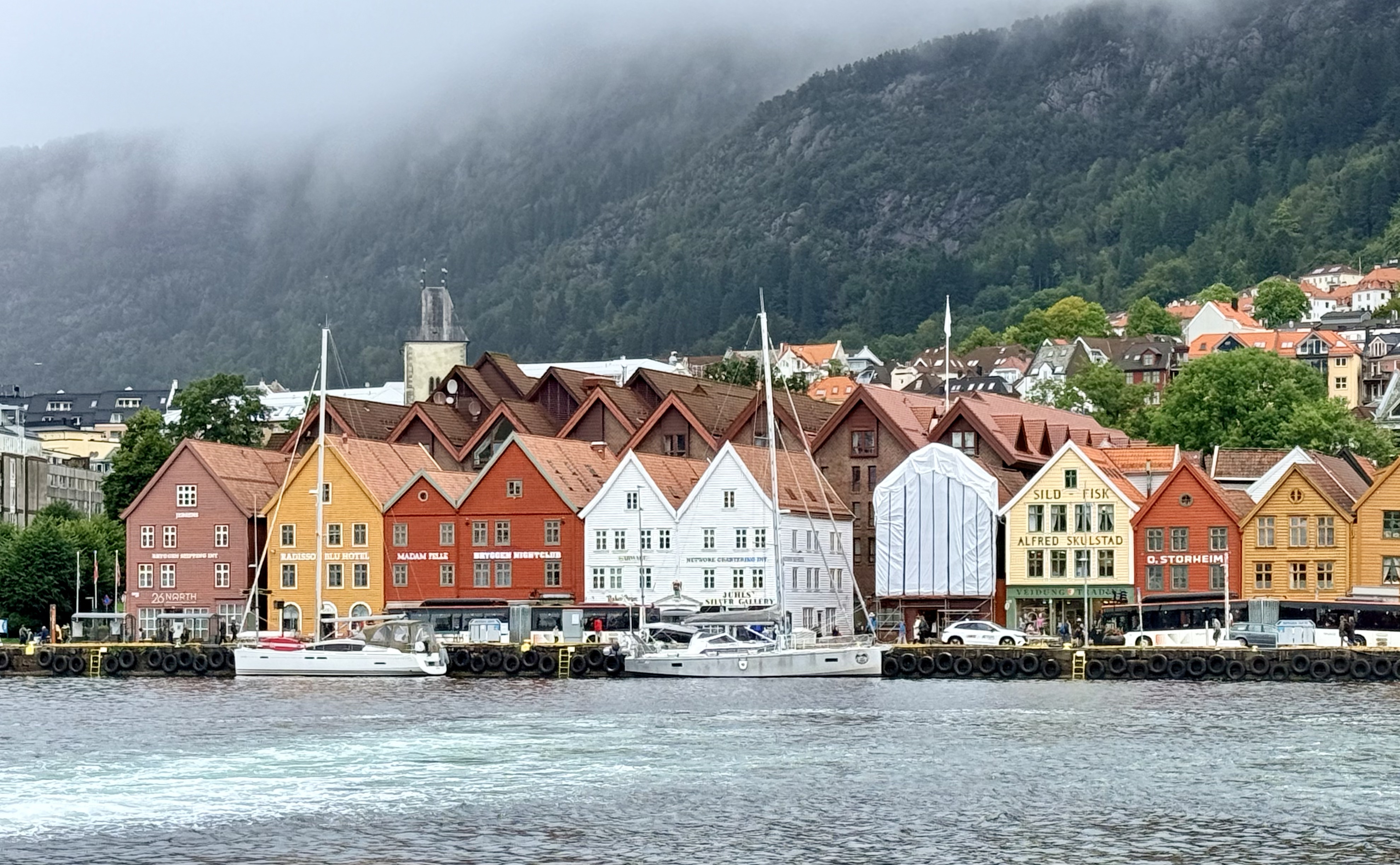
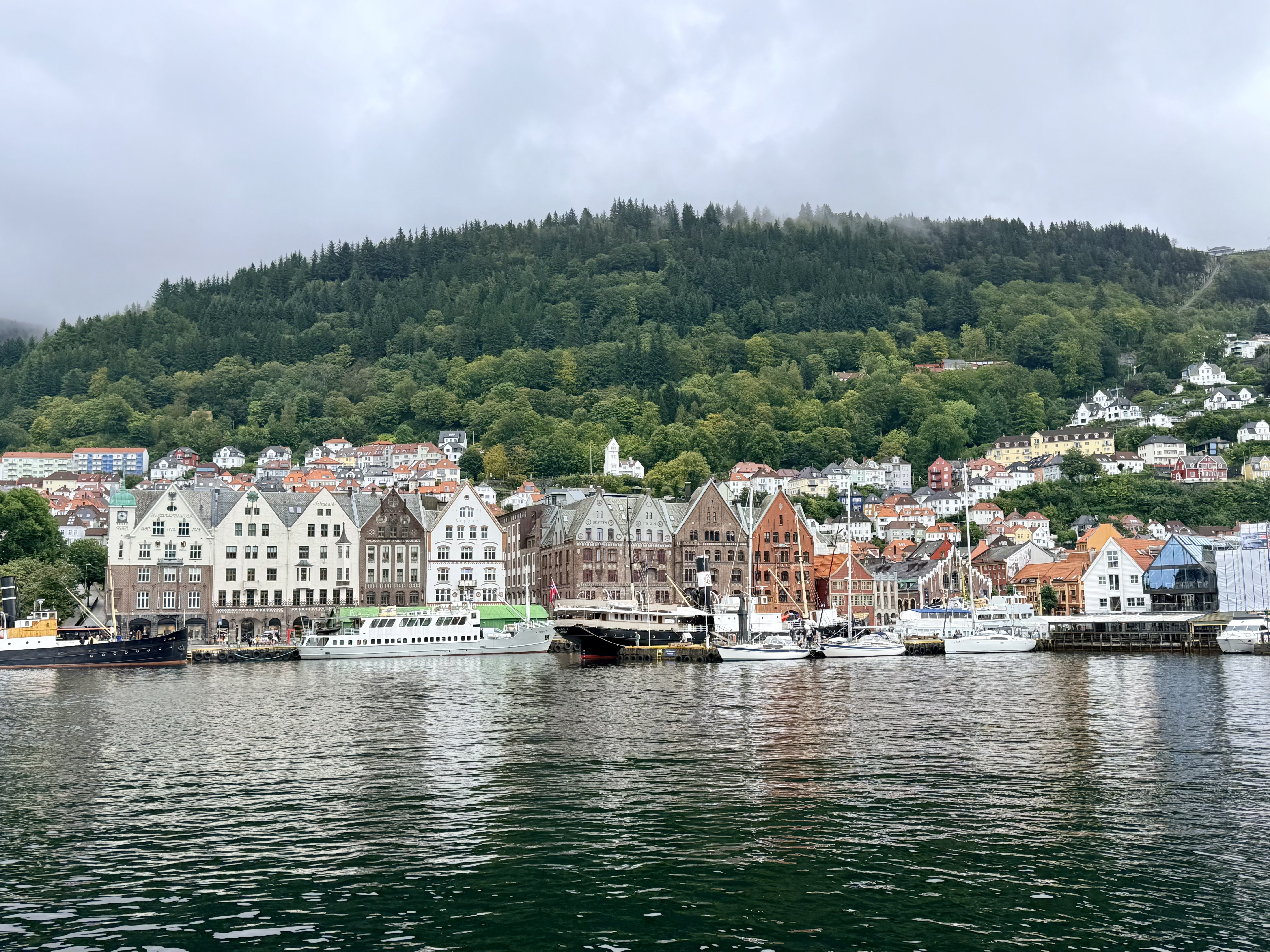
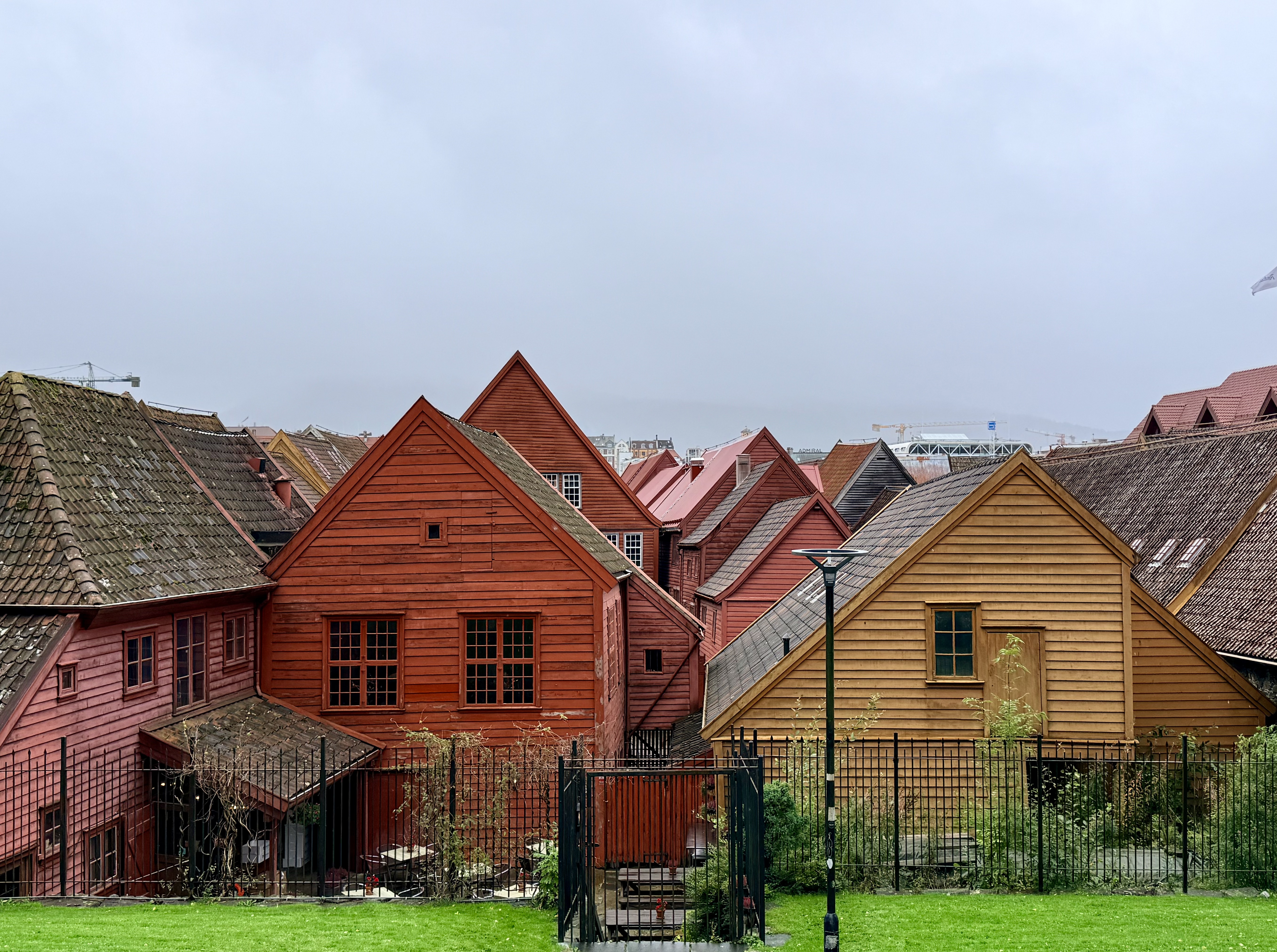
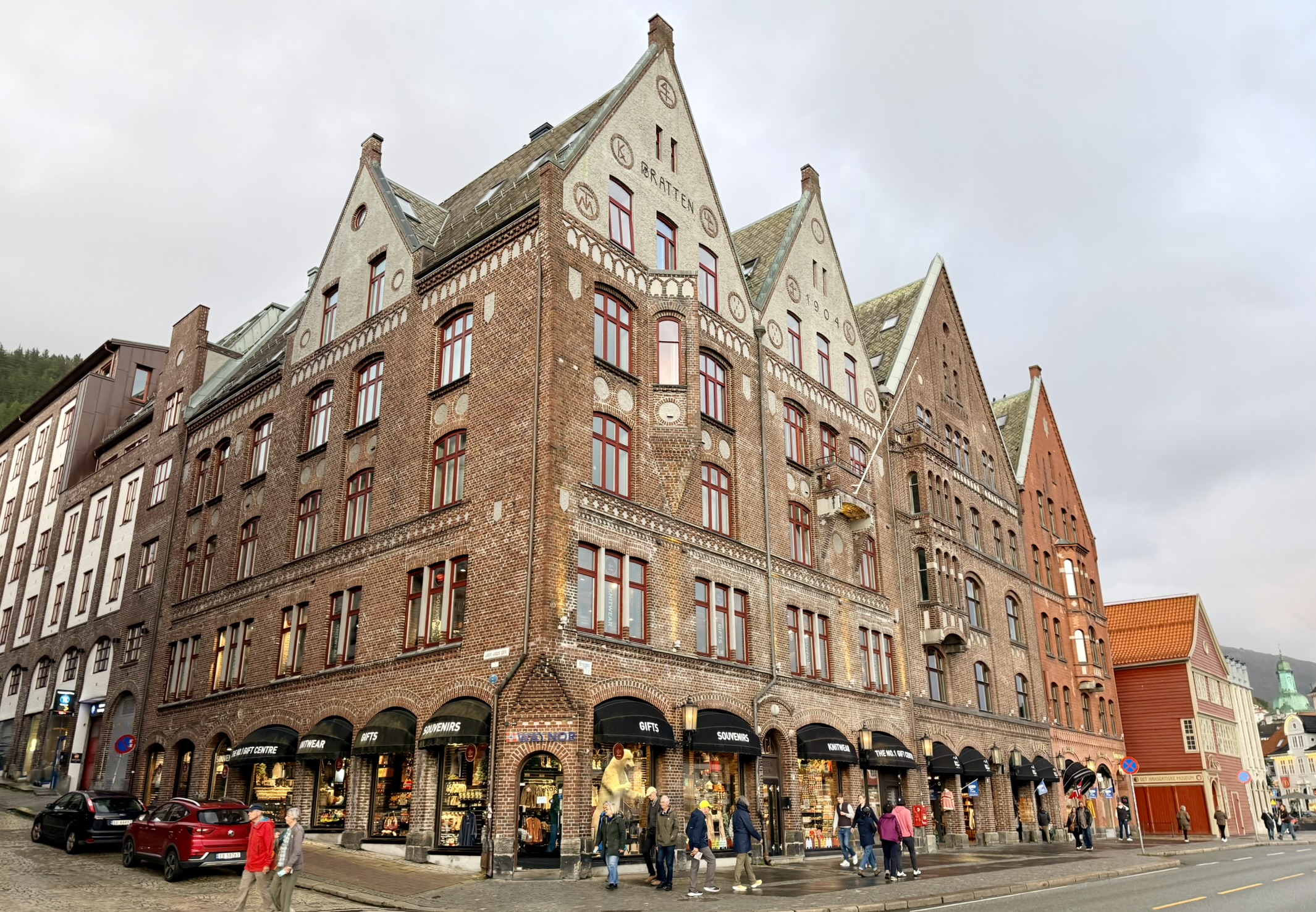
Bryggen, a UNESCO World Heritage Site, is the city’s beating heart since the Middle Ages when it was a major trading center. Today, it’s mostly packed with tourist shops and tourists from the cruise ships.
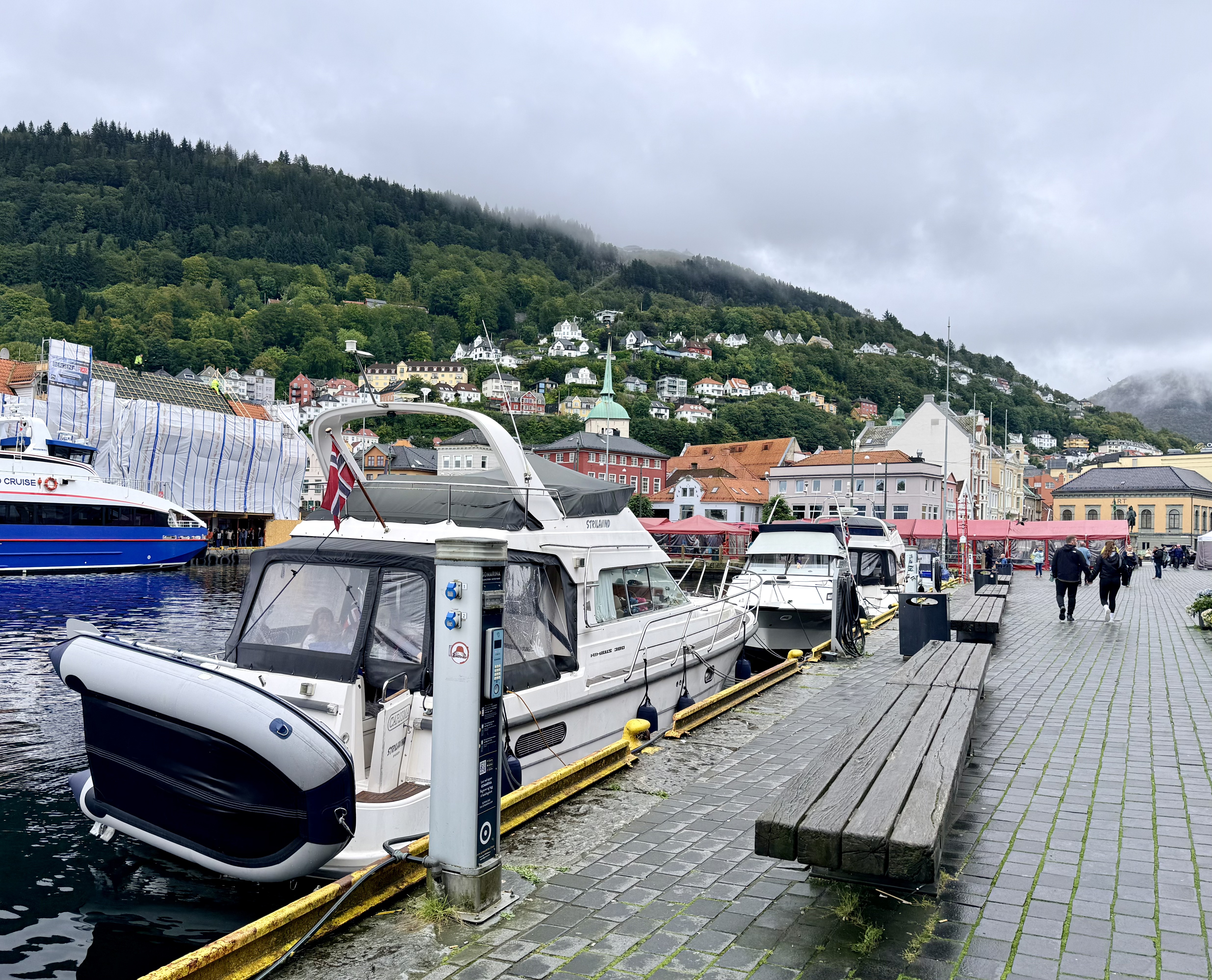
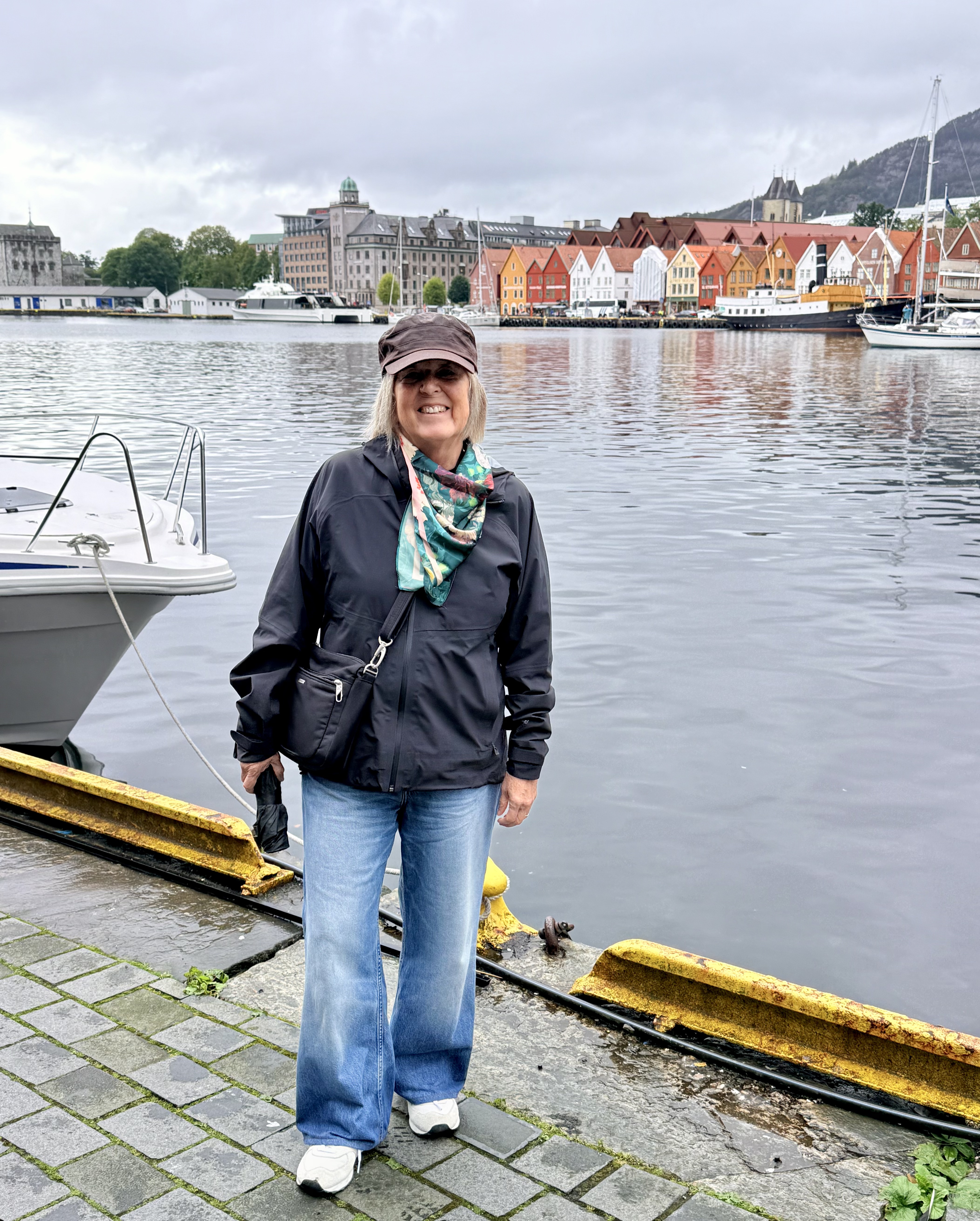
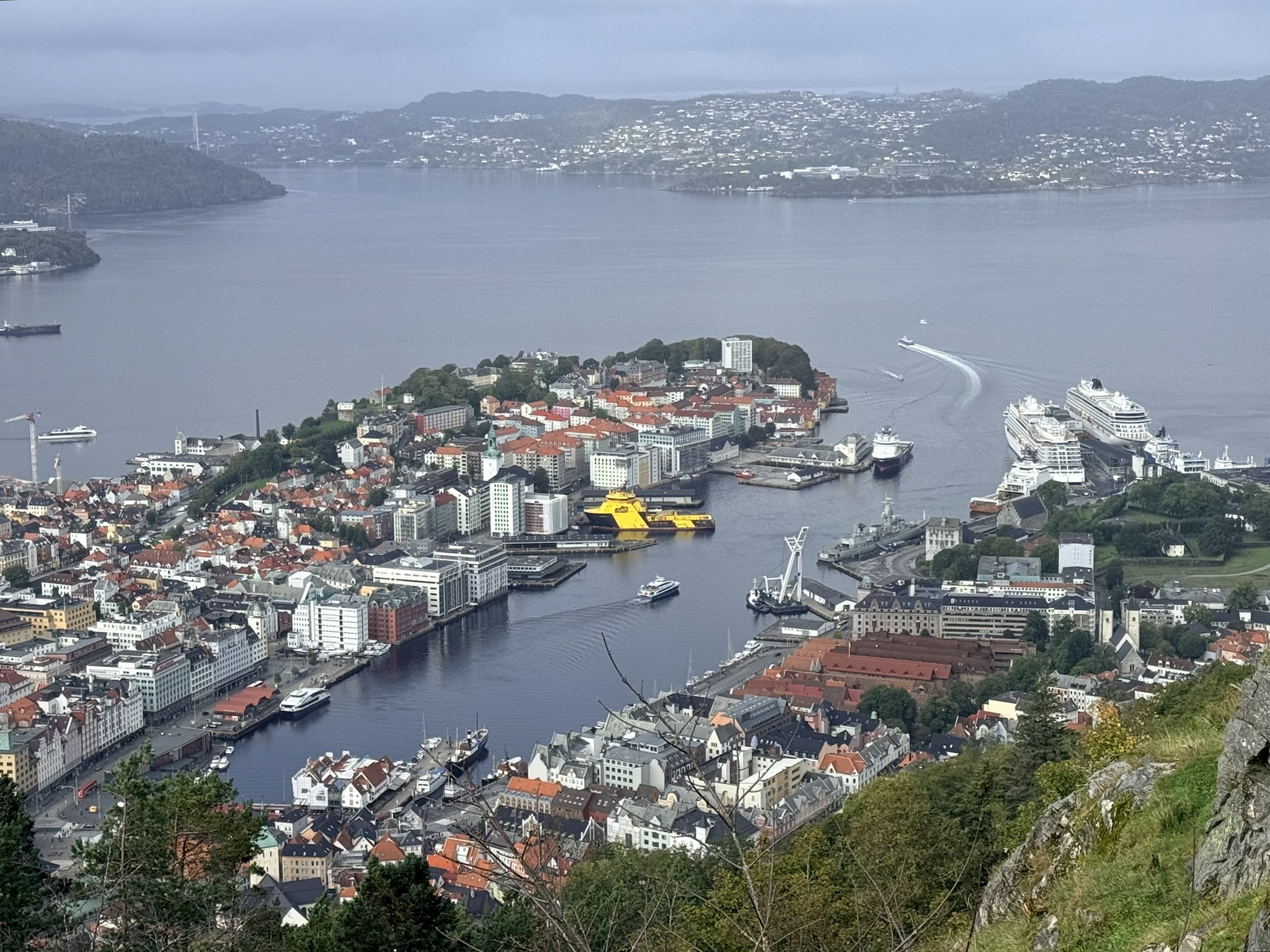
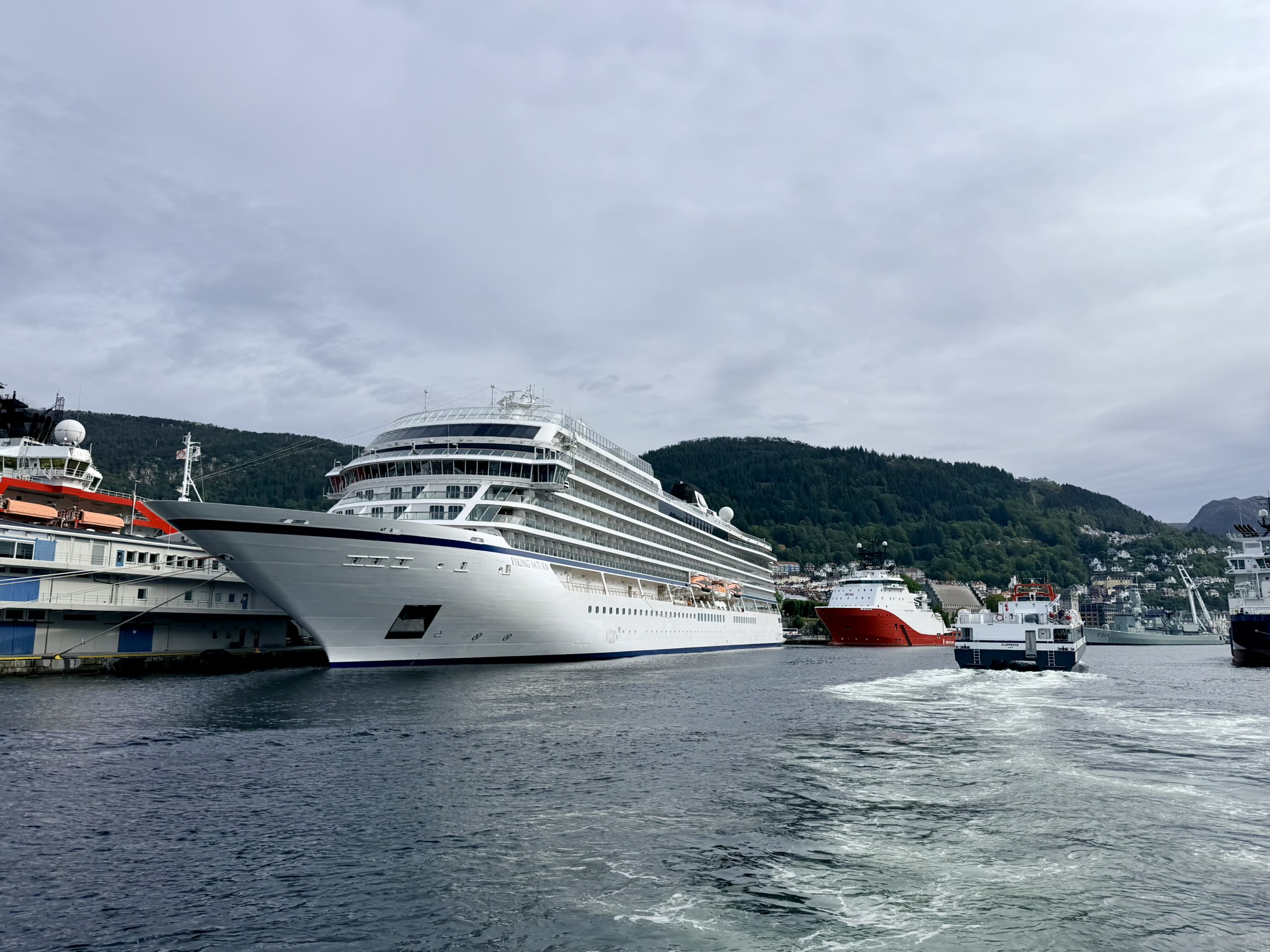
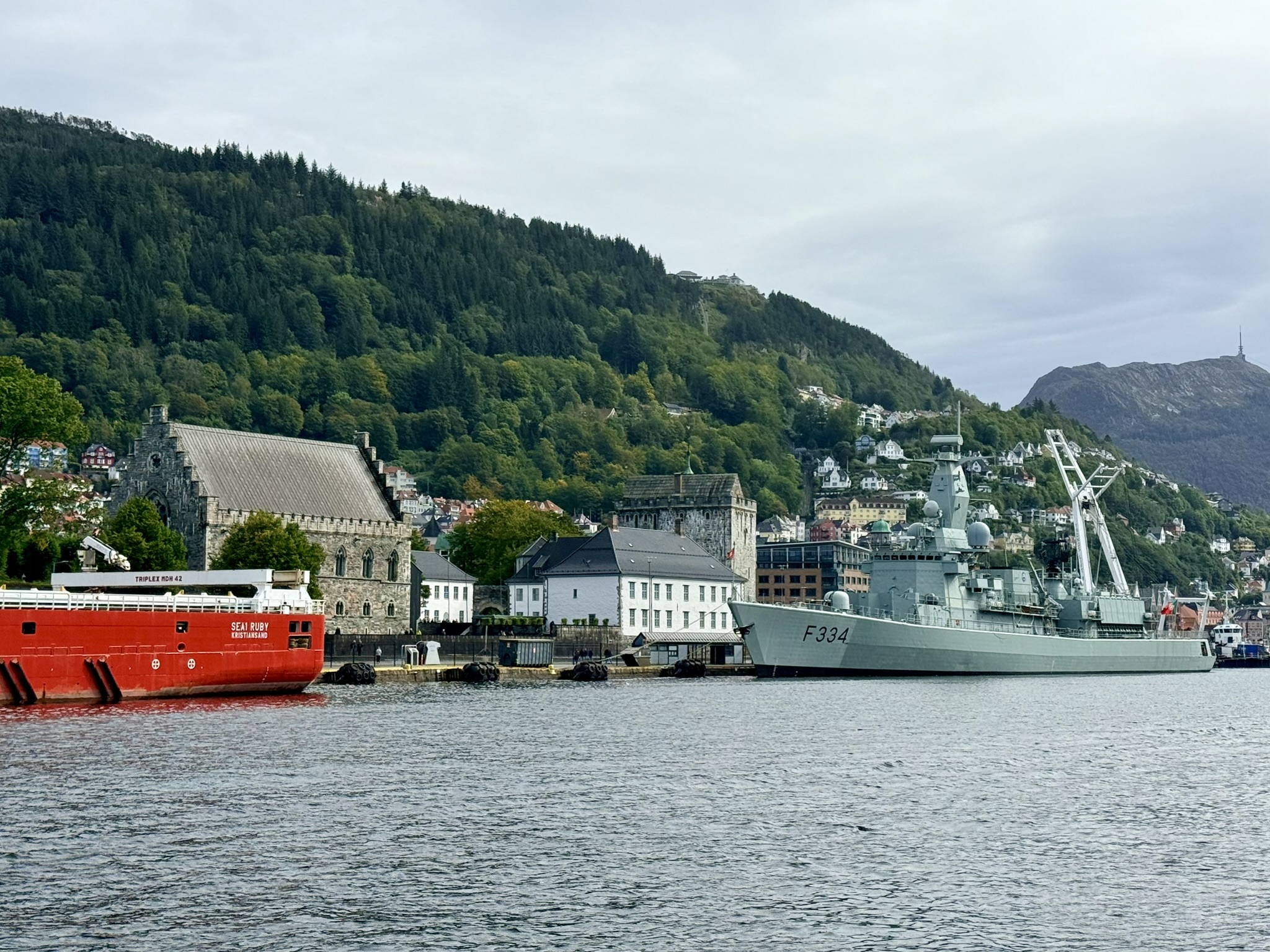
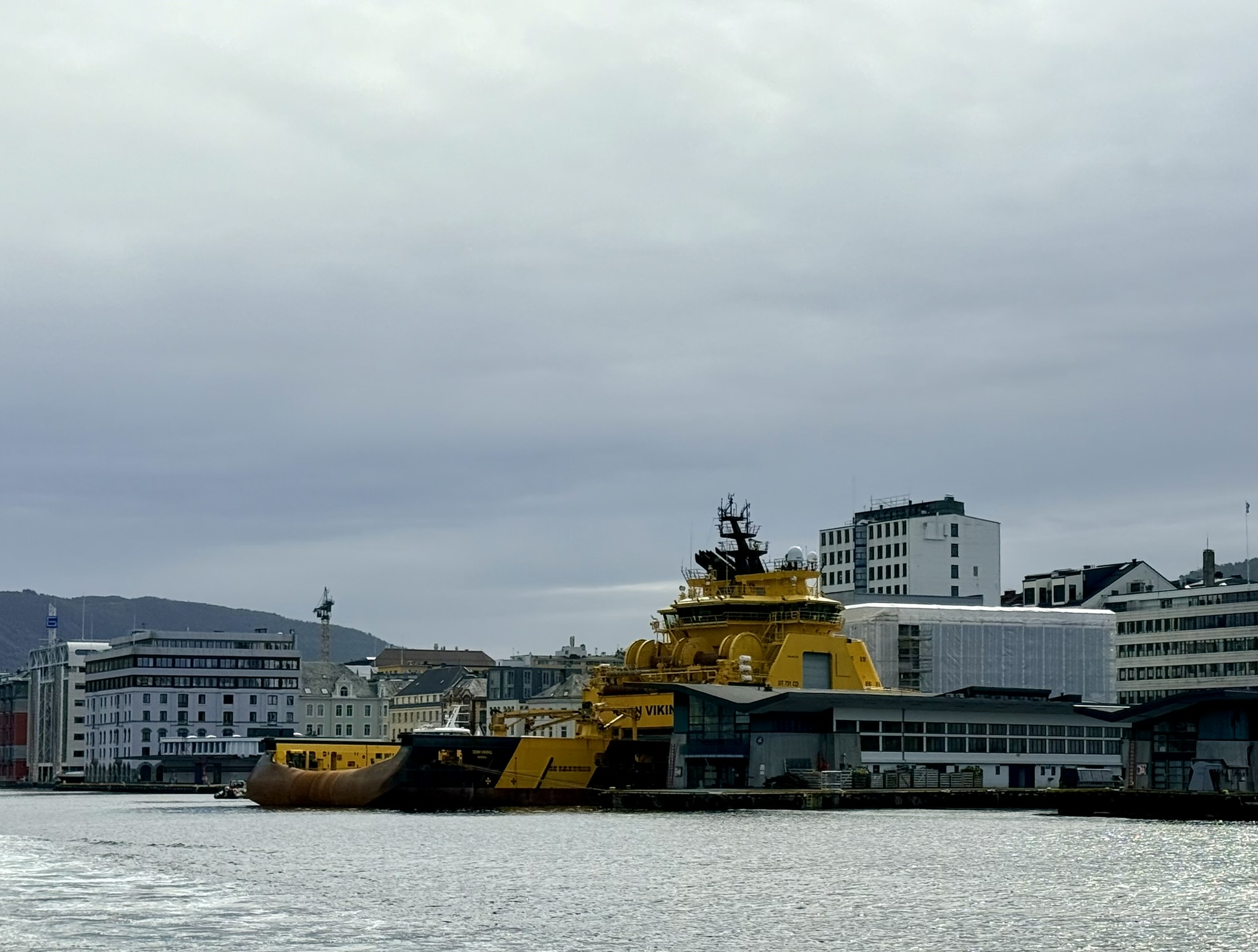
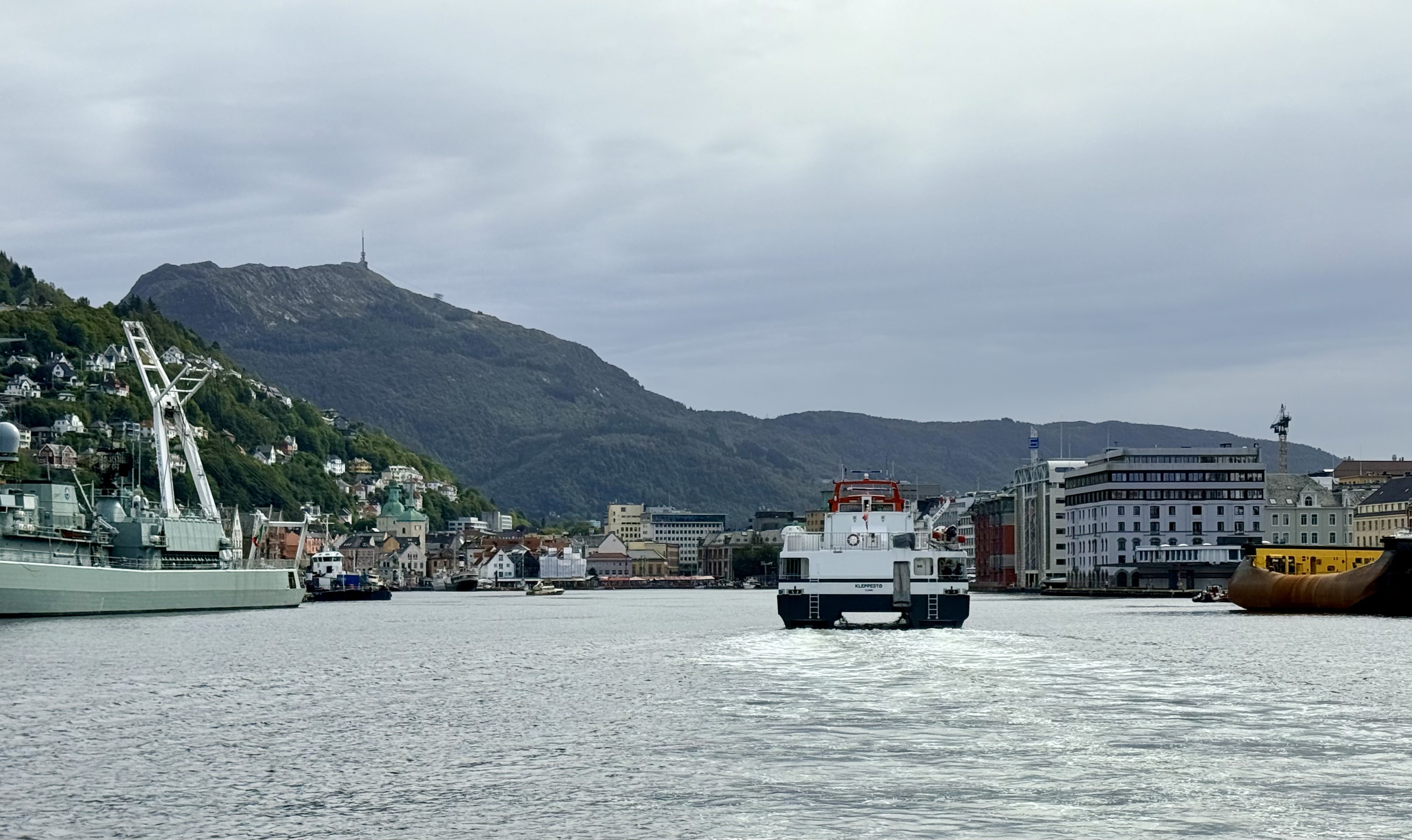
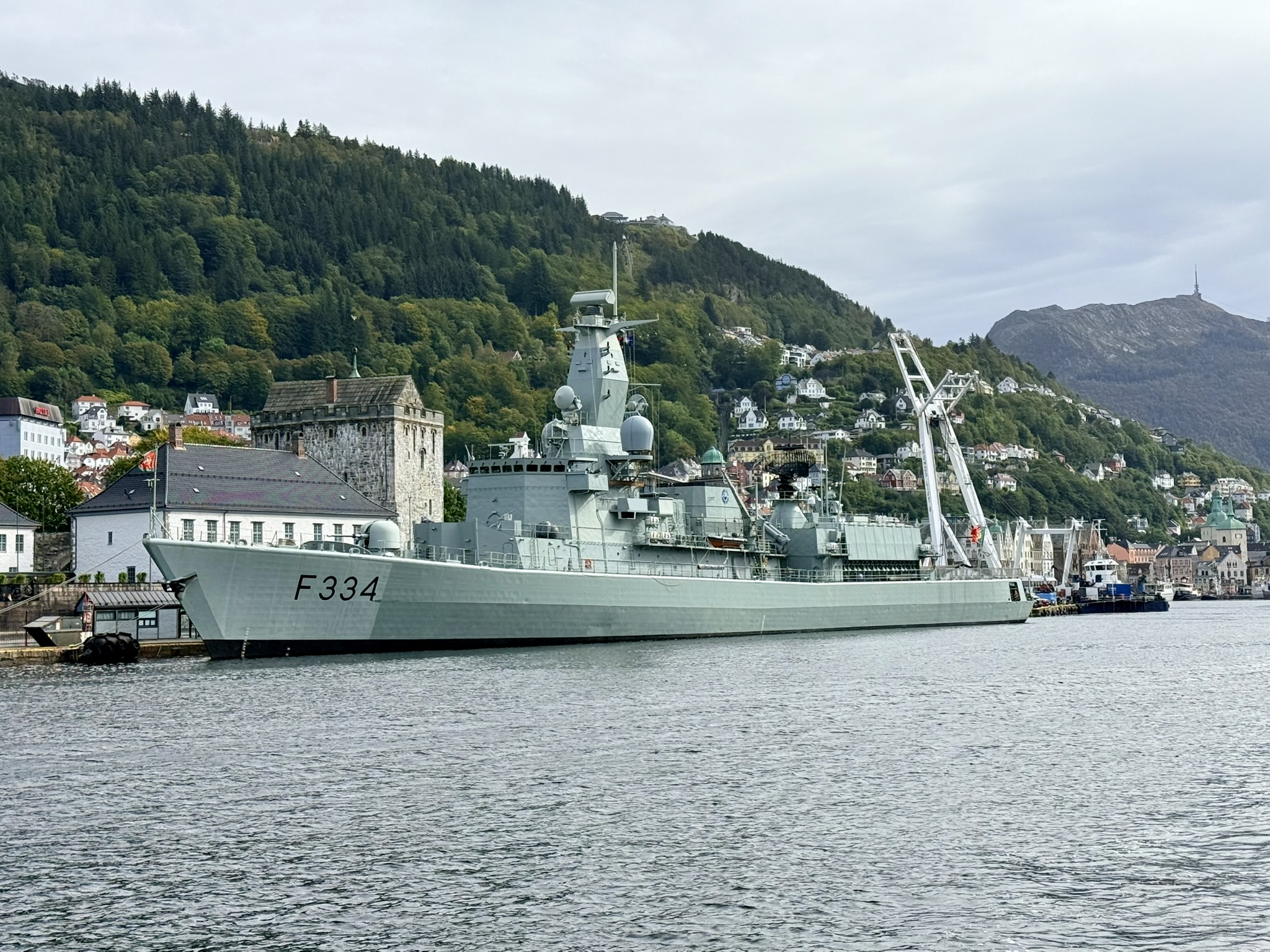
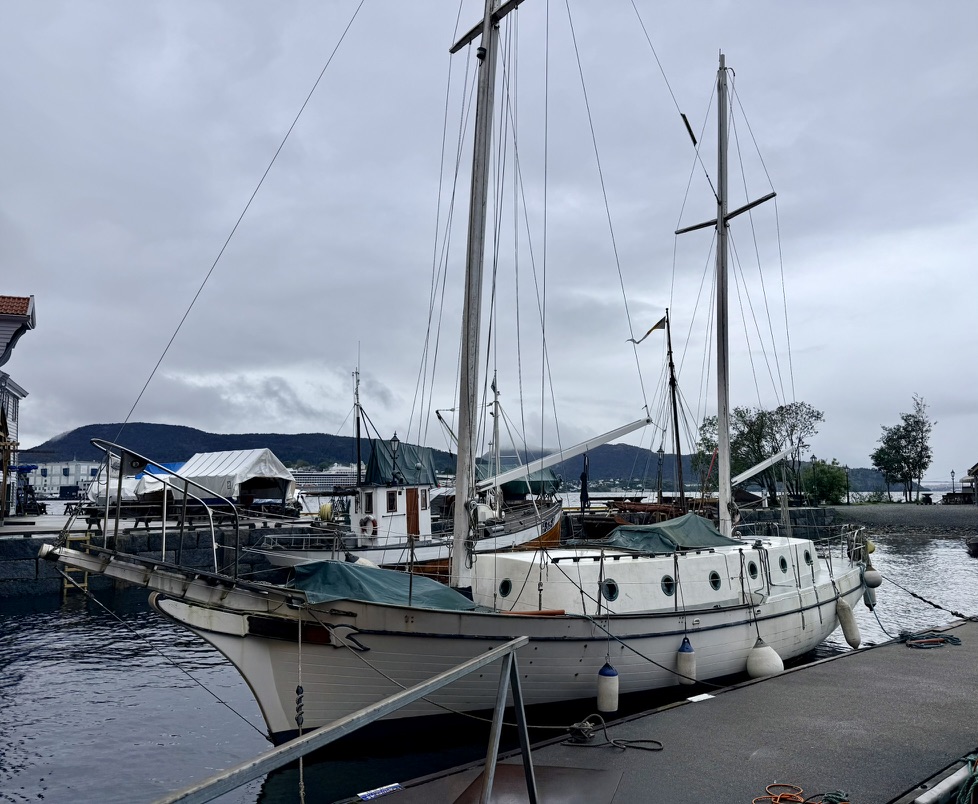
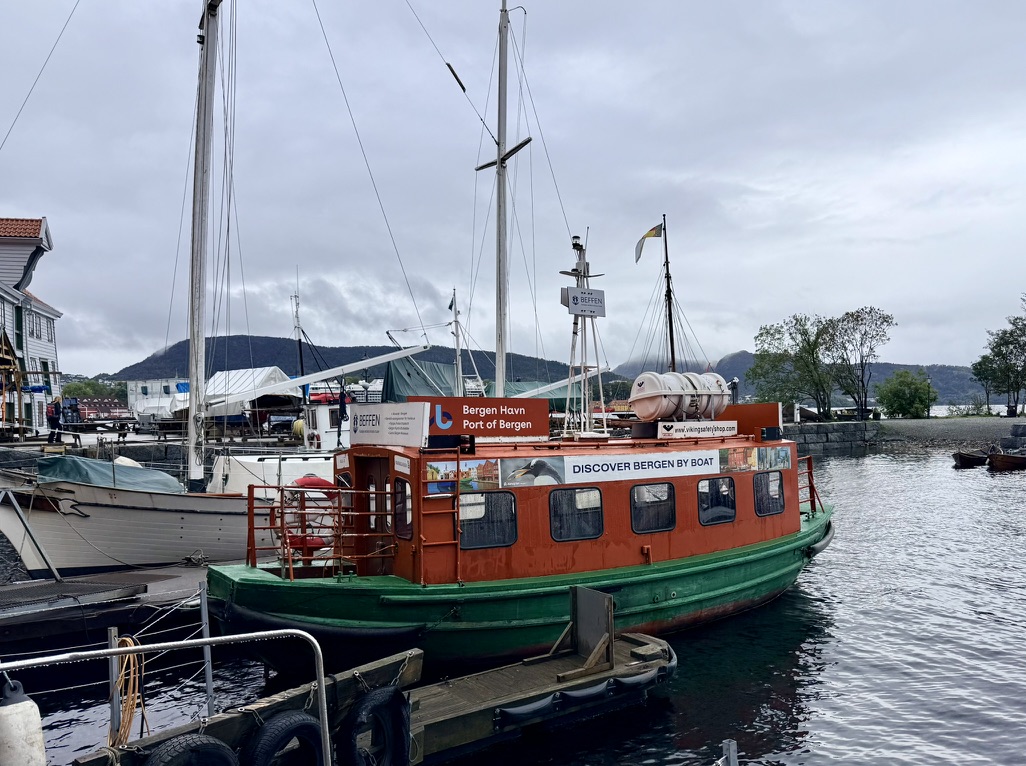
Vågen is the central harbor of the historical core of the city of Bergen. There is a lot of coming and going by ferries and cruise boats of various sizes and shapes. We wandered through Bryggen and the harbor area in a steady rainfall.
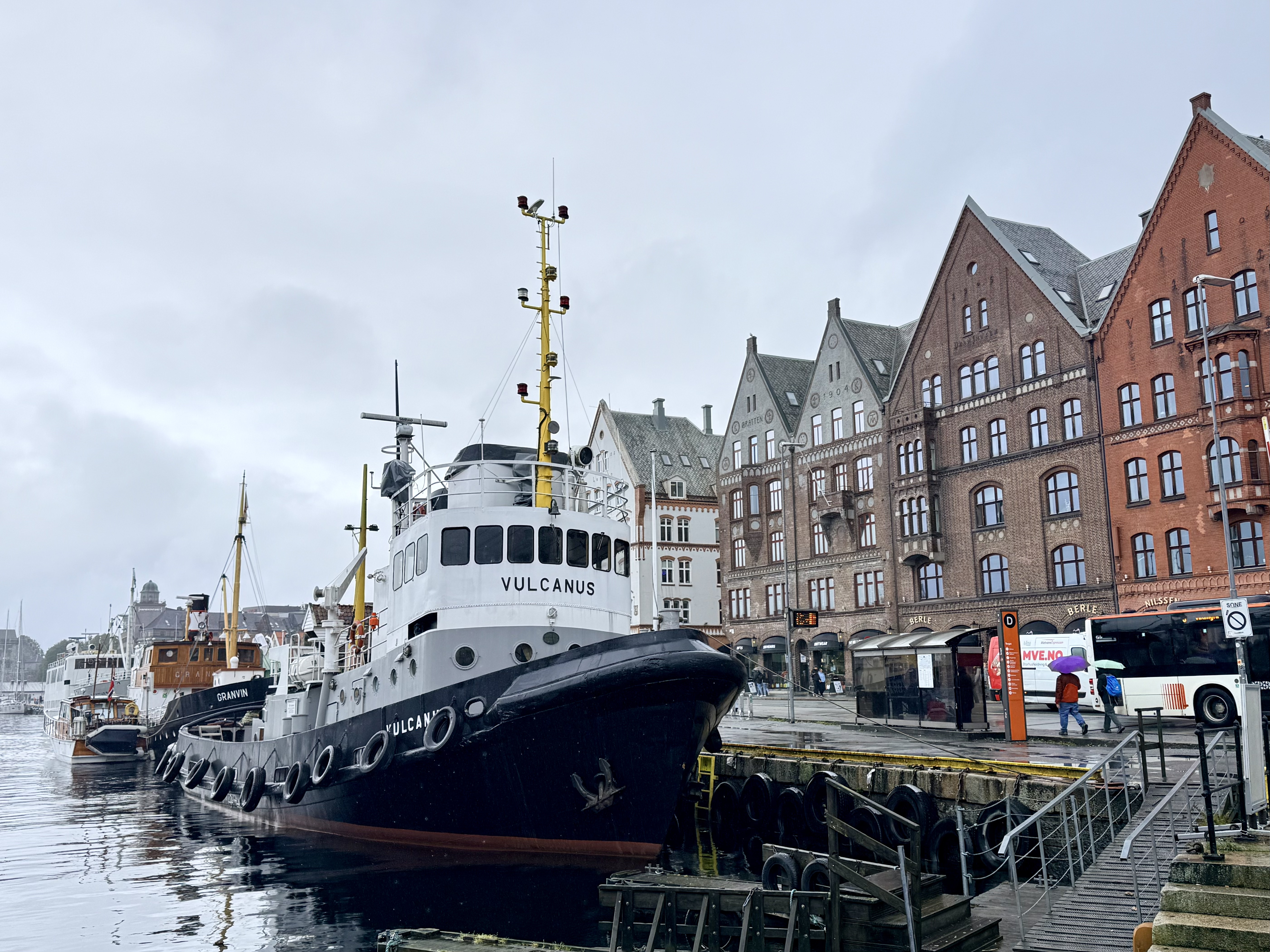
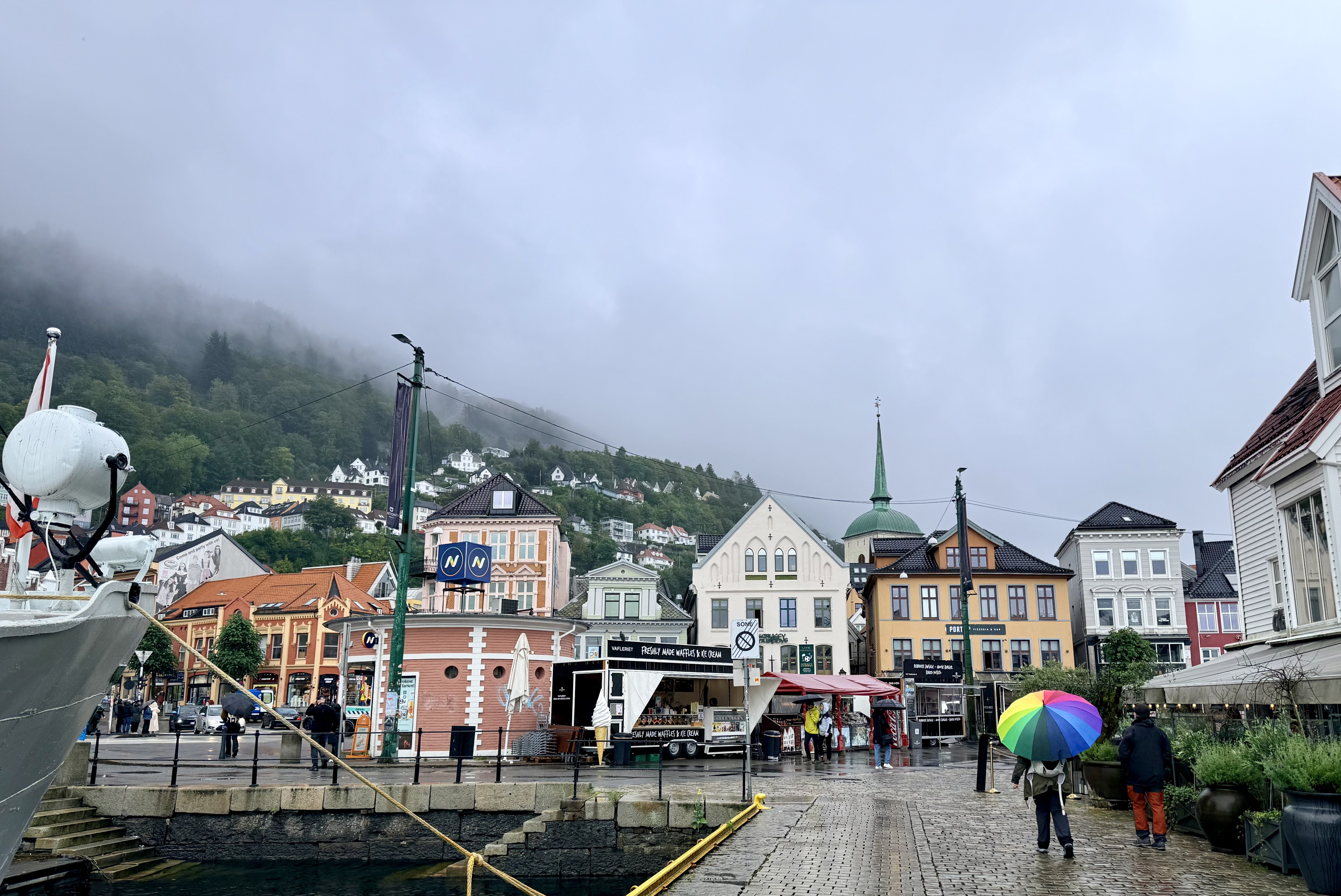
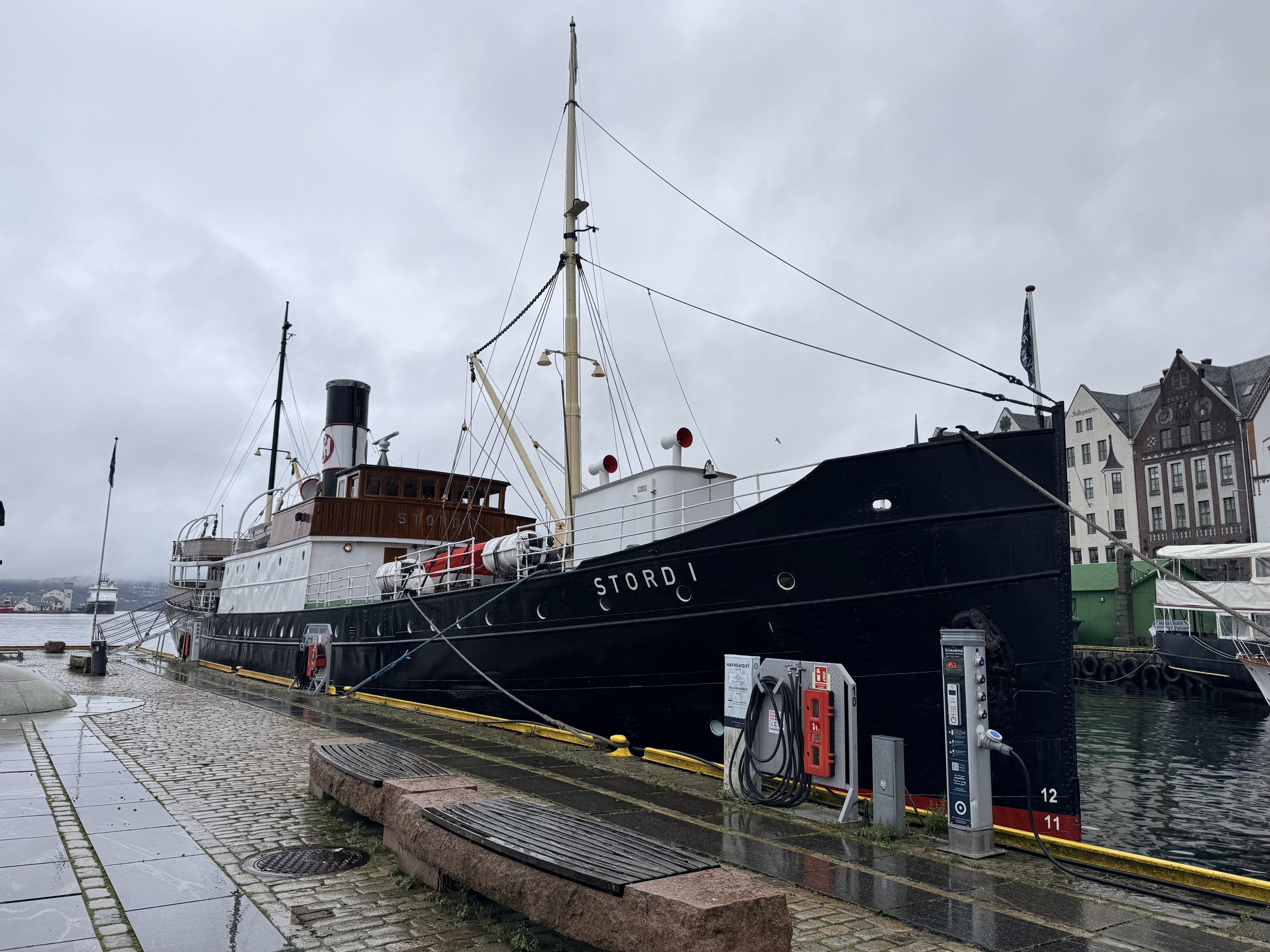
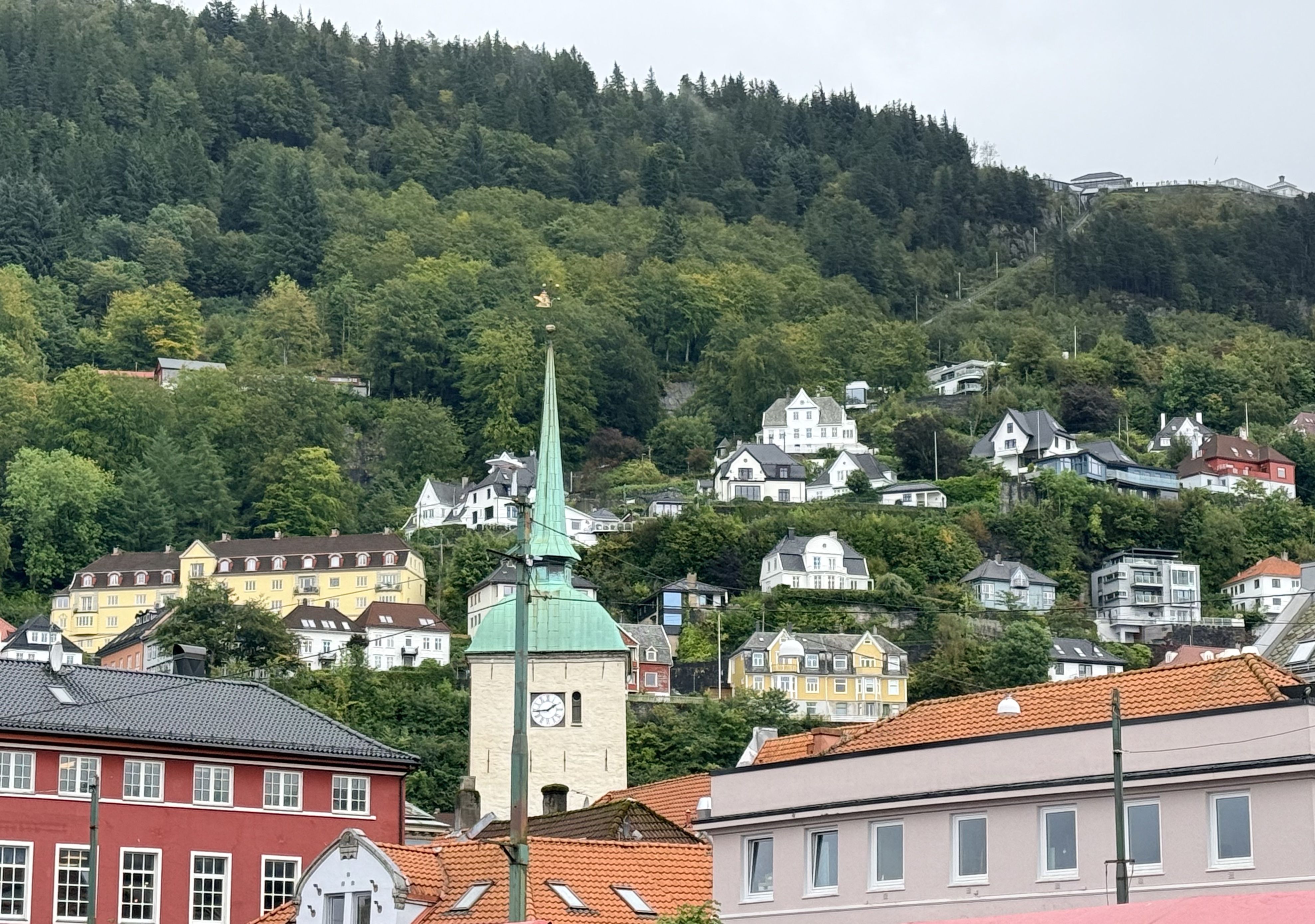
Bergen City Center: General City Sights
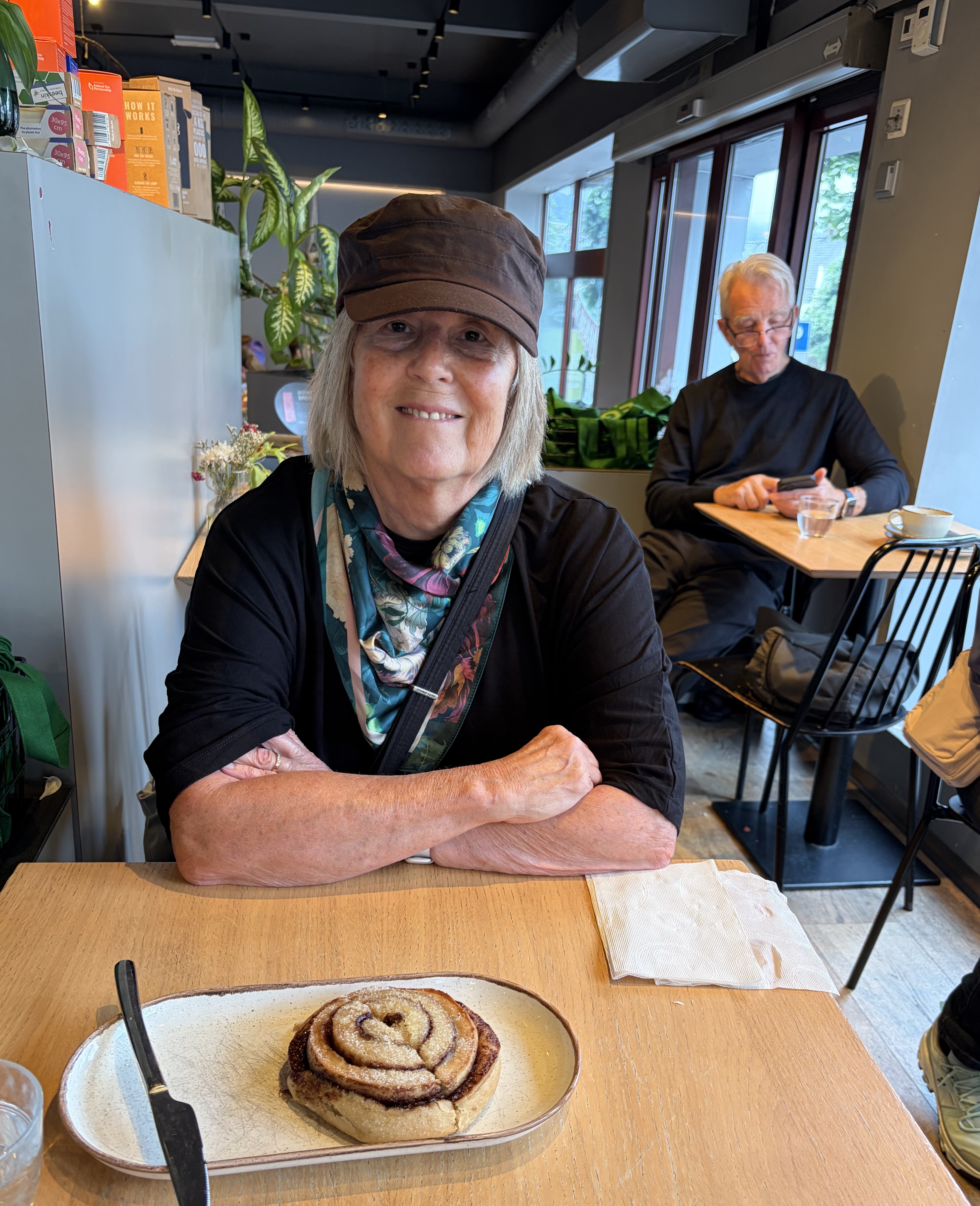
On our first day it was raining quite steadily but we had to go out anyway because what else does one do when traveling? We walked through the old city and stopped for our usual shared cinnamon bun and latte and talked to Mike, a Swedish-born Ugandan who works in both Sweden and Bergen as a traveling nurse.
We passed by Korskirken (The Cross Church), believed to have been constructed from 1130 to 1150. This makes it Bergen’s oldest surviving church: Korskirken was originally a simple single-nave long church in Romanesque style likely built without a tower. Its current tower and cruciform floor plan are the result of post-Reformation alterations.
The church endured at least seven fires between 1198 and 1702. Each restoration left a mark on the building resulting in its current eclectic mix of architectural styles. In the 1500s, Korskirken featured multiple towers. The characteristic south and north transepts were added during the 1600s. The current stone tower was built in 1594 and attained its present form in the 1720s In 1732, the church was limewashed externally and whitened internally, a practice that continues to this day.
We were able to go inside but no photos were allowed. I always think that is the stupidest rule imaginable, unless a service is in progress.
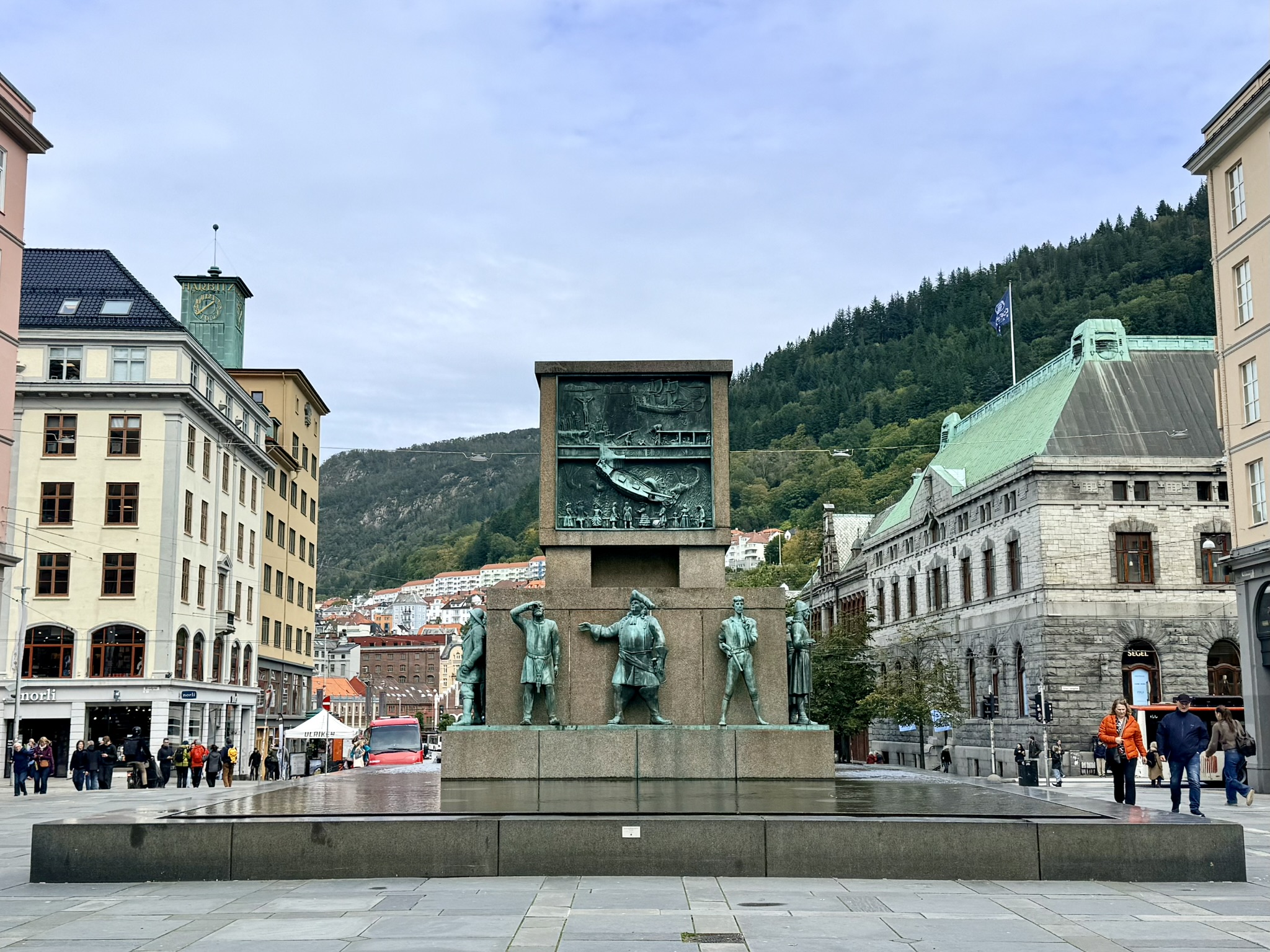
The Sailor’s Monument in Bergen salutes Norway’s maritime heritage by honoring Norwegian sailors throughout the ages. Located at the northern end of Torgallmenningen, the city’s main square, the monument was unveiled on June 7, 1950. It serves as both an artistic and historical reflection on Norway’s long-standing relationship with the sea.
The monument features 12 bronze statues and four relief panels representing different eras of Norwegian maritime history. The west-facing side depicts Viking Age adventurers whose violent nature is depicted with swords and a spear. The north side celebrates early modern (17th and 18th centuries) seafarers, the east side features 19th-century seamen, and the south side represents 20th-century sailors. Each group is symbolically divided into societal classes: the poor, the middle classes, and the elite.
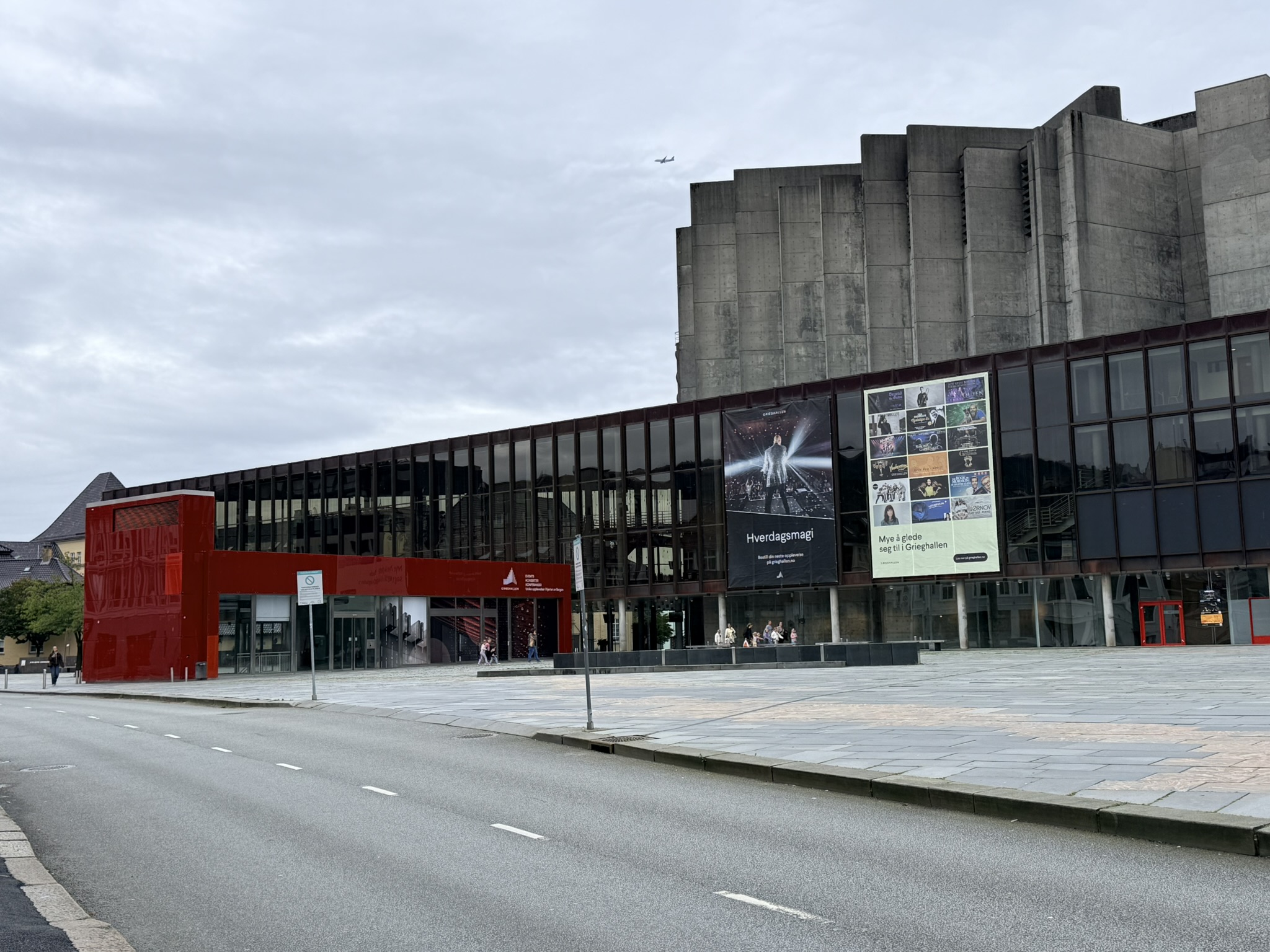
We walked past the Bergen Opera House (Bergen Nasjonale Opera) one evening purely by accident.
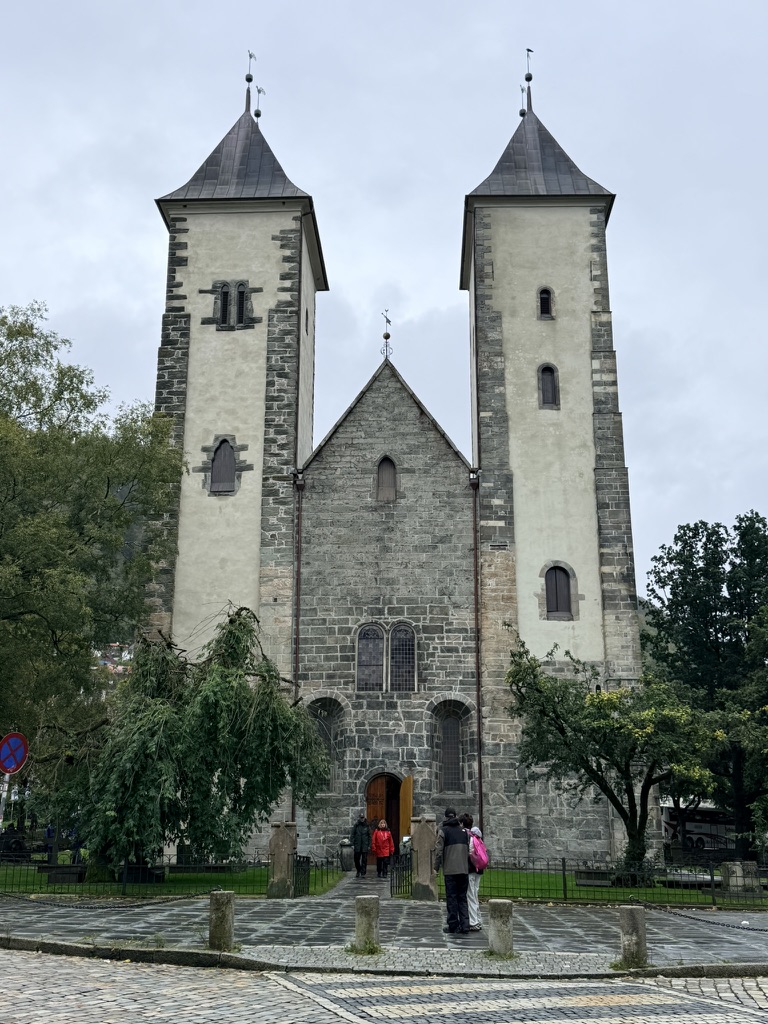
Mariakirken, or St. Mary’s Church, which lies behind Bryggen, is the city’s oldest parish church as well as Bergen’s oldest preserved building. It was built sometime between 1130 and 1170.
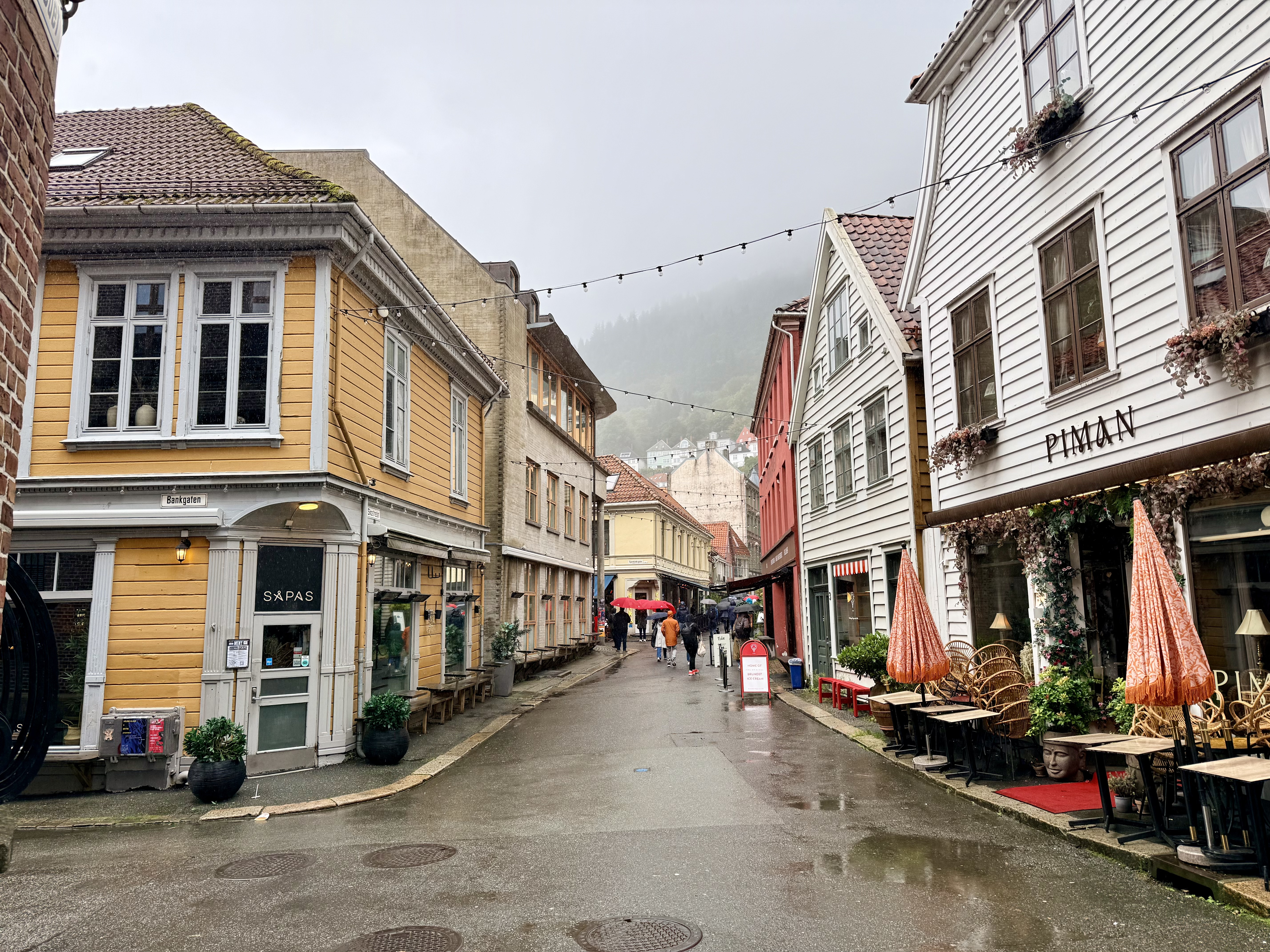
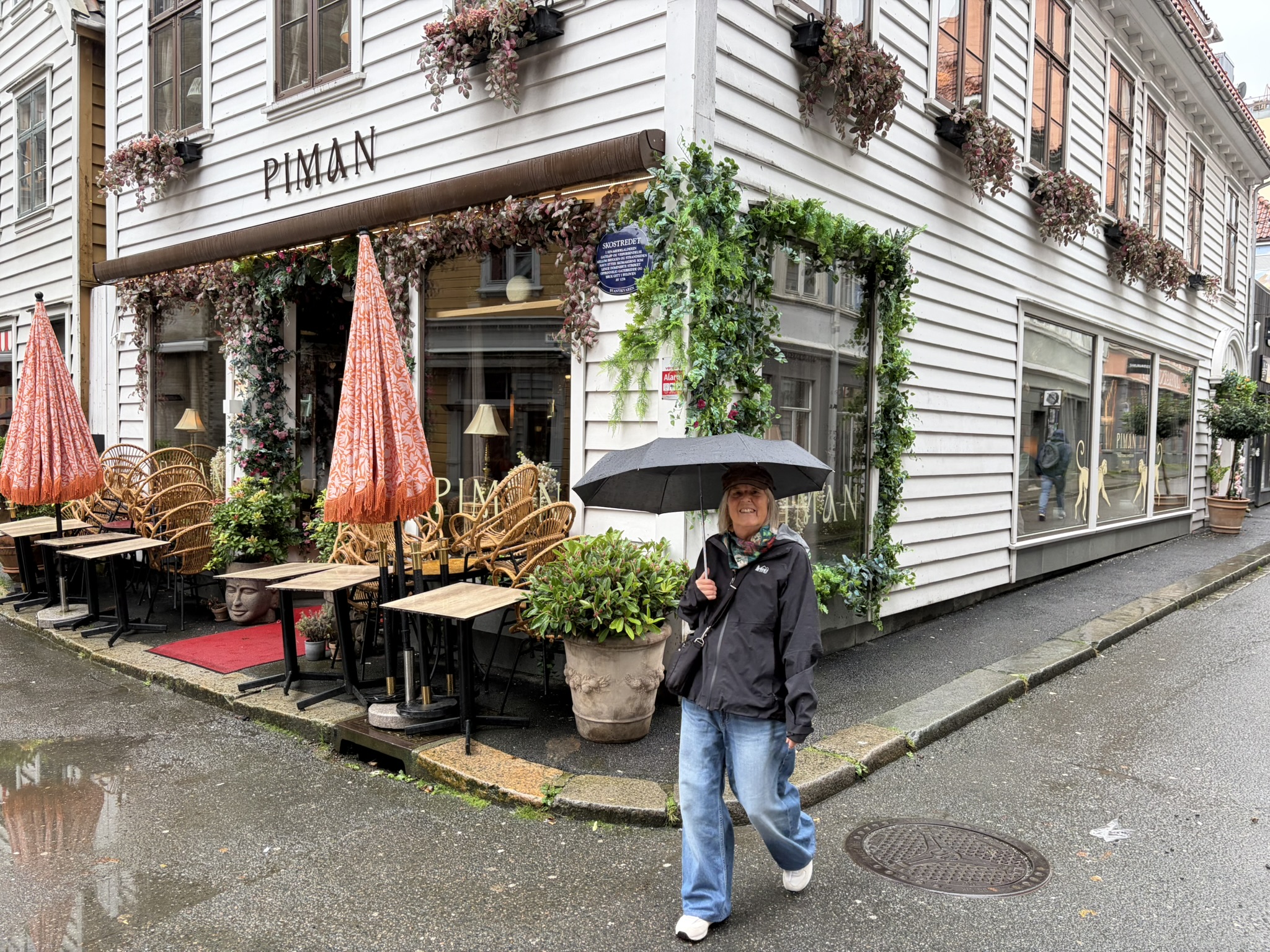
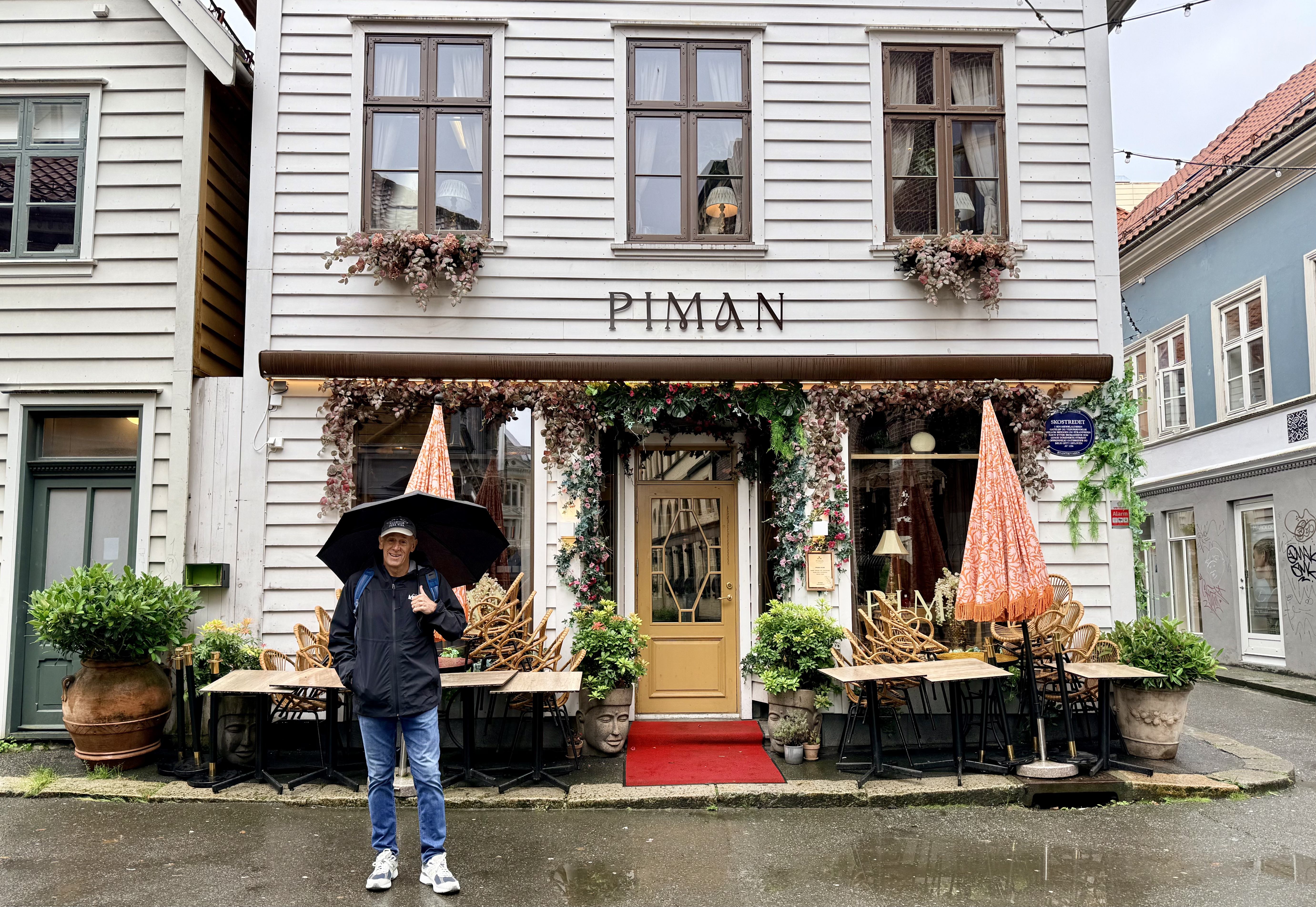
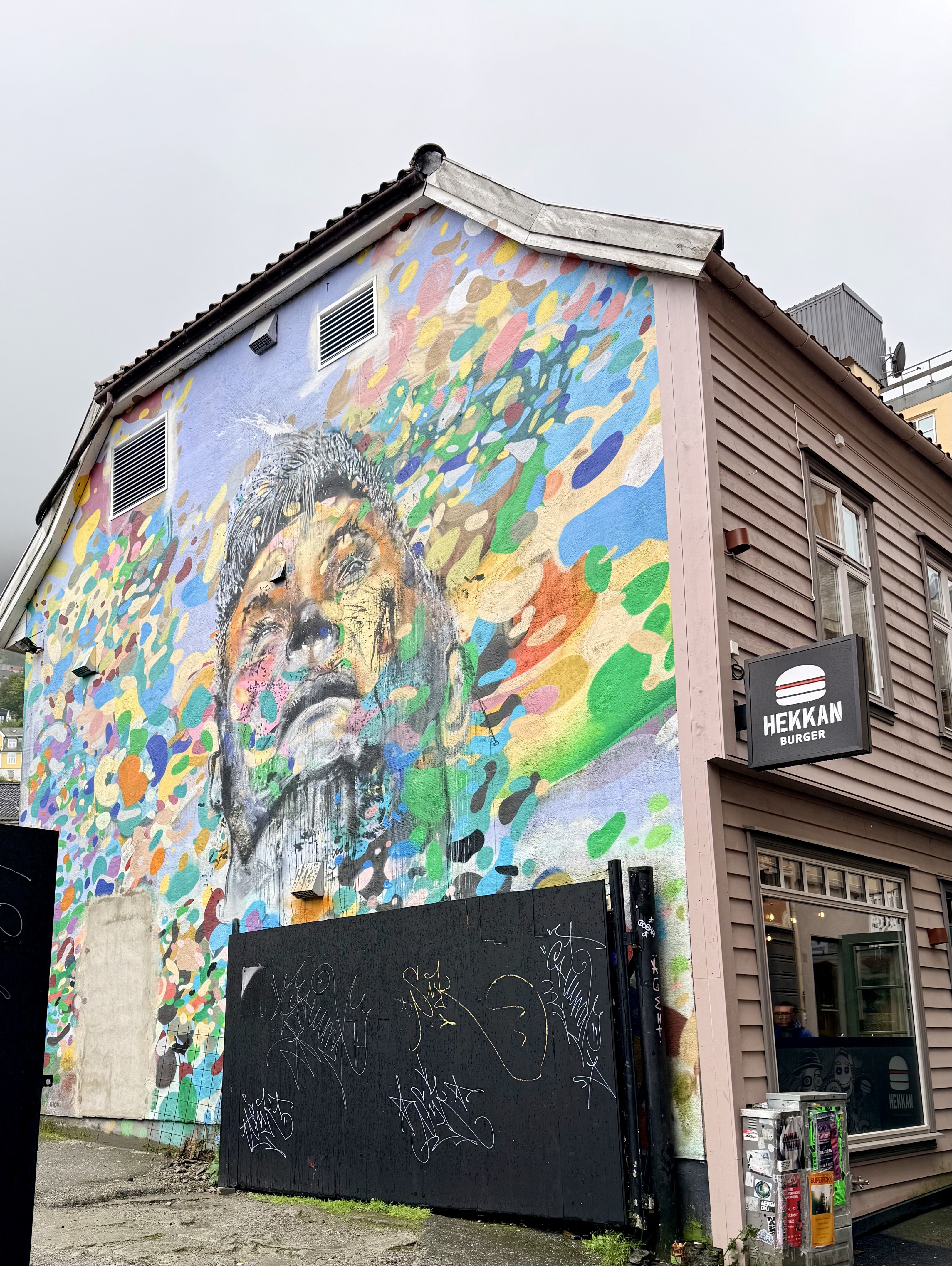
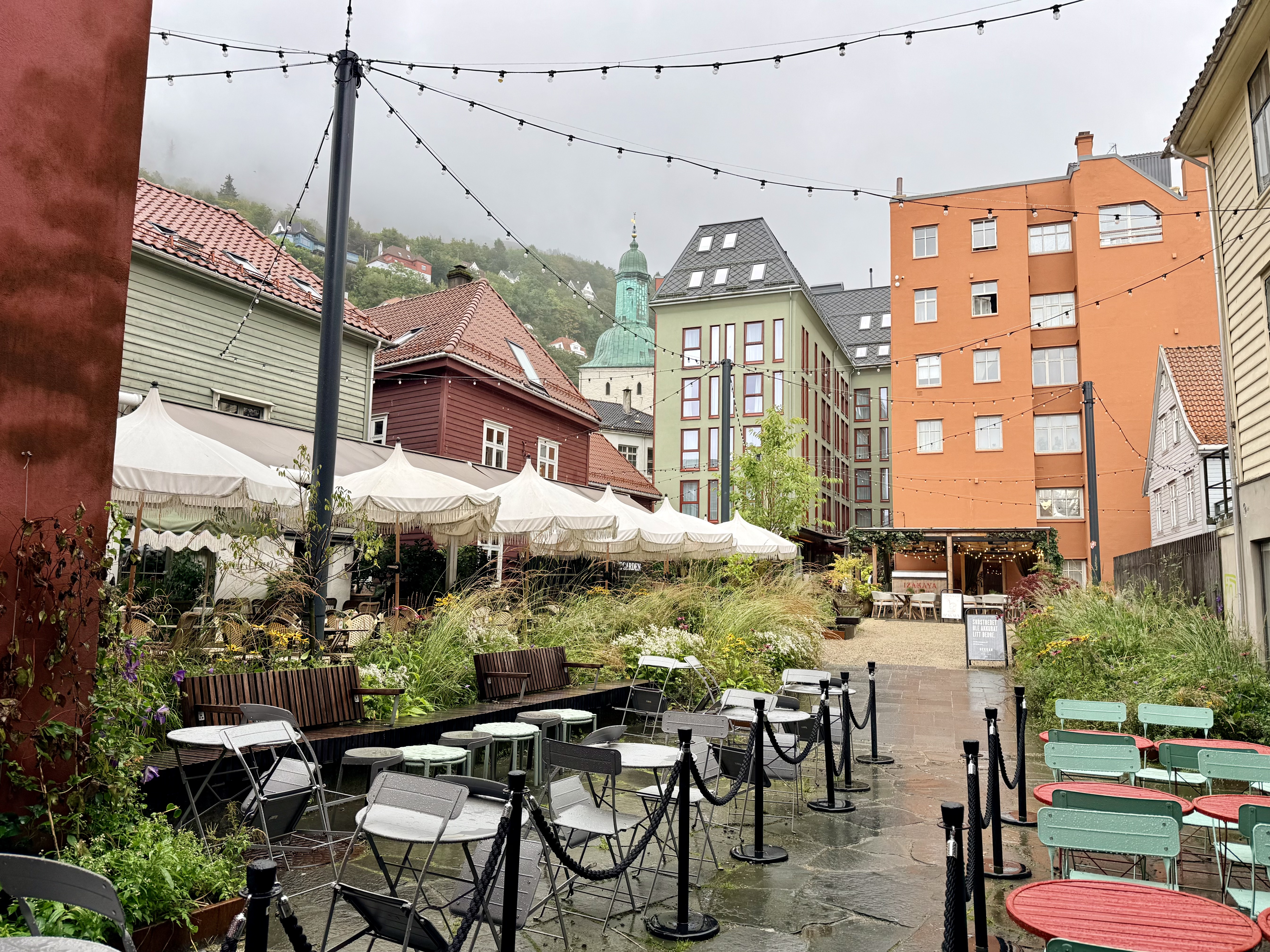
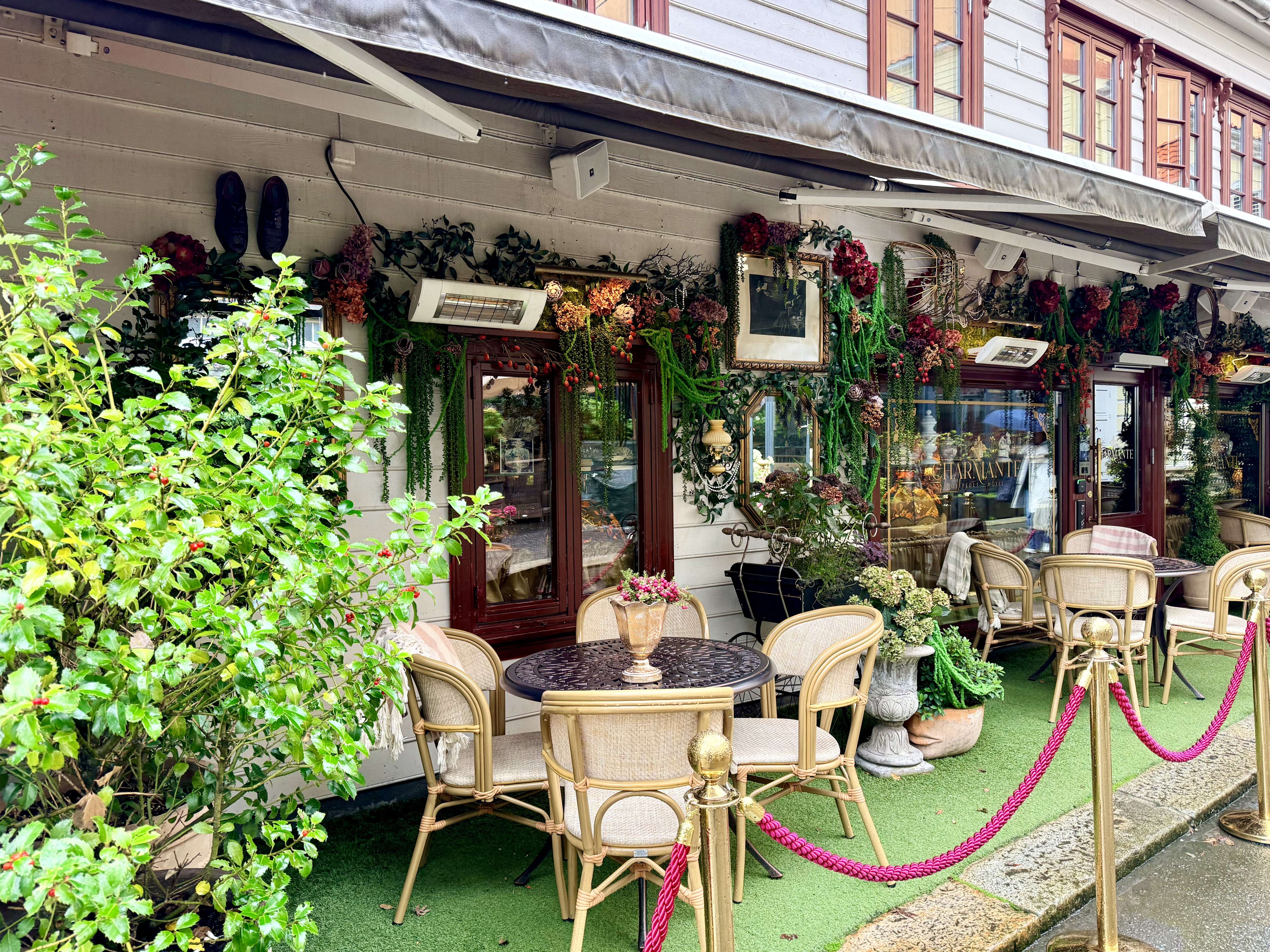
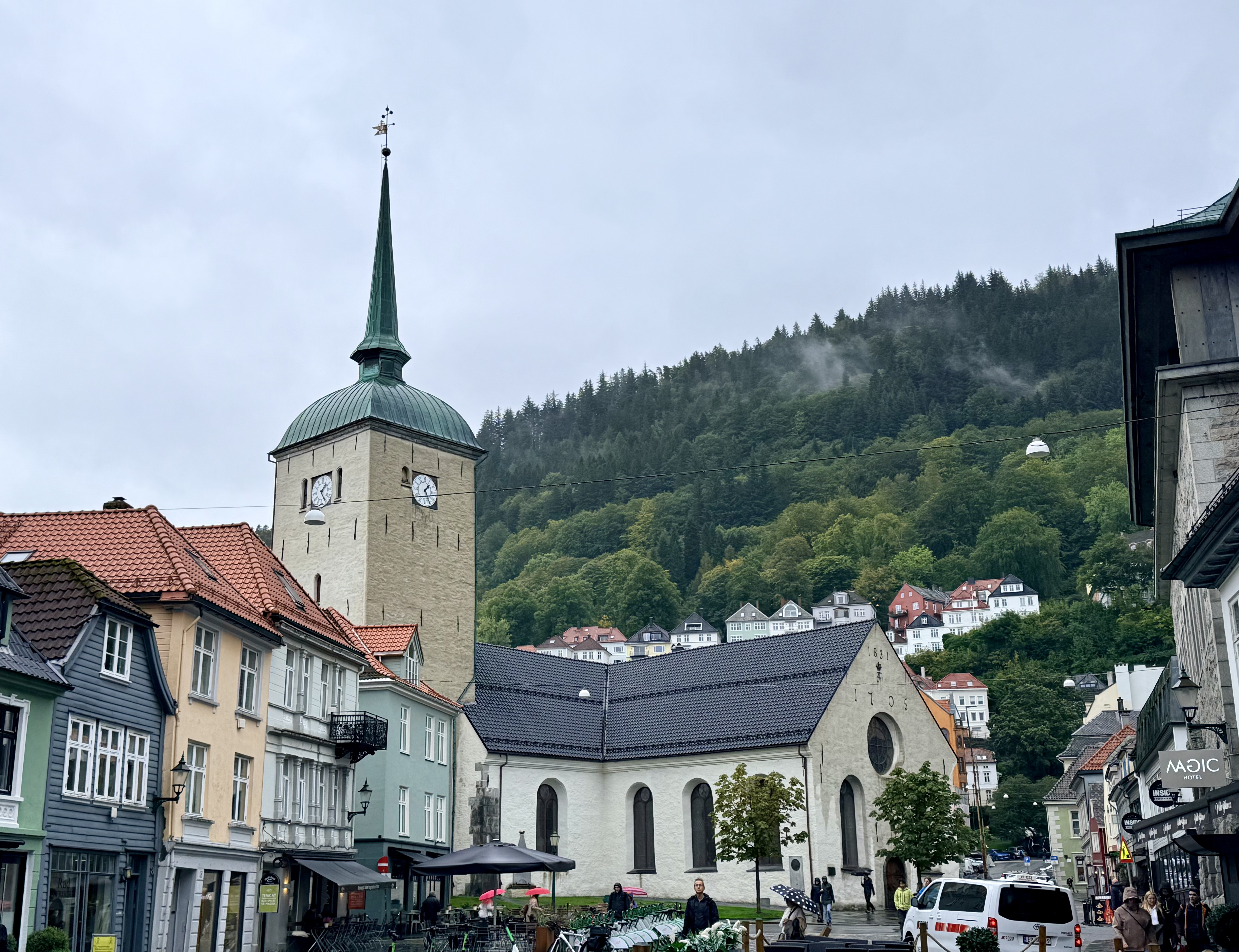
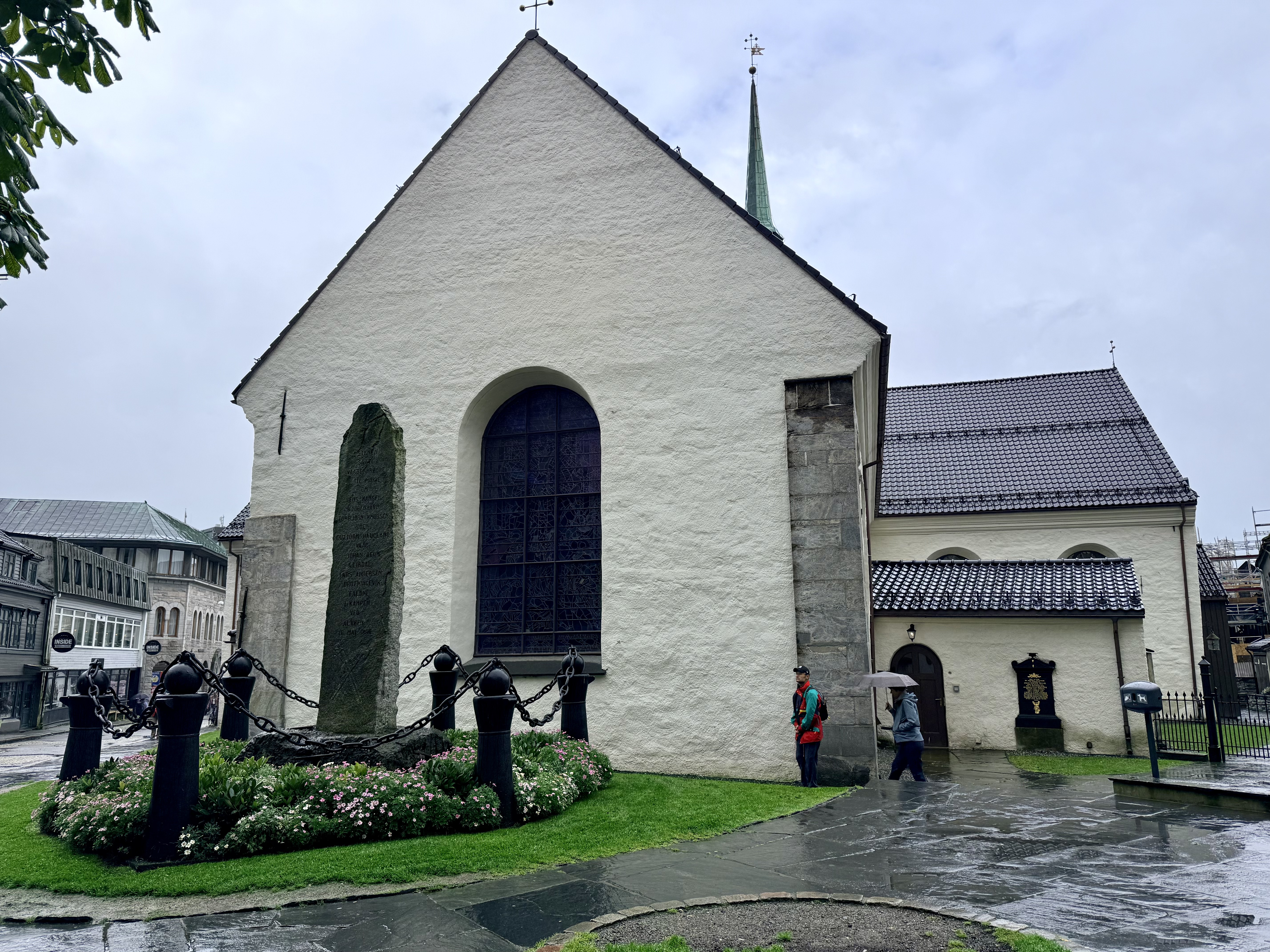
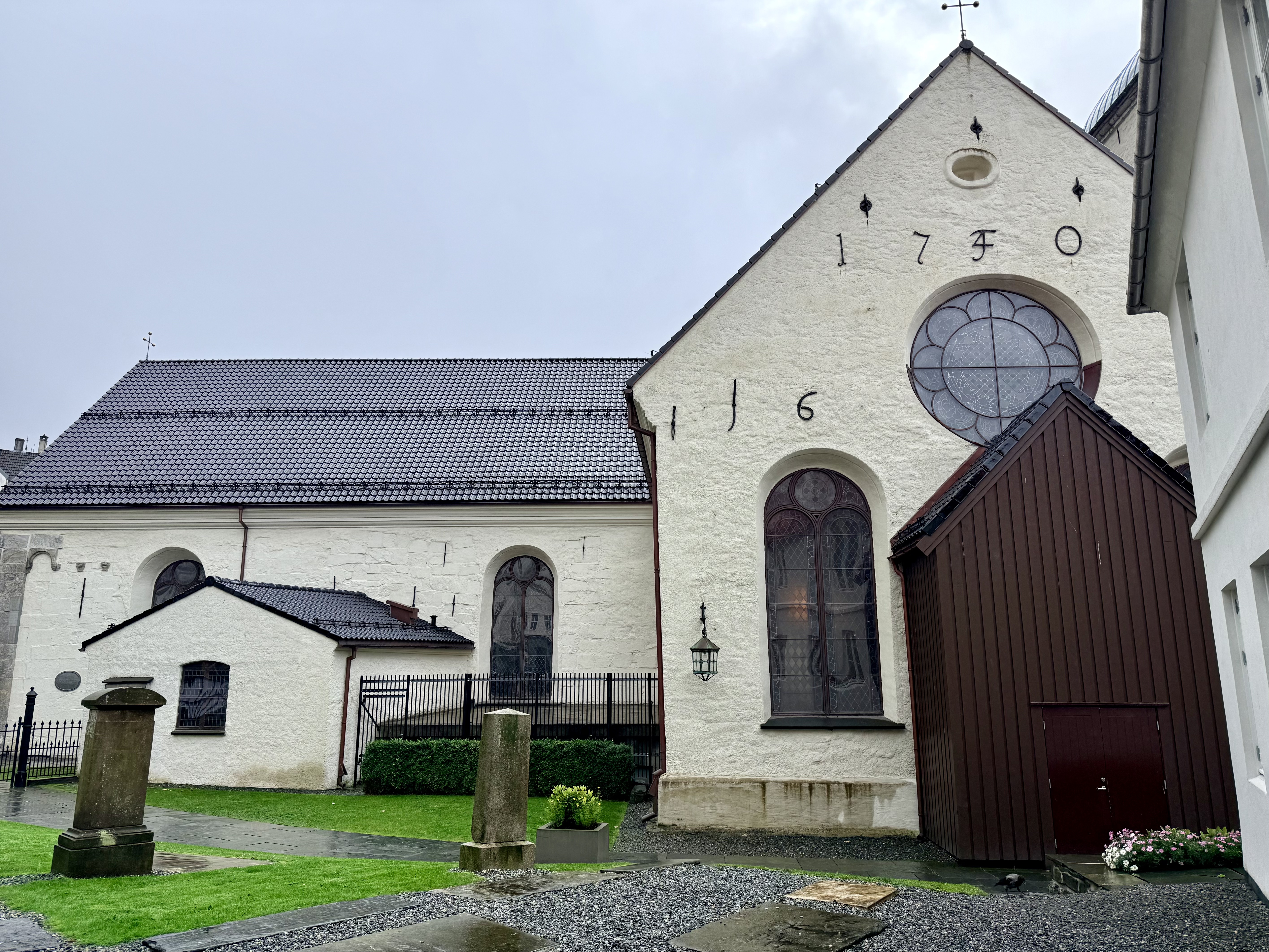
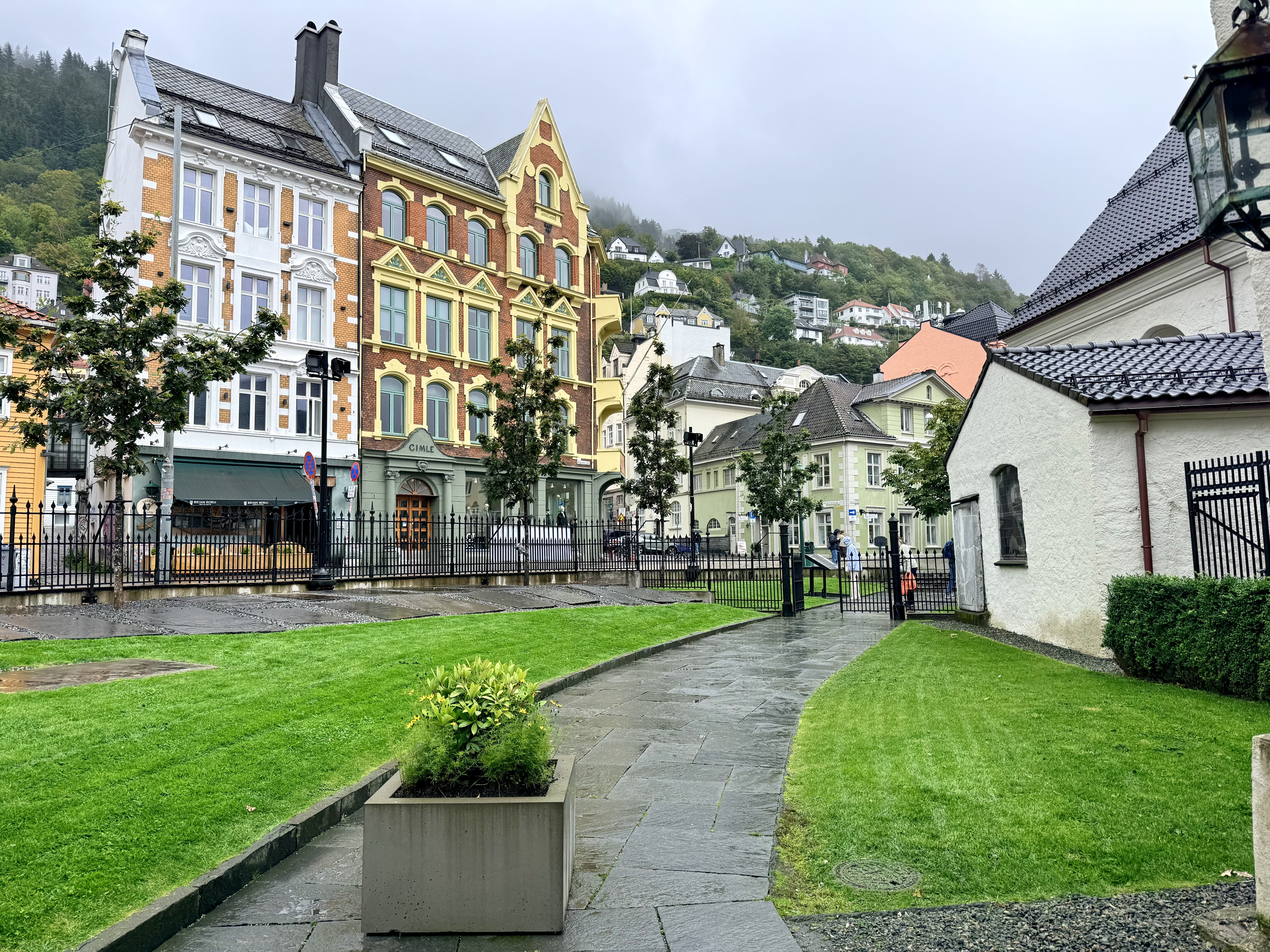
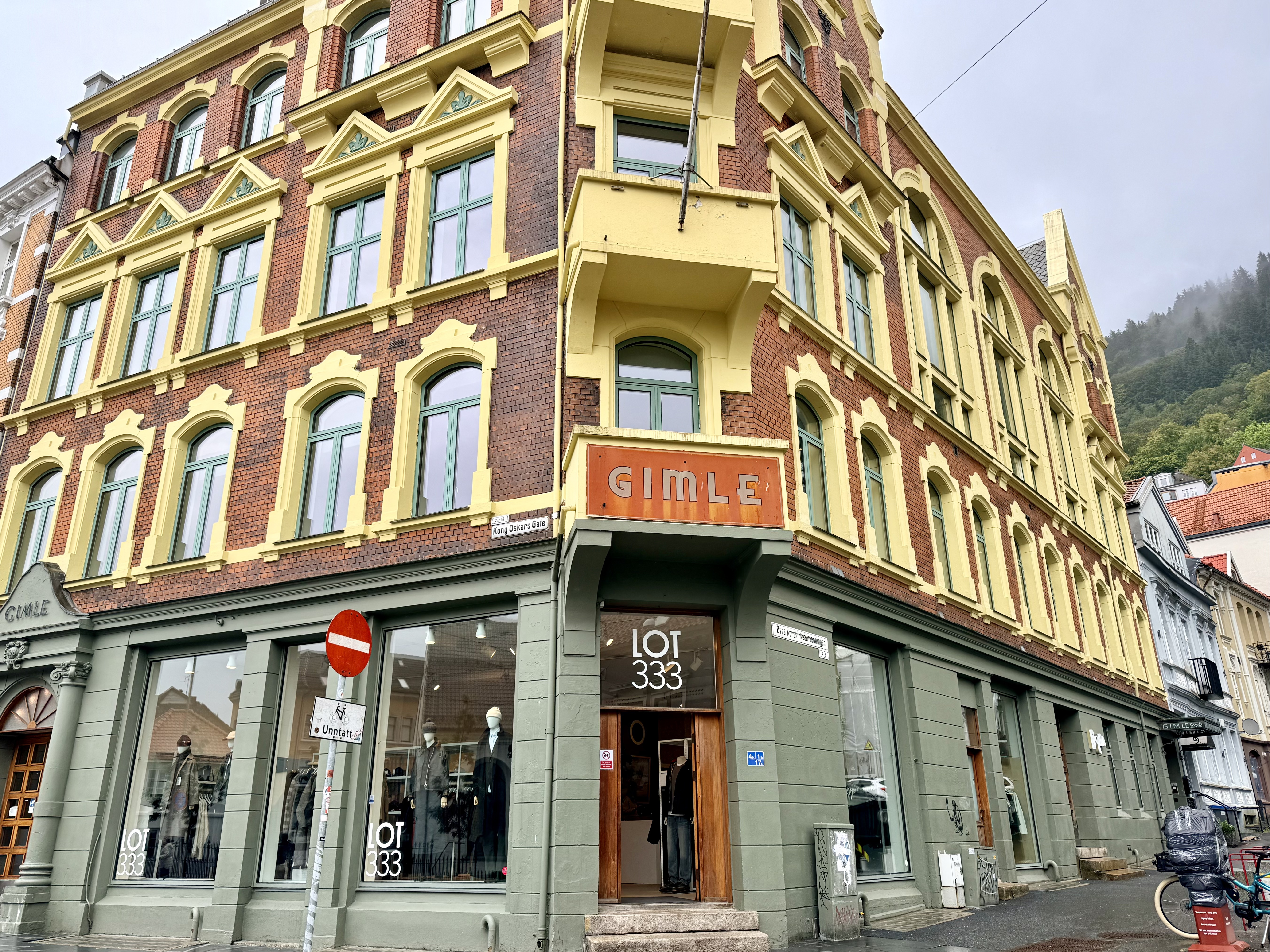
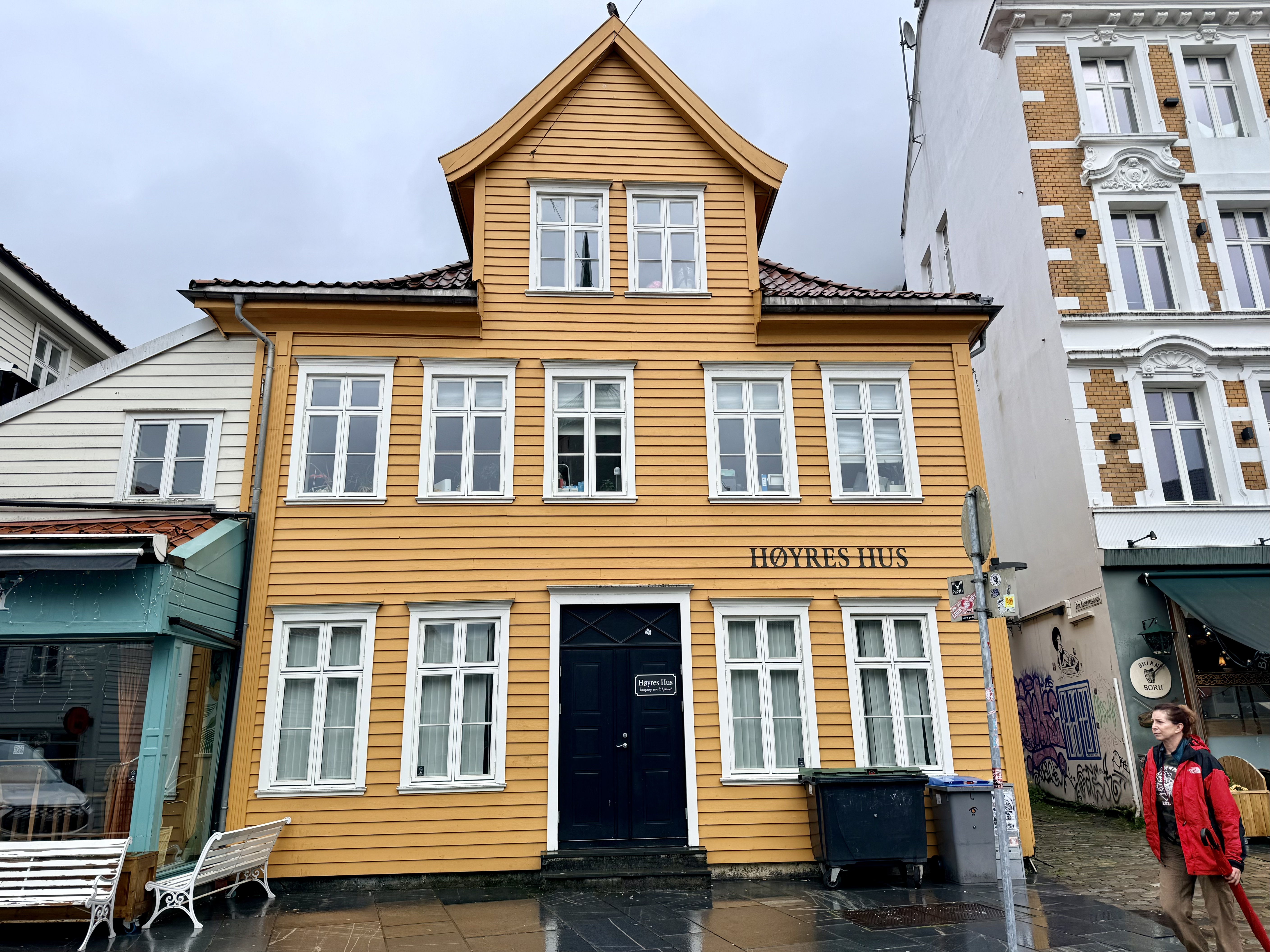
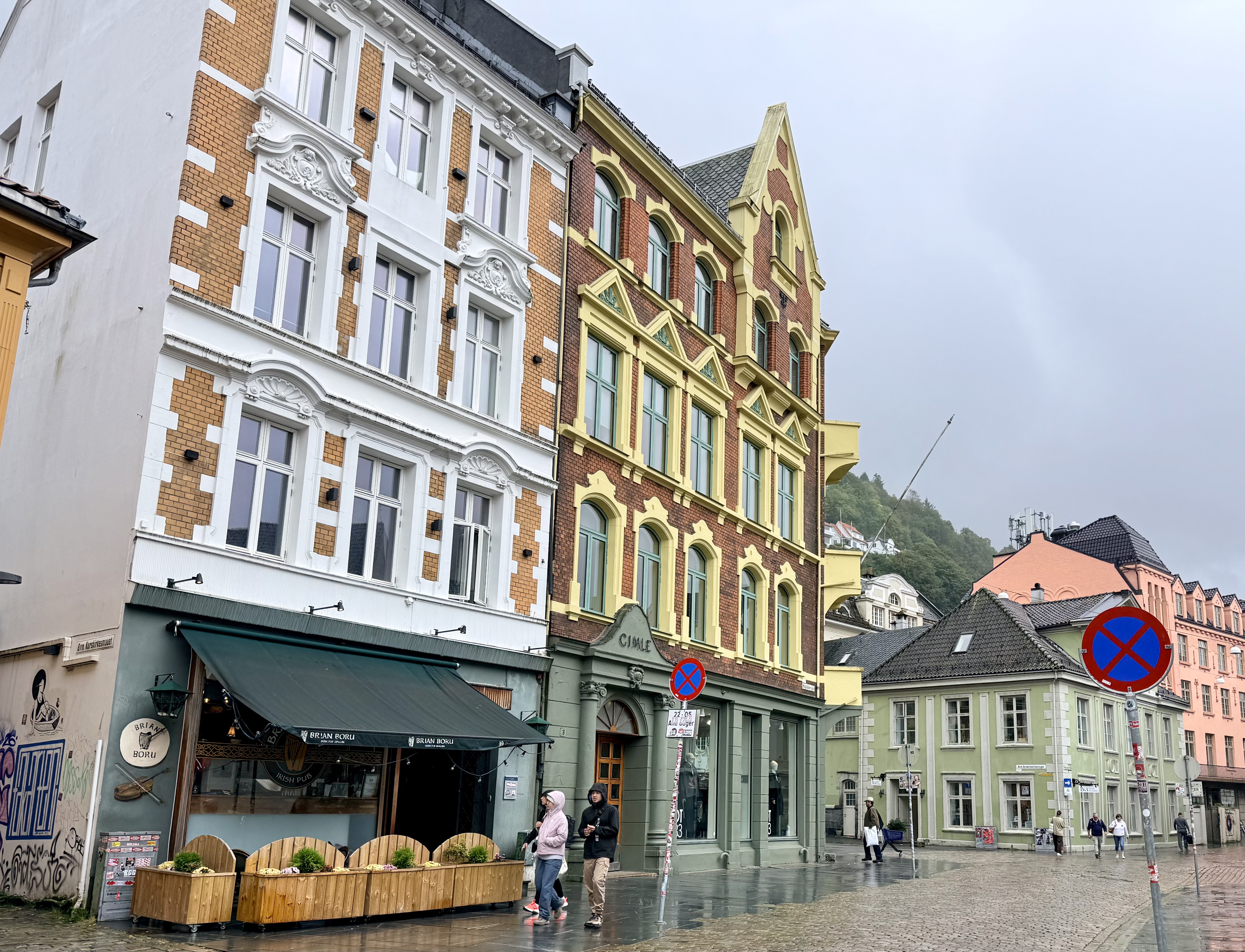
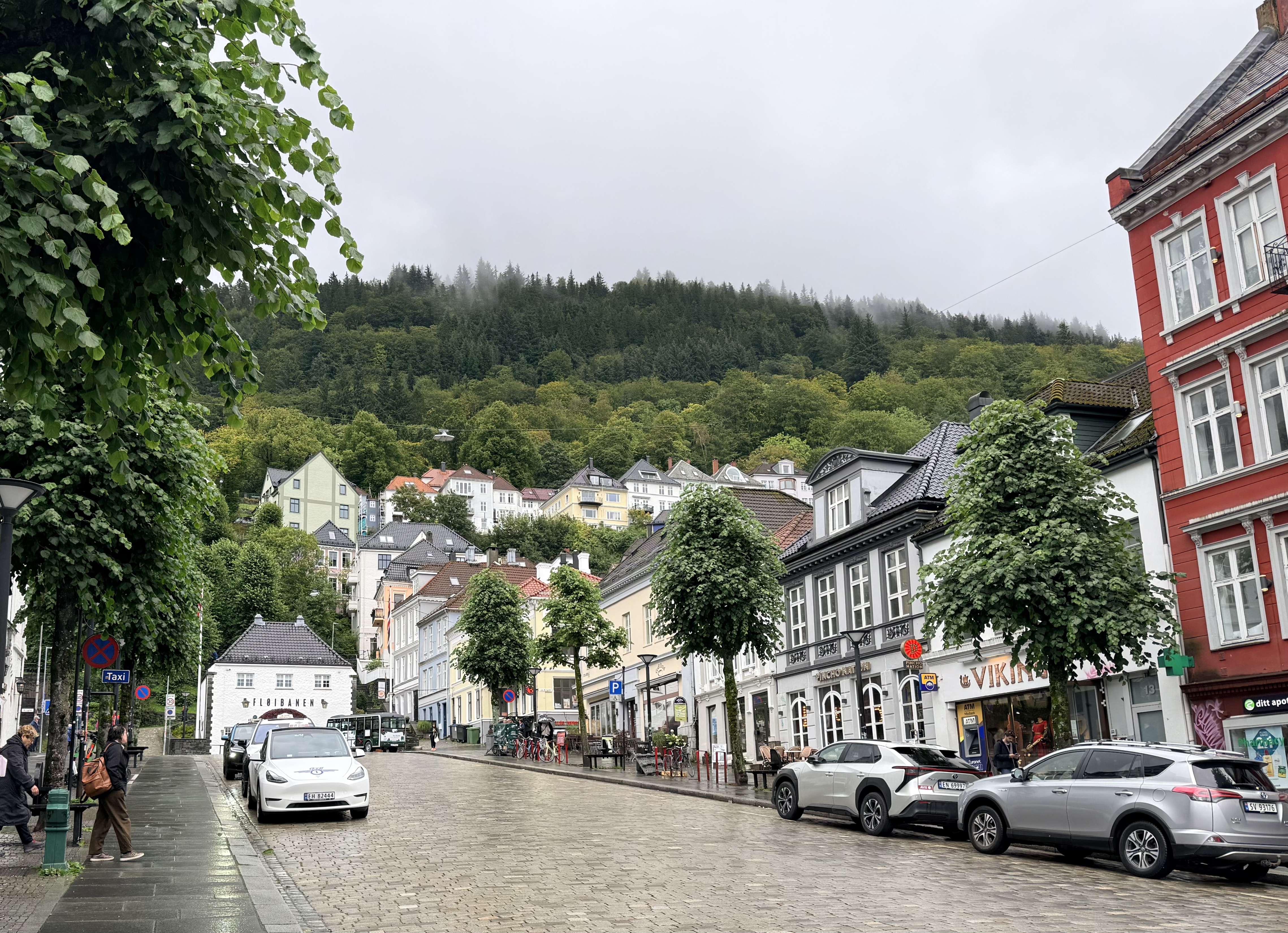
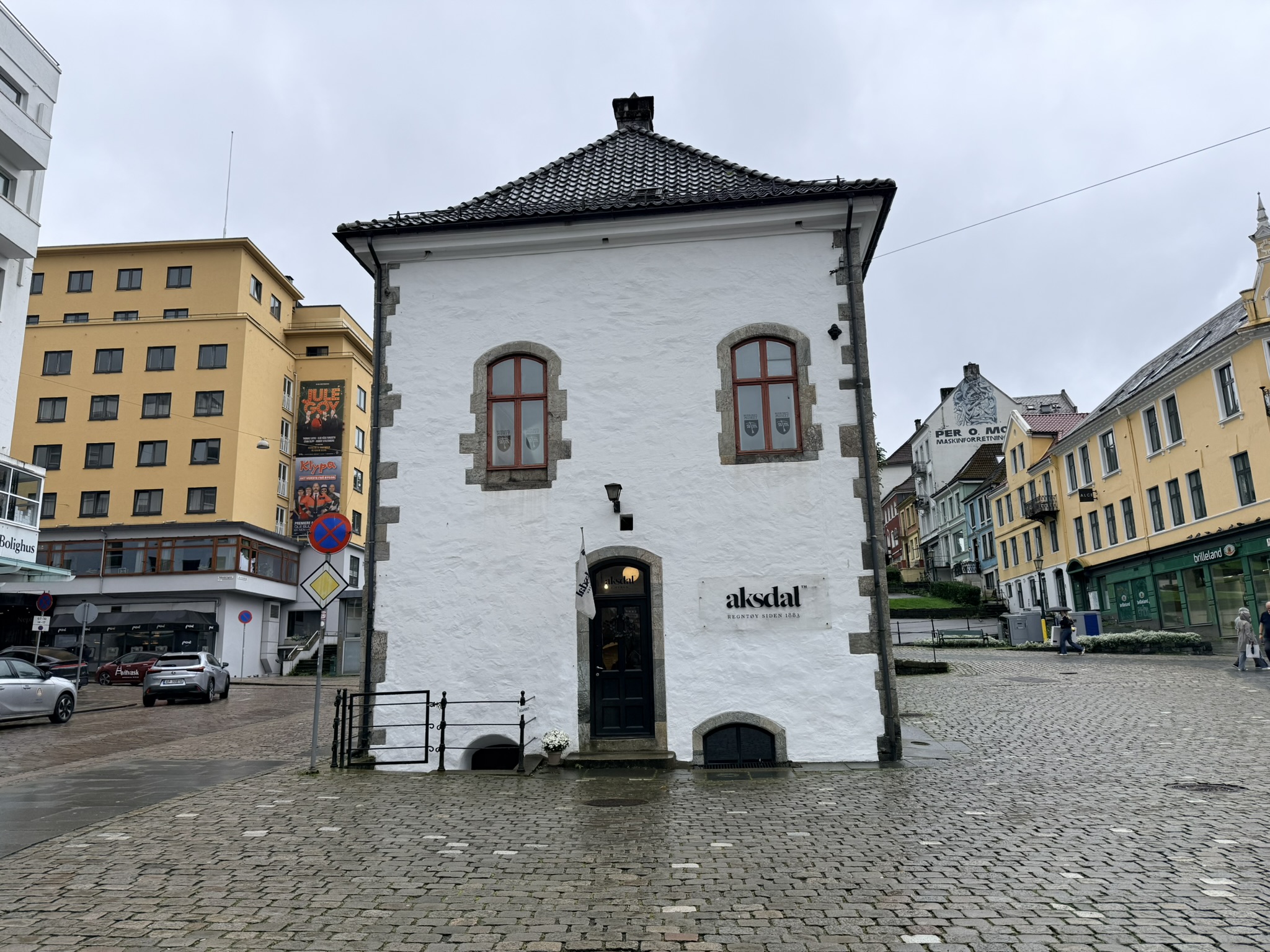
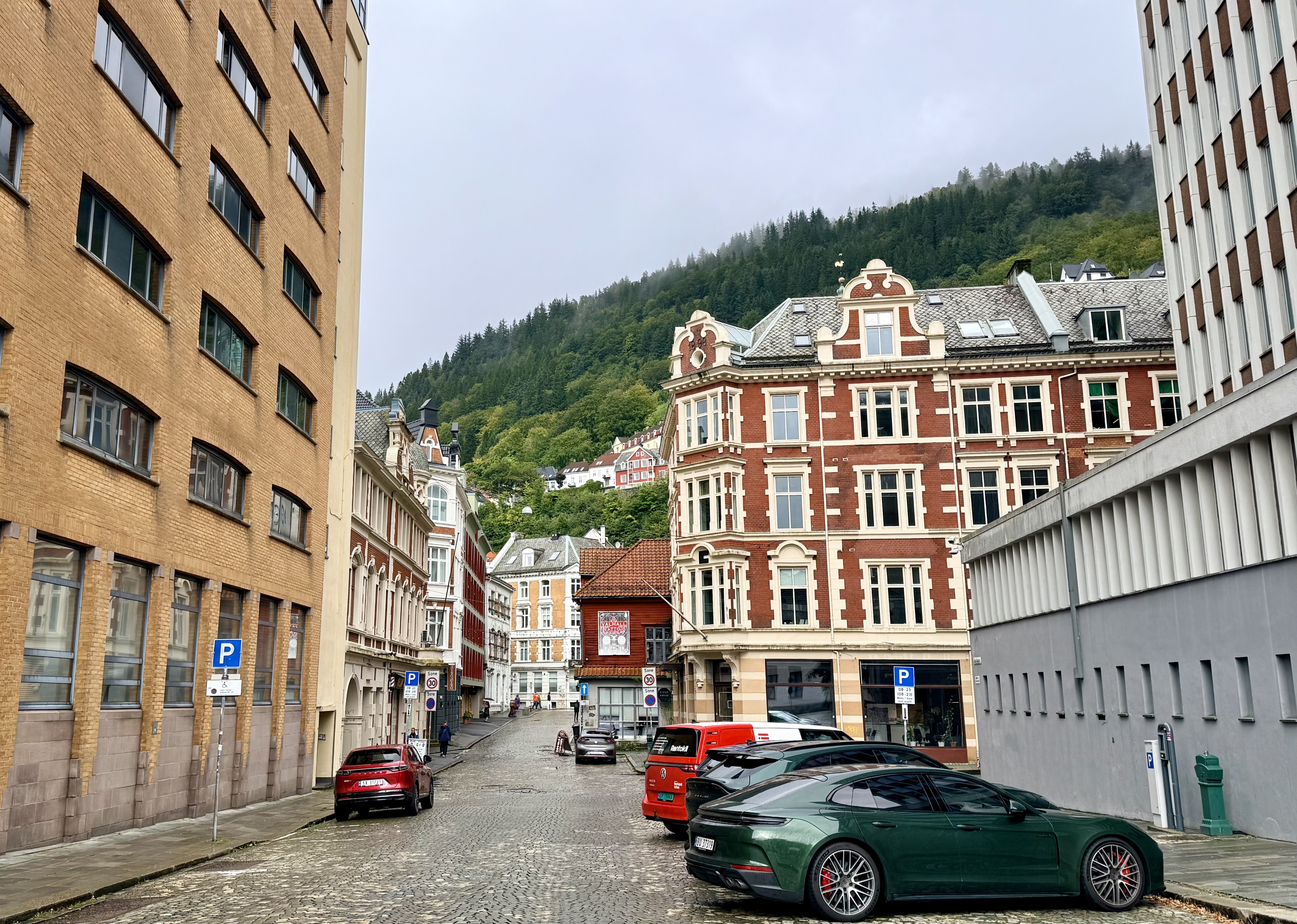
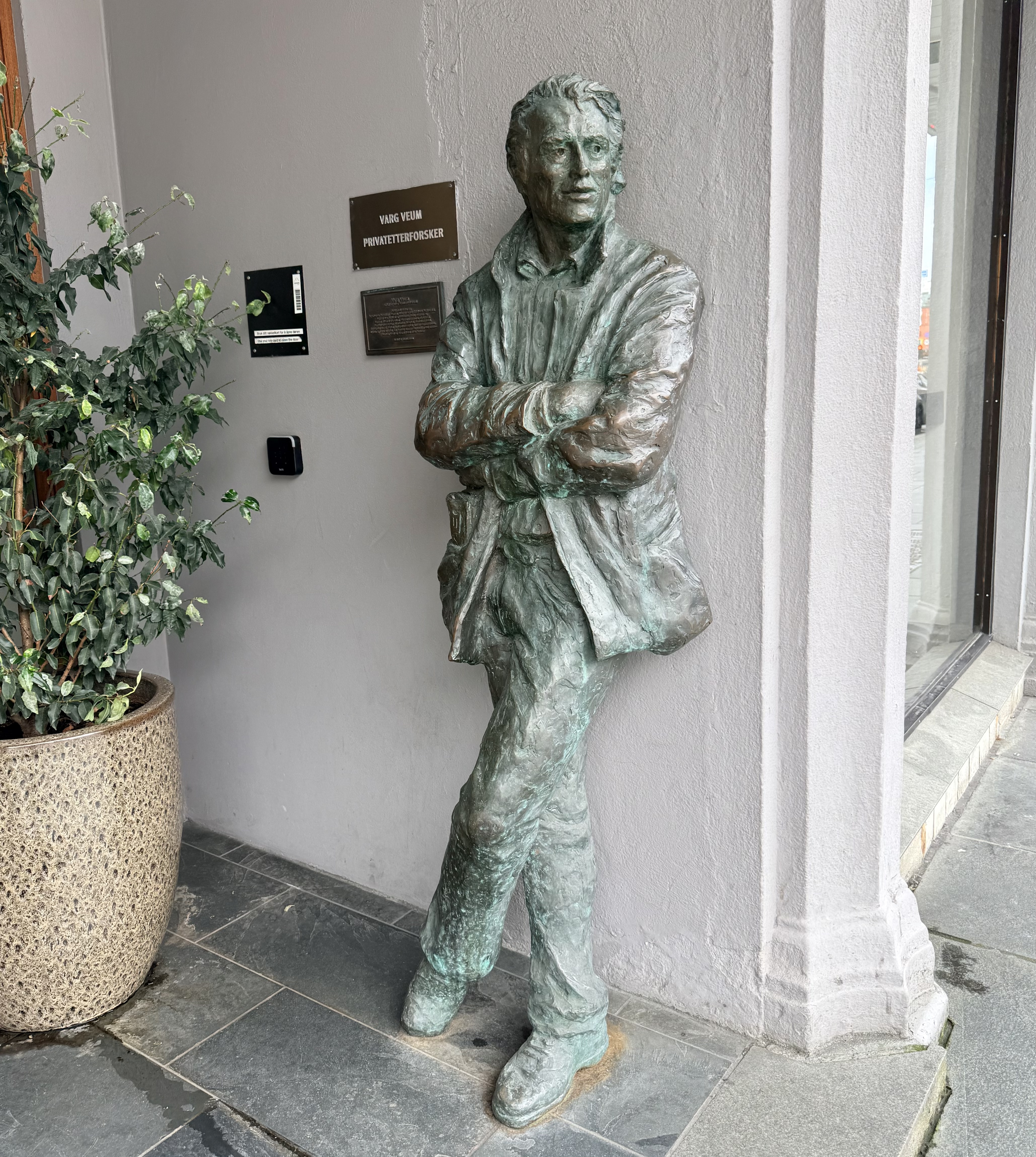
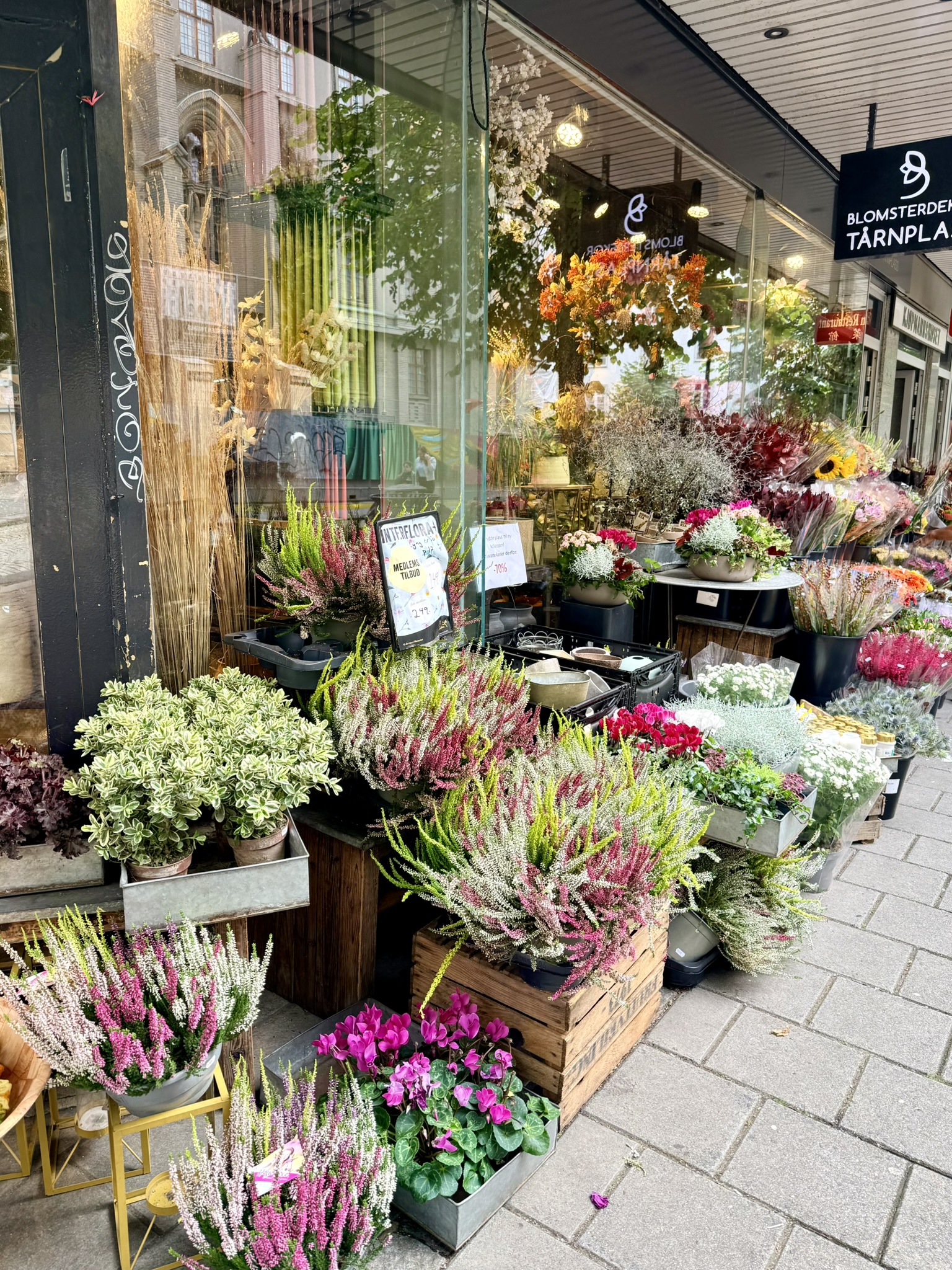
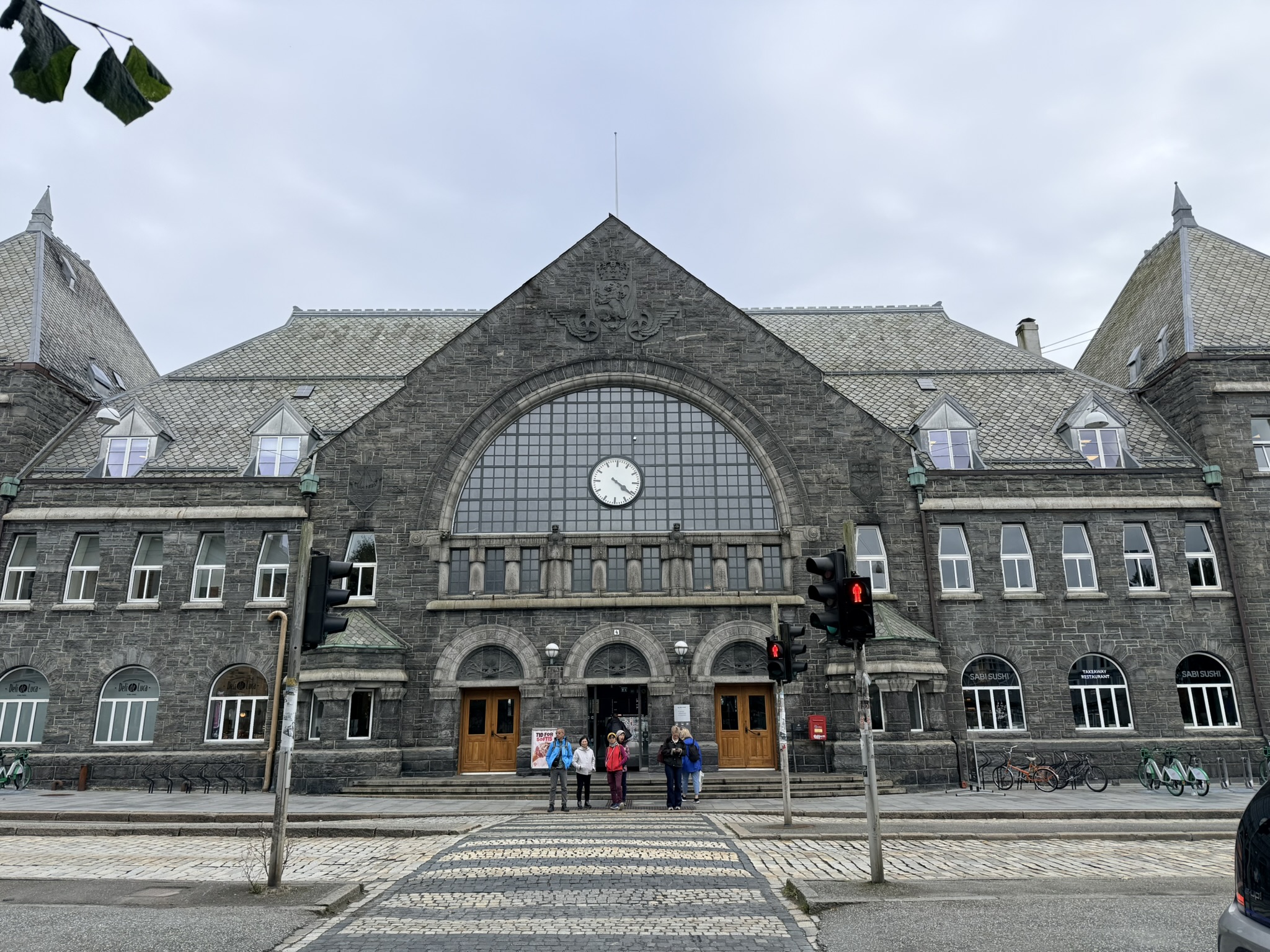
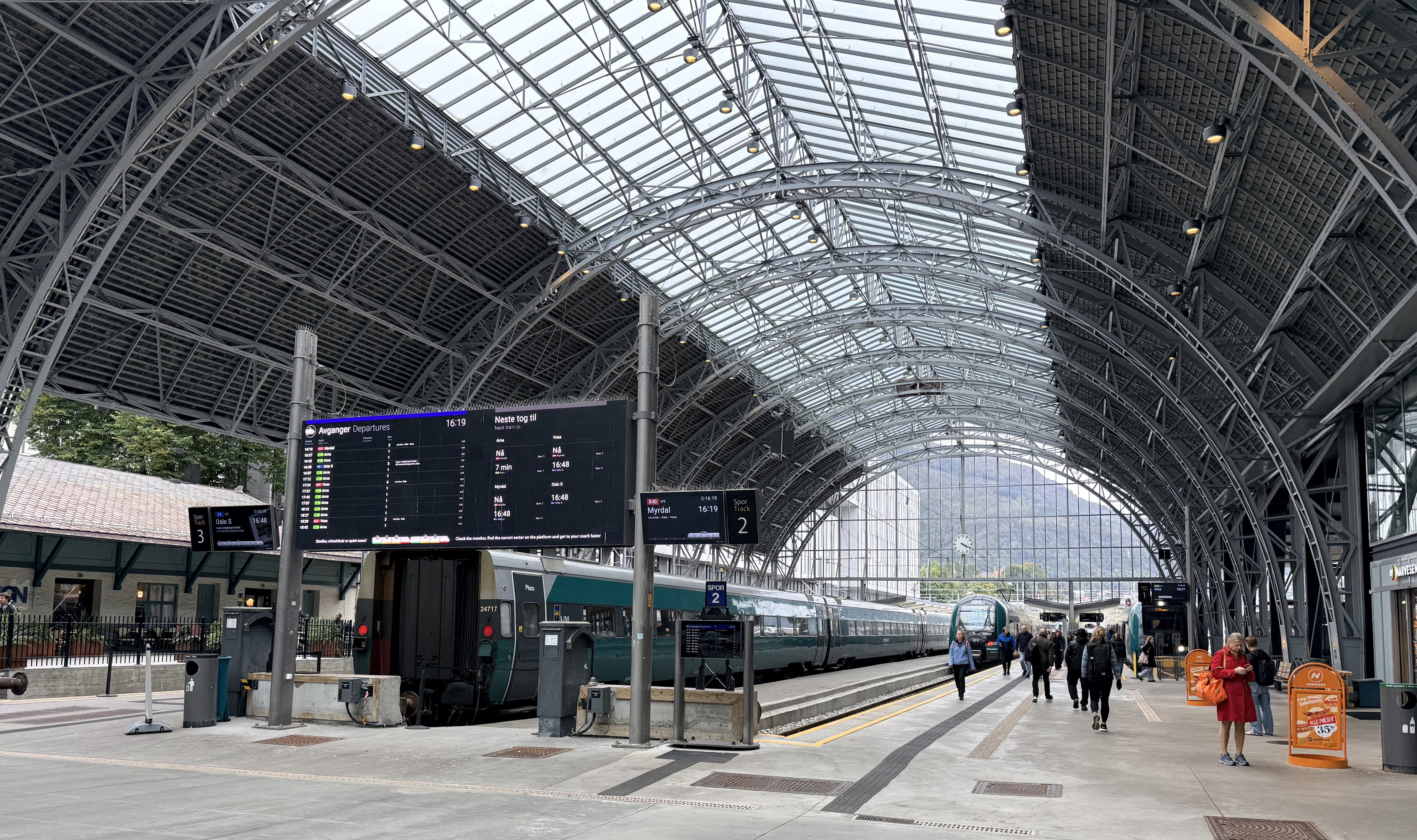
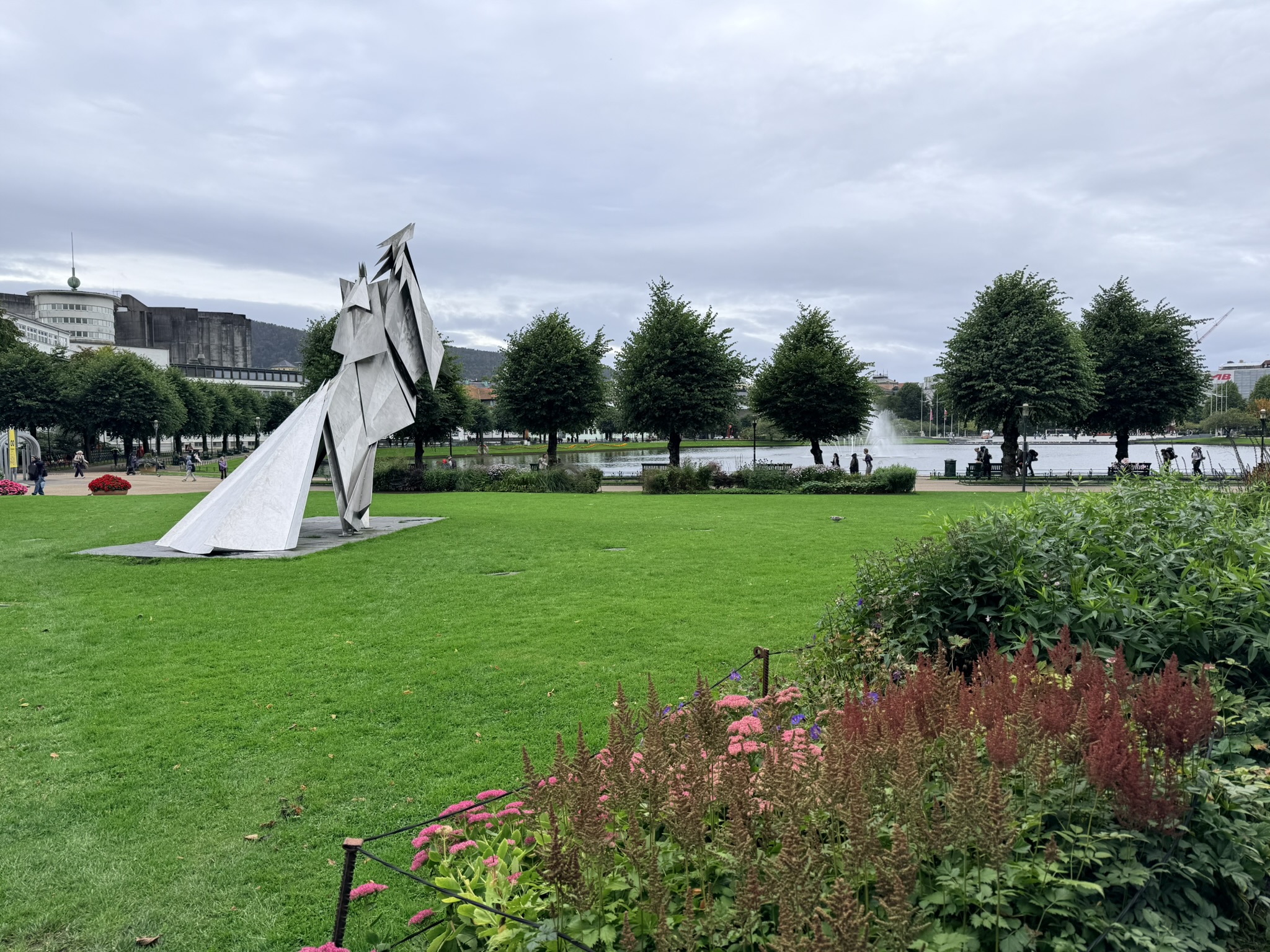
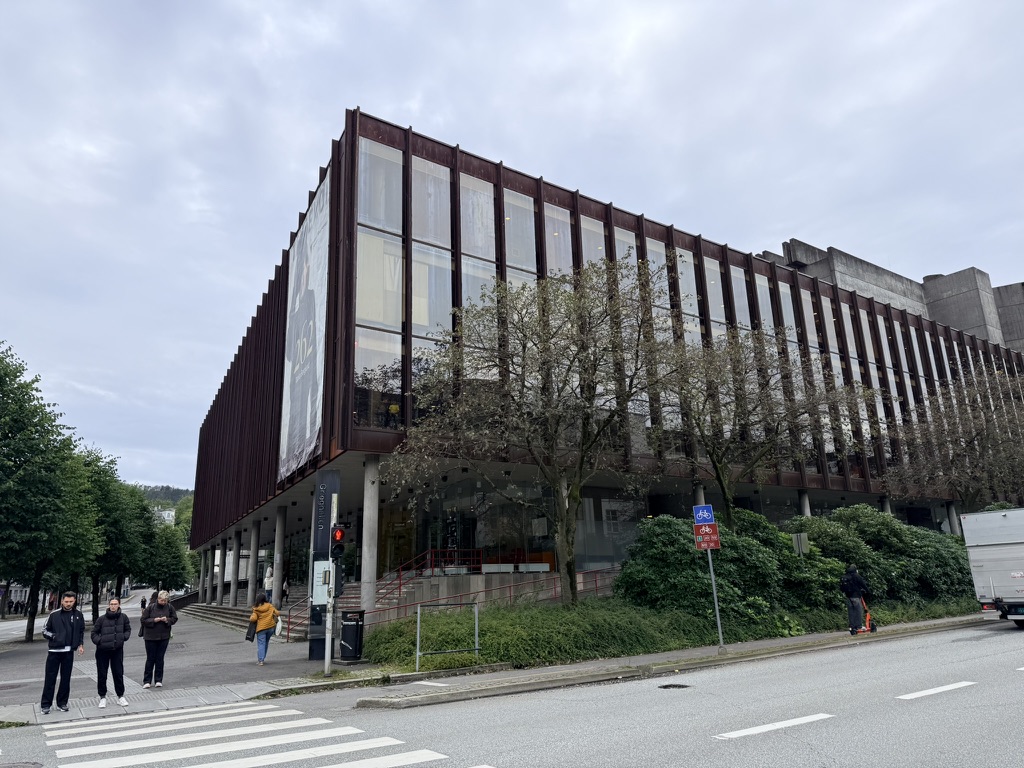
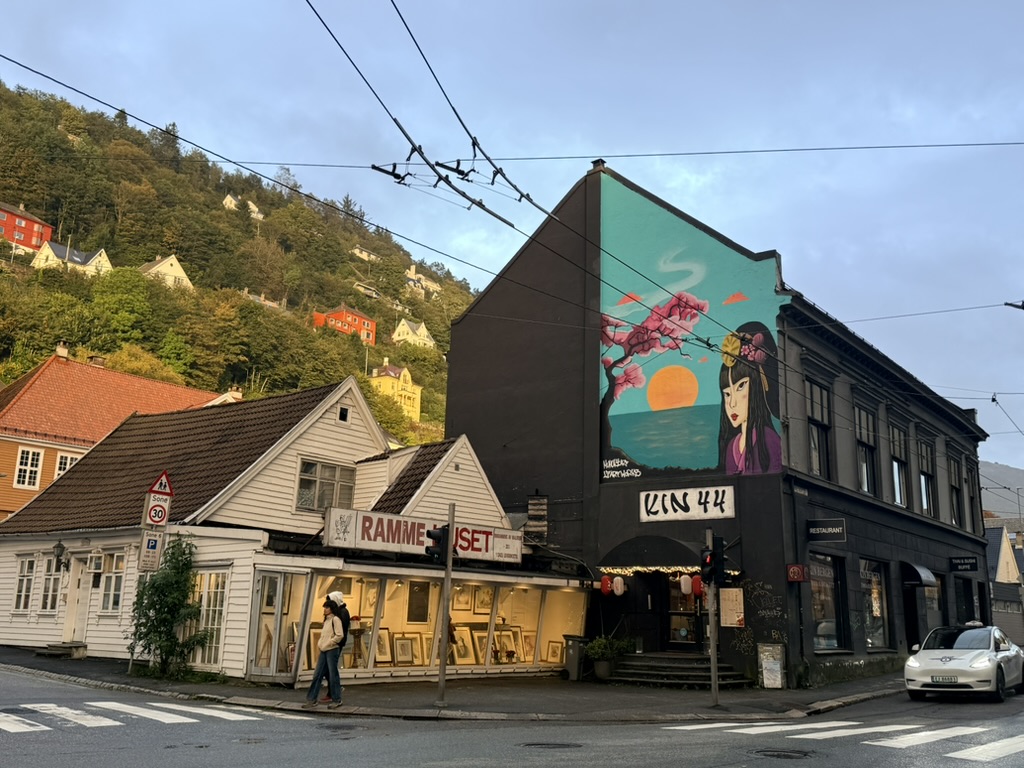
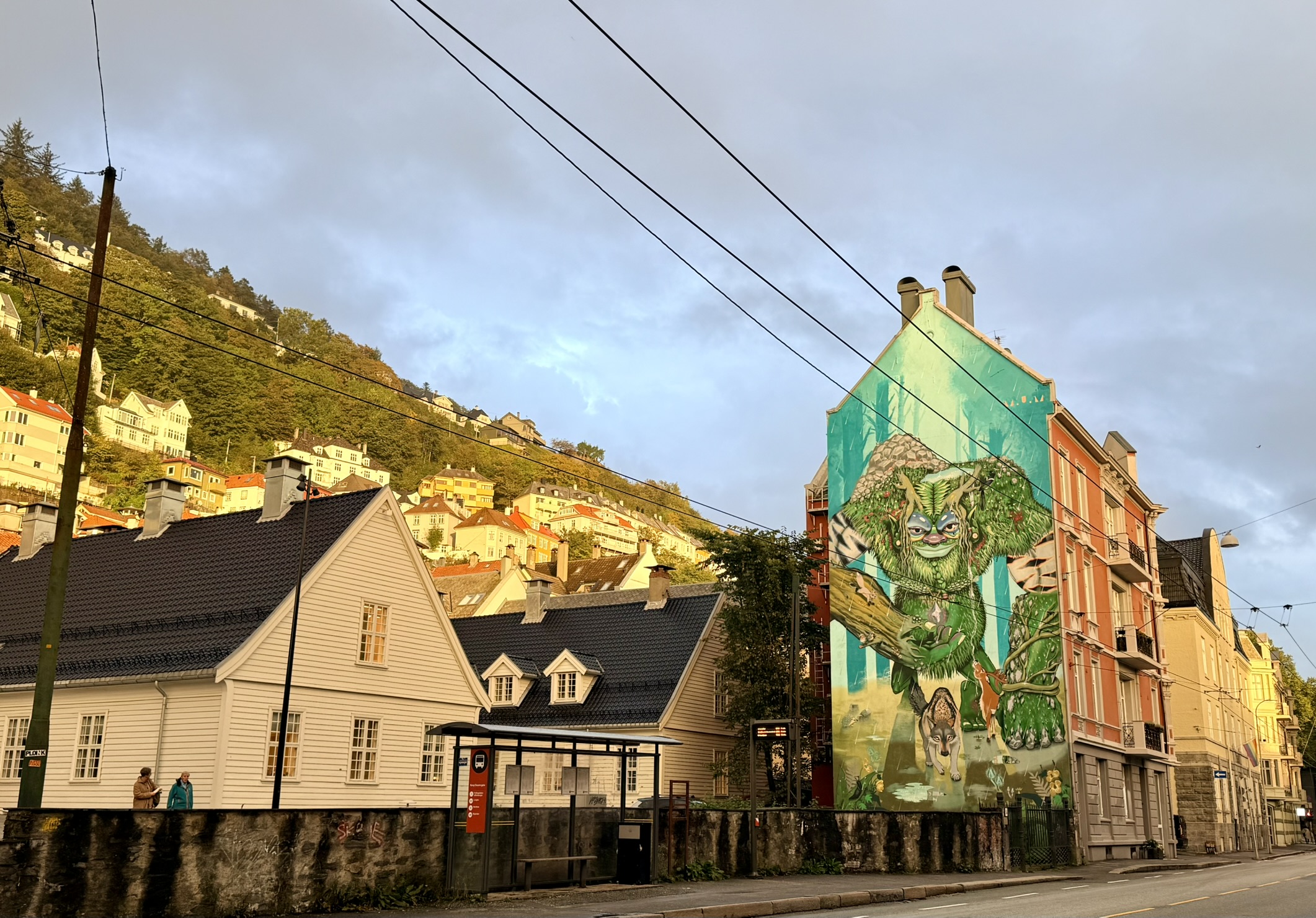
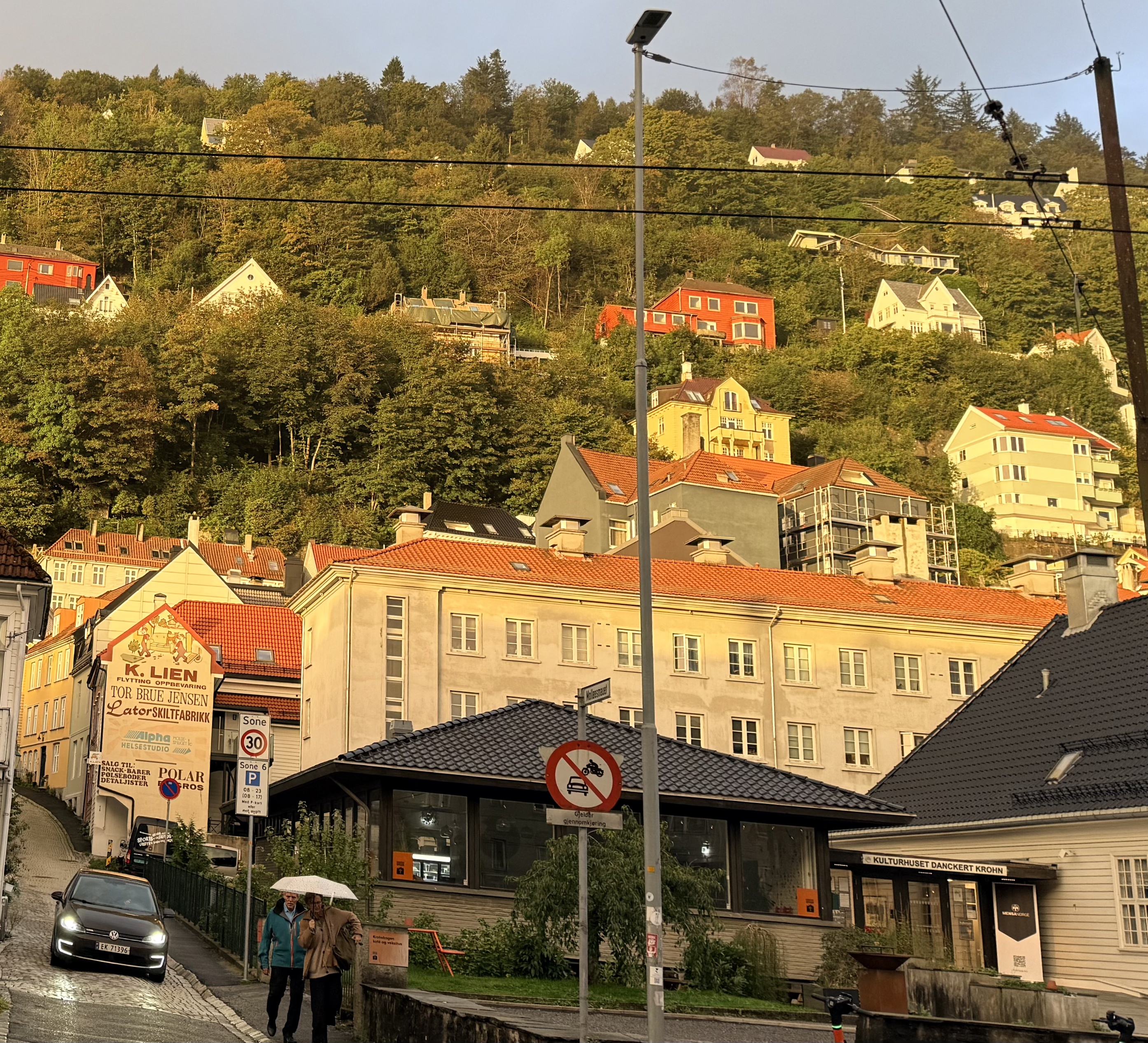
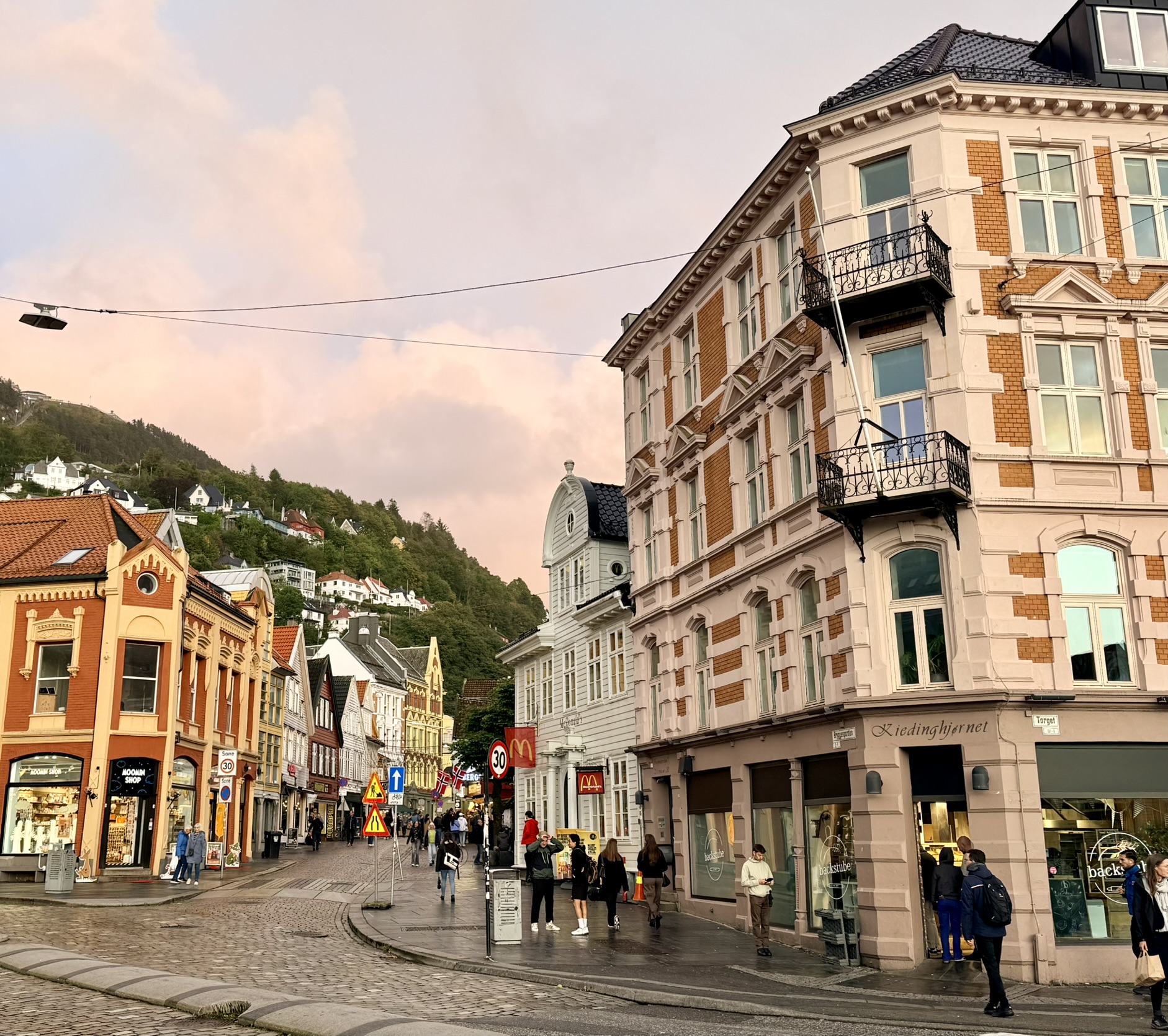
Evening stroll around Bergen under a bit of sunshine
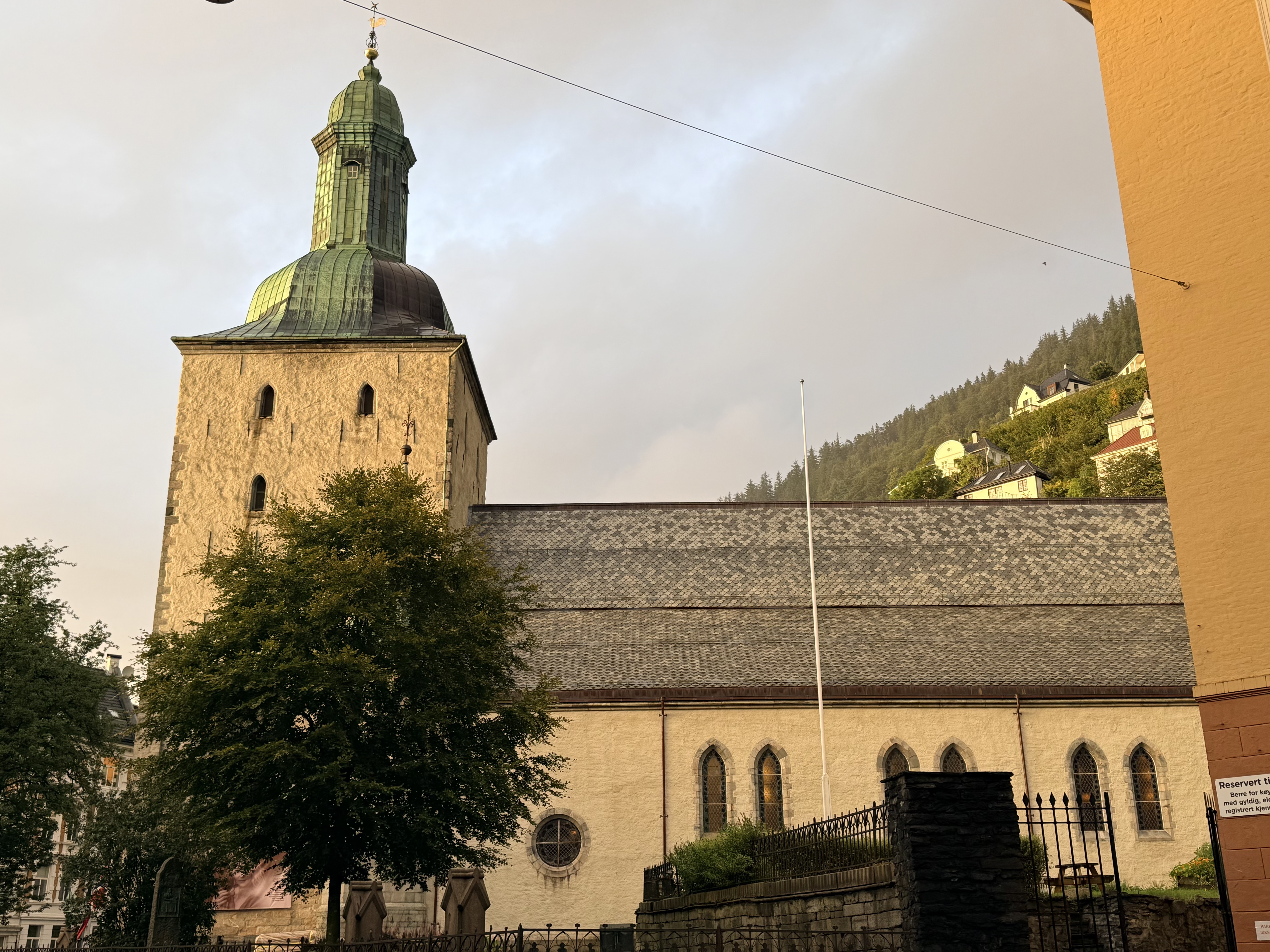
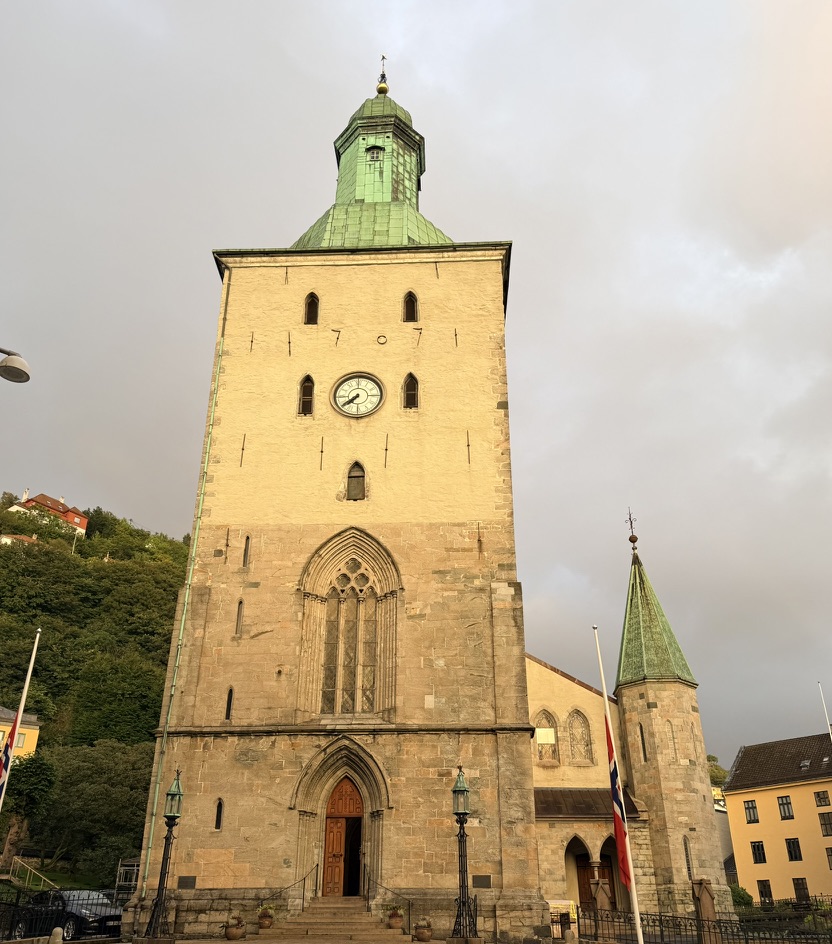
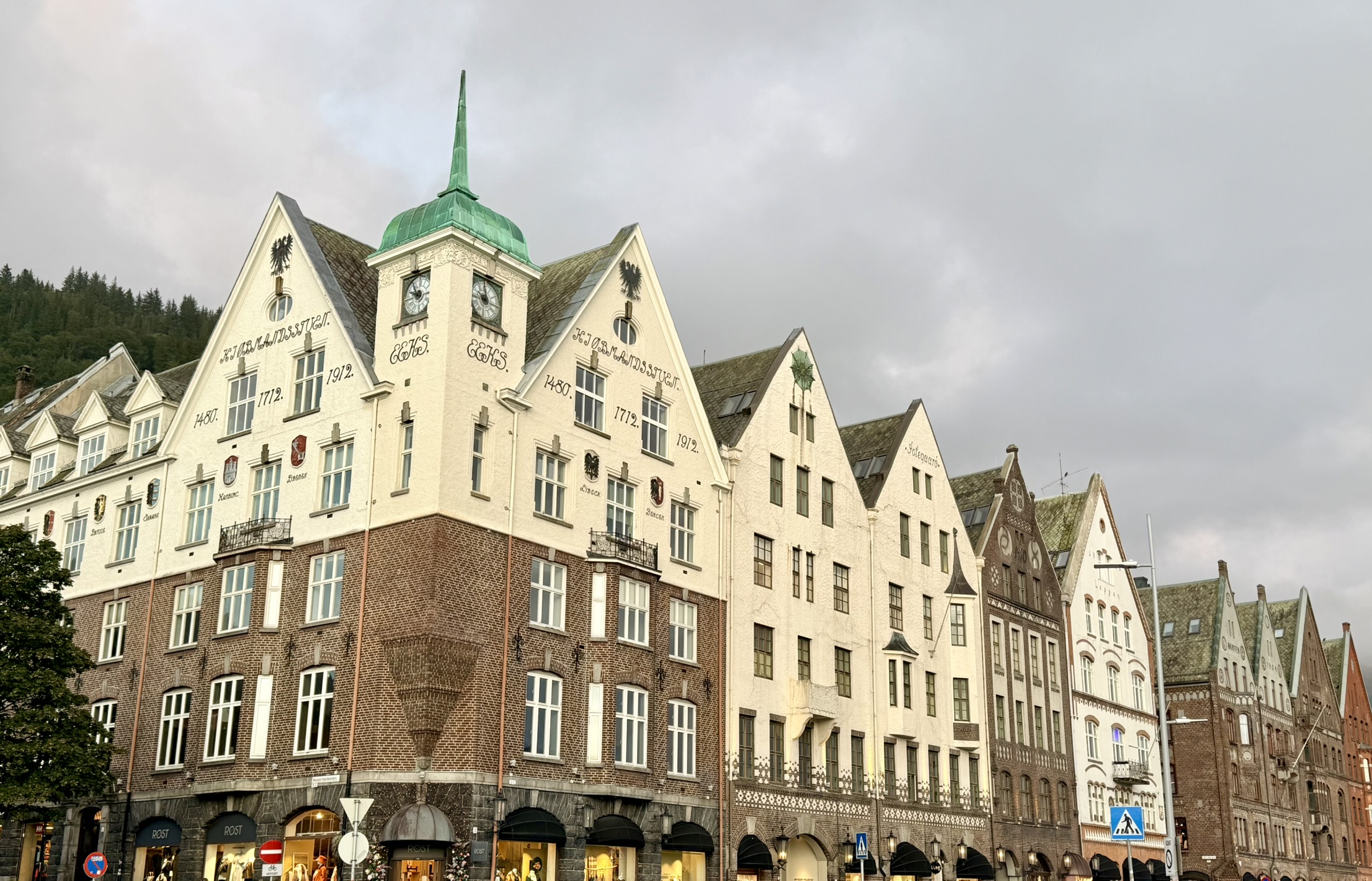
The evening sunlight, which we didn’t see much in Bergen, gave the town a halo effect. We passed by Bergen Domkirke (Bergen Cathedral), almost 900 years old. It started as a church dedicated to Olav the Holy, Norway’s patron saint, in around 1150. We found it open but some kind of event was going on so we couldn’t take pictures.
The Norwegian flag was still flying at half mast for Harald V, King of Norway, who died in August 2026.
The KODE museums
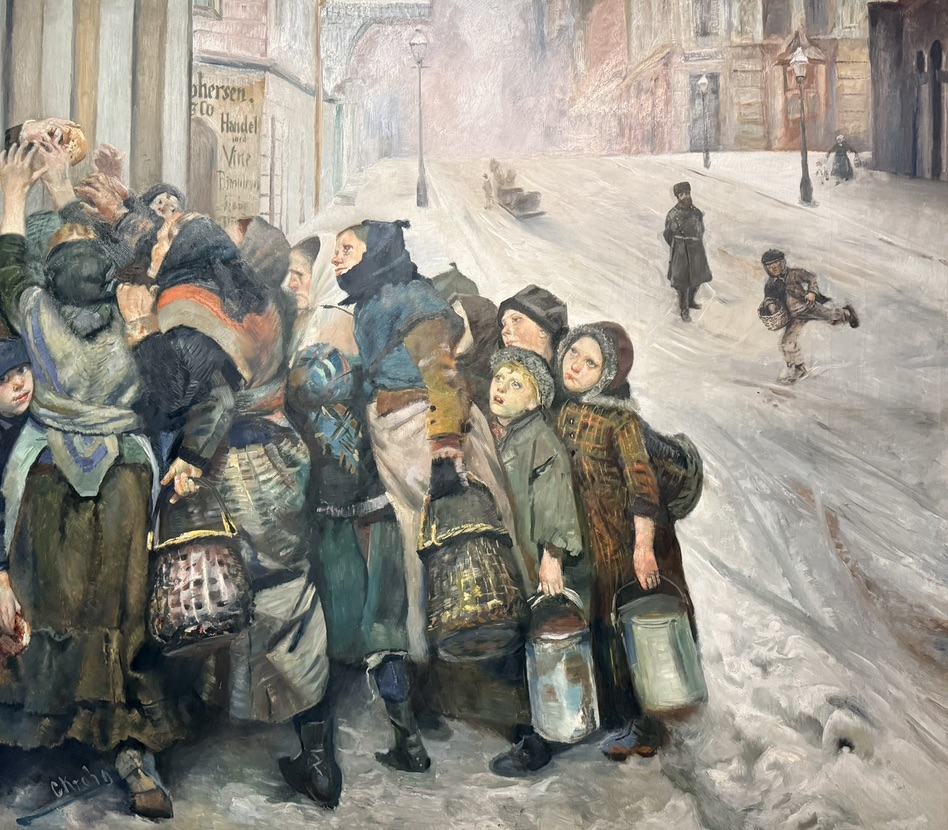
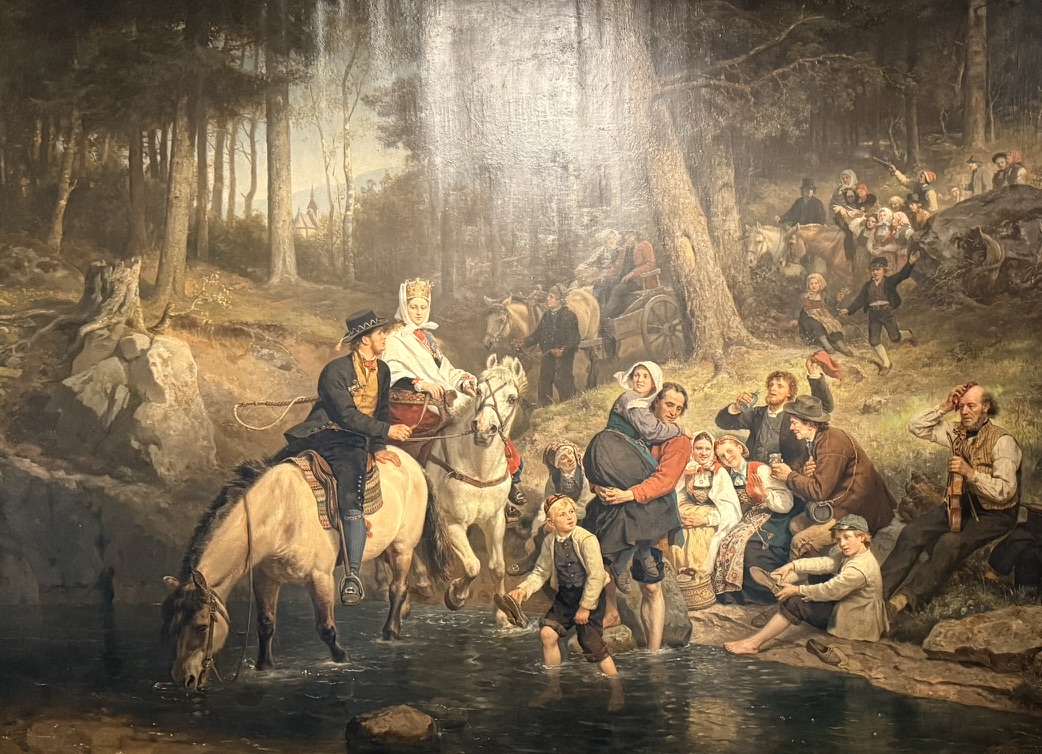
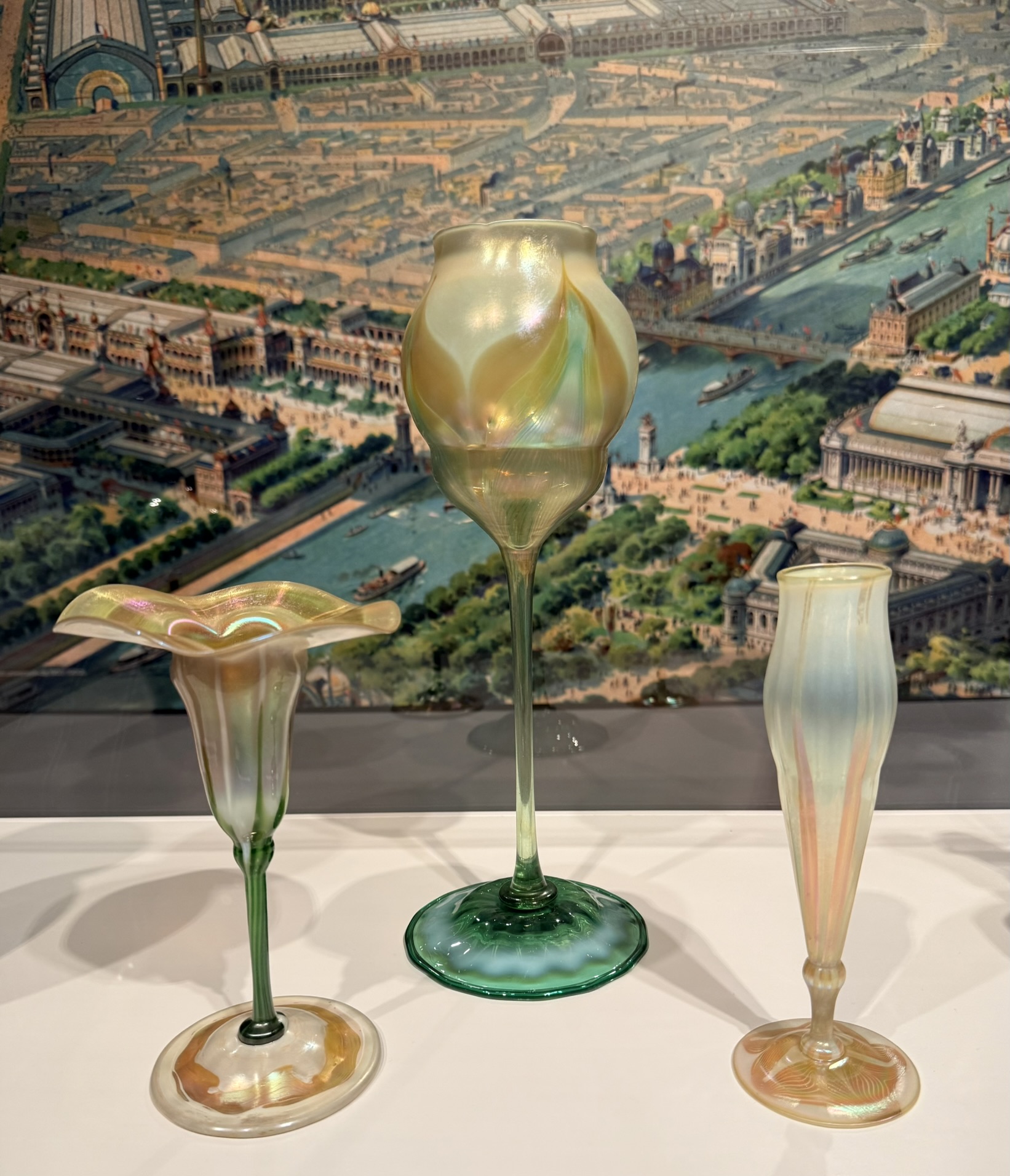
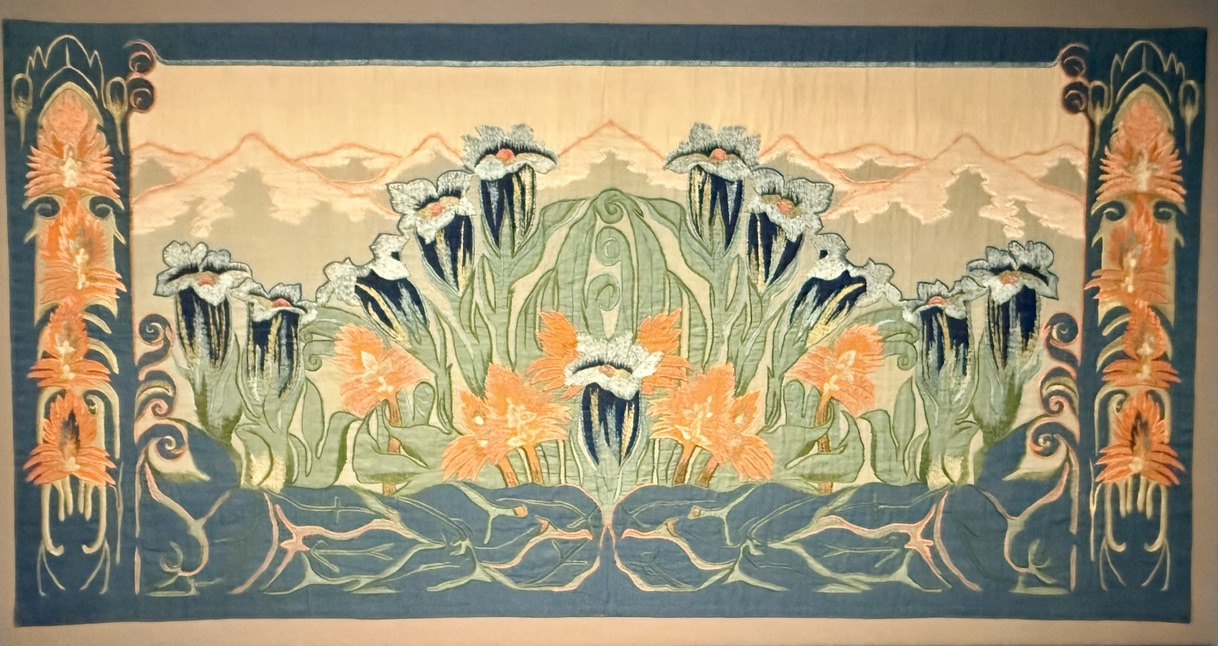
Rasmus Meyer, KODE is named for the local businessman whose children donated his collection of Norwergian artists to the city after his death in 1916.
We love to visit art galleries to see creations by artists from the countries we are visiting. Local artists reflect in their work the main focus of life in their country. In Norway, it is the landscape, which absolutely governs life here; the sea, including fishing and maritime activities; the weather; hardship and deprivation; bucolic scenery in spring and summer; religion; and family rituals.
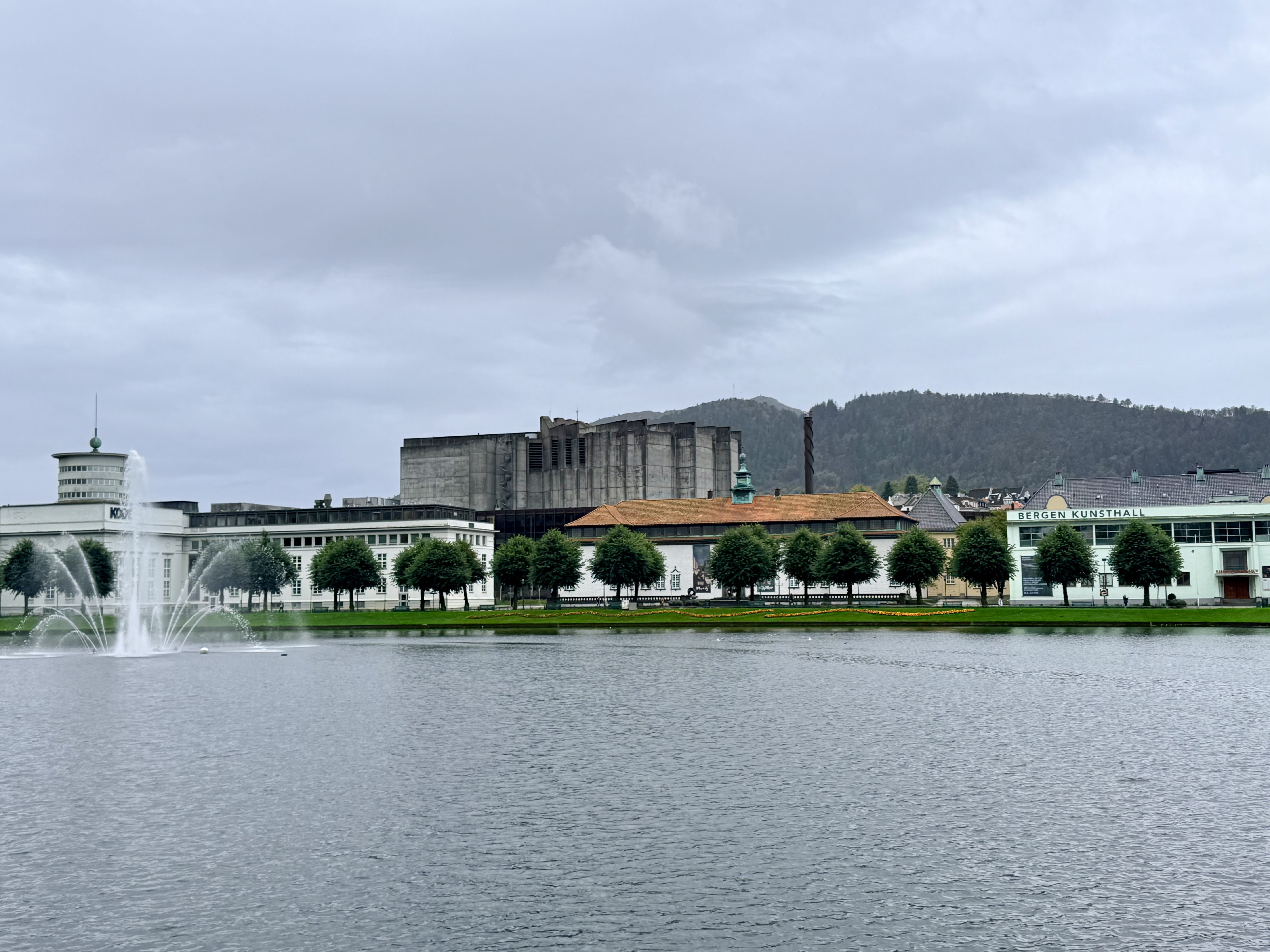
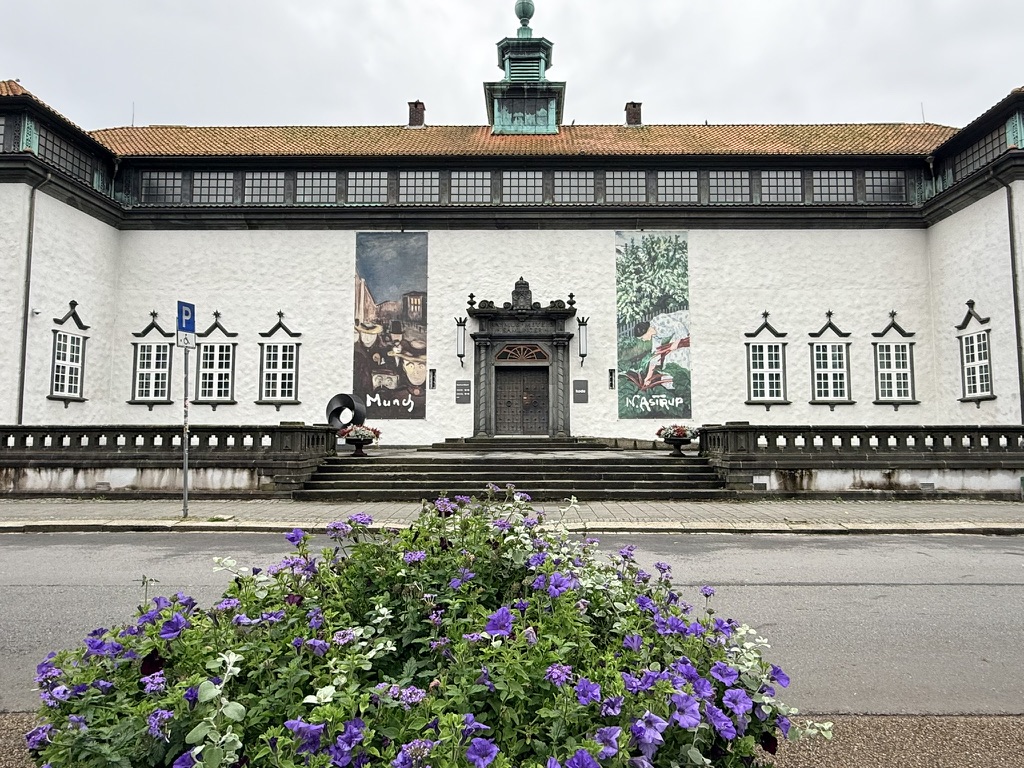
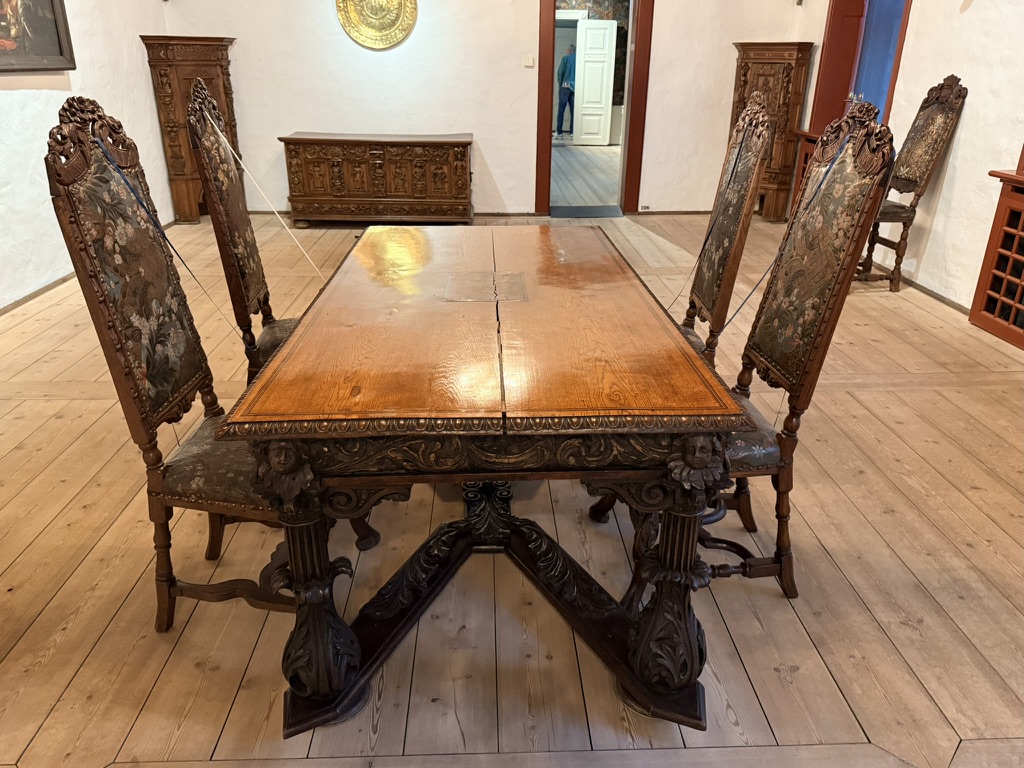
The museum’s collection includes fine works by renowned artists from Norway’s so-called golden age of painting (1880-1905) as well as historic interiors.
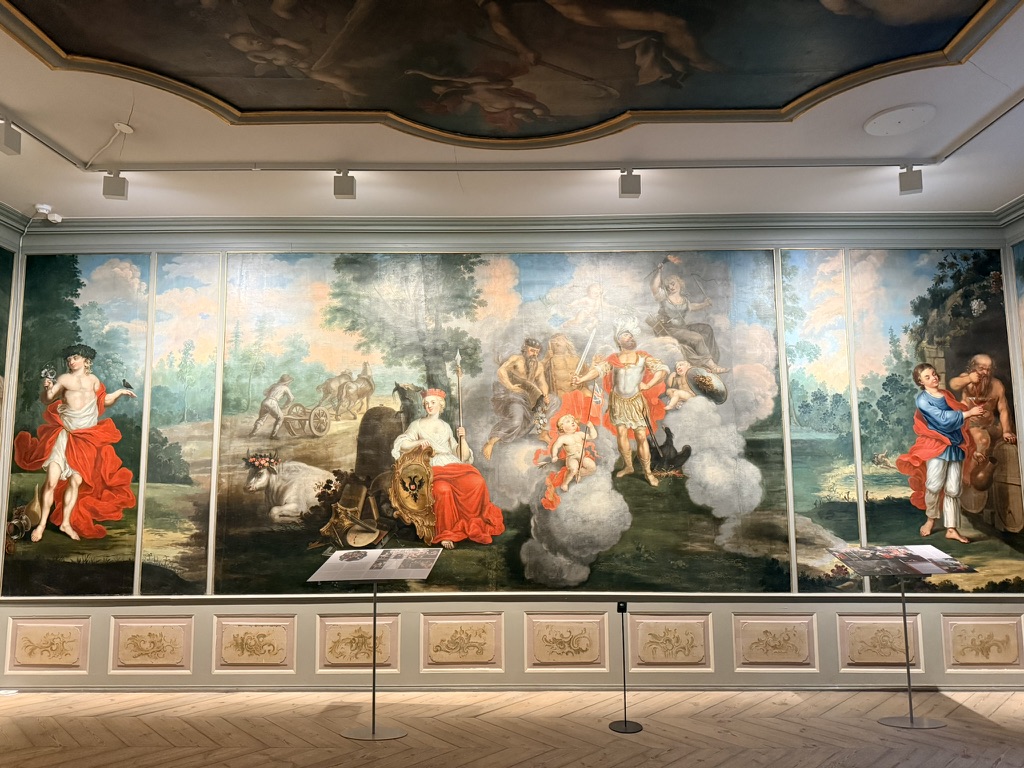
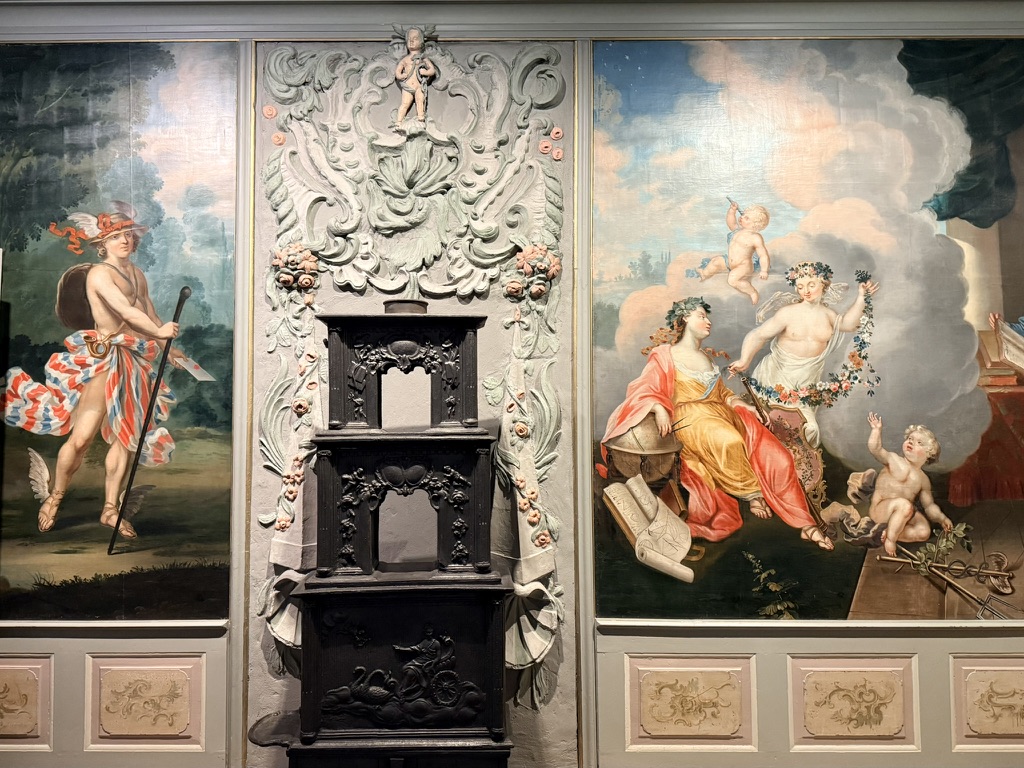
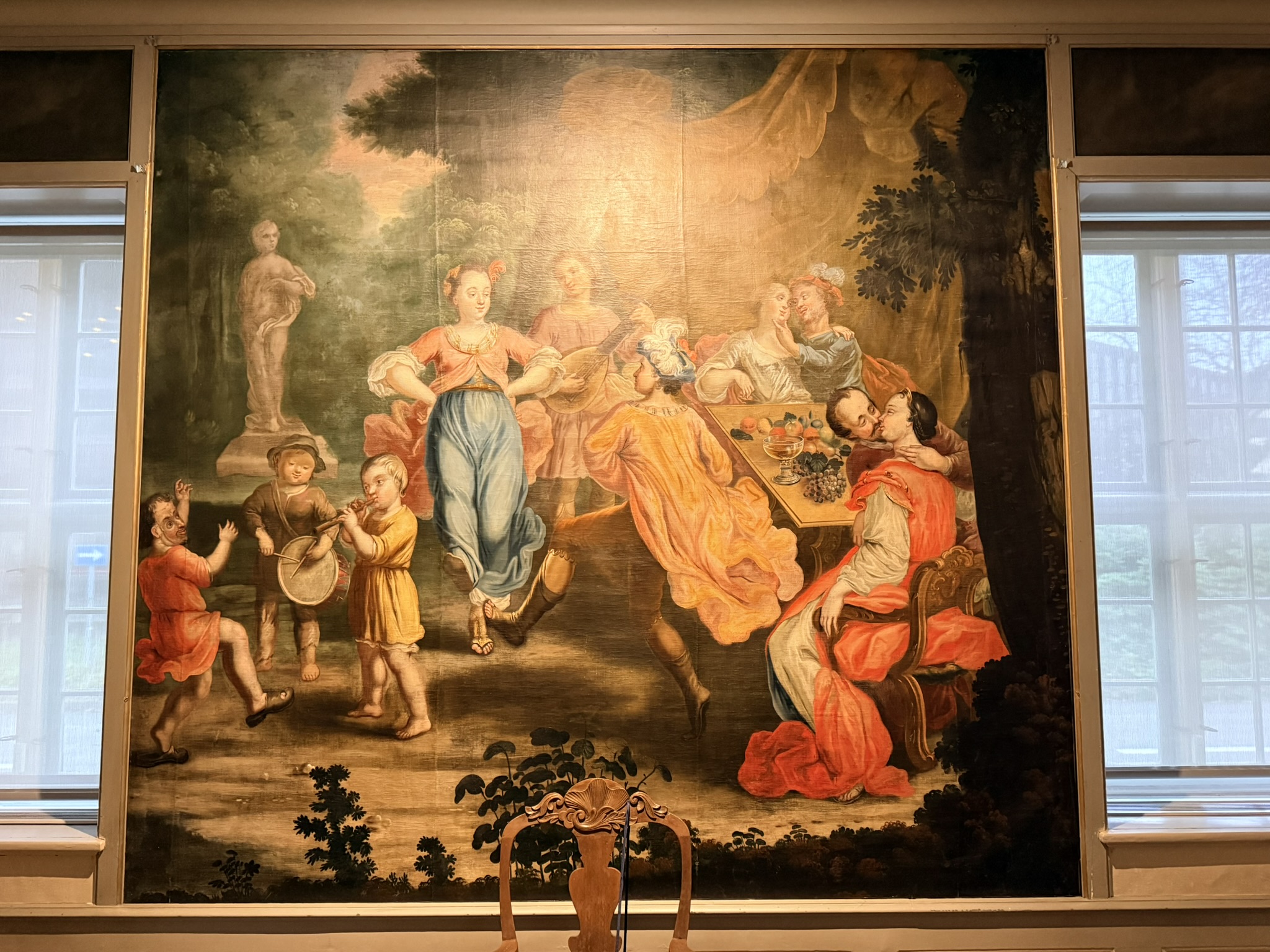
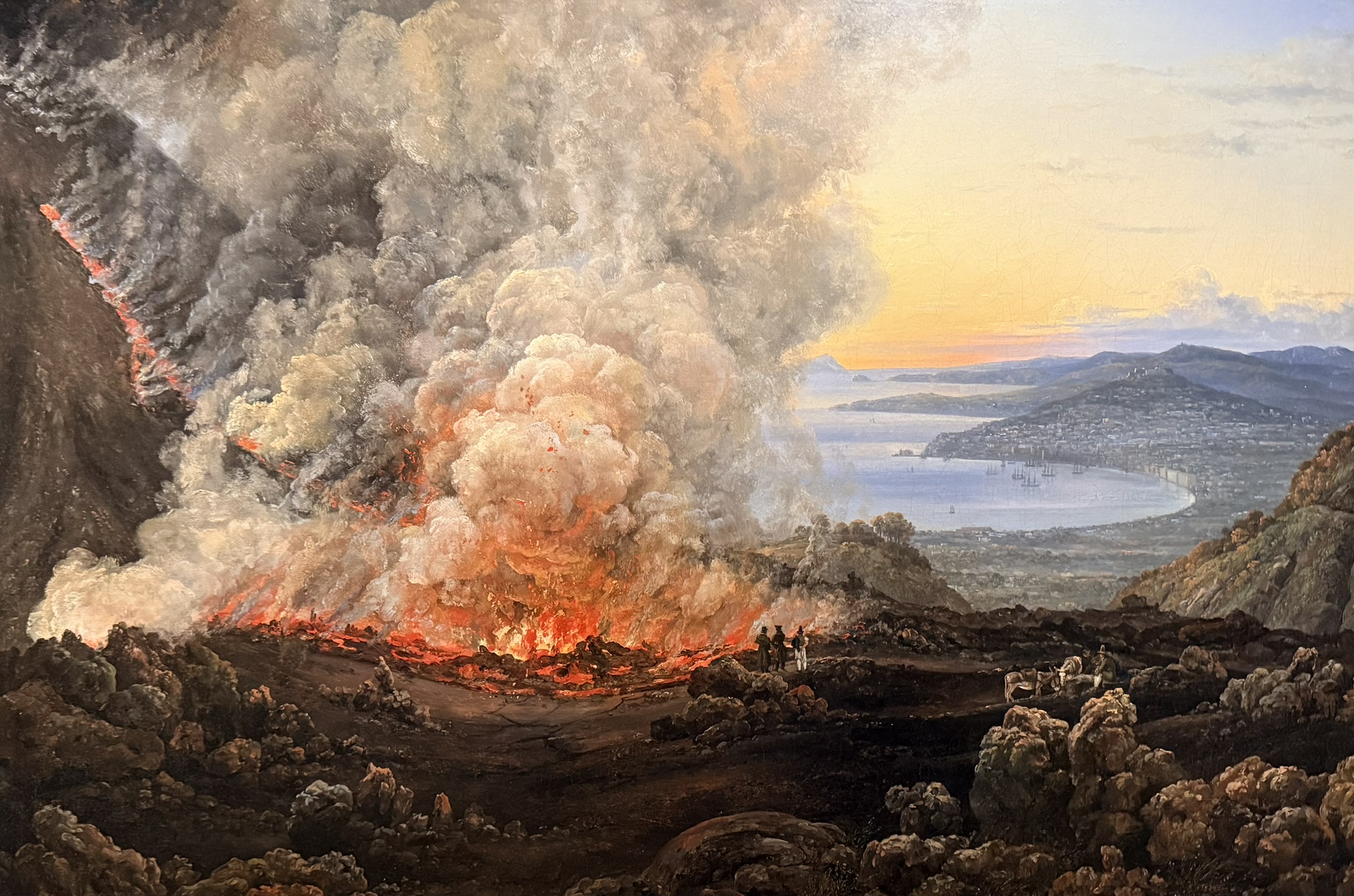
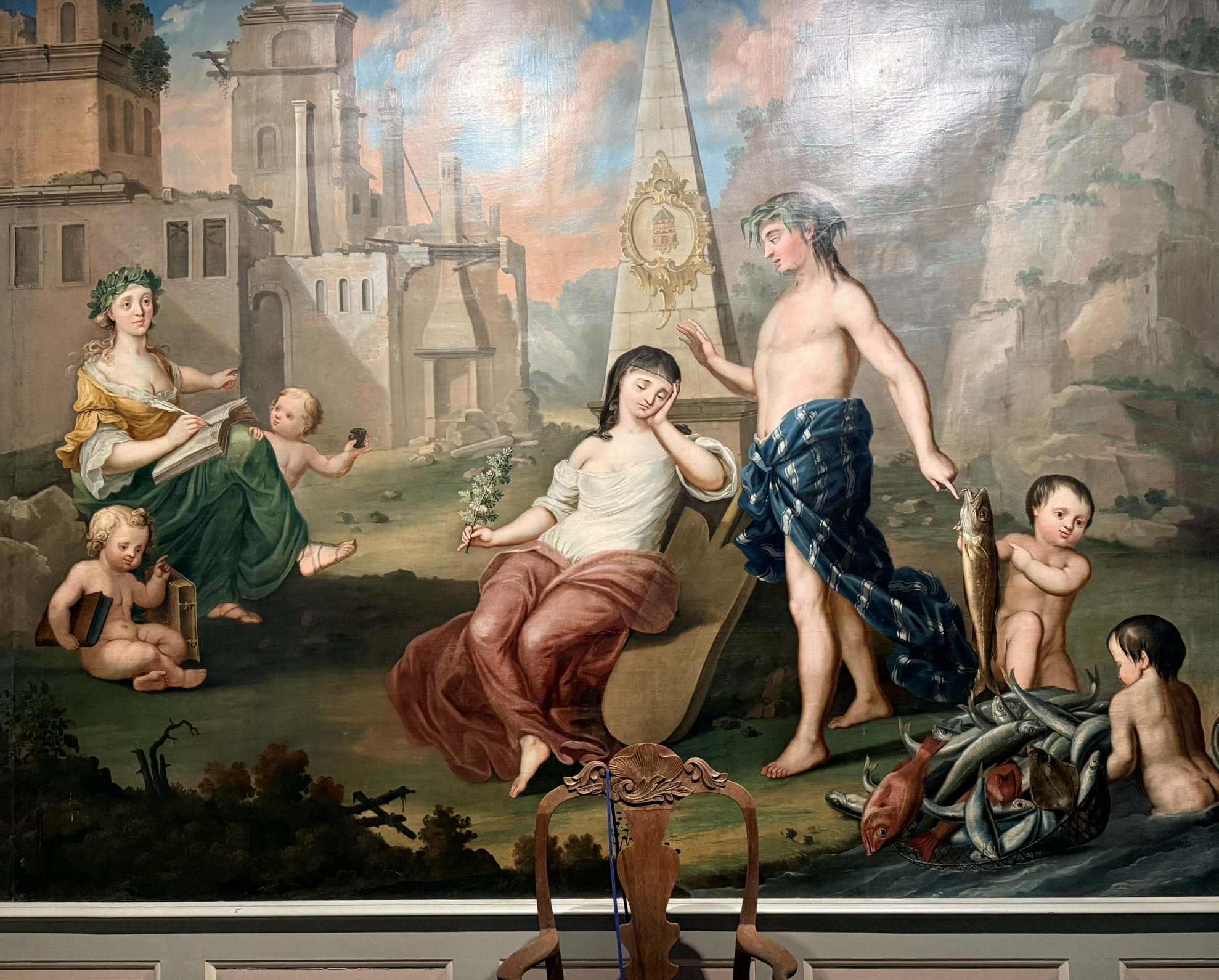
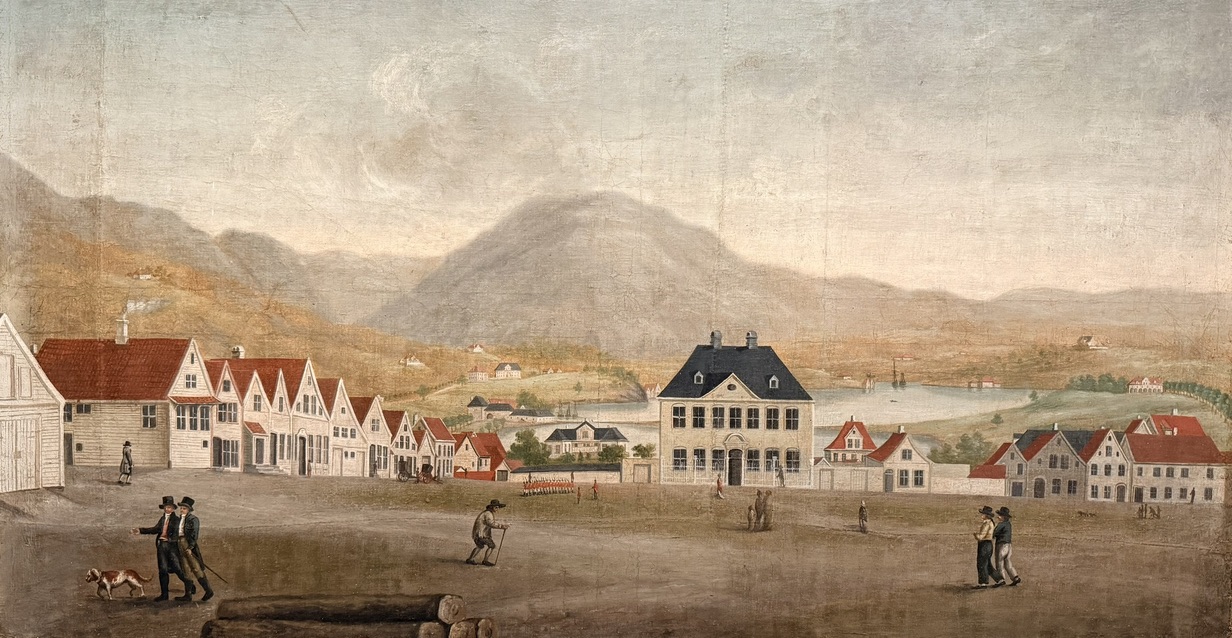
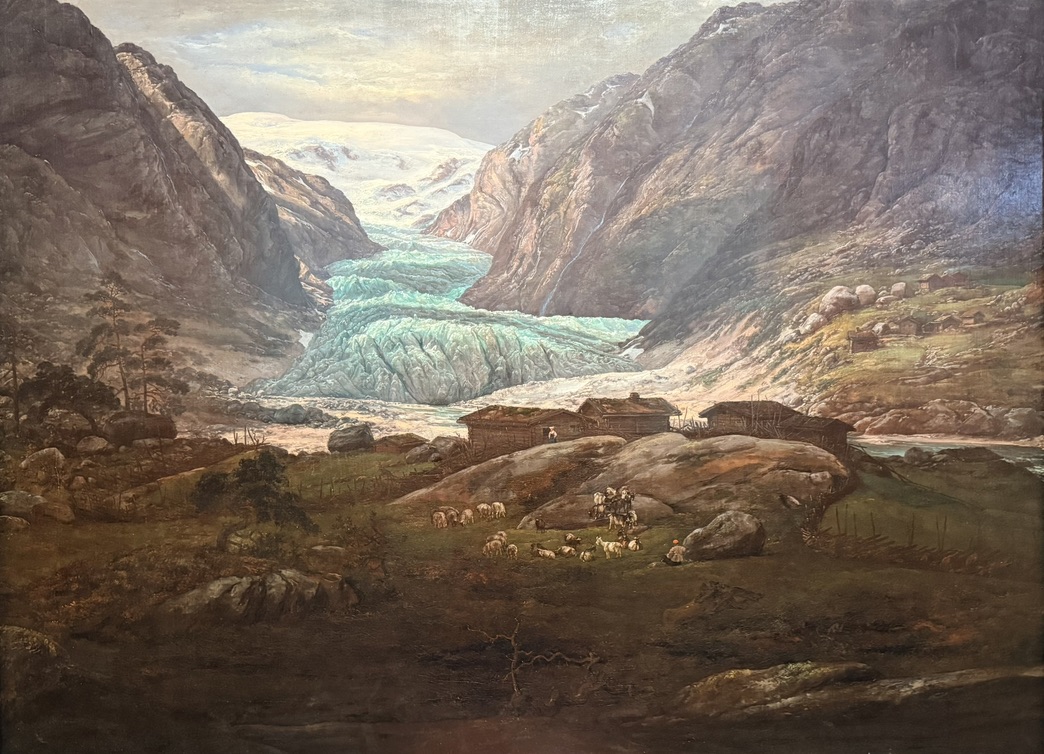
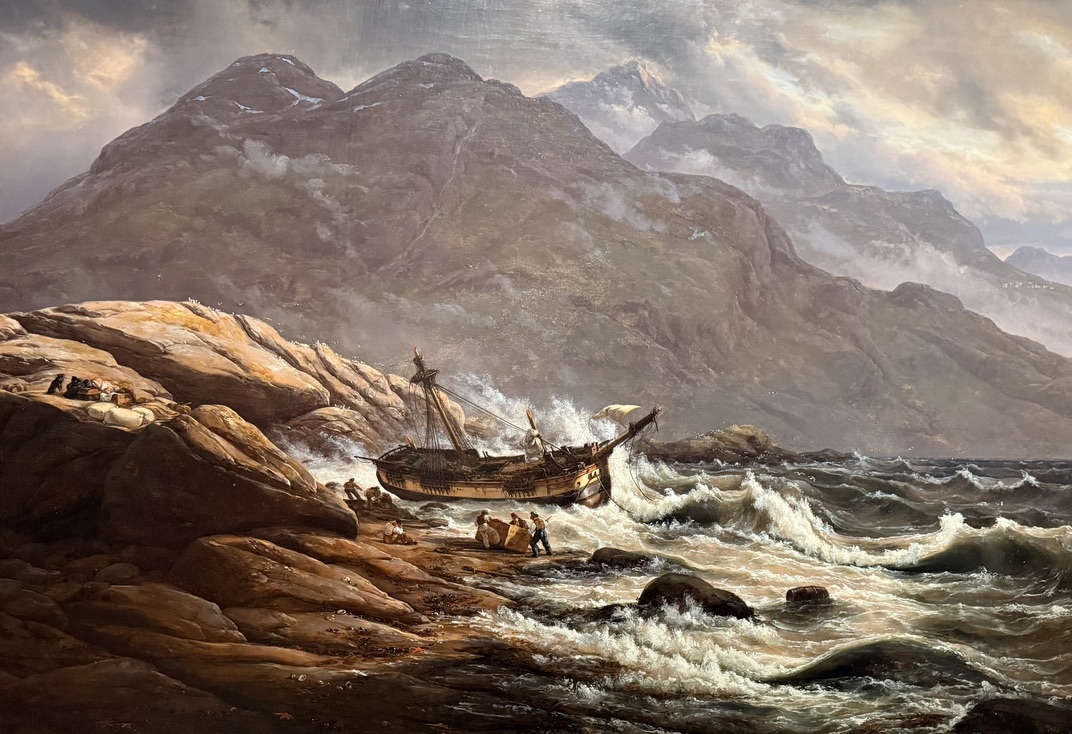
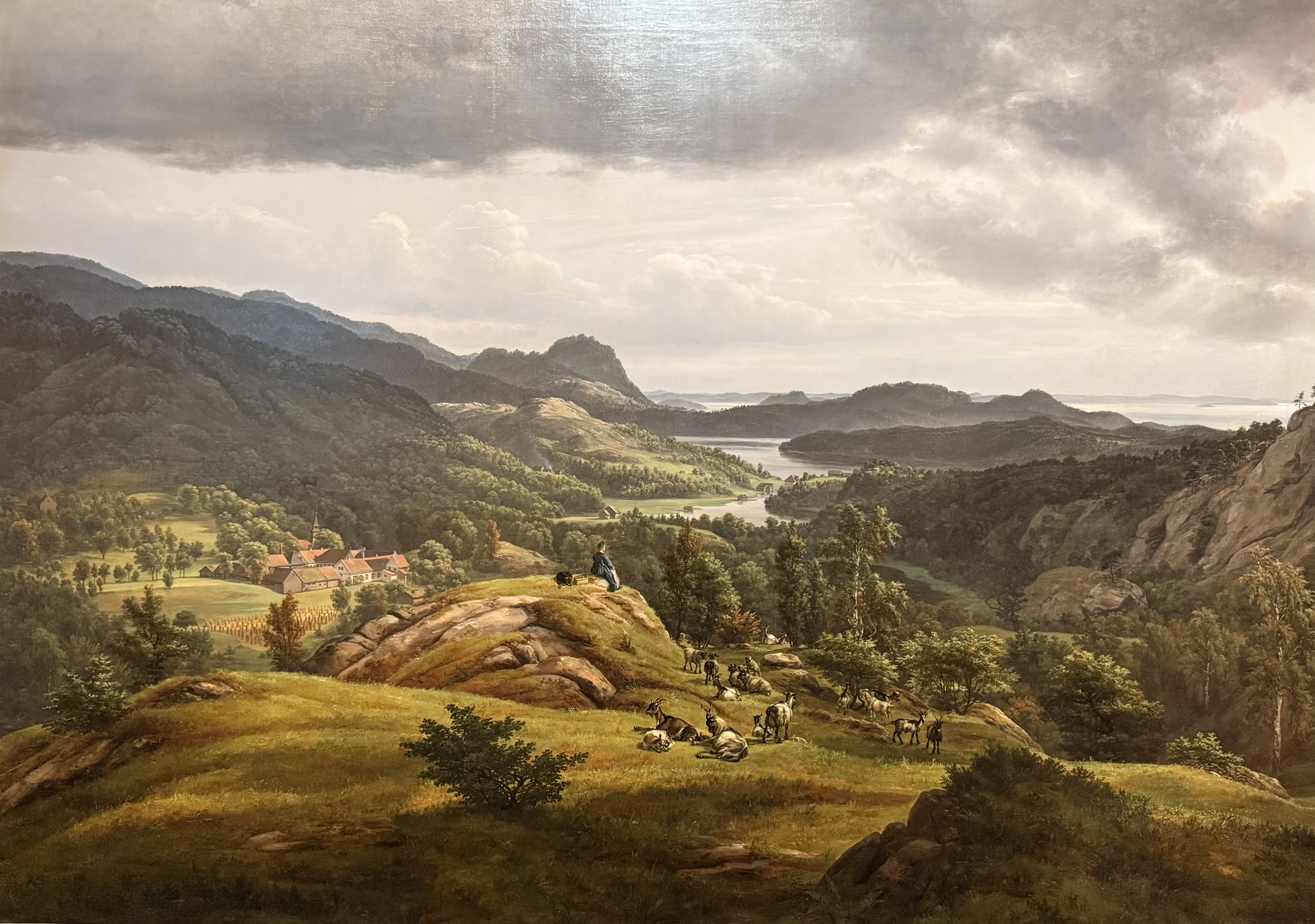
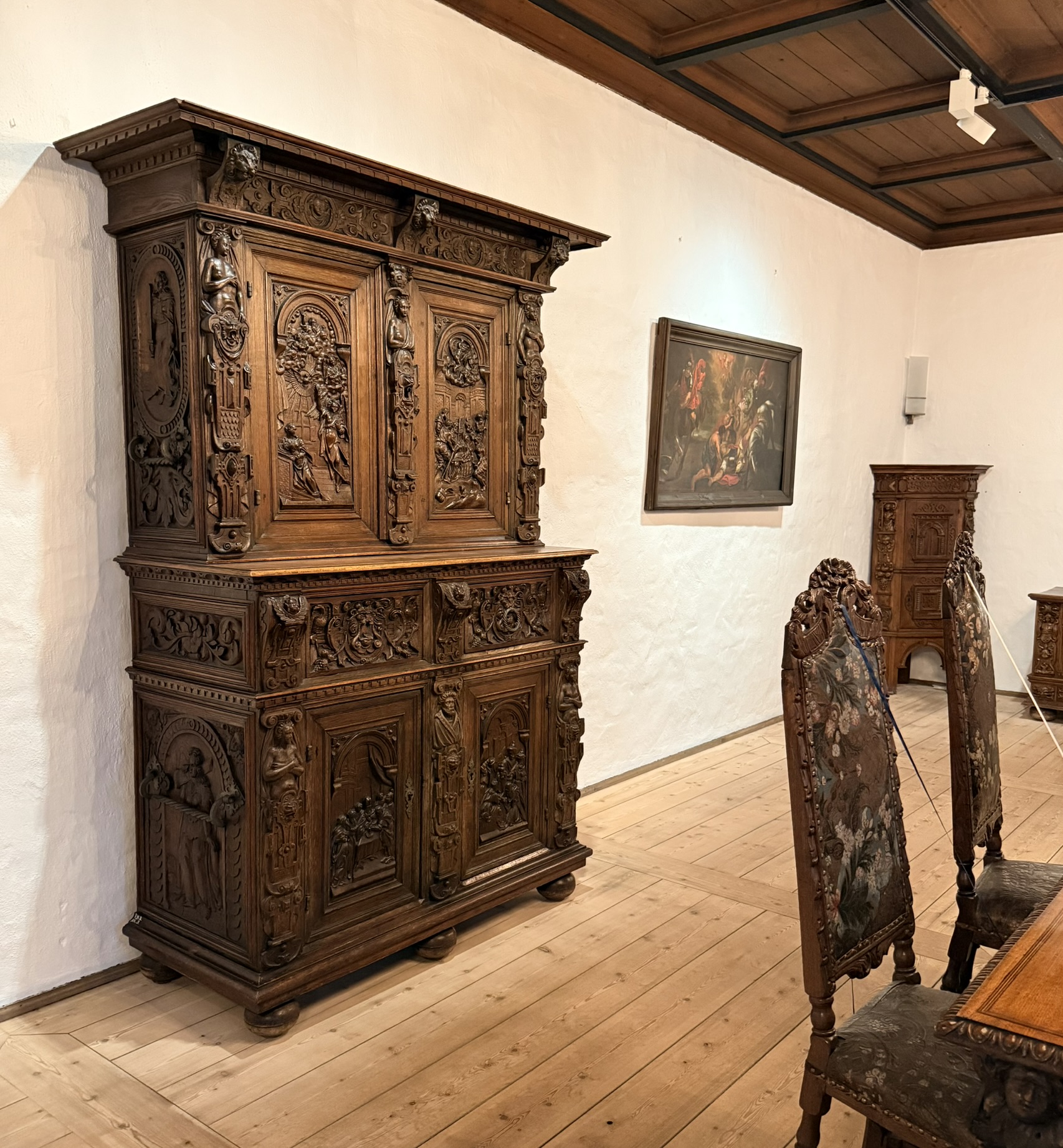
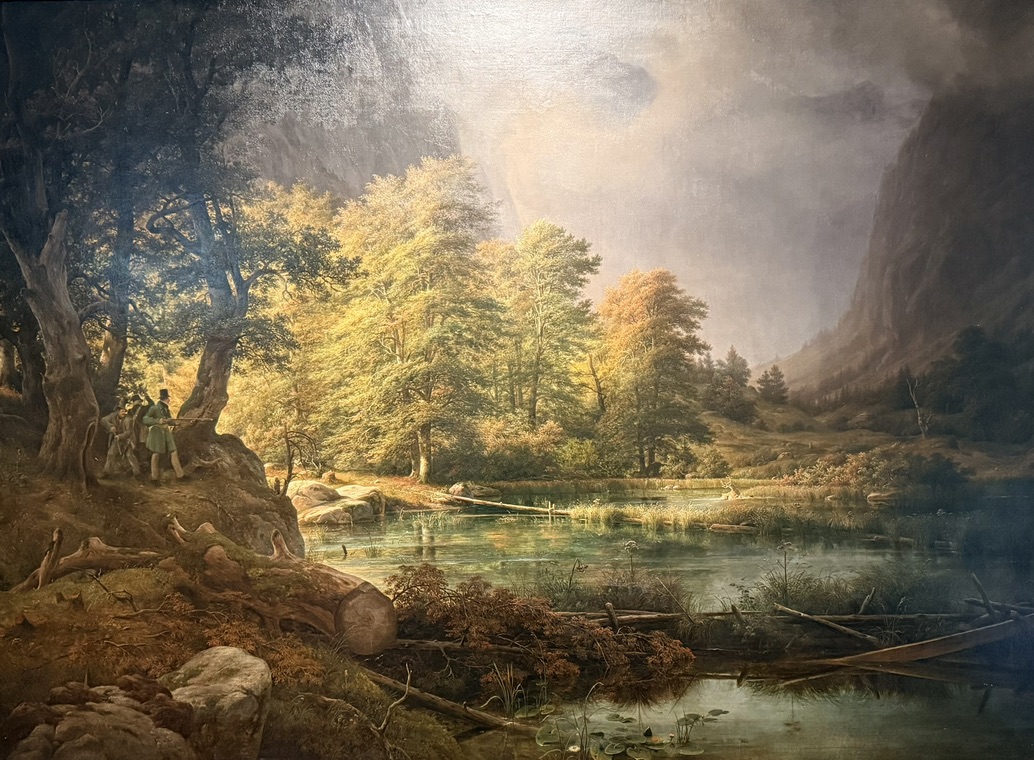
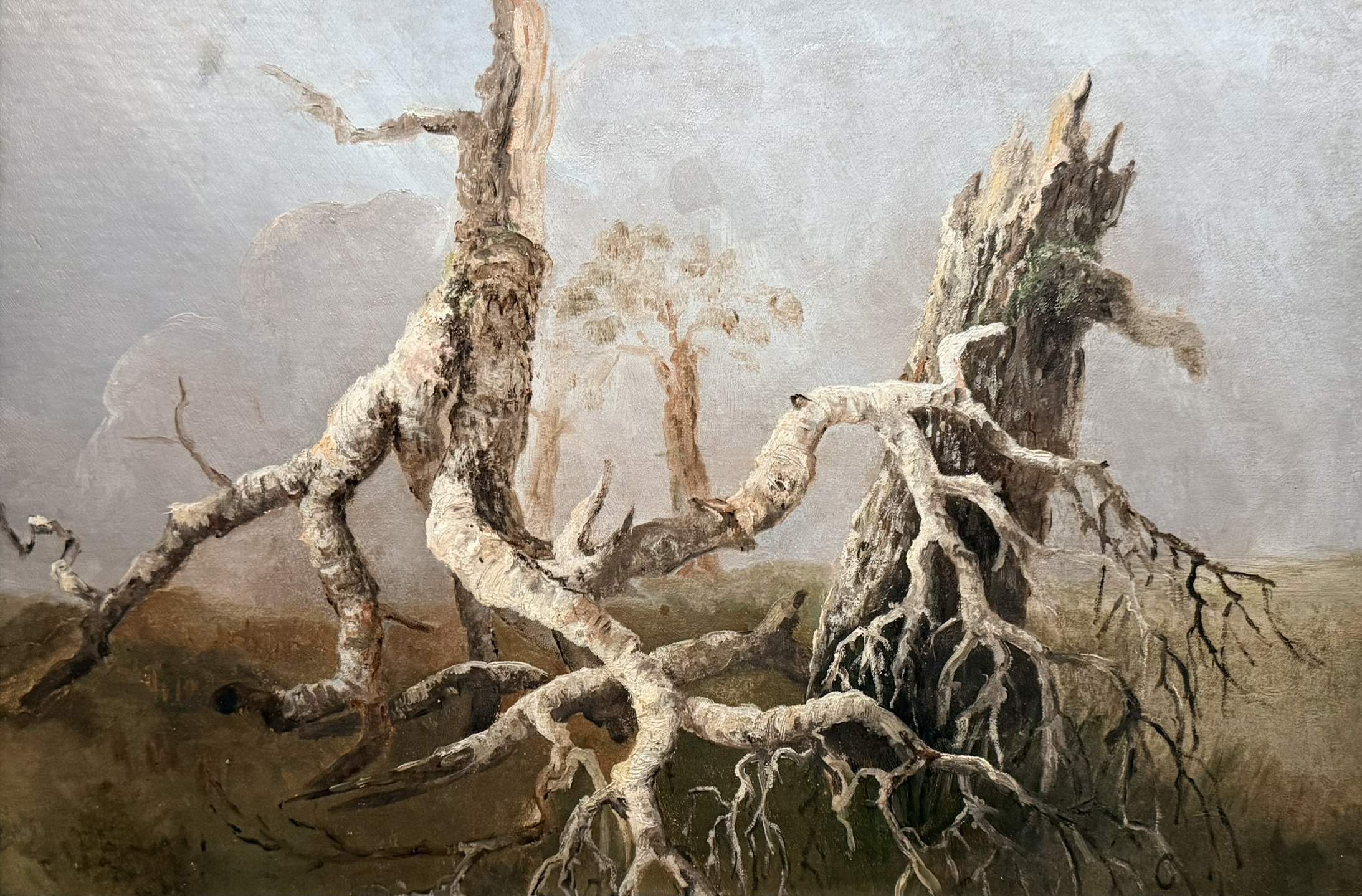
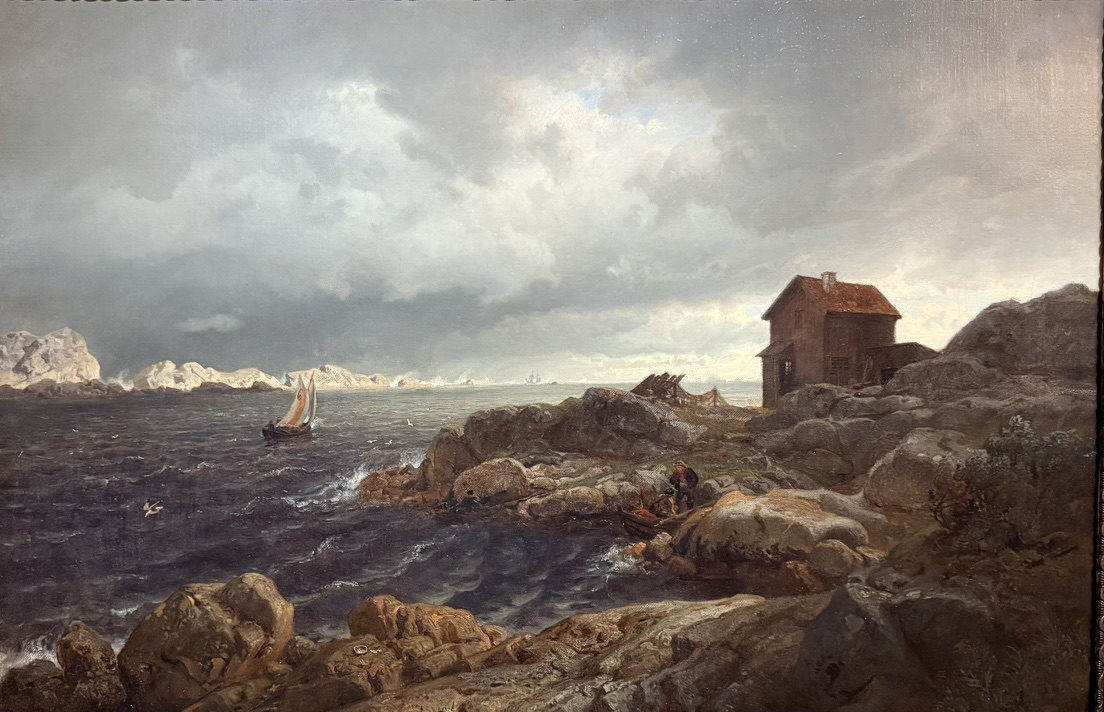
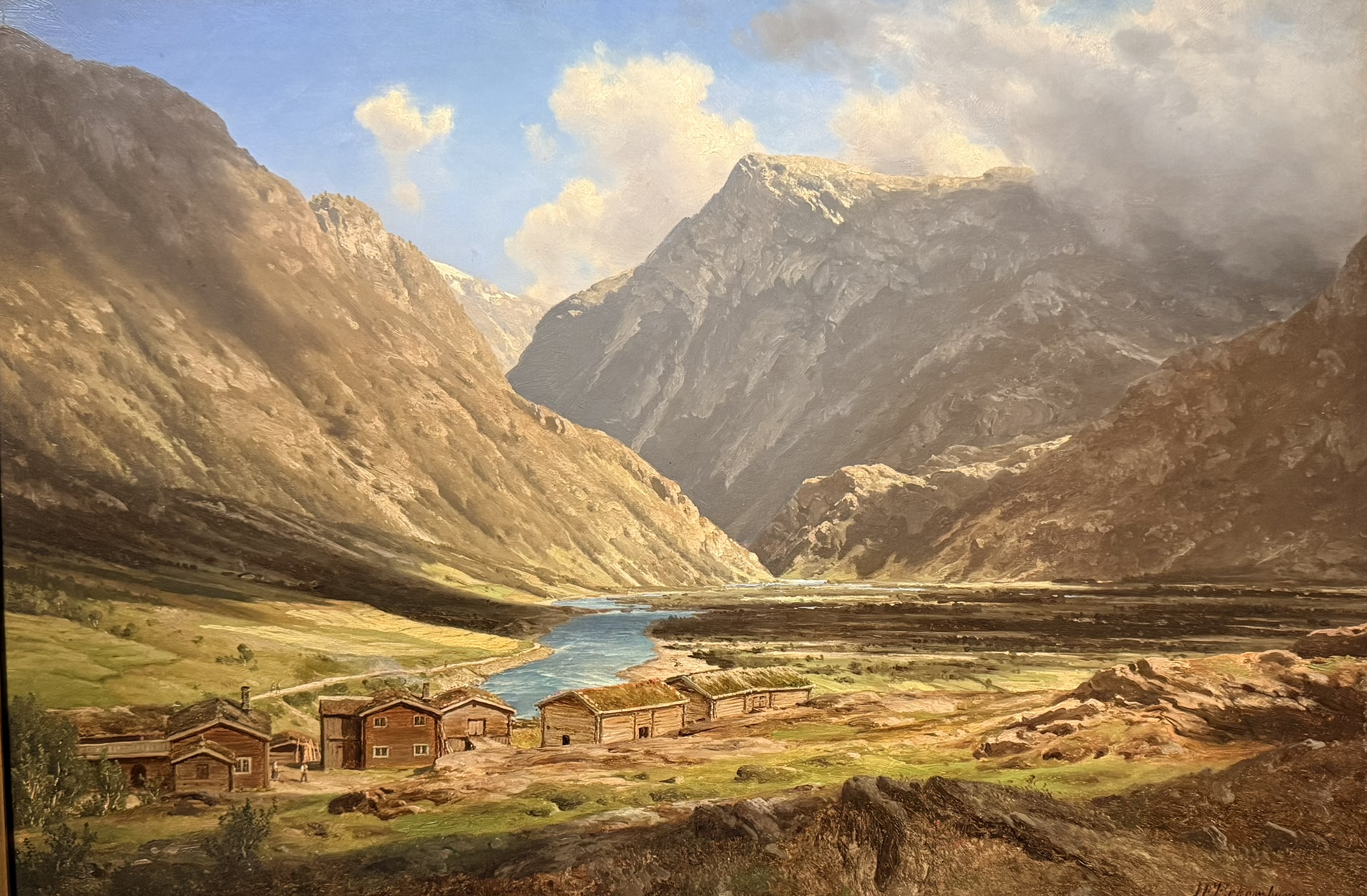
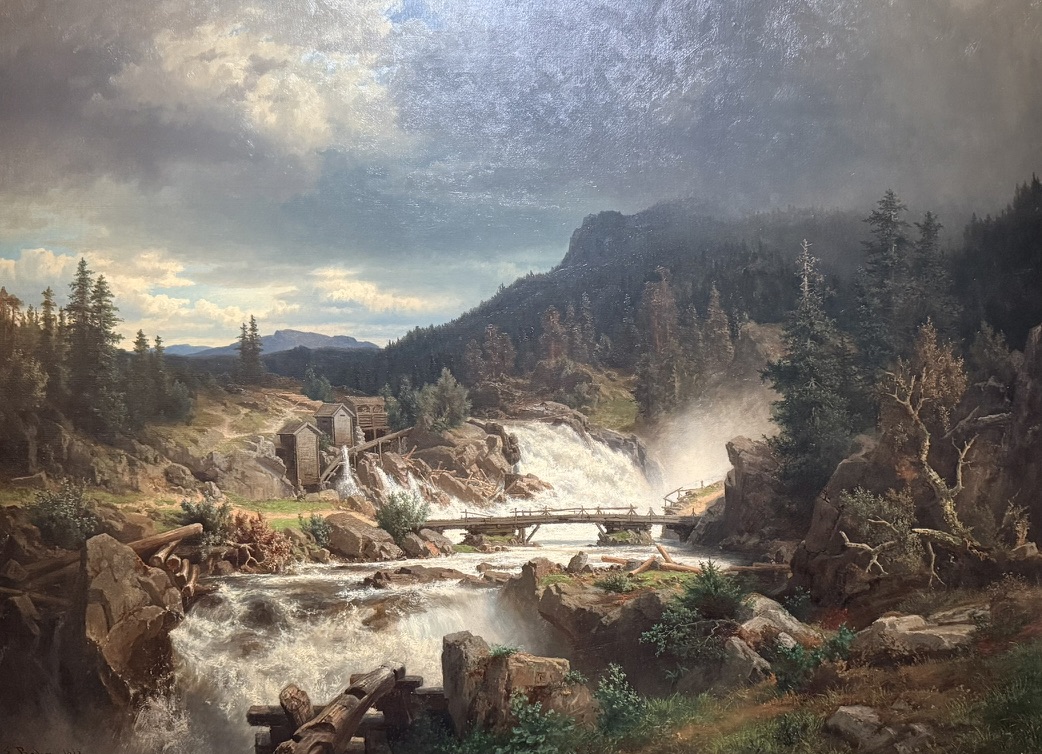
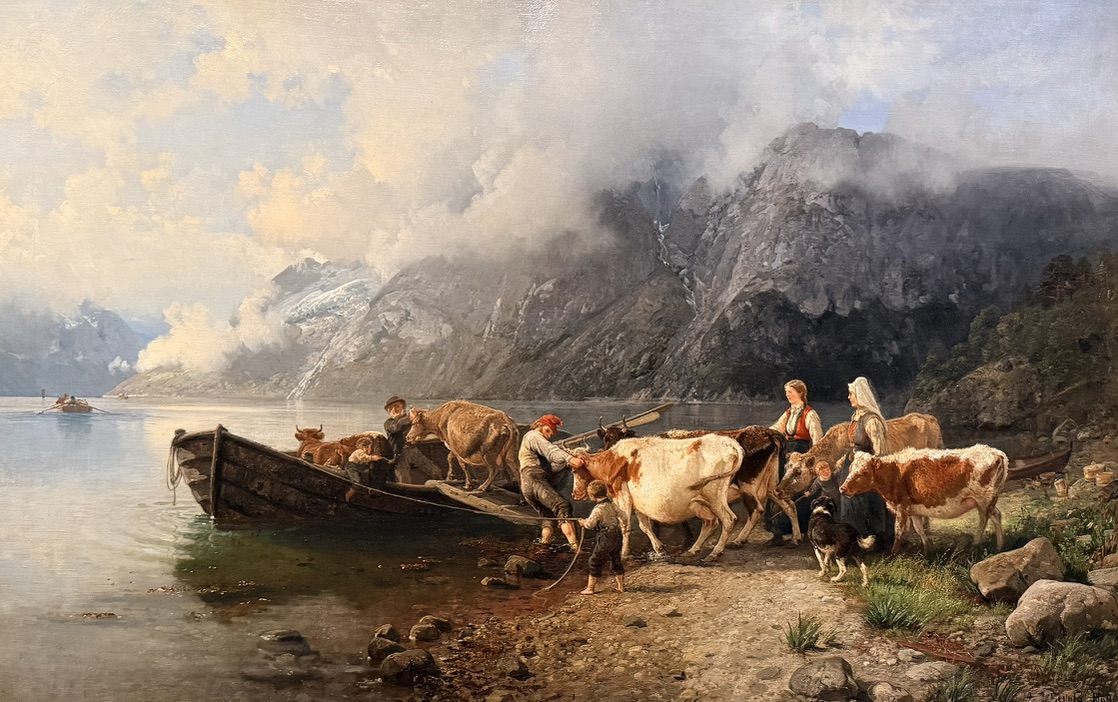
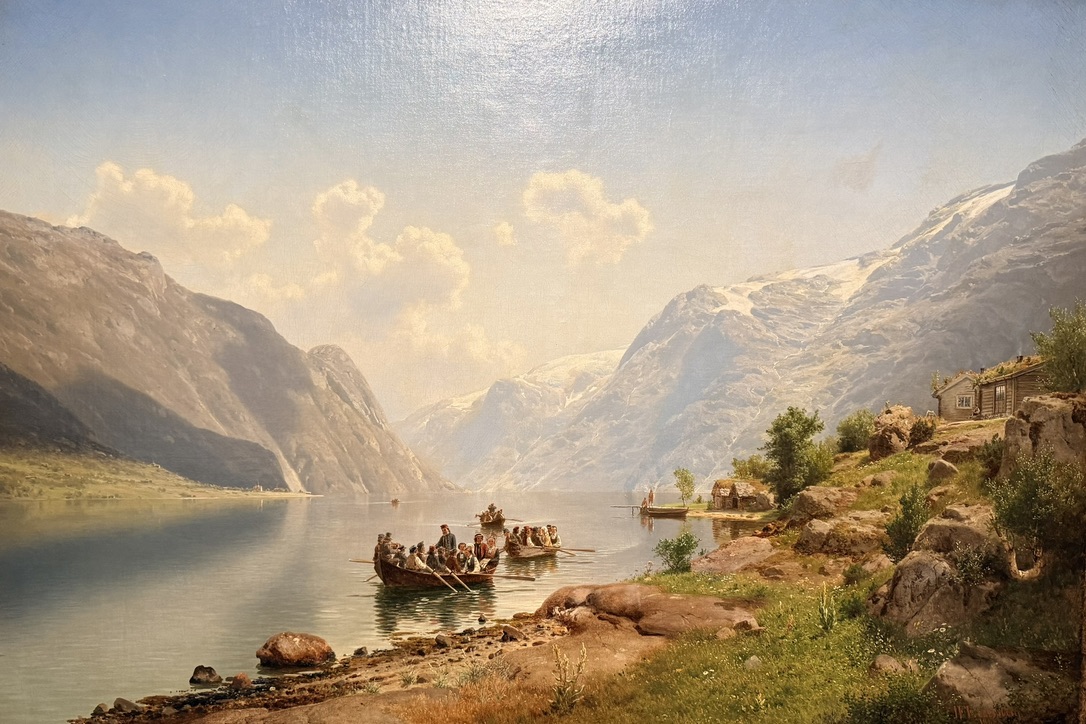
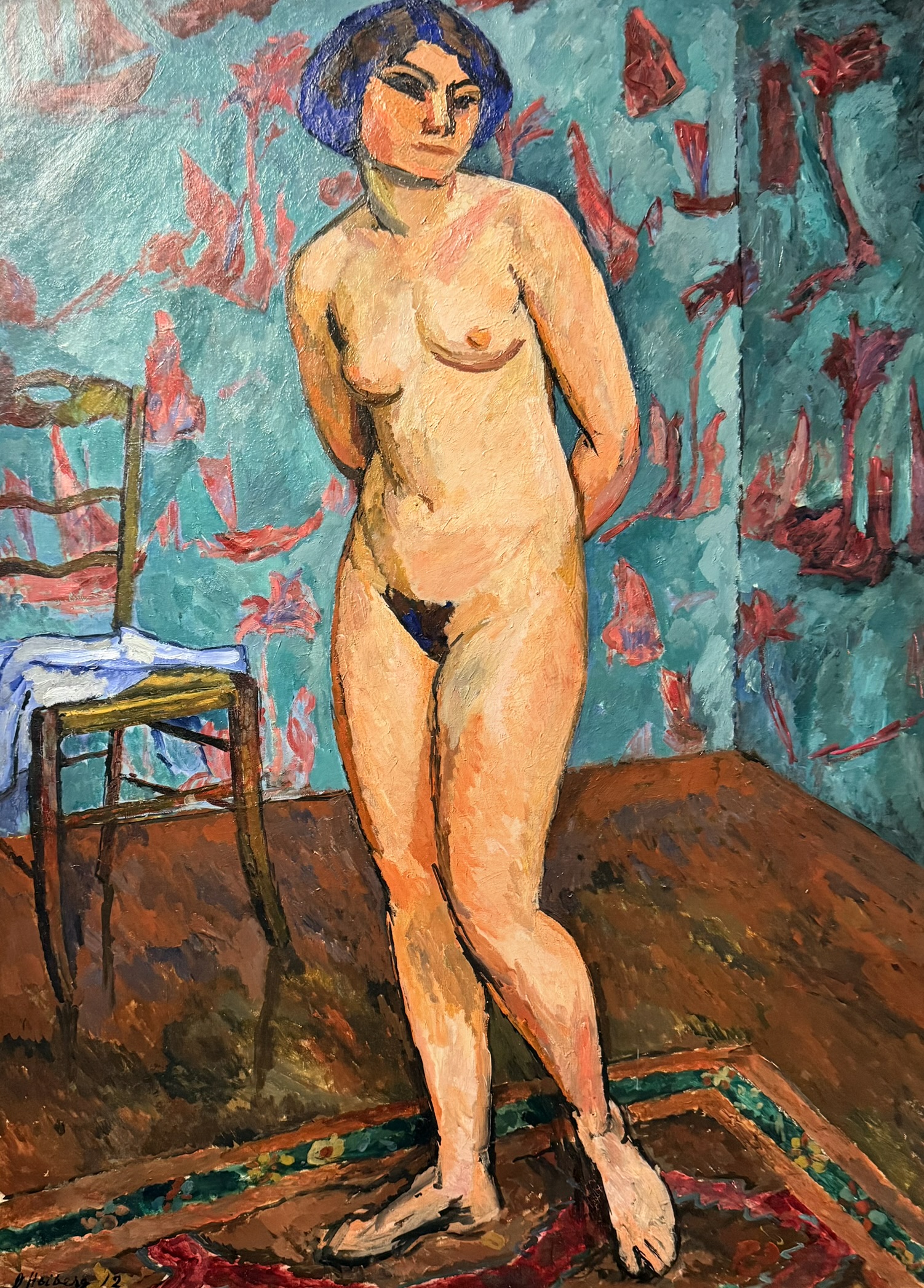
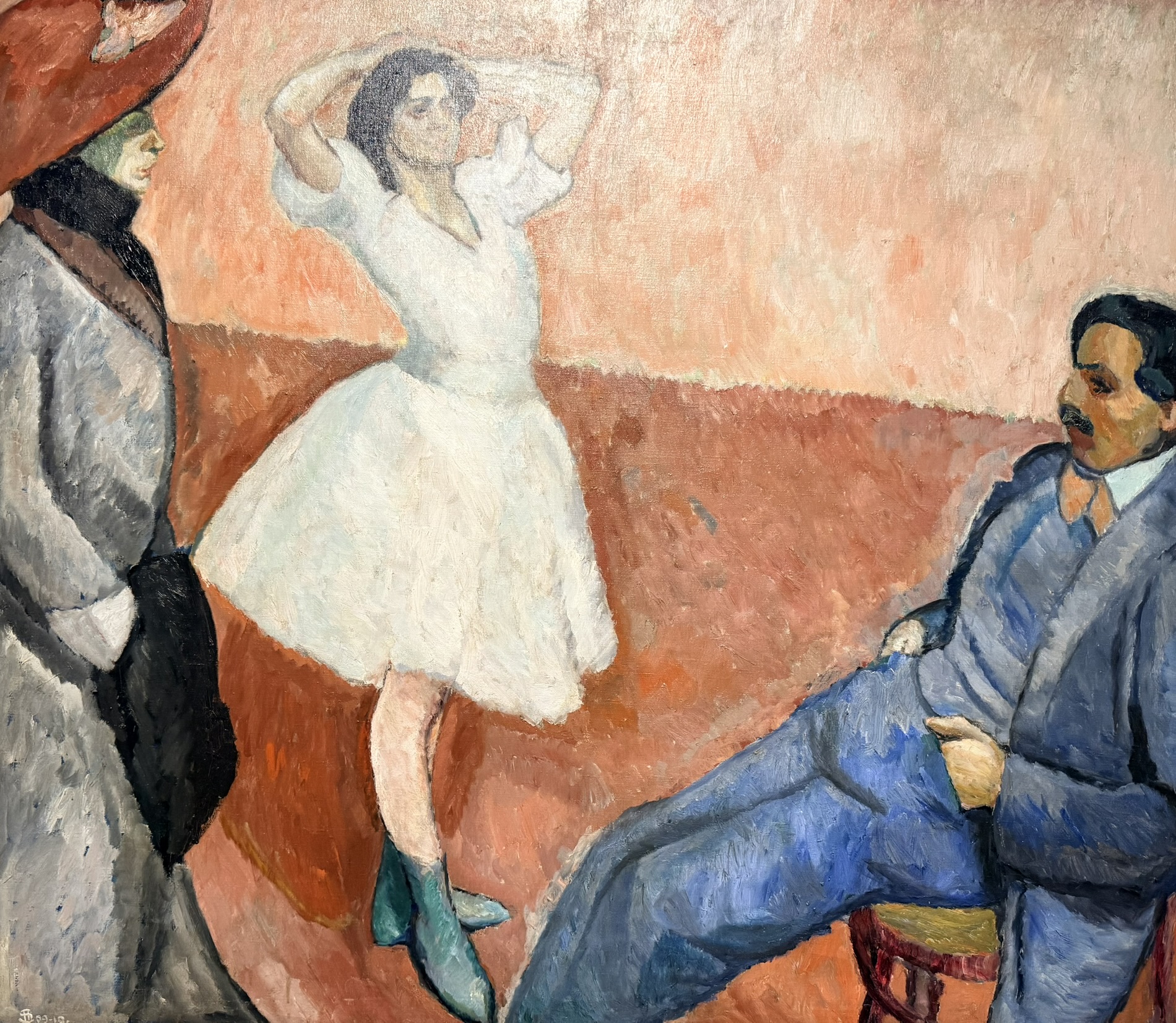
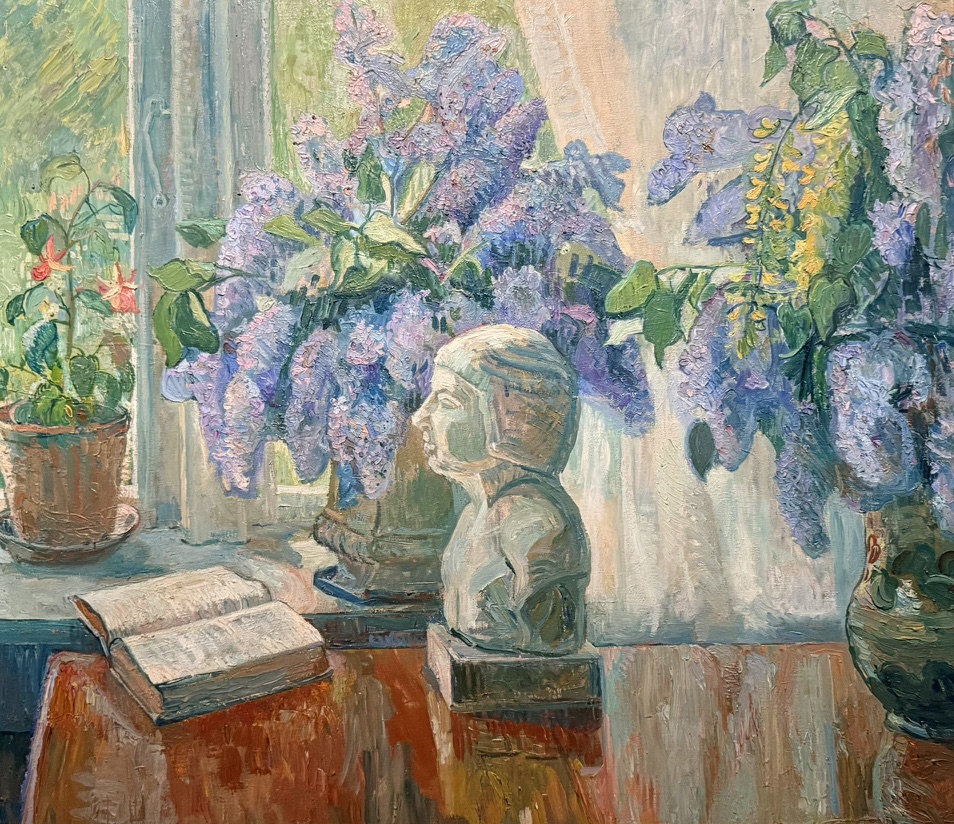
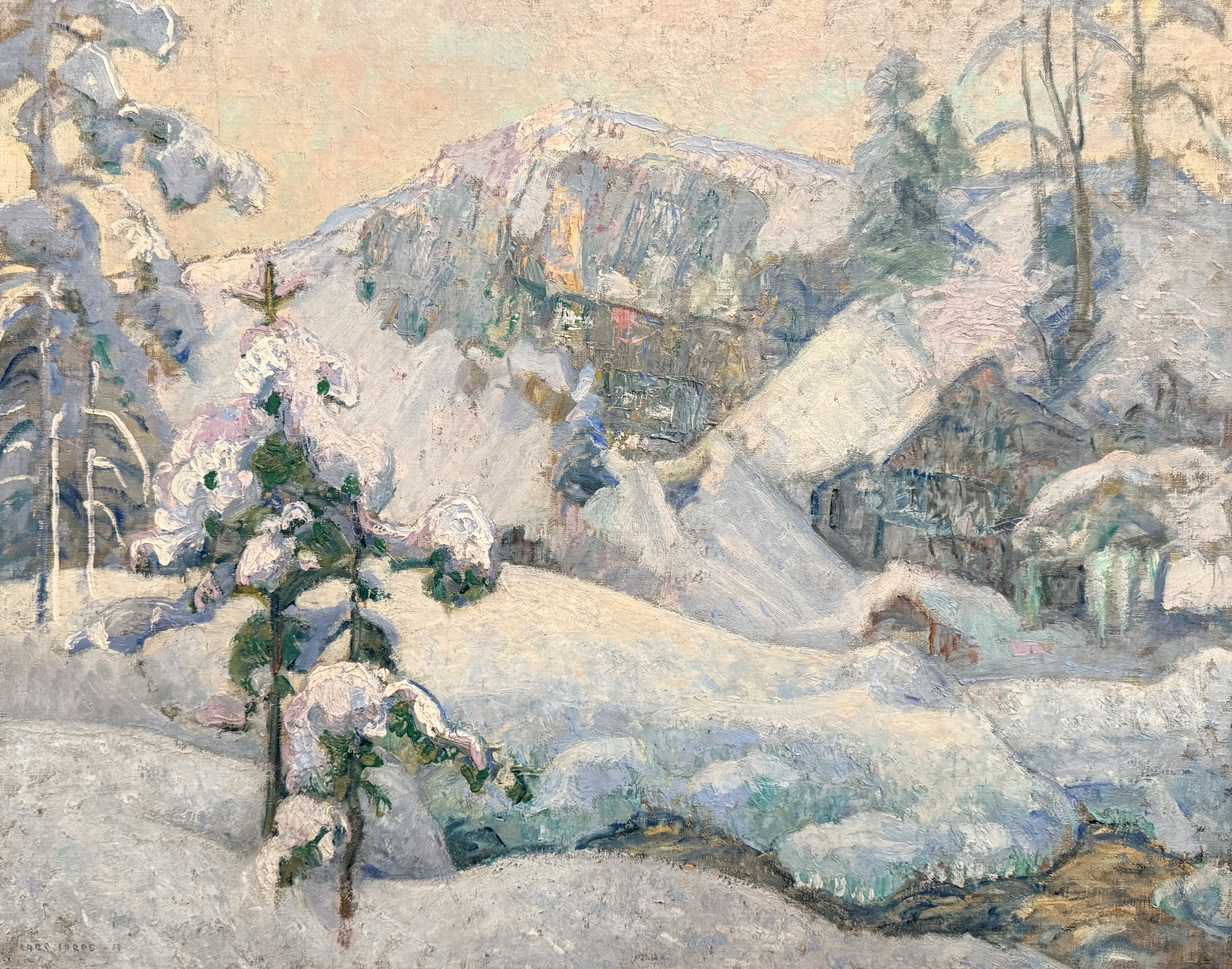
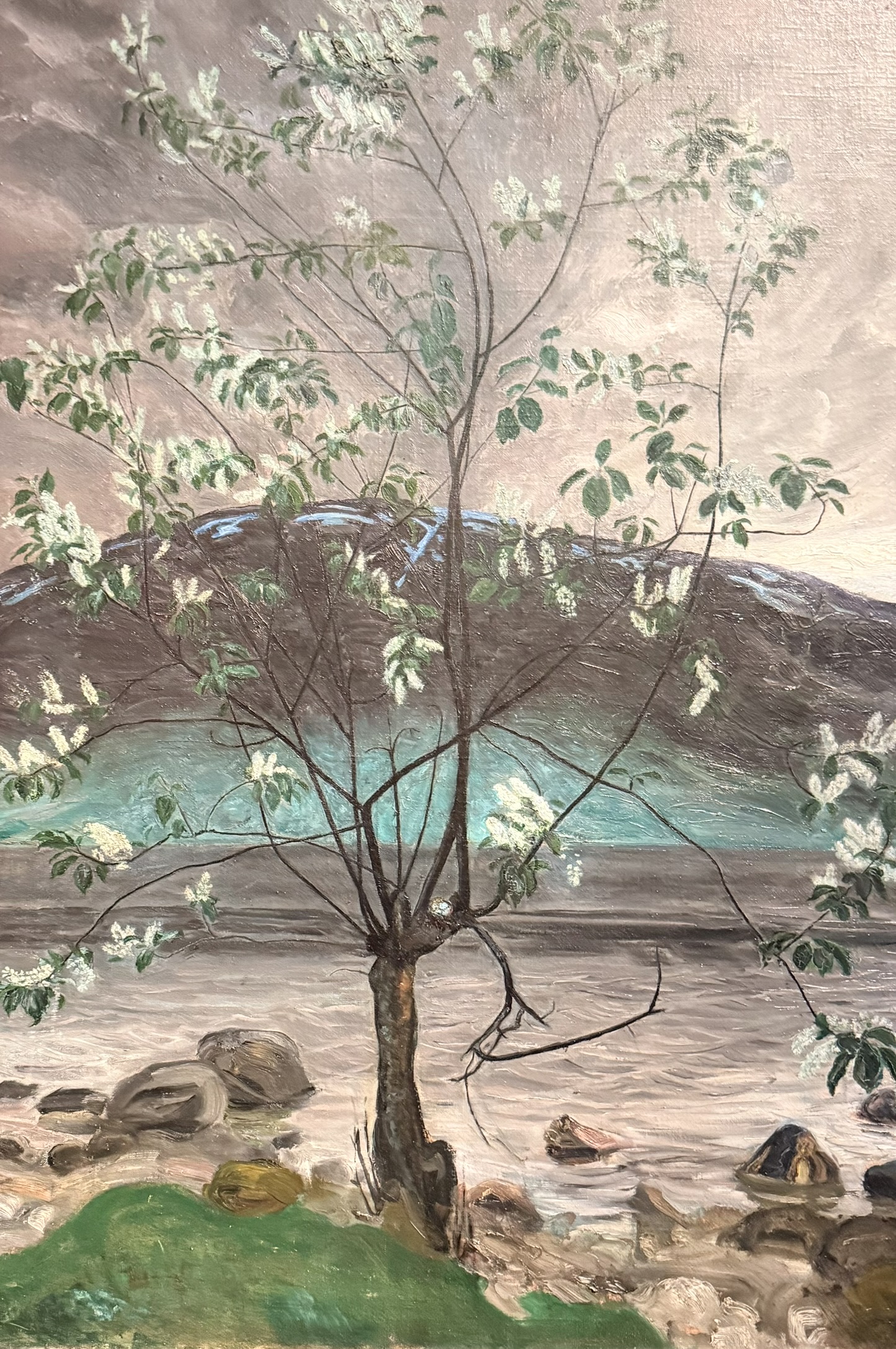
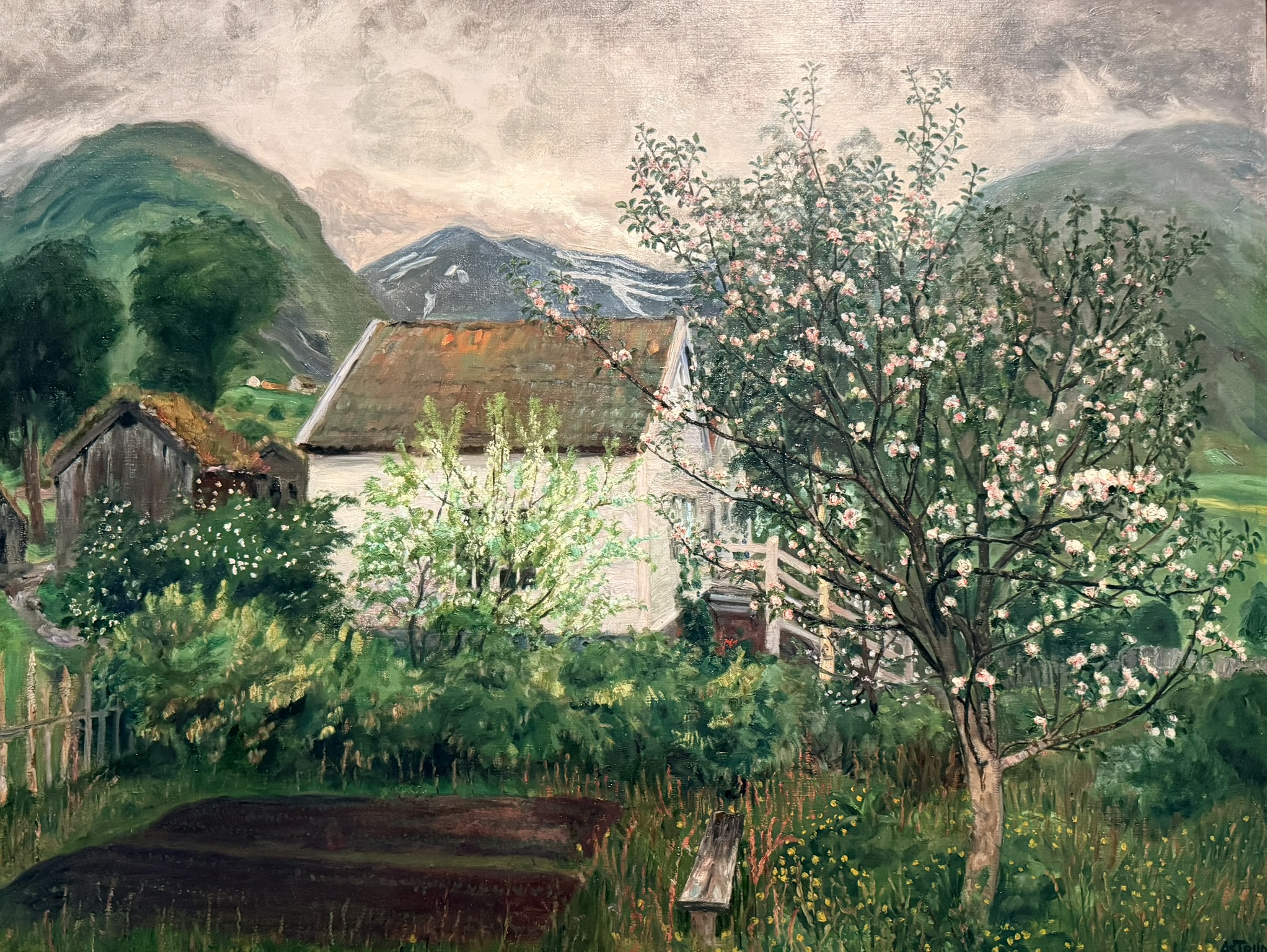
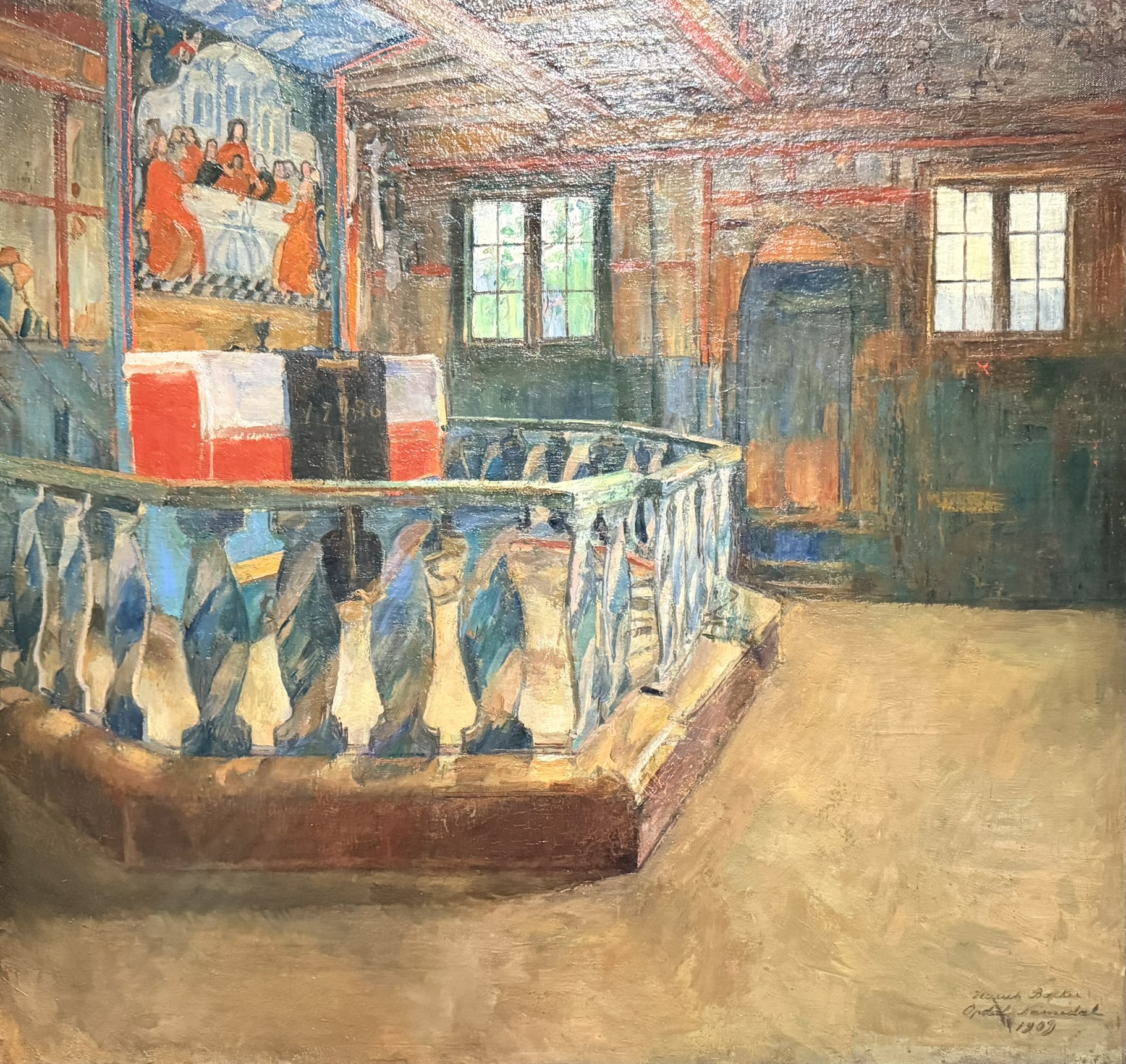
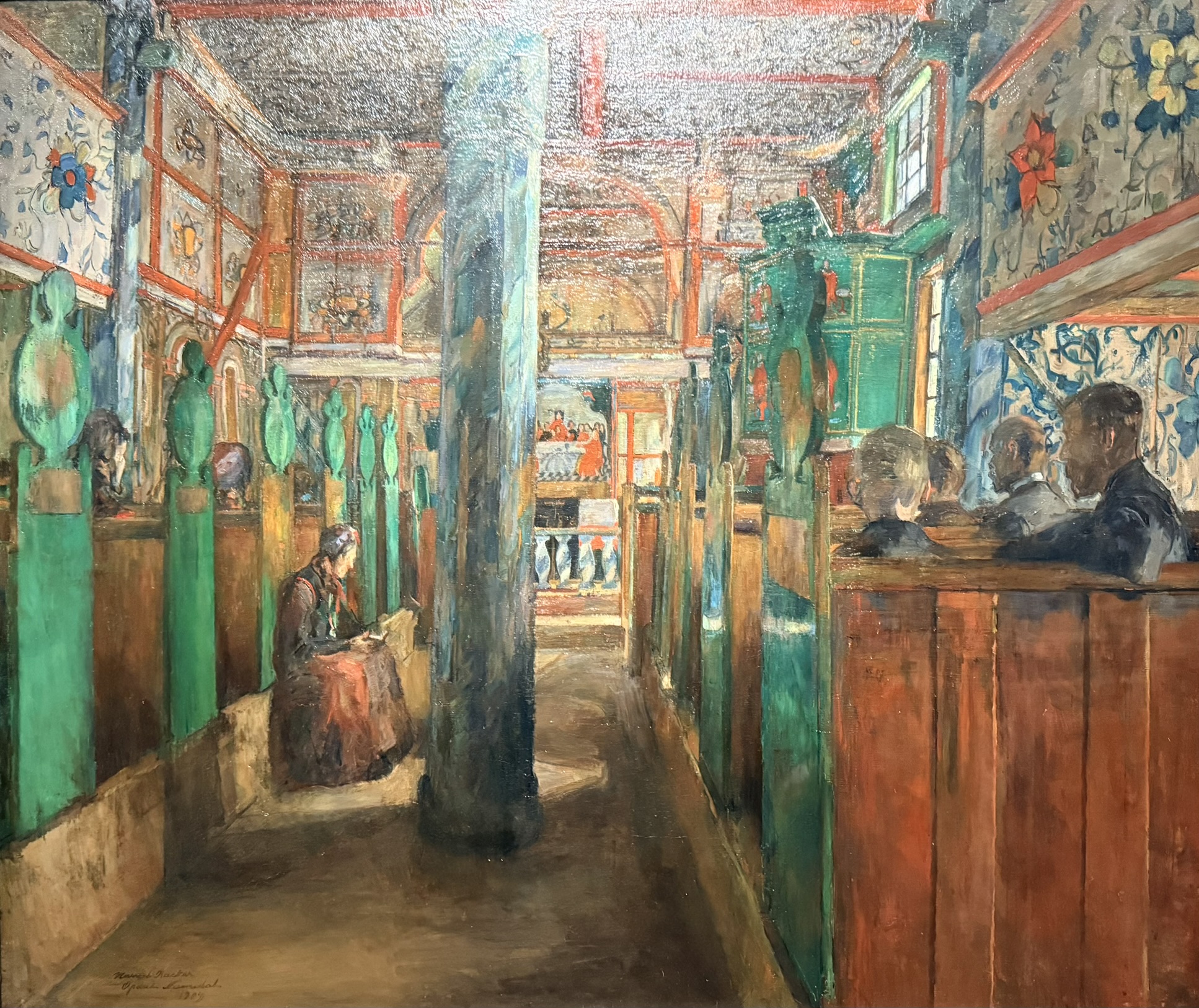
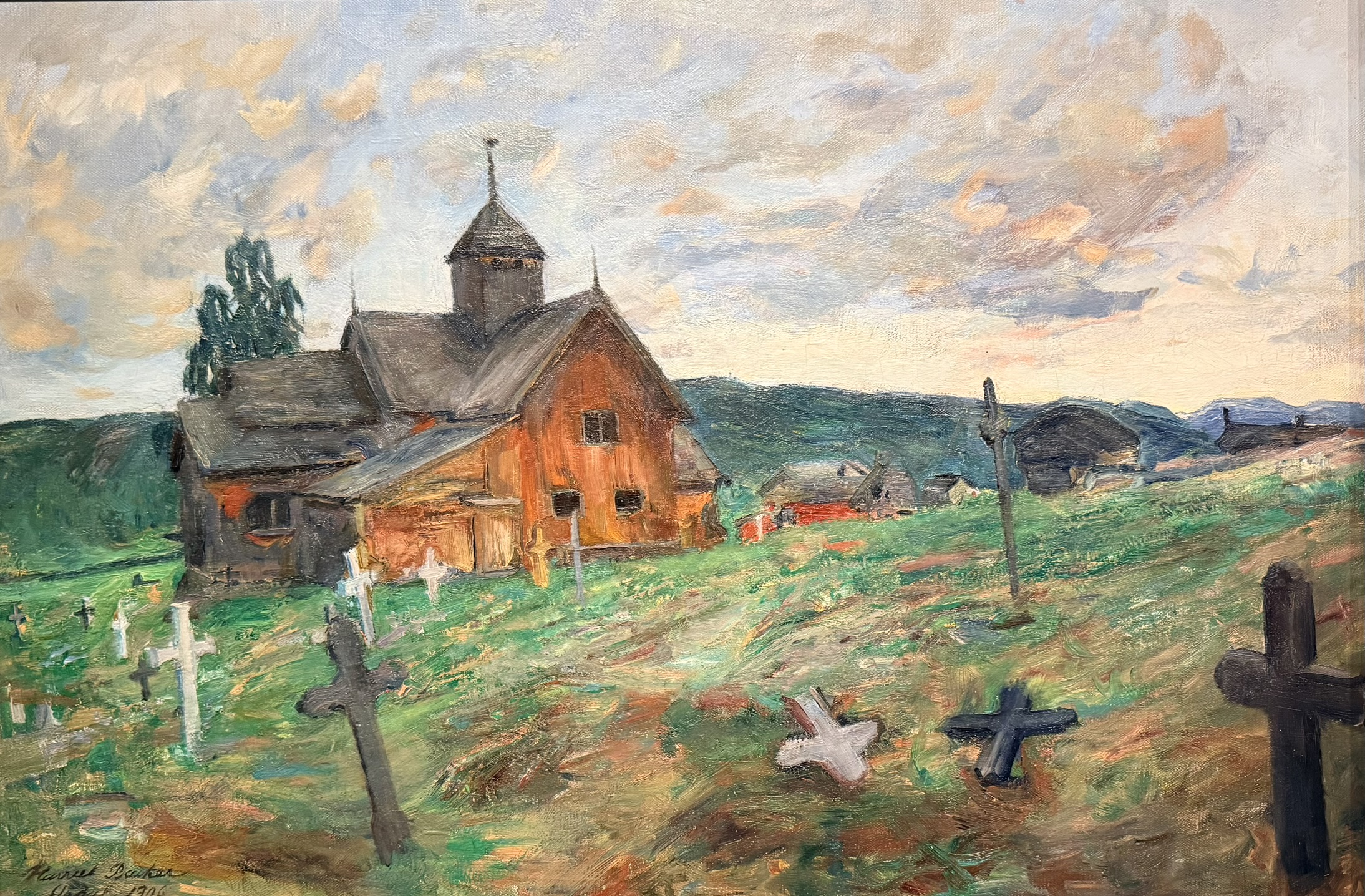
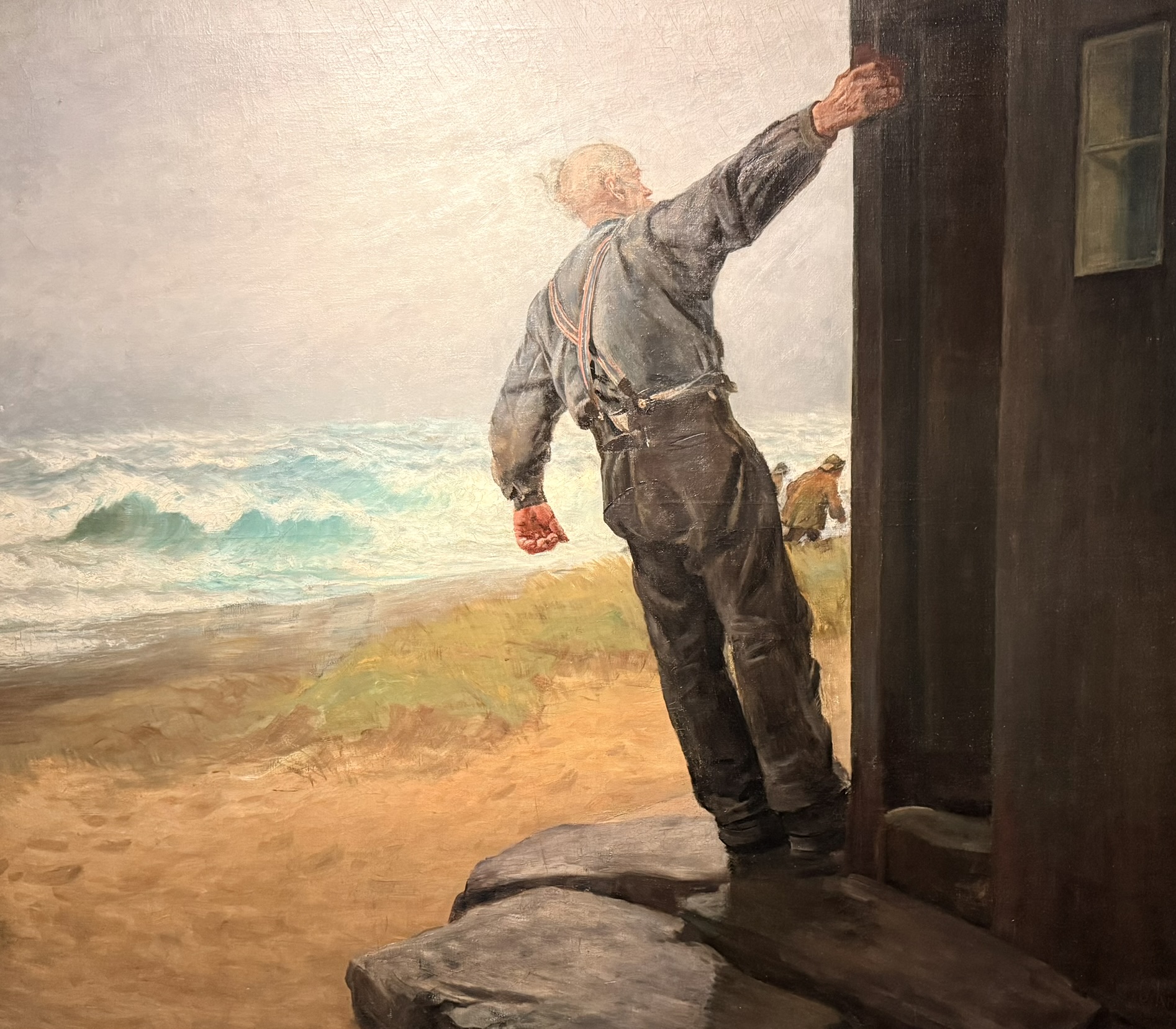
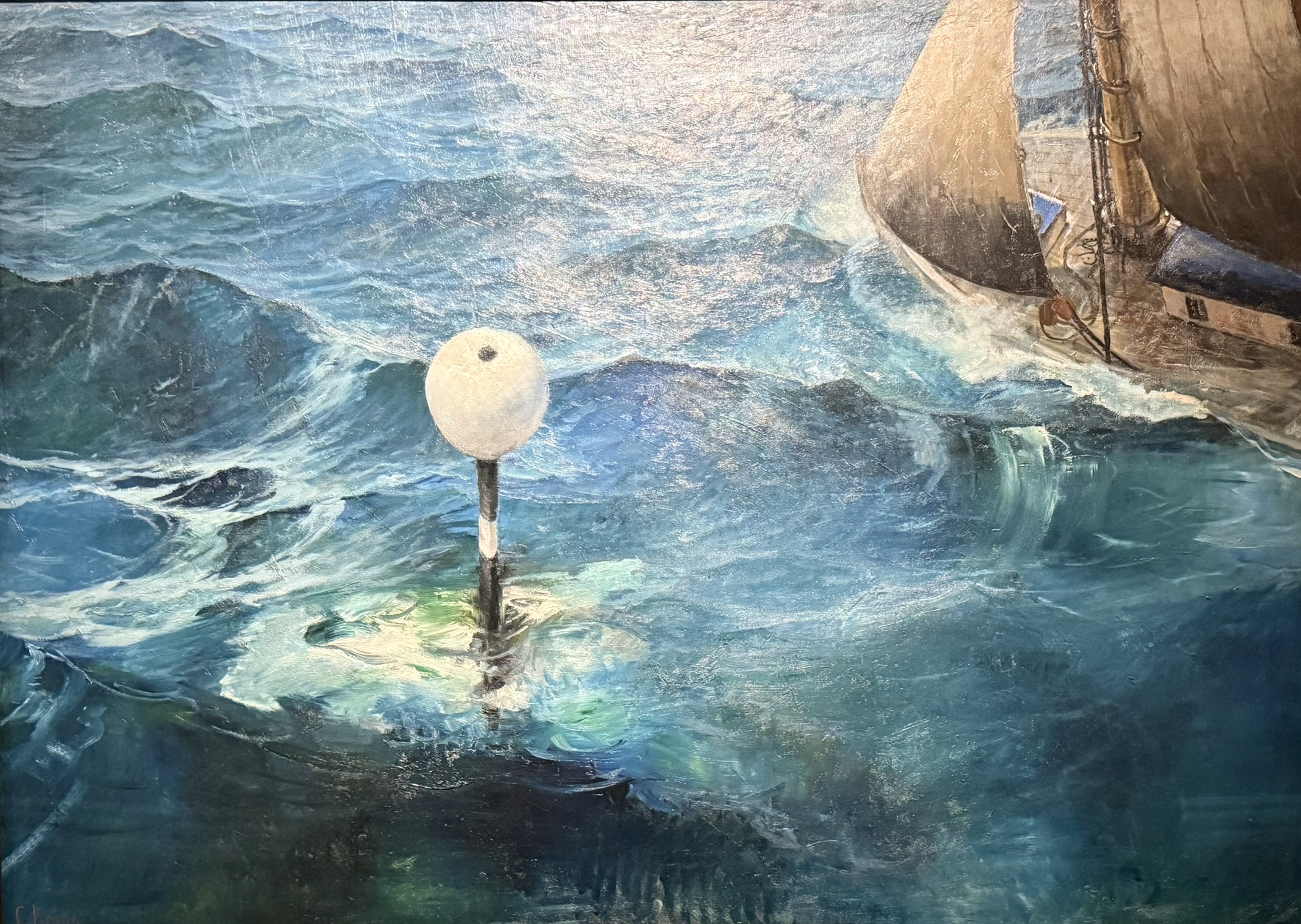
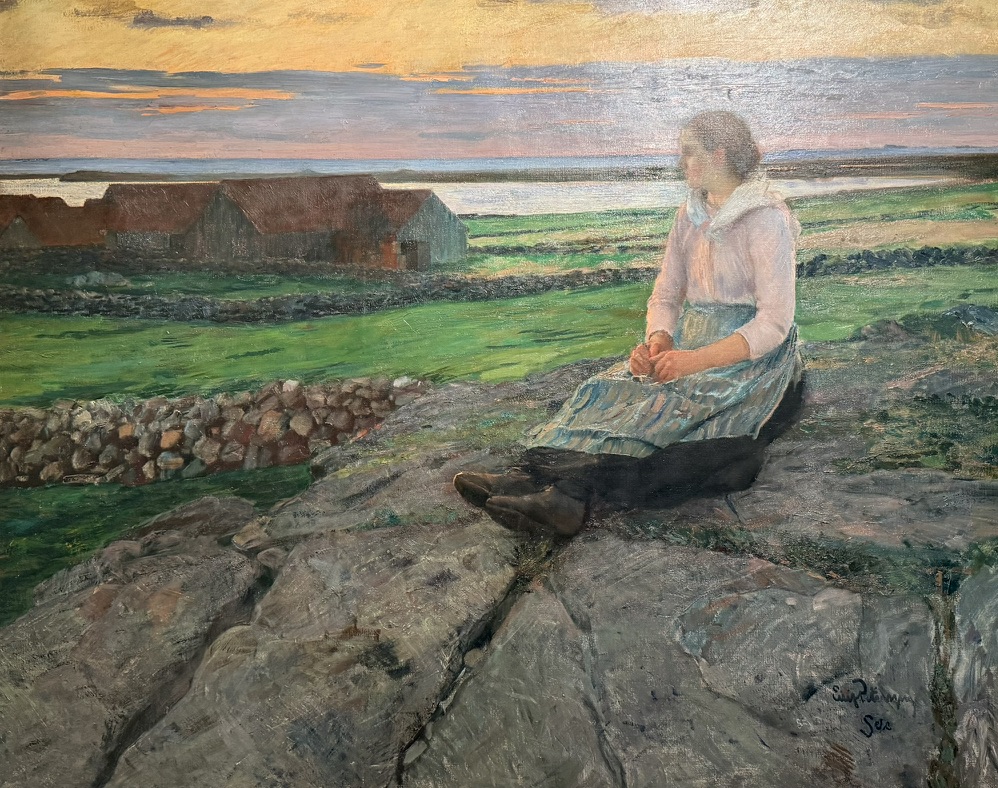
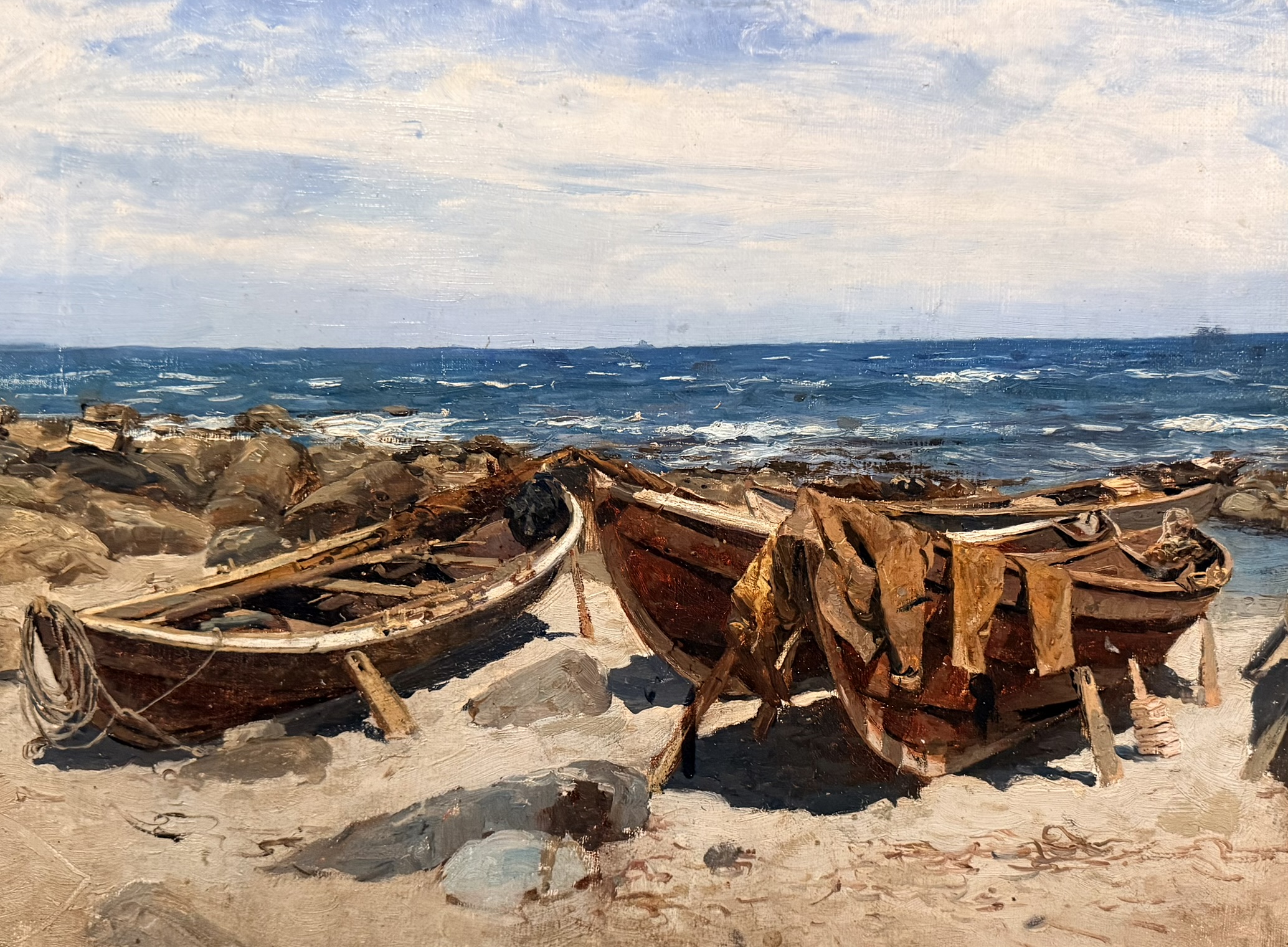
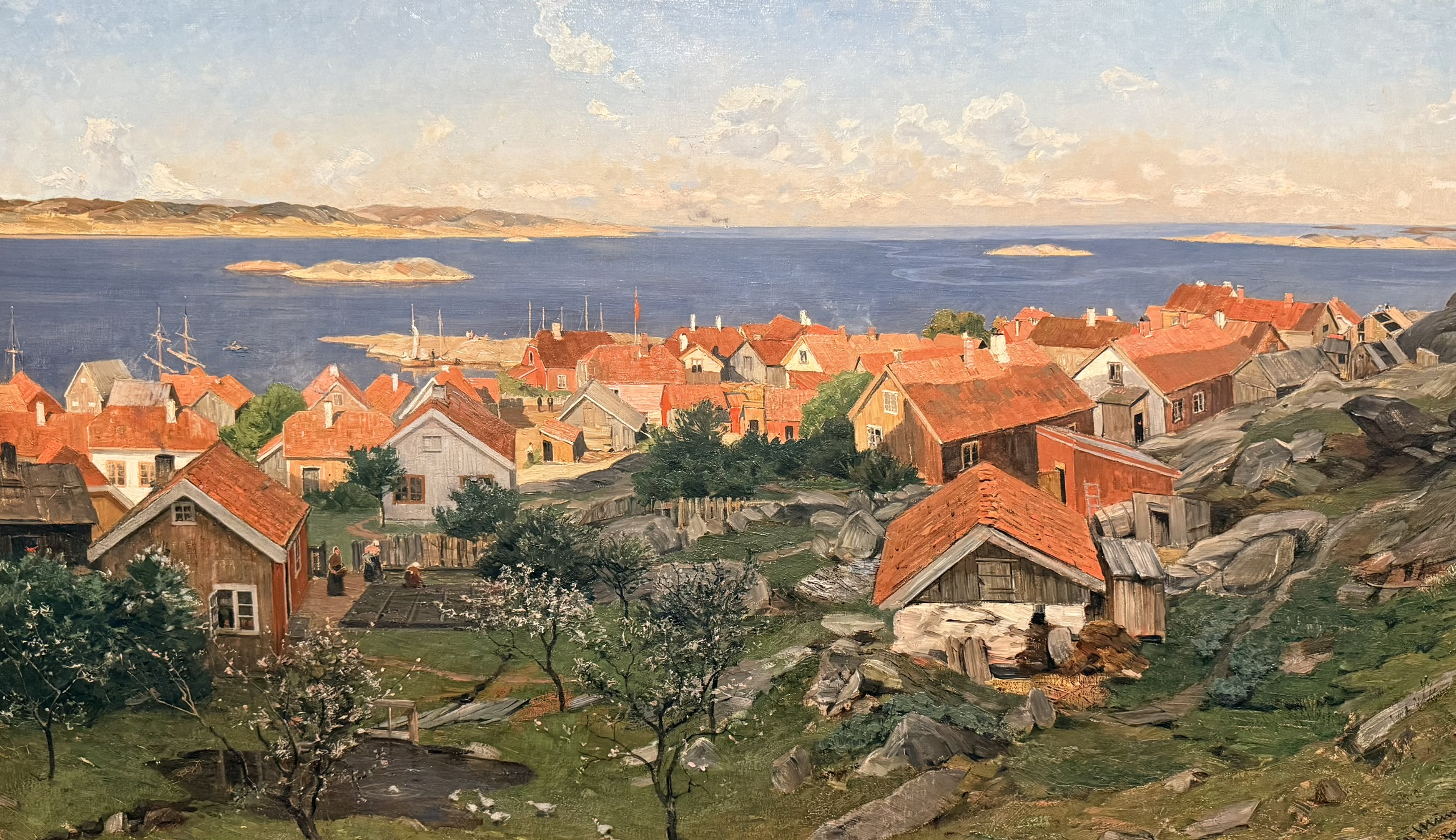
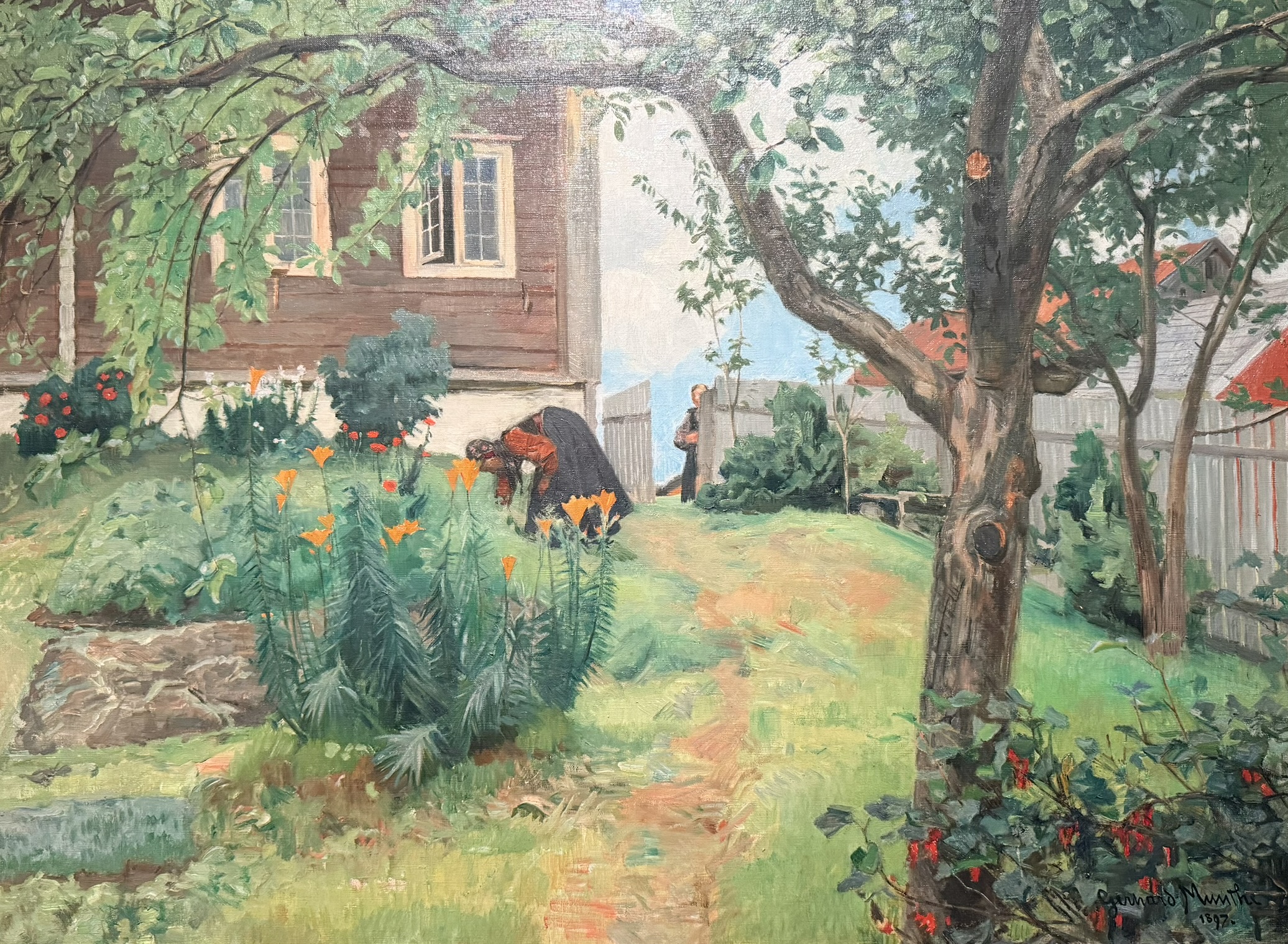
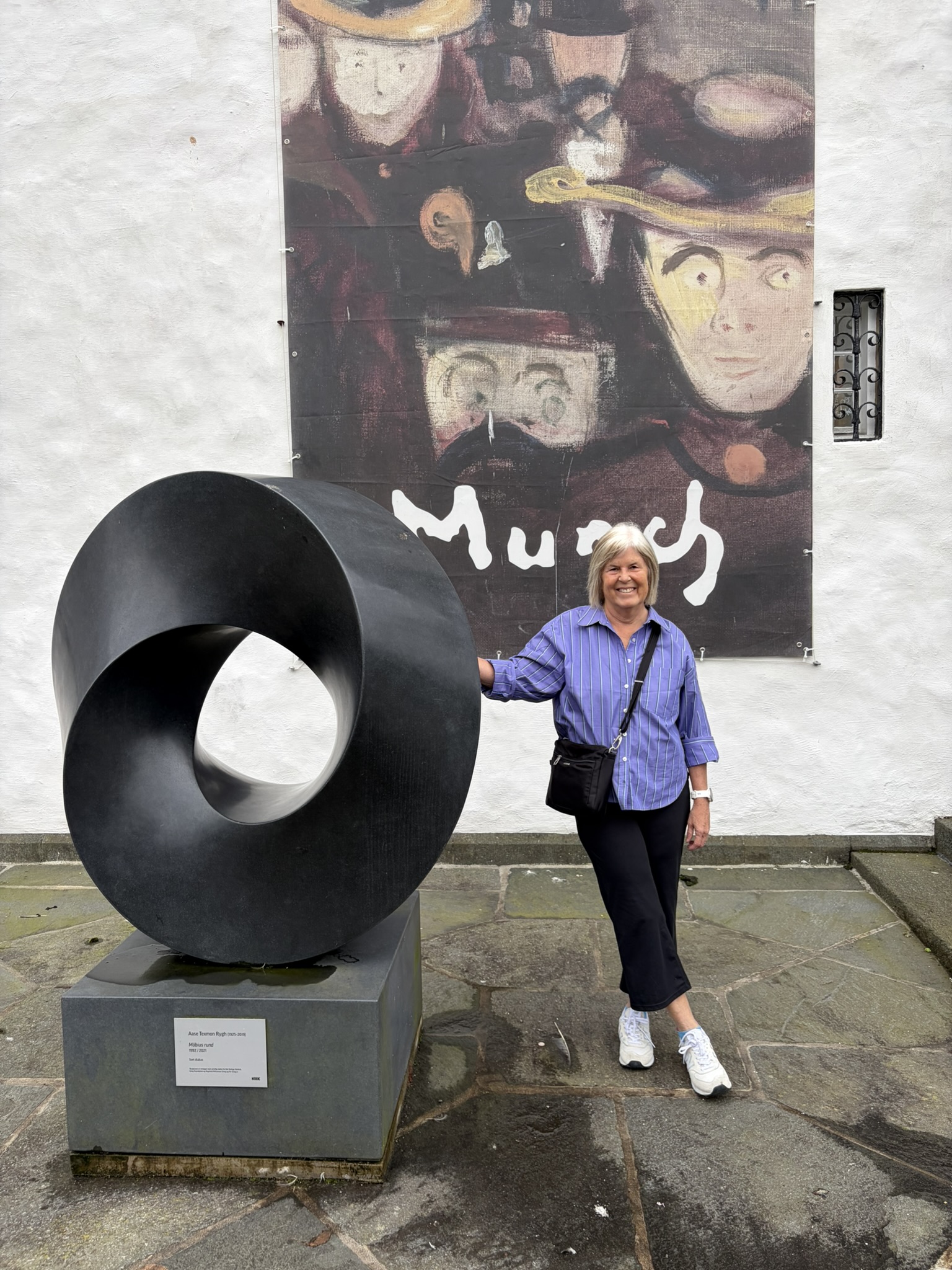
The highlight of the museum is the extensive collection of works by Edvard Munch (1863-1944). Munch was a Norwegian painter whose childhood was overshadowed by illness, bereavement and the dread of inheriting a mental condition that ran in the family. In his paintings, he told deeply personal stories that still touch people a century after the pictures were painted. He explored the various stages of human life and the cycles of nature, as well as the universal aspects of existence: emotions, relationships, and worldviews.
The exhibition traces the artist’s progress from the naturalistic paintings of his younger years in the early 1880s through to his defining artistic project, The Frieze of Life, a focus of Munch’s attention for several decades beginning in the 1890s.
The exhibition in KODE builds on a collection assembled during the early 20th century by Rasmus Meyer in close collaboration with the artist himself.
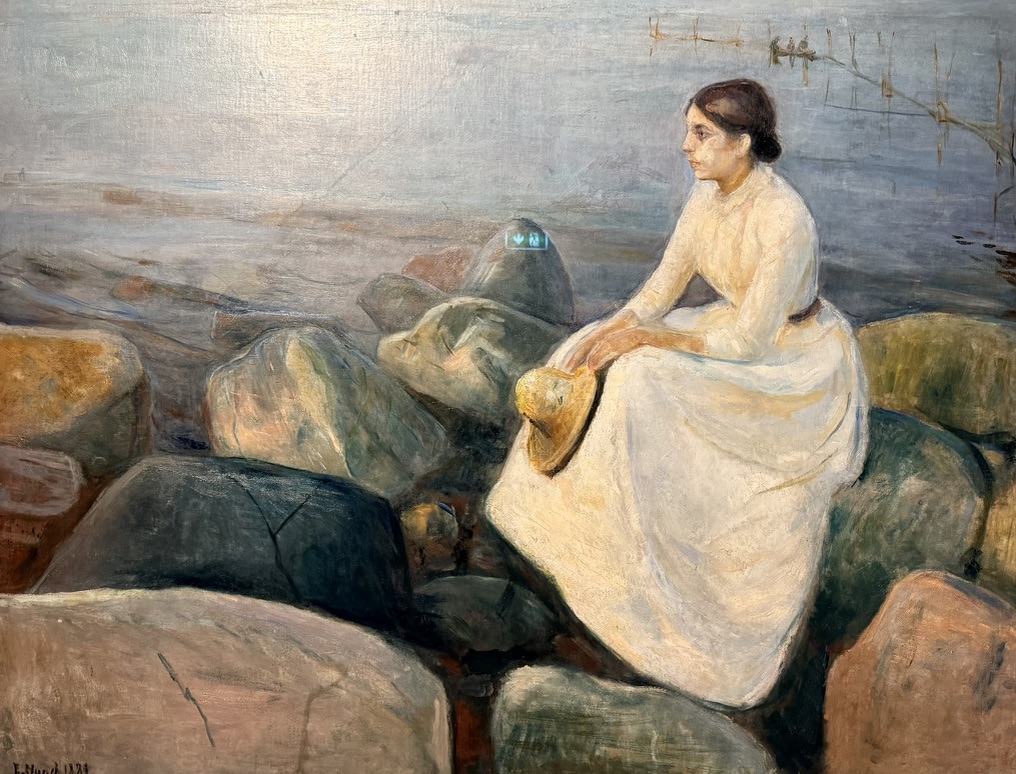
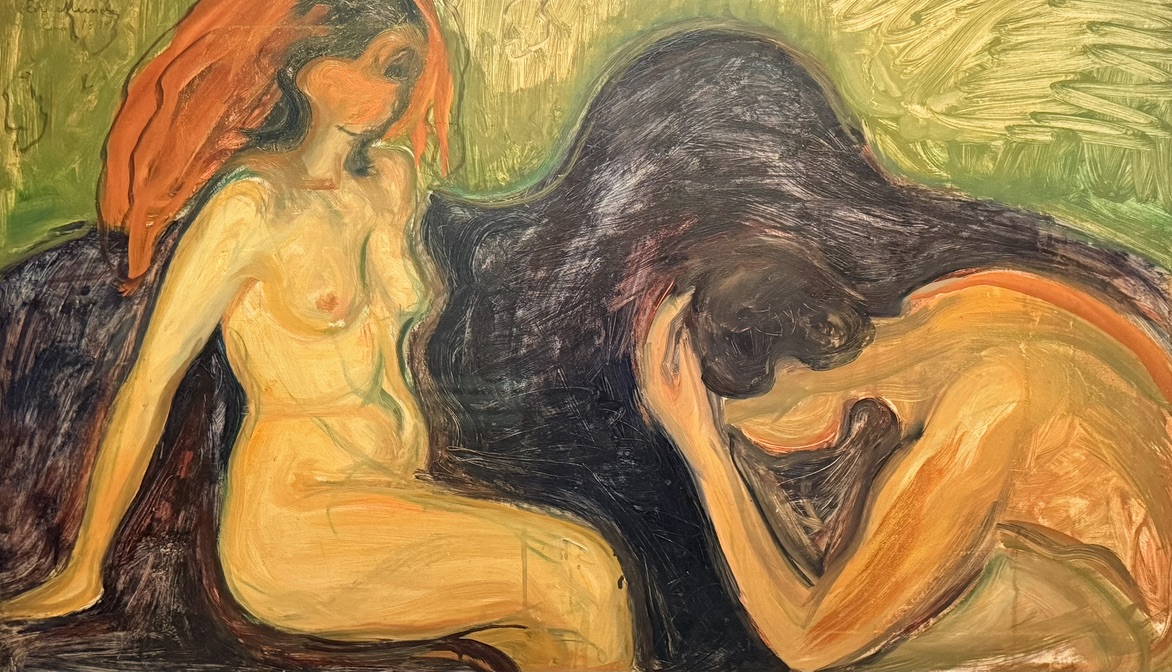
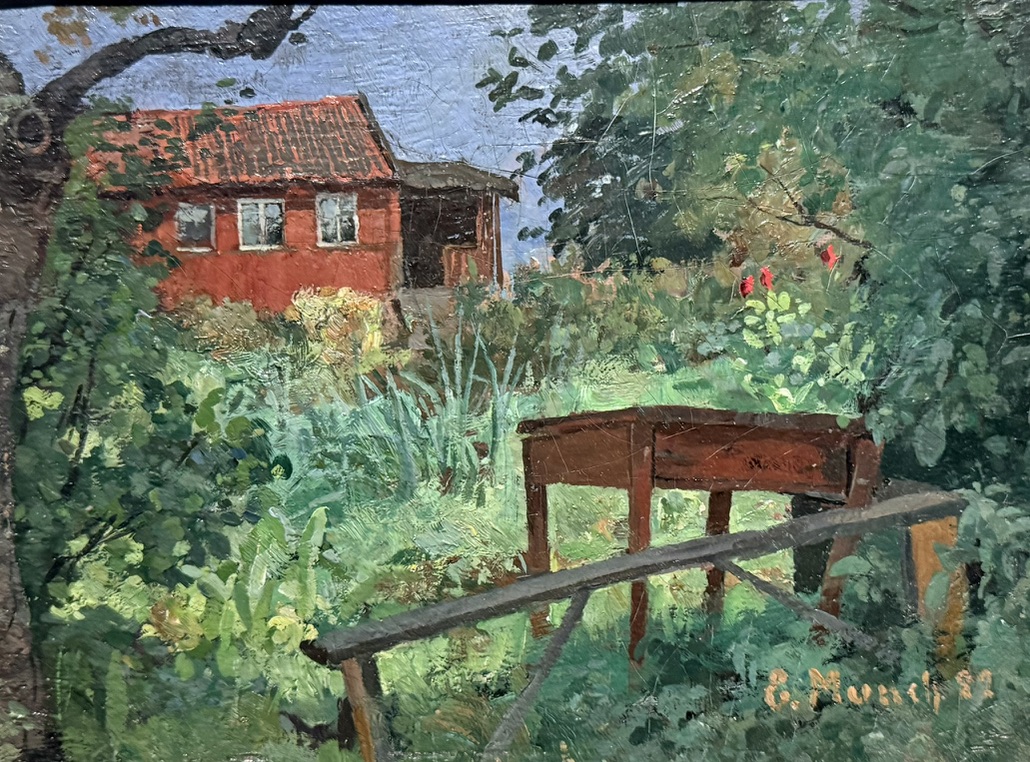
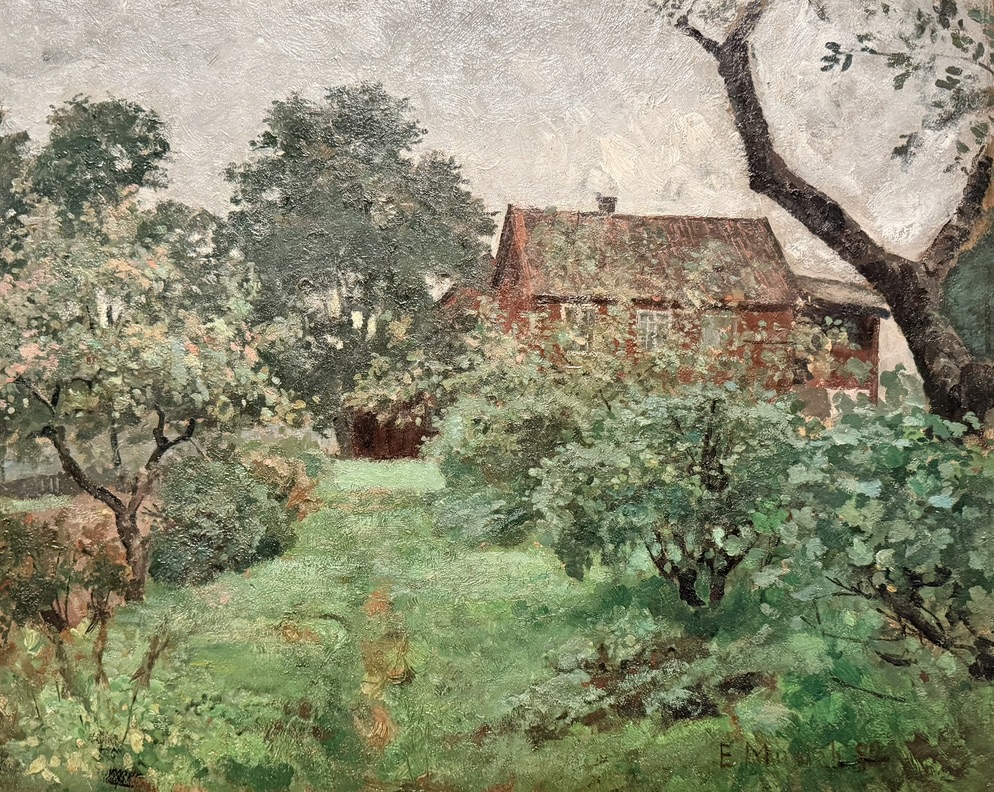
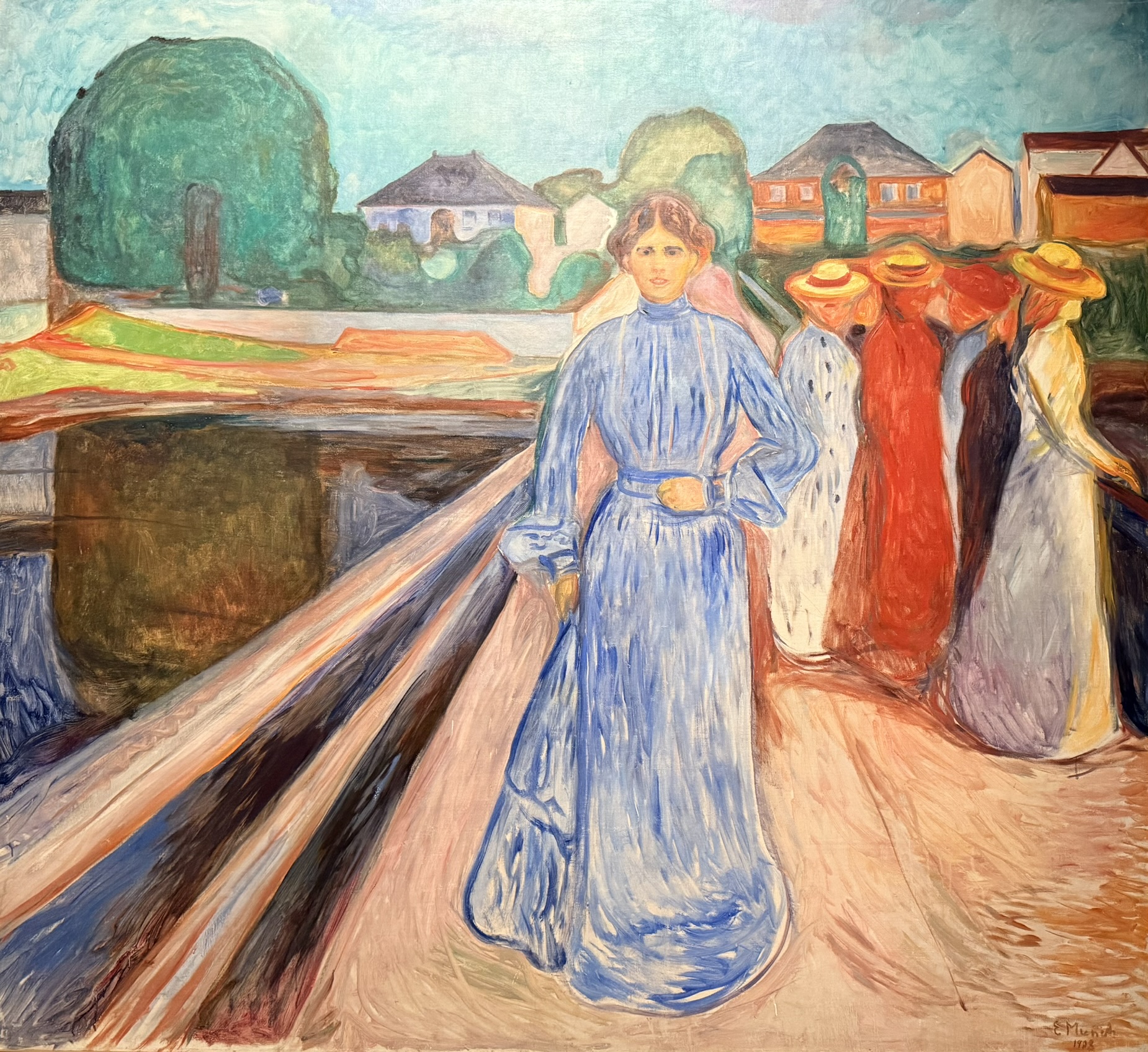
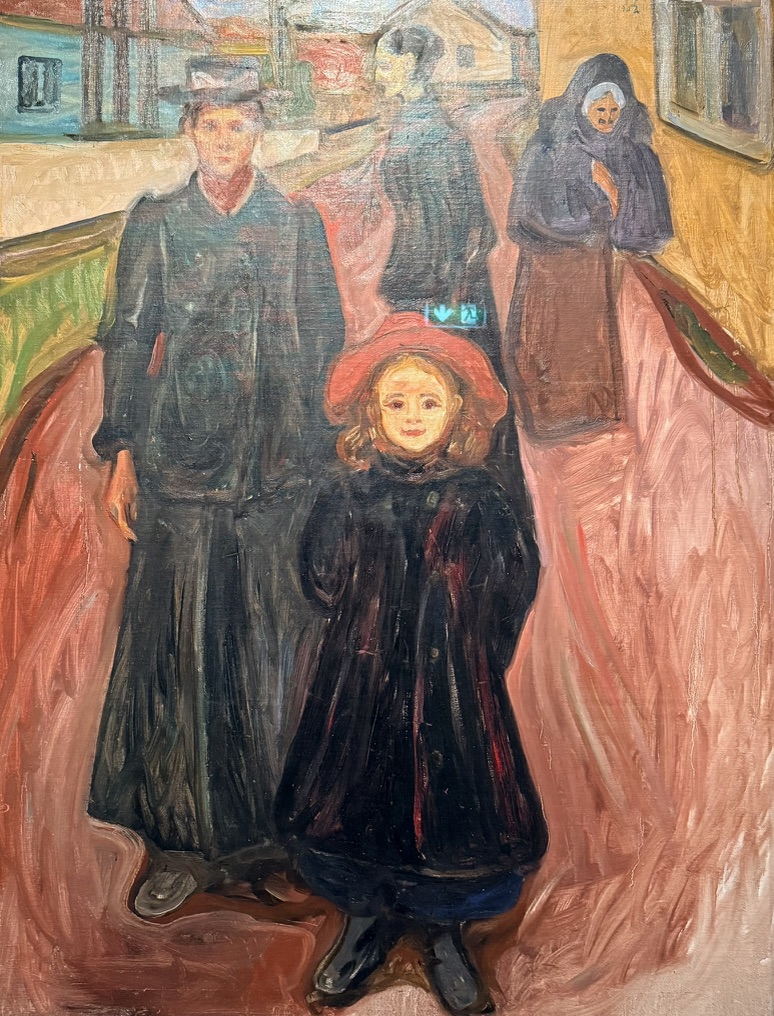
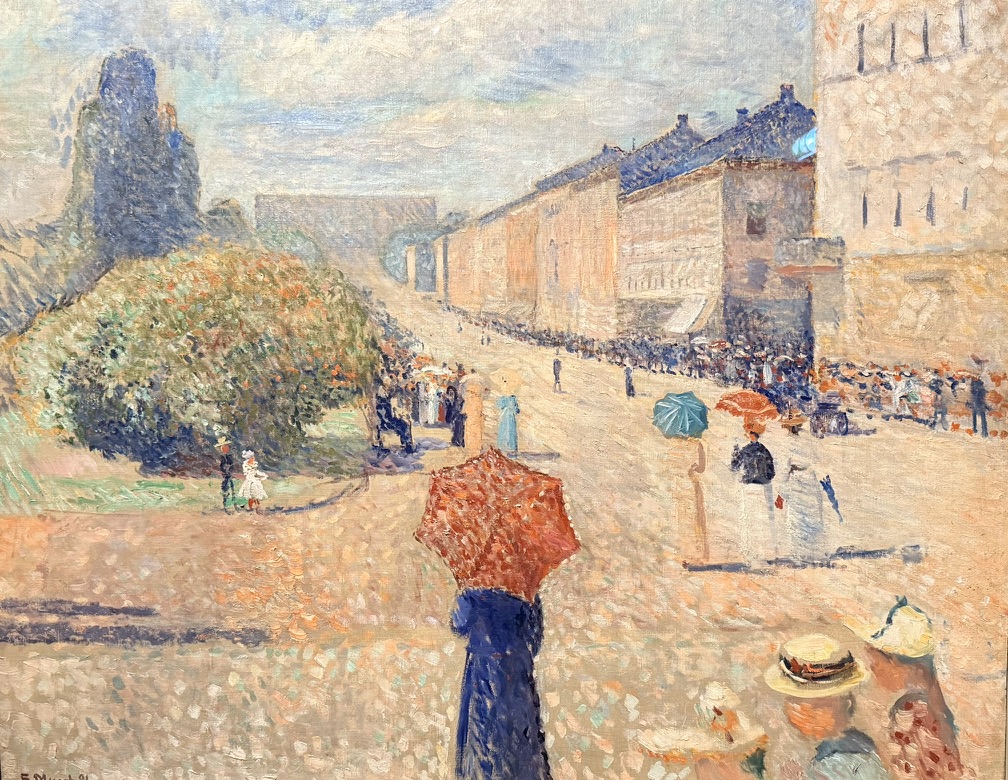
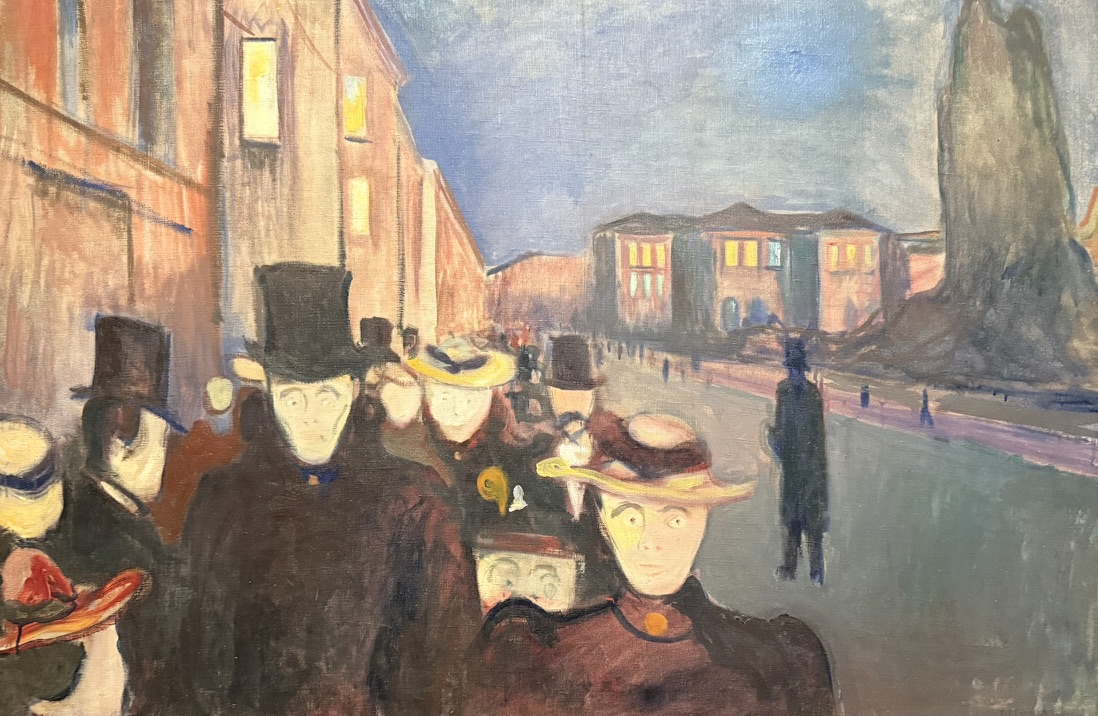
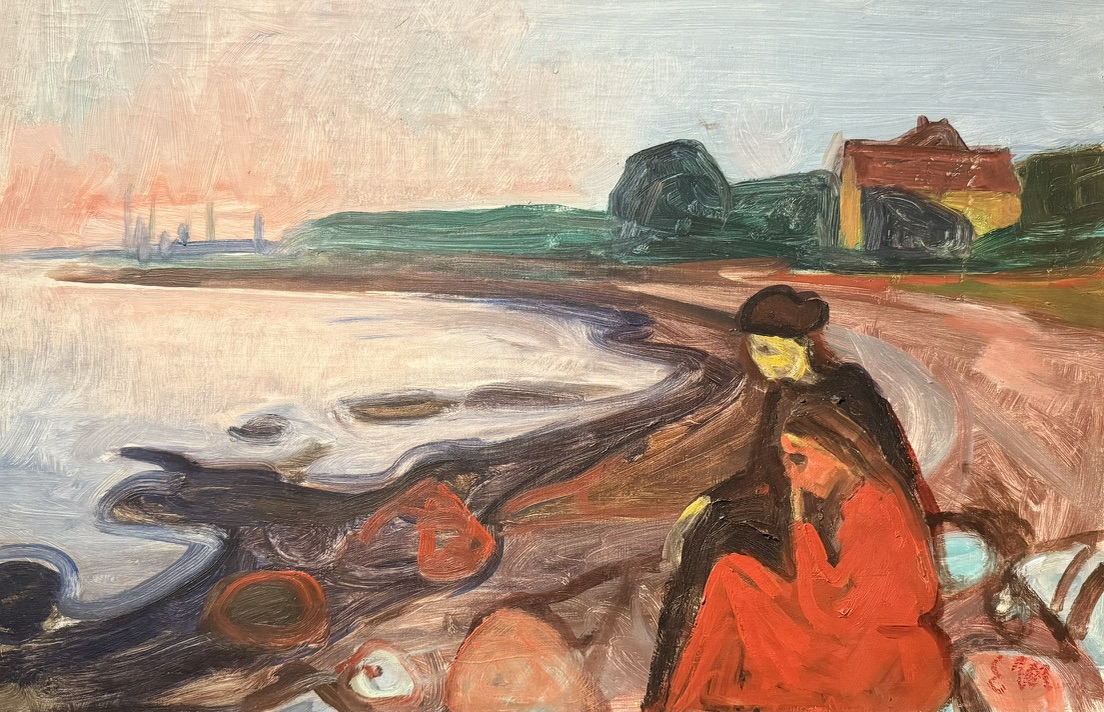
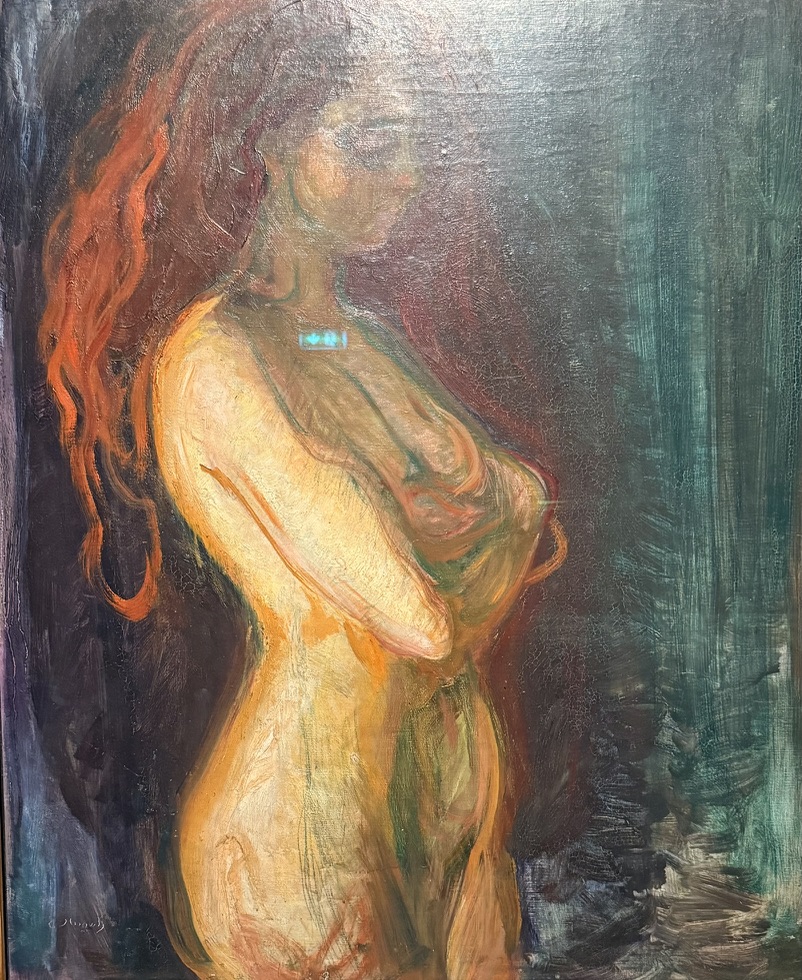
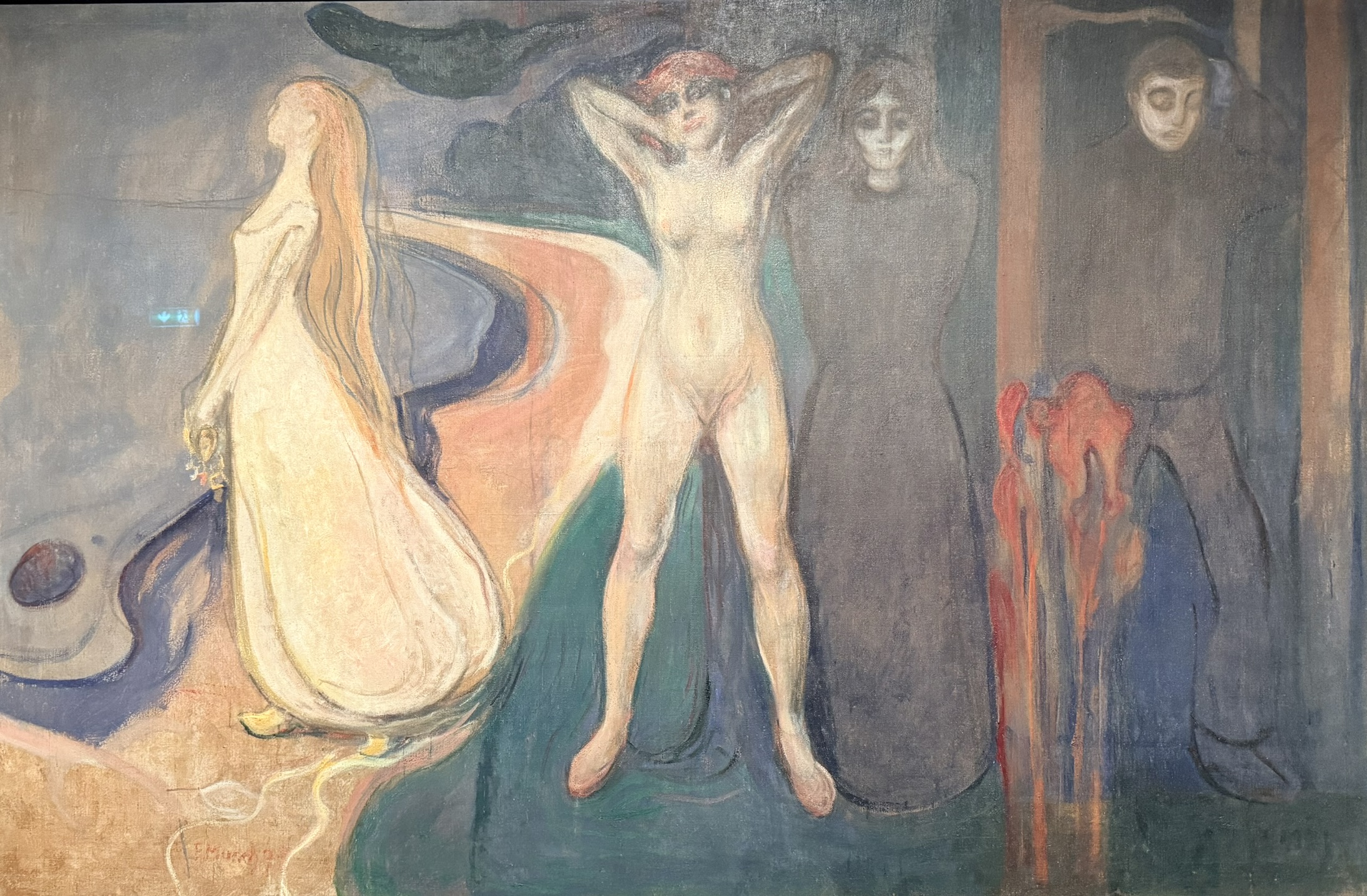
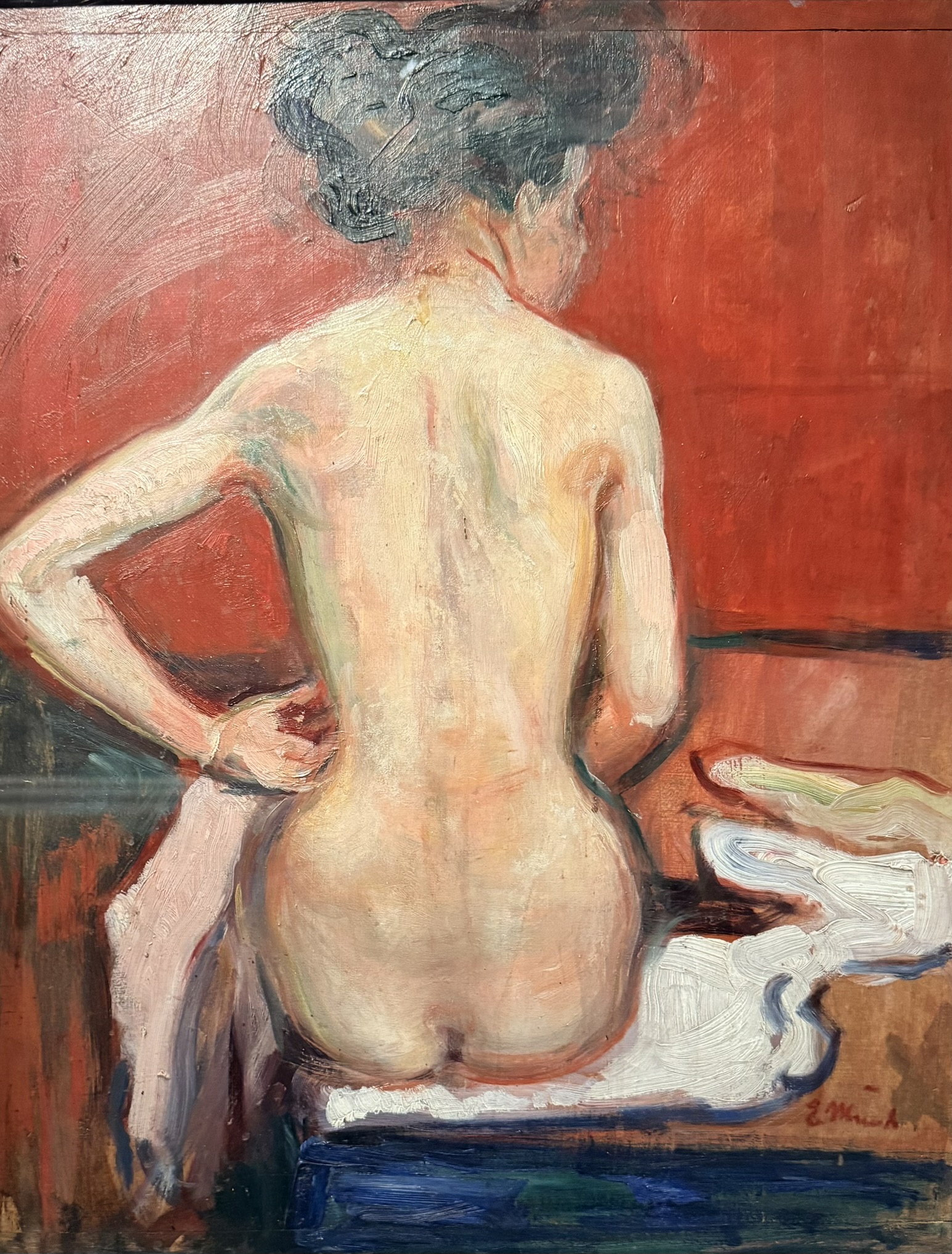
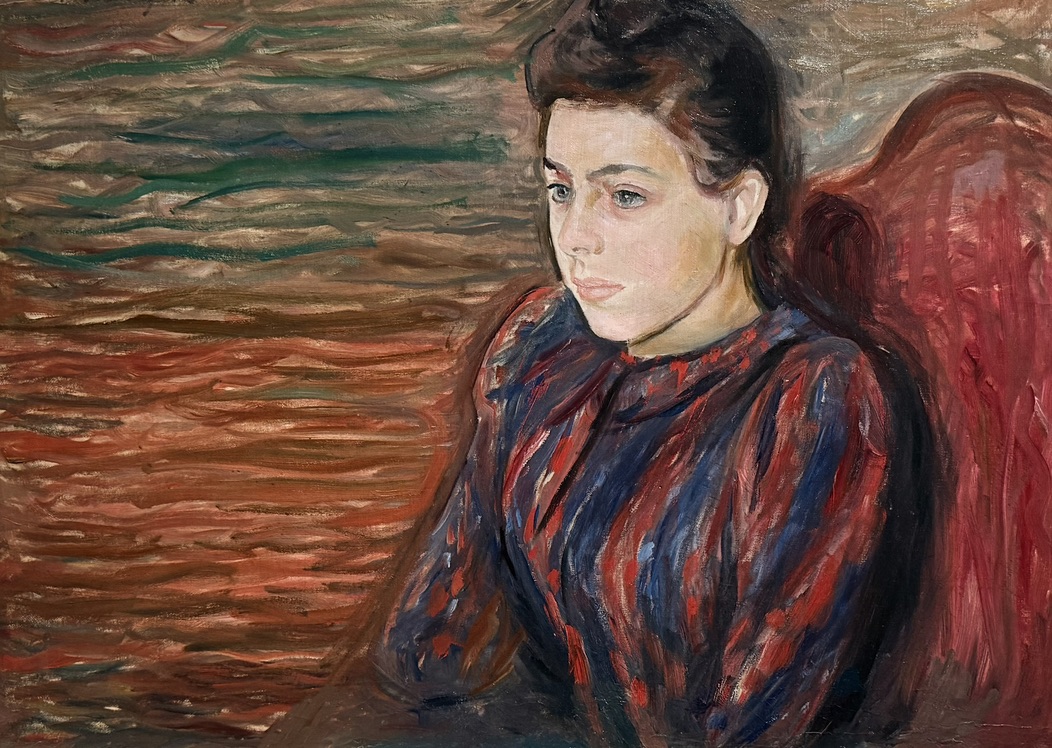
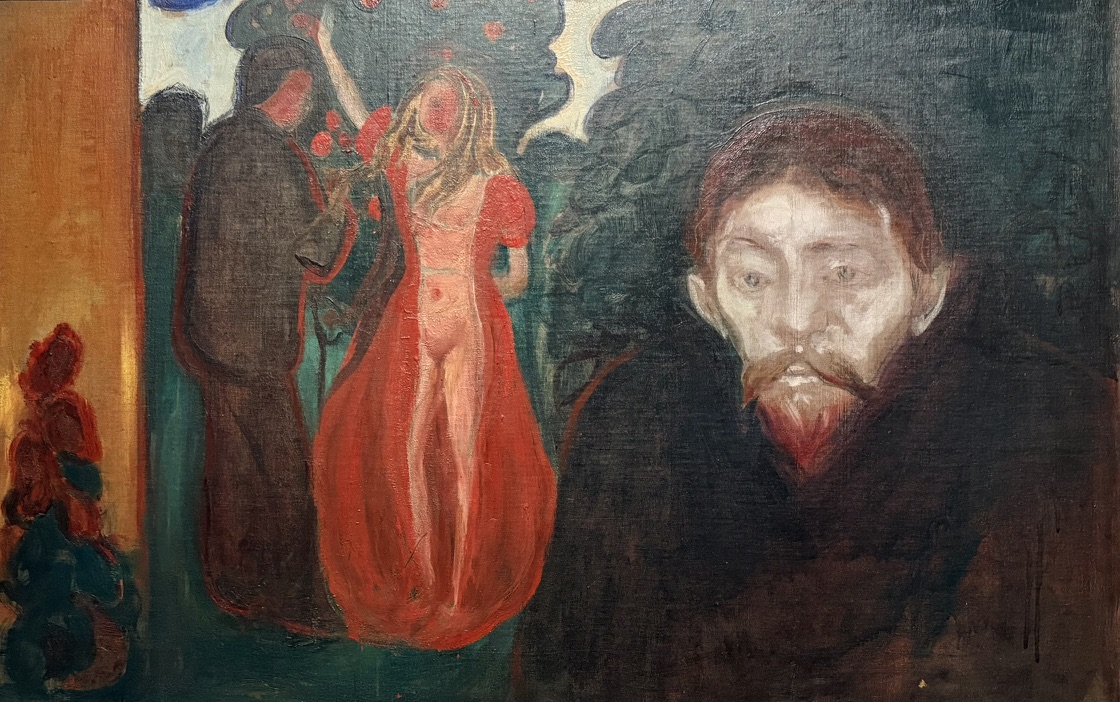
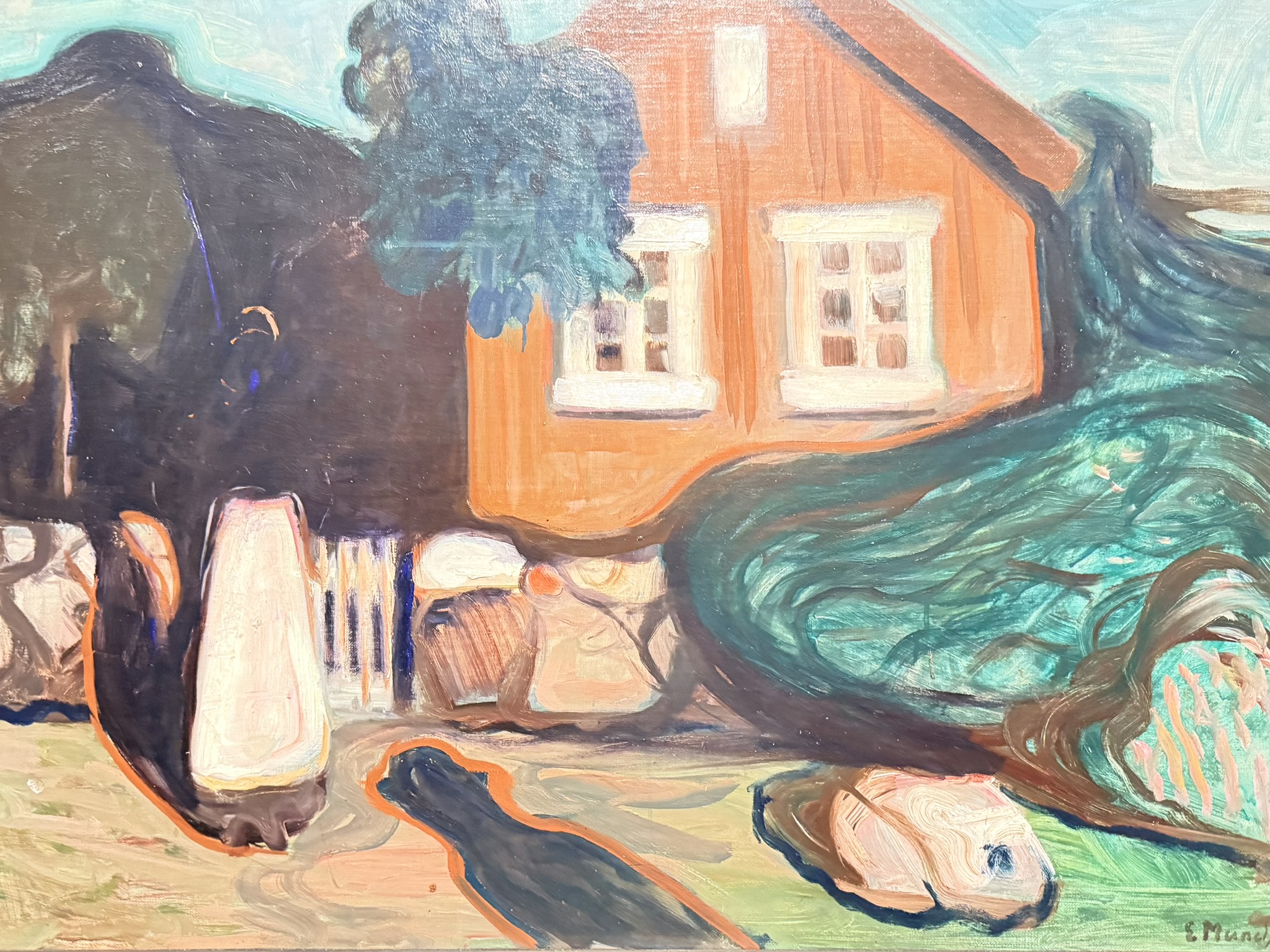
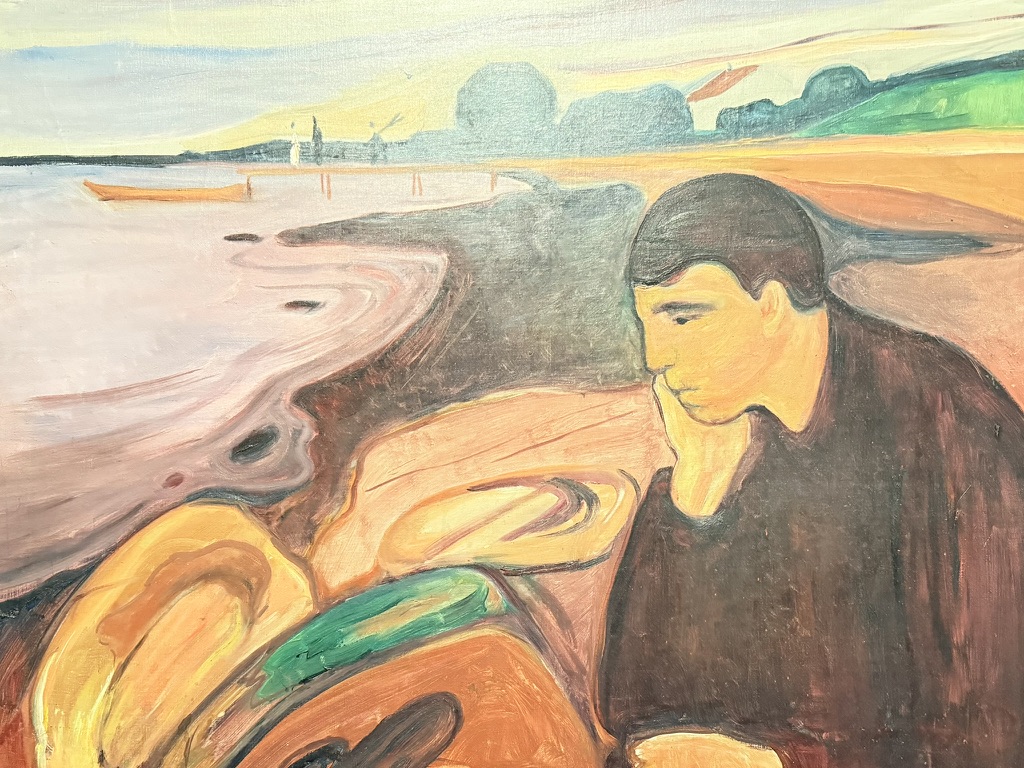
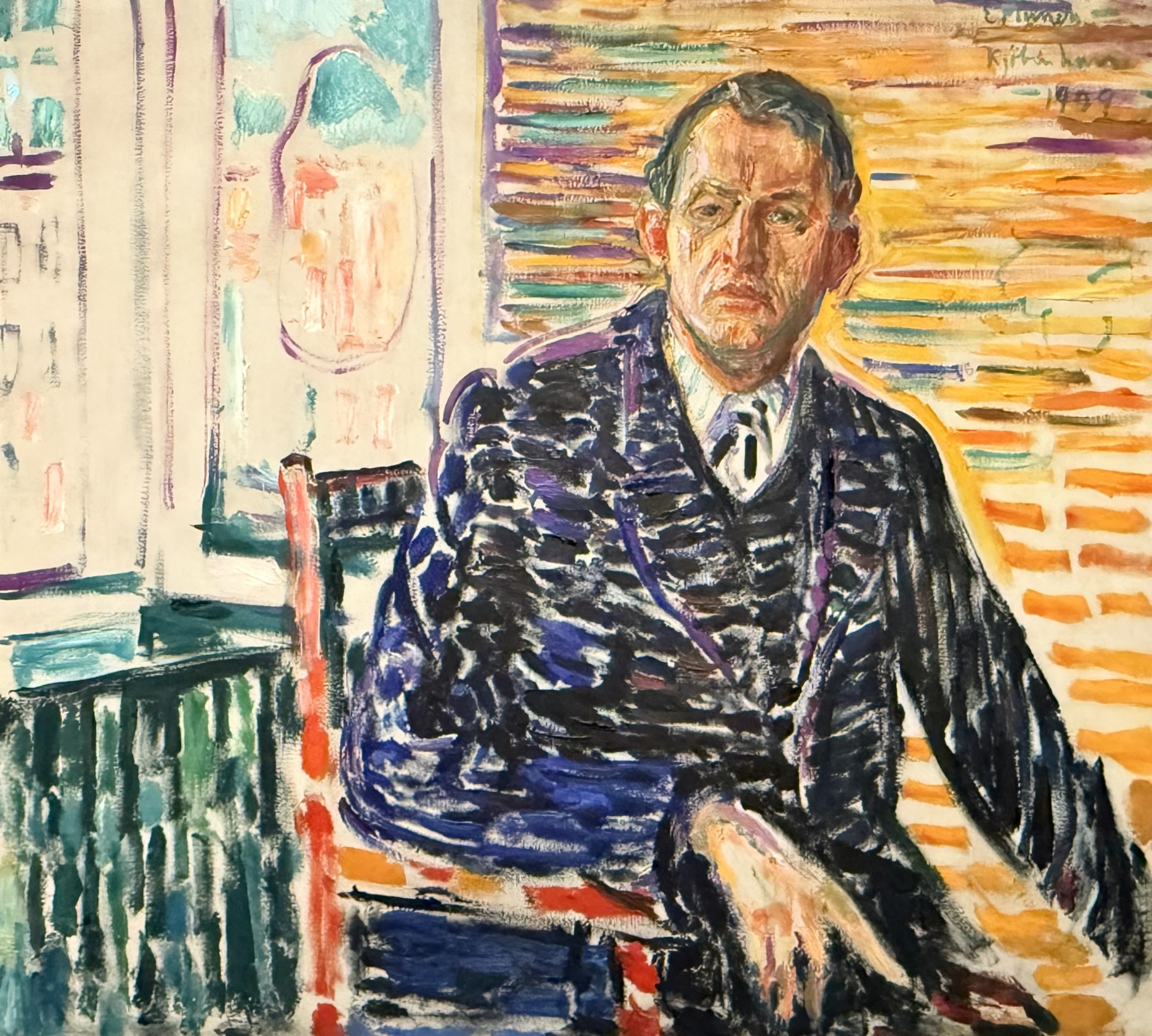
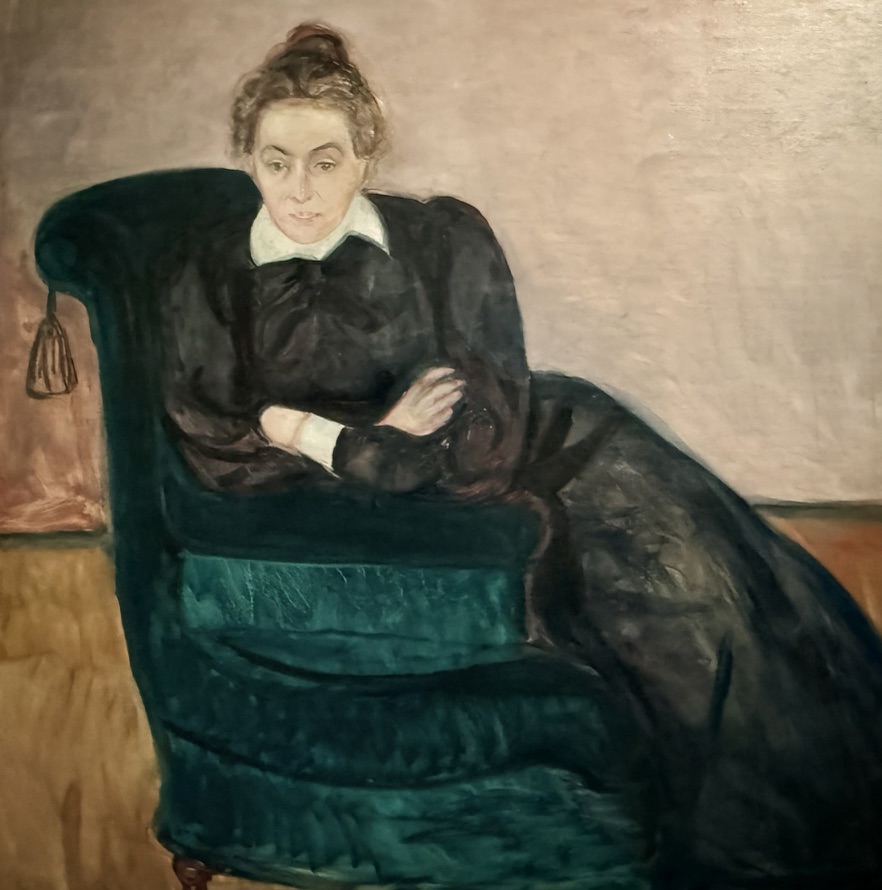
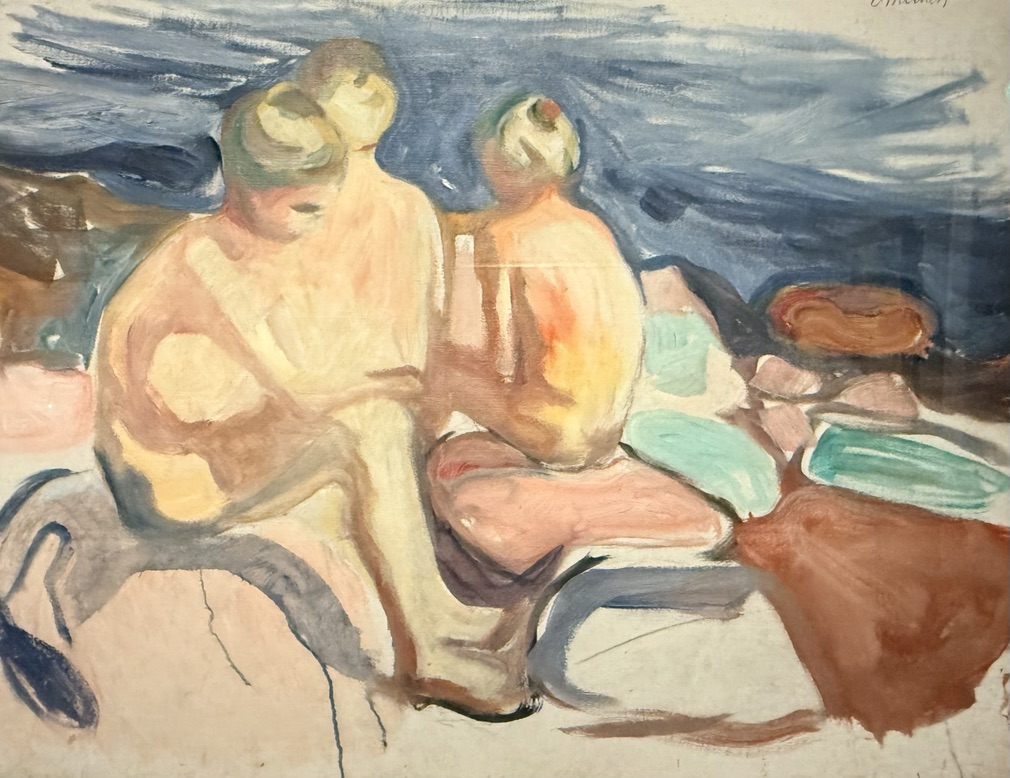
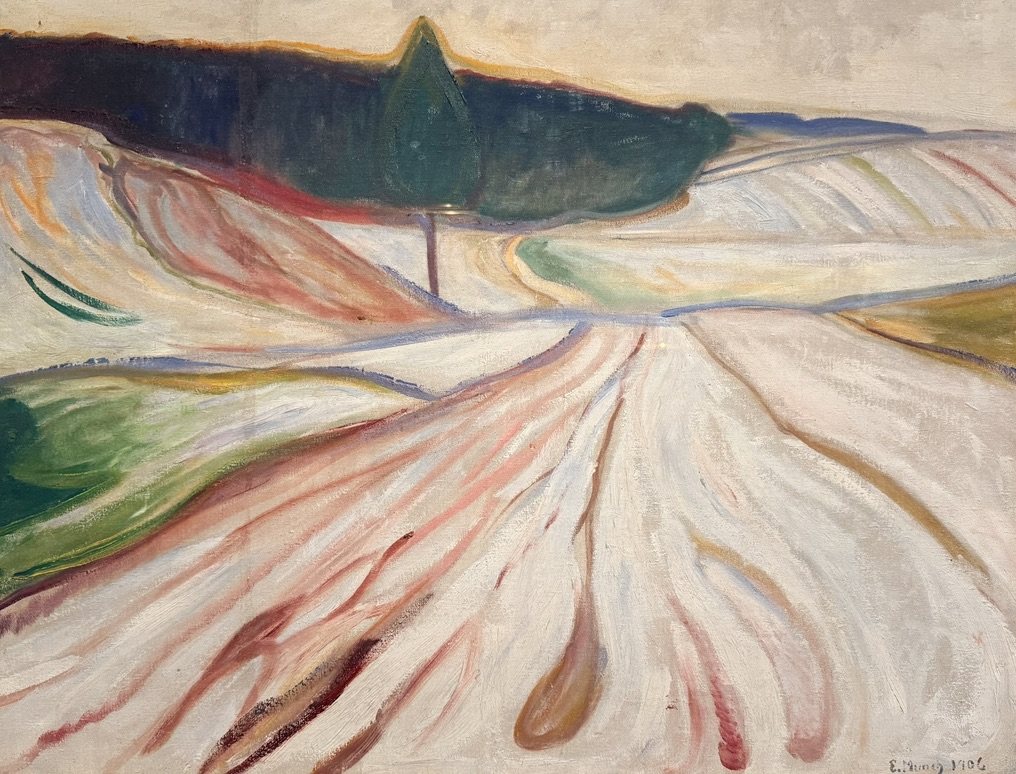
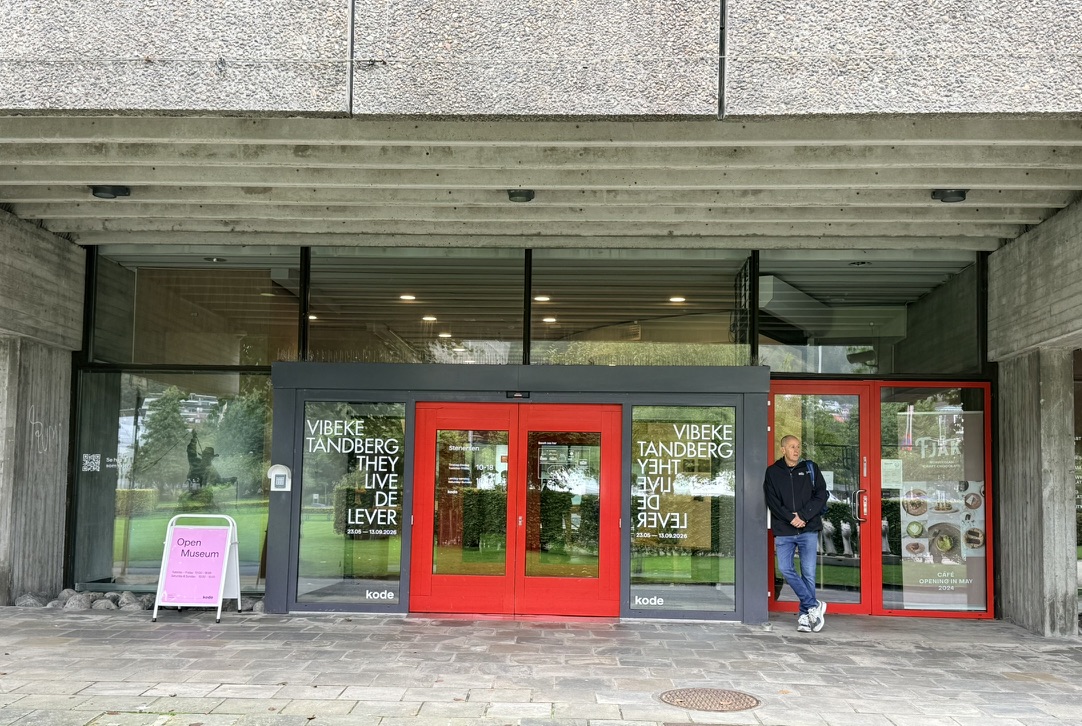
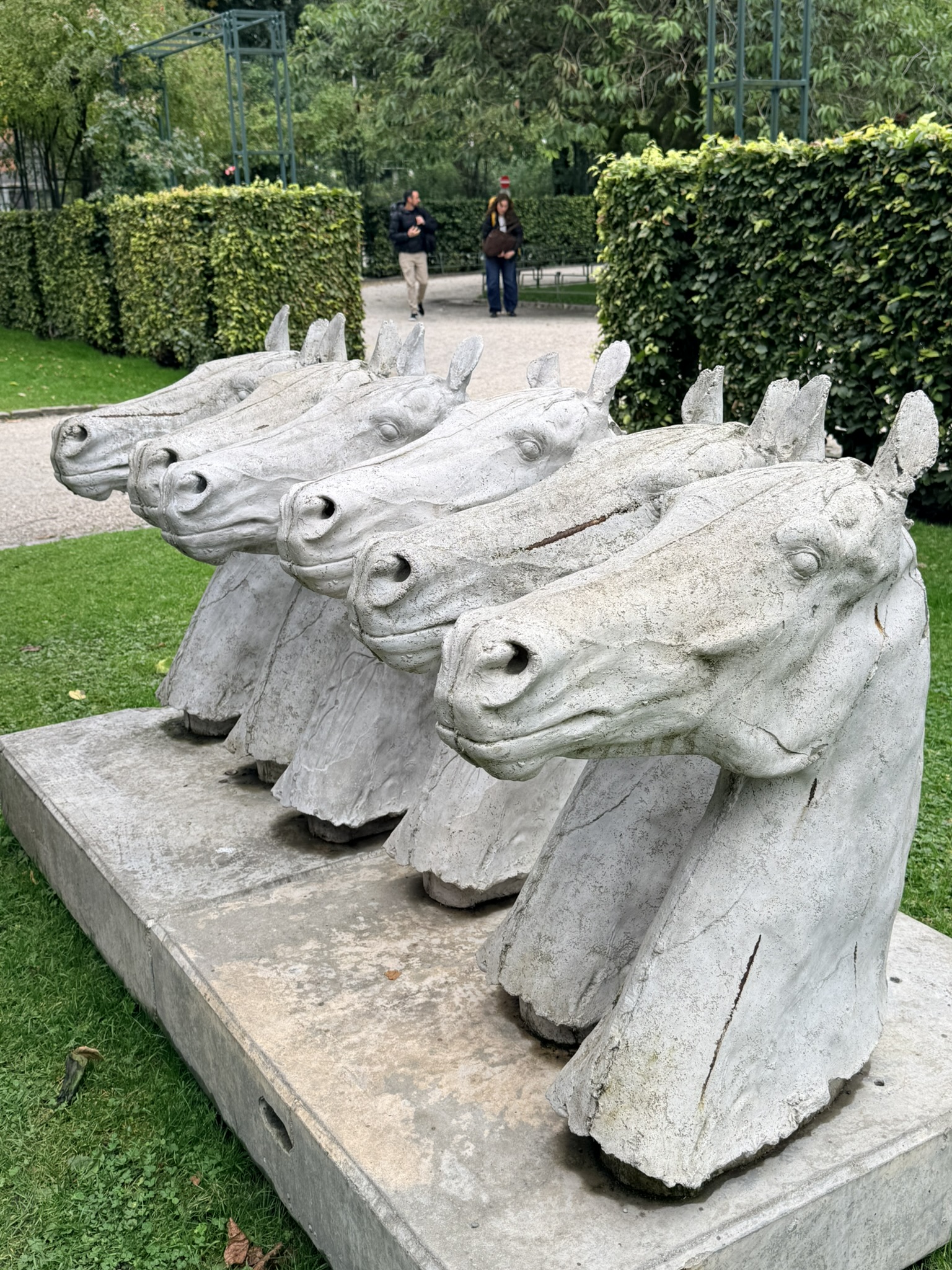
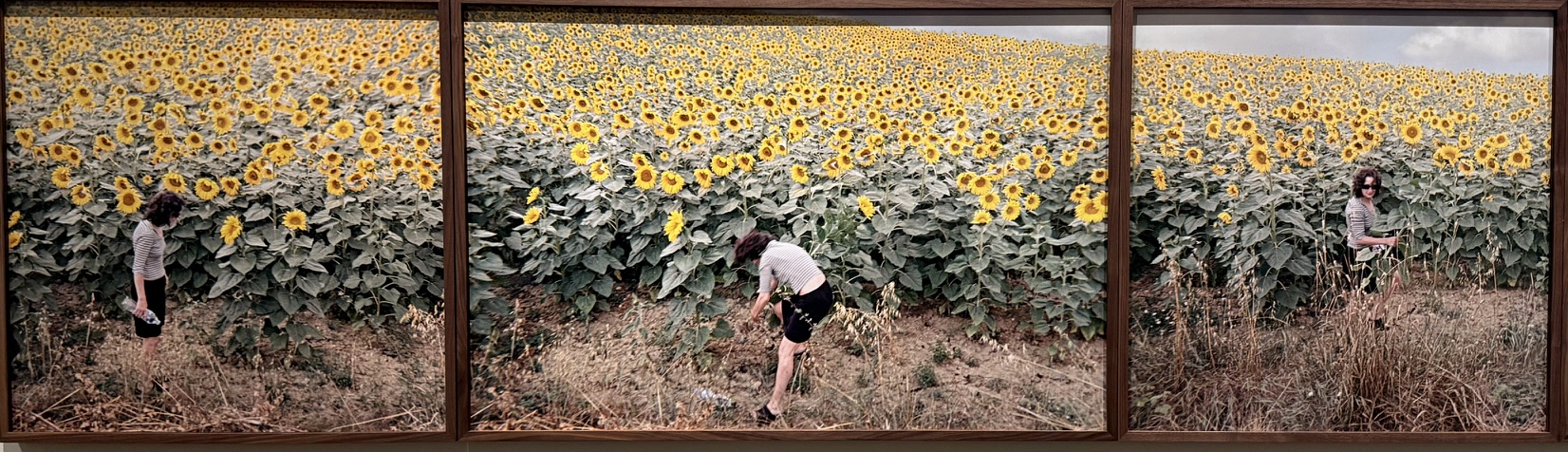
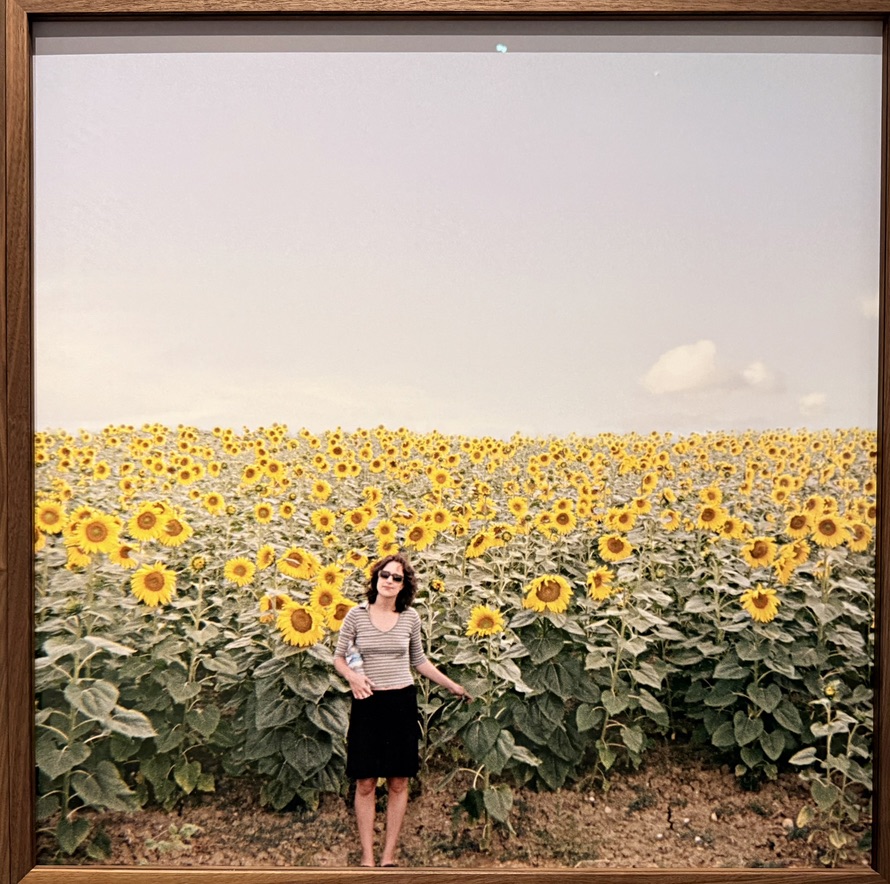
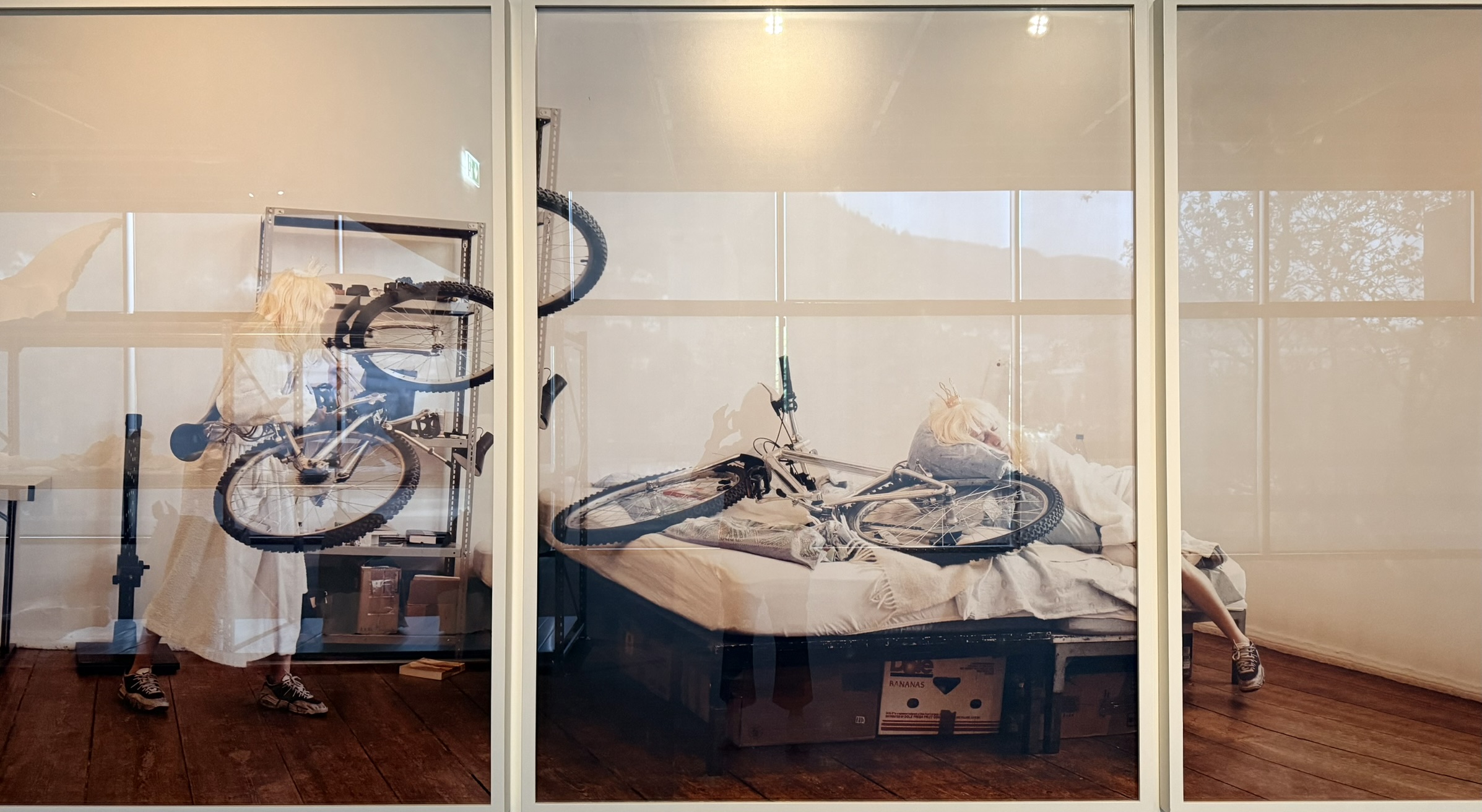
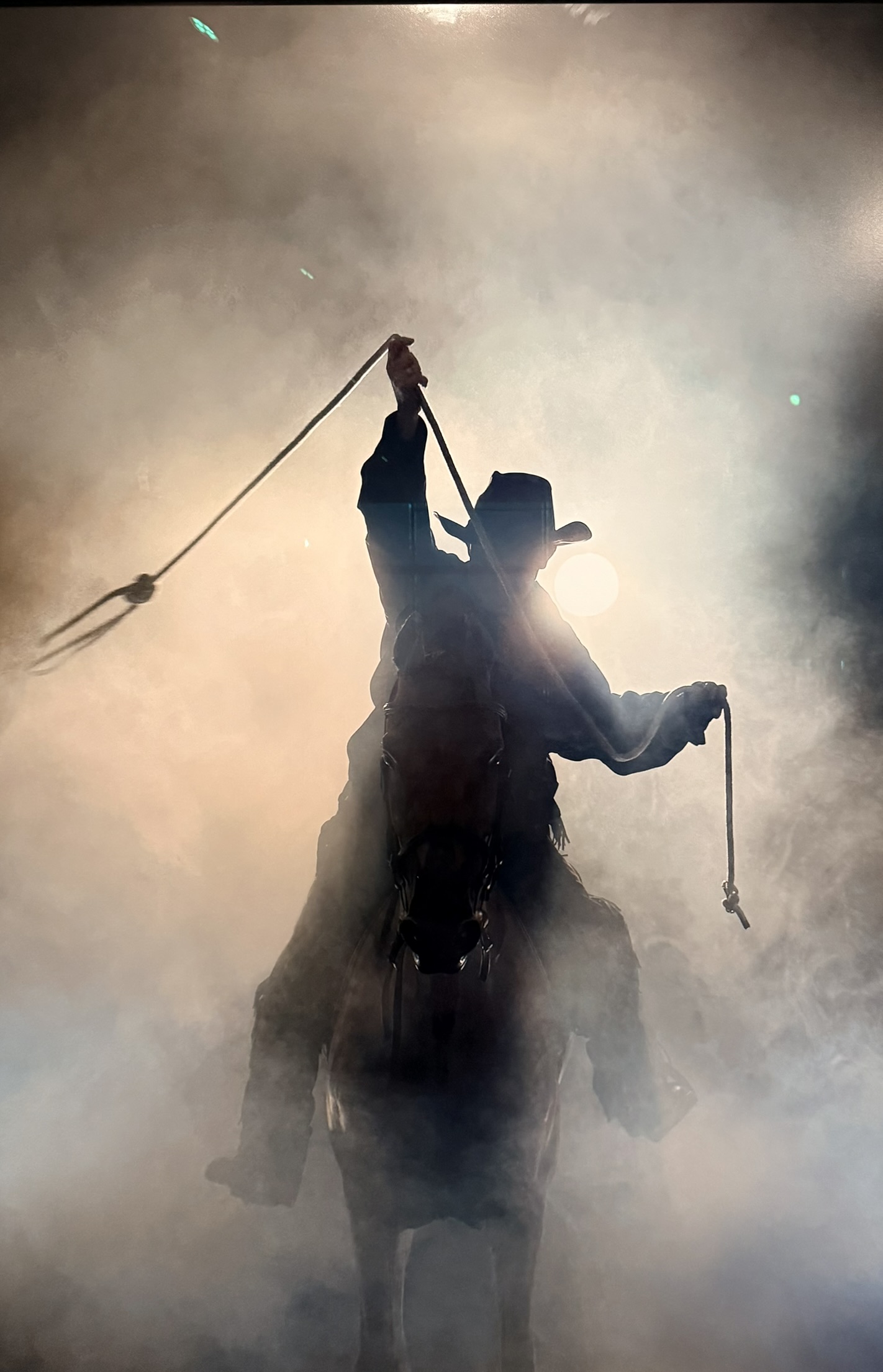
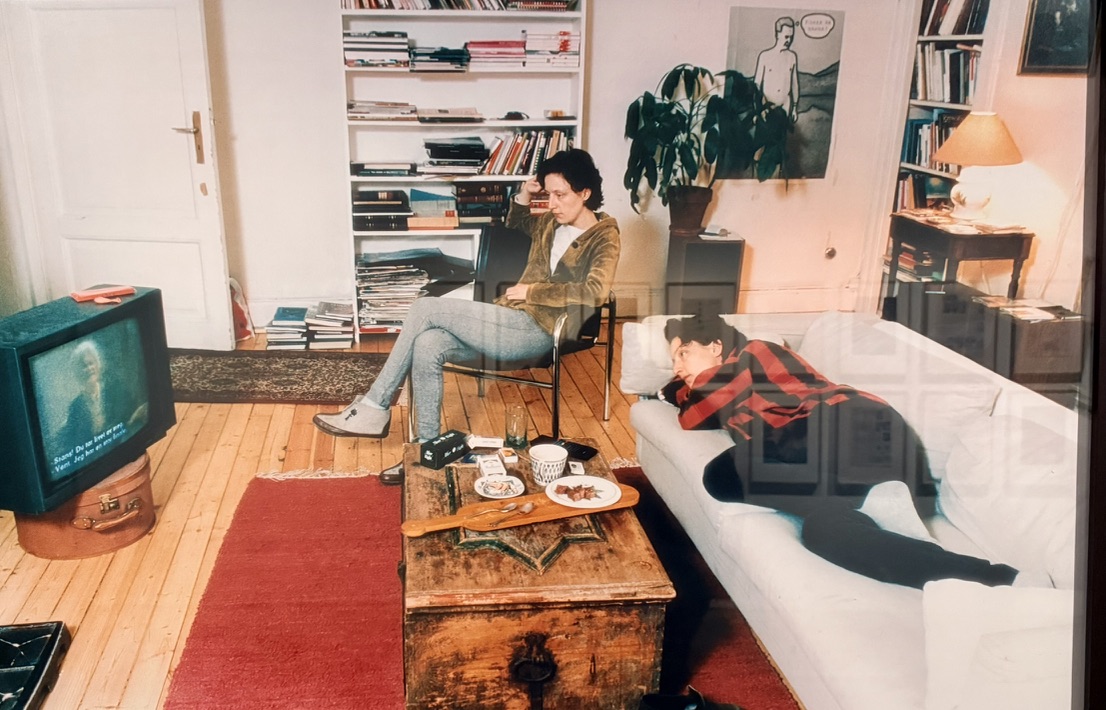
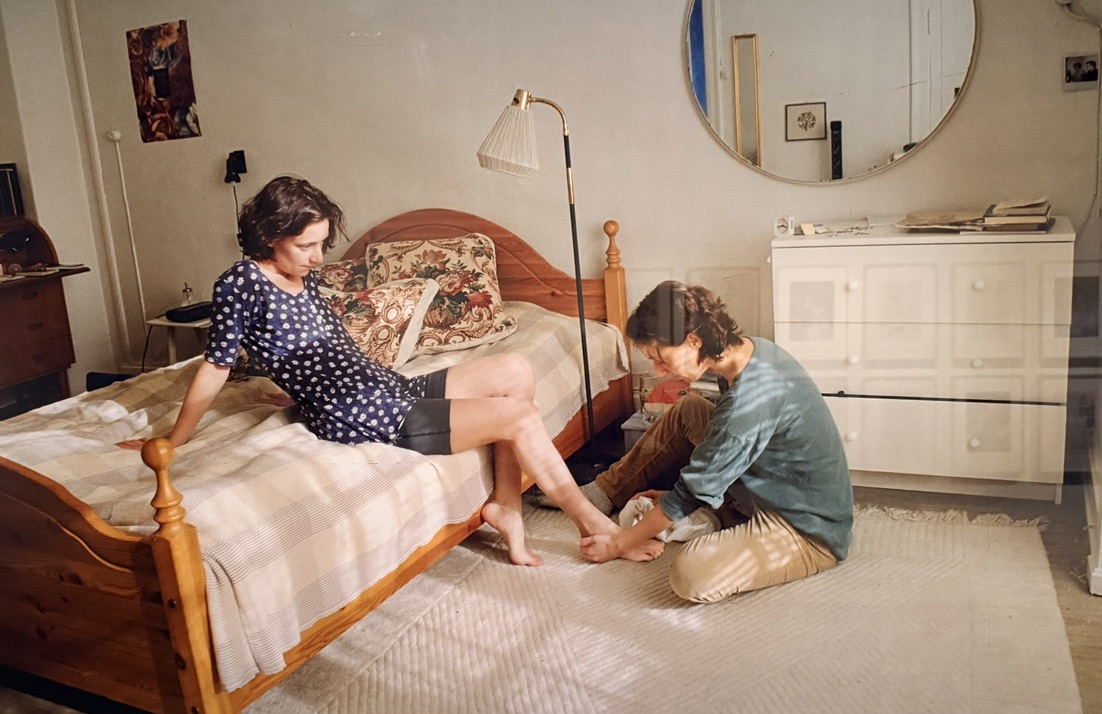
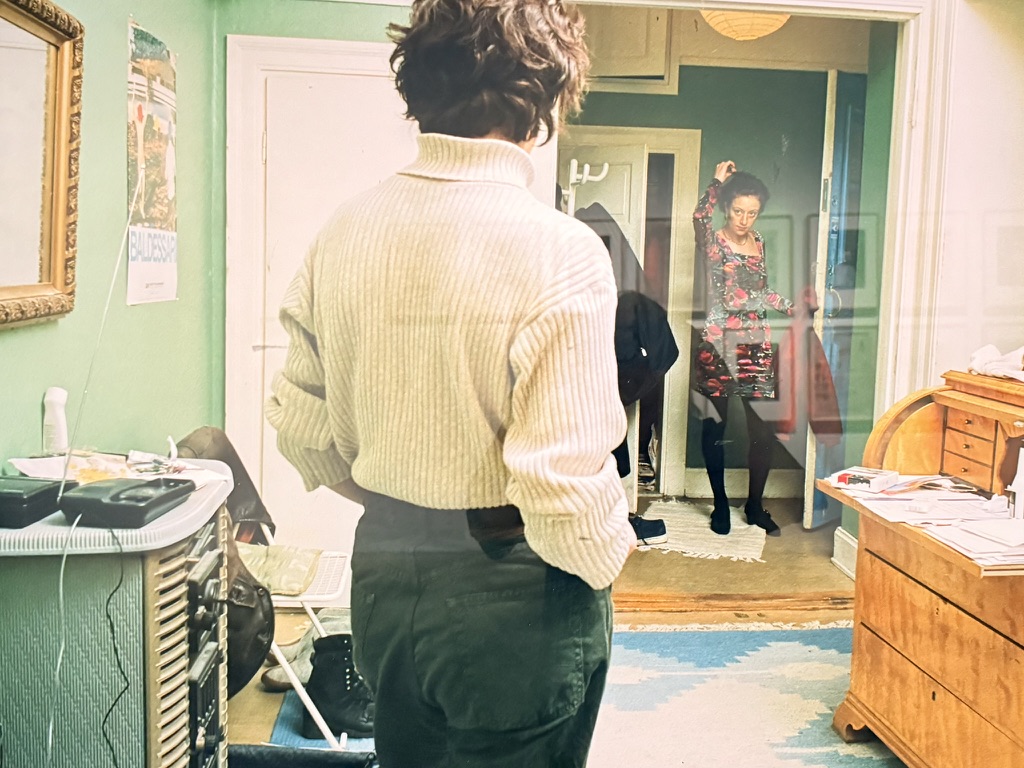
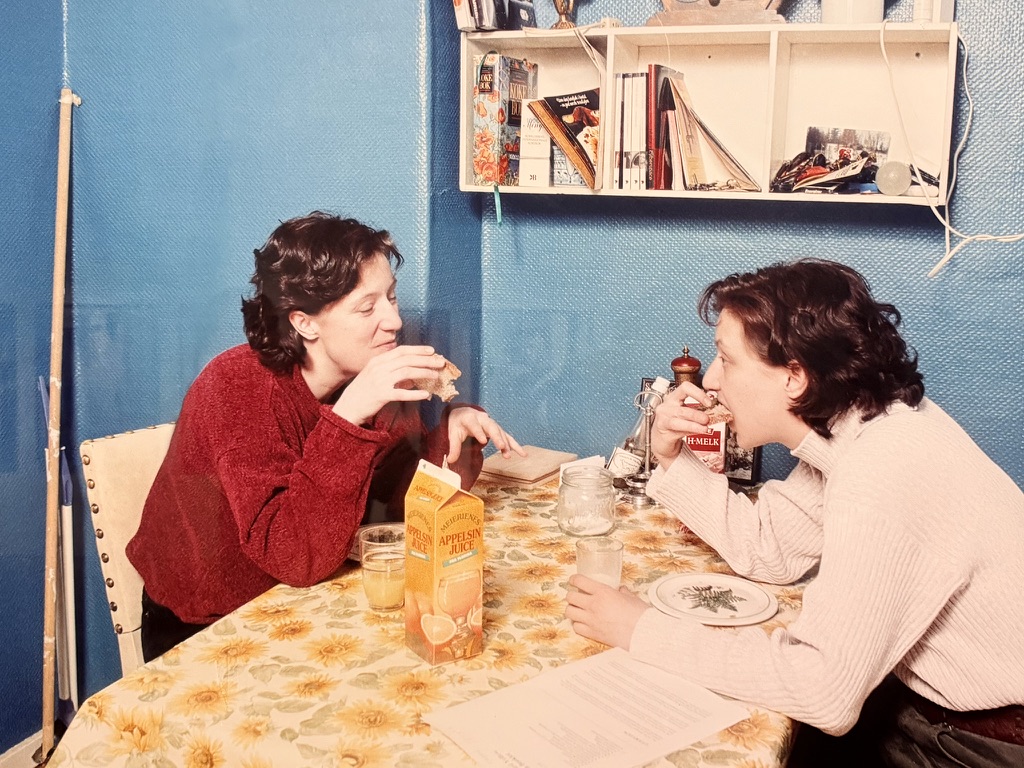
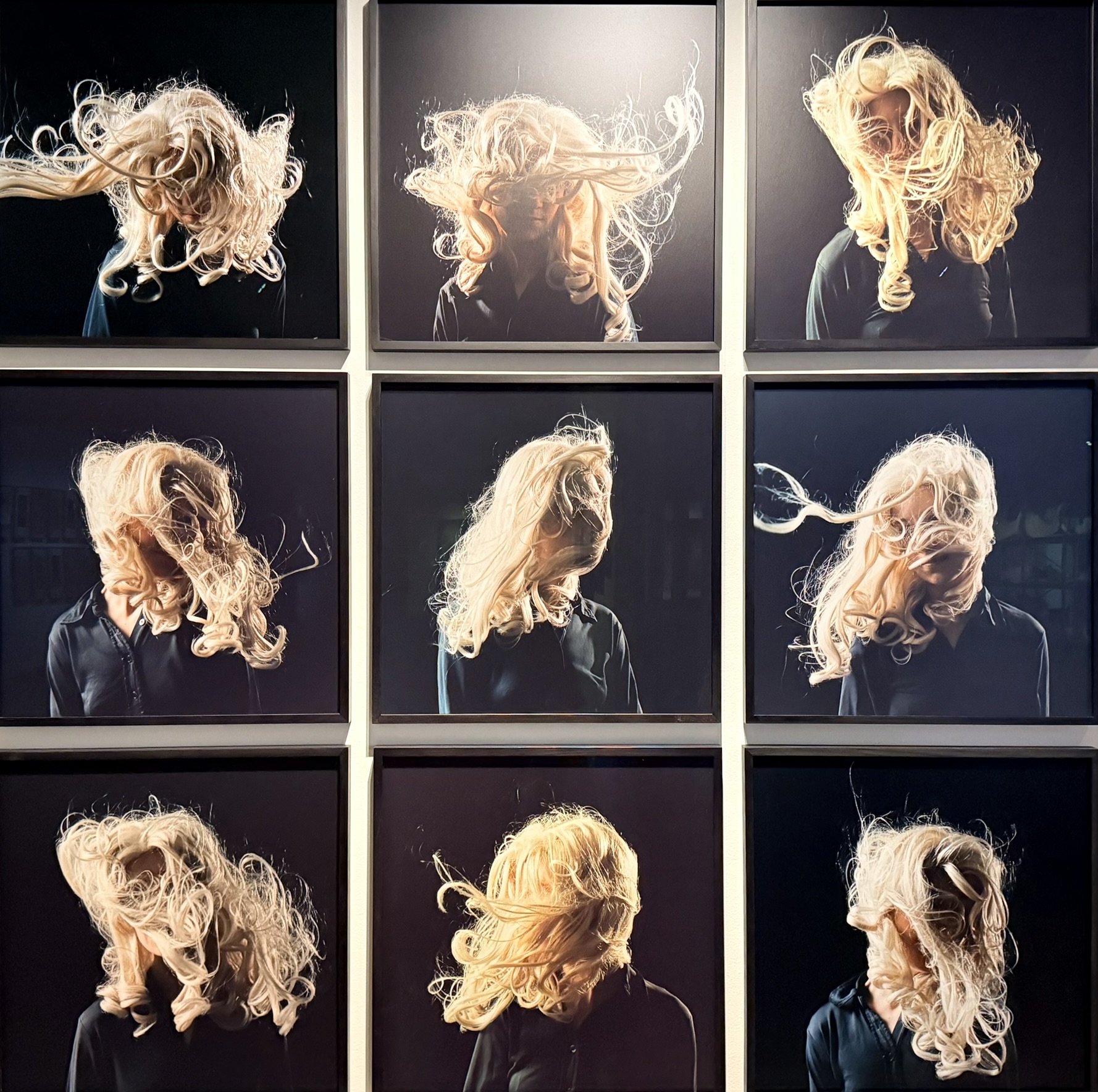
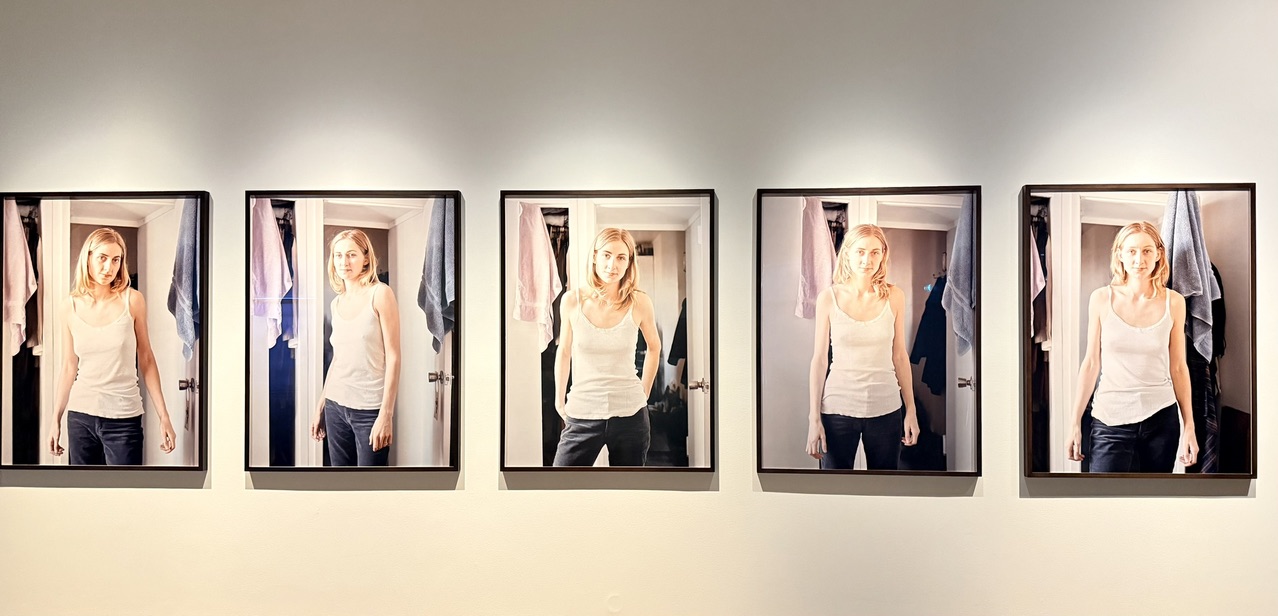
Stenersen, KODE hosts temporary exhibits of contemporary art, architecture, handicrafts and graphic arts. The day we visited, there was one exhibit called “They Live” where artist Vibeke Tandberg explored the meaning of the question: “How do we come into being through our meeting with the world and the images in it?” She dramatized how gazes and cultural expectations shape the relation to our selves and one another.
I personally didn’t connect with this exhibit, although there were some interesting images in it.
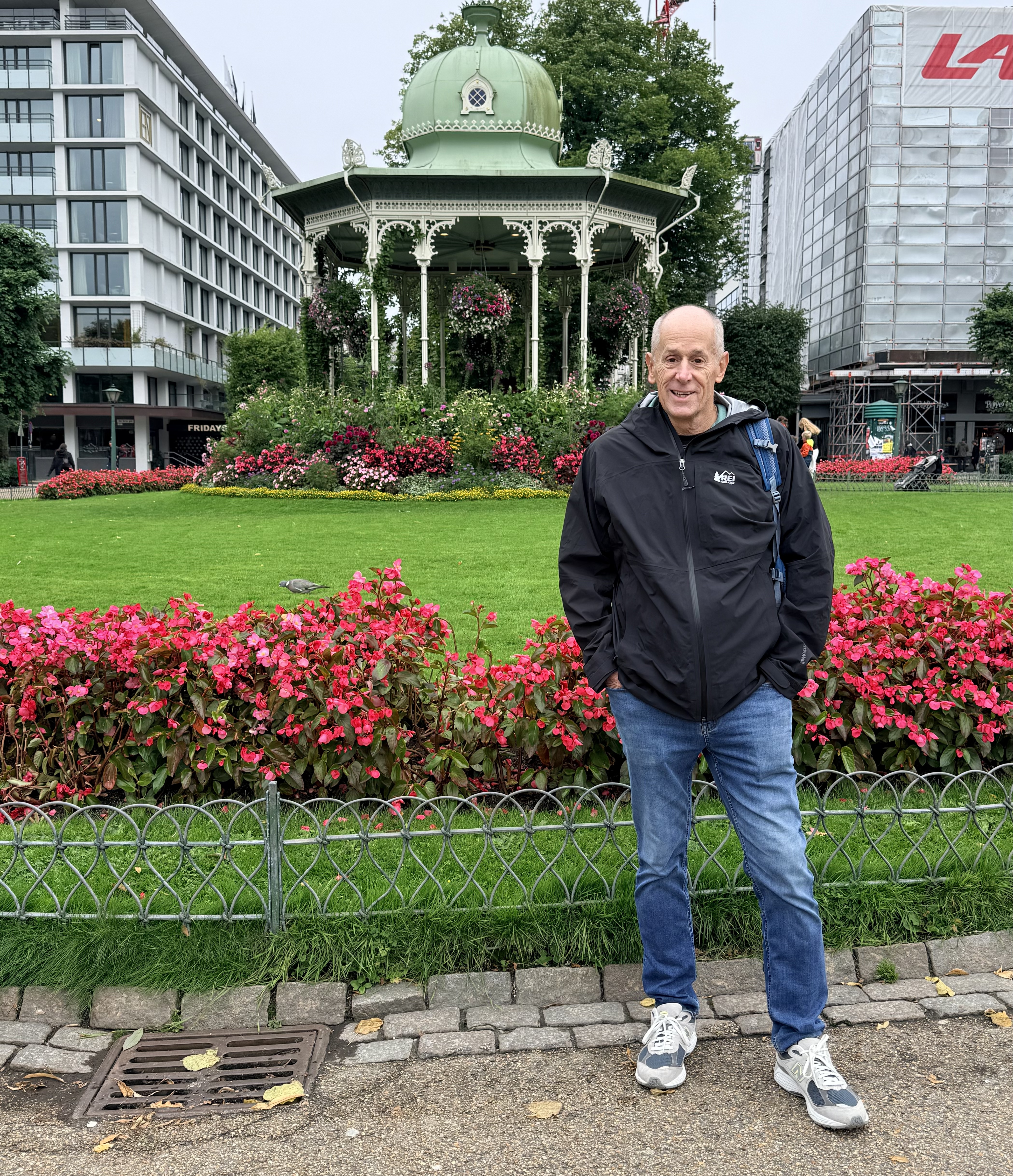
Mt. Floyen hike
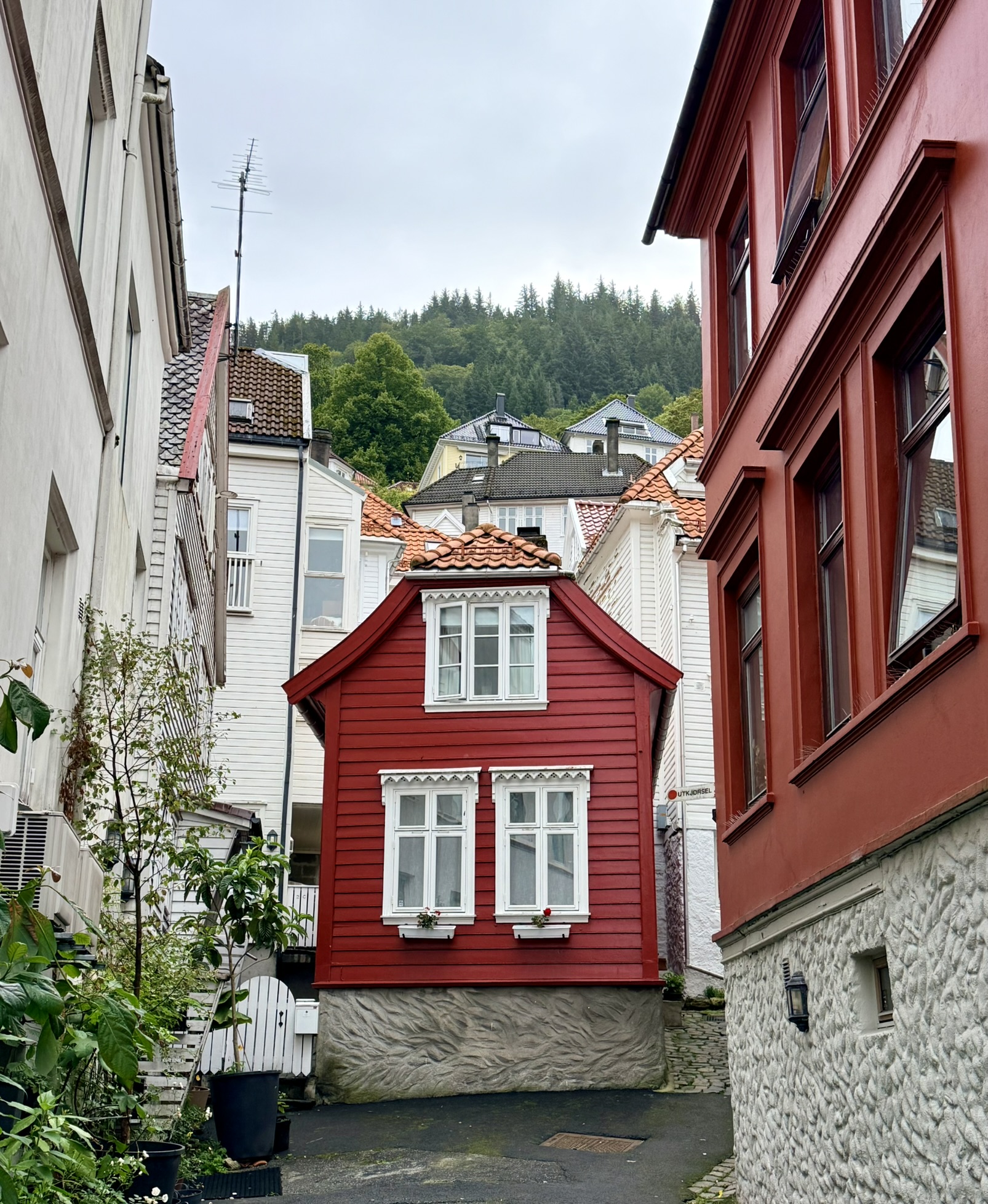
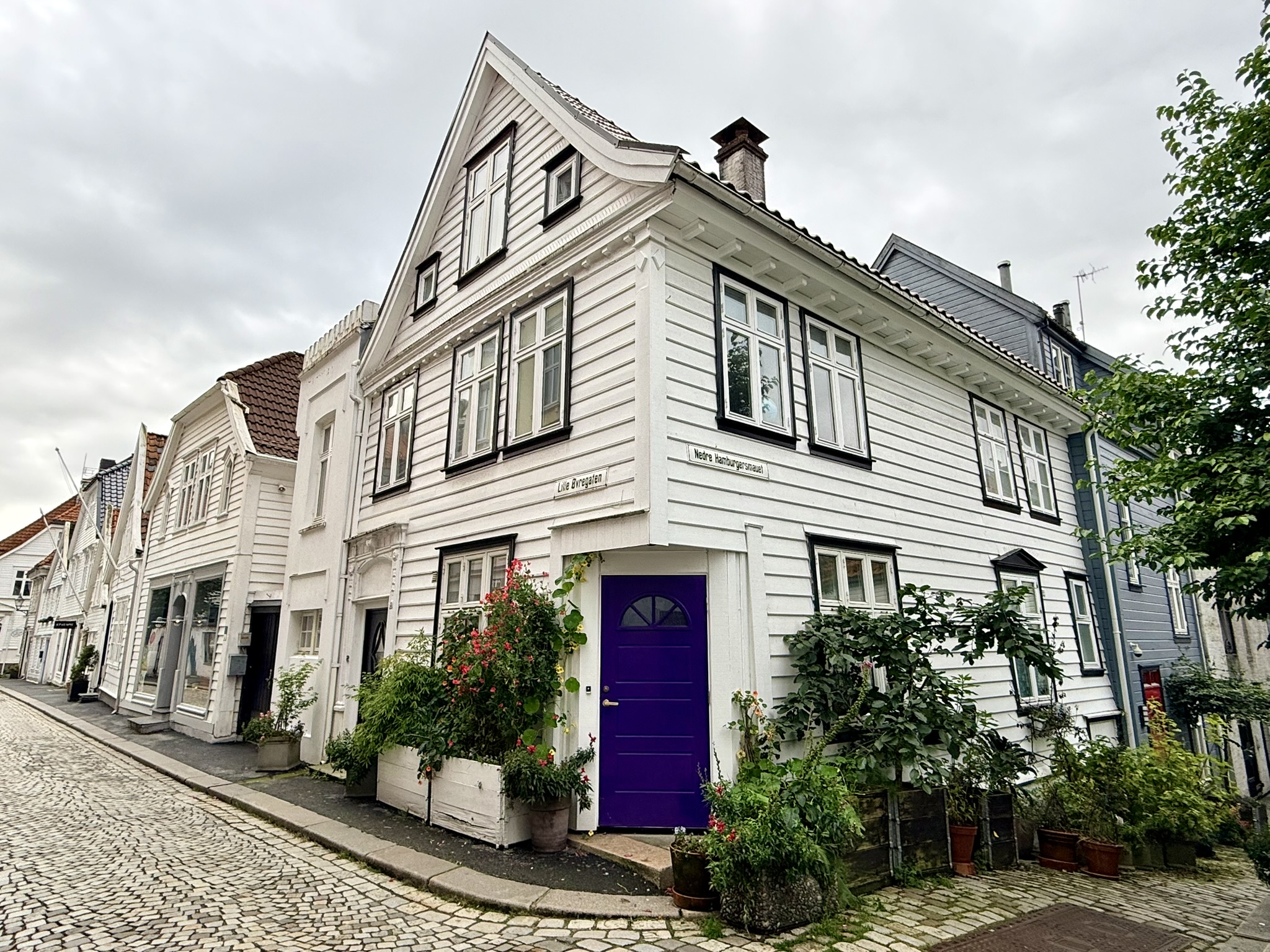
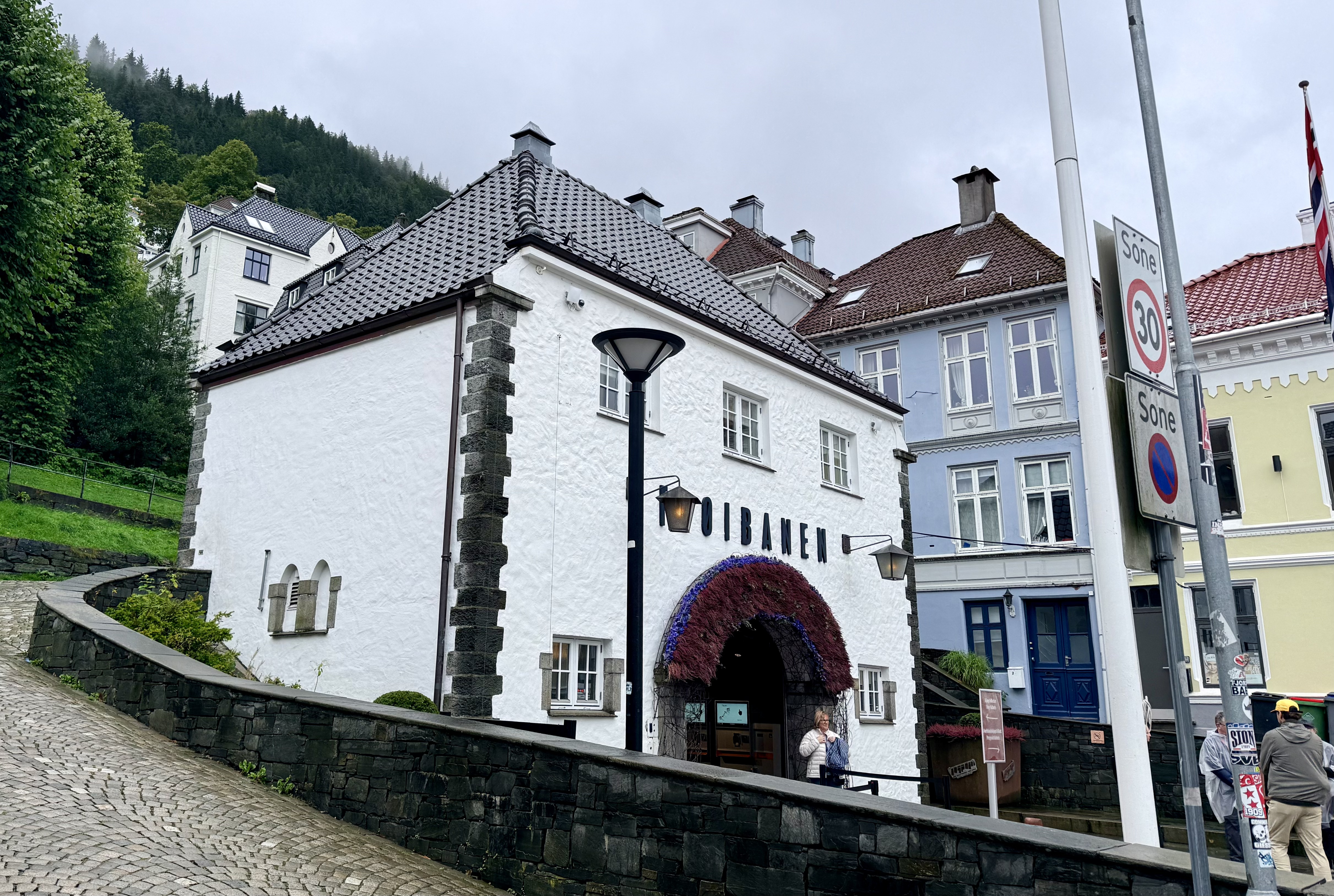
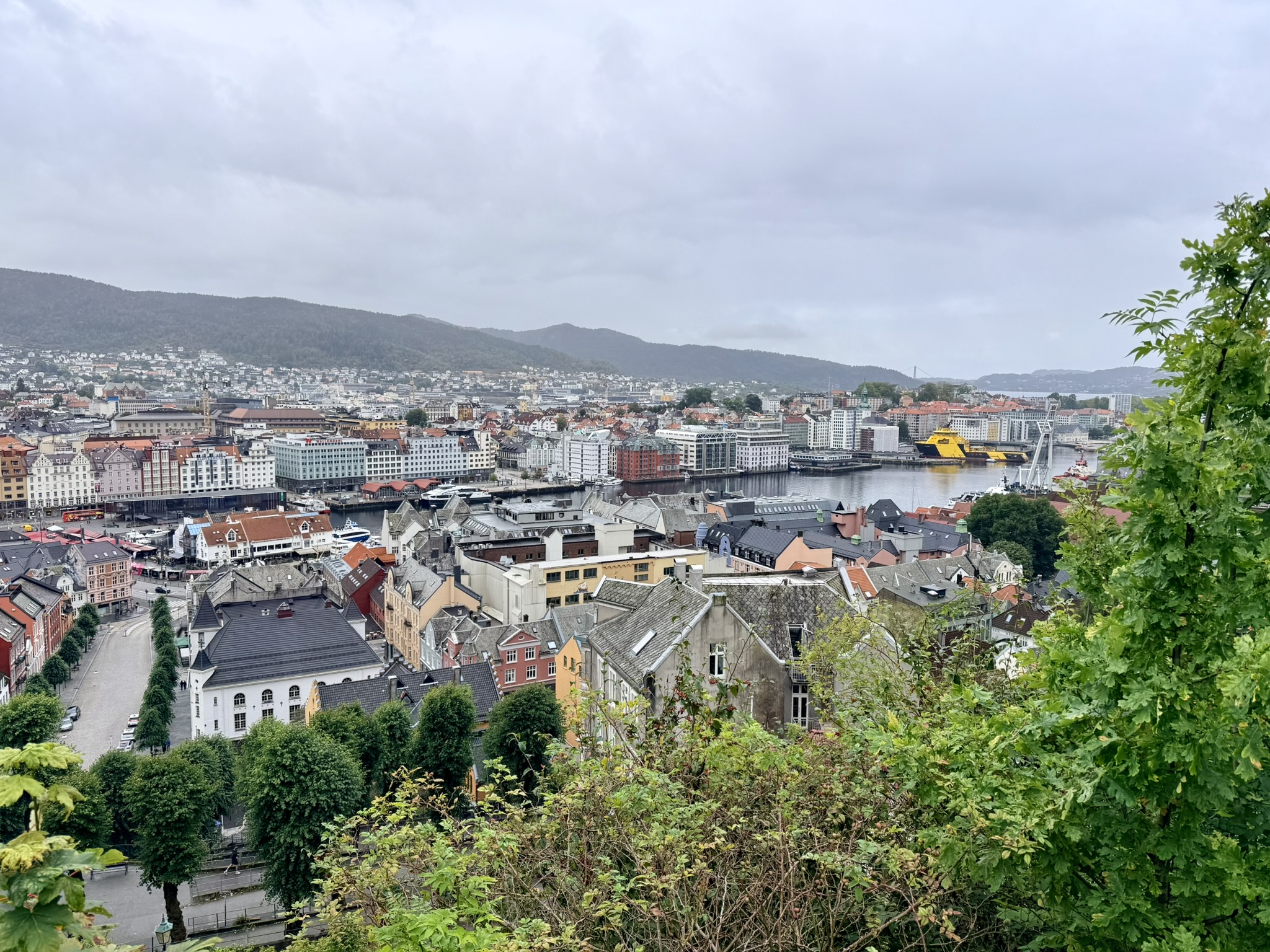
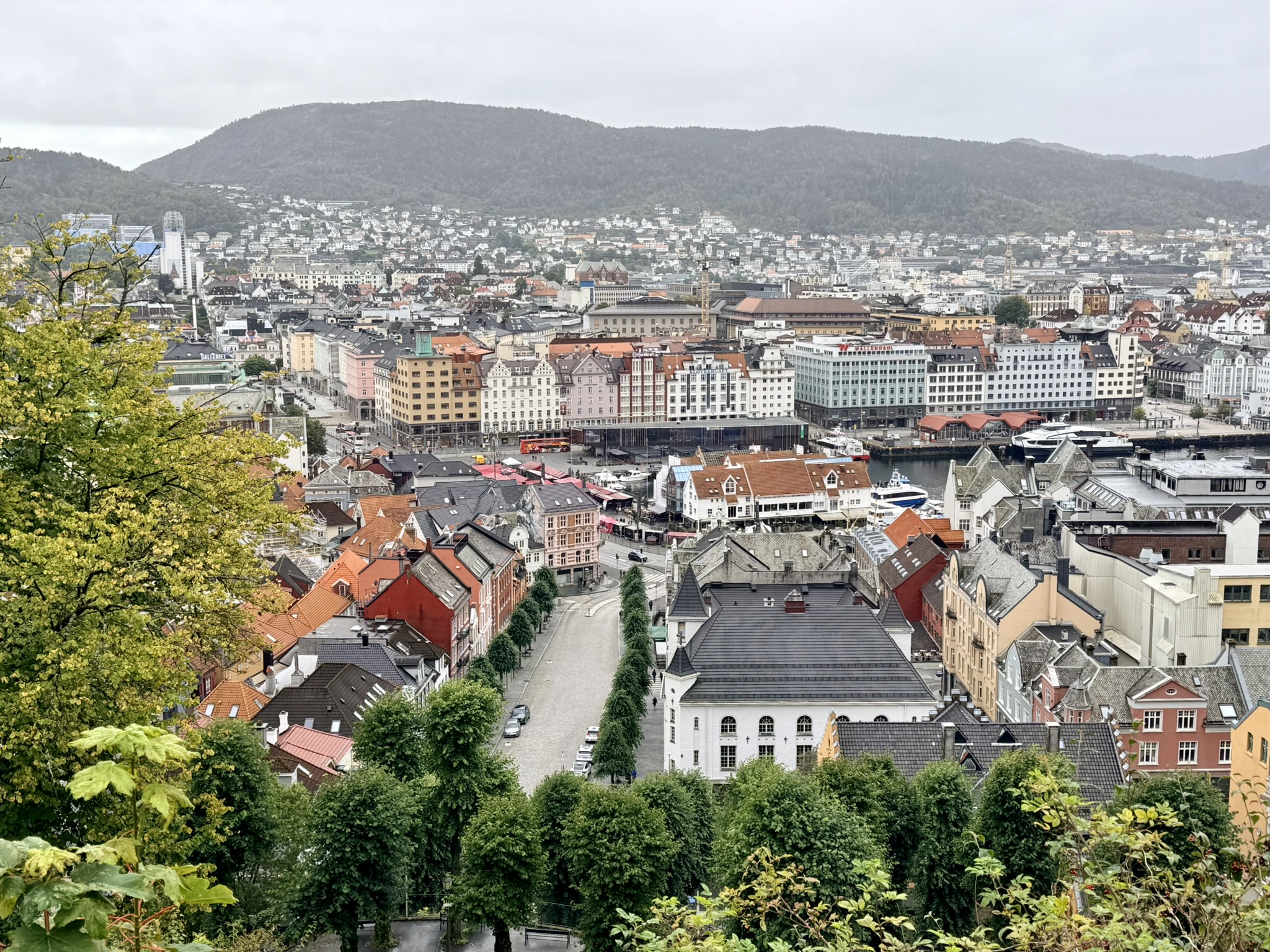
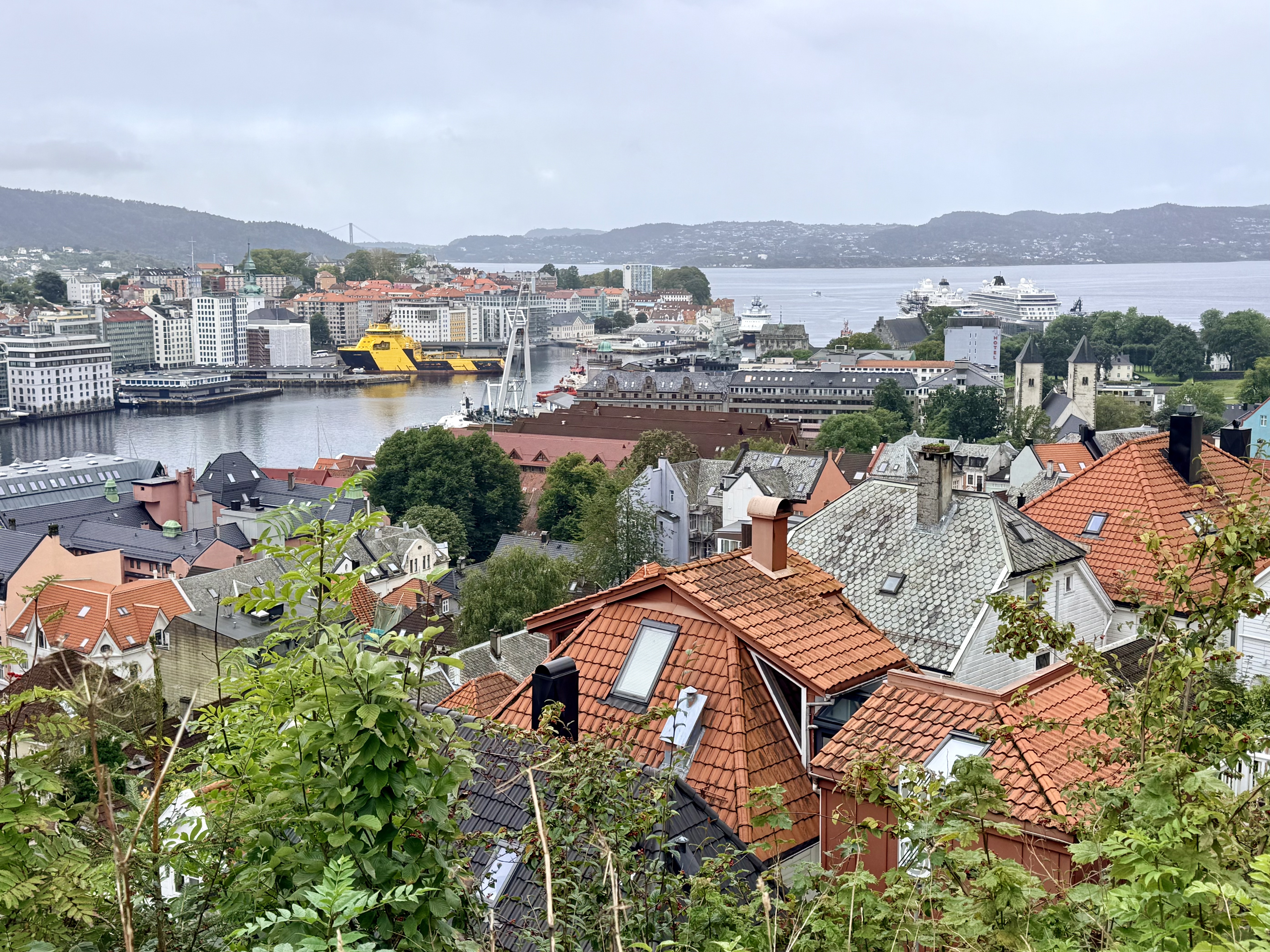
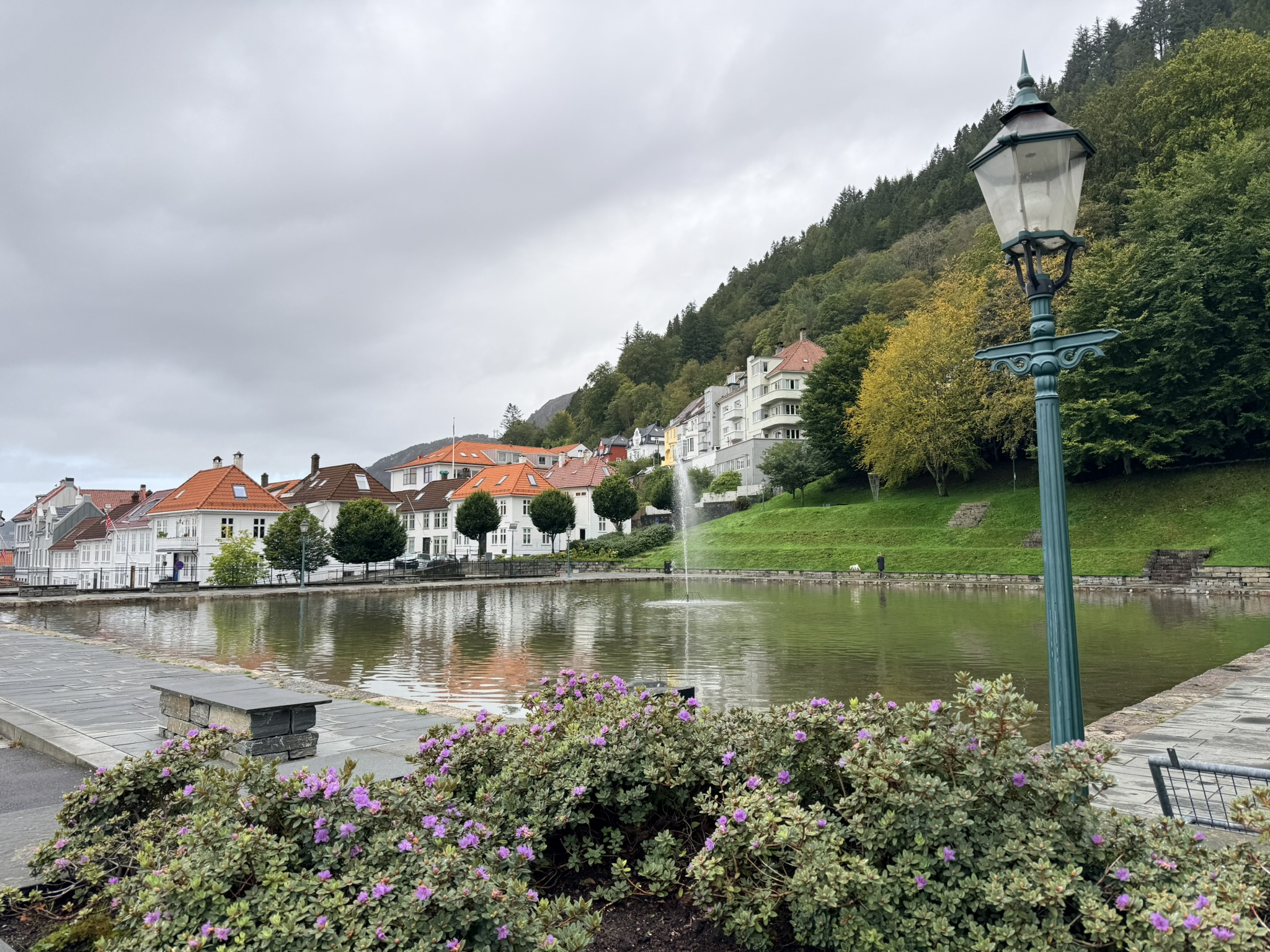
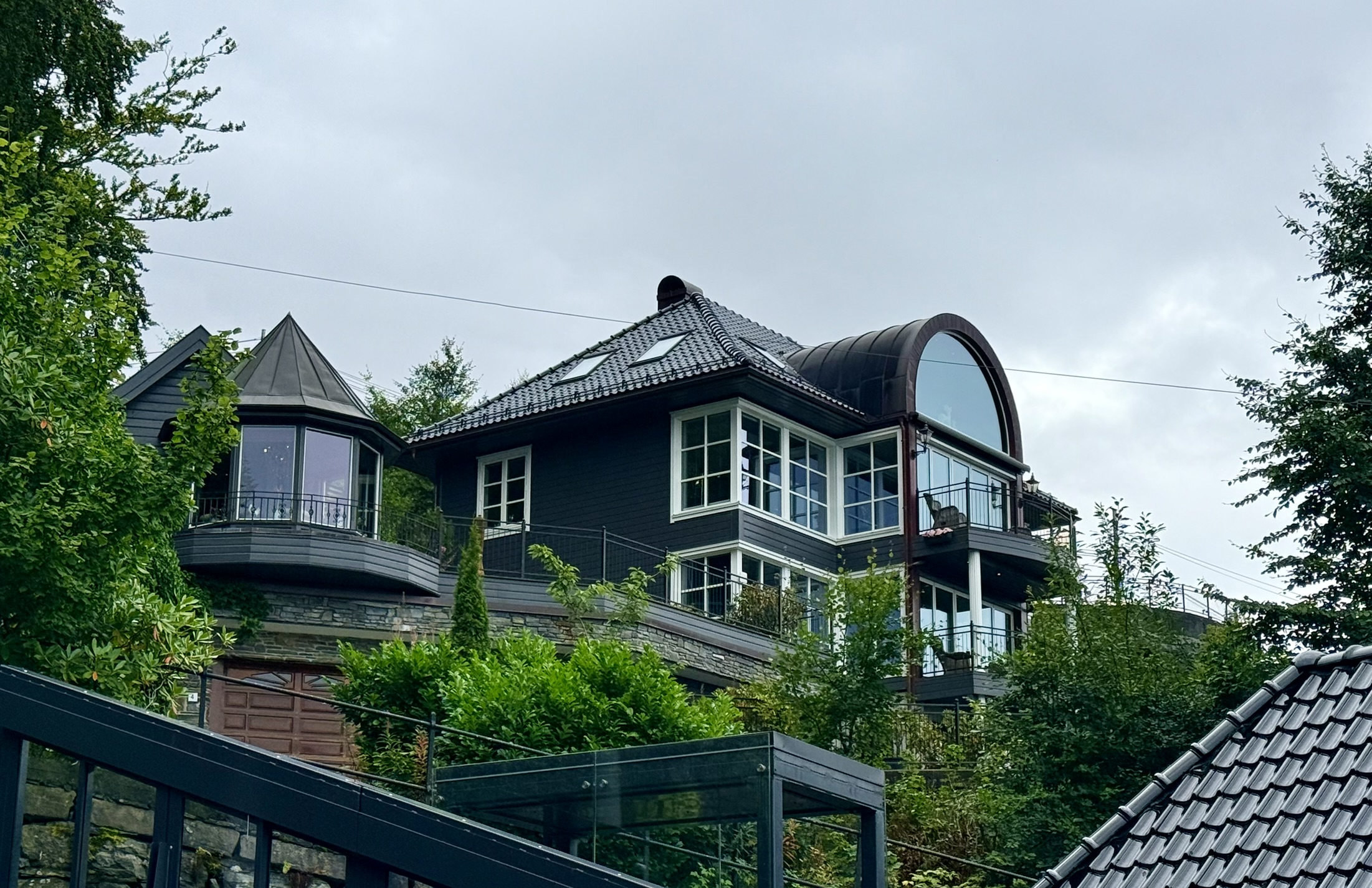
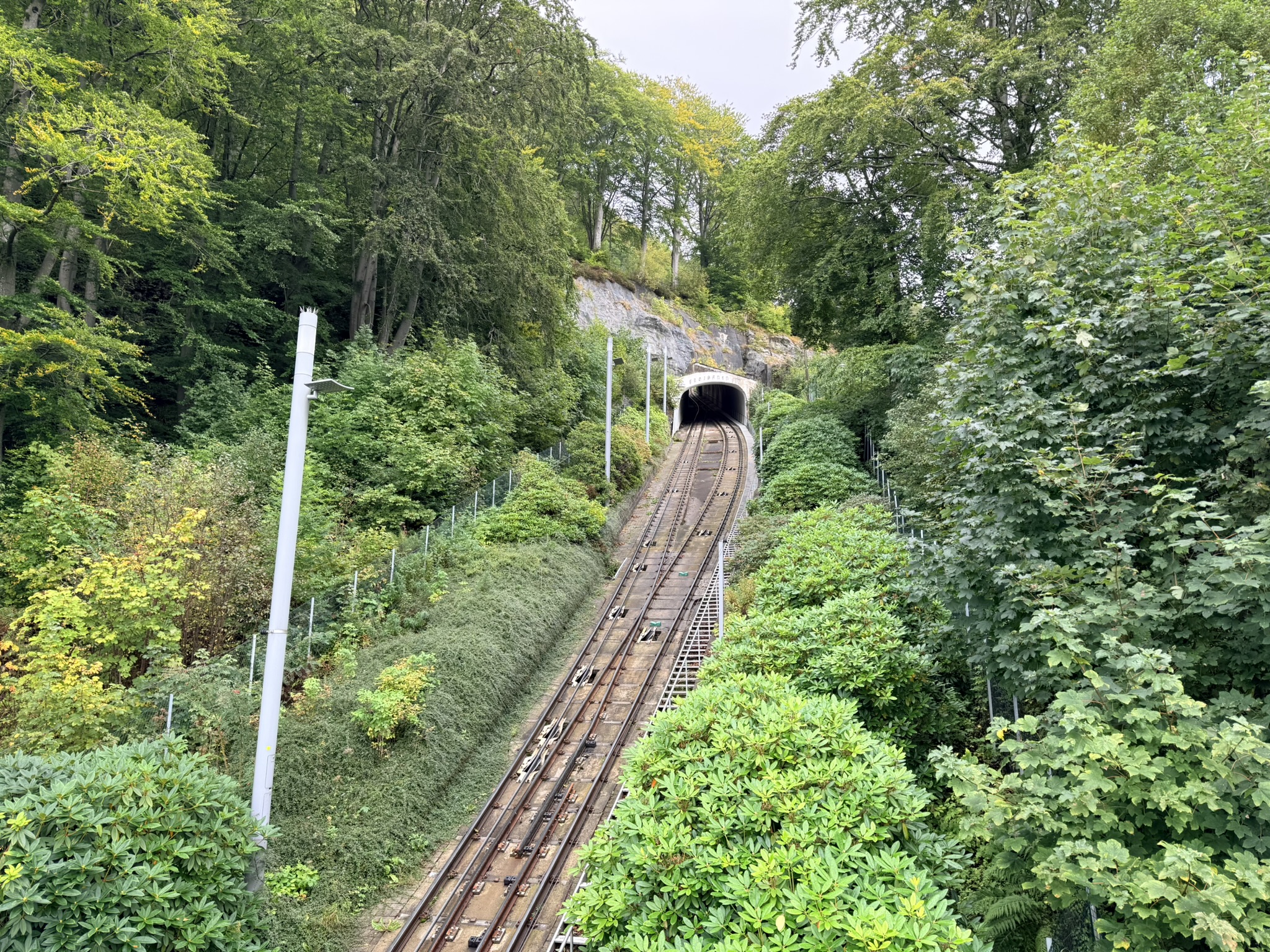
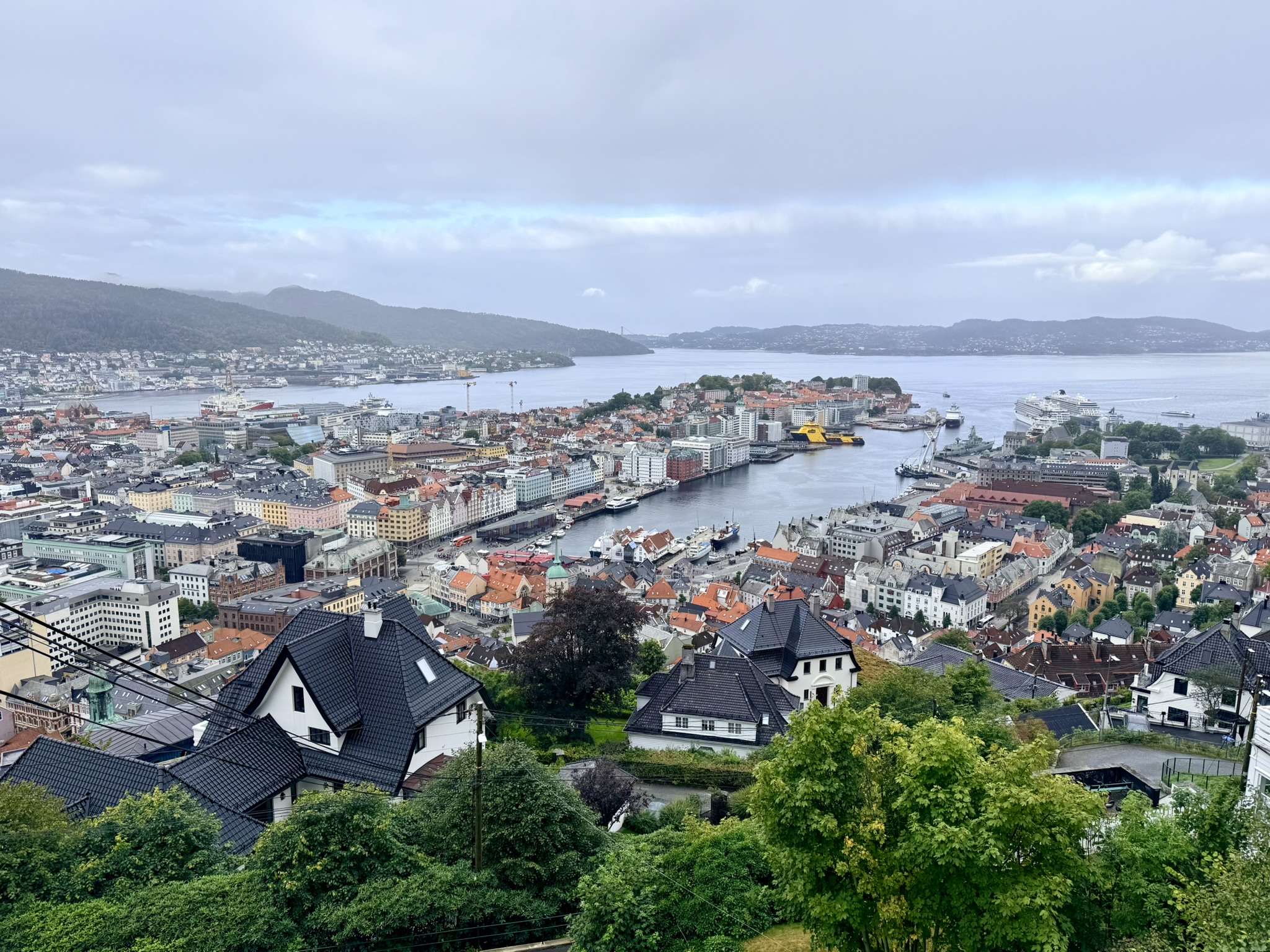
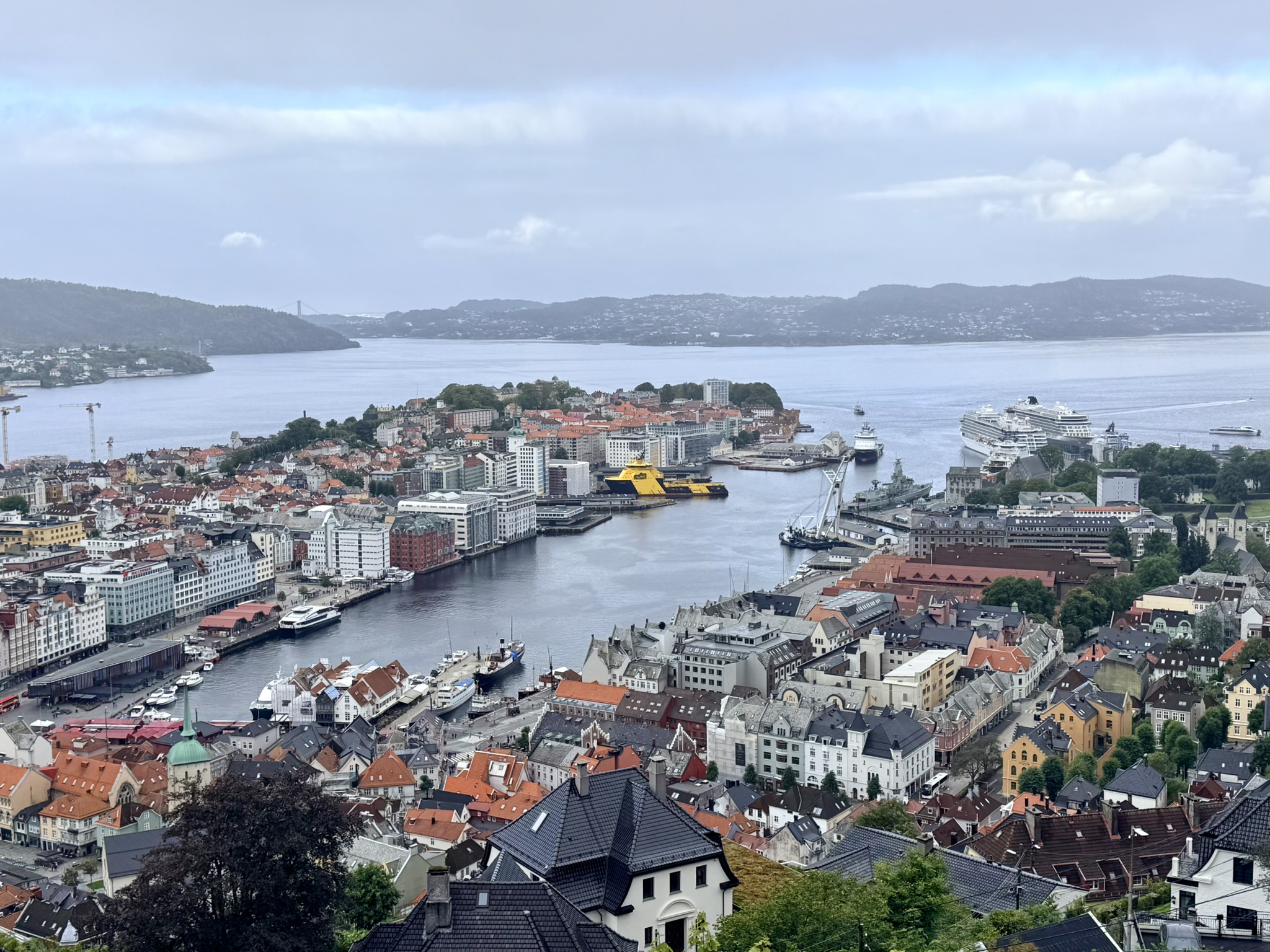
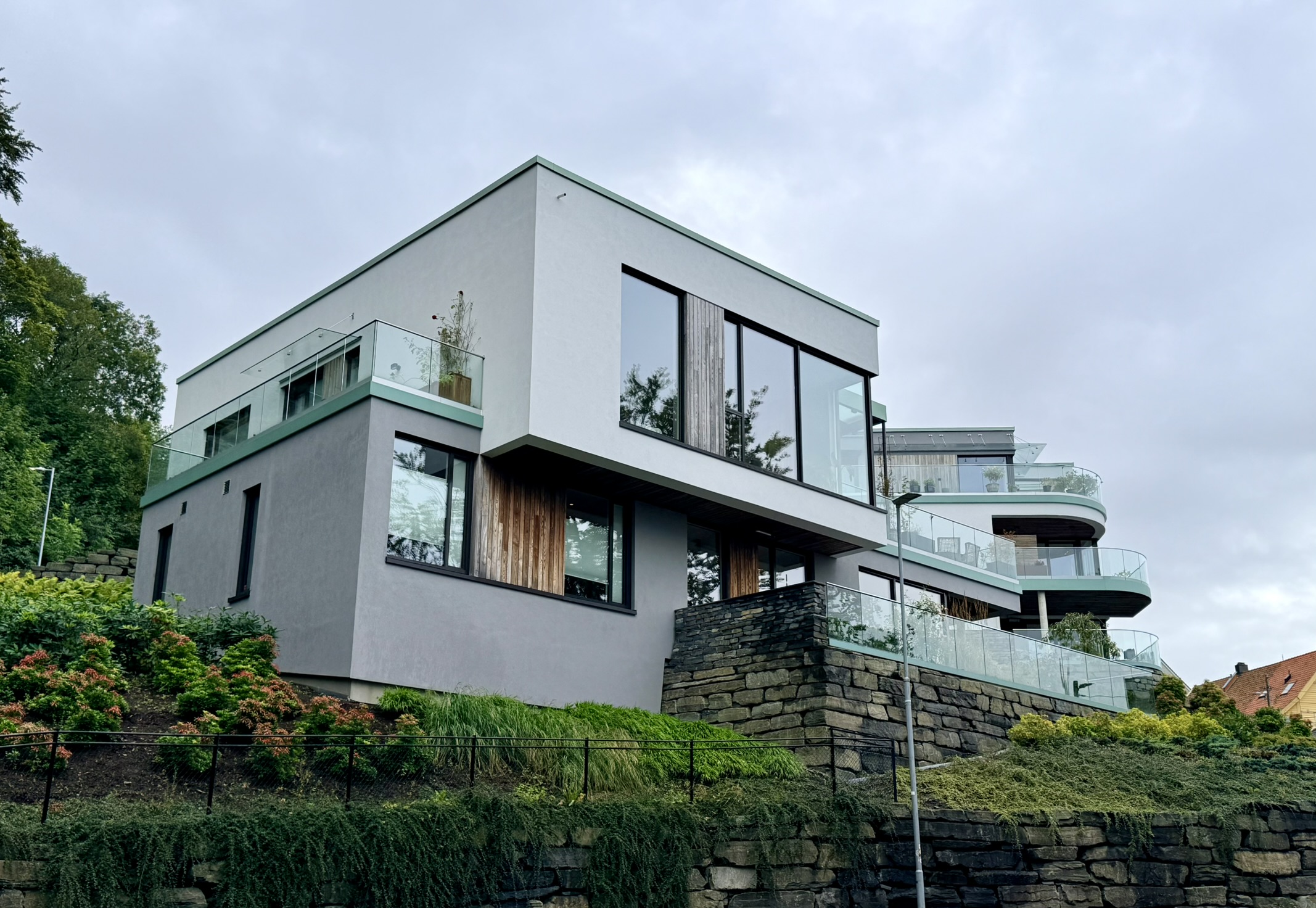
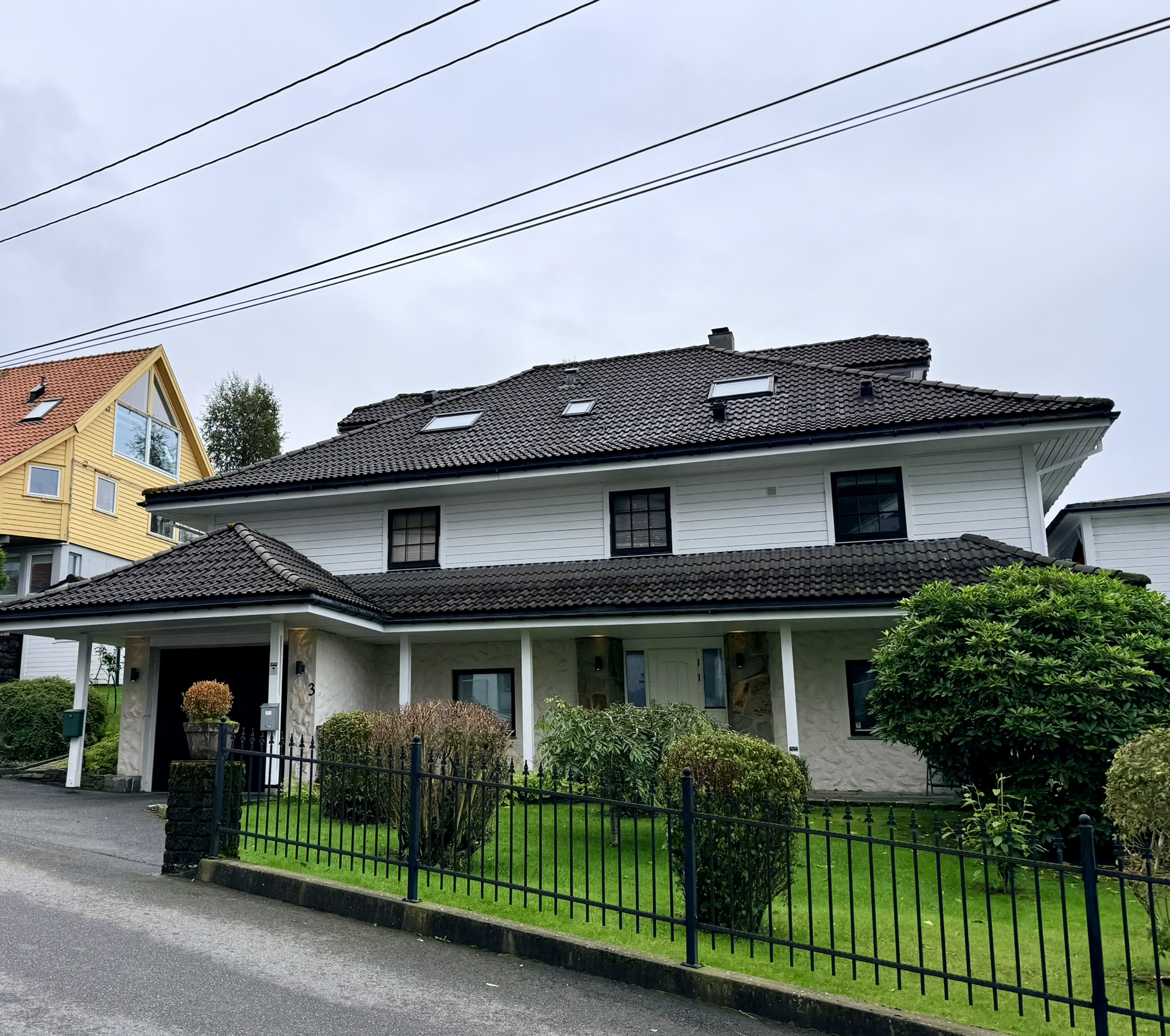
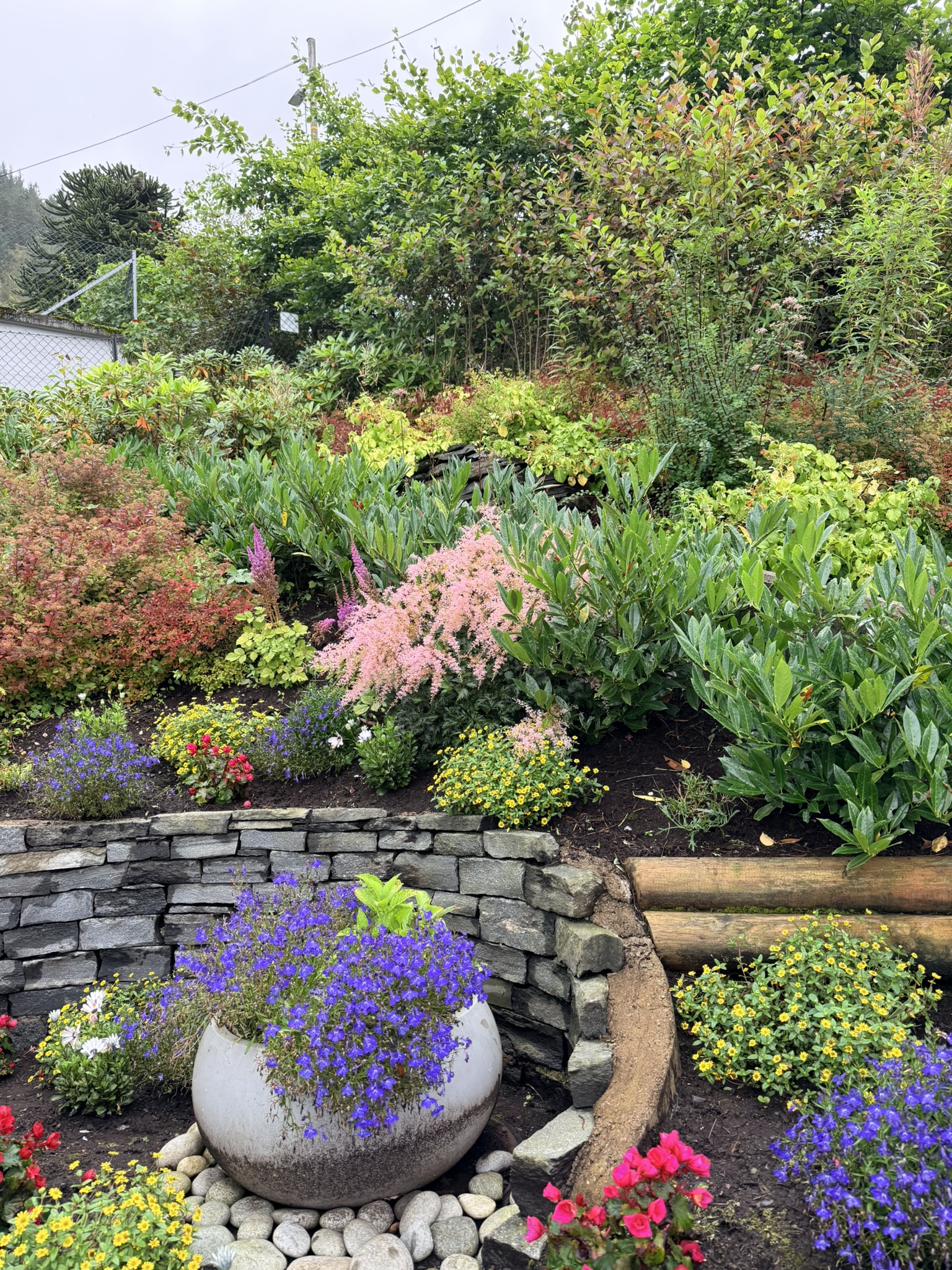
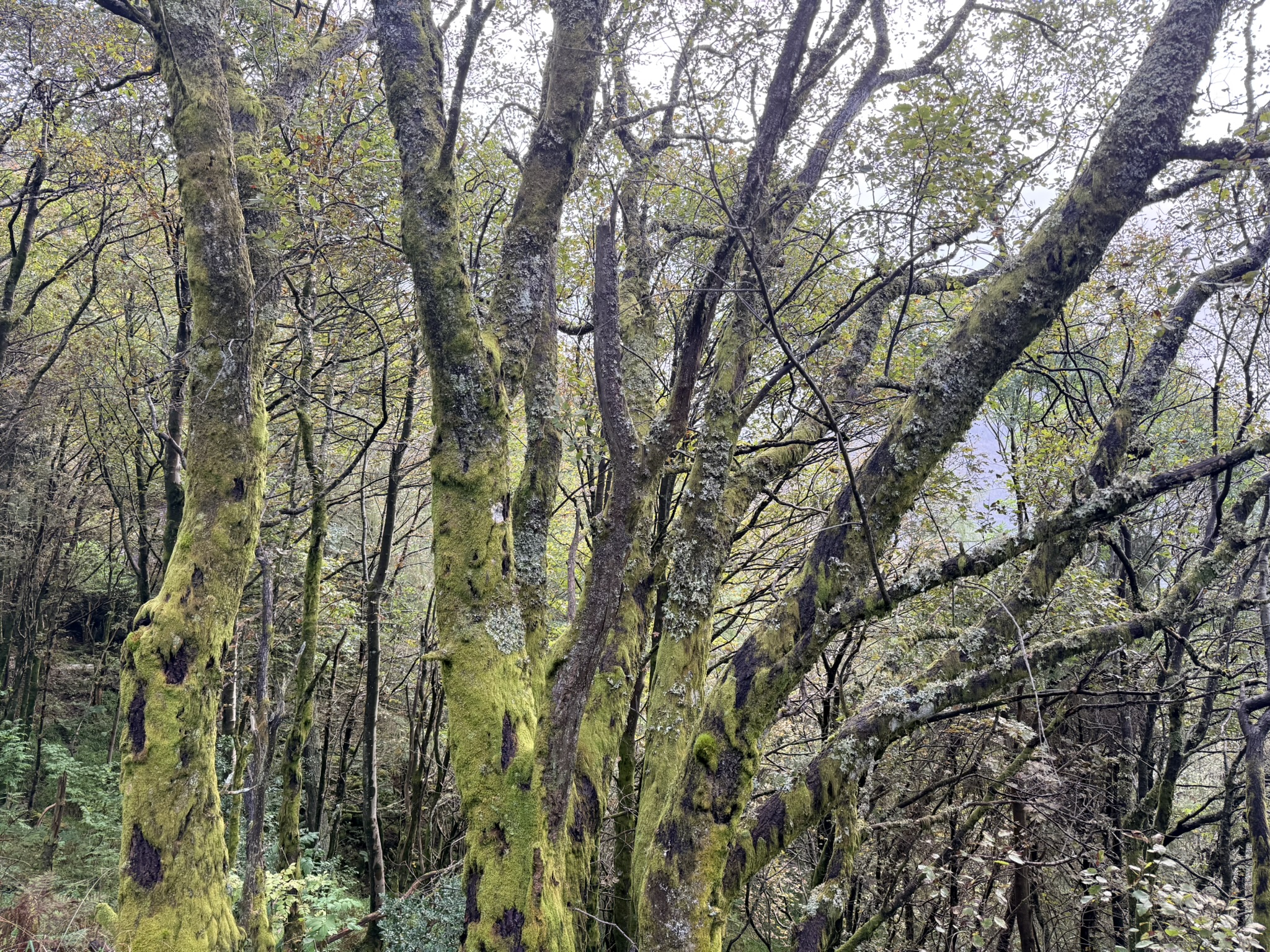
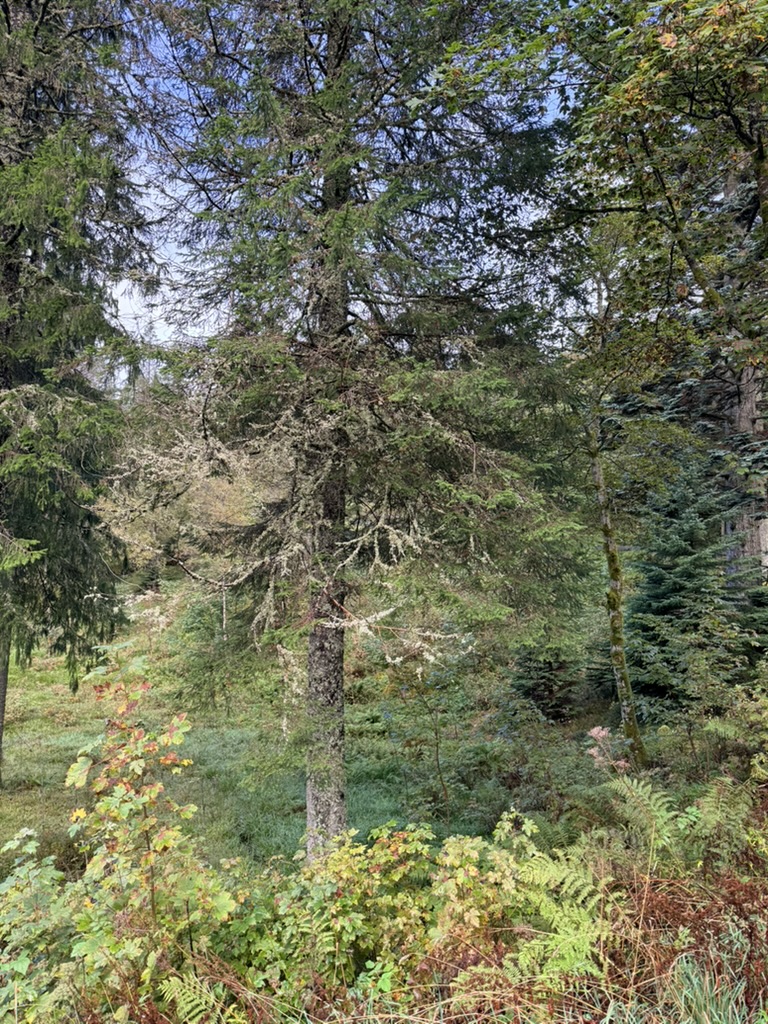
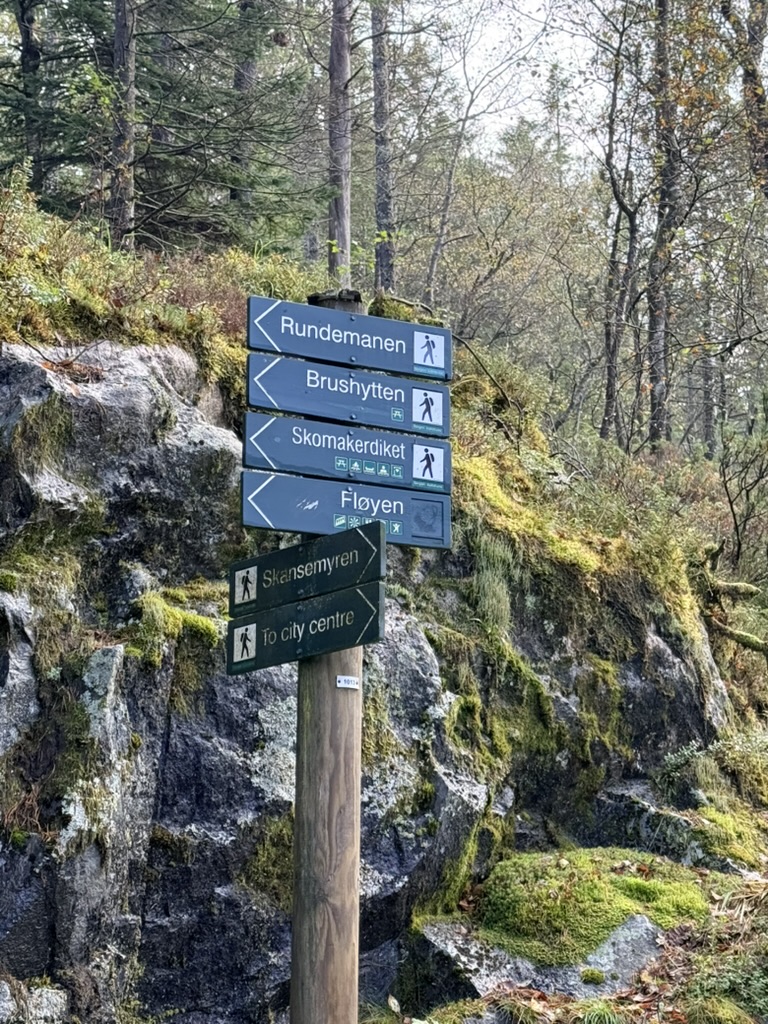
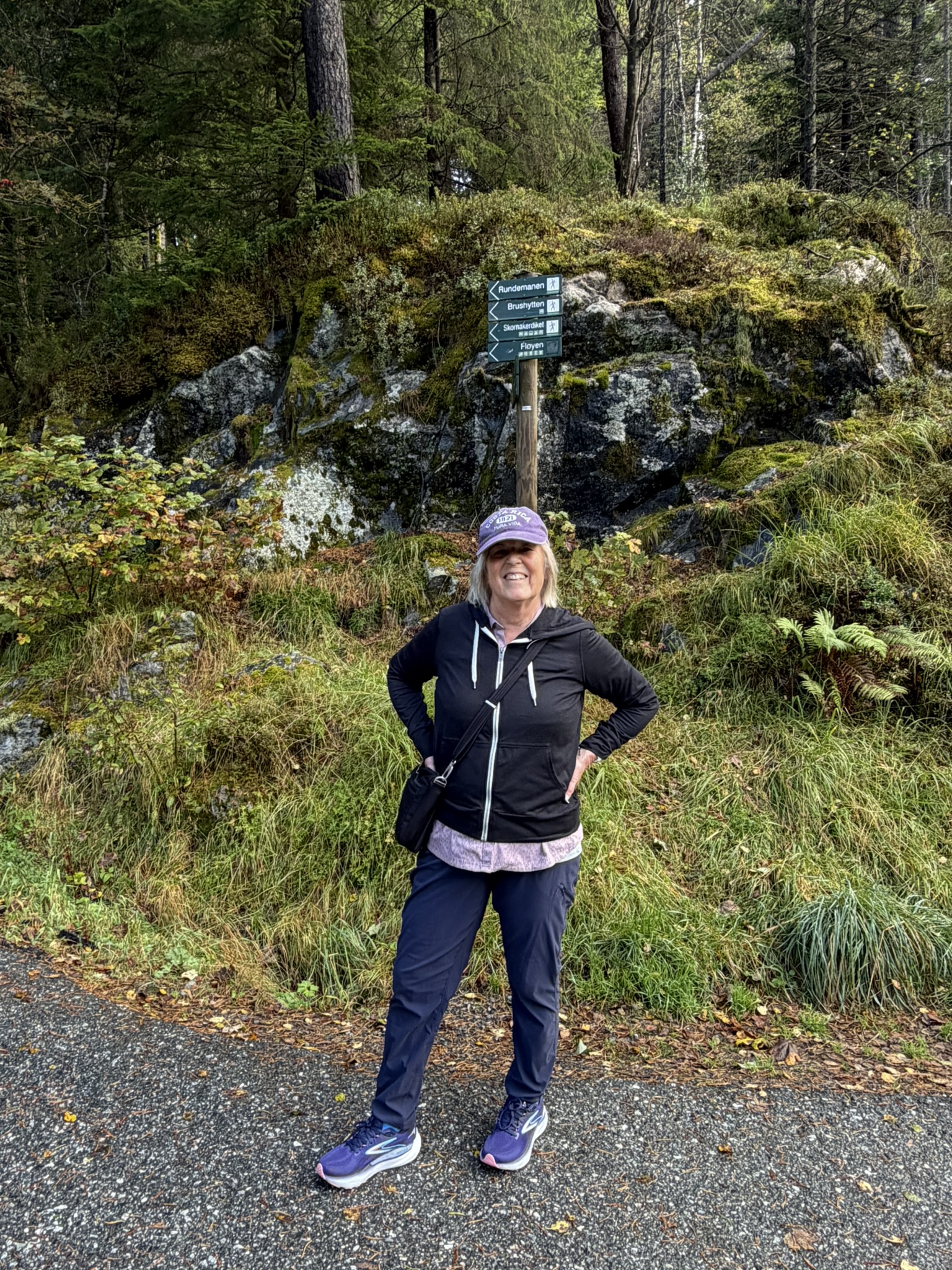
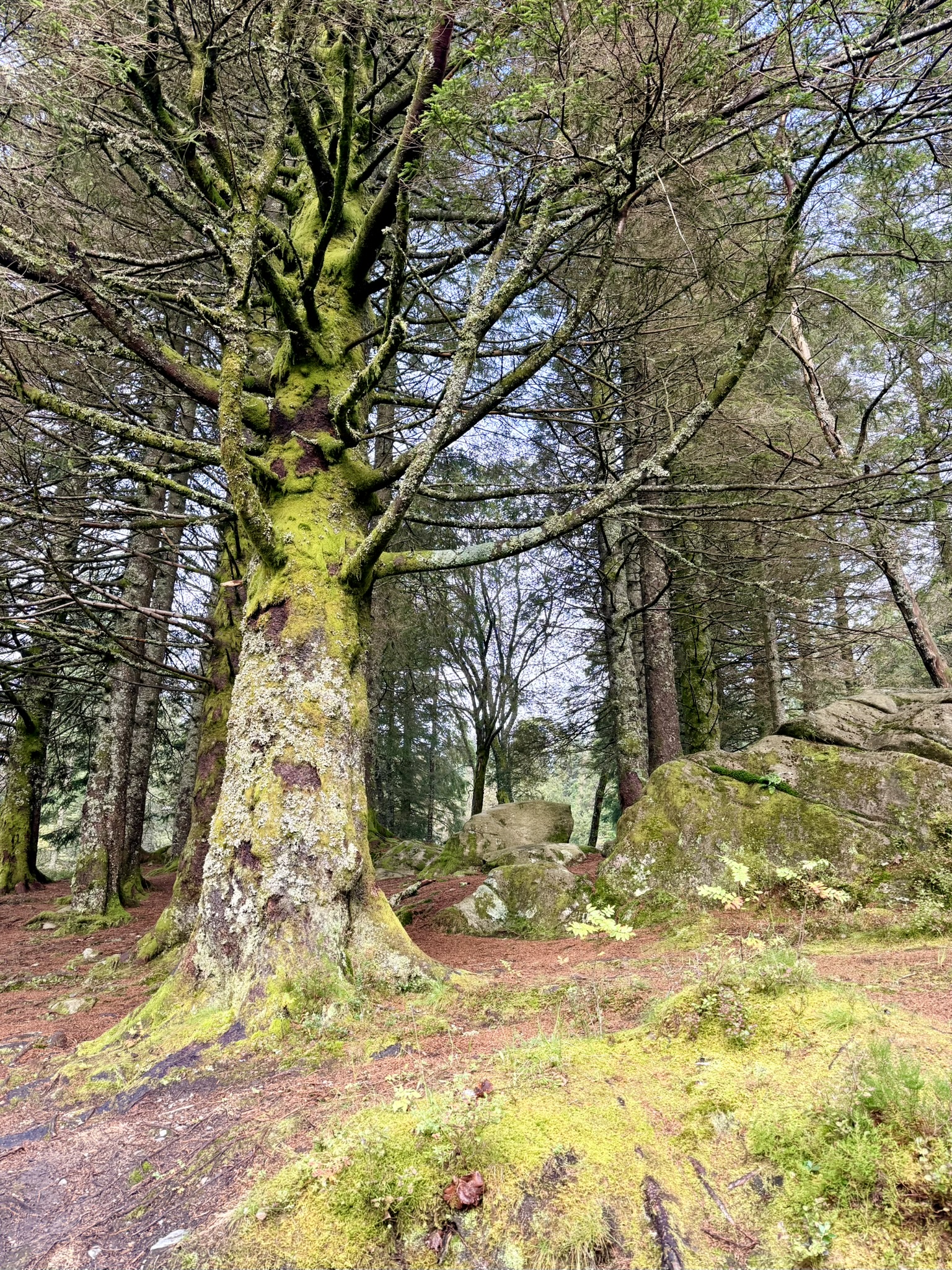
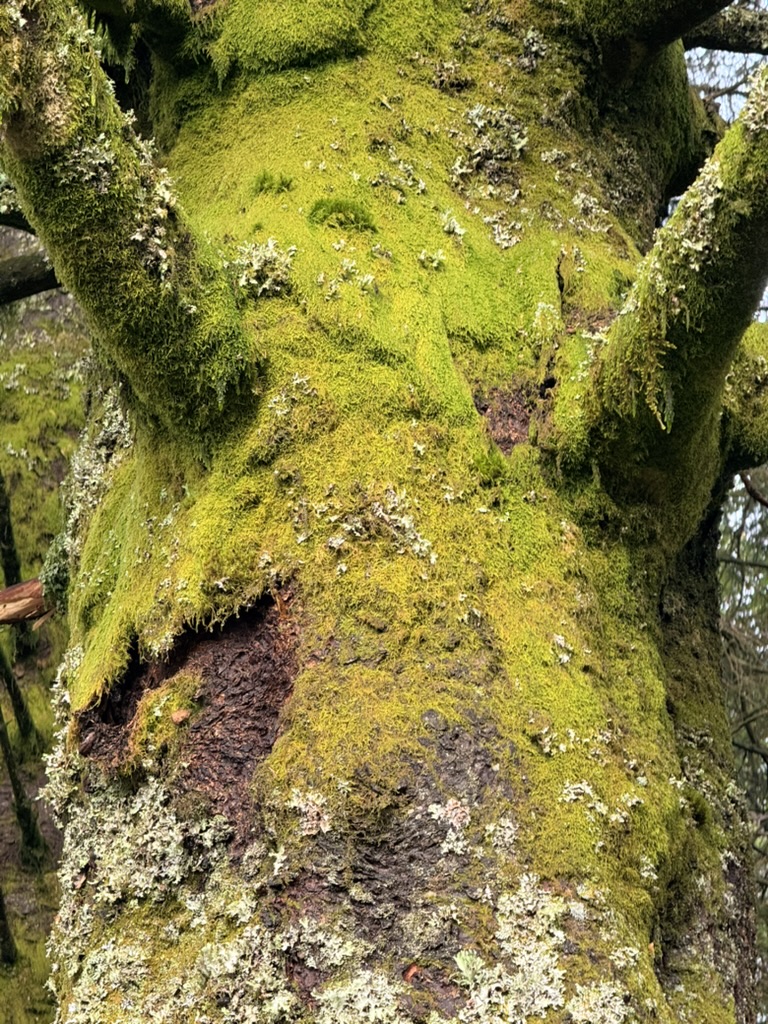
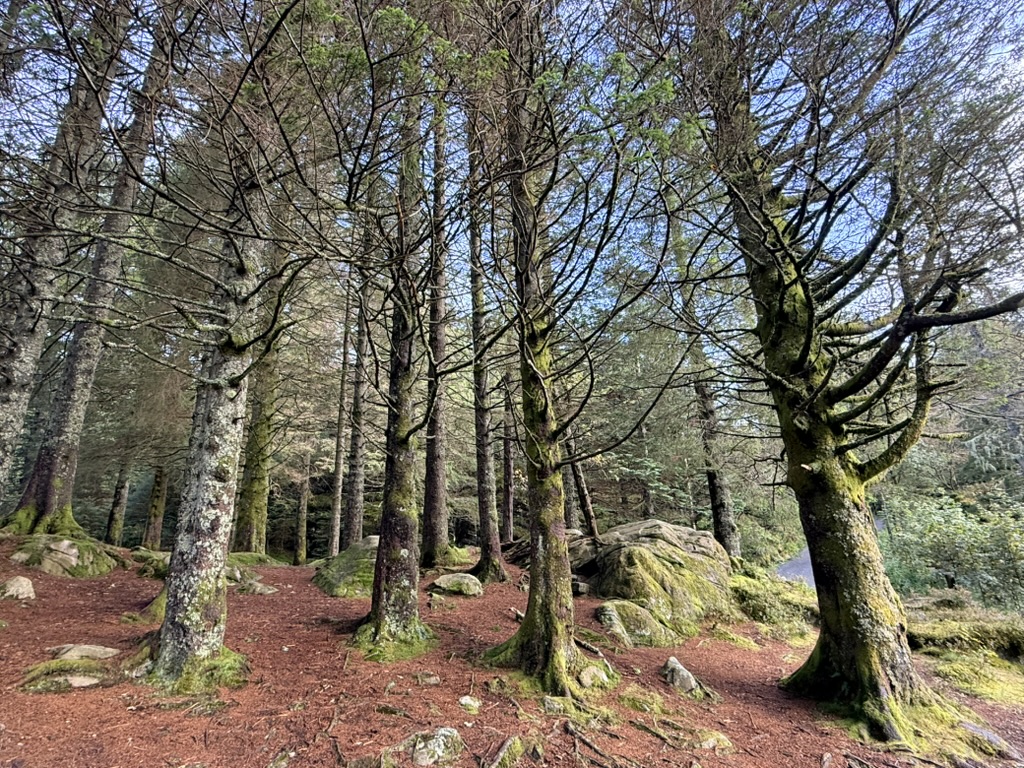
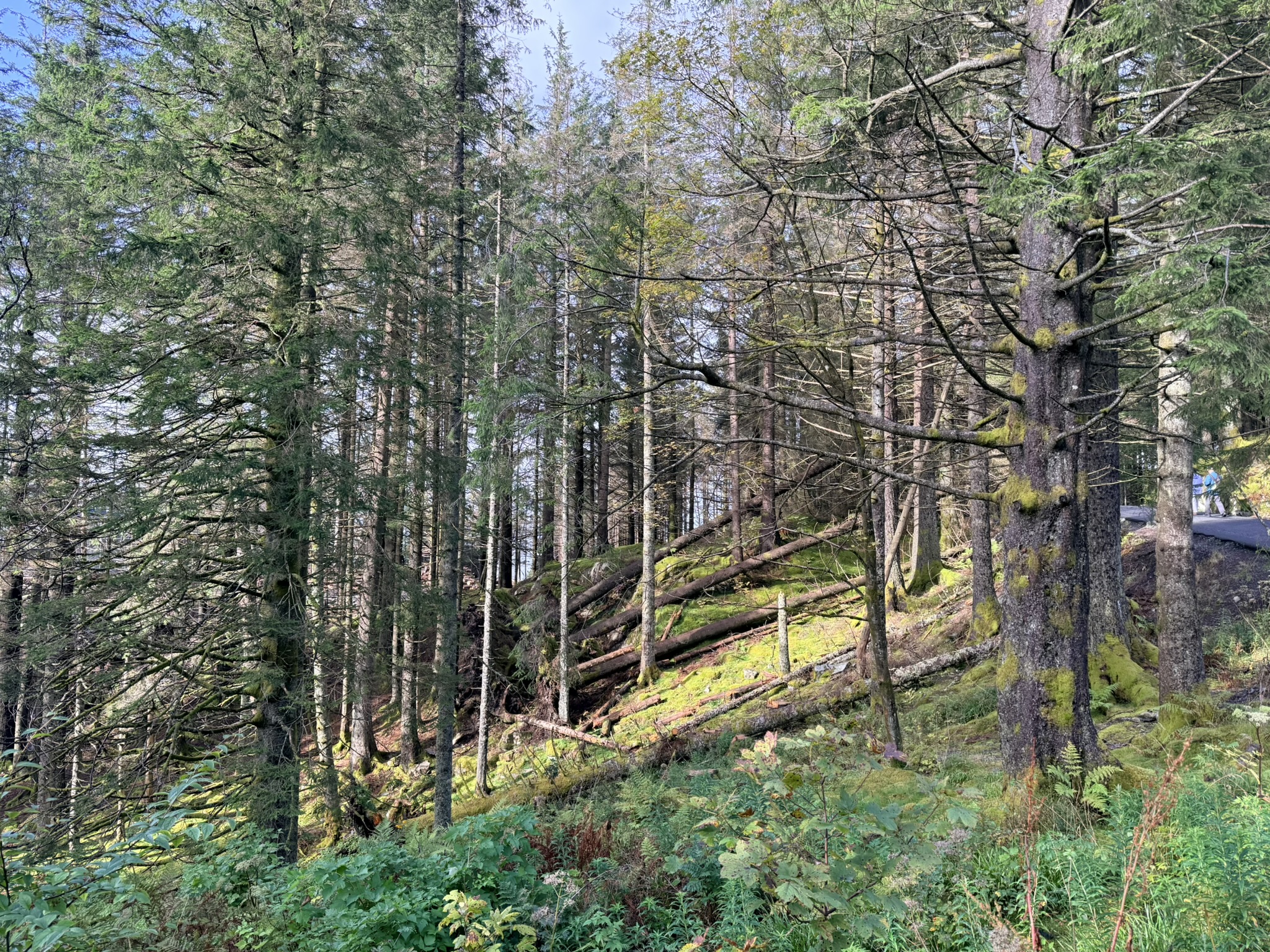
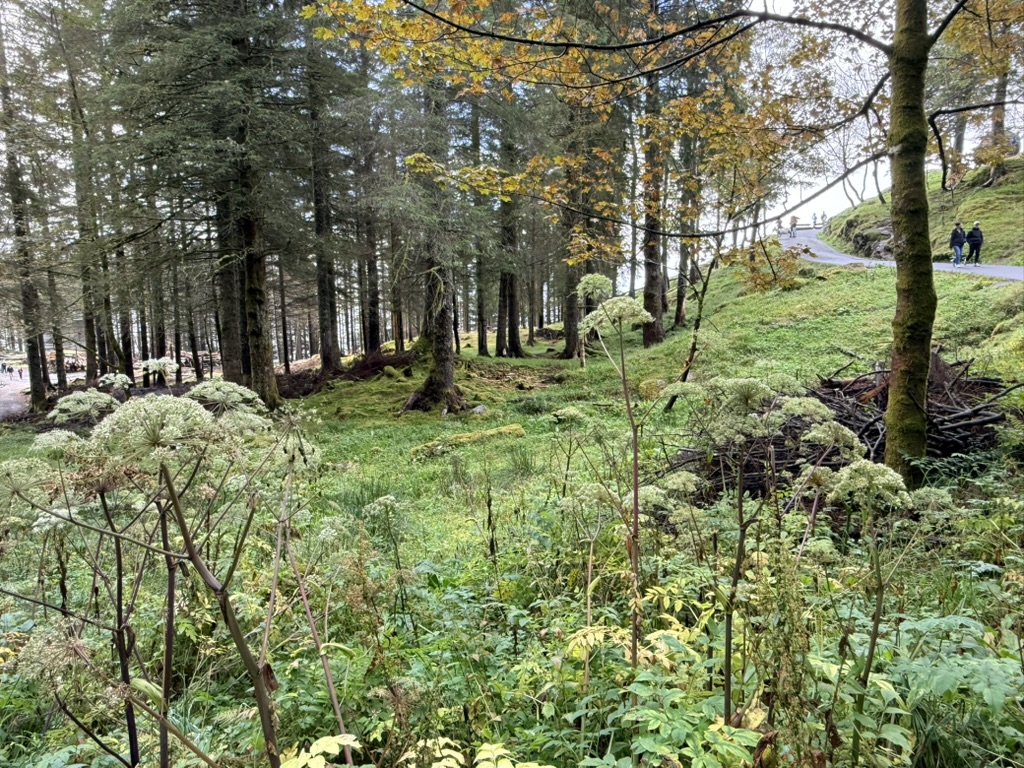
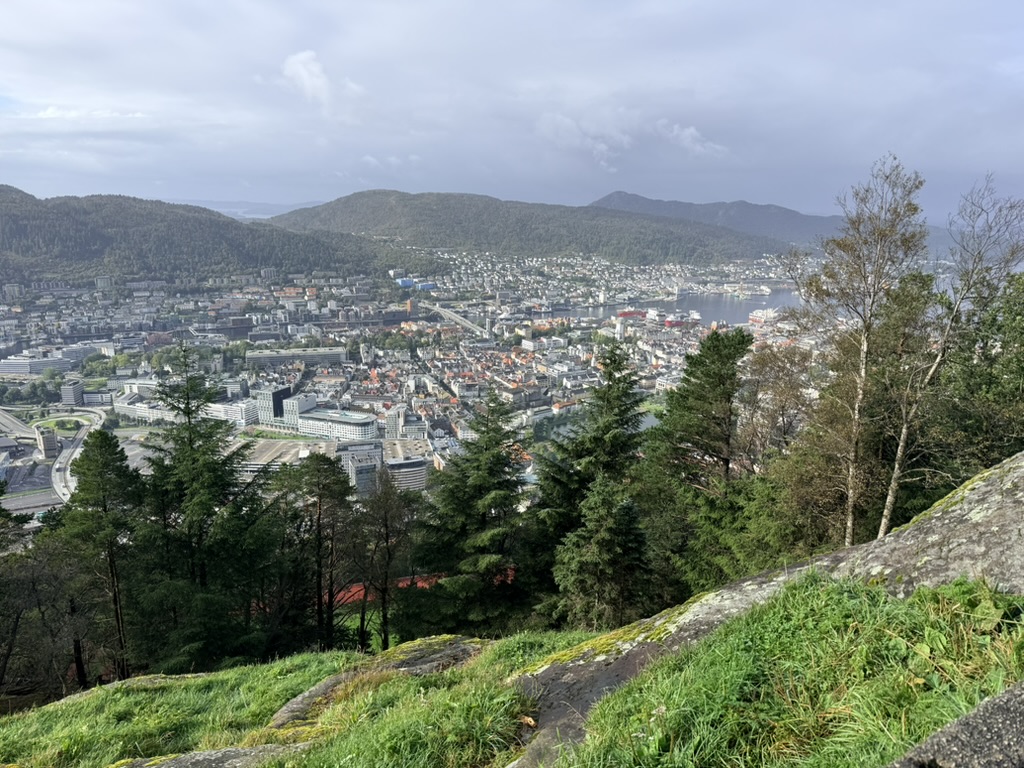
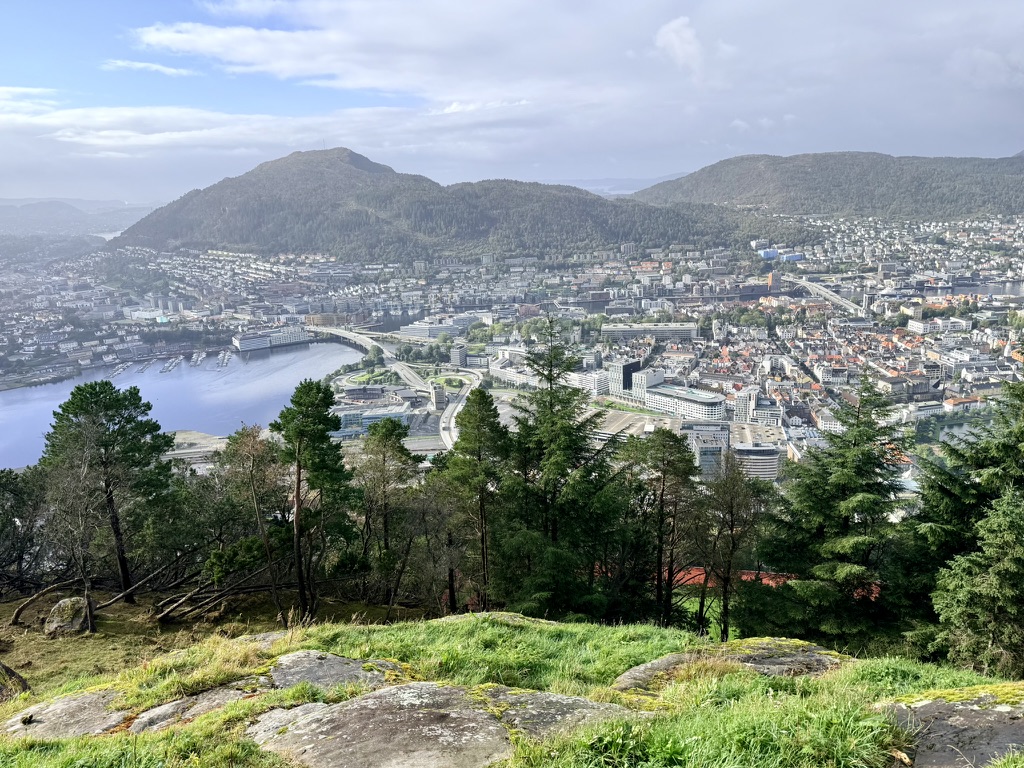
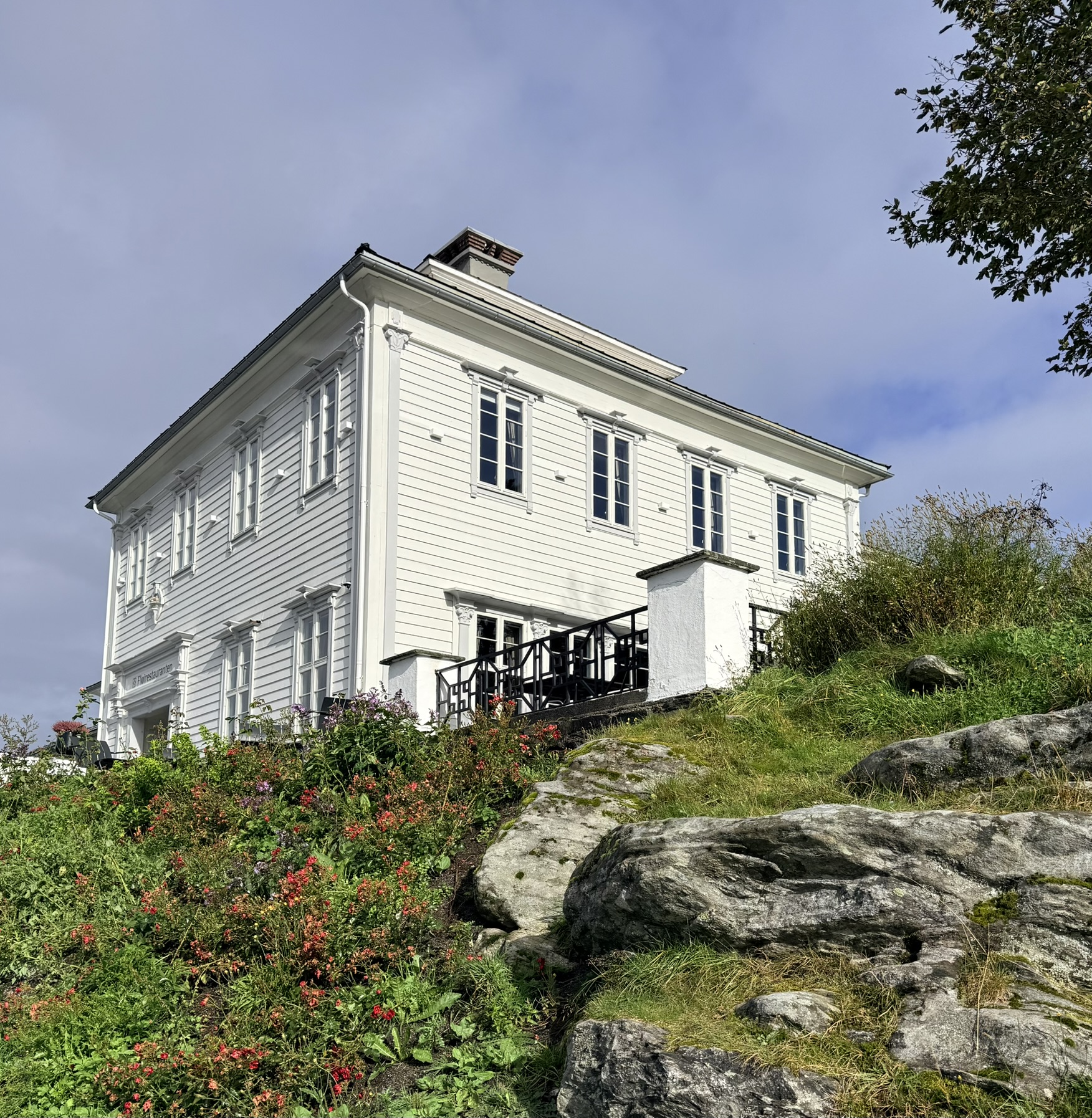
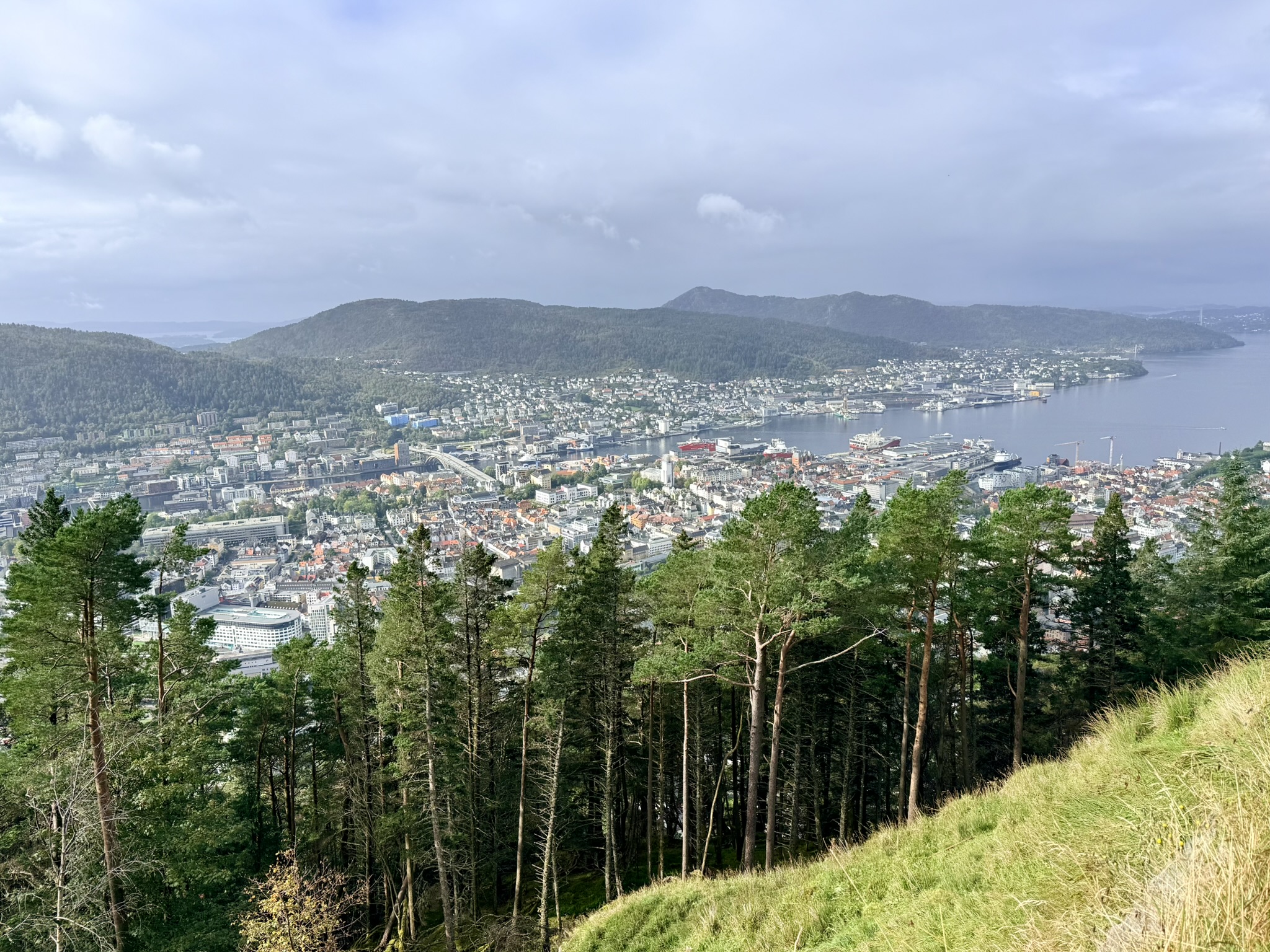
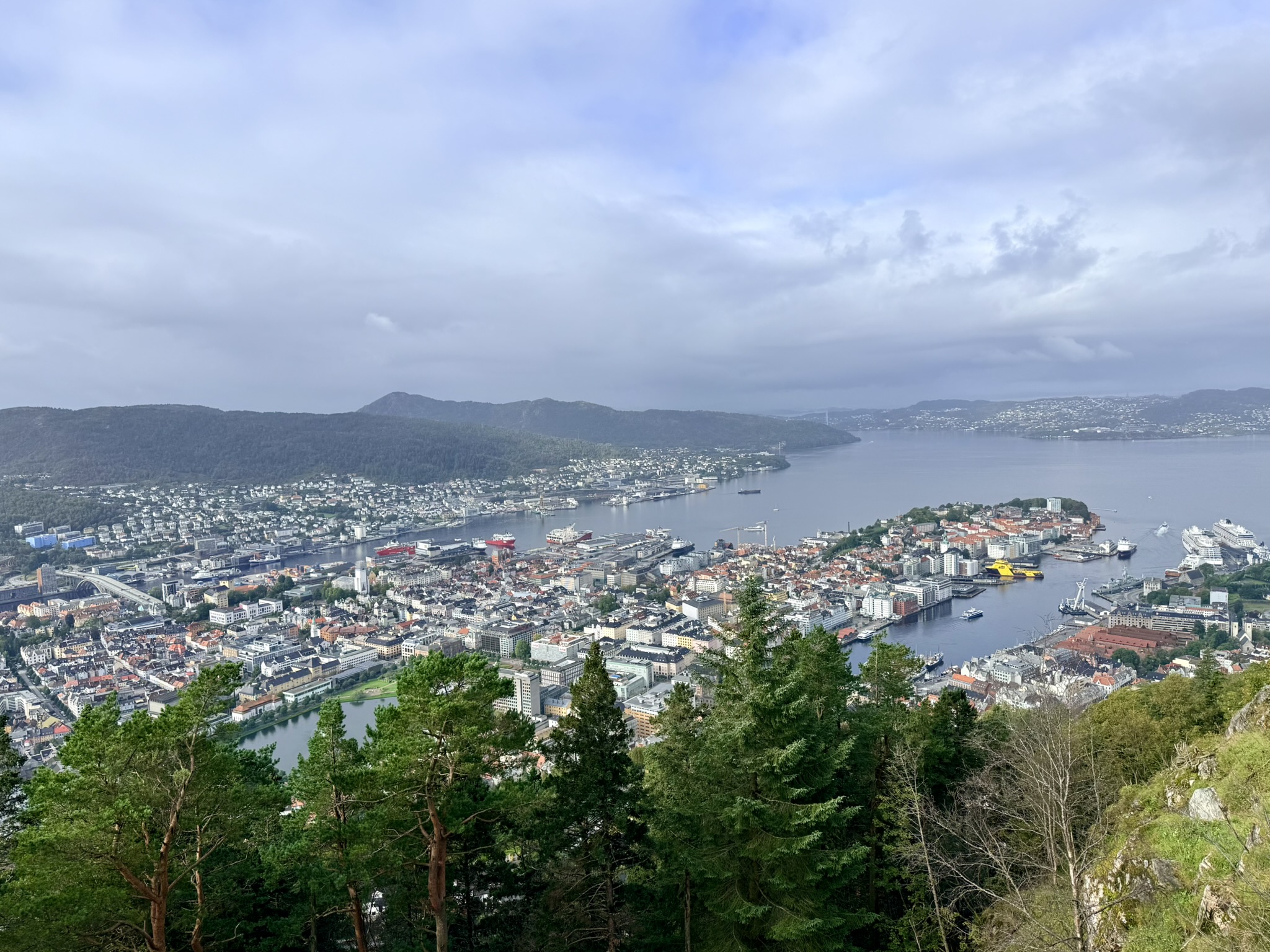
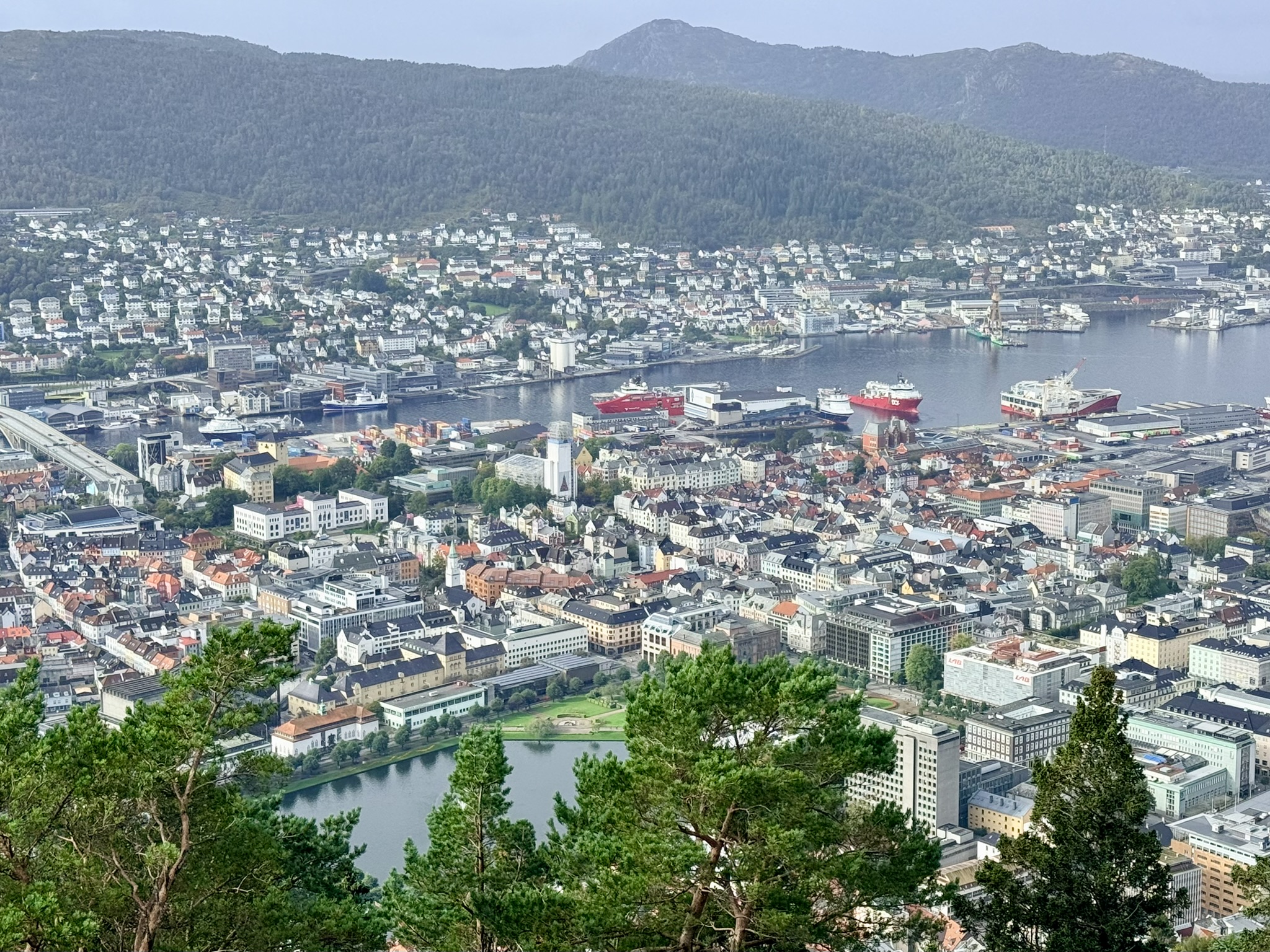
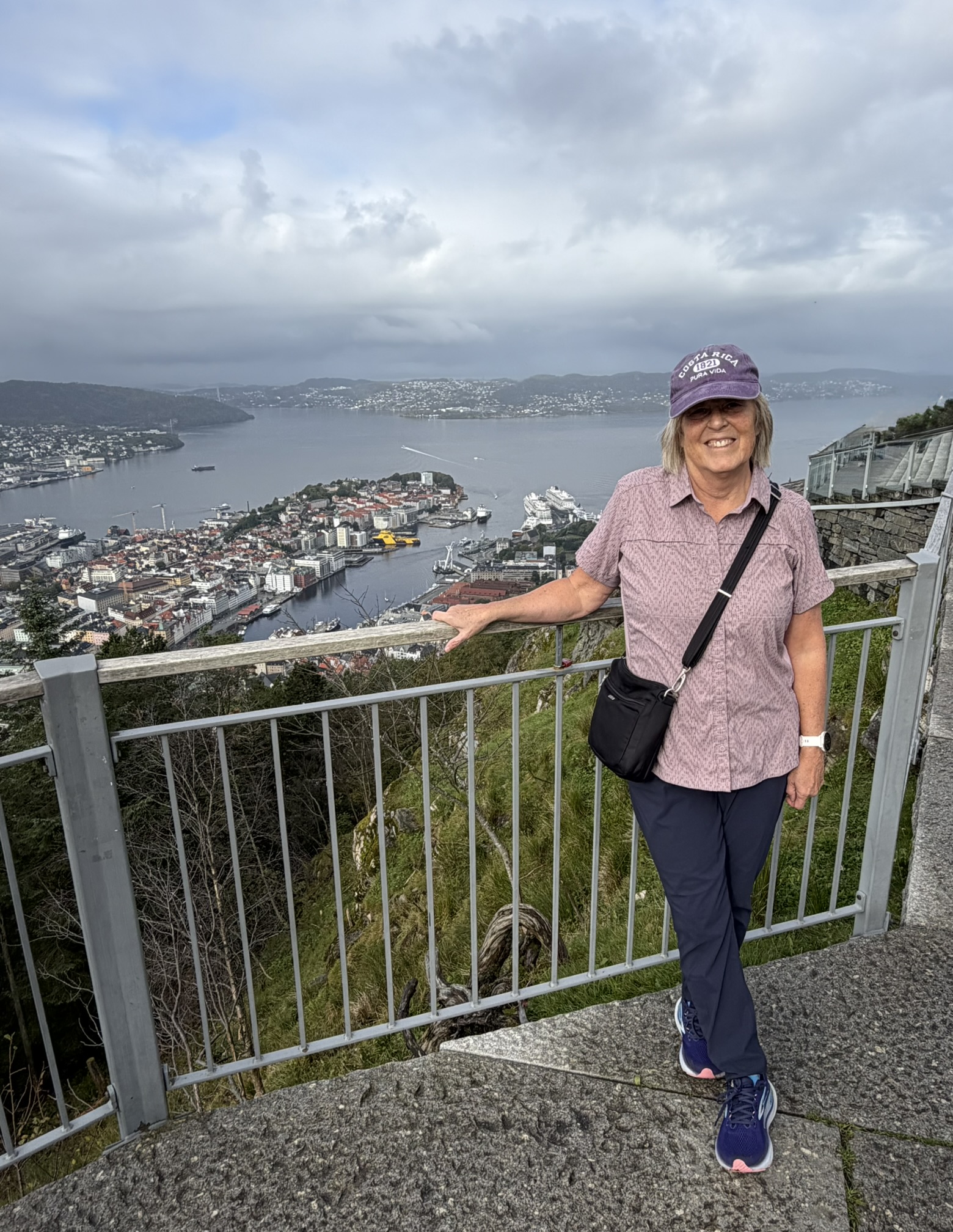
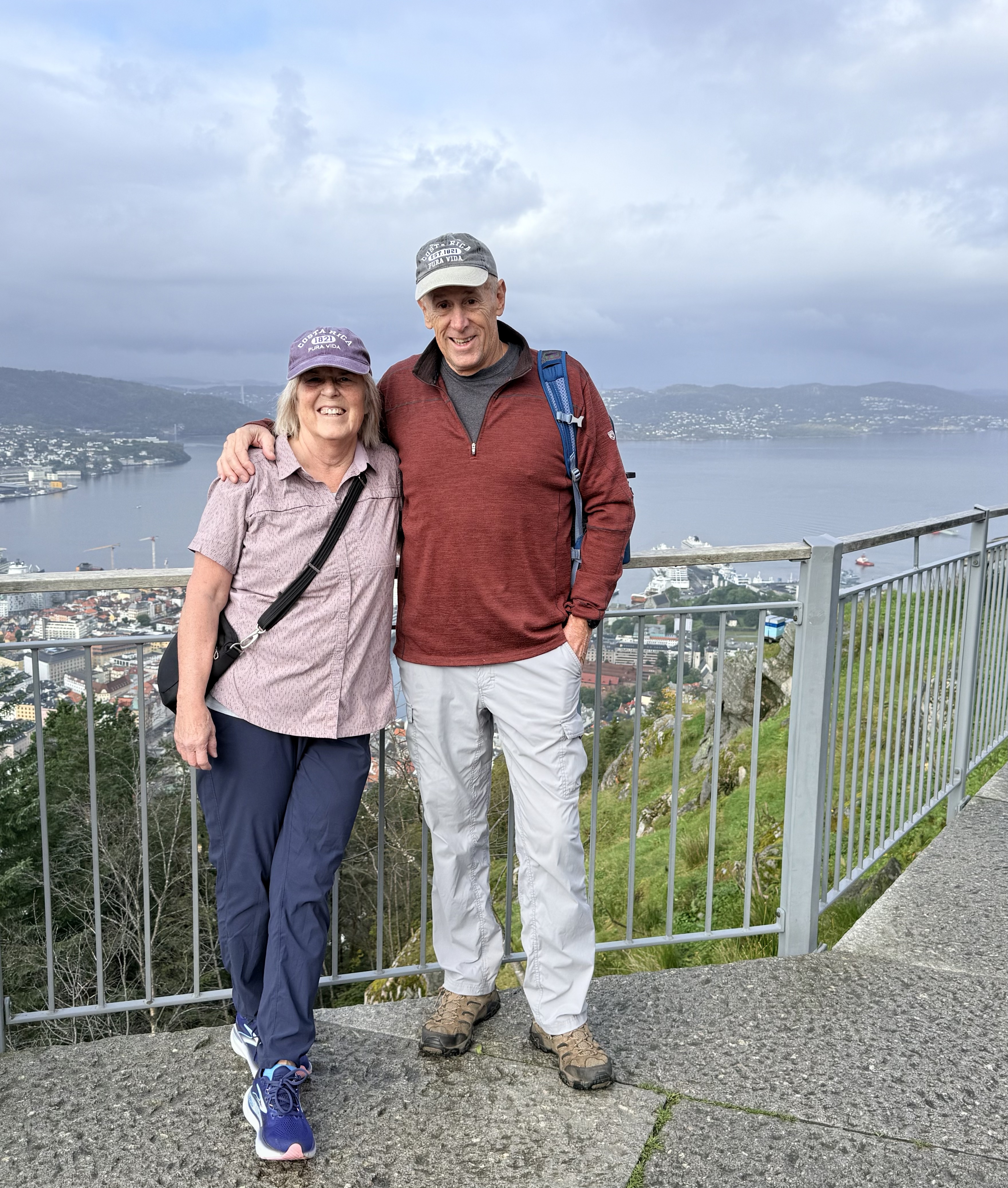
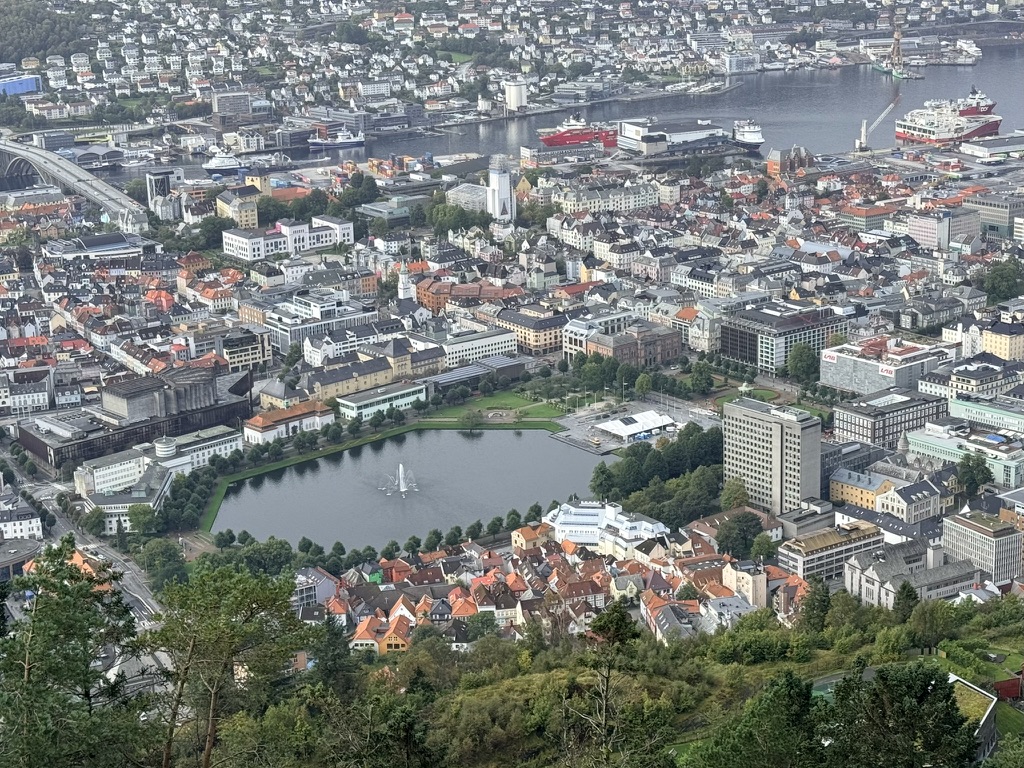
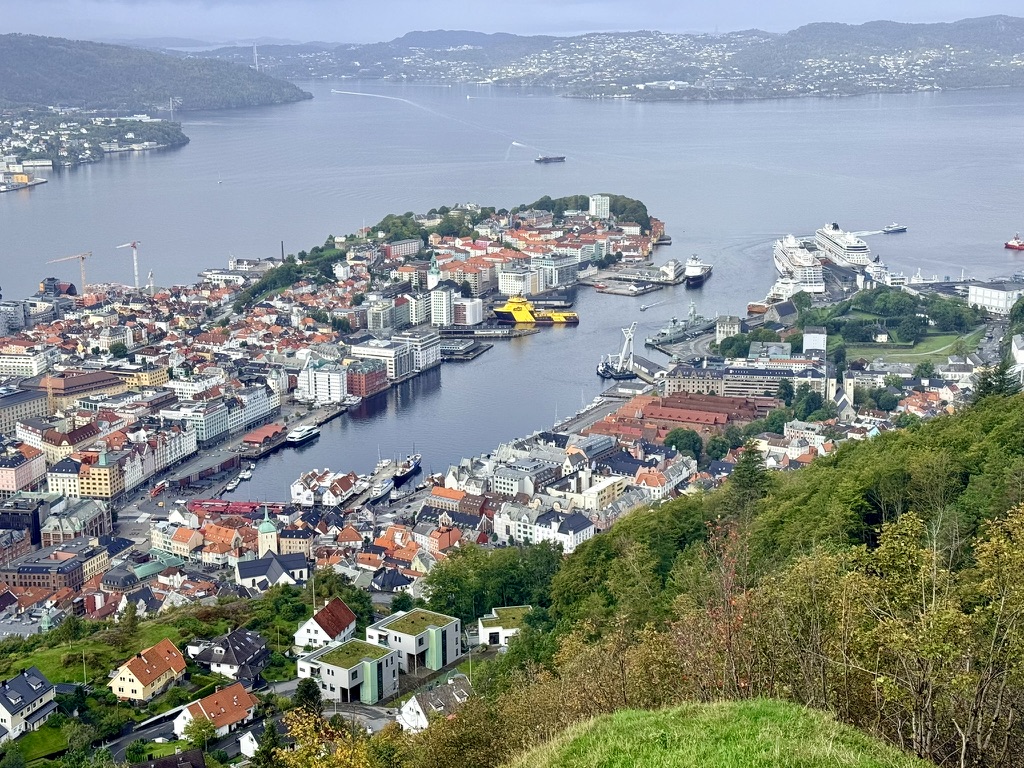
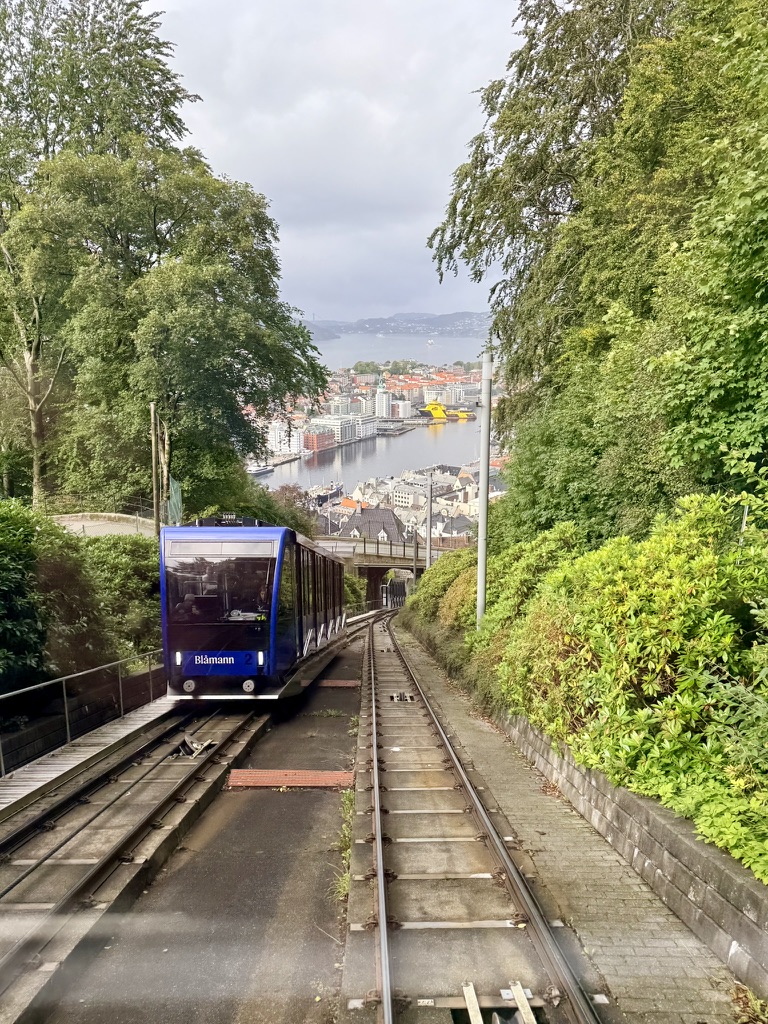
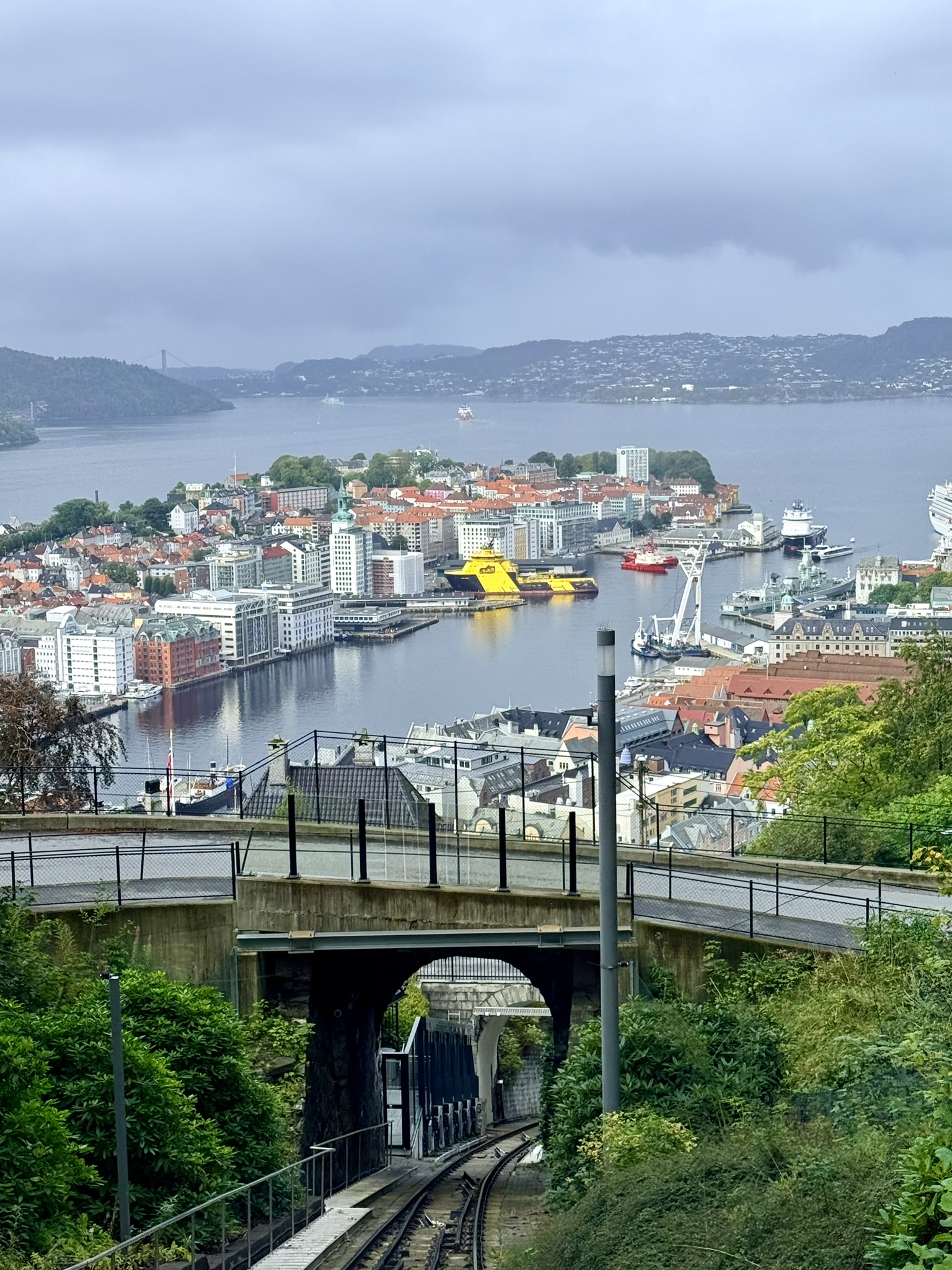
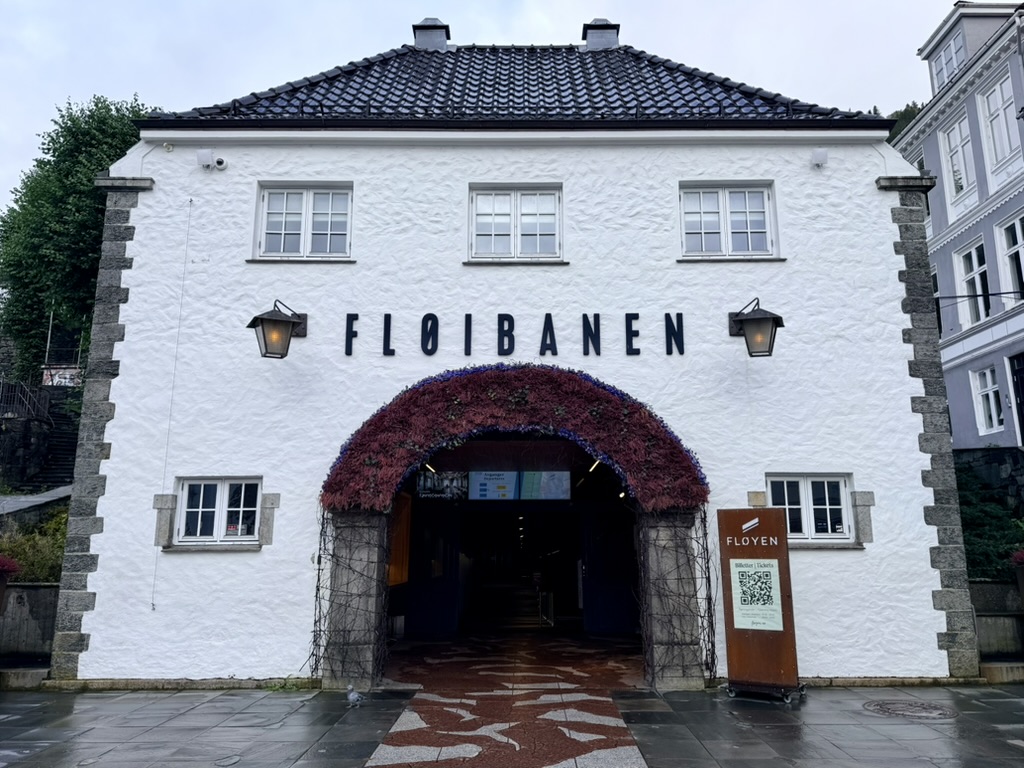
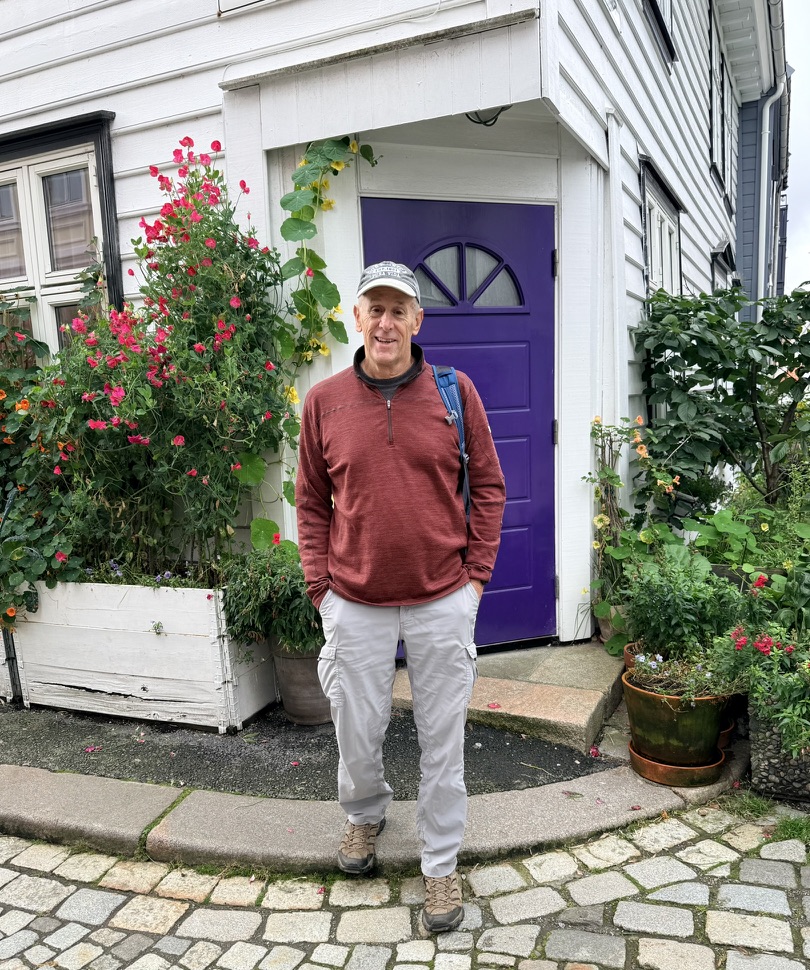
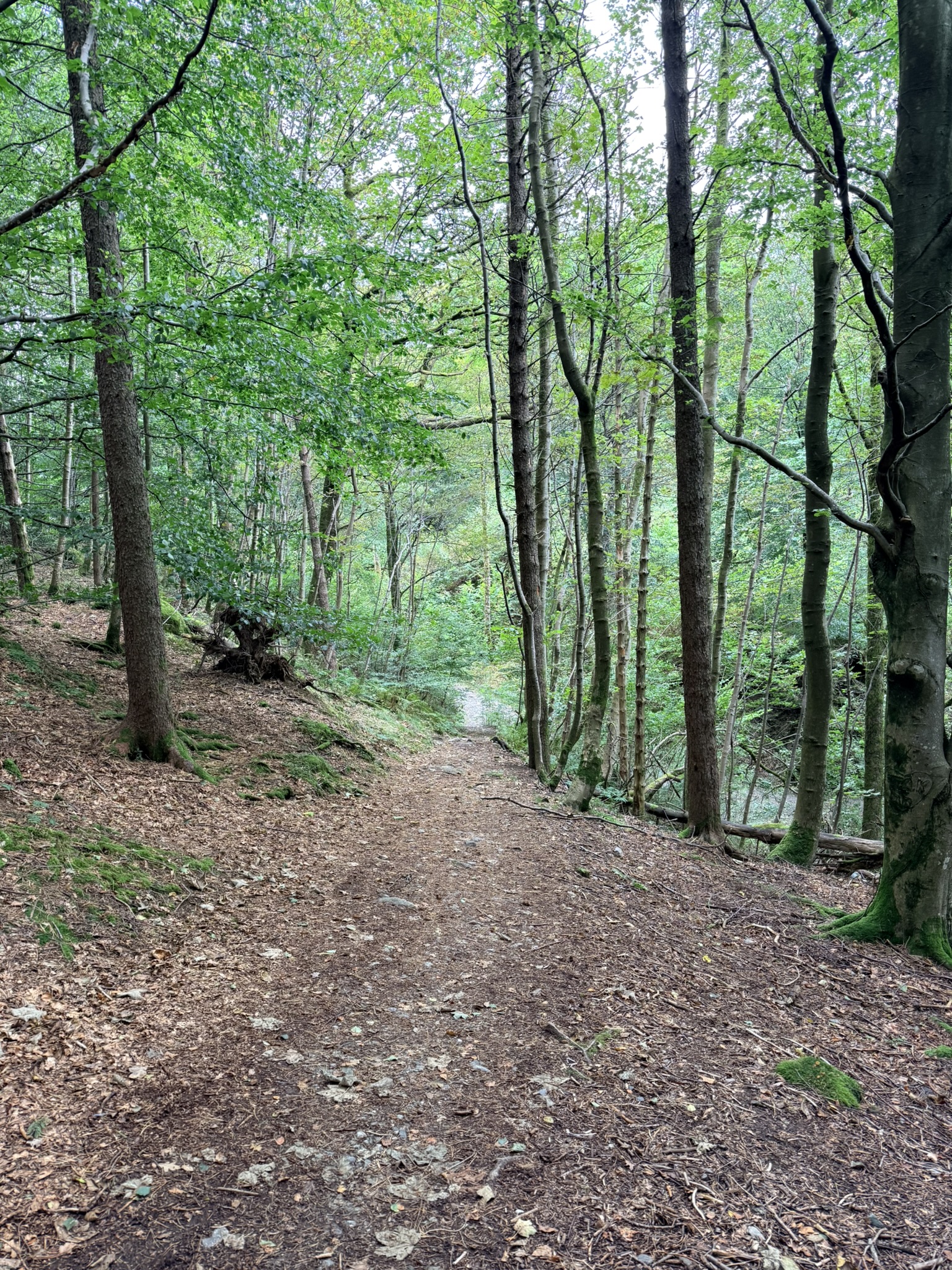
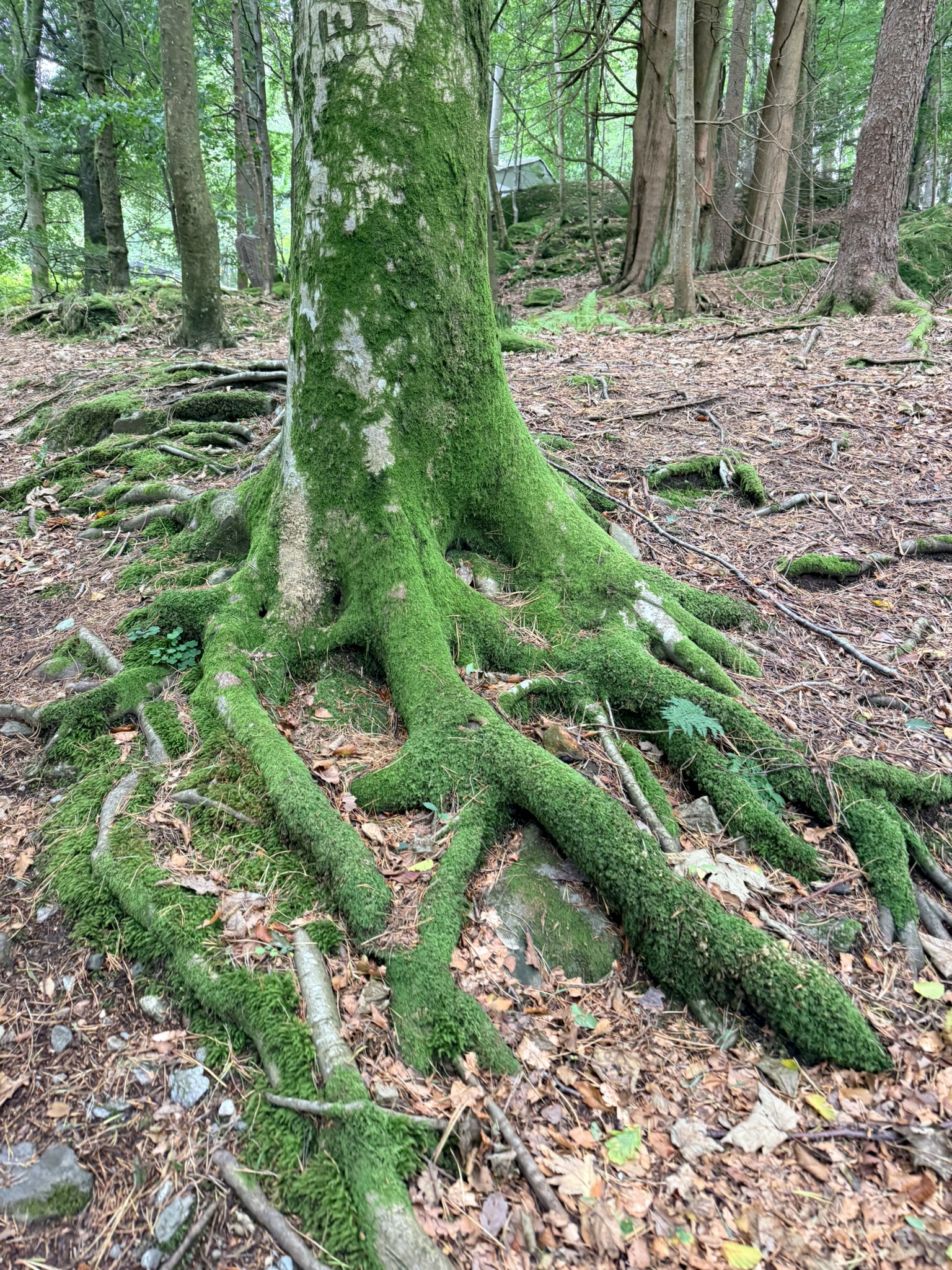
Sunday morning brought a forecast of heavy cloudcover but no rain, so we took advantage and did the hike up 2 1/2 miles from the Fløibanen funicular station to Mt. Floyen. Though the funicular ride is only 2 minutes, the walk up takes about 1 1/2 hours. The panoramic view from the summit encompasses the city center, the harbor, and the surrounding islands and mountains. Whereas most people seemed to take the funicular up and walk down, we did the opposite. We walked up and then took the funicular down. We liked walking through neighborhoods and seeing the homes where people live. We also loved the mossy pine forest near the top of the mountain.
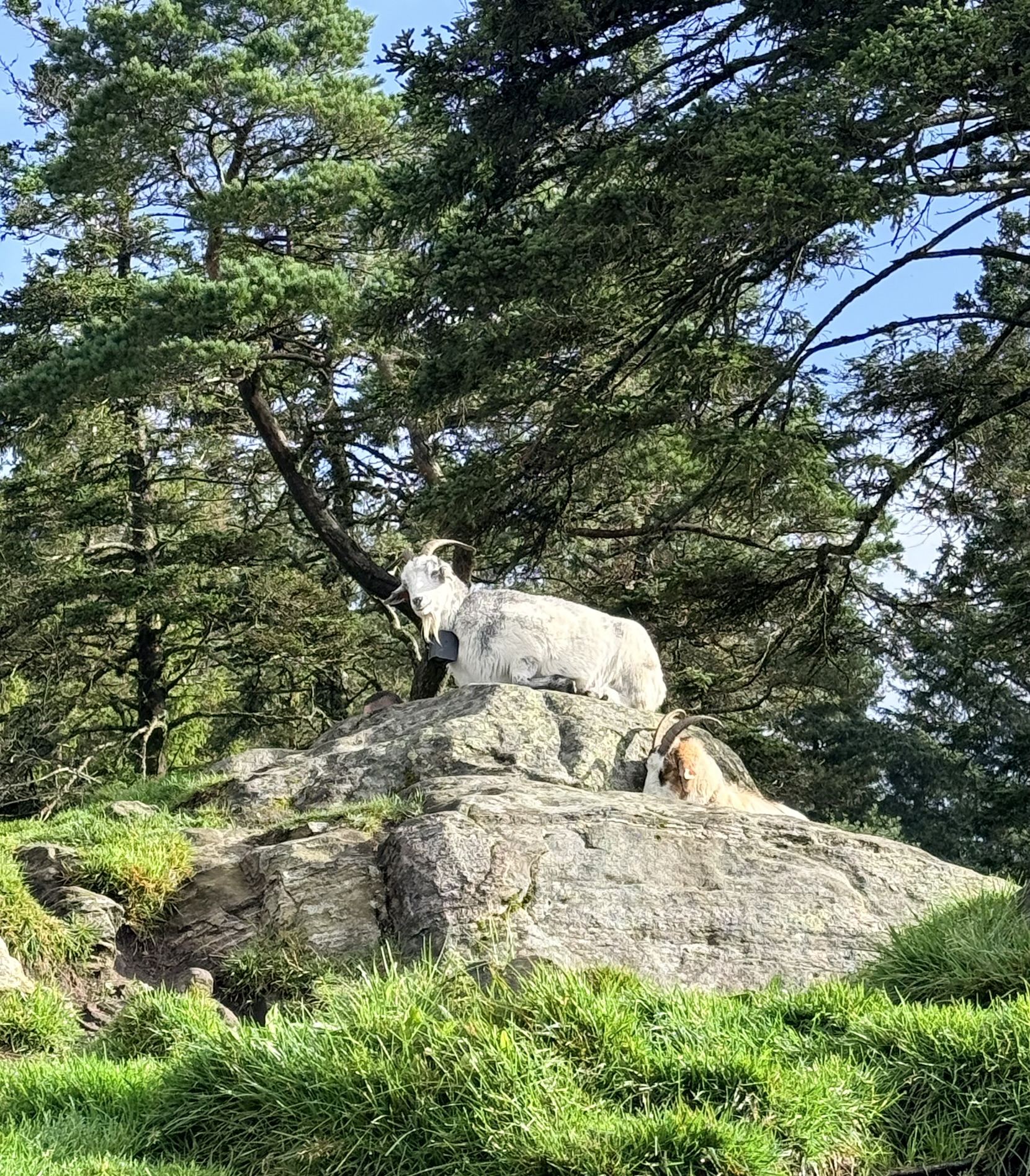
At the top, we encountered the Fløyen cashmere goats primarily known for their very fine wool undercoat. Rather than grass, the goats prefer to eat bushes and trees, so they are particularly good at clearing and controlling vegetation growth. They are herd animals and enjoy each other’s company. They wear “NoFence” collars, a kind of virtual fence that vibrates if they try to leave the circumscribed area on Mt. Fløyen.
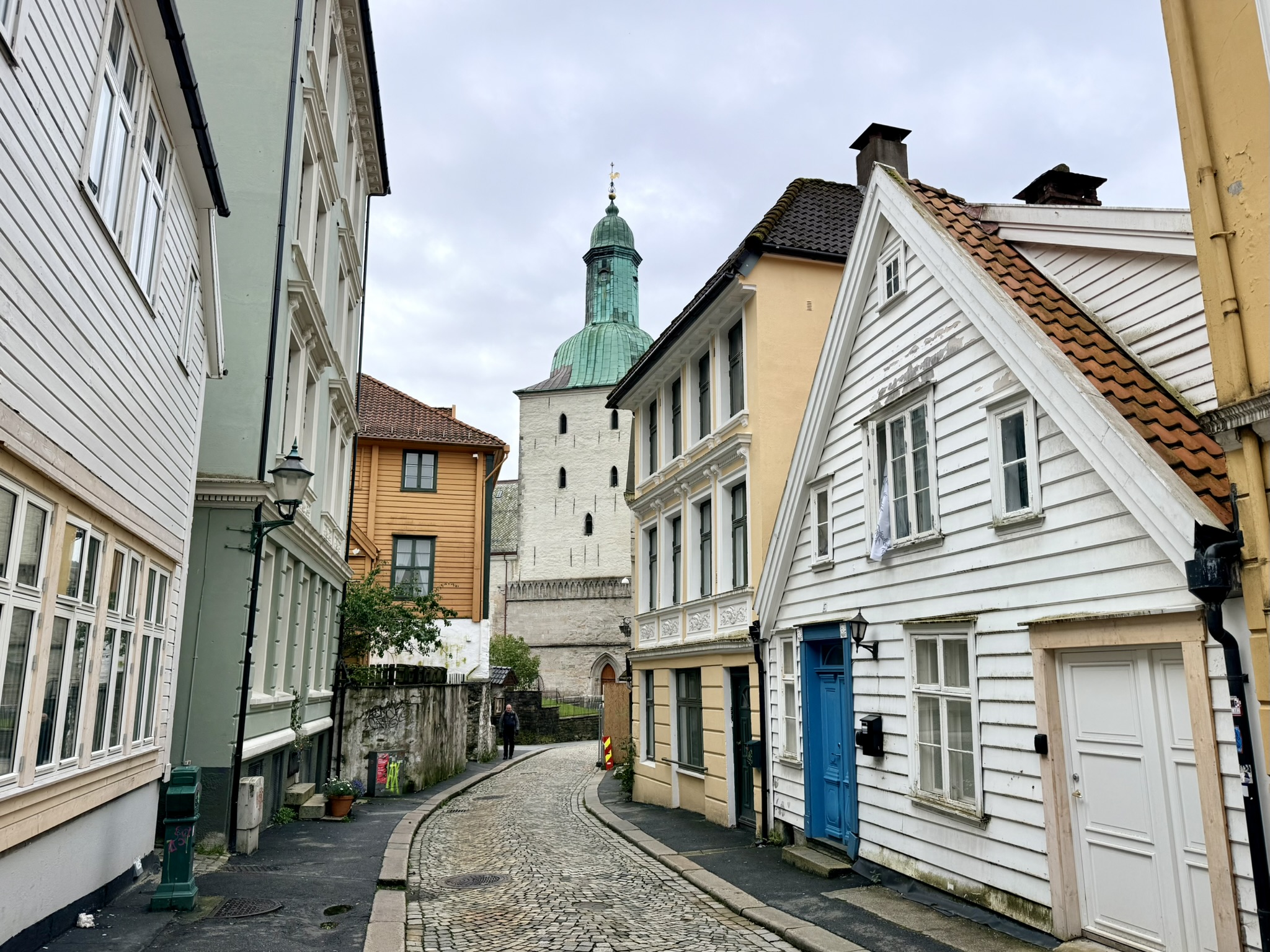
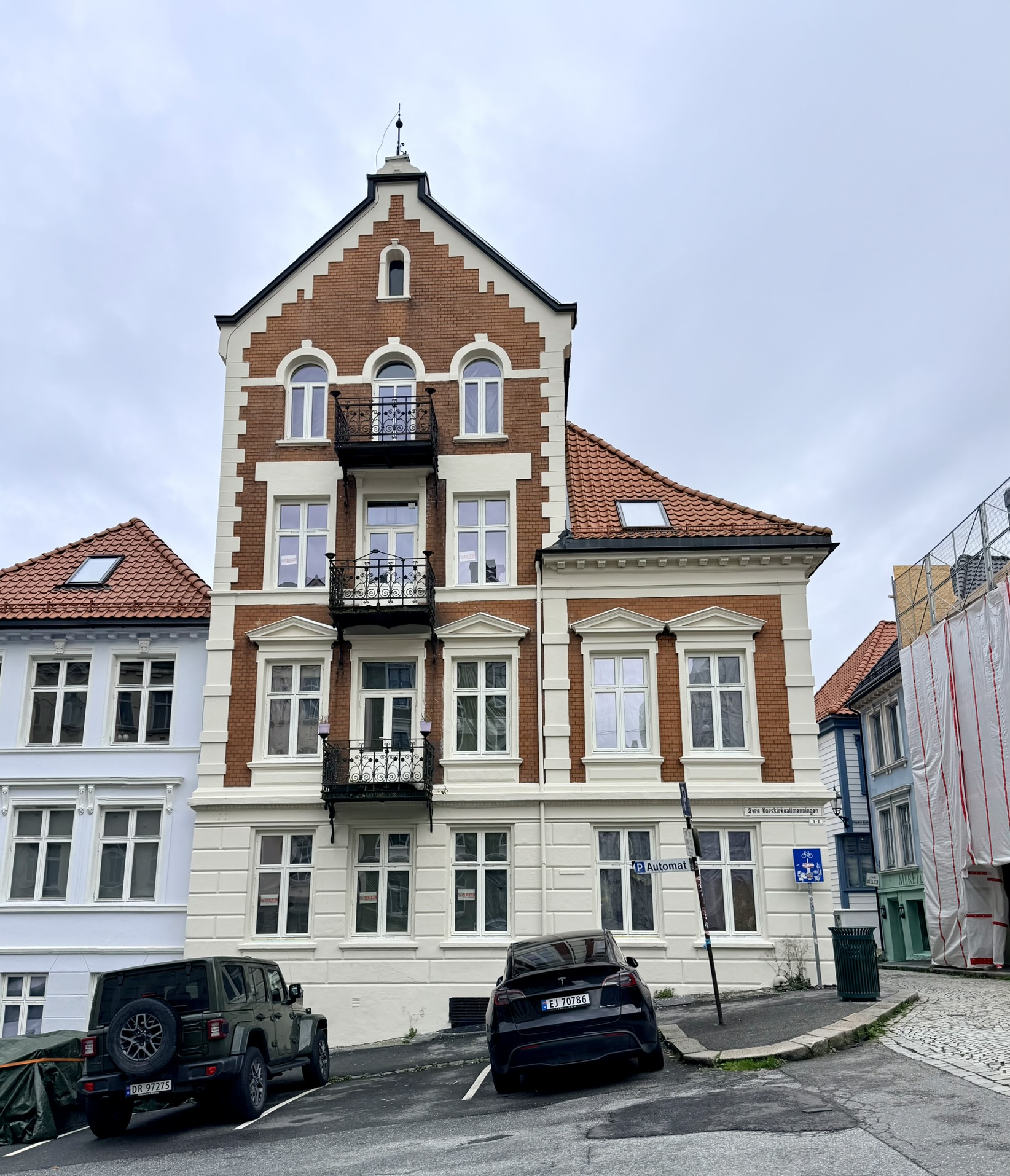
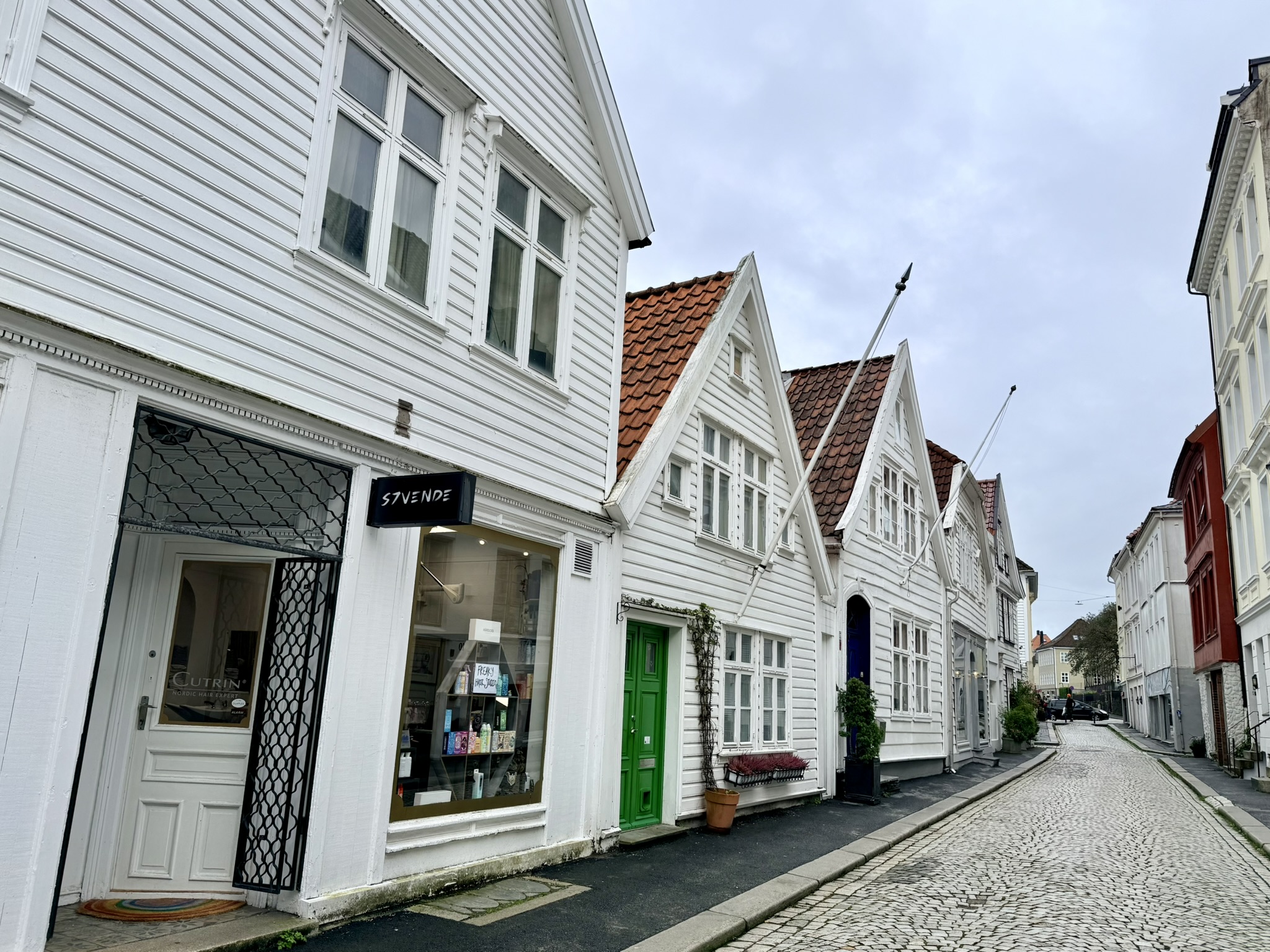

Gamle Bergen Museum
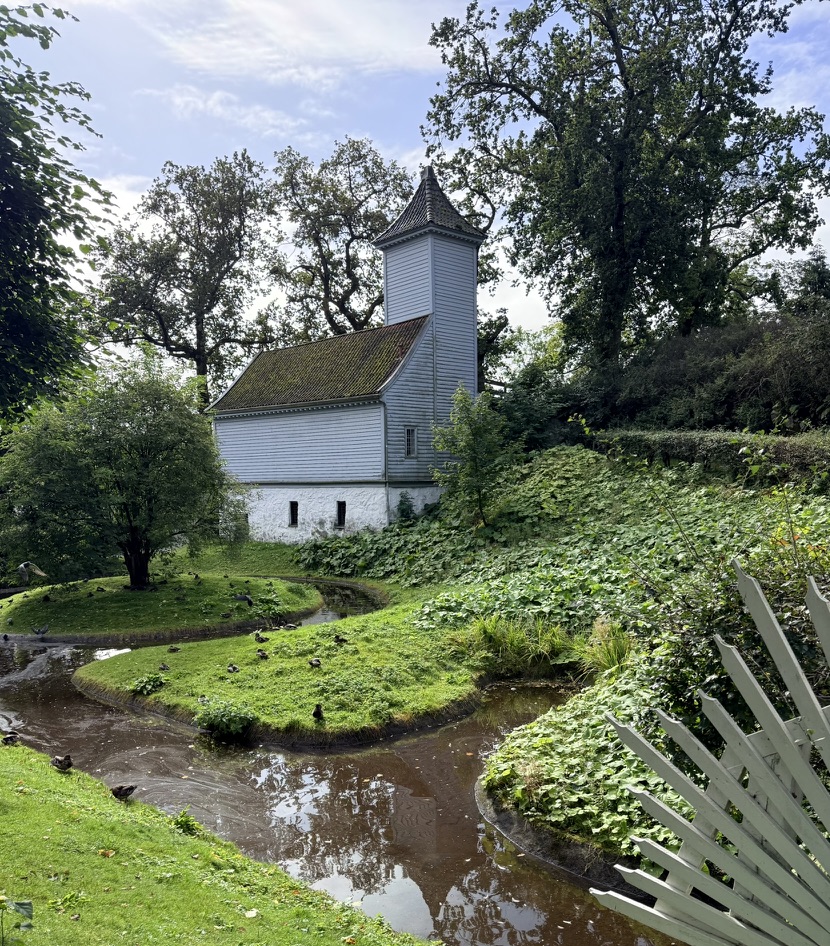
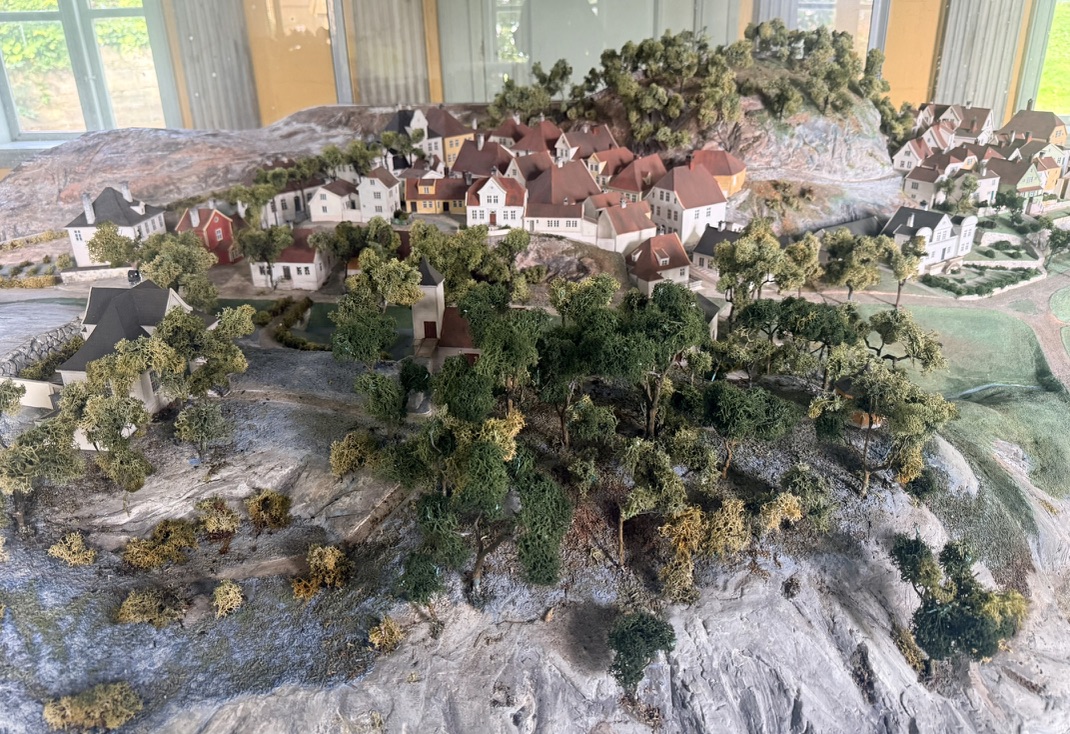
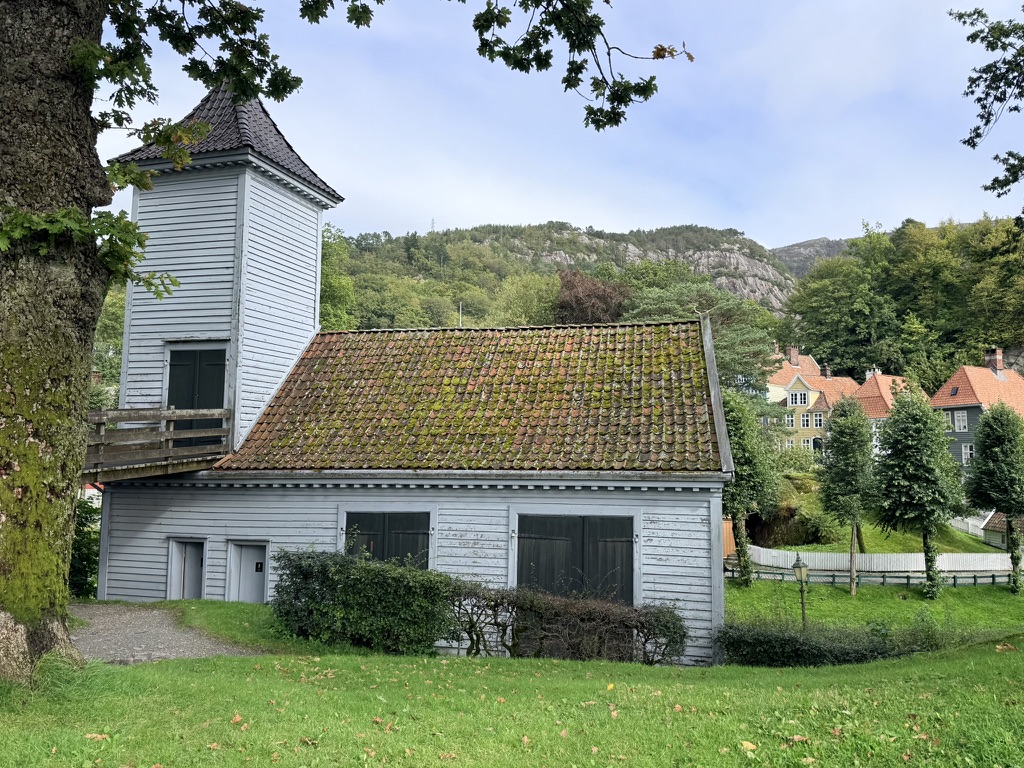
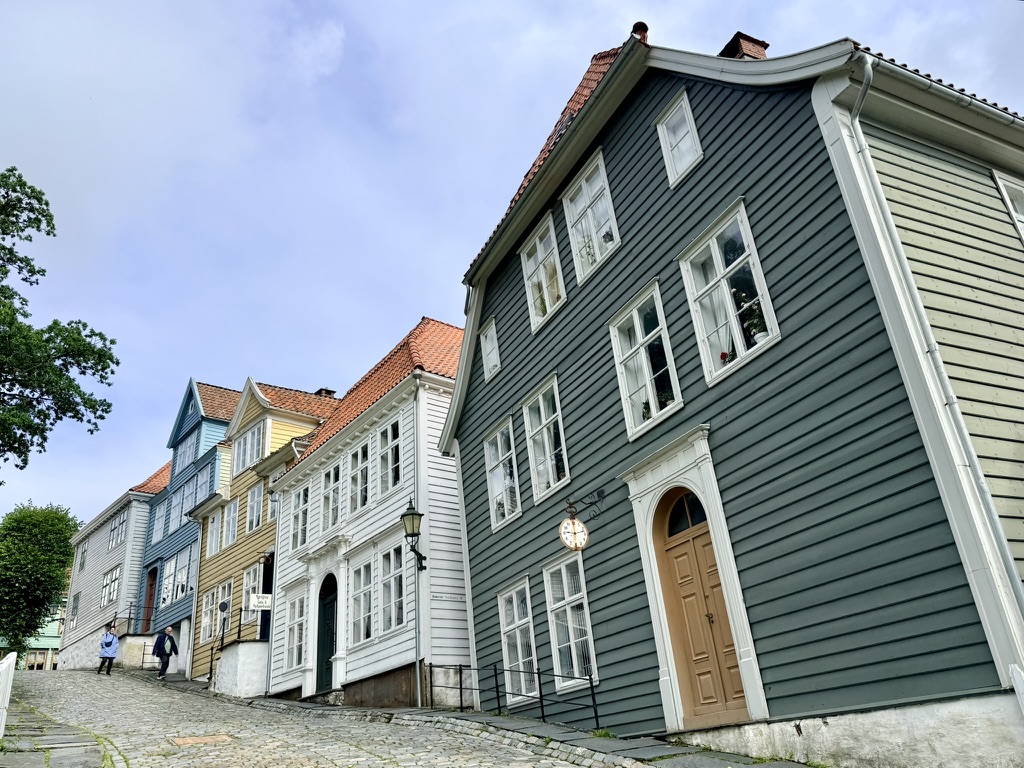
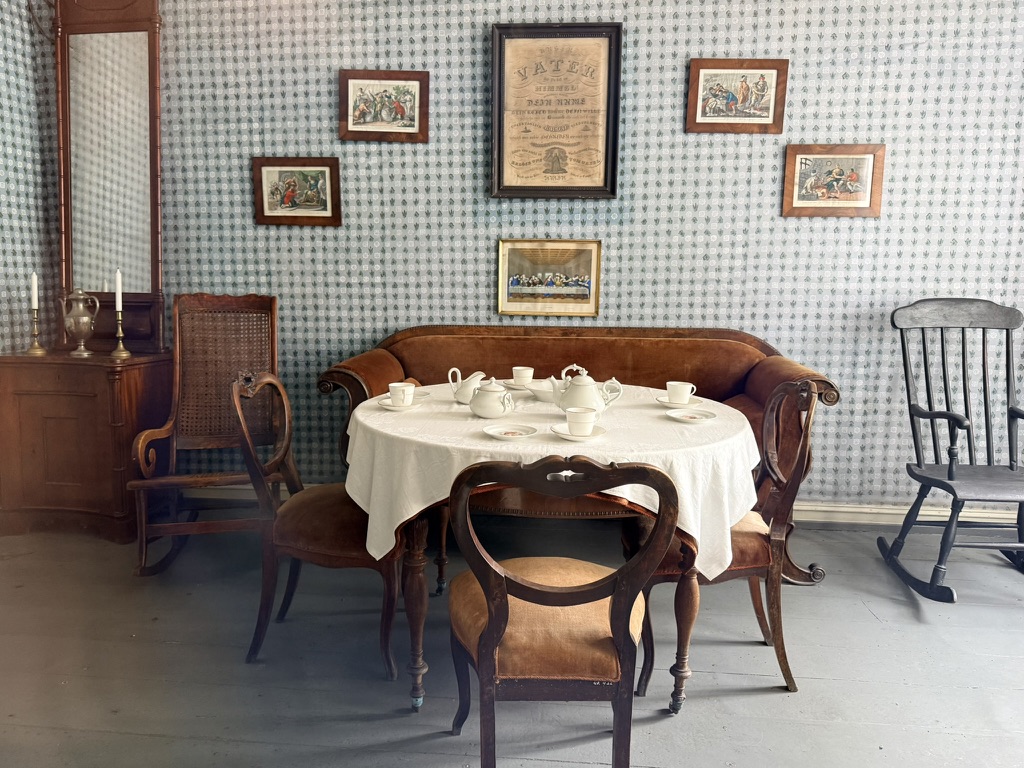
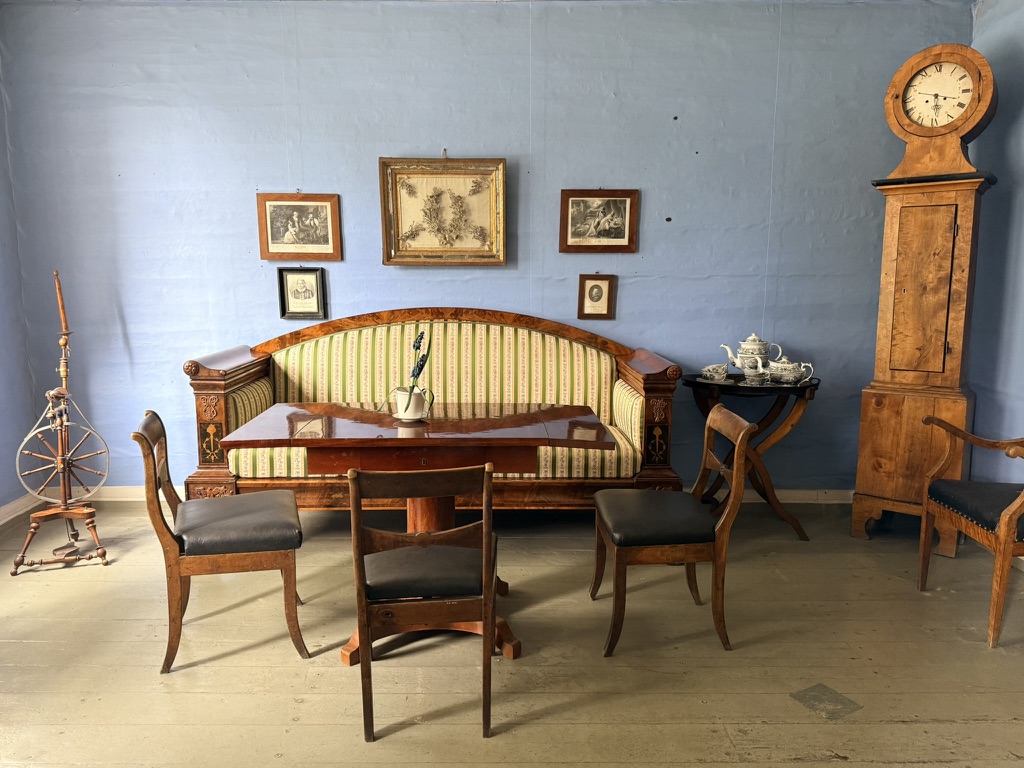
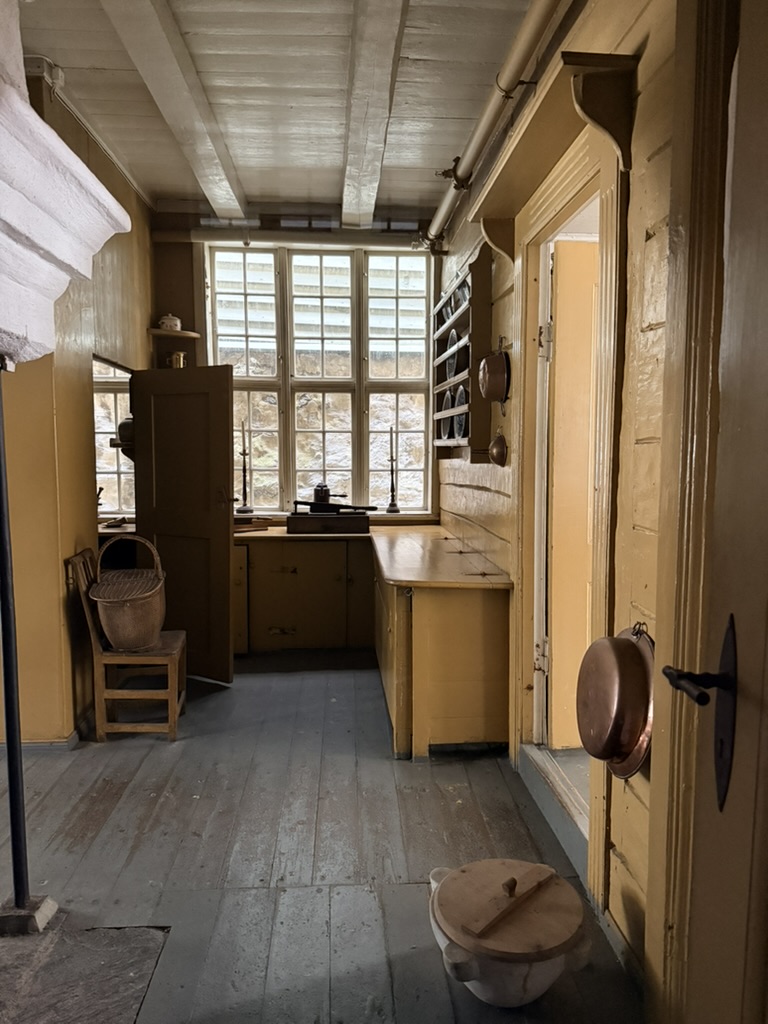
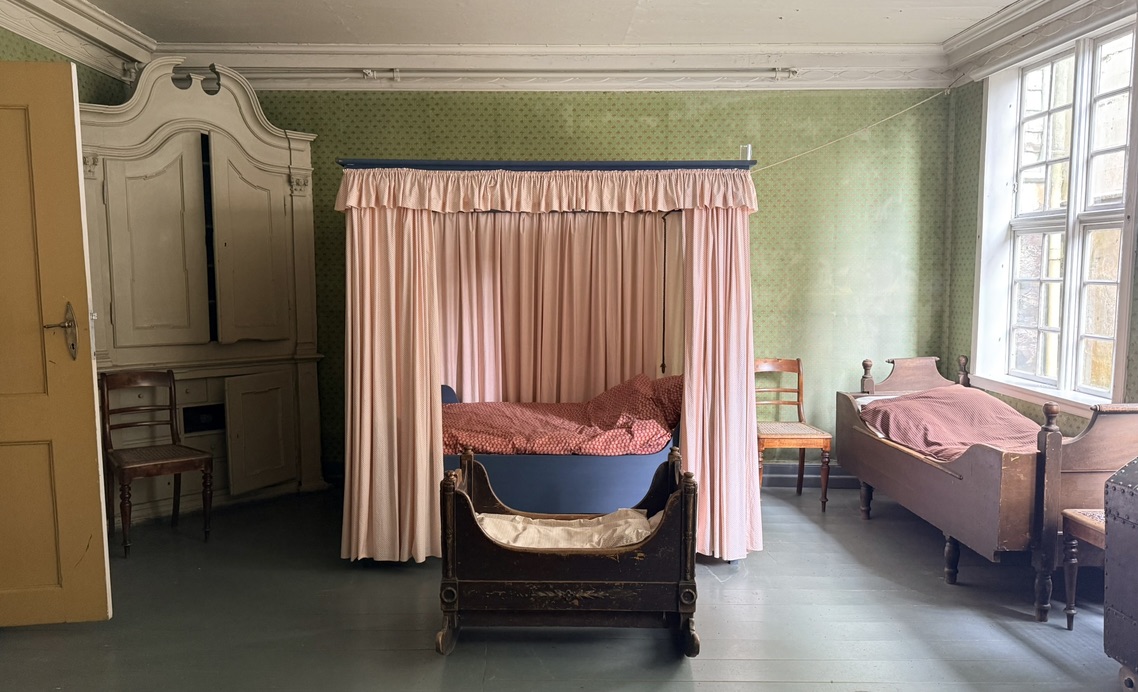
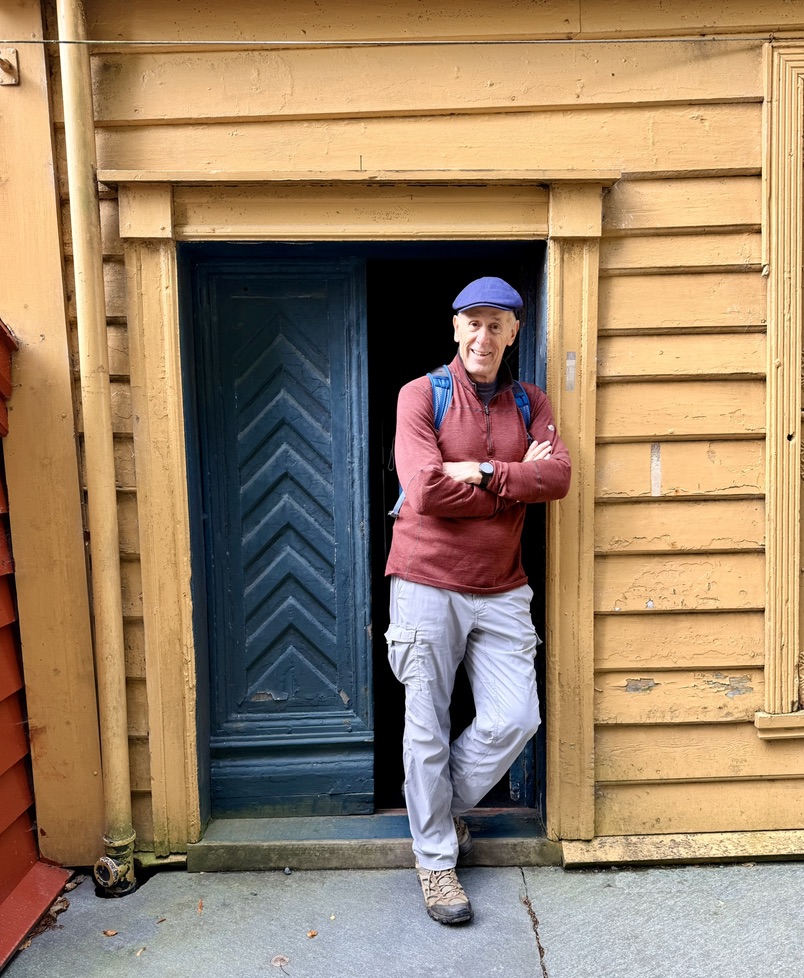
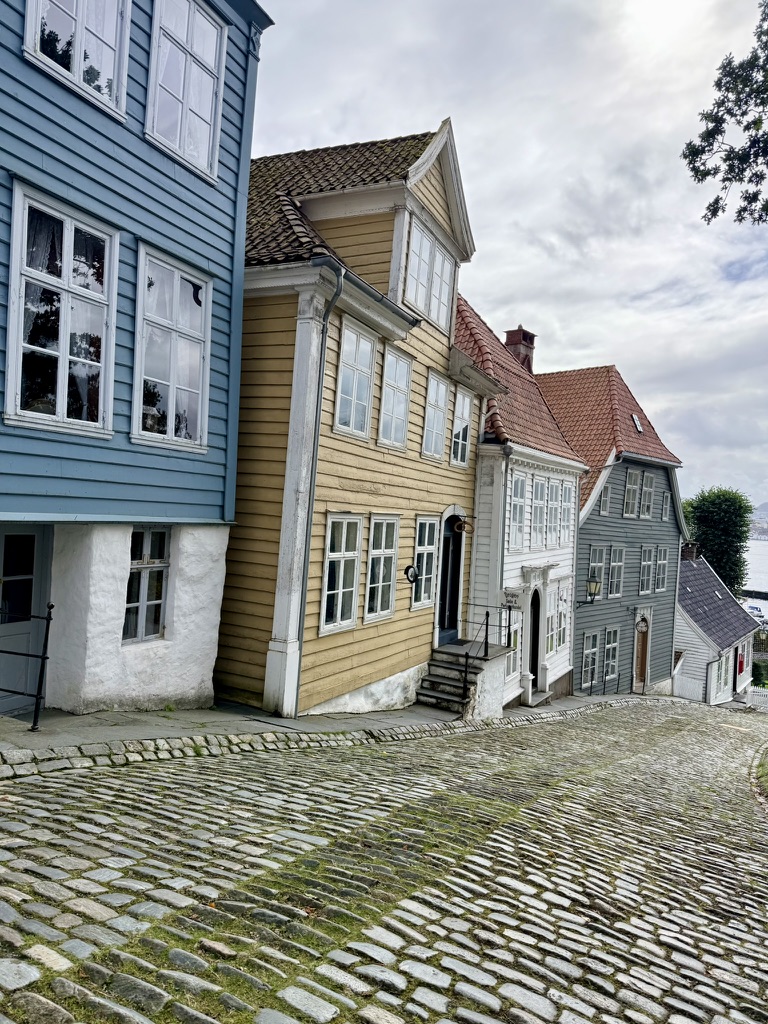
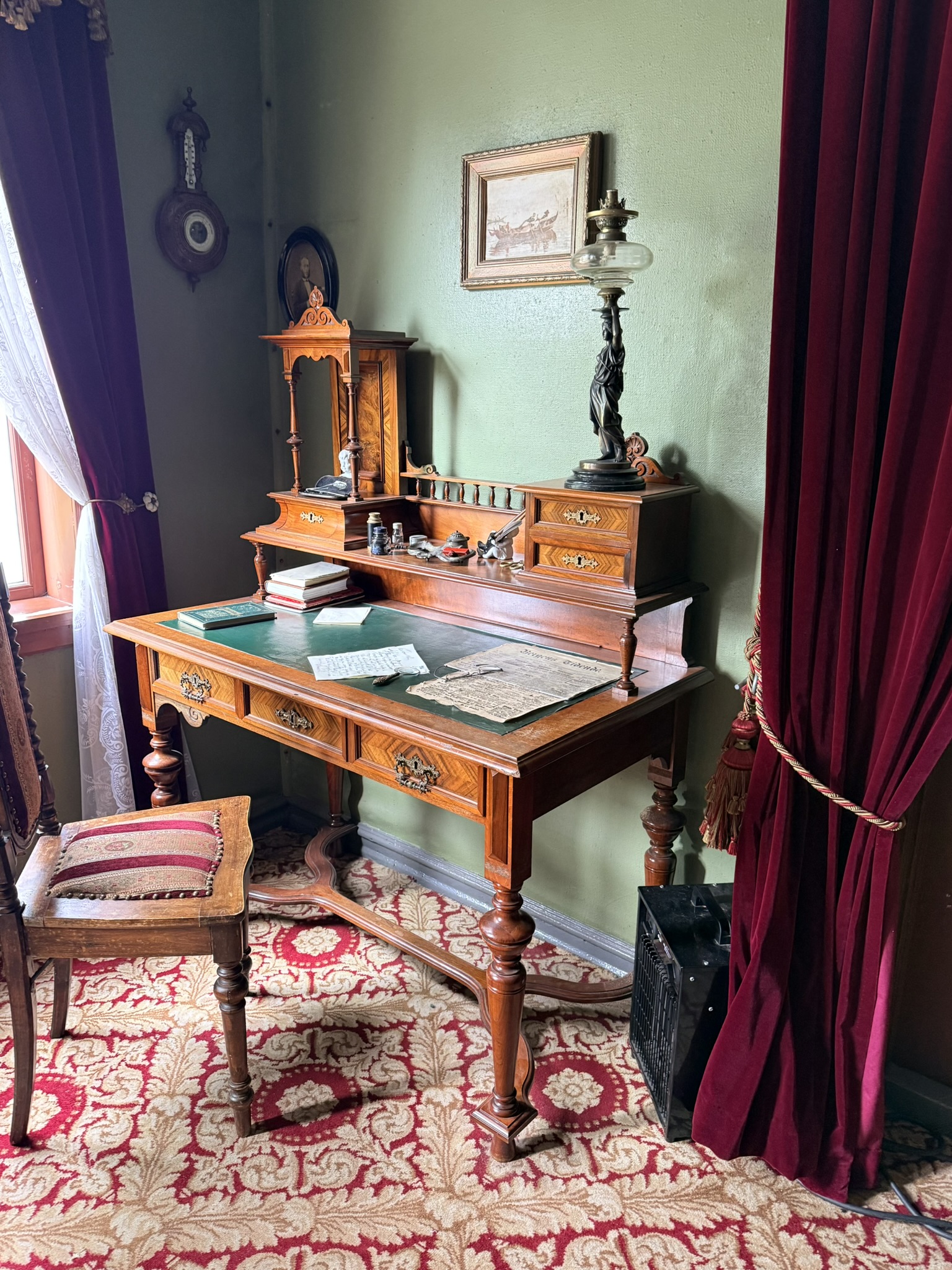
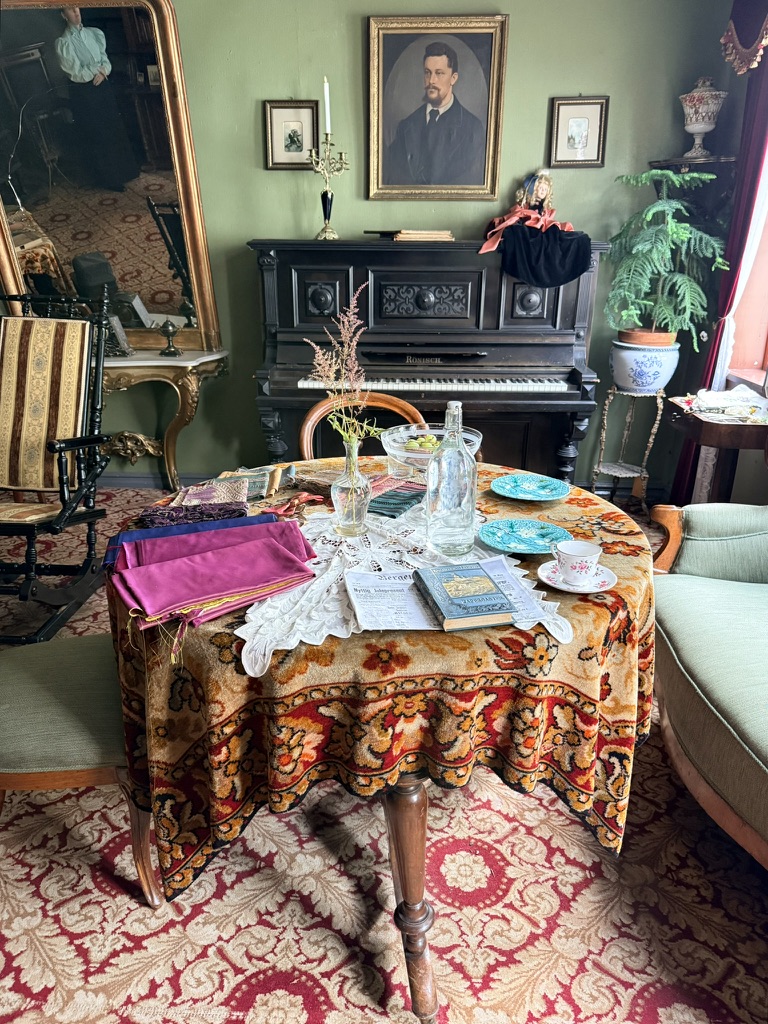
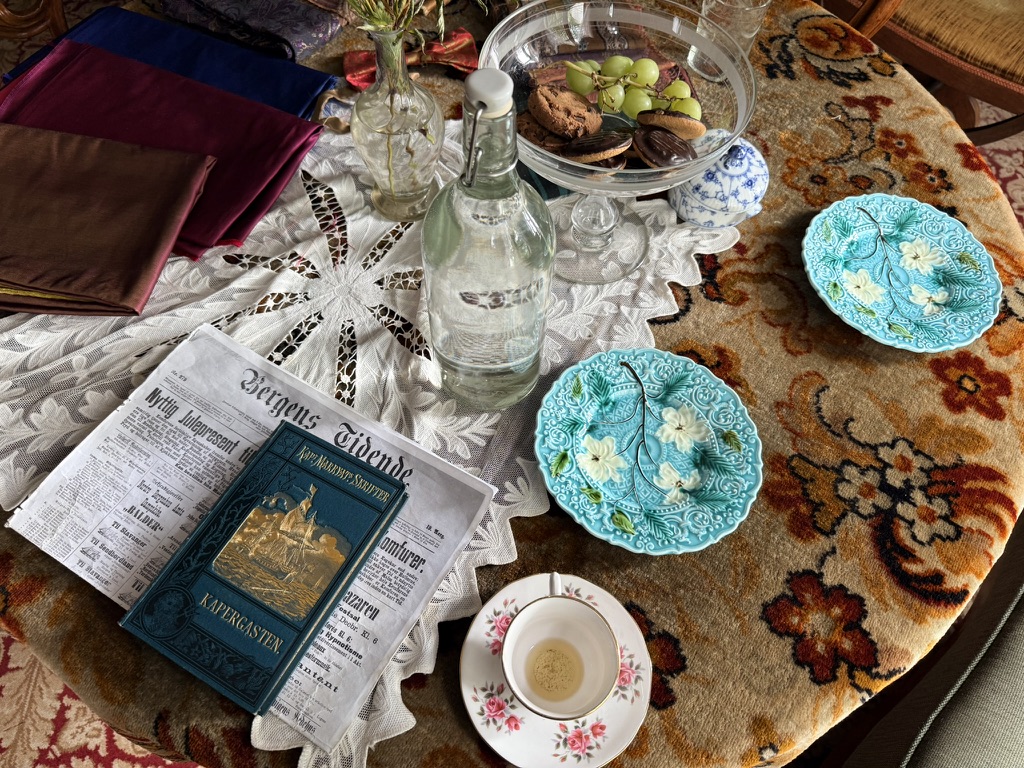
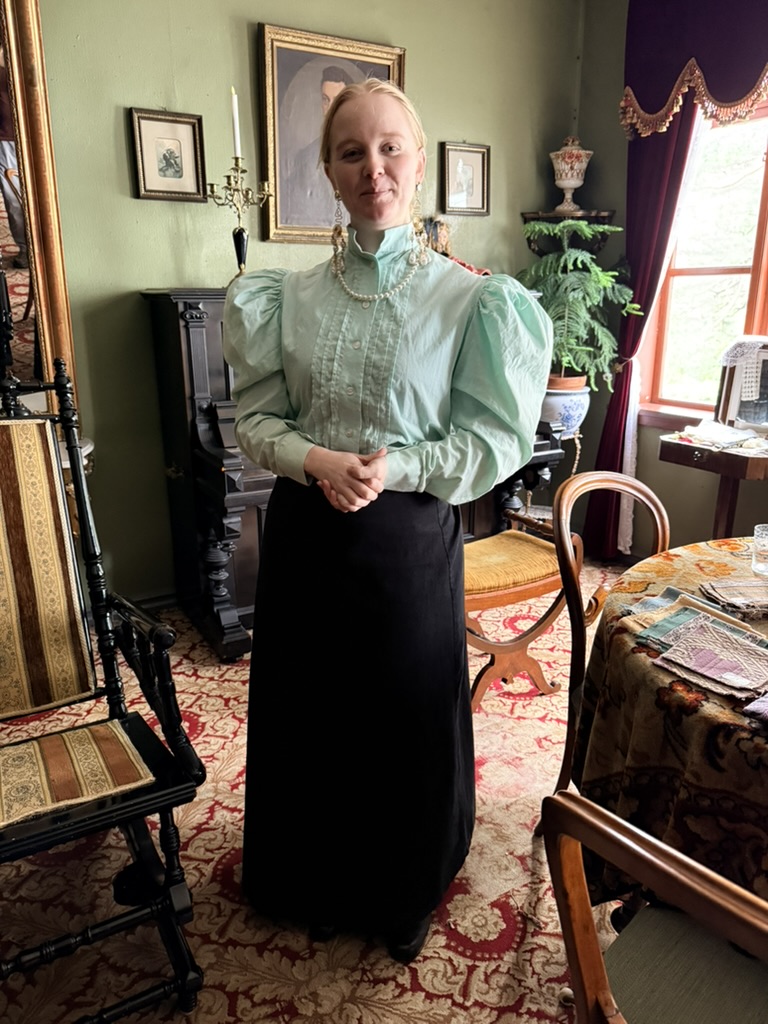
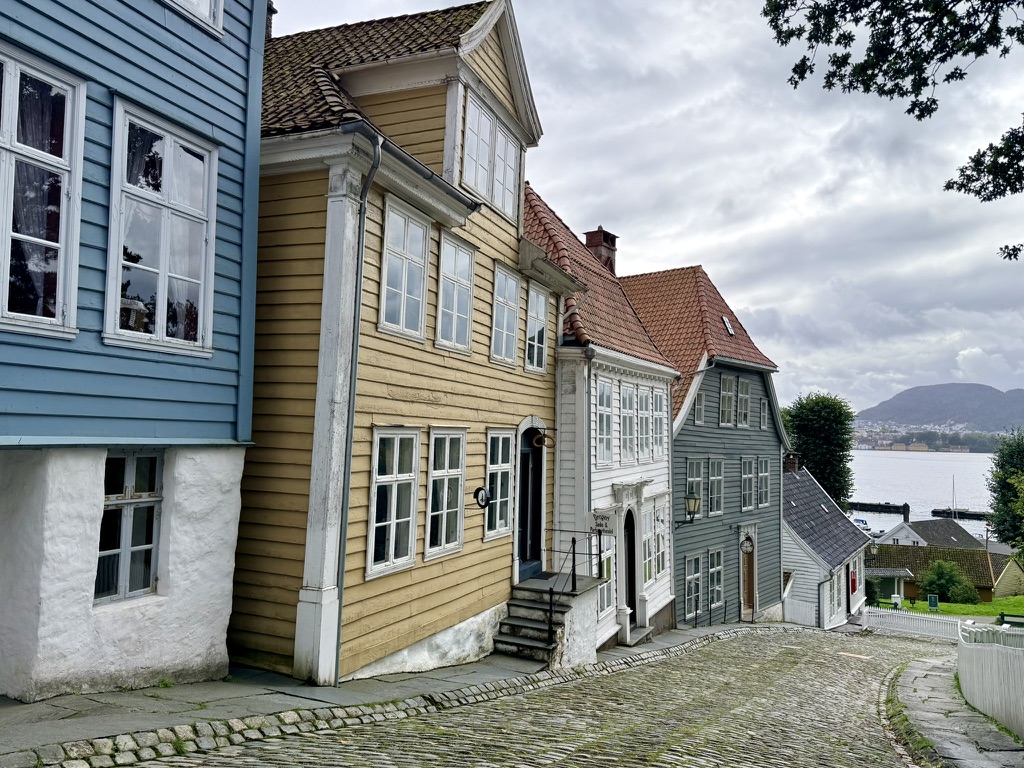
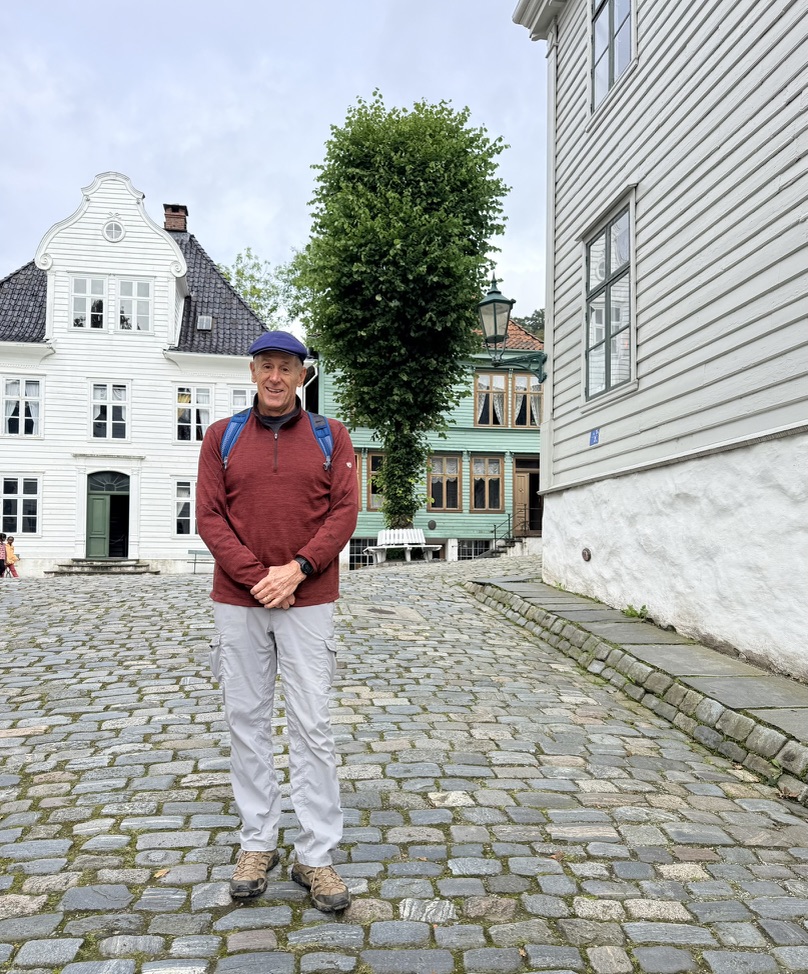
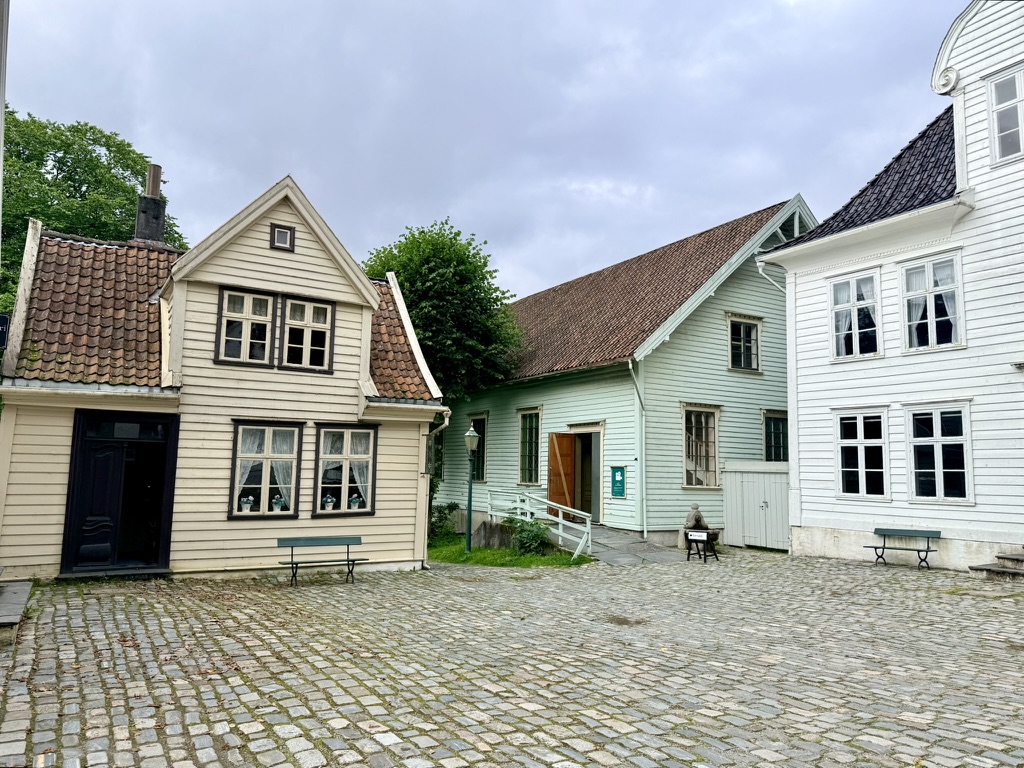
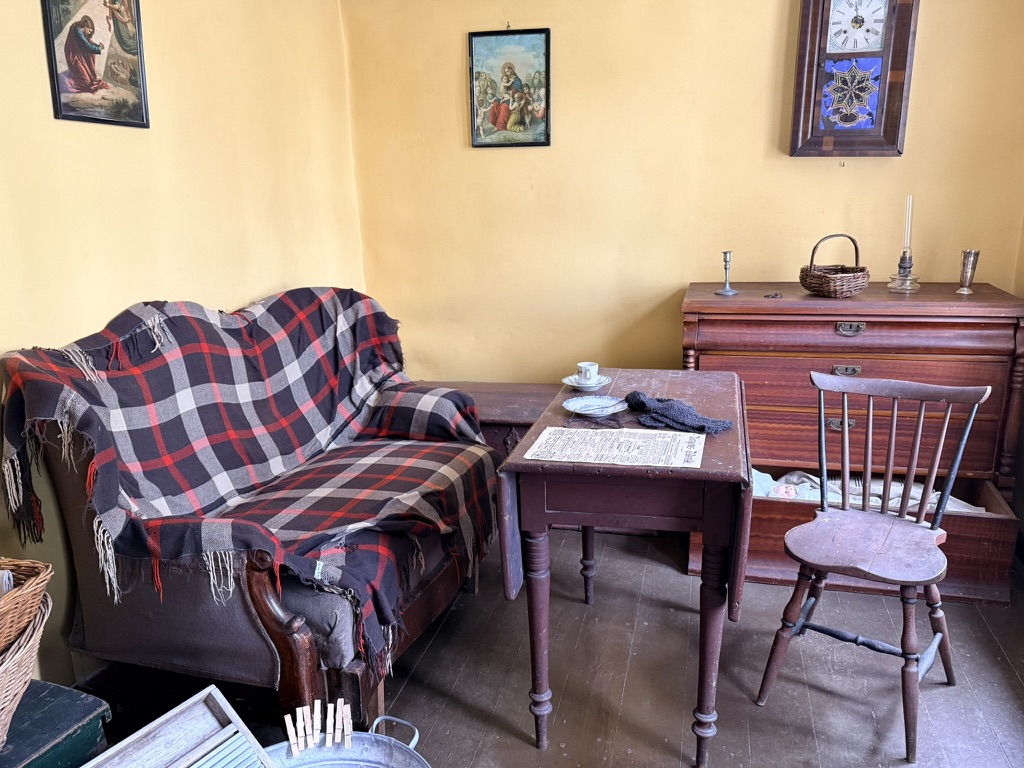
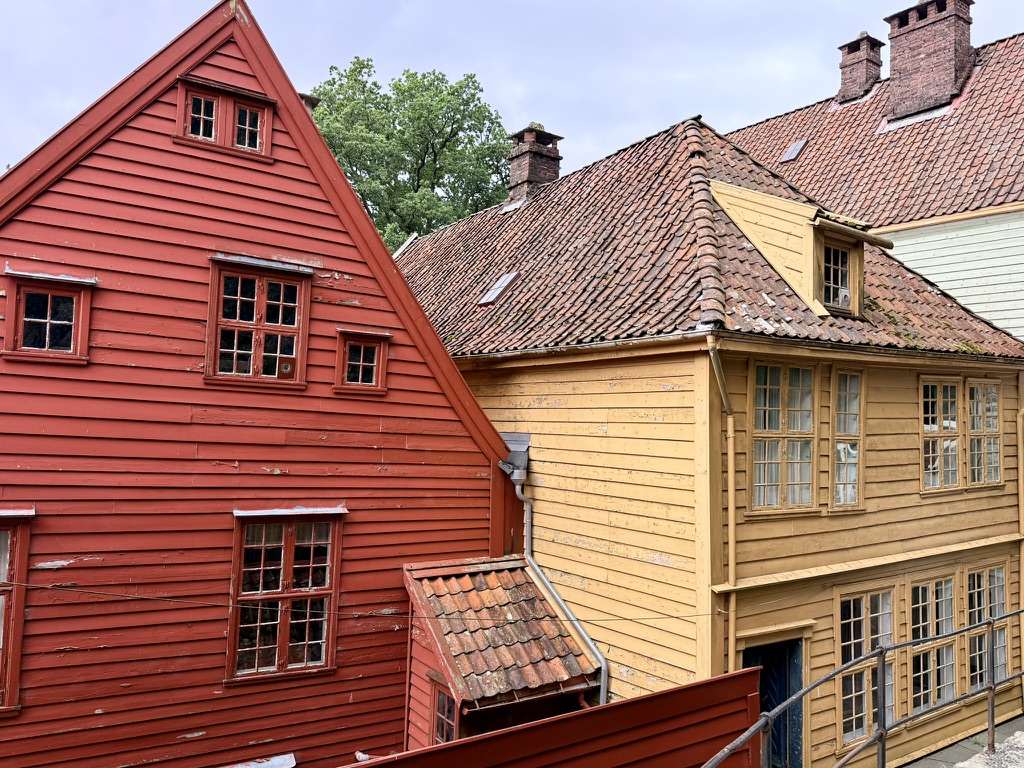
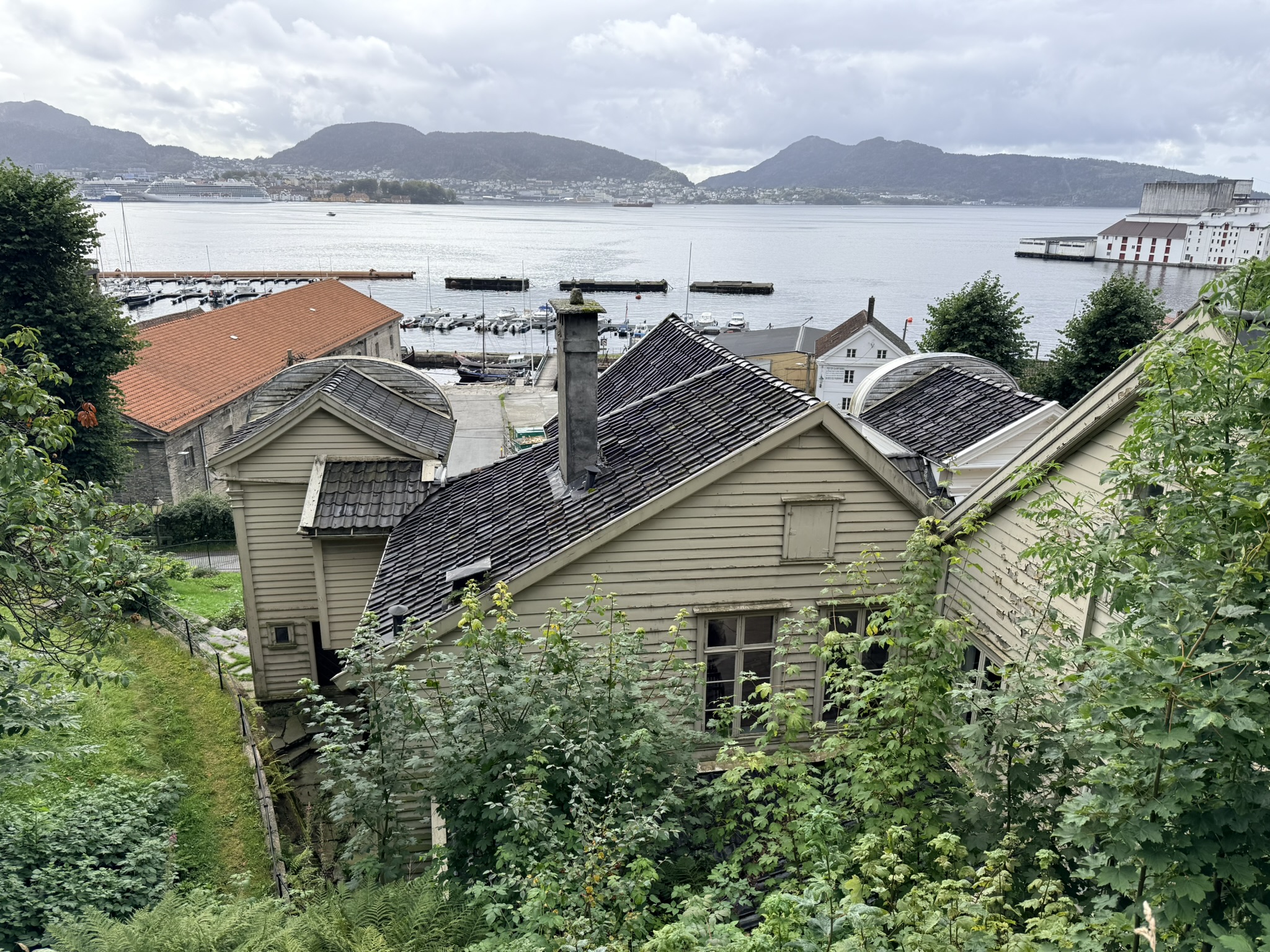
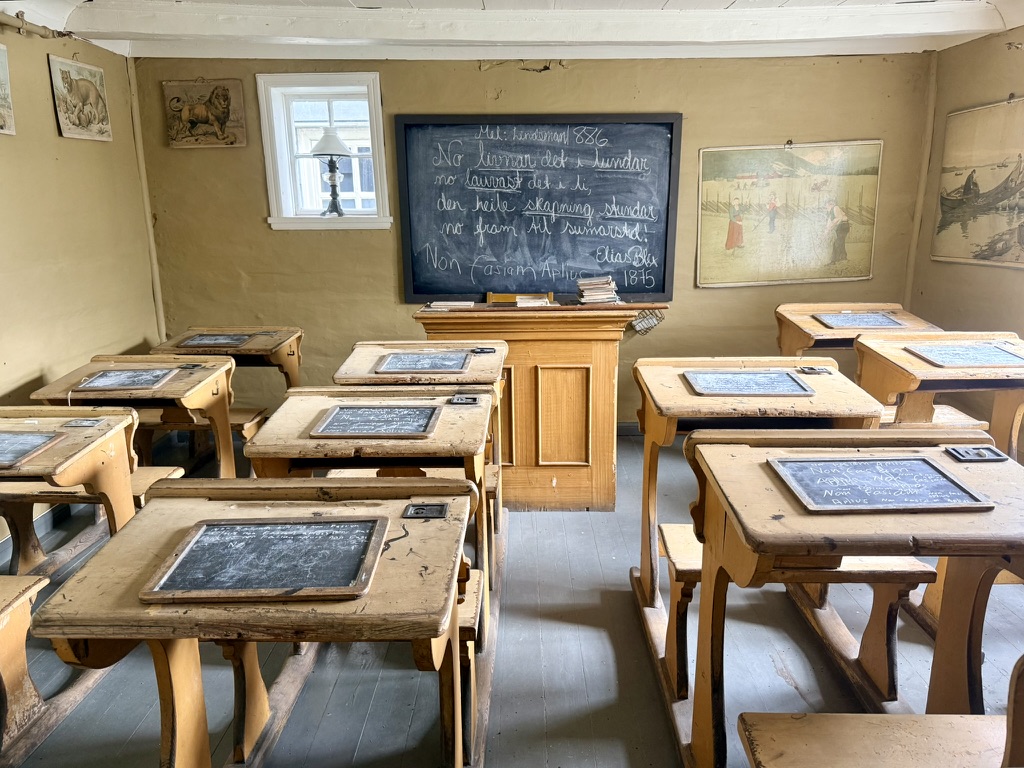
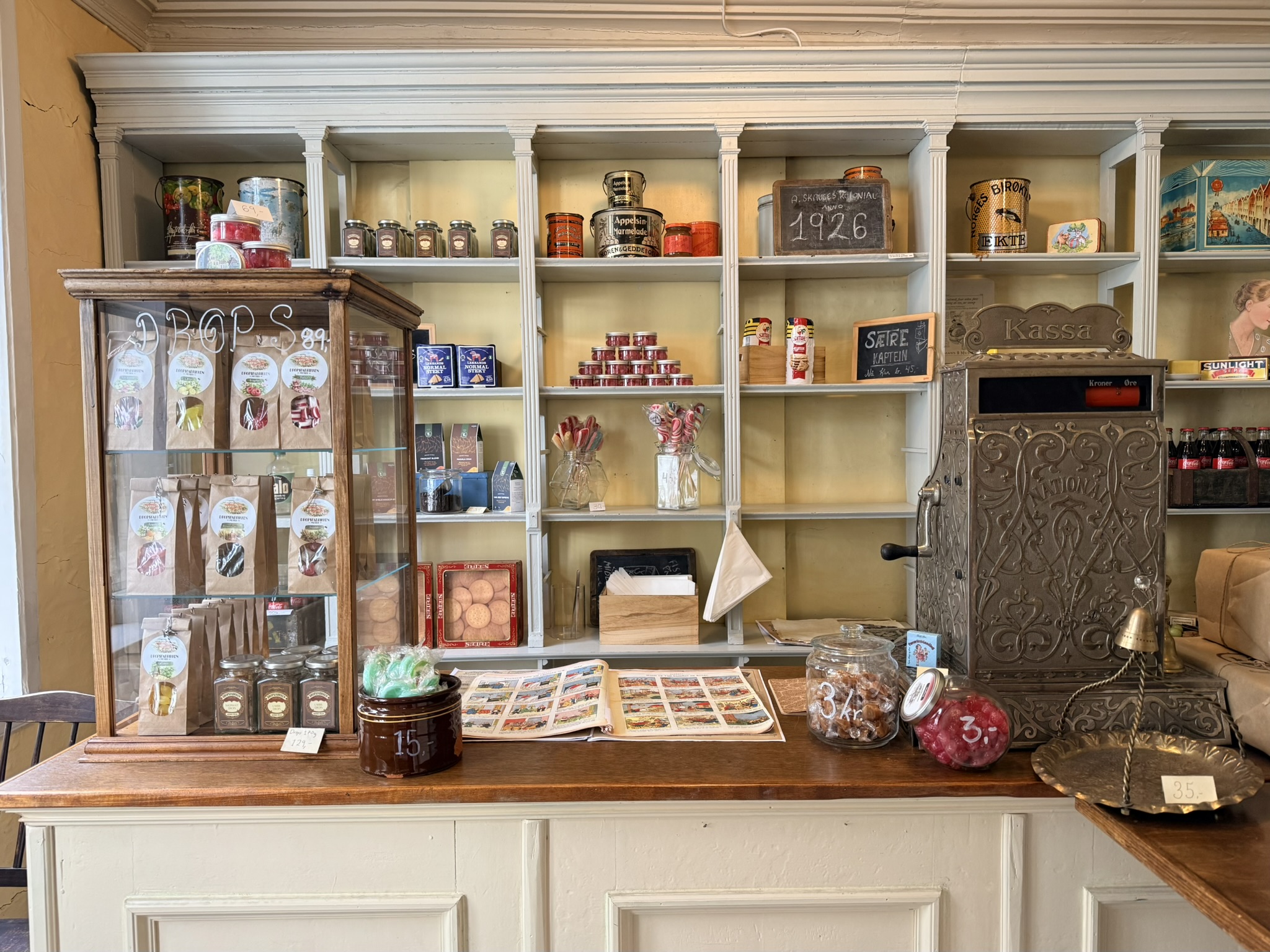
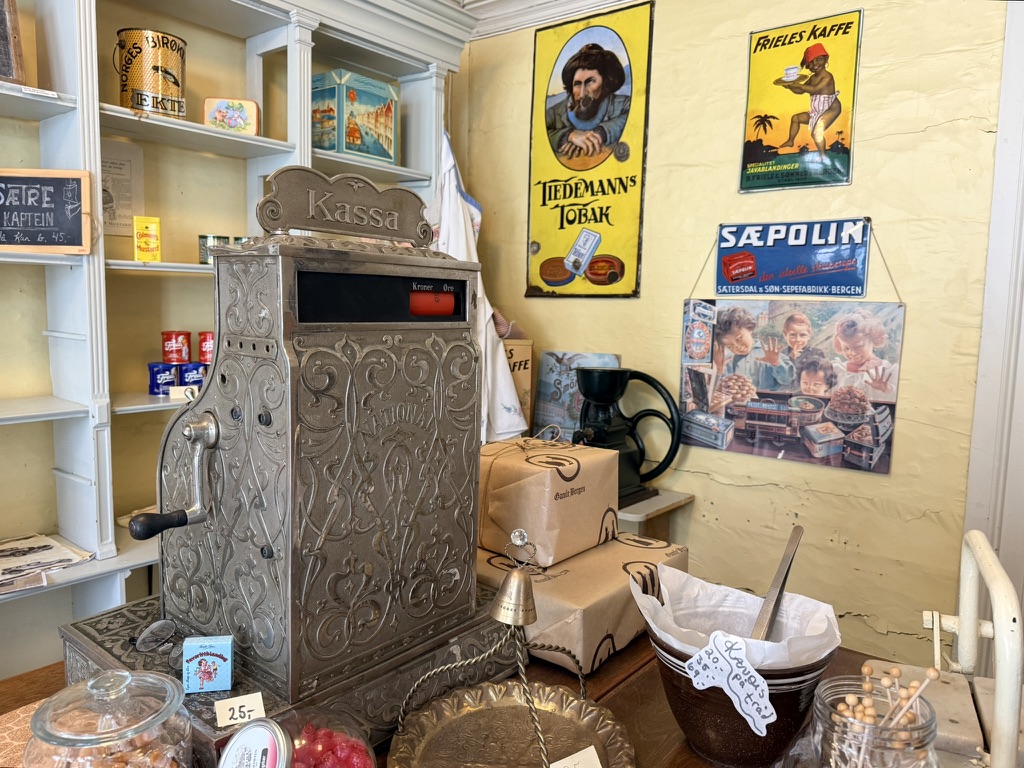
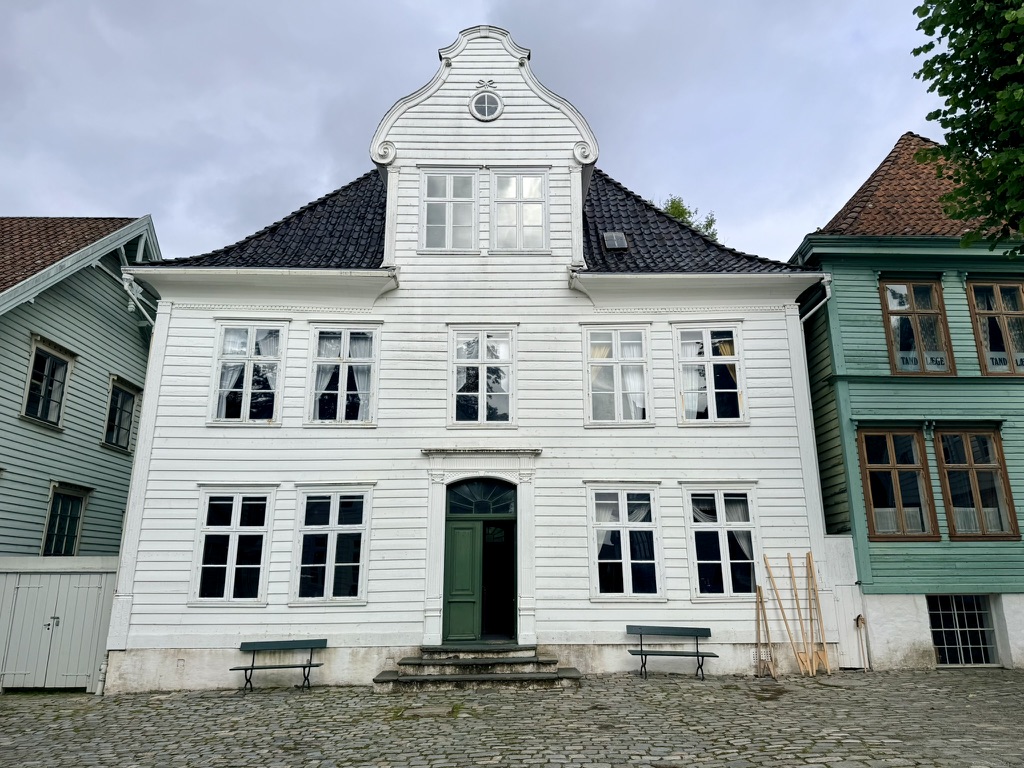
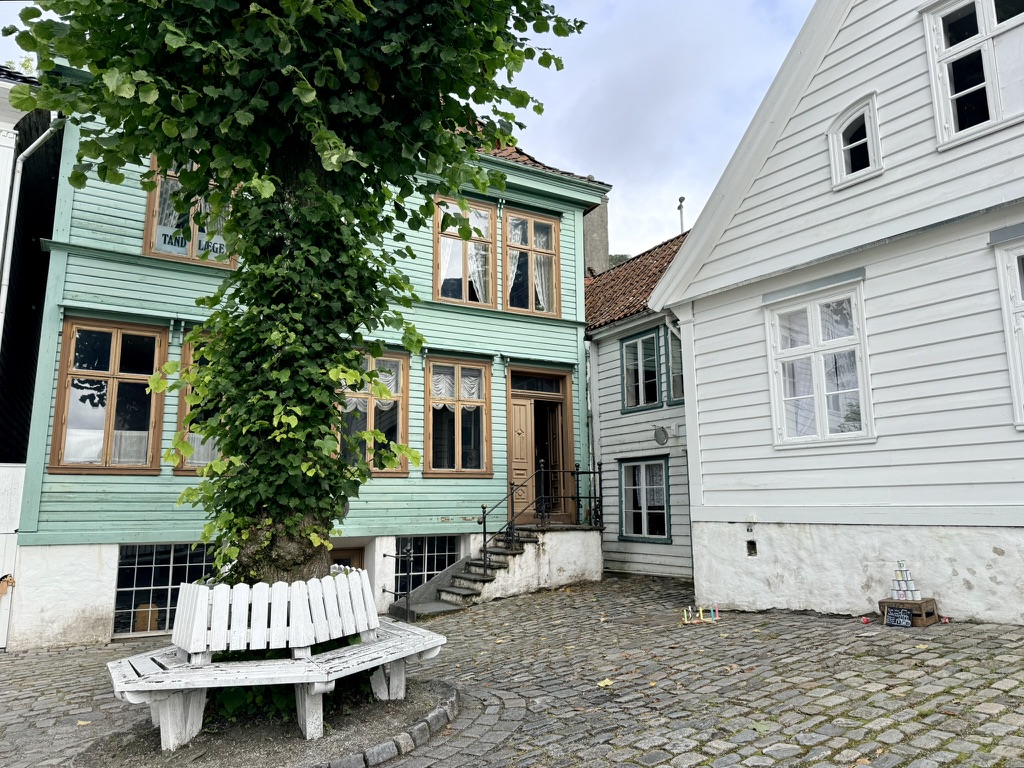
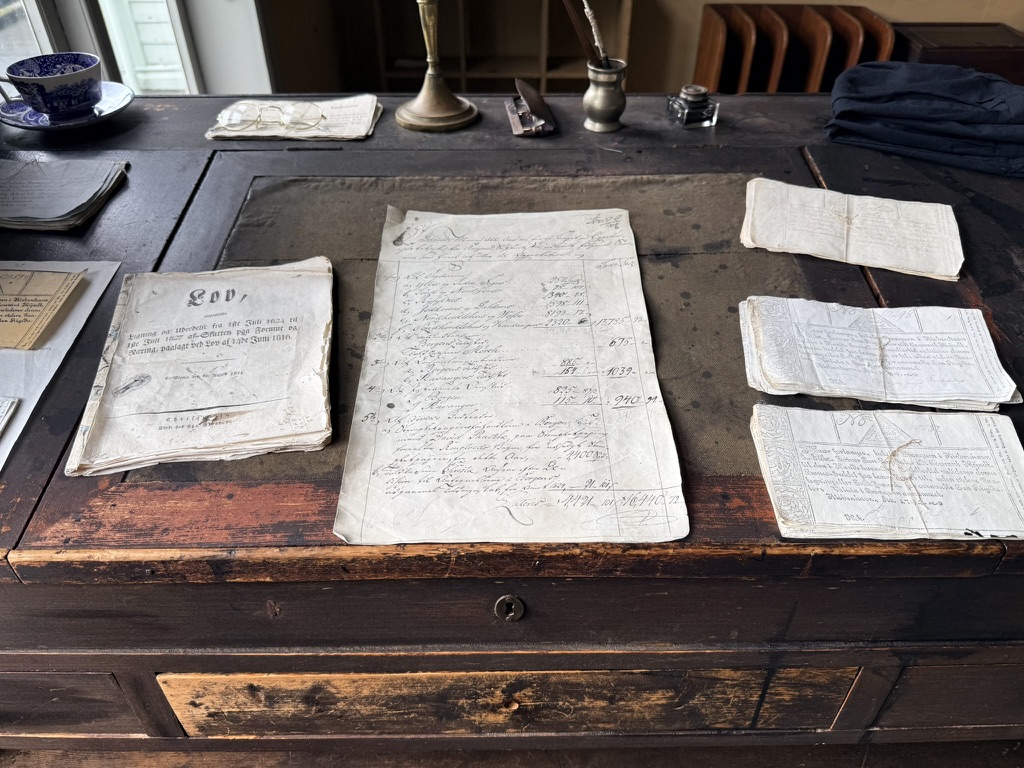
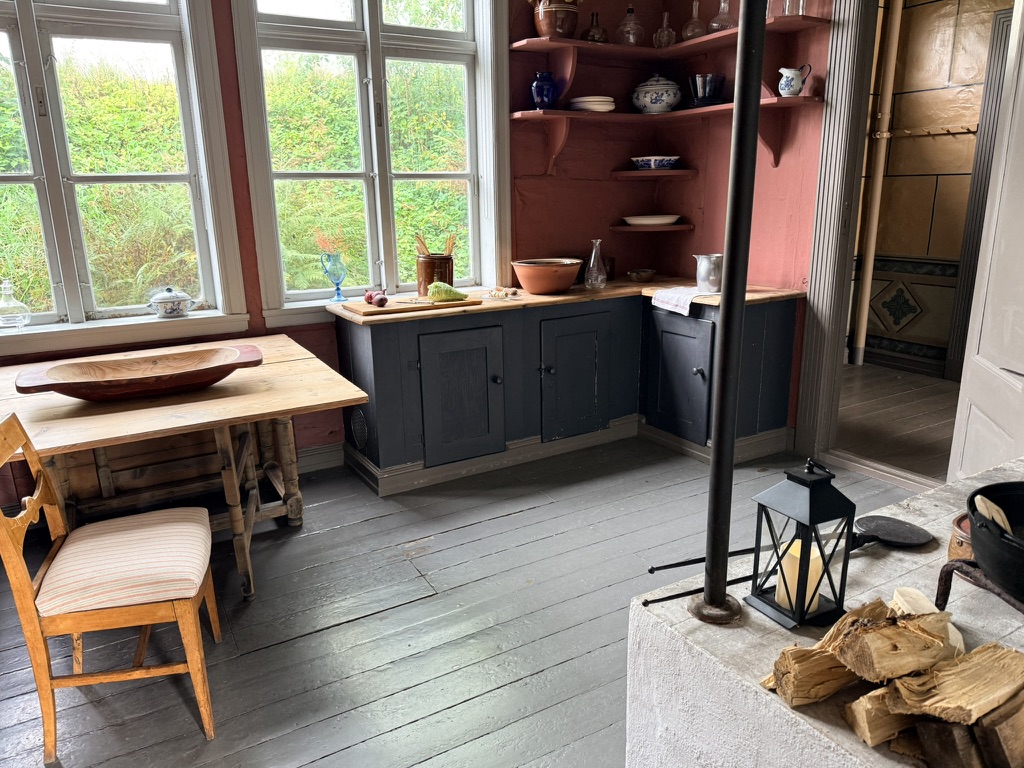
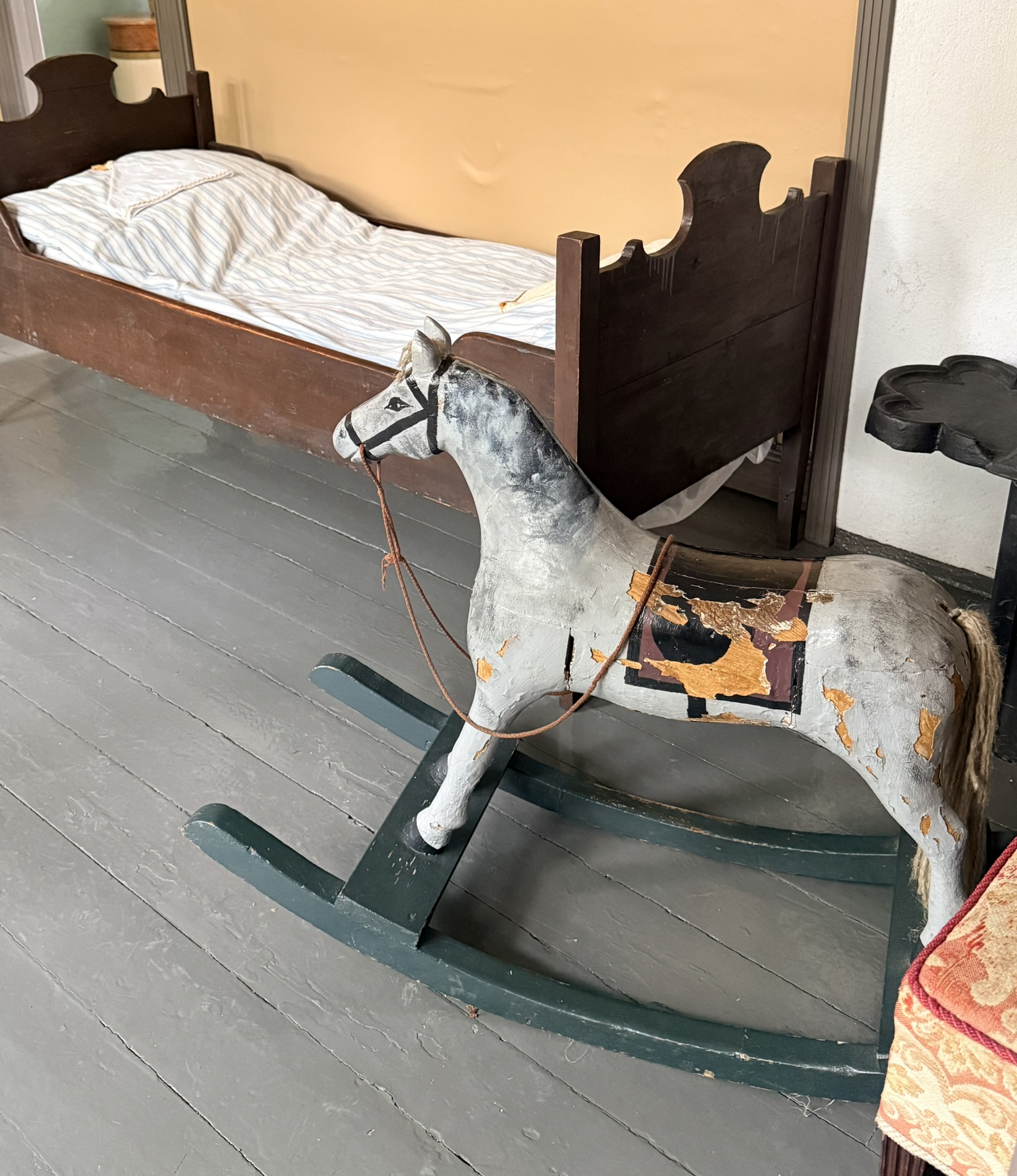
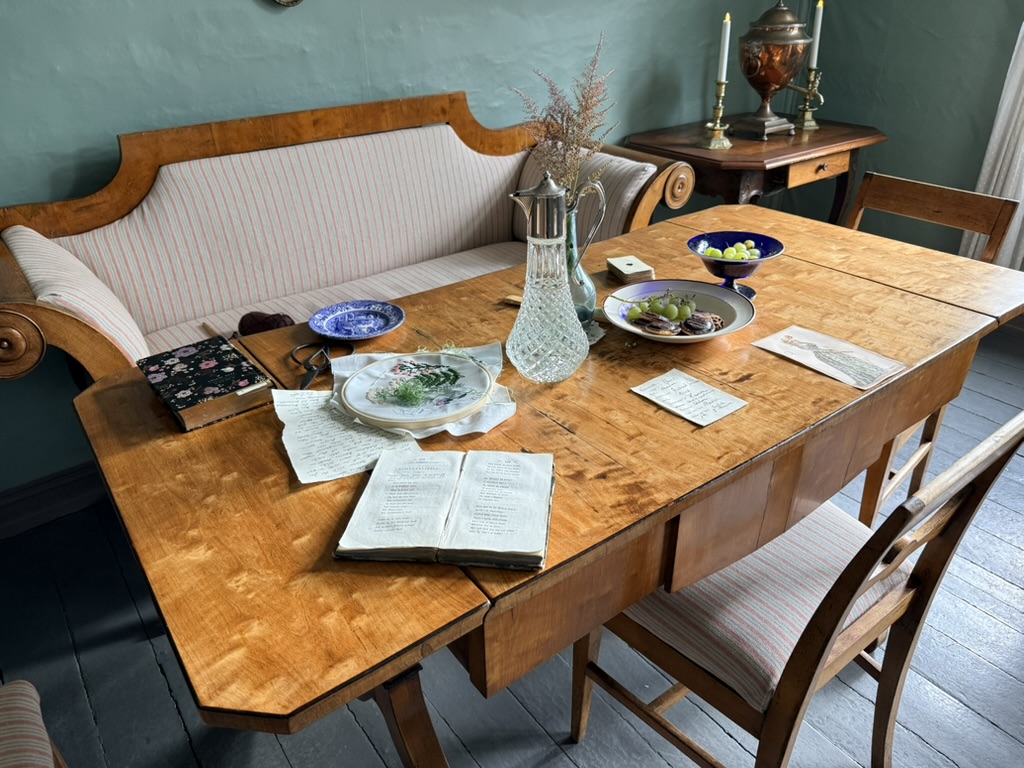
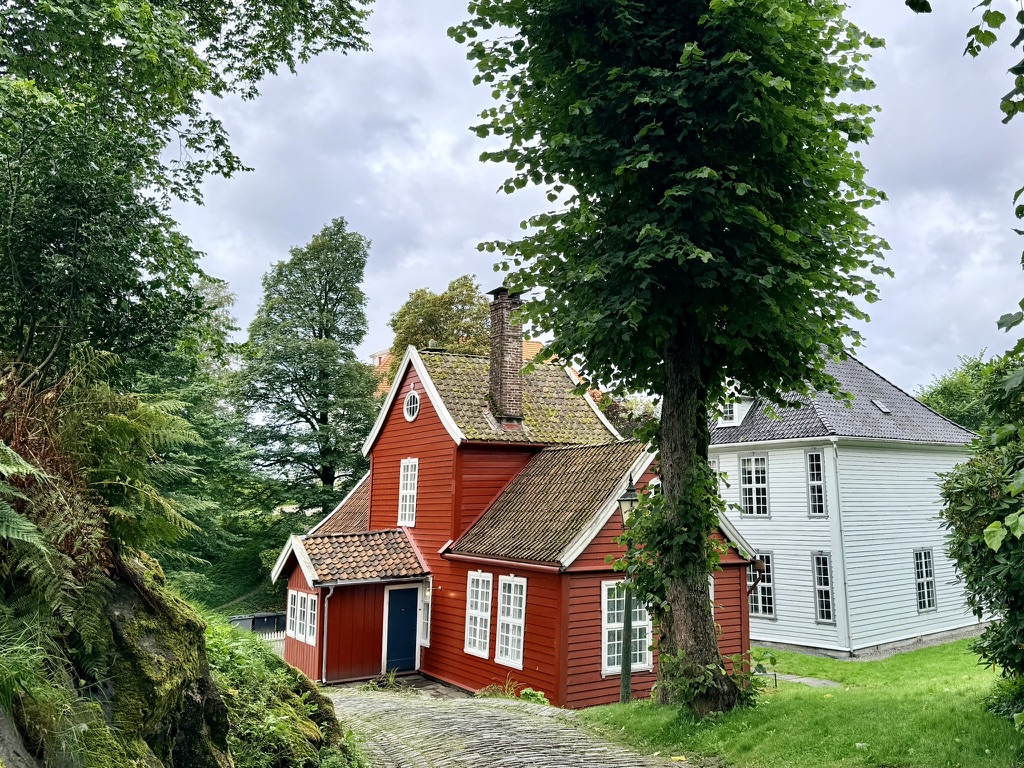
We had read that the Gamle Bergen Museum‘s last day for the summer season was on Sunday the 13th, so we bought tickets so we could visit the 55 wooden buildings, dating from 1700 to the early 20th century, that have been moved to Sandviken, north of the city center, mostly from downtown Bergen.
In 1702, a great fire destroyed much of Bryggen and tore through other parts of Bergen, wiping out 80% of the city. As a result, Bergen doesn’t have many wooden buildings built before the 1700s. However, after the fire, a flurry of construction ensued with many new buildings erected throughout the 18th and 19th centuries.
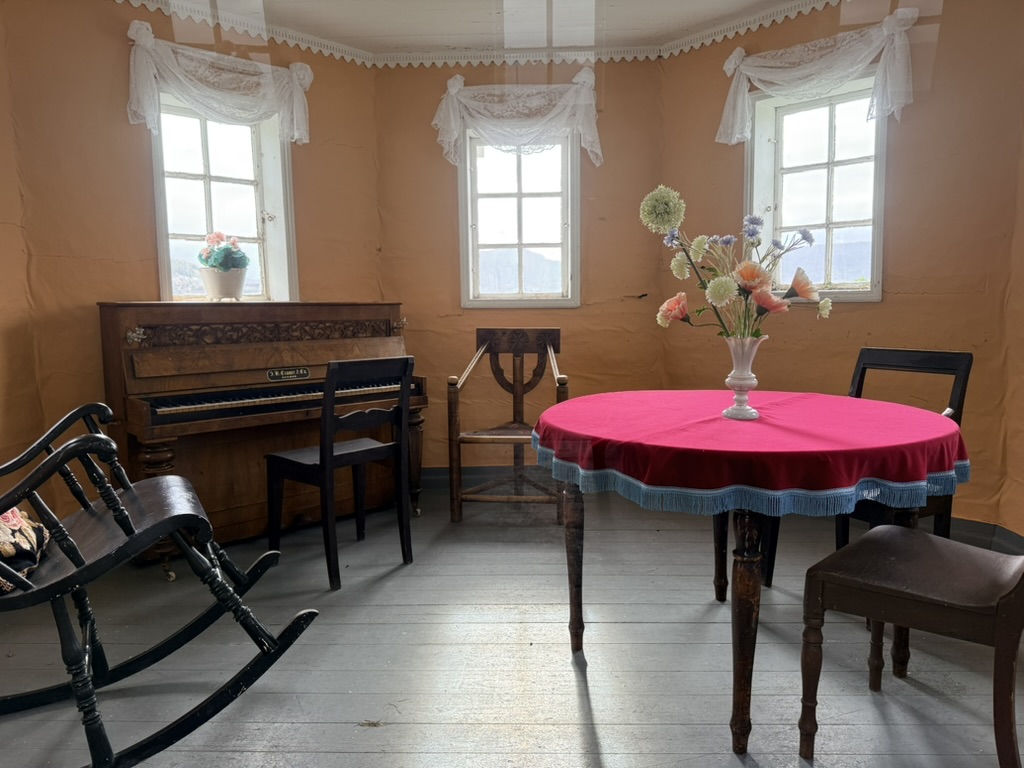
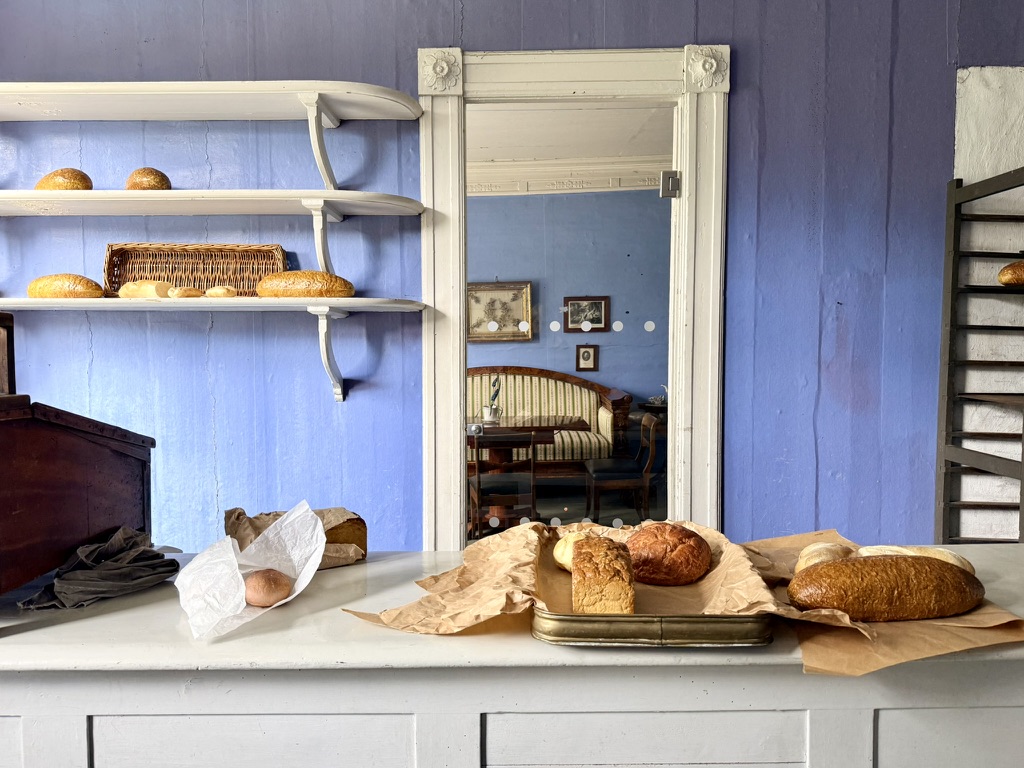
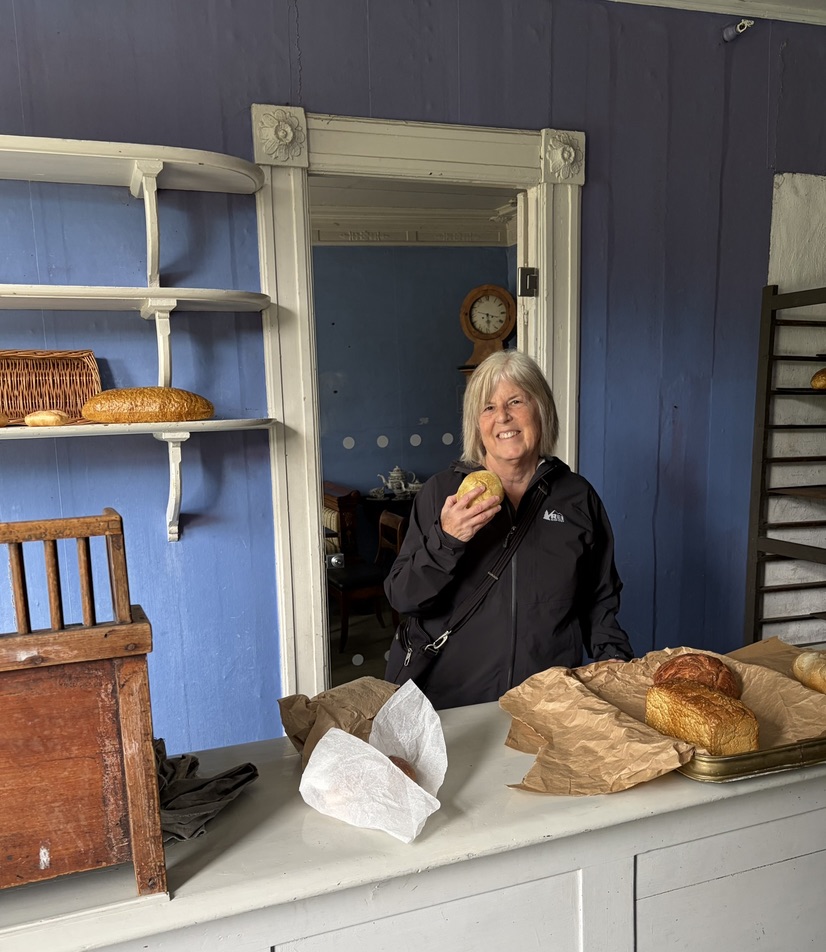
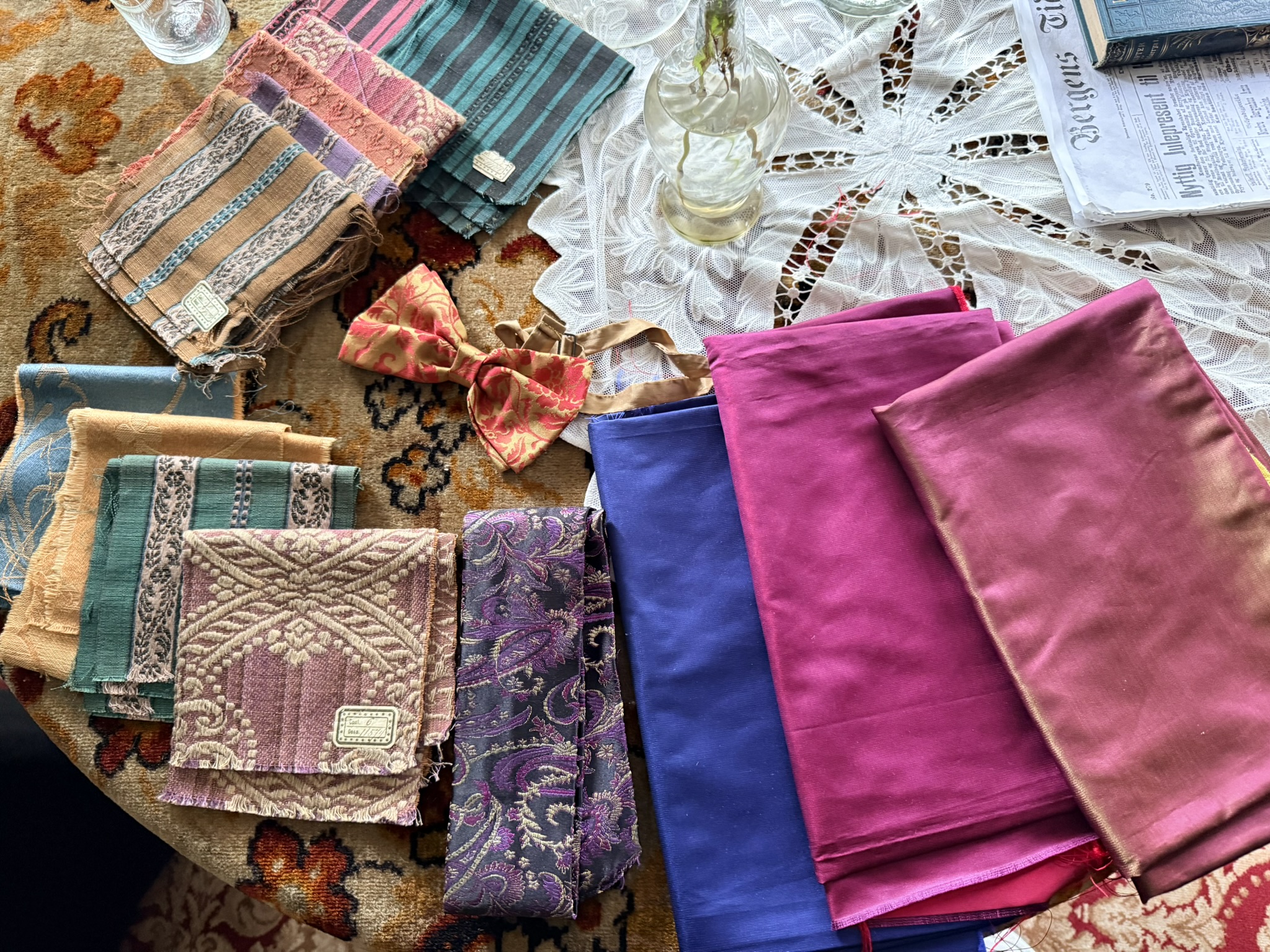
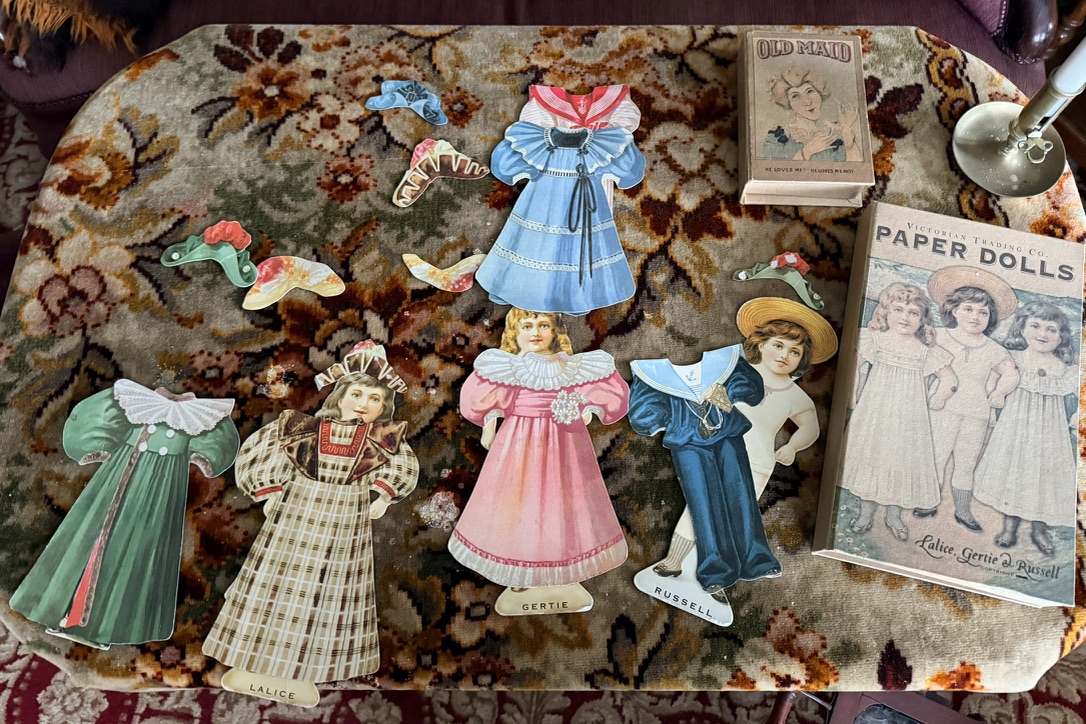
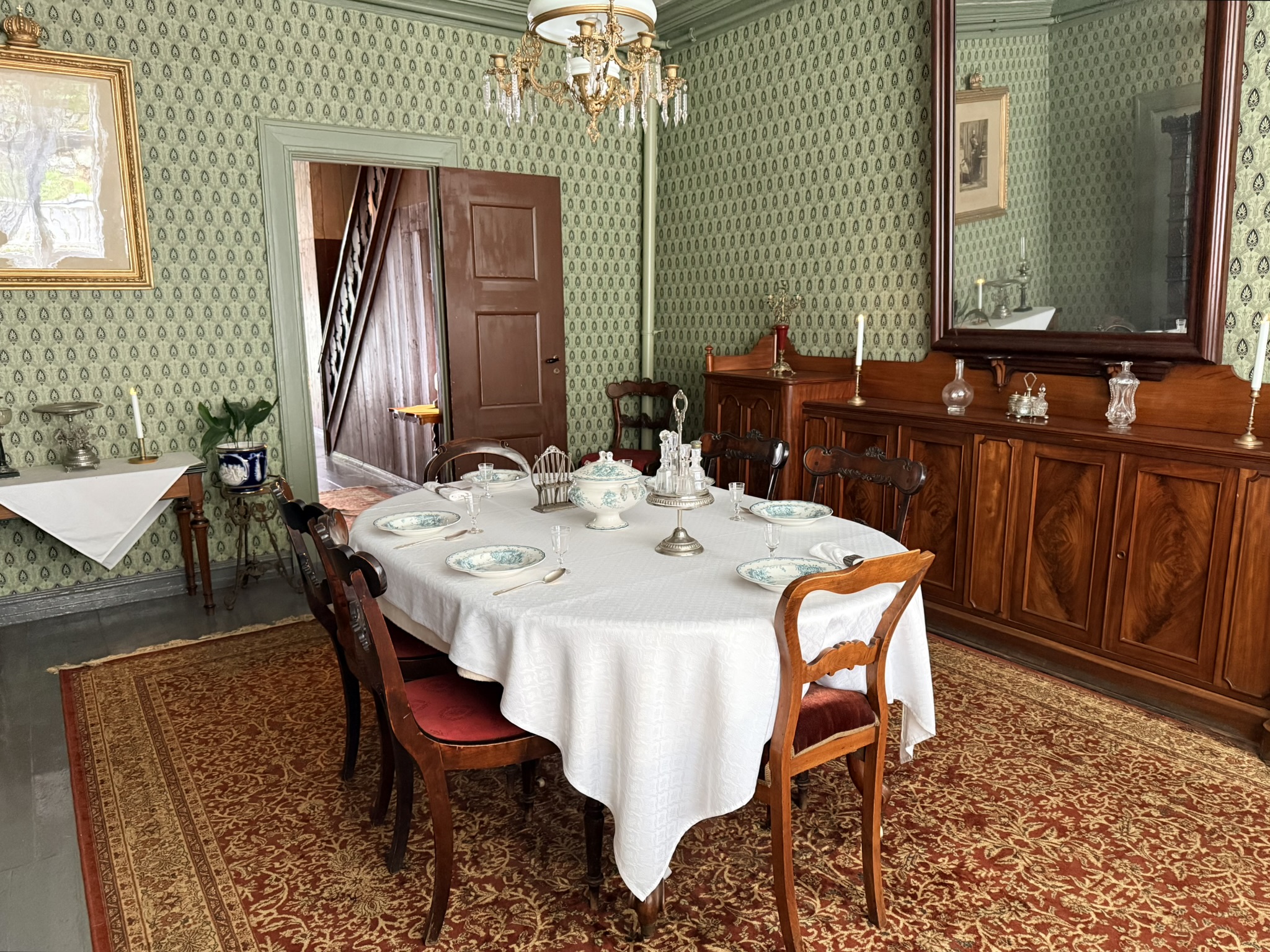
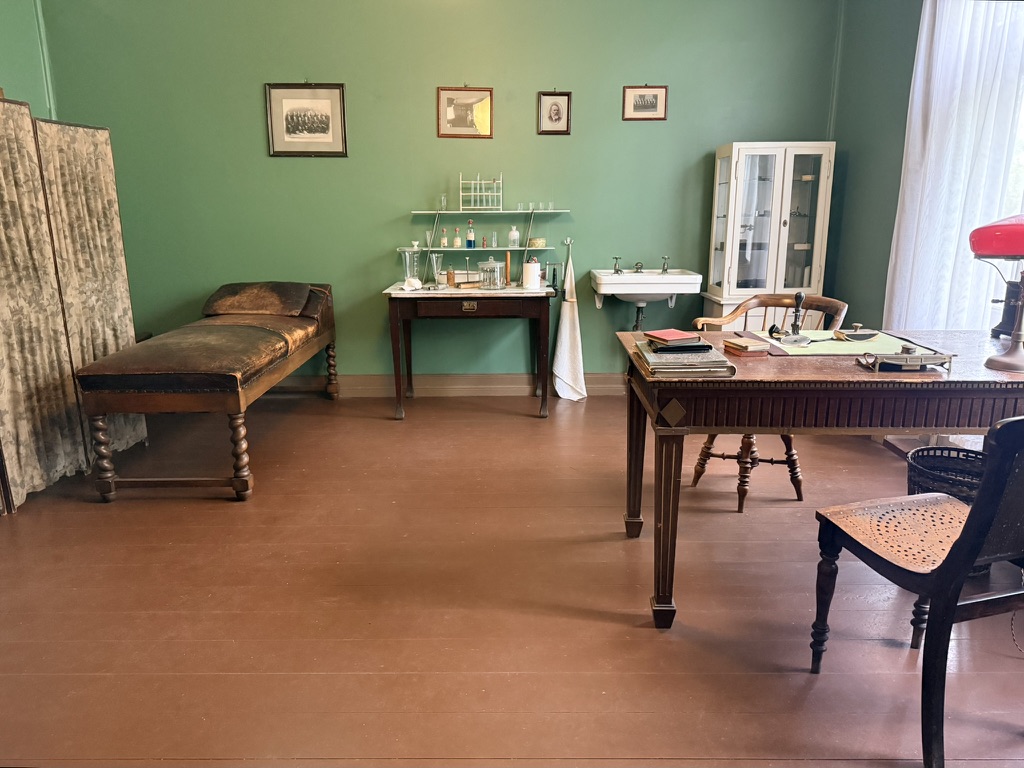
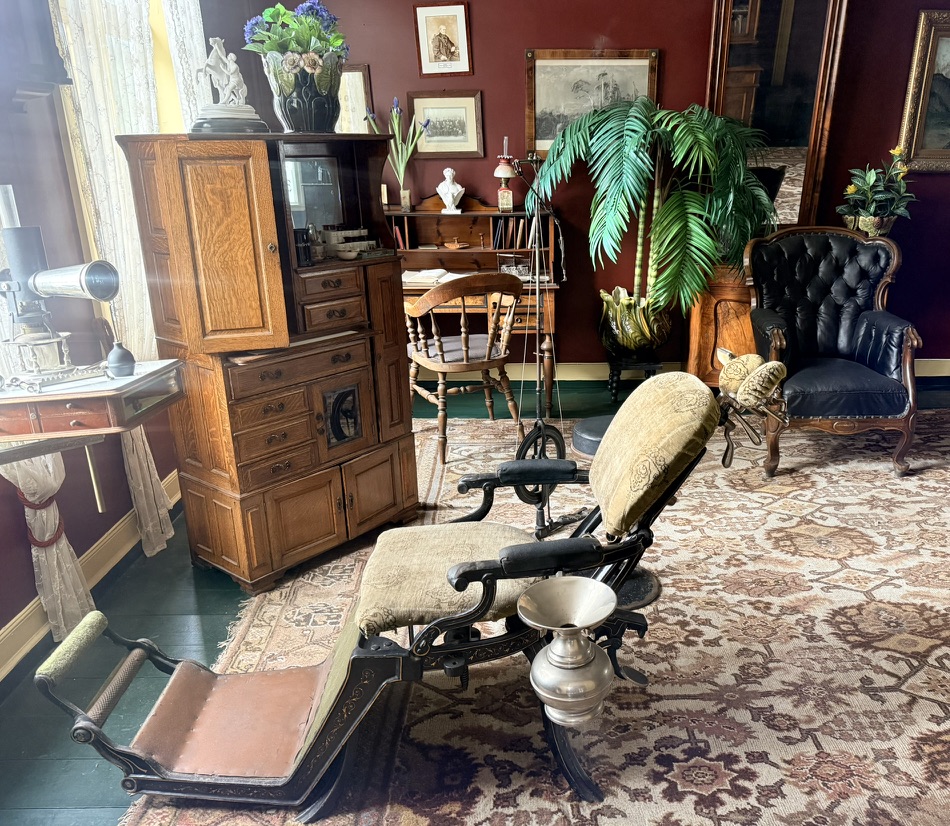
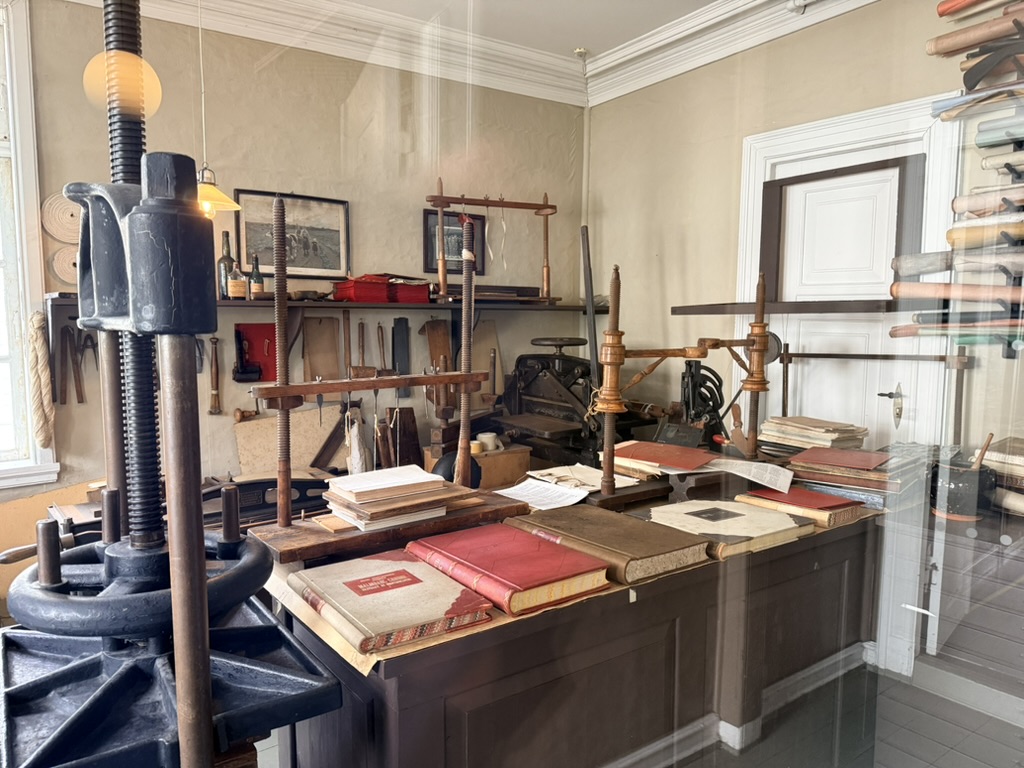
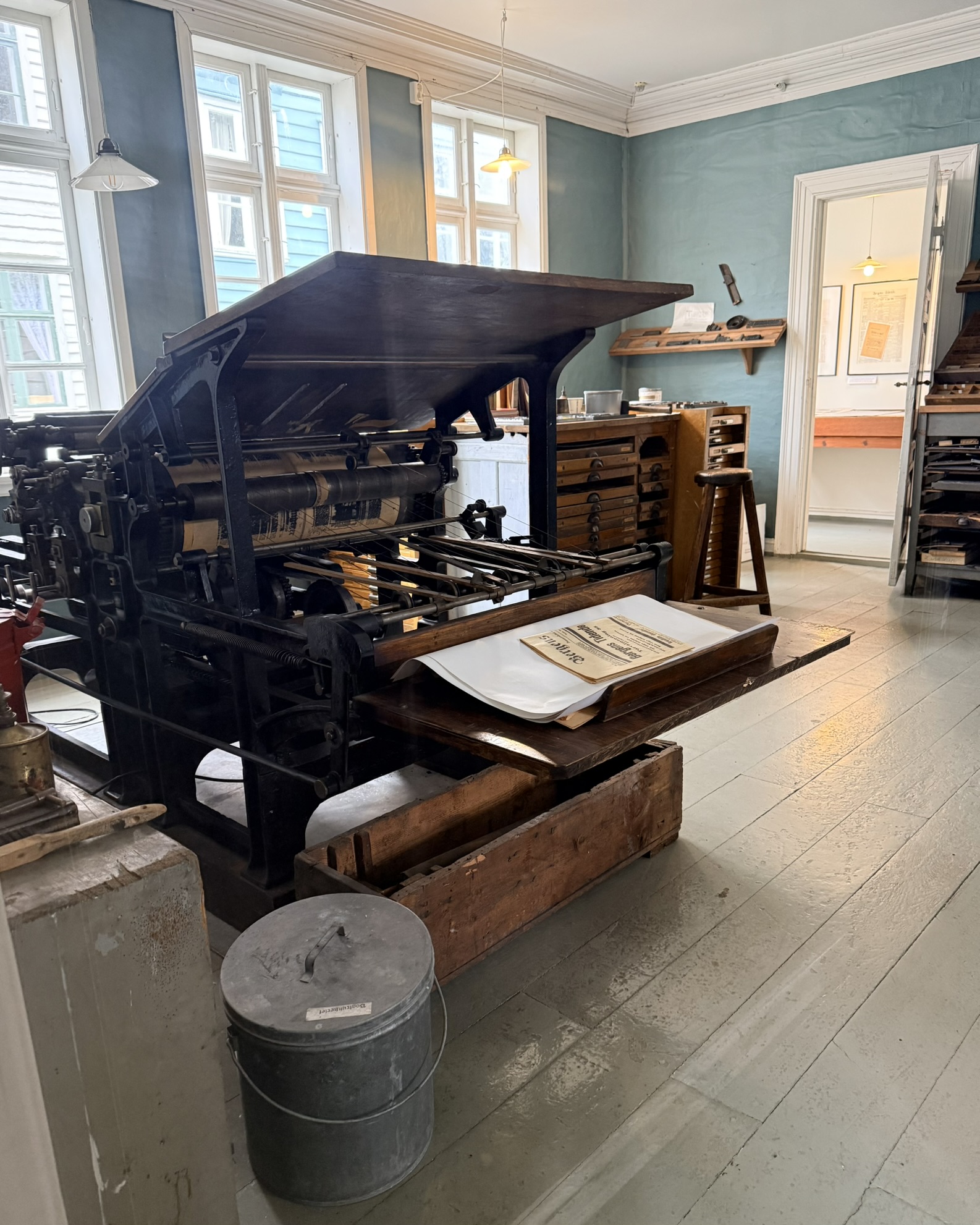
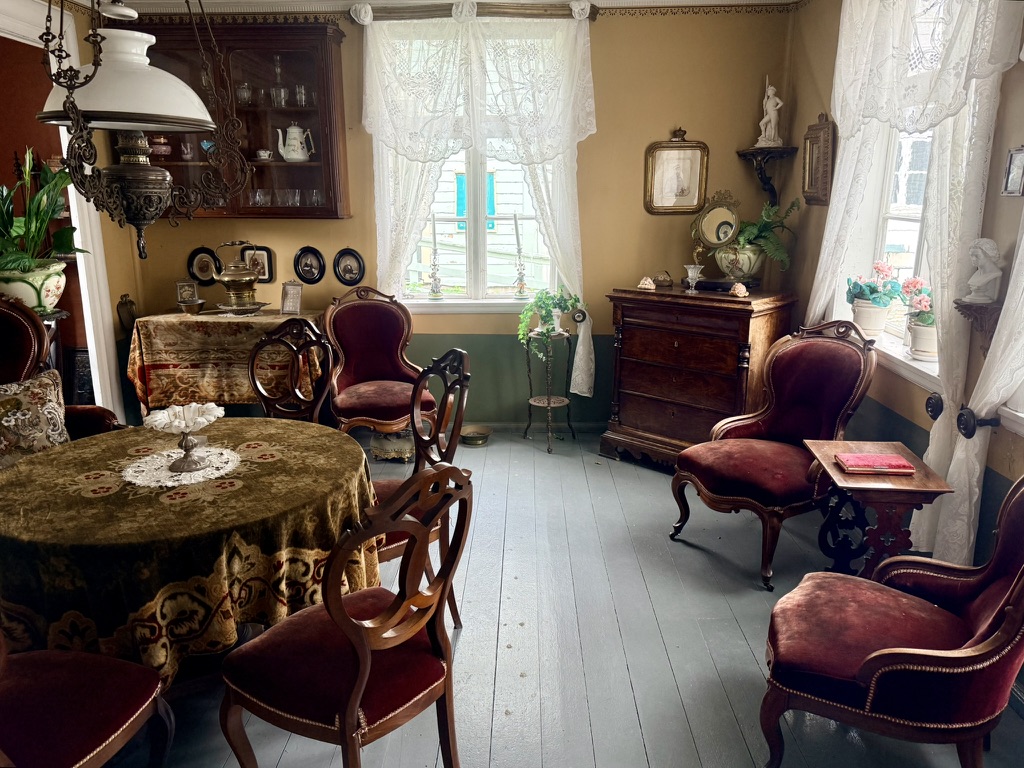
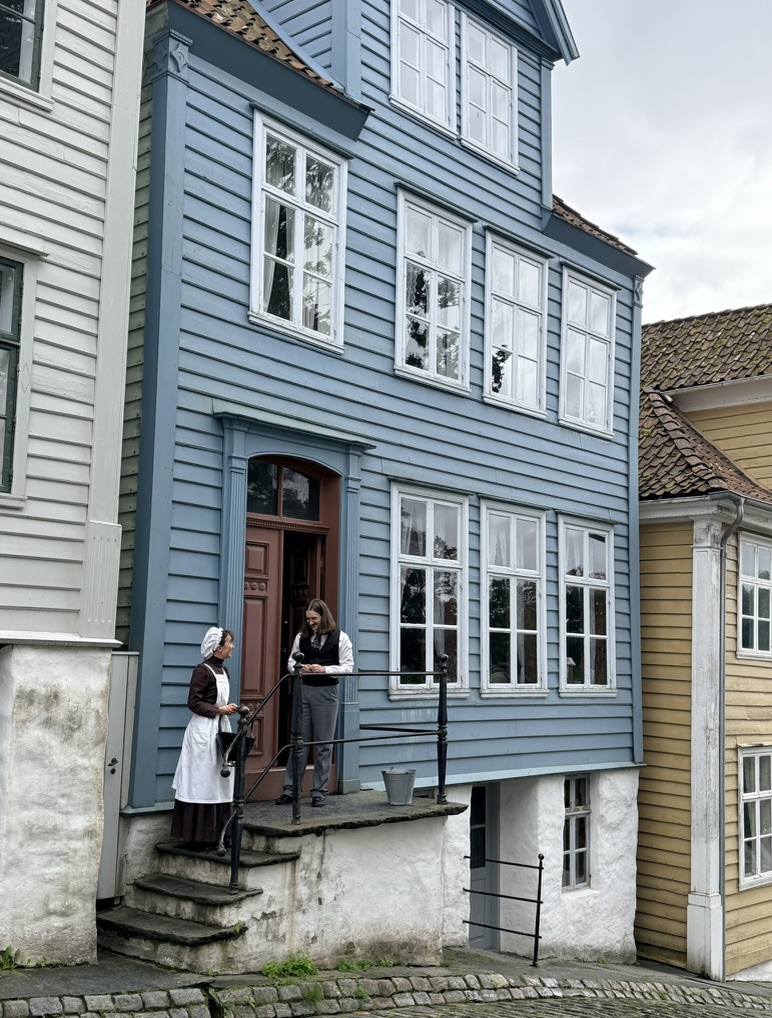
The houses are arranged as a reconstructed town with different buildings representing parts of the city’s history. There is a sea captain’s house from 1758, a merchant’s house, a sailor’s house, a silversmith workshop, a glazier’s house, a plumber’s shop from the 1860s and a photographer’s studio from around 1900. We stopped into the old schoolhouse, the barbershop, the bakery, the dentist’s office and the printing press.
At 2:00 was a humorous 10-minute performance by the maids of the stately homes, where the maids were up to all sorts of shennanigans and making fun of their dour masters and mistresses.

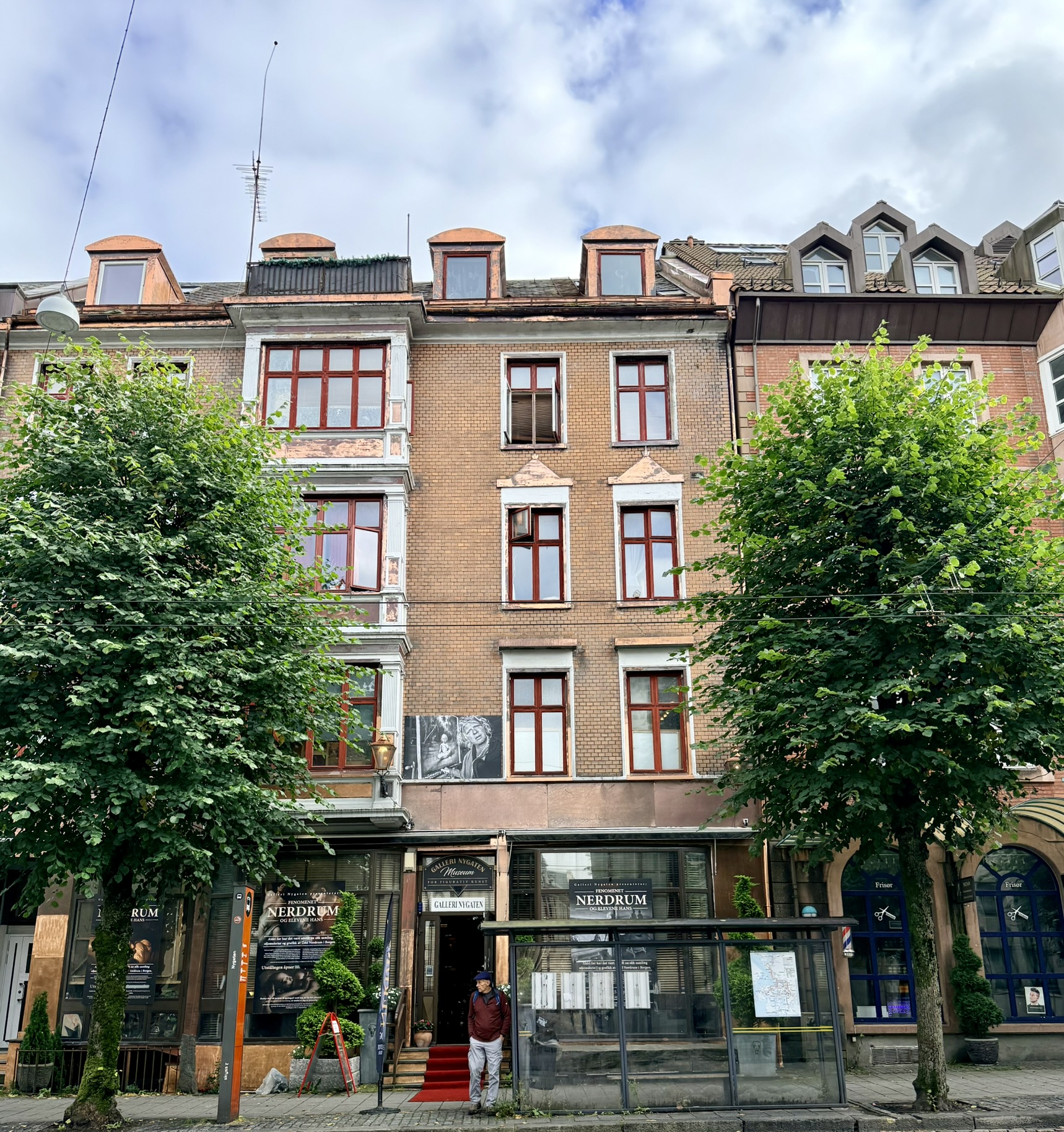
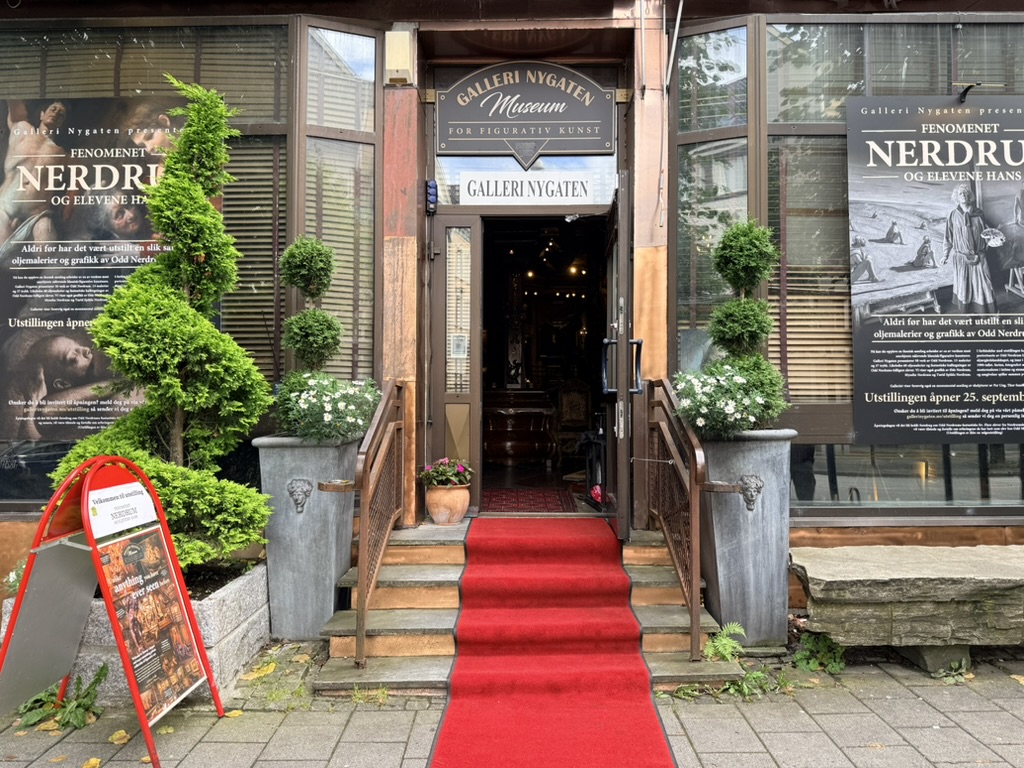
Galleri Nygaten Museum of Figurative Art
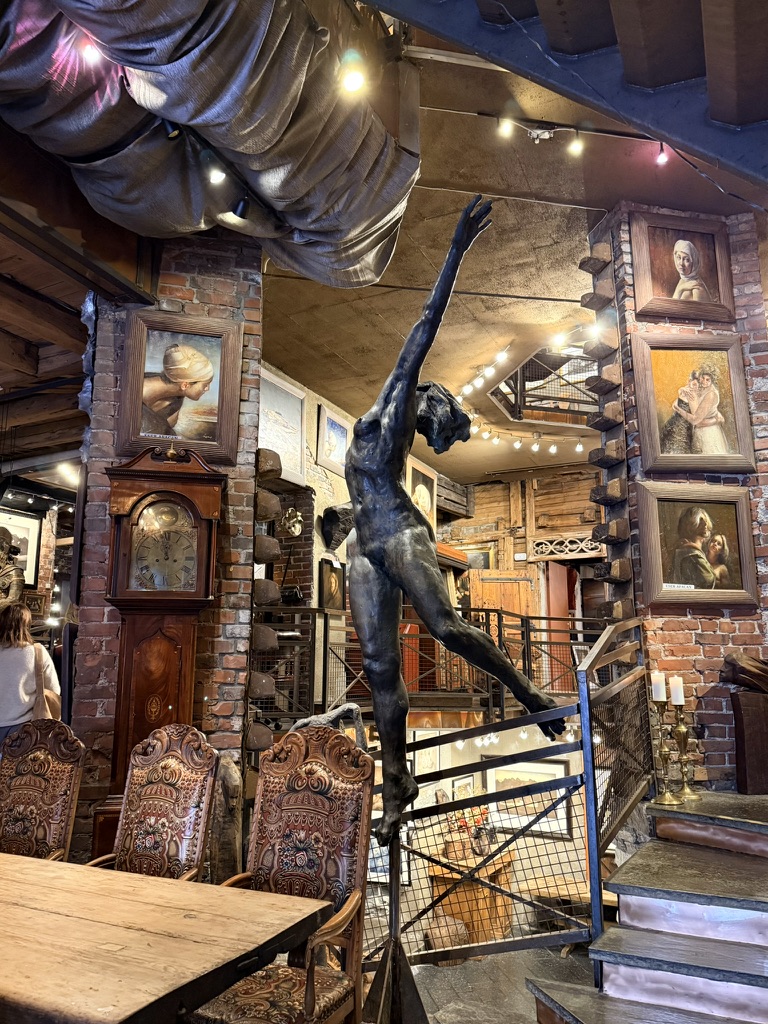
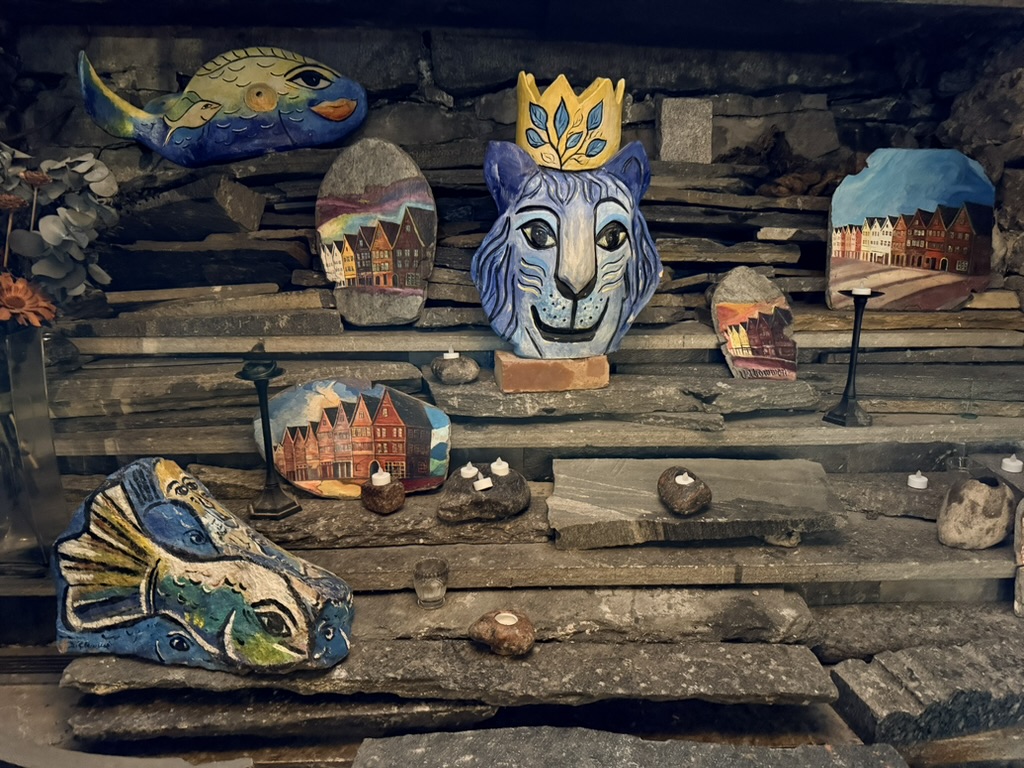
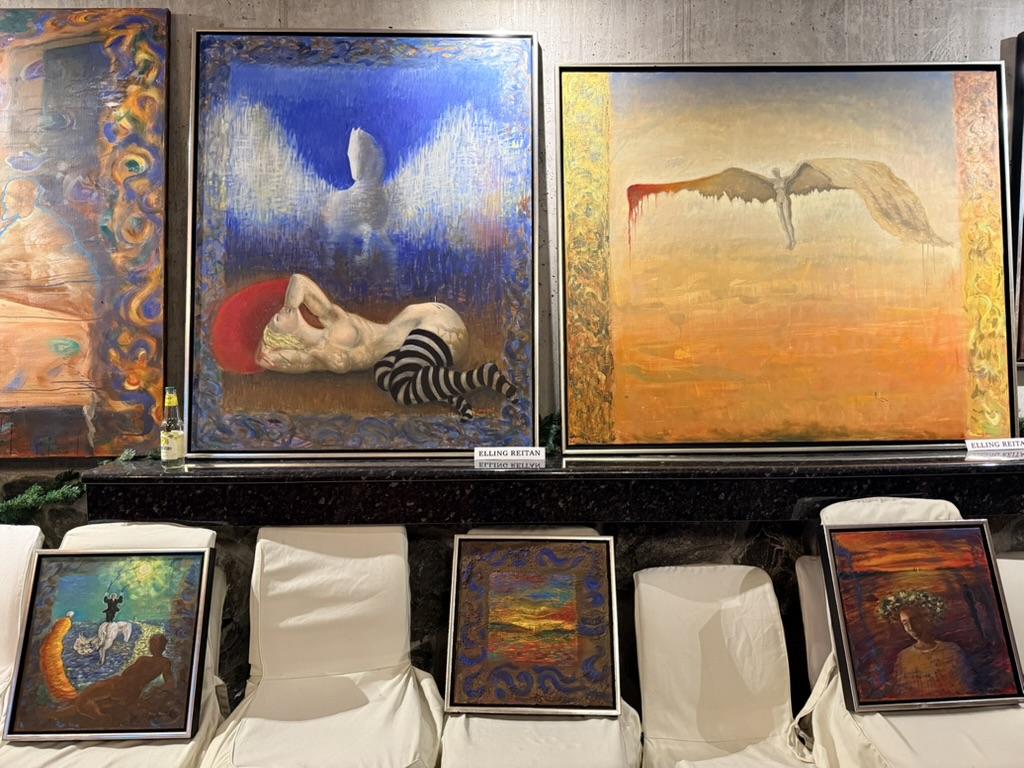
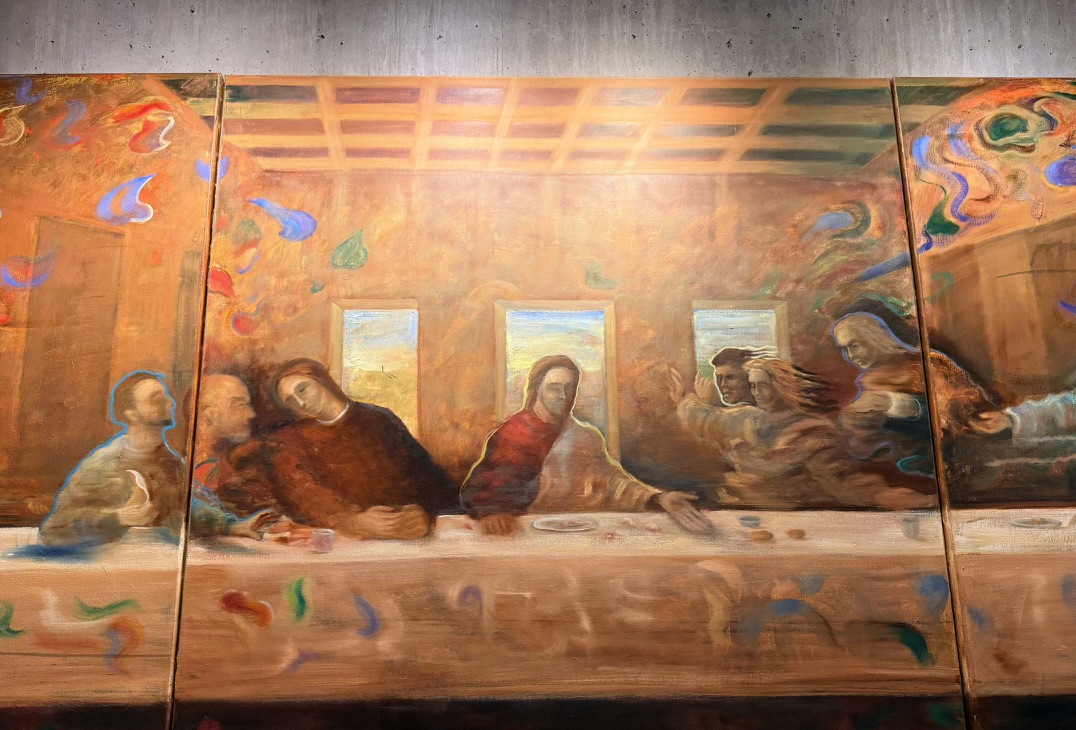
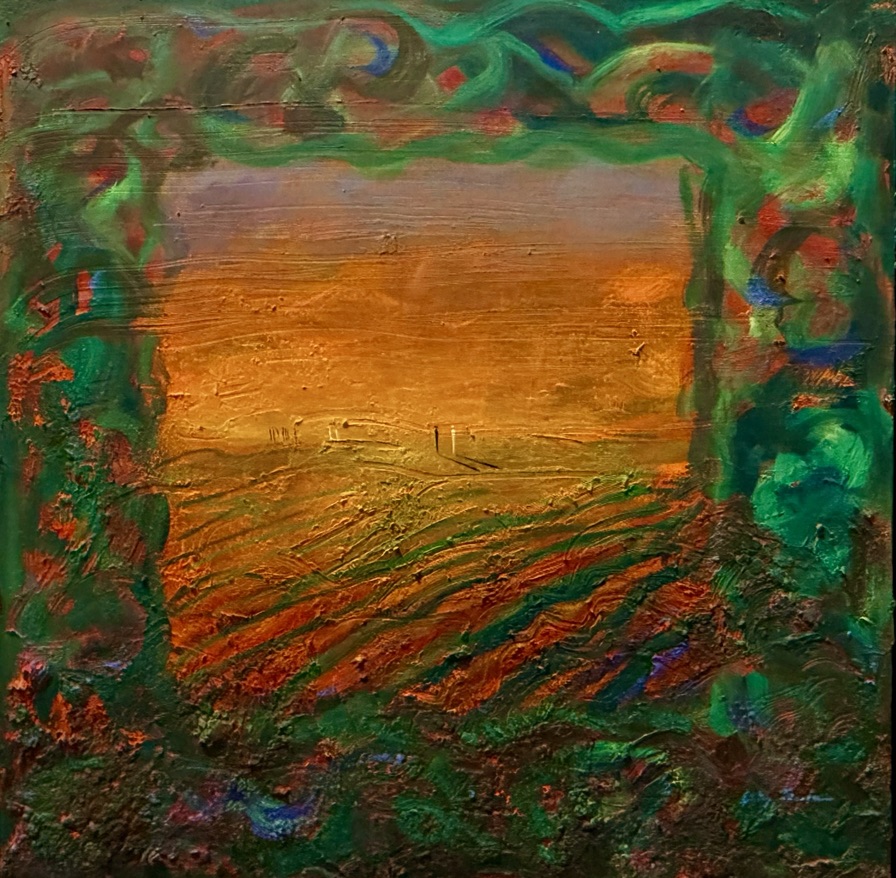
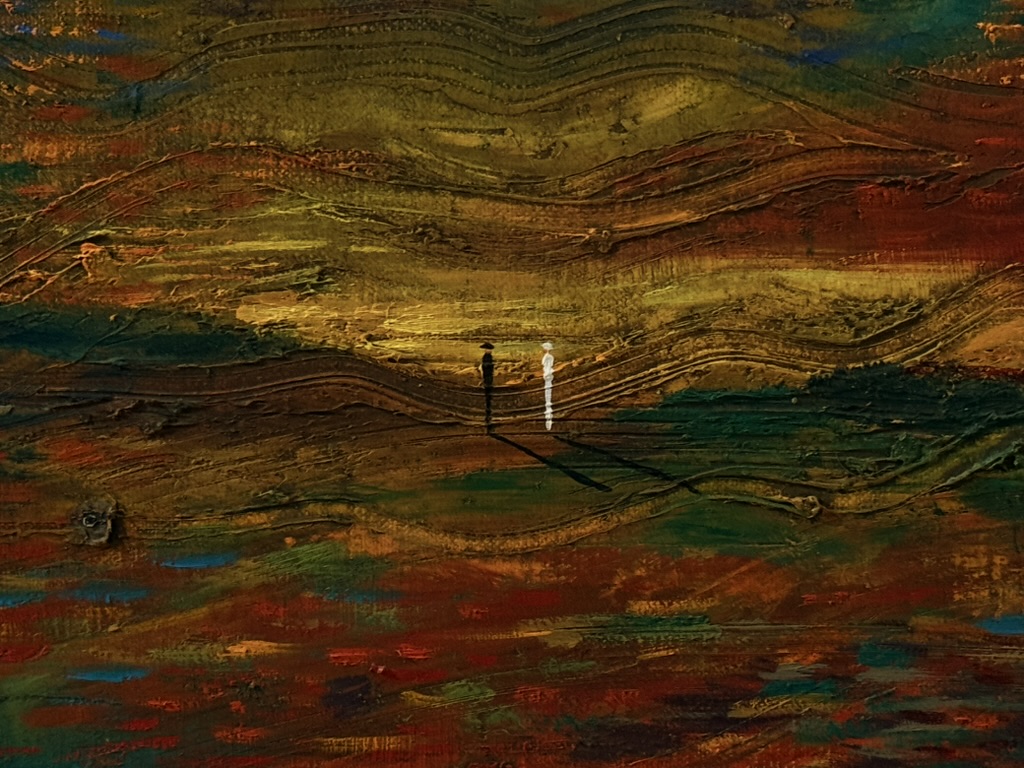
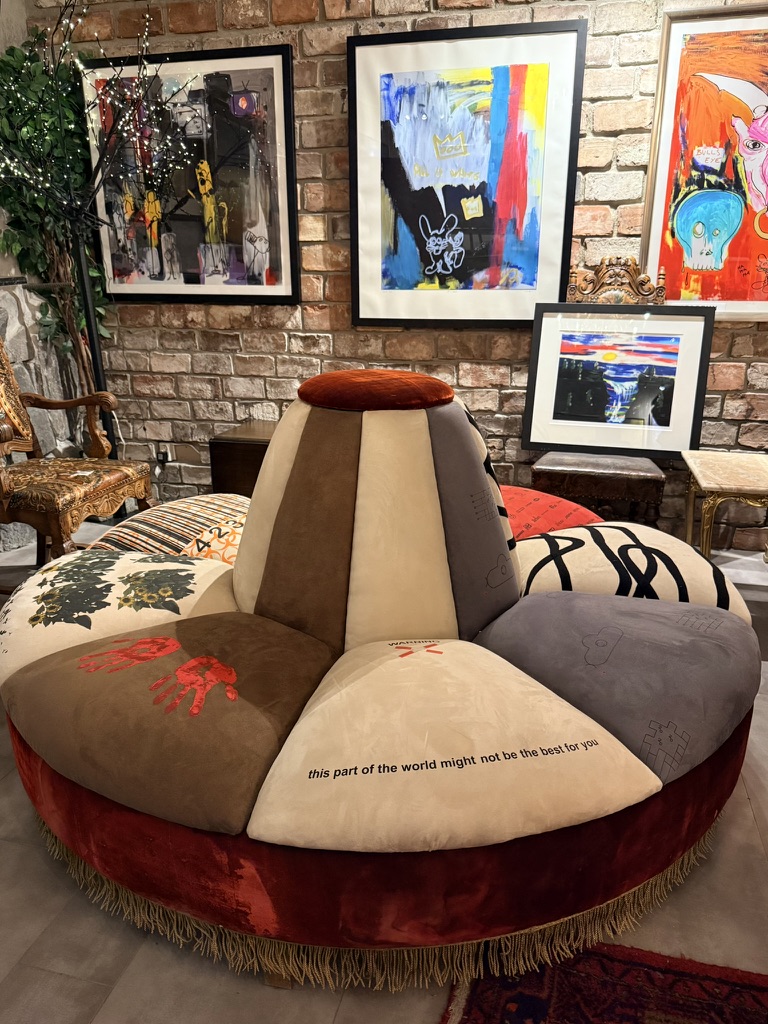
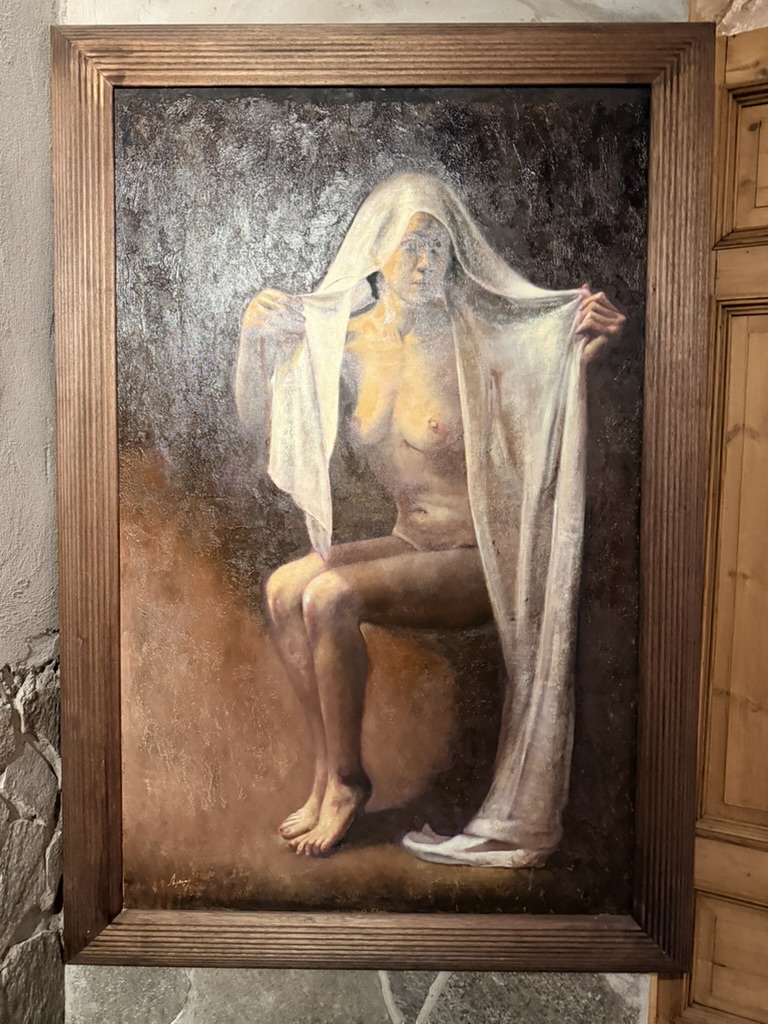
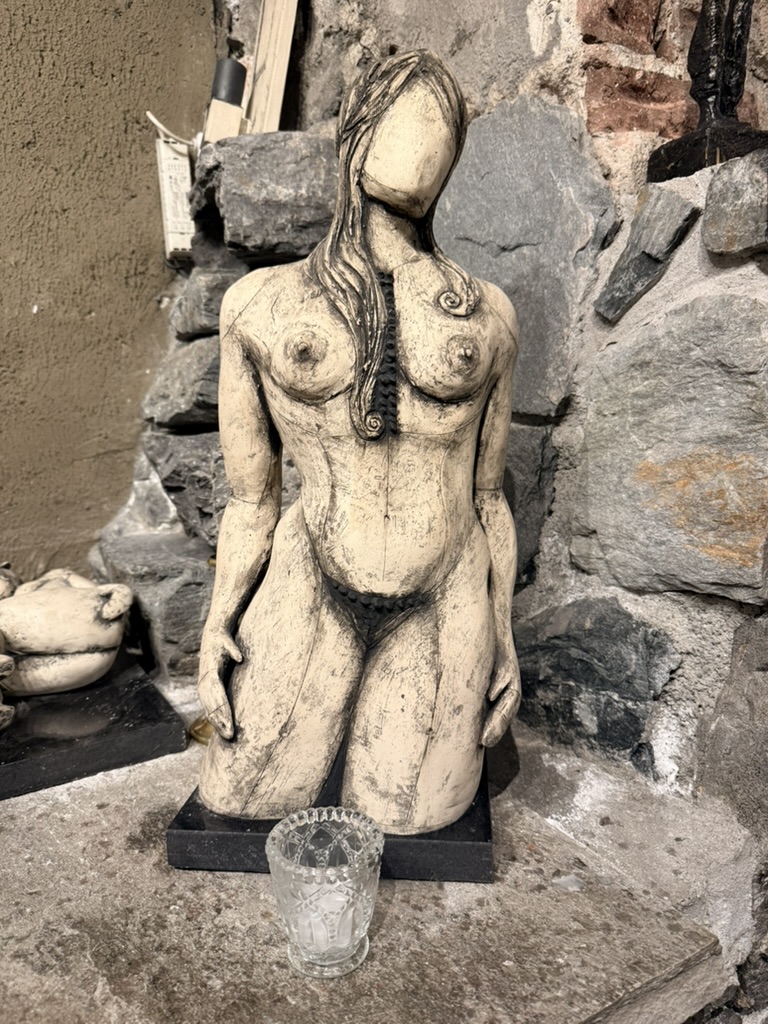
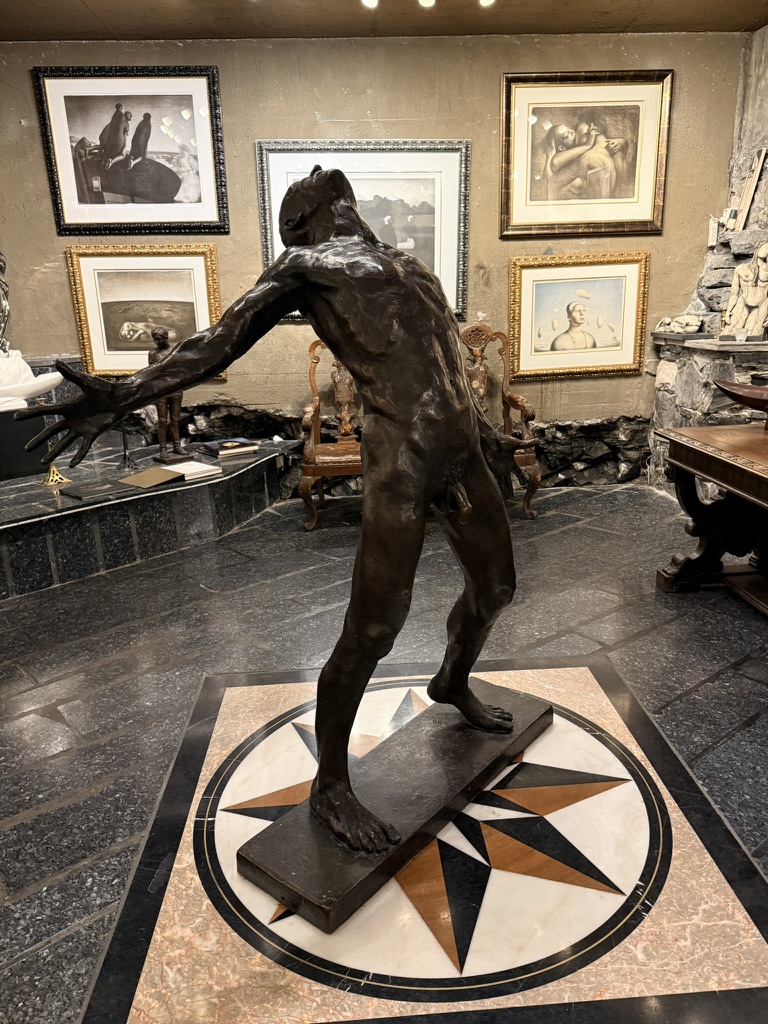
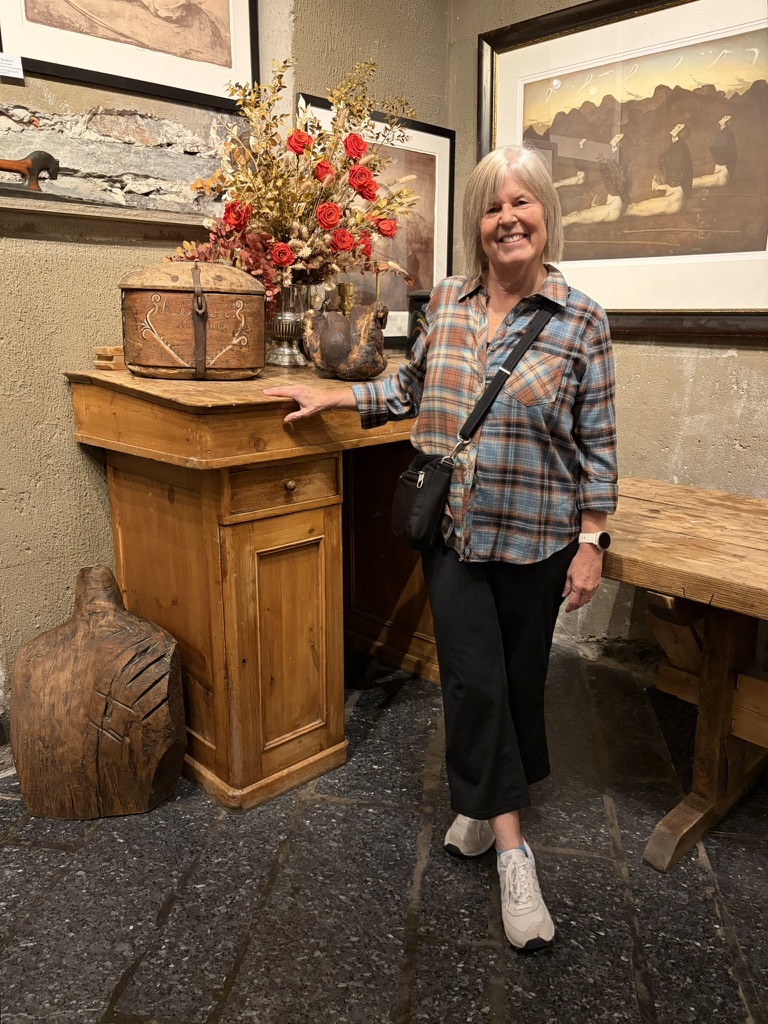
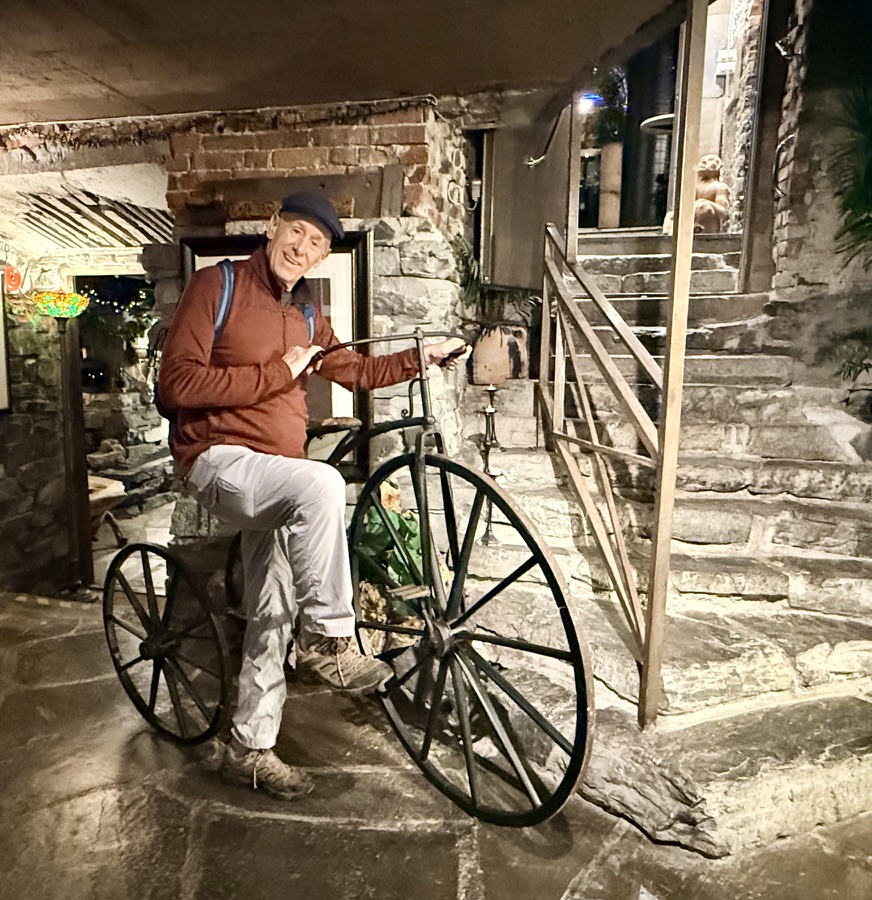
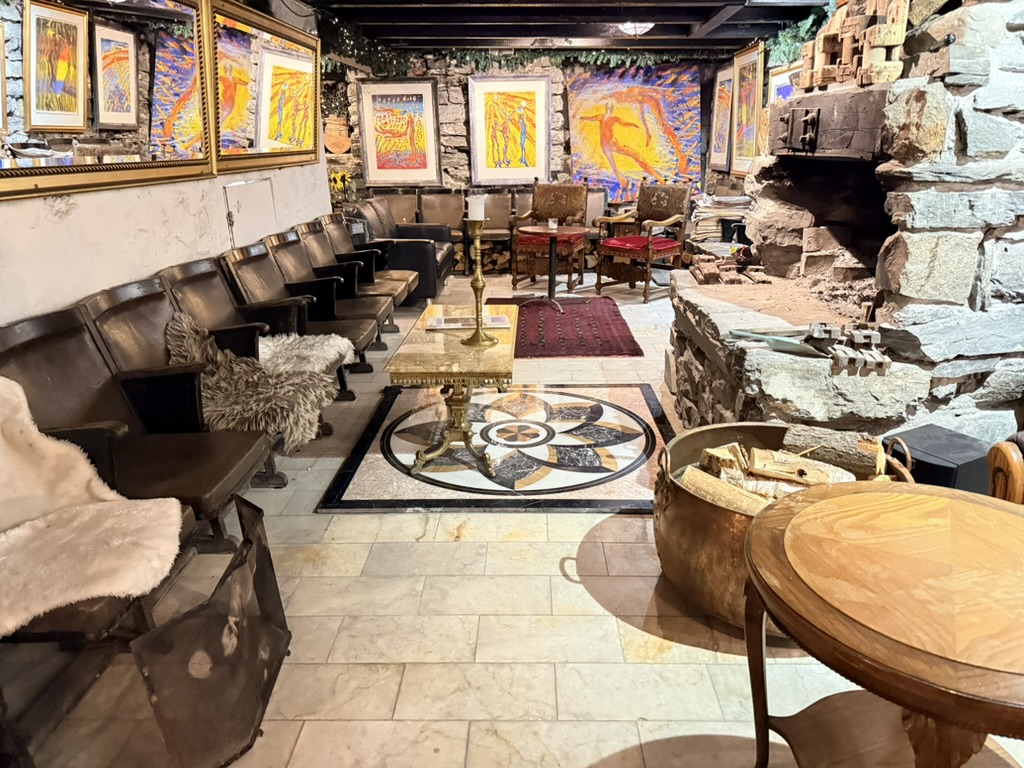
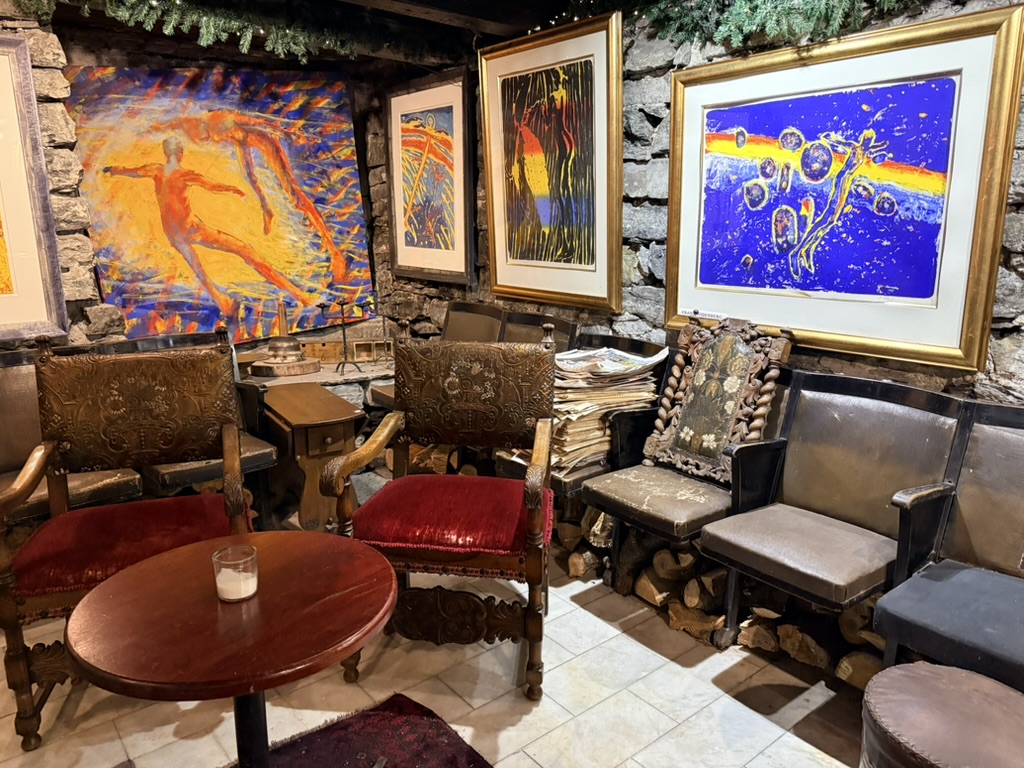
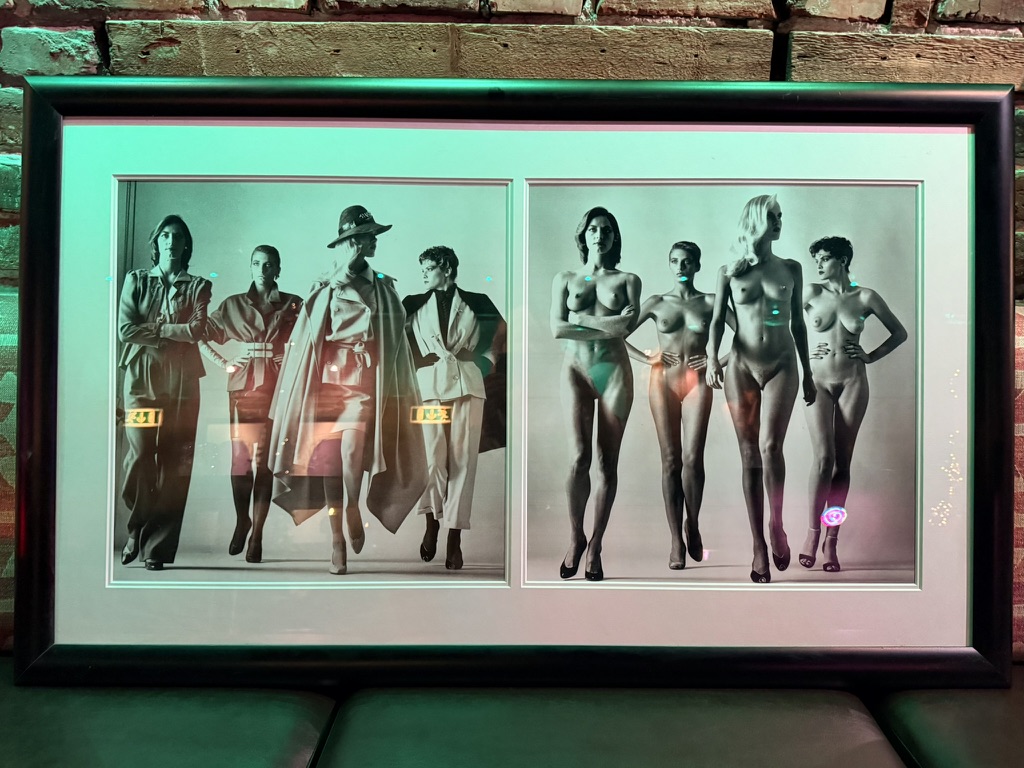
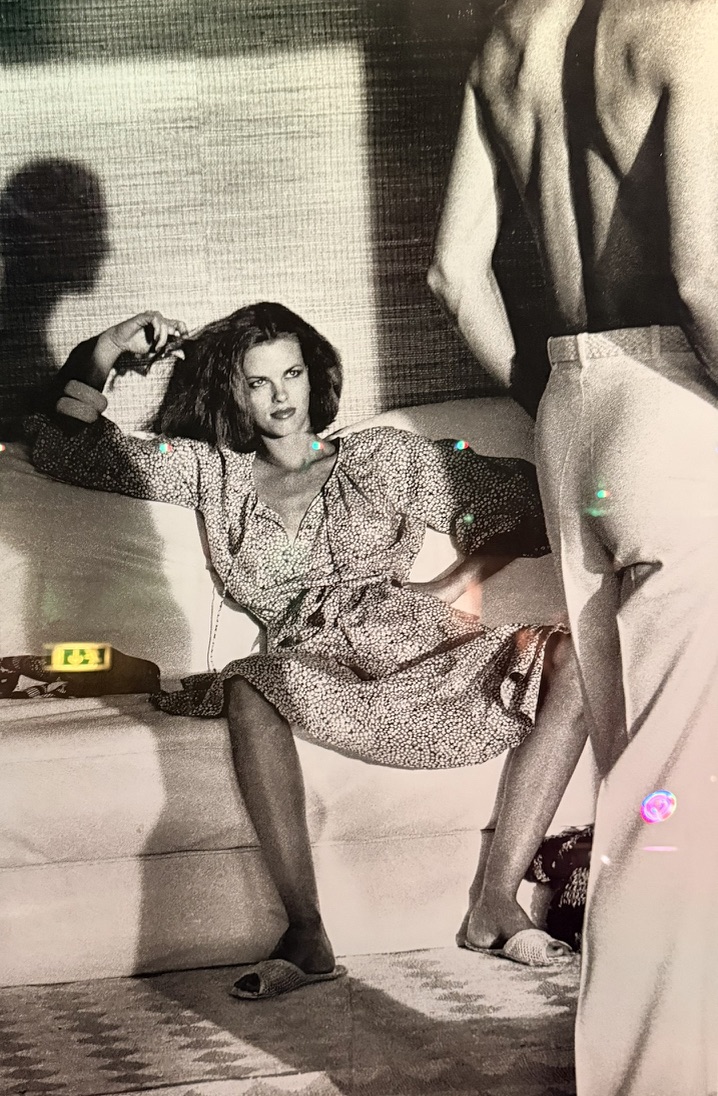
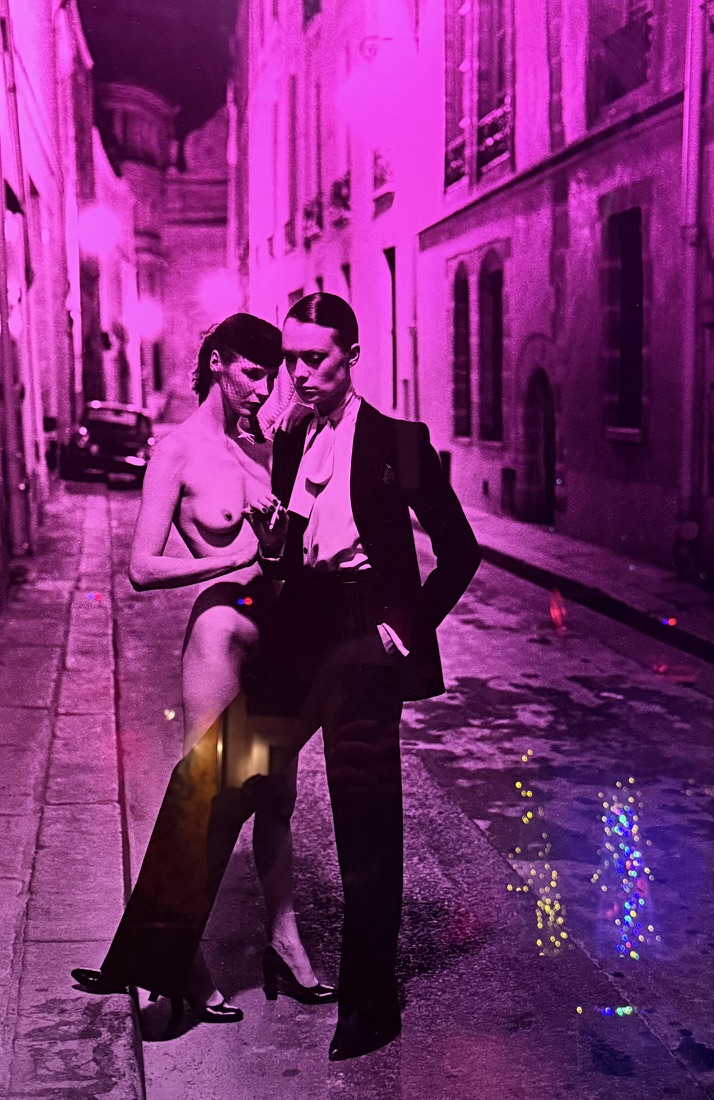
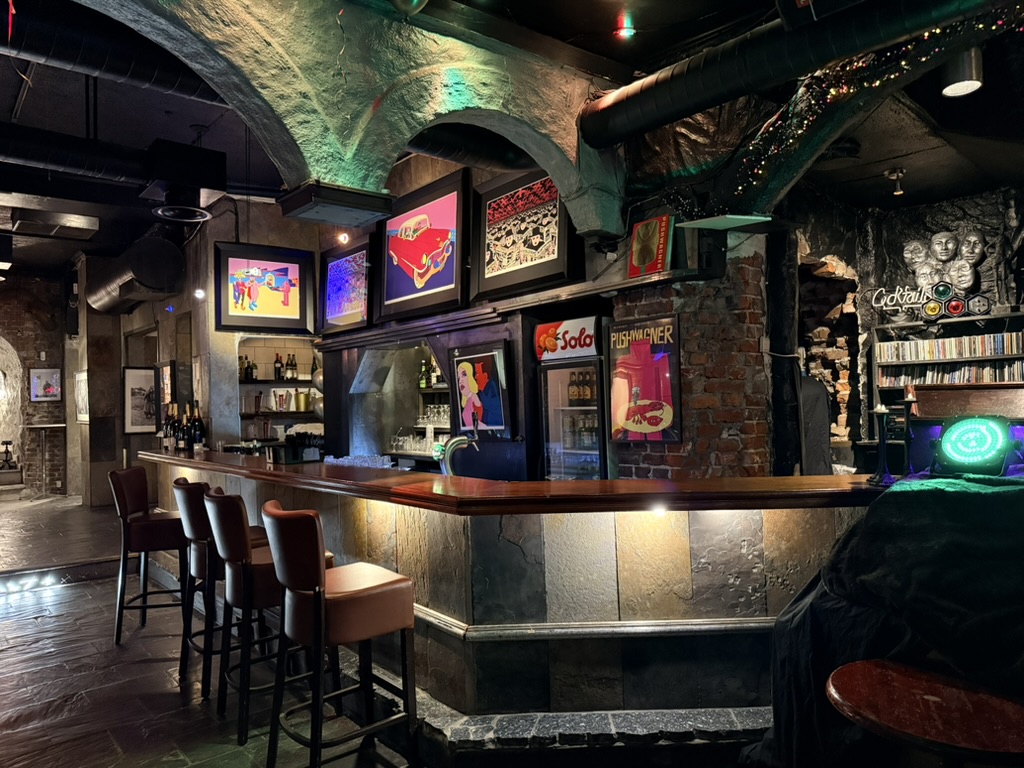
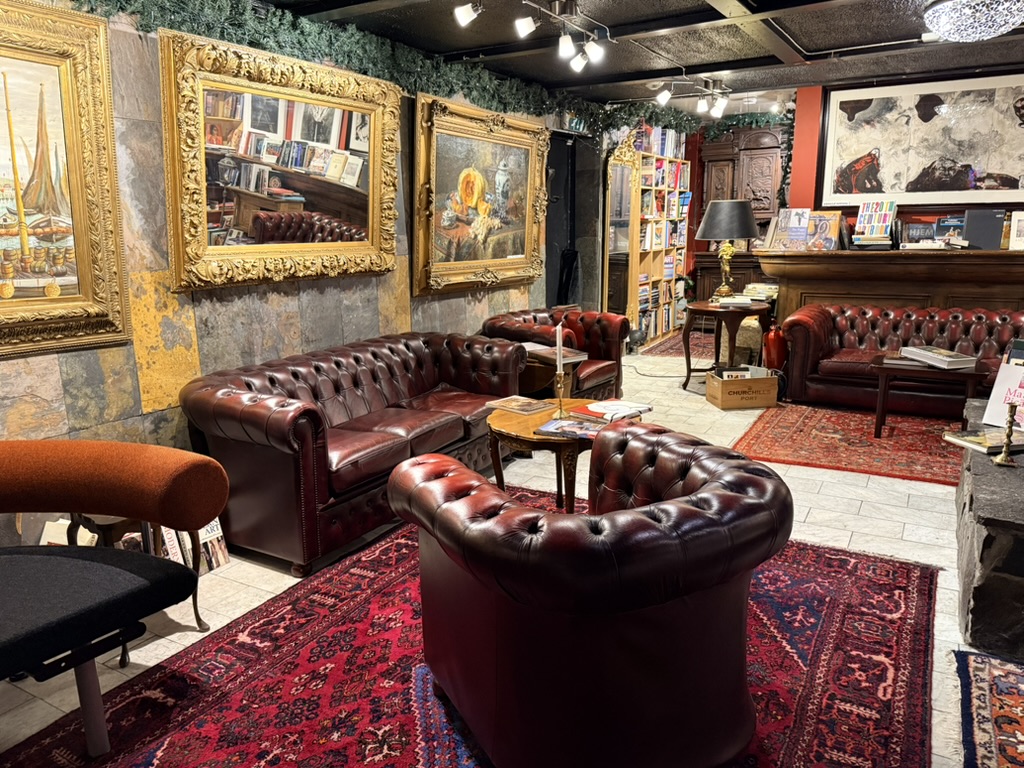
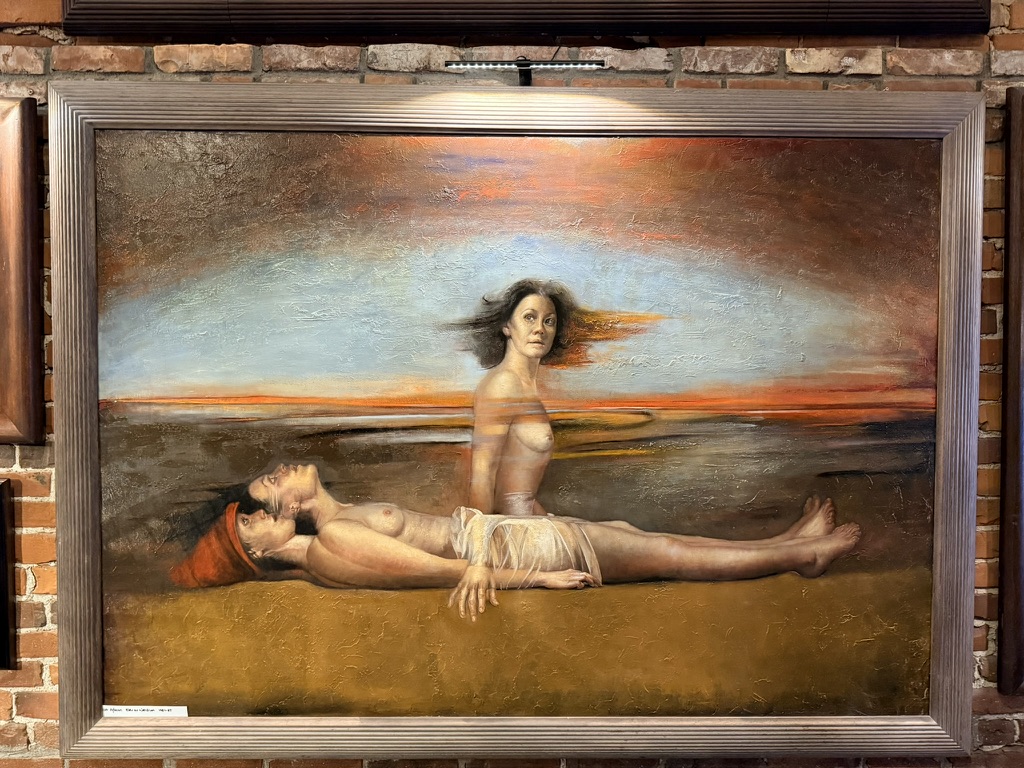
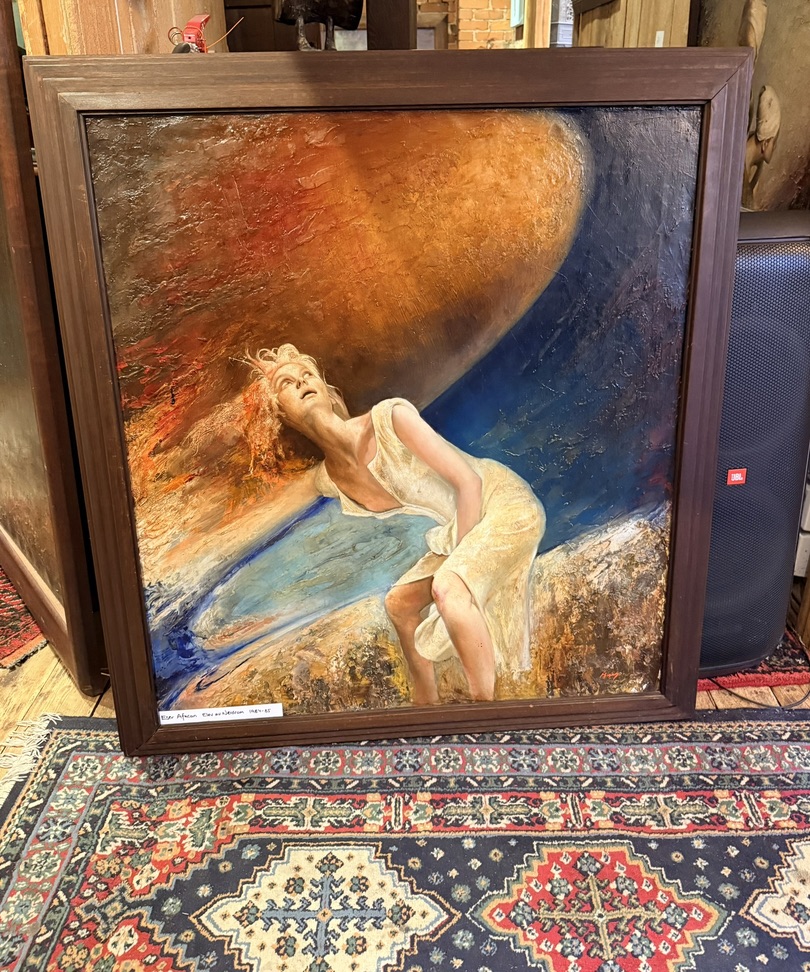
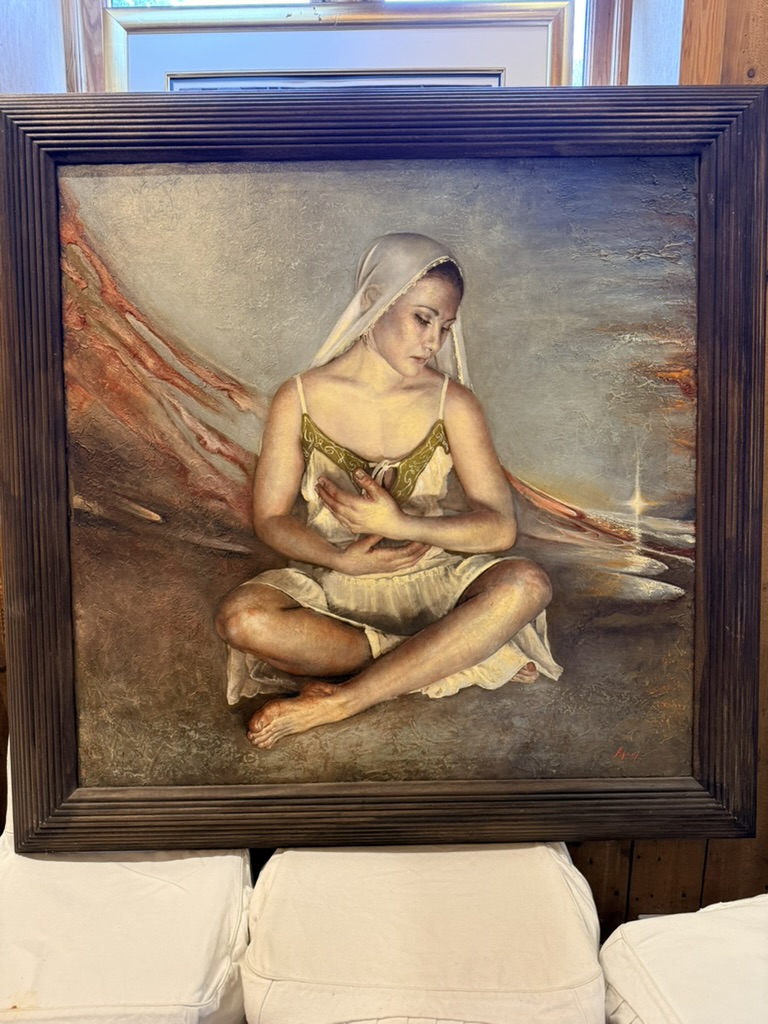
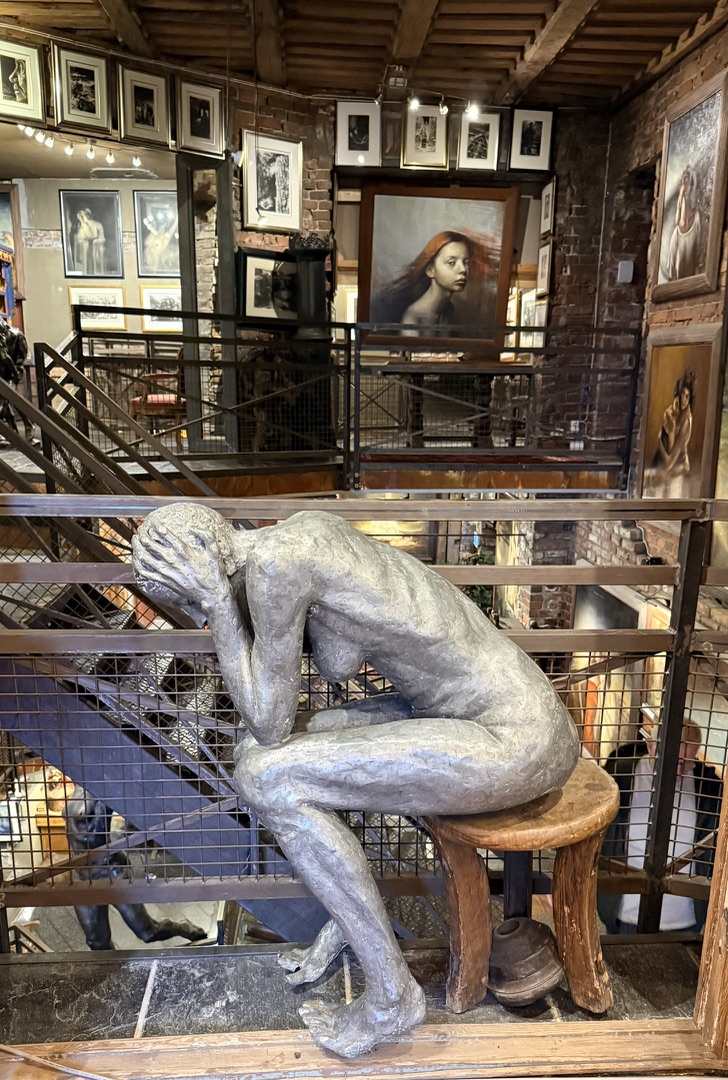
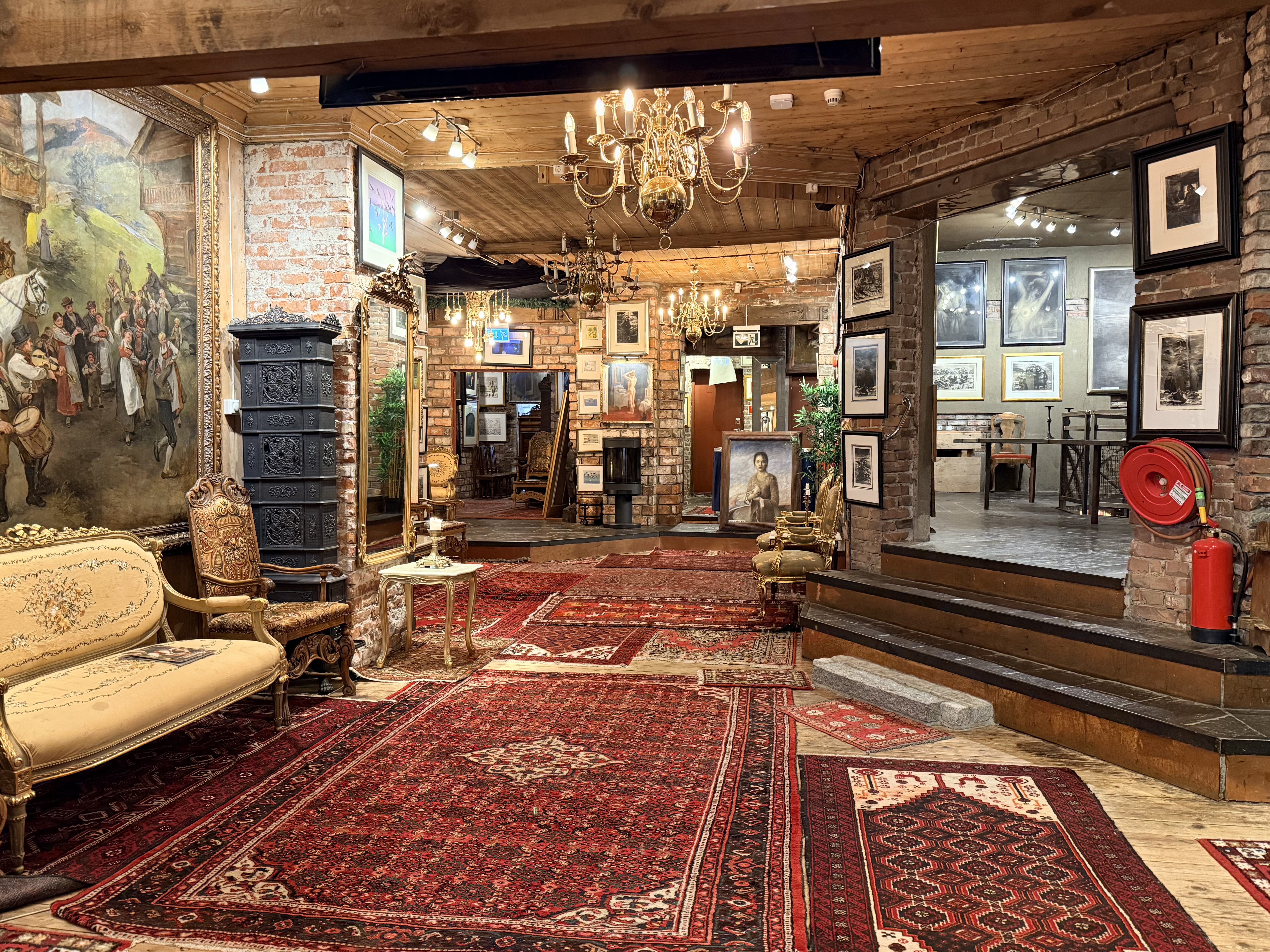
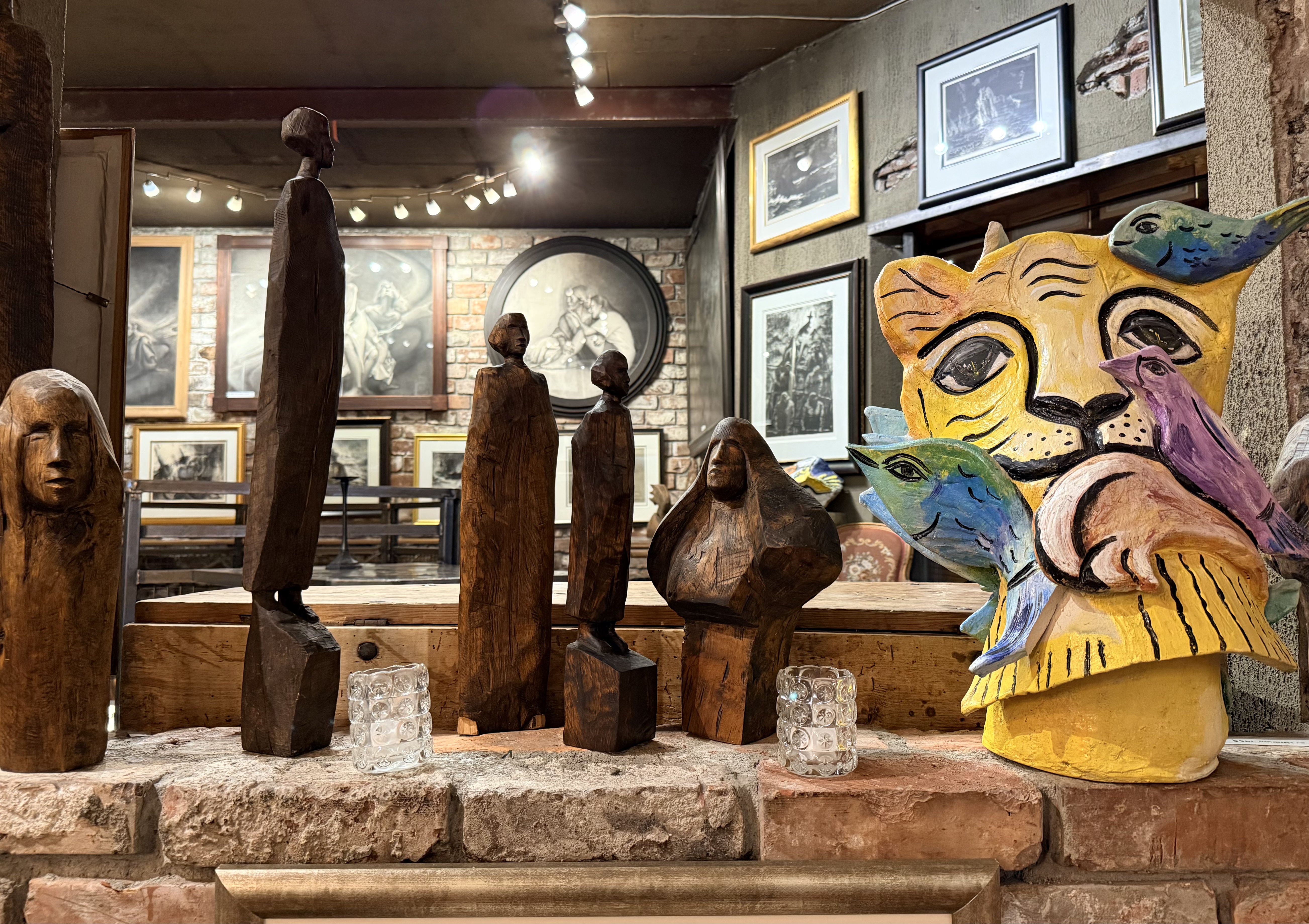
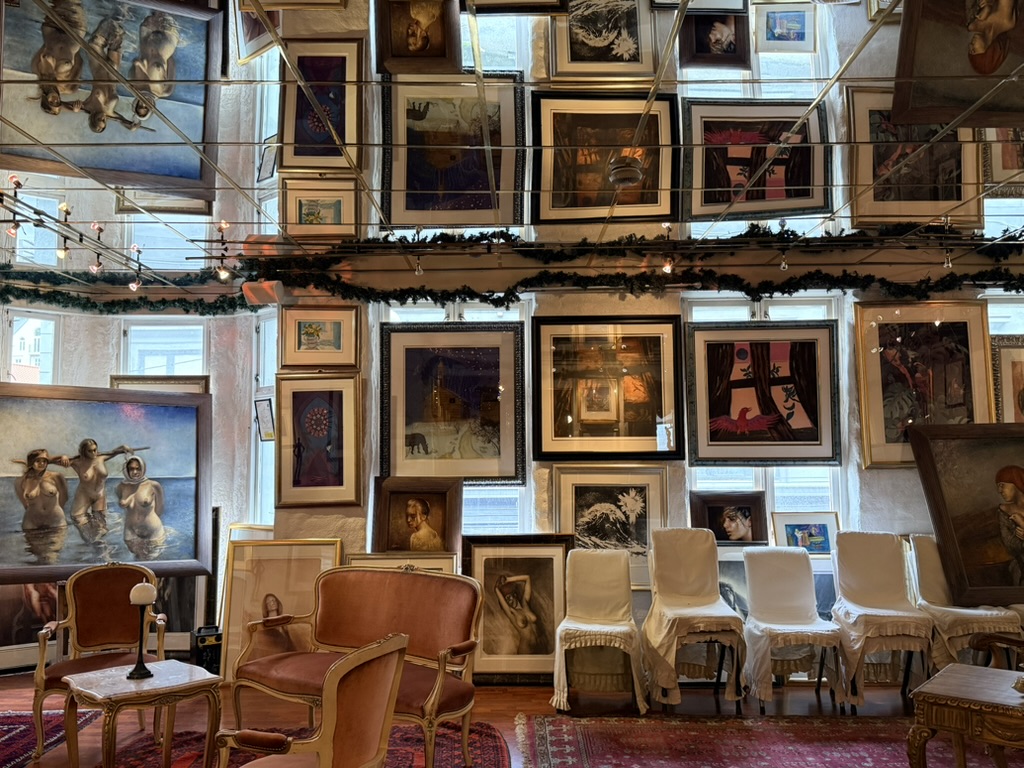
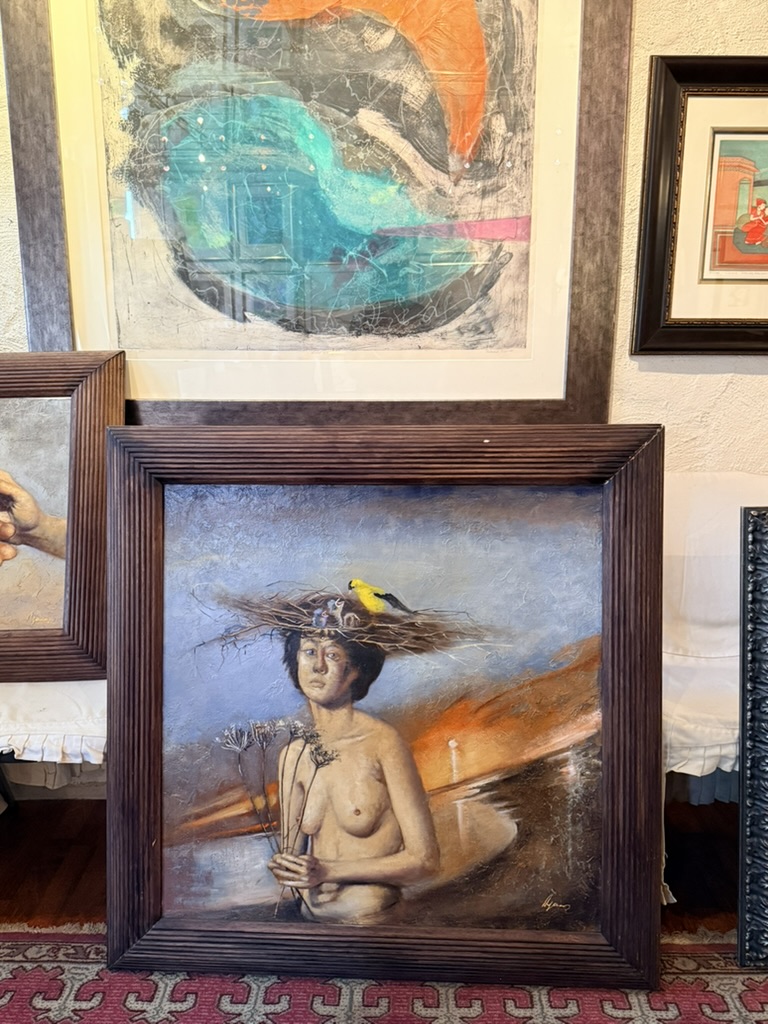
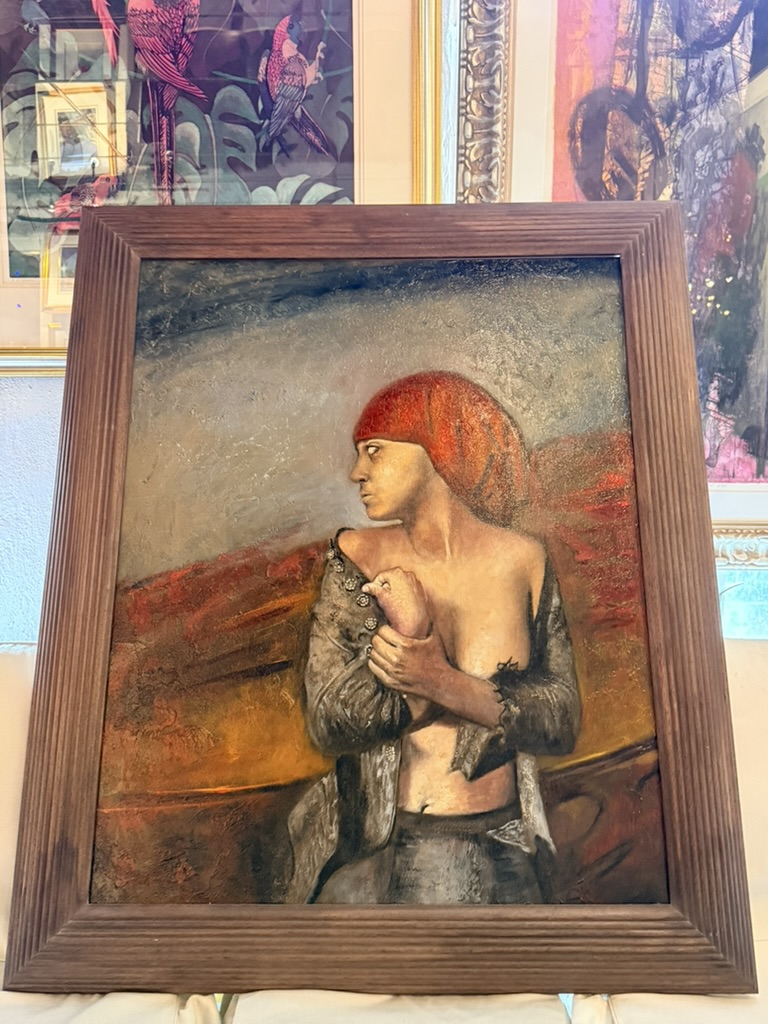
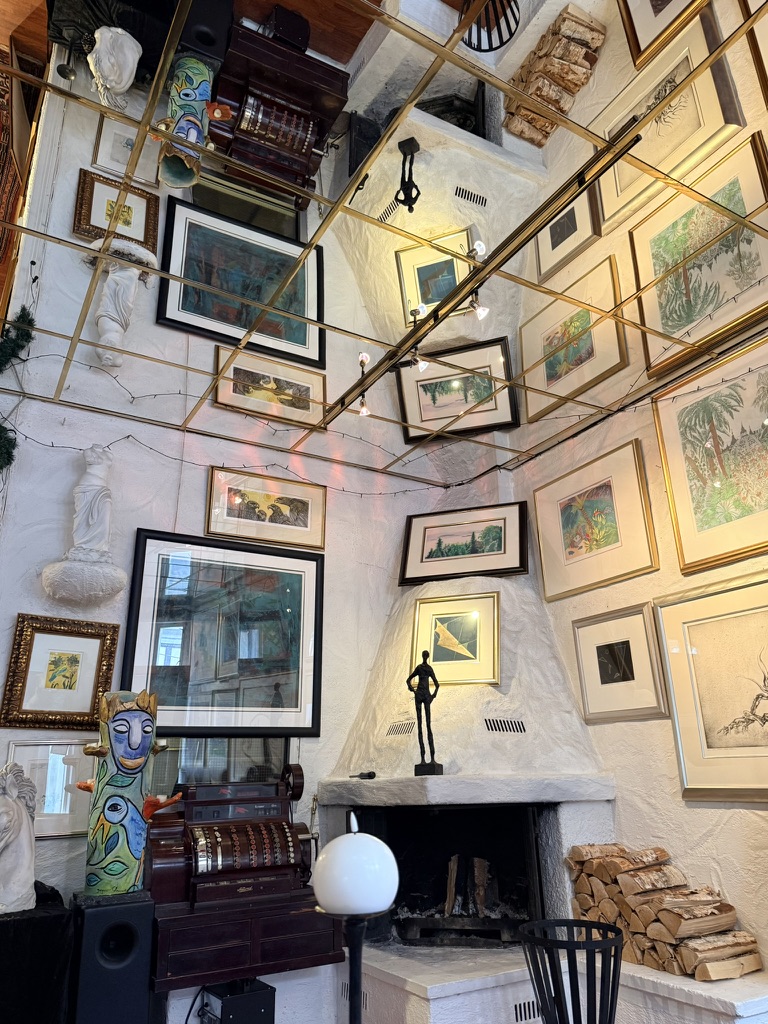
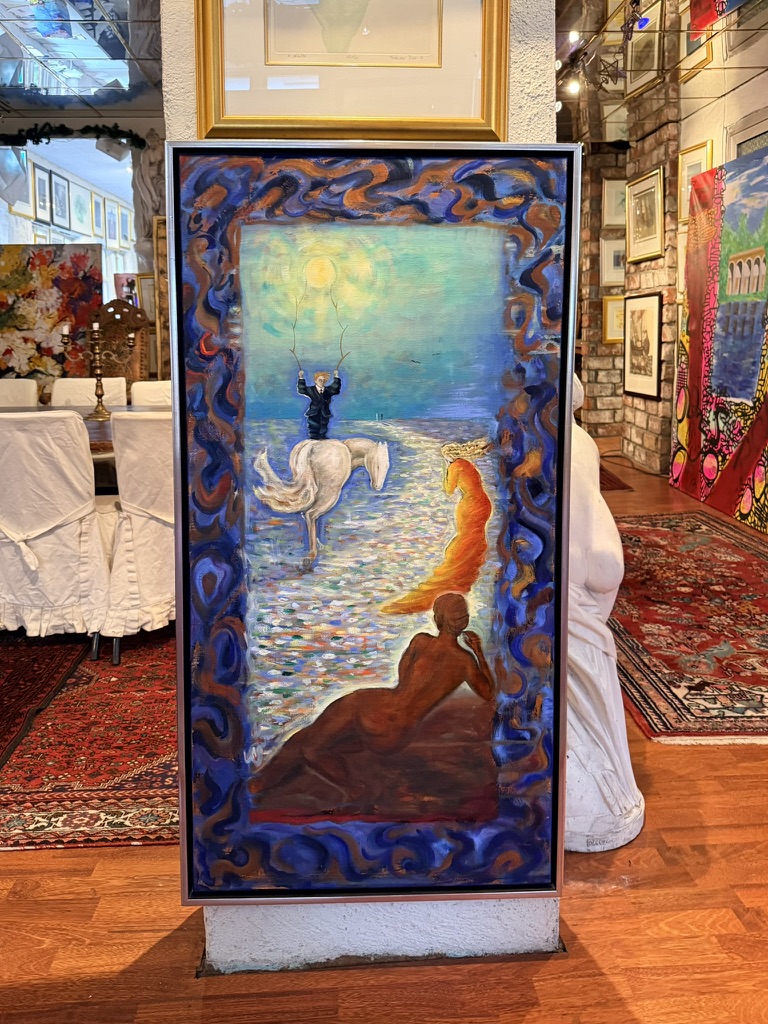
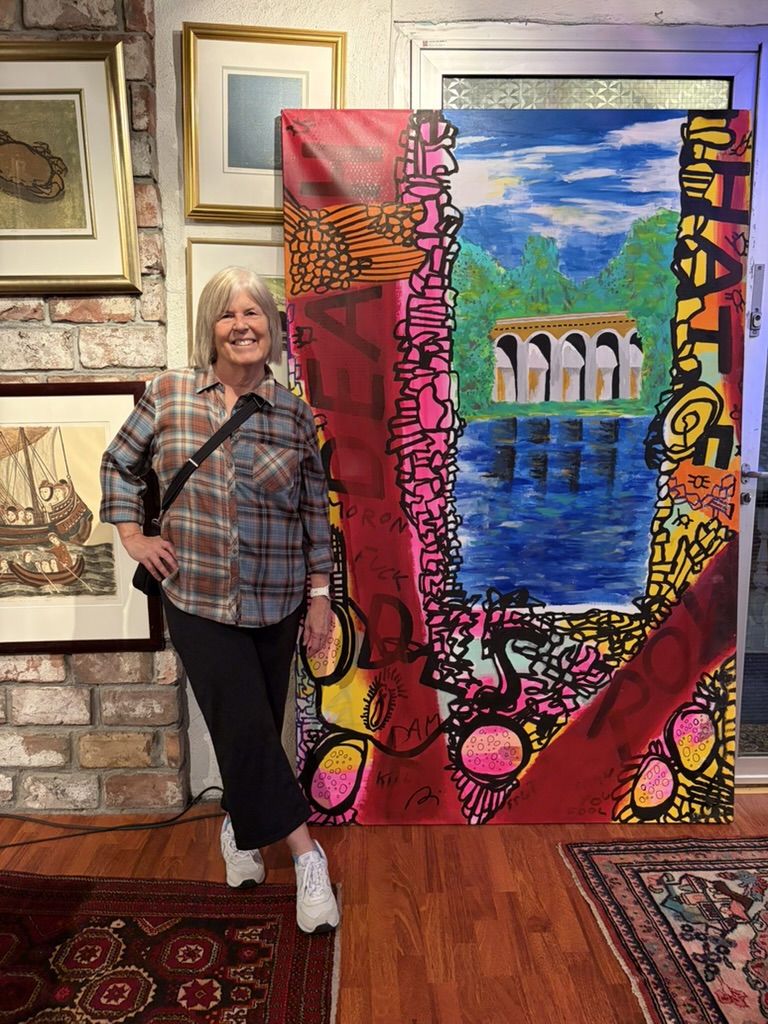
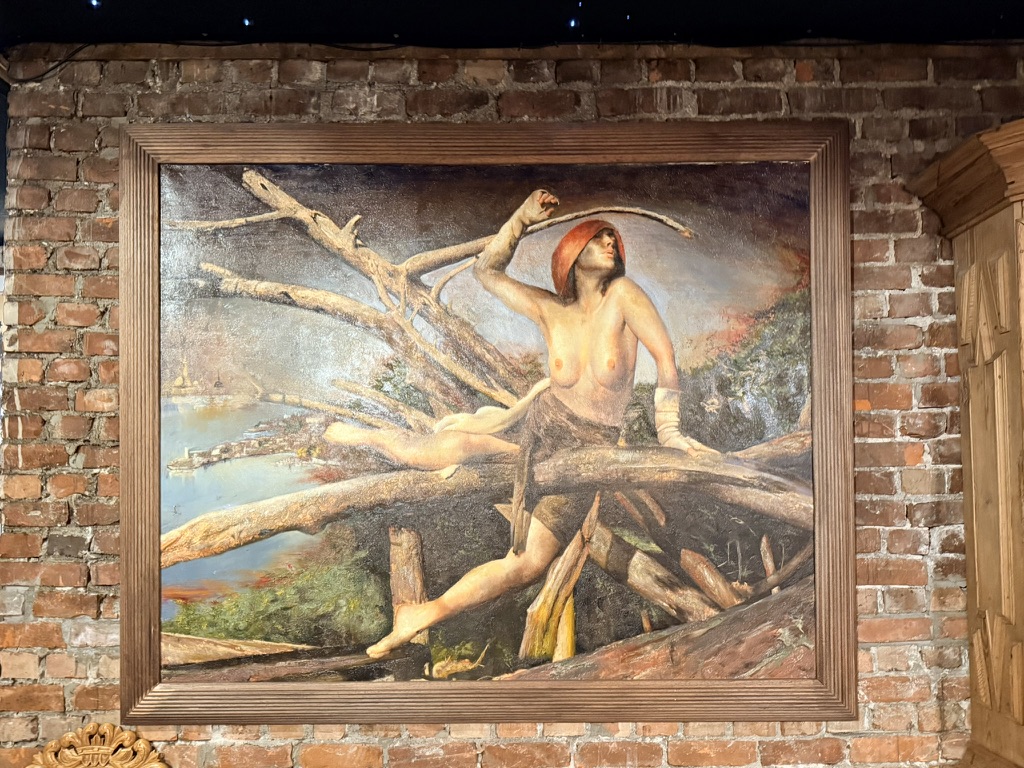
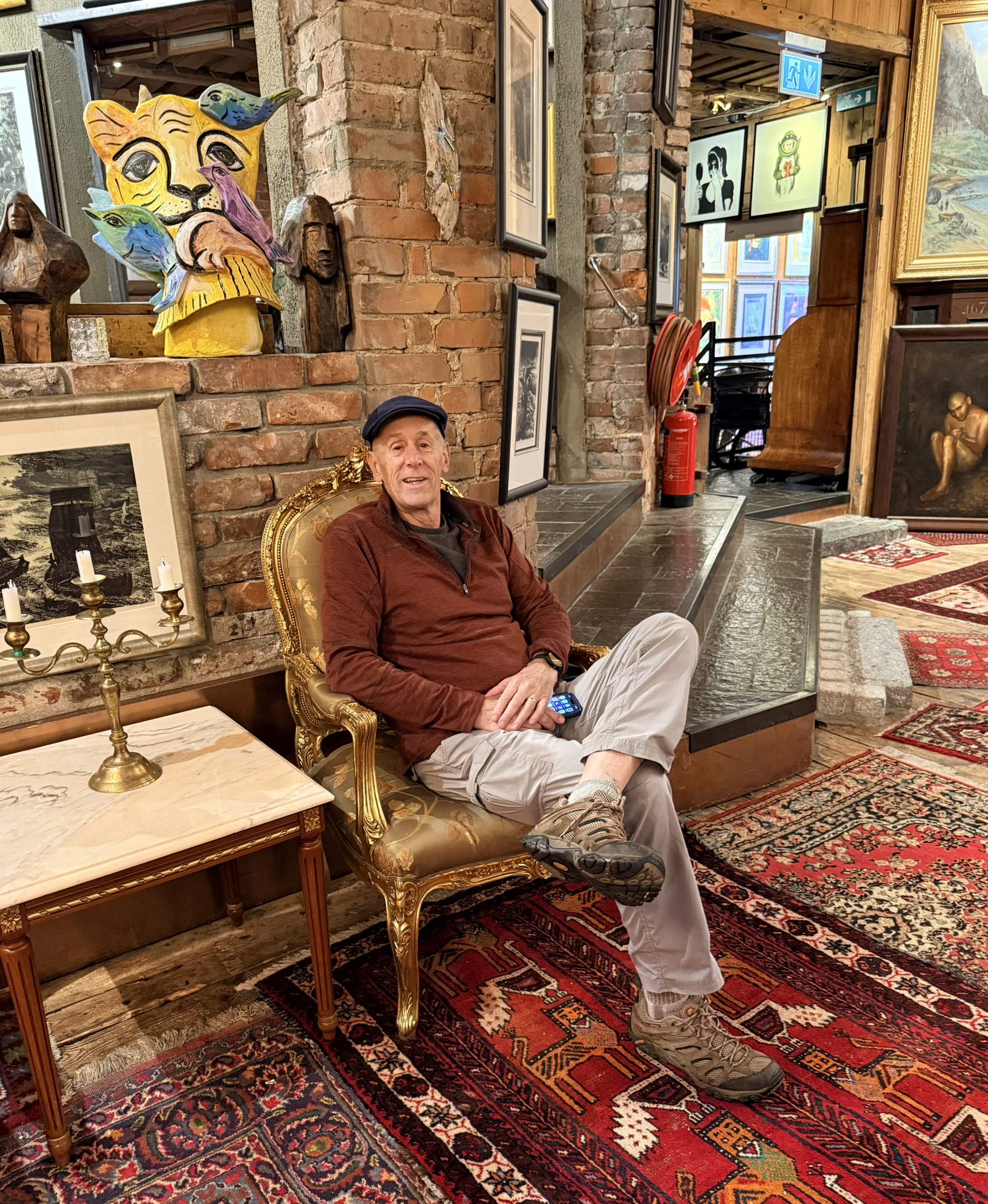
The unusual Galleri Nygaten Museum of Figurative Art was right around the corner from where we were staying on Marken Pedestrian Street. It is apparently one of the largest private collections of paintings and other artwork of the controversial Norwegian painter Odd Nerdrum (born in April of 1944) and his students, including a wide variety of classical art, large format paintings and quirky furnishings. The art seems to have an otherworldly, erotic and sensuous theme.
The gallery is used often for special occasions such as weddings, anniversaries and corporate parties to conferences, meetings and informal gatherings. We had seen people dressed to the hilt on Friday night going into the gallery, and we were told by the director it had been a costume party. The place intends to create a setting where art meets festivity. There is also a kitchen renowned for its culinary quality and a nightclub with a DJ and bar.
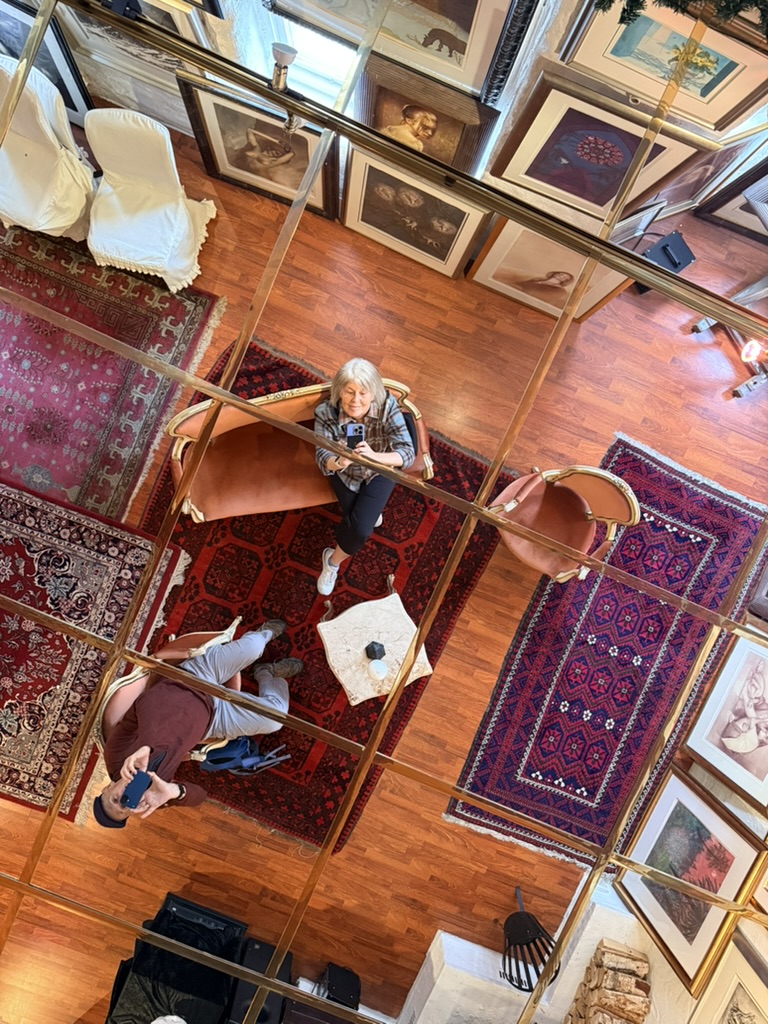
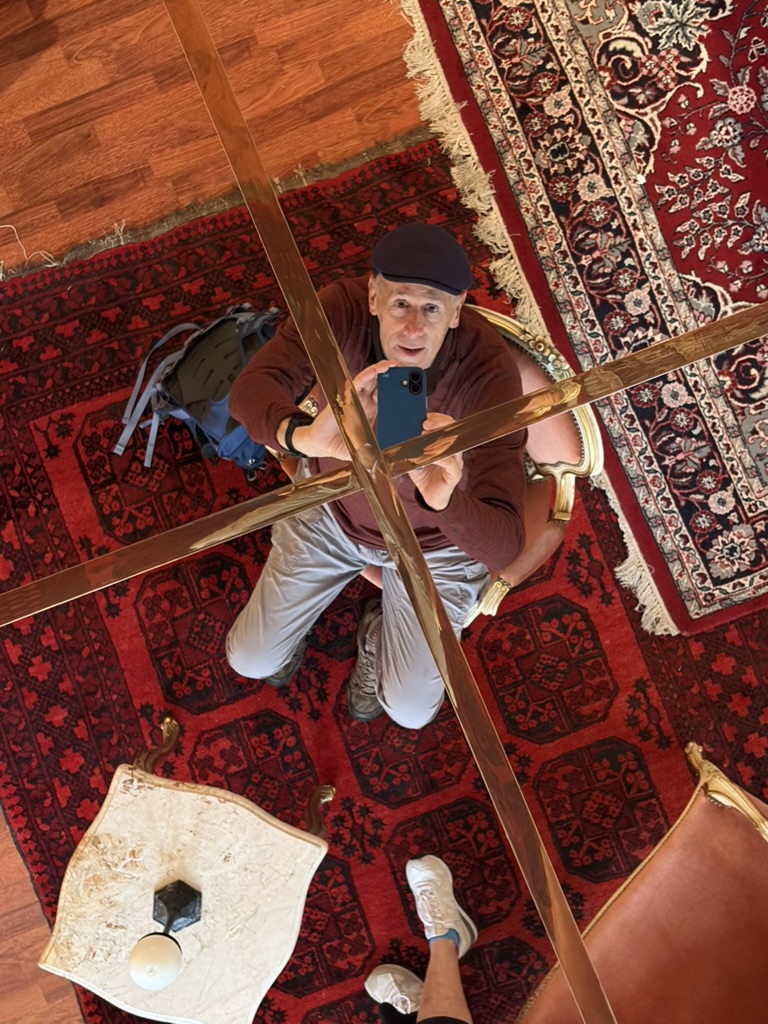
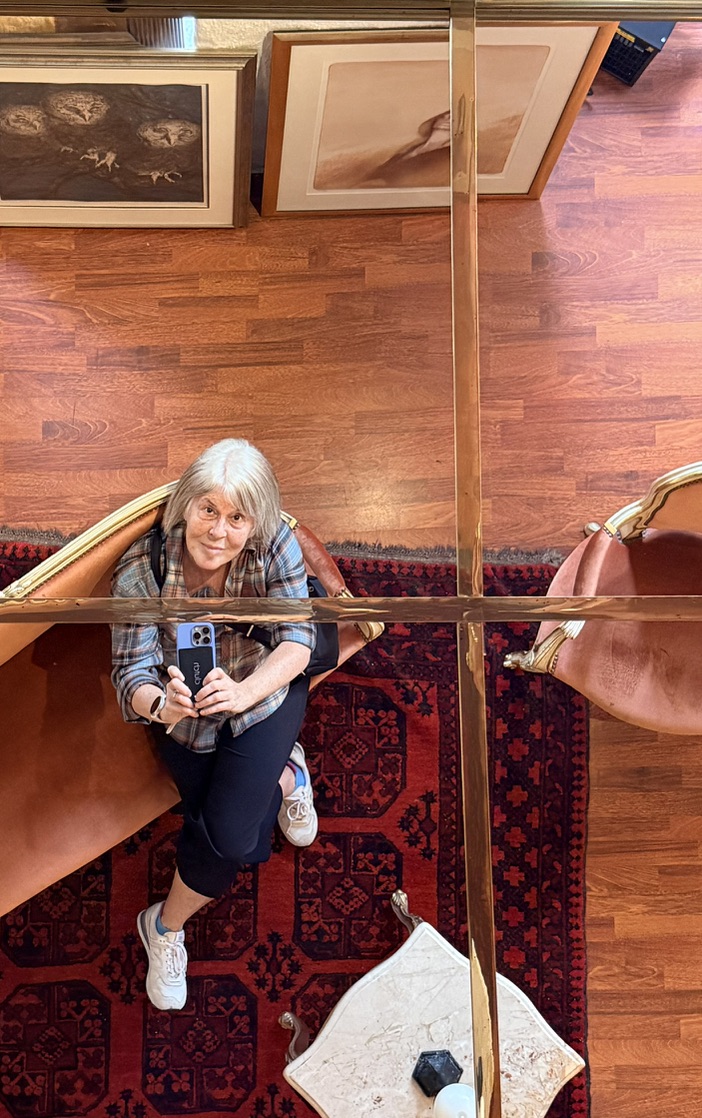
We had a fun time wandering around this quirky place and taking photos of ourselves in the ceiling mirrors in one room.
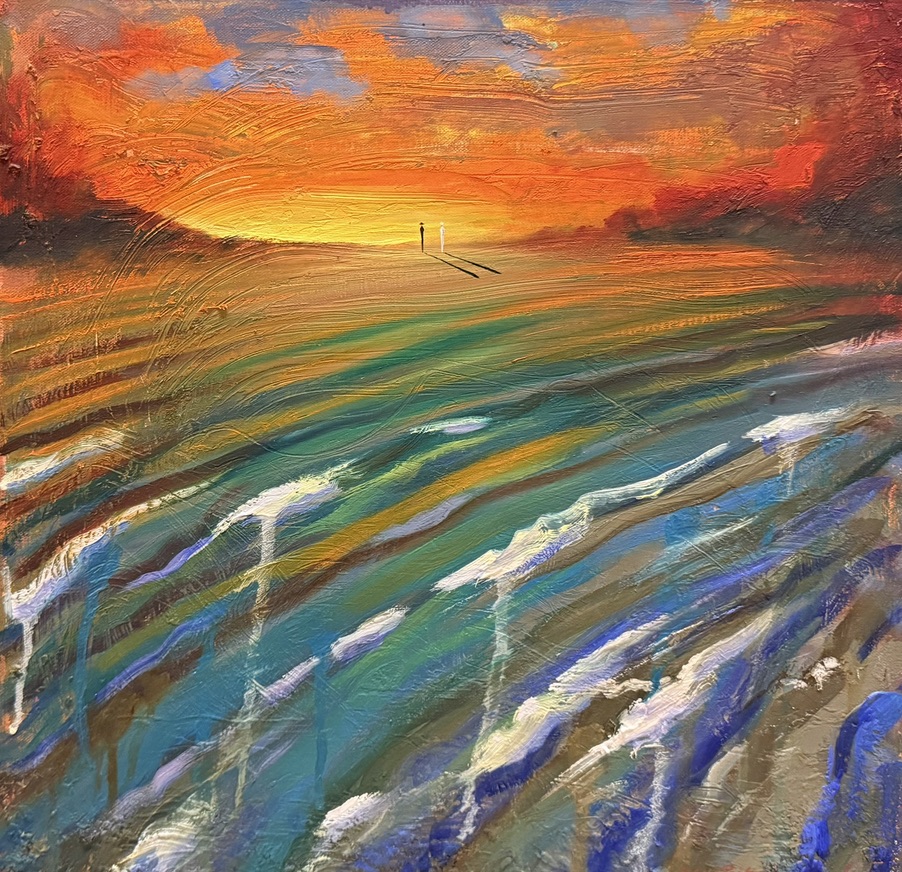
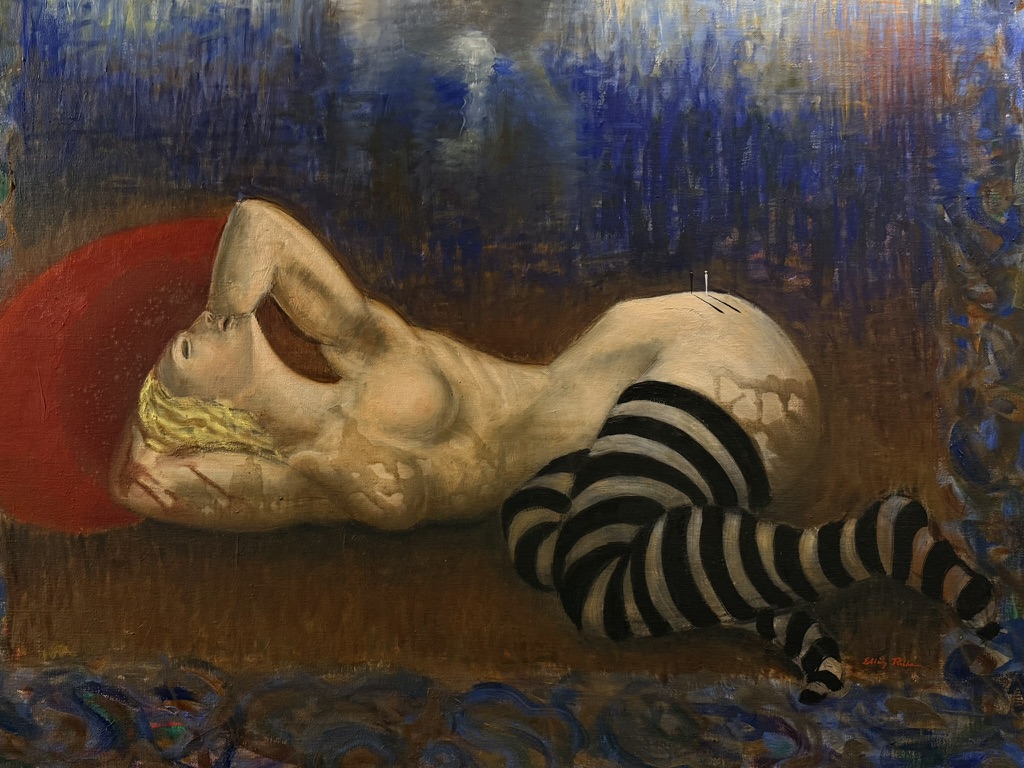
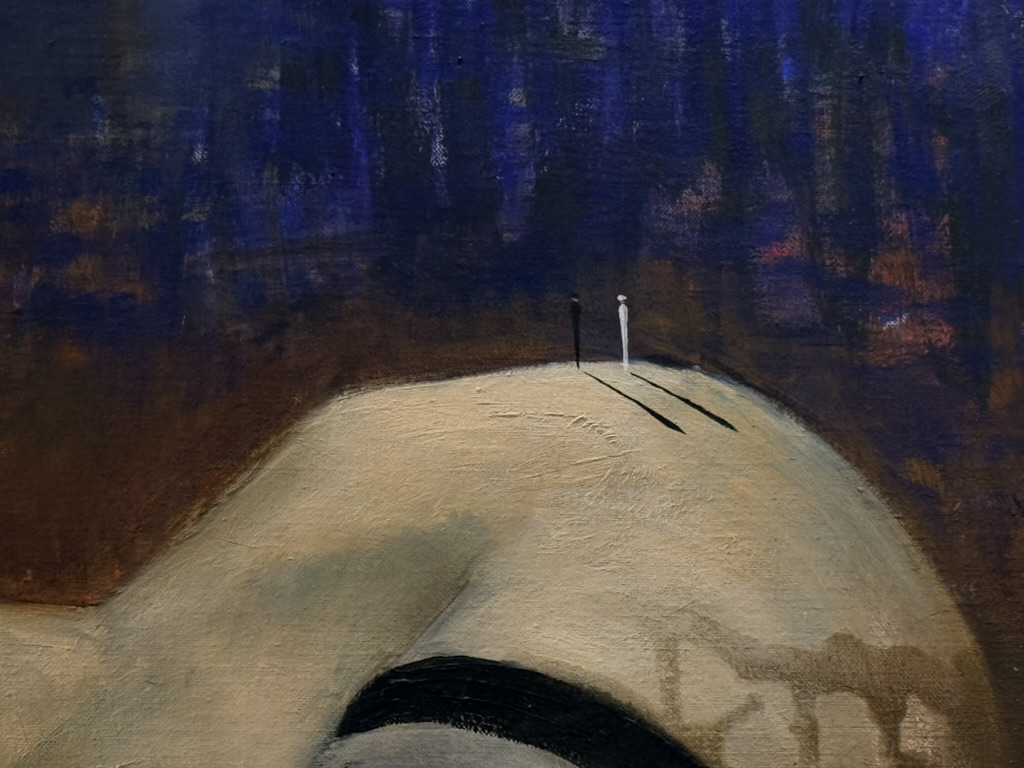
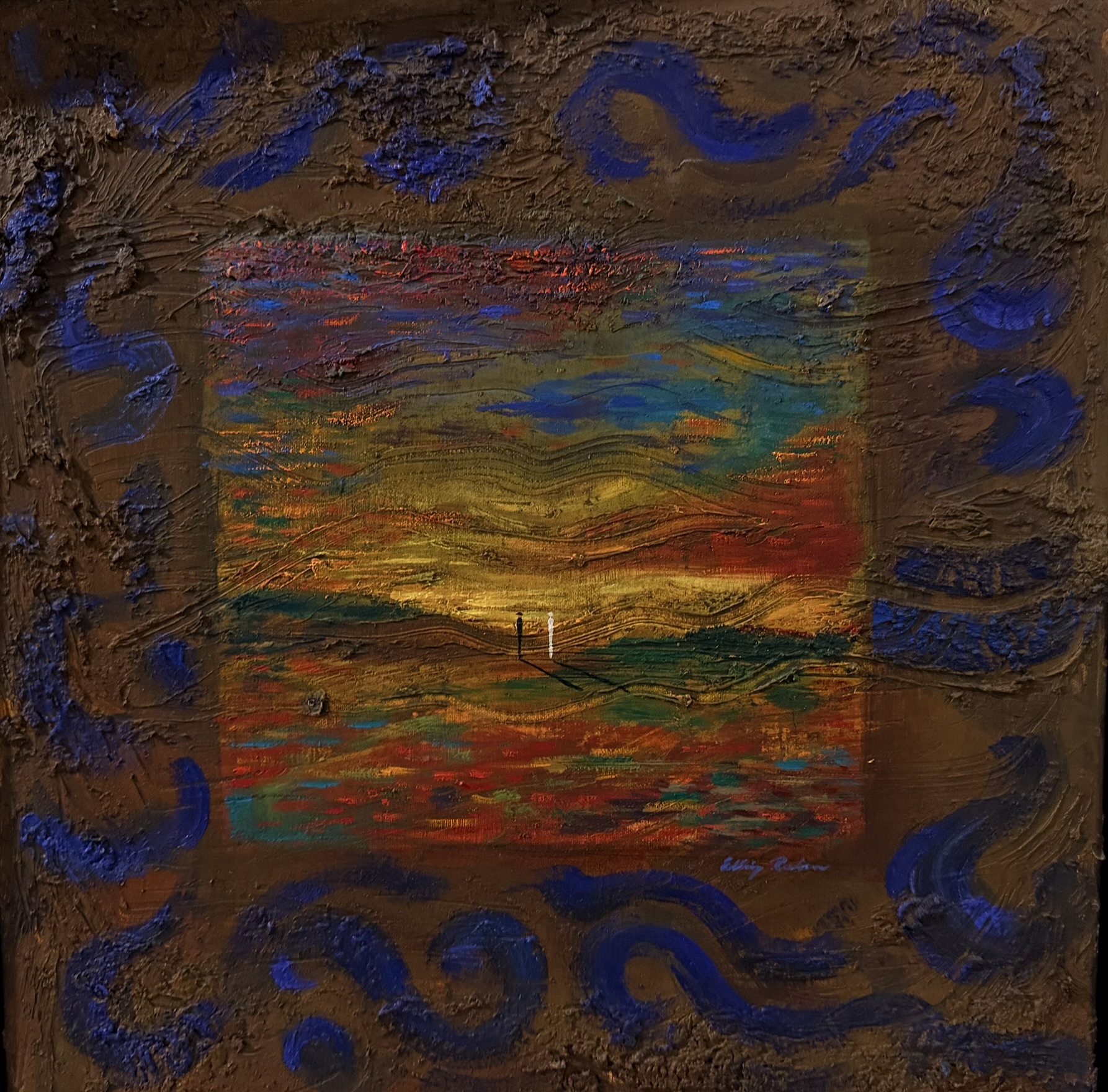
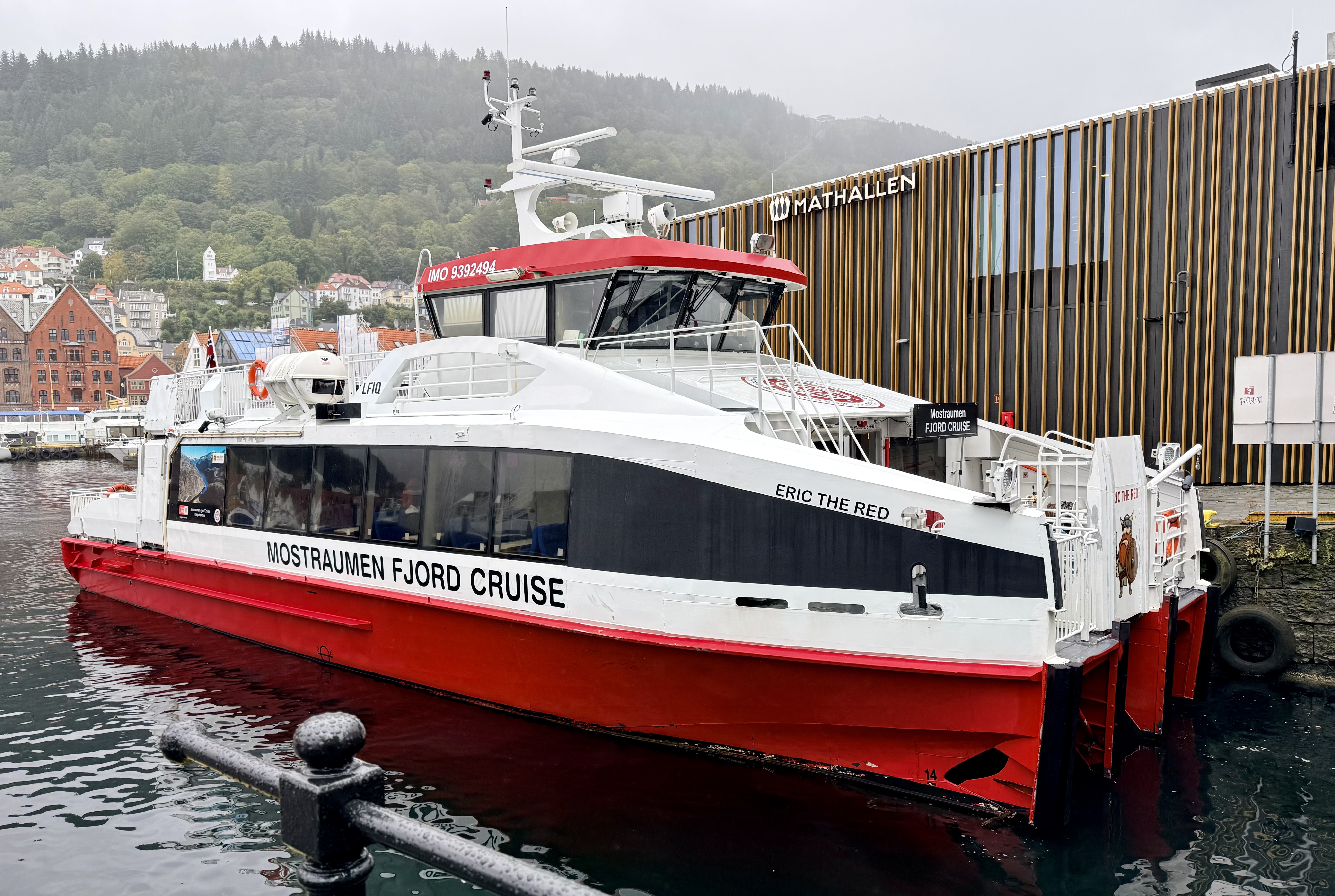
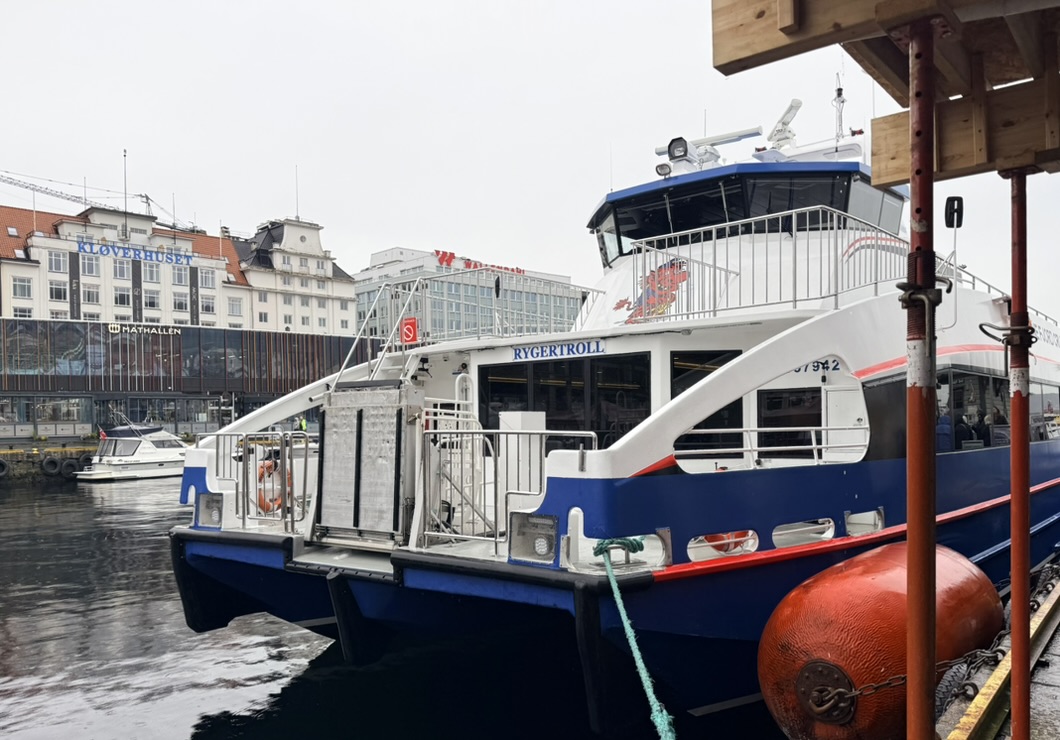
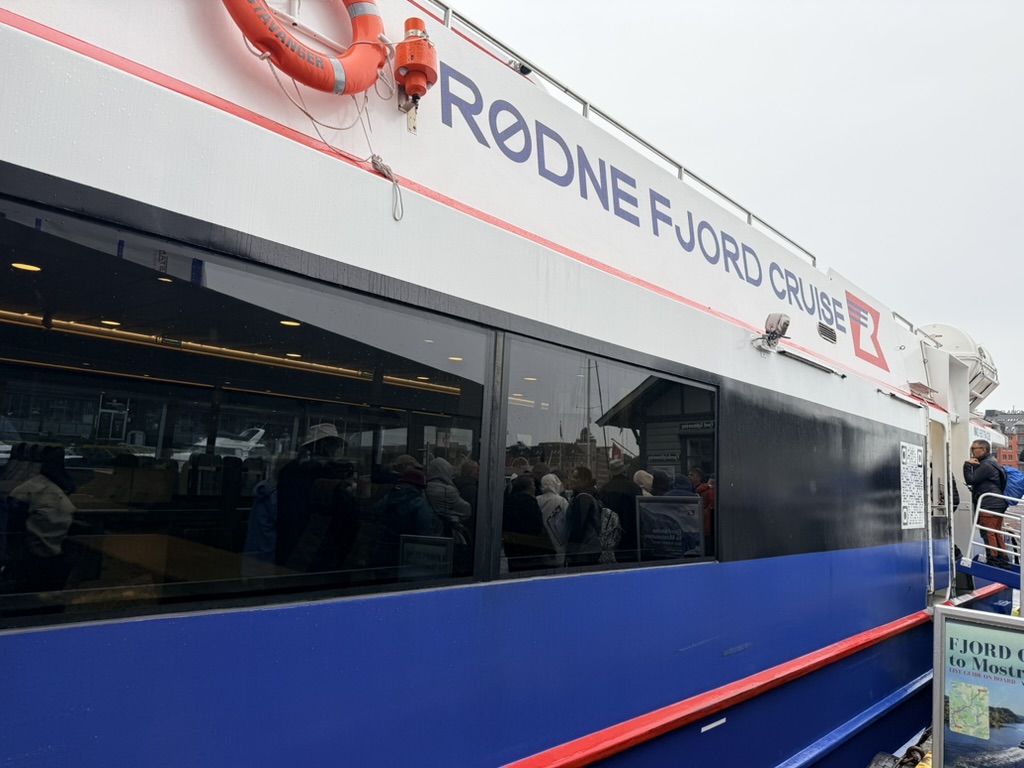
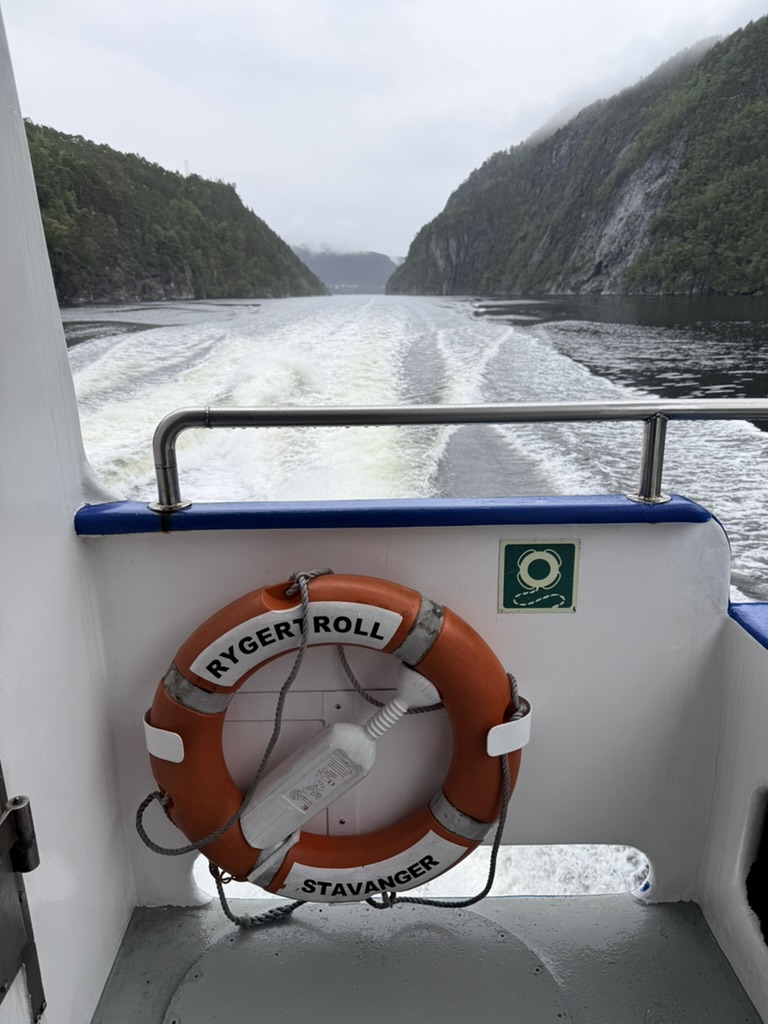
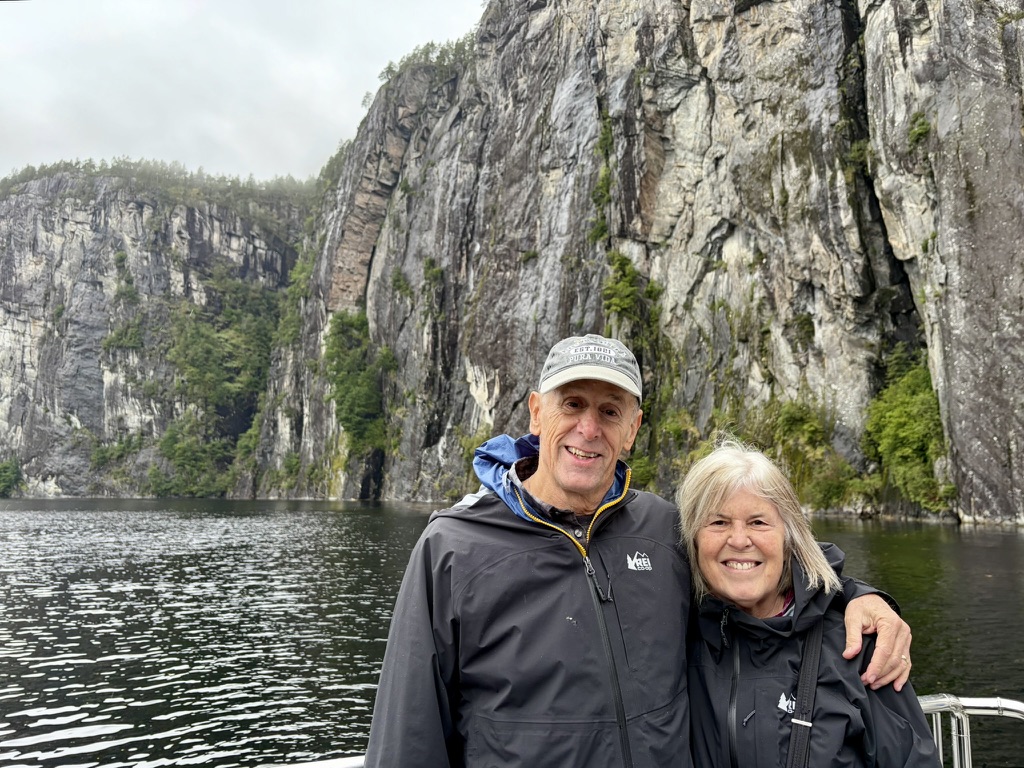
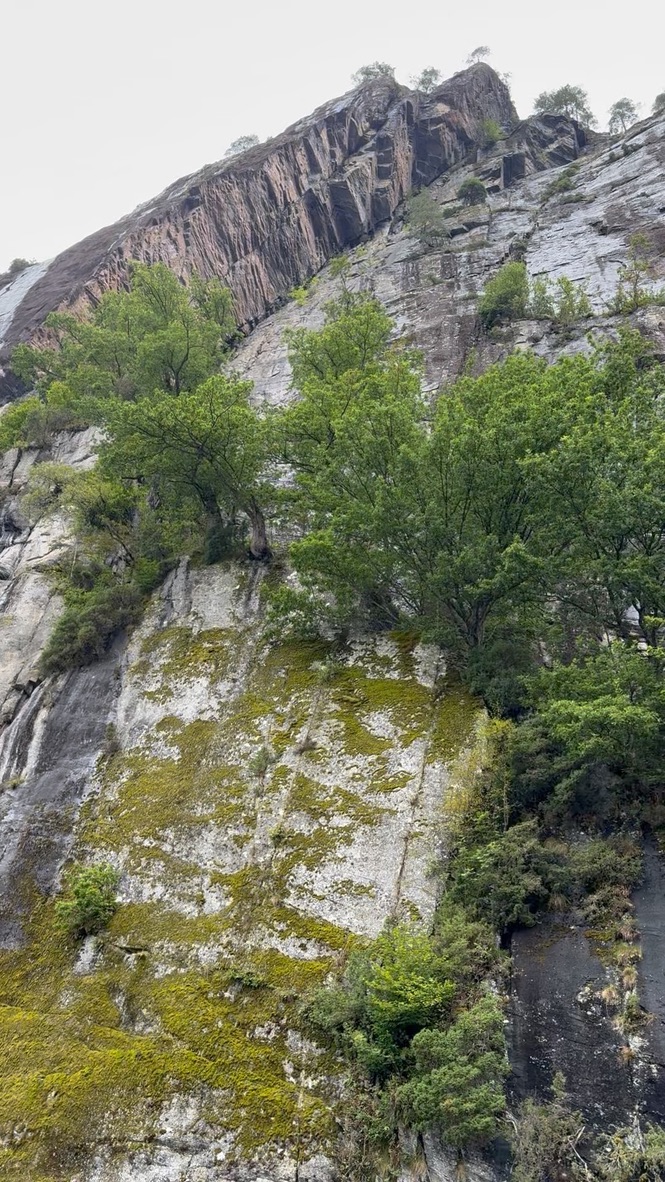
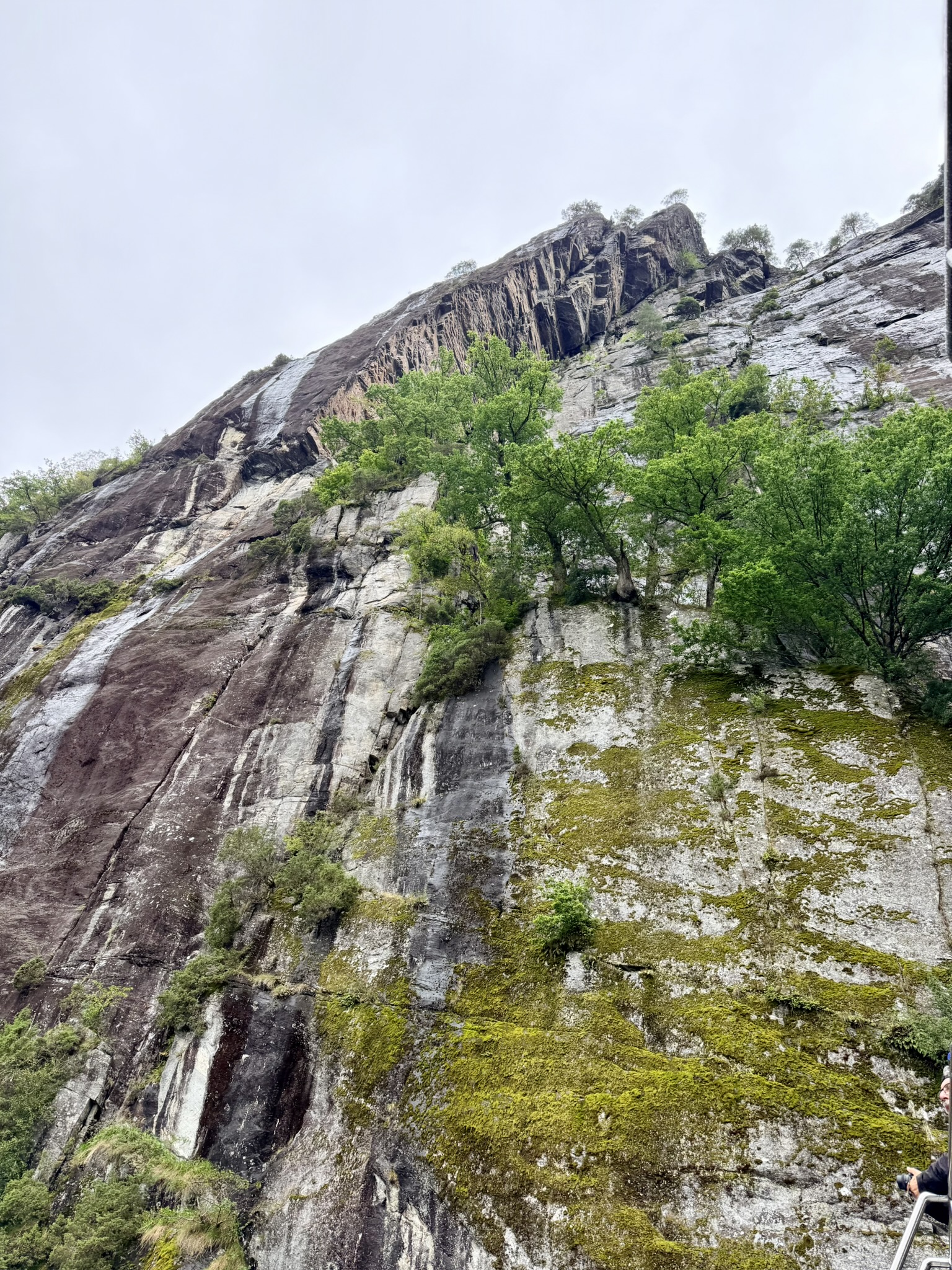
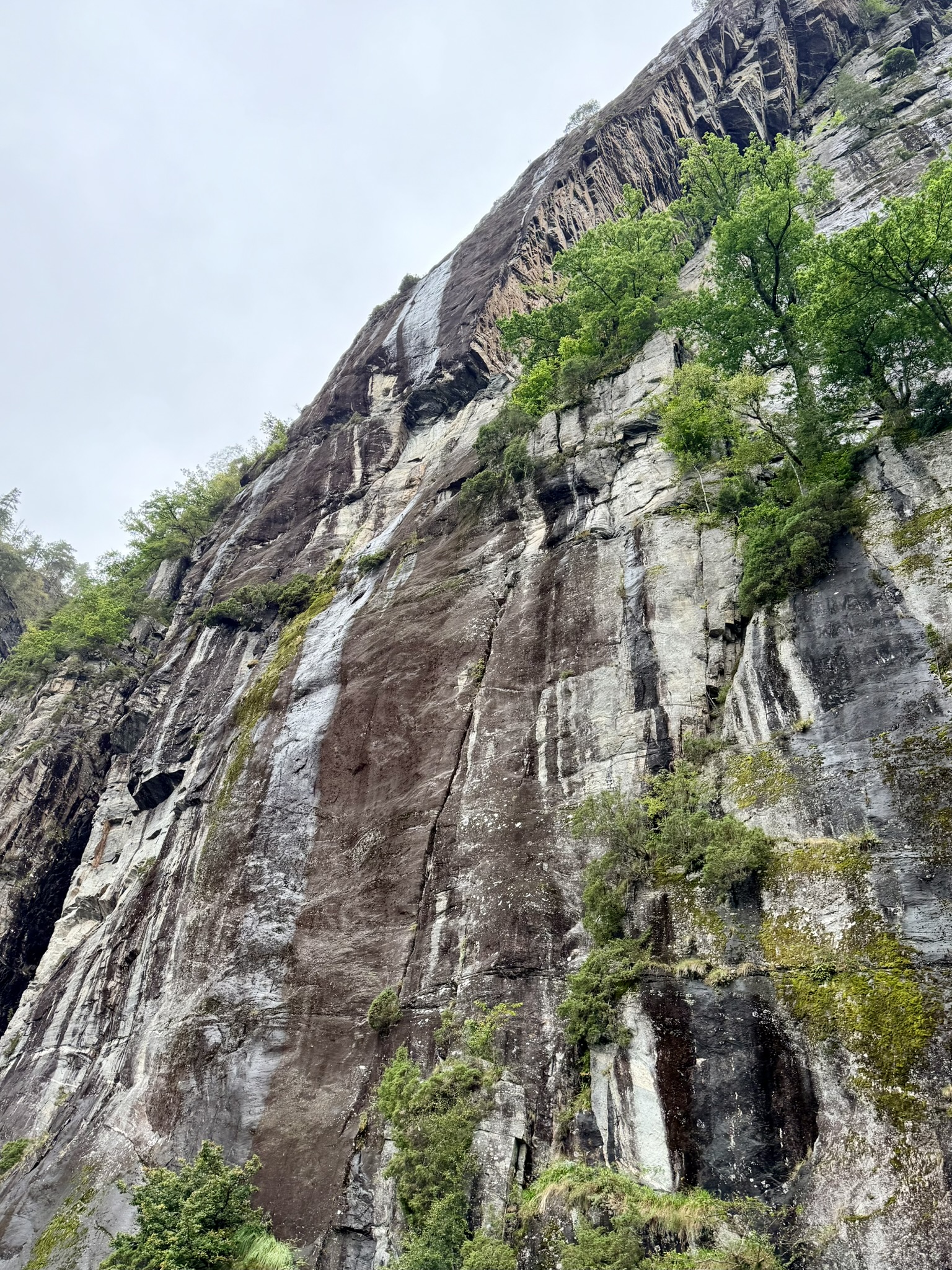
Half-day Fjordcruise from Bergen to Mostraumen
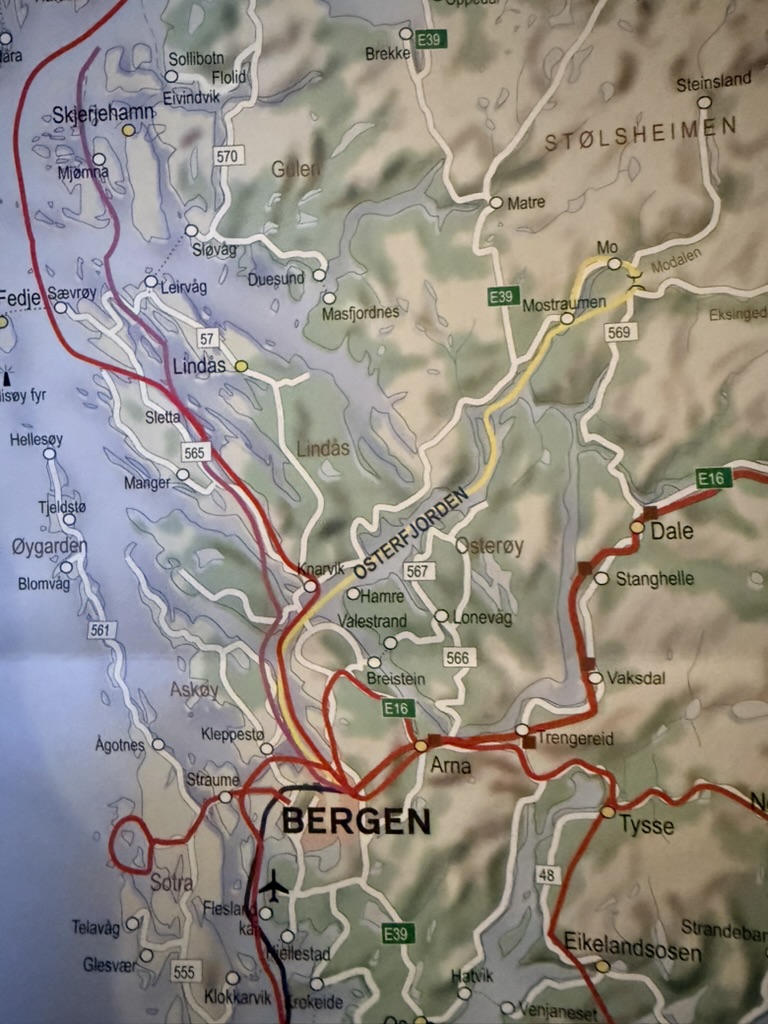
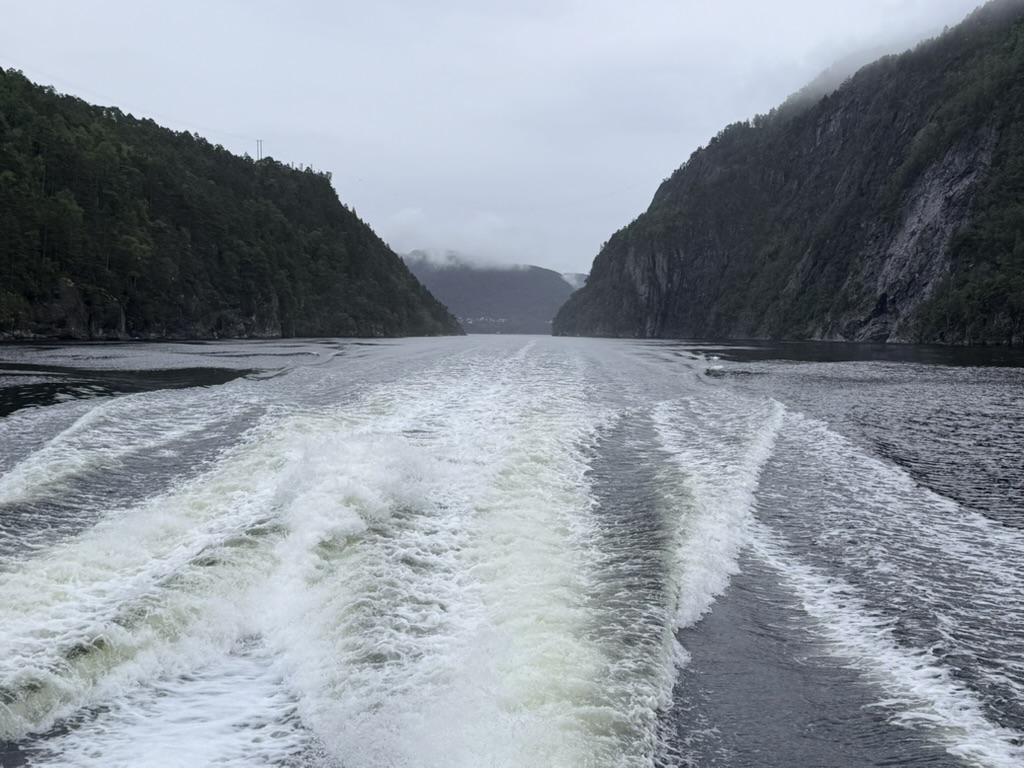
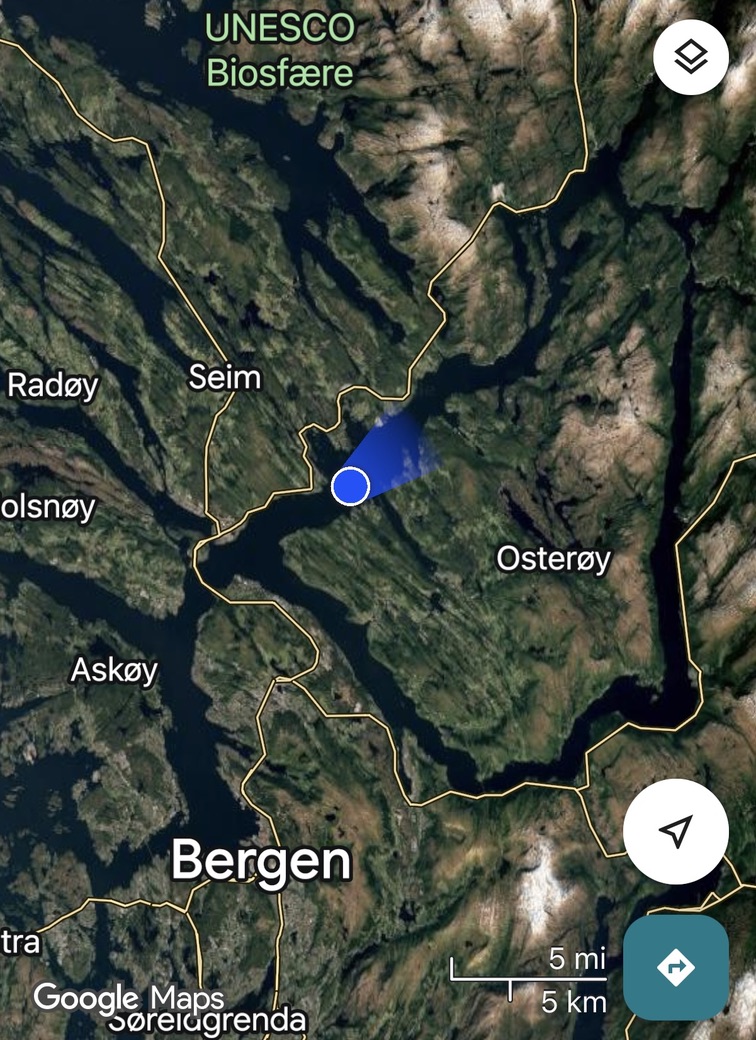
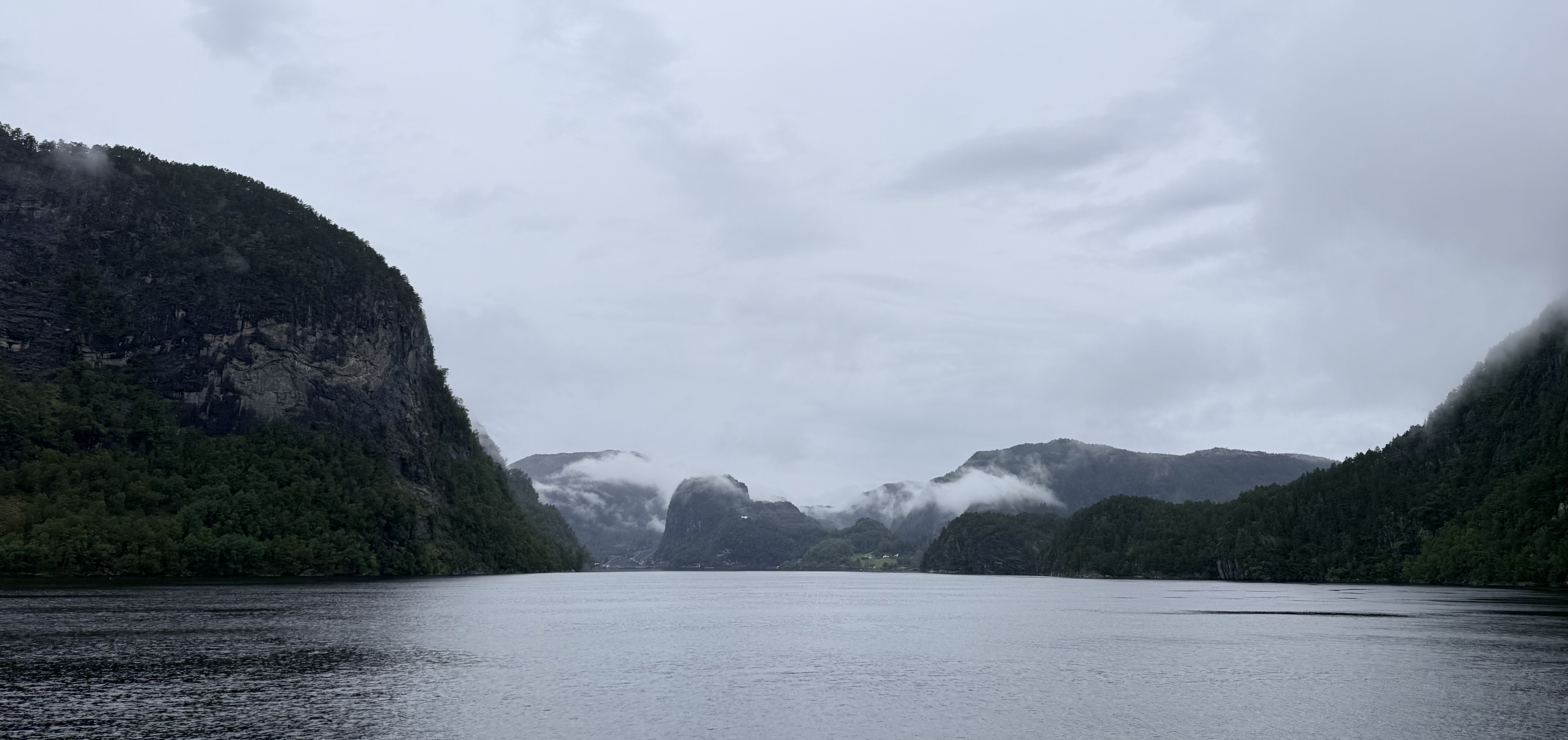
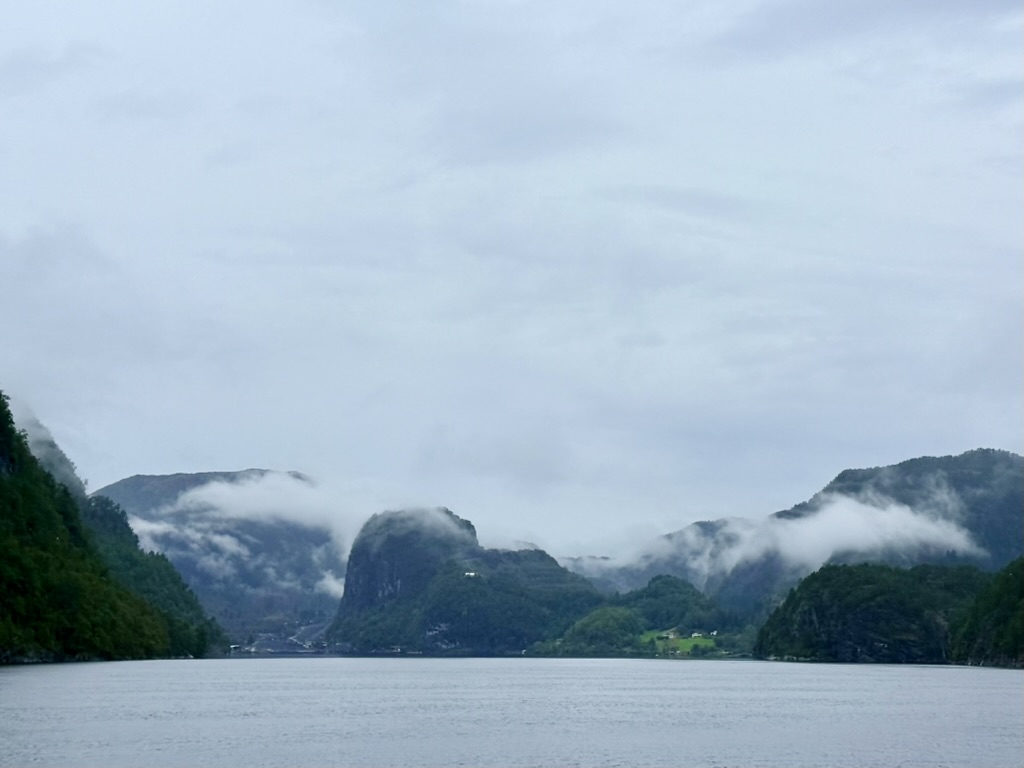
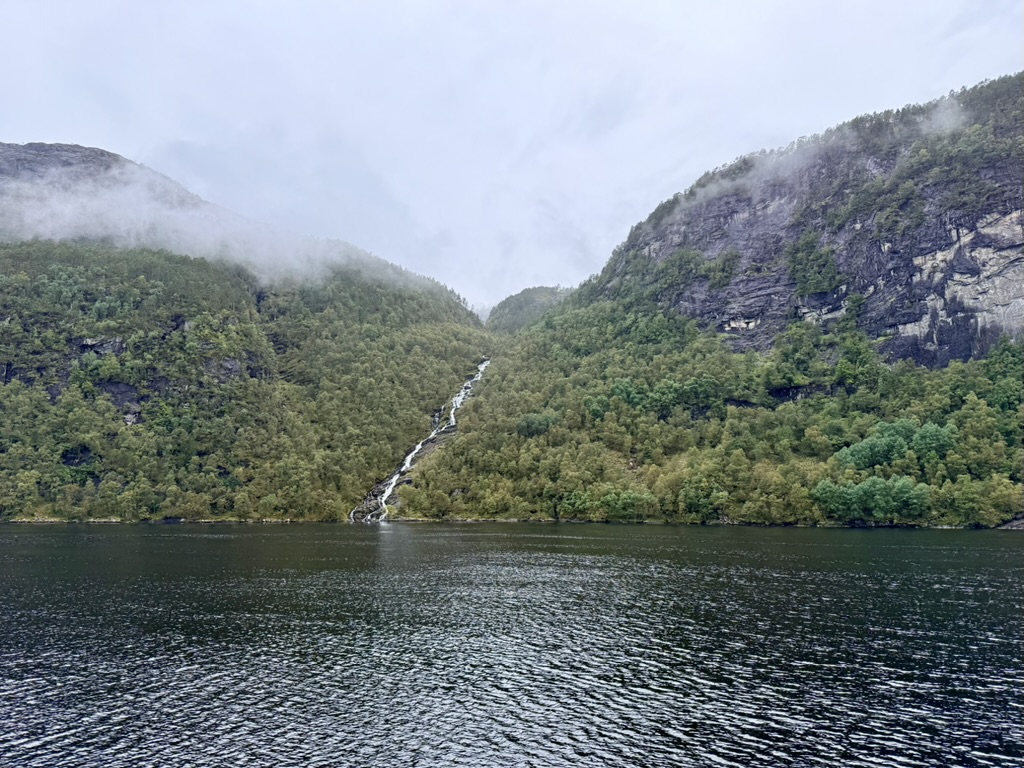
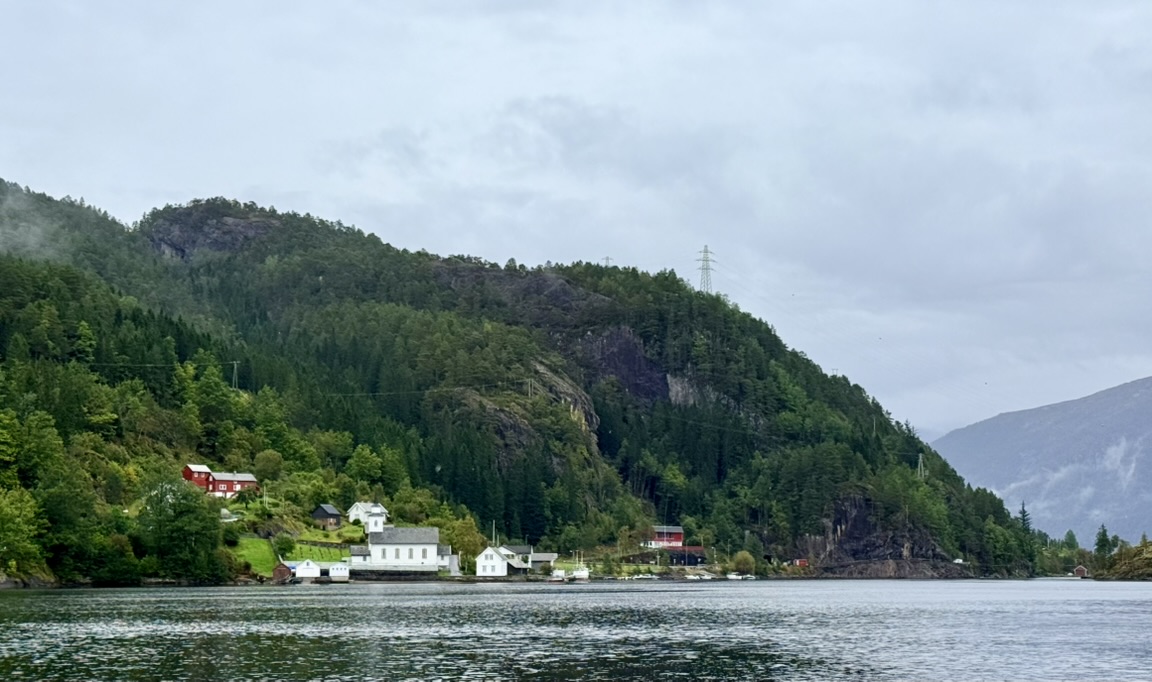
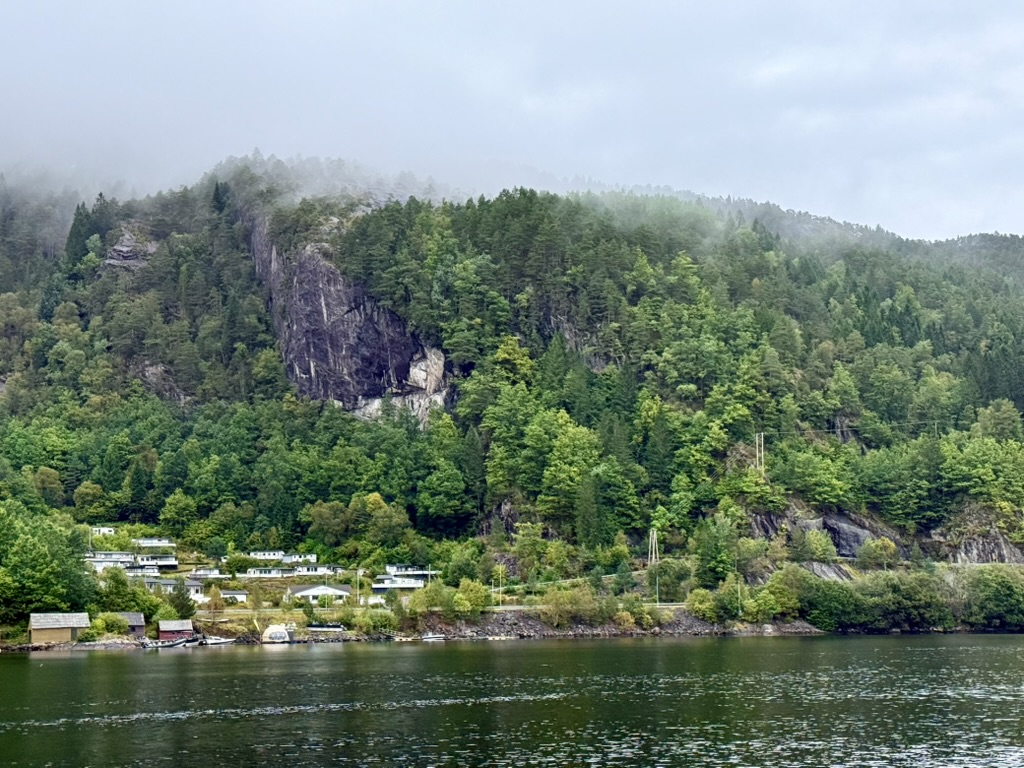
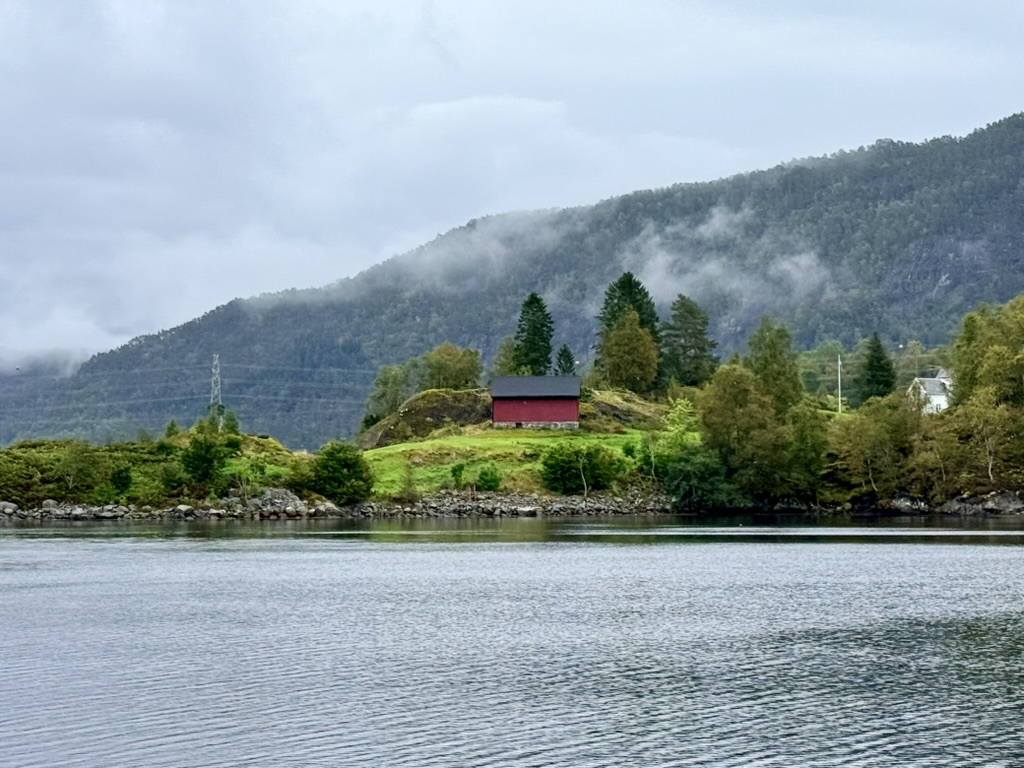
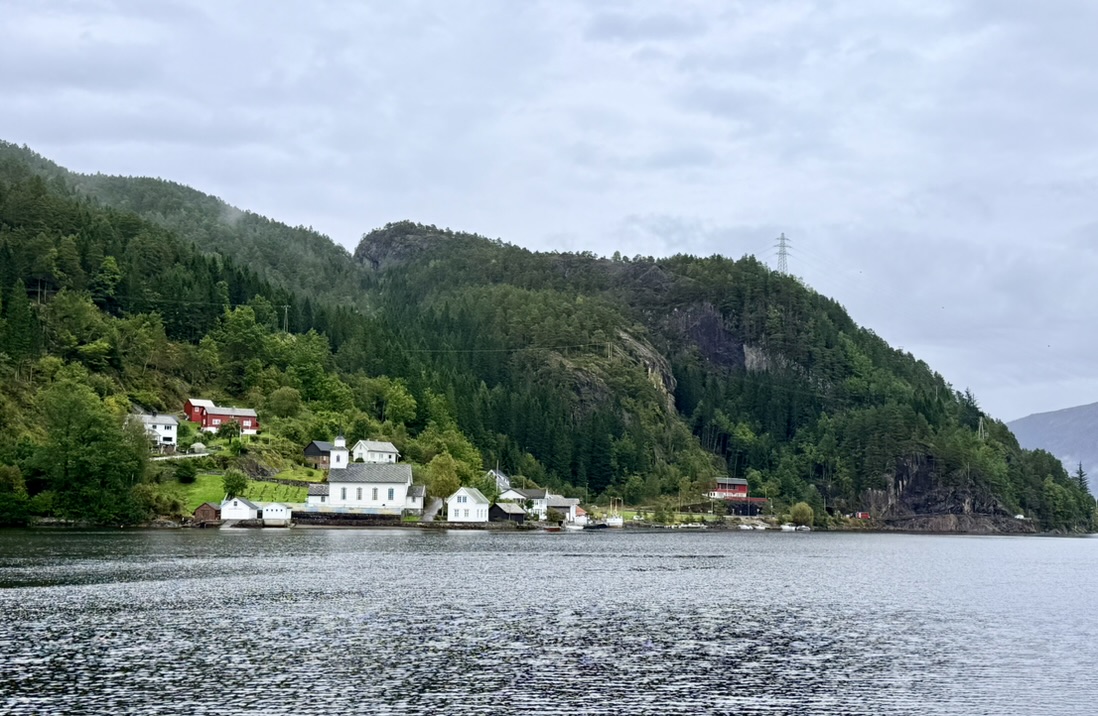
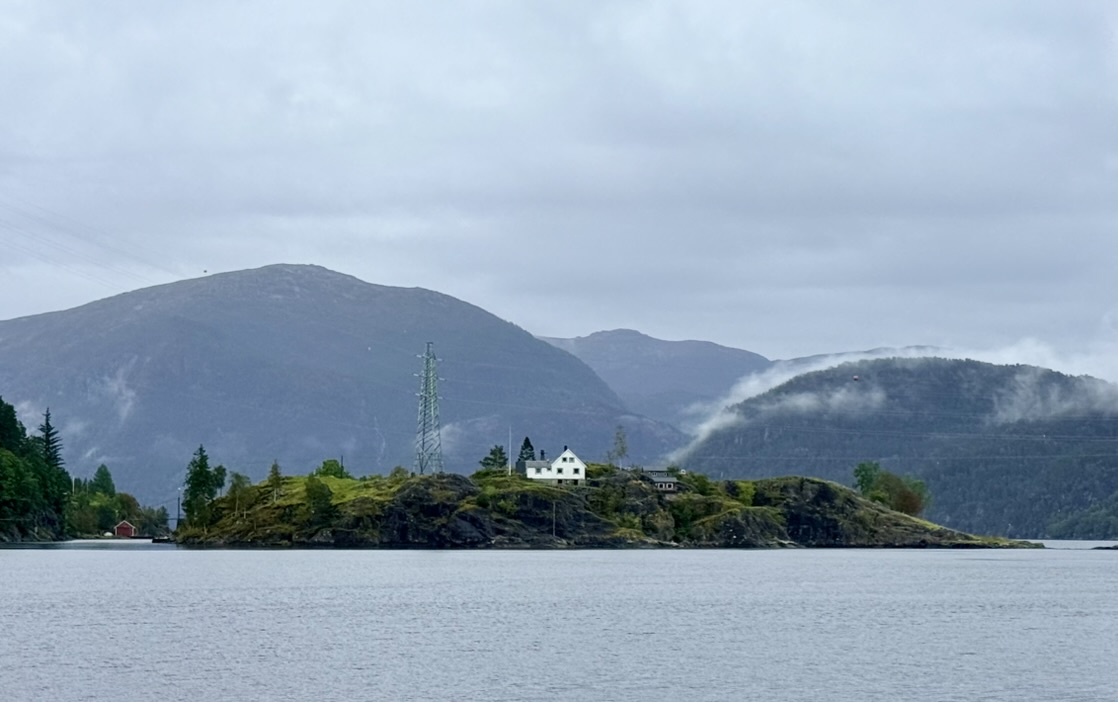
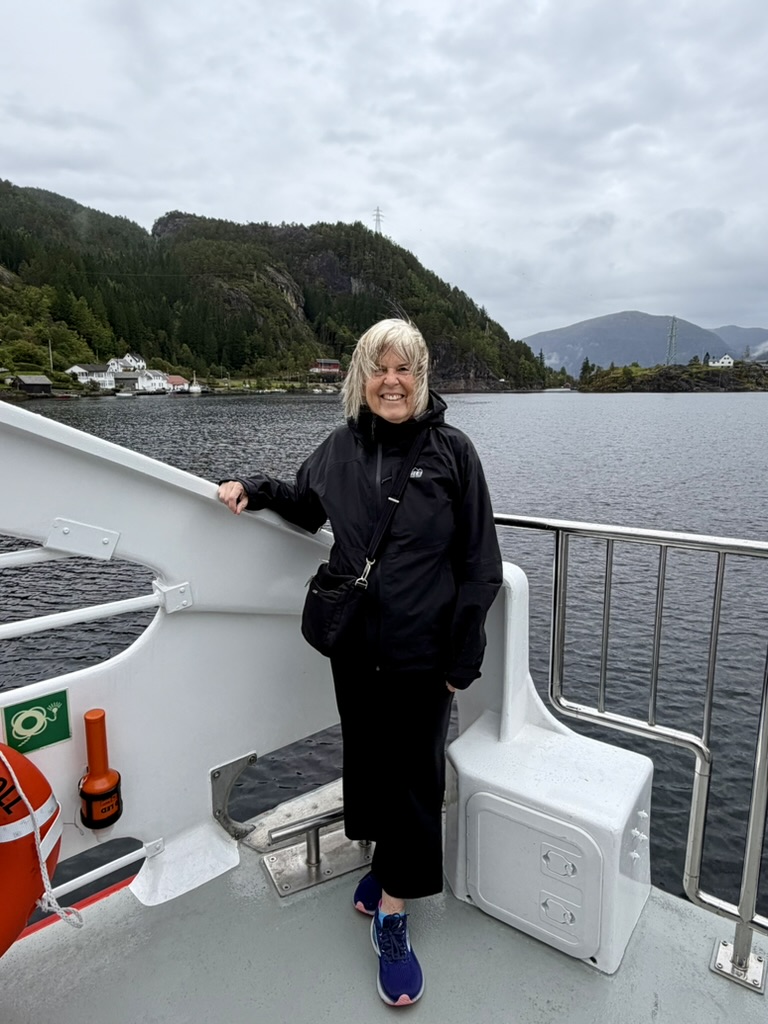
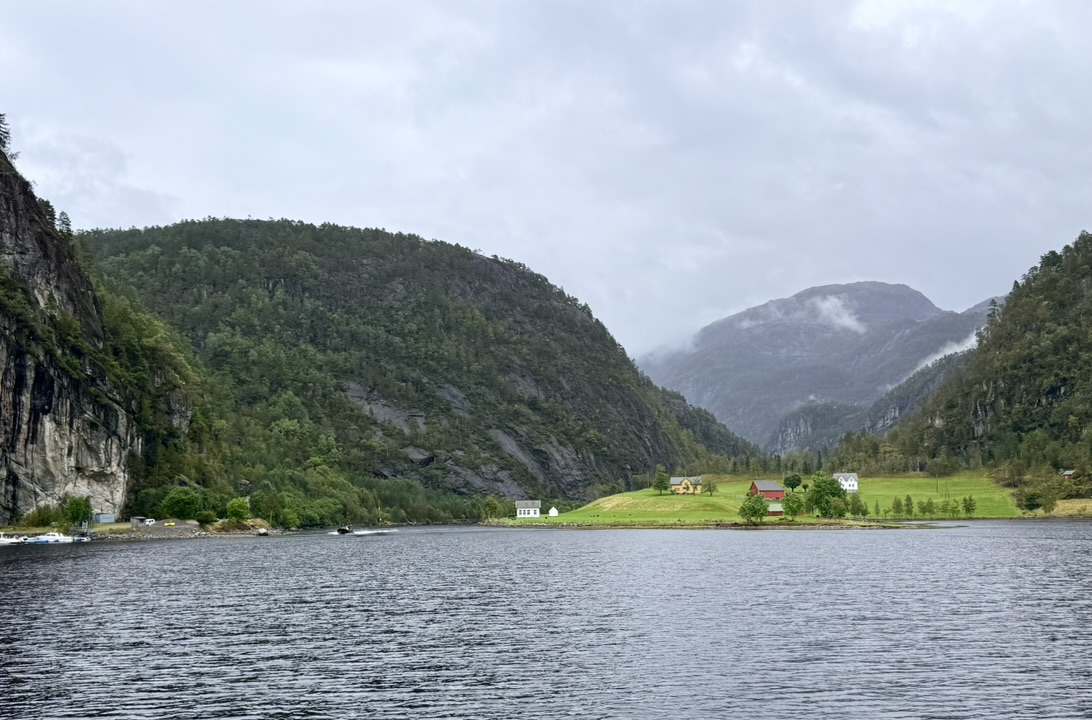
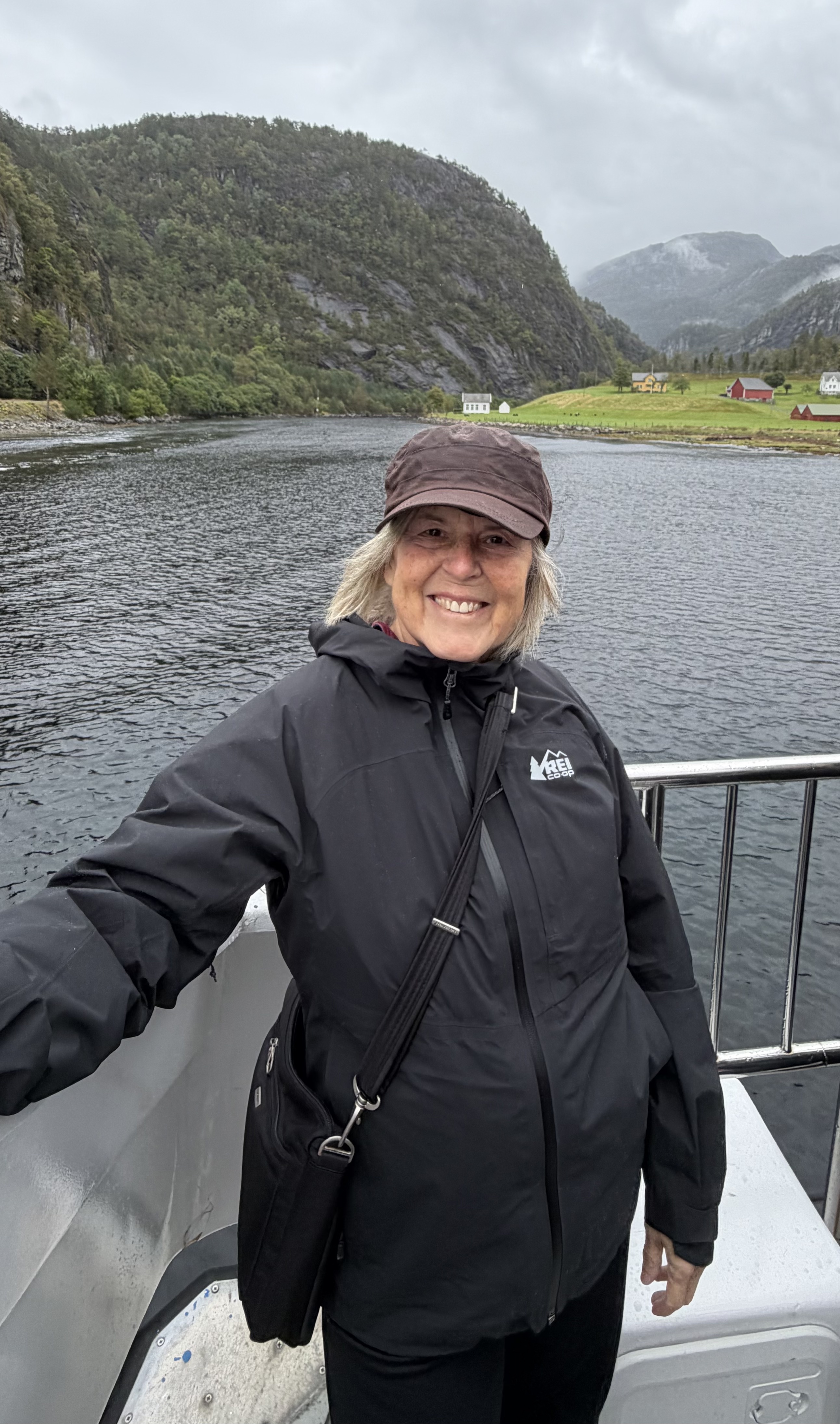
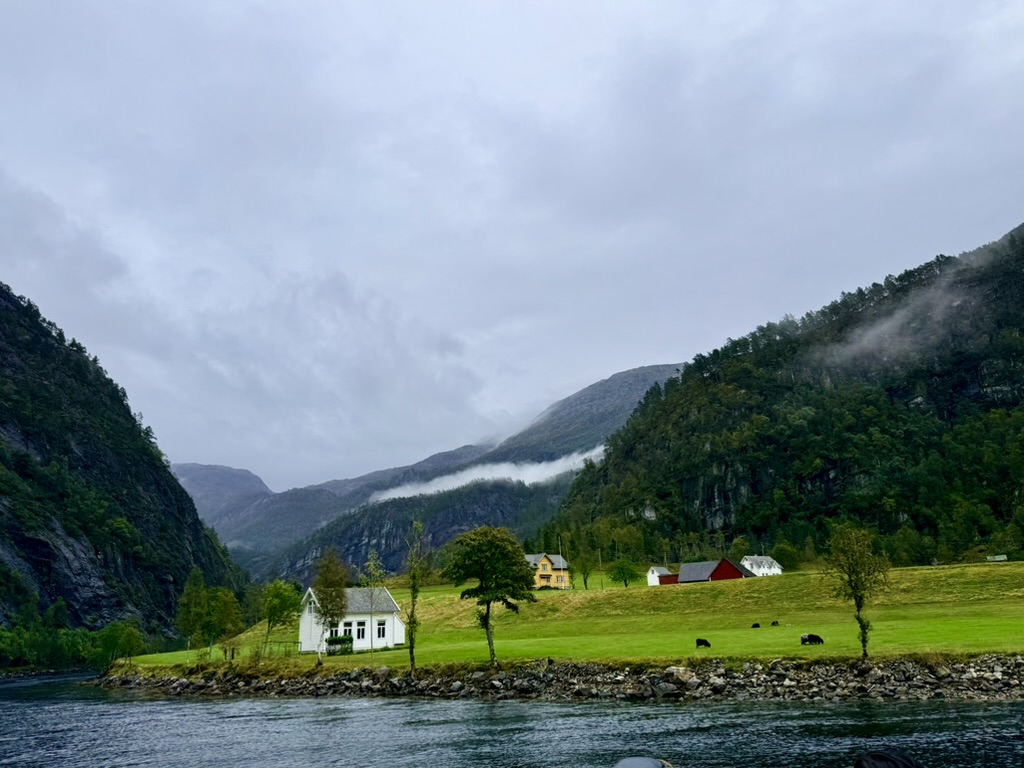
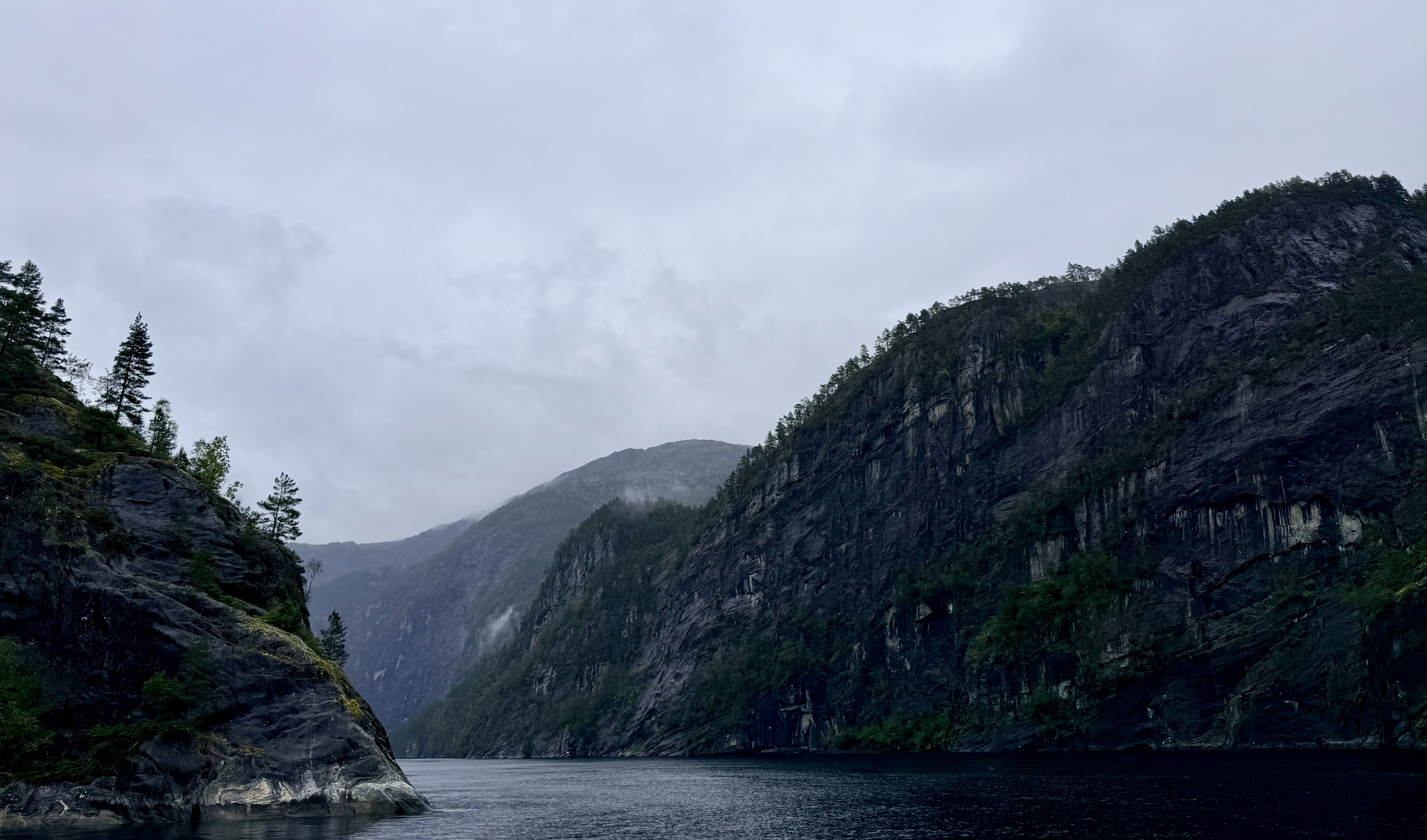
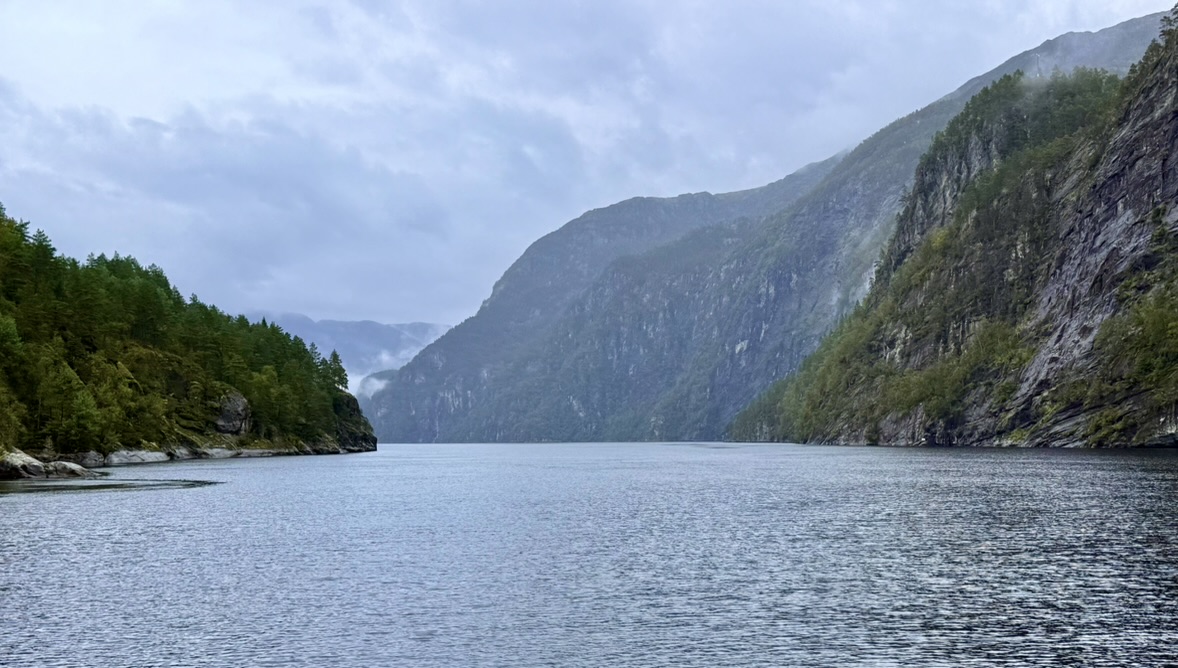
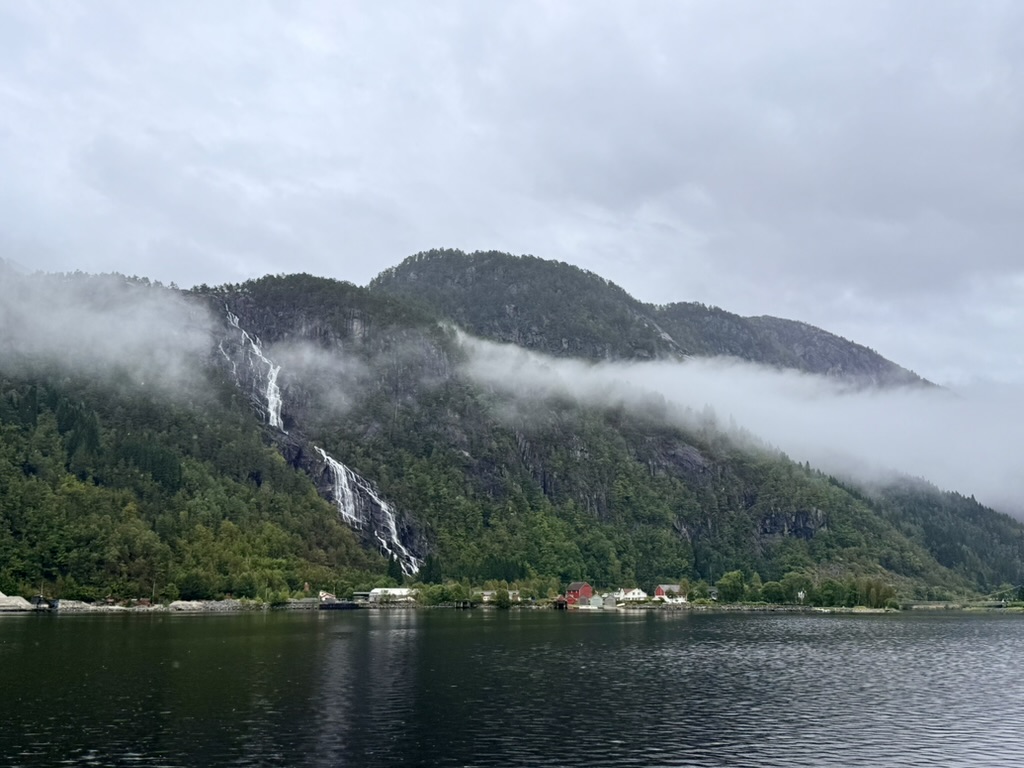
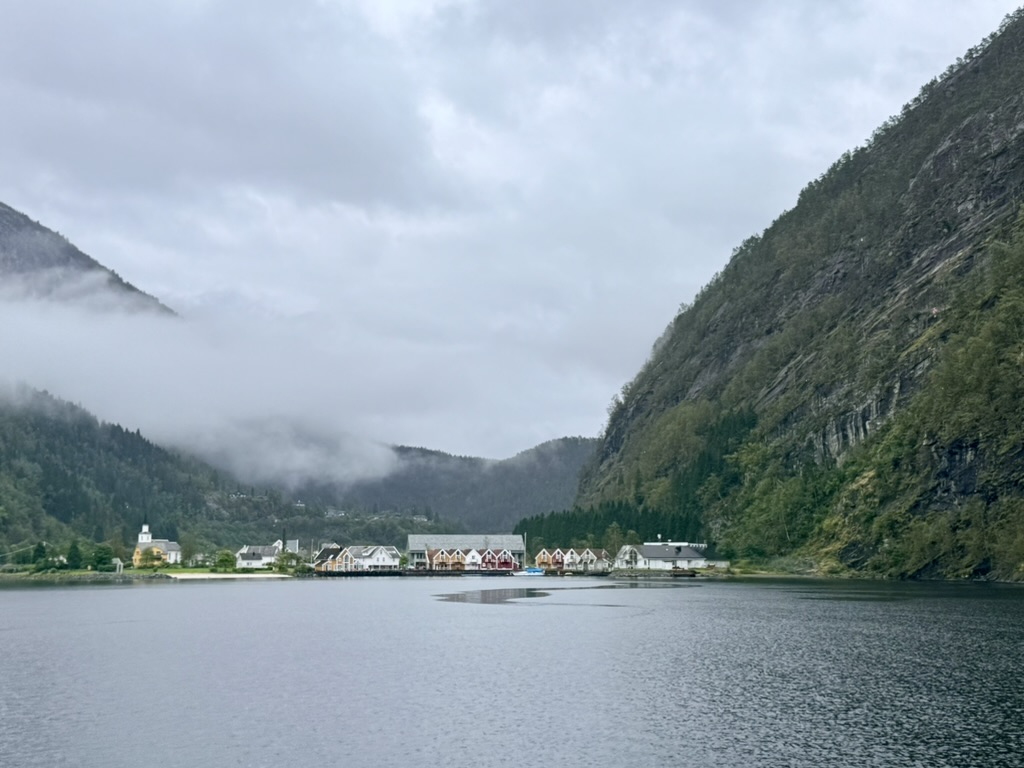
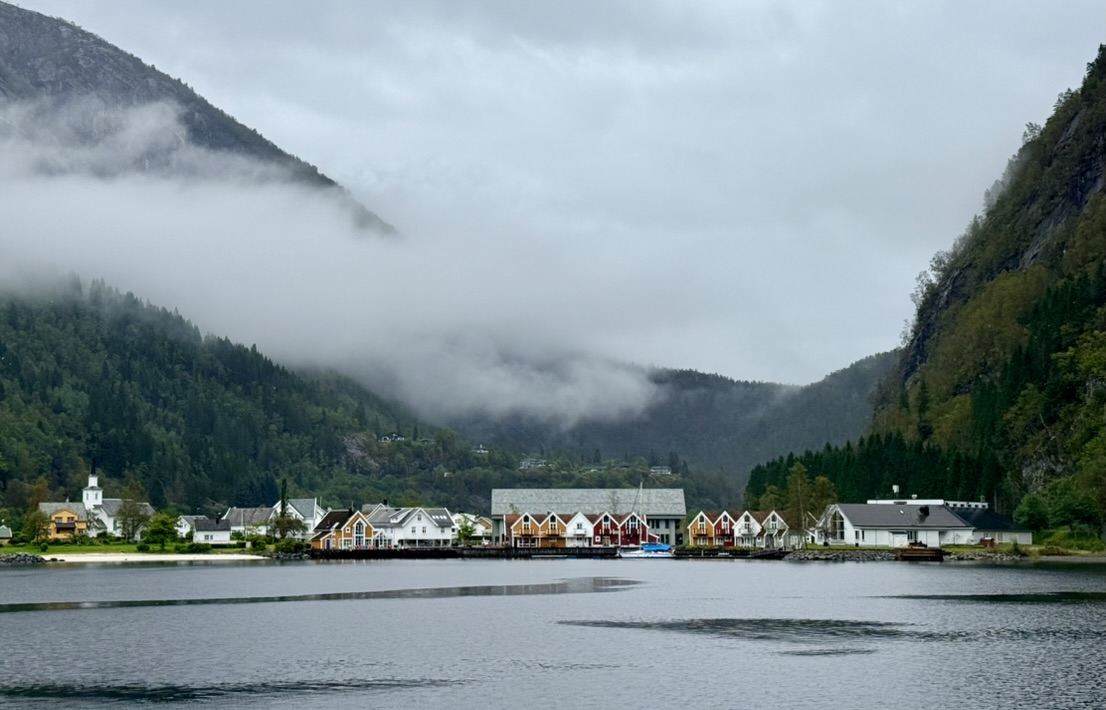
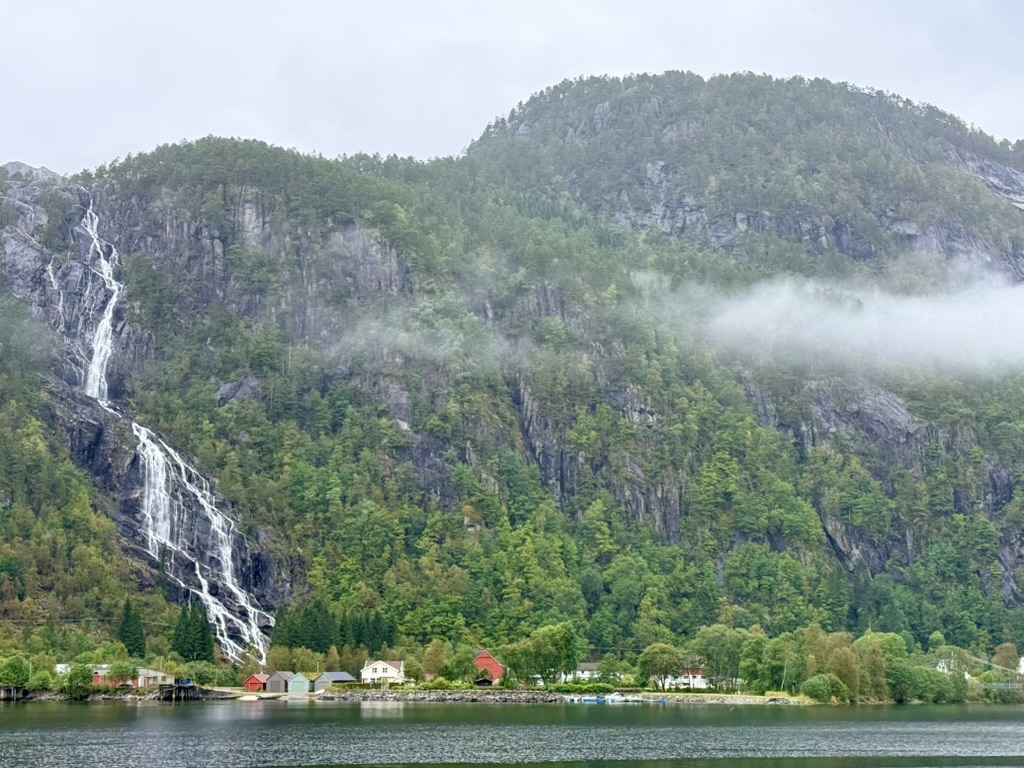
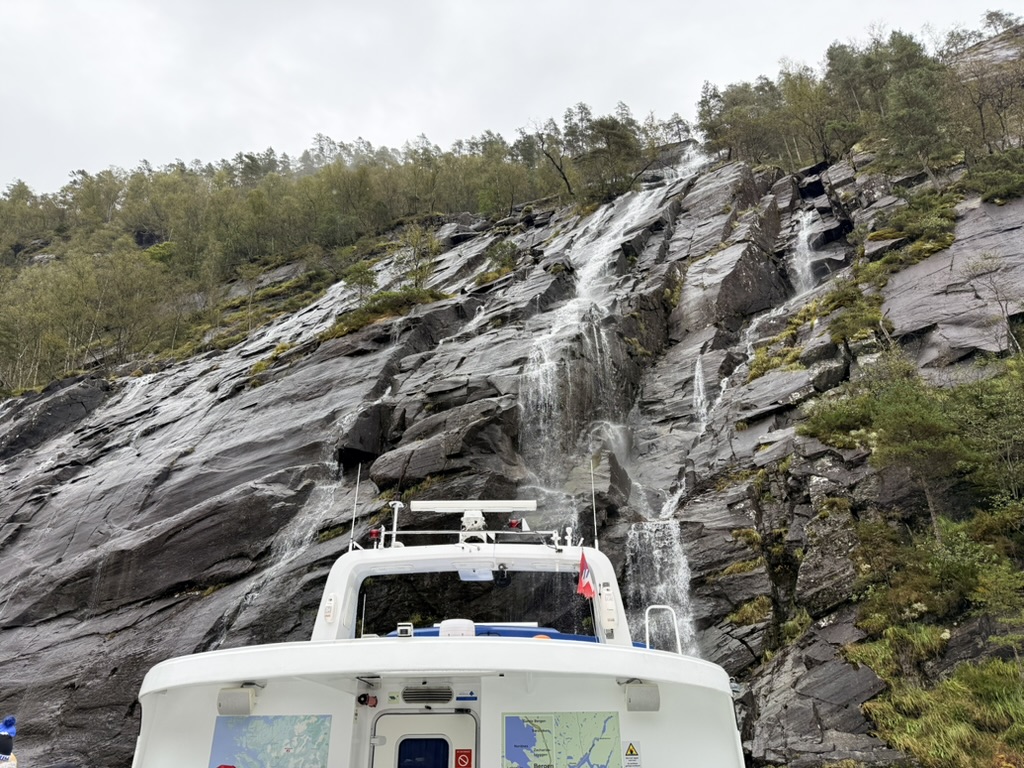
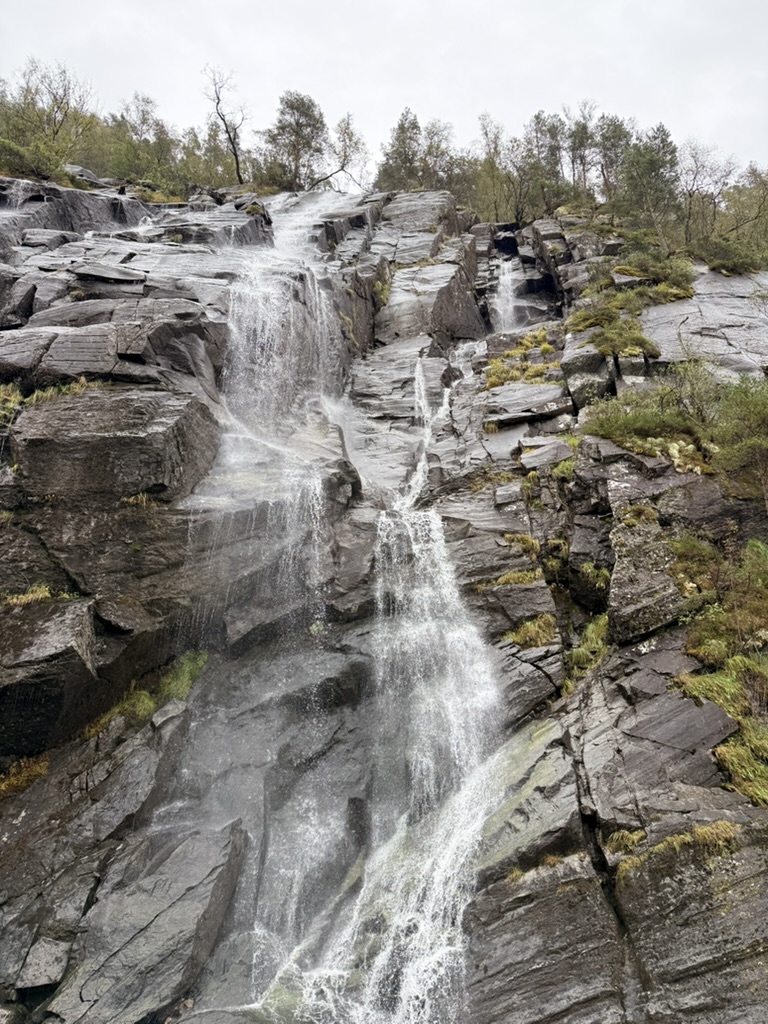
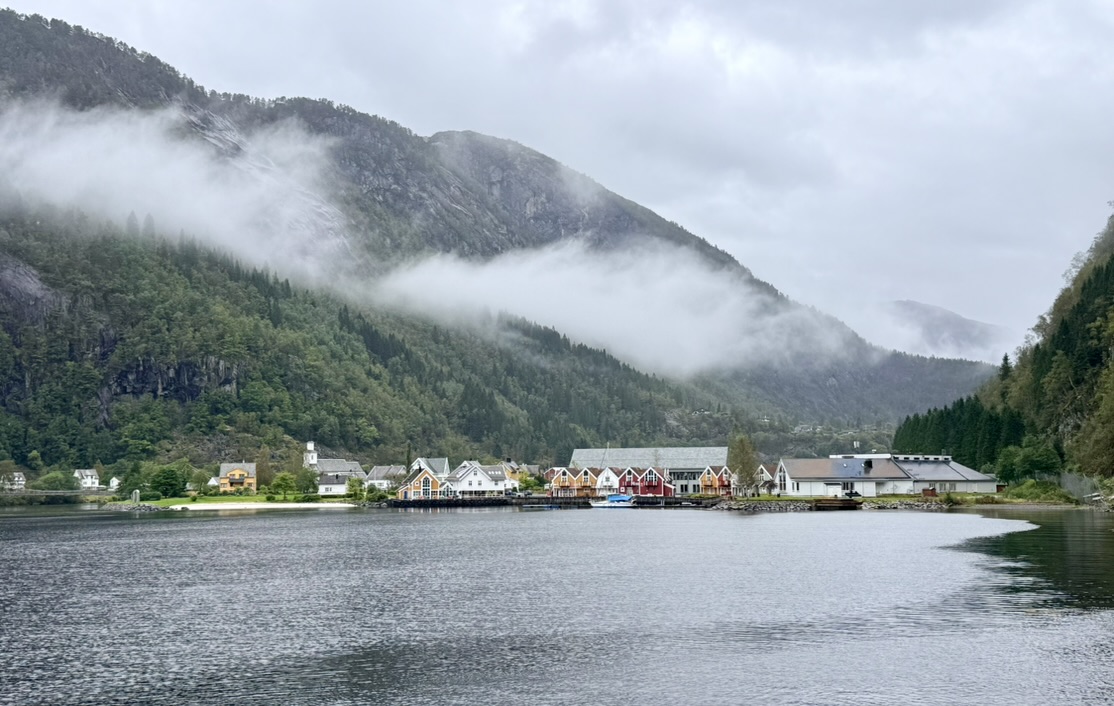
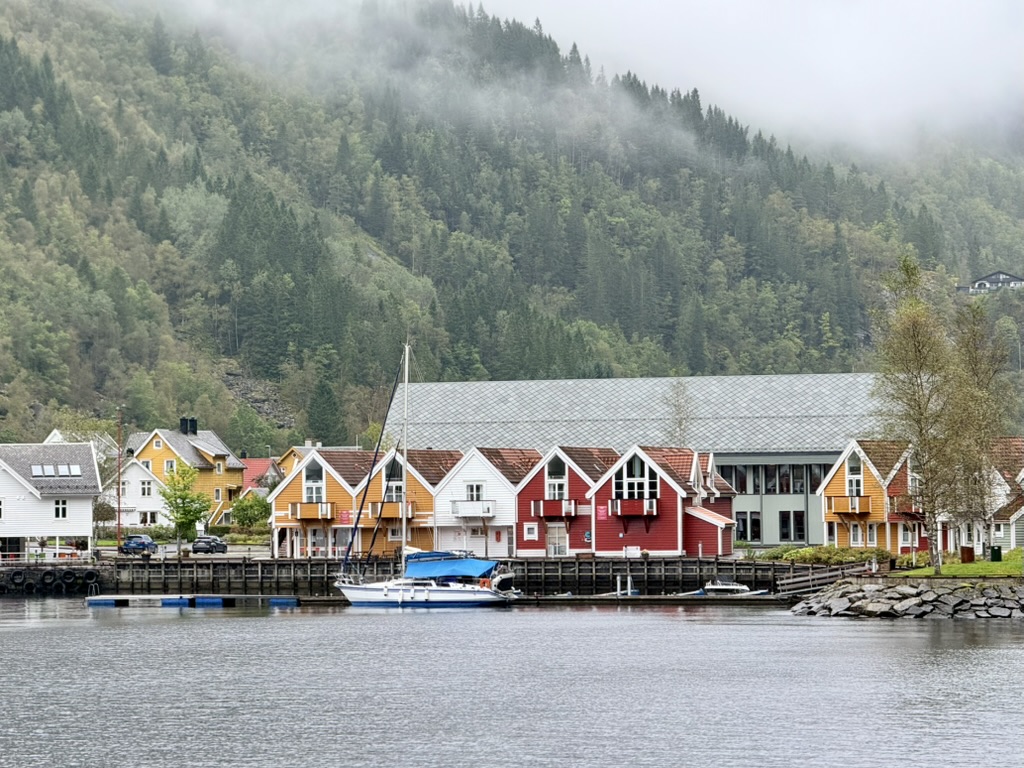
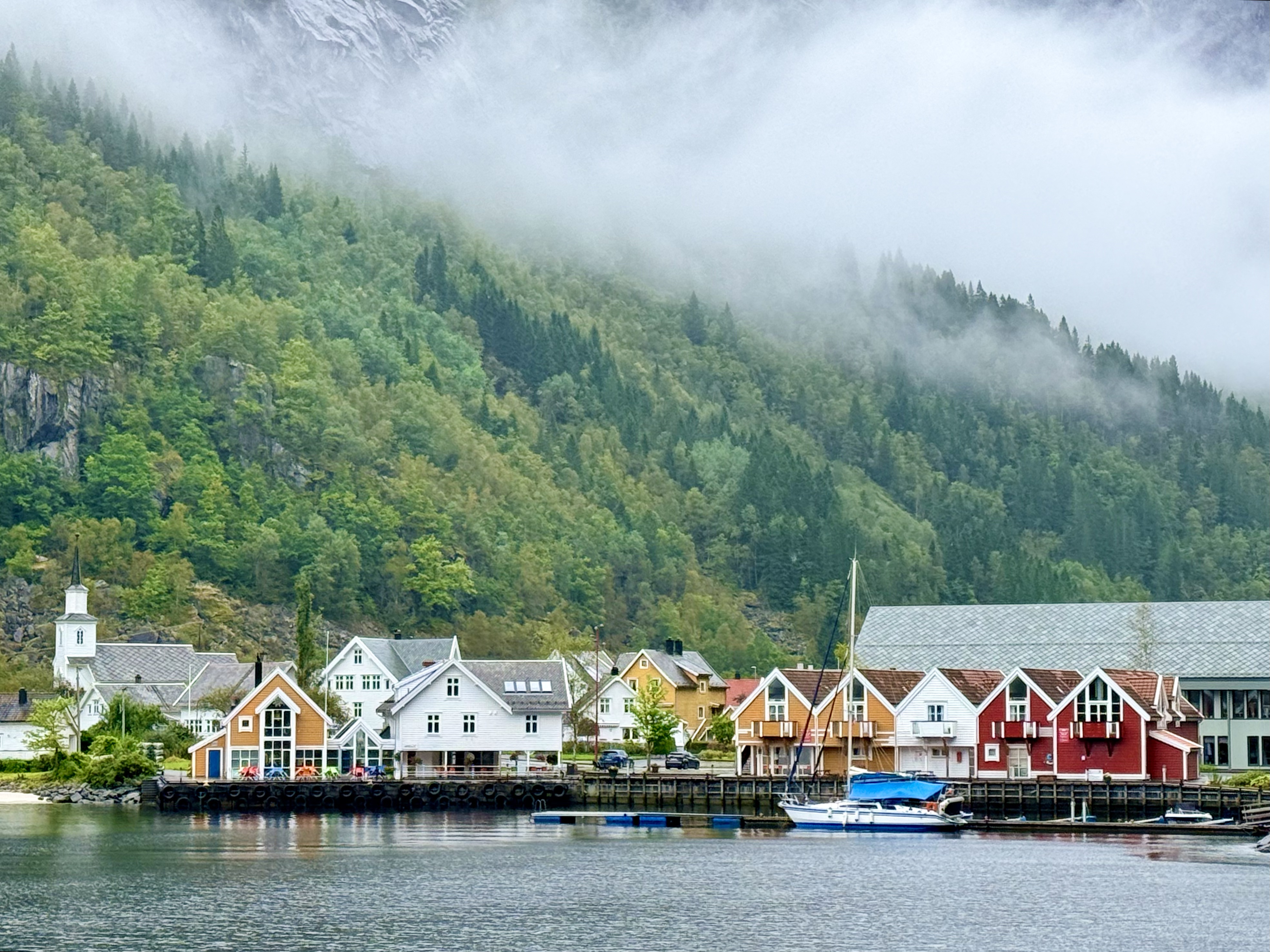
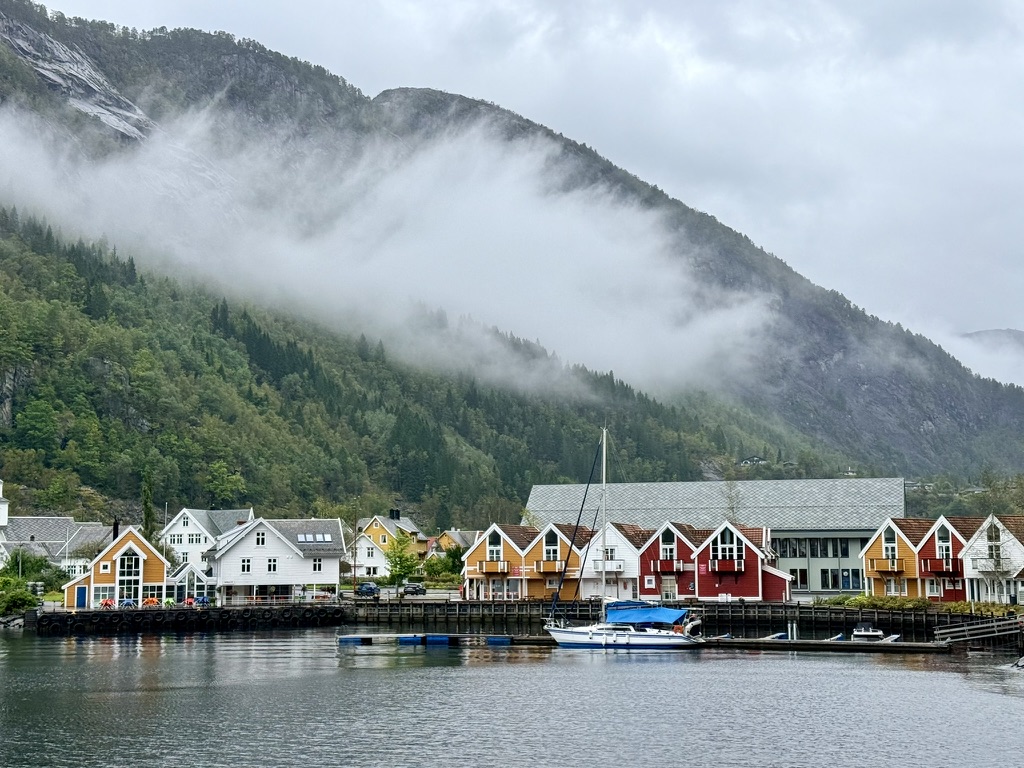
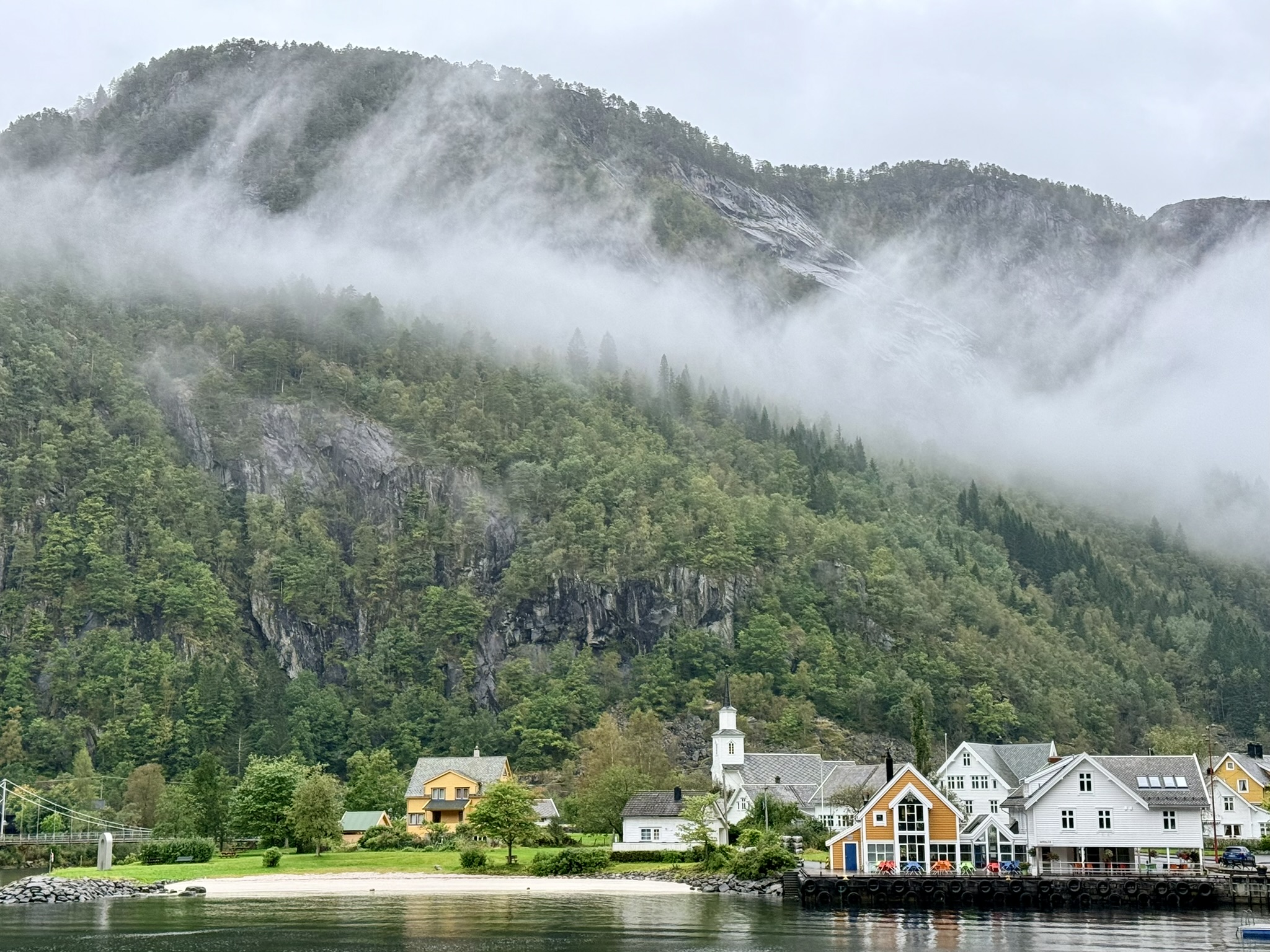
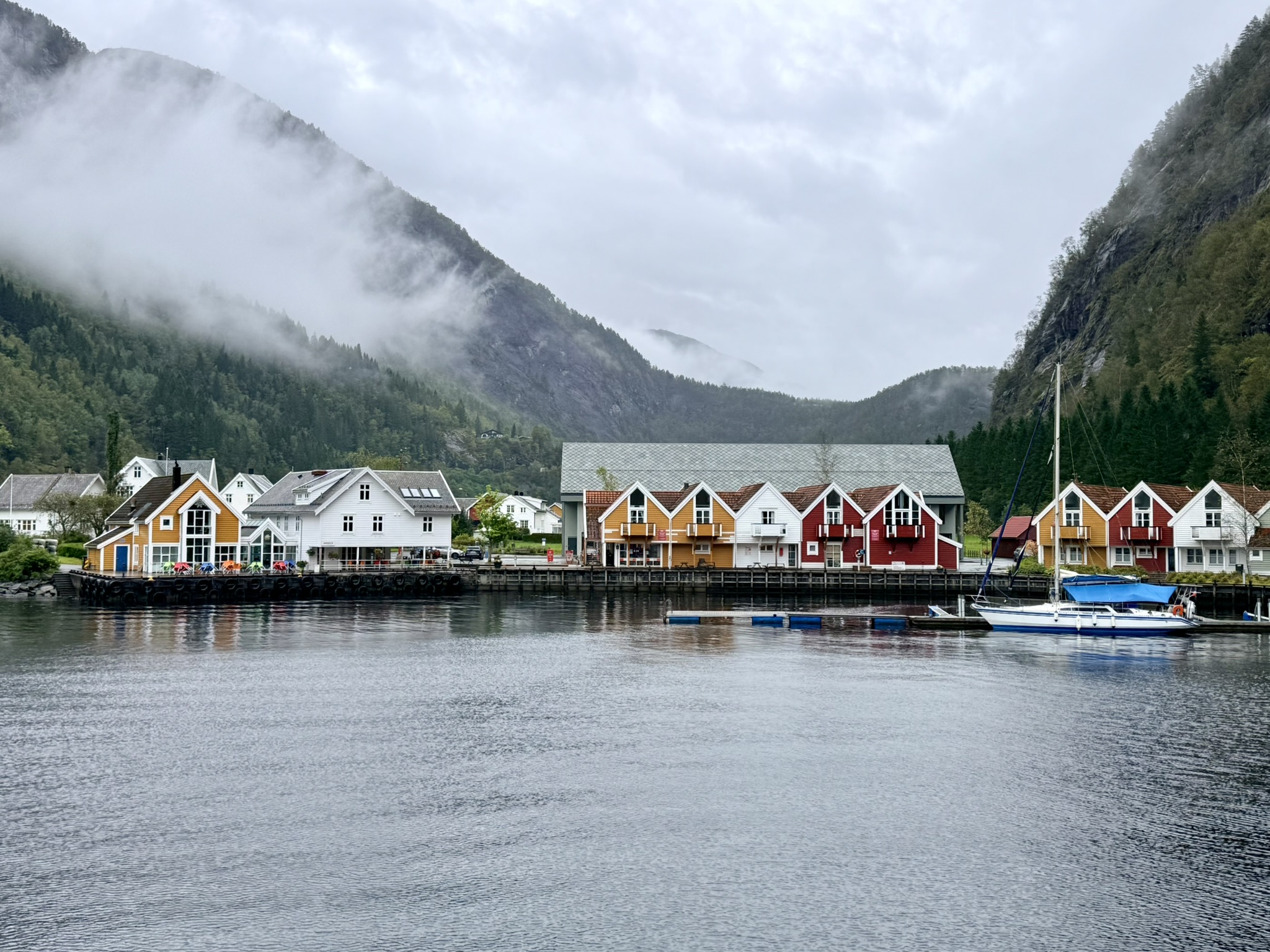
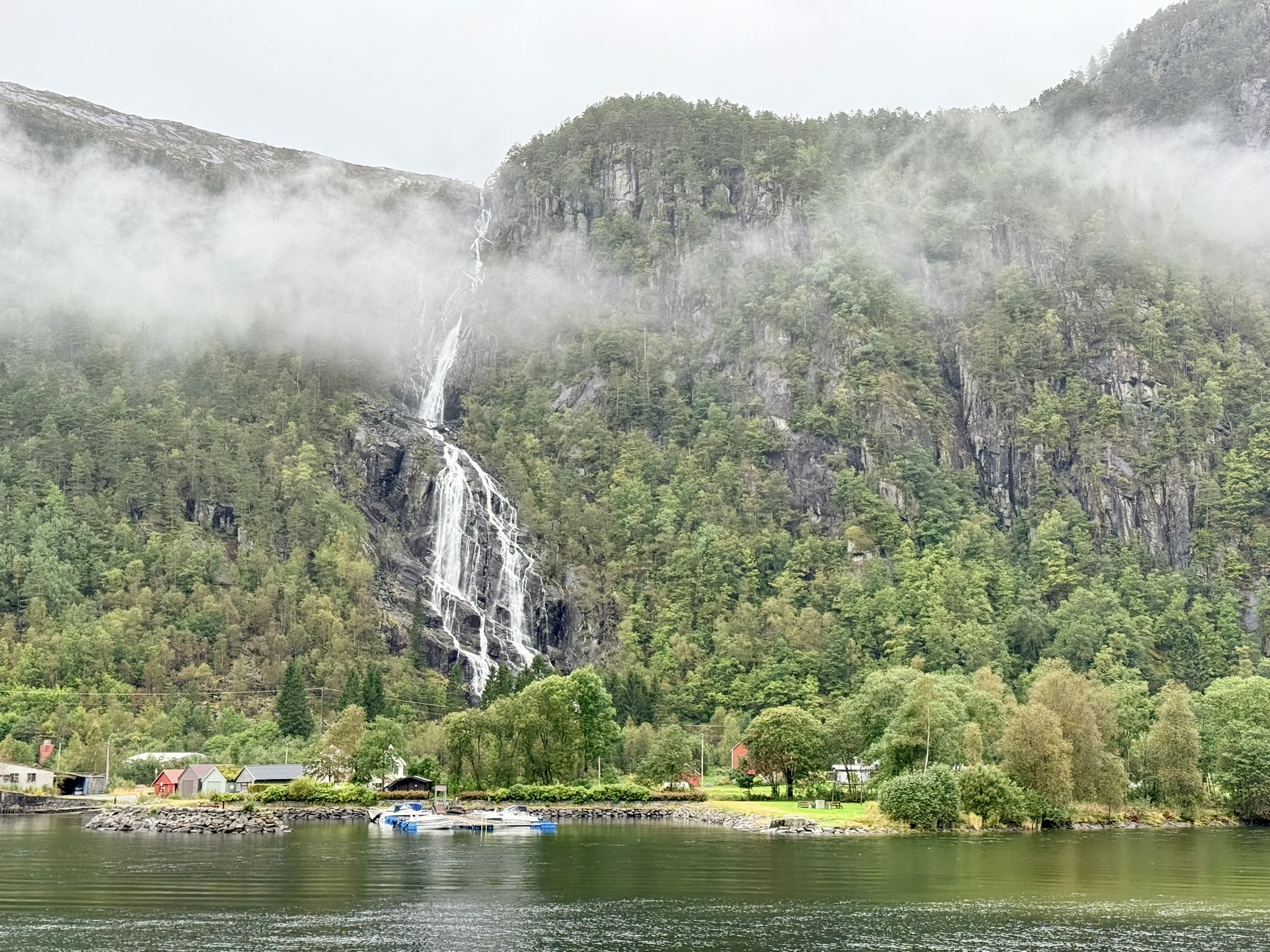
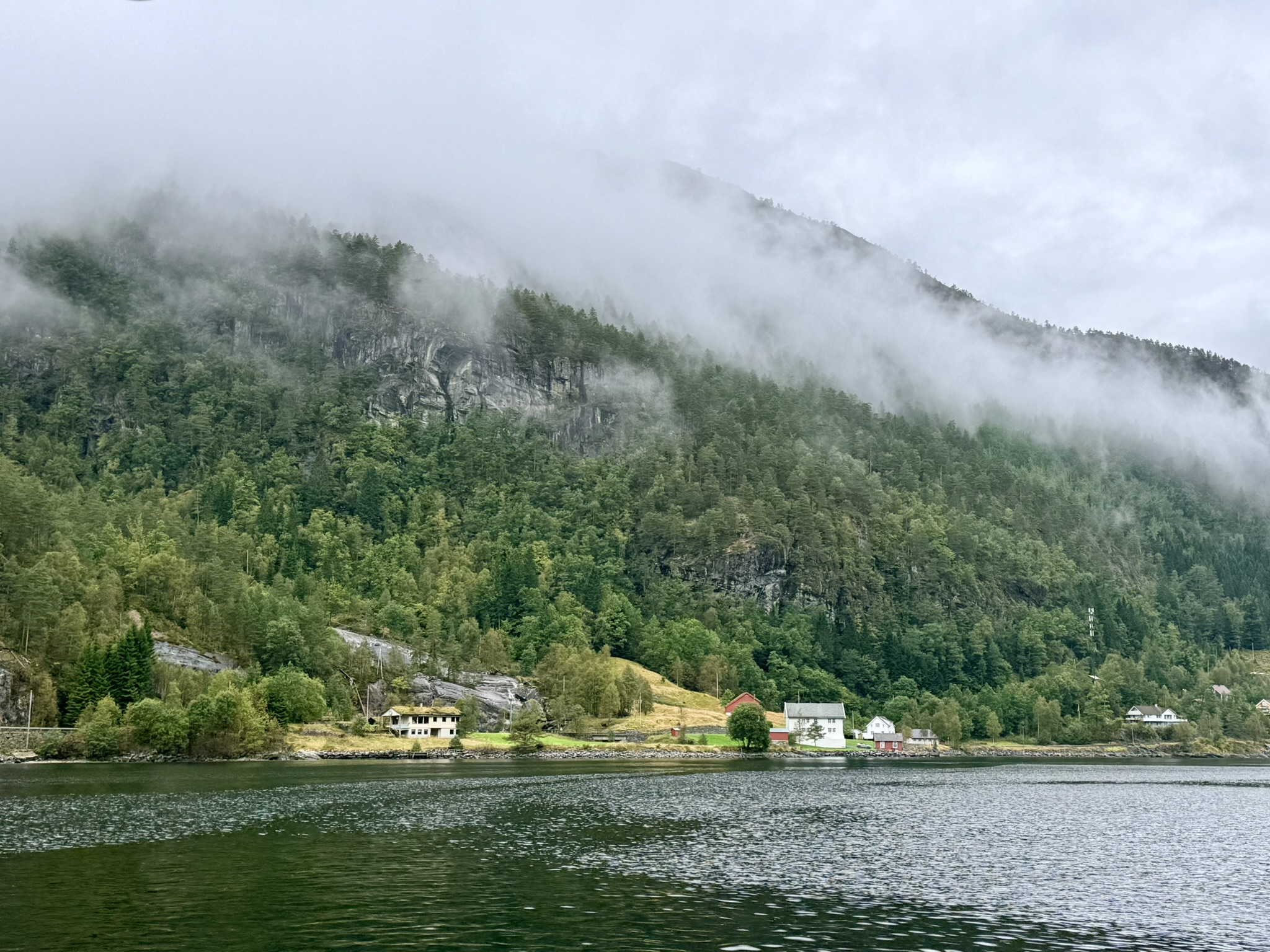
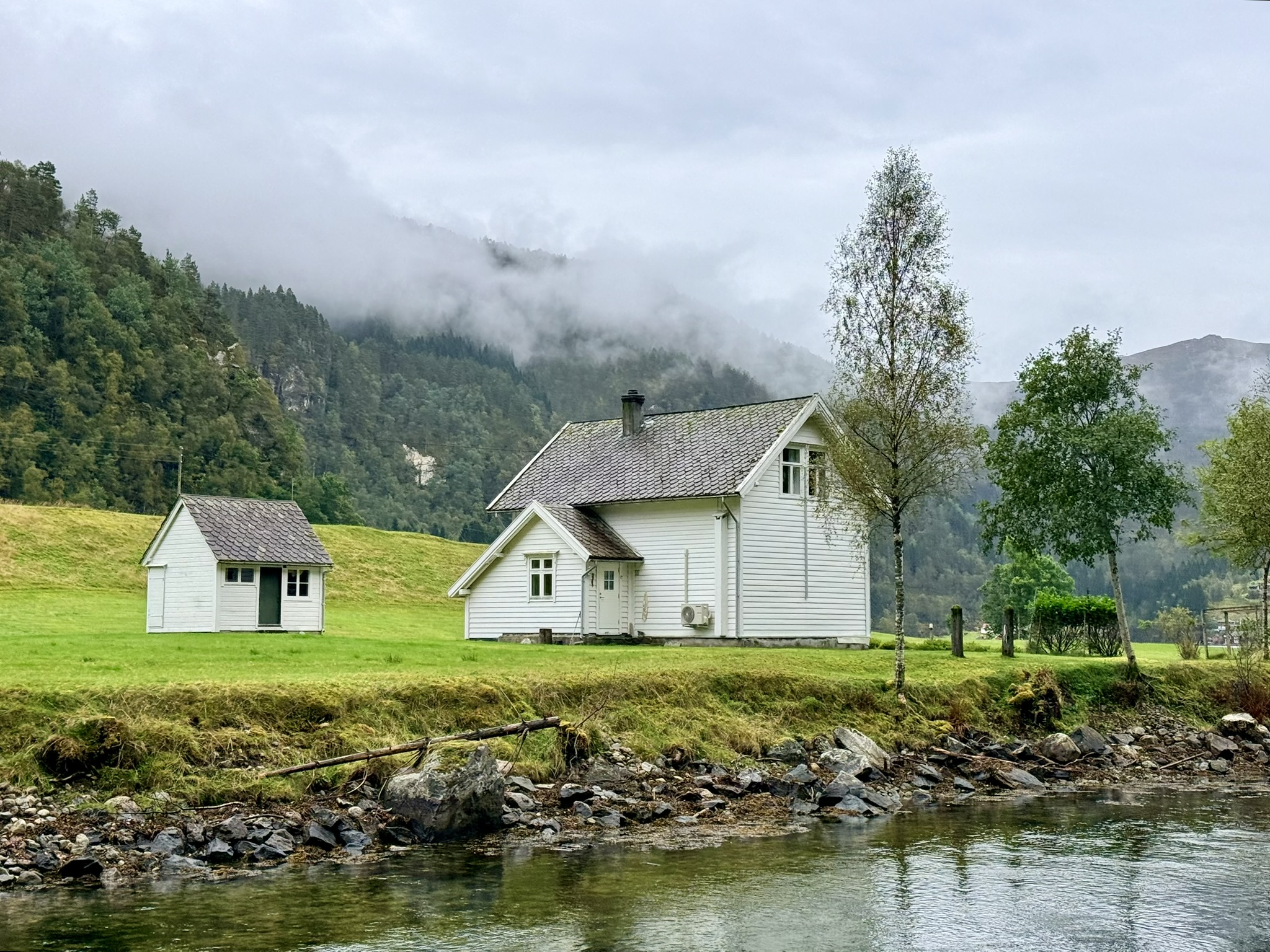
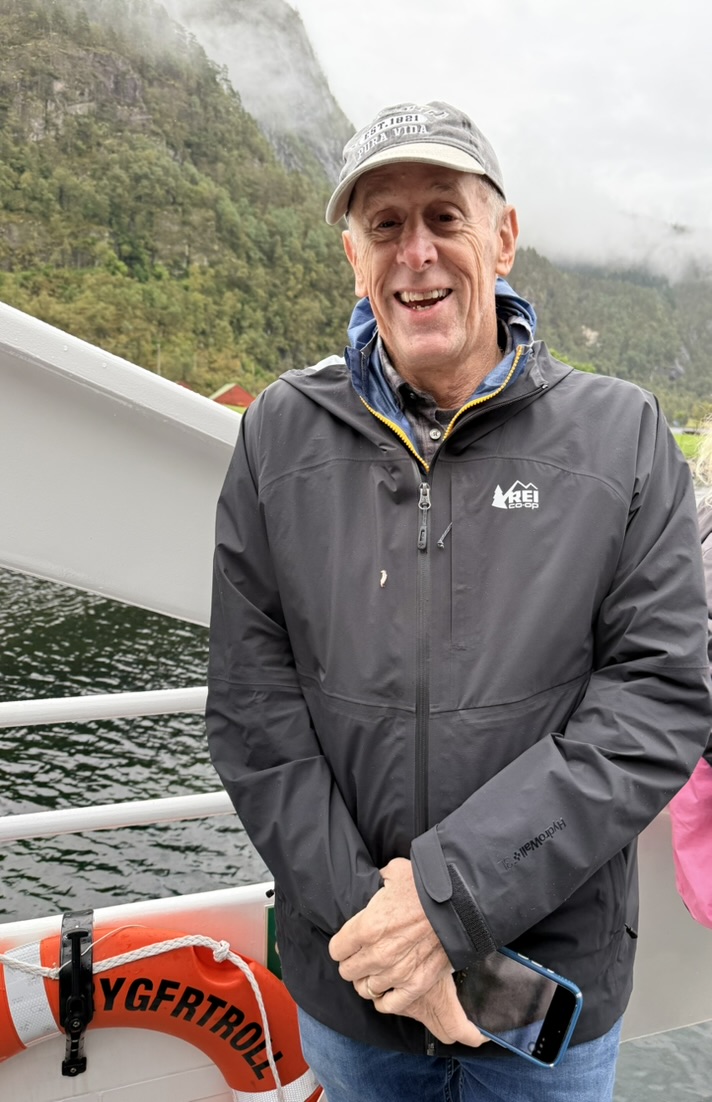
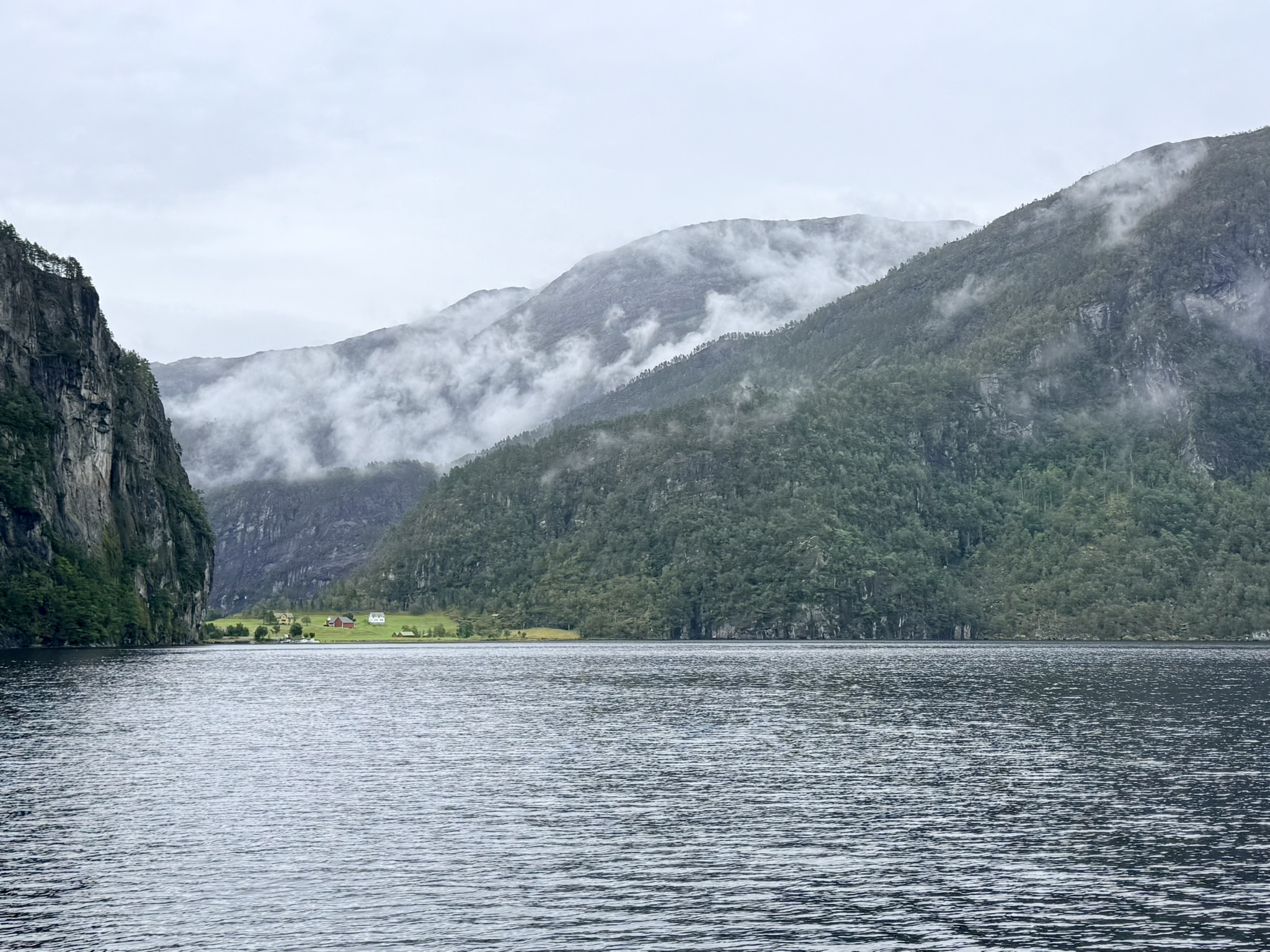
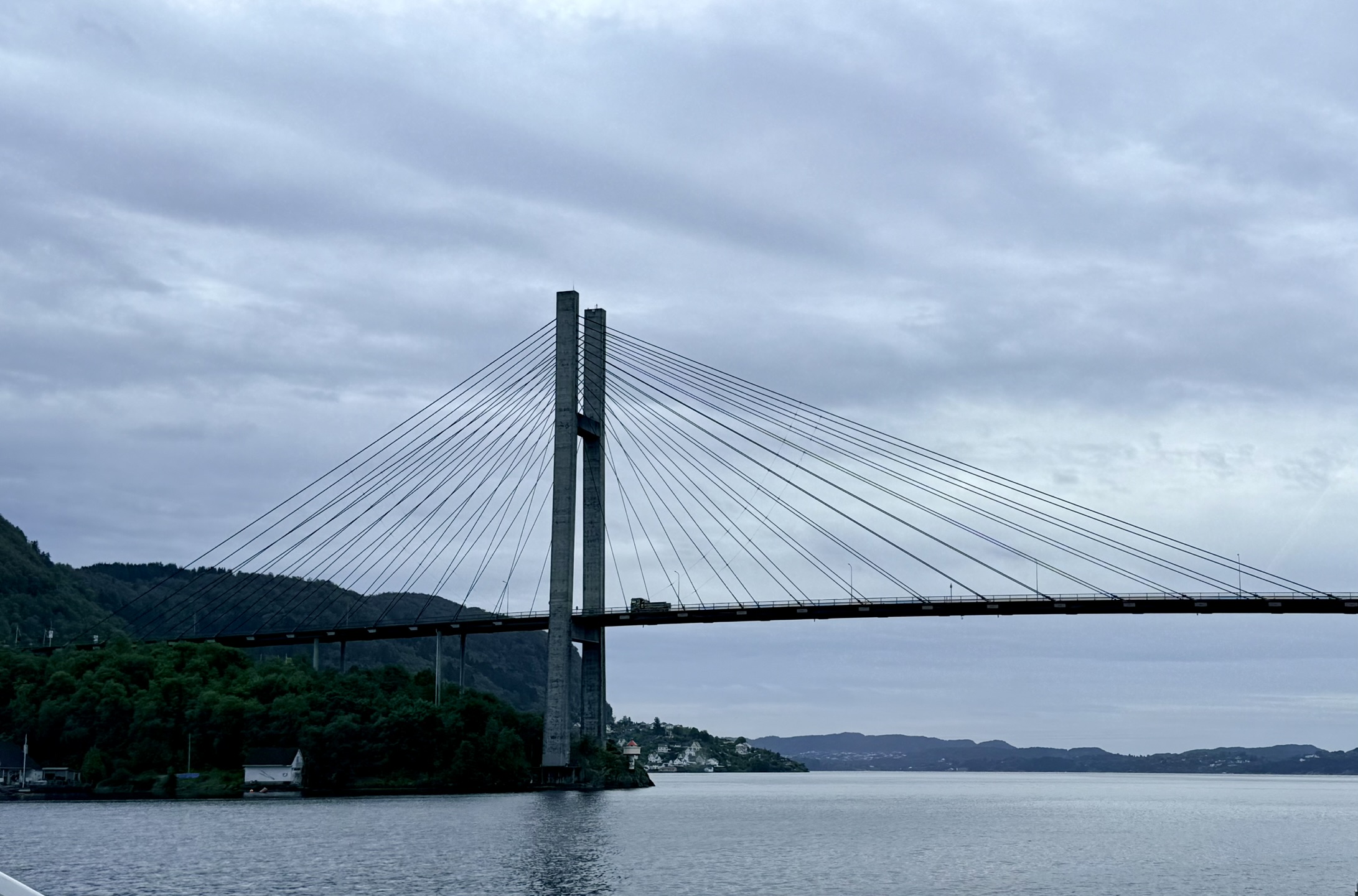
We took a half-day Fjordcruise with Rodne Fjord Cruise from Bergen to Mostraumen through narrow fjords, steep mountainsides and waterfalls. We sailed up the 27-kilometer long Osterfjord towards Modalen, the country’s second smallest municipality with only around 380 inhabitants. Along the way, we navigated through strong currents in the shallow and narrow Mostraumen straits.
It was a rather gloomy day, but it was good to be out on the water exploring our first fjord. We chatted with an Indian woman named Rahda from Raleigh, N.C. who felt as disgusted by what is happening in the U.S. as we are.
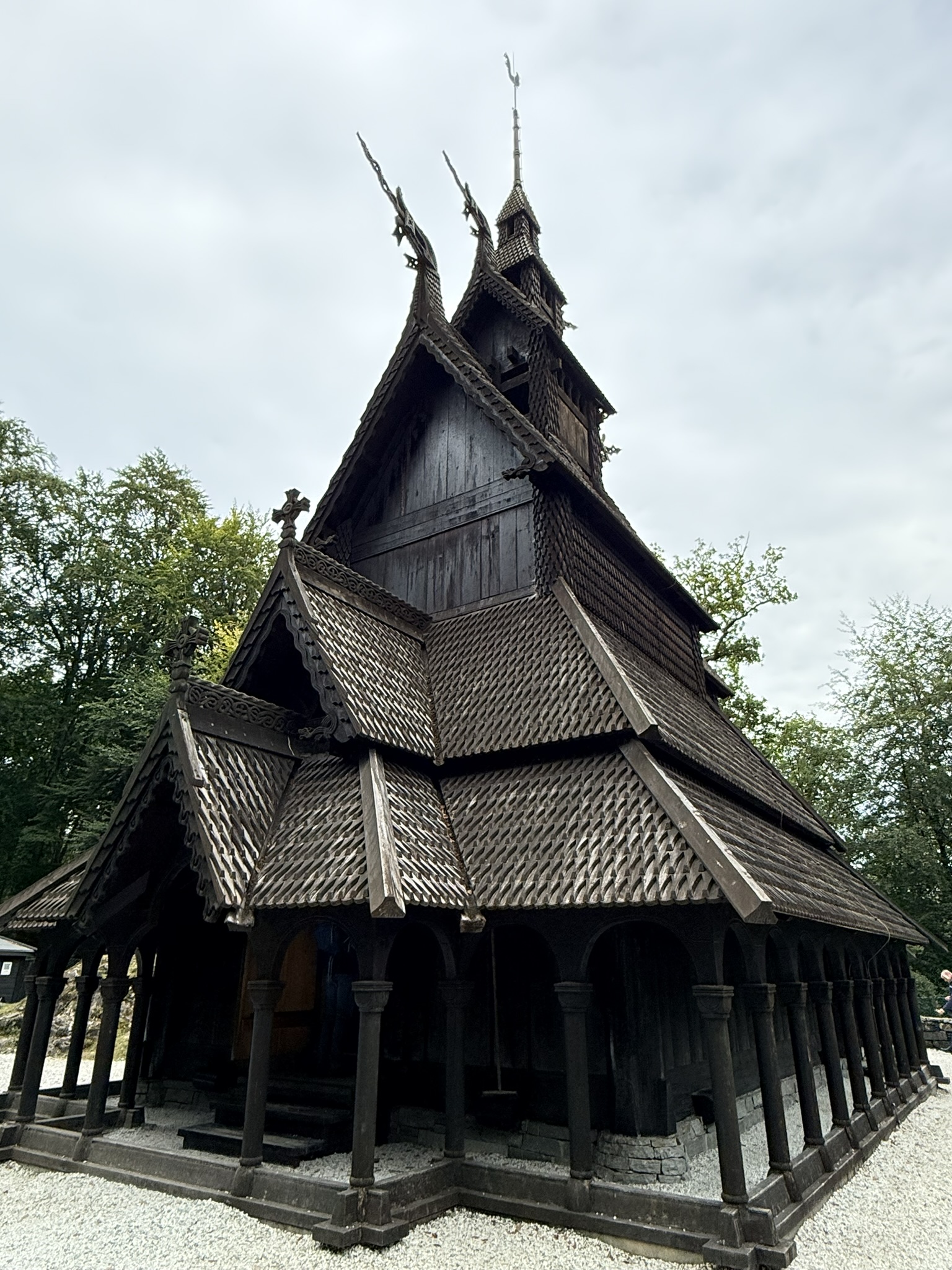
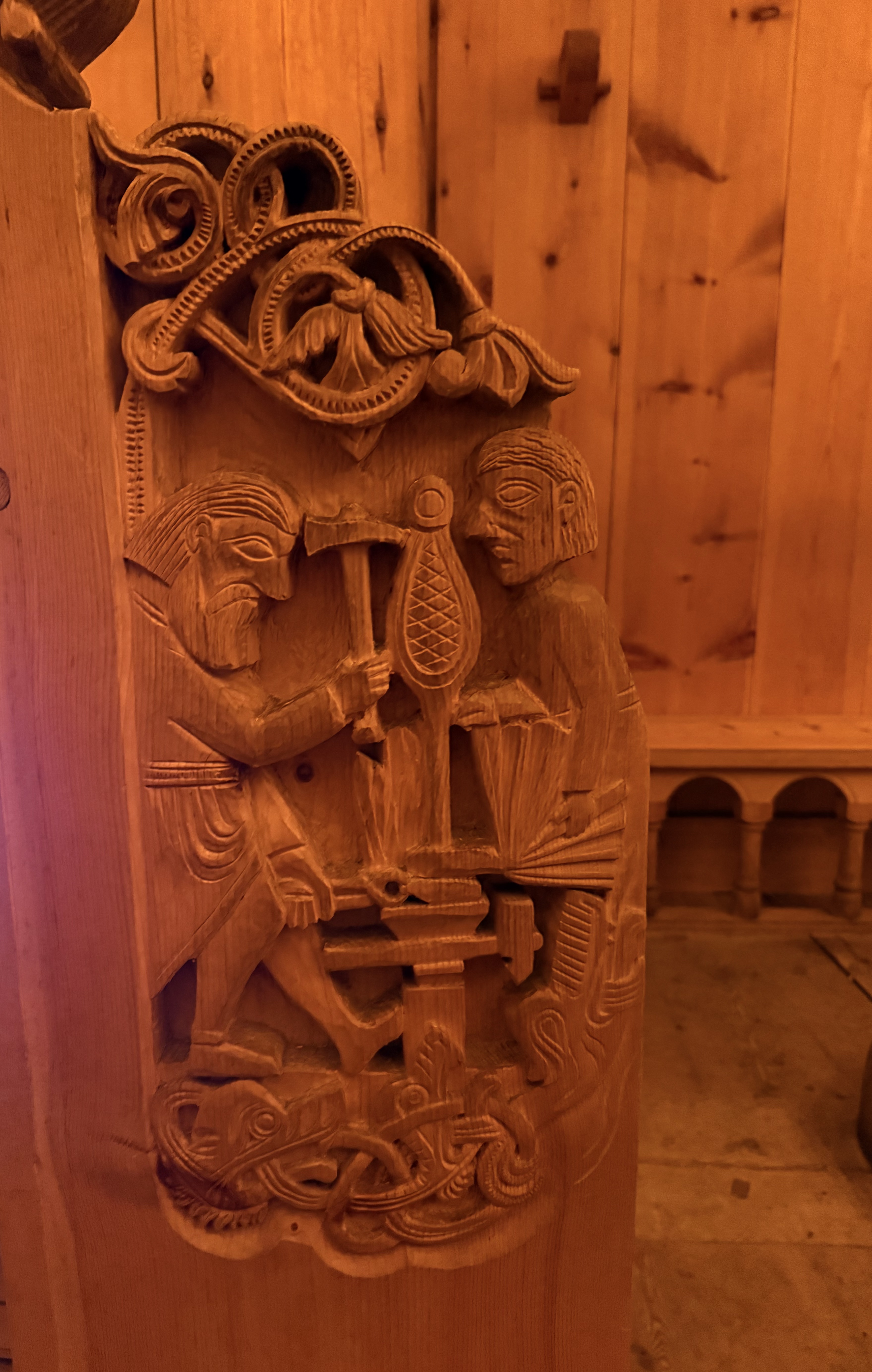
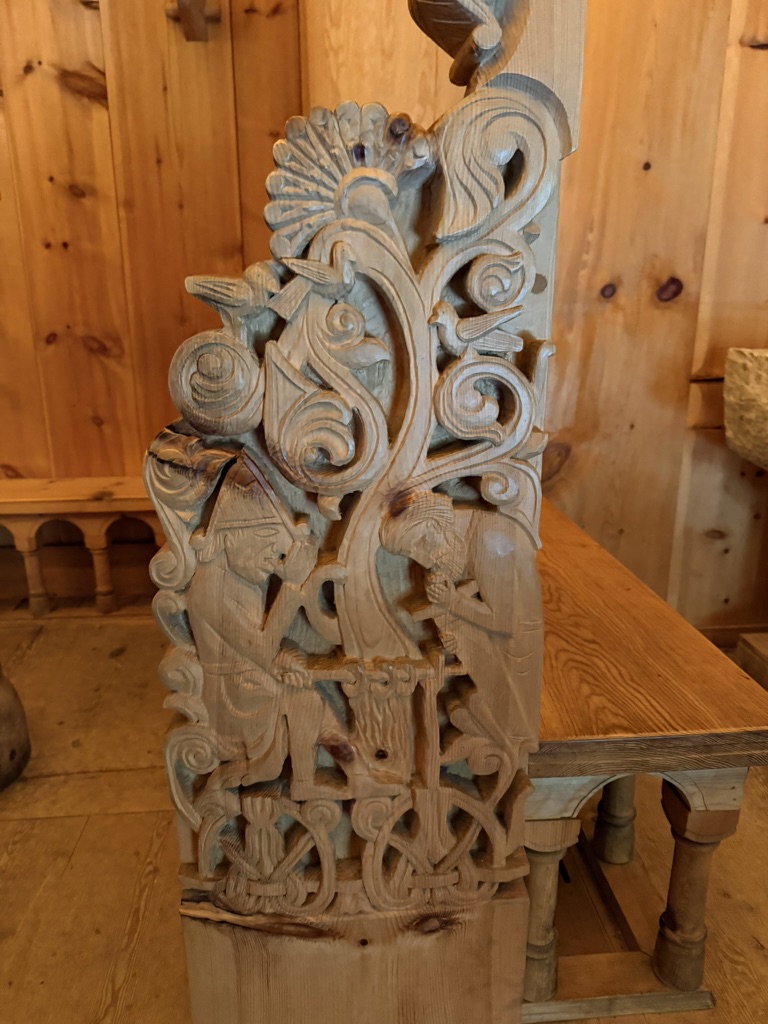
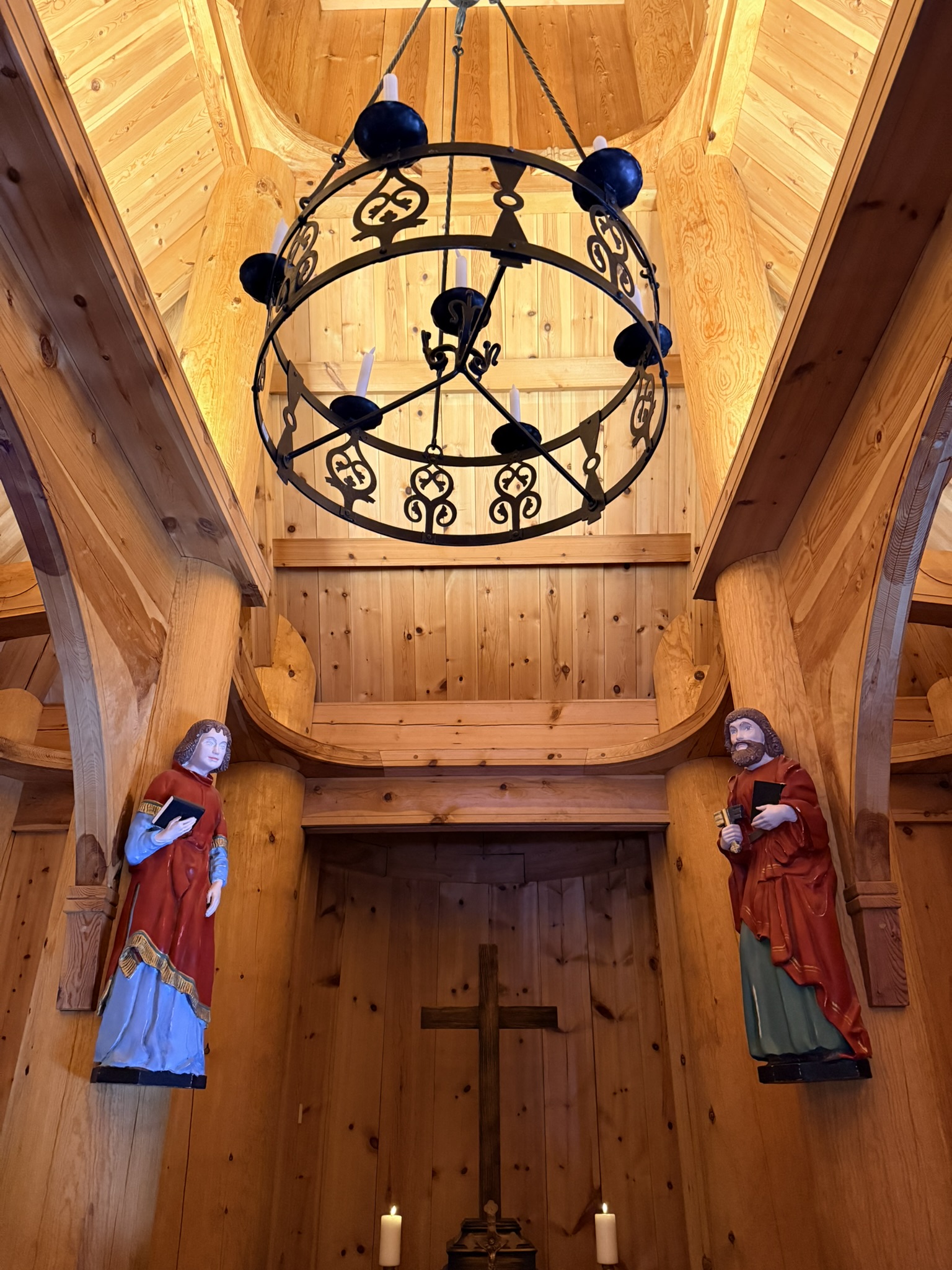
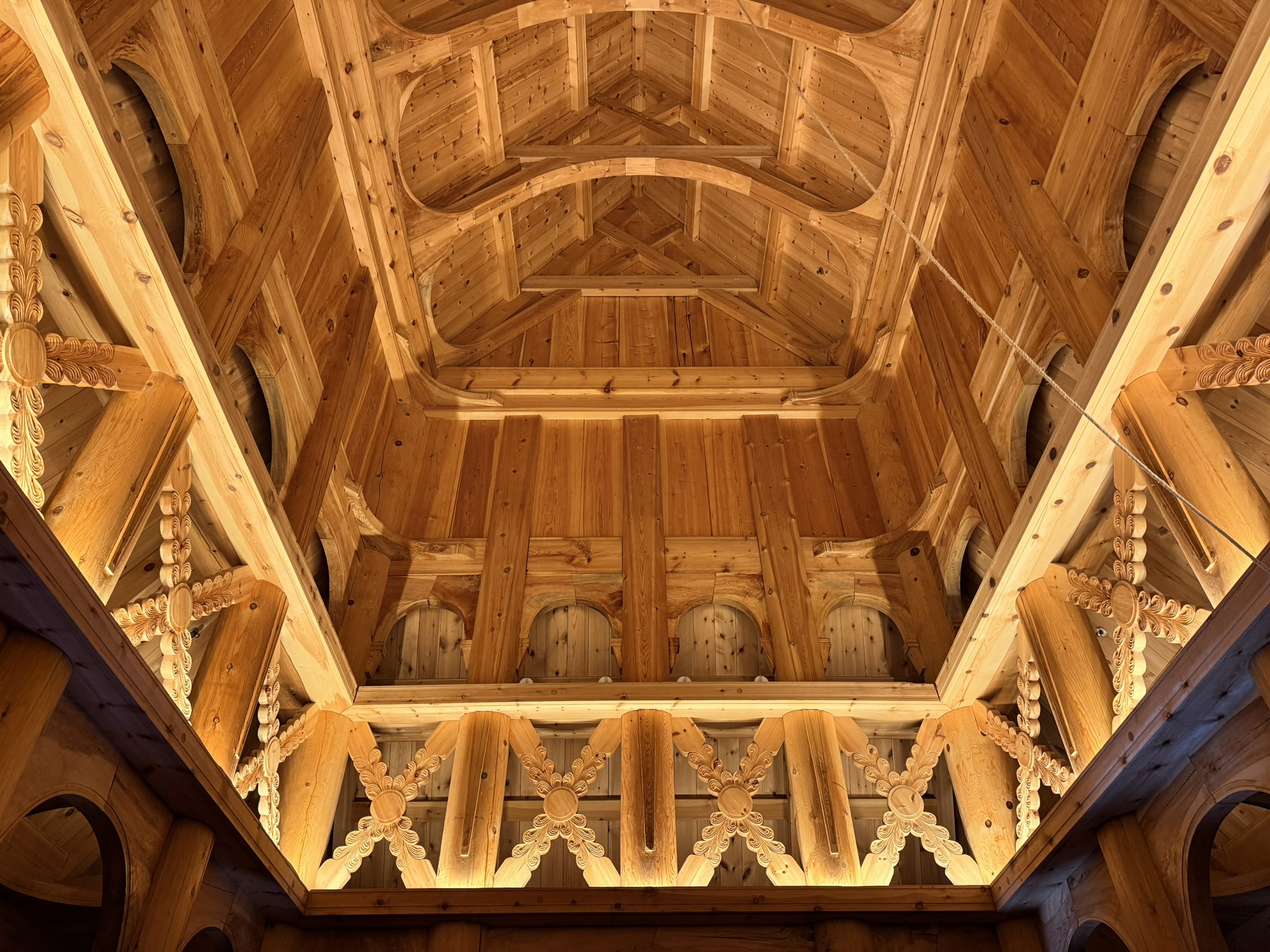
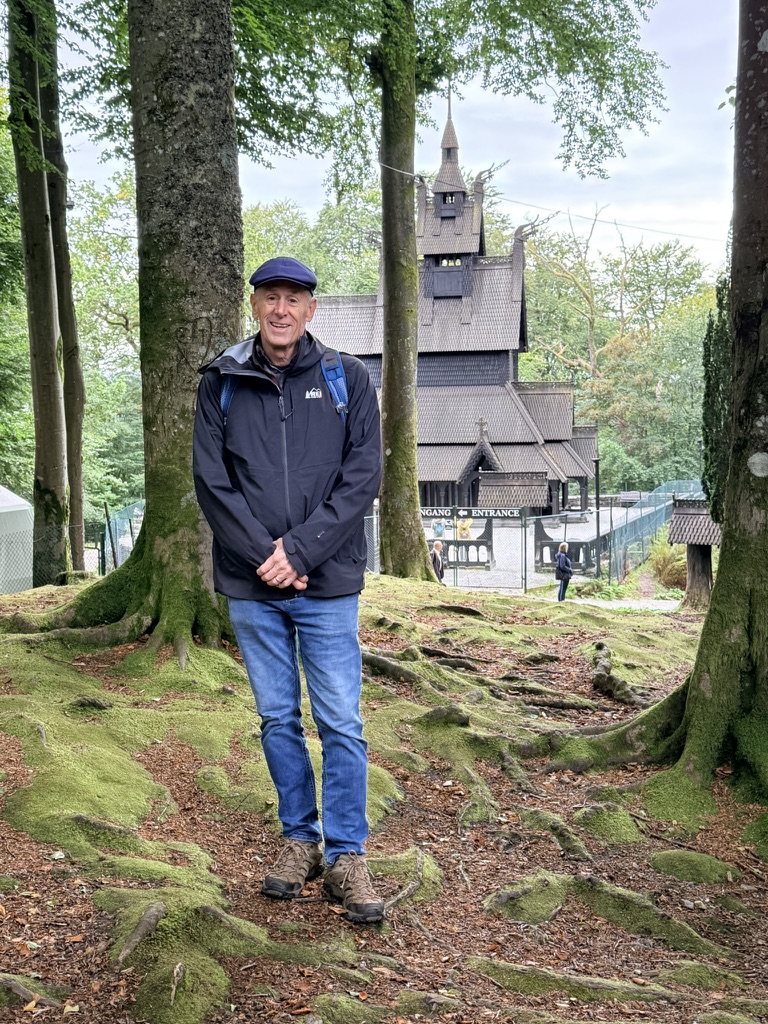
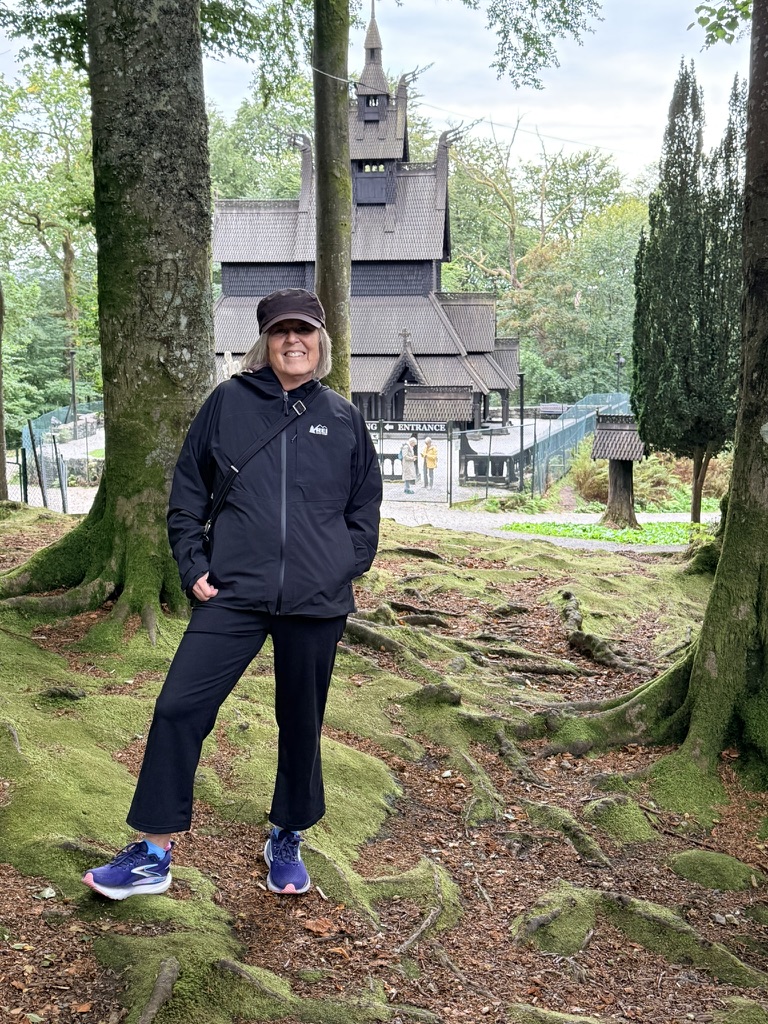
Fantoft Stave Church
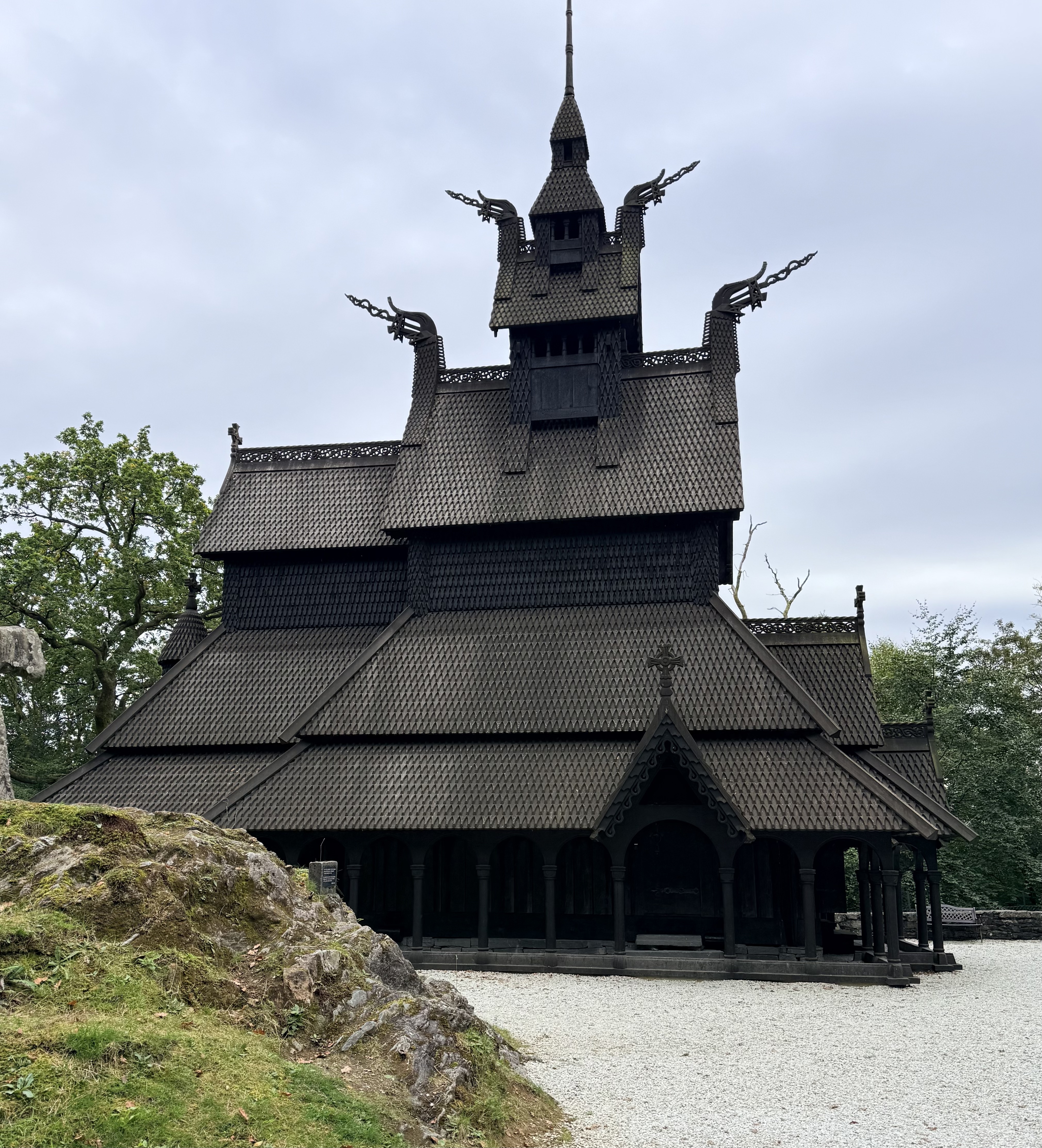
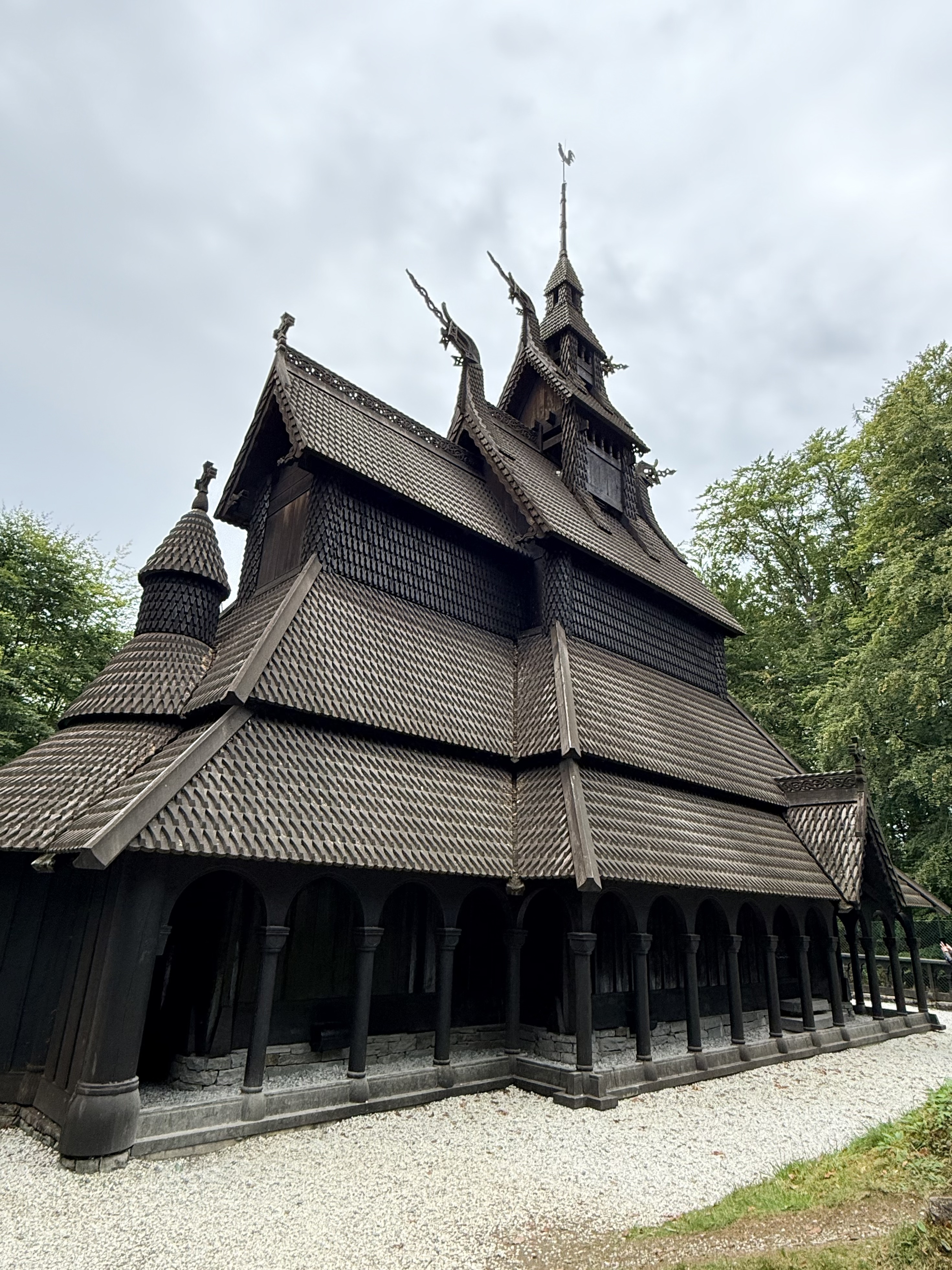
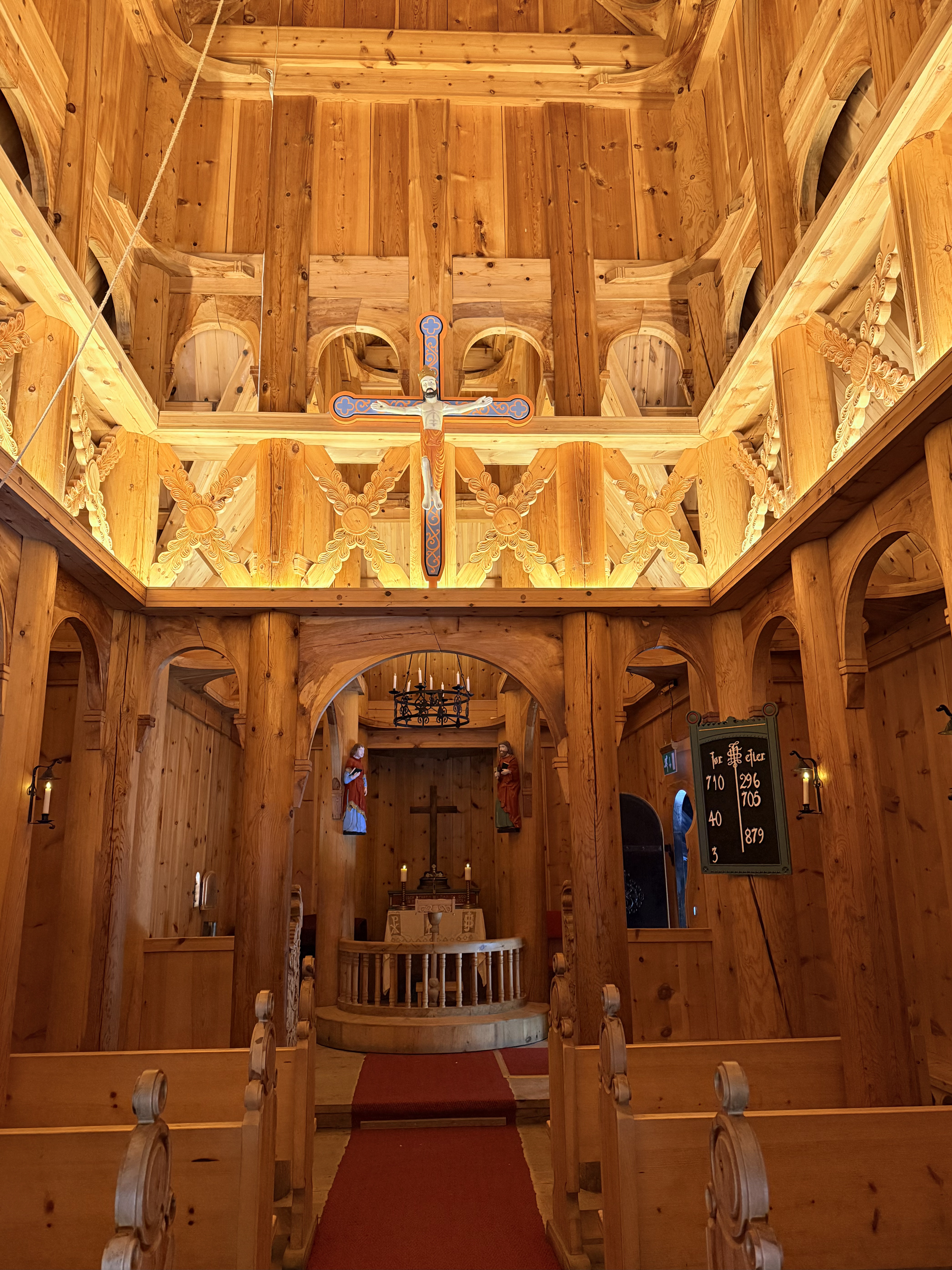
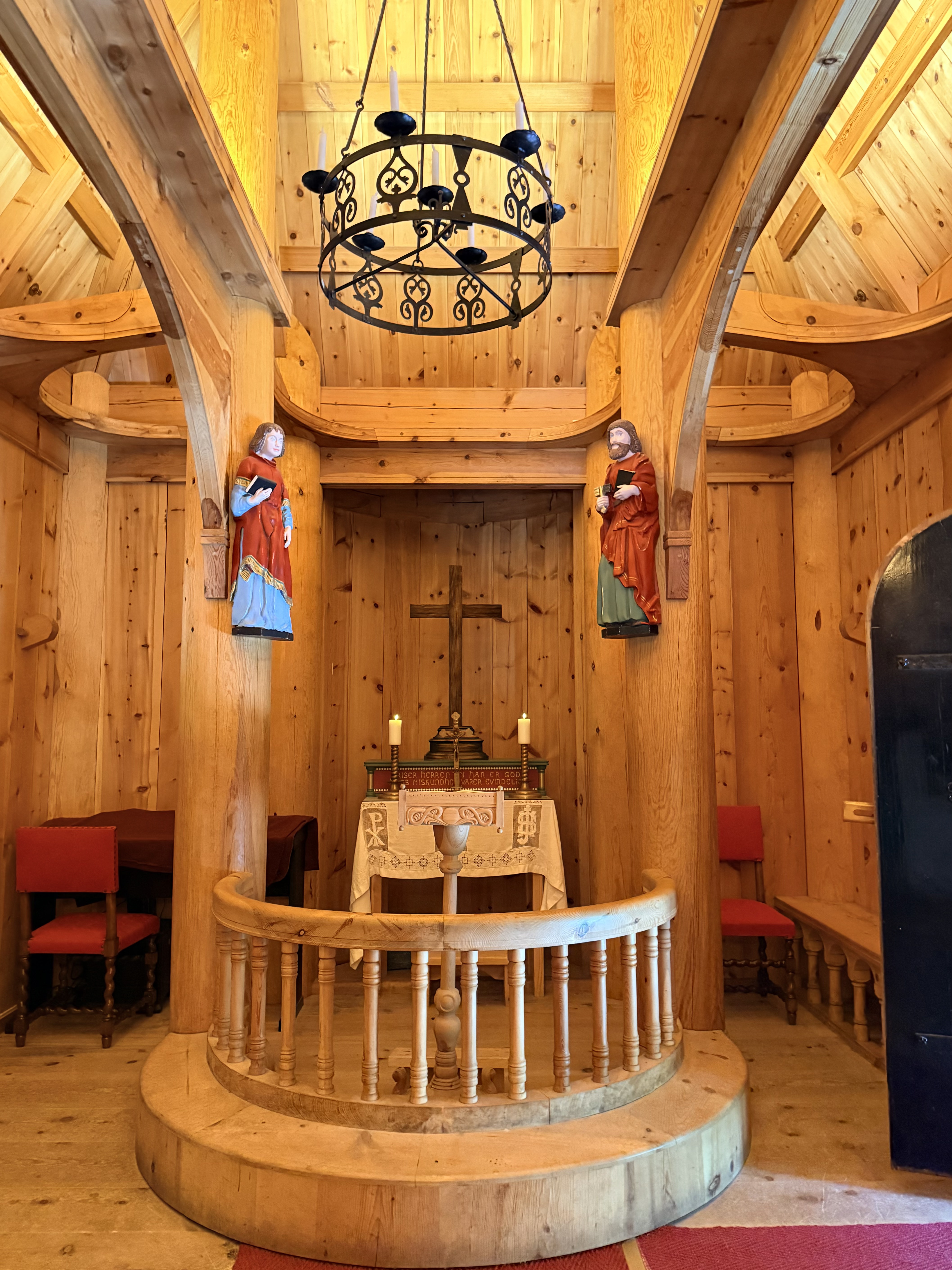
Originally, there were about 1000 stave churches in Norway, but over time they had to make way for larger and more contemporary church buildings. In the 15th and 16th centuries, many stave churches underwent changes that caused them to lose some of their old character. Originally, there were no pews in the church, and people stood during the service. However, pews gradually became common in stave churches as well.
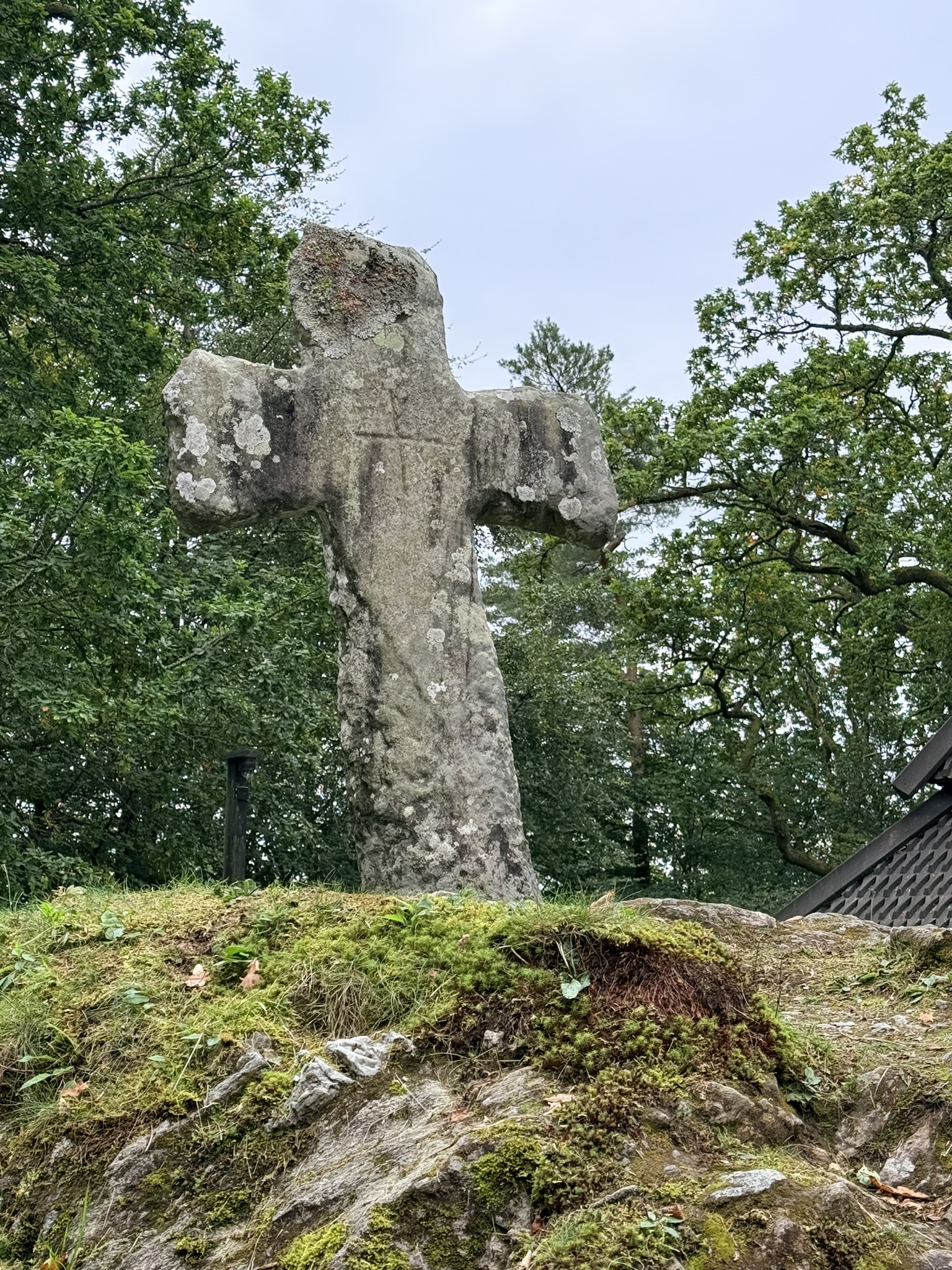
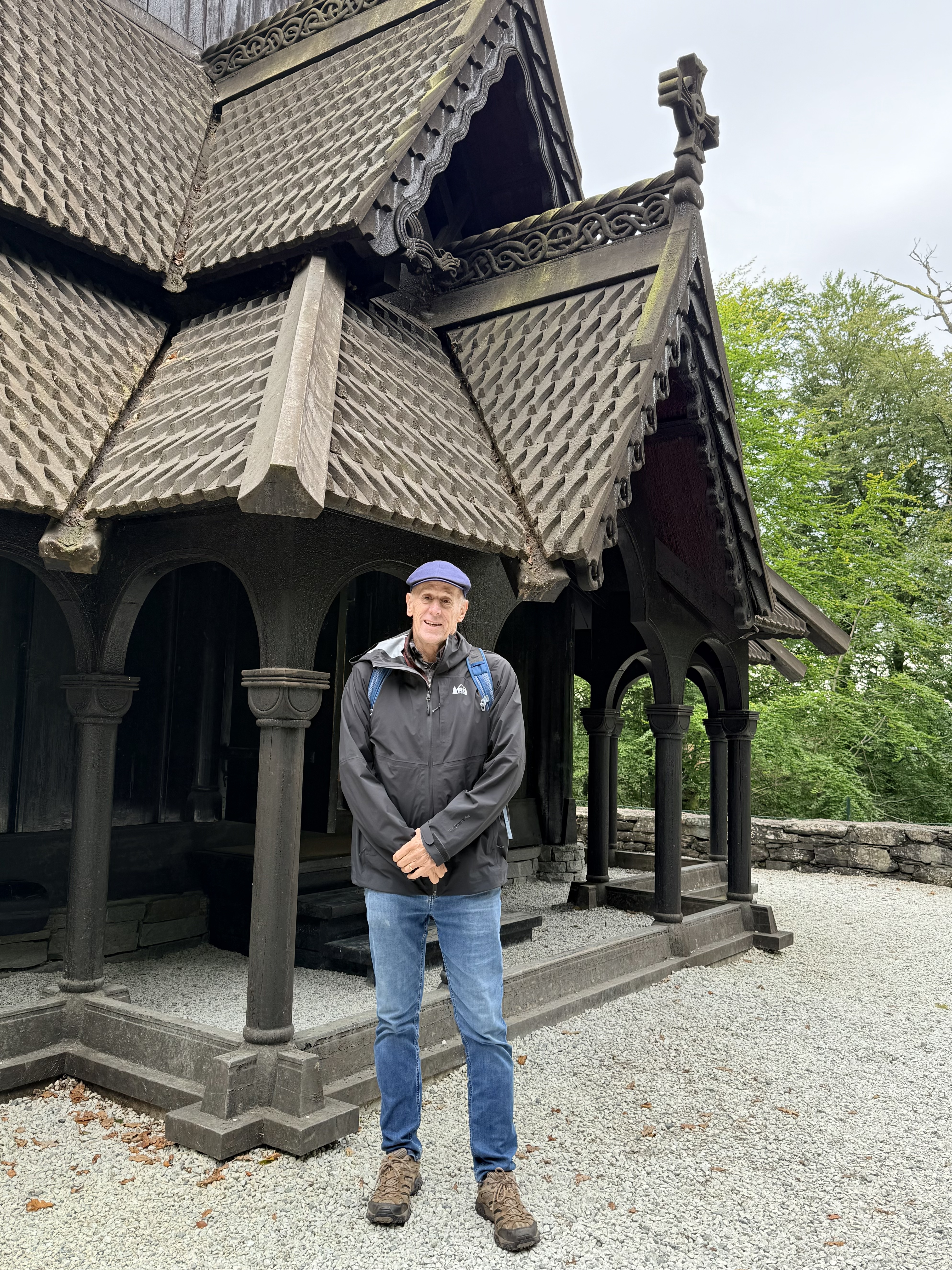
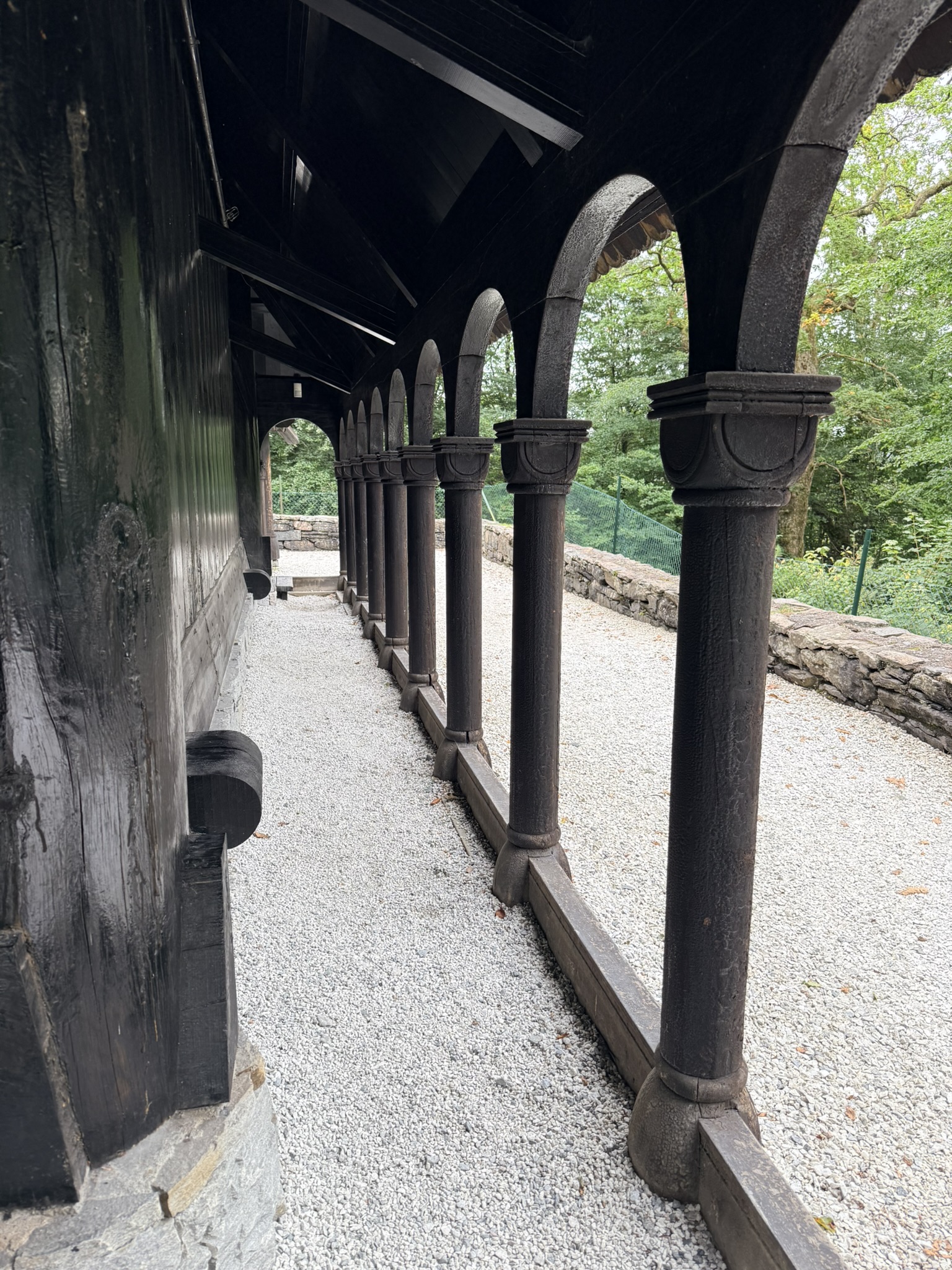
Fantoft Stave Church was originally erected around the year 1200 in the small village of Fortun in Sogn; it served as the church there until the end of the 19th century. The church became too small and a new church was built in Fortun. When Norway fell on hard economic times, the old church could no longer be maintained and building components were removed and reused; the church’s baptismal font was repurposed as a feeding trough for livestock on a farm. The church was threatened for demolition until the owner of Fantoft farm financially supported the relocation of the church to Fantoft in 1883.
Fantoft Stave Church was completely destroyed by fire in 1992, and it took about 6 years to rebuild it. The timber for Fantoft Stave Church comes from 350-400-year-old pine trees growing at approximately 400 meters altitude in Kaupanger in Sogn, not as far into the ford as Fortun.
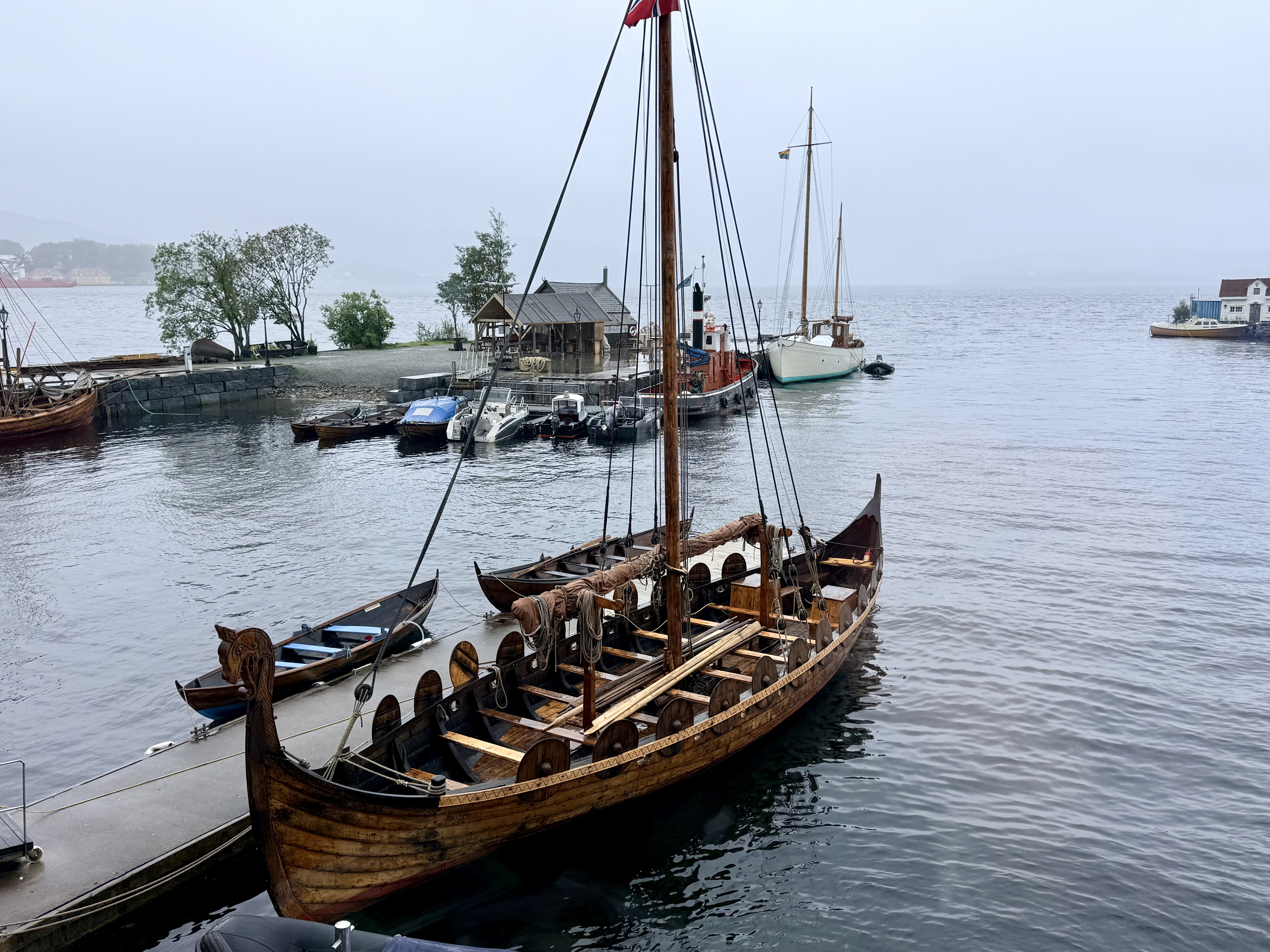
The old stave churches contain elements that reflect the conflict between Norse mythology and the Christianization of the country. In the 1100s, older symbols were often used in churches. On Viking ships, there were dragon heads at the bow and stern. The belief was that dragons could keep evil powers at bay, and they served the same purpose on the churches. The carvings on the pews illustrate motifs from the old heroic sagas from the 9th century, in this case, from the saga of Sigurd Faavnesbane. In the tales, several gods are involved, and humans transform from humans to animals and vice versa. This is part of the background for the distinctive character that stave churches have acquired.
Norway Fisheries Museum (Norges Fiskerimuseum)
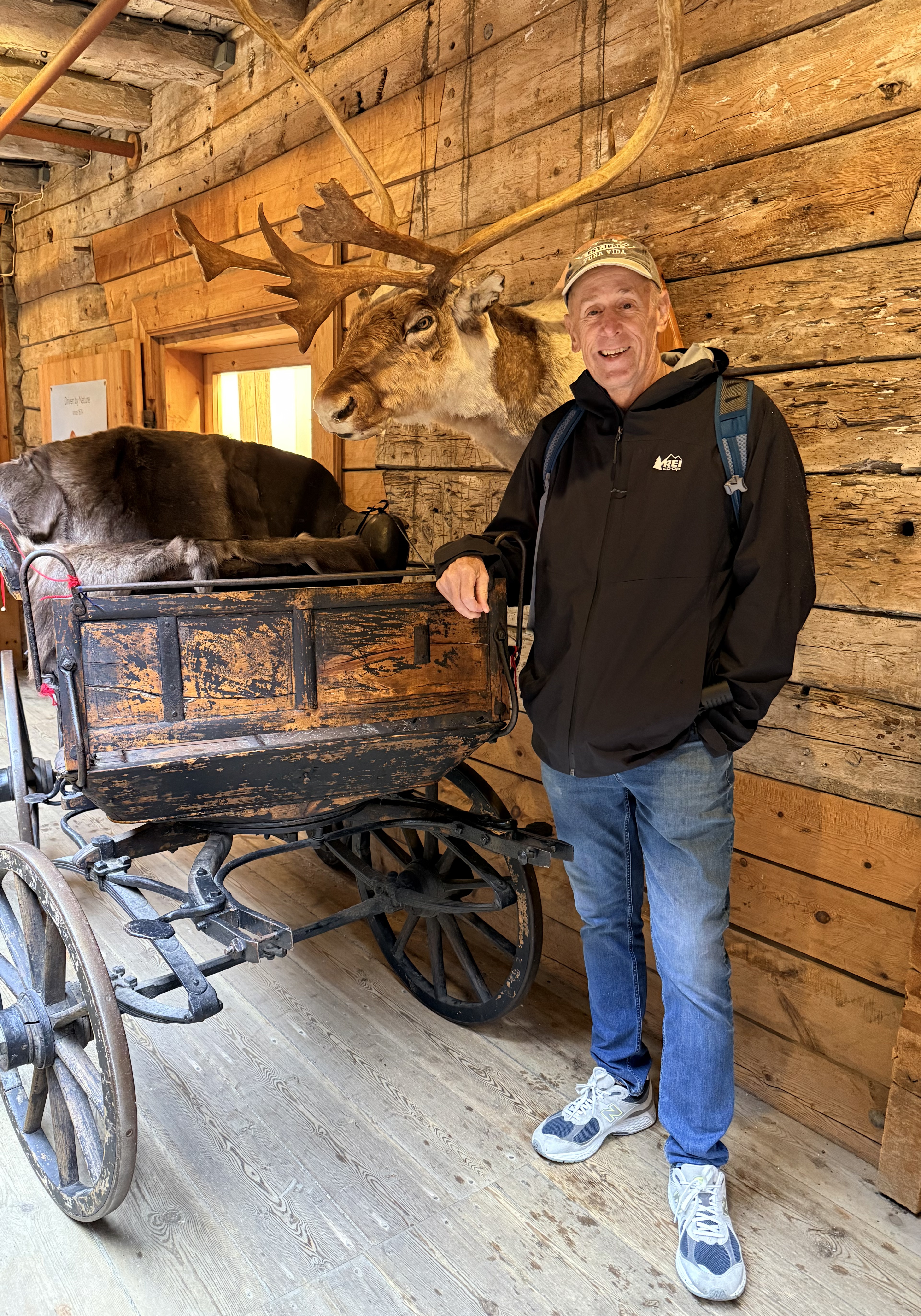
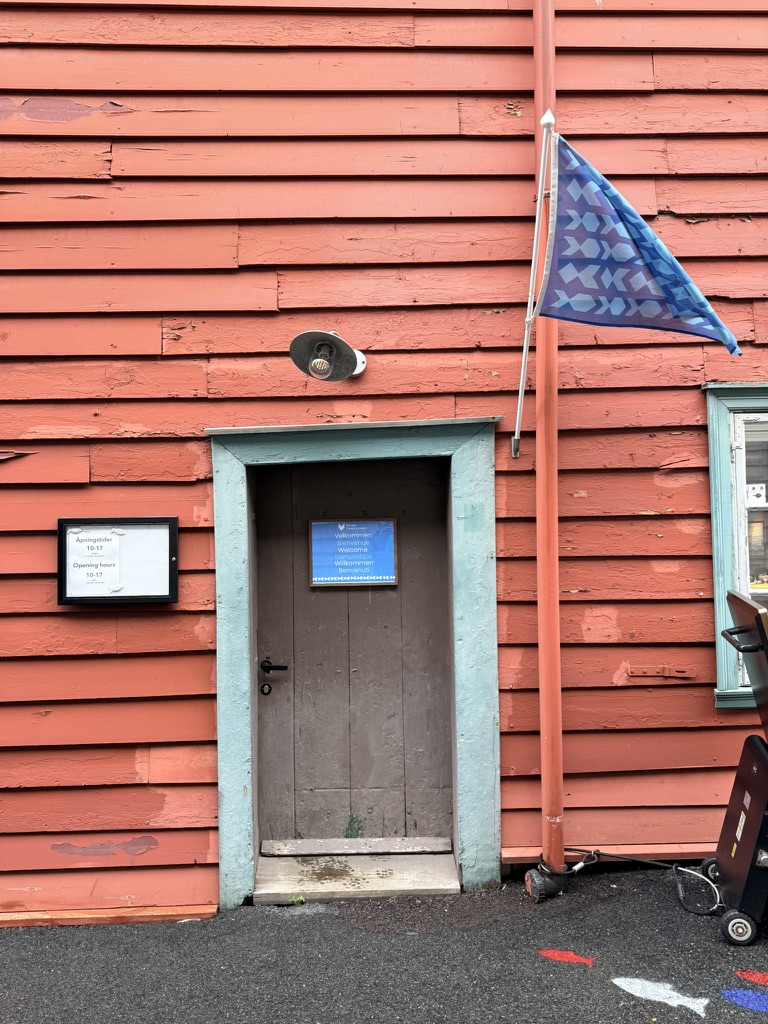
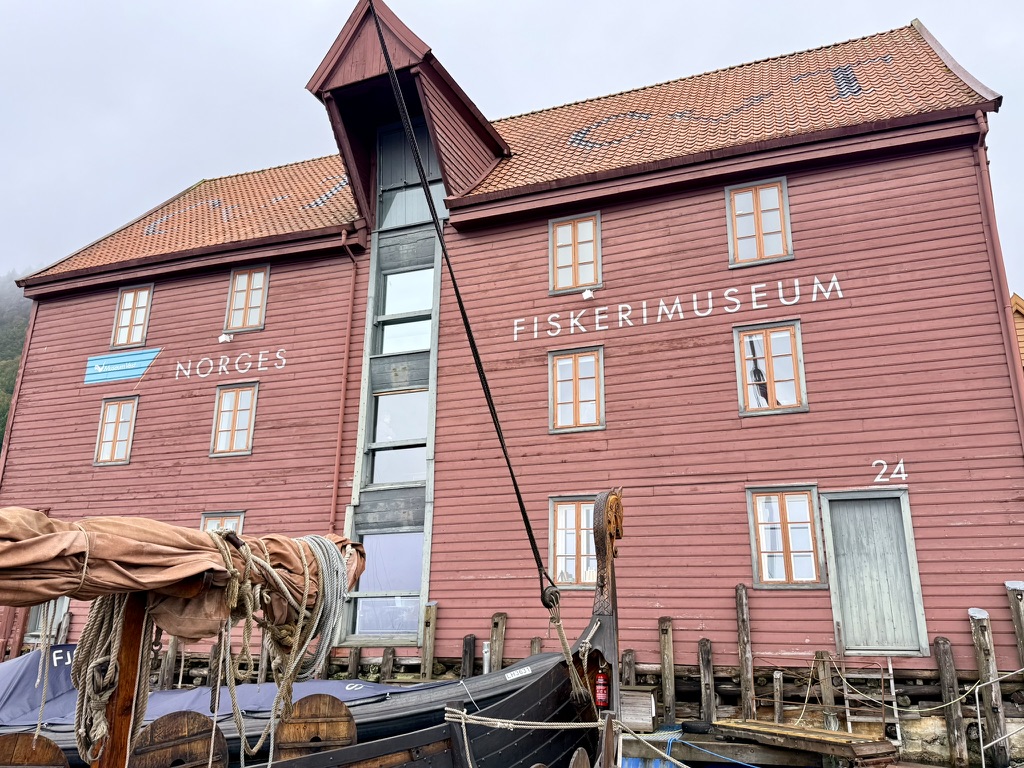
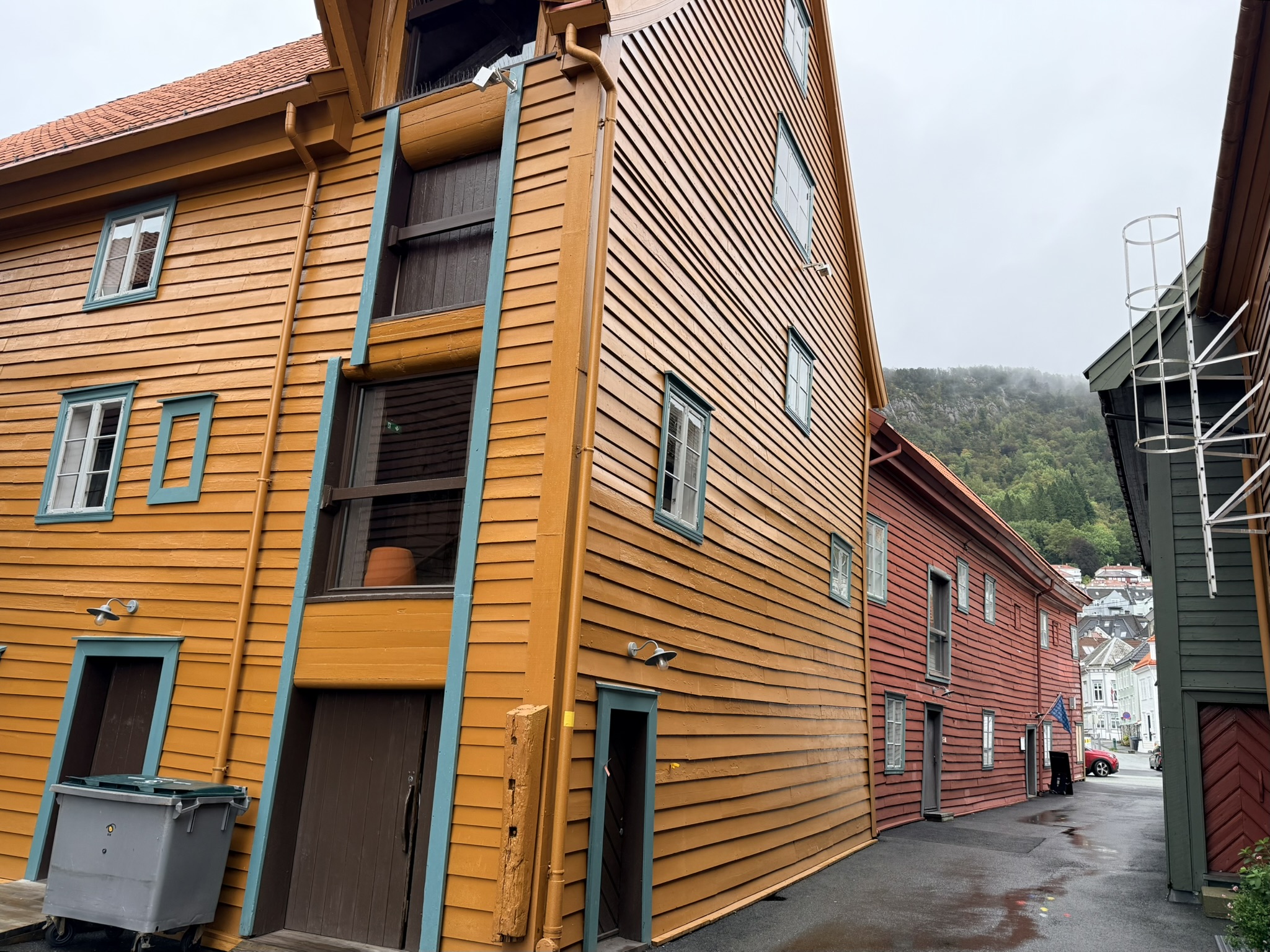
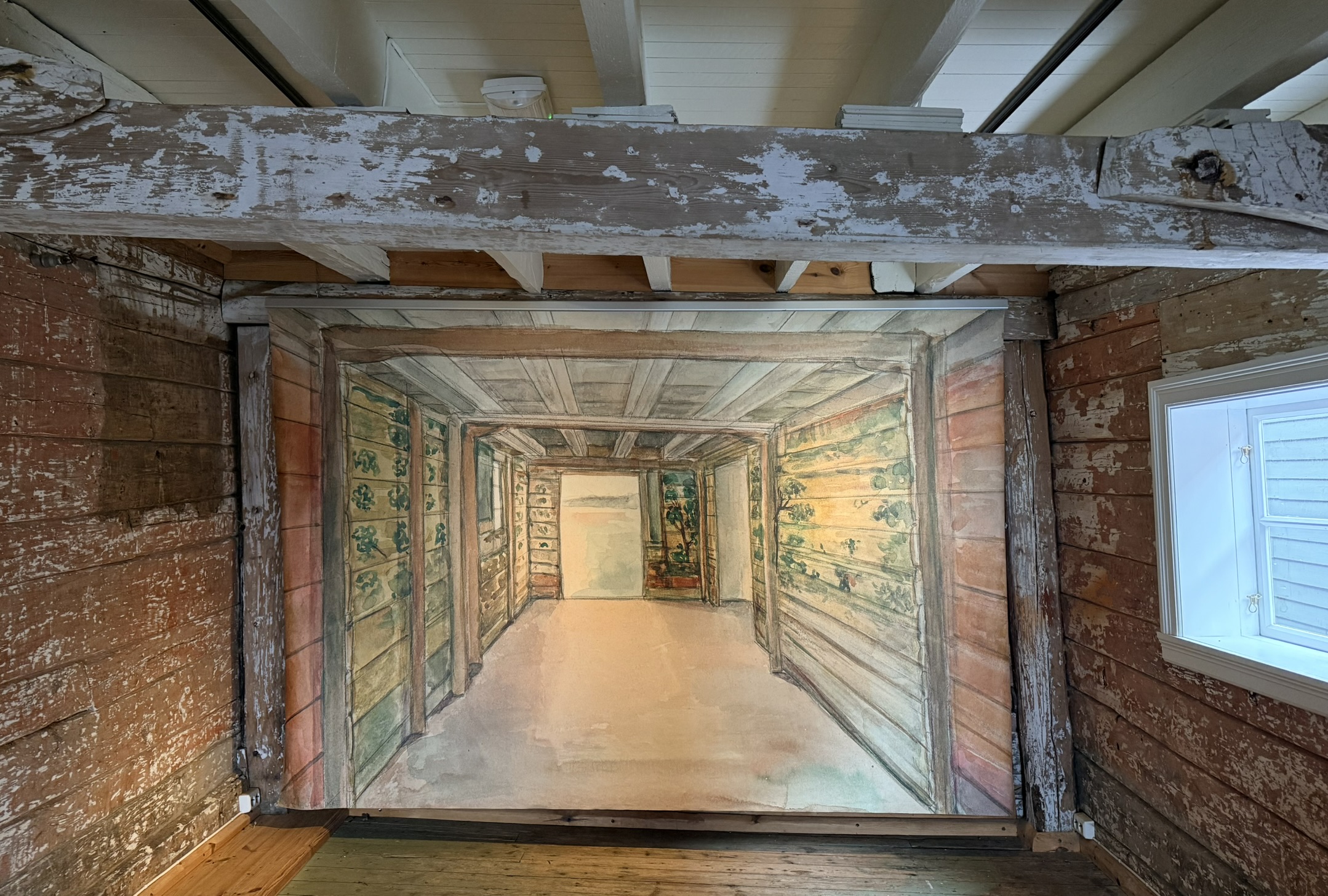
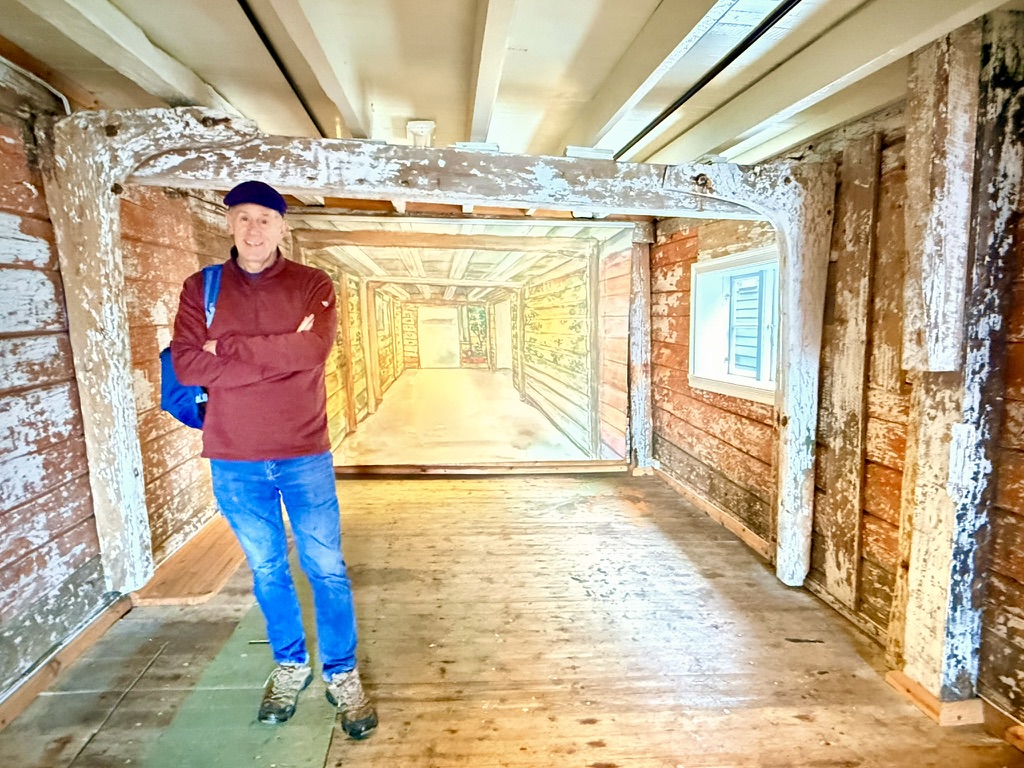
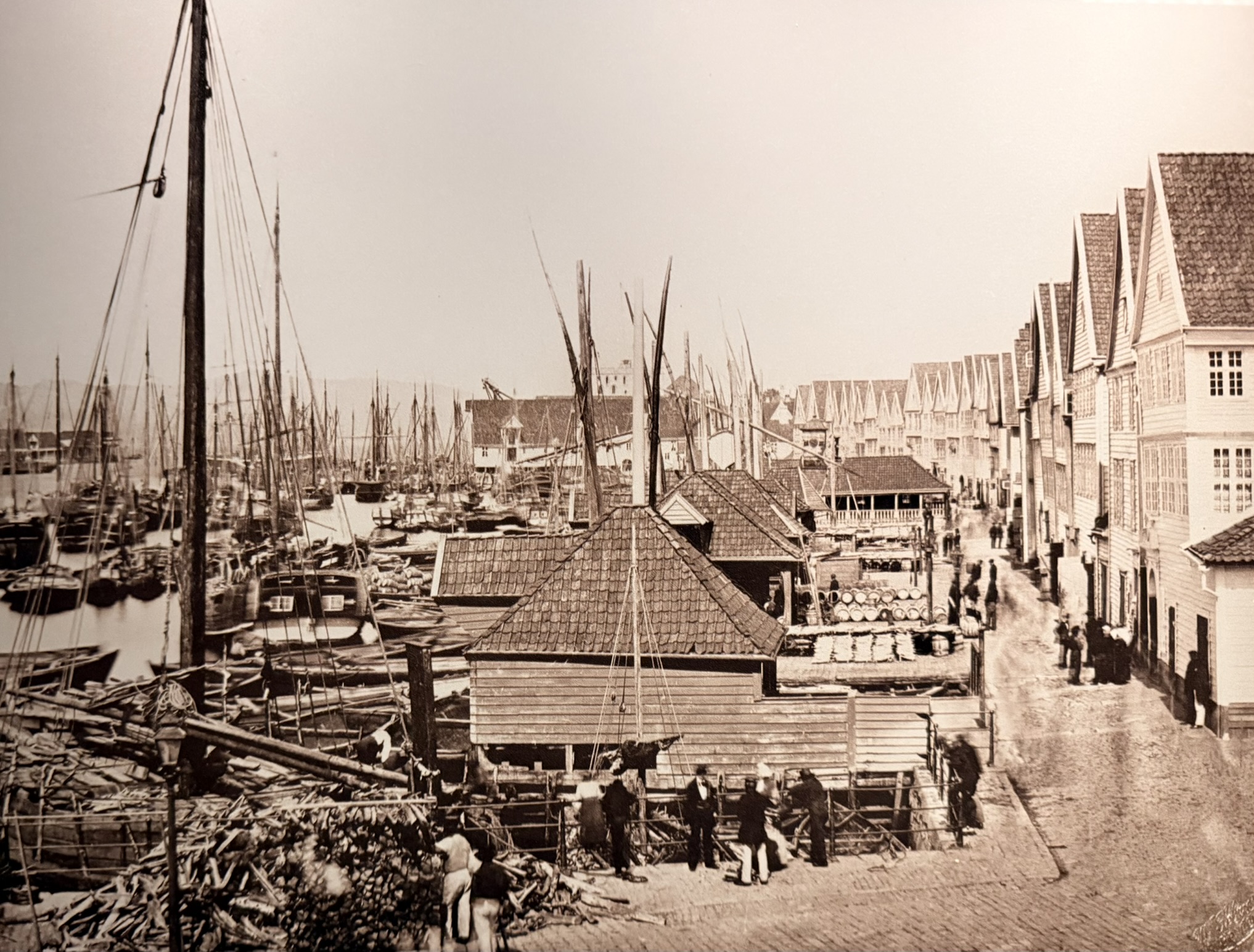
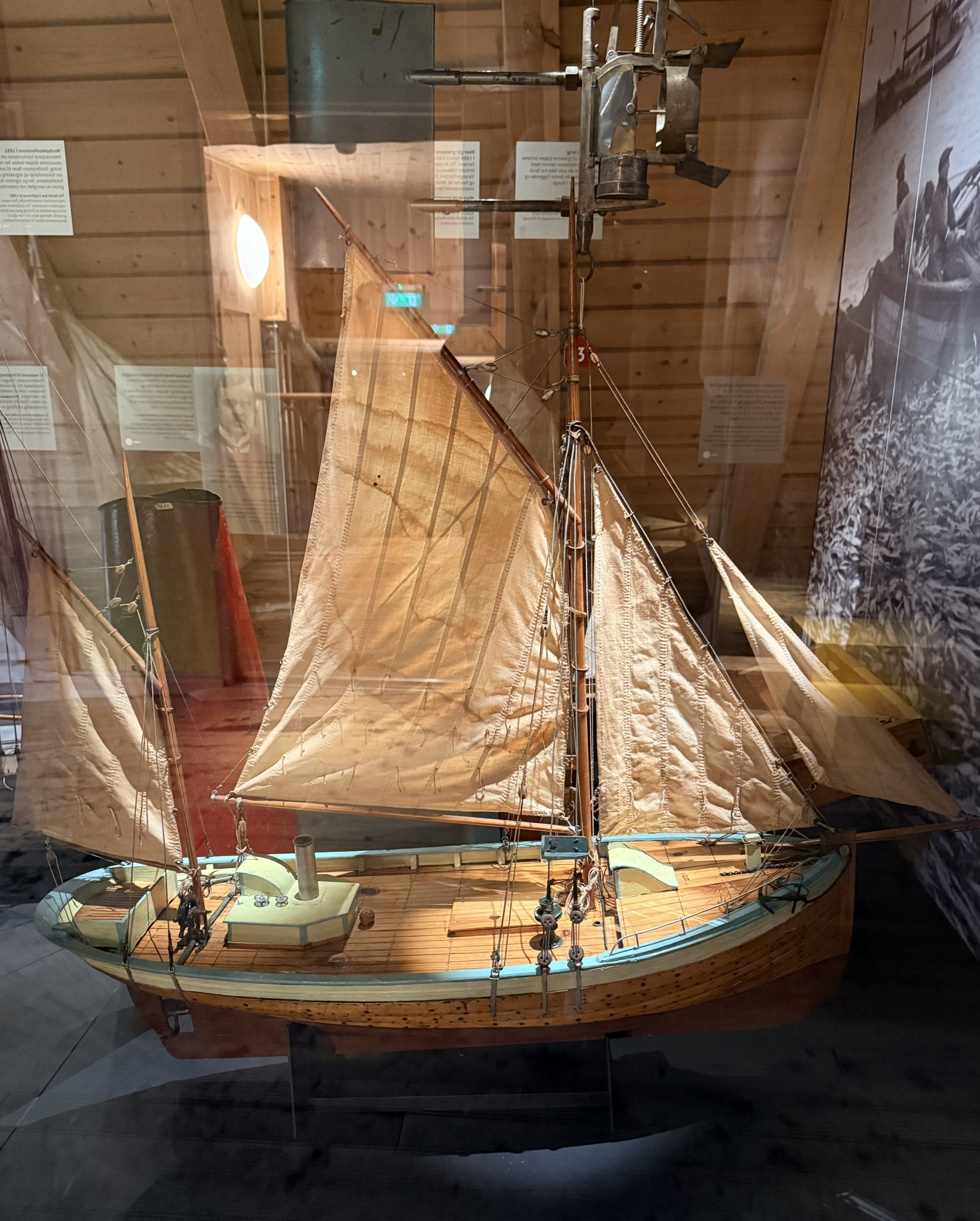
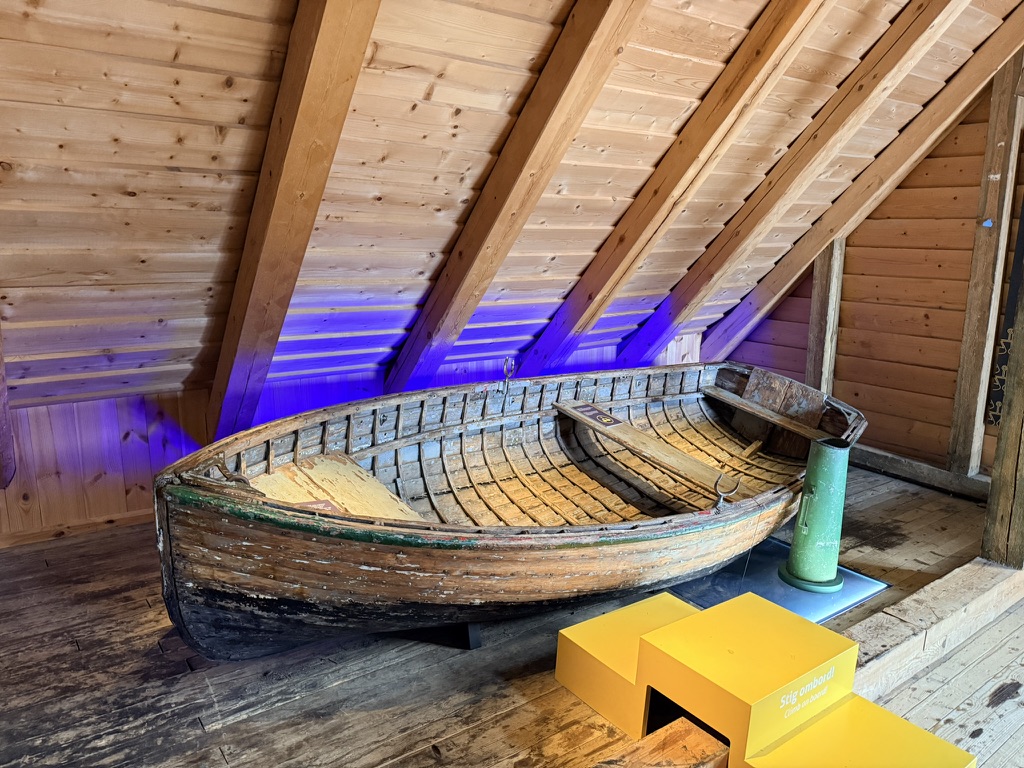
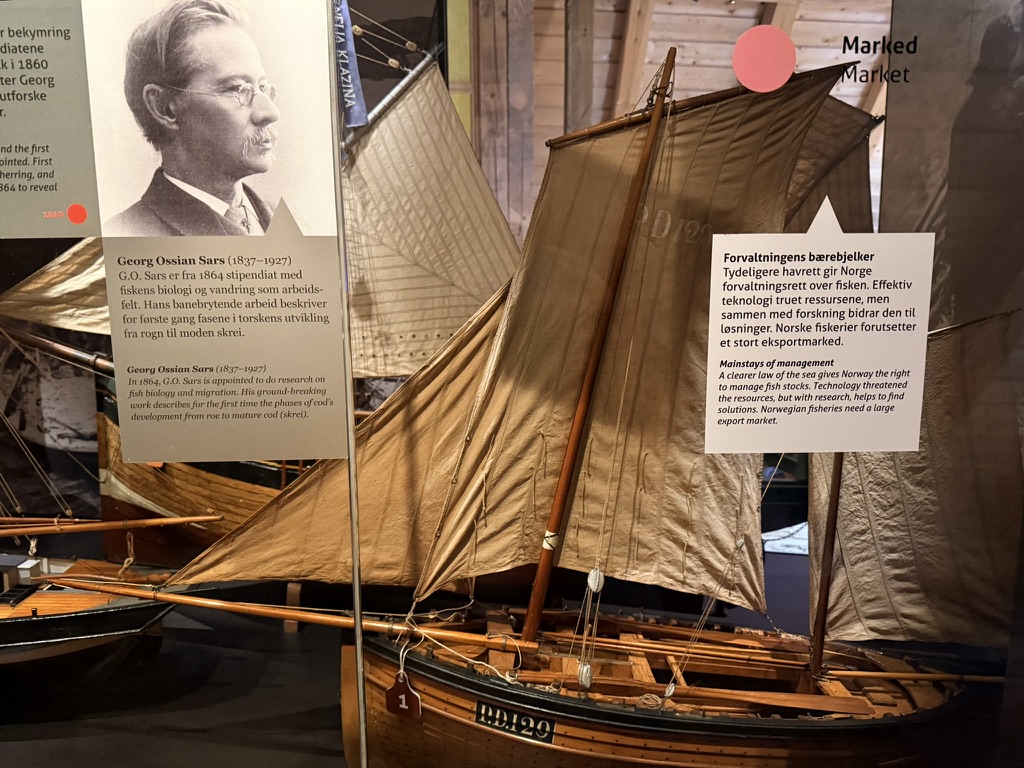
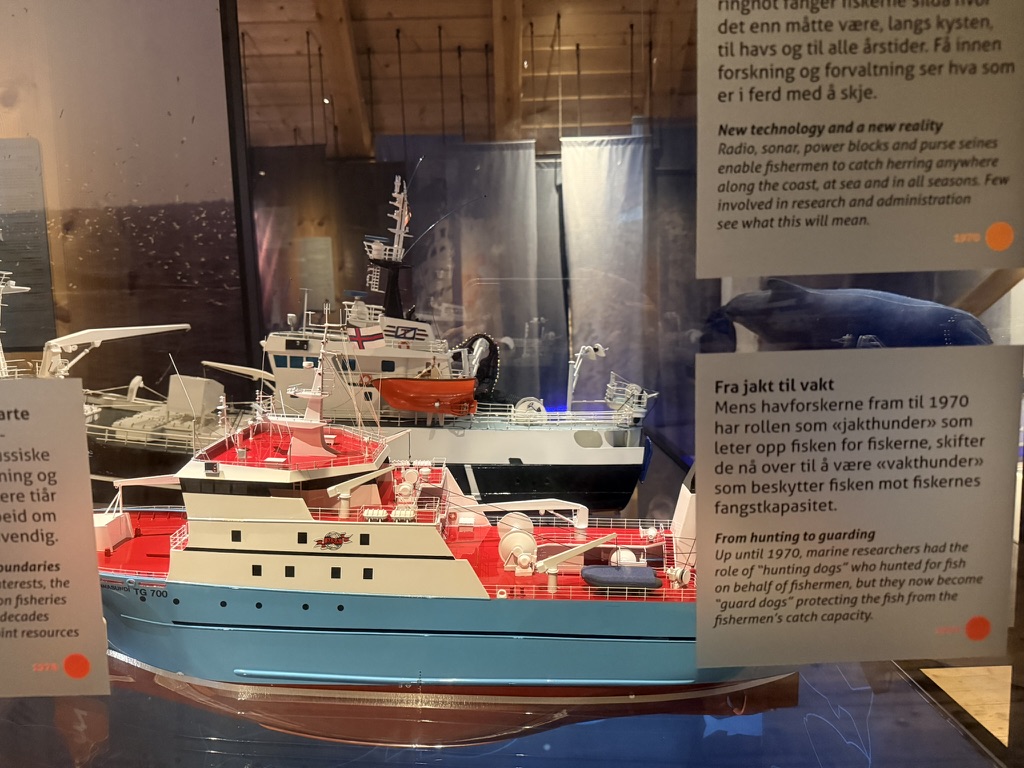
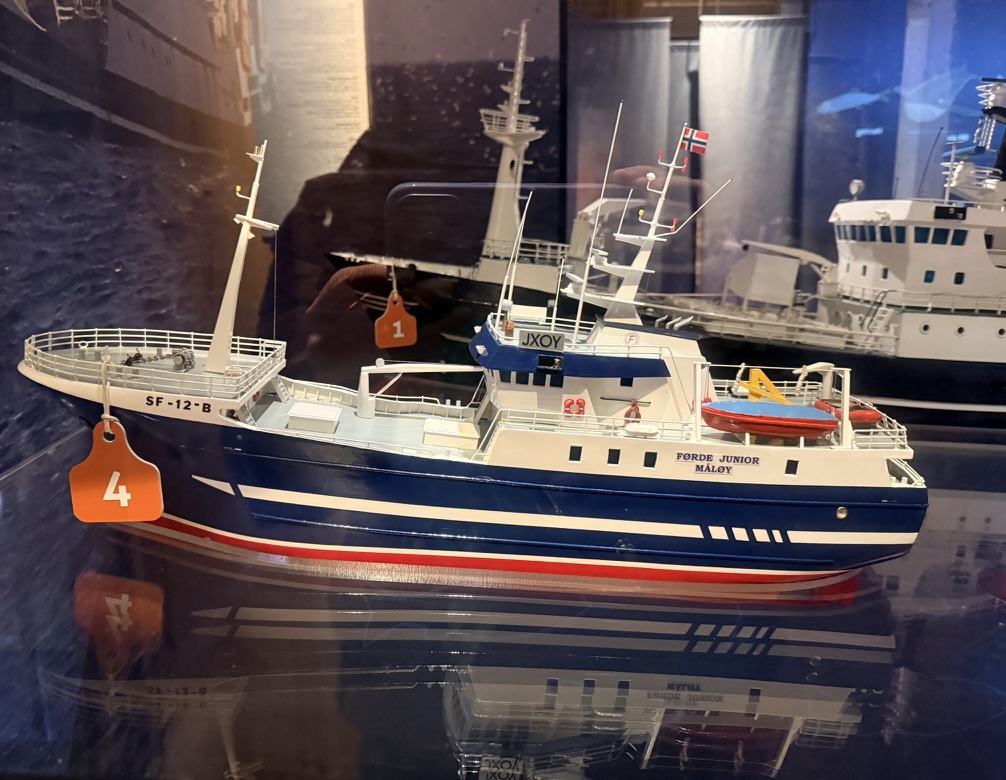
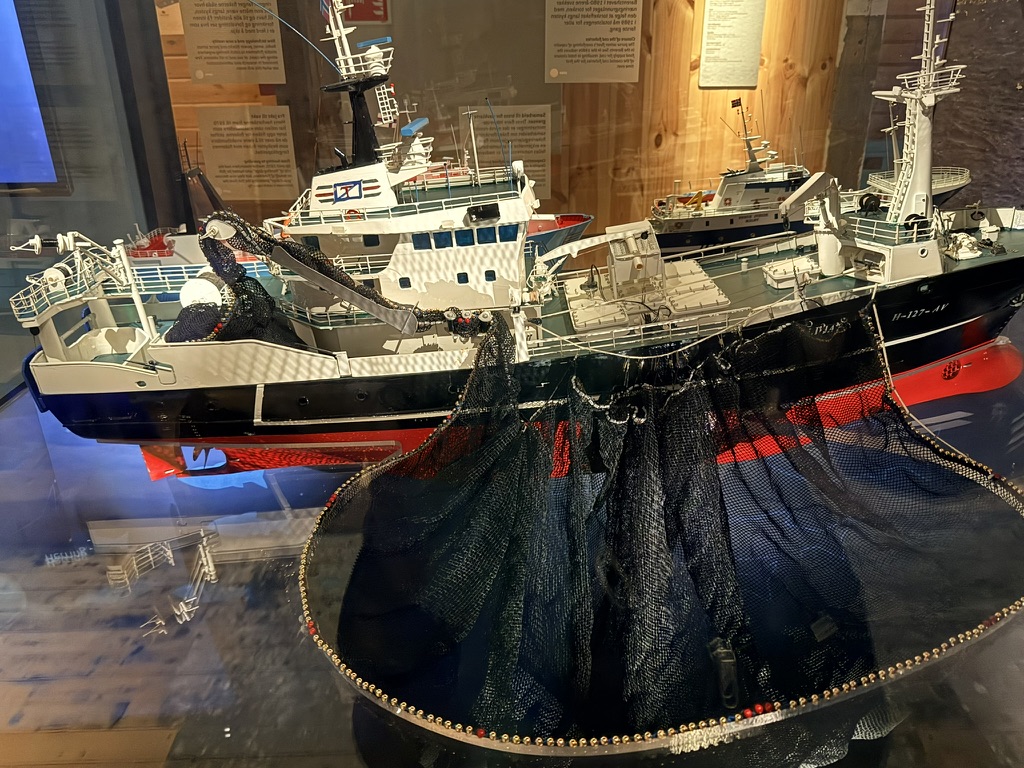
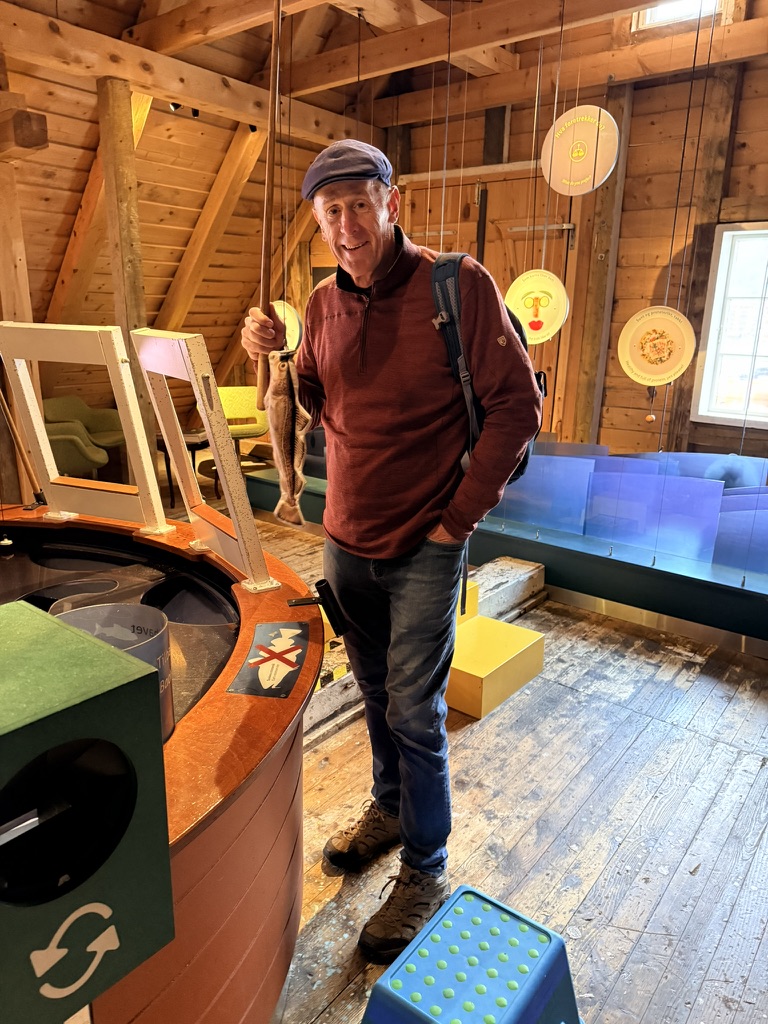
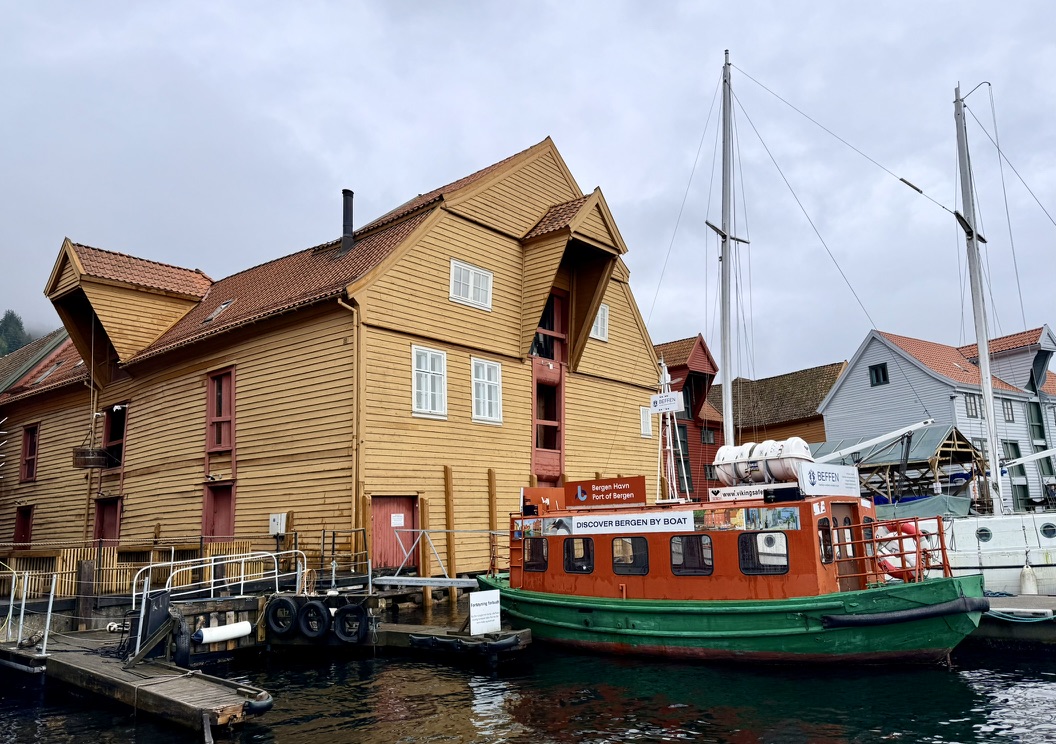
At the Norway Fisheries Museum (Norges Fiskerimuseum) we walked through the timbered rooms and slanted corridors of old Bergen stockfish warehouses. Bergen merchants needed waterfront warehouses from the mid-1600s, so they built sea sheds in Sandviksbukten. The sheds were especially used for storing fish but also much more.
By the end of the 1800s, nearly 150 such buildings lined the waterfront, with many on supports jutting into the sea, allowing boat access on all sides. This earned Sandviken the name “The Venice of the North.” Today there are fewer than 40 sheds still standing.
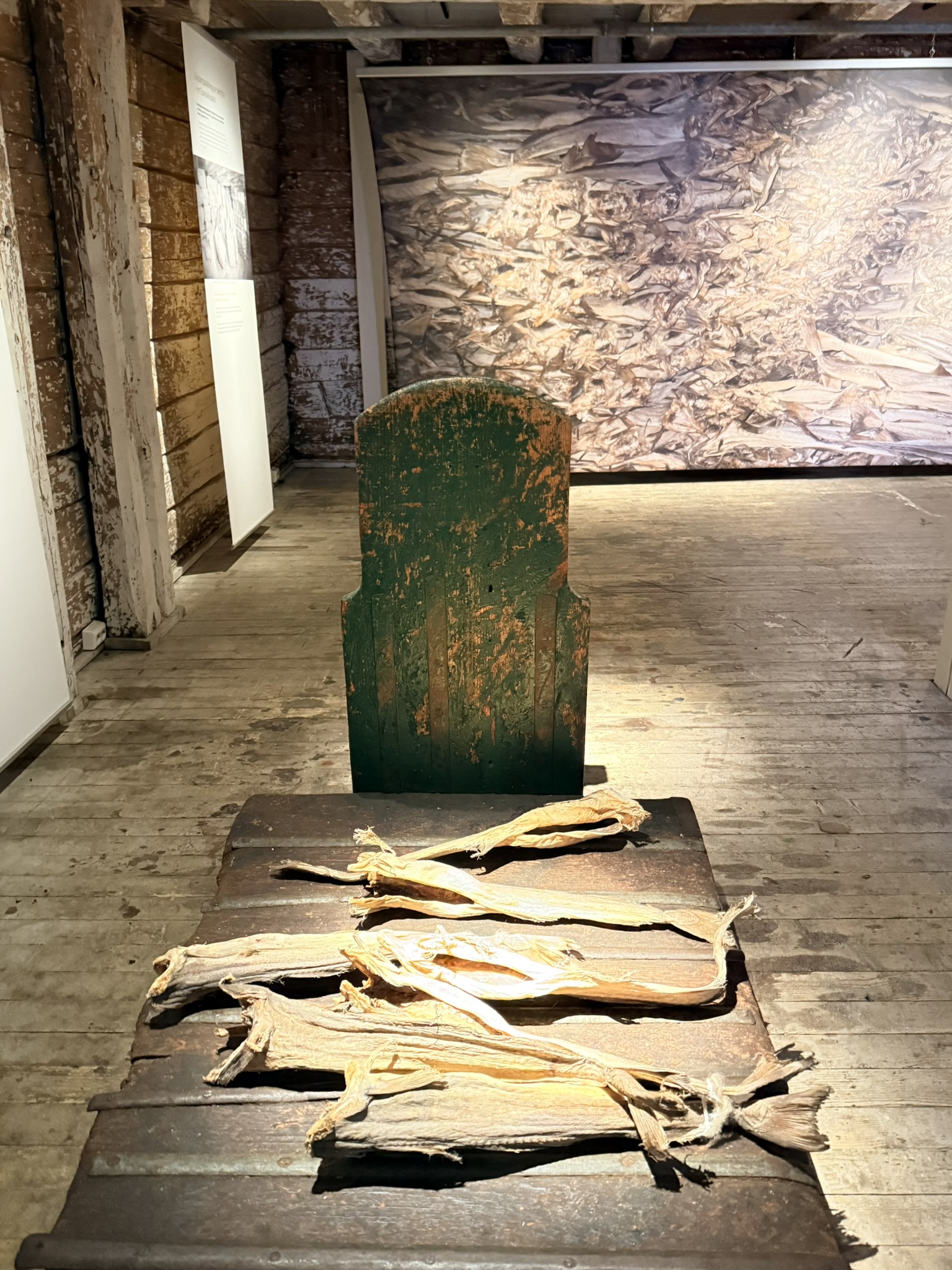
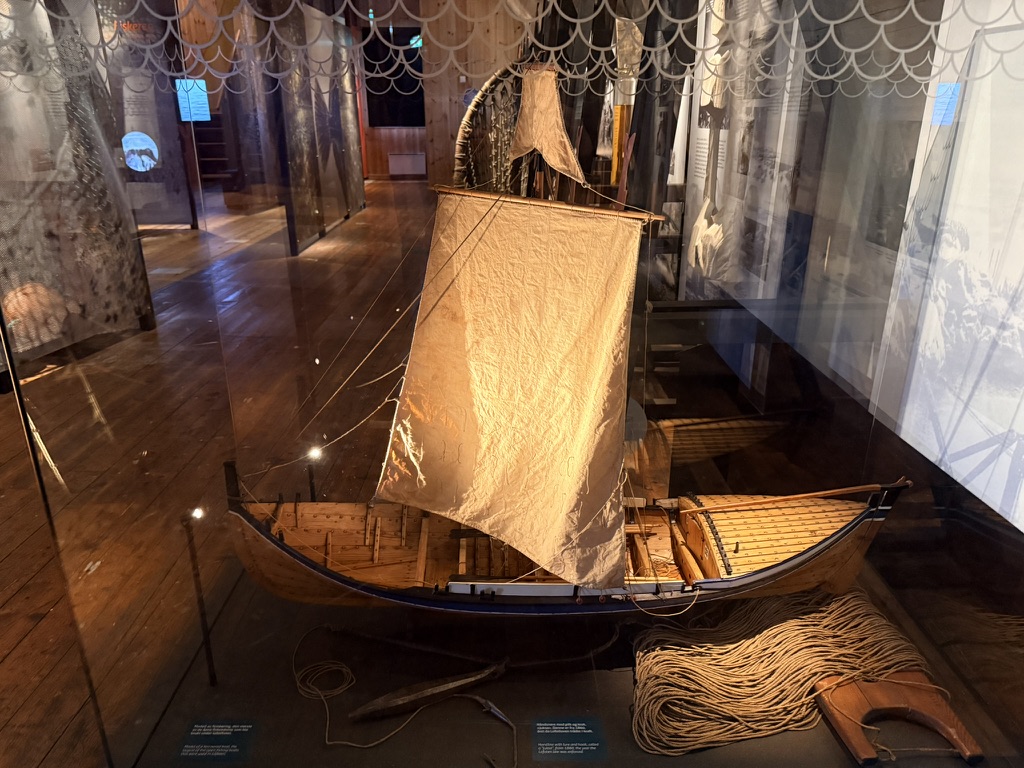
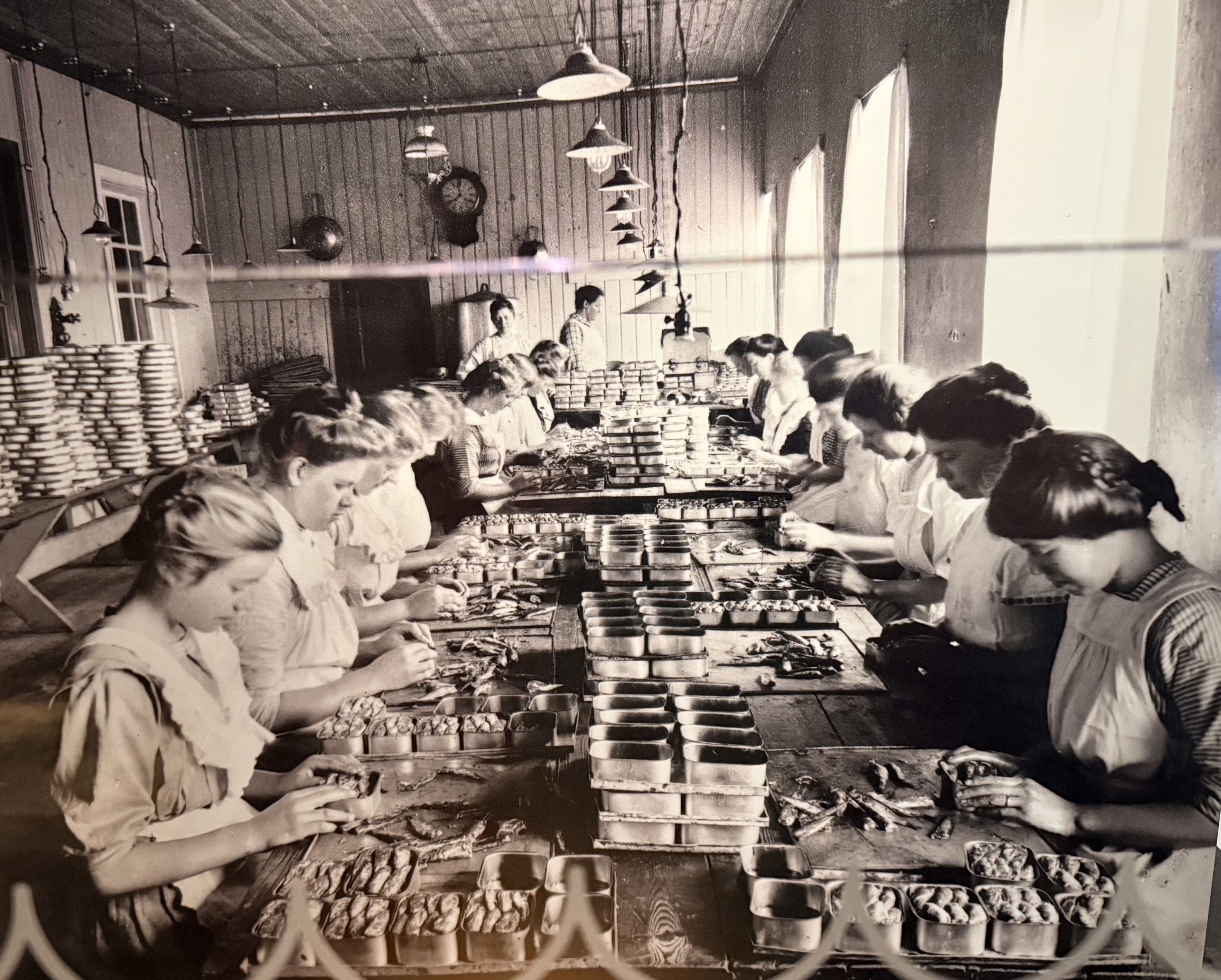
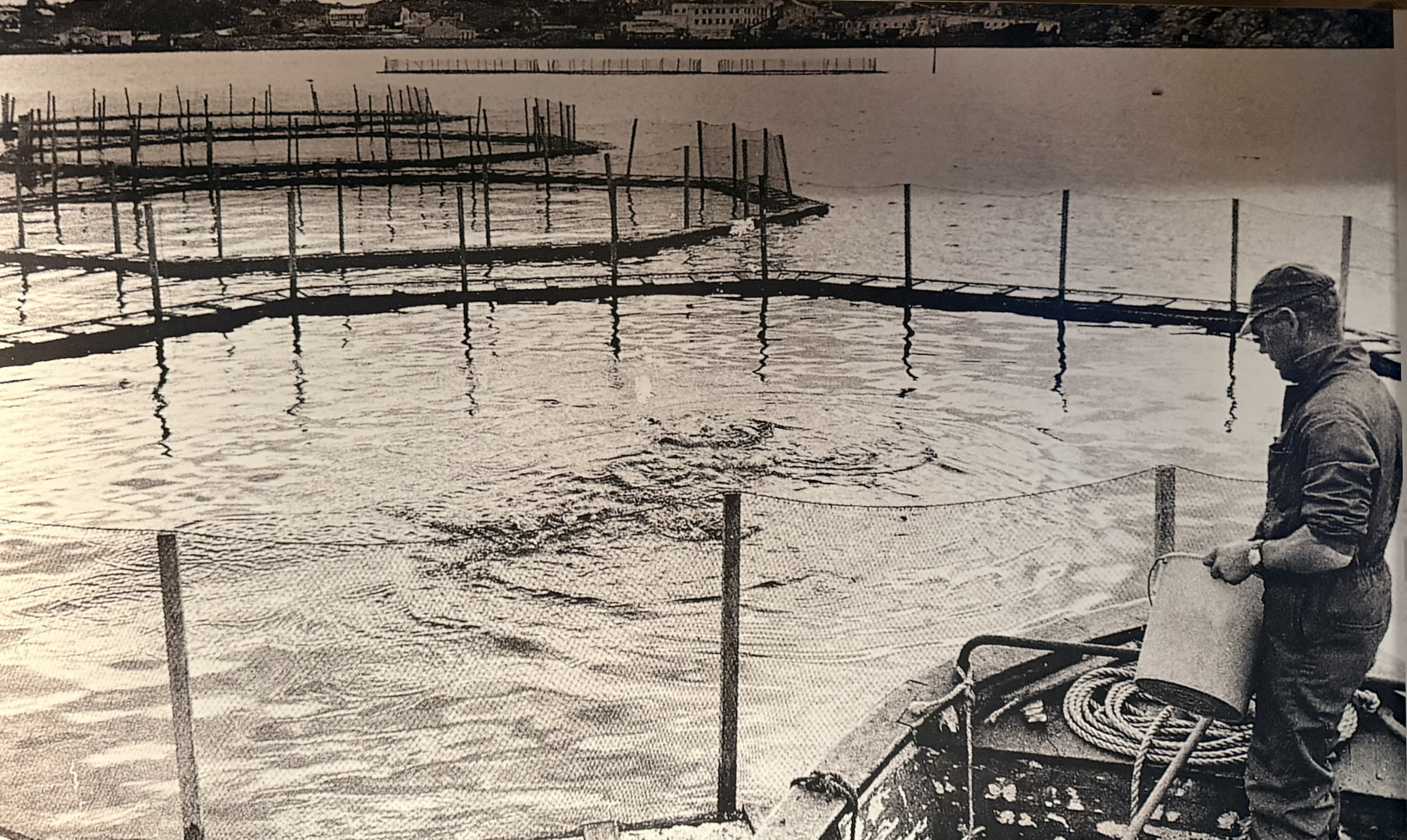
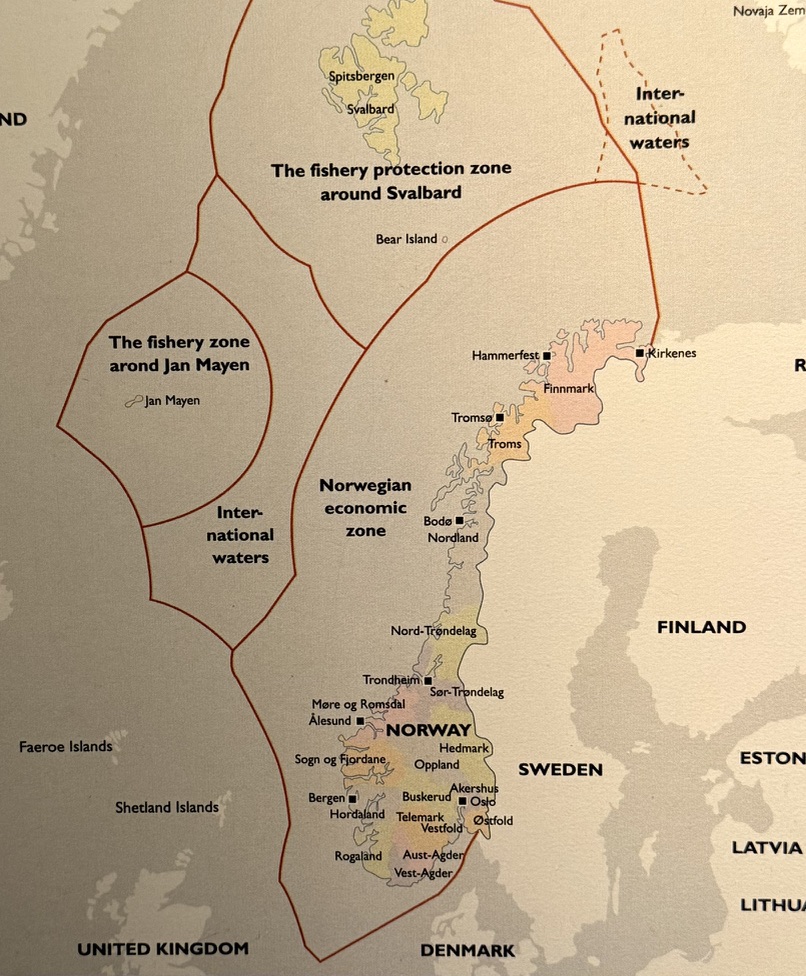
The museum explores growth of the herring fisheries and cod fishing in Lofoten. The Lofoten fishery from January to April is the world’s most important cod fishery. During this period, mature spawning cod swim from the Barents Sea to the Vesterälen and Lofoten Islands. This time provides optimal conditions, not too cold (frost) and not too hot (flies, maggots). The right amounts of wind, sunshine and rain produce the best stockfish, a durable and protein-rich food.
The museum also tells about how fish farming has developed into Norway’s second largest export industry.
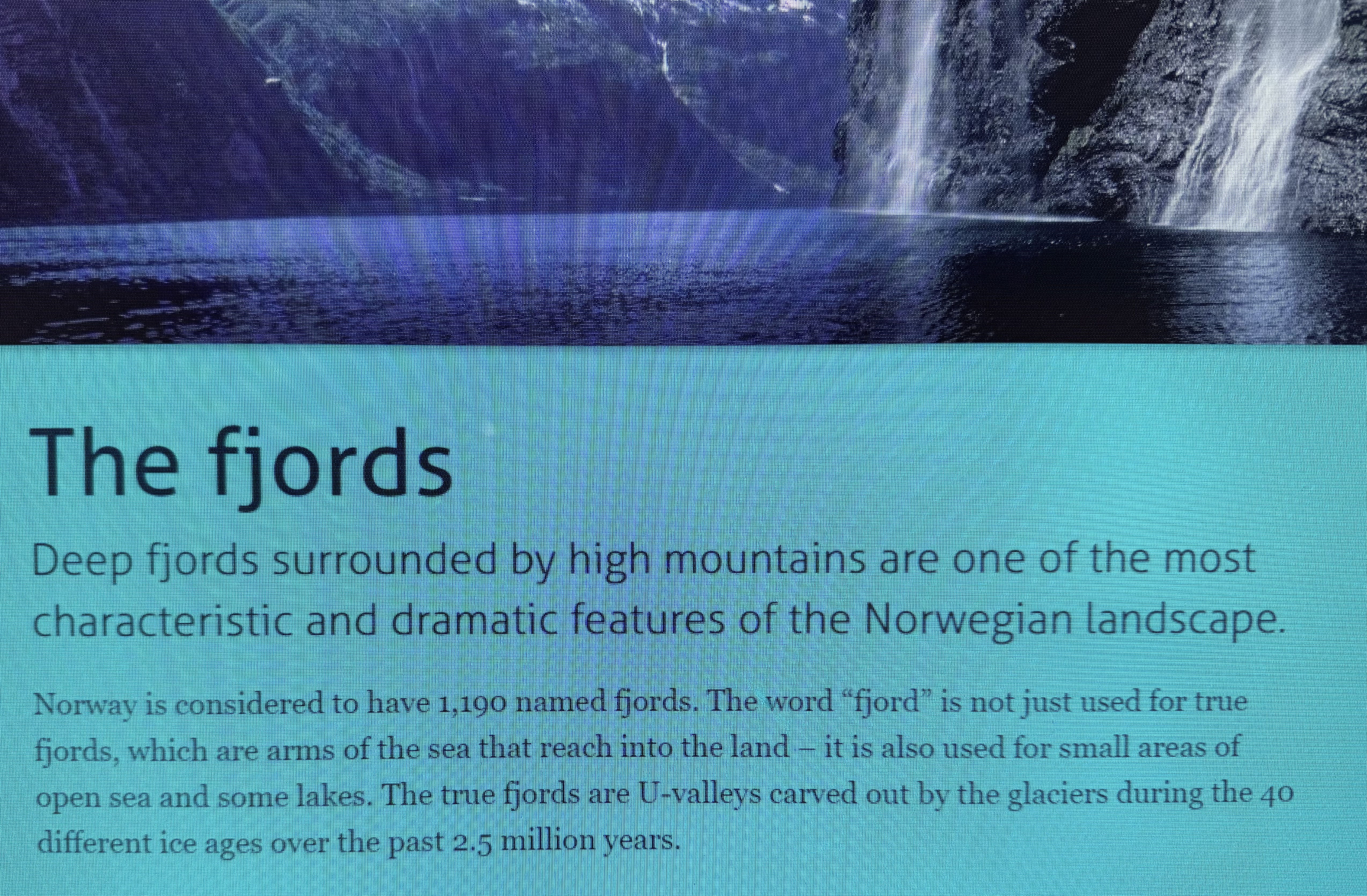
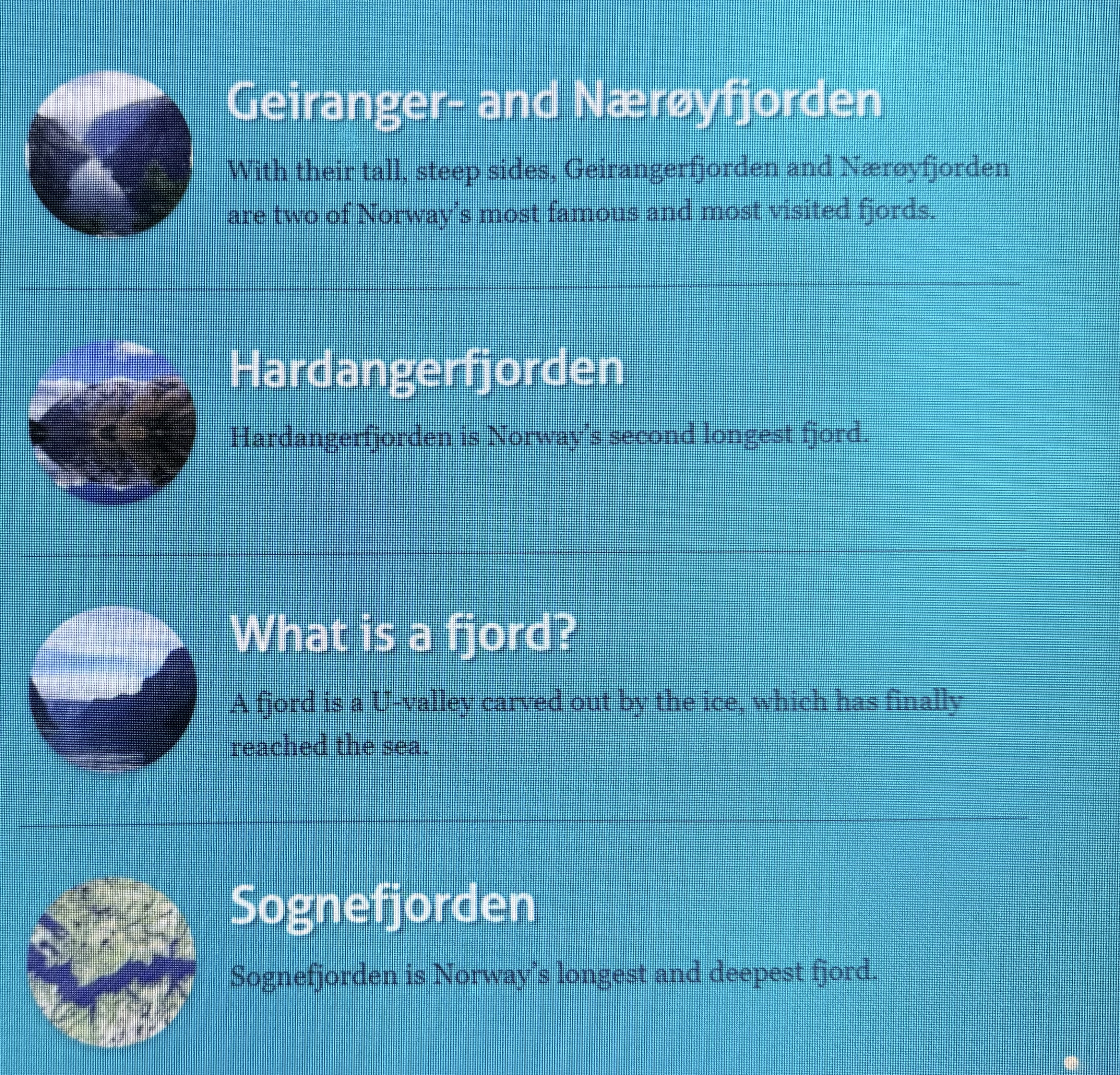
With its fjords, sounds, islands and rock islets, Norway’s coast is 102,937km long. That’s the equivalent of twice around the earth. The Gulf Stream is the reason why Norway and Northern Europe have a relatively mild climate. It transports 50 million cubic meters per second of water that has been heated up by the sun in the Gulf of Mexico, and splits into several branches that distribute the water’s heat through northern Europe. That is more than all the world’s rivers put together.
A most interesting film in the museum had three fishermen discussing their life-long love of fishing and the challenges faced today by younger generations wanting to become fishermen. There is a high cost to buy quotas which makes it cost prohibitive for new fishermen.
Troll Museum Bergen
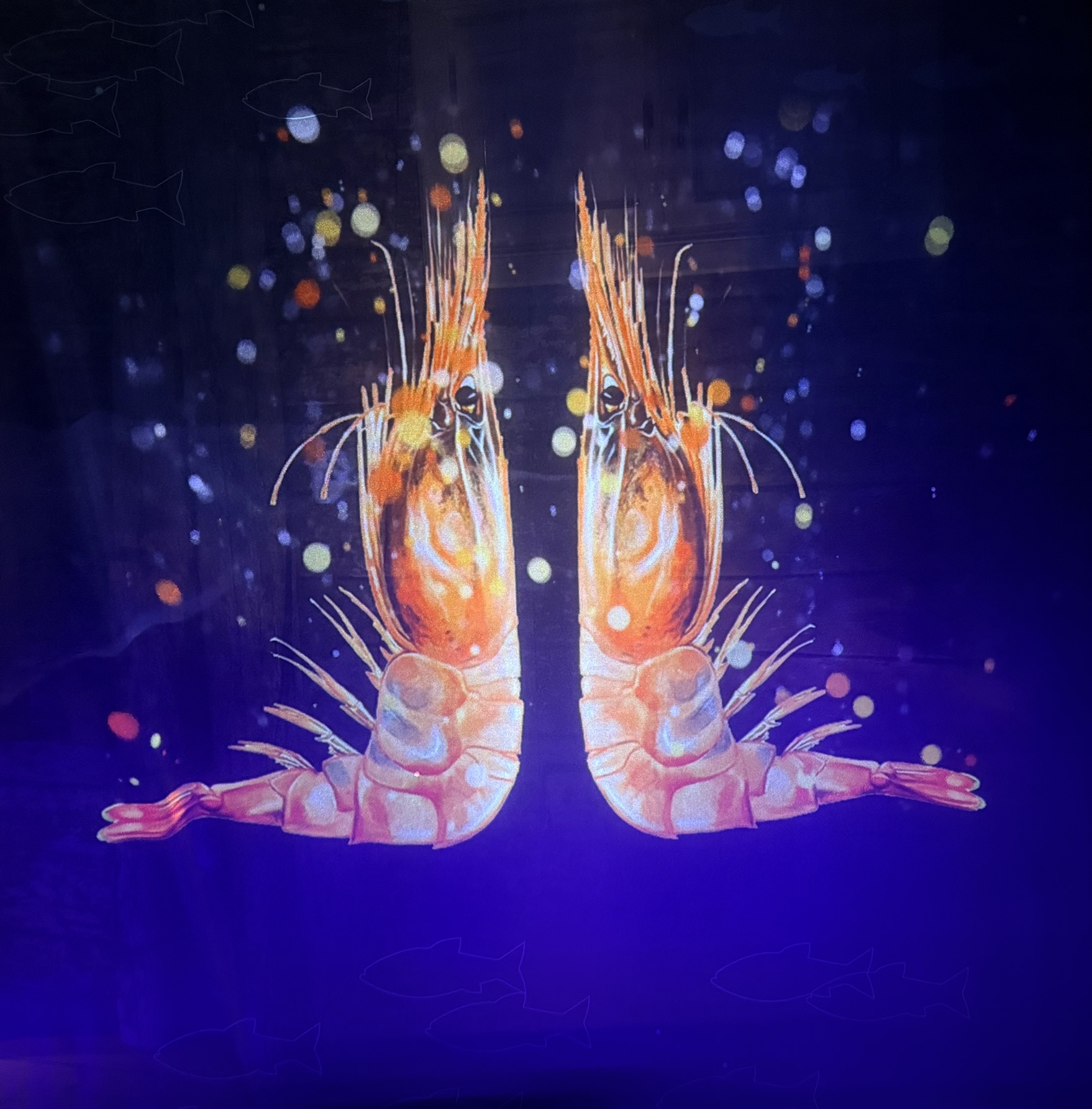
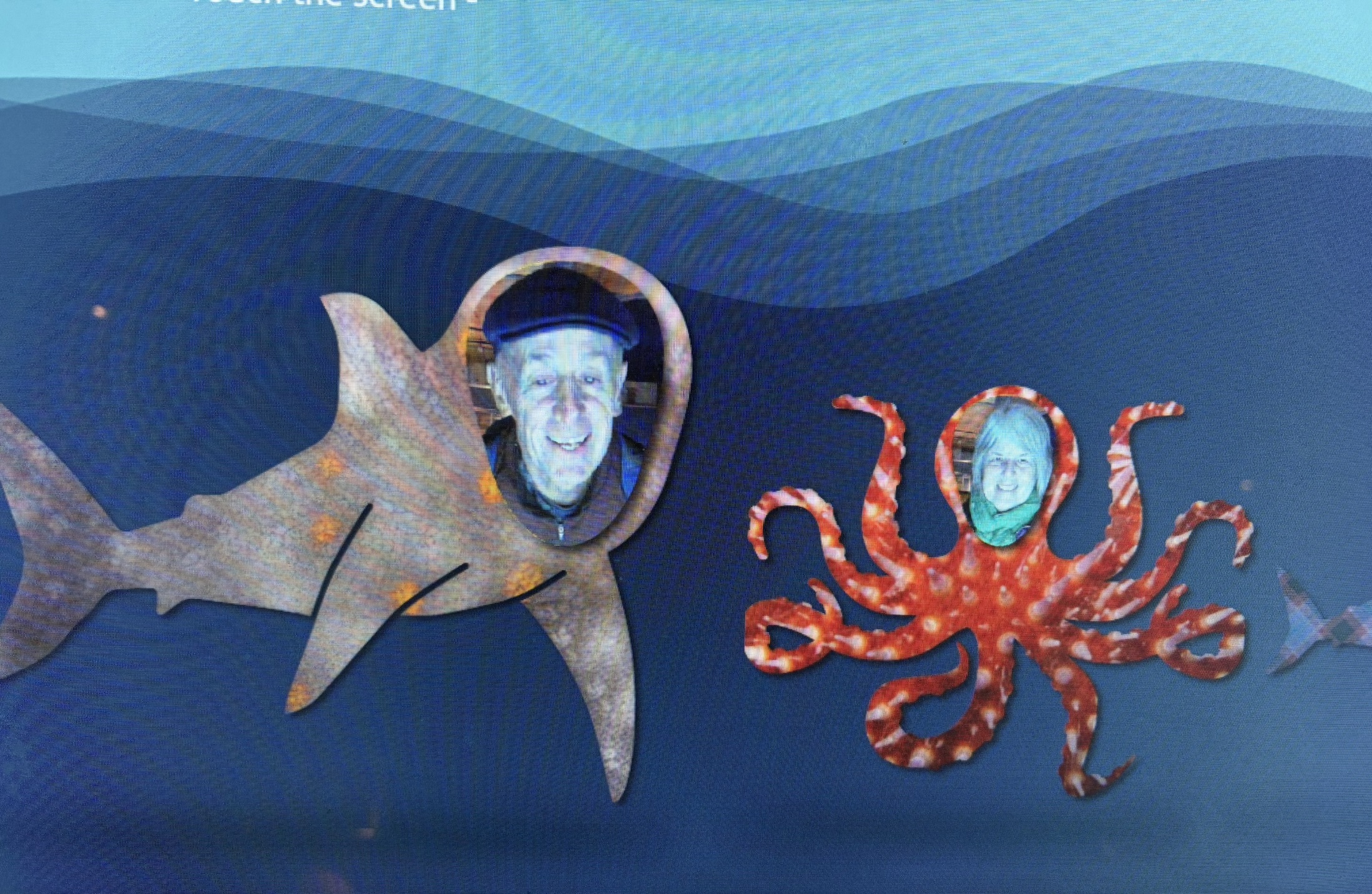
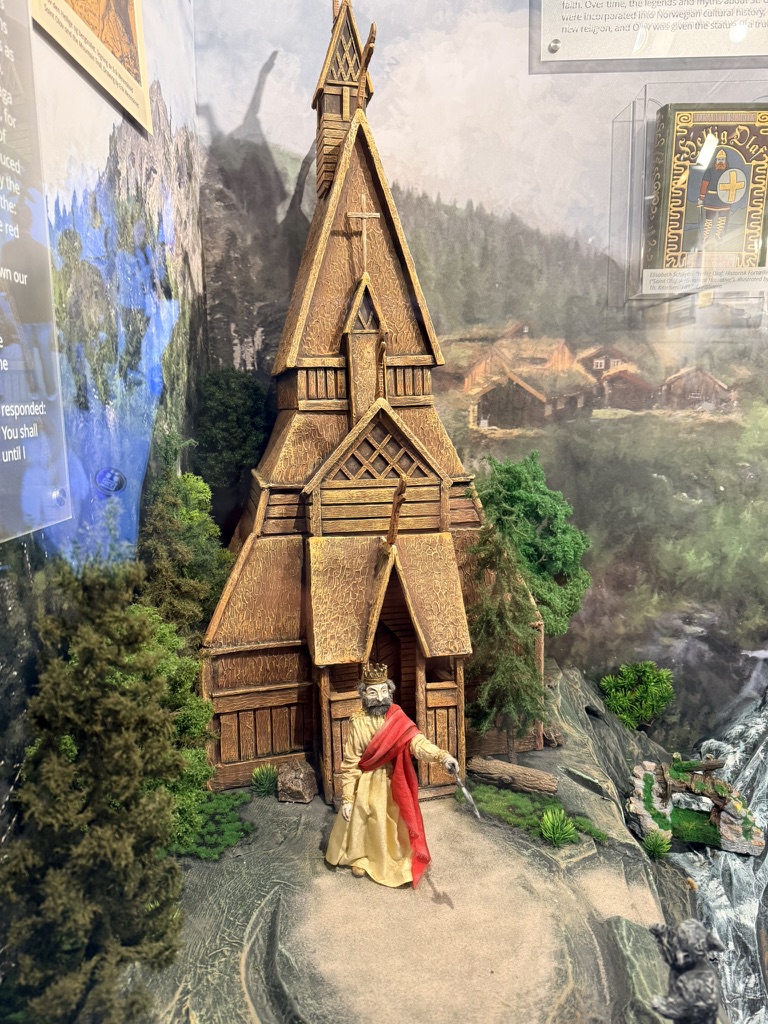
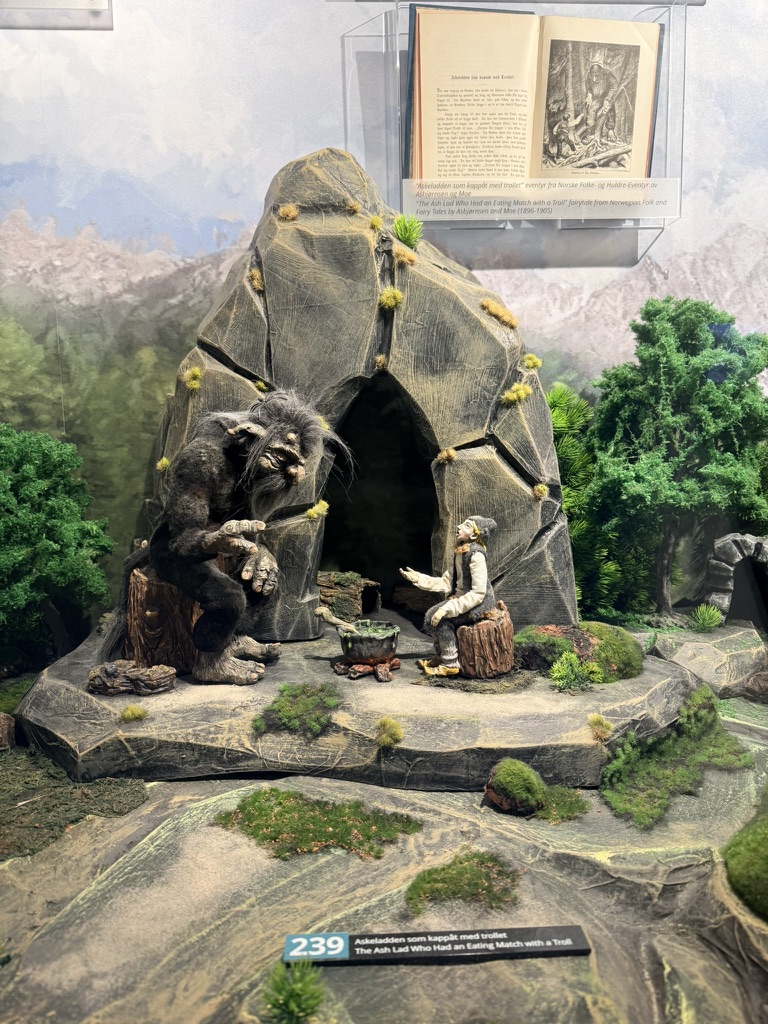
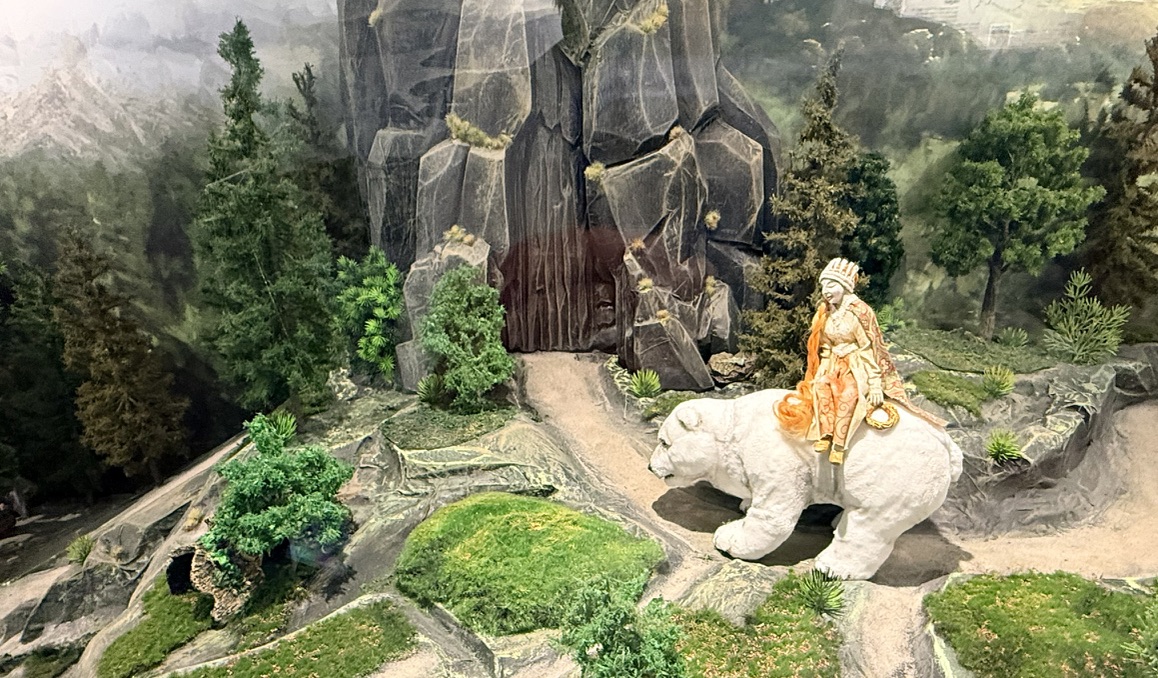
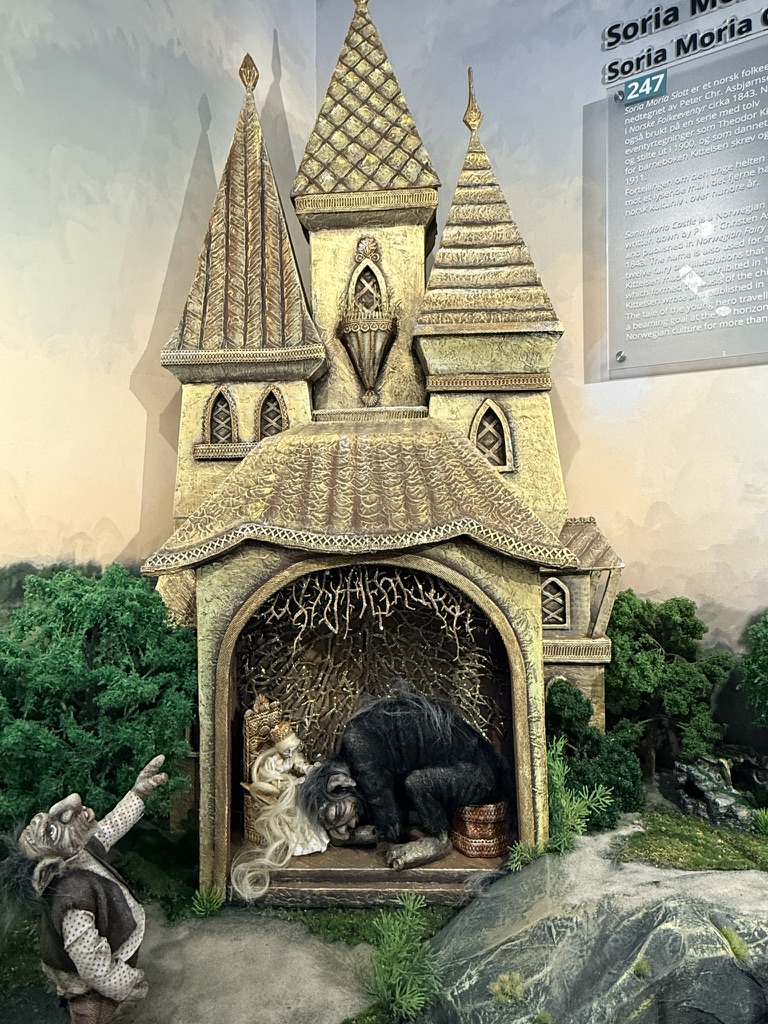
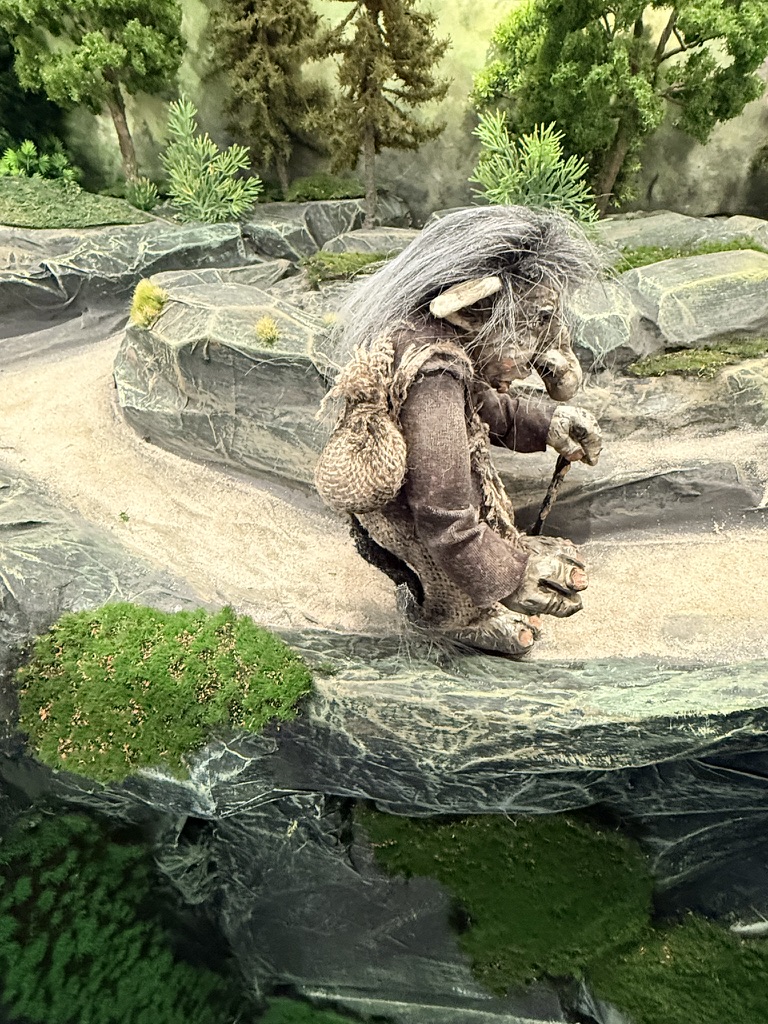
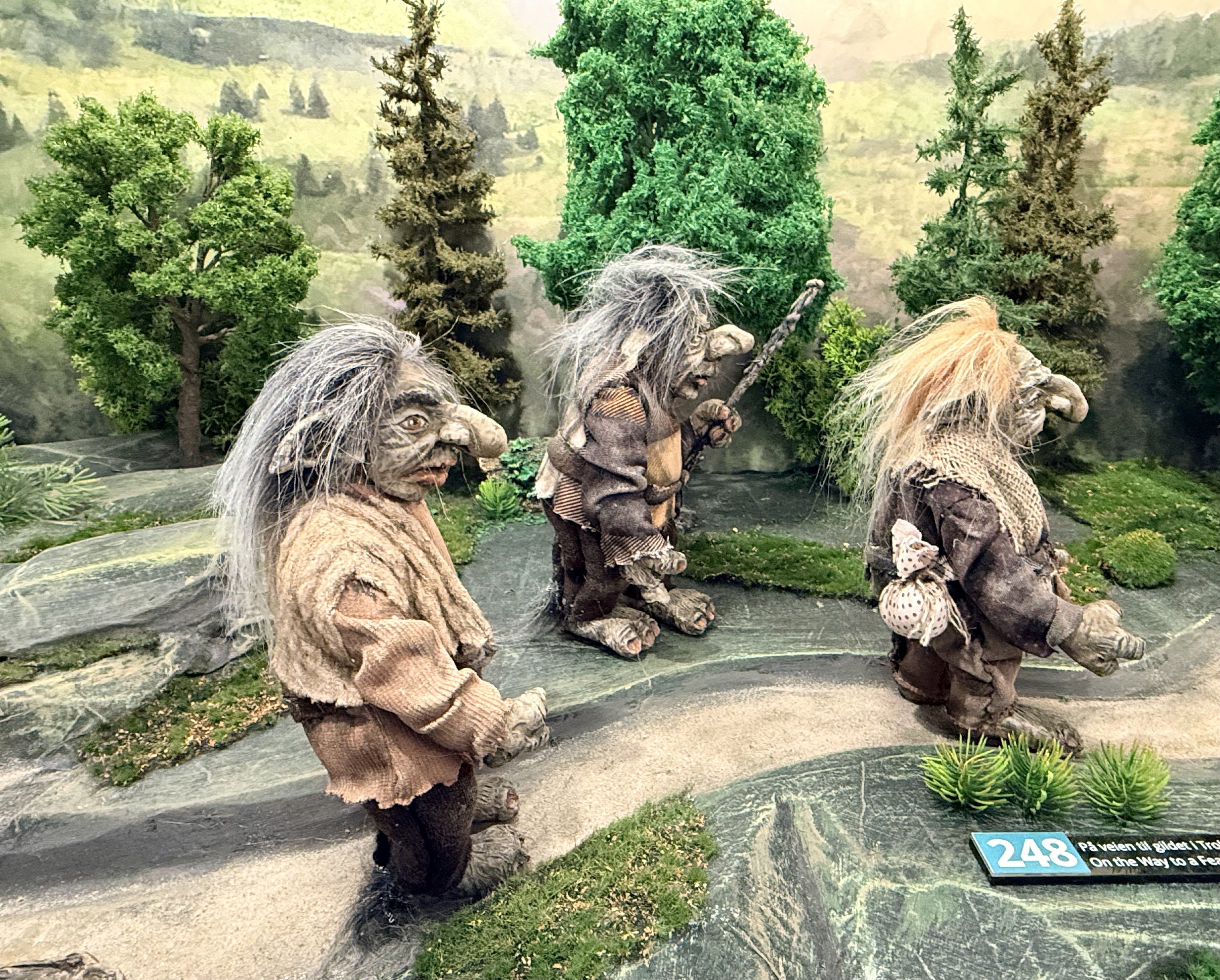
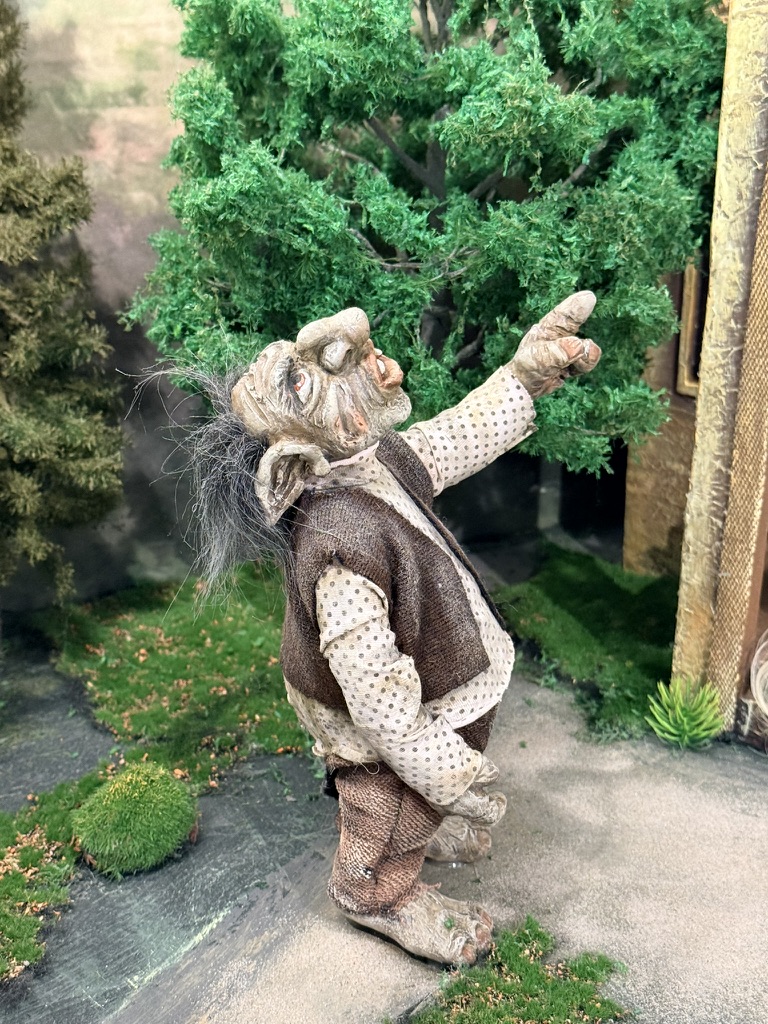
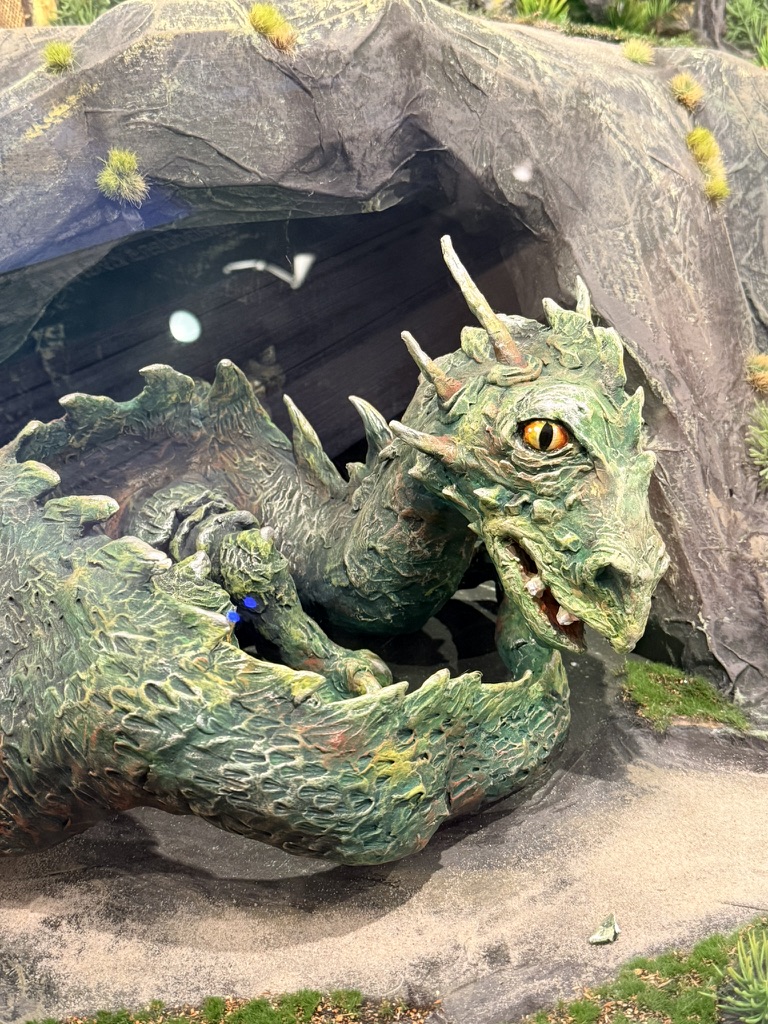
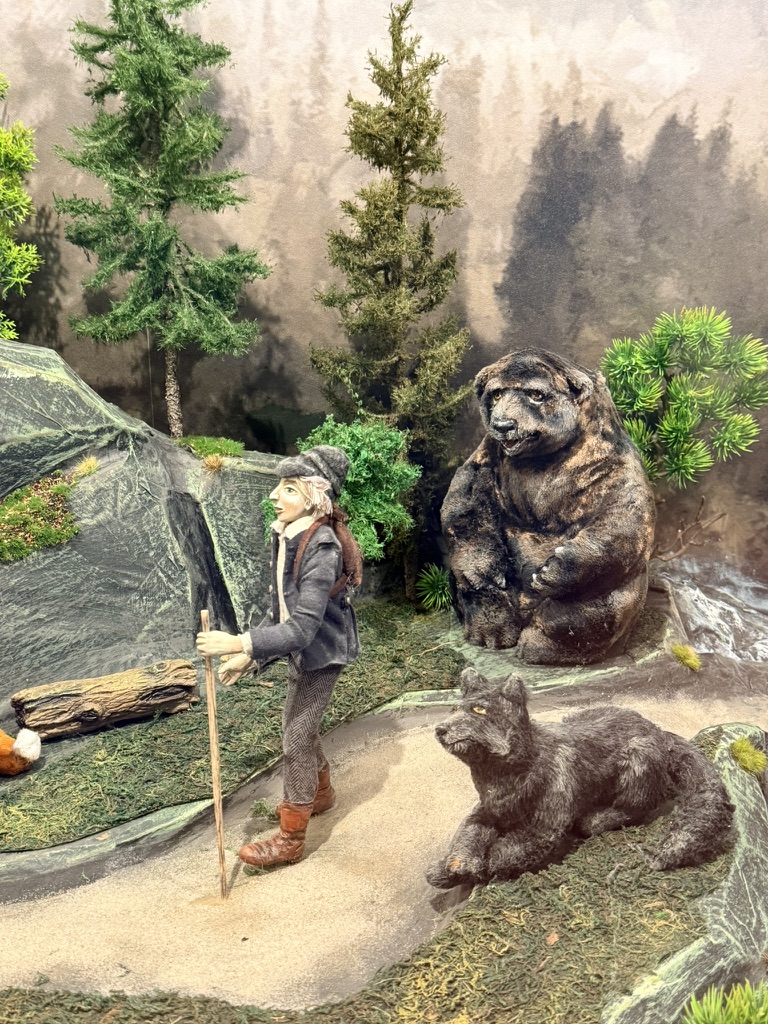
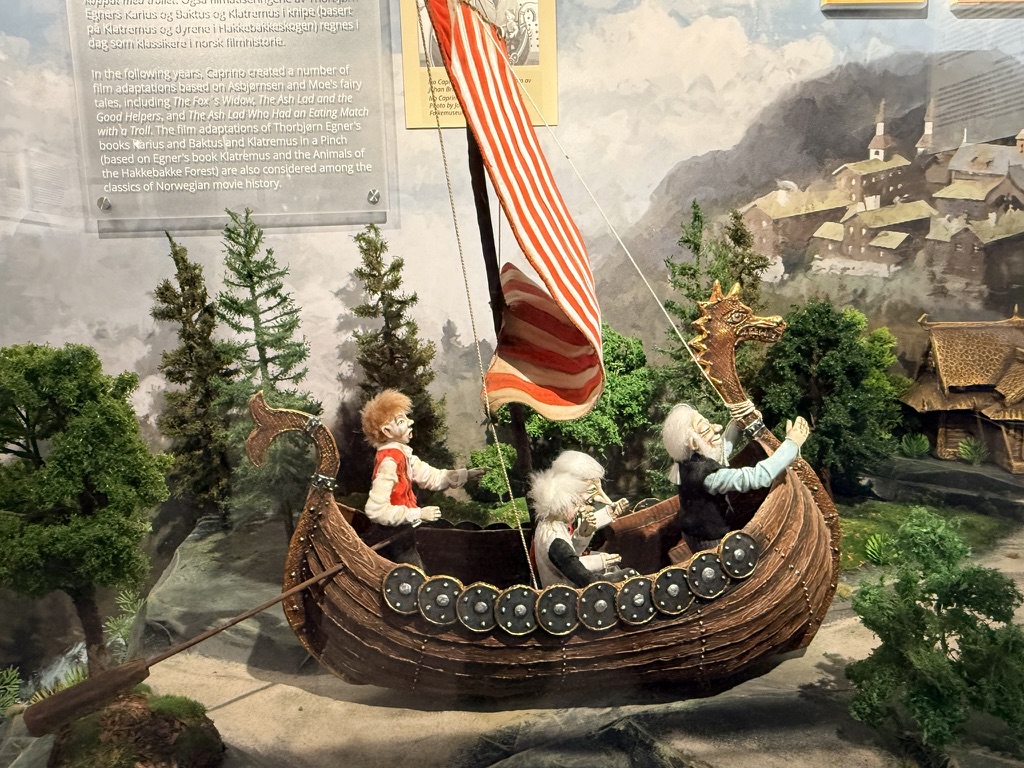
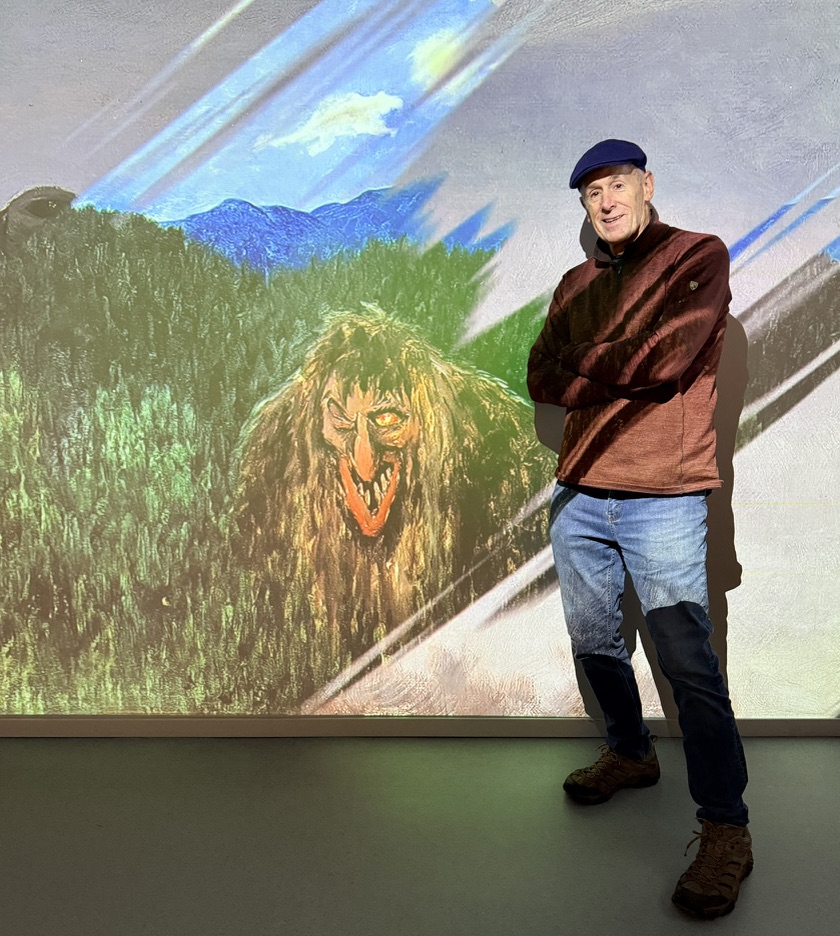
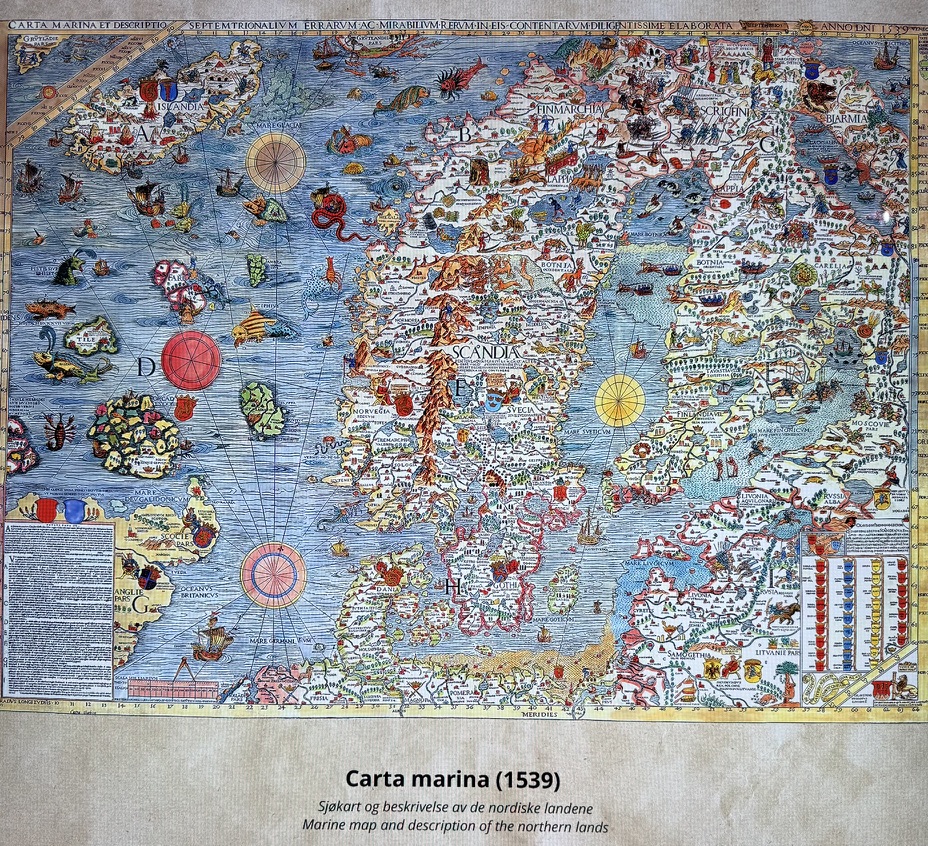
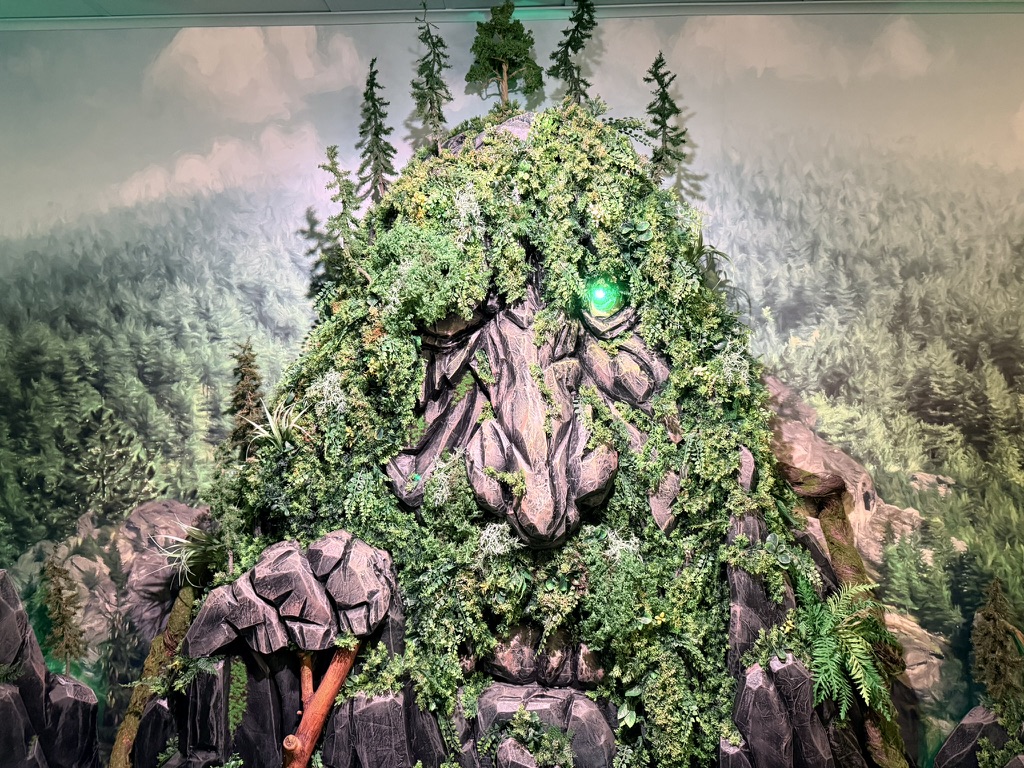
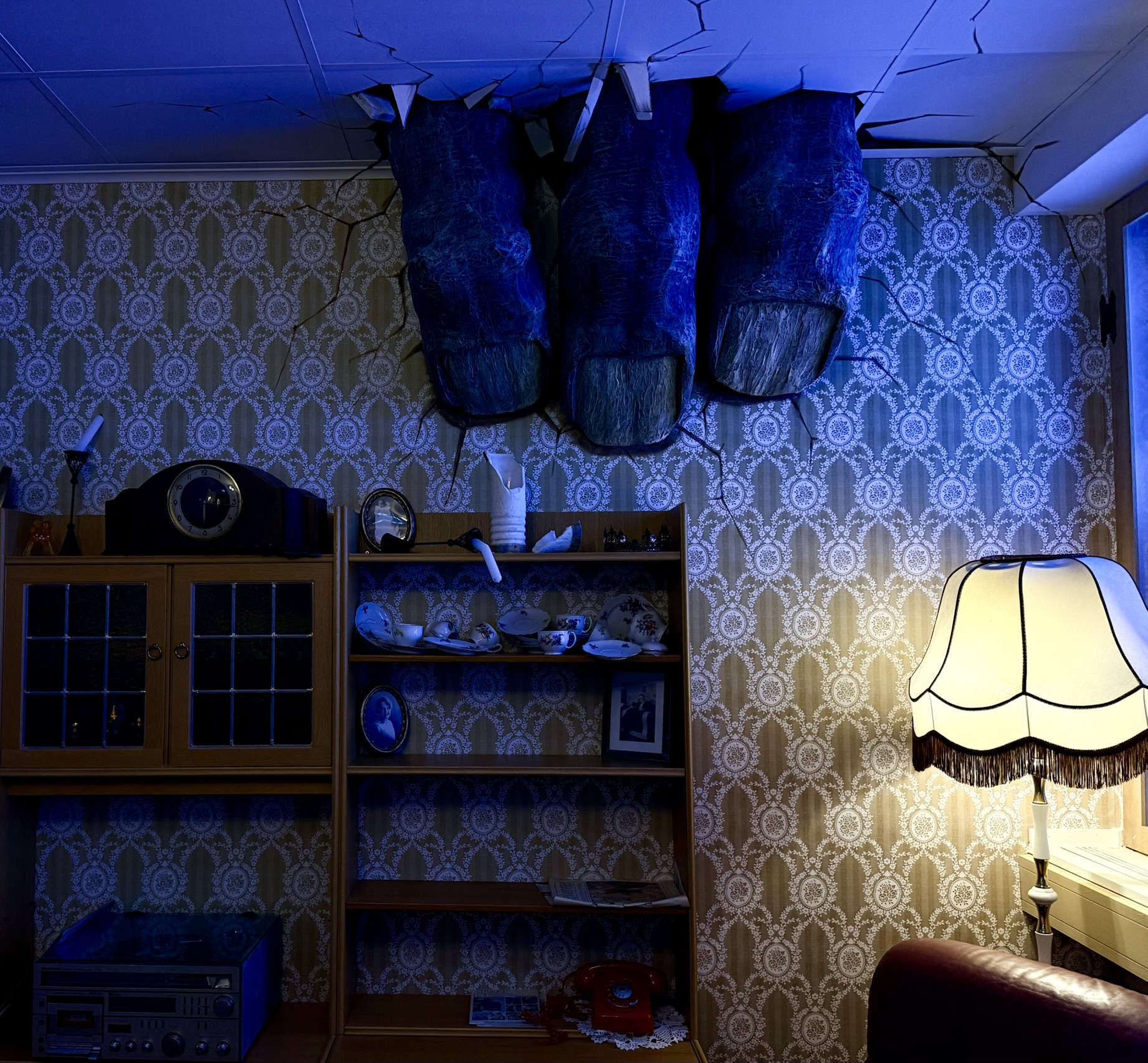
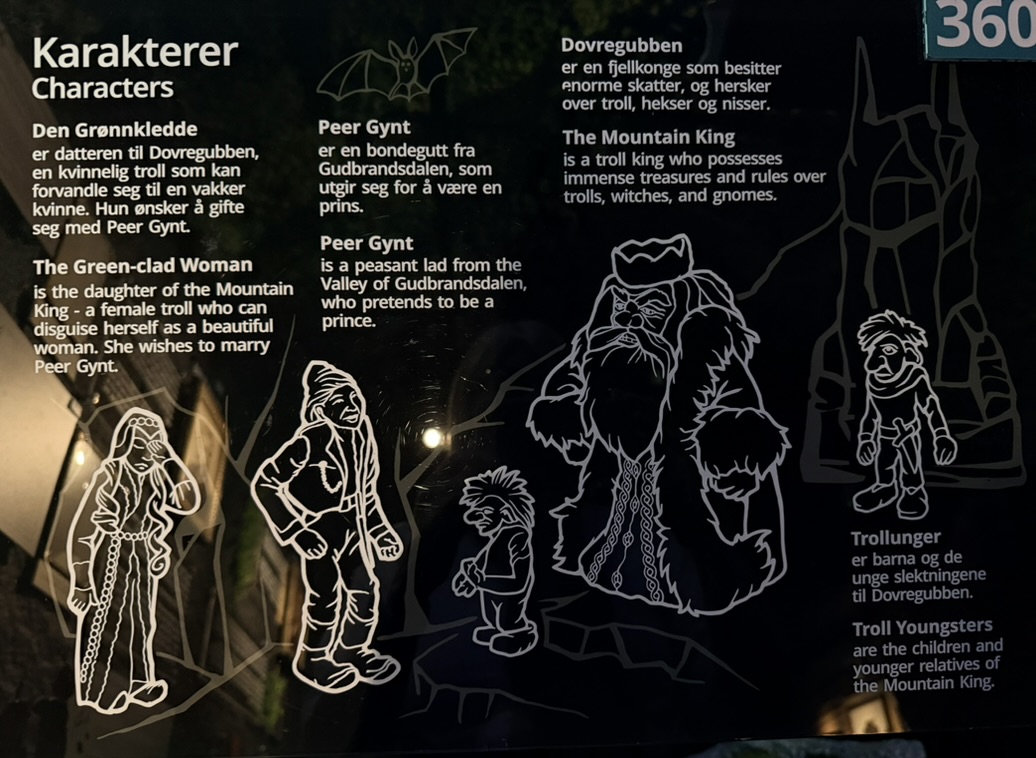
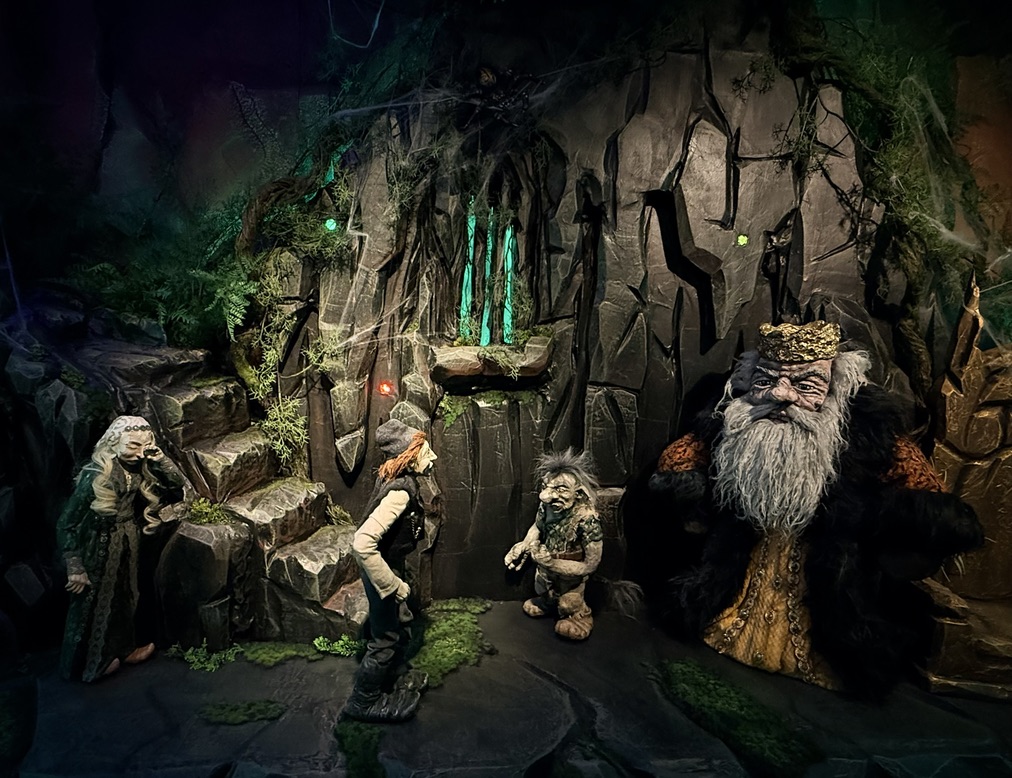
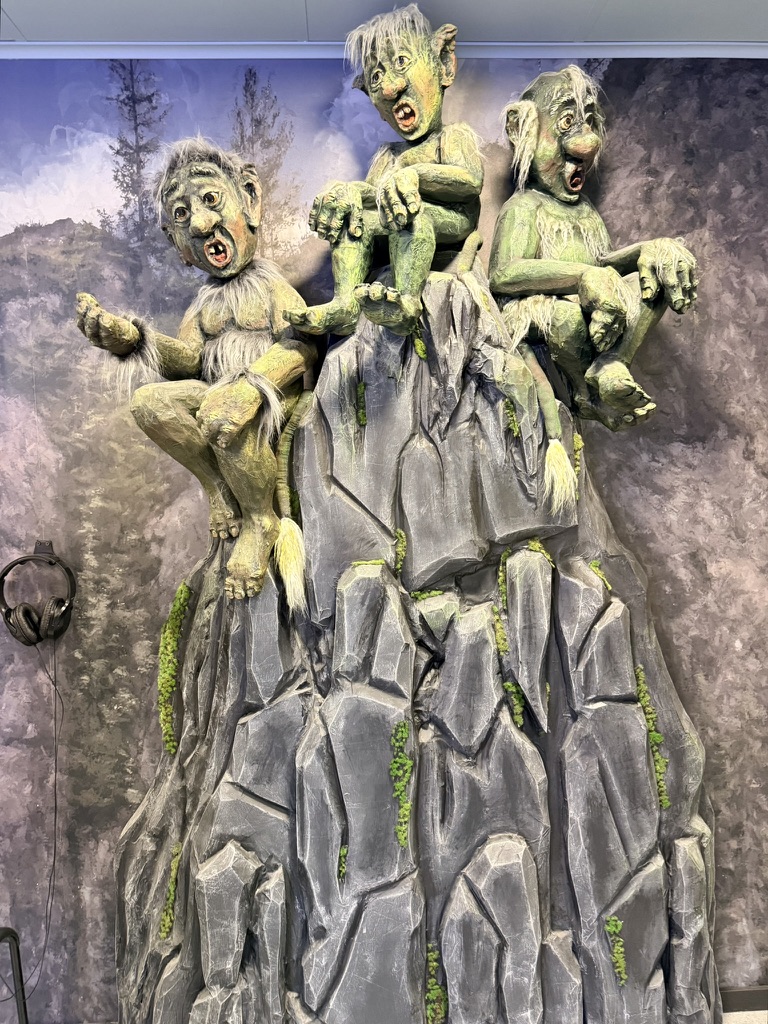
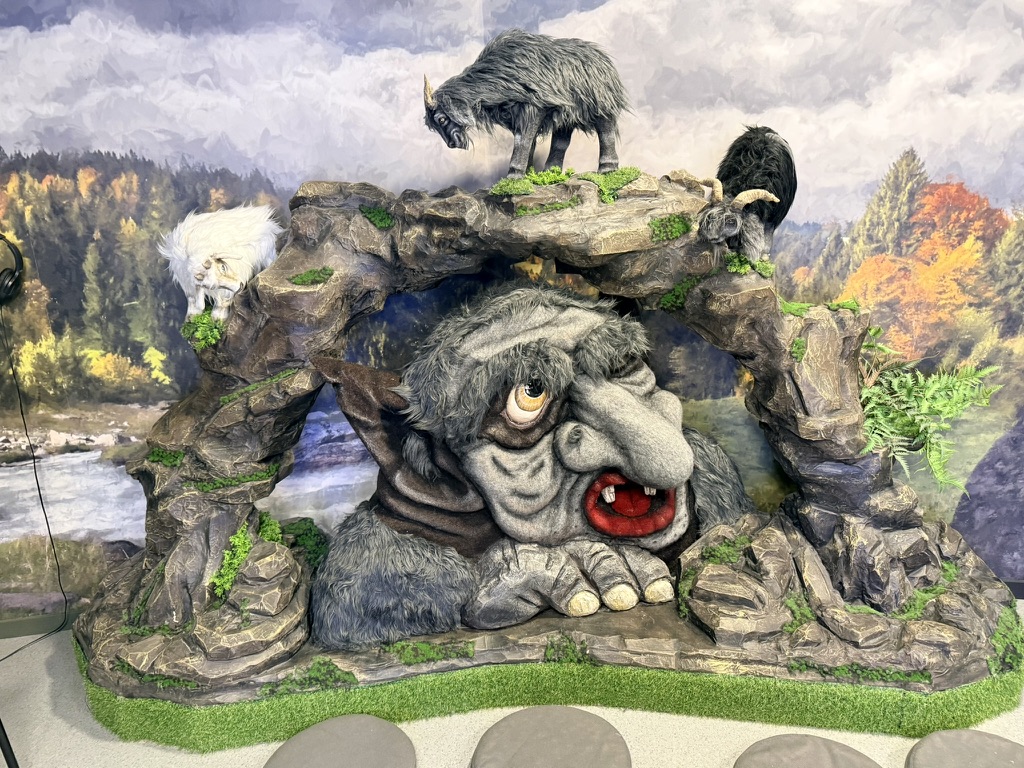
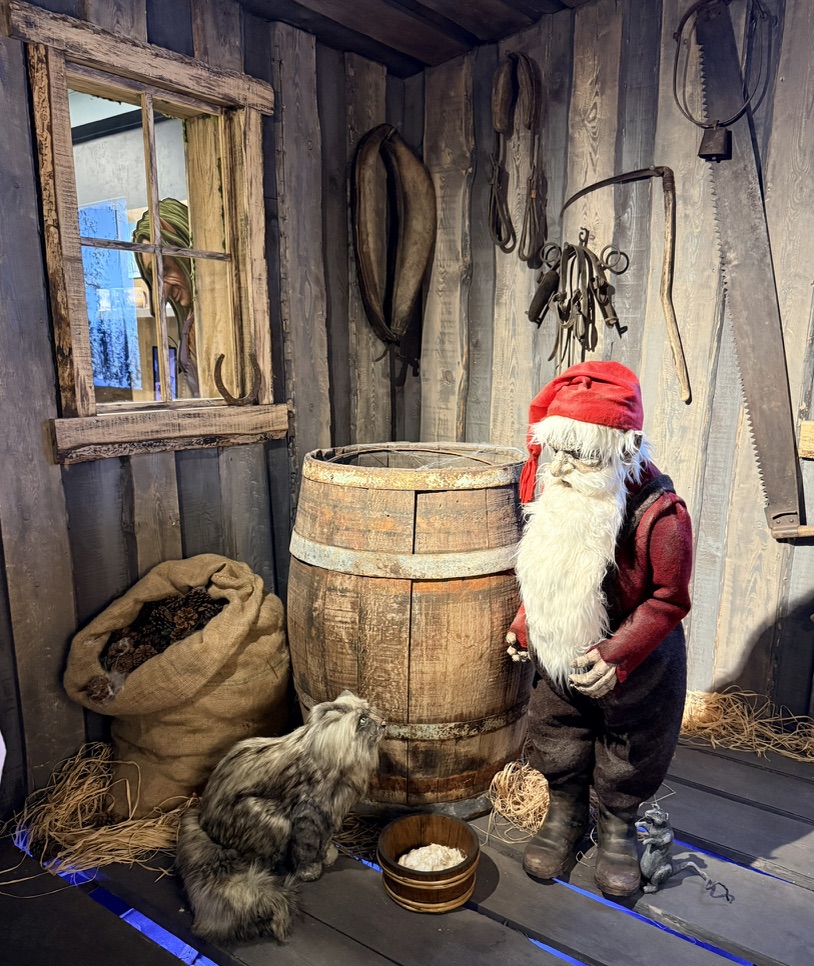
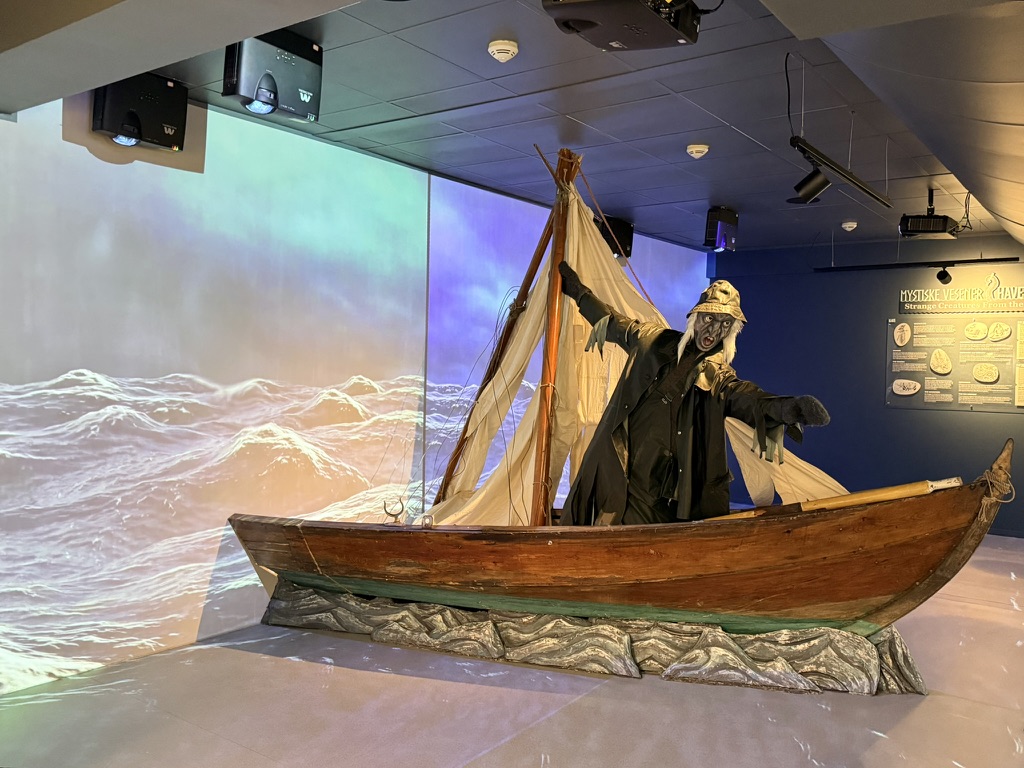
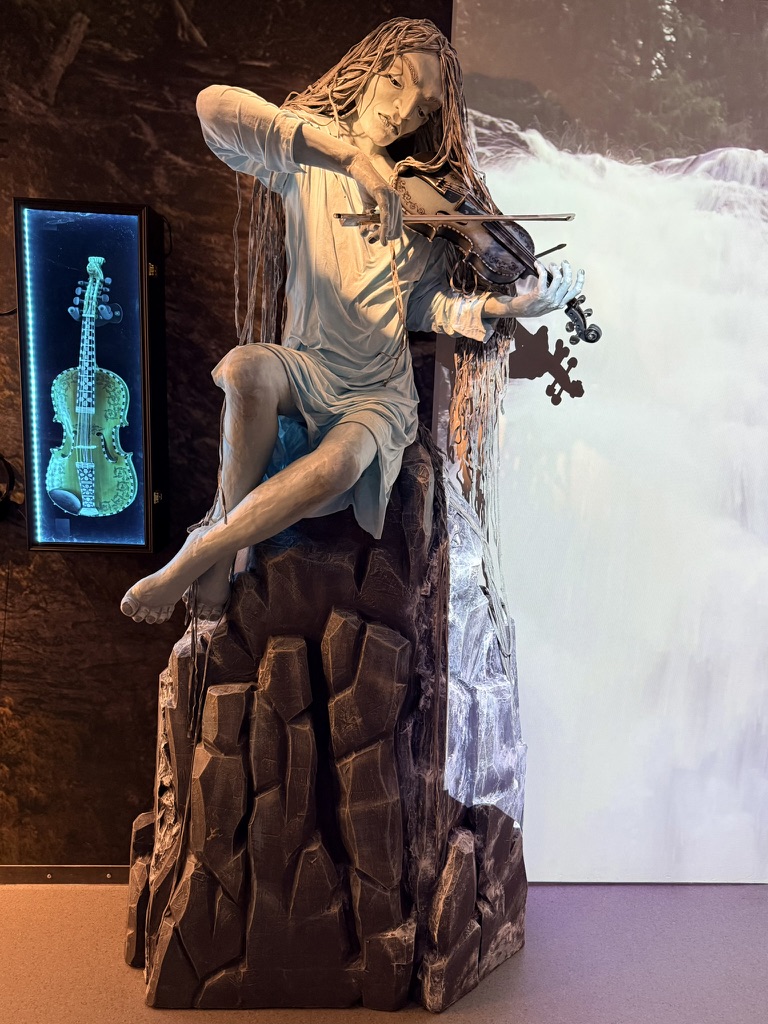
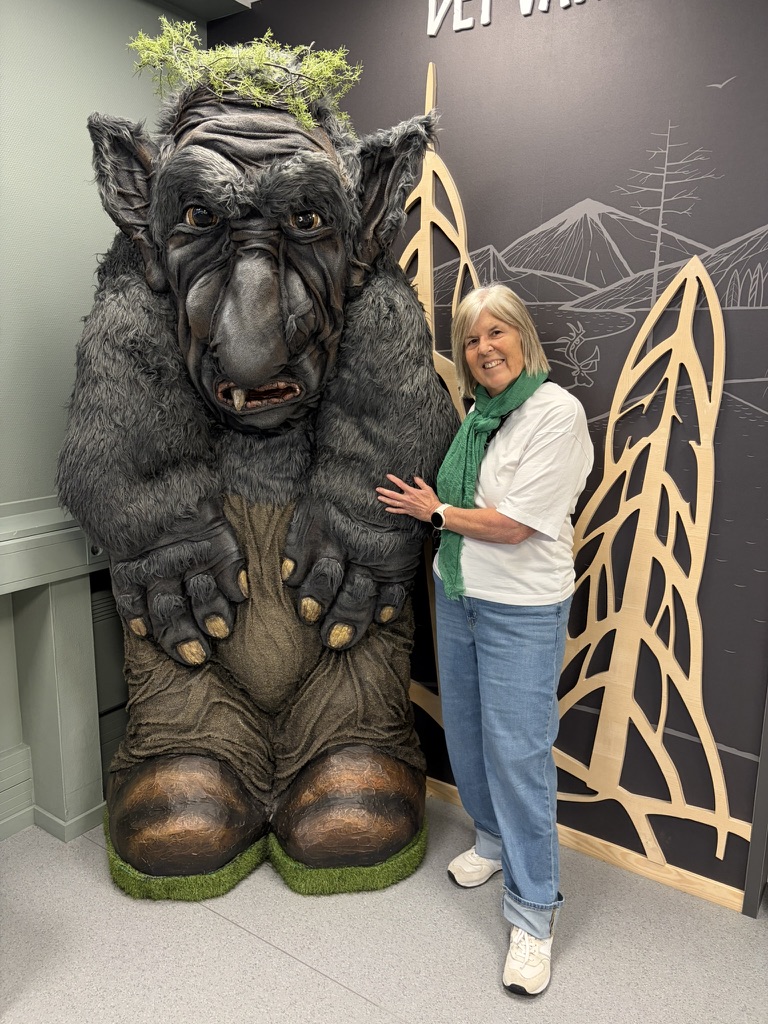
The Troll Museum in Bergen is dedicated to Norwegian folklore and trolls. High technology displays mingle with handcrafted dioramas and wood-carvings to tell the stories of trolls and the fairy tales behind Norway’s dramatic landscapes. Five areas in the museum include: Norse Mythology, The Hall of Trolls, Activity Hall, Huldrefolket, and Hidden Beneath the Waves.
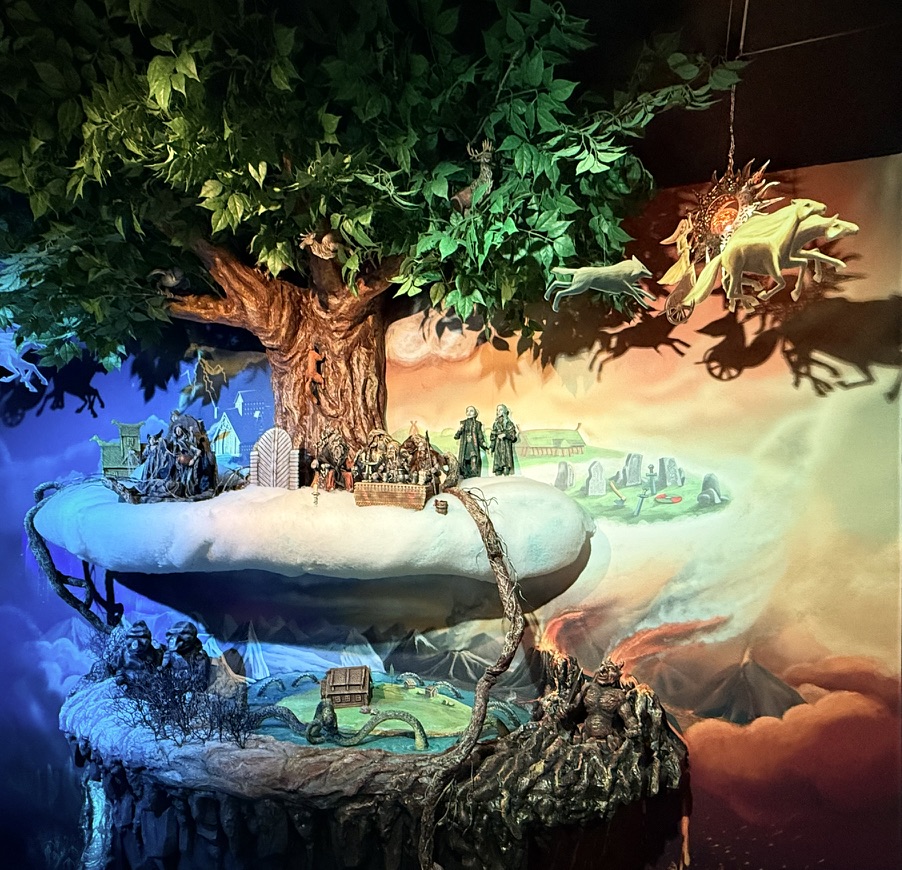
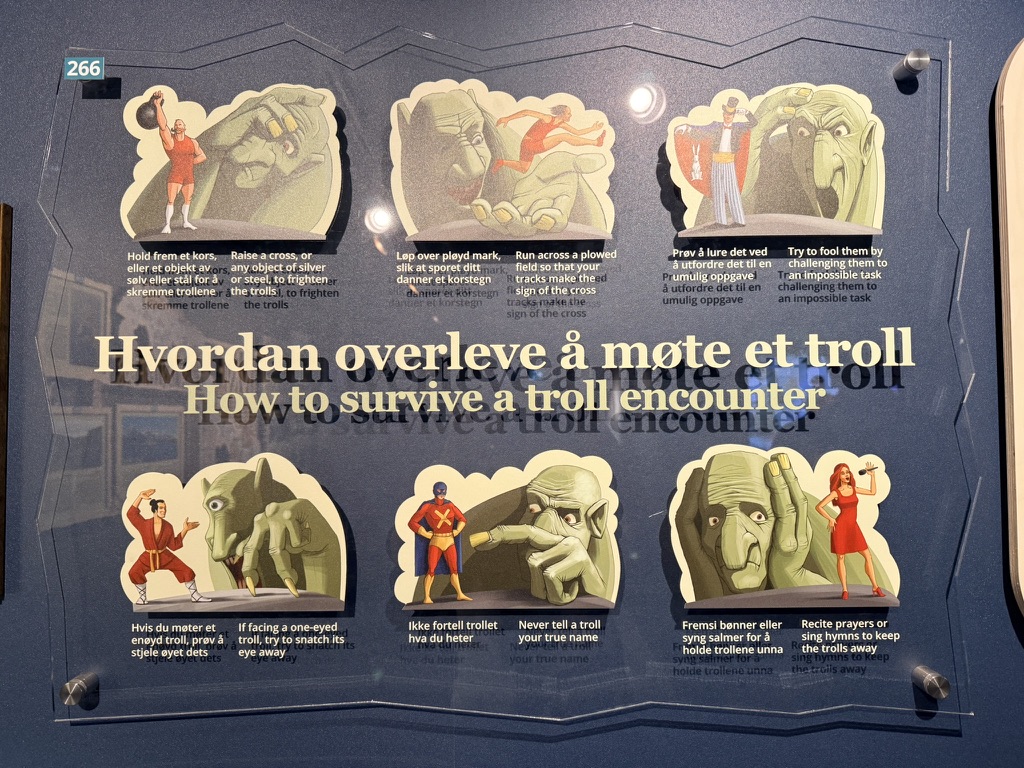
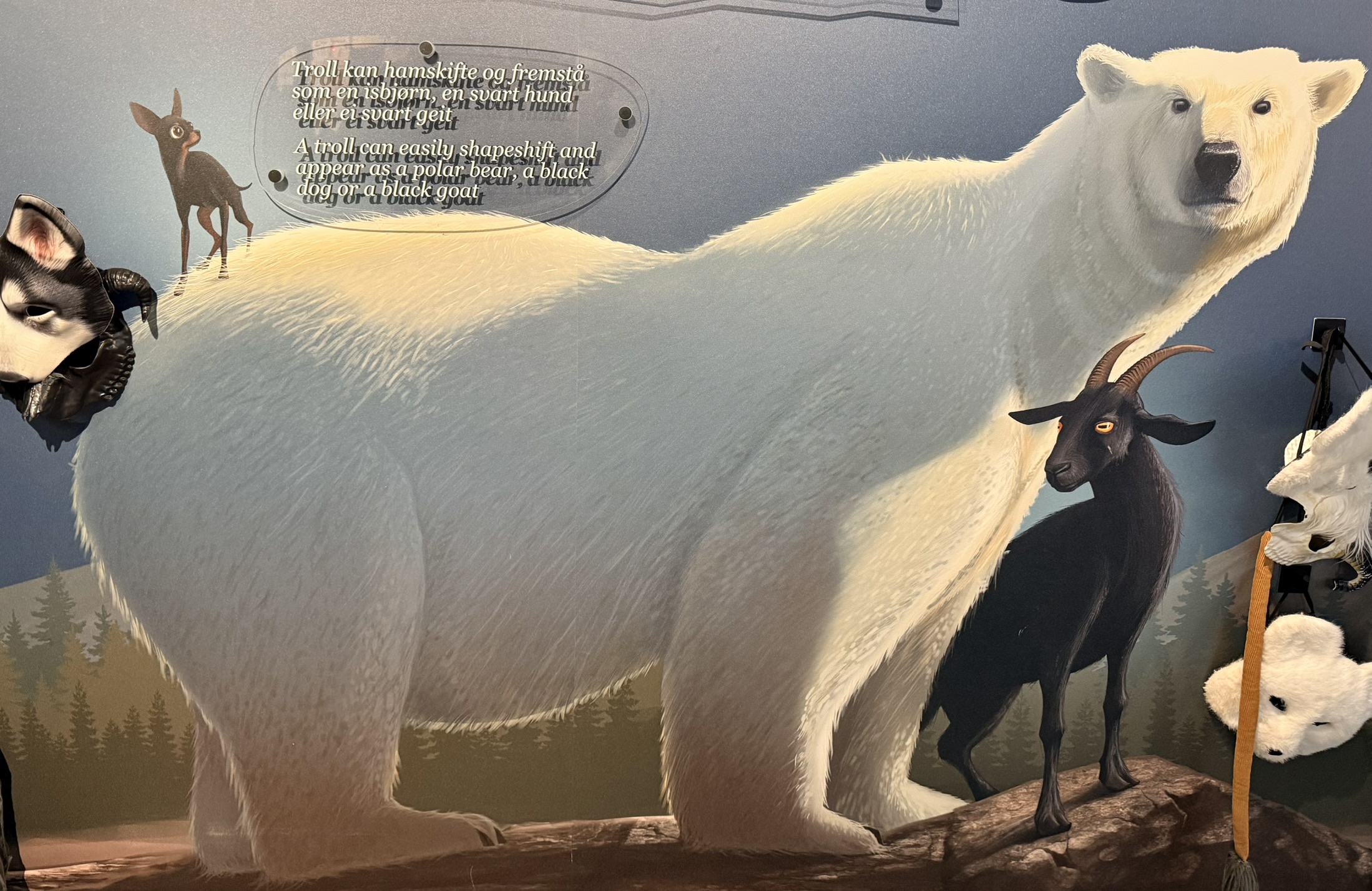
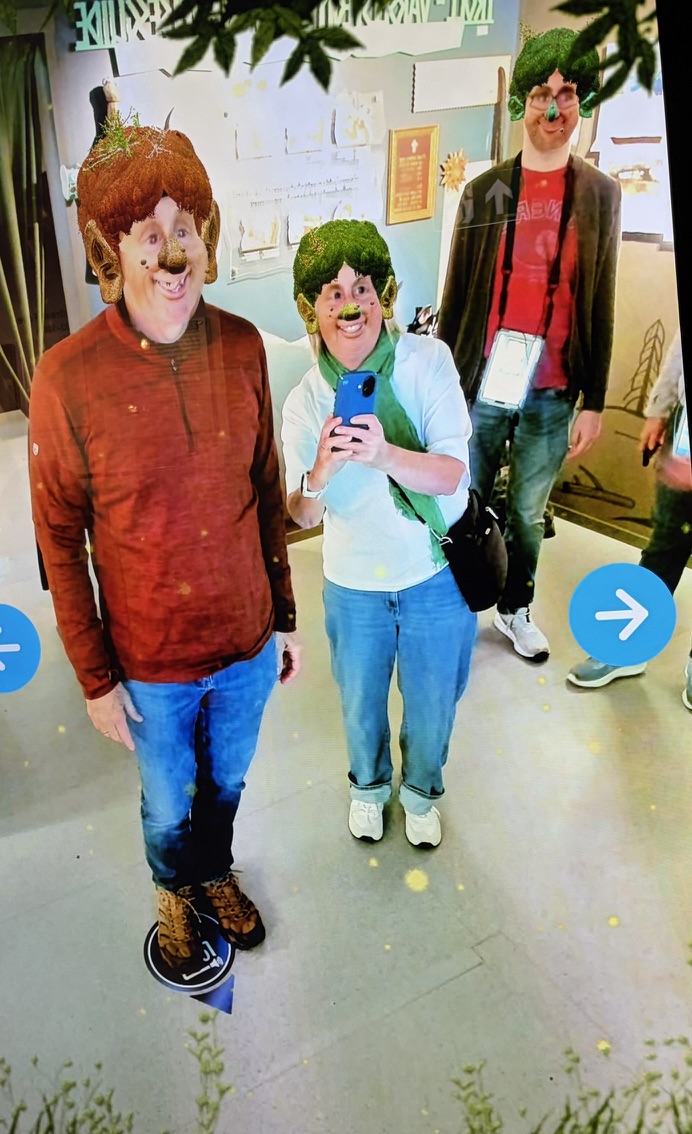
Visiting markets
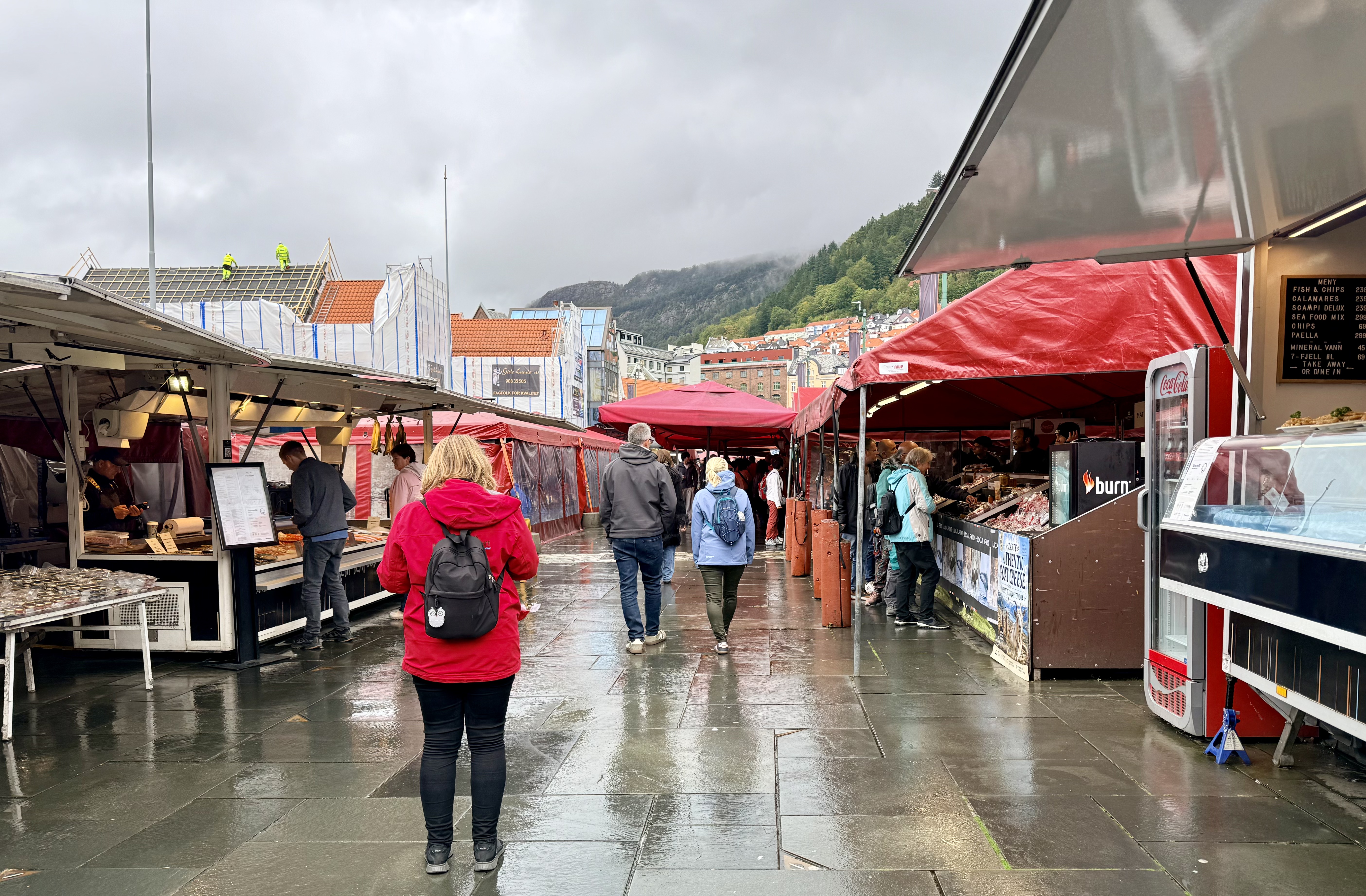
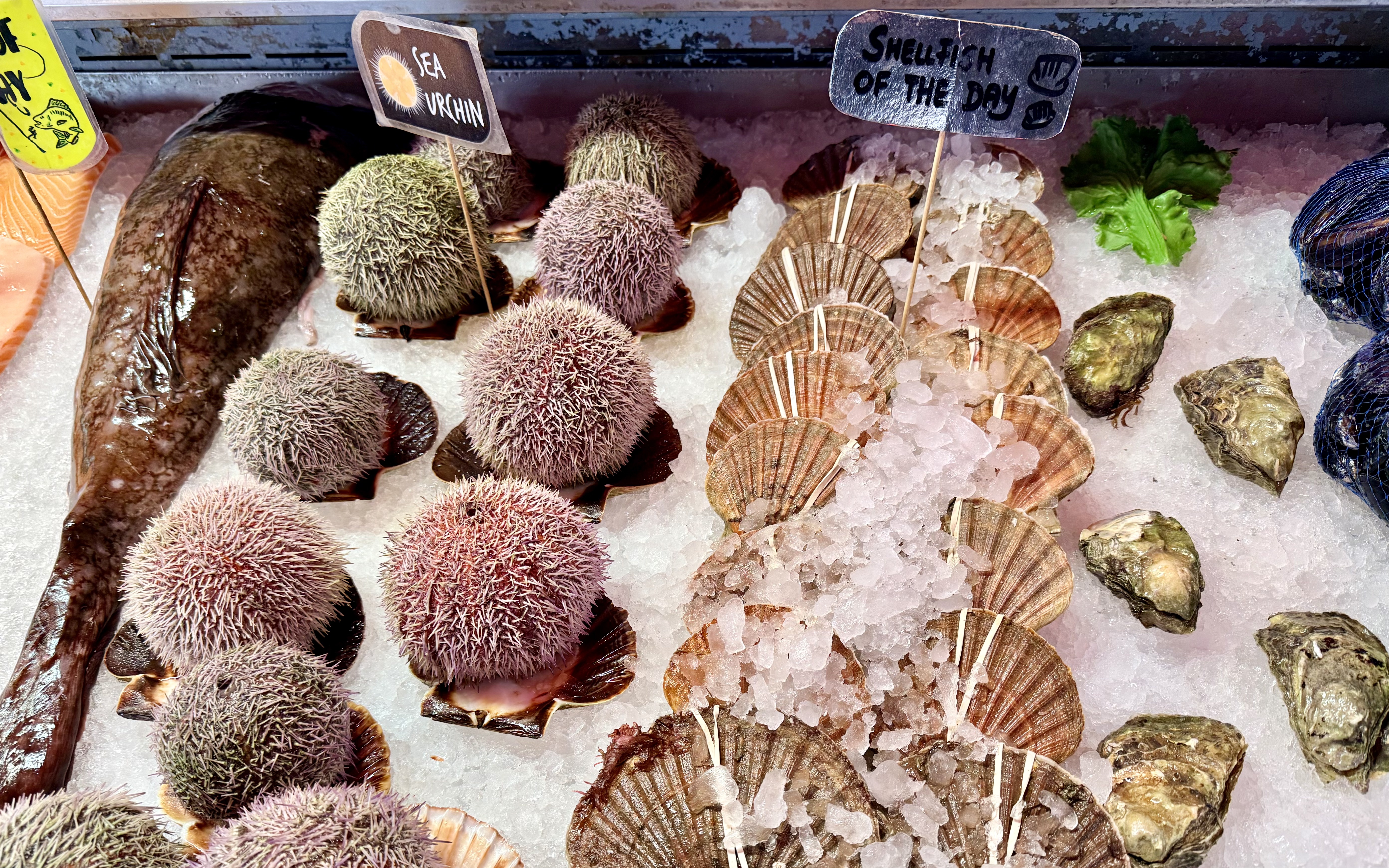
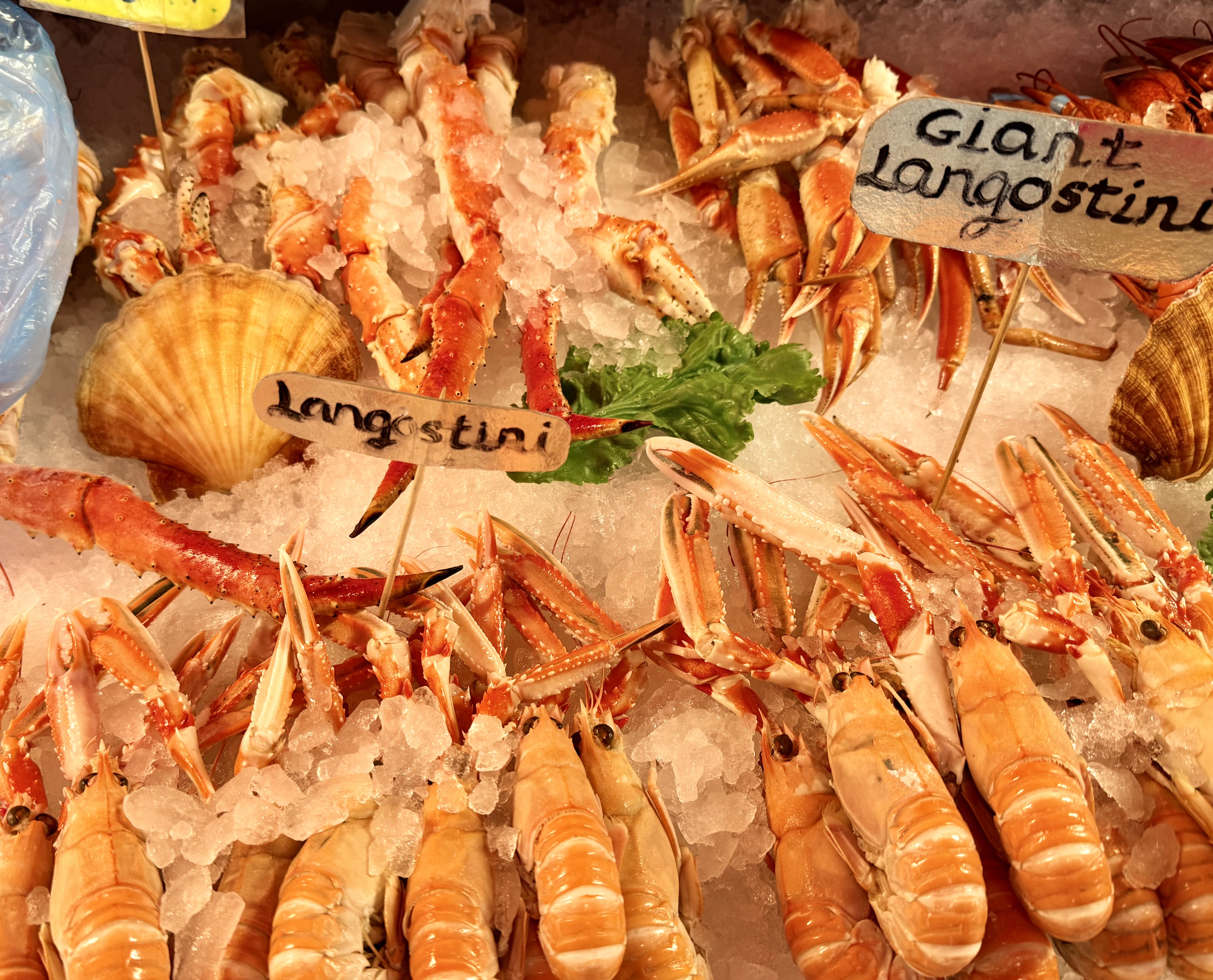
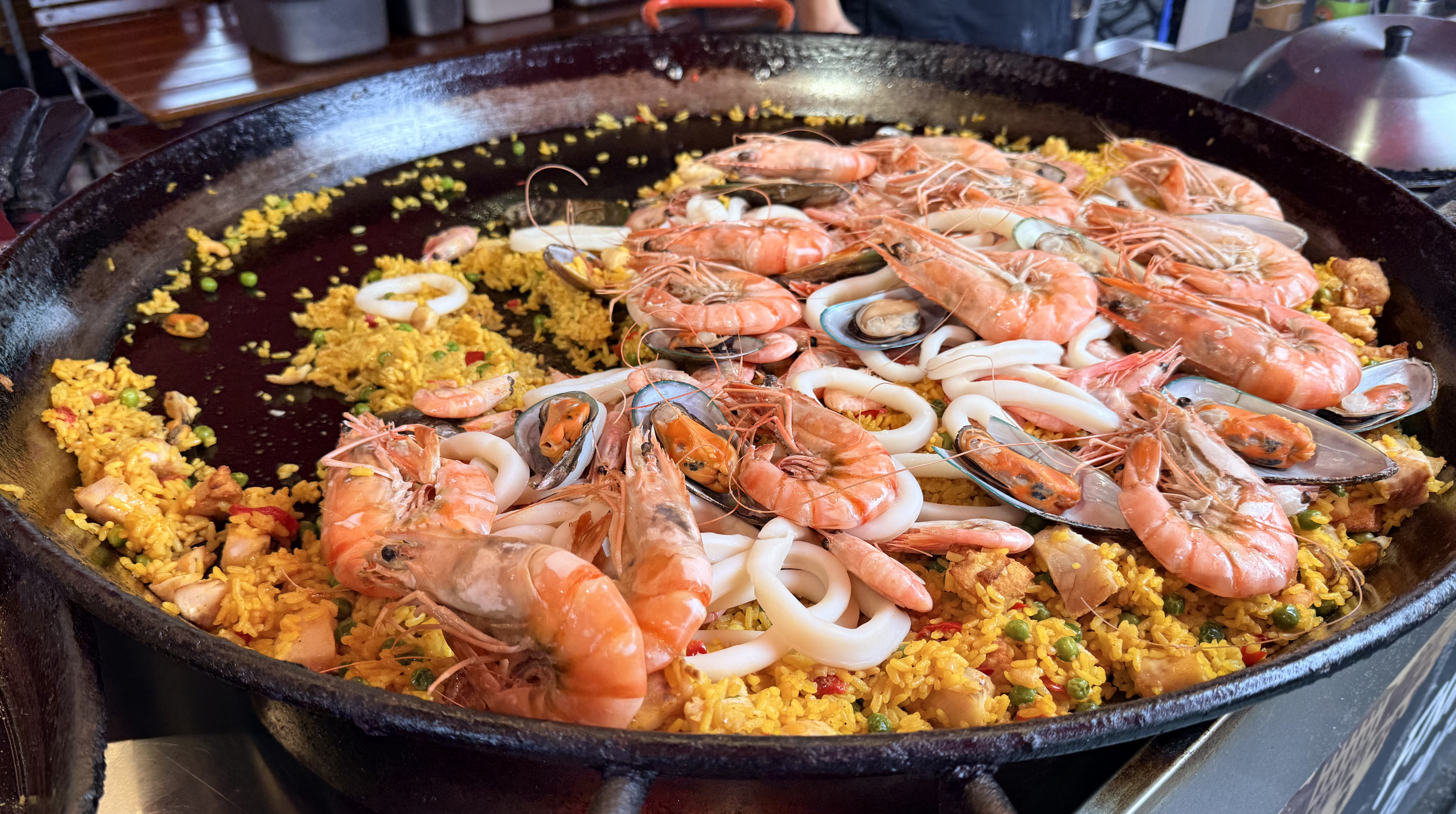
On our first day, we wandered through the Torget Fish Market with its casual red tents on the harbor. Here, one can buy fresh fish, sea urchins, clams, oysters and langostinos, as well as prepared foods that can be eaten at tables and chairs under the tents.
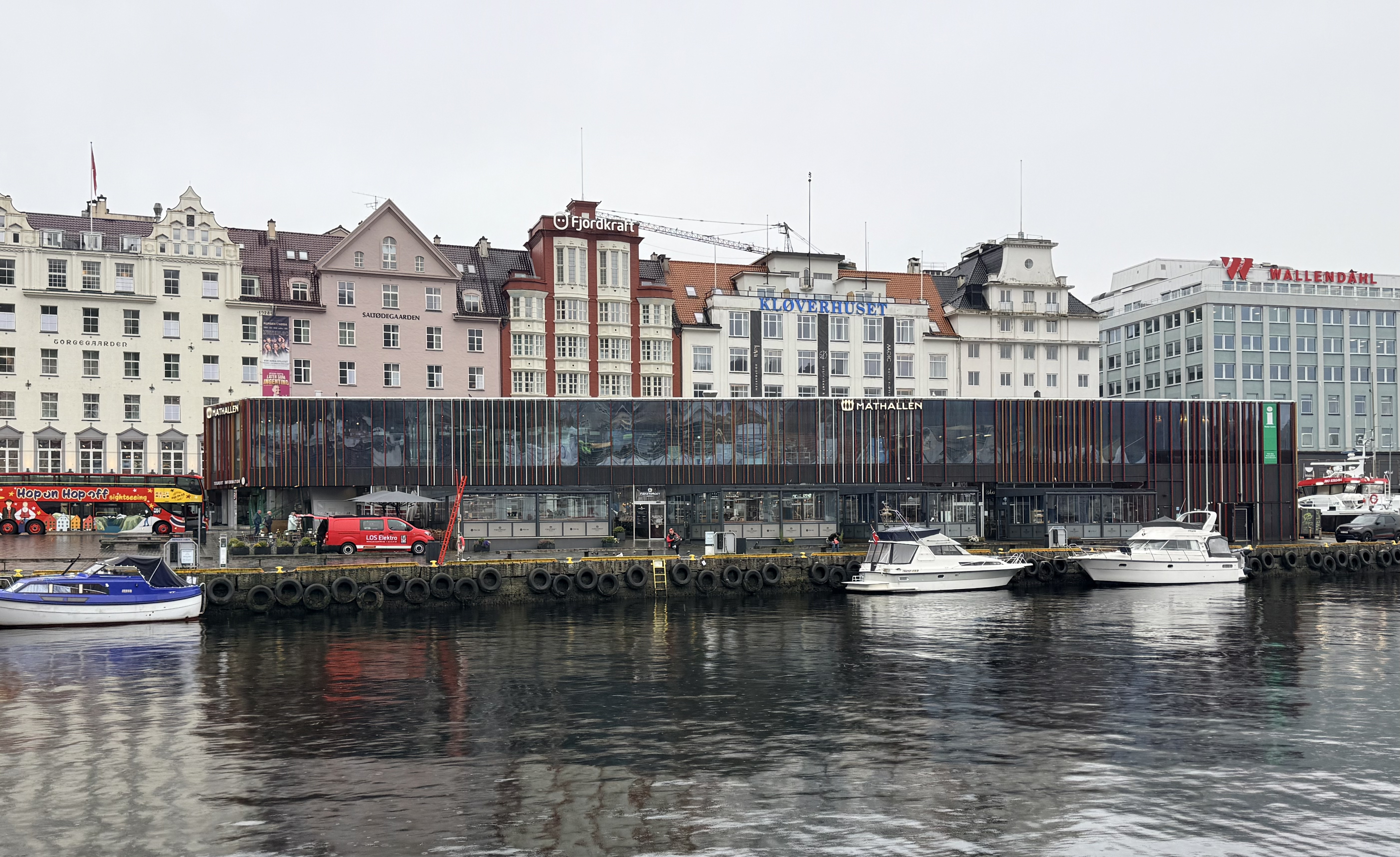
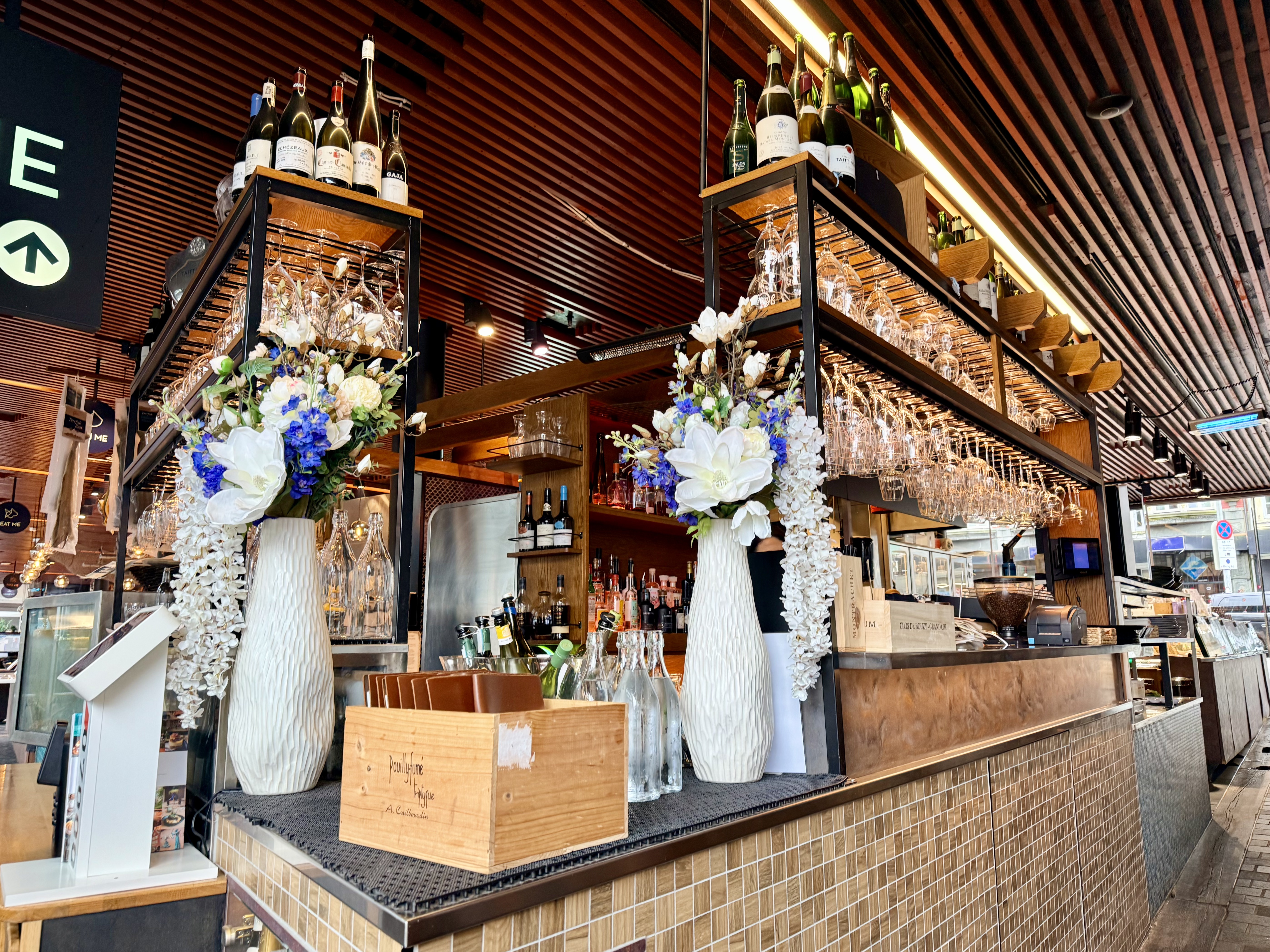
Beside the Torget Fish Market is the more polished Fisketorget Mathallen which has restaurants only and offers a variety of traditional Norwegian foods.
Dining in
This week, we made another pot of hamburger soup with zucchini, fusilli, tomatoes, avocado and Parmesan cheese. We have resorted to making this meal in the last two places because it makes enough for several servings so we can enjoy 2-3 meals at “home” without doing any extra cooking. One night we had a smorgasbord with Reindeer Sausage, Jarlsberg Cheese, hummus and shrimp salad on crackers. Another night, Mike made a most delicious fusilli pasta with broccoli, tomatoes and lots of garlic.


Dining out
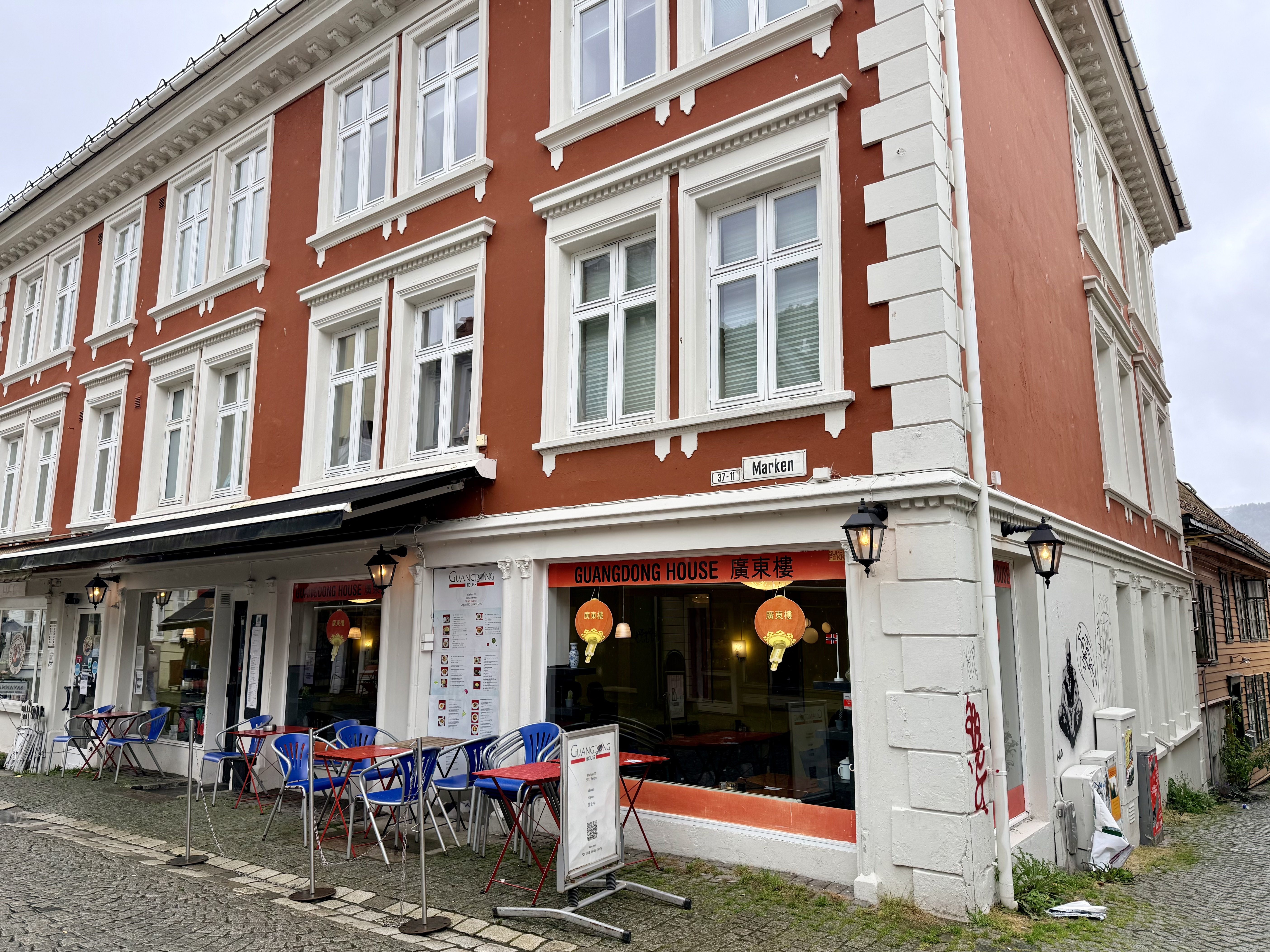
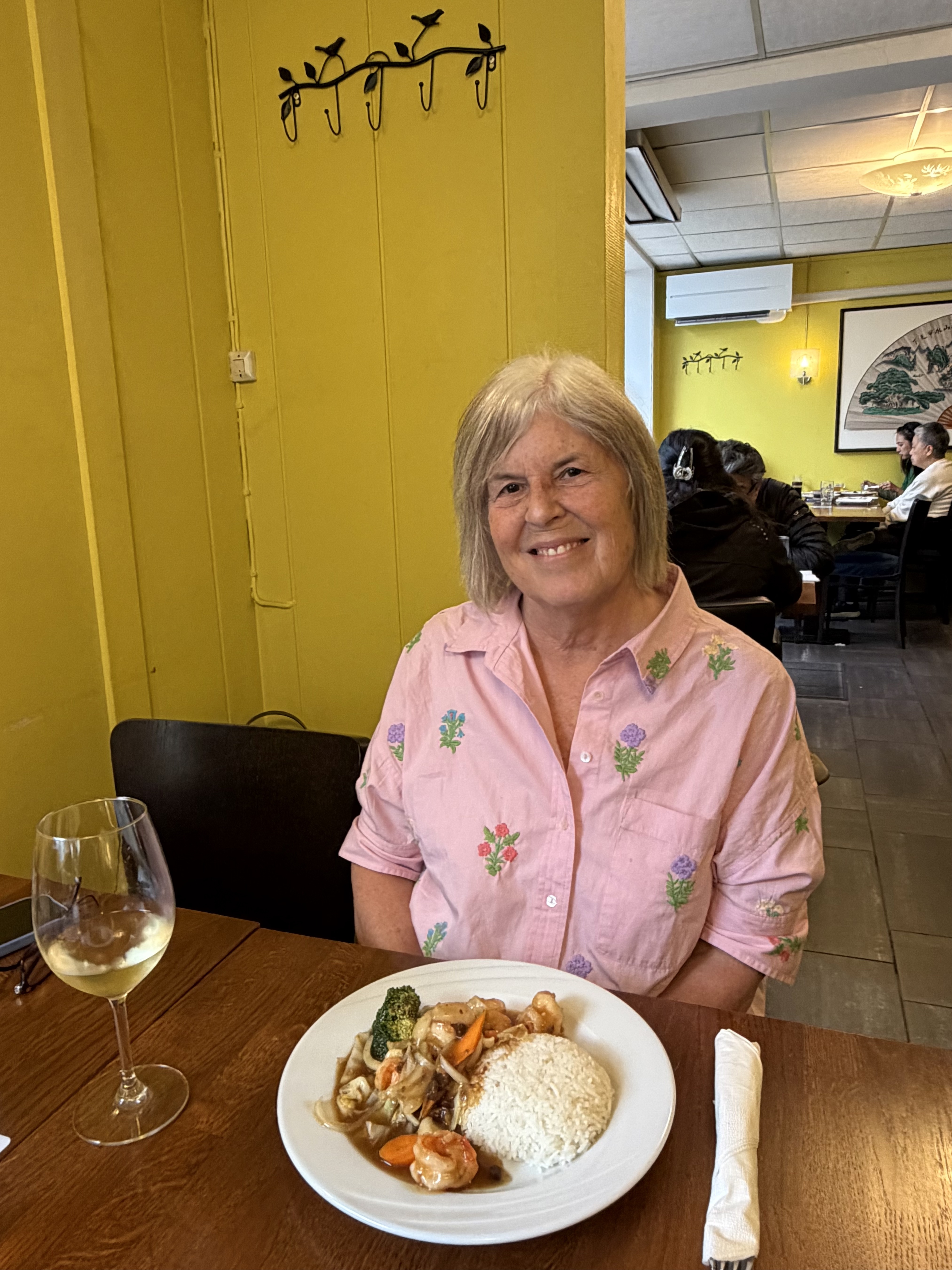
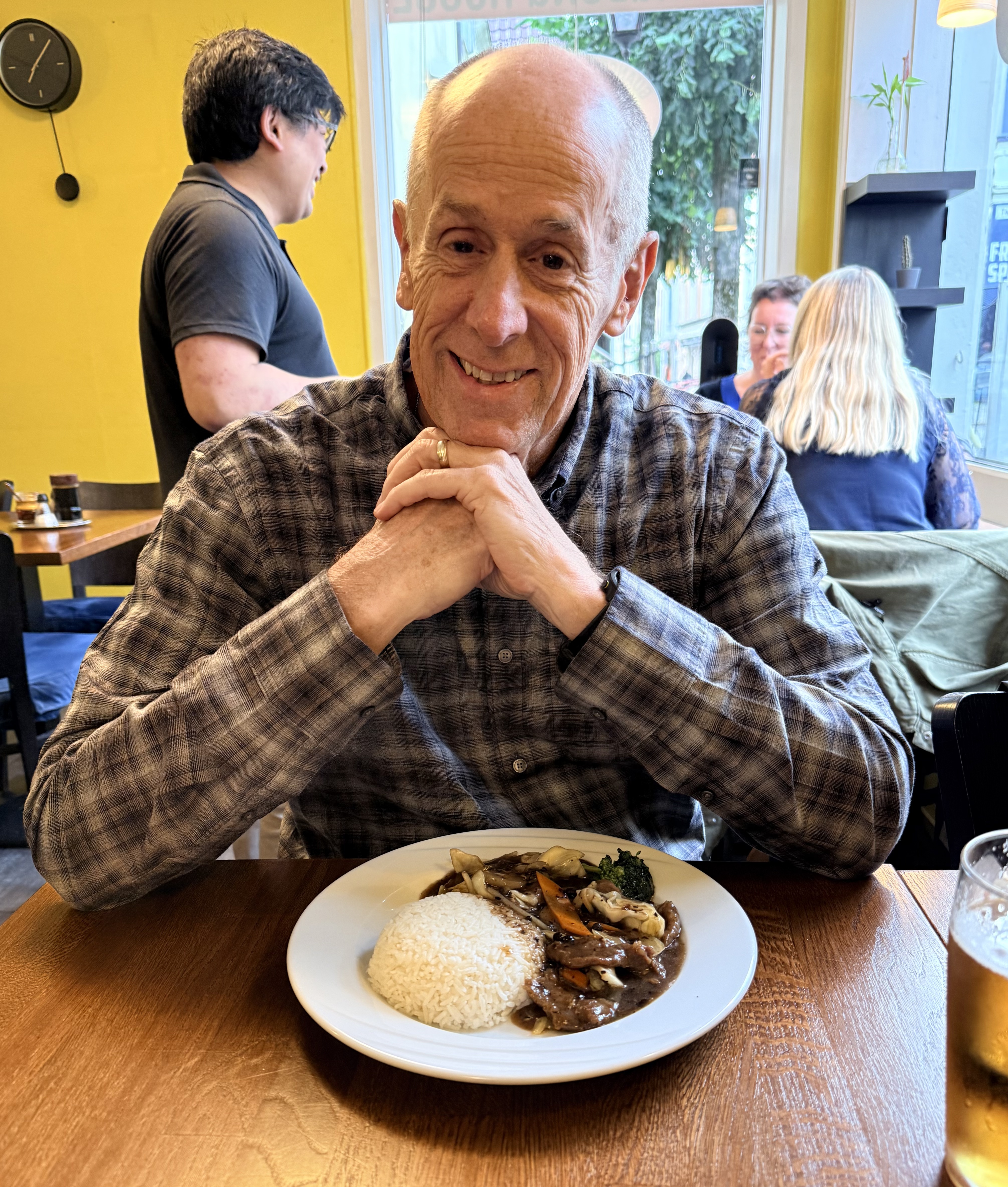
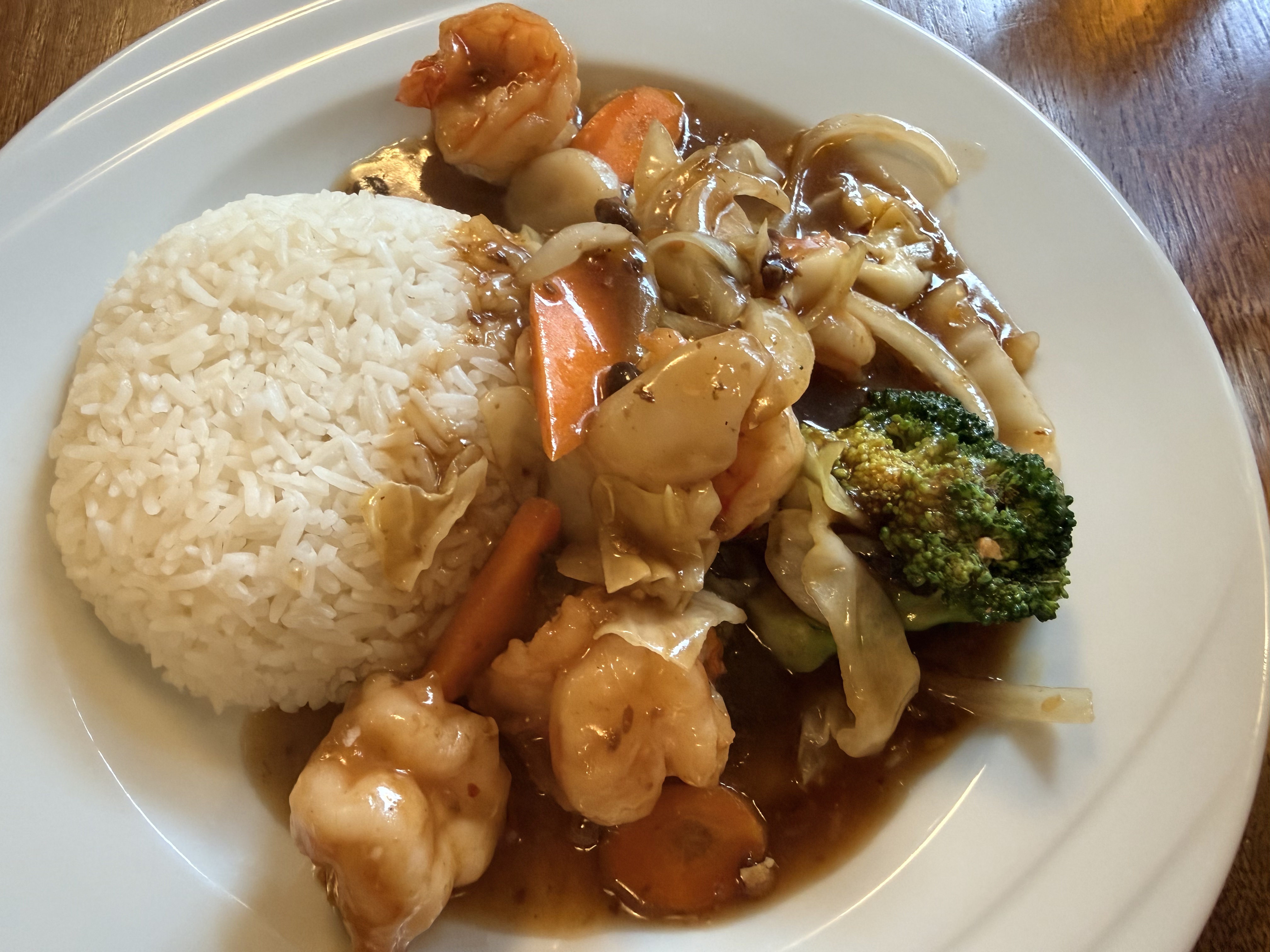
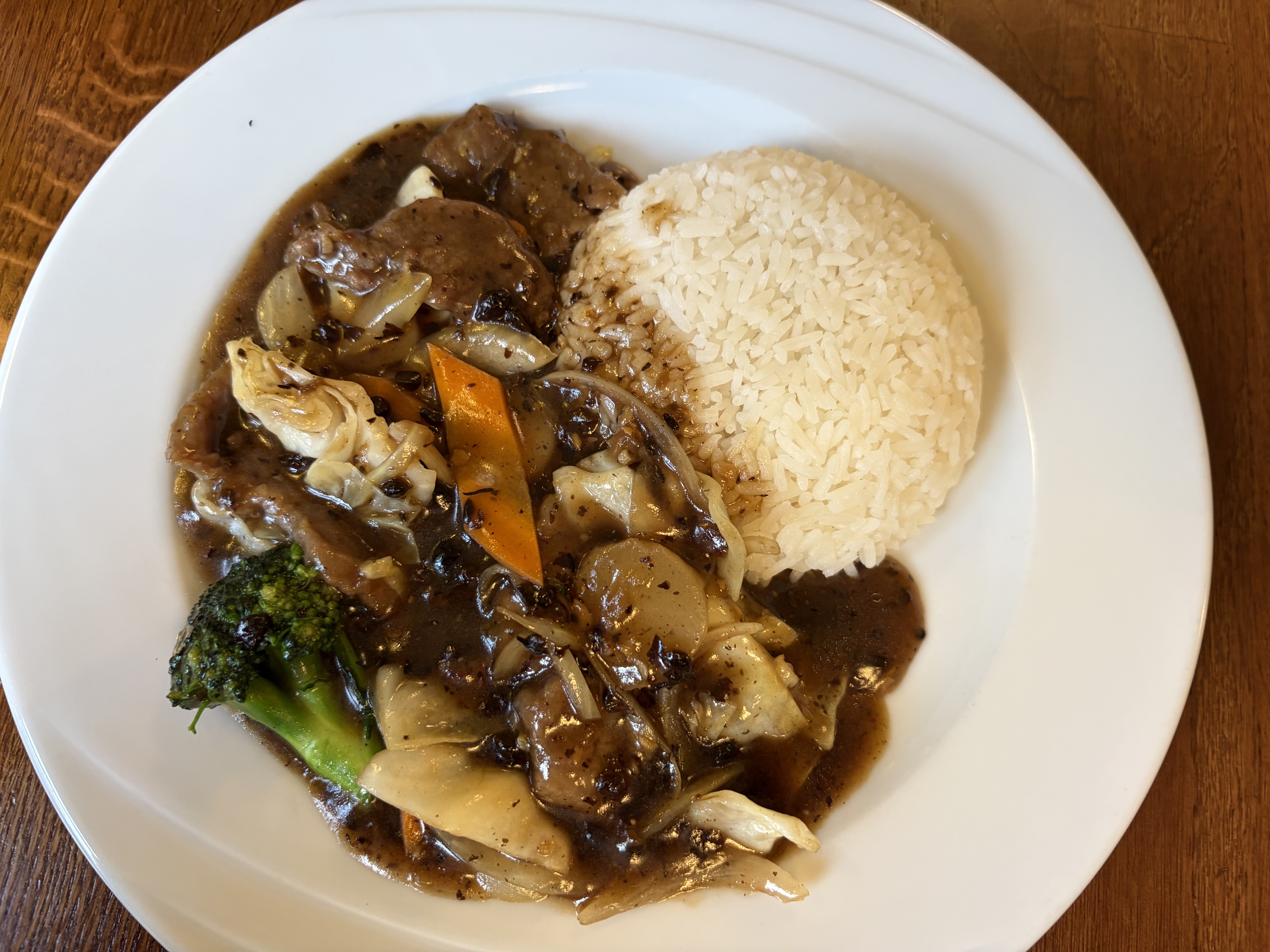
Dinner #1: We ate our first meal the night of our arrival at a Chinese restaurant less than a block from our apartment called Guangdong House. It was billed as “Favorite Dinner in Marken” by our Airbnb host, Marius. I enjoyed Scampi with exotic chili sauce and Mike had Beef with blackbean chili sauce. It wasn’t the best Chinese food I’ve ever had, but it was decent enough and it saved us from cooking dinner after a long day of travel.
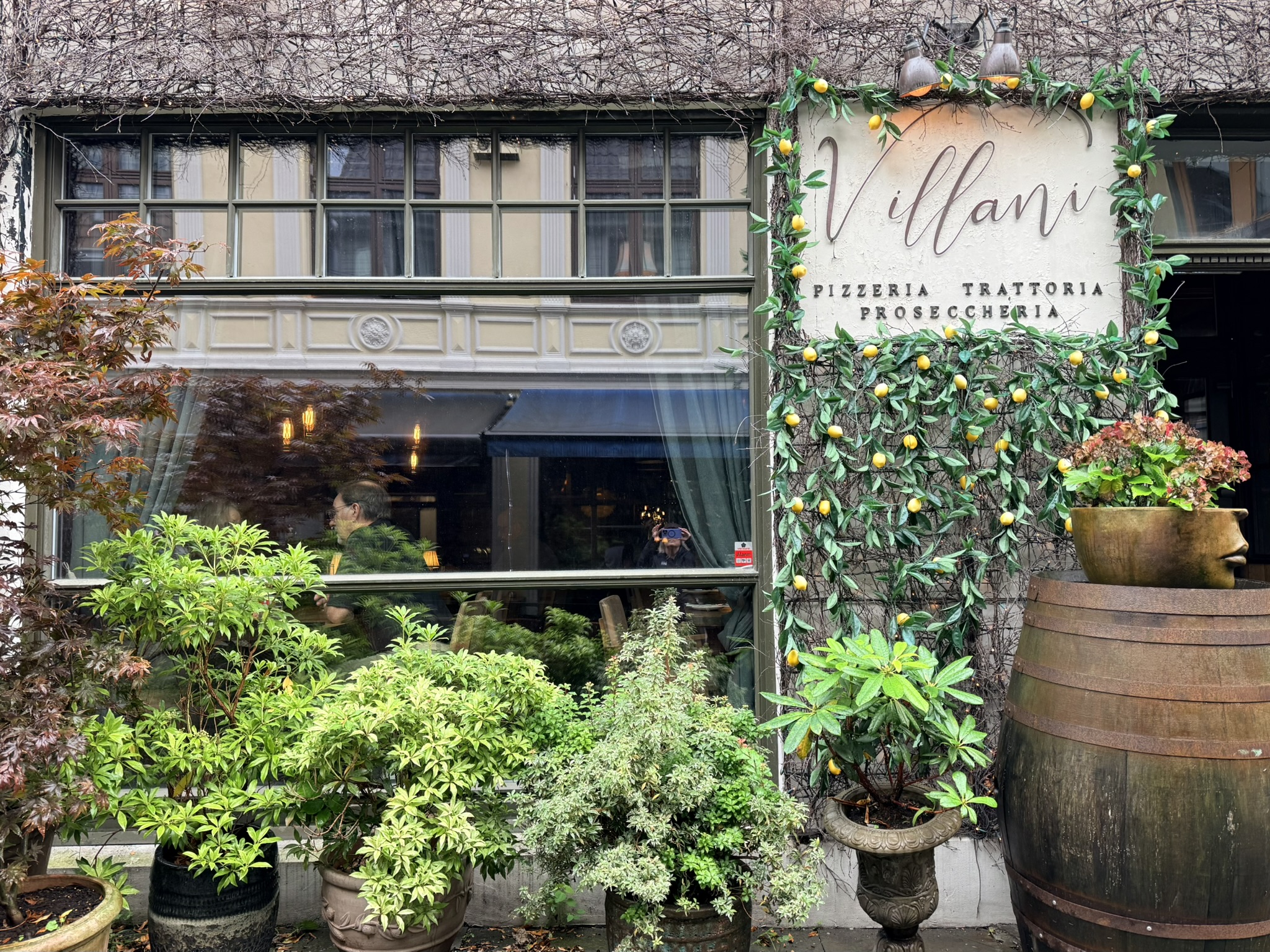
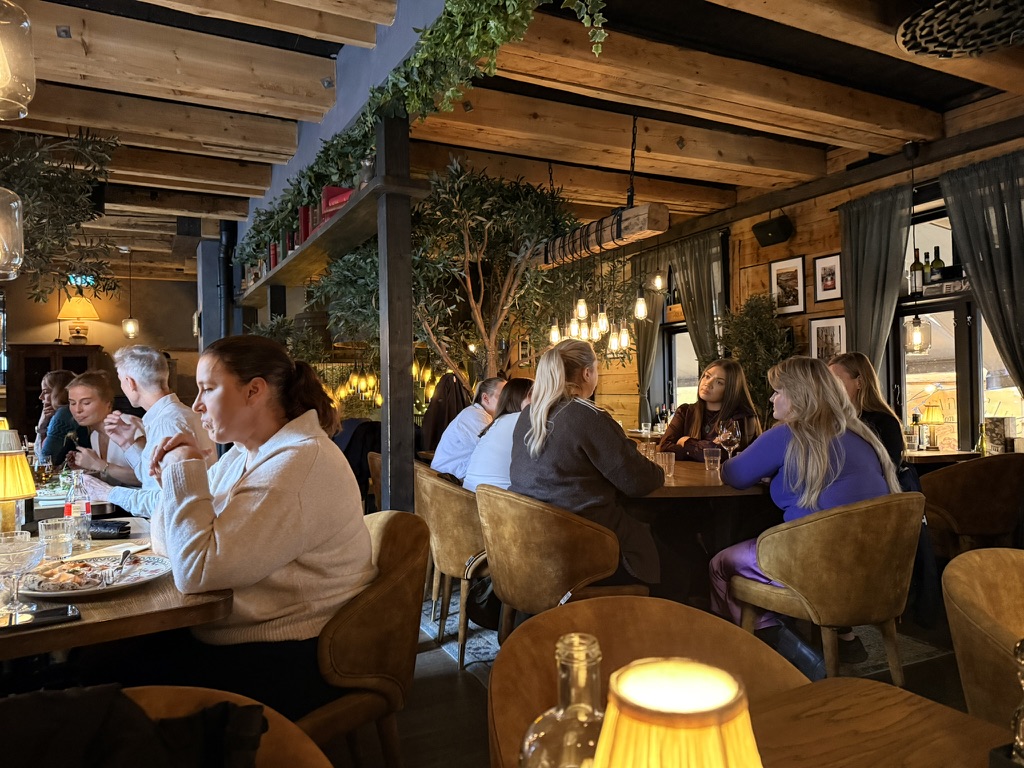
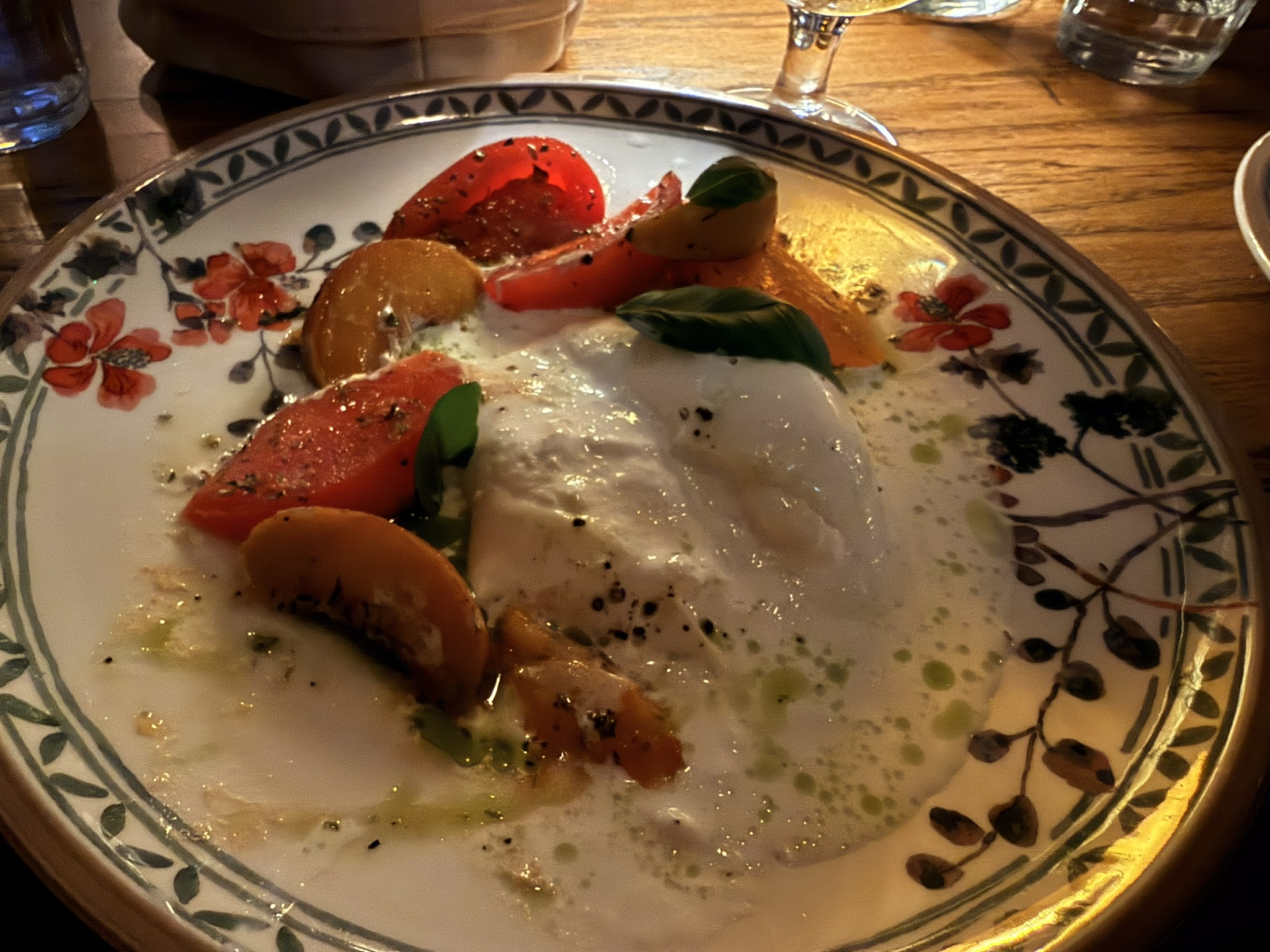
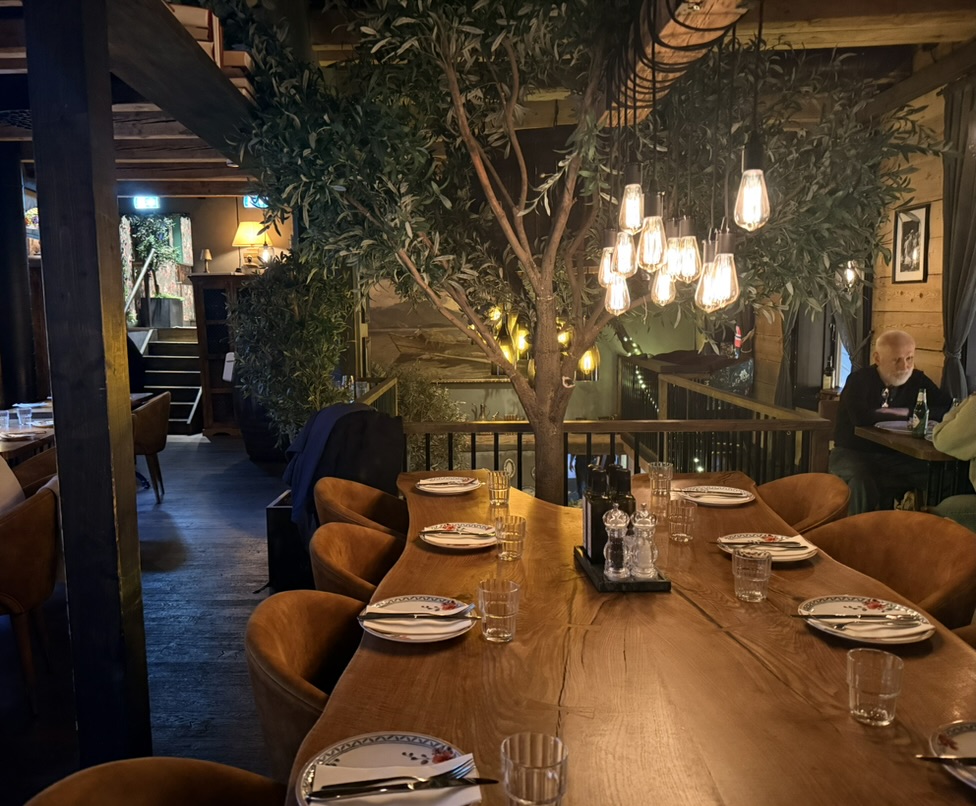
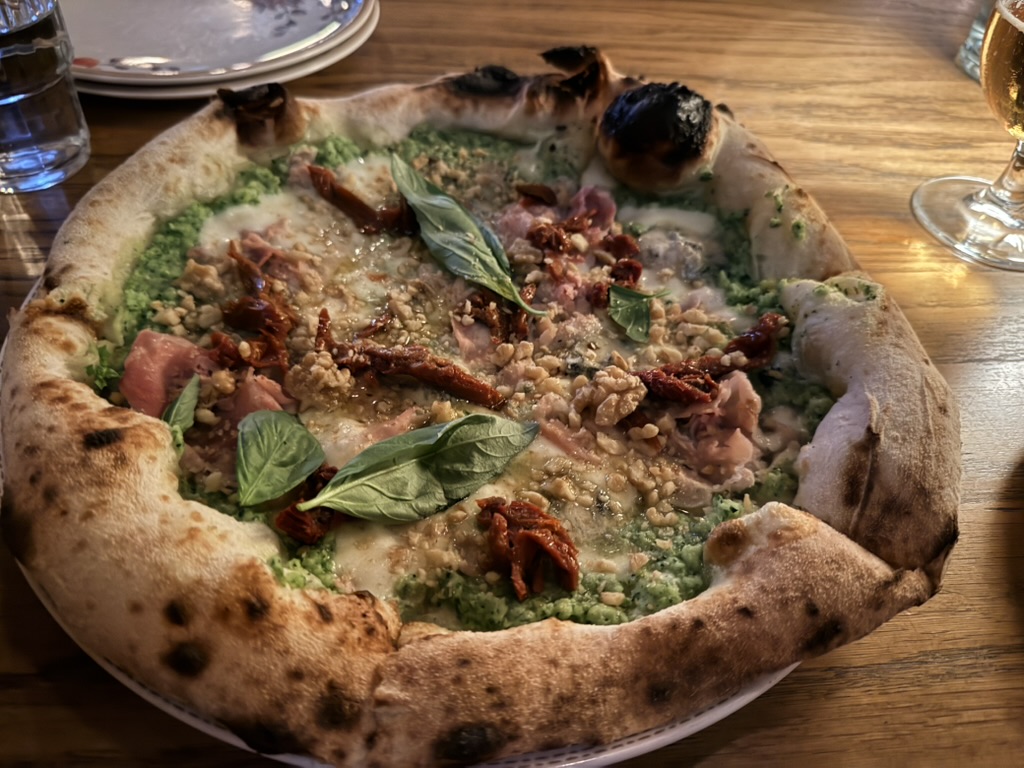
Dinner #2: We had an outrageously expensive dinner at Villani Trattoira | Osteria, which was too close to the harbor and Bryggen to have any semblance of reasonable prices. Everything in Bergen is expensive, but the closer one gets to Bryggen the more outrageous it is. We paid about $30 for a Burrata Caprese with heirloom tomatoes and nectarines and $46 for a Zukki pizza (mozzarella, zucchini purée, ham, gorgonzola, sun-dried tomatoes, walnuts) that was good-sized for us but might have served one person with a bigger appetite. The atmosphere was lively and lovely, with a great soundtrack, including French songs such as “Quand j’étais môme” by Nicolle.
We ended up in this restaurant quite by accident as Mike and I set out in pouring rain looking for a pizza place we’d seen the night before. However, we couldn’t find it and we got drenched (our pants were soaked from the foot to above the knee) and by the time we happened into the restaurant, we were desperate to get out of the rain. To spend over $100 on a meal and to be sitting in misery with wet pants was not the ideal date night!
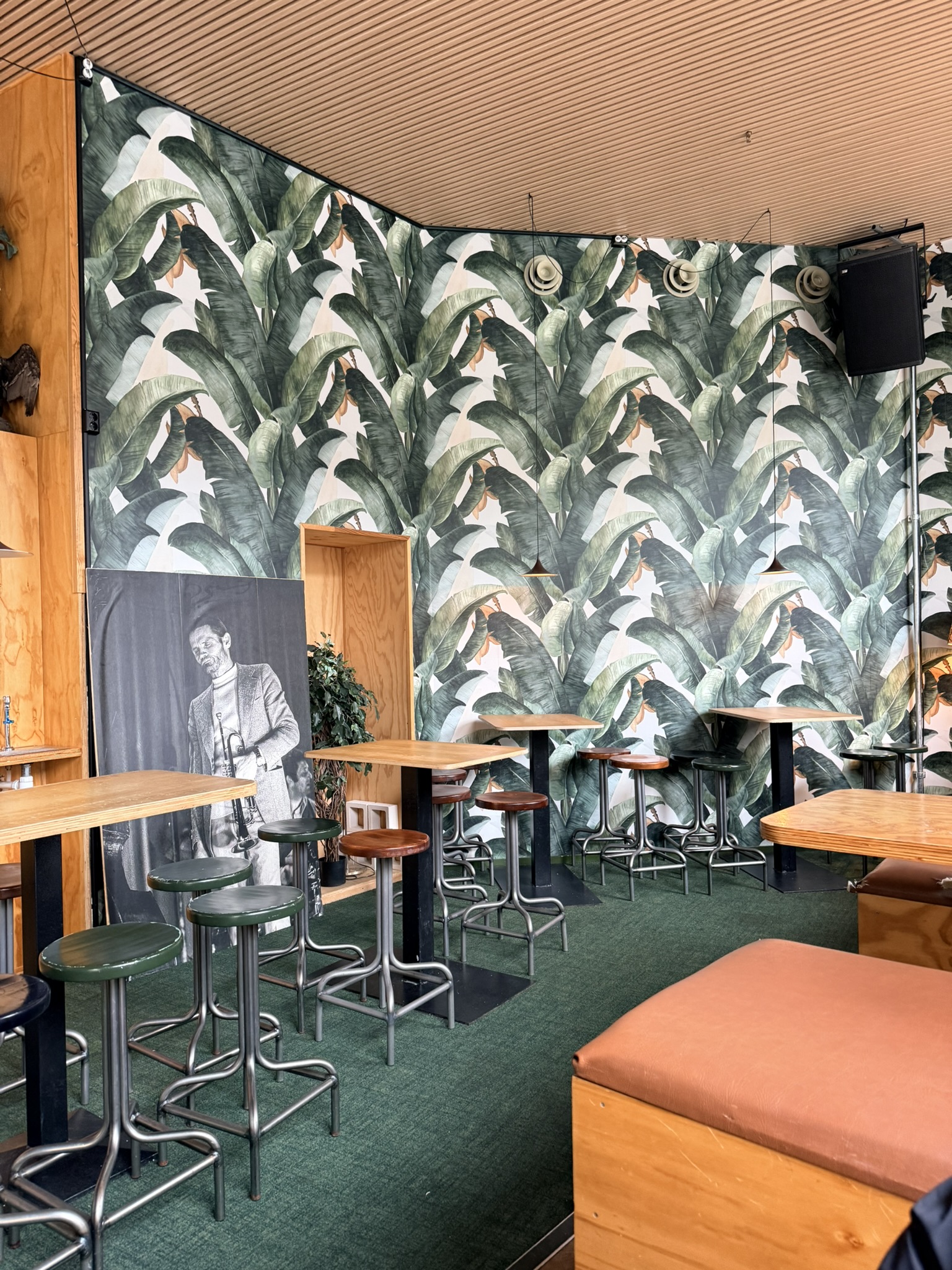
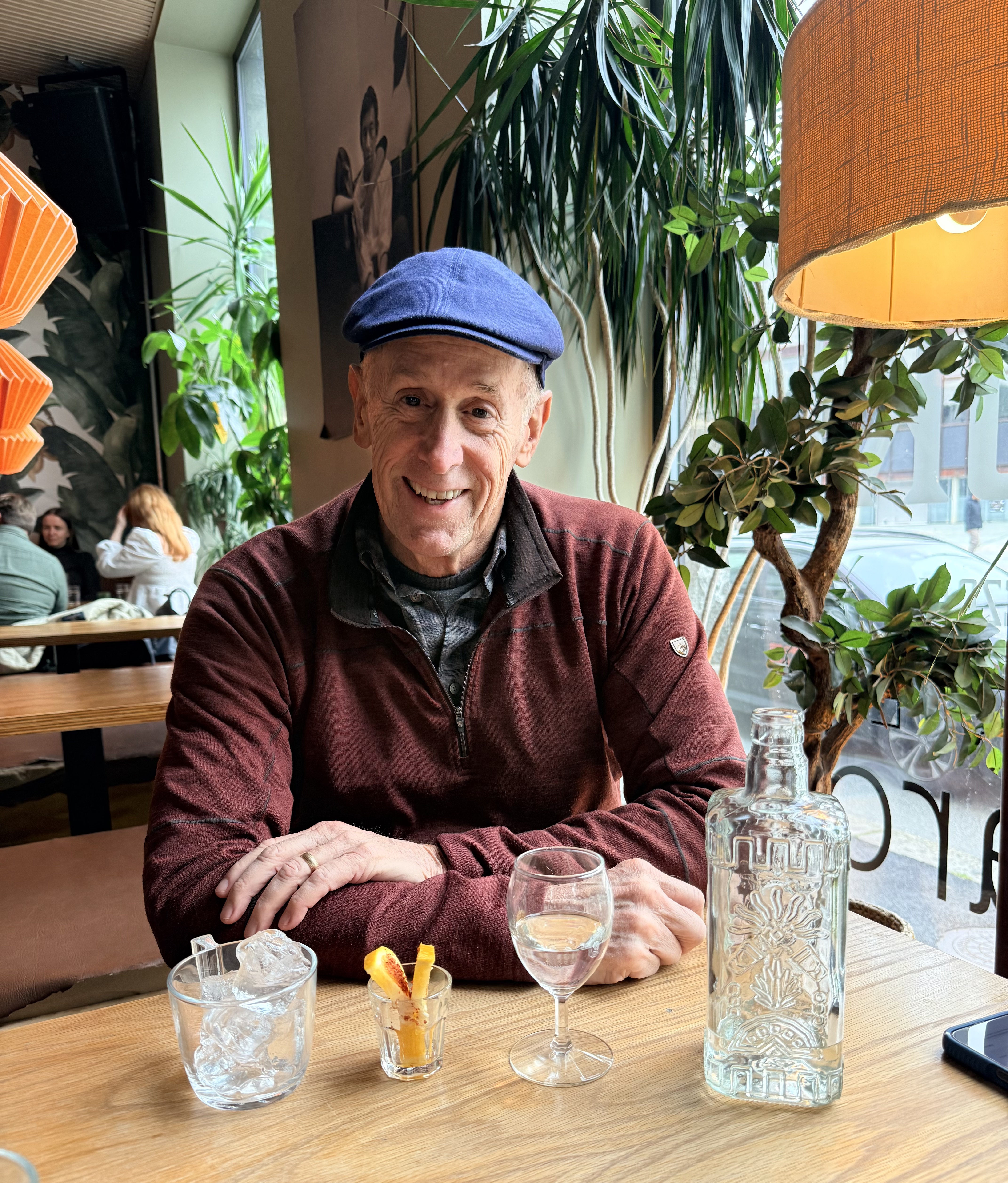
Dinner #3: We figured we had better take advantage of our two days without rain to go out to eat one last time before we left Bergen on the 17th. We stopped near Bergen’s Opera House (Bergen Nasjonale Opera) at Oki Doki, a mezcal and taco bar. There we enjoyed one pour of mezcal each, and a couple of tacos, outrageously priced as is everything in Bergen. We continued our dinner at home by topping it off with a bowl of tomato soup.
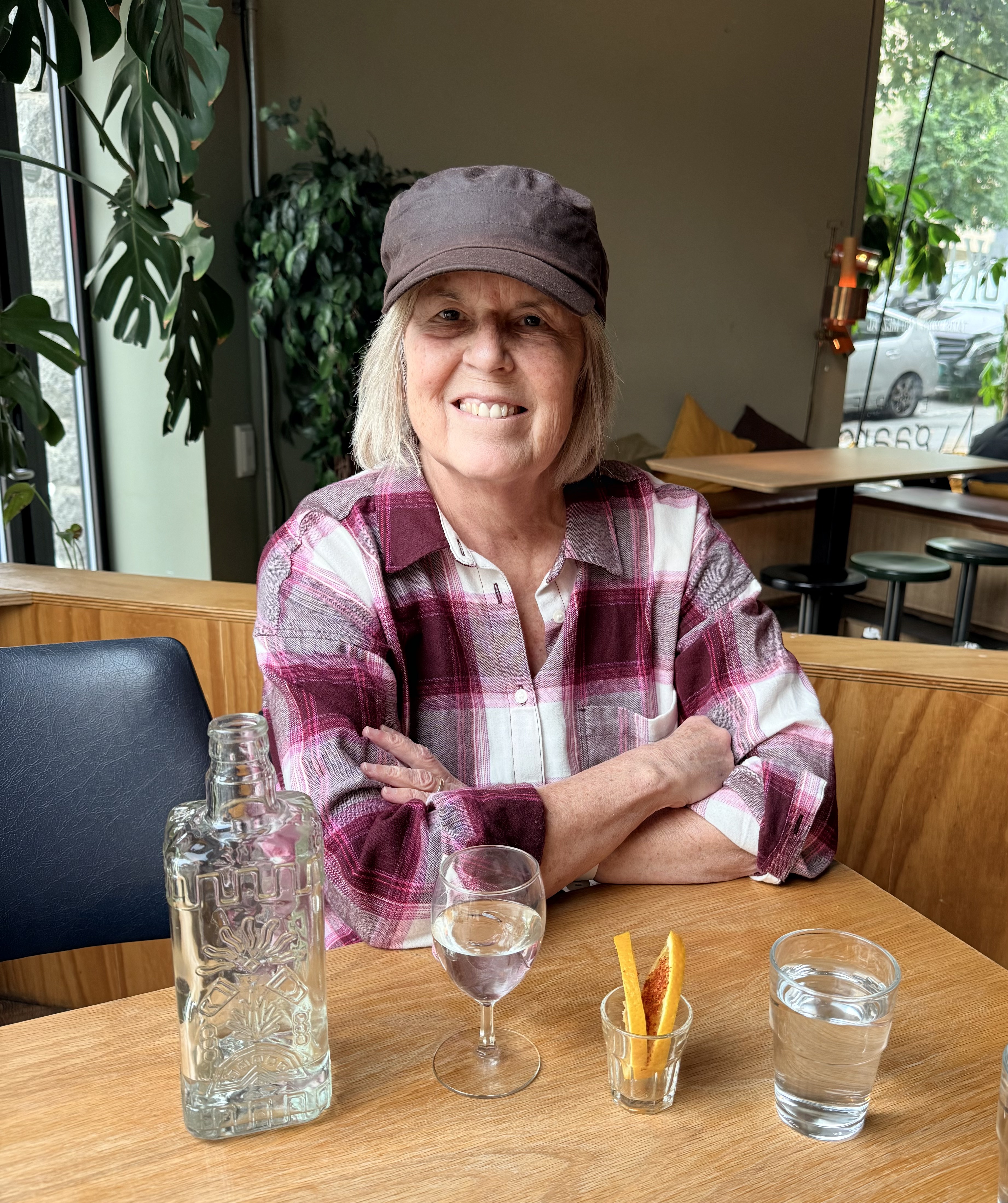
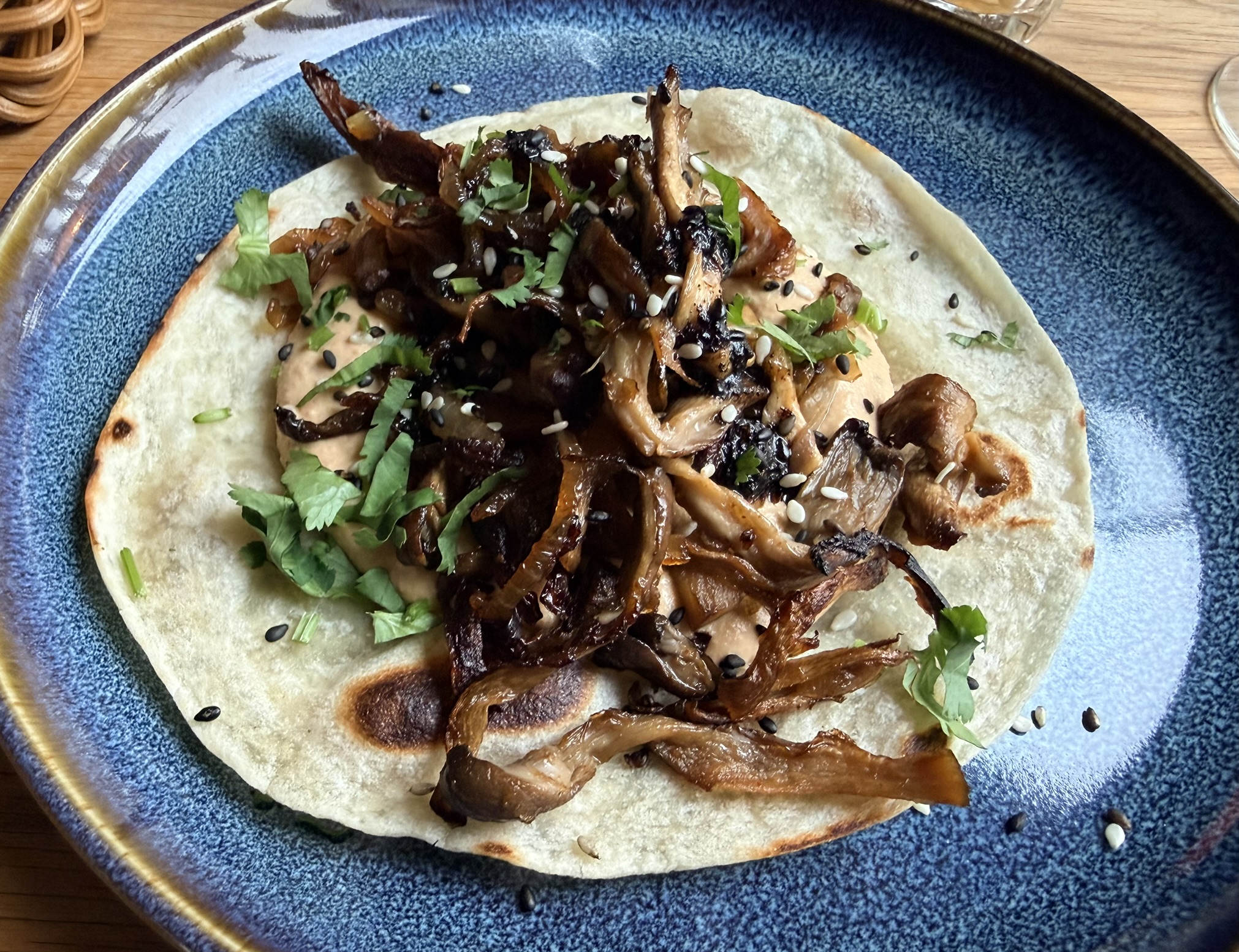
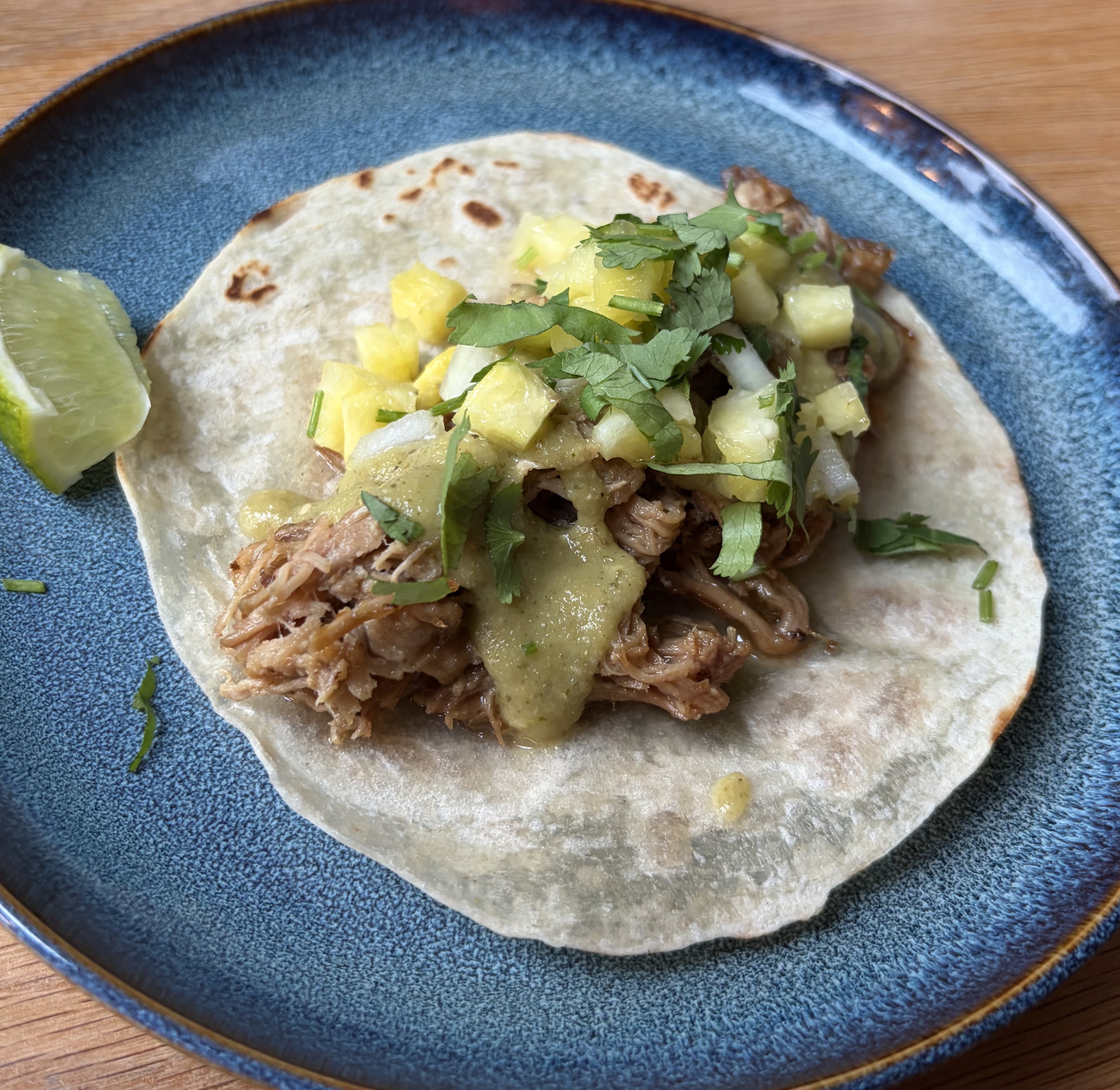
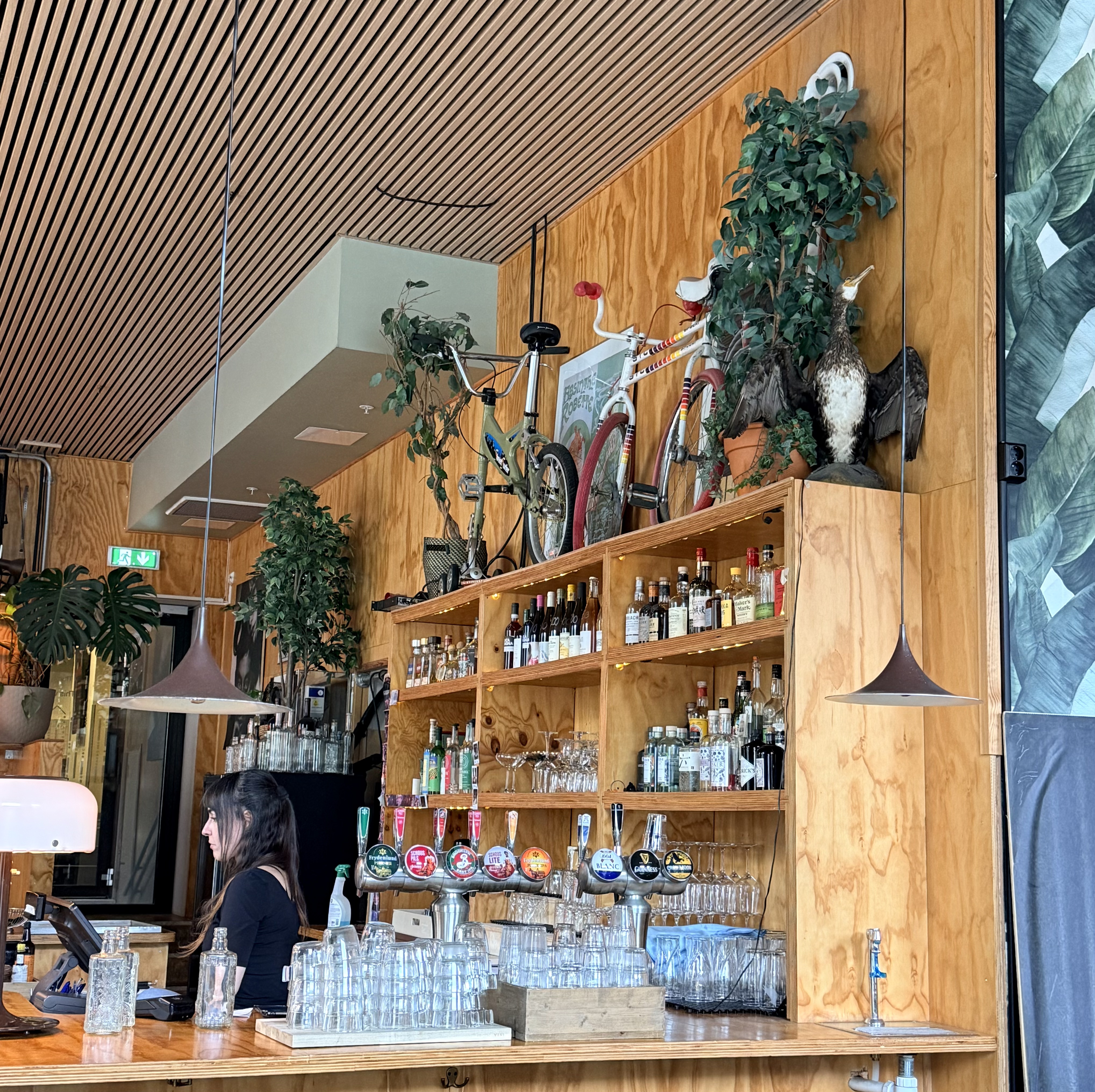
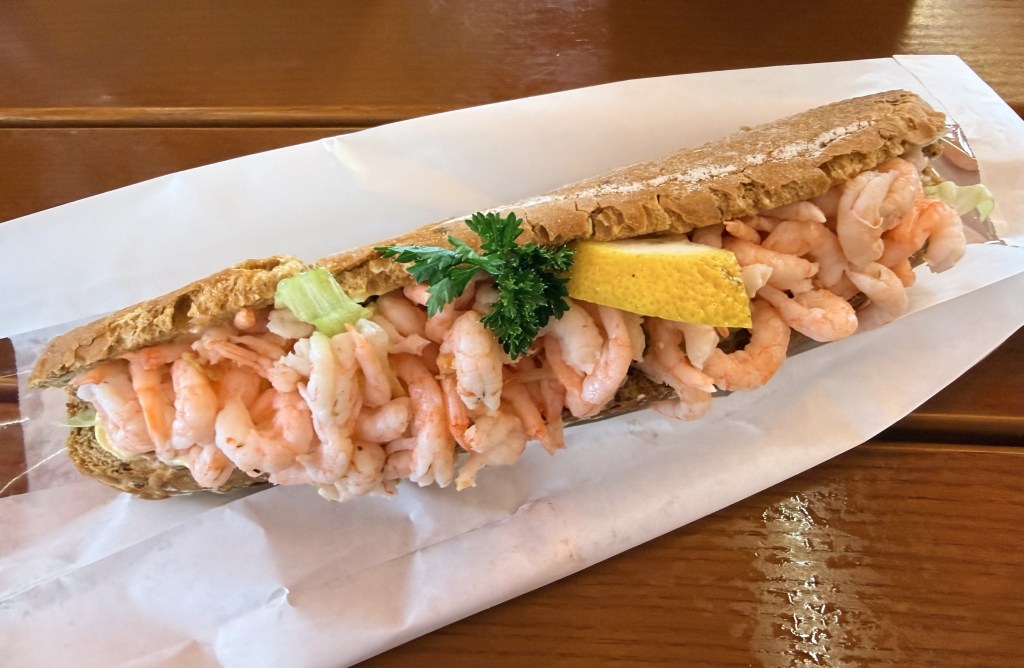
Lunch #1: At the fish market on the harbor, we got a shrimp sandwich to share with some French fries. It may look like there is a lot of shrimp on this sandwich, but believe me, most of it is lettuce.
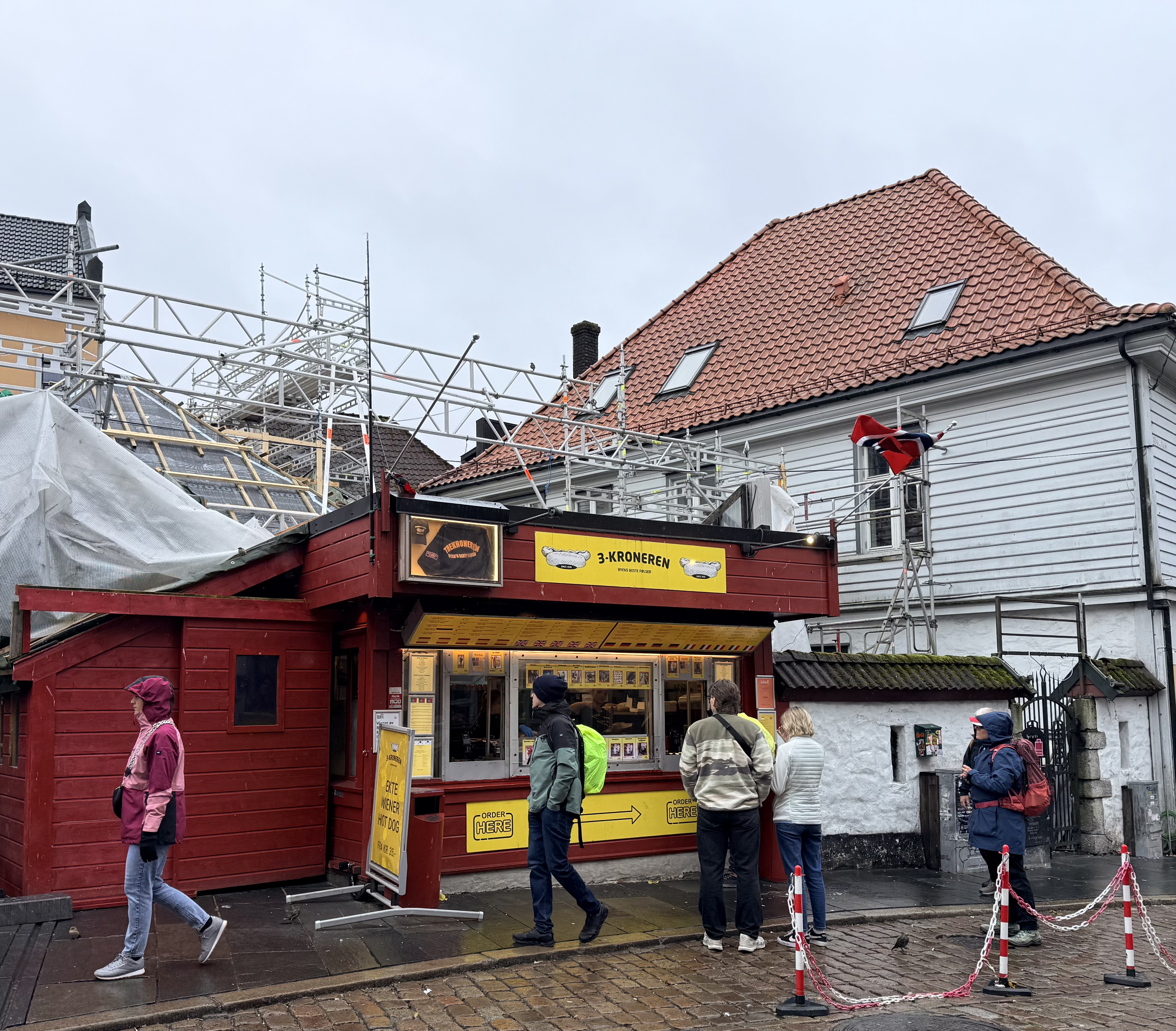
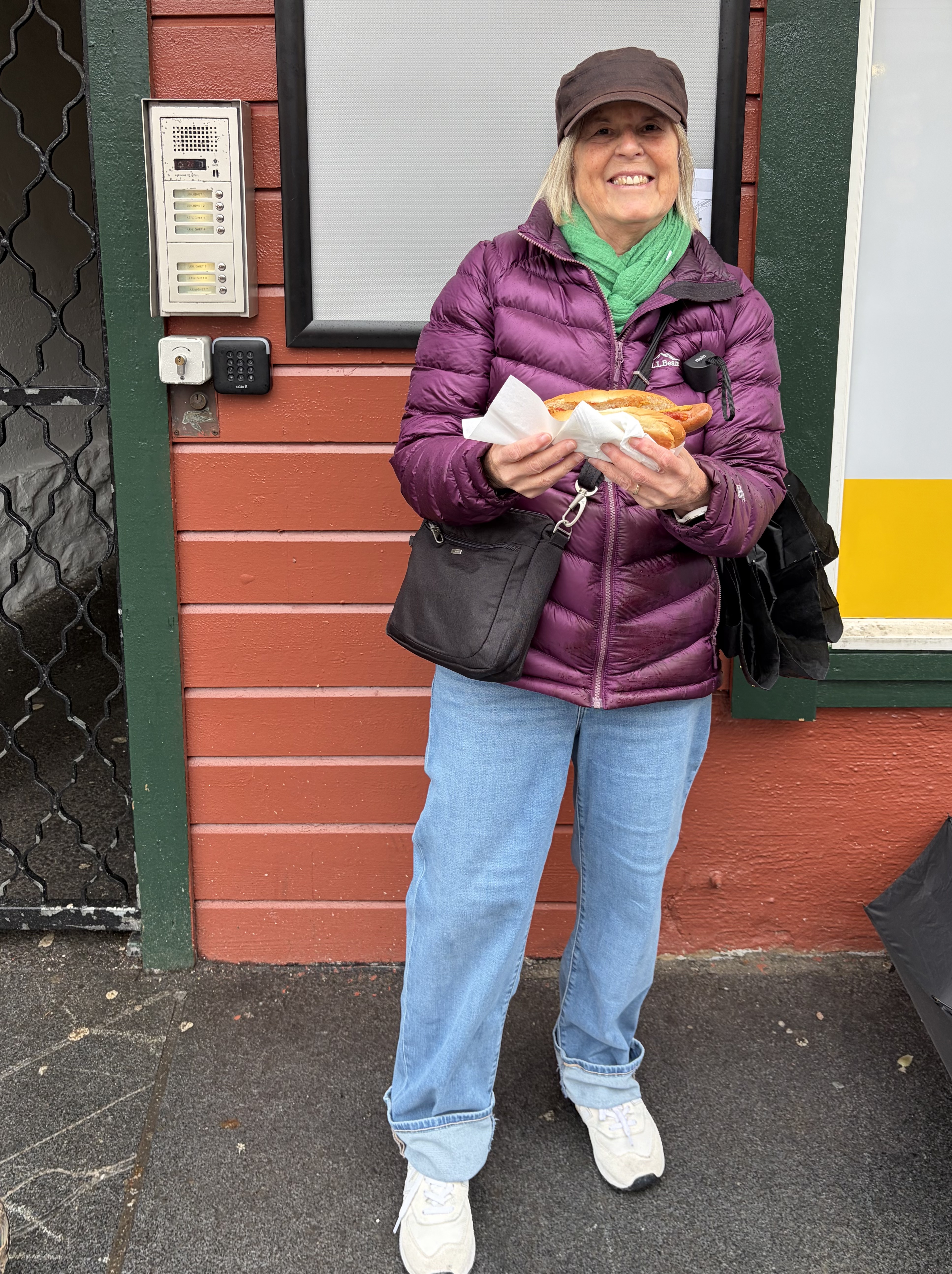
Lunch #2: We had seen people lining up at this hot dog stand, 3-Kroneren – byens beste pølser (the best hot dogs in town), with people standing in the rain eating their hot dogs. So we decided to try it ourselves one drizzly day. What can be better than standing in the rain to eat?
Homebody Stuff
Every morning, I continued to do my NY Times puzzles: Wordle, the Mini, Connections and Strands. In the evenings, we watched our regular shows: Sommerdahl, The New Adventures of Old Christine, AnotherSelf , Ted Lasso, Old Money, Trying, The Killing, Furious, Broadchurch and Ride or Die. We started watching a Dutch series called De Eetclub (The Perfect Lie). I finished reading a detective book set in Norway, Don’t Look Back by Karin Fossum; I had read Eva’s Eye, the first in the series, earlier this year. I’m starting to make progress on The Street of a Thousand Blossoms by Gail Tsukiyama. I just started The Summer Book by Tove Jansson which has a kind of melodic and hypnotic rhythm to it.
In Bergen I found a scarf and accessory shop where I found a couple of scarves, which is about the only thing that will fit in my suitcase. There are lots of menswear shops everywhere we go, and Mike found a soft lightweight grey corduroy shirt. I also bought a pair of Levi’s jeans because the only pair of jeans I brought are wide-leg jeans that are dragging on ground and getting wet in the rain. I had taken out a pair of jeans before leaving home so my suitcase wouldn’t be so heavy, and now, here I am replacing them. Even though they say they are 30″ length, I still have to cuff them up. I’ll have to hem them when I return home.
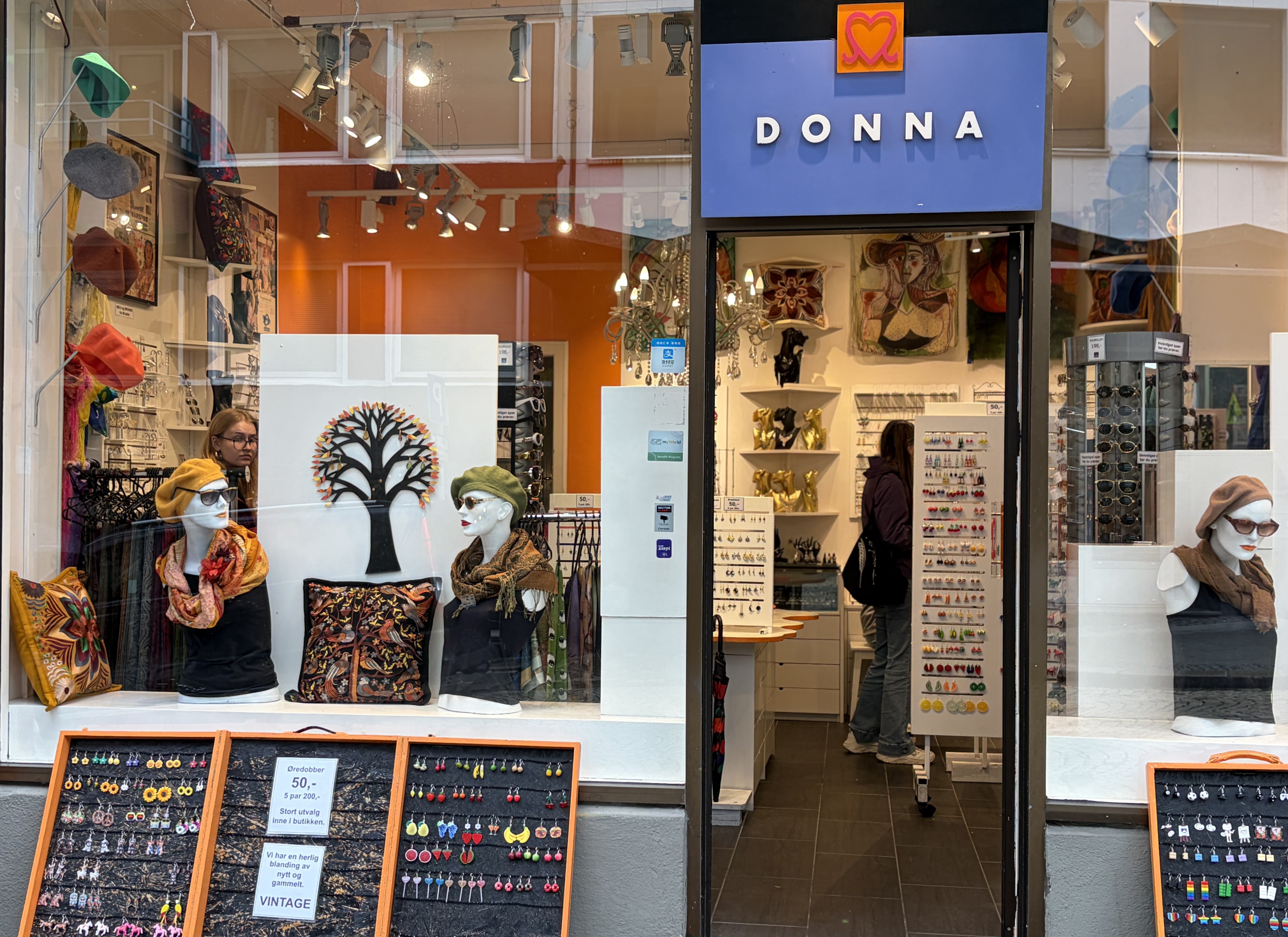
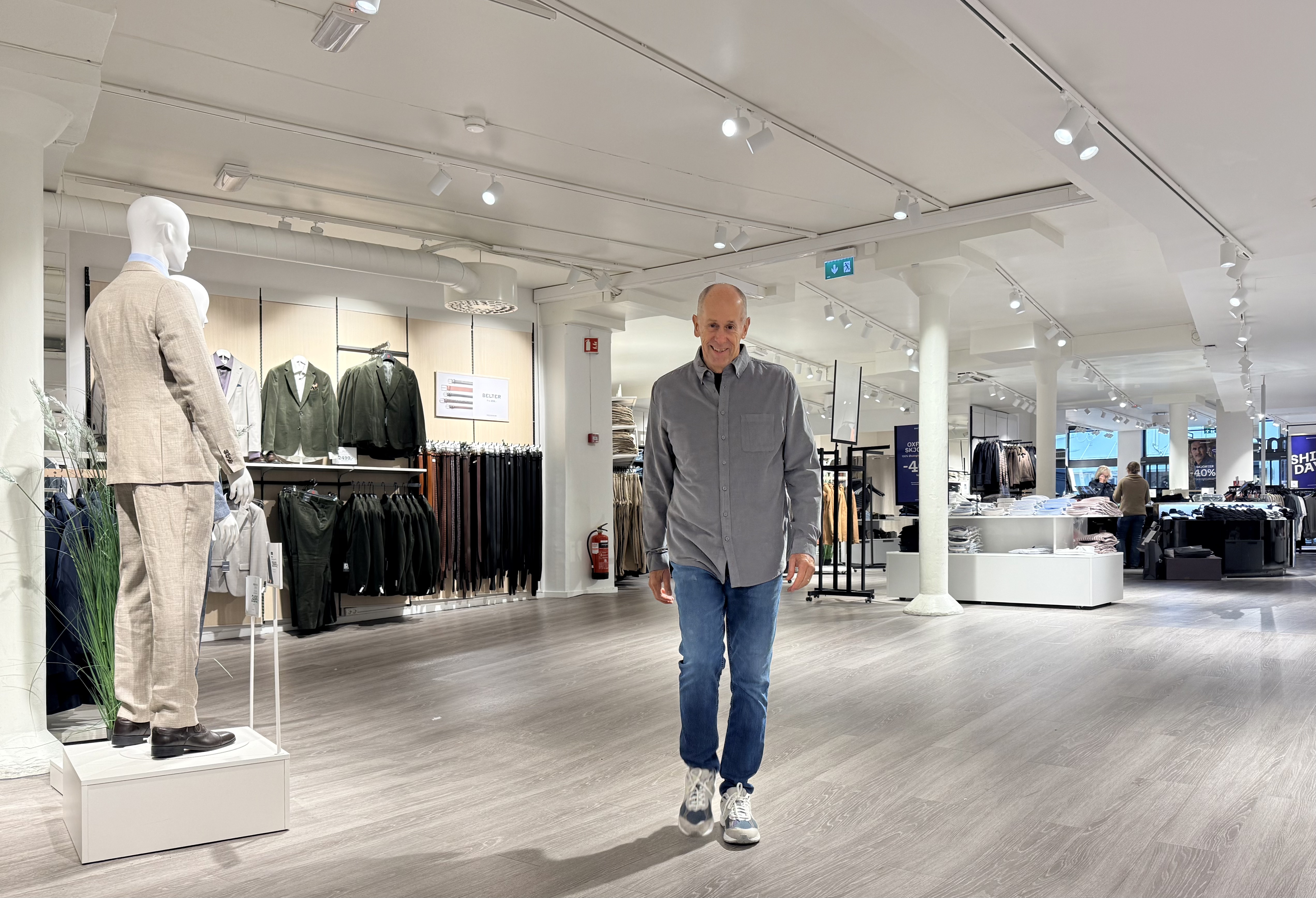
Mike never found a swimming pool nearby to swim as he did in Aarhus, Helsinki and Vaasa. He hoped to find one in Bergen, but the only one he found was some distance away and charged $20 for a one-day admission (no pensioner prices as he found in Finland and Denmark). We enjoyed a bit more down time in Bergen as it rained a lot and some days we just couldn’t muster the energy to go out into the deluge. Plus, many museums were closed either for the season, for renovation, or closed permanently. We decided to take advantage of our 7-day stay by being homebodies as for the next two weeks, we’ll be on the go a lot, with no longer than 3-night stays until we get to Oslo on October 3.
Thursday, September 17: We boarded the Hurtigruten cruise ship MS Vesterålen on Thursday afternoon, September 17. We will sail about 4 days (3 nights) up to Svolvær and the Lofoten Islands in the Arctic Circle, with stops in Ålesund and Trondheim. This is the first cruise we have ever taken.
Discover more from ~ wander.essence ~
Subscribe to get the latest posts sent to your email.


Another great stop. I liked the hike to the top for the views, the fjord cruise, the outdoor museum best. I’ve always wanted to take the Hurtigruten to the Arctic Circle so I’ll be interested to hear how you get on.
LikeLike
We loved all the same things you did, Anabel. So far we’re enjoying the cruise!
LikeLiked by 1 person
I know the scenery is beautiful but it looks so dreary in the rain, Cathy. And this is summertime! Not exactly a value for money place, is it, but I expect it’s a reflection of wages xx
LikeLike
Everything in Norway is outrageously expensive, much more so than in Denmark or Finland. And as for rain in Bergen, if you’re going to visit here you have to get used to rain; it rains 200 days a year and some almost every day! But we still enjoyed it, although we’re having more fun on the ship now and disembark tonight in Lofoten in the Arctic Circle.
LikeLike
Lofoten looks fabulous. Enjoy! xx
LikeLike
It’s all so pretty. What a treat to have extended time in such lovely surroundings. I guess the thing about your cramped accommodation is that you’re only there to sleep, and you’re out all day enjoying yourselves
LikeLike
We’ve enjoyed being able to stay 5-7 nights in most places so we can have down time and live (sort of) like a local, but for the next two weeks in Norway, our stays will be short until we get to Oslo. The longer stays give us some down time instead of having to be on the go all the time. So we’re not actually always out and about when we have longer stays. 🙂
LikeLiked by 1 person