
These posts cover our slow trip through the Scandinavian/Nordic countries from August 4 to October 30, 2026. I will be posting one long post about each area where we stay. I like to write one post about a particular place so that I can revisit our travels in one spot on my blog, according to location. I can also refer others to the post if they plan to travel to the destination and want ideas. I welcome you to read the entire post, read parts of the posts that interest you, simply look at the pictures, or not to read it at all. All who would like to come along are welcome.
You can find our itinerary here: anticipation & preparation: a slow motion journey through scandinavia.
**************
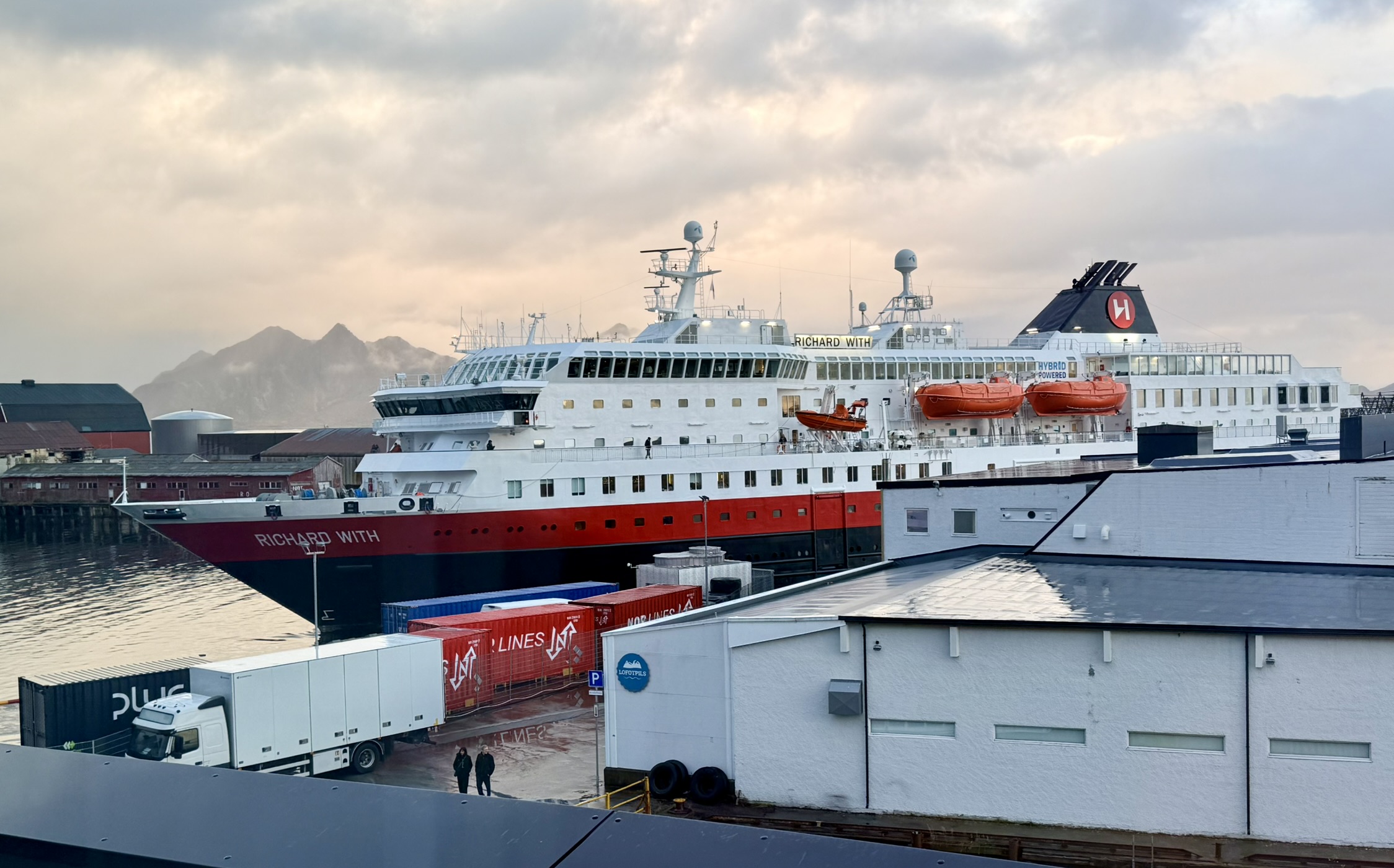
Sunday, September 20 to Wednesday, September 23: We disembarked late Sunday from the MS Vesterålen and walked one minute from the dock to our hotel in Svolvær, Thon Hotel Svolvær. We stayed three nights in Svolvær and the Lofoten Islands, with only two full days.
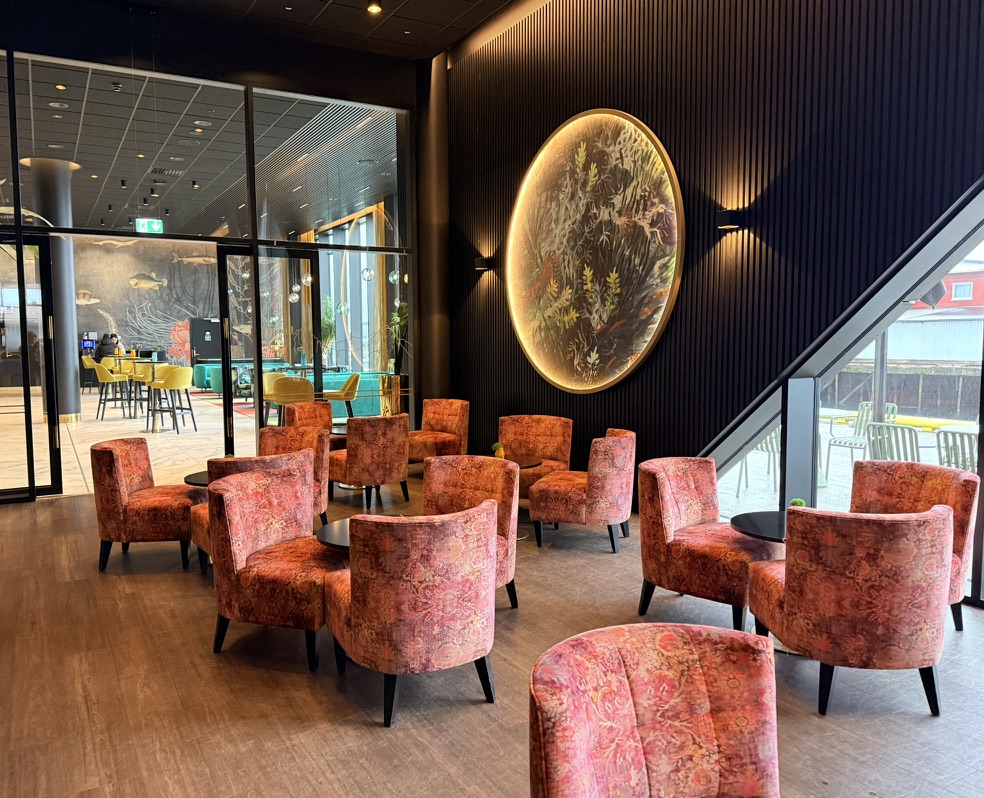
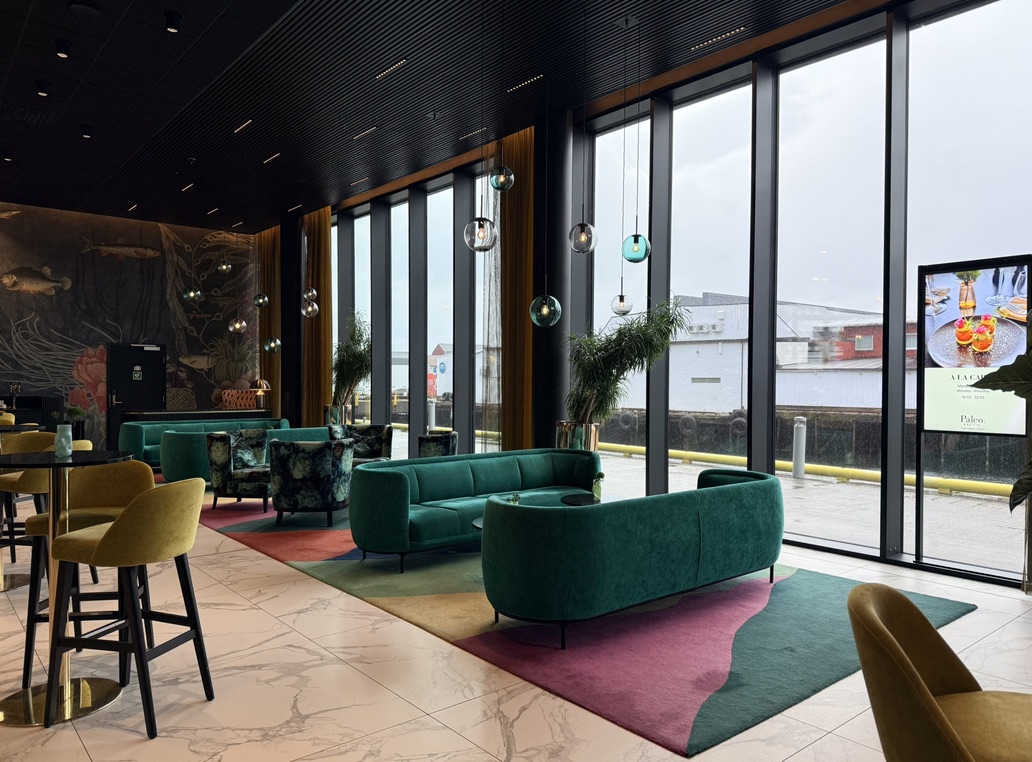
Thon Hotel Svolvær
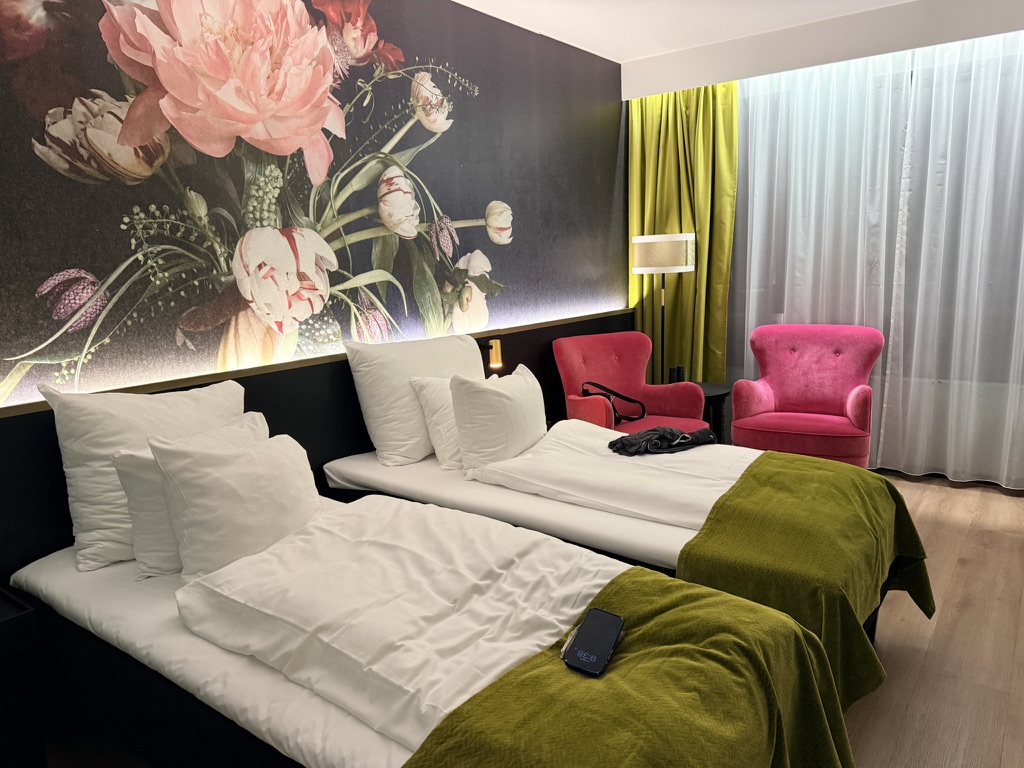
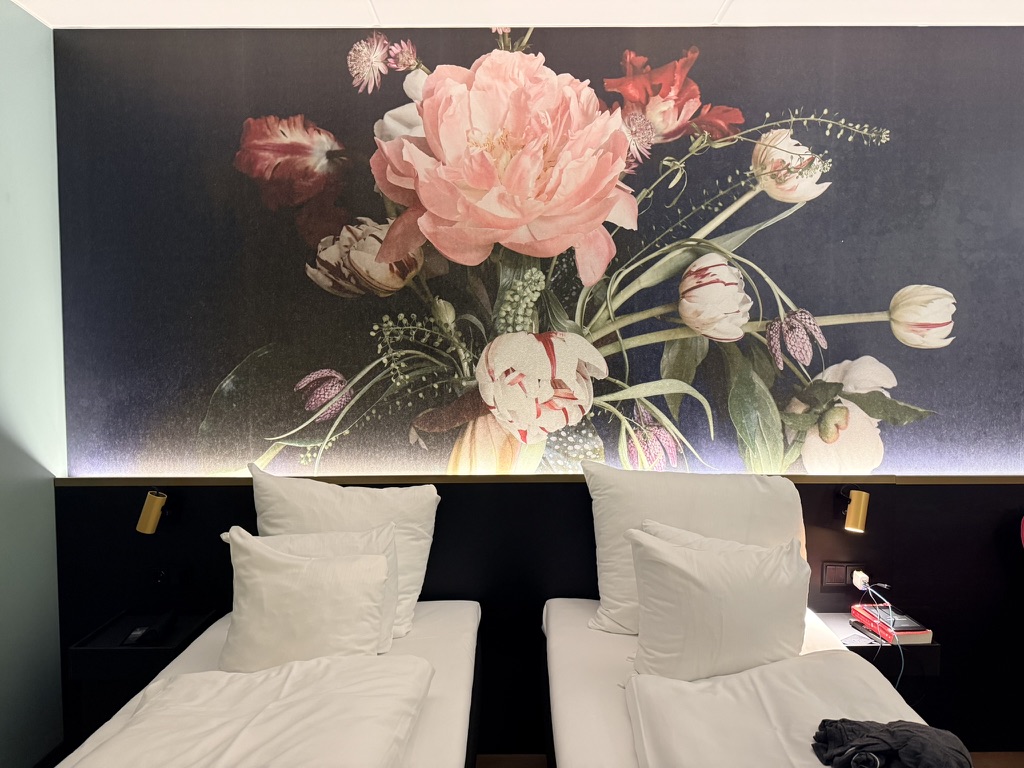
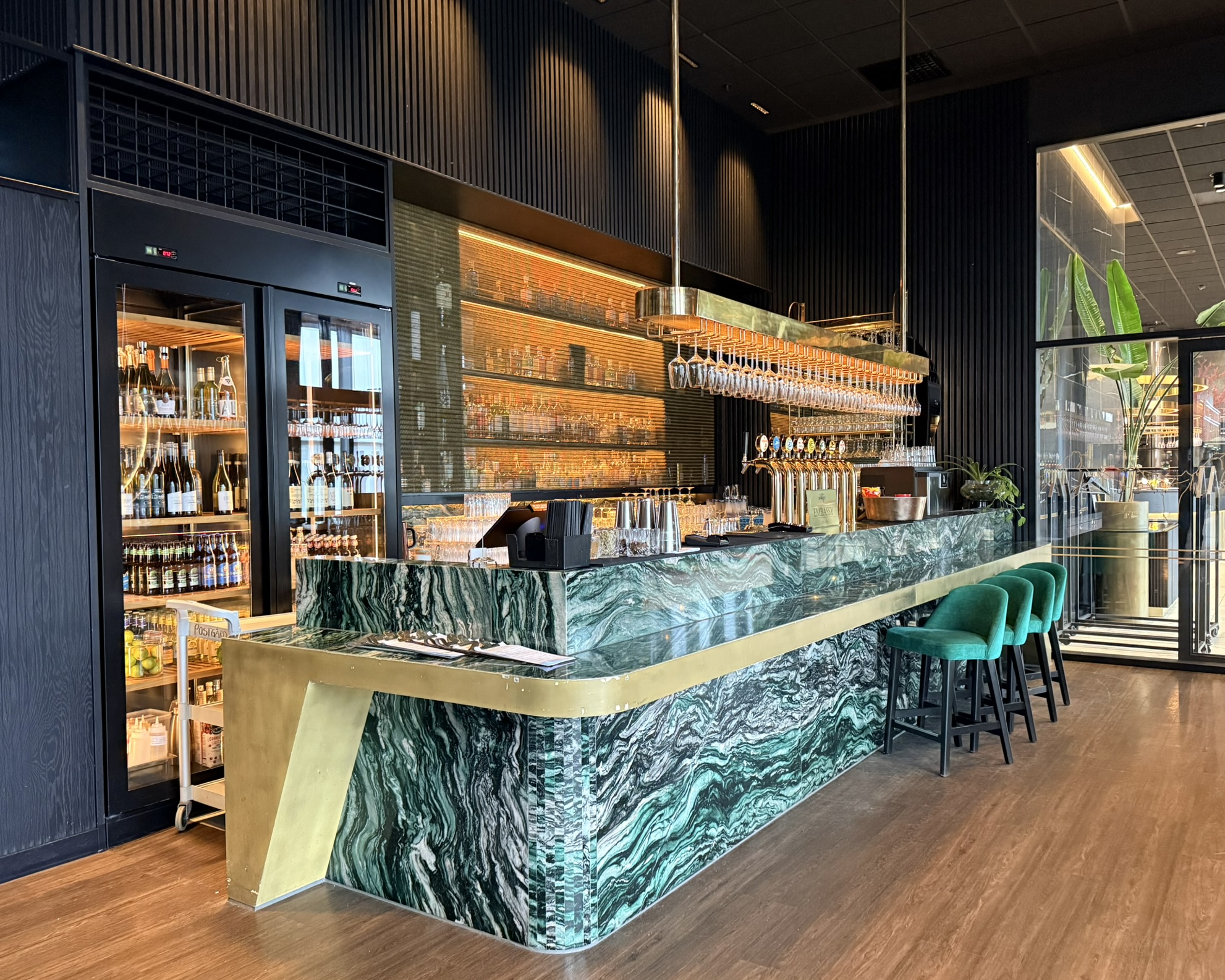
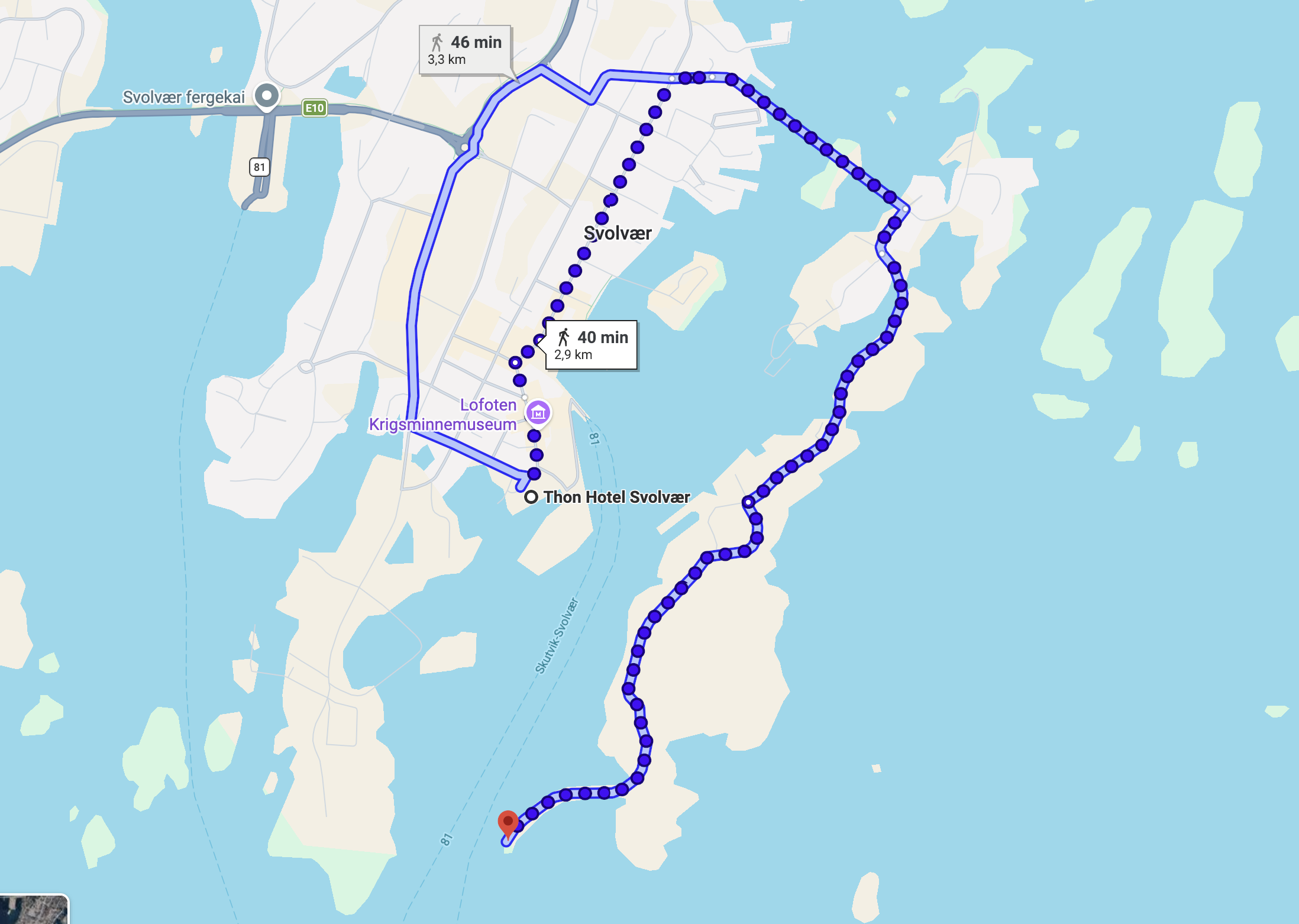
Sunday, September 20: We luckily switched our hotel at the last possible minute from the Lofoten Rorbuer, which we discovered just in time had a 26-minute walk from the ship terminal. Since we arrived in Svolvær at 9:20 p.m., it would have been a real pain to walk that far to our hotel hauling our luggage. Luckily, we found the Thon Hotel Svolvaer, which was only a one minute walk! Plus, for some bizarre reason but with no complaint by us, they upgraded us at no charge to a Superior Room. This was a very nice hotel and convenient to everything. It would have been a big mistake to have stayed at the Lofoten Rorbuer, which is nowhere near the town center.
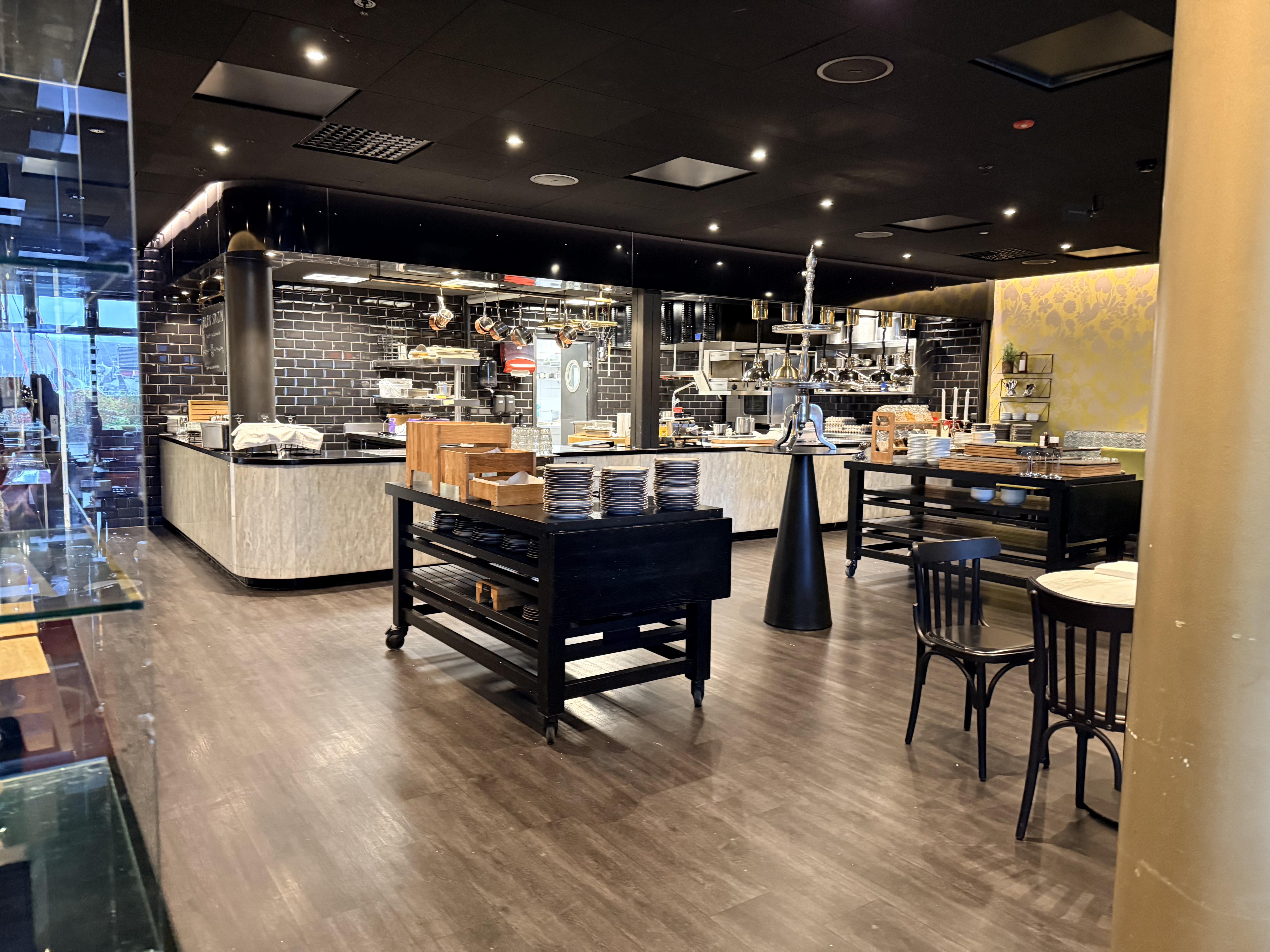
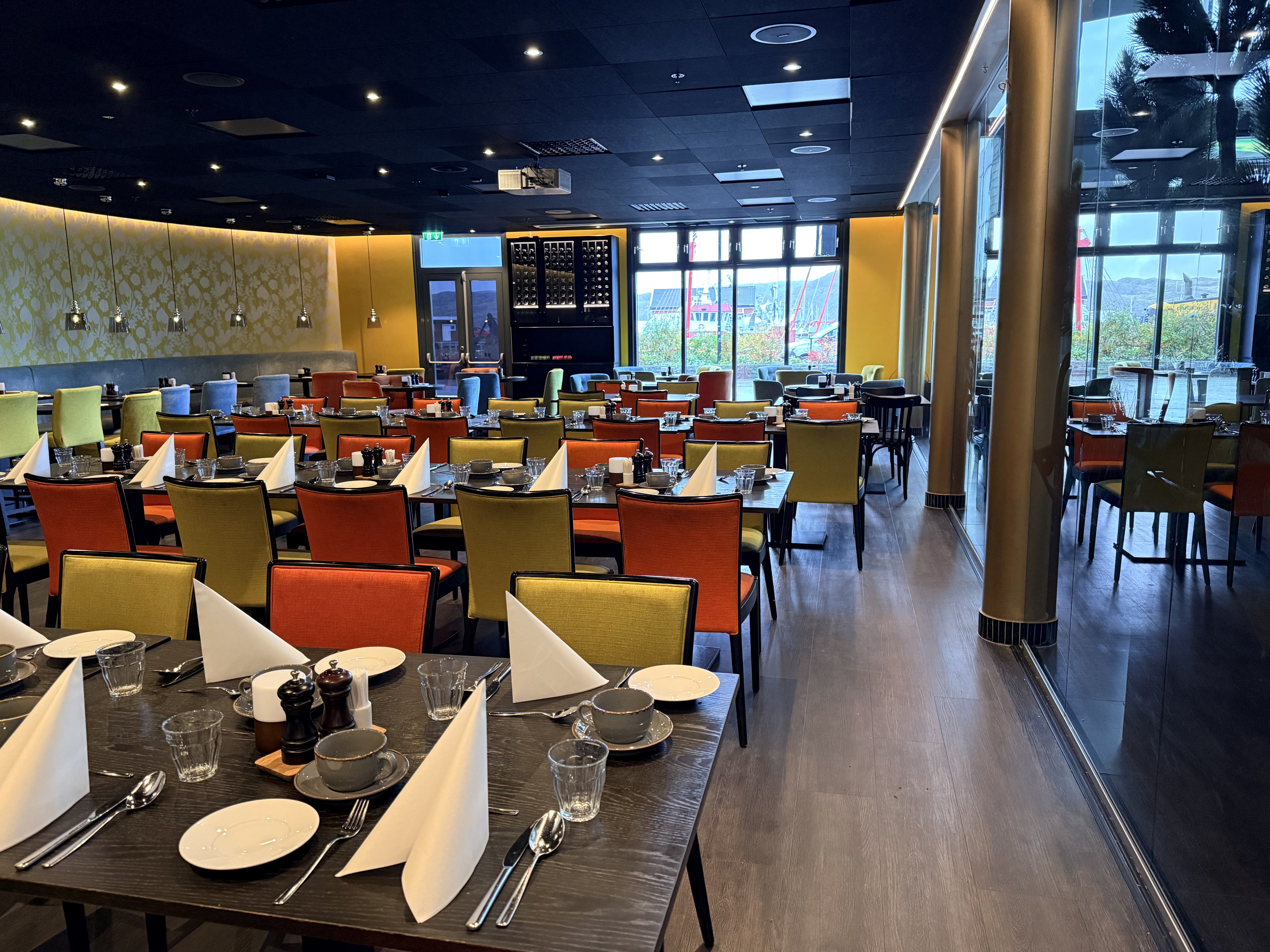
The hotel had a very nice breakfast buffet that was included and on our last morning, when we had to leave on the 6 a.m. Express Ferry to Bodø, the hotel packed us a large to-go breakfast. We loved this hotel and wish our stay could have been longer.
Lofoten
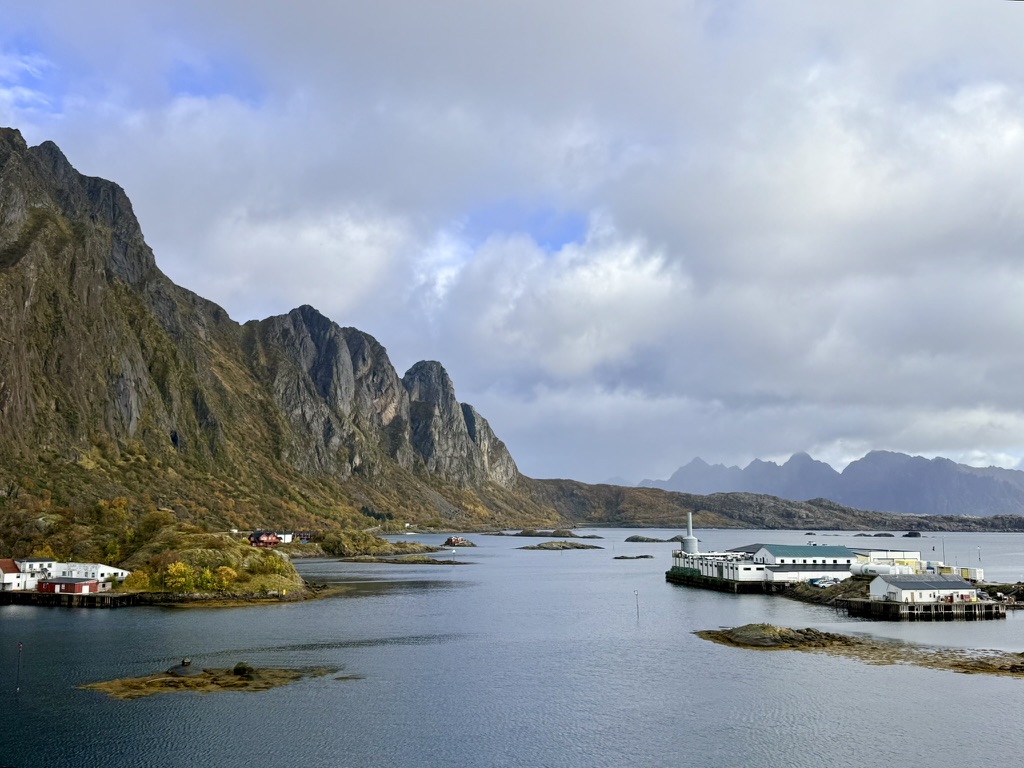
Lofoten is an archipelago and a traditional district north of the Arctic Circle in the county of Nordland, Norway. Lofoten has dramatic scenery with jagged mountains and peaks, open sea and sheltered bays, beaches, and untouched lands.
People often refer to the archipelago as Lofotveggen or the Lofoten wall. The archipelago looks like a closed wall when seen from elevated points around the municipality of Bodø or from the sea.
Winter temperatures in Lofoten are extremely mild considering its location north of the Arctic Circle – possibly the largest positive temperature anomaly in the world relative to latitude. The mild winters are a result of the temperate waters of the Norwegian Sea, which is warmed by the North Atlantic Current and the Norwegian Current.
The two main towns in Lofoten are Svolvær and Leknes. Svolvær has about 4,700 inhabitants. In 1918 it was a trading post and it achieved town status in 1997.
We learned onboard the MS Vesterålen that northern Norway’s most important export product for more than 1,000 years has been Arctic Cod, known as skrei, which means “wanderer.” From January to mid-April, the sexually-matured cod (about 5 years old) swim 2,000 km from the Barents Sea to their birthplace in Lofoten, Vesterålen, and Senja to spawn. The Arctic Cod are first class Norwegian cod and the word itself comes from the Norse word skreið which means fish that slides or wanders.
Fishing has been the mainstay of life for centuries in Lofoten; it has had a great impact on both the local and national economy. The Lofoten Fisheries are the largest cod fisheries in the world.
Cabins called “rorbu” were built to house thousands of visiting fishermen, who came to Lofoten during the arctic cod season. Back in the day, 30.000 fishermen once fished during the arctic cod season. Today, around 2,000 fishermen fish for cod in the annual season.
Walk to Svinøya
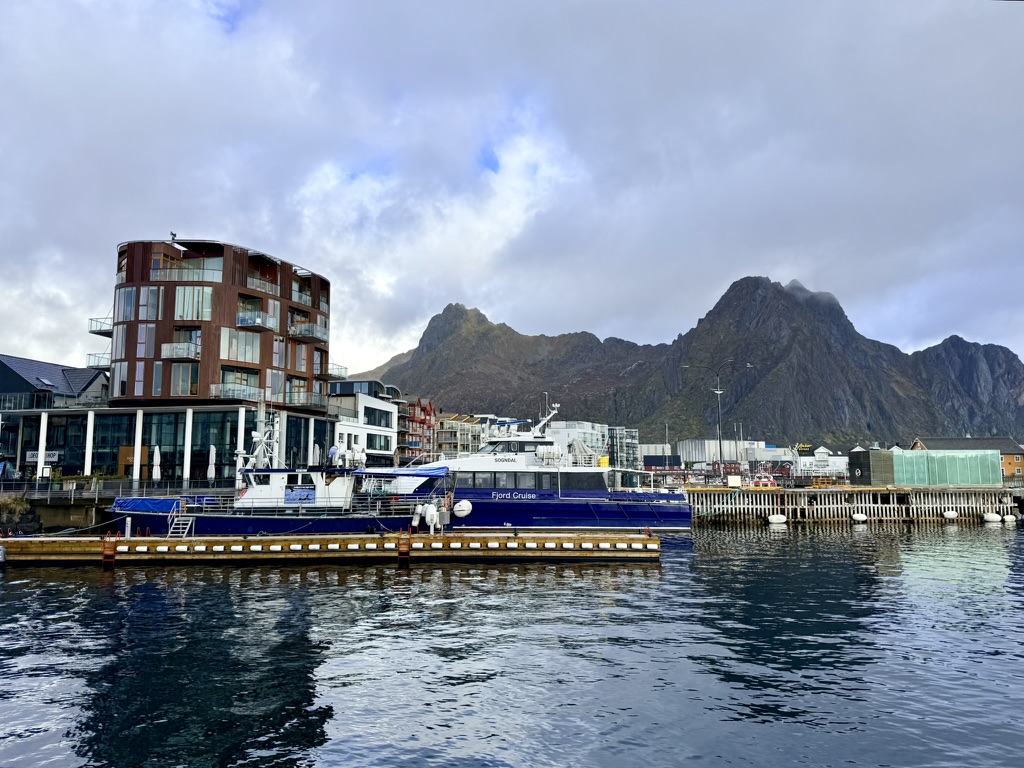
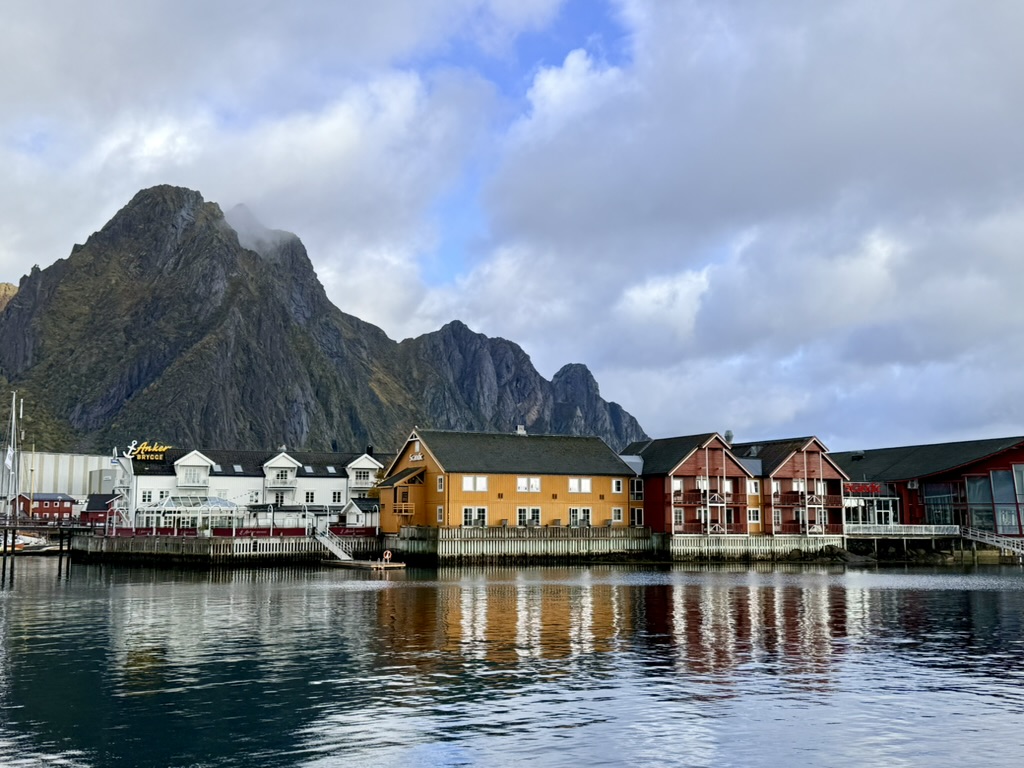
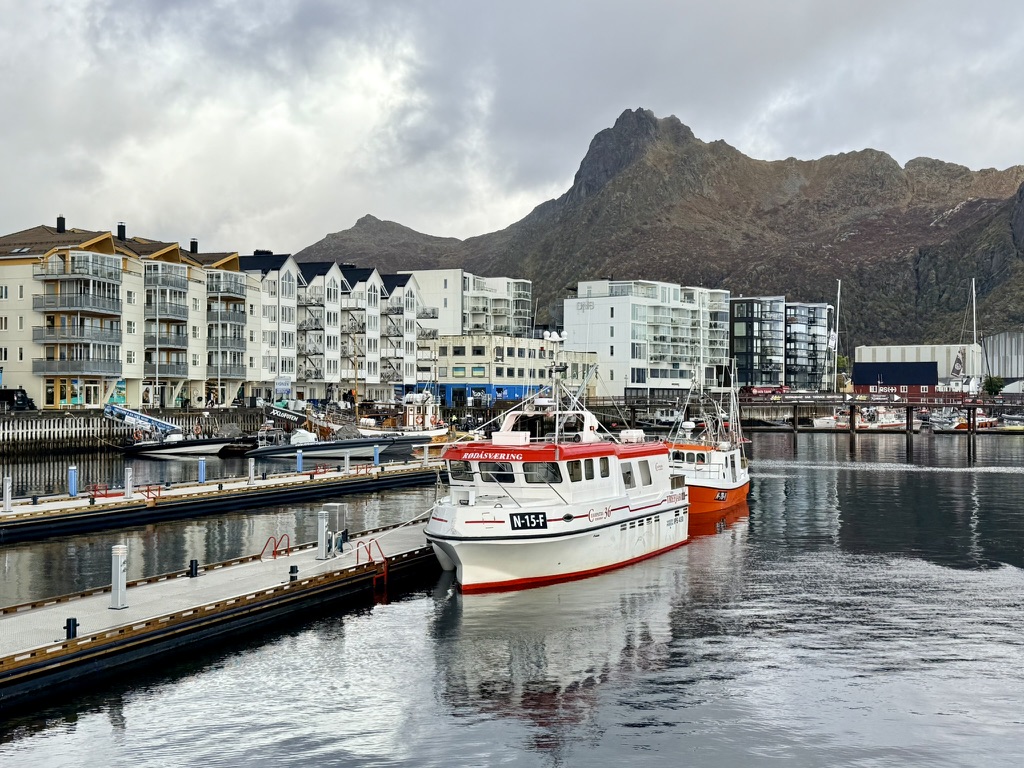
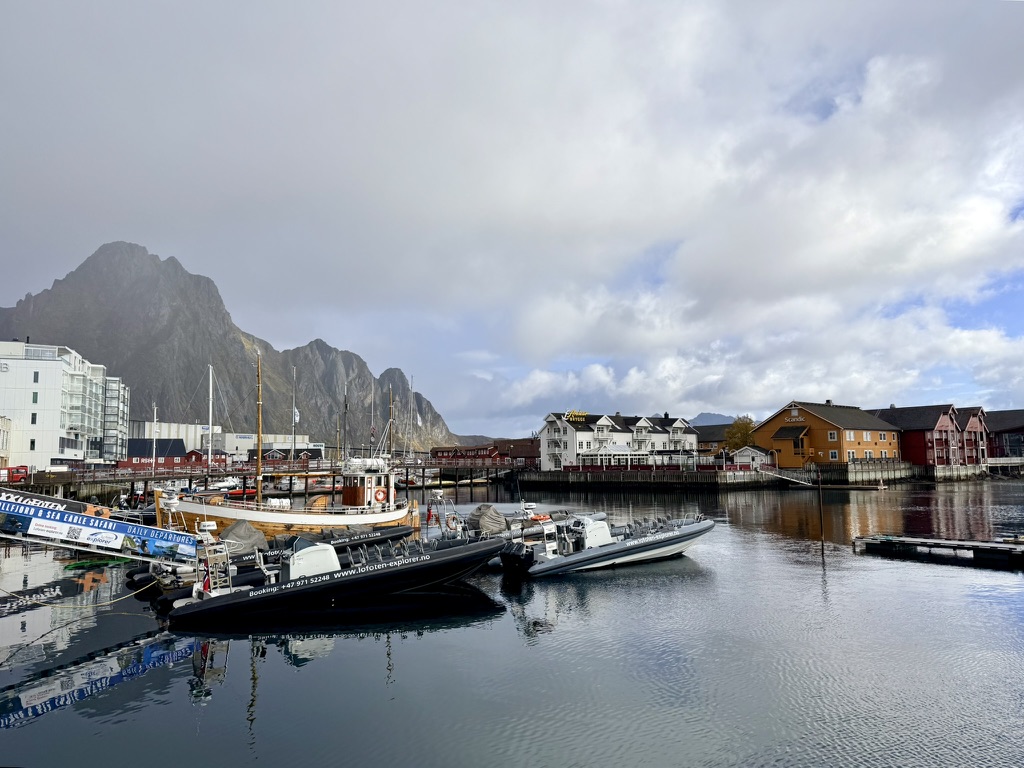
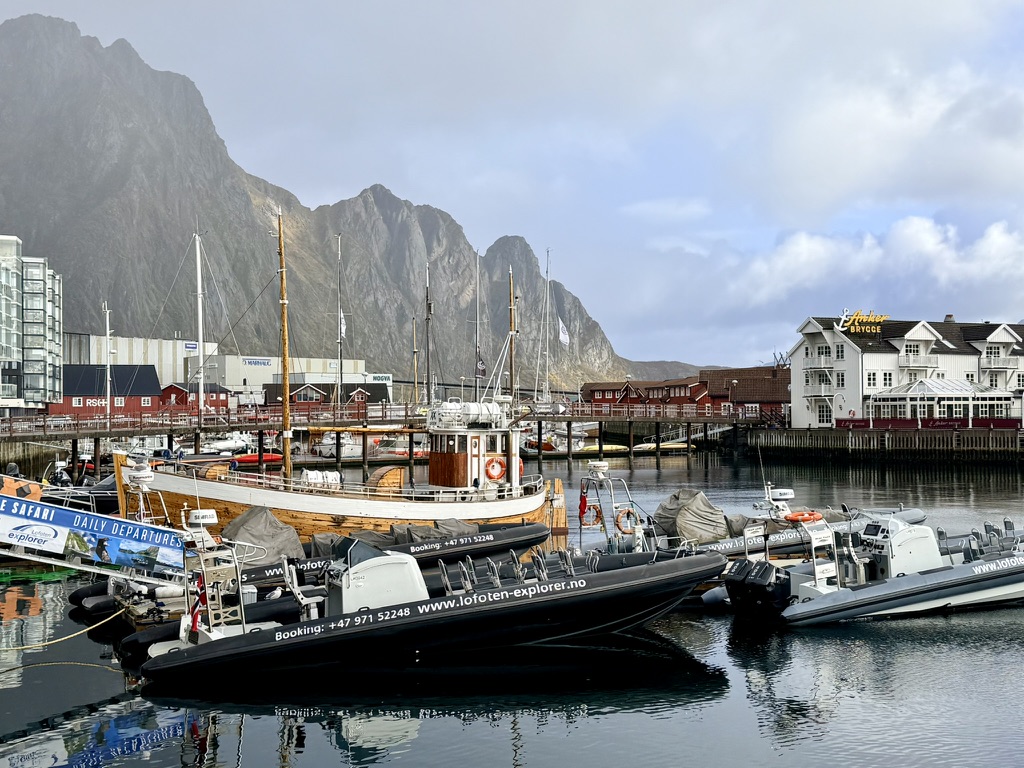
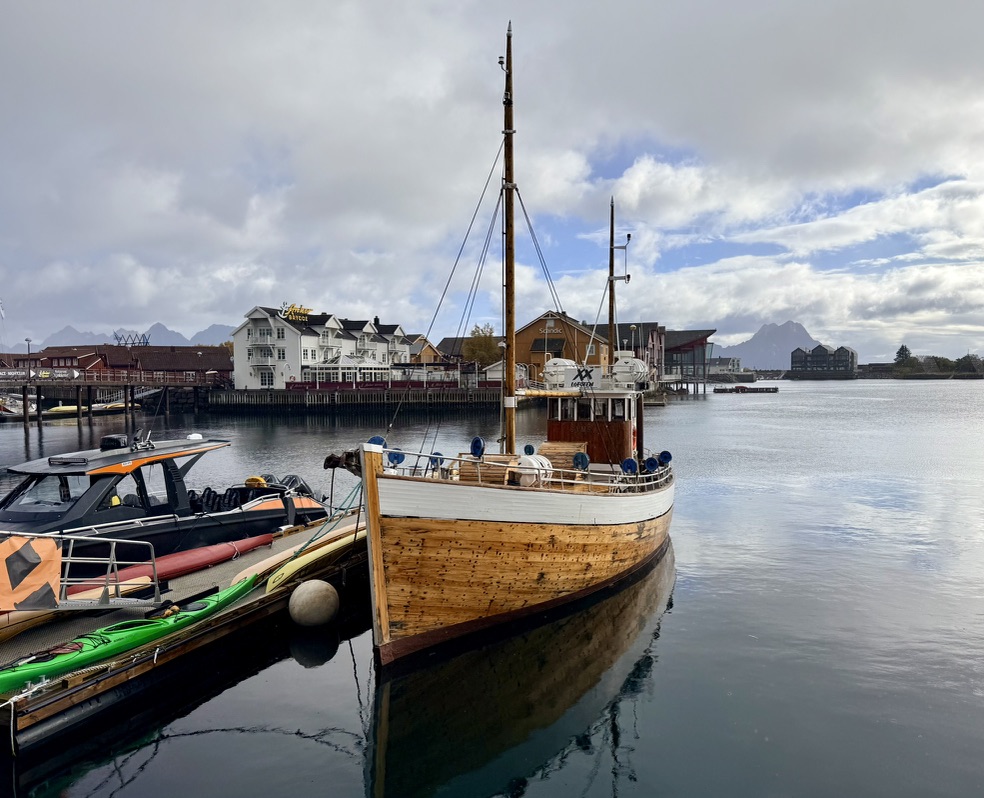
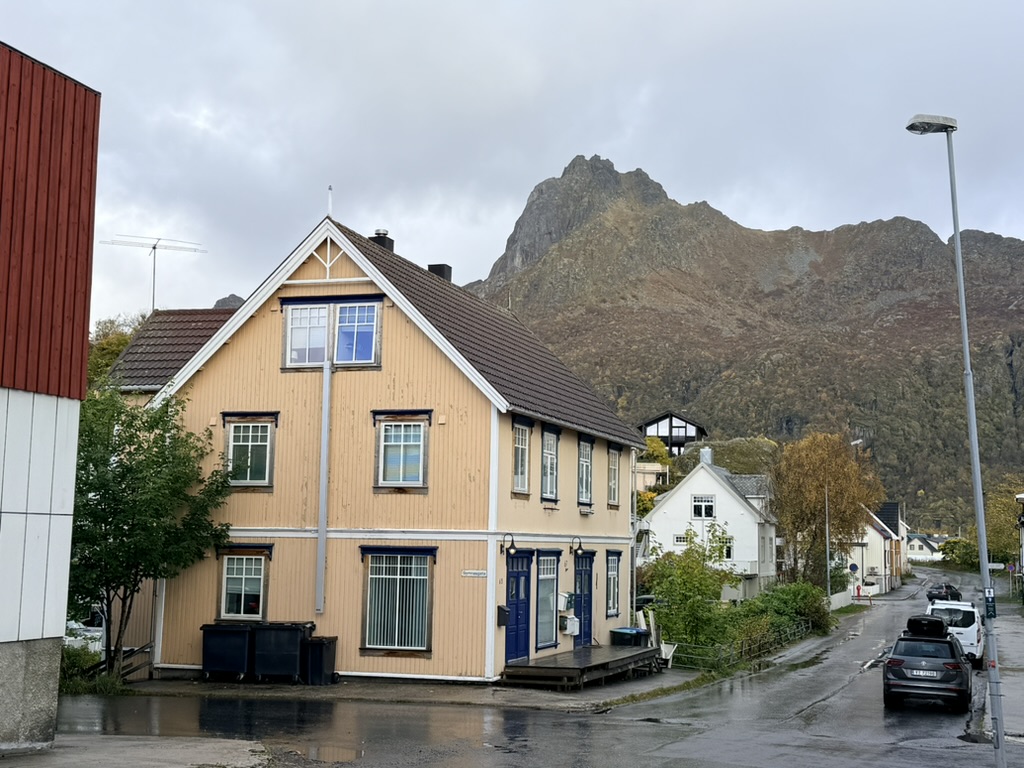
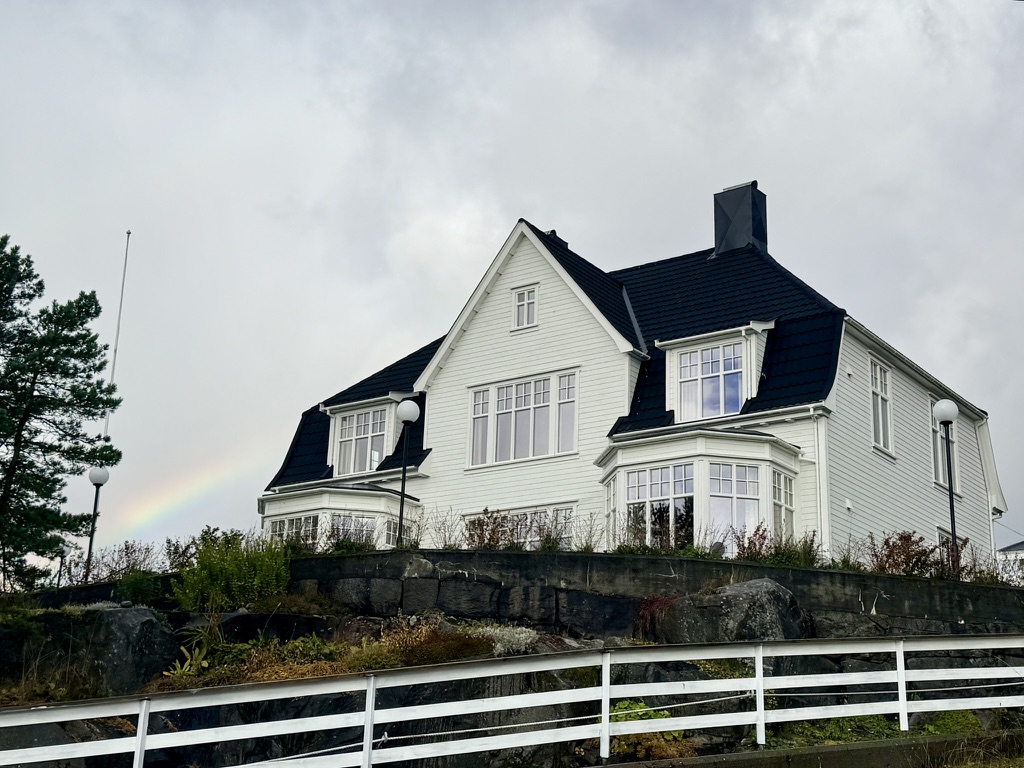
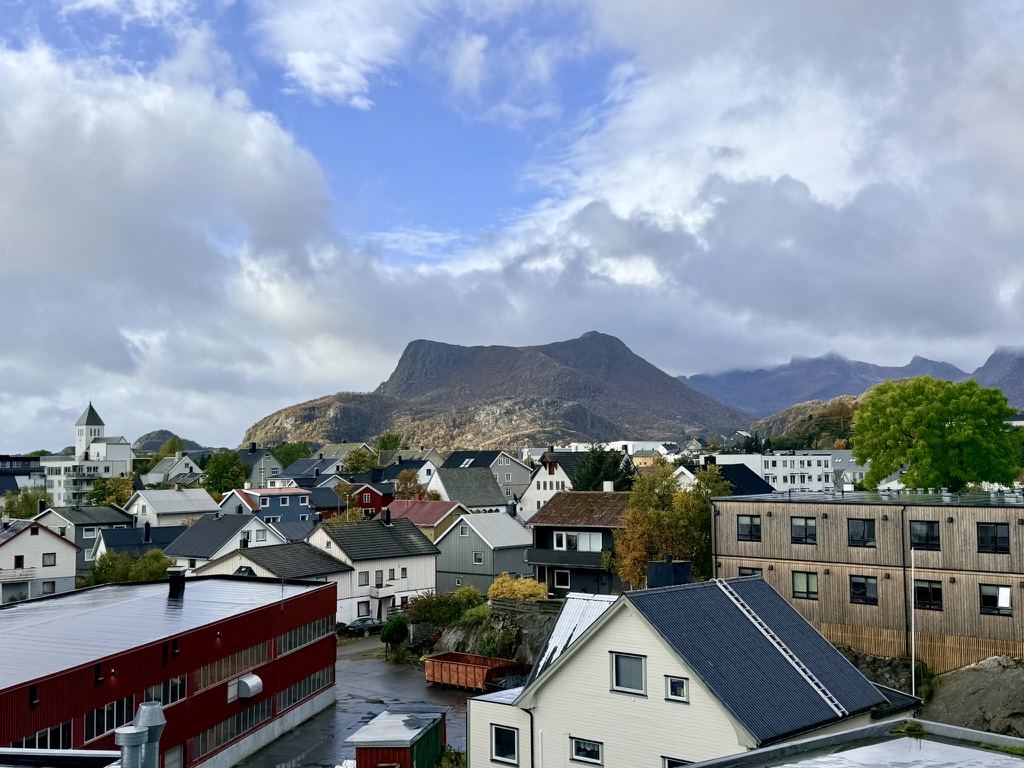
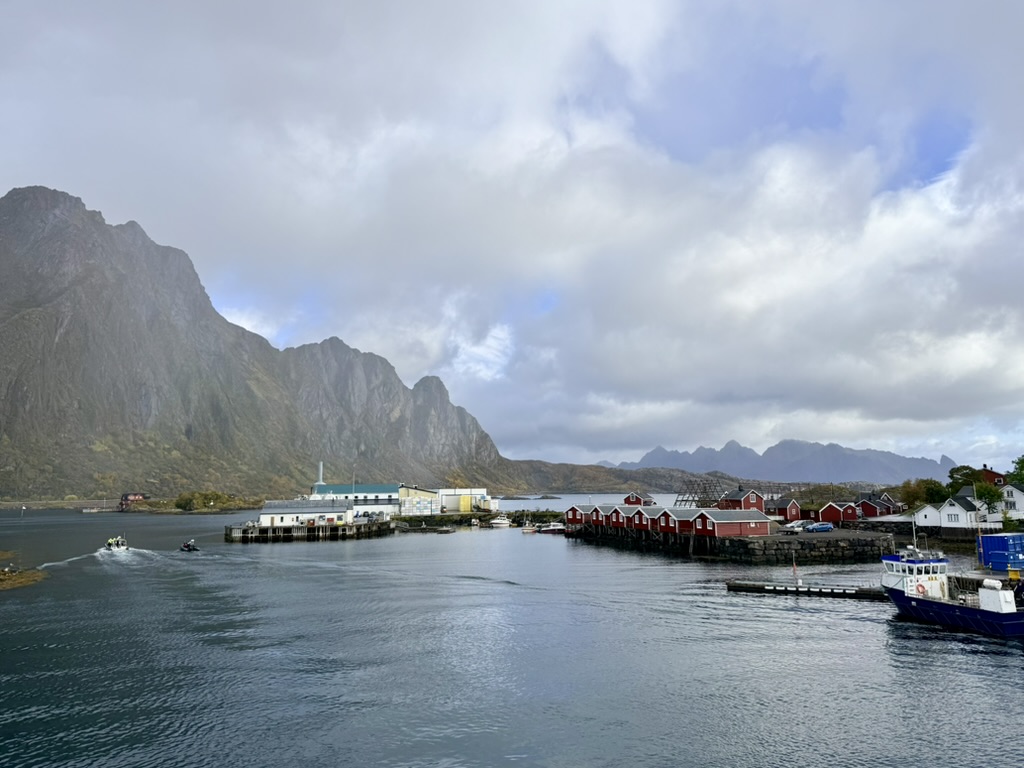
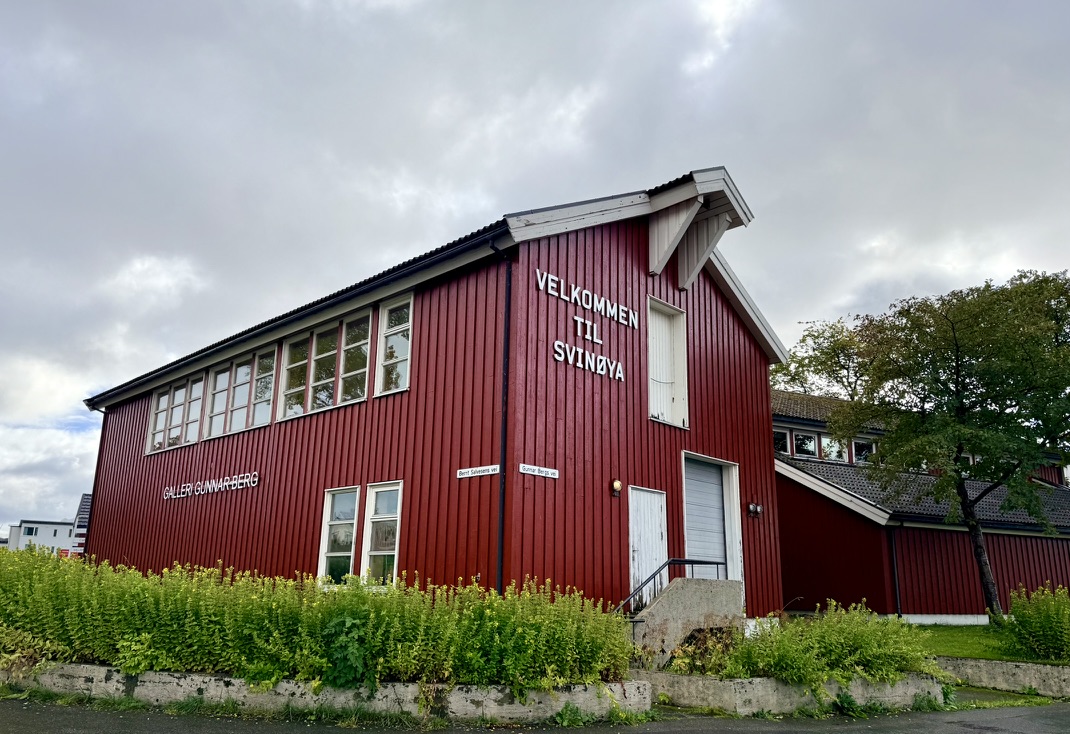
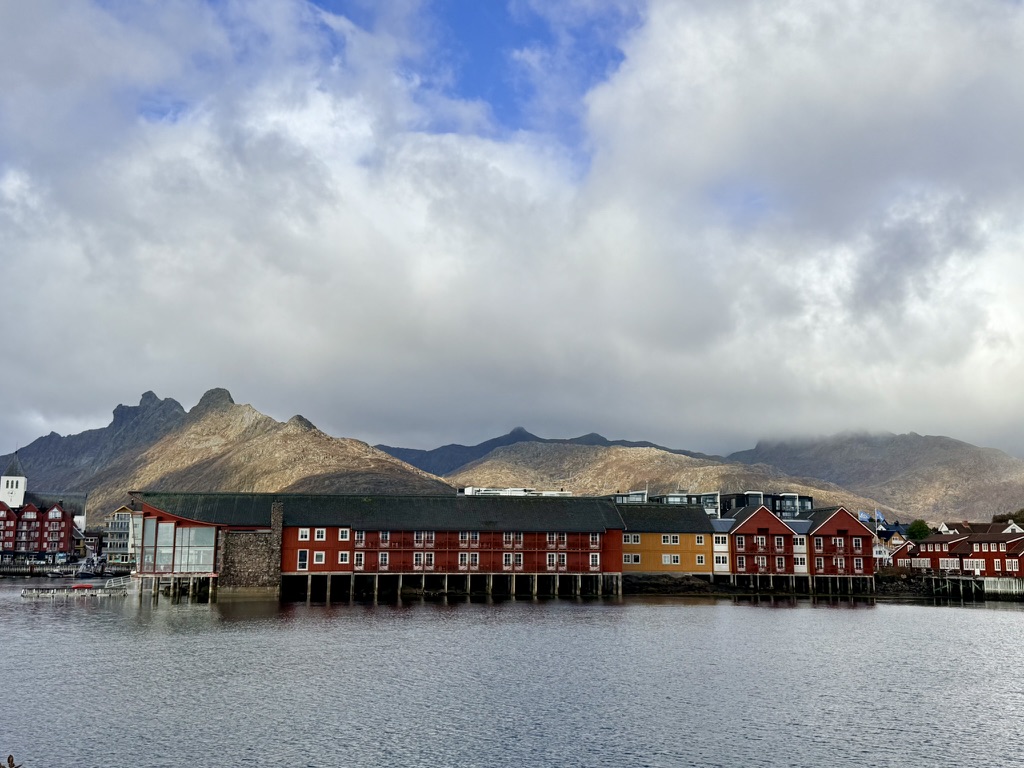
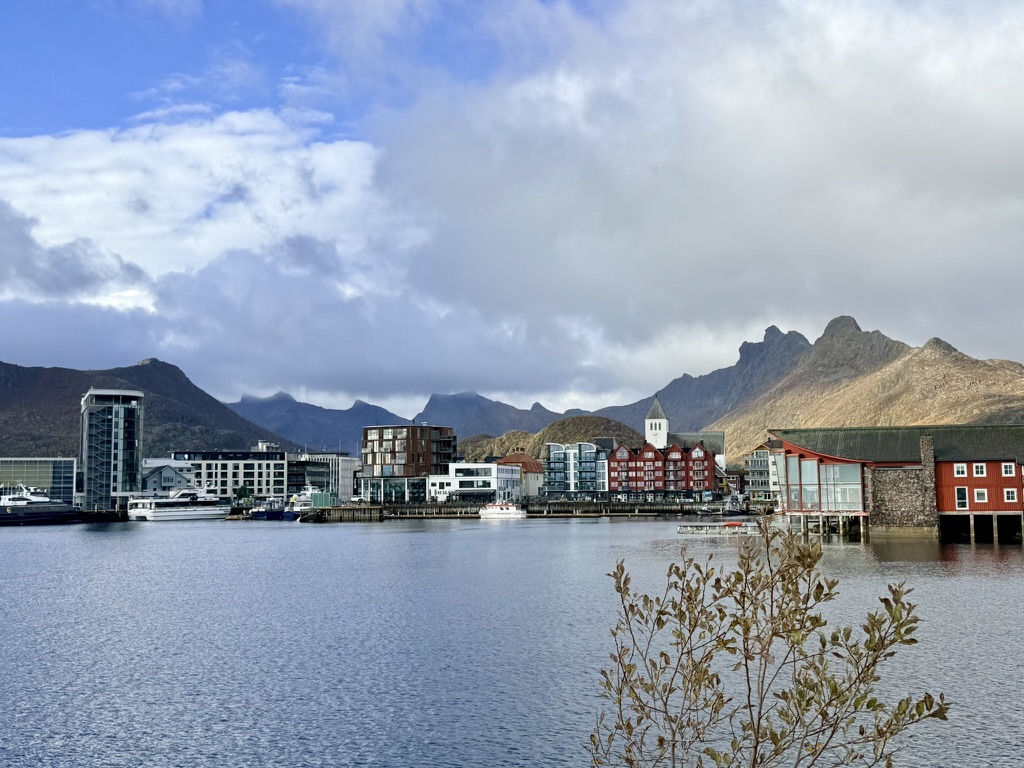
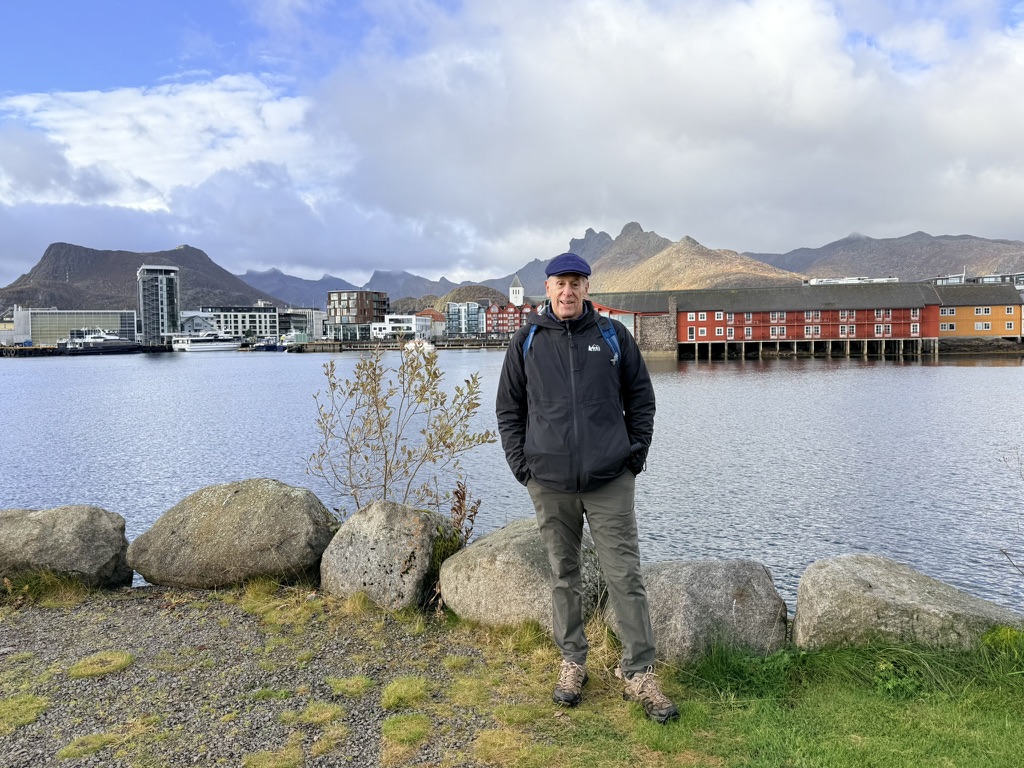
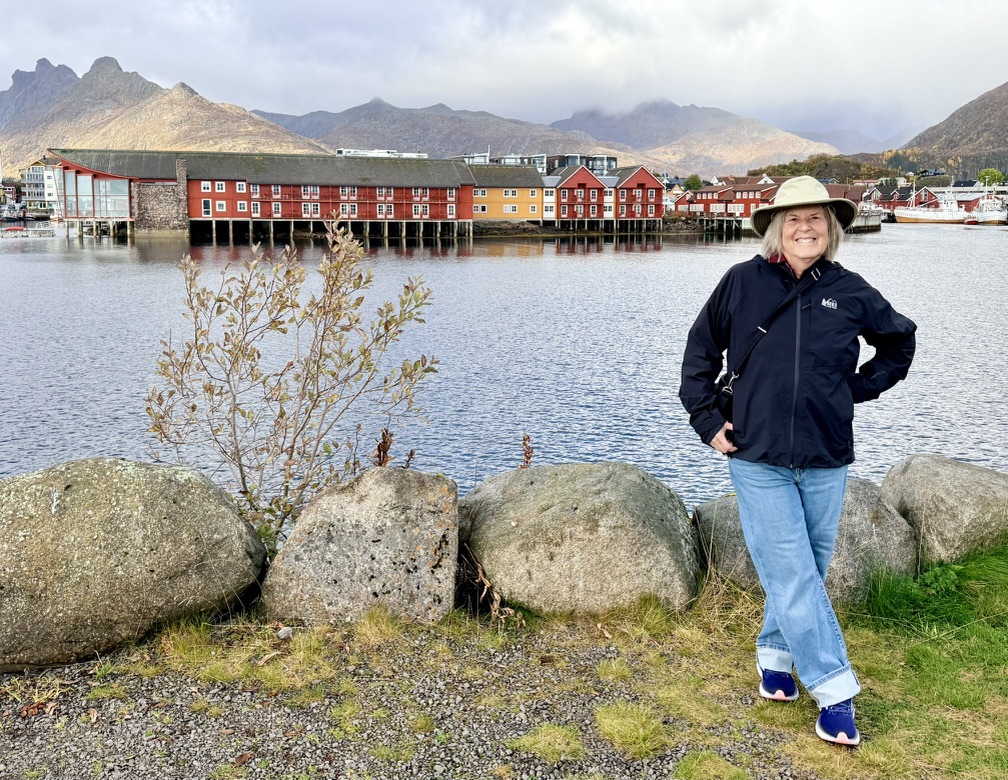
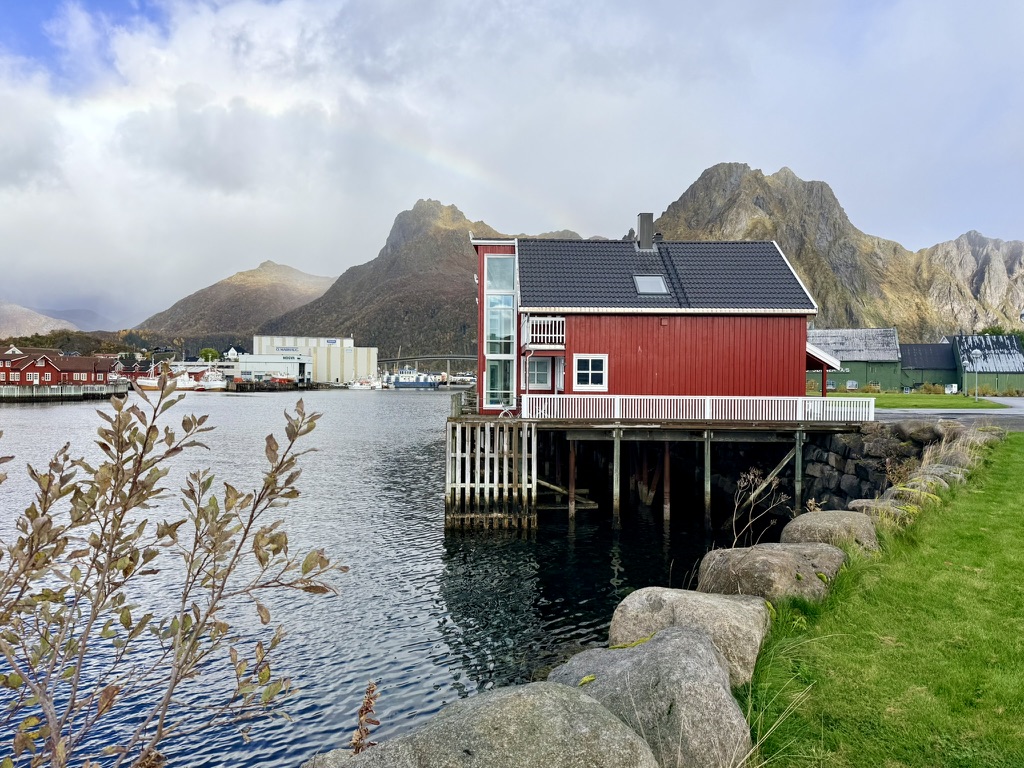
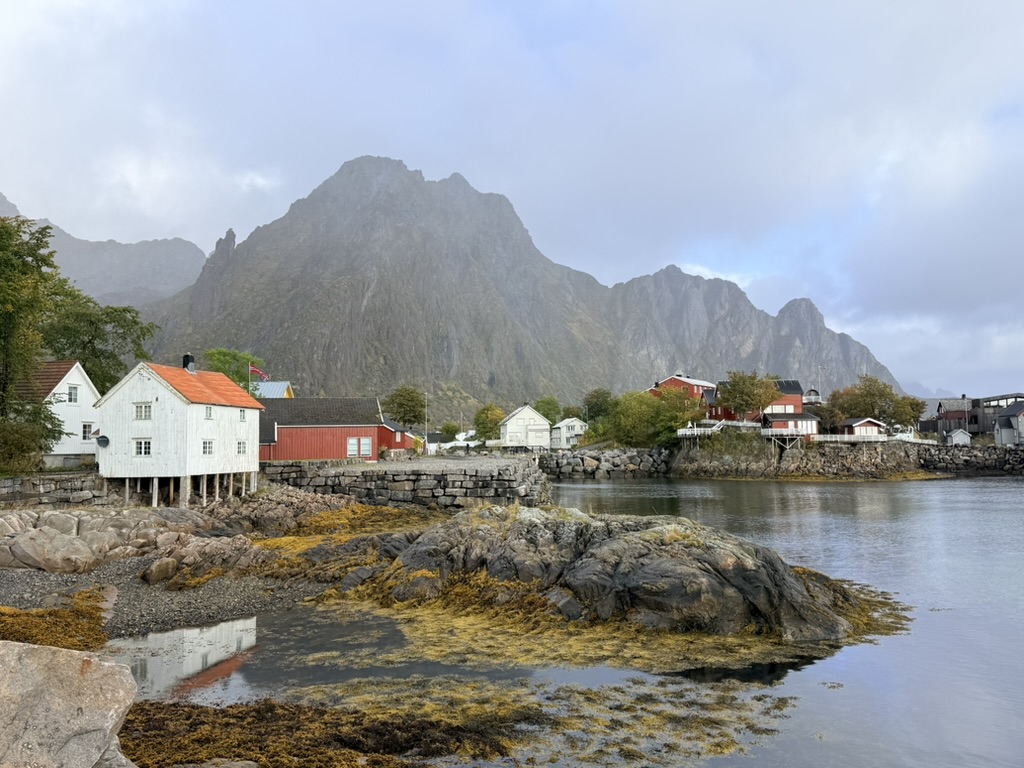
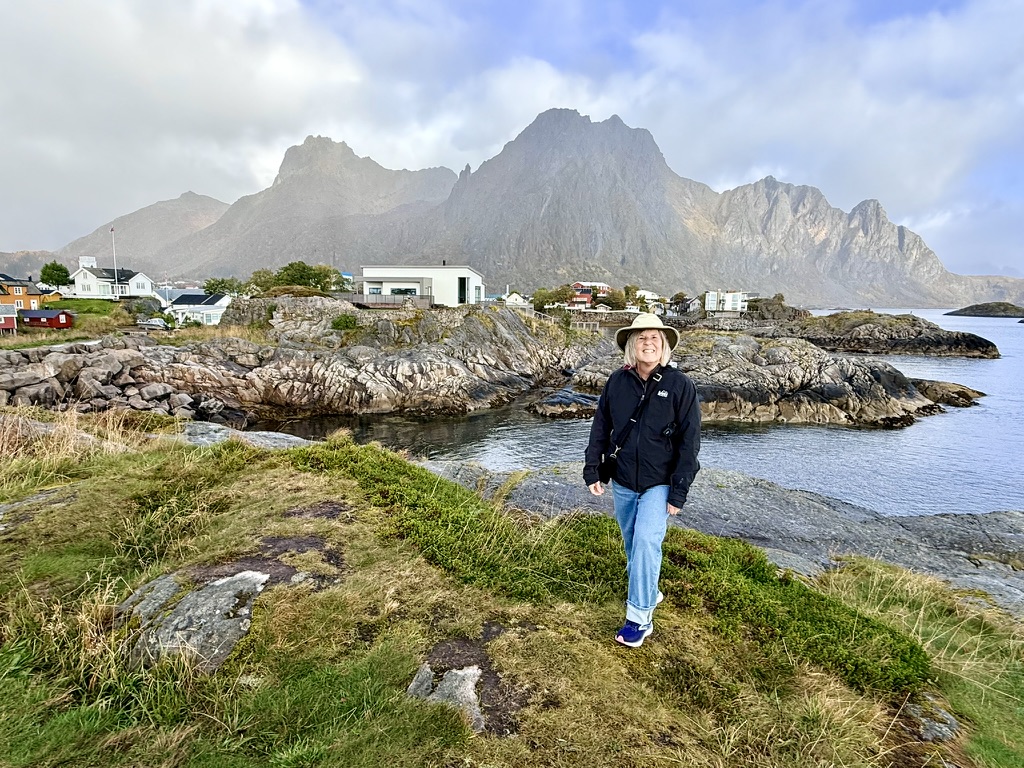
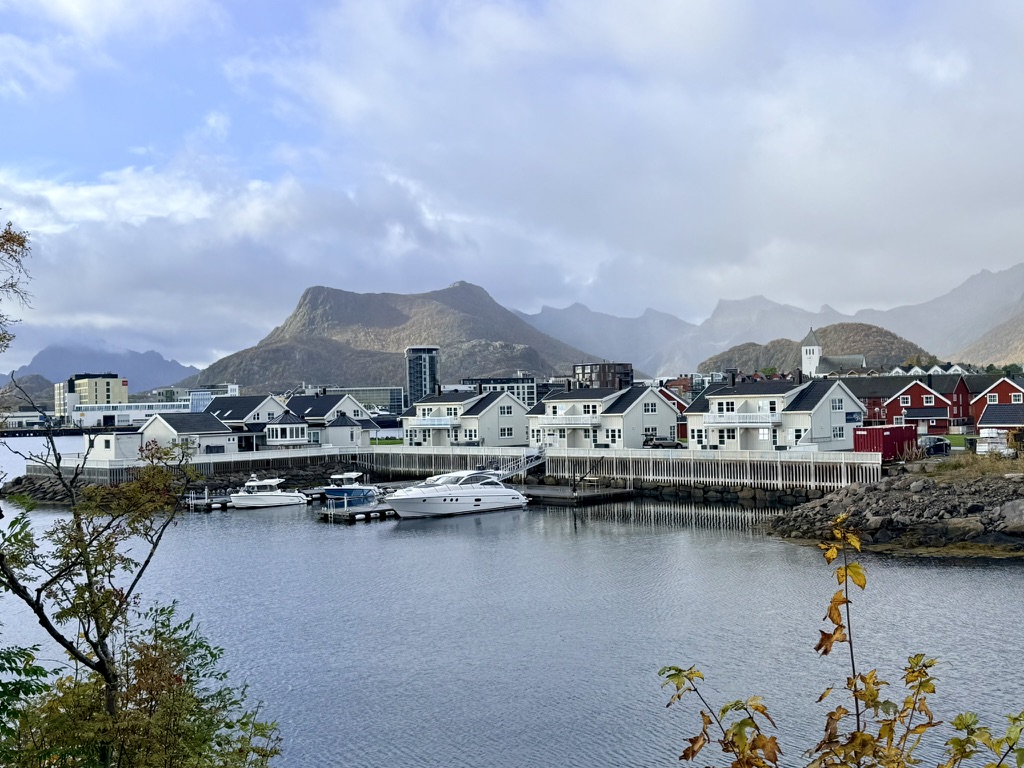
Monday, September 21: We took a long walk today from Svolvær harbor and across a bridge to Svinøya Island.
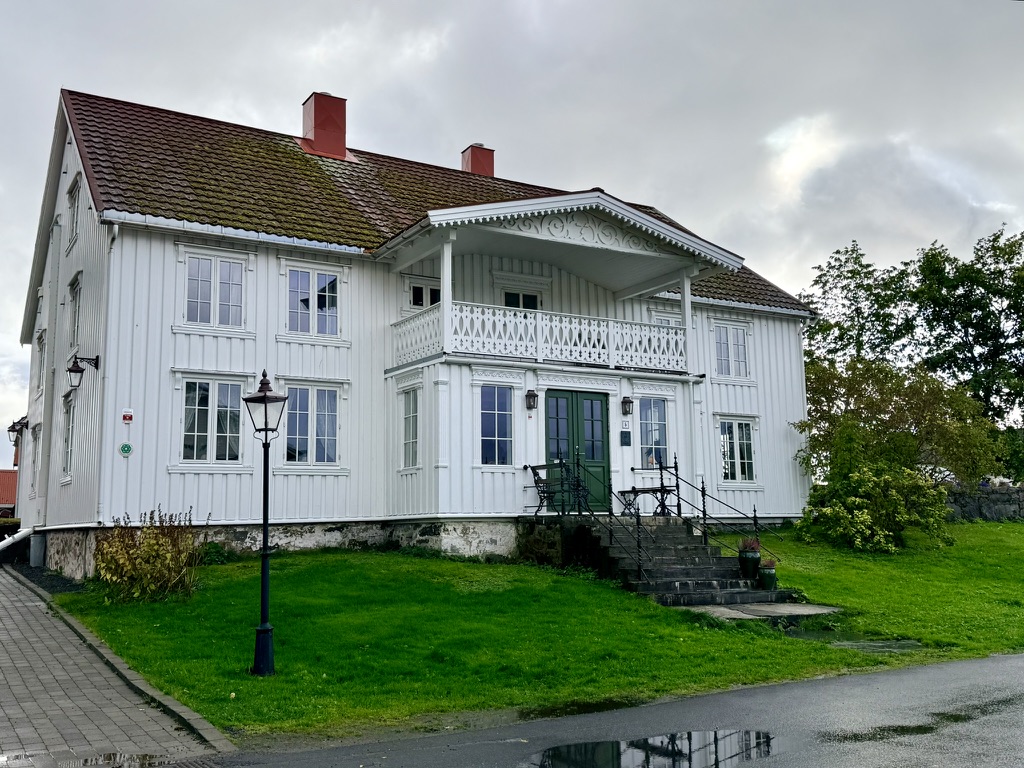
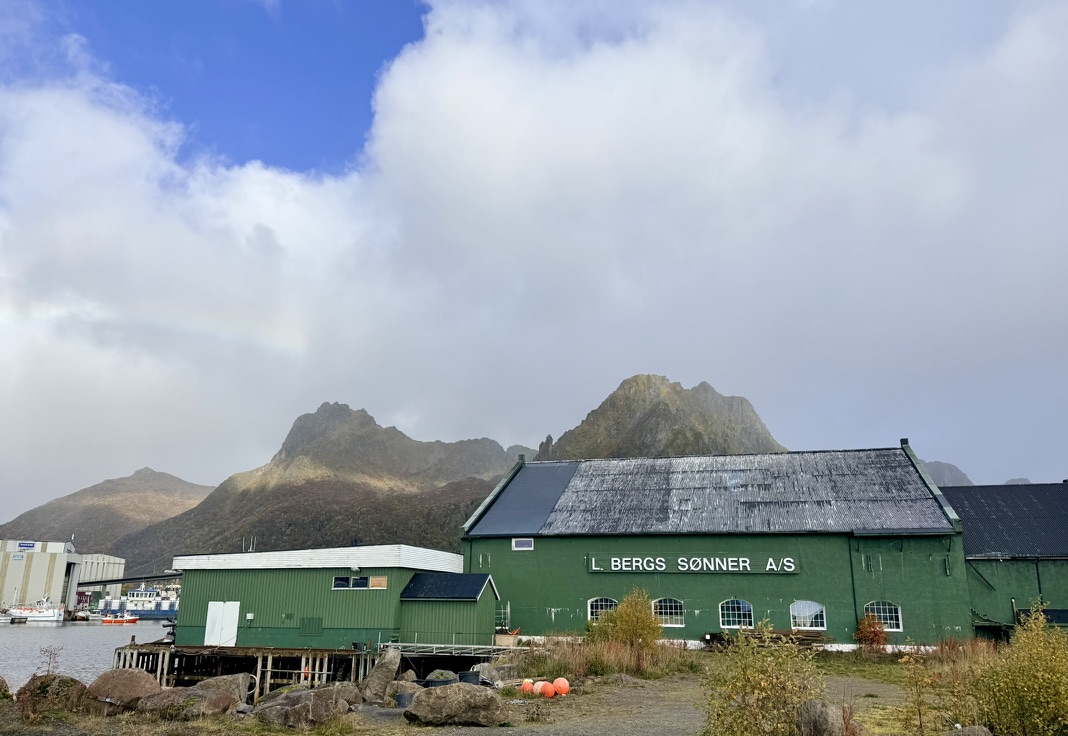
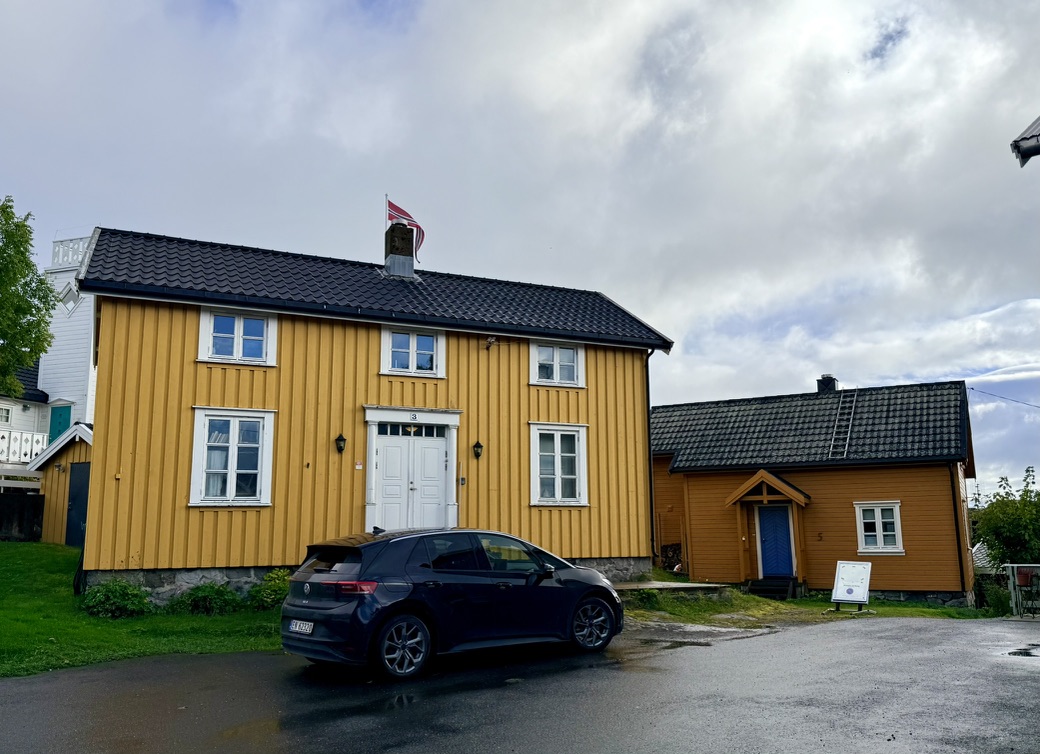
In 1828, local merchant Gunnar Berg bought half of what was then a small fishing settlement known as Svinøya with about 60 inhabitants. At the time, Svolvær already played a vital role in the thriving Lofoten cod fisheries. Berg built wharves and his main house, and quickly became instrumental in shaping the area’s economic and social life. What began as a cluster of fishing cabins and wharves gradually evolved into a bustling center of maritime activity.
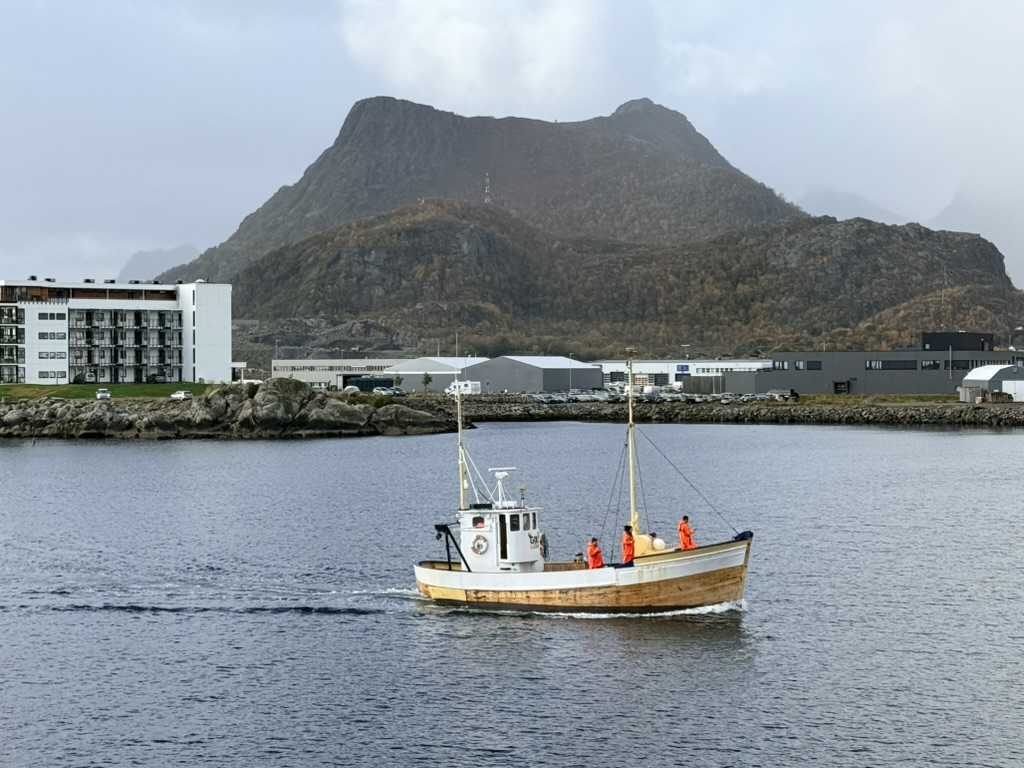
While many coastal towns have shifted toward tourism, Svinøya remains a living fishing village. The fisheries are still central to the local way of life, with boats coming and going, fish being hauled in, and racks of stockfish drying in the open air.
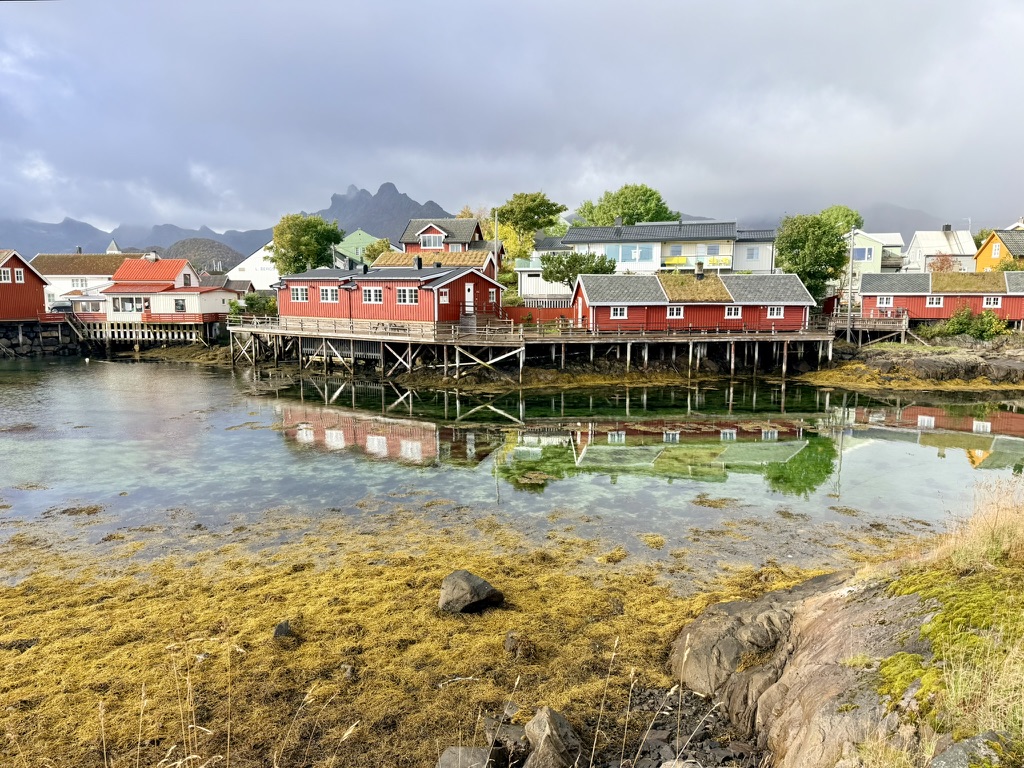
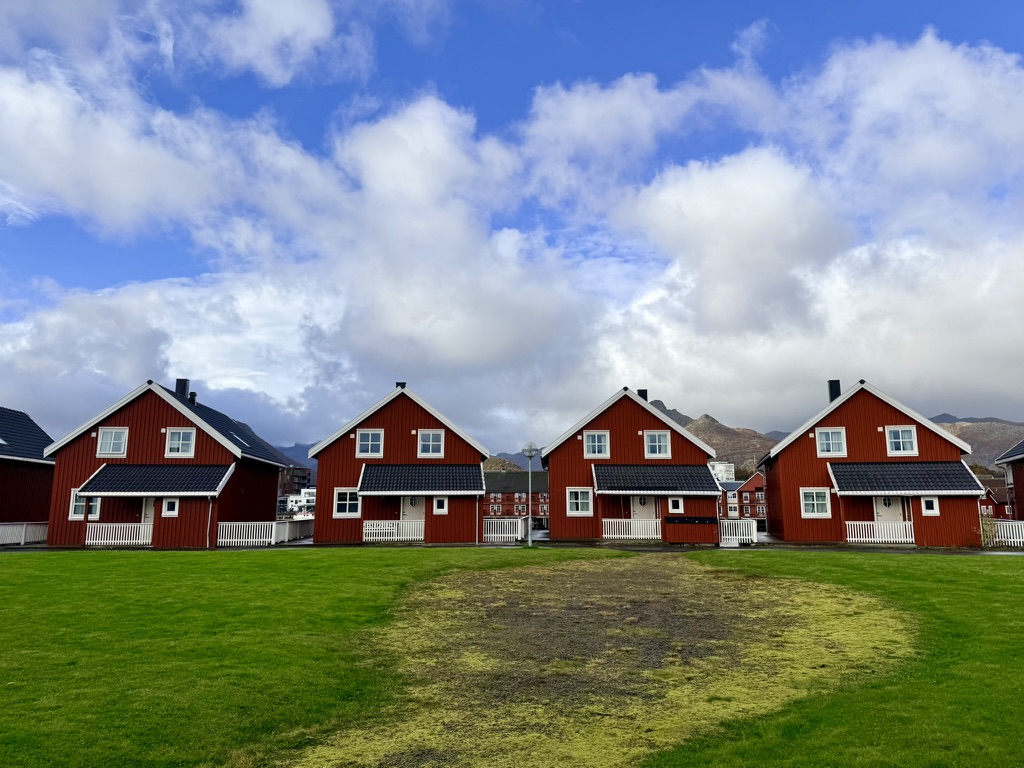
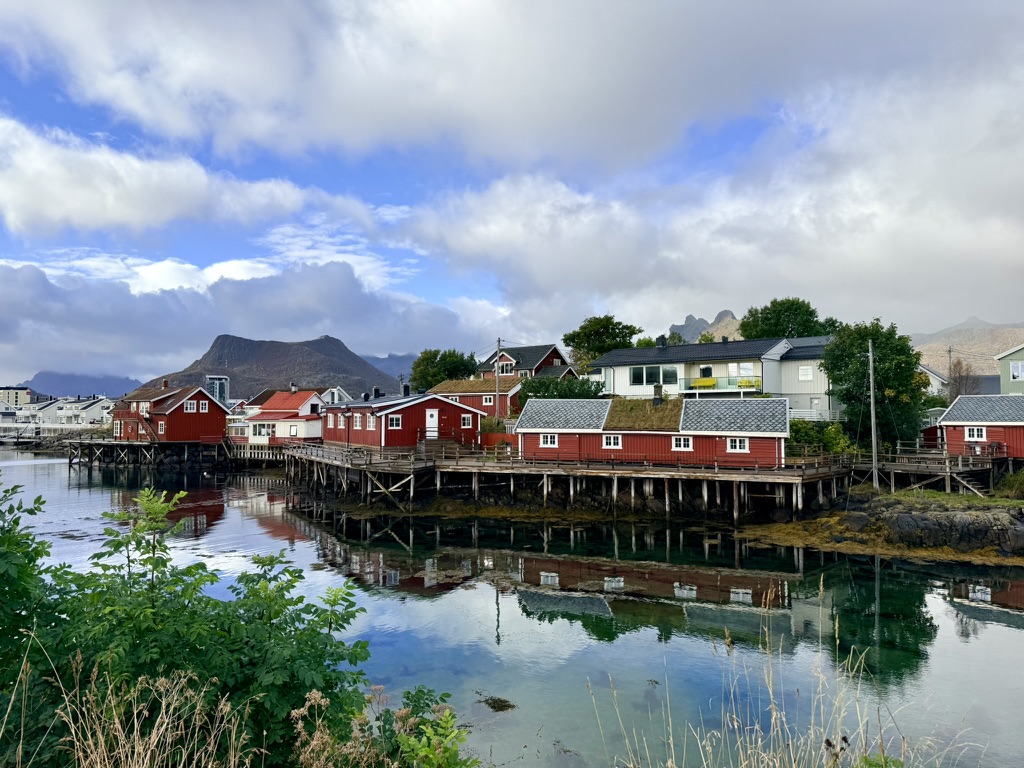
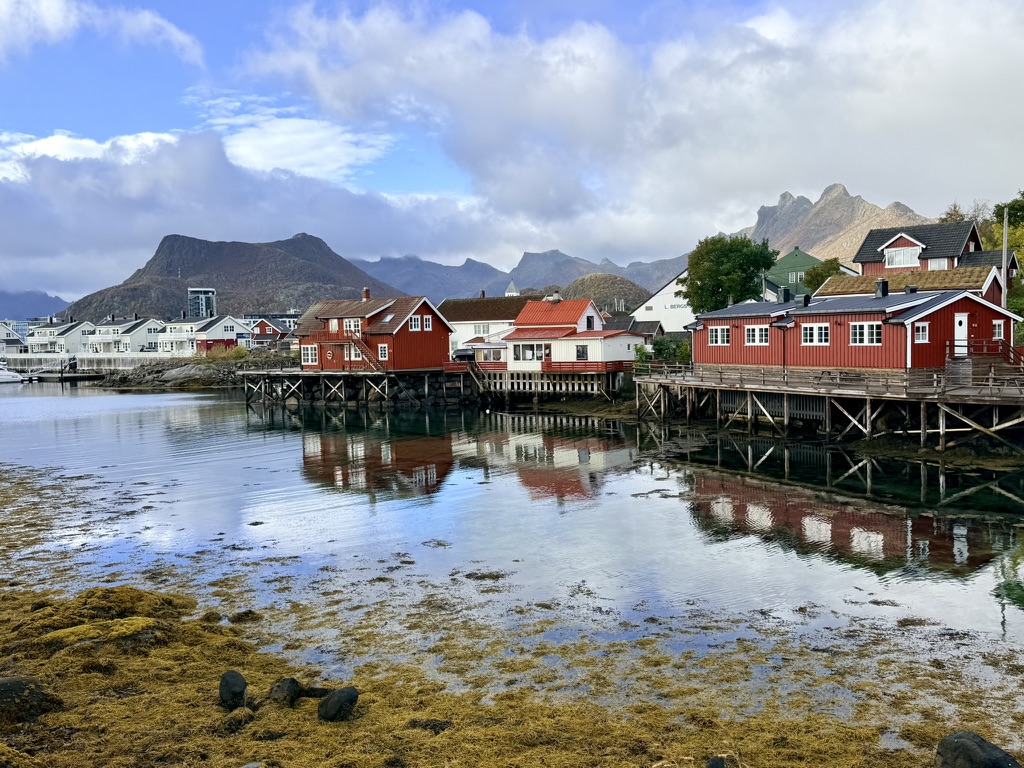
On our walk through Svinøya, we saw numerous rorbuer, or fisherman’s huts. Some are new creations mimicking the old rorbuer, and some are the original rorbuer that have been renovated. Tourists can rent either the newer versions or the originals when they visit.
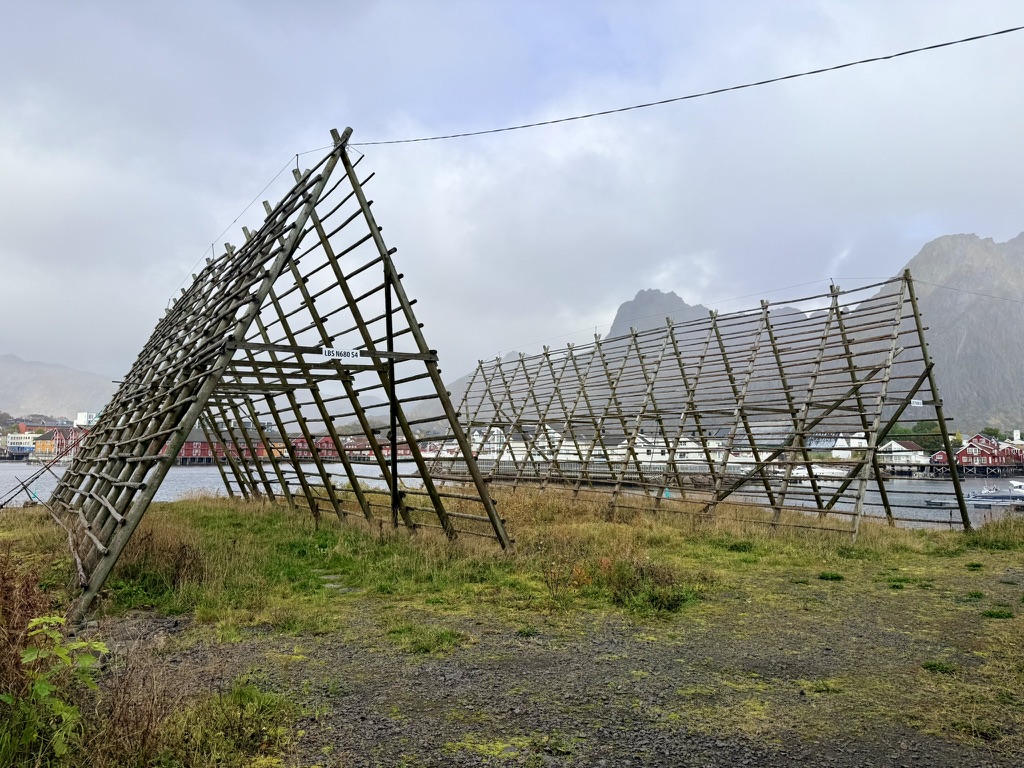
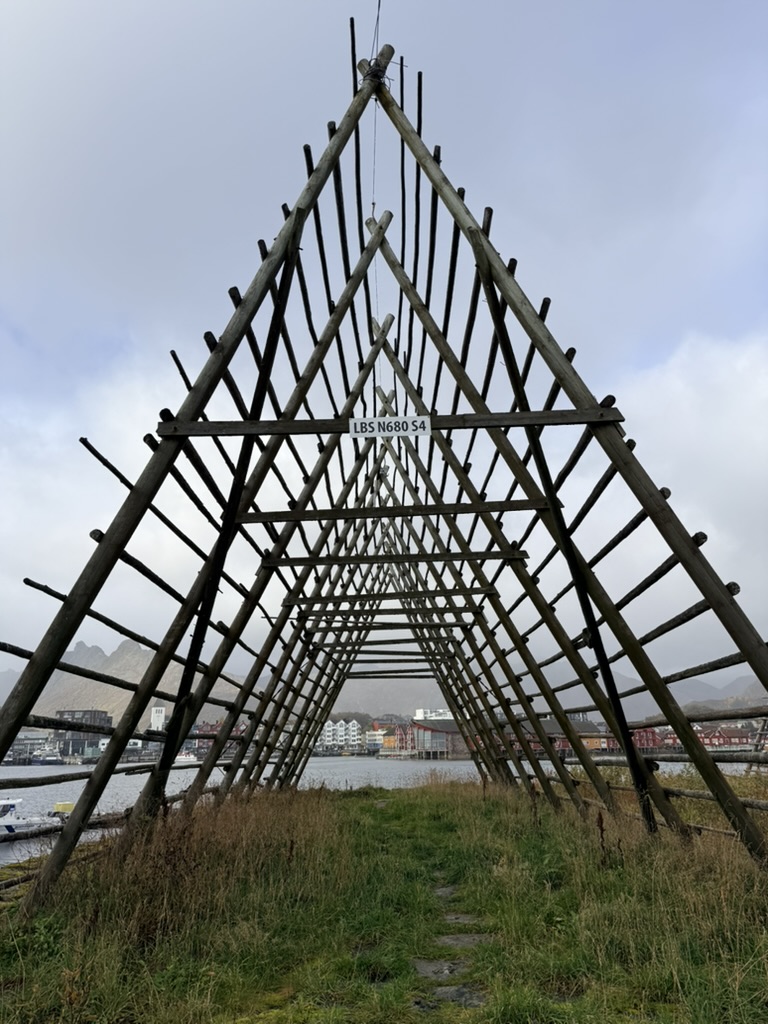
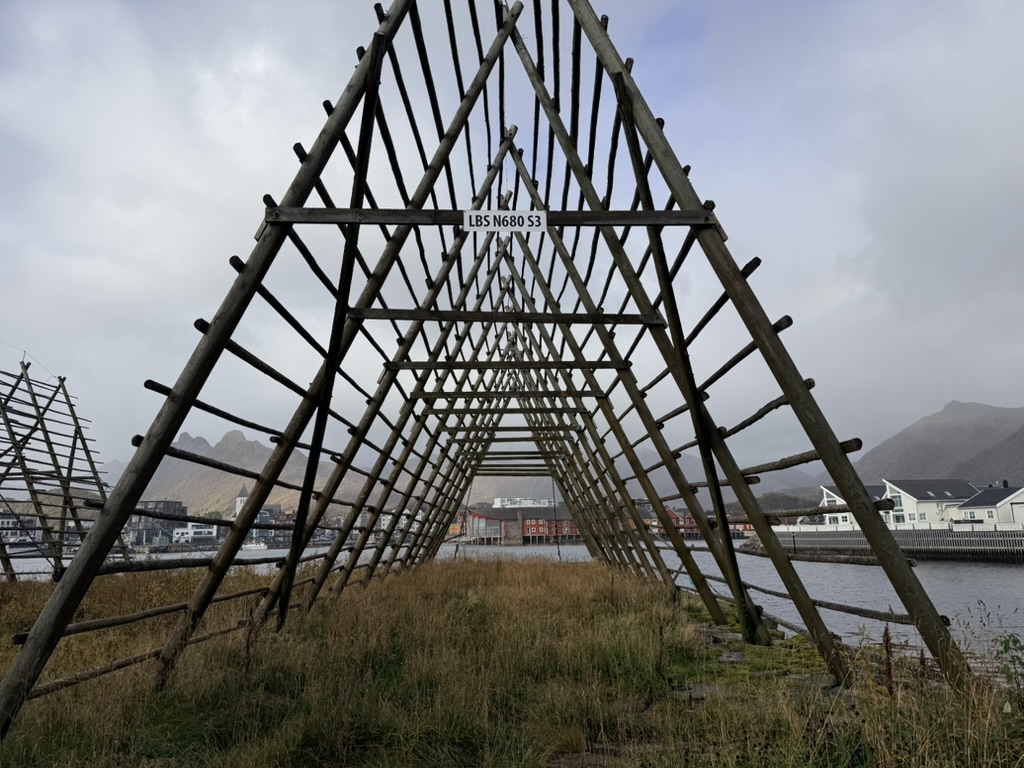
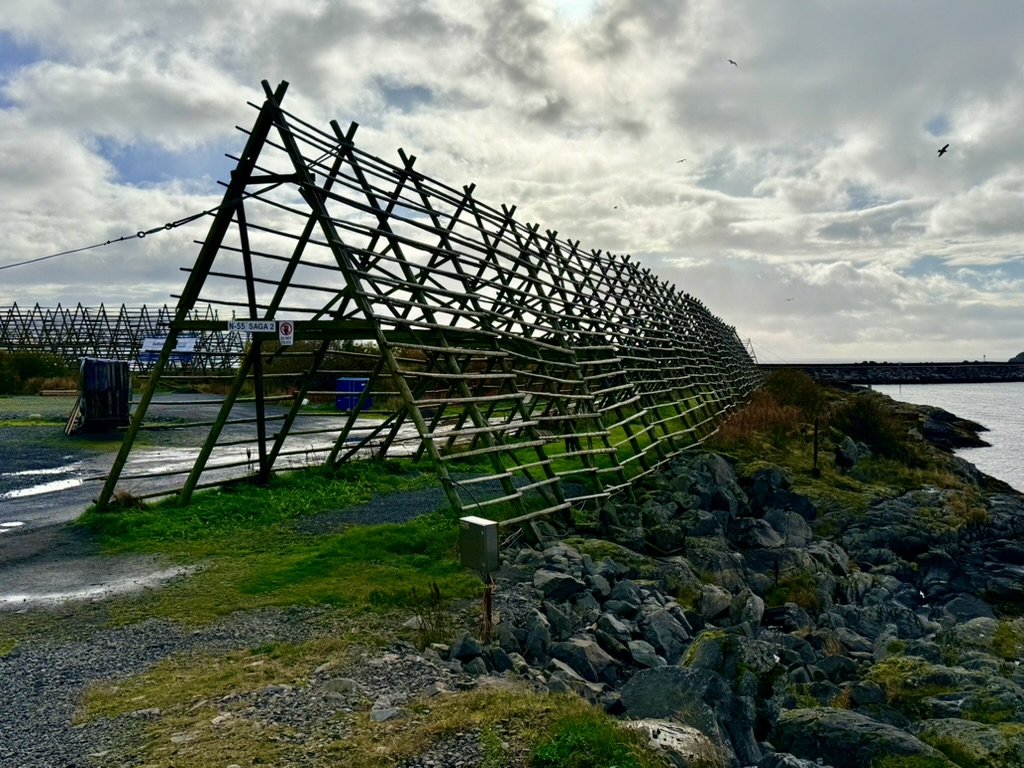
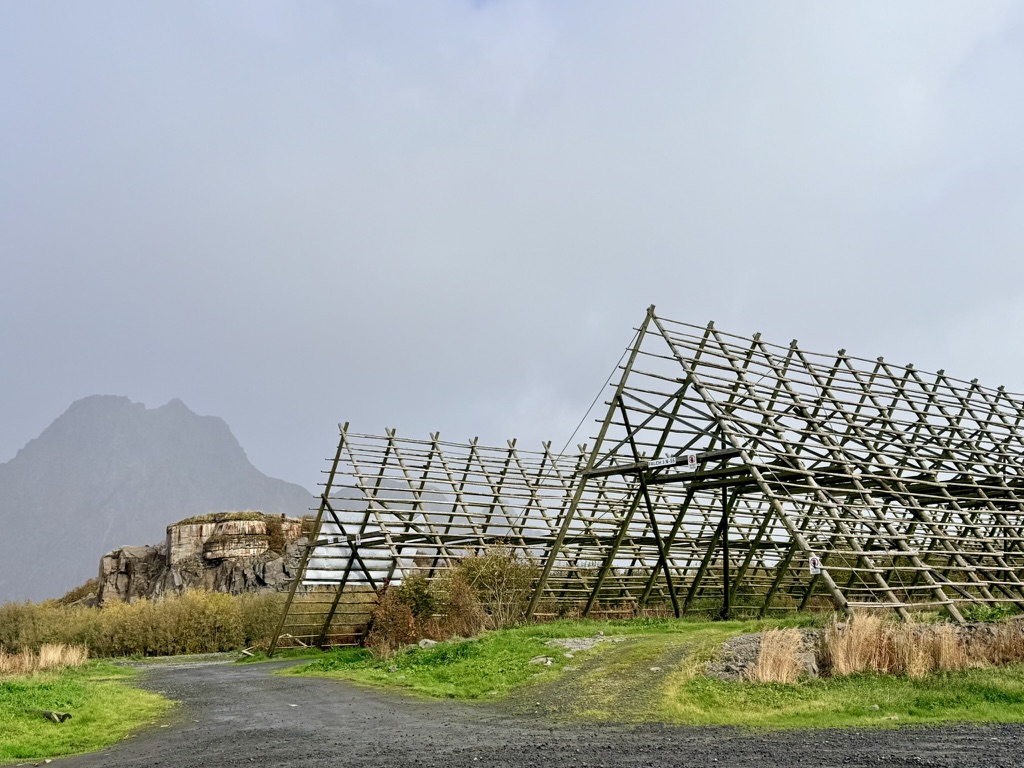
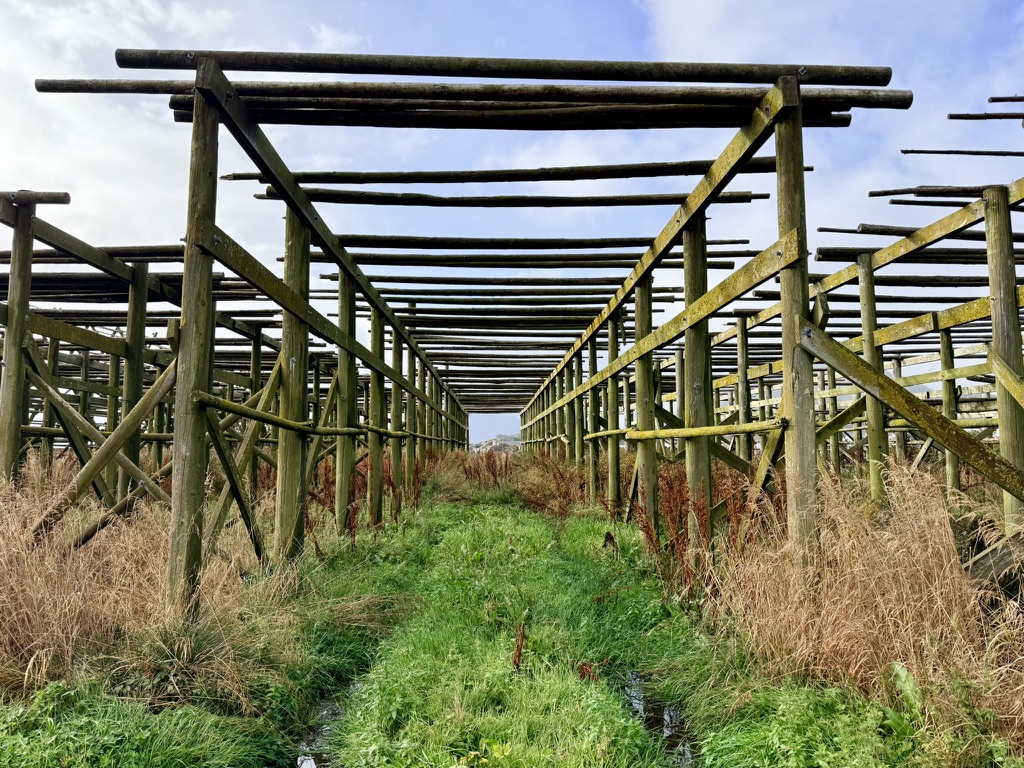
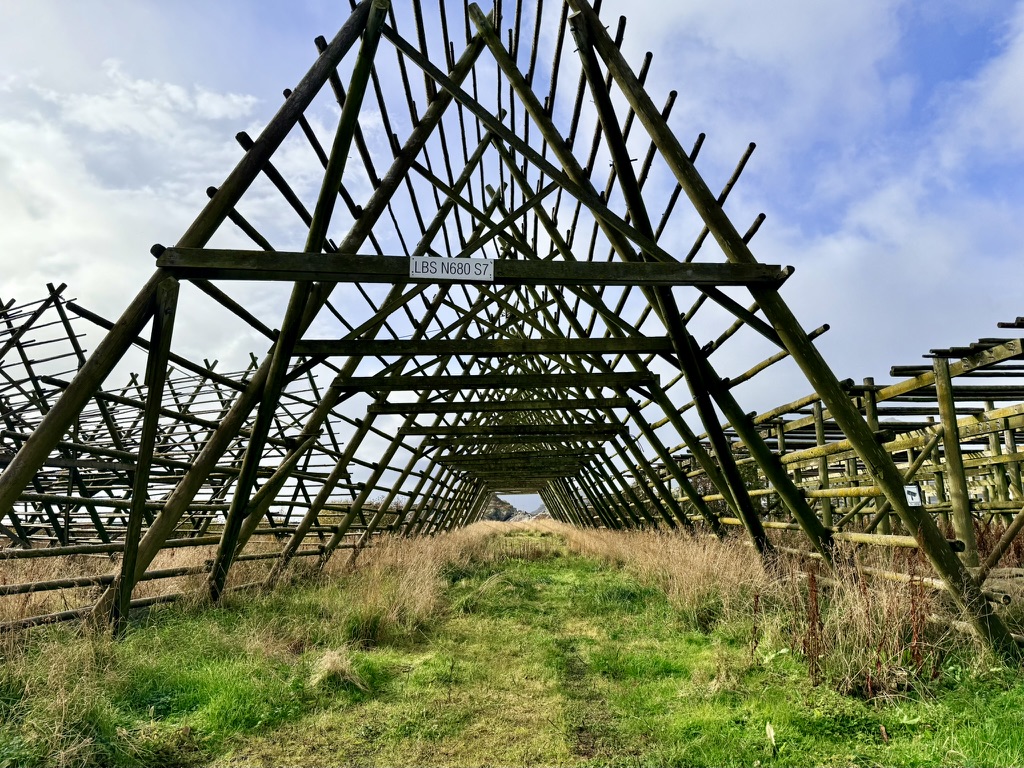
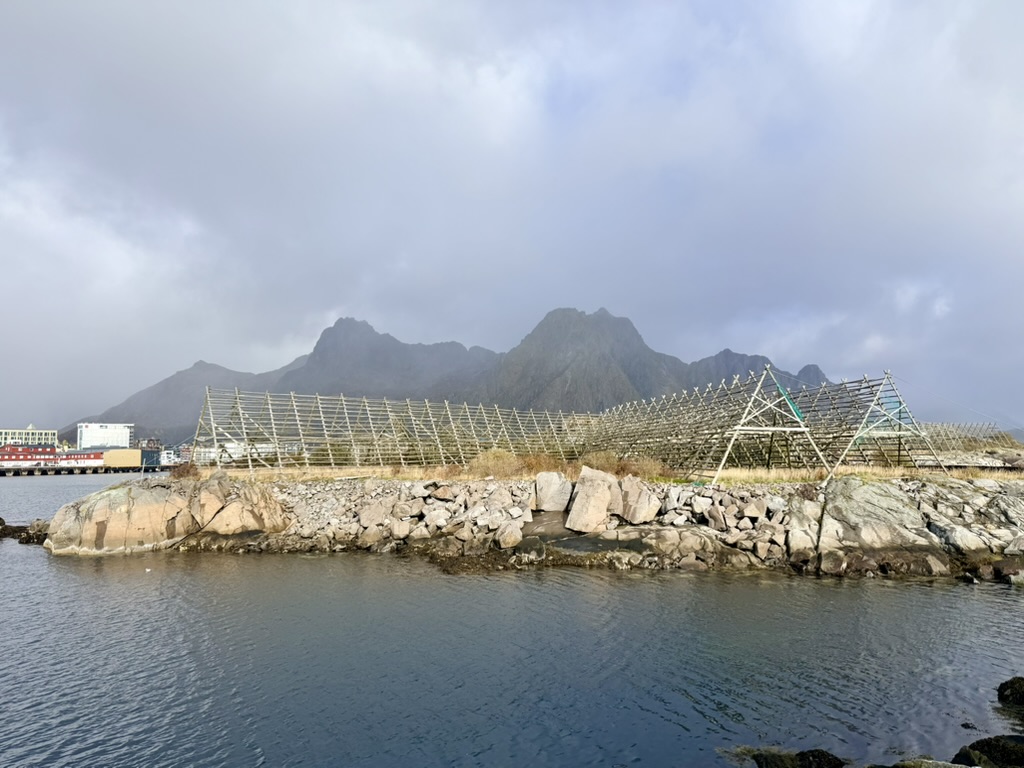
At the far end of the island are numerous wooden racks (hjell) on which Arctic cod (skrei) are dried. It becomes traditional stockfish (tørrfisk), which is naturally air-dried by the cold Arctic wind and sea breeze without any added salt or smoke. Fish are traditionally hung from January to April when the weather conditions in Lofoten are best for curing. Cod bodies and heads are often hung and dried separately, as they go to different global markets (for example, the stockfish body is popular in Italy, while dried heads are exported to West Africa).
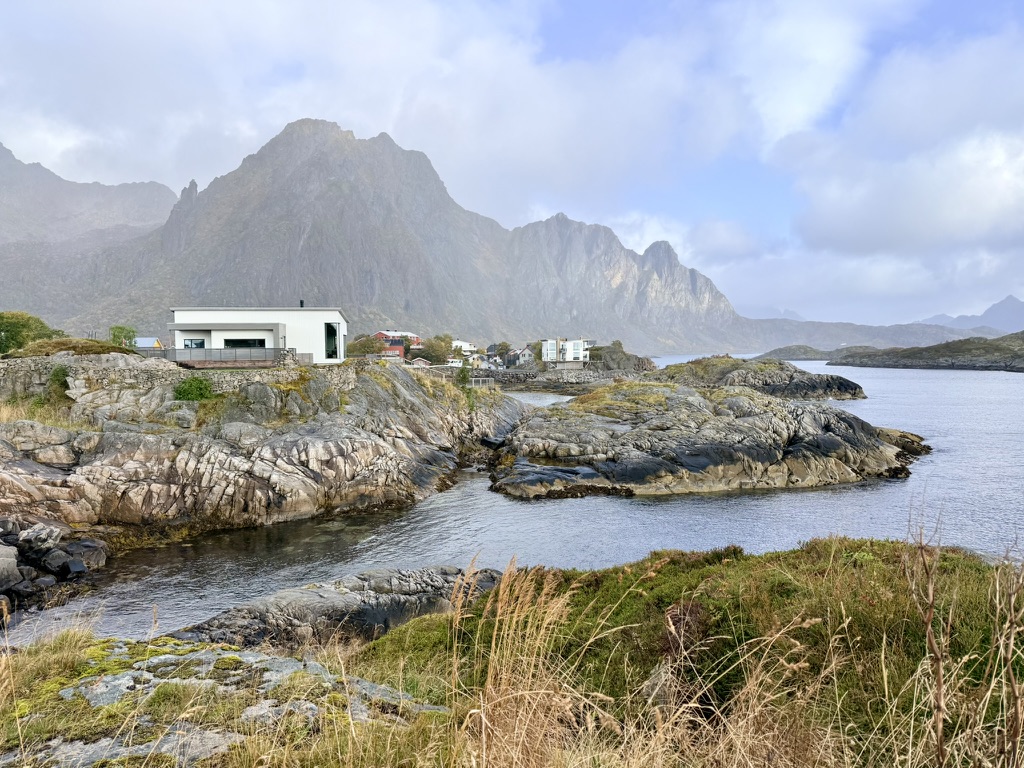
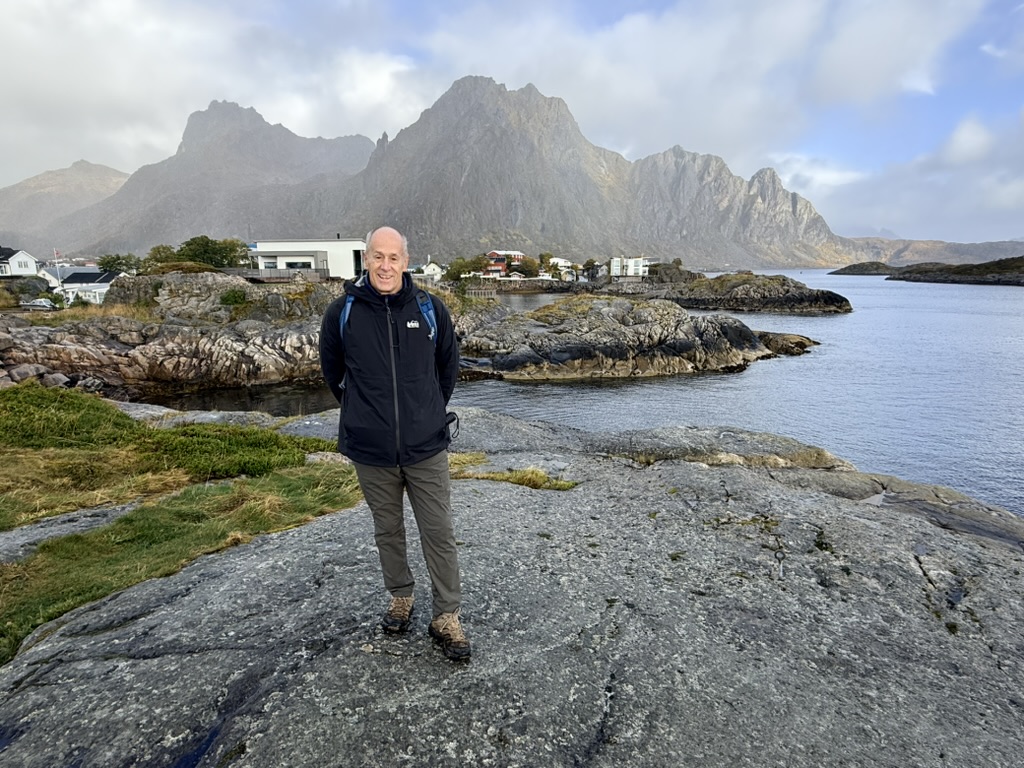
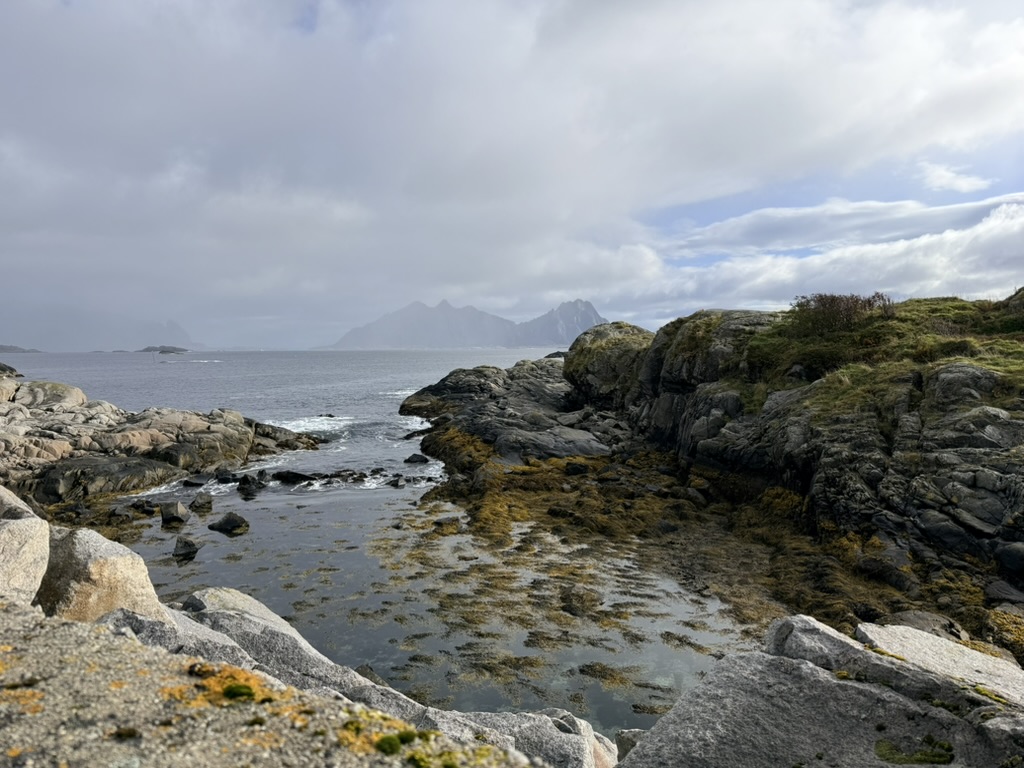
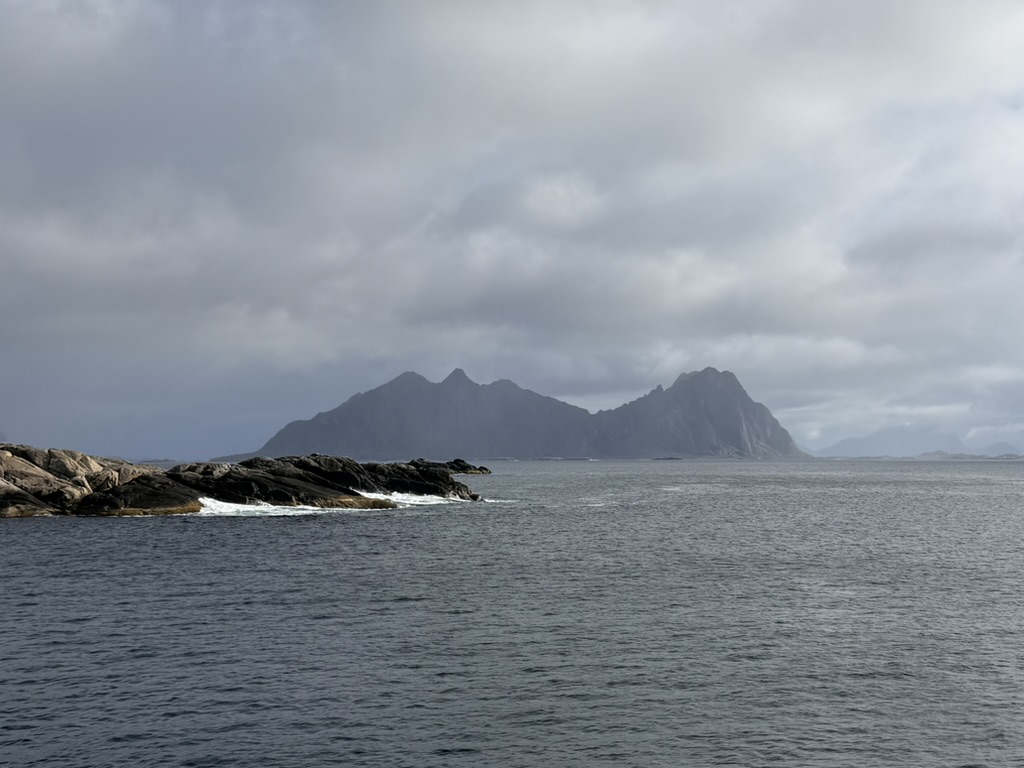
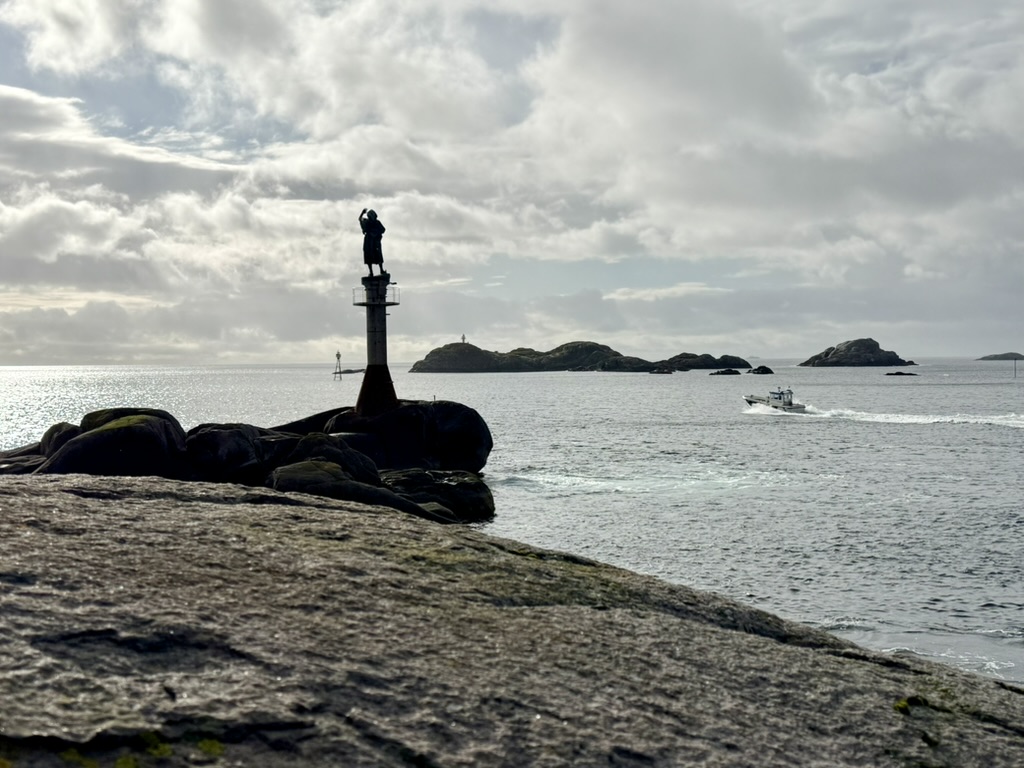
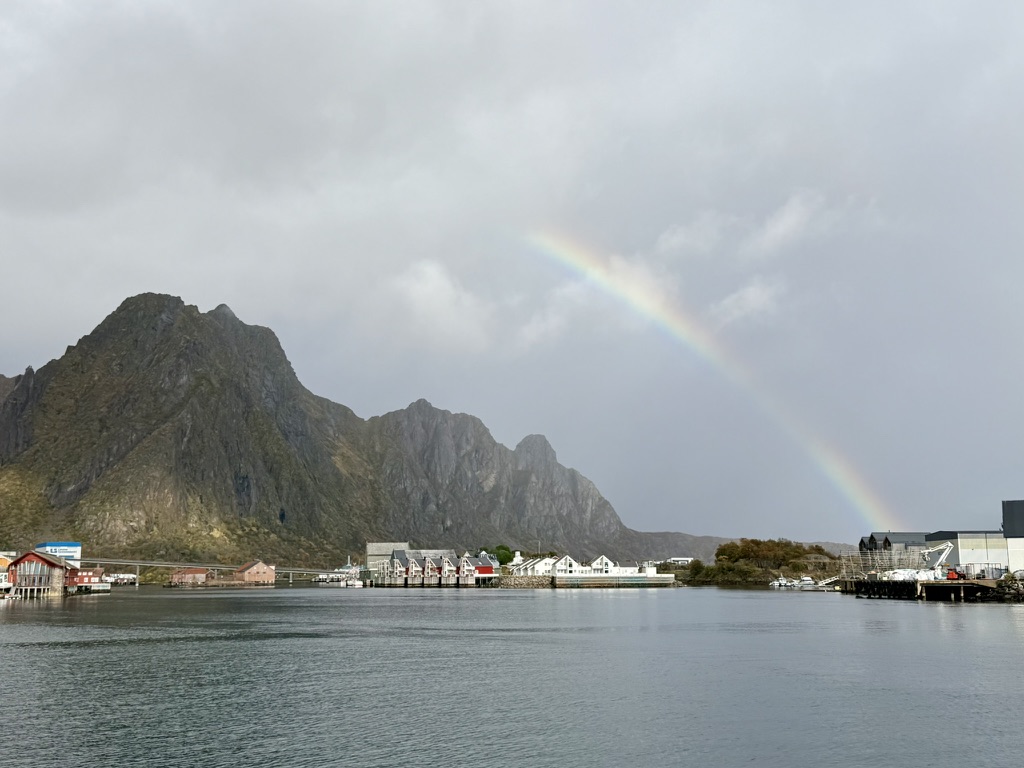
We loved this scenic walk past rorbuer, the now-empty wooden fish-drying racks (September is not the season for cod), and the Lofoten mountains rising out of the sea, periodically accentuated by rainbows.
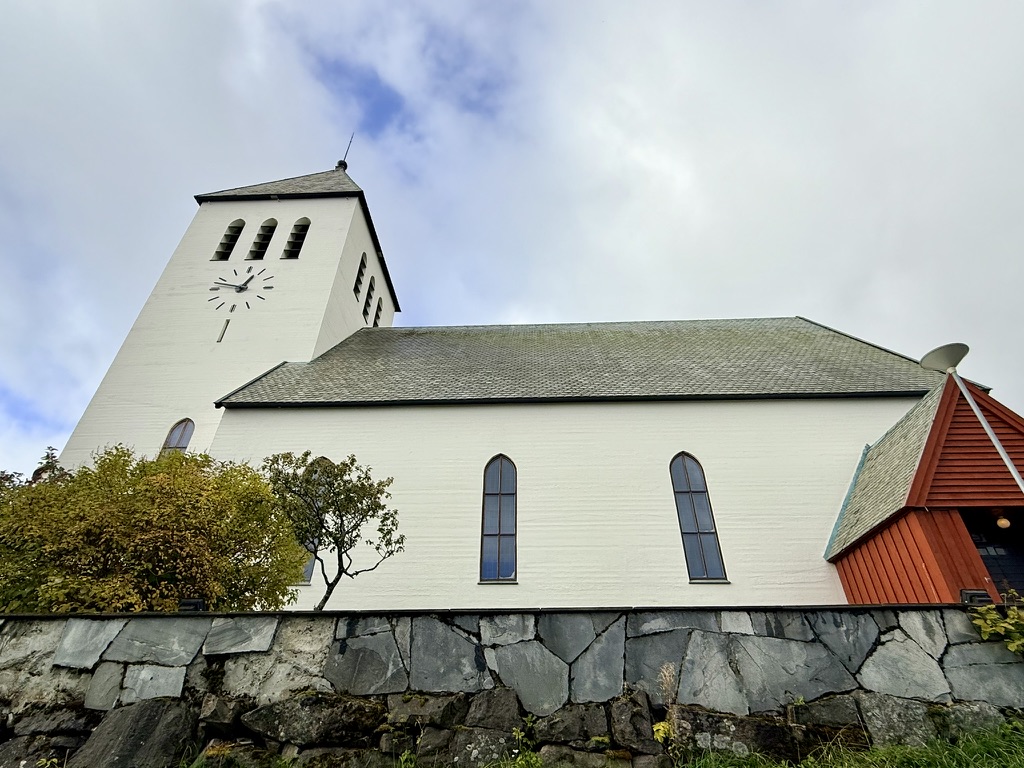
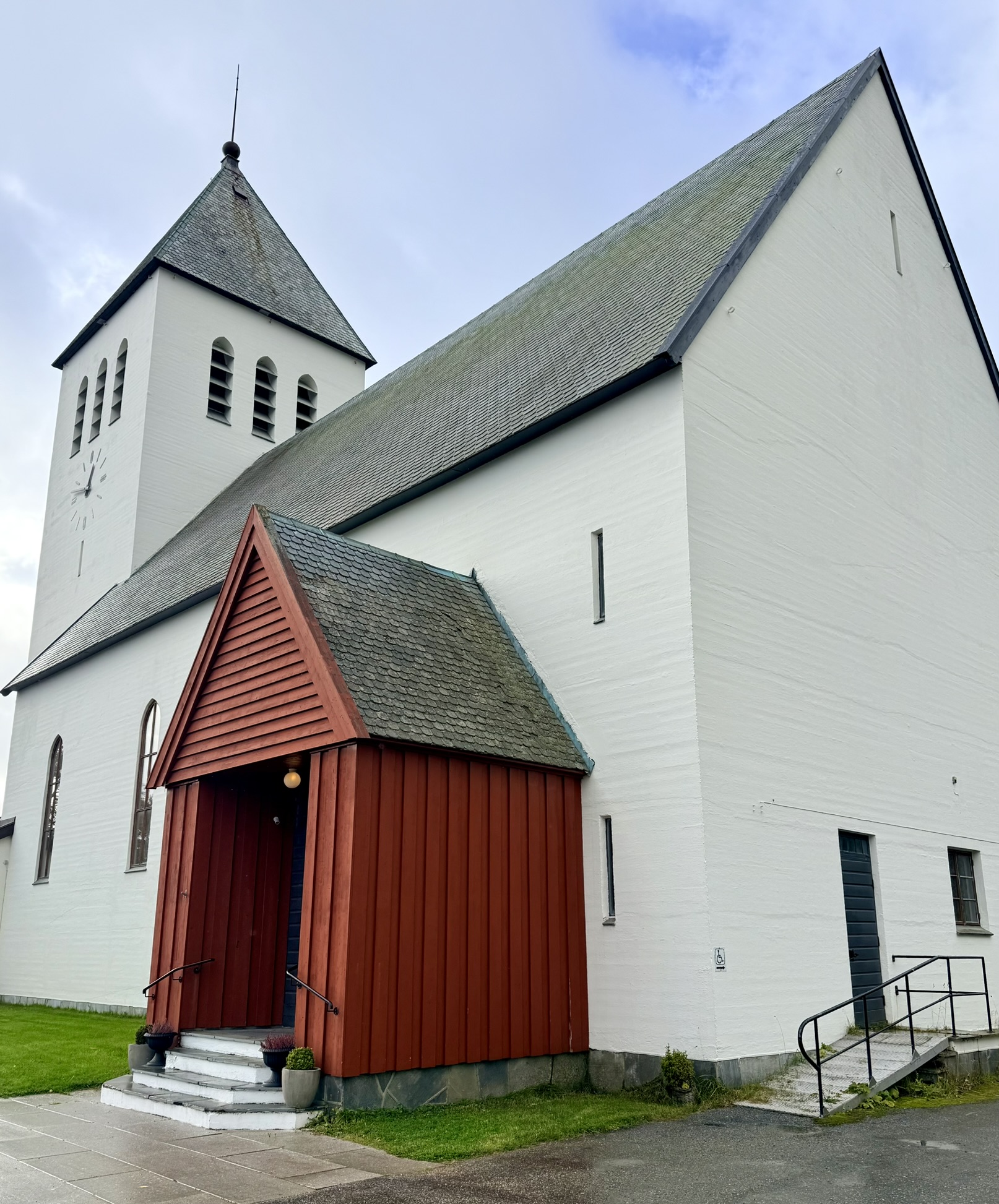
Back in town, we went up close to see the white concrete Svolvær Church, built in a long church style in 1934. It seats about 400 people. Of course it was closed, as are most churches we have tried to visit in Norway.
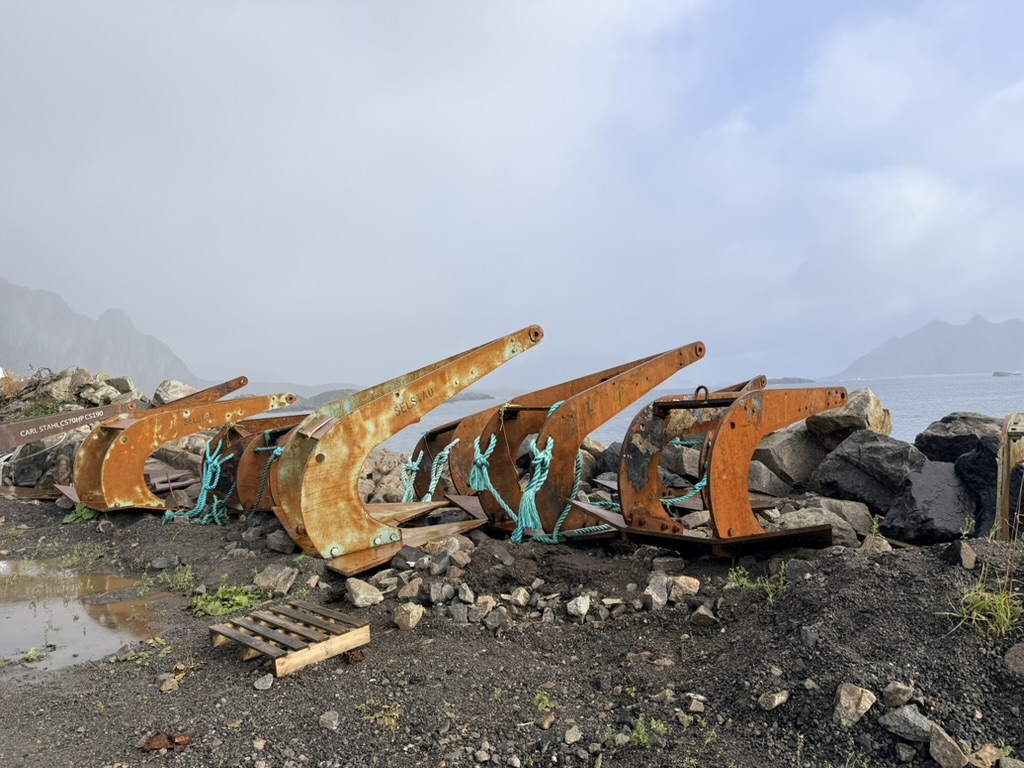

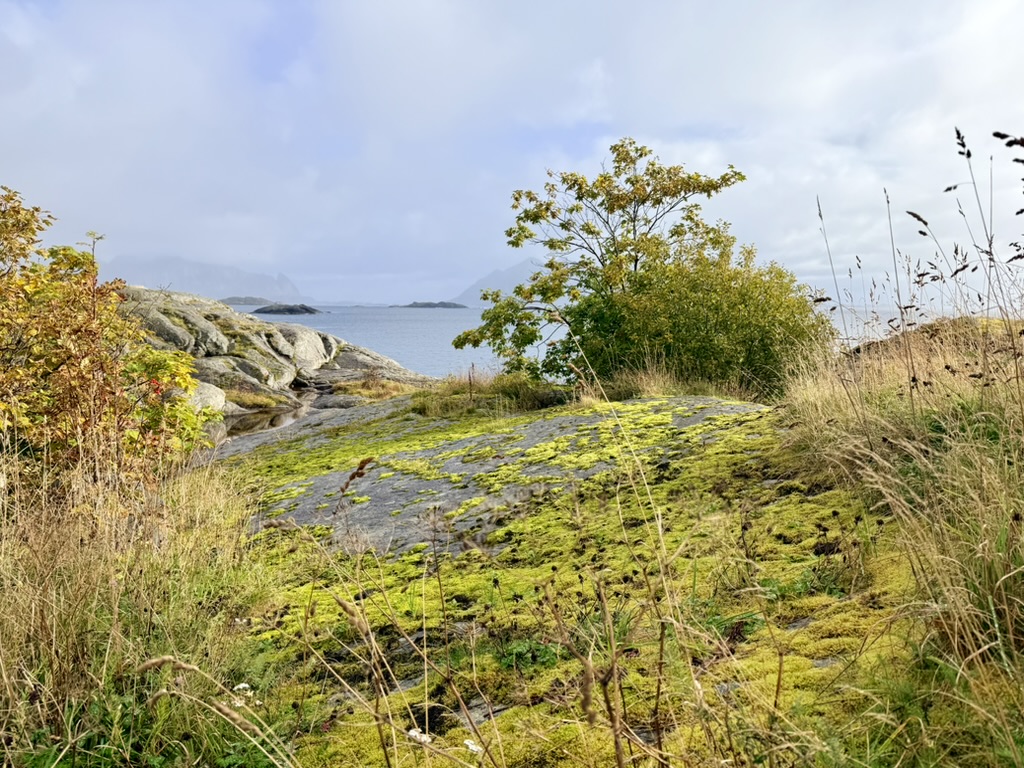
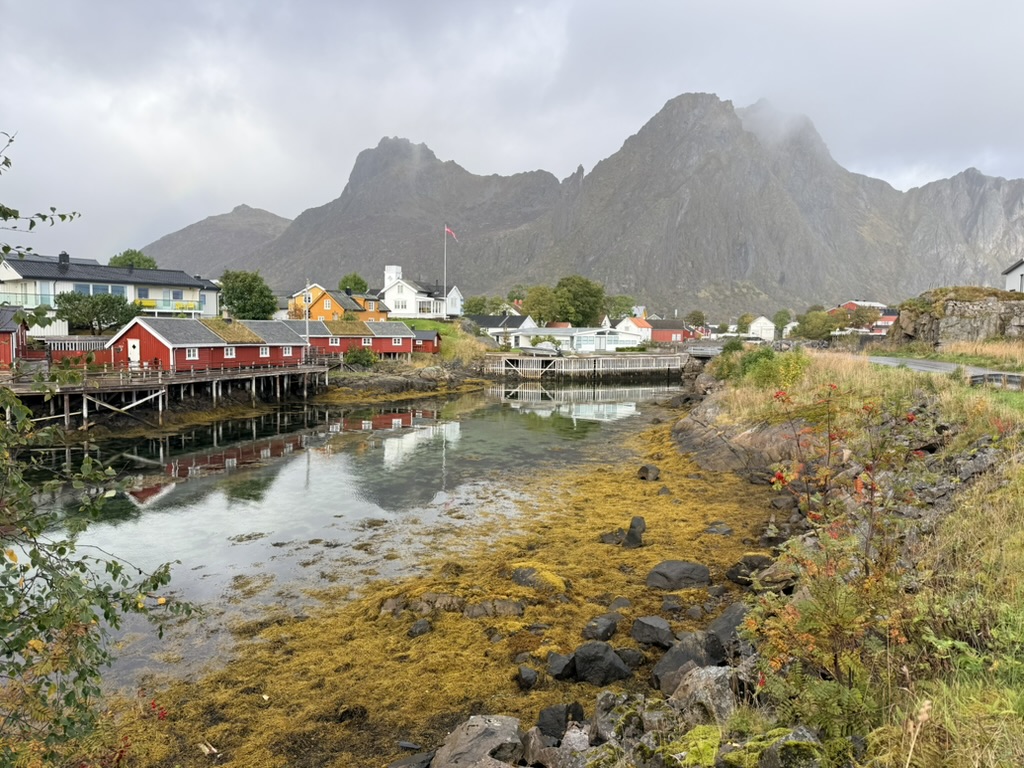
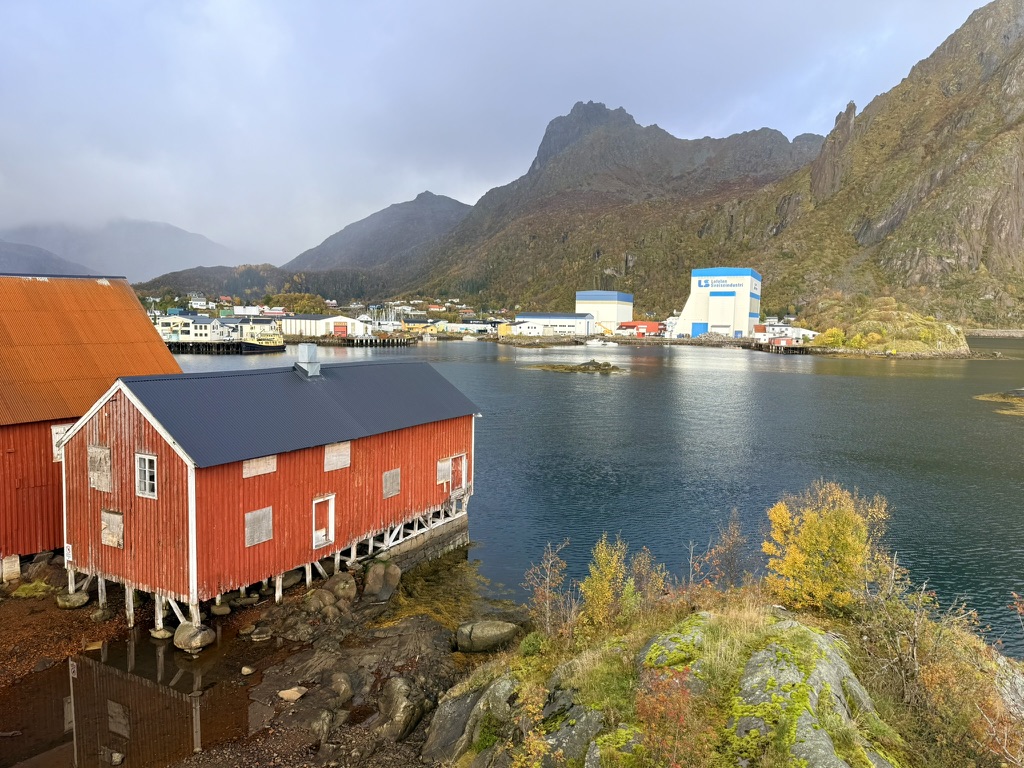
At 6:00, before we went to dinner, Mike went to Sixt to rent a car for 24 hours. This time, we got a blue Toyota Corolla Cross so we could explore the Lofoten Islands on our second day.
Dinner at Bacalao
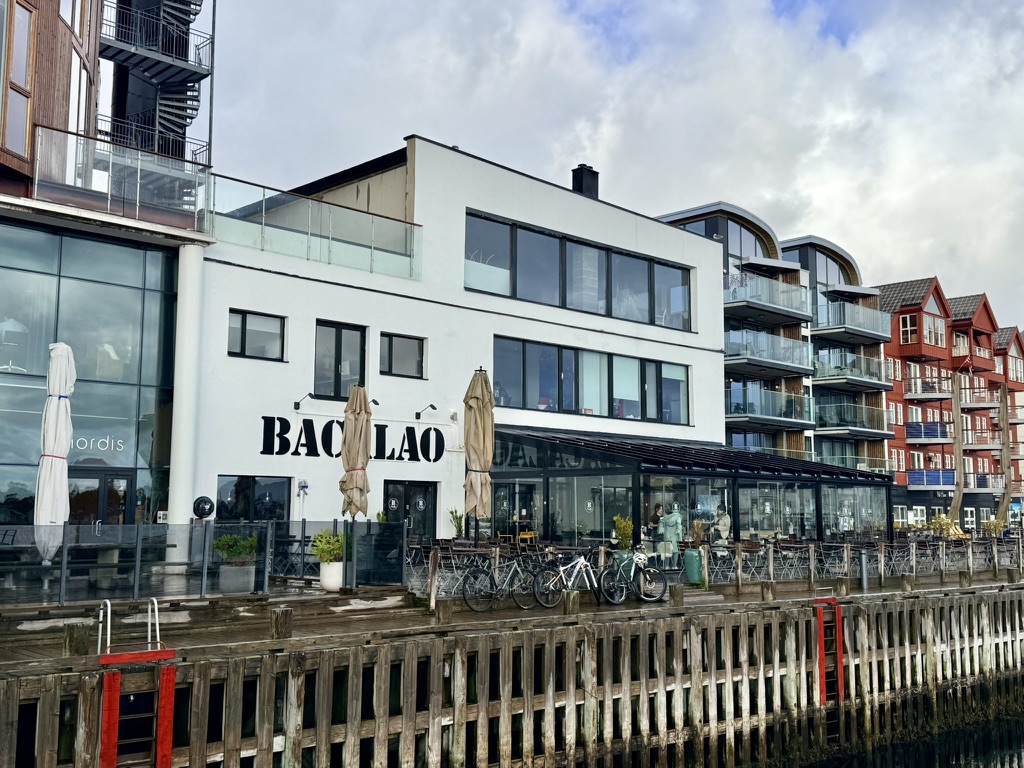
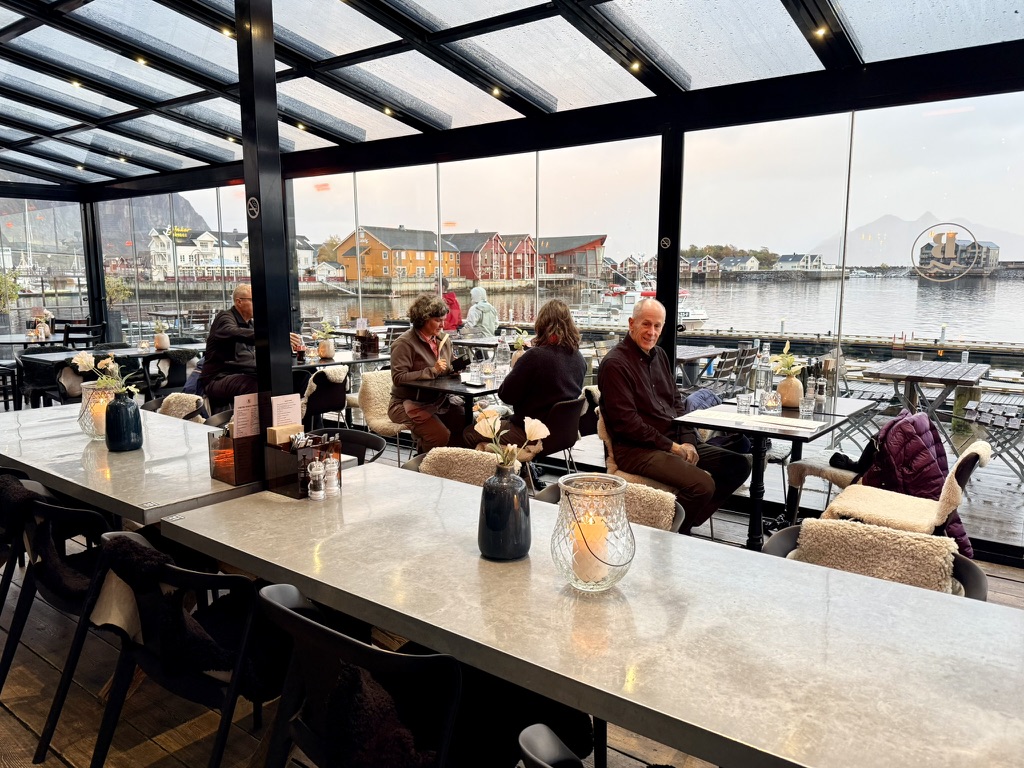
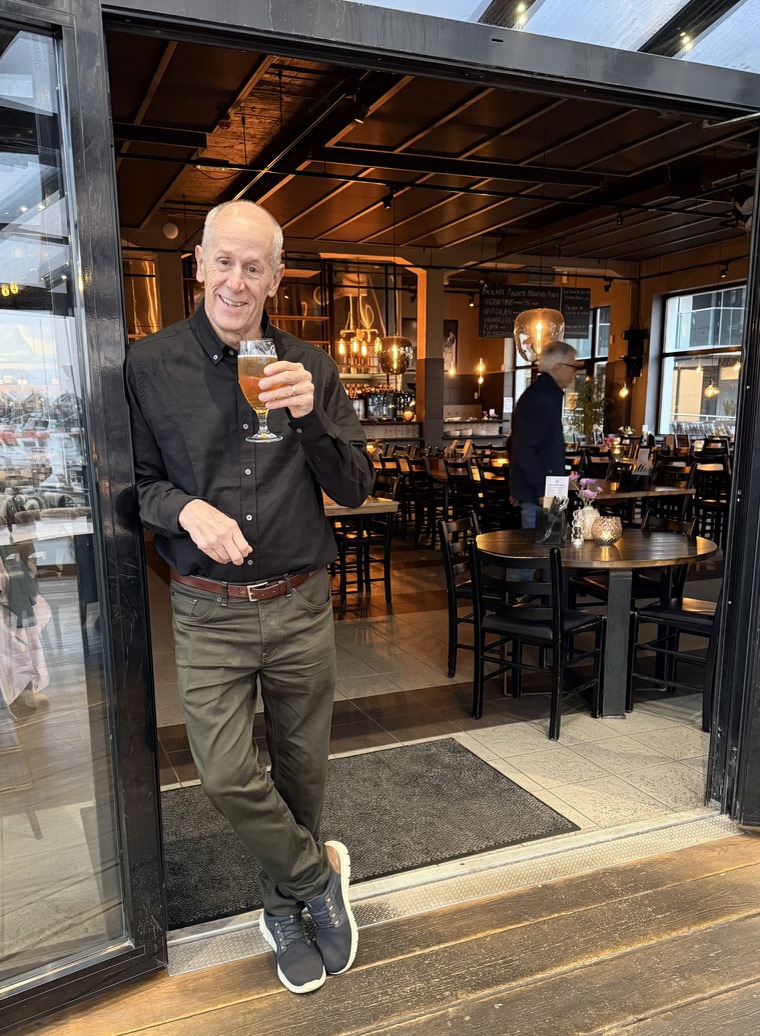
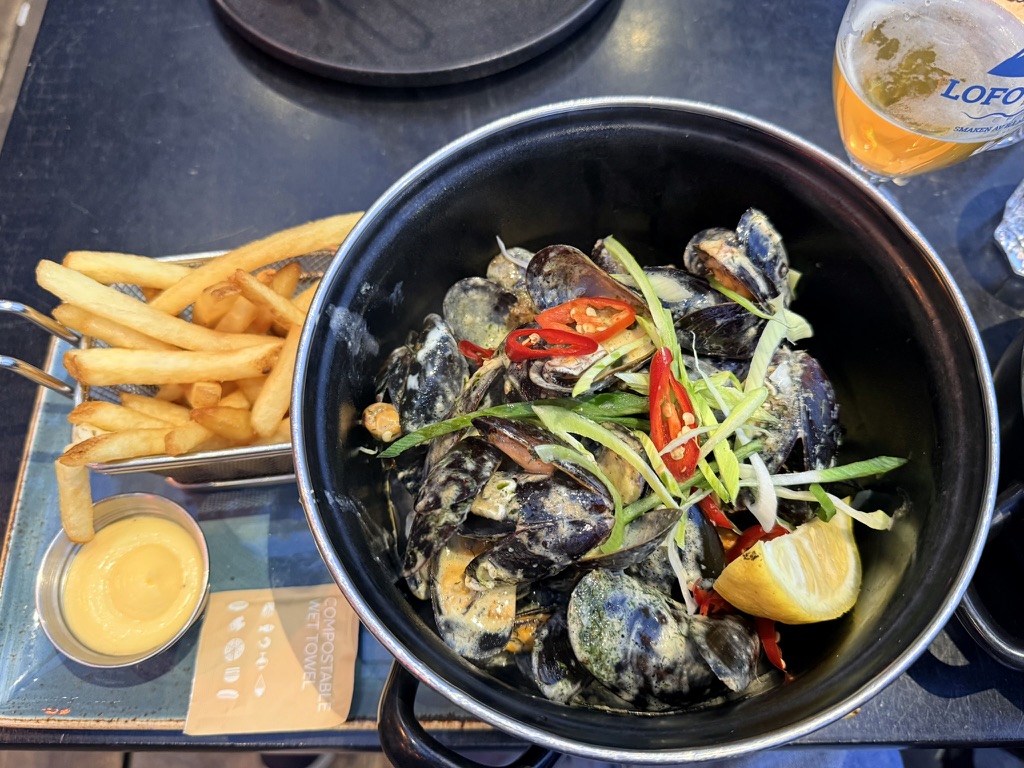
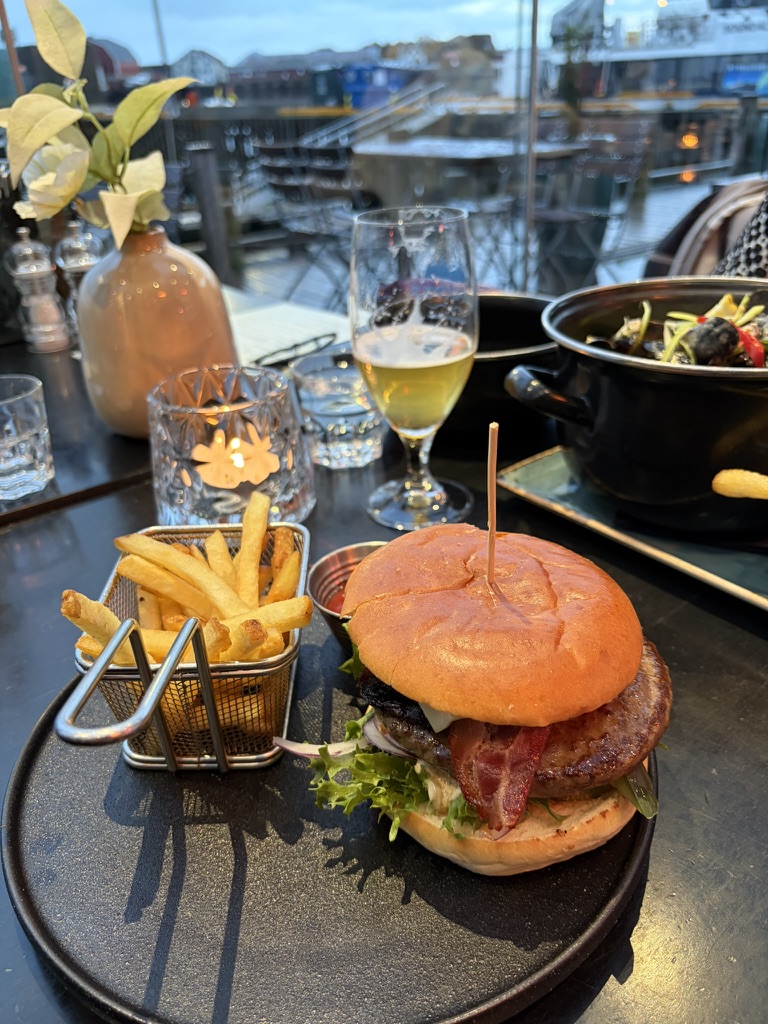
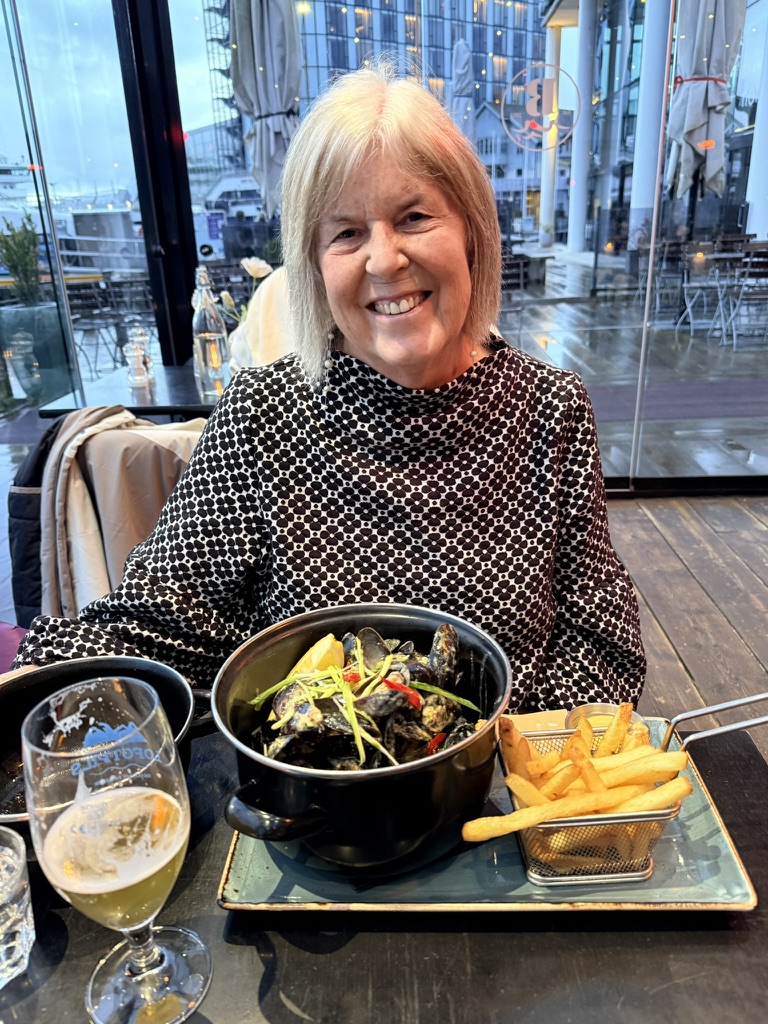
We enjoyed a fabulous dinner at Bacalao right on the harbor in Svolvær. Mike had a Game Burger: burger of moose and reindeer, salad, bacon, mushroom, pepper jack cheese, lingonberry sour cream and fries. I had Moules Frites: steamed mussels with cream, chili, garlic, onion, aioli and fries. We also shared a chocolate cake with vanilla ice cream. The setting was marvelous, looking out over the harbor. And the food was delicious, especially my bottomless pot of mussels.
A drive to the west on the Lofoten Islands
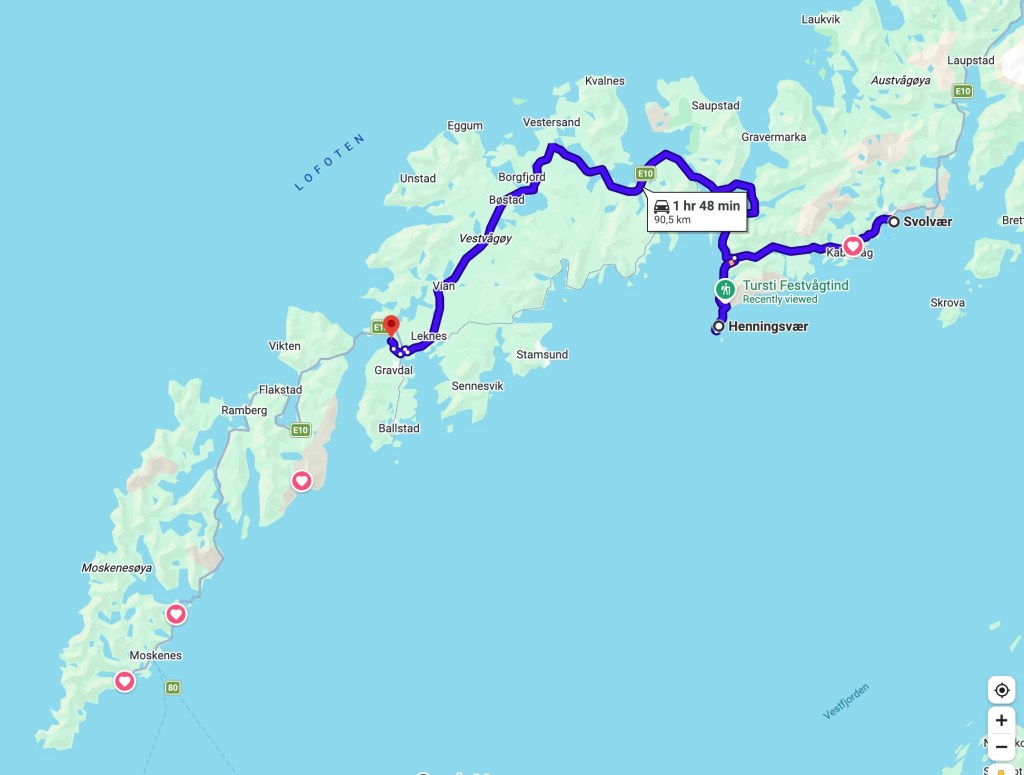
Tuesday, September 22: From Svolvær, we drove west, making several stops along the way. We had planned to go to the end of the road in Å, but sadly the bridge crossing to the next island west of Leknes was closed for 45 minutes and we didn’t know if it would also be closed on our return trip. Thus instead, we turned around, returned to Svolvær and then drove north.
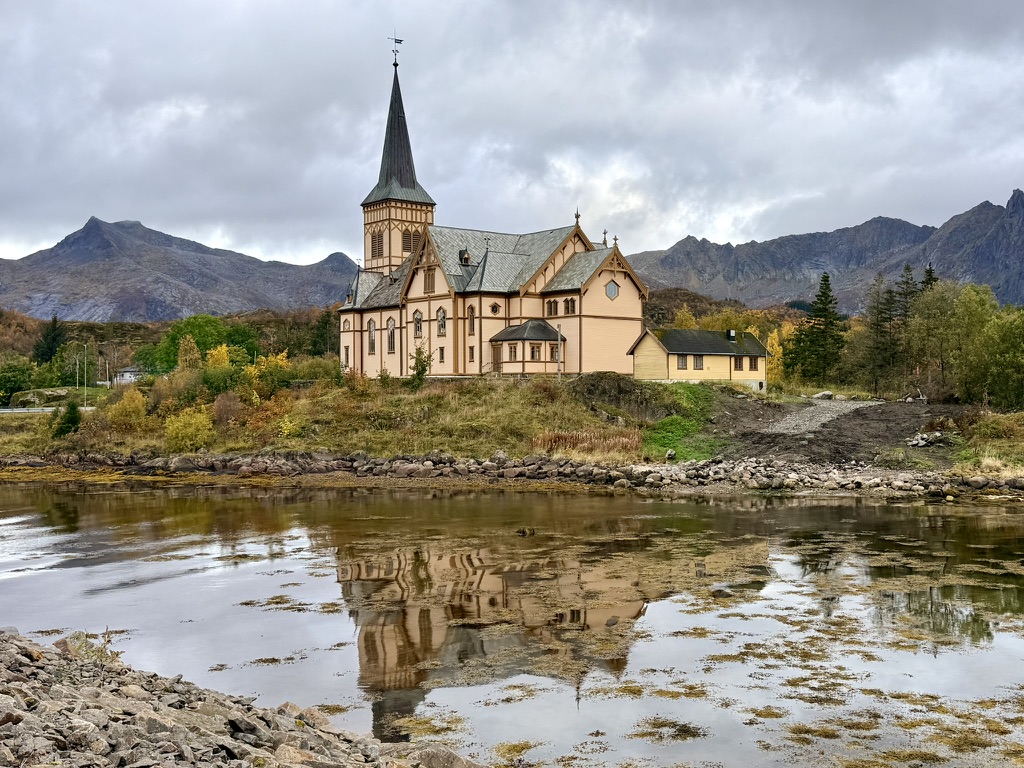
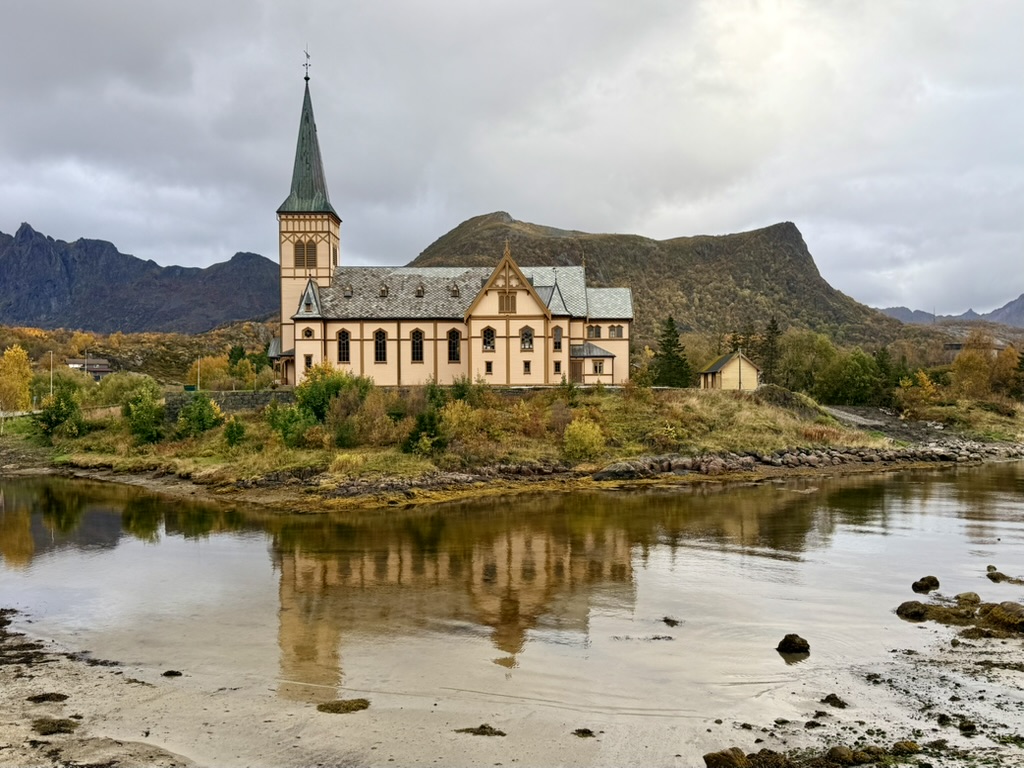
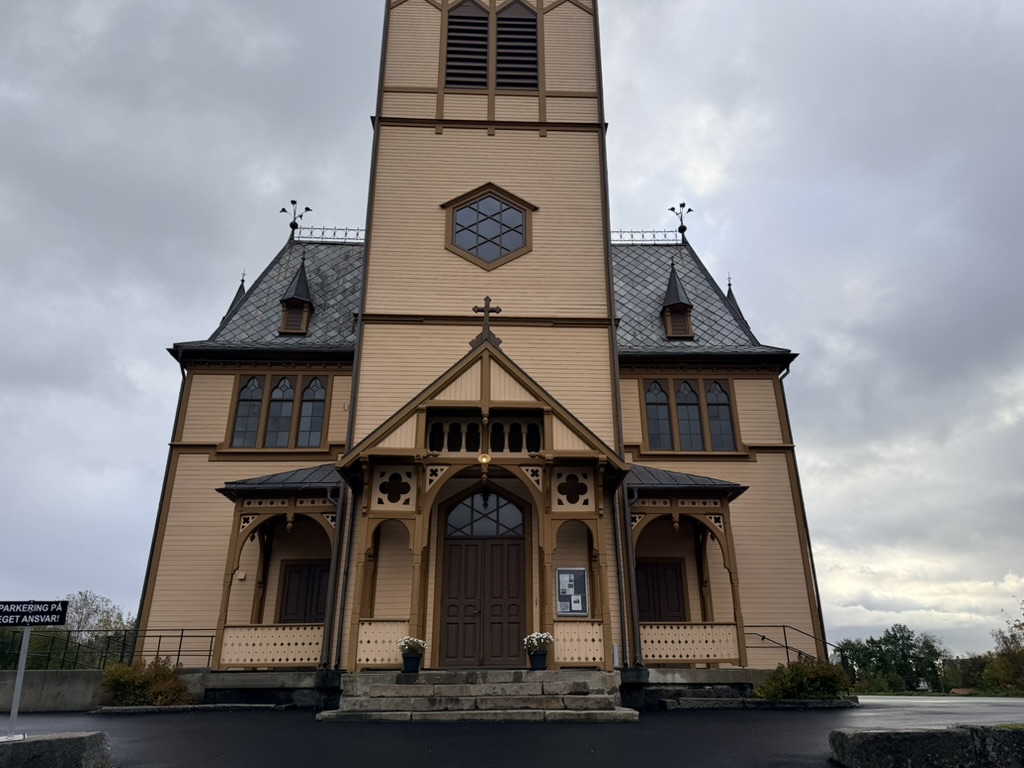
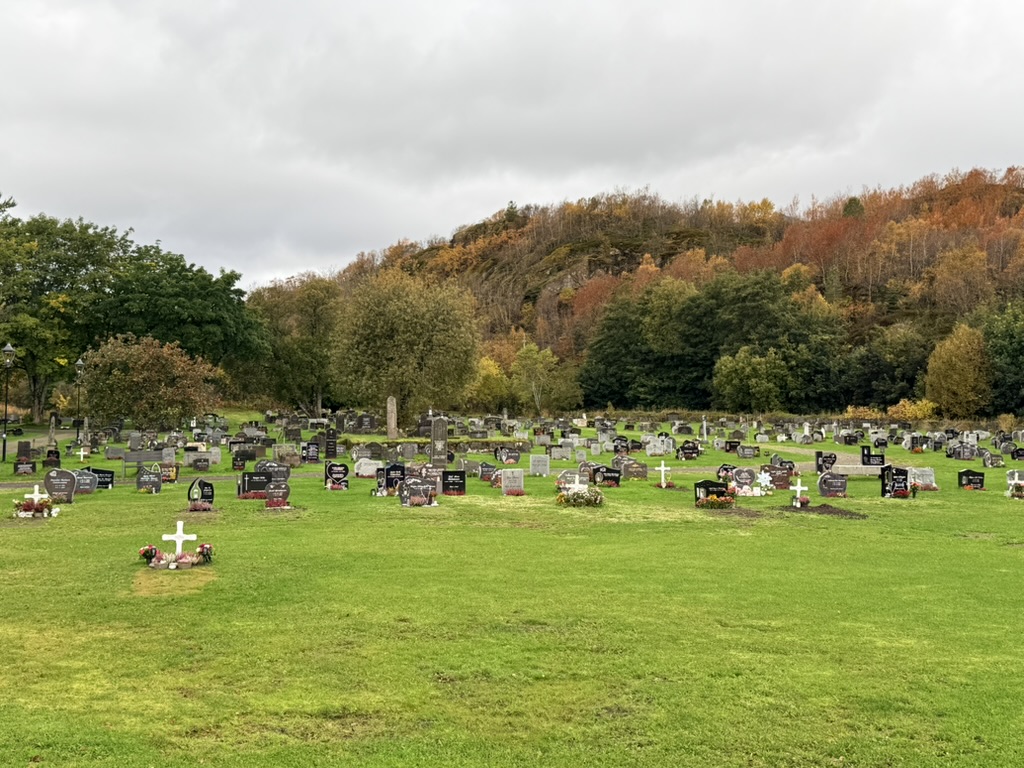
Vågan kirke (Vågan church)
The yellow wooden Vågen kirke (Vågen church), also known as Lofoten Cathedral because it seats 1200 people, is an Evangelical Lutheran Church. It was built in a cruciform style in 1898. Like most churches we’ve tried to visit in Norway, it wasn’t open.
Henningsvær
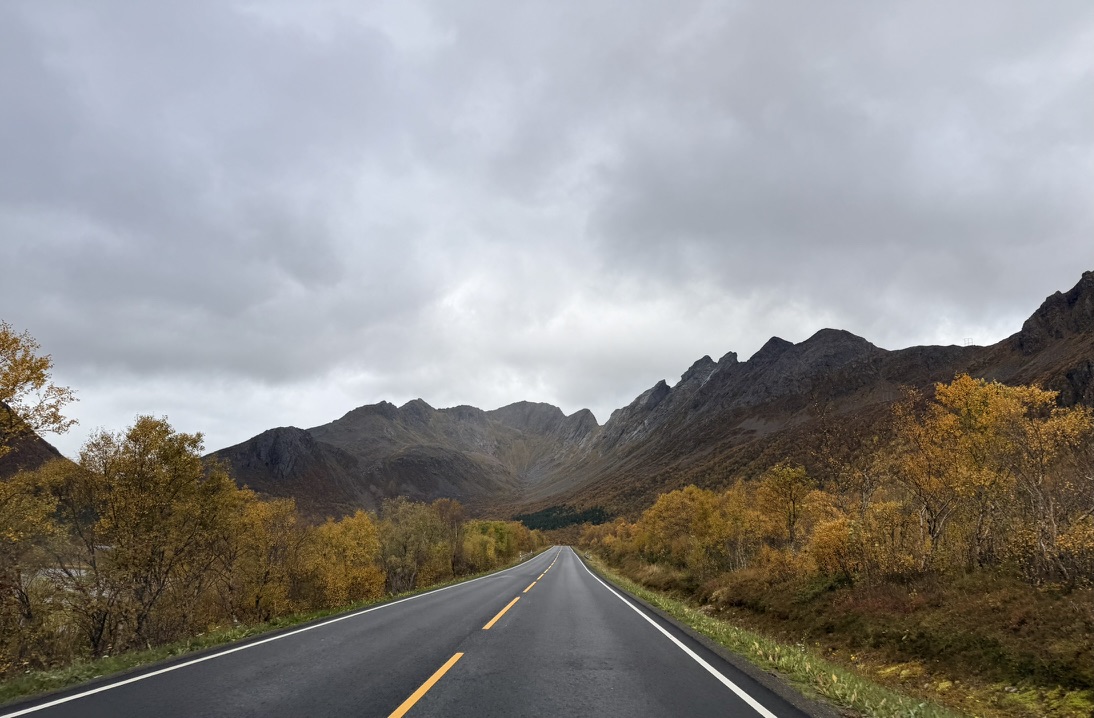
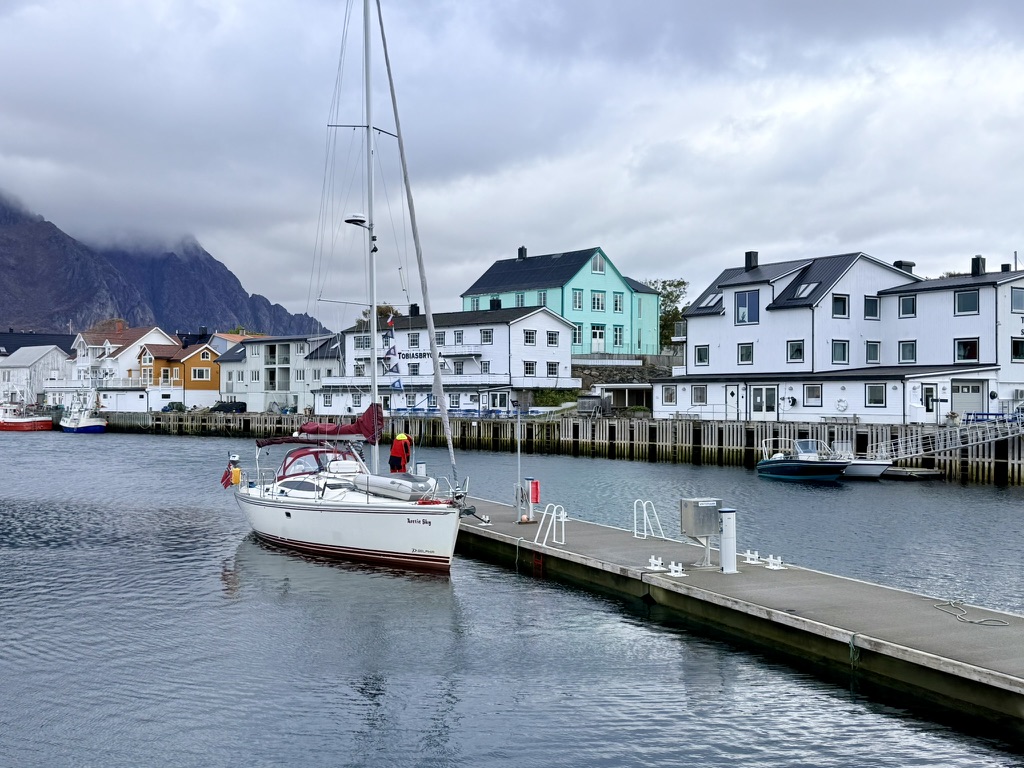
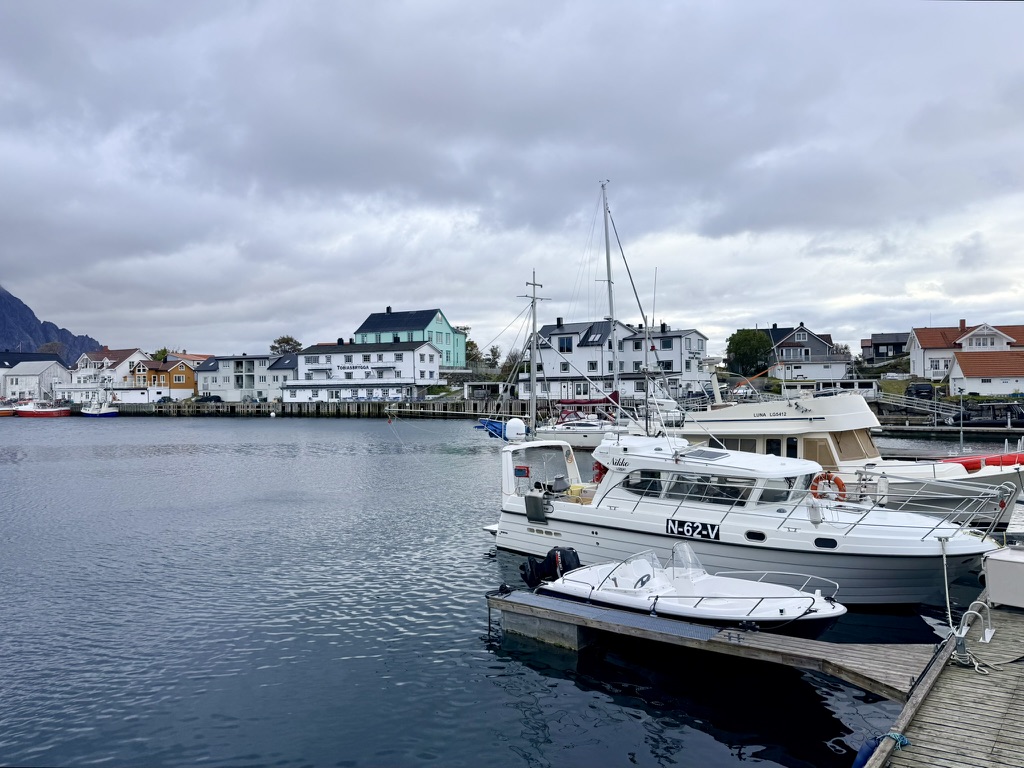
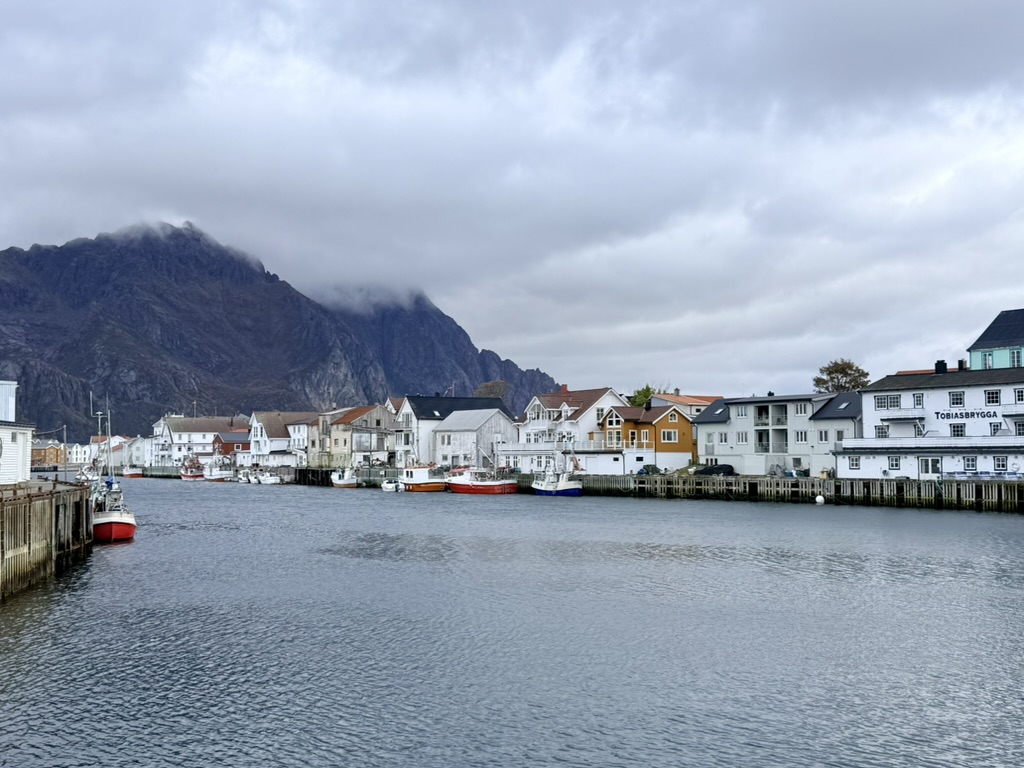
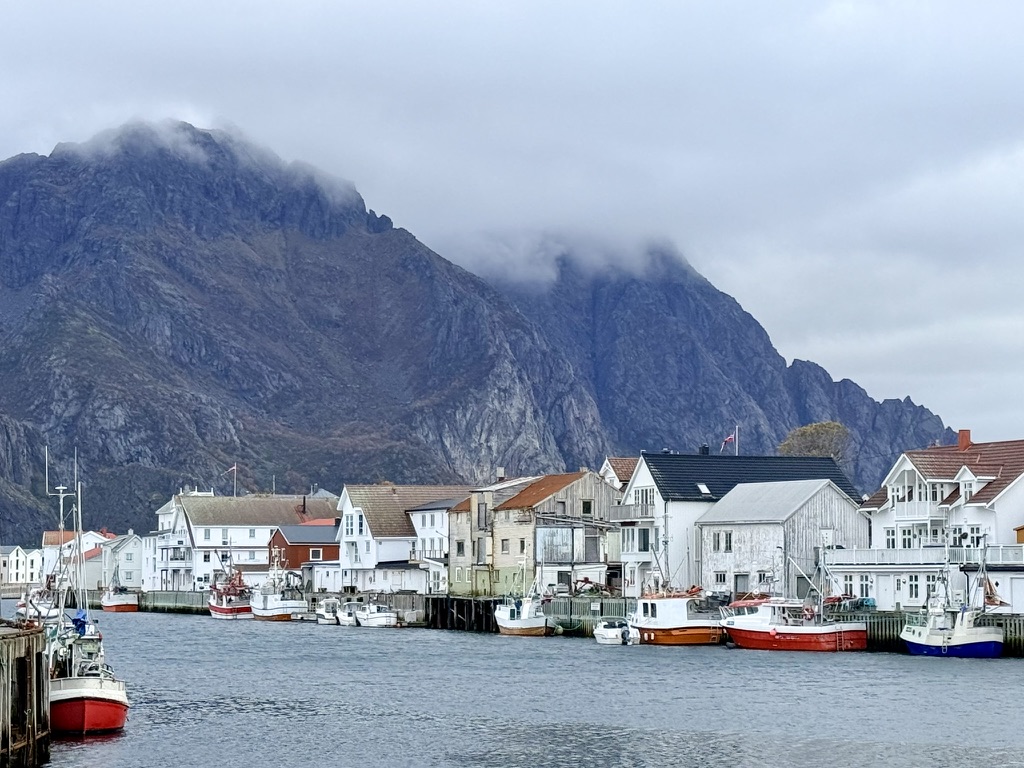
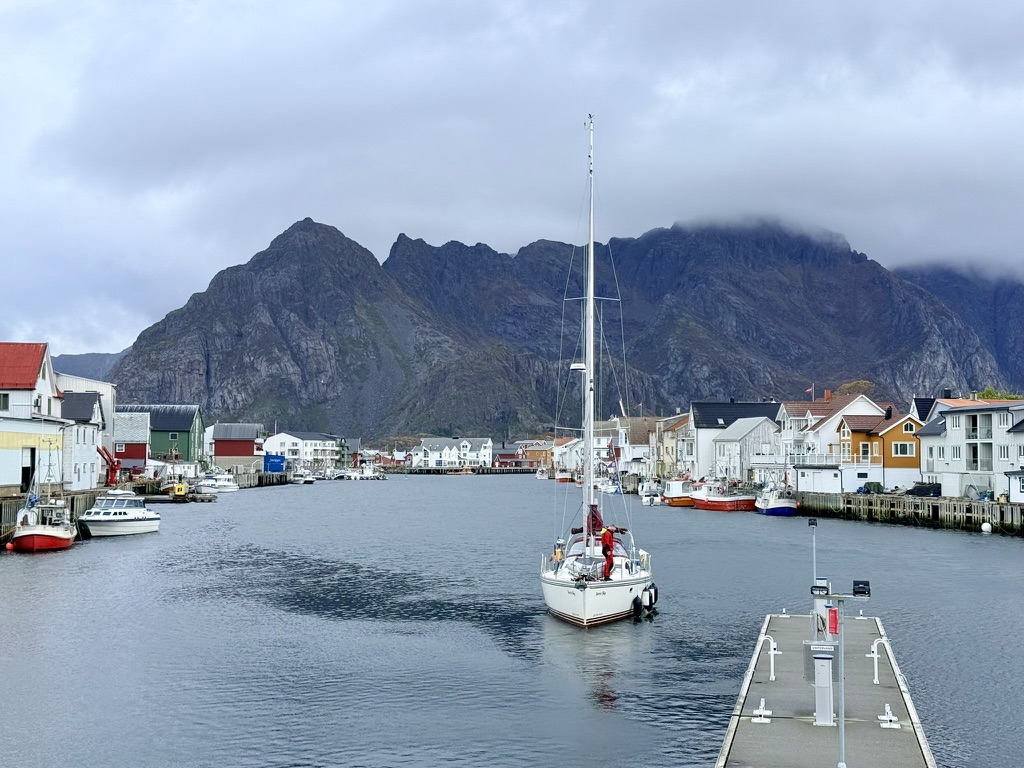
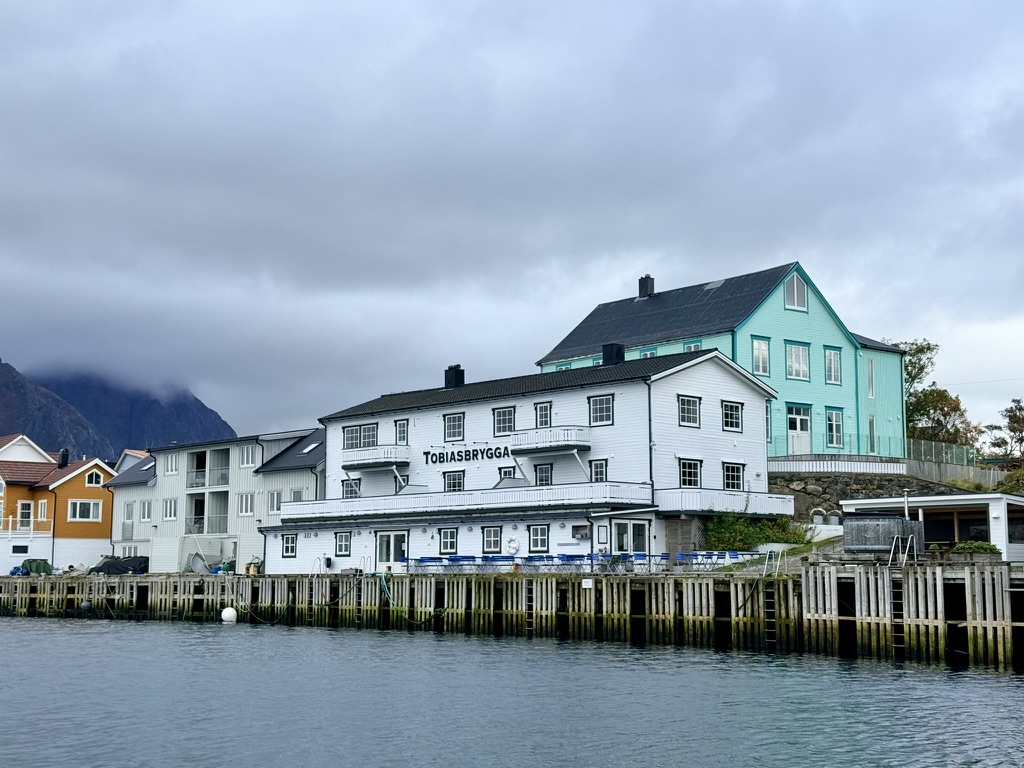
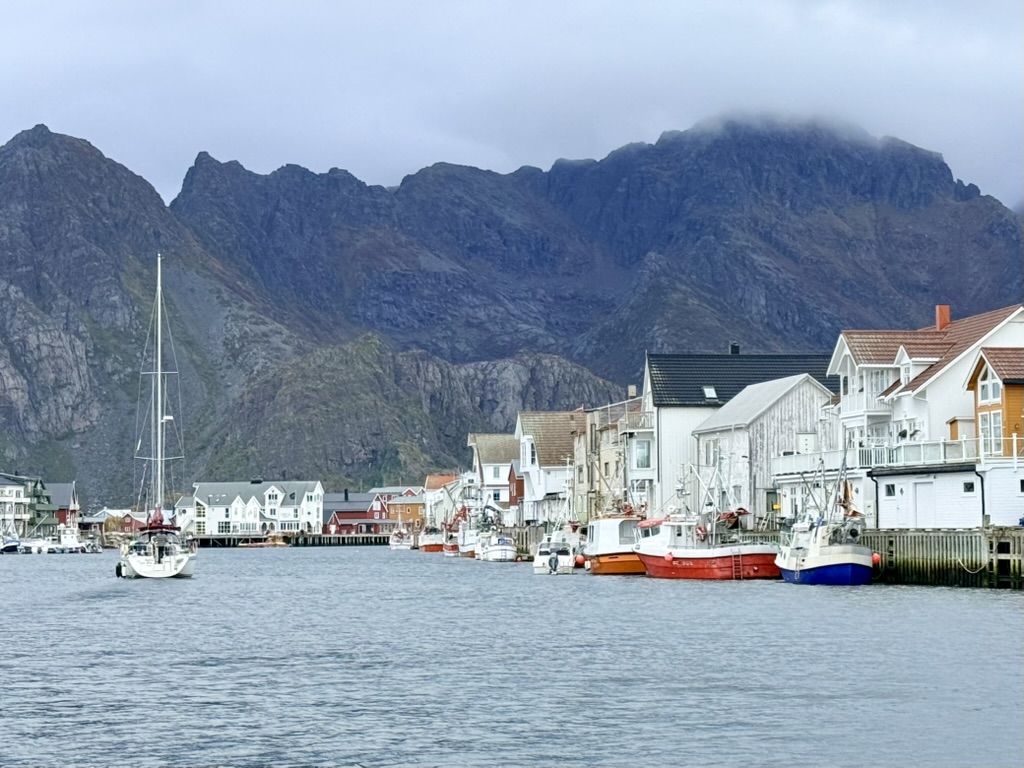
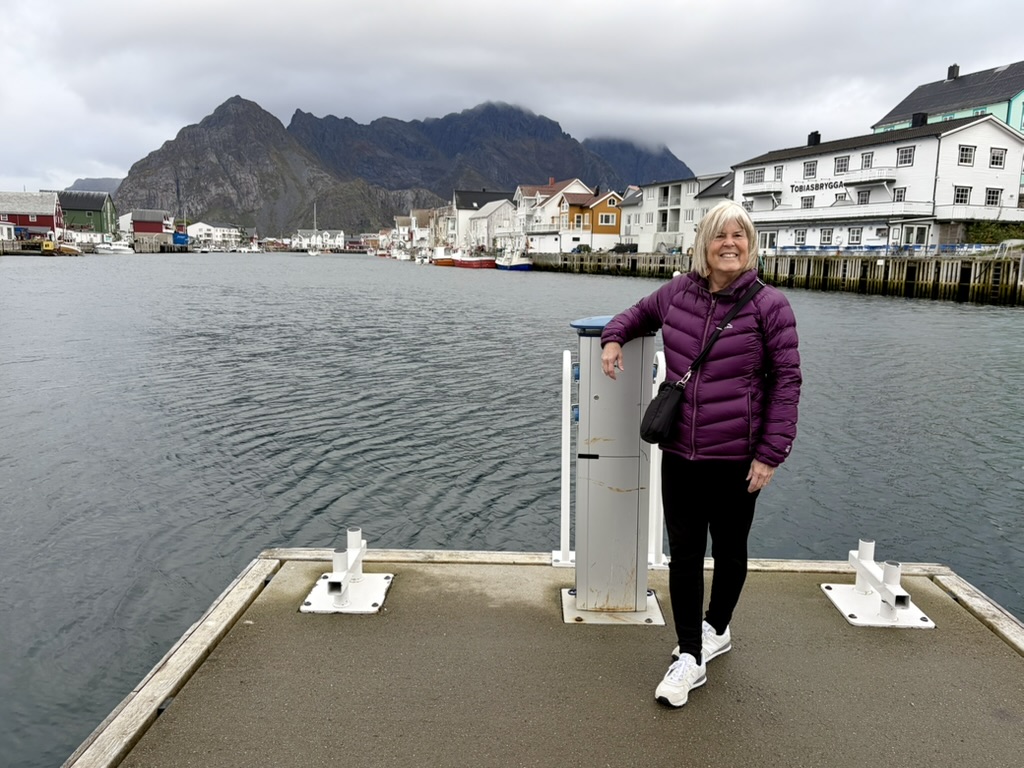
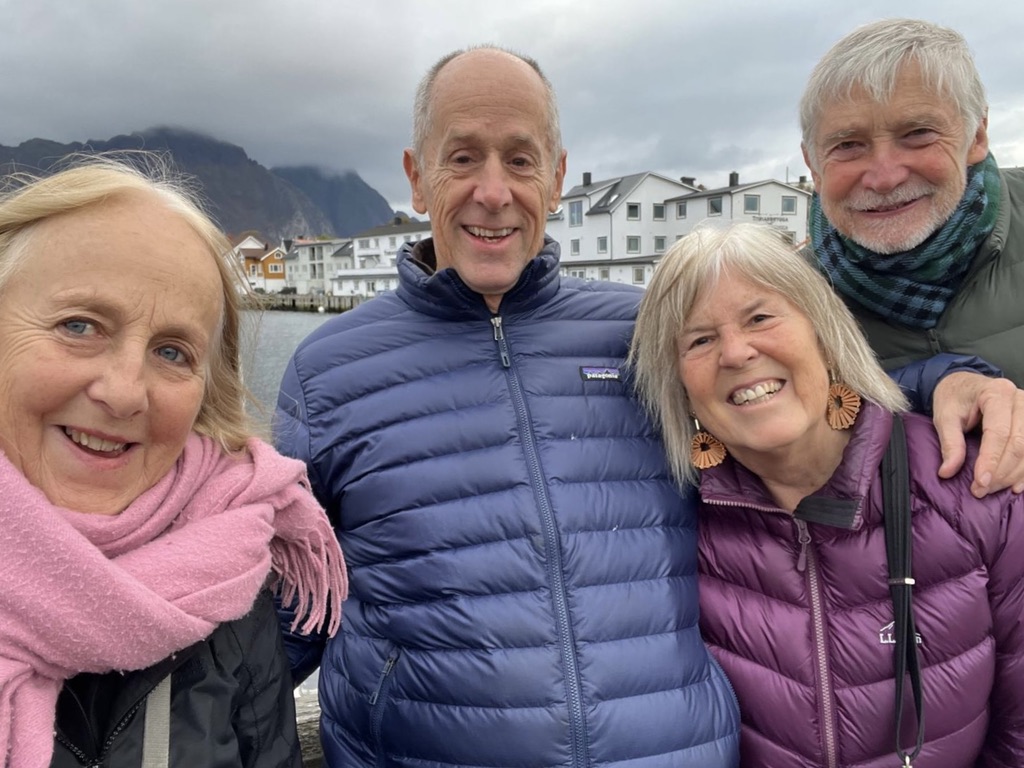
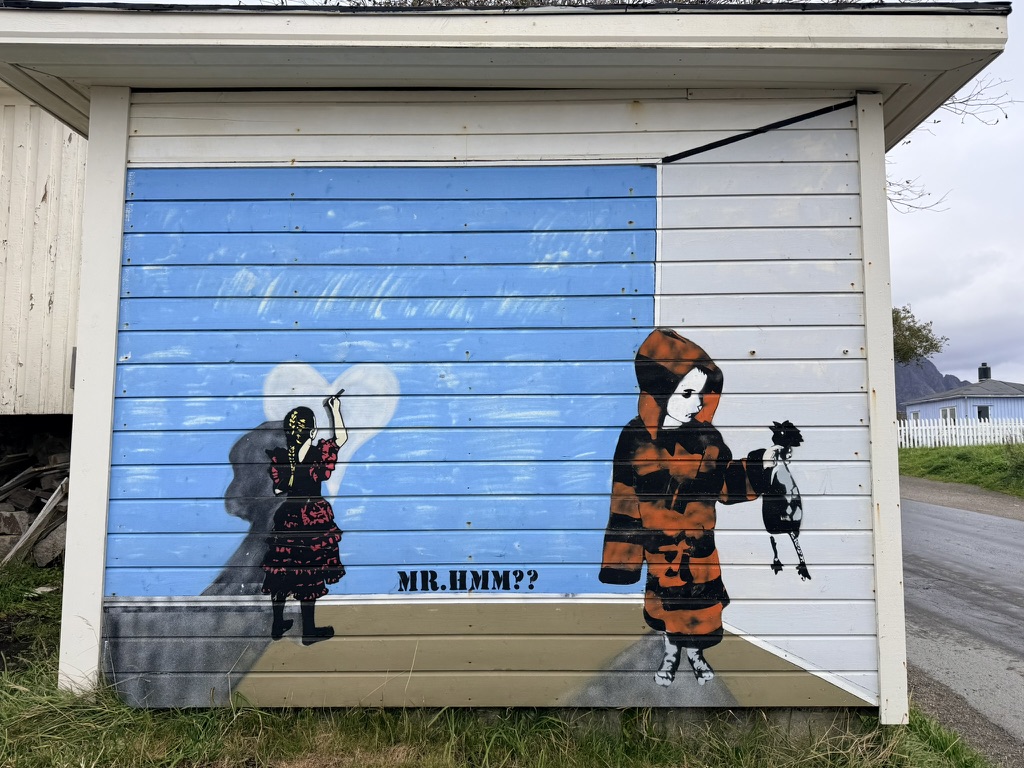
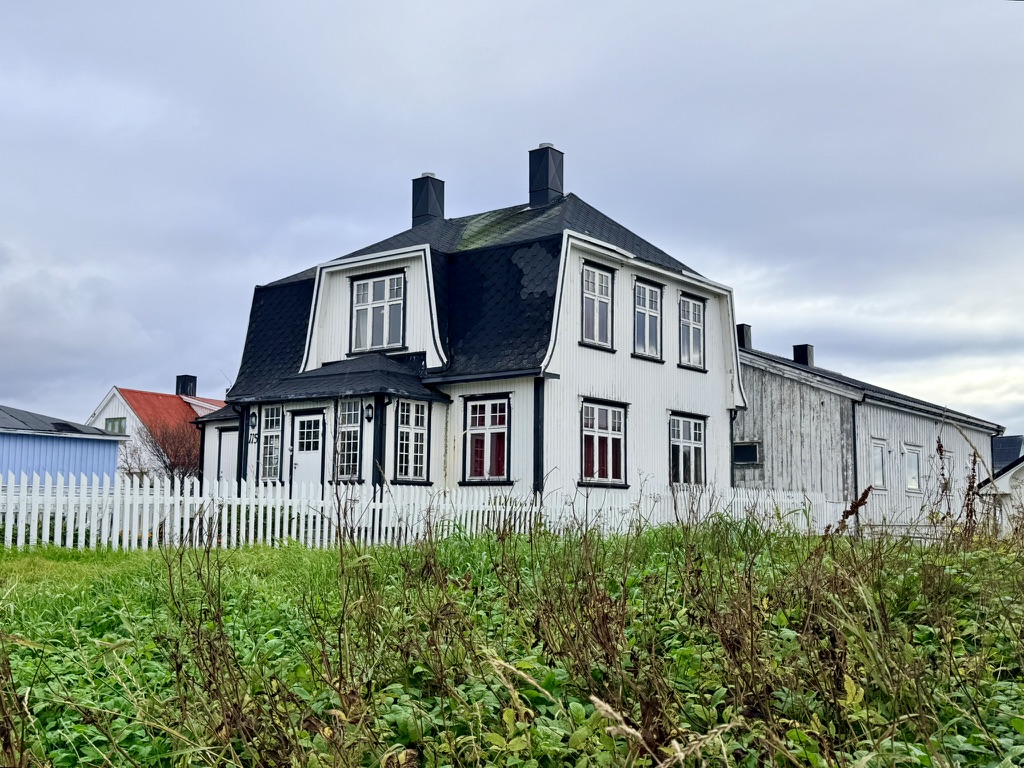
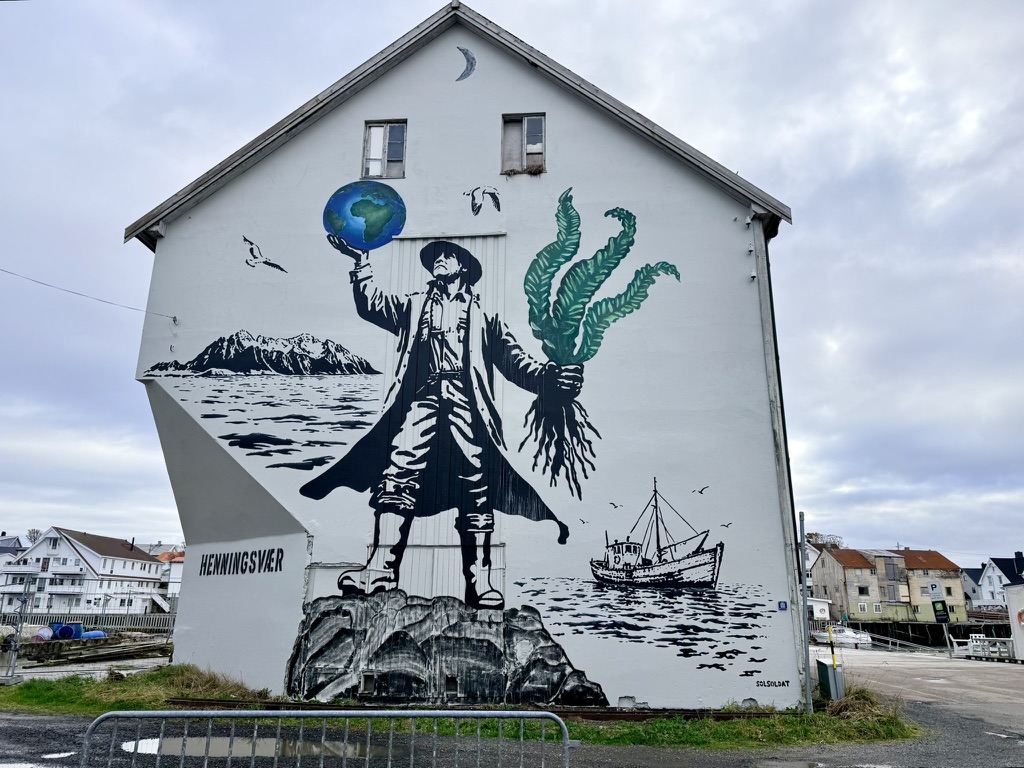
We stopped in the town of Henningsvær, which has played a significant role in Lofoten’s fishing history and is still a destination with a plethora of craft shops, art galleries and a pleasant atmosphere. The name Henningsvær probably comes from the male name “Henning” and “Fiskevær” or “Vær,” a place along the coast where the fishing grounds where fishermen live.
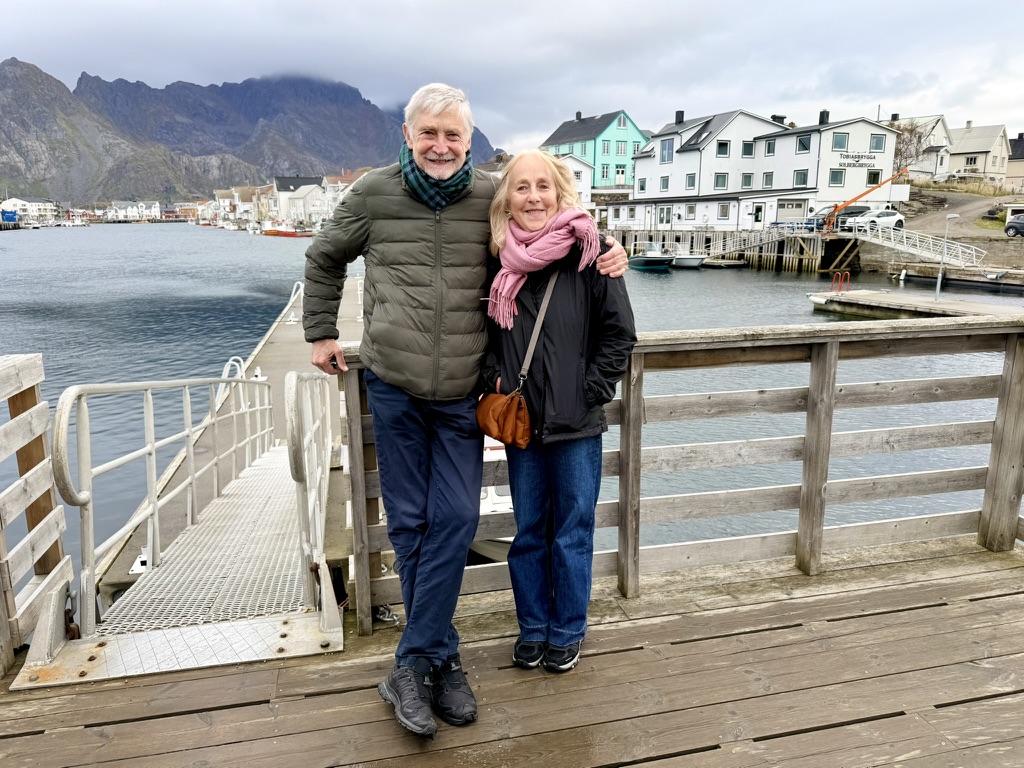
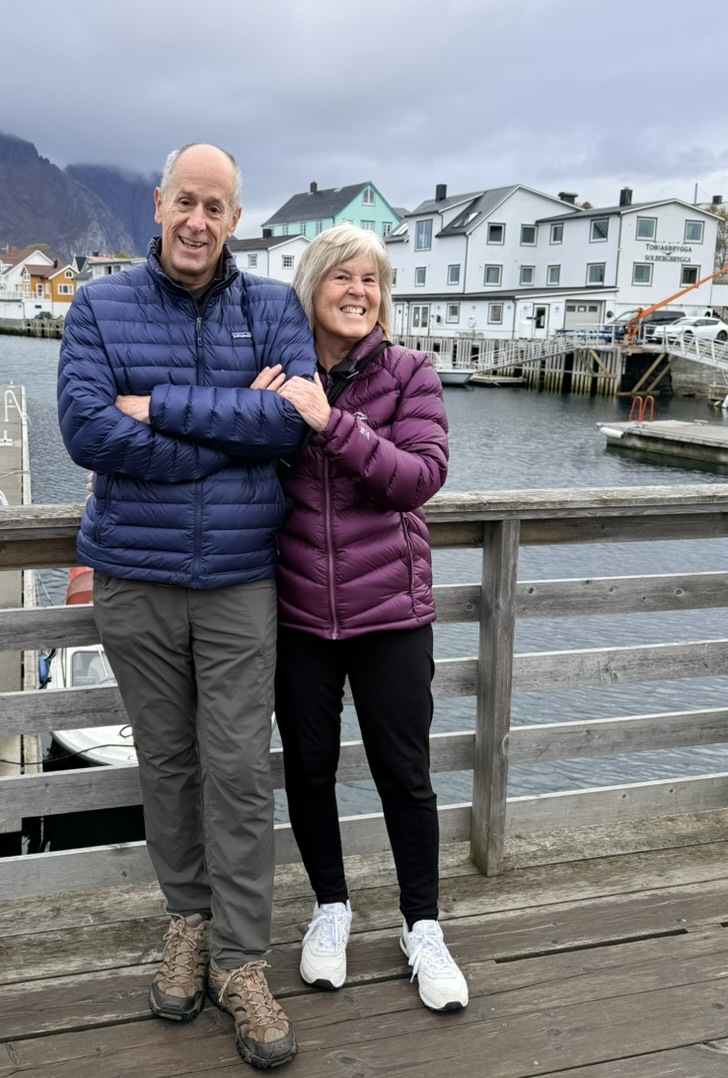
Here by chance we ran into Paul and Julia (from Dorset), who we had dinner with for two nights on the MS Vesterålen. They had stayed the night in the town and planned to head to the southwestern town of Reine that evening.
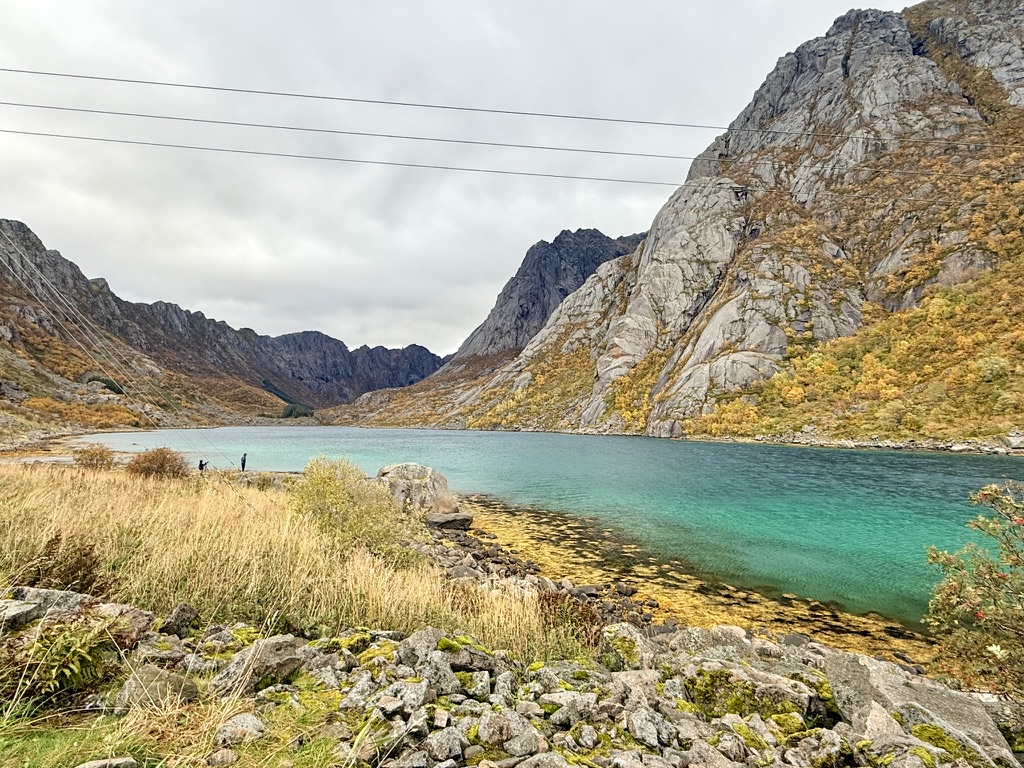
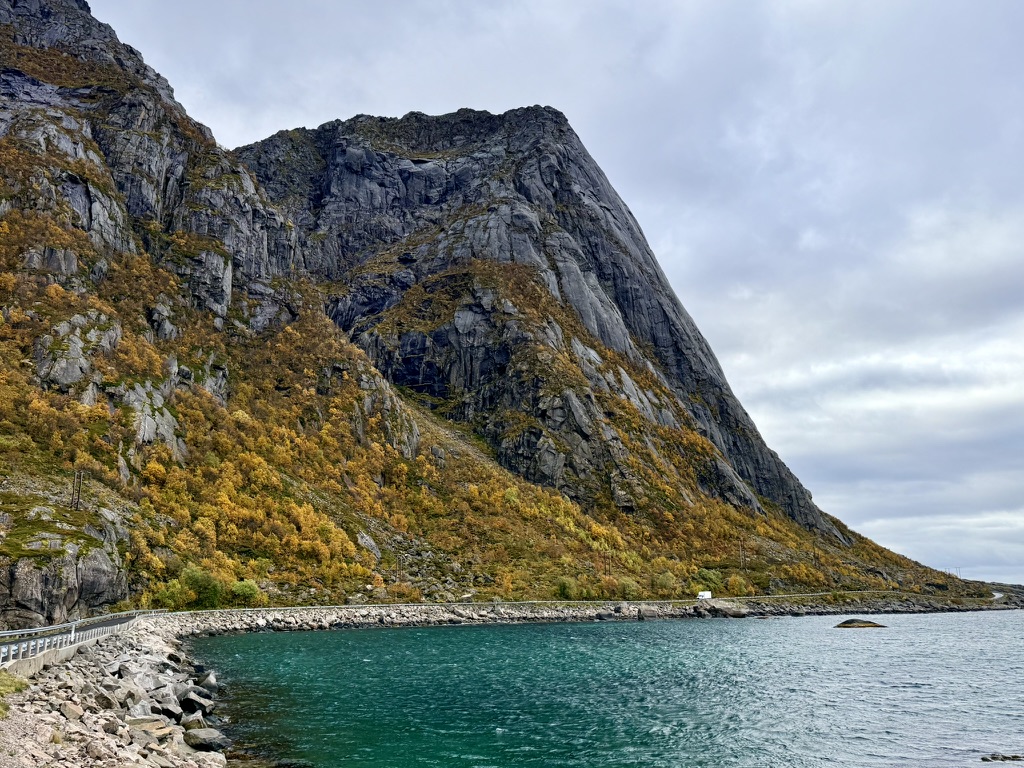
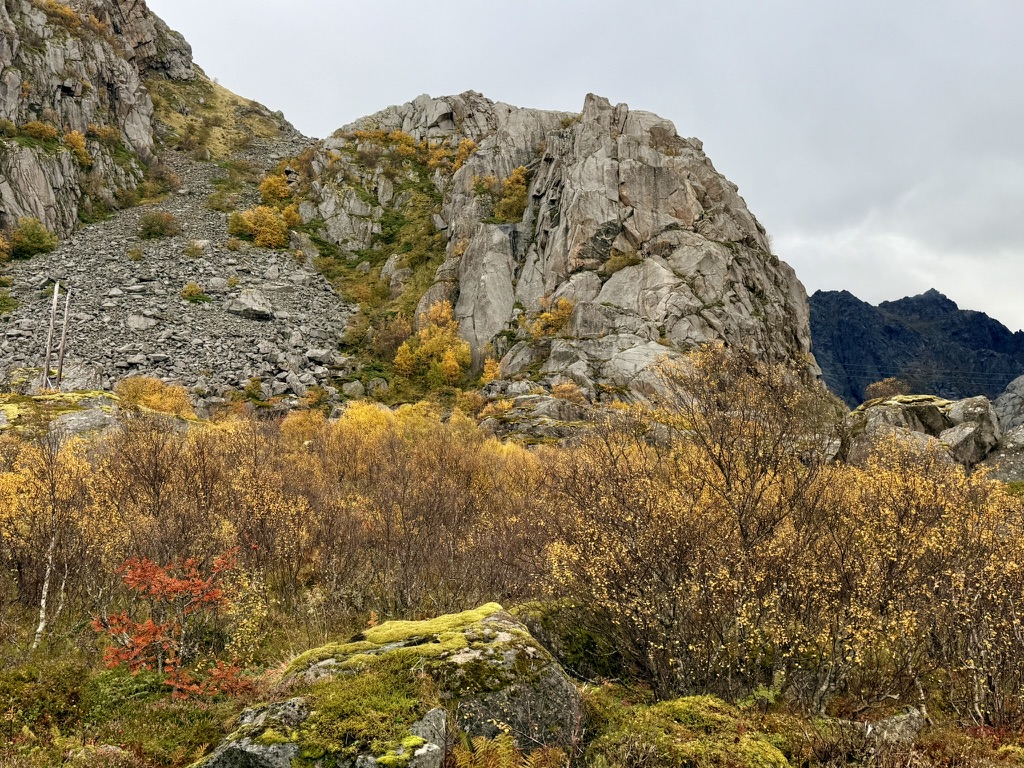
Rørvika
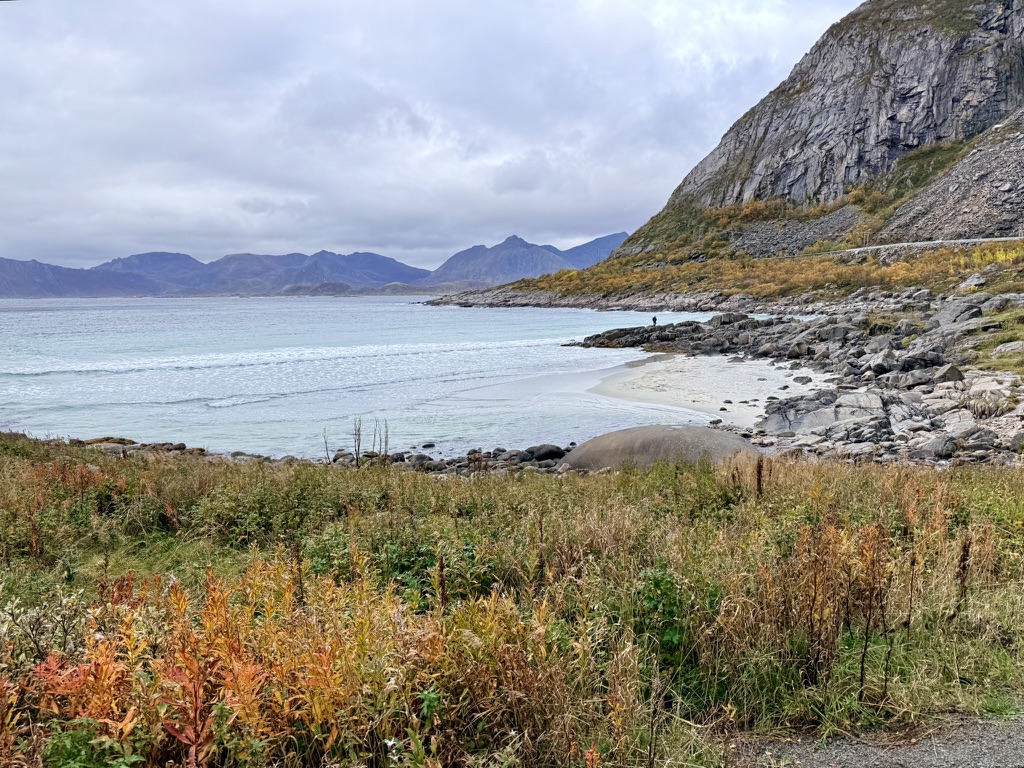
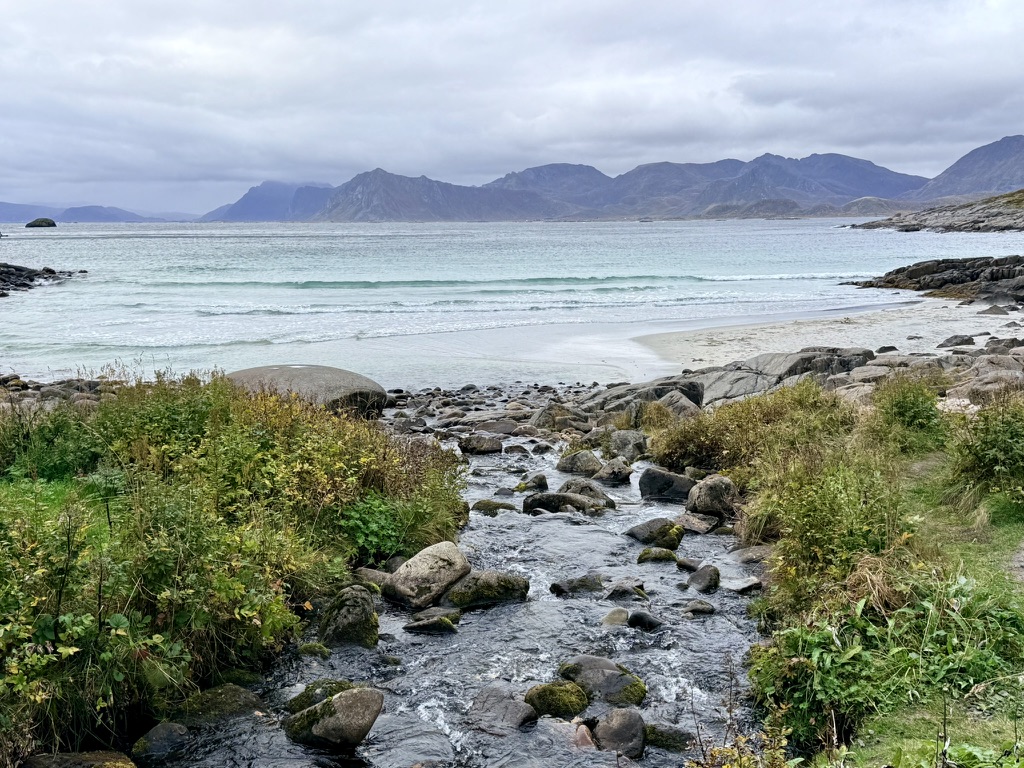
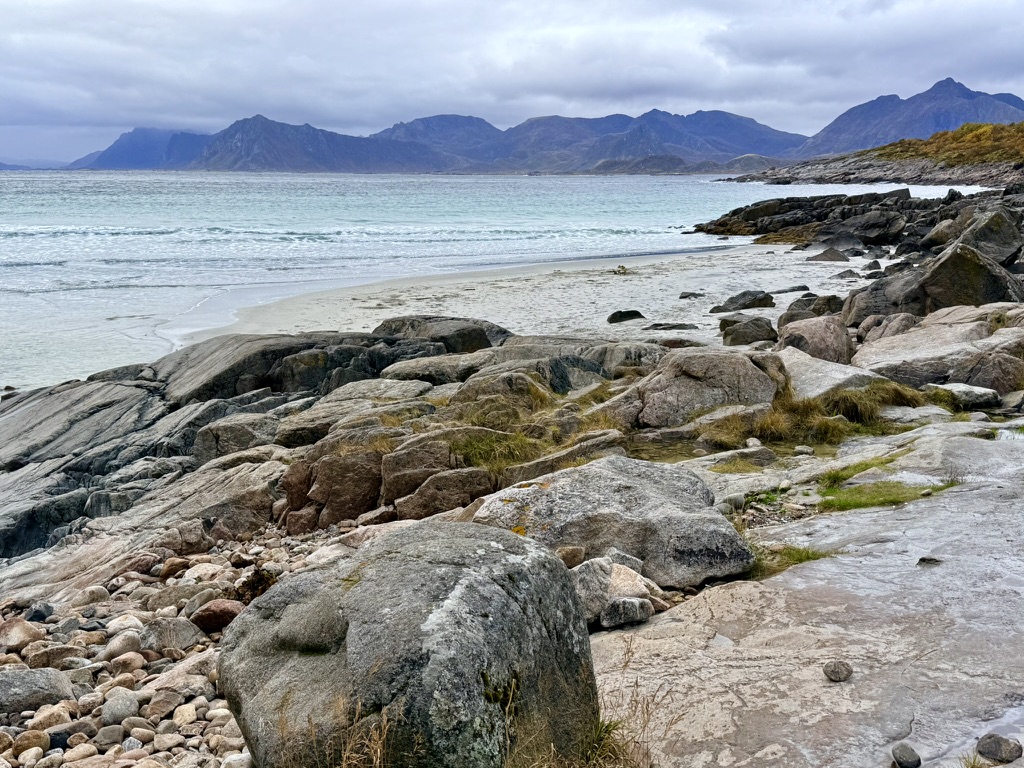
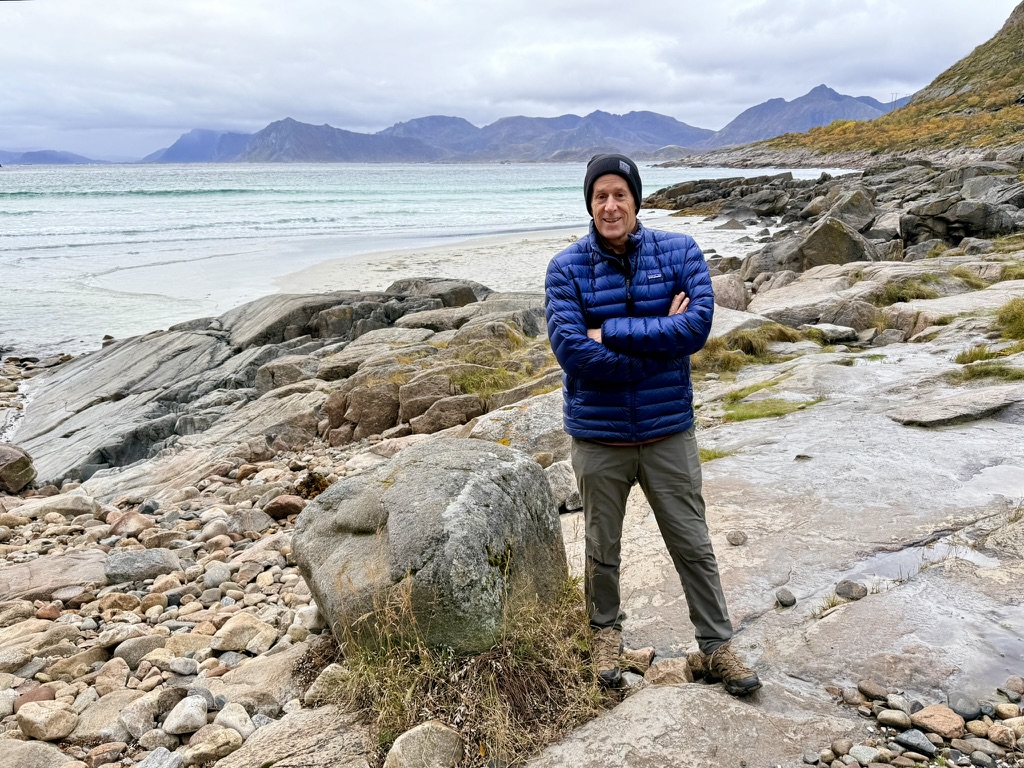
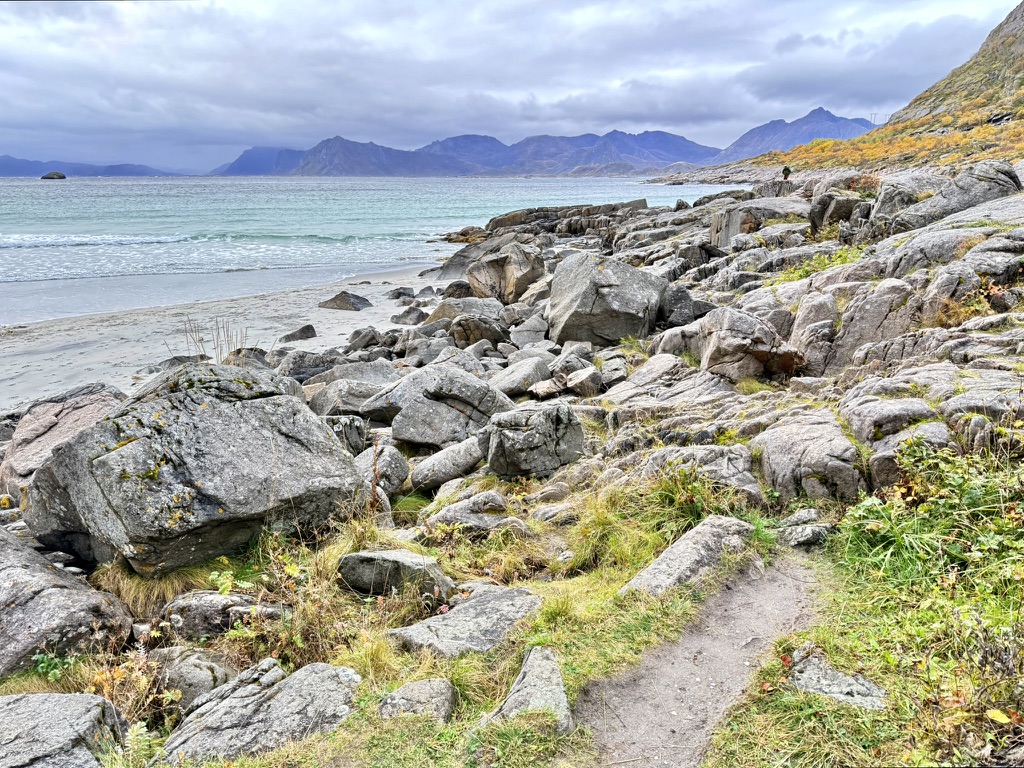
We made a quick stop at Rørvika beach, popular among local families and residents in every kind of weather.
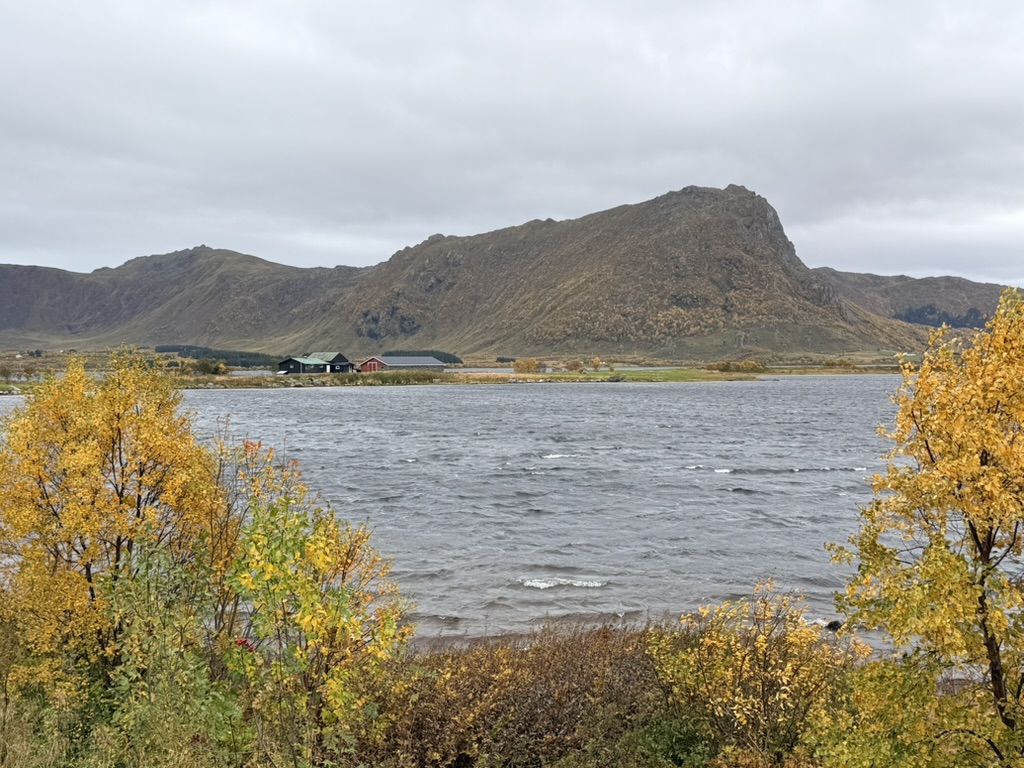
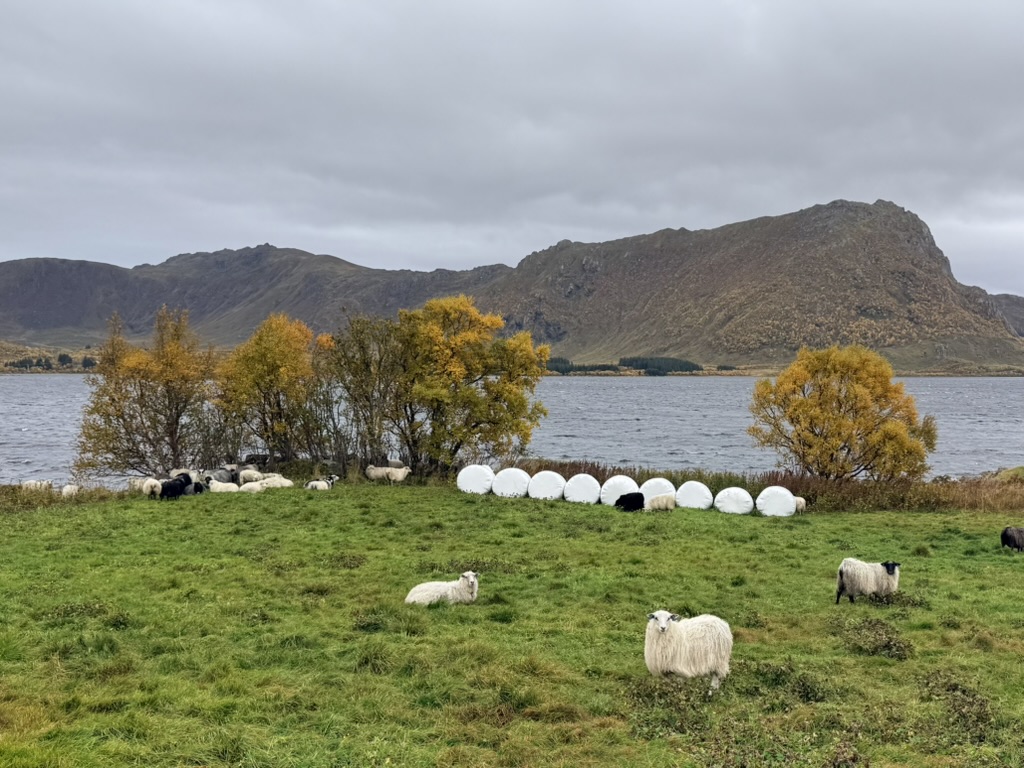
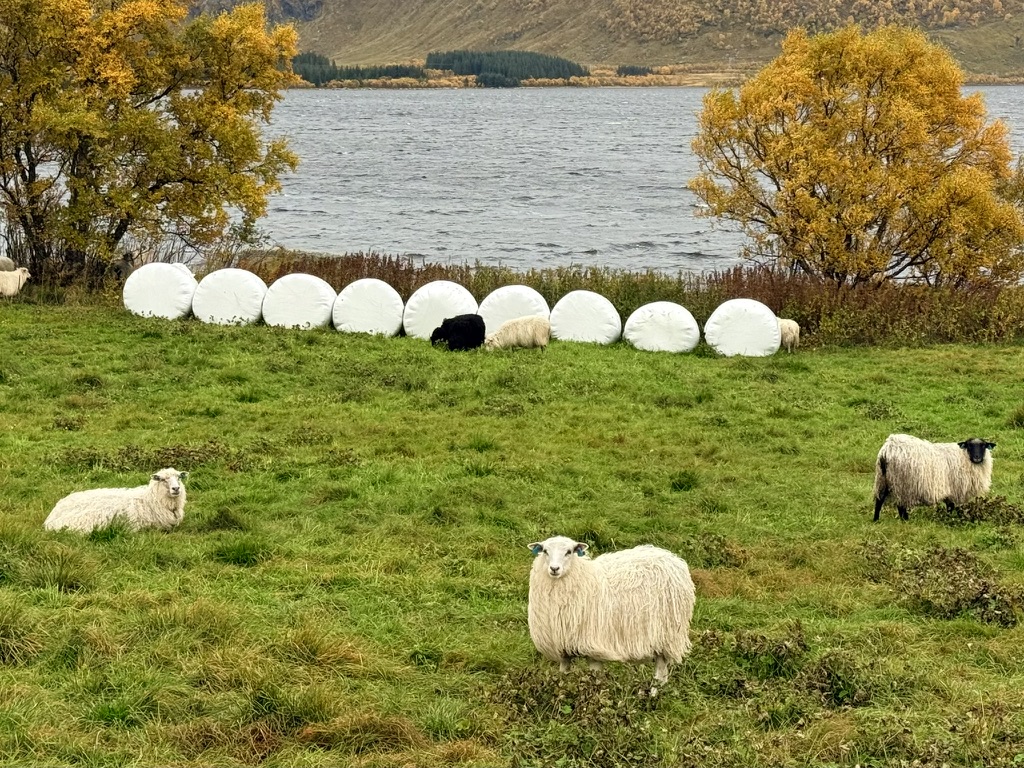
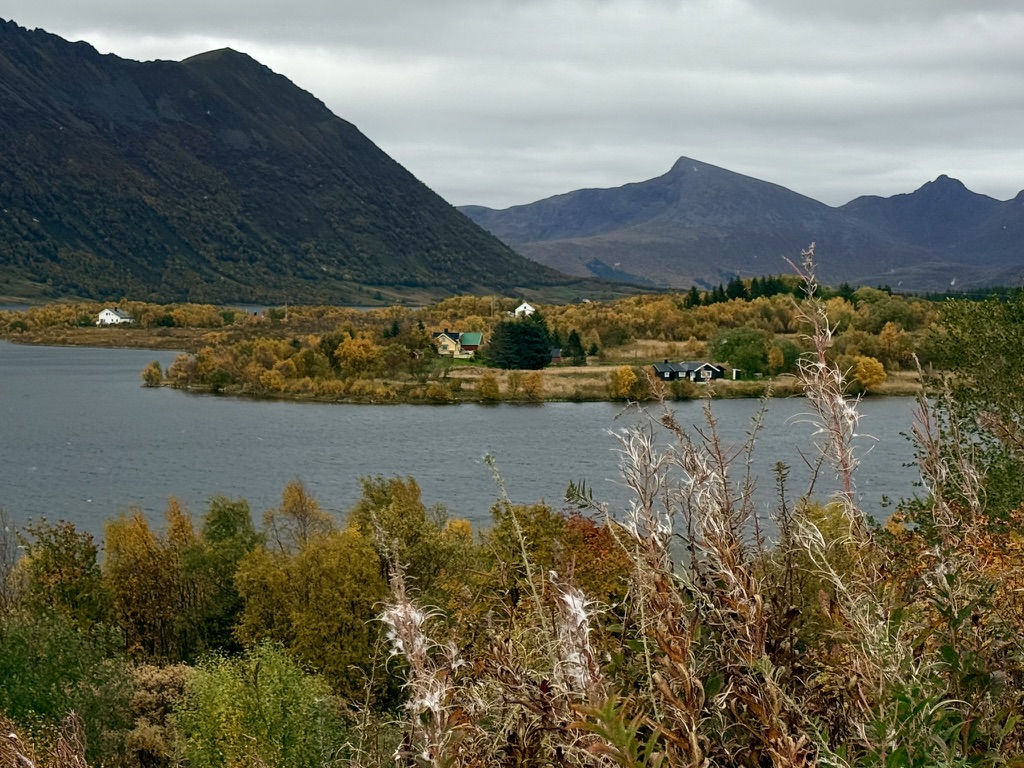
Drive to just past Leknes and back to Svolvær
We continued our drive to Leknes and a bit past when we came to a road block. We were told it would be 45 minutes before the road would open. Thus we couldn’t drive to the end of the road at Å. We had no idea if the road would open back up when it was time for us to return if we waited continued our drive south.
Instead of driving further south, we drove back to Svolvær, making a few detours along the way.
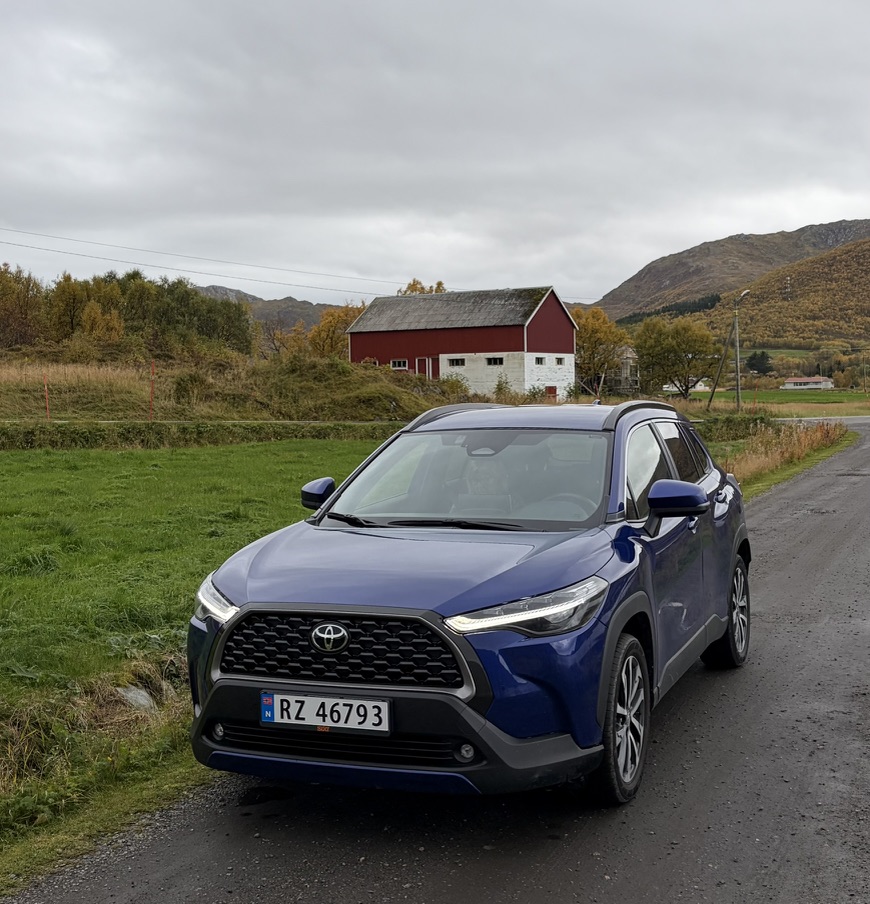
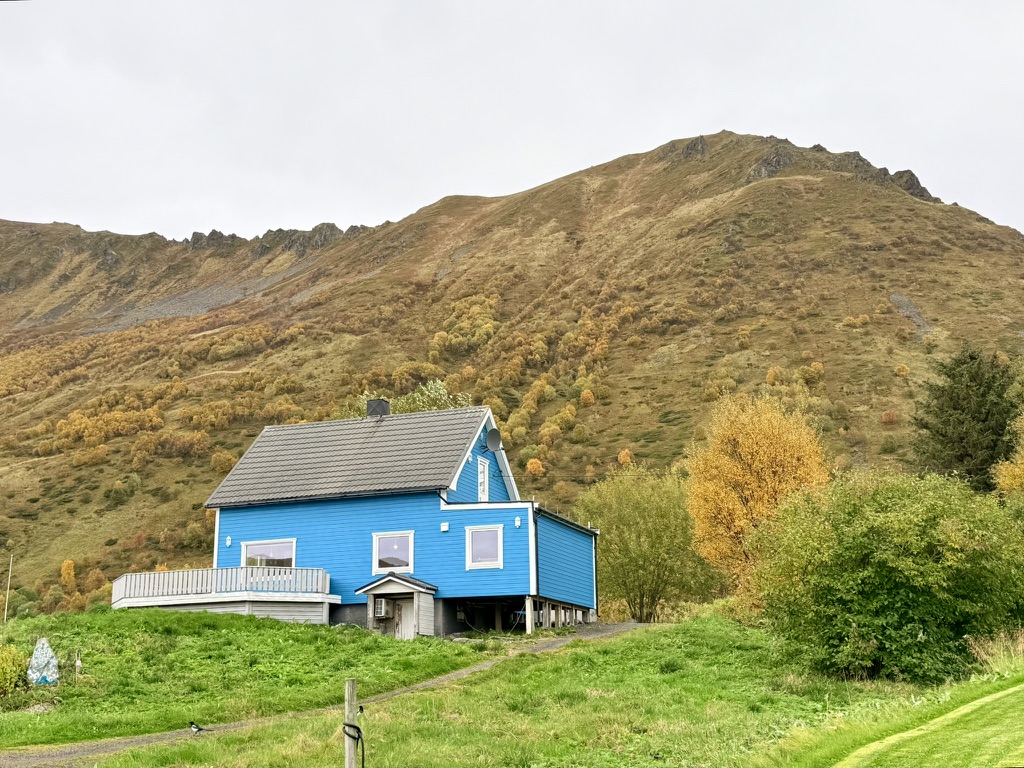
A drive to the north on the Lofoten Islands
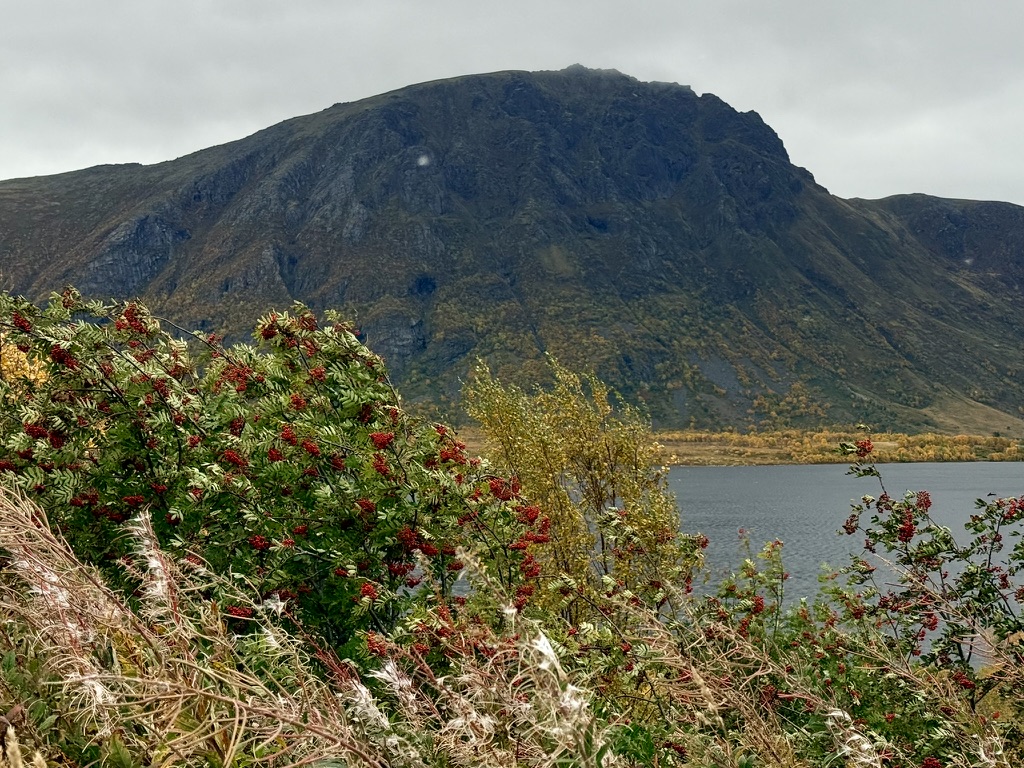
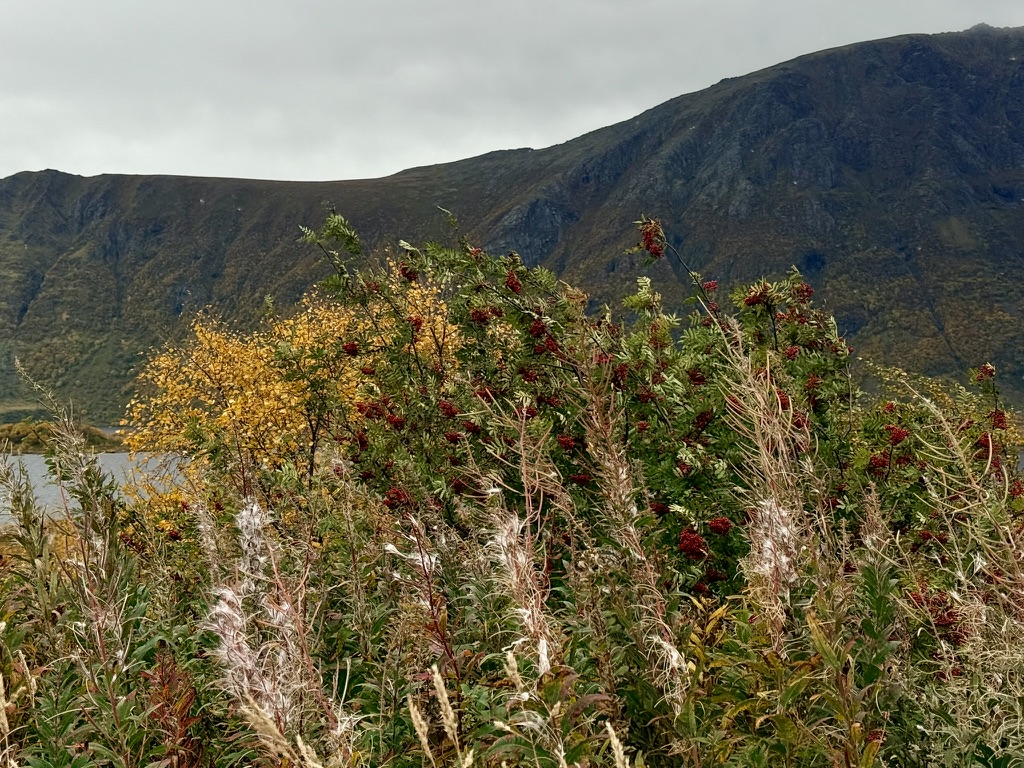
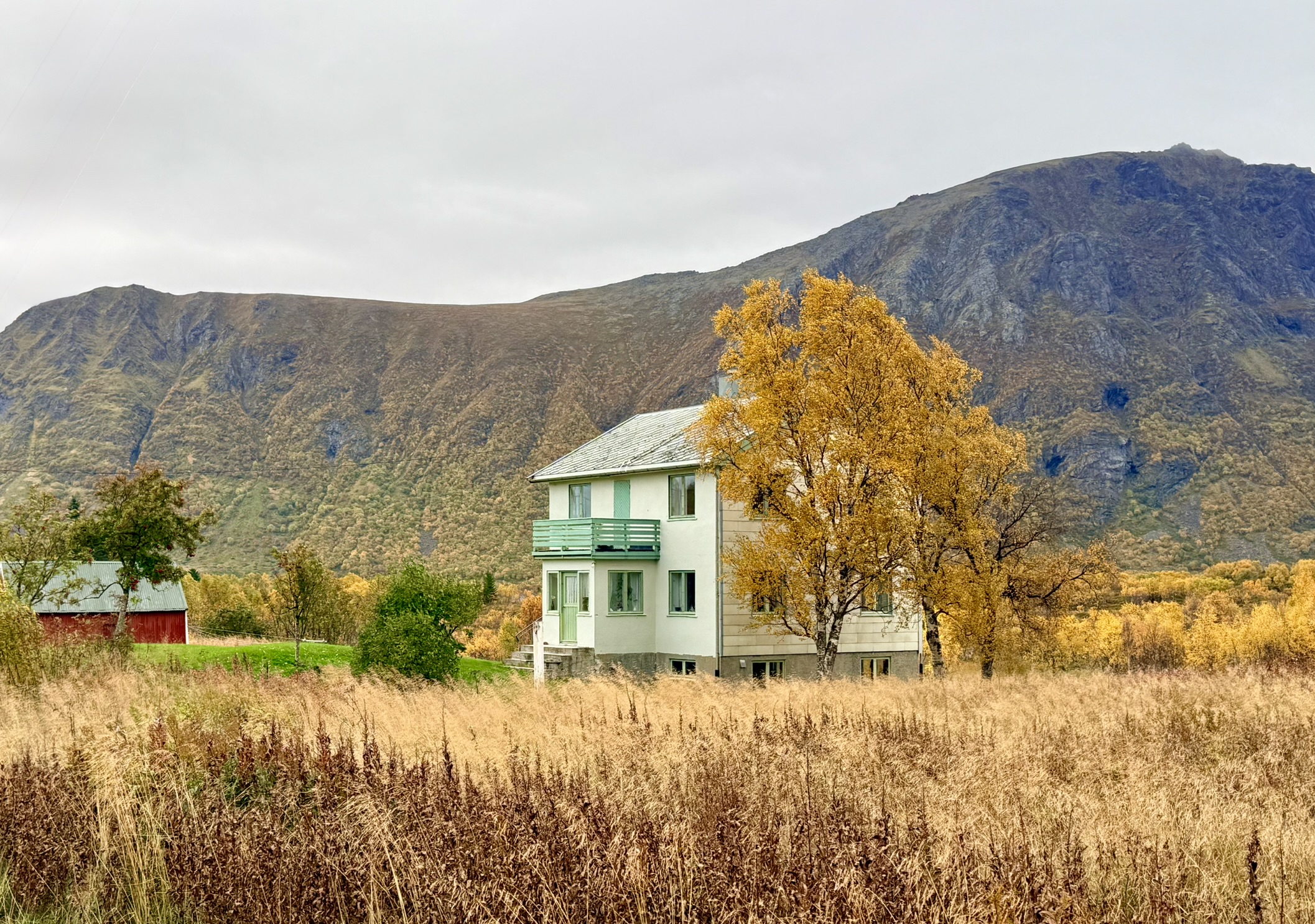
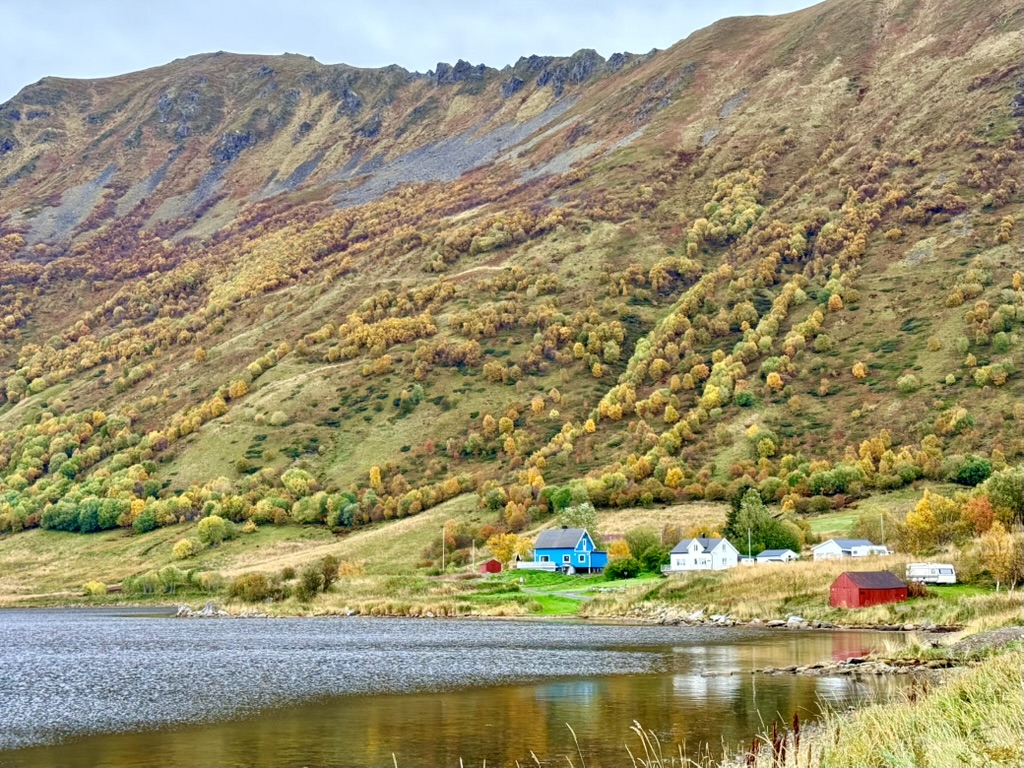
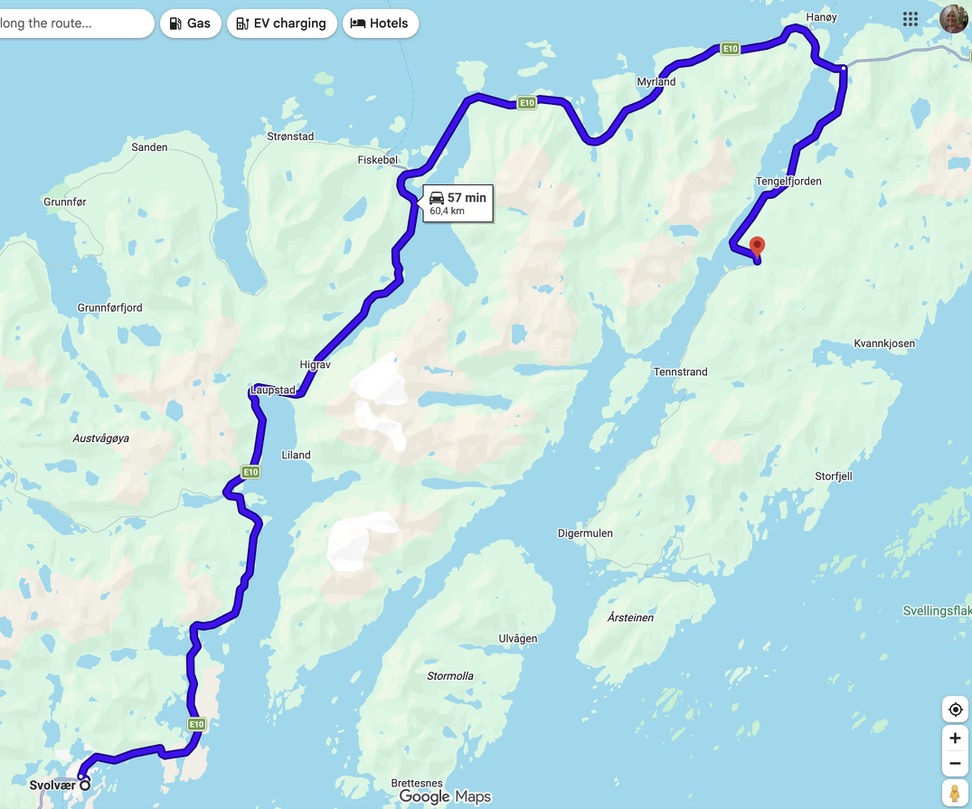
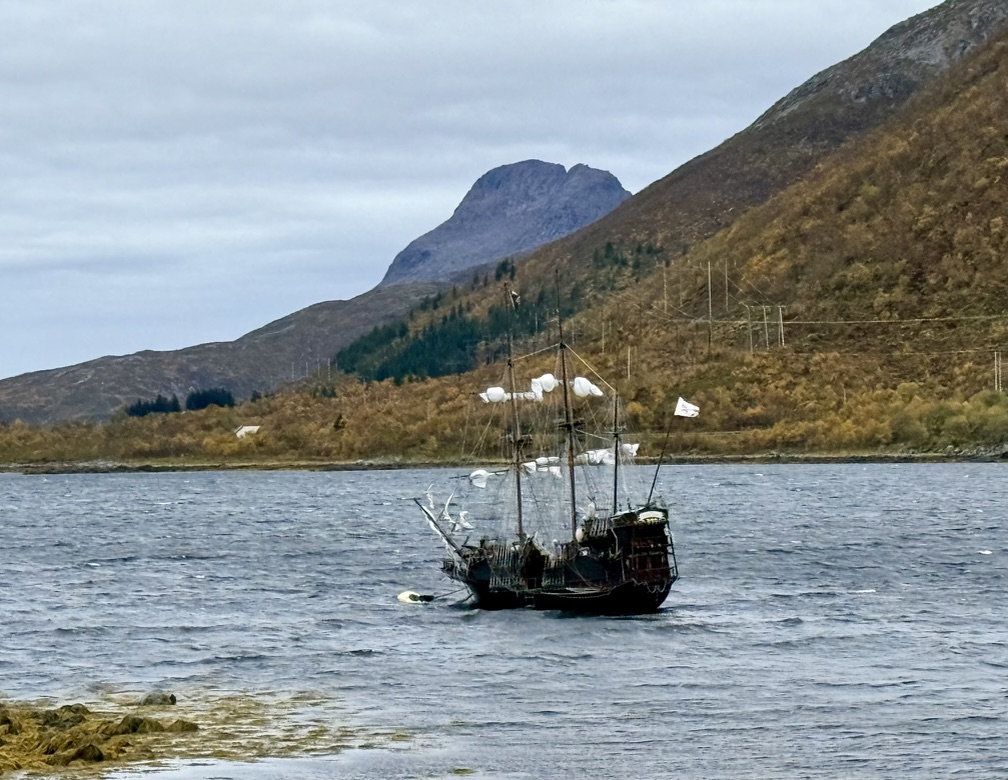
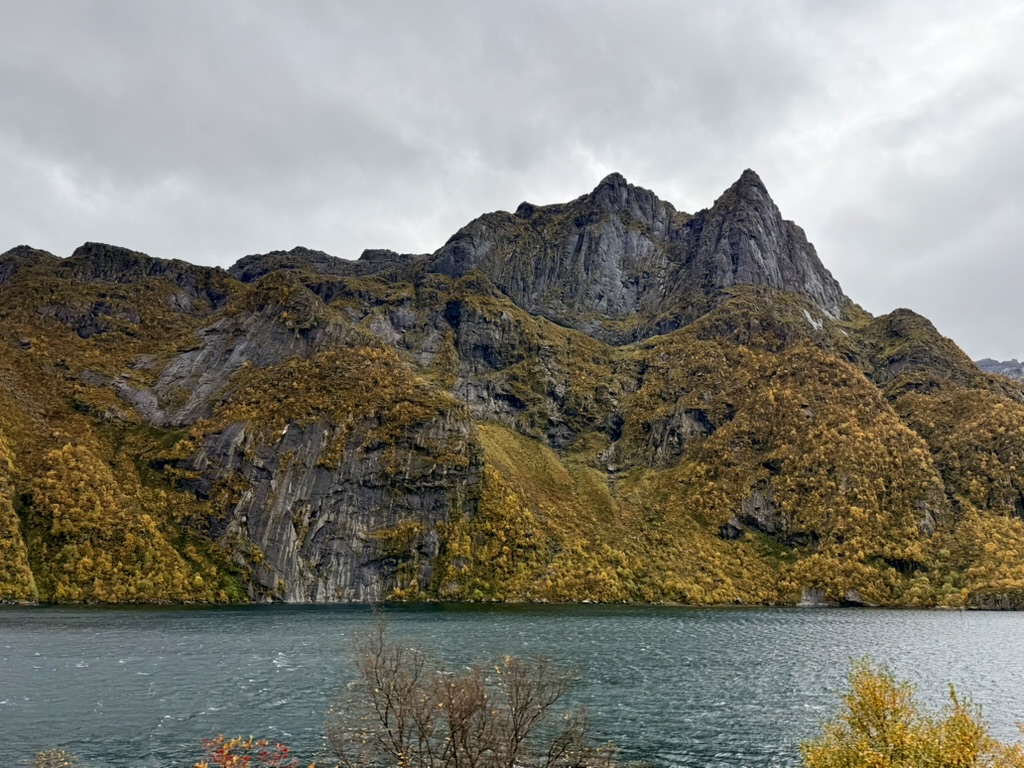
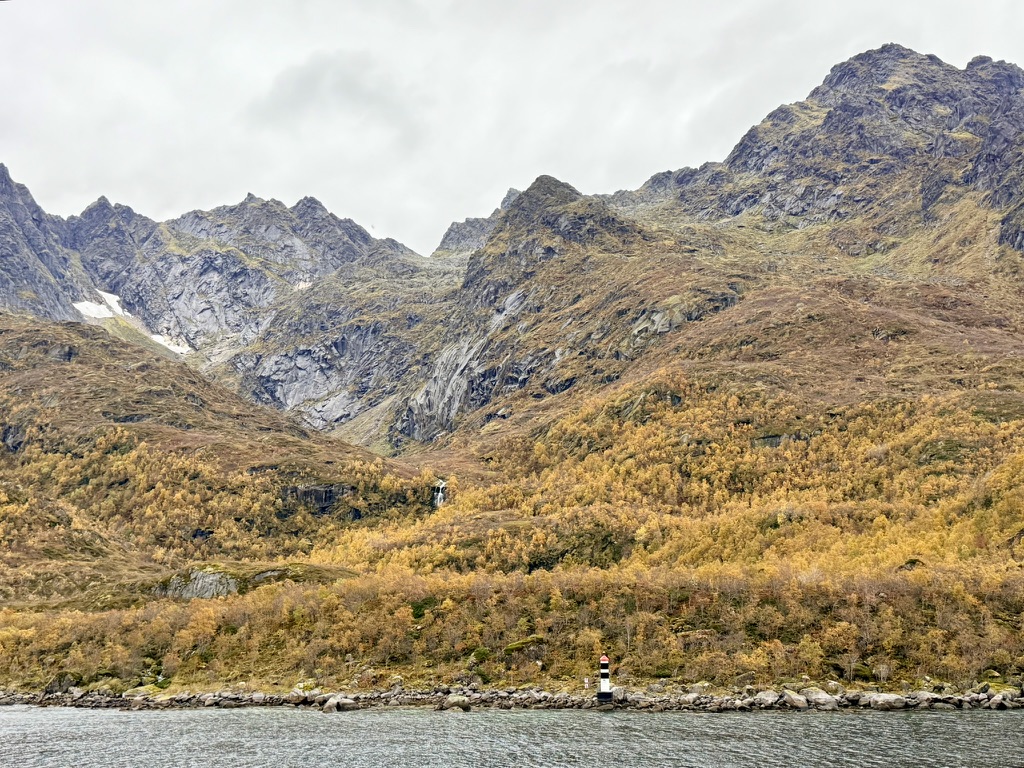
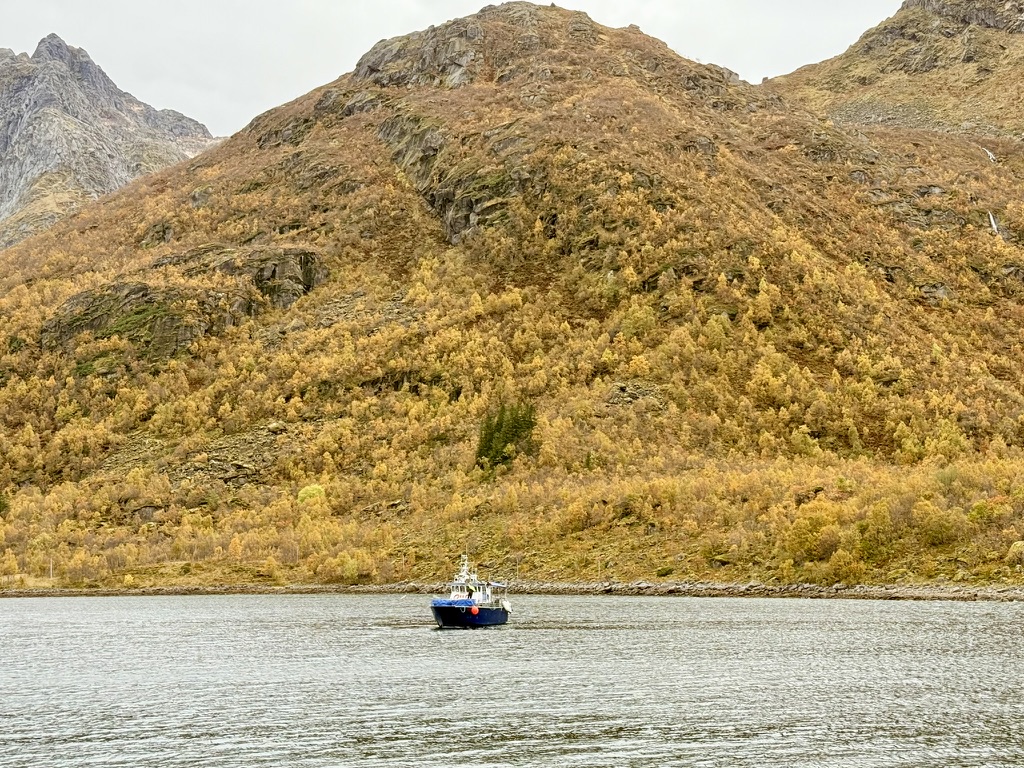
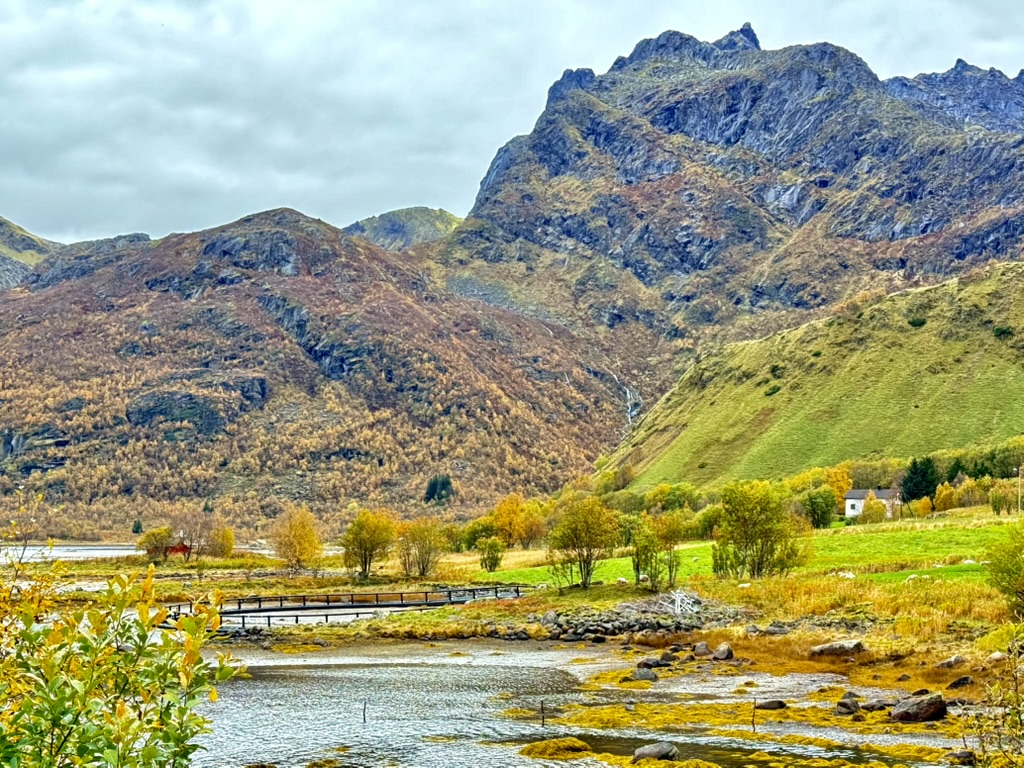
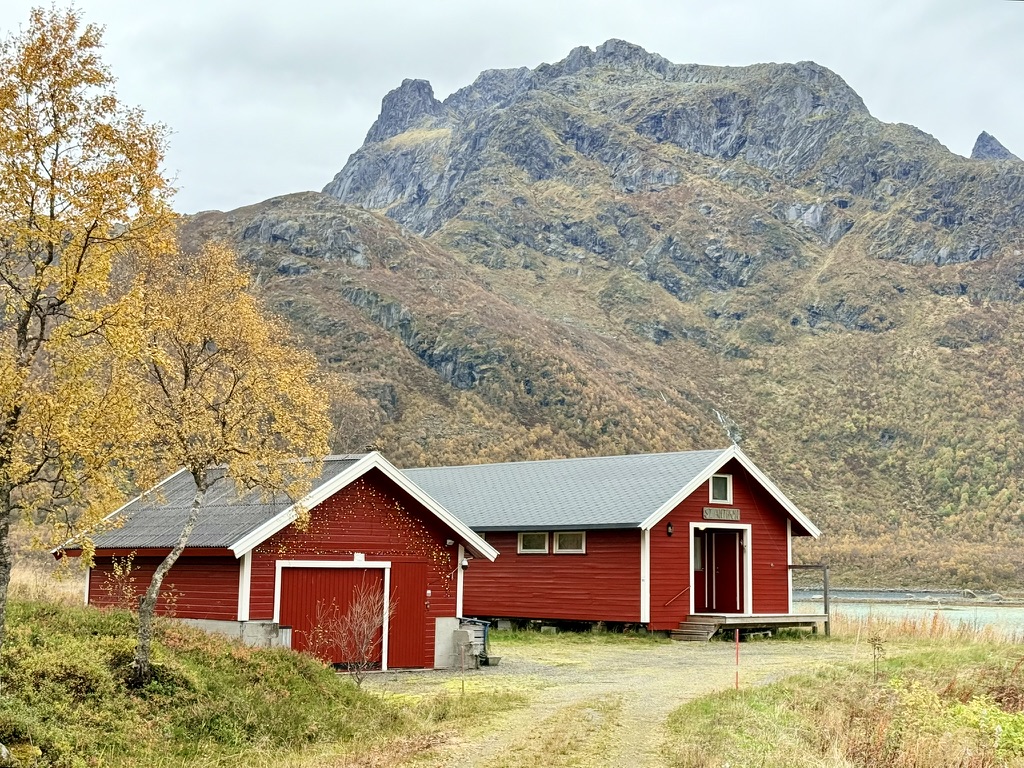
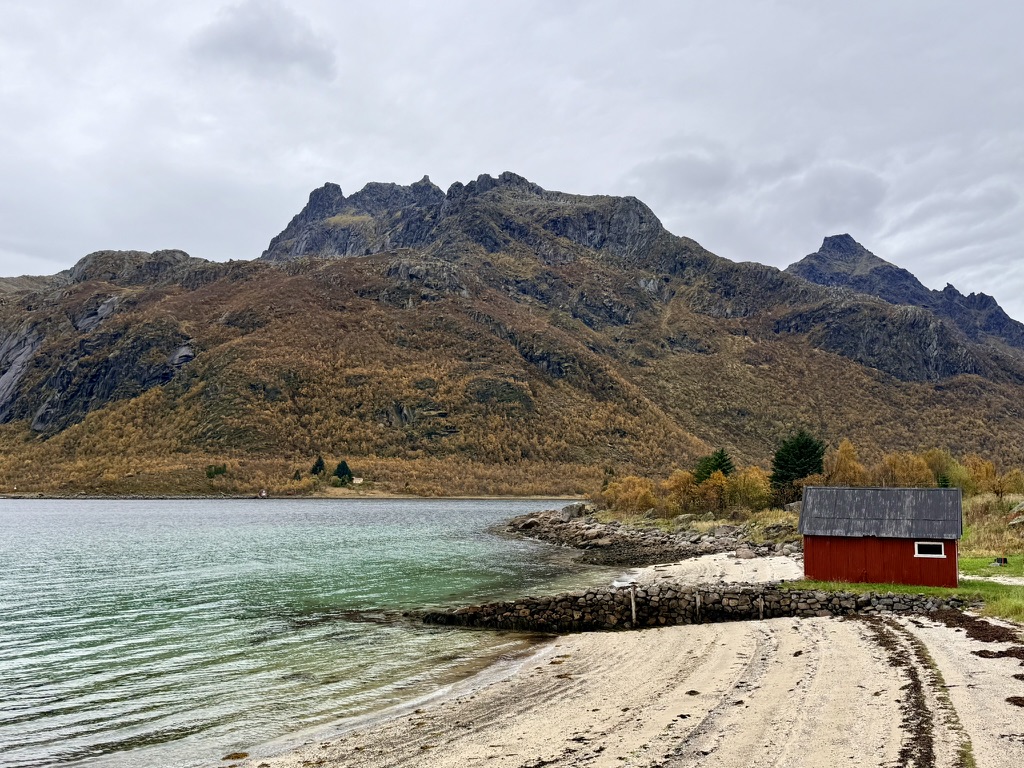
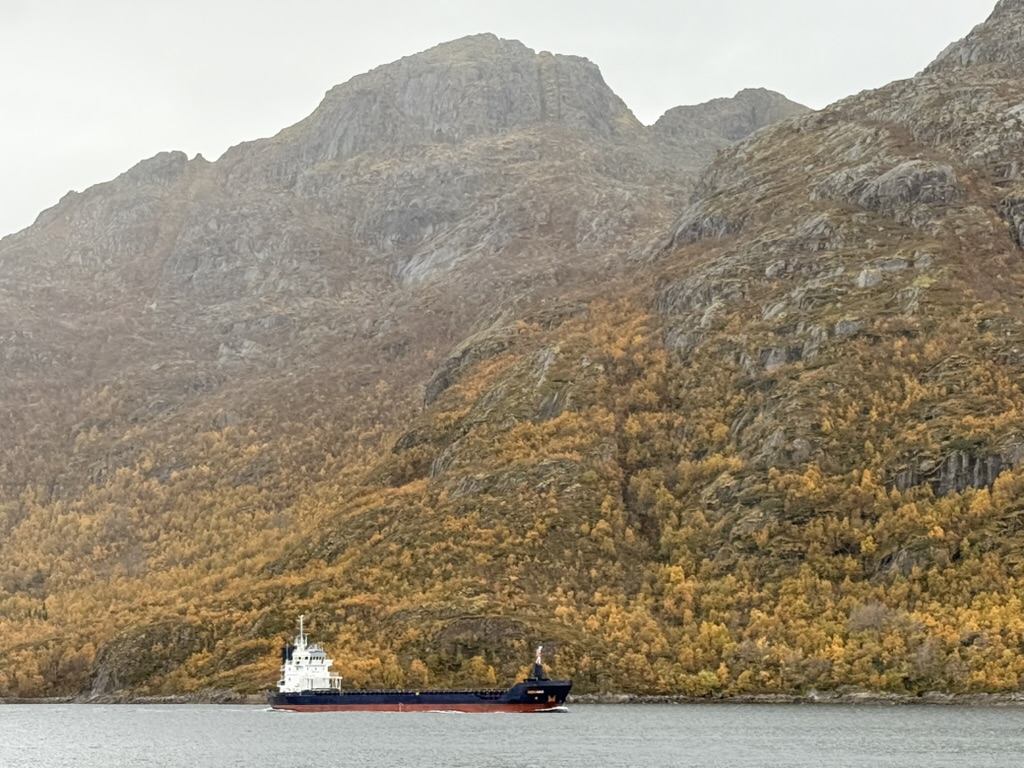
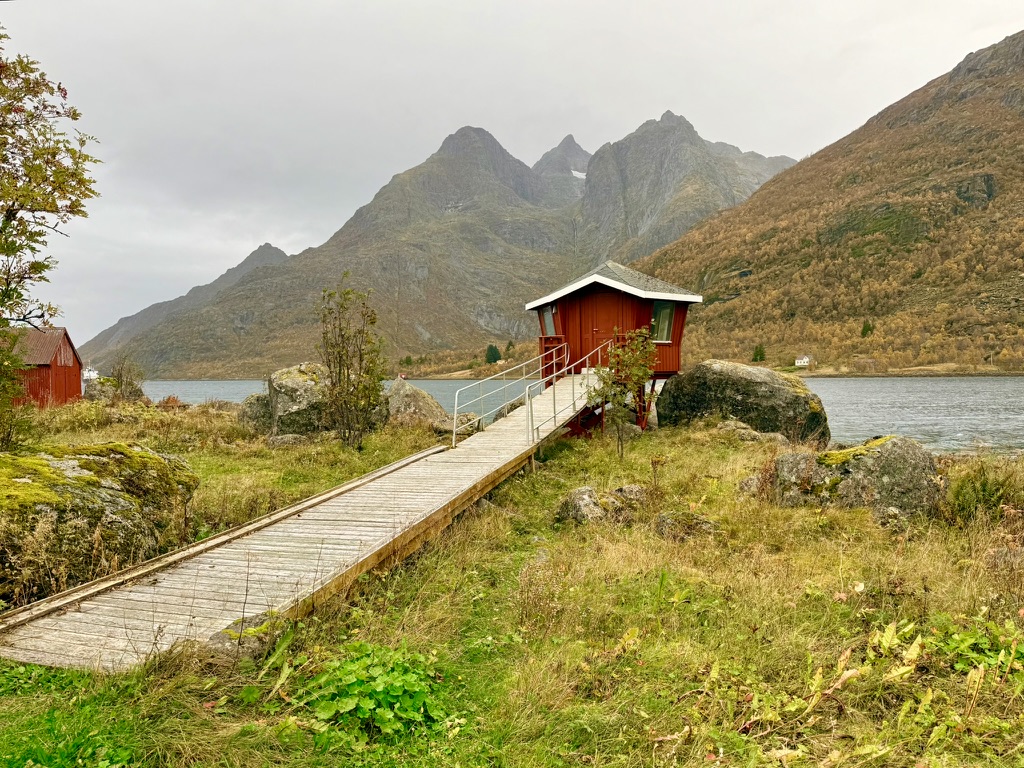
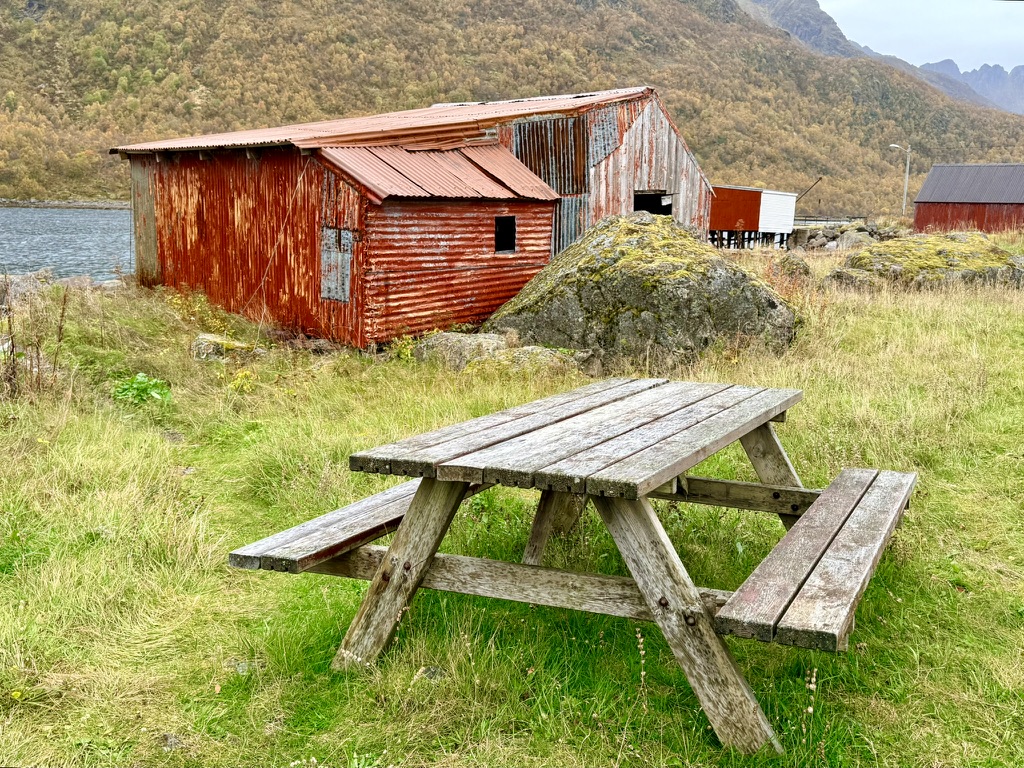
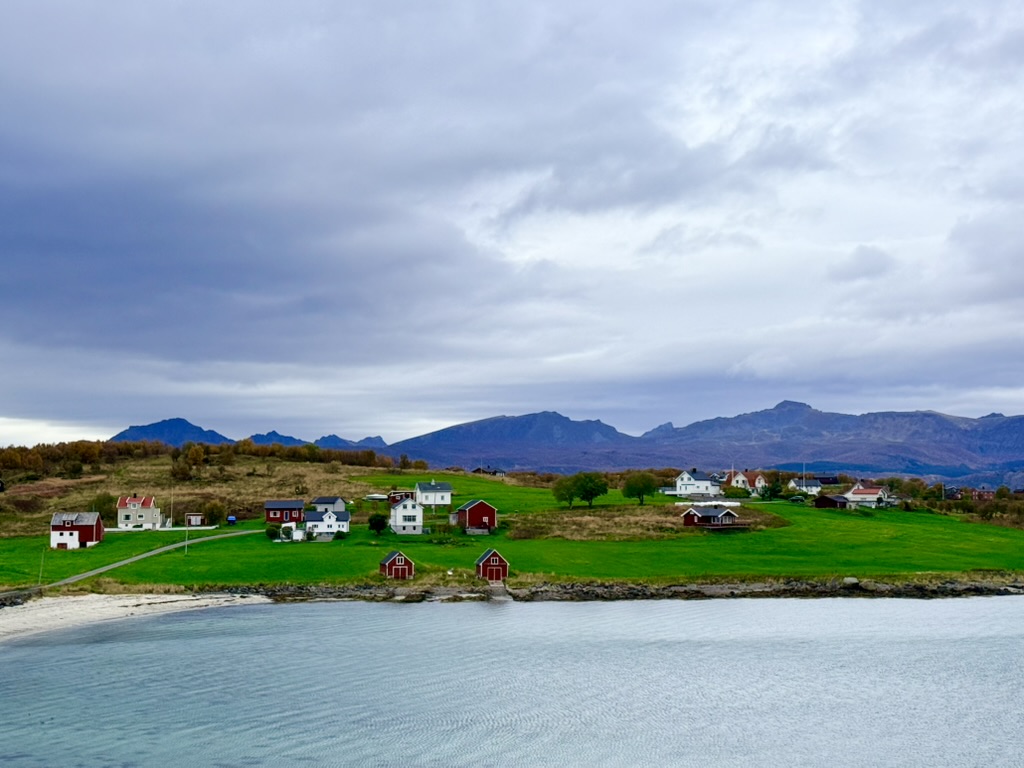
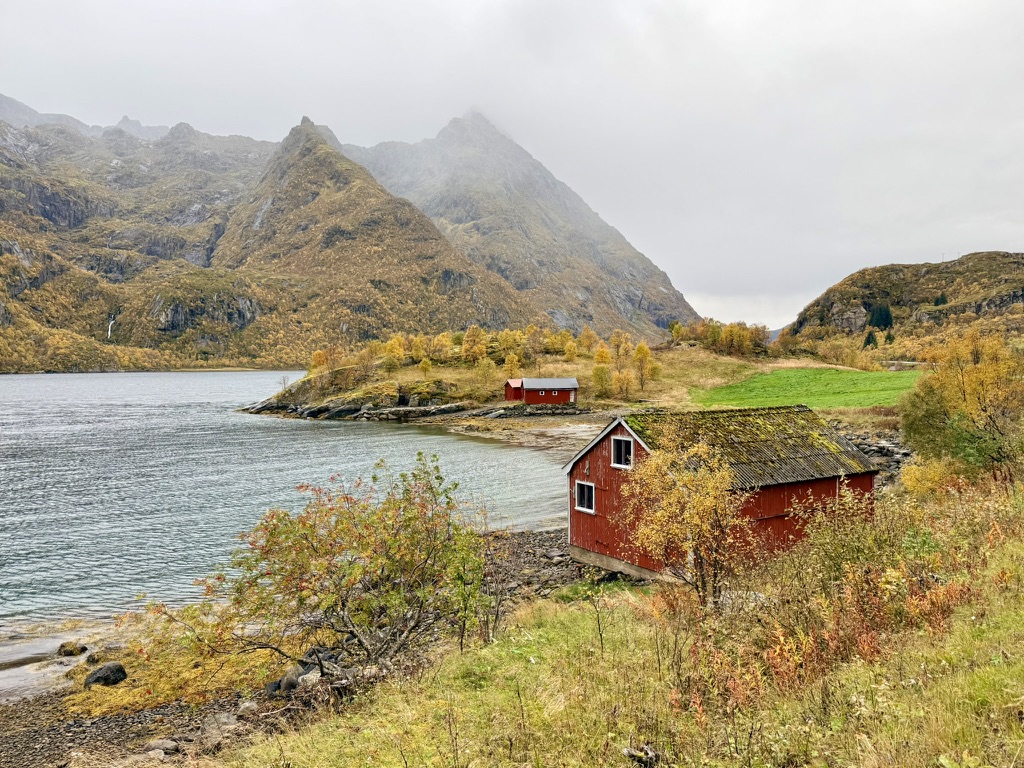
We drove north from Svolvær into Vesterålen where we found some wild and magnificent views. It is a sparsely populated area and seems like the end of the earth. Yet. It is still nowhere near the northernmost part of Norway.
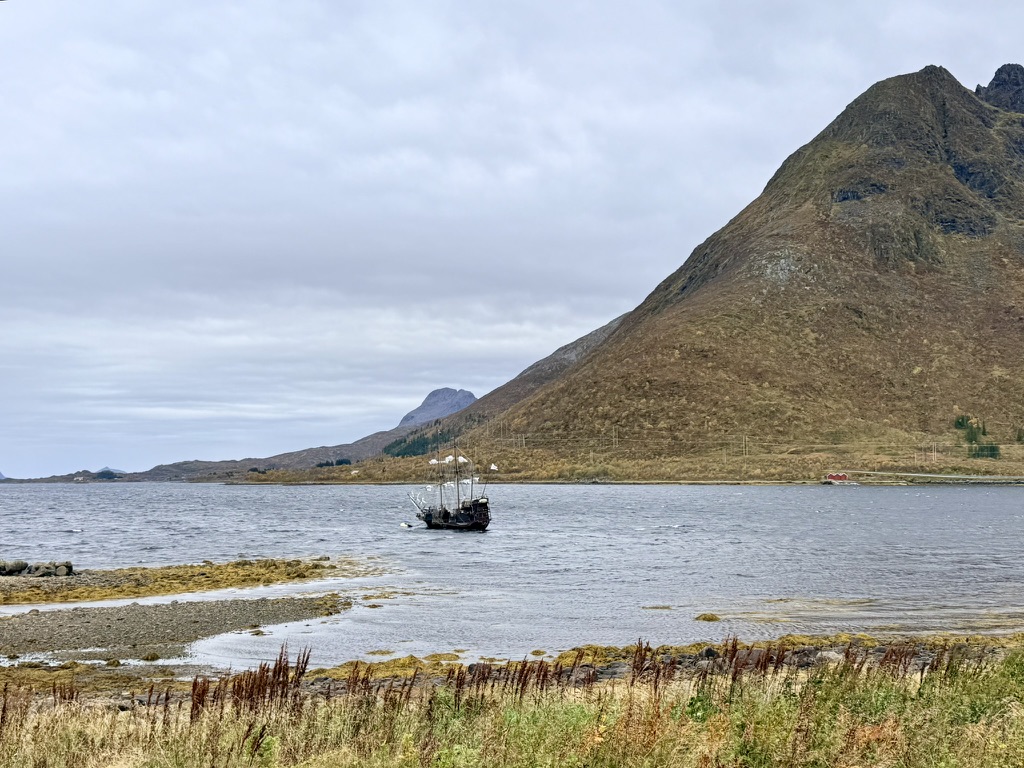
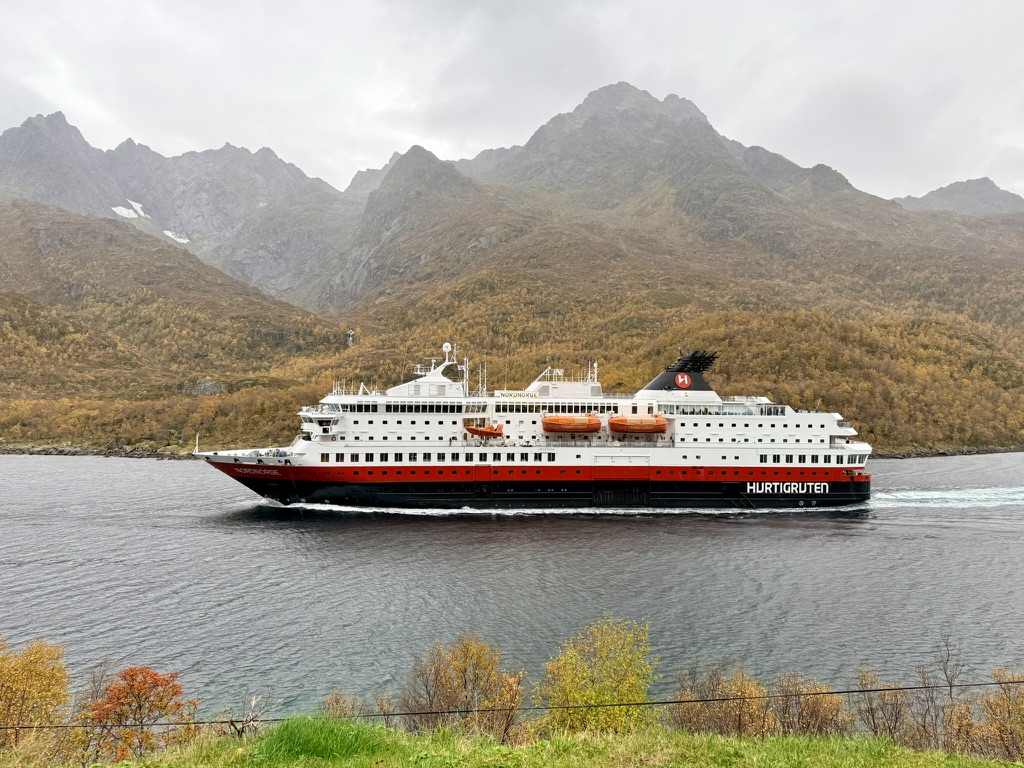
We saw some ship traffic passing through the narrow Raftsundet strait, a legendary 21-kilometer passage that serves as the marine highway between Lofoten and Vesterålen. Once again, we saw another Hurtigruten vessel, the Nordnorge.
We stopped at a grocery store to get yogurt for our early morning ferry ride to Bodø, and just outside the door, I slipped on a wet metal grate and fell hard, flat on my back. I have taken so many falls on wet or pebbly places and somehow I was still able to jump back up. One of these days, I’m not going to be so lucky to not break a bone or hurt myself badly.
We returned just in time to drop our rental car keys at Sixt.
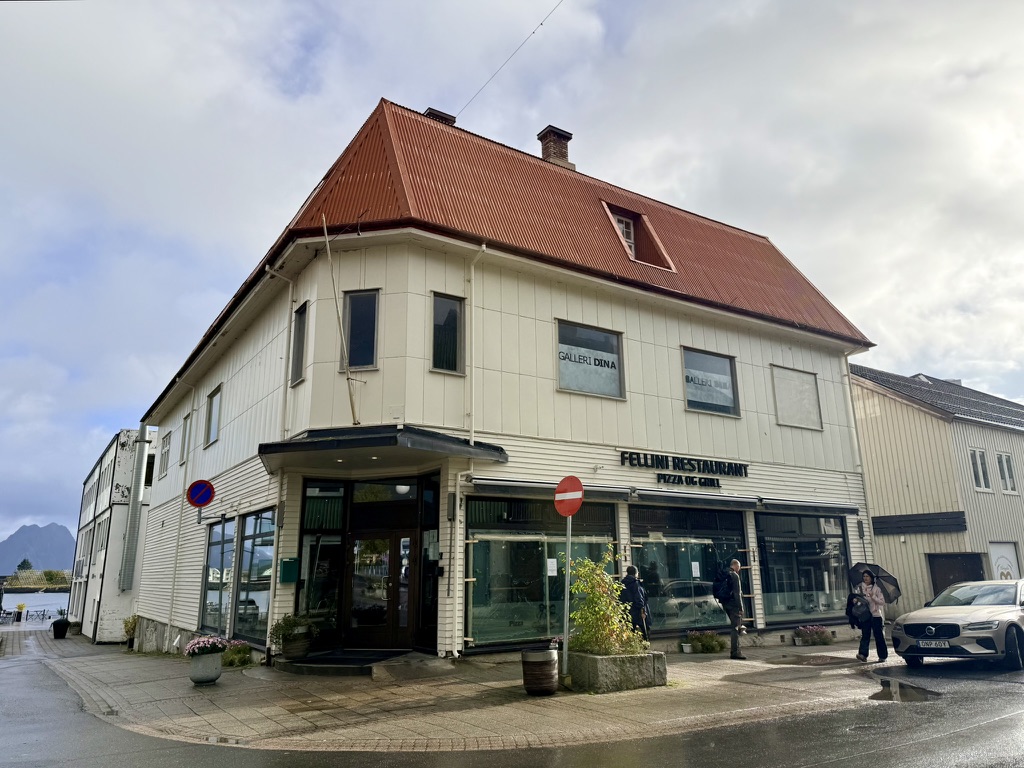
Dinner at Fellini Restaurant Pizza & Grill
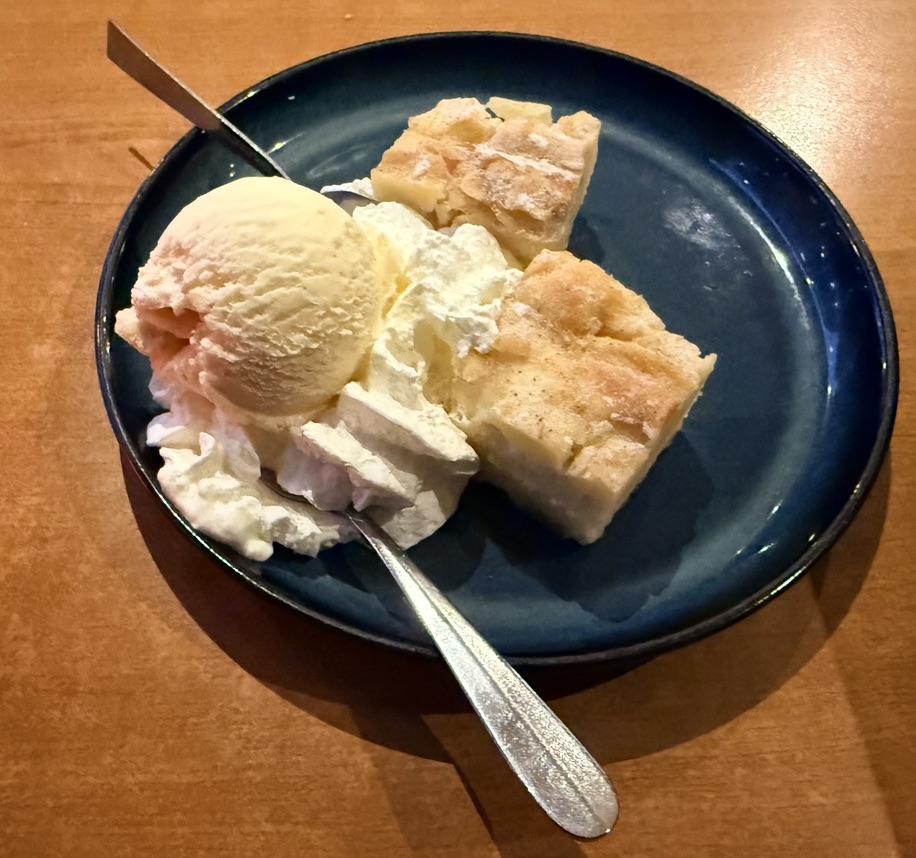
After our long day of driving, we shared a Quattro Pizza (cheese, ham, champignon, shrimps and olives) and apple cake with ice cream at Fellini Restaurant Pizza & Grill.
Travel from Svolvær to Bodø
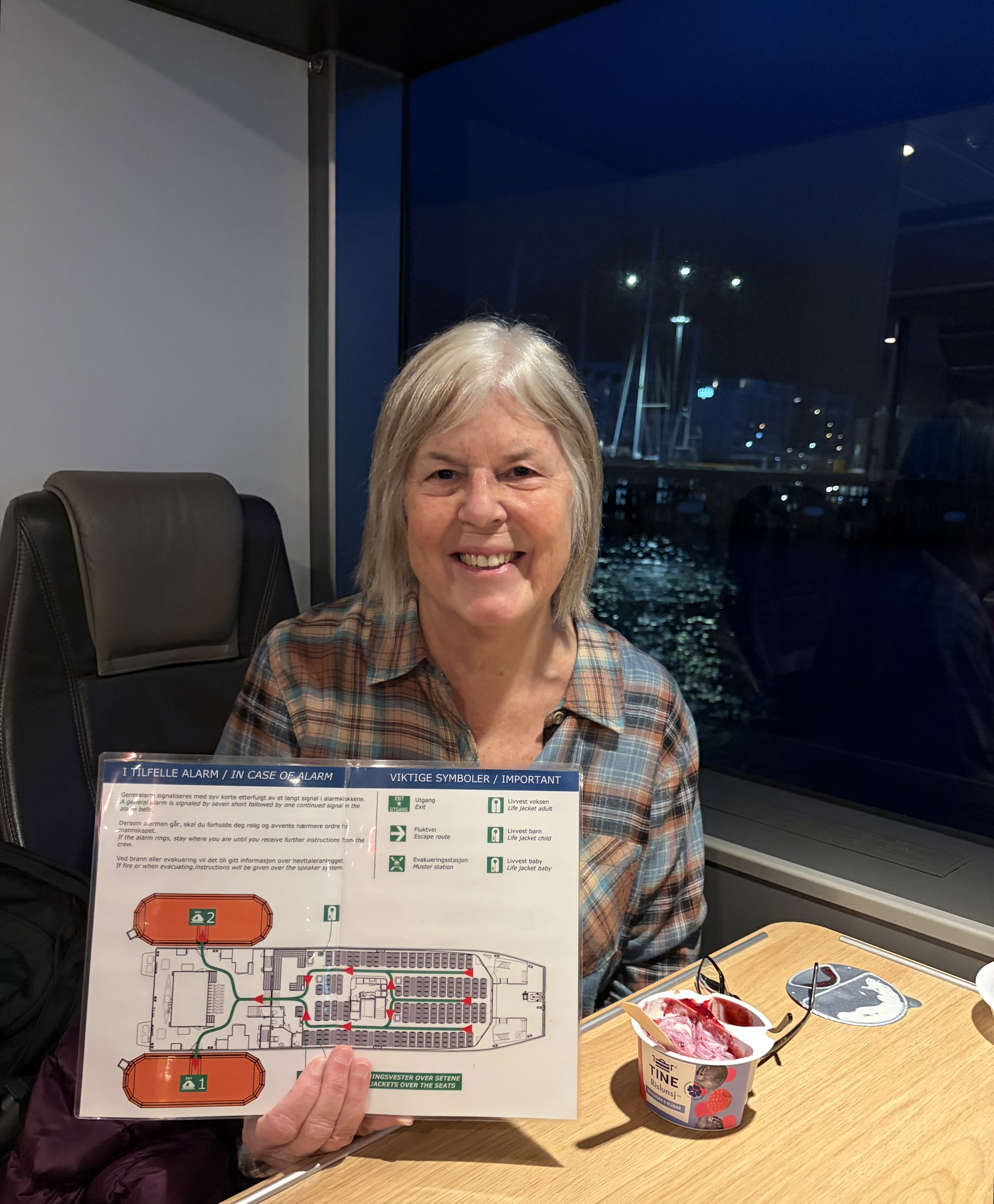
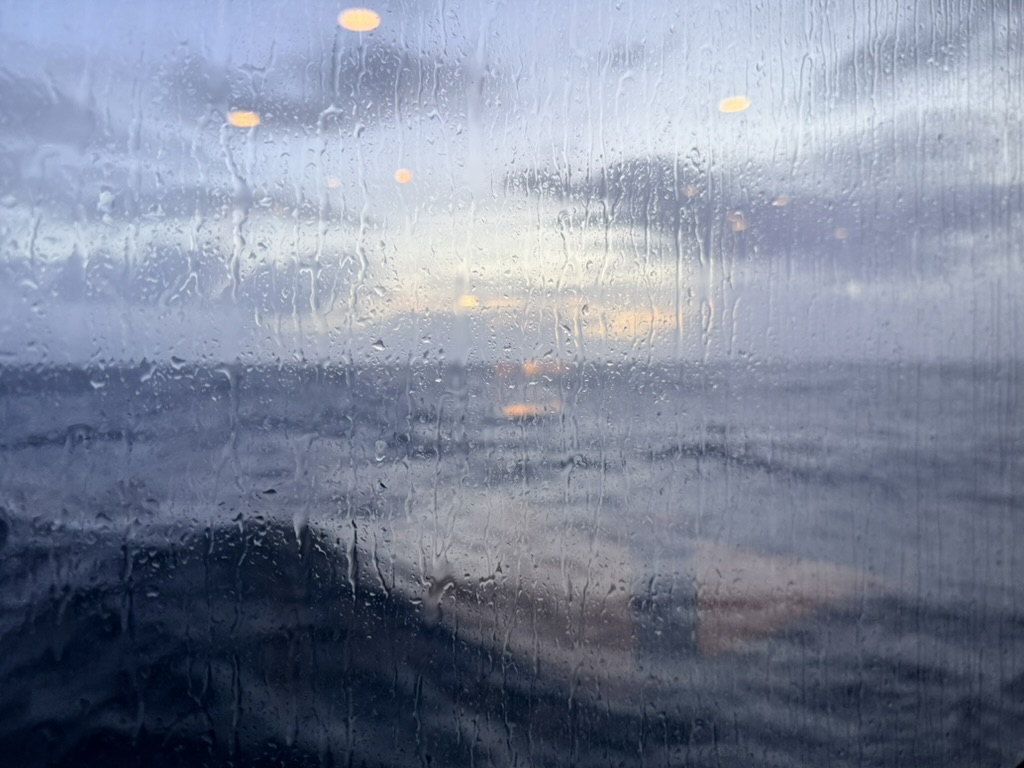
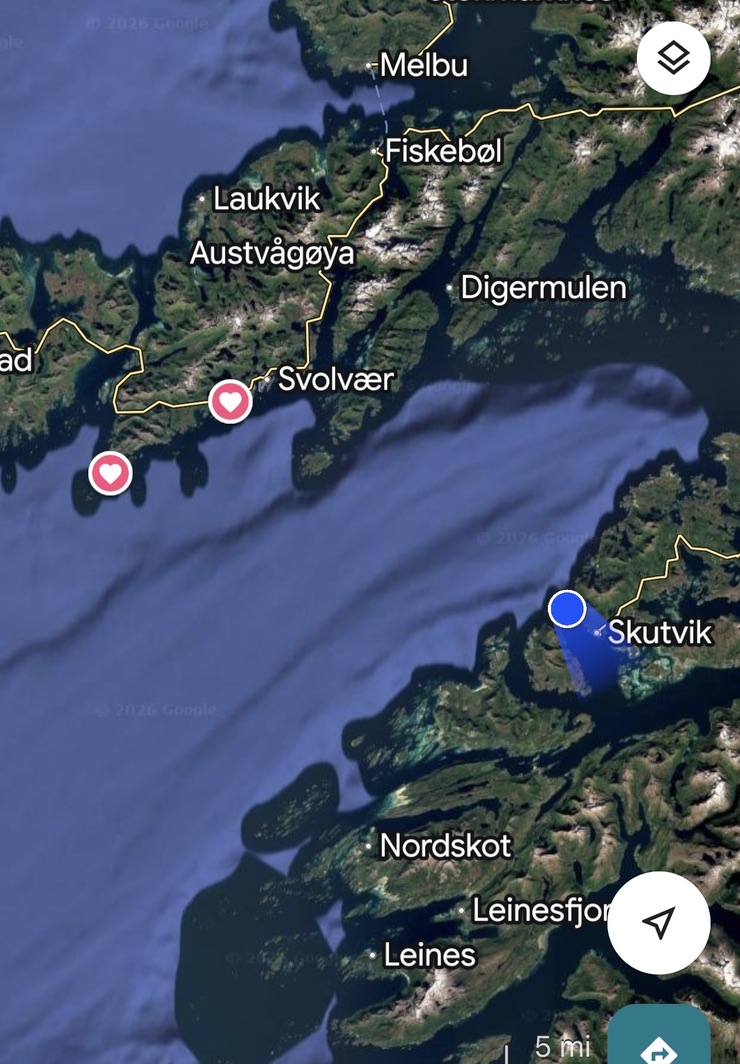
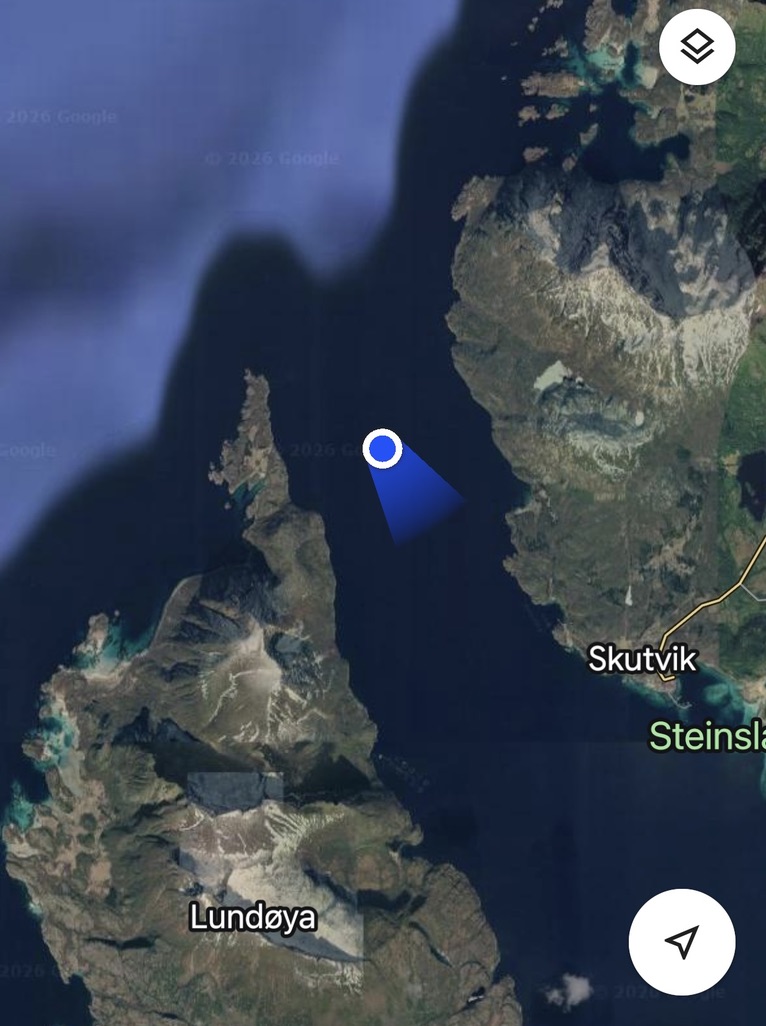
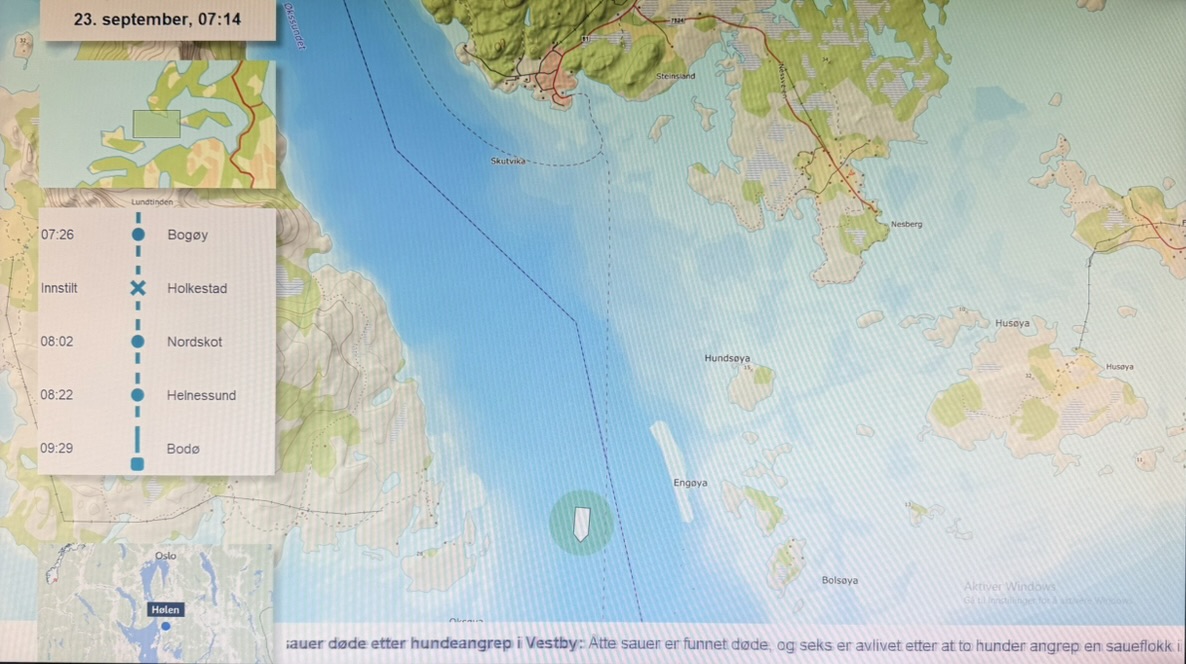
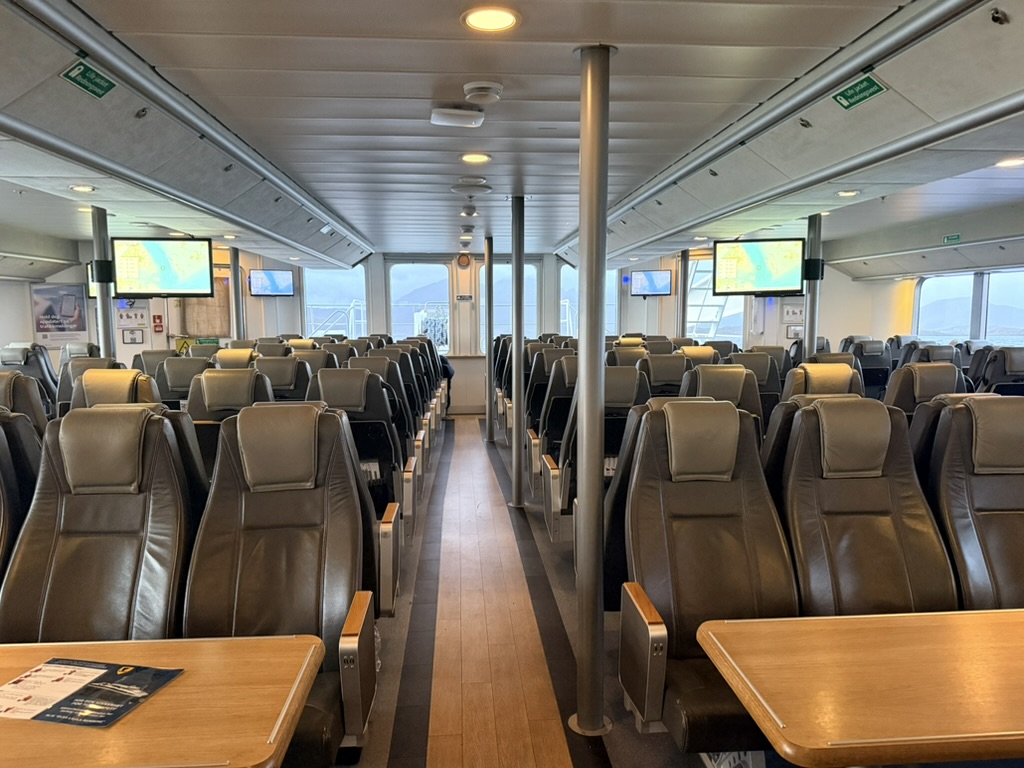
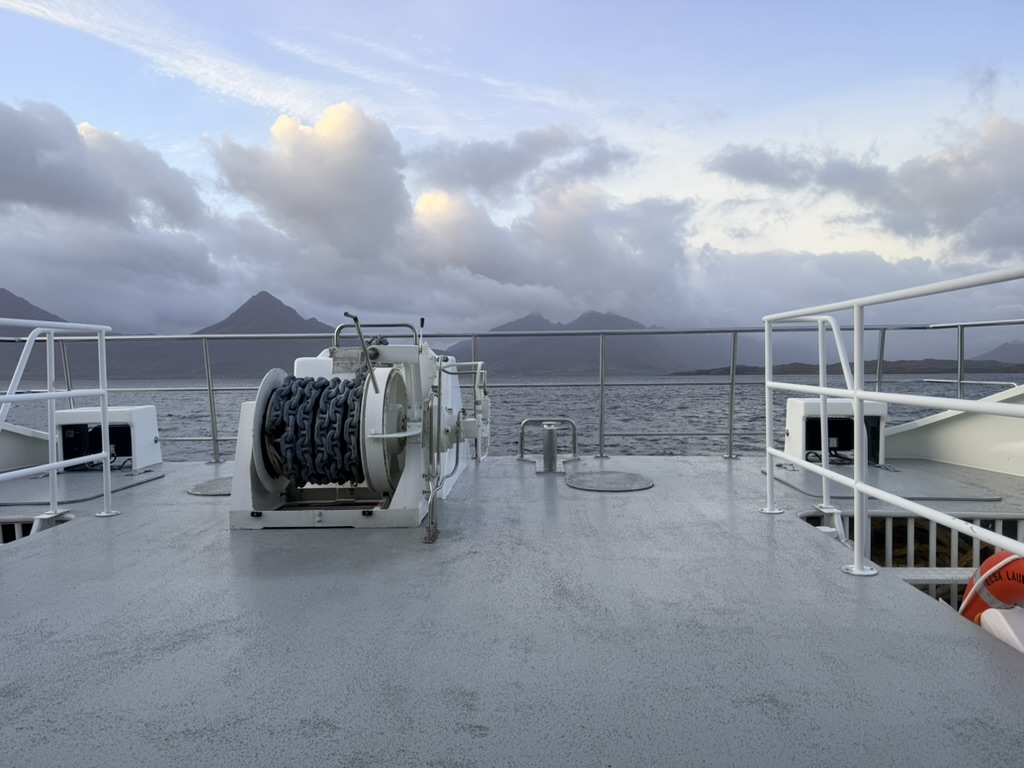
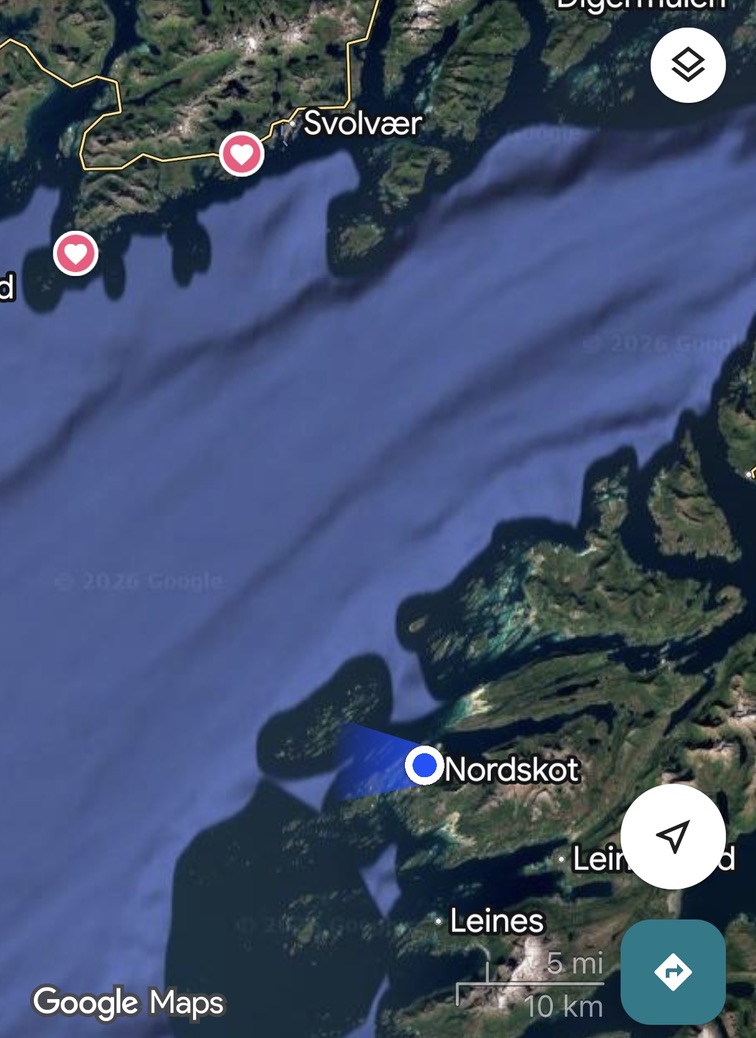
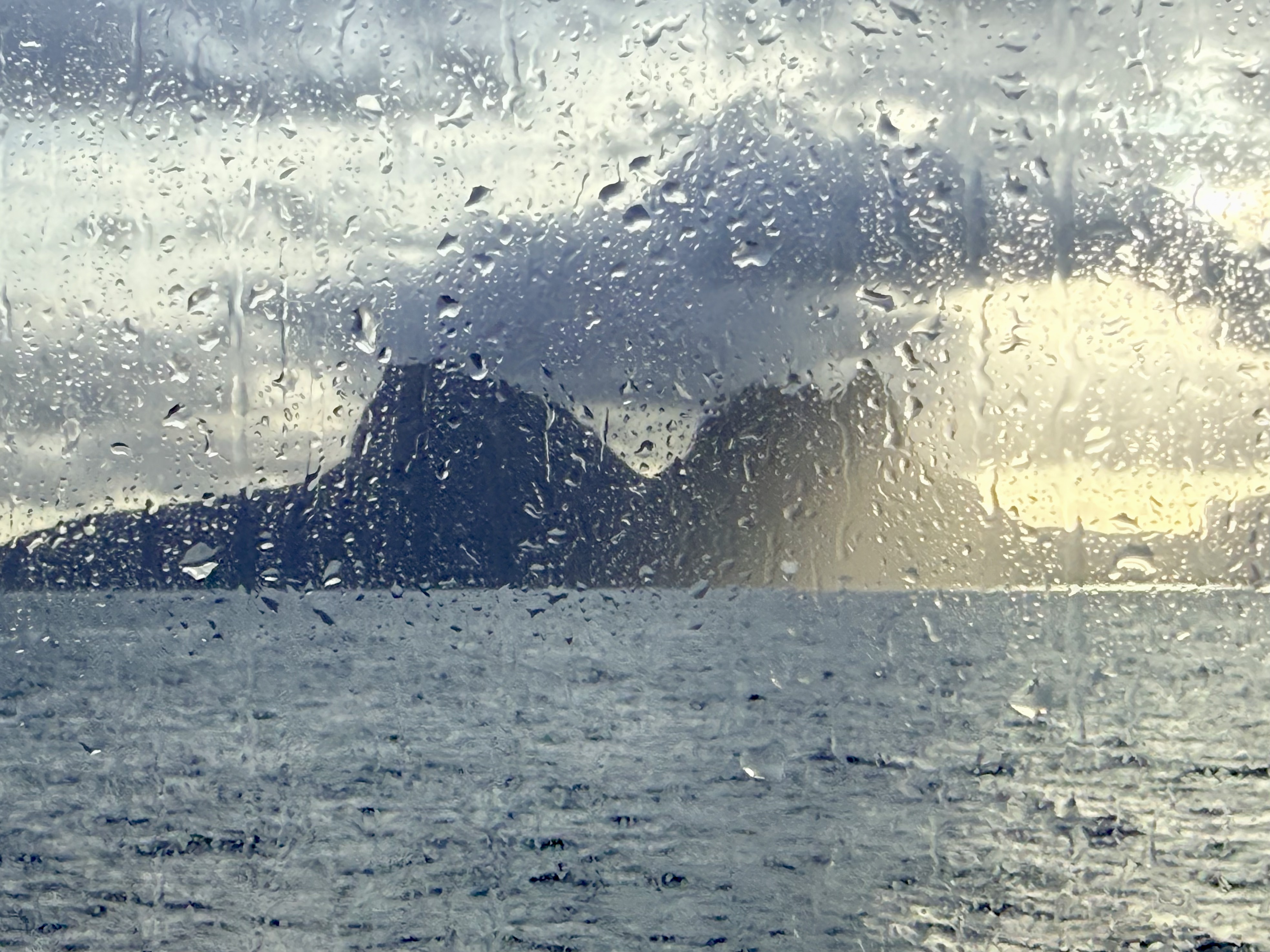
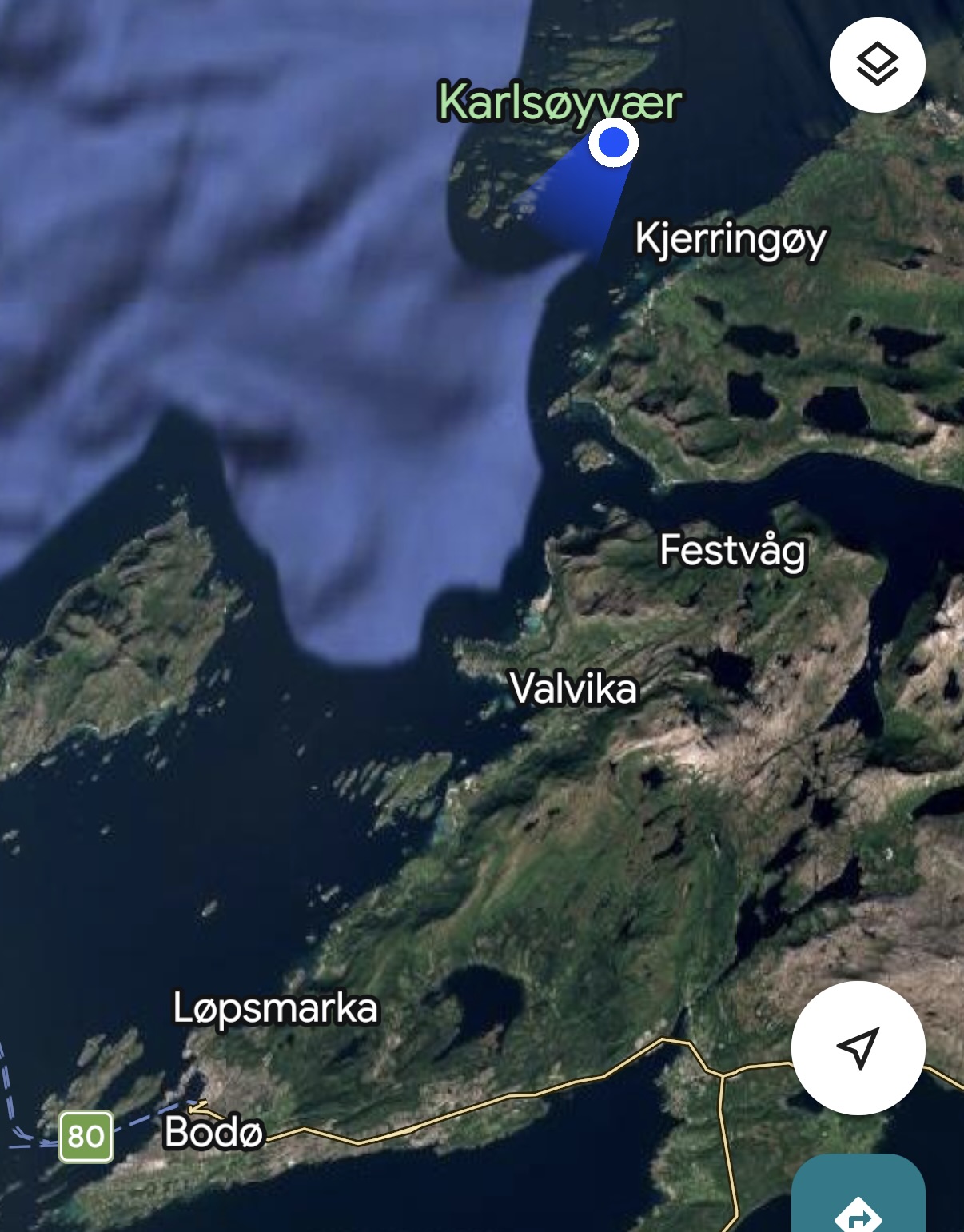
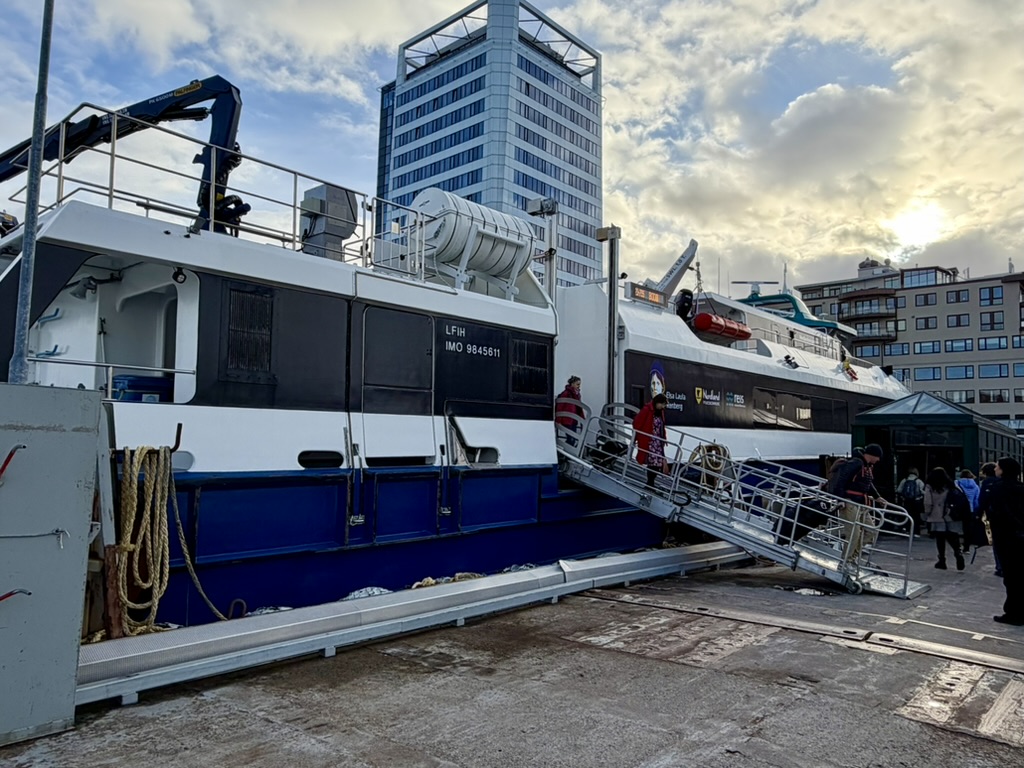
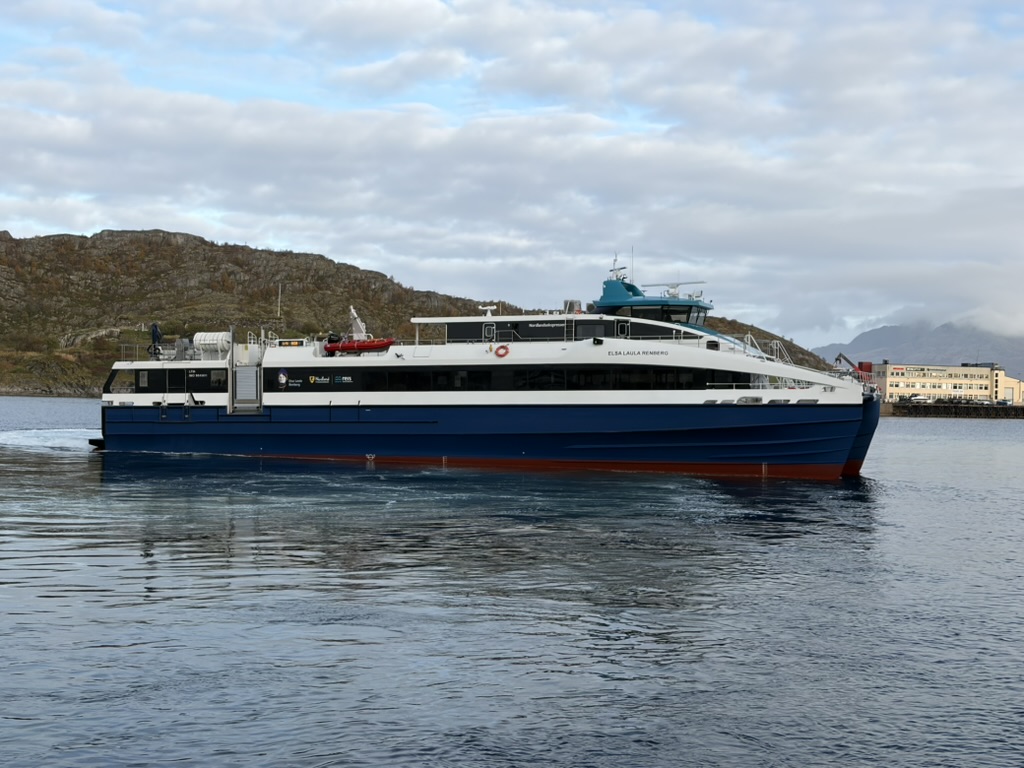
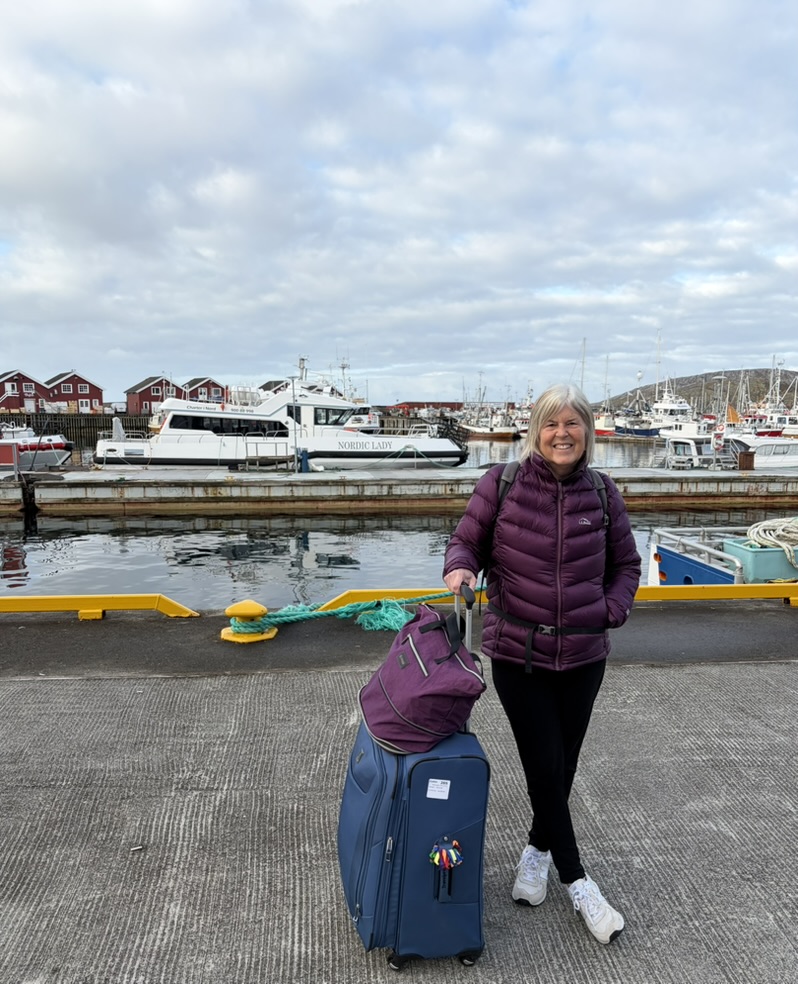
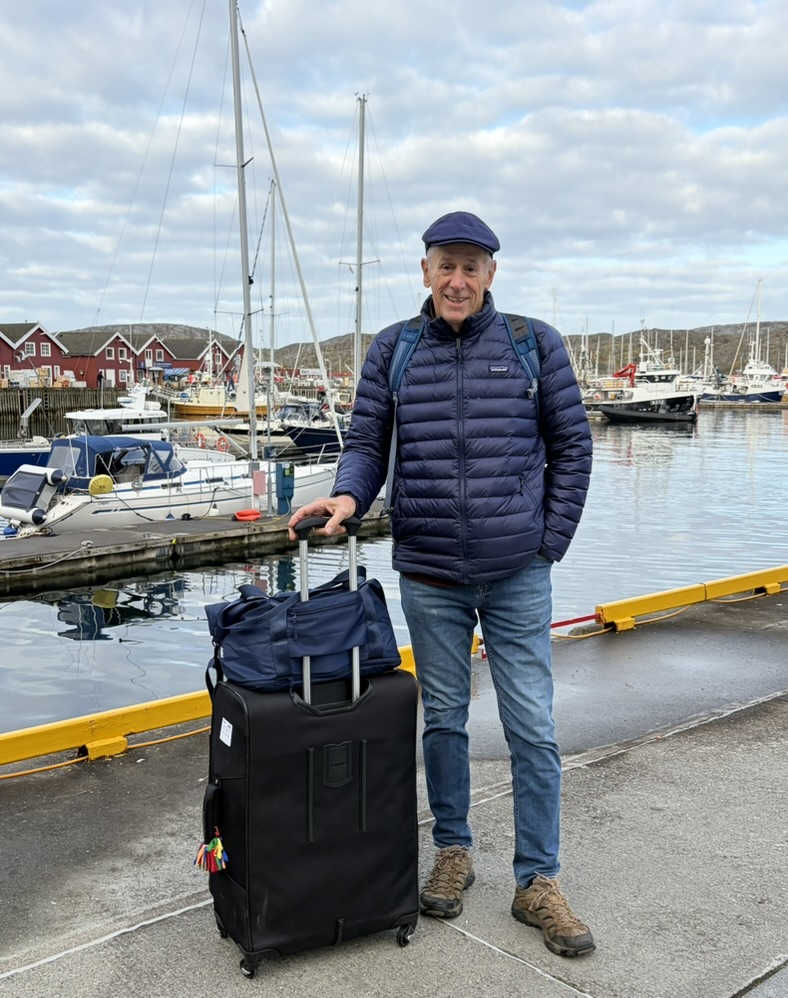
Wednesday, September 23 to Friday, September 25: We took the Boreal Express Ferry at 6:00 a.m. Wednesday morning from Svolvær back to Bodø, where we stayed for two nights at Thon Hotel Nordlys in Bodø. The weather wasn’t good and the ride was bumpy as we crossed the Vestfjorden, the large body of water south of Lofoten. Luckily, we headed southeast from Svolvær and went into a fjord, which was calmer since it wasn’t in the open sea.
We had made a quick (2-hour) stop in Bodø while we were on our Vesterålen cruise, but all we did at that time was walk around looking at street art. You can see that post here: a short cruise on hurtigruten’s ms vesterålen: bergen to lofoten, norway.
Thon Hotel Nordlys in Bodø
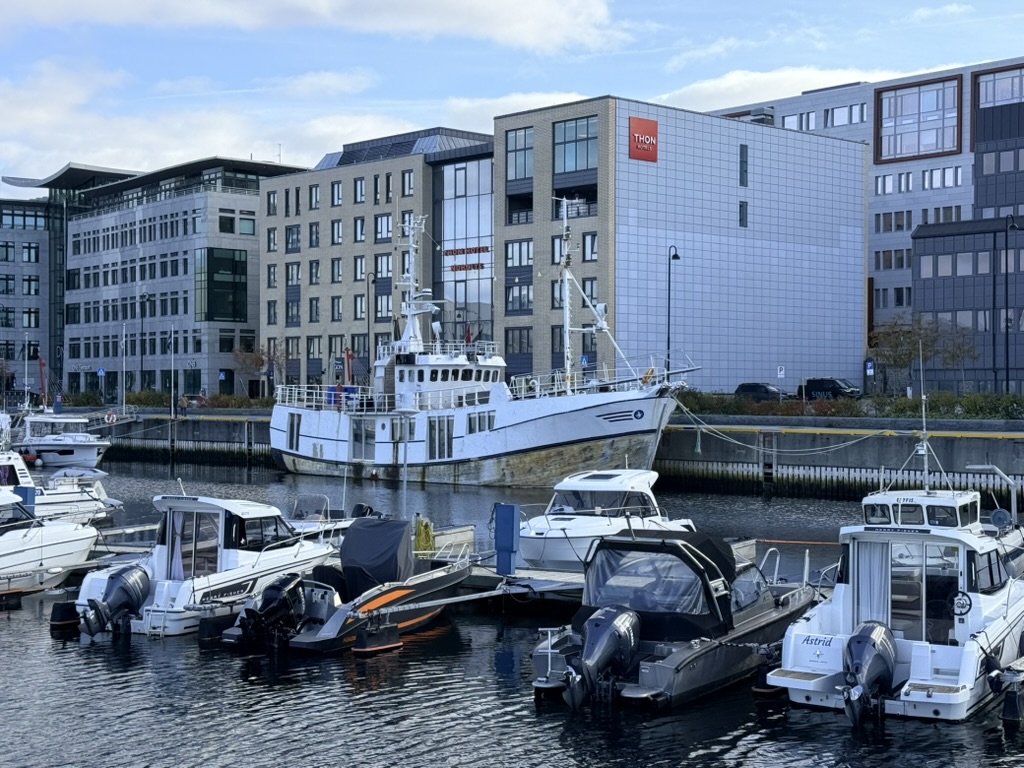
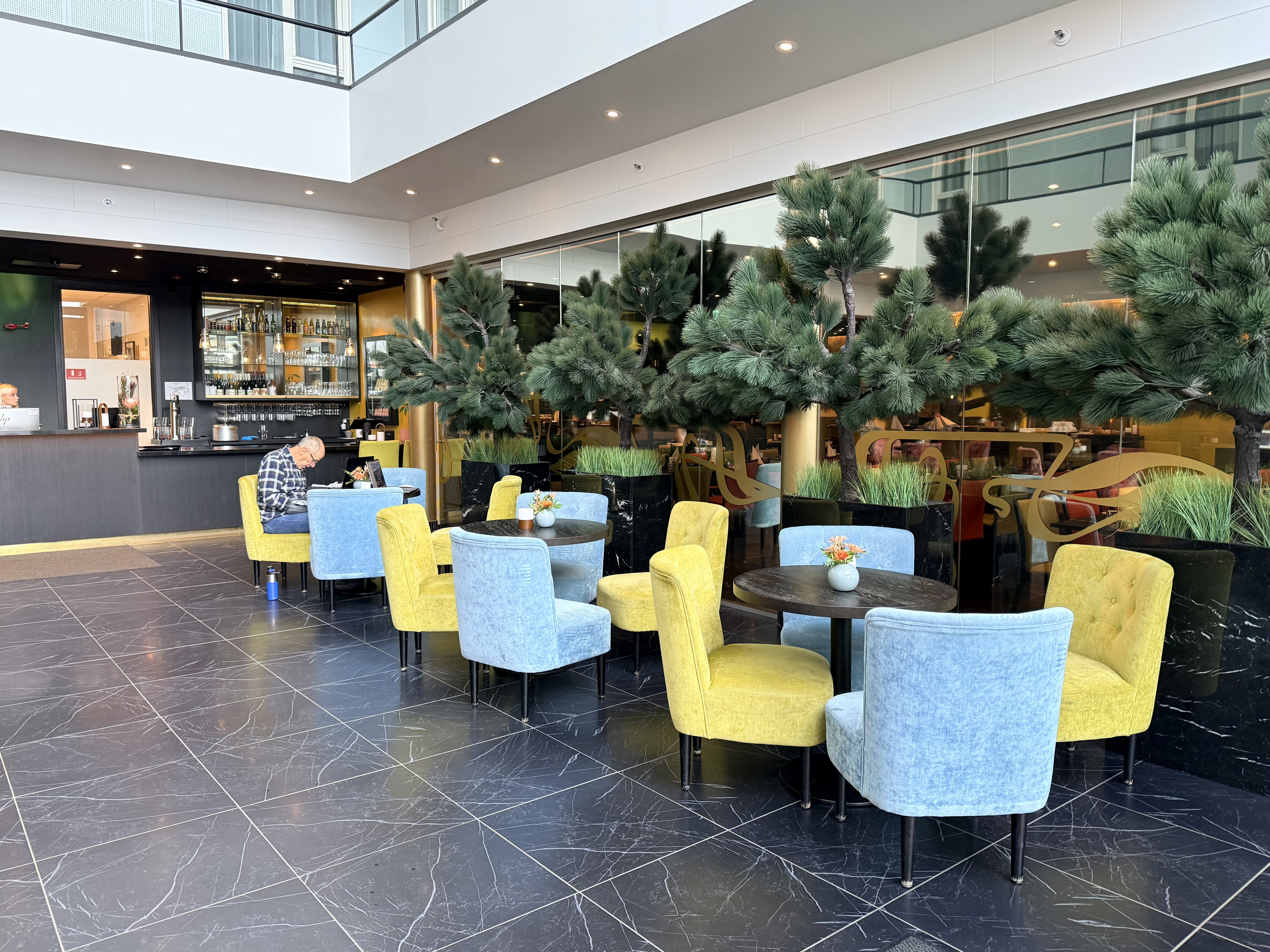
Our hotel in Bodø, Thon Hotel Bodø, was the sister to the hotel we stayed in at Svolvær. It was smaller than the Svolvær Thon, but it was plenty busy with conferences and their attendees. It was conveniently located right on the harbor. Here, we didn’t get upgraded to a Superior room, so our room was very small.
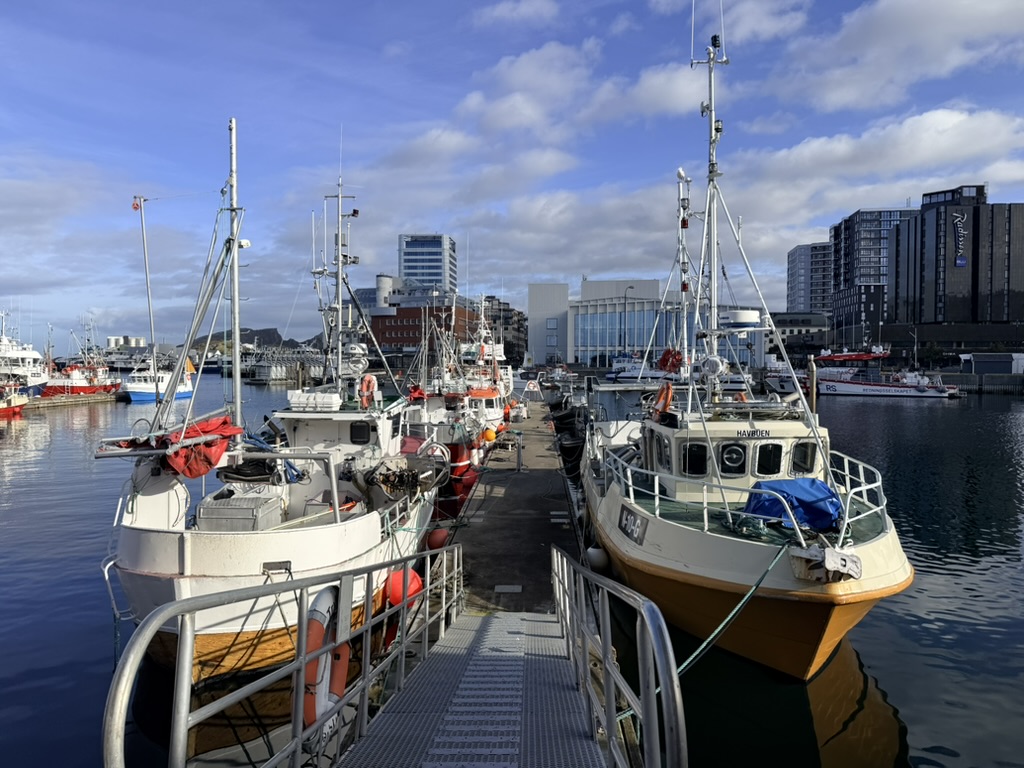
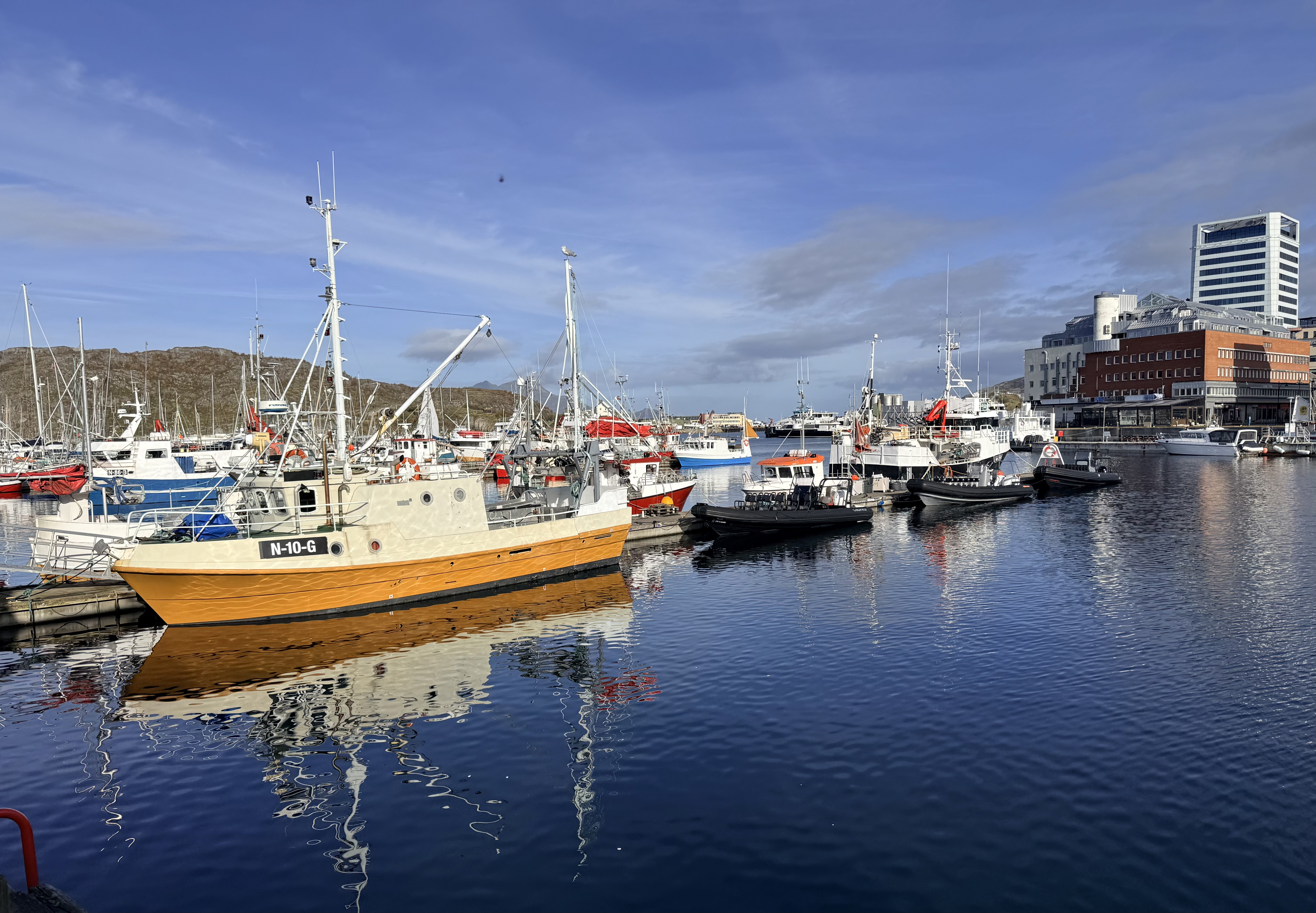
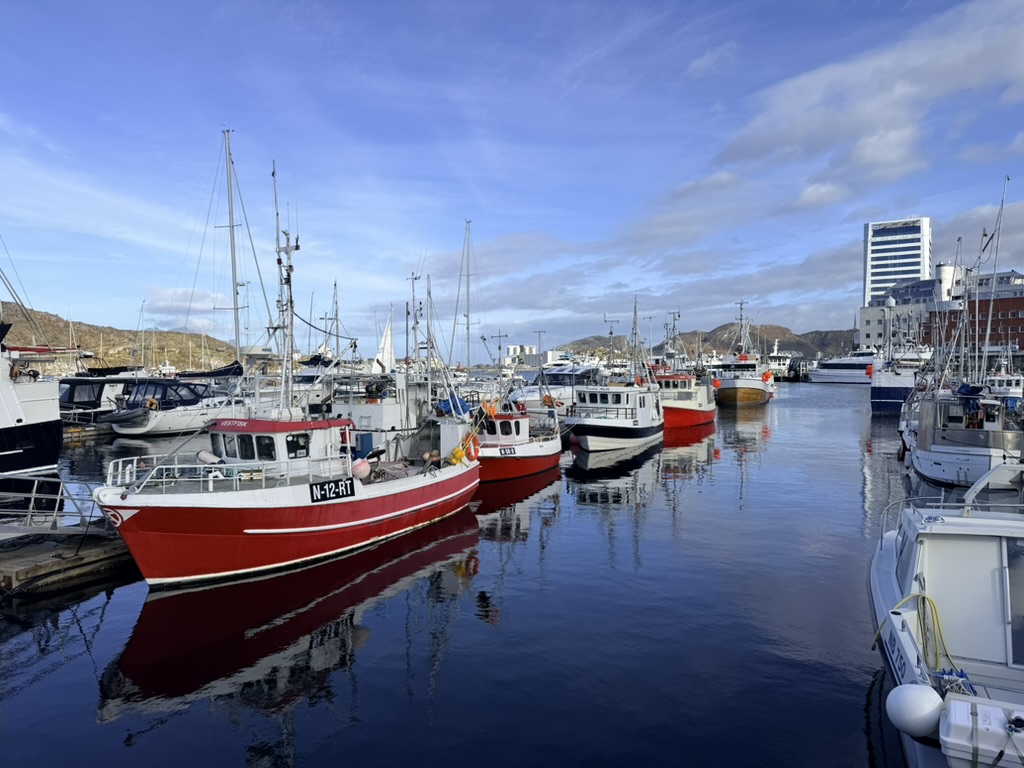
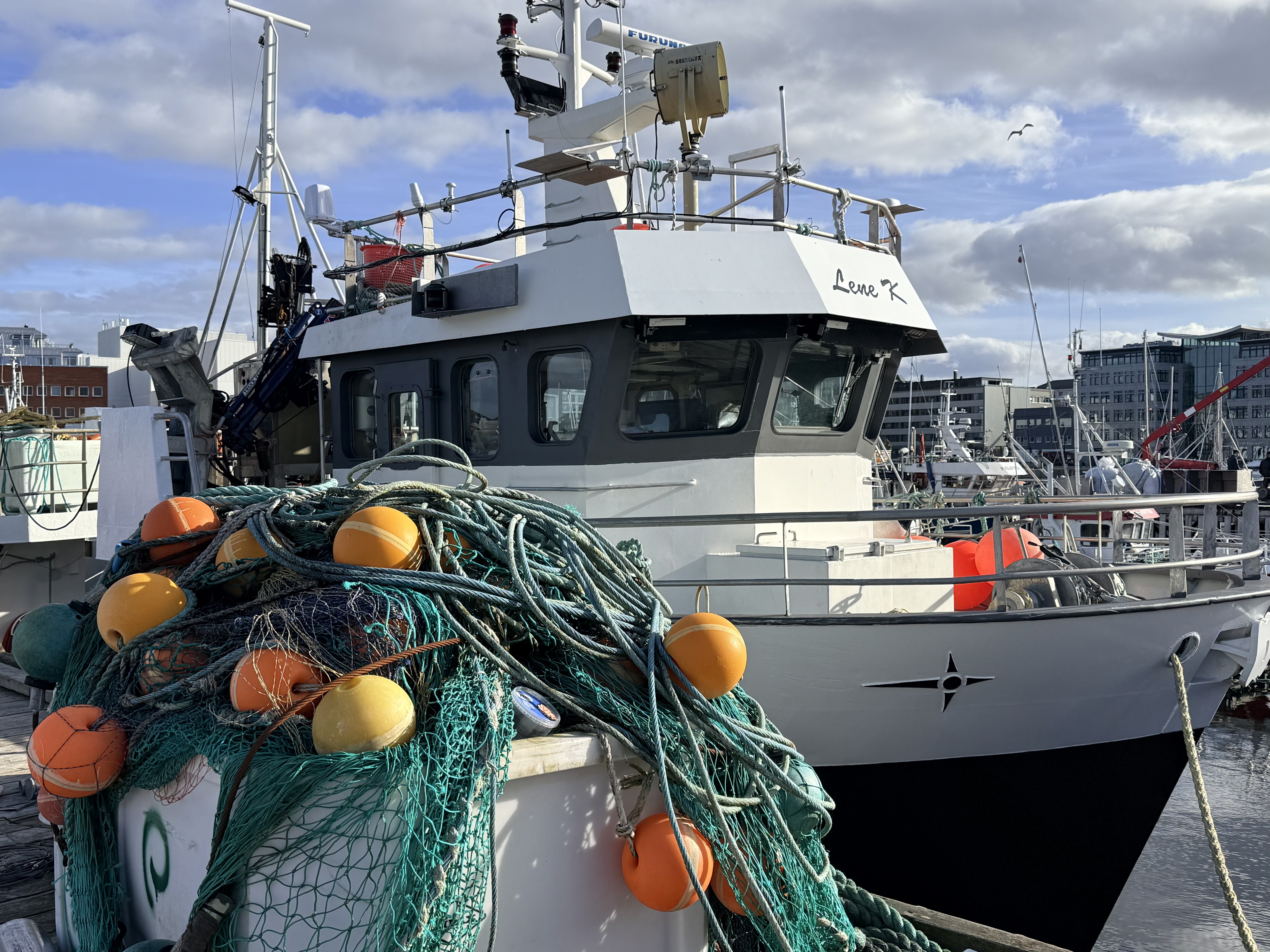
Walk around Bodø harbor
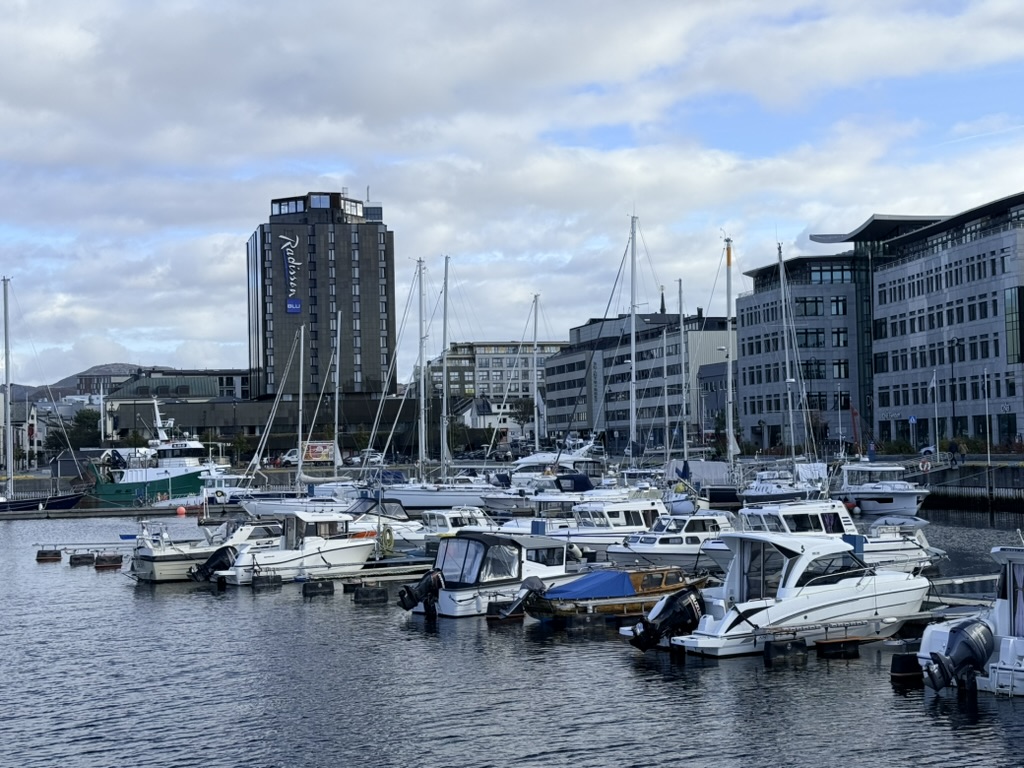
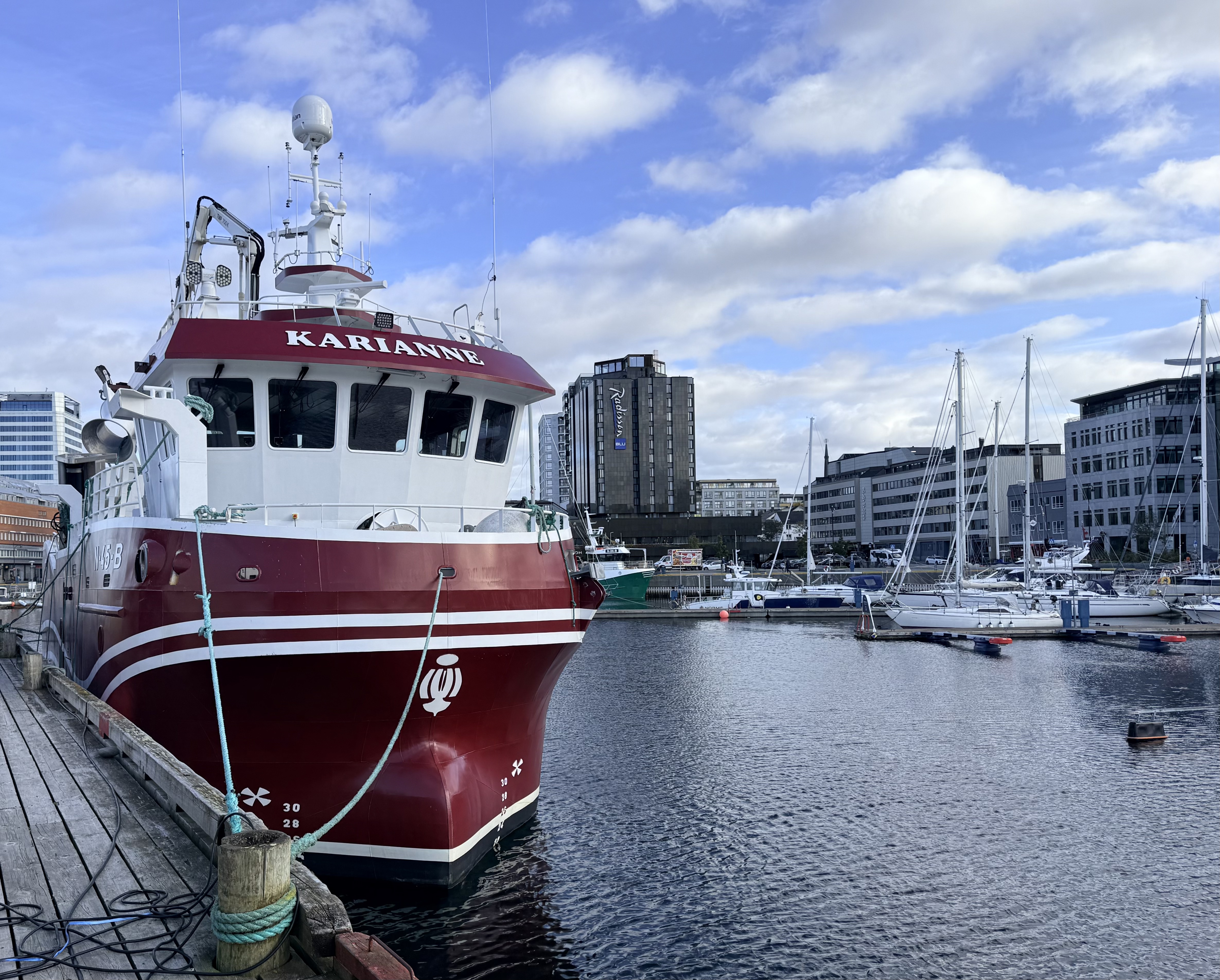
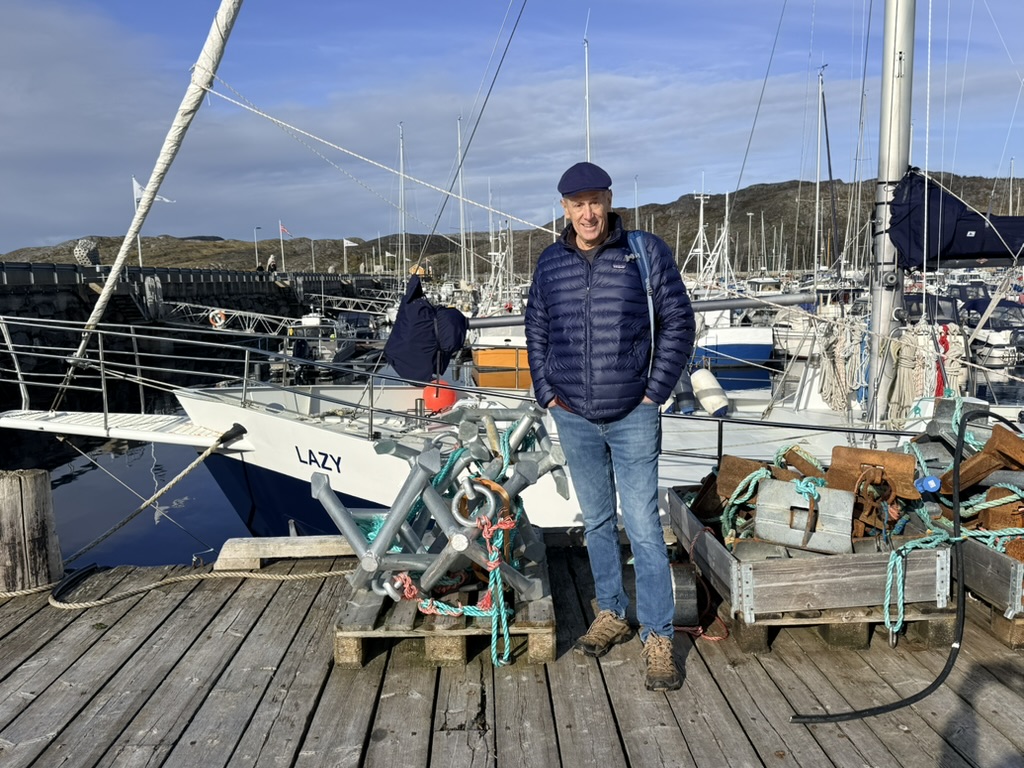
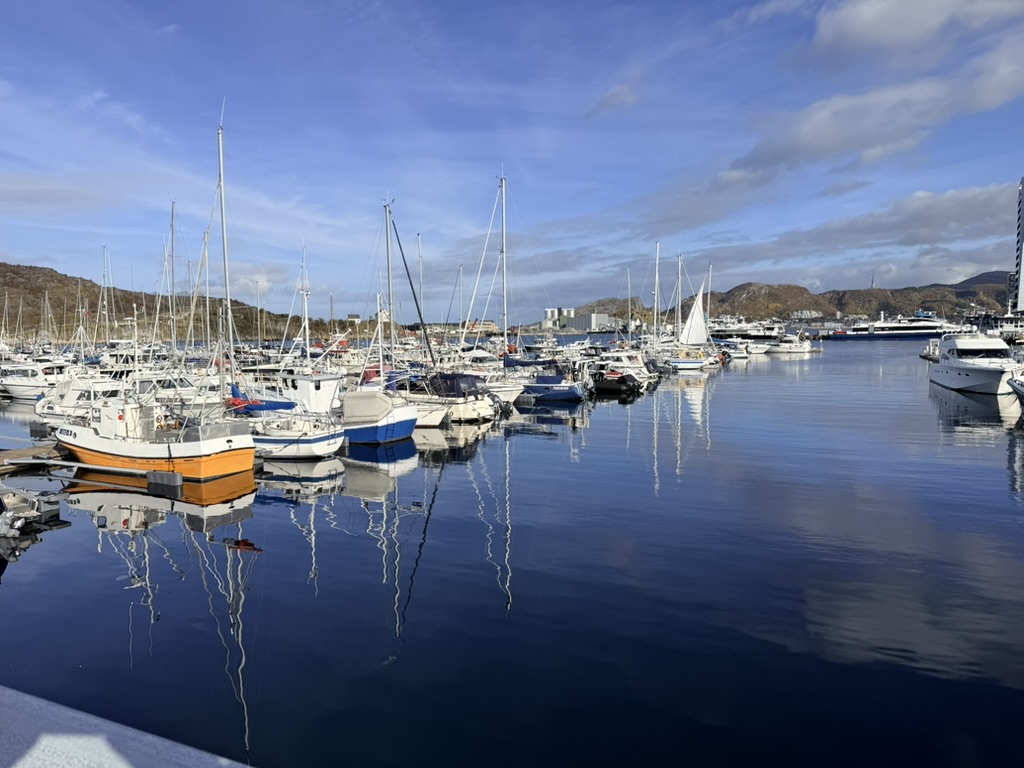
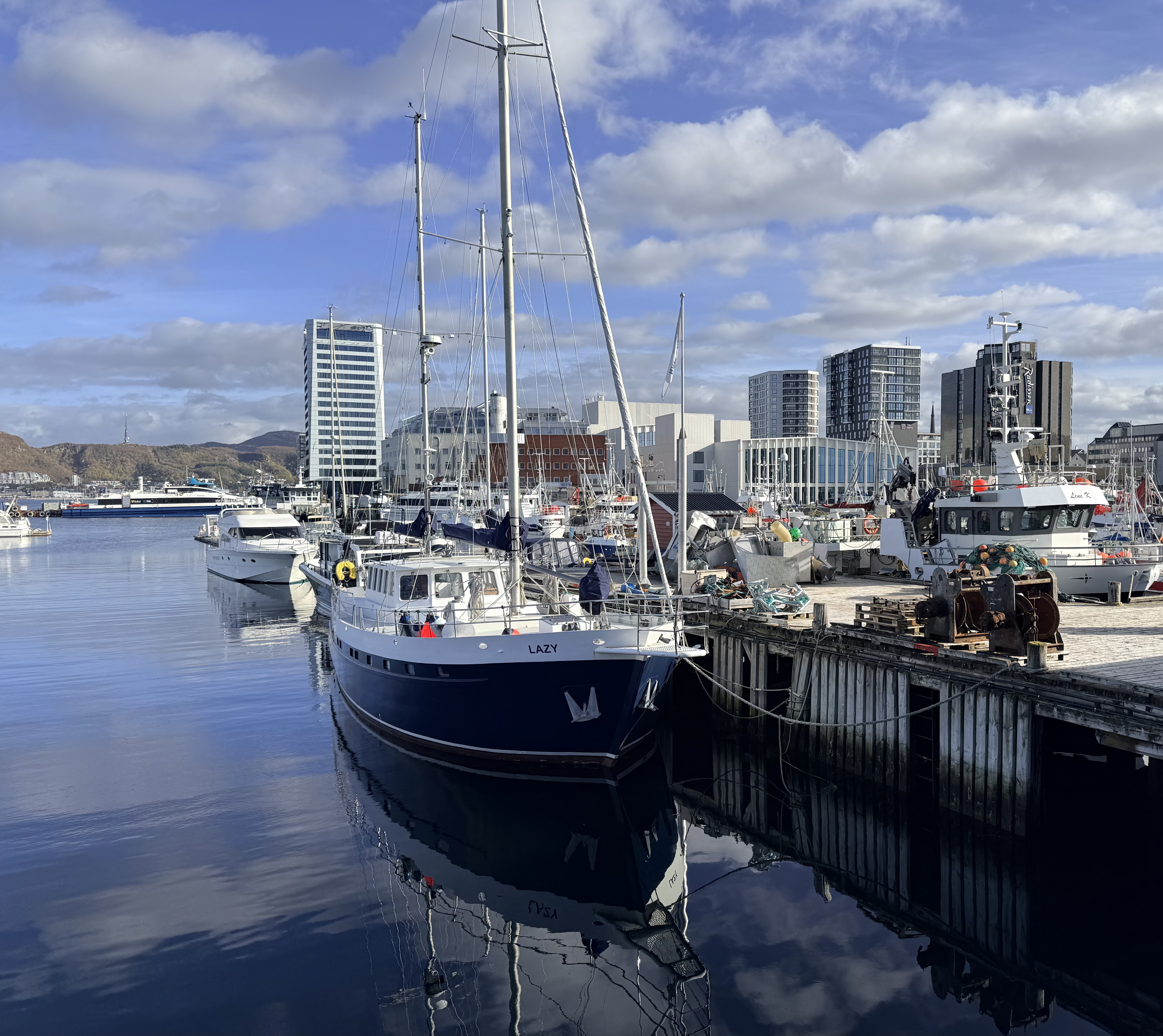
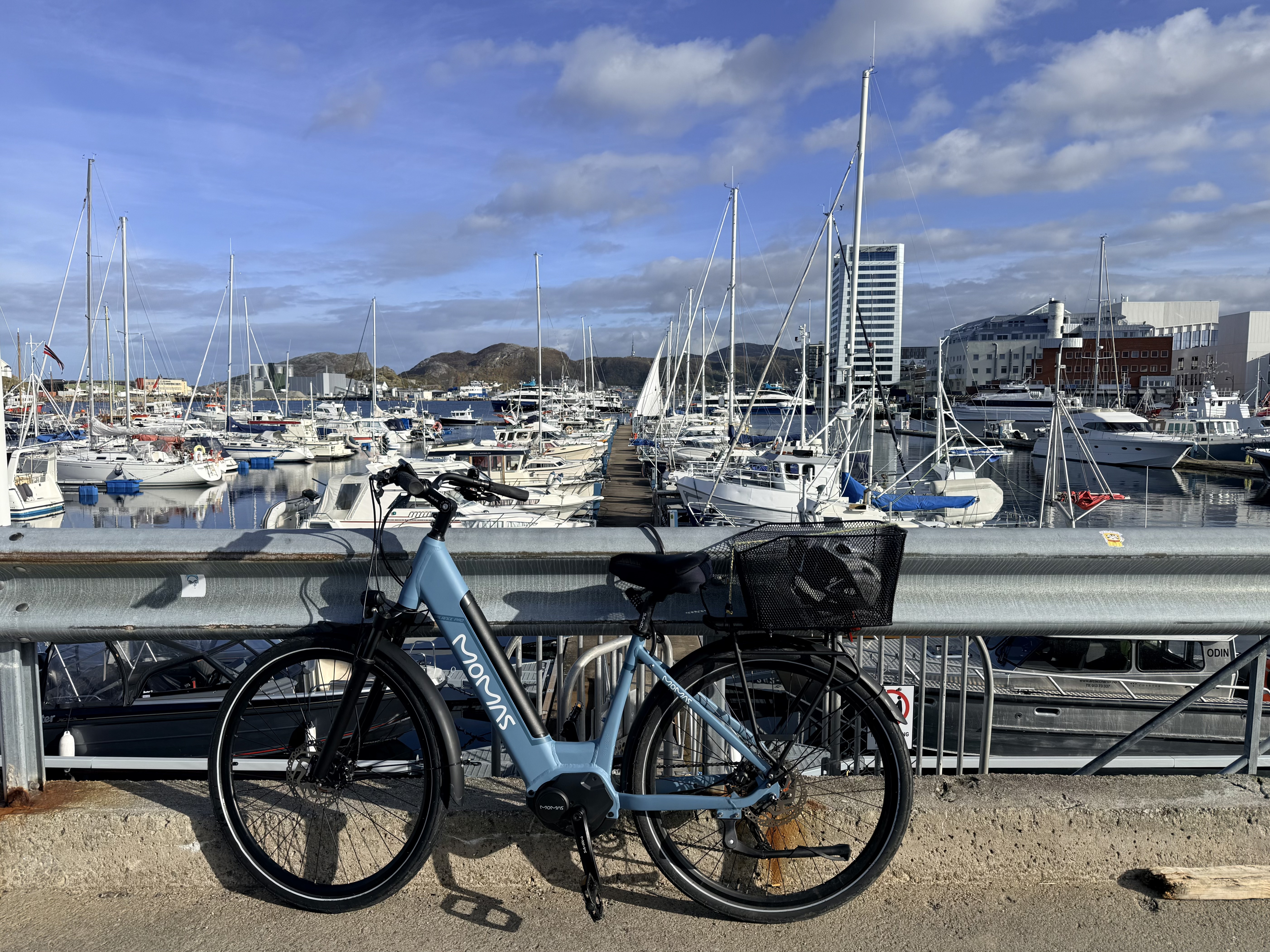
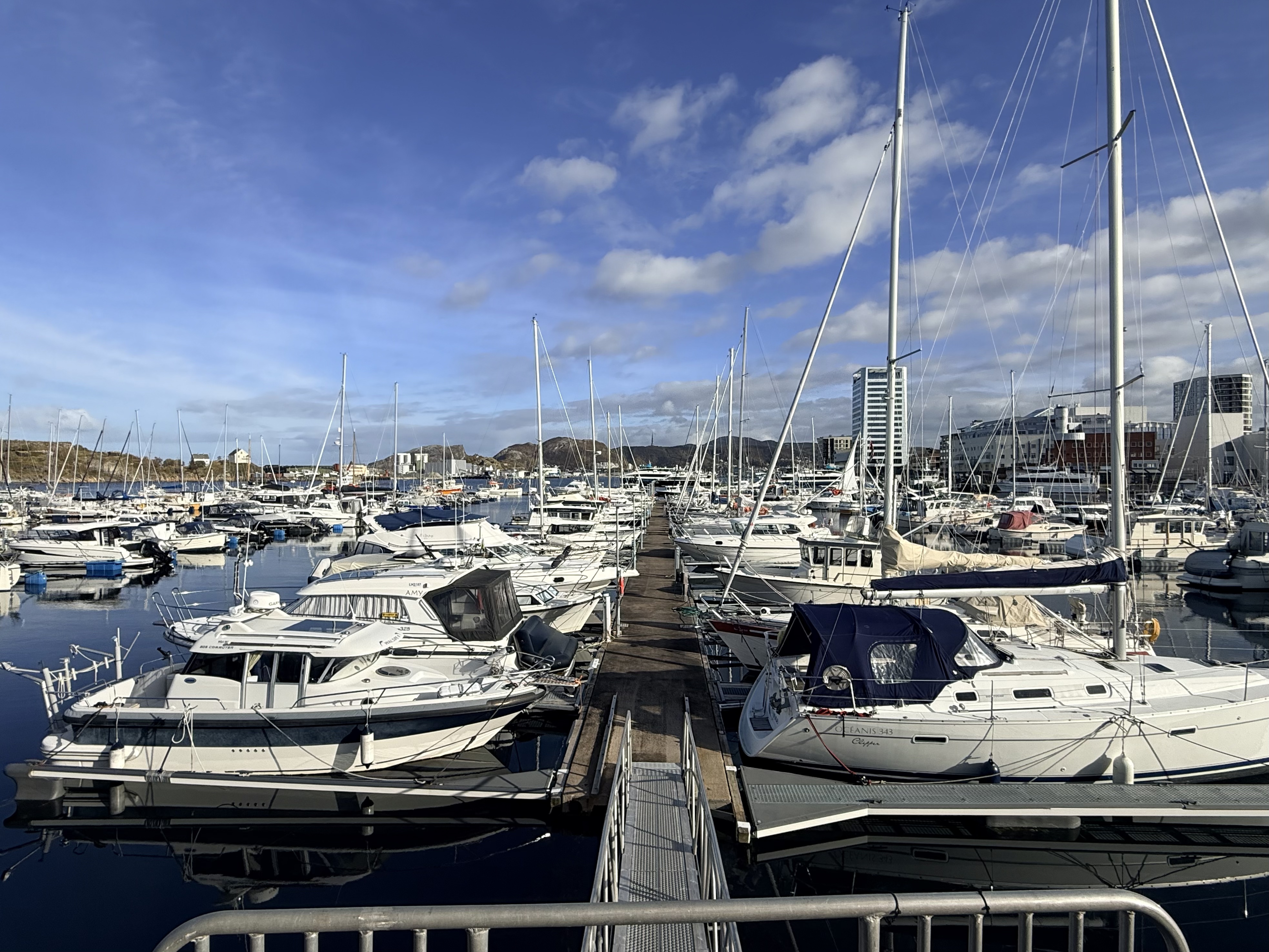
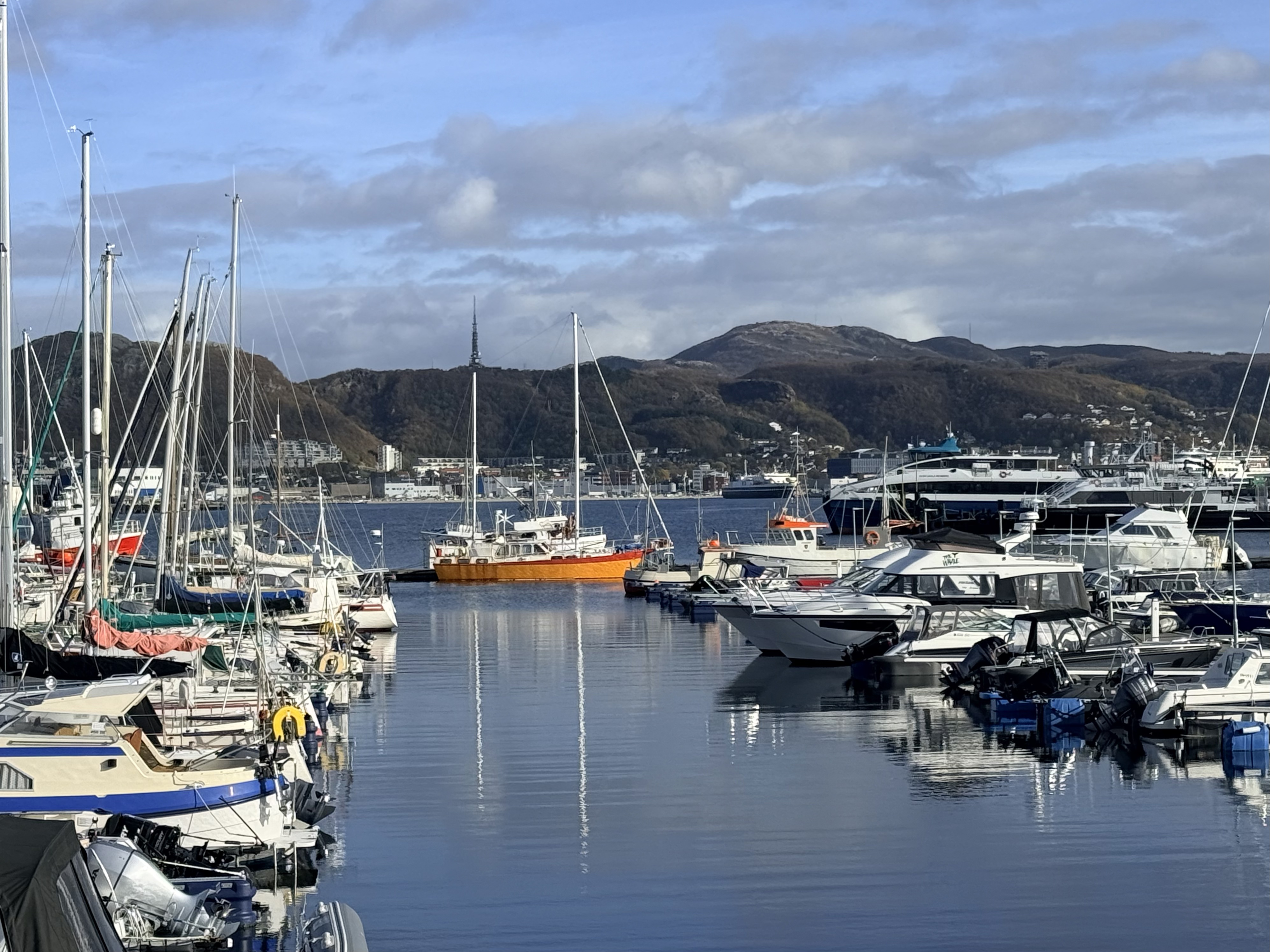
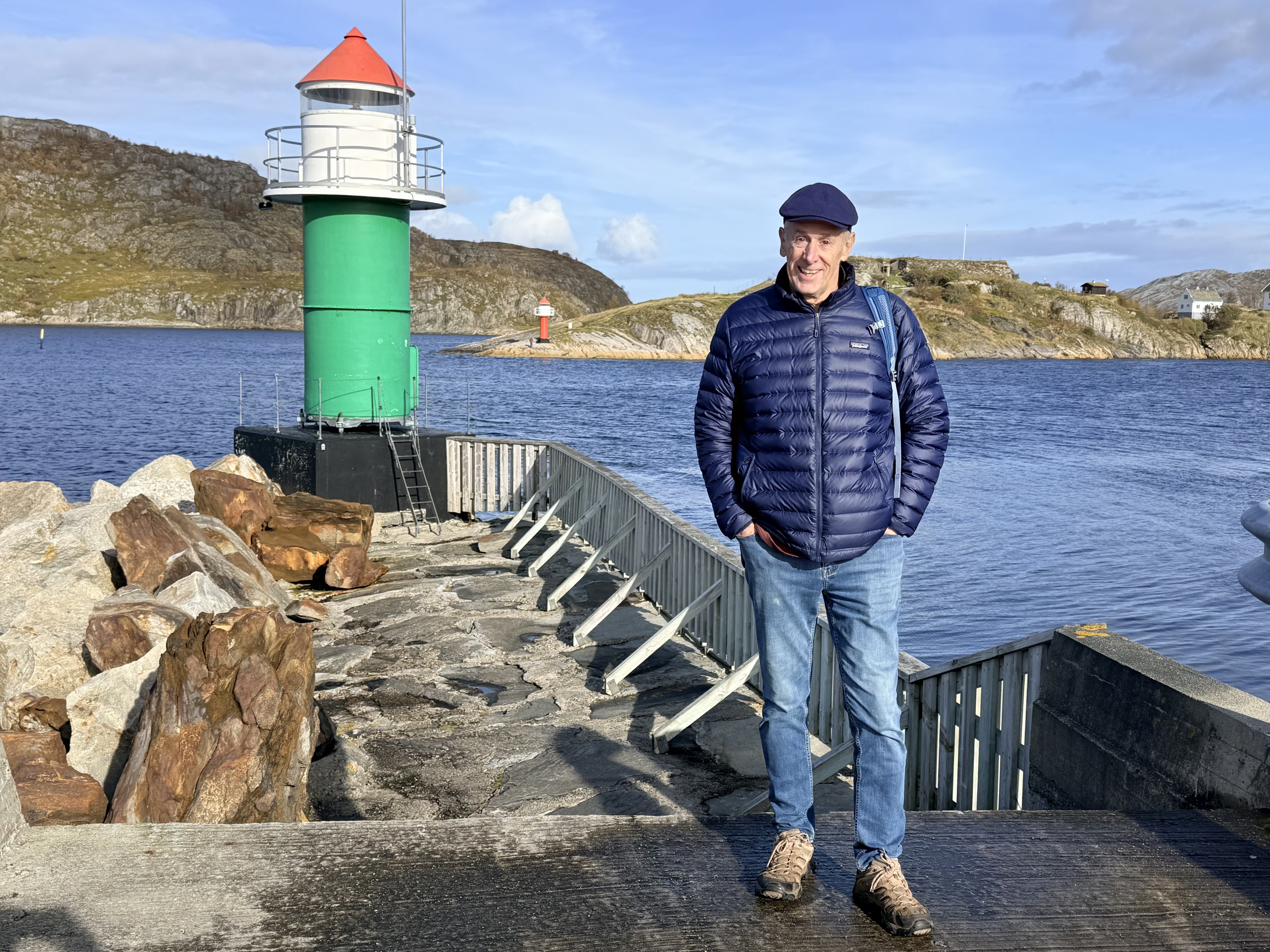
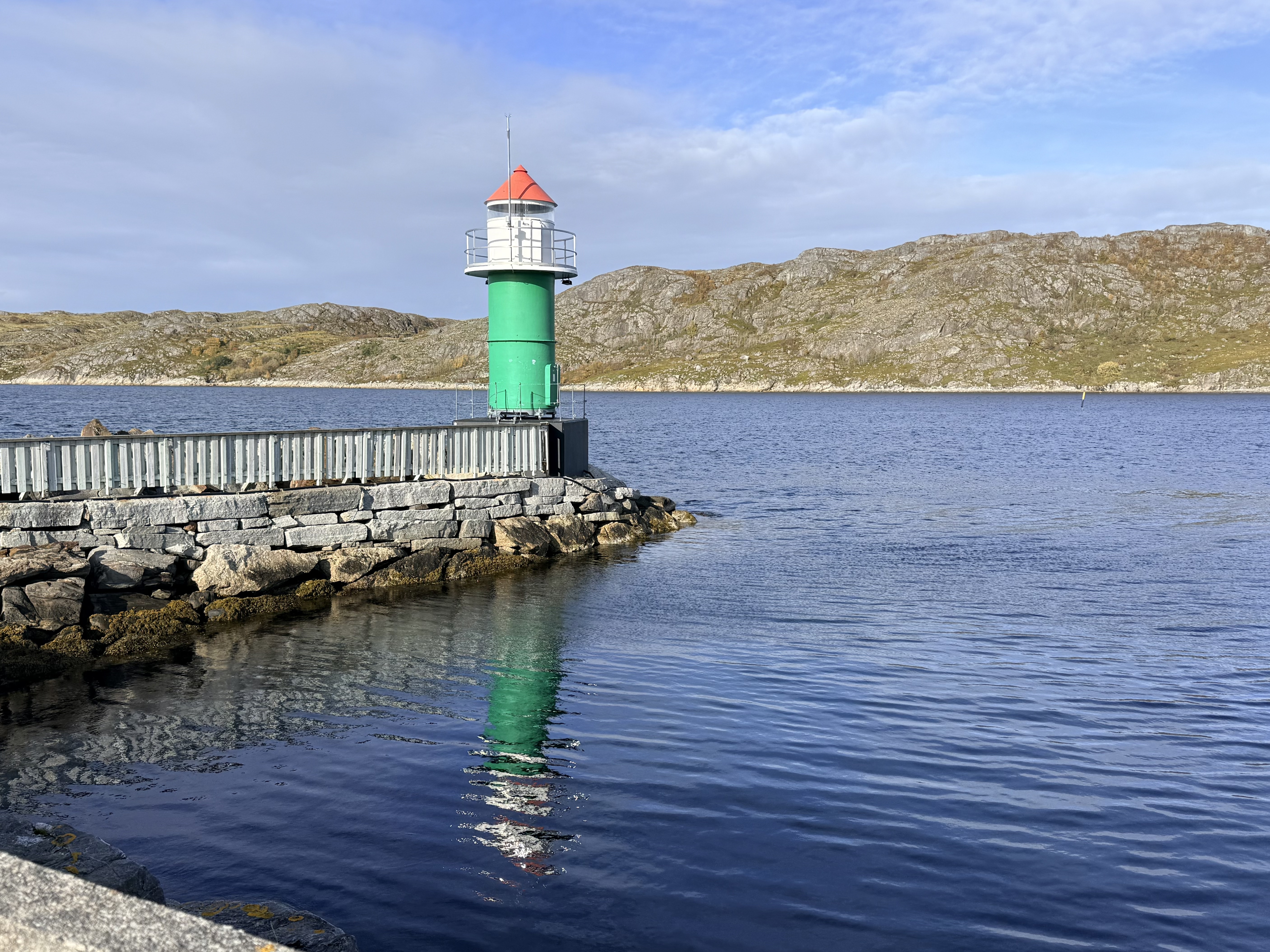
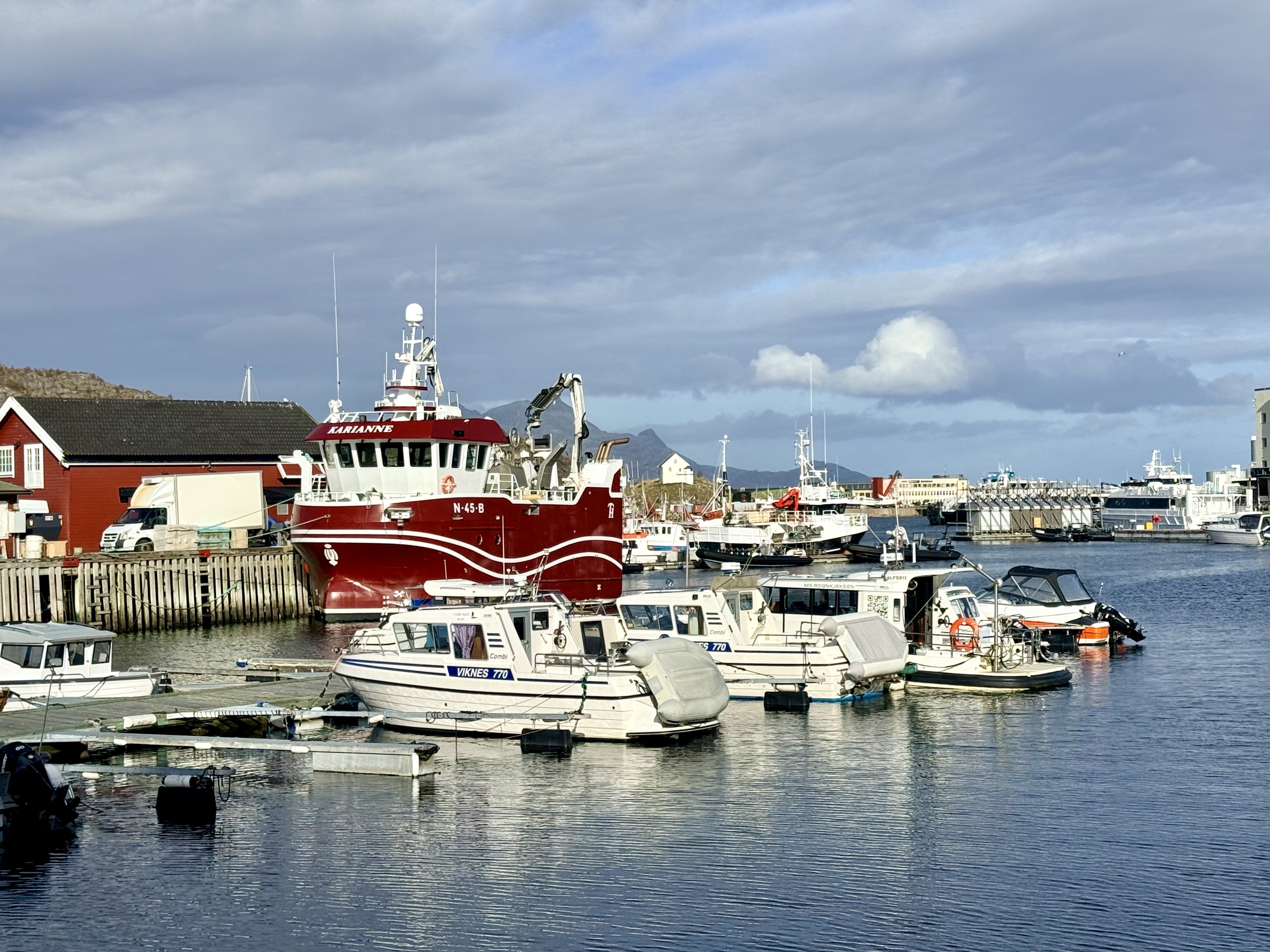
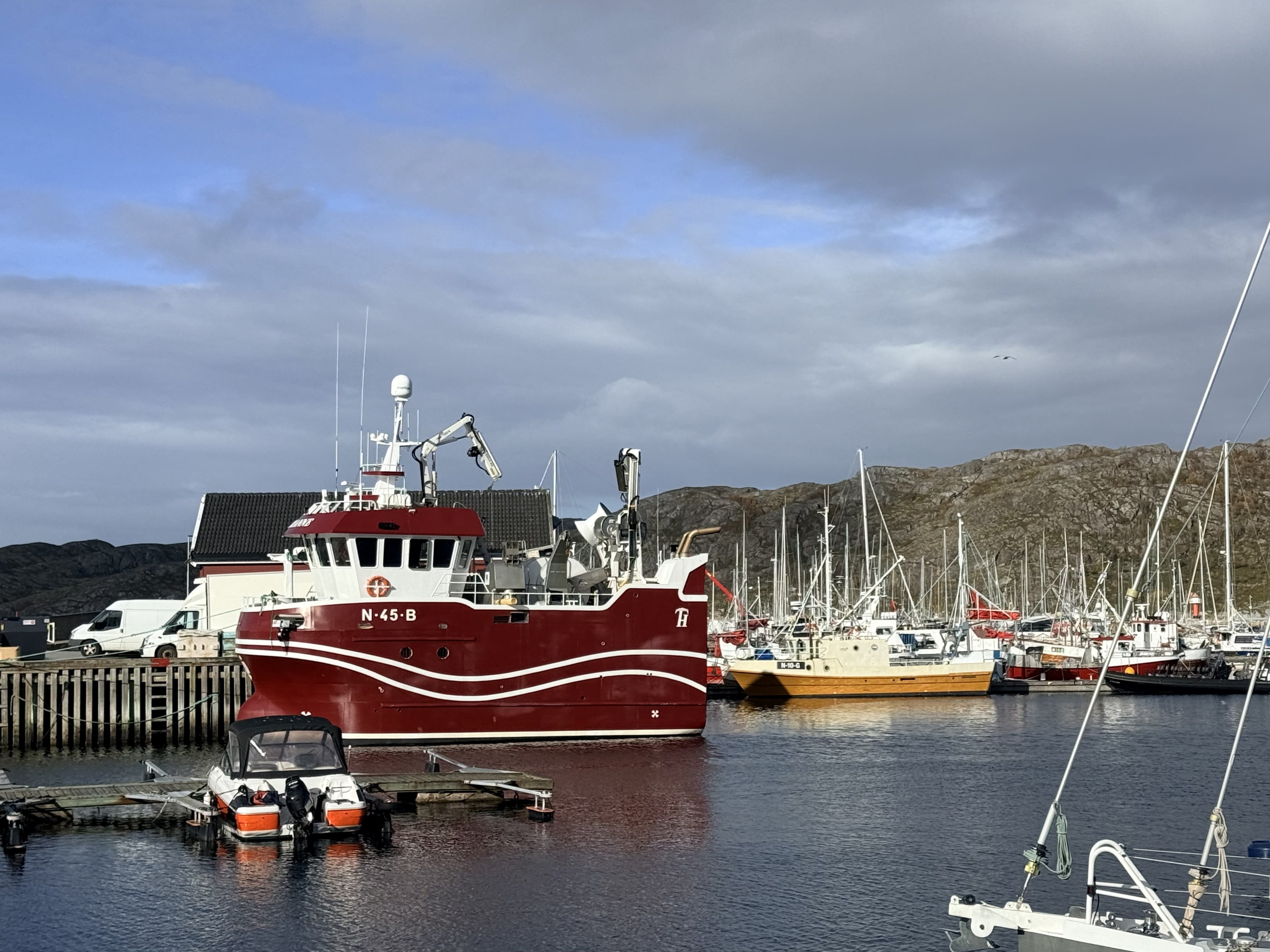
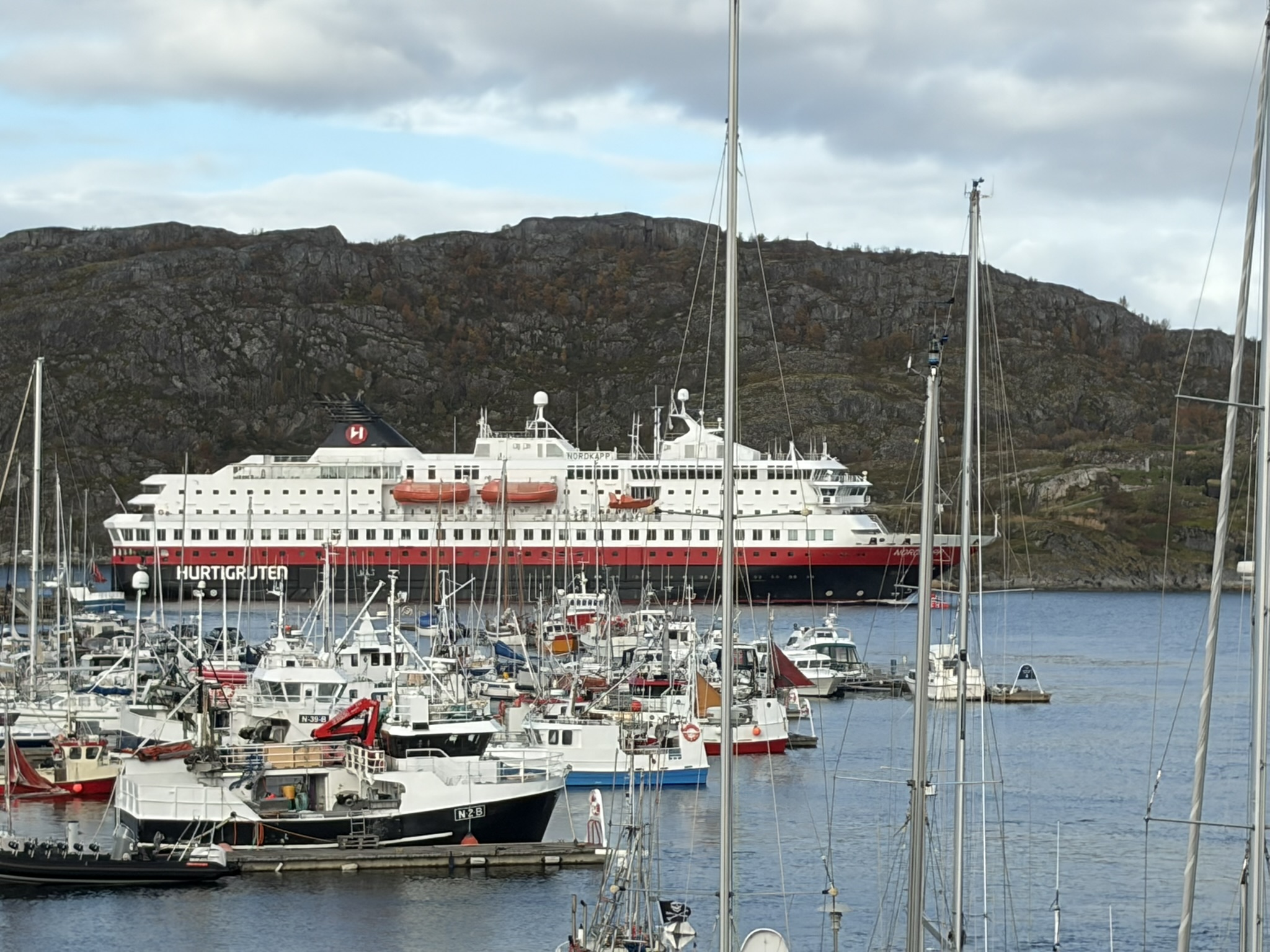
Since we arrived at the hotel in Bodø before 10:00 a.m., we couldn’t yet check in, so we left our luggage behind and took a leisurely stroll around Bodø havn to Mole Head Lighthouse, constructed in 2017 on the breakwater built to protect the harbor.
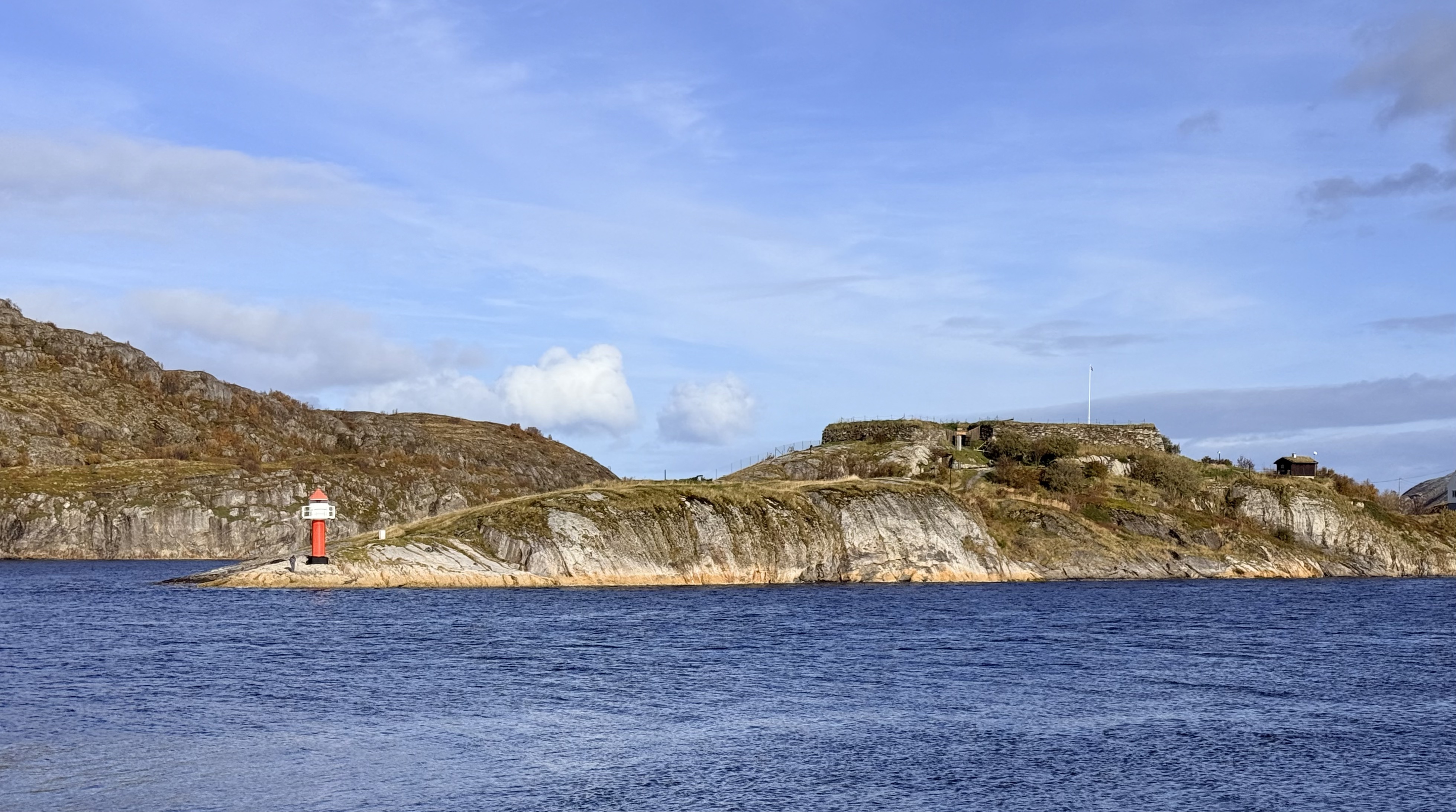
On a peninsula across from the breakwater sits Nyholmen Fyr (lighthouse) and Nyholmen Skandse on the far shore. Nyholmen Skandse is one of Bodø’s oldest structures and one of only two forts built in Northern Norway. Dating from 1810, it was originally built to protect local grain warehouses from British warships during the Napoleonic Wars.
The fort quickly lost its defensive purpose, serving administrative functions until being abandoned in 1835.
The Nyholmen Lighthouse (Fyr) operated from 1875 to 1907.
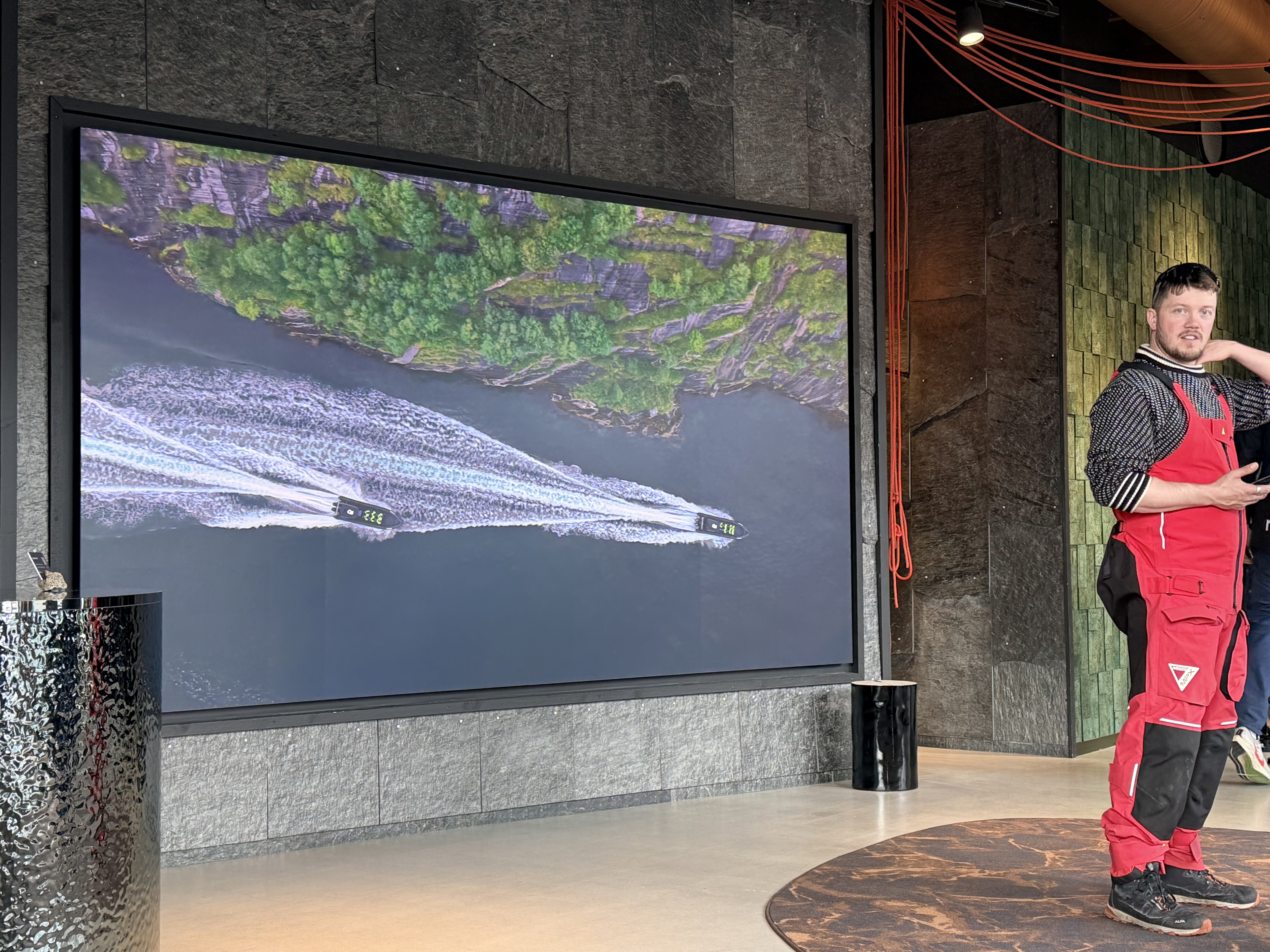
Rampen RIB boat Sea Eagle Safari and Saltstraumen
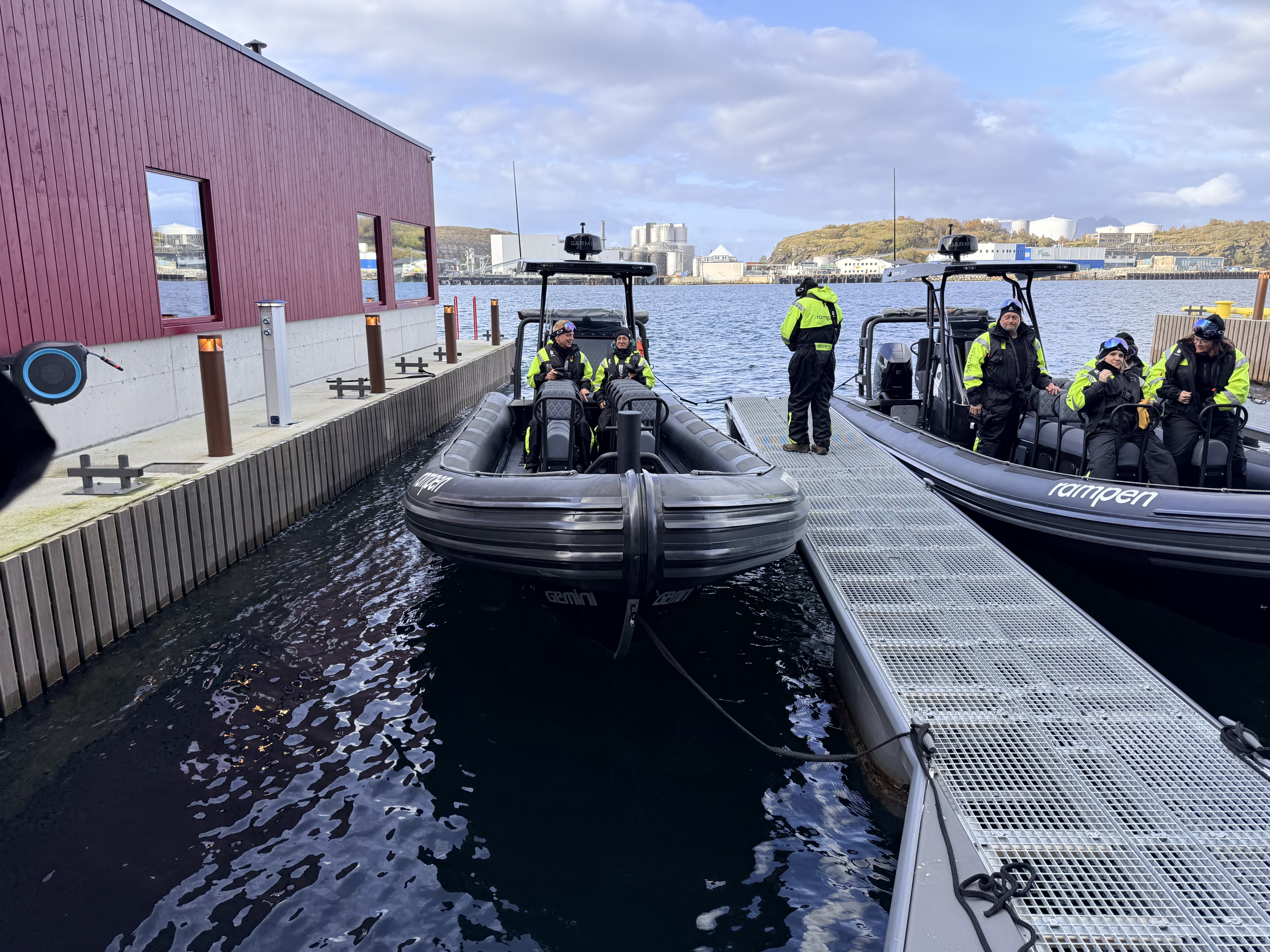
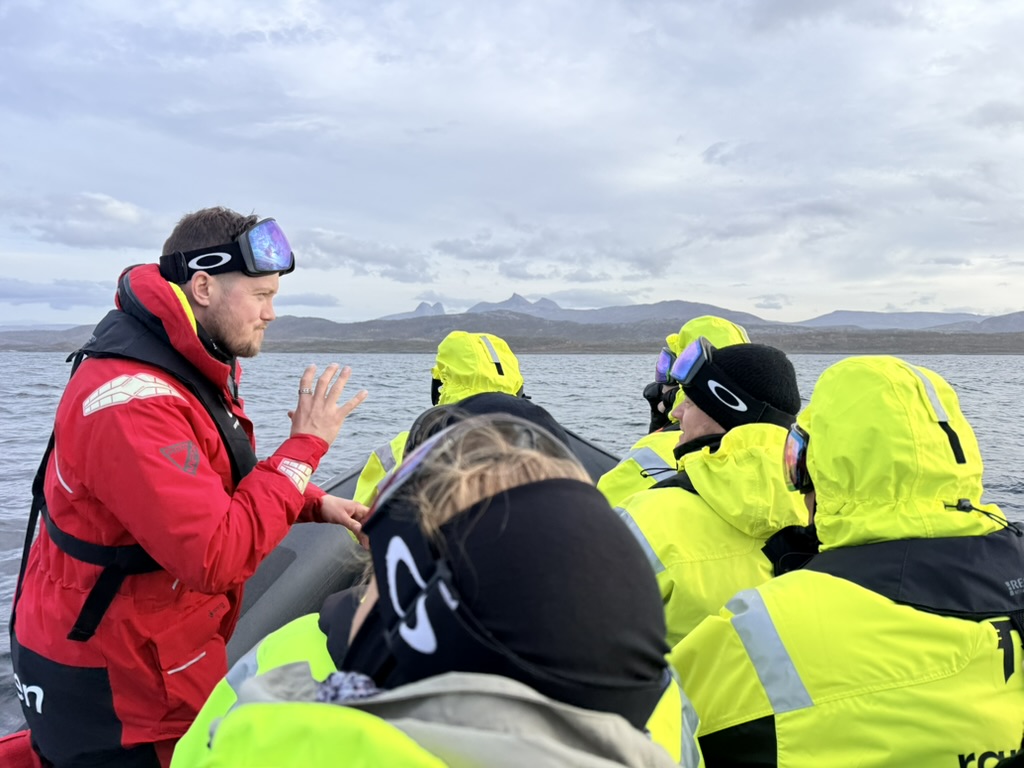
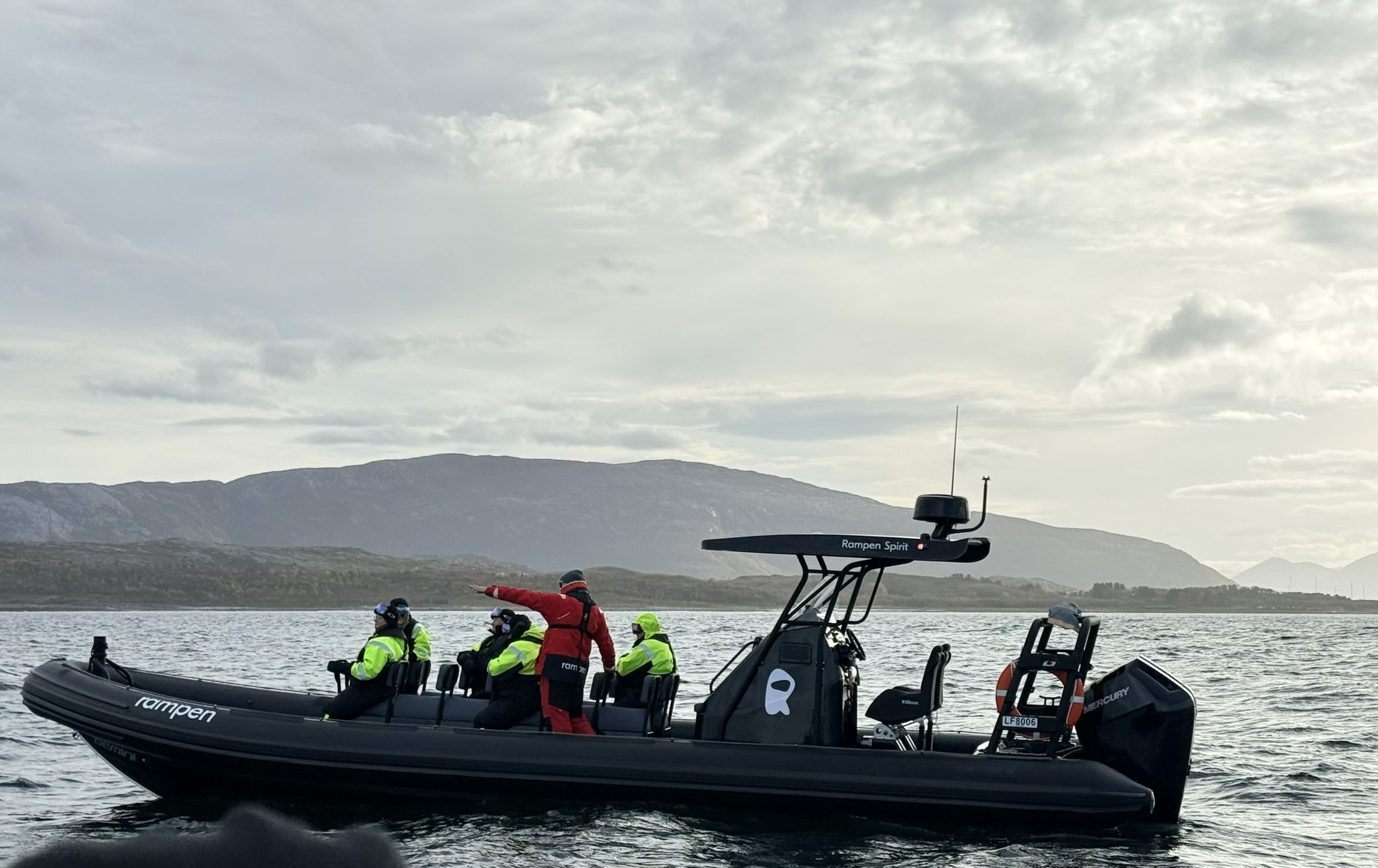
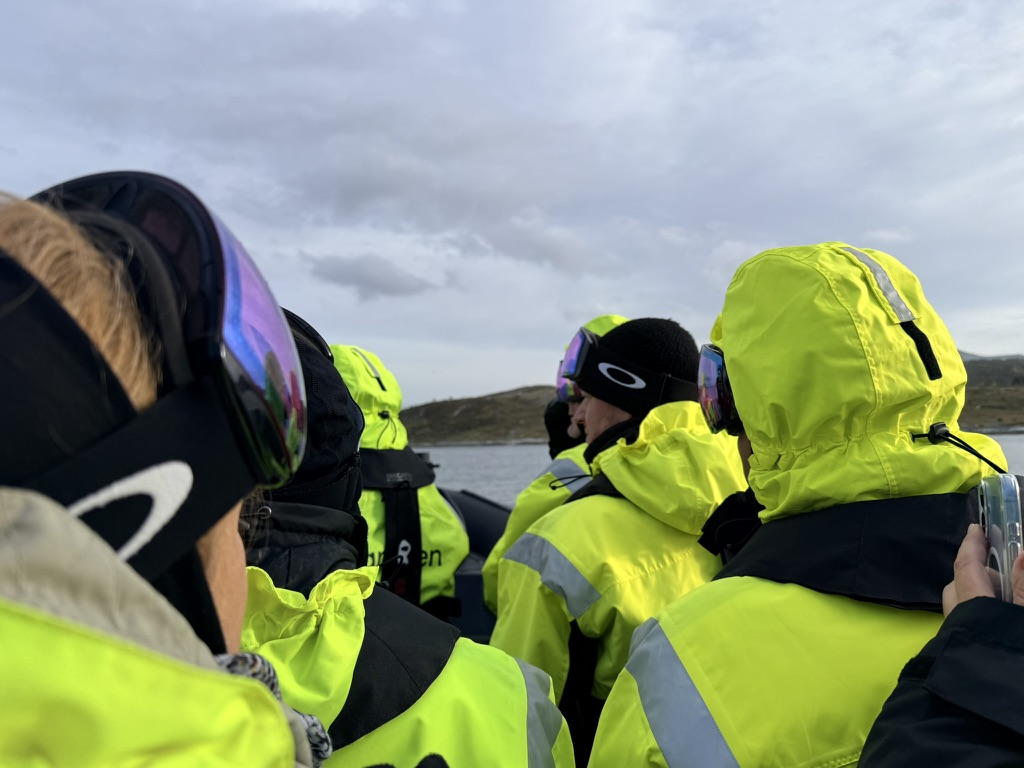
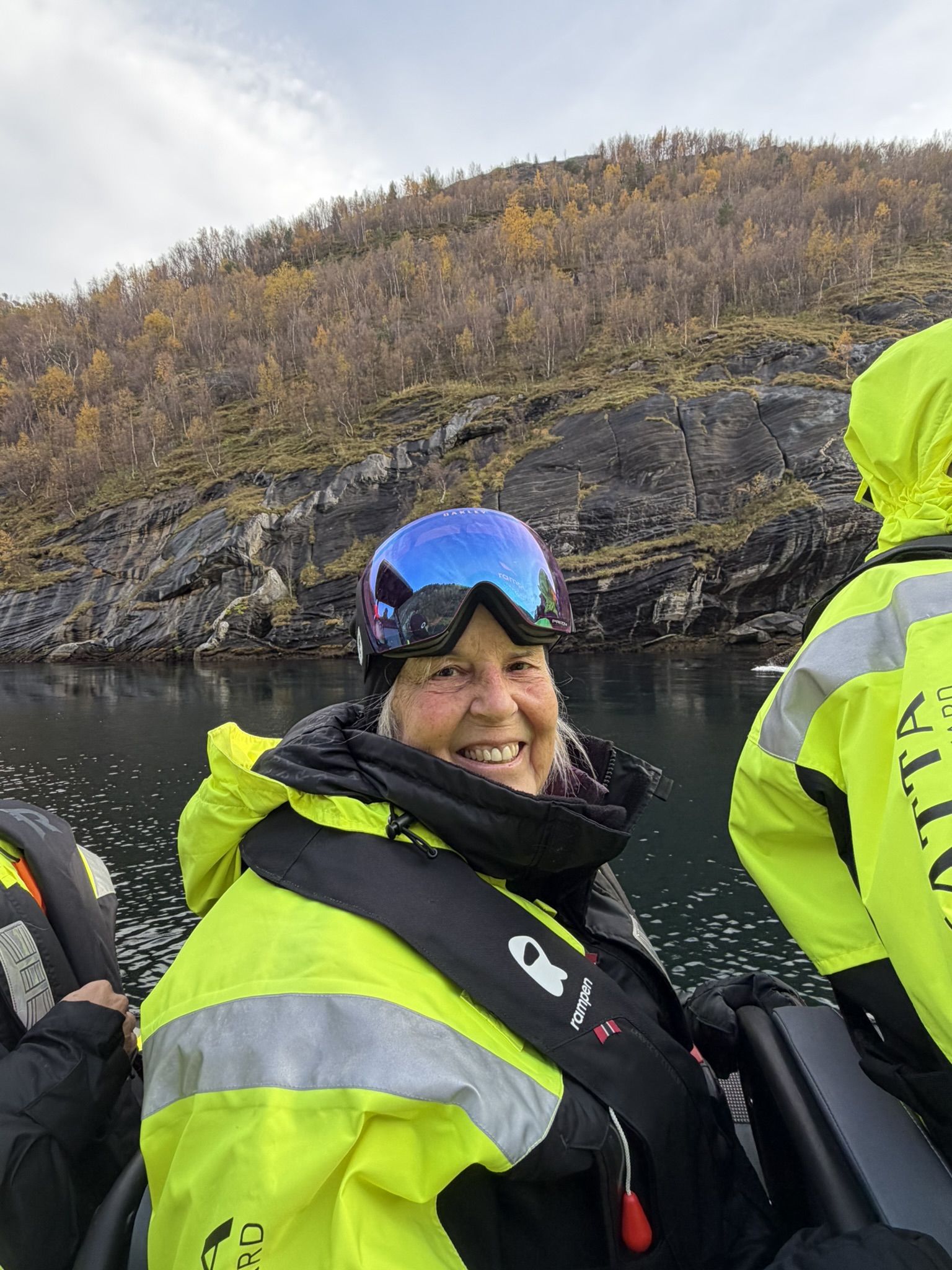
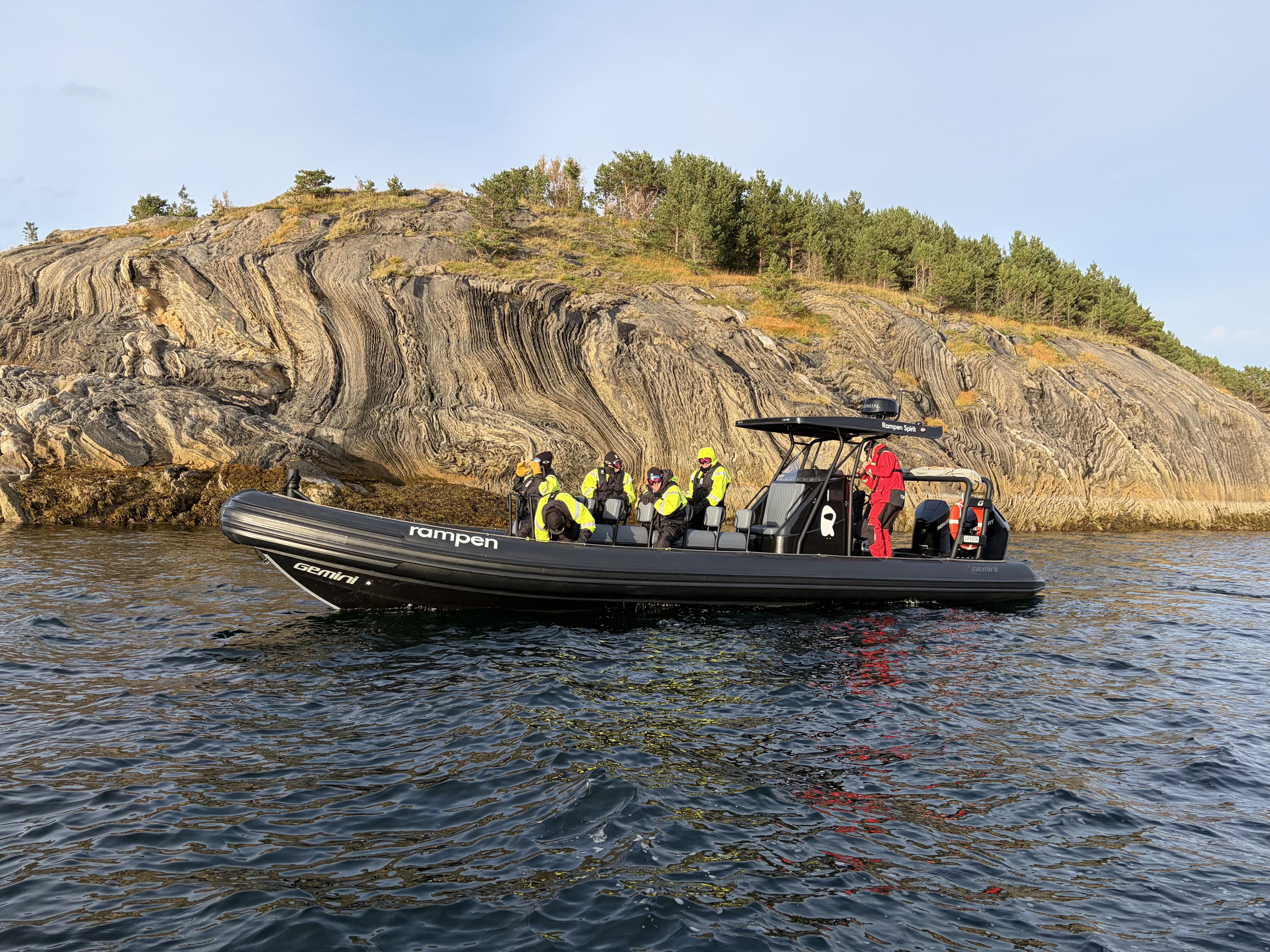
Since we had a rare sunny day the day we arrived in Bodø, we decided to take Rampen’s Sea Eagle Safari to Saltstraumen – widely known as the world’s strongest tidal current – by RIB. A rigid inflatable boat (RIB) is a lightweight but high-performance and high-capacity boat constructed with a rigid hull bottom joined to side-forming air tubes that are inflated with air to high pressure to give the sides resilient rigidity along the boat’s topsides. The design is stable, light, fast and seaworthy.
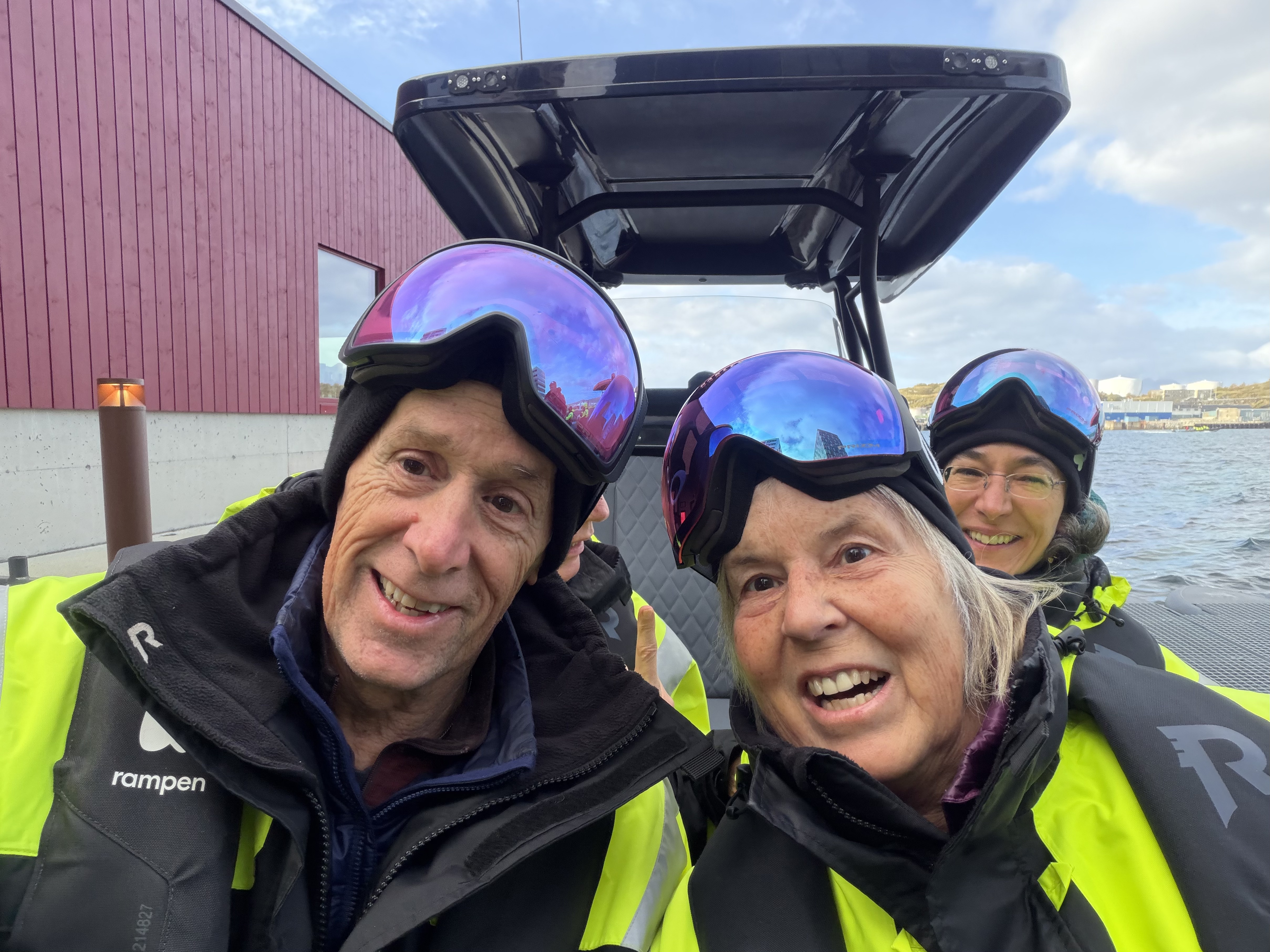
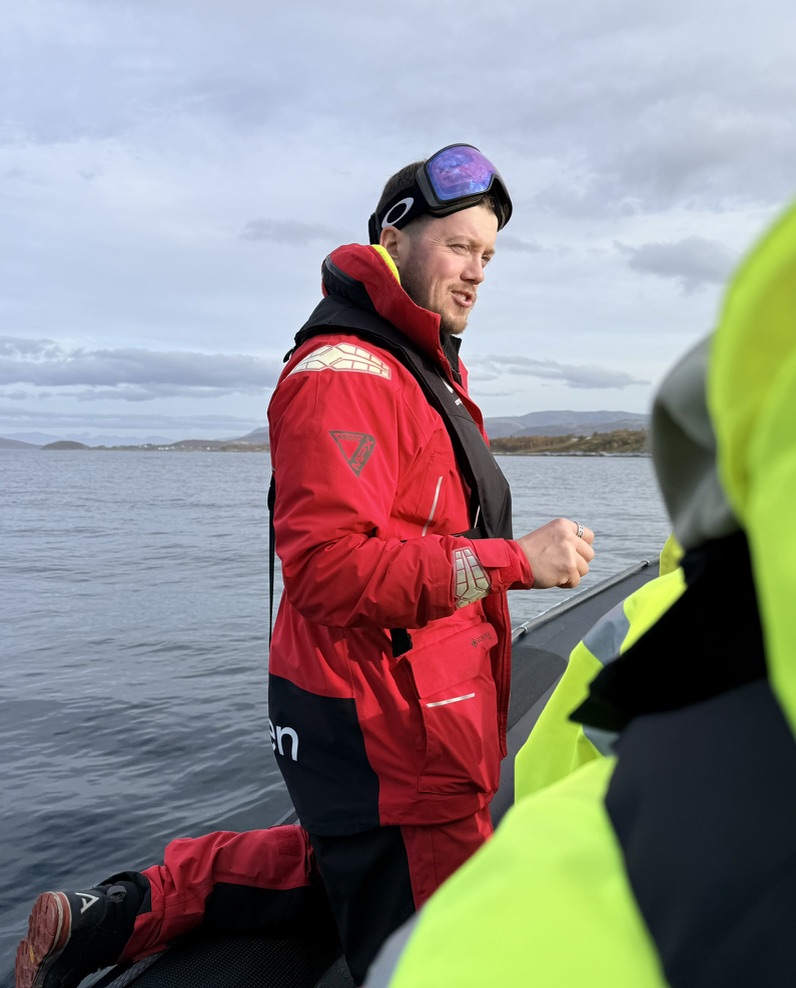
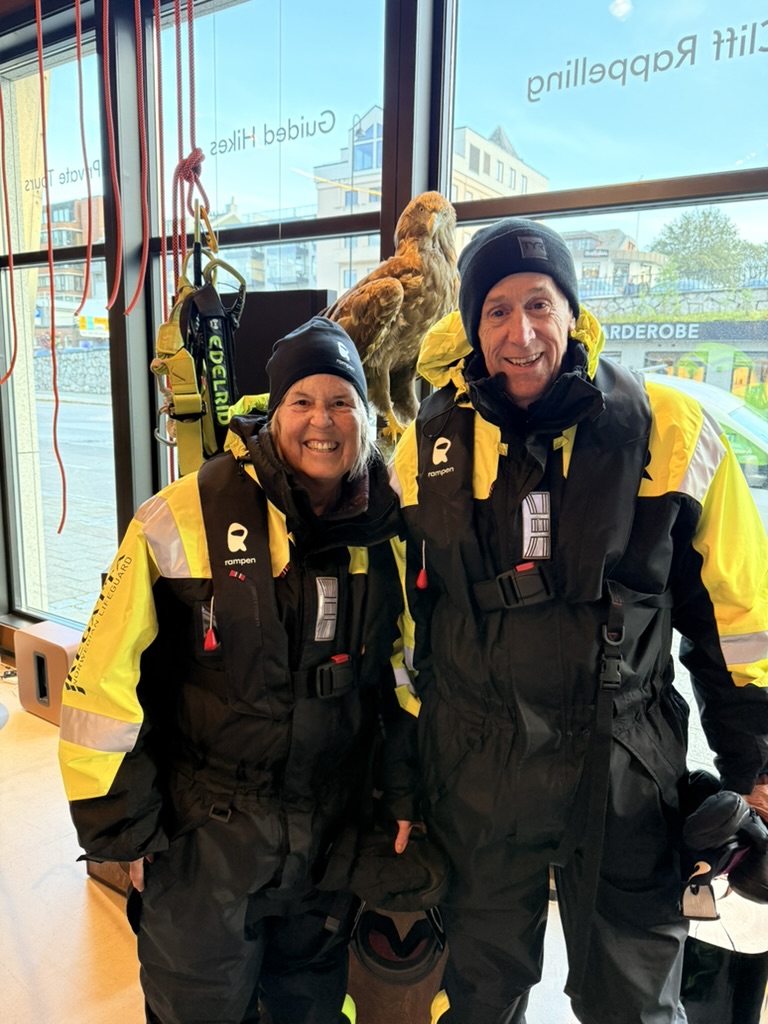
We geared up in dry suits, goggles, gloves and life preservers. The fast ride was jarring, windy and chilly as we straddled cushioned jockey seats. Our guide was Ken like the Barbie Ken; he was the Norwegian guide in charge of us English-speakers.
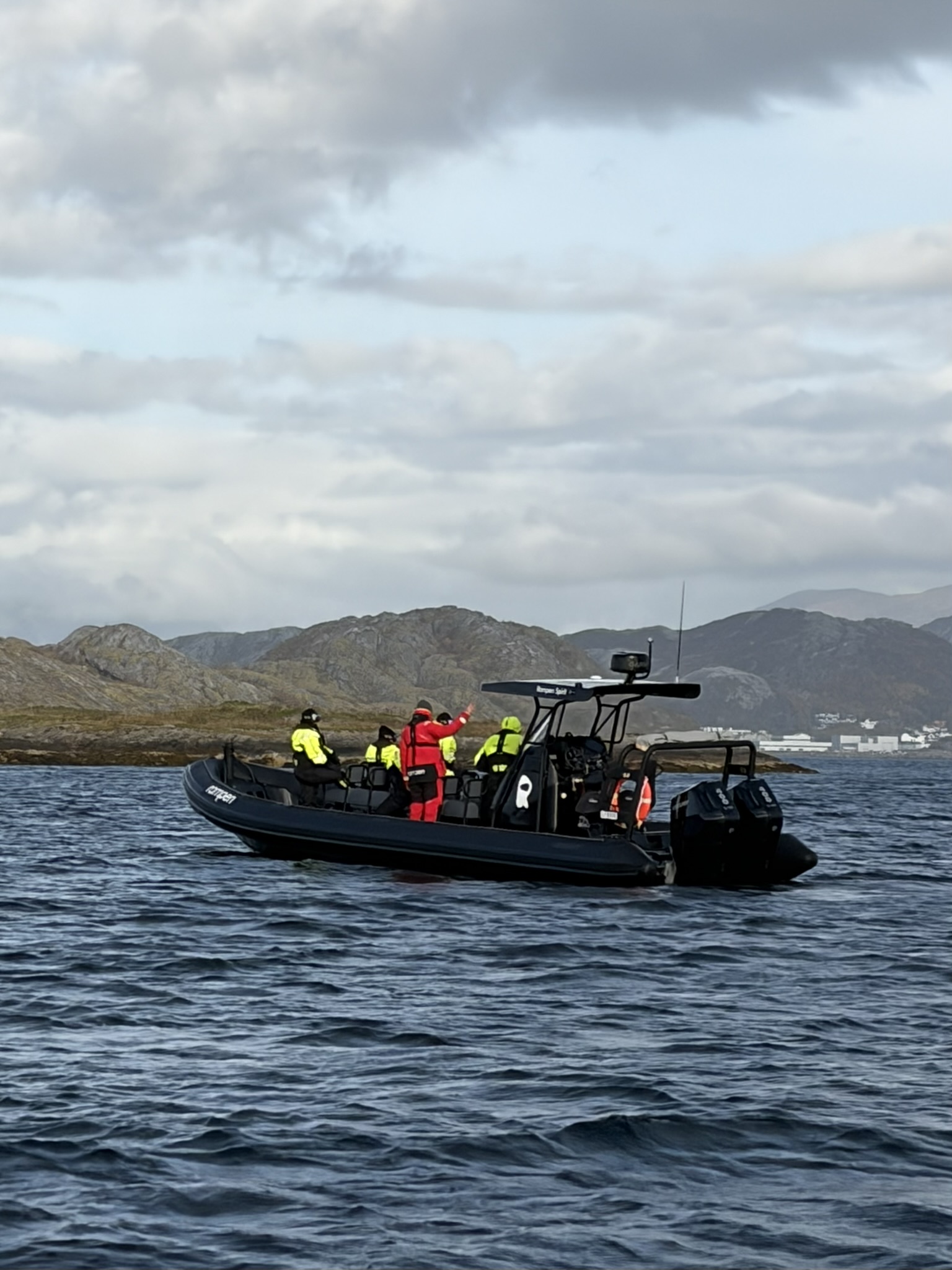
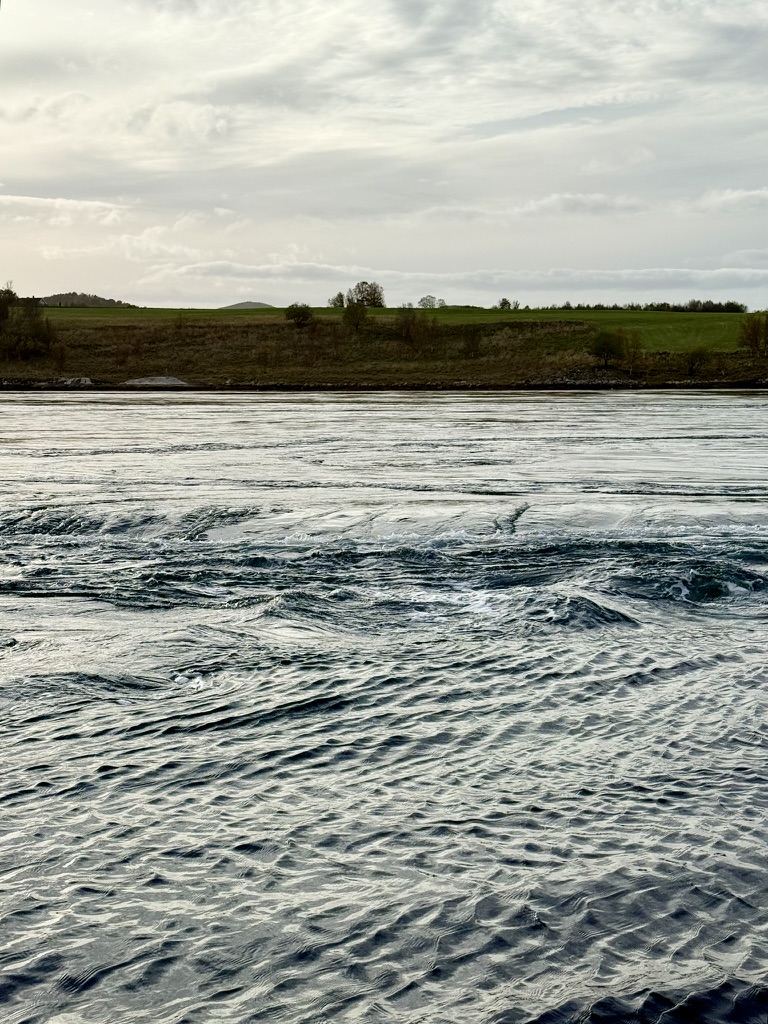
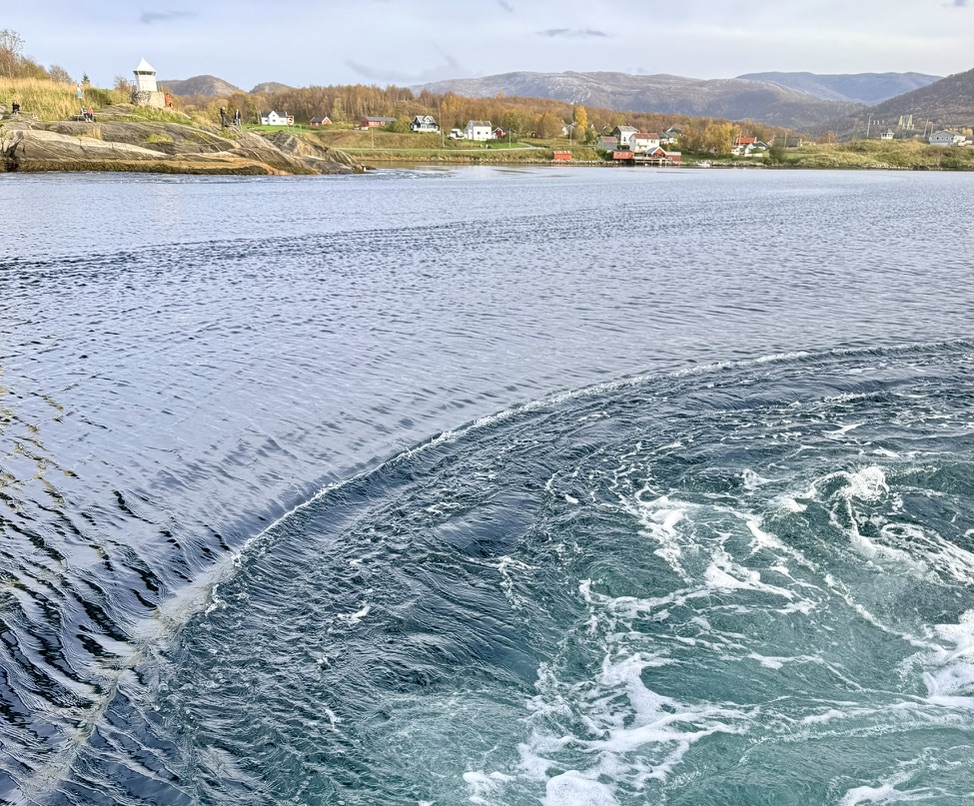
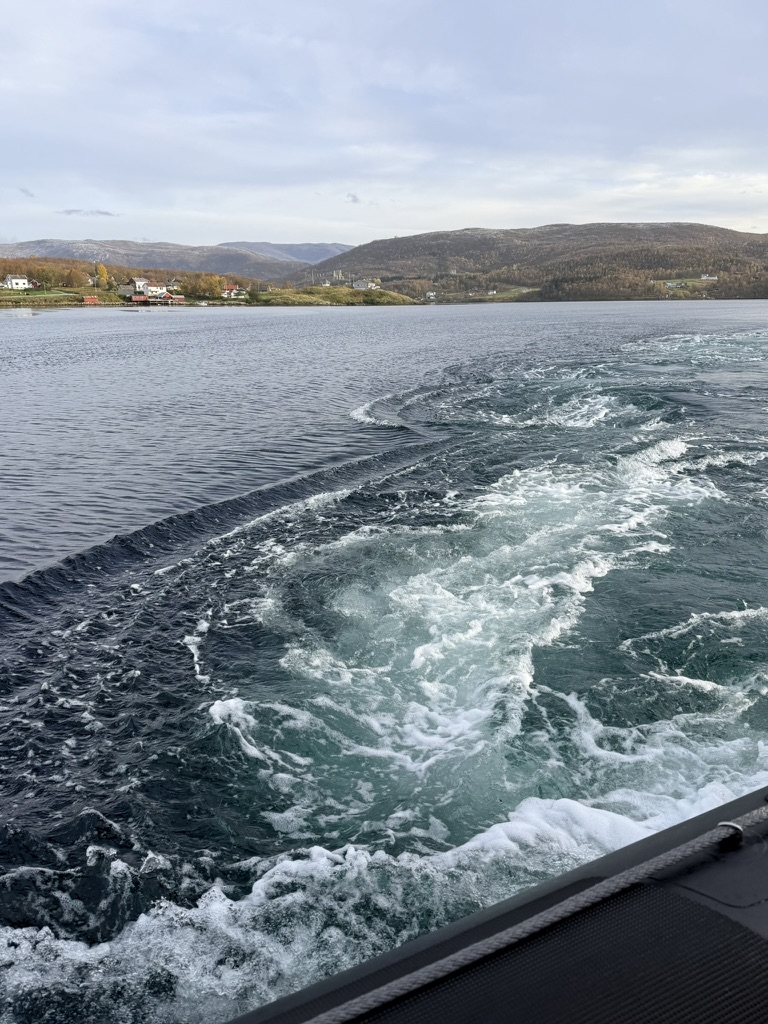
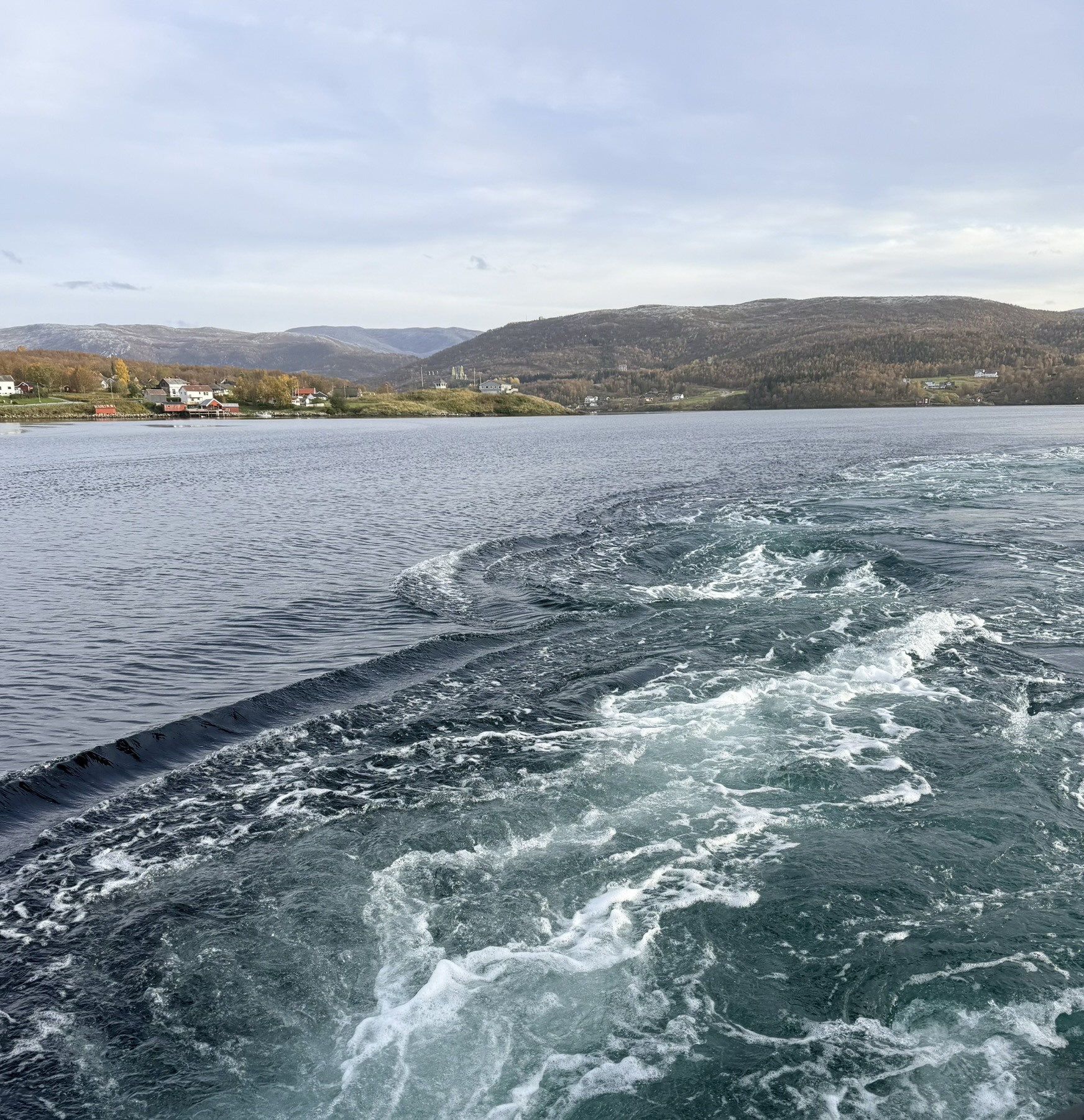
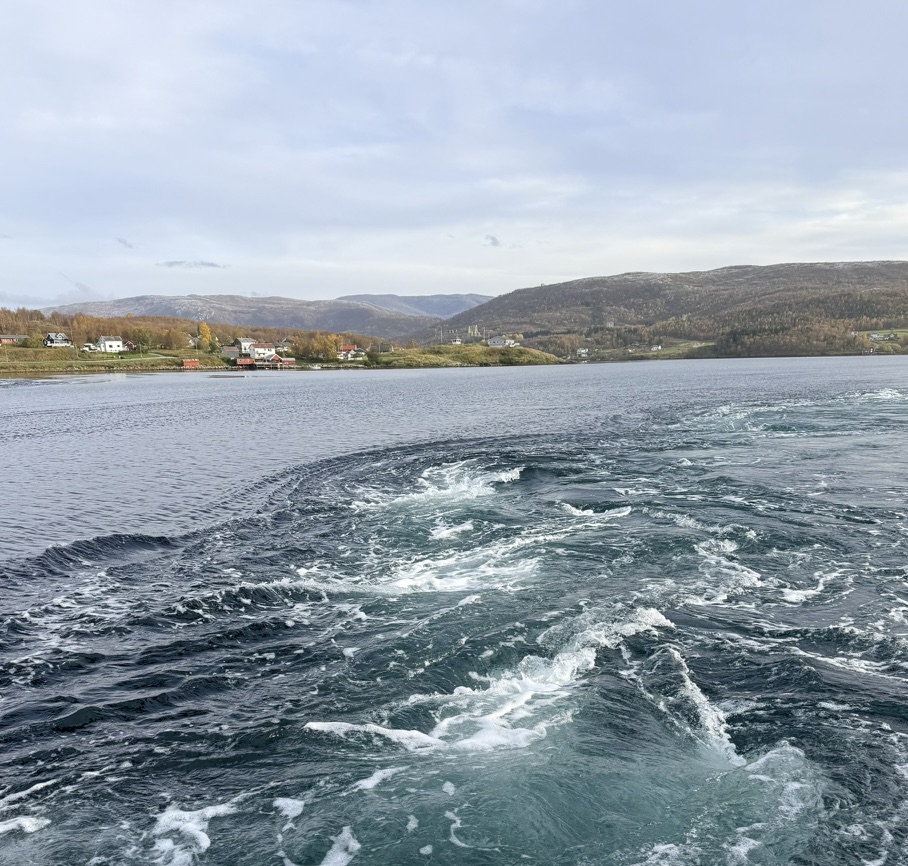
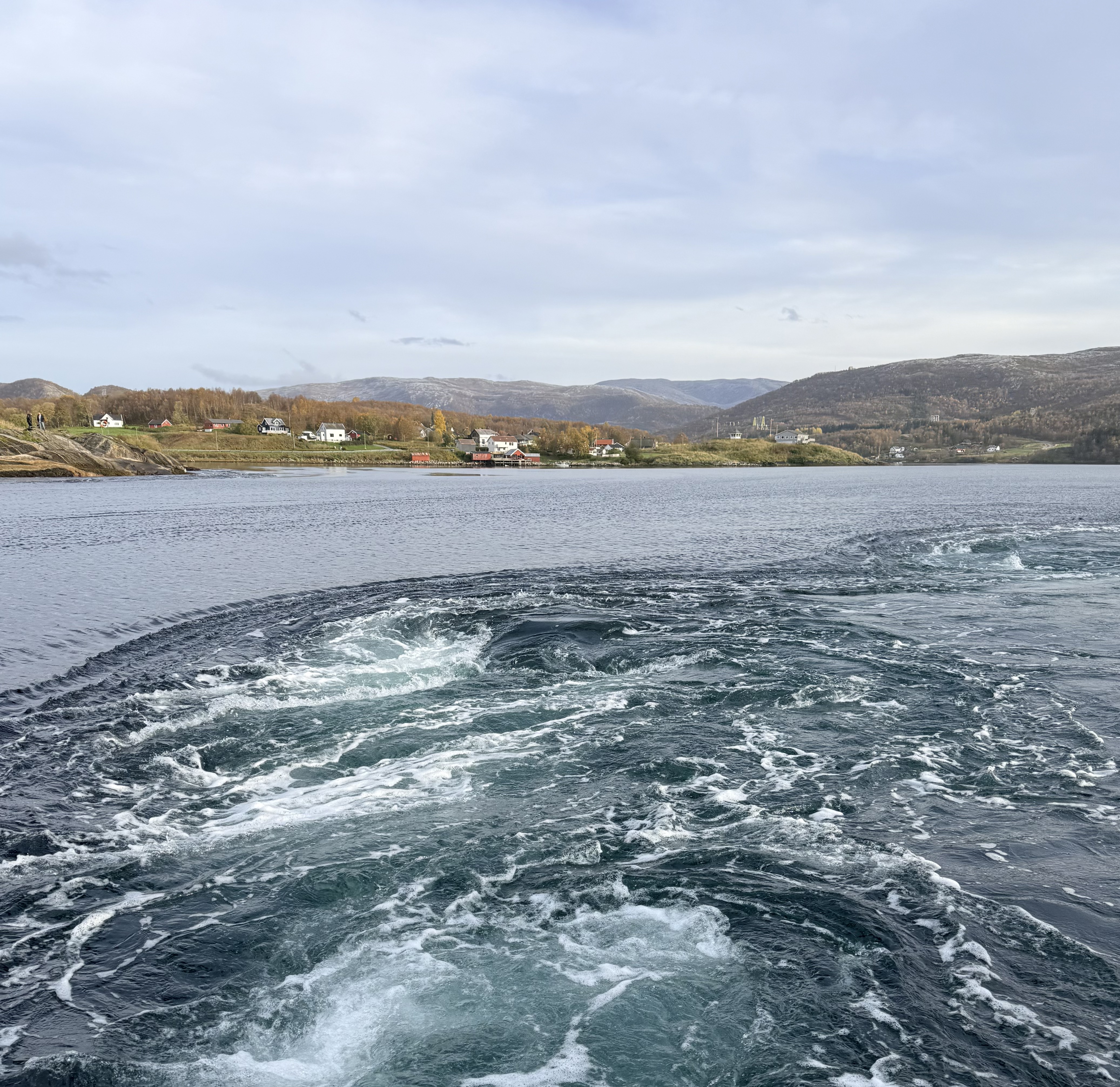
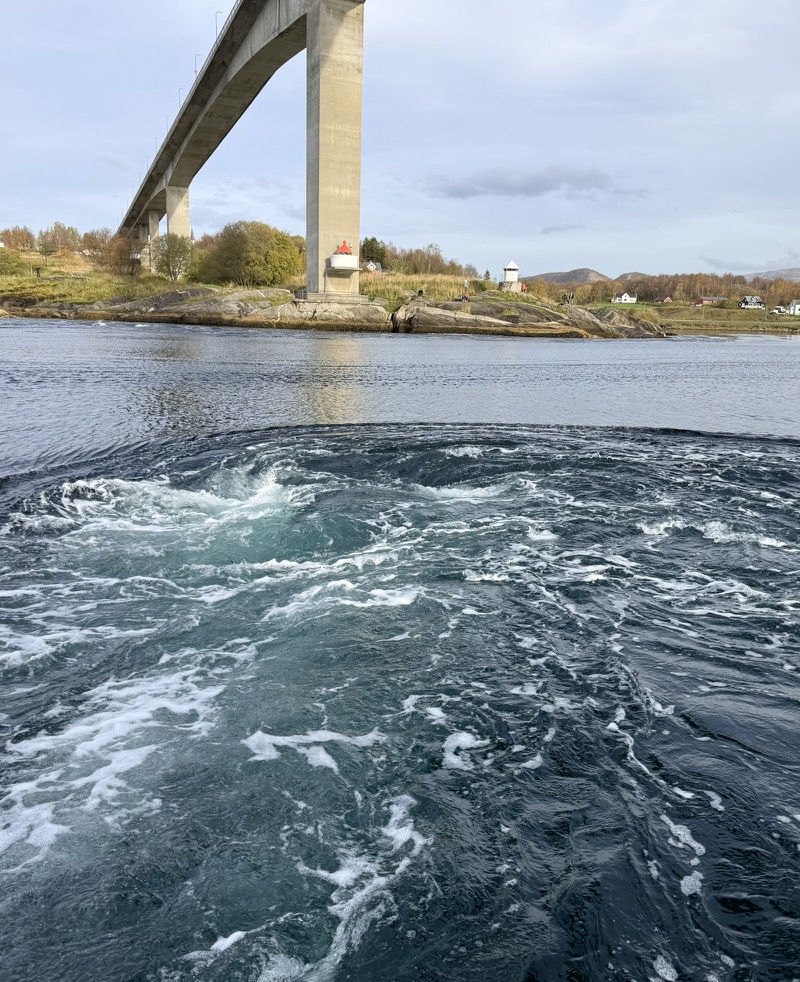
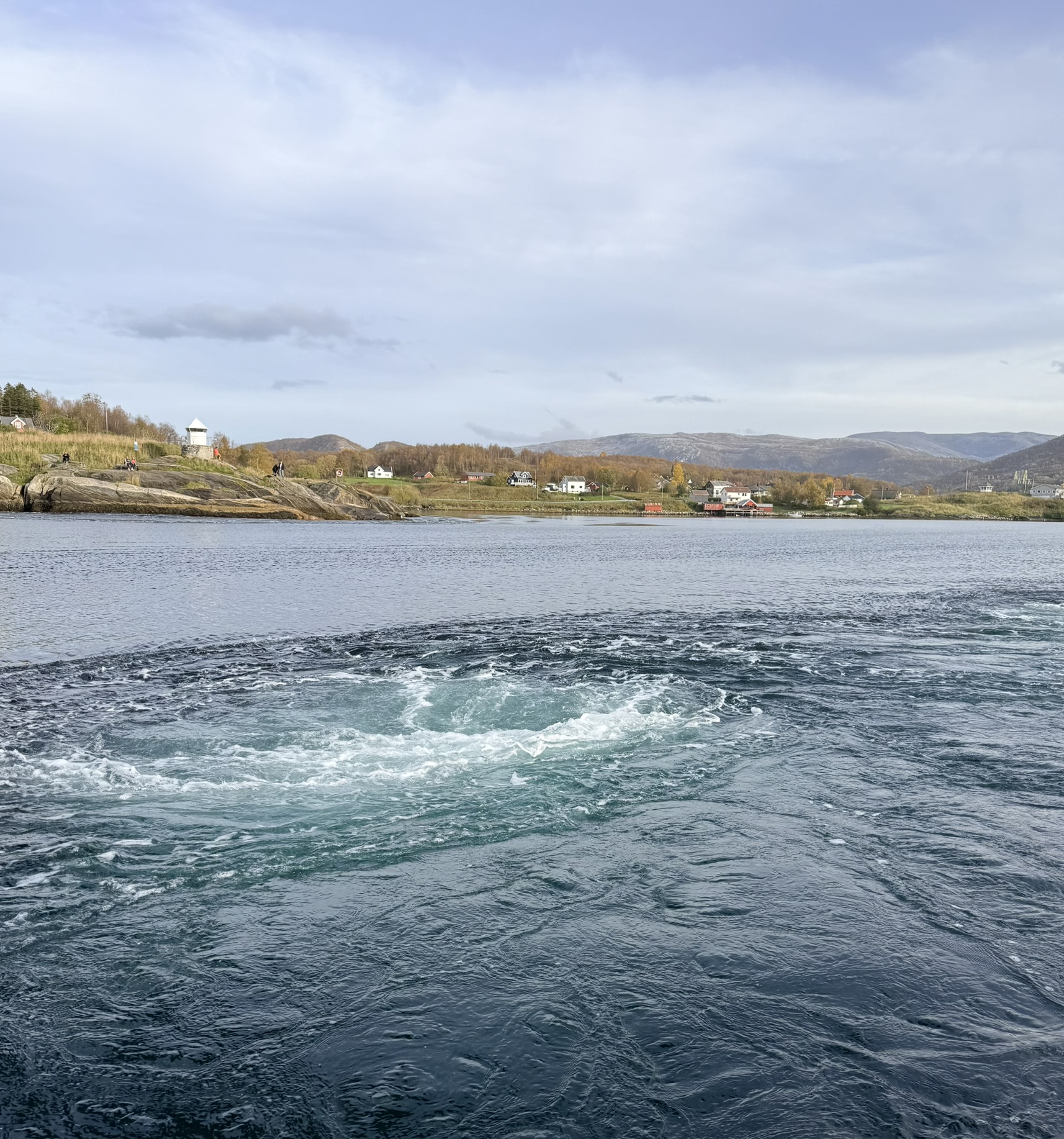
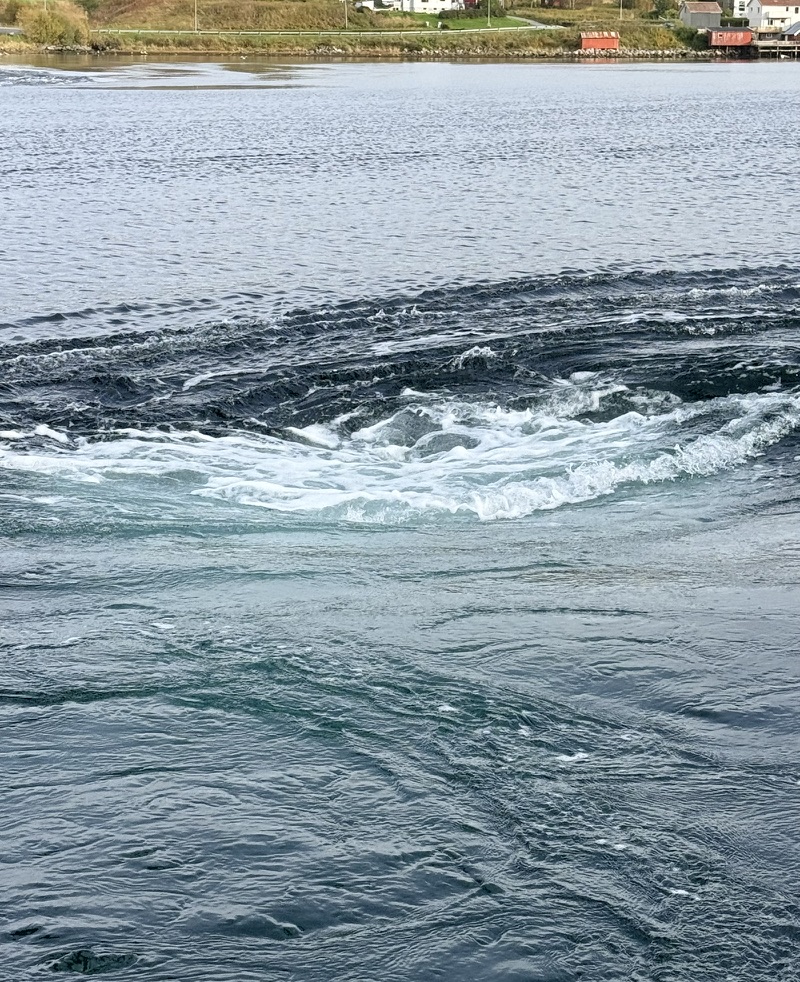
We saw the whirlpools formed by the tide going out. Saltstraumen has one of the strongest tidal currents in the world. Up to 400 million cubic meters of seawater force their way through a 3 km long and 150 m wide strait every six hours. Vortices known as whirlpools or maelstroms up to 10 m in diameter and 5 m in depth are formed when the current is at its strongest.
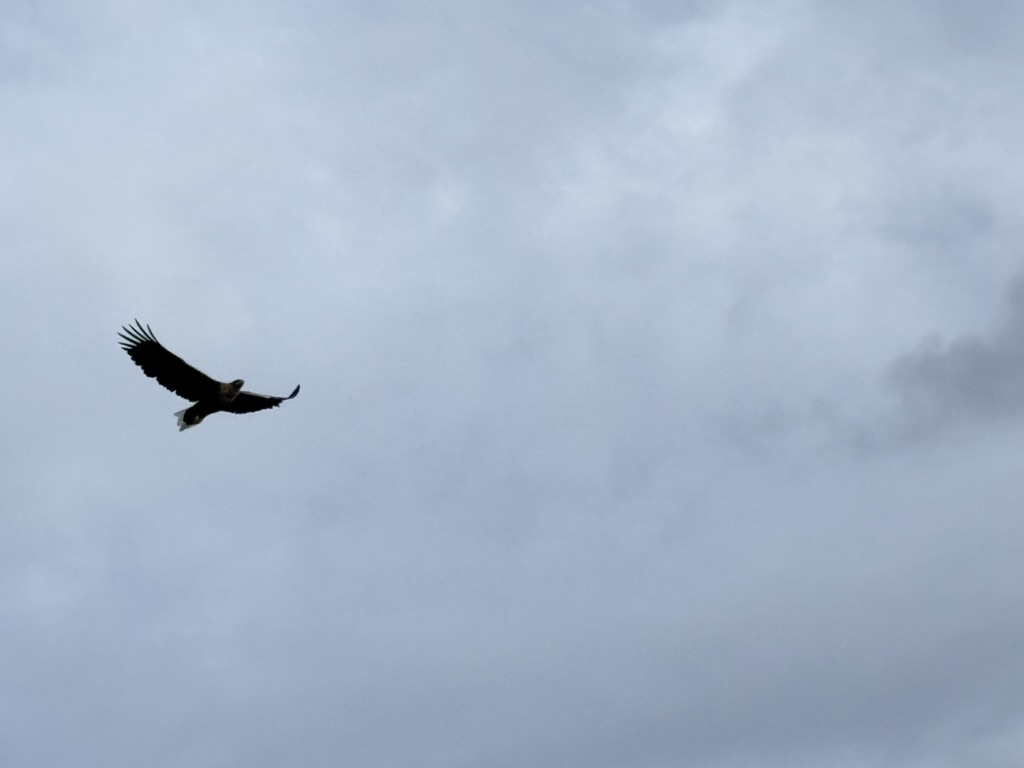
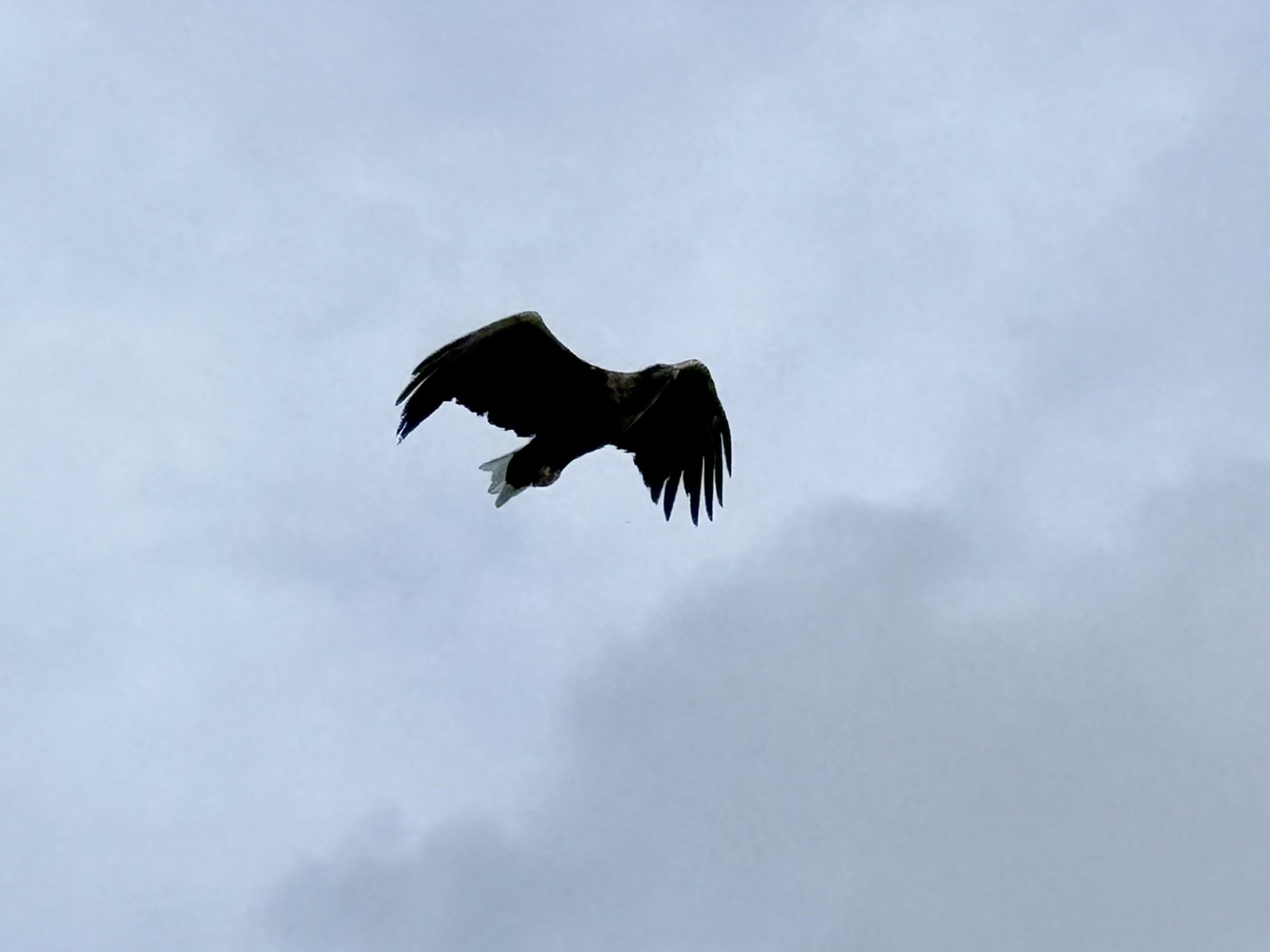
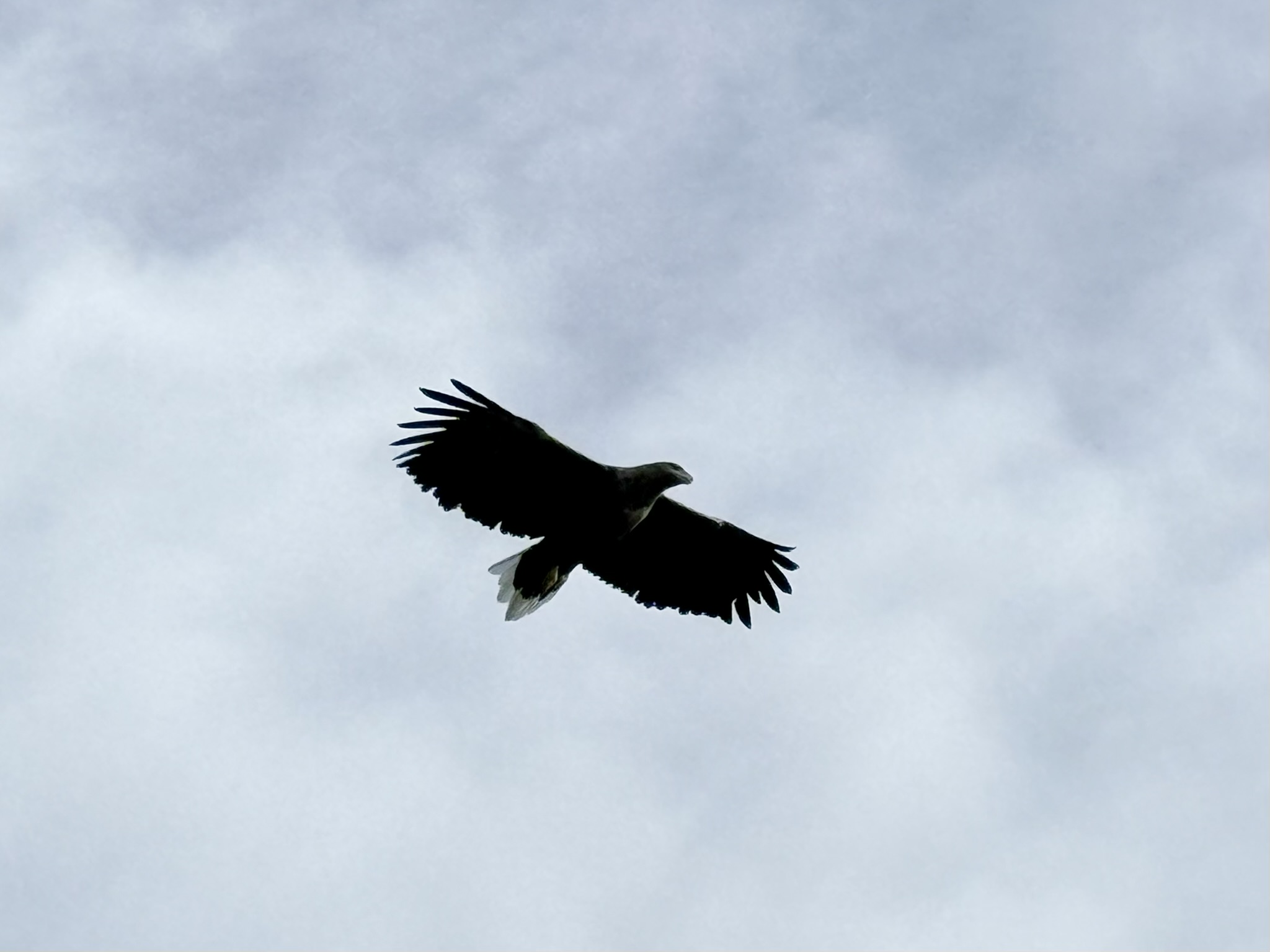
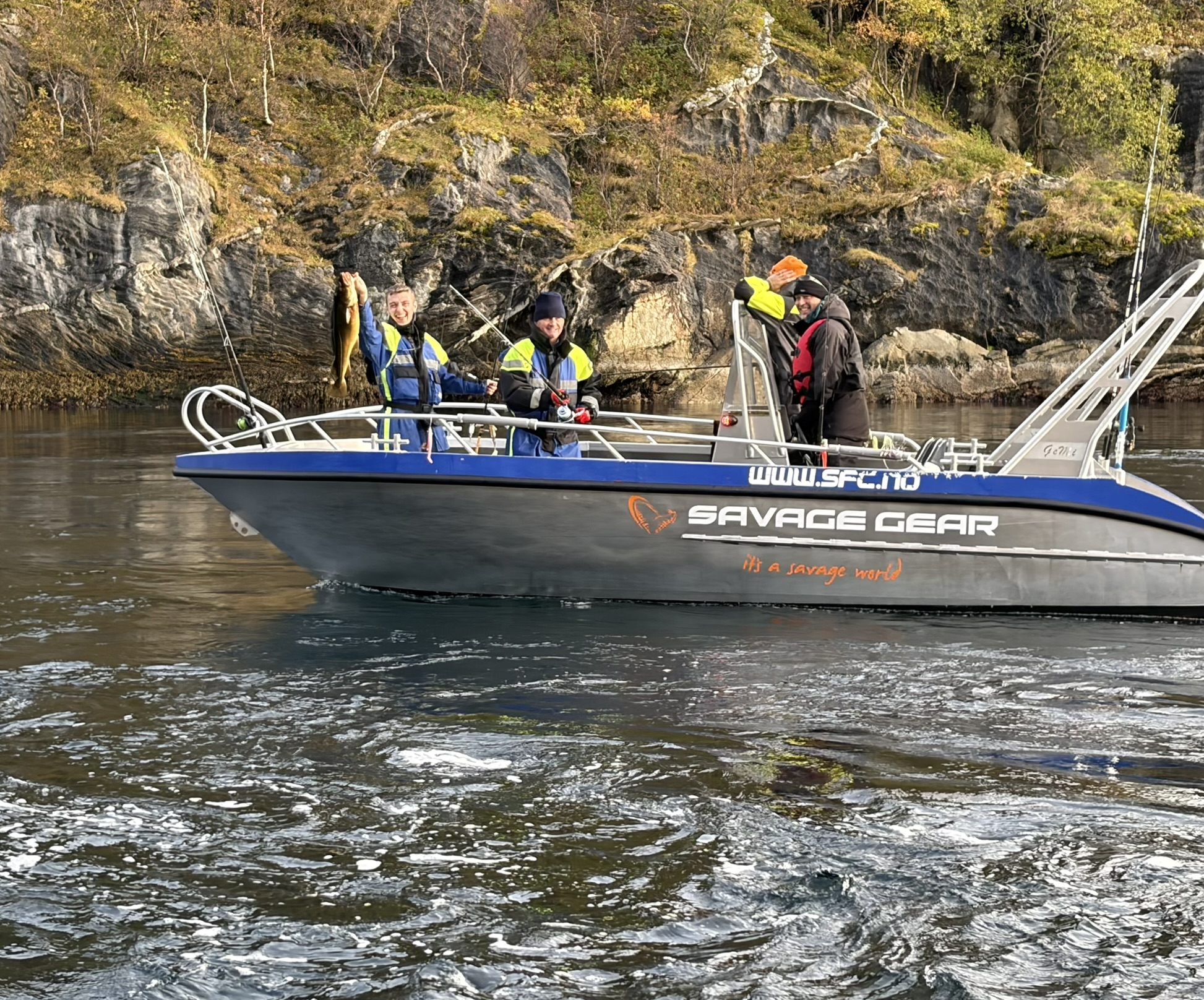
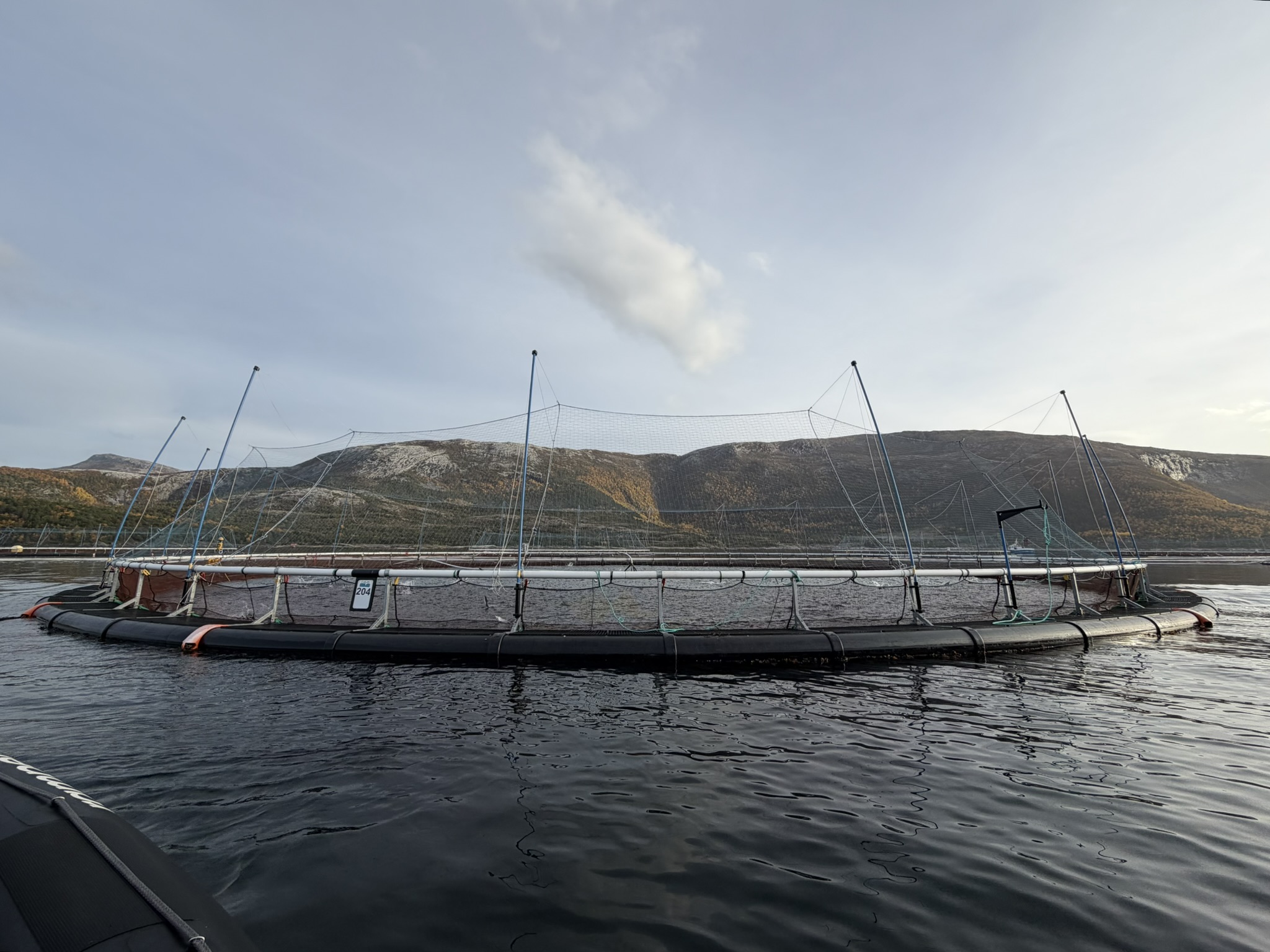
On the 2 1/2-hour boat ride we caught glimpses of sea eagles. We also saw salmon farms. Salmon aquaculture is the commercial practice of raising salmon from eggs to market size in controlled freshwater and marine environments. Ken told us there were up to 200,000 salmon in each circular enclosure.
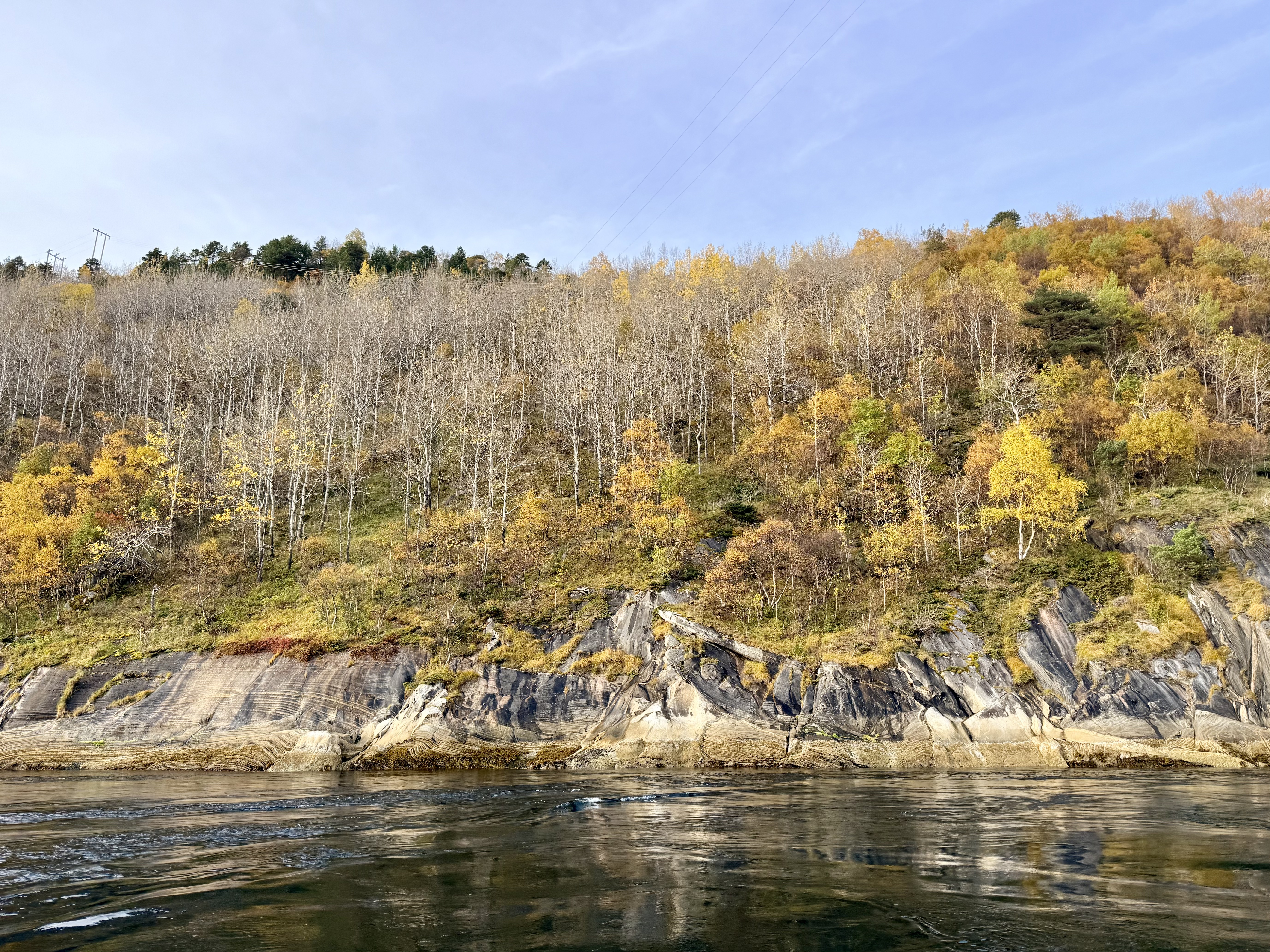
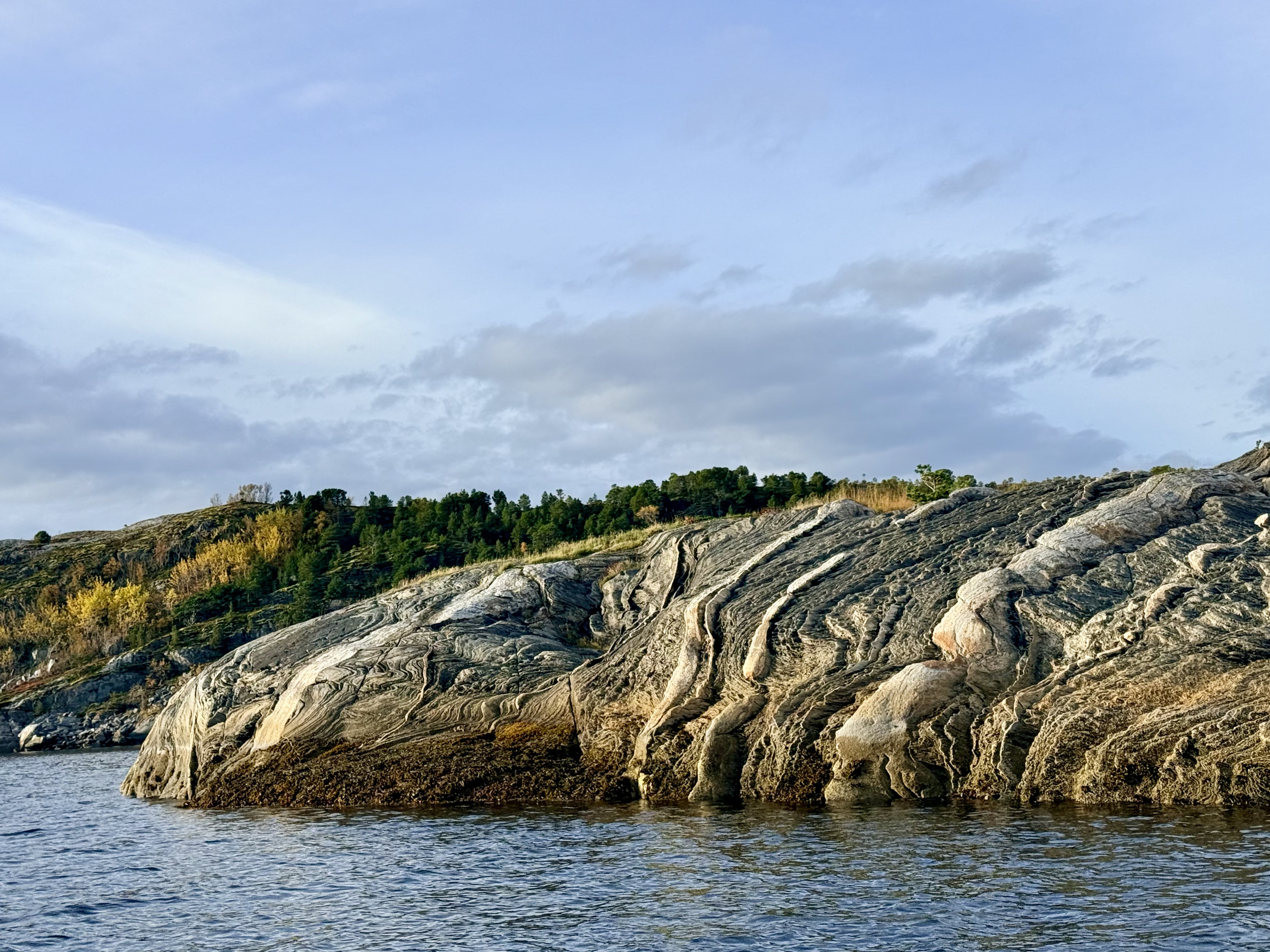
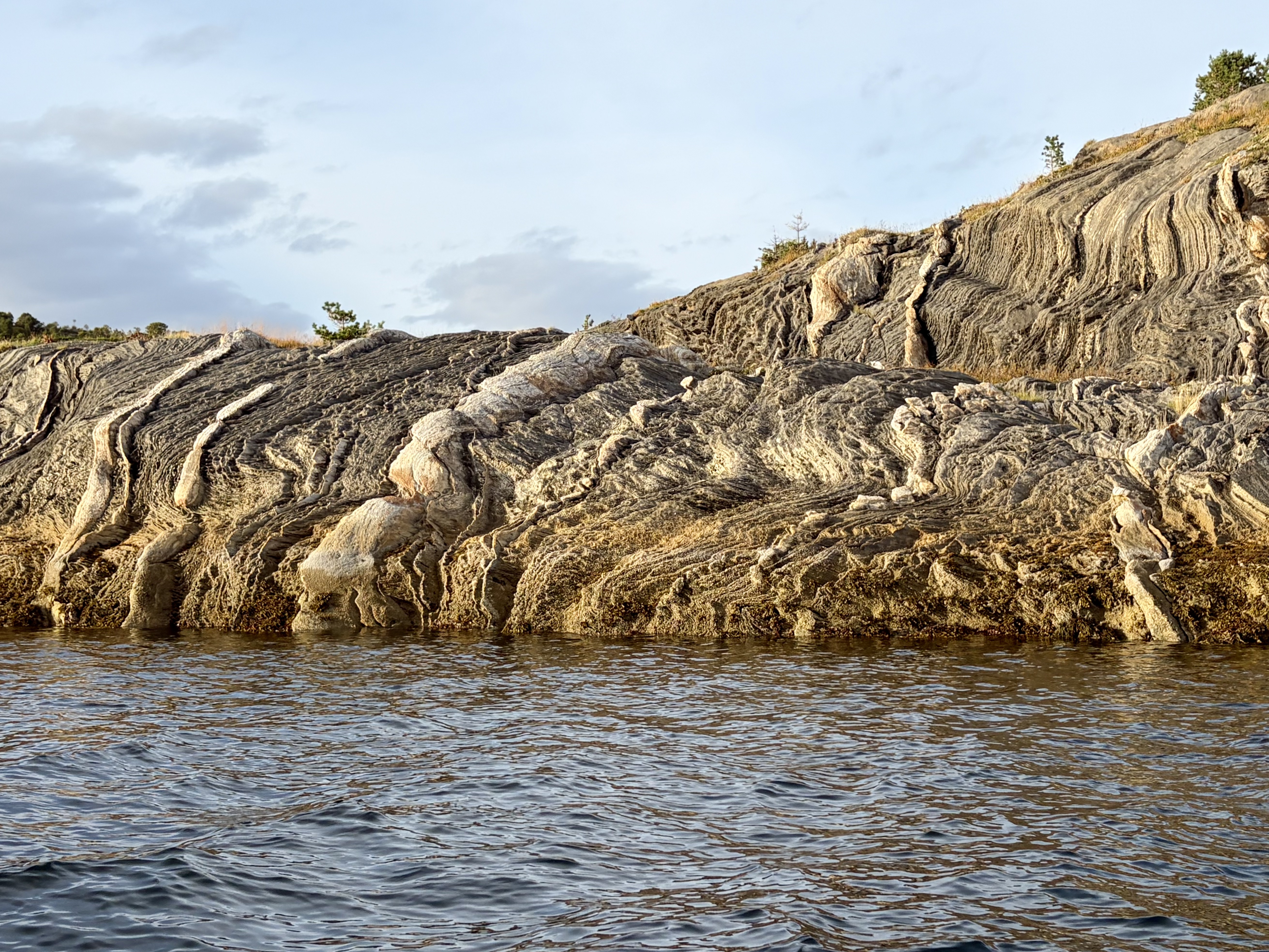
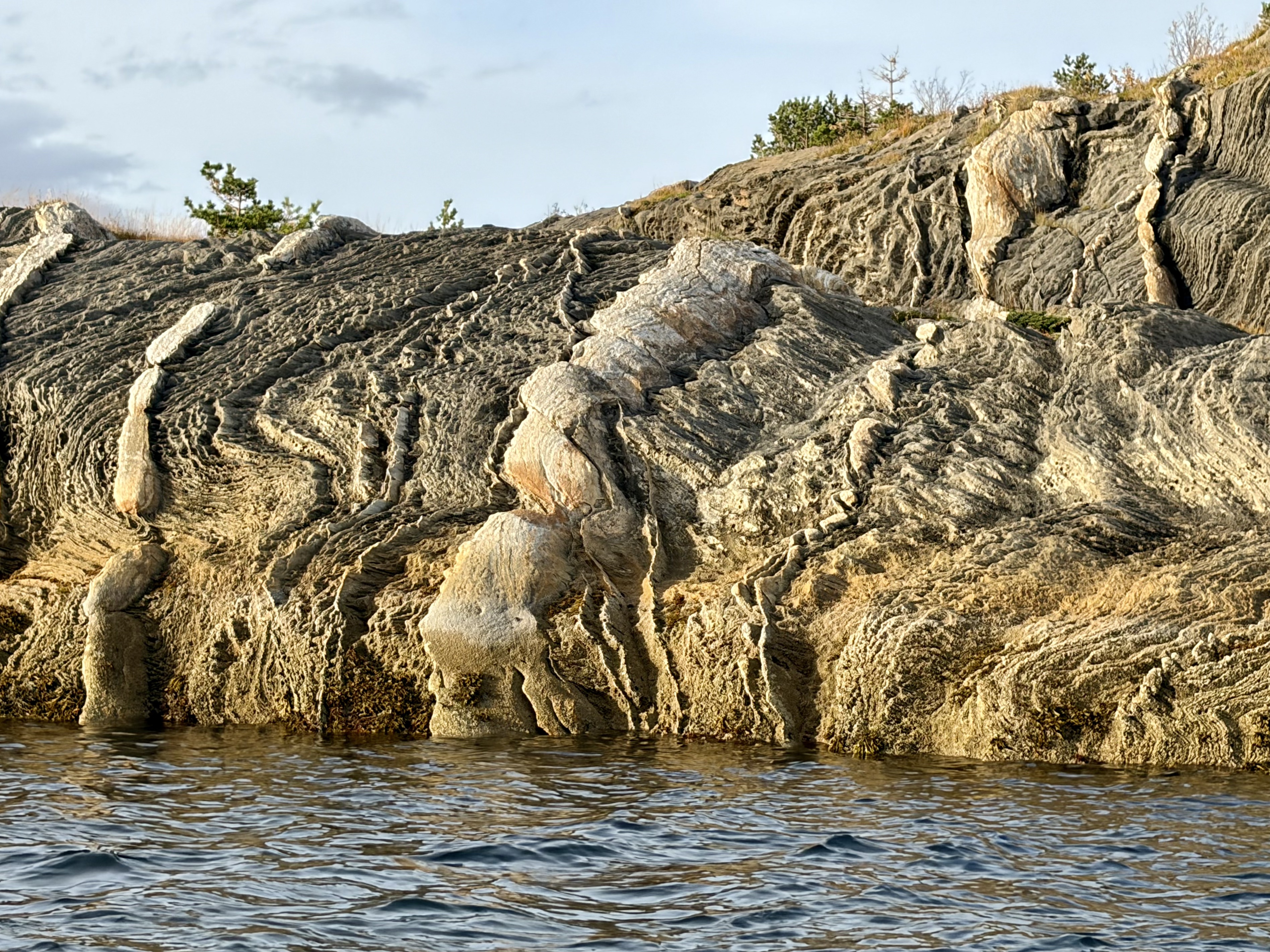
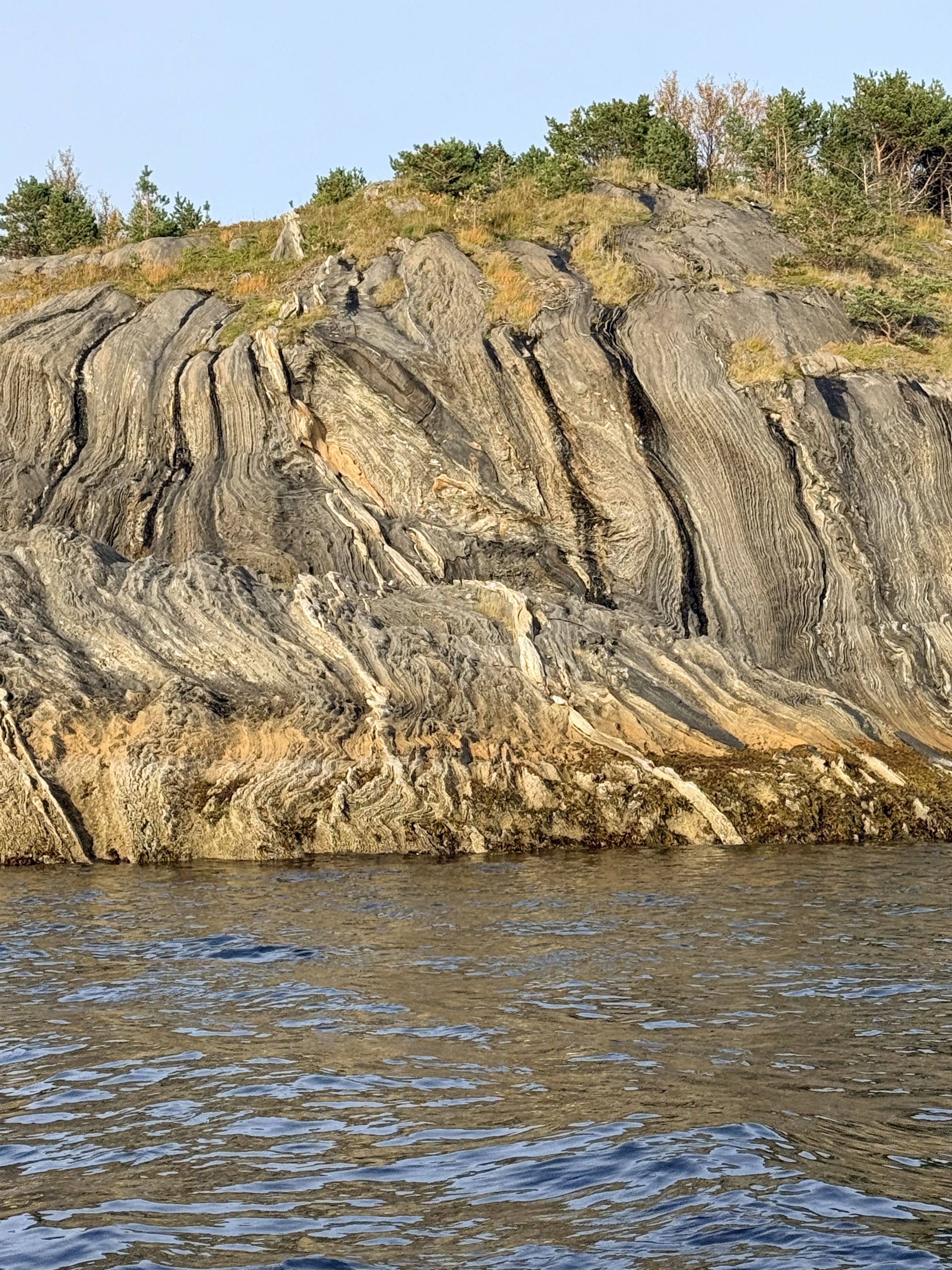
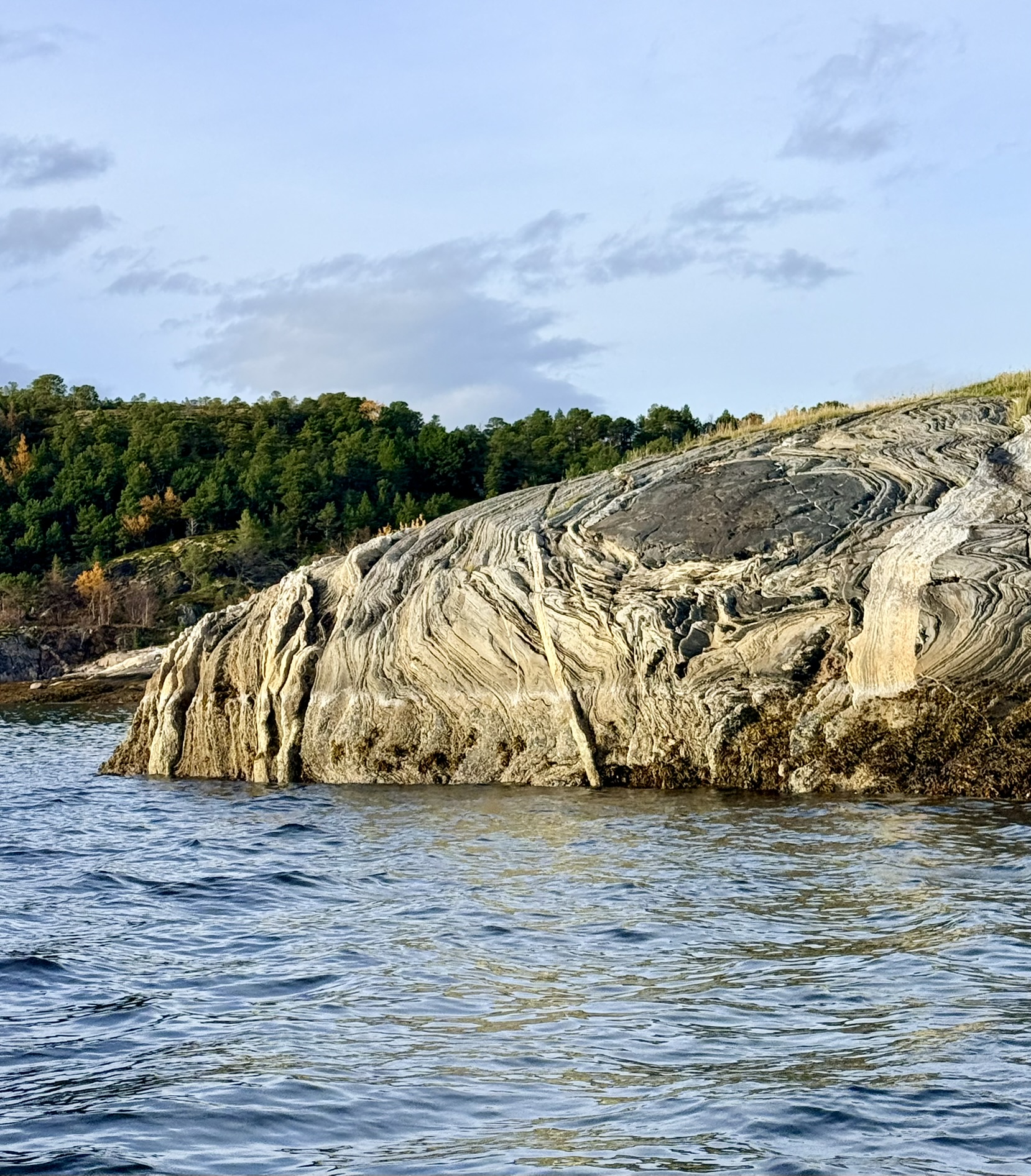
We saw mountains and dramatic islets. We saw rocks engraved with curvaceous striations caused by ancient lava flows that have been pushed up by the North American and European tectonic plates bumping into each other.
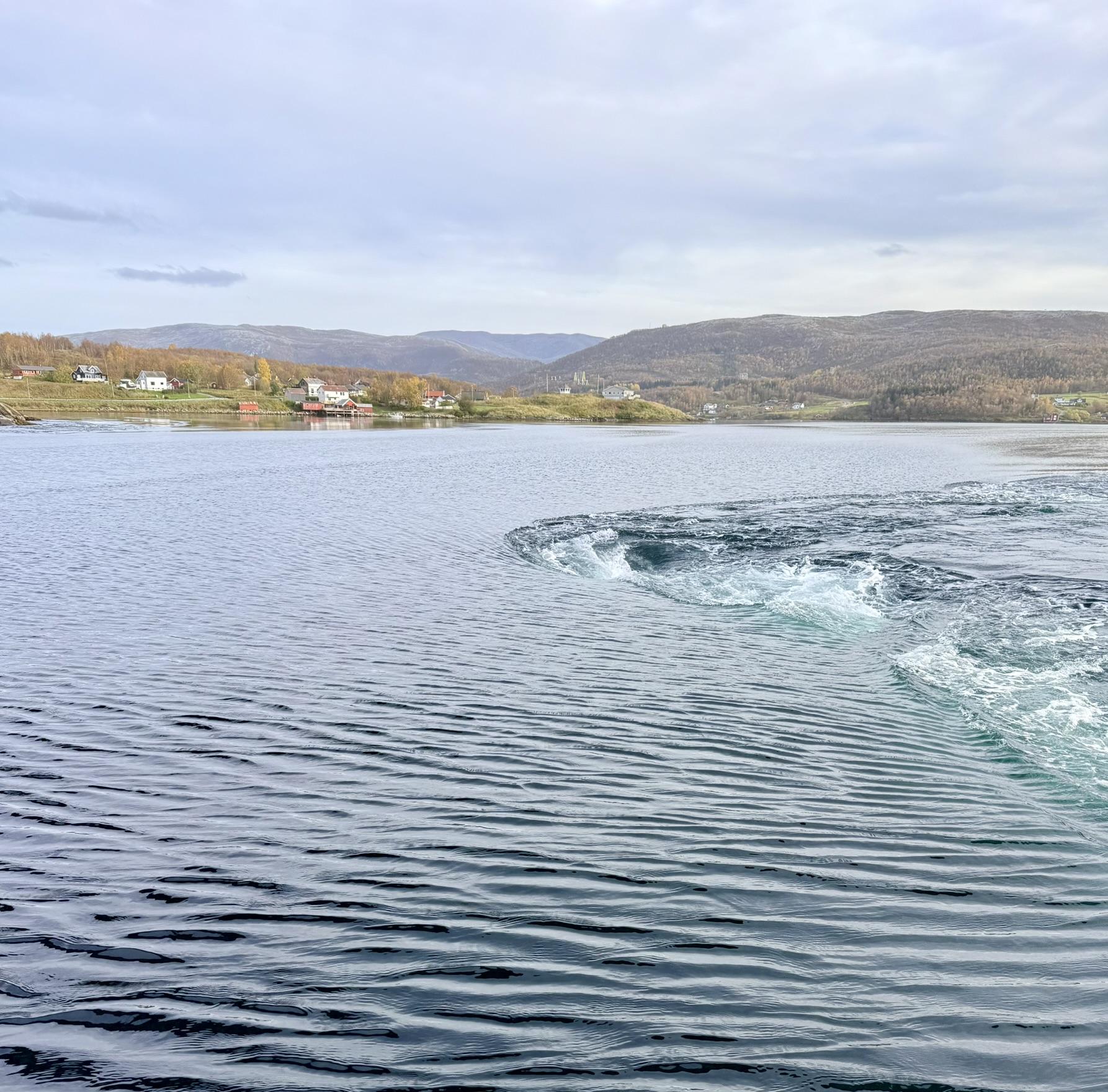
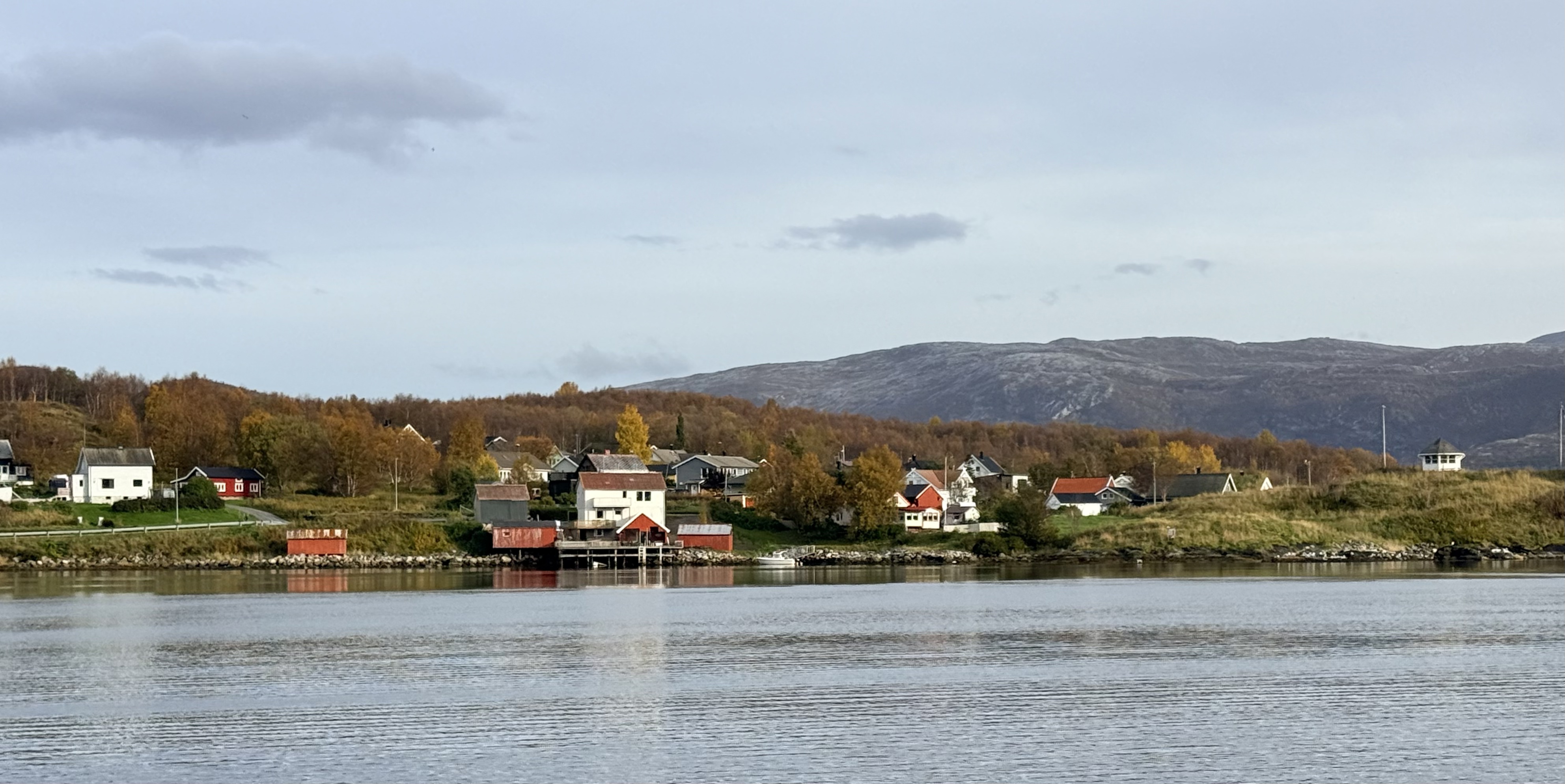
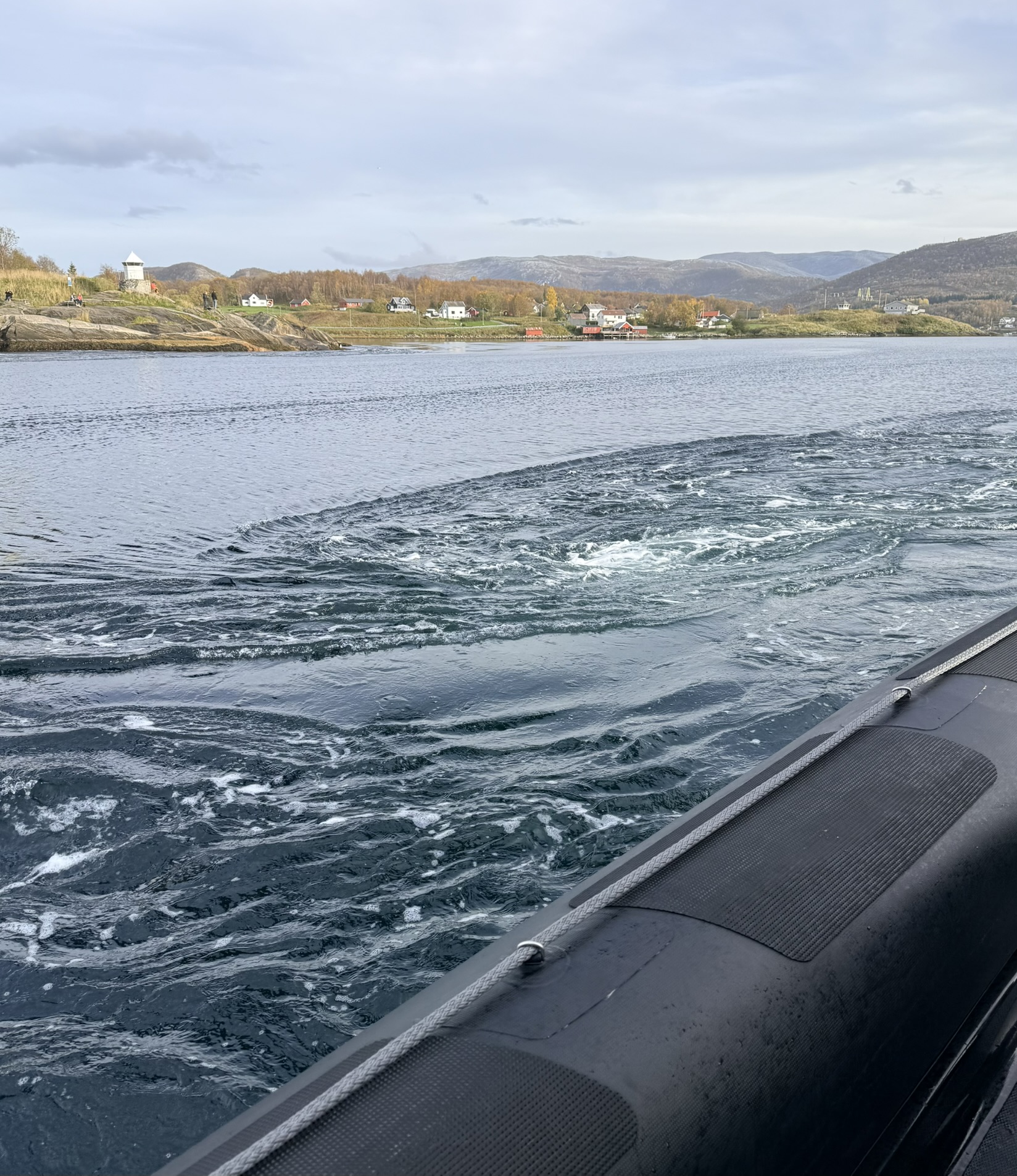
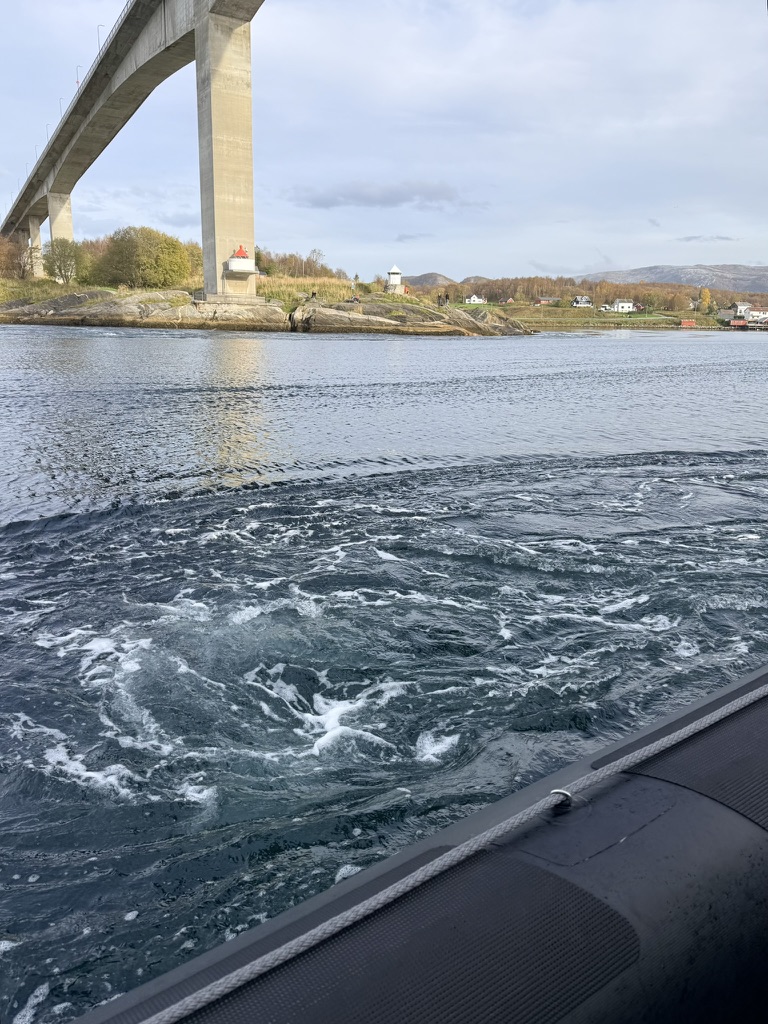
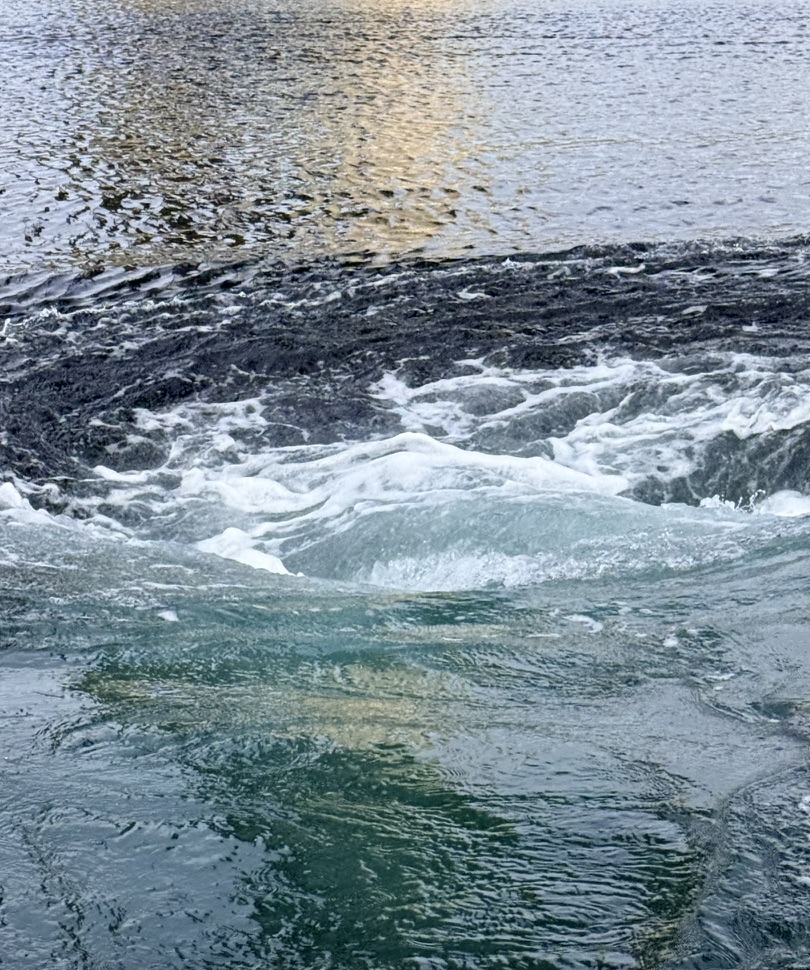
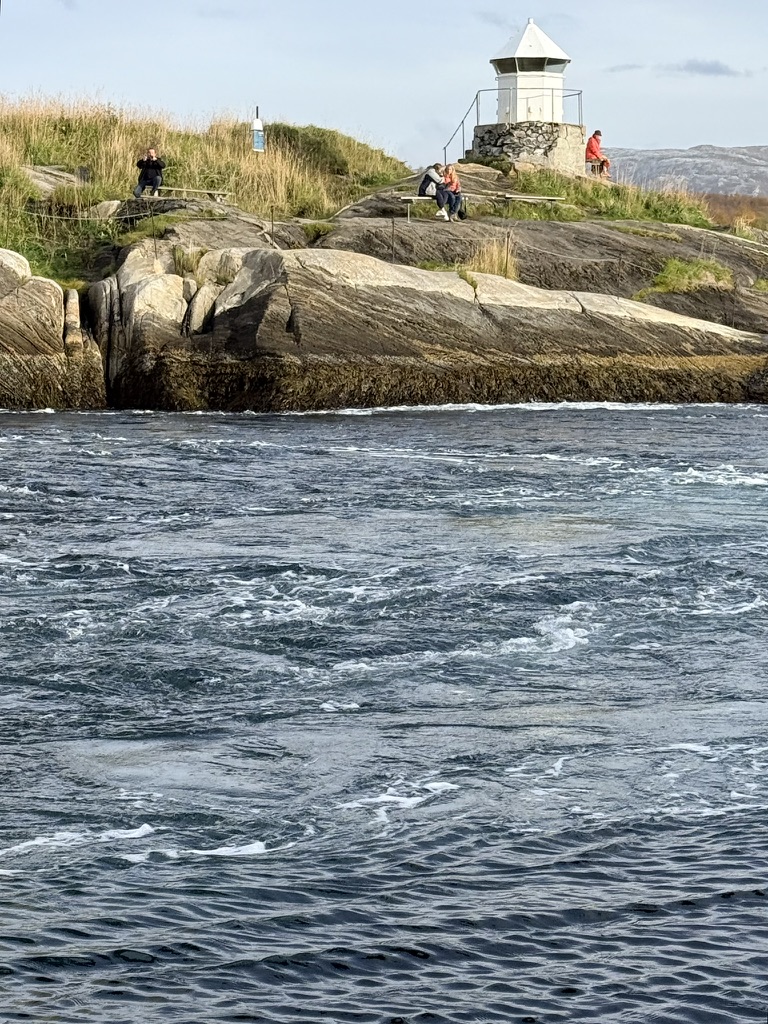
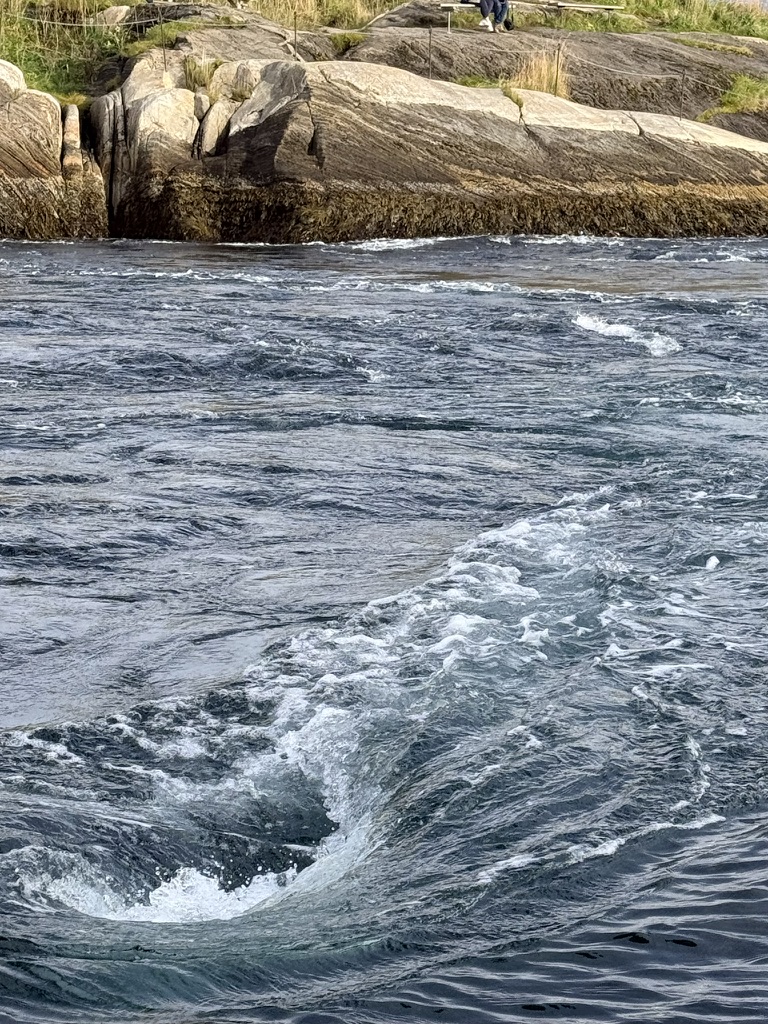
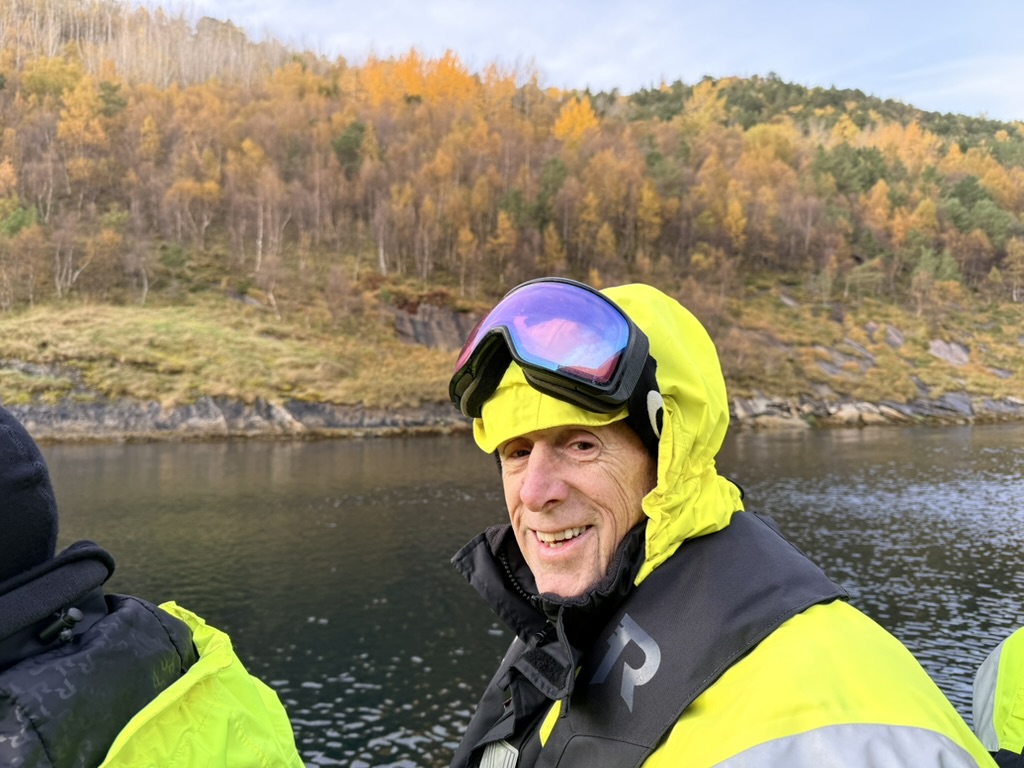
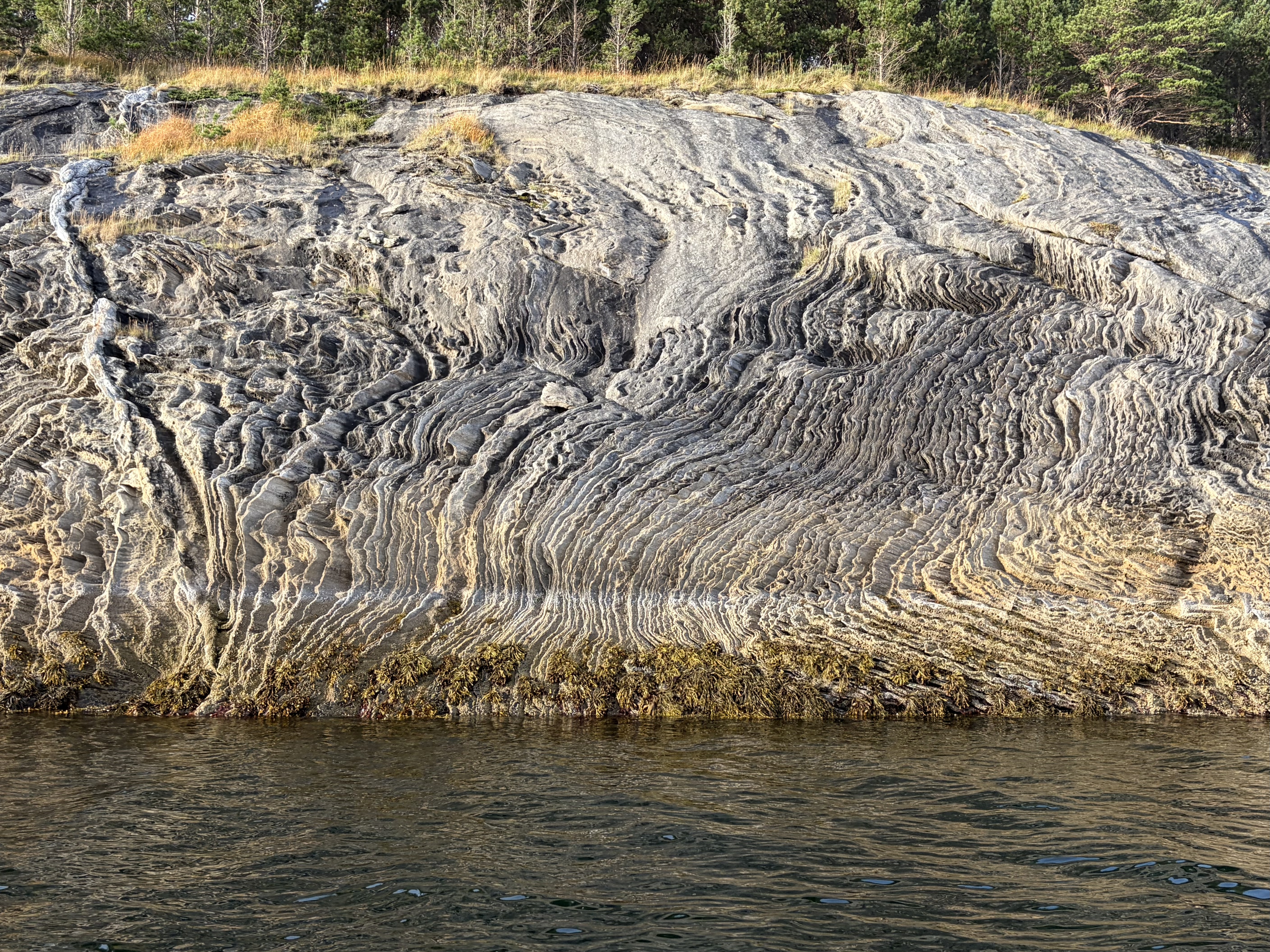
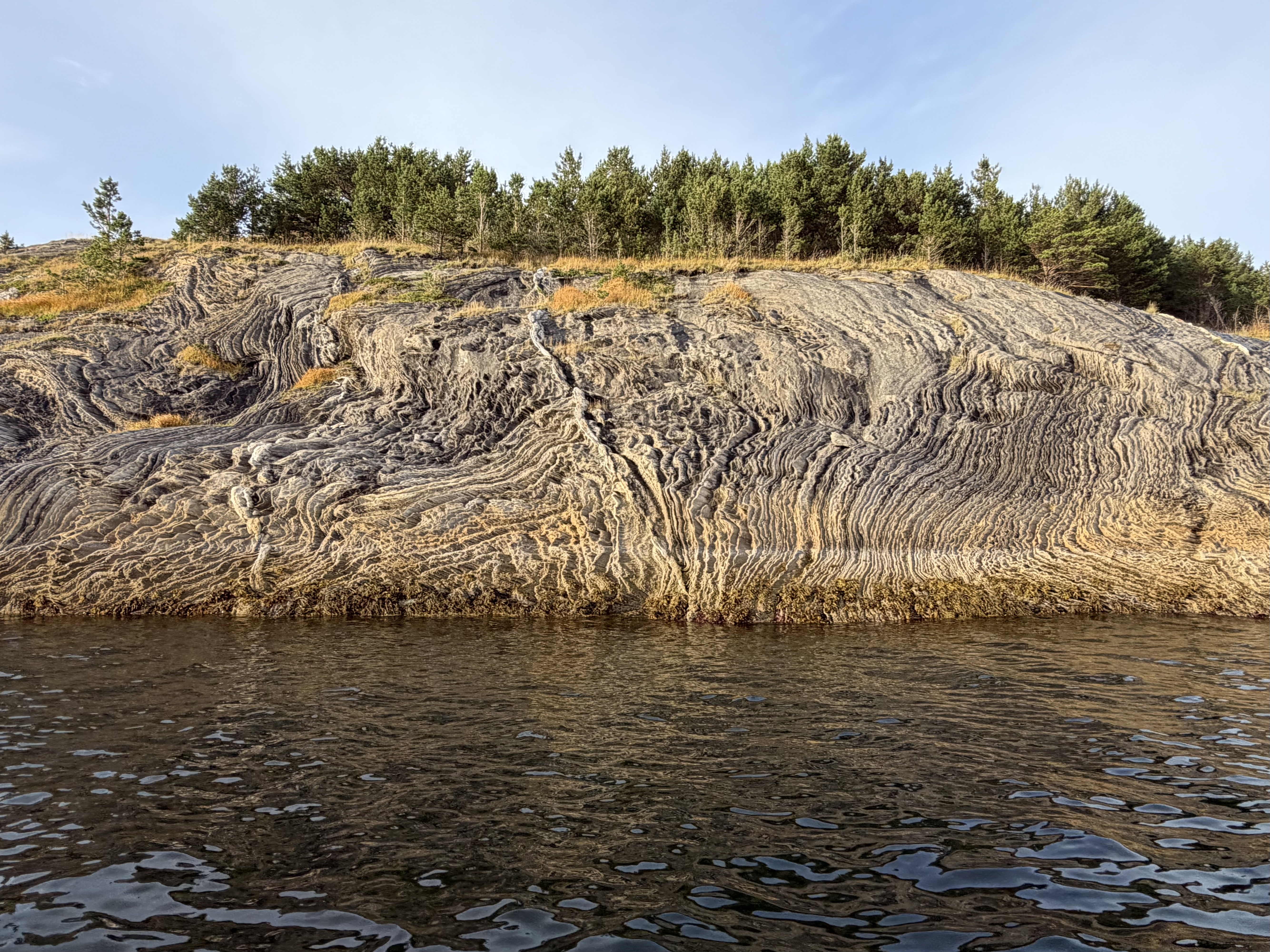
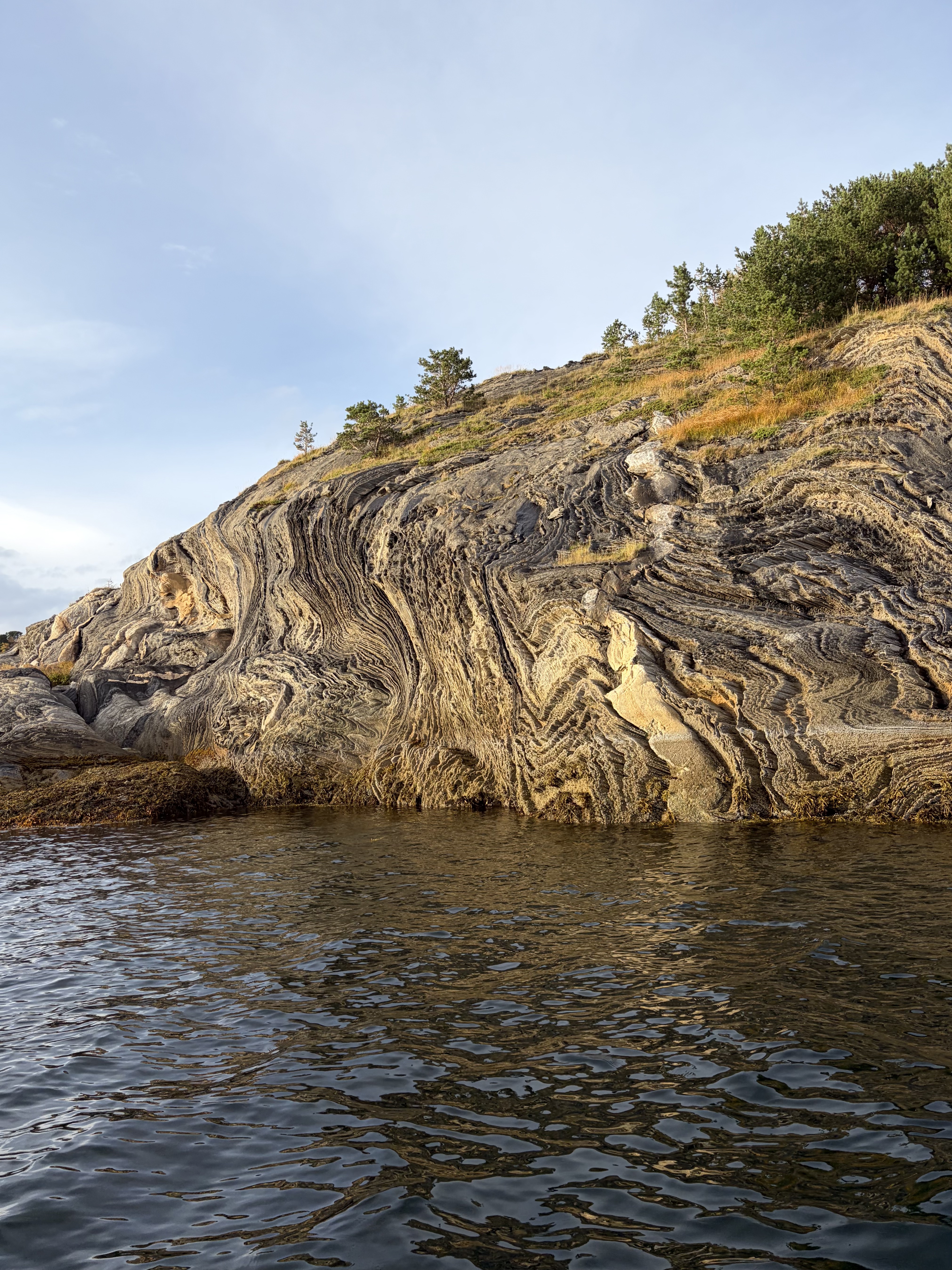
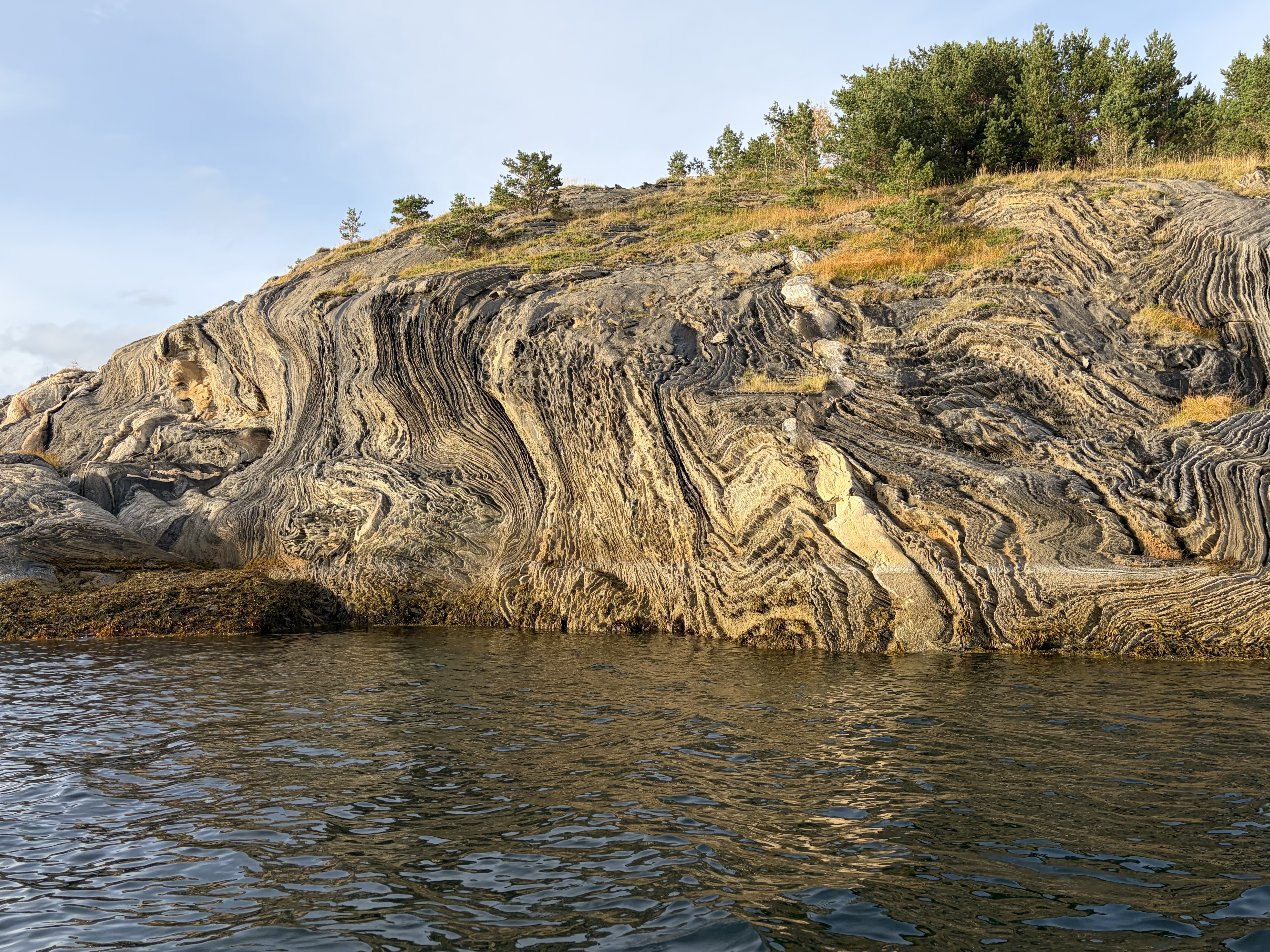
Here’s a video of the Rampen Sea Eagle Safari & Saltstraumen.
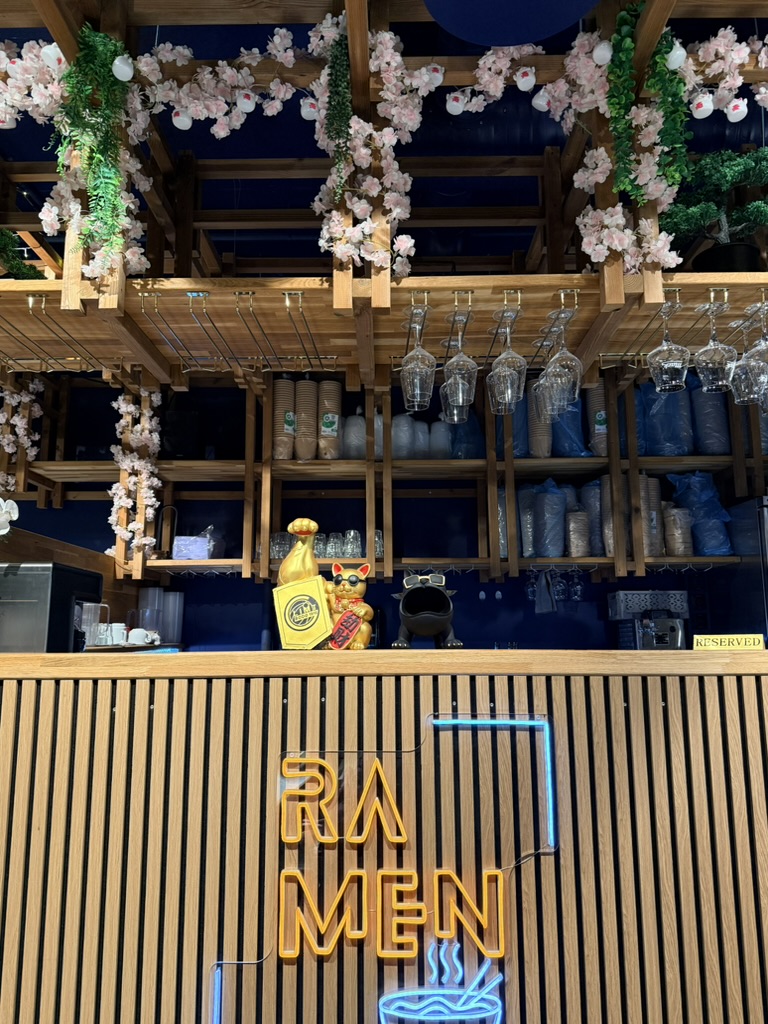
Dinner at Tiger Ramen
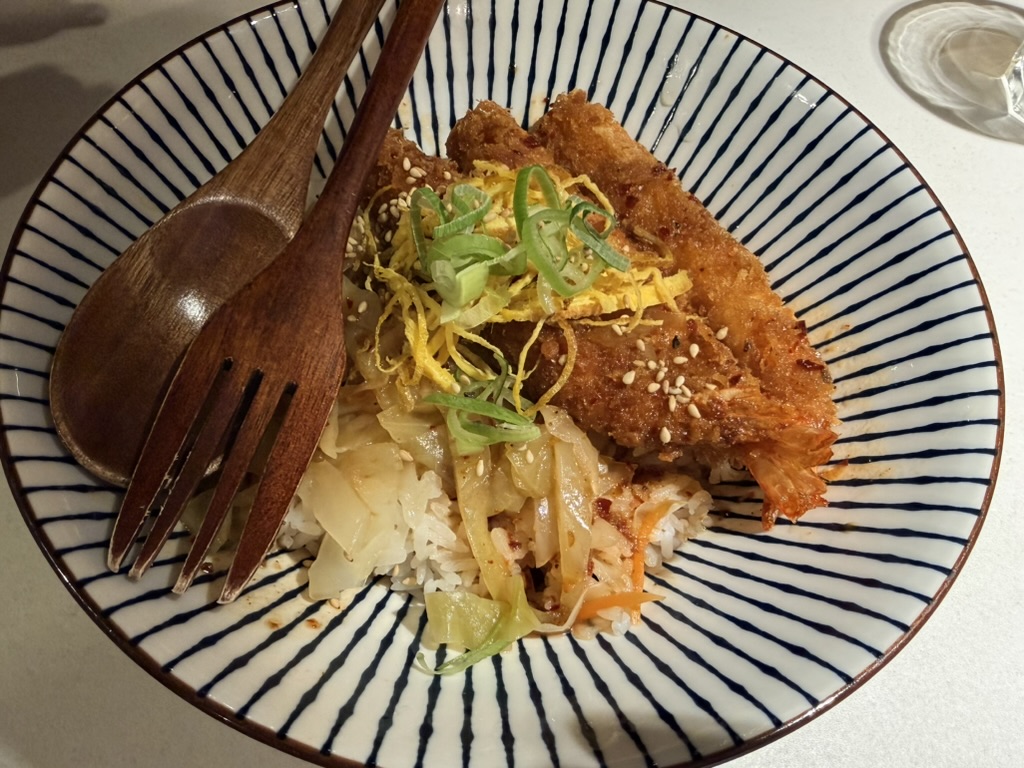
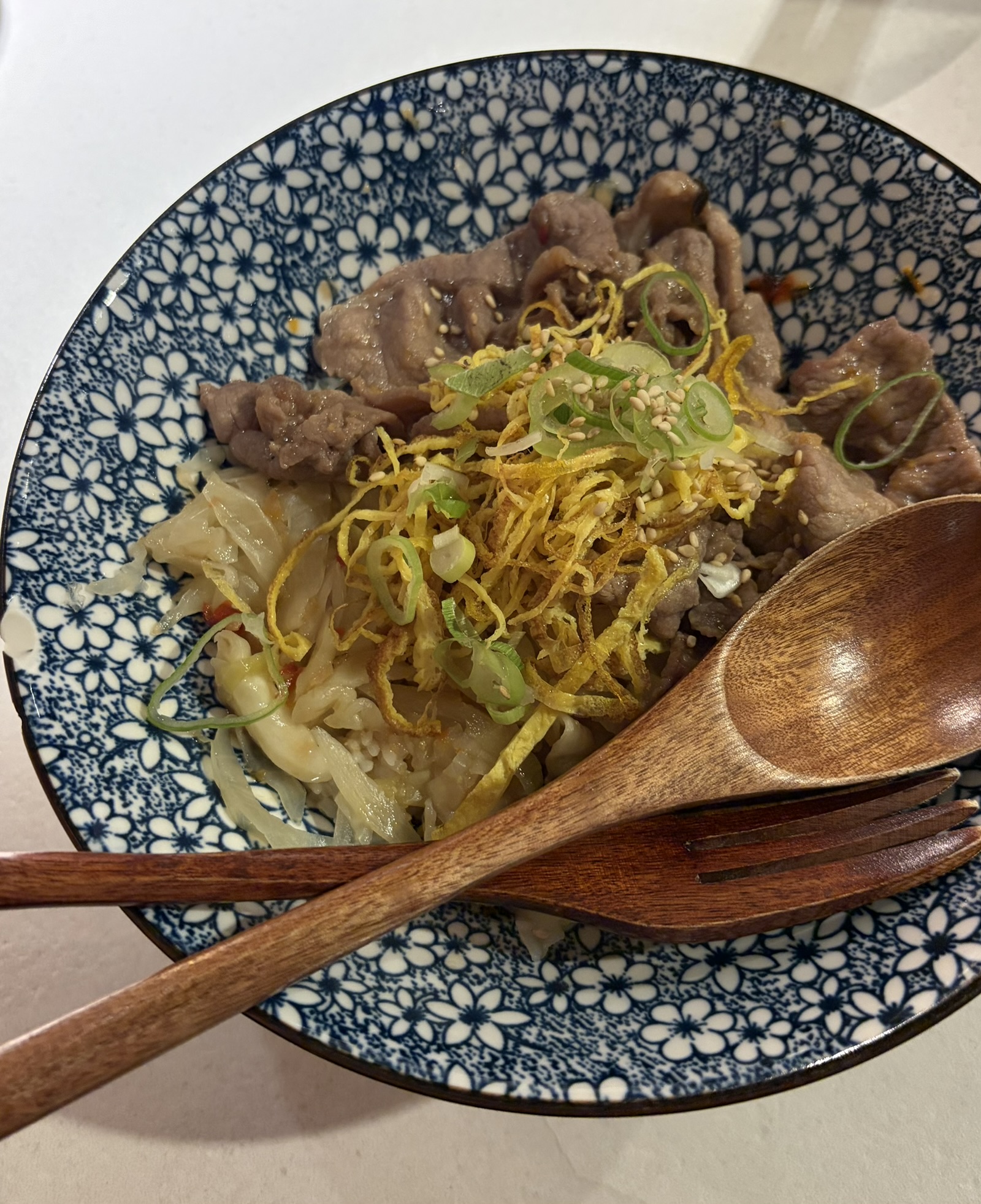
We were exhausted after our Rampen RIB boat tour, so we had a simple dinner out at Tiger Ramen after a well-earned shower. Mike and I both enjoyed Rice Bowls, mine with shrimp tempura and his with beef. We made celebratory toasts to one another for surviving the maelstrom, which in fact wasn’t all that dramatic.
Thursday, September 24: Thursday was a rather rainy and dreary day, so we decided mostly to stay in and relax. We haven’t been able to do that much on our trip, and it was a welcome break.
Stormen bibliotek
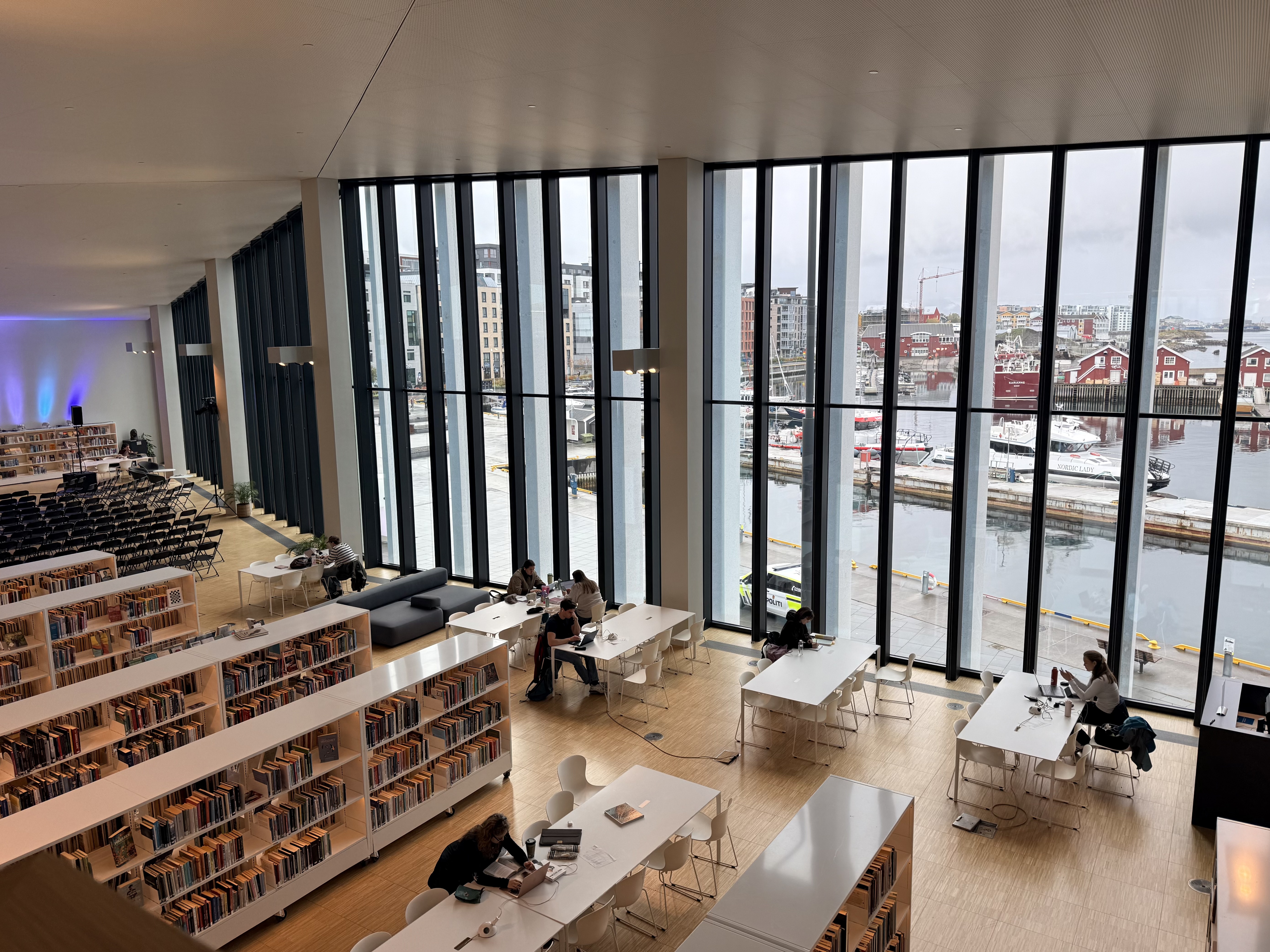
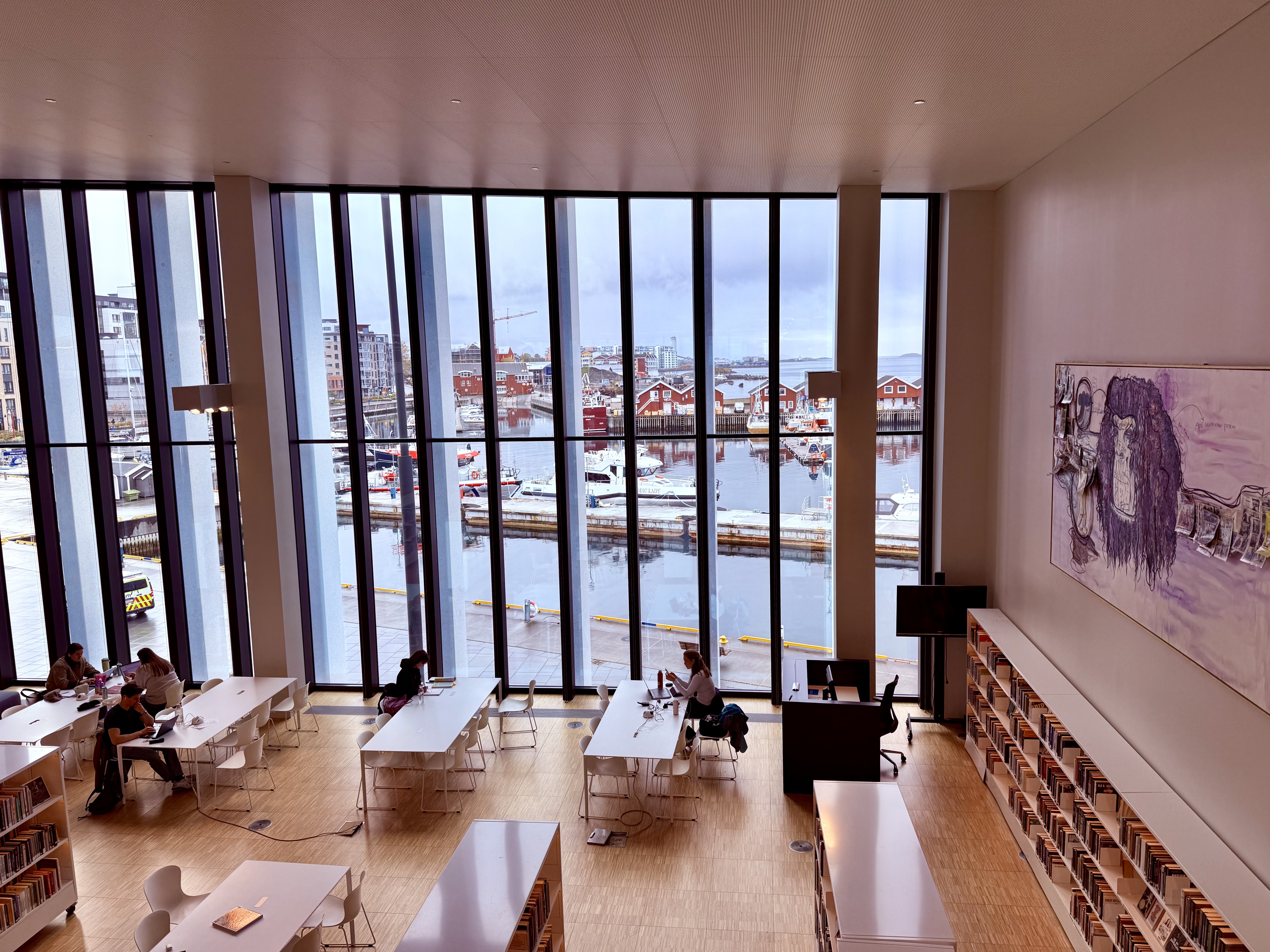
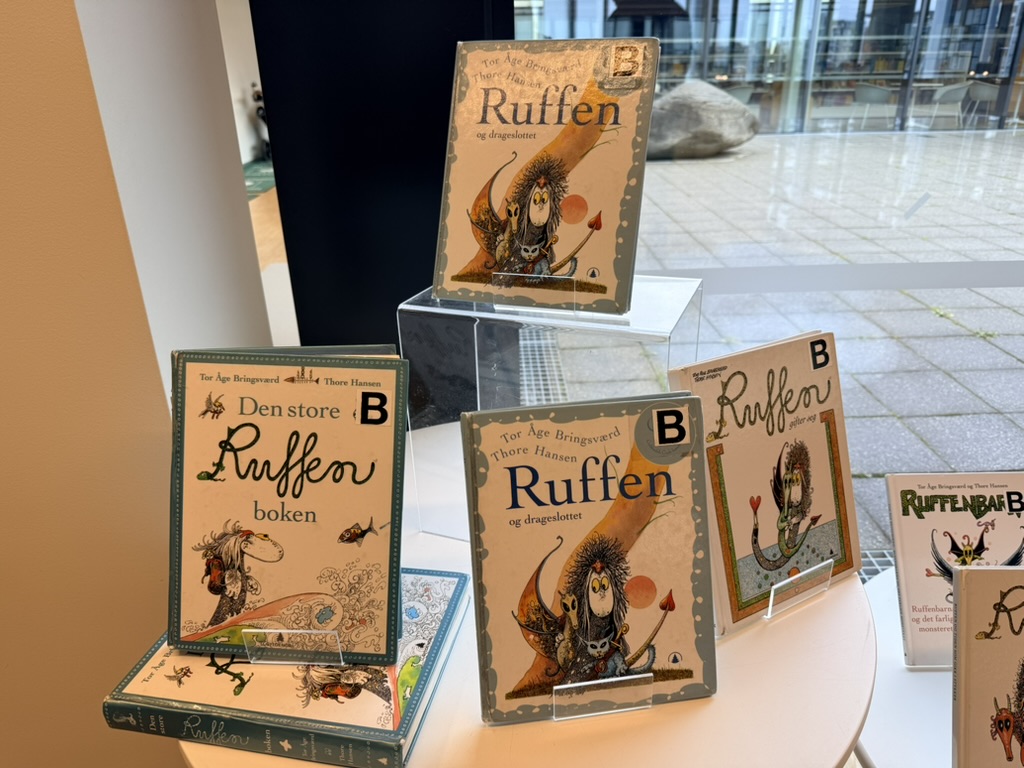
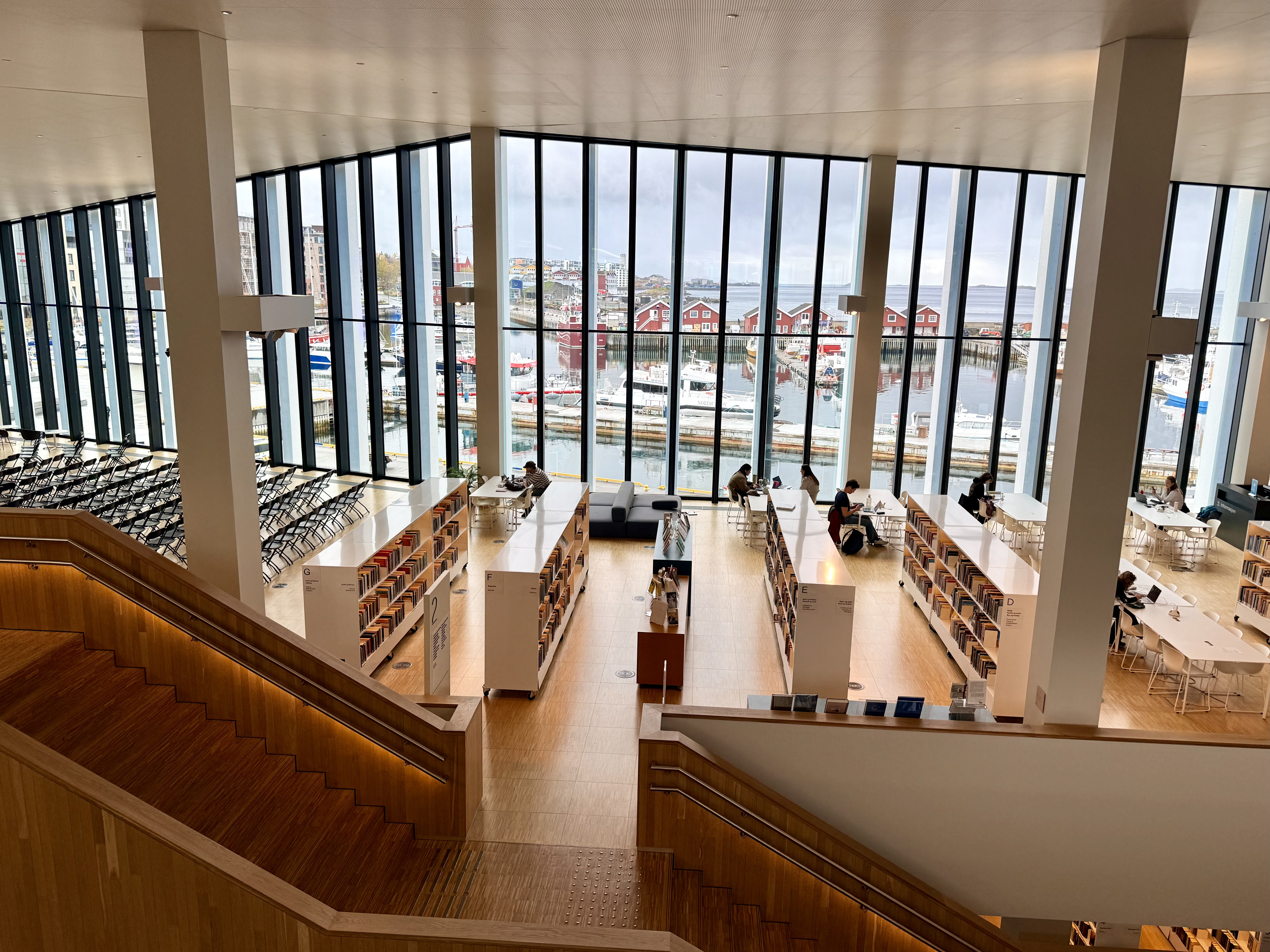
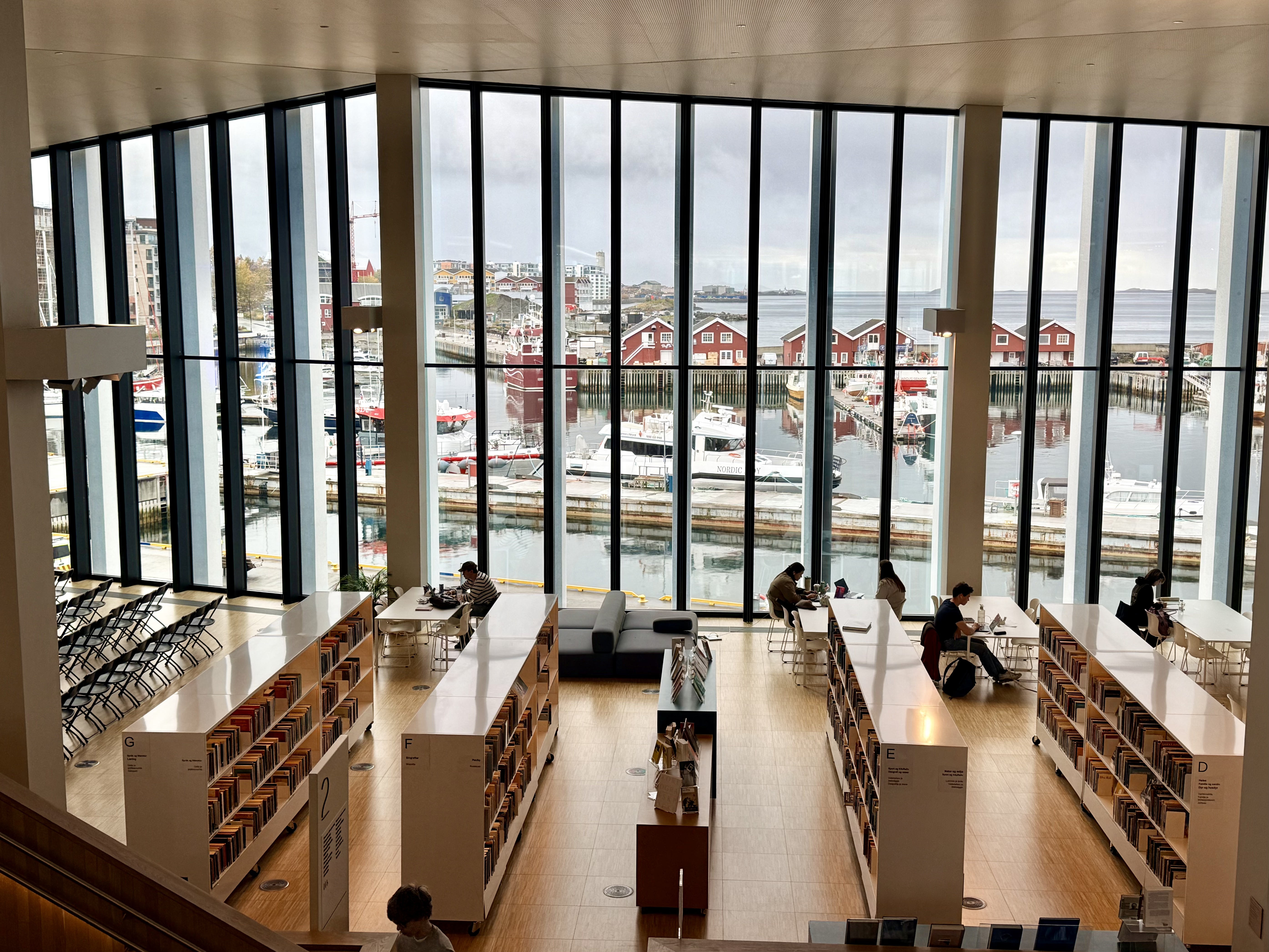
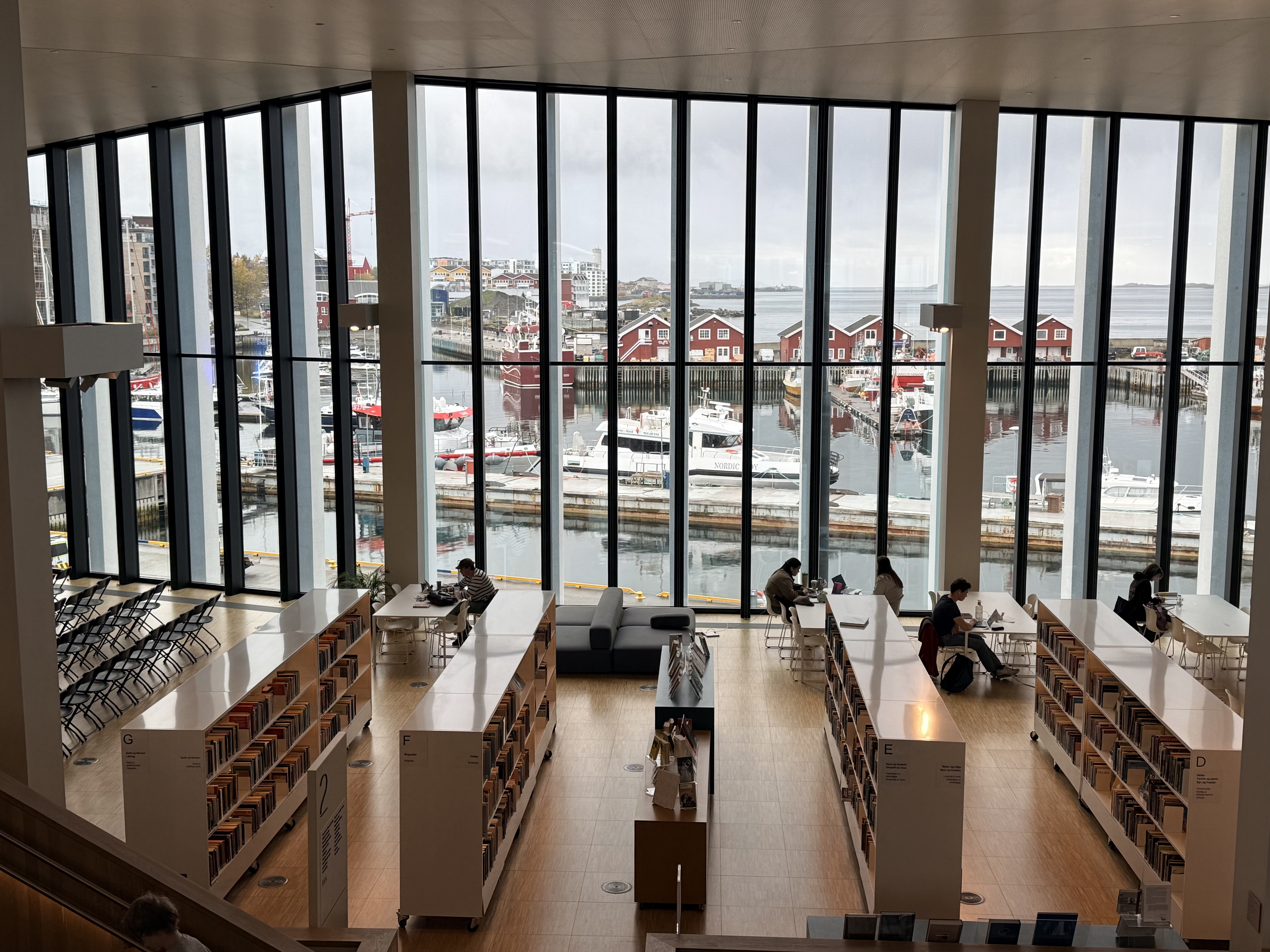
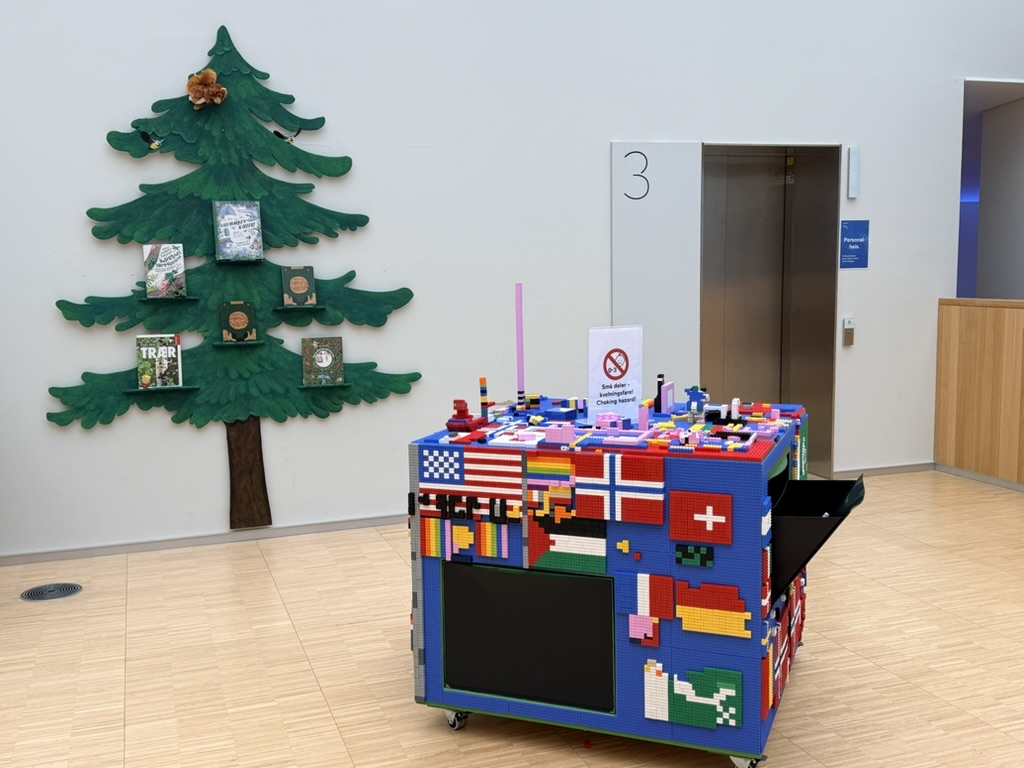
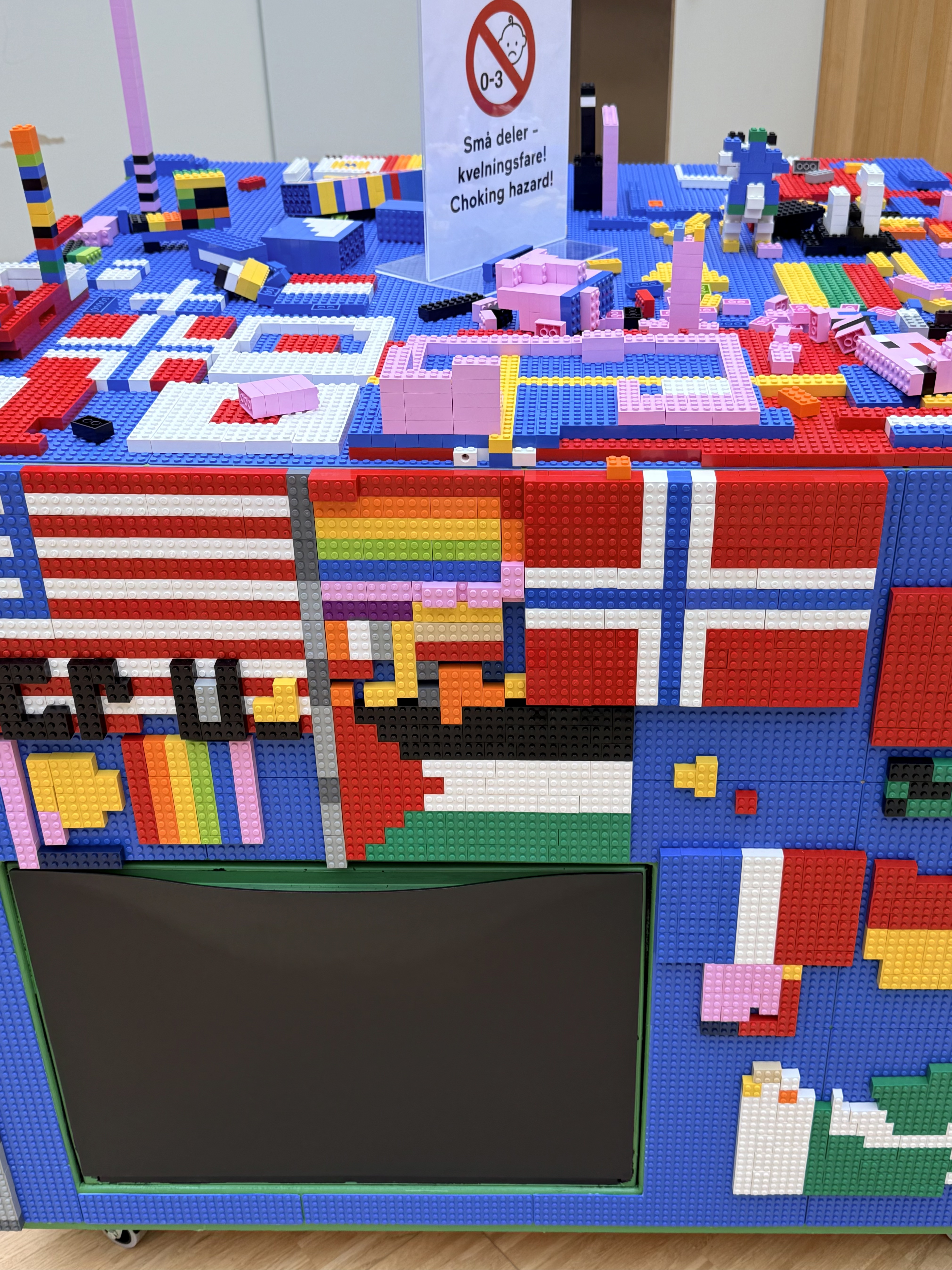
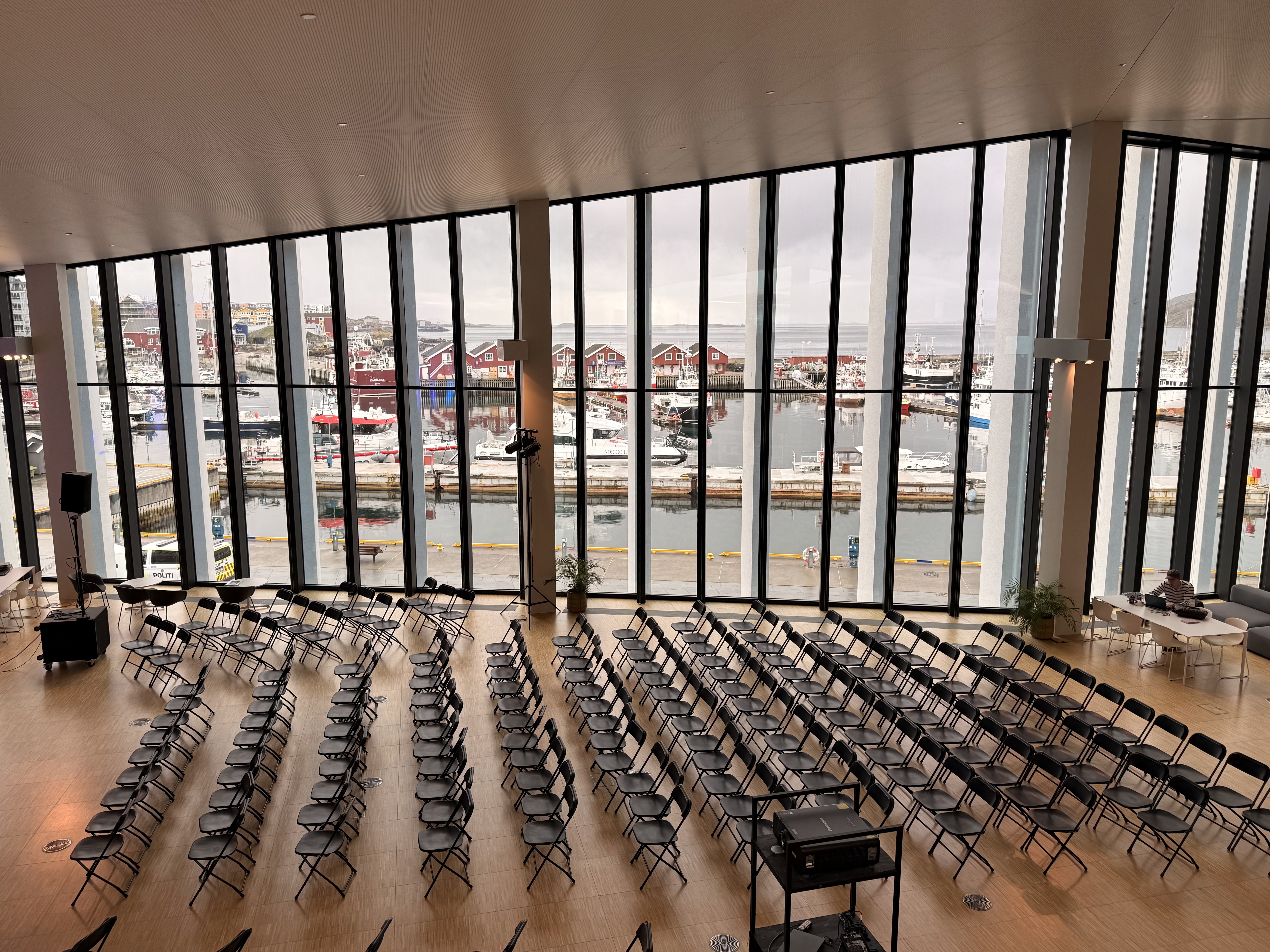
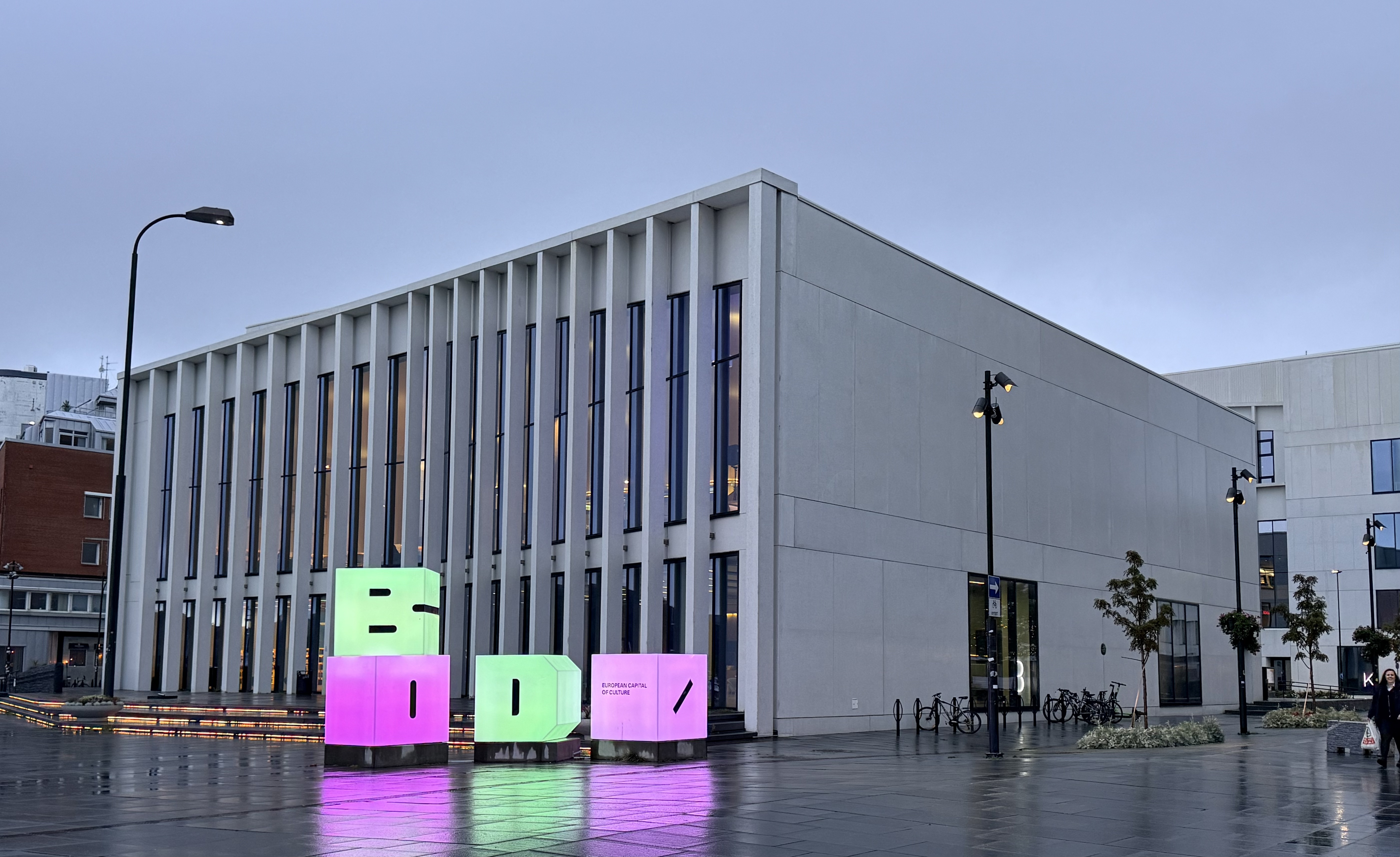
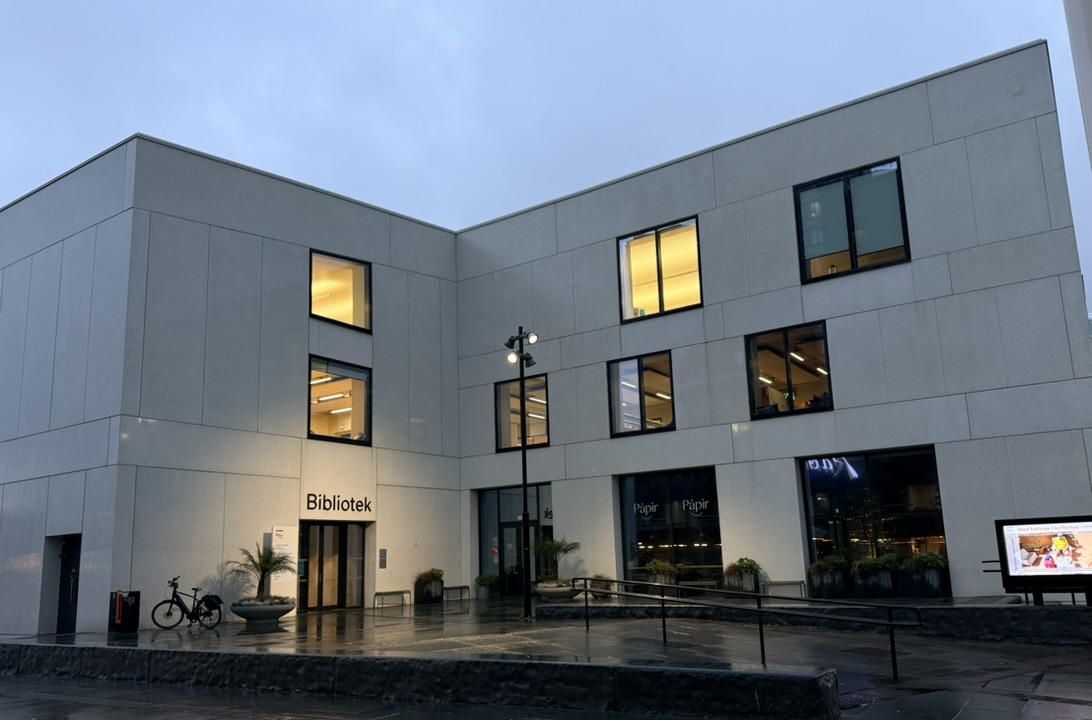
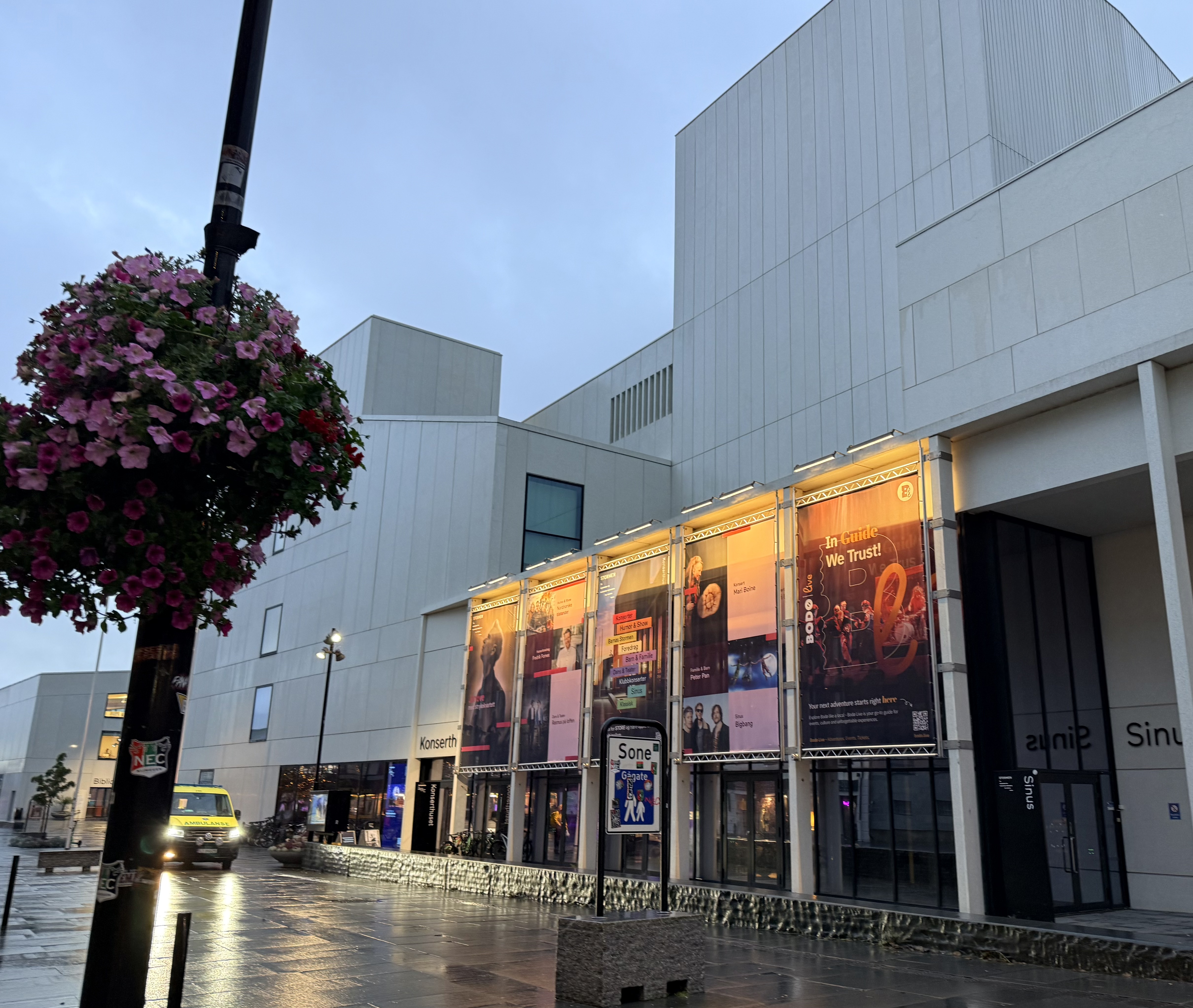
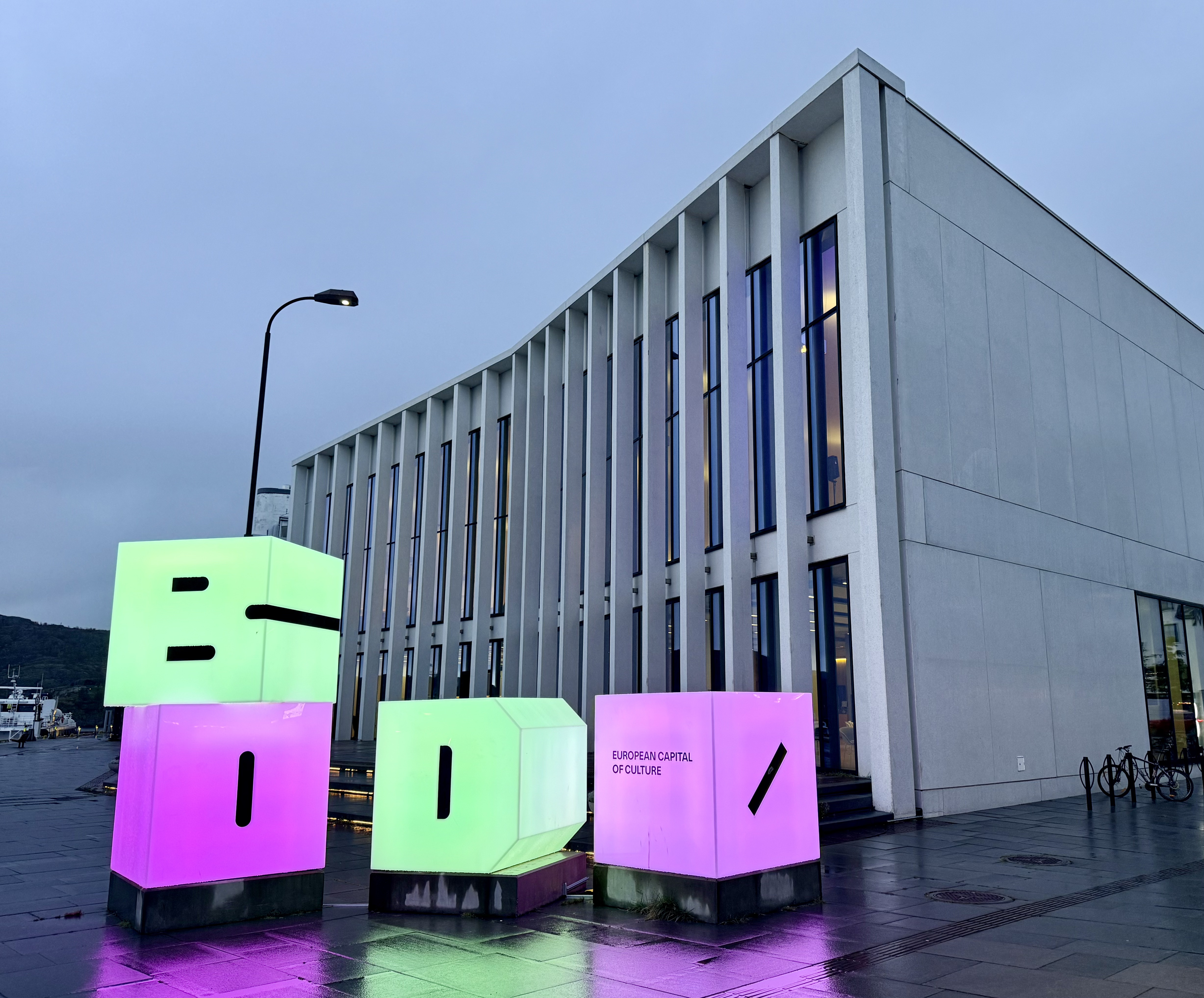
In the afternoon, we walked a short distance to the Stormen bibliotek, or the Bodø Public Library, which embodies contemporary Nordic design principles. London-based DRDH Architects designed the impressive complex which also includes the Stormen Konserthus as well. The building, opened in 2014, was meant to highlight the city’s role as a growing cultural hub.
Large glass facades dominate the exterior structure and offer stunning views of the harbor and city. They also flood the interior with abundant natural light. The exterior combines light-colored concrete with warm wood elements. Inside, the layout is intuitive and welcoming. Besides being a place for books, it also serves as a community meeting point and cultural hub.
The institution played a vital role in Bodø’s designation as European Cultural Capital in 2024.
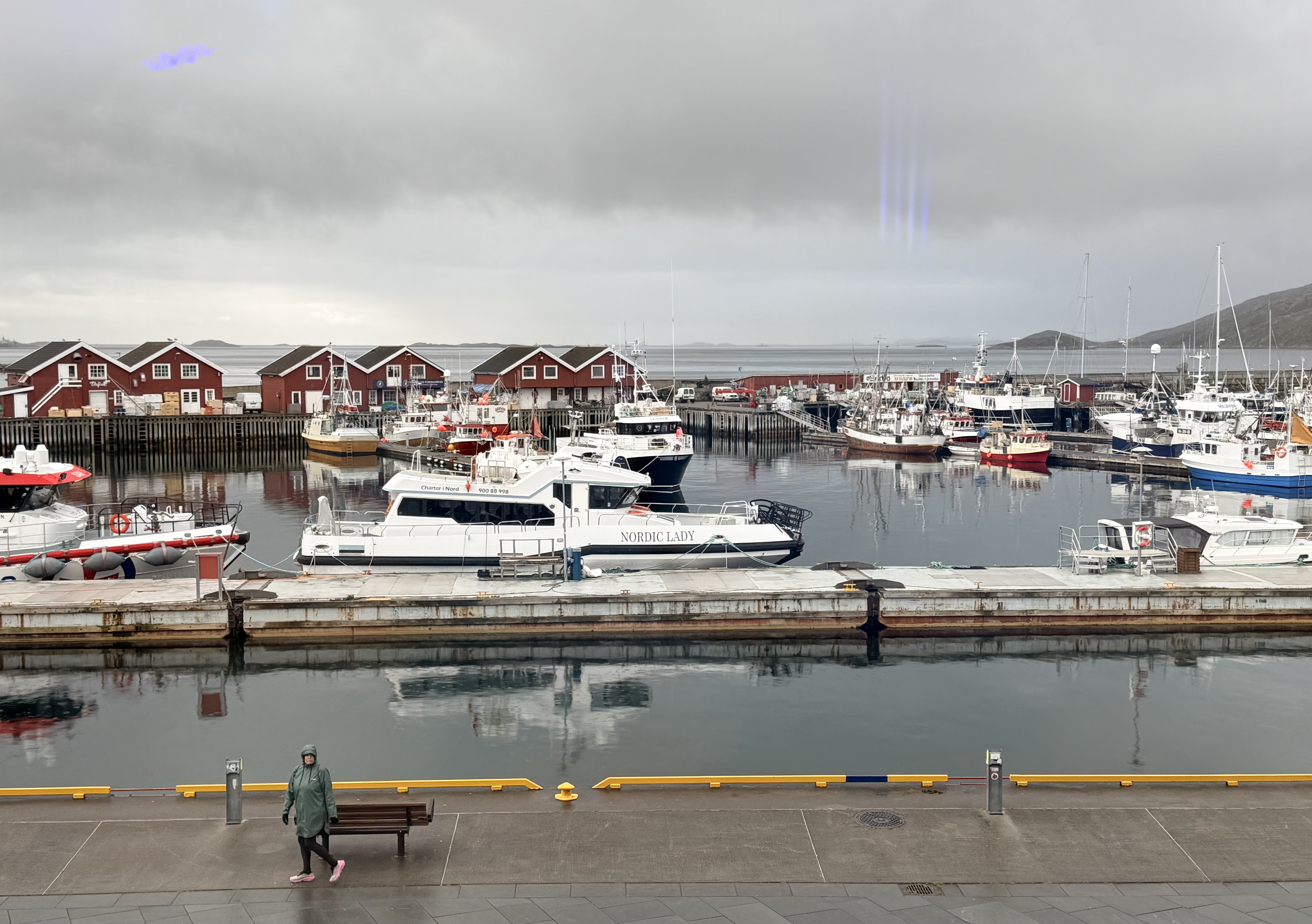
In the afternoon, Mike did a workout in the gym at the hotel and twisted his right knee. He could hardly walk, so he went back to the hotel to put ice on his knee and rest. Meanwhile I went shopping for a new pair of pajamas. I had brought one pajama set with me; it was on its last legs. Every time I wash the PJs in hotels or elsewhere, they take forever to dry. So I found another pajama set to replace that one. I also found two sweaters. I only brought one sweater with me as I had taken one out of my suitcase before leaving home. Now I’ve replaced that one with two. It was fun to have some shopping time without Mike looking over my shoulder! 🙂
Dinner at Tiger Street Food
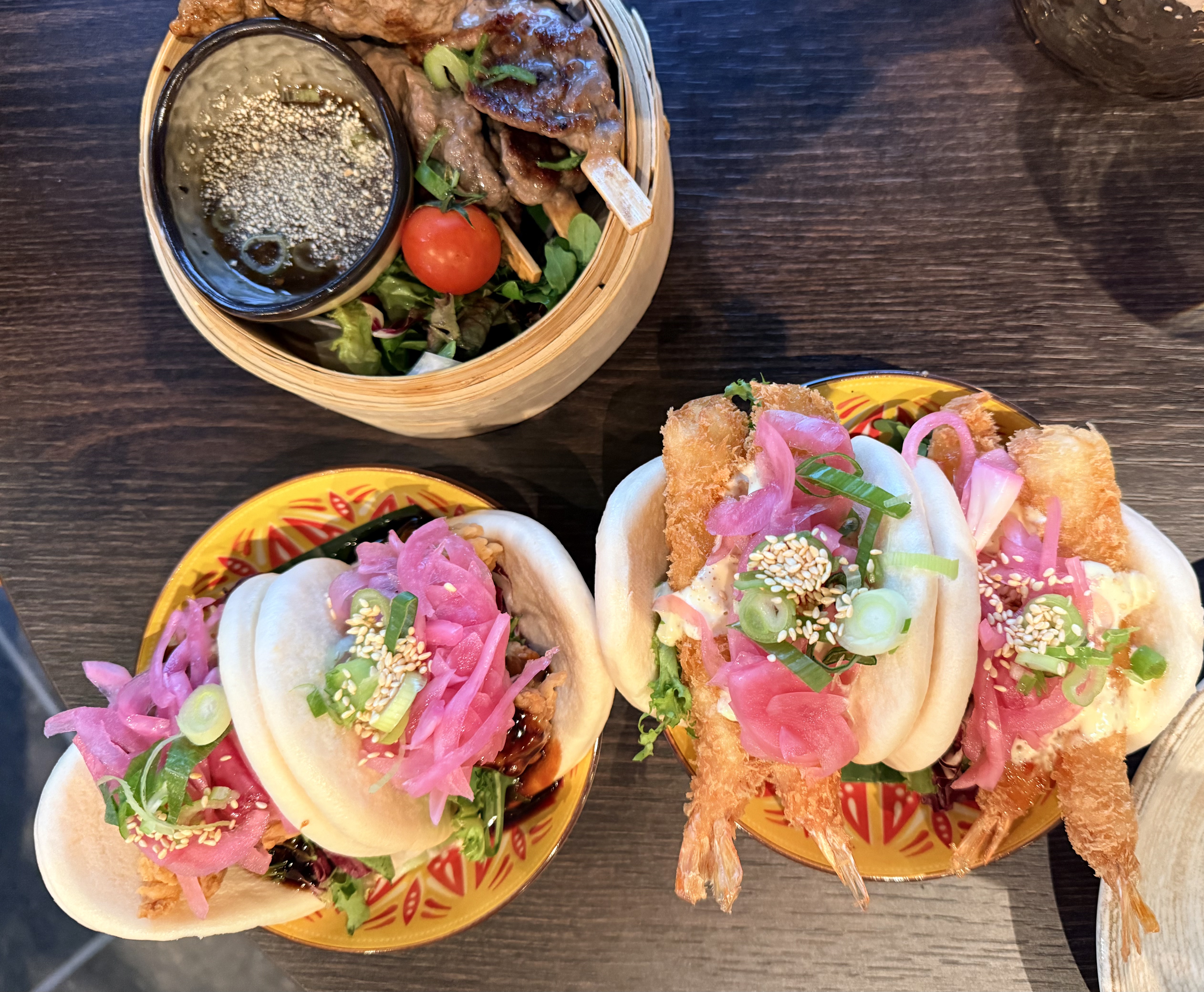
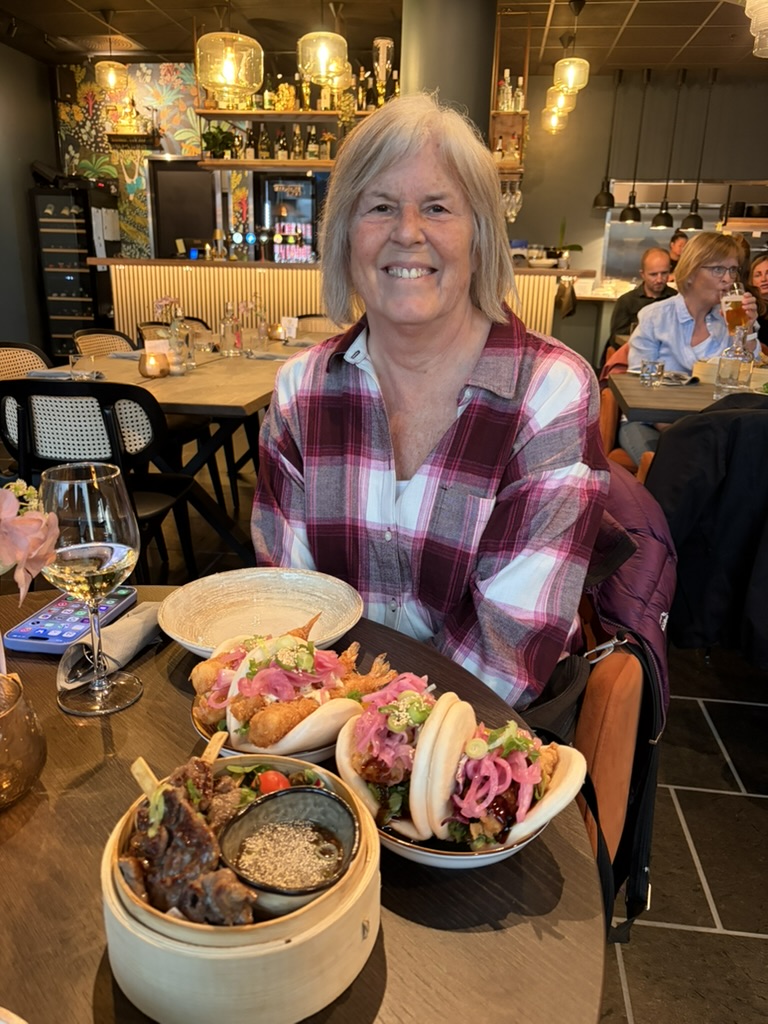
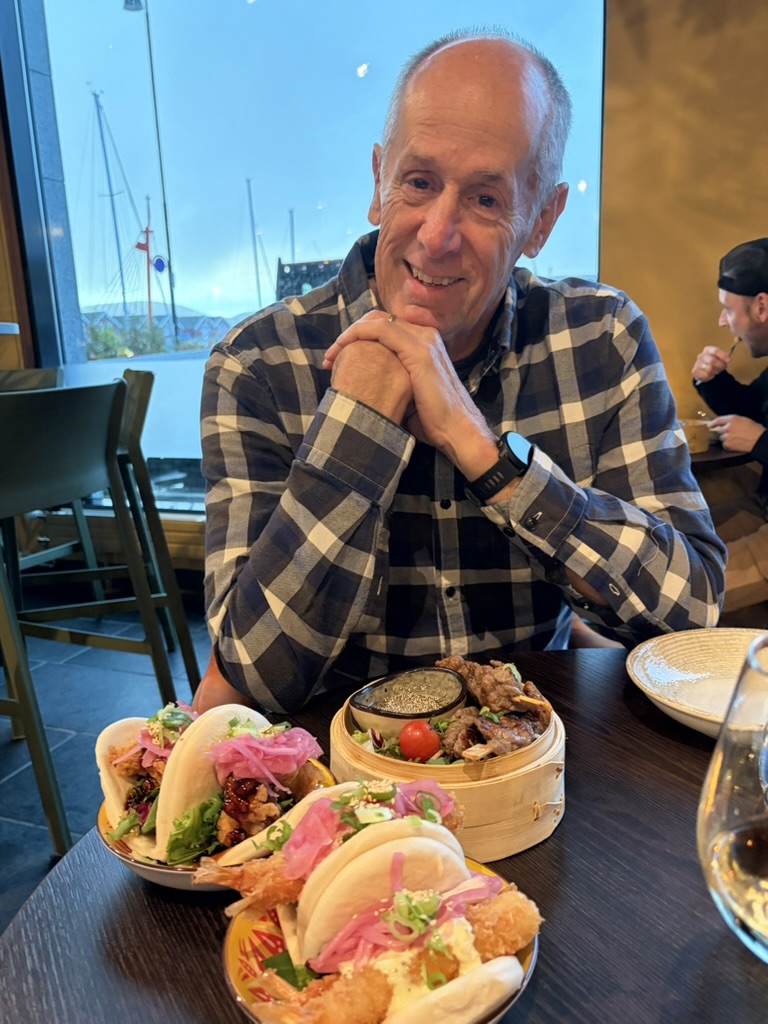
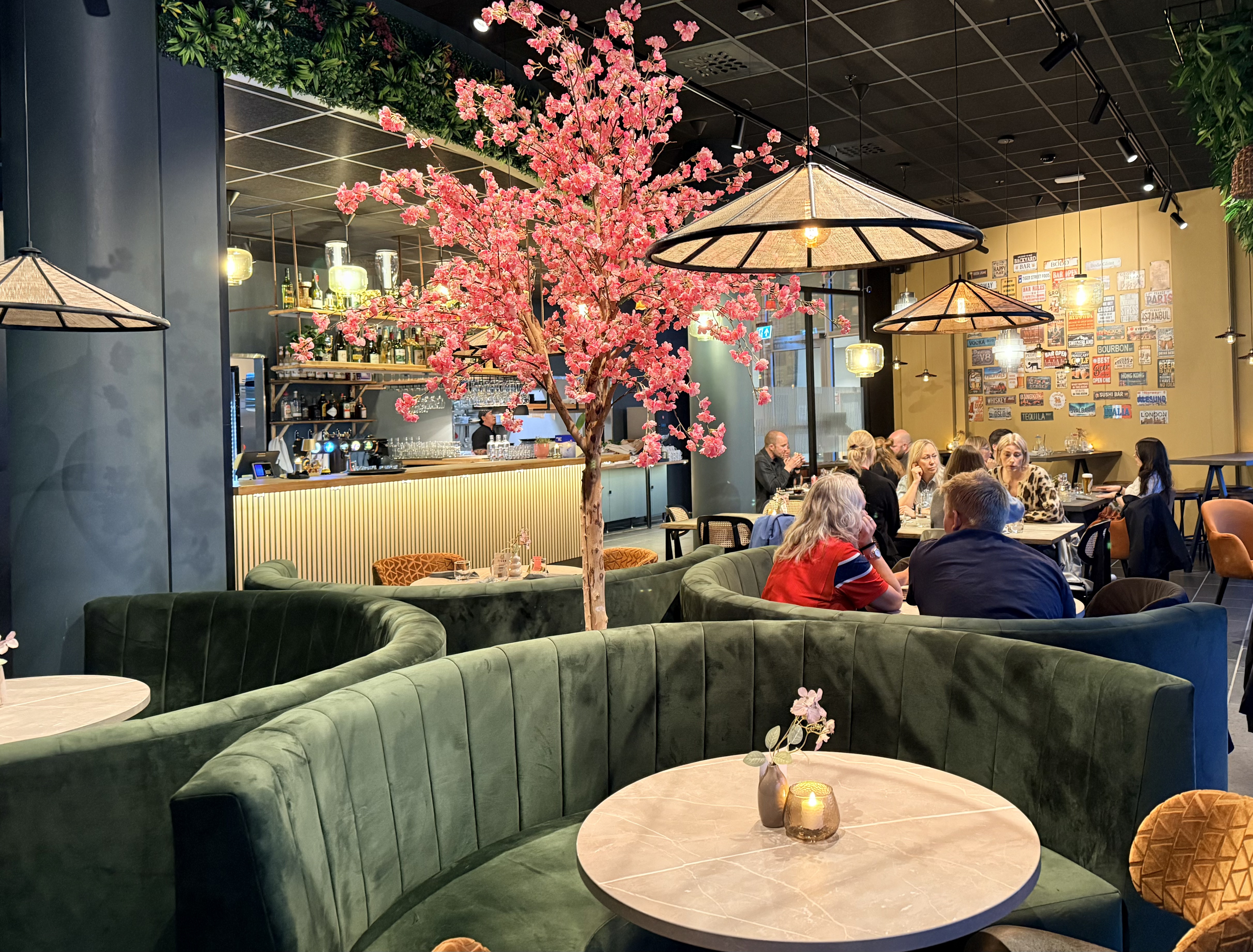
Tonight we had dinner just a block away from the hotel at Tiger Street Food. We had enjoyed our dinner at Tiger Ramen the night before and Mike could barely walk, so we couldn’t go far. We shared Tempura Crunch Bao (Tempura shrimp with salad, pickled shallots, and creamy dressing); Tiger Bao Bun (Steamed bao filled with crispy chicken, salad, teriyaki and chili-lime sauce), and Grilled Beef with Asian Sauce (Juicy grilled beef served with house-made Thai sauce and fresh herbs). We enjoyed the cute decor and the delicious food.
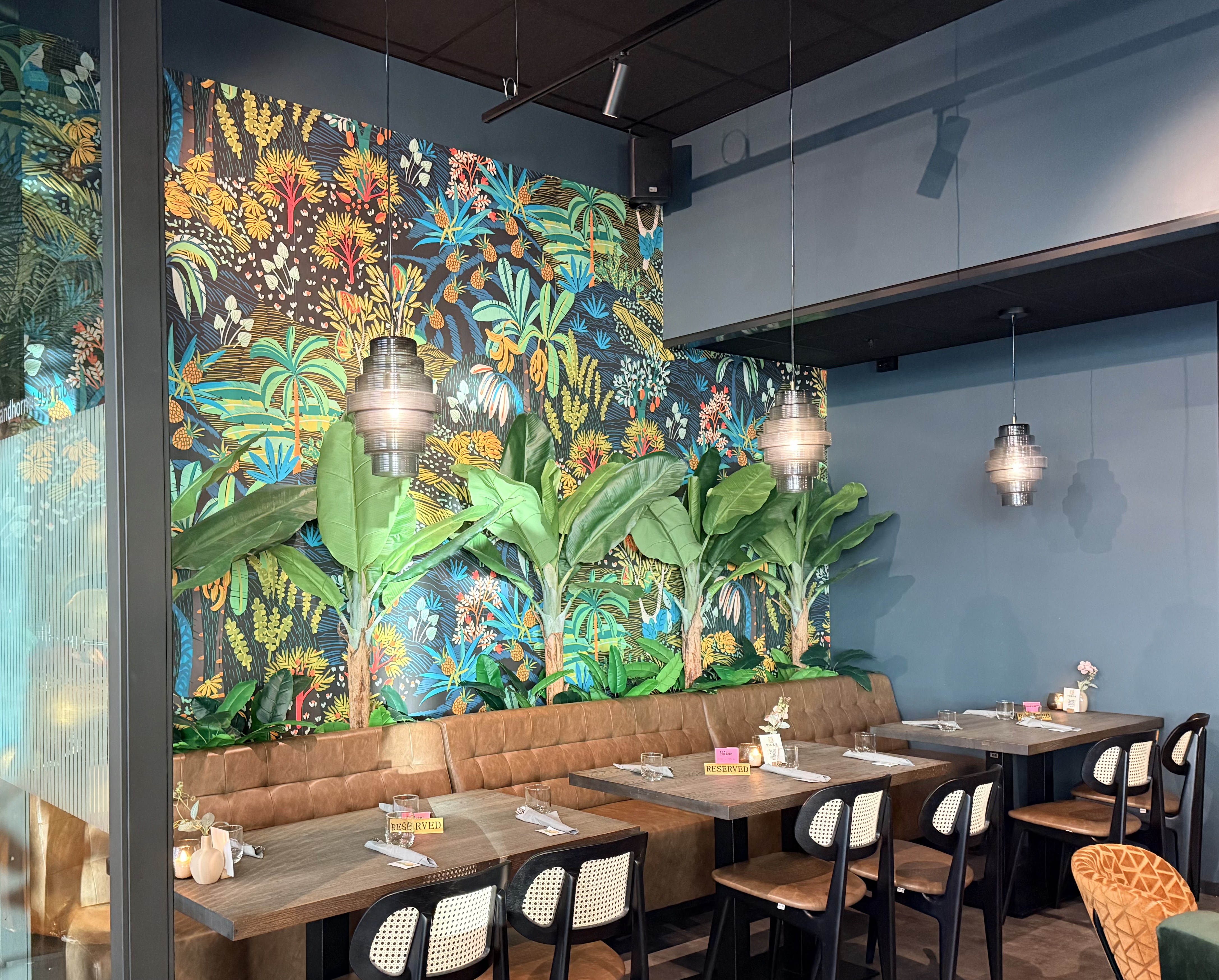
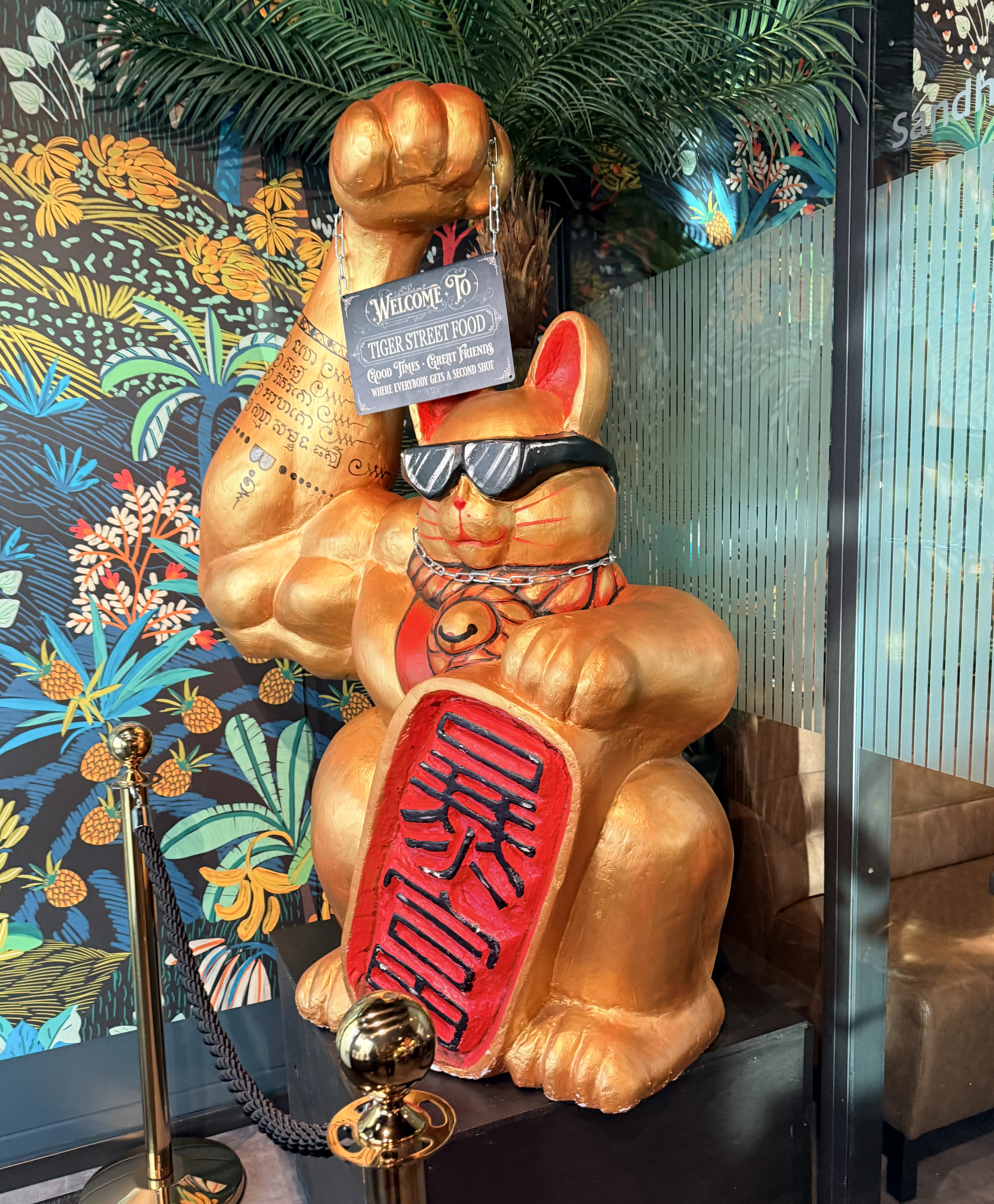
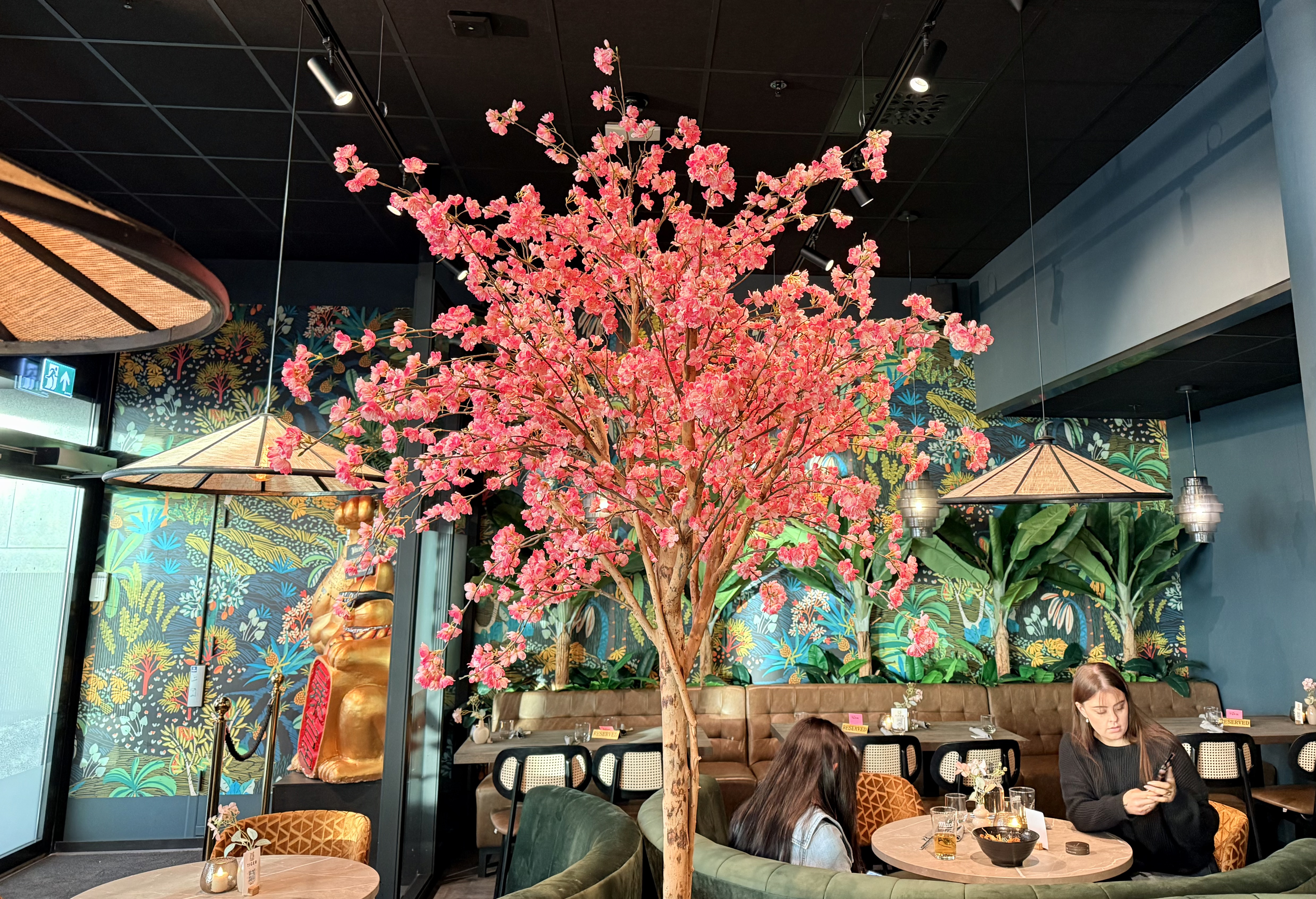
After dinner, I took a little walk by the harbor to get pictures of the Stormen bibliotek and the Stormen Konserthus, as well as the harbor in the blue light.
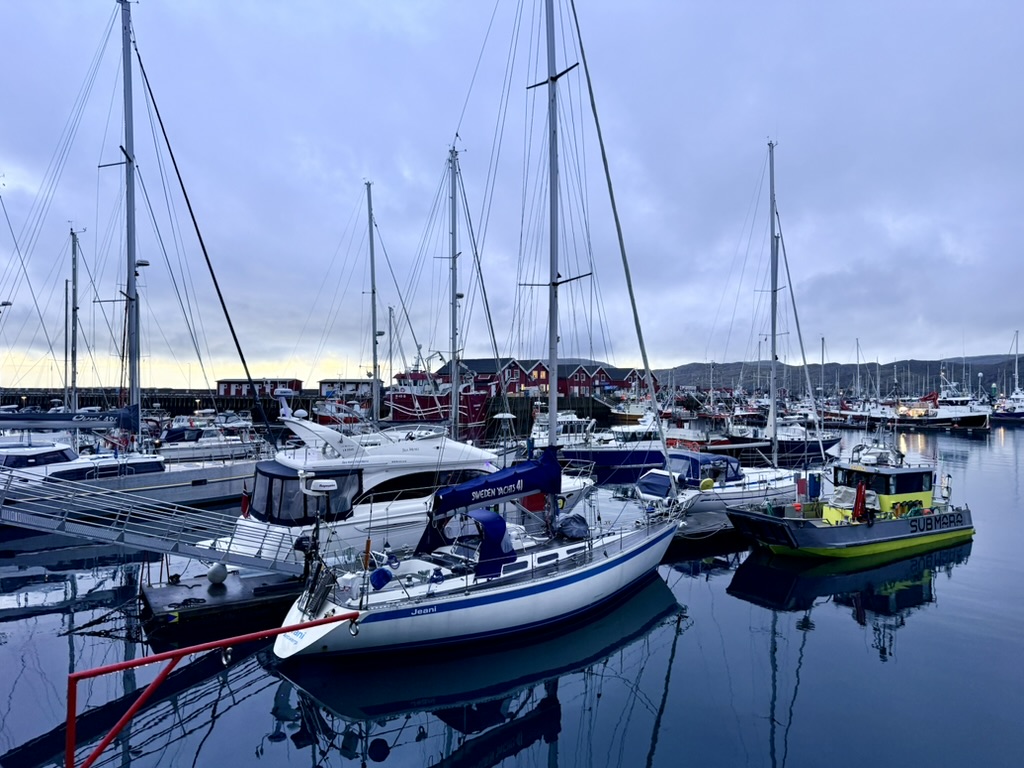
Friday, September 25: Today, we took advantage of our 12:00 check-out time. We lounged around until time to leave.
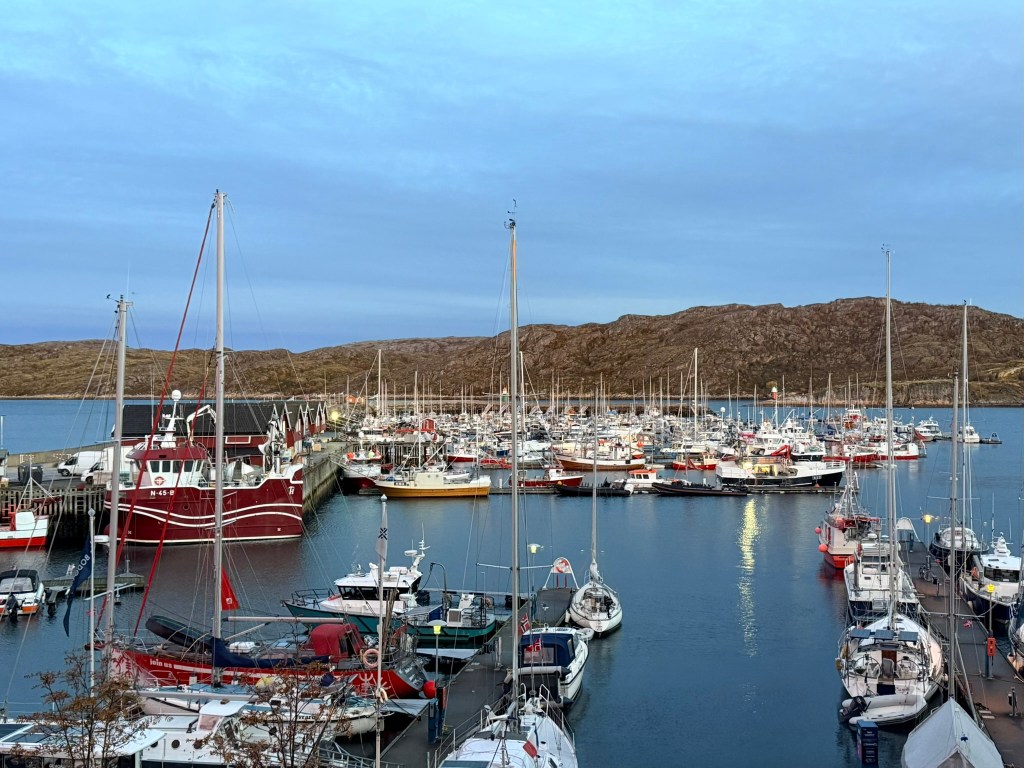
We checked out of Thon Hotel Nordlys and took a taxi to the Bodø train station. This was the first taxi we had taken in 7 1/2 weeks of travel. It was quite a distance from our hotel to the train station, and Mike’s knee wasn’t up to pushing our luggage from the hotel to the station.
From the Bodø train station, we took the 10-hour train trip on SJ Nord from Bodø to Trondheim from 12:27 p.m. to 10:13 p.m.
Discover more from ~ wander.essence ~
Subscribe to get the latest posts sent to your email.


Best post yet! I have wanted to go to the Lofoten Islands for years and they look just as amazing as I had hoped.
LikeLike
I think I would have liked to have spent more time there for sure. I might have stayed 2 nights in Svolvær, one in Henningsvær, and one in Reine, as our friends Paul and Julia did. It is definitely a stunning, desolate, windswept, and interesting place.
LikeLike
I shall bear that in mind if we ever get there.
LikeLike
It’s a dream destination, isn’t it? You’re certainly ‘living it large’, Cathy xx
LikeLiked by 1 person
It is somewhere I’ve wanted to go for a long time. We loved it. As for living it large, maybe, but this trip through Norway requires a lot of movement, and I’m ready to get back to my week-long stays in Airbnbs. Everything was so easy-going during that part of our trip! 🙂
LikeLiked by 1 person
It’s all so beautiful. I’m enjoying seeing all these amazing places with you. What a great destination.
LikeLike
Thanks Carol. I’m glad you enjoy seeing the scenery. It is a fun destination, but also a difficult one, and rather wearing. Plus everything in Norway is outrageously expensive. It’s quite a sticker shock after our time in Denmark and Finland. 🙂
LikeLiked by 1 person