Monday, March 18, 2024: On Monday morning, Mike and I took a walk after breakfast down and then back up Volcán Maderas, from our bungalow at Totoco to the main road and then back up again. It was rough. After three times doing this, I decided that was it. From then on, we would take our walks on the beach, where it was nice and flat.
Mike at the start of our walk down the volcano
tropical trees
Second-hand clothes shopping & Punta de Jesús María
Monday afternoon, after Maria made us a delicious tilapia lunch, we went clothes shopping for the girls at Luna Boutique, a secondhand clothing shop. Then we drove on to Moyogalpa where Adam and Maria shopped for some housewares and a large fan for their bedroom. The whole way in the car, we wanted the air conditioning on but the girls, who aren’t used to air conditioning, wanted the windows open. We couldn’t get the bluetooth to play any playlists from our phones, but we somehow got “La Island Bonita” by Madonna, which we played on a loop during our drive the whole day!
Maria makes us a tilapia lunch before shopping
shopping at Luna Boutique
shopping at Luna Boutique
shopping in Moyogalpa
shopping in Moyogalpa
Moyogalpa
Moyogalpa
Moyogalpa
After our shopping expedition we went to Punta de Jesús María, a sandy point that stretches out into Lake Nicaragua. It was an excellent spot to see the sunset but better yet, it had impressive views of Volcán Concepcion in the waning light. We enjoyed hanging out with the family in that beautiful setting.
Punta de Jesús María
Punta de Jesús María
Andrea & Mia at Punta de Jesús María
Cristy, Adam and Maria at Punta de Jesús María
Mike and Adam at Punta de Jesús María
Maria, Cristy, Mike and me
Andrea makes a heart of shells
Mia, Maria, Cristy & Mike
Andrea, Mia, Maria, Cristy and me in back
me with Mike at Punta de Jesús María
Maria and Adam at Punta de Jesús María
Maria and Adam at Punta de Jesús María
Mia at Punta de Jesús María
a heart stone found by one of the girls and given to me
Andrea, Mia and Cristy at Punta de Jesús María
Punta de Jesús María
Cristy, Adam, Maria and Andrea
Mia, Andrea, Cristy, Adam and Maria
Mike, me Adam, Mia, Maria, & Cristy
Punta de Jesús María
Mia and Adam at Punta de Jesús María
Mike at Punta de Jesús María
me at Punta de Jesús María
Mia at Punta de Jesús María
Adam and Mike at Punta de Jesús María
It was a long day driving all the way to Moyogalpa and back, so we ended up at Café Campestre in Balgüe at 7:10 pm. The place was packed, so it took us over an hour to get our meals. This made for some very grumpy little girls.
Again, I had the green chicken curry, which was as good as it was the first time I had it. I gave a bite to Cristy and she ran around like a wild banshee fanning her mouth and looking for water because it was soooo spicy! So funny, because to me it was just right. I loved it.
Andrea, Cristy, Mia and Maria at Café Campestre
my green chicken curry at Café Campestre
Adam and Mike at Café Campestre
Steps: 13,203; Miles 5.6. Weather Hi 92°, Lo 76°. Mostly sunny.
Finca Magdalena
Tuesday, March 19: On Tuesday morning, we dropped by Adam’s house to pick him up. We found Andrea sporting one of her “new” outfits on her way to school.
Adam thought we might like to have a coffee and check out Finca Magdalena, one of the oldest coffee farms on Ometepe. The main building of the plantation is a humble affair – wooden and old, with peeling paint and creaking floorboards. Murals and artwork are painted onto the exteriors, adding charm to the place. One of the buildings serves as part of the coffee business and hosts a cafe out on the porch deck. The porch, high up on Volcán Maderas, offers sweeping views across Ometepe and Lake Nicaragua. We enjoyed mugs of hot coffee and walked around to see the drying areas for the coffee beans, the murals, and the very rustic hostel lodgings.
Andrea with one of her new outfits
Finca Magdalena
mural of Ometepe at Finca Magdalena
Finca Magdalena
view from Finca Magdalena
Adam and me at Finca Magdalena
Adam & Mike at Finca Magdalena
Ometepe meanderings
After dropping Adam at home, Mike and I took a mile walk from Santa Cruz beach toward Santa Domingo and back.
a late morning walk on the beach
a late morning walk on the beach
a late morning walk on the beach
a late morning walk on the beach
a late morning walk on the beach
a late morning walk on the beach
a late morning walk on the beach
a late morning walk on the beach
a late morning walk on the beach
We had lunch at Büstavö, a Mediterranean cafe where you order your food from the kitchen, which is in a bus, and then they serve it to you in the shady cafe. I had a falafel sandwich in a soft warm pita and a Pink Panther, a smoothie with coconut milk, ginger and pitaya (dragon fruit). Mike had shaksuka and falafel on a plate.
We chatted with a young woman from the Canadian side of Niagara Falls and she (like me) was not coping well with Nicaragua’s unrelenting heat. She had plans to go to Corn Island; a number of people we met were heading that way.
The café was owned by a young Israeli man who is expanding the café to build a large oven and a large gelato bar.
the kitchen bus at Büstavö
me at Büstavö
Mike with his lunch at Büstavö
Mike’s shaksuka and falafel
We spent all Tuesday afternoon at the pool at Totoco. It was super relaxing. We met a couple from Philadelphia, Ryan and Siobhan; he was originally from South Africa and she from Ireland. We all shared stories about our travels, and groused about the horrible presidential candidate (Trump of course) in this year’s election, and lots of other things. They gave us some ideas for our September-October trip to Bali. Then we went to our room to take showers and prepare to go to Adam and Maria’s for dinner.
At the last minute the dinner plans with the family fell apart and we had no explanation as to why. To be honest, it seemed disrespectful. All that has to happen with people is that they communicate clearly things that are going on. Later we found out that Maria had been called to an “emergency session” at church; she was called because her older sister, who she hadn’t spoken to for years, wanted a reconciliation. She hadn’t even communicated to Adam where she was.
Anyway, Mike and I had to find alternate dinner plans at the last minute. We tried Pizza Mediterránea for pizza but it was closed. We’d already been to Cafe Campestre the night before and didn’t want to arrive late and have to wait an hour for food. So we stopped at a shady little spot called Isla Bonita and I enjoyed a fish fillet with French fries while Mike had grilled pork with rice and beans. The salad and vegetables were tasty too. It was a nice atmosphere but it was a bit disappointing not to have had our family dinner plans. I think we’ll keep our visits here to 5 days from here on out; 7 days are too many especially as our presence is disruptive to the girls and their school attendance and other plans.
Mike at Isla Bonita
me at Isla Bonita
dinner at Isla Bonita
We leave the island on Thursday morning for Managua and then on to Bogotá for the Colombia 🇨🇴 part of our trip.
Steps: 10,202; Miles 4.33. Weather Hi 92°, Lo 76°. Partly cloudy.
Wednesday, March 20: After breakfast this morning, we took another walk on the beach. We found kite surfers plying the air currents over the lake.
a walk on the beach {kitesurfing edition}
a walk on the beach {kitesurfing edition}
a walk on the beach {kitesurfing edition}
a walk on the beach {kitesurfing edition}
a walk on the beach
a walk on the beach
a walk on the beach
a walk on the beach
We spent our last afternoon relaxing at the Totoco pool because the family makes a giant pot of beef stew that they sell on Wednesdays; María had served us some of the soup for a late lunch. There was too much fat and gristle in the meat for me, so I just ate the vegetables which were mostly starchy: yucca, potatoes, etc. The broth had a wonderful flavor. The family was busy with that all day and Mike even helped them out with some deliveries.
Maria making her Wednesday beef soup
another afternoon at Totoco Eco-Lodge
another afternoon at Totoco Eco-Lodge
another afternoon at Totoco Eco-Lodge
When we went by to pick up the family for dinner, we found the girls dressed up in the second-hand dresses we had bought them on our shopping trip on Monday. We would have bought them new things but there really are only second-hand clothing shops on Ometepe (so says Adam).
We took the girls in the car to Pizza Mediterránea for dinner, while Adam and Maria joined us a bit later on their motorbike.
We had a farewell dinner there, as we would leave on Thursday morning. It was a nice evening where we all shared our happiness at meeting one another. Mike and I enjoyed a delicious broccoli and chorizo pizza, Adam and Maria had a 4-cheese pizza and the girls had their favorite, pepperoni. We took them home and said our goodbyes to the girls.
the girls dressed in their second-hand clothes
the girls dressed in their second-hand clothes
Cristy, Mia and Andrea at Pizza Mediterránea
Pizza Mediterránea
Andrea, Cristy, me and Mia at Pizza Mediterránea
broccoli and chorizo pizza at Pizza Mediterránea
Andrea being silly
Another silly Andrea photo
Steps: 10,236; Miles 4.34. Weather Hi 90°, Lo 79°. Mostly sunny.
Thursday, March 21: We ate our final breakfast at Totoco and then checked out of our room.
our final breakfast at Totoco
our room at Totoco Eco-Lodge
our room at Totoco Eco-Lodge
Altagracia
Adam asked if we’d drive him to Altagracia so he could buy two 100 lb. bags of rice for the dogs, the pigs and the chickens. We stopped for fresh fruit smoothies in the colorful town.
We made another stop to get Adam some water filters and then we stopped at a bakery, Pan de Mama, for coffee and sweets. The bakery is run by Adam’s friends Rachel and Trevor who have been on Ometepe for 12 years, involved in various projects.
Altagracia
me with Adam in Altagracia
Altagracia
Altagracia
Altagracia
Altagracia
me with Adam in Altagracia
Adam & me at Pan de Mama
Rachel & Adam at Pan de Mama
After dropping Adam at his house, we made our way slowly to Moyogalpa. Of course, we were stopped by police on our last day (just like the last time we were here) and they wanted to see our insurance card and circulation card. We couldn’t find either in the rental car and we were in a panic until they pointed out the compartment above the rearview mirror. We kept trying to explain it was a rental car but they still wanted to see the documents.
Luckily we found the documents and they were in order, so they waved us on. We wondered if they were just trying to get a bribe out of us (we paid them one last time we were here when they wanted to confiscate Mike’s driver’s license on a Friday and keep it until Monday).
Moyogalpa, taking the ferry to San Joge, and on to Managua
On the way to Moyogalpa, we stopped briefly to take a picture of Volcán Concepcion at the end of the island’s only private runway.
We arrived in Moyogalpa early and turned in our Toyota Rush rental car. Then we ate lunch at the Cornerhouse while we waited for the 2:00 ferry. I had an omelet with cheese, tomatoes and jalapeño, while Mike had a roasted veggie and cheese sandwich 🥪 .
Volcán Concepcion at the end of the runway
The Cornerhouse in Moyogalpa
We caught the 2:00 ferry to San Jorge. Luckily we had much calmer seas today. On the hour-long ferry ride we had some nice views of the volcanic island of Ometepe.
Dani picked us up at the ferry in San Jorge. We drove with Dani for 2 hours from the ferry in San Jorge to the Best Western Las Mercedes, directly across from the Managua airport. We immediately ate a dinner of shrimp with garlic and a fish fillet so we could get to bed early. We had an early 5:25 flight to San Salvador and then another flight from there to Bogotá.
the ferry landing on Ometepe
departing views of Ometepe from the ferry
departing views of Ometepe from the ferry
Mike in the car on the way to Managua
Dani driving us to Managua
Best Western Las Mercedes
Best Western Las Mercedes
Best Western Las Mercedes
my shrimp with garlic
Mike at Best Western Las Mercedes
me at Best Western Las Mercedes
Steps: 5,528; Miles 2.34. Weather Hi 91°, Lo 78°. Mostly sunny.
Leaving Managua for Colombia via El Salvador
Friday, March 22: We woke up at 2:45 a.m. Friday morning and took a shuttle to the Managua airport for our first Avianca flight at 5:25 a.m. to San Salvador. Lucky for us, everything proceeded without a hitch and the short (40 min) flight took off right on time.
We flew into San Salvador from Managua on Avianca at 6:10 a.m. on Friday morning. The rosy sunrise was magnificent on the surrounding clouds.
Here’s a short video of the beach in Ometepe, driving up and down Volcán Maderas to Totoco Eco-Lodge, and flying into San Salvador.
We had over a 3-hour layover in San Salvador, so we ate breakfast at a jammin’ cafe, Café Tapacun. People were lively and noisy here! We both had arepas with scrambled eggs and shared a cappuccino.
the Managua airport
flying into San Salvador at sunrise
flying into San Salvador at sunrise
Café Tapacun at the San Salvador Airport
me at Café Tapacun at the San Salvador Airport
arepa at Café Tapacun
At 9:30 a.m., we caught another Avianca flight to Bogotá, which would arrive at 1:10 p.m.
Arrival in Managua and a long day of travel to Ometepe
Thursday, March 14, 2024: After taking an 8:30 a.m. flight from San Salvador, I arrived at Augusto Cesar Sandino Internacional Aeropuerto in Managua, Nicaragua at 9:10 a.m. on Thursday and had to wait there until about 12:45 for Mike to arrive from his two flights from Washington to Miami to Managua. The airport in Managua is probably the worst possible place to have to spend over 4 hours because it is small and hardly has anywhere to sit or anything to do. I did have a little breakfast at a kind of food court, but it was nothing special.
When Mike finally arrived, Dani (a driver Adam had arranged for us) drove us over 2 hours to San Jorge port where we took the 3:30 ferry over VERY rough seas from San Jorge to Ometepe.It was an hour ride rocking violently to and fro in wild seas!
Unscathed, we finally made landfall in Moyogalpa on Ometepe. Luckily we didn’t capsize. 😳😮😱 In Moyogalpa, we rented a Toyota Rush for our 7-day stay on the island 🏝️. Then we drove over an hour to Balgüe, where our son Adam lives.
the food court at Augusto Cesar Sandino Internacional Aeropuerto
Augusto Cesar Sandino Internacional Aeropuerto in Managua, Nicaragua
billboard at San Jorge port
leaving San Jorge on the ferry to Ometepe
“Please take of your personal goals…”
me on the ferry
views of Ometepe as we approach on the ferry
views of Ometepe
views of Ometepe
Here’s a short video showing our ferry crossing to the island. The noise you hear of a woman crying is from someone playing a telenovela (soap opera produced primarily in Latin America) on their phone.
Balgüe & Totoco Eco-Lodge
We arrived at Totoco Eco-Lodge, did a brief check in, then Mike drove to pick up Adam, Maria and the girls: Cristy (12), Andrea (10) and Mia (7). We all had dinner together at the lodge and though I had trouble communicating in Spanish, I was able to understand and speak some, especially with Adam and Cristy helping to translate. What a wonderful experience to finally meet Adam’s Nicaraguan family. And we were excited to find out that Adam and Maria are expecting a boy, and Adam plans to name him Michael (not Miguel, which he hates) after his father, with Christopher as a middle name (the same as his own middle name).
sunset view of Volcán Concepción from Totoco Eco-Lodge
Totoco Eco-Lodge
Totoco Eco-Lodge
Cristy, Andrea, Maria, Adam, Mia, and Mike
Cristy, Andrea, Maria, Mia, Adam and Mike
Cristy, Andrea, Maria, Mia & Adam, me and Mike
pasta at Totoco
Cristy, Mia and Maria
Mia
Steps: 10,483; Miles 4.44. Weather: Hi 90°, Lo 76°. Sunny.
Friday, March 15: We arrived after dark last night so this morning we were able to wake up in the paradise that is Isla de Ometepe. We’re staying for 7 nights at Totoco Eco-Lodge, a cool lodge on the slopes of Volcán Maderas. I enjoyed a breakfast of huevos revueltas (scrambled eggs) with onions, peppers and cheese, beans and rice, Nicaraguan cheese and fried plantains (they were hard like potato chips). It was delicious and the views were fabulous. The hotel has a small infinity pool and views of Volcán Concepción.
view from the porch of our bungalow
Mike on the hammock
our bungalow at Totoco Eco-Lodge
our bungalow at Totoco Eco-Lodge
The dining area at Totoco
The dining area at Totoco
view of Lake Nicaragua from Totoco
breakfast at Totoco
breakfast at Totoco
view of Volcán Concepción from Totoco
small infinity pool at Totoco
small infinity pool at Totoco
Totoco Eco-Lodge
Totoco Eco-Lodge
Totoco Eco-Lodge
Totoco Eco-Lodge
After breakfast, we hung out at Adam’s casita with the family. Adam’s wife Maria made a delicious lunch of fresh lake fish, rice, salad, and melon juice. Mike, Andrea, Mia and Adam played a game of chess after lunch. Cristy went to school and then had fútbol practice after school. She speaks excellent English and loves school; she’s at the age where her friends are very important to her.
Adam gave us a tour of his property where he raises chickens, a pig and some rabbits!🐇, Lola and Rabbititte!
Cristy and Mia at Adam’s casita
Mia with
Andrea with Rabititte
Mia fooling around in the hammock
Mia and Andrea
Maria’s delicious lunch
Maria, Mia, Andrea, me and Adam
Mike, Andrea, Adam and Mia play chess
Mike, Andrea, Adam and Mia play chess
Adam’s casita
Adam’s casita
Mike, Andrea, Adam and Mia play chess
We spent the afternoon with Andrea and Mia at the Totoco Eco-Lodge pool. Andrea is a little fish in the water and has endless stores of energy. She is athletic and active and has a lot of confidence. Mia is still learning to swim but she has no fear of the water. She swims a few feet with her head underwater and then she jumps up and shakes her head with gusto while brushing her long hair out of her eyes. Both of them would be exhausted that night!
Mike had brought several pairs of goggles which he gave the girls to use and to keep. They really liked having them.
Mike patiently worked with Mia by encouraging her to swim to him and we both tried to get her to practice her kick, which is quite spastic, kind of like Elaine’s dancing on the TV show Seinfeld.
Andrea and Mia in the Totoco pool
Andrea, Mike and Mia at the Totoco pool
view of Volcán Concepción from the Totoco pool
view of Volcán Concepción from the Totoco pool
Andrea in the pool
the pool at Totoco
view of Volcán Concepción from the Totoco pool
Adam came by to pick up the girls while he delivered cheese to Totoco. Mike and I relaxed a bit before going to their house. We caught the tail end of the sunset 🌅 from Totoco Eco-Lodge.
sunset at Totoco
sunset at Totoco
sunset at Totoco
We arrived at their house around 6:30. The girls, decked out in colorful dresses, performed a “folkloric dance” to music before we went out to dinner.
the girls performing their dance
the girls in their dresses
Here is a short video of the girls’ performance. I changed the music because there was too much talking and exclaiming by some very noisy grandparents!
We had dinner at Pizza Mediterránea with the whole family. The girls all love pepperoni while Adam and Maria ordered a delicious broccoli and chorizo pizza. Mike and I enjoyed our funghi mozzarella pizza, but once I tasted the chorizo and broccoli one, I regretted not having that. The girls wanted some jewelry sold by Kemal, a Turkish man who has lived on the island for many years, so I bought them each a piece. It was a fun and laid back evening. Adam says Maria loves to cook and they rarely go out so they enjoyed the special treat.
the family at Pizza Mediterránea: Cristy, Adam, Mike, Mia, Maria and Andrea
Cristy, Adam, me, Mia, Maria, and Andrea
Cristy with her new bracelet
Andrea with a new ring
Mia with a new necklace
Steps: 6,626; Miles: 2.81. Weather Hi 91°, Lo 78°. Sunny.
Saturday, March 16: After breakfast at Totoco, Mike went to pick up Adam and take him to meet with someone who was selling a used refrigerator. Mike helped him buy the refrigerator so they could store the cheese they buy and sell. They arranged to have it delivered that afternoon.
While they were doing that, I walked about 2.4 miles, first downhill from Totoco Eco-Lodge to Balgüe and then, just when I thought it hadn’t been all that bad, I had to climb back up the steep and relentless hill back to the Eco-Lodge. Then I was too hot and tired to do anything but swing in the hammock, take a dip in the pool, and take a cold shower before going out into Ometepe’s constant heat.
Walking down from Totoco Eco-Lodge
Walking down from Totoco Eco-Lodge
Walking down from Totoco Eco-Lodge
Walking down from Totoco Eco-Lodge
Balgüe
Balgüe
Balgüe
Cafe Campestre
Walking back up to Totoco
Walking back up to Totoco
The Saturday Market
We then went with the family to the Saturday market. I bought a necklace and some earrings (I threw them out when we got home because they broke). Lots of expats and Nicaraguans make and sell jewelry.
We ate some delicious vegan patties of lentils, yucca, potatoes or some combo of the above called “handkerchiefs” stuffed with frijoles or queso. Each patty was served on a banana leaf and topped with guacamole, shredded lettuce, tomatoes 🍅 and piquante sauce. So yummy.
Mike went swimming in Lake Ometepe (it is more like an ocean) with Andrea and Mia. They could go quite far out and the water was still only to their knees. Adam was having the new refrigerator delivered so he arrived late.
I couldn’t tell who outnumbered who, the gringos, the backpacker crowd, or the native Nicaraguans.
As we were leaving, one of Adam’s friends named Ryan, and his little naked son, Maximus, asked if we could drive him to his home near Totoco. He had a huge bag of papayas because he said he only eats fruit. Many of the long-time gringos here mostly go around bare chested. It seems quite the thing.
Andrea had fun wearing my hat; I was surprised it fit her because I have such a huge head. She looked adorable in it.
Maria and Mia at their casita
Andrea sports my hat
Saturday Market
Andrea in my hat
Maria pregnant and Cristy
jewelry for sale at the Saturday market
the beach near the Saturday market
Maria and Cristy have lunch
Cafe Campestre
Mike went to play poker at Cafe Campestre from 2:00-5:00 with Adam, Ben (the owner of Cafe Campestre), and Luke (another expat), so I took the opportunity to relax by the pool for the afternoon. Volcán Concepcion was wearing a cute little cap of clouds. ☁️ ☁️ ☁️
another afternnon at Totoco
Volcán Concepción wearing a little cap
Volcán Concepción
another afternnon at Totoco
hammock at our bungalow
view from the hammock
Cafe Campestre was where Mike and I headed for dinner when the family wanted to go to their house and relax for the evening. We couldn’t spend every waking hour together; at times, we all needed some down time.
I enjoyed a glass of wine and the most delicious green chicken curry. It was one of those dishes that tastes so good that you want to cry when it’s all gone.
Mike at Cafe Campestre
my green chicken curry
me at Cafe Campestre
We went up to the lodge to relax and read. It gets dark every night of the year here in Ometepe at 6:30 p.m. and the sun rises at around 6:00 a.m.
I couldn’t believe it, but Mike and I both slept for almost 10 hours. My normal night of sleep is 6-7 hours, so this was an extraordinary treat.
Steps: 10,553; Miles 4.47. Weather Hi 91°, Lo 78°. Sunny.
Sunday, March 17: This morning, Mike and I walked down and back up from Totoco before breakfast. We showered and enjoyed another lovely breakfast with grand views.
Walking down & back up to Totoco
Walking down & back up to Totoco
Walking down & back up to Totoco
Rabititte meets an untimely end
Shortly after we arrived at Adam’s house to pick up the family for our day’s outing, suddenly the girls came out of one of the bedrooms and began weeping. All of them were crying, even Maria, and it took us some prying to find out that one of the bunnies, little Rabbititte 🐇 , had died. No one knew the cause, possibly not having enough water or eating some vegetation not meant for rabbits. Anyway, it was devastating for the girls as it was the first pet they’d ever owned. Adam immediately took charge, dug a hole on the farm, and gathered the family for a little funeral service. They paid little Rabbititte a fond and loving farewell and placed him in the grave, covering him with dirt and a few large stones as a grave marker.
Ojo de Agua
It was a sad thing to watch them grieving for their little pet. After the funeral we all climbed heavily into the car for the drive to Ojo de Agua, a public swimming pool. The waters come from the volcanoes and are supposedly rich in minerals.
It didn’t take long for the girls to jump into the water and start swimming happily around. Andrea and Cristy are very good swimmers, while Mia is happy to repeat the same strokes over and over again: head underwater while pulling with her arms, butt in the air, and legs flailing every which way.
Ojo de Agua
Mia at Ojo de Agua
Mia with her goggles
Ojo de Agua
Maria and Mia
Ojo de Agua
Ojo de Agua
Cristy at Ojo de Agua
Cristy, Maria and Adam at Ojo de Agua
We three adults (except Maria who is pregnant) ordered coco locos; luckily I didn’t choke on them as I did last year. Then we ordered a huge platter of meat and seafood: beef, pork, chicken, fish, shrimp, cheeses, plantains, and French fries. We took lots of photos and used my selfie stick for silly poses.
Mike drinks a Coco Loco
Adam & me with Coco Locos, Cristy and Andrea
Cristy & Maria
Cristy and Maria
Adam, Mia, and me
Mike, Cristy and Maria
Mia & Adam and me
Mike, Cristy and Maria
Cristy, Mia and Maria
Cristy, Maria, Andrea and Mia with Adam behind
Coco Locos
Ojo de Agua
Ojo de Agua
Mia, Andrea, me and Cristy
Cristy after her “race”
Adam after the “race”
our big lunch platter
Maria and Adam
Andrea, Adam, me, Cristy, Mia and Maria
Andrea, Cristy, Mike and Adam jumped off the platform on the rope swing too many times to count. Adam and Cristy “raced”’down the pool with Adam trying hard to pretend he didn’t know how to swim. Cristy “won,” and was utterly exhausted. Andrea lost and did her pouting, faux crying and sniffling. Adam calls her a “drama queen.” She definitely has the strongest personality of them all. Below is a short video of the family’s swimming escapades.
What a fun day, topped off with ice cream treats for all.
Back to Balgüe
After we returned to Balgüe, Mike and I hung out at Totoco Eco-Lodge for a bit. Later, we drove to Merida to have dinner at Playa Mangoes. That place was packed and it wasn’t really my vibe, so we drove back up to Totoco, where we ate dinner. I had a filete de Pollo and Mike had Pasta Linguine Pesto y Pollo. The dinners at Totoco were just average, nothing compared to Cafe Campestre.
We were awestruck by a beautiful sunset and Volcán Concepcion was sporting a rather fluffy sombrero.
back at Totoco
Volcán Concepción
mural at Playa Mangoes
Playa Mangoes
Ometepe sign
Volcán Concepción at sunset
Volcán Concepción at sunset
Volcán Concepción at sunset
me at Totoco
dinner at Totoco
Volcán Concepción at sunset
Steps: 11,217; Miles 4.76. Weather Hi 91°, Lo 77°. Partly cloudy.
Welcome to our belated March cocktail hour. We just got home from our trip to El Salvador, Nicaragua and Colombia and we’re slowly settling in at home. I can offer you some chilled Cava or any wine of your choice. Or a Michelob Ultra or Hop Slam. I can also offer sodas or seltzer water of various flavors. Salud!
How is your year going so far? Have you read any good books, seen any good movies, binge-watched any television series? Have you planned any adventures or traveled anywhere? Have you dreamed any dreams? Gone to any exotic restaurants, cooked any new dishes? Have you been surprised by anything in life? Have you enjoyed the simple things in life?
We weren’t home for much of March because we were traveling in Central and South America.
I only managed to finish one book this month, Heaven by Mieko Kawakami, putting me at 10/52 for the year. I always get behind on my reading goals when traveling, so I’ll have a lot of catching up to do to reach my reading goals.
On the first day of March, we went to see the fabulous Japanese movie, Perfect Days, which solidified my yearning to visit Japan again; we hope to do so in October of this year. On the second, I met Darina at Washington Dulles International Airport (where she flew in to join a 3-week program of visiting U.S. schools that teach ESL), brought her to my house, drank Mike-prepared Hugos, and ate delicious chicken tortilla soup (also prepared by Mike). After dinner, we drove Darina to the Washington Hilton, where she would begin her program.She was exhausted by a long day of travel and had to get some sleep before a big tour of Washington the following day.
meeting Darina at Dulles
Darina & me at my house
me, Darina, Tatratea and chicken tortilla soup
me, Mike and Darina at the Washington Hilton
On Sunday the 3rd, I met my friend Leah at Joe’s Seafood, where we drank Prosecco, ate a delicious King Crab Louis salad, and talked about travels, Leah’s work, and politics.
Joe’s Seafood
my King Crab Louis salad
Leah and me at Joe’s Seafood in D.C.
a pretty sunset seen out our window
Finally, on Friday night, March 8, I took off for the first leg of my trip to El Salvador. Mike would join me in Nicaragua on March 14. While I was in El Salvador, Alex turned 33; we will go visit his family in Atlanta at the end of May.
El Salvador (March 9-14)
I arrived in San Salvador’s fancy new airport at 5:45 a.m. on Saturday, March 9. After meeting Mario at his sister Sylvia’s house in the city, we drove up San Salvador Volcano to have breakfast in a breezy restaurant. Over coffee and mushroom omelettes, we fell into an easy conversation about our families and politics and reminisced about all the crazy experiences we had in Oman. We then drove to the top of the volcano and climbed endless steps for a view over the huge caldera. We stopped at the city’s Centro Histórico and saw the buildings surrounding Plaza Libertad, including the Catedral Metropolitana and the spectacular new Chinese-financed library, the Binaes, open around the clock every day of the year. The current president, Nayib Bukele, said that these hours of operation were “thanks to the security that now reigns in the country” following the incarceration of nearly 75,000 pandilleros (gang members) in a new high-security prison. I had my first ceviche at the Cuban restaurant, Cha Cha Cha. On the way to Mario’s house northeast of the city, we stopped for views of Lake Ilopango, a crater lake, from the restaurant Ne-Kal.
Mario at Ikatú on San Salvador Volcano
the caldera of San Salvador Volcano
me at Plaza Libertad in San Salvador
Catedral Metropolitana
Plaza Libertad
I stayed two nights at Mario’s house in the small town of Tejutepeque and enjoyed his sprawling and lovingly-tended container gardens, his hammocks and indoor-outdoor living. I gobbled up a delicious appetizer prepared by Mario of cheese cubes, olives and sweet grape tomatoes (poor Mario didn’t get many!); drank a lot of red wine, as we often did in Oman; and enjoyed a continuation of the meandering and interesting conversations that we started over 10 years ago in Oman. After enjoying a stroll around Tejutepeque, we stopped in Cinquera, which suffered much in the Civil War (15 October 1979 to 16 January 1992 – 12 years, 3 months and 1 day). We proceeded to the charming town of Suchitoto, with its cobblestone streets, colonial houses, iconic church and panoramic views of Lake Suchitlan. Back in Tejutepeque, we walked to an expansive overlook over a valley where Mario told me a shocking story of what he found there a couple of years ago. After our day, we enjoyed a delicious shrimp with garlic sauce (prepared by Mario), relaxed in the hammocks, drank wine and talked until the wee hours with Mario’s newphew, Ever.
Mario’s fantastic container gardens at his house in Tejutepeque
Mario with street art in Tejutepeque
Cinquera
Suchitoto
view over Lake Suchitlan
view over valley in Tejutepeque
We visited La Puerta del Diablo, or The Devil’s Gate, in Panchimalco, where we had beautiful views and then visited the old La Iglesia Santa Cruz de Roma, with its ancient statues and elaborately carved altarpieces. We enjoyed “the best pupusas” (according to Mario) at Los Boomwalos and then I stayed in a hotel in San Salvador while Mario stayed with his sister. Tuesday morning, we visited Cihuatán, a major pre-Columbian archaeological site from about 950-1200 AD. We had typical El Salvadoran food at Restaurante Jardin del Sabor. Later, we visited the UNESCO site of Joya de Cerén, which features a pre-Columbian Maya farming village which was established on top of the ash from an eruption of Ilopango Volcano. We had our final dinner at The Green House near my hotel, where again we shared a bottle of wine and chatted and laughed about everything under the sun. We spent our last day at Mario’s favorite beach, Playa Costa del Sol, where we bought a day pass at Hotel Tesero Beach; I mostly cooled off in the pool. Then Mario dropped me at my hotel near the airport for my morning flight to Nicaragua.
me with Mario at La Puerta del Diablo
La Puerta del Diablo
La Iglesia Santa Cruz de Roma in Panchimalco
La Iglesia Santa Cruz de Roma in Panchimalco
view of San Salvador from Los Boomwalos
Cihuatán
me at Cihuatán
pyramid at Cihuatán
Mario atop the pyramid at Cihuatán
Mario and me at Joya de Cerén
Joya de Cerén
dinner at The Green House
me at Playa Costa del Sol
the pool at Hotel Tesoro Beach
a painting at the airport that shows El Salvador’s landscape
Nicaragua: Isla de Ometepe (March 14-21)
I arrived at Augusto Cesar Sandino Interacional Aeropuerto in Managua at 9:10 a.m. on Thursday and between waiting for Mike to arrive at 12:45, driving 2 hours to San Jorge port, taking the hour-long ferry to Ometepe and then driving an hour to Balgüe, where Adam lives, we didn’t arrive until 6:00 p.m. After checking in to Totoco Ecolodge, Mike picked up Adam, Maria and the girls — Cristy, Andrea and Mia — and we had a dinner together at the hotel, our first time meeting Adam’s new family. They announced that the baby they are expecting in mid-May will be a boy, and Adam plans to name him Michael Christopher, after his dad (the Michael part).
On Friday, Maria made us a lunch of fresh lake fish which we ate on their front porch. That afternoon, we brought Andrea and Mia to our pool at Totoco and spent the afternoon relaxing and playing with them. Cristy had school and fútbol practice after school so didn’t come along. In the evening, the girls performed a folkloric dance for us with costumes and music and then we all went to dinner at Pizza Mediterránea.
Saturday, we all went together to the Saturday market and in the afternoon Mike went to play poker at Cafe Campestre with Ben (the owner), Adam and another expat guy while I relaxed by the pool for the afternoon.Mike and I had dinner together on our own at Cafe Campestre, where I had a delicious green chicken curry. The girls needed some down time, and of course we respected that the family had their own schedule and obligations.
taking the ferry to Ometepe
L to R: Cristy, Andrea, Maria, Adam & Mia, me, Mike 2024
Totoco Ecolodge (this is our cabin)
lunch at Adam’s: L to R: Maria, Mia, Andrea, me and Adam
Adam’s house (this year he has a new front porch and an outdoor kitchen and bath that is still being constructed) 2024
Andrea and Mia in the pool at Totoco
the girls perform a folkloric dance
dinner at Pizza Mediterranea: Cristy, Adam, me, Mia, Maria, Andrea
Saturday market
Andrea sporting my hat
Volcán Concepcion
We started our Sunday with a lot of weeping as one of the rabbits Adam had bought the girls, Rabbititte, had died. This was their first pet, and they were heartbroken; Adam arranged a little funeral service. Though everyone was heavy-hearted on our way to Ojo de Agua, it wasn’t long before the girls were swimming happily around. We had a big lunch platter and some Coco Locos. The family was tuckered out after the outing, so Mike and I ate dinner at Totoco Lodge on our own.
Ojo de Agua: Adam, me, Cristy & Andrea
Ojo de Agua
Maria and Adam at Ojo de Agua 2024
Mia, Andrea, me and Cristy at Ojo de Agua 2024
Coco Locos at Ojo de Agua
sunset at Totoco Ecolodge 2024
sunset at Totoco Ecolodge
Monday afternoon, we took the girls clothes shopping at a second-hand store and then went to Moyogalpa where Adam and Maria shopped for some housewares. Then we went to Punta de Jesús María, a sandy point that stretches out into Lake Nicaragua. We enjoyed the impressive views of Volcán Concepcion from there, then drove back to Balgüe where we had to wait an hour for dinner at Cafe Campestre, making for some grumpy little girls.
clothes shopping with the girls
me in Moyogalpa
Andrea’s heart of shells
Mia, Maria, Cristy and Mike at Punta de Jesús María
me with Mike at Punta de Jesús María
Mia with her shells at Punta de Jesús María
Andrea, Cristy and Mia, Adam and Maria at Punta de Jesús María
everyone at Punta de Jesús María
Adam and Mike with Volcan Concepcion in the background at Punta de Jesús María 2024
On Tuesday morning, Adam took us to Finca Magdalena, one of the oldest coffee farms in Ometepe. Mike and I took a walk on the beach and had lunch on our own at Büstavö, a Mediterranean Cafe. We spent the afternoon at the pool and were supposed to go to Adam and Maria’s for dinner, but when they cancelled at the last minute, we ate a quiet dinner at Isla Bonita.
On Wednesday, we walked on the beach and relaxed at the pool because the family makes a giant pot of beef stew on Wednesdays that they sell to people in Balgüe. Maria served us some of the stew in the afternoon. We had a farewell dinner together at Pizza Mediterránea.
On Thursday, we drove Adam to Altagracia to pick up two 100 lb. bags of rice to feed the dogs, the pigs and the chickens. After enjoying some coffee at Pan de Mama, we took Adam home and made our way to the ferry in Moyogalpa, where we turned in the rental car and took the ferry back to San Jorge Port. On the mainland, Dani met us and drove us two hours to Managua. We had a 5:25 a.m. flight to San Salvador and then on to Bogotá on Friday morning.
view from Finca Magdalena
Adam and me with mural at Finca Magdalena
a walk on the beach
Büstavö
Maria, Mia, Andrea and Cristy in their dresses
me with Adam in Altagracia
me with Adam having a smoothie in Altagracia
leaving Isla de Ometepe
Bogotá, Colombia (March 22-26)
Our Friday traveling to Bogotá from Managua started at 2:45 a.m. as we had to take a flight from Managua at 5:25 a.m. to San Salvador and then on to Bogotá, where we checked in to BioHotel Organic Suites, a nice hotel in the Usaquén neighborhood, in the northern part of Bogotá. After getting settled in, eating some soup, and getting some groceries at the supermercado, we went to Usaquén Park, where we had a delicious meal at 80 Sillas.
Saturday morning we took a half-hour Uber ride to downtown Bogotá to see the magnificent Museo Botero, primarily housing works by Colombian artist Fernando Botero Angulo (April 19, 1932 – September 15, 2023); it also includes work from Botero’s personal collection. Besides the Botero Museum, housed in beautiful colonial houses with courtyards, other museums are in the complex, including the Colección de Art, which we also perused. We visited the Iglesia de la Candelaria and Plaza de Simón Bolivar (Bolivar was a Venezuelan military and political leader — 1783 to 1830 — who led what are currently the countries of Colombia, Venezuela, Ecuador, Peru, Panama and Bolivia to independence from the Spanish Empire). I did a little raw emerald shopping (Colombia is famous for emeralds) and then we returned to Usaquén where we perused the fabulous craft market held in the park and ate sushi at Osaki.
flying to San Salvador at sunrise
Mike at BioHotel Organic Suites
me in the Botero Museum
Botero painting
Botero painting
the courtyard at the Botero Museum
Mike in the courtyard
Botero painting
Botero painting
me with two Botero sculptures
another courtyard at the museum complex
Iglesia de la Candelaria
Plaza de Simón Bolivar
me at Plaza de Simón Bolivar
Plaza de Simón Bolivar
Plaza de Simón Bolivar
Plaza de Simón Bolivar
Palm Sunday wasn’t nearly as pleasurable as Saturday because of the huge crowds out and about for the beginning of Semana Santa (Holy Week). We took a bike tour that was horrible for many reasons, and I wanted out early so we returned the bikes less than halfway through the 4 1/2 hour tour. We perused the fabulous murals at the Plazoleta del Chorro de Quevedo after returning our bikes. After a delicious but heavy lunch, we went to the Museo del Oro (The Gold Museum), where they were handing out free tickets because it was a Sunday. Thus, it was packed with people, making the visit challenging. It didn’t quite match up to our experience in the Gold Museum in San Jose, Costa Rica last year (a nicer museum and fewer people).
lazoleta del Chorro de Quevedo
lazoleta del Chorro de Quevedo
me starting with Bogotá Bike Tour
The Bogotá sign
lazoleta del Chorro de Quevedo
lazoleta del Chorro de Quevedo
me with the little pink VW bug
Museo del Oro
Museo del Oro
Museo del Oro
Museo del Oro
Monday was also a holiday, so we encountered endless snaking lines to get up the teleférico to Monserrate, a mountain that dominates the capital city. Even at the top, there were huge crowds. The priest was giving a sermon in the church which was broadcast loudly on speakers. We had hazy views of Bogotá and its 13 million people (metro area) and did the Stations of the Cross in reverse, by accident. Luckily we topped off our day with scheduled massages at the hotel and a dip in the hot pool on the rooftop. In the pouring rain later, we made it to dinner at Wok, warming ourselves with hot bowls of ramen.
teleférico to Monserrate
Bogotá sign at Monserrate
church at Monserrate
view of Bogotá from Monserrate
me at the Stations of the Cross at Monserrate
the last Station of the Cross
massage beds at BioHotel Organic Suites
Mike in the hot pool after our massages
Medellin, Colombia (March 26-27)
For once, we didn’t have to get up at the crack of dawn for a flight, as our flight to Medelllin was at 1:30; we arrived shortly after 2:00 on Tuesday. We were dropped by a driver at our apartment in El Poblado, a very upscale part of the city, way more upscale than we expected or are used to. The whole hilly and verdant landscape is dotted with modern high rises where apparently most of the wealthy people live. We went to a fancy restaurant, Niku, for dinner and then took a stroll through the adjacent mall, El Tesoro, where we got lost and couldn’t find our way out for quite some time.
Wednesday morning we took the free highly-rated Real City Walking Tour in Medellin. Julio, a former college professor, was our guide and told us about the history, growth, tragedy and “resurrection” of Medellin. Julio grew up in the 1980s and 1990s, when the Medellin drug cartel under Pablo Escobar wreaked havoc on the city. The tour was excellent not so much for the sights we saw, but for Julio’s informative talk about the city and its struggles. After the tour, we ate at Hacienda Junín to try one of Medellin’s typical dishes of Bandeja Paisa. Then we went back to the Museo de Antioquia, where there was another big collection of Boteros which we weren’t allowed to photograph, and a huge permanent collection, as well as a special exhibit by Dora Ramírez which I loved because of the bold women she depicted in sumptuous fabrics. After our museum visit, I had to search out Janethy Moda, a “tienda de ropa” (clothing store) I’ve been following on Instagram for years. The store was under construction but that didn’t stop Alba from welcoming me in, stuffing me into a hot corner dressing room, and bringing me large handfuls of clothes to try on. I bought five shirts! 🙂
flying into Medellin
flying into Medellin
Monumento a la Raza
Parque de Las Luces
Palacio Nacional Mall
Iglesia de la Veracruz
Botero Plaza in Medellin
Botero Plaza
view of the Rafael Uribe Uribe Palace of Culture from Botero Plaza
Botero Plaza
Botero Plaza
Rafael Uribe Uribe Palace of Culture
park next to main metro station
me, Julio and Mike after our tour
Hacienda Junín
Bandeja Paisa
Museo de Antioquia
Museo de Antioquia
Museo de Antioquia
Museo de Antioquia
Museo de Antioquia
Museo de Antioquia
Museo de Antioquia
Dora Ramírez exhibit
Dora Ramírez exhibit
Dora Ramírez exhibit
I go shopping at Janethy Moda
Guatapé, Colombia (March 28-29)
We went on an overnight visit to Guatapé, about 2 hours east of Medellin. There are two big attractions in Guatapé: a large rock that visitors can climb, El Peñon de Guatapé (aka La Piedra, or El Peñol); and secondly the famous zócolos (murals) that adorn the colorful buildings in the town. We went to the town first and wandered around being charmed by the colors, the murals and the motochivas (like tuk-tuks but much cuter). We ate lunch at Donde Sam, an Indian restaurant our Belgian driver Peter had recommended. We took a motochiva back to our hotel after a while and lounged by the pool enjoying drinks and a lovely dinner at the hotel.
Guatapé
Guatapé
Guatapé
Guatapé
Guatapé
Guatapé
Guatapé
Guatapé
Guatapé
Guatapé
Mike in Guatapé
Guatapé
me in Guatapé
riding the motochiva
Mike at 1714 Hotel Boutique
1714 Hotel Boutique
1714 Hotel Boutique
Mike and me at dinner at 1714 Hotel Boutique
On Good Friday, we got up early to begin the climb the 720 steps up El Peñol by 8:00, hoping to beat the crowds. For once our strategy worked and we got up there with no lines or hold-ups. The day was overcast and the lakes had been drained visibly from a 6-month bridge repair project, but we still enjoyed the views.
El Peñol
me atop El Peñol
view from El Peñol
view from El Peñol
Mike atop El Peñol
Then we returned to the town again, soaked up the charm, and happened upon a Good Friday parade with a bloodied Jesus carrying a heavy cross. We had arranged a driver to pick us up from our hotel by 1:30, so we returned by motochiva to the hotel, packed our things and headed back to Medellin.
me in Guatapé
Guatapé
Mike and me in Guatapé
Mike in Guatapé
Guatapé on Good Friday
Guatapé
“our” coffee shop, Folklore
Medellin, Colombia (March 29-31)
Back in Medellin, we had dinner out at an unusual place, La Mayoría Restaurante: Donde Bailan Los Caballos (Where Horses Dance). Cowboys brought around horses to pet, pranced around on them to music, sang songs atop and beside them, and then brought around llamas and cows. The food wasn’t the star attraction although it was pretty good.
La Mayoría Restaurante
La Mayoría Restaurante
La Mayoría Restaurante
La Mayoría Restaurante
Saturday morning, we climbed the hills of El Poblado, straight uphill for a mile to Museo El Castillo, built in 1930 in the Medieval Gothic style. We had to take a crowded 45-minute tour of the house in Spanish; sadly no photos were allowed. On the grounds, people annoyed me with their photo hogging of scenic spots. I quoted Mario to Mike: “People ruin everything!” We visited a little market in El Poblado Park and ate lunch at Tacos el Tigre, then went to the Santa Fe Mall near our apartment, where we bought some things and again got lost in the huge place with its 450 stores spread out over five floors. We had dinner at Saludpan in Laureles, and then beers at BBC (Bogotá Beer Company) where we met three people from Netherlands and had a nice conversation with them.
walking in our El Poblado neighborhood
Museo El Castillo
Museo El Castillo
me at Museo El Castillo
Mike and me at Museo El Castillo
We figured that EARLY on Easter Sunday would be our best bet for visiting Comuna 13, once the most violent city in the world. It was where drug cartels, gangs and paramilitaries operated and killed or displaced thousands of people. Notorious drug lord Pablo Escobar controlled it in the 1980s and 1990s, but even after his death in 1993, drug cartels sought control of the area, leading to more violence. Since 2002, after a military operation, it has gone through a slow rehabilitation and now is an area with colorful murals, graffiti and painted steps as well as escalators to make the climb easier.
Comuna 13
me at Comuna 13
Mike at Comuna 13
Comuna 13
Comuna 13
Comuna 13
Comuna 13
view over Comuna 13
Comuna 13
Comuna 13
Comuna 13
Thinking we’d like some fresh air after all that intensity, we visited the Jardín Botánico de Medellín, which was okay but nothing exciting. Finally, we had our last dinner in Medellin at an atmospheric restaurant with hints of TheWhite Lotus: Alambique. What a fabulous experience.
Mike at Jardín Botánico de Medellín
Alambique
Alambique
Alambique
Alambique
Alambique
Alambique
For some reason, I slept better during our travels than I ever sleep at home. Especially at Totoco Ecolodge on Ometepe, where we were situated high up on the Volcán Maderas and felt fresh breezes under our mosquito netting all night, we slept several nights for 10 hours straight. It gets dark at around 6:30 p.m. every night of the year on Ometepe and the sun rises around 6:30 a.m. leading to 12 hours of darkness and a mesmerizing urge to sleep. I also had more dreams than I ever do.
At this point in our travels, I was bowled over by Colombia’s culinary scene. I would never have imagined such creative approaches to food, presentation and ambiance.
We left Medellin on Monday morning, April 1, for Cartagena.
I hope you’ll share how the new year is panning out for you, and what plans you have for 2024.
March, 2024: It’s that time for us to be on the move again. It’s a bit strange how our travels are shaped by things outside of our control. That’s how I feel about this trip. Our main purpose is to see our son Adam, who currently makes Ometepe Island in Nicaragua his home. He got married last May (2023) to María, a Nicaraguan woman who already had 4 children: three girls (Cristy, Andrea and Mia) and one an adult young man (Johnny). While we were traveling in October, Adam let us know that María is pregnant (due in May or June of 2024). He’s hoping for a boy, as he’s surrounded by girls now. We debated about waiting to visit until the baby was born, but we wanted a chance to meet María and the girls BEFORE the baby arrives. Also, I’d rather meet the baby after about 6 months or so when we can interact with him or her. We’ll plan to go back to Nicaragua next January, combined with a trip around Mexico.
me with Mike at Punta Jesus María
Adam’s house on Ometepe
Volcán Concepción
Adam, Mike and me at Ojo de Agua
Coco Locos at Ojo de Agua
kayaking at Río Istian with Volcán Concepción ahead
kayaking at Río Istian with Volcán Concepción ahead
kayaking at Río Istian
kayaking at Río Istian with Volcán Maderas in the background
kayaking at Río Istian with Volcán Maderas in the background
me in Moyogalpa, Ometepe
map of Ometepe
Ometepe Island from the ferry: left Volcán Concepción, right Volcán Maderas
Since Mike is still working and can only take off three weeks, and I have more freedom, I decided I’d like to stop by San Salvador, in El Salvador, to visit my friend Mario, with whom I taught English in Oman from 2011-2013. It’s been over 10 years, so I hope we can pick up where we left off. We had such grand adventures together in Oman, and could easily talk and laugh about everything, and I hope we can resume that camaraderie. Also, he’ll give me an introduction to his tiny country, full of volcanoes, charming towns, and Mayan ruins.
Mario on Jebel Akhdar in 2013
Mario in the ruins on Jebel Akhdar
Mario and Omani kids
me, Mario and Anna on an endless hike
Omani man with me and Mario
Finally, in 2022, when Mike and I were preparing to go to Ecuador, major protests by indigenous people there closed down the main north-south highway and many other secondary roads for over a month, causing us to cancel our trip. We didn’t know for sure when the protests would end, so in the meantime, I read the entire guidebook for Colombia, thinking if the strike didn’t end in a reasonable time, we’d go there instead. The protests ended after a month, so we were able to go to Ecuador after all, and we had a fabulous time. However, I didn’t spend time reading that guidebook for nothing! I figured I’d put all I learned to use and we’d go to Colombia on top of Nicaragua on this trip.
Lonely Planet Colombia
My goal is to go to South or Central America (& Mexico) somewhere in tandem with Nicaragua every year for at least the next four years, enabling us to cover most of South America (I hope!).
Spanish studies
I’ve continued studying Spanish on Duolingo, accumulating 186,031 XP in Spanish, but that doesn’t mean I’m actually able to speak Spanish. I hope some of it has sunk in, as María and the girls only speak Spanish. Mario of course speaks both Spanish and English. And I hope our language studies will help us navigate Colombia and the other Latin American countries in the years ahead.
Music
I’ve created a playlist of Latin American music on Spotify, including famous Colombian singers Juanes, Karol G, and Fanny Lu; Mexican singers Julieta Venegas & Lhasa de Sela; and French-Spanish singer Manu Chao: Latin American & Spanish beats.
Books
Of course, I always try to read books set in my destination countries. I’ve been currently reading about Colombia since I read a lot last year to learn about Nicaragua. The books I’ve read are indicated with stars and ratings. I own the books in green and will try to read them sometime during the year.
Books set in El Salvaor and Nicaragua
Books set in Nicaragua
El Salvador ↓
Bitter Grounds by Sandra Benitez
Breaking Lorca by Giles Blunt
The Massacre at El Mozote by Mark Danner
La Diáspora by Horacio Castellanos Moya
Senselessness by Horacio Castellanos Moya
The Old Patagonian Express by Paul Theroux (currently reading)
Here are some movies set in our destinations, none of which I have yet seen.
El Salvador ↓
Solo de noche vienes (1966)
Salvador (1985)
Our Forgotten War (1988)
Romero (1989)
Diplomatic Immunity (1991)
Guazapa: The Face of War in El Salvador (1994)
Justice and the Generals (2002)
Innocent Voices (Voces Inocentes) (2004)
The Ambassador (Norwegian: Ambassadøren) (2005)
Anything for Her (French: Pour elle) (2008)
Return to El Salvador (2010)
Wasp Network (2019)
What Lucía Saw (Llegaronde noche) (2022)
Nicaragua ↓
Alsino and the Condor (1982)
Under Fire (1983)
Latino (1985)
Walker (1987)
Clinton and Nadine (1988)
Sandino (1990)
Carla’s Song (1997)
La Yuma (2010)
Now & Later (2011)
Kill the Messenger (2014)
The Naked Screen (La Pantalla Desnuda) (2014)
Drunk Wedding (2015)
Colombia ↓
Rodrigo D. No Future (Rodrigo D: No Futuro) (1990)
Confessing to Laura (Confesión a Laura) (1991)
The Strategy of the Snail (La estrategia del caracol) (1993)
The Rose Sellers (La vendedora de rosas) (1998)
Maria Full of Grace (Maria, llena eres de gracia) (2004)
The Wind Journeys (Los viajes del viento) (2009)
The Colors of the Mountain (Los colores de la montaña) (2010)
The Two Escobars (Los dos Escobar) (2010)
The Towrope (La Sirga) (2012)
Colombia magia salvaje (2015)
Embrace of the Serpent (El abrazo de la serpiente) (2015)
Birds of Passage (Pájaros de verano) (2018)
Travel Journal
I’ve prepared two travel journals, one for El Salvador & Nicaragua and one for Colombia.
left: El Salvador & Nicaragua / right: Colombia
Warnings
After signing up for the Smart Traveler notifications with the State Department, we got the following travel warning. It’s rather frightening, but we know many people who have traveled to Colombia and have had no problem. As with anything, it’s just bad luck to be in the wrong place at the wrong time. However, we will have to be vigilant, especially in Bogotá and Medellín.
Event: Crime in Colombia:
The U.S. Embassy reminds U.S. citizens of the continued threat of crime throughout Colombia. Recently, robberies conducted by armed individuals, have occurred in popular Bogota restaurants, cafés, and breweries, frequented by tourists and the expat community.
U.S. citizens should be vigilant, maintain heightened situational awareness, and incorporate strong personal security practices into their daily activities.
In the unfortunate event of a robbery, U.S. citizens should prioritize personal safety by refraining from resistance and promptly surrendering all valuables without hesitation.Resistance can result in an abrupt escalation of violence.Prioritizing compliance enhances the likelihood of a safer outcome in such situations.
Should a U.S. citizen find themselves in the vicinity of a shooting, it is crucial to maintain composure. U.S. citizens are advised to adopt a prone position on the ground and actively seek cover or concealment.
U.S. citizens should always be alert to the possibility that criminal organizations and terrorist groups may conduct attacks with little or no warning, targeting transportation hubs, markets/shopping malls, local government facilities, police stations, military facilities, hotels, clubs, restaurants, airports, other public areas, and U.S. government facilities. While terrorists have not specifically targeted private U.S. citizens, the attacks could result in unintended victims.
The U.S. Department of State has issued a level three travel advisory for Colombia and recommends that U.S. citizens reconsider travel due to crime and terrorism and exercise increased caution due to civil unrest and kidnapping.
Actions to Take: Keep a low profile. Be aware of your surroundings. Avoid parking on the street, utilize parking lots with attendants, and keep valuables out of sight.Limit the amount of information shared with any unknown callers and/or strangers.Use caution when walking or driving at night. Remain attentive when entering and departing residences.Do not display signs of wealth, such as wearing expensive jewelry or watches.Limit the use of your cellphone while out in public, especially on the street.Only carry the cash and credit cards that you require for your day’s activities.Do not resist physically any robbery attempt.Review your personal security plans.
Our Itinerary
El Salvador (5 nights)
In El Salvador, my main goal is to visit with Mario, but of course I’d like to see some of El Salvador while I’m there for five nights. Mario has some recommendations, and I’m just happy to go along with whatever he recommends. If I could, I’d love to see Mayan ruins at Tazumal and Casa Blanca (Chalchuapa), Joya de Cerén, Ruinas de San Andrés, or Parque Arqueológico Cihuatán. I’d also love to see the small town of Suchitoto and Lago de Coatepeque and drive the Ruta de las Flores. I’d like to go to Quezaltepeque as well. In San Salvador, I’d like to visit the Catedral Metroplitana, Iglesisa El Rosario, Museo de la Palabra y La Imagen and the Centro Monseñor Romero.
Nicaragua (8 nights)
Our main goal in Nicaragua is to visit Adam and his family on Ometepe Island. We’ll be there for 8 nights. We haven’t yet met his wife María, or the three girls, Cristy (12), Andrea (10) and Mia (7), so we really look forward to that, although we will be mentally challenged as we need to speak Spanish to them. Even after two years of Duolingo, I’m not at all confident of my speaking and listening skills. There, we plan to mostly hang out with the family, although I hope we can go to Punta Jesus María and Ojo de Agua with the family. I also wouldn’t mind kayaking again down the Río Istian, or hiking on one of the two volcanoes, Volcán Concepción or Volcán Maderas.
Adam & María at their wedding
Adam & María at their wedding
Adam & María
Cristy, Andrea and Mia
María, Cristy, Andrea and Mia
Adam & María
Adam & María
Adam and his family
María, Cristy, Johnny, Andrea, Mia and Adam
María and their new bunnies
Colombia (15 nights)
Bogotá: 4 nights
Stroll through Candelaria (the historic center)
The Gold Museum (Museo del Oro)
Climb Monserrate
Plaza Bolivar
The Bolero Museum
Street Art Tour (book online)
Mercado de las Pulgas de Usaquén
Day trip to Villa de Leyva
Laguna de Guatavita
Hike to La Chorrera and El Chiflón waterfalls
Colombian food to try:
Sancocho – thick meat-filled stew with potatoes and corn
Lechona – slow roasted pork
Aguila or Club Colombia beer
Medellín: 6 nights
Pablado: Upscale neighborhood – gringos and expats (We’re staying here)
Comuna 13 + Las Escaleras: Book Comuna 13 Neighborhood Tour
Day trip to Guatapé: Colorful lake town, climb 740 steps to El Peñol
Day trip to a pueblo: Jardín, San Antonio de Pereira, or Santa Fé Antioquia Jardín (3 hours from Medellín) – coffee farms
Museo de Antioquia
Free Walking Tour – Real City Tours
See Parque Barrio, the Forest of Lights, and Parque San Antonio
Take the Metrocable up to Parque Arvi
Santo Domingo and Biblioteca España
The Botanical Gardens
Casa de la Memoria (Colombia’s history)
Parque Lleras: grab anise-flavored Colombian spirit, Aguardiente or a few Aguila beers
Plaza Botero: 23 bronze statues by Fernando Botero
El Castillo Museo y Jardines
Cartagena (5 nights) – Caribbean vibes / stay in the Old City
Explore Old Town Cartagena
Restaurant Carmen (most colorful street): tropical patio
Zaitun – Lebanese
Le Cevicheria or El Boliche (ceviche)
Day trip to Islas Rosario – book boat through hotel: Gente Del Mar Island
Day trip to Isla Barú: more casual and divey. Colorful beach shacks and piña colada stands & turquoise water
Also accessible by 40 min. cab ride over a bridge.
Drop at Playa Blanca and hop a motorbike to take you to the end of road where beach is.
Friday, January 6: It was with a heavy heart that we parted ways with Adam in San Jorge so he could make his way back to Ometepe and we could drive on to San Juan del Sur and then on to Costa Rica on Saturday. Originally, we had planned for Adam to spend one more night with us in San Juan del Sur, but he was anxious to get back to his home and his little dog, Biggy Smalls.
We felt diminished by his absence but thankful to have had time with him. It was fascinating to see the life he has chosen and to be part of it, if only briefly. We were sad and lackadaisical all afternoon and evening.
The drive from Rivas to San Juan del Sur was quite easy and straightforward, and Mike refrained from passing other cars or doing anything which might cause his license to be confiscated. We settled in to HC Liri Hotel. It was the 2nd least favorite accommodation we stayed in, with Hotel La Posada del Doctor in León being the worst.
San Juan del Sur is on the Pacific Ocean in Southwest Nicaragua. It sits beside a crescent-shaped bay and was a popular layover spot for gold prospectors headed to California in the 1850s. This portion of the Pacific has been the focus of many historic Nicaragua Canal proposals because of its location on the narrow isthmus of Rivas between the Pacific and Lake Nicaragua. In the end, the Panama Canal won out; it was built from 1903-1914.
The city is a vacation spot for tourists, a home to many expats from the U.S., Canada and Europe, and a hot spot for international surfing competitions. Families who live here work in fishing, tourism or the food and beverage industry. Adam wanted me to see it in case I might like it and agree to move there one day. It seemed too bedraggled to me; it’s a place I wouldn’t consider living. Besides, the political situation in the country is untenable, although it might be an option if Trump gets elected again.
The Mirador del Cristo de la Misericordia (Christ of the Mercy) sits on one of the highest points on the northern edge of the bay. It is one of the tallest Jesus statues in the world. We could see it from the beach but we didn’t really have time to go up and see the view from there.
Alex, Mike and I walked along the beach to El Timon, which was recommended by some friends of Mike’s who have made a home in Costa Rica. We planned to visit those friends, Carlos and Carol, at their farm near Tilarán on our way to Monteverde. El Timon is one of the largest and oldest restaurants in San Juan del Sur, a kind of beach shack by the bay. We enjoyed the laid-back vibes of the place while eating nachos.
walking along the beach to El Timon
El Timon
El Timon decked out for New Year’s
El Timon
nachos for lunch
We walked back to our hotel after lunch and relaxed on the rather shabby grounds. Mike made us drinks and we sat by the pool and admired the gorgeous sunset.
Ox cart in San Juan del Sur
mural on business in San Juan del Sur
beach at San Juan del Sur
view from HC Liri Hotel in San Juan del Sur
view from HC Liri Hotel in San Juan del Sur
Mike and Alex enjoy the pool
Mike and Alex enjoy the pool
sunset views from the hotel
views from the hotel
sunset views from the hotel
sunset views from the hotel
sunset views from the hotel
sunset views from the hotel
inside HC Liri Hotel
inside HC Liri Hotel
inside HC Liri Hotel
inside HC Liri Hotel
For some ridiculous reason, we took a taxi back to El Timon for dinner. The taxi driver took us on a rather long detour and I felt like we might be kidnapping victims — until he stopped to pick up his wife to take her out to dinner. 🙂
We managed to enjoy our dinner despite feeling down in the dumps. We hoped our time in Costa Rica would be good, but it would be hard since we still missed our family time with Adam. Alex would be with us for only 3 more nights, then he’d be on his way home to start what was supposed to be his first semester at George Mason University. By the time we returned home, it turned out he had decided to take a full course load at Northern Virginia Community College instead, to get another Associates Degree. Mike and I would be on our own for 7 more nights after Alex left.
Nicaragua was a challenge because of its primitive conditions, but it was eye-opening and educational. We found some gorgeous natural spots in the country, and we were thankful that Adam directed us to the best spots.
For dinner, I had grilled octopus but found some of it rather chewy. It was accompanied by fried plantains.
El Timon at dinner
octopus at El Timon
We decided to walk back on the beach after dinner, and then we prepared ourselves for the border crossing into Costa Rica on Saturday morning.
Wednesday, January 4, 2023: We packed up early in Granada and left the Airbnb by 7 a.m., driving 1 1/2 hours to San Jorge, Rivas. There, we caught the 9:00 ferry (about 1 hour on the very rough seas of Lake Nicaragua) to Moyogalpa, the main gateway to Ometepe. Located on the west side of Volcán Concepción, it is the largest village and commercial center on Isla Ometepe.
the ferry to Ometepe
the ferry to Ometepe
the ferry to Ometepe
Adam, Alex and Mike on the ferry
ropes in the ferry to Ometepe
view of Ometepe from the ferry
view of Ometepe from the ferry
We stopped to take a picture on the airport runway (it’s the only air strip on the island and is rarely used), and then went directly to Punta Jesús María, a narrow spit of land formed by water currents and sediments. In some years, during the dry season, the sand bank juts into the lake for more than 1 km and you can walk to the tip with water splashing in from both sides.
From the land spit, you can have a panoramic view of Isla Ometepe with its two volcanoes. The third volcano, which can be seen across the lake on the mainland of Nicaragua, is Mombacho, which we saw when we were in Granada.
Sadly today we weren’t lucky enough to get out on the sandbar because the lake level, still high from the rainy season, had totally submerged it.
On the long dirt road there, as we drove behind a red truck stuffed with a family of Nicaraguans standing in the back, Adam turned on the music he used to make a video he’d sent us, “Vido de Rico” (Rich Life), a song by Camilo, and played it as we videotaped the drive. Sadly, I can’t include the song on the video as I don’t have the copyright, so I used another Spanish song.
Punta Jesus Maria
Punta Jesus Maria
Punta Jesus Maria
Mike at Punta Jesus Maria
me at Punta Jesus Maria
Punta Jesus Maria
Mike and me at Punta Jesus Maria
We stopped at the Emerald Rainbow Caravan Hostel where Adam worked and lived for a while. The hostel has numerous vehicles that have been painted and converted to guest rooms with Turkish decor. We met some of Adam’s friends, but we talked mostly to Bob from Pennsylvania; he owns a house near the hostel. We sat and visited with him for a bit. He was very thankful that Adam had stayed with him while he had appendix surgery, which he said almost killed him. We could easily see how much people around these parts love Adam.
Emerald Rainbow Caravan Hostel
Emerald Rainbow Caravan Hostel
Bob, Adam’s friend from Pennsylvania
a turkey at Emerald Rainbow Caravan Hostel
Emerald Rainbow Caravan Hostel
Beware of Falling Coconuts
Emerald Rainbow Caravan Hostel
Emerald Rainbow Caravan Hostel
Emerald Rainbow Caravan Hostel
Emerald Rainbow Caravan Hostel
Emerald Rainbow Caravan Hostel
We made another stop to meet Manja, a German woman who married a Nicaraguan man, Horacio, and has two children; the girl is Elouisa but I didn’t catch the boy’s name. Manja has lived on Ometepe for 12 years. She runs a school where Adam volunteers by teaching math to the children. She has been a good friend to Adam. She happened upon Ometepe while volunteering for a women’s organization when she was young and didn’t know yet what to do with her life.
Manja’s backyard
Manja’s kids
We ate lunch at Cafe Campestre, where the food was delicious (but service was very slow). Adam played poker here every Saturday night with a group of ex-pat men. Adam and I ordered Red Snapper Ceviche (very spicy!). Alex enjoyed Red Beef Massaman: a fragrant, mildly spiced tender local beef curry with coconut milk, kaffir lime, potatoes, tamarind, and peanuts. Mike had Pumpkin and Chickpea Curry: pumpkins sauteed in coconut milk with chickpeas, fresh turmeric, lemongrass, galangal, lime and red chilies.
We chatted with the British owner Ben who has been on the island for about 20 years; he has a love of Indian food and is passionate about cooking with spices from around the world.
Manja and Elouisa joined us at the table for most of our lunch. Elouisa teased Adam a lot and kept tossing chili sauce, pepper and salt into his beer. He has a great rapport with children.
Elouisa & Adam at Cafe Campestre
Cafe Campestre
We had helped Adam buy a house on Ometepe as he loves the simple life here and has forged a great community of ex-pats, Christians at the church he attends, and Nicaraguans. He works on various farming projects with rice and plantains, and although nothing has worked out yet, he believes he’s learning from his challenges and failures.
After lunch, we went to Adam’s bright green Nica-style house which needs a lot of work (new roof, new plumbing, indoor kitchen, on and on…). It was a big mess and a lot of junk was piled everywhere. He does have a stovetop, freezer, a nice cupboard with screen panels, and wooden rocking chairs made by a carpenter friend. He also has three bicycles, a massage table, an outdoor shower, an inside toilet, and a motorbike. He laid bricks to create a walkway to the shower and back porch. Adam loves Manja’s Nica-house and there is definitely potential in his, but it needs a LOT of work!
We met his little dog, Biggy Smalls (a female), who he was very happy to see since he’d been traveling with us. Some of his neighbors had looked after her while he was gone.
Adam’s house is in Balgùe near Santa Cruz and on the Volcán Maderas side of Ometepe. Balgùe has a laid-back backpacker vibe and new accommodations and restaurants keep popping up.
Alex, Adam, Biggy and another dog at Adam’s house on Ometepe
Plantains growing in Adam’s yard
Adam’s gardens
Adam’s house on Ometepe
Ometepe’s main road runs in a rough barbell shape, circling each of the two volcanoes and running along the northern shore of the isthmus between them. The Concepción side of the island is more developed, and the major towns of Moyogalpa and Altagracia are connected by paved road.
Alex was feeling very grumpy and down on himself, feeling like he always falls short compared to his brother. He sees that Adam is very sociable and fits in easily everywhere. Alex doesn’t believe he has it in him to be sociable and easygoing with people. Of course, I think he sells himself short as I find him very personable, smart, hard-working and capable.
We stayed at El Encanto Garden Hotel, managed by Adam’s friends Josh and Carolina. From the outdoor dining area of the hotel, we enjoyed watching hummingbirds and seeing the view of Volcán Concepción.
view of Volcán Concepción from El Encanto Garden Hotel
We ate a delicious dinner at Pizzeria Mediterránea where, once again, Adam ran into a number of friends. His community here seems expansive and inclusive.
One of his friends was Emre from Turkey. Emre was setting up tables in front of the restaurant, selling bracelets and other jewelry. He said he loved Ataturk, but despises Erdogan. I bought a bracelet from him in solidarity. 🙂
Pizzeria Mediterránea
Adam, me and Alex at Pizzeria Mediterránea
Pizzeria Mediterránea
Thursday, January 5: In the morning, Mike and the boys went on a walk uphill from Adam’s house, while I enjoyed a relaxing morning writing in my journal. I showered and relaxed on the porch, enjoying the breeze and lush tropical surroundings at El Encanto Garden Hotel.
El Encanto Garden Hotel
El Encanto Garden Hotel
El Encanto Garden Hotel
El Encanto Garden Hotel
El Encanto Garden Hotel
El Encanto Garden Hotel
El Encanto Garden Hotel
El Encanto Garden Hotel
We went to Al Ojo de Agua in the afternoon. Al Ojo de Agua is in the community of Santo Domingo on Ometepe. The water from this natural pool comes directly from Volcán Concepción. Because it is volcanic water, it is rich in potassium, magnesium, calcium, sulfur and sodium.
Another source I read said the crystal clear water was from an underground river that came from Volcán Maderas, Ometepe’s other volcano. The swimming hole is rimmed with cement to form two separate swimming areas where the water gets renewed constantly by the spring that emerges from the bottom of the upper pool.
The lower pool is almost 2 meters deep and 4o meters long. On the edge around the pools can you doze in wooden sun chairs or sit at plastic tables and order food from the restaurant or eat food that you bring yourself.
We ordered a lunch of quesadillas and tacos and fruit juices. At the far end was a platform with a rope swing where you could swing out and jump into the deep water. The boys and Mike had fun doing that while I watched over our belongings.
After a while, Alex and Adam brought us some Coco Locos, rum and coconut drinks. I brought out my selfie stick which I had never used before. We were all laughing hysterically at my utter incompetence at using the selfie stick. I was drinking out of a straw and trying to use the selfie stick and laughing when I suddenly choked and spit out the drink all over the ground. I couldn’t breathe and I thought, this is it! I’m done for! The guys tried to calm me down and I was finally able to breathe with some difficulty.
It was hilarious while at the same time utterly terrifying. Finally, after I calmed down, I decided to give the rope swing a try. I swam to the far end of the pool and thought I saw some steps in the concrete wall so I could climb out. Suddenly, I found myself being sucked into the drainage system for the pool. It took a mighty effort to pull myself free.
I finally climbed up on the platform, put myself in a Zen state of mind, and, without hesitation, jumped out over the water on the rope swing. I felt like I was a thousand pounds of dead weight and plopped heavily into the water.
Adam said he worried about me, especially after almost choking and then almost getting sucked into the drainage pipe. But I survived the rope jump without incident. I didn’t choose to do it twice!
Al Ojo de Agua
Al Ojo de Agua
Al Ojo de Agua
Al Ojo de Agua
Al Ojo de Agua
Al Ojo de Agua
Al Ojo de Agua
Al Ojo de Agua
Al Ojo de Agua
the selfie stick debacle at Al Ojo de Agua
the selfie stick debacle at Al Ojo de Agua
This is the moment I choked!
Adam at Al Ojo de Agua
Mike and me at Al Ojo de Agua
Coco Locos
me swimming at Al Ojo de Agua
When we returned to El Encanto, I took a shower and relaxed some more while Alex and Adam went for a ride on Adam’s motorbike (with Alex driving).
At 4:00 in the afternoon, we rented kayaks from Adam’s friend Hector near Playa Caiman. We took the kayaks down the Rio Istian where the birds and wildlife became increasingly active as it neared sunset. We heard lots of birds in the trees and saw an egret up close; he took off in flight as we approached. We skirted the mangroves and enjoyed the silence. It was a beautiful and peaceful excursion that we all enjoyed immensely, a great way to spend our final afternoon in Ometepe.
Volcanoes of Ometepe
Volcanoes of Ometepe
Playa Caiman
Playa Caiman
kayaking at Playa Caiman
kayaking at Playa Caiman
kayaking at Playa Caiman
kayaking at Playa Caiman
kayaking at Playa Caiman
Adam kayaking at Playa Caiman 2023
Alex kayaking at Playa Caiman
kayaking at Playa Caiman
kayaking at Playa Caiman
kayaking at Playa Caiman
kayaking at Playa Caiman
kayaking at Playa Caiman
kayaking at Playa Caiman
kayaking at Playa Caiman
kayaking at Playa Caiman
kayaking at Playa Caiman
kayaking at Playa Caiman
kayaking at Playa Caiman
kayaking at Playa Caiman
kayaking at Playa Caiman
kayaking at Playa Caiman
kayaking at Playa Caiman
kayaking at Playa Caiman
kayaking at Playa Caiman
kayaking at Playa Caiman
kayaking at Playa Caiman
an egret
cloud formations
sunset at Playa Caiman
sunset at Playa Caiman
Adam at sunset at Playa Caiman 2023
sunset at Playa Caiman
sunset at Playa Caiman
sunset at Playa Caiman
one volcano as seen from Playa Caiman
sunset at Playa Caiman
sunset at Playa Caiman
sunset at Playa Caiman
sunset at Playa Caiman
sunset at Playa Caiman
sunset at Playa Caiman
sunset at Playa Caiman
sunset at Playa Caiman
sunset at Playa Caiman
landing after our kayak trip
We enjoyed a lovely dinner in the thatched roof restaurant at Hotel Los Cocos. We listened to the song “Ola Adiós” by Vacación at the restaurant.
dinner at Hotel Los Cocos
dinner at Hotel Los Cocos
dinner at Hotel Los Cocos
dinner at Hotel Los Cocos
dinner at Hotel Los Cocos
dinner at Hotel Los Cocos
dinner at Hotel Los Cocos
Later, we sat out on the patio of El Encanto and talked with the managers of the hotel, Josh and Carolina, and two Dutch travelers who planned to head to Mexico for the first time on Monday. It was a fun and fascinating conversation about travel and life in Ometepe.
Friday, January 6: After another delicious breakfast at El Encanto, we packed up and drove an hour, arriving in Moyogalpa by 10 a.m. to catch the 11:30 ferry back to the mainland. We had a lot of time to kill so we walked around to get a feel for life in the island port town.
We stopped at The Corner Store for some fruit juices and cold coffee drinks. We were so happy to have Adam with us to help figure out the ferry!
Moyogalpa, on the west side of Volcán Concepción, is home to the ferry terminal for hourly boats from the mainland. It’s the nerve center for Ometepe’s fledgling tourist industry.
We wandered uphill on the main drag to have a look at the pretty Iglesia Moyogalpa and admired the nativity scenes and Christmas decorations.
breakfast at El Encanto
leaving El Encanto via dirt road
Moyogalpa
Moyogalpa
Moyogalpa
Moyogalpa
Moyogalpa
nativity scene leading to Iglesia de Moyogalpa
nativity scene leading to Iglesia de Moyogalpa
Iglesia de Moyogalpa
inside Iglesia de Moyogalpa
inside Iglesia de Moyogalpa
Moyogalpa
Moyogalpa
Moyogalpa
Moyogalpa
map of Ometepe in Moyogalpa
We took the hour-long ferry across to the mainland. It was the same small ferry we’d used to cross over just two days earlier.
Leaving Ometepe and its two volcanoes
After we got to the mainland, we drove Adam to a hardware store to look for a lockbox for his house, but he couldn’t find one. We drove him quickly back to the port so he could catch the 1:30 ferry. Mike passed a car so we could make it on time. We got stopped at a checkpoint by the police not far from where we passed the car. The policeman wanted to confiscate Mike’s driver’s license until Monday, which would have held us up in Nicaragua for three more days; we were due to leave the country on Saturday morning. Thanks to Adam’s knowledge of life in the country and his excellent Spanish-speaking abilities, we were able to avoid the penalty by handing over a 500-cordoba note (~$14).
Adam had told Mike as we left the airport in Managua the first day to never open his wallet in front of the police if we were ever stopped. Instead, he advised him to keep a 500-cordoba note in the glove compartment or between the two front seats to hand the police if we ever got stopped. Since the policeman seemed determined to keep the license despite Adam telling him we were leaving the country the next day, Mike pulled out the reserved note, folded it into his hand, and slipped it to the policeman. He took it quietly and waved us through.
Adam still missed the ferry but it was okay because he met a friend of his and they had a nice chat on the way back to the island.
Here is a video of our time on Isla Ometepe.
We said our goodbyes to Adam, and headed next to San Juan del Sur, where we would spend the night before crossing the border to Costa Rica.
Sunday, January 1: After visiting the Mirador de Catarina on our way from León (nicaragua’s laguna de apoyo & a wasted trip to volcán masaya), we drove onward to Granada and met Erick to let us into our fabulous Airbnb apartment. It was an old colonial home with an open-air plan. There was only a gate locking in our car with about 5 locks on it. It had no real front door or windows, but was open in many spots to the sky. The kitchen was nice, and it had a comfortable living area, a swimming pool, two large bedrooms and 2 1/2 baths.
By far, it was the best placed we stayed in Nicaragua. Every other place had been too cramped for the four of us, but this place had plenty of space to spread out.
Our Granada Airbnb
Our Granada Airbnb
Our Granada Airbnb
artwork in our Granada Airbnb
pictures in our Airbnb bathroom
pictures in our Airbnb bathroom
Our Granada Airbnb
After settling in, we all four walked a couple of blocks to Pan de Vida, where we ordered two pizzas, one vegetarian and one with meat. Mike asked a couple at a long picnic table if we could join them; it was a kind of communal dining place, it seemed. Adam was stressed out by us intruding on the couple and said he felt he was going to be sick any minute, so Alex ran back with him to the apartment. Alex returned to the apartment to join us after dropping Adam at the apartment. With all the locks, and only one set of keys, it was very difficult for one of us to leave without the others.
The restaurant had an open-air courtyard. I enjoyed watching the people with a glass of vino blanco. Mike and Alex had passionfruit juice.
Pan de Vida
Pan de Vida
Adam seemed to be better when we returned to the apartment. Alex said Adam was just stressed out and felt bad from drinking water from the faucet in Granada.
Steps: 4,347; Miles 1.84.
Monday, January 2, 2023: This morning we took a stroll around the historical center of the Granada Department. With an estimated population of 104,980 in 2021, it is Nicaragua’s 9th most populous city. Granada is one of the country’s most important cities, both historically and politically. It has a rich colonial heritage as seen in its architecture and layout.
The city is also known as La Gran Sultana, reflecting its Moorish and Andalusian appearance, unlike its sister city and historical rival León, which displays its Castilian heritage.
Granada was founded in 1524 by Francisco Fernandez de Córdoba, making it one of the oldest cities in the New World. Because it sits on Lago de Nicaragua (Lake Nicaragua), which is navigable to the sea via the Rió San Juan, it was a trade center from its inception. The city became wealthy, but vulnerable. Pirates sacked the city three times between 1665-1670.
After independence from Spain, Granada challenged the colonial capital León for leadership of the new nation. Because of the challenges, León enlisted the services of mercenary William Walker and his band of “filibusterers.” Walker sacked Granada, declared himself president, and launched a conquest of Central America. After a number of embarrassing defeats, he fell into retreat, setting Granada on fire and leaving a sign in the ashes: “Here was Granada.” The city rebuilt and, though its power has waned, it has become an important tourist center.
In our wanderings, we saw the Cathedral, but would have to return another day when it was open. We walked around the interior of another church, Iglesia Merced, and tried to climb the tower, but it closed for siesta just as we got there.
We dipped into various hotels and cafés to see the lush interior courtyards. Colorful mosaics decorated the pedestrian streets. We enjoyed some fresh fruit juices on a shaded porch: pineapple, melon, papaya and watermelon. It was a relief to sit in the shade to escape Granada’s intense heat.
We wandered through a small market in the main square, Parque Central, which sold tee shirts and other souvenirs. We found colorful paintings, and were surprised by the paintings of young men and women sitting on toilets, which seemed to be everywhere.
A white obelisk at Plaza de la Independencia said: “A Las Glorias de 1821. Honor a los Heroes 1811.” It is dedicated to the heroes of the 1821 struggle for independence.
Capilla del Sagrado Corazón
Calle le Calzada
Egyptian relief
inside a bar and courtyard
Calle le Calzada
Calle le Calzada
hotel along Calle le Calzada
inside the hotel
all decked out for Christmas
hotel courtyard
Calle le Calzada
Calle le Calzada
Calle le Calzada
Catedral de Granada
Catedral de Granada
hotel in Granada
market at Parque Central
Catedral de Granada
obelisk at Plaza de la Independencia
fruit juices
Granada streets
Iglesia La Merced
interior of Iglesia La Merced
interior of Iglesia La Merced
Granada’s colorful buildings
Granada’s colorful buildings
Granada’s colorful buildings
me in Granada
me in Granada
Choco Museo
We enjoyed a great mini tour at a chocolate museum: Choco Museo. After teaching us everything about the process of chocolate-making, our guide had us do a little jig while we crushed coffee beans. We chanted: “Baté, baté, chocolate” (mix, mix, mix the chocolate), while scissoring our knees back and forth. We must be the most spastic, uncoordinated family in the world! It was so silly, and so much fun. 🙂
According to a dial, when chocolate was used for trading, as a type of currency, it cost 1,000 beans for a woman (mujer). A rabbit was 30 beans and a slave was 500.
The Mayas were the first to discover the delicious secrets of cacao around 2000 B.C. They cultivated trees in their own gardens for daily consumption. Everyone, regardless of status, could enjoy a chocolate drink. They invented the preparation.
We learned a lot about cacao:
The cacao tree grows in warm and humid tropical regions of the world. Its fruits, cacao pods, grow directly from its trunk.
Cacao leaves are very large. On the jungle floor, they keep the tree moist, key to its health, and feed it with essential nutrients.
The cacao flower is beautiful, attracting midges to pollinate it. It takes 3 months for a flower to turn into a ripe cacao pod.
The cacao pod is the fruit of the cacao tree. It is shaped like a football and its color may vary from yellow to red or green. Each pod contains an average of 40 beans.
The cacao bean is the seed of the cacao pod. Each cacao bean has a thin shell. The inside part, called “nibs” is the raw material of chocolate making.
We also learned about the process of making chocolate:
The harvest: When ripe, cacao pods are cut from the tree and kept together on the floor. Each pod is cut in half by machete, making sure not to cut any beans inside. The sweet white pulp and cacao beans inside the pod are separated in a plastic bag for the fermentation process. The shell of the pod is full of fiber but is usually used as fertilizer.
Fermentation lasts about six days. The white pulp and cacao beans are placed in wooden boxes and covered with banana leaves and jute bags to conserve rising temperatures (up to 50°C). The beans turn from purple to brown and the flavor of cacao develops in the seed.
The drying process takes generally five days, followed by a quality control process of cacao beans, using a guillotine.
Some interesting figures about chocolate:
One hectare of land > 1,000 cacao trees > 40,000 cacao pods > 1,000 kg of cacao > 10,000 chocolate bars
We had fun learning about the chocolate-making process and participating in the little jig. Of course we also had to buy some products, including some cacao lotion for me and chocolate bars for all of us.
Choco Museum
Choco Museum 2023
Choco Museum
Choco Museum
cacao pod at the Choco Museum
Choco Museum
Choco Museum
Choco Museum
Choco Museum
our guide at the Choco Museum
Choco Museum
Choco Museum
Choco Museum
Choco Museum
On our way back to our Airbnb, we popped into the Garden Cafe and determined we’d go there on Tuesday. After getting plenty hot walking around, we enjoyed lounging and swimming in the pool at our Airbnb.
walking back to the Airbnb
peeking inside the Garden Cafe
Garden Cafe
streets of Granada
Danny’s Isletas Boat Tour
In the afternoon, we went on Danny’s Isletas Boat Tour. On the tour, with Victor as our tour guide and Guadalupe as our boat captain, we enjoyed the beautiful nature of the islands of Granada, visiting the ancient Fort of San Pablo on an islet, as well as the Monkey Island. We saw three types of monkeys: capuchinos, howler monkeys, and spider monkeys. It was breezy, cool and refreshing, a nice escape from Granada’s heat.
Many of the islets are occupied. Some are privately owned and hold homes or vacation houses. Hotels and shops are established on some of the islands and boating tours are available.
The Fort of San Pablo on one islet was built in order to protect the city of Granada from pirates in the 18th century.
We saw a whole flock of egrets in one tree.
On the Isletas tour we could see Mombacho Volcano covered in cloud. Mombacho Volcano is 1345m and is the defining feature of Granada’s skyline. It is still active and puffs out smoke periodically.
We saw many of the homes and restaurants that occupy the islets. One spider monkey got very close to our boat and provided a good bit of entertainment. According to Victor: “Monkeys good in sex. Females mate 3 times a day for 8-25 minutes when in heat.” This comment got a lot of laughs.
Danny’s Isletas Boat Tour
Mike, Adam and Alex on Danny’s Isletas Boat Tour
Danny’s Isletas Boat Tour 2023
Danny’s Isletas Boat Tour
Fort of San Pablo
Fort of San Pablo
view from Fort of San Pablo
view from Fort of San Pablo
view from Fort of San Pablo
view from Fort of San Pablo
me, Mike, Alex and Adam at Fort of San Pablo 2023
Alex and Adam at Fort of San Pablo
Adam at Fort of San Pablo
view from Fort of San Pablo
view from Fort of San Pablo 2023
view from Fort of San Pablo
view from Fort of San Pablo of Mombacho
Danny’s Isletas Boat Tour
Danny’s Isletas Boat Tour
Danny’s Isletas Boat Tour
Danny’s Isletas Boat Tour
Volcán Mombacho
Danny’s Isletas Boat Tour
Danny’s Isletas Boat Tour
Danny’s Isletas Boat Tour
Danny’s Isletas Boat Tour
Danny’s Isletas Boat Tour
Back in Granada
When we returned to Granada, we went to Pita Pita, a Mediterranean restaurant, for dinner. It was packed, so service was very slow. I enjoyed the special watermelon mojito. We all shared a delectable fried cauliflower with a tahini dipping sauce that I couldn’t get enough of. I think I ate most of the entire plate. I also enjoyed homemade beef lasagna with a green salad, most of which I had to take back to our apartment because I ate so much of the cauliflower! 🙂
Pita Pita
Watermelon mojito at Pita Pita
Watermelon mojito at Pita Pita
cauliflower and tahini at Pita Pita
Sadly, my FitBit was at the end of its life and quit charging, thus I could no longer measure my steps on our trip. 😦
Tuesday, January 3: We started our morning by going to the cool leather shop Soy Nica, where Alex bought a bag for his girlfriend Jandira and I bought a couple of bags for myself.
Soy Nica is a family-run business. Its leather goods are 100% handmade by local craftsmen using cow leather and skin. They never use plastic, carton, rubber, fabric, etc. Leathers come from Nicaraguan cows. I seem to remember the owner said he was from Denmark, and he, like Adam, never wants to return to Europe (America in Adam’s case). The designs are Scandinavian.
We dropped off our goods in the apartment and Mike and I went by ourselves to visit Granada Cathedral, which had been closed when we went by yesterday. Located right on the Central Plaza, the cathedral is a bright yellow neoclassical church originally built in 1583 and destroyed countless times since. This version was built in 1915. The interior of the church features three naves and four chapels and extensive stained glass windows set into the dome. There were beautiful new-looking frescoes painted on the ceilings. We hoped to go up into the bell tower but we could never find an access point.
The Central Plaza was alive with activity, with vendors and live music. The Cathedral provides an iconic backdrop to the city’s cultural life.
inside Granada Cathedral
inside Granada Cathedral
inside Granada Cathedral
inside Granada Cathedral
inside Granada Cathedral
inside Granada Cathedral
inside Granada Cathedral
inside Granada Cathedral
inside Granada Cathedral
We were finally able to go up the bell tower at Iglesia La Merced. Built in 1534, La Merced is one of the oldest cathedrals in Central America. It was razed by pirates in 1655 and rebuilt with its current baroque facade between 1781-1783. It was one of the most important churches in Granada until its main tower was destroyed in 1854 by William Walker’s forces; it was restored with the current elaborate interior and the rebuilding of the tower in 1862. Today Catholics come to see the Virgen de Fatima. La Merced has three interior naves and is located two blocks west of the Central Plaza, where it sits on a small corner plaza surrounding by other fascinating colonial buildings.
From the bell tower, we enjoyed expansive views over the small town of Granada.
view from Iglesia La Merced
view from Iglesia La Merced
view from Iglesia La Merced
view of Granada Cathedral from Iglesia La Merced 2023
view from Iglesia La Merced
view from Iglesia La Merced
view from Iglesia La Merced
We walked further down the street to see the rather dilapidated yet attractive colonial Iglesia de Xalteva, which houses La Virgen de la Asunción. It was rebuilt in the 1890s after being heavily damaged by an earthquake.
We strolled through some of the side streets where we enjoyed the colorful homes and their cool doors and birdcage windows. We could also see Volcán Mombacho.
Iglesia de Xalteva
me with one of Granada’s doors
streets of Granada
Parque Central
hotel near Parque Central
birdcage houses
Granada Cathedral
view of Volcán Mombacho from Granada
We met Alex and Adam for lunch at the Garden Cafe, where we enjoyed fresh delicious fish tacos, sandwiches and limeade. I also bought a cute pair of earrings after browsing the cafe’s enticing shop.
Garden Cafe
Garden Cafe
Garden Cafe
Fish tacos at Garden Cafe
Garden Cafe
Garden Cafe
Garden Cafe
Garden Cafe
Finally, the boys returned to the Airbnb while Mike and I did a quick walk through the Centro Cultural Museos de Convento San Francisco. Not quite as nice as the museum we loved in León, it was a sprawling building with numerous courtyards and art for sale. I especially loved the Nicaraguan paintings in the museum. I wish we’d had more time there, but we’d made plans to visit Laguna de Apoyo for the afternoon with the guys.
After our afternoon at the lagoon, we returned to the Airbnb, where the guys cooked up some steaks they’d bought at a butcher shop. I ate my leftover lasagna from Pita Pita.
Here’s a video of our time in Granada.
We started packing up everything for an early departure in the morning. We’d reserved a spot on the 9:00 a.m. ferry to Ometepe Island. We’d been told to be there an hour early, which meant we had to leave Granada by 6:45 a.m.
Sunday, January 1, 2003: We started the New Year by leaving León and driving a scenic route south of Managua. During our whole time in Nicaragua, we managed to miss the capital altogether, as planned. I had heard it is one of the ugliest capitals in the world. Adam, however told us that he loved Managua — the energy and the vibe. He loved riding his motorbike through the city and zigzagging in and out of traffic. Maybe we’ll have to check it out whenever we return.
We drove high on a mountain ridge with densely forested mountains all around us. After about two hours, as we approached Catarina, Adam pointed out the spot where he hit a dog on his motorbike and went skidding across the road during his first year in Nicaragua. He was in a daze and kindly Nicaraguans came out to help him. They called for help and got him to a hospital. He was terribly shaken and the love people showered on him was what made him fall in love with the country. He seemed very nostalgic about the whole experience.
Mirador de Catarina
We arrived at Catarina, a town close to Masaya. It is famous for its observation point over the Laguna de Apoyo (Apoyo Lagoon), as well as for its flower nurseries. The Catarina Mirador is one of the highest hills surrounding the Apoyo Lagoon and the view is superb. It has a bit of a circus atmosphere with scores of vendors selling every imaginable thing and musicians serenading people for money.
Mirador de Catarina
Mirador de Catarina
The Apoyo Lagoon Natural Reserve protects Laguna de Apoyo, a volcanic lake, and its drainage basin. Laguna de Apoyo is a type of lake that normally retains water and allows no outflow to other external bodies of water, such as rivers or oceans; drainage converges instead into lakes or swamps, permanent or seasonal. It occupies the caldera of an extinct volcano. The lake is round with a diameter of 6.6km. It is 175m deep and occupies an area of 19.44 square kilometers.
We ate lunch at Rancho Esperanza, an open-air two-story restaurant with a bit of a view. I enjoyed grilled chicken with jalapeño sauce, tostones (smashed and refried plantains), and grilled onions & peppers, accompanied by a delicious salad.
tostones at at Rancho Esperanza
lunch at Rancho Esperanza
After lunch, we strolled along the mirador where people were promenading on horses. A young girl rode a virtual “unicorn” with a gold horn and a rainbow-colored mane.
The Catarina viewpoint is a popular place among Nicaraguans during weekends; families and friends gather to enjoy the view, nosh on snacks from street vendors or enjoy leisurely restaurant meals. Families were out in droves because it was a Sunday and New Year’s Day.
Mirador de Catarina
Laguna de Apoyo
Mike, Alex and Adam at Laguna de Apoyo
Alex, me and Mike at Laguna de Apoyo
Mirador de Catarina
Adam at Mirador de Catarina
Alex at Mirador de Catarina
Laguna de Apoyo
Laguna de Apoyo
Laguna de Apoyo 2023
Laguna de Apoyo
As we moseyed our way out of the congested mirador by car, I saw a vendor selling miniature paintings, so I hopped out of the car and quickly bought two paintings: one of the Nicaraguan national bird, the mot mot, and the other a volcano with storks at its base. Both cost me $8. The traffic was moving slowly, so I was able to hop back in easily. Souvenir shops and nurseries lined the path and Death personified strolled with his cane along the road.
leaving Mirador de Catarina
souvenir shops at Mirador de Catarina
souvenirs at Mirador de Catarina
death personified?
nurseries at Mirador de Catarina
nurseries at Mirador de Catarina
nurseries at Mirador de Catarina
nurseries at Mirador de Catarina
We then drove onward to Granada, where we would stay for three nights.
Posada Ecológica la Abuela
Tuesday, January3: On a hot Tuesday afternoon while we were in Granada, we ventured again to Laguna de Apoyo, but this time to a different access point from where we stopped in Catarina. Adam had visited Posada Ecológica la Abuela before, and he convinced us to go there, although there are many such places around the lagoon that are equally enticing. It is a lively bit of paradise and on this day, it was filled to the brim with Nicaraguan families still celebrating the holidays. We relaxed, nibbled on snacks, drank Toñas, the Nicaraguan beer, and piña coladas, and swam in the lagoon. The boys went down a steep slide into the water and jumped off platforms.
Mike swam out toward the middle of the crater lake. Adam said he fears going out too far from shore; there is something about the deep dark water that unsettles him. While swimming, we could see colorful birds in the trees and monkeys hanging and jumping from tree branches.
It was nice to cool off for the afternoon, as Granada had been very hot that morning.
Posada Ecológica la Abuela
Posada Ecológica la Abuela
Posada Ecológica la Abuela
Nicaragua’s bird: the mot mot
Posada Ecológica la Abuela
Posada Ecológica la Abuela
Posada Ecológica la Abuela
Posada Ecológica la Abuela
Posada Ecológica la Abuela
Toña: a Nicaraguan beer
Posada Ecológica la Abuela at Laguna de Apoyo
Posada Ecológica la Abuela at Laguna de Apoyo
Posada Ecológica la Abuela
It was a relaxing afternoon until we decided to go to Volcán Masaya to see the molten magma at nightfall. What a complete waste of time. The gatekeepers took $40 ($10/person) without mentioning a 30-car backup in the park; the cars were waiting for a very limited number of parking spots. They would only let in one car for each car that left; we weren’t moving at all. Alex and Adam got out and walked a long way up the line of cars and never found the front of the line. It would have taken hours to see it but we weren’t about to wait around that long. We did a T-turn and went back to the gate and protested enough that the gatekeepers grudgingly returned our money. What an utter waste of time, because it had taken us a while to get there. I really hate tourist attractions that don’t have a system!
We headed back to our Airbnb in Granada for our last night there.
Friday, December 30, 2022: After our breakfast in Hotel San José in Matagalpa, we showered, packed and were on our way to León. I was disappointed because it seemed Mike had lost the Nicaragua guidebook and the nice map of Nicaragua I’d brought. There was a city walk in the guidebook for León, and now it seemed we wouldn’t be able to take that walk. We looked in all the suitcases and bags and in the car, but it was nowhere to be found.
As we drove, we passed acres of coffee beans drying along the road. People tending the beans were wrapped up in so much clothing that not an inch of their skin was exposed. Coffee production is obviously king around Matagalpa Department.
We also passed a large rice production area, cultivated and irrigated for year-round farming.
León
Overall, we drove an easy 2 1/2 hours from Matagalpa to León. We checked into our hotel, Hotel La Posada Del Doctor. The room was tiny, one double bed pushed up against a wall (I hate beds pushed up against walls!), and two single beds with a tiny and quite derelict-looking bathroom. The outdoor open courtyard was nice, however, as was the shaded seating area around the edges with comfortable chairs and pool tables.
Hotel La Posada Del Doctor
decor at Hotel La Posada Del Doctor
We promptly went out to walk around the city, sadly without that lost guidebook. It seemed our wanderings would be aimless, after all.
We headed first to León’s Cathedral, but as we were hungry we detoured around and behind it to the Mercado in search of lunch. My favorite thing was a Manuelita, a kind of crepe. I also had fried cheese and a plantain. While at lunch in the market, a guy started yelling at Adam, who told him, “Despacio (“slowly, slowly”).” The guy had been staring at us, Adam said. The woman who sold us our food told us the man was a regular there who suffered mental problems.
Alex, Adam and me at the Mercado
After lunch we went to the Catedral de León, also known as the Cathedral of the Assumption of Mary. It is a significantly important and historic landmark in León. The Cathedral was awarded World Heritage Site status by UNESCO.
The Cathedral’s construction lasted between 1747 and 1814, and it was consecrated by Pope Pius IX in 1860. It has maintained the status of being the largest cathedral in Central America and one of the best known in the Americas due to its distinct architecture and special cultural importance.
Catedral de León, officially the Basilica de la Asunción, is a pantheon of Nicaraguan culture. The tomb of Rubén Darío, Leon’s favorite son, is on one side of the altar, guarded by a sorrowful lion and the inscription: “Nicaragua is created of vigor and glory, Nicaragua is made for freedom.”
We also walked around inside and sat down for a moment of silence and to absorb the spiritual atmosphere. Of course, we admired another huge nativity scene.
We bought tickets to climb up the tower and walk around the rooftop. We didn’t have great views because of the heavy white concrete railing, but the domes on top were artistic and pleasingly arranged. The roof was a dazzling white; with the white domes and the blue sky, it brought back memories of Santorini, Greece. We did manage to enjoy some views of the flat plain around León and the cone-shaped volcanoes rising up in the distance.
Catedral de León, officially the Basilica de la Asunción
interior of Catedral de León
Nativity scene in Catedral de León
rooftop of Catedral de León
volcanoes in the distance
Catedral de León rooftop
Catedral de León rooftop 2023
Catedral de León rooftop
me on the Catedral de León rooftop
Alex on Catedral de León rooftop
Catedral de León rooftop
In front of the Cathedral was a large Christmas tree and saddled fake horses all lined up. Mike walked through a bunch of pigeons to see if they’d scatter, but they just ignored him. We found more brilliantly-hued nativity scenes.
After walking around the top of the cathedral, Alex, who was sadly still sick, returned to the hotel to rest and Adam walked around on his own to check out nearby gyms.
holiday decor at Catedral de León
ponies in front of Catedral de León
nativity scene in front of Catedral de León
We went to the Museo Histórico de la Revolución, which has seen better days. An eerie emptiness abounded: offices were bare, staircases were covered in dust and debris, walls were shedding hunks of paint amidst pigeon droppings. Tiny marks in the wall were bullet holes from intense fighting that once took place.
The guide explained about Nicaragua’s complicated past and who the major players were, especially Augusto César Sandino (May 18, 1895 – February 21, 1934), the Nicaraguan revolutionary and leader of a rebellion between 1927 and 1933 against the United States’ occupation of Nicaragua. Despite being referred to as a “bandit” by the U.S. government, his exploits made him a hero throughout much of Latin America, where he became a symbol of resistance to American Imperialism.
We also learned of Carlos Fonseca and others who fought for years to upend Anastasio Somoza Debayle’s dynasty. We got an overview of the Nicaraguan revolutionaries who stood up against the Somoza dictatorship. The museum traces the history from the devastating earthquake of 1972 to the Sandinista overthrow.
The Somoza family ruled for over 4 decades (1936-1979), with increasing dissatisfaction felt by Nicaragua’s citizens. The key turning point was in 1972 when a huge earthquake killed thousands and left huge populations homeless. Somoza’s National Guard embezzled much of the aid money, inciting citizens to fury and a slow-burning rebellion.
The guide then took us up on the rusted corrugated iron roof – the metal sheets were held down by rocks – for views over León. The roof had gaping holes and crudely-drawn yellow arrows pointing where we should walk. The museum, housed in a former Somoza government building, was a central location during the Sandinista revolution. Abandoned and in decay since 1979, former Sandinista revolutionary fighters worked to turn it into a museum.
We clambered across, fearful of one of the metal sheets collapsing. Luckily, we found an amazing view of León’s churches and the landscape beyond that in the not-too-distant past had been so ravaged by war.
The building was very derelict and our guide worried for its future. She mentioned the Chinese wanted to buy it but for what purpose, she didn’t know.
Museo Histórico de la Revolución
Augusto César Sandino
Augusto César Sandino
Augusto César Sandino
Carlos Fonseca
the derelict Museo Histórico de la Revolución
rooftop of Museo Histórico de la Revolución
view of Catedral de León from the rooftop of Museo Histórico de la Revolución
view of Catedral de León from the rooftop of Museo Histórico de la Revolución
Museo Histórico de la Revolución
Leaving the Museum of the Revolution, we found some street art that was revolutionary-themed.
revolutionary-themed street art
revolutionary-themed street art
revolutionary-themed street art
revolutionary-themed street art
streets of León
We also walked by an unknown church and the Iglesia La Recolección. The 1786 Iglesia de la Recolección is considered the city’s most beautiful church, a Mexican-style Baroque confection of swirling columns and bas-relief medallions that portray the life of Christ. The lavishly decorated facade is dyed a deep yellow accented with cream and peeling paint.
church in León
Iglesia La Recolección
Because we’d had such a big lunch, all we had for dinner were little nibbles. The guys drank beers as they played pool on the borders of the courtyard.
pool tables were under the eaves along the edges
Steps: 8,670; Miles: 3.68.
Las Peñitas
Saturday, December 31, 2022: NEW YEAR’S EVE: After out typical Nicaraguan breakfast (scrambled eggs, plantains, red beans and rice, toast and cheese), we drove out to Las Peñitas, a wide sandy Pacific beach fronted by a cluster of surfer hostels and boutique hotels. Smallish regular waves make for decent surfing, especially for beginners.
We cruised up and down looking for the most welcoming spot to spend the morning. We stopped at Playa Roca Hotel and were told we could park there as long as we bought something in the restaurant. We sat on an L-shaped wooden bench around a coffee table under a thatched roof. It was hot as it had been since we’d arrived in León, but we had on our bathing suits and were ready to beach it. Rough rocks formed a kind of headland on the left side of the crescent beach where waves were battering the rocks. Alex did his typical handstand atop one of the rocks. The guys went bodysurfing and got tossed about quite a bit. I went in myself and was promptly knocked over by a wave and had trouble regaining my footing.
Some of the other thatch roofed restaurants and hotels along the beach were gussied up with waving green palm trees. We saw hand-drawn signs for surfing classes and rooms for rent: “Rento habitacion.” American music played over a loudspeaker and crashing waves added an offbeat rhythm to the tunes.
After a while, I ate a shrimp taco, rice and beans and a Victoria Frost, while “You’re my angel” serenaded me. The guy who worked at the bar was super friendly.
Nica breakfast at the hotel
Playa Roca Hotel at Las Peñitas
Playa Roca
Las Peñitas
Las Peñitas
Mike, Adam and Alex at Playa Roca
Las Peñitas
Playa Roca
Playa Roca Hotel 2023
Playa Roca
Playa Roca
Playa Roca
Las Peñitas
Las Peñitas
Las Peñitas
Las Peñitas
Las Peñitas
Las Peñitas
Las Peñitas 2023
Las Peñitas
Las Peñitas
Las Peñitas
Adam singing
the friendly waiter at Playa Roca
my shrimp taco
Next to Las Peñitas, following the same stretch of beach is Poneloya. The two villages are similar but Las Peñitas is a bit more geared toward backpackers and other foreign visitors.
Bienvenidos Poneloya – Las Peñitas
León
Back in León, the four of us went to the street to find a rickshaw. A guy with a single bench seat insisted he could carry all four of us, but we knew it was impossible no matter what configuration we tried. Luckily we found another rickshaw and split up and took both to the museums.
Museo Rubén Darío
We headed first to the Museo Rubén Darío, with its pretty green courtyard. León is the home of the country’s most famous poet, Rubén Darío.
Félix Rubén García Sarmiento (January 18, 1867 – Febraury 6, 1916), known as Rubén Darío, was a Nicaraguan poet who initiated the Spanish-language literary movement known as modernismo (modernism) that flourished at the end of the 19th century. Darío had a great and lasting influence on 20th century Spanish-language literature and journalism.
This was the poet’s home and national museum. It was in the house where he lived the first 14 years of his life. He started writing poetry here at age 12. His first poem is on display here as are various personal effects. Everyday items provide a window into well-to-do Nicaraguan life in the late 1800s. Some highlights were handwritten manuscripts of Darío’s famous works, his Bible, the bed where he died “an agonizing death” and the fancy clothes he wore as the ambassador to Spain, and a library with curlicued wooden bookcases. His work was featured in Mundial magazines, a Peruvian weekly magazine that marked the birth of modern journalism in Peru, both for its graphic design and its content, when it appeared in Lima on April 28, 1920. It ran through 576 issues to 4 September 1931.
The house itself was very cool but all the information was in Spanish so we didn’t learn much about the poet from the museum. We had never read any of his poetry so Adam pulled up one of his poems online and read aloud the translated version of a verse.
Nicaragua is famous for its many poets, many of whom inspired the Revolution.
Museo Rubén Darío
Museo Rubén Darío
Museo Rubén Darío
Museo Rubén Darío
Museo Rubén Darío
Museo Rubén Darío
Museo Rubén Darío
Rubén Darío poem
Museo Rubén Darío
Museo Rubén Darío
Rubén Darío at age 23
Museo Rubén Darío
Centro de Arte Fundación Oriz-Gurdián
We then went to the Centro de Arte Fundación Oriz-Gurdián, founded in 2000. The museum is made of four colonial houses replete with ornate interior courtyards. The sprawling one-story buildings occupy at least two full city blocks. Much of the museum roof is open to the sky. It showcases a vast collection: early pre-Columbian and Spanish colonial religious artifacts to modern and contemporary artworks.
The Art Center was born on December 5, 2000 with the inauguration of the Norberto Ramirez house. In November of 2002, Derbyshire House opened. In 2006, the house Delgadillo opened and in 2013, the House Deshon followed. The four houses with large corridors, lounges and gardens, built between the 18th and 19th centuries, are examples of the most authentic León architecture of those times. They belonged to illustrious families of the city. They were acquired and restored from the year 1999 by the Ortiz-Gurdián family with the desire that they would house in the interior the collection of universal art and be enjoyed by their Nicaraguan compatriots and international visitors.
The houses showcase art as follows:
The House Norberto Ramirez: the collection “from occidental art to Nicaraguan art.”
House Derbyshire: exhibition of Latin American painting.
House Delgadillo: the collection of “Integración and Grupo Praxis.”
House Deshon: contemporary art collection from the Ortiz-Gurdián Foundation.
I loved this museum. This was definitely my favorite place in León. I loved not only the South American and Nicaraguan art, but the buildings themselves, which were works of art themselves with their numerous courtyards, bubbling fountains and fish ponds. There was even a section on European art (not as interesting to me) and modern art, including a Marilyn Monroe series by Andy Warhol. I found the Latin American art most intriguing.
Centro de Arte Fundación Oriz-Gurdián
Centro de Arte Fundación Oriz-Gurdián
Centro de Arte Fundación Oriz-Gurdián
Centro de Arte Fundación Oriz-Gurdián
Centro de Arte Fundación Oriz-Gurdián
Centro de Arte Fundación Oriz-Gurdián 2023
Centro de Arte Fundación Oriz-Gurdián
Centro de Arte Fundación Oriz-Gurdián
Centro de Arte Fundación Oriz-Gurdián
Centro de Arte Fundación Oriz-Gurdián
Centro de Arte Fundación Oriz-Gurdián
Centro de Arte Fundación Oriz-Gurdián
me at Centro de Arte Fundación Oriz-Gurdián
Centro de Arte Fundación Oriz-Gurdián
Centro de Arte Fundación Oriz-Gurdián
Centro de Arte Fundación Oriz-Gurdián
Centro de Arte Fundación Oriz-Gurdián
Centro de Arte Fundación Oriz-Gurdián
Centro de Arte Fundación Oriz-Gurdián
Centro de Arte Fundación Oriz-Gurdián
Centro de Arte Fundación Oriz-Gurdián
Centro de Arte Fundación Oriz-Gurdián
Centro de Arte Fundación Oriz-Gurdián
Centro de Arte Fundación Oriz-Gurdián
work by Oswaldo Guayasamin of Ecuador
Centro de Arte Fundación Oriz-Gurdián
Nicaraguan paintings
Nicaraguan paintings 2023
Nicaraguan paintings
Nicaraguan paintings
Nicaraguan paintings
Nicaraguan paintings 2023
Nicaraguan paintings
Centro de Arte Fundación Oriz-Gurdián
Centro de Arte Fundación Oriz-Gurdián
Centro de Arte Fundación Oriz-Gurdián
Strolling around town
As we strolled around town, we came upon a statue, “Los Motivos del Lobo” in front of Iglesia de San Francisco (Church of St. Francis). Its origins date to 1639. The statue shows the parable of St. Francis and the Wolf of Gubbio. St. Francis gained his reputation for having control over animals when he persuaded this man-eating wolf to convert to eating more conventional food and become a mascot for the town. Rubén Darío wrote: “Los Motivos del Lobo” (“The Motives of the Wolf”) which tells the story from the wolf’s perspective.
The 1639 Iglesia de San Francisco is one of the oldest churches in the city, a national heritage site with lots of gold, a gorgeous nave, and a rococo interior. Abandoned between 1830-1881, it was later refurbished with two elaborate altarpieces for San Antonio and Our Lady of Mercy.
“Los Motivos del Lobo” in front of Iglesia de San Francisco
Iglesia de San Francisco
On the street, Adam picked up a squishy Sopa de Leche, a milky flan or custard with brown sugar. Alex found he loved it.
After strolling around town a bit more, we returned to our hotel where Alex and Adam played pool for a while before we went to dinner at El Bodegón, a cozy and breezy courtyard restaurant with excellent food but not the greatest service. I welcomed in the New Year with a tarmindo mojito. I had Tostadas de Vegetales and Mike had Quesadillas de Lechón.
There was a large party (tour group) in the restaurant which caused us to have to wait a very long time for our food.
New Year’s Eve dinner at El Bodegón
Tamarindo Mojito
Mike, Alex and Adam at El Bodegón
decor at El Bodegón
Tostadas de Vegetales
After dinner we wandered through the downtown, still freshly festooned and lit up for the holidays and watched entire families promenading in their finery.
another nativity
the festooned town of León
the festooned town of León
a church along the way
a church we popped into
I was too tired to welcome in the New Year, so I went to bed while the rest of the family sat outdoors and played pool and talked to a couple with young children who lived part time in León.
Steps: 4,241; Miles: 1.8 (My FitBit was not working properly, nor was it charging. I had to give up on step-counting after today).
Sunday, January 1, 2023: HAPPY NEW YEAR!
We had breakfast one last time in the hotel courtyard: this time pancakes and scrambled eggs for Mike and me, the traditional Nica breakfast for the boys. We left the hotel after checking out the relief map of Nicaragua and the rotund doctor.
relief map of NIcaragua
rotund doctor
We got packed up for our drive to Granada. As we packed the car, surprise, surprise, I found the Nicaragua guidebook and map under the seat in the trunk. A lot of good it did for the city walk I wanted to do in León.
On our way out of town, we drove by the Municipal Theater. It was the first theater in Nicaragua. Construction started in 1884 and the theater was inaugurated one year later. It was one of the cultural hot spots of Central America, visited by the rich who enjoyed piano concerts, opera, and other cultural presentations.
The facade of the building was remodeled in 1913 and years later the complete interior was remodeled. In 1956 a fire almost completely destroyed the building. The outer walls were the only parts left standing. Nowadays the theater provides a stage for cultural shows and presentations.
Municipal Theater
Finally, we drove by “El Calvario” Church, one of Nicaragua’s most beautiful churches. It was built in the early 17th century. The church has a neoclassical facade, which together with its bright colors makes it stand out among the surrounding buildings at the end of Calle Real. Its design has both Spanish and French elements. It is notable for its symmetry of design. In the year 2000, a fence was added to protect the church.
Tuesday, December 27, 2022: We left home at the ungodly hour of 3:15 a.m., taking an Uber to Reagan International Airport. Our flight on American Airlines took off at 6:30 a.m. and landed us three hours later in Miami, 924 miles. The only refreshment was a Lotus Biscoff, a cardboard-like gingerbread cookie. Mike had tomato juice, which I never think of ordering but looked refreshing. Alex slept almost the entire flight, which I envied. We had a period of some turbulence, surprising because we weren’t in clouds but under sunny skies. 🙂
There was a nasty body odor smell throughout the cabin that made for unpleasantness. A curly-headed toddler was screaming his head off across the aisle from us before takeoff. It was so obnoxious. The only way the parents could calm him down was to show him either a video or a video game on the phone. What a brat!
Taking off from D.C.
Taking off from D.C.
In flight over the U.S. East Coast
In flight over the U.S. East Coast
In flight over the U.S. East Coast
In flight over the U.S. East Coast
coming in for a landing in Miami (South Beach below)
In Miami we walked a long way to Gate D7, then grabbed some lunch. I had a turkey and Swiss sandwich, Mike a tuna wrap, and Alex an egg, cheese and bacon empañada. I also got a Pure Green Cold Pressed Juice with apple, lemon and ginger (& kale, spinach, cucumber, celery, zucchini and romaine) that gave my stomach somersaults.
The plane loaded quickly in Miami but we took off an hour late because of seven planes ahead of us. The flight was 1,017 miles over 2:46 hours.
A guy behind us was talking about his female friend who got murdered and robbed of her purse and phone in Nicaragua. He was looking to adopt her 12-year-old daughter and had three children of his own.
I got stuck in the middle seat with Mike at the window and Alex in the aisle seat. Alex worked on Soduko and was reading Love & Math that he got for Christmas. Mike was chuckling over Nadine’s escapades in the book Happier Than a Billionaire.
Adam had been writing to say he was in Managua and planned to shop some before meeting us at the airport. I looked forward to seeing him after nearly three years.
landing in Managua – volcano below
Coming into Managua
Arrival in Nicaragua and onward to Matagalpa
We arrived in Managua at 12:35 p.m., but we had to pick up our luggage and go through customs; there, I had to stand in a separate line to have my carry-on bag searched. I had brought my Canon Power Shot, which I never use but carry only as a backup in case something happens to my phone; for some reason it showed on their scanner and they didn’t know what it was. Mike and Alex went ahead to get the rental car from Alamo, a Toyota Rush, and when I was finally released by customs, I gave Adam a big hug. I was so happy to see him! We thought he must have grown because he seemed super tall to us all.
Mike got the rental car and we piled all our luggage in the back and began our drive to Matagalpa. We were on the road, a decent 2-lane road shared with moto taxis and motorbikes. Mountains loomed before us.
Driving to Matagalpa
We stopped to use a bathroom and get some snacks. Adam wanted us to try Chicharrones con Sabor a limon. We also got a bag of Del Rancho Chicharrones. Both were different versions of fried pork skins. It has taken me a long time to get used to my once-vegan sons becoming fully carnivorous.
We drove ever so slowly behind lumbering overloaded trucks, moto taxis and horses pulling carts for 2 1/2 hours to Matagalpa.
Our hotel in Matagalpa, Hotel San José, had an interior courtyard with a colorful nativity scene. The back of the courtyard was bursting with tropical plants. We enjoyed cool beers in the hotel courtyard. It was wonderful to all be together again.
Hotel San José
Hotel San José
courtyard at Hotel San José
Mike, Adam, Alex and me at Hotel San José
Matagalpa is one of Nicaragua’s largest cities, but it is fairly provincial and laid back. Soaring mountains circle the city’s central neighborhoods. Coffee, which accounts for the city’s historic wealth, is produced in the hillsides. The city serves as a good urban base to explore the surrounding countryside of primary forest, gushing waterfalls and coffee plantations.
We went to dinner at Casa Blanca, where I enjoyed shrimp with garlic sauce, and then we wandered through a magical park, Darío Park, lit with Christmas lights and the biggest nativity scene I had ever seen. We found a statue in the park of Rubén Darío (1867-1916), a Nicaraguan poet who had a great and lasting influence on 20th century Spanish-language literature and journalism. He has been praised as the “Prince of Castilian Letters” and undisputed father of the modernismo literary movement.
Across from the park, we saw the pink San José Church, relevant in the architecture and history of the city. Formerly called the Church of Laborío or Dolores, in 1881 it served as a barracks for rebellious Indians. It’s an elegant construction with a colonial façade to which a bell tower with a clock was added. Large swaths of the pink paint were peeled off so it seemed rather sad and derelict.
We were all exhausted from our long day of travel, so we exchanged Christmas gifts in our long narrow 4-bedded room and zonked out early. Sadly, the shoes we gave Adam for Christmas were too small but he thought they’d stretch. I could have kicked myself for not buying pairs in two sizes just in case one didn’t fit. 😦
Alex and Adam at Casa Blanca
my shrimp dinner
statue of Rubén Darío
Rubén Darío Park
Rubén Darío Park
Rubén Darío Park
San José Church
Steps: 8,644; Miles: 3.64.
Reserva Natural Cerro Apante
Wednesday, December 28: Our breakfast at Hotel San José was served up at a private table; it was a meal we would eat frequently in both Nicaragua and Costa Rica: scrambled eggs with peppers and onions, fried plantain chips, a slice of soft cheese (like Feta), and rice and red beans.
We drove to the start of the hike at Reserva Natural Cerro Apante, a cloud forest reserve with a cool pleasant climate. The sign at the outset said:
Sendero El Roble
Distancia 3.2 kmts ± 3 horas
Dificultad: moderamente dificil
Parqueo C$ 30
The reserve has an area of 1,962 hectares. Its name means “hill of water” in Nahuatl, or “land of two waters.” It is named so for the numerous sources of water that originate here. The water is used by people in the urban and rural areas of Matagalpa.
breakfast at Hotel San José
sign at Reserva Natural Cerro Apante
our Toyota Rush
It features a tropical cloud forest with 75 species of plants, including a mix of trees such as sweet gum and walnut which come from North America and whose southern limit of distribution is in Nicaragua. Several species of oak and pine also thrive here. In addition, eight registered orchid species are known. Giant tree ferns known as monkey’s tail are also abundant.
The route was very steep, rocky and root-tangled. We walked through tropical exuberance, around bamboo patches, and alongside streams. Alex and Adam sat in the branches of a fallen tree for a pose.
We found a waterfall where the guys swam. Adam jumped into a pool from a tall rock.
Reserva Natural Cerro Apante
Reserva Natural Cerro Apante
Reserva Natural Cerro Apante
Reserva Natural Cerro Apante
Reserva Natural Cerro Apante
Reserva Natural Cerro Apante
Mike at Reserva Natural Cerro Apante
Adam at Reserva Natural Cerro Apante
Alex and Adam
me wtih Alex
Adam
Mike
Reserva Natural Cerro Apante
Reserva Natural Cerro Apante
Reserva Natural Cerro Apante
Reserva Natural Cerro Apante
Reserva Natural Cerro Apante
Reserva Natural Cerro Apante
Reserva Natural Cerro Apante
Then we continued climbing to the mirador overlooking the city of Matagalpa, La Cruz de Cerro Largo Viewpoint. We came up a long steep set of steps from behind a blue and white metallic cross. In front of the cross is the rather derelict mirador, where we could see the city of Matagalpa scattered across the valley. Cerro Apante is 1,442 meters above sea level. At its summit is the 33-meter-high La Cruz de la Paz (in memory of the years of Jesus Christ’s earthly life), the highest Catholic monument in Nicaragua. The statue is a carving of the Virgin Mary with a winged Christ child at her feet. It is part of the Montaña de la Paz project, meant to be a pilgrimage site where the Christian faithful can come to reflect, pray and make spiritual retreats.
The viewpoint and the huge statue were quite unusual, but we were happy to be rewarded with cacao bars Adam gave us as Christmas gifts, expansive views, and conversation in Spanish with some very friendly Nicaraguans.
another cross on the way to La Cruz de la Paz
La Cruz de la Paz
La Cruz de la Paz
La Cruz de la Paz
view of Matagalpa
Adam & Alex at La Cruz de la Paz
Adam & Alex at La Cruz de la Paz
view of Matagalpa 2023
La Cruz de la Paz 2023
views of area surrounding Matagalpa
Mike and me at the viewpoint
Adam and Alex at the viewpoint
The route back took us on a loop so we could experience different views and flora. Coming down on steep gravelly surfaces is always challenging to me, but I took my time and tried to be patient, not an easy thing for me! We found a horse grazing freely. Our hike was exhausting but in the end, the views were worth all the effort.
a grazing horse
pretty butterfly
coming back down Reserva Natural Cerro Apante
interesting vegetation
crazy looking cacti
more interesting vegetation
more interesting vegetation
Spanish moss on trees
more Spanish moss
more interesting plant life
more interesting plant life
return to the beginning
Back in Matagalpa, we found a cute veterinarian office with a mural of cows, horses, pigs and oxen on the front. We dropped into a little restaurant in town, but the food was rather disappointing. I was okay with my cheese quesadilla, but the guys weren’t happy at all with the lack of meat in their dishes.
veterinarian office in Matagalpa
our disappointing lunch
We enjoyed a beer in the hotel courtyard, showered and relaxed for a while. Alex seemed to be feeling a bit under the weather and he took a nap while we relaxed before dinner.
Adam had walked around earlier, while we were resting, and scoped out a Mexican restaurant, Rincón Azteca, with a taco special. As we walked to go out to dinner, we stumbled across a blue car with four little white fuzzy heads looking out at us. The owner of the pups came out and tried to hand one over to me. Then we stopped into a festively decorated church where we found yet another richly arranged nativity scene.
We enjoyed various taco dishes and a chalupa poblano. Adam, who loves his sweets, downed two horchatas and we sipped on something like non-alcoholic margaritas. The colorful drinks were served in jars with handles, overlooked by festive snowmen.
The decor in the restaurant was cute and colorful with striped blankets and patterned pillows on orange couches and sombreros to try on for photos.
cute little pups
cute pups and their owner
nice church in Matagalpa
church in Matagalpa
church in Matagalpa
church in Matagalpa
church in Matagalpa
me at Rincón Azteca
me with Mike at Rincón Azteca
Rincón Azteca
tacos at Rincón Azteca
tacos
chalupa poblano at Rincón Azteca
Steps: 12,955; Miles: 5.49.
Selva Negra and a wander around Matagalpa
Thursday, December 29: Today we visited Selva Negra Mountain Resort and Coffee Estate, a historical coffee farm set up by German immigrants in 1891.
In the 1850s, when gold was discovered in California, many American and European passengers made their way to California crossing the Isthmus of Central America through Nicaragua. On one of these trips, a German couple, Ludwig Elster and Katharina Braun, from the region of Germany’s Black Forest (Selva Negra in Spanish), chose to stay in Nicaragua rather than continue to San Francisco. They were discouraged from their original intention of going to California for the gold rush because they were told it wasn’t a good environment for families and children. Instead of looking for gold, they planted the first coffee beans in this region. The coffee was of good quality, so many other Europeans and Americans chose to do the same. It was known then as “La Hammonia” Farm, strictly a coffee farm.
One hundred years later, Eddy Kühl and Mausi Hayn, descendants of the first settlers, decided to build a tourist resort, completed between 1975-1976. They built 23 mountain bungalows, an additional building with 14 rooms, a youth hostel, bar and restaurant.
In addition to coffee production and the hotel, Selva Negra Ecolodge, alternative sources of production have been developed over the last 30 years, whether for in-house consumption or income generation. These include organic meat and milk products such as cheeses: Gouda, Manchego, Camembert, & Feta; vegetables and fruit crops; pork and sausages; laying hens and meat chickens, etc.
Activities are all eco-touristic: mountain hiking, horseback riding, bird watching, and coffee plantation tours.
We did the coffee plantation tour, where we were walked through the stages of the process. We were introduced to the machinery that sorts and washes the coffee beans. We tasted some of the defective coffee. Selva Negra sells coffee all over the world, mostly to the U.S. but also to Australia, Mexico and Czech Republic. One of their biggest customers is Whole Foods in the U.S.
We watched the raking and drying of the coffee beans. Depending on the type and quality of the beans, drying can take days to months.
There is much integration on the farm: leftover food from the restaurant feeds the pigs, the pigs’ waste generates methane gas used to fuel the kitchen that cooks the sausages made from the pigs. They also use multiple methane gas processes from coffee wastewater, animal manure and human waste.
driving to Selva Negra
Selva Negra
Selva Negra
Selva Negra
Selva Negra
machinery at Selva Negra
coffee beans at Selva Negra
coffee beans
coffee beans
machinery at Selva Negra
coffee beans
tasting defective coffee beans
machinery at Selva Negra
Sign for Selva Negra
more signs at Selva Negra
signs at Selva Negra
the owner’s house in the middle of the operation
German owner’s house
more signs
a little pond on the coffee plantation
coffee beans drying
coffee beans drying
coffee beans drying
coffee beans drying
coffee beans drying
Adam, Mike, me and Alex at Selva Negra
the coffee map
the coffee map
the youth hostel at Selva Negra
the youth hostel at Selva Negra
Selva Negra
At Selva Negra, we took a 4WD down into the coffee plantation. We drove past the workers’ quarters. Deeper into the plantation, we saw giant lemons, which they let fall to the ground to make the soil more acidic. Cacao grows on the plantation as well. The coffee hacienda grows 100% organic shade coffee.
On the bumpy ride, there was only room inside the truck for Mike and me and two Nicaraguan women, one of whom wanted to set her daughter up with Adam. Adam and Alex had to sit in the truck bed, not comfortable because of a sudden smattering of rain and the bumpy ride.
workers’ quarters at Selva Negra
workers’ quarters at Selva Negra
workers’ quarters at Selva Negra
workers’ quarters at Selva Negra
workers’ quarters at Selva Negra
lemons on the plantation
cacao on the plantation
the shade-grown coffee
Coffee plants
coffee beans
coffee beans
coffee beans
The two Nicaraguan ladies on our tour
We witnessed the lunchtime break for the workers on the coffee plantation. They work from 7-4 each day with a 10-minute lunch. The company brings the food down in a kind of chow-wagon (truck), and workers stand in line to get their food and gobble it down. They carry their bags of coffee beans down to lunch because they want to keep access to the beans they’ve picked; they’re paid by the box, about $2/box. Most workers pick 5-10 boxes/day. It’s very labor intensive and they’re not about to leave their bags behind during lunch.
workers head to lunchtime at Selva Negra
workers head to lunchtime at Selva Negra
the chow wagon at Selva Negra
the chow wagon at Selva Negra
After our tour, we drank the free coffee we got as part of the tour and ate some cheese we bought at a table in the dining area, which overlooks a small lake.
When we got back to the hotel, Alex wasn’t feeling good, so he took a nap while Mike, Adam and I wandered around Matagalpa. Mike and Adam did a little dance to some music bursting from a storefront.
Adam and Hotel San José
Matagalpa mural
Matagalpa mural
Matagalpa wanderings
Matagalpa wanderings
Matagalpa wanderings
We strolled over to the Coffee Museum. It tells the story of how in 1852, Luis Elster (1814-1916) and his wife Katharina Braun (1830-1887) arrived with their two-year-old boy, Wilhelm. While awaiting a ship to California in San Juan del Sur, Nicaragua, they found two North Americans returning to New York. They were told conditions were bad for children in California. They were told to go north, close to Matagalpa, where there were gold mines. They went north in a wagon pulled by oxen to Matagalpa and then to San Ramon, where they bought land from indigenous people and founded their farm Ludwigwalk, or “La Lima.” Luis dug for gold, but didn’t find big quantities. Instead they planted coffee seeds and were surprised when the bushes yielded cherries bigger and more aromatic than those on the Pacific. (I believe this is the same couple referred to above at Selva Negra, but the names and dates don’t match exactly).
The Elsters dried the beans in the sun and after dried, they exported them to Germany to be dehusked. There were many problems, mainly that transporting them was too bulky and the taste was affected. They thought of a way to remove the dried shells using wood cylinders.
We saw a map of the coffee trajectory. European and North American immigrants received land from the government with the condition that they had to plant coffee (in Matagalpa and Jinotega). We learned of different types of coffee and different roasts.
the Coffee Museum in Matagalpa
the Coffee Museum in Matagalpa
the Coffee Museum in Matagalpa
the Coffee Museum in Matagalpa
the Coffee Museum in Matagalpa
the Coffee Museum in Matagalpa
the Coffee Museum in Matagalpa
We wandered past street markets where Adam introduced us to Nicaraguan street food: buñelos (yucca cheese sugarballs); respado (a snow cone with sweetened condensed milk and fruit syrups; atol (milk & grain sweetened); and unripe mangoes with salt, lime and chili.
It was quite busy in the streets with all kinds of commerce and blaring music and loudspeakers announcing various bargains.
Nicaraguan street food
Nicaraguan street food
Nicaraguan street food
We found a statue in Morazan Park of Carlos Fonseca and Comandante Tomas Borge Martinez, both drivers of the revolution.
Comandante Tomas Borge Martinez andCarlos Fonseca
me and Mike with the statue
another famous person
I wandered into the Matagalpa Cathedral, also known as Catedral de San Pedro, which still had a large nativity scene. It is the third largest cathedral in Nicaragua, built in 1874 as a parish church under the Jesuits. It reflects the opulence of Matagalpa in that age. It is built in a Baroque style with heavy bell towers set at both sides of an airy spacious interior. Dedicated to St. Peter the Apostle, it is the seat of the Roman Catholic Diocese in Matagalpa. It was finally completed and consecrated in 1897.
Matagalpa Cathedral
Matagalpa Cathedral
nativity scene at Matagalpa Cathedral
Matagalpa Cathedral
We also stopped at the Carlos Fonseca Museum, once the revolutionary leader’s childhood home. Carlos Fonseca Amador (23 June 1936 – 8 November 1976), was a Nicaraguan teacher, librarian and revolutionary who founded the Sandinista National Liberation Front (FSLN – Frente Sandinista de Liberación Nacional). He was killed in the mountains of the Zelaya Department, Nicaragaua, three years before the FSLN took power.
The small and simple house, made of taquezal (mud and wood), holds two exhibition rooms, one small office and a salon-turned-library. Photo exhibits of Fonseca, showing images of different stages of his life, as well as important people in his life, line the walls. On display are also information about his childhood and family, his revolutionary activism in different countries, guerilla partners and more. There were many faded old news clippings, including one about his death in the war against the Guardia Nacional (Somoza’s army), as well as personal artifacts.
Carlos Fonseca Museum
Carlos Fonseca Museum
Carlos Fonseca Museum
Carlos Fonseca Museum
returning to our hotel
We returned to the hotel to find Alex well-rested, although he still didn’t feel good. We all went out to dinner for local Nica food at El Taquero, which made the guys happy but not me because too much meat was involved in every dish. Even the Chalupina I ordered because I thought it didn’t have meat, was full of fatty meat. 😦
El Taquero
Alex, Adam and me at El Taquero
dinner at El Taquero
Steps: 10,490; Miles: 4.45.
Below is a video of our time in Matagalpa.
The following day, Friday, we would be on our way to León, where we would stay to welcome in the New Year.
My path less traveled. Rediscovering self after surviving the abuse that almost sunk me. Goal of strengthening and thriving on my adult legs. 👣🙏🏻 #recovery #forgiveness
This blog is for those who wish to be creative, authors, people in the healing professions, business people, freelancers, journalists, poets, and teachers. You will learn about how to write well, and about getting published. Both beginning and experienced writers will profit from this blog and gain new creative perspectives. Become inspired from global writers, and find healing through the written word.
Explore, discover and experience the world through Meery's Eye. Off the beat budget traveler. Explore places, cultural and heritage. Sustainable trotter.
shareable tales of Meery is Meeryable


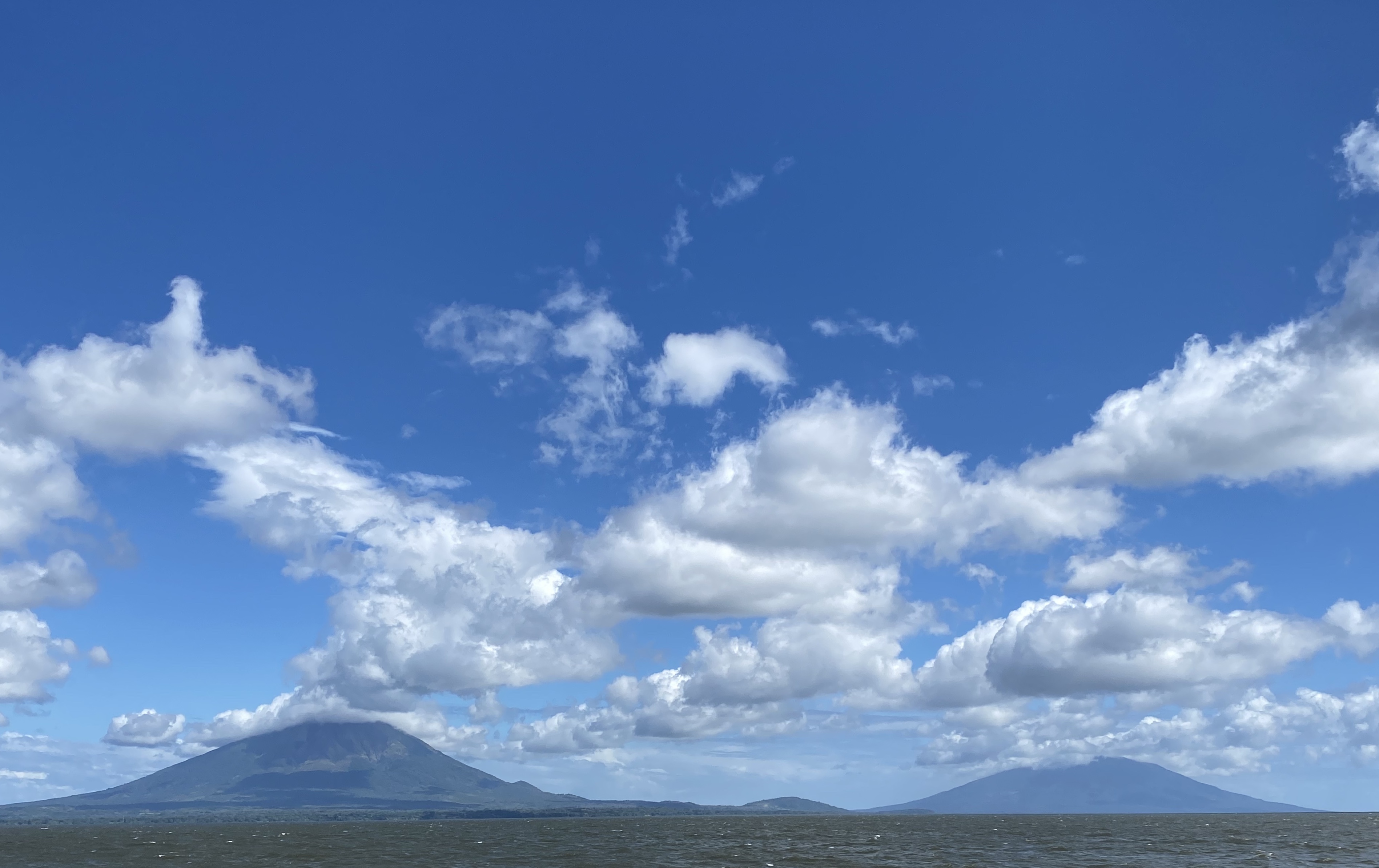


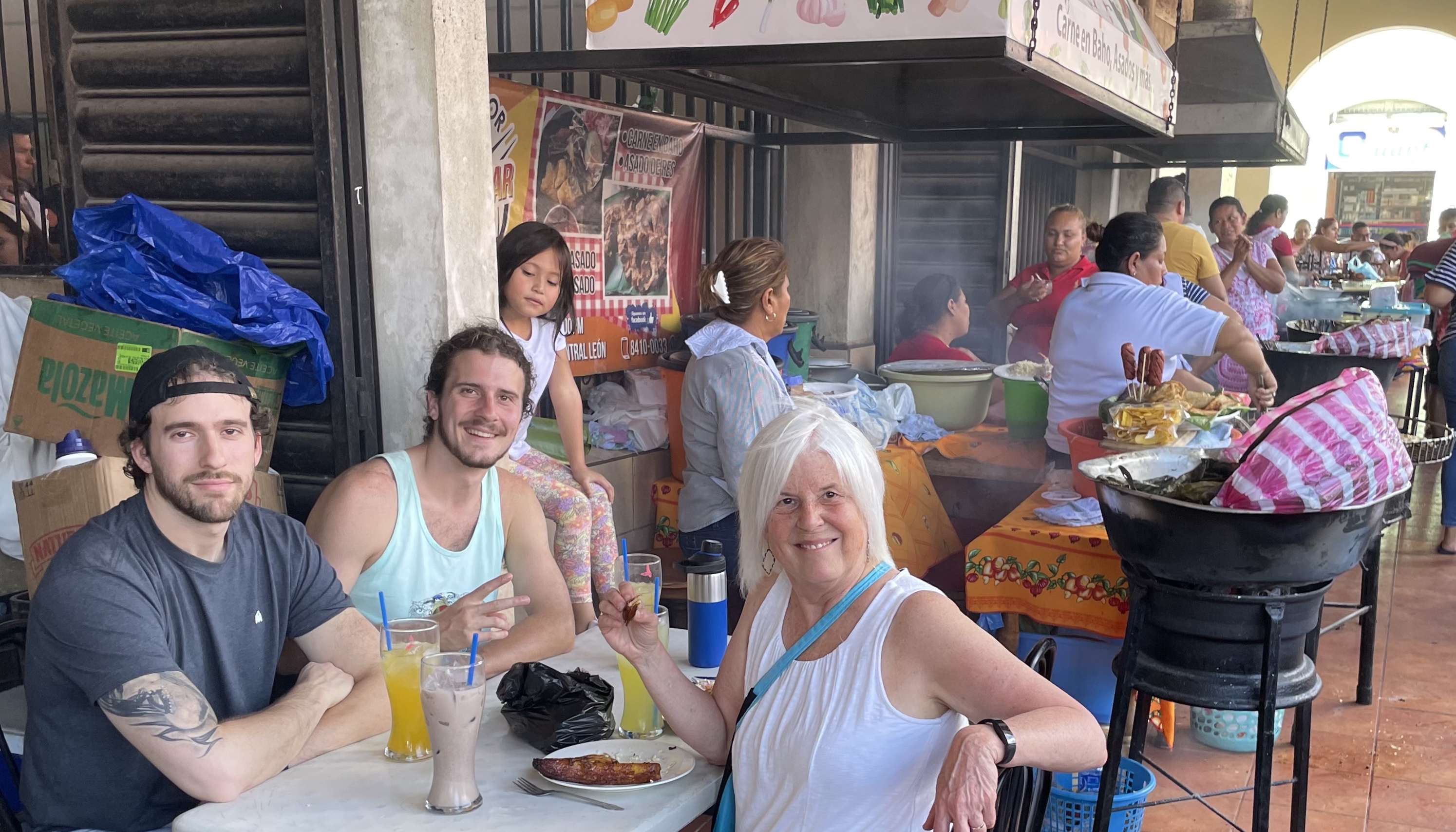


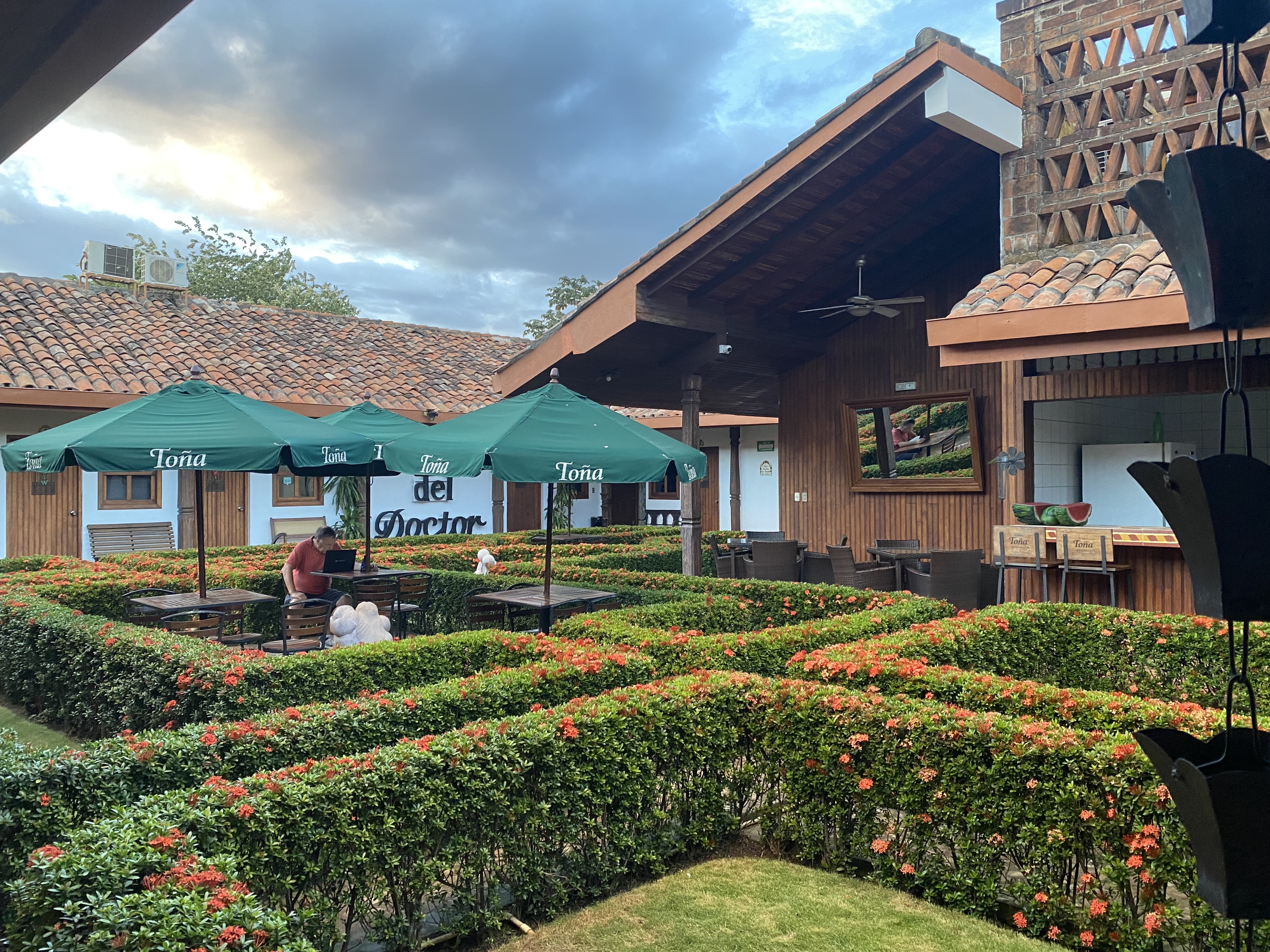


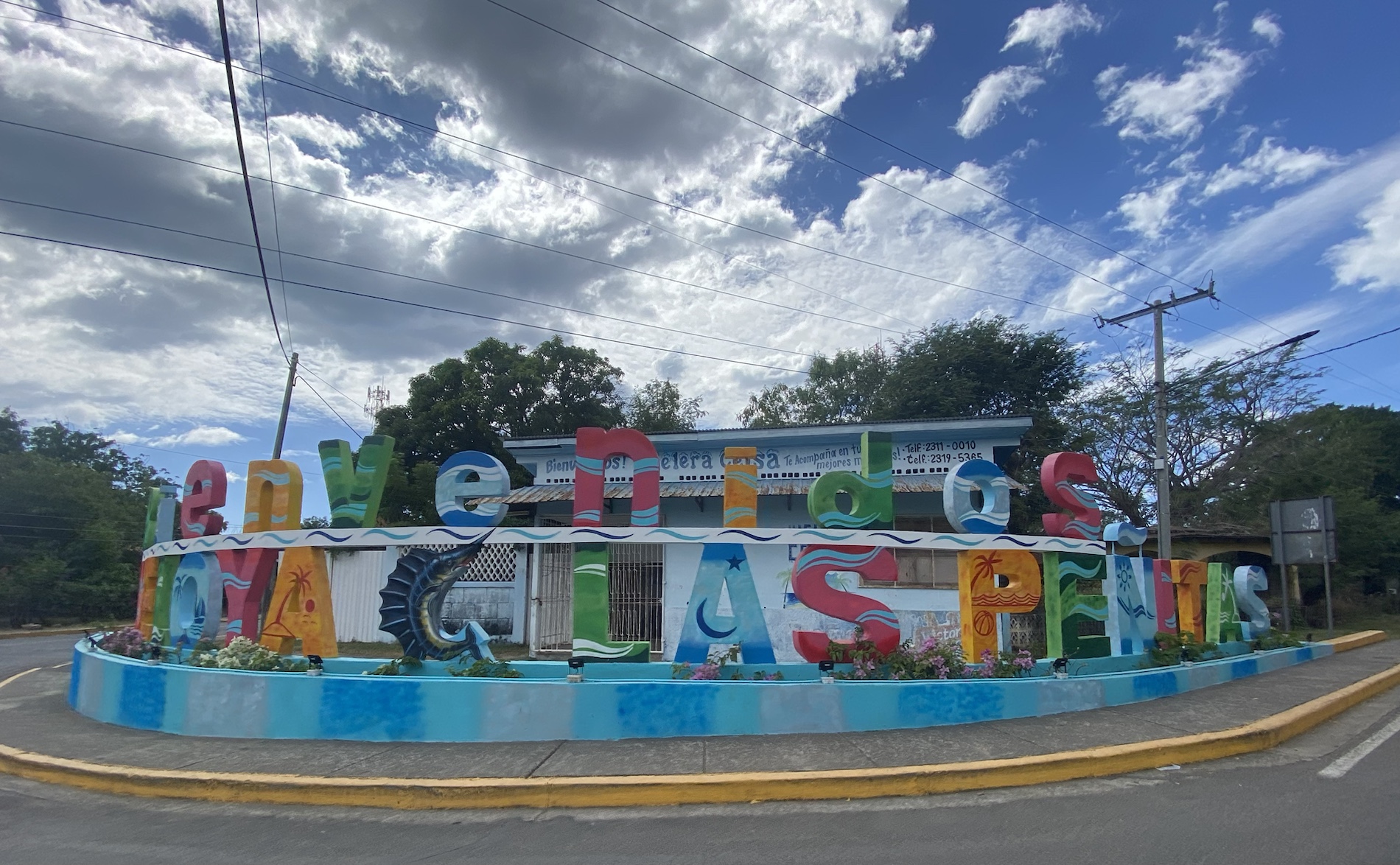


You must be logged in to post a comment.