Skip to content
  • Home
  • about ~ wander.essence ~
    • ~ the places i’ve been ~
    • ~ places i’ve been in the u.s.a. ~
  • Travel Destinations
    • America
      • Boston
      • Delaware
      • District of Columbia
        • Washington
      • Georgia
        • Atlanta
      • Maryland
      • New Jersey
        • Cape May
      • New York
        • Adirondacks
        • Buffalo
        • Niagara Falls
      • Pennsylvania
        • Pittsburgh
      • South Carolina
      • Tennessee
        • Nashville
      • Virginia
    • American Road Trips
      • Canyon & Cactus Road Trip
      • Florida Road Trip
        • Everglades
        • Fort Lauderdale
        • Florida Keys
        • Miami
        • St. Augustine
      • Four Corners Road Trip
        • Arizona
          • Monument Valley
          • Petrified Forest National Park
          • Sunset Crater National Monument
          • Walnut Canyon National Monument
          • Winslow
          • Wupatki National Monument
        • Colorado
          • Colorado National Monument
          • Colorado Towns
          • Great Sand Dunes National Park
          • Grand Junction
        • New Mexico
        • Utah
          • Arches National Park
          • Canyonlands
          • Navajo National Monument
          • Dead Horse Point State Park
          • Hovenweep National Monument
          • Moab
          • Valley of the Gods
          • Natural Bridges National Monument
      • Great Lakes Road Trip
        • Michigan
        • Minnesota
        • Wisconsin
      • Midwestern Triangle
        • Illinois
          • Carbondale
          • Murphysboro
        • Kentucky
          • Covington
          • Lexington
          • Louisville
        • Ohio
          • Cincinnati
      • Road Trip to Nowhere
        • Nebraska
        • North Dakota
        • South Dakota
      • Tex-New Mex Road Trip
        • Texas & New Mexico Road Trip
        • New Mexico
        • Texas
    • International Travel
      • Africa
        • african meanderings {& musings}
        • Egypt
          • Cairo
        • Ethiopia
        • Morocco
      • Asia
        • Cambodia
        • China
          • China Diaries
          • Guangxi Province
        • India
          • Rishikesh
          • Varanasi
        • Japan
          • Kyoto
        • Myanmar
        • Oman
          • a nomad in the land of nizwa
          • Nizwa
        • Singapore
        • South Korea
          • catbird in korea
        • Thailand
        • Turkey
          • Cappadocia
        • Vietnam
      • Central America
        • Costa Rica
        • El Salvador
        • Nicaragua
        • Panama
          • Bocas del Toro
          • Panama City
      • Europe
        • In Search of a Thousand Cafés
        • Croatia
          • Dalmatia
            • Istria
            • Dubrovnik
            • Plitvice Lakes National Park
            • Split
            • Zadar
            • Zagreb
        • Czech Republic
          • Český Krumlov
        • England
        • France
        • Greece
        • Hungary
          • Budapest
          • Esztergom
        • Iceland
        • Italy
          • Bergamo
          • Cinque Terre
          • The Dolomites
          • Florence
          • Rome
          • Tuscany
          • Venice
          • Verona
          • Via Francigena
        • Portugal
        • Spain
          • Camino de Santiago
            • packing list for el camino de santiago 2018
      • North America
        • Canada
          • The Maritimes
            • New Brunswick
            • Nova Scotia
            • Prince Edward Island
          • Ontario
        • Mexico
          • Guanajuato
          • Mexico City
            • Teotihuacán
          • Querétaro
          • San Miguel de Allende
      • South America
        • Colombia
        • Ecuador
          • Cuenca
          • Quito
    • how to make the most of a staycation
      • Coronavirus Coping
  • Imaginings
    • imaginings: the call to place
  • Travel Preparation
    • journeys: anticipation & preparation
  • Travel Creativity
    • on keeping a travel journal
    • on creating art from travels
      • Art Journaling
    • photography inspiration
      • Photography
    • writing prompts: prose
      • Prose
        • Fiction
        • Travel Essay
        • Travelogue
    • writing prompts: poetry
      • Poetry
  • On Journey
    • on journey: taking ourselves from here to there
  • Books & Movies
    • books | international a-z |
    • books & novels | u.s.a. |
    • books | history, spirituality, personal growth & lifestyle |
    • movies | international a-z |
    • movies | u.s.a. |
  • On Returning Home
    • on returning home
  • Annual recap
    • twenty-fifteen
    • twenty-eighteen
    • twenty-nineteen
    • twenty-twenty
    • twenty-twenty-one
    • twenty twenty-two
    • twenty twenty-three
    • twenty twenty-four
    • twenty twenty-five
  • Contact

Enter your email address to follow this blog and receive notifications of new posts by email.

Join 1,057 other subscribers
Follow ~ wander.essence ~ on WordPress.com
  • Home
  • about ~ wander.essence ~
    • ~ the places i’ve been ~
    • ~ places i’ve been in the u.s.a. ~
  • Travel Destinations
    • America
      • Boston
      • Delaware
      • District of Columbia
        • Washington
      • Georgia
        • Atlanta
      • Maryland
      • New Jersey
        • Cape May
      • New York
        • Adirondacks
        • Buffalo
        • Niagara Falls
      • Pennsylvania
        • Pittsburgh
      • South Carolina
      • Tennessee
        • Nashville
      • Virginia
    • American Road Trips
      • Canyon & Cactus Road Trip
      • Florida Road Trip
        • Everglades
        • Fort Lauderdale
        • Florida Keys
        • Miami
        • St. Augustine
      • Four Corners Road Trip
        • Arizona
          • Monument Valley
          • Petrified Forest National Park
          • Sunset Crater National Monument
          • Walnut Canyon National Monument
          • Winslow
          • Wupatki National Monument
        • Colorado
          • Colorado National Monument
          • Colorado Towns
          • Great Sand Dunes National Park
          • Grand Junction
        • New Mexico
        • Utah
          • Arches National Park
          • Canyonlands
          • Navajo National Monument
          • Dead Horse Point State Park
          • Hovenweep National Monument
          • Moab
          • Valley of the Gods
          • Natural Bridges National Monument
      • Great Lakes Road Trip
        • Michigan
        • Minnesota
        • Wisconsin
      • Midwestern Triangle
        • Illinois
          • Carbondale
          • Murphysboro
        • Kentucky
          • Covington
          • Lexington
          • Louisville
        • Ohio
          • Cincinnati
      • Road Trip to Nowhere
        • Nebraska
        • North Dakota
        • South Dakota
      • Tex-New Mex Road Trip
        • Texas & New Mexico Road Trip
        • New Mexico
        • Texas
    • International Travel
      • Africa
        • african meanderings {& musings}
        • Egypt
          • Cairo
        • Ethiopia
        • Morocco
      • Asia
        • Cambodia
        • China
          • China Diaries
          • Guangxi Province
        • India
          • Rishikesh
          • Varanasi
        • Japan
          • Kyoto
        • Myanmar
        • Oman
          • a nomad in the land of nizwa
          • Nizwa
        • Singapore
        • South Korea
          • catbird in korea
        • Thailand
        • Turkey
          • Cappadocia
        • Vietnam
      • Central America
        • Costa Rica
        • El Salvador
        • Nicaragua
        • Panama
          • Bocas del Toro
          • Panama City
      • Europe
        • In Search of a Thousand Cafés
        • Croatia
          • Dalmatia
            • Istria
            • Dubrovnik
            • Plitvice Lakes National Park
            • Split
            • Zadar
            • Zagreb
        • Czech Republic
          • Český Krumlov
        • England
        • France
        • Greece
        • Hungary
          • Budapest
          • Esztergom
        • Iceland
        • Italy
          • Bergamo
          • Cinque Terre
          • The Dolomites
          • Florence
          • Rome
          • Tuscany
          • Venice
          • Verona
          • Via Francigena
        • Portugal
        • Spain
          • Camino de Santiago
            • packing list for el camino de santiago 2018
      • North America
        • Canada
          • The Maritimes
            • New Brunswick
            • Nova Scotia
            • Prince Edward Island
          • Ontario
        • Mexico
          • Guanajuato
          • Mexico City
            • Teotihuacán
          • Querétaro
          • San Miguel de Allende
      • South America
        • Colombia
        • Ecuador
          • Cuenca
          • Quito
    • how to make the most of a staycation
      • Coronavirus Coping
  • Imaginings
    • imaginings: the call to place
  • Travel Preparation
    • journeys: anticipation & preparation
  • Travel Creativity
    • on keeping a travel journal
    • on creating art from travels
      • Art Journaling
    • photography inspiration
      • Photography
    • writing prompts: prose
      • Prose
        • Fiction
        • Travel Essay
        • Travelogue
    • writing prompts: poetry
      • Poetry
  • On Journey
    • on journey: taking ourselves from here to there
  • Books & Movies
    • books | international a-z |
    • books & novels | u.s.a. |
    • books | history, spirituality, personal growth & lifestyle |
    • movies | international a-z |
    • movies | u.s.a. |
  • On Returning Home
    • on returning home
  • Annual recap
    • twenty-fifteen
    • twenty-eighteen
    • twenty-nineteen
    • twenty-twenty
    • twenty-twenty-one
    • twenty twenty-two
    • twenty twenty-three
    • twenty twenty-four
    • twenty twenty-five
  • Contact

wander.essence

wander.essence

Home from Morocco & Italy

Home sweet home!May 10, 2019
I'm home from Morocco & Italy. :-)

Italy trip

Traveling to Italy from MoroccoApril 23, 2019
On my way to Italy!

Leaving for Morocco

Casablanca, here I come!April 4, 2019
I'm on my way to Casablanca. :-)

Home from our Midwestern Triangle Road Trip

Driving home from Lexington, KYMarch 6, 2019
Home sweet home from the Midwest. :-)

Leaving for my Midwestern Triangle Road Trip

Driving to IndianaFebruary 24, 2019
Driving to Indiana.

Returning home from Portugal

Home sweet home from Spain & Portugal!November 6, 2018
Home sweet home from Spain & Portugal!

Leaving Spain for Portugal

A rendezvous in BragaOctober 26, 2018
Rendezvous in Braga, Portgual after walking the Camino de Santiago. :-)

Leaving to walk the Camino de Santiago

Heading to Spain for the CaminoAugust 31, 2018
I'm on my way to walk 790 km across northern Spain on the Camino de Santiago.

Home from my Four Corners Road Trip

Home Sweet Home from the Four CornersMay 25, 2018
Home Sweet Home from the Four Corners. :-)

My Four Corners Road Trip!

Hitting the roadMay 1, 2018
I'm hitting the road today for my Four Corners Road Trip: CO, UT, AZ, & NM!

Recent Posts

  • what i learned in flores, petén & the mayan ruins at tikal March 29, 2026
  • guatemala: lago de atitlán March 26, 2026
  • cuaresma in antigua, guatemala March 21, 2026
  • call to place, anticipation & preparation: guatemala & belize March 3, 2026
  • the february cocktail hour: witnessing wedding vows, a visit from our daughter & mike’s birthday March 1, 2026
  • the january cocktail hour: a belated nicaraguan christmas & a trip to costa rica’s central pacific coast February 3, 2026
  • bullet journals as a life repository: bits of mine from 2025 & 2026 January 4, 2026
  • twenty twenty-five: nicaragua {twice}, mexico & seven months in costa rica {with an excursion to panama} December 31, 2025
  • the december cocktail hour: mike’s surgery, a central highlands road trip & christmas in costa rica December 31, 2025
  • top ten books of 2025 December 28, 2025
  • the november cocktail hour: a trip to panama, a costa rican thanksgiving & a move to lake arenal condos December 1, 2025
  • panama: the caribbean archipelago of bocas del toro November 24, 2025
  • a trip to panama city: el cangrejo, casco viejo & the panama canal November 22, 2025

Archives

  • March 2026
  • February 2026
  • January 2026
  • December 2025
  • November 2025
  • October 2025
  • September 2025
  • August 2025
  • June 2025
  • May 2025
  • April 2025
  • March 2025
  • February 2025
  • January 2025
  • December 2024
  • November 2024
  • October 2024
  • September 2024
  • August 2024
  • July 2024
  • June 2024
  • May 2024
  • April 2024
  • March 2024
  • February 2024
  • January 2024
  • December 2023
  • November 2023
  • September 2023
  • August 2023
  • June 2023
  • May 2023
  • April 2023
  • March 2023
  • February 2023
  • January 2023
  • December 2022
  • November 2022
  • October 2022
  • September 2022
  • August 2022
  • June 2022
  • May 2022
  • April 2022
  • March 2022
  • February 2022
  • January 2022
  • December 2020
  • November 2020
  • October 2020
  • September 2020
  • August 2020
  • July 2020
  • June 2020
  • May 2020
  • April 2020
  • March 2020
  • February 2020
  • January 2020
  • December 2019
  • November 2019
  • October 2019
  • September 2019
  • August 2019
  • July 2019
  • June 2019
  • May 2019
  • April 2019
  • March 2019
  • February 2019
  • January 2019
  • December 2018
  • November 2018
  • October 2018
  • September 2018
  • August 2018
  • July 2018
  • June 2018
  • May 2018
  • April 2018
  • March 2018

Blog Stats

  • 130,079 hits
March 2026
M T W T F S S
 1
2345678
9101112131415
16171819202122
23242526272829
3031  
« Feb    

Categories

  • Aït-Ben-Haddou (4)
  • Abingdon (1)
  • Abiquiu (1)
  • Acquapendente (2)
  • Adirondacks (3)
  • Africa (39)
  • Ainokura (2)
  • Alabama (1)
  • Alajuela (3)
  • Alamogordo (1)
  • Albuquerque (3)
  • Alexandria (1)
  • Alma (1)
  • Alpe di Siusi (1)
  • Alsace-Lorraine (1)
  • Alto Adige Wine Road (1)
  • Amarante (2)
  • America (69)
  • American Bison (1)
  • American books (22)
  • American Road Trips (255)
  • American Visionary Art Museum (1)
  • Americana (1)
  • Andrew Johnson National Historic Site (1)
  • Annapolis Valley (1)
  • Annual recap (10)
  • Anticipation (46)
  • Antietam National Battlefield (2)
  • Antigua (2)
  • Aramak Tour (1)
  • Arches National Park (8)
  • architecture (1)
  • Arena Stage (1)
  • Arizona (28)
  • Aroumd (2)
  • Art Journaling (9)
  • Asciano (1)
  • Asia (41)
  • Assisi (1)
  • Astorga (2)
  • Atapuerca (1)
  • Athens (1)
  • Atlanta (7)
  • Austin (2)
  • Aveiro (2)
  • Azofra (2)
  • Aztec Ruins National Monument (1)
  • óbidos (1)
  • Baños (2)
  • Badlands National Park (1)
  • Bagan (1)
  • Bagno Vignoni (2)
  • Bajos del Toro (1)
  • Balcony House (1)
  • Bali (9)
  • Baltimore (7)
  • Baltimore Museum of Art (1)
  • Bandelier National Monument (1)
  • Bangkok (2)
  • Bear Butte (1)
  • Beatrice (1)
  • Beihai (1)
  • Belize (3)
  • Beppu (1)
  • Bergamo (3)
  • Big Bend National Park (2)
  • Bijagua (2)
  • Bismarck (3)
  • Bismarck Art Alley (1)
  • Bitchu-Takahashi (1)
  • Blue Falls of Costa Rica (1)
  • Bluff (1)
  • Bluff Fort Historic Site (1)
  • Bocas del Toro (2)
  • Bocas Town (1)
  • Bogotá (4)
  • Bolsena (2)
  • Bolzano (2)
  • Bonanzaville (1)
  • Books (48)
  • Bosque de Chapultepec (1)
  • Boston (2)
  • Boulder (1)
  • Boys Town (1)
  • Braga (3)
  • Brookings (1)
  • Brunico/Bruneck (1)
  • Budapest (1)
  • Buffalo (9)
  • Bukit Peninsula (1)
  • Bullet journaling (1)
  • Buonconvento (2)
  • Burano (2)
  • Burgos (4)
  • Cañas (2)
  • Cabo da Roca (1)
  • Caddo Lake (2)
  • Cairo (3)
  • California (4)
  • Cambodia (4)
  • Cambridge (1)
  • Camino de Santiago (64)
  • Campagnano di Roma (2)
  • Canada (15)
  • Canyon & Cactus Road Trip (4)
  • Canyon de Chelly (3)
  • Canyonlands (3)
  • Cape May (7)
  • Cappadocia (2)
  • Capranica (1)
  • Carbondale (9)
  • Carlsbad (1)
  • Carlsbad Caverns National Park (2)
  • Cartagena (4)
  • Casablanca (9)
  • Casco Viejo (1)
  • Castellina in Chianti (1)
  • Catarata del Toro (1)
  • Catskill Mountains (1)
  • Cedar Creek & Belle Grove National Historical Park (1)
  • Central America (48)
  • Central Highlands (1)
  • Centro Histórico (1)
  • Chaco Culture National Historical Park (4)
  • challenge: a call to place (39)
  • Channel Islands National Park (3)
  • Chapel in the Hills (1)
  • Charles Pinckney National Historic Site (1)
  • Charleston (11)
  • Chefchaouen (5)
  • Cheyenne (2)
  • Cheyenne Depot Museum (1)
  • Cheyenne Frontier Days Old West Museum (1)
  • Chicago (3)
  • Chichicastenango (1)
  • Chillicothe (2)
  • Chimayó (1)
  • Chimney Rock (1)
  • China (8)
  • Chinatown (1)
  • Christmas (5)
  • Churchill Downs (1)
  • Cihuatán (1)
  • Cincinnati (15)
  • Cincinnati Art Museum (1)
  • Cinque Terre (10)
  • Cinquera (1)
  • Civita di Bagnoregio (1)
  • Cloudcroft (1)
  • Cocktail Hour (24)
  • Cocoa Beach (2)
  • Coeur d'Alene (1)
  • Collalbo/Klobenstein (1)
  • Colle di Val d'Elsa (2)
  • Colombia (9)
  • Colorado (31)
  • Colorado National Monument (3)
  • Colorado Towns (6)
  • Colorful (1)
  • Condesa (1)
  • Connecticut (1)
  • Cordoba (1)
  • Coronavirus Coping (14)
  • Cortina d’Ampezzo (1)
  • Costa Nova (1)
  • Costa Rica (23)
  • Covington (7)
  • Cowgirls of the West (1)
  • Coyoacán (1)
  • Crazy Horse Memorial (1)
  • Crestone (1)
  • Crete (1)
  • Croatia (3)
  • Cuenca (3)
  • Curves (1)
  • Custer (1)
  • Custer State Park (1)
  • Czech Republic (1)
  • Dakota Dinosaur Museum (1)
  • Dali (1)
  • Dalmatia (1)
  • De Smet (1)
  • Dead Horse Point State Park (1)
  • Dead Sea (1)
  • Deadwood (3)
  • decay (1)
  • Delaware (9)
  • Delphi (1)
  • Denver (1)
  • destinations (44)
  • Devils Tower National Monument (2)
  • Diamante Eco Adventure Park (1)
  • Dickinson (1)
  • District of Columbia (22)
  • Dobbiaco/Toblach (1)
  • Dolores Hidalgo (1)
  • Drawing (7)
  • Dubrovnik (1)
  • Durango (1)
  • Dwight D. Eisenhower Memorial (1)
  • Ecuador (14)
  • Egypt (3)
  • El Cangrejo (1)
  • El Salvador (6)
  • El-Khorbat (1)
  • Embudo (1)
  • Enchanted Rock State Natural Area (1)
  • England (3)
  • Erg Chebbi (3)
  • Española (1)
  • Essaouira (4)
  • Esztergom (1)
  • Ethiopia (3)
  • Europe (121)
  • Evan Williams Bourbon Experience (1)
  • Everglades (3)
  • Evora (1)
  • Fargo (2)
  • Fès (3)
  • Fenghuang (1)
  • Fez (2)
  • Fiction (6)
  • Findlay Market (1)
  • Finisterre (2)
  • Finland (1)
  • Fira (1)
  • Fiumicino (2)
  • Flatirons Vista Trail (1)
  • Flight 93 National Memorial (1)
  • Florence (8)
  • Flores (2)
  • Florida Keys (3)
  • Florida Road Trip (5)
  • Formello (1)
  • Fort Abraham Lincoln State Park (1)
  • Fort Atkinson State HIstorical Park (1)
  • Fort Calhoun (1)
  • Fort Collins (2)
  • Fort Lauderdale (2)
  • Fort Mandan (1)
  • Fort McHenry National Monument and Historic Shrine (1)
  • Fort Robinson State Park (1)
  • Fort Sumter and Fort Moultrie National Historical Park (1)
  • Fort Union Trading Post National Historic Site (1)
  • Four Corners Road Trip (74)
  • France (7)
  • Frazier Museum (1)
  • Fredericksburg (1)
  • Fucecchio (1)
  • Fundy National Park (1)
  • G Adventures Tour (10)
  • Gallina (2)
  • Gambassi Terme (2)
  • Gateway Arch National Park (1)
  • Gavin's Point Dam (1)
  • George Rogers Clark National Historical Park (2)
  • Georgia (7)
  • Gerald R. Ford Birthsite (1)
  • Germany (1)
  • Gettysburg National Military Park (1)
  • Goals (3)
  • Gothenburg (1)
  • Grand Junction (1)
  • Great Falls (2)
  • Great Lakes Road Trip (6)
  • Great Sand Dunes National Park (2)
  • Grecia (1)
  • Greece (3)
  • Greeneville (1)
  • Greenville (1)
  • Greve in Chianti (1)
  • Guadalupe Mountains National Park (1)
  • Guanacaste (12)
  • Guanajuato (5)
  • Guangxi Province (4)
  • Guatapé (5)
  • Guatemala (6)
  • Guatemala City (2)
  • Guilin (1)
  • Guimarães (2)
  • Halifax (3)
  • Halong Bay (1)
  • Hanoi (1)
  • Heidelberg (1)
  • Hida Furukawago (2)
  • High Road to Taos (1)
  • Hikes & Walks (203)
  • HISTORIC NAKASENDO TRAIL (1)
  • Hoa Lu (1)
  • Holbrook (1)
  • Holidays (6)
  • Hong Kong (1)
  • Hopewell Culture National Historical Park (2)
  • Hopewell Rocks Provincial Park (1)
  • Hotel Hacienda Guachipelin (1)
  • Hovenweep National Monument (1)
  • Hubbell Trading Post (1)
  • Hungary (1)
  • Iceland (1)
  • Idaho (1)
  • Illinois (17)
  • Imaginings (46)
  • Imlil (2)
  • India (7)
  • Indiana (6)
  • Indonesia (9)
  • Ingapirca (2)
  • Inle Lake (1)
  • Innichen/San Candido (1)
  • International Books (32)
  • International Peace Garden (1)
  • International Travel (340)
  • Iowa (1)
  • Isla Bastimentos (1)
  • Isla Carenero (1)
  • Isla Colón (1)
  • Istanbul (2)
  • Istria (1)
  • Italy (62)
  • Jamestown (1)
  • Japan (20)
  • Japan Alps (4)
  • Jefferson (1)
  • Jewel Cave National Monument (1)
  • Jimbaran (1)
  • Joachim Regional Museum & Prairie Outpost Park (1)
  • Johnstown Flood National Memorial (1)
  • Jordan (3)
  • Joseph N. Nicollet Tower and Interpretive Center (1)
  • Joshua Tree National Park (3)
  • Joslyn Art Museum (1)
  • Journaling (10)
  • Joya de Cerén (1)
  • Kansas (2)
  • Kathmandu (2)
  • Kentucky (17)
  • KMAC (1)
  • Knife River Indian Villages (2)
  • Kunming (1)
  • Kurashiki Bikan Historical Quarter (1)
  • Kyoto (5)
  • Kyushu (4)
  • La Fortuna (3)
  • La Giustiniana (2)
  • La Peñol (1)
  • La Romita (1)
  • La Spezia (6)
  • Lago d'Iseo (1)
  • Lago de Atitlán (2)
  • Lago di Garda (1)
  • Lago di Garda (1)
  • Laguna de Apoyo (1)
  • Laguna Quilotoa (2)
  • Languedoc-Roussillon (1)
  • Latacunga (3)
  • laundry (1)
  • Lazio (6)
  • León (2)
  • León (2)
  • Leeds (1)
  • Lens-Artists (2)
  • Lewis & Clark Interpretive Center (2)
  • Lexington (8)
  • Lijiang (1)
  • Lincoln Boyhood Home National Memorial (2)
  • Lincoln City (3)
  • lines (1)
  • Lisbon (8)
  • Logroño (3)
  • Lombardy (3)
  • Longji Rice Terraces (1)
  • Longreads (6)
  • Looking ahead (3)
  • Lorca (2)
  • Lory State Park (1)
  • Los Alamos (3)
  • Los Angeles (3)
  • Louisiana (1)
  • Louisville (13)
  • Low Road to Taos (1)
  • Lucca (3)
  • Luckenbach (1)
  • Lunenburg (1)
  • Madison (1)
  • Madison County Historical Society Museum (1)
  • Magnolia Plantations & Gardens (1)
  • Magome-juku (1)
  • Mahone Bay (1)
  • Maine (1)
  • Managua (5)
  • Manarola (1)
  • Mandalay (1)
  • Mandan (1)
  • Manhattan Project National Historical Park (1)
  • Mapmaking (2)
  • Marfa (1)
  • Market towns near Cuenca (2)
  • markets (1)
  • Marrakech (7)
  • Maryland (11)
  • Massachusetts (2)
  • Matagalpa (2)
  • Mathews (1)
  • Meadowlark Botanical Gardens (4)
  • Medellín (5)
  • Medora (5)
  • Memoir (4)
  • Merzouga (5)
  • Mesa Verde National Park (4)
  • Meteora (1)
  • Mexico (11)
  • Mexico City (7)
  • Miami (3)
  • Michigan (4)
  • Middletown (1)
  • Midwestern Triangle (30)
  • Minas Basin (1)
  • Mine of Santa Brigida (1)
  • Mineral de Pozos (1)
  • Ministers Island (1)
  • Minnesota (1)
  • Minnesota (3)
  • Minot (1)
  • Minuteman Missile National Historic Site (1)
  • Mirador de Catarina (1)
  • Mississippi (1)
  • Missouri (4)
  • Missouri National Recreation River (1)
  • Missouri River Basin Lewis & Clark Center (2)
  • Mitchell (1)
  • Moab (2)
  • Montalcino (1)
  • Montana (1)
  • Montefiascone (1)
  • Montefioralle (1)
  • Montepulciano (1)
  • Monteriggioni (3)
  • Monteroni d'Arbia (1)
  • Monterosi (1)
  • Monterosso al Mare (2)
  • Monteverde (1)
  • Monthly recap (24)
  • Monument Valley (1)
  • Moorhead (1)
  • Morocco (37)
  • Mount Pleasant (1)
  • Mt. Rushmore National Memorial (1)
  • Mulberry Bend Overlook (1)
  • Murano (2)
  • Murphysboro (10)
  • Muruzabal (1)
  • Muscat (1)
  • Museum of the Shenandoah Valley (1)
  • Muxia (2)
  • Myanmar (2)
  • Nagoya (4)
  • Nagoya Castle (2)
  • Nanning (3)
  • Naoshima (1)
  • Narita (5)
  • Nashville (8)
  • National Gallery of Art (2)
  • natural bridges (1)
  • Natural Bridges National Monument (2)
  • Navajo National Monument (2)
  • Nebraska (21)
  • Nepal (4)
  • New Belgium Brewing (1)
  • New Brunswick (6)
  • New Castle (2)
  • New England Road Trip (2)
  • New Hampshire (2)
  • New Jersey (7)
  • New Mexico (12)
  • New Mexico (1)
  • New Mexico (12)
  • New York (16)
  • Newport (1)
  • Niagara Falls (7)
  • Nicaragua (25)
  • Nice (1)
  • Nicoya Peninsula (1)
  • Nizwa (3)
  • Norfolk (1)
  • Normandy (1)
  • North America (22)
  • North Dakota (26)
  • North Dakota Heritage Center (2)
  • North Platte (1)
  • Norway (1)
  • Nosara (1)
  • Nova Scotia (5)
  • Nuevo Arenal (2)
  • Nusa Dua (1)
  • Oakland (1)
  • Oakton (23)
  • Ogallala (1)
  • Ohio (17)
  • Ohkay Owingeh Pueblo (1)
  • Oia (1)
  • Okayama (4)
  • Oklahoma (1)
  • Oklahoma City (1)
  • Old Market (1)
  • Omaha (5)
  • Oman (4)
  • Ometepe (15)
  • On Journey (44)
  • On Returning Home (40)
  • On-a-Slant Village (1)
  • Ontario (4)
  • Orisson (2)
  • Ortesei/St. Ulrich (1)
  • Orvieto (1)
  • Otavalo (2)
  • Ouray (1)
  • Pagosa Springs (1)
  • Pamplona (2)
  • Panajachel (1)
  • Panama (4)
  • Panama Canal (2)
  • Panama City (2)
  • Panchimalco (1)
  • Panzano in Chianti (1)
  • Paris (2)
  • Parque Nacional Cajas (2)
  • Parque Nacional Cotopaxi (2)
  • Parque Nacional Volcán Poás (1)
  • Parque Nacional Volcán Tenorio (2)
  • Parque Nactional Volcán Rincón de la Vieja (2)
  • pastels (1)
  • Patterns (3)
  • Peña de Bernal (1)
  • Pecos National Historical Park (1)
  • Peniche (1)
  • Pennsylvania (14)
  • Perugia (2)
  • Petrified Forest National Park (5)
  • petroglyphs (1)
  • Phnom Penh (3)
  • Photography (270)
  • Phuket (2)
  • Pilgrimage (75)
  • Ping'An (1)
  • Pisa (1)
  • Pittsburgh (11)
  • Playa Costa del Sol (1)
  • Playa Hermosa (4)
  • Plitvice Lakes National Park (1)
  • Poetry (34)
  • Pokhara (2)
  • Polanco (1)
  • Ponca State Park (1)
  • Ponte a Cappiano (1)
  • Porto (4)
  • Portovenere (1)
  • Portugal (25)
  • Prairie Homestead Historic Site (1)
  • Prince Edward Island (2)
  • Prose (210)
  • Puerta del Diablo (1)
  • Querétaro (4)
  • Quito (2)
  • Rapid City (6)
  • Red Cloud (1)
  • Redlin Art Center (1)
  • Regent (1)
  • Rehoboth (2)
  • Renon (1)
  • Renon/Ritten Plateau (1)
  • Reverse culture shock (2)
  • Richmond (7)
  • Riobamba (2)
  • Rishikesh (2)
  • Rittner Horn (1)
  • Riverbend Park (1)
  • Road Trip to Nowhere (63)
  • Rocky Mountain National Park (1)
  • Roma Norte (2)
  • Rome (16)
  • Roof Squares (1)
  • Route 66 (1)
  • Ruidoso (1)
  • Sackville (1)
  • Sahara (3)
  • Saint John (1)
  • Saint-Jean-Pied-de-Port (4)
  • San Ángel (1)
  • San Francisco (2)
  • San Gimignano (5)
  • San Ignacio (1)
  • San José (3)
  • San Juan del Sur (2)
  • San Juan la Laguna (1)
  • San Juan Skyway Scenic Byway (3)
  • San Lorenzo Nuovo (1)
  • San Marcos la Laguna (1)
  • San Miguel de Allende (6)
  • San Miniato (1)
  • San Pedro la Laguna (1)
  • San Quirico d'Orcia (4)
  • San Salvador (5)
  • San Sebastián Bernal (1)
  • San Simeon (2)
  • Sant'Antimo (1)
  • Santa Barbara (2)
  • Santa Catarina Palopó (1)
  • Santa Fe (5)
  • Santa Maddalena (1)
  • Santa Rosa de Lima (1)
  • Santiago (4)
  • Santo Domingo de la Calzada (2)
  • Santorini (1)
  • Sarchí (1)
  • Sámara (1)
  • Scandinavian Heritage Center (1)
  • Scotts Bluff National Monument (1)
  • Semarapura (2)
  • Shanghai (1)
  • Shenandoah National Park (1)
  • Shepherdstown (1)
  • Shibao Shan (2)
  • Shikoku 88-Temple Pilgrimage Route (4)
  • Shirakawa-go (2)
  • Shreveport (1)
  • Sidemen (1)
  • Siem Reap (3)
  • Siena (2)
  • Silverton (1)
  • Singapore (3)
  • Sintra (2)
  • Sioux Falls (2)
  • Sisseton (1)
  • Smithsonian American Art Museum (SAAM) (5)
  • Smithsonian National Museum of Asian Art (2)
  • South America (25)
  • South Carolina (12)
  • South Dakota (24)
  • South Dakota Art Museum (1)
  • South Korea (5)
  • Spain (68)
  • Spearfish (2)
  • Spello (1)
  • Spirit Mound Historic Prairie (1)
  • Split (1)
  • Springfield (3)
  • St. Andrews by-the-Sea (1)
  • St. Augustine (2)
  • St. Louis (2)
  • Stanton (1)
  • Staycation (8)
  • Stonewall (1)
  • Street Art (3)
  • Sturgis (2)
  • Suchitoto (1)
  • Sullivan's Island (2)
  • Sunset Crater National Monument (1)
  • Sunsets (1)
  • Supreme Court of the United States (2)
  • Sweden (1)
  • Swedish Heritage Center (1)
  • Takayama (3)
  • Tam Coc (1)
  • Tamarindo (1)
  • Tangier (3)
  • Taos (4)
  • Tejutepeque (2)
  • Telluride (2)
  • Tennessee (10)
  • Teotihuacán (1)
  • Terlingua (1)
  • Termas de Papallacta (2)
  • Tex-New Mex Road Trip (16)
  • Texas (8)
  • Texas & New Mexico Road Trip (20)
  • Thailand (3)
  • Thanksgiving (1)
  • The Battery (1)
  • The Dolomites (4)
  • The Enchanted Highway (1)
  • The Journey Museum (1)
  • The Maritimes (10)
  • The Veneto (5)
  • The Walters Art Museum (1)
  • Theodore Roosevelt National Park (4)
  • Tigua (2)
  • Tikal (2)
  • Tilarán (12)
  • Tinghir (2)
  • Toadstool Geologic Park (1)
  • Todra Gorge (1)
  • Tokushima (1)
  • Tokyo (6)
  • Topeka (1)
  • Torres del Rio (2)
  • Travel (662)
  • Travel Creativity (366)
  • Travel Essay (204)
  • Travel Inspiration (46)
  • Travel photography (249)
  • Travel Preparation (50)
  • Travel videos (51)
  • Travelogue (205)
  • Trentino & South Tyrol (5)
  • Trinidad & Tobago (2)
  • Tronadora (8)
  • Truchas (1)
  • Tsumago-juku (1)
  • Turkey (5)
  • Tuscany (31)
  • twenty twenty-five (1)
  • twenty twenty-four (1)
  • twenty twenty-three (1)
  • twenty twenty-two (1)
  • twenty twenty-two (2)
  • twenty-eighteen (1)
  • twenty-fifteen (1)
  • twenty-nineteen (1)
  • twenty-twenty (2)
  • twenty-twenty-one (1)
  • Ubud (1)
  • Uluwatu (1)
  • Ulysses S Grant National Historic Site (1)
  • Umbria (10)
  • Union Market (2)
  • United Arab Emirates (UAE) (2)
  • Utah (26)
  • Valley City (1)
  • Valley of the Gods (1)
  • Varanasi (2)
  • Vatican City (1)
  • Vatican Museums (1)
  • Venice (2)
  • Venice (5)
  • Ventosa (2)
  • Vermillion (1)
  • Vermont (2)
  • Vernazza (1)
  • Verona (2)
  • Vetralla (1)
  • Via Francigena (15)
  • Vicksburg (1)
  • Vienna (10)
  • Vietnam (4)
  • Villamayor de Monjardín (2)
  • Villamayor del Rio (1)
  • Vincennes (3)
  • Virginia (41)
  • Virginia Museum of Fine Arts (5)
  • Viterbo (2)
  • Volcán Chimborazo (2)
  • Volcán Cotopaxi (2)
  • Volterra (2)
  • Volubilis (1)
  • Wall (4)
  • Walnut Canyon National Monument (1)
  • Washburn (2)
  • Washington (20)
  • Watertown (2)
  • Watford City (1)
  • West Virginia (1)
  • White Sands National Park (2)
  • Wigwam Motel (1)
  • Wilber (1)
  • Wildlife (1)
  • Wildwood (3)
  • William Howard Taft National Historic Site (1)
  • Wilmington (3)
  • Winchester (1)
  • Wind Cave National Park (1)
  • Window Rock Navajo Tribal Park (1)
  • Winslow (3)
  • Wisconsin (2)
  • Writing (252)
  • Wupatki National Monument (2)
  • Wyoming (6)
  • Xi'an (1)
  • Xunantunich (1)
  • Yangon (1)
  • Yangshuo (1)
  • Yankton (1)
  • Yokohama (4)
  • Yorktown (2)
  • Yufuin (1)
  • Yunnan Province (2)
  • Zadar (1)
  • Zagreb (1)
  • Zarcero (1)
  • Zhangjiajie (1)
  • Ōsu Kannon Temple (2)
  • Český Krumlov (1)

Africa America American books American Road Trips Annual recap Anticipation Arches National Park Arizona Art Journaling Asia Bali Books Buffalo Camino de Santiago Canada Carbondale Casablanca Central America challenge: a call to place Charleston China Cincinnati Cinque Terre Cocktail Hour Colombia Colorado Coronavirus Coping Costa Rica Delaware destinations District of Columbia Ecuador Europe Four Corners Road Trip G Adventures Tour Guanacaste Hikes & Walks Illinois Imaginings Indonesia International Books International Travel Italy Japan Journaling Kentucky Louisville Maryland Mexico Midwestern Triangle Monthly recap Morocco Murphysboro Nashville Nebraska New Mexico New York Nicaragua North America North Dakota Oakton Ohio Ometepe On Journey On Returning Home Pennsylvania Photography Pilgrimage Pittsburgh Poetry Portugal Prose Road Trip to Nowhere Rome South America South Carolina South Dakota Spain Tennessee Tex-New Mex Road Trip Texas & New Mexico Road Trip The Maritimes Tilarán Travel Travel Creativity Travel Essay Travel Inspiration Travelogue Travel photography Travel Preparation Travel videos Tuscany Umbria Utah Via Francigena Vienna Virginia Washington Writing

Pages

  • about ~ wander.essence ~
  • books & novels | u.s.a. |
  • books | history, spirituality, personal growth & lifestyle |
  • books | international a-z |
  • how to make the most of a staycation
  • movies | international a-z |
  • movies | u.s.a. |
  • on creating art from travels
  • on keeping a travel journal
  • packing list for el camino de santiago 2018
  • photography inspiration
  • writing prompts: poetry
  • writing prompts: prose
  • ~ places i’ve been in the u.s.a. ~
  • ~ the places i’ve been ~
  • Contact

Translate

Goodreads

Blogs I Follow

Unknown's avatar
Unknown's avatar
Unknown's avatar
Unknown's avatar
Unknown's avatar
Unknown's avatar
Unknown's avatar
Unknown's avatar
Unknown's avatar
Unknown's avatar
Unknown's avatar
Unknown's avatar
Unknown's avatar
Unknown's avatar
Unknown's avatar
Unknown's avatar
Unknown's avatar

Top Posts & Pages

  • ministers island & st. andrews by-the-sea, new brunswick
  • pittsburgh's north side: andy warhol & the mexican war streets
  • amarante, portugal: the village of love
  • enticing moroccan markets
  • anticipation & preparation: the four corners area
  • books | international a-z |
  • dead horse point state park
  • the dramatic coast of peniche, portugal
  • about ~ wander.essence ~
  • things i learned in niagara falls, ontario

wander.essence

wander.essence
  • Home
  • about ~ wander.essence ~
  • Travel Destinations
  • Imaginings
  • Travel Preparation
  • Travel Creativity
  • On Journey
  • Books & Movies
  • On Returning Home
  • Annual recap
  • Contact

~ wander.essence ~

where travel meets art

  • Home
  • about ~ wander.essence ~
    • ~ the places i’ve been ~
    • ~ places i’ve been in the u.s.a. ~
  • Travel Destinations
    • America
      • Boston
      • Delaware
      • District of Columbia
        • Washington
      • Georgia
        • Atlanta
      • Maryland
      • New Jersey
        • Cape May
      • New York
        • Adirondacks
        • Buffalo
        • Niagara Falls
      • Pennsylvania
        • Pittsburgh
      • South Carolina
      • Tennessee
        • Nashville
      • Virginia
    • American Road Trips
      • Canyon & Cactus Road Trip
      • Florida Road Trip
        • Everglades
        • Fort Lauderdale
        • Florida Keys
        • Miami
        • St. Augustine
      • Four Corners Road Trip
        • Arizona
          • Monument Valley
          • Petrified Forest National Park
          • Sunset Crater National Monument
          • Walnut Canyon National Monument
          • Winslow
          • Wupatki National Monument
        • Colorado
          • Colorado National Monument
          • Colorado Towns
          • Great Sand Dunes National Park
          • Grand Junction
        • New Mexico
        • Utah
          • Arches National Park
          • Canyonlands
          • Navajo National Monument
          • Dead Horse Point State Park
          • Hovenweep National Monument
          • Moab
          • Valley of the Gods
          • Natural Bridges National Monument
      • Great Lakes Road Trip
        • Michigan
        • Minnesota
        • Wisconsin
      • Midwestern Triangle
        • Illinois
          • Carbondale
          • Murphysboro
        • Kentucky
          • Covington
          • Lexington
          • Louisville
        • Ohio
          • Cincinnati
      • Road Trip to Nowhere
        • Nebraska
        • North Dakota
        • South Dakota
      • Tex-New Mex Road Trip
        • Texas & New Mexico Road Trip
        • New Mexico
        • Texas
    • International Travel
      • Africa
        • african meanderings {& musings}
        • Egypt
          • Cairo
        • Ethiopia
        • Morocco
      • Asia
        • Cambodia
        • China
          • China Diaries
          • Guangxi Province
        • India
          • Rishikesh
          • Varanasi
        • Japan
          • Kyoto
        • Myanmar
        • Oman
          • a nomad in the land of nizwa
          • Nizwa
        • Singapore
        • South Korea
          • catbird in korea
        • Thailand
        • Turkey
          • Cappadocia
        • Vietnam
      • Central America
        • Costa Rica
        • El Salvador
        • Nicaragua
        • Panama
          • Bocas del Toro
          • Panama City
      • Europe
        • In Search of a Thousand Cafés
        • Croatia
          • Dalmatia
            • Istria
            • Dubrovnik
            • Plitvice Lakes National Park
            • Split
            • Zadar
            • Zagreb
        • Czech Republic
          • Český Krumlov
        • England
        • France
        • Greece
        • Hungary
          • Budapest
          • Esztergom
        • Iceland
        • Italy
          • Bergamo
          • Cinque Terre
          • The Dolomites
          • Florence
          • Rome
          • Tuscany
          • Venice
          • Verona
          • Via Francigena
        • Portugal
        • Spain
          • Camino de Santiago
            • packing list for el camino de santiago 2018
      • North America
        • Canada
          • The Maritimes
            • New Brunswick
            • Nova Scotia
            • Prince Edward Island
          • Ontario
        • Mexico
          • Guanajuato
          • Mexico City
            • Teotihuacán
          • Querétaro
          • San Miguel de Allende
      • South America
        • Colombia
        • Ecuador
          • Cuenca
          • Quito
    • how to make the most of a staycation
      • Coronavirus Coping
  • Imaginings
    • imaginings: the call to place
  • Travel Preparation
    • journeys: anticipation & preparation
  • Travel Creativity
    • on keeping a travel journal
    • on creating art from travels
      • Art Journaling
    • photography inspiration
      • Photography
    • writing prompts: prose
      • Prose
        • Fiction
        • Travel Essay
        • Travelogue
    • writing prompts: poetry
      • Poetry
  • On Journey
    • on journey: taking ourselves from here to there
  • Books & Movies
    • books | international a-z |
    • books & novels | u.s.a. |
    • books | history, spirituality, personal growth & lifestyle |
    • movies | international a-z |
    • movies | u.s.a. |
  • On Returning Home
    • on returning home
  • Annual recap
    • twenty-fifteen
    • twenty-eighteen
    • twenty-nineteen
    • twenty-twenty
    • twenty-twenty-one
    • twenty twenty-two
    • twenty twenty-three
    • twenty twenty-four
    • twenty twenty-five
  • Contact
  • Belize
  • Central America
  • Costa Rica

moving to costa rica for a year

wanderessence1025's avatar wanderessence1025 May 31, 2025

Wednesday, May 28, 2025: We are moving to Costa Rica for a year. The primary reason for our choice to live in Costa Rica is to visit our youngest son Adam and his Nicaraguan family at least 4-5 times over the year (June 1, 2025 – May 31, 2026). They live on Ometepe Island in Nicaragua, just over the Costa Rican border. From where we’ll be staying on Lake Arenal, it will be about a 4 1/2 hour trip one way by car to Ometepe. That of course is assuming a smooth and fast border crossing and the ability to get a car on the ferry to Ometepe in a timely manner.

We have rented a house in a gated community near Tronadora on Lake Arenal for the six-month period from June 1-November 30. We have an option to extend the lease to March 15, 2026. We can then opt to rent somewhere else in Costa Rica, or possibly stay in the home’s casita for the time when the owners are visiting the house. We wanted to see how we liked it before deciding to stay until March 15.

Tronadora to Balgüe, Ometepe, Nicaragua
Tronadora on Lake Arenal

I had told Mike before the election that if the worst president on earth was elected, that I would absolutely want to live outside the country for at least 75% of his four-year term.In  other words, we’re boycotting the U.S.A. It became immediately clear that billionaires would be corruptly lining their pockets and that a massive wealth transfer would take place from the poor and middle class to the upper 1%. I became determined that I would not stay in this country to pad those greedy bastards’ pockets. Also, all it takes is reading the book On Tyranny by Timothy Snyder to see that this country is headed to autocracy.  That is the main factor that nudged us to make the move now.

The deadline we gave ourselves to move finally pushed Mike to retire. He’s 71, so his retirement has been long-promised and much delayed. As of May 1, he went on an hourly schedule (as needed) and as of May 30, he’ll be officially retired. He has arranged to be able to do some consulting with his company from Costa Rica, but it will be a small amount of time.

We have a general plan of where to move after our first year abroad, but as that may change, I won’t reveal full details now. All I know is that I hope it will involve at least some time in Europe and then a possible permanent move to Mexico or a part-time home in Greece or Spain. I definitely don’t have any plans to travel within the U.S. in the next four years. If our government continues down the path of outright fascism, I hope to sell our house and never return here to live.

It is Mike’s choice to live our first year abroad in Costa Rica, which adjoins the southern border of Nicaragua. I’m personally not that thrilled about it as heat and humidity are not things I enjoy; neither are bugs, poisonous snakes, bullet ants, and other unpredictable wildlife. Costa Rica is a different ballgame altogether with all of its adventure sports and active volcanoes. It is also one of the more developed of the Central American countries, and in some ways it seems rather Americanized. The sovereign state is a presidential republic. It has a long-standing and stable constitutional democracy and a highly educated workforce.

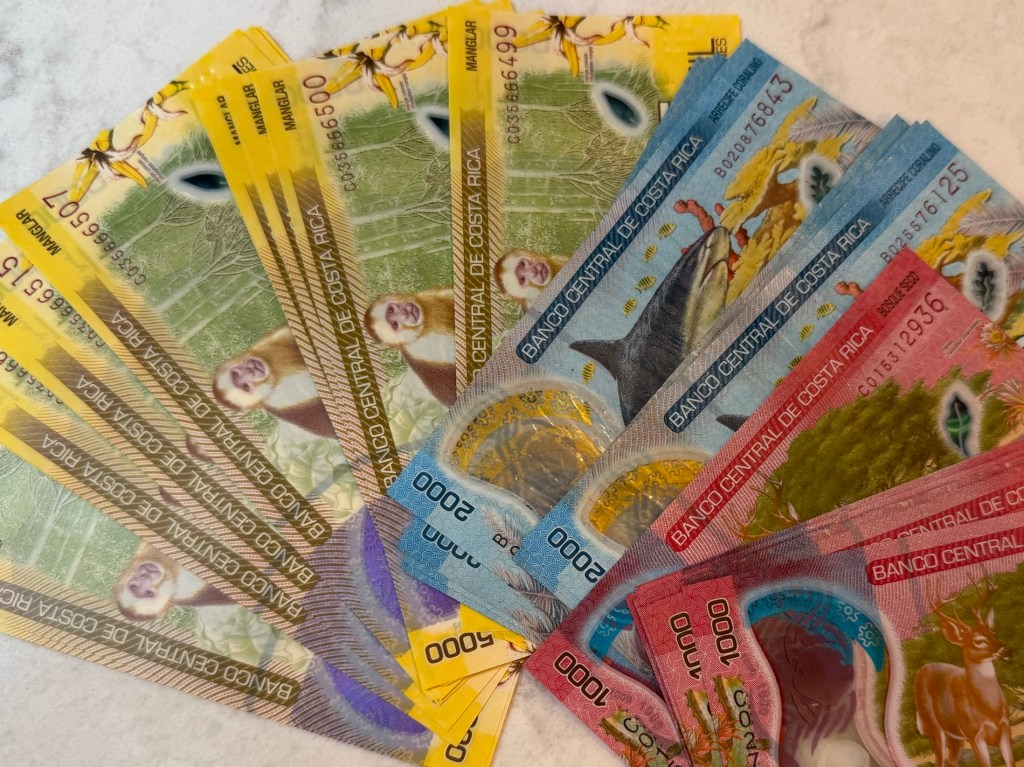
Costa Rican Colones

According to Wikipedia: Costa Rica: The country performs well in comparisons of democratic governance, press freedom, subjective happiness and sustainable well-being. It has the 36th freest press according to the 2025 Press Freedom Index (the U.S. is now 57th). With uninterrupted democracy dating back to at least 1948, the country is the region’s most stable. The country spends roughly 6.9% of its budget (2016) on education, compared to a global average of 4.4%  (The U.S. spends 5.9%). Its economy, once heavily dependent on agriculture, has diversified to include sectors such as finance, corporate services for foreign companies, pharmaceuticals, and ecotourism. It is also a major tourist destination in the continent.

Costa Rica experiences a tropical climate year-round. There are two seasons. The dry season is December to April, and the rainy season is May to November. March and April are the hottest months in the country, while December and January are the coldest. However, there are rainy days in the dry season, as well as weeks without rain in the wet season.

Last time we went in January of 2023, we opted to try numerous adventure sports such as ziplining, tubing, and superman ziplining, as well as walks over hanging bridges and guided wildlife walks. I’m at the point in my life now where I don’t feel the need to do any more ziplining, but I’m still game for river tubing and hiking.

Superman zipline at Diamante
Playa Hermosa
Playa Hermosa
Playa Hermosa
Playa Hermosa
Playa Hermosa
Playa Hermosa
Playa Hermosa
Playa Hermosa
Hotel Hacienda Guachipelin
Mike ziplining at Hacienda Guachipelin
waterfall at Hacienda Guachipelin
Rio Celeste at Parque Nacional Volcán Tenorio
Nacional Volcán Tenorio
Monteverde
Monteverde
Monteverde
Monteverde
Monteverde
Monteverde
San José
San José
San José
San José
San José
San José
San José
San José

After having been there before, and especially after having fallen in love with the Tilaran area near Lake Arenal, I feel excited about the move. Of course seeing the Nicaraguan family is the main reason for the choice, and it will be wonderful to visit more often as the children continue to grow over the course of a year.

Lake Arenal
Lake Arenal
Mike at Lake Arenal Brewery
Lake Arenal
Lake Arenal
me at Lake Arenal Brewery
view from mountain in Tilaran
Mike, Carol and Carlos in Tilaran
view from mountain in Tilaran

In addition to visiting Adam and family numerous times, we plan to fly home for less than 2 weeks in early October for our granddaughter Allie’s second birthday. Other than that, I don’t intend to come home at all. Mike may consider coming home to help his sister clean out their parents’ house in Vienna in February or so.

In addition, we would like to visit Panama in the fall of 2025, and Guatemala and Belize in the spring of 2026. That will allow us to completely explore the remainder of Central America other than Honduras, which I have no desire to visit. Our plan is to return home on May 31, 2026 and then leave again within two months, hopefully to the Scandinavian countries of Finland, Norway and Sweden. Our goal is to be home again in November and December of 2026, to vote in the midterm elections and to spend Thanksgiving and Christmas with our adult children who are stateside. We hope to take off again for most of the entire year of 2027.

While we’re gone, our son Alex and his family will live in our house. Thus whenever we come home, we’ll be able to visit that family. If at some point they decide they no longer want to live here, we will consider selling our house.

We hope that both our daughter Sarah and Alex & family will come to visit us in Costa Rica. Of course, whenever we return home, we’ll make sure to see our daughter Sarah who now lives in Richmond.

Here are some posts about our previous trip to Costa Rica.

  • anticipation & preparation: nicaragua & costa rica
  • border crossings, beach wanders & ziplines near playa hermosa, costa rica
  • adventures at hotel hacienda guachipelin
  • parque nacional volcán tenorio & the río celeste
  • a stop in tilarán, costa rica for a “cafecito”
  • monteverde: a cloud forest immersion
  • san josé, costa rica & homeward bound

I may start a new blog about our year living in Costa Rica, so stay tuned for more information.

Share this:

  • Share on X (Opens in new window) X
  • Share on Facebook (Opens in new window) Facebook
  • More
  • Email a link to a friend (Opens in new window) Email
  • Print (Opens in new window) Print
  • Share on Pinterest (Opens in new window) Pinterest
Like Loading...
  • International Travel
  • Mexico
  • North America

querétaro, mexico & a day trip to san sebastián bernal

wanderessence1025's avatar wanderessence1025 May 21, 2025

Sunday, March 2, 2025: We were sad today to leave our apartment in San Miguel de Allende. We left and drove directly to Querétaro, our last stop for 3 nights before returning to the U.S. We were luckily able to check in directly to our hotel though it was a bit early for check-in. We stayed right in the historic district in Casa Aspeytia Hotel Boutique.

Casa Aspeytia Hotel Boutique

With only three days remaining in Mexico, I was dreading returning to the USA which has now joined the Axis of Evil and has become a puppet of Putin. Bizarrely, I had a surge of patriotism for Ukraine and I wished I were going to Ukraine. Mike’s father was Ukrainian-American. Even at 69, I would prefer to go to Ukraine and fight for them than to return to our despicable country under our traitorous schoolyard bully and his regime of thugs. For all the people that voted for this treasonous asshole, I wished they all would go to hell.

Templo y antiguo convento de San Antonio

As soon as we checked in, we headed out to explore the town.

Templo y antiguo convento de San Antonio (Temple and former Convent of San Antonio) was built in Querétaro between 1613 and 1678; this religious complex was inhabited by the Dieguinos in Querétaro. The temple and convent occupied what today are the Plaza San Antonio and the Corregidora Garden.

The Plaza was formerly the atrium and a cemetery, and the Garden was an orchard for the friars. Inside the temple you can still admire paintings depicting the miracles of St. Anthony of Padua, an image of the Sacred Heart, the frontispiece of an ancient pipe organ and the sacristy decorated with cherubs.

The atrium of San Antonio was a public market during the second half of the 19th century. In 1877 a small fountain was added and now the atrium is a little plaza.

Templo y antiguo convento de San Antonio
Plaza de la Corregidora

We continued our wanders, coming across the Plaza de la Corregidora with a monument to Josefa Ortiz de Domínguez, who alerted the revolutionary hero Ignacio Pérez that the independence conspiracy had been discovered by Spanish royalists, prompting the start of the Mexican War of Independence. She was a Mexican female version of Paul Revere, if you will.

One street was blooming with quinceañera & first communion dresses.

Plaza de la Corregidora with a monument to Josefa Ortiz de Domínguez
quinceañera & first communion dresses
Querétaro
Querétaro
Museo de Arte de Querétaro (MAQRO)

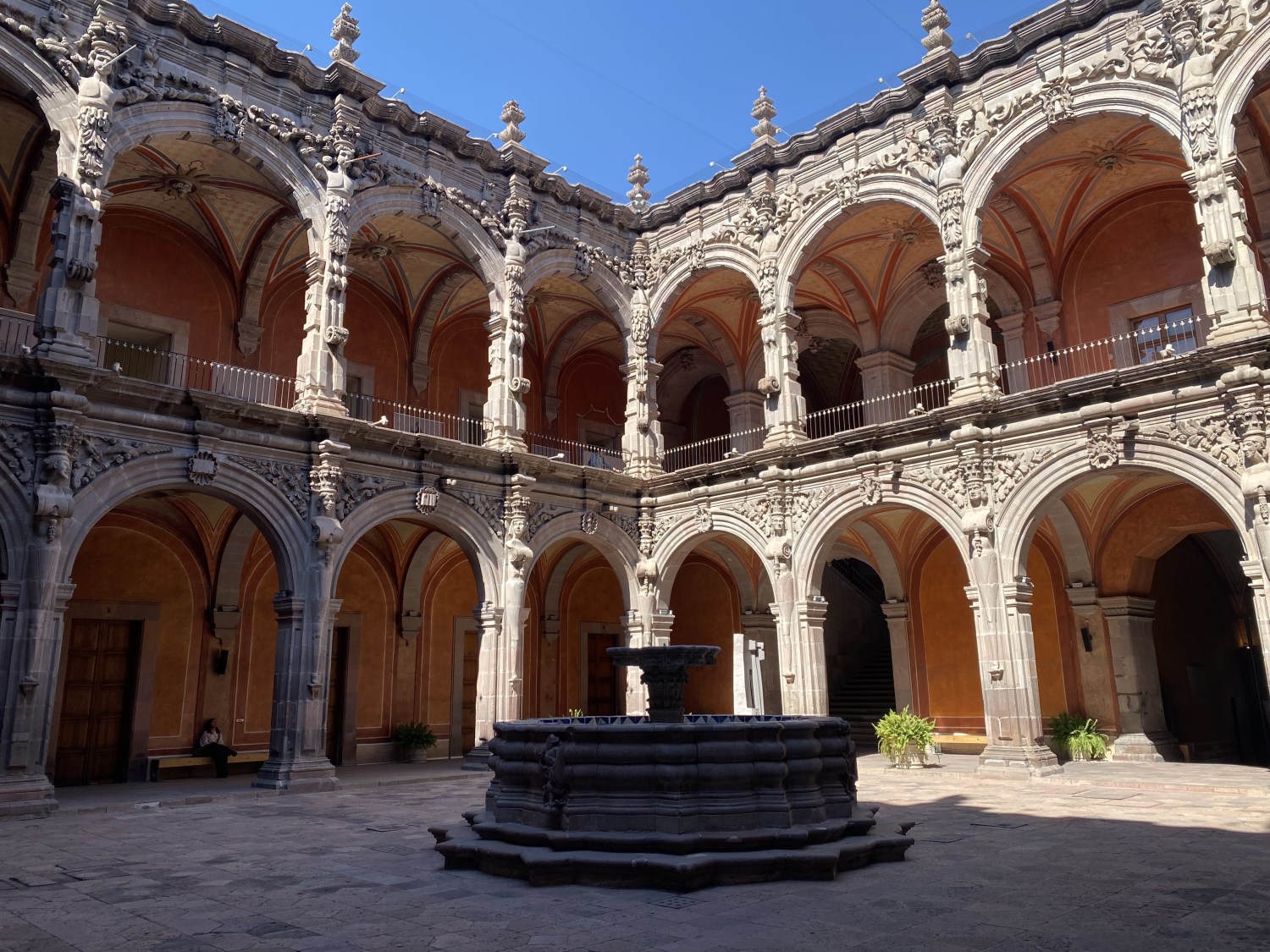
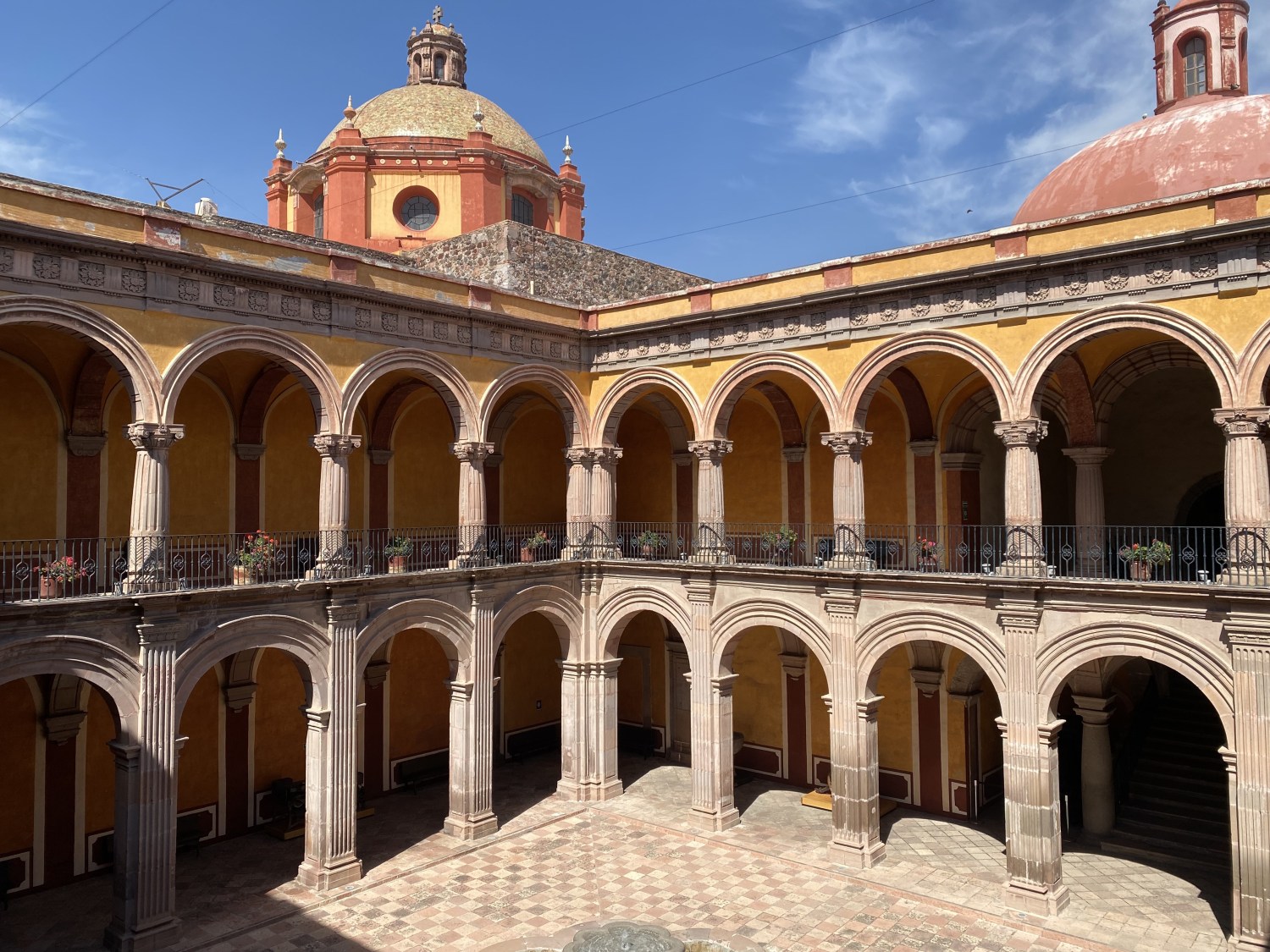
We made our way to the Museo de Arte de Querétaro (MAQRO) located in the former convent of San Agustín in Santiago de Querétaro.

The ex-Convent is one of the most beautiful baroque buildings in Latin America, especially its cloister, which is the quadrangular interior courtyard. Both the convent and the adjacent church were built in the 18th century, between 1731 and 1745. Its baroque style is full of details that represent Augustinian theology and philosophy.

The Augustinians remained in the building until 1859. During the government of President Benito Juarez, the law of reform was enacted and the building became the property of the state. It was subsequently used as military barracks, the Federal Palace, the Post Office and the Finance Office.

In 1987, the building was declared a Cultural Heritage Site and the Art Museum was created under the joined management of the state and federal government. The building was restored and opened its doors on September 22, 1988.

The Lower Cloister represents the world, the temporary work of the militant church, the sacrifice of Christ, as well as the history, vocation and charisma of the Augustinian Order. Anthropomorphic figures refer to the three stages of human life and spiritual evolution of an individual: youth, maturity, and old age.

The fountain of the cloister is one of the principal elements. It represents Christ as source of eternal life.

The Upper Cloister represents the church and its ministers. Juvenile-looking anthropomorphic figures represent the priests praying and manifesting the mystery of Trinity. Pipes in their mouths vent rainwater which symbolically represent cleansing of sins with divine grace. Among them are animals and fantastic beings that represent the sins of man that stalk those who seek to devote themselves to contemplation and devotion. In the keystones, monks and nuns represent the duties of the monastic life.

The Sky represents the Kingdom of Heaven, the dwelling place of God.

Formal exhibition spaces are tucked behind the long arcades that surround the courtyard, as well other beautiful spaces in the museum: the upstairs hallways, the staircase, and the outdoor porticoes.

Museo de Arte de Querétaro (MAQRO)
Mike at Museo de Arte de Querétaro (MAQRO)
me at Museo de Arte de Querétaro (MAQRO)
Museo de Arte de Querétaro (MAQRO)

We enjoyed works by Mexican sculptor and architect Pablo Fierro. As an artist, his work has focused on developing an alternative vision of sculpture, subverting its values: space, texture, and form. His work, transcending traditional frameworks of form and materiality, explores emptiness not as absence, but as the fullness of meaning. In his own work, he reflects: “Emptiness does not deny existence, it gives meaning to what we are and what remains to be.”

works by sculptor Pablo Fierro

Another exhibit we loved was “Moments Suspended in Time” by James Harvey, an American artist based in San Miguel de Allende and a graduate of the Rhode Island School of Design. The artist attempts to express in a single glance the elusive, progressive and changing movement of bodies surrendered to the magic of music and dance. In this interesting exhibition he brings colors and strokes to his canvases, capturing and allowing, at the same time, the dynamism of the choreographic language, feelings, warmth and vitality.

“Moments Suspended in Time” by James Harvey

My favorite exhibit at the Museo de Arte de Querétaro was “Reimaginando el papel” or “Paper Reimagined” by Terry Ann Tomlinson. Explains Tomlinson: “Using ancient Japanese techniques and traditional natural Asian fibers, I make paper that has delicacy and strength, translucency and resilience. Through abstract imagery and minimal content, I explore the profound spiritual connection between all living things.”

As someone who is enamored of paper, as found bound in physical books and journals, I was fascinated by the many ways the artist expressed herself in the medium.

"Reimaginando el papel” by Terry Ann Tomlinson
“Reimaginando el papel” by Terry Ann Tomlinson
"Reimaginando el papel” by Terry Ann Tomlinson
“Reimaginando el papel” by Terry Ann Tomlinson
"Reimaginando el papel” by Terry Ann Tomlinson
“Reimaginando el papel” by Terry Ann Tomlinson
"Reimaginando el papel” by Terry Ann Tomlinson
“Reimaginando el papel” by Terry Ann Tomlinson
"Reimaginando el papel” by Terry Ann Tomlinson
“Reimaginando el papel” by Terry Ann Tomlinson
"Reimaginando el papel” by Terry Ann Tomlinson
“Reimaginando el papel” by Terry Ann Tomlinson
"Reimaginando el papel” by Terry Ann Tomlinson
“Reimaginando el papel” by Terry Ann Tomlinson
"Reimaginando el papel” by Terry Ann Tomlinson
“Reimaginando el papel” by Terry Ann Tomlinson
"Reimaginando el papel” by Terry Ann Tomlinson
“Reimaginando el papel” by Terry Ann Tomlinson
"Reimaginando el papel” by Terry Ann Tomlinson
“Reimaginando el papel” by Terry Ann Tomlinson
"Reimaginando el papel” by Terry Ann Tomlinson
“Reimaginando el papel” by Terry Ann Tomlinson
"Reimaginando el papel” by Terry Ann Tomlinson
“Reimaginando el papel” by Terry Ann Tomlinson
"Reimaginando el papel” by Terry Ann Tomlinson
“Reimaginando el papel” by Terry Ann Tomlinson
"Reimaginando el papel” by Terry Ann Tomlinson
“Reimaginando el papel” by Terry Ann Tomlinson
"Reimaginando el papel” by Terry Ann Tomlinson
“Reimaginando el papel” by Terry Ann Tomlinson
"Reimaginando el papel” by Terry Ann Tomlinson
“Reimaginando el papel” by Terry Ann Tomlinson
"Reimaginando el papel” by Terry Ann Tomlinson
“Reimaginando el papel” by Terry Ann Tomlinson
"Reimaginando el papel” by Terry Ann Tomlinson
“Reimaginando el papel” by Terry Ann Tomlinson
"Reimaginando el papel” by Terry Ann Tomlinson
“Reimaginando el papel” by Terry Ann Tomlinson
"Reimaginando el papel” by Terry Ann Tomlinson
“Reimaginando el papel” by Terry Ann Tomlinson
"Reimaginando el papel” by Terry Ann Tomlinson
“Reimaginando el papel” by Terry Ann Tomlinson
"Reimaginando el papel” by Terry Ann Tomlinson
“Reimaginando el papel” by Terry Ann Tomlinson
"Reimaginando el papel” by Terry Ann Tomlinson
“Reimaginando el papel” by Terry Ann Tomlinson
"Reimaginando el papel” by Terry Ann Tomlinson
“Reimaginando el papel” by Terry Ann Tomlinson
"Reimaginando el papel” by Terry Ann Tomlinson
“Reimaginando el papel” by Terry Ann Tomlinson
"Reimaginando el papel” by Terry Ann Tomlinson
“Reimaginando el papel” by Terry Ann Tomlinson
"Reimaginando el papel” by Terry Ann Tomlinson
“Reimaginando el papel” by Terry Ann Tomlinson
"Reimaginando el papel” by Terry Ann Tomlinson
“Reimaginando el papel” by Terry Ann Tomlinson
"Reimaginando el papel” by Terry Ann Tomlinson
“Reimaginando el papel” by Terry Ann Tomlinson
"Reimaginando el papel” by Terry Ann Tomlinson
“Reimaginando el papel” by Terry Ann Tomlinson
"Reimaginando el papel” by Terry Ann Tomlinson
“Reimaginando el papel” by Terry Ann Tomlinson
"Reimaginando el papel” by Terry Ann Tomlinson
“Reimaginando el papel” by Terry Ann Tomlinson
"Reimaginando el papel” by Terry Ann Tomlinson
“Reimaginando el papel” by Terry Ann Tomlinson
"Reimaginando el papel” by Terry Ann Tomlinson
“Reimaginando el papel” by Terry Ann Tomlinson
"Reimaginando el papel” by Terry Ann Tomlinson
“Reimaginando el papel” by Terry Ann Tomlinson
"Reimaginando el papel” by Terry Ann Tomlinson
“Reimaginando el papel” by Terry Ann Tomlinson
"Reimaginando el papel” by Terry Ann Tomlinson
“Reimaginando el papel” by Terry Ann Tomlinson
"Reimaginando el papel” by Terry Ann Tomlinson
“Reimaginando el papel” by Terry Ann Tomlinson

We found a few odds and ends in another gallery.

Museo de Arte de Querétaro (MAQRO)

We walked back to our hotel where we rested a bit before dinner, passing by the Templo de San Francisco de Asís, one of Querétaro’s oldest and loveliest buildings. Construction on this church and the adjoining Franciscan convent began as early as the 1540s, though the temple wasn’t completed until the middle of the following century. The former monastery that adjoins the church is now home to the Museo Regional de Querétaro, which we planned to visit on Tuesday.

Templo de San Francisco de Asís in Querétaro
Querétaro
Querétaro
Bistrot Chez Julien

Sunday night, we stepped out a few doors down from our hotel to have dinner at Bistrot Chez Julien, another recommendation by Endre from Terra Vista in Guanajuato. We ordered dirty martinis, salmon mouse spread, and cheese fondue with bread cubes to the tune of “Mon Mec À Moi” by Chantal Chamberland. We were happy to have something different than Mexican food, although it was a lot of bread. Who can resist a pot of hot melted cheese though?

me in the hotel on the way to Bistrot Chez Julien
Bistrot Chez Julien
Bistrot Chez Julien
Bistrot Chez Julien
Bistrot Chez Julien
me in Bistrot Chez Julien
Mike in Bistrot Chez Julien
salmon mouse spread
salmon mouse spread
chese fondue with bread cubes
Mike eating fondue in Bistrot Chez Julien

We strolled around the town after dinner and enjoyed the lively atmosphere.

Querétaro at night
Querétaro at night
Querétaro at night
Querétaro at night
Querétaro at night
Querétaro at night
Querétaro at night
Querétaro at night
Querétaro at night
Querétaro at night

Steps: 7,334; Miles 3.11. Weather Hi 88°, Lo 49°. Sunny.

Monday, March 3: Monday morning, breakfast was served on the hotel terrace: hot cakes for Mike & Chilaquiles with salsa verde for me.

We talked to an 80-year-old man named Craig from California who told us he had lived in Mexico for 10 years and said he was presently living in Casa Aspeytia Hotel. I was surprised: “You LIVE in the hotel?” He said yes, it worked out perfectly for him. He got a free breakfast every day and could talk to different people each morning. From the hotel, he could spend his days wandering around the historic city, eating lunch out, and either having a light dinner or eating dinner at the hotel restaurant. He said the hotel did his laundry too. I said, I’m surprised you wouldn’t want an apartment where you’d have a kitchen and a living area available.  He said that would mean he’d live isolated in an apartment and wouldn’t have any social interactions like he did at the hotel. He seemed perfectly happy with the arrangement and planned to continue it into the foreseeable future.

breakfast at Casa Aspeytia Hotel Boutique
Chilaquiles with salsa verde
hot cakes at Casa Aspeytia Hotel Boutique

Soon after breakfast, we took off for San Sebastián Bernal.

San Sebastián Bernal & Peña de Bernal

Monday we drove about an hour northeast of Querétaro to visit San Sebastián Bernal and its famous Peña de Bernal. Mike decided to climb partway up one of the world’s largest monoliths at 335 meters. It is said only the Rock of Gibraltar and Río de Janeiro’s Sugar Loaf are taller.  Many believe the peña (rock) has healing energy and it is a popular pilgrimage site during the spring equinox. He couldn’t climb up to the top because we had foolishly scheduled massages at 4:30 and it would take us over an hour to get back to Querétaro.

Mike's climb up Peña de Bernal
Mike’s climb up Peña de Bernal
Mike's climb up Peña de Bernal
Mike’s climb up Peña de Bernal
Mike's climb up Peña de Bernal
Mike’s climb up Peña de Bernal
Mike's climb up Peña de Bernal
Mike’s climb up Peña de Bernal
Mike's climb up Peña de Bernal
Mike’s climb up Peña de Bernal
view from Peña de Bernal
Mike's climb up Peña de Bernal
Mike’s climb up Peña de Bernal
Mike's climb up Peña de Bernal
Mike’s climb up Peña de Bernal
Mike's climb up Peña de Bernal
Mike’s climb up Peña de Bernal
Mike's climb up Peña de Bernal
Mike’s climb up Peña de Bernal
Mike's climb up Peña de Bernal
Mike’s climb up Peña de Bernal
Mike's climb up Peña de Bernal
Mike’s climb up Peña de Bernal
Mike's climb up Peña de Bernal
Mike’s climb up Peña de Bernal
Mike's climb up Peña de Bernal
Mike’s climb up Peña de Bernal

While Mike climbed, I wandered around the colorful town of San Sebastián Bernal & its bright yellow Parroquia de San Sebastián, built from 1700-1725. It has a small neoclassical facade set against striking yellow walls and brick-red trim.

The tiny town of San Sebastián Bernal is a charming colonial town founded in 1642. It was recently inducted into Mexico’s Pueblos Magicos program, designed to recognize special or historic cities across the country.

San Sebastián Bernal
Parroquia de San Sebastián
San Sebastián Bernal

When Mike finished his climb, he met me at Terazza, where we shared a vegetarian pizza lunch. It was breezy and pleasant with music creating a bit of an edgy ambiance: “Wait for You” by AMÉMÉ & Franc Fala, “Kidz” by Arodes, and “Sunrise” by Tripolism & Nandu. From the terrace we had great views of Peña de Bernal and the colorful town.

view from Terazza
view from Terazza
view from Terazza
view from Terazza
view from Terazza
view from Terazza
view from Terazza
view from Terazza
view from Terazza
view from Terazza
view from Terazza
view from Terazza
Mike points to Peña de Bernal
me at Terazza
me at Terazza
view from Terazza
view from Terazza
drinks at Terazza
drinks at Terazza
me with our vegetarian pizza at Terazza
vegetarian pizza at Terazza

After lunch we walked around the town together.

me on the umbrella street in San Sebastián Bernal
San Sebastián Bernal
me at a shop in San Sebastián Bernal
San Sebastián Bernal
Querétaro

We drove about an hour back to Querétaro. At our hotel we enjoyed 75-minute Swedish massages. We had a drink in the hotel as well as leftover pizza, then went out to look for some elote 🌽 for Mike. We topped off the evening with cups of ice cream.

massage room at Casa Aspeytia Hotel Boutique
Mike at Casa Aspeytia Hotel Boutique
church in Querétaro
church in Querétaro
Mike gets elote
Mike gets elote

Steps: 7,183; Miles 3.04. Weather Hi 88°, Lo 49°. Sunny.

Centro Histórico de Querétaro

Tuesday, March 4: Tuesday morning we went on a walkabout through the centro histórico of Querétaro.

Temple and Convent of Our Lady of Mount Carmel

We stopped in to the Temple and Convent of Our Lady of Mount Carmel. The Carmelites founded this religious complex in 1614, along the route of the Camino Real de Tierra Adentro (Silver Route which passed through Querétaro from the mines in Guanajuato and Zacatecas).

In 1863, the friars were evicted by the Laws of Reform and the site was later used as barracks, a hospital, an armory, and an ammunition factory during the Siege of Querétaro in 1867. Its bells were melted down to make shrapnel that was used in the conflict that overthrew Maximilian of Habsburg.

Its central nave features an image of Our Lady of Mount Carmel. Here is also the Lord of Works, who is still venerated by the locals. Its atrium used to function as a market; today it is a picturesque square at the corner of streets Morelos and Juarez. Some Carmelites continue to inhabit the convent.

Temple and Convent of Our Lady of Mount Carmel
Fountain of Neptune

Near the temple and convent, we were greeted by the Fountain of Neptune. Constructed in 1797 by the Mexican architect Francisco Eduardo Tresguerras, this fountain was initially installed on the land of the orchard of the convent of San Antonio, on what are today the streets of Corregidora and 16 de Septiembre. Its design, which showcases the god Neptune, included beautiful ornamentations which were removed in 1848. It was finally moved to this location in 1909.
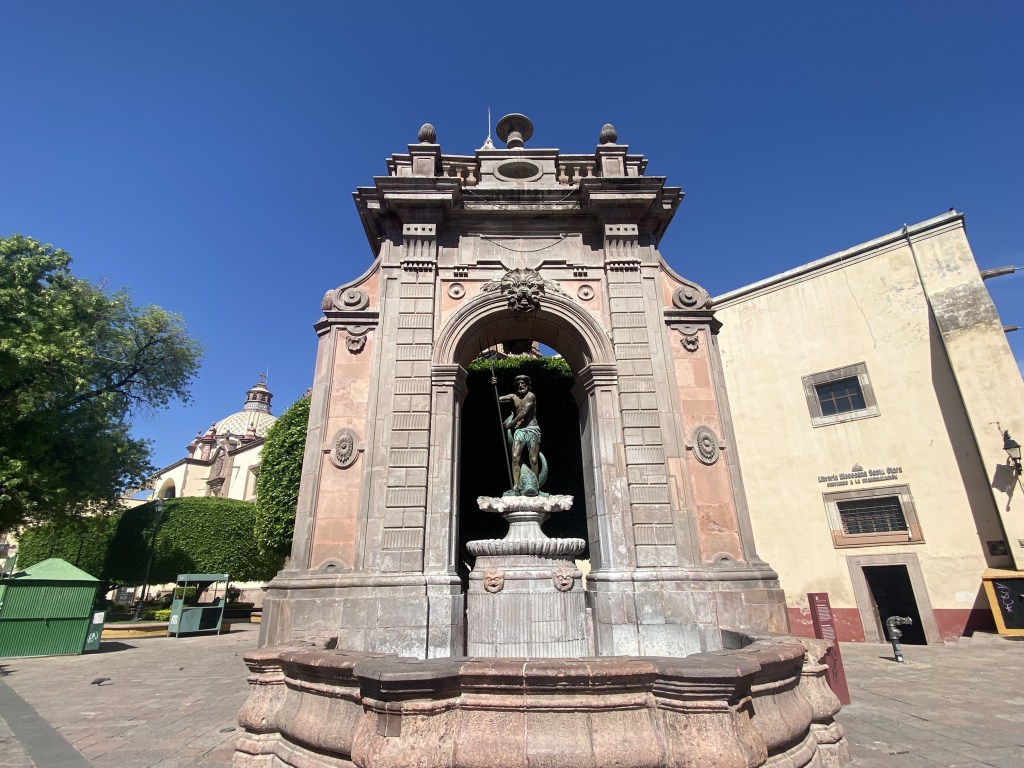
Fountain of Neptune

We continued our stroll through Querétaro.

Querétaro
Querétaro
Querétaro
Querétaro
MUCAL, Museo del Calendario

On our random walkabout, we found MUCAL, Museo del Calendario. The museum was housed in an amazing building with numerous flowering courtyards. Paintings in each gallery were done by different painters and were once used on calendars. It was so much fun to read about these paintings and their meanings. Most were depictions showing various aspects of Mexican life & culture.

I found out I am a Cabrá (goat) by the Chinese calendar. Of the goat, the sign says: “Personality and Qualities: Creative, generous, docile, intuitive, and modest, they also stand out for their honesty and sincerity, with a hint of shyness. Their nobility and tenderness can be trusted; deep down, they are pessimistic, insecure, and introverted. (Hmm…)

“The Goat comes across as docile, gentle, and hasty. They struggle to express their true emotions; it’s difficult to discover what’s going on inside; therefore, they can suddenly burst into tears for no apparent reason. With a strong tendency to daydream, they need support and guidance to be able to pursue what truly excites them, wandering in their inner world of fantasies. Insecure, they need to feel loved and in a protective environment. They have an unwavering, dreamy attitude, always in another world to escape reality.” (The part in purple I think is true of me!)

Mike is a Caballo (horse).

MUCAL, Museo del Calendario
I'm a Cabra
I’m a Cabra
Mike is Caballo
Mike is Caballo
MUCAL, Museo del Calendario
me at MUCAL, Museo del Calendario

In the Galería Pintores / Multiple Painters Gallery (#5), we found original works of art from the great masters in calendar paintings such as Humberto Limón, Manuel Piña Vigueras (1930-1995), Antonio Gómez R., Santiago Sadurní Pernia (1923-1990), and Jesús Bribiesca.

Many calendar paintings reflected the “pin-up” style, in which girls pose in suggestive and mischievous attitude. It was a popular trend to have beautiful girls posing sensually in the calendars of the 1950s.

One image shows a family and child during his first Communion ceremony. Another shows a peasant performing her work in the field using her shawl to hold the seeds that are gently cast to the ground.

In Galería Santiago Sadurni Pernia (1923-1990) (#6), we found original paintings from this great calendar painter.

A parade commemorating the Battle of Puebla (May 5, 1862) in which Mexican troops led by Ignacio Zaragoza won a victory over the invading French forces. Antonio Gómez R.
Picturesque image that reflects typical Mexican food & tequila in the plaza. Tequila is a native drink which originated in the town of Tequila. Antonio Gómez R.
A hill in Guanajuato (in background) honoring Christ the King. Antonio Gómez R.
MUCAL, Museo del Calendario
Image of a beautiful girl posing sensually. Manuel Piña
The "pin-up" style, in which girls pose in suggestive and mischievous attitude by Manuel Piña
The “pin-up” style, in which girls pose in suggestive and mischievous attitude by Manuel Piña
Desconocido by Jesús B.
MUCAL, Museo del Calendario
After colonization, Mexico was widely influenced by Spanish culture. The guitar is one of the instruments of Spanish heritage mainly used to accompany typical religious themes by Cembranos Vélez
MUCAL, Museo del Calendario
family and child during his first Communion ceremony by Antonio Gómez R.
"En el Rio" by Santiago Sadurní Pernia
“En el Rio” by Santiago Sadurní Pernia
The beauty of this young woman, the sea, and the sky are the perfect combination for calendar illustrations. Santiago Sadurní Pernia
"Ofrenda" by Santiago Sadurní Pernia
“Ofrenda” by Santiago Sadurní Pernia
"La Bamba" by Santiago Sadurní Pernia
“La Bamba” by Santiago Sadurní Pernia
MUCAL, Museo del Calendario
"Buena Monta" by Santiago Sadurní Pernia. The Jaripeo (rodeo) began in the early XIX century from the chores that wranglers and horse-tamers performed in the corrals.
“Buena Monta” by Santiago Sadurní Pernia. The Jaripeo (rodeo) began in the early XIX century from the chores that wranglers and horse-tamers performed in the corrals.
During the 20s, as society became more liberal, some fiction publications began to show illustrations in the "pin-up" style. Santiago Sadurní Pernia
During the 20s, as society became more liberal, some fiction publications began to show illustrations in the “pin-up” style. Santiago Sadurní Pernia
"Ferrari" As part of the "pin-up" style, specific scenes were used to accentuate mischief and sensuality
“Ferrari” As part of the “pin-up” style, specific scenes were used to accentuate mischief and sensuality
MUCAL, Museo del Calendario

As we walked out of one gallery into another, we were surrounded by leafy and flowering courtyards with ambiance. The Galería (#7) Ángel Martin Merino (1932- ) showcased original paintings by this great calendar painter.

Galería (#8) Jesús de la Helguera (1910-1971) showed the most complete sample ever assembled from the most famous calendar painter of all time.  Galería Raúl Vieyra Flores (1935- ) (#9) was a tribute to the calendar painter, recently presented in the Divus Prager Kabarett in Czech Republic with his covers of the comic book “El Libro Vaquero.”

courtyard at MUCAL, Museo del Calendario
In this painting, we see that Mexican mischief plays a major role. Shown are a beautiful girl and an old man who is trying to safely bring the boat to shore while a crab acts up. Ángel Martin Merino
During the Golden Age of Mexican cinema, the "Charro," a charming rogue, became a popular icon. Ángel Martin Merino
During the Golden Age of Mexican cinema, the “Charro,” a charming rogue, became a popular icon. Ángel Martin Merino
Ichthyology is the study and classification of fish. Mexico has a rich variety, nearly 1400, species of fish. Ángel Martin Merino
MUCAL, Museo del Calendario
Costume typical of Huautla de Jiménez, Oaxaca. Ángel Martin Merino
Mexican artisans are recognized worldwide as deeply sensitive and creative artists. Ángel Martin Merino
A "manda" (plea) or promise is a prayer that, while committing to God's will, offers gifts or sacrifices in exchange for a granted favor. Ángel Martin Merino
A “manda” (plea) or promise is a prayer that, while committing to God’s will, offers gifts or sacrifices in exchange for a granted favor. Ángel Martin Merino
Galería Jesús de la Helguera (1910-1971)
MUCAL, Museo del Calendario
"Bodegón Mexicano" by Raúl Vieyra Flores
“Bodegón Mexicano” by Raúl Vieyra Flores
Representation of an Aztec sacrifice (a religious practice held in the towns of some indigenous people) in which the painter depicts a beautiful woman delivered as tribute to the gods by a warrior and a feathered snake. Raúl Vieyra Flores
With a humorous tone, this painting shows the common use of calendars as both decorative and useful objects. Raúl Vieyra Flores
"Buena Personalidad" by Raúl Vieyra Flores 2007
“Buena Personalidad” by Raúl Vieyra Flores 2007
"Linda Chiapaneca" by Raúl Vieyra Flores 1987
“Linda Chiapaneca” by Raúl Vieyra Flores 1987

Calendarios Antiguos/Antique Calendars  (10-15) had samples of whole calendars from different years and months. Gallery 11 showcased antique calendars from 1890-1949.

Enero 1930
Enero 1930
1934
1934
1934
1934
1947
1947
Diciembre 1940
Diciembre 1940
Diciembre 1940
Diciembre 1940
Enero 1938
Enero 1938
Enero 1945
Enero 1945
Enero 1945
Enero 1945
Diciembre 1947
Diciembre 1947
Enero 1948
Enero 1948

We went up to the rooftop and then enjoyed fruit juices in the garden at Café MUCAL. After our break, we continued through the galleries #12 (1950-1959) and 14 & 15 (1960-2011). It was breezy and pleasant this morning in this beautiful space.

rooftop of MUCAL, Museo del Calendario
view of courtyard from the rooftop
MUCAL, Museo del Calendario
Octubre 1950
Octubre 1950
Diciembre 1950
Diciembre 1950
Diciembre 1950
Diciembre 1950
Enero 1952
Enero 1952
Enero 1954
Enero 1954
Junio 1956
Junio 1956
1959
1959
Noviembre 1949
Noviembre 1949
Diciembre 1950
Diciembre 1950
Enero 1960
Enero 1960
1960
1960
Enero-Febrero 2006
Enero-Febrero 2006
2003
2003
2000
2000
Diciembre 1993
Diciembre 1993
January-February 1990
Marzo-Abril 1971
Marzo-Abril 1971
Noviembre-Diciembre 1978
1991
1991
Mike at MUCAL
Mike at MUCAL

Then we wandered into a cute gift shop where we found metallic hummingbirds that we would take home tomorrow and put on our screened porch.

Querétaro
Querétaro
Querétaro
Querétaro
Temple of San Felipe Neri (Cathedral of Querétaro)

We continued walking to Temple of San Felipe Neri (Cathedral of Querétaro). Built in the late 18th century and consecrated in 1805, this temple is considered an exceptional example of the neoclassical style in Querétaro. Its façade stands out for the use of Greco-Roman and Tezontle columns, and a red volcanic stone rarely used in religious buildings of the time.

Querétaro was founded as a town of Indians without a cathedral. As the city grew, the ecclesiastical administration used existing temples, such as the Temple of the Congregation or San Francisco. At the beginning of the 20th century, San Felipe Neri was given up by its religious order and in 1921 the Holy See designated it as a cathedral. It was consecrated in 1931.

Temple of San Felipe Neri (Cathedral of Querétaro)

TEMPLO Y EX-CONVENTO DE SANTA ROSA DE VITERBO

We made it to a corner of the historic center where we found the Templo Y Ex-Convento de Santa Rosa de Viterbo, one of the finest Baroque structures in the city. It was originally designed and built by architect Ignacio Mariano de las Casas in 1754. Quite distinct from other baroque churches in Mexico, Santa Rosa de Viterbo distinguishes itself with an ornately designed exterior, replete with massive flying buttresses, carved stonework, delicate frescoes, and garish gargoyles. It stands over a small stone fountain in Plazuela Mariano de las Casa, and the overall effect is impressive.

Inside, the church is equally spectacular. Sadly, the principal altar was destroyed in 1849, but in the main nave, there are six gold-drenched churrigueresque altars from the 18th century as well as a collection of important colonial-era paintings and retablos.

Templo Y Ex-Convento de Santa Rosa de Viterbo

We continued our stroll past a small simple chapel and an “UNO A UNO” stop sign. These are common on street corners in this area. Drivers are expected to stop, let one car go, then go themselves.

chapel in Querétaro
chapel in Querétaro
Uno a Uno
Uno a Uno
Querétaro
Querétaro
Temple and Convent of Santo Domingo

We popped into the Temple and Convent of Santo Domingo. Built around 1697, this religious complex served as a resting place for Dominican missionaries on their way to the Sierra Gorda. In the viceregal age, the temple and convent occupied 15 thousand square meters on the block between the present streets of Guerrero, Ocampo, Pino Suárez, and Arteaga.

The site still has the main temple and an annexed chapel dedicated to the Virgin of the Rosary. The interior of the temple features mural painting, cupolas, and windows inspired by architecture of the Italian Renaissance. On its façade are various elements characteristic of the Baroque of Querétaro: scrolls, foliage, garlands, and Hermes of cantera (a type of rock native to Mexico).

Temple and Convent of Santo Domingo
Querétaro
Querétaro
Fountain of Neptune
Fountain of Neptune
Yougan Sushi

We ended up at Yougan Sushi for lunch. We wanted something different from Mexican food, but at this place both the food and service were awful. My shrimp tempura rolls were layered with sliced American cheese. Mike’s udon was just okay. I really regretted this meal! Only the cute decorations in this place made it slightly worth our while.

Yougan Sushi
Yougan Sushi
Mike at Yougan Sushi
me at Yougan Sushi
me at Yougan Sushi
mural in Querétaro
mural in Querétaro
mural in Querétaro
mural in Querétaro
Querétaro
Querétaro
Museo Regional de Querétaro

After lunch, we went to the Museo Regional de Querétaro, housed in the beautiful former monastery that adjoins the Templo de San Francisco de Asís.

The 11 rooms in this historic space display artifacts from Querétaro city and state, including a nice collection of ceramics and sculpture from the region’s pre-Columbian cultures.

The exhibits address each era in Querétaro’s history, with rooms dedicated to the colonial era (including personal effects of the famous Josefa Ortiz de Dominguez), the Reformation, the American invasion, the 19th century, and the Mexican Revolution. Texts are only in Spanish.

Museo Regional de Querétaro

There was a modern art exhibit in one gallery called BOCAMINA (Entrance to a mine shaft or gallery), Pintura de Virginia Ledesma.

BOCAMINA
BOCAMINA
BOCAMINA
BOCAMINA
BOCAMINA
BOCAMINA
BOCAMINA
BOCAMINA
Jardín Zenea

Jardín Zenea occupies a full city block between Calles Corregidora and Juárez in the centro histórico. Named after a former Querétaro governor, Benito Santos Zenea, this lovely garden is one of the most popular gathering points in town. Often, there are performances in the round kiosk in the middle of the plaza.

We especially loved the trees pruned into dome-like shapes.

Jardín Zenea
Jardín Zenea
Jardín Zenea
Jardín Zenea
Jardín Zenea
Jardín Zenea
Jardín Zenea
Jardín Zenea
Jardín Zenea
Jardín Zenea
Jardín Zenea
Jardín Zenea
Mercado de la Cruz

At the end of our day, we walked quite a distance from our hotel to Mercado de la Cruz, Querétaro’s large covered market. It is a colorful place to shop for fresh produce, fish, meat, flowers, and crafts. It is also a great place to get a bite to eat, with a wide array of food stalls and fruit stands throughout the interior. It opened on September 28, 1979.

Mercado de la Cruz is a bustling urban market, typical of many large Mexican cities though more picturesque (and photogenic) than others.

Mercado de la Cruz
Mercado de la Cruz
Mercado de la Cruz
Mercado de la Cruz
Mercado de la Cruz
Mercado de la Cruz
Mercado de la Cruz
Mercado de la Cruz
Mercado de la Cruz
Mercado de la Cruz
Mercado de la Cruz
Mercado de la Cruz
Mercado de la Cruz
Mercado de la Cruz
Mercado de la Cruz
Mercado de la Cruz
Mercado de la Cruz
Mercado de la Cruz
Mercado de la Cruz
Mercado de la Cruz
Mercado de la Cruz
Mercado de la Cruz
Mercado de la Cruz
Mercado de la Cruz
Mercado de la Cruz
Mercado de la Cruz
Mercado de la Cruz
Mercado de la Cruz
Mercado de la Cruz
Mercado de la Cruz
Querétaro
Querétaro
Terraza la Grupa

Our last night in Querétaro, we enjoyed dinner on the terrace of our hotel, Casa Aspeytia, at the restaurant Terraza la Grupa. I had ravioli and Mike three pastor tacos; we also shared guacamole & chips, tomato soup in a bread bowl, and a brownie with ice cream. I think we went a bit overboard. But we did enjoy the sunset and one of us at least enjoyed the live music. 🎵

view from Terraza la Grupa
me at Terraza la Grupa
view from Terraza la Grupa
Mike and me at Terraza la Grupa
view from Terraza la Grupa
Mike at Terraza la Grupa
ravioli at Terraza la Grupa
pastor tacos at Terraza la Grupa
Mike in Terraza la Grupa
me in Casa Aspeytia
me in Casa Aspeytia

Steps: 12,795; Miles 5.43. Weather Hi 86°, Lo 50°. Sunny.

Wednesday, March 5: We left Querétaro early this morning and drove, mostly without incident, about 2 hours and 45 minutes to Mexico City International Airport, where we turned in our rental car to Alamo. Our Avianca flight was supposed to be at 4:50 p.m. but we had been notified that the plane was late and would leave instead at 5:41 p.m., arriving in El Salvador at 8:03 (2 hours 22 minutes). Sadly that meant we would likely miss our 8:30 flight home from El Salvador to Washington.

When we arrived in El Salvador, we practically ran to the gate, thinking they might let us on, but they had closed the gate and wouldn’t open it. Instead, we had to wait for a 10:05 p.m. flight to Washington.

waiting in El Savlador
El Salvador airport
El Salvador airport

Steps: 6,848; Miles 2.9. Weather Querétaro: Hi 88°, Lo 46°.

Thursday, March 6: We finally arrived home after a (4 hr 7 min) flight home at 3:04 a.m. on March 6. Finally, we were home sweet home in Virginia after a month away!
Welcome to Virginia

Steps: 10,833. Miles 4.59.

Share this:

  • Share on X (Opens in new window) X
  • Share on Facebook (Opens in new window) Facebook
  • More
  • Email a link to a friend (Opens in new window) Email
  • Print (Opens in new window) Print
  • Share on Pinterest (Opens in new window) Pinterest
Like Loading...
  • International Travel
  • Mexico
  • North America

san miguel de allende: a birthday celebration, exploring the town & meeting fellow bloggers

wanderessence1025's avatar wanderessence1025 May 14, 2025
Arrival in San Miguel de Allende

Tuesday, February 25, 2025: We arrived at our two-story apartment at Calvario 8 in San Miguel de Allende on Tuesday late afternoon and promptly went out to a market to pick up some breakfast food.

our apartment in San Miguel de Allende

After dropping our food and before unpacking, we went out for dinner in the classic courtyard at La Doña de San Miguel. We shared HIBISCUS HARD SHELL TACOS (4PZ) with guacamole, serrano chili, pickled onion and cotija cbeese; “FLAMA” CHEESE: Mixed cheese au gratin with grilled chistorra and sliced chile chilaca; & “MAIZAL” CORN CREAM SOPA: with fried bacon, yellow corn and poblano chili roasted cubes. It was delicious and we had the place almost to ourselves.

La Doña San Miguel
La Doña San Miguel
drinks and chips at La Doña San Miguel
“FLAMA” CHEESE, HIBISCUS HARD SHELL TACOS, “MAIZAL” CORN CREAM SOPA
La Doña San Miguel
La Doña San Miguel
La Doña San Miguel
La Doña San Miguel
San Miguel de Allende at night

After dinner, we unpacked and settled into our two-story apartment. We loved its two outdoor patios, one on the second level outside of our bedrooom, and one on a third level.

Some tidbits about San Miguel

San Miguel de Allende was once settled by nomadic tribes known by the Spanish as La Gran Chichimeca. In 1542, Franciscan friar Juan de San Miguel arrived and founded the settlement of San Miguel de los Chicimecas along the Laja River Valley. Between 1548 and 1549, a French friar moved the settlement to the hill of Izcuinapan, site of a natural spring known today as El Chorro.

In the mid-16th century, the booming silver mines near the cities of Zacatecas and Guanajuato changed San Miguel, which was strategically located between the northern mines and Mexico City, into a strategic crossroads for traders traveling along the Camino Real de Tierra Adentra (Royal Inland Route), leading to great prosperity. During the 17th century, San Miguel grew from a settlement of several hundred to a small city of about 15,000. A new parish church was built in 1683, and by the early 18th century, wealthy criollos (colonial-era term for Mexicans of Spanish descent) had begun to build luxurious homes around the town’s main plaza. The wealth attracted some of the country’s most celebrated architects and painters.

When the fight for independence from Spain began in 1810, San Miguel fell peacefully to the newly formed Mexican army. Though not affected by violent conflict, San Miguel was ruinously sacked after its surrender.  After the long War of Independence ended, San Miguel was largely destroyed. Silver production dropped and the city fell into decline. By 1821, there were only 5,000 residents; the town was renamed San Miguel de Allende in 1826.

San Miguel remained a forgotten backwater until the early 20th century; it was declared a national monument by the Mexican government in 1926. When Latin America’s first art school opened soon after, it attracted a few Americans to study there under the GI Bill (following WWII). Many never left. In 2008, the entire downtown district was named a World Heritage Site by the United Nations. (Moon: San Miguel de Allende)

Of San Miguel de Allende’s population of around 175,000, foreign residents range from 20,000 to 25,000, with at least half of these from the United States. Most are retirees from the United States, Canada, and Europe, attracted by the mild climate, cultural opportunities, and low crime. It is only a ten-hour drive from the U.S. border. The large foreign presence has established a number of institutions here, most notably the Biblioteca Pública in the former convent of Santa Ana, which has the second-largest English-language book collection in Mexico and serves as a community center for foreigners (Wikipedia: San Miguel de Allende).

Steps: 8,877; Miles 3.76. Weather Hi: 83°, Lo 47°. Sunny.

Mike’s birthday celebration

Wednesday, February 26: Today was Mike’s 71st birthday so I gave him the choice as to what we would do to celebrate. He chose to go on a series of outings on the outskirts of San Miguel de Allende: 1) La Gruta; 2) Nirvana; 3) Atotonilco; & 4) Tres Raíces.

La Gruta

We started the day at La Gruta at 10:00 a.m. The hot springs at La Gruta Spa include several pools of thermal waters and a steamy cave (gruta) of warmer water that visitors can access by swimming through a cool tunnel. The pools get warmer the closer one gets to the gruta.

The pools are set amidst lush plants, banana trees, and flowers.

We started in the most lukewarm pool and then moved to a warmer pool where a group of Mexicans were already drinking micheladas & cervezas (it was 10:30 am). They seemed to be having a grand time.

We moved to a warmer pool from which we then swam/walked through a tunnel to the gruta.

We then went back to the pool where we could have drinks while soaking and got our own michelada, a spicy Mexican beer cocktail made with tomato juice, lime, and hot sauce, to share. We stayed there for about 2 1/2 hours then headed to Nirvana for lunch.

La Gruta Spa
La Gruta Spa
the birthday boy at La Gruta Spa
me at La Gruta Spa
me at La Gruta Spa
La Gruta Spa
La Gruta Spa
La Gruta Spa
La Gruta Spa
La Gruta Spa
La Gruta Spa
La Gruta Spa
La Gruta Spa
La Gruta Spa
La Gruta Spa
La Gruta Spa
La Gruta Spa
me with michelada at La Gruta Spa
Mike with his michelada at La Gruta Spa
La Gruta Spa
La Gruta Spa
La Gruta Spa
La Gruta Spa
La Gruta Spa
La Gruta Spa
Nirvana

For part 2 of Mike’s birthday, we ate a lovely lunch at Nirvana, a spot recommended by Endre, our host at Terra Vista in Guanajuato. We sat under a thatched roof on a ridge with a cool breeze and a view over a herd of goats in a valley below. It was breezy and scenic spot.

We shared a beet, goat cheese and walnut salad, a corn soup, and sausages with veggies and cheese. It was a wonderful place to celebrate another orbit around the sun for Mike.

plate at Nirvana
plate at Nirvana
view from our table at Nirvana
Mike at Nirvana
Mike at Nirvana
beet, goat cheese and walnut salad
corn soup at Nirvana
Nirvana
Nirvana
Nirvana
Nirvana
Nirvana
Nirvana
me at Nirvana
me at Nirvana
Nirvana
Nirvana
Nirvana
Nirvana
Nirvana
Nirvana
Nirvana
Nirvana
Nirvana
Nirvana
Nirvana
Nirvana
Mike at Nirvana
Mike at Nirvana
Santuario de Jesús Nazareno de Atotonilco

For part 3 of Mike’s birthday, we visited Santuario de Jesús Nazareno de Atotonilco, a church complex and part of a World Heritage Site, designated along with nearby San Miguel de Allende.

Santuario de Jesús Nazareno de Atotonilco

The complex was built in the 18th century by Father Luis Felipe Neri de Alfaro, who, according to tradition, was called upon by a vision of Jesus with a crown of thorns on his head, with blood on his face and carrying a cross.

Santuario de Jesús Nazareno de Atotonilco

The main feature of the complex is the rich Mexican Baroque mural work that adorns the main nave and chapels. This was chiefly the work of Antonio Martínez de Pocasangre over a period of thirty years. The mural work has led the complex to be dubbed the “Sistine Chapel of Mexico.” The complex remains a place of worship and penance to this day, attracting as many as 5,000 visitors every week.

Santuario de Jesús Nazareno de Atotonilco
street in Atotonilco
Tres Raíces Winery

To wrap up Mike’s birthday: we topped off the day at Tres Raíces Winery. It was more of an industrial-like complex than what we expected. Again, this was recommended by Endre at Terra Vista in Guanajuato. We cheered Mike’s birthday with glasses of cool white wine, shared a chocolate mousse cake, and bought a bottle of Sauvignon blanc.

Tres Raíces Winery
Tres Raíces Winery
Tres Raíces Winery
Tres Raíces Winery
Tres Raíces Winery
Tres Raíces Winery
Tres Raíces Winery
Tres Raíces Winery
Tres Raíces Winery
Tres Raíces Winery
Mike at Tres Raíces Winery
Tres Raíces Winery
Tres Raíces Winery
Tres Raíces Winery
Tres Raíces Winery
Tres Raíces Winery
Tres Raíces Winery
Tres Raíces Winery
Tres Raíces Winery
Tres Raíces Winery
Tres Raíces Winery
San Miguel de Allende

It took us over an hour to return to San Miguel de Allende because of major road construction north of town. We sat at a dead standstill for long periods of time. A frustrating way to end our day of outings but luckily, it didn’t ruin Mike’s special day. 😍🥂🎂

Since we’d had a long day exploring the outskirts of San Miguel de Allende, we decided to stay at our Airbnb and sit on our two patios to enjoy the sunset. We also chatted with our daughter Sarah by FaceTime and gave her a tour of the apartment. We had chatted by FaceTime with Adam while at Tres Raíces and with Alex while driving back to town.

On our patio, we had one last tequila & fresca. Overall, I think Mike had a wonderful birthday. And now that he’s 71, I can enjoy this period from now to October when I’m in my last year of my 60s and Mike is 2 years older than me! 🤣😘😂

Mike ate some of his leftovers from Nirvana and I had Ritz crackers with peanut butter for dinner. I’d had plenty to eat during the day!

the patio of our Airbnb apartment in San Miguel de Allende
Mike toasting his 71 years
me on the patio
me on the patio
patio views of San Miguel

Steps: 4,656; Miles 1.97. Weather Hi: 82°, Lo 46°. Sunny.

Thursday, February 27: Our first day in the town of San Miguel de Allende, we had a lazy morning. On our way out, we got photos in front of our Airbnb and our narrow street, Calvario.

Mike stands at the outside door of our Airbnb in San Miguel de Allende
me outside our Airbnb
our Airbnb cobblestone street
Templo de San Francisco

Then we headed to the town center, first stopping at Templo de San Francisco; there we admired the ornate carvings of its churrigueresque entryway. A fine example of Mexican baroque architecture, this church was constructed at the end of the 18th century. The principal facade is the site’s most striking feature, with cascading sandstone columns carefully carved with saints and figures.

The church’s large dome towers over Calle Mesones. In contrast to its ornate exterior, the Templo de San Francisco’s interior is austere, with very high ceilings and glass chandeliers, a neoclassical altar, and walls lined with rows of wooden saints and dark retablos.

We enjoyed El Jardín with its box cut trees 🌳 that provide a lot of shade.

Templo de San Francisco
me at Templo de San Francisco
Templo de San Francisco
San Miguel De Allende
El Jardín
El Jardín
Parroquia de San Miguel Arcángel

The Parroquia de San Miguel Arcángel is impressive with its neo-Gothic sandstone towers. The building itself was constructed in the 16th century and, as old photographs reveal, was large but rather unspectacular. In the 19th century, the church’s facade received a complete renovation at the hands of imaginative architect Zeferino Gutiérrez. According to local history, this self-taught draftsman based his design for the parish on prints of the Gothic cathedral in Cologne, Germany. The results display cascading bricks of pink sandstone surrounding the peaked archways of the parish, concluding in three pointed bell towers.

While the exterior of the parroquia is elaborate, the interior’s design is spare and neoclassical, with towering stone columns flanking the altar and chapels, some gilded.

There is a carved statue of San Miguel Arcángel on the altar; however, there is a more notable sculpture of Jesus in the east transept, carved from cane bark and highlighted by a backdrop of turquoise Byzantine mosaic and aging murals.

Today, the Parroquia de San Miguel Arcángel is still the parish seat, mass is held here daily, and weddings take place almost every weekend.

We saw some of our first mojigangas (moh-he-GAHN-gahs), giant puppets, animated by the dancers who wear them. In other parts of Mexico, they are sometimes known by names that are variations of giant or doll. When we saw one walk by, we were having coffee in a cafe while FKJ sang “Why Are There Boundaries.”

We then wandered around San Miguel with no particular destination in mind.

Parroquia de San Miguel Arcángel
mojiganga & me
mojiganga & me
El Jardín
El Jardín
Parroquia de San Miguel Arcángel
mojiganga walking past a cafe in San Miguel de Allende
cute shop in San Miguel
pretty courtyard in San Miguel de Allende
San Miguel de Allende
Templo de la Inmaculada Concepción

We popped into the Templo de la Inmaculada Concepción, known locally as Las Monjas; it was originally built as part of an extensive housing complex; now, it serves as a convent for the nuns of the order of the Immaculate Conception.

The church was built between 1755 and 1842, with the elegant dome added by Zeferino Gutiérrez in 1891. He again modeled his construction on a European historic site, the church of Les Invalides in Paris, France.

Templo de la Inmaculada Concepción
San Miguel wanderings

I dragged Mike into a number of cute shops and bought a few camisas for myself. I hadn’t found much in the way of shopping in Mexico, so of course I was happy to contribute to the local economy.

We stopped for a light lunch (as light as we can get in Mexico) at Los Burritos. I liked it because the food was good and we were the only gringos in there. Nearly 20,000 expats live in San Miguel, about 10% of the population, so we saw hordes of white-haired people that looked like me!  The popular look for white haired men seems to be white hair with a white goatee.:-)

San Miguel de Allende
Los Burritos
Los Burritos
Los Burritos
Los Burritos
Los Burritos
Los Burritos
Mike at Los Burritos
me at Los Burritos
me at Los Burritos
shopping in San Miguel de Allende
Oratorio San Felipe Neri

We dropped into more cute shops in San Miguel. Also, we dropped into another church: Oratorio San Felipe Neri. During the 18th century, the congregation of San Felipe Neri was rapidly gaining popularity throughout New Spain. In San Miguel de Allende, the congregation constructed the beautiful Oratorio San Felipe Neri in 1714, along with a school, the Colegio San Francisco de Sales.

The pink sandstone facade of the oratorio is delicately carved and represents the beginning of a shift in architectural aesthetic, from baroque to churrigueresque. Above the facade, the church has five beautiful bell towers, which were recently restored. The unpainted pink sandstone tower to the northwest of the church is especially lovely.

Oratorio San Felipe Neri

We walked through a park with a horseman statue and the up to our street, in the next to last photo, where the green taxi is exiting. It’s our tiny one way street called Calvario. The white apartment with blue trim is the outside of our Airbnb again. I spread out all my Mexican tops on the bed for a photo op and the rooster was atop one of our patios.

statue of horseman in park in San Miguel de Allende
Quinceañera dresses
Quinceañera dresses
San Miguel de Allende
the narrow street to our Airbnb (left) in San Miguel de Allende
our Airbnb in San Miguel de Allende
Some new Mexican tops I bought in San Miguel
rooster weather vane on our patio
Baja Fish Taquito

After relaxing for a bit in the afternoon, we went Thursday night to the rooftop at Baja Fish Taquito. We enjoyed refreshing Jicama with chili powder, a michelada & tequila, Taco torito (chile güero capeado relleno de camarón / battered chili filled with shrimp), Taco de camarón enchilado con queso/ Spicy shrimp taco with cheese, & Aztec soup.

We went for a short stroll after dinner.

jicama with chili powder at Baja Fish Taquito
me at Baja Fish Taquito
michelada and beer at Baja Fish Taquito
view from rooftop at Baja Fish Taquito
Aztec soup
Aztec soup
Taco torito (chile güero capeado relleno de camarón / battered chili filled with shrimp)
view from rooftop at Baja Fish Taquito
shop in San Miguel de Allende
mojiganga shop in San Miguel

Steps: 7,337; Miles 3.11. Weather Hi: 85°, Lo 49°. Sunny.

El Charco del Ingenio

Friday, February 28: Friday morning, we went to El Charco del Ingenio, a beautiful botanical garden set near a reservoir in San Miguel de Allende. It was early, so despite the sun it was breezy and cool.

While wandering around El Charco del Ingenio, we happened upon four people who we found by chance had many similarities to us. I think it was Mike’s North Carolina hat that started the conversation because one of the young guys was born in Chapel Hill (UNC in Chapel Hill is Mike’s alma mater). That same guy’s father was, for a time during the guy’s youth, president of The College of William & Mary, my alma mater. One of the older men said he graduated from William & Mary and was in Glenn Close’s class (I think he said ‘69). I graduated in 1978. We all expressed our dismay & disgust over our scumbag President and how he’s ruining the country. We talked about Dogwood Dell and the delis around W&M. The young guy and I both got married (1st weddings both) in the Wren Chapel & I had my reception outdoors under the shelter at Lake Matoaka, both on the campus of W&M. So many strange coincidences. One of the older guys, married to the W&M graduate, has an apartment in SMA and spends alternating 2 months here in Mexico then 2 months in San Francisco. The young couple was from San Diego. It’s such a small world sometimes!

El Charco del Ingenio
me at El Charco del Ingenio
El Charco del Ingenio
Mike at El Charco del Ingenio
me at El Charco del Ingenio
El Charco del Ingenio
view of San Miguel from El Charco del Ingenio
El Charco del Ingenio
Mineral de Pozos & Mine of Santa Brigida

After visiting the garden, we drove about an hour out to Mineral de Pozos and the Mine of Santa Brigida. For more on that, see: exploring the outskirts of san miguel de allende: santa rosa de lima, dolores hidalgo, mineral de pozos & the mine of santa brigida.

Iglesia San Pedro in Mineral de Pozos
Hornos Jesuitas at Santa Brigida Mine
Arcos Mágicos (Magic Arches of the Sun and the Moon)
Santa Brigida Mine
Santa Brigida Mine
Hank’s in San Miguel de Allende

After our mining town expedition, and after relaxing in our apartment for a while, we went out to dinner at Hank’s, a New Orleans style restaurant in the centro histórico. They had a Mardi Gras theme going full blast. We also heard music that didn’t sound much like Mardi Gras, like “El Soto V1 – Remix” by Adan JFW, Doble ONE Flow Letal, which I loved even if it didn’t fit the theme. We shared appetizer dishes of roasted corn cream soup and fried oysters, strolled around the town, and got ice cream treats at a heladeria.

me in San Miguel de Allende
Oratorio San Felipe Neri
Mike at Hank's
Mike at Hank’s
Hank's
Hank’s
Hank's
Hank’s
Hank's
Hank’s
San Miguel de Allende at night
Parroquia de San Miguel Arcángel
heladeria in San Miguel de Allende
mojiganga in San Miguel
shop in San Miguel
shop in San Miguel

Steps: 11,796; Miles 5.0. Weather Hi: 84°, Lo 50°. Sunny.

Meeting fellow bloggers of Green Global Trek at Mercado Sano on the Ancha

Saturday, March 1: Saturday morning, our last day in San Miguel de Allende, we had the pleasure of meeting fellow Instagramers and bloggers, Peta and Ben of @greenglobaltrek .

Peta and Ben have been inspirational to me over the years as they have lived abroad in many Asian & Central American countries, especially Bali, Sri Lanka and Nicaragua. As our son has been living in Nicaragua for the last 5 years and married a Nicaraguan woman with 3 daughters, we have common ground in our shared experience of Ometepe Island, where Adam lives and where Ben and Peta own property. We know some of the same people such as British Ben, the owner of Cafe Campestre, and American Rachel, owner of Pan de Mama. Peta still has dreams of building a house on their land in Ometepe. I have these kinds of dreams myself (in many other places but not Ometepe) but Mike is always reminding me that I can’t live everywhere and still travel like I want to.

We all expressed fear and dismay that the demise of the U.S. is at hand. Luckily they live in SMA, while we are hoping to escape the U.S. as soon as possible.

We met at their favorite organic market in SMA, Mercado Sano on the Ancha. We enjoyed coffees, courtesy of Ben, talked about our experiences in Japan and Ometepe, and they shared their love of Mexico and SMA. They also told us stories about the most challenging place they lived, Sri Lanka.

on our way to Mercado Sano on the Ancha
on the way to the market
another building on the way to Mercado Sano on the Ancha
fun VW bus we saw on the way to the market
church on the way to Mercado Sano on the Ancha
me, Mike and Ben at Mercado Sano on the Ancha
me with Peta at Mercado Sano on the Ancha
Mercado Sano on the Ancha
San Antonio neighborhood

After eating an early lunch at the market, we took a taxi to Peta and Ben’s house in the San Antonio neighborhood and got to see their amazing casa which they substantially designed and refurbished. It was so wonderful to meet this couple who I have interacted with online for such a long time! 🙏🏻🙏🏻 It was truly a special treat for us.

After leaving Ben & Peta’s casa, we wandered through the San Antonio neighborhood with its colorful murals.

Peta and Ben at their house in SMA
murals in the San Antonio neighborhood
Fábrica la Aurora

We caught a taxi to Fábrica la Aurora, a large art gallery in barrio Aurora. The taxi driver was playing, of all things, “Alone Again (Naturally)” by Gilbert O’Sullivan. We wandered around there for a while and then caught another taxi to a toy museum near our apartment.

Fábrica la Aurora
Fábrica la Aurora
Fábrica la Aurora
Fábrica la Aurora
Fábrica la Aurora
Fábrica la Aurora
Fábrica la Aurora
Fábrica la Aurora
Mike & me at Fábrica la Aurora
Museo la Esquina del Juguete

We visited the cute little Museo la Esquina del Juguete (Toy Corner Museum) not far from our apartment on Saturday afternoon. It was fascinating to see all the children’s colorful Mexican toys.

Museo la Esquina del Juguete
El Manantial

On our last night in San Miguel de Allende, we took Ben & Peta’s advice and went to El Manantial, a bar/cafe not too far from our apartment. It was a lively place with good music and friendly vibes. Bill Withers sang “Ain’t No Sunshine” and “Lean on Me,” and Ishtar sang “Last Kiss” as we bid adieu to San Miguel.

We met a couple, a young man from Boston & a woman from Mexico. He had left the US to come to Mexico just before the pandemic (just as my son left the country & ended up in Nicaragua). He met his partner while she was bartending in Playa del Carmen. Now he works remotely and they live a month or two in different Mexican towns. I love how people figure out many different ways to live and work abroad.

Mike enjoyed a tequila pour & a Camarón en pico de gallo tostada = Camarón con tomate, cebolla, e cilantro y aguacate. I didn’t have a drink because we had just shared a tall beer on our patio. I had Chile ahumado = Chile poblano tatemado relleno de queso y frijoles. We shared a warm brownie for dessert.

around the corner from Museo la Esquina del Juguete
on the way to El Manantial
mural on the way to El Manantial
El Manantial
El Manantial
me in front of El Manantial
El Manantial
El Manantial
El Manantial
El Manantial
Chile ahumado = Chile poblano tatemado relleno de queso y frijoles
Camarón en pico de gallo tostada = Camarón con tomate, cebolla, e cilantro y aguacate
El Manantial
El Manantial
Mike at El Manantial
me at El Manantial
me at El Manantial

Steps: 10,755; Miles 4.56. Weather Hi: 81°, Lo 47°. Sunny.

Sunday, March 2: We checked out of our Airbnb as late as we could, as we only had an hour drive to Querétaro, our last stop on our Mexican trip. We of course didn’t think we could check in until 3:00 in Querétaro, so we took our sweet time checking out of our Airbnb. We waited on the front steps of our Airbnb to have our car brought to us, and soon we were on our way.

waiting to leave San Miguel de Allende
Mike in front of our Airbnb
The address of our Airbnb
me waiting for the car in front of our Airbnb

We drove about an hour to Querétaro with no issues.

Share this:

  • Share on X (Opens in new window) X
  • Share on Facebook (Opens in new window) Facebook
  • More
  • Email a link to a friend (Opens in new window) Email
  • Print (Opens in new window) Print
  • Share on Pinterest (Opens in new window) Pinterest
Like Loading...
  • Dolores Hidalgo
  • Guanajuato
  • International Travel

exploring the outskirts of san miguel de allende: santa rosa de lima, dolores hidalgo, mineral de pozos & the mine of santa brigida

wanderessence1025's avatar wanderessence1025 May 7, 2025
Driving from Guanajuato to San Miguel de Allende. First stop: Santa Rosa de Lima

Tuesday, February 25, 2025: Tuesday morning, we left Guanajuato and drove over scrubby but scenic highlands to Santa Rosa de Lima, a small town known for its glazed majolica-style ceramics. We stopped at the Mayólica Santa Rosa and admired the colorful pottery and even bought a couple of small pieces. The workshop produces hand-painted urns, flowerpots, flatware, and tiles, often depicting plants, flowers, fruits and animals. They also produce clay figurines of animals.

Santa Rosa sits at 2,400 meters (8,000 feet) with mountains of pine trees surrounding it.

Mayólica Santa Rosa
Mayólica Santa Rosa
Mayólica Santa Rosa
Mayólica Santa Rosa
Mayólica Santa Rosa
Mayólica Santa Rosa
Mayólica Santa Rosa
Mayólica Santa Rosa
Mayólica Santa Rosa
Mayólica Santa Rosa
Mayólica Santa Rosa
Mayólica Santa Rosa
Mayólica Santa Rosa
Mayólica Santa Rosa
Mayólica Santa Rosa
Mayólica Santa Rosa
Mayólica Santa Rosa
Mayólica Santa Rosa
Mayólica Santa Rosa
Mayólica Santa Rosa
Mayólica Santa Rosa
Mayólica Santa Rosa
Mayólica Santa Rosa
Mayólica Santa Rosa

Then we visited Conservas Santa Rosa, a women’s cooperative which makes jams and marmalades with locally-grown fruits. There we sampled a variety of jams, salsas and chili pepper/olive oil combos, and came away with some snacks to take to San Miguel de Allende.

Conservas Santa Rosa
Santa Rosa de Lima
Santa Rosa de Lima

We headed from there to Dolores Hidalgo, about a 40 minute drive.

Landscape on the way to Dolores Hidalgo

Dolores Hidalgo

We continued our trip to San Miguel with another stop in Dolores Hidalgo.  We started by wandering haphazardly and came across the pink Iglesia de la Tercera Orden [Church of the Third Order], an 18th century church with Baroque architectural elements. The church was inaugurated in 1755. Its facade is partially covered with local tiles and it has a nice little courtyard on one side.

Iglesia de la Tercera Orden

Mike bought some fresh mangos from a street vendor and we walked to Plaza Principal and sat on a bench in the shade. It was such a beautiful, well-maintained square.

fresh mangoes
fresh mangoes
Mike enjoys fresh mangoes

Like many cities, the downtown district in Dolores Hidalgo is organized around a plaza principal (central square). The plaza is at the heart of the city’s busiest commercial zone, and it is a popular spot with local families. In the very center of the plaza, there is a bronze statue of the famous pastor Miguel Hidalgo, originally commissioned by President Benito Juárez.

The city was a small town known simply as Dolores when Father Miguel Hidalgo y Costilla uttered his famous “Grito de Dolores” (Cry of Dolores) while standing in front of Nuestra Señora de los Dolores parish church in the early hours of September 16, 1810. He called for the end of Spanish rule and encouraged the people to take up arms. This event marked the beginning of Mexico’s struggle for independence. After Mexico achieved independence, the town was renamed Dolores Hidalgo in his honor.

Dolores Hidalgo was named a Pueblo Mágico (Magic Town) in 2002.

On the west side, the plaza is bordered by the Casa de Visitas (Plaza Principal 25), an 18th-century mansion. During the War of Independence, Dolores’s Spanish governor and his wife were held in the Casa de Visitas as prisoners of the rebel army.

A young man in the park was making small sandwiches with avocado, chicharrones, salsa & chilies. We had to sample one and it was delicious.

Plaza Principal
Plaza Principal
Dolores Hidalgo: Pueblo Magico
bronze statue of the famous pastor Miguel Hidalgo
young man making small sandwiches with avocado, chicharrones, salsa & chilies
small sandwiches with avocado, chicharrones, salsa & chilies
young man making small sandwiches with avocado, chicharrones, salsa & chilies
bronze statue of the famous pastor Miguel Hidalgo
me in Plaza Principal of Dolores Hidalgo
Mike in Plaza Principal of Dolores Hidalgo

One of the most famous churches in Mexico, the Parroquia de Nuestra Señora de los Dolores (Parish Church of Our Lady of Sorrows) is the jewel of Dolores Hidalgo’s central square. This impressive sandstone church has an elaborate churrigueresque facade, topped by two soaring bell towers. Inside, wood floors and rows of wood pews stand before a neoclassical altar.

In the left transept, there is an ornate, hand-carved baroque altar washed in gold leaf. On the right is a walnut altar which has been carefully carved in wood but left without gold leaf or paint. Not only is the untreated wood beautiful, it illustrates the craftsmanship behind many of Mexico’s baroque altarpieces.

Parroquia de Nuestra Señora de los Dolores
civic building in Dolores Hidalgo
Parroquia de Nuestra Señora de los Dolores

After leaving Dolores Hidalgo, we drove on another hour to San Miguel de Allende, where we would spend five nights.

***************************

A day trip to Mineral de Pozos

Friday, February 28: Friday at lunchtime we arrived in the “ghost mining town” of Mineral de Pozos. This half-abandoned city, sitting on a hillside in the high desert chaparral, was a prosperous city during the 19th century, home to about 70,000 people and several prolific mineral mines. Over time, the town’s resources were depleted, the mines flooded and the population dwindled. The town has reawakened a bit, thanks to artists and expats settling down permanently away from the bustle of San Miguel de Allende.

We found a place to have lunch in a cute rooftop café, La Pila Seca de los Famosos de Pozos, where we shared enmoladas con pollo and an Aztec soup to the tunes of “Tanto la Queria” by Andy & Lucas, “Yo Quisiera” by Reik, and “Loba” by Shakira.

Mineral de Pozos
Mineral de Pozos
Mineral de Pozos
Mineral de Pozos
Mineral de Pozos
Mineral de Pozos
Mineral de Pozos
Mineral de Pozos
Iglesia San Pedro in Mineral de Pozos
Mineral de Pozos
Mineral de Pozos
Iglesia San Pedro in Mineral de Pozos
La Pila Seca in Mineral de Pozos
me at La Pila Seca
me at La Pila Seca
Mike at La Pila Seca
enmoladas con pollo at La Pila Seca
me at La Pila Seca
me at La Pila Seca
La Pila Seca in Mineral de Pozos
Mineral de Pozos
Mineral de Pozos
Mineral de Pozos
Mineral de Pozos
Mineral de Pozos
Mineral de Pozos

We took a short afternoon stroll around the weathered but charming little town. We wandered through the plaza principal and admired the Iglesia San Pedro; we had seen its dome from the rooftop cafe.

The town is full of mining history, traditions, architectural beauty, and ancient and modern festivities mostly held on weekends, when the town is apparently bustling.

Mineral de Pozos has a bohemian air, cobblestone streets, and traditional houses, located in the municipality of San Luis de la Paz, northeast of the state of Guanajuato. It was about an hour + 15 minute drive from San Miguel de Allende.

Mineral de Pozos
Mineral de Pozos
Mineral de Pozos
Mineral de Pozos
Mineral de Pozos
Mineral de Pozos
Mineral de Pozos
Mineral de Pozos
The ruined Mine of Santa Brigida

After visiting Mineral de Pozas, we drove about 15 minutes north of town on dirt roads that felt like we were in the middle of nowhere. We were actually in route to the Mine of Santa Brigida. This is the mine responsible for the economic boom in the region as it had gold, silver, copper, lead, zinc and mercury. It is also the oldest in the state becoming one of the emblems of the town.

dirt road to Mine of Santa Brigida

In the semi-desert area we parked near a large red-and-white building which once served as the mine’s former management offices, paid the minder 200 pesos, and walked around the ruins.

Santa Brigida was actually mined by indigenous people before it came under Spanish control. It was a pit mine, so it doesn’t have a traditional mine shaft. We walked along the large and deep crevice in the earth which is the mouth of the mine, unmarked and gravelly. In addition to the mine, there are several deep wells around the mining camp, with no danger signs to mark their existence.

Mine of Santa Brigida
me at Mine of Santa Brigida
Mine of Santa Brigida

We went into the Arcos Mágicos (Magic Arches of the Sun and the Moon), built in 1595 by the Jesuits. This building of narrow arches was the purifier of poisonous gases from the underground mine system, and also served to “air” the gold and silver at each of its doors. These arched ovens were also used for mercury amalgamation, which extracts metals from the rock.

It was also the astronomical and astrological observatory of the Jesuits, a site where two phenomena of lunar and solar light were manifested.

Arcos Mágicos (Magic Arches of the Sun and the Moon)

We also saw ruins of the three smelting ovens, Hornos Jesuitas, as well as the hull of what was the Hacienda de Beneficio de Santa Brígida.

This excursion reminded me of all my explorations of ruins with my friend Mario when I lived in Oman from 2011-2013.

Santa Brigida Mine
Santa Brigida Mine
Santa Brigida Mine
Santa Brigida Mine
Santa Brigida Mine
Santa Brigida Mine
Hornos Jesuitas
Hornos Jesuitas
Hornos Jesuitas
Hornos Jesuitas
Hornos Jesuitas
Hornos Jesuitas
Santa Brigida Mine
Santa Brigida Mine
Santa Brigida Mine
Santa Brigida Mine
Santa Brigida Mine
Santa Brigida Mine
Santa Brigida Mine
Santa Brigida Mine
Santa Brigida Mine
Santa Brigida Mine
Mike at Santa Brigida Mine
me at at Santa Brigida Mine
Hacienda de Beneficio de Santa Brígida
Santa Brigida Mine
Santa Brigida Mine
Hacienda de Beneficio de Santa Brígida
Hornos Jesuitas at Santa Brigida Mine

After leaving the mine, we drove back about an hour + 20 minutes to San Miguel de Allende.

Share this:

  • Share on X (Opens in new window) X
  • Share on Facebook (Opens in new window) Facebook
  • More
  • Email a link to a friend (Opens in new window) Email
  • Print (Opens in new window) Print
  • Share on Pinterest (Opens in new window) Pinterest
Like Loading...
  • Cocktail Hour
  • Monthly recap
  • Photography

the april cocktail hour: prepping our house for our son & family to housesit

wanderessence1025's avatar wanderessence1025 May 1, 2025

Wednesday, April 30, 2025: Welcome to our April cocktail hour. It’s been a busy but not very fun month for us. Besides the ongoing degradation of our democracy, our economy, our foreign alliances and our world standing by our wanna-be tyrant and Russian sympathizer, the FELON, we’ve been busy getting our house ready for our son Alex and his family to move in for the next year to house-sit while we move to Costa Rica.

Let’s have shots of tequila, served up in Frida Kahlo shot glasses, along with some Lady Justice beer.

Lady Justice beer with two shots of tequila in Frida Kahlo shot glasses from Mexico

I also have a variety of beers, soda or seltzer water for those of you who are calm enough to survive the next four years without angst, anxiety or alcohol.

How did your April go? Did you have a happy Easter Sunday celebration? Have you welcomed any new additions to your family?  Did you celebrate any birthdays or anniversaries? Have you read any good books that can inform your worldview, seen any good movies, binge-watched any television series? Have you planned any adventures or had any spring getaways? Have you dreamed any dreams? Have you gone to any exotic restaurants, cooked any new dishes? Have you been surprised by anything in life? Have you learned anything new, taken any classes or just kept up with the news? Have you sung along with any new songs? Have you undertaken any new exercise routines? Have you marched or otherwise participated in political protests? Have you been battered, or alternately, uplifted by any news?

***************

April was a busy month for us, especially as we’ve been preparing our house for our son and his family to move in while we move to Costa Rica. The things we’ve had to do haven’t been much fun, and they have been time-consuming and expensive.

A clothing decluttering & a new closet

I spent a great deal of time sorting through a lot of my clothes in preparation for having a closet built in the smallest of our spare rooms. We’ve never had much closet space in our house, and what’s worse is that I have a huge collection of clothes. So something had to be done so that we could consolidate all our clothes and clean out the master bedroom so Alex and Jandira can move their stuff in. We had an Elfa closet system installed on April 16, and I’m happy to say, it makes a world of difference.

spare room used as closet with racks
new Elfa closet units
the clothes in the new closet :-)
the clothes in the new closet 🙂
the clothes in the new closet :-)
the clothes in the new closet 🙂
the clothes in the new closet :-)
the clothes in the new closet 🙂
the clothes in the new closet :-)
the clothes in the new closet 🙂
Wrapping up yoga

My favorite yoga teacher, who now lives in Charlottesville, returned to the Beloved Yoga studio for a Saturday special Chakra Hatha Flow, so of course I had to go to that. I have a number of passes I need to use before I go, and ever since she left the studio, I haven’t been going to yoga at all. So now I’m in a mad rush to use all the passes I’ve paid for.  I tried out a Beginner’s yoga class one Saturday, but it was horrible! It’s so hard to find good teachers there. But I’ll have to grin and bear it until we leave at the end of May.

Other than yoga, I haven’t done much exercise other than walking. At least springtime showcased some colorful & vibrant flowers. 🙂

Walk around Lake Anne in Reston
redbud in our neighborhood
tulip mania in Vienna, VA
pretty carpeting
pretty carpeting
cherry blossoms in Reston
Hear, hear!

I went to the ENT because Mike is always complaining that I can’t hear (or is it that I don’t listen?) and he wanted me to have a hearing test. I found that my hearing in both ears has disintegrated, but luckily not to the degree that I need hearing aids  – yet! I really don’t want to wear them. I also had wax buildup cleaned out in my left ear. The ENT told me I should come back once a year for a cleaning and hearing test. Oh boy, another thing to add to my long list of annual doctor appointments as I continue to age.

Dining out

We ate dinner out at Ariake, using the rest of a gift certificate our daughter Sarah gave us for Christmas. We took out a Greek dinner from The Big Greek Cafe, and I made the mistake of getting the heavy pastichio (Greek Lasagna with Béchamel). Ugh, way too much thick pasta. Next time, it’ll be a shrimp salad for me. We also ate at our favorite vegetarian Indian restaurant, Woodlands, after seeing the movie The Ballad of Wallis Island at Cinema Arts Theatre.

Mike at Woodlands
Mike at Woodlands
me at Woodlands
me at Woodlands

On Good Friday, using a gift certificate Mike got from one of his high school friends, we went to Georgetown in D.C. and ate at Filomena Restaurante, which was decorated to the hilt with Easter bunnies, painted eggs and colorful blossoms for Easter.

Filomena Restaurante in Georgetown
Mike & the Easter Bunny at Filomena Restaurante in Georgetown
me at Filomena Restaurante in Georgetown
Mike atFilomena Restaurante in Georgetown
gnocchi with broccoli
Filomena Restaurante in Georgetown

We took a short stroll around Georgetown after lunch, passing by the Ukranian Embassy. Even though our government under Trump is treating Ukraine horribly, and acting as if it is Ukraine’s fault that Putin invaded them (an outright lie), we strongly support Ukraine and are utterly disgusted by the actions of the U.S. government under the current administration.

Georgetown murals
Georgetown murals
Georgetown
Georgetown
Georgetown murals
Georgetown murals
Ukrainian Embassy in Georgetown
Georgetown murals
Georgetown murals

We didn’t do much of anything for Easter as we didn’t have the family around and we’re not very religious anyway.

It was heartbreaking that Pope Francis died the day after Easter; why is it we always lose the good people? And then we’re stuck with the vile and evil people like Trump, Vance, Musk, Bondi, Hegseth, Patel, Putin and all other power-hungry politicians and operatives, as well as basically most billionaires and the entire Trump administration, Republicans, and MAGAts in general? Why, why, why?

Shortly after Easter, I got the “Gulf of Mexico” and “Lady Justice” beers I ordered from the progressive beer company in Illinois and Wisconsin, Minocqua Brewing Company. They are focused on progressive causes so I was happy to give them my business.

“Lady Justice” and “Gulf of Mexico” beer from Minocqua Brewing Company

We ate out at Mazadar Restaurant on the 27th. It’s one of our favorite restaurants but we never seem to make it there as much as we’d like.

Borani Banjan at Mazadar Restaurant
me at Mazadar
me at Mazadar
Mike at Mazadar
Mike at Mazadar
Borani Banjan at Mazadar Restaurant
Machicha Palo (Lamb shank) at Mazadar
Meat Mantu Appetizer
me on the colorful cushions at Mazadar
Chocolate cake with Saffron Ice Cream
A new iPhone

I got a new iPhone 16 Pro (my old one was an iPhone 11), and activated it on the 17th, which is always a bit of a hassle. But at least I checked off another item on my list. Luckily, I got a large credit on my old iPhone to offset the cost of the new phone; all I had to do was sign a 3-year contract with Verizon Wireless. We’ve been using Verizon for years, so it was nothing new.

in the Verizon store getting my new iPhone

Power washing and sealing our screened porch

On the 21st and 22nd (Earth Day), we had our screened porch power-washed and then sealed. It’s supposed to be done every 5 years, so it needed to be done before we left. It involved moving all the deck furniture off. Mike spent hours cleaning the chairs and tables of all the accumulated pollen and vacuuming the cushions. Then we put it all back together again (Actually I can thank Mike’s biking buddy Eric for help moving all the bulky pieces).

our newly sealed screened porch
Sarah’s 41st birthday

Our daughter celebrated her 41st birthday on April 26. She was busy working in Virginia Beach, but I went to Richmond to meet her on the 29th-30th to belatedly celebrate and to help her set up her new apartment in Richmond. She begins her new job with a Richmond law firm on May 5.

I was happy to be able to visit the Virginia Museum of Fine Arts in Richmond so I could finally see a Frida Kahlo exhibit: “Frida: Beyond the Myth.” Sadly, I had missed much of what I’d hoped to see of Frida Kahlo when we were in Mexico City. Frida’s story was perfectly encapsulated by signs at the exhibit, so I have included the information below:

Beyond the Myth

Although Frida Kahlo (1907-1954) is one of the most recognizable artists of the 2oth century, our understanding of her as an individual is incomplete.

A mythology surrounds the artist and focuses on her significant personal challenges: relationships, injuries, numerous surgeries, and severe chronic pain. She constructed a public persona composed of opposing characteristics: seductive and innocent, strong and vulnerable. Kahlo was, in essence, the architect of her own myth. Fortunately, her friends, lovers, and fellow artists captured aspects of Kahlo that go beyond this myth.

Organized chronologically, this exhibition examines the events in Kahlo’s life and her responses to them. When her works are presented alongside candid and formal portraits of the artist, we can begin to lift the veil of Kahlo’s persona and renew our appreciation for her extraordinary life and art.

Portrait of Alejandro Gómez Arías, 1928

Kahlo and her first boyfriend, Alejandro Gómez Arías, shown below in the gallery, met at school in 1922 and were both injured in the bus accident in 1925. He convinced doctors at the scene to help Kahlo despite their doubts for her survival, thereby saving her life. The inscription an the upper right was added in 1952, which tells us that Kahlo held onto this painting for over 24 years.

Virginia Museum of Fine Arts (VMFA) in Richmond, VA
Frida: Beyond the Myth at VMFA
Portrait of Alejandro Gómez Arías, 1928 by Frida Kahlo
Frida at Age 18, 1926 by Guillermo Kahlo
Self-Portrait in a Velvet Dress, 1926 by Frida Kahlo
Urban Landscape, 1925 by Frida Kahlo
Marriage & the United States (1929-1932)

Although Kahlo first saw Diego Rivera in 1922, they did not meet until 1928, when she asked him to critique her paintings. They were married in 1929 and spent much of the next three years traveling in the United States for Rivera’s mural commissions, including time in San Francisco, Philadelphia, New York, and Detroit. Early in their marriage, she terminated their first pregnancy when Rivera insisted they remain childless, and a few years later, she suffered a devastating miscarriage. Kahlo returned to Mexico to recuperate. These events greatly shaped her life and practice during this time.

In the United States, she encountered social elites and fellow contemporary artists. She also began wearing traditional Mexican Tehuana clothing-attire that became Kahlo’s signature style. While this self-fashioning displayed her Mexican pride, it also gave her a distinctive and even “exotic” appearance among Rivera’s wealthy patrons, who were garbed in designer clothing.

Frida Kahlo with Cigarette and White Dress, Coyoacán, Mexico City, 1929
Frida Kahlo, 1931 by Imogen Cunningham
New York & Paris (1932-1939)

Following the death of her mother, Kahlo rejoined Diego Rivera in Detroit.

In late 1932, the two traveled to New York for his mural commission at Rockefeller Center. After their return to Mexico at the end of 1933, Kahlo suffered several setbacks, including major surgery on her right foot and, devastatingly, her husband’s infidelity with her younger sister, Cristina.

She retaliated against Rivera’s betrayal by taking several lovers. When she became pregnant a third time, she chose to end the pregnancy.

The 1930s also brought important milestones for Kahlo’s professional career. During a visit to New York in 1938, she was invited to exhibit at the Julien Levy Gallery. (The gallerist’s photos of Kahlo appear in this section.) This same year, the French Surrealist André Breton saw Kahlo’s work in Mexico City. He declared Kahlo to be a Surrealist and invited her to exhibit in Paris in 1939. After her return from Paris, she separated from Rivera and moved back to her childhood home in Coyoacán.
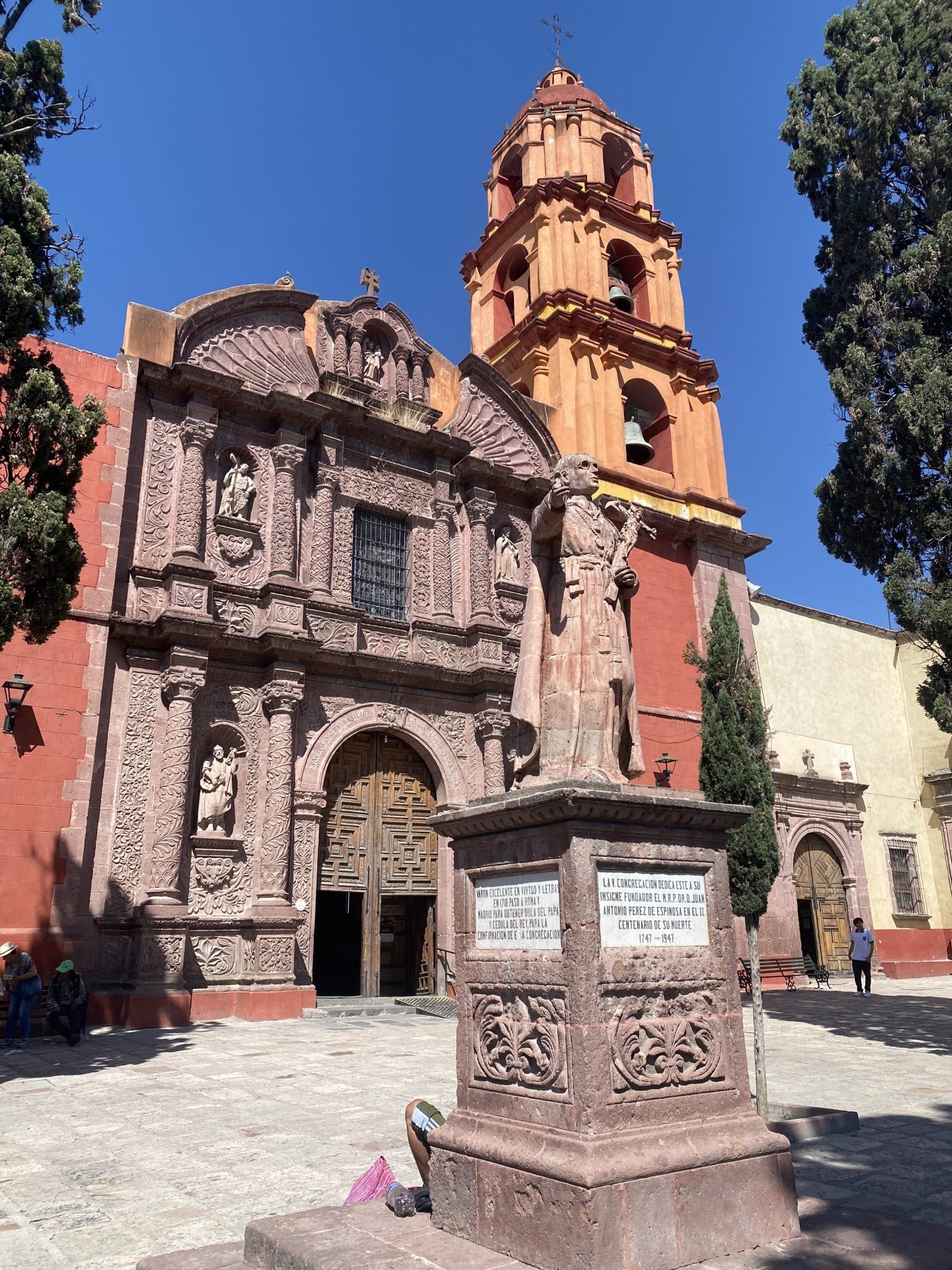
I found the paintings, photographs and paintings, along with their descriptions, fascinating. One in particular is shown below: The Suicide of Dorothy Hale, 1939.

Dorothy Hale was an actress with a failing career who, rather than continuing to rely on the generosity of her wealthy friends, died by suicide in 1928 by jumping from the 16th-story window of her apartment at the Hampshire House Hotel in Manhattan. Writer and politician Clare Booth Luce commissioned Kahlo to create a simple recuerdo (portrait of remembrance) for Hale’s mother. Instead, Kahlo chose to depict Hale’s final act. Luce was so shocked by this graphic portrayal that several friends had to convince her not to destroy it.

Frida Kahlo, 1938 by Julien Levy
Frida Kahlo with Globe, 1937 by Manuel Alvarez Bravo
Frida: Beyond the Myth at VMFA
Seated Figure Playing an Instrument, ca. 300 BC- AD 200. Unidentified Nayarit artist.
Survivor, 1938 by Frida Kahlo
Frida in Paris, 1939 by Dora Maar
The Suicide of Dorothy Hale, 1939 by Frida Kahlo
View of Central Park, the Zoo, 1931 by Frida Kahlo
Frida Kahlo con Nickolas Muray, 1939 by Nickolas Muray
Friday with Olmeca Figurine, Coyoacán, 1939 by Nickolas Muray
Frida with Blue Satin Blouse, 1939, by Nickolas Muray
Frida with Magenta Rebozo, 1939 by Nickolas Muray
Frida with Cigarette, Altavista, 1941 by Nickolas Muray
Frida with Fawn, Granizo, 1939 by Nickolas Muray
Frida on White Bench, New York, 1939 by Nickolas Muray
Professional Success & Physical Decline (1940-1948)

After divorcing in 1939, Frida Kahlo and Diego Rivera remarried in December 1940.

Professionally, her expanding fame brought awards, grants, and participation in several international exhibitions during the 1940s. Unfortunately, these successes were offset by the crushing loss of her beloved father in 1941 and her increasing health challenges as the years passed. Kahlo had become a professor of painting, but her poor health often confined her to bed and obliged students to attend class at her house. By 1944, she began wearing a steel corset to support and immobilize her back. In 1946 incessant pain prompted her to travel to New York City for a spinal fusion. The surgery and a series of subsequent operations were unsuccessful, and she slipped into more frequent bouts of depression.

Finally, in 1948, she endured Rivera filing for divorce twice: the first time to wed actress María Félix, and the second, to wed his art dealer, Emma Hurtado. He ultimately rescinded the divorce papers and remained with Kahlo until the end of her life. These years of immense physical and emotional pain resulted in some of her most powerful self-portraits.

Frida Kahlo in New York, 1946 by Nickolas Muray
Magnolias, 1945, by Frida Kahlo
Frida in Thought, 1944 by Sylvia Salmi
Self-Portrait with Monkey, 1945 by Frida Kahlo
Sun and Life, 1947 by Frida Kahlo
Self-Portrait with Loose Hair, 1947 by Frida Kahlo
Otomí Huipil Blouse Embroidered with Deer and Bird Design, 1951 by Unknown Otomí artist
Frida Kahlo, Xochimilco, Mexico, 1941 by Rosa Covarrubias
Frida Wearing Plaster Corset, 1951 by Florence Arquin
Frida in Bed at her Home, Coyoacán, 1952 by Bernice Kolko
Frida Painting Naturaleza Viva, 1951 (Unidentified photographer)

Final Years (1949-1954)

After another spinal surgery in 1949, Kahlo was hospitalized for nine months and relied on a wheelchair for mobility. She spent increasing amounts of time in bed— either in the hospital or at home. Still lifes became an effective vehicle of expression, and they account for over half of her artistic production during this period. The artist appreciated the fact that she didn’t have to worry about her appearance when painting still lifes, so her imagination could lead the way. Still lifes also permitted her to express her growing anxiety in a symbolic, more secretive manner that allowed potential buyers to view them simply as pleasing compositions.

In 1953 Kahlo had a triumphant first solo show in Mexico, but due to her poor health, she was forced to attend the opening lying in a bed. Months later, it became necessary to amputate her right leg. Her last public appearance was at a protest demonstration in early July, 11 days before she died on July 13, 1954.

Still Life with Parrot and Flag, 1951 by Frida Kahlo
Frida Following Amputation of Her Right Leg, 1953, Lola Alvarez Bravo
Still Life (Living Nature/Naturaleza Viva), 1952
Still Life (I Belong to Samuel Fastlicht), 1951 by Frida Kahlo
Dog with a Corncob, ca. 200 BC-AD 300, Unidentified Colima artist
Frida: Beyond the Myth at VMFA

I was so happy I got to see this exhibit. I found myself saddened by all the heartbreak Frida suffered in her life, between the bus accident in her youth, to her relationship with the philandering Diego Rivera, to her miscarriages and the physical pain she suffered with during her entire life. I love her exoticism and the way she stayed true to and amplified her Mexican heritage, of which she was very proud.

Sarah’s belated birthday

After meeting Sarah at her new apartment, we had lunch at Stella’s Market and then shopped in Target and Home Goods to get some things she needed for her new apartment.

After dropping her and all her goods by her apartment, I stopped to check in to my Airbnb on Parkwood in Carytown.

Carytown Airbnb
Carytown Airbnb
Carytown Airbnb
Carytown Airbnb
Carytown Airbnb
Carytown Airbnb

Later in the evening, we had a lovely dinner at Alewife in Churchill. It was a most delectable meal, with my favorites being the steamed mussels with green curry sauce and the tuna ceviche with aji amarillo, pickled onion, cilantro and chicharrones. Both were over the top and “to die for!”

Sarah also enjoyed her main meal of John Dory with potato puree, roasted mushrooms, and ramps and I enjoyed the appetizer Smoked Fish Dip: Pickles, Dill, trout roe, and grilled bread. My least favorite were the special crab hush puppies with Cajun remoulade.

Sarah making a toast at Alewife
steamed mussels with green curry sauce at Alewife
Sarah and me at Alewife
Sarah blows out a birthday candle

The next morning, we went shopping again, this time for some new clothes for Sarah’s birthday. I dropped her at the train station so she could return to Virginia Beach, and then I drove home to northern Virginia.

 A new roof to top off the month

Our insurance company approved the replacement of our roof due to storm damage, so on the last two days of the month, we had a new roof installed on our house. This was a thing I wasn’t excited to spend money on, so I’m glad the insurance company finally approved it.

a new roof being installed on our house
new roof ini progress
The family from afar

Here are some photos from April of the family in Nicaragua and in Atlanta.

Allie in Atlanta
Allie in Atlanta
Allie in Atlanta
Allie in Atlanta
Allie in Atlanta
Allie in Atlanta
Allie in Atlanta
Allie in Atlanta
Mia and little Mikey in Nicaragua
Adam and Mike in Nicaragua
Miscellaneous stuff

I finished 4 books in April, bringing my total to 15/48 for the year, with my favorites being Disappearing Earth by Julia Phillips and What You Are Looking For Is in the Library by Michiko Aoyama. We saw several movies: La Dulce Villa and Sult (A Copenhagen Love Story) on Netflix and The Ballad of Wallis Island at Cinema Arts Theatre. We finished the 3rd season of White Lotus, the 4th of The Upshaws, and the 6th of Virgin River, the 1st of The Äre Murders and Paradise, and the final seasons of Modern Family, Valeria, and the Turkish show Kimler Geldi Kimler Geçti (Thank You, Next). We started watching several series: Dying for Sex, The West Wing, Long Bright River, Your Friends & Neighbors, & Severance. We continued watching The Split, Younger, & Unforgotten.

I hope you’ll share how the year is panning out for you, and what plans you have for the spring and the rest of this year.

Share this:

  • Share on X (Opens in new window) X
  • Share on Facebook (Opens in new window) Facebook
  • More
  • Email a link to a friend (Opens in new window) Email
  • Print (Opens in new window) Print
  • Share on Pinterest (Opens in new window) Pinterest
Like Loading...
  • Guanajuato
  • International Travel
  • Mexico

the colorful university town of guanajuato, mexico

wanderessence1025's avatar wanderessence1025 April 23, 2025
A Challenging Drive from Mexico City to Guanajuato

Friday, February 21, 2025:  On Friday morning, we took an Uber at 9:30 am to Alamo Car Rental at the Mexico City Airport. By the time we signed all the paperwork and left the airport, it was 11:00. We thought we had a 4 1/2 hour drive ahead to Guanajuato. We had asked for a transponder so we could use it to go through toll plazas seamlessly and then pay whatever tolls we accrued when we returned the car. Every country in which we’ve rented cars has operated this way.

We then made our way north 20 minutes when we reached a single-booth plaza to the autopista but the transponder registered “invalid;” the gate to the highway wouldn’t open and we were shuttled off to a busy local road. Mike looked at Waze and it seemed if we didn’t use the toll road, it would take us 7 hours to get to Guanajuato. We tried to call Alamo but got a US number and no human to speak to. Thus we did a U-turn and drove 30 minutes through heavy traffic back to Alamo.

Our rental car: Chevy Onix
The GPS to Guanajuato as we left Mexico City's airport
The GPS to Guanajuato as we left Mexico City’s airport

There a woman who spoke English explained that we needed to put money on the transponder at a 7-11. She walked Mike to the terminal and helped him put 800 pesos on the card. One hour & 20 minutes later, at 12:20, we were on the road again.

We arrived back at the same toll plaza and the card still read invalid. We tried to pay with cash, but the man there said it was not possible to pay with cash. We were shuttled off once again to the same local road. This time we stopped at a gas station and Mike was told the cash balance normally takes 15-20 minutes to register. It had been a half hour since Mike had added the pesos.

Finally Google Maps led us on congested local roads to a large toll booth. The transponder still registered “invalid” but they did take cash. We finally got on the autopista and were on our way. It wasn’t until over an hour later that the transponder finally worked; however it didn’t work on all the highways.

So, between an auto accident where we were rerouted and between a huge traffic jam getting into Guanajuato and then getting lost in the city, the drive which was supposed to take 4 1/2 hours took us 7 hours.

Guanajuato: Hotel Terra Vista

We arrived at the amazing Hotel Terra Vista, where we had a beautiful apartment. It was huge, and actually slept 8 people including a fold-out couch.

Hotel Terra Vista
Hotel Terra Vista
Master bedroom at Hotel Terra Vista
shower and bathroom at Hotel Terra Vista
spare bedroom at Hotel Terra Vista
dining room at Hotel Terra Vista
living room at Hotel Terra Vista
kitchen at Hotel Terra Vista

We headed off quickly to eat at a nearby seafood place as we were told it closed at 7:00 p.m.

Mexican restaurant near Hotel Terra Vista

Steps: 4,329; Miles 1.83. Weather Mexico City: Hi 70°, Lo 48°. Mostly Cloudy / Guanajuato: Hi 73°, Lo 50°. Cloudy with some rain.

Saturday, February 22: We enjoyed our first view of Guanajuato from our beautiful apartment in Hotel Terra Vista, owned by Canadians Susan and Endre Pataky. The workshop pictured is used extensively by the owner Endre; he builds custom furniture for people and has served as general contractor for the building of the property itself. We adored this place!

The owners kept chickens on the property and each morning put out fresh eggs which guests could buy and use. We had bought four the night before, so we whipped up scrambled eggs for breakfast.

morning view from Hotel Terra Vista
patio at Hotel Terra Vista
master bedroom at Hotel Terra Vista
living room at Hotel Terra Vista
patio at Hotel Terra Vista
Hotel Terra Vista
Hotel Terra Vista
Hotel Terra Vista
Hotel Terra Vista
Endre's woodworking shop at Hotel Terra Vista
Endre’s woodworking shop at Hotel Terra Vista

After breakfast, we walked from the patio area of our Terra Vista Apartment down the road and then down 280 steps into the center of Guanajuato City, capital of the state of Guanajuato. The city was made prosperous in the late 18th century by silver mining; by 1780, Guanajuato was the world’s single biggest silver city, producing between a fifth and a quarter of all New Spain’s silver.

The city’s prosperity was abruptly curtailed when the Mexican War of Independence (Mexico’s war with Spain from 1810-1821) broke out in 1810, starting in nearby Dolores Hidalgo. The rebel army invaded Guanajuato when it refused to surrender on September 28, 1810, and the Alhóndiga de Granaditas, the public granary, was the site of one of the most important and bloodiest battles in the War of Independence.

While other silver mines went into decline after independence, Guanajuato’s silver mines continued to produce throughout the 19th century. In the late 1980s, Guanajuato began massive restoration projects on its many historic buildings. The historic center has numerous small plazas and colonial-era mansions, churches, and civil constructions built using pink or green sandstone. The city historic center and the adjacent mines were proclaimed a World Heritage Site by UNESCO in 1988.

The city of about 195,000 people (2020 census) is located in a narrow valley, which makes its streets narrow and winding. Most are alleys that cars cannot pass through, and some are long sets of stairs up the mountainsides. Many of the city’s thoroughfares are partially or fully underground. We were told there are 28 tunnels that run under the city.

Our first encounter with a church in town was Iglesia San Francisco, a church and former convent, originally built in the 18th century by Franciscan friars as accompaniment to their school and orphanage. The church has a stunning pink sandstone churrigueresque entryway.

walking down the steps into Guanajuato
Guanajuato
Guanajuato
Guanajuato
Guanajuato
Guanajuato
Guanajuato
Guanajuato
Guanajuato
Guanajuato
Guanajuato
Guanajuato
Guanajuato
Guanajuato
Guanajuato
Guanajuato
Guanajuato
Guanajuato
Guanajuato
Guanajuato
Guanajuato
Guanajuato
Guanajuato
Guanajuato
Guanajuato
Iglesia de San Francisco in Guanajuato
Guanajuato
Guanajuato

We strolled through to the Jardín de la Unión & Teatro Juárez. The Jardín de la Unión is a lively square with square-clipped trees that sits in front of Teatro Juárez. It’s surrounded by shops and cafes and is a great place to sit in the shade and watch the bustle all around.

The Jardín de la Unión was once the atrium of a large San Diegan convent in the city center. It was converted to a public space during the post-independence Reformation of the early 19th century.

We climbed to a rooftop cafe where we shared a waffle, sipped coffee, and enjoyed the views of Teatro Juárez, accompanied by the songs “Farolito” by Gilberto Gil & Natalia Lafourcade and “Tú Sí Sabes Quererme (feat. Los Macorinos)” by Natalia Lafourcade.

Back at street level, I found two beautiful bracelets at a shop across from Teatro Juárez. Then we walked all around the lively Jardín de la Unión.

Teatro Juárez
Teatro Juárez
cafe overlooking Teatro Juárez
mural in cafe
mural in cafe
Teatro Juárez
Teatro Juárez
Jardín de la Unión
Jardín de la Unión
me at a cute shop
me at a cute shop
Jardín de la Unión
Jardín de la Unión
Jardín de la Unión
Jardín de la Unión
img_3539
Mike at Jardín de la Unión
me at Jardín de la Unión

What a colorful and lively city Guanajuato is! We continued our aimless wanderings, admiring the city’s sherbet-colored colonial buildings, its plethora of churches, Guanajuato University, & the triangle-shaped esplanade, Plaza de la Paz, with its striking yellow Basilica de Nuestra Señora de Guanajuato, the city’s first parish church. In 1957, the church was upgraded from parroquia (parish church) to the elevated title of basilica. Built in the 17th century with funds from the mines, the building’s brightly painted facade is largely original, though its churrigueresque bell tower was added in the 19th century. Each of the church’s three entryways is surrounded by a lovely hand-carved sandstone facade.

The basilica’s interior is a wash of subtle pastels, marble floors and shiny crystal. The walls are painted with delicate frescoes in pink, aqua and white.

We stopped for lunch at La Tasca de la Paz. We tried the traditional dish, Enchiladas de Minero Rico (Tortillas de maíz bañadas en salsa de chile guajillo acompañada de papas y zanahoria) and Consomé Casero: Apapacho de pollo con verduras. We enjoyed people-watching and listening to the tune of “Eternal Life” by Palaye Royale.

Later we walked by the university and saw the imposing Templo de la Compañia de Jesús, an exquisite pink sandstone church that was constructed 1747-1765 by Jesuit priests. Another boon of the silver trade, the large neoclassical cupola behind the main facade was added to the building during the 19th century, commissioned by the Jesuit brother of a mining magnate.

Guanajuato
Guanajuato
Guanajuato
Guanajuato
Guanajuato
Guanajuato
me in Guanajuato
me in Guanajuato
Guanajuato
Guanajuato
Guanajuato
Guanajuato
Basilica de Nuestra Señora de Guanajuato
Guanajuato
Guanajuato
Guanajuato
Guanajuato
Plaza de la Paz
Plaza de la Paz
Guanajuato
Guanajuato
La Tasca de la Paz
La Tasca de la Paz
Enchiladas de Minero Rico (Tortillas de maíz bañadas en salsa de chile guajillo acompañada de papas y zanahoria) at La Tasca de la Paz
Consomé Casero: Apapacho de pollo con verduras at La Tasca de la Paz
Plaza de la Paz
Plaza de la Paz
Basilica de Nuestra Señora de Guanajuato
Guanajuato
Guanajuato
Templo de la Compañia de Jesús
Guanajuato University (the tall white building)
Guanajuato
Guanajuato
Guanajuato
Guanajuato
Guanajuato
Guanajuato
Guanajuato
Guanajuato
Jardin de la Union in Guanajuato
A girl in a quinceañera dress walks past Teatro Juárez
Teatro Juárez

Teatro Juárez is a historical 19th century theater located in Guanajuato. It was built from 1872 to 1903 from a design by architect José Noriega and by order of General Florencio Antillón. The building was completed by architect Antonio Rivas Mercado and engineer Alberto Malo, who implemented refurbishments that significantly changed the exterior and interior.

The building has an opulent neoclassical facade emblematic of the Porfiriato, the period of rule of President Porfirio Díaz, which ended with the Mexican Revolution of 1910. The theater was inaugurated in 1903 with a performance of Verdi’s Aida. The building eventually fell into disrepair; attempts to restore the building began in the 1950s and went through 1973. Now it is a prominent performing arts venue.

Looking out over the Jardín de la Unión, Teatro Juárez has 12 Doric columns supporting a cornice topped by a row of black stone muses. Inside, the Gran Salón Auditorio, influenced by Moorish design, is decorated with hand-cut wood-and-stucco relief painted in brilliant reds, blues and golds.

Teatro Juárez
Teatro Juárez
Teatro Juárez
Teatro Juárez
Teatro Juárez
Teatro Juárez
Teatro Juárez
Teatro Juárez
Teatro Juárez
Teatro Juárez
Teatro Juárez
Teatro Juárez
Teatro Juárez
Teatro Juárez
Teatro Juárez
Teatro Juárez
Teatro Juárez
Teatro Juárez
Teatro Juárez
Teatro Juárez
Teatro Juárez
Teatro Juárez
Funicular Panorámico & El Pípila

After our visit to Teatro Juárez, we took the Funicular Panorámico, just behind the theater, up the hillside to the rose-colored El Pípila statue. From the public esplanade, we found magnificent views of Guanajuato in the ravine below.

view from the top of the Funicular Panorámico
Mike at the top of the Funicular Panorámico
me at the top of the Funicular Panorámico
Mike with a new friend
El Pípila statue
El Pípila statue
Hotel Terra Vista

We took a short walk back to our apartment, relaxed, sipped cold cervezas, & chatted with a British couple and a couple from Brooklyn, Scott & Alexandra. We talked a lot about the horrors that our new president is bringing to the world. Scott & Alexandra are very active in Democratic politics in Brooklyn. Of course as New Yorkers, they have a long-standing hatred of the 🍊 💩.

Hotel Terra Vista
Hotel Terra Vista
chickens at Hotel Terra Vista
patio at Hotel Terra Vista

After our long and lively discussion, Mike and I walked to a little hole-in-the-wall taco 🌮 place where we brought back delicious taco makings: mine was champignons & veggies & Mike’s was a unknown combo of meats and veggies. We set up the tacos in our apartment and enjoyed a delicious local meal.

dinnertime
dinnertime
our meal in our apartment

Steps: 11,357; Miles 4.81. Weather: Hi 78°, Lo 48°. Mostly sunny.

Universidad de Guanajuato

Sunday, February 23: On Sunday, after breakfast in our apartment, we walked down to the town center to see the Universidad de Guanajuato (University of Guanajuato), a university based in the Mexican state of Guanajuato, made up of about 47,108 students in programs ranging from high school level to the doctorate level. Over 30,893 of those are pursuing undergraduate, masters, and doctorate degrees and 16,215 are in high school. The university offers 215 academic programs, including 117 postgraduate programs, and 90 bachelor’s degrees. The university has schools in fourteen cities throughout the state of Guanajuato.

We had read you could climb to the roof of the massive building for fabulous views of the town, but when we arrived eager to climb, we were told it was closed on Sunday and we should come back Monday through Friday.

breakfast
breakfast
Guanajuato
Guanajuato
Guanajuato
Guanajuato
Guanajuato
Guanajuato
Universidad de Guanajuato
Templo de la Compañia
Museo Casa Diego Rivera

We headed instead to the Diego Rivera Museum. The Museo Casa Diego Rivera is a museum founded in the birthplace of the artist Diego Rivera (1886 – 1957) in September 1975 with the aim of disseminating the works of the painter and prominent Mexican muralist who captured his communist ideals in building murals.

Within the museum itself there are six temporary rooms where exhibitions of Mexican and foreign artists are held. One hundred two works by Diego are on display, including sketches, illustrations, projects and paintings.

There was a special exhibit by renowned Dutch graphic artist M.C. Escher, titled “Structured Universe.” In this exhibit the curators showed us on a human scale how everything is organized here on earth down to the smallest sized animal recognizable to the naked eye, the insect.

“The artist specialized in woodcuts and lithographs, but his mezzotints have also been acknowledged as masterpieces in the medium. His work ranges from postal stamps, to tiling or tessellated geometric arrangements, and, most fascinatingly, analysis of self-reference, conscience, and paradoxes of logic and perspective.” (from the museum exhibition).

Museo Casa Diego Rivera
"Puddle" by M.C. Escher at Museo Casa Diego Rivera
“Puddle” by M.C. Escher at Museo Casa Diego Rivera
"Rippled Surface" by M. C. Escher at Museo Casa Diego Rivera
“Rippled Surface” by M. C. Escher at Museo Casa Diego Rivera
Museo Casa Diego Rivera
"Drawing Hands" by M.C. Escher at Museo Casa Diego Rivera
“Drawing Hands” by M.C. Escher at Museo Casa Diego Rivera
Museo Casa Diego Rivera

It was disappointing that no photos could be taken of Rivera’s works. I thought his studio in San Ángel, Mexico City was more interesting than his birthplace home, although the home was quite nice with its central courtyard.

According to the museum: “From his stance as a militant, activist and agitator, Diego Rivera championed art with ideological content and the post-revolutionary social struggle to constitute the Mexican nation, with the muralist movement at the center of his socialist art designed to reach the masses.”

Museo Casa Diego Rivera
statue of Diego Rivera near the Museo Casa Diego Rivera

For me, the most interesting part of the museum included black & white photos of Diego Rivera and Frida Kahlo.

Frida Kahlo
Frida Kahlo
Diego Rivera and Frida Kahlo

We finished our visit at the Museo Casa Diego Rivera in the courtyard of the house and then continued our wanders through the colorful town. We happened upon the Templo y Plaza de San Roque. The Templo San Roque is an old 18th century chapel overlooking a plaza of the same name. Originally built in 1726 by Father Don Juan José de Sopeño y Cevera, the building served as a santa escuela (Jesuit school) 1746-1794. The pink sandstone exterior has a simple stone entryway and three stone saints embedded into a wall of sandstone bricks.

Guanajuato
Guanajuato
Guanajuato
Guanajuato
Guanajuato
Guanajuato
me in Guanajuato
me in Guanajuato
Templo San Roque in Guanajuato
Guanajuato
Guanajuato
Guanajuato
Guanajuato
Parroquia de Belen
Parroquia de Belen
Alhóndiga de Granaditas

The Alhóndiga de Granaditas (public grain exchange), now the Regional Museum of Guanajuato, is an old grain storage building in Guanajuato City. This historic building, designed in a spare neoclassical style, was created to replace an old grain exchange near the city’s river. The giant boxy building resembles a fortress from the outside. Inside, a spacious patio is framed by heavy green sandstone columns. It is equivalent to the regional grain exchange. Its construction lasted from 1798 to 1809, by orders of Juan Antonio de Riaño y Bárcena, a Spaniard who was the quartermaster of the city during the Viceroyalty of New Spain.

Miguel Hidalgo y Costilla and his insurgent army stormed the building during the first battle of the Mexican War of Independence in September 1810, leading to the legend of El Pípila. El Pípila (the turkey) was a cripple who had an unusual way of walking. The Spaniards had hunkered down into the granary waiting for reinforcements. El Pípila, not fearing for his safety, strapped a large stone on his back, picked up a bucket of tar, grabbed a flaming torch and ran at the only weak point of the structure, the wooden door. The stone on his back protected him from the Spanish arrows that came at him. Once at the door, he coated it in tar and set fire to it with his torch. The solid wood door was weakened and the smoke blinded the Spaniards as the rebels rushed into the Alhondigas.

After the battle, the Alhóndiga was cleared out and served as a military barracks and warehouse. During the 19th century, it was a city jail for several decades. The building became a museum in 1949.

The building received World Heritage listing as part of the Historic Town of Guanajuato in 1988.

The walls of the building’s staircases are painted with dramatic murals about the independence movement by celebrated early-20th-century artist José Chávez Morado.

In the final salon, a collection of vintage photographs shows Guanajuato as it was in the early 1900s.

Murals in Alhóndiga de Granaditas
Alhóndiga de Granaditas
Murals in Alhóndiga de Granaditas

Some of the exhibits in the Alhóndiga de Granaditas showed old photographs of Guanajuato’s history. One exhibit was titled “Cartonería (cardboard),” which shows Mexican folk art such as folk toys, masks, catrinas and alebrijes.

Alhóndiga de Granaditas
Retrato de Benito Juárez by Francoise Aubert (ca 1870)
"Guillermo Prieto y Benito Juárez" (1970) by Ramón Casas
“Guillermo Prieto y Benito Juárez” (1970) by Ramón Casas
Alhóndiga de Granaditas
Romualdo y familia, ca. 1905, by Romualdo Garcia
Romualdo García
Romualdo García
"Joven con sombrero y silla, de la Serie "Mujeres" by Romualdo García
“Joven con sombrero y silla, de la Serie “Mujeres” by Romualdo García
Fochoda del Teatro Juárez, Guanajuato (ca. 1908) by Winfield Scott
"Porfirio Díaz en la hacienda de beneficiio La Valenciana, Guanajuato," 28 de octubre de 1903
“Porfirio Díaz en la hacienda de beneficiio La Valenciana, Guanajuato,” 28 de octubre de 1903
"Cartonería" at Alhóndiga de Granaditas
“Cartonería” at Alhóndiga de Granaditas
"Cartonería" at Alhóndiga de Granaditas
“Cartonería” at Alhóndiga de Granaditas
"Cartonería" at Alhóndiga de Granaditas
“Cartonería” at Alhóndiga de Granaditas
"Cartonería" at Alhóndiga de Granaditas
“Cartonería” at Alhóndiga de Granaditas
"Cartonería" at Alhóndiga de Granaditas
“Cartonería” at Alhóndiga de Granaditas
"Cartonería" at Alhóndiga de Granaditas
“Cartonería” at Alhóndiga de Granaditas
"Cartonería" at Alhóndiga de Granaditas
“Cartonería” at Alhóndiga de Granaditas
"Cartonería" at Alhóndiga de Granaditas
“Cartonería” at Alhóndiga de Granaditas
"Cartonería" at Alhóndiga de Granaditas
“Cartonería” at Alhóndiga de Granaditas
"Cartonería" at Alhóndiga de Granaditas
“Cartonería” at Alhóndiga de Granaditas
"Cartonería" at Alhóndiga de Granaditas
“Cartonería” at Alhóndiga de Granaditas
Alhóndiga de Granaditas

We enjoyed a Sunday afternoon lunch break in a pretty square at El Cerro de Las Ranas where Mike had Pollo con mole, and I had a chile relleno. We listened to “Secreto de Amor” by Joan Sebastian.

Guanajuato
Guanajuato
Guanajuato
Guanajuato
chile relleno at El Cerro de Las Ranas
Mike and Pollo con mole at El Cerro de Las Ranas
me at El Cerro de Las Ranas

We took at taxi back to our hotel and enjoyed wonderful afternoon views of Gunajuato from the terrace of Terra Vista.

Views of Gunajuato from the terrace of Terra Vista
An evening in Guanajuato

We took a break from Mexican food on Sunday evening, taking a taxi from our place on the ridge into town and having sushi at Delica Mitsu. Caravan Palace serenaded us with “Lone Digger.”

Delica Mitsu
Delica Mitsu
Delica Mitsu
Delica Mitsu
Delica Mitsu
Delica Mitsu
Delica Mitsu
Delica Mitsu
Delica Mitsu
Delica Mitsu
Delica Mitsu
Delica Mitsu
Delica Mitsu
Delica Mitsu
Delica Mitsu
Delica Mitsu

Taking a stroll after dinner we saw the Museo Iconografico Don Quixote, which seems strange to find in Mexico.

Guanajuato
Guanajuato
Iglesia de San Francisco in Guanajuato
Don Quixote Museum
Don Quixote Museum

Then we wandered down to Teatro Juárez where musicians were serenading people sitting on the front steps.

Teatro Juárez
Teatro Juárez
Teatro Juárez
Teatro Juárez
Musicians at Teatro Juárez

In the evenings, the streets of Guanajuato come alive with a cacophony of music from different bands. Around the Jardín de la Unión and around Teatro Juárez different bands play different tunes to people sitting on steps or in cafes. What results is a cantankerous brew of noise and one-upmanship. It’s a wild scene.

Guanajuato

Guanajuato

Steps: 12,390; Miles 5.25. Weather: Hi 79°, Lo 50°. Sunny.

Last day in Guanajuato

Monday, February 24: Monday morning we walked down to the town again for our last time, as we would leave on Tuesday for San Miguel del Allende.

Terra Vista
Terra Vista
me at Terra Vista
me at Terra Vista

We saw the Teatro Principal, another important theater in town.

Guanajuato
Guanajuato
Guanajuato
Guanajuato
Teatro Principal
Teatro Principal
Guanajuato
Guanajuato
Guanajuato
Guanajuato
Guanajuato
Guanajuato
Guanajuato
Guanajuato
café in Guanajuato
café in Guanajuato

We still wanted to go up on the roof of the University of Guanajuato to see the views. This time the university was open, but we weren’t allowed access because we weren’t students. The guard told us we could come back at 7:00 pm, but by then it would be dark. Finally, after our third visit, we had to give up!

University of Guanajuato

We then wandered to Callejón del Beso, (Alley of the Kiss), where two balconies across from each other on a narrow street are so close that a couple can kiss each other from the two balconies. According to a local legend, two lovers from different social classes lived in houses on opposite sides of the alley. Their families were opposed to the romance. Doña Ana was a rich young woman, while her lover, Don Carlos, was a poor miner. At night they would lean over their adjoining balconies for evening kisses.

Callejón del Beso
Callejón del Beso
Callejón del Beso
Callejón del Beso
Mercado Hidalgo

We wrapped up our last day in Guanajuato by visiting the Mercado Hidalgo, one of the nicest examples of turn-of-the-20th-century architecture in the city.It was inaugurated on September 16, 1910, by President Porfirio Díaz. It was a gift to the city in commemoration of the 100th anniversary of the Mexican War of Independence. It was originally designed as a train depot. The covered market today holds a jumble of fruit and vegetable stands, taco joints, juice bars and stands selling dulces tipicos (traditional Mexican candies). The second floor holds crafts and souvenirs, mostly inexpensive trinkets.

We wandered around the 2-story market and then had lunch at a small joint called Mariscos Del Mar. Usually the portions of Mexican food are huge, so I was happy to find a light salad-like camarones tostada. Mike’s lunch, on the other hand, was huge as usual.

Mercado Hidalgo
Mercado Hidalgo
Mercado Hidalgo
Mercado Hidalgo
Mercado Hidalgo
Mercado Hidalgo
Mercado Hidalgo
Mercado Hidalgo
Mercado Hidalgo
Mercado Hidalgo
Mariscos Del Mar at Mercado Hidalgo
Mike at Mariscos Del Mar
camarones tostada at Mariscos Del Mar
Mariscos Del Mar
Mariscos Del Mar
Mike at Mariscos Del Mar
Mercado Hidalgo
Mercado Hidalgo
Mercado Hidalgo
Mercado Hidalgo
Mercado Hidalgo
Mercado Hidalgo
Mercado Hidalgo
Mercado Hidalgo
Last night in Guanjuato: Hotel Terra Vista

We took a taxi to Terra Vista, relaxed a bit, then took beers out to the terrace where we continued our political discussions with Scott and Alexandra, as well as Endre, the owner of Terra Vista, who is a Canadian from Calgary and was playing a bit of a devil’s advocate but not in a bad way. He was challenging us to explain our points of view especially regarding both Biden’s and Trump’s use of Executive Orders. It was a good discussion and it was fun to talk to smart well-informed people, but honestly part of the reason we were in Mexico was to escape our vitriolic politics. We did feel a common bond with this group over our beliefs in human rights, support for Ukraine, limited presidential powers, the dangers of fascism, 47 (I refuse to say his name) and Elon Musk.

Hotel Terra Vista
Hotel Terra Vista
patio where our discussions took place at Terra Vista

Steps: 7,669; Miles 3.25. Weather: Hi 73°, Lo 50°.

Tuesday, February 25: We ate breakfast and said goodbye to Endre after he gave us a piece of bark from his woodworking shop where he wrote a number of recommendations for San Miguel de Allende and Querétaro. Before we left, he also gave us a tour of a house he’s building on the property which he intends to sell, for an asking price of $280,000. The design of it wasn’t especially to my liking, but the price sure seemed good.

breakfast at our Terra Vista apartment
Endre and Mike at Terra Vista

Endre’s recommendations for San Miguel de Allende and Querétaro

On our way out of town, heading on a northerly route toward San Miguel de Allende, with stops planned in Santa Rosa de Lima and Dolores Hidalgo, we saw a colorful but strange building. We had no idea what it was, possibly a church repurposed into a restaurant?

a colorful place just north of Guanajuato

We drove on to Santa Rosa de Lima, our first stop of the day.

Share this:

  • Share on X (Opens in new window) X
  • Share on Facebook (Opens in new window) Facebook
  • More
  • Email a link to a friend (Opens in new window) Email
  • Print (Opens in new window) Print
  • Share on Pinterest (Opens in new window) Pinterest
Like Loading...
  • Bosque de Chapultepec
  • Condesa
  • Coyoacán

mexico city: polanco, bosque de chapultepec, condesa, san ángel & coyoacán 3/3

wanderessence1025's avatar wanderessence1025 April 16, 2025
Polanco: Museo Jumex & Museo Soumaya

Wednesday, February 19, 2025:  On Wednesday morning, we woke up to a steady rain and a forecast for more rain until at least 2:00. We decided we’d spend the morning in two museums, starting in Polanco at the Museo Jumex.

Polanco is a privileged neighborhood in CDMX, with fine restaurants, shopping malls chock-full of designer clothing stores, and sky-high rents.

The sole heir of Jumex, the Mexican juice company, has amassed one of Latin America’s leading contemporary art collections in Museo Jumex. Temporary exhibits draw on around 2600 pieces from renowned Mexican and international artists, including Gabriel Orozco, Fernanda Gomez, Andy Warhol and Jeff Koons.British architect David Chipperfield designed the museum’s sawtooth roof.

The exhibit we saw today was Gabriel Orozco’s career-spanning exhibition, “Politécnico Nacional.” The artist was born in 1962 in Jalapa, Mexico. In 1966, the family moved to Mexico City, where Orozco grew up attending schools that emphasized active forms of learning; there he was immersed in Mexico’s progressive cultural milieu.

Orozco studied at the Escuela Nacional de Artes Plásticas, UNAM (1981-1984) and then at El Círculo de Bellas Artes in Madrid (1986-1987). From 1987 to 1991, he hosted “El Taller de los Viernes” (The Friday Workshop) in his house in Tlalpan, a collaborative learning workshop with younger artists Abraham Cruzvillegas, Gabriel Kuri, Damian Ortega and Jerónimo López (aka Dr Lakra).

Orozco’s interventions into urban and natural spaces, both public and private, started out in his walks around Mexico City and Madrid in the mid-1980s. These developed into actions as seen in works such as Until You Find Another Yellow Schwalbe (1996), in which he drove around the streets of Berlin looking to park his own yellow motorcycle next to another one of the same color and model (see photos below).

Orozco’s entire body of work could be thought of as a compost of commodities.For example, while traveling in Brazil in 1991, one of his first site-specific interventions was to place discarded oranges on trestle tables in a market that had recently packed up. The fruits were carefully arranged, one on each table, and then photographed. Through this simple gesture, the market was transformed into a kind of game board, with the leftover oranges as pieces in a new system of play.

While living in New York, he created ephemeral interventions in the supermarket near his apartment, disrupting the ordered universe of products in the aisles. Gatos y Sandías, for instance, documents cans of cat food placed on a display of watermelons. Gato en la jungla mixes cans of cat food with cans of green beans to depict cats peering out of tropical greenery. In these cases, commodities were taken out of their normal circuit of distribution and inserted in a different one, captured in photographs that would end up belonging to another kind of market. This basic game between different modes of circulation and distribution has preoccupied him ever since.

Playing with the idea of commodity lies at the heart of Orozco’s practice, such as La DS (1993), a sliced Citroën DS as a deconstructed cultural commodity of French modernity.

One of Orozco’s most famous works is Caja vacía de zapatos (Empty Shoe Box), which was sitting on the floor of the museum watched over carefully by two museum guards.

Museo Jumex
Museo Jumex
Museo Jumex
Museo Jumex
Caballos corriendo infinitamente (Horses Running Endlessly) (1995) at Museo Jumex
Atomistas. Asprilla (1996/2024) at Museo Jumex
Museo Jumex
Museo Jumex
Museo Jumex
Museo Jumex
Museo Jumex
Museo Jumex
Museo Jumex
Museo Jumex
Gabriel Orozco, La DS (Cornaline) (2013) at Museo Jumex
Until You Find Another Yellow Schwalbe (1996) at Museo Jumex
Gato en la jungla (1992) at Museo Jumex
Gatos y sandías (Cats and Watermelons) (1992) at Museo Jumex
Museo Jumex
Museo Jumex
Perro durmiendo (Sleeping Dog) (1990) at Museo Jumex
Museo Jumex
Museo Jumex
Mike at Museo Jumex
Mike at Museo Jumex
Caja vacía de zapatos (Empty Shoe Box) (1993) at Museo Jumex
Sin titulo (Untitled) 2006-2022 at Museo Jumex
Museo Jumex
Museo Jumex
Éclaircie (2008-2019) at Museo Jumex
Museo Jumex
Museo Jumex
First Lady (2017) at Museo Jumex
Museo Jumex
Museo Jumex
Museo Jumex
Museo Jumex
Mis manos son mi corazón (My Hands Are My Heart) (1991) at Museo Jumex
Cementerio (Vista 2) Cemetery (View 2) (2002)at Museo Jumex
Museo Jumex
Museo Jumex
Mike with bicycles at Museo Jumex
Museo Jumex
Museo Jumex

Adjacent to the Museo Jumex in posh Polanco is Museo Soumaya. The silver, rotated-rhomboid shape of this private museum is an art extravaganza in and of itself. Mexican billionaire Carlos Slim named his six-story behemoth after his late wife. Designed by son-in-law architect Fernando Romero, with guidance by Frank Gehry, Soumaya is plated with 16,000 aluminum hexagons.

We didn’t go inside but instead admired the interesting building, set off with lavender jacarandas, as we entered Museo Jumex and later, as we stood on its balconies.

Museo Soumaya

We also had views of gleaming high rises and high-end shopping malls all around.

high rises around Museo Soumaya
Museo Soumaya
Museo Soumaya
Bosque de Chapultepec: Museo Nacional de Antropologia

We took an Uber to the Museo Nacional de Antropologia  in Bosque de Chapultepec. This museum presents the rich history of Mexico in a fascinating, accessible way. We were able to get close to artifacts and even a reproduction of a pyramid from Teotihuacán. Giant Olmec head statues and intricate temples sit in verdant outdoor courtyards, uniting the old world and real world. Sadly, maybe because of the rain, the outdoor areas were roped off today.

There is so much to see in this museum that even a whole day wouldn’t do it justice. We first were met by an impressive cascade in the central courtyard known as el paraguas (the umbrella), which acts as a reminder of our connection to nature.

Various halls line up around the perimeter of the courtyard showing the rich aspects of Mexico’s long and varied culture: Teotihuacán Hall, Lost Toltecas, the Mexica (aka Aztec), Ozxaca and the Gulf of Mexico, and finally, Maya.

Museo Nacional de Antropologia
me at Museo Nacional de Antropologia
Museo Nacional de Antropologia
Condesa: Parque México & Avenida Amsterdam

We enjoyed a nice lunch at Santas Conchas Lonchería. We shared Tlalpeño Broth (Chicken, rice, chickpeas, vegetables, avocado, chipotle and melted cheese) and a Chili Dog (Pork sausage with chili, tomato, onion, cuaresmeño chili, mayonnaise) served with french fries. We also shared a Concha (shell), a traditional Hispanic sweet bread (pan dulce) with similar consistency to a brioche. Conchas get their name from their round shape and their striped, seashell-like appearance. Eating one was like eating air!

Santas Conchas Lonchería
Tlalpeño Broth (Chicken, rice, chickpeas, vegetables, avocado, chipotle and melted cheese)
Chili Dog (Pork sausage with chili, tomato, onion, cuaresmeño chili, mayonnaise) served with french fries
me at Santas Conchas Lonchería
Concha at Santas Conchas Lonchería

The heart of the Condesa neighborhood is the peaceful Parque México, the oval shape of which reflects its earlier use as an hippodromo (horse-racing track). The art deco park opened in 1927 and the sculpture of an indigenous woman holding water pitchers at one entrance was designed by great Mexican sculptor José María Fernández Urbina.

Parque México
Parque México
Parque México
Parque México
Parque México
Parque México
Parque México
Parque México
Parque México
Parque México
Parque México
Parque México

Parque México is ringed by a tree-lined median walkway called Avenida Amsterdam that is almost a park itself. After lunch, we walked the circular route around the walkway, enjoying an overview of Condesa, with roads running off it like wagon-wheel spokes. Each section has its own flavor, and intersects with sculptures and plazas.

Avenida Amsterdam
Avenida Amsterdam
Avenida Amsterdam
Avenida Amsterdam
Avenida Amsterdam
Avenida Amsterdam
Avenida Amsterdam
Avenida Amsterdam
Avenida Amsterdam
Avenida Amsterdam
yoga studio on Avenida Amsterdam
Avenida Amsterdam
Avenida Amsterdam
Avenida Amsterdam
Avenida Amsterdam
Avenida Amsterdam
Avenida Amsterdam
Avenida Amsterdam
Avenida Amsterdam

After we walked around the elliptical Avenida Amsterdam, we stopped for a happy hour at Butcher & Sons. We relaxed to songs “Silbo” by Féloche and “All That is You” by Me and My Friends. Mike got two tequila shots for the price of one, with salt and lime 🍋‍. I had to remind him how to do the salt on the back of the hand, a sip of tequila and the lime in the mouth. I had a Mr. Tambourine: Hendrick’s gin, cucumber slice, lemon twist, tonic water. I am such a sucker for drinks with cucumber in them!

Butcher & Sons
Butcher & Sons
Mr. Tambourine at Butcher & Sons
Mike at Butcher & Sons
me at Butcher & Sons

Steps: 10,146; Miles 4.3. Weather Hi 70°, Lo 48°. Cloudy and rainy.

San Ángel

Thursday, February 20: Our last day in Mexico City, we went to the southern neighborhoods of the city, San Ángel & Coyoacán.

Templo del Carmen & Museo de El Carmen

Our first stop was Templo del Carmen, once a monastery  and college built for the Discalced (Barefoot) Carmelites in 1615. The Aztec village of Tenanitla grew around it and became San Ángel. Today the church is an example of Herrerían-style architecture with its dome tiled in weathered Talavera and a golden baroque altar inside.

me at Templo del Carmen
Mike at Templo del Carmen
Templo del Carmen
Templo del Carmen
Templo del Carmen
Templo del Carmen
Templo del Carmen
Templo del Carmen
Templo del Carmen
Templo del Carmen
Templo del Carmen
Templo del Carmen
Templo del Carmen
Templo del Carmen

Museo de El Carmen was founded in 1938. It reopened as a museum in the well-preserved 17th-century grounds of the El Carmen monastery and college. The El Carmen Monastery College, originally for the Discalced Carmelites, provided for an entirely hermetic life and seclusion from society. The temple was dedicated to the Catholic saint, San Ángel Martir, for which the neighborhood of today was named.

The museum collection includes examples of Sacred Art. This includes Baroque altarpieces in the chapels, reliquaries, crypts, sculptures, paintings, and even the mummified bodies of some of the Carmelite friars. These were uncovered during the revolution by Zapatistas looking for buried treasure.

In the Sacristy, a golden and polychromic mudejar-mannerist inspired ceiling is crowned with a work by colonial artist and Mexican master Cristóbal de Villalpando. He faithfully depicts the origins of the order.

The Carmelite Orchard had up to 30,000 specimens of fruit trees, highlighting pear trees, peaches, olive trees, and apple trees. A small portion of the land was for vegetables for the friars. There was also a pond to provide fish and frogs, to grow flowers and to grow medicinal plants for the temple, the oratory and the school pharmacy.

The entire area was protected by a stone wall about five meters high to protect the enclosure. In the end, the pear trees from the orchard brought the most fame and profits to the College.

For the Carmelites it was also a place of meditation and reflection, as well as the basis of their economy. The entrance to its famous Pear Shop was on the corner of the Monasterio alley and the Plazuela del Carmen Street and its famous products were sold there. Today the garden is a space for enjoyment, education and recreation with cultural activities.

We also found a modern exhibit of different dance forms found in Mexico.

Museo de El Carmen
Museo de El Carmen
Carmelite Orchard at Museo de El Carmen
Museo de El Carmen
Museo de El Carmen
Museo de El Carmen
Museo de El Carmen
Museo de El Carmen
Museo de El Carmen
Museo de El Carmen
Museo de El Carmen
Museo de El Carmen
Museo de El Carmen
Museo de El Carmen
Museo de El Carmen
Museo de El Carmen
Museo de El Carmen
Museo de El Carmen
Museo de El Carmen
Museo de El Carmen
Museo de El Carmen
Museo de El Carmen
Museo de El Carmen
Museo de El Carmen
Museo de El Carmen
Museo de El Carmen
Museo de El Carmen
Museo de El Carmen
Museo de El Carmen
Museo de El Carmen
Museo de El Carmen
Museo de El Carmen
Museo de El Carmen
Museo de El Carmen
Museo de El Carmen
dance exhibit at Museo de El Carmen

Beneath the main building, the heavily decorated Mortuary Chapel and a vaulted underground hall hides the crypts of order members and benefactors.

Mortuary Chapel at Museo de El Carmen
San Ángel

We loved the colorful neighborhood of San Ángel. We even found a cute shop where I bought a Mexican poncho and bracelet.

San Ángel
San Ángel
San Ángel
San Ángel
San Ángel
San Ángel
San Ángel
San Ángel
San Ángel
San Ángel
San Ángel
San Ángel
San Ángel
San Ángel
San Ángel
San Ángel
San Ángel
San Ángel
me with shopkeeper in San Ángel
San Ángel
San Ángel
me in San Ángel
me in San Ángel
Mike in San Ángel
Mike in San Ángel
San Ángel
San Ángel
San Ángel
San Ángel
San Ángel
San Ángel

We strolled through the leafy and colorful streets of San Ángel to the Museo Casa Estudio Diego Rivera y Frida Kahlo.

Museo Casa Estudio Diego Rivera y Frida Kahlo

Frida Kahlo and husband Diego Rivera called this place home from 1934 to 1940, after a three-year stint in the USA.

The most interesting is Rivera’s abode. His studio preserves his art tools, with brushes laid out and jars stained with colored waterlines. Rivera produced 3000 art pieces here until his death in 1957.

Now only giant papier-mâché figures that Rivera (and Kahlo) collected inhabit Rivera’s high-ceilinged studio.

The now-museum, Museo Casa Estudio Diego Rivera y Frida Kahlo, was designed by the couple’s friend, architect and painter Juan O’Gorman. Frida, Diego and O’Gorman each had their own separate house: Frida’s (the blue one) and O’Gorman’s have been cleared for temporary exhibits.

The houses are linked by a walkway, visually reflecting their joined but separate lives.

Museo Casa Estudio Diego Rivera y Frida Kahlo
Diego Rivera's bedroom at Museo Casa Estudio Diego Rivera y Frida Kahlo
Diego Rivera’s bedroom at Museo Casa Estudio Diego Rivera y Frida Kahlo
Museo Casa Estudio Diego Rivera y Frida Kahlo
me near the walkway to Frida's house at Museo Casa Estudio Diego Rivera y Frida Kahlo
me near the walkway to Frida’s house at Museo Casa Estudio Diego Rivera y Frida Kahlo

It was here that Mexican artist Frida Kahlo painted two works that established her true artistry: Lo Que el Agua Me Dió (depicting her whole life in a bathtub) and El Difunto Dimas (of a deceased child).

Frida returned alone to her Coyoacán home in 1941 and remained there until her death in 1954.

Frida's bedroom at Museo Casa Estudio Diego Rivera y Frida Kahlo
Frida’s bedroom at Museo Casa Estudio Diego Rivera y Frida Kahlo
Frida's bathroom at Museo Casa Estudio Diego Rivera y Frida Kahlo
Frida’s bathroom at Museo Casa Estudio Diego Rivera y Frida Kahlo
Museo Casa Estudio Diego Rivera y Frida Kahlo
Maque Café

After visiting the Museo Casa Estudio Diego Rivera y Frida Kahlo, and before going to Coyoacán, we stopped into the adorable Maque Café, where we enjoyed a delicious lunch. I had wanted to try a mole dish and so ordered Enmoladas: Mole de la casa, pollo, crema y queso. It was scrumptious!

I didn’t know exactly what made an enmolada different from an enchilada. From all appearances they seemed alike. But Mike did a little research and found an enchilada is a taco prepared with a tortilla that has been previously soaked in a hot-pepper (chile) tomato sauce; an enmolada is a taco prepared with a tortilla that has been previously soaked in “mole.” Mole is a sauce that goes back to the Aztecs and is prepared with hot pepper and chocolate.

Mike ordered two Empanadas, acompañada de ensalada: Jamón con queso & Espinacas con queso. We shared one but took home the spinach empañada, only to forget to take it out of our refrigerator when we left Mexico City on Friday morning. 😱😓😥😰

Yet another pleasant dining experience in Mexico City.

Maque Café
Maque Café
Maque Café
Maque Café
Enmoladas: Mole de la casa, pollo, crema y queso
Mike at Maque Café
Mike at Maque Café
me at Maque Café
me at Maque Café
Coyoacán: Museo Casa de León Trotsky

I had read a book, In the Casa Azul: A Novel of Revolution and Betrayal by Meaghan Delahunt, before coming to Mexico. The novel told, in a rather disjointed fashion, the story of León Trotsky and his exile in Mexico. Thus, I was interested in seeing the Museo Casa de León Trotsky in Coyoacán.

Having come second to Stalin in the power struggle in the Soviet Union, Trotsky was expelled in 1929 and condemned to death in absentia. In 1937 he found refuge in Mexico. No other countries would accept him. Trotsky and his wife Natalia lived briefly in Frida Kahlo’s Blue House, but after falling out with Kahlo (following an affair) and Rivera they moved nearby.

According to Ted Grant, in Russia: From Revolution to Counter-Revolution (published January 1, 1997):

In the whole history of the world labor movement, there was nothing similar to the persecution suffered by Trotsky and his followers. Trotsky’s entire family was wiped out, except for his grandchildren: Sieva Volkov, who now lives in Mexico, Alexandra Moglina, who died in Moscow in 1989, and Yulia Sedova (Juliia Sergeevna Rubinshtein), who now lives in the United States.

In fact Sieva Volkov died on June 17, 2023 in Mexico. He was 97. Volkov was the last surviving witness of the murder of his grandfather in 1940. I couldn’t find whether Yulia Sedova is still alive today, but it is doubtful she is.

Museo Casa de León Trotsky
Leon Trotsky & Diego Rivera in the Museo Casa de León Trotsky
Diego Rivera, Frida Kahlo, others and Leon Trotsky
Leon Trotsky in Museo Casa de León Trotsky
Museo Casa de León Trotsky
Trotsky as a child at Museo Casa de León Trotsky
a young Trotsky at Museo Casa de León Trotsky
"Stalin, the Executioner, Alone Remains": Central Committee of the Bolshevik Party of 1917. By 1940 there was only one survivor (Trotsky) apart from Stalin.
“Stalin, the Executioner, Alone Remains”: Central Committee of the Bolshevik Party of 1917. By 1940 there was only one survivor (Trotsky) apart from Stalin.
Trotsky's exile in the world
Trotsky’s exile in the world
Mexico Harbors the Russian Exile Nobody Else Wants Leon Trotsky
Trotsky family tree
Trotsky family tree
Leon Trotsky and Diego Rivera
Leon Trotsky in his garden

Memorabilia is displayed in buildings off the patio, where a tomb engraved with a hammer and sickle contains Trotsky’s ashes. Bullet holes remain in the bedroom, the markings of an earlier failed assassination attempt in which Trotsky’s grandson, Sieva Volkov, was shot in the leg.

The house and grounds are quite lovely with abundant tropical vegetation and flowering bushes.

The Trotsky furnishings in the house remain virtually untouched.

Museo Casa de León Trotsky
me at Museo Casa de León Trotsky
Museo Casa de León Trotsky
Mike at Museo Casa de León Trotsky
Museo Casa de León Trotsky

The photos below show the room in which Trotsky worked tenaciously for at least ten hours each day. This was also the scene of this Russian revolutionary’s final fight with his assassin: a Catalan named Ramon Mercader del Rio, one of Stalin’s agents, who on August 20, 1940, gave Trotsky a mortal blow in the head with an ice axe.

The table is covered with books that belonged to Leon Trotsky, who, in his last months of life, was working on the manuscript which would reveal the hidden side of the Stalinist government: Stalin’s biography, which he left unfinished.

Next to the table can be seen the Edison Dictating Machine dictaphone, where Trotsky used to record his work in wax cylinders like the ones that are on the table. On the left side of the desk is the bookcase where dictionaries and reference book were kept.

On the north wall is the largest bookcase, which contains the main collection of Trotsky’s library: several of his works, some of Lenin’s works, essays by Marx and Engels and 86 volumes of the Brockhaus and Efron Russian Encyclopaedia, among many other works in different languages.

In the corner is the bed where Trotsky used to rest for a few minutes during work days. One of the main worries Trotsky had about himself during his last years was the high blood pressure that he suffered from, and which caused him to have strong headaches which forced him to stop working to seek relief. Testimonies of this worry appear in his last letters and in the will that he wrote in this house.

In the museum, we studied mug shots of Ramón Mercader, a photo of the ice axe used to kill Trotsky, Trotsky in the hospital (surprisingly he didn’t die right away and was lucid enough to tell those around him to get his grandson out of the room), & Trotsky’s funeral procession.

Trotsky's study where he was assassinated
Trotsky’s study where he was assassinated
Trotsky's study where he was assassinated
Trotsky’s study where he was assassinated
Trotsky's study where he was assassinated
Trotsky’s study where he was assassinated
Trotsky's study where he was assassinated
Trotsky’s study where he was assassinated
The assassination of Leon Trotsky
the ice axe used in the murder
Police identification card of Ramón Mercader
Mercader surrounded by judicial agents in the garden of the house after the reconstruction of the events.
Trotsky's funeral procession in the streets of Mexico City.
Trotsky’s funeral procession in the streets of Mexico City.
Trotsky in the hospital after the attack

We found a small display about Lenin in the museum before leaving. Vladimir Ilyich Ulyanov (1870 – 1924), better known as Vladimir Lenin, was a Russian revolutionary, politician and political theorist. He was the first head of government of Soviet Russia from 1917 until his death in 1924, and of the Soviet Union from 1922 until his death. As the founder and leader of the Bolsheviks, Lenin led the October Revolution which established the world’s first socialist state. His government won the Russian Civil War and created a one-party state under the Communist Party. Ideologically a Marxist, his developments to the ideology are called Leninism (Wikipedia: Vladimir Lenin). 

Vladimir Lenin pontificating
Lenin, 1891. Krupskaya, Lenin's wife and fellow revolutionary, 1895.
Lenin, 1891. Krupskaya, Lenin’s wife and fellow revolutionary, 1895.
revolutionary literature
Vladimir Lenin
Vladimir Lenin

One of the main reasons people come to Coyoacan is to visit the Museo Frida Kahlo. Sadly, I waited until we arrived in Mexico City to buy my tickets, and found, much to my disappointment, that tickets were sold out through mid-March. That left me no choice but to return one day to Mexico City, which I happily hope to do.

La Romita

We got another Uber ride from Coyoacán to La Romita, a small colorful plaza in the midst of Roma Norte. We wandered around admiring the colorful murals, the hole-in-the-wall Tortillería, and the white Rectoría de San Francisco Javier church. Then we ambled a number of blocks back to our apartment in Roma Norte, stopping for beers at a little outdoor cafe, Chico Julio.

La Romita
La Romita
La Romita
La Romita
La Romita
La Romita
La Romita
La Romita
La Romita
La Romita
La Romita
La Romita
La Romita
La Romita
La Romita
La Romita
La Romita
La Romita
La Romita
La Romita
Chico Julio
Chico Julio
Chico Julio
Chico Julio
Chico Julio
Chico Julio
Chico Julio
Chico Julio
Chico Julio
Chico Julio
Roma Norte
Roma Norte
Roma Norte
Roma Norte
Tr3s Tonala in Roma Norte
La Chicha Roma

Finally, we finished up our 6th & final night in Mexico City by returning to one of our favorite neighborhood restaurants, La Chicha Roma, where we had wrapped jalapeño chilies in ham and stuffed squash blossoms to the tune of “Petit nez” by King Doudou & Triplego. Yummy!

Mike at La Chicha Roma
stuffed squash blossoms at La Chicha Roma
me at La Chicha Roma
wrapped jalapeño chilies in ham at La Chicha Roma

Steps: 14,028; Miles: 5.95. Weather Hi 69°, Lo 47°. Partly cloudy.

On Friday morning the 21st, we would pick up a rental car at the airport and drive 4 1/2 hours to Guanajuato.


Share this:

  • Share on X (Opens in new window) X
  • Share on Facebook (Opens in new window) Facebook
  • More
  • Email a link to a friend (Opens in new window) Email
  • Print (Opens in new window) Print
  • Share on Pinterest (Opens in new window) Pinterest
Like Loading...
  • Centro Histórico
  • International Travel
  • Mexico

mexico city’s centro histórico {2/3}

wanderessence1025's avatar wanderessence1025 April 9, 2025
Mexico City’s Centro Histórico

Tuesday, February 18, 2025: Tuesday morning we headed to the Centro Histórico in Mexico City. The Zocalo was sadly blocked off for a special event. Also the Palacio Nacional was closed, so we couldn’t go in to see the famous Diego Rivera murals.

Catedral Metropolitana

Instead we went to the Catedral Metropolitana. This iconic cathedral is a monumental edifice: 109m long, 59m wide and 65m high. Started in 1573, it remained a work in progress during the entire colonial period, thus displaying a catalog of architectural styles. The conquistadors ordered the cathedral built atop the Templo Mayor and used most of the Templo’s Aztec stones in its construction.

Upon entering, we were met by the elaborately carved and gilded Altar de Perdón (Altar of Forgiveness).

The cathedral’s chief artistic treasure is the 18th-century Altar de los Reyes (Altar of the Kings), behind the main altar.

Fourteen richly decorated chapels line the two sides of the building. Enormous painted panels by colonial masters Juan Correa and Cristóbal de Villalpando cover the walls of the sacristy, the first component of the cathedral to be built.

We wandered freely until we encountered a barrier due to a 9:30 Mass being held. Thus we weren’t able to see the Altar of the Kings or the Main Altar.

Catedral Metropolitana
Altar de Perdón (Altar of Forgiveness) at Catedral Metropolitana
Catedral Metropolitana
organ at Catedral Metropolitana
Catedral Metropolitana

Templo Mayor & Museo del Templo Mayor

After visiting the cathedral in Centro Histórico, we walked next door to Templo Mayor. This temple complex was the center of the universe, according to Aztec cosmology. Dedicated to gods of sun and rain, Templo Mayor was a vital hub for religion and politics. With every ruler, it expanded and included sacrifices for prosperity. Visiting the shrines, ruins, museums and gruesome relics of Templo Mayor reveals a fascinating origin story of Mexico City.

The Huey Teocalli, as the Great Temple was known, was enlarged seven times. To show the grandeur and wealth of the kingdom, a larger pyramid was built over the previous stage every so often. Archeologists have linked each phase to the rule of a tlatoani, or supreme ruler.

The Great Temple was the most important of the 78 buildings in the great plaza of Tenochtitlan. The foremost political and religious ceremonies were held there. The building sat on a huge platform, with two stairways leading to the shrines of the gods, Tlaloc, lord of rain and fertility, and Huitzilopochtli, god of war.

Few vestiges remain from the seventh expansion, which Hernán Cortés saw, because it was destroyed in the colonial period. According to estimates, it measured 84 meters from north to south, 77 from east to west, and was about 45 meters tall.

In the small introductory museum to the temple we found “the sacred tree, upholding the sky and communication with the underworld.” It is believed to be of great significance for Templo Mayor rituals, based on its location at the foot of the Huitzilopachtli shrine stairway and the round base built around it. It is an oak tree dated to AD 1440-1469. Its trunk is divided into two arms, perhaps intentionally modified.

For the people of ancient Mexico, trees had important meaning. Its branches upheld the celestial vault and cosmic energies flowed through their trunk and roots, both from the underworld and the celestial levels, radiating to the earthly plane. These energies could be beneficial or dangerous for humankind, which made it indispensable to win the favor of the gods.

Sculptures of four serpent heads line the stairway. At each end of the façade, there are two enormous undulating serpents that have retained their original color.

One of the most important places in the Sacred Center was the House of the Eagles. It was here that the Mexica elite held their ceremonies, including meditation, prayer, penitence, and the rendering of offerings.

The banquettes in the House of the Eagles display beautifully carved bas-reliefs, painted in bright colors against a red background. The scene portrayed on the banquettes is that of a procession of armed warriors converging in a zacatapayolli, a ball of dried moss or grass used to hold the bloody spines or spikes used in self-sacrifice.

The Great Temple of Templo Mayor
Templo Mayor
Templo Mayor
The sacred tree at Templo Mayor
Templo Mayor
Templo Mayor
Templo Mayor
Templo Mayor
Templo Mayor
Templo Mayor
Templo Mayor
Templo Mayor
Templo Mayor
Templo Mayor
Templo Mayor
Templo Mayor
Templo Mayor
Templo Mayor
Templo Mayor
Templo Mayor
Templo Mayor
Templo Mayor
House of the Eagles at Templo Mayor
banquettes in the House of the Eagles
House of the Eagles
House of the Eagles
Templo Mayor
Templo Mayor
me at Templo Mayor
me at Templo Mayor
Mike at Templo Mayor
Templo Mayor
Templo Mayor
me at Templo Mayor
me at Templo Mayor
Templo Mayor
Templo Mayor

Museo del Templo Mayor houses a model of Tenochtitlán and artifacts from the site, and gives a good overview of Aztec, aka Mexica, civilization, though it has little signage in English, unlike the ruins. Pride of place is given to the great wheel-like stone of Coyolxauhqui (She of Bells on Her Cheek), best viewed from the top-floor vantage point. She is shown decapitated, the result of her murder by Huitzilopochtli (her brother: the hummingbird god of war, the sun and human sacrifice), who also killed his 400 brothers en route to becoming top god. The museum’s latest artifact is an Aztec sculpture of Xipe Tótec, a deity to which the Aztec’s made human sacrifices.

Censers were used by the Aztecs to burn copal, a resin which expels an aromatic smoke that was offered to the gods.

In many offerings were found representations of diverse gods, Mezcala-style masks, Mixtec-style anthropomorphic figures, sacrifice knives and a green stone sculpture representing a heart.

Among the Aztecs, the concepts of war and sacrifice satisfied the needs of cohesion and reproduction of society. The warrior had a fundamental importance and he was immersed in an ideological-religious system that made him want to die in war or through sacrifice, since he would then be able to pay the gods their mythical sacrifice, which had given origin to life.

Nevertheless, even though war was justified due to religious aspects, in the practical area it sought to expand territories in order to obtain diverse products through the collection of tributes.

The political and economic power of the Aztecs manifested through the payment of tributes and the control over the main trade routes, thereby obtaining food, blankets, feathers, jewelry, and various exotic objects, as well as materials and labor for the construction of their big temples and public buildings.

Museo del Templo Mayor
Máscara de Hernán Cortés, Danza del Marqués
Máscara de Cuauhtémoc
Museo del Templo Mayor
Cuauhtémoc (Caballero águila) (Eagle Knight)
Código Indio (Indio Beer Label Collection)
Museo del Templo Mayor
Censer at Museo del Templo Mayor
Museo del Templo Mayor
Turquoise Disc at Museo del Templo Mayor
Museo del Templo Mayor
Relief of Tlaltecuhtli at Museo del Templo Mayor
Museo del Templo Mayor
Huitzilopochtli at Museo del Templo Mayor
Museo del Templo Mayor
view of Templo Mayor from Museo del Templo Mayor
Museo del Templo Mayor
Tiles (from Islam to the Iberian Peninsula) at Museo del Templo Mayor
Museo del Templo Mayor

The encounter between Hernán Cortés and Moctezuma took place on November 8, 1519. Almost two years later, on August 13th, 1521, Tenochtitlan fell definitively in the hands of the Spaniards and Cuauhtémoc was imprisoned.

Cuauhtémoc was the Aztec ruler (tlatoani) of Tenochtitlan from 1520 to 1521, and the last Aztec Emperor. The name Cuauhtemōc means “one who has descended like an eagle,” and is commonly rendered in English as “Descending Eagle,” as in the moment when an eagle folds its wings and plummets down to strike its prey; the name thus implies aggressiveness and determination.

Cuauhtémoc took power in 1520 as successor of Cuitláhuac and was a cousin of the late emperor Moctezuma II. He ascended to the throne when he was around 25 years old, while Tenochtitlan was being besieged by the Spanish and devastated by an epidemic of smallpox brought to the Americas by Spanish conquerors.

In 1525, Cortés took Cuauhtémoc and several other indigenous nobles on his expedition to Honduras, as he feared that Cuauhtémoc could have led an insurrection in his absence. While the expedition was stopped in Acalan, Cortés had Cuauhtémoc executed by hanging for allegedly conspiring to kill him and the other Spaniards.

Below are scenes from around the Zocolo: a healer near the Zocolo, a little coffee shop break at Bisquets Obregon, and gardens beside the cathedral.

a healer near Catedral Metropolitana
gardens around Catedral Metropolitana
Bisquets Obregon
Bisquets Obregon
Bisquets Obregon
Bisquets Obregon
Centro Historico
Centro Historico

Palacio de Correos de México (The Postal Palace)

Palacio de Correos de México (The Postal Palace) is an architectural extravagance of Art Nouveau, Spanish Renaissance Revival, Plateresque, Spanish Rococo style, Elizabethan Gothic, Elizabethan Plateresque, and Venetian Gothic Revival. Noteworthy elements are also Moorish, Neoclassical, Baroque, and Art Deco.

Palacio de Correos de México

Built by Italian Adamo Boari and Mexican Gonzalo Garita in 1902, the building opened in 1907 in the waning years of the Porfirato (1876-1911). The late 19th century saw Porfirio Díaz consolidate power, and a flowering of European and Neo-Indigenist architecture. The period is known today as “the Porfiriato.”

It was intended, then as now, as a main city post office. At that time, the notion of a national postal system was considered extravagant.

The Postal Palace is full of gargoyles, marble ornaments, and elaborate plaster work. Staircases are made of Mexican marbles and the bronzes were cast in the Fonderia Pignone in Florence, Italy. Inside, marble floors and shelves are combined with bronze and iron window frames. These, too came from Florence.

The stairways cross on the second floor landing, after which they move off in their own directions.

Palacio de Correos de México

The Postal Palace continues to serve the postal service. It also contains a museum with displays of tools of the trade and historical documents.

tools of the trade at the Palacio de Correos de México

The second floor is devoted to the permanent exhibition on Postal Culture. There’s an interactive room, and an introduction to Philately. The library contains 8,500 volumes and 240 historical documents dating from 1580 to 1900.

Postal Culture museum at the Palacio de Correos de México
Introduction to Philately at the Palacio de Correos de México

Palacio de Bellas Artes (Palace of Fine Arts)

The Palacio de Bellas Artes (Palace of Fine Arts) is a cultural center that hosts performing arts events, literature events and plastic arts galleries and exhibitions (including important permanent Mexican murals). “Bellas Artes” for short, has been called the “art cathedral of Mexico.”

Bellas Artes replaced the original National Theater, built in the late 19th century. The latter was demolished as part of urban redesign in Mexico City, and a more opulent building was planned to celebrate the centennial of the Mexican War of Independence in 1910. The initial design and construction was undertaken by Italian architect Adamo Boari in 1904, but complications arising from the soft subsoil and the political problem both before and during the Mexican Revolution, hindered then stopped construction completely by 1913. Construction resumed in 1932 under Mexican architect Federico Mariscal [es] and was completed in 1934. It was then inaugurated on November 29, 1934.

The exterior of the building is primarily Art Nouveau and Neoclassical and the interior is primarily Art Deco.

The building is best known for its murals by González Camarena, Diego Rivera, Siqueiros and others, as well as the many exhibitions and theatrical performances it hosts, including the Ballet Folklórico de México.

Palacio de Bellas Artes (Palace of Fine Arts)

Casa de los Azulejos (House of Tiles)

The Casa de los Azulejos (House of Tiles) or Palacio de los Condes del Valle de Orizaba (Palace of the Counts of Valley of Orizaba) is an 18th-century Baroque palace in Mexico City, built by the Count of the Valle de Orizaba family. The building is distinguished by its facade, which is covered on three sides by blue and white colonial Talavera tiles from Puebla state. The palace remained in private hands until near the end of the 19th century. It changed hands several times before being bought by the Sanborns brothers who expanded their soda fountain/drugstore business into one of the best-recognized restaurant chains in Mexico. The house today serves as their flagship restaurant.

Casa de los Azulejos (House of Tiles)

Museo Nacional de Arte

Since most museums in Mexico City are closed on Mondays, and since the city of 25 million is slow to navigate, we couldn’t stop ourselves from visiting as many museums as we could in the Centro Histórico. We were utterly exhausted but we had to stop at one last museum, the Museo Nacional de Arte.

The museum was built around 1900 in the style of an Italian Renaissance palace.

The statue in front is Carlos IV of Spain and was designed by architect Manuel Tolsá, giving the plaza here its name.

Museo Nacional de Arte

This museum holds collections representing every school of Mexican art until the early 20th century. A highlight is the work of José María Velasco, depicting the Valle de México in the late 19th century. We also found a number of Diego Rivera paintings and a mural, but sadly we couldn’t find anything by Frida Kahlo.

Museo Nacional de Arte
Moctezuma II Visiting his Sculpted Portrait on the Rocks of Chapultepec (1895) by Daniel del Valle
The Capture of Cuauhtémoc in the Lake of Texcoco (1881) by Luis Coto y Maldonado
Museo Nacional de Arte
Christopher Columbus's Landing
Christopher Columbus’s Landing
Inspiration of Christopher Columbus (1856) by José María Obregón
Casting Net Fisherman (1875) by Gabriel Guerra
Museo Nacional de Arte
The Huntress of the Andes (ca. 1891) by Felipe Santiago Gutiérrez
Despite Everything (c. 1898) by Jesús F. Contreras
Museo Nacional de Arte
Female Study (ca. 1919) by Ángel Zárraga
The Drunkards (1896) by Antonio Fabrés
Baroque Nude (ca. 1918) by Germán Gedovius
Cult of Beauty (ca. 1903) by Alberto Fuster Beltrán
Still Life (1881) by Manuel Ocaranza
The Hummingbird's Love (1868) by Manuel Ocaranza
The Hummingbird’s Love (1868) by Manuel Ocaranza
Untitled (Character, flowers and butterfly) (ca. 1946) by Agustín Romo de Vivar
Museo Nacional de Arte
Corn Planting (1923) by Ramón Cano Manilla
Yard of a Convent (Former Convent of Churubusco) (1921) by Salvador Martínez Báez
Yard of a Former Convent of Churubusco (1921) by Ethna Barocio de García
China poblana (ca. 1920) by Alfredo Ramos Martínez
Landscape with Girl and Hydrangeas (ca. 1916) by Alfredo Ramos Martínez
Portrait of María (1962) by Pablo O'Higgins
Portrait of María (1962) by Pablo O’Higgins
The Bathers (1937) by Jorge González Camarena
Adam and Eve (1945) by María Izquierdo
Memories from the Future (ca. 1977) by Alberto Gironella
Museo Nacional de Arte
The Sea (1936) by Gabriel Fernández Ledesma
Portrait of Salvador Novo (The Taxi) (1924) by Manuel Rodríguez Lozano
Portrait of María Asúnsolo (1946) by Federico Cantú
The Temptations of Saint Anthony (1947) by Diego Rivera
Portrait of Ana Güido de Icaza (1948) by Diego Rivera
Portrait of Miss Justine Juleen Compton (1956) by Diego Rivera
Woman Grinding in a Metate (1924) by Diego Rivera
Self-portrait (1923) by Abraham Ángel
Mexico's Dawn (1945) by David Alfaro Siqueiros
Mexico’s Dawn (1945) by David Alfaro Siqueiros
Trachytic porphyries on the western side of the Tepeyac hill (1878) by Carlos Rivera
The San Antonio Bridge on the way to San Ángel, nexxt to Panzacola (1855) by Eugenio Landesio
A view of Guelatao, 1889 by José María Velasco
Hacienda of Chimalpa (1893) by José María Velasco
Museo Nacional de Arte
The Cathedral of Ozxaca, 1887 by José María Velasco
Museo Nacional de Arte
The Metlac Ravine, 1897 by José María Velasco
Museo Nacional de Arte
Valley of Mexico from Tenayo Hill (1870) by Eugenio Landesio
View of the Valley of Mexico from the Hill of Gaudalupe, 1905 by José María Velasco
Centro Historico
Centro Historico

We found a Diego Rivera mural in the museum: Río Juchitán/ Juchitán River (1953-1955).

Río Juchitán/ Juchitán River (1953-1955) by Diego Rivera

The rest of the mural.

Río Juchitán/ Juchitán River (1953-1955) by Diego Rivera

Páramo in Roma Norte

After our exhausting museum day in Centro Histórico on Tuesday, Feb 18, we relaxed a bit in our apartment and then went out to the charming, atmospheric, and hip Páramo, where we had a hard time choosing from the exhaustive taco menu. We shared Taco la Poblana Taquito, Taco Emalaura Taquito, and Taco Roma Taquito. It was a wonderfully pleasant experience, topped off by a delectable chocolate cake. The music at this trendy restaurant included “Cumbia de los Pajaritos” by Grupo Fantasma; “Fu Man Chu” by Desmond Dekker & The Aces; and “Take Me to the River” by Talking Heads. This was one of our favorite dining experiences in Mexico City.

Mike at Páramo
Mike at Páramo
Páramo
Páramo
sauces at Páramo
sauces at Páramo
tacos at Páramo
tacos at Páramo
Mike at Páramo
Mike at Páramo
Me at Páramo
Me at Páramo
Páramo
Páramo
chocolate cake at Páramo
Páramo
Páramo
Páramo
Páramo

After dinner, we took a short stroll around our Roma Norte neighborhood and found a cute children’s hair salon with elevated metal cars serving as chairs for the children. We ran across the Bob Dylan mural and Mike sat on the bench below posing like Dylan. Every night we were tempted by the neighborhood heladería, but we were always too full to partake. 🙂

Children's hair salong
Children’s hair salong
Mike and Bob Dylan
Mike and Bob Dylan
Heladeria
Heladeria

Steps: 13,367; Miles 5.67. Weather Hi 72°; Lo 50°. Cloudy/rainy.

Share this:

  • Share on X (Opens in new window) X
  • Share on Facebook (Opens in new window) Facebook
  • More
  • Email a link to a friend (Opens in new window) Email
  • Print (Opens in new window) Print
  • Share on Pinterest (Opens in new window) Pinterest
Like Loading...
  • Hikes & Walks
  • International Travel
  • Mexico

mexico city, mexico: roma norte & teotihuacán {1/3}

wanderessence1025's avatar wanderessence1025 April 2, 2025
Traveling from Nicaragua to Mexico City

Saturday, February 15, 2025: Our travel day on Saturday morning involved waking up at 3:00 a.m., showering, taking a 4:00 am shuttle to the Managua airport, flying on the 6:00 am 45-min Avianca flight to San Salvador, waiting 2+ hours at San Salvador and having coffee at Tapacun, then taking a 9:05 Avianca flight to Mexico City, arriving at 11:20. A driver, Hector, picked us up at the airport and drove us to our apartment in Roma Norte by 12:30. The flights weren’t that long but the day seemed super long on top of our trip from Ometepe to Managua the previous day. Getting to and from Ometepe is truly a trek that takes a lot out of us these days!

Tapacun in the San Salvador airport
leaving El Salvador
leaving El Salvador
leaving El Salvador
leaving El Salvador
leaving El Salvador
leaving El Salvador
arriving in Mexico City
inside the plane as we land in Mexico City

Roma Norte, Mexico City

We arrived at our apartment in Roma Norte, Mexico City by 12:30 on Saturday, but of course it was way too early to check in. We left our suitcases and headed out to the charming Tr3s Tonalá, a restaurant about a block from our house, and ate Sopa de Tortilla and CHILAQUILES (con salsa verde). The weather in Mexico City is fabulous: mid 70s & sunny – my perfect weather! We sat outdoors, enjoying a leisurely lunch and talking with a Dutch couple about the horrors of fascist-leaning governments, including the U.S.

Mike at Tr3s Tonalá
Mike at Tr3s Tonalá
Sopa de Tortilla at Tr3s Tonalá
Mike with his chilaquiles
me with my tortilla soup at Tr3s Tonalá
inside Tr3s Tonalá
inside Tr3s Tonalá

Then we took a stroll through a small part of the quirky and lively Roma Norte, which we loved! We found colorful houses, funky trees, a mezcal place where we sampled & bought some mezcal, a pet grooming shop filled with small fancy-pants white dogs, a panadería where we bought a donut and a peach tart for Sunday breakfast, and the supermercado where we bought some food for the apartment (snacks and breakfast stuff). Then it was finally time to check in to our apartment.

Roma Norte
Roma Norte
Roma Norte
Roma Norte
Roma Norte
Roma Norte
Roma Norte
Roma Norte
Roma Norte
Roma Norte
Roma Norte
Roma Norte
panadería
panadería
Mis Mezcales
Mis Mezcales
sampling mezcal at Mis Mezcales
Canine beauty shop (Estilistas Caninos Profesionales)
Roma Norte
Roma Norte

Our third-floor apartment at Cuadra 134 on San Luis Potosí in Roma Norte, Mexico City, was roomy, modern, and had everything we needed for our six night stay.

Cuadra 134 on San Luis Potosí in Roma Norte
our apartment at Cuadra 134
our apartment closet at Cuadra 134
bedroom in our apartment at Cuadra 134

Mexico City is the capital and largest city of Mexico and it is also North America’s most populous city. It sits in the Valley of Mexico within the high Mexican central plateau at an altitude of 2,240 meters (7,350 feet).

The 2020 population for the city proper was 9,209,944 in a land area of 1,495 square kilometers (577 sq mi). The population of Greater Mexico City is 21,804,515, which makes it the 6th largest metropolitan area in the world, the second largest urban agglomeration in the Western Hemisphere (behind São Paulo, Brazil), and the largest Spanish-speaking city (city proper) in the world. It is also the oldest capital city in the Americas and one of two founded by Indigenous people. With its GDP of $411 billion in 2011, it is one of the most productive areas in the world (Wikipedia: Mexico City).

Interestingly, the city was originally built on a group of islands in Lake Texcoco around 1325, under the name Tenochtitlan. It was almost completely destroyed in the 1521 siege of Tenochtitlan and subsequently redesigned and rebuilt to Spanish urban standards. Mexico City played a major role in the Spanish colonial empire as a political, administrative and financial center.

Steps: 8,547; Miles 3.62. Weather Mexico City: Hi 76°, Lo 51°. Mostly sunny.

Sunday, February 16:  Sunday morning, we embarked on a self-guided walking tour of Roma Norte, also known as Colonial Roma, our trendy neighborhood in Mexico City. Mike found this tour in a blog called The Creative Adventurer and I have to say it was a good one. Roma Norte is delightful & charming, with lots of cute shops, street vendors, tree-shaded streets and cafés. We even found angel wings to try on.

When we travel, I usually plan the big picture stuff, like what countries and cities we will go to, with a list of things to see in each place, and I often figure out our accommodations (with Mike weighing in) and modes of transport. Mike often digs out the day-to-day details like places to go each day and restaurants in which to dine.

Two main architectural styles dominate this neighborhood: Porfirian Art Deco (French and Italian with Gothic and Moorish designs – named after President Porfirio Diaz) and Colonial Revival Style.

We walked in the pedestrian median of the Avenida Álvaro Obregón, considered the “main street” in Roma Norte. In the median are a number of sculptures from Greek and Roman mythology. We popped into El Parián, an Art Nouveau arcade.

Roma Norte, Mexico City
leafy Roma Norte, Mexico City
Roma Norte, Mexico City
Avenida Álvaro Obregón
El Parián, Roma Norte, Mexico City
me in angel wings :-)
me in angel wings 🙂
Roma Norte, Mexico City

We also happened into an adorable bookstore/café,  Cafebrería El Péndulo Roma, where we were serenaded by a violinist and singer while we wandered around. Sadly there was an hour-long wait list to get a table in the café, and we didn’t want to wait that long. I would have loved to linger over coffee and bask in the mellow music 🎶. What fabulous ambiance.

truck owned by Cafebrería El Péndulo
Cafebrería El Péndulo

Down the historic Chihuahua Street, we found the Casa Prunes, one of the best examples of Art Nouveau architecture in Roma. Abandoned for years, this is now a cocktail bar.

We stopped for caramel latte, a cacao & a chocolate braid at a cute cafe, Fournier Rousseau.

Casa Prunes
Casa Prunes
Casa Prunes
Casa Prunes
me in Roma Norte
me in Roma Norte
Mike at our coffee break at Fournier Rousseau
Fournier Rousseau. the cafe where we stopped
Roma Norte
Roma Norte
Roma Norte
Roma Norte

We explored the Modo Museo Del Objeto where there was a “Nonsense Exhibition” inspired by Alice in Wonderland. Lots of mirrors were involved, which we found humorous as we kept bumping into walls of mirrors and images of ourselves. According to the exhibition notes:

One of the purposes of MODO is to provide reflective elements to help understand and enjoy reality, as a form of cultural growth. In the “Nonsense Exhibition,” the inspection of some aspects of nonsense literature and the Dada and Surrealist art movements serves to challenge some conventions between what is represented and what is real, exploring magical or extraordinary things in everyday life.

In his 1871 book “Through the Looking-Glass, and What Alice Found There,” mathematician Lewis Carroll explores the possibilities of a nonsensical universe through literature, where Alice has to grasp play as the primary means of navigation in an upside-down world, where to reach a destination, she must move away from it, or run rapidly to remain in the same spot.

Although nonsense literature and the Dada movement of 1916 emerged in different contexts and employed distinct forms of expression, they share a common thread in their embrace of absurdity, rejection of conventional logic, and playful subversion of meaning.

By doing so, both challenge the viewer or reader to reexamine the boundaries between sense and nonsense, reality and imagination. Humor and games challenge the pretensions of seriousness in art and society. Their elements have influenced later movements such as Surrealism and postmodernism.

In rooms full of mirrors, we were reminded of the myth of Narcissus, which tells the story of a young man of irresistible beauty and a heart of ice who scorned the love of the nymph Echo. She, in sorrow, withered away until she became a mournful voice, but before disappearing into the air, she asked that Narcissus also know an impossible love. One day, he bent down to drink from a river, saw himself in the waters, and fell in love with himself. Insensible to the rest of the world, he let himself die leaning over his reflection. In his place, a flower was born that bears his name.

We found a plethora of oddities from “The Nonsense Exhibition” at Museo del Objeto del Objeto. The regular collection displays items and practical objects dating back as far as 1810.

I especially liked the little themed shadow boxes and the Buster Keaton and Charlie Chaplin films, as well as the irons and the metronomes, which reminded me of my horrid days of piano lessons.

I also learned this:

If we hang two pendulum clocks in a room, they will end up swinging in sync.

The almost imperceptible vibrations each one transmits through the wall change the trajectory of its partner. Slowly but irresistibly, they adopt each other’s cadence until they swing together in unison.

Physics teaches us that when two nearby objects oscillate with a similar interval, they will tend to swing at the same time. It requires less energy to move in collaboration with another than against it.

All living beings are oscillating. We vibrate, we pulse, we embrace internal rhythms like the heartbeat.

Our bodies synchronize with the hours of daylight, with the seasons, with the moon; and with other bodies.” ~ Irene Vallejo

Modo Museo Del Objeto
“Nonsense Exhibition” at Modo Museo Del Objeto

There are many designer boutiques in Roma Norte, all too expensive for our budget, but it was interesting to wander into some of them on Sunday afternoon. One such place was Golden Goose, a high-end custom-made shoe, handbag and clothing shop. The shoes we saw artistically displayed were made to order with sequins and other paraphernalia attached. The cost ranged anywhere from $700-1,300 USD! We were watched closely by security guards, but they were nice enough to let us wander through. When we asked what was upstairs, they said, rather stiffly:  “Custom-made clothing for VIPs.” Knowing our place in the pecking order, we thanked them for letting us have a peek at the workshop and showroom and continued our wanderings through Roma Norte.

Golden Goose
Golden Goose
Golden Goose
Golden Goose
Golden Goose
Golden Goose
Golden Goose
Golden Goose
workroom at Golden Goose
bangles & beads at Golden Goose
drawing of shoe at Golden Goose
Golden Goose
Golden Goose
Golden Goose
Golden Goose

We continued our walk through Roma Norte, walking through the Plaza Río de Janeiro (or Rio de Janeiro Square); it was originally named Plaza Roma but it was renamed in 1922. In the center of its ebullient fountain is a replica of Michelangelo‘s David.

The most important house bordering the east side of the park is the Edificio Rio de Janeiro. It is identifiable by the large green awning and art deco lettering at its entrance. It has a street-level exterior covered in wrought iron and art deco elements added in the 1930s. The original castle-inspired red-brick building was built in 1908. The house was once called the La Casa de las Brujas (The Witch’s House) due to the pointed tower resembling a pointed witch’s hat located in the corner of the building.

Roma Norte
Roma Norte
Plaza Río de Janeiro
me in Plaza Río de Janeiro
Plaza Río de Janeiro
Edificio Rio de Janeiro

We had a delicious lunch at Cafe Toscano. I enjoyed a SMOKED SALMON TOAST with Ricotta cheese, scrambled egg, avocado, and capers. Mike had КЕТО: Eggs with avocado and cashew sauce, parmigiano and gorgonzola cheese, with green leaves and pumpkin seeds. It was delicious and the cafe was lively and charming. Melody Gardot sang “Your Heart Is as Black as Night” in her sultry voice.

Cafe Toscano
Cafe Toscano
Cafe Toscano
Cafe Toscano
КЕТО: Eggs with avocado and cashew sauce, parmigiano and gorgonzola cheese, with green leaves and pumpkin seeds
me at Cafe Toscano
me at Cafe Toscano
SMOKED SALMON TOAST with Ricotta cheese, scrambled egg, avocado, and capers

After lunch, we walked by Iglesia de la Sagrada Familia, but sadly it was closed. This was the first church in Colonial Roma in 1910.  Then we walked back toward our apartment and relaxed for a while before dinner.

La Corriente in Roma Norte
Iglesia de la Sagrada Familia
Roma Norte
Roma Norte
Roma Norte
Roma Norte
Roma Norte
Roma Norte
Bob Dylan mural in Roma Norte

We topped off Sunday night with dinner at La Chicha Roma, toasting our first full day with Axolote Imperial beers. I had three tacos 🌮: Cochinita pilil: Slow-cooked marinated pork, with refried beans and nipec salsa (purple onion). Mike had the most delectable wrapped jalapeños: Jalapeño peppers, stuffed with mix of cheeses and seeds, wrapped in crispy serrano ham and bathed in a light sugarloaf syrup. We decided we’d have to come another time for a repeat of those!

murals in Roma Norte
me with a mural in Roma Norte
me at La Chicha Roma
La Chicha Roma
La Chicha Roma
La Chicha Roma
La Chicha Roma
Mike at La Chicha Roma
murals in Roma Norte
Roma Norte
Roma Norte

Steps: 9,982; Miles 4.23. Weather: Hi 75°, Lo 49°. Mostly sunny.

Teotihuacán

Monday, February 17: Monday morning we went by Uber about 1 1/2 hours to Teotihuacán, once the largest city in ancient Mexico. It was known for its impressive pyramids and mosaics, and served as the capital of a pre-Hispanic empire. It was a hub of migration, with multi-ethnic groups living in segregated neighborhoods, which possibly led to its downfall, with studies in 2015 suggesting that it was cultural and class tensions that caused the city’s collapse.

The city of Teotihuacan is located in the Northeast of the Basin of Mexico.Its natural environment, with the presence of springs, nearby rivers and forest resources, in addition to proximity to Lake Texcoco, permitted the Teotihuacáns access to a variety of natural resources which they used in their daily lives.

map of Teotihuacán
map of Teotihuacán
Teotihuacán
Teotihuacán

The Ciudadela and the Templo de Quetzalcóatl (Temple of the Plumed Serpent)

We started at the Ciudadela and the Templo de Quetzalcóatl (Temple of the Plumed Serpent). The Ciudadela, or Citadel, was the administrative nerve center of the City of Teotihuacán. From the Ciudadela, a broad avenue runs out in an east-west direction. Together with the Avenue of the Dead, it divides the City into four sectors related to the cosmos as viewed in the Teotihuacan mind.

The avenue extending westward from the Ciudadela divides a huge square platform known as the Great Buildings Complex while at the same time forming one of the entrances to the city’s Ceremonial Center. The middle of this complex consists of a spacious plaza, believed to be the location of the city’s main marketplace, where production and local and external commercial or trading activities, were carried out. It is likely that the temples located atop the great platform were either administrative facilities or Teotihuacan’s seat of power.

We climbed the very steep steps up the Plataforma Adosada (attached platform), a four-story pyramid that is part of Templo de Quetzalcóatl. The platform was once painted only red, the “Teotihuacán red” and without sculptures.  Recent archeological explorations have found some remains of serpent heads that formed one of the four faces of one building.

The Enterramientos

We found the Enterramientos, (human burials), dating between 150 and 250 A.D., near the Templo de Quetzalcóatl. The graves, which are parallel to the walls and symmetrical in respect to the center and axis lines of the building, are rectangular, excavated out of rock and covered with stones and dirt. The burials are significant within the two different types of calendars, the sun – Xiuhpohualli – of 365 days, and the count calendar – tonalpohualli – of 260 days; the number of individuals who were supposedly sacrificed were 260.

It is believed that the individuals were sacrificed and given in offering at the beginning of the construction of the temple, due to their kneeling position, with their hands tied behind their backs. The majority are men aged 13 to 55, with some displaying cranial deformities, mutilation and dental inlays. Part of the funeral costume and offering included large collars made from actual pieces of human jawbones and dog fangs, as well as with shell imitations. Other offerings included small prismatic knives, blades and obsidian arrowheads; sea shells; ear pieces and shell disks; slate disks or texcacuitiapillis, worn at the back of the waist, in addition to figurines, cones, collars and ear and nose rings of green stone.

view from Ciudadela of the Pirámide del Sol with balloons overhead
view from Ciudadela with balloons overhead
Mike climbs the Templo de Quetzalcóatl
me climbing the very steep Templo de Quetzalcóatl
Templo de Quetzalcóatl
me ata Templo de Quetzalcóatl
Enterramientos
Enterramientos

Calzada de los Muertos, or The Avenue of the Dead

We left Ciudadela and began walking up the Avenue of the Dead, the main roadway in the city of Teotihuacan. Early in the morning, we saw hot air balloons floating overhead.

For 2km heading north, the Avenue of the Dead is flanked by the former palaces of Teotihuacán’s elite and other major structures, such as the Pirámide del Sol. The Pirámide de la Luna looms large at the north end. Its southernmost end has not yet been explored. It has an overall length of more than two miles. Forming a right angle with it at the center of the city, the East-West Avenue divides the city into four sectors.

The Nahua people of the l6th century called it Miccaotli, a Nahua word meaning “avenue of the dead,” because they mistakenly thought that the ruins they saw on the sides and along the road were burial mounds.

Partially visible today, this 50 m wide and almost 5 km long road in a north-south direction, with a deviation of 15 degrees east of the magnetic north, also served as a backbone that structured the rest of the streets, squares and multi-family condominiums along it. The local population and visitors walked along this path; also, being a political, economic and religious center of great importance, it was possibly a pilgrimage and procession route for the surrounding towns.

The groups of buildings that line both sides of the Avenue of the Dead belong to palace and temple complexes designed specifically for the Teotihuacan state’s different political-administrative and civic-religious activities, as well as to dwelling areas for the society’s top-level hierarchy, consisting mainly of priests.

We veered off to the right to visit the Museo del Sitio, getting glimpses of the Pirámide del Sol across a field.

Avenue of the Dead with Pirámide de la Luna ahead
veering off toward Museo del Sitio, with glimpses of the Pirámide del Sol
Pirámide del Sol
Pirámide del Sol

The Museo del Sitio

The Museo del Sitio at Teotihuacan introduces the city’s ancient history and displays ancient artifacts (including reproductions of human sacrifices) discovered at the site. We got a glimpse of the daily lives and cultural practices of the Teotihuacán people.

One of the principal materials used by the Teotihuacán society for the manufacture of commonly used tools was obsidian, a glass of volcanic origin brought from deposits located in the State of Hidalgo, and nearby from Otumba, State of Mexico. The fragments obtained from the carving of obsidian were used for the manufacture of instruments such as projectile points for hunting and fishing; knives for the cleaning of animals, agricultural labors, basketry, textiles and domestic work; and scrapers for work upon skins and vegetable fibers. Obsidian was also used in the manufacture of ornamental objects such as necklace beads or sculptural incrustations, as well as for anthropomorphic and zoomorphic pieces, and prismatic knives for ritual use or as offerings in human burials.

Other materials besides obsidian such as flint, quartzite and basalt were also used for the elaboration of tools, but in lesser quantities.

Architectural crest with representation of a bird pouring water from its beak at Museo del Sitio
Fragment of mural displaying geometric designs. The representation of angles and circles is common among decorations on public buildings
Fresco mural painting portraying a procession of two felines with feather headdresses. The felines are standing on circles. Their bodies are decorated with interlaced lines. The lines emerging from their faces represent water motifs.
Mural painting in fresco with schematic representation of stars, bounded by wavy lines which symbolize hills or mountains. Venus is probably the subject.
Museo del Sitio
Museo del Sitio
Museo del Sitio
Museo del Sitio
Museo del Sitio
Museo del Sitio
Museo del Sitio
Museo del Sitio
Museo del Sitio
Museo del Sitio
obsidian in Museo del Sitio
Incense braziers for ceremonial use in domestic and ritual areas.
Museo del Sitio
Museo del Sitio
human remains in Museo del Sitio
the veritable head on a platter at Museo del Sitio
human remains in Museo del Sitio
Museo del Sitio
Museo del Sitio
Museo del Sitio
Museo del Sitio
Museo del Sitio
Museo del Sitio
Museo del Sitio
Museo del Sitio
Museo del Sitio
Museo del Sitio
Museo del Sitio
Museo del Sitio
Museo del Sitio
Museo del Sitio

In the Museo del Sitio we saw a model of all of Teotihuacán along the Avenue of the Dead.

model of Teotihuacán in Museo del Sitio with Pirámide del Sol seen through the window
model of Teotihuacán in Museo del Sitio

Pirámide del Sol

We approached the Pirámide del Sol from the backside since we had visited the Museo de Sitio first. Because it was early morning the sun was behind us so the pictures were best from this angle. When we got to the side facing the Avenue of the Dead, the sun was behind the pyramid so it was difficult to get any decent shots.

Strangely, there were a lot of workers balancing precariously on the sides of the pyramid, pulling weeds from the structure.

The world’s third-largest pyramid – surpassed in size only by Egypt’s Cheops (which is also a tomb, unlike the temples here) and the pyramid of Cholula – overshadows the east side of the Avenue of the Dead. When Teotihuacán was at its height (between 375 and 500 CE), the pyramid’s plaster was painted bright red, which must have been a glowing sight at sunset. The pyramid has 248 uneven steps, leading to an amazing view over the complex. Unfortunately, in order to preserve the structures, it is no longer possible to climb the pyramid.

back side of Pirámide del Sol
Mike on the back side of Pirámide del Sol
Pirámide del Sol
Pirámide del Sol
Pirámide del Sol
Pirámide del Sol
Pirámide del Sol
Pirámide del Sol
Pirámide del Sol
Pirámide del Sol

About midway along the Avenue is Mural del Puma, a mysterious mural of a puma (or jaguar) 🐆,  on a wall between the pyramids.

Avenue of the Dead
Avenue of the Dead
Mural del Puma
Mural del Puma

Plaza de la Luna & the Pirámide de la Luna

The majestic Plaza de la Luna, or Plaza of the Moon, closes Calzada de los Muertos with its crown jewel, the Pirámide de la Luna. Eleven smaller temples are arranged symmetrically around the plaza. In its center can be found a temple with four steps.

Pirámide de la Luna (The Pyramid of the Moon) is smaller than the Pirámide del Sol, but more gracefully proportioned. Completed around 300 CE, its tip is nearly the same height as the Pirámide del Sol because it’s built on higher ground, and it’s worth climbing for a perspective on the dominance of the larger pyramid.

I climbed the Pyramid of the Moon in 2007 when I was at Teotihuacán, but it was blocked off on Monday. I don’t know if it’s now always blocked or if it was only blocked on that particular day.

Pirámide de la Luna
Pirámide de la Luna
lesser temples around Plaza de la Luna
Mike near lesser temple around Plaza de la Luna
lesser temples around Plaza de la Luna
Pirámide de la Luna
Pirámide de la Luna
Pirámide de la Luna
Pirámide de la Luna
me in front of Pirámide de la Luna
view over ruins to Pirámide del Sol
Pirámide de la Luna
Pirámide de la Luna
Pirámide de la Luna
Pirámide de la Luna
view down Avenue of the Dead from a platform in Plaza de la Luna
Mike with Pirámide de la Luna in background
me with Pirámide de la Luna behind
Pirámide de la Luna
Pirámide de la Luna
Pirámide de la Luna
Pirámide de la Luna
view over Avenue of the Dead to Pirámide del Sol

Palacio de Quetzalpapálotl, the Palace of the Quetzal Butterfly

Southwest of Pirámide de la Luna is Palacio de Quetzalpapálotl, the Palace of the Quetzal Butterfly, which is thought to have been the home of a high priest. The remains of bears, armadillos and other exotic animals were discovered here, showing that the area was used by the elite for cooking and rituals.

The Palace of Quetzalpapalotl is one of the most beautiful and emblematic spaces in Teotihuacán, since the reconstruction work carried out on the site during the 1960s was intended to give visitors a more complete visual idea of the splendor and reality of what these constructions were like in the past. Named by archaeologists, Palacio de Quetzalpapálotl consists of a large hall whose massive pillars and pilasters support a wide roof that clearly exemplifies how they were built at the time. Each of the pillars, located around a sunken, quadrangular courtyard, is decorated with beautifully carved images of hybrid animals. It is precisely these figures with butterfly wings, papálotl in the Nahuatl language, and the heads of a bird called quetzal, that give the structure the name of the Palacio de Quetzalpapálotl.

entrance to Palacio de Quetzalpapálotl
Palacio de Quetzalpapálotl

The Palacio de los Jaguares (Jaguar Palace) and Templo de los Caracoles Emplumados (Temple of the Plumed Conch Shells)

The Palacio de los Jaguares (Jaguar Palace) and Templo de los Caracoles Emplumados (Temple of the Plumed Conch Shells) are behind and below the Palacio de Quetzalpapálotl. The lower walls of several chambers off the patio of the Jaguar Palace display parts of murals showing the jaguar god blowing conch shells and praying to the rain god Tláloc.

Palacio de los Jaguares (Jaguar Palace)
Templo de los Caracoles Emplumados (Temple of the Plumed Conch Shells)

Here is a short video of our visit to the Teotihuacán complex.

Teotihuacán

Teotihuacán

Back to Roma Norte

After our day at Teotihuacán, we returned 1 hour 10 minutes by Uber (a guy who drove at times up to 80mph) to our apartment, where we ate a late lunch at the Counterculture Cafe in the courtyard of the apartment building. I had a classic Bagel sandwich (THE CLASSIC: Turkey ham, three cheese mix, green leaves mix, cucumber, roasted tomato with honey mustard dressing) and Mike a Salmon Lover salad (SALMON LOVER: Mix of green leaves, grilled salmon slices, roasted tomatoes, goat cheese, sesame seeds, ginger with lime dressing); we shared both.

Counterculture Cafe
Counterculture Cafe
Mike at Counterculture Cafe
me at Counterculture Cafe

We were exhausted, so we relaxed in our cozy apartment until dinner time, when we returned to Tr3s Tonalá for a delicious dinner of Tortilla Soup, Cauliflor roast izado, and a set of 3 pescado estilo baja tacos. I enjoyed two Vodka Collins and Mike 2 Cosmopolitans because we were there at happy hour and we got two drinks for the price of one.

me at Tr3s Tonalá
me at Tr3s Tonalá
Mike at Tr3s Tonalá
Mike at Tr3s Tonalá
delicious tortilla soup
pescado estilo baja tacos

Two and a half days in, and we were LOVING Mexico City!

Steps: 9,684; Miles 4.11. Weather: Hi 74°, Lo 49°. Partly cloudy.

Share this:

  • Share on X (Opens in new window) X
  • Share on Facebook (Opens in new window) Facebook
  • More
  • Email a link to a friend (Opens in new window) Email
  • Print (Opens in new window) Print
  • Share on Pinterest (Opens in new window) Pinterest
Like Loading...
  • Cocktail Hour
  • District of Columbia
  • Hikes & Walks

the march cocktail hour: san miguel de allende, querétaro, & return to the u.s. hellscape

wanderessence1025's avatar wanderessence1025 March 31, 2025

March 31, 2025: Welcome to our March cocktail hour. We’ve returned to the hellscape we have to call home after we wrapped up our trip in Mexico, spending one more day in San Miguel de Allende, and then driving to Querétaro, where we spent three nights. We left Mexico City on Wednesday, March 5, returning home around 4 a.m. on Thursday, March 6. Of course we were immediately barraged with continual Trump/Musk nonsense, cruelty and chaos, which will continue to wreak havoc on the next four years of our lives.

Let’s have straight shots of tequila, with lime and salt, to make our lives here more bearable. I am so envious of all of you out there who do NOT live in the U.S. Believe me, I want out as soon as possible.

I also have a variety of beers, soda or seltzer water for those of you who are calm enough to survive the next four years without angst, anxiety or alcohol.

How did your March go? Did you have a happy Mardi Gras or Carnival celebration before the serious days of Lent set in? Did you celebrate St. Patrick’s Day? Did the first days of spring bring any surprises? Have you welcomed any new additions to your family? Did you switch to Daylight Saving Time? Did you celebrate any birthdays or anniversaries? Have you read any good books that can inform your worldview, seen any good movies, binge-watched any television series? Have you planned any adventures or had any winter getaways? Have you dreamed any dreams? Have you gone to any exotic restaurants, cooked any new dishes? Have you been surprised by anything in life? Have you learned anything new, taken any classes or just kept up with the news? Have you sung along with any new songs? Have you undertaken any new exercise routines? Have you marched or otherwise participated in political protests? Have you been battered, or alternately, uplifted by any news?

Last Day in San Miguel de Allende & meeting fellow bloggers/Instagrammers

On Saturday, March 1, we spent our last day in San Miguel de Allende meeting fellow Instagrammers and bloggers, Ben and Peta of Empty Nesters on a Green Global Trek. We met them at the lively Mercado SANO, an organic market with great produce, excellent food, crafts and live music. We enjoyed our time with them, especially commiserating about the state of the U.S. and about people we know in common in Ometepe, Nicaragua. After our time at the market, we took a taxi together to their new home in the San Antonio neighborhood and saw the beautiful home that they recently renovated.  After leaving them, we went to Fábrica la Aurora, a large art gallery in barrio Aurora, then visited the cute little Museo la Esquina del Juguete (Toy Corner Museum) not far from our apartment. We took Ben and Peta’s advice and went to El Manantial for dinner, wrapping up our time in San Miguel.

me, Mike and Ben at the market
me with Peta
me with Peta
Peta & Ben on the patio at their house
murals in San Antonio neighborhood
Fábrica la Aurora
Fábrica la Aurora
Mike & me at Fábrica la Aurora
Museo la Esquina del Juguete (Toy Corner Museum)
Mike at Museo la Esquina del Juguete (Toy Corner Museum)
Museo la Esquina del Juguete (Toy Corner Museum)
El Manantial
El Manantial
Mike at El Manantial
me in San Miguel de Allende
Mike as we prepare to leave our Airbnb in San Miguel de Allende
Querétaro

On Sunday, the 2nd, we drove about 1 1/2 hours to Querétaro, checked into our room at Casa Aspeytia, and went out to explore the town. We stopped at the Templo y antiguo convento de San Antonio, walked through Plaza de la Corregidora and a street of shops selling Quinceañera and first communion dresses. In the afternoon, we visited the Museo de Arte de Querétaro, located in a beautiful baroque former convent. We enjoyed a fondue dinner at Bistrot Chez Julien.

Casa Aspeytia
Casa Aspeytia
lobby of Casa Aspeytia
Templo y antiguo convento de San Antonio
Quinceañera dresses
Quinceañera dresses
Querétaro
Querétaro
Museo de Arte de Querétaro
Mike at Museo de Arte de Querétaro
Museo de Arte de Querétaro
Querétaro
Querétaro
Querétaro
Querétaro
me at Bistrot Chez Julien
fondue at Bistrot Chez Julien
Mike at Bistrot Chez Julien
church in Querétaro
church in Querétaro
Querétaro
Querétaro
San Sebastián Bernal and Peña de Bernal

On Monday, the 3rd, we drove about an hour northeast of Querétaro to visit San Sebastián Bernal and its famous Peña de Bernal. Mike climbed halfway up the rock monolith while I wandered around the charming town. We shared a vegetarian pizza at Terazza and then drove back to our hotel, where we enjoyed 75-minute Swedish massages, the first we had on this trip.

San Sebastián Bernal & Peña de Bernal
San Sebastián Bernal
Peña de Bernal
Peña de Bernal
San Sebastián Bernal
San Sebastián Bernal & Peña de Bernal
San Sebastián Bernal
Peña de Bernal
Peña de Bernal
Mike at Terazza with view of Peña de Bernal
me on the Terazza rooftop
me with pizza at Terazza
Pizza at Terazza
Pizza at Terazza
San Sebastián Bernal
me in San Sebastián Bernal
San Sebastián Bernal
massage room at Casa Aspeytia
Mike in the lobby of Aspeytia
Querétaro
Querétaro
Mike gets corn from a street vendor in Querétaro
Centro Histórico de Querétaro

On Tuesday, the 4th, we walked around through the Centro Histórico de Querétaro. One of the highlights was MUCAL, the Museo del Calendario, housed in a gorgeous building with numerous flowering courtyards. After a very blah lunch at Yougan Sushi, we visited the Museo Regional de Querétaro, housed in another beautiful monastery. Finally, we visited the Mercado de la Cruz, the city’s large covered market. Our last night, we had a lovely dinner and sunset on the terrace of our hotel, Casa Aspeytia, at the restaurant Terraza la Grupa.

Querétaro
Querétaro
Querétaro
Querétaro
Querétaro
Querétaro
MUCAL, the Museo del Calendario
me at MUCAL, the Museo del Calendario
MUCAL, the Museo del Calendario
cute shop in Querétaro
Querétaro
Querétaro
Querétaro
Querétaro
Querétaro
Querétaro
Querétaro
Querétaro
Querétaro
Querétaro
Querétaro
Querétaro
Querétaro
Querétaro
Querétaro
Querétaro
Querétaro
Querétaro
Yougan Sushi
Yougan Sushi
Querétaro
Querétaro
Querétaro
Querétaro
Museo Regional de Querétaro
Querétaro
Querétaro
Querétaro
Querétaro
Querétaro
Querétaro
Mercado de la Cruz
Mercado de la Cruz
Mercado de la Cruz
Mercado de la Cruz
Mercado de la Cruz
Mercado de la Cruz
Mercado de la Cruz
Mercado de la Cruz
Mercado de la Cruz
Mercado de la Cruz
Mercado de la Cruz
Mercado de la Cruz
Querétaro
Querétaro
Terraza la Grupa
Terraza la Grupa
Terraza la Grupa
Terraza la Grupa
Terraza la Grupa
Terraza la Grupa
Terraza la Grupa
Terraza la Grupa
Terraza la Grupa
Terraza la Grupa
Terraza la Grupa
Terraza la Grupa
Returning home via Mexico City and San Salvador

We had to drive 3 1/2 hours back to Mexico City on Wednesday, the 5th. We turned in the rental car and checked in at the airport for our 4:50 p.m. flight to San Salvador and then on to Dulles. Sadly, our flight was delayed and we missed our connecting flight, getting us home at 4 a.m. on Thursday morning.

a long wait in San Salvador
finally home in Virginia
Back in the U.S. hellscape

The moment we landed on U.S. soil, our bliss ended. Every day has been one disgusting travesty after another. Any of you can read about the outrageous behavior of our current administration as they: ruin what was a good economy under Biden; tank the stock market; methodically dismantle the entire U.S. government, including the “soft power” agency of USAID that helped people all over the world; impose outrageous tariffs on our allies; and belittle and threaten Canada, Greenland and Ukraine’s war hero and president Zelenskyy. I despise these incompetent and destructive people with every ounce of my being, and I will never forgive the people that chose this Nazi-loving administration over Kamala Harris and Tim Walz.

daffodils in Reston
daffodils in Reston
cherry blossoms
cherry blossoms
forsythia
forsythia
The cross-county trail (CCT)
spring in Virginia
spring in Virginia
spring in Virginia
spring in Virginia

Once we returned home, I had to visit the eye doctor (ophthalmologist). When I had my fitting for new glasses with the optician, he and I had an enthusiastic talk comparing our travels and our love of travel. He gave me his Instagram so I could follow him. When I got home, I looked more closely at his account and found he followed a bunch of right wingers including Charlie Kirk and other slimeballs. I immediately unfollowed him.

It was rather awkward when I went to pick up my glasses. We suddenly were very cold to each other. He obviously had seen my left-leaning posts and I had seen his right. Not even a smile passed between us. I was determined to give him the cold shoulder, which I am VERY good at doing. Funny thing was that he was giving me the cold shoulder in equal measure. Nothing had to be said, because we each knew which side the other was on. This, in a nutshell, is the state of our country today. As soon as I picked up my glasses, I blocked him on Instagram. I will forever blame everyone who voted for our monster president for the demise of our country and the values we once held dear.

Mike and I went to Angelika Theatre to see the Brazilian movie, I’m Still Here, which was incredibly disturbing. It showed what can happen in dictatorships when governments decide to make people “disappear.” Much like Putin and other murderous leaders do today, we can see Trump and his minions “disappearing” immigrants (even those with legal status) because they’ve spoken out again Israel’s relentless bombing of Gaza on college campuses. Some Venezuelan men were deported into horrible prisons in El Salvador with no due process and against a judge’s order to turn back the planes. We have descended here into full-blown fascism.

We started watching the newest season of White Lotus, in which obnoxious rich people treat other people like crap. It’s pretty much the story of the day here in the U.S.

We ate crab cakes at Arties and Larb Gai at Vienna Thai and Bar.

me with my Ford Bronco Sport
crab cakes at Artie's
crab cakes at Artie’s
Mike at Artie's
Mike at Artie’s
me at Artie's
me at Artie’s
my fancy drink at Vienna Thai & Bar
Mike at Vienna Thai & Bar
me at Vienna Thai & Bar
dinner at Vienna Thai & Bar
Larb Gai at Vienna Thai & Bar
Alex turns 34

Alex turned 34 on the 10th in Atlanta, and Jandira treated them both to couples massages and then a nice dinner out. They have hardly used any babysitters since Allie was born, but luckily they were able to get one for Alex’s special day. We had a WhatsApp chat with them to wish Alex a happy birthday.

Costa Rica plans: Preparations are underway

We booked a house near Tilaran, on Lake Arenal, in Costa Rica beginning in June 1. We have it definitely until November 30, with a possible option to stay through March 15. We want to stay in Costa Rica a year, so we’ll see how things shake out with finding another place to live for the remaining time. From Costa Rica, we can easily travel across the border into Nicaragua and visit the family in Ometepe. We hope to have at least four short visits with them while we’re there. Besides that, we want to explore more of Costa Rica, as well as Panama, Guatemala and Belize.

Alex and Jandira have agreed to live in our house while we’re gone which helps them and us at the same time. We’ll have the added benefit of coming back to the house when we return home and seeing them without having to go to Atlanta. We hope to return home in early October for Allie’s 2nd birthday and to cast our early vote for governor of Virginia, Abigail Spanberger. Other than that, we hope not to return home until May 31, 2026, and then only briefly.

Since they will be living in our house, we need to declutter and move things out of the master bedroom so they can take over there, using the closet and all the dressers. We have a lot to do in that regard. We went to the Container Store so a closet designer could help us convert the smallest bedroom to a closet. Both of us need to buy new laptops (my laptop is from 2011) and I need a new phone. I bought a 15″ Apple MacBook Air during the last week in March and am working on setting it up properly.  Hopefully these things will be the last things we have to spend money on in the U.S. for the next year. My goal is to boycott as much as possible in the U.S. for at least 75% of the next four years. I don’t want to contribute to any billionaire’s pockets.

Our daughter gets a new job in Richmond

Meanwhile, my daughter Sarah, who has been working as a paralegal in a Virginia Beach law firm for the last two years, applied for and was offered a job with a women-owned law firm in Richmond, enabling her to move back to Richmond, always her goal. I’m so excited that she will be returning to the city where she wants to live long-term, and that she gets to embark on a career-expanding move.

A book talk about The Fifteen at Politics & Prose

We went downtown to Politics & Prose in D.C. to listen to a book talk given by my ex-husband (& my daughter Sarah’s father), William Geroux, on his newest book: The Fifteen: Murder, Retribution & the Forgotten Story of Nazi POWS in America. It was great to see him and his wife Kema, and Bill’s newest book seems super interesting. As always, Bill gave a great talk. He has also written two other books: The Mathews Men: Seven Brothers and the War Against Hitler’s U-boats and The Ghost Ships of Archangel: The Arctic Voyage That Defied the Nazis.

Thomas Kapsidelis and William Geroux (r) at Bill's book talk at Politics & Prose
Thomas Kapsidelis and William Geroux (r) at Bill’s book talk at Politics & Prose
me at Politics & Prose
Bill's book
Bill’s book
Politics & Prose
Politics & Prose
Politics & Prose
Politics & Prose
Politics & Prose
Politics & Prose
Dinner at Comet Ping Pong

After the book talk, Bill and Kema had plans for dinner, so Mike and I went to Comet Ping Pong for dinner. The place is an old D.C. standby but infuriatingly, since the rise of conspiracy theories and outright lies beginning with the FELON’s rise in 2016, the restaurant was the focus of the Pizzagate conspiracy theory, which has been discredited by a wide variety of organizations, including the Metropolitan Police Department of the District of Columbia. “Pizzagate” is a conspiracy theory that went viral during the 2016 United States presidential election cycle, falsely claiming that the New York City Police Department (NYPD) had discovered a pedophilia ring linked to members of the Democratic Party while searching through Anthony Weiner’s emails. One Pizzagate activist fired a gun in the restaurant in 2016, and another started a fire in it in 2019. Our server told us that even today, the restaurant still gets threats. He said the conspiracy theory, though disgusting and an outright lie, did make the restaurant more popular. We were thrilled to give them our business.

Mike at Comet Ping Pong
Comet Ping Pong
Comet Ping Pong
Mike at Comet Ping Pong
Miscellaneous stuff

I finished 4 books in March, bringing my total to 11/48 for the year, with my favorites being North of Dawn by Nuruddin Farah and A Harvest of Secrets by Roland Merullo. We saw several movies once we returned home, including I’m Still Here, which I mentioned above, but also the Academy Award-winning Anora and Il treno dei bambini (The Children’s Train). We started watching several series including The Split and White Lotus. We finished watching Apple Cider Vinegar and we continued watching Younger, The Äre Murders, Pachinko, Virgin River, Paradise, Valeria, Black Doves, The Upshaws, and Modern Family.

I hope you’ll share how the year is panning out for you, and what plans you have for the spring and the rest of this year.

Share this:

  • Share on X (Opens in new window) X
  • Share on Facebook (Opens in new window) Facebook
  • More
  • Email a link to a friend (Opens in new window) Email
  • Print (Opens in new window) Print
  • Share on Pinterest (Opens in new window) Pinterest
Like Loading...

Posts pagination

Previous 1 2 3 4 … 68 Next
Blog at WordPress.com.
Let Me Bite That

Can I have a bite?

a pura vida year in costa rica

living abroad in Guanacaste

Lush Life Layers

Lake Garda Tourist

Susana Cabaço

Spiritual Insights & Personal Empowerment

Monkey's Tale

An Adventure Travel Blog

Journey with my Sketchbook

"My sketchbook is a witness of what I am experiencing, scribbling things whenever they happen." - Vincent Van Gogh

The Eternal Traveller

Remembering past journeys, recording current trips and planning for the next one!

Lookoom

Put pictures on your travel dreams

Still Restlessjo

Roaming, at home and abroad

The Creative Life Adventure

Living a creative life

Inside My Sling Bag

Living, Loving, Laughing, Learning and (Being) Lucrative

Introvert Awakenings

My path less traveled. Rediscovering self after surviving the abuse that almost sunk me. Goal of strengthening and thriving on my adult legs. 👣🙏🏻 #recovery #forgiveness

Changcha Travel Tales

LightWriteLife

I love light, I love to write, I love life - I create my words and images to capture the light in my life.

the rak's sphere

Phosphene's Write

Live your life!! Life is beautiful!!

Image Earth Travel

Independent Travel & Photography Stories

Nanchi.blog

Lookoom

Mettez des images sur vos rêves de voyages

Retire In Branson

Old Bird Travels Solo!

THE MATURE ART OF TRAVELLING ALONE. MY NEW EMAIL IS: OldBirdTravels@proton.me PLEASE LIKE AND SHARE AT THE BOTTOM OF THE POST!

P e d r o L

storytelling the world

Welcome

RECYCLE YOUR PAIN

Motivation

Jim's Travel Culture and History Blog

World travel culture and history

Charlotte Digregorio's Writer's Blog

This blog is for those who wish to be creative, authors, people in the healing professions, business people, freelancers, journalists, poets, and teachers. You will learn about how to write well, and about getting published. Both beginning and experienced writers will profit from this blog and gain new creative perspectives. Become inspired from global writers, and find healing through the written word.

Musings of the Mind

Come journey with me as we navigate through this thing called life

robynsewsthisandthat

This is where I share my passions

Saania's diary - reflections, learnings, sparkles

Life is all about being curious, asking questions, and discovering your passion. And it can be fun!

The Wild Heart of Life

Creative Nonfiction & Poetry

deventuretime

Avid adventurer, travel blogger, and experience seeker. Starting each morning with a desire to see the world through a different lens.

Stu's Camino

The Frugal Foodies

Feeding an Empty Belly and Starving Mind

The Lost-o-graph

photographs

Our travels and thoughts through photographs. It does not matter, sunrise or sunset, just have fun in between.

My Serene Words

seeking solace in the horizon of life and beyond

HANNA'S WALK

Walks Stories and Nature

One Girl, Two Dogs & Two Thousand Miles

Brawnerology

Everything Family Travel: Work Hard, Play Hard

ROAD TO NARA

Culture and Communities at the Heart Of India

MEERYABLE

Explore, discover and experience the world through Meery's Eye. Off the beat budget traveler. Explore places, cultural and heritage. Sustainable trotter. shareable tales of Meery is Meeryable

Poetry 365

citysonnet.wordpress.com/

photography, poetry, paintings

Poetry collection

Work by Rain Alchemist

Eúnoia

Following my heart, Daring to dream, Living without regrets

VICENTE ROMERO - Paintings

Still Smiling

Smiling through the good times and the bad

flaviavinci

John Wreford Photographer

Words and Pictures from the Middle East

~ wander.essence ~
Blog at WordPress.com.
  • Subscribe Subscribed
    • ~ wander.essence ~
    • Join 1,029 other subscribers
    • Already have a WordPress.com account? Log in now.
    • ~ wander.essence ~
    • Subscribe Subscribed
    • Sign up
    • Log in
    • Report this content
    • View site in Reader
    • Manage subscriptions
    • Collapse this bar
 

Loading Comments...
 

You must be logged in to post a comment.

    %d