Athens
Three days in Athens and this is what I remember. After arriving and standing at the baggage claim for a long time, as every other passenger departed with their bags, I realized my luggage had gone on a trip of its own to some unknown destination. It certainly wasn’t in Athens!
I used to pack a carry-on bag with pajamas, toiletries, and a change of clothes, JUST IN CASE. But because I’d been so lucky, I didn’t have a carry-on bag at all. All I had were the clothes on my back, a small backpack with my camera (but no charger for my battery), my phone (but no charger), money, credit cards and my passport.
After leaving my contact information with Eygpt Air, I moved in to the Acropolis View Hotel, with a rooftop terrace that offered a perfect view of the Acropolis.
I remember the Plaka neighborhood, the old Turkish quarter which used to be the whole of Athens when it was declared capital of Greece. Its paved narrow streets ran along the base of the northeastern slope of the Acropolis and passed right by the Acropolis Museum. It was a tourist-friendly and charming neighborhood with leafy trees, outdoor cafes and shops selling artsy jewelry, Grecian urns, T-shirts, paintings of the Greek islands, souvenirs and trinkets.
I remember the new 130-million-euro Acropolis Museum, opened with much fanfare in 2009. This huge modernist building collects the surviving treasures of the Acropolis, a total of over 4,000 artifacts. The museum’s collections focus on the Acropolis of the 5th century BC, generally agreed to be the height of Greece’s artistic achievement. There I found the glass floor sloped upwards in sync with the finds displayed from the slopes of the Acropolis, votive offerings from the sanctuaries where the gods were worshiped, everyday household items used by Athenians of all historical periods, as well as two clay statues of Nike at the entrance. In the Archaic Gallery, I learned of the 7th century BC, until the end of the Persian Wars (480/79 BC), characterized by the development of the city-state and the transition from aristocracy to tyranny and, eventually, democracy. It is also characterized by great achievements in the economy, art and intellectual life. Most statues were 6th century kore (maiden) statues in draped gowns and elaborate braids, carrying a bird, pomegranate or wreath.
I remember the top floor Parthenon Gallery, a glass atrium built in alignment with the temple — the museum’s highlight. It held an installation of the frieze of the Parthenon on the rectangular cement core that had exactly the same dimensions as the cella of the Parthenon. The British Museum bought the original Parthenon Marbles after Lord Elgin absconded with them in 1801; currently more than half the frieze is in Britain.
I loved the design of the museum and how it was interwoven with the Acropolis itself; I also loved all the natural light and especially the layout of the Parthenon Gallery, which was the closest thing to being able to experience the Acropolis as a whole.
Back at the hotel, I took a glass of wine up to the 5th floor terrace of the hotel and sat on a wrought-iron chair and soaked up the Acropolis view. It was amazing, with the sun setting and the golden light washing over it. It was such a pleasant spot, with a cool breeze and amazing ancient history right in front of me. Athens spread out in every direction all around. I was already in love with Greece, and I hadn’t even been here a full day.
When I returned to my room after dinner, I was again hit by the realization that I had no luggage. It seemed I had temporarily forgotten my little misfortune. During the day, I had bought a toothbrush and toothpaste and a round hairbrush. I took off the only clothes I had, washed the only underwear I had, and tried to sleep, tossing and turning with visions of Plaka, the Acropolis, colorful mussels saganaki, and my capricious vagabond bag.
My second morning in Athens, I remember putting on my same old clothes and heading to the lobby, hoping to find some word of my bag. Sadly, there had been no word at the front desk, nor had Egypt Air called me directly. I ate breakfast in the lobby cafe. They had quite a spread of hard-boiled eggs, toast, bread, cakes, cucumbers, tomatoes, cheese, and olives.
I remember the Acropolis, considered the most important ancient site in the Western world. The weather was beautiful, so cheery that it was difficult to dwell on my worries. The Acropolis stood before me, beckoning.
The Acropolis’s first temples were built in honor of the goddess Athena during the Mycenaean era. People lived on the Acropolis until the 6th century BC, but in 510 BC the Delphic oracle determined it should be the province of the gods.
The Acropolis has been ravaged over the centuries by foreign occupiers, foreign archeologists, visitors’ footsteps, earthquakes and, recently, pollution and acid rain. In 1687, the Venetians fired on the Turks, who had stored gunpowder in the Parthenon, and a destructive explosion occurred. Major restoration still continues to this day, with many original sculptures moved to the Acropolis Museum. In 1987, the Acropolis became a World Heritage-listed site.
I remember the Odeon of Herodes Atticus, built in AD 161 by wealthy Roman Herodes Atticus in memory of his wife. Uncovered in the mid-19th century and completely restored between 1950-1961, it was now the venue for performances of drama, music and dance during the Athens Festival, part of the Hellenic Festival from late May to October.
I remember heading up a slippery marble walkway, to the Propylaia, the grand entrance to the Acropolis. It is aligned with the Parthenon, the world’s first example of one building designed in relation to another. It appeared everything was under renovation, as there was scaffolding everywhere.
I remember the Parthenon, which means “virgin’s apartment,” dedicated to Athena Parthenos. Its double purpose was to house the great statue of Athena commissioned by Pericles and to serve as a new treasury.
I remember just to the north of the Parthenon was the Erechtheion, built where Poseidon struck the ground with his trident, and where Athena produced the olive tree.
I wandered around, trying to imagine what life must have been like thousands of years ago. Though the Acropolis was in ruins, it still stood majestically over Athena’s city, a commanding presence and reminder of the great accomplishments of ancient Greece. This reminder possibly represented a kind of hope for the Greek people, who were on the verge of bankruptcy. Or possibly it reflected the impending doom that Greek citizens certainly felt as they teetered on the edge of financial insolvency. It felt to me like a mix of hope and sadness.
I remember the circular path called the Peripatos that went around the slopes and intersected the Panathenaic Way at the western approach. These slopes were home to many sanctuaries that played important roles in the religious lives of the ancient Athenians. I remember the north slope, with its simple shrines, the ones that are sometimes called “rustic.” These were places where divinities of nature, fertility and healing were worshiped on a more personal level. Some shrines were nestled along the steep cliffs and pathways. I came across a group of shallow caves at the northwest corner of the north slope where Apollo, Pan, and (probably) the Nymphs were worshiped.
I remember the cult places on the south slope, which received monumental, architectural embellishments, such as the Theatre of Dionysos. The first theatre here was built during the 6th century BC, and during the golden age in the 5th century, politicians sponsored dramas by writers such as Sophocles and Euripides, with some light relief provided by the comedies of Aristophanes.
I remember taking the hop-on, hop-off Athens Open Tour after I finished walking all around the Acropolis and its slopes. We passed the Temple of Zeus, Hadrian’s Arch, Parliament and the National Gardens, Syntagma Square, the Bernaki Museum, the Presidential Residence, the Panathenaic Stadium, the National Library, Omonia Square, the National Archeological Museum, and Karaiskaki Square.
I remember disembarking at Thession, so I could walk down the main central shopping street: Ermou. I intended to buy some clothes just in case my suitcase didn’t arrive, since I was leaving for Crete the next day. I had continued to check my phone in case I’d missed a call from Egypt Air, but there was nothing. I started at the traditional Monastiraki Flea Market, a festive place with permanent antiques, furniture, collectibles, jewelry, handicrafts and bric-a-brac.
Along the pedestrian section of Ermou, with its eclectic mix of stores and shopping strips, I came across some modern-day clothing stores. Here, I popped in and out and started a buying spree. First stop, I bought two tank tops and two pairs of shorts. As I continued in and out of stores, I ended up buying a number of tops, two pairs of pants, three pairs of shorts, underwear, and pajamas. After all was said and done, I had spent 262€ (or $341)!!! Each time before I made a purchase, I checked my phone to see if Egypt Air had called about my bag, but there was never any missed call or any message. I figured as soon as they let me know they had found my bag, I would stop purchasing stuff and head back to the hotel.
My bag of stuff was heavy, and I was hot, tired and irritable, so I stopped at a little cafe to grab a drink and a bite to eat. After eating a delicious spinach pie and being refreshed by a lemonade, I walked the rest of the way to Syntagma Square, where I caught the Hop On Hop Off bus again.
As I sat on the bus, I noticed a lot of police activity down below, with police blocking off one of the streets. Word was from some people on the bus that a neo-Nazi demonstration was due to occur in an hour or so. Later I read in an online publication called Contra Info that the demonstration was more AGAINST neo-Nazis. According to Contra Info‘s story, Athens: Brief summary of the antifascist demo on September 1st: Around 2,500 people attended an antifascist demo in Athens last Saturday, September 1st. The idea of the demo was to arrive at the square to confront a group of ‘autonomous’ fascists, a Strasserist faction of the local nationalist circles, who practice the political strategy of entryism to lead dissident groups towards the neo-Nazi ways. It was crazy that I almost ended up in the middle of this demonstration!!
After getting off the bus, I walked the several blocks back to my hotel, and there, lo and behold (!), right in front of me in the hotel lobby, was my red suitcase!! A wave of happiness, relief, even ecstasy, washed over me. I asked the desk clerk when the bag appeared and they said it arrived a couple of hours ago. The only regret of course was that Egypt Air never called to let me know they found the bag, which would have 1) eased my worries and 2) saved me from spending 262€ on new clothes that I DID NOT NEED!!!
I hauled my suitcase immediately up to my room, took a shower and changed into one of the cute knit dresses I had packed. I was so happy to have clean clothes and all my belongings!! I had to figure that the clothes I bought were a sunk cost, never to be recovered except in wearing the clothes over time…..
I remember how happy I felt to sleep in my own pajamas and to charge the battery on my camera and on my phone. It was a happy reunion with all my belongings.
modern and ancient markets: monastiraki flea market & the ancient agora
Sunday, September 2: I started this morning by repacking my newly arrived bag, trying to squeeze in all the extra stuff I bought. I had to check out of the Acropolis View Hotel because I was flying to Crete that evening at 5:00, so I would leave my bag in the hotel all day as I explored more of Athens.
I strolled down Ermou Street wondering why there was hardly anyone about. Though it was after 10 a.m., it was practically deserted. I noticed quickly that all the shops were closed. And then it dawned on me that it was Sunday. How many of us lose track of the days while we are traveling? I was totally messed up on my days, as every day seemed like Sunday to me!!
I came to a tiny church in the middle of a square. It looked like someone plopped it down in the middle of the modern shopping street, but I knew it was here long before the shopping street appeared. This 11th century Greek Orthodox Church of Kapnikarea was beautiful, but so out-of-place here! This church was built around 1050 over a pagan temple originally built for the worship of a goddess, possibly Athena or Demeter.
I continued down the road until I came to Monastiraki Square, bustling with its Sunday Flea Market. There had been a church and monastery on this site since at least the 10th century, with the current church being built in 1678. The monastery once owned many of the surrounding buildings, which were later destroyed, but the area’s name Monastiraki means “little monastery.”
Finally, I came upon the entrance to the Ancient Agora, which was once the heart of ancient Athens, first developed in the 6th century BC. The Persians destroyed it in 480 BC, but a new Agora was built to replace it right away. It flourished by Pericles’ time and did so until AD 267, when the Herulians, a Gothic tribe from Scandinavia, finally destroyed it. The Agora in its day was the center of commercial, political, administrative and social activity. Socrates expounded on his philosophy here and St. Paul converted people to Christianity here in AD 49, according to Lonely Planet Greece.
Up on a hill in front of me was a very nice temple, the Temple of Hephaestus, the best-preserved Doric temple in Greece. Dedicated to Hephaestus, patron god of metal working and craftsmanship, it was surrounded in its day by foundries and metalwork shops.
One of the architects for the Parthenon, Iktinos, built this in 449 BC and it remained standing largely as built. It had 34 columns and a frieze on the eastern side showing nine of the twelve Labors of Heracles. From the 7th century until 1834, it served as the Greek Orthodox church of St. George Akamates.
In 1834, the first King of Greece, Otto I, was officially welcomed at this church. Otto ordered the building to be used as a museum, in which capacity it remained until 1934, when it reverted to its status of an ancient monument and archaeological research was allowed.
At the south end of the Agora, I came upon the Church of the Holy Apostles. This was particularly significant as the only monument in the Agora, other than the Temple of Hephaestus, to survive intact since its foundation, and for its architecture: it was the first significant church of the middle Byzantine period in Athens, and marks the beginning of the so-called “Athenian type”, successfully combining the simple four-pier with the cross-in-square forms, according to Wikipedia.
The Agora Museum had a model of the Agora as well as artifacts assembled from the site. This was the world’s first shopping arcade, built from 159-138 BC by King Attalos II of Pergamum. It was two stories high and in its day had two aisles with expensive shops.
After my long and hot walk through the Agora, I was ready to sit and have a light lunch and something to drink. I found an inviting little cafe where I ordered orange Fanta, water, and some delicious lemon chicken soup. Yum!
After lunch, I headed back toward the Monastiraki Flea Market on my way to Keramikos, the city’s cemetery from the 12th century BC until Roman times. There was so much bustle on the streets around Monastiraki Square that it was a photographer’s dream.
I only had a little time left before I had to head to the airport, so I walked down the street to Keramikos to explore one of Athens’ old cemeteries.
graffiti in athens: youth crying out to be heard in the midst of economic crisis?
The first thing that struck me about the streets of modern-day Athens was that there was hardly a surface that wasn’t covered by graffiti. It didn’t surprise me that googling “graffiti in athens” brought up much discussion on the subject. In Matt Barrett’s Athens Survival Guide: Graffiti and Wall Art in Athens, the author noted that the word “graffiti” comes from the Greek graphi, which means “to write.” He said that nowadays the graffiti is a cry from disaffected kids who want to be noticed, to have a voice. He added that nothing was sacred, including restored Neoclassical buildings, ancient stones in the Agora, or even previous graffiti art.
According to Time Magazine Photos: Protest Graffiti Art in Athens, the Greek economic crisis and recession had become a major inspiration for street artists in the capital.
If the economic crisis and austerity measures were responsible for what was called “Protest Art” by many publications, then it appeared it had been going on since at least 2008, four years after Athens hosted the Olympic Games. I found online references to Athens street art going back to at least that date.
I was heartbroken to see Greece going through this terrible economic crisis. It was too bad for the Greek people, who worked hard and normally tried to enjoy life to the fullest. I talked to many Greeks during my travels, and I found, without exception, they were quite worried. You could see it in the lines on their faces, in the way they clicked the strings of worry beads, and in their fascinating street art.
kerameikos: an ancient cemetery
After lunch and making my way through the markets, I headed to Kerameikos, the potters’ quarter of the city, from which the English word “ceramic” is derived. This was also the site of an important cemetery from the 12th century BC to Roman times, as well as numerous funerary sculptures erected along the road out of the city towards Eleusis.
It was quite a long walk in the sun along a pedestrian walkway, and I was struck by all the graffiti on the walls along the path. I was happy to escape into the air-conditioned Kerameikos Museum, a small neoclassical building that housed an extensive collection of burial-related artifacts, varying from large-scale marble sculpture to funerary urns, jewelry, and toys. The original burial monument sculptures were displayed within the museum, having been replaced by plaster replicas on the original grounds. The museum incorporated inner and outer courtyards, where the larger sculptures were kept.
Outside on the grounds, the shade provided some relief from the heat. I was too hot and exhausted to study what was what. I just wandered about aimlessly taking pictures of random interesting things.
The Sacred Gate was one of the gates of the city wall built by Themistocles in 478 B.C. It allowed the passage of the river Eridanos and of the Sacred Way, the processional way that led to Eleusis. It was protected by two square towers and had a courtyard divided into two parts, one of which was occupied by the bank of the river.
At this point I confess that I was not really paying attention to ancient history. It was getting close to the time I needed to make my way to the airport for my flight to Crete. I was tired of ancient things and was looking forward to exploring and relaxing in the Greek islands.
journey to crete: travel dilemmas and the search for the elusive barbara studios
Coming back from Kerameikos, I first took the Hop On Hop Off Bus back to my hotel; since I only bought the ticket yesterday, it was still good through today. So I arrived back at my hotel in plenty of time to take the metro to the airport for my flight to Crete.
That morning at breakfast, I spoke at some length with a woman from Wisconsin whose husband was Greek-American. She and her husband had come to Greece every year for over 10 years. She told me in great detail what I needed to do to take the metro to the airport and then, even though I already knew where the metro stop was, they both insisted on walking with me to show me the way. It all seemed so simple, although it was quite a long walk over cobblestone sidewalks. Feeling totally confident, I had decided to take the metro to the airport and I left plenty of time to do just that.
However, once I got back to the hotel in the afternoon, I was tired and sweaty. I saw my big fat suitcase sitting there, bulging with all the new stuff I bought. I thought of lugging it the 6 blocks or so, then carrying it through the metro, changing trains, and then walking some small distance from the metro to the airport. It seemed too overwhelming. I asked the hotel clerk how much it would be to take a taxi, knowing of course that the pickup FROM the airport was 55 euros. He told me it was 40 euros TO the airport.
I knew I shouldn’t do it. For about 8 euros, and just a little hassle, I could get to the airport and I had time to do just that. I hesitated. And then I found myself telling the clerk to call the taxi.
IN TRANSIT
I am so lazy sometimes!! It’s so ridiculous. Sometimes the act of traveling, the logistics of getting from one place to another, can be too much to deal with. The thing I always try to remind myself when I have to get from one place to another over seemingly insurmountable odds, is that travel is simply putting one foot in front of the other. One step at a time. Sometimes you can’t let yourself think of the whole journey and how many hardships you might encounter along the way.
In that moment, I was thinking of the whole journey. If I had just put one foot in front of the other, I would have eventually made it there and I would have saved 32 euros. I would have also felt proud of myself for doing it. But I opted out. I took the lazy man’s route. And to be honest, it felt good. Sitting in the back of the taxi, mindlessly watching the city go by. Yes. That’s what I was talking about.
I got dropped off curbside at the airport with plenty of time to spare. In fact the drive was so short, I wondered how on earth the taxi drivers could justify charging 40 euros!! And this in a country on the verge of bankruptcy, where things should, logically speaking, have been cheap.
Anyway, because I got to the airport early, it was quite a long wait for my one hour flight to Crete. The flight, which cost me $137, was also not the cheapest route to Crete, but the 12-hour boat ride that cost around 70€ did not seem like a good option comparatively speaking. The flight I didn’t regret. Not one bit.
While I was sitting on the plane, I pulled out my Booking.com ticket for Barbara Studios, the charming hotel where I would be staying. I knew the hotel was in a place called Rethymno. But the plane was flying to the airport at Heraklion, otherwise known as Iraklio. (I’ll call it Heraklion). As I studied the map of Crete for the first time (you’d think I would have figured this out earlier than NOW!), I saw that Crete was quite a huge island. And I saw that Heraklion was quite some distance from Rethymno. I asked someone on the plane about how long it would take me to get from Heraklion to Rethymno and they said about 1 1/2 hours by bus.
Hmmm. That wasn’t very good planning, was it? We flew over Santorini, which looked quite small from the air, and I thought, oh good, at least Santorini should be easy. But as we approached Crete, I was shocked to see it was like coming onto a mainland. This was not an island. This looked like a continent!! I was thinking, what have I done? I felt sick. Why hadn’t I planned this better? Here I was coming into this big island and I didn’t even know how I was going to get from place to place. And then I started to calculate. I was arriving on Crete around 6 p.m., I would arrive in Rethymno no earlier than 8:00 this Sunday evening and then I would stay three nights total. I would need to leave Rethymno at 6 a.m. on Wednesday, September 5 to get back to Heraklion for the 8:20 a.m. Sea Jets boat to Santorini, which I booked in the USA before leaving home.
What was I thinking?? I had boxed myself in and had only allotted myself two days (but 3 nights) in Crete. I could see by the large section on Crete in the Lonely Planet, which I hadn’t even read yet, and by the size of the island from the airplane, two days was NOT enough.
CRETE
When I disembarked from the airplane, everyone seemed to disburse as if they knew where they were going. It was a very small airport. There seemed to be no information anywhere. I asked some uniformed men out front where to catch the bus to Rethymno. They told me I had to walk somewhere (they waved randomly in the air) and catch a taxi to the bus terminal, and then take the bus from there.
I walked back inside the airport. There was a Budget Car office. Out of curiosity, I asked the price of a rental car for my time in Crete. He told me 110 euros. I thought that wasn’t a bad price at all for total freedom. I signed on and was out of there in a half hour.
The road from Heraklion to Rethymno was a good straight, but hilly, road and it was impossible to get lost. I felt free, my windows open, my hair blowing in the wind. I felt like Easy Rider, or Jack Kerouac On the Road. The scenery was beautiful with the golden glow from the sunset and the darkening blue Mediterranean on my right.
It was when I got to Rethymno that the trouble began. The owners of Barbara Studios told me by email that they were a short walk from the port. I figured all I had to do was find the port and I would find Barbara Studios. Ha! Little did I know. I kept driving in the direction of the port, but I came to dead-end streets, one-way streets, police directing traffic away from the waterfront road. Pretty soon, I was driving around in circles totally confused. At this point I still had not purchased a Greek SIM card for my phone, so I had no way to call the hotel.
I had also printed out a map which showed how to walk from the bus terminal. It took me forever to find the bus terminal, but when I did and I tried to drive following the map, I couldn’t do it. This was because the streets are one-way streets which didn’t allow me to drive in the direction I needed to go! Finally, over an hour after I arrived in Rethymno, I parked in a parking lot as close to the port I could get. I left my suitcase in the car and went in search of Barbara Studios on foot.
I came to a lovely little restaurant and I asked someone there if they knew of Barbara Studios. Luckily, I was close!! They showed me an alley and told me to turn left on the next alley I encountered. I walked back and forth not seeing anything. I finally saw a nondescript door that said “Rooms to Let ~ Barbara Dokimaki.” I saw a buzzer and I pushed it. Barbara answered the door and invited me into a compact but beautiful courtyard abloom with flowers and surrounded by three stories of rooms. She was kind and welcoming and showed me my room, but she didn’t speak much English. She brought her husband Panos, who did. I told him I’d been lost driving around Rethymno for over an hour. I’d never been so happy to find a place in my life. I’d arrived at my home away from home.
It turned out, as this charming hotel was on an alley where no one could drive, I would have never found it had I stayed in the car. There was also no parking on the streets near the hotel and Panos advised me not to leave my car in the port parking lot as there was free parking about a 10 minute walk away. On his advice, I moved the car to the free parking near the Rethymno Fort and trekked down a straight street in the dark back to the hotel.
After taking care of all of this, it was almost 10:00. I asked Panos where I could eat, and he highly recommended Alana, whose back door was across the alley from Barbara’s front door. It was a most lovely end to a stressful day: Alana: Mediterranean-Cretan Cuisine. I had a glass of red wine, accompanied by Ioli sparkling water, in an outdoor cafe filled with leafy plants.
I ordered Minoan Olive Leaf pasta with tomato, oregano, onion, green pepper, rocket, wild mushroom pesto, crumbled feta and mint leaves for 8.60€. Each bite was a taste of heaven.
Since it was late, the restaurant wasn’t too busy, and the hostess had time to chat. She told me she was studying medical ethics at the university in Rethymno. This topic was interesting to me as I worked for a brief time at a small think tank in Washington called Center for Ethical Solutions. I did research for the founder on the ethics of kidney transplant tourism. This young lady was studying whether embryos should be harvested for the purpose of curing diseases. We talked about this ethical dilemma for awhile. Then a nice handsome Greek-Australian waiter came by and asked me where I was from and since he’d spent time in America, we talked about his time there and what I was doing in Greece and in Oman.
A slice of happiness. Perfect.
the venetian-turkish lanes of beautiful rethymno
Monday, September 3: The sleeping at Barbara Studios was lovely, with a breeze billowing the curtains into the room and the chirping of birds in the courtyard. I wanted to sleep in, but since I only had two days in Crete, I made myself get up and take a shower. There was a little kitchenette in the hotel, a coffee-maker and toaster, bread and jam and orange juice in the refrigerator. I showered, prepared the little breakfast, and thought about what I would do with the day ahead.
I headed out into the streets of the old Venetian-Turkish quarter of Rethymno. The town, which used to be inhabited by the Minoans as early as the 4th century BC, began a period of growth when the Venetian conquerors of the island (who ruled from 1210-1645) decided to put a commercial stop between Heraklion and Hania (also spelled Chania). Today’s old town, one of the best preserved in Crete, is almost entirely built by the Venetians.
The town has an aristocratic demeanor, with its narrow streets of wood-balconied houses dating from the 16th century, arched doorways, stone staircases, and Byzantine and Hellenic-Roman remains. The Ottomans, who ruled from the end of Venetian rule until 1897, put their own flourishes on the town by adding such architectural elements as minarets.
In 2012, the city’s main income was from tourism. Agriculture also played a strong role in the local economy, especially olive oil and other Mediterranean products. The town was also the base of the Philosophical School and the University Library of the University of Crete as well as the School of Social and Political Sciences.
I simply strolled through the streets this sunny morning, popping in and out of shops to check out the beautiful things for sale as I made my way slowly to the 16th-century Rethymno Fortress. I stopped in to buy some colorful earrings in a shop where I chatted awhile with the young Greek shopkeeper, who wanted to add me to Facebook after I took a photo of her and her shop.
Later I also bought a couple of necklaces, which were lightweight craft pieces and not expensive at all. Artists on the street sold beautiful watercolors and pen & ink drawings of the Greek islands, which I would have loved to buy but I didn’t want to deal with carrying them around Greece for the next couple of weeks. I love these kinds of wandering moments while traveling, where I pop in and out of places with no time constraints, chatting with local shopkeepers.
I came upon an outdoor movie theater with an outdoor cafe. It looked so inviting, but it also looked possibly like the season was over. The movie posters stuck on the walls looked torn and faded, a little worse for wear.
After enjoying my stroll, I headed toward the Rethymno Fortress, a remnant from Venetian days…. I passed the blue Mediterranean along the way.

Barbara Studios

Barbara Studios
rethymno fortress & lunch at symposium
After walking along the Mediterranean, where I saw a lone fisherman standing on a rock and an older lady swimming off another set of rocks, I climbed the steep hill to Rethymno Fortress.
The Fortezza is the 16th century Venetian fortress, almost in the center of the old town.
Rethymno became a city because the Venetians, who were a marine power, created it as an intermediate station between Heraklion and Hania. At that time, the city needed protection from the Turks, so they organized Crete’s military and built a fort. The foundation stone was laid on 8 April 1540 but the walls were only completed just before 1570.
These walls were not strong enough to withstand an attack by the Pasha of Algiers in 1571, so the people of Rethymno and the Venetian Senate decided to build a fortress which could shelter all the houses in the town. The hill of Paleokastro was chosen and work began on the Fortezza.
The foundation stone of the Fortezza was laid in 1573. Work on the walls and the public buildings within them was completed by 1580. During the years it was being built, 107,142 Cretans took part in compulsory labor and 40,205 pack animals were requisitioned to work on the Fortezza.
As it turned out, the Fortezza of Rethymno was not used for the defense of the island but simply to cover the needs of the Venetian garrison and administration. In case of danger – in other words the Turkish invasion – the inhabitants used it as a refuge.
Rethymno fell to the Ottoman Turks in 1646. The layout of the Fortezza does not appear to have changed significantly during the Turkish occupation, although there is insufficient information on the subject.
Fairly early on, the Turns converted the Venetian cathedral of San Niccol into the Mosque of Sultan Ibrahim Han. More houses were also built, mainly on the south and east sides of the fortress, for the Turkish garrison and administration.
At the turn of the 20th century almost the whole of the interior of the Fortezza was full of residential buildings. Immediately after the Second World War, however, the inhabitants of the Fortezza began to move out to other parts of Rethymno.
I spent quite a long time walking around the grounds and the perimeter of the huge fort, admiring the amazing view of the Mediterranean, the port, the red-roofed houses of Rethymno, and the more modern town inland. It was quite hot up there and I eventually made my way back down from the fort and into the old town, where I stopped for lunch at an outdoor cafe called Symposium, where I had a delicious omelet and a lemon Fanta.
After lunch, I headed to my car back near the fort. This morning Panos from Barbara Studios suggested I might want to explore the town of Hania this afternoon. Apparently, it was about a 45 minute drive west from Rethymno. So off I went…

Rethymno Fortress

Rethymno Fortress

me at Rethymno Fortress

view from Rethymno Fortress

Rethymno Fortress

Rethymno Fortress

flower at Rethymno Fortress

Rethymno

Symposium

omelet for lunch
the venetian quarter of hania
After lunch in Rethymno, I drove west 60km (about 50 minutes) to Hania (also spelled Chania). Panos at Barbara Studios was raving about it this morning and suggested I should go see the town while in Crete. Of course, since I only had 2 days, I figured I should go today, so I can explore other parts of the island tomorrow.
I loved driving my zippy little rental car, and I cruised along with the windows open. More rolling hills and the happy blue Mediterranean lay to my right as I drove westward. I found what I thought was the old Venetian quarter and nabbed a parking spot right on the coastal road along the Sea of Crete. I didn’t have any particular sights to see here; I figured I would wander and see whatever there was to see.
I walked along the harbor, passing by some colorful waterfront cafes. I had already decided that when I returned to Rethymno, I would go to a particular cafe for a Mythos beer, after which I would shower, relax and go out for a late dinner. So I didn’t stop at these cute cafes.
I wandered into the harbor with its marina. I adore marinas, and I especially love old fishing boats with character.
I came across the Church of Agios Nikolaos, which was built as part of the Dominican Monastery of St. Nicholas in 1320. During the Turkish occupation (1665-1898) it was used as barracks for Turkish troops before it was turned into a mosque. The unusual two-floor minaret, with two balconies, was added to the northwest corner. The mosque, known as the Hioughar Tzamissi or the Sovereign’s Mosque, was the most important in the city. Hania was the first area to be taken by the Ottomans and the sword of Turk Darvish, who was first to enter the city, was kept there. A 1944 earthquake threatened the minaret.
I wandered through narrow little lanes with Venetian and Turkish architecture and fairly nice open air cafes. I walked through quiet residential lanes with beautiful doors and potted plants and old-fashioned bicycles in front.
I walked a circuit around the town and made a stop at a little cafe in front of the Church of Agios Nikolaos, where I had a cool fresh-squeezed orange juice.
I was thinking as I walked that the town looked a little shabby, not nearly as nice as Rethymno. I should have just stayed in my little town. It was only later, after I’d left Hania and returned to Rethymno, that I realized it was no wonder I had found the town shabby. I was in the wrong area of the old town.
The problem was that I didn’t do my homework. If I had simply looked at the map of Hania in my Lonely Planet Greece, I would have easily figured out that the right place to be was on the west side of the Venetian port and the marina, not directly south, as I was.
I still enjoyed myself, despite the heat and being a little disappointed. I was not overly impressed with the commercial area. The nicest part was strolling through the residential streets in quiet and solitude. Once I escaped the commercial area, I found the neighborhoods charming and peaceful. There was no point in dwelling on how I missed Firkas Fortress or the truly atmospheric part of town. I missed it and that was that.
My philosophy of travel was changing all the time. I used to create a checklist and would beat myself up trying to see everything on that list. I had loosened up a lot as the years had gone by. Now, I figured I would see what I see, and forget the rest. What else could I do with limited time and resources?
back to rethymno & musings over mousaka
I drove back to Rethymno from Hania and on the way in, I passed by an adorable little church right along the sea.
Across the street I found some colorful graffiti on a wall. Obviously the street artists were not confined to Athens.
After stopping at this place to take some photos, I parked my car again by the Fort and meandered back through the town.
I headed directly to Cafe Galero, where I ordered my first Mythos beer in Greece. Cafe Galero was a huge cafe in the center of the old town of Rethymno. Large groups seemed to congregate here. The cafe also had an internet cafe upstairs, which I used after I relaxed and enjoyed people-watching. I caught up on my emails and Facebook.
After this little respite, I headed back to Barbara Studios to take a shower and lie down a bit before going out to dinner at Erofili Restaurant. Their menu described the restaurant as such: “Traditional Cretan and Mediterranean cuisine, a great selection of the finest Greek wines in a beautiful outdoor garden in the old town.”
The hostess at the restaurant seated me perfunctorily, as if I were somebody to be shaken off. As I sat waiting for service, listening to the beautiful music of Vivaldi’s Four Seasons, I began to wonder if maybe I died and only my soul was wandering around in the world. Maybe I died so seamlessly that I didn’t even know that I died, perhaps in my sleep or so suddenly that I never even realized it. For as little as I was noticed sometimes, as a middle-aged single woman, I felt I was invisible.
I mused about this and thought that even if I were invisible, it would not ruin my time here. I had no one, no one to love me or to share these moments, yet I was still enjoying them. It was as if I were having a romance with the place, with Greece, with Rethymno, with Erofili, with the food, with the music, with the moment. I thought of a quote I recently came across: “Collect moments, not things.” And I thought to myself this was exactly what I was doing. I was adding to my own personal collective experience of happy moments, even if I was all alone.
I ordered red wine, as always my drink of choice, and “mousakas ~ fresh Cretan, mince, eggplant, potatoes and cream made of fresh milk.” It was piping hot, rich and delicious.
While eating, I looked around at my fellow diners, fellow adventurers or locals, who were sharing this place with me. There was the woman with bulging eyes who looked like Hugh Grant’s sister in the movie Notting Hill. There were two large & sturdy women, not fat and flabby, but solid and strong, like Amazons. Then there was the group of four possibly British or Australian men. They seemed to be having a grand time together. Other couples were quietly sharing a meal as if they’d exhausted every possible topic of conversation in all their years together. I wondered if all these people were happy. Were they simply content? Were they passionate about their lives and this moment? Were they bored and just going through the motions? Were they having insurmountable problems yet still trying to make the best of things? Were they quietly going crazy with loneliness? Or with sadness? I didn’t know. But I wondered. I would have loved to know the stories of these people. But of course, I was outside of their lives, just an observer. Never to know the truth.
plakias in southern crete
Tuesday, September 4: This morning, I headed out at 8:20 a.m. into the old town to search for breakfast. I was surprised to find the whole town was practically shut down, except the dependable Cafe Galero. I ordered a Continental breakfast: a boiled egg, orange juice, coffee, toast and marmalade, and coffee. I headed straightaway for my car near the Fort, and drove the southern route to Plakias.
I drove a curvaceous & hilly route south to Plakias, a quiet resort on the south coast of Crete. The beach was set between two huge wind tunnels, the gorges of Selia and Kourtaliotis. I drove through the Selia gorge and experienced the wind tunnel effect; I felt like I’d be blown over the edge of the road into the depths of the canyon. I passed by a beautiful white church and graveyard and when I stopped to take some photos, the wild wind whipped my hair into a frenzy and nearly knocked me off-balance.
I arrived in the beautiful seaside town and saw the beach chairs and umbrellas lined up like candy on a shelf. I want to get a feel for the town, so I drove through to the other side where I could see the shining Mediterranean, glowing like a mirror of sunlight.
After my little drive, where, believe it or not, I got lost and headed up and up into the mountains and then got pointed right back down again by a local lady, I went to lounge on the beach and swam in the sea. I relaxed here for quite a while, reading and soaking up the sun. I didn’t know why, but the Mediterranean Sea felt as blue and cool as it looked. Not too salty, it was like floating in a liquid sky. I could have floated here the whole afternoon.
A lumbering Greek man came by to collect a fee for use of his chair & umbrella. It was about 2 euros, but all I had was a 20. He disappeared with my 20, telling me he would bring change. He didn’t come and didn’t come and I began to believe I’d been ripped off. Finally, I saw him collecting and giving change to other sunbathers and I went to track him down for my change. He looked startled that I was confronting him. Did he think I could forget 18 euros? Finally, he went off again and came back with my change.
After lounging and swimming, floating and reading, I wandered down the street looking for a restaurant that appealed to me. I found the Kri-Kri Taverna, with a pine awning-type roof, potted tropical plants, and lively Greek music circling the room like a Cretan folk dance. I ordered “mineral water with gas” and aubergines saganaki, a piping hot dish of aubergines, tomato, and melted feta cheese. I ate slowly, savoring every bite, and thought about this love affair I was having with Greek food. I wondered why everything tasted so good here. Was it the dry, cool and breezy air? Was it just the simple act of sitting at an outdoor cafe in Greece? Was it because of the idea of being on a Greek island and tasting food that came fresh off the land? Was it the romantic reputation of Greece? Whatever it was, I had yet to taste a bad meal. With each bite, I soaked up ambiance, ancient history, and whimsy.
After my delicious lunch, I hopped back into my car and headed east toward Moni Preveli and Preveli Beach…
moni preveli, preveli beach, & triopetra
After lunch, I drove 14km east to Moni Preveli, a monastery that sits high above the Libyan Sea in peaceful isolation. It seemed that the first core of the Monastery was organized on the area of the Monastery of Saint John the Baptist during the II Byzantine period of Crete, around the 10th or the beginning of the 11th century, when many monasteries were established on the south coast of Crete. The oldest date related to the monastery was 1594, and it is engraved on a bell of the monastery. The monastery was probably founded during the Venetian occupation by a feudal lord known as Prevelis. When in 1649 the Turks occupied Crete, they destroyed numerous church establishments, among them the monastery of Preveli.
After the battle of Crete in 1941, the Germans plundered the monastery after many Allied soldiers were sheltered here before being evacuated to Egypt. Even after some were evacuated, a large number of English, New Zealand and Australian soldiers remained on the island because they had no means of getting away. Although the occupying forces ordered very harsh reprisals against the local population if they provided shelter to these remaining Allied troops, the Monastery of Preveli and the neighboring villages became for many of them a place of safe shelter and a point from which they could escape. The monks and the local people organized themselves into groups to guard the area, to care for and protect the Allied soldiers who were dispersed in various hideouts known only to the locals.
Eventually, German officers came to the Monastery and put the monks through a terrible interrogation. The monks were arrested and sent to Firka prison, where they were charged with “illegal possession of guns and a radio, the provision of care to British fugitives and to Greeks, persecuted by the occupying forces.” After the powerful intervention by the Bishop of Kydonias and Apokoronou Agathangelos Xirouhakis with the German authorities, the monks were released in a short time and returned to their Monastery. They found it almost wholly devastated and so had to begin again on the work of reconstruction, strengthened by the sympathy and help of the local population and of other monasteries of Crete.
On this Tuesday, a number of people were here to visit the monastery, but sadly, it was closed for several hours for an afternoon rest. All we could do was stand outside the gates and take some pictures. I wasn’t about to wait for two more hours for it to open, so I headed off to explore other beaches on the south coast.
First stop, Preveli Beach, a lovely stretch of sand below the monastery. Also called Palm Beach (Paralia Finikodasous), it was at the mouth of the Kourtaliotis Gorge. I stood at the top of a cliff and admired the beach, but as I had another destination in mind, I chose not to walk down the steep path to the beach.
I wanted to go to Triopetra, which means “three rocks.” Panos at Barbara Studios had recommended it to me that morning, so I decided I wanted to see it. I drove inland to get to it, through the town of Spili, because I’d been told by the locals that it was a rather difficult road along the coast.
At Triopetra, the cove stretched west to three rocks rising from the sea. From my viewpoint, I could only see two. It was quite secluded and apparently a destination for yoga-practitioners because of its peaceful setting. A set of domatia and two tavernas sat above its quiet sandy beach. Domatia in Greece were as cheap and as safe as hotels, and allowed you to stay in a Greek home and absorb some local culture.
I paid for yet another lounge chair, and I sat and swam until I got nipped at by something in the water. I loved the sea here! It was so cool and delectable. After enjoying this secluded spot for quite some time, I got in my car and headed back to Rethymno. This would be my last night in Crete, and tomorrow I had to get up at the crack of dawn to take the ferry to Santorini. I was excited about Santorini, but I wasn’t at all ready to leave Crete!
last night in rethymno, a protest, & dinner at the lemon tree garden
I returned to Rethymno for my last evening in Crete. 😦 After having a Mythos beer at Cafe Galano, soaking up the atmosphere and watching the stylish Europeans stroll past, I used the internet upstairs. I returned to Barbara Studios to take a shower and a little nap, and then headed back into the streets again to wander and have some dinner.
I passed a cute little church with some Orthodox priests talking outside. I took a picture of the church but I felt taking a picture of the priests was an intrusion, so I didn’t.
I was strolling when suddenly a group of people carrying a big banner and shouting things marched down the middle of the street. Their banner said something about Neo-Nazis; the word “STOP” was also on the banner, so I assumed they are protesting AGAINST Neo-Nazis. But I could have been wrong. I asked several people on the street, but no one spoke English well enough to give me an answer.
After that bit of excitement, I went for dinner to the Lemon Tree Garden. This old-town taverna had a lovely courtyard full of lemon trees that cast a green glow over everyone’s faces.
I tried to take a picture of myself by propping my camera on an ashtray. An elderly gentleman sitting catty-corner to me laughed gently, amused by my sad attempts. Yet he didn’t offer to take a picture. He seemed friendly, but possibly he didn’t speak English. He had white hair, a white goatee and mustache, and was dressed in all white. His wife was similarly white-haired and dressed in all white. They both looked very elegant, but I hardly heard them speak a word to each other during the entire meal.
Beautiful music set a romantic mood, so I ordered a glass of red wine (I was so predictable, wasn’t I?) and a Greek omelet.
Everyone around me seemed quietly content. They were not boisterous, not laughing infectiously. I wondered if it would be better to be sitting across from someone special in quiet companionship than to be sitting alone. Sometimes when with another person, I felt more alone than when I was by myself. Sometimes it was too difficult to share the yearnings of my heart with a person I loved. Sometimes I wanted to talk about a me that didn’t include him, and I was afraid I would hurt him. When I was alone, I didn’t feel that quiet desperation I sometimes felt with someone I loved, when communication was failing us. There was no pressure, no huge chasm staring me in the face.
I knew so many people who were unhappy in their marriages. And other people who were deliriously happy. Or just quietly content. I knew people who see-sawed between happiness, boredom and unhappiness. We all did this, I thought, in our relationships. Nothing was perfect, being alone or being with someone. It was all ups and downs, highs and lows, or bland sameness. I thought happiness was just momentary, fleeting, and I had to enjoy it when it flitted by, lighting up my life like a firefly. It was now, it was this moment.
And the next morning, I would leave it behind and toss myself once again into the great unknown.
a cretan sunrise, a fond farewell to crete, & taking the “sea jets” ferry to santorini
Wednesday, September 5: I woke up at 5 a.m. to leave Barbara Studios by 5:45. I rolled my suitcase for 15 minutes in darkness along uneven sidewalks interspersed with patches of cobblestones. I reached my car beneath Rethymno Fort to begin my drive in the darkness to Heraklion.
As I drove, I saw the most beautiful sunrise in front of me in the eastern sky over the Sea of Crete. I kept pulling off the highway to take pictures. A couple of times I feared for my life as big trucks passed me by, blaring their horns. Maybe I was taking too many risks in my choice of parking spots on the shoulder of a big highway. But, I did get some lovely sunrise shots!
I had arranged with the rental car company to drop my car at the port, rather than the airport. I was told to leave the car with a quarter tank of gas and to park it in the parking lot of the port, unlocked, with the key under the mat. I didn’t like this. What if someone absconded with the car? Would I be held responsible? I guess it all ended up okay as I didn’t see any additional charges from the car rental company on my credit card.
The Sea Jets ferry left at 8:20 a.m. with me on board. The ferry I pictured and the ferry I was on were two different things. I pictured a ferry with open decks and sea spraying over the railings. This ferry had car parking on the bottom level, all enclosed, and two upper decks with cushioned seats, again all enclosed. You could walk through a door in the rear of the ferry to go outside, but there was only one bench along the inside edge of the deck and the rest was standing room only. Mostly smokers were standing outside.
I found a seat inside on the upper deck and, after eating a ridiculously large and sugary glazed doughnut and a sweet cappuccino, I took an hour nap. When I woke up, I pulled out my booking.com hotel reservation for Hotel Galinia. Surprise, surprise! No wonder my hotel was only 35 euros a night. The location was near the southern tip of the caldera; Fira, the island’s most popular town lay in the middle and Oia, supposed to be the most beautiful, was at the northern tip. Once again I had booked a hotel without giving the location much thought. I did fine in Athens, with a great location at the Acropolis View Hotel, and it turned out that Rethymno and Barbara Studios in Crete was gorgeous, so I had no regrets about that either. But now I’d picked the spot furthest away from all the action and logistically, it would be a hassle. Obviously, I was not a very good trip planner!
The ferry trip was supposed to be slightly over 2 hours, from 8:20 to 10:25, but we didn’t actually arrive in Santorini until 11:30. Since I thought we would arrive at 10:25, I went to the outside deck to stand at 10:00, so I could see the caldera of Santorini from the deck. Needless to say, I had a long wait. But because I arrived so early, I was able to stake out a good vantage point before the crowds come out.
When we finally arrived at the port in Santorini, I made my way down to the lower-level cargo hold, retrieved my bag, and moved with the masses off of the ferry. I rolled my suitcase along the port landing, looking for some way to get to Akrothirion, home of Hotel Galinia.
I came across a driver who told me he would charge 20 euros to get there!! Twenty euros on an island the size of Santorini?? I waved him off, because directly in front of me, I saw Kronos Rent a Car. I asked the Kronos guy the cost to rent a car, and he told me 25 euros a day, or 35 euros if I wanted insurance. I went for it, with insurance. My gosh, if it cost 20 euros to get to Akrothirion, and then who knows how much to get to Fira and to Oia, then I could be spending much more than that on transportation.
I took the car, tossed in my suitcase, and off I went, climbing the curvy switchbacks up the caldera from the port to the cliff edge, then south to Akrothirion, only about 20 minutes. I had arrived in Santorini! And what I had seen from the ferry decks and from my car looked fabulous!
villa galinia in akrotírion, santorini
I arrived at my hotel, Villa Galinia, in Akrotírion within a half hour after I get my rental car. I was anxious to deposit my stuff and start exploring Santorini. Akrotírion was at the far southern end of Santorini, away from the bustle and crowds of Fira and the picturesque beauty of Oia. Akrotírion had a different kind of beauty altogether, not like the whitewashed villages up north, but more like the earth-toned buildings and landscape of Crete. I liked the area’s windswept beauty, its southern view of the sea and the caldera, and its relative seclusion from the crowds. This place became my peaceful little oasis while in Santorini.
The owners were a married Greek couple. The wife was sweet and welcoming, despite the fact that she neither spoke nor understood much English. She took good care of me, and I knew she had a gentle heart.
This hotel was only 35 euros a night, the cheapest place I stayed in Greece, and it included breakfast. Though the location was on the outskirts of the action, with a car, I found it was no problem at all. This was my little home away from home in Santorini.

Villa Galinia

Villa Galinia

Villa Galinia

Villa Galinia
the picturesque village of oia, santorini. {chapter 1}.
Even though I was at the southernmost end of Santorini, I decided I would start my exploration at the northwestern-most tip, with Oia (pronounced ee-ah), and then work my way down. I wanted to see the sun set at each point (north, center and south) in the three nights I was here. I’d start with sunset in Oia tonight; Thursday, I’d watch sunset in Fira, and Friday night I’d see the view from Akrotírion. This was my plan, anyway.
I left the hotel in my little car, and zipped up the island. I came to the crowded town of Fira, where I had to make my way slowly through throngs of young sun-bronzed European couples, hand in hand. Numerous times on the road, I passed couples riding together on Quads/ATVs, motor scooters, mopeds, and motorbikes, their hair dancing in the wind. After I saw people riding on these ATVs, I wished I had known about them. I would have rented one of these myself! Of course I would have had a hard time hauling my suitcase on one, but if I had made it to the hotel with my suitcase, an ATV would have been the perfect mode of transportation. If I ever went back to Santorini, I would rent one of these four-wheeled vehicles. I didn’t care how old I was!
In the town, I strolled and admired the beautiful views, snapping photos along the way. The views that people see in most photographs from Santorini are taken in Oia; it’s the most picturesque of the whole island.
In 1956 a major earthquake near Amorgos island resulted in the demolishing of many buildings in the north of Santorini, leading people to desert its villages. Oia reflects the rebirth of Santorini following this earthquake. Between the restoration of the buildings and the focus on upscale tourism, Oia is now one of the most beautiful villages in the Cyclades.
The village is built on a steep slope of the caldera, and many dwellings sit in niches cut into the porous volcanic rock. The town is noted for its picturesque architecture: its medieval Venetian houses, a throwback to Venetian rule over the island, and small in-cave village homes. There is a large Catholic population here, as well as medieval fortifications to protect from pirates.

Oia, Santorini

Oia, Santorini

Oia, Santorini

Oia, Santorini

Oia, Santorini

Oia, Santorini

Oia, Santorini

Oia, Santorini

Oia, Santorini

Oia, Santorini

Oia, Santorini

Oia, Santorini

Oia, Santorini

Oia, Santorini

Oia, Santorini

Oia, Santorini

Oia, Santorini

Oia, Santorini

Oia, Santorini

Oia, Santorini

Oia, Santorini

Oia, Santorini

Oia, Santorini

Oia, Santorini

Oia, Santorini

Oia, Santorini
buschetta and beer in oia. {chapter 2}
As the afternoon stretched on and heated up in Oia, I decided I better get something to eat before I keeled over. It hit me that I had been up since 5:00 a.m. for my travel from Crete, so I stopped at a beautiful cafe overlooking the pristine village spilling down the caldera wall. I wanted to eat, drink, and inhale the fresh air and the atmosphere that was Santorini.
The cafe was quiet except for two British couples who were having a feast nearby. I ordered a Greek beer and some bruschetta, smothered with tomatoes, olives and feta cheese, and drizzled with olive oil.
I wanted a light snack because I was hoping to have dinner at a restaurant here in Oia during sunset. However, this plate of bruschetta, smothered in olive oil, turned out to be quite filling. Plus, I should have known better than to have a beer in the afternoon. As the heat of the afternoon wrapped around me, and the delicious bruschetta filled my stomach, the beer added its soothing effect. Pretty soon, I was feeling quite drowsy.
I was interrupted from my drowsiness by the sight of the donkey-riding garbage collector.
I wondered how on earth I would make it here in Oia until sunset?

my lunch spot in Oia, Santorini

bruschetta lunch
a sleepy afternoon in oia. {chapter 3}
I spent the rest of the afternoon in Oia wandering around, popping in and out of shops, taking pictures, and trying to keep myself awake so I could make it till sunset. It was 4:00 in the afternoon, still 3 hours to wait. The sun was beating down on me and I was fading fast. If my hotel were in Oia, I could go take a nap and then come back out, but if I gave up now, I would have to drive all the way back to the south of the island and I’d miss Oia’s famous sunset.
I stopped in at a little internet cafe, just so I could sit for a bit. The young exuberant Greek shopkeeper, when he found out I was American, told me he was going to America to work. Feeling a little jaded about the U.S. economy, I asked him what he would do there. He said, “Make a lot of money!” Hmmm. Did he know the situation in the USA at that time? He told me there was a large Greek community in Astoria, New York, so he would go for six months, make big bucks, and come back. He didn’t say what kind of work he would do. I was skeptical but I didn’t want to burst his bubble.
I realized I was too tired to walk around for 3 more hours. The big bruschetta lunch, along with the beer, did me in. I decided to leave and drive back to Villa Galinia. Oh well, maybe I would see the sunset tonight in Akrotírion, after taking a nap, and I’d come back to Oia another night.
At Villa Galinia, I took a short nap and showered because I was hot and sweaty. I headed up the island again to look for a good sunset view near my hotel in the south.
I came across a place called “Unique Sunset View.” This was a place set up expressly for the purpose of viewing the sunset. All the chairs faced out toward the sea. I happened to sit beside a British couple from Northampton, southeast of London, who were at the end of their week-long holiday. They told me about some of the things they had done in Santorini; one of them had taken a traditional boat tour to the volcano. They said I should do that. They also told me about Perissa and some of the nice beaches on the outer side of the island.
I ordered a glass of red wine and a vegetable crepe, which was mediocre. However, it was great to have the companionship of this friendly couple as we watched the sun glide slowly from the sky. It was a lovely view and I enjoyed the evening, despite the poor quality of the food.
Soon after sunset, the British couple left to go eat a real dinner, but the crepe was enough for me since I had that bruschetta so late in the afternoon. I returned to Villa Galinia, where I opened my window to the sea breeze, read a book, and dropped off into a sweet sleep.

Oia, Santorini

Oia, Santorini

Oia, Santorini

me in Oia, Santorini

me in Oia, Santorini

Oia, Santorini

Oia, Santorini

Oia, Santorini

Oia, Santorini

Oia, Santorini

Oia, Santorini

Oia, Santorini

Oia, Santorini

Oia, Santorini

Oia, Santorini

“Unique Sunset View”

me at “Unique Sunset View”
the lively village of fira {santorini}
Thursday, September 6: Today I headed to the stunning village of Fira, the capital of the island of Santorini, as well as its most central and important village. It was also the most crowded village on the island, brimming with tourists of every nationality.
On my way to Fira, I stopped at a travel agent I passed along the way, where I booked a tour for tomorrow morning to see the volcano. I also booked the speed ferry (5 hours) going back to Athens for the early evening of Saturday, September 8. The travel agent tried to convince me to take the slow ferry, warning: “It’s not good to take the fast boat because of the weather.” I looked around and saw nothing but sunshine, warmth and blue skies; I couldn’t imagine what might be the problem. I stuck with my fast ferry decision.
Fira is perched on the edge of an impressive multicolored cliff and offers a great panorama over the submerged volcano. Multitudes of white-painted houses sit on stepped streets beside blue-domed churches and sun-bathed verandas. Plateia Theotokopoulou (Theotokopoulou Square) is the main square of Fira and is where all the locals meet. The narrow winding streets are filled with all kinds of cafes, restaurants, bars, night clubs, art galleries and shops selling gold jewelry, scarves, shoes, clothing, paintings, pottery and every other kind of imaginable souvenir.
I wandered through the streets, stopping at the Catholic Cathedral, the Orthodox Cathedral, and numerous cute shops. I located the cable car, which I would need to take the next morning to get to the old port for my volcano tour.
I was awestruck by the spectacular scenery, the pristine lanes and dwellings, the royal blue domes mirroring the impossibly blue Mediterranean Sea. I was drawn into shops full of colorful goods and wanted to buy them all. I didn’t know why, but I always had the urge to “own” beauty, but of course, it was an impossible and bottomless desire to fulfill. I bought some scarves and a colorful embroidered bag that the shopkeeper told me was made in Thailand. Everywhere I went, I encountered the global nature of the marketplace.
I wondered if people who lived here became immune to the beauty of this place, like many of us do when we live in a place, day in and day out. I was only here for 4 days, so I couldn’t imagine growing bored with it. My overall feeling was awe. I was awestruck. I was also at peace, loving the lifestyle, the easy-going pace. I thought I could stay here for a good long time.
The only drawback was the crowds of tourists. I was sure August was worse than September, but the crowds still lingered this month. Mostly there were couples in this romantic place. Middle aged couples close to me in age. Or young exuberant and beautiful couples, holding hands, infatuated with one another and with this romantic place. I felt like I was in a romance, but not with a person. With the mood, the atmosphere, the scenery, the lifestyle. With Greece.

Fira, Santorini

Fira, Santorini

Fira, Santorini

Fira, Santorini

Fira, Santorini

Fira, Santorini

Fira, Santorini

Fira, Santorini

Fira, Santorini

Fira, Santorini

Fira, Santorini

Fira, Santorini

Fira, Santorini

Fira, Santorini

Fira, Santorini

Fira, Santorini

me in Fira, Santorini

Fira, Santorini
the catholic cathedral of saint john the baptist in fira
In Fira, I came upon the Catholic Cathedral of Saint John the Baptist.
The peach exterior of the cathedral, as well as its size, made it stand out from afar. There was also a wonderfully ornate clock tower with bells. The inside was just as decorative with large religious portraits framed with pillars. The dome from the interior was lilac blue and other parts were colored orange and cream. The cathedral was not that old; it was restored and opened in 1975 after suffering from the earthquake of 1956.

Catholic Cathedral of Saint John the Baptist

Catholic Cathedral of Saint John the Baptist

Catholic Cathedral of Saint John the Baptist

Catholic Cathedral of Saint John the Baptist

Catholic Cathedral of Saint John the Baptist

Catholic Cathedral of Saint John the Baptist
the orthodox metropolitan cathedral in fira
The Orthodox Metropolitan Cathedral in Fira sat prominently toward the bottom of the town and could be seen from many points of Santorini.
Rolling arches surrounded a courtyard filled with gardens and there was also an impressive bell tower. The curves of the arches were mirrored in the design of the dome above.
There was a nice mosaic on the outside of the cathedral but close inspection revealed it only dated from 1975. No photography was allowed inside.

Orthodox Metropolitan Cathedral in Fira

Orthodox Metropolitan Cathedral in Fira

Orthodox Metropolitan Cathedral in Fira

Orthodox Metropolitan Cathedral in Fira

Orthodox Metropolitan Cathedral in Fira

Orthodox Metropolitan Cathedral in Fira

Orthodox Metropolitan Cathedral in Fira

Orthodox Metropolitan Cathedral in Fira
sardines & caper leaves at a cafe with a view {fira, santorini}
I made a stop at a lovely outdoor cafe called Mama Thira Taverna, about midway between Fira and Firostefani. I was enticed by the cool display out front and by more promising views of the caldera and the sea.
I ordered sardines with caper leaves, and as I waited, I enjoyed the view. The waiter, a Greek-Australian, was quite friendly. I was a little confused because he looked Greek, but perfect English came out of his mouth. He told me he went to high school in Greece but was brought up in Australia, so he spoke both Greek and English fluently. He lived and worked in Santorini for 6 months and then in Athens for 6 months. His room in Santorini, a small room he shared with someone else, was “adequate,” but he was homesick for his nice home with rooftop terrace in Athens.
I was so used to having lunch or dinner in utter silence, so it was nice to have a little conversation with a local. I was feeling on the outside of things in Santorini because it seemed to be such a “couples-only” place.
I ate all my sardines, which I thoroughly enjoyed. It was weird; I’d only ever had sardines out of a can, and these were quite different. After I was done, the handsome waiter came to pick up my plate. He said, “You didn’t like the caper leaves?” I said, “What? These? I’m supposed to eat these?” (They just looked like decorative leaves to me!) He said, “You should try them.”
I did. They were cool, refreshing, like the slight breeze dancing over this brilliant village on the edge of the aquamarine sea. Why was it that certain things stood out like an oasis in a parched desert? These caper leaves had the flavor of capers themselves, but with an intriguing twist. Every bite was enticing and delectable. They were like cool mint in my mouth, so fresh! How, I thought, how could I be so excited about a leaf? Was it just the setting, the breeze, the sun glimmering on the sea below?
There were certain tastes that would always be intertwined with experiences in my life. Dill in Cappadocia, Turkey; gelato in Provence; green onions and Asian sauces in Vietnam… the list went on. These caper leaves were one of those things. I’d never had them before and my introduction to them here in Santorini would always be memorable. I imagined anytime I had them again, I would be transported back to a lazy afternoon at Mama Thira Taverna. Fira. Santorini. Greece.
Oh happy day!

sardines and caper leaves
the museum of prehistoric thera {fira, santorini}
The Museum of Prehistoric Thera in Fira, Santorini displayed amazing finds that were excavated from Ancient Akrotiri, the Minoan outpost that was buried during the volcanic eruption of 1650 B.C. To date, only 5% of this area had been excavated. The museum housed stunning frescoes, ceramics and a gold ibex figurine, about 10 cm in length and dating from the 17th century B.C.
There was a model of the plan and architecture of the city and its organization as an urban center.
A wall painting of blue monkeys depicted the Theran landscape in shape and colors. The blue monkeys, foreign to the Aegean, clambered on the rocks, moving freely in all directions. All were depicted in profile except one, which was shown in frontal view, a bold rendering in Aegean wall paintings (Information from a placard at the Museum).
The wall painting of the monkeys, a masterpiece by an avant-garde painter, combined a certain restraint in color and a registering of the momentary, thus creating an atmosphere that realistically conveyed the monkeys’ character. This indicated the painter must have had a direct image of the animals, which would have been imported to the Aegean from the Eastern Mediterranean.
The other impressive find was the gold ibex. It was discovered in 1999 in mint condition inside a wooden box, inside a clay chest, next to large piles of pairs of horns, mainly of goats. It was still too early to draw conclusions about the figure’s significance. It was one of the few items of wealth left by the Minoans in their flight from the volcanic eruption; most everything found so far were household items that the Minoans would have abandoned because they didn’t have much value.
Other impressive and beautiful household items were excavated from Ancient Akrotiri: fossils of plants that flourished before the human habitation of Thera; Neolithic pottery; Early Cycladic marble figurines, pottery, and metal artifacts; Middle Cycladic pottery including bird jugs decorated with swallows; plaster casts of furniture, household equipment, bronze vessels, tools and weapons; and magnificent wall painting ensembles or fragments. There were also numerous clay vases.

Museum of Prehistoric Thera

Museum of Prehistoric Thera

Museum of Prehistoric Thera

Museum of Prehistoric Thera

Museum of Prehistoric Thera
red beach near akrotírion
The only beach I visited in Santorini was Red Beach, near Ancient Akrotiri, with its high red cliffs. I was actually not much in a beach mood here; for some reason I was most interested in just admiring the landscape and the whitewashed villages. But while here, I figured I should check out some of the beaches on the east and south coasts of Santorini.
Red Beach looked interesting enough, but for some reason didn’t entice me for a swim. I climbed around a promontory over a rocky path and checked it out. Then I left. I returned to Villa Galinia to have a beer on the deck, take a shower, and then head back to Oia for its spectacular sunset.

Red Beach

Red Beach

me at Red Beach
dinner at skala in oia {chapter four}
After my shower at Villa Galinia, I headed to Oia, AGAIN, to try to see the sunset. This time I would arrive about an hour before; I hoped to stake out a good seat at Skala, a lovely outdoor cafe overlooking the caldera, and hopefully, the sunset.
I arrived in plenty of time and took a seat at Skala, the Lonely Planet-recommended cafe that had an amazing view. However, as soon as I arrived, I noticed that, though the view was stupendous, it would NOT give me a view of the sunset. As Skala sat on the inside edge of the northernmost tip of the caldera, it looked south. The sunset would be further at the western tip of Oia.
I needed to eat and run. I ordered red wine, as always, and some pasta with tomatoes and capers. It was quite light and delicious; I loved the taste that capers gave to any dish. They were so refreshing and tangy.
The waiter never offered me bread, nor was he friendly at all. I wondered what it is these people think of a single woman coming into a restaurant. Did they look at me as an annoyance, someone who would probably order small quantities of food, and thus not spend a lot of money? Or did they look at me as if I was some person with a disfiguring or contagious disease? Leprosy, perhaps? Maybe they thought my solitude was infectious, that if they interacted with me too much, they would “catch” my single state. I had to say by this time in Santorini, I was starting to get annoyed by the “romance” of it all. By the couples holding hands, hugging each other, taking pictures together, zipping along the roads on their ATVs, arms wrapped around each other. I was annoyed by the prevailing attitude here that two is better than one.
As I sat and enjoyed the fading light of the setting sun over Oia and the caldera, I noticed a couple having a problem with their food. Though they were getting ALL the attention from the waiter (I was being virtually ignored…), the young woman apparently found something in her food and called the waiter. I couldn’t tell what it was (a bug? a hair?), but there was a discussion going on that seemed quite animated. Finally, the young lady got up and left the restaurant in a huff. Her baffled partner apologized to the waiter for her outburst and then followed suit.
I understood people being upset to find foreign bodies in their food, but unless the wait staff was really rude, or neglectful, I wouldn’t raise a big stink like this woman did. I would quietly point out the problem and wait for them to resolve it. Some people were so finicky about their food! And rude to boot.
I, the quiet, ignored customer, enjoyed my food in solitude, asked for the check, and quickly made my escape to try to find the perfect point to watch the sunset.

dinner at Skala

me at Skala

Oia
the famous oia sunset. {chapter five}
Finally, I made it to the western tip of Oia to see the fabulous sunset. According to Wikipedia, “the famous Oia sunset, considered by many to be one of the most beautiful in the world, keeps tourists flocking down to the castle, waiting for the moment when the sun slips down on the calm sea of the caldera. In the evening hordes of people arrive simply to watch its sunset. Every available seat, wall, step or patch of ground is occupied and picnicking while watching the sunset is almost de rigueur.”
I found a spot to stand and watched the sun sink slowly into the sea. Because I stopped for dinner at Skala, I was too late to grab one of the prime views, but it was lovely just the same.

Oia sunset

Oia sunset

Oia sunset

Oia sunset

Oia sunset

shop in Oia
I don’t know where I’m a-gonna go when the volcano blows… {Nea Kameni & Palia Kameni}
Friday, September 7: Today I took a traditional boat to visit the two active volcanoes at Santorini. Before that though, I headed to Fira, where I finally, 8 days into my trip, bought a SIM card for my phone. This would make things easier, say, when I got lost or when I needed to arrange tours or transportation or accommodation. Finally, I felt like a local! I also bought a new camera card, because I was so worried something would happen to my camera and I would lose all my pictures. I decided I would divide my pictures between 2 cards. If I lost my camera, or dropped it by accident into the sea, then at least I’d have half of my pictures. I also stopped in my favorite internet cafe in Fira to reserve a room near the Piraeus port, where my speed ferry would arrive close to 11:30 p.m. tomorrow night.
I took the cable car down to the old port, where tourists of all nationalities piled into a traditional boat which took us to Nea Kameni. Nea Kameni and Palia Kameni (the new and old burnt islands) were formed over the past two millennia by repeated eruptions of lava and ash (Wikipedia). Major eruptions over the past 300 years took place in 1707–1712, 1866–1870, 1925–1928, and 1939-1941. The last small eruption happened in 1950. Santorini is essentially what remains after an enormous volcanic explosion that destroyed the earliest settlements on a formerly single island, and created the current geological caldera.
We were quite a colorful assortment on this lovely traditional boat. I loved the feeling of being on a boat, bobbing over the waves with the smell of salt in the air. It was fun to see Santorini’s caldera from the water, with its white villages of Fira and Oia perched on the cliff edges. We arrived at Nea Kameni, climbed over 5 other traditional boats at the dock and then up a gravelly path toward the first of three craters.
The first and second craters we saw were not active, but the third one, called King George III, was. There was a small sulfur vent near the top of the crater that our guide told us to put our hands over to feel the steam.
Our guide told us that geologists had instruments set up all over the volcano, which was a protected scientific site. They could predict when the volcano would erupt, but not how big the eruption would be. She said, however, that a greater threat was the volcano of Columbo, about 7 km off the coast of Oia; it lay submerged 16 meters under the sea. Because this volcano was unable to release its steam, scientists were more worried about what this volcano might do.
Our guide told us that Santorini was the site of one of the largest volcanic eruptions in recorded history: the Minoan eruption, which occurred some 3600 years before at the height of the Minoan civilization. The eruption left a large caldera surrounded by volcanic ash deposits hundreds of meters deep.
She also told us the Minoans knew there was going to be a volcanic eruption from the frequent earthquakes, so they tried to escape. However, the theory was that a big tsunami killed them all either on their way to Crete or when they arrived in Crete. They believed this because, though many ancient ruins were found on Santorini, no skeletal remains had been found.
After our tour of Nea Kameni, we climbed on the boat again and headed to Palia Kameni. Here there were “hot springs” where we could swim. It was not actually that hot, only 27 degrees Celsius (80 degrees Fahrenheit) versus a temperature of 20 degrees (68 F) in the sea. It was basically just a small cove. We all jumped off the boat into the sea and swam into the cove, where the “warmth” was barely noticeable. It was a lot of fun, though! And refreshing after our hot trek up to the craters of Nea Kameni.
After our swim, the boat headed back to the old port of Fira. The wind had become fierce and the waves much more choppy since we departed this morning. We lurched over the waves until we finally disembark at the port.
Going to see the volcanoes, I couldn’t help thinking of the lyrics of Jimmy Buffet’s “Volcano:” “I don’t know where I’m a-gonna go when the volcano blows.”
I did know where I was a-gonna go after this volcano trip. I was going back into Fira for a gyro sandwich filled with veggies and cold French fries and a Coke Zero, and then I was a-gonna head back to Villa Galinia to relax by the pool.
akrotírion: a lively cemetery, churches, and caldera views {santorini}
I returned from the volcano trip to Villa Galinia, where I sat by the pool and relaxed, and then headed out to explore Akrotírion. I found a beautiful little church with a colorful and lively (!) cemetery out back. It was obvious that this little cemetery was well-tended by friends or relatives of the deceased who wanted to keep the memories of their loved ones alive!
I felt a lot of joy visiting this cemetery. What a dichotomy, to find such a celebration of life in a place inhabited by the dead.
my last sunset in santorini ~ stani in fira
After relaxing by the pool at Villa Galinia, and exploring a bit of Akrotírion, I headed into Fira for my last sunset view. So far I had seen the sunset from Akrotírion and Oia; tonight, my last night in Santorini, I would see it from Fira.
I ate at Stani Tavern with its “sunset & volcano view.” I was actually a little disappointed with this view, because I got here late and so was seated behind a bunch of couples. The restaurant was small, and it was difficult to get an uninterrupted view without intruding on these other diners. Also, because this evening the wind had whipped up quite a bit, the restaurant had pulled a plastic cover over one side of the outdoor patio. This also hindered the view.
It was still a pleasant atmosphere, even though I didn’t get many good pictures. I did get to peruse the menu though, and I found this unintelligible transliteration which hints at some wise folk saying:
The three characteristics of Santorini old people used to say as following:
the churches more many of the houses
the donkeys more many of the persons and
the wine more very from water
I don’t know for the two first but
the last one sure remains is in effect
I wasn’t sure exactly what they were trying to say, but it seemed it was complimentary toward wine. If so, I was in agreement!
I ordered tagliatelle with fresh salmon, which was good but quite heavy. I also had my normal glass of red wine. After dinner, the waiter brought me a complimentary sweet drink called Mastika. This was a liquor seasoned with mastic, a resin gathered from the mastic tree, a small evergreen tree native to the Mediterranean region. The name of the resin is derived from the Greek “to chew, to gnash the teeth” (Wikipedia).
After dinner, I walked through the bright and lively lanes of Fira, stopping into shops here and there. I ended up buying a cool bracelet with a Greek symbol on it.
Then I went into a colorful shoe shop where I bought two pairs of Greek-style sandals, one silver and one red. Like I really needed to buy any more of ANYTHING to lug around in my suitcase for another week.
I returned to Villa Galinia for my last night in Santorini, where I read until I fell asleep. All night long, I tossed and turned, alternating between my contented dream world and the real world outside my window ~ of howling wind, banging shutters, frantic wind chimes, and rushing water overflowing from the pool. Though fitful, it was not unpleasant. Not unpleasant at all.
I’d be so sad to leave Santorini the next day.
bidding adieu to santorini
Saturday, September 8: This morning I took my time checking out of Villa Galinia. The ferry for Athens didn’t leave until 6:40 that evening, so I had a long day ahead. I lingered over breakfast, reorganized and re-packed my suitcase with all my new purchases, and then went back into Fira, where I took a little walk through the white-washed village one last time.
All day, the wind was howling and whistling over the island, a bright & cheery tempest. I wondered if this was the “weather” that the tour company warned about when I decided to take the fast ferry tonight.
I stopped for lunch at Mama’s House, a Rick Steves-recommended restaurant. According to Steves, this was a good budget choice with unpretentious Greek fare. I ordered some tzatziki, a yogurt, cucumber and garlic appetizer, and some eggplant rolls. As these were both “starters,” I figured it would be okay to eat two things, but as always, I was surprised by the portion sizes. They were both delicious, but, along with the bread that came with the tzakziki, I could barely make a dent in the meal.
I had plenty of time to kill, so I drove back to Oia, where I saw a cool painted cross I want to buy. I walked around the town, found the little cross which was hand-painted by the shop’s owner, and took more photos.
On my way back, I took the route along the outer edge of the island, where I saw vineyards, beaches, and a hill covered in windmills. It was quite a lovely drive out in the country, away from the tourist crowds of Oia and Fira.
Finally, I returned to Villa Galinia, where I sat by the pool for a while, whiling the hours away. Finally, I went to the little “Restaurant” in Akrotirion, where, since I was barely hungry, I ate a colorful Greek salad with tomatoes, onions, olives and feta cheese.
Finally, at around 6:00, I headed to the new port to take the speed ferry to Athens. I was sad to leave the islands and return to the mainland, especially because there were so many other islands I would have loved to explore. Of course, I knew I’d have fun on the mainland too, although it would be a different vibe altogether.
Little did I know what a torturous evening awaited me.
a lurching 5-hour ferry ride to piraeus
I reluctantly headed to the new port in Santorini, where I turned in my rental car and climbed the ramp of this ferry, thinking it was the SuperJet Sea Jets ferry to Piraeus. However, I was turned away on the ramp when I showed my ticket. I was told to join the hordes of people lined up inside a low-slung building at the opposite end of the port. This ferry, shown in the picture below, was similar to the one I took from Crete to Santorini. It was apparently the SLOW ferry. I was to take the FAST ferry tonight. FAST being 5 hours from Santorini to Piraeus.
At about 6:30 p.m., the SuperJets ferry came speeding into the dock like Superman on steroids. Within moments of its arrival, hundreds of us were lined up and boarding, tossing our suitcases into the hold and taking our seats. It had been quite windy all day in Santorini and the boat was rocking as it sat on the dock. The light was waning as it got close to sunset. We boarded and within minutes the boat was underway. Like airline hostesses, the boat crew went through detailed instructions about what to do if the ferry sank. They warned that there would be rough seas, so they expected a lot of “health problems.” They pointed out a huge collection of vomit bags at the front of the ferry and in the pockets behind each seat.
The rest of the evening, I experienced the most torturous and miserable five hours I had ever spent on a boat. The wind was whipping the sea into huge angry waves. The boat rocked violently, like one of those carnival rides that lurches you side to side and forwards and backwards and up and down. Immediately, people around me were vomiting into their little foil-lined paper bags. A couple from Russia advised that we should keep our eyes on the horizon. We did so, unrelentingly, but soon the sun sank below the horizon and there was nothing but blackness to look at. There was nowhere to anchor our eyes or to keep our bearings.
All around me people were either actively vomiting or they were grasping their stomachs with a green and sickly glow on their faces. Luckily, I didn’t eat much before getting on board, just a light Greek salad, so even though I was extremely uncomfortable from the lurching, I never actually felt sick. Thank goodness! However, there was nothing to do to make the time pass. It was impossible to sleep with the violent motion, and reading a book would have contributed to the motion sickness. The ride felt like an eternity.
We made one stop, an hour after leaving Santorini, at Folegandros. Some people had arranged to get off there. One guy, a couple of rows up from me, who had gone through countless vomit bags, decided to get off even though he intended to go all the way to Piraeus. Once we left Folegandros, we were captive on this nightmare boat ride for the next 4 hours.
Now, I understood why everyone had warned me not to take the fast ferry in tonight’s “weather.” I ignored such sage advice at my peril!
Finally, at around 11:30 p.m., we arrived at Piraeus. Everyone practically ran to get off the boat. I’d never been so happy to see land again! Before leaving Santorini, I made arrangements to stay at the Triton Hotel in Piraeus. When I asked directions on the phone before leaving, they said there were no street names, but the hotel was within walking distance. They told me they were located directly behind the tallest building surrounding the port. When I got off the boat, I looked around and set my sights on the tallest building. I found it and headed for it. Sure enough, there was the Hotel Triton, right behind it.
It was really a nice hotel for the price of 50 euros. It was clean and artfully decorated.
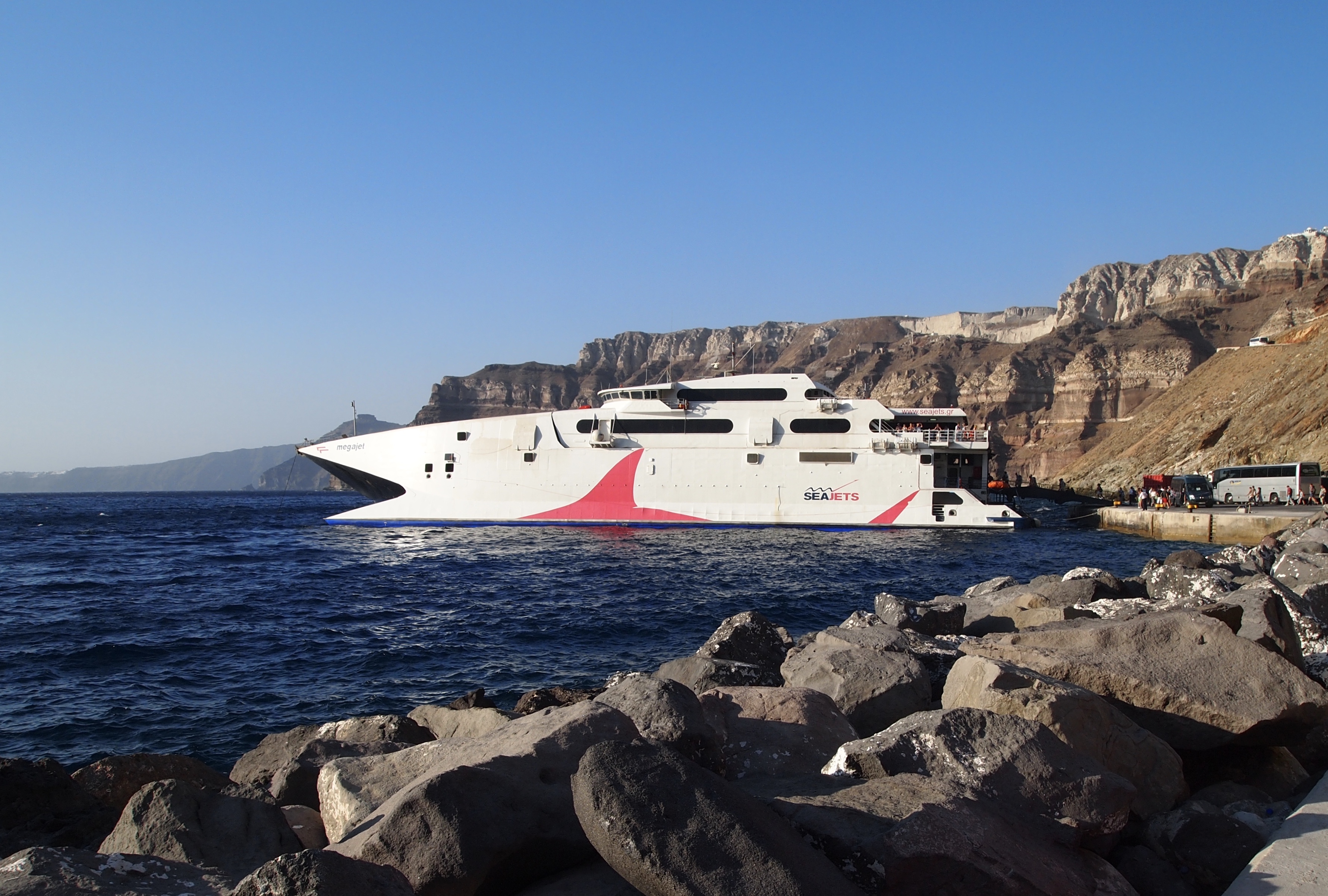
a ferry in Santorini
a-wandering in athens
Sunday, September 9: In the morning, I found the hotel had a huge breakfast buffet. I helped myself to coffee, eggs, and numerous pastries; I packed my bag, and walked down to the port to take a few pictures. Again, though I planned to take the metro back to the Acropolis View Hotel, I found a taxi there for 15 euros. I took it, once again succumbing to the easy route. Finally, I was back home at the Acropolis View Hotel.
Back to the mainland for five more days….
Greece’s Parliament was built between 1836 and 1842, after being designed by a Bavarian architect. Originally it was the royal palace, and from its balcony the constitution (syntagma) was declared on September 3, 1843. In 1935 the palace became the seat of the Greek parliament. When the monarchy was abolished in 1974, the royal family moved to a new palace, renamed the presidential palace.
The war memorial, the Tomb of the Unknown Soldier, sits in front of the Parliament, and is guarded by the city’s presidential guards, wearing kilts and pom-pom shoes. This is based on clothing worn by the mountain fighters, called klephts, in the War of Independence. After watching the interesting little parade-dance changing of the guard in front of the Parliament, I headed to the National Gardens.
The National Gardens were formerly the royal gardens designed by Queen Amalia. They were nice enough, except maybe a little unkempt. After strolling through the gardens, I walked to Hadrian’s Arch, through which I could see the Acropolis on its rock-solid perch.
Hadrian’s Arch was erected by Hadrian in AD 132, probably to commemorate the Temple of Olympian Zeus. Inscriptions show it also divided the ancient and modern city.
Next to Hadrian’s Arch was the Temple of Olympian Zeus, the largest temple in Greece. This temple was begun in the 6th century BC but was abandoned for lack of money. Other leaders tried to complete it in vain, until finally Hadrian completed it in AD 131. It took more than 700 years to build.
Only 15 of the temple’s impressively huge 104 Corinthian columns remained standing. One of the columns was blown over by high winds in 1852. Hadrian put a huge statue of Zeus in the cella, and in typical egomaniac fashion, put an equally large statue of himself beside it.
By this time, I was quite hot and sweaty, but I had it in my mind to go see Athens’ first cemetery, the resting place of many famous Greeks.
I took off across the westbound highway and walked up and down streets looking for the cemetery. No matter which way I turned the map, and no matter which direction I walked on the streets, I couldn’t find any cemetery. Finally, I gave up in frustration and headed to Plakas, where I stopped for a sandwich and some lemonade at an outdoor cafe.
After this late lunch, I headed back to the Acropolis View Hotel, where I had a glass of wine on the terrace and took a nap.
In the evening, I went with a group to a musical museum and a Greek taverna to hear some Greek folk singers.

Triton Hotel

Triton Hotel

Triton Hotel

The port

Greek Parliament

National Gardens

National Gardens

National Gardens

National Gardens

Hadrian’s Arch

Temple of Olympian Zeus

Temple of Olympian Zeus

Temple of Olympian Zeus

Temple of Olympian Zeus

Temple of Olympian Zeus

view from the Acropolis View Hotel

me on the terrace of Acropolis View Hotel

Greek Taverna

Greek folk dancers

Greek folk dancers

Greek folk dancers

Greek folk dancers

Greek folk dancers

Greek folk dancers
delphi: the temple of apollo, the sanctuary of athena {& the oracle of delphi}
Monday, September 10: For my last three days on the mainland, I arranged tours with G.O. Tours. The first was a two-day tour to Delphi – Meteora Monasteries. I usually tried to avoid tours because I hated getting stuck in large groups that included people I didn’t like; I disliked the large-scale “tourist restaurants” where they invariably took you for meals; and I didn’t like not having freedom to linger in a place I found fascinating or to rush through a place I found boring. Not only that, but I hated being captive on a bus that had no toilets. Neither did I like having to stay in a group and listen to a long-winded tour guide. I also got extremely irritated when the tour took you to a large-scale tourist trap where they sold a bunch of overpriced souvenirs.
However, I decided to take these tours because I didn’t really want to hassle with going back and forth to the airport to rent a car; nor did I feel like driving the five hours from Athens to Meteora or the several hours to Delphi and then to Meteora. I determined I wanted to see Meteora on this trip to Greece, and I was tired enough by this time on my trip that I wanted someone else to take care of logistics.
The total cost for this tour was 162€, which included the tour, entrance fees to the sites, dinner, hotel and breakfast. Drinks and lunch were not included. On top of that, because I was a single person, I got penalized and had to pay a single supplement of 28 euros. So, my total cost was 190 euros, or around $248. Very steep, I know!
The first day of the trip, we left for Delphi via Thebes, Levadia and the picturesque village of Arachova, on the slopes of Mount Parnassus; we would arrive in Delphi and visit the Archeological Site. After this visit we were to depart for Kalambaka, the town at the foot of the Meteora Monasteries.
On the way there, our tour guide, an older frumpy woman with orange dyed hair, told us a bunch of random facts about Greece. I had no idea of the truth of these “facts,” but here they are just the same.
She told us that Salonica, also known as Thessalonica, was the second largest city in Greece with 2 million people. It was the capital of the Central Macedonia region. The Sea of Thessalonia was part of the Aegean Sea.
All of Greece had 11 million people and Athens had 5 million. We drove along the Sea of the Saronic Gulf. She said you could swim in these seas from April to the end of October. Piraeus is the main harbor and was 10 km from Athens.
She then told us about the Greek flag. The cross represents Eastern Orthodox Christianity, the established religion of the Greek people of Greece and Cyprus. Ninety-six percent of Greeks are Greek Orthodox and 4% Catholics and Protestants. The blue color represents the sea and heaven. The nine stripes represent the nine syllables of the Greek phrase that means “Freedom or Death.”
Other flags that you could see in Greece were the blue flag with a star which was the European Union flag. Greece had been a member of the EU since 1991.
On the highway, we passed by the town of Thebes. Here legend had it that Europa was kidnapped and taken to Crete. The guide pointed out the pistachio tree orchards in the area. She also pointed out the numerous little shrines along the highway for people who died in car accidents. They were filled with olive oil and water. Sometimes people stopped and took the oil and water and lit the lamp. Sometimes they put flowers in the shrines. Or they put coins in them, and then the local priest collected them and gave them to poor families. Sometimes these shrines had pictures of the people who died.
Mount Parnassus is a 2,500 meter mountain of limestone that towers above Delphi, and offers scenic views of the surrounding olive groves and countryside. According to Greek mythology, this mountain was sacred to Apollo and the Corycian nymphs, and the home of the Muses. There were at that time two ski resorts on the mountain. Windmills dotted the surrounding mountain tops. Also, aluminum was made from the bauxite found on Parnassus.
Delphi was not a town but the religious and spiritual center of the ancient Greek world, used for the worship of Apollo. It was considered the geographical center of the earth, where two eagles released by Zeus from opposite ends of the universe met. There was a conical stone there that was considered the navel of the earth. Delphi sat majestically on the slopes of Mount Parnassus, overlooking the Gulf of Corinth and spreading into a valley of olive and cypress trees.
The guide told us the story of Apollo. I apologize if this is a little disjointed, but this was how I heard it and wrote it down. When Apollo was 4 days old, he left the island of Delos. At Delphi, he killed a python. He went to Thembi (?) to purify himself and spent 7 years there. He was born on February 7. In honor of the number seven, the games were held every seven years. (This was what our guide told us, but I found later that the Pythian Games were held every 4 years to commemorate Apollo’s victory over the python.) Apollo converted to a dolphin and asked sailors to become priests, or priestesses (pythias). First young priestesses served as the Oracle of Delphi, but the young maidens kept running off with the pilgrims who were seeking answers. Later the priestesses were required to be 50 years old, and even later 80 years old. They had to purify themselves in the Castalian Spring before entering the Temple of Apollo.
Delphi reached its pinnacle between the 6th and 4th centuries BC, when multitudes of pilgrims came to ask advice of the Oracle, which was believed to speak for Apollo. The rituals at Delphi were kept alive until the 2nd century AD, when the oracle’s influence began to fade. The Byzantine emperor Theodosius abolished the sanctuary in the 4th century AD.
We walked past the Roman Agora up the Sacred Way, climbing up the hill past the Athenian Treasury. Here, I took off from the rest of the tour group because they were moving too slow for my taste. I came to the 4th century BC Temple of Apollo, which had in its day a statue of Apollo and an eternal flame. This was where the Oracle of Delphi was housed. I couldn’t linger because I wanted to climb all the way up past the Theater, where dramatic and lyric contests were held, and up to the top of the hill where the Stadium was. The Stadium was home not only to the athletic games, but also to musical events. I made it to the Stadium, but I was winded from climbing so quickly. Then, because there was not time allotted in our tour to see the Sanctuary of Athena Pronaia, I ran back down the hill, and quite a distance down the road, then down another hill to the Sanctuary of Athena, which was the coolest place in Delphi. Why the tour had no time allotted for this, I didn’t know. I barely made it back to the bus on time, and I was covered in sweat.
The Sanctuary of Athena was the site of the 4th century BC tholos, the most striking of Delphi’s monuments. This circular structure had 20 columns on a three-stepped podium. The columns looked like camouflage because some were re-erected in the 1940s. The white blotches on each column were the original marble, and the darker portions were new material.
The Delphi Oracle
There are more than 500 supposed Oracular statements which have survived from various sources referring to the oracle at Delphi. Many are anecdotal, and have survived as proverbs. Several are ambiguously phrased, apparently in order to show the oracle in a good light regardless of the outcome. Such prophesies were admired for their dexterity of phrasing. One such famous prediction was the answer to an unknown person who was inquiring as to whether it would be safe for him to join a military campaign; the answer was: “Go, return not die in war”, which can have two entirely opposite meanings, depending on where a missing comma is supposed to be – before or after the word “not.”
To read more about the oracular statements, see Wikipedia: List of Oracular Statements from Delphi.

Delphi

Delphi

Temple of Apollo

Temple of Apollo

me at Temple of Apollo

Delphi

Delphi

Delphi

Sanctuary of Athena

Sanctuary of Athena

Sanctuary of Athena

Sanctuary of Athena
————————————–
After we finished at Delphi, we headed to lunch at one of those large tourist-type restaurants that exist solely for large tour groups. I had some Symposium Feta in a pot with tomatoes and peppers. For dessert I couldn’t help but try some rich Greek yogurt with fig preserves. It was delicious! I ate with a couple of women I met along the way: Elena from Moscow, Vanessa from Montreal, and Gina from New Jersey.
Finally, after lunch we drove through the flat lands of Thessaly, the granary of Greece, toward Meteora. Here they grew cotton, grapes, tobacco and rice. Our guide pointed out Mount Olympus, the highest mountain in Greece at 3,000 meters. All the gods of mythology lived here.
The guide told us that the Thessalonians burned their fields when they saw the Turks coming in one of the wars. She also told us that women were allowed to eat with their husbands in Thessaly, where in other parts of the country, sharing a table with their men was strictly forbidden.
Finally, we arrived at the town of Kalambaka near Meteora, where we had dinner and stayed the night at the Orpheus Hotel. The next day, we would explore the Meteora Monasteries….

Orpheus Hotel

Orpheus Hotel

Orpheus Hotel
the meteora monasteries
Tuesday, September 11: Today, we visited the Meteora monasteries. The tour was sadly very limited, and today was the day I most regretted being on a tour. If I had driven on my own, I would have visited more of the monasteries and stopped for many more photos. However, being stuck on a bus and limited by a timetable, I felt like I only saw a small sliver of what there was to see in Meteora.
Though the tour was two days long, we spent all the first day driving to Delphi, visiting the archeological site briefly, then driving to Meteora. This morning, we got an early start after a decent buffet breakfast, but we headed straightaway to an icon factory, where we were given a demonstration on how icons were made, and then we were left to browse in the large icon and souvenir shop. Though I admittedly did buy something, a copy of a Byzantine icon which is supposed to bring luck on “new beginnings,” as well as a small bell much like one found in a monastery, I still considered this 45-minute stop a waste of time. Considering that we only got a couple of hours at the monasteries, and then had to drive 5 hours back to Athens, I felt sorely disappointed that I missed much of what there was to see in Meteora.
According to Lonely Planet Greece, as well as Wikipedia, the name Meteora derives from the Greek adjective meteoros, which means “suspended in the air.” The jutting pinnacles and cliffs of the Meteora were once sediments of an inland sea. The rocks, composed of a mixture of sandstone and conglomerate (limestone, marble, serpentine and metamorphic, interspersed with layers of sand and shale), were formed about 60 million years ago. A series of earth movements pushed the seabed upwards, creating a high plateau and causing many fault lines to appear in the thick layer of sandstone. Continuous weathering by water, wind and temperature extremes turned them into huge rock pillars, marked by horizontal lines which geologists maintain were made by the waters of a prehistoric sea.
By the 11th century AD, natural caves that had been carved out of these pillars had become homes for hermit monks. By the 14th century, the Byzantine power of the Roman Empire was fizzling out, and the Turks were invading Greece. Monks began to seek safe haven from the bloodshed and built monasteries atop the pillars. In the early monasteries, removable ladders were used to access the monasteries. Later, windlasses were used so monks could be hauled up in nets.
Eventually, 24 monasteries were built on these pinnacles. In 2012, six were active religious sites, occupied by monks or nuns. They were accessible by staircases cut into the rock formations. They were created to serve monks and nuns following the teachings of the Greek Orthodox Church.
The first monastery we visited was Moni Agious Stephanou, or the Monastery of St. Stephen, founded around 1400, serving as a nunnery. Although less spectacular than the others, it was the easiest monastery to visit and the nuns were welcoming.
According to Sacred Destinations: Agios Stefanos Monastery, Meteora, Moni Agious Stefanou was founded by St. Antoninus Cantacuzene, who is thought to be a son of the Serb ruler Nicephorus II of Epirus, around 1400.
The monastery suffered much damage in the 20th century: it was bombed during World War II by the Nazis, who believed it was harboring insurgents. Then it was desecrated during the subsequent Civil War. In the latter period, most of the frescoes were defaced by Communist rebels.
St. Stephen’s was virtually abandoned until 1961, when it became a nunnery. It was inhabited by 28 nuns led by Abbess Agathi Antoniou.
The grounds of the monastery were beautifully manicured and the views to the town of Kalambaka below were spectacular.
There were different types of artistically designed bells; one was rung for breakfast, one for lunch and one for dinner.
After leaving the Monastery of St. Stephen, we drove past the famous Moni Agias Triados, or Holy Trinity Monastery, where scenes in the 1981 James Bond film, For Your Eyes Only, were filmed. This monastery was one of the more difficult to access, but it didn’t matter because it wasn’t on our tour! We stopped along the road and were released briefly from our bus captivity to get out and take photos.
Because I ran quite a distance down the road from the bus to get as many pictures as I could, I arrived back to the bus late, only to be berated in a screeching voice by our carrot-headed guide: “You’re late! Why did you run all the way down the road? I told you only 5 minutes!” I yelled back: “We don’t have enough time! You’re rushing us way too much!! This is ridiculous! You stop us for 45 minutes at an icon factory and yet you won’t give us an extra 5 minutes to take pictures!!” She yelled back, “We have a 7 hour drive back to Athens this afternoon. We have a timetable!” Here she was exaggerating wildly, as the drive back to Athens from Meteora was actually only 5 hours. We were both fuming by this time and I was really irritated with this bitchy woman as well as myself for deciding to come on this blasted tour!! LIVE & LEARN!!
Finally, we both settled down, although I was seething inside. For me, travel is about a lot of things: experiencing a culture, enjoying the food and wine, lingering and soaking up the atmosphere, meeting interesting people, pushing myself outside my comfort zone, learning about myself, journaling about my adventures, and TAKING PICTURES. I love to take my time searching out interesting angles and light and subject matter. Not that I’m always successful, but I like to try. And a tour simply isn’t conducive to that.
We continued down the road only a slight distance to the 2nd of the two monasteries we would see, Moni Agias Varvaras Rousanou, or the Monastery of St. Barbara. We walked from a high cliff where we had a view of some of the pinnacles, down a path and then up a small wooden bridge to St. Barbara. The steep structure of this monastery was a stunning accomplishment. This was home to an order of 15 nuns.
As we walked up the bridge to St. Barbara, we could see a beautiful garden down below.
Inside the very small monastery, which was packed with tourists, the nuns sold hand painted rocks with the monastery on the front. They sold the rocks alone or they would make them into a necklace. I couldn’t help but buy one because I loved quirky jewelry and it helped to support the monastery.
We got a tour of the beautiful stained-glass-illuminated katholikon; it was gorgeous but tiny and of course we weren’t allowed to take pictures.
From the deck of Monastery of St. Barbara, we could see Grand Meteora Monastery, which was built on the highest rock in the valley at 613 meters above sea level. St. Athanasios founded it in the 14th century and it became the richest and most powerful monastery because of a Serbian emperor Symeon Uros, who turned all his wealth over to the monastery and became a monk. Maybe this was why we saw so many Serbian priests visiting the Monastery of St. Barbara on this day.
I loved the Meteora monasteries, but sadly the ones we saw were overrun by tourists. Also, we only went inside of 2 of the 6 operating monasteries. I really wished I had gone alone and hiked on the trails between the monasteries. It was a beautiful day and I would have loved it. I was going to have to return one day.
After we finished at Monastery of St. Barbara, we headed into the town of Kalambaka, where we had lunch at the Meteora Restaurant. This restaurant had been run by the same family since 1925. We went into the kitchen where the owner and her daughters and sons were cooking a variety of different dishes in a cloud of steam. We were allocated bread, a meat dish of our choosing, and two vegetables for about 10 euros.
The lamb meatballs I had here were delectable! They were one of those things in life that taste so good you don’t ever want to stop eating them, even when you’re stuffed. This was one of my favorite meals in Greece, after the cabbage rolls which I would eat the next two nights in Athens, and the eggplant rolls in Santorini.
We left the restaurant at around 1:30 p.m. and headed back to Athens, driving over much of the same course we traveled to get here, except veering off at Lamia to take a scenic route along the Gulf of Evia. Our guide told us that Mama Mia! was filmed along this route. According to Wikipedia, most of the outdoor scenes were filmed on location at the small Greek island of Skopelos, and the seaside hamlet of Damouchari in the Pelion area of Greece. On Skopelos, Kastani beach on the south west coast was the film’s main location site. The producers built a beach bar and jetty along the beach, but removed both set pieces after production wrapped.
Either way, from our bus, we were unable to see this location, so I don’t even know why our lunatic guide told us this.
We arrived back in Athens around 6:30, exactly 5 hours after leaving Kalambaka. Surprise, surprise! It wasn’t anywhere near seven hours, as the guide claimed during our yelling match!

Meteora

one of the bells rung for meals at the Monastery of St. Stephen

we can light candles and say prayers at Monastery of St. Stephen

This is NOT actually a monk from the monastery but one of a group of visiting priests from Serbia. I’m sure he was thrilled that I asked him to pose!!

on the grounds of Monastery of St. Stephen

on the grounds of Monastery of St. Stephen

the view from Monastery of St. Stephen to Kalambaka down below

the view from Monastery of St. Stephen to Kalambaka down below

me next to the Icon of the Archangel Michael at the Monastery of St. Stephen

on the grounds of Monastery of St. Stephen

Icon of the Archangel Michael at the Monastery of St. Stephen

the gardens at the Monastery of St. Stephen

Meteora

Meteora

Moni Agiou Stefanou, or the Holy Monastery of St. Stephen

Meteora

Moni Agias Triados, or Holy Trinity Monastery, where For Your Eyes Only was filmed

Moni Agias Triados, or Holy Trinity Monastery

Moni Agias Triados, or Holy Trinity Monastery

Meteora

Meteora

a view of the other town at the foot of Meteora, Kastraki, with Alsos Rock on the left and Holy Spirit Rock on the right, and Moni Agias Varvaras Rousanou in the right foreground

Meteora

me at the top of one of the Meteora pillars

the entrance to Moni Agias Varvaras Rousanou, or the Monastery of St. Barbara

Monastery of St. Barbara

the garden at the Monastery of St. Barbara

Monastery of St. Barbara

Meteora

Meteora

The stones painted with the monastery by the nuns. They will write your name on the back and make them into necklaces.

me with my handpainted necklace

a view of Moni Megalou Meteorou, or Grand Meteora Monastery

lunch at the Meteora Restaurant

Meteora Restaurant

the proprietor at the Meteora Restaurant cooks up a feast

homemade lamb meatballs & green peppers

Meteora Restaurant

Meteora Restaurant

Meteora Restaurant

Meteora Restaurant

Meteora Restaurant

Meteora Restaurant

Meteora Restaurant
argolis tour. {stop #1: the corinth canal}
Wednesday, September 12: Today I took a one day tour with G.O. Tours to Argolis. The tour cost 101 euros (~ $130), including lunch. My vacation in Greece was winding down, as I would leave the next evening. I was desperately trying to squeeze in as many things as I could see in my final days.
The tour was described as such: Leave by the coastal road along the Saronic Gulf to the Corinth Canal, which connects the Aegean Sea with the Ionian Sea, (short stop). Drive to Mycenae, the Homeric city of Atreides, the city “rich in gold” of the ancient poets. Visit the Lion’s Gate, the Cyclopean Walls, the Royal Tombs, etc. Depart for Nauplion through the fertile plains of Argolis, the picturesque town nestling at the foot of a cliff crowned by the mighty ramparts of the Palamidi Fortress (short photo stop), leave for Epidauros, to visit the Theatre (4th century B.C.) famous for its astonishing acoustics. Return to Athens by the national road connecting Epidauros with Corinth. Lunch in Mycenae.
The G.O. Tours system for picking up tourists by bus from a variety of hotels, driving them to a central spot near Syntagma Square, and then redistributing them to their proper buses for the day, was puzzling and confusing, at least for tourists. I was sure the tour company itself had a grip on the process. Finally, after being directed to and fro, I boarded a small bus with about 15 people for our Argolis tour. This tour size was much more to my liking than the 30+ person tour of yesterday.
As I was sitting on the bus, I saw a beautiful petite lady asking one of the G.O. Tours guides on the sidewalk where she should go for the Argolis tour. He shook his head, not knowing where to send her. I knocked on my window and told her to come on board. She sat behind me and introduced herself as Marie-Claire from South Africa. She told me she was on a 7 week tour of Europe and it was the first time she’d ever traveled alone. Her excitement was so infectious that I was drawn to her and we spent much of the day sharing stories about our travels.
We drove for about an hour out of Athens, where we made our first stop at the Corinth Canal. According to Lonely Planet Greece, the idea to cut a canal through the Corinth Isthmus to link the Ionian and Aegean Seas originated with the tyrant Periander, of Ancient Corinth, at the end of the 7th century BC. The magnitude of the task was so daunting that he gave up, and instead he created a paved slipway, called a diolkos in Greek. Across this slipway, sailors dragged small ships on rollers. This method was used for 2,000 years, until the 13th century.
Many other leaders played with the idea of building a canal here, including Alexander the Great and Caligula, but in AD 67, Nero was the one who began the digging. He used a golden pickaxe to strike the first blow. He then departed the scene, leaving 6,000 Jewish prisoners to do the rest of the digging. Then the Gauls invaded and put a stop to the whole project.
A French engineering company finally completed the canal in the 19th century (1883-93).
The canal separates the Peloponnese from the Greek mainland, thus effectively making the former an island. The builders dug the canal through the Isthmus at sea level, so no locks are used. It is 6.4 kilometers (4.0 mi) in length and only 21.3 metes (70 ft) wide at its base, making it impassable for most modern ships. The vertical sides rise 90 meters above the water. The canal helped to make Piraeus a major Mediterranean port at one time. However, because only small ships can now pass through it, today it has little economic importance (Wikipedia: Corinth Canal).
The narrowness of the canal makes navigation difficult; its high rock walls channel high winds down its length, and the different times of the tides in the two gulfs cause strong tidal currents in the channel. The canal’s high limestone walls have been persistently unstable from the start. Although it was formally opened in July 1893 it was not opened to navigation until the following November, due to landslips. It was soon found that the wake from ships passing through the canal undermined the walls, causing further landslips.
The canal is too narrow for modern ocean freighters. Ships can only pass through the canal one at a time on a one-way system. Larger ships have to be towed by tugs. The canal is nowadays mostly used by tourist ships; 11,000 ships per year travel through the waterway (Wikipedia).
We got out of the bus for a short stop and stood on one of the bridges built over the canal, where we could look at the seas at each end. The solid rock sides were sturdy and impenetrable, much like a fortress, and the canal was very narrow at the bottom.
After our short stop, we drove on toward Mycenae.

Corinth Canal

Driving on through the Greek countryside
ancient mycenae
After seeing the Corinth Canal, we headed down the road to Ancient Mycenae, the most powerful kingdom in Greece for 400 years (from 1600-1200 BC). Homer himself talked of Mycenae in “The Iliad” and “The Odyssey,” where he described the ancient city as “rich in gold.” Myth and history are intertwined here, and amateur archeologist Heinrich Schliemann (1822-90), found evidence, since found to be dubious, at Troy and Mycenae, that Homer’s legends might be true.
Legends aside, historical evidence shows that Mycenae was first settled by Neolithic people in the 6th millennium B.C. Between 2100 and 1900 BC, the city was invaded by people of Indo-European descent who brought an advanced culture to the primitive Mycenae. This new civilization is now called the Mycenaean.
Archeological evidence shows the palaces of the Mycenaean kingdoms declined around 1200 BC and the palace itself was destroyed by fire in 1100 BC. It is uncertain as to whether this was done by outsiders or as a result of internal battles between the various Mycenaean kingdoms.
We first went to the museum, where we saw pottery, weaponry, jewelry and the important early clay tablets written in Linear B, an early language first uncovered in Knossos.
Then we entered the Citadel of Mycenae through the Lion Gate, built of massive stone blocks topped by two rearing stone lionesses.
Inside the Citadel we saw Grave Circle A, which was the royal cemetery that contained six grave shafts. When Schliemann excavated five of these, he found an immense gold treasure, including the well-preserved gold death mask of, he thought, Agamemnon. It turned out the mask was of some unknown king who died 300 years before Agamemnon.
We walked up the main path to Agamemnon’s Palace. The rooms to the north were the private royal apartments, and one was believed to be the very room where Agamemnon was murdered.
The former glory days of Mycenae were hard to imagine here, as the ruins were so, well, ruined. But it was fun to imagine that the stuff of legends once took place at this ancient and sacred spot.
After we left Ancient Mycenae, we stopped at the Treasury of Atreus, a tholos tomb shaped like a beehive. This was known to be the tomb of Agamemnon. A 40-meter long passage led to the immense beehive chamber. Its stone blocks got steadily smaller as the structure tapered to its central point.
Then it was lunchtime, but, as in the typical tour, the hotel restaurant was quite the tourist trap, with nondescript food for large groups. I didn’t even bother to photograph this most uninspired meal.

museum in Mycenae

museum in Mycenae

museum in Mycenae

museum in Mycenae

museum in Mycenae

Lions Gate

me at the Lion’s Gate

Mycenae

Mycenae

Mycenae

Treasury of Atreus

Treasury of Atreus
a short stop in the quaint town of nafplio
After lunch we made a short stop for photos in the pretty town of Nafplio. Sitting beneath the Palamidi Fortress on the Argolic Gulf, this town of narrow streets, Venetian houses, and neoclassical mansions was the first capital of Greece after Independence (between 1833 and 1834). It had such a strategic position as a major port that it had three fortresses: the huge fortress of Palamidi, the smaller Akronafplia and the tiny Bourtzi on an islet west of the old town.
We only stopped briefly near the tiny Bourtzi Fortress, which sat on an island near Nafplio’s port. The Venetians built most of the existing structure.
Looking toward the town, we could see quayside cafes and boutiques.
Marie-Claire and I took pictures of each other with a view over the Argolic Gulf.
Looking inland, we could see the Palamidi Fortress standing on a 216 meter-high rock. Built by the Venetians between 1711 and 1714, it was regarded as a masterpiece of military architecture, according to Lonely Planet Greece. It’s a typical baroque fortress. In 1715 it was captured by the Turks and remained under their control until 1822, when it was captured by the Greeks.
According to Wikipedia, there are approximately 857 steps in the winding stairs from the town to the fortress. However, to reach the top of the fortress there are over one thousand. Locals in the town of Nafplio will say there are 999 steps to the top of the castle, and specials can be found on menus that incorporate this number to catch a tourist’s eye.
Sadly, we didn’t have time to climb up the estimated 999 steps to the top, because we had to move on to Epidauros.

Nafplio

Bourtzi Fortress

Palamidi Fortress

me at Nafplio
epidauros & last night in athens… 😦
After leaving Nafplio, we headed finally to Epidauros. Its sanctuary of Ascelpius (the god of medicine) was a place where visitors flocked to seek cures for their ailments. These days most visitors came to see the well-preserved World Heritage-listed Theatre of Epidauros, which is still used today for the Hellenic Festival for Classical Greek theater, as well as more modern plays, opera and music (Lonely Planet Greece).
We stopped in the museum first, where we found statues, stone inscriptions recording medical cures, surgical instruments, votive offerings and partial reconstructions of the sanctuary’s once-elaborate tholos. The tholos is believed to have been the most impressive building of the sanctuary besides the theater, and fragments of its intricately carved ceiling adorned the walls of the museum.
The 3rd-century limestone theater was well-known for its amazing acoustics and seated up to 14,000 people. We walked around the theater, climbing up to the top and back down again.
In my eyes, the bonus to today’s trip was meeting Marie-Claire. She truly inspired me. She was on a 7-week tour of Europe which she managed to do on 5,000 euros!! I had spent more than 2,500 euros in two weeks! Obviously, I was not a frugal traveler. I liked to treat myself well when I was on holiday, but if I were a little more frugal, I could travel more and for a longer period of time!
The following summer, I hoped to take a 5-week trip to Spain, Portugal and Morocco for 5,000 euros!! I hoped that would include the air fare as well. I needed to pack lighter, use more public transportation (NOT over-priced taxis), and eat out less. I also needed to shop less. I usually stayed in moderate but charming hotels, so I didn’t think I was willing to skimp further on my accommodation. But if I didn’t eat lunch out, and was smarter about my transport, I thought I could do it.
Marie-Claire was particularly entranced by Portugal, and she told me I should visit Sintra, which was a major tourist center because of its 19th-century Romantic architecture and landscapes. In addition to the Sintra Mountains and Sintra-Cascais Nature Park, royal retreats, estates, castles and 8th-9th century buildings dotted the town. Also in Sintra were Castelo dos Mouros, the Pena National Palace and the Sintra National Palace.
She also loved Alfama, the oldest district in Lisbon. During the times of Moorish domination, Alfama constituted the whole of the city. Alfama became inhabited by the fishermen and the poor, and its condition as the neighborhood of the poor continues to this day. Alfama has remained a picturesque labyrinth of narrow streets and small squares. Lately the neighborhood has been invigorated with old house renovations and new restaurants where Fado – Portuguese typical melancholy music – can be enjoyed.
Also in Portugal, Marie-Claire loved Óbidos, which hosted a Medieval Market every July where people dressed in Medieval costumes.
In Spain, she recommended Montserrat. This was a spectacularly beautiful Benedictine monk mountain retreat about one hour northwest of Barcelona by train. Not only was Montserrat Monastery of significant religious importance, but the natural beauty surrounding the monastery was supposedly breathtaking.
Finally, she told me I should go to three islands in Venice: Murano, Torcello & Burano. She said Murano was okay for its glass, but she loved the pastel houses of Burano. Of course, Italy was not on my itinerary for the next year, so this would have to wait…
I loved Marie-Claire’s enthusiasm and determination. She had been married for 40 years, but, when she couldn’t convince her husband to come with her, she saved up enough money and planned the trip herself. This was her first trip alone and she was loving every minute. I wanted to cheer her on, but she didn’t seem to need any cheering. In fact, she inspired me to make my own dreams a reality!
In the evening when I returned to Athens, I relaxed and enjoyed my own company on the terrace of my favorite Acropolis Restaurant and ordered, for the second consecutive night, the delicious cabbage rolls. Of course, I enjoyed the Greek wine again, on this, my last night in Athens.

Epidauros museum

Epidauros museum

Epidauros museum

Epidauros museum

Epidauros theatre

me at Epidauros theatre

Epidauros theatre

Epidauros theatre

Epidauros theatre

driving back to Athens

driving back to Athens

me at the Acropolis View Hotel

view from the Acropolis View Hotel

me at the Acropolis View Hotel

view from the Acropolis View Hotel

the Acropolis from the Acropolis View Hotel

Acropolis Restaurant

cabbage rolls
on display {national archeological museum in athens}
Thursday, September 13: Today, my last day in Greece, I went to visit the amazing National Archeological Museum and its excellent collection of Greek antiquities. The museum, housed in a 19th-century neoclassical building, showcases sculptures, pottery, jewelry, frescoes and artifacts discovered in Greece, from the Neolithic Age (6800-3300 BC) to the Cycladic Civilization (Early Bronze Age: 3200-2000 BC) to the Mycenaean Civilization (1600-1100 BC). I was bowled over by this stunning and beautifully displayed collection that revealed such a sweeping history of mankind. There were times when I felt so overwhelmed by the significance of this collection, that I became choked up.
People say one should visit this museum before seeing the original sites within Greece. However, during my trip, I had seen the major sites, including the Acropolis, Mycenae, Delphi, & Epidaurus. Despite recommendations to the contrary, I found it amazing to see the treasures found in all of these sites in one culminating grand finale. I found my reaction to this display quite surprising, as I was not normally an avid historian. I was simply awestruck by this collection.
The Prehistoric Collection represented the major civilizations that flourished in the Aegean from the 7th millennium to around 1050 BC. It included objects from the Neolithic Period and the Bronze Age, from mainland Greece, the Aegean islands and Troy. The most important exhibits were the treasures from the royal tombs at Mycenae, the famous Cycladic marble figurines, and the superbly preserved wall paintings from Thera with their large-scale compositions.
The Sculpture Collection presented ancient Greek sculpture from the 8th century BC to the end of the 4th century BC. The treasury of large-scale sculpture occupied 30 rooms on the ground floor, arranged in a broad circle around the periphery of the old building. The exhibits came from excavations in cemeteries, such as the Kerameikos and in sanctuaries, including the Athenian Acropolis.
The Bronze Collection was famous for its unique, large-scale original statues, such as the Poseidon or Zeus from Artemision, the Marathon youth, and the jockey from Artemision.
Below is a small sampling of what was on display in this stunning museum. Luckily, visitors WERE allowed to take non-flash photos within.

National Archeological Museum, Athens

National Archeological Museum, Athens

National Archeological Museum, Athens

National Archeological Museum, Athens

National Archeological Museum, Athens

National Archeological Museum, Athens

National Archeological Museum, Athens

National Archeological Museum, Athens

National Archeological Museum, Athens

National Archeological Museum, Athens

National Archeological Museum, Athens

National Archeological Museum, Athens

National Archeological Museum, Athens

National Archeological Museum, Athens

National Archeological Museum, Athens

National Archeological Museum, Athens

National Archeological Museum, Athens

National Archeological Museum, Athens

National Archeological Museum, Athens

National Archeological Museum, Athens

National Archeological Museum, Athens

National Archeological Museum, Athens

National Archeological Museum, Athens

National Archeological Museum, Athens

National Archeological Museum, Athens

National Archeological Museum, Athens

National Archeological Museum, Athens

National Archeological Museum, Athens

National Archeological Museum, Athens

National Archeological Museum, Athens

National Archeological Museum, Athens

National Archeological Museum, Athens
Back in Oman After a Sweet Escape 🙂
Friday, September 14: I returned early in the morning from Greece and spent my first day home unpacking, doing laundry, tallying my finances from my trip (ouch!) and straightening my house. I had to return to work the following day, a Saturday… 😦
I was still in the Greek frame of mind on Friday evening, sipping a glass of wine and dreaming of the impossibly blue Mediterranean, the whitewashed villages along the caldera of Santorini, the charming villages and beaches of Crete, and the ancient world of Athens, Thira, Delphi and Mycenae. And the food, the glorious food… 🙂 (Of which about 5 pounds had attached to my body…)
BACK TO WORK ~ BOOTED FROM OFFICE!
I didn’t open my university email even one time in the six weeks I was on vacation for this very reason. I didn’t want to be upset by anything that had to do with work. No one wants to find out while they are on vacation that they’ve been sacked, that their house has burned down, that they’ve been demoted, or WHATEVER!! I didn’t want my peace of mind ruined, or even threatened, during my time of relaxation and leisure.
I found upon my return that the office I shared with two other people (it was bad enough we didn’t have our own private offices!) had been confiscated by the university administration (for what use I’m not clear). I was told upon my return to pack up my stuff and move to a newer building across the campus with a lot of other Foundation Institute teachers into a bullpen area full of cubicles. It wasn’t that bad really, but the worst thing was that I was separated from my closest friends all the way across the campus.
It was so nice to be welcomed back to the real world. 😦
*Friday, August 31 to Wednesday, September 12, 2012*



















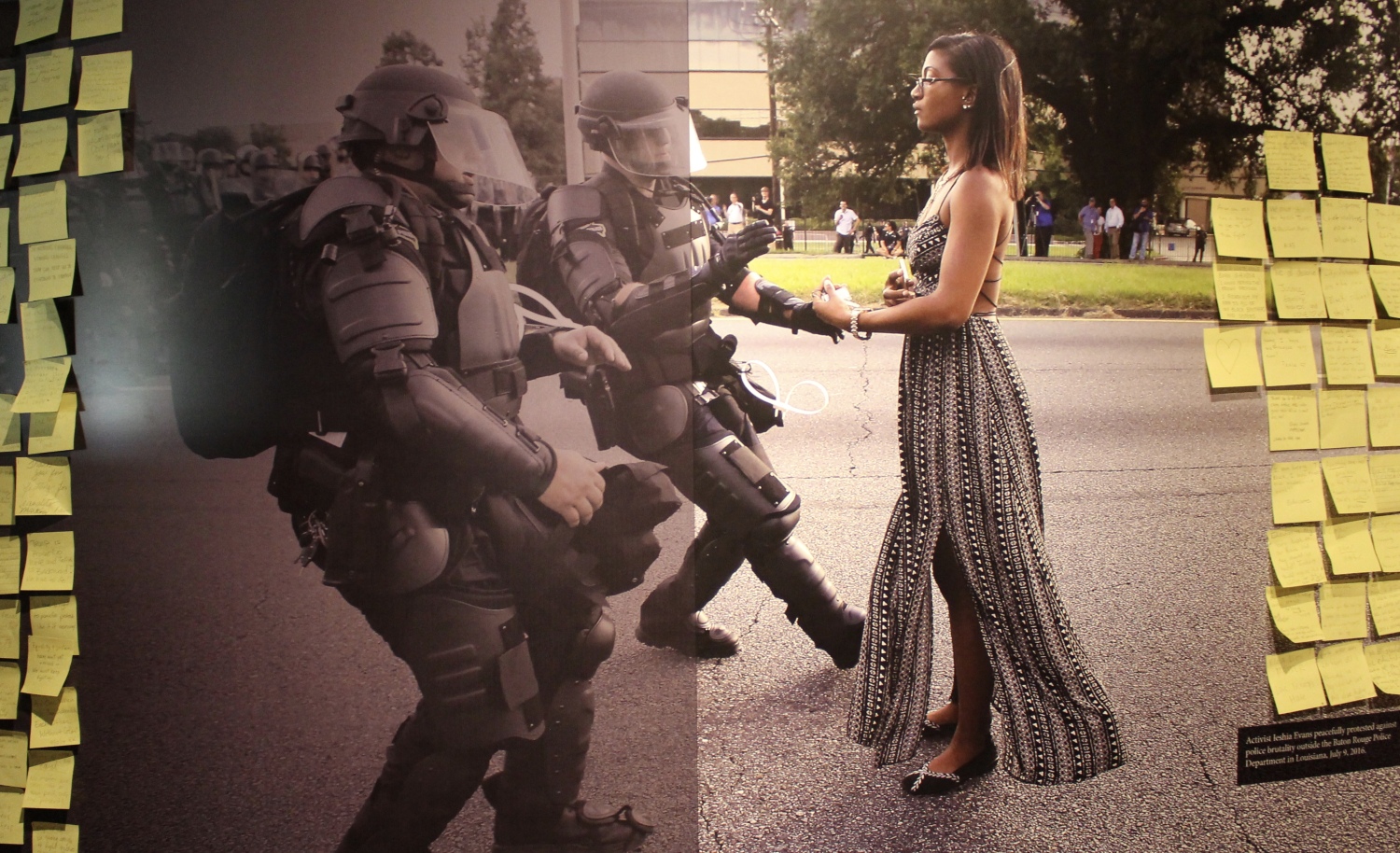























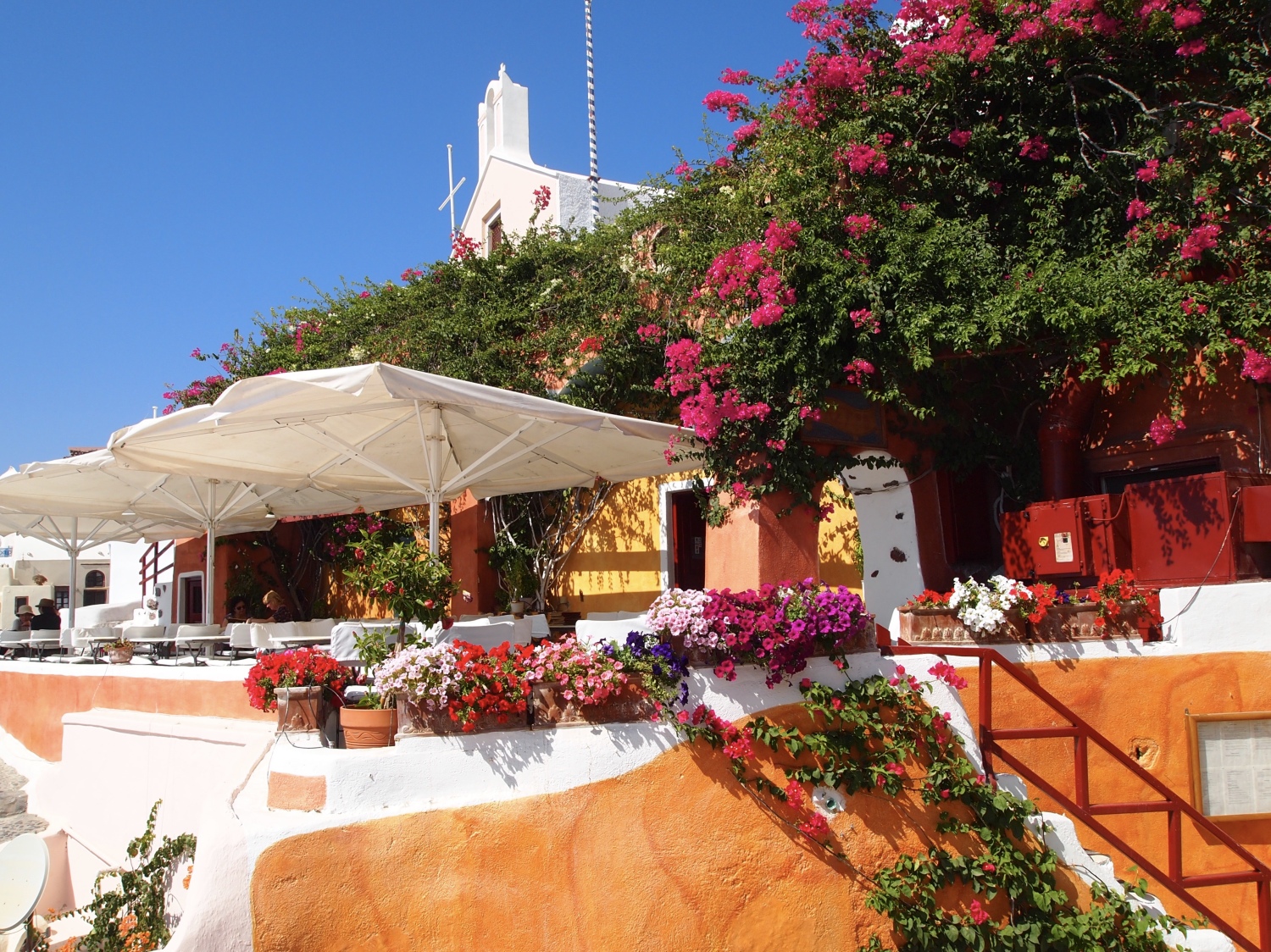
























 ~ wander.essence ~
You must be logged in to post a comment.