
Maps to Where She’s Been
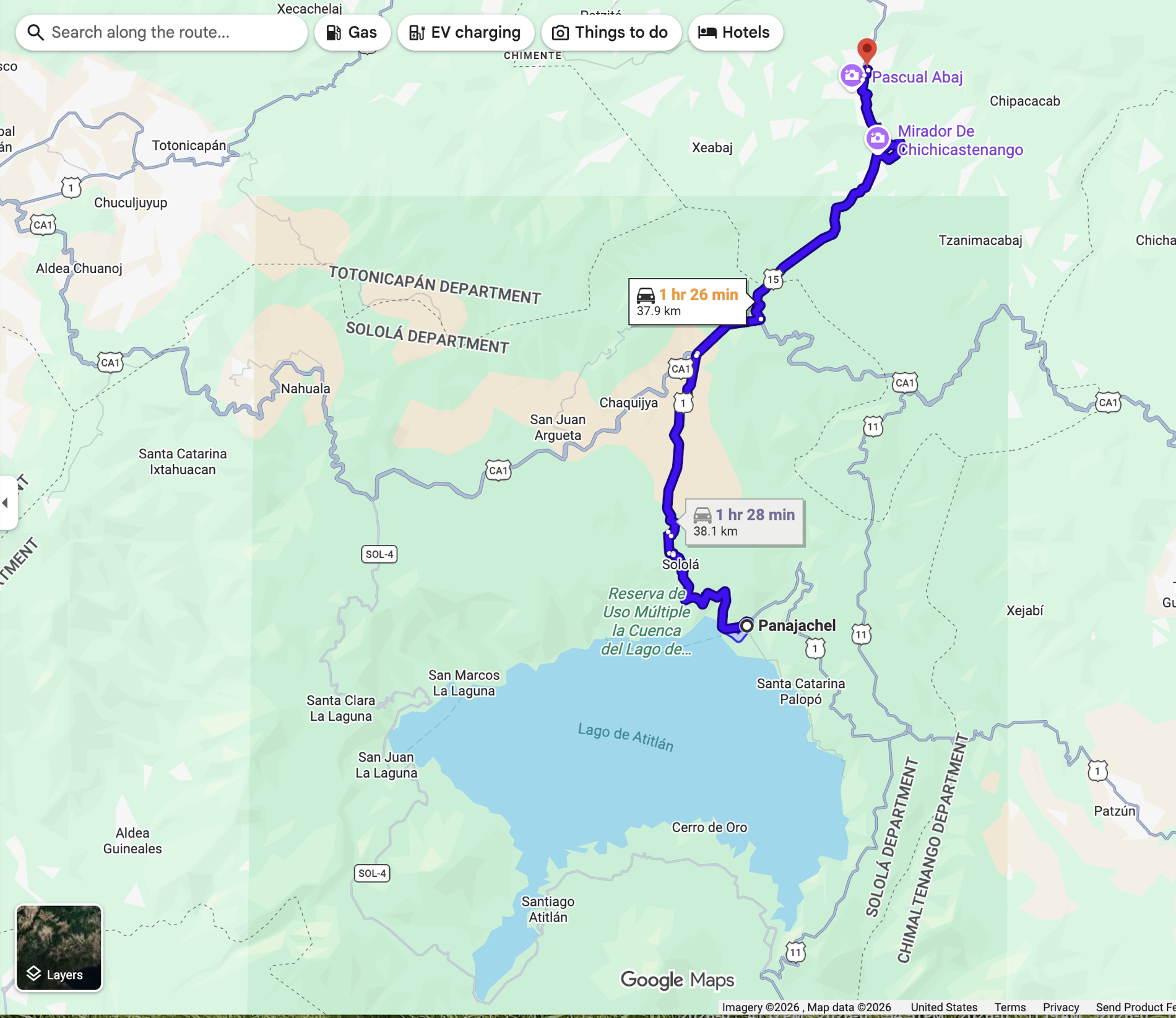
A shuttle carries her north from the hub of Pana,
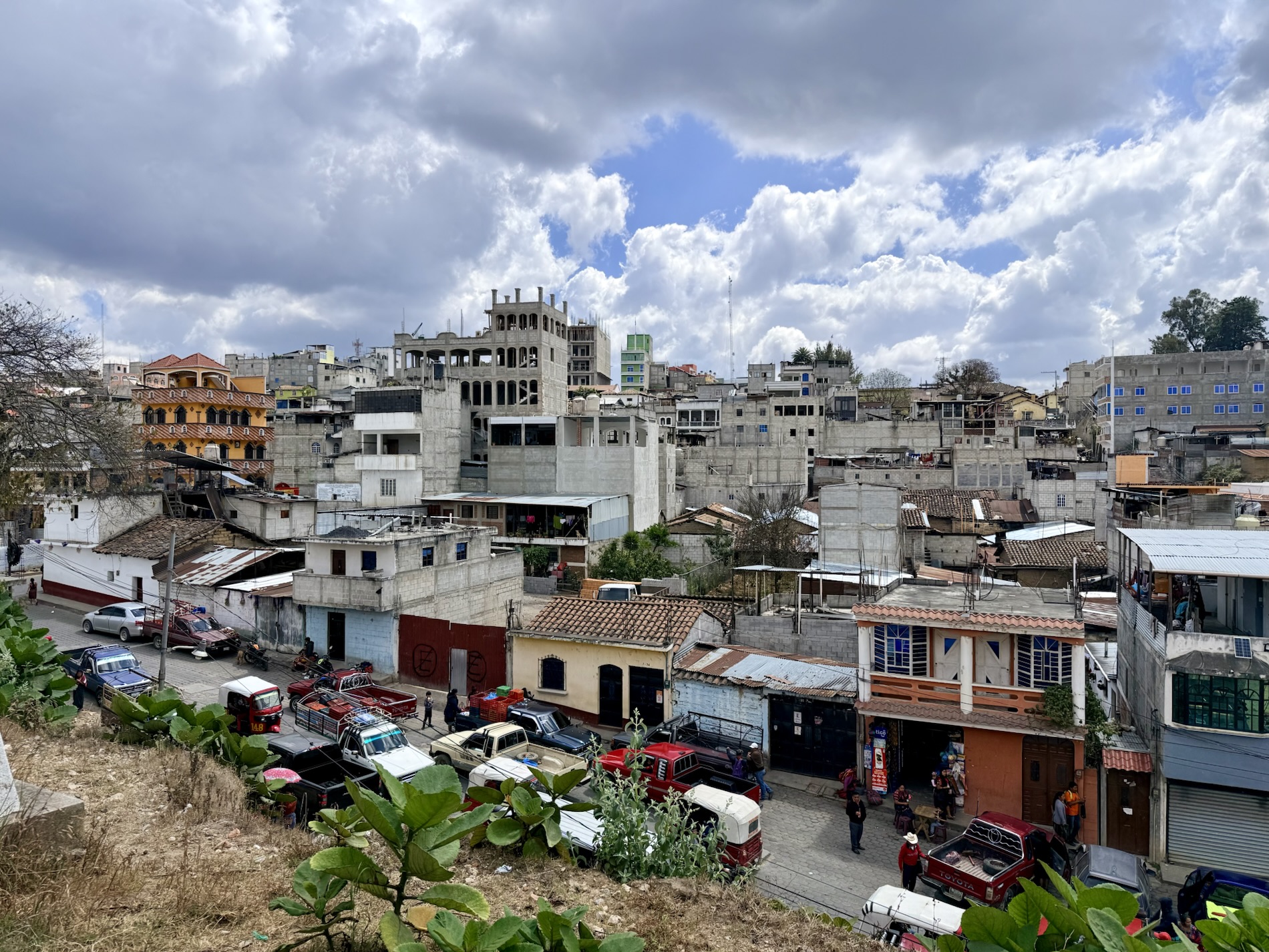
on mountainous roads through bedraggled towns
where unfinished concrete buildings hunch by the road

wearing metal stalks of rebar, like hair standing on end. Here,
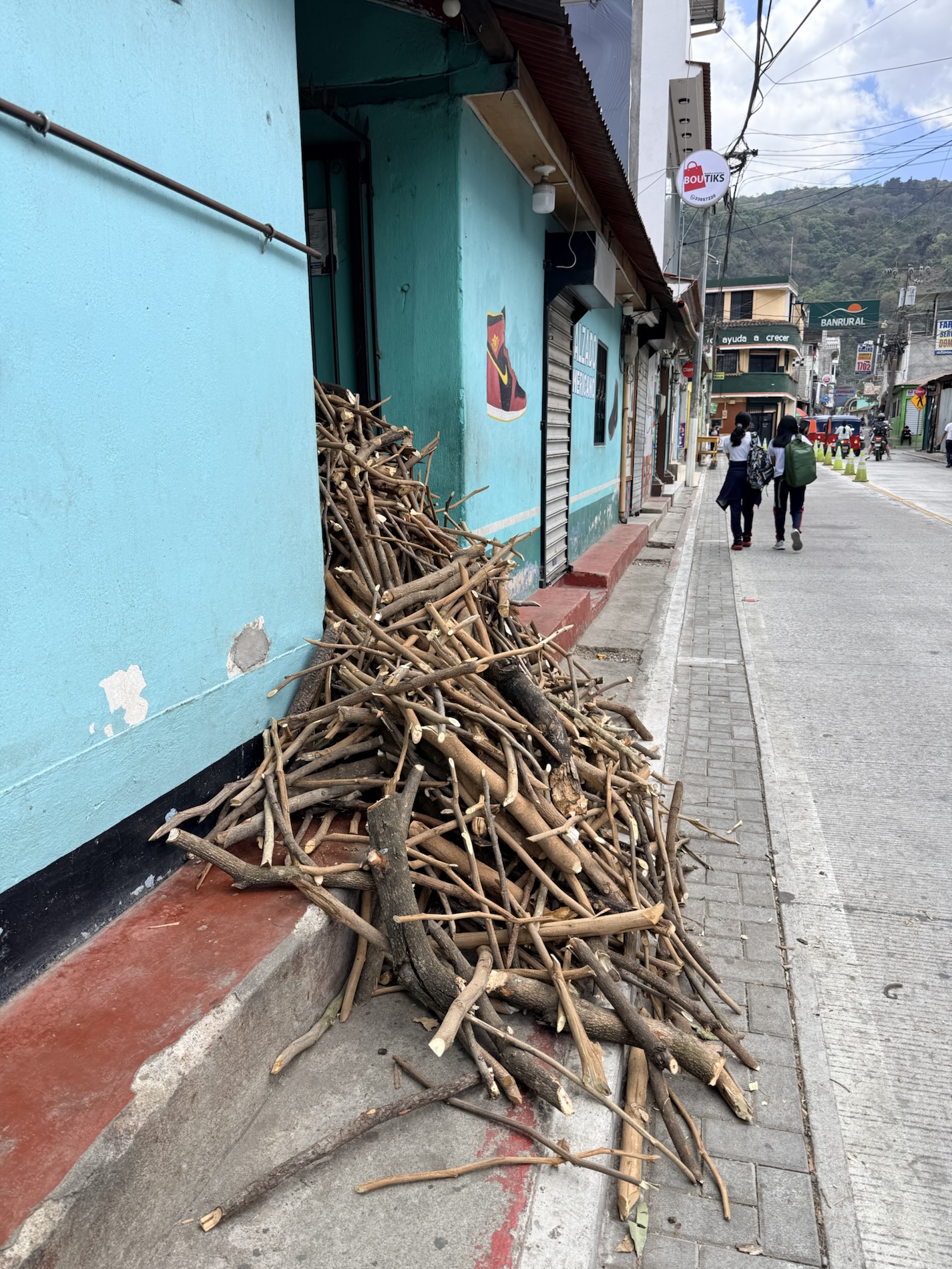
she sees piles of kindling in a yellow haze, and stout Mayan
women, with colorful huipil blouses, carrying loads on their heads.

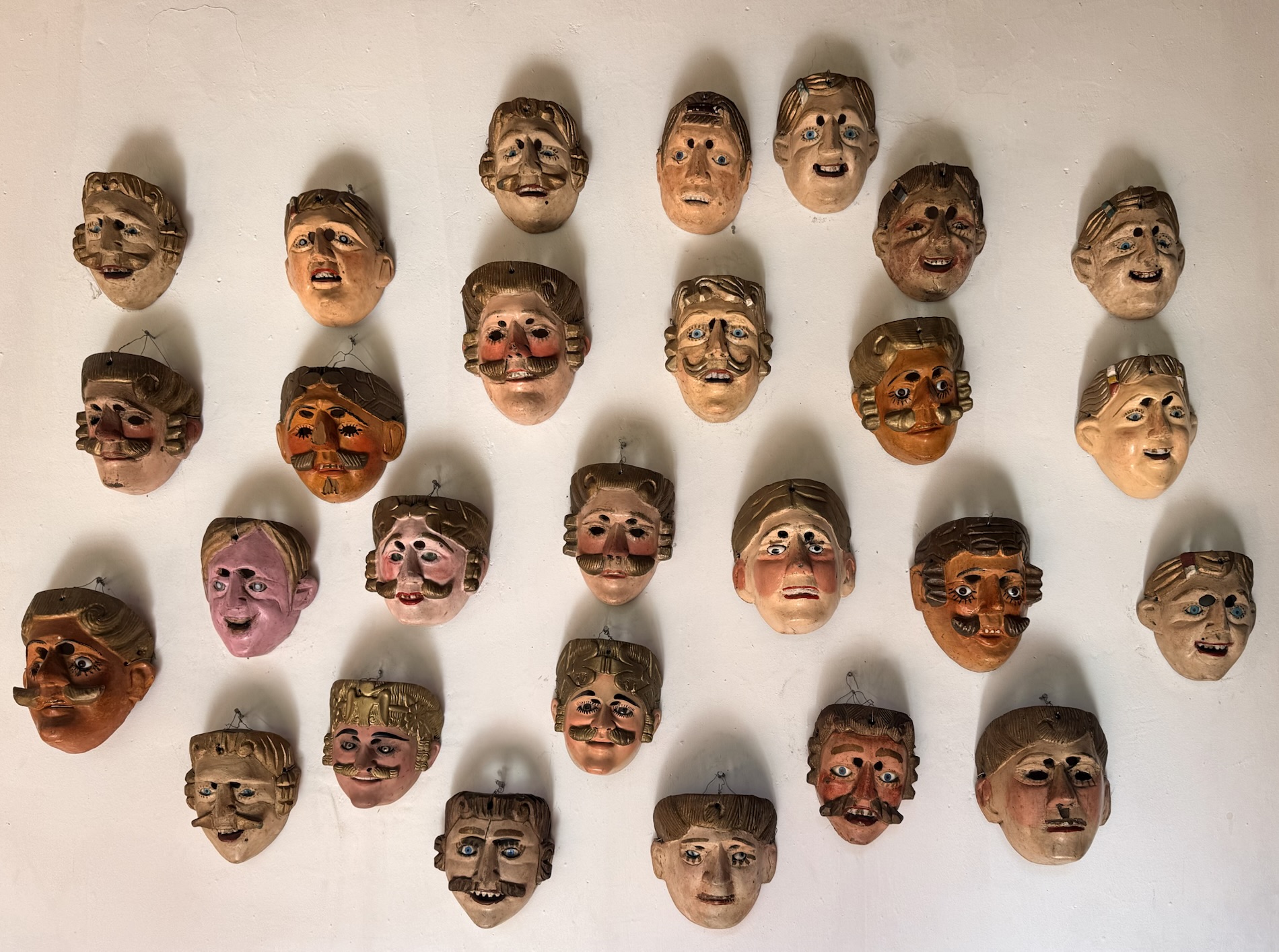
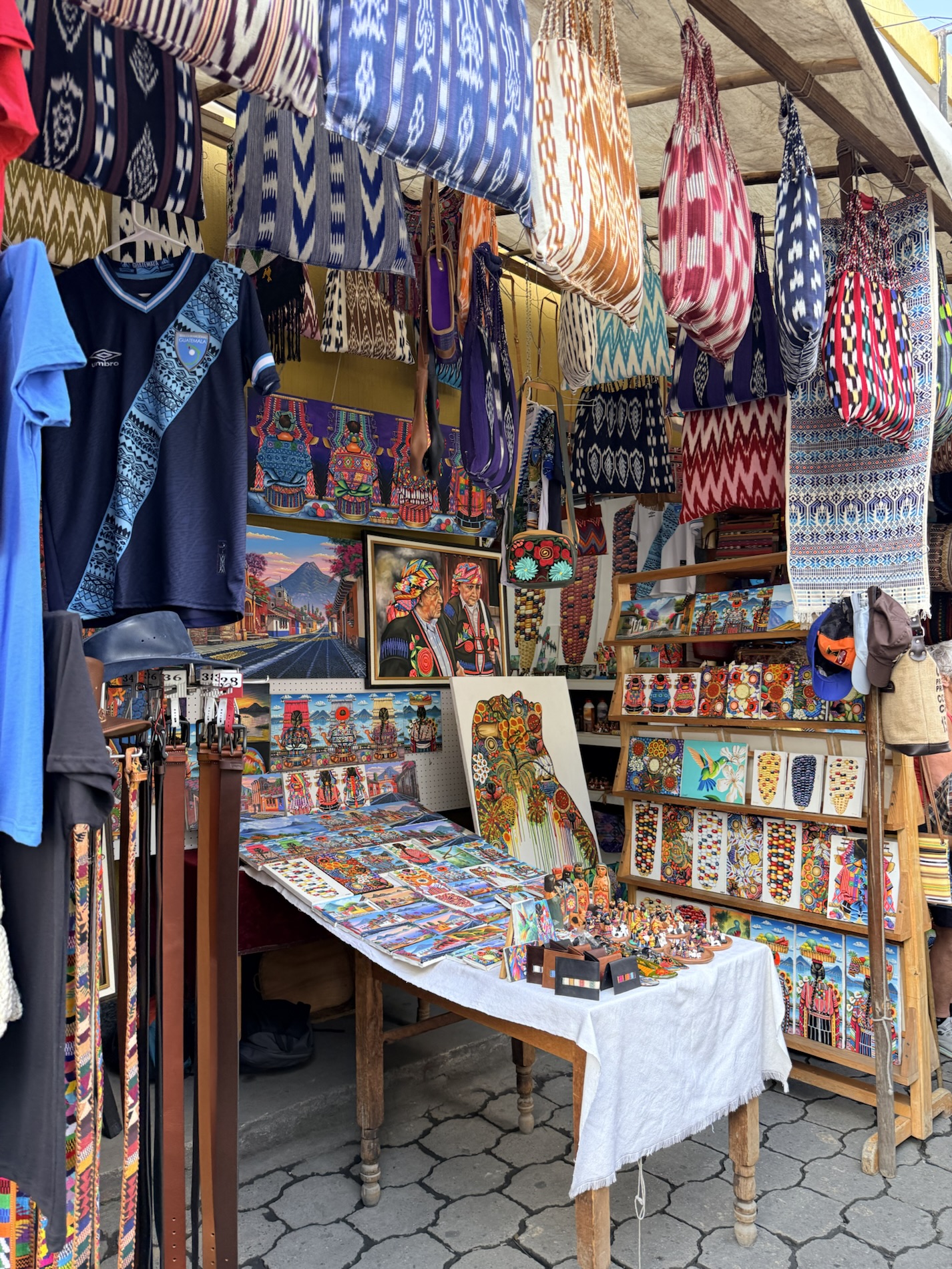
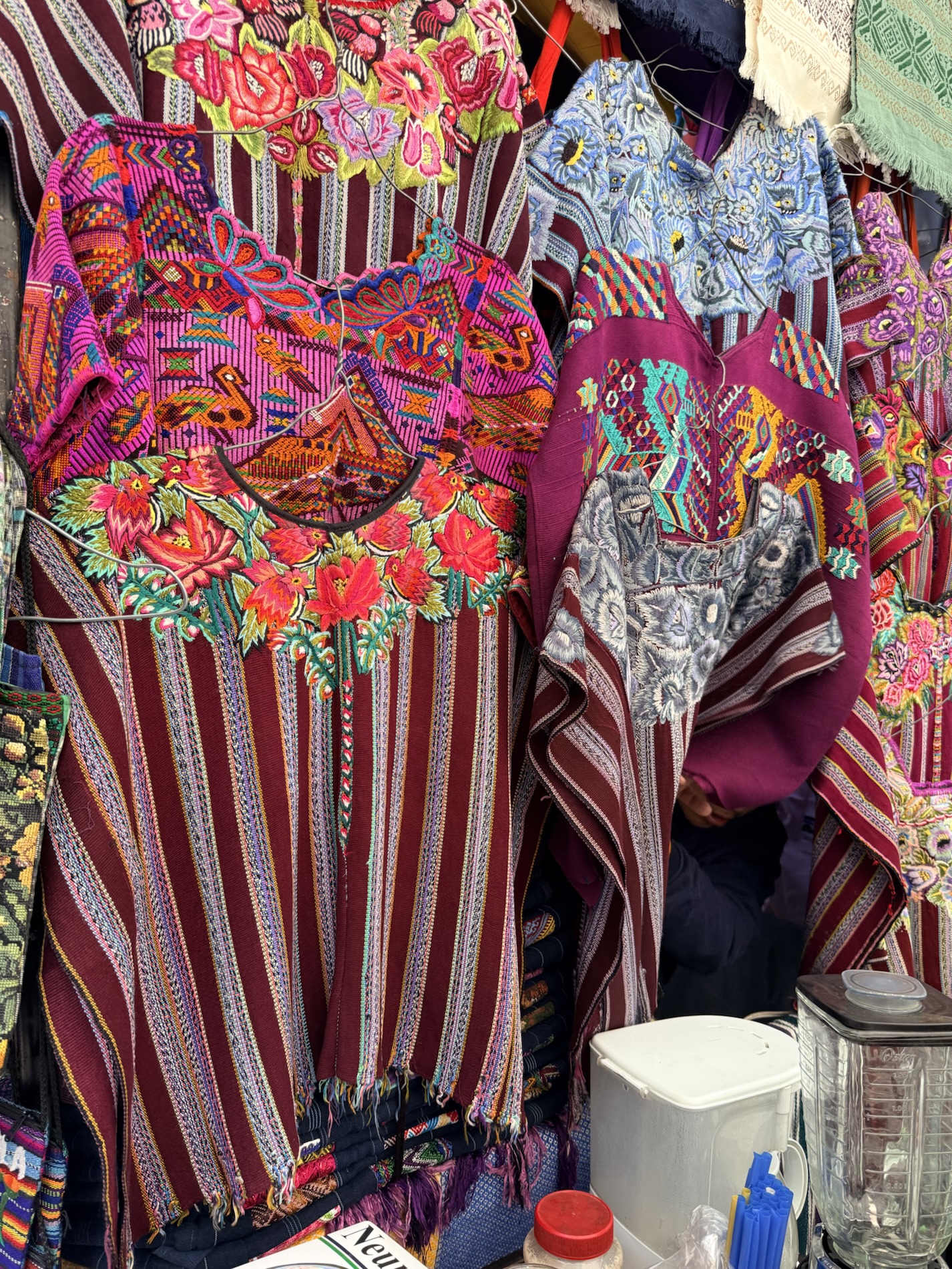
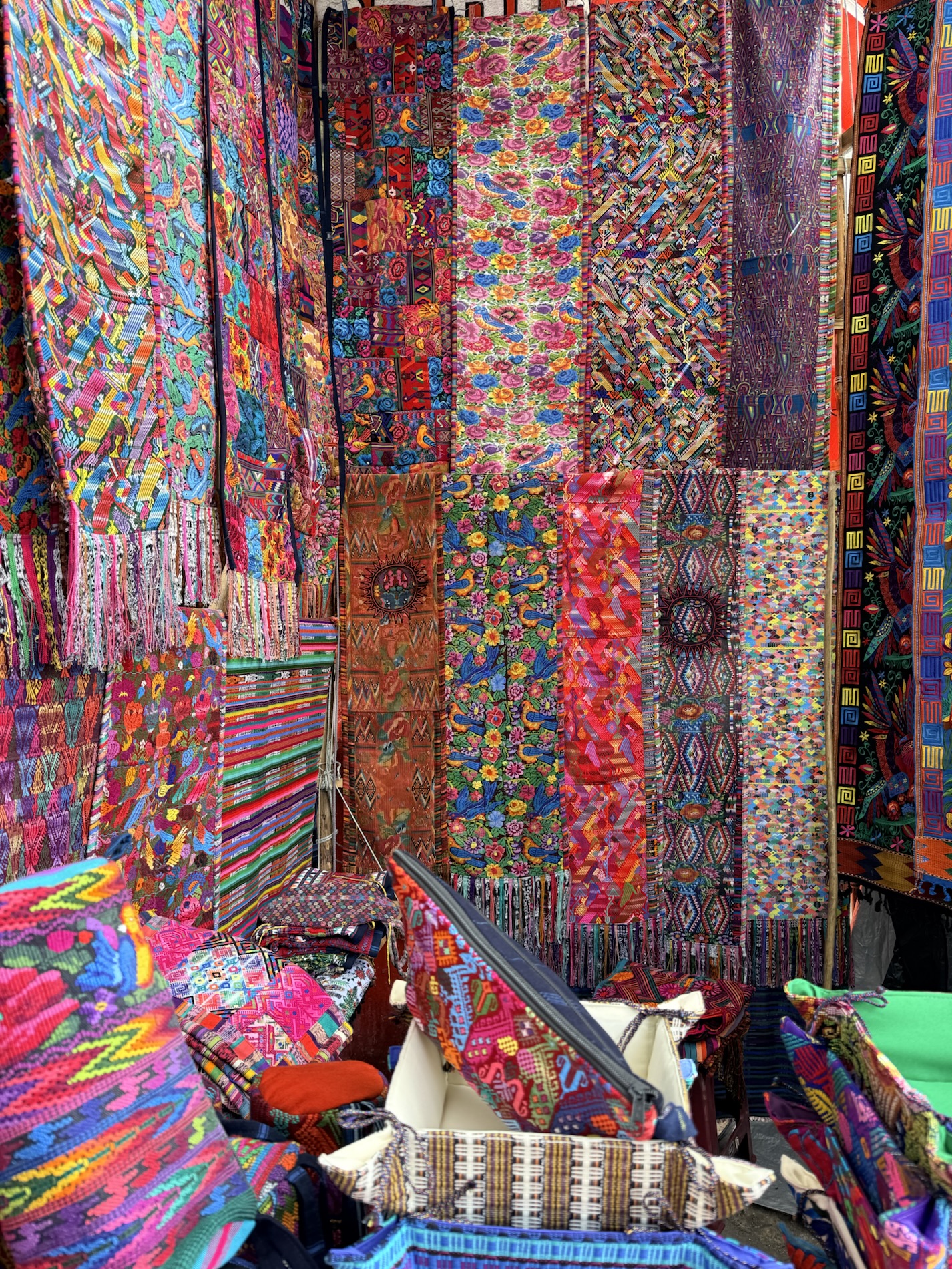
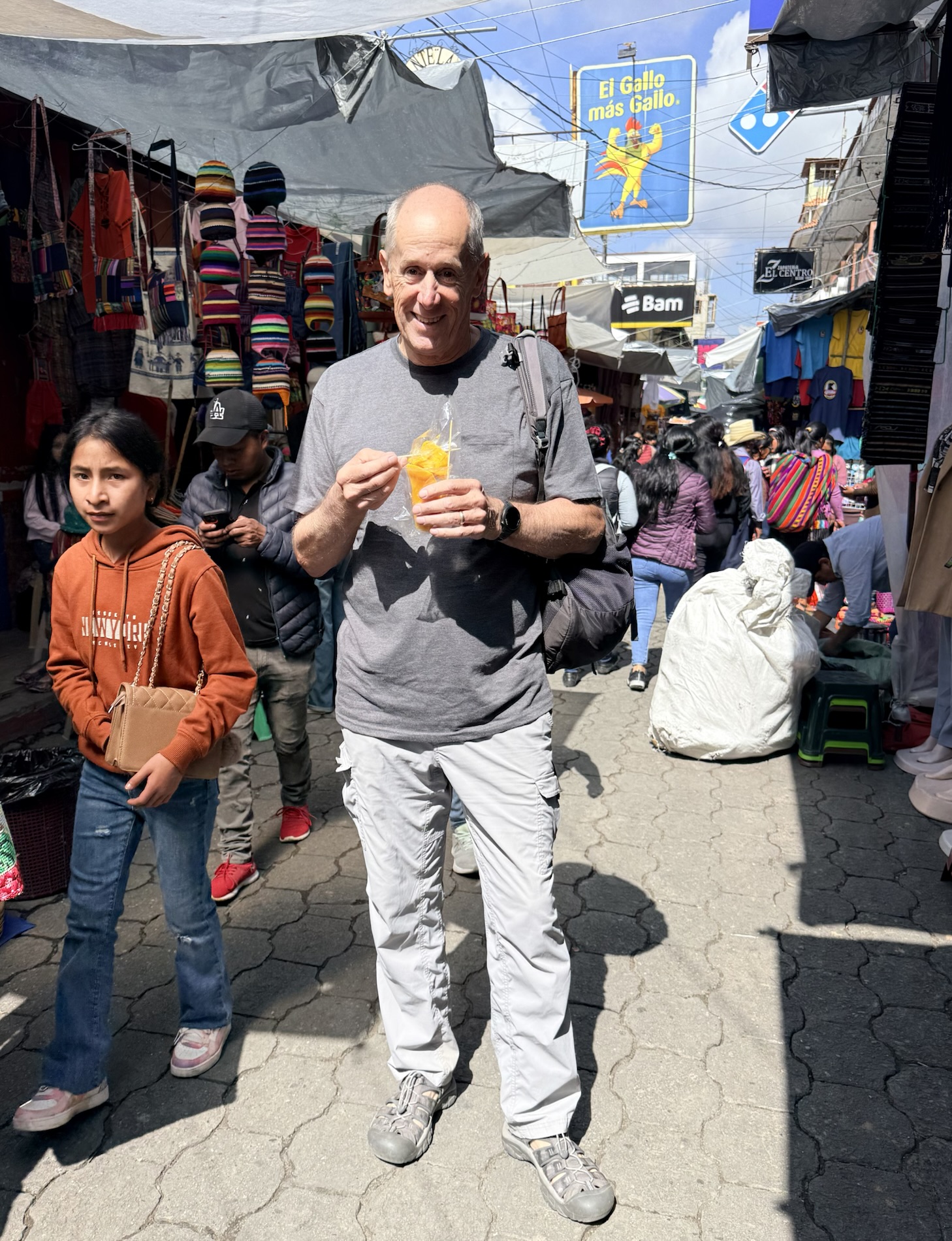
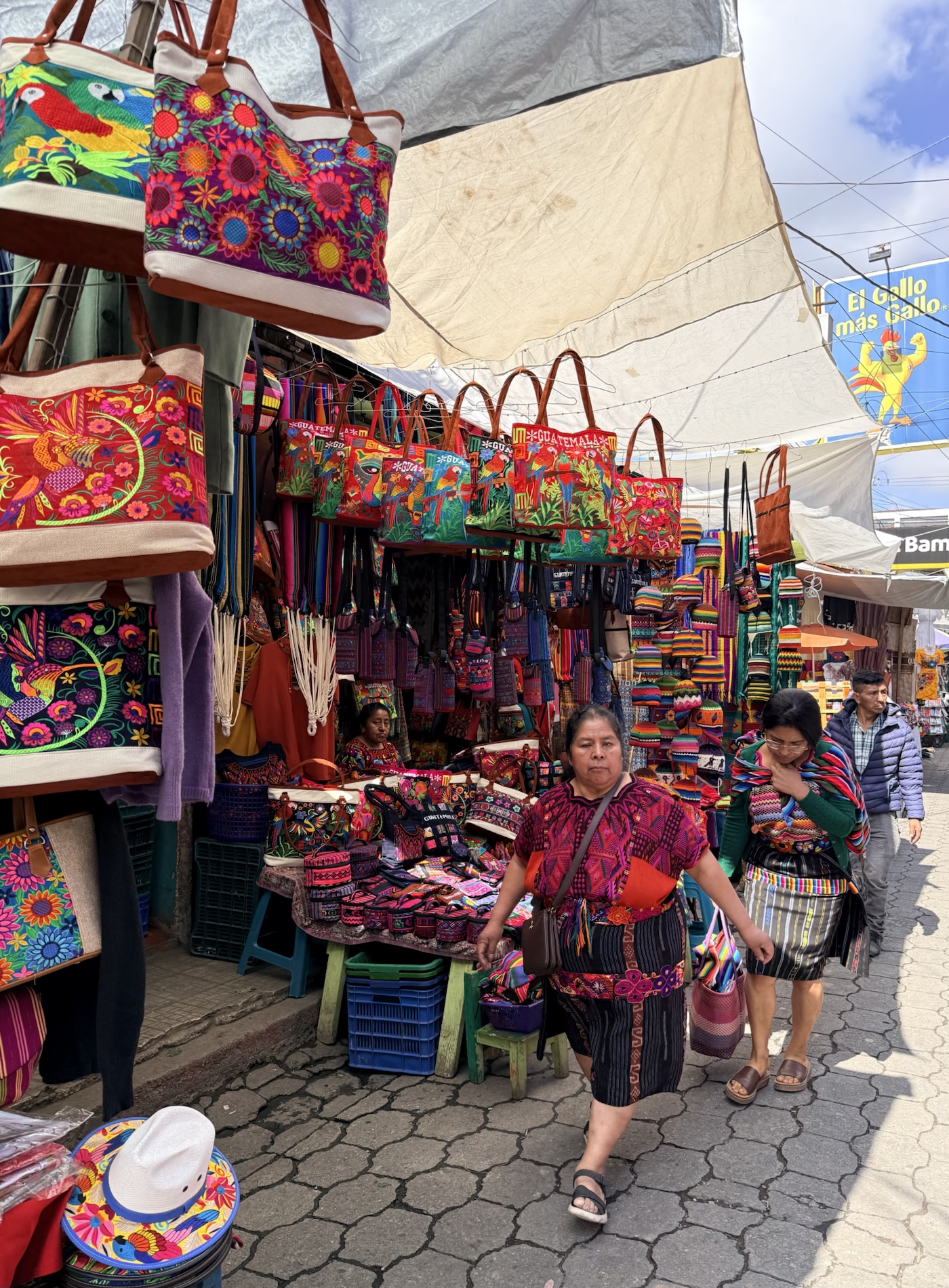
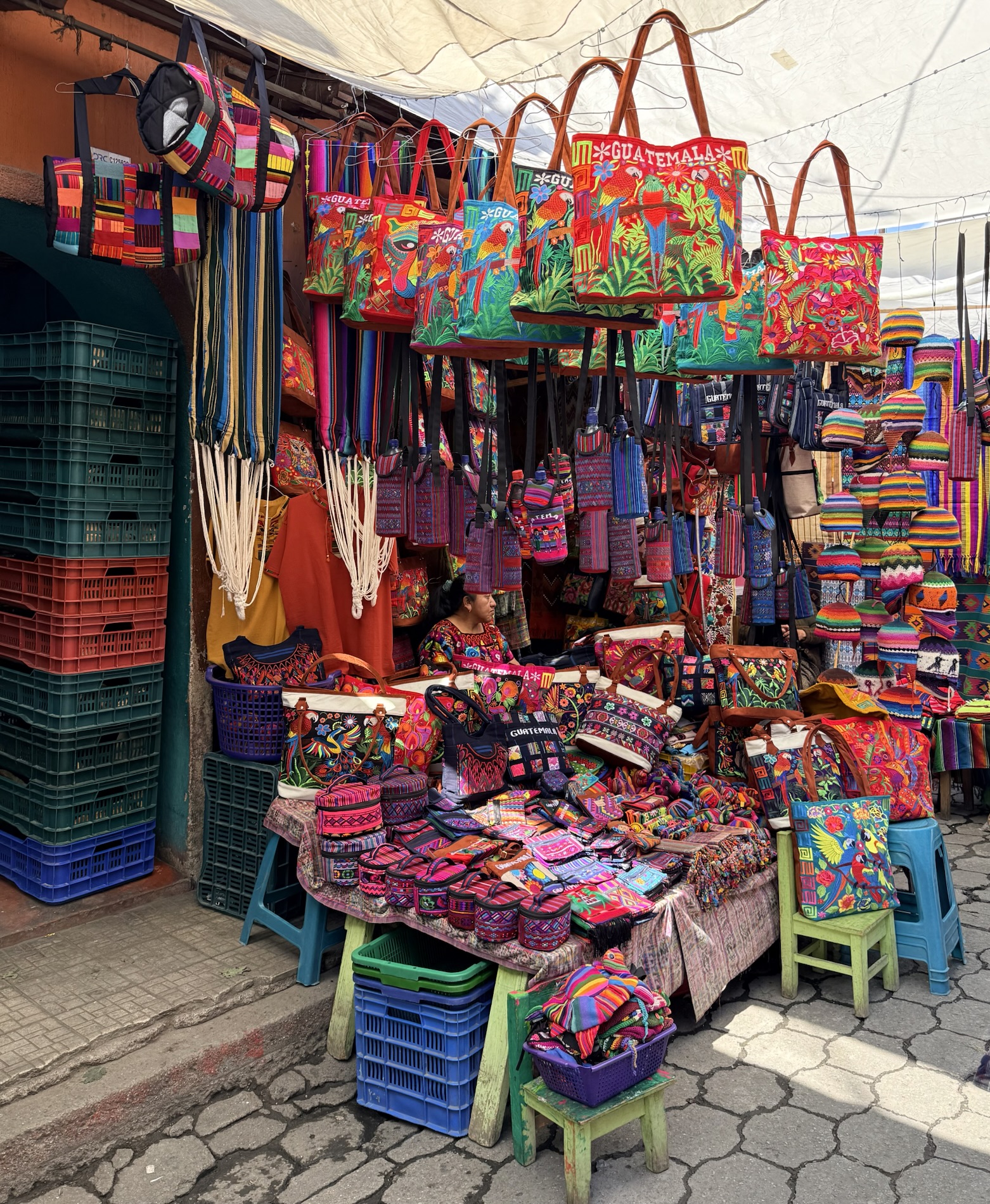
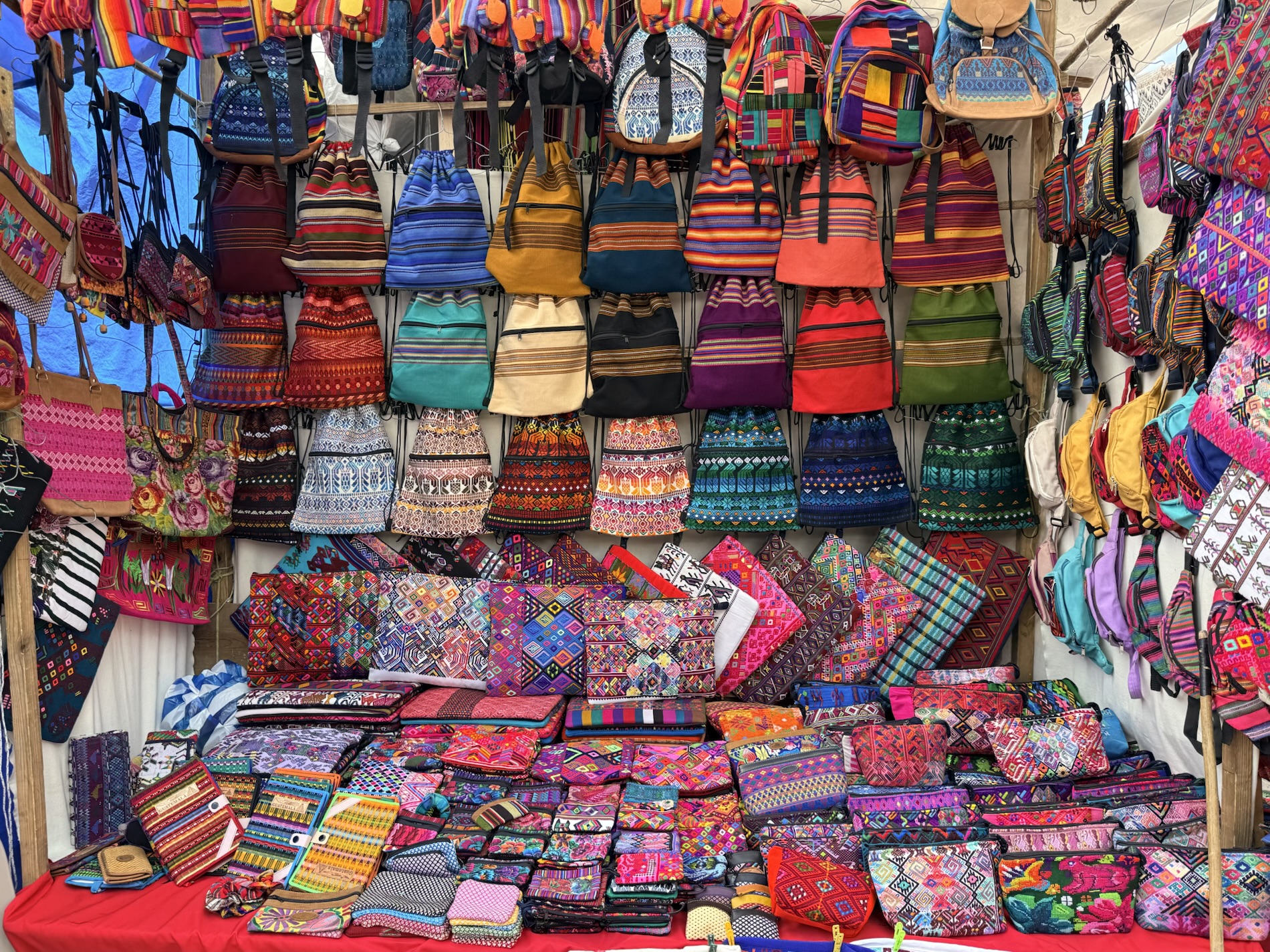
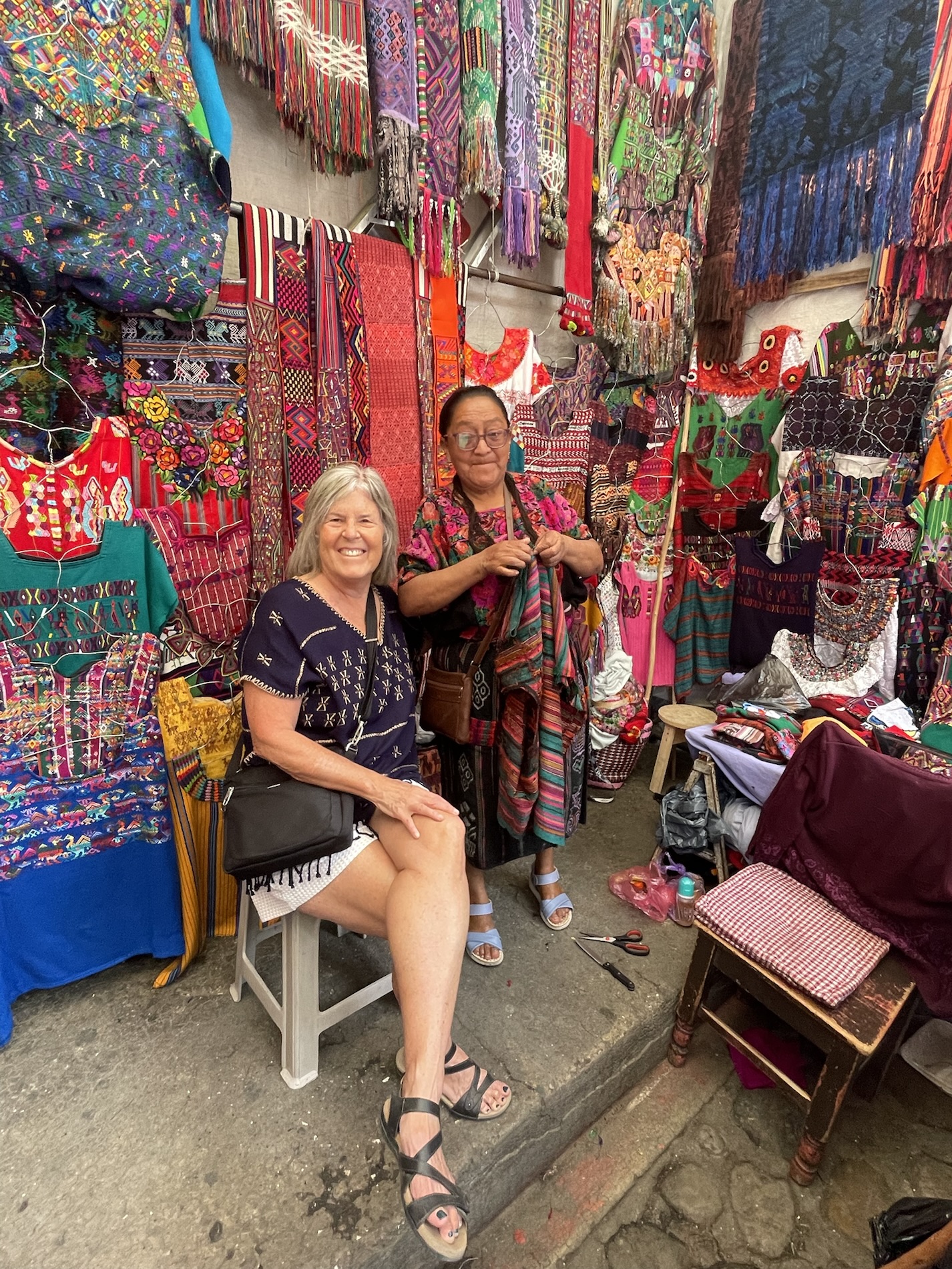
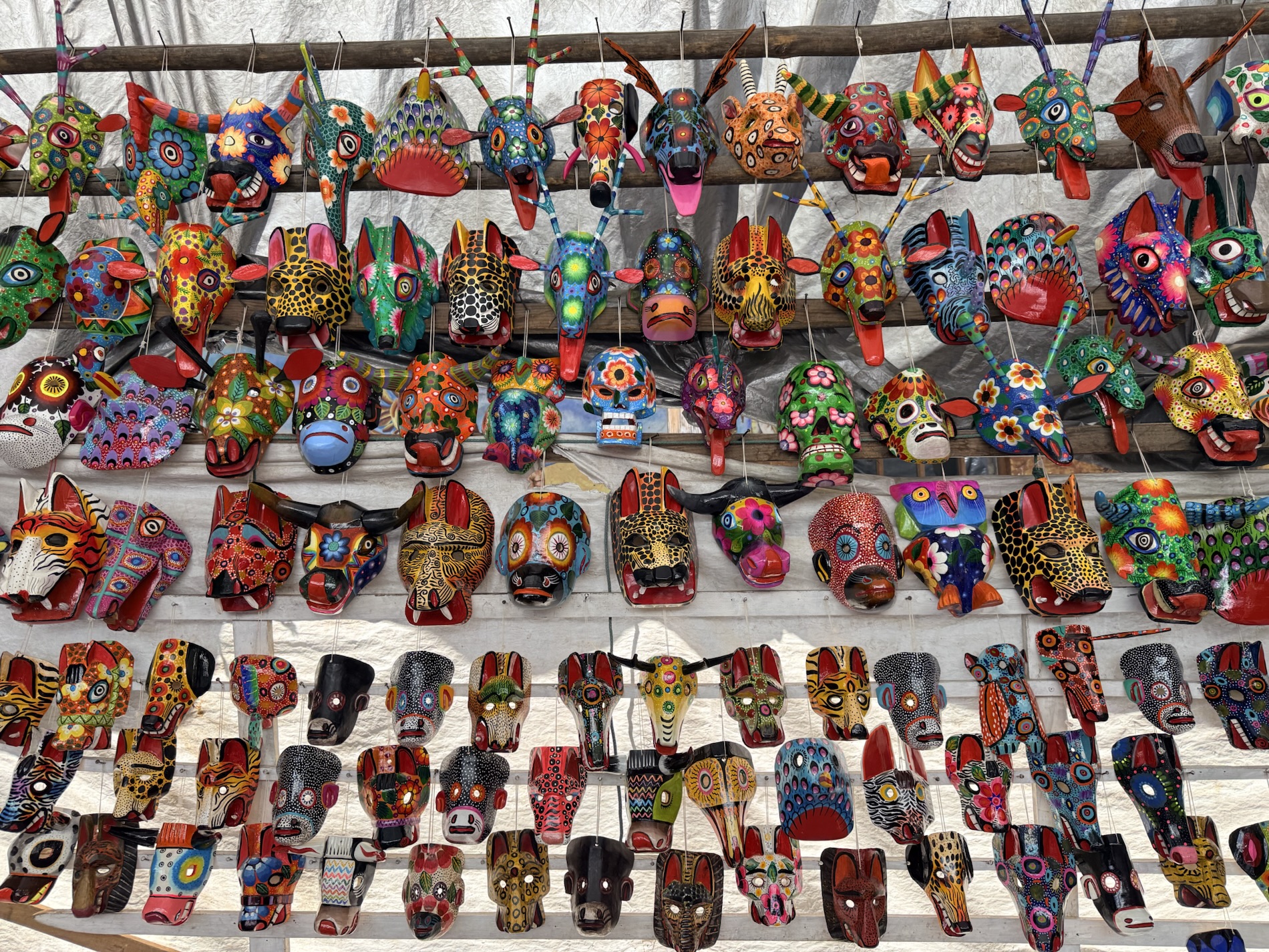
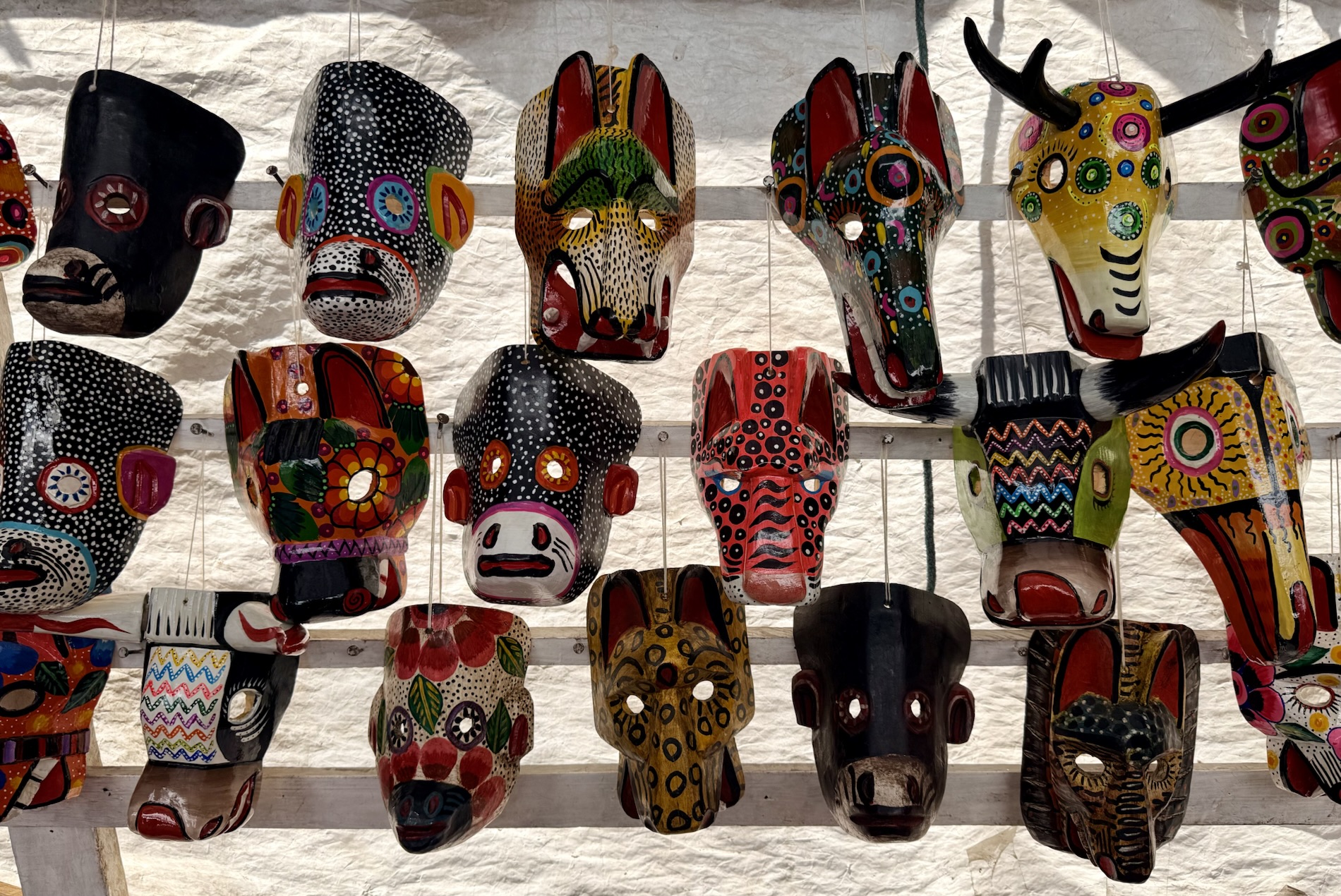
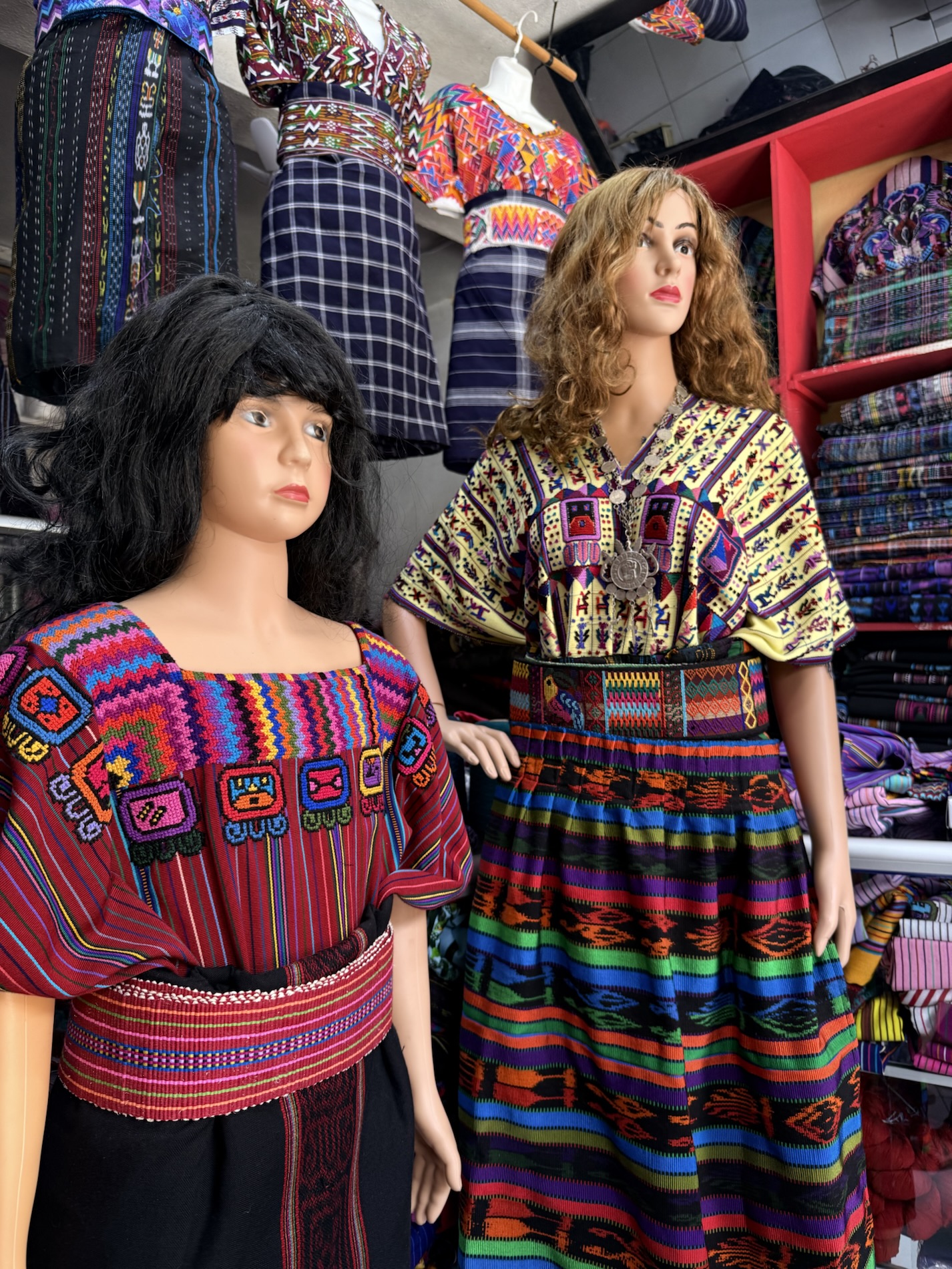
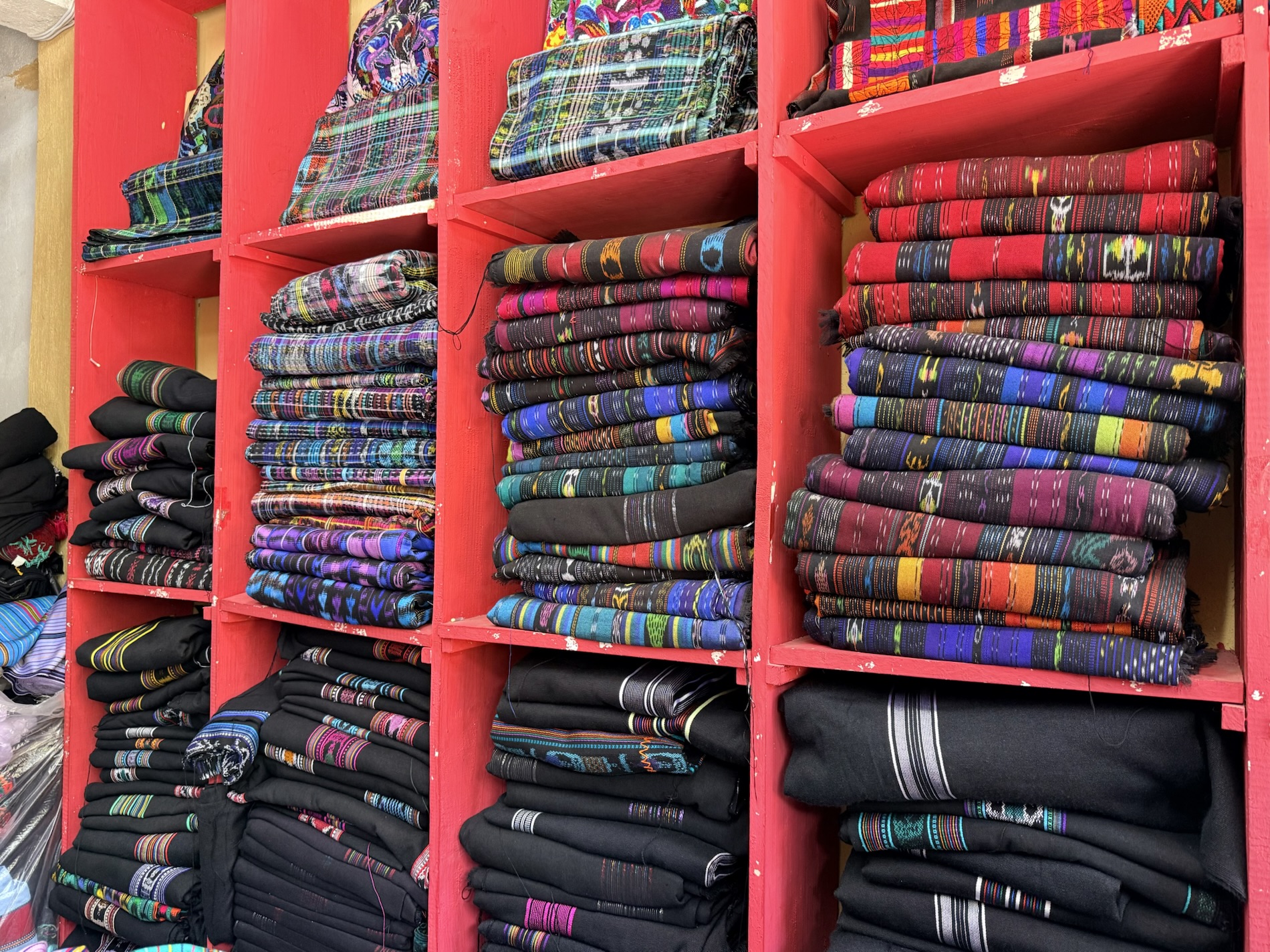
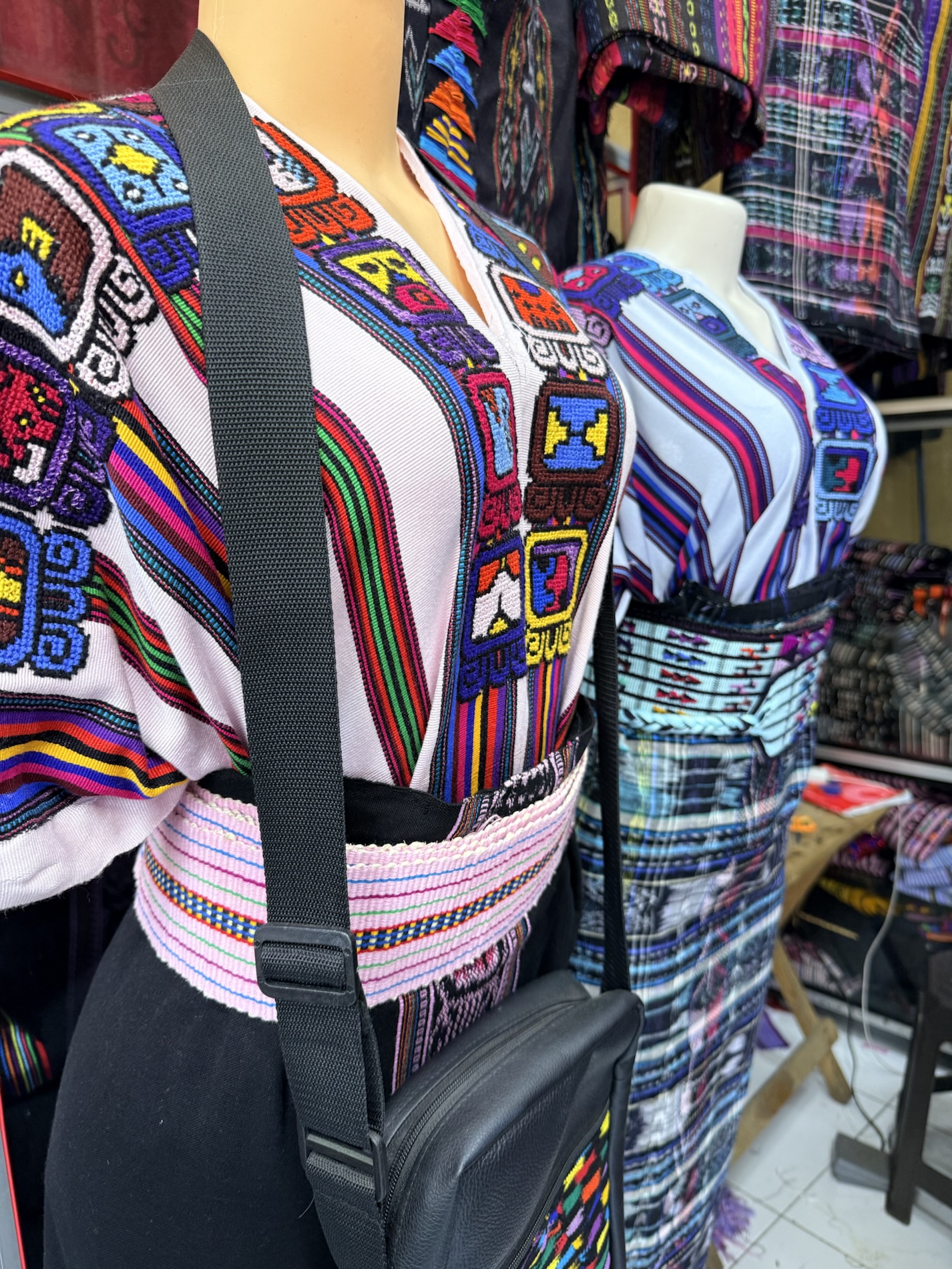
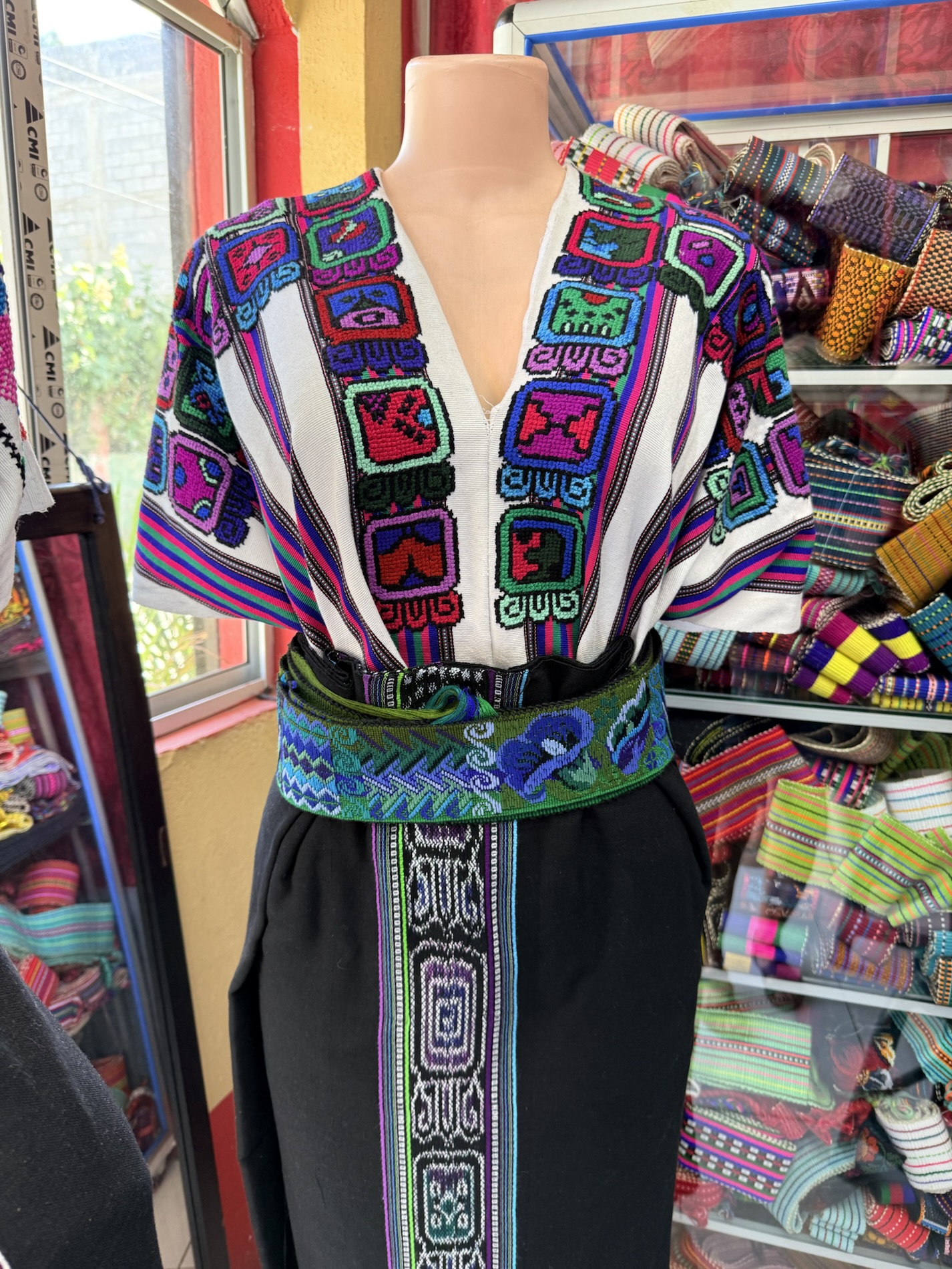
In the highlands of Chichi, the K’iche' Mayans sell textiles, masks, huipil,
wooden miniatures of the Holy Family, and hummingbirds hovering on handbags
in the Sunday market. Incense wafts like prayers,

mesmerizing tourists or communing with ancestors
who might have perished in the Maya genocide
during the Guatemalan Civil War. Their remains might be found

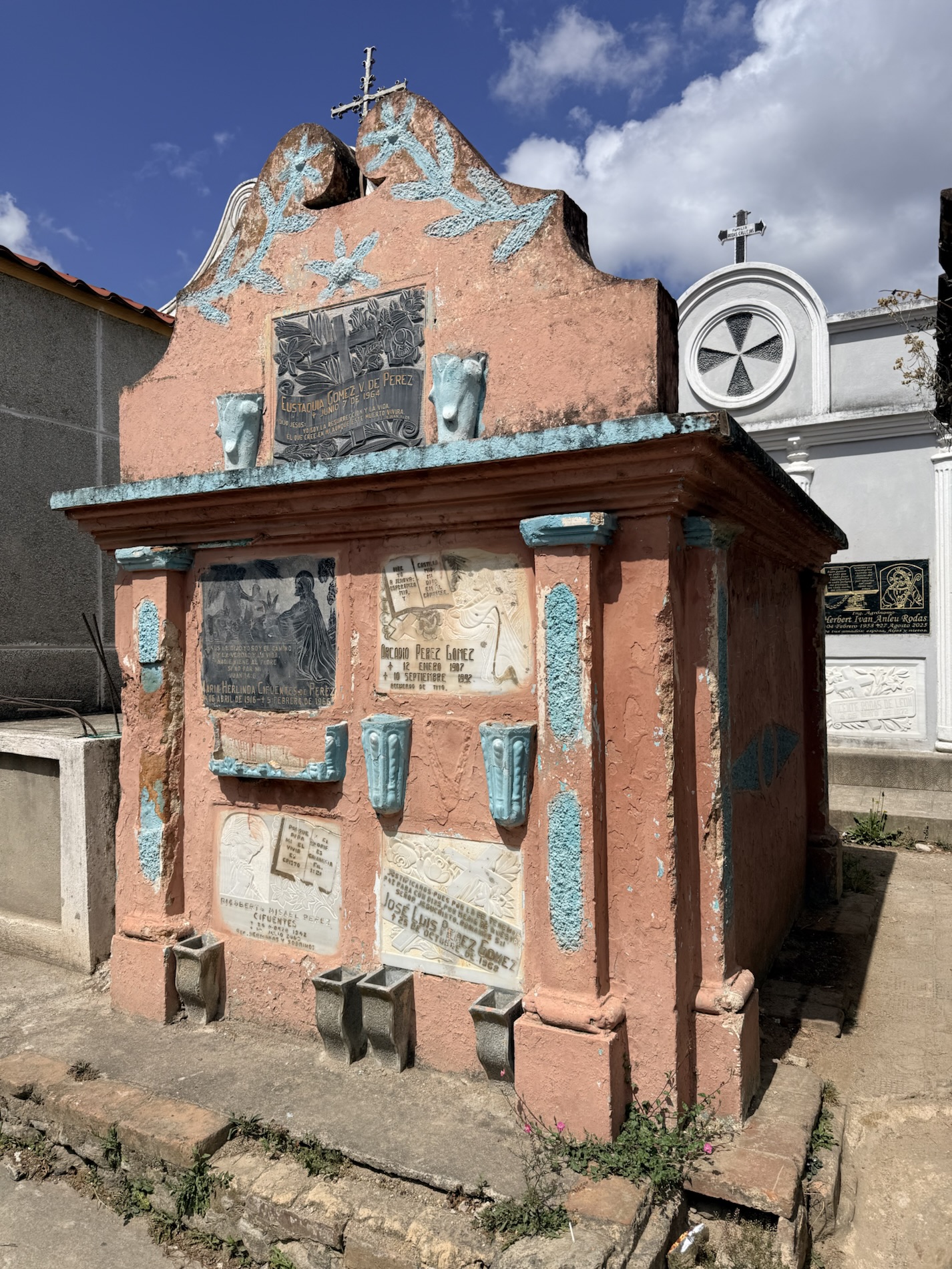
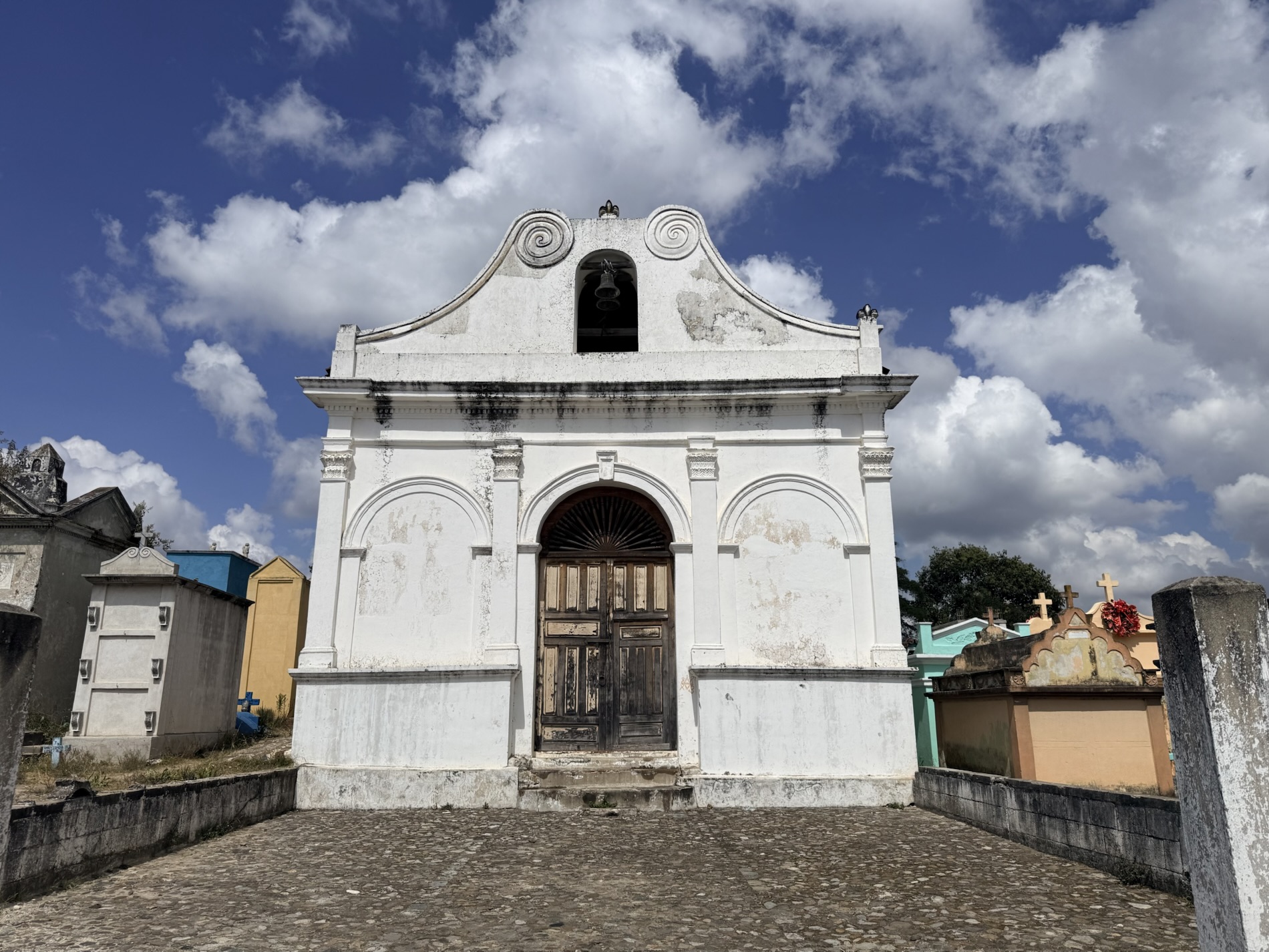
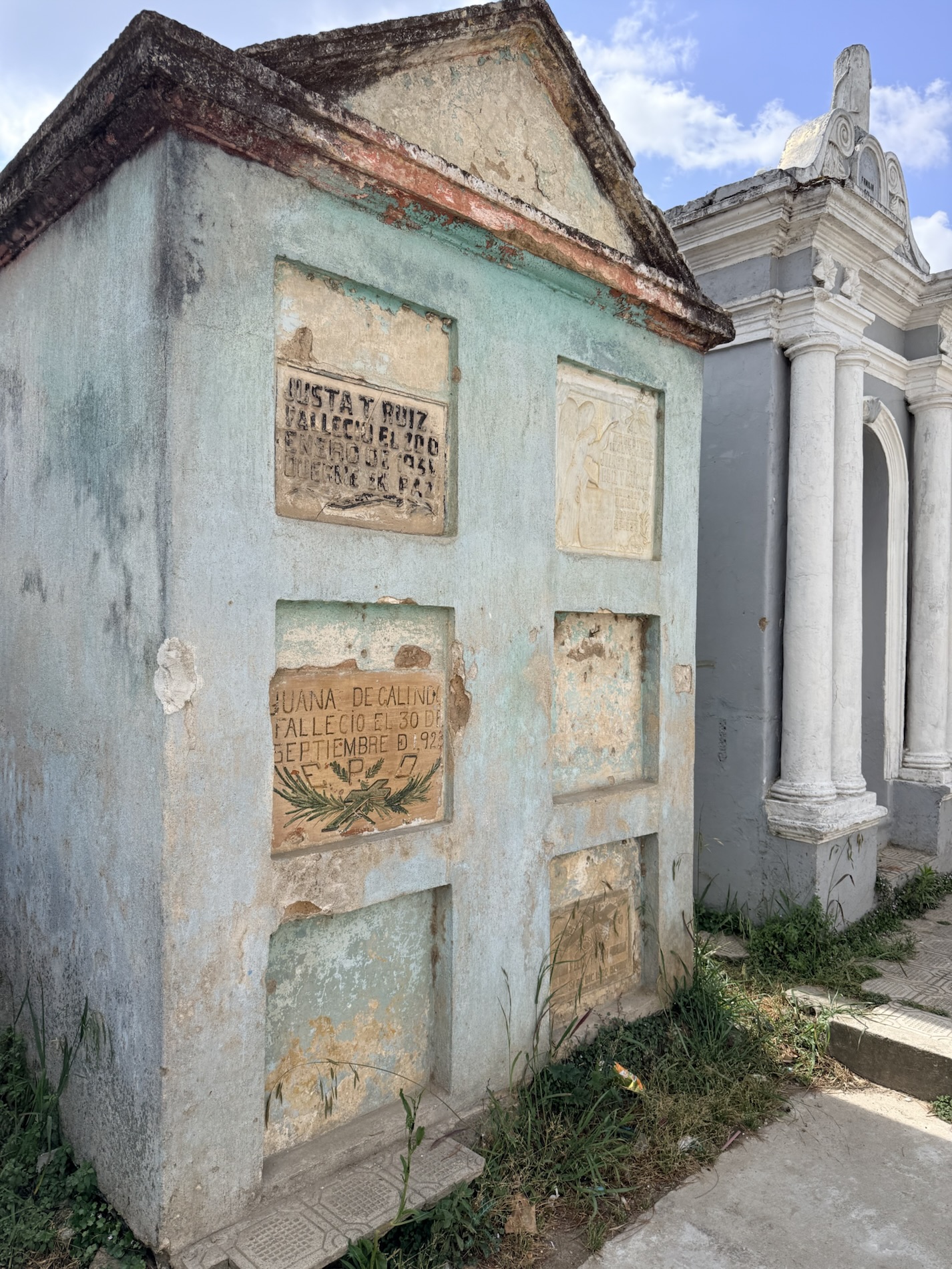
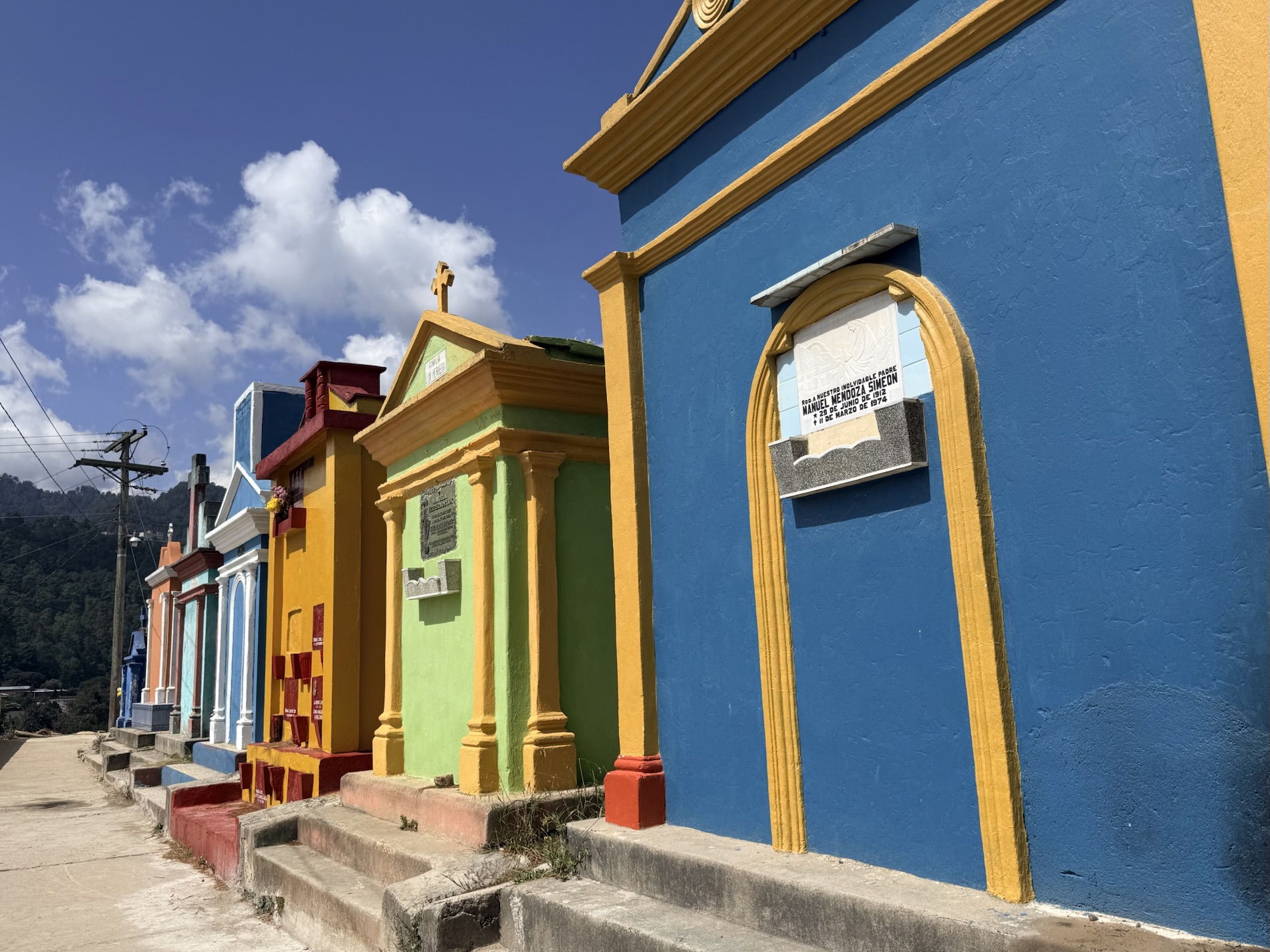
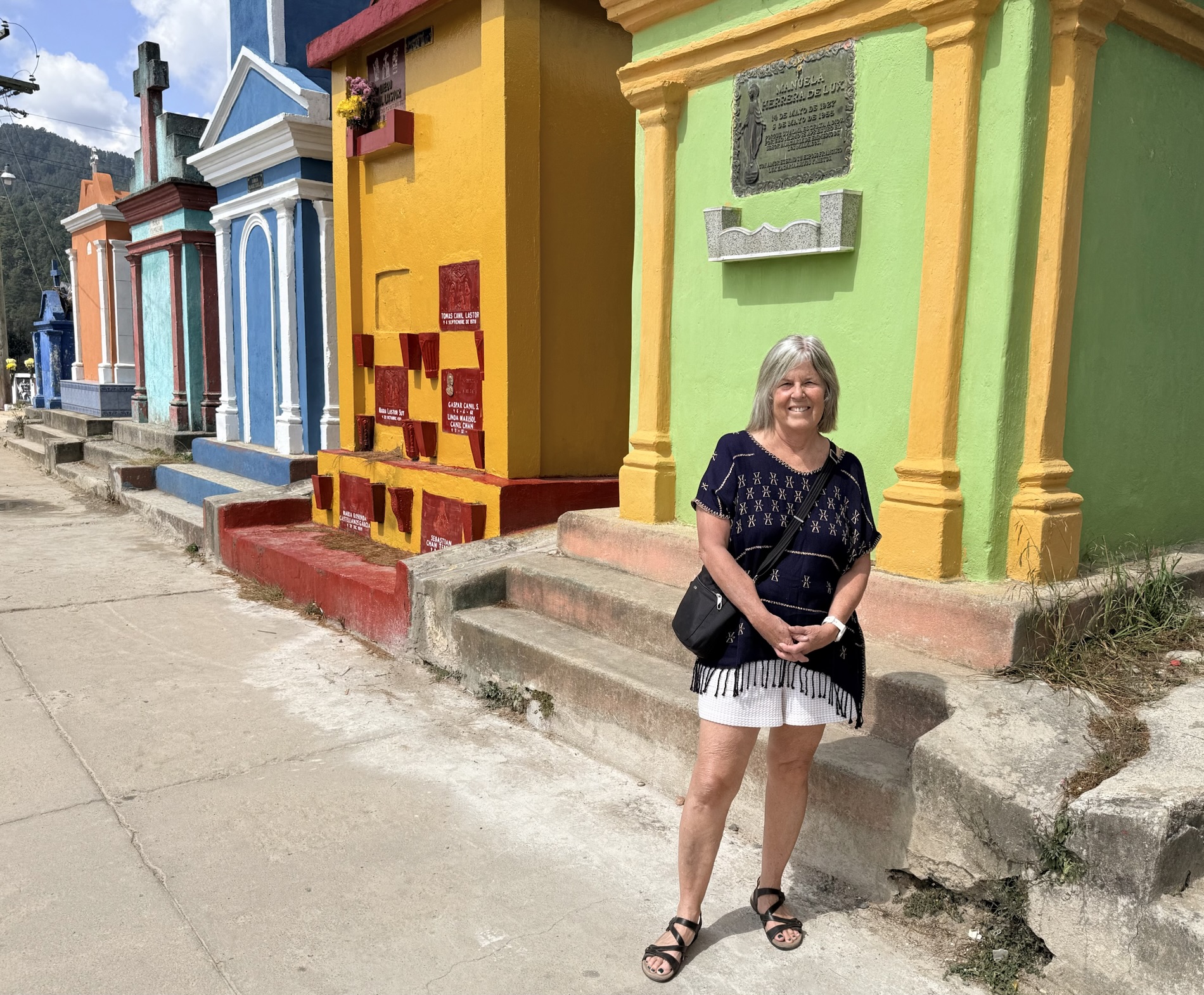
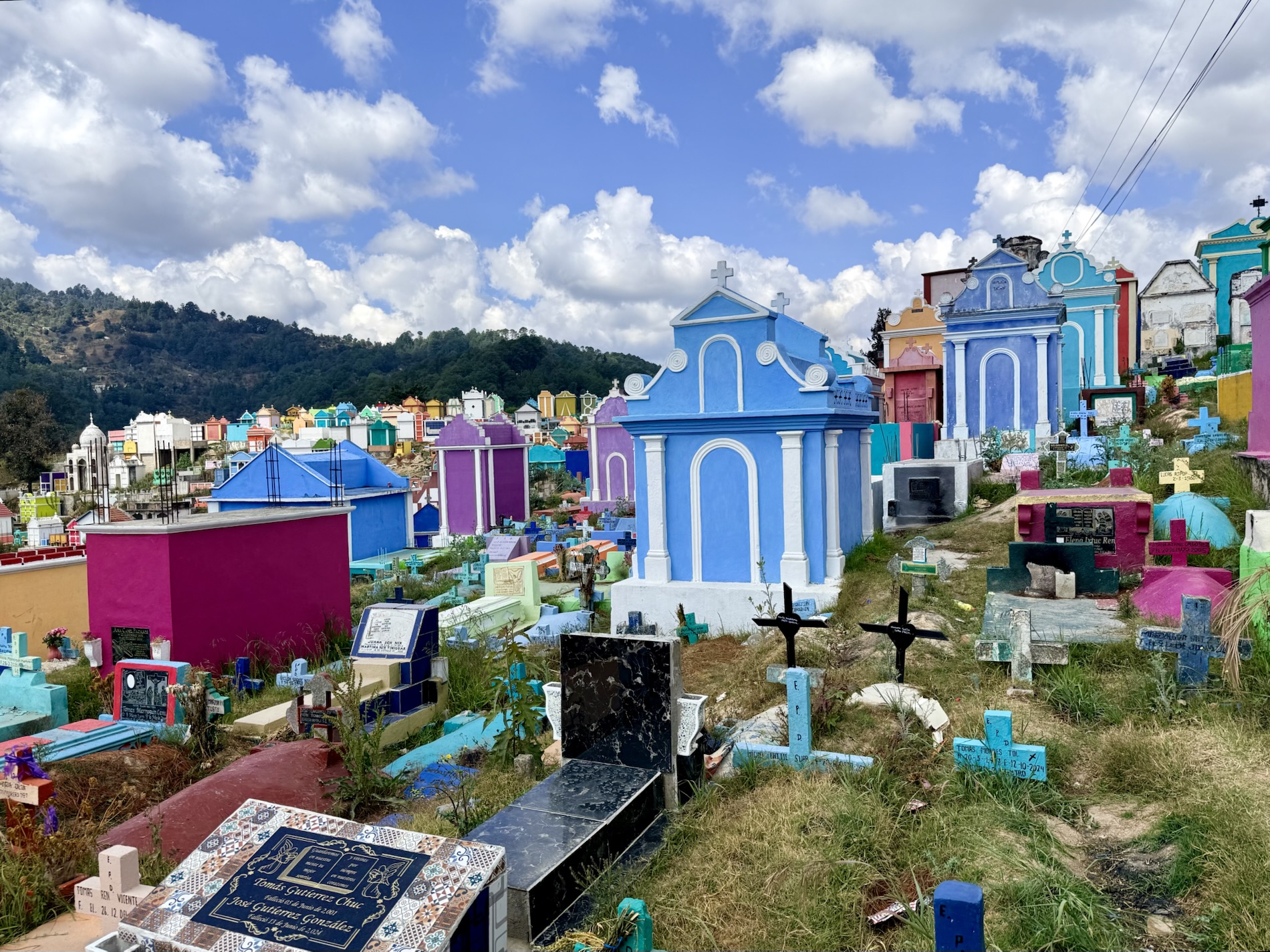
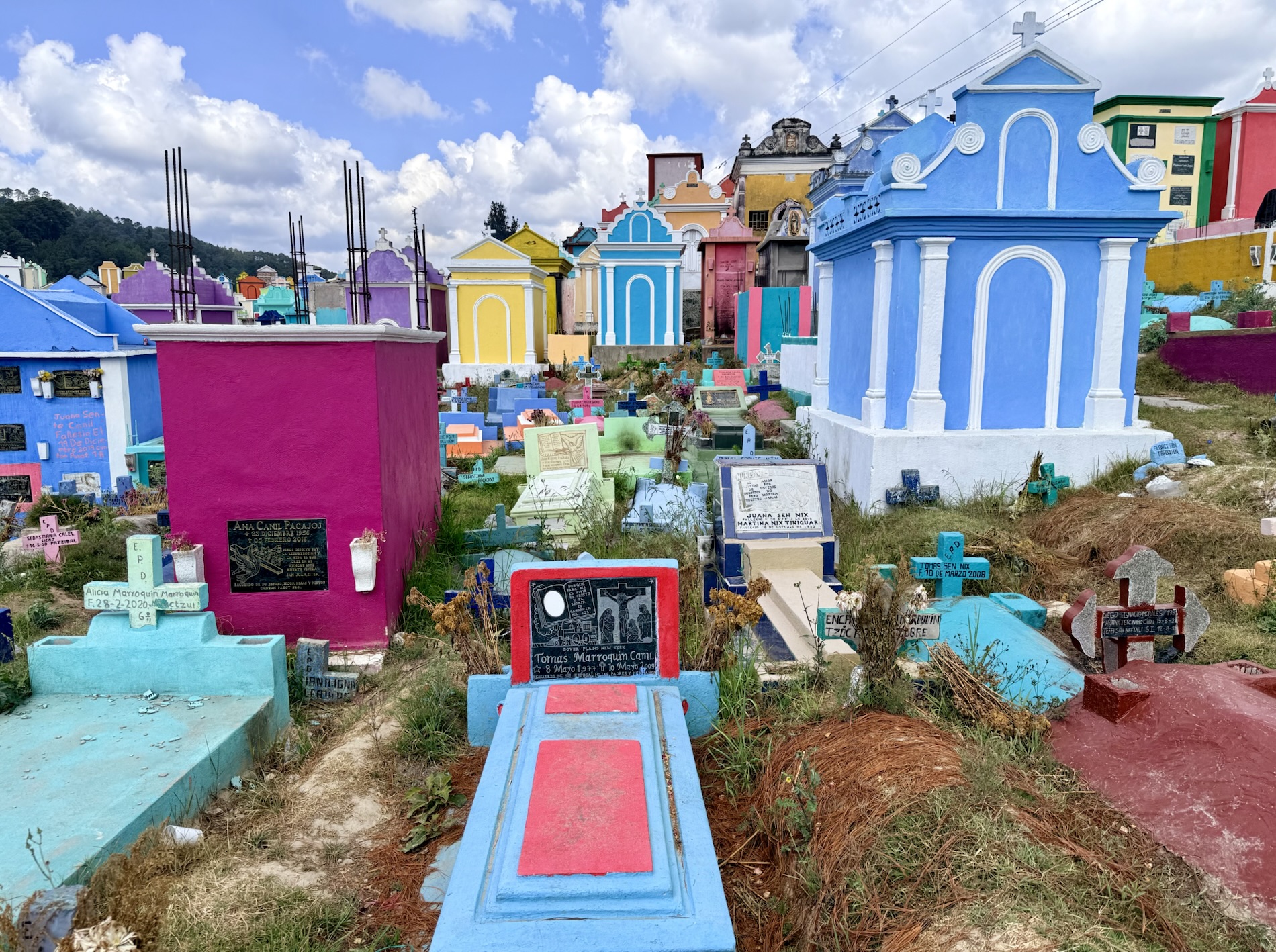
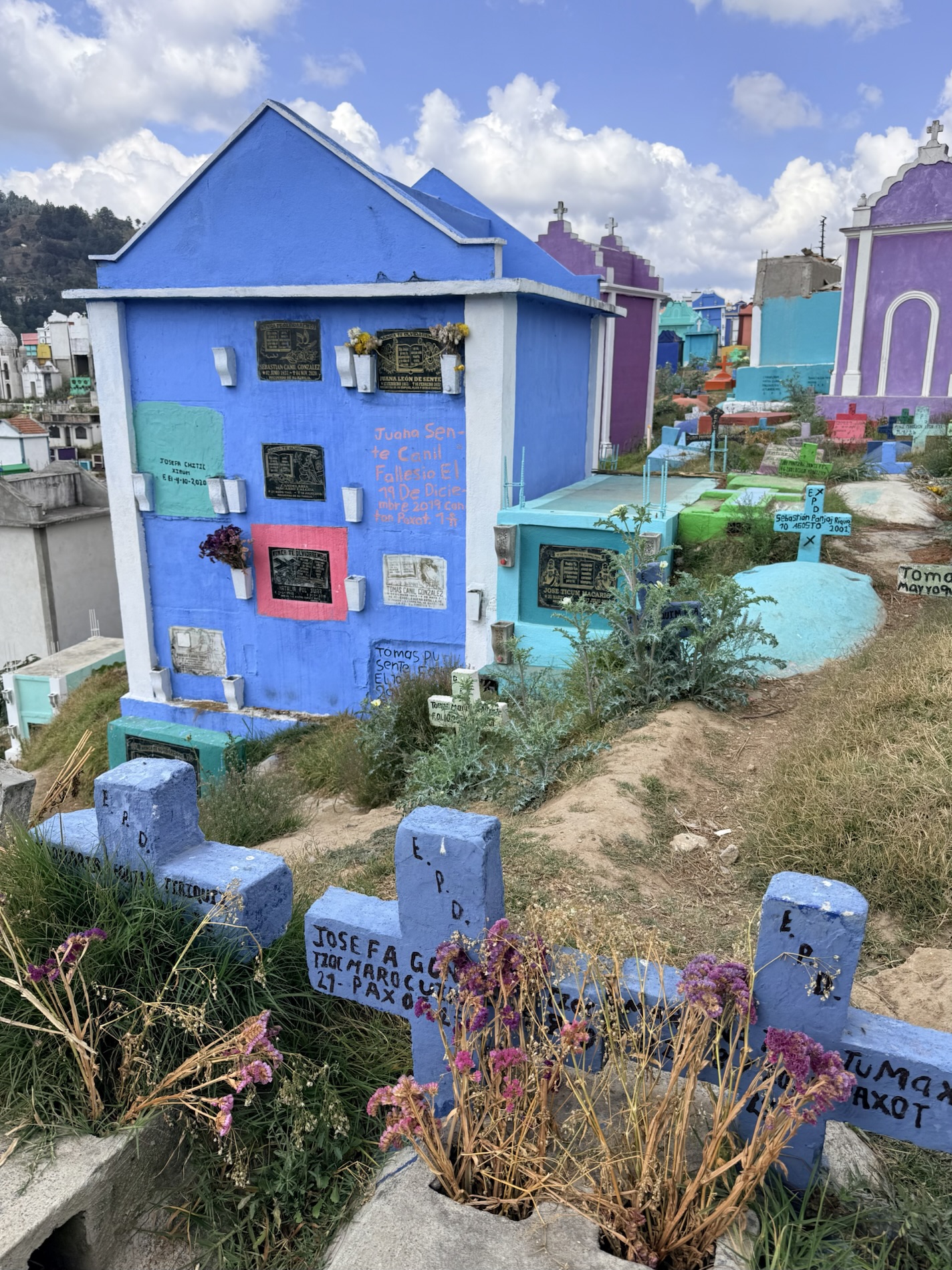
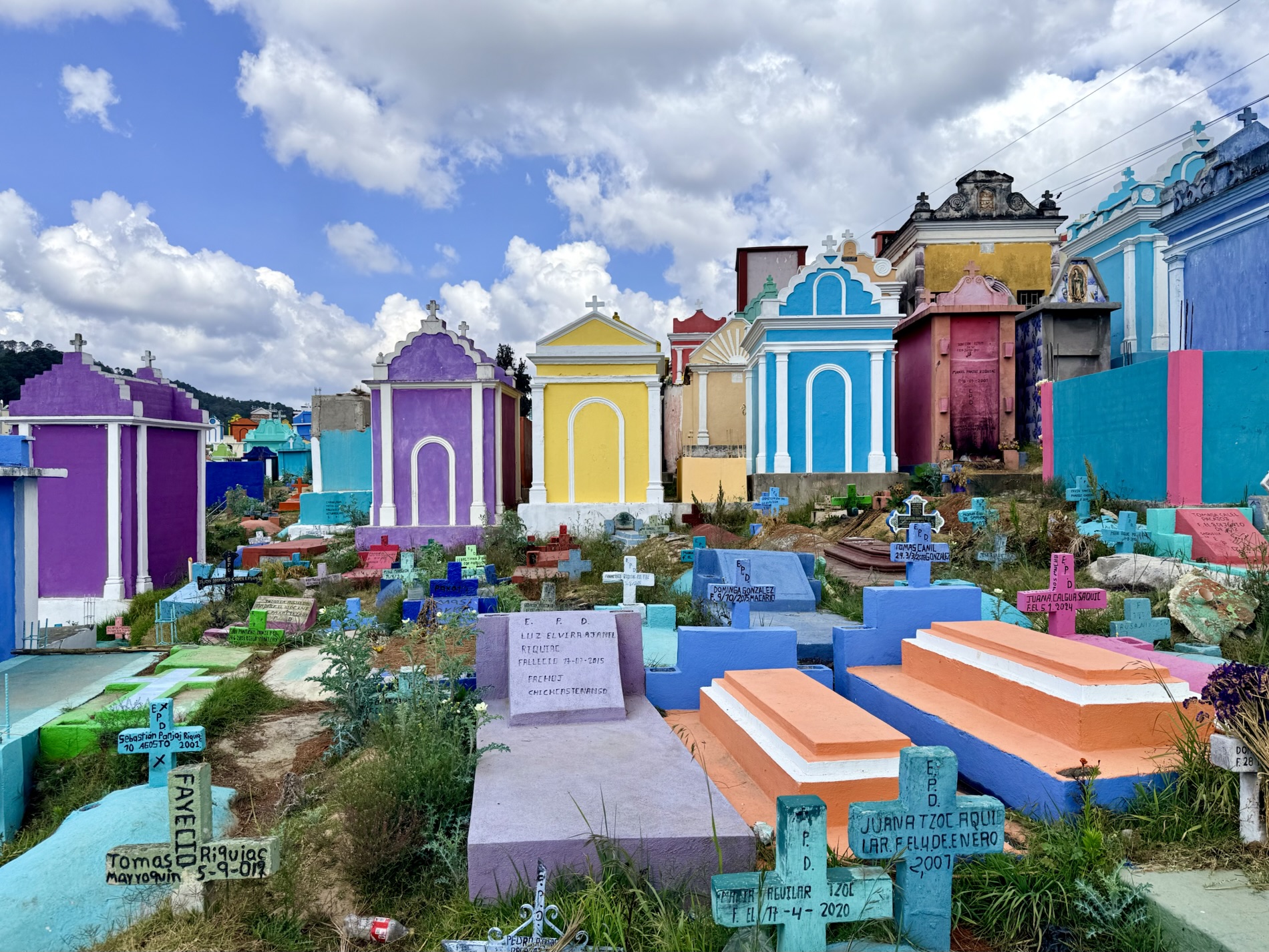
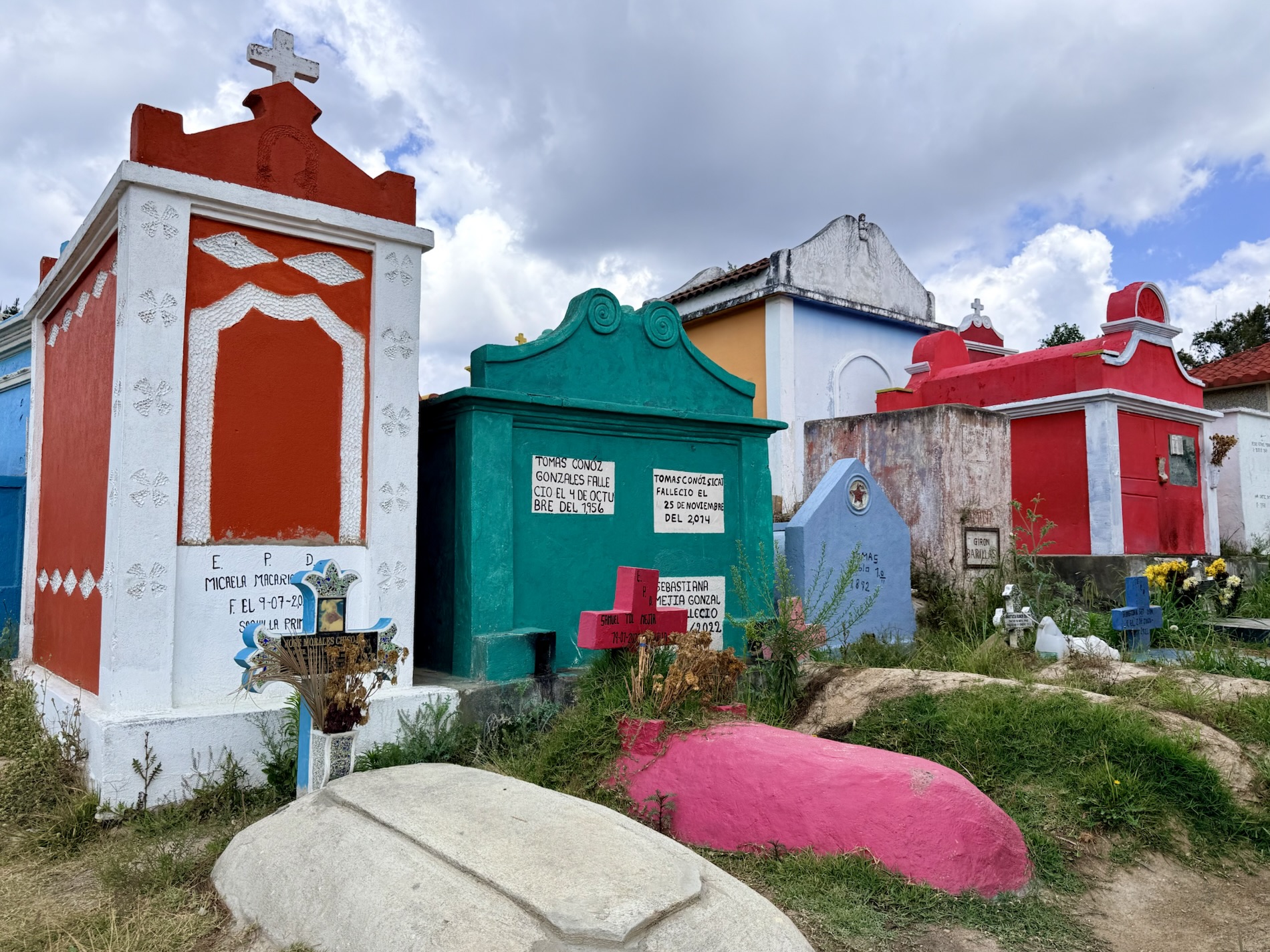
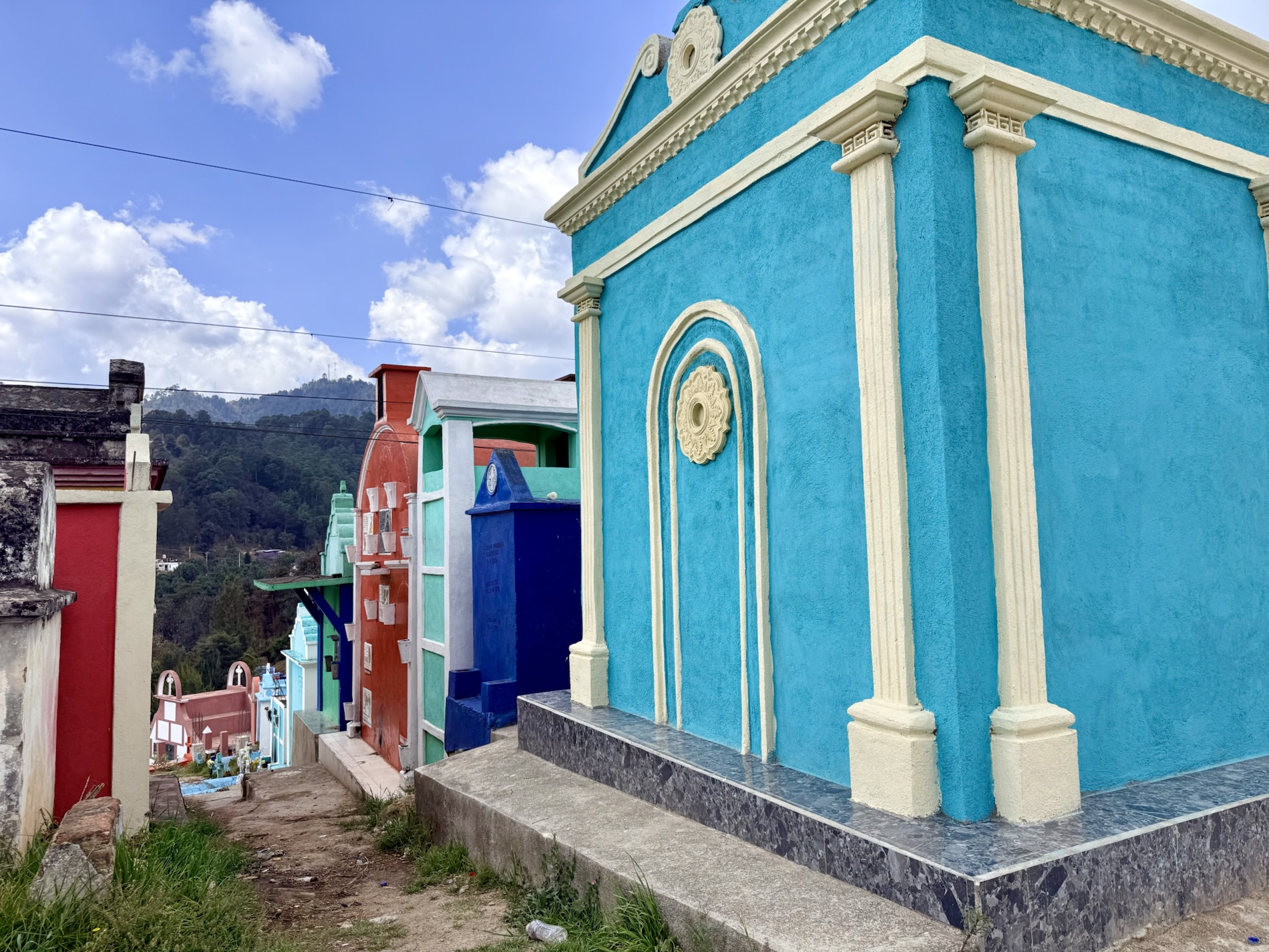
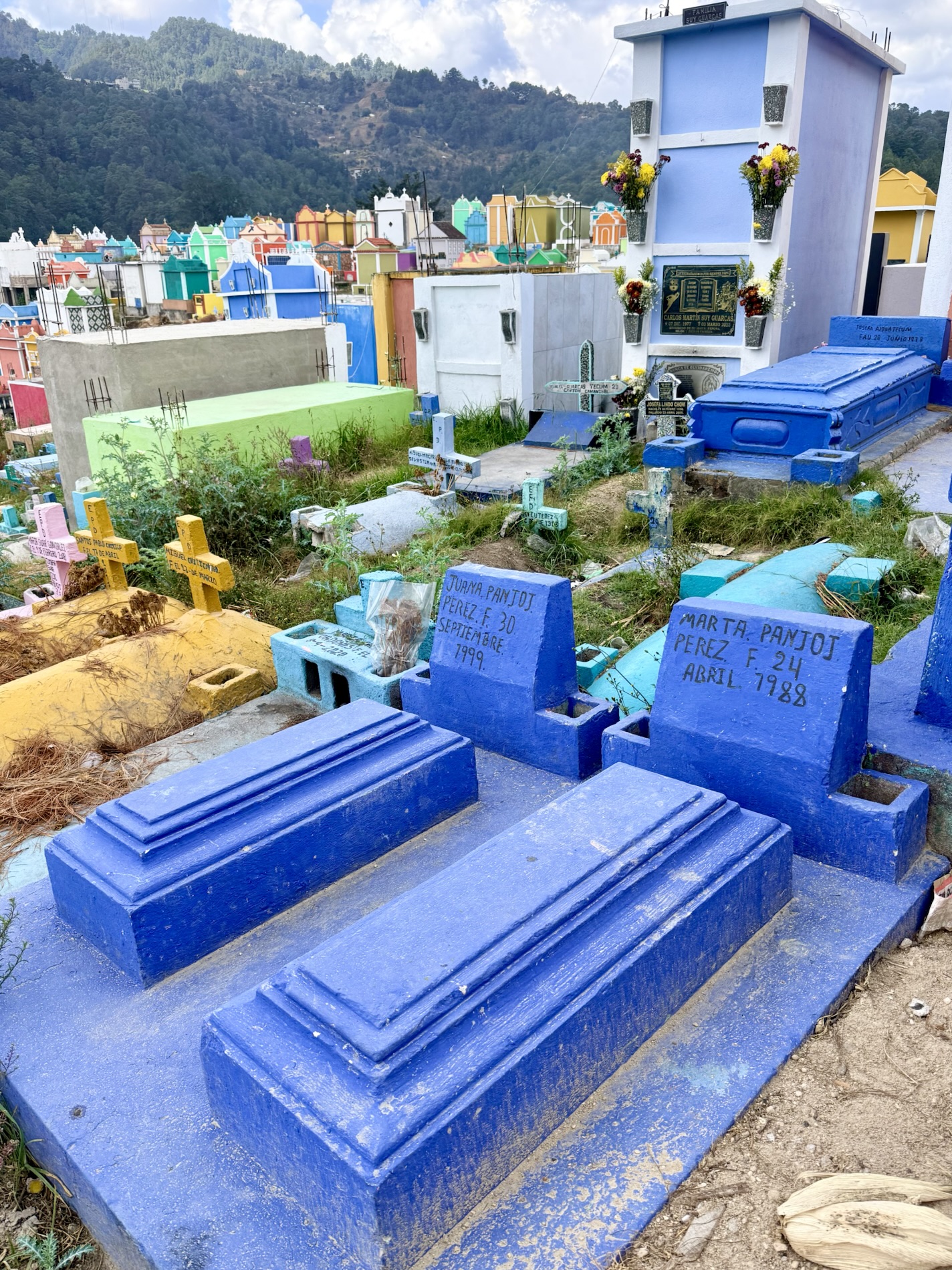
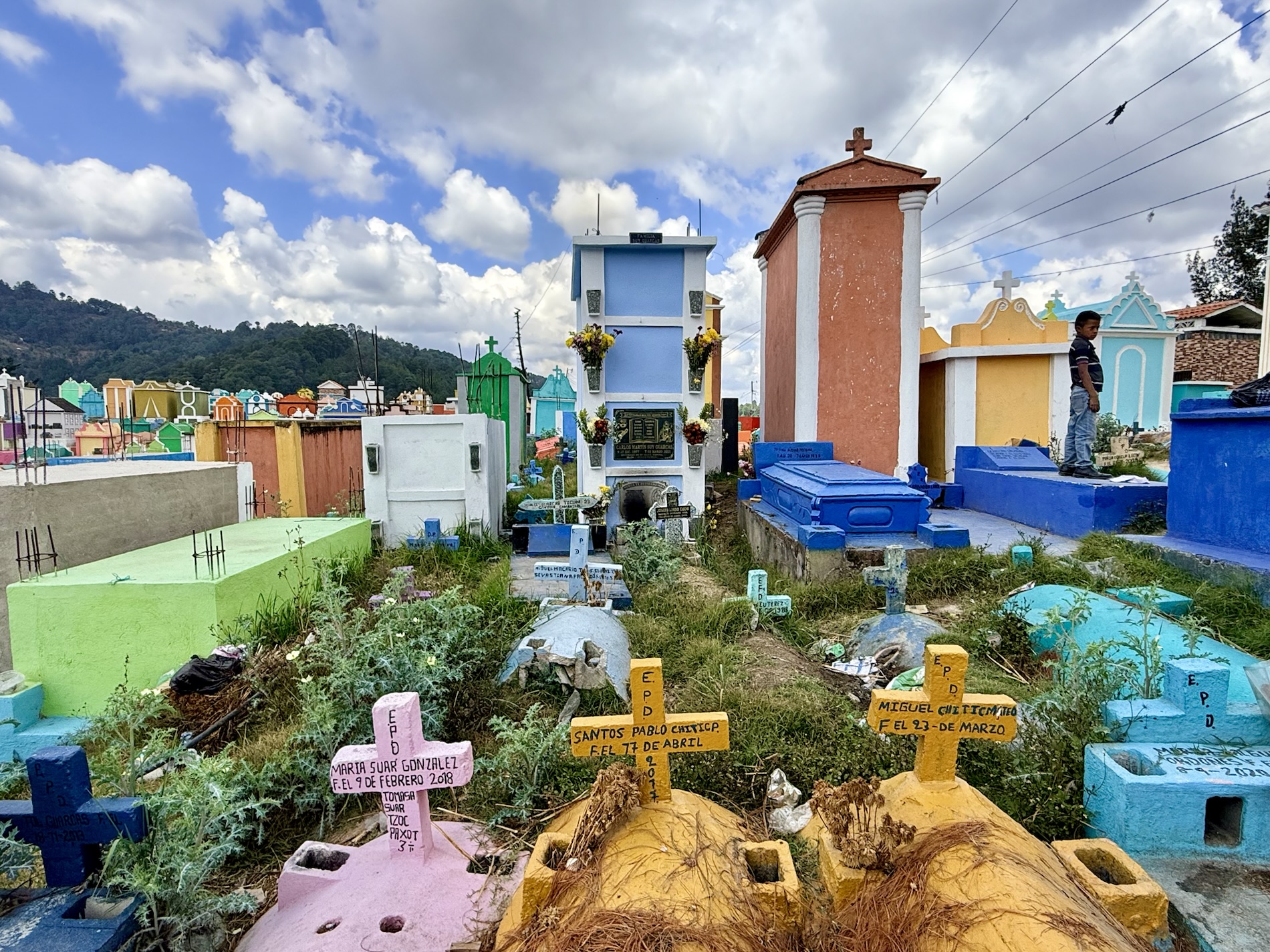
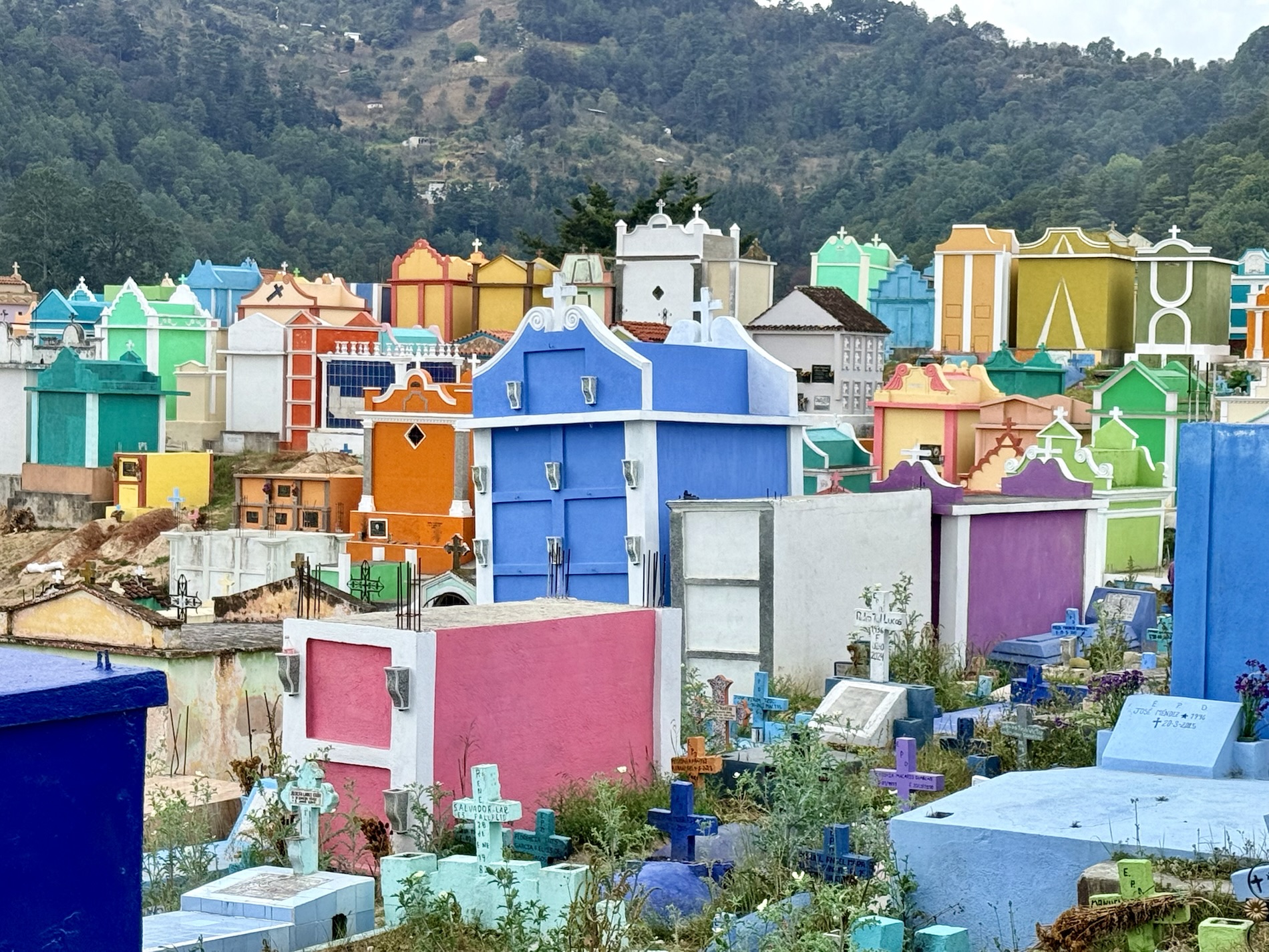
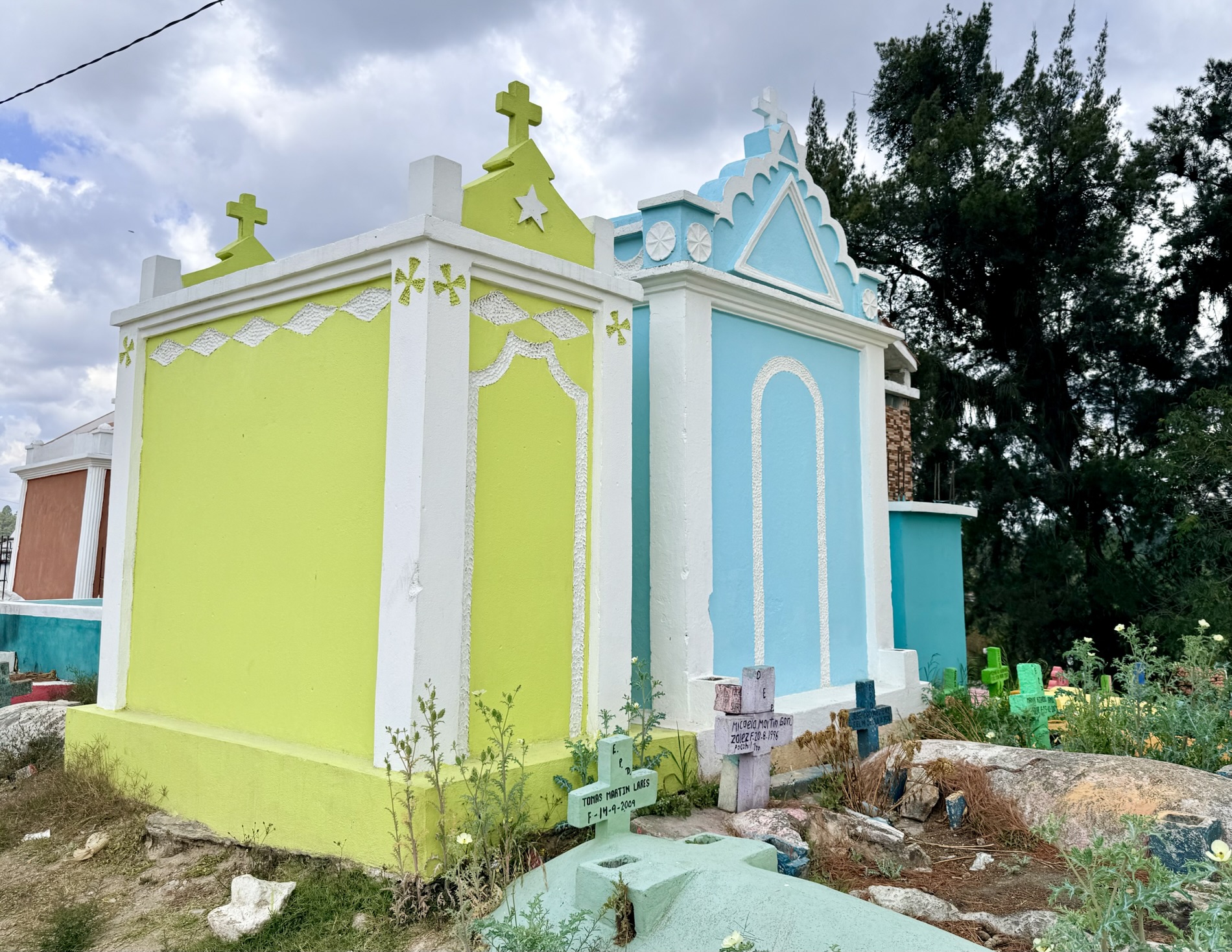
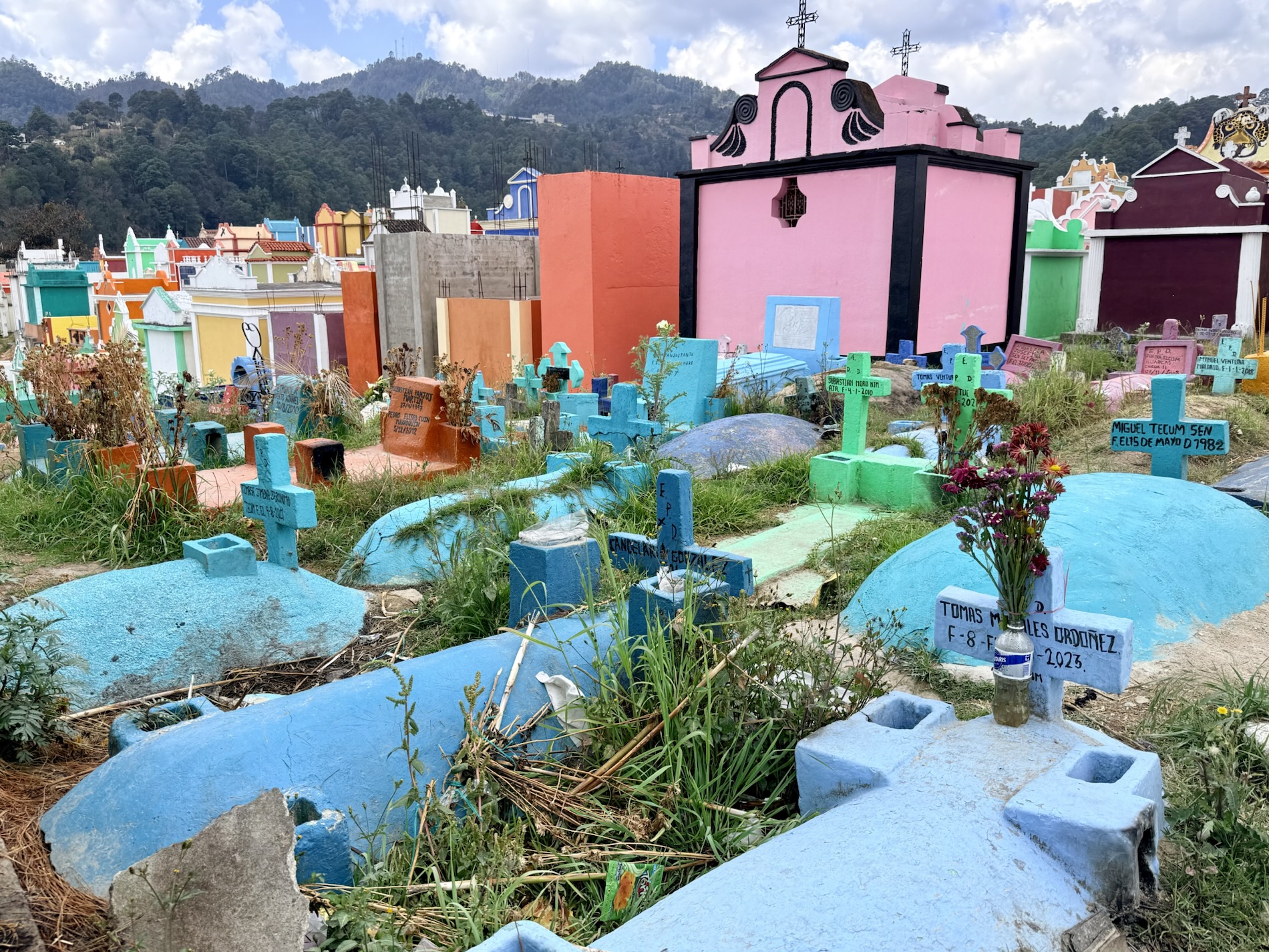
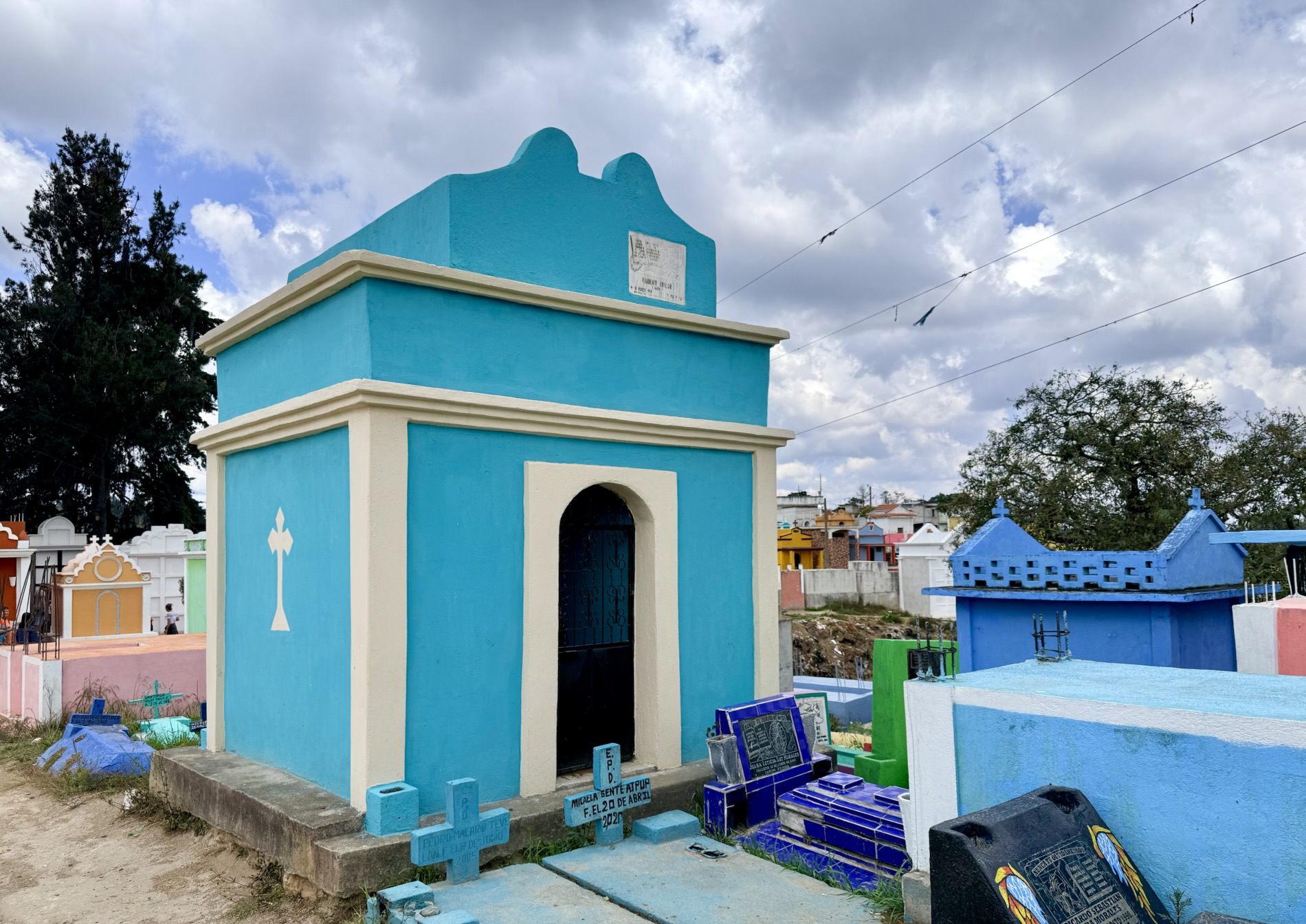
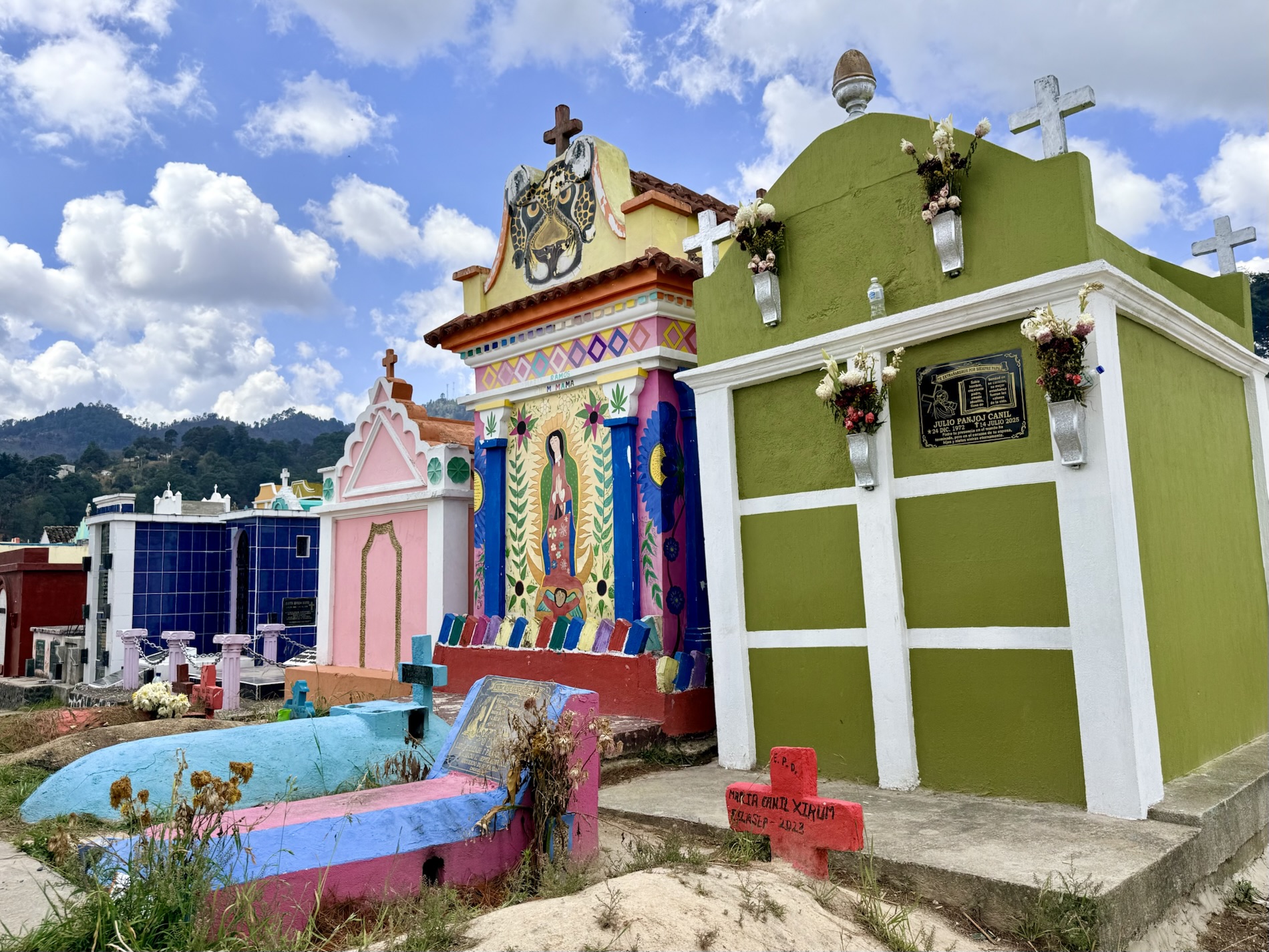
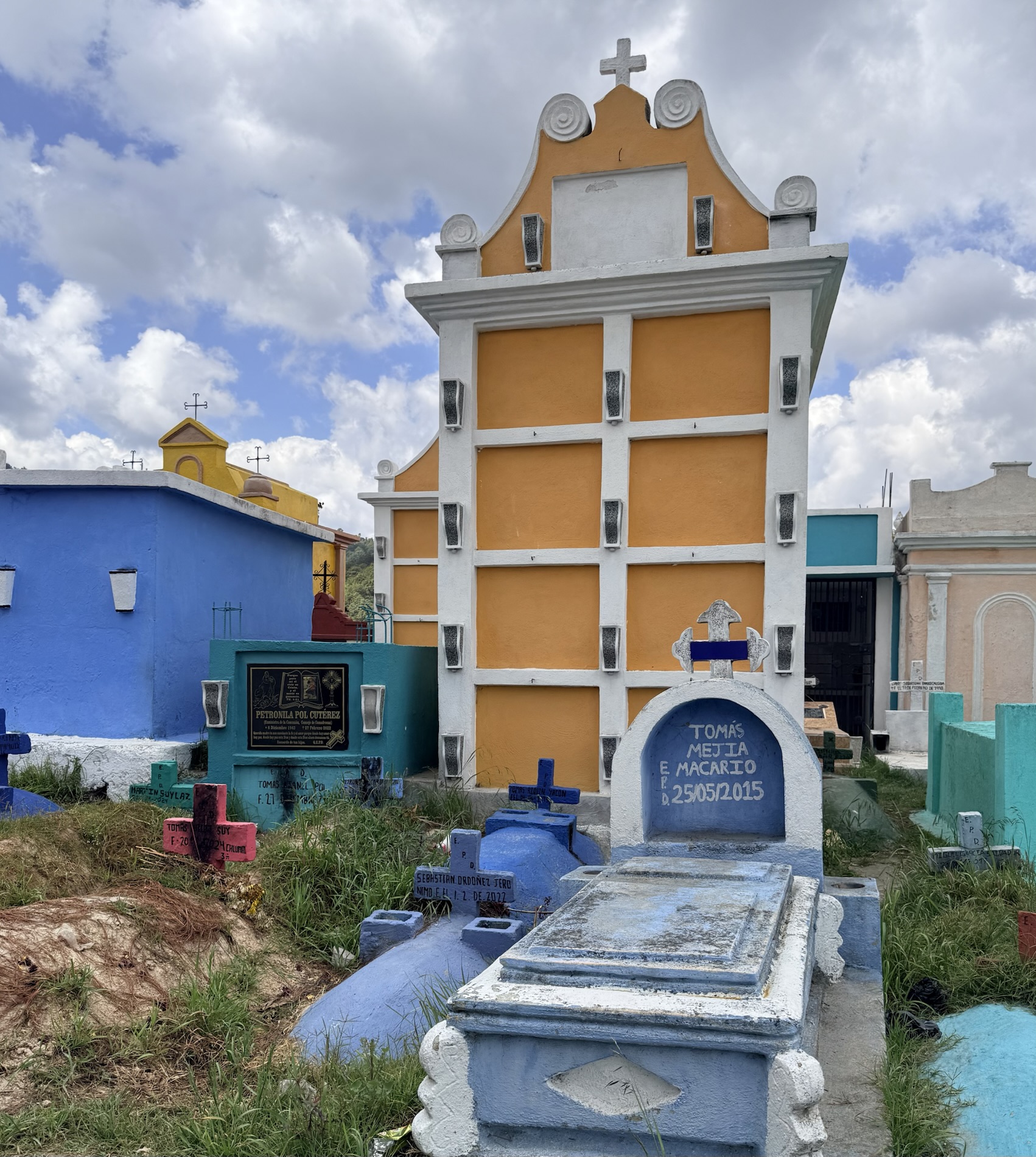
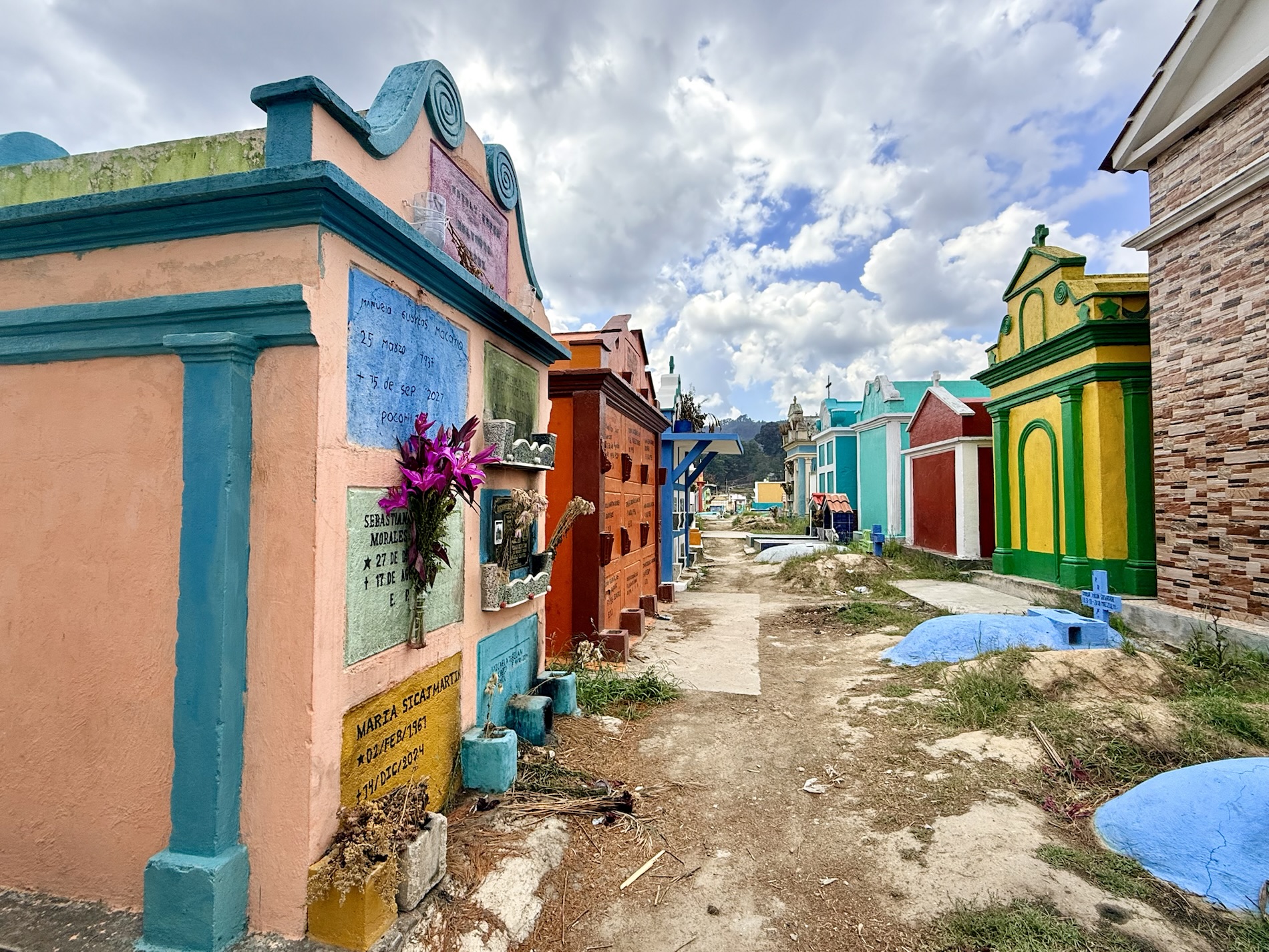
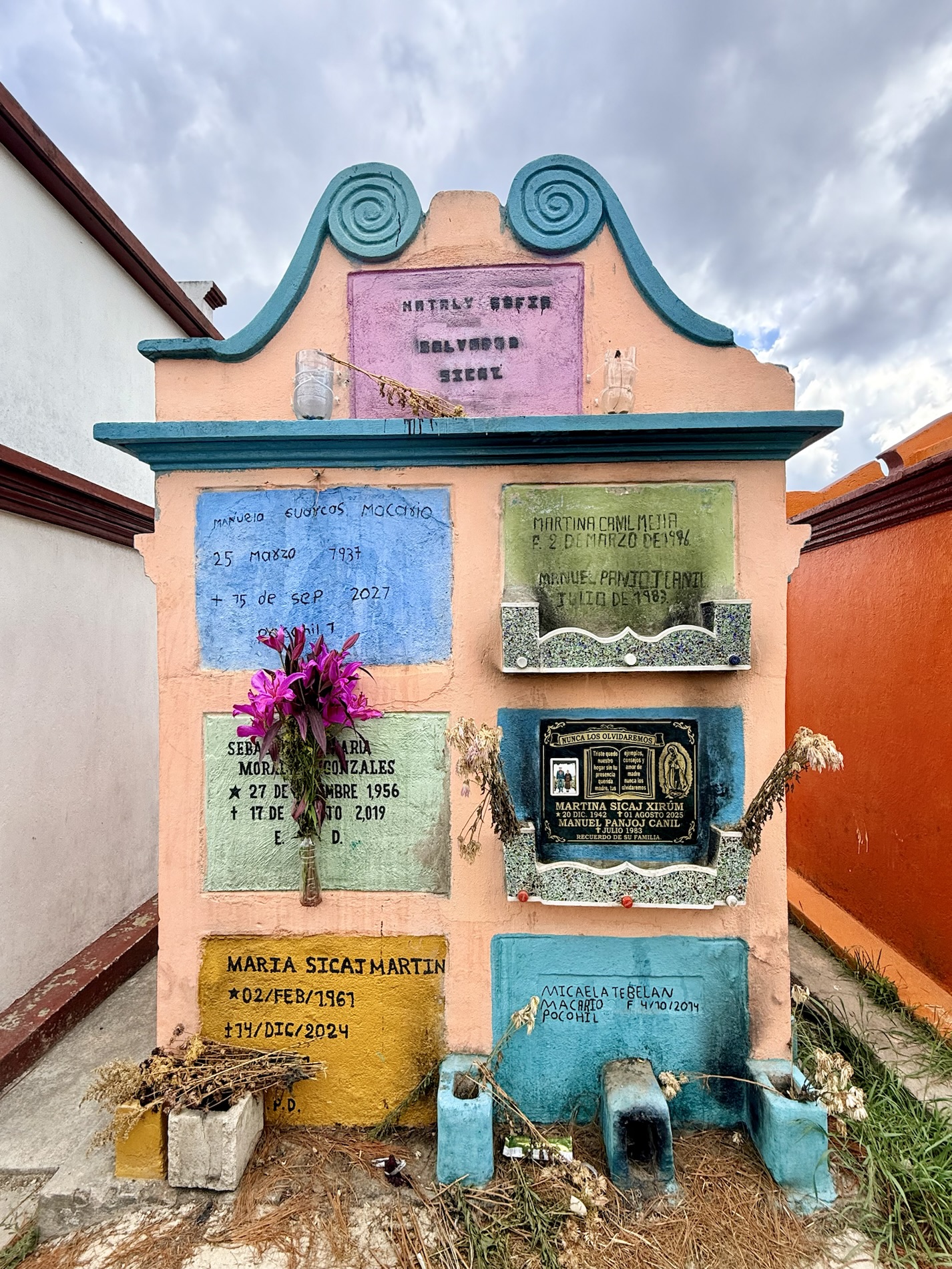
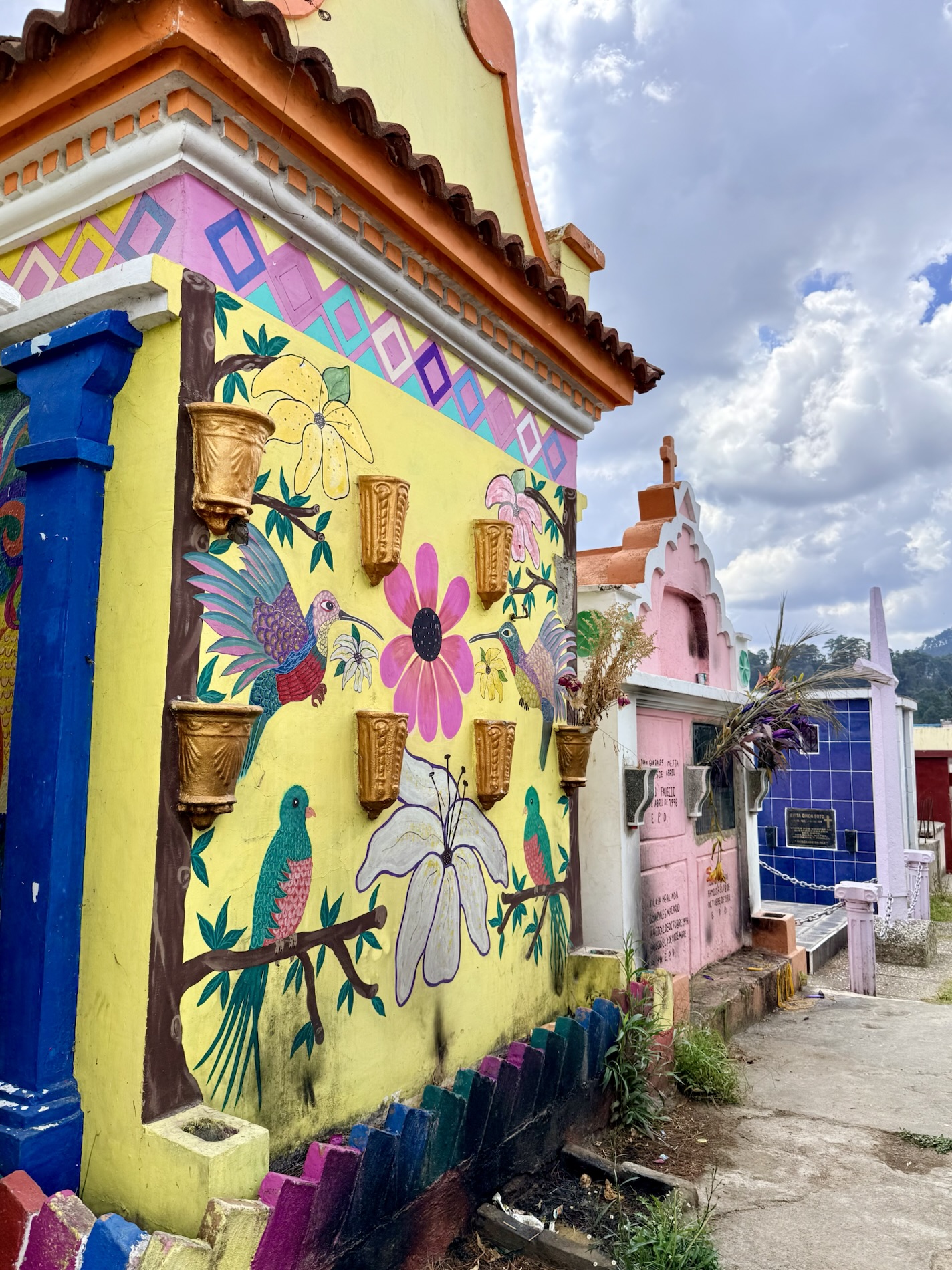
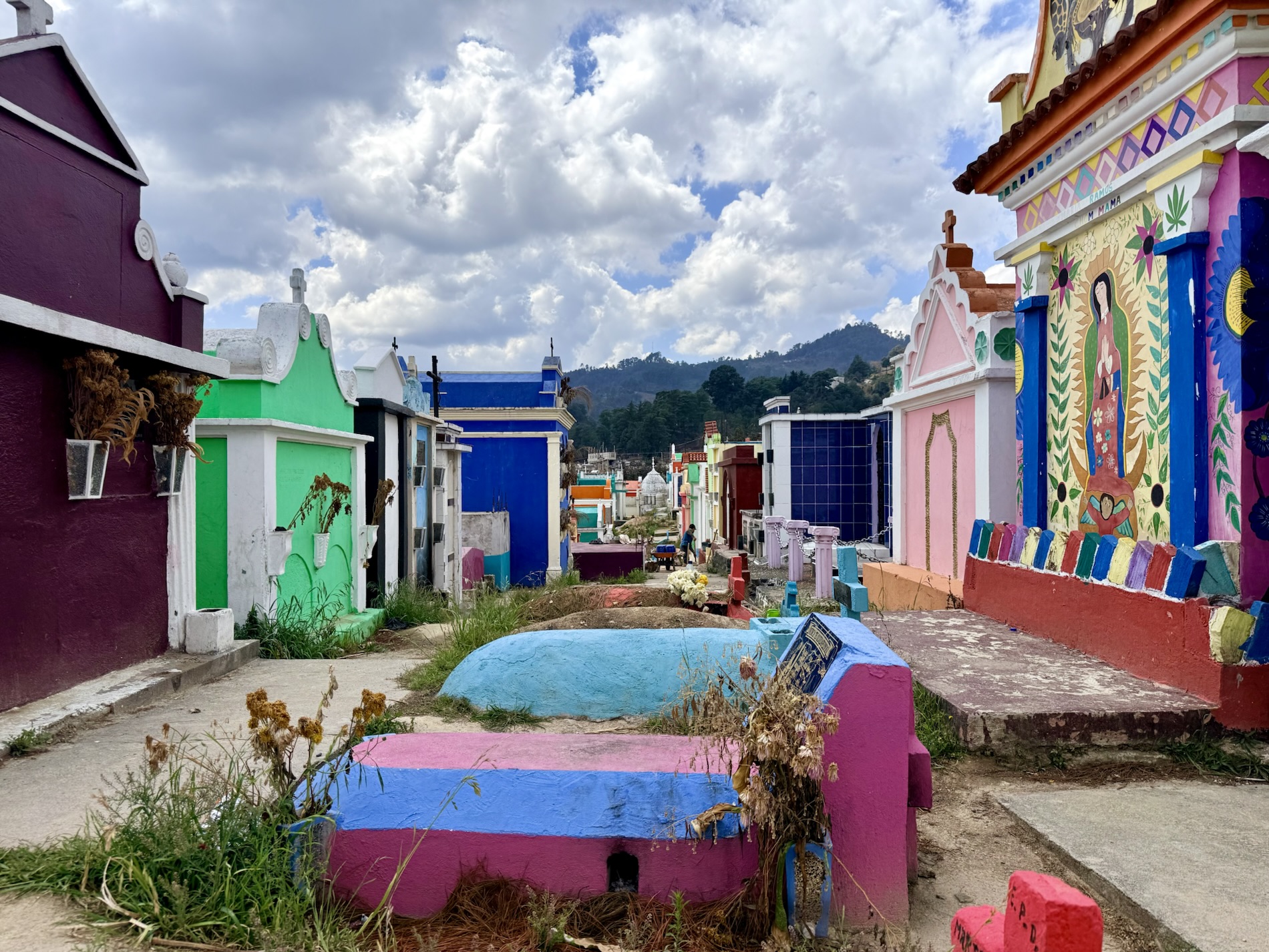
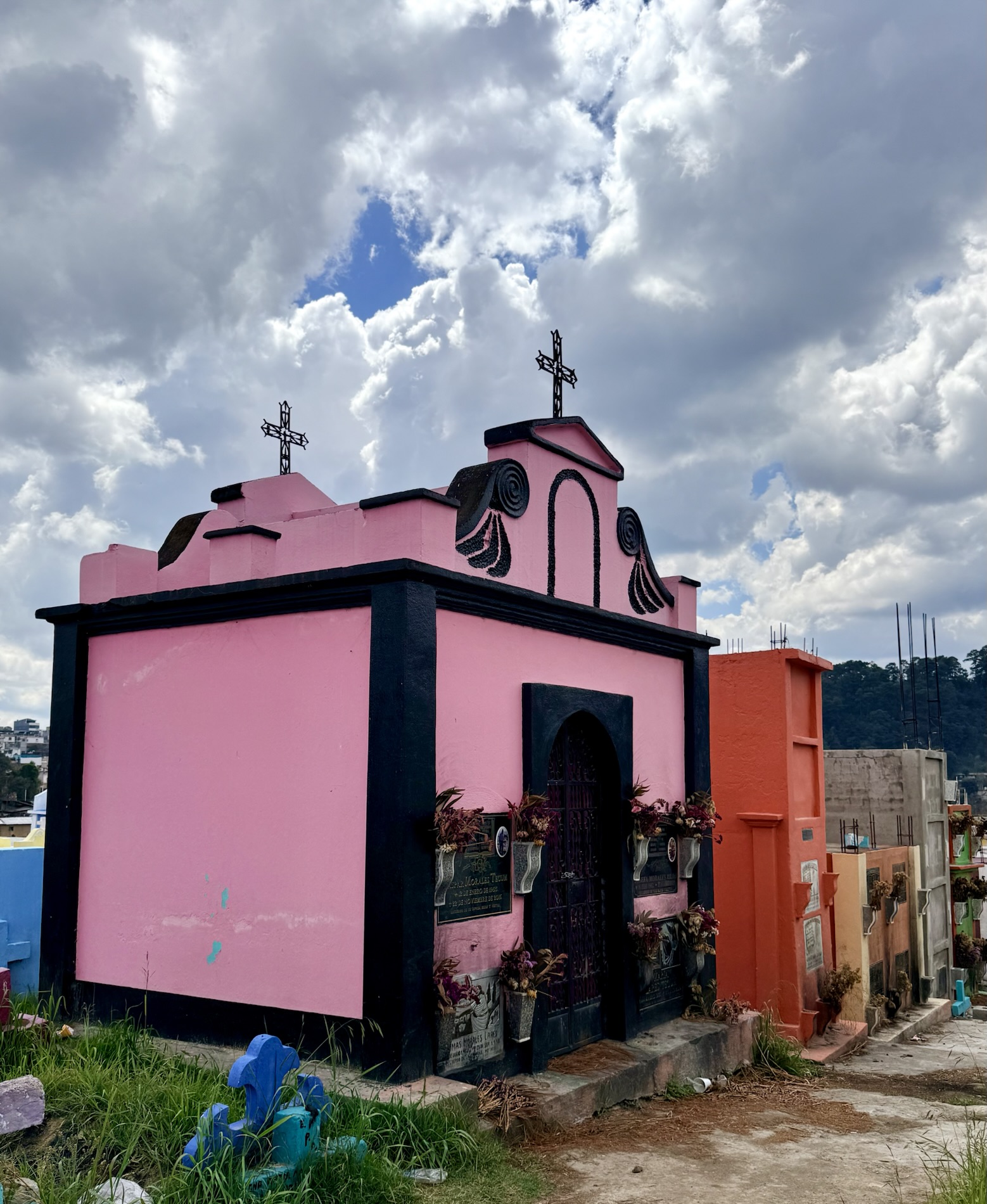
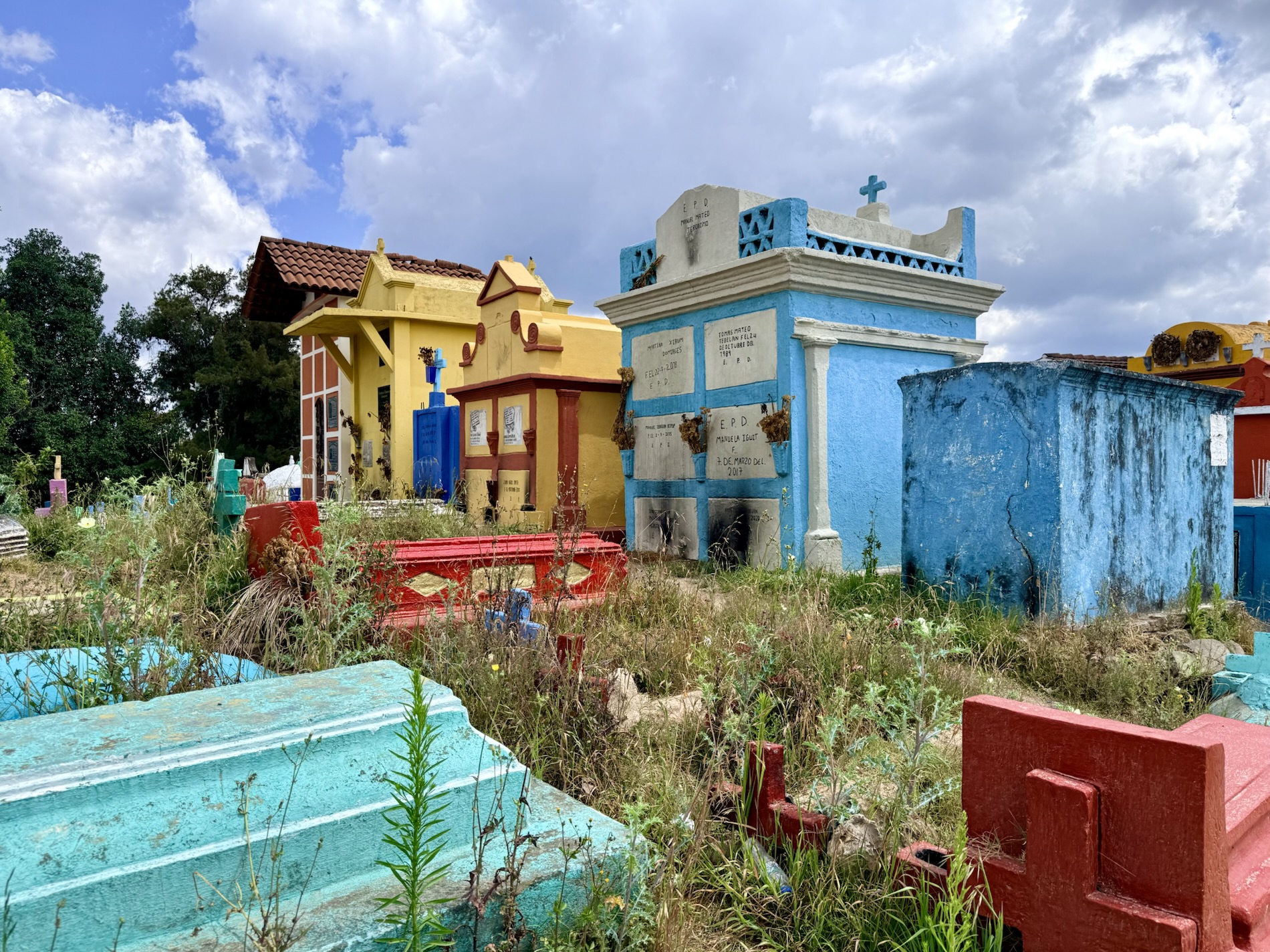
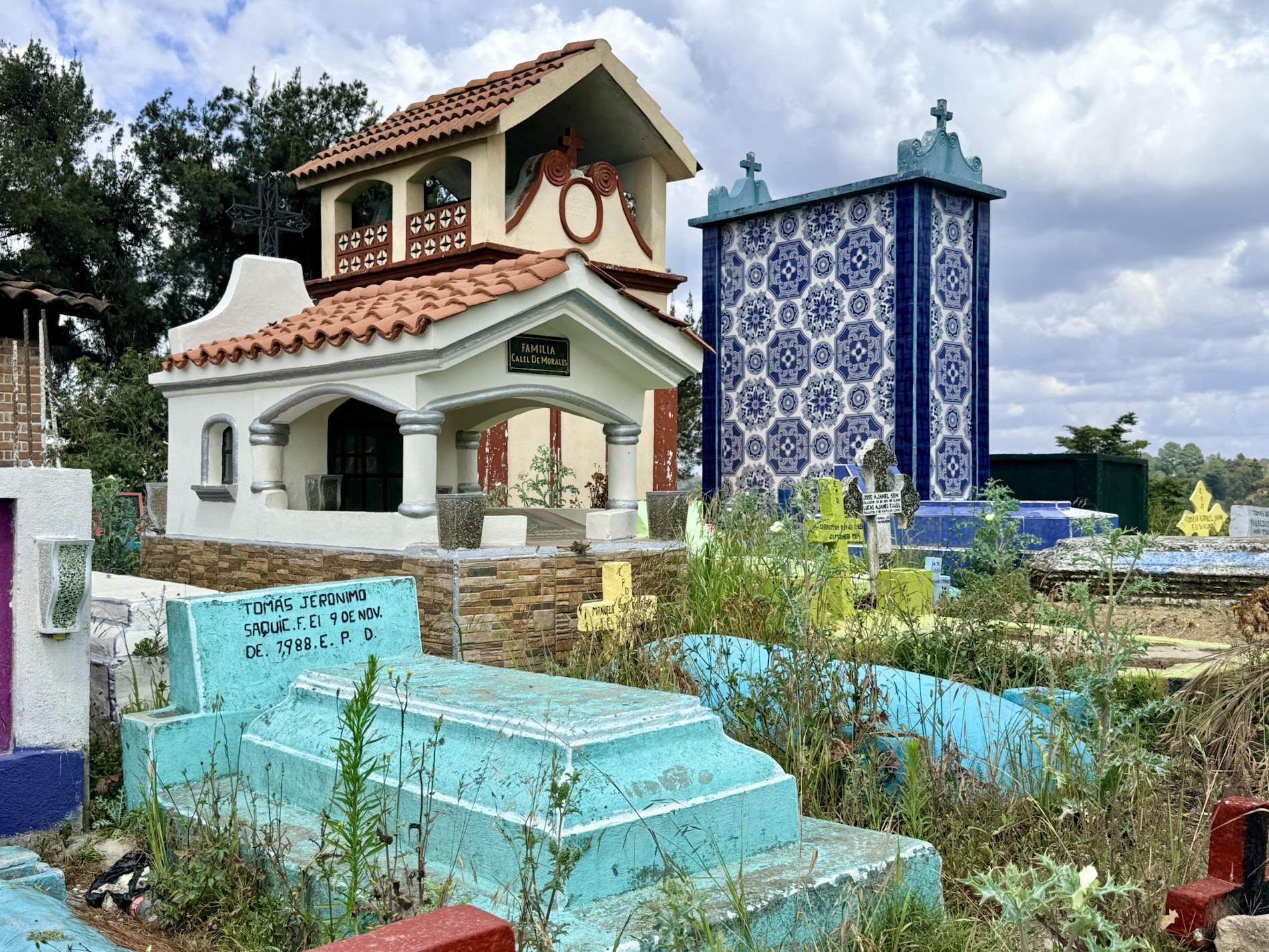
in the hilltop cemetery of candy-colored mausoleums and tombstones –
white for purity, turquoise for protection, yellow for the sun’s life force
or maybe just the deceased’s favorite colors – lime green, coral, lavender –

as invitations to make peace with death’s inevitability.
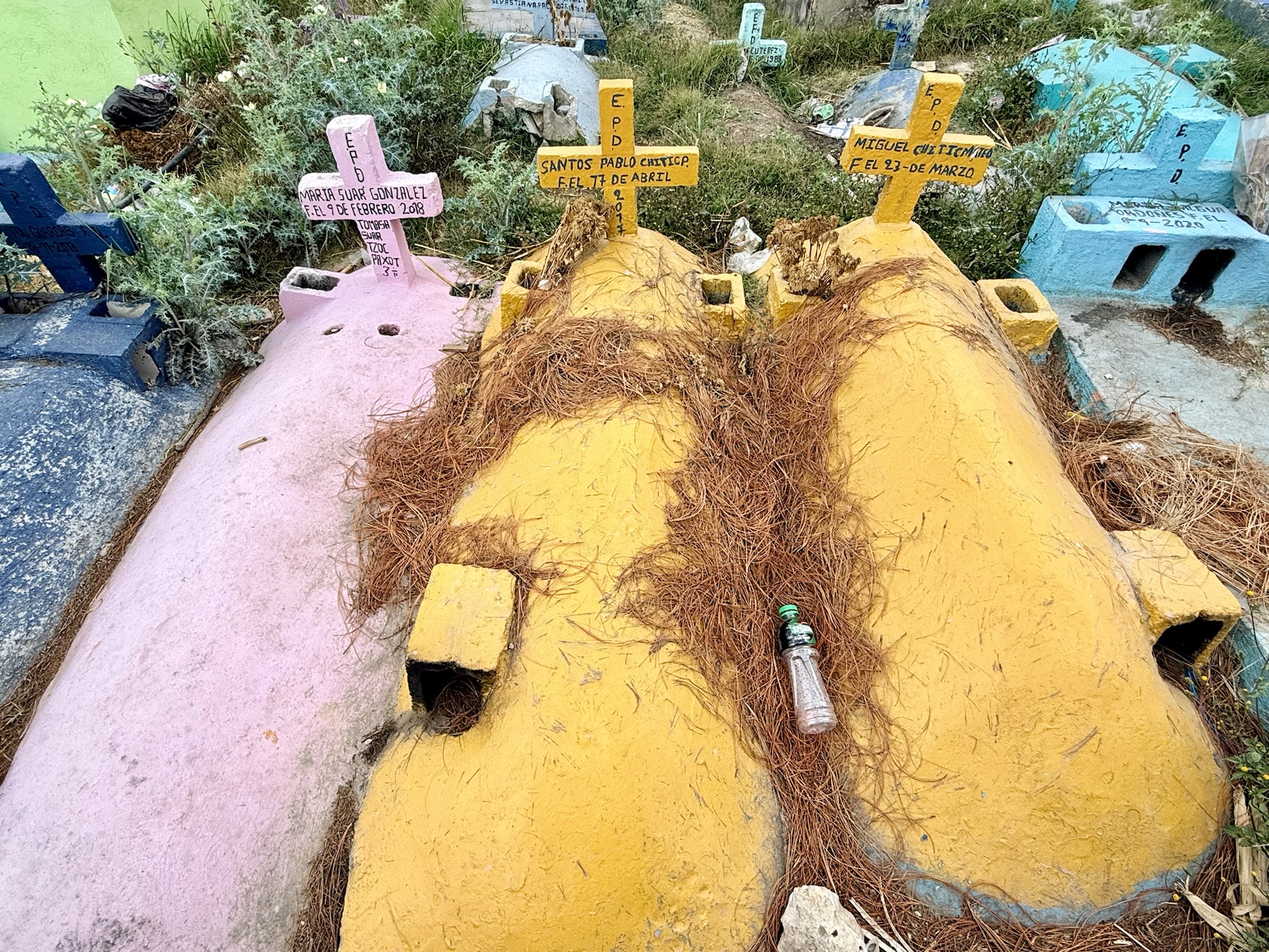
Death looks cheerful here, and she thinks she could lie down among
the pillows of tiny graves that bear only death dates.

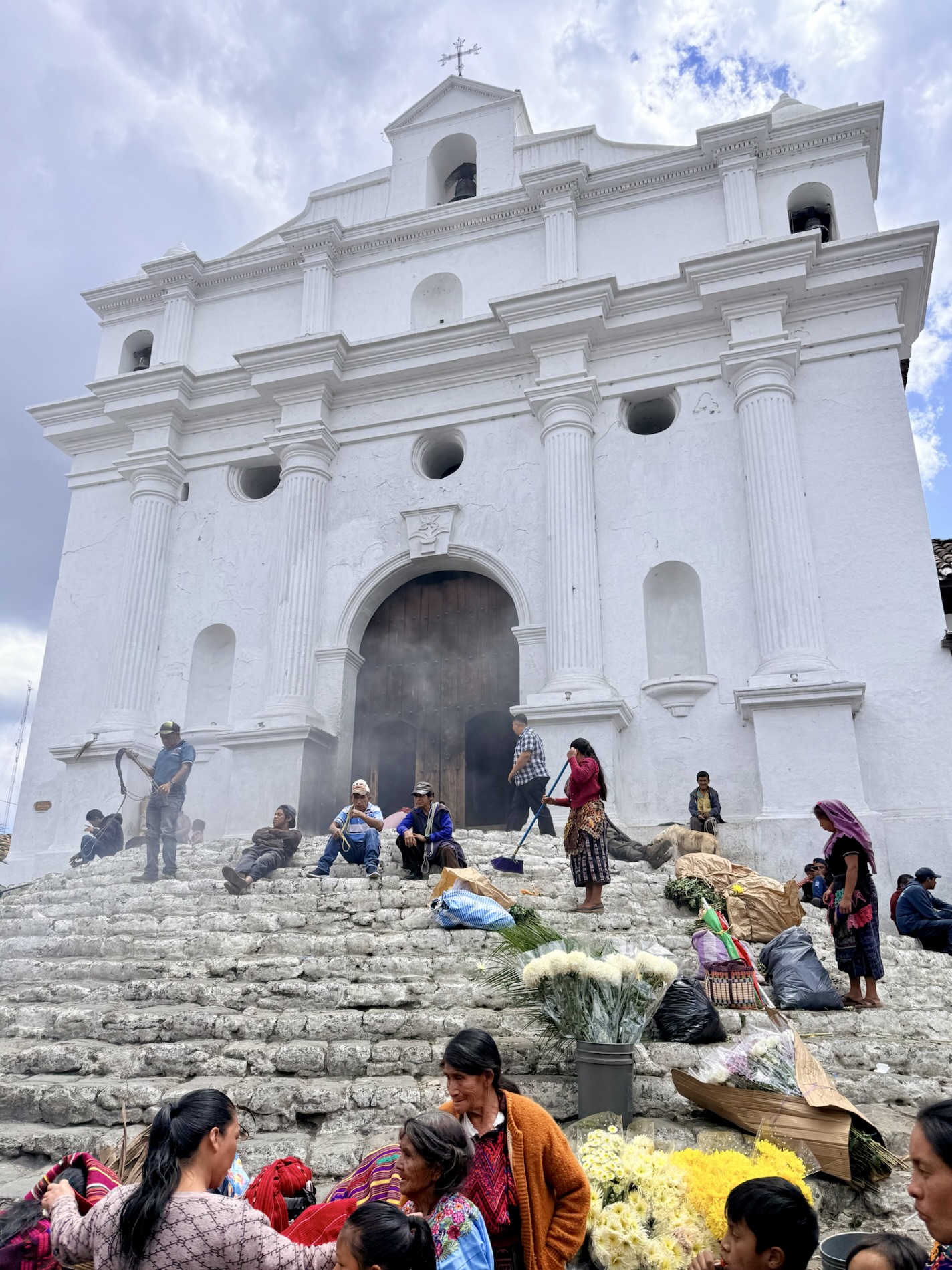
On the eighteen steps to Iglesia de Santo Tomás, which match the months
of the Mayan calendar, the indigenous K’iche' burn incense
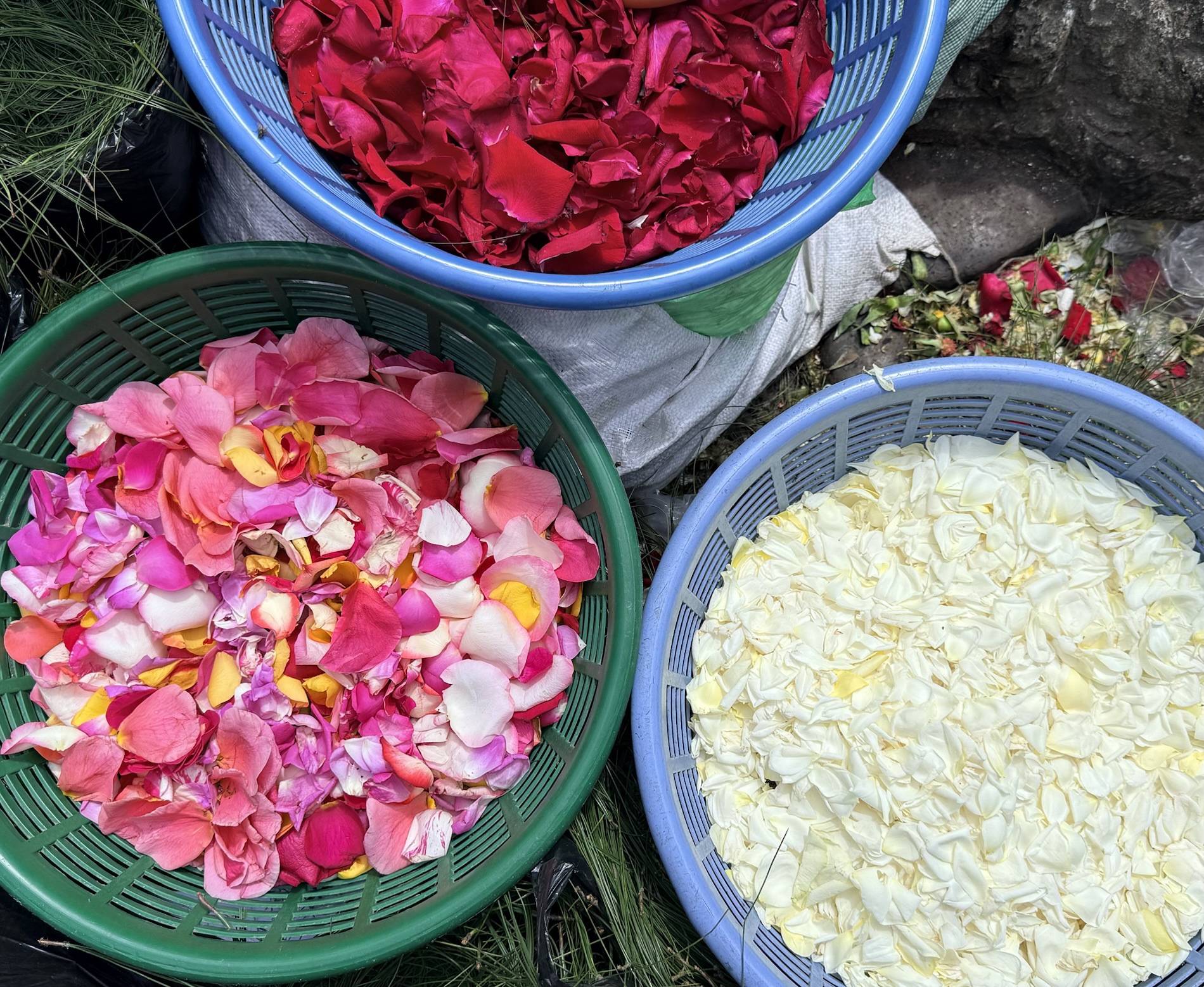
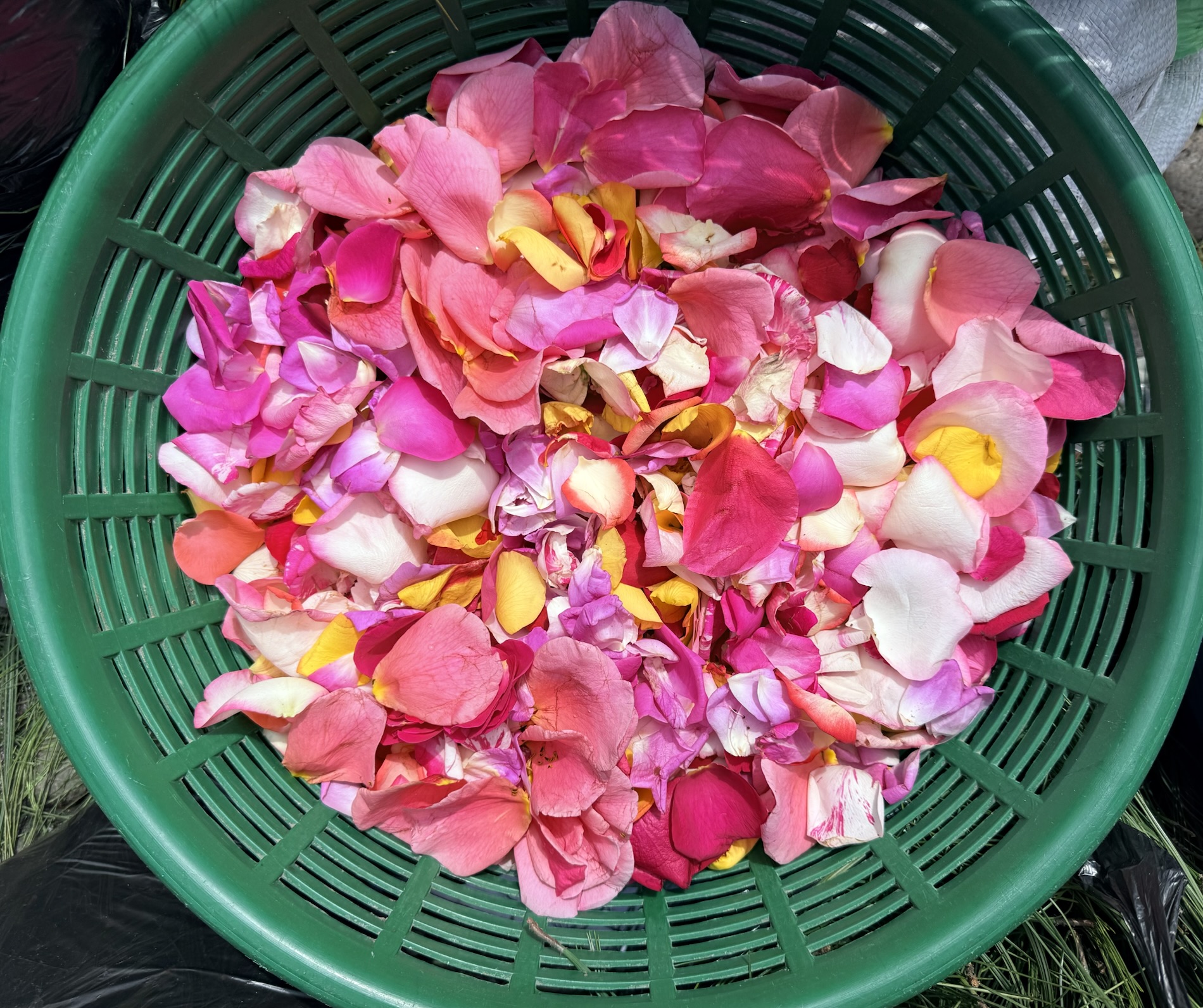
and make offerings of blossoms or corn, holding dearly to their ancient beliefs.

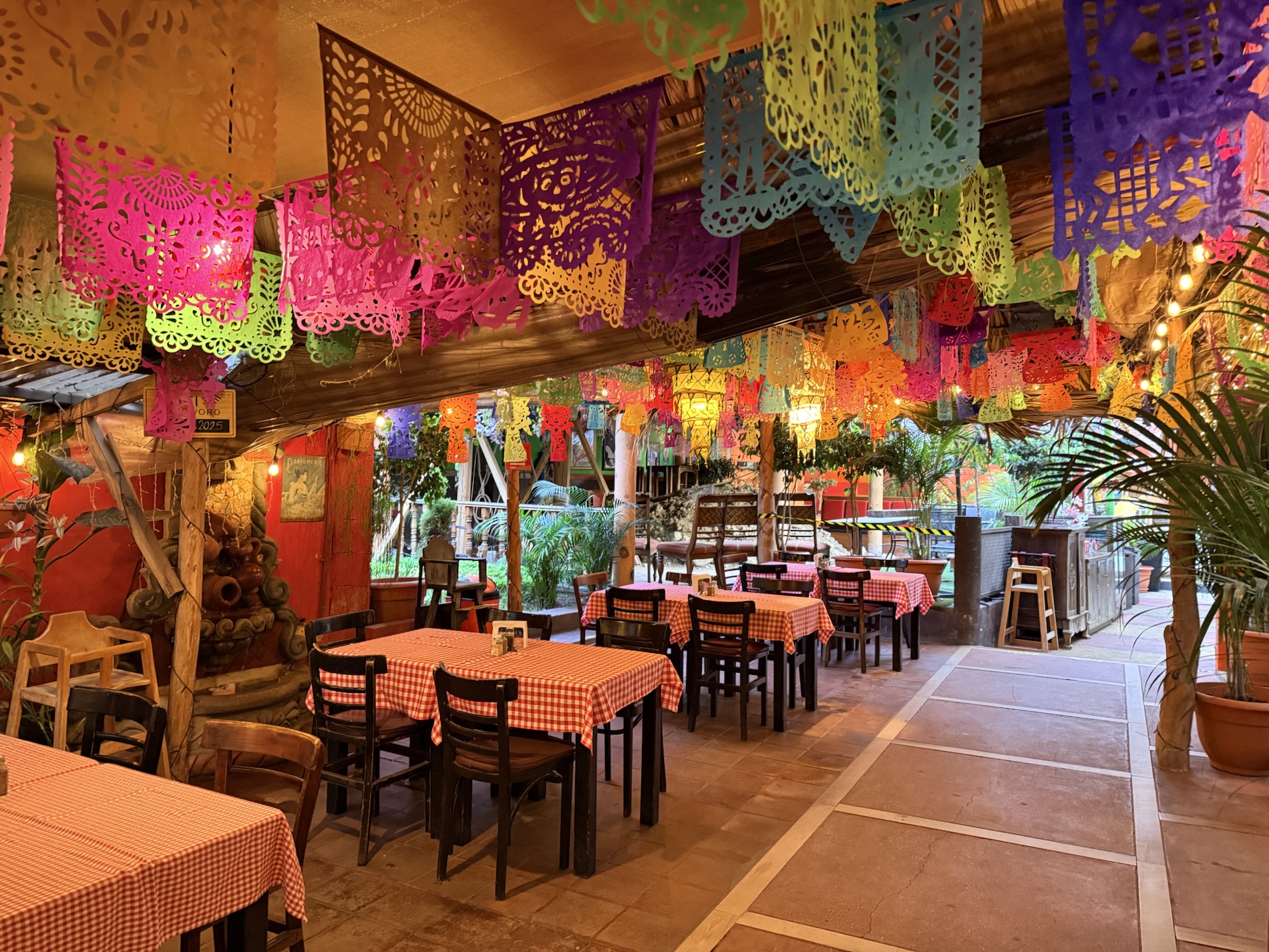
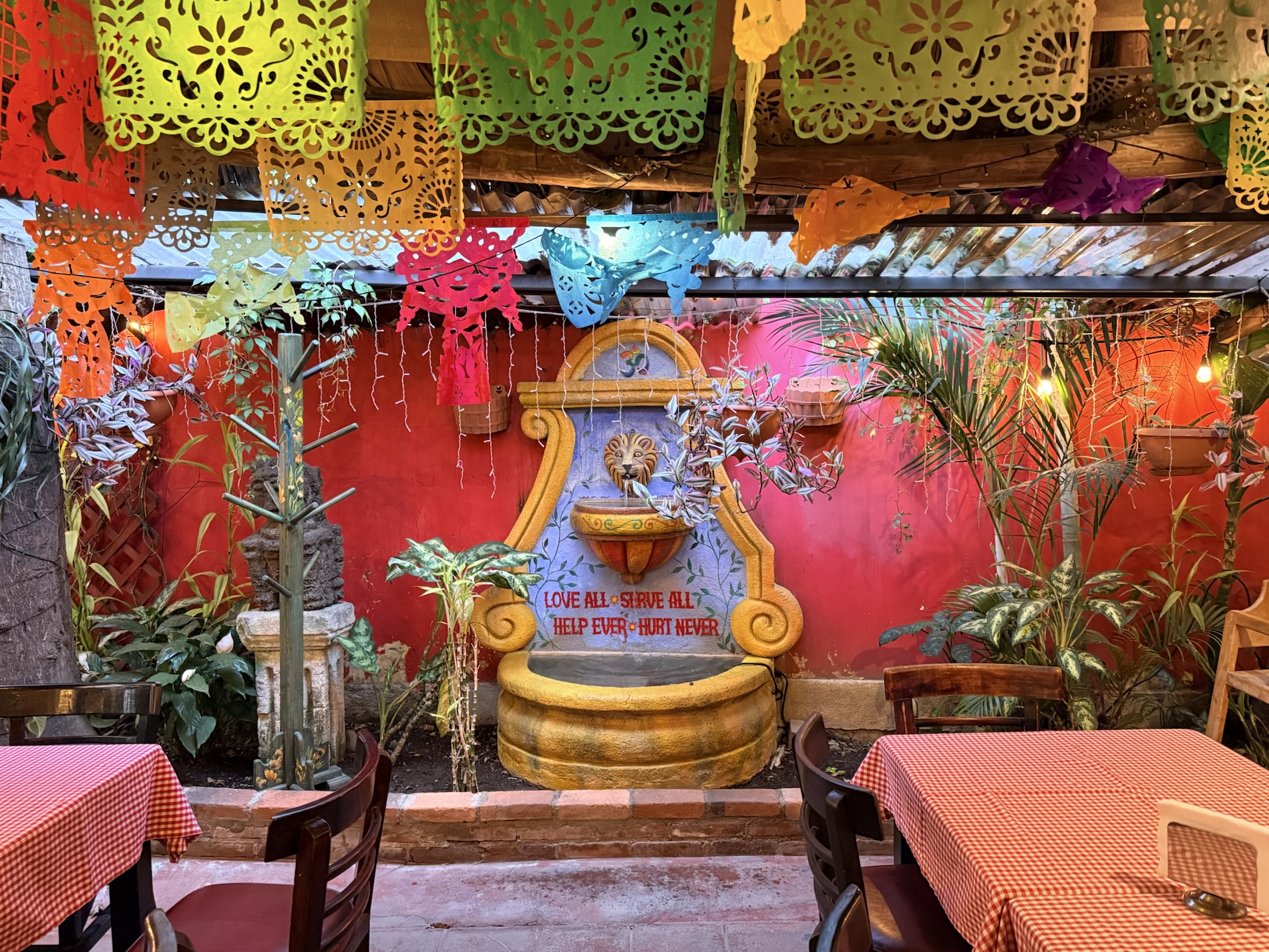
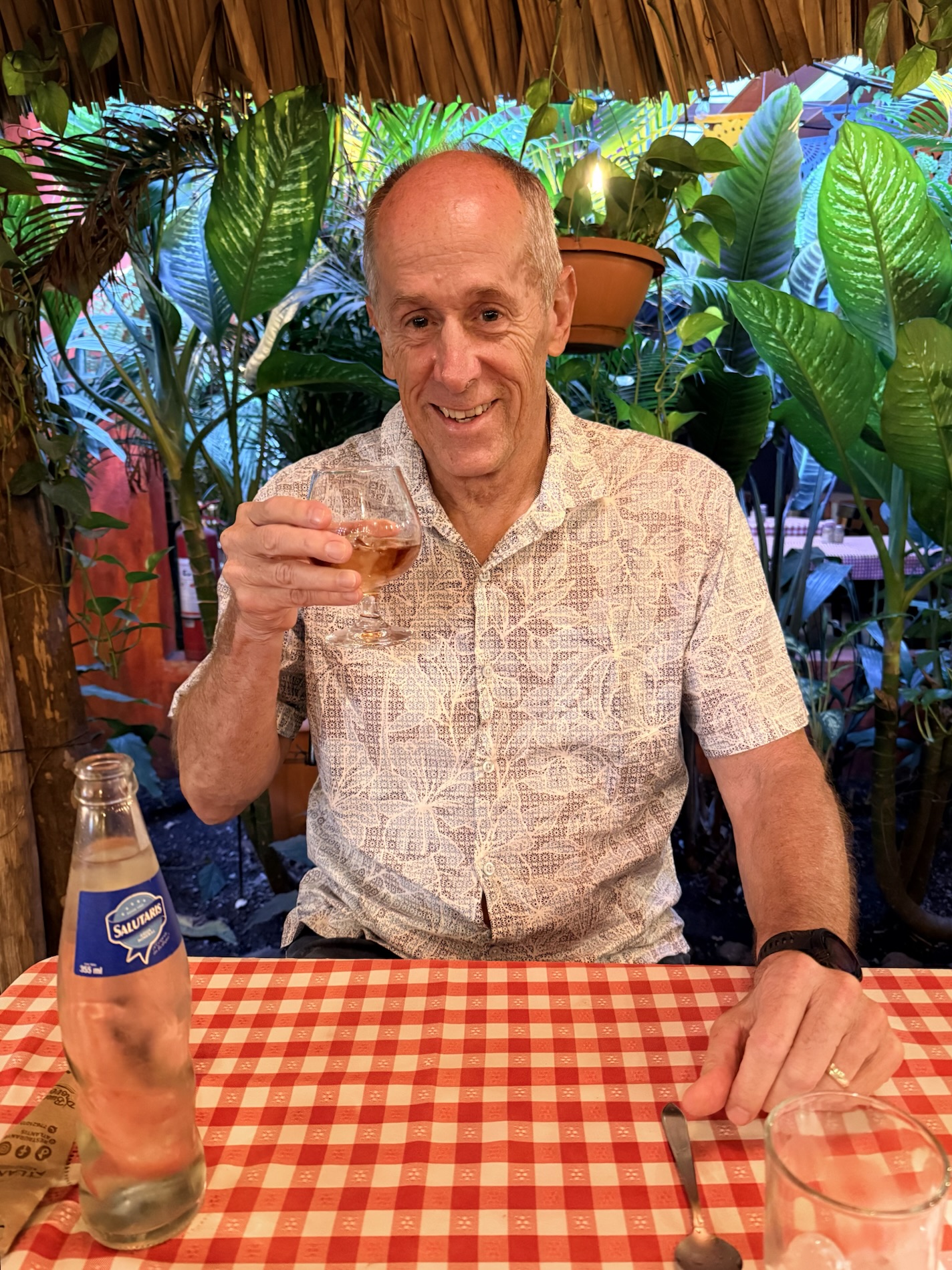
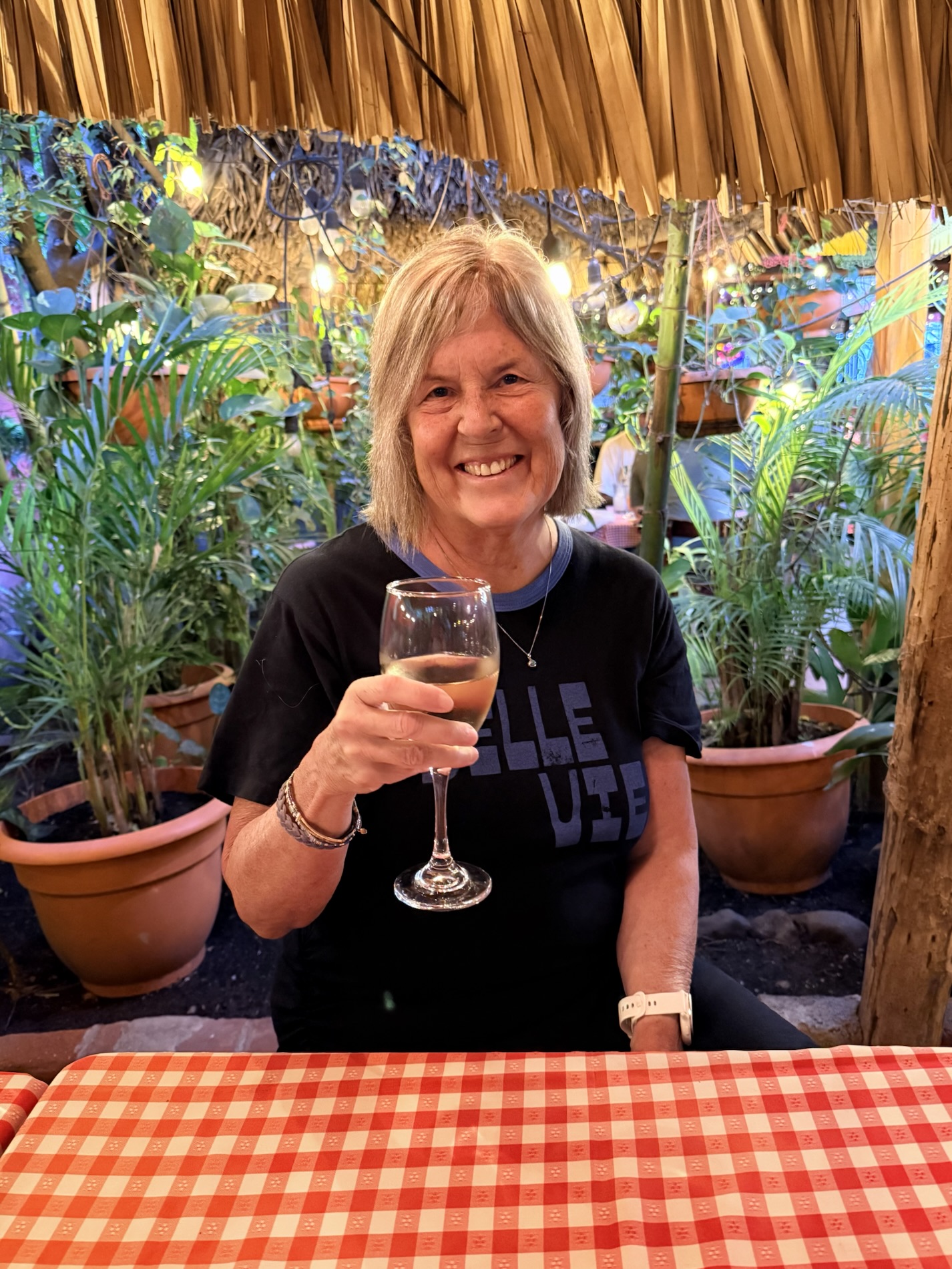
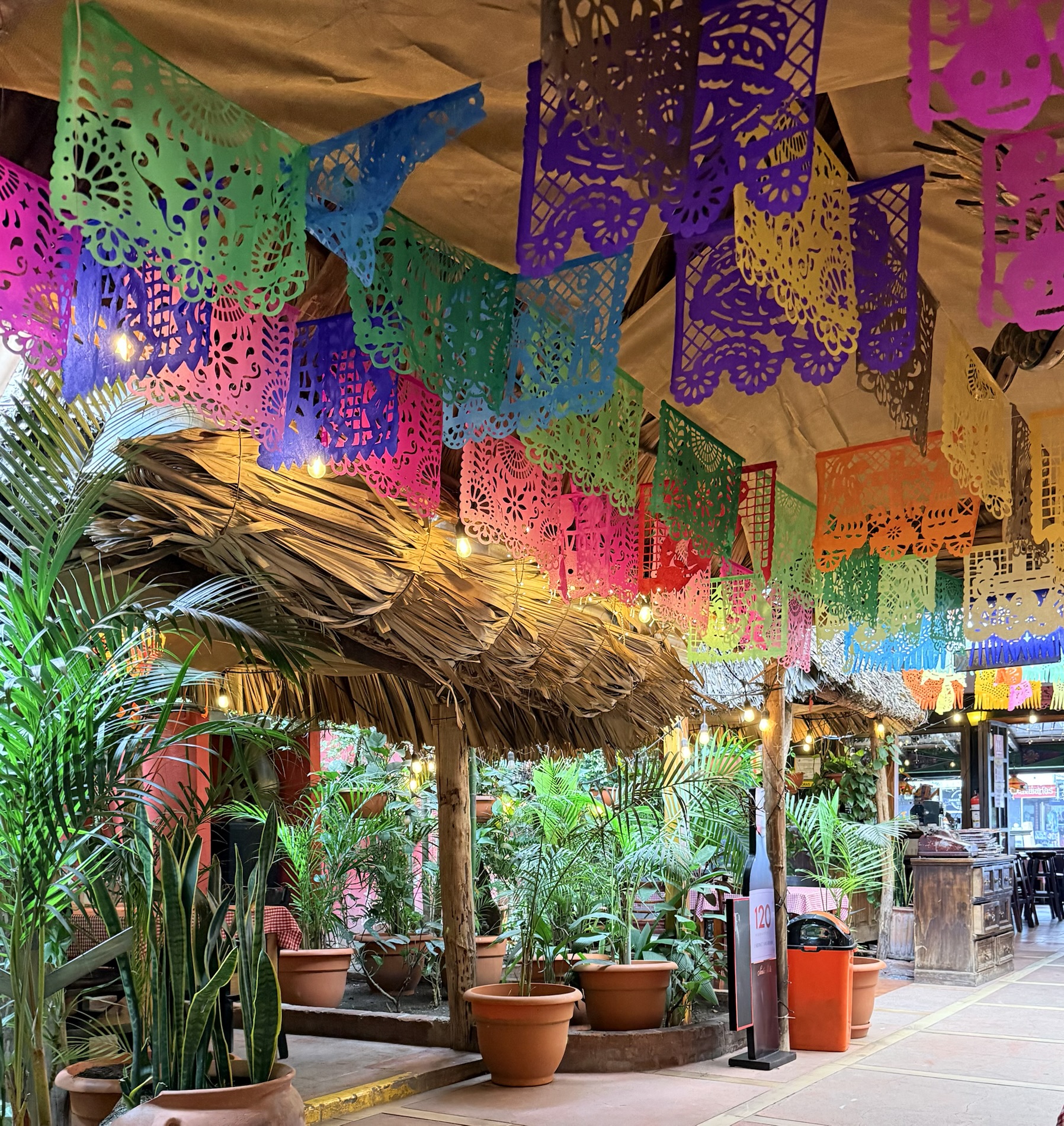
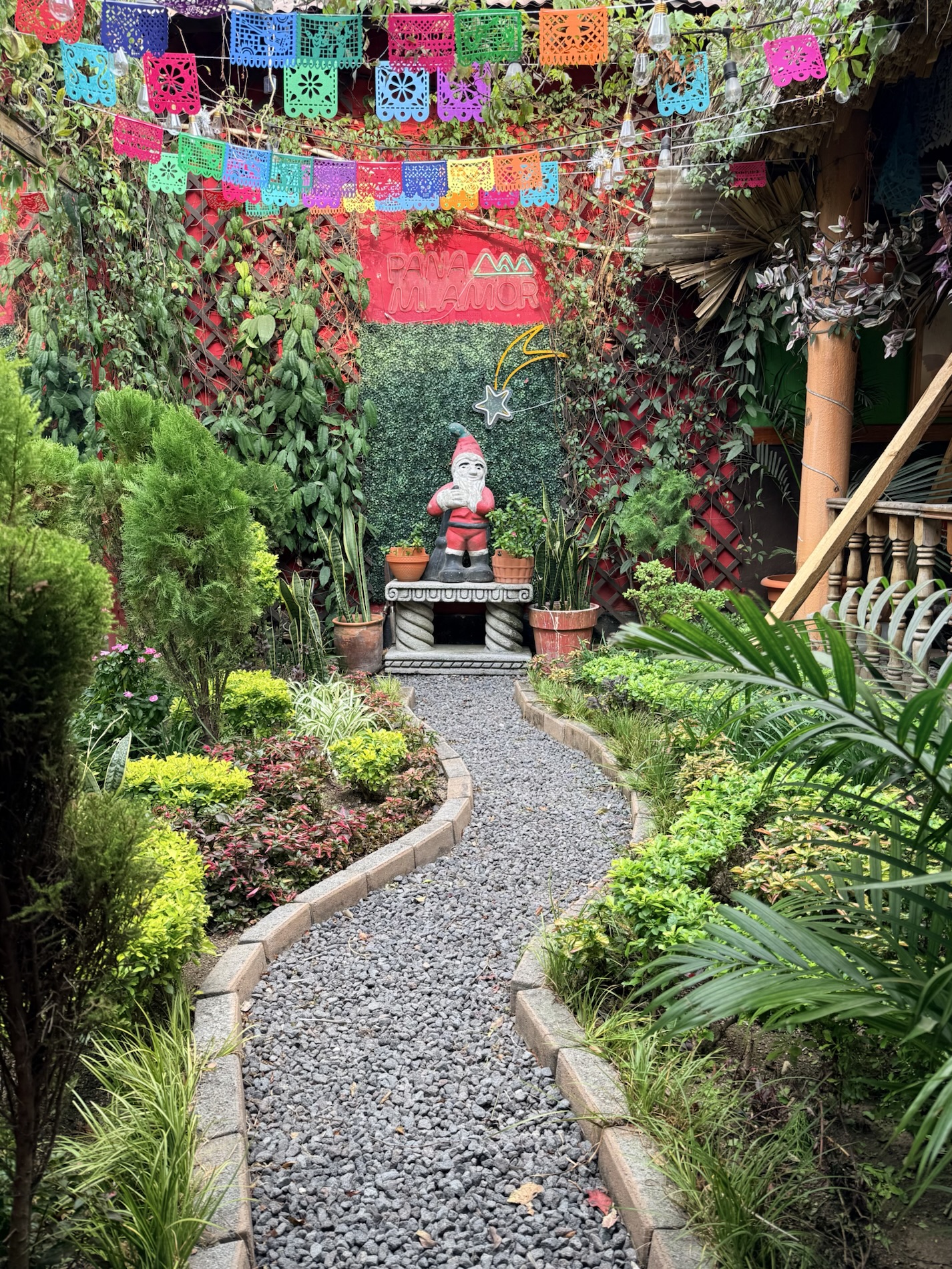
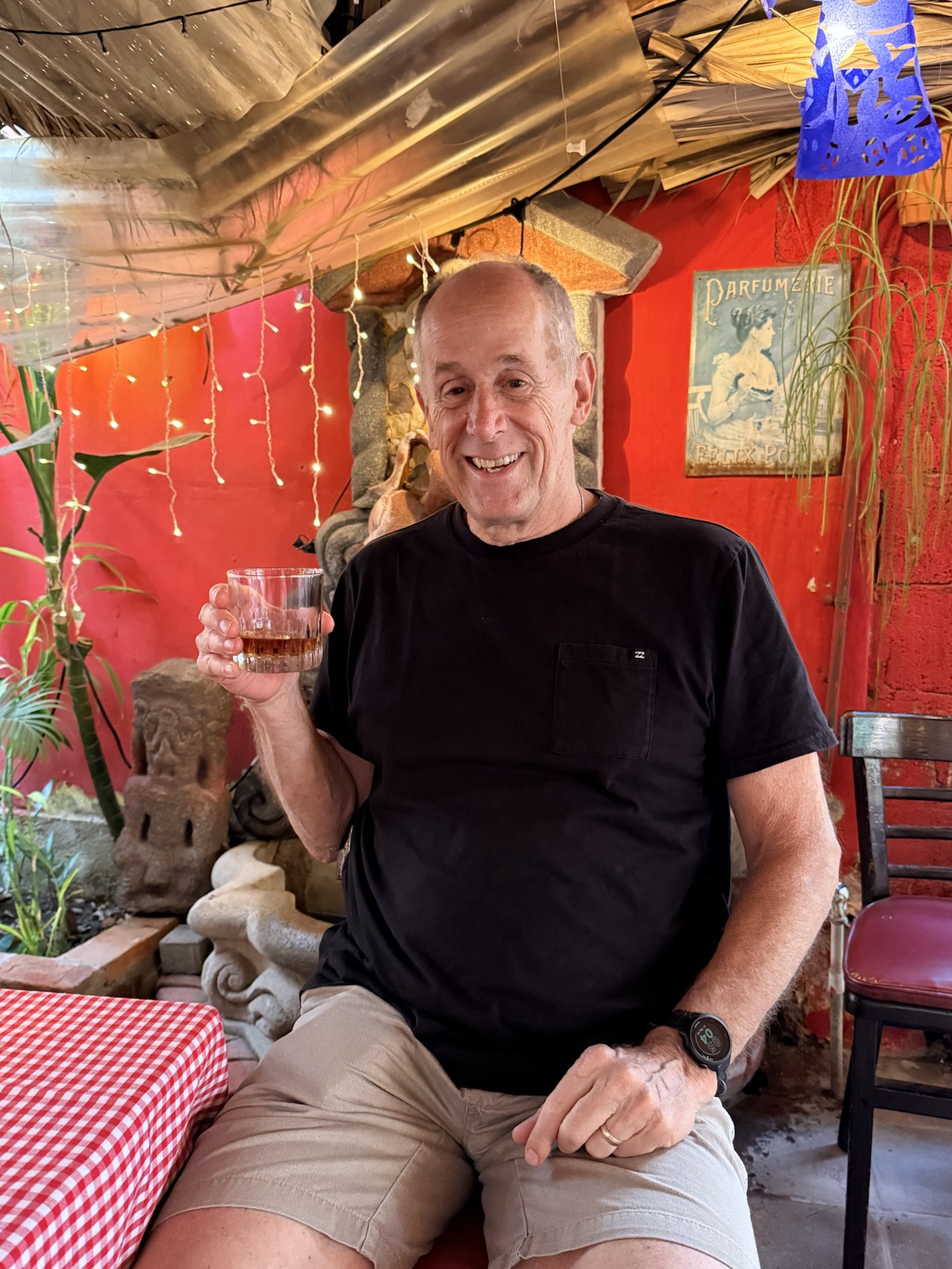
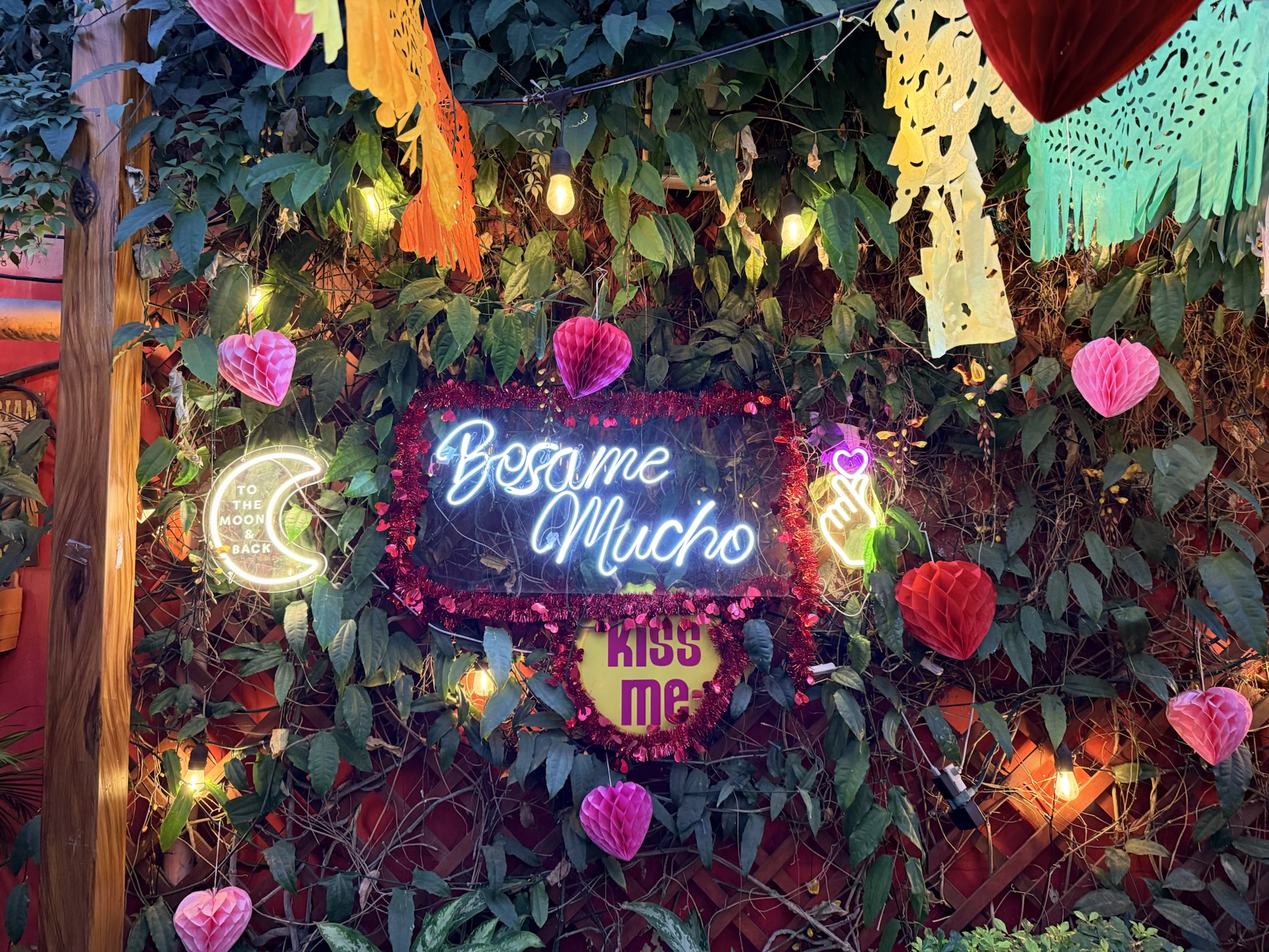
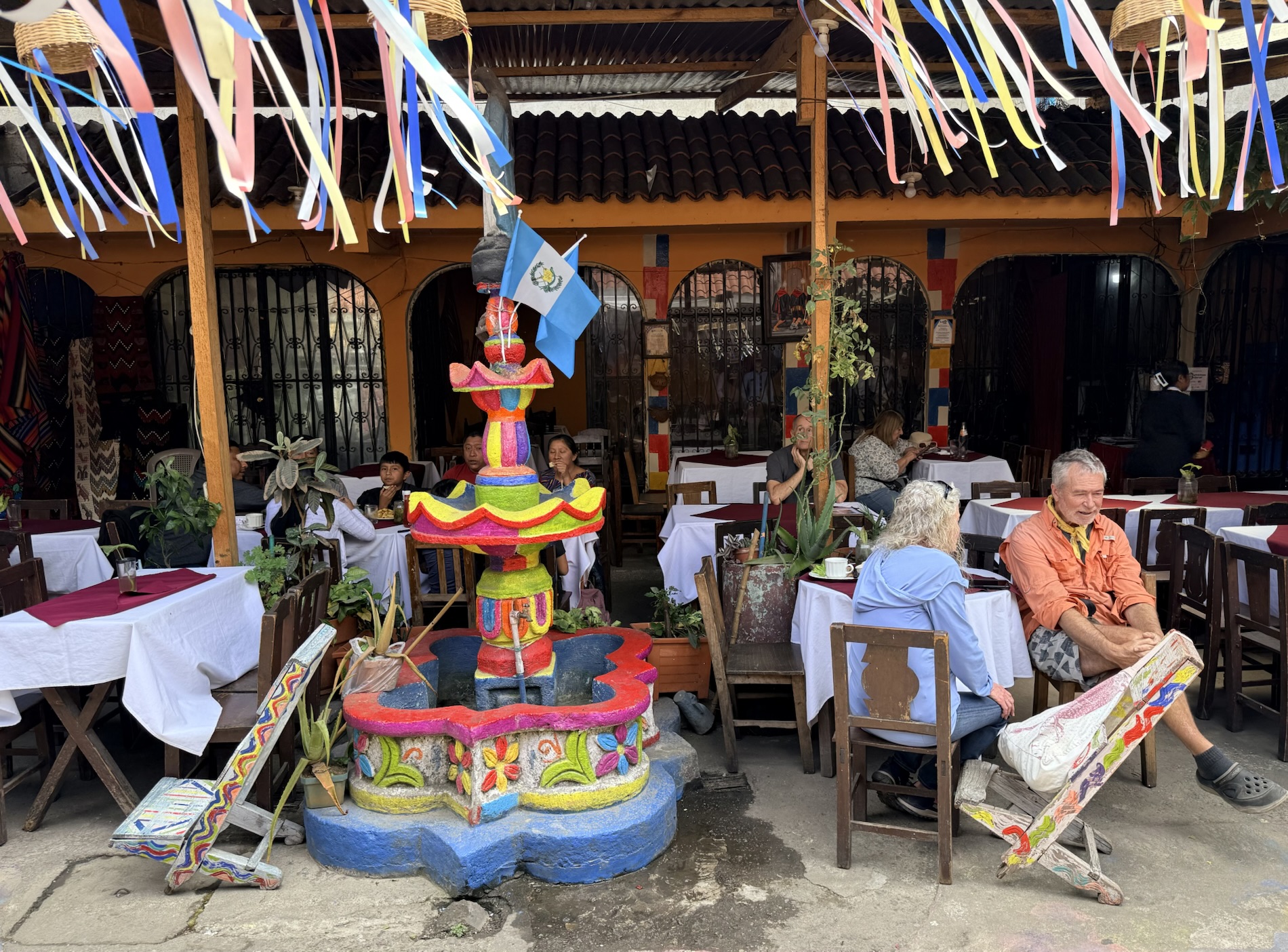
When she returns from Chichi, she sips wine under a rainbow
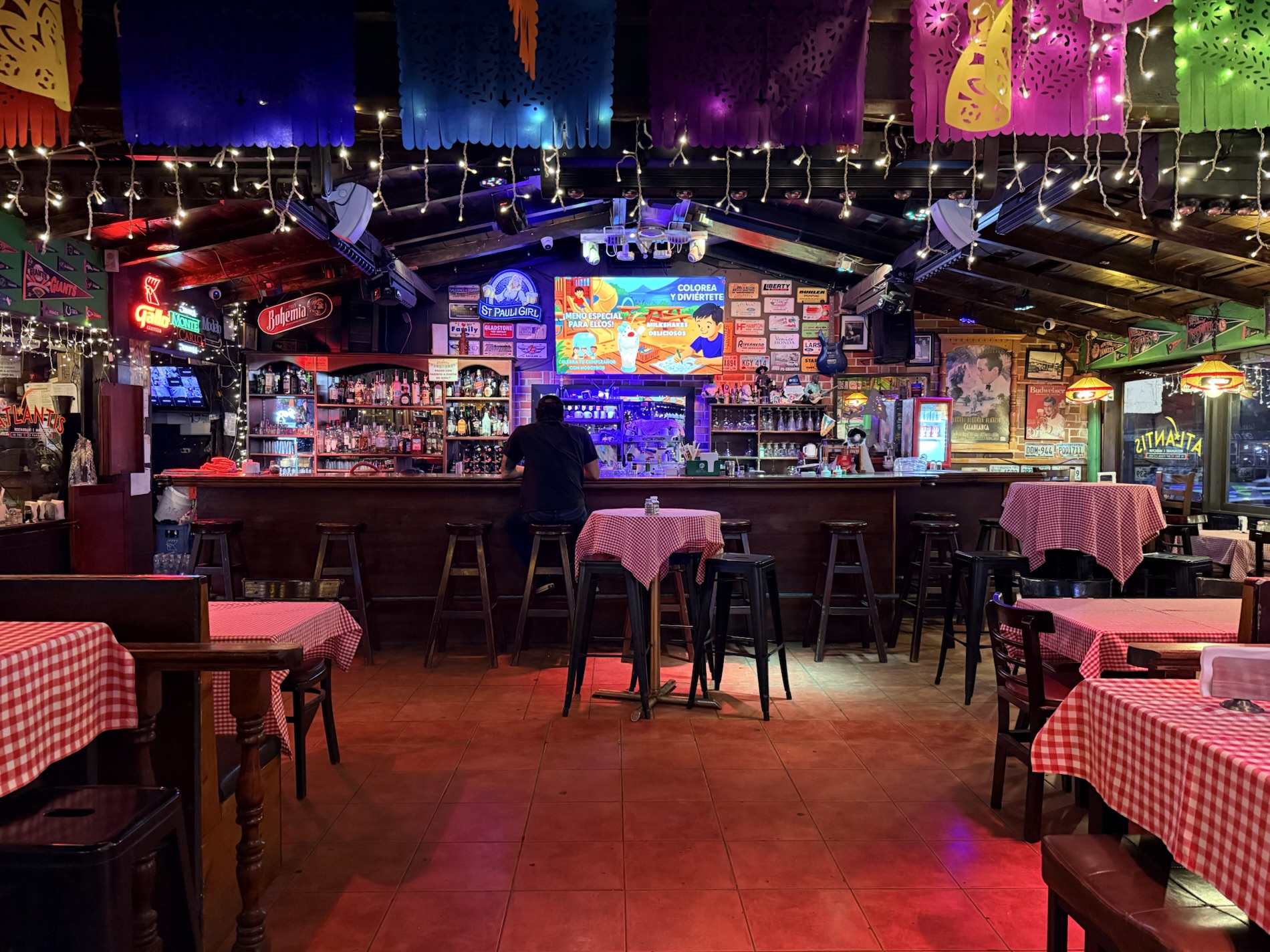
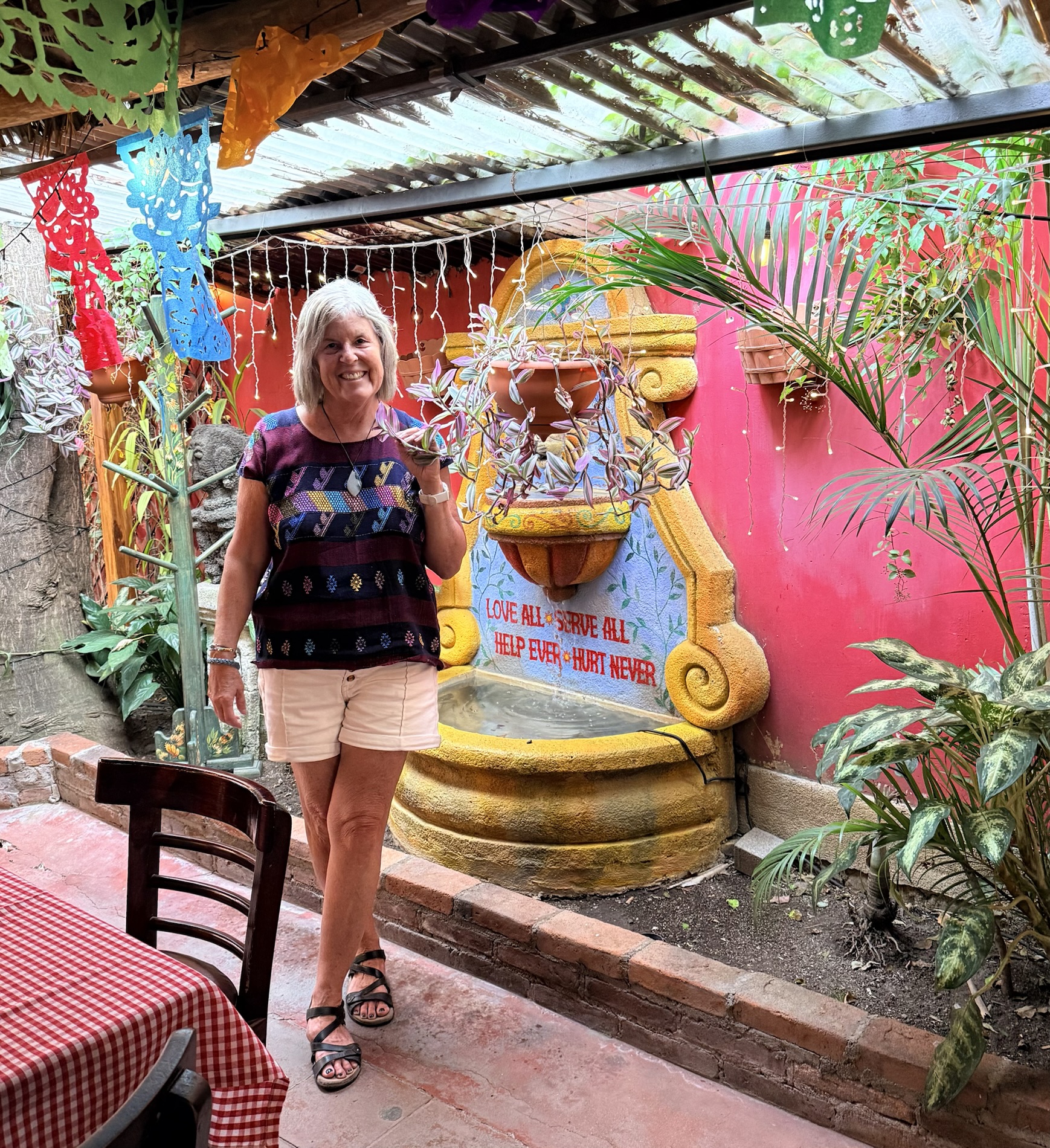
of banderitas at Atlantis, with her husband, gathering her thoughts.
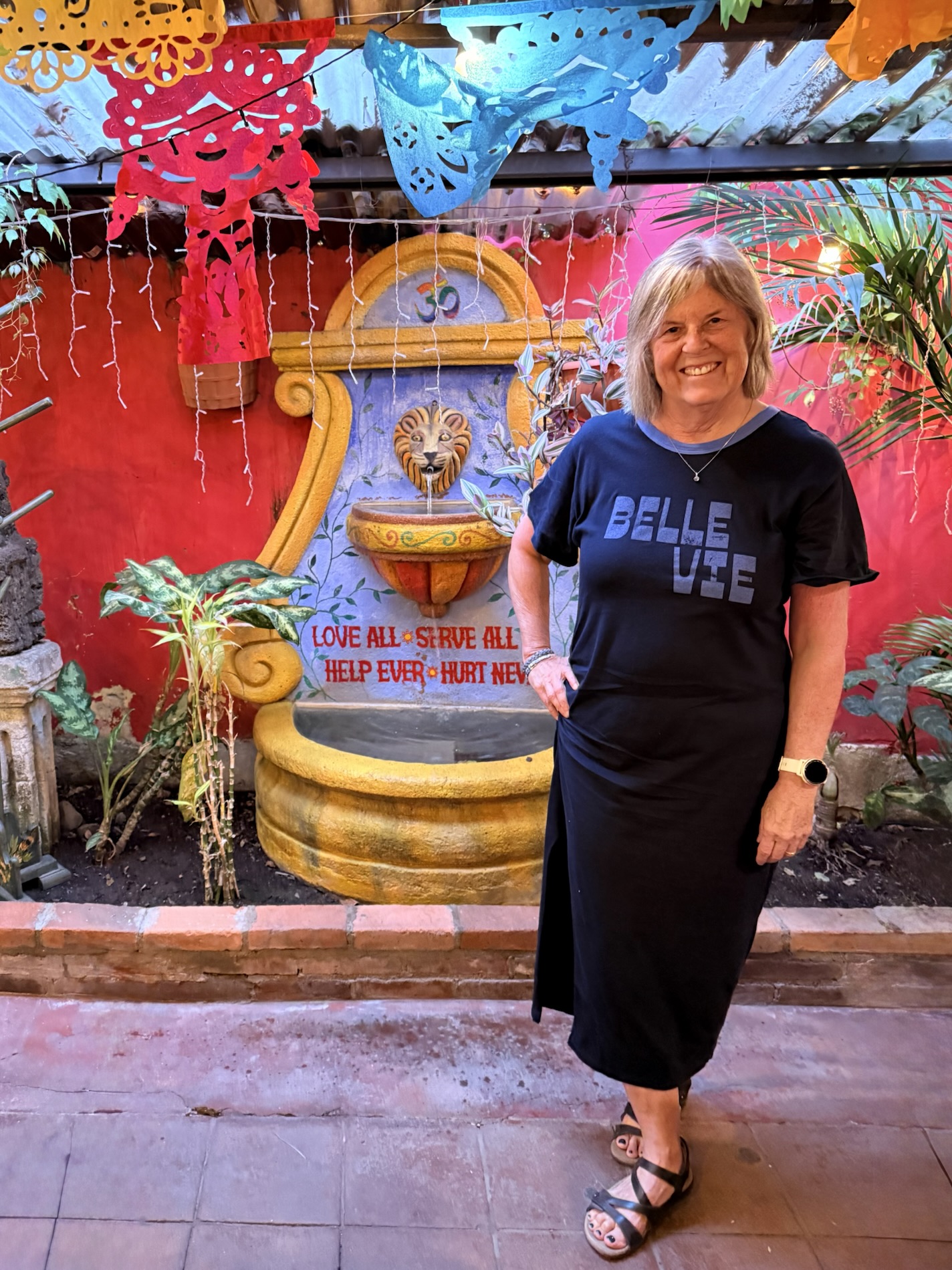
Nearby a fountain advises: “Love all. Serve all. Help ever. Hurt never.”

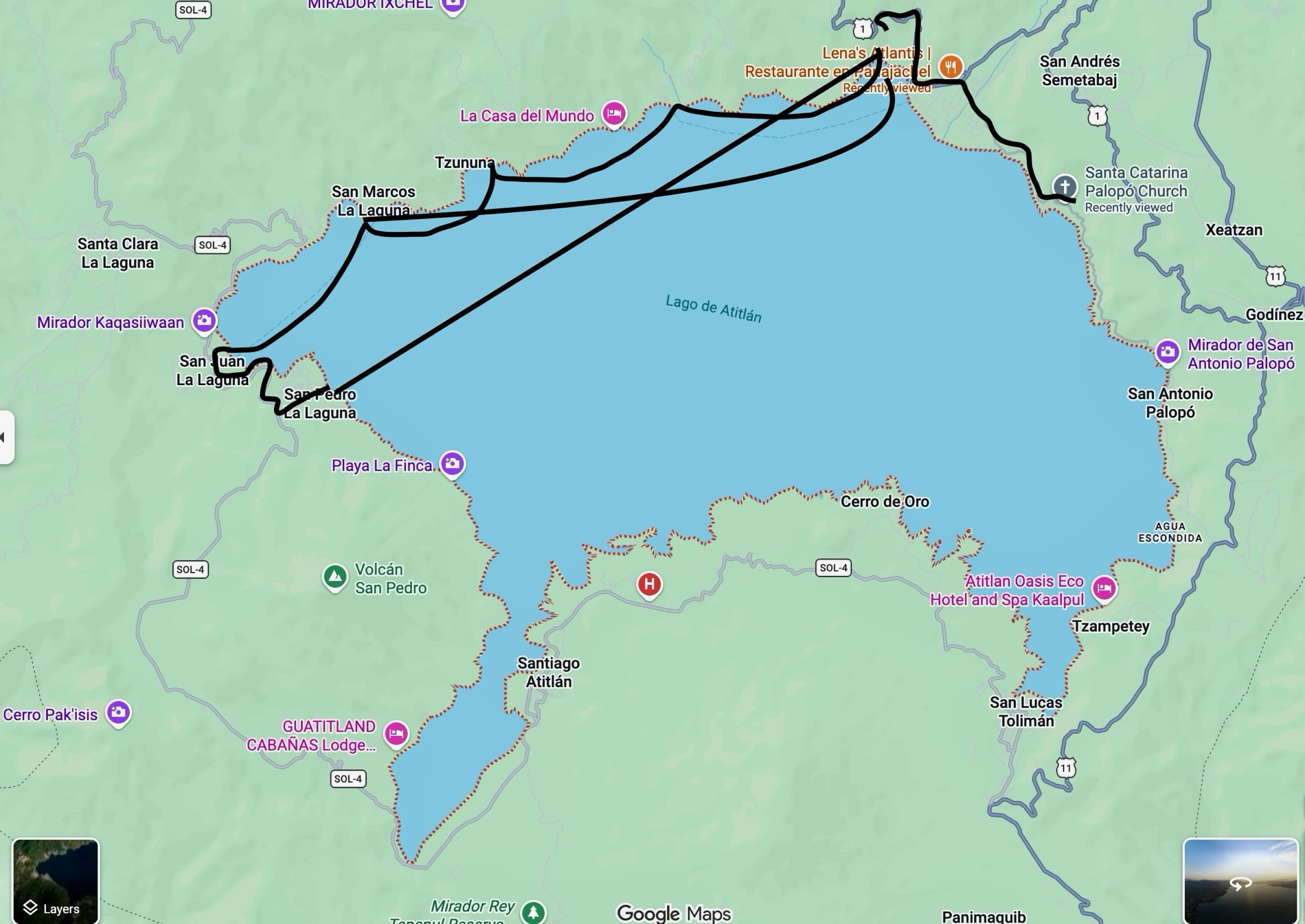
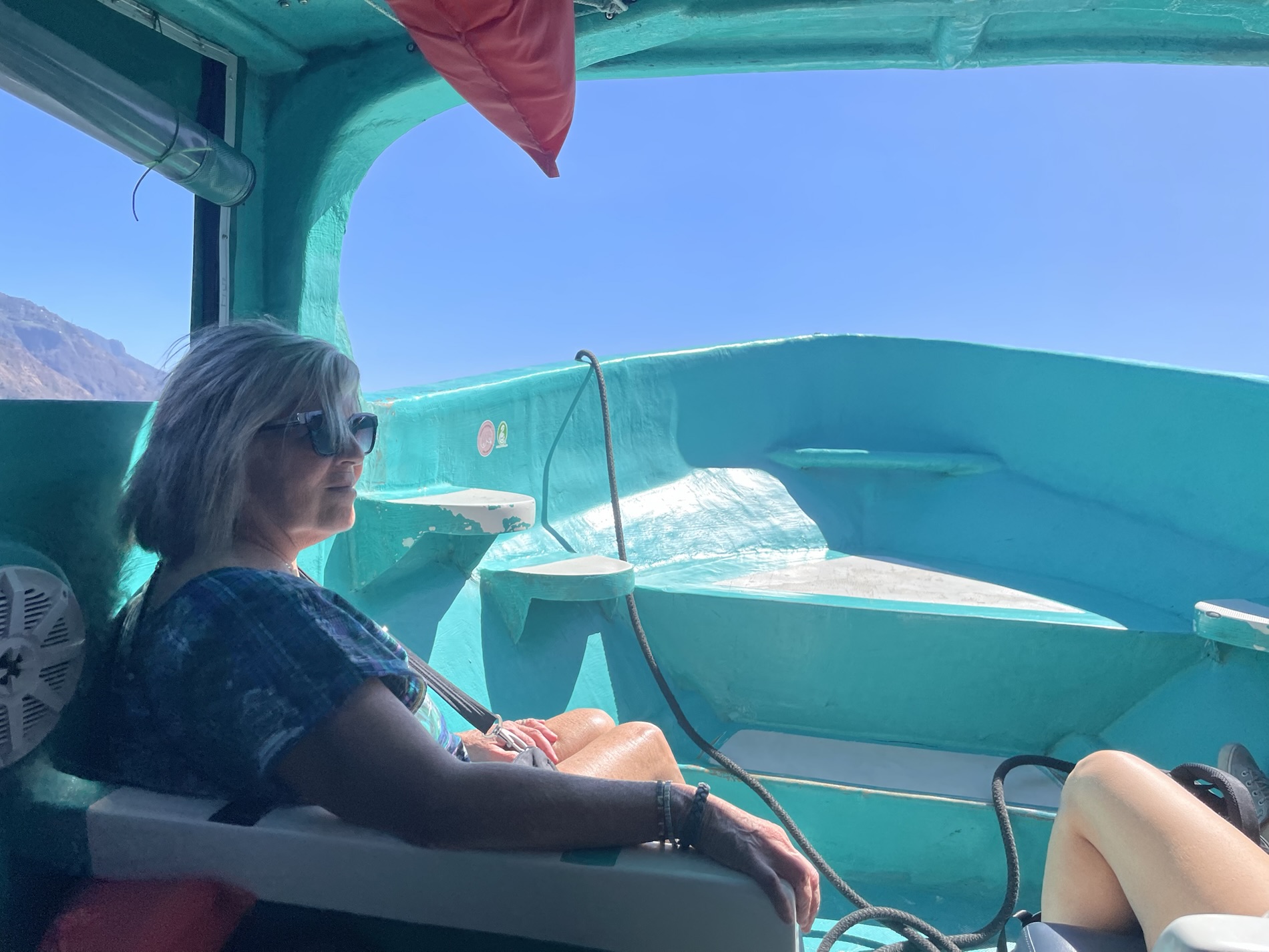
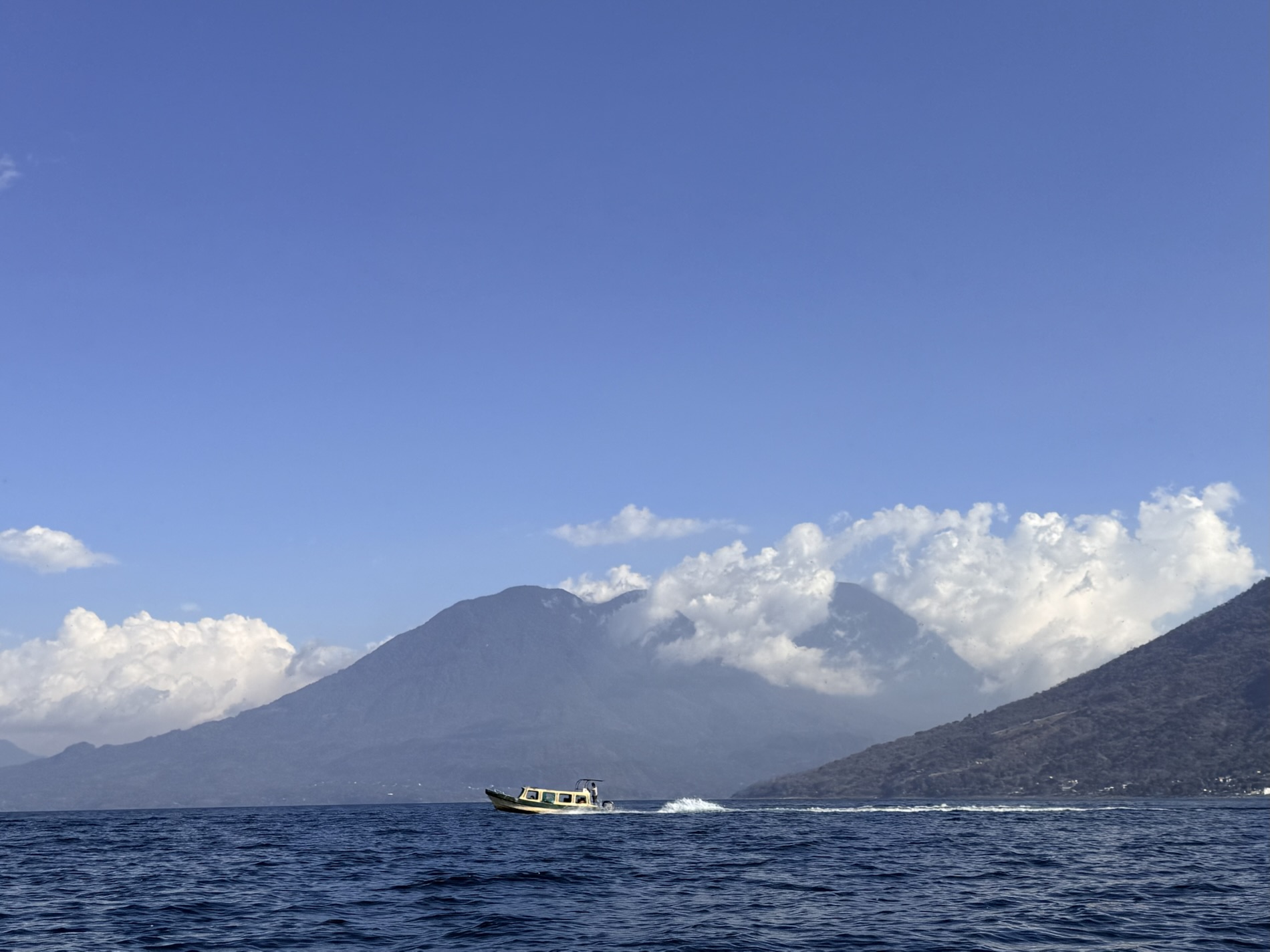
The next day, she takes a lancha southwest across
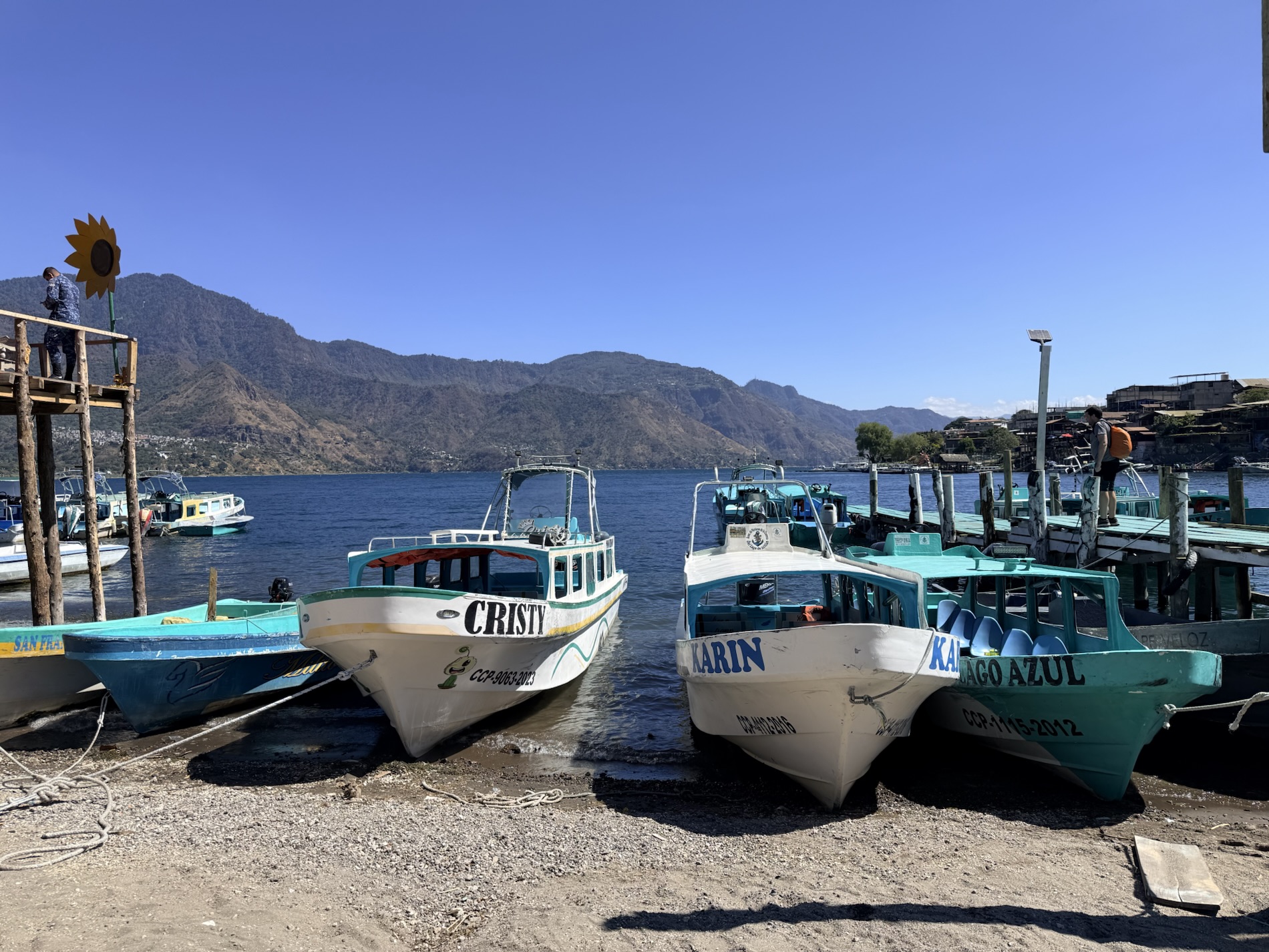
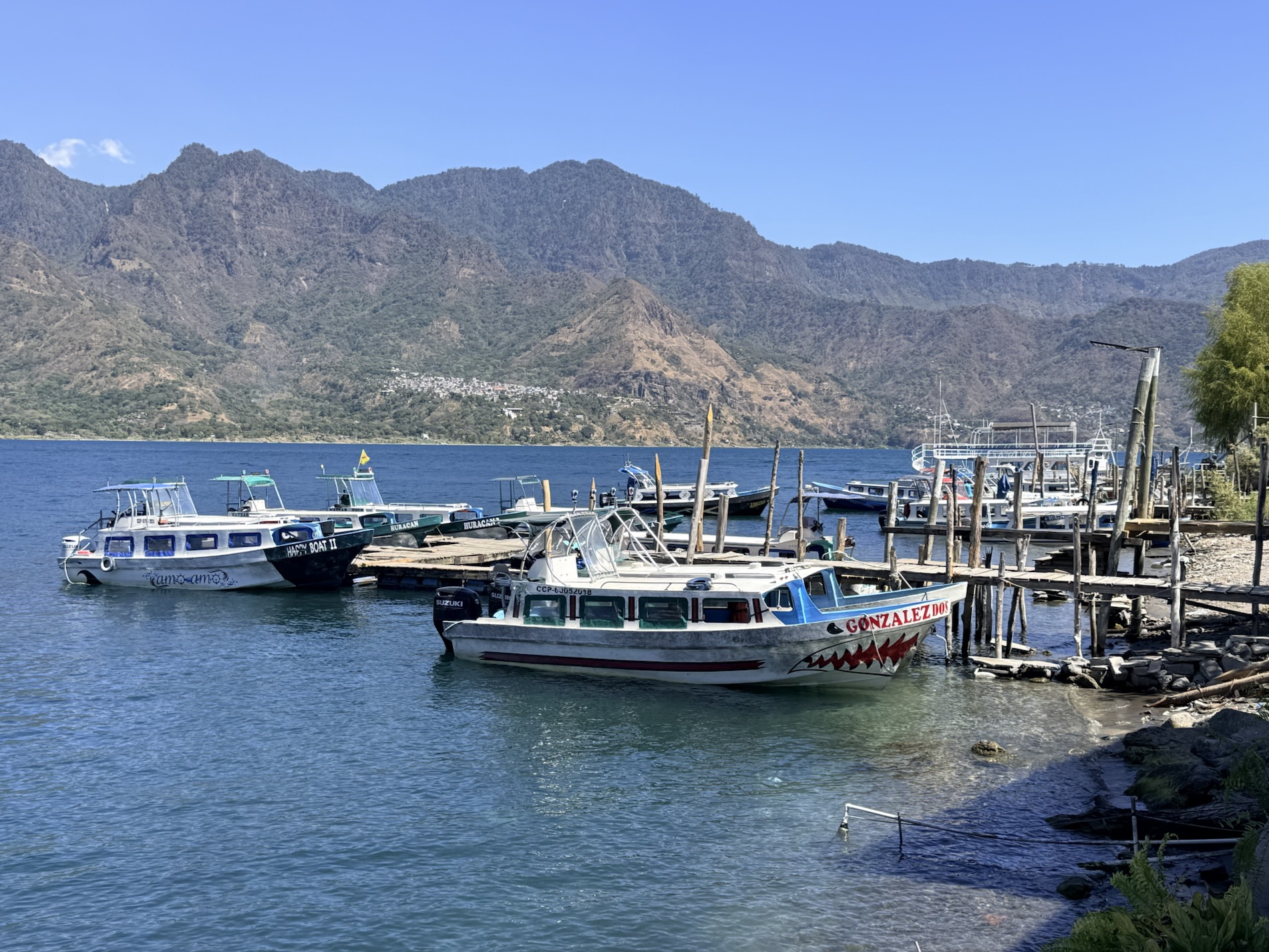
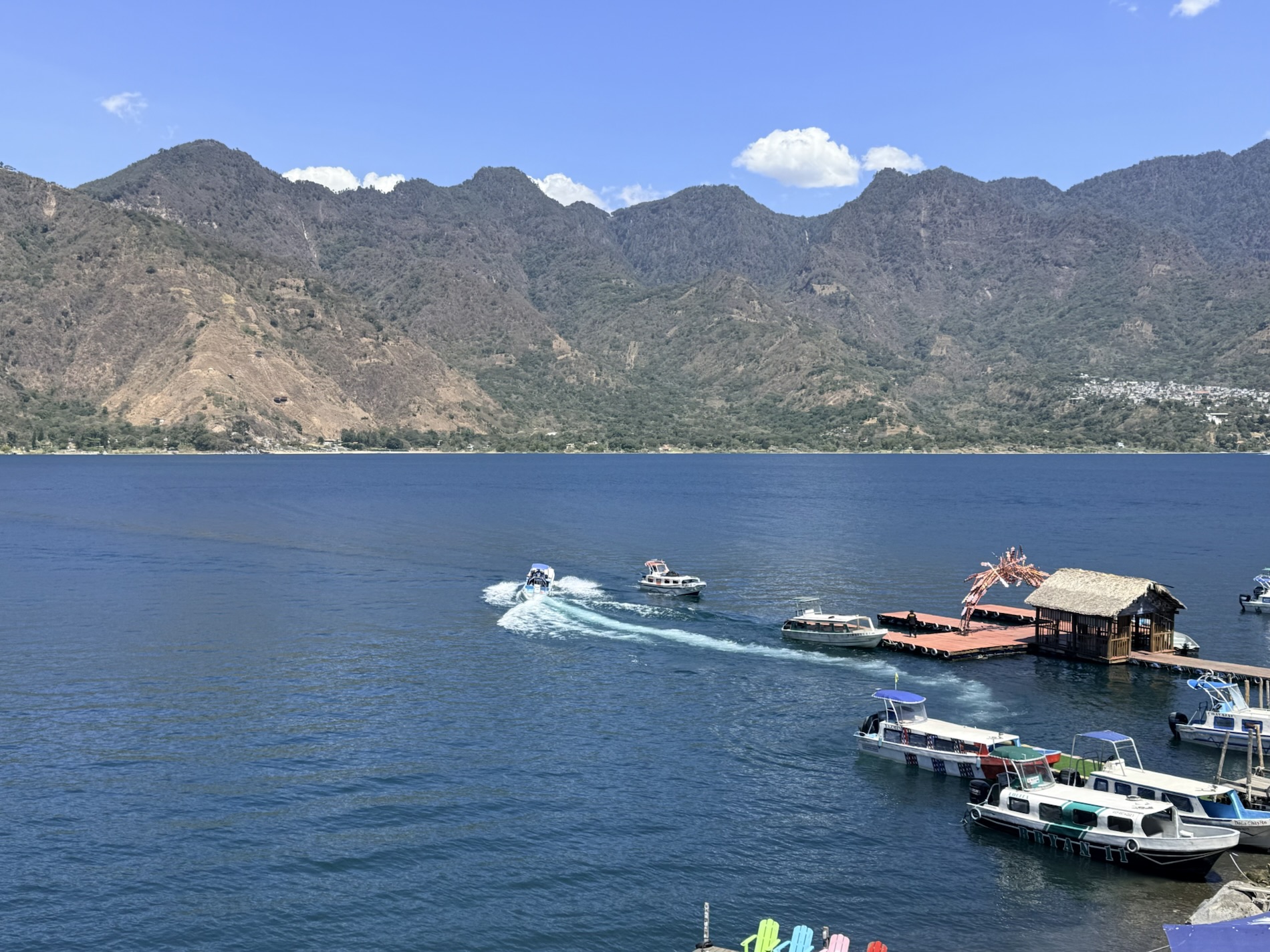
the ancient volcanic caldera, now Lake Atitlán, to San Pedro la Laguna,
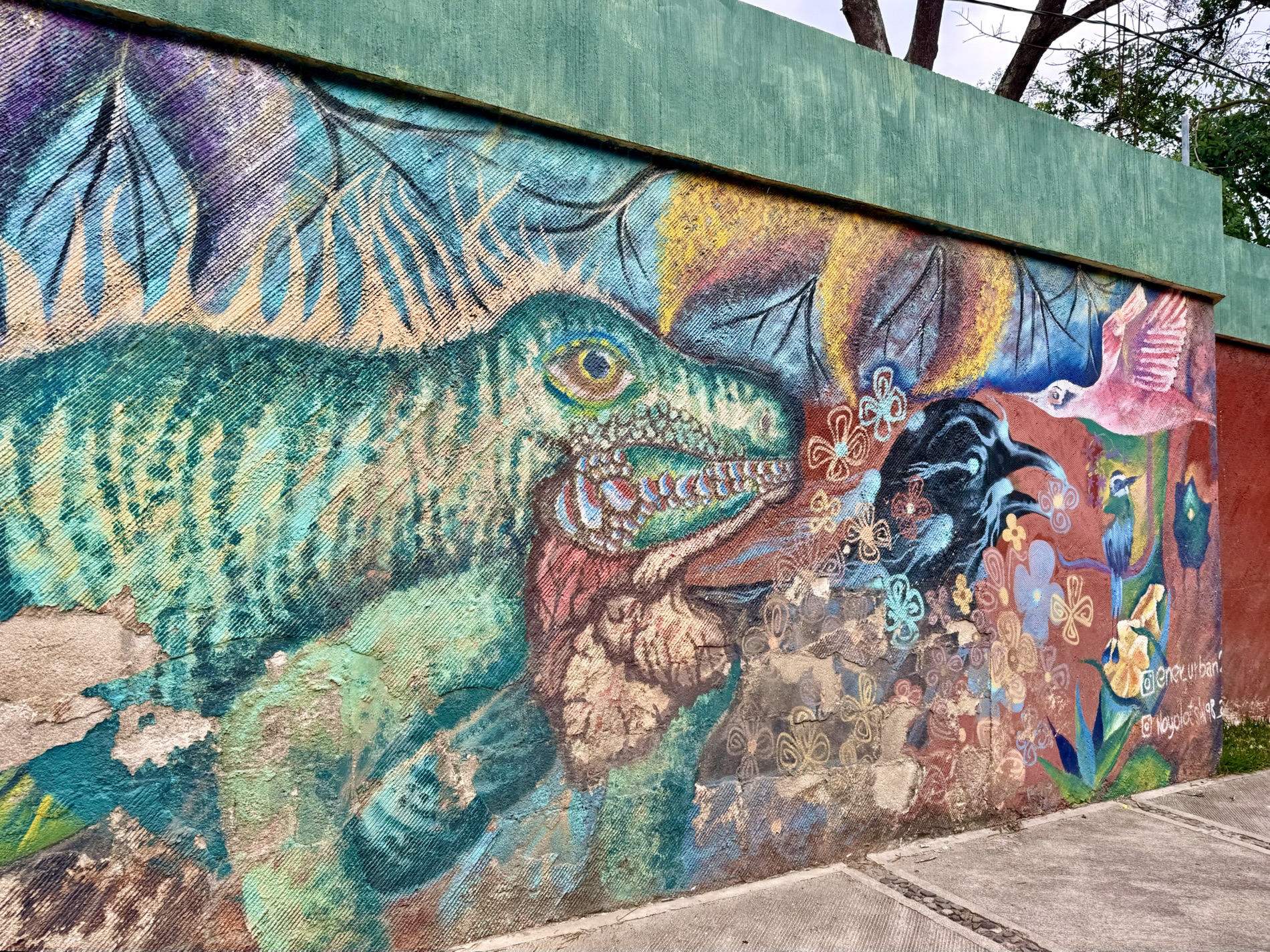
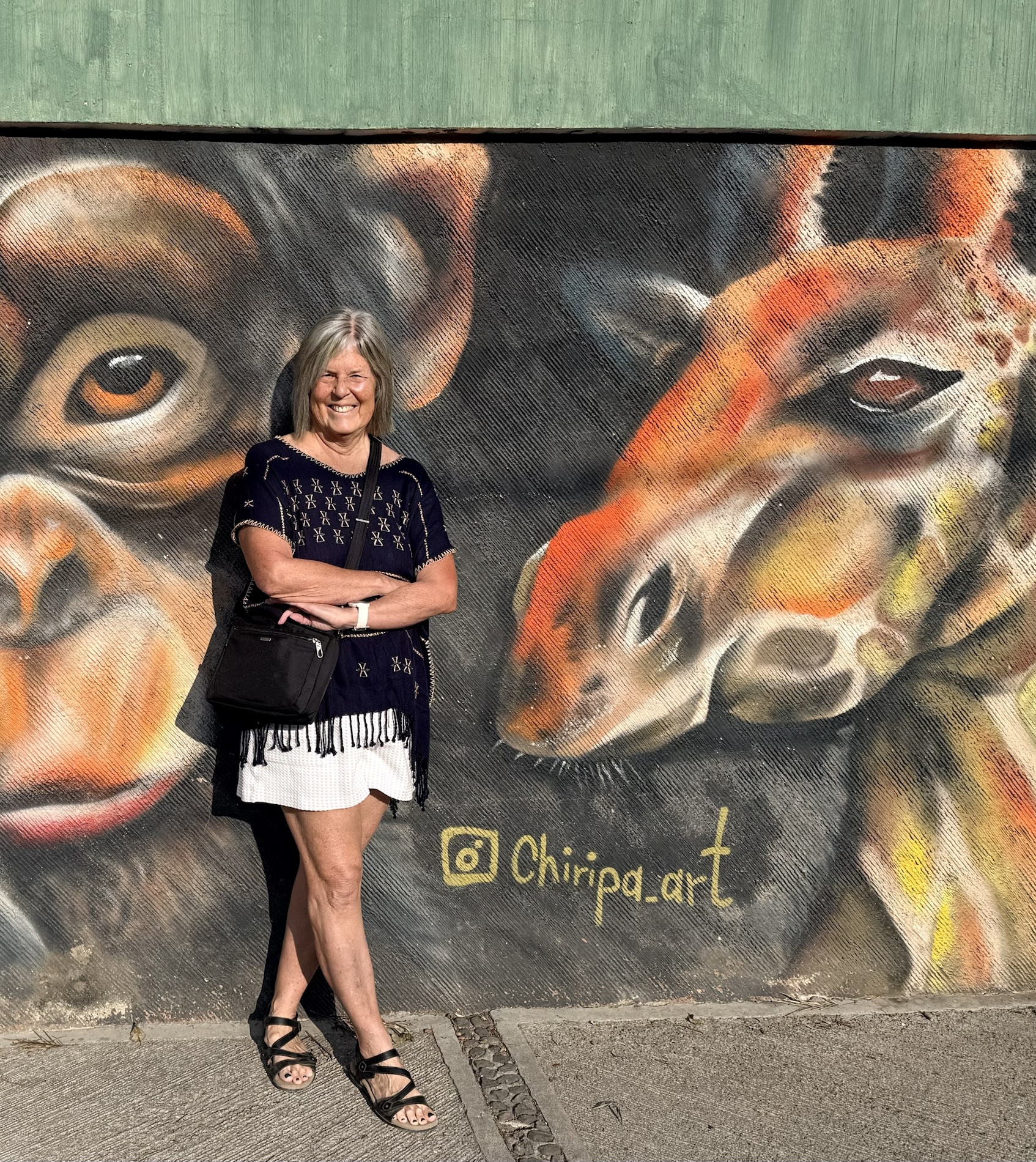
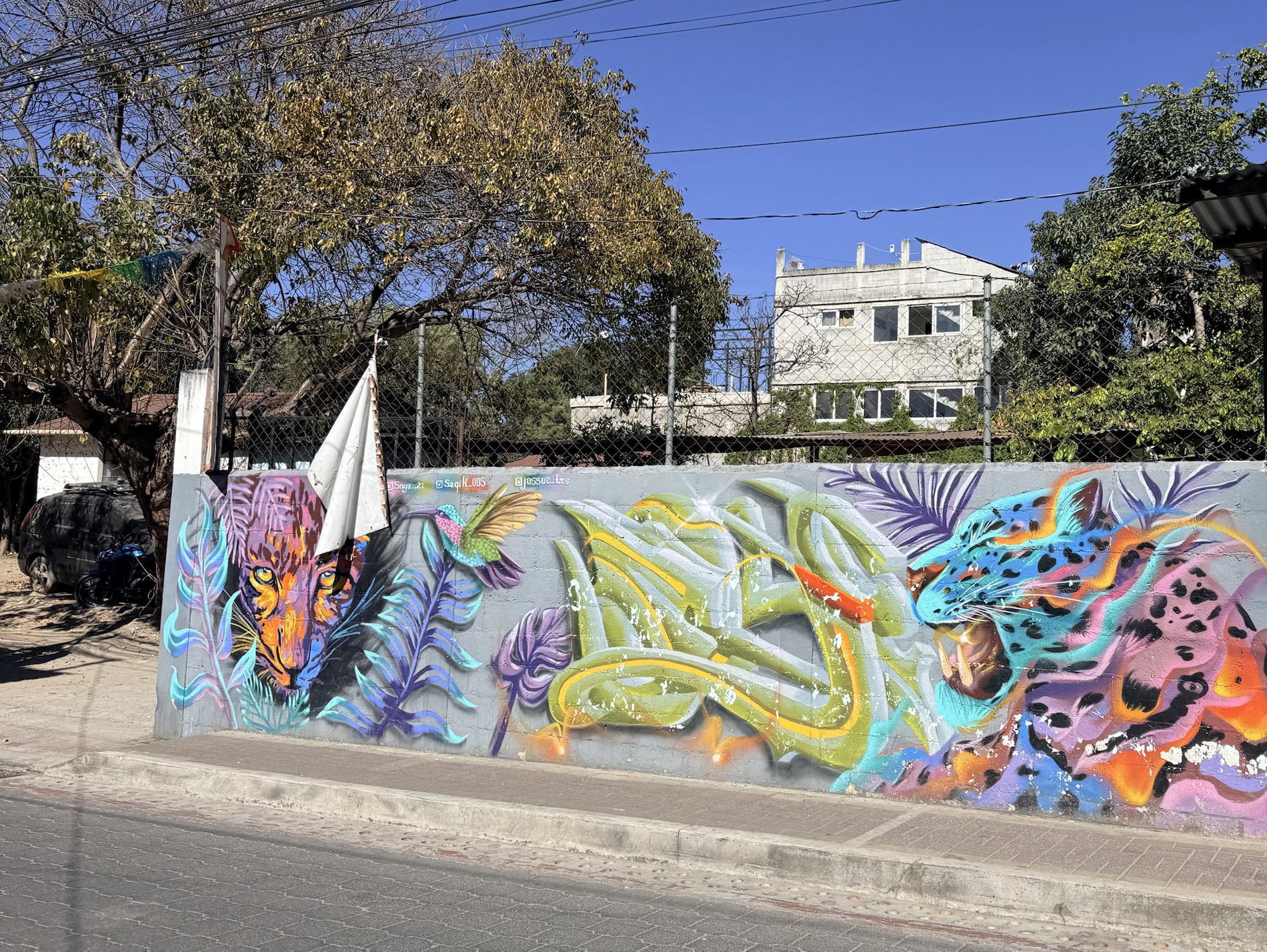
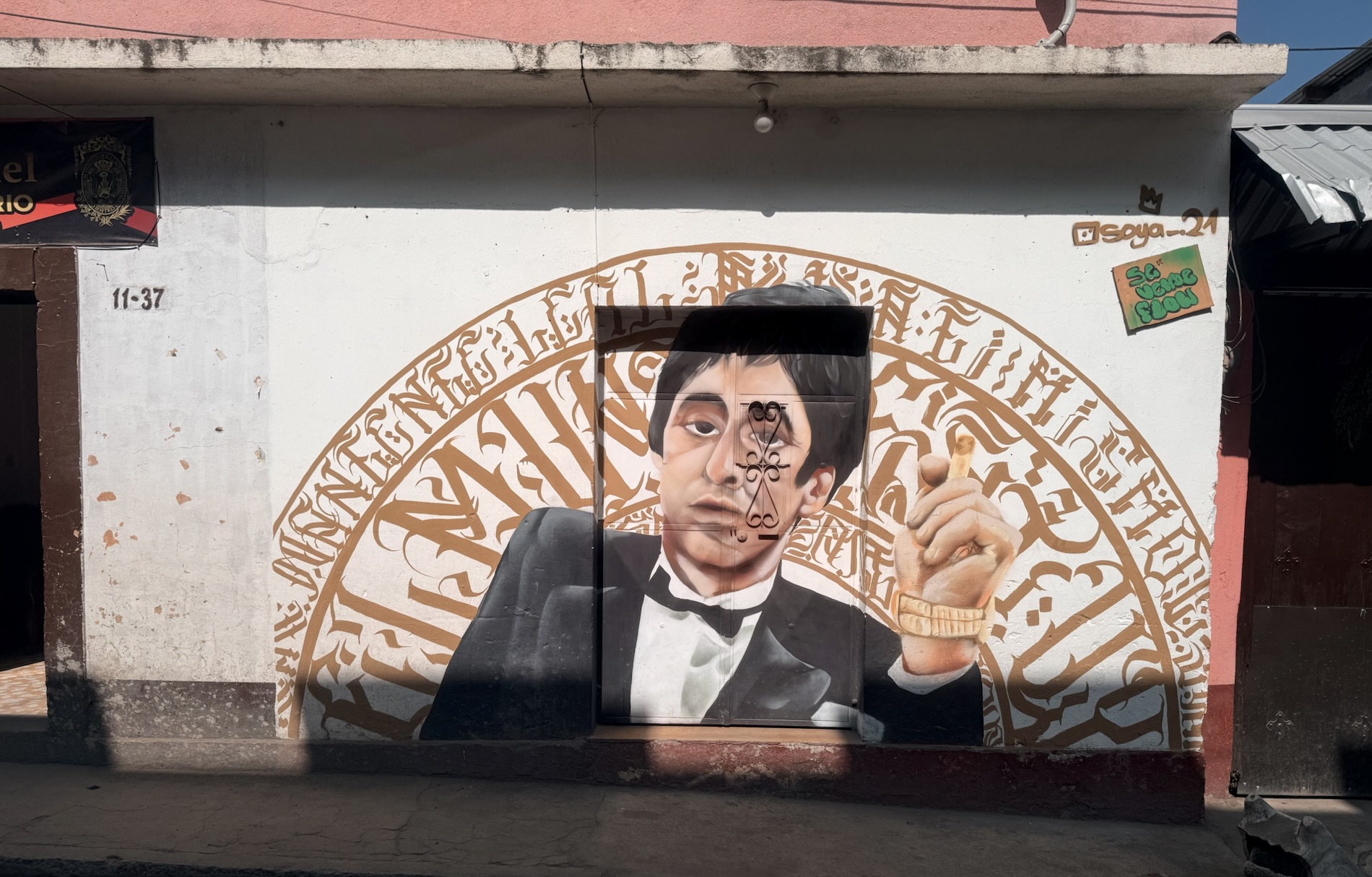
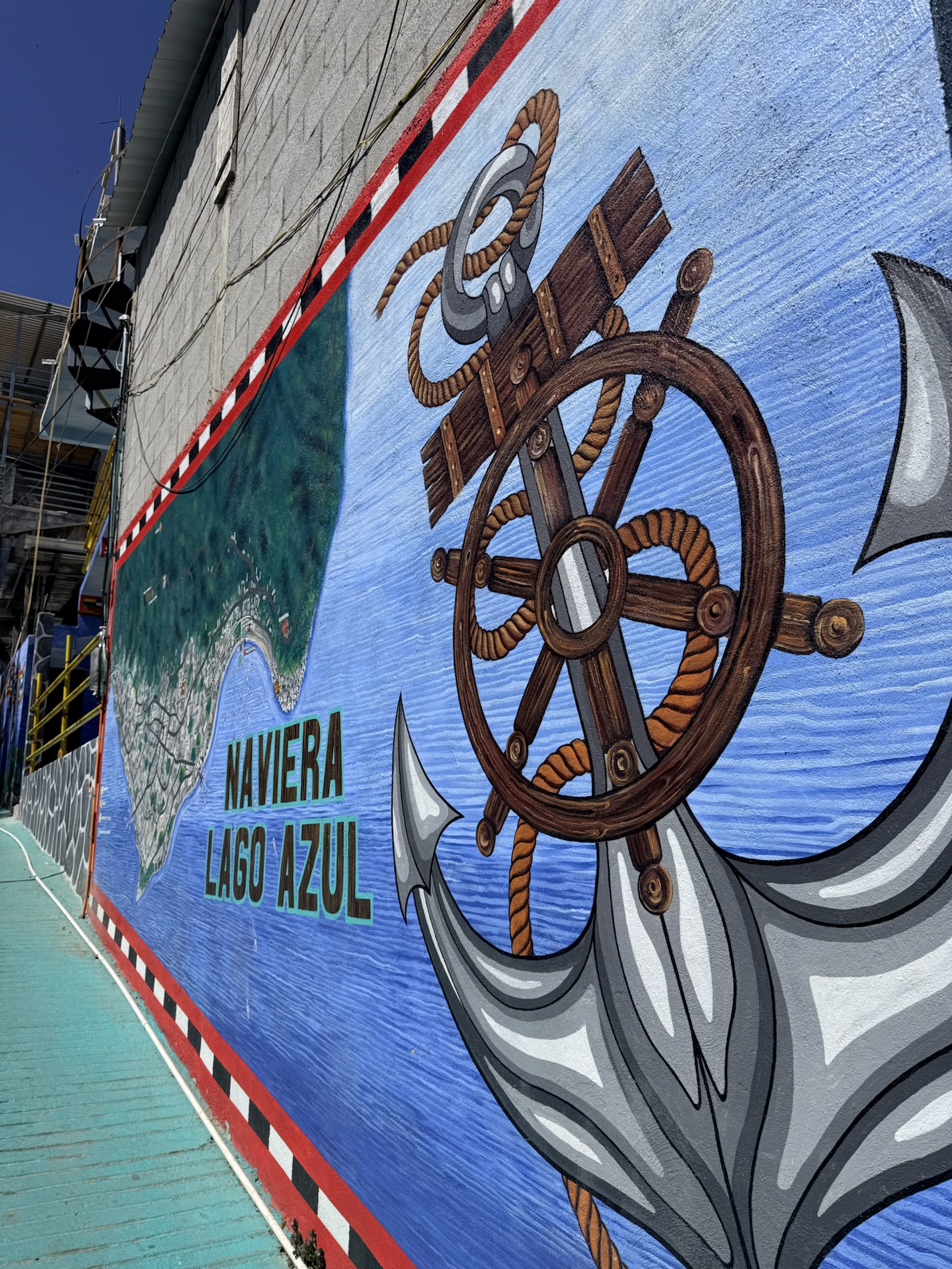
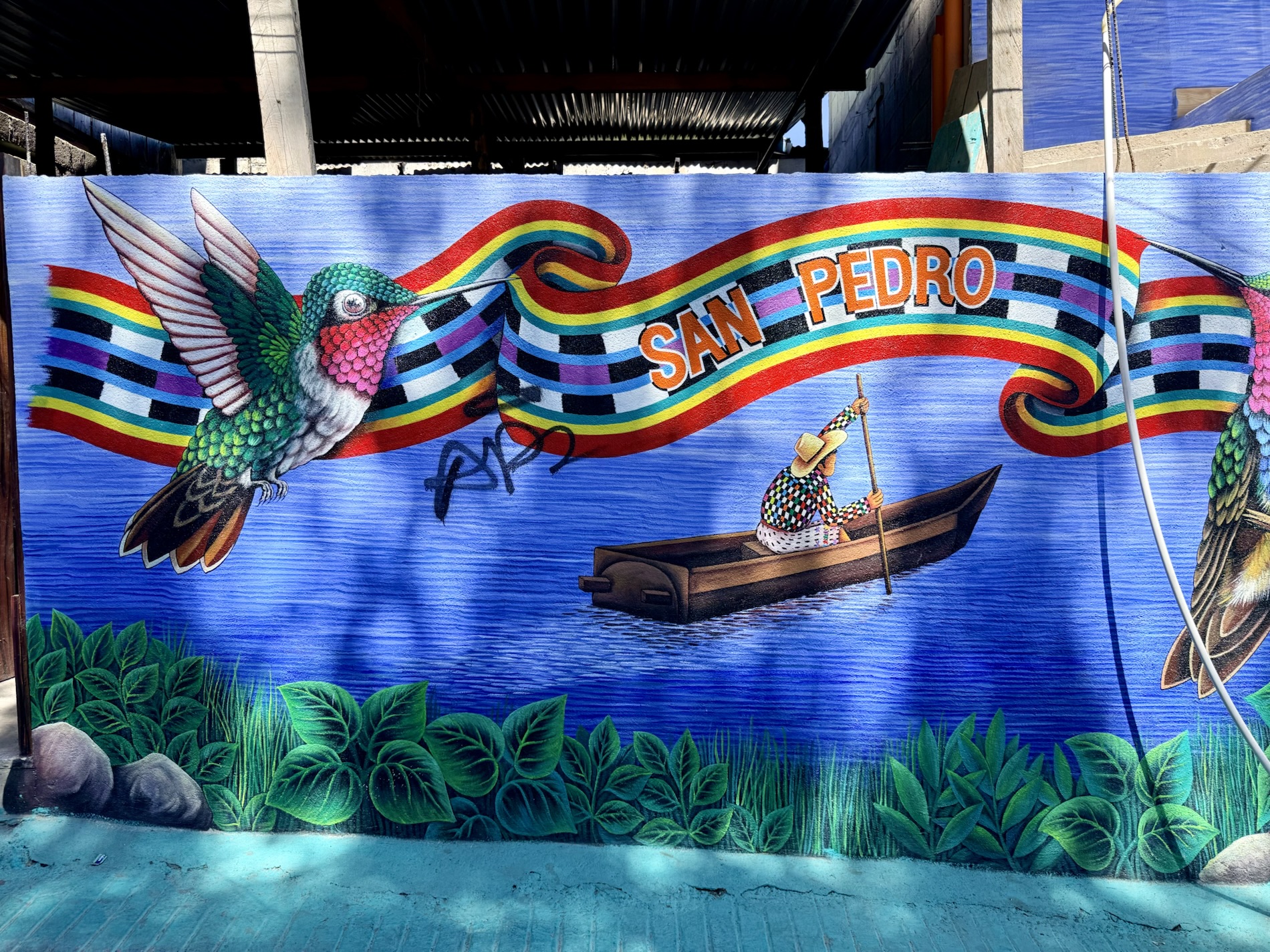
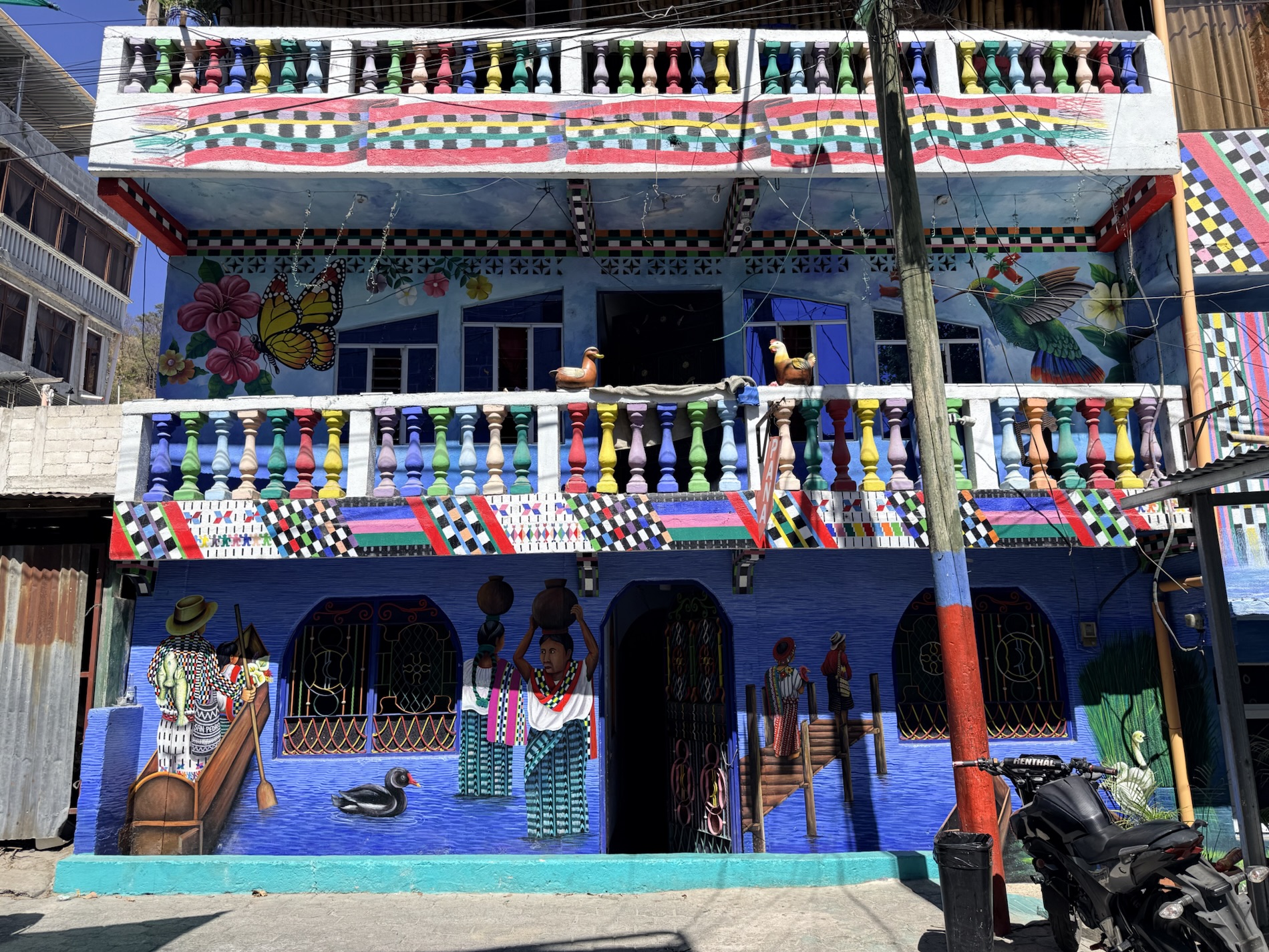
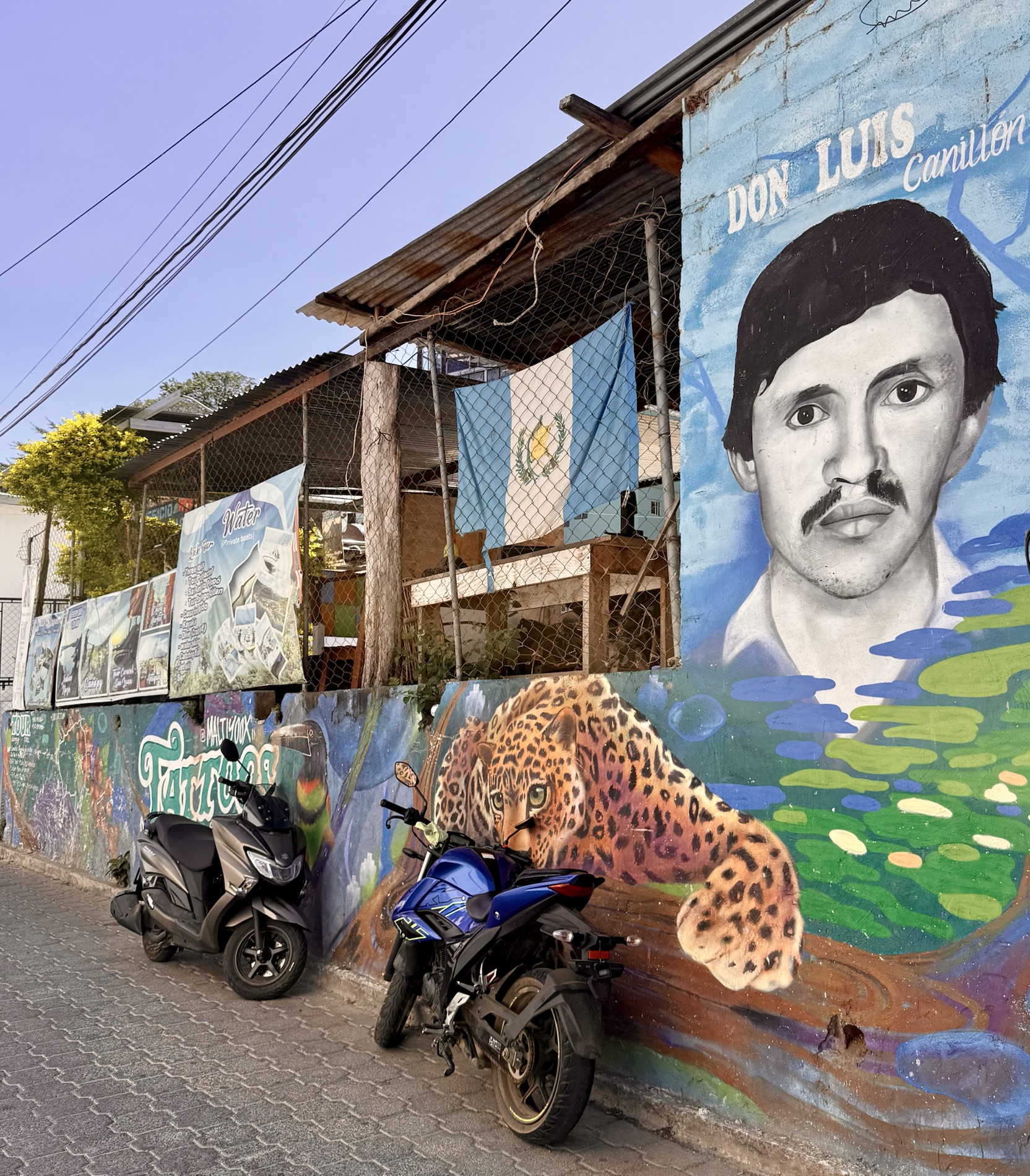
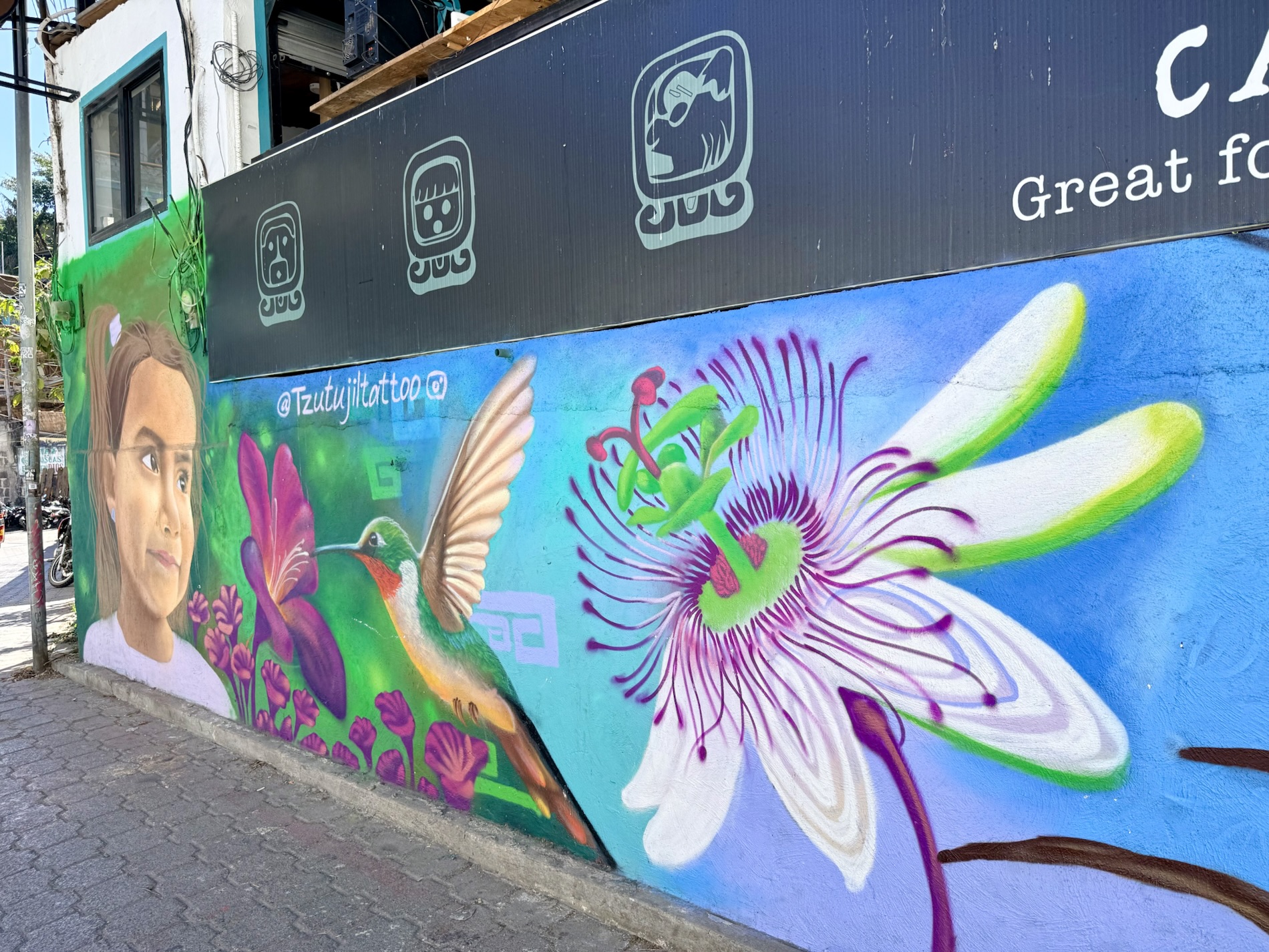
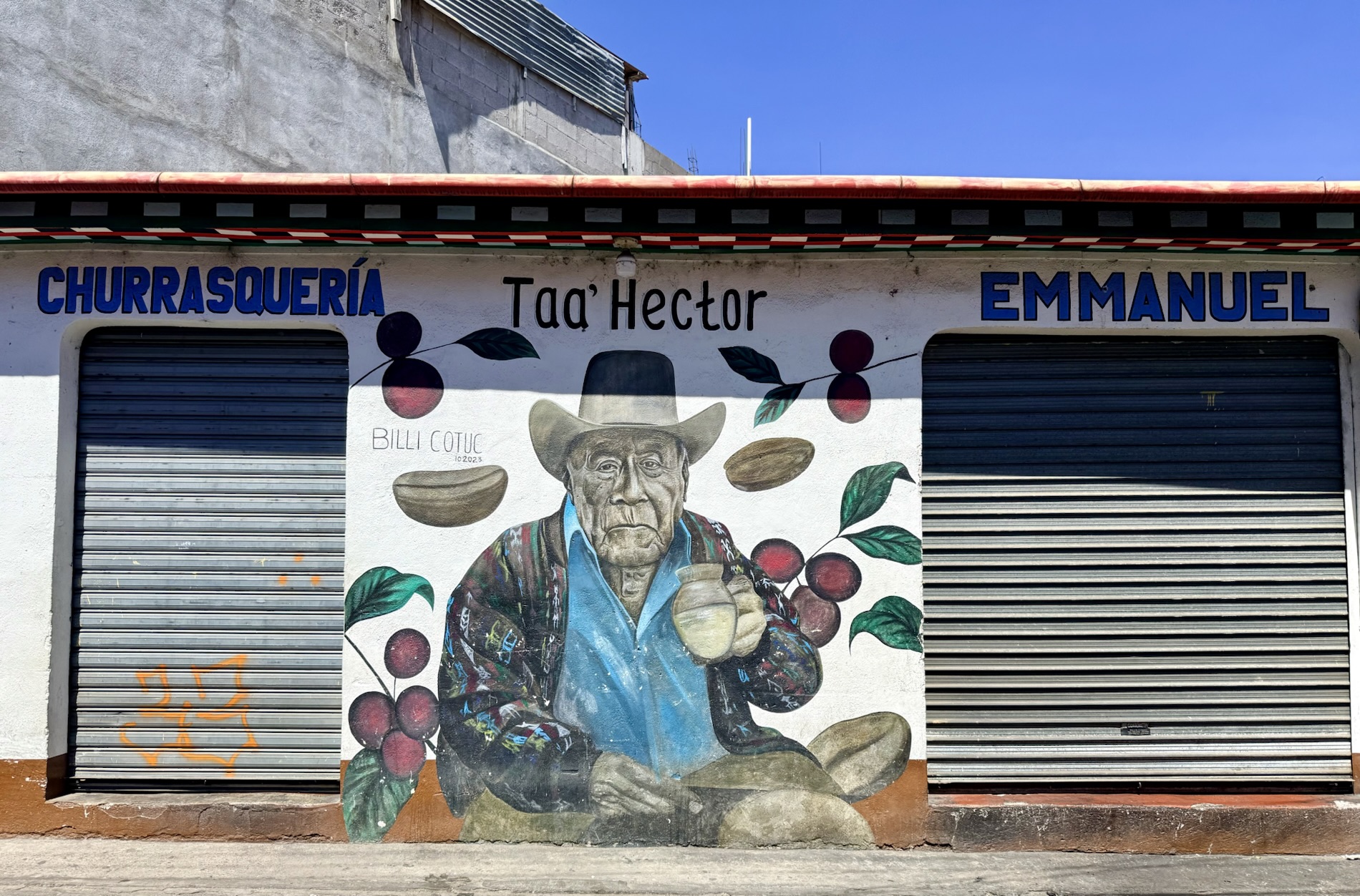
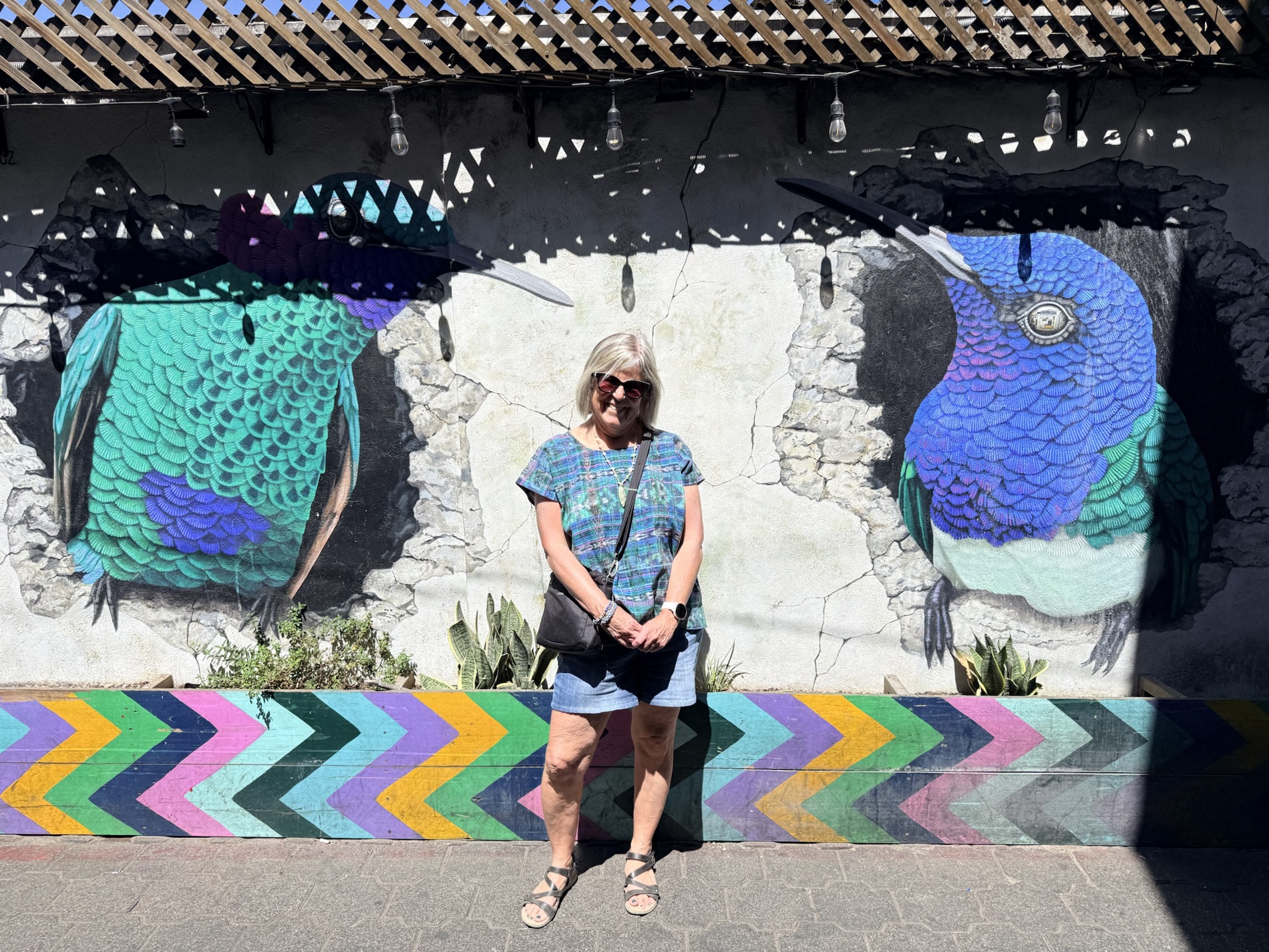
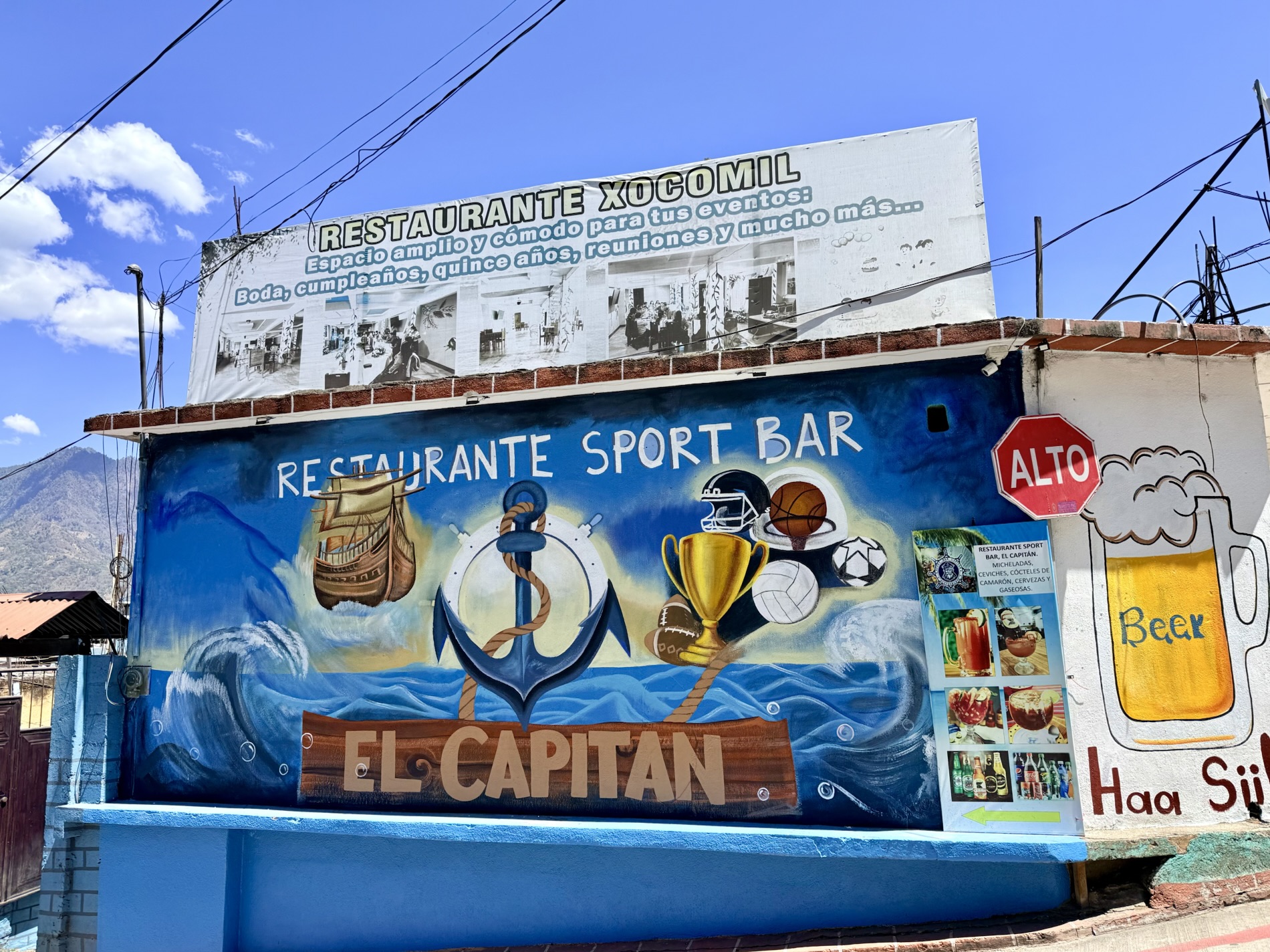
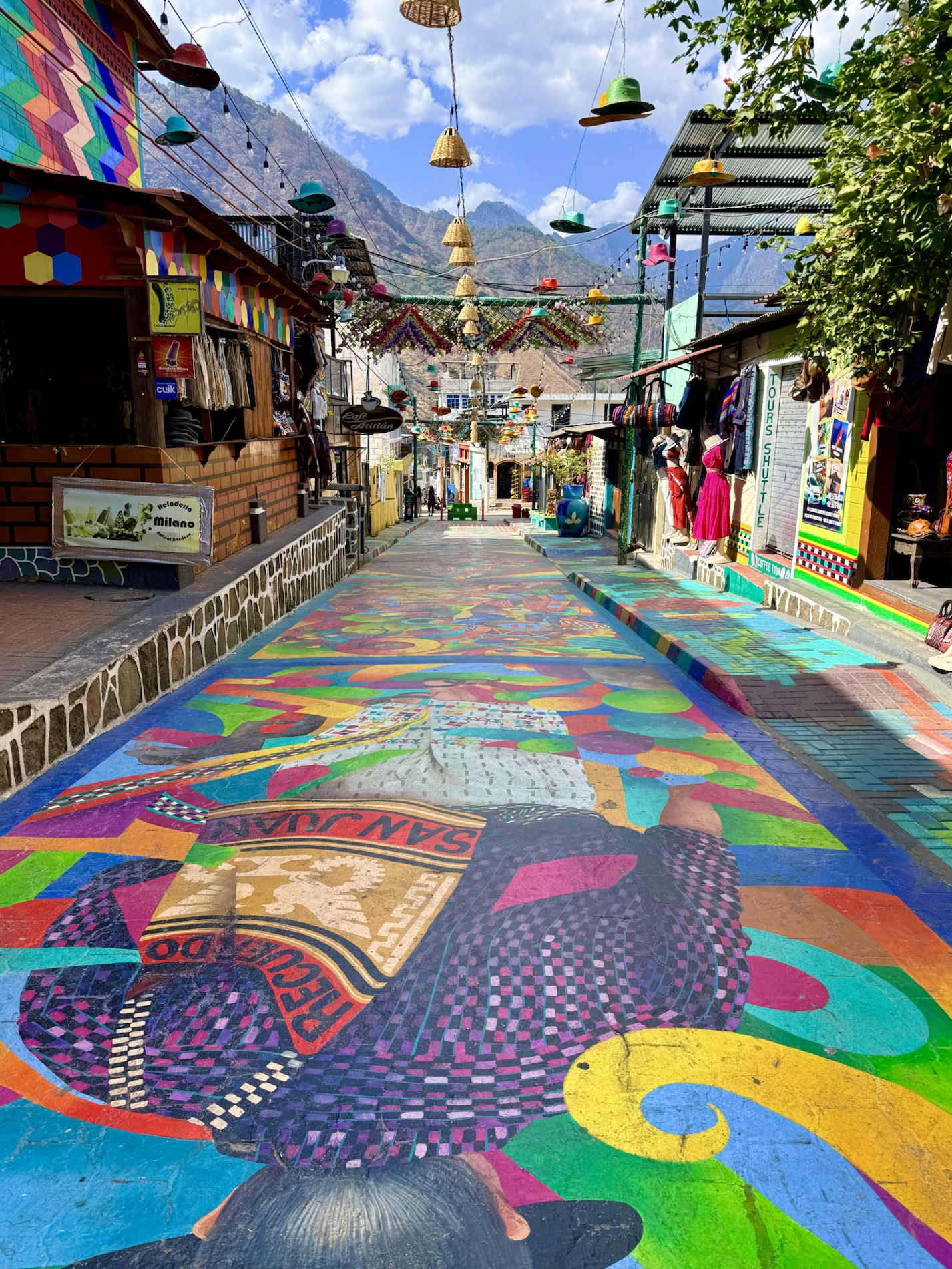
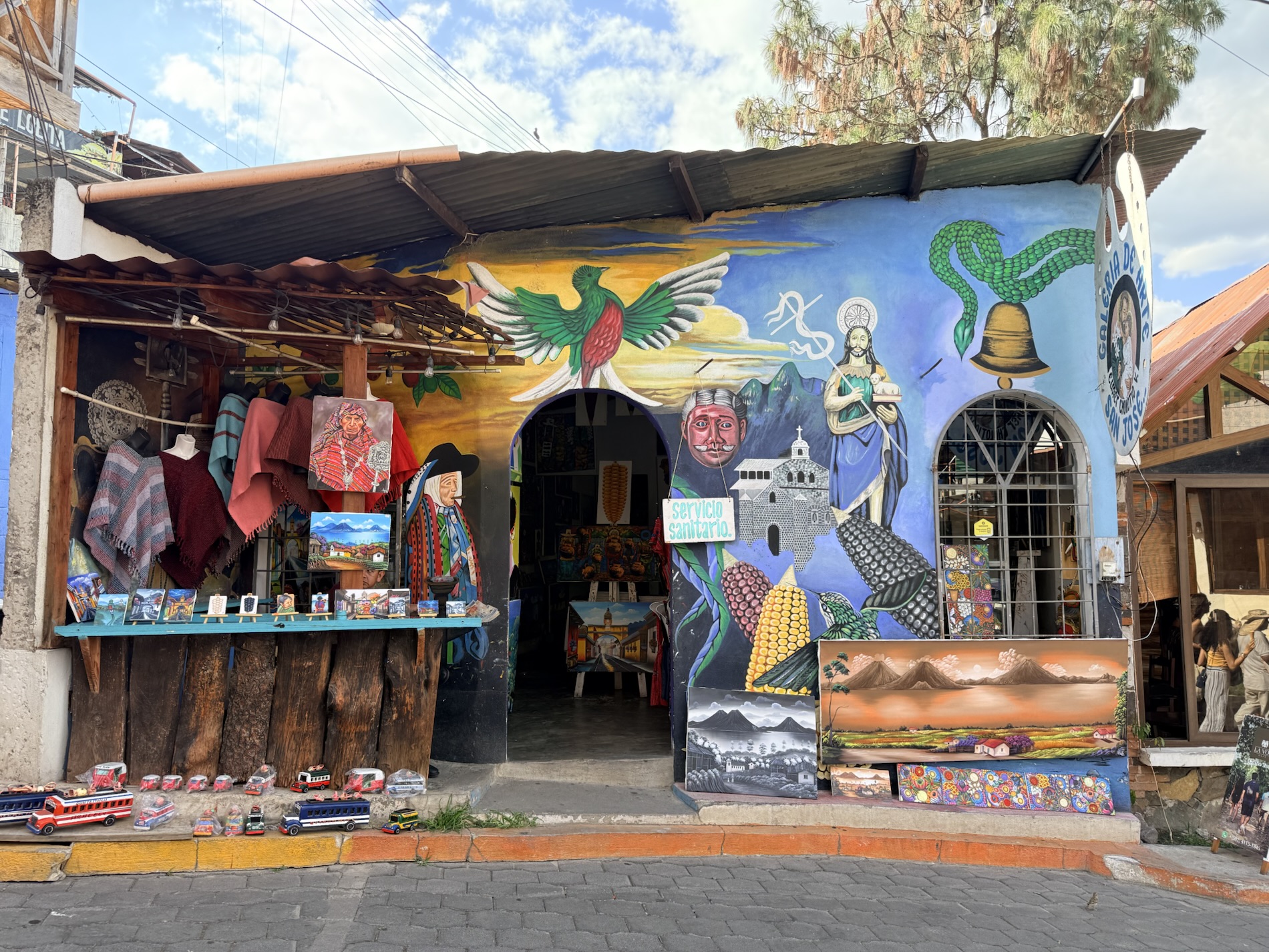
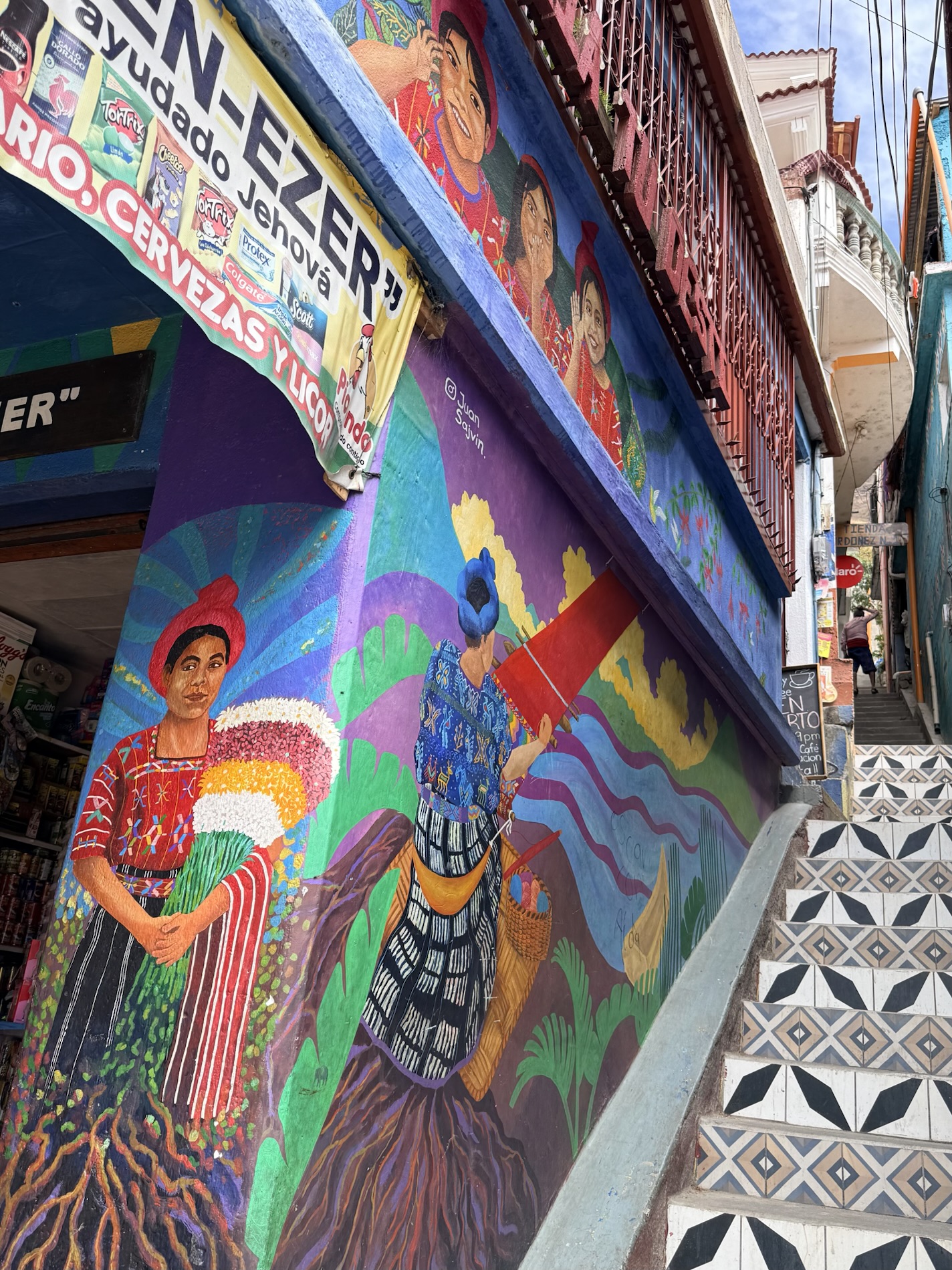
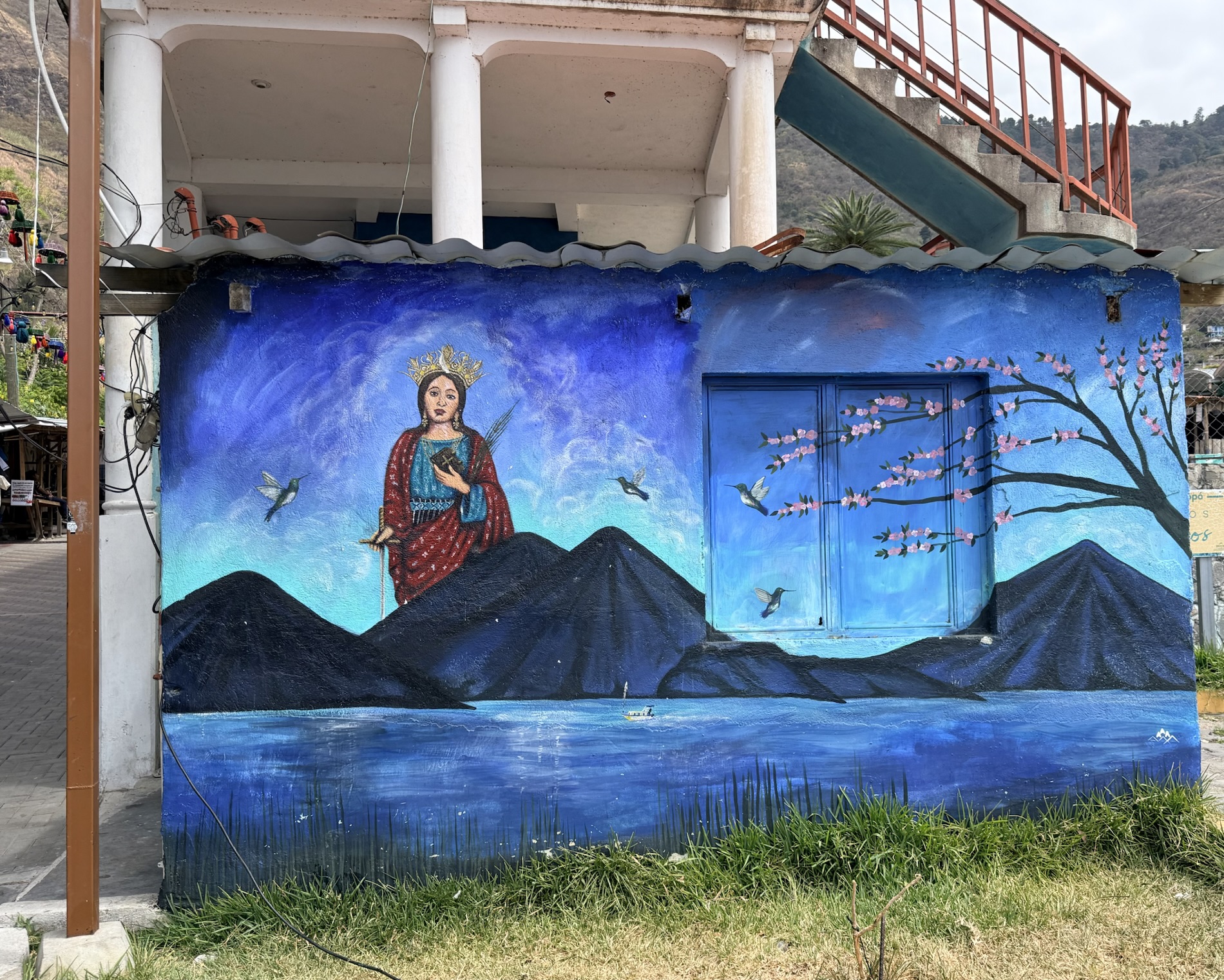
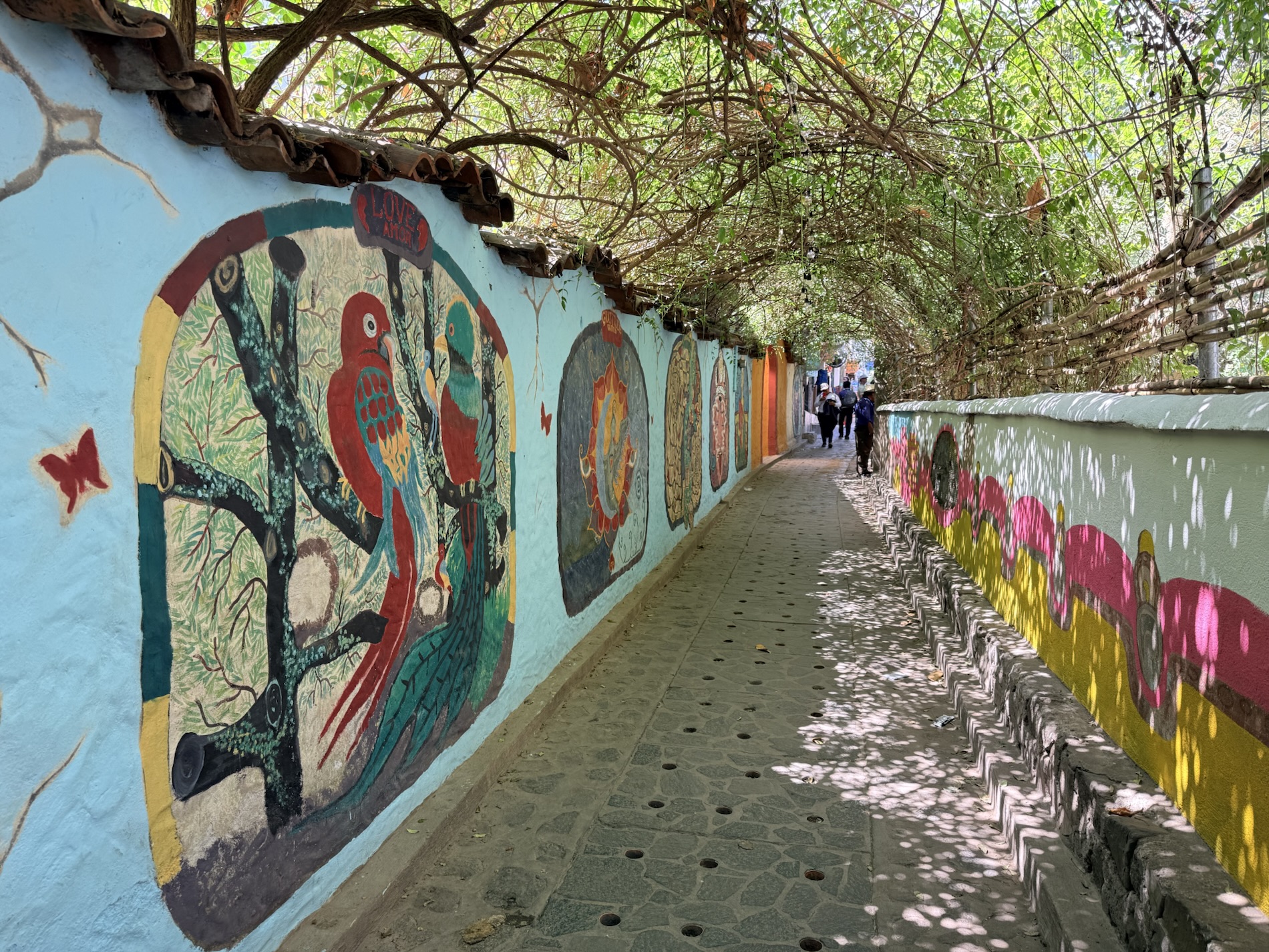
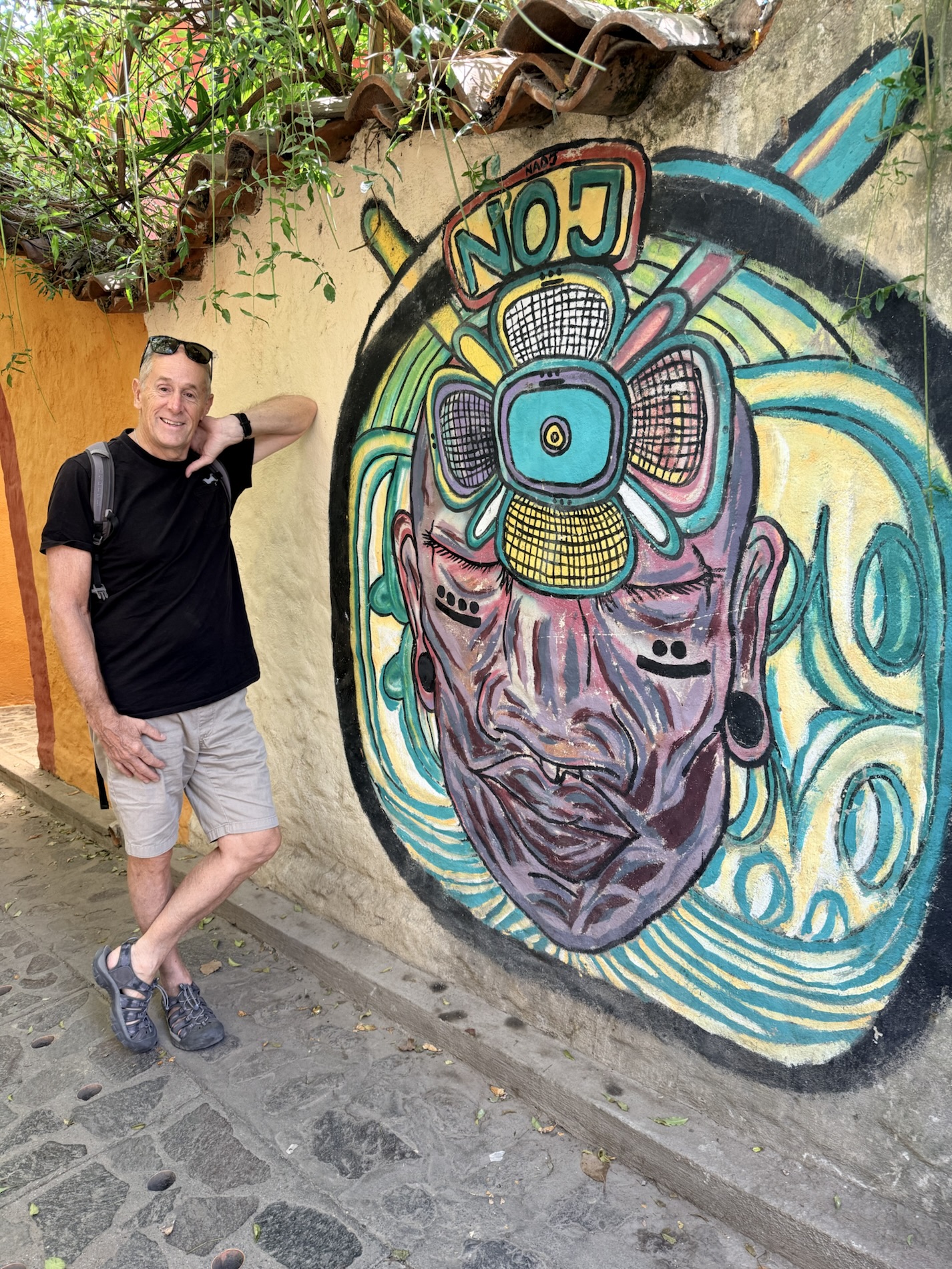
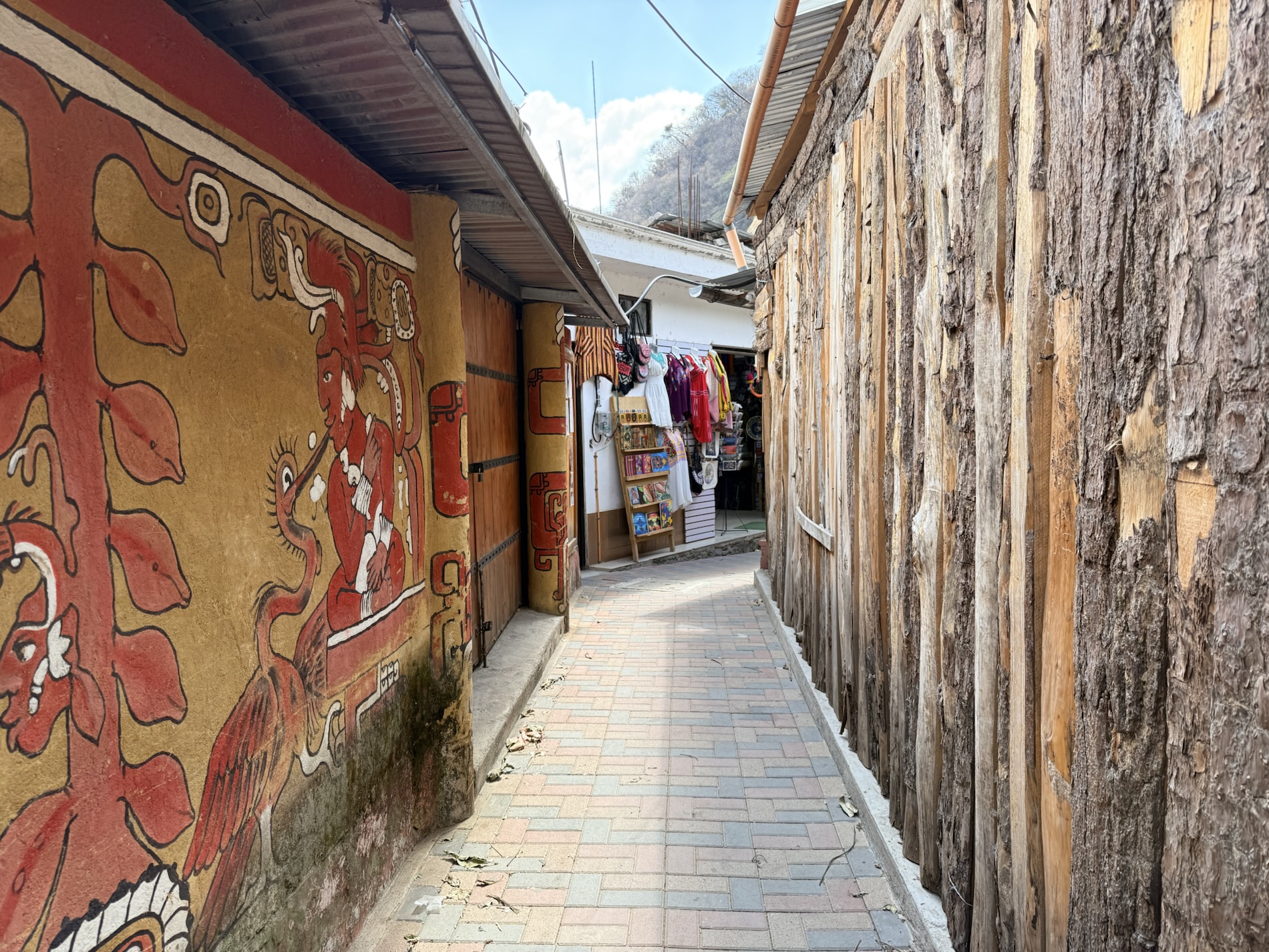
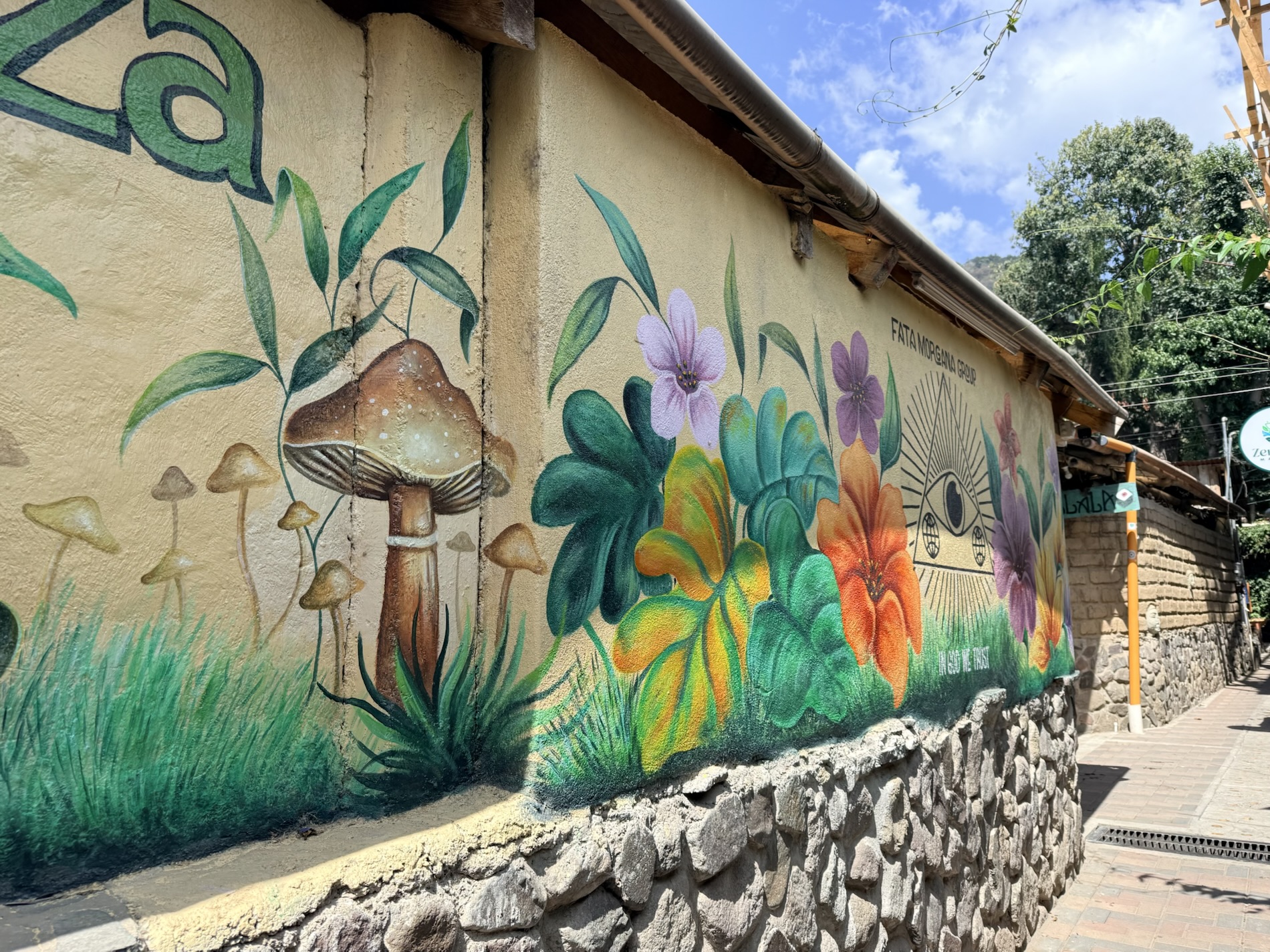
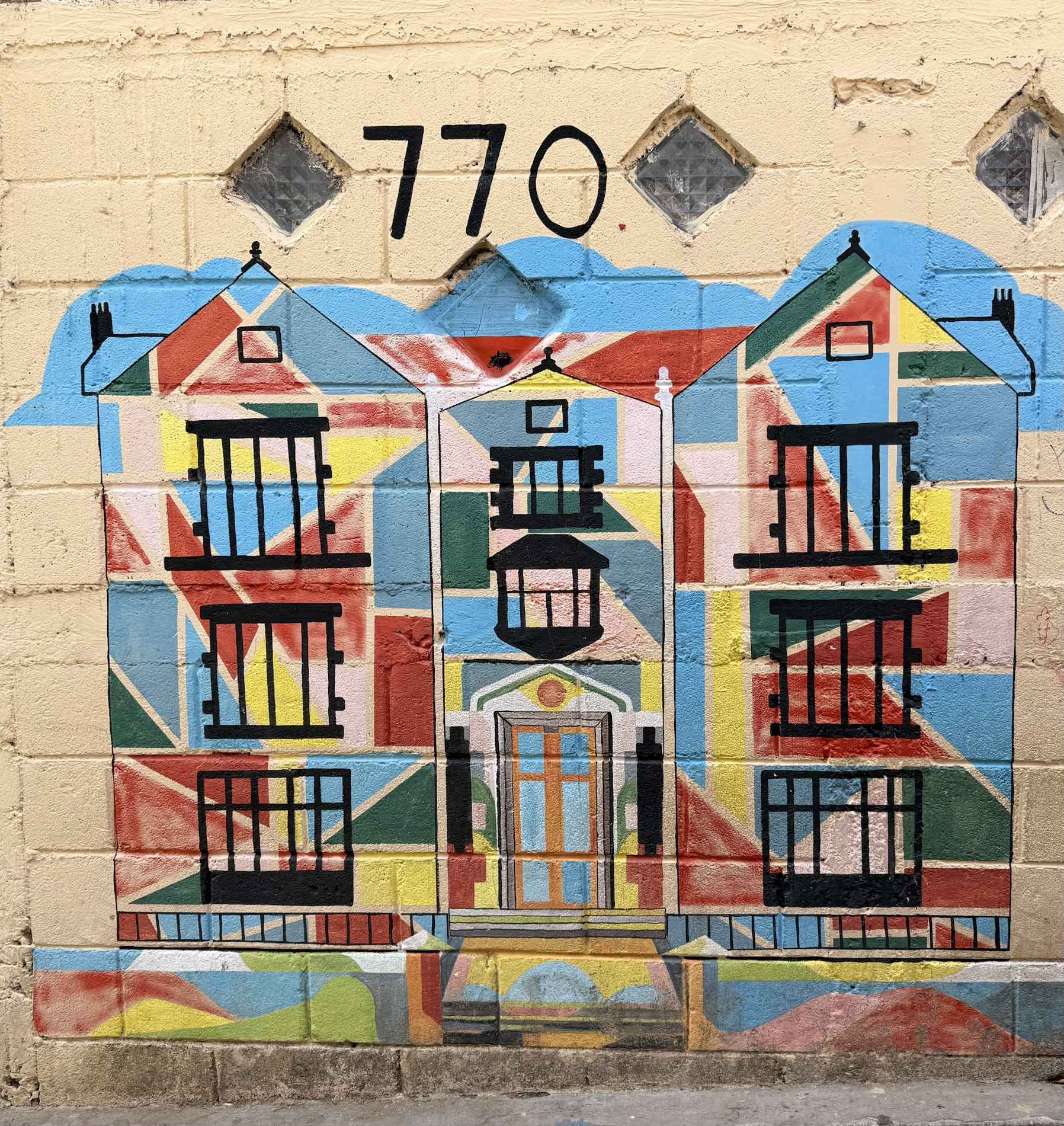
where she walks through hectic streets painted in murals.

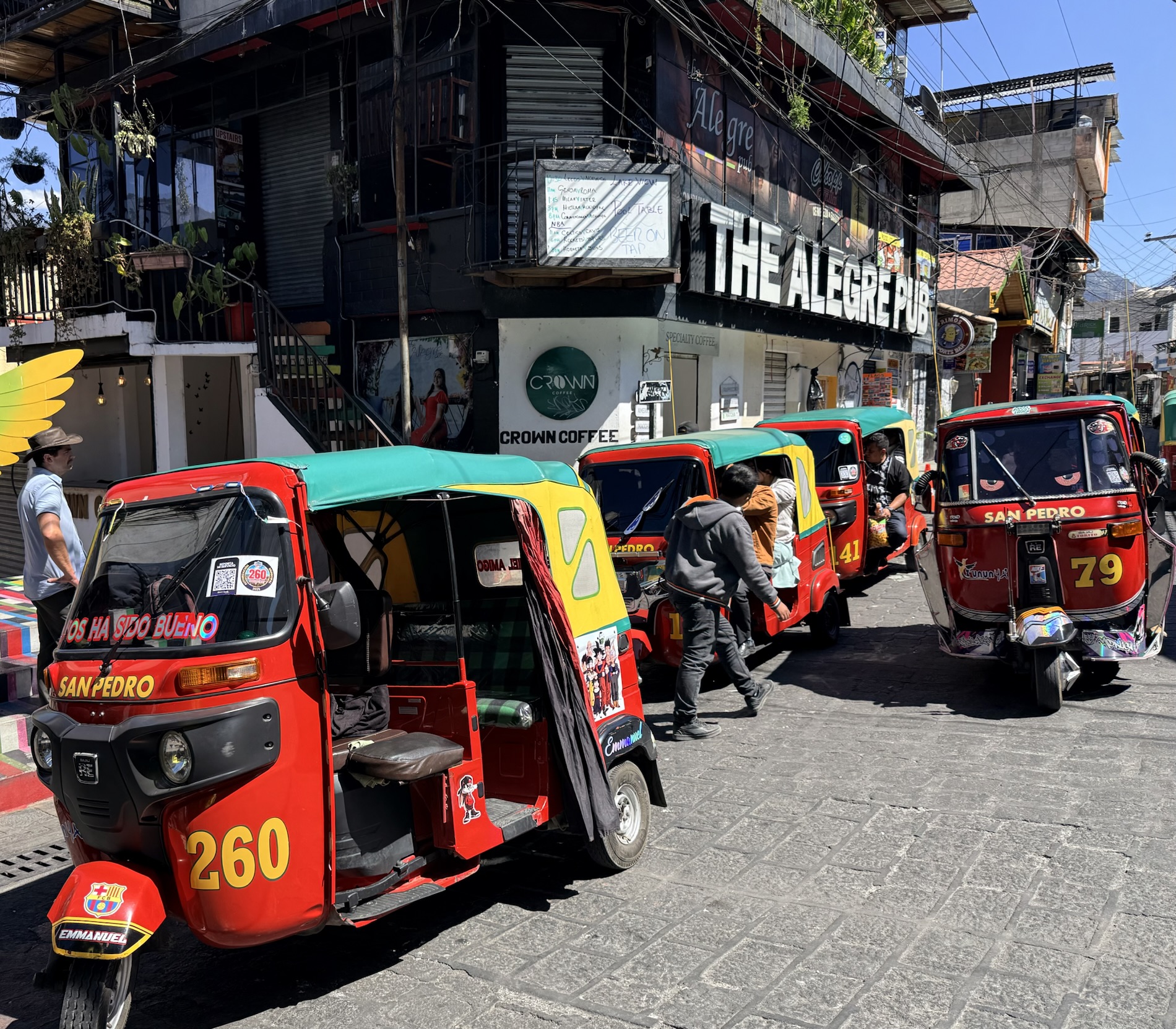
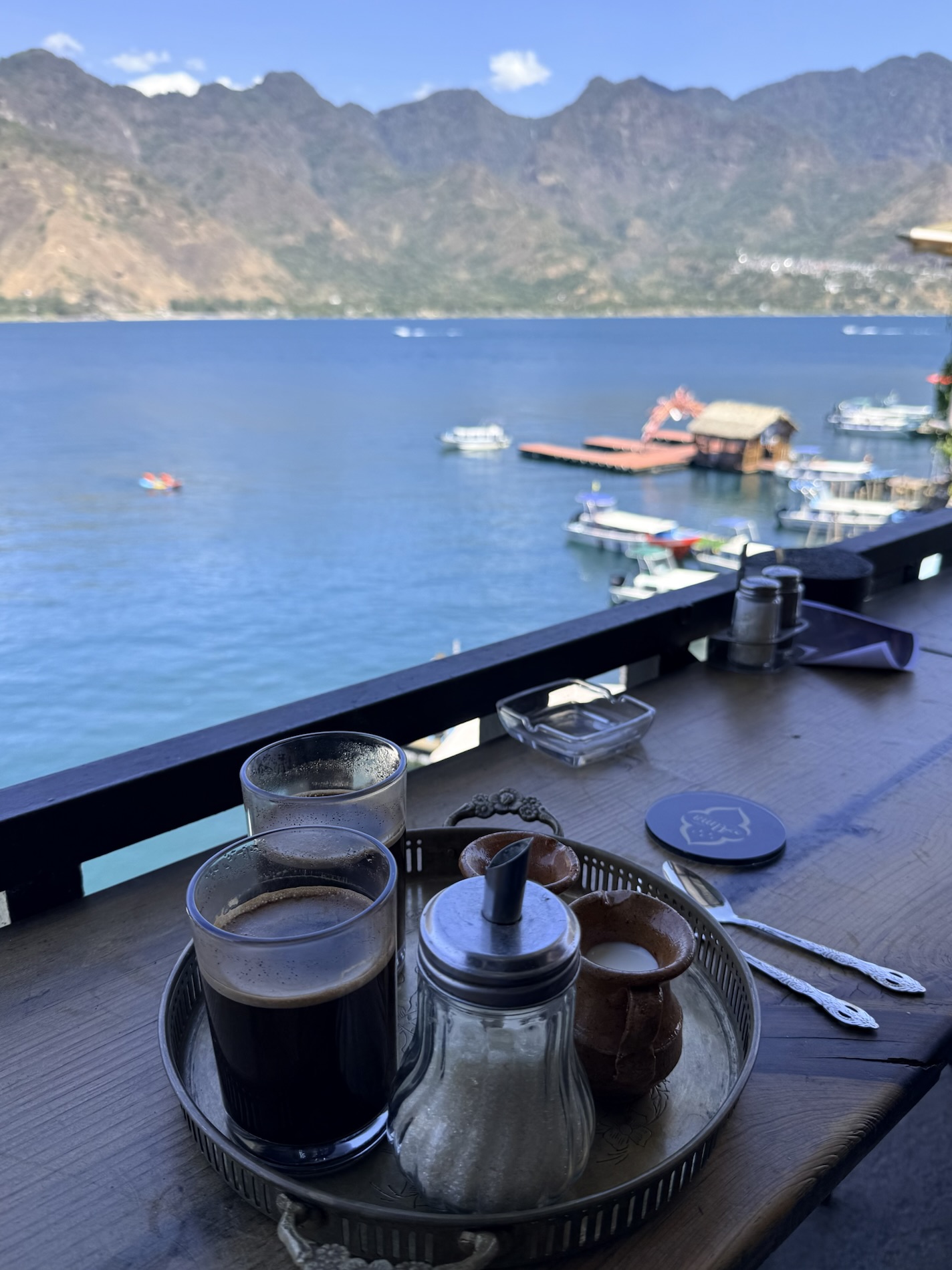
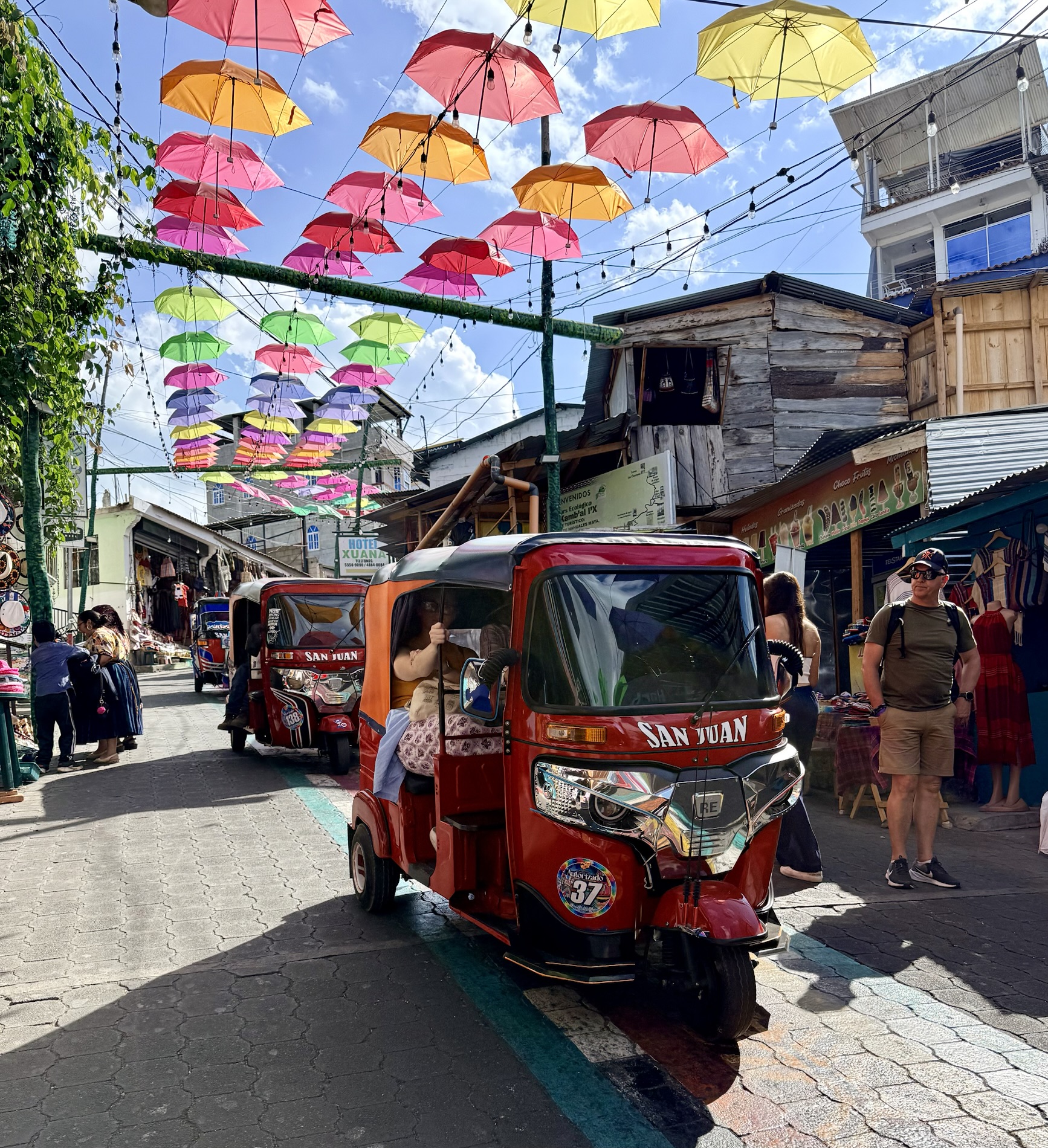
Tuk-tuks scurry to go elsewhere. She sits drinking Turkish tea
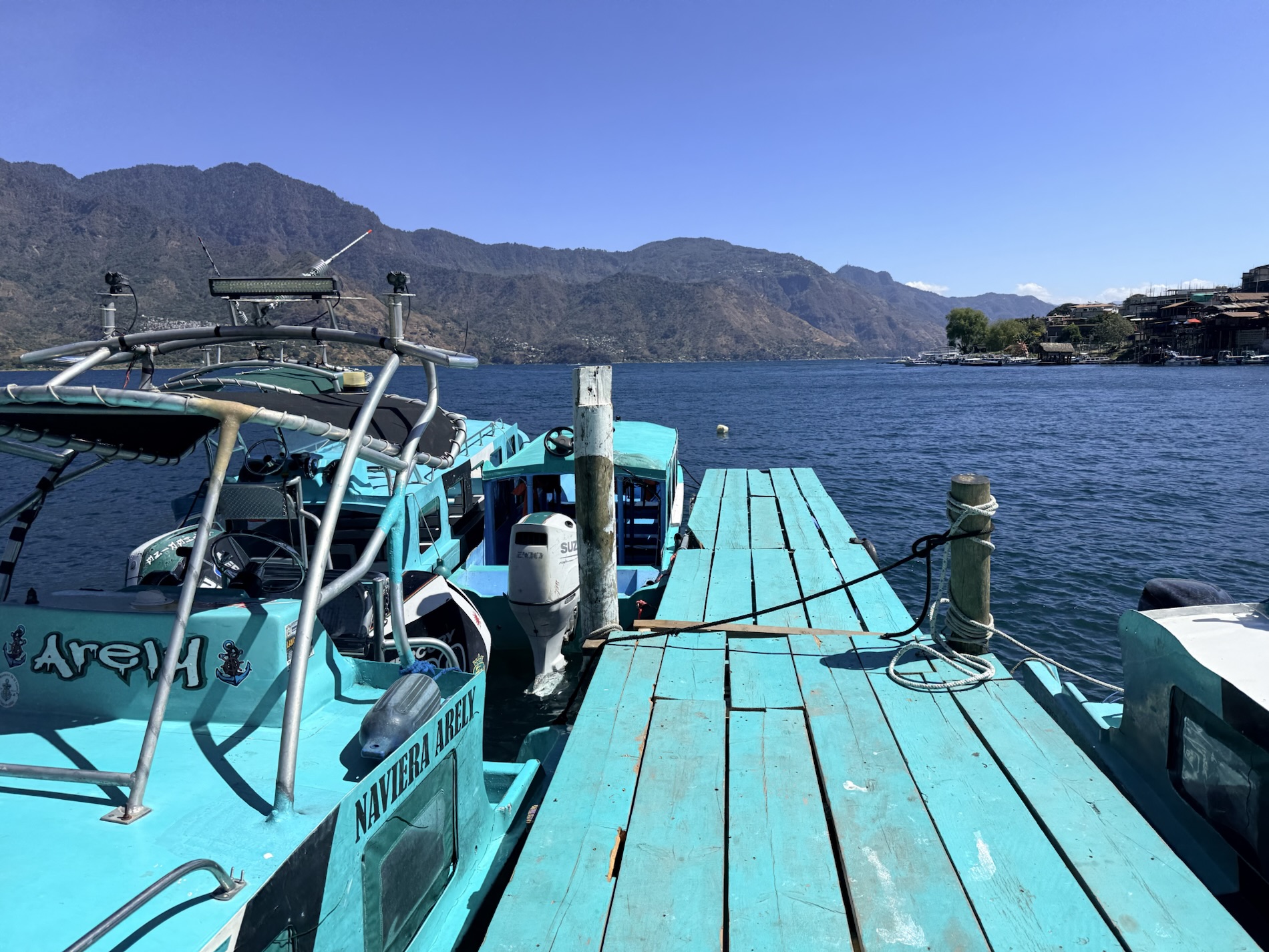
overlooking the buzzing water taxis and silent kayakers.
The Israeli owner wishes he were home,

with his family while their country (& hers) are at war with Iran.
The last thing she wants is to be a party to war,
but this young man seems hungry for it.

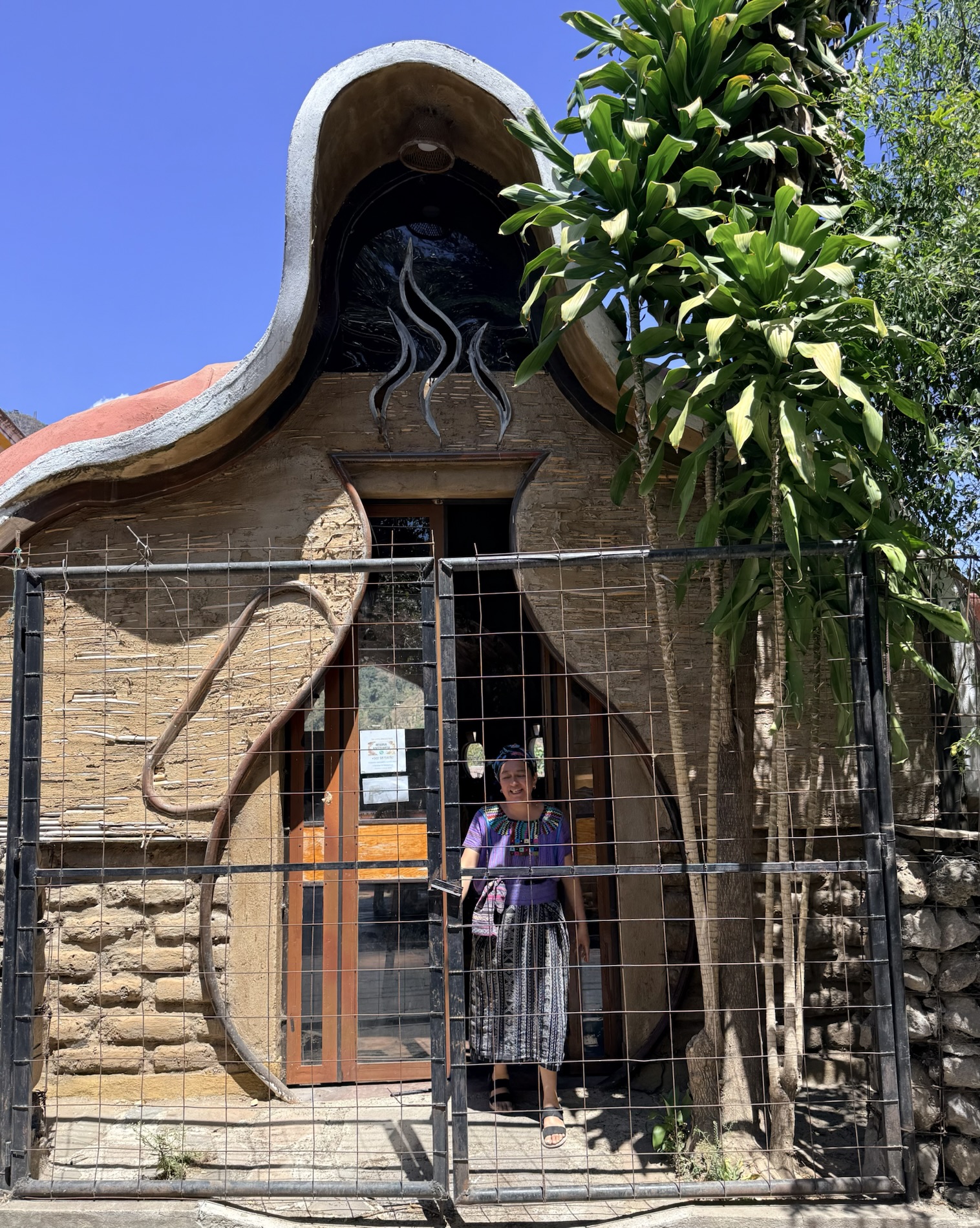
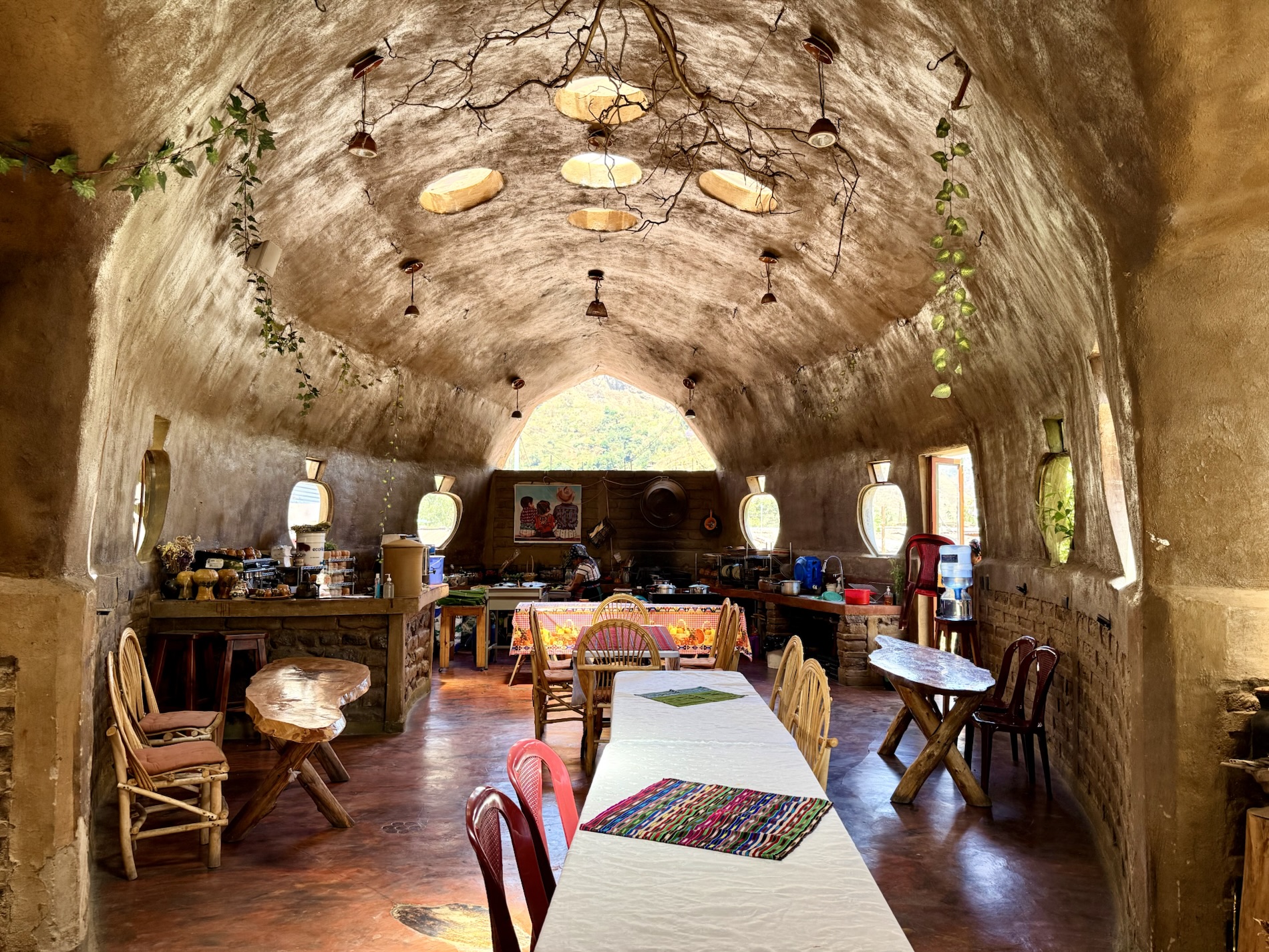
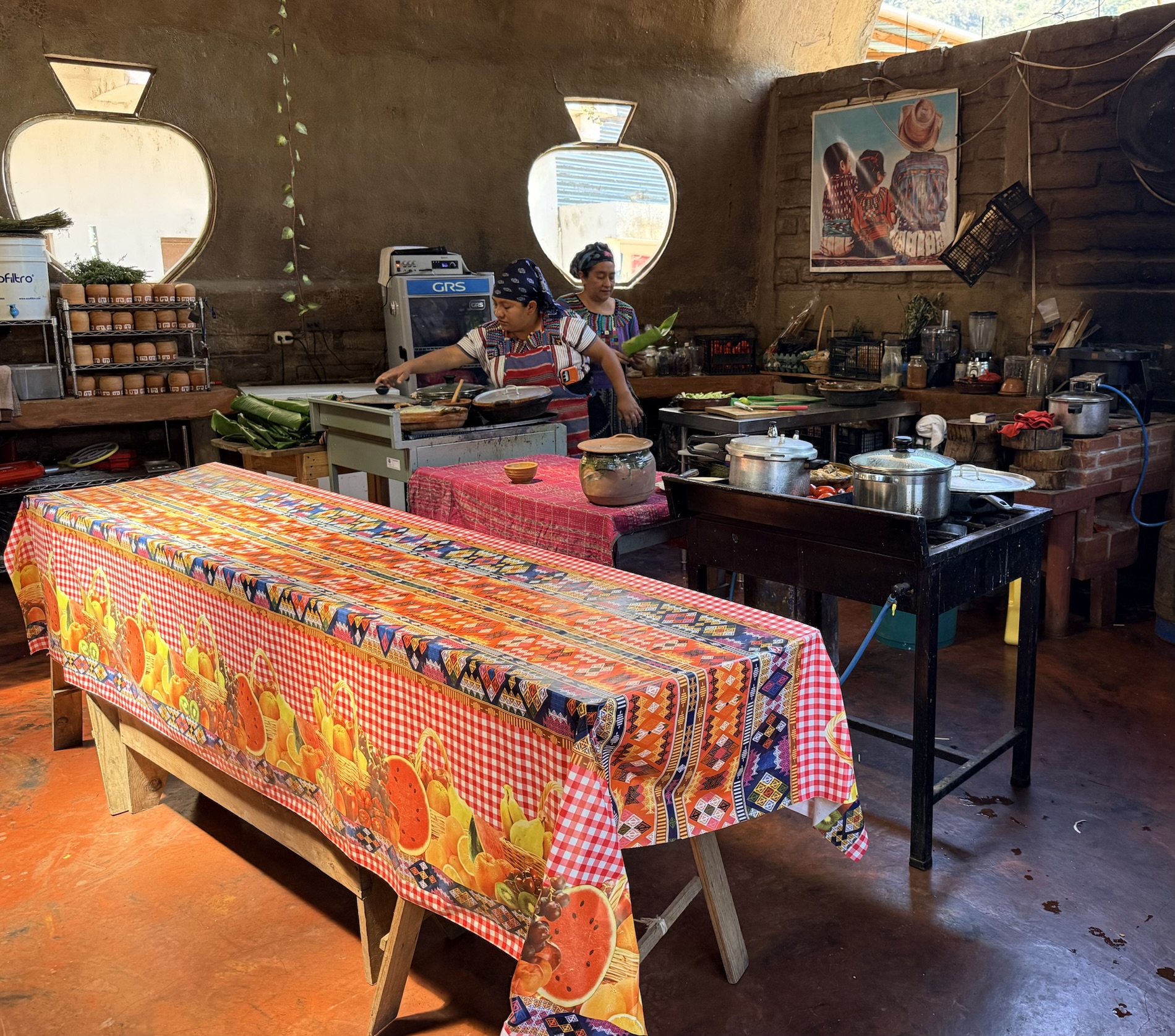
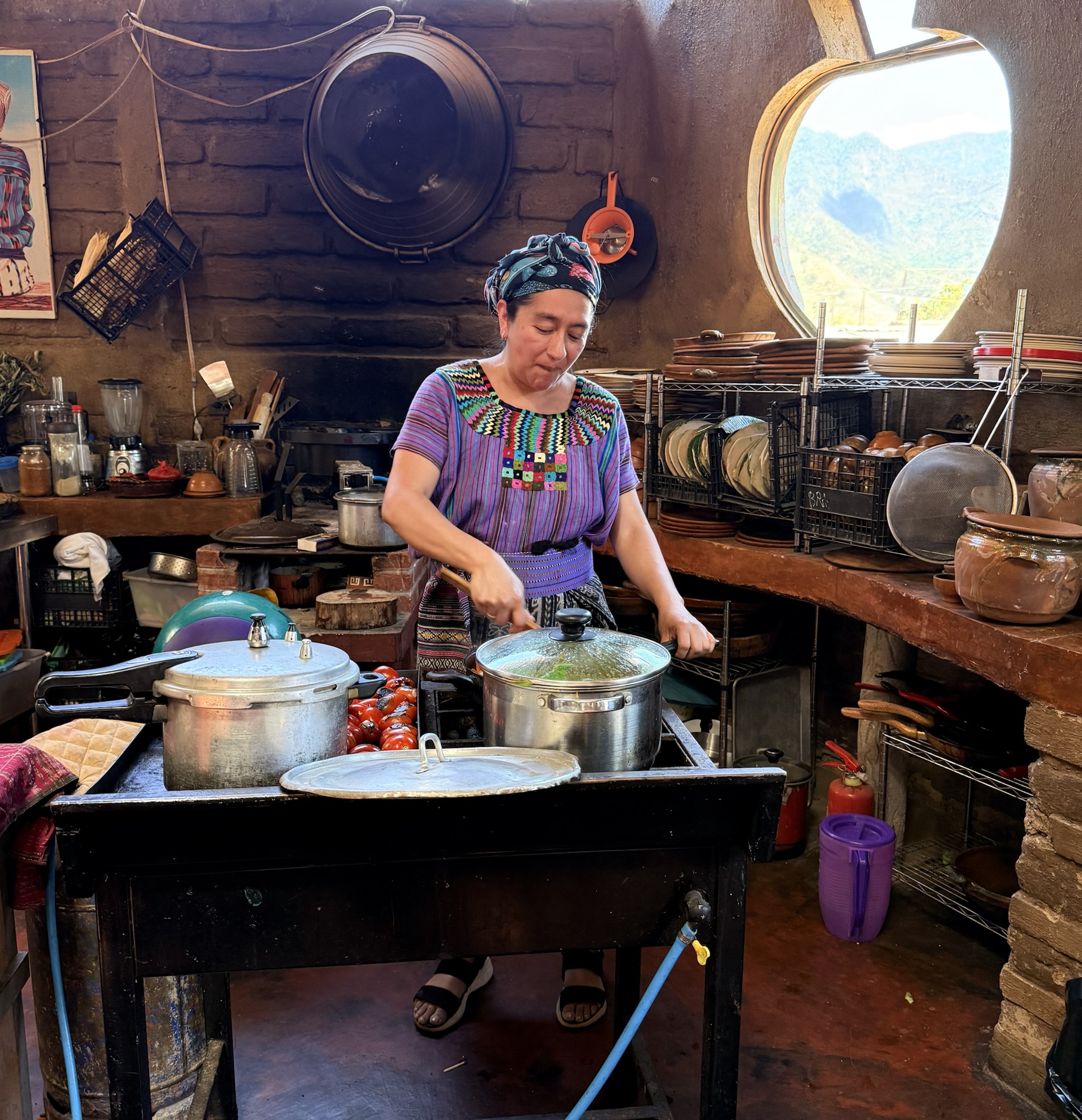
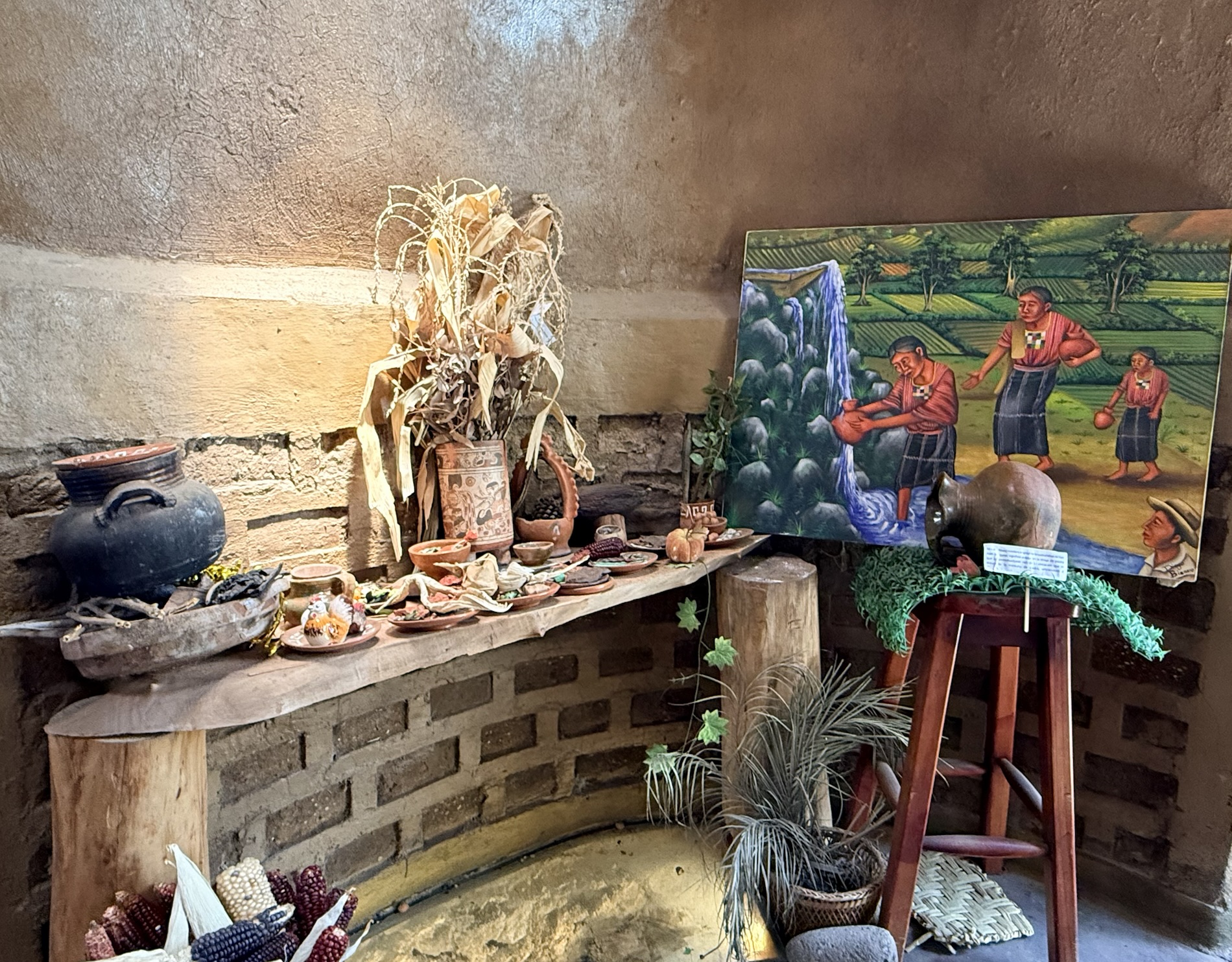
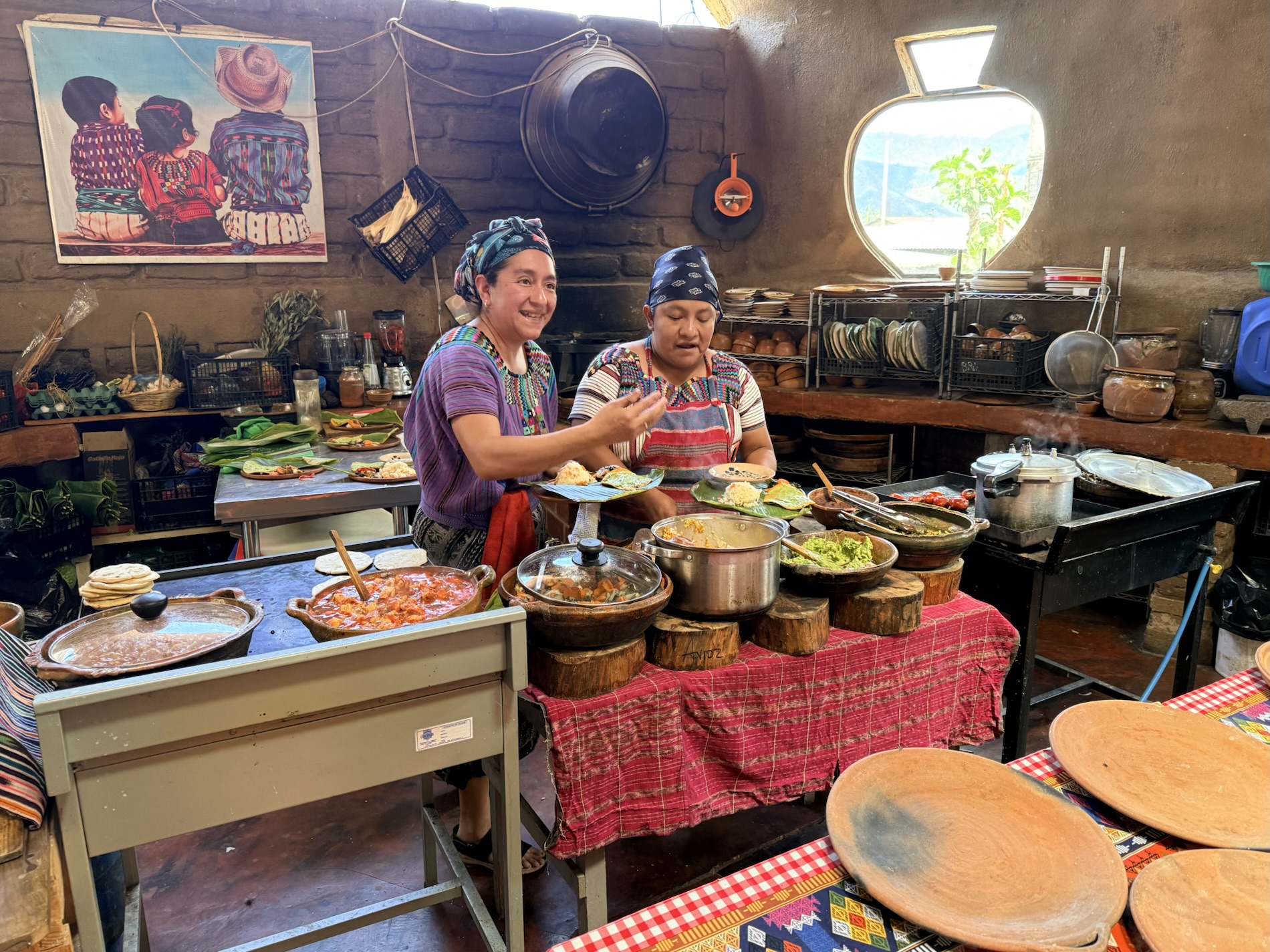
A tuk-tuk scuttles her to San Juan la Laguna, where, in a cave-like structure,
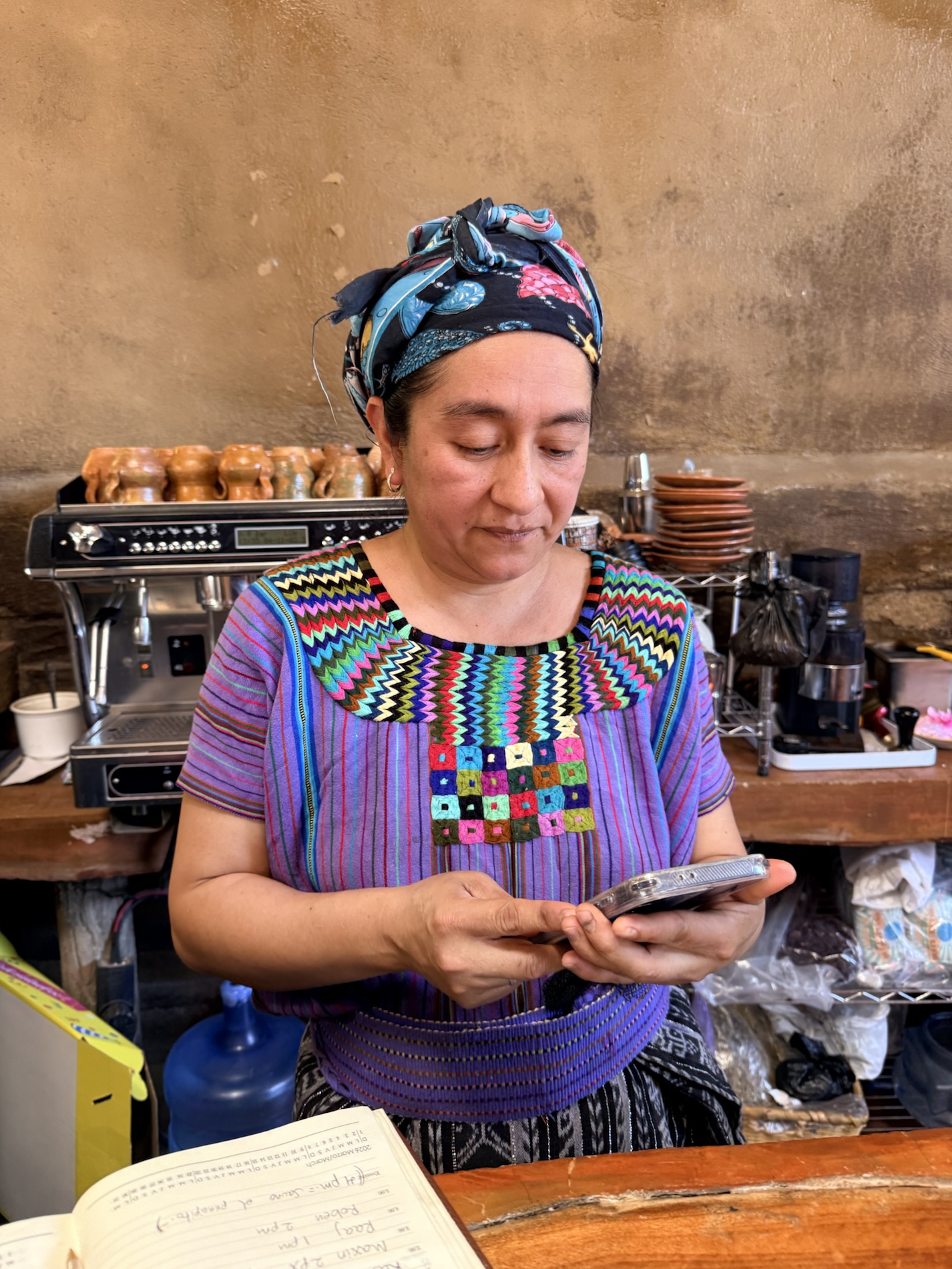
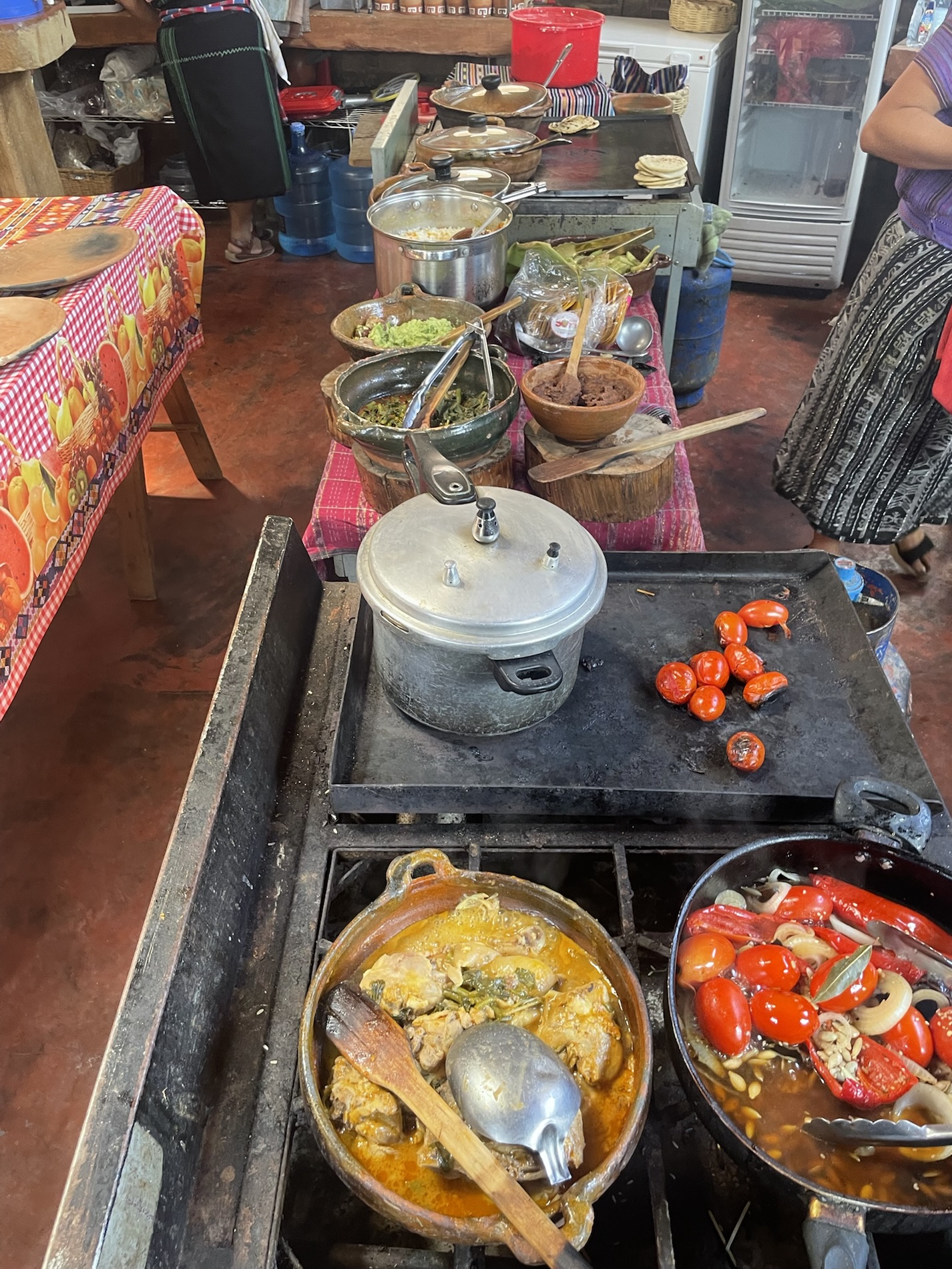
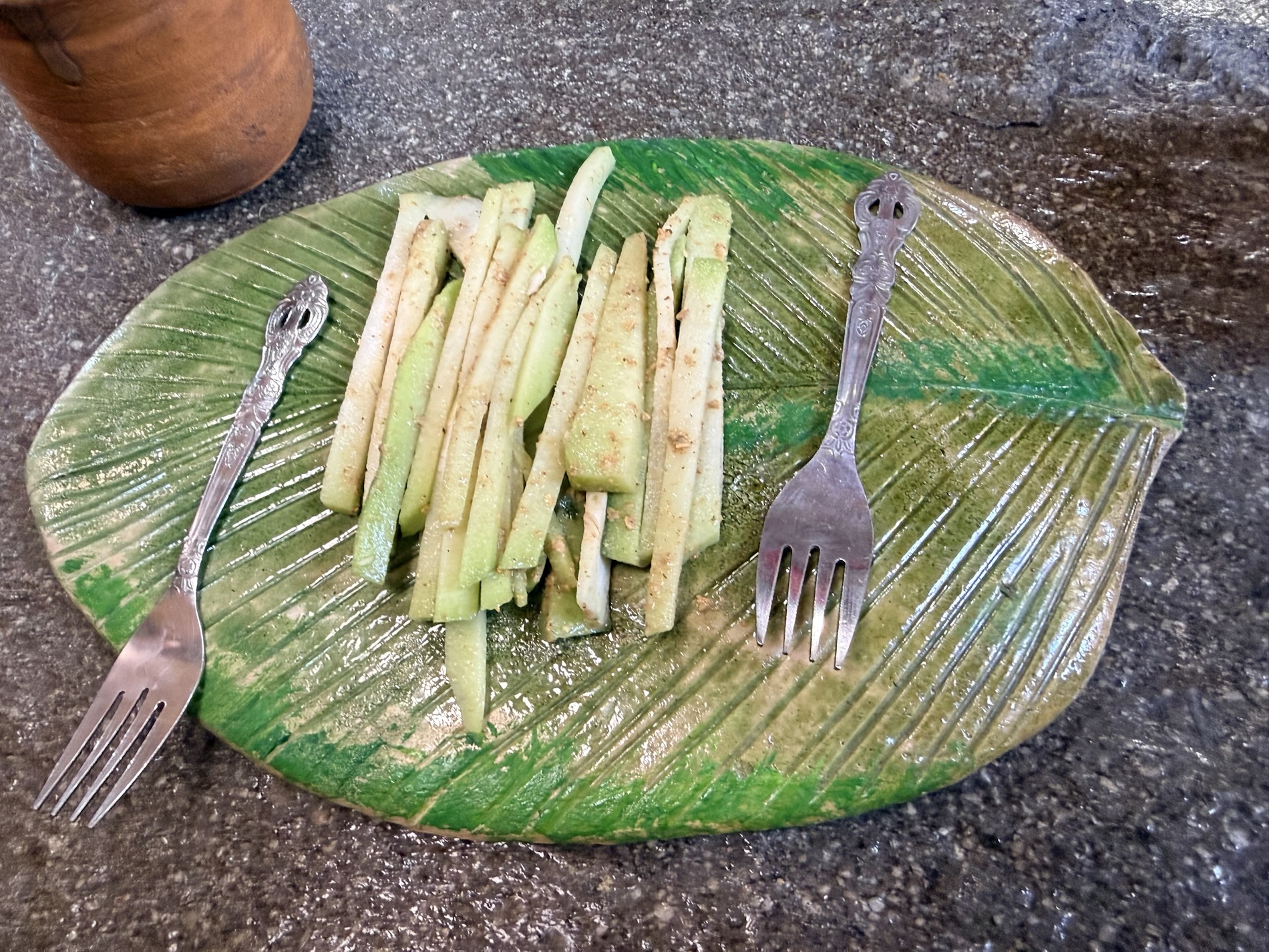
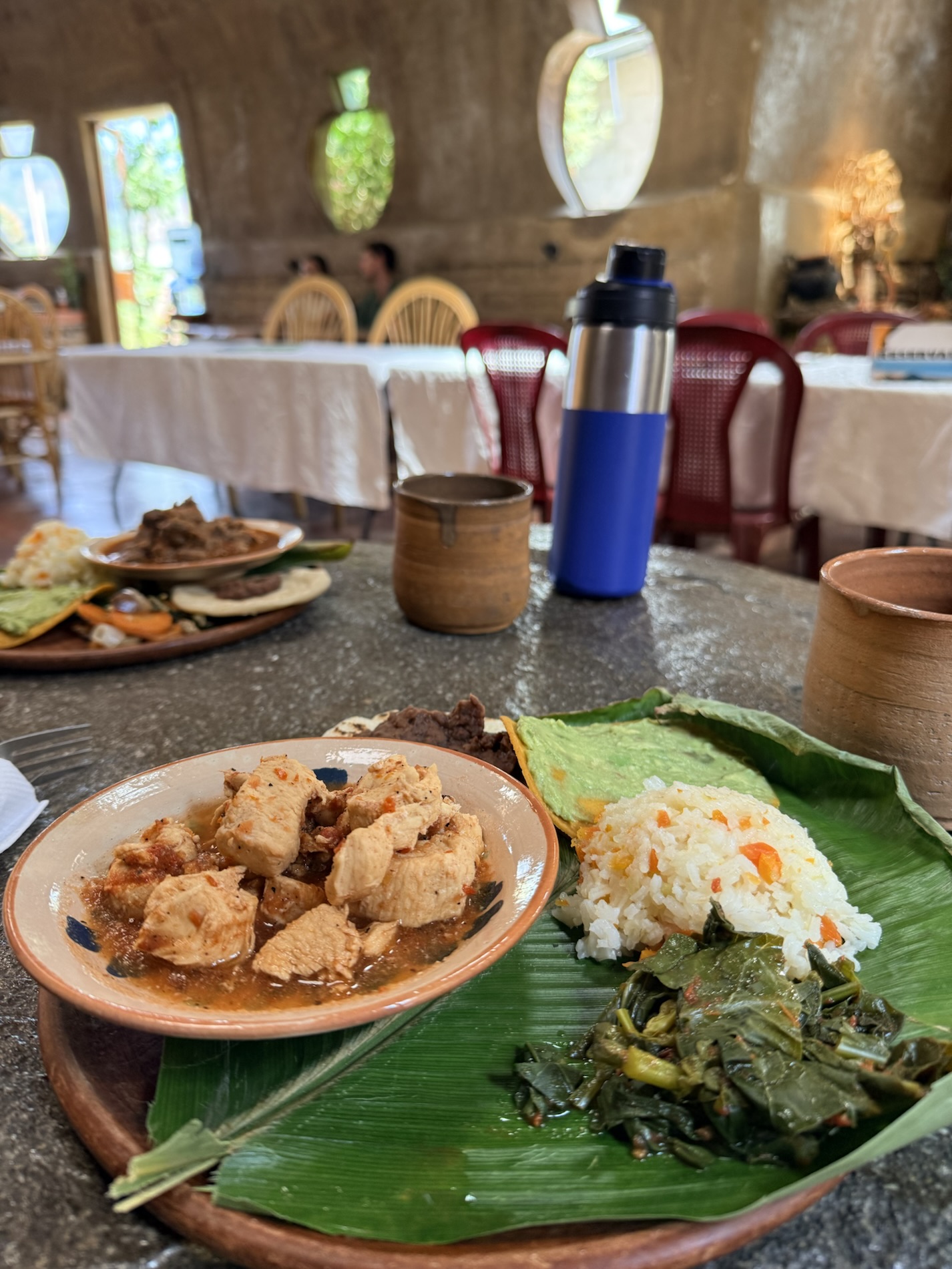
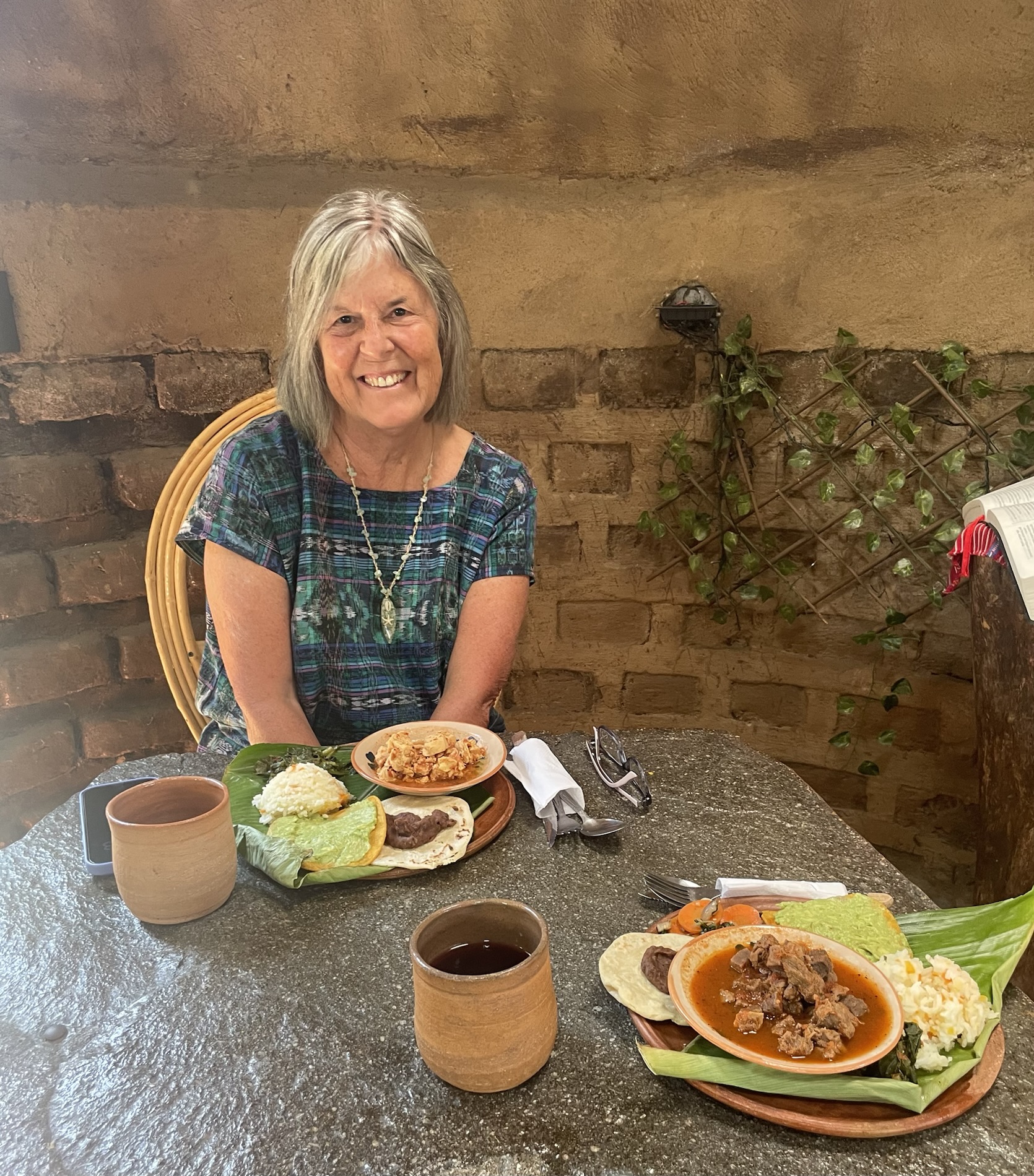
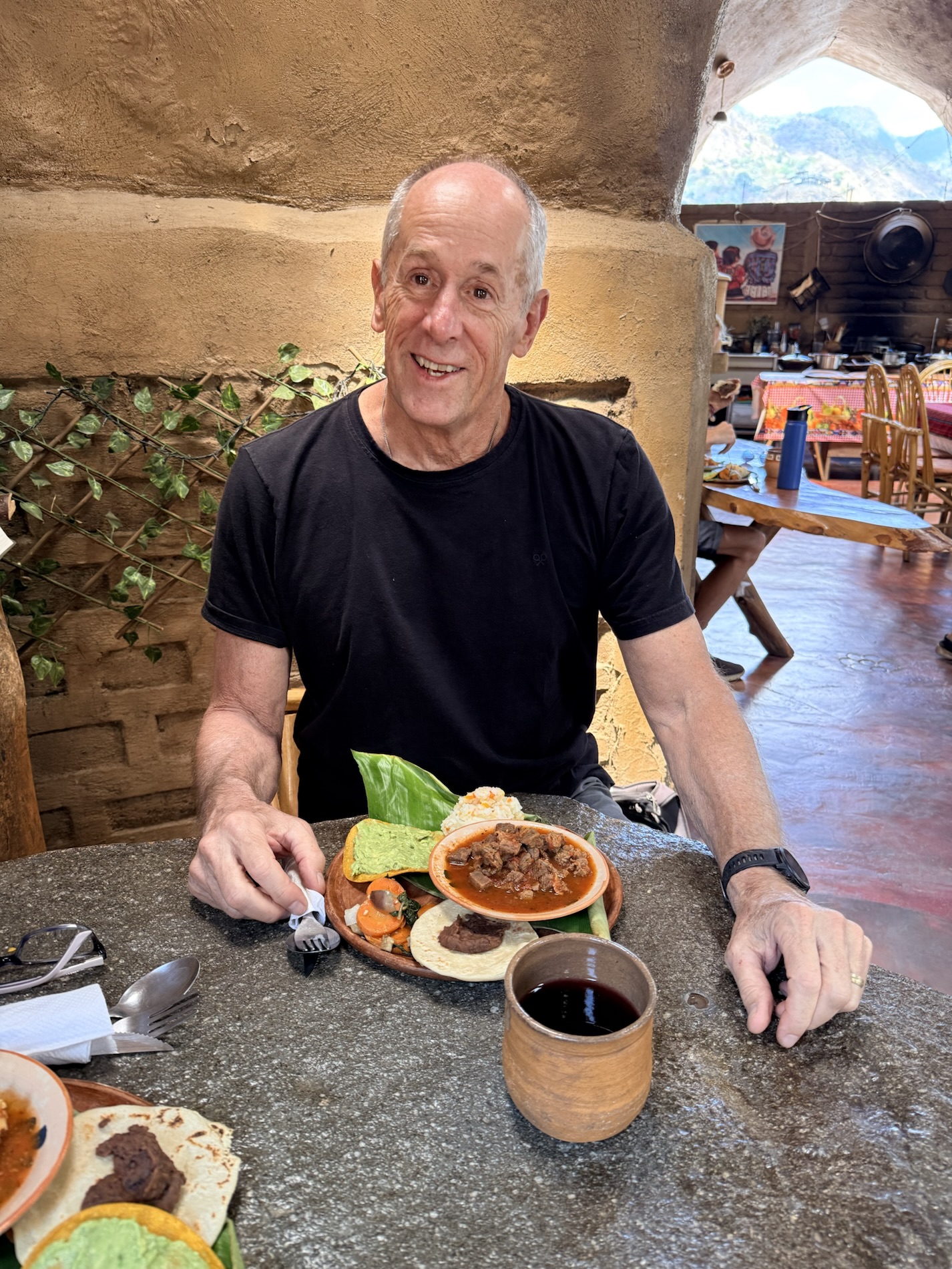
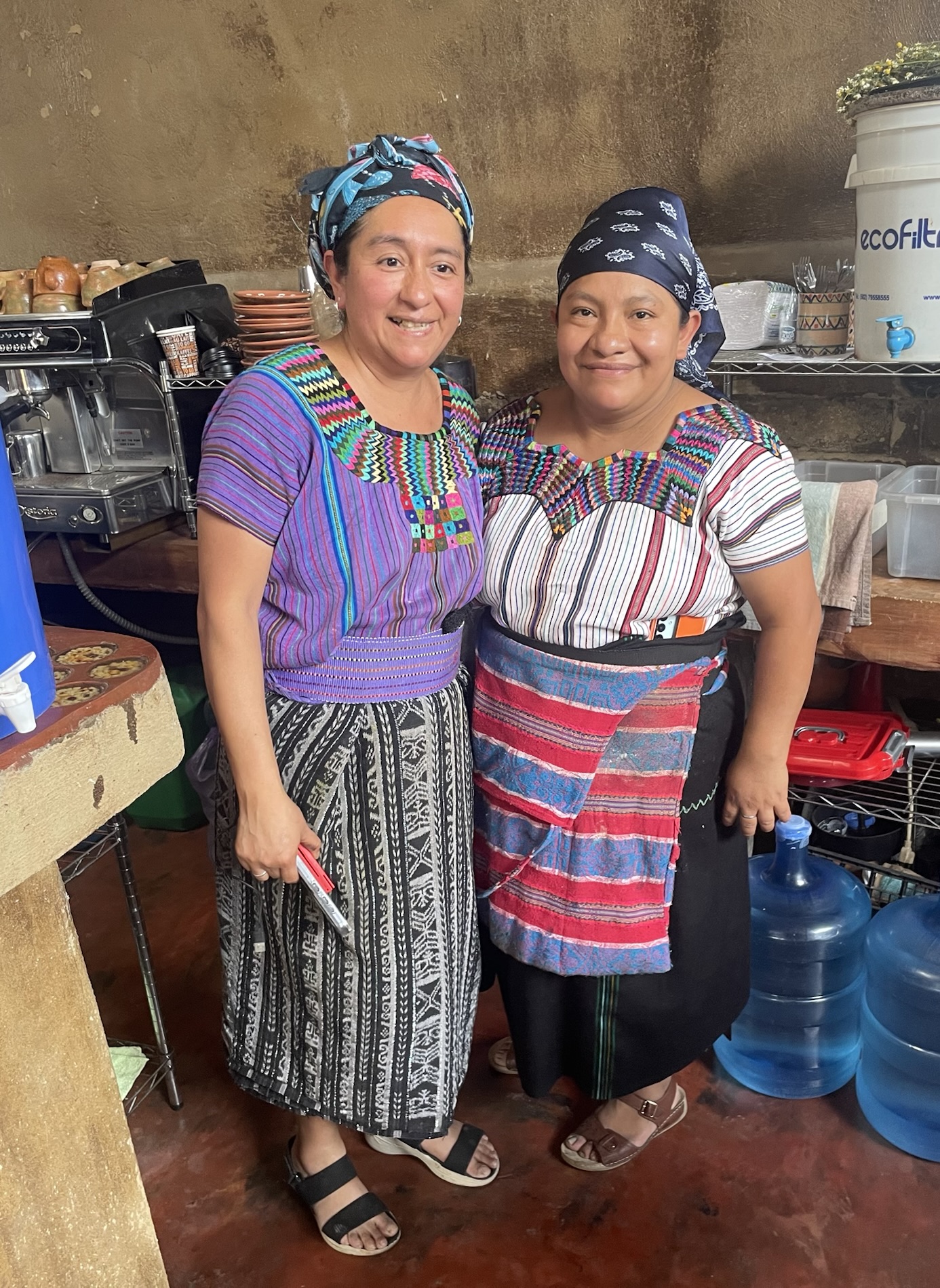
Tz’utujil women serve lunch of traditional food: jicama, chicken and beef stew.
These Mayans believe spirits control the natural world and people’s destinies.

The yellow stripe in their weavings promises abundance - in coffee and maize,
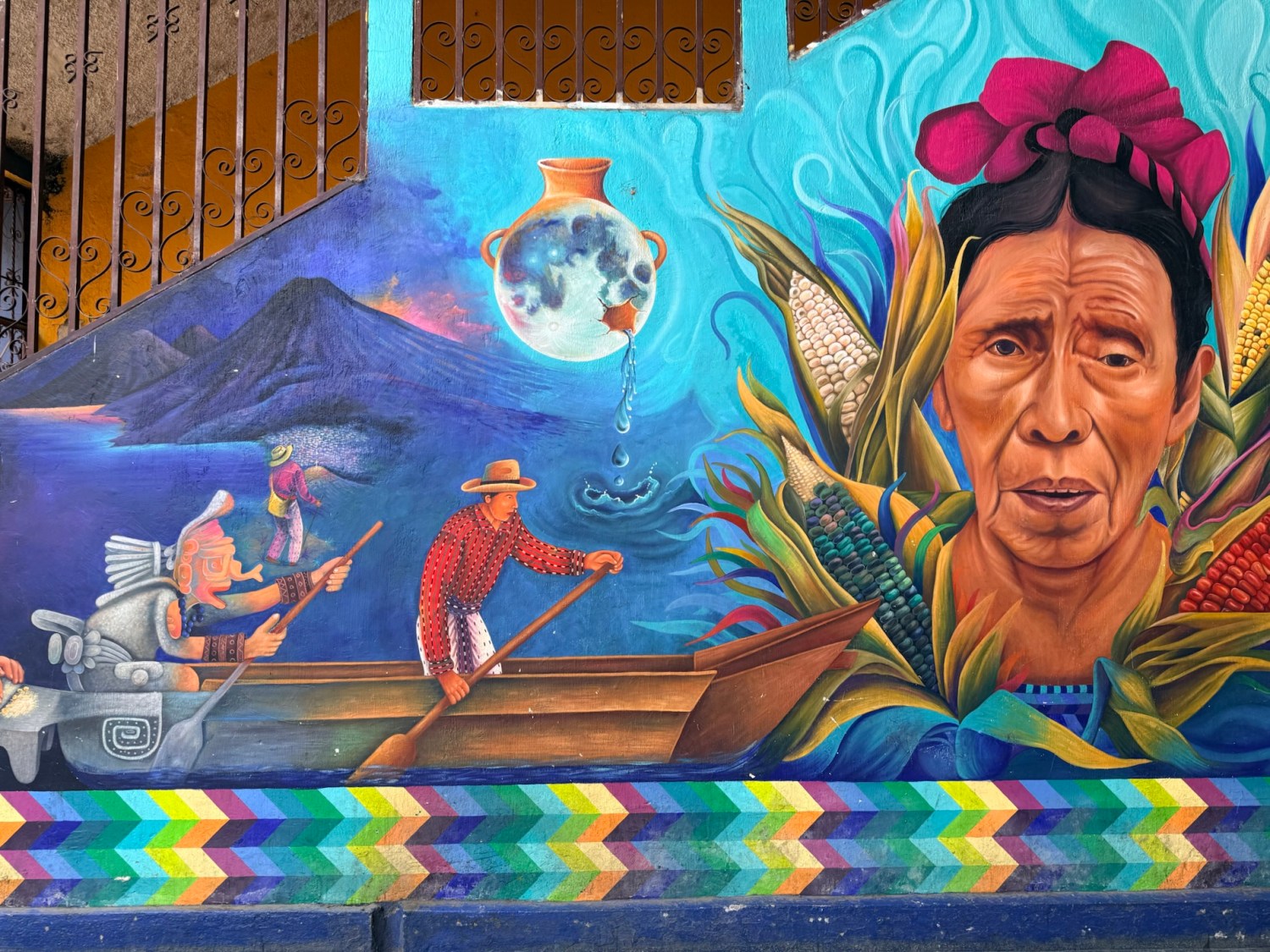
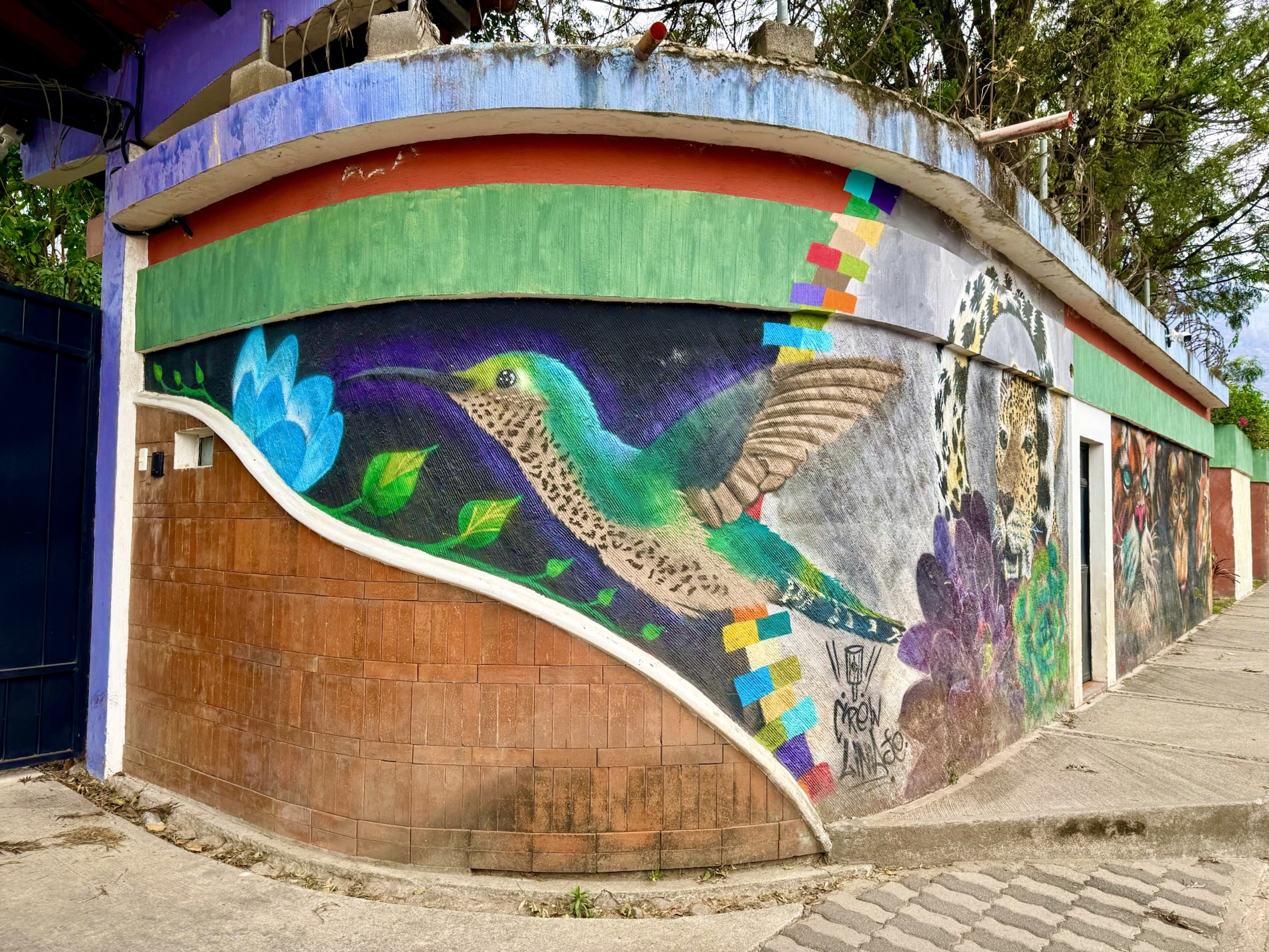
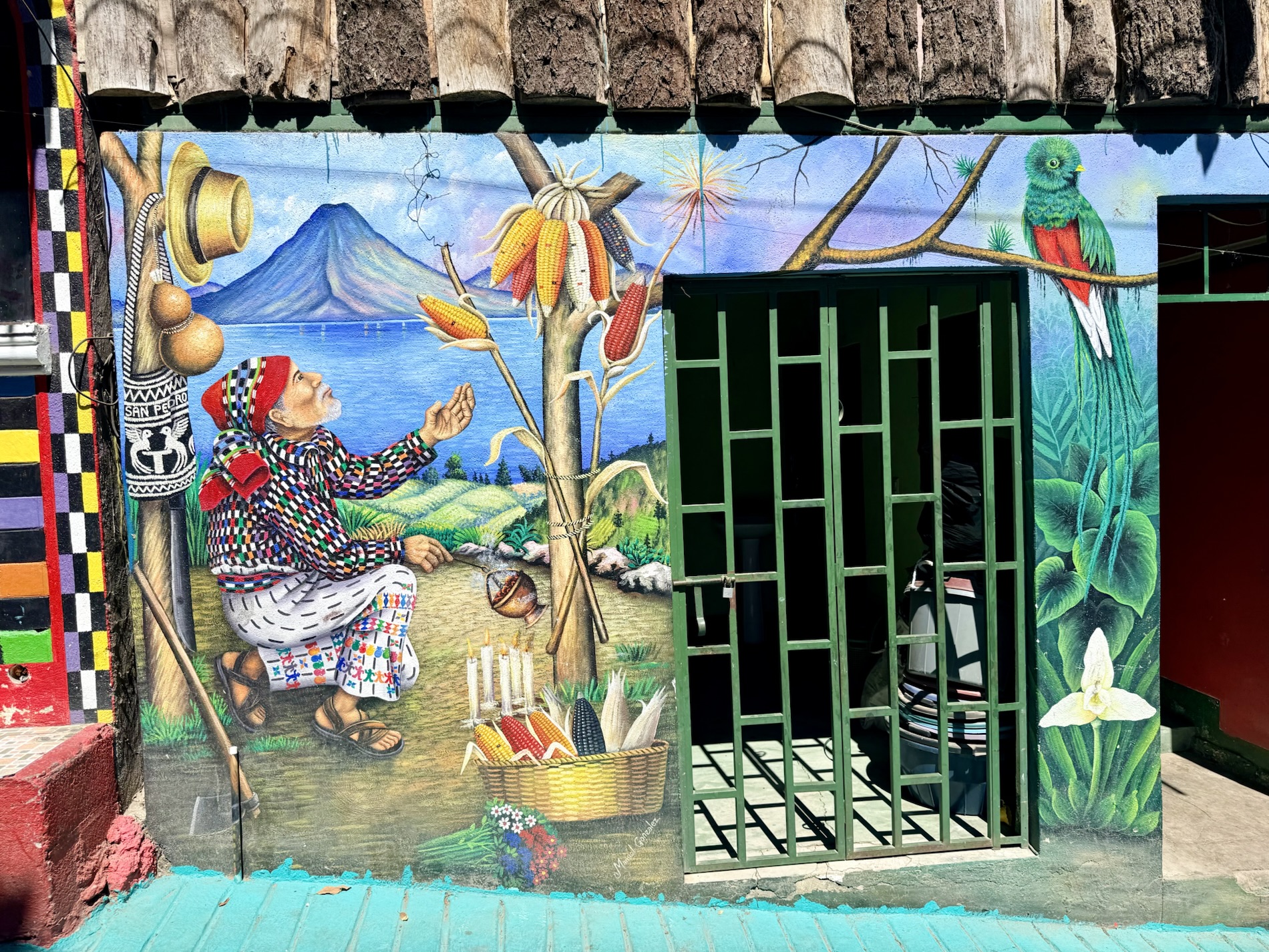
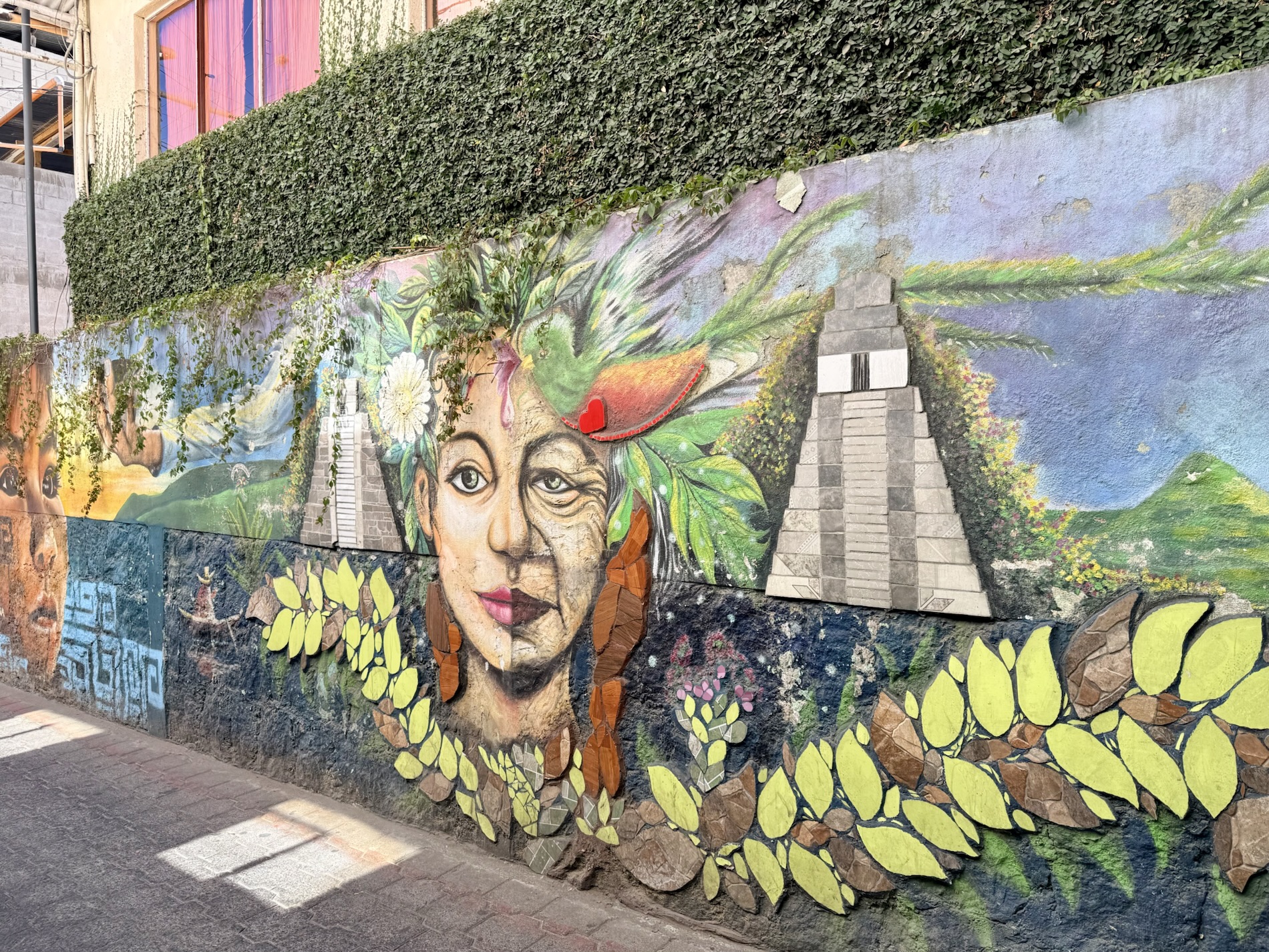
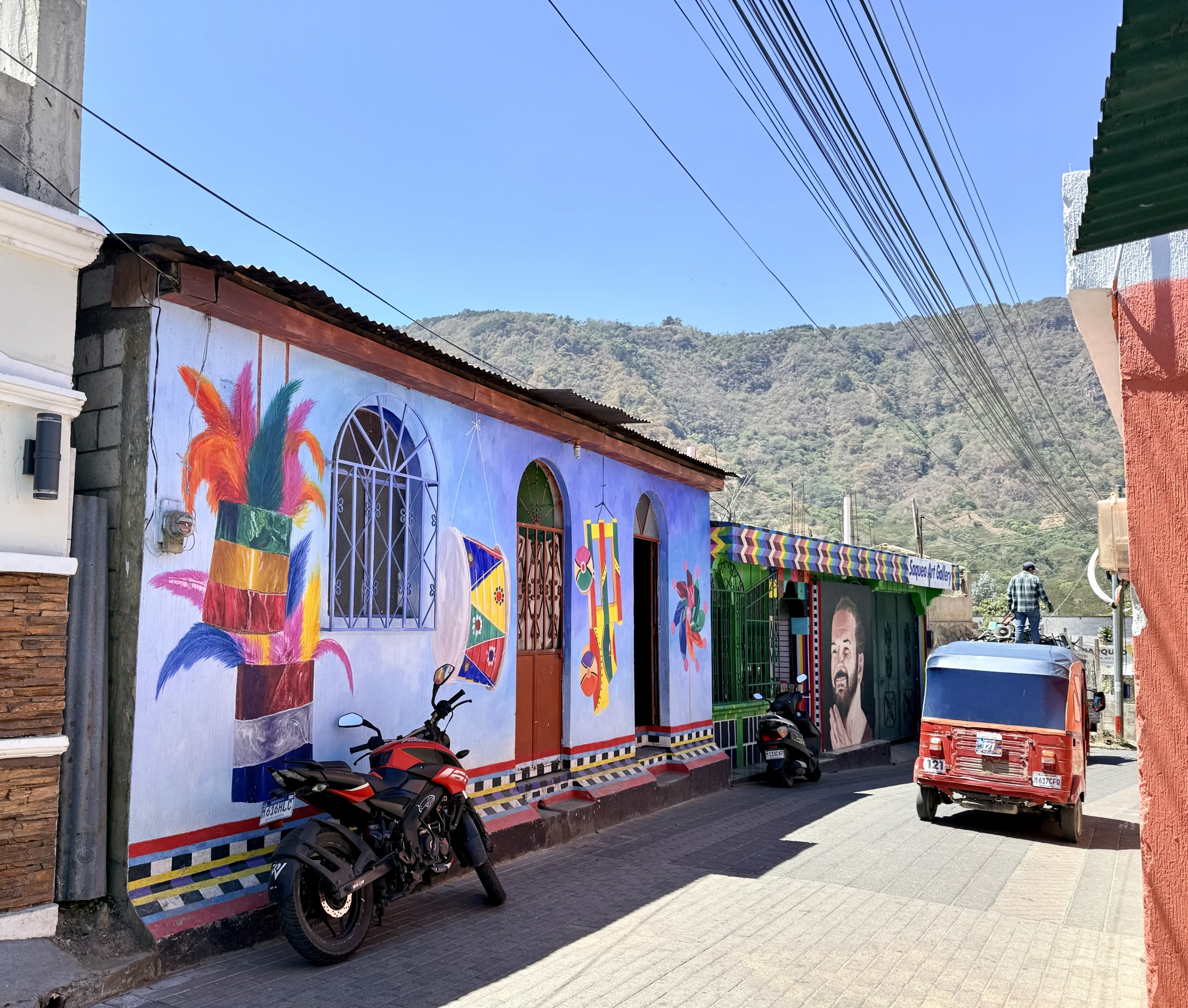
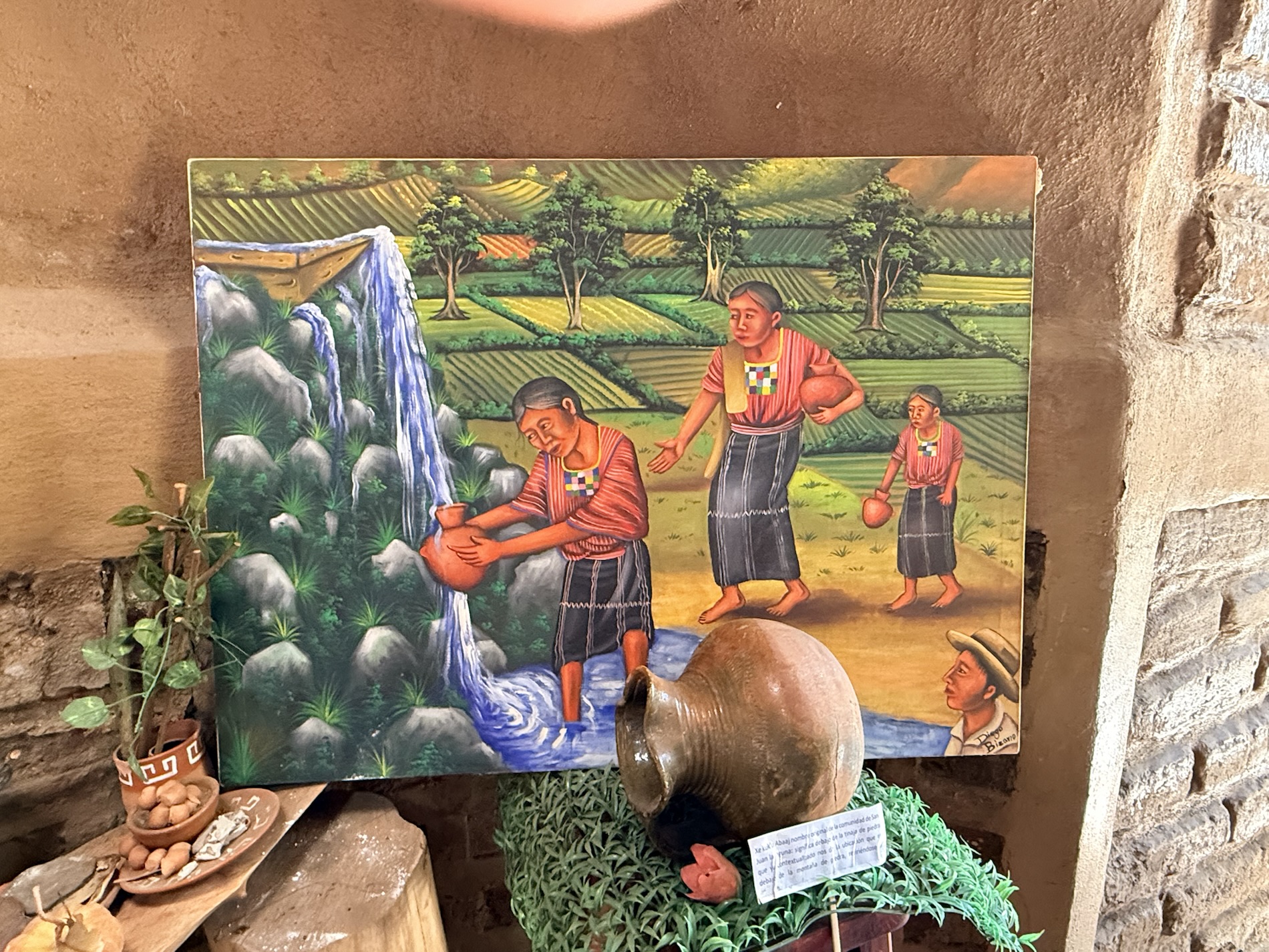
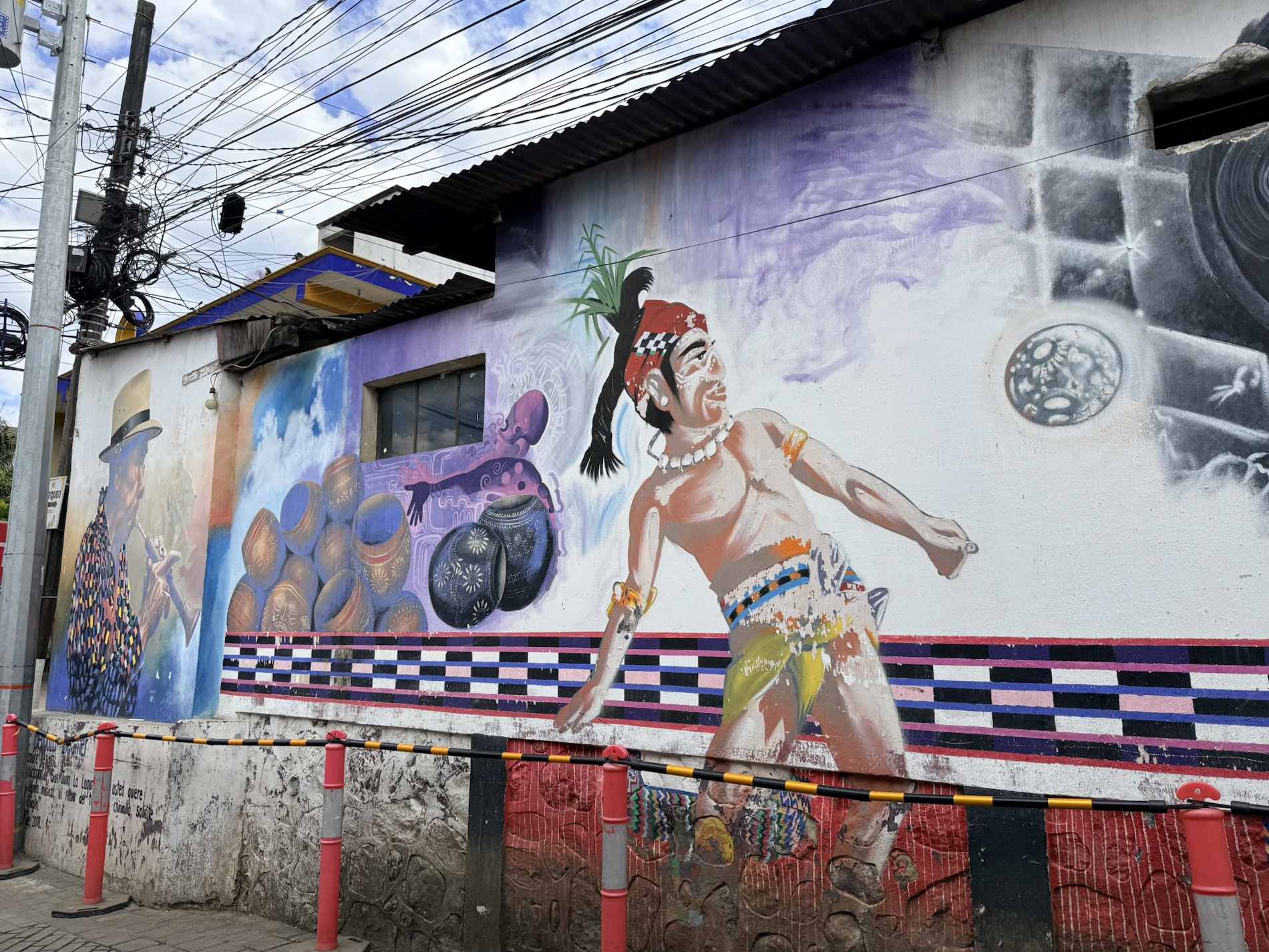
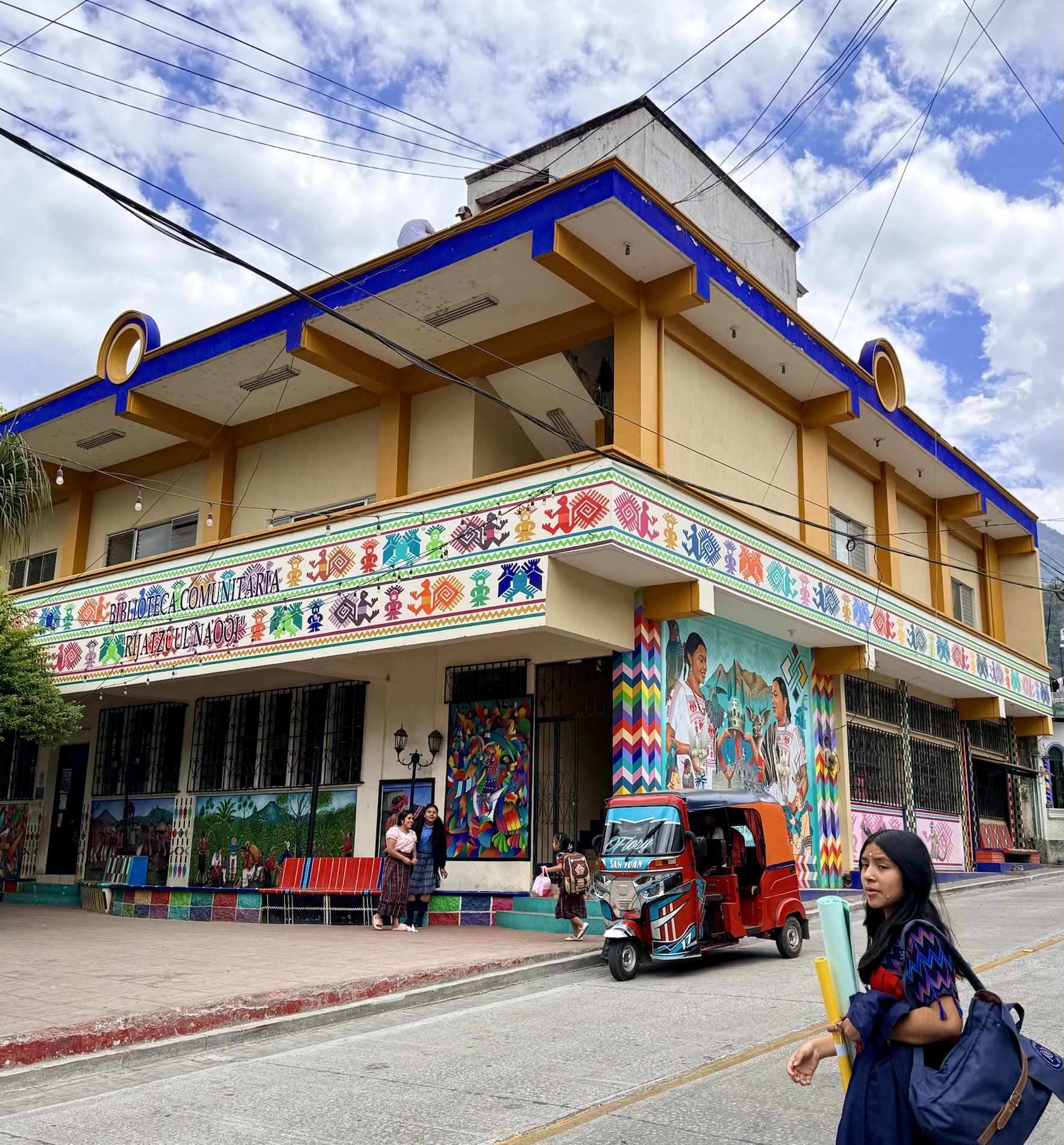
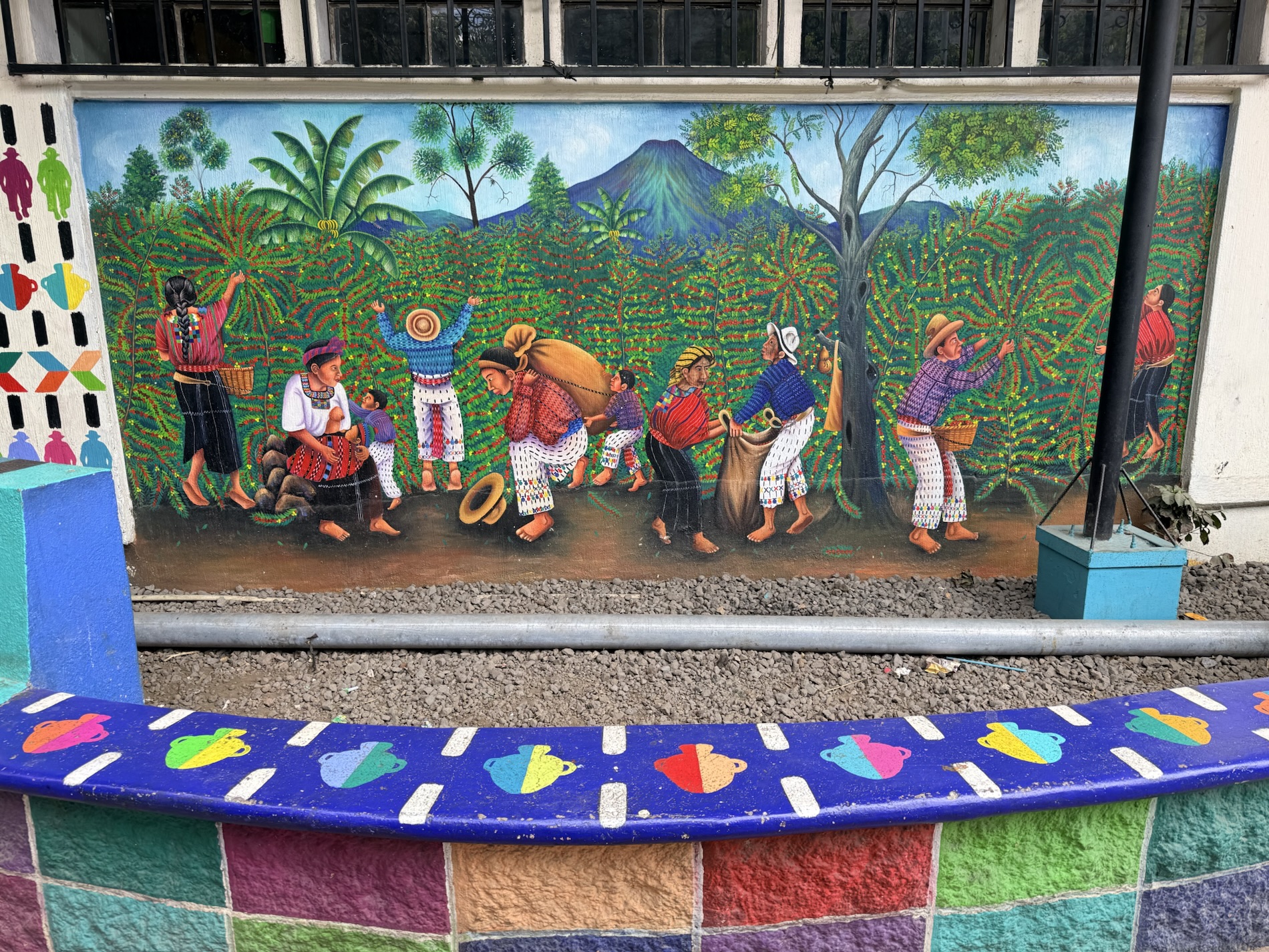
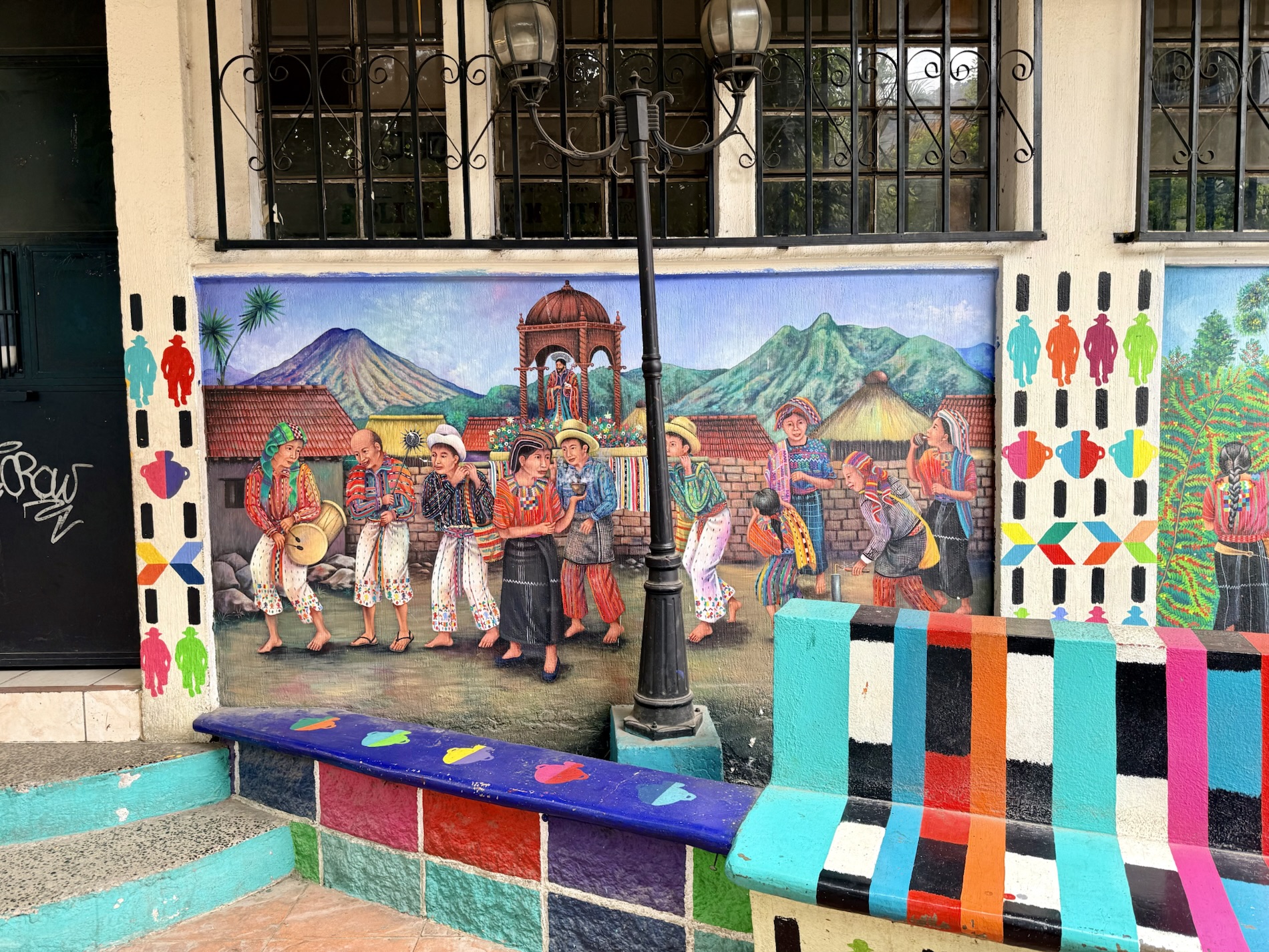
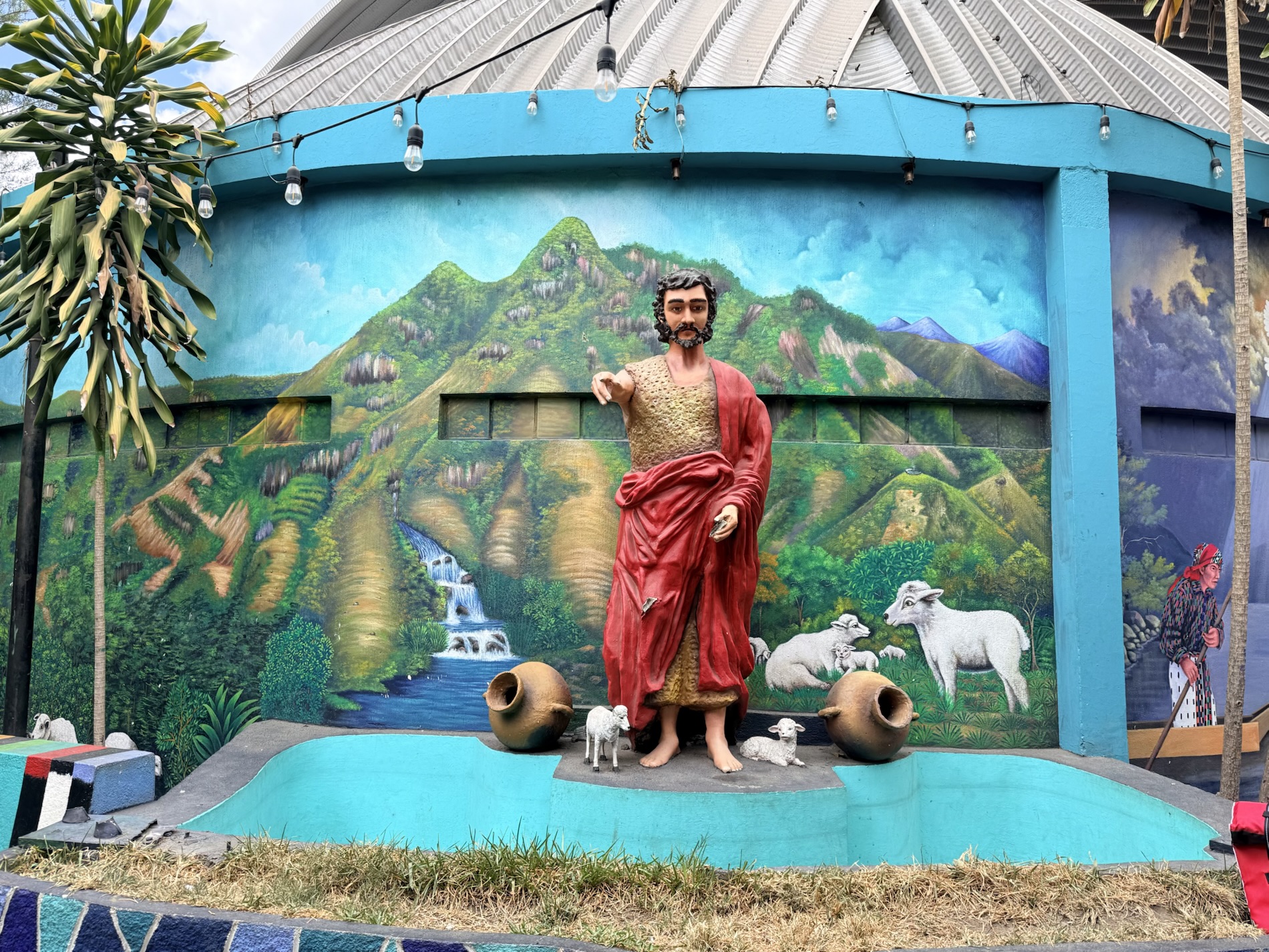
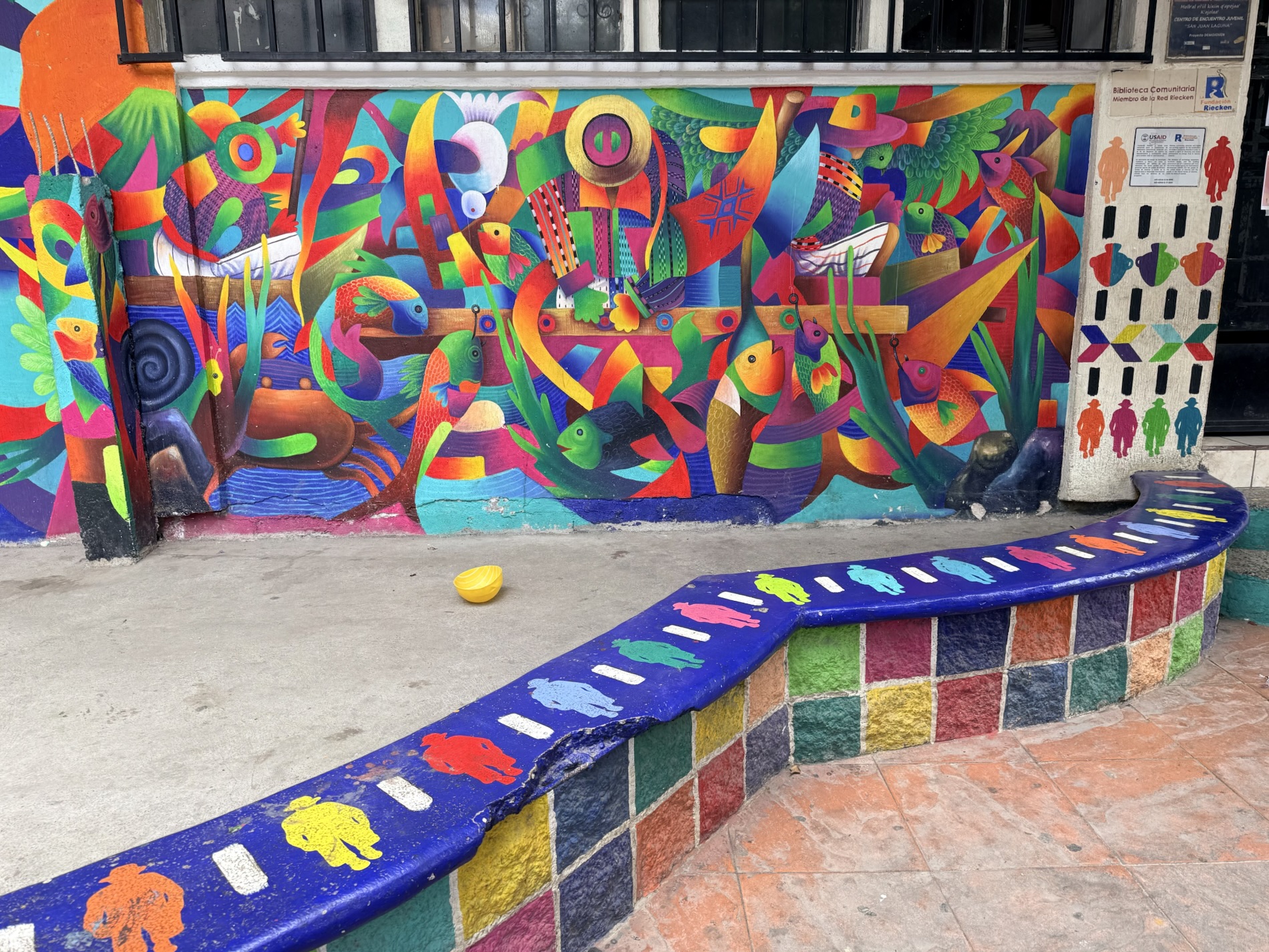
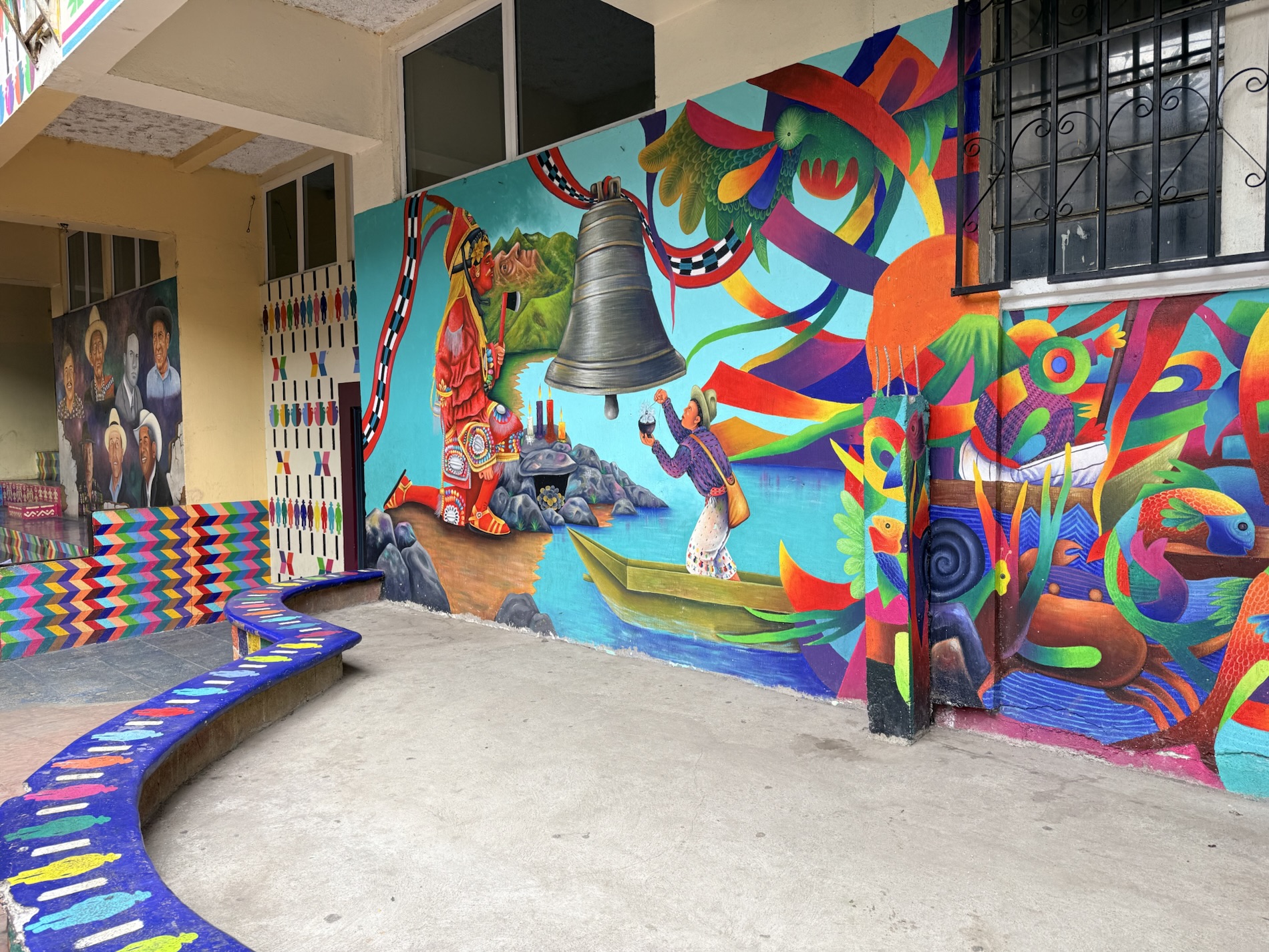
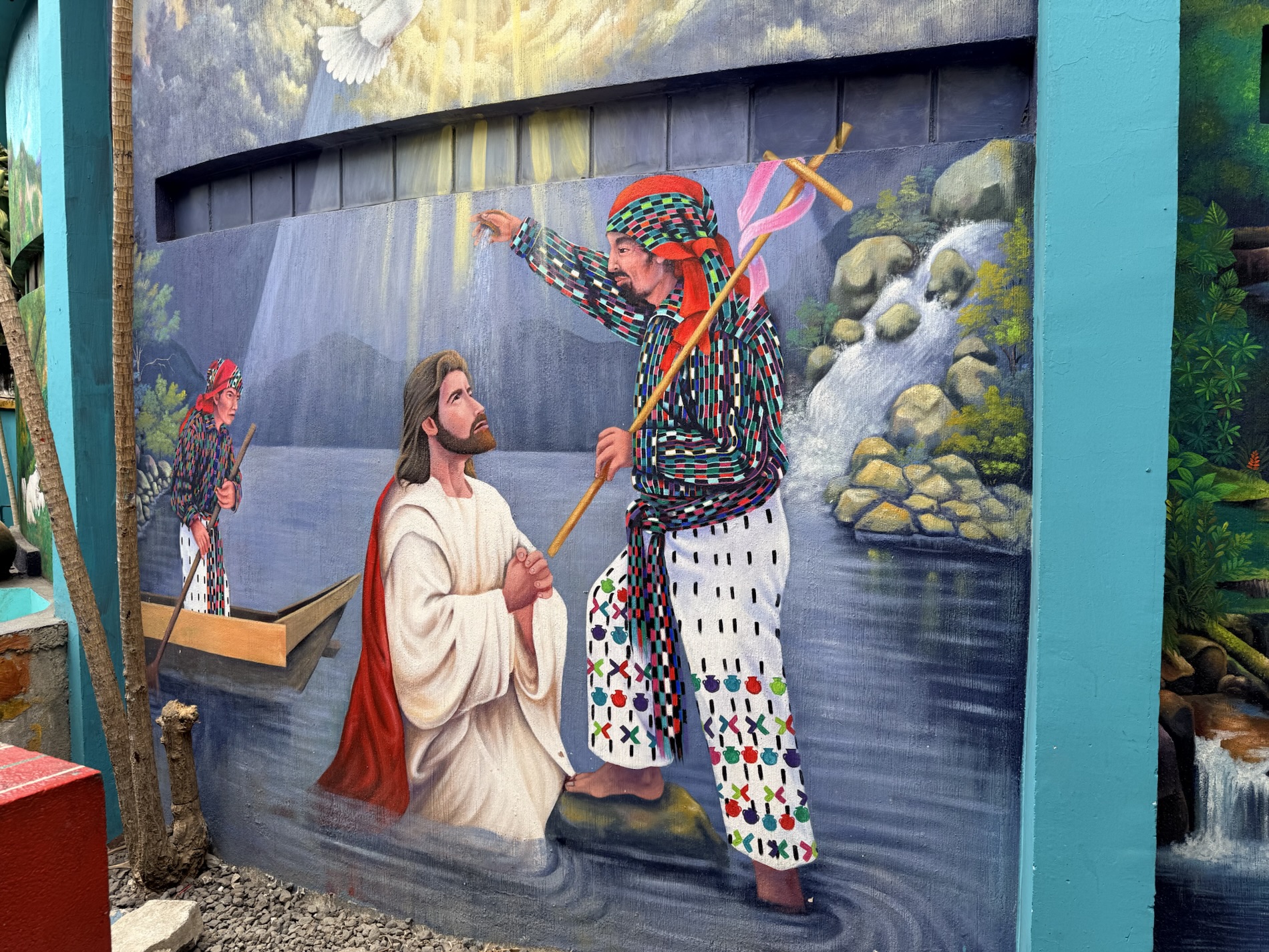
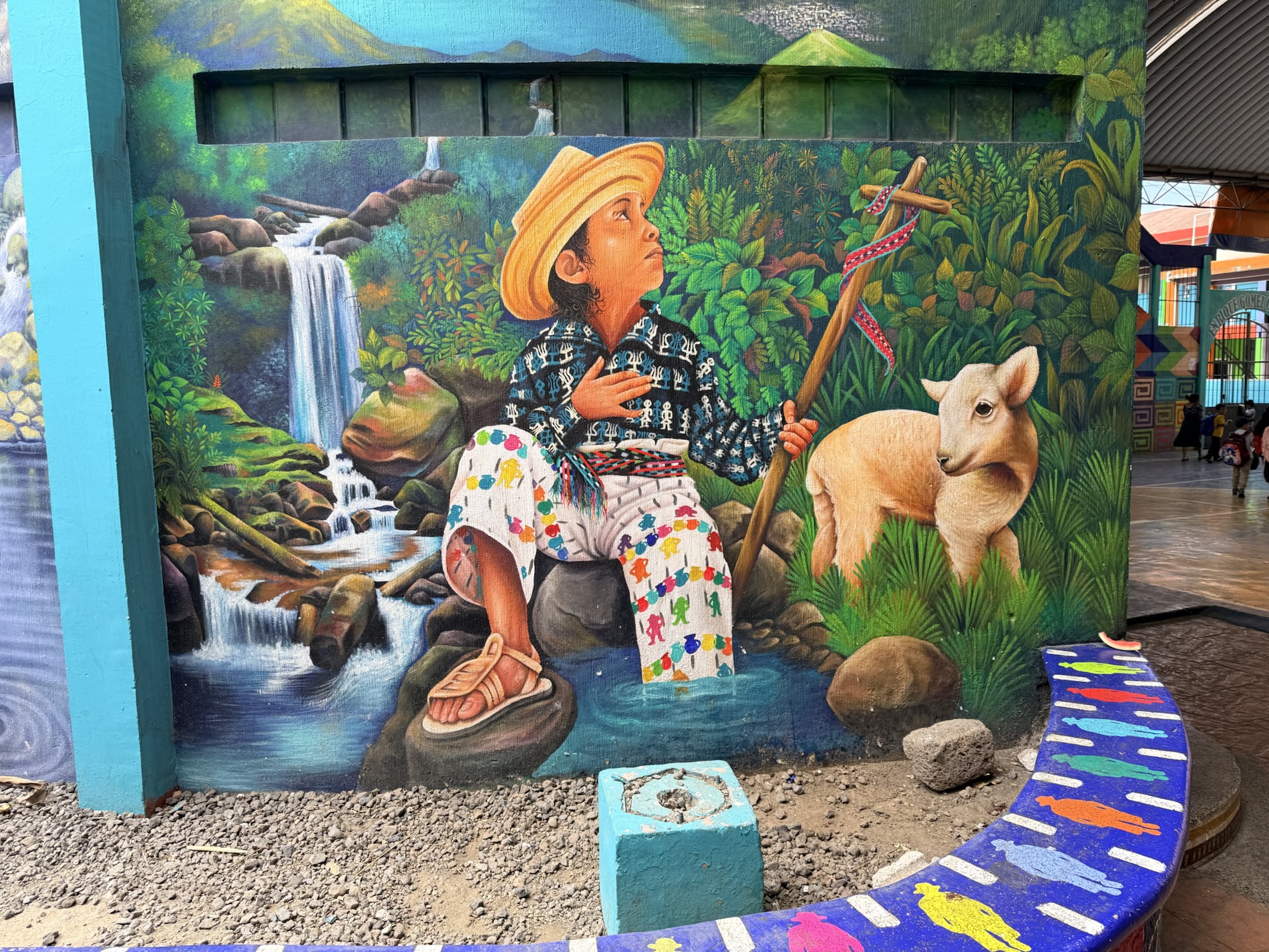
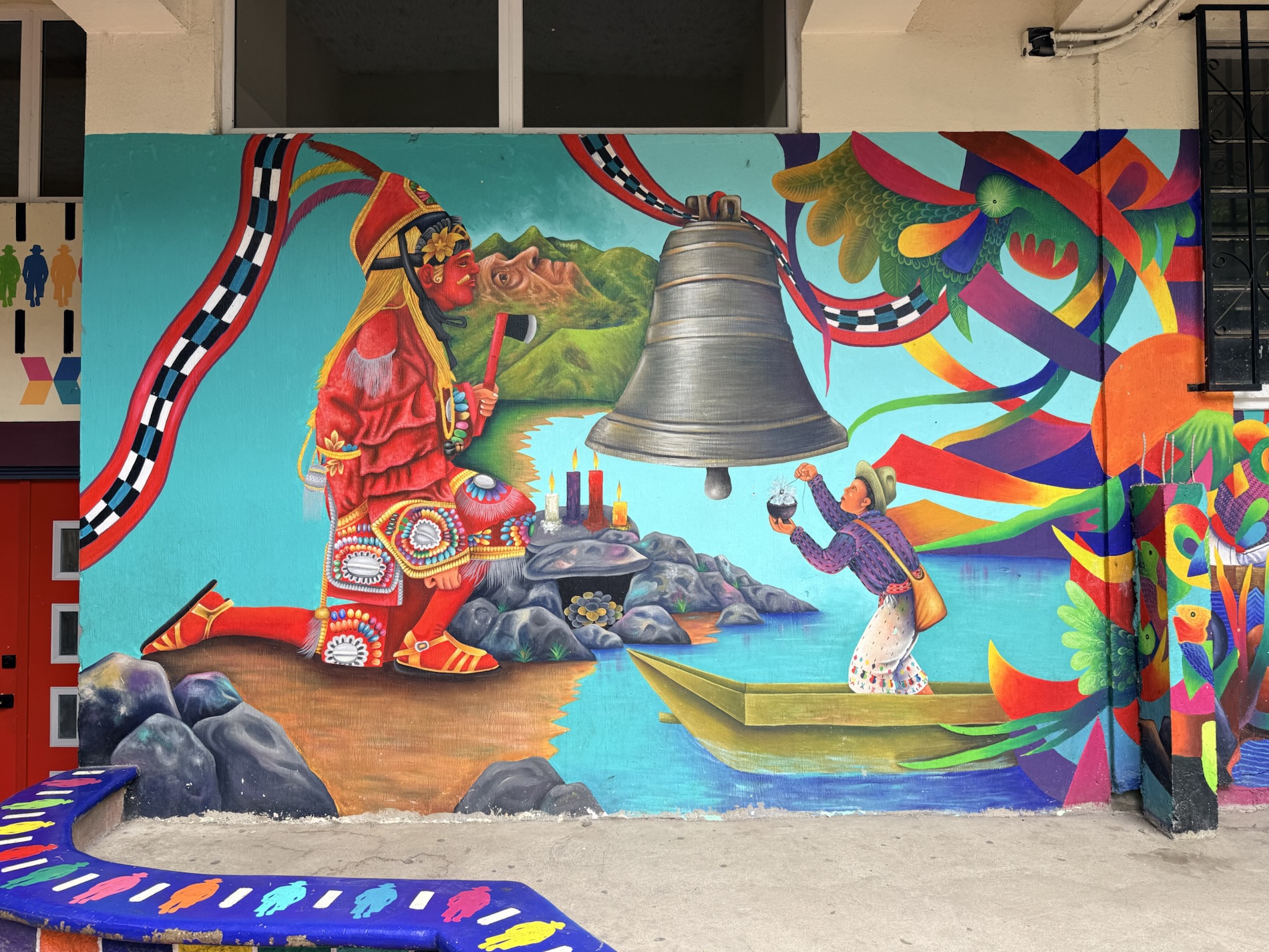
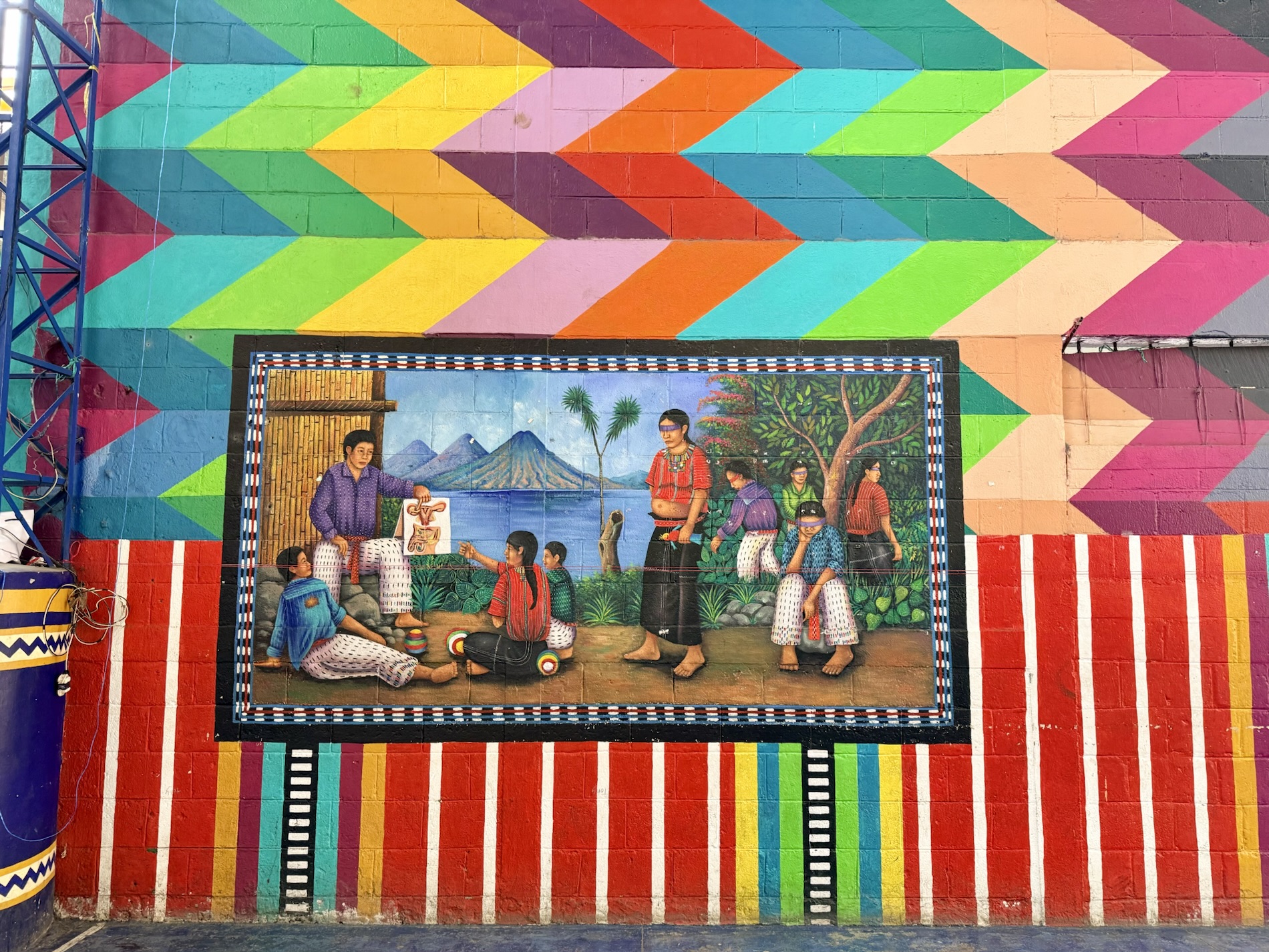
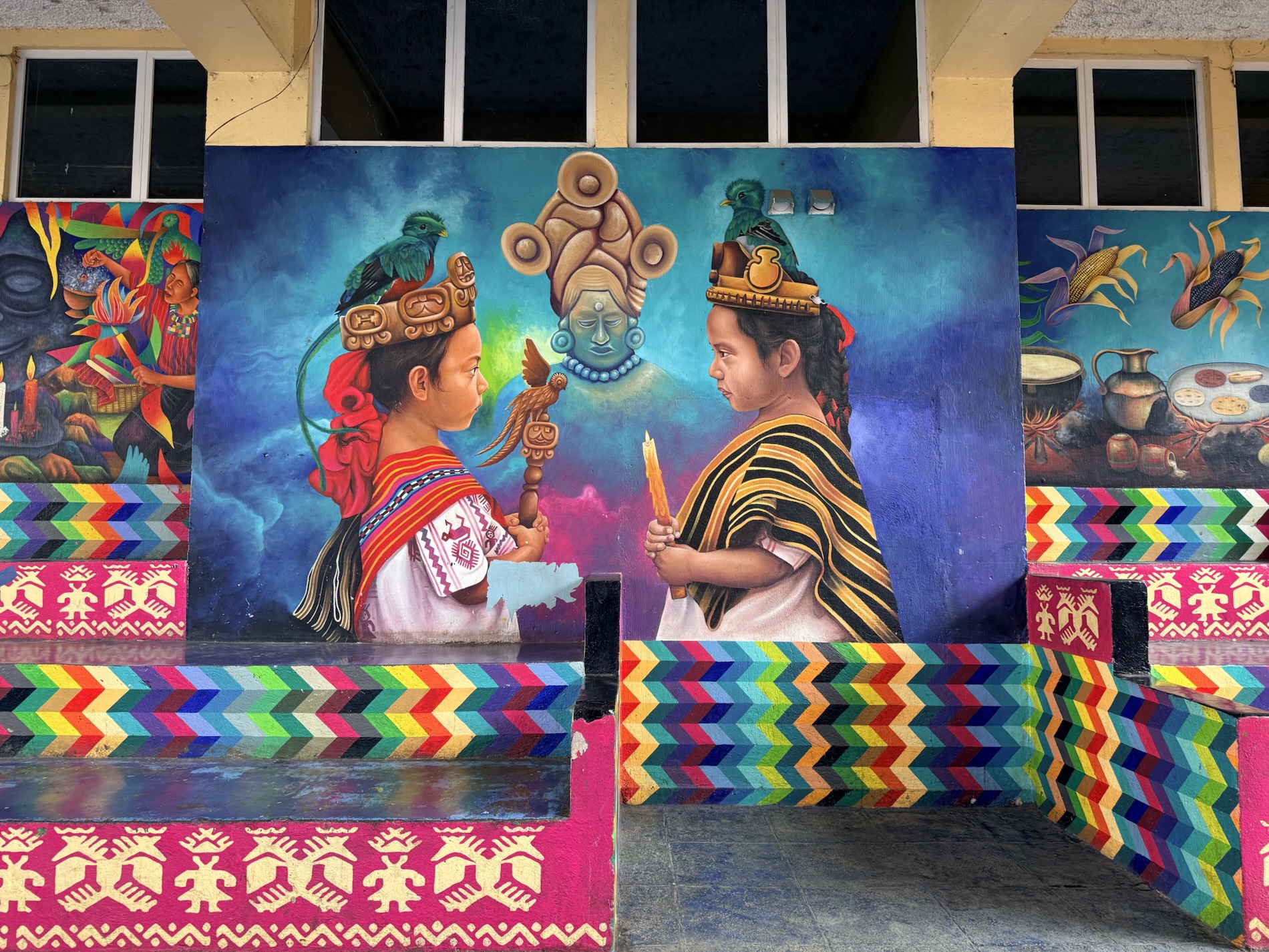
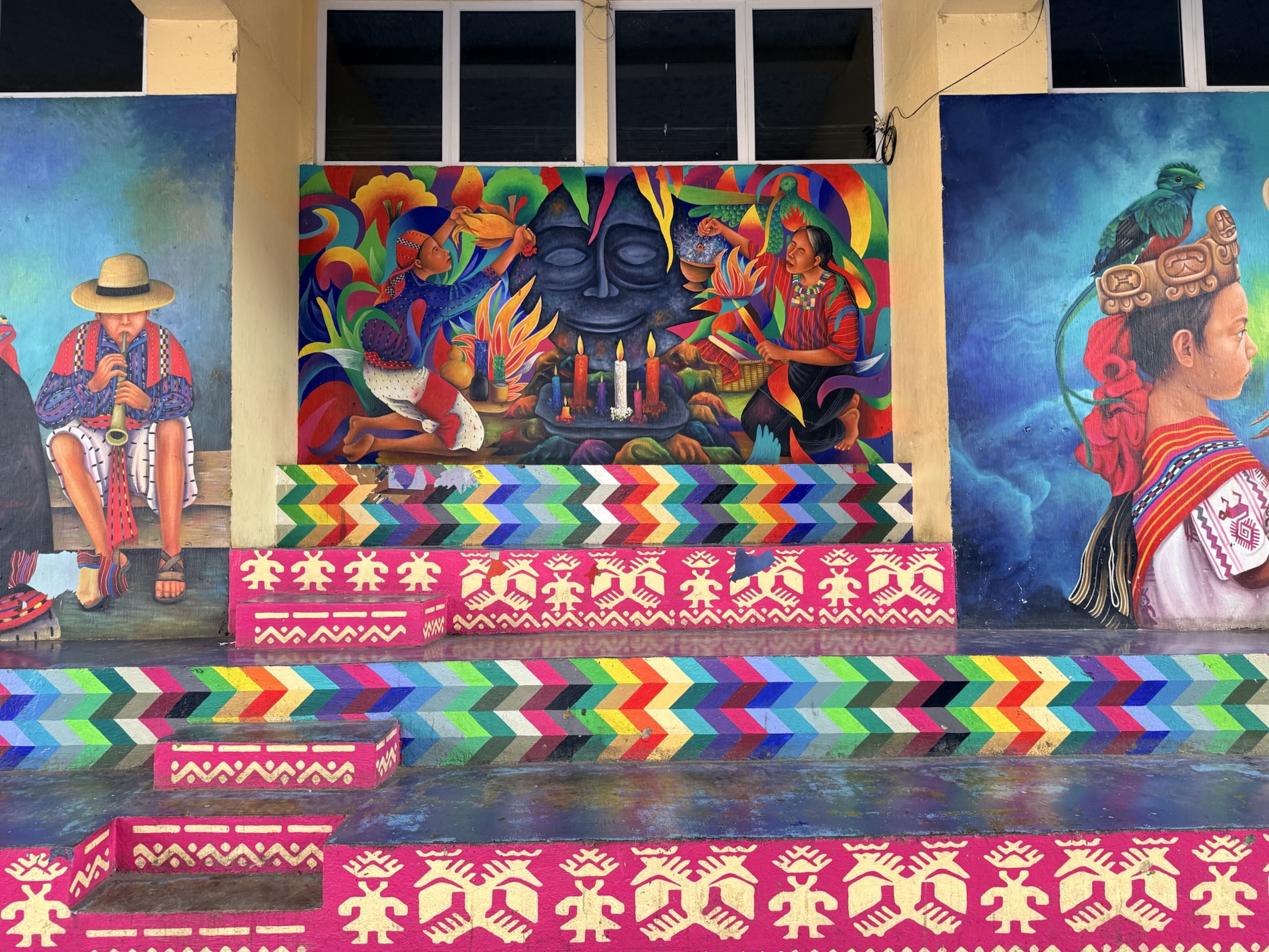
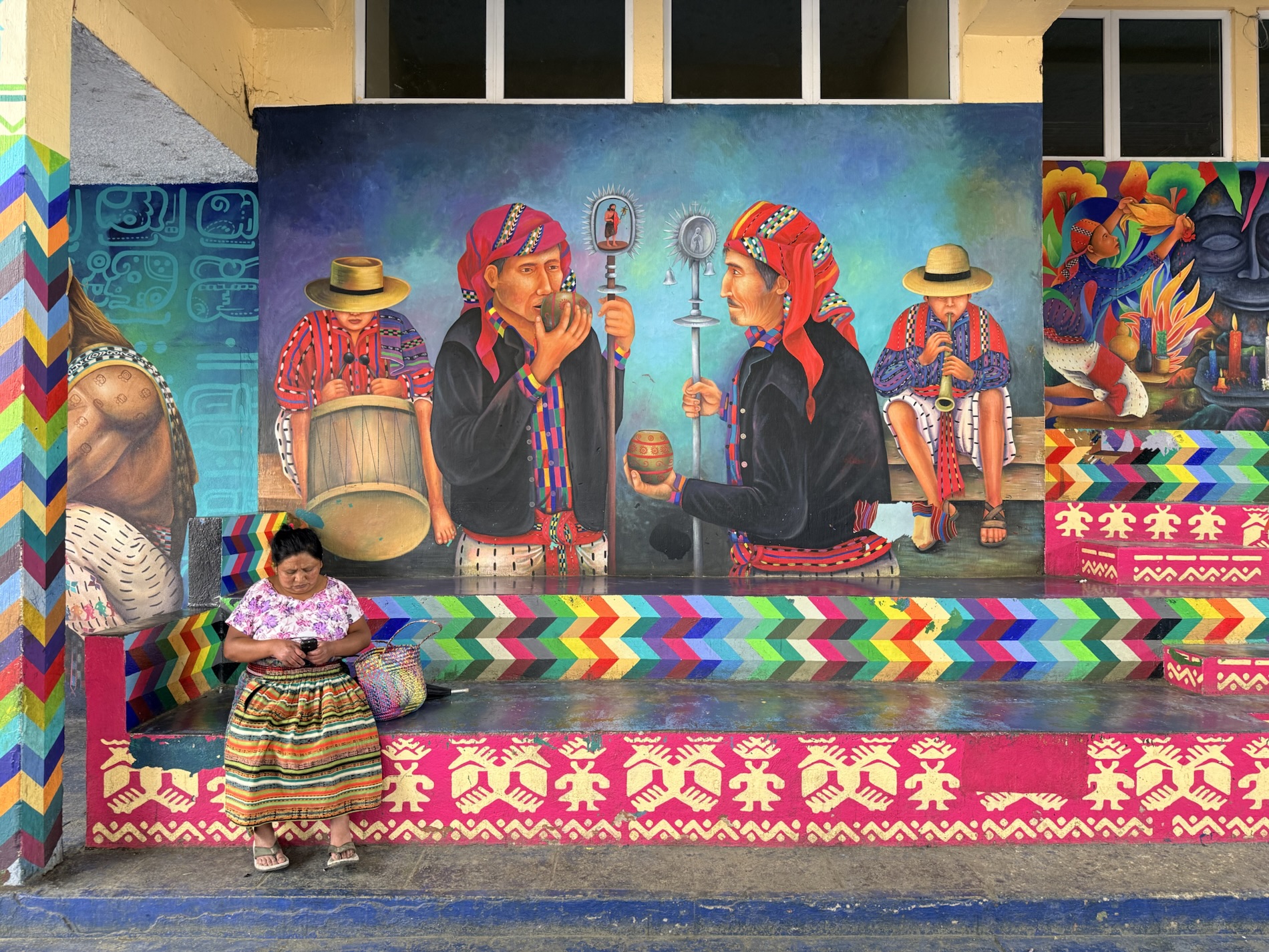
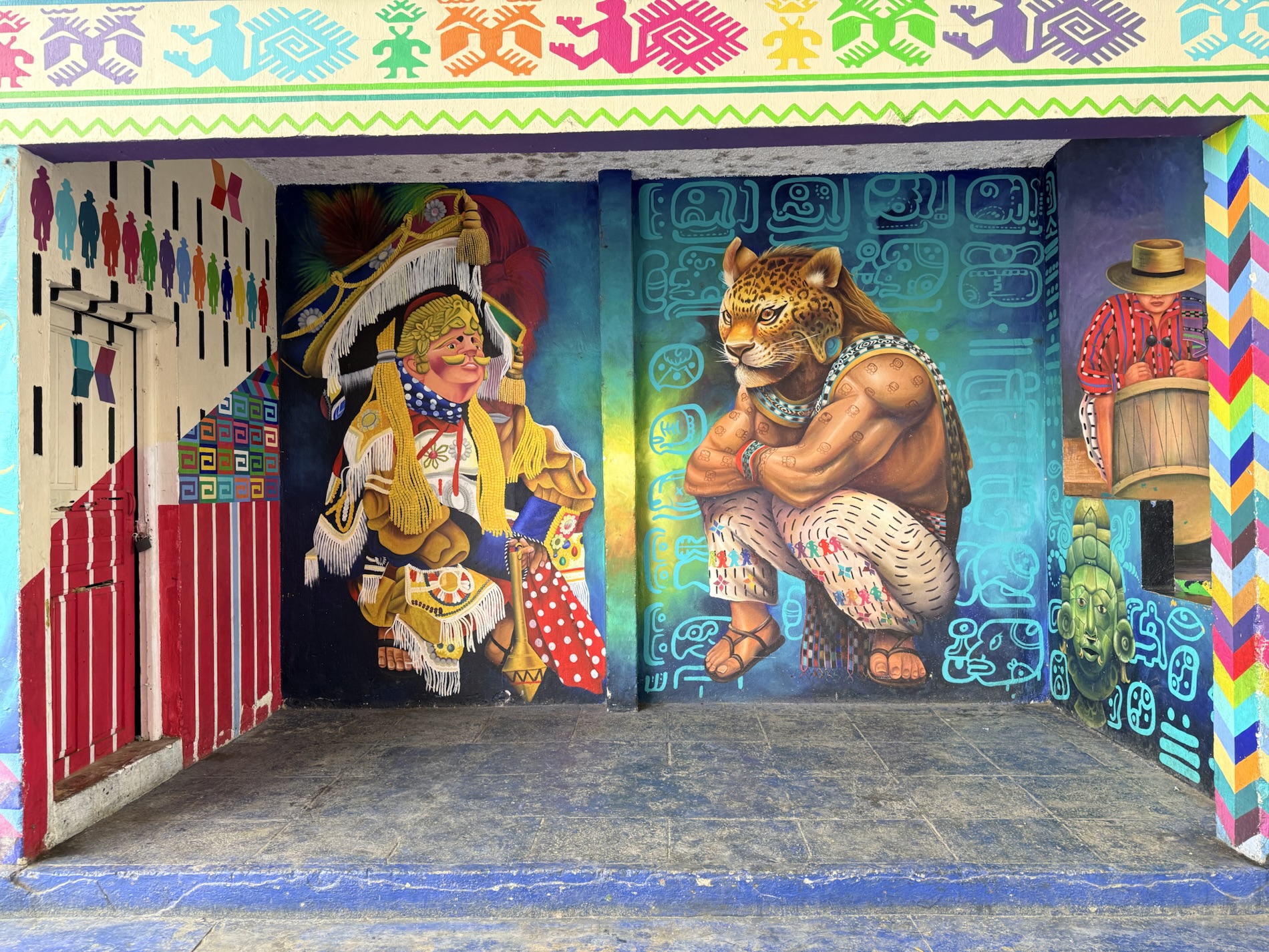
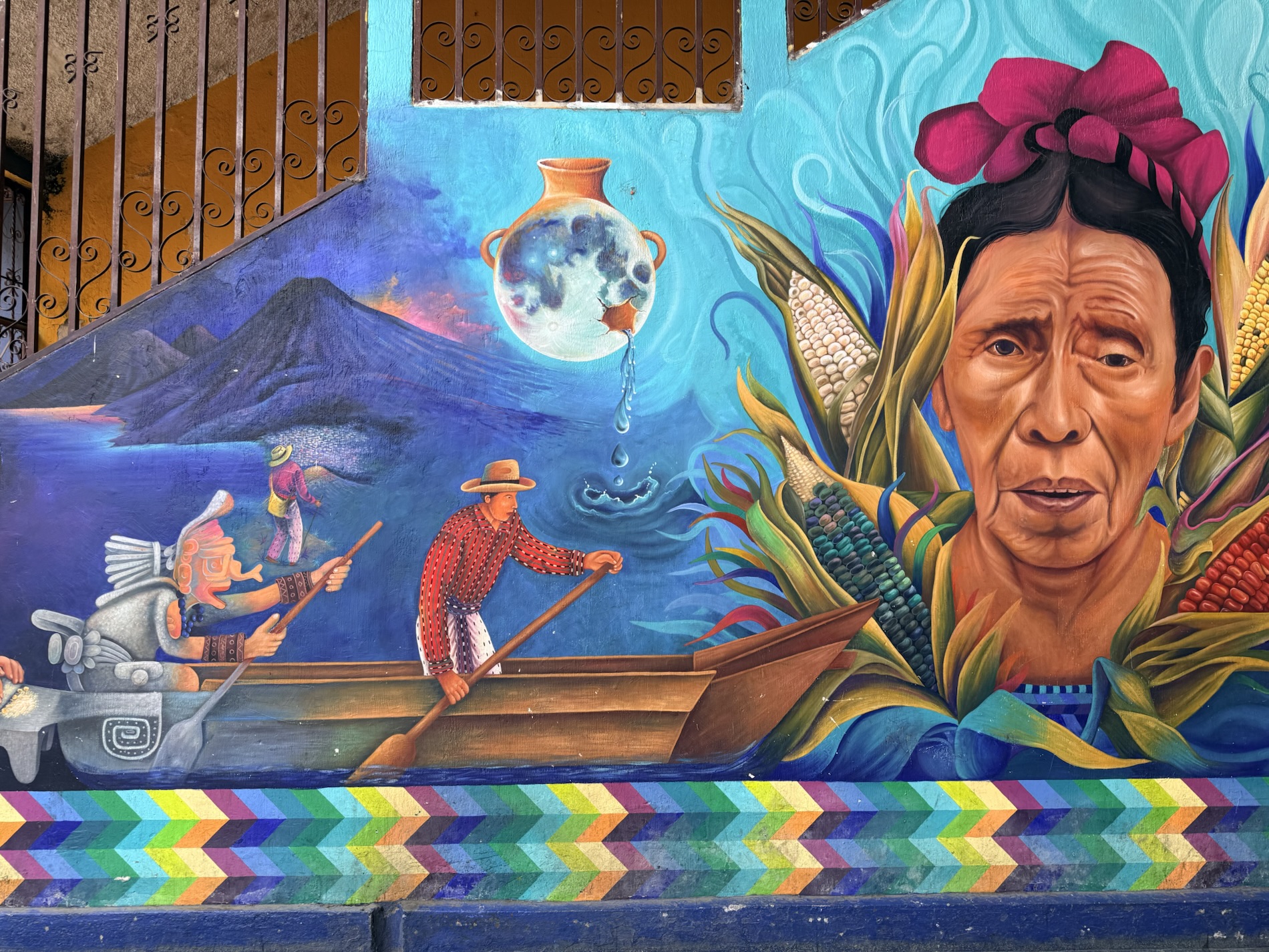
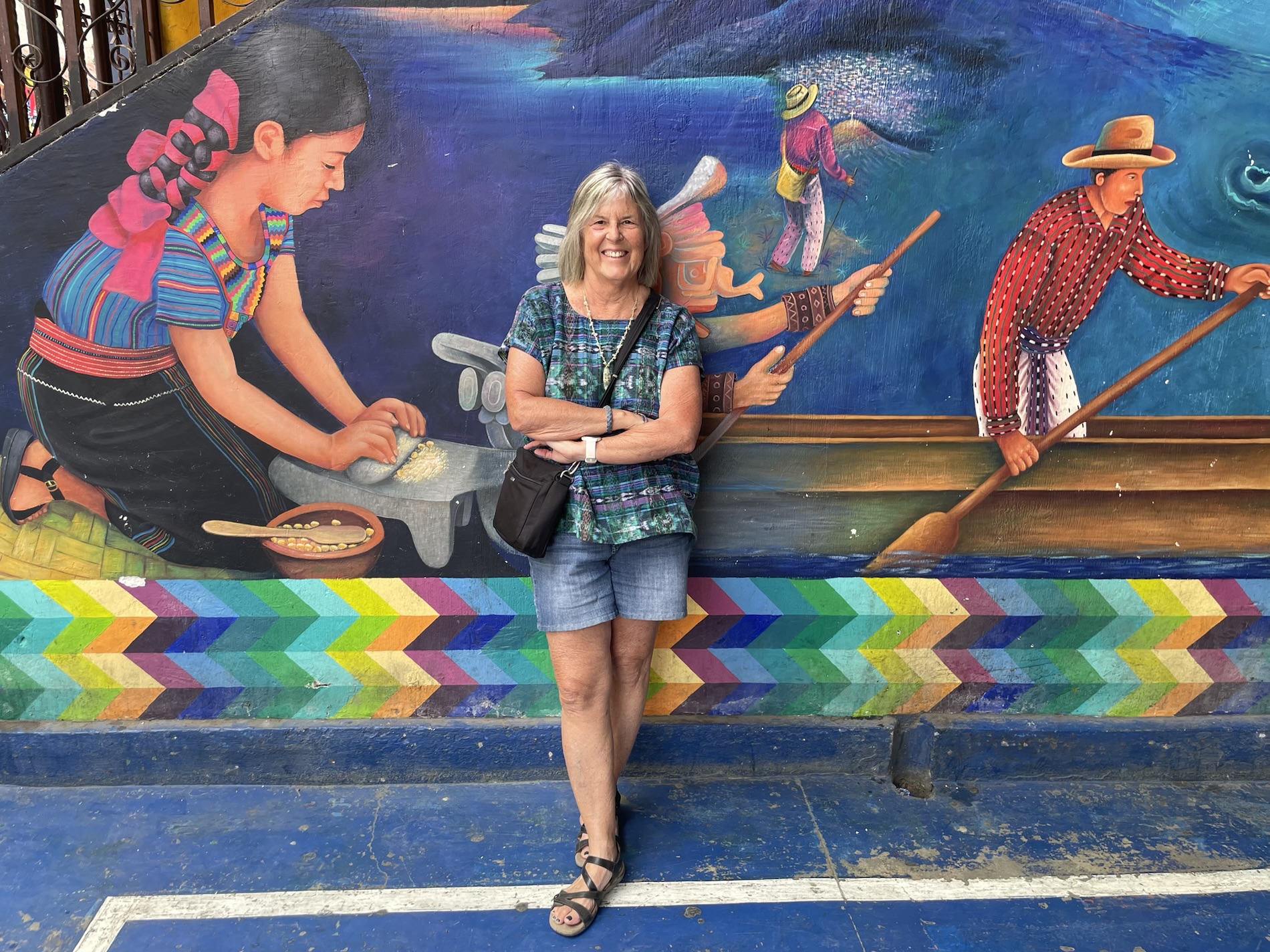
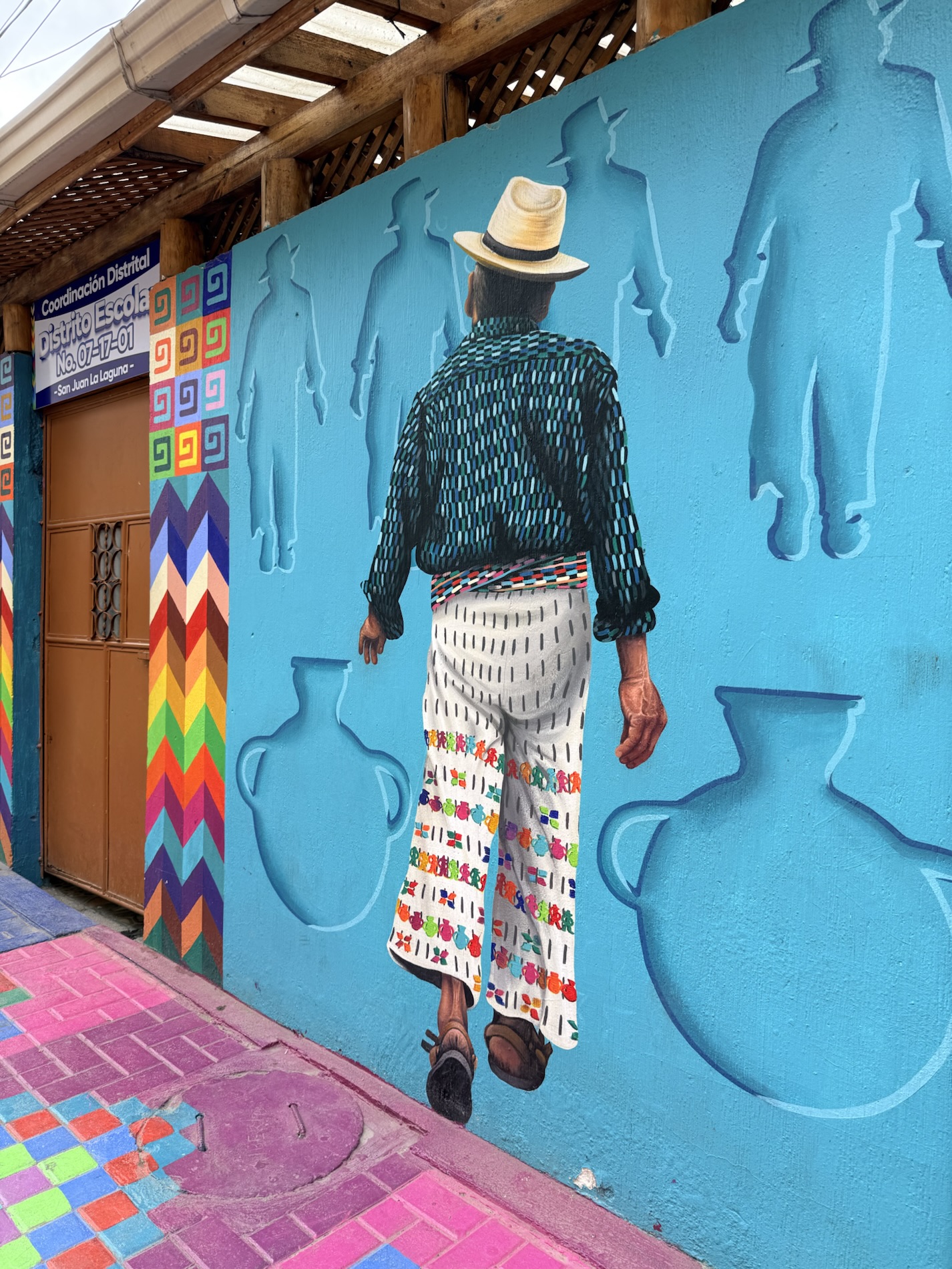
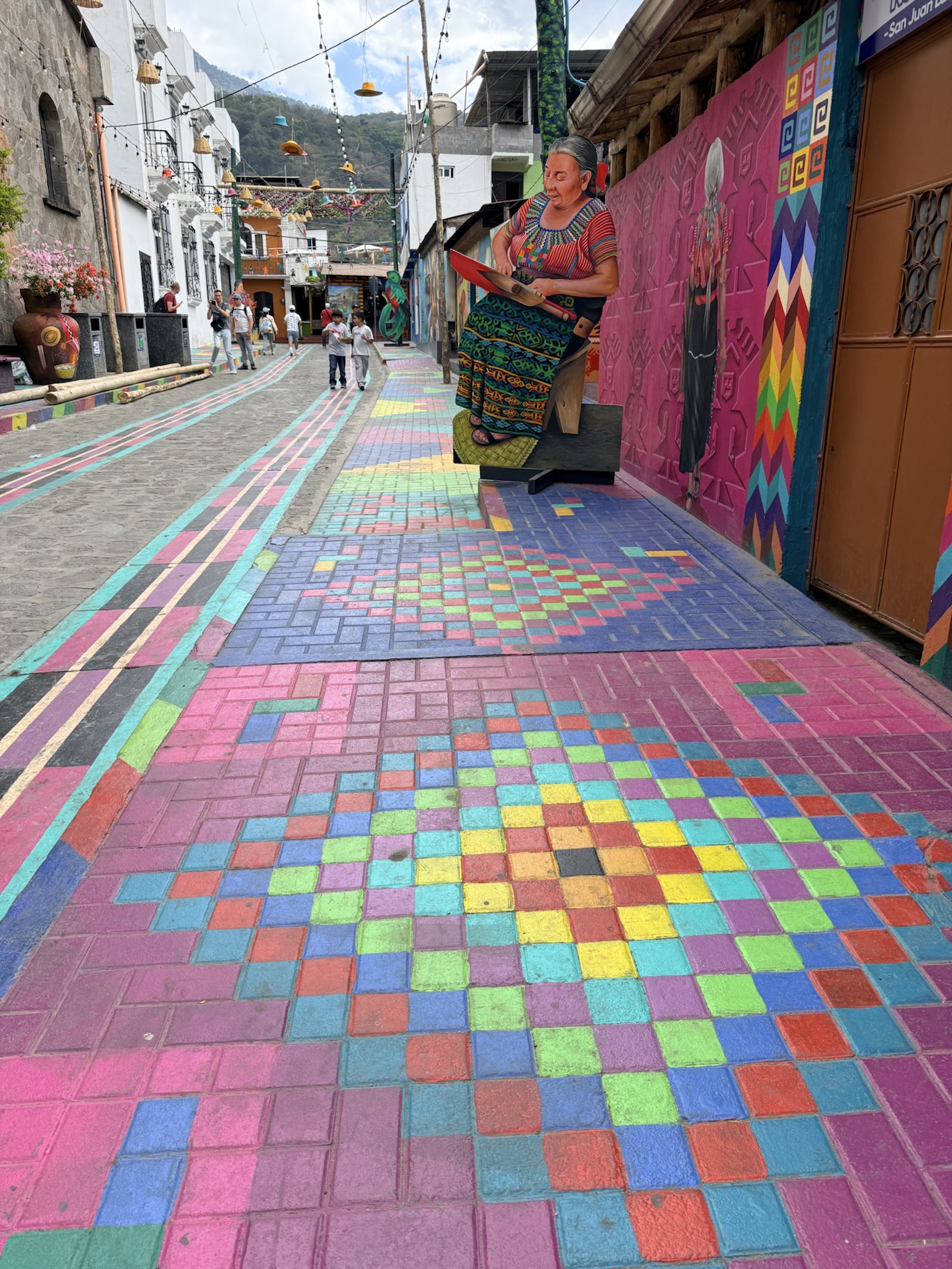
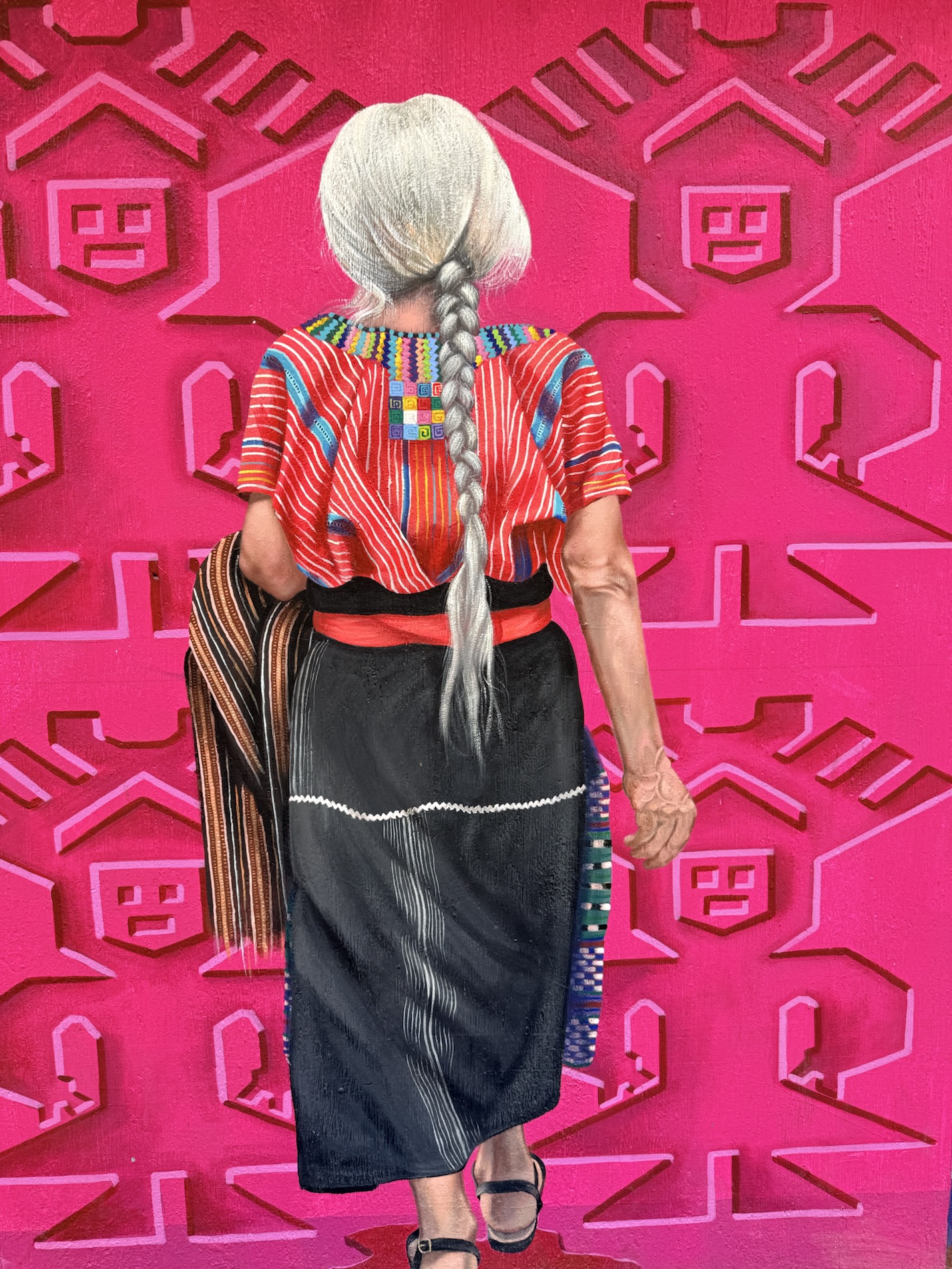
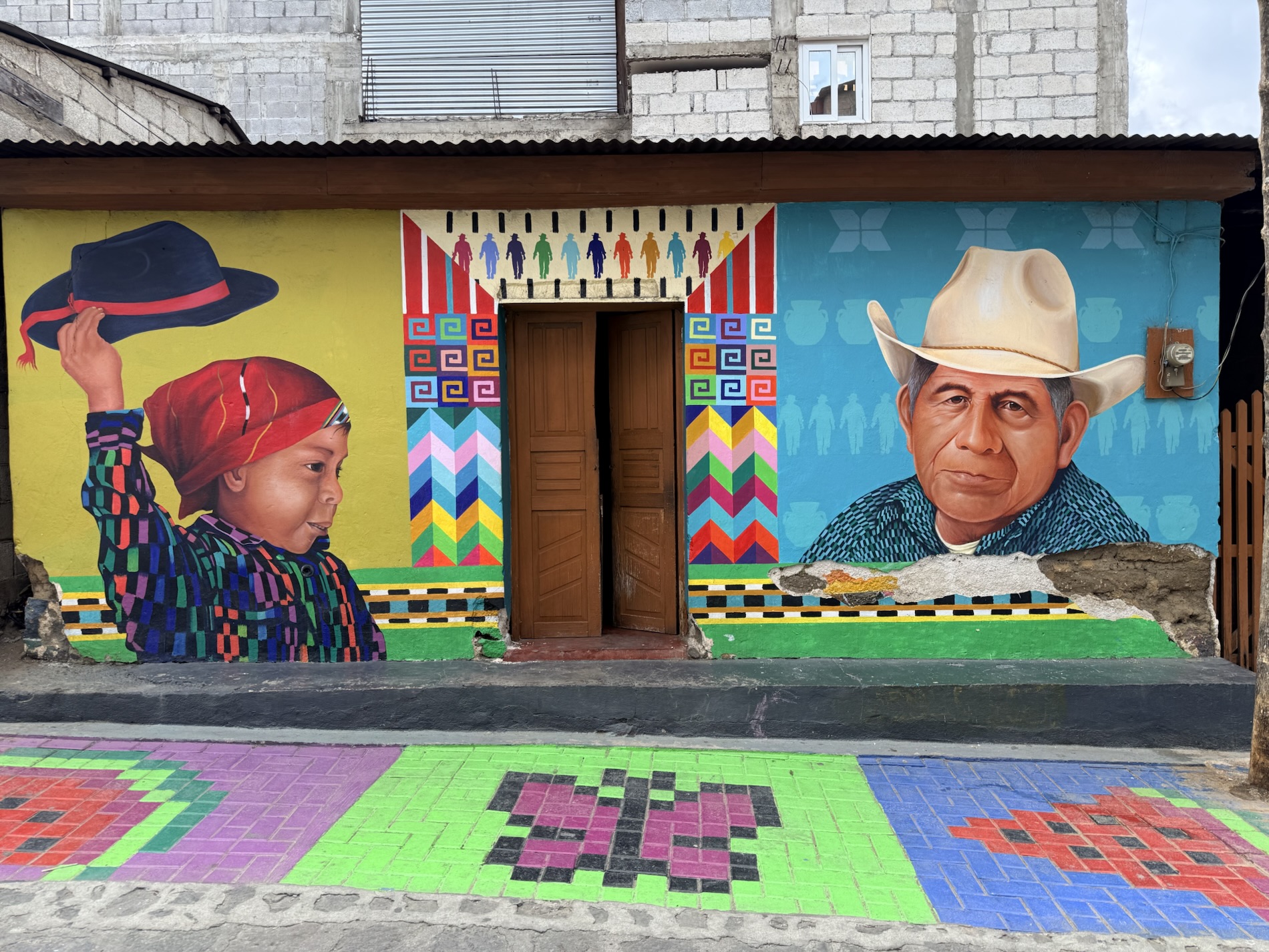
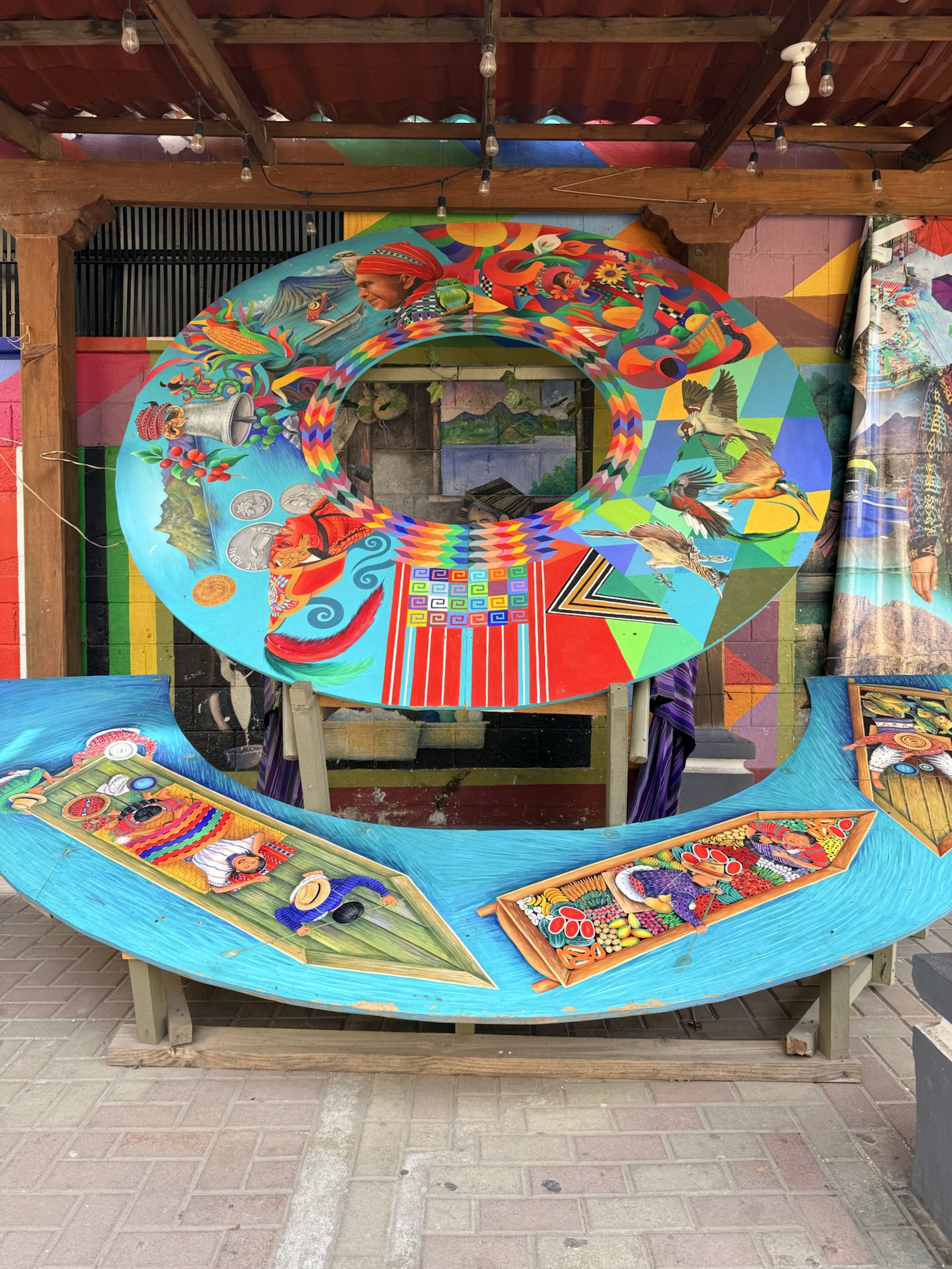
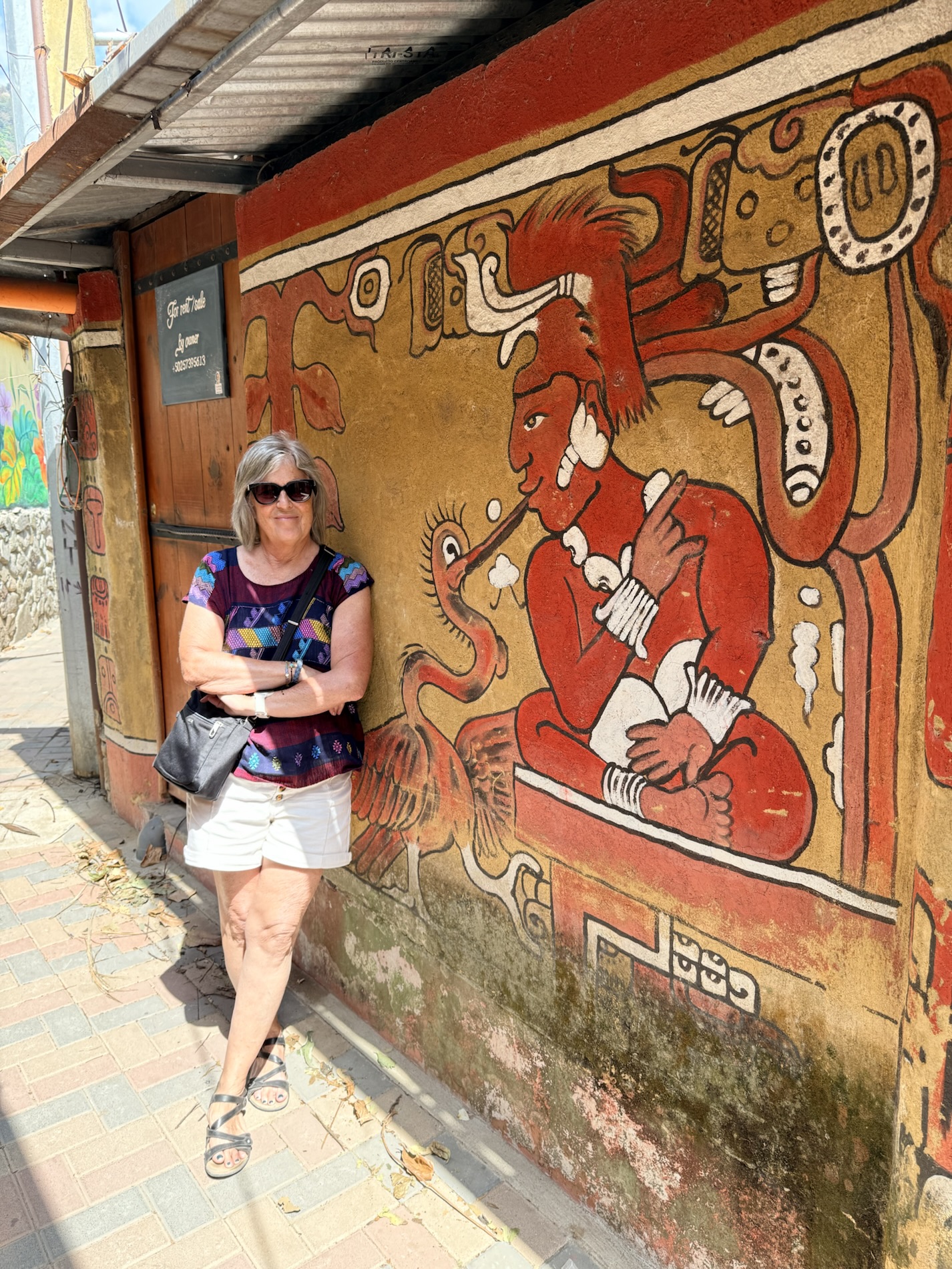
in life. Murals in the town square manifest Mayan stories -
harvests, musical processions, a tattooed man with a leopard head.

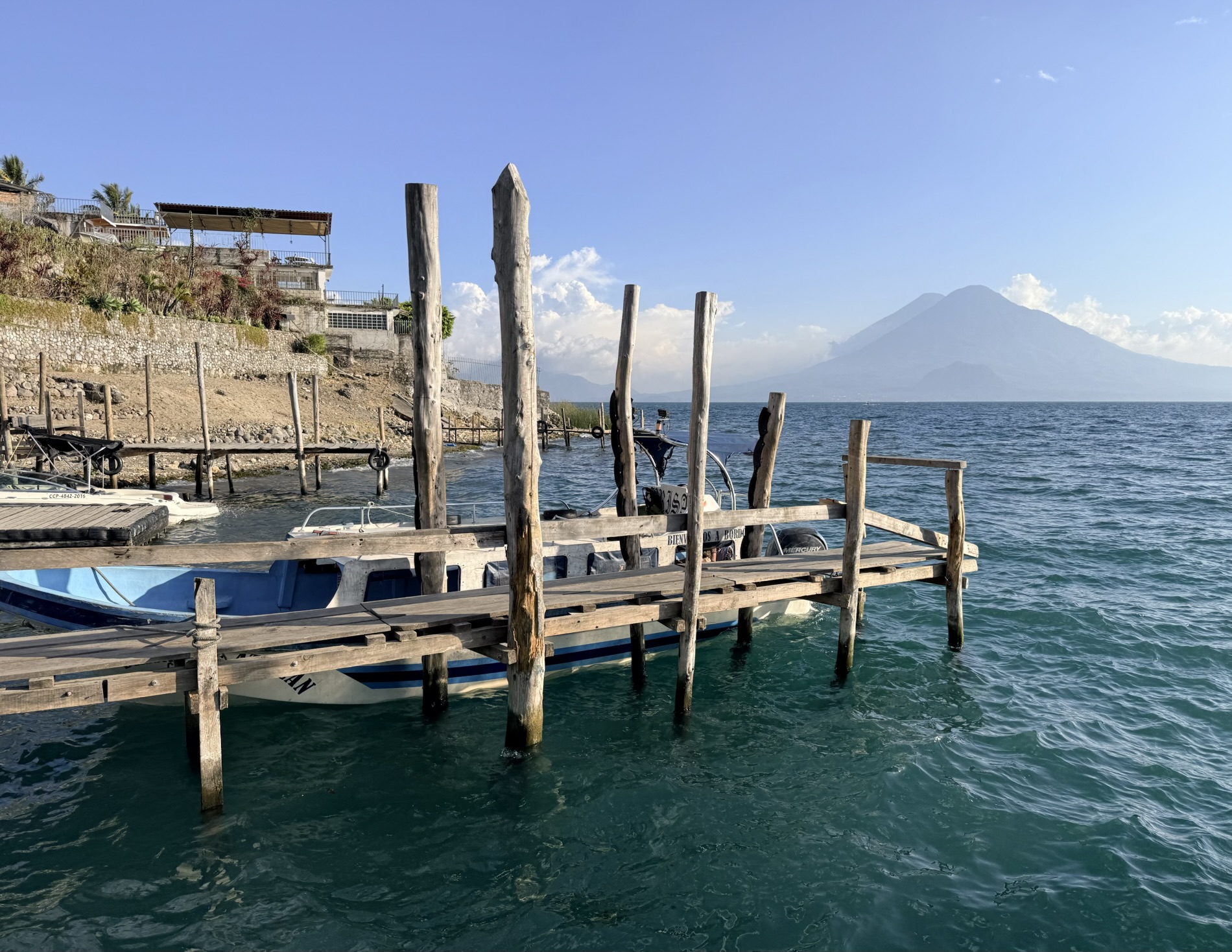
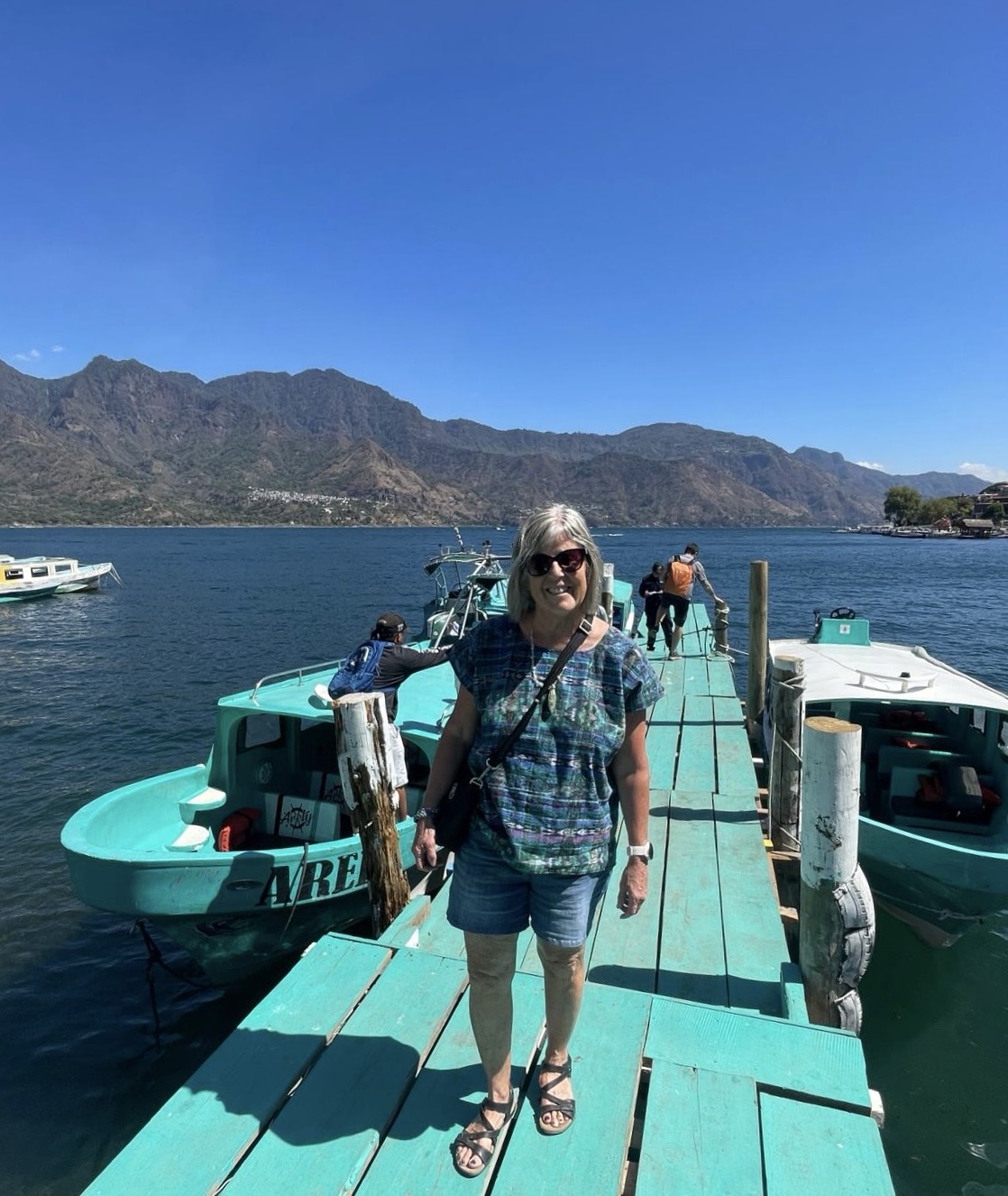
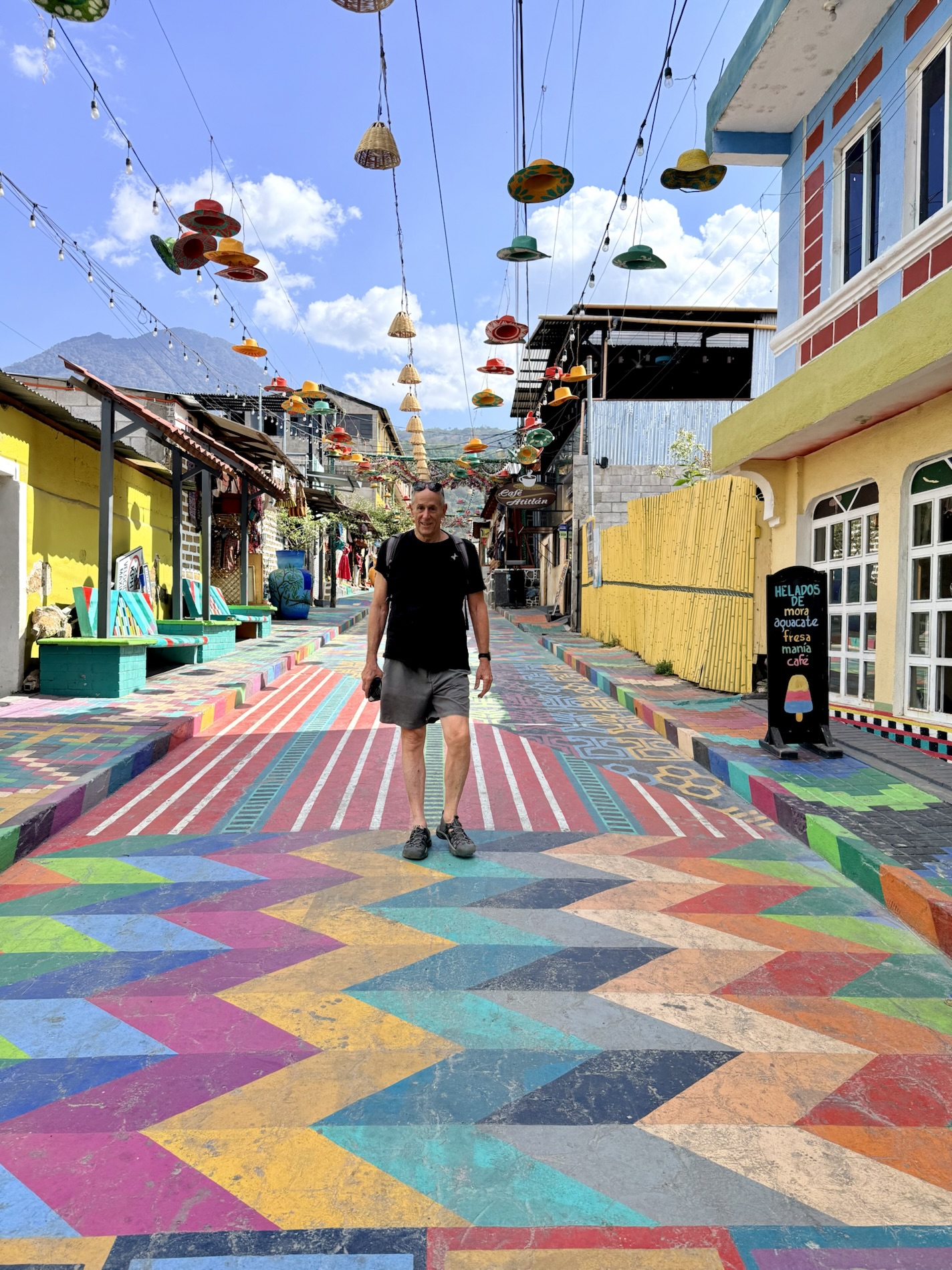
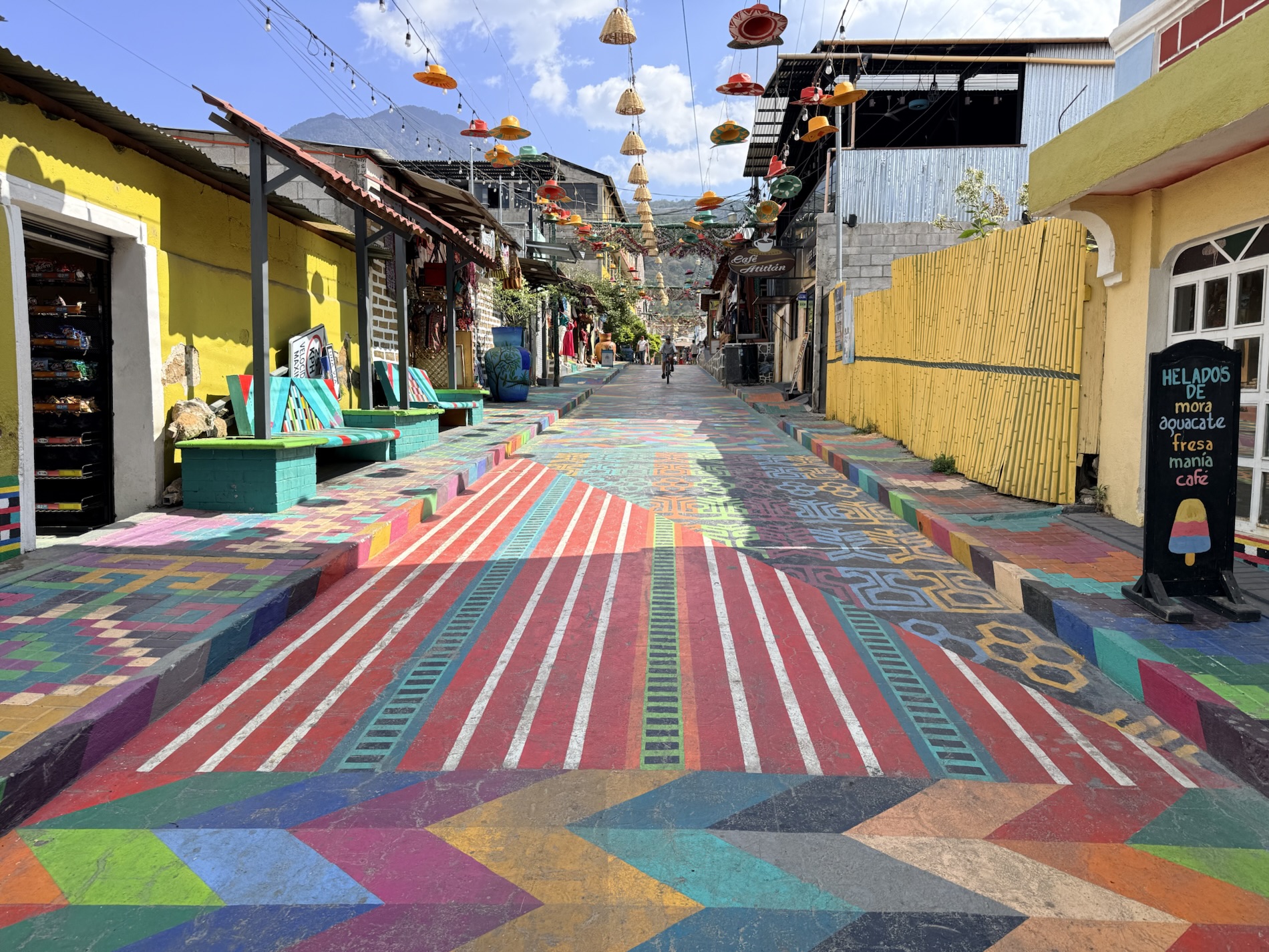
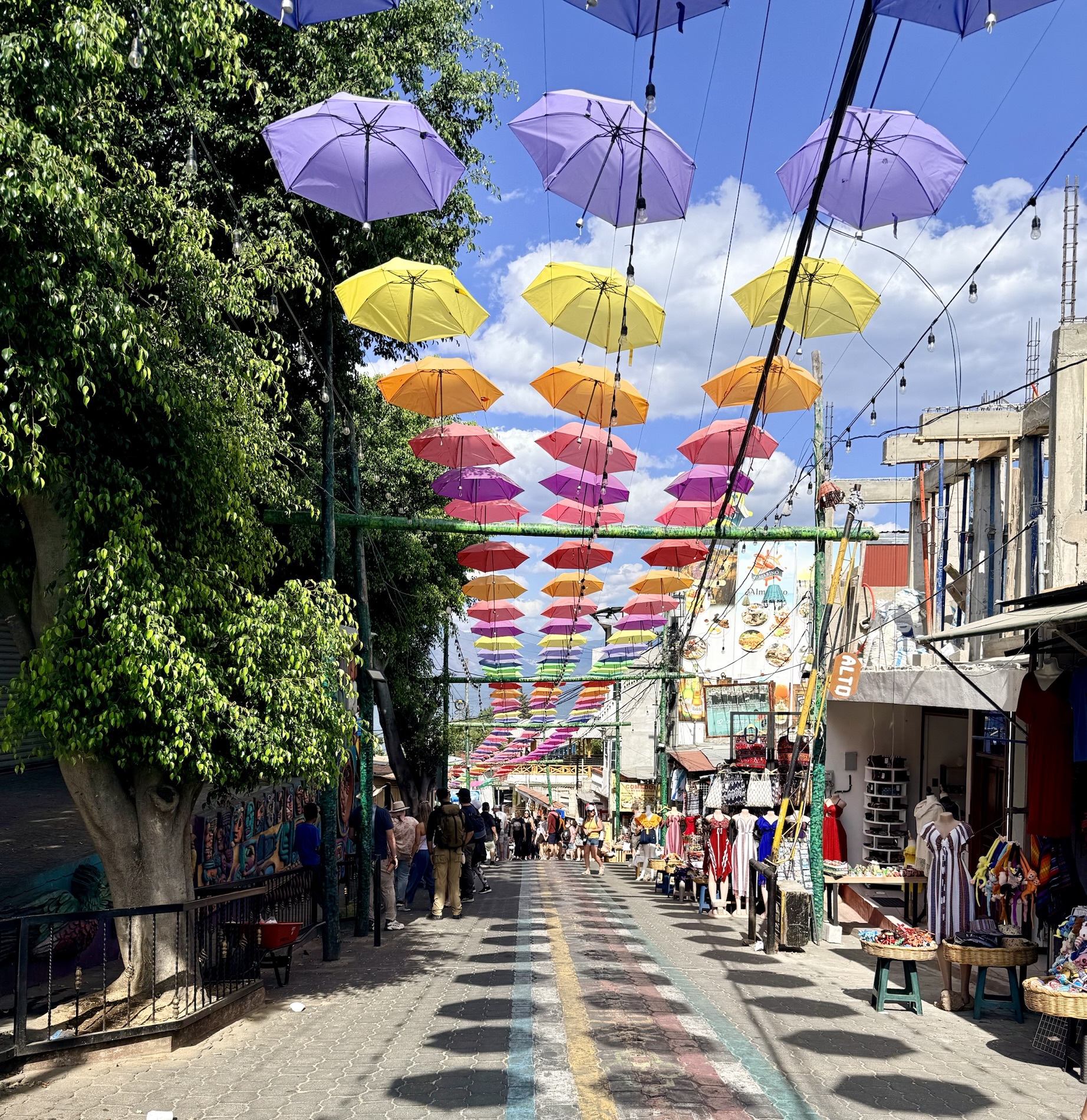
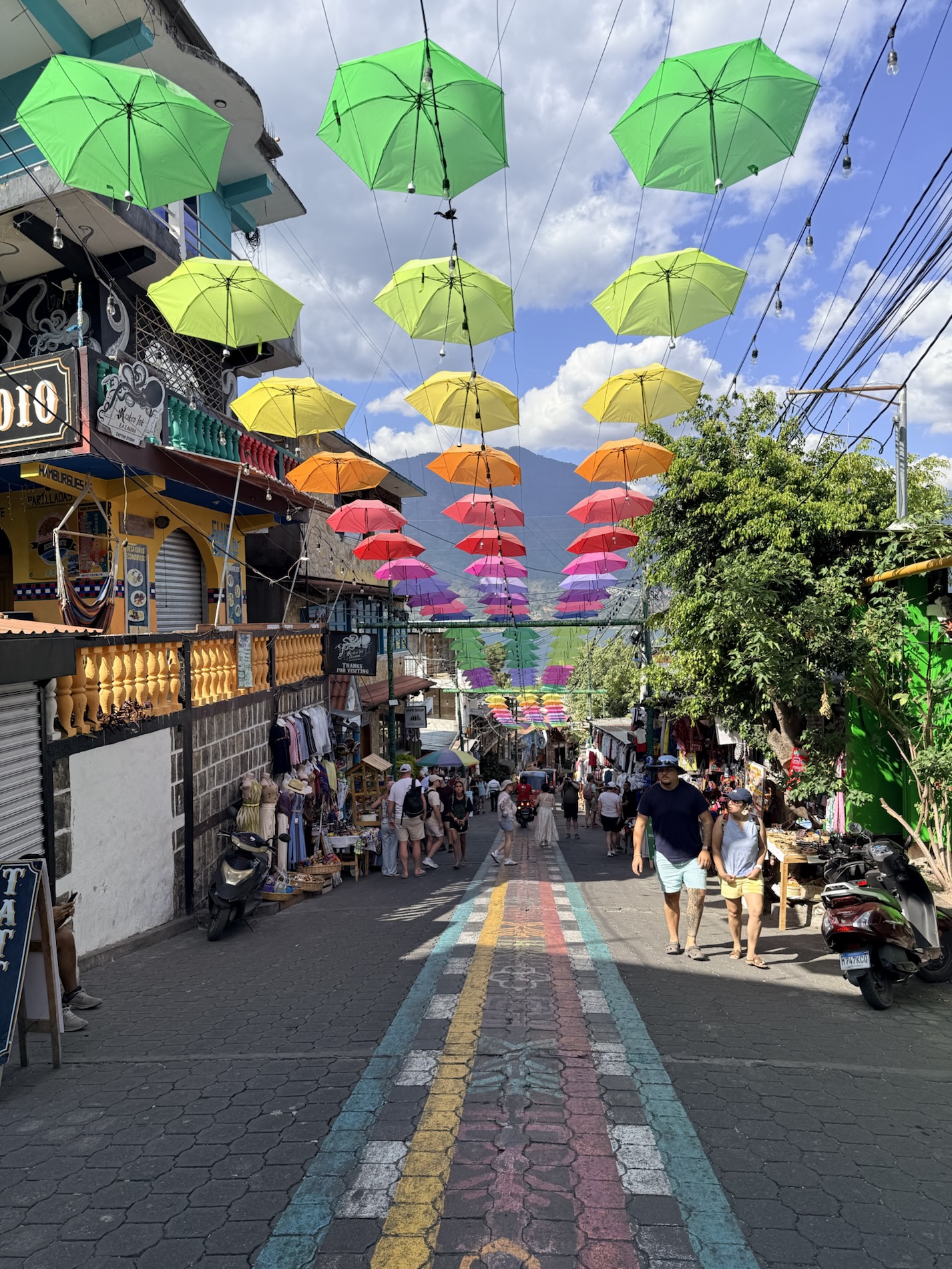
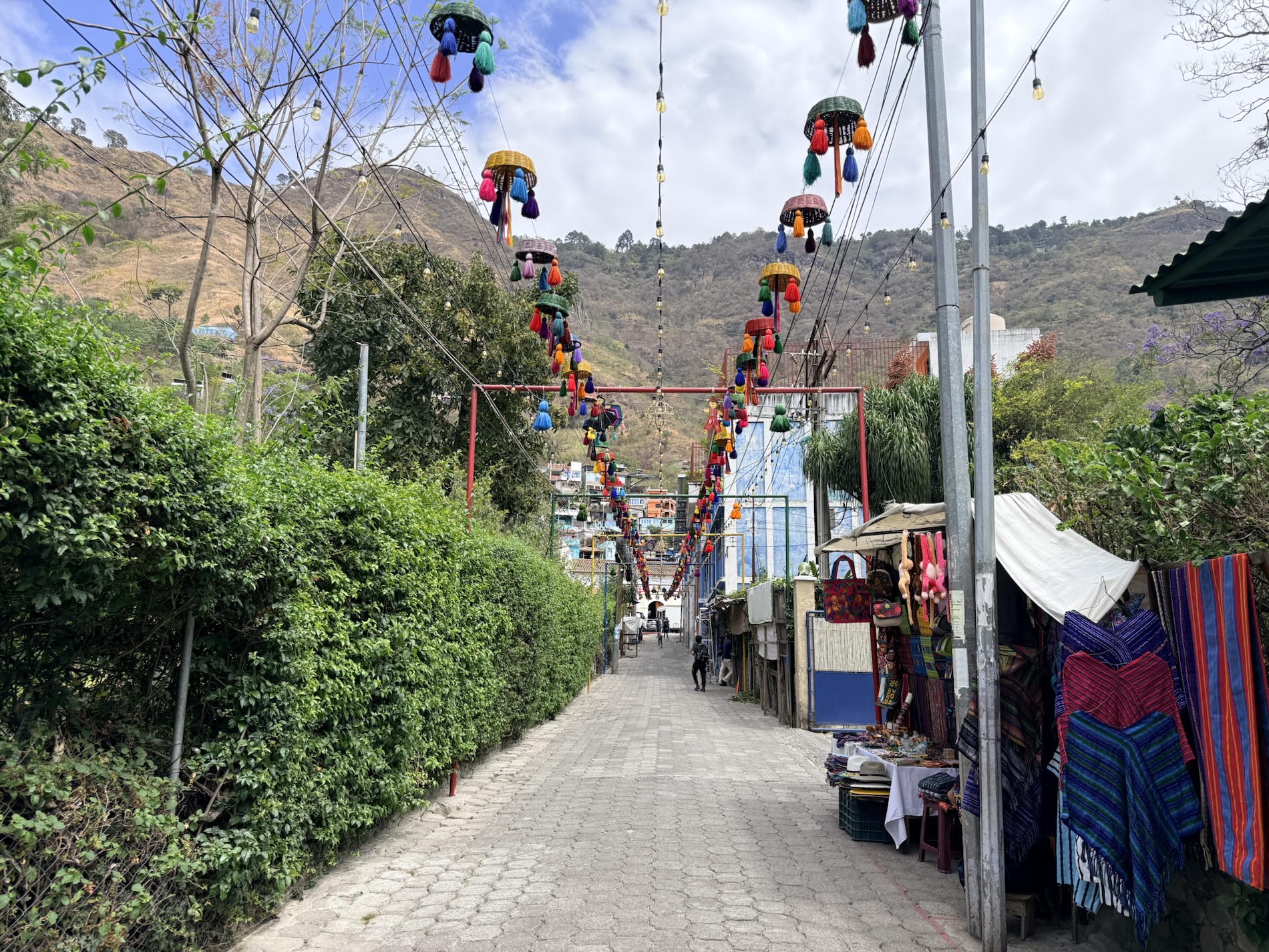
She makes her way to the dock, along streets covered with sombreros and umbrellas.
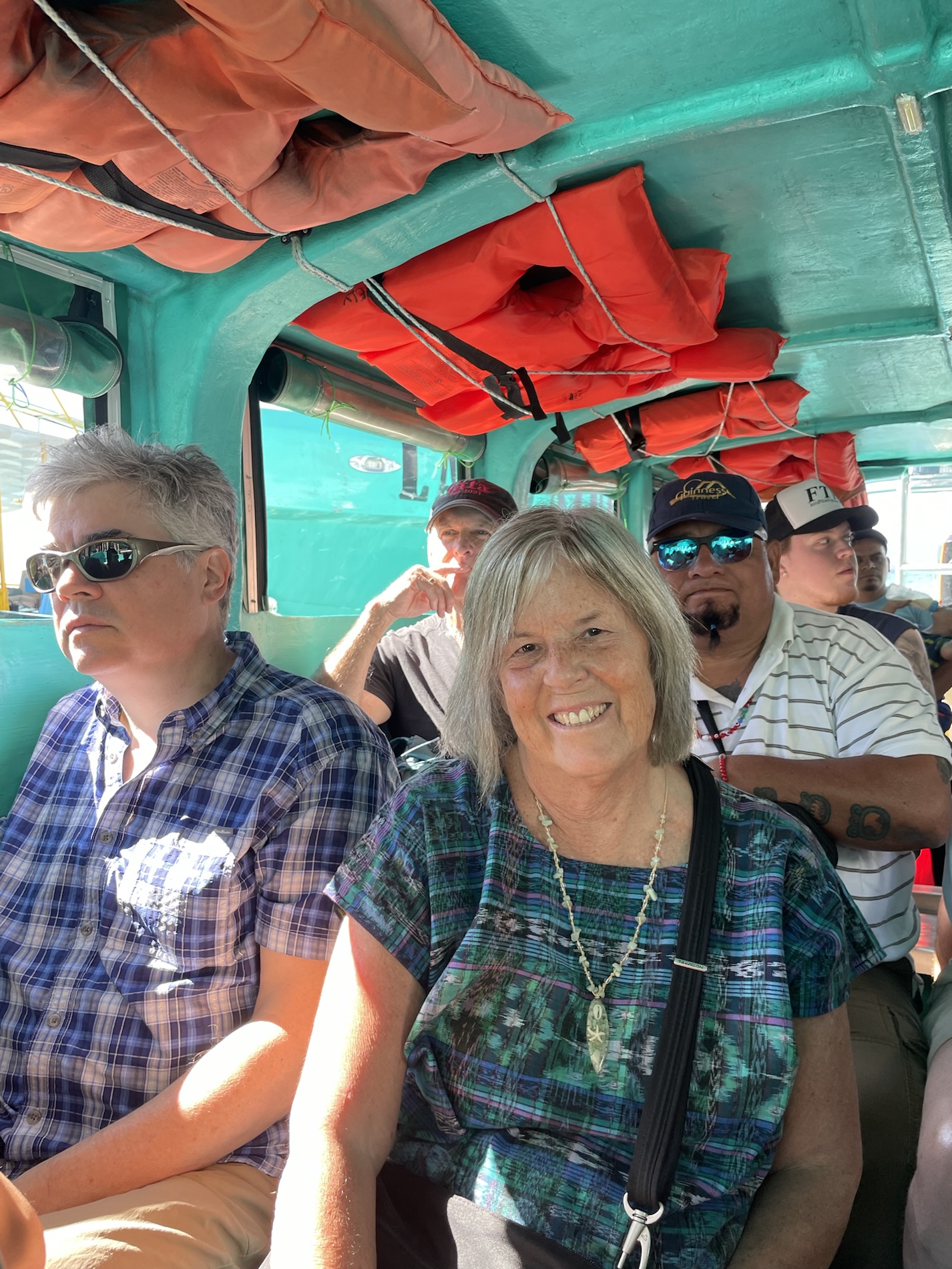
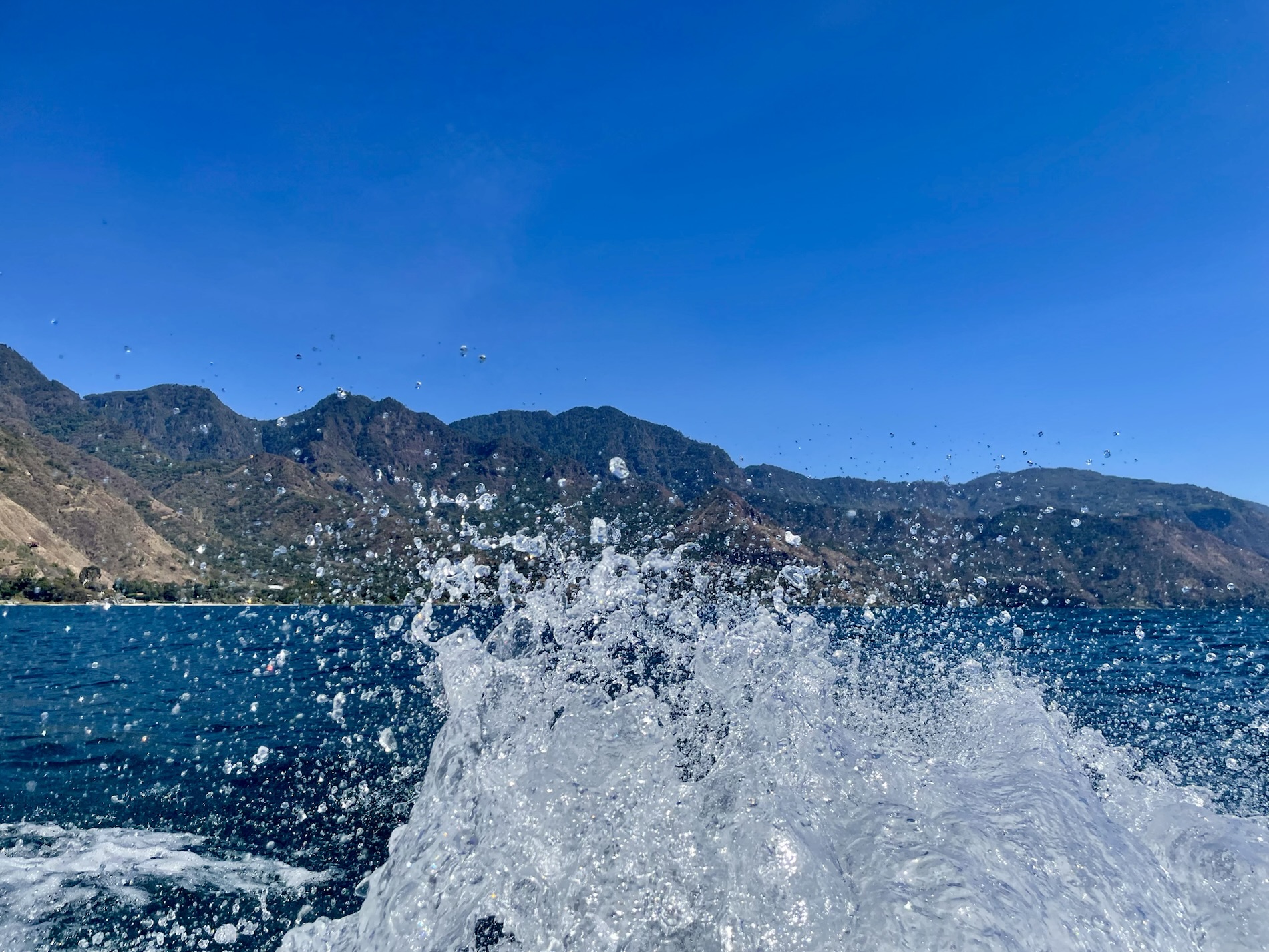
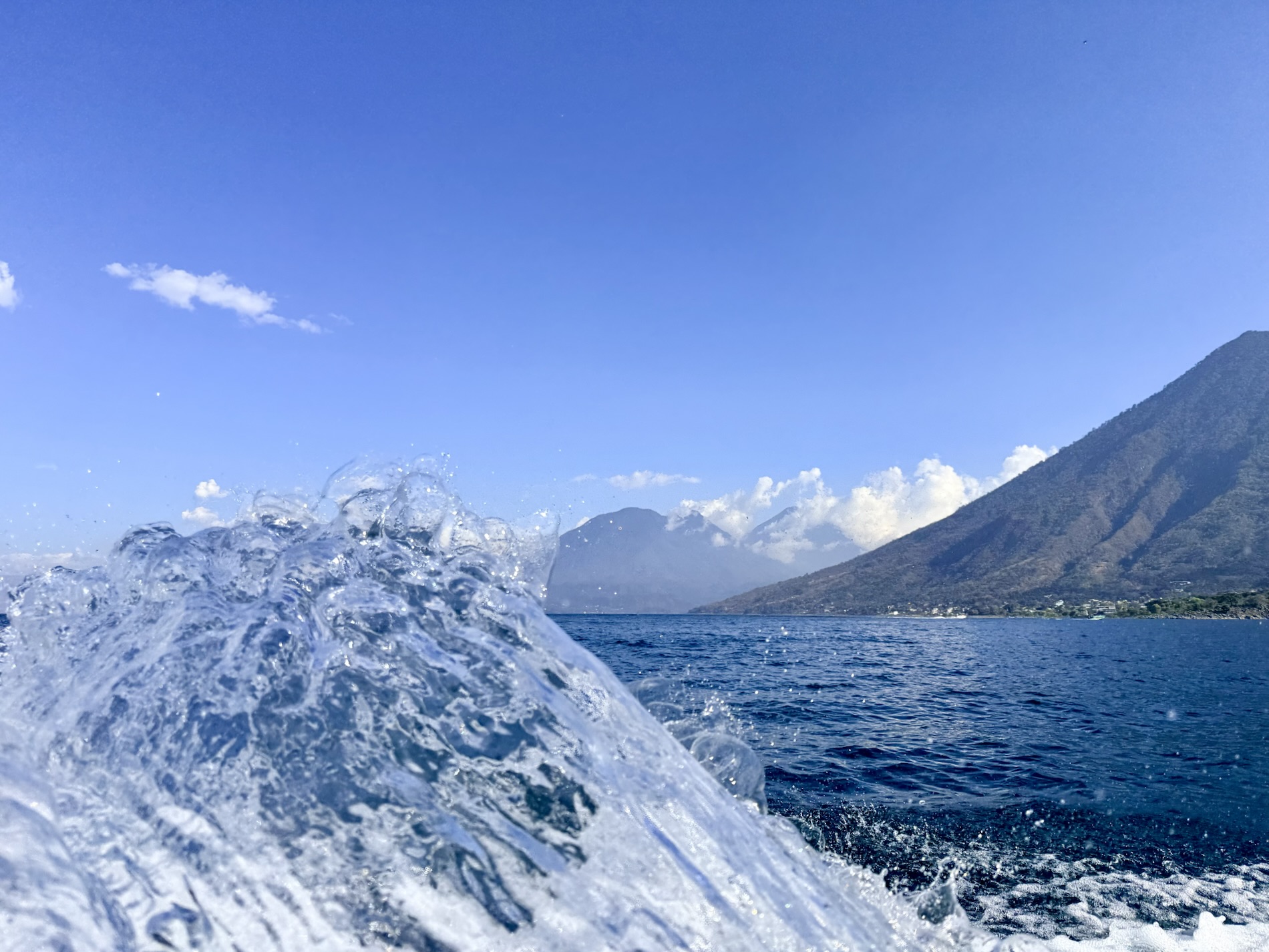
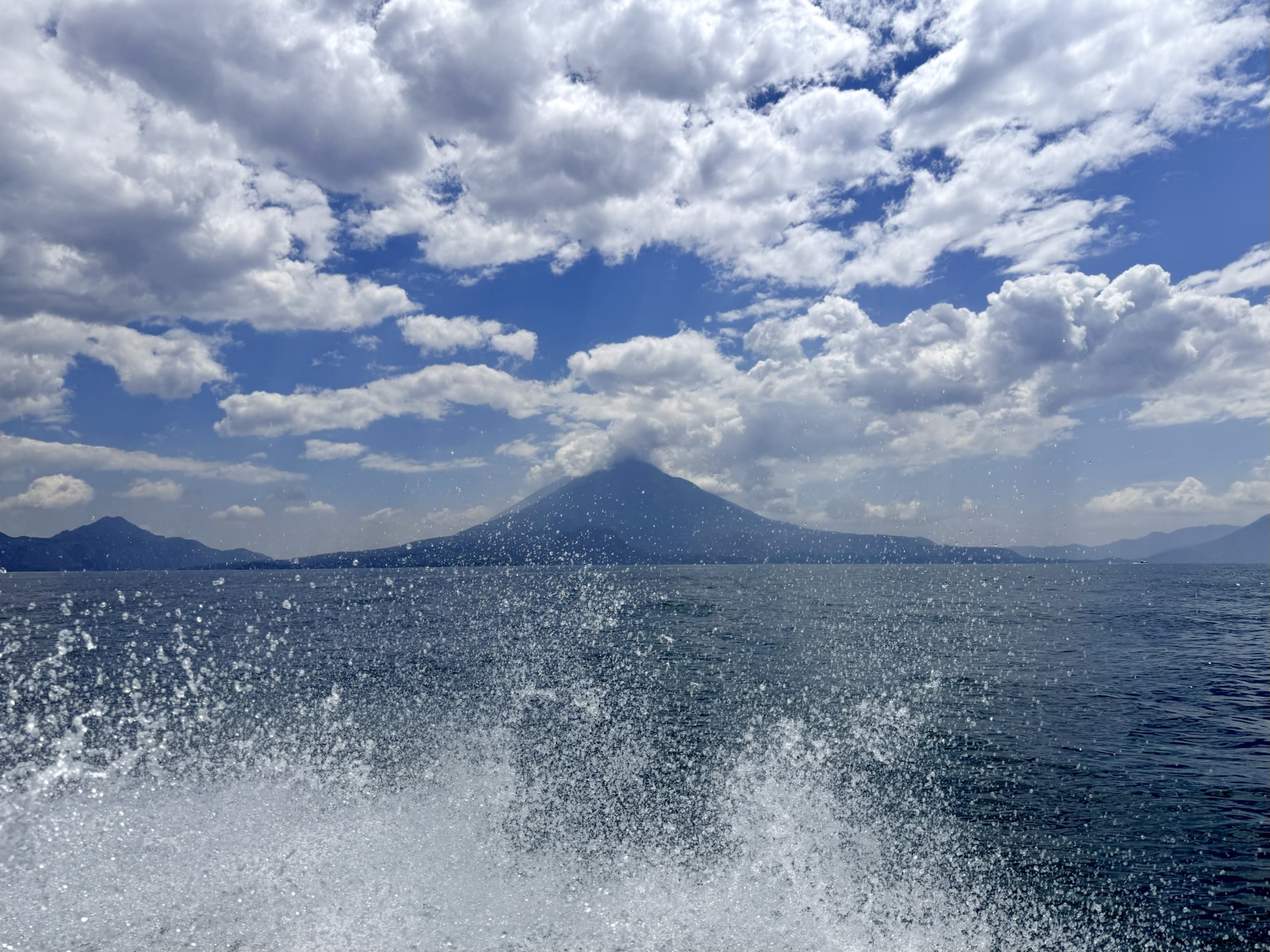
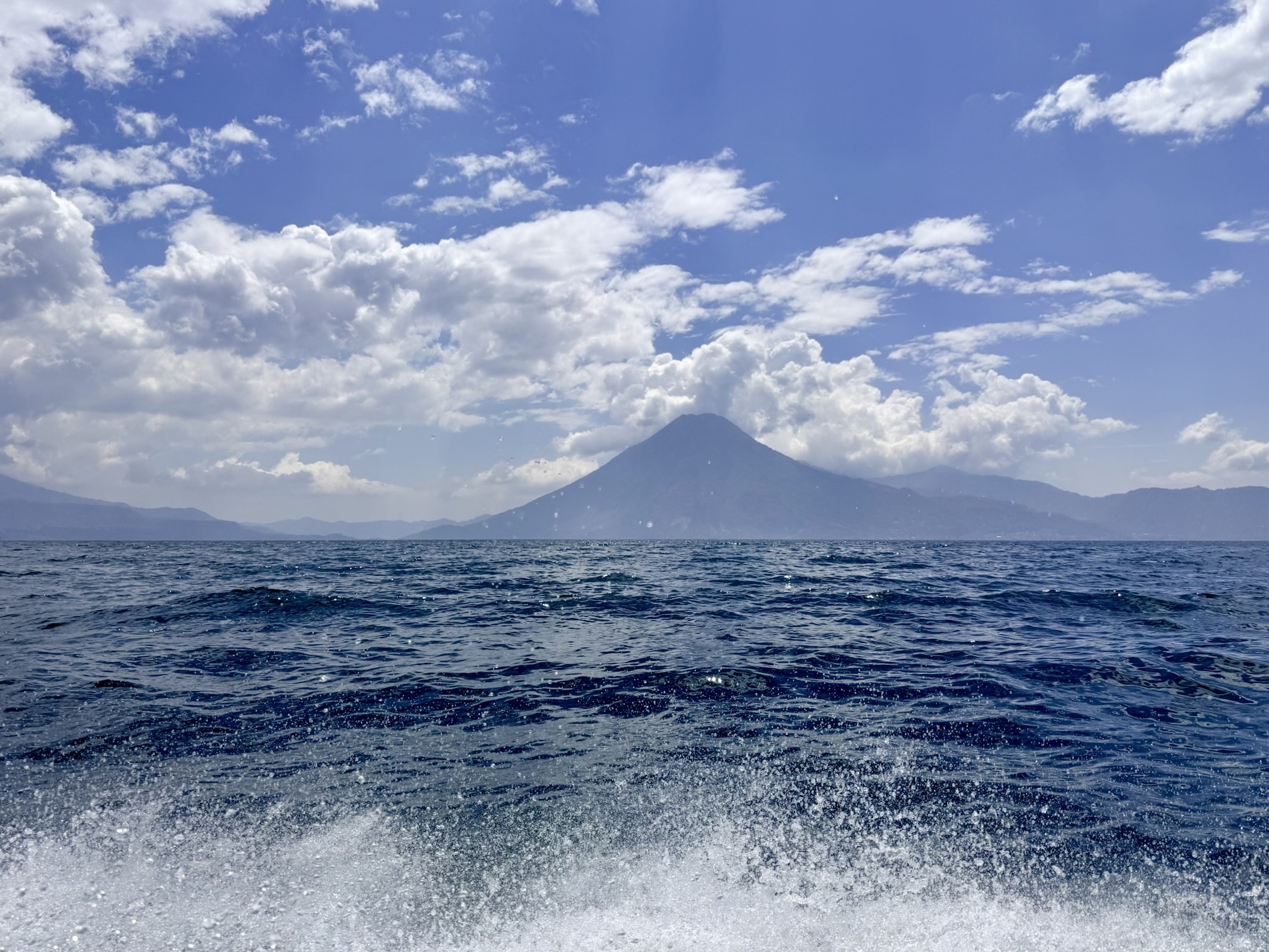
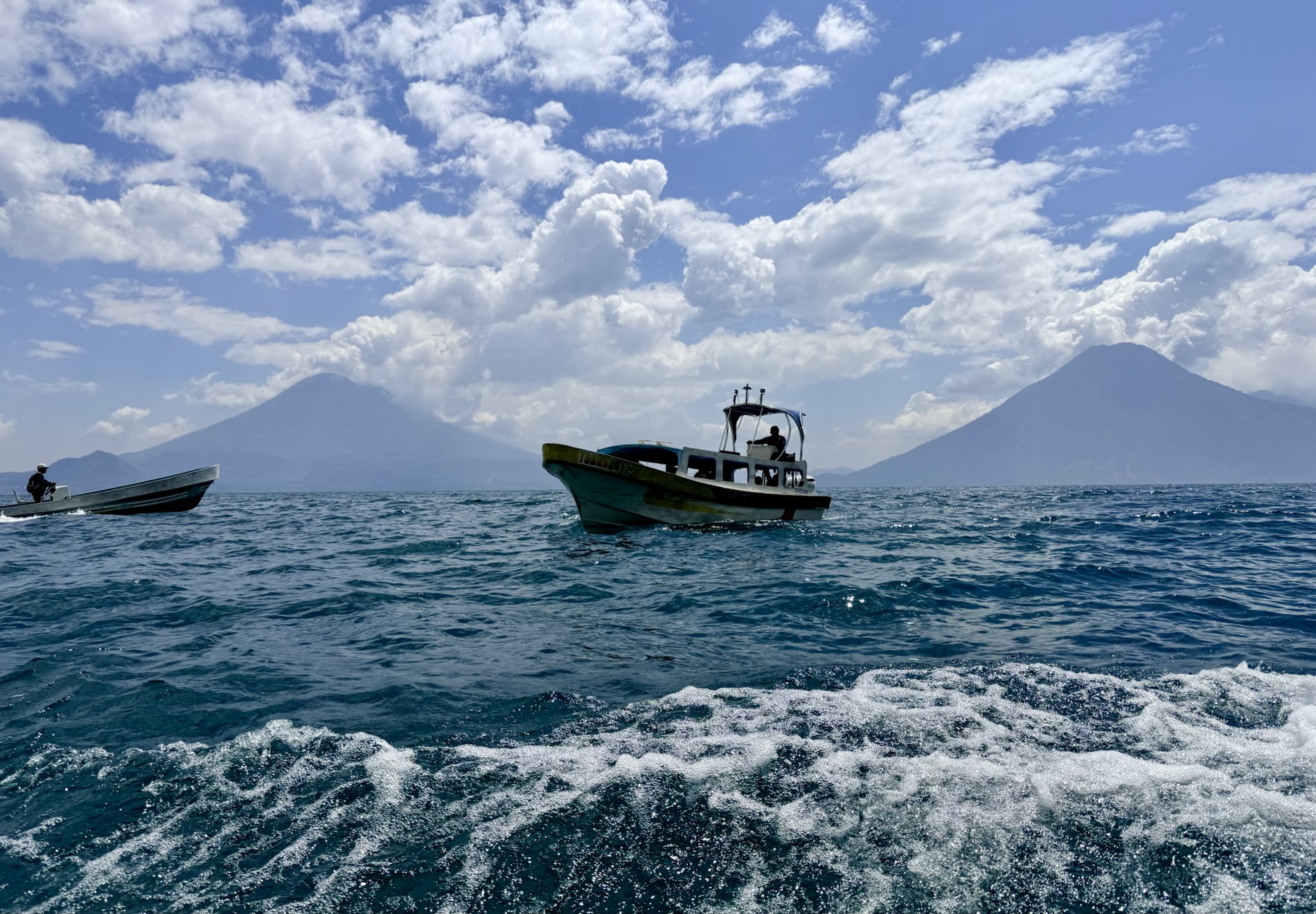
A jarring water taxi, packed with tourists, sprays its wake
into volcano shapes mimicking the real volcanoes on the far shore.

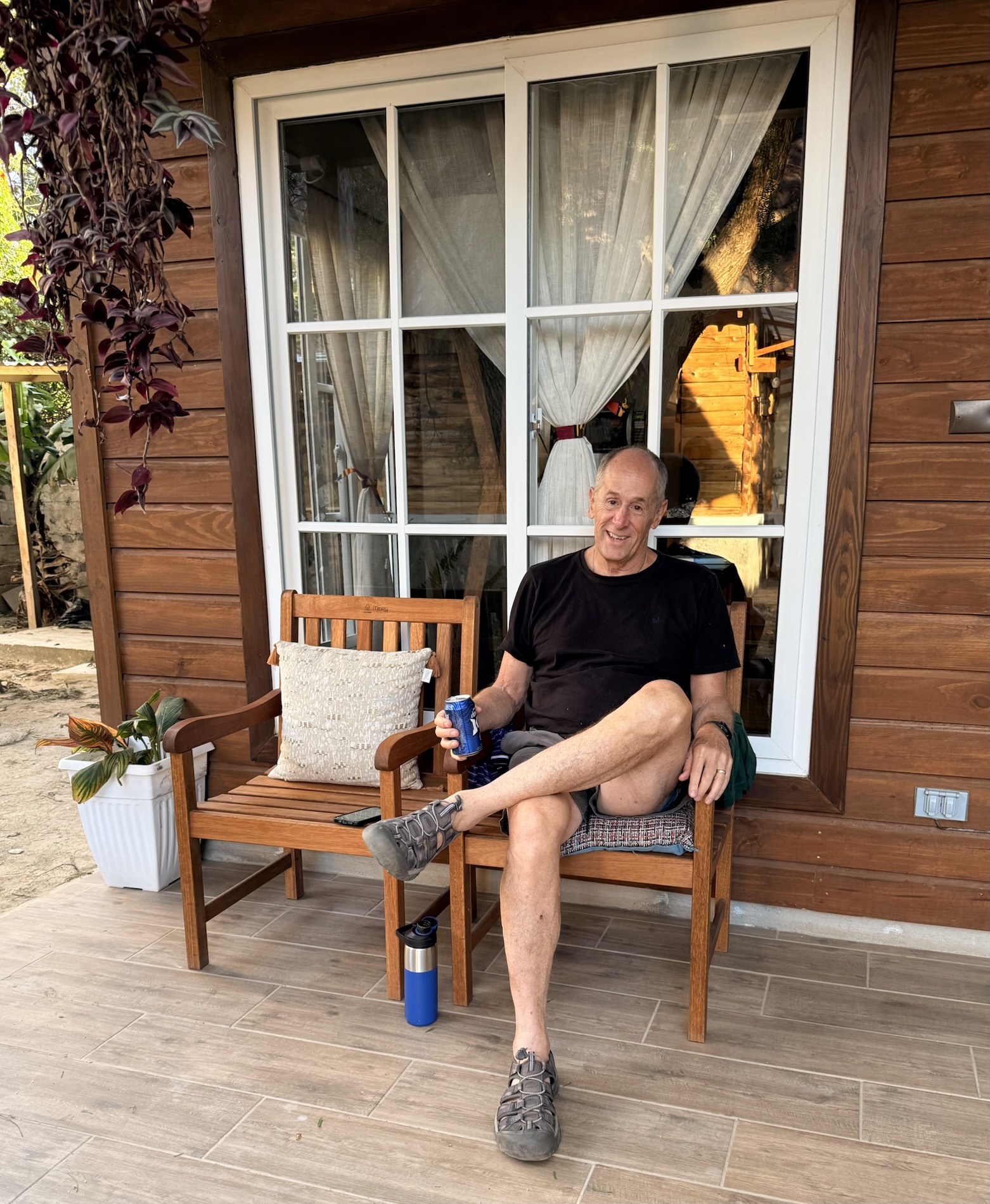
Back in Pana, she sips a beer on the porch with her husband
in the encroaching evening, infused with indigenous voices and customs.
She's filled with a deep foreboding of the demise of the  "other,"
who no one makes an effort to understand.

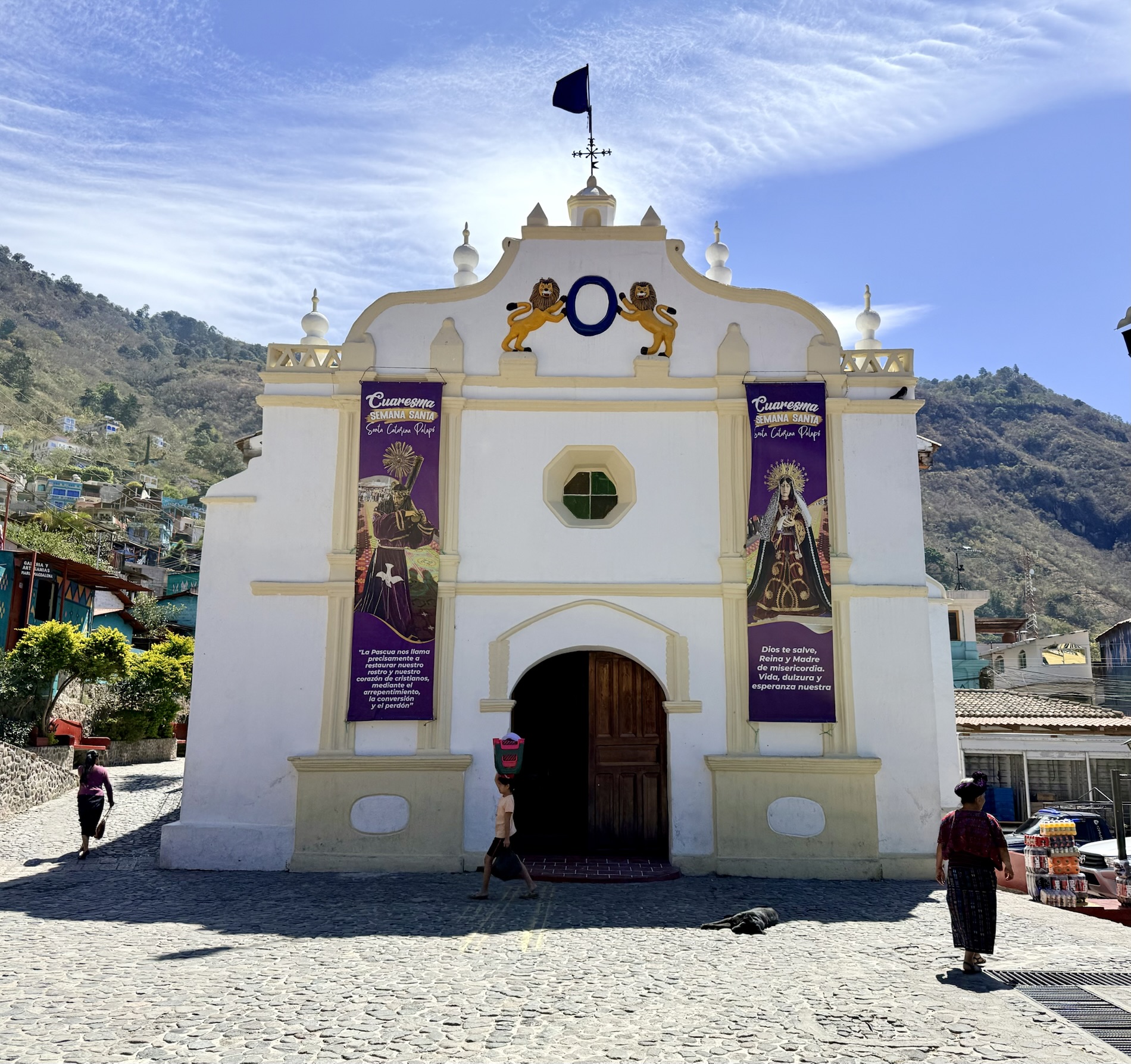
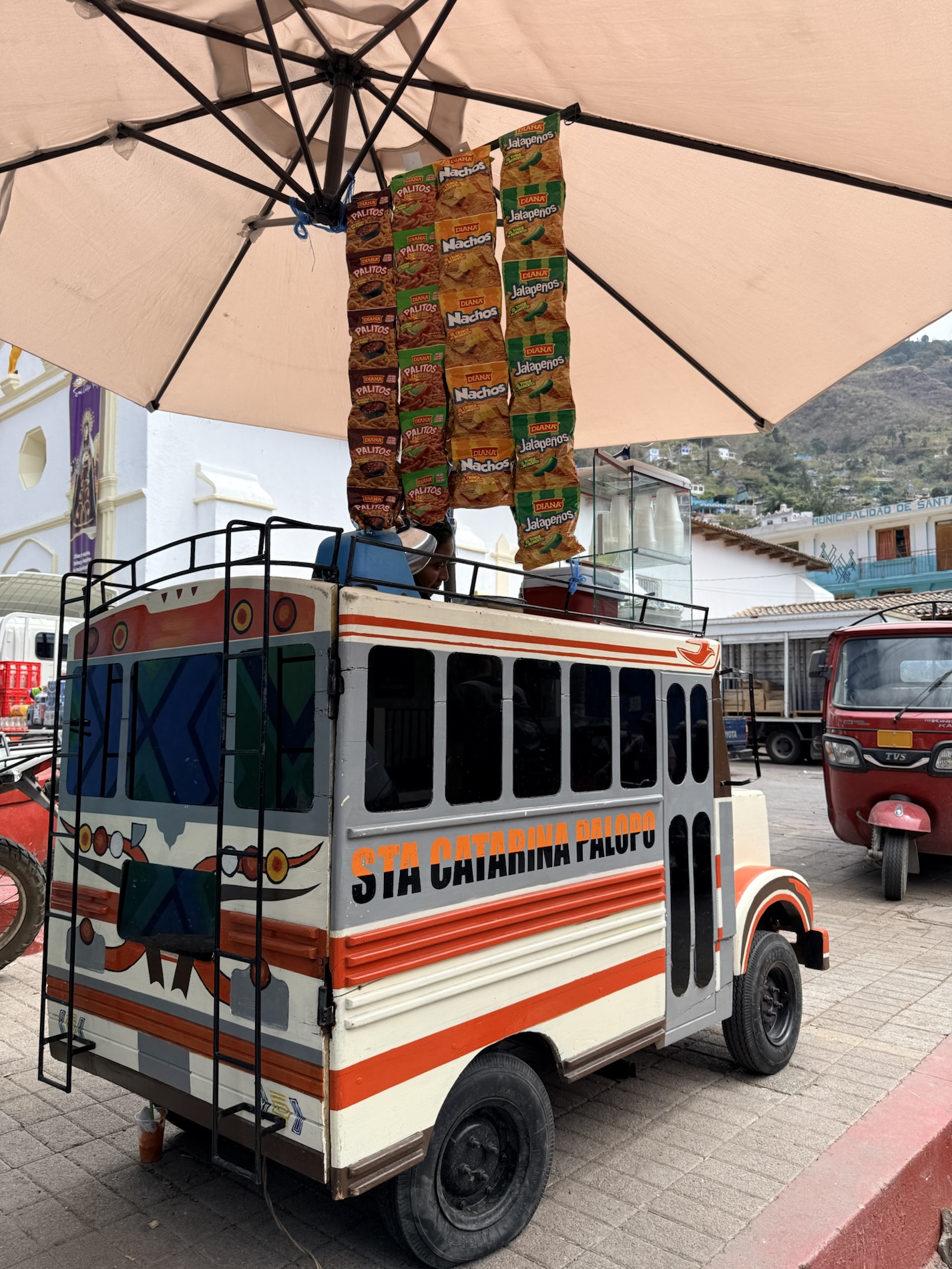
The last day, a tuk-tuk takes her east to Santa Catarina Palopó
where she says a prayer in the church for her brother in the hospital and
for the Iranians who are being slaughtered by two hateful old men

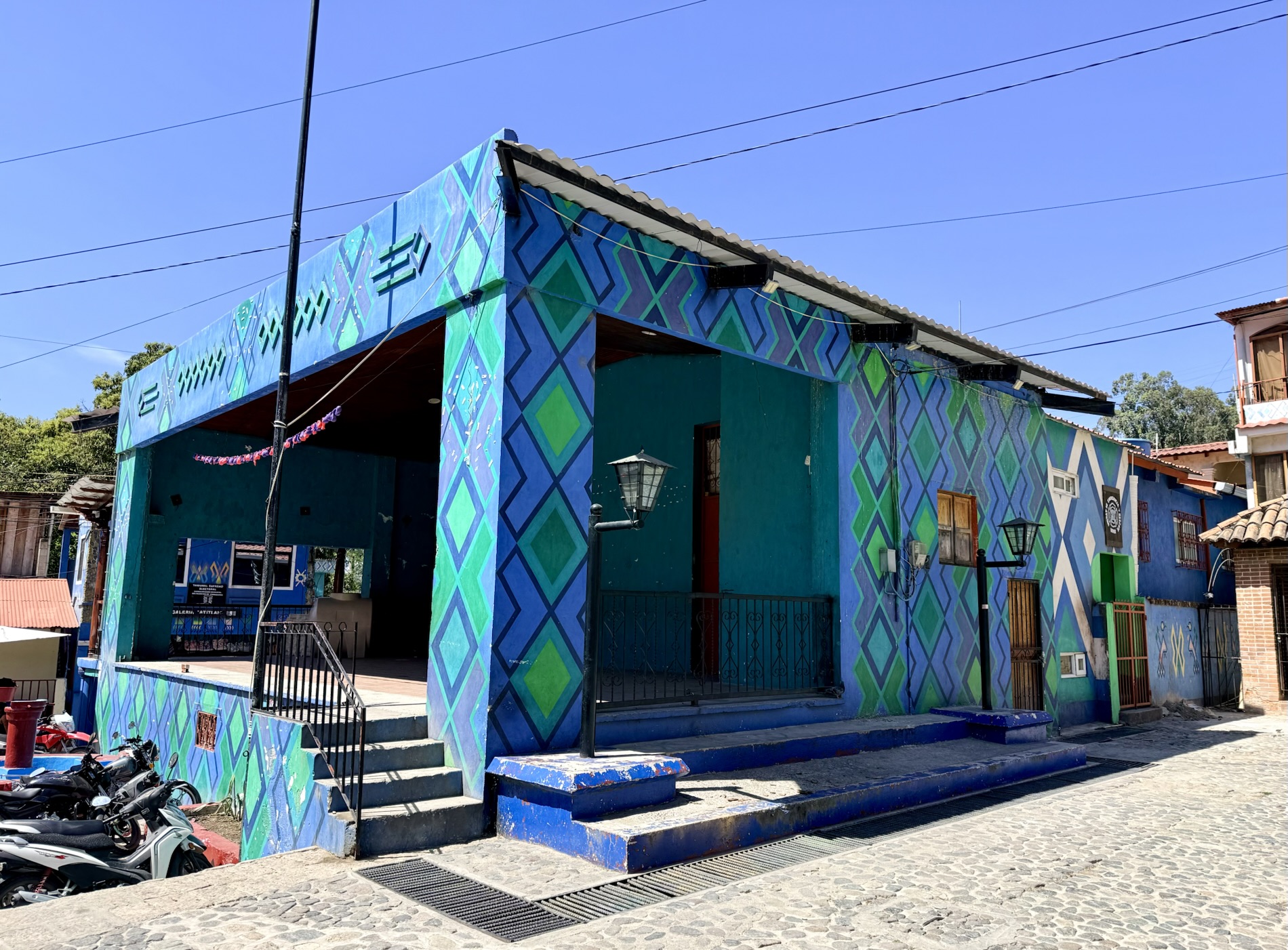
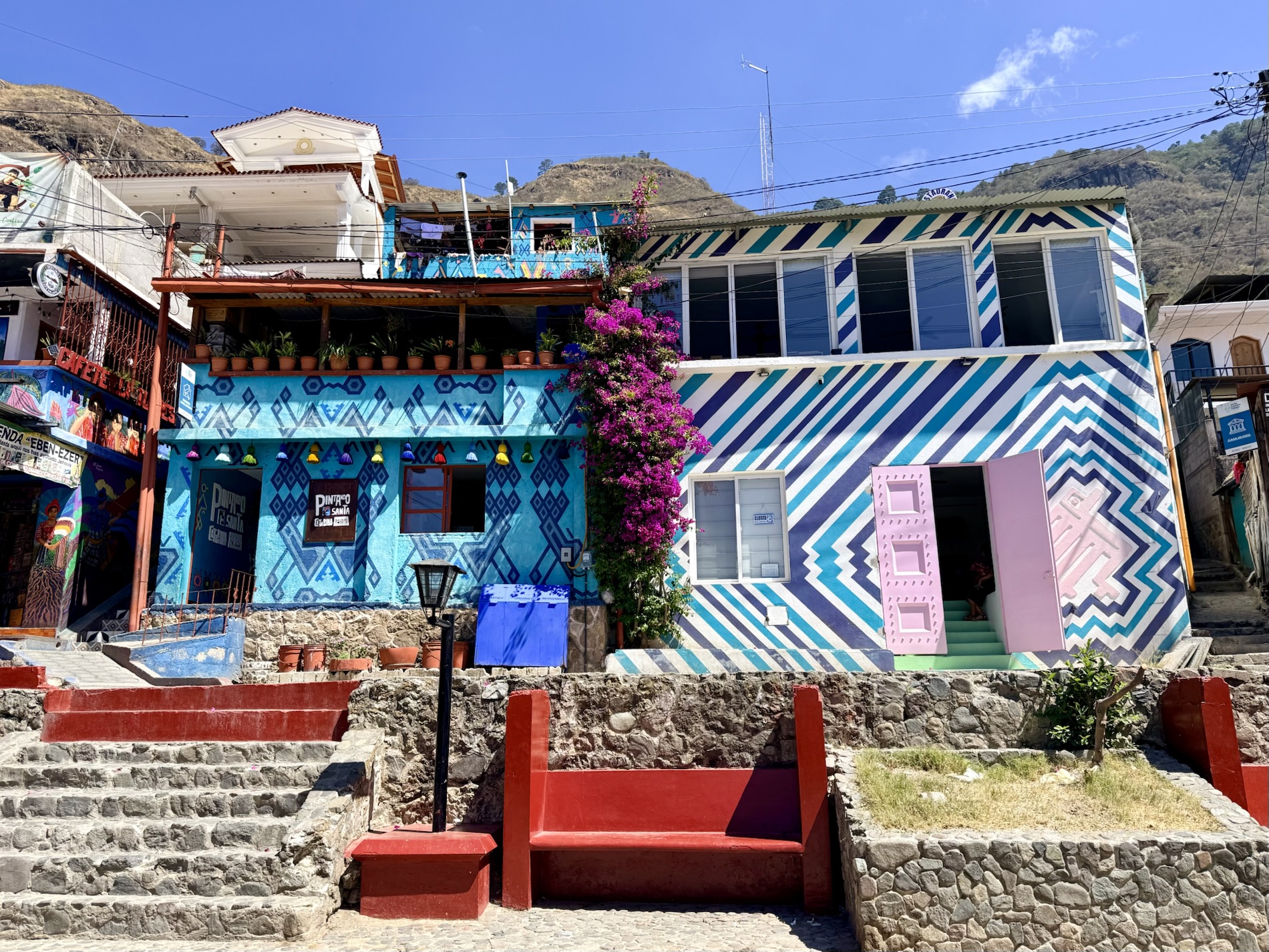
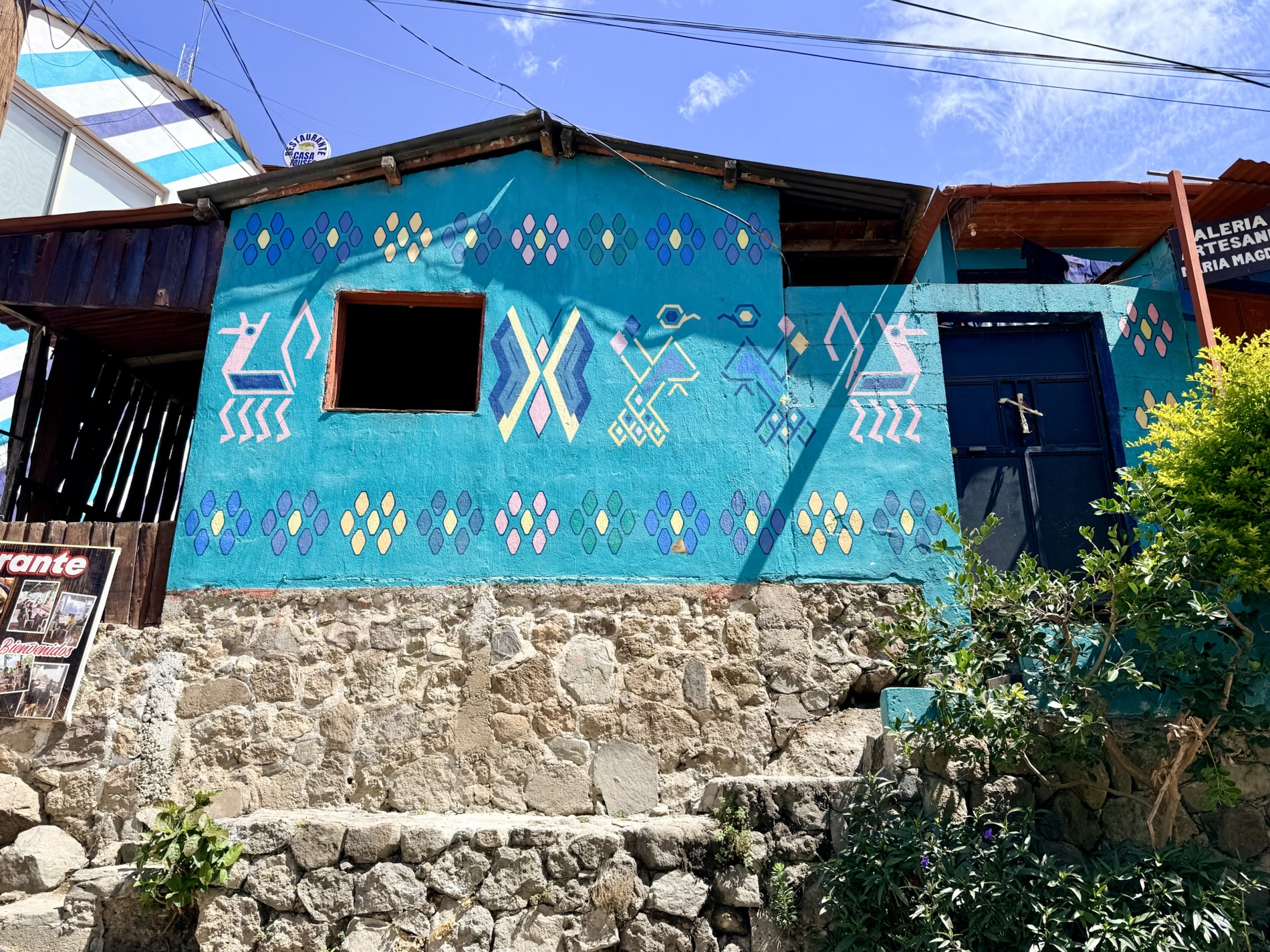
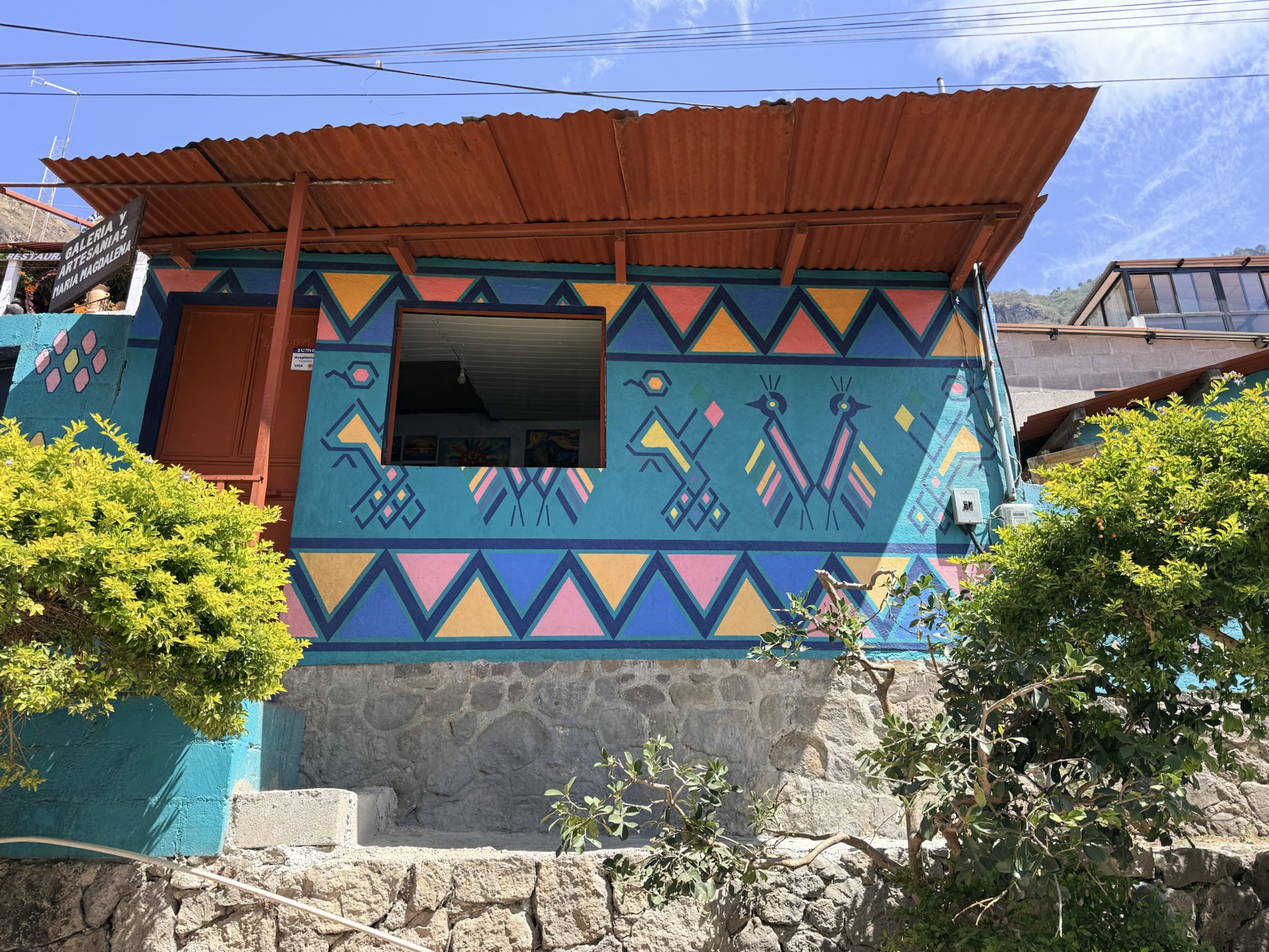
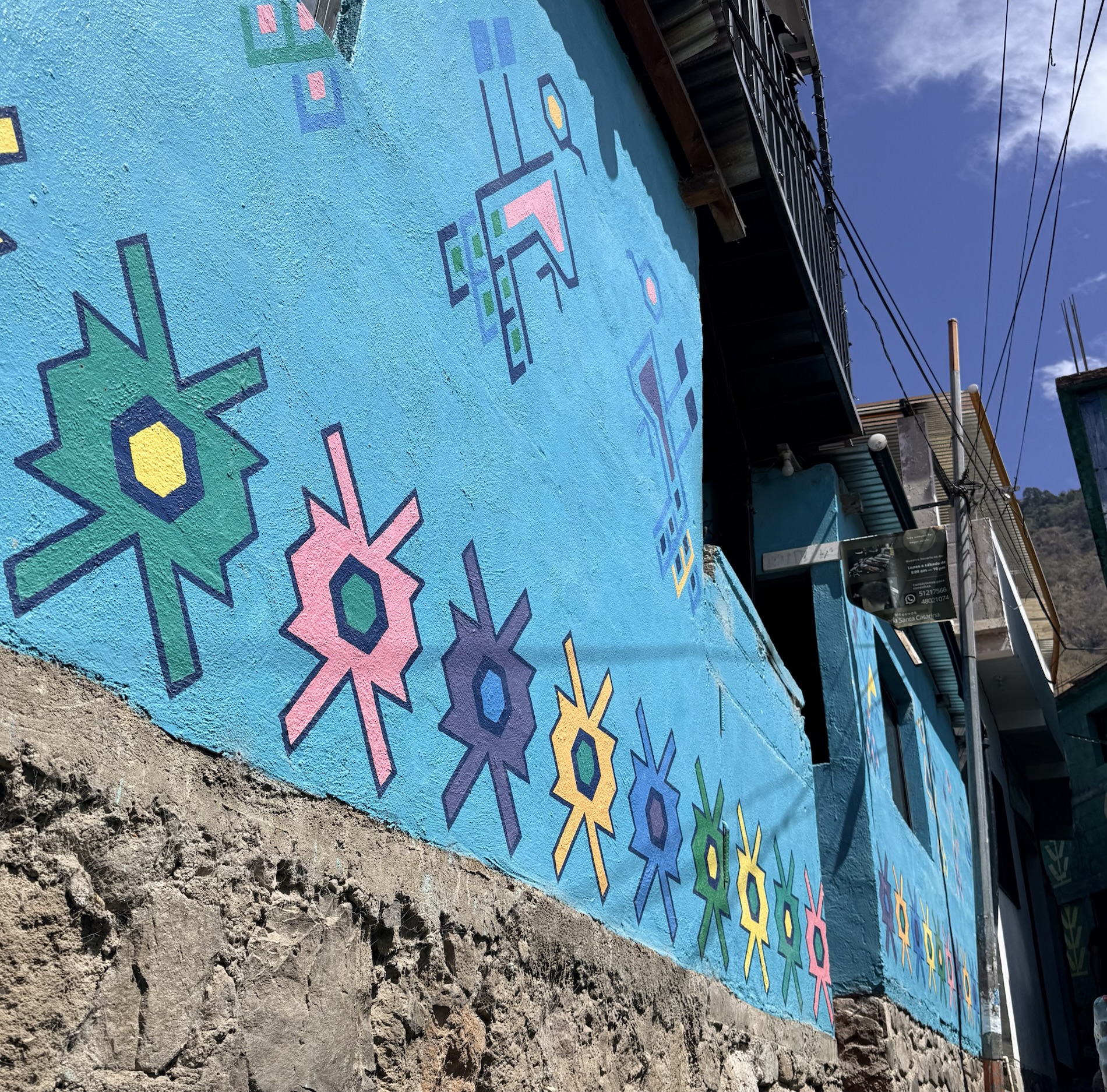
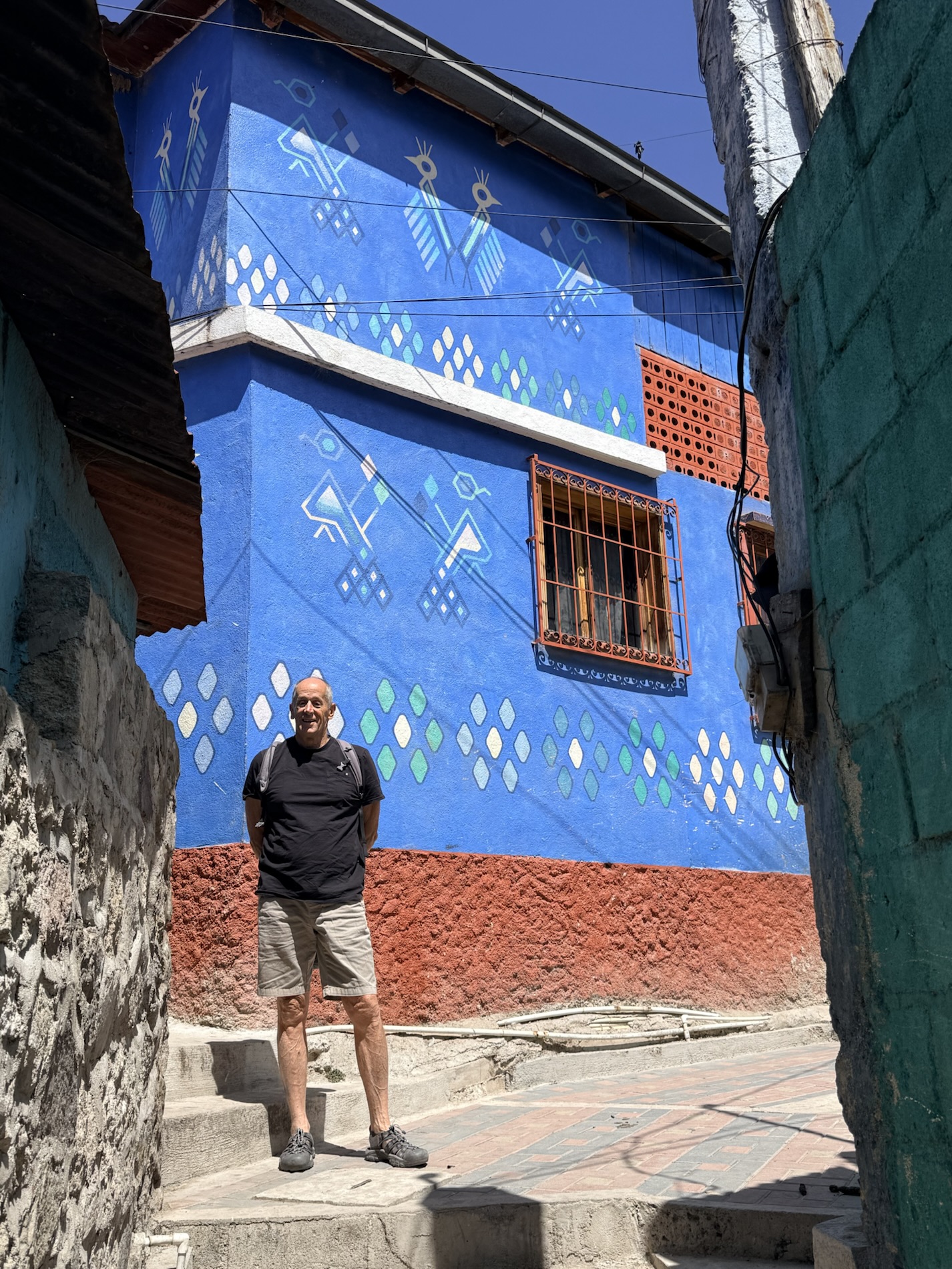
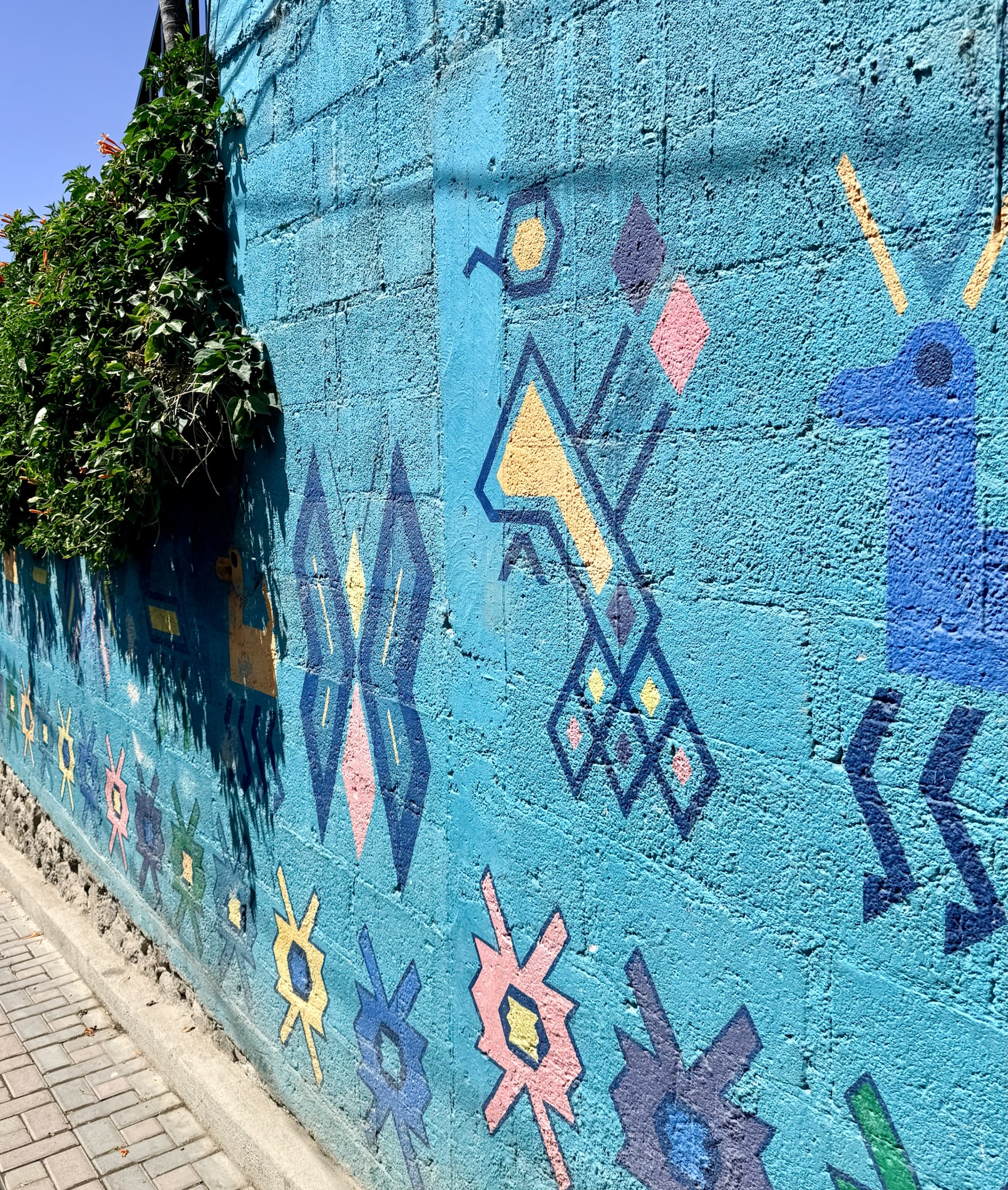
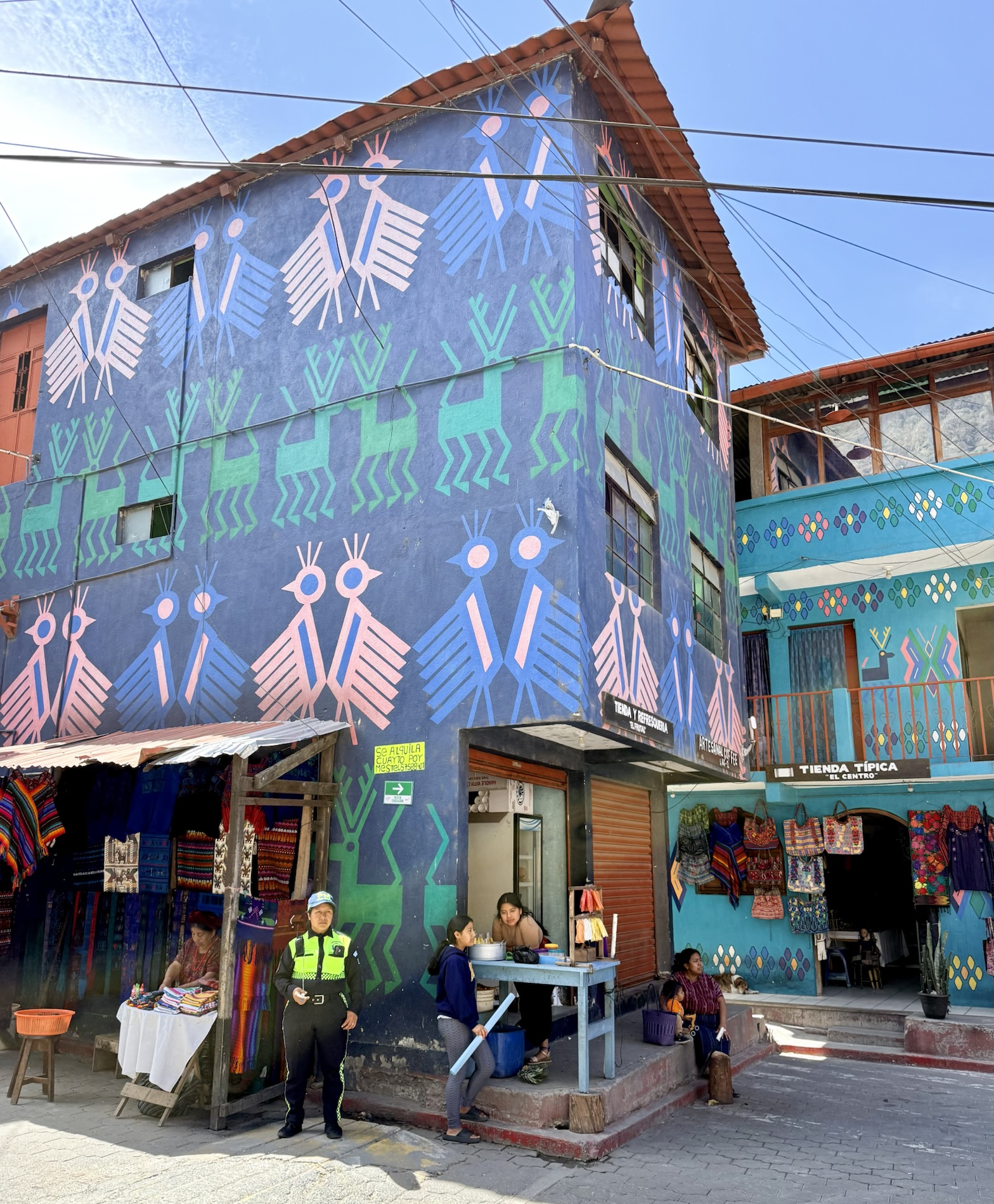
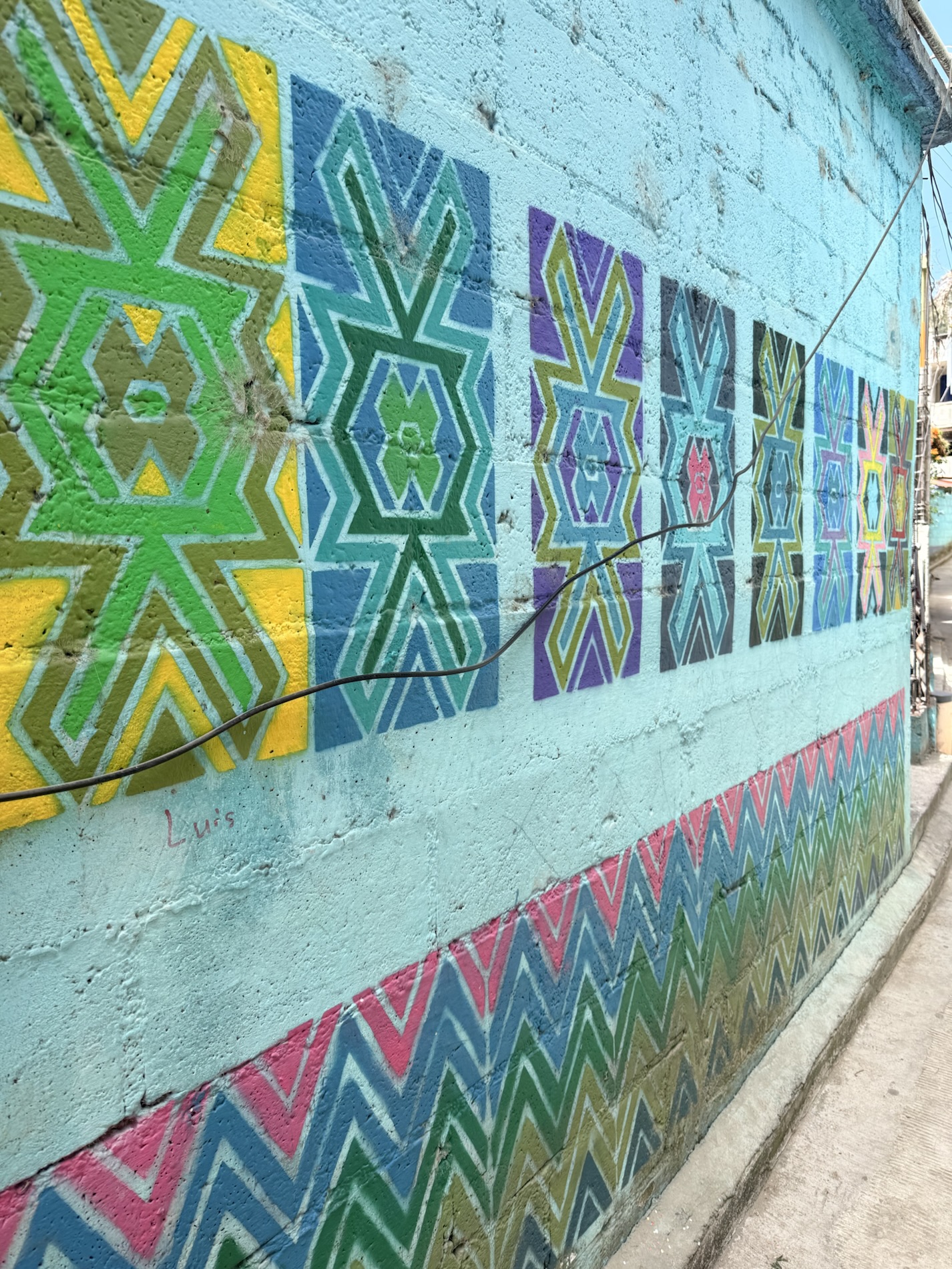
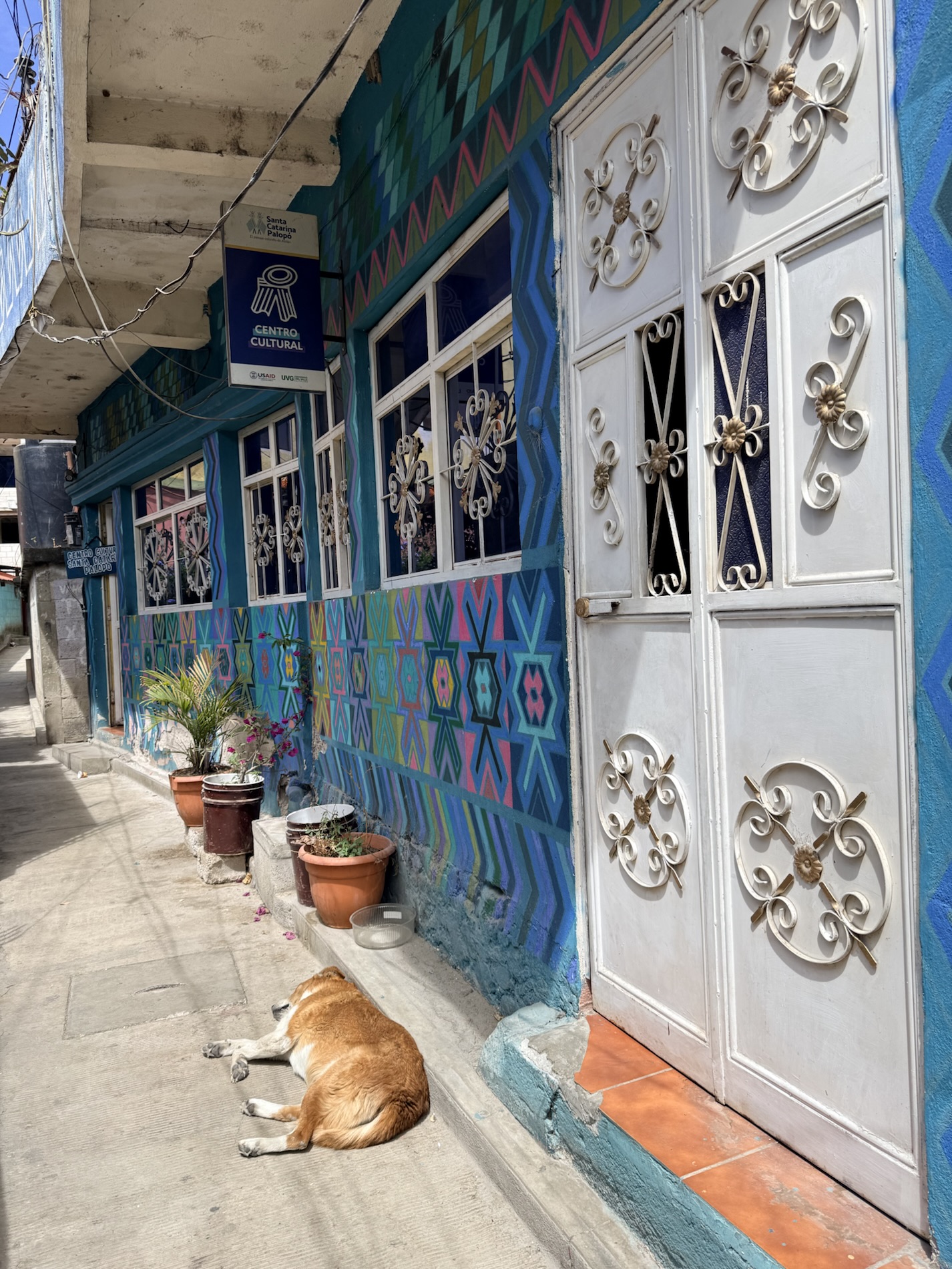
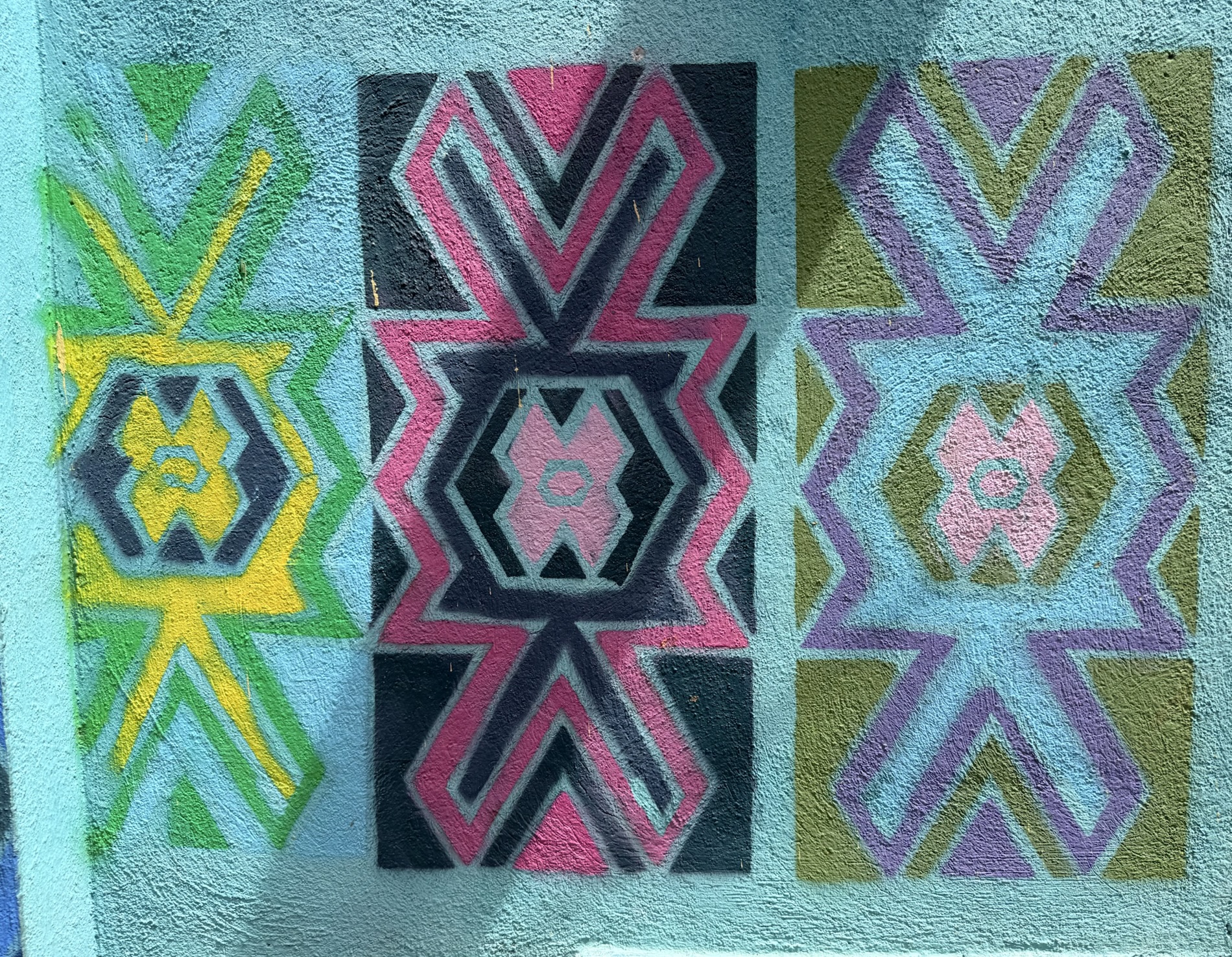
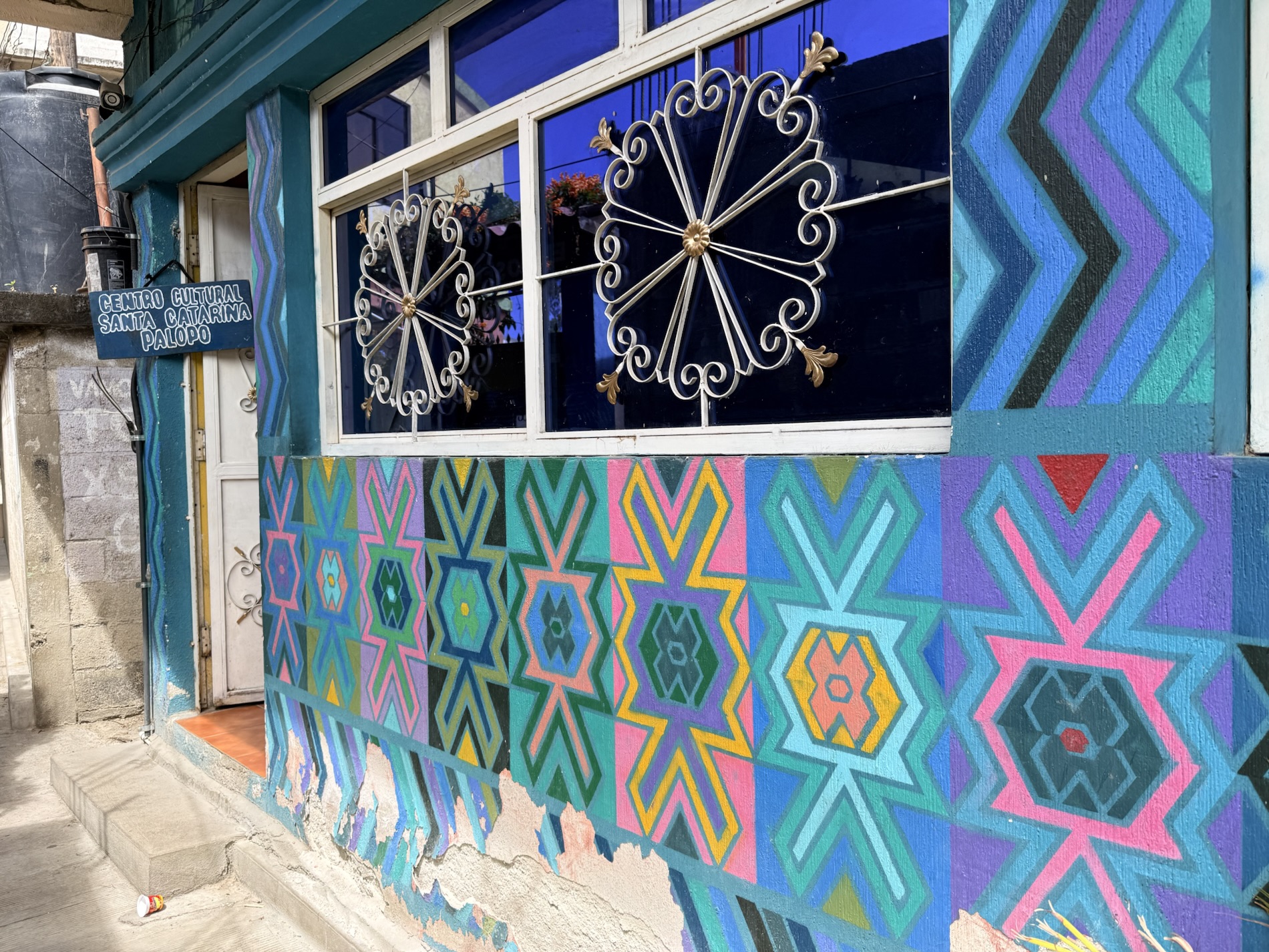
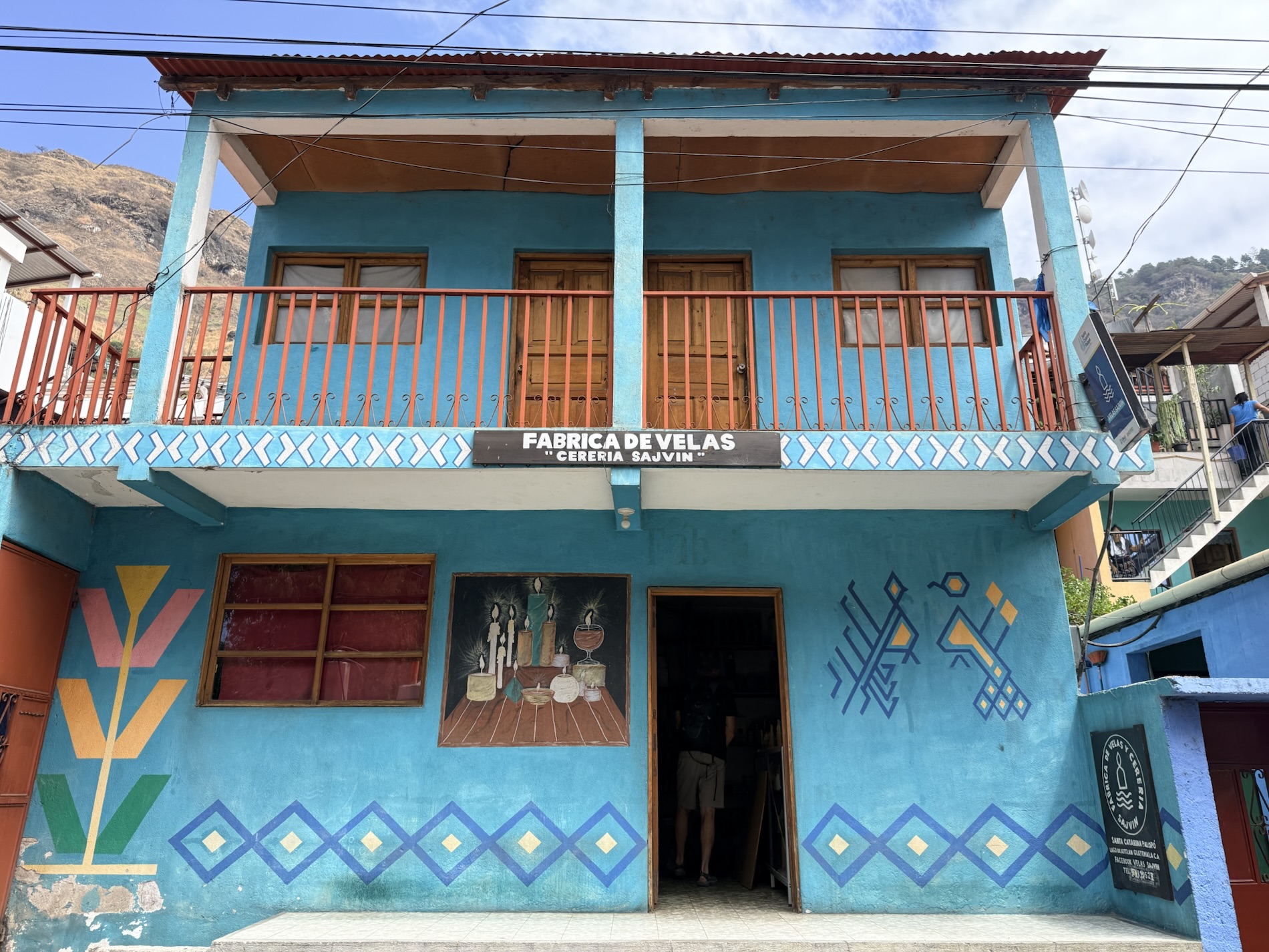
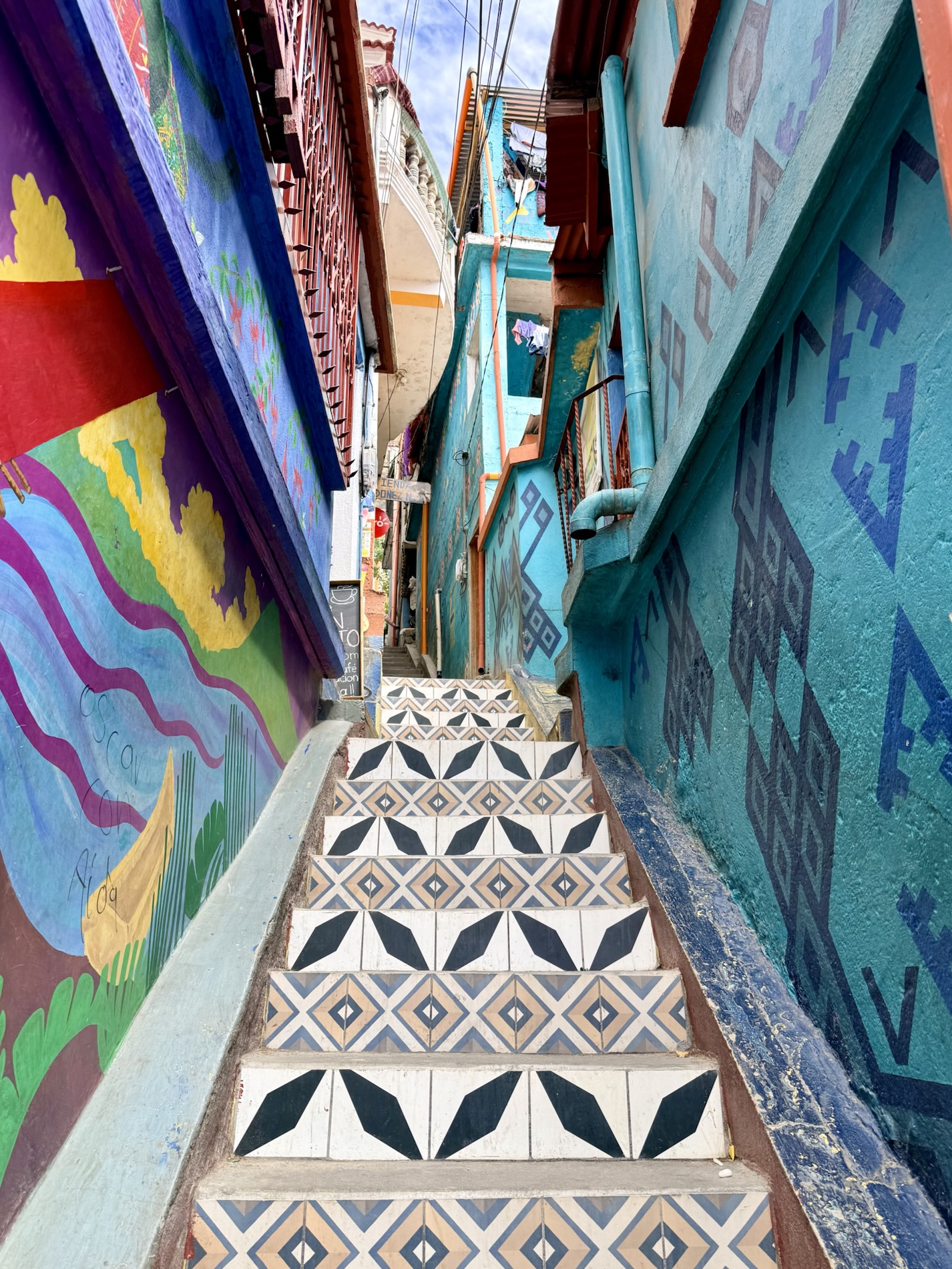
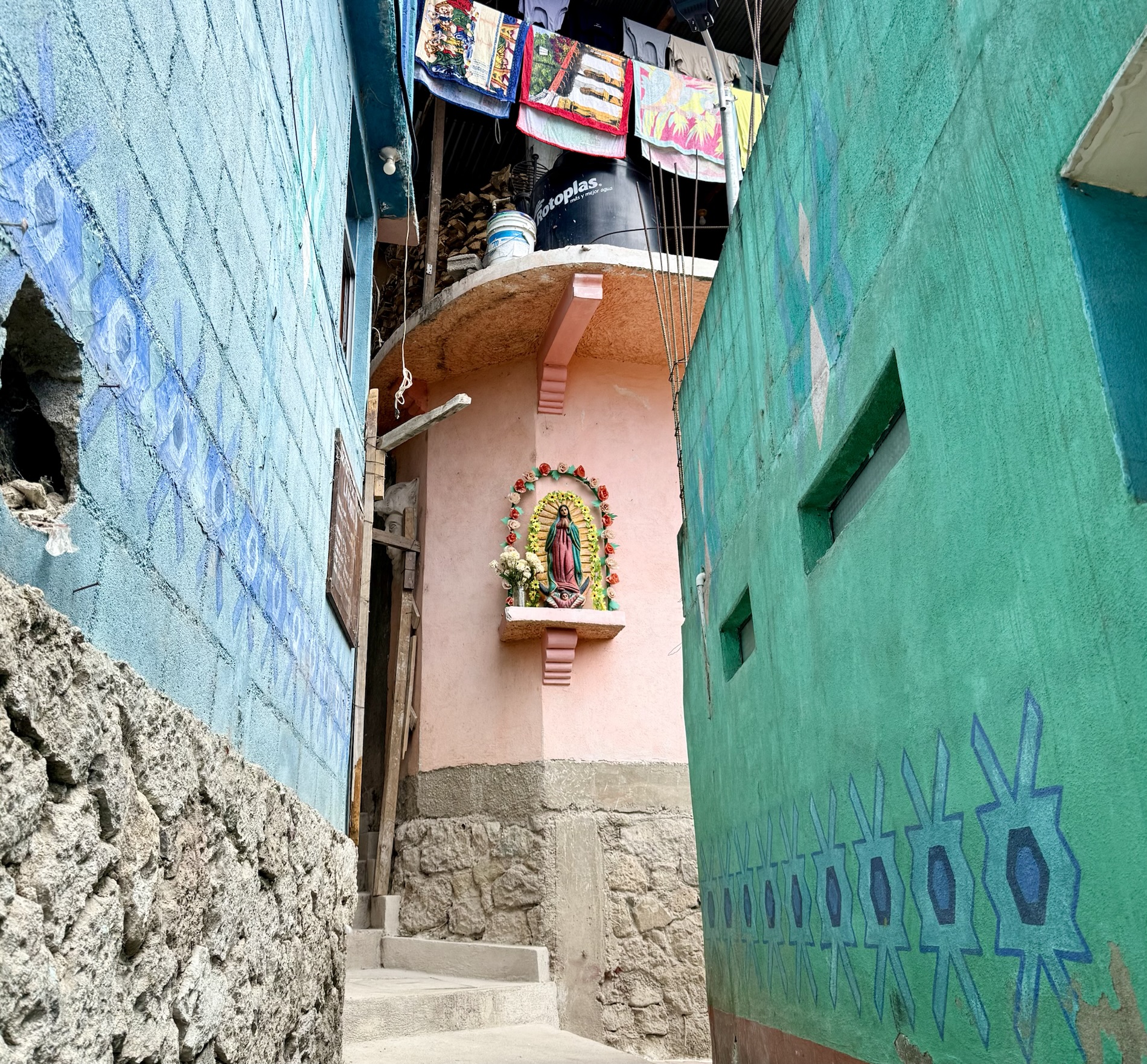
who are dizzy with power. She wanders among the peaceful blue buildings
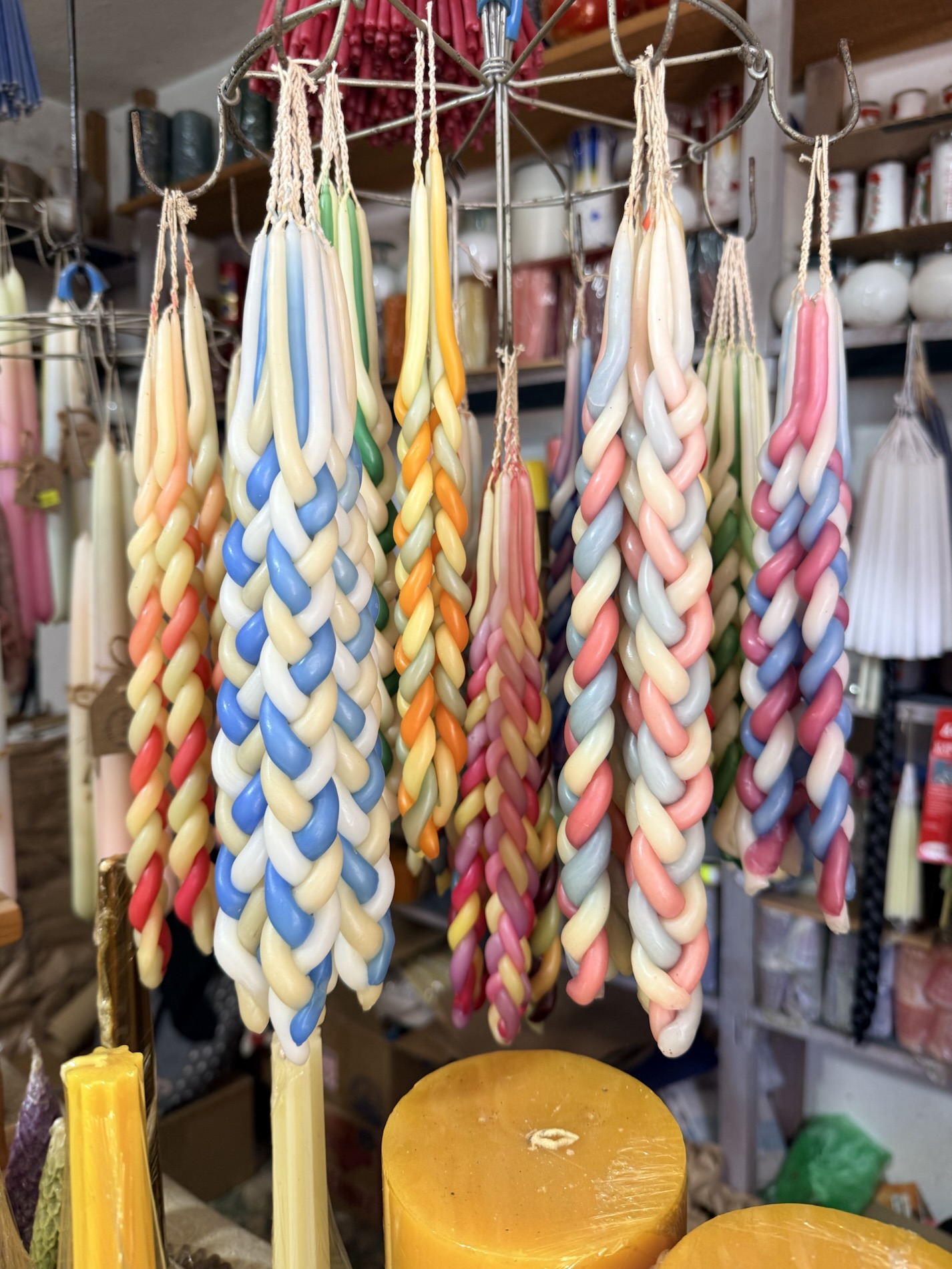
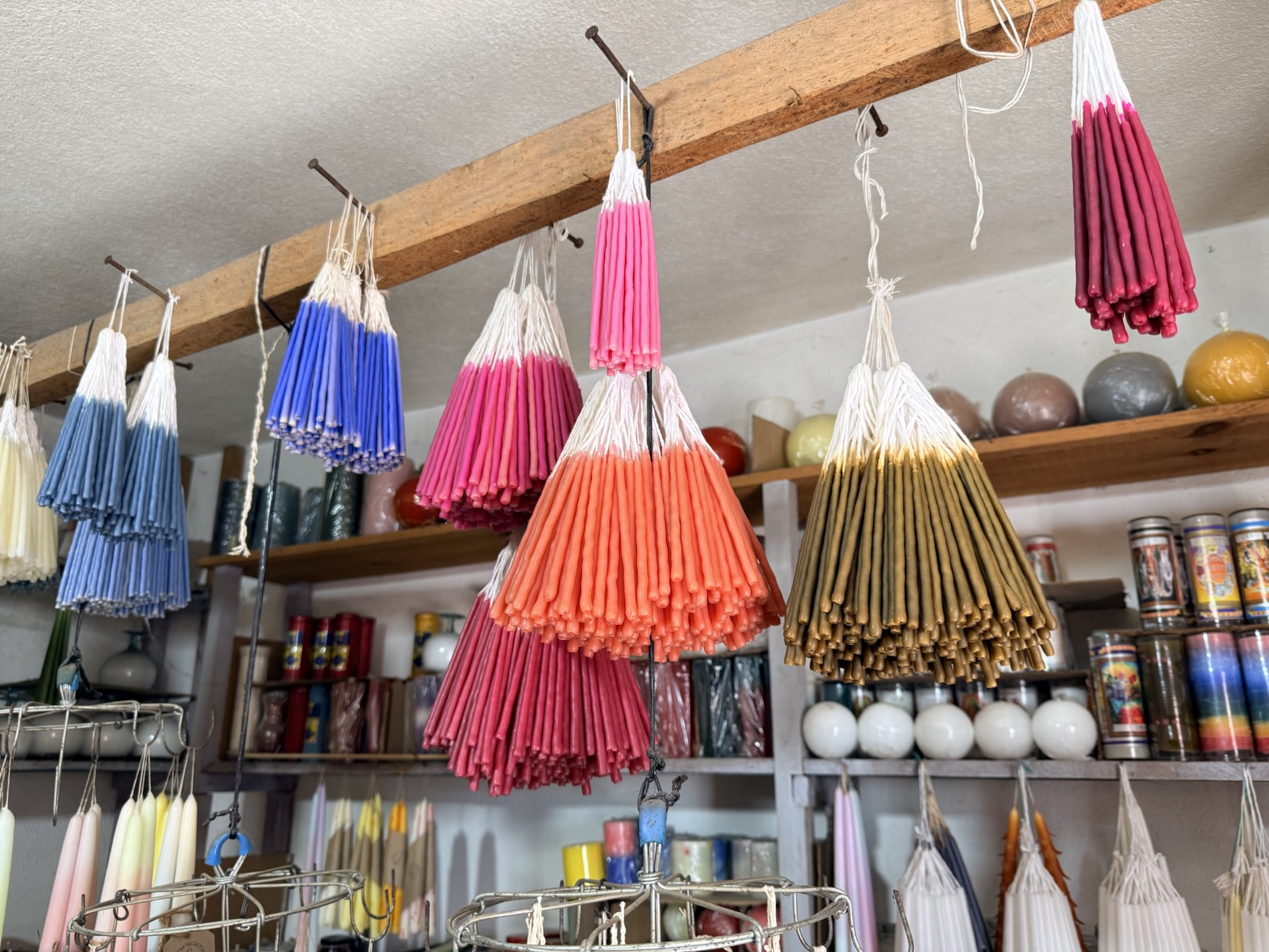
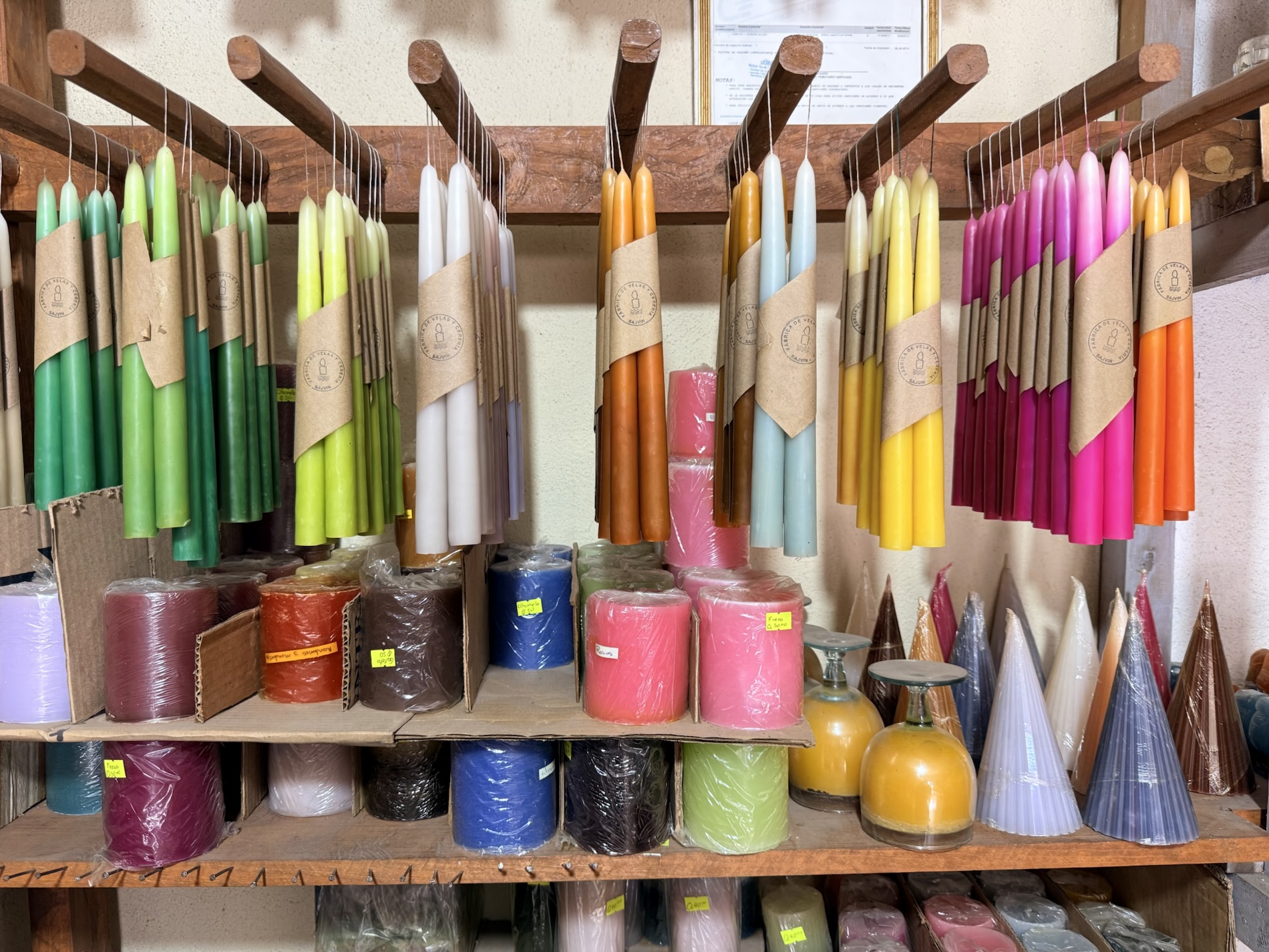
painted with Mayan symbols. In a candle factory, rainbows
of twisted and twirled candles hang from rafters in waxen silence.

From Pana again, after slurping ramen noodles,
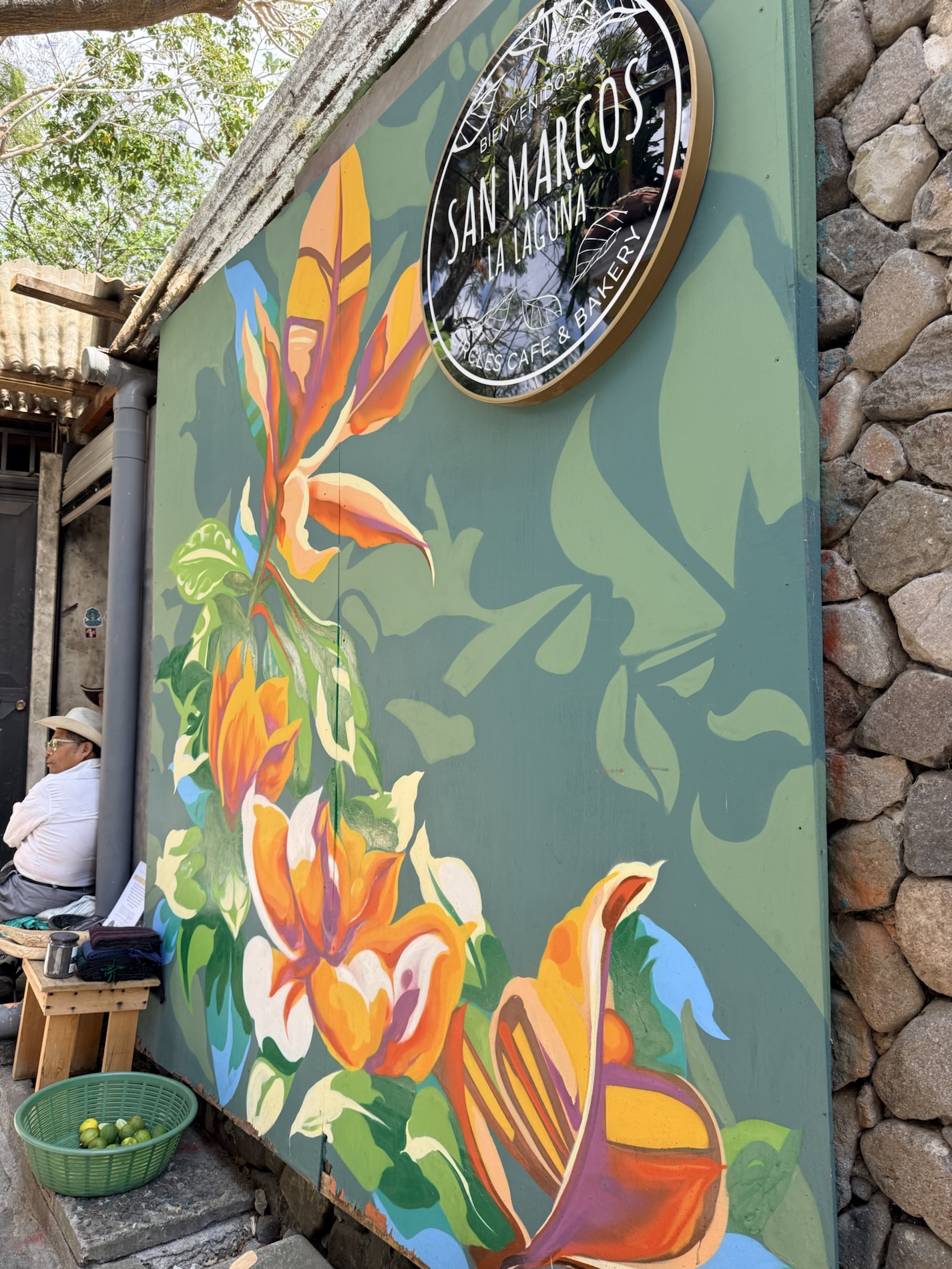
she takes a lancha to San Marcos la Laguna, a place that promises spiritual nurturing
but little of Mayan culture. Anything here is possible: tattoos, yoga, meditation,

sound bathings, cacao ceremonies, full moon dances – even nirvana.
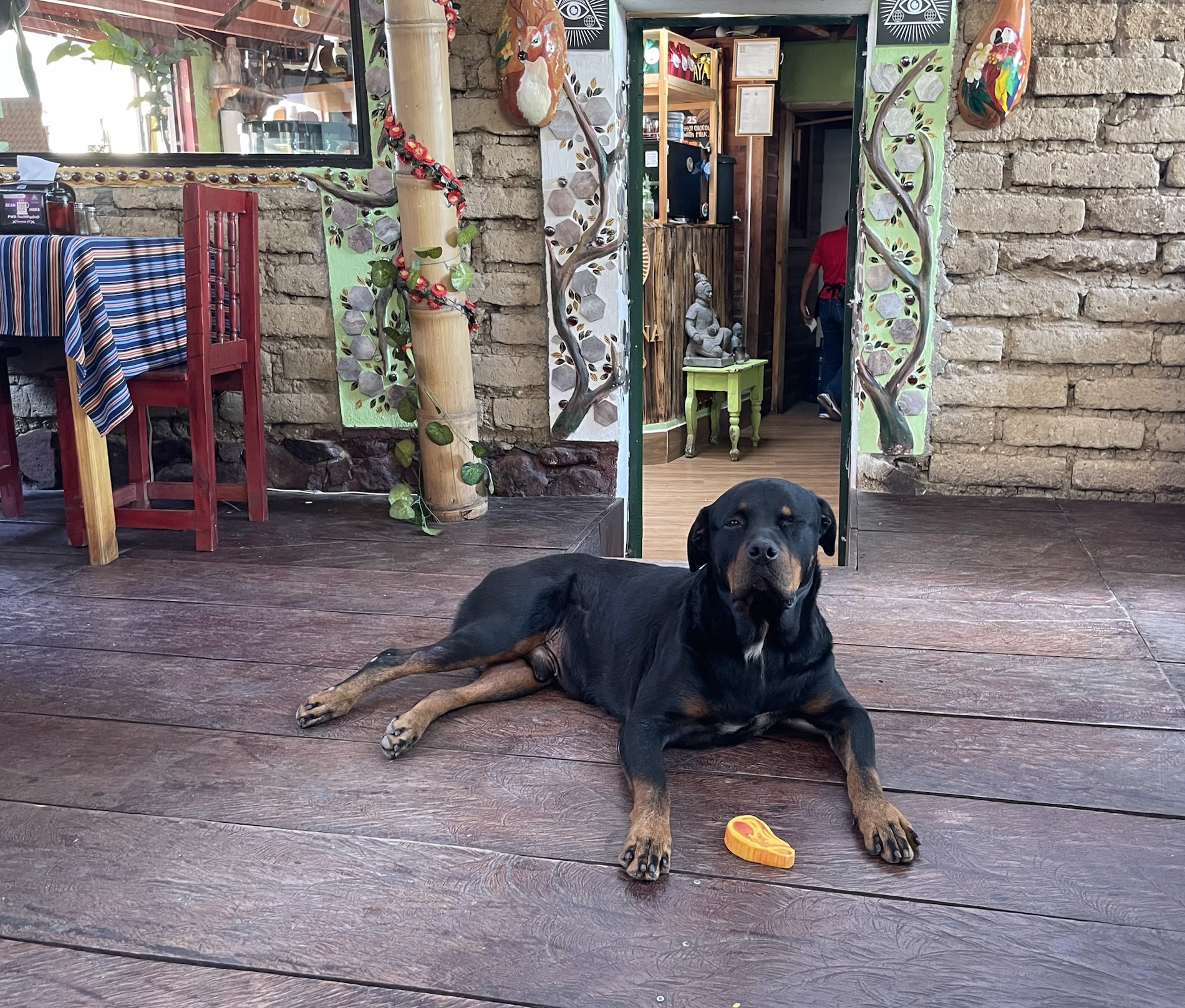
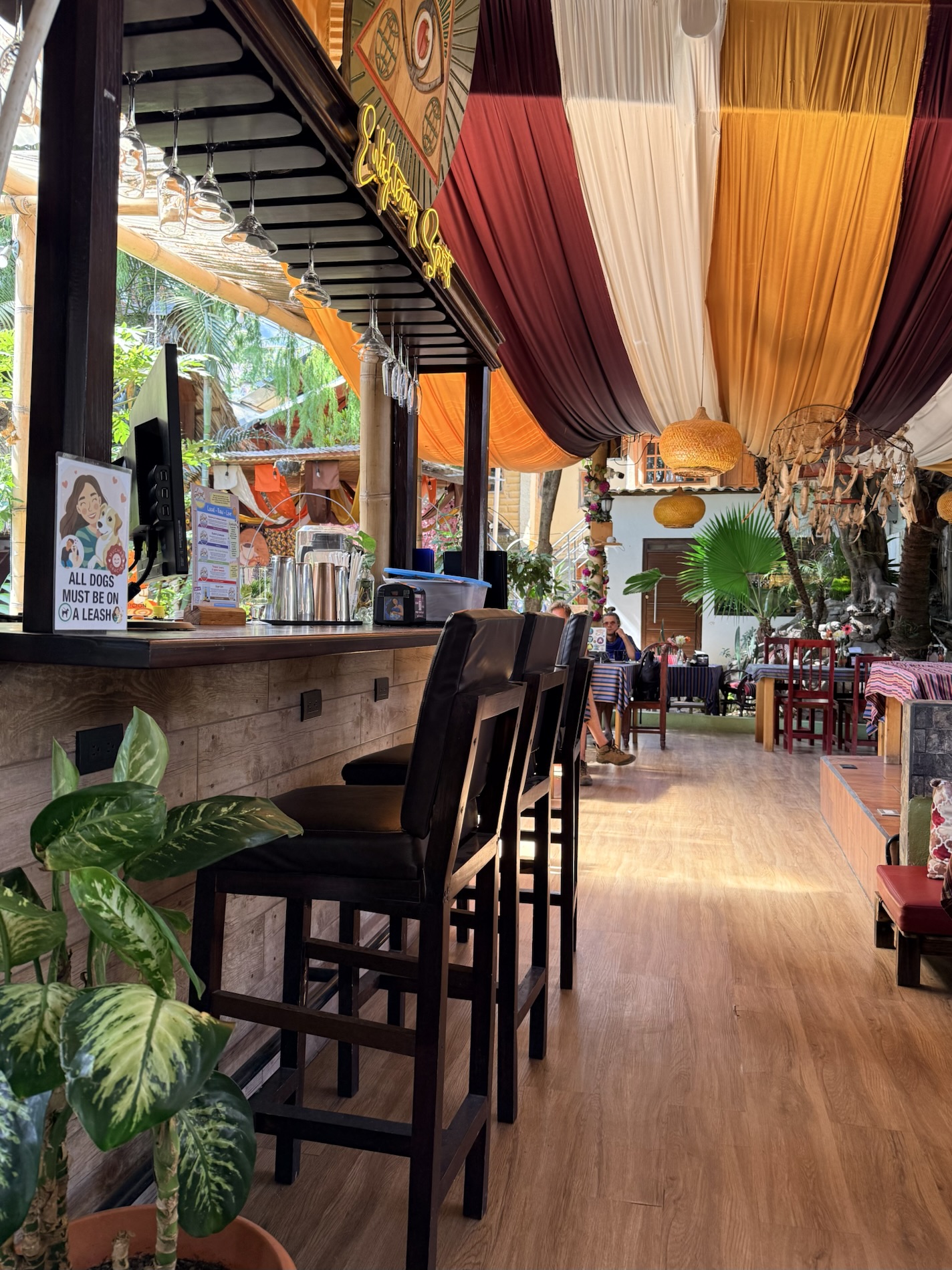
At a “spiritual bakery,” “ordinary” tunes of a “stolen dance” serenade
the huge dog sleeping on the floor and her,
in her embarrassing pale skin.
Notes about the places on the map:
Lago de Atitlán
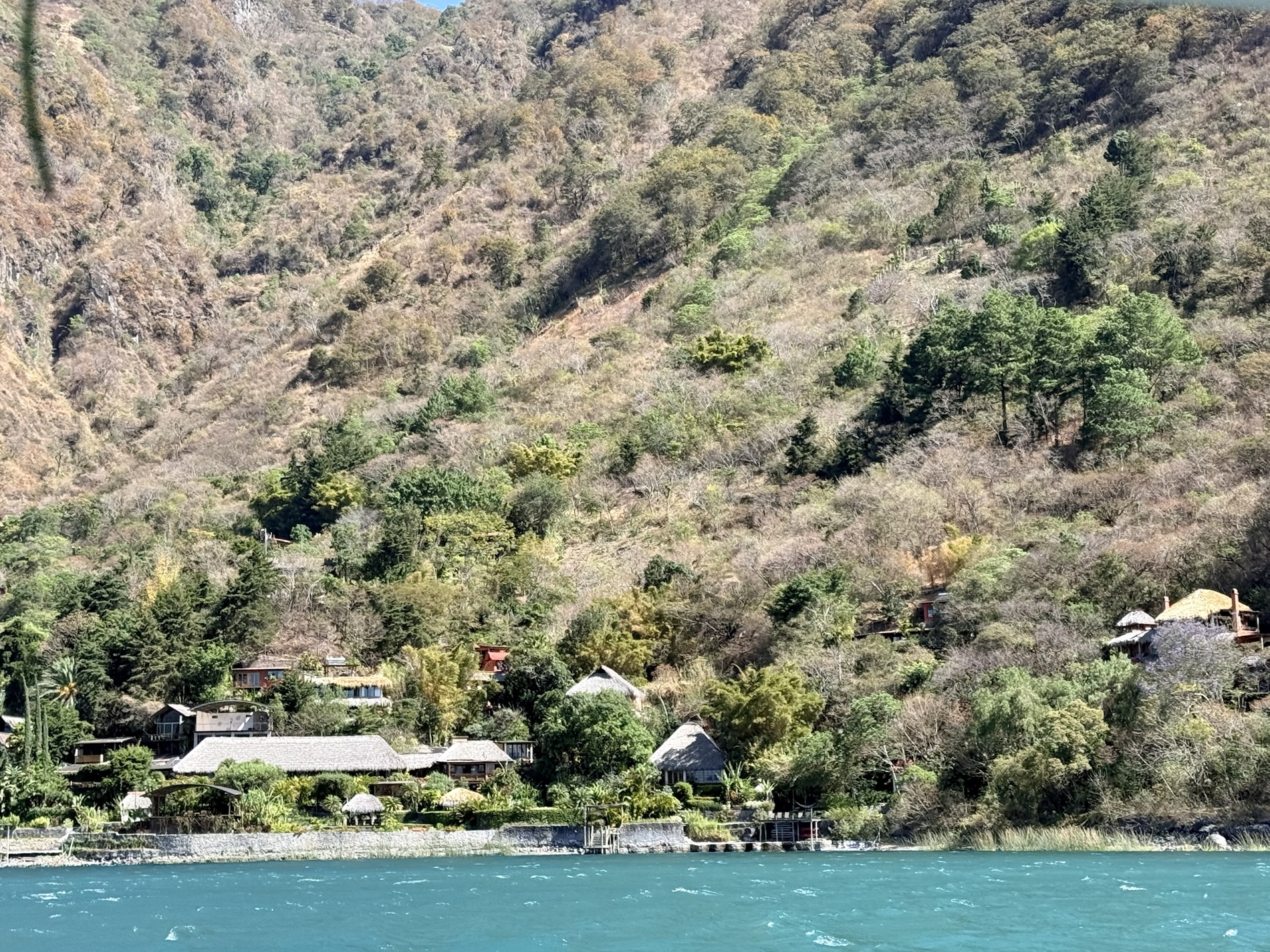
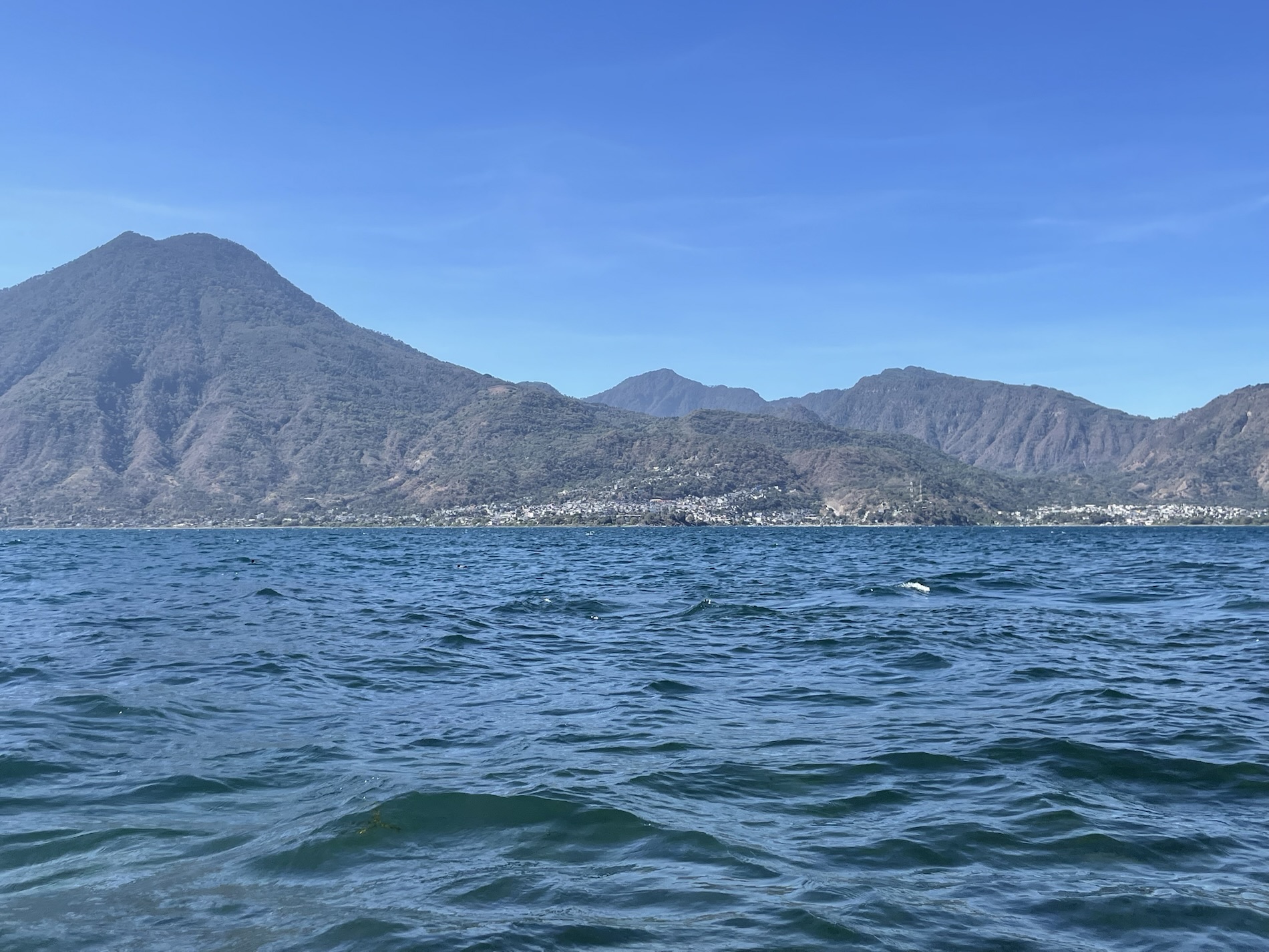
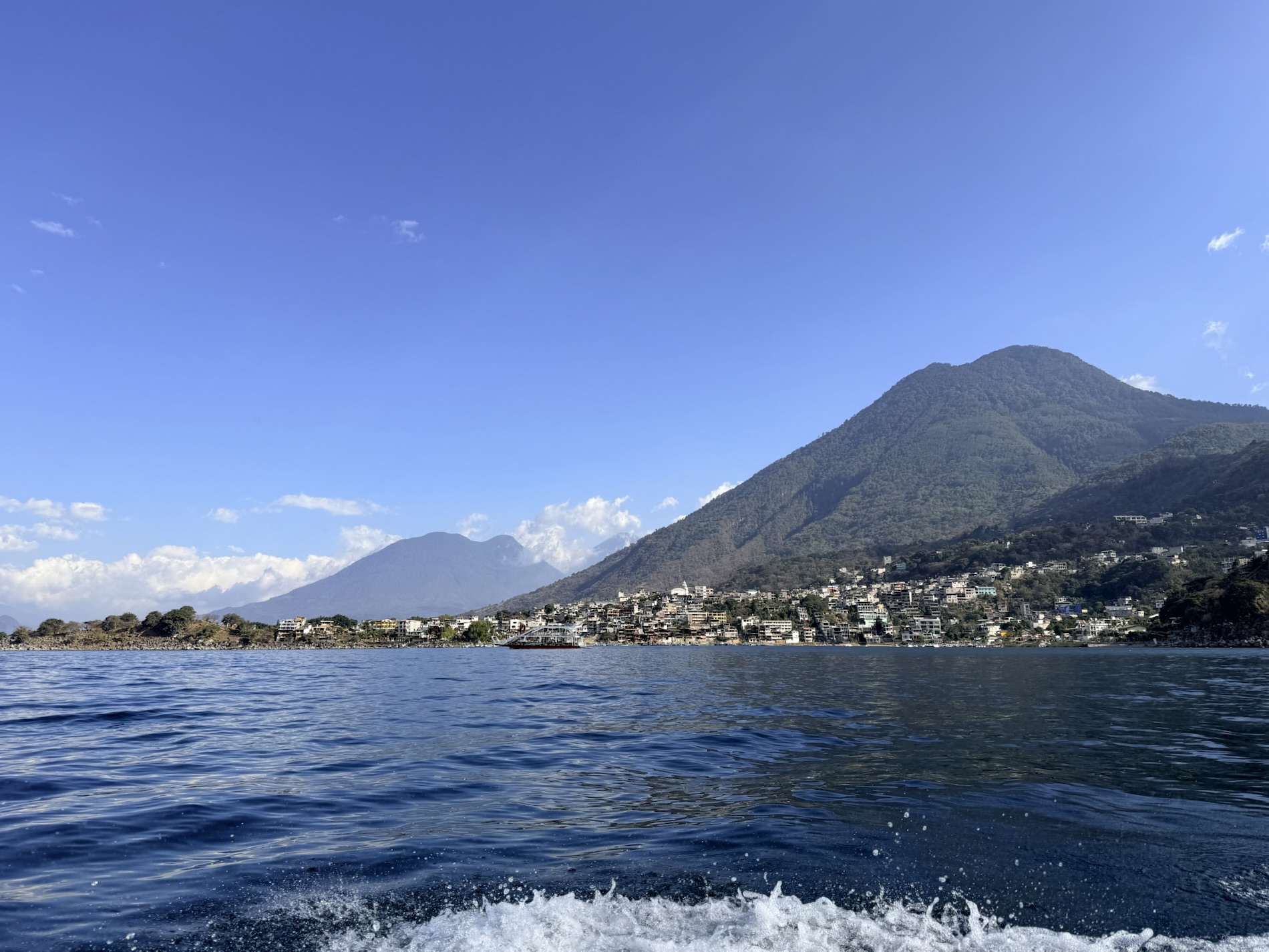
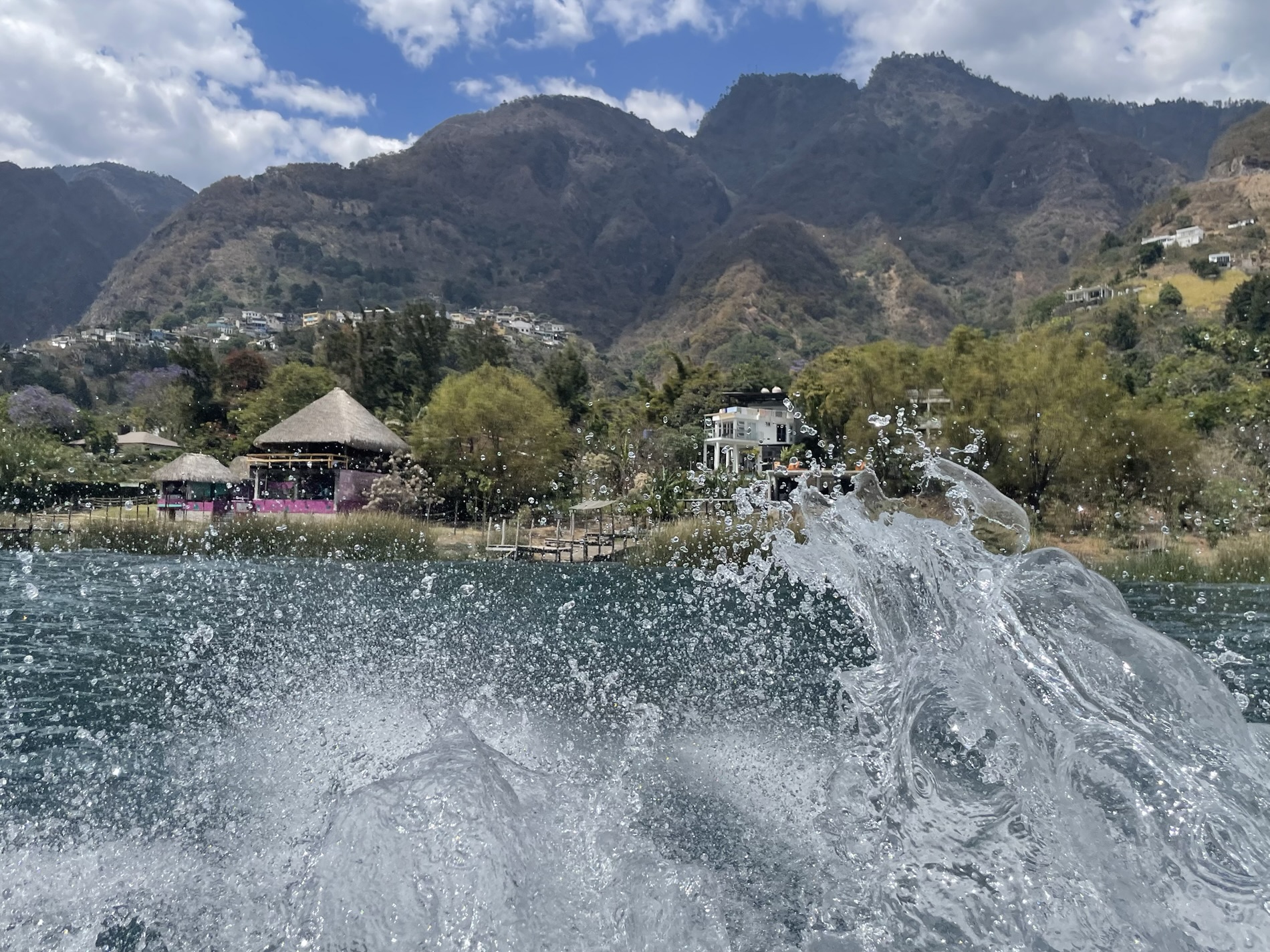
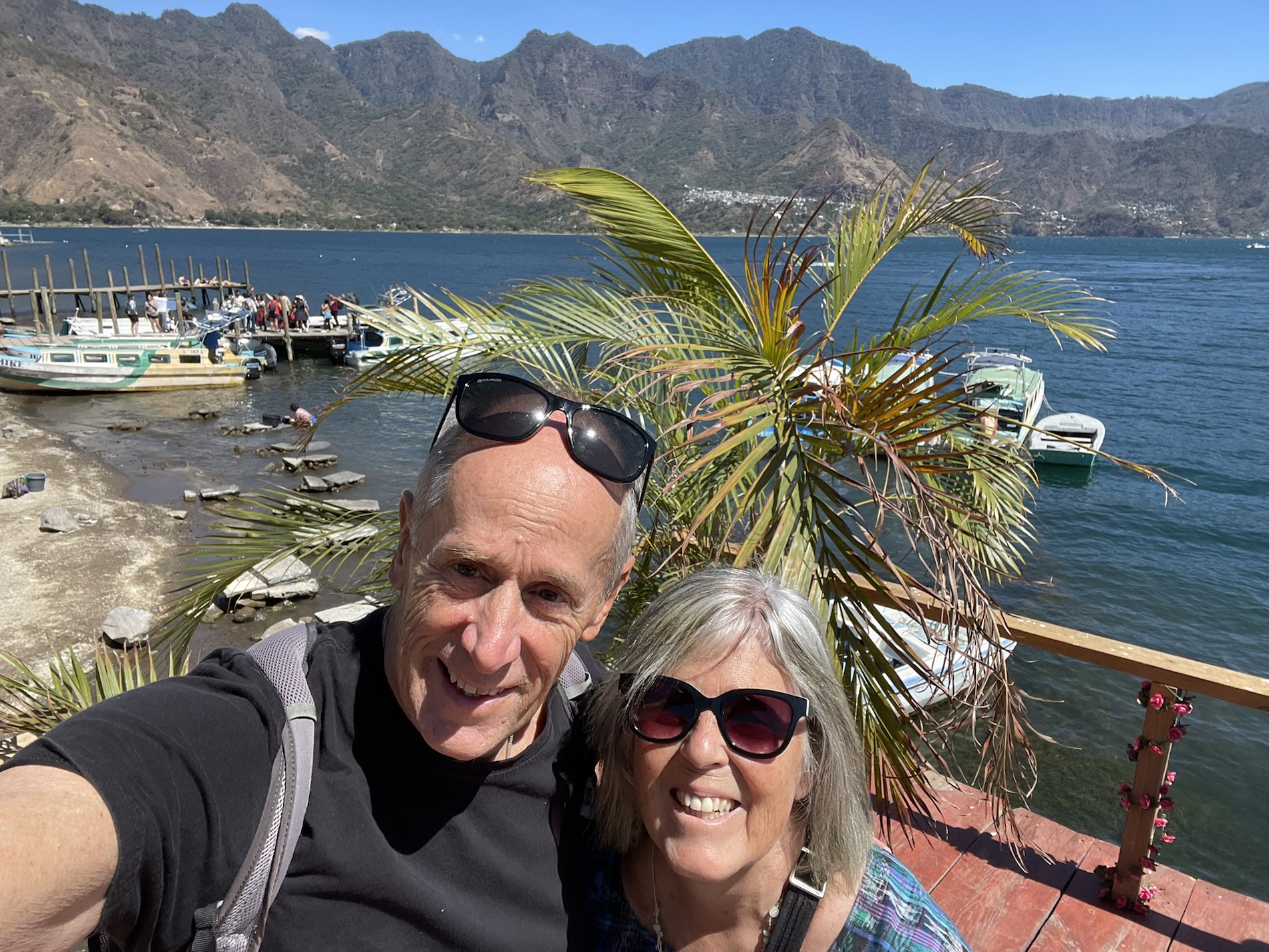
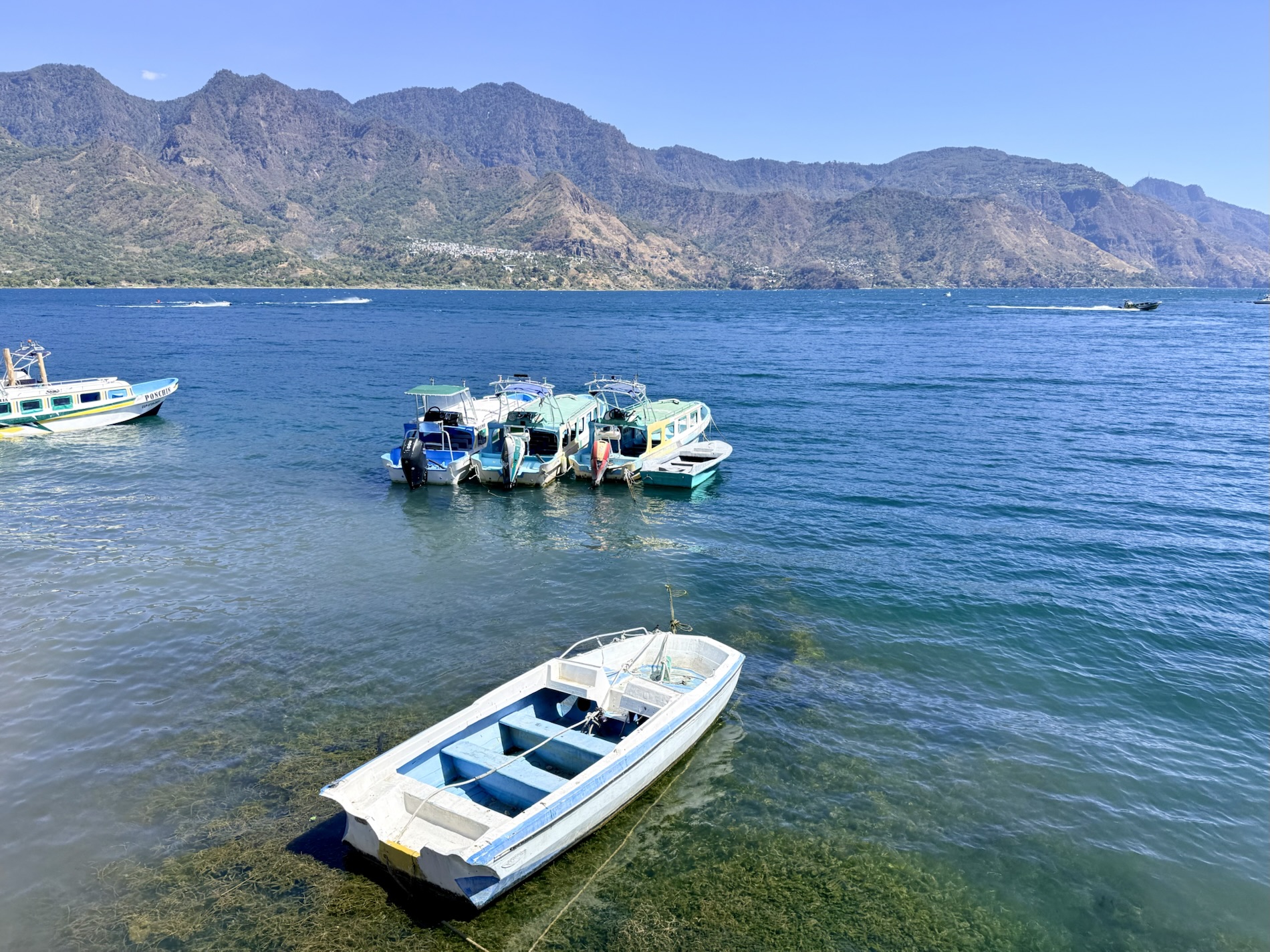
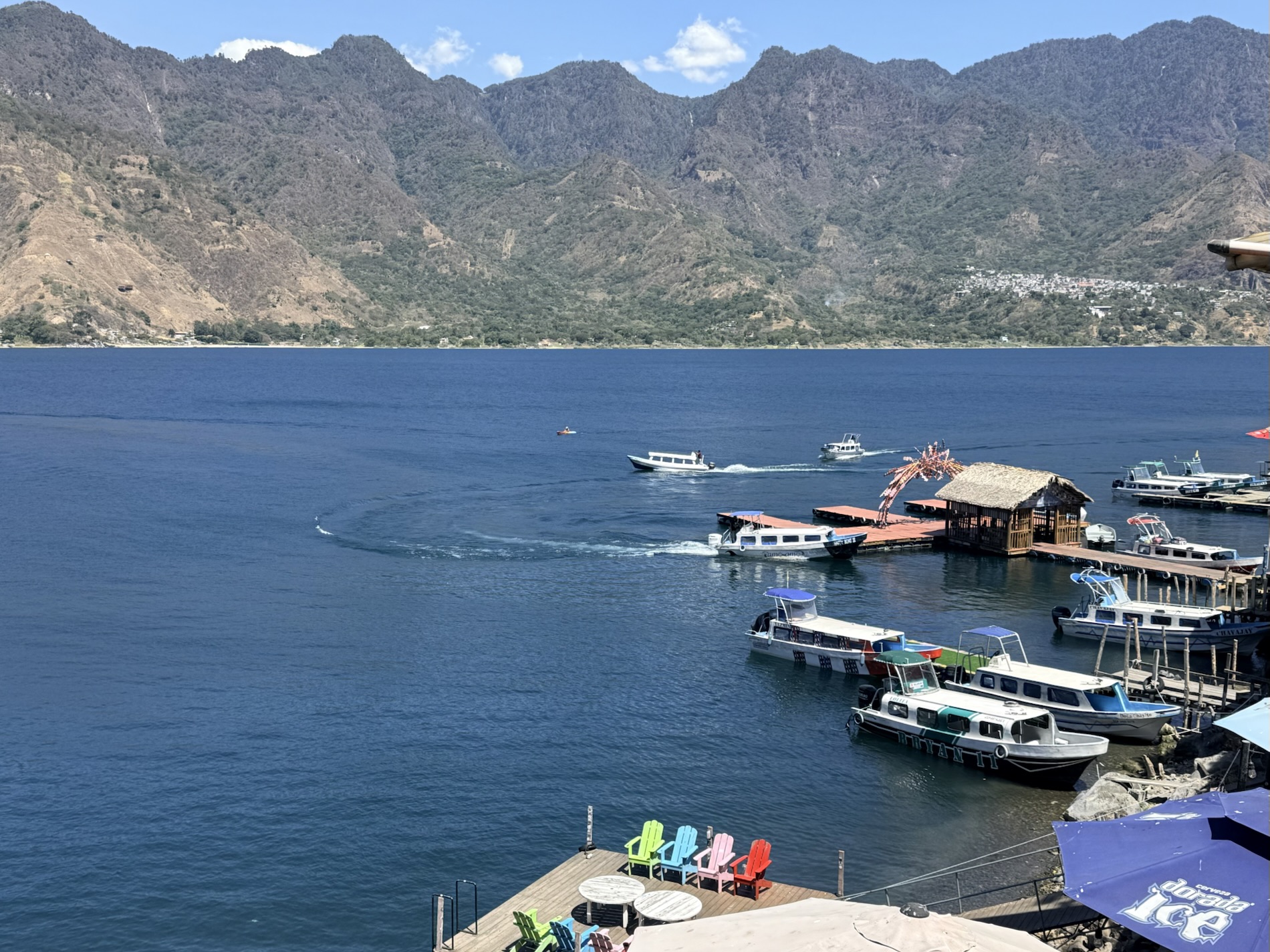
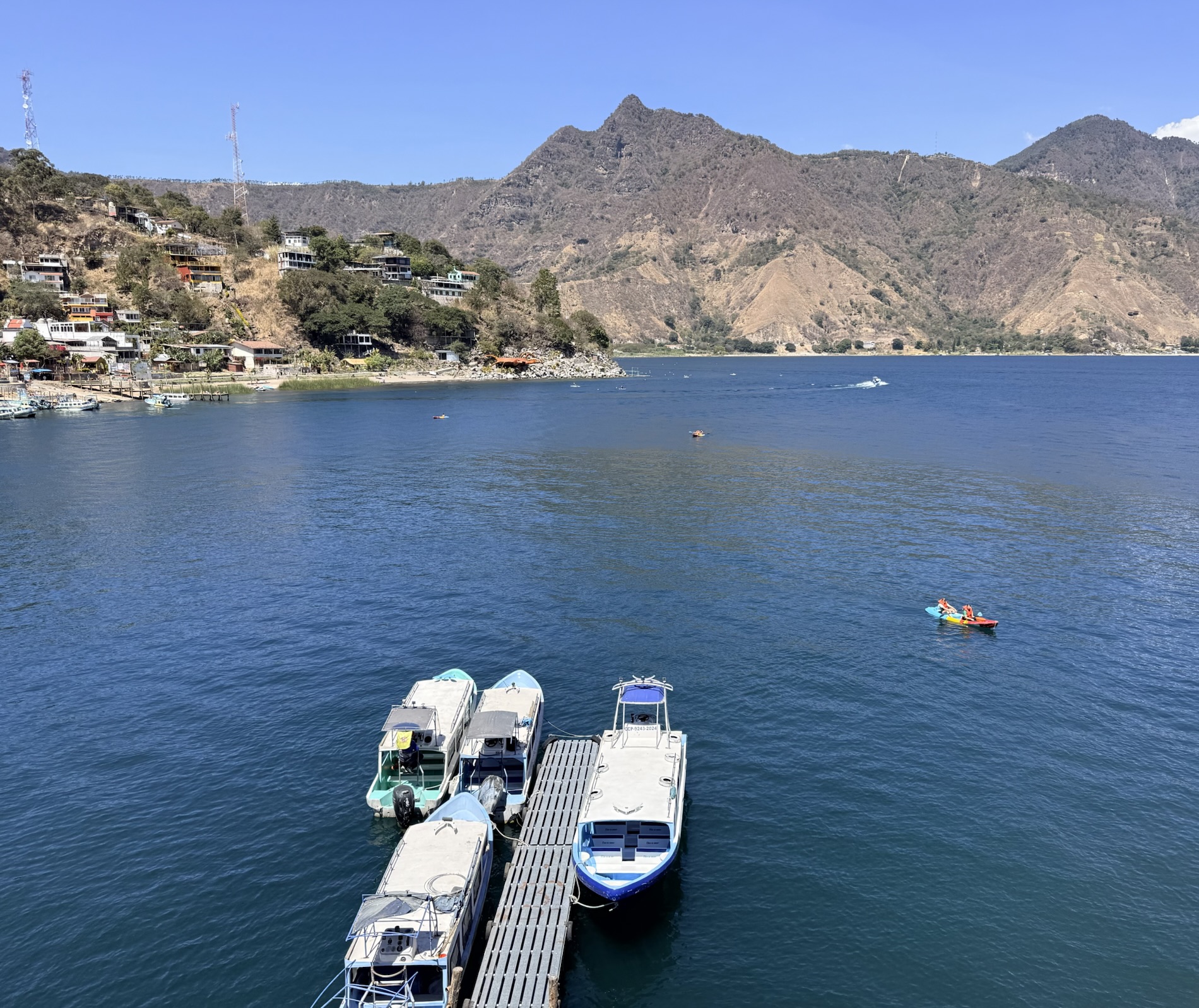
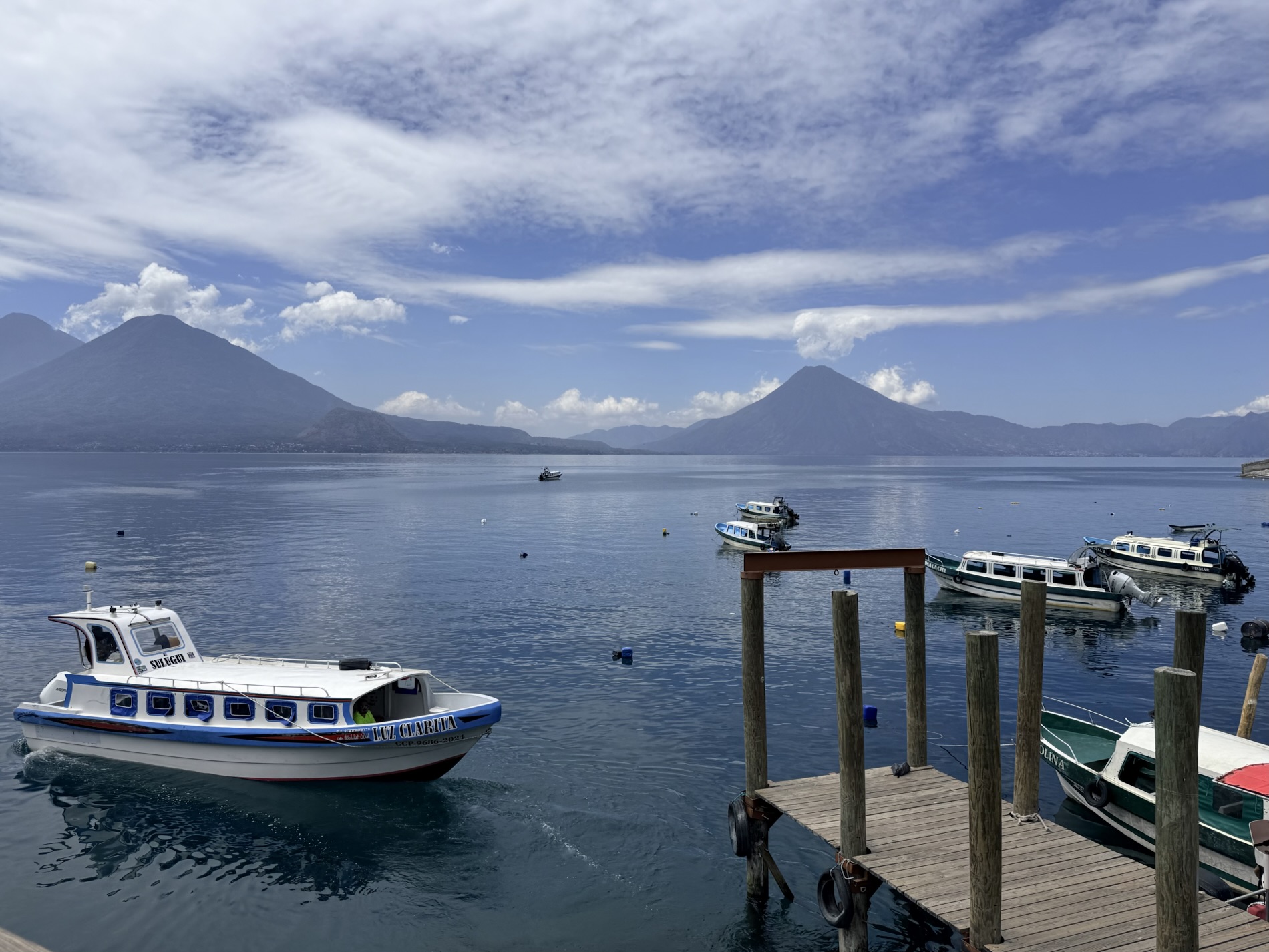
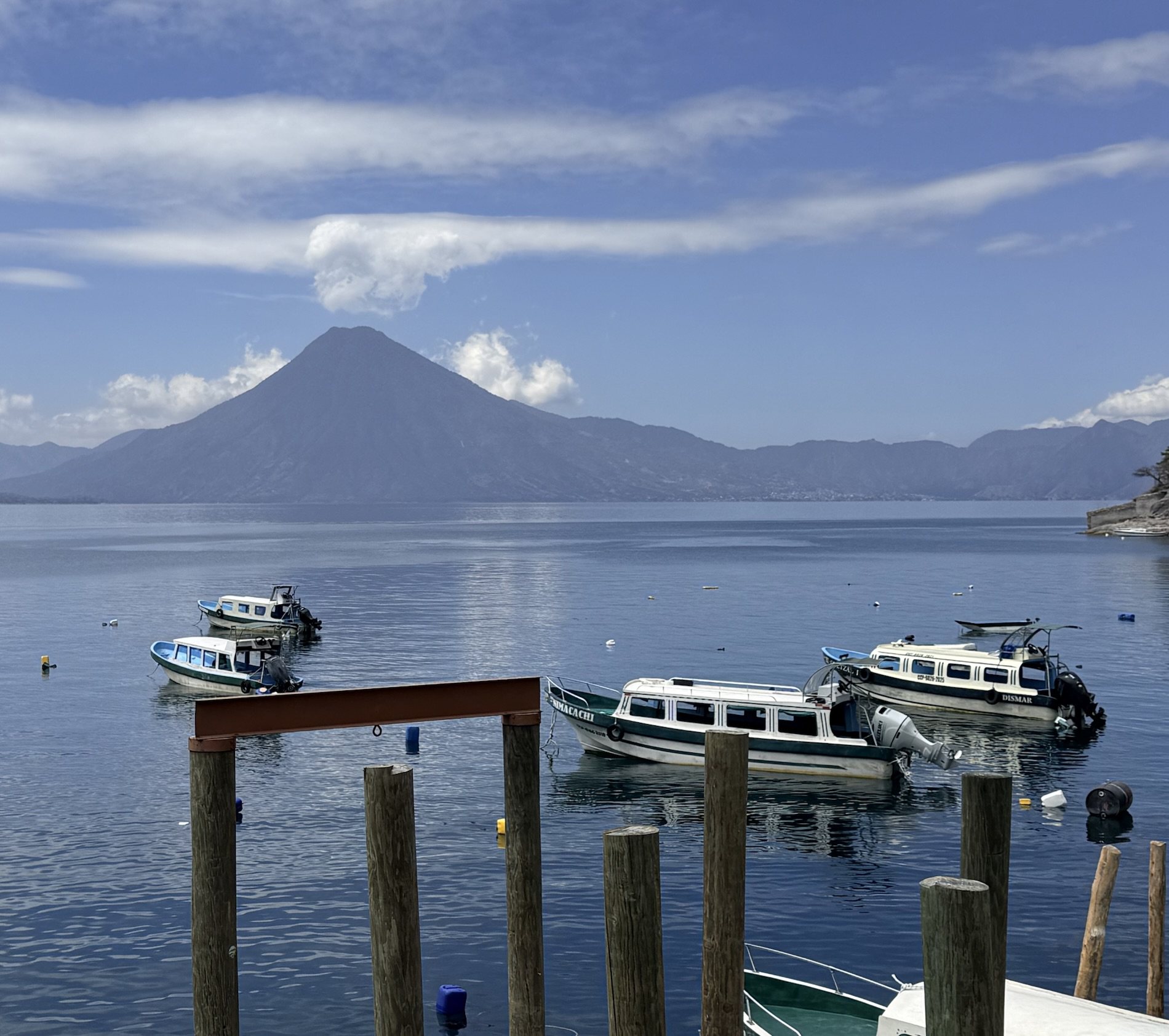
Lake Atitlán is a natural lake filling an enormous caldera formed from a supervolcanic eruption some 79,500 years ago. It is in the Guatemalan Highlands (over 5,000 feet in elevation) in southwestern Guatemala. With a maximum depth of 1,120 feet (340 meters), it is the deepest lake in Central America. It is fed by two nearby rivers and doesn’t drain into the ocean and is shaped by deep surrounding escarpments and three volcanoes on its southern flank. Atitlán means “between the waters” in the Nahuatl language. The culture of the towns and villages surrounding the lake is strongly influenced by the Mayan people, who make up nearly 42% of Guatemala’s population.
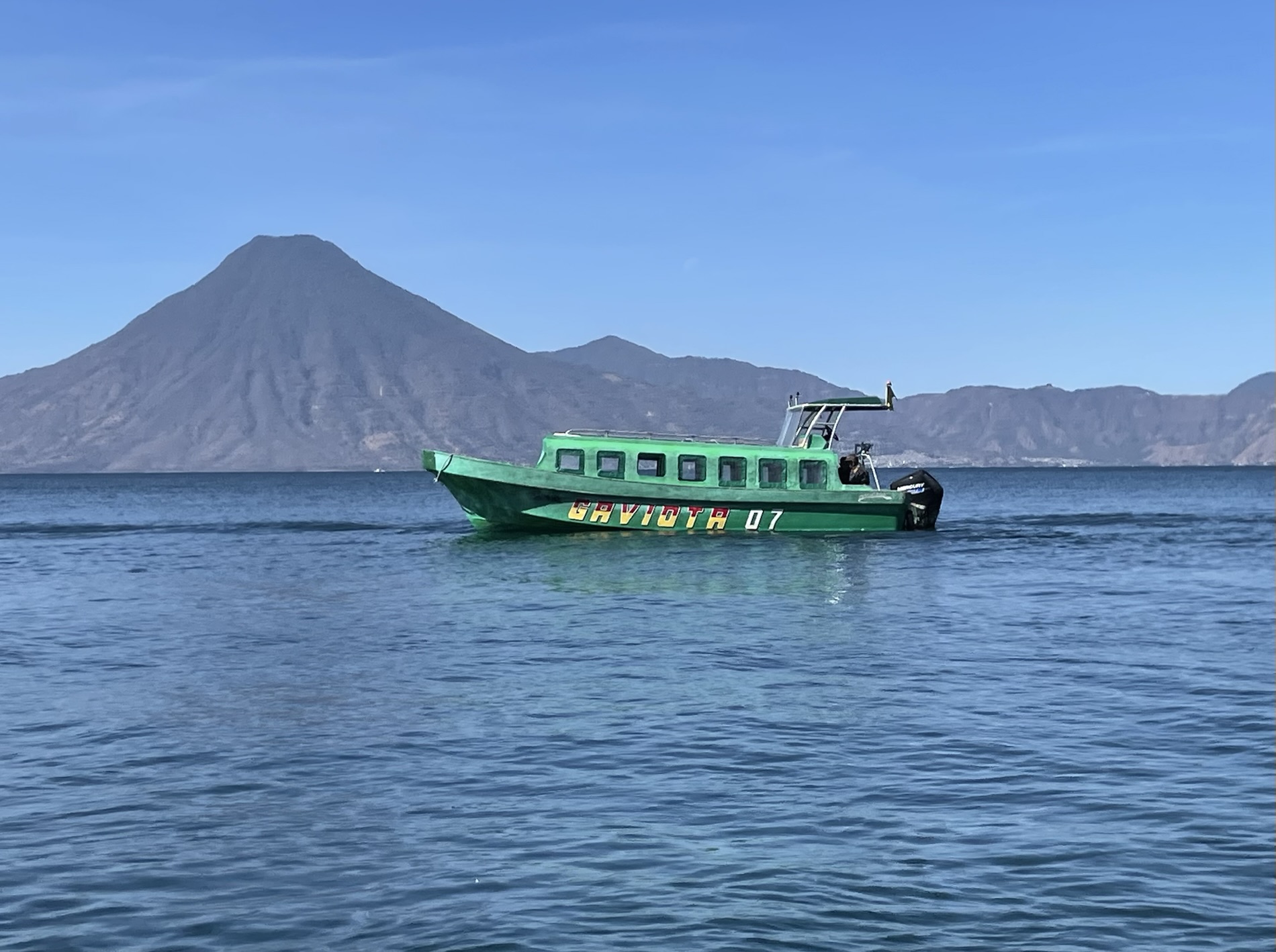
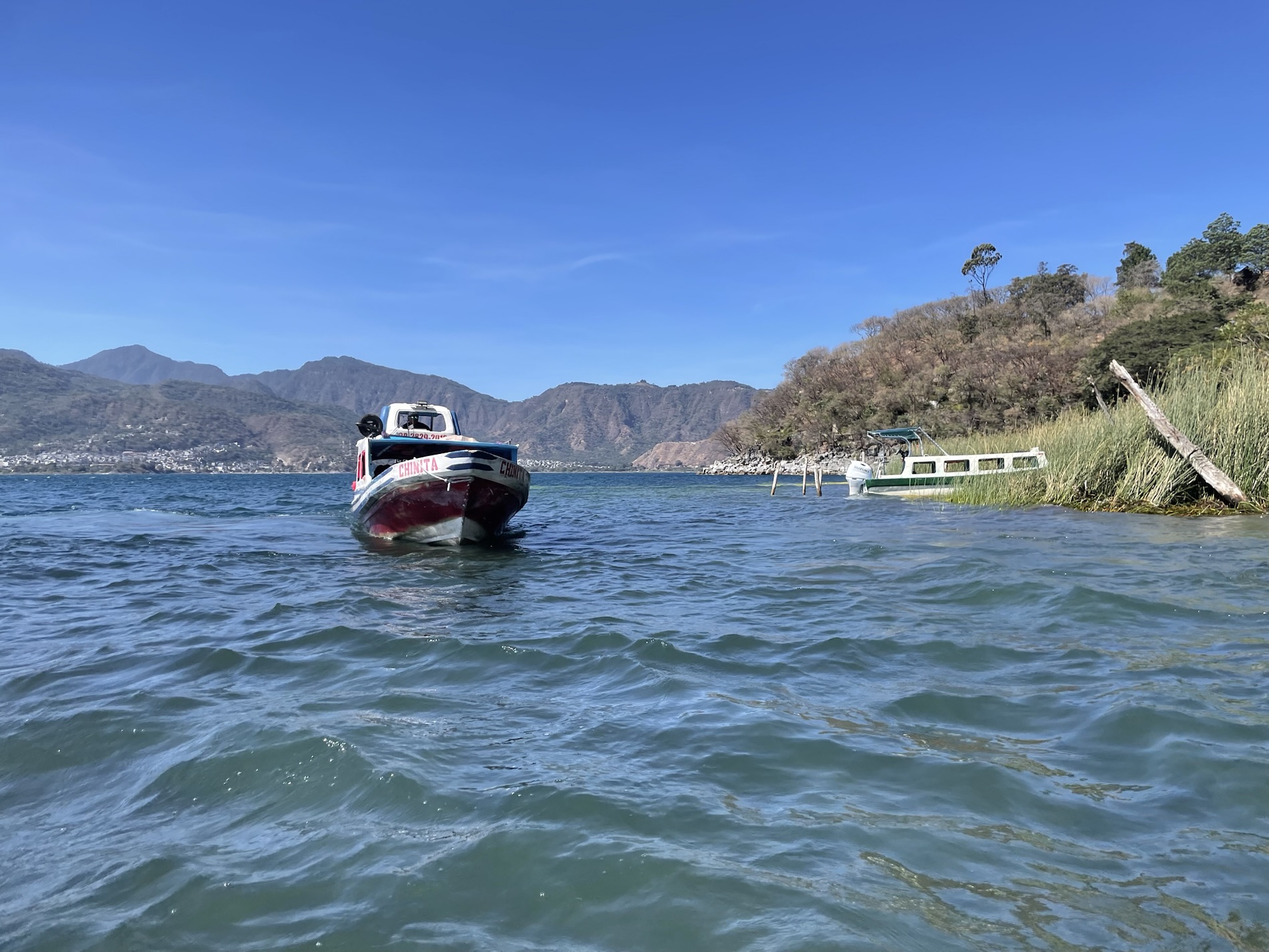
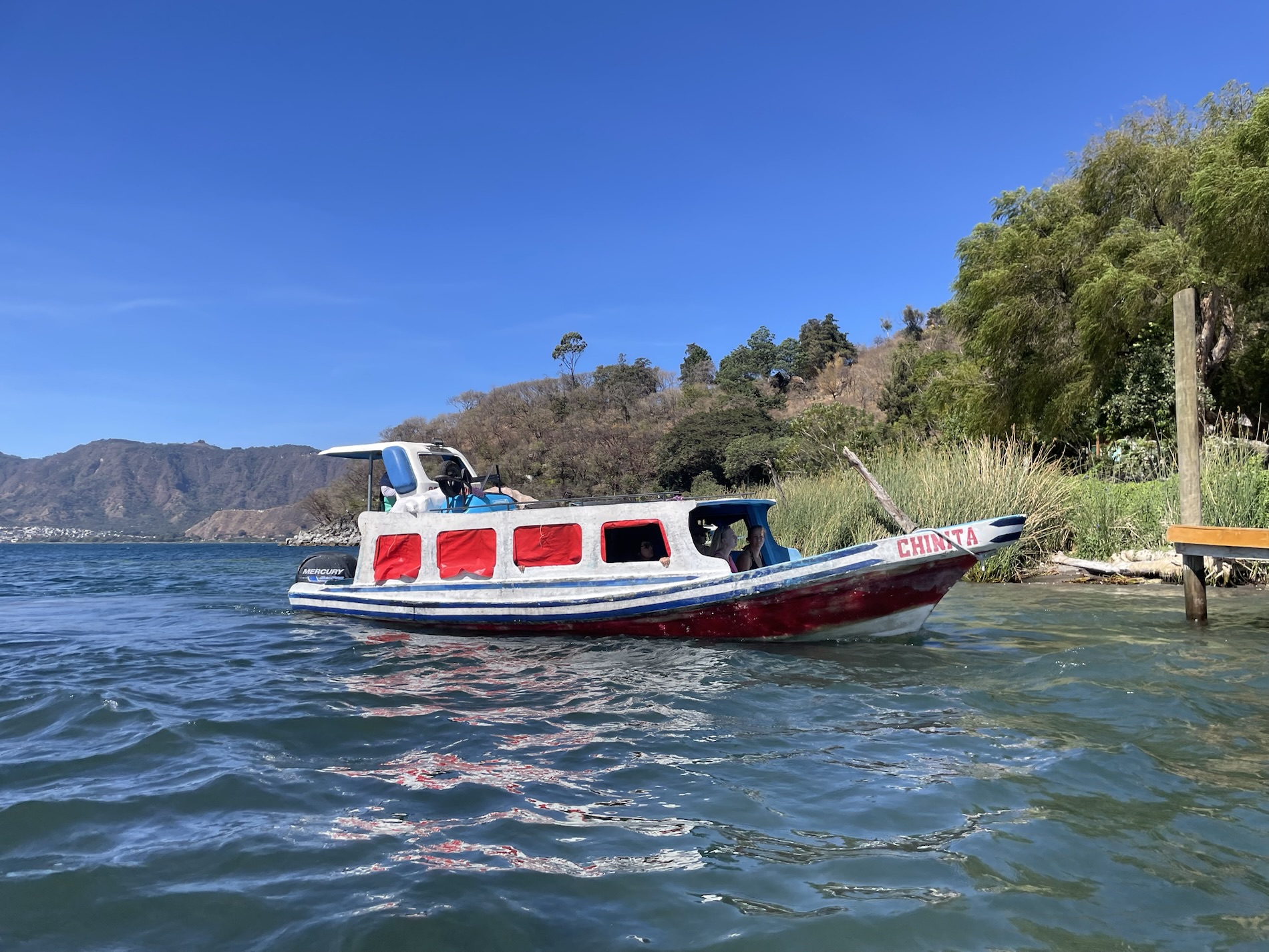
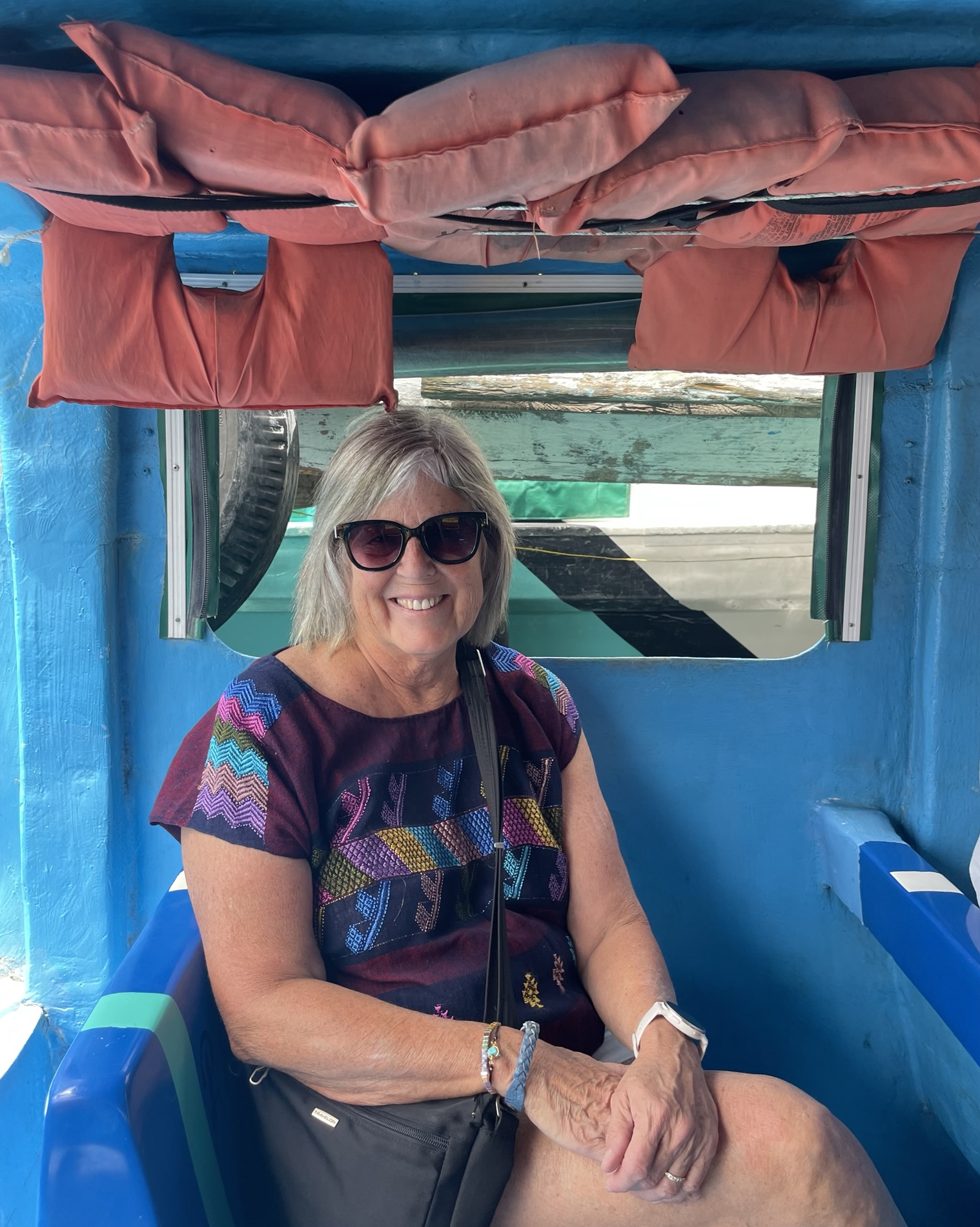
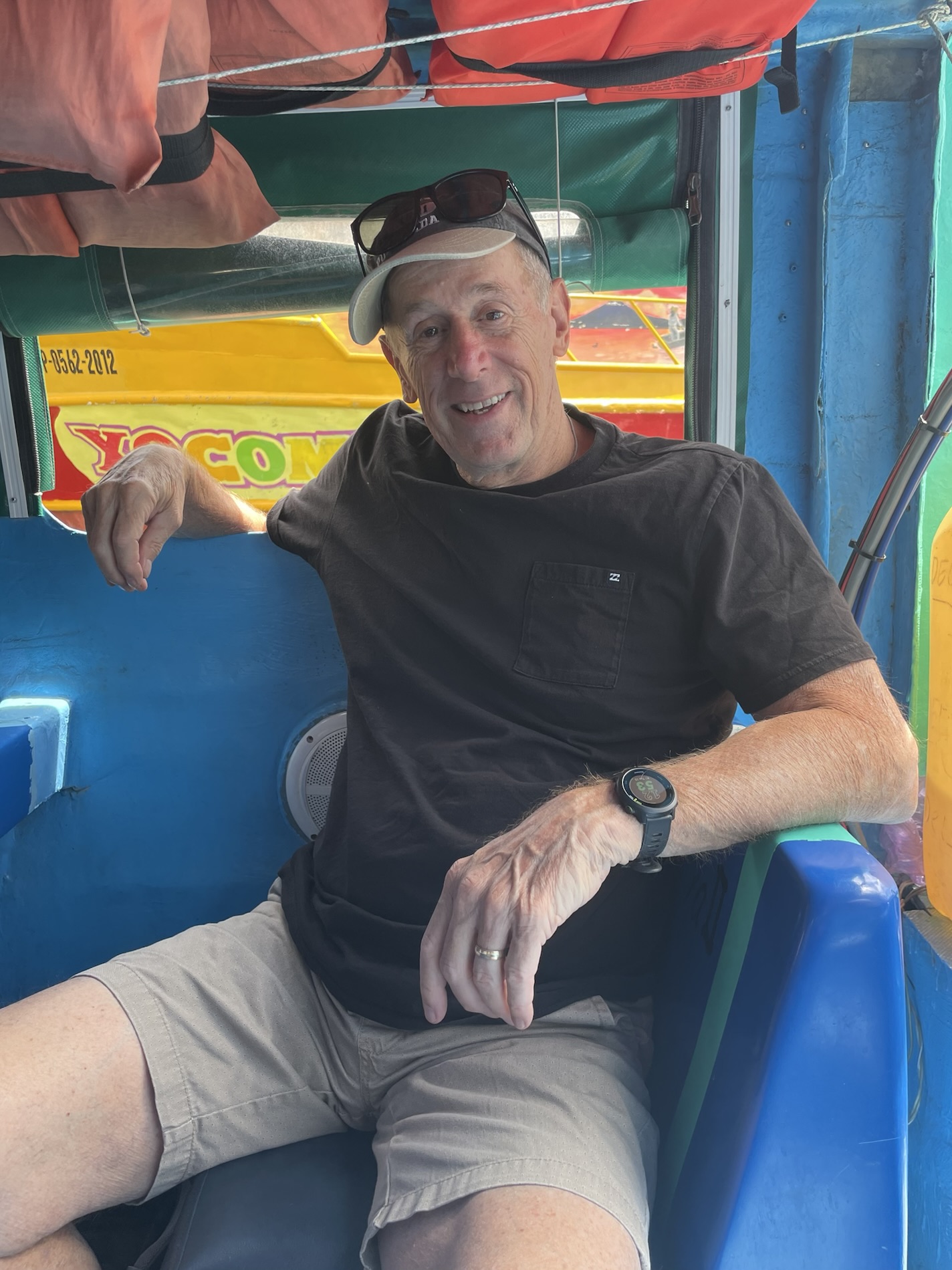
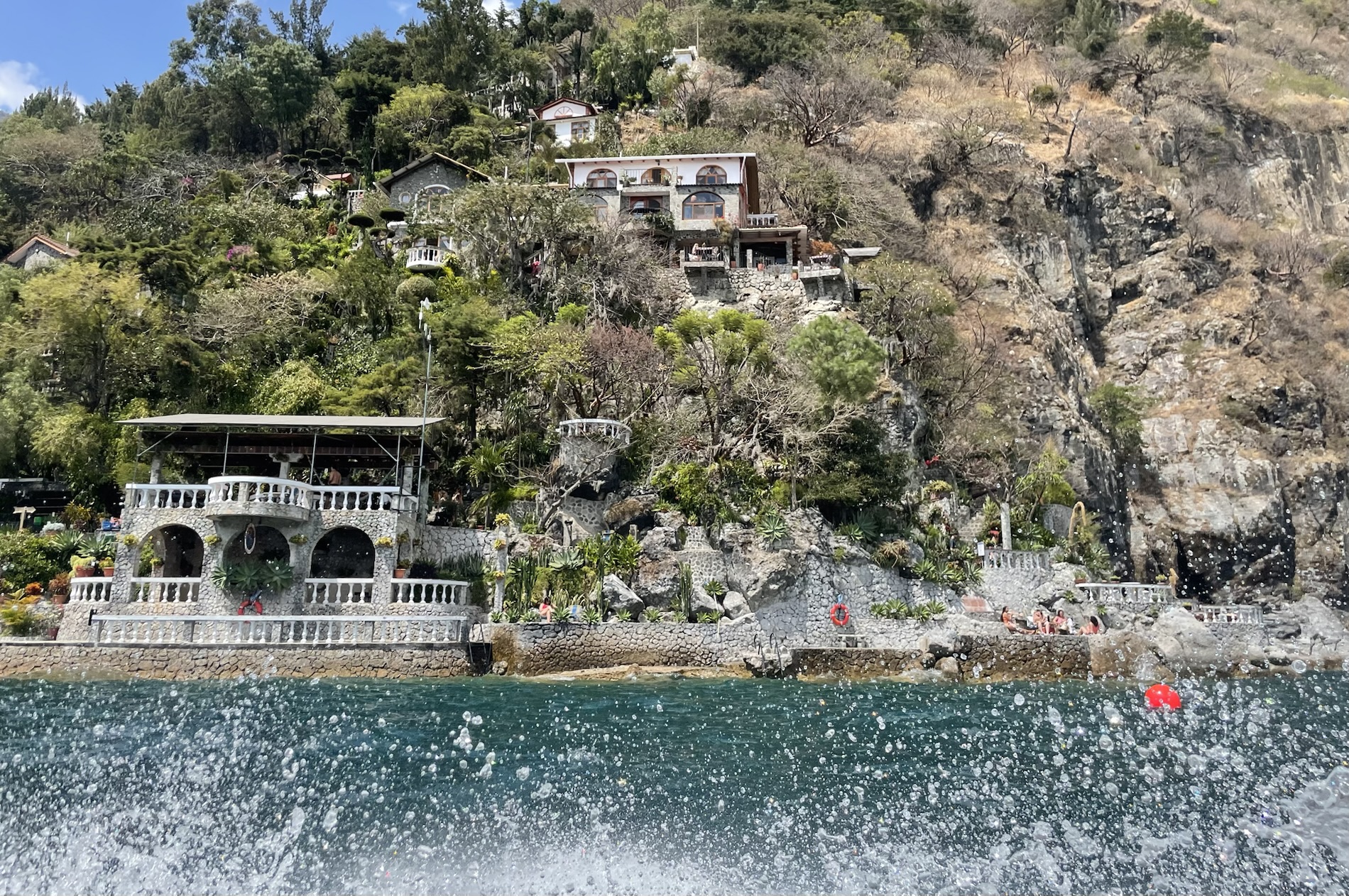
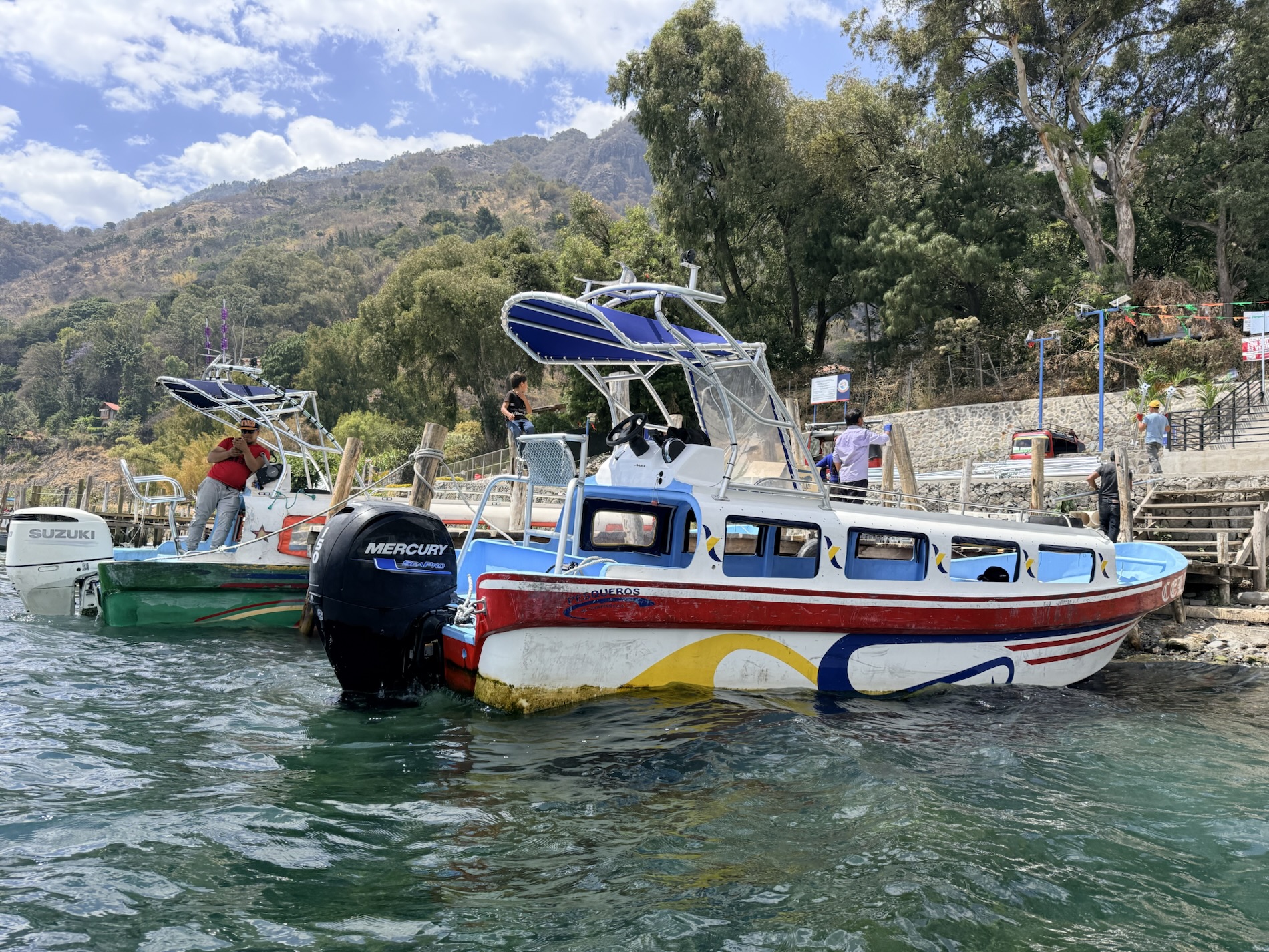
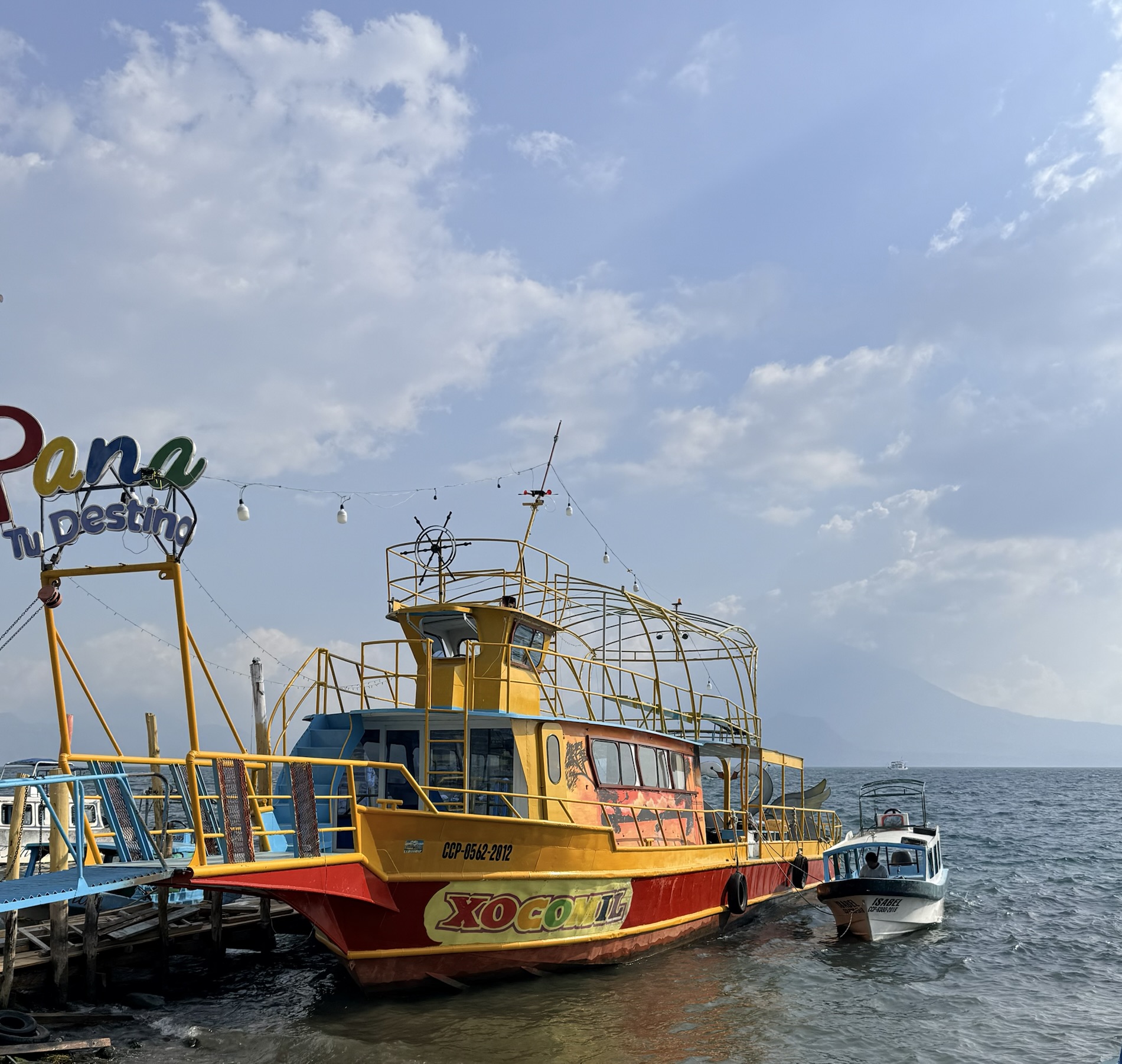
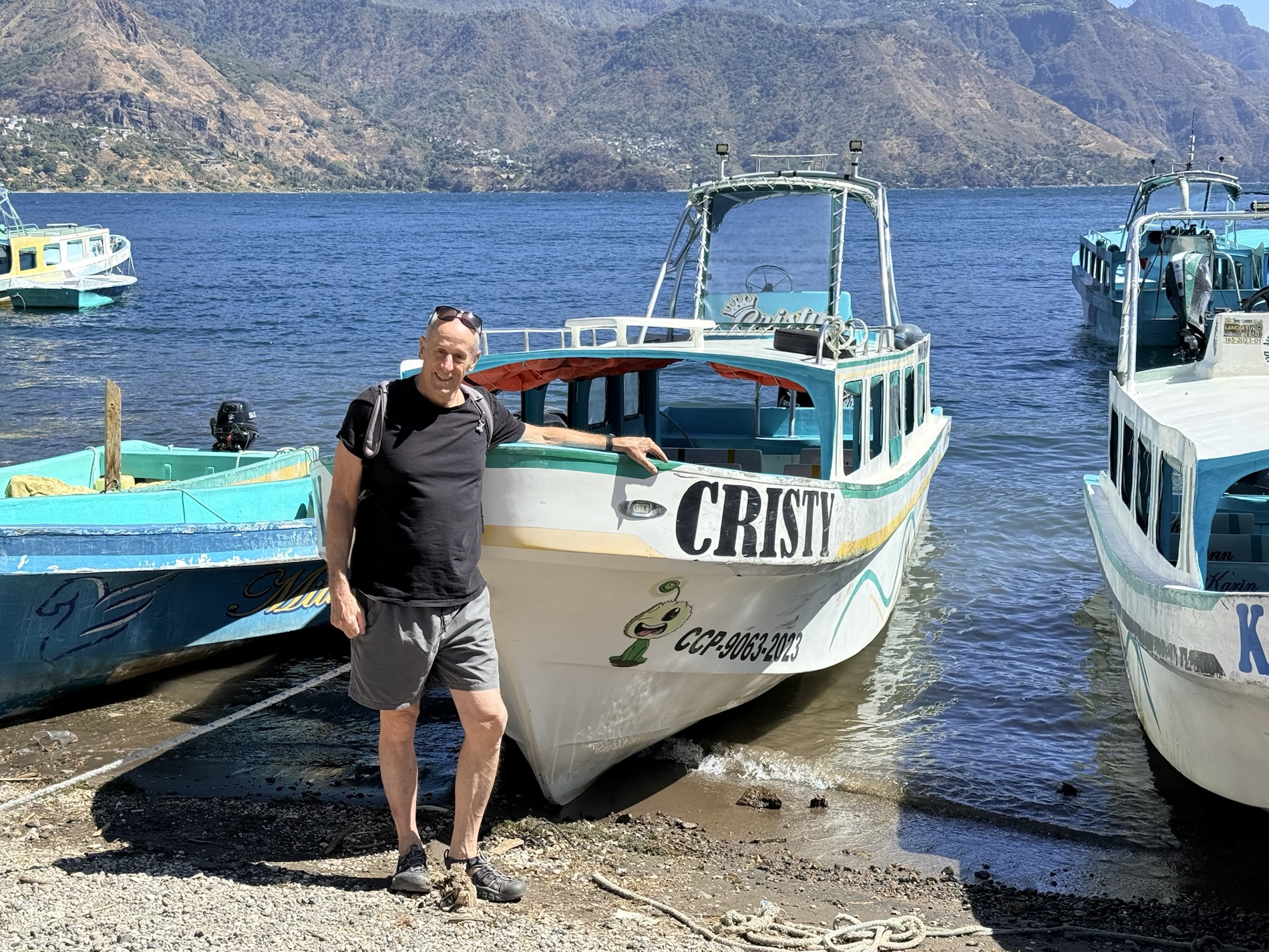
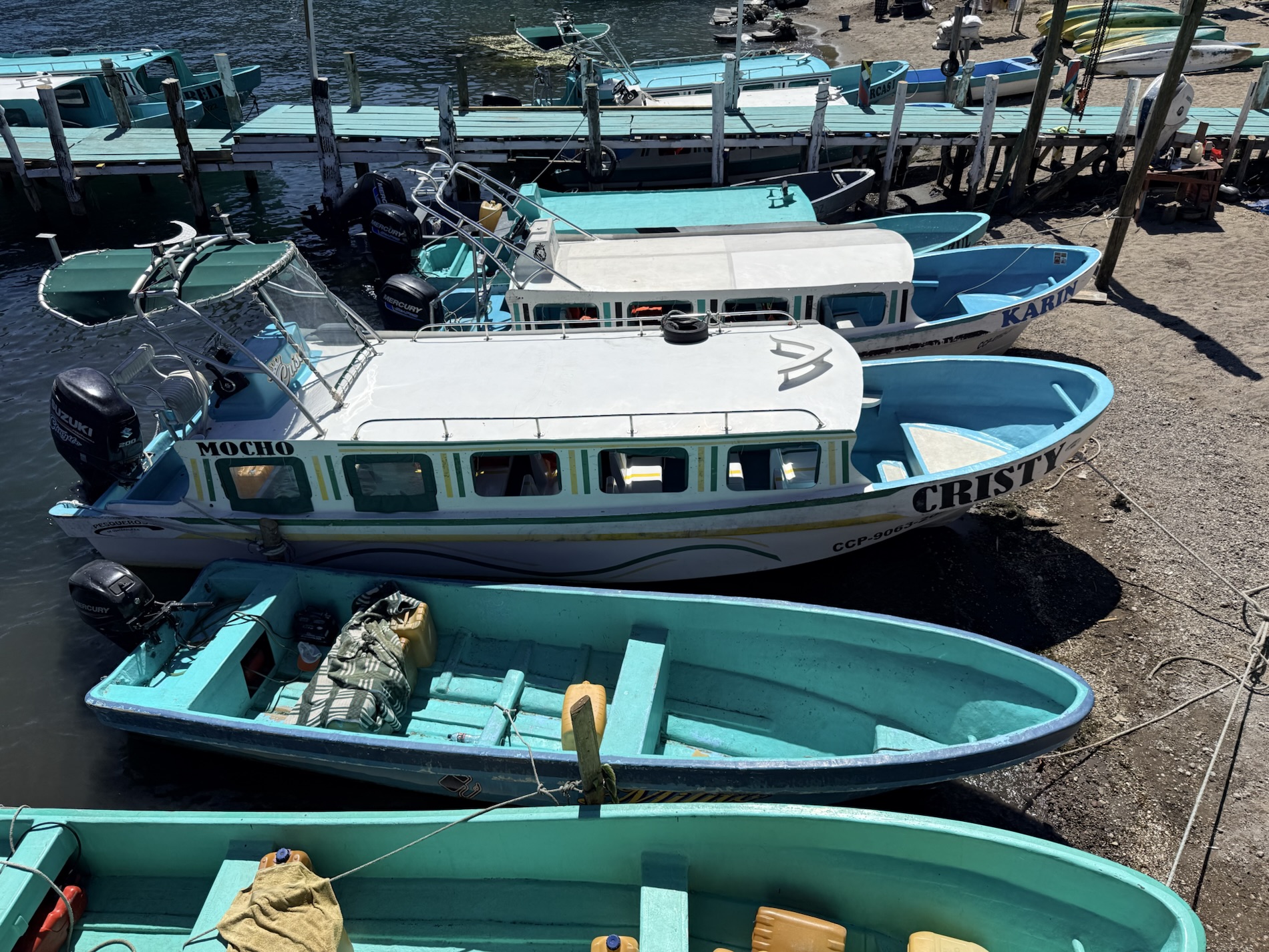
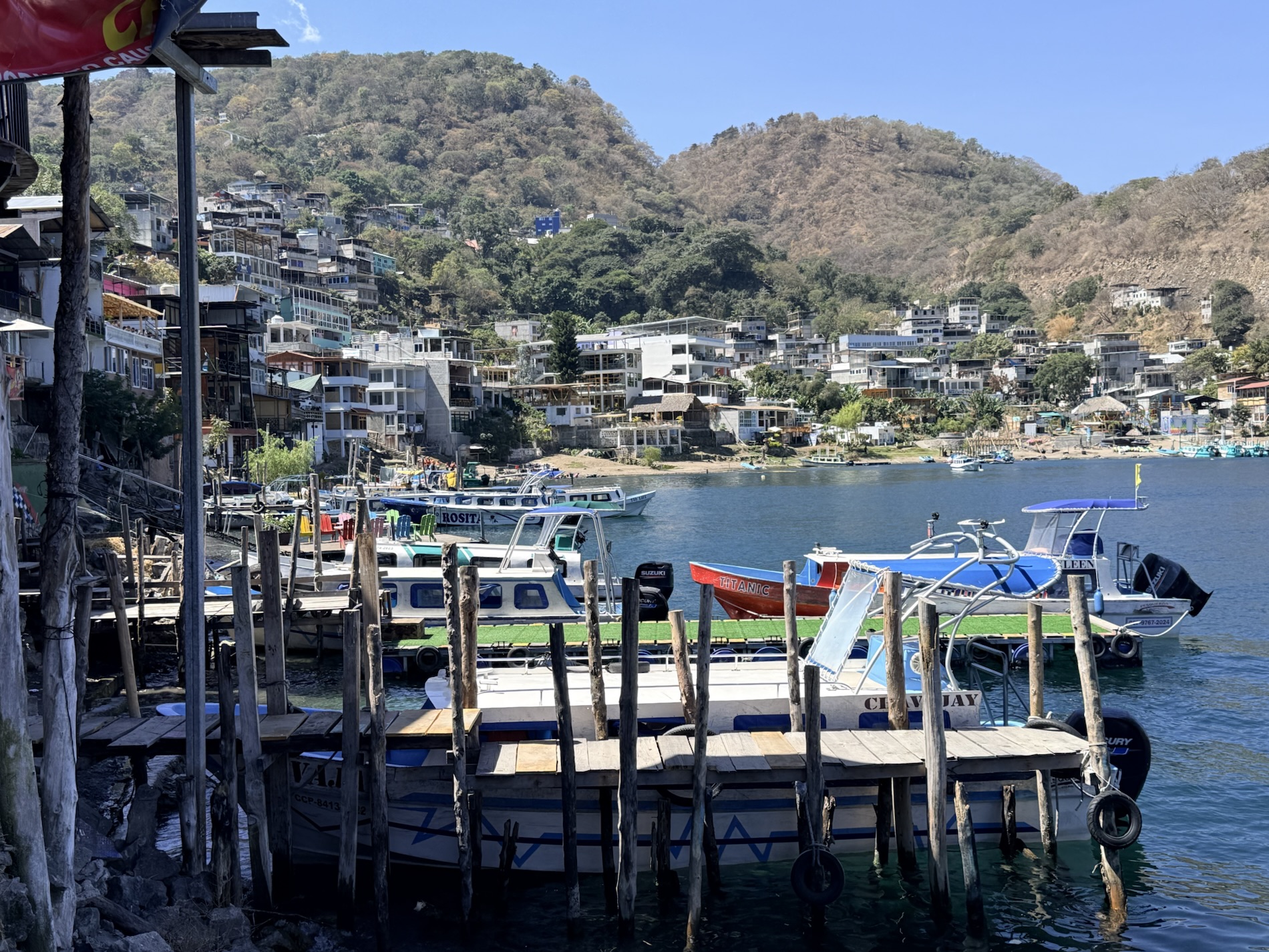
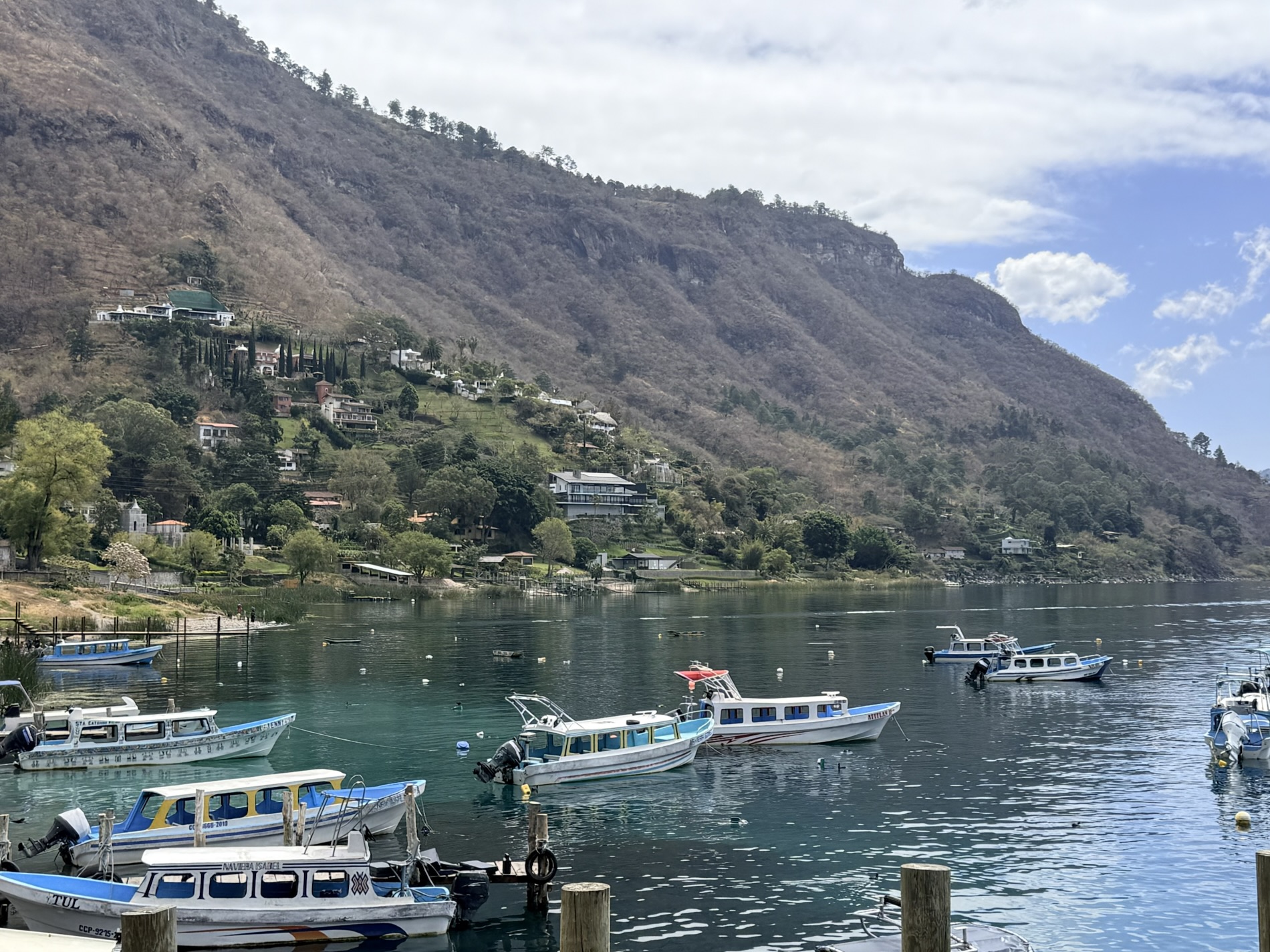
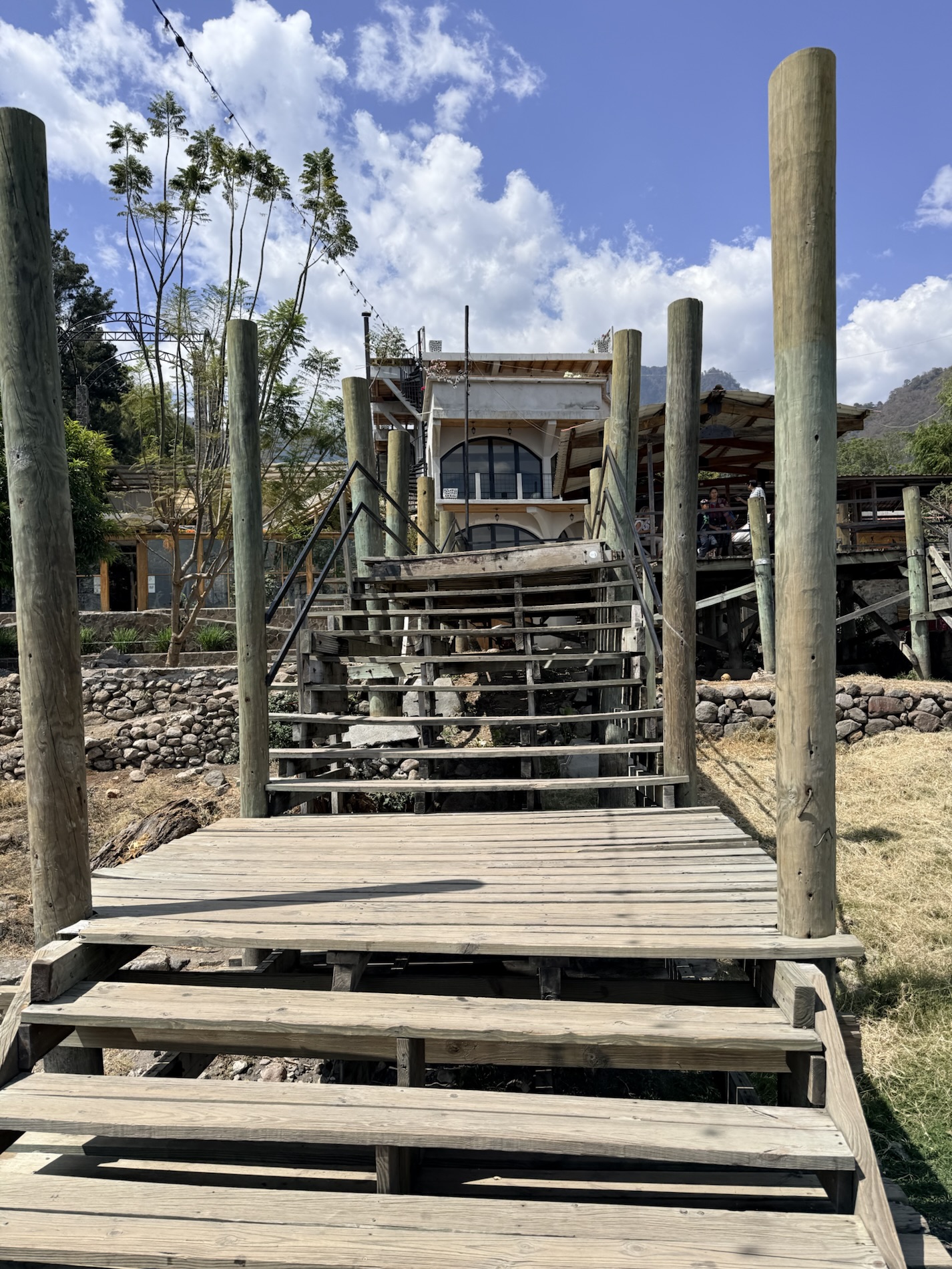
The deep escarpments surrounding the lake make it difficult to get to the surrounding villages by roads, much like the Cinque Terre in Italy, meaning that using lanchas, or water taxis, is the most efficient way to get to them.
Lake Atitlán has three volcanoes on its shores that are part of the Central American Volcanic Arc: 1) Volcán Atitlán, active historically with more than a dozen eruptions between 1469-1853; 2) Volcán Tolimán, a stratovolcano on the southern shore of the lake; and 3) Volcán San Pedro, which rises above Lake Atlitlán northwest of Volcán Atitlán.
Panajachel (“Pana”)
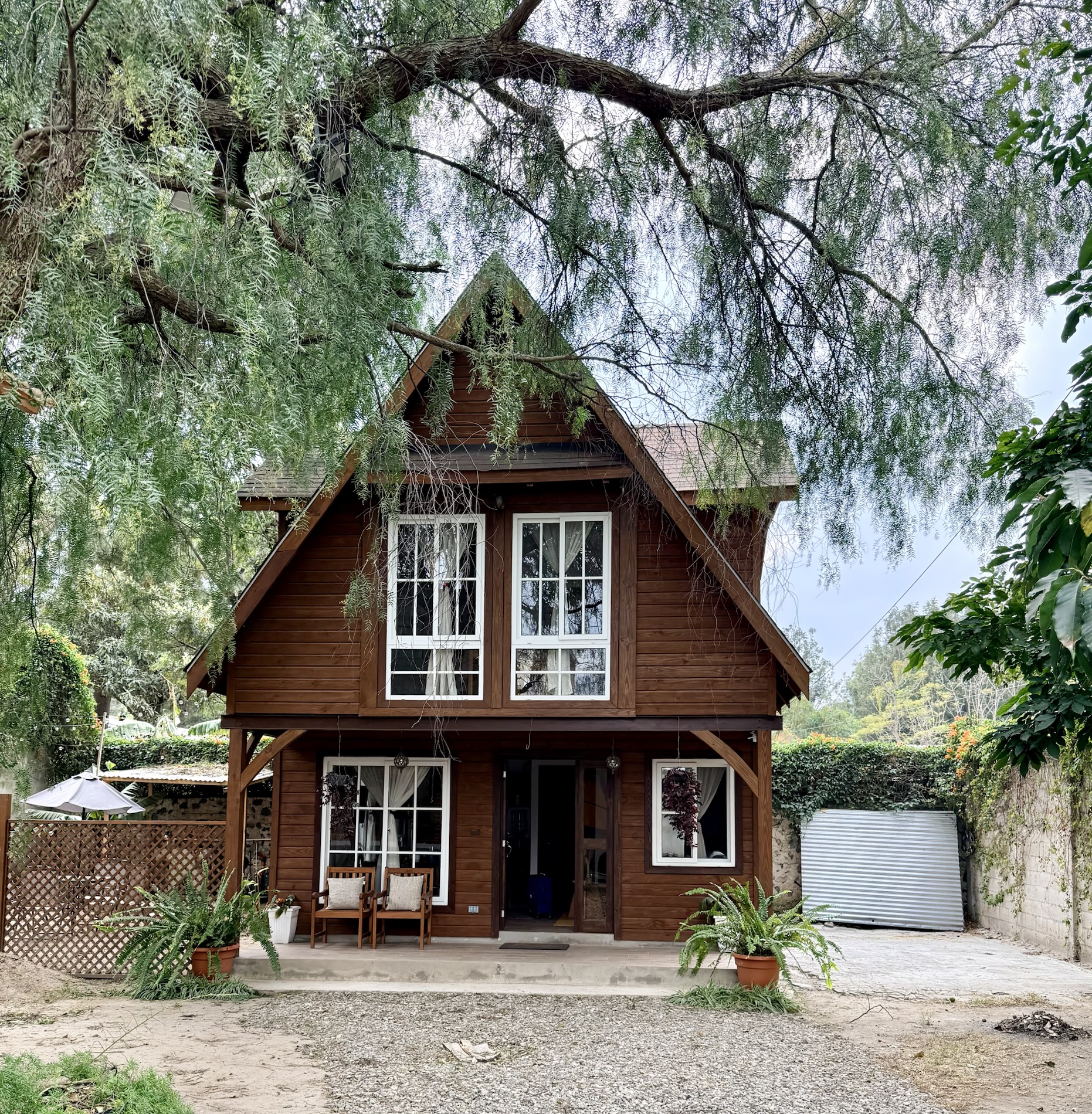
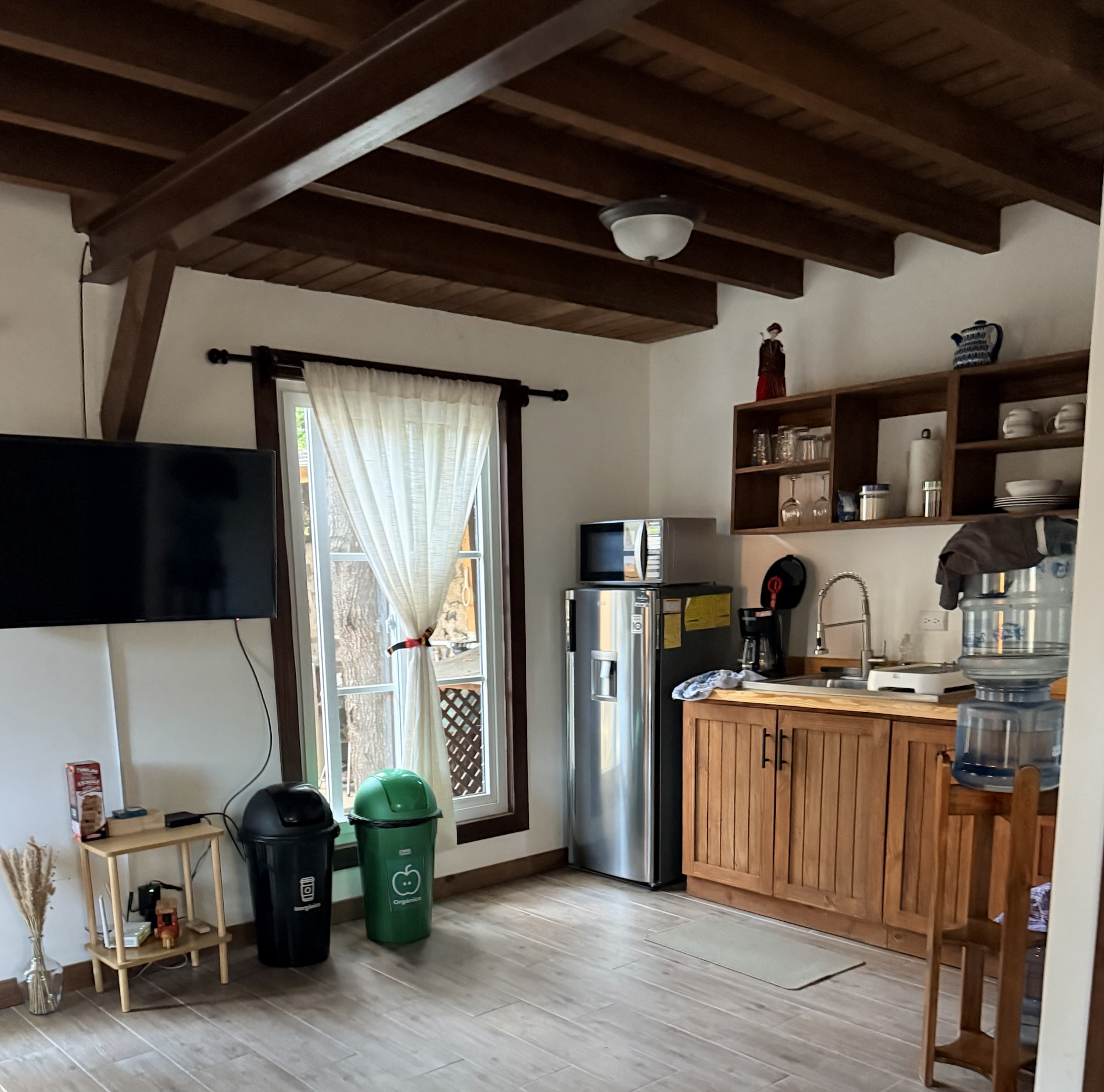
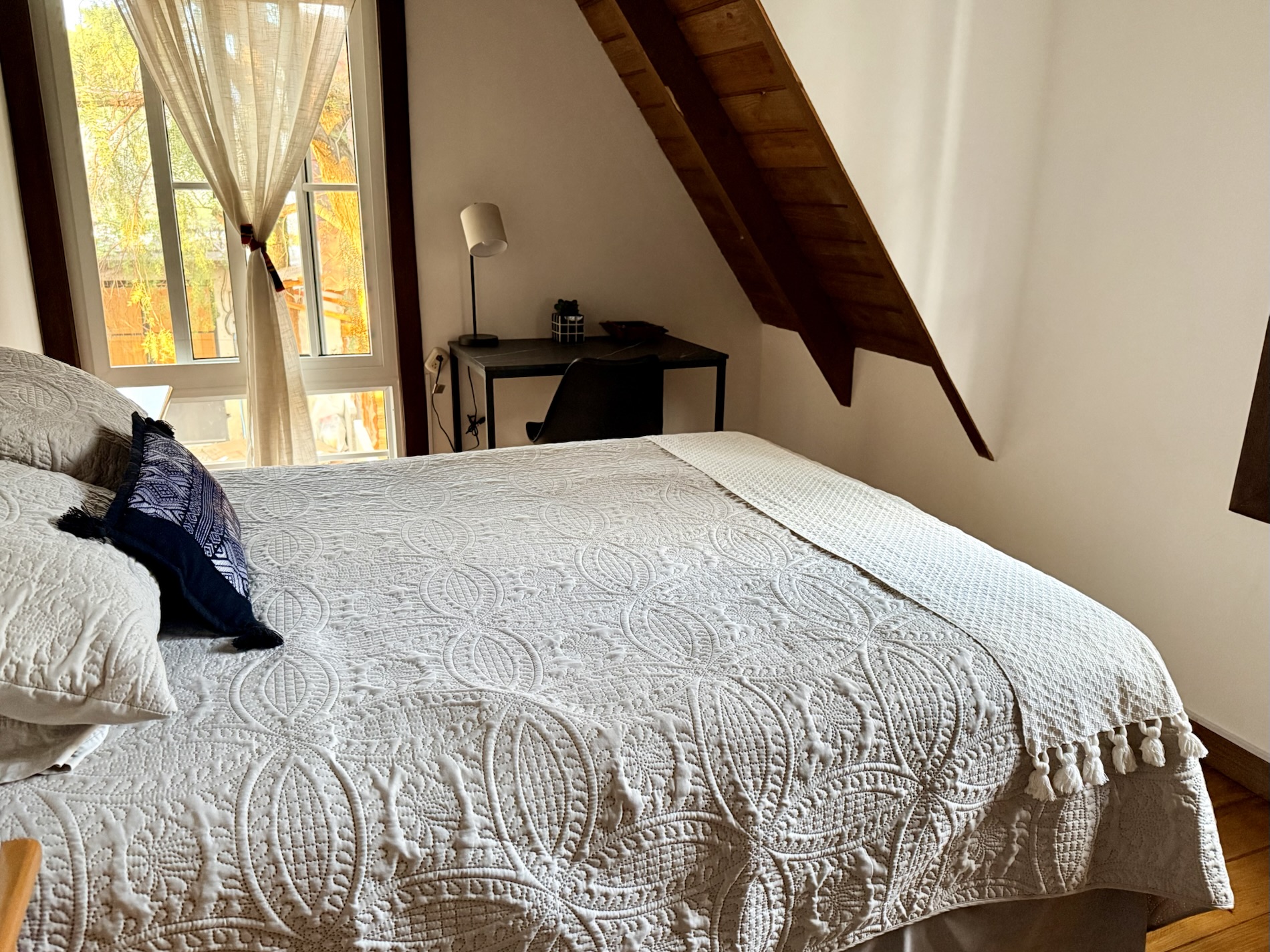
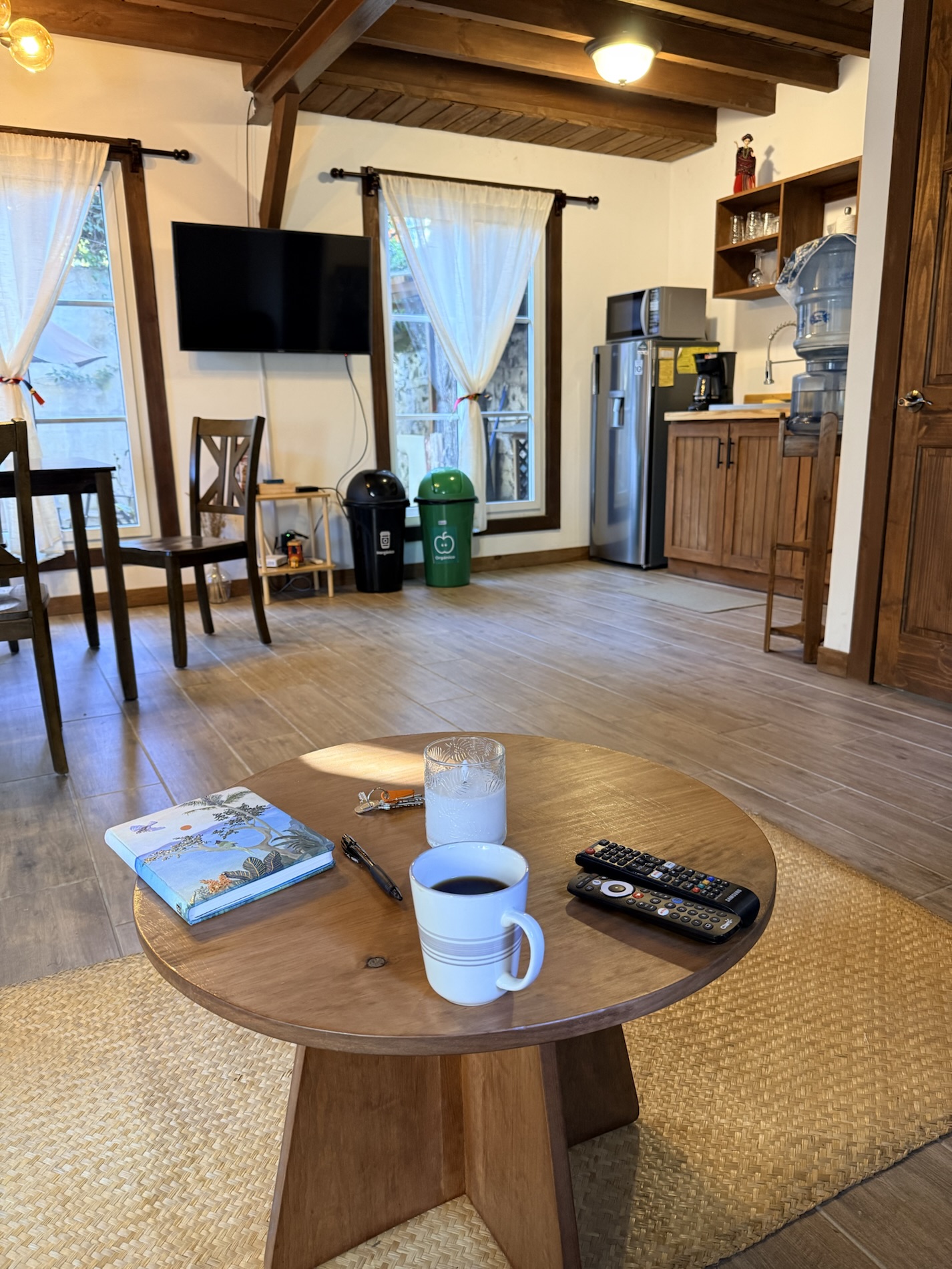
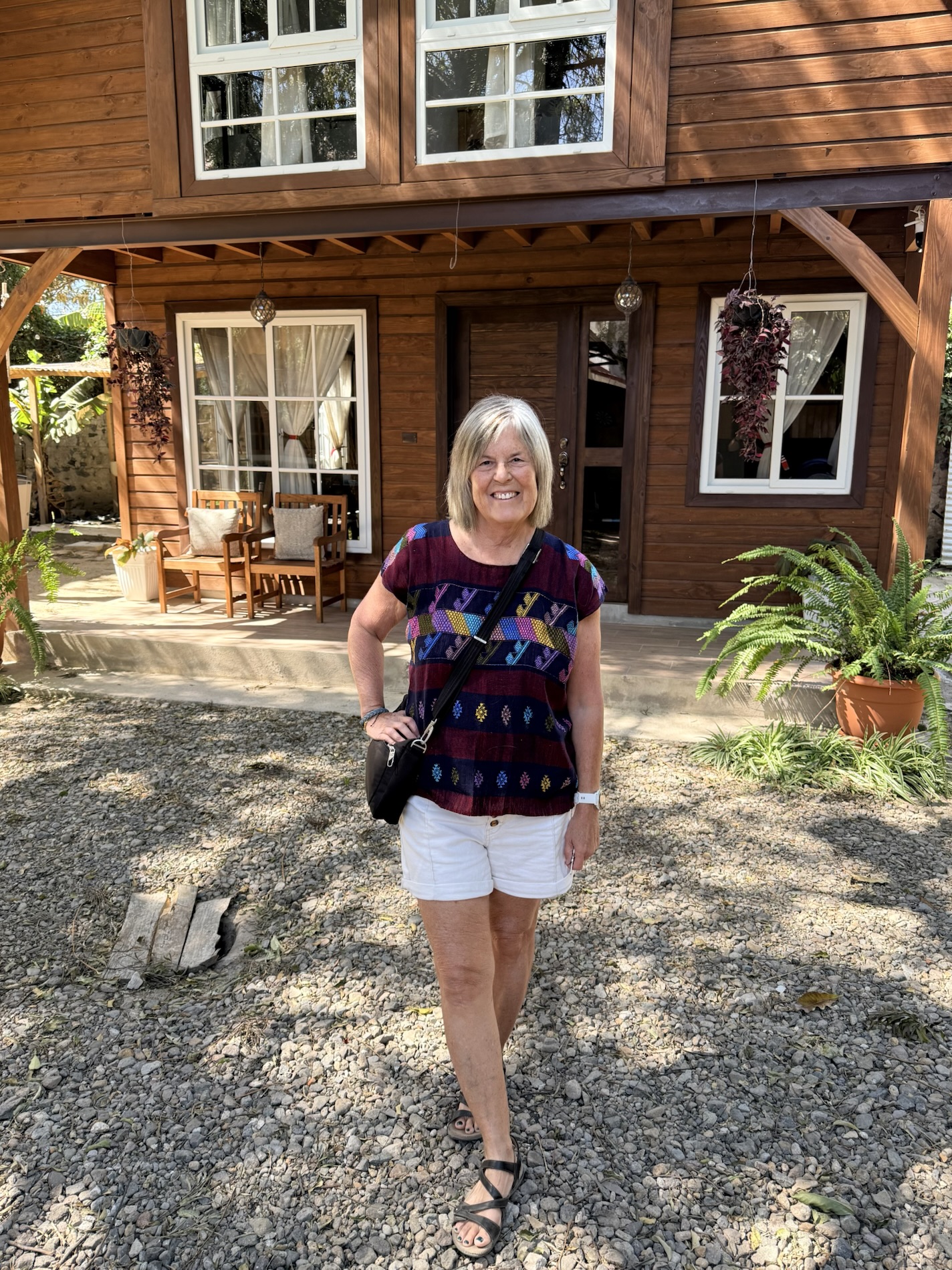
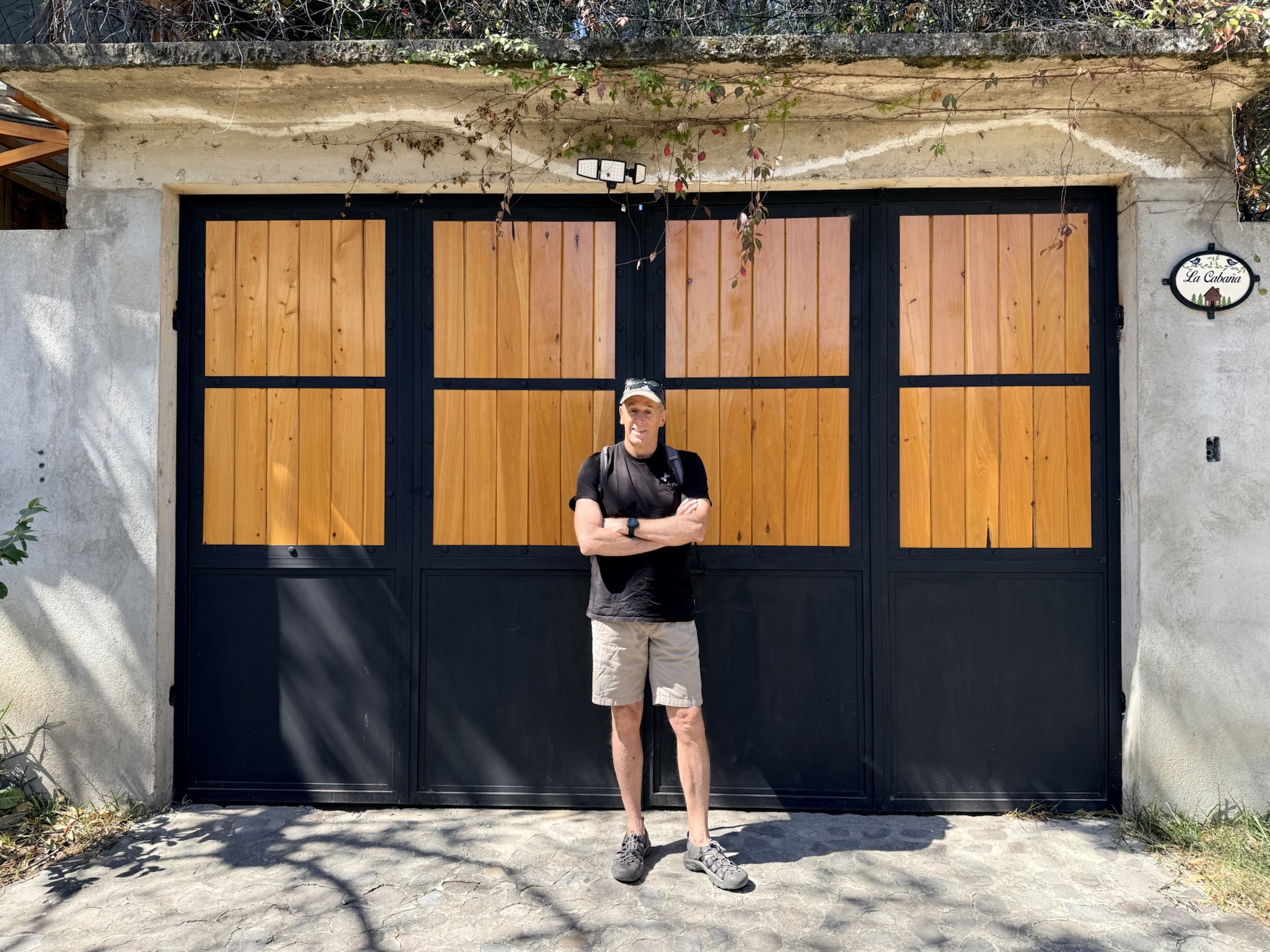
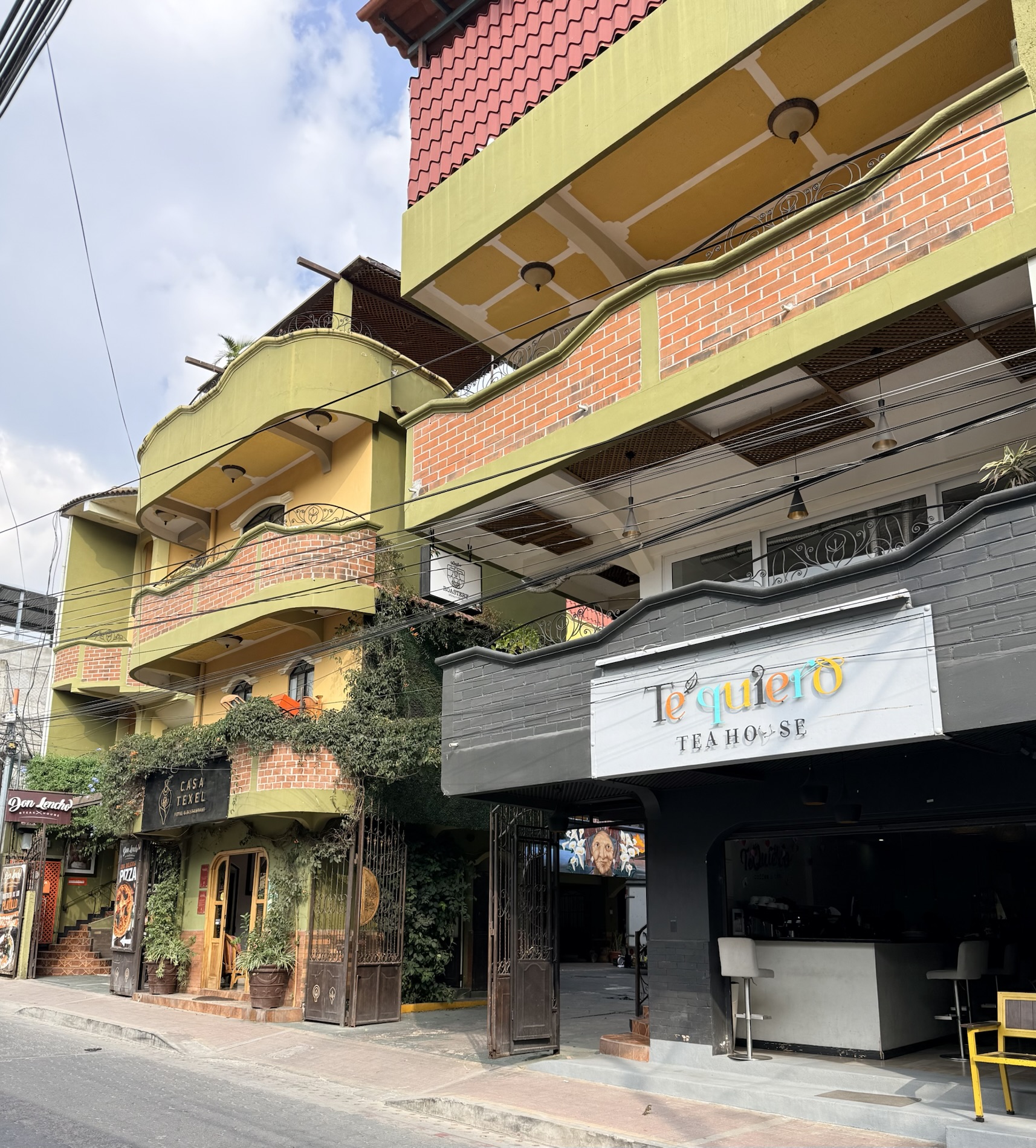
Panajachel, often nicknamed “Pana,” is the main gateway town on Lake Atitlán, and the least interesting. It is a jumping off point for visits to all the other towns on the lake and to the town of Chichicastenango, where a huge market is held every Thursday and Sunday. We rented an Airbnb here, from which we launched all of our explorations.
Chichicastenango’s Sunday Market
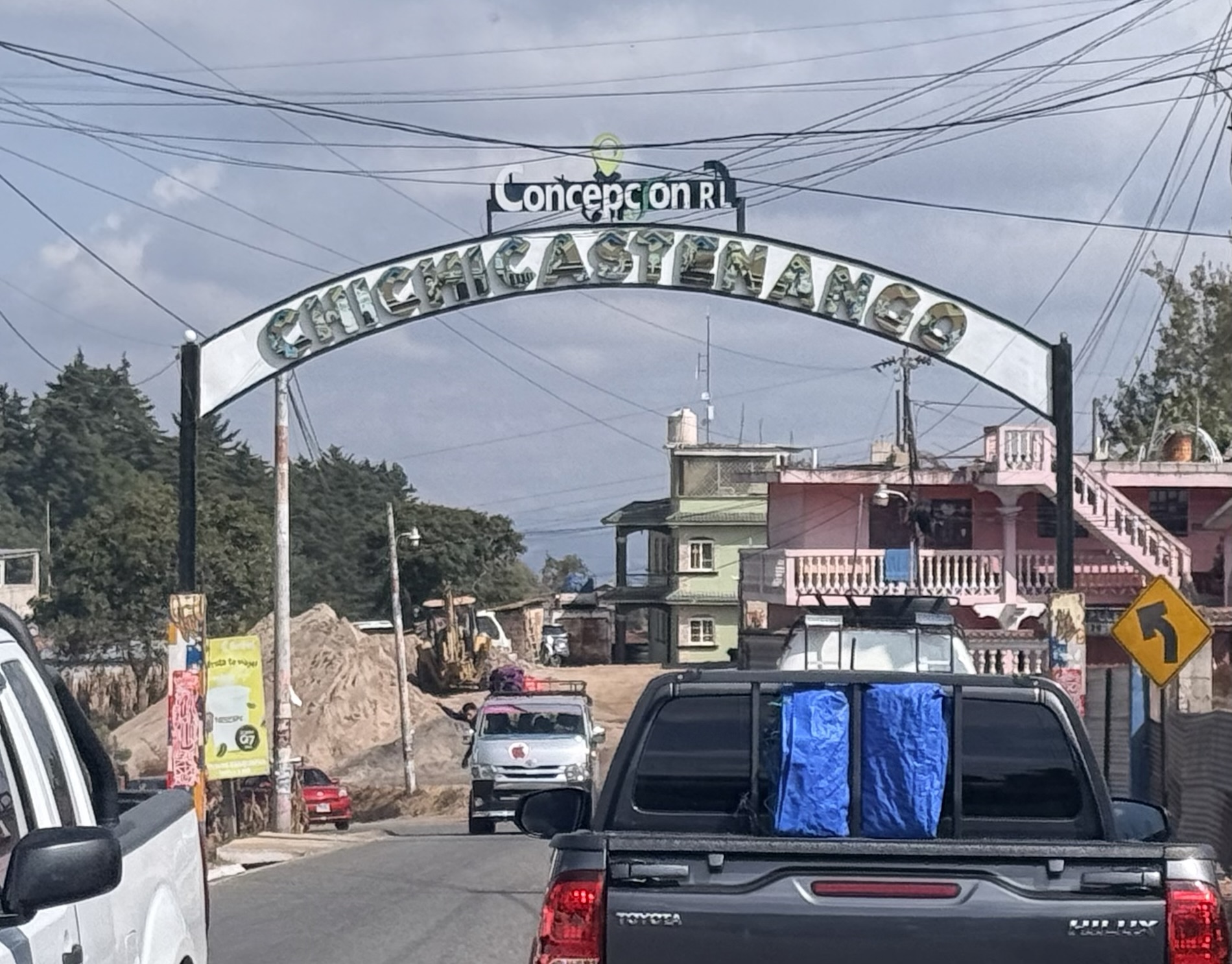
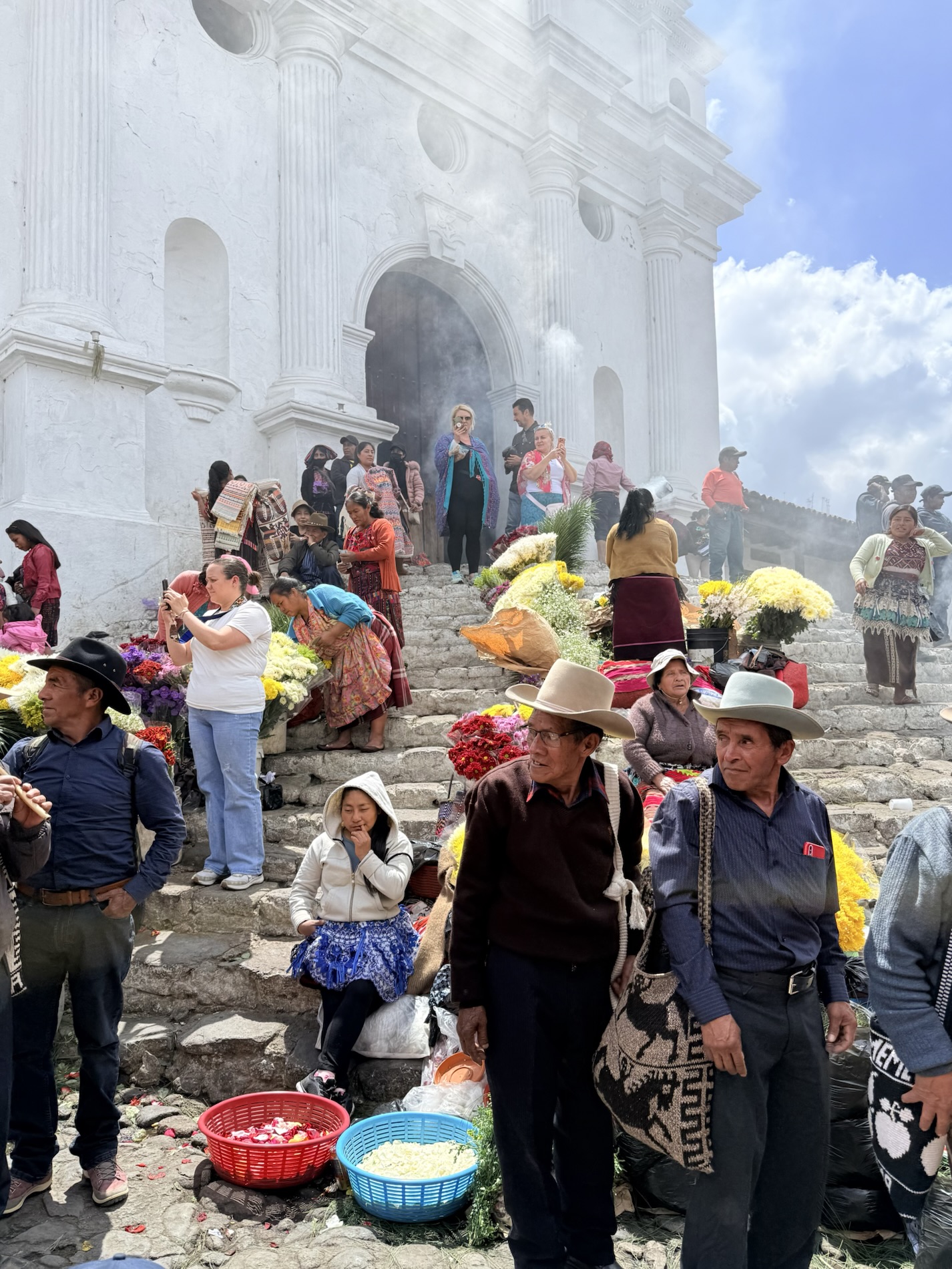
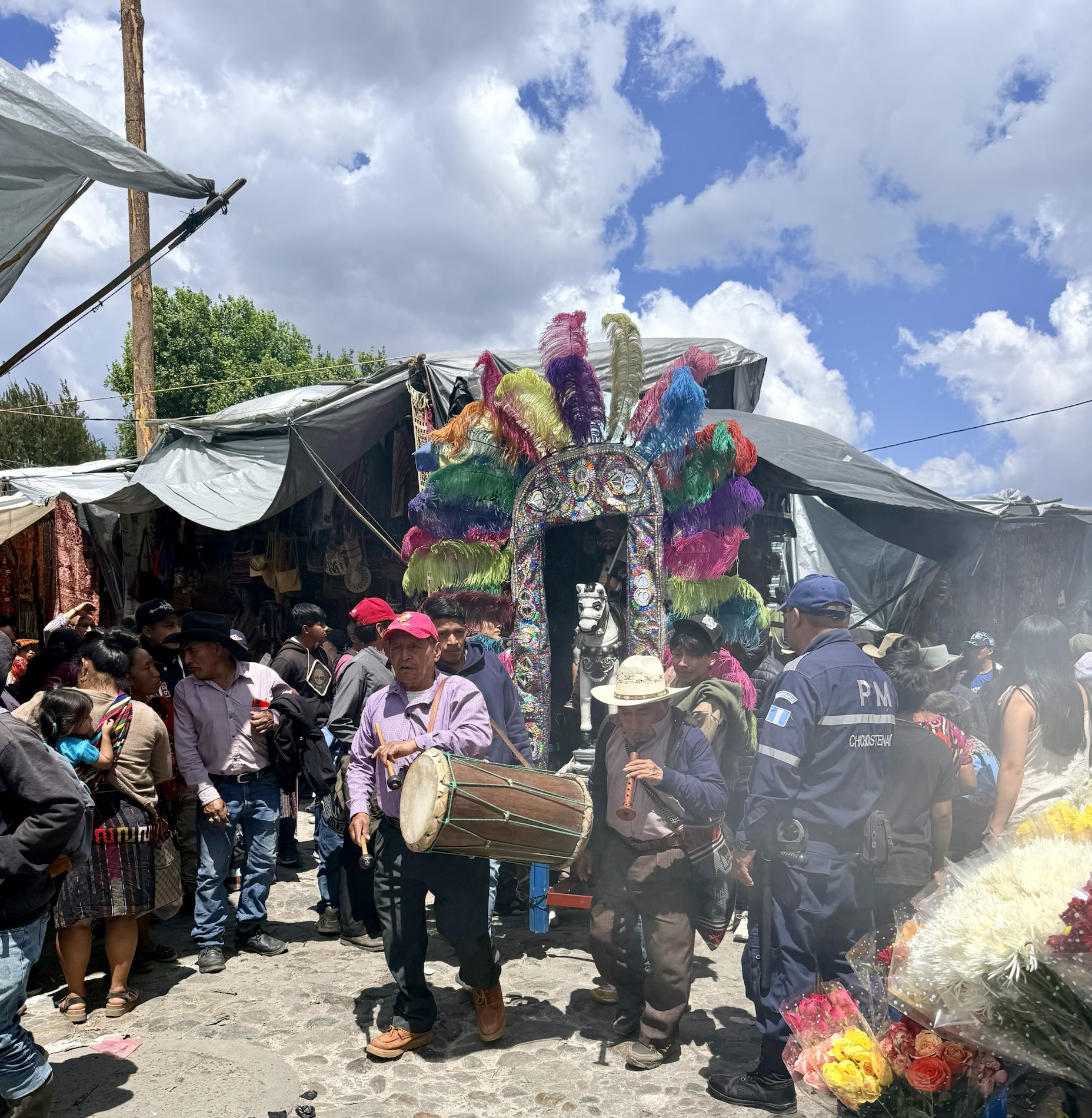
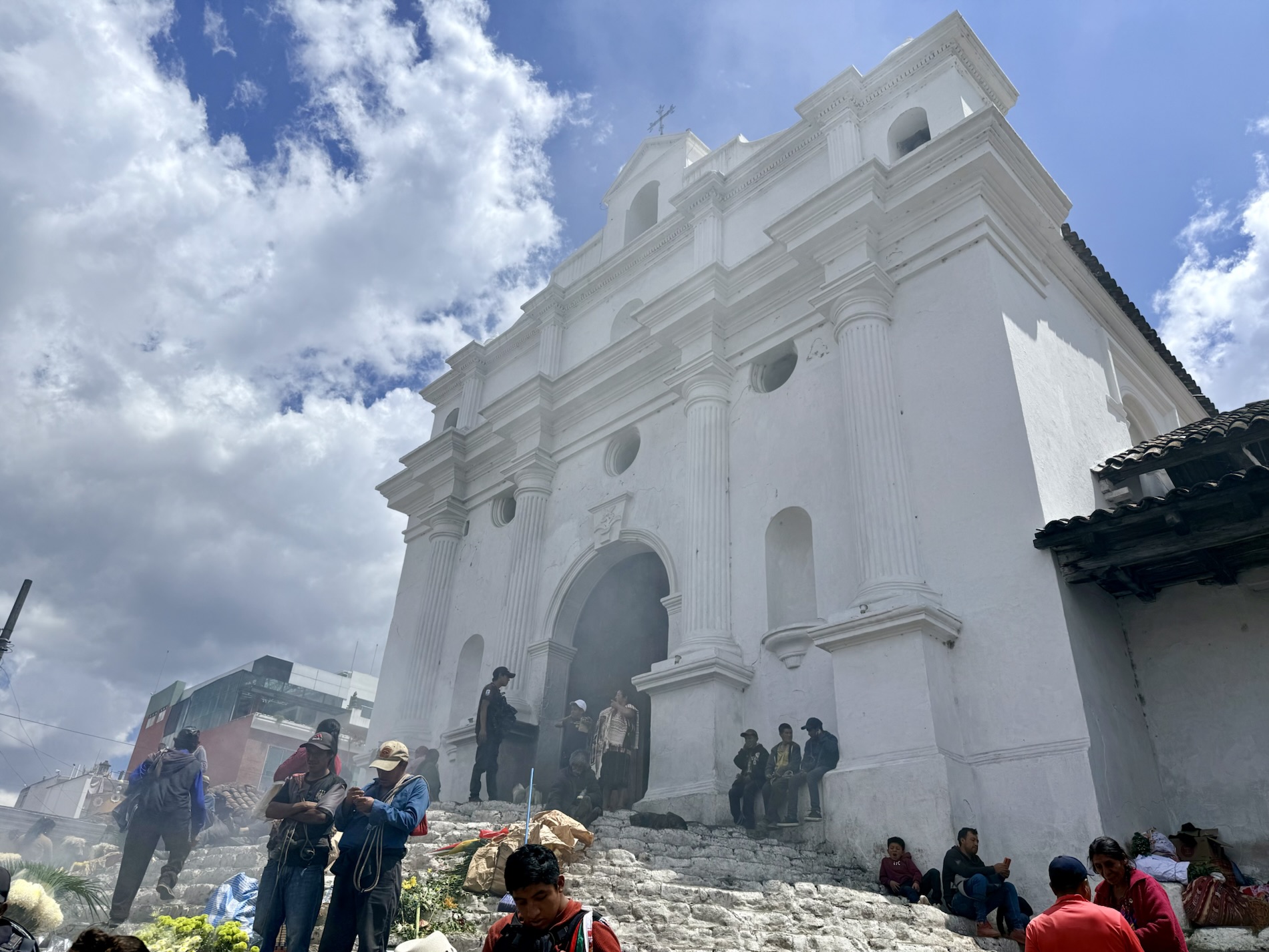
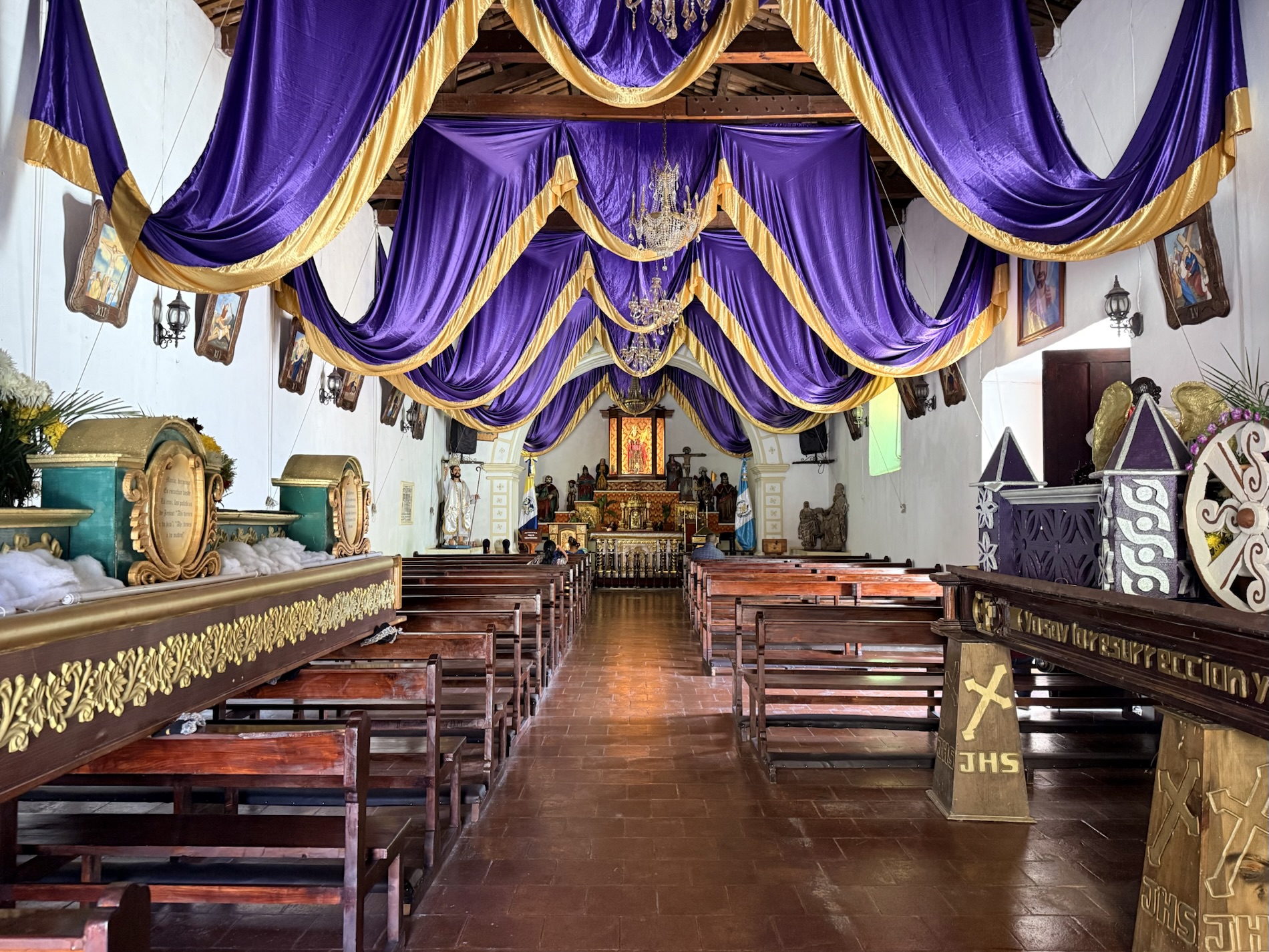
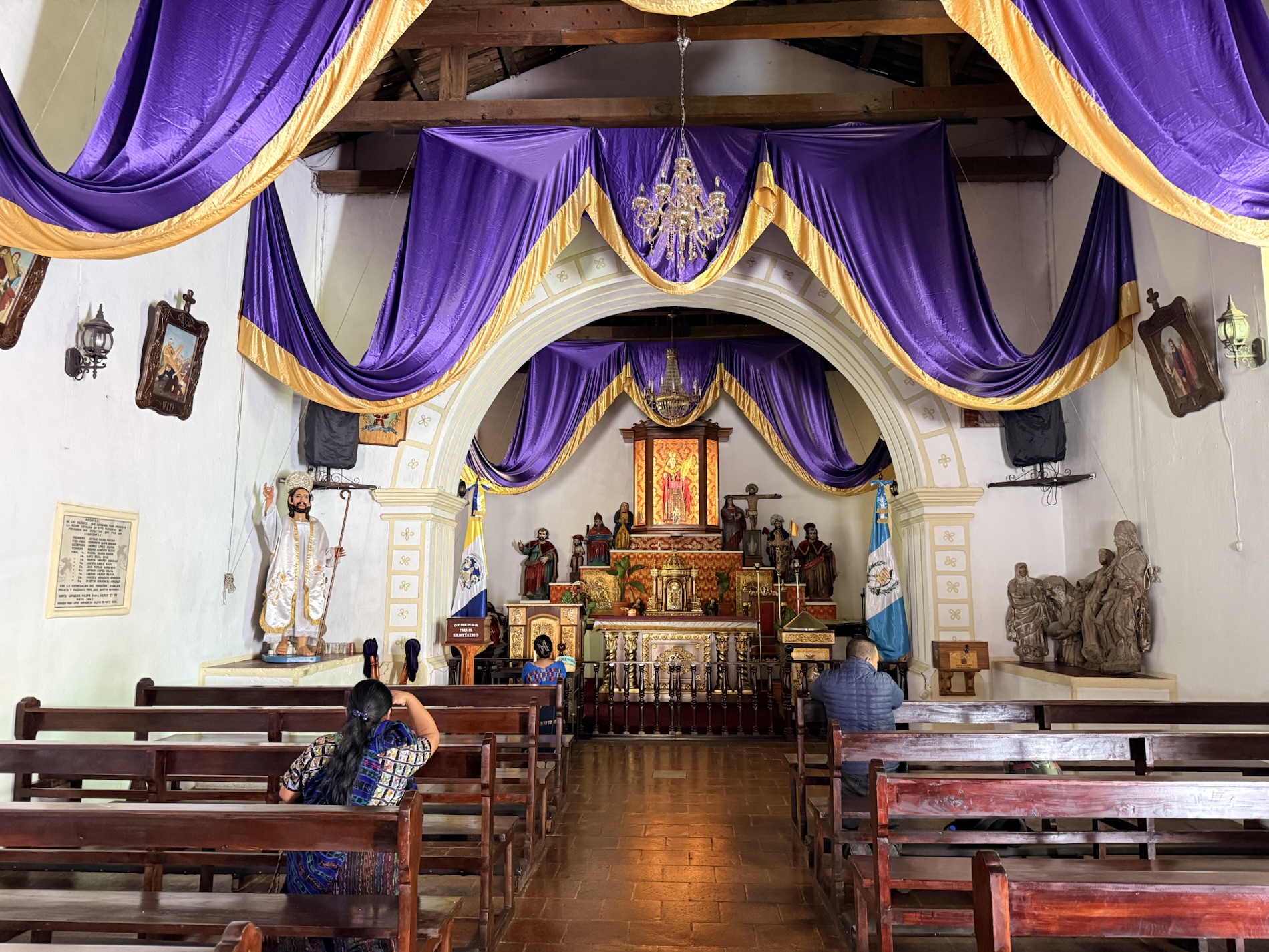
Chichicastenango (nicknamed Chichi) is a town an hour and a half north of Panajachel in a mountainous region of Guatemala, populated by mostly the K’iche’ (98.5%), one of the Mayan peoples. Masheños (citizens of Chichi) are famous for their adherence to pre-Christian beliefs and ceremonies. The town’s famous cofradías (religious brotherhoods) hold processions in observance of their saints around the Iglesia de Santo Tomás, which dates back to the 16th century. It was built on top of an existing Mayan temple. The 18 steps leading up to the church are original and symbolize the 18 months of the Mayan calendar.
The Popul Vuh, the K’iche’ Maya’s story of creation is said to have been discovered at the Iglesia de Santo Tomás in Chichicastenango. Though Roman Catholicism is predominant here, it is infused with Mayan ritual.
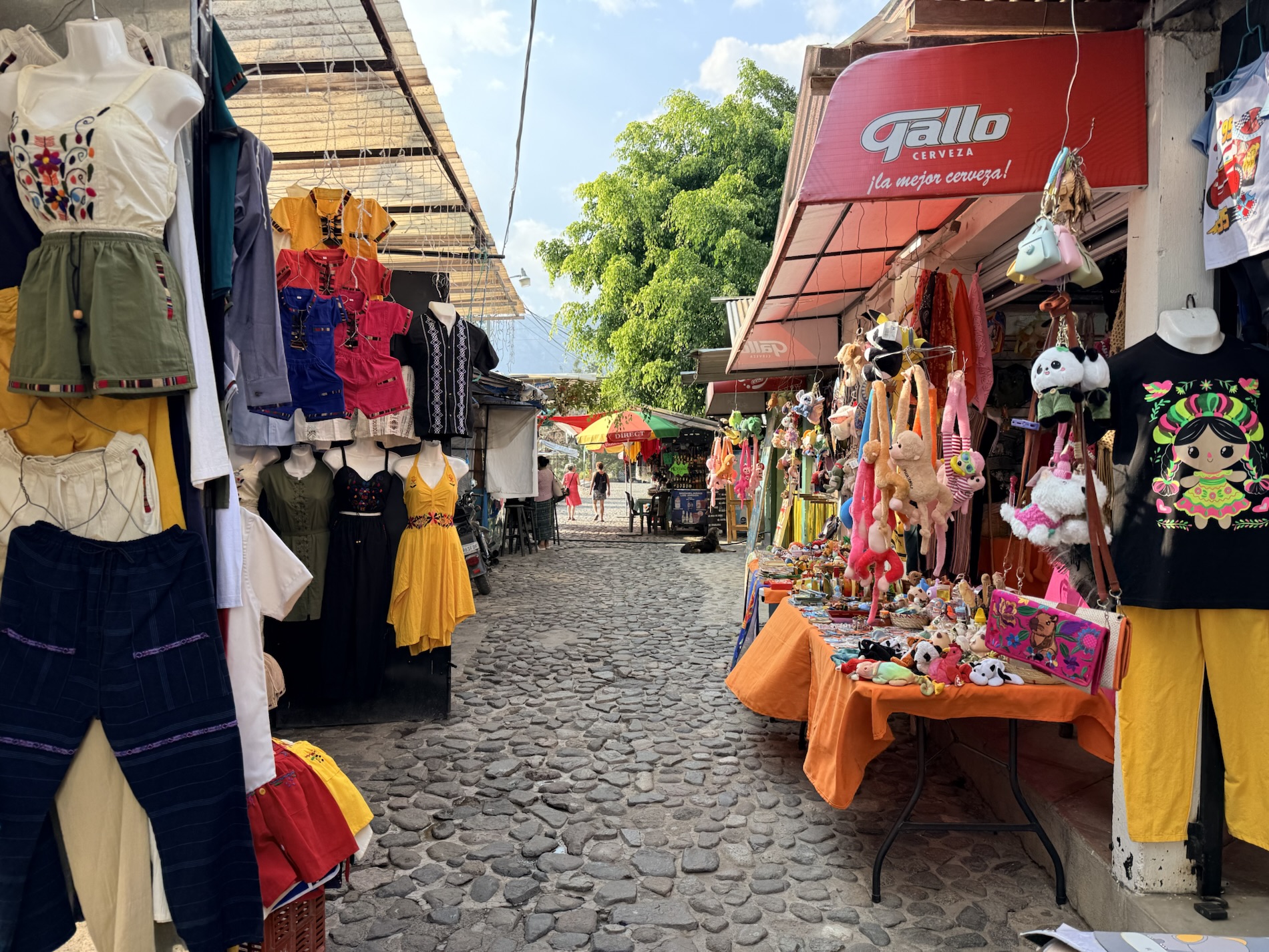
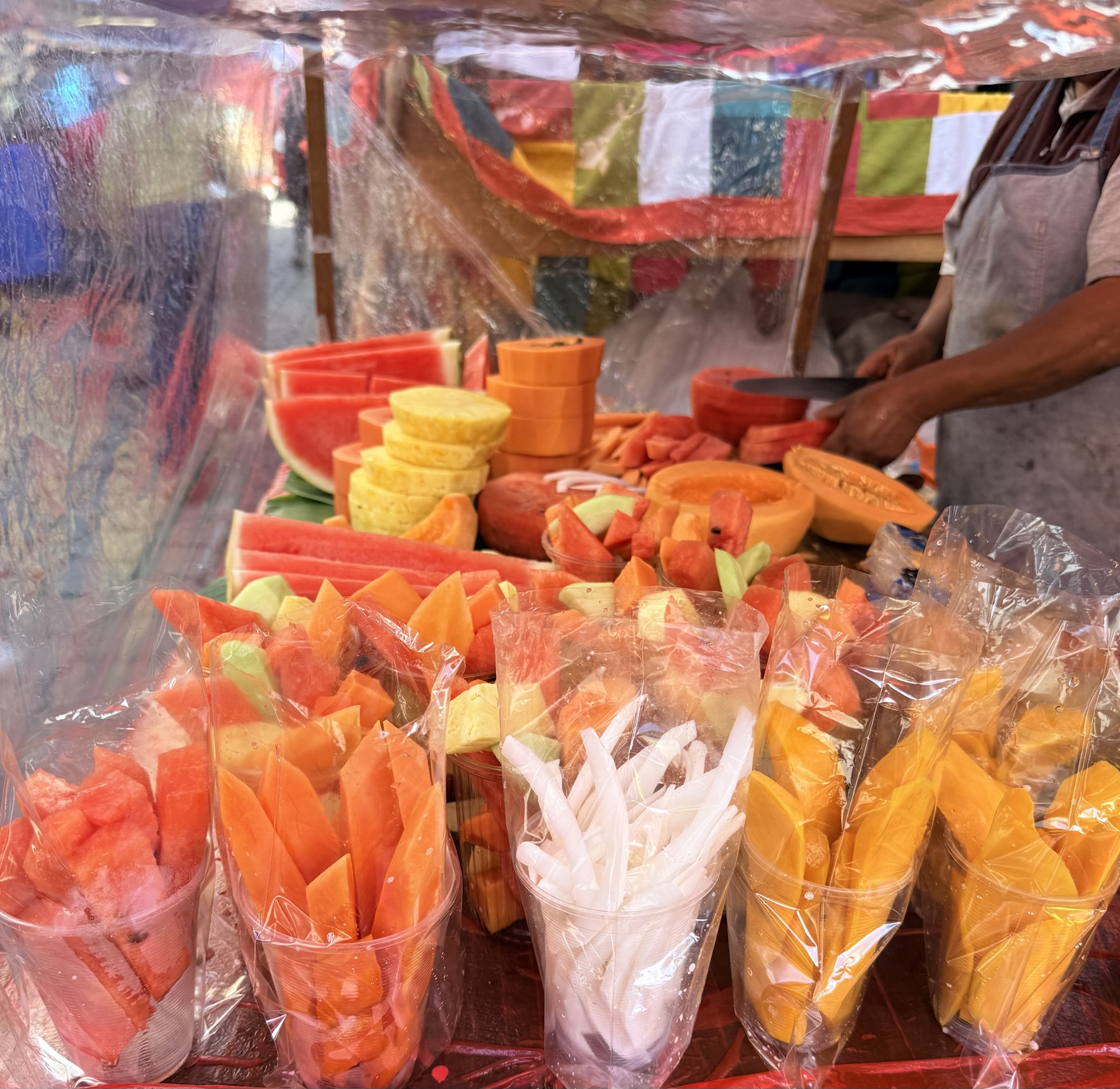
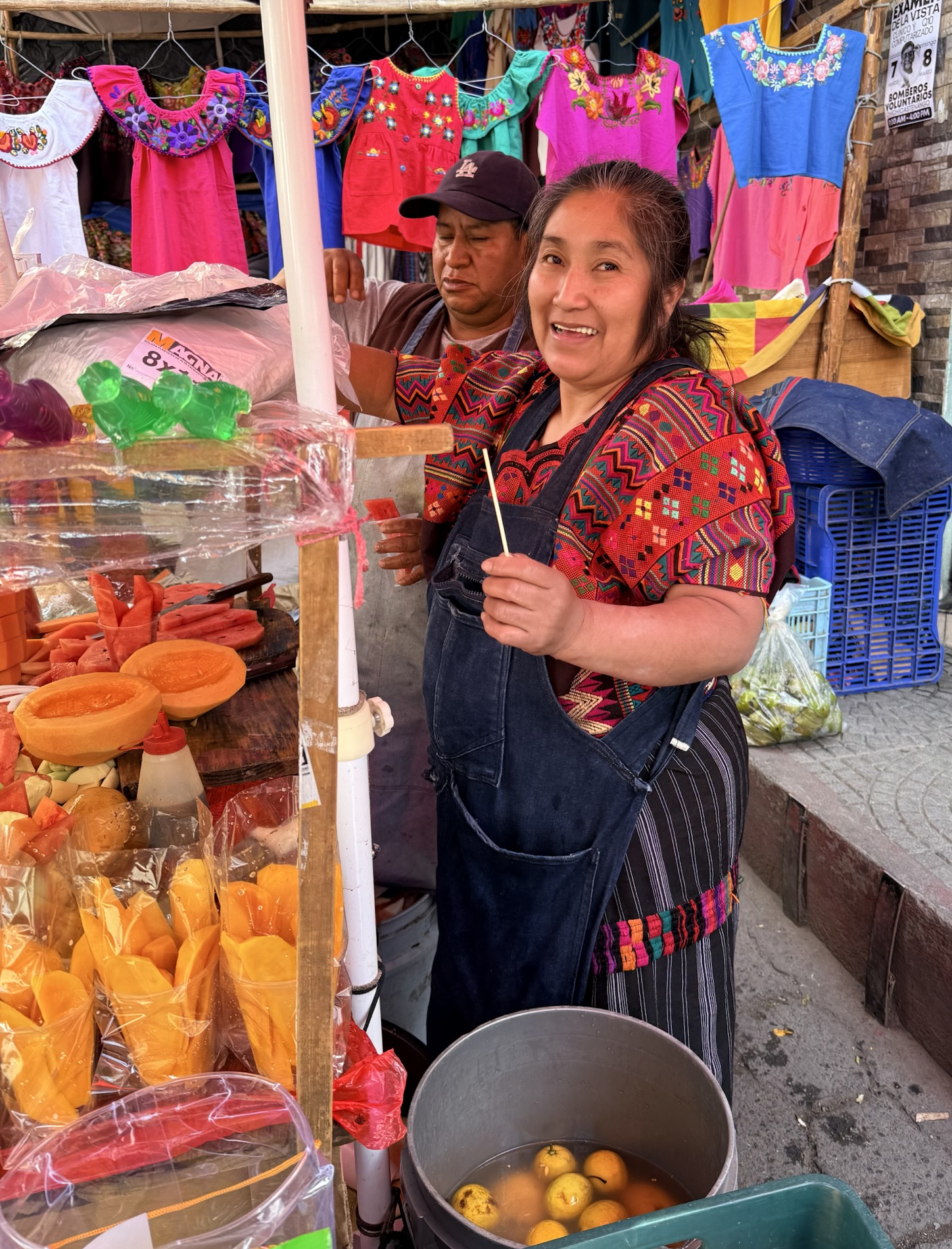
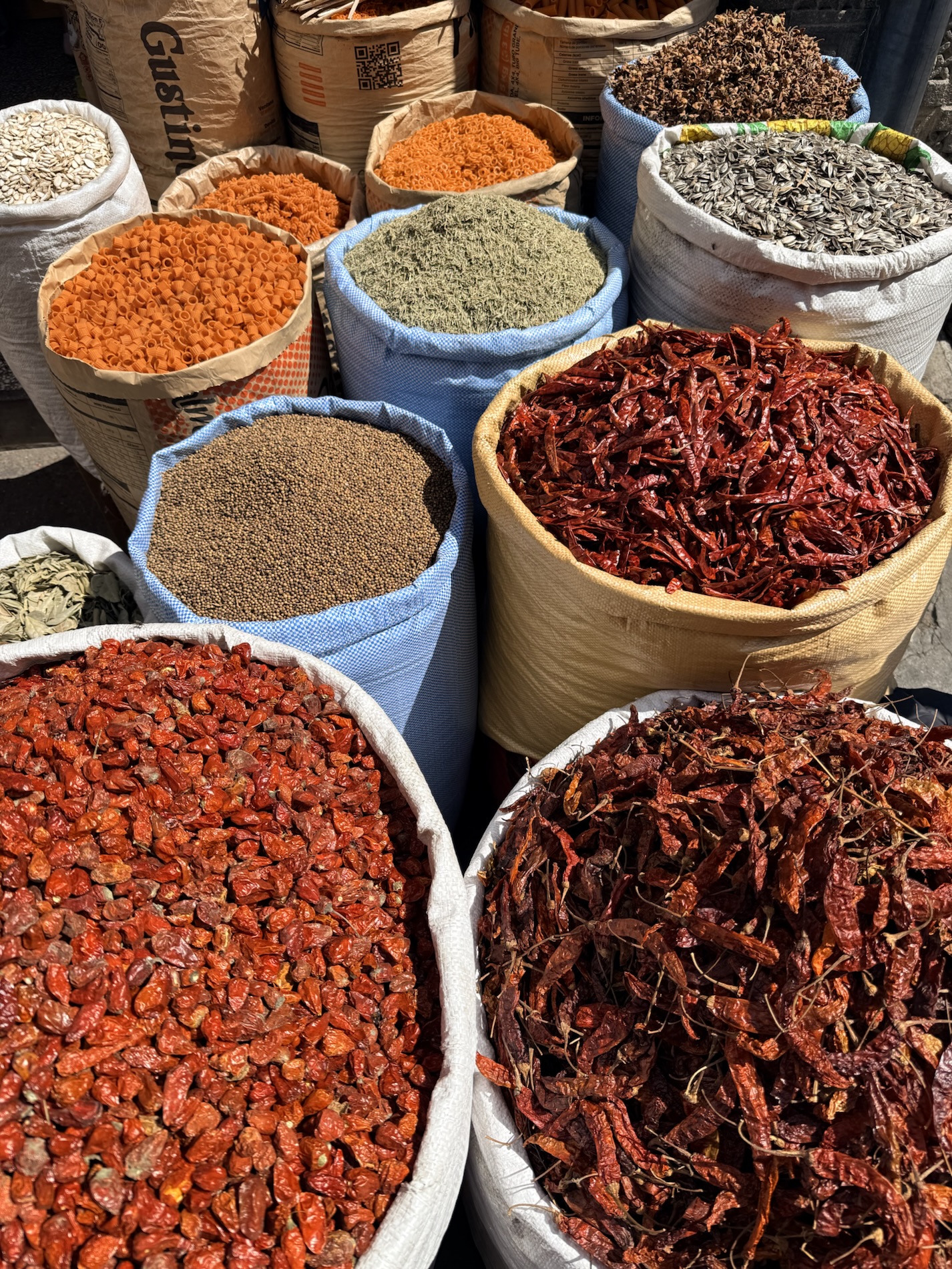
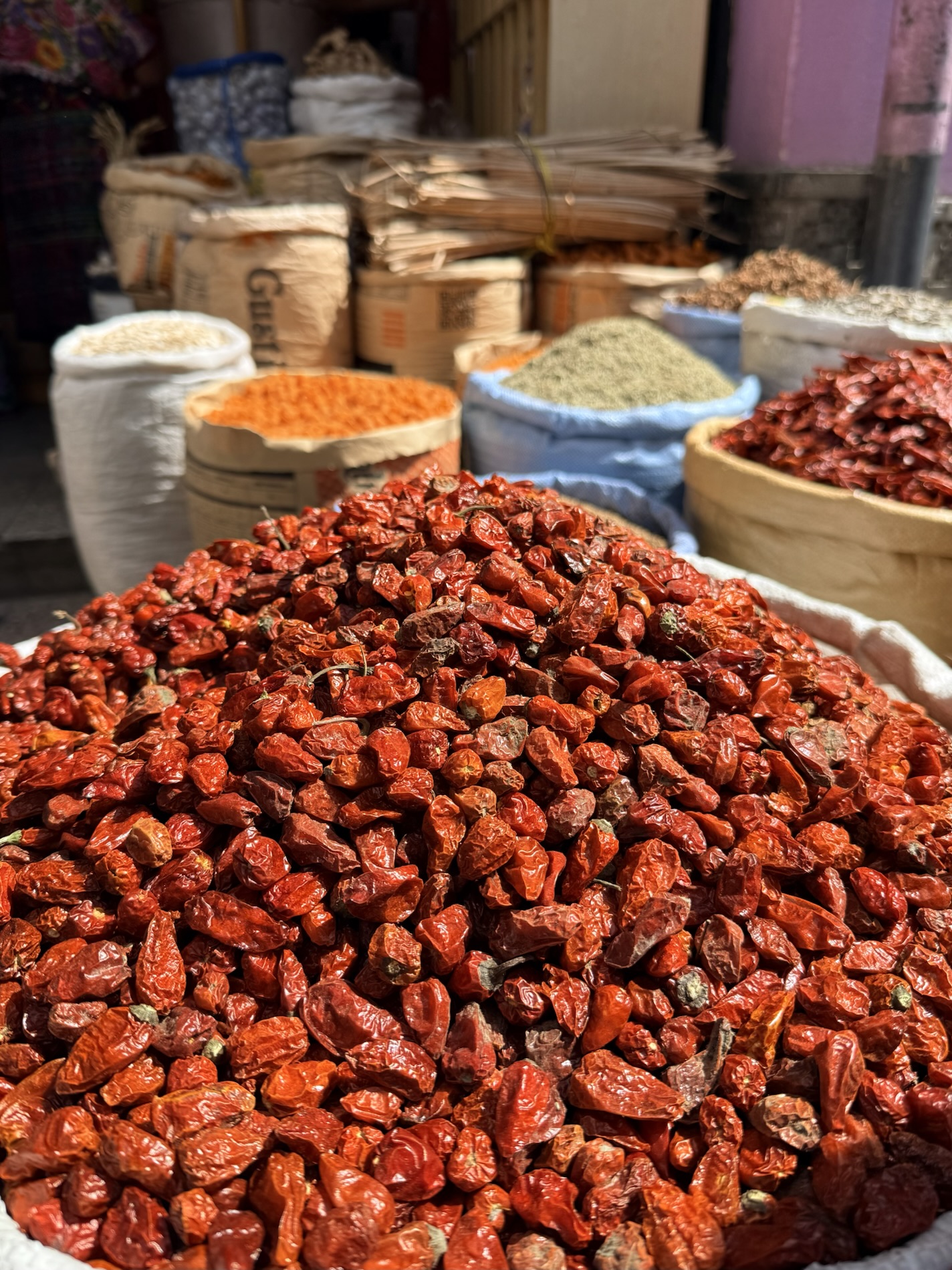
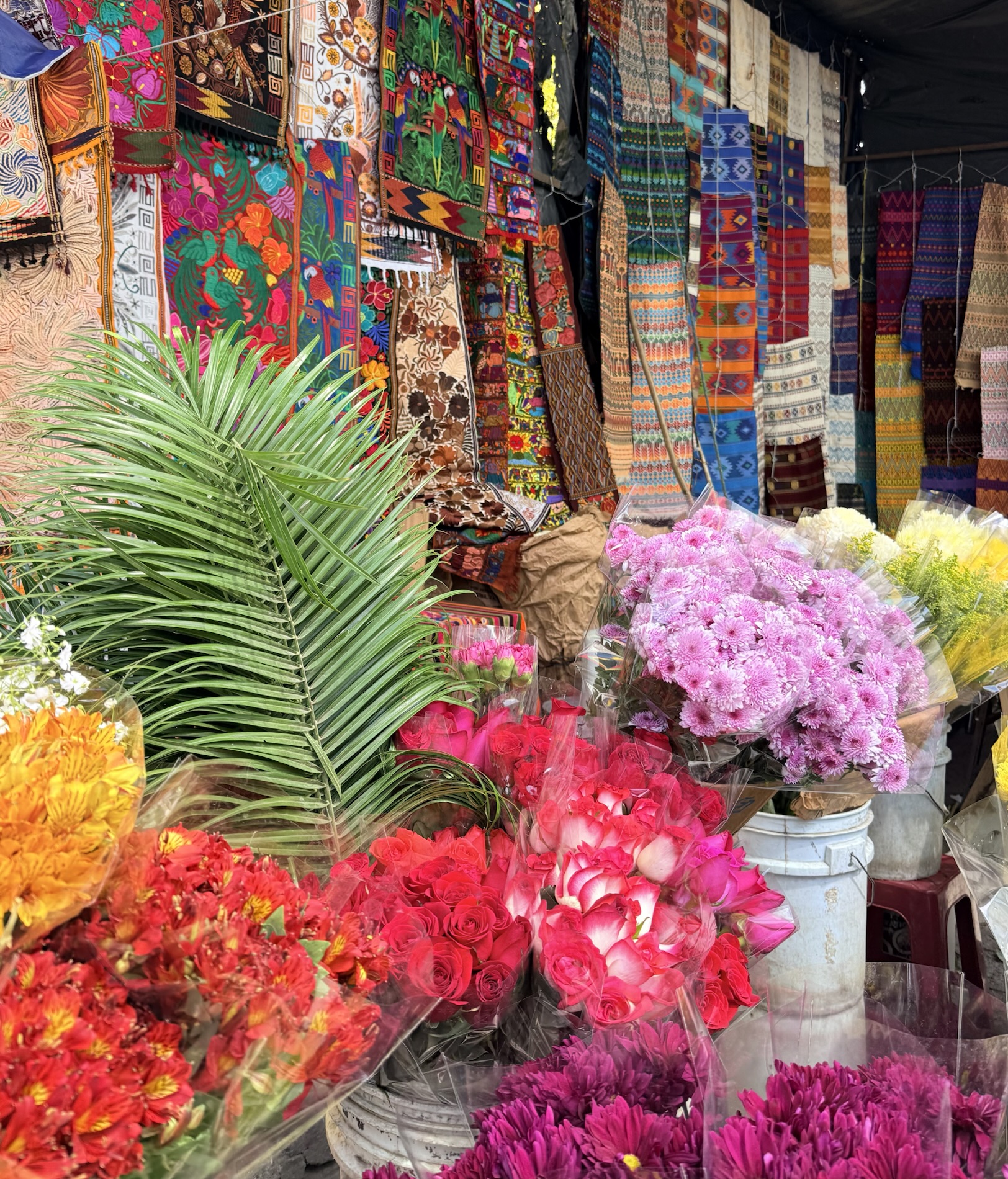
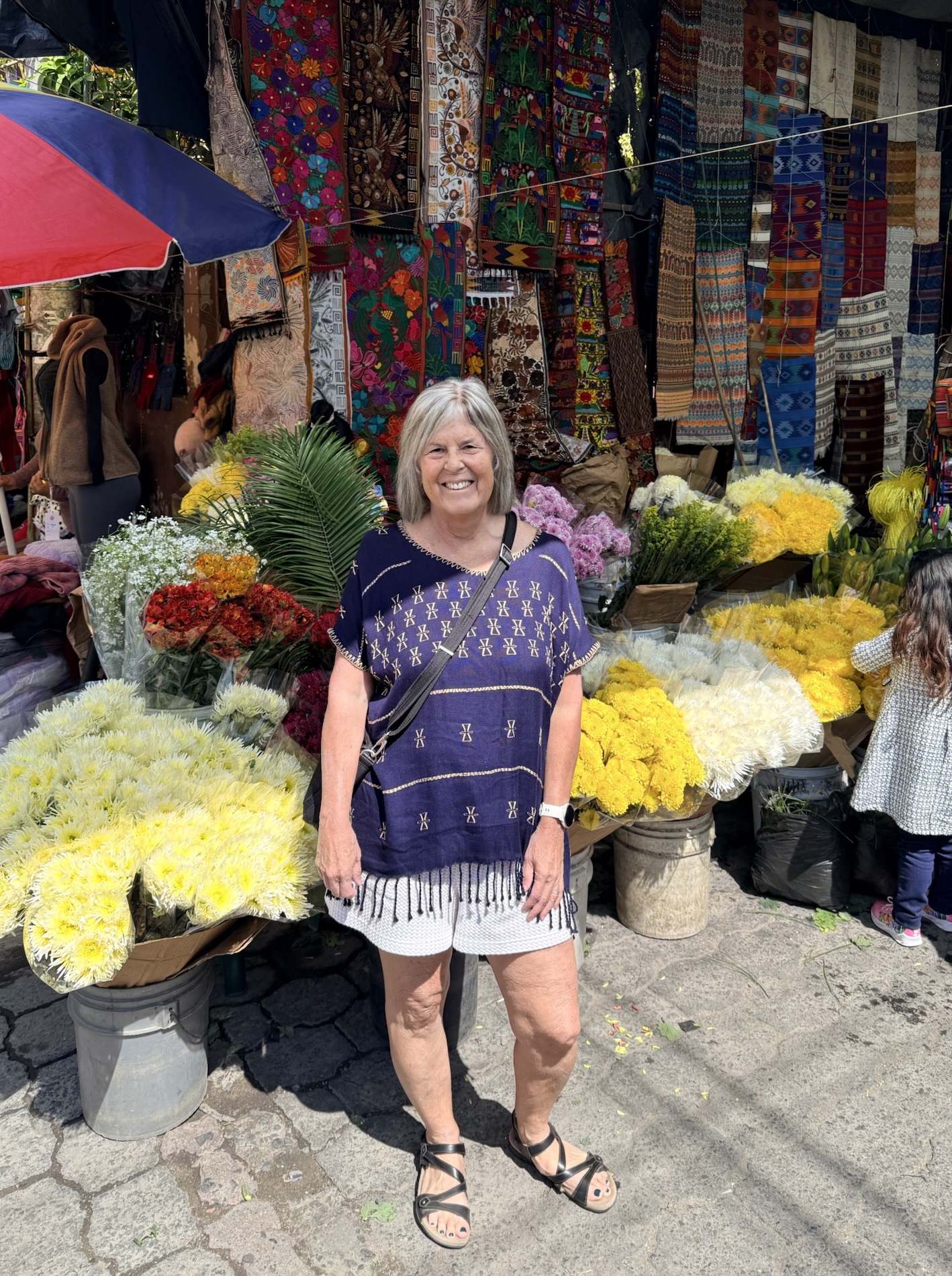
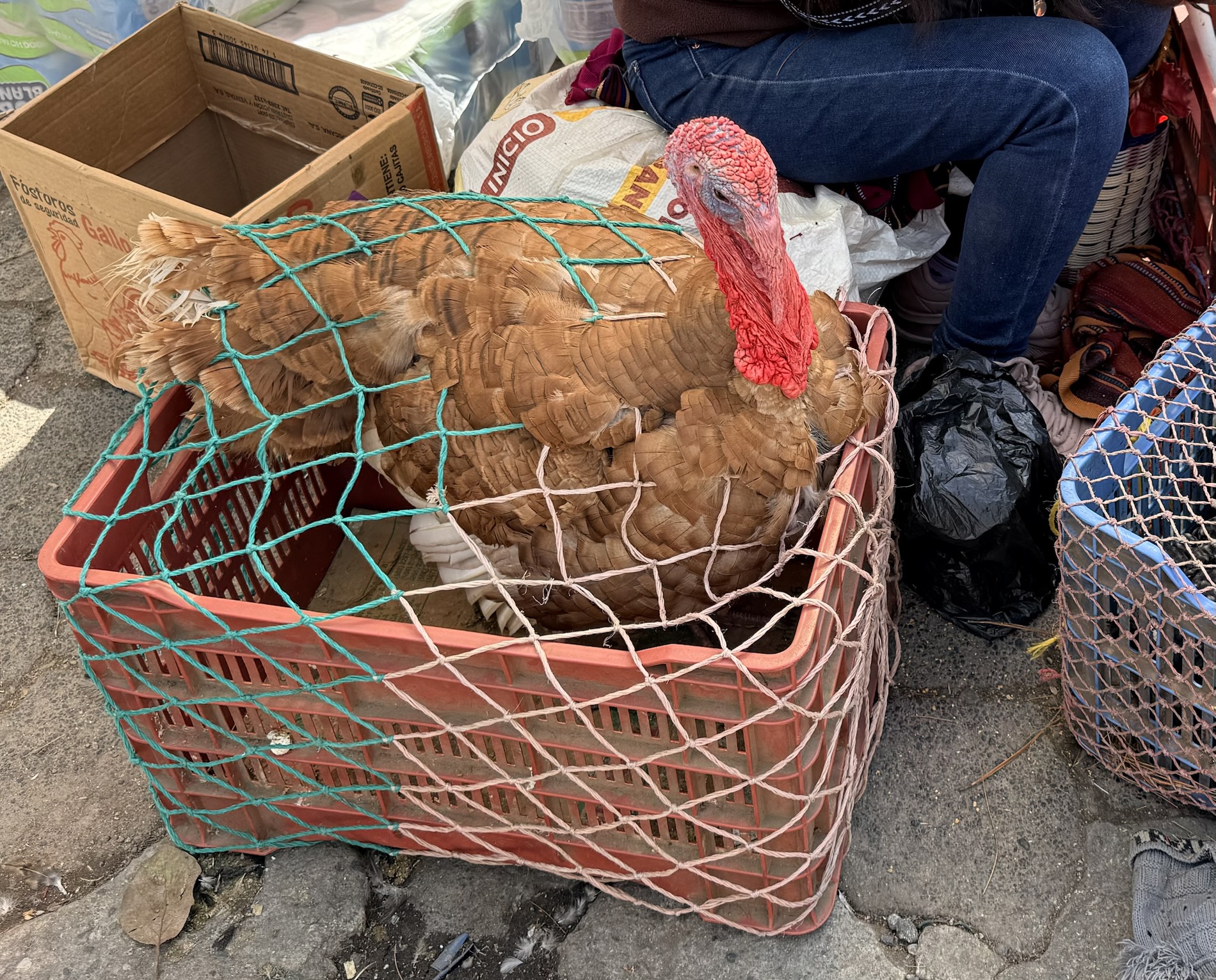
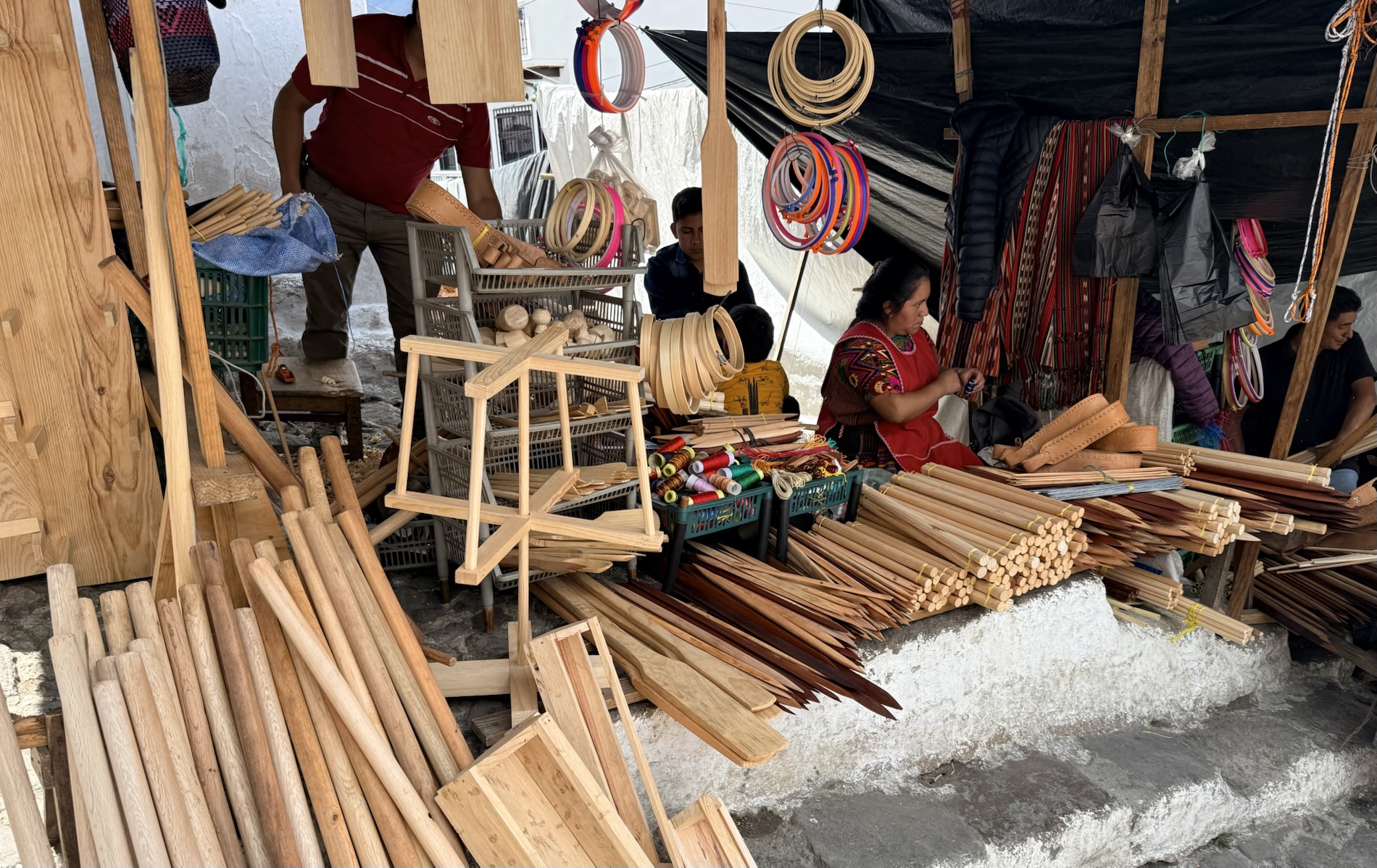
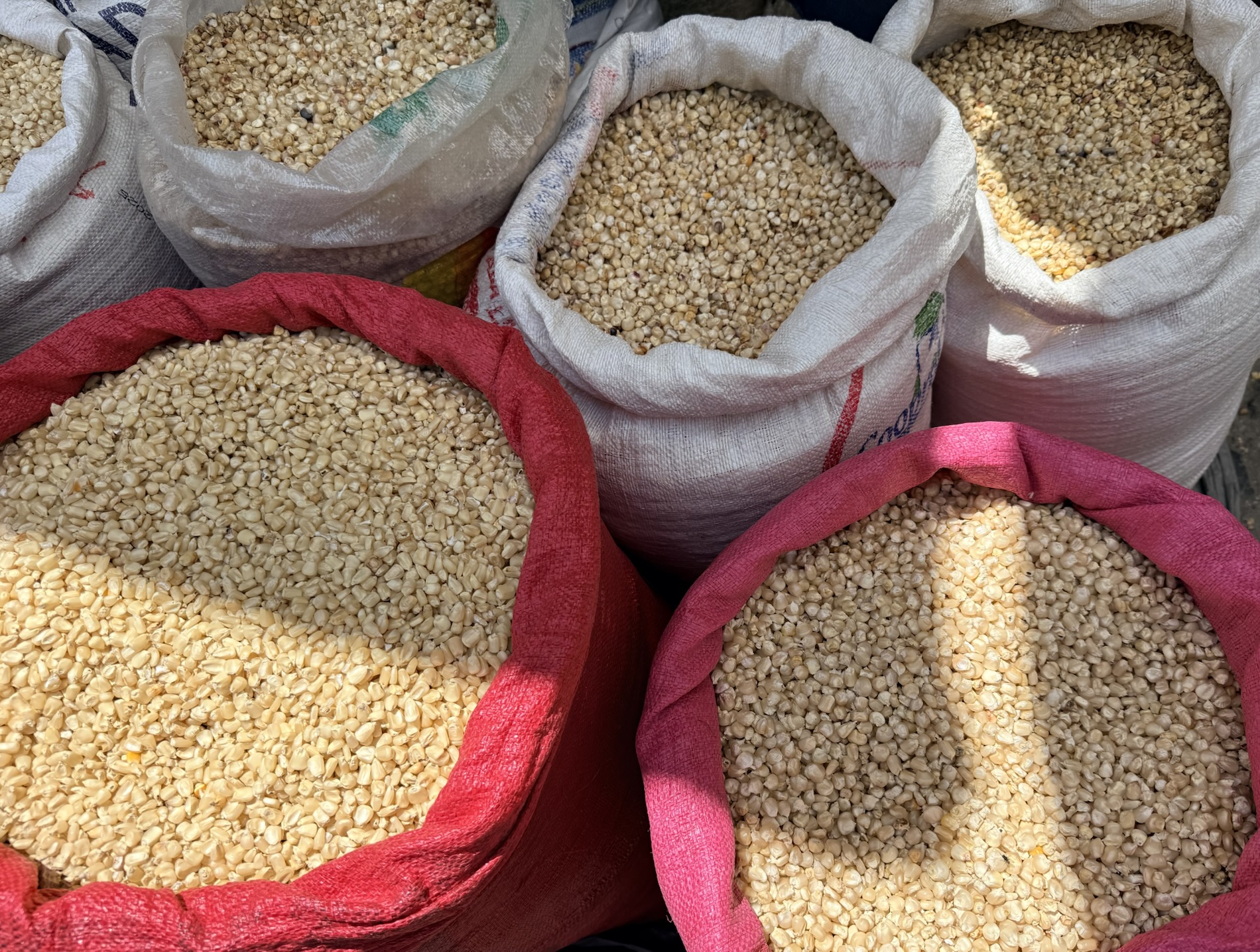
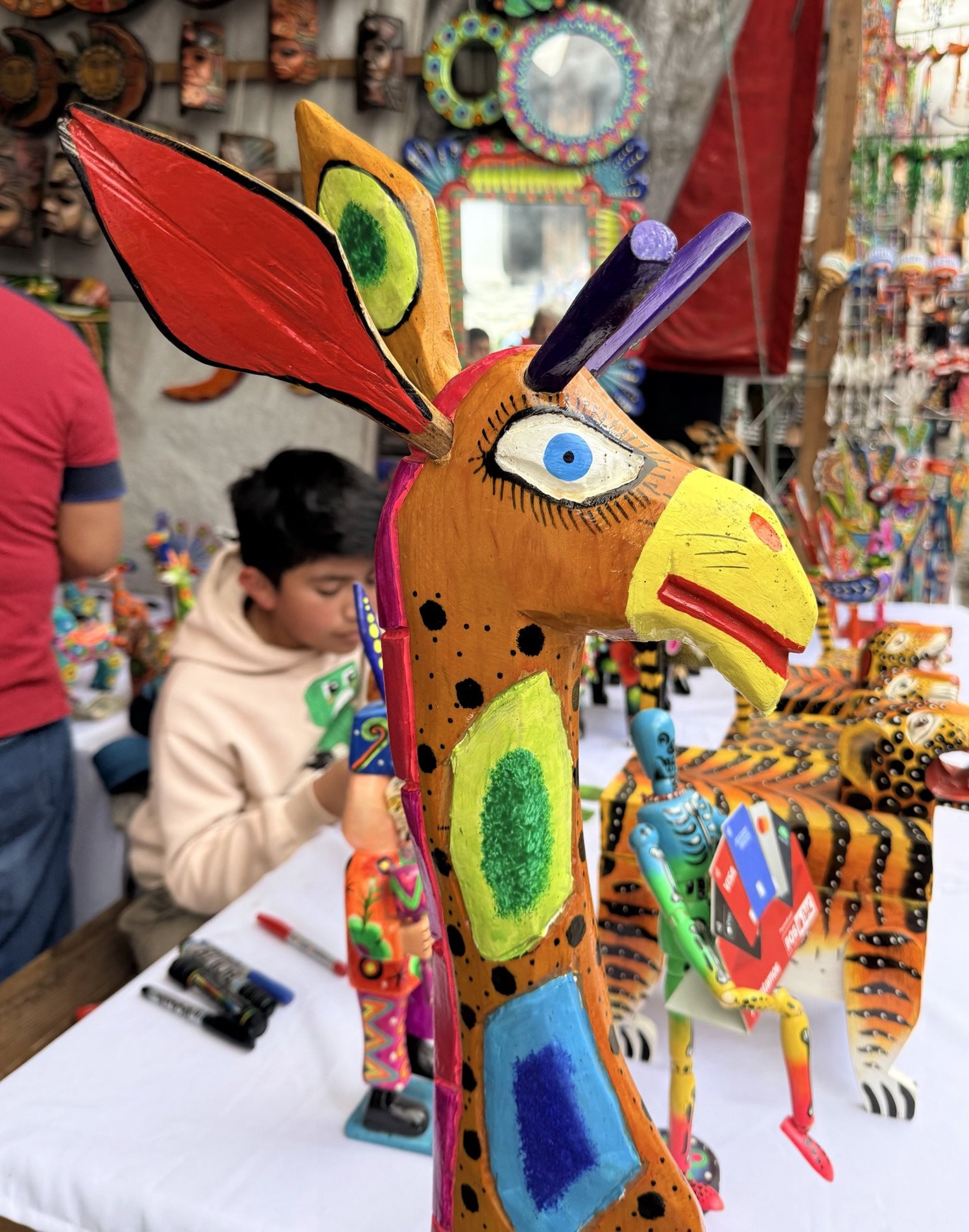
In the town’s Thursday and Sunday markets, vendors sell handicrafts, food, flowers, pottery, handbags, wooden boxes, condiments, medicinal plants, candles, and copal (traditional incense), cal (lime stones for preparing tortillas), grindstones, pigs and chickens, machetes and other tools. Woven textiles are famously sold here, particularly women’s blouses called huipil.
The Chichicastenango Cemetery
The Chichicastenango Cemetery is a cemetery overlooking the town. The rainbow-colored above-ground mausoleums and tombstones celebrate the afterlife and can symbolize different family roles. White means purity. Mothers’ tombs are often painted turquoise for protection. Grandfathers’ tombs are often painted in yellow symbolizing the sun’s life force. Other graves are painted in lime green, lavender, red, or the favorite color of the deceased.
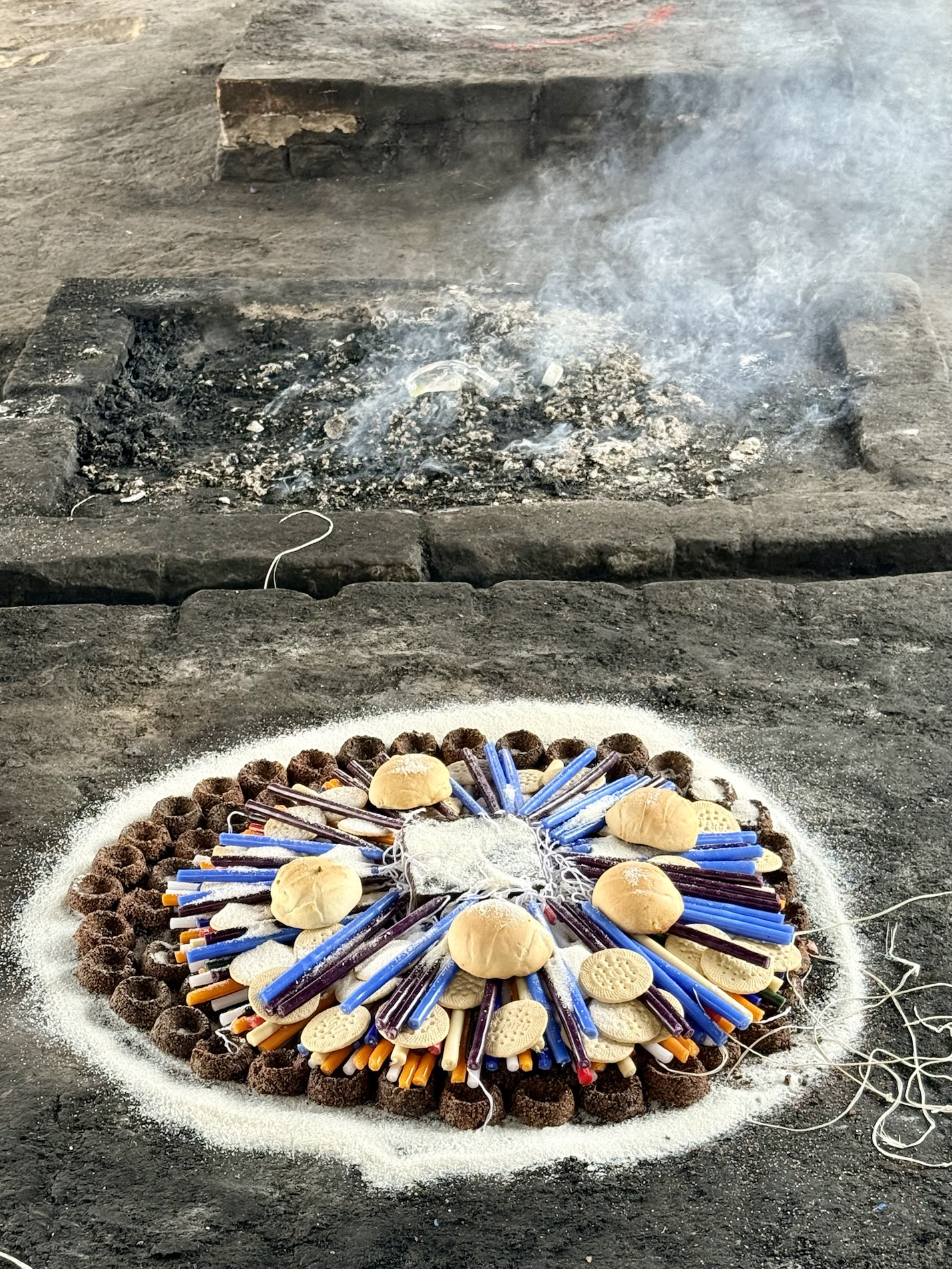
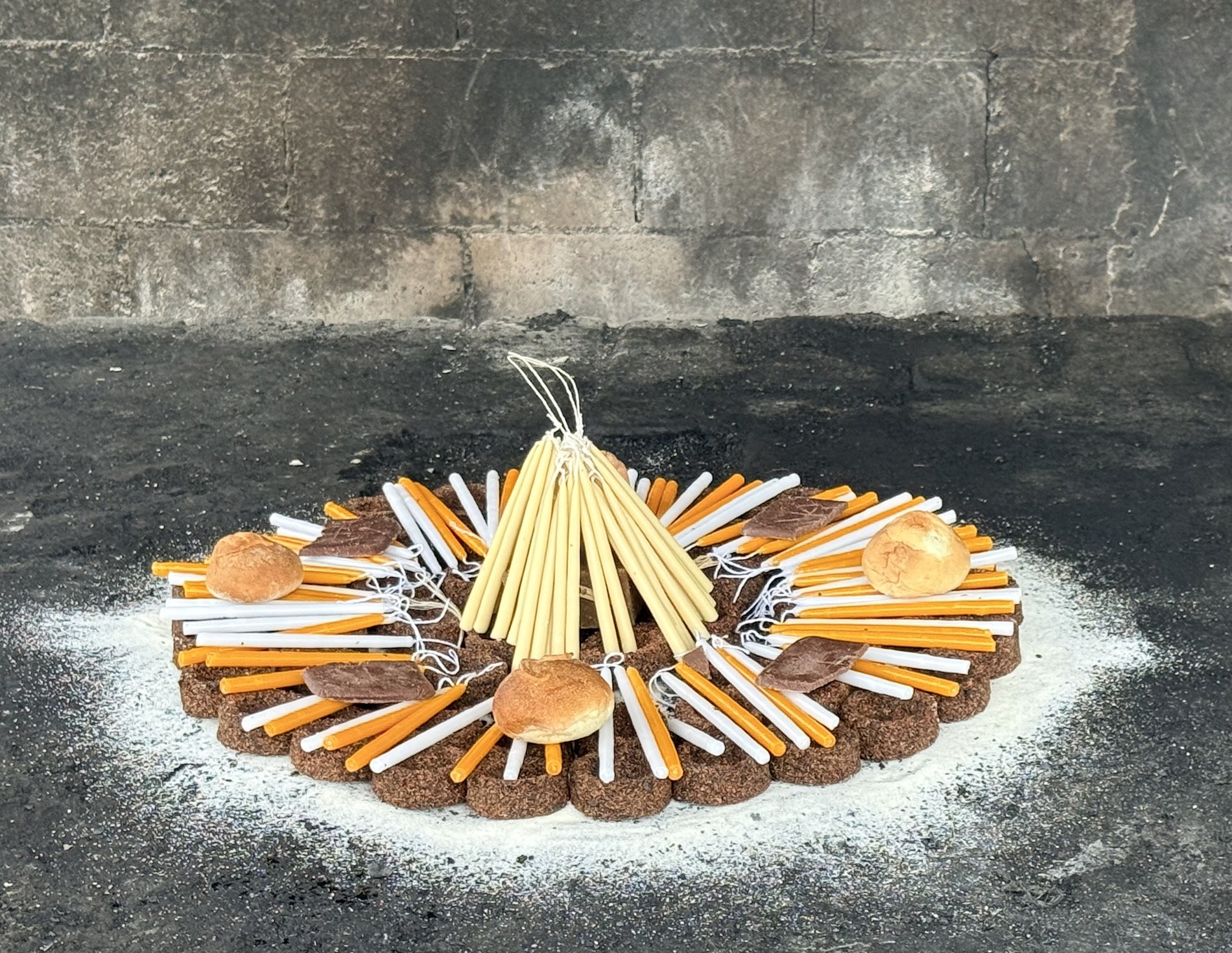
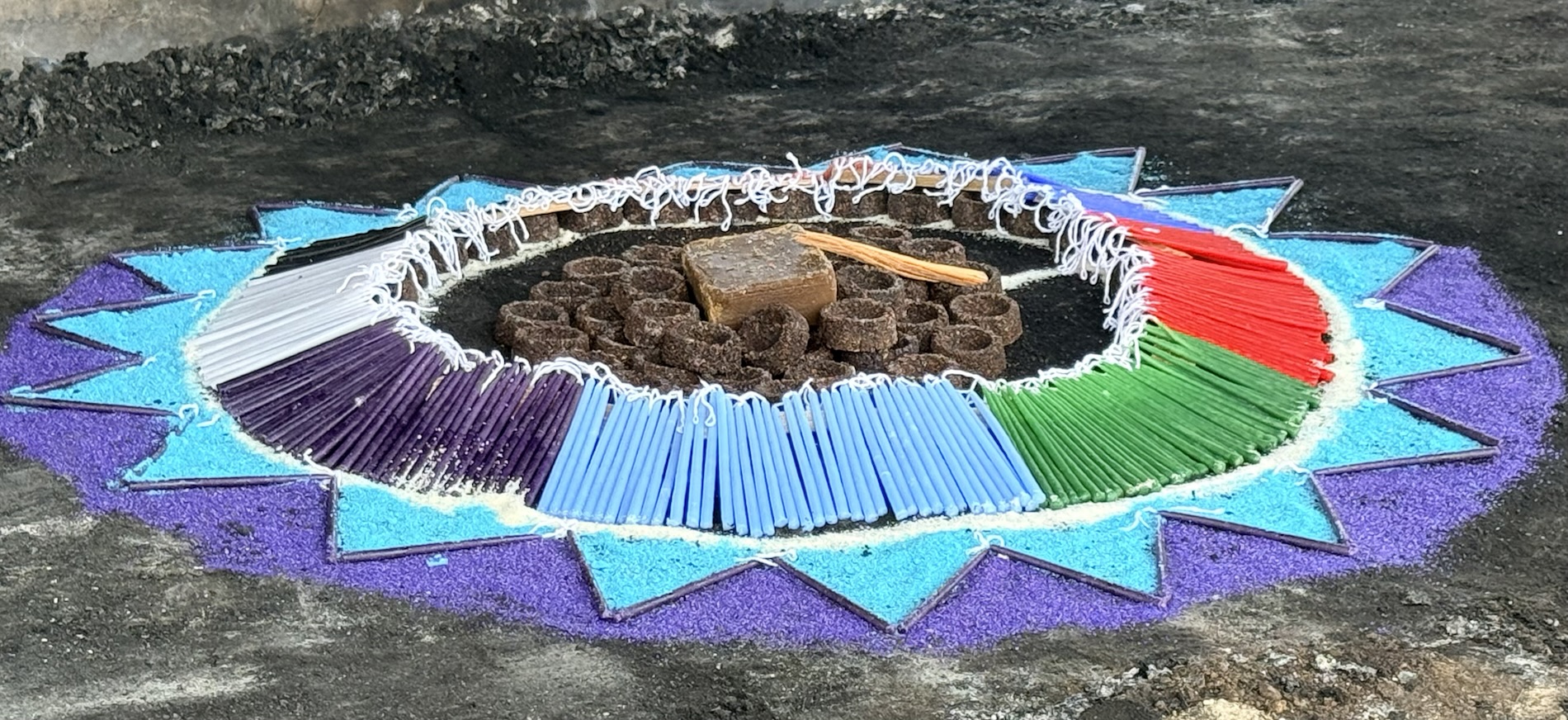
According to indigenous Maya tradition, honoring the dead encourages the living to make peace with the inevitability of death. Round offerings called comal (griddle) are made as offerings to the dead, as well as flowers, incense, candles and chickens. Families clean and repaint graves of their beloved on the Day of the Dead. If the rent for the plots can’t be paid by the family, it is said remains can be exhumed and placed into mass graves.
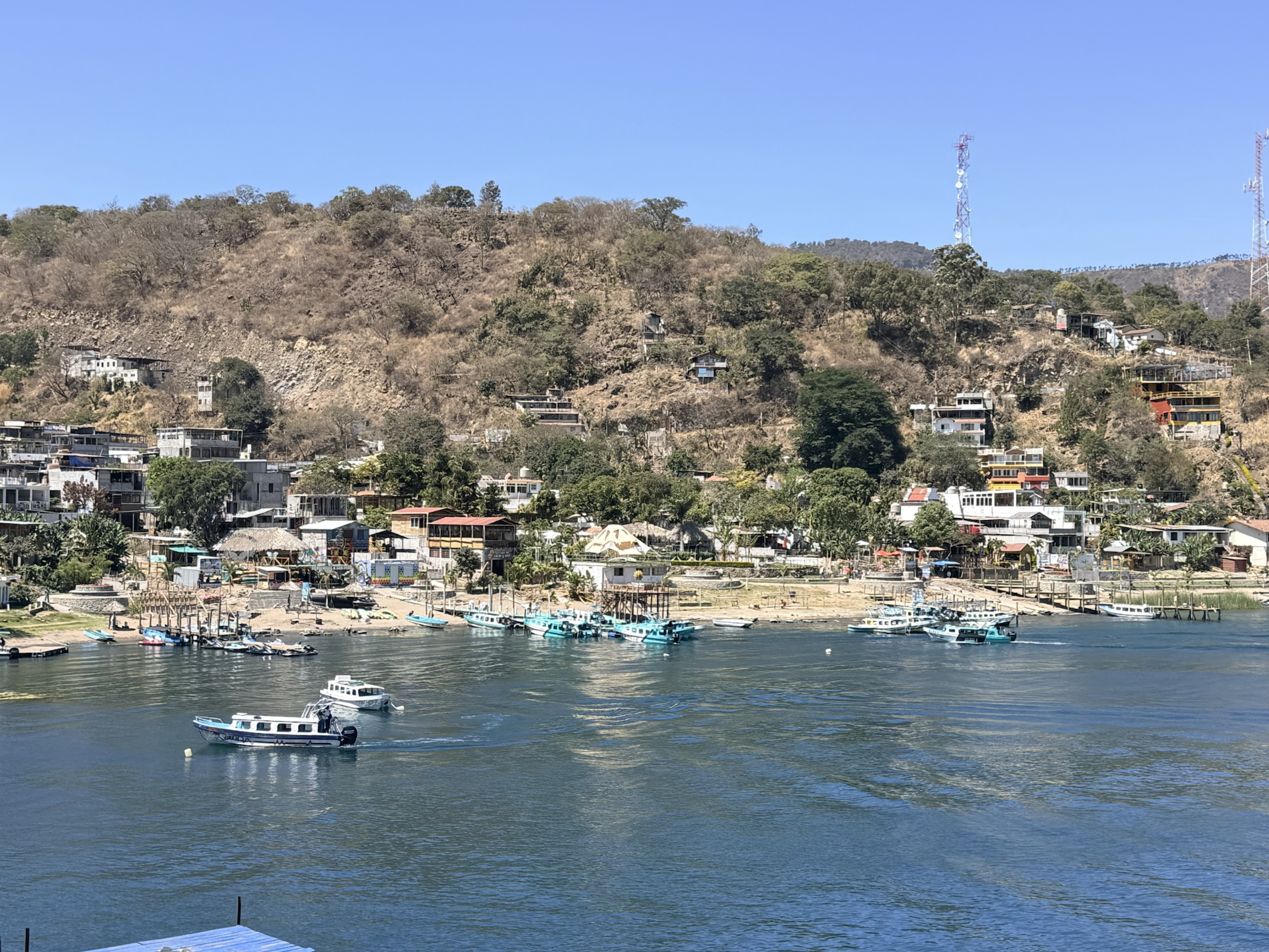
San Pedro la Laguna
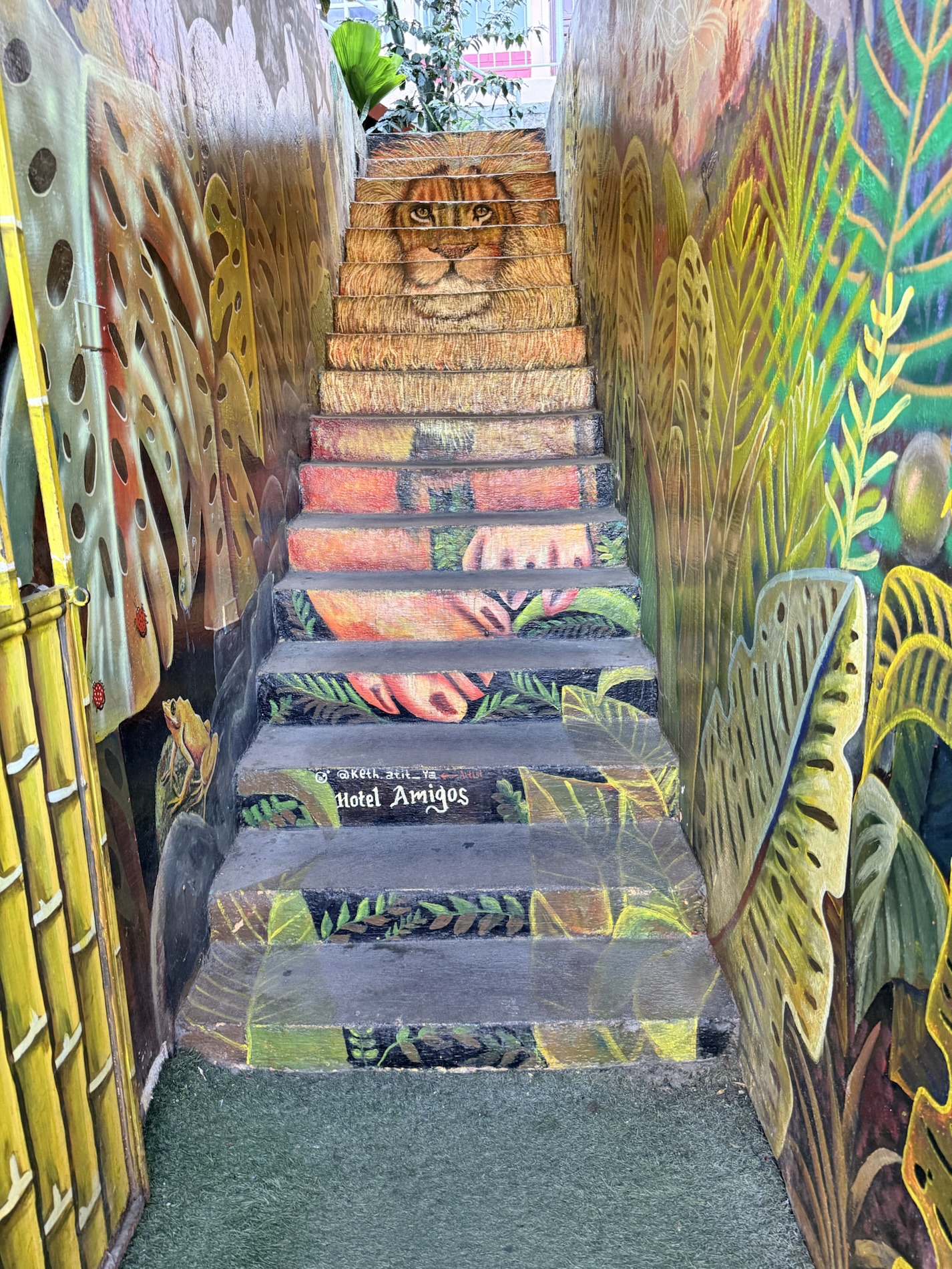
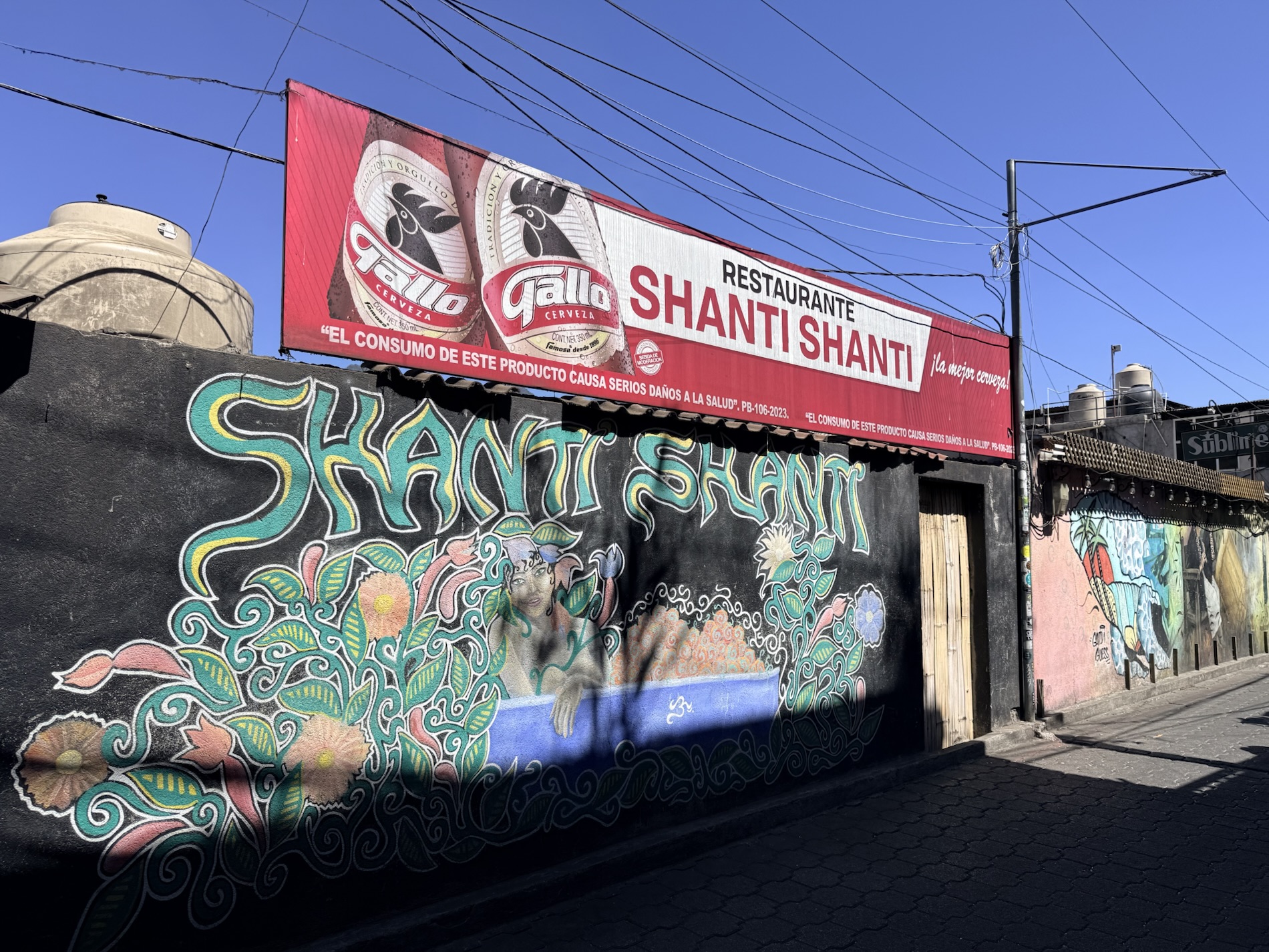
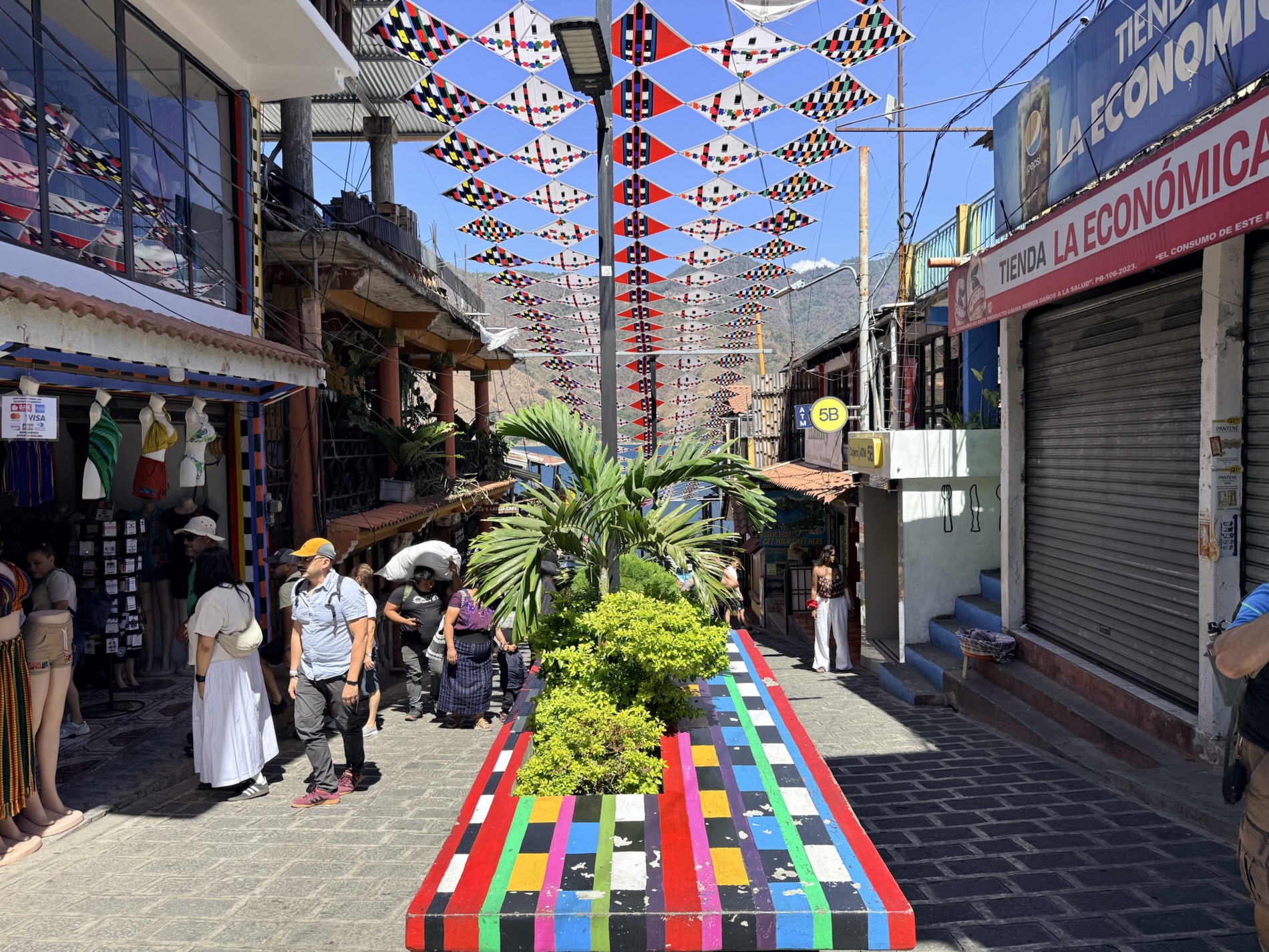
San Pedro la Laguna is known as a backpacker and party town. It is dotted with cheap accommodations, international restaurants, street murals, and terraces perched above the lake. A big Israeli ex-pat community owns many of the businesses.
San Juan la Laguna
San Juan la Laguna is a town near San Pedro whose population is about 95% Tz’utujil. Agriculture is most important for the economy, especially coffee and maize, as well as tourism. The community is known for its adherence to traditional Atiteco culture and religious practices; they have a cyclical rather than linear concept of time. Children are thought to be reincarnations of other family members, most often grandparents.
The people speak the Tz’utujil language. Spirits are believed to control the natural world, other spirits and people’s destinies. Traditional customs come from Nawals, spirits known as “Ancient Ones” — believed to be ancient Tz’utujil people who gained divine status.
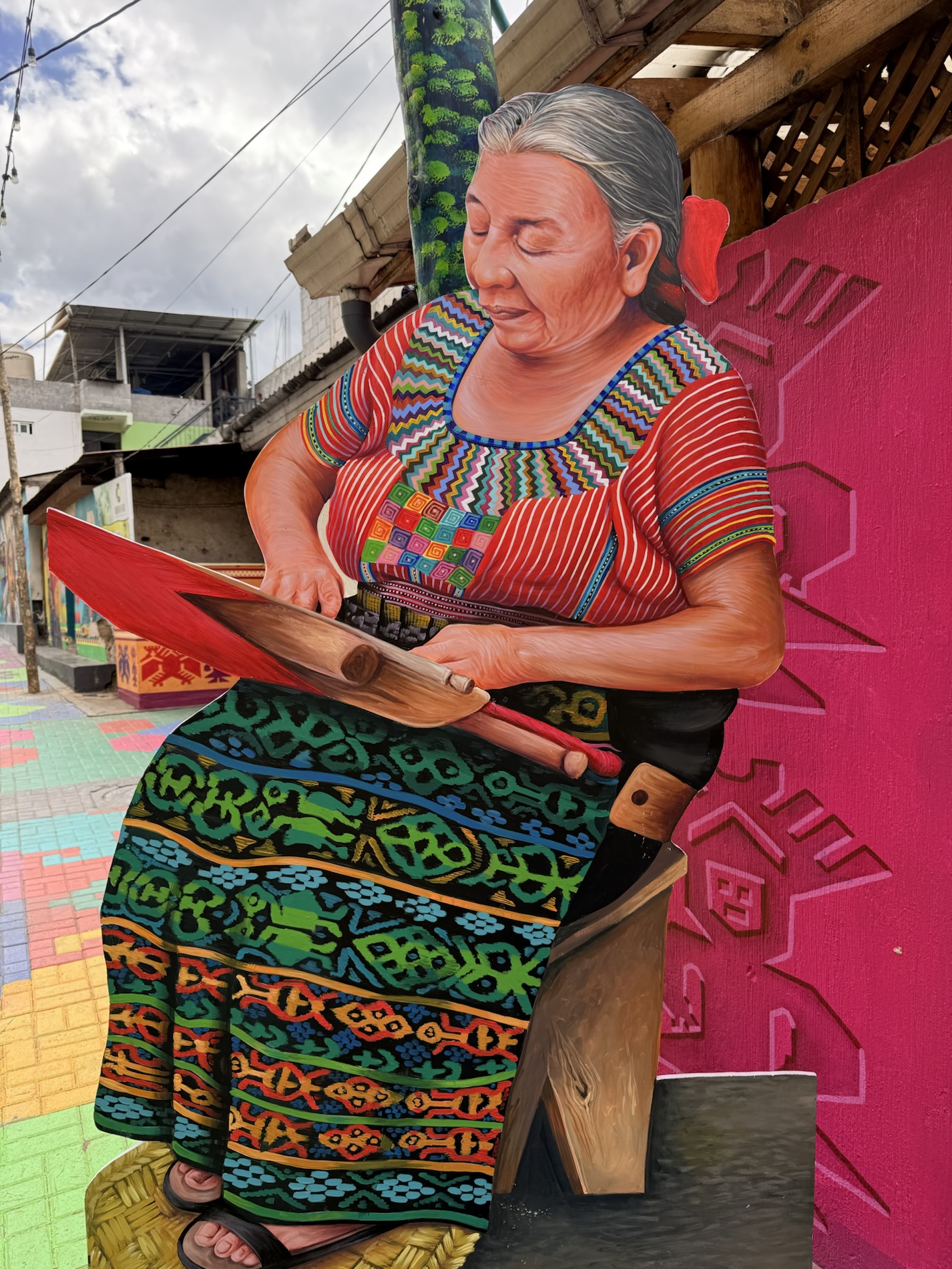
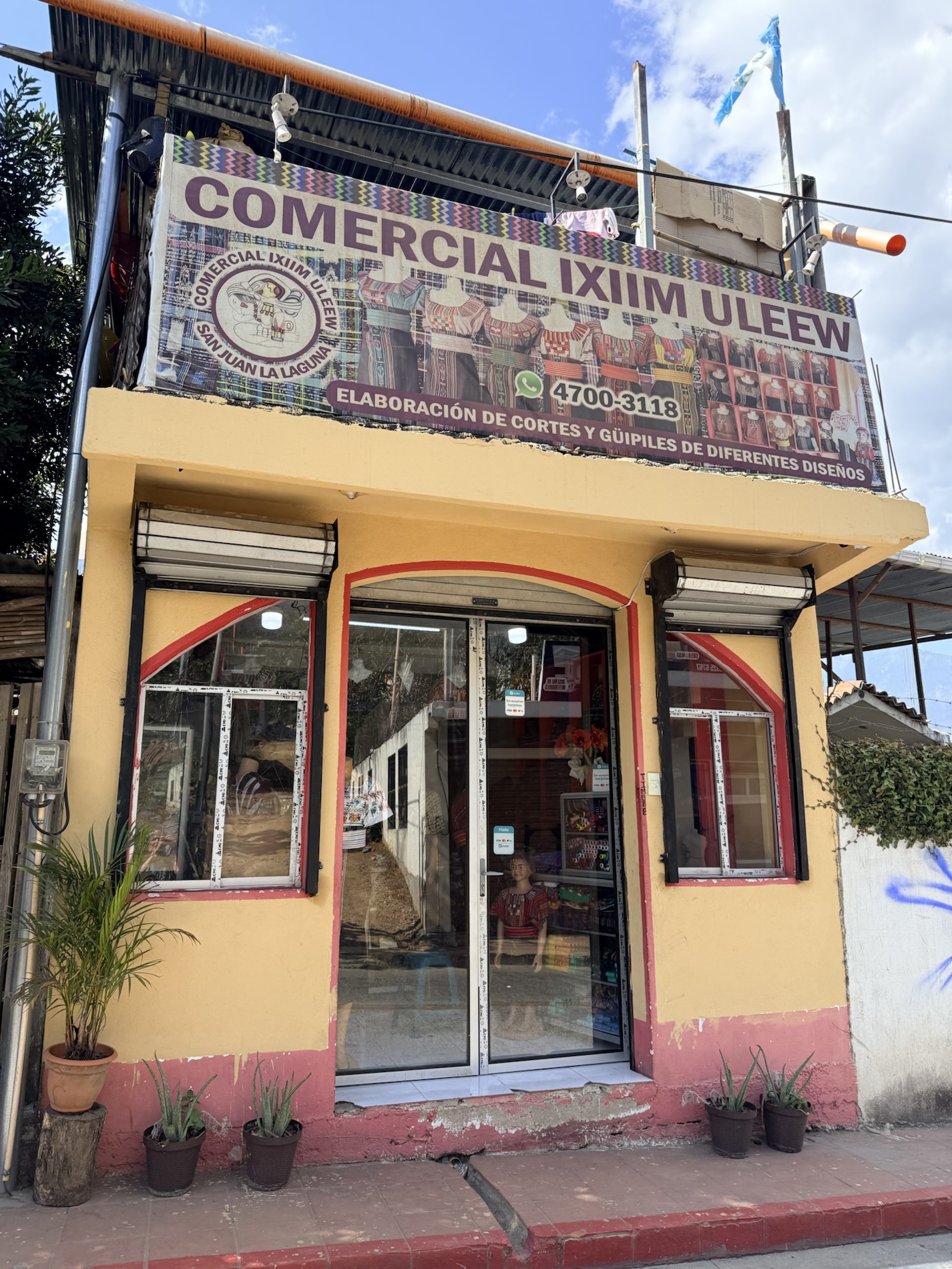
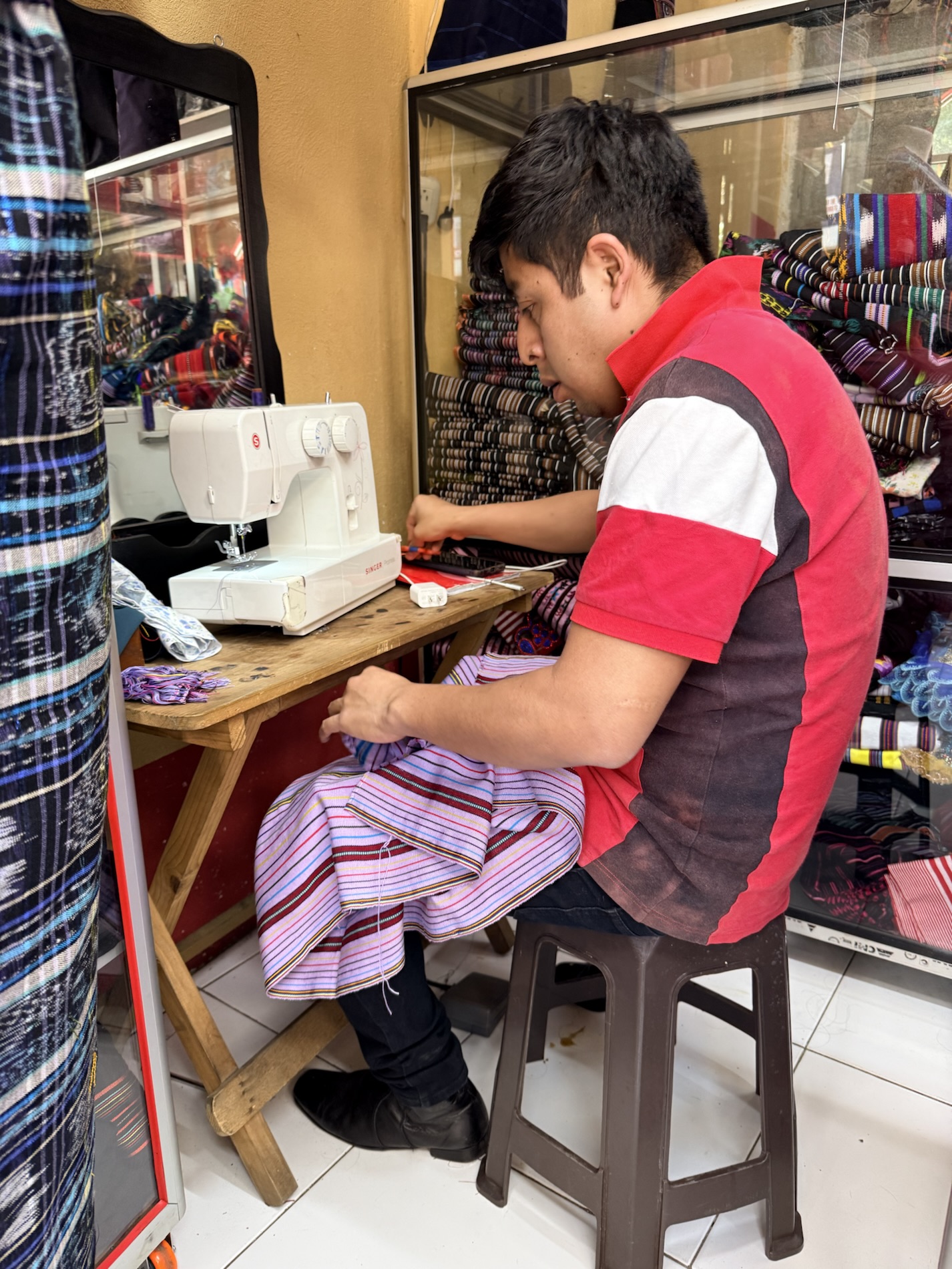
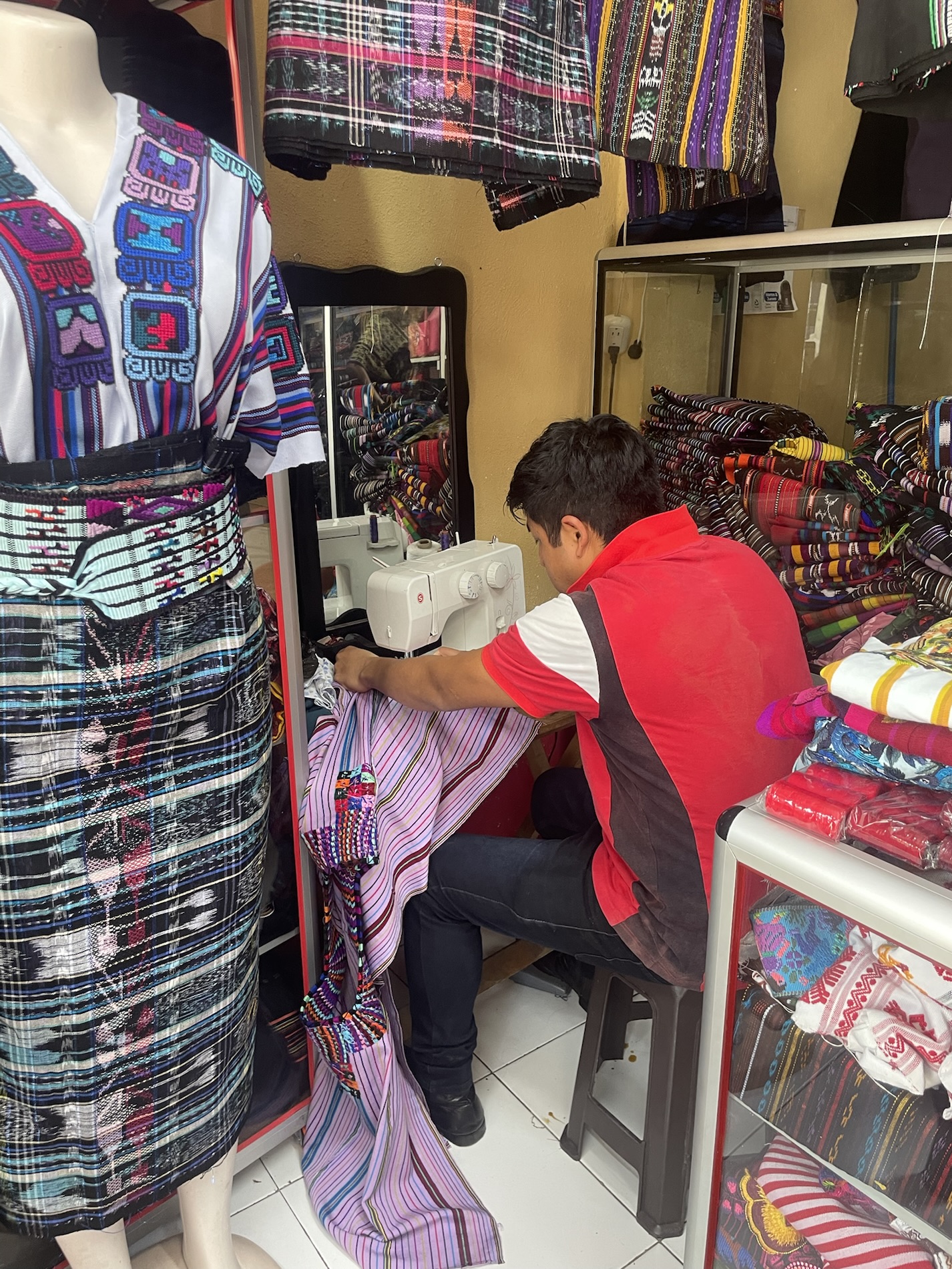
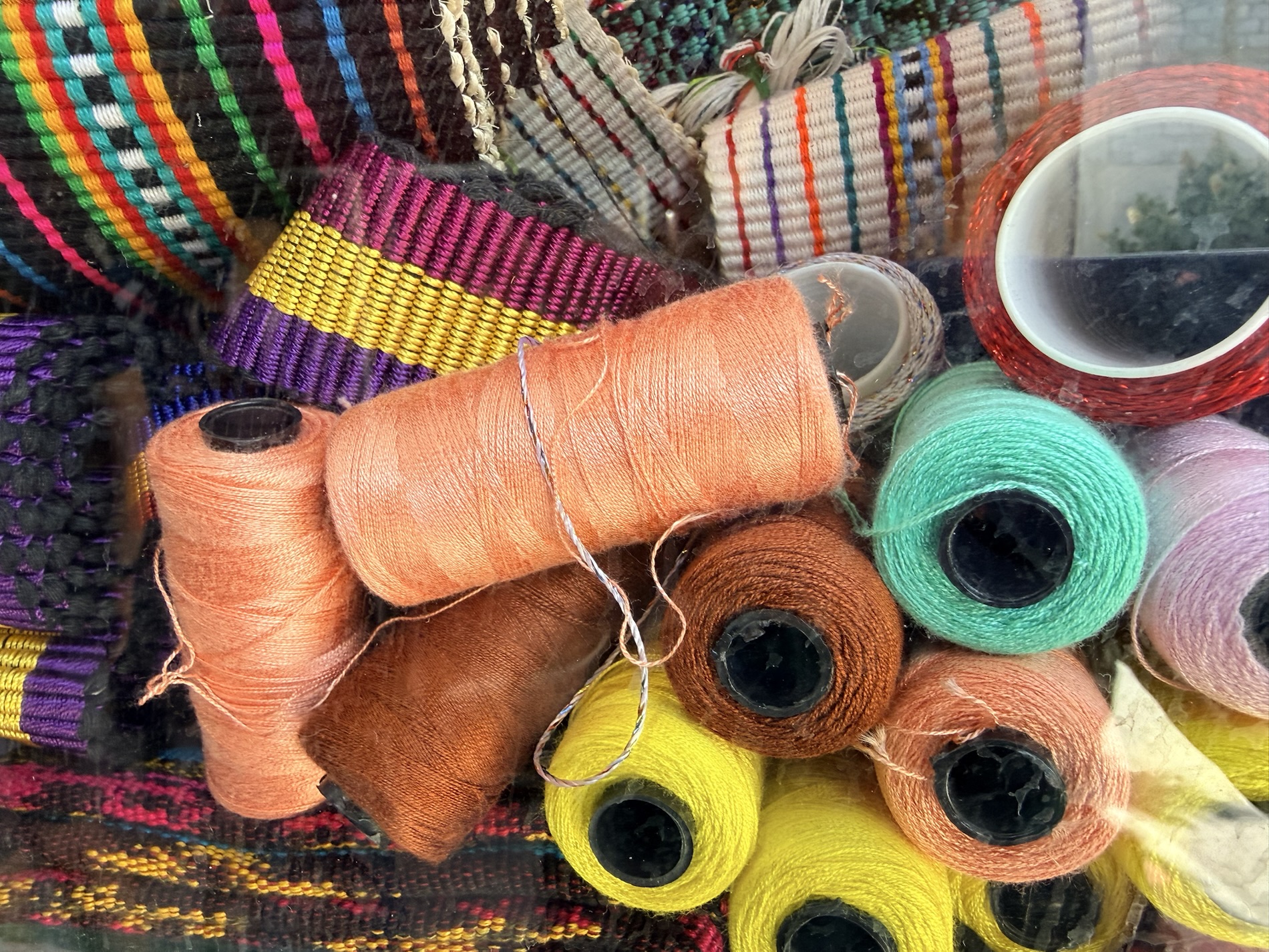
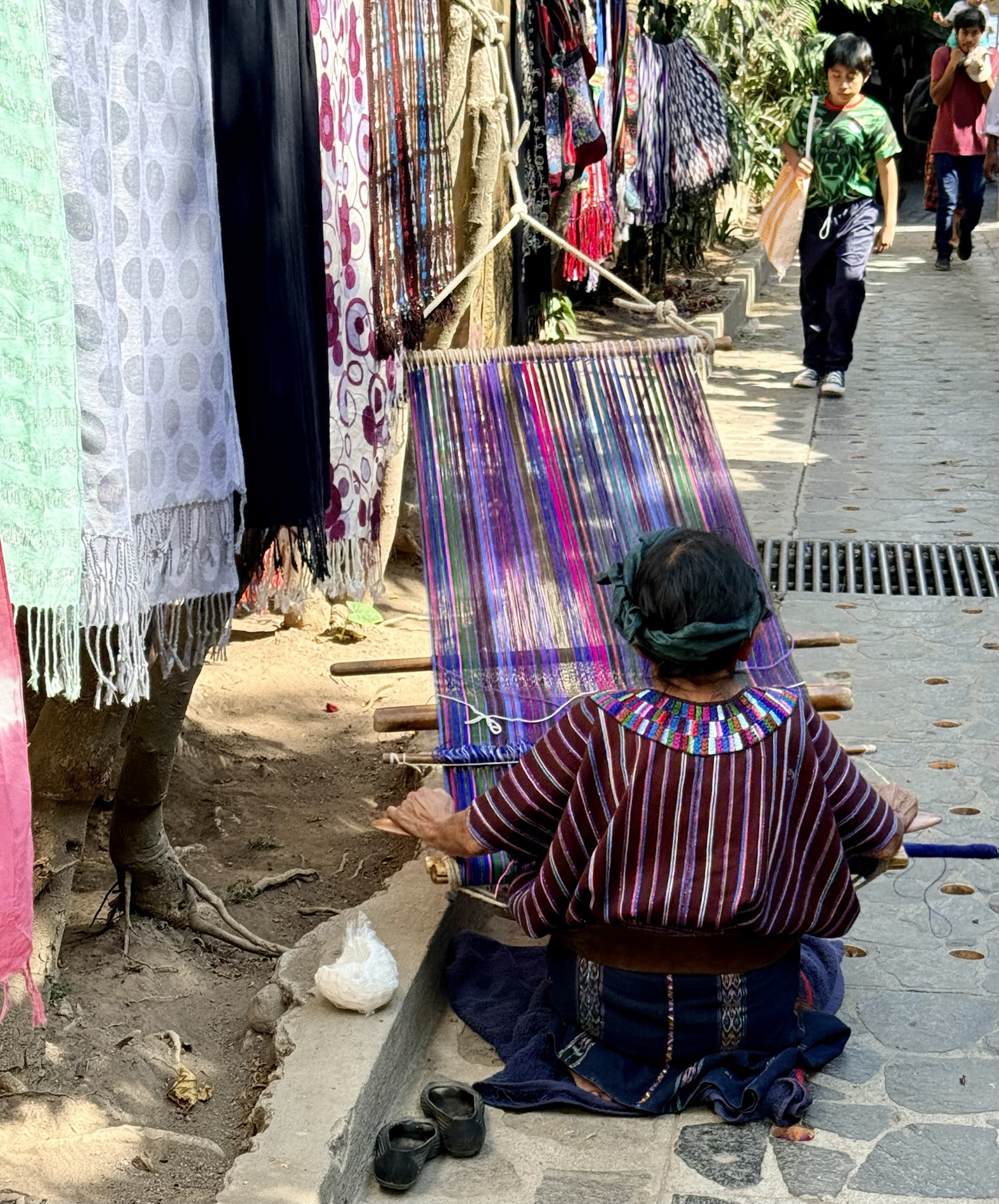
Women use a backstrap loom and the Tz’utujil weavings consistently contain a yellow stripe going through the center of cloth, symbolizing abundance.
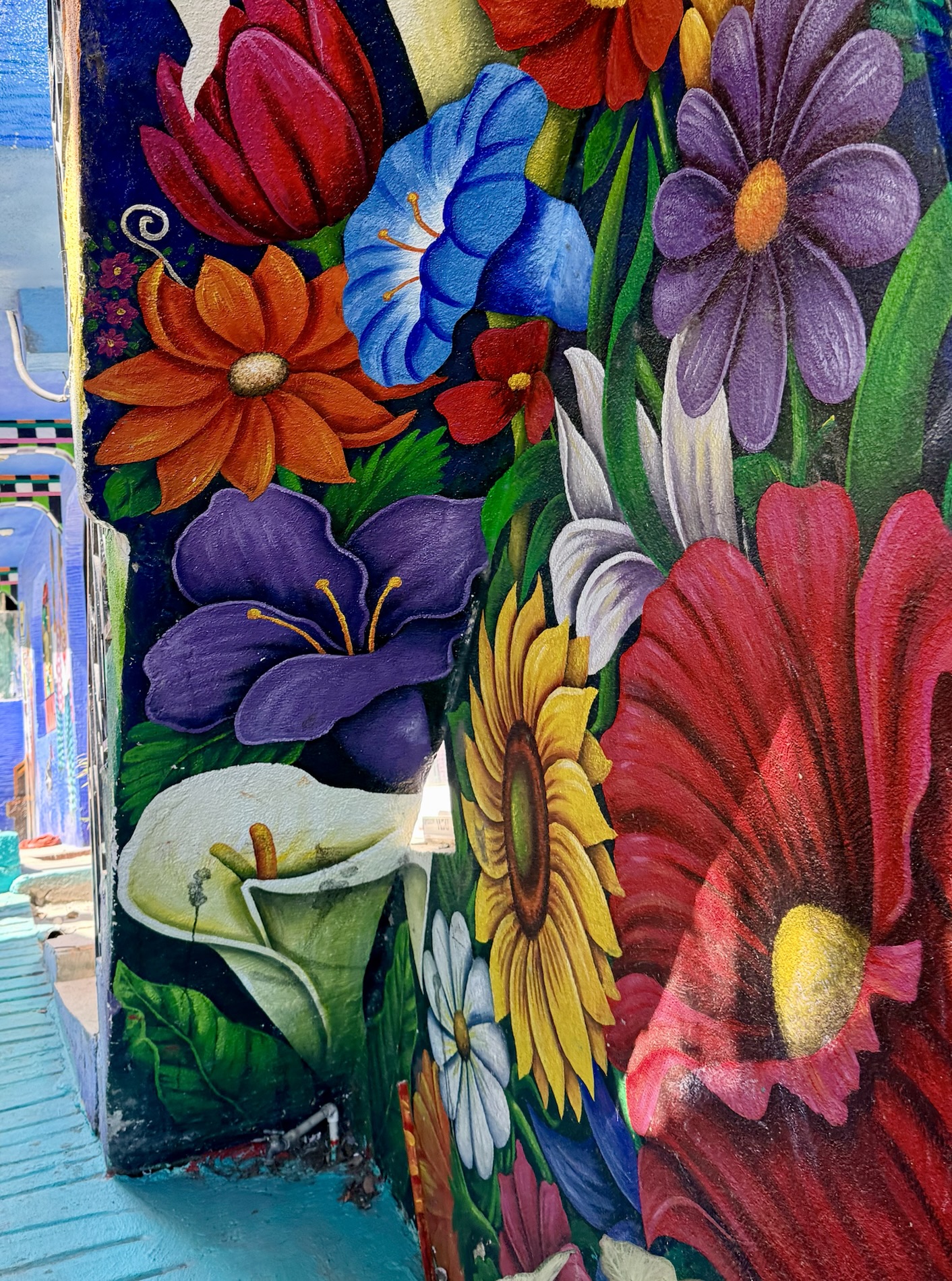
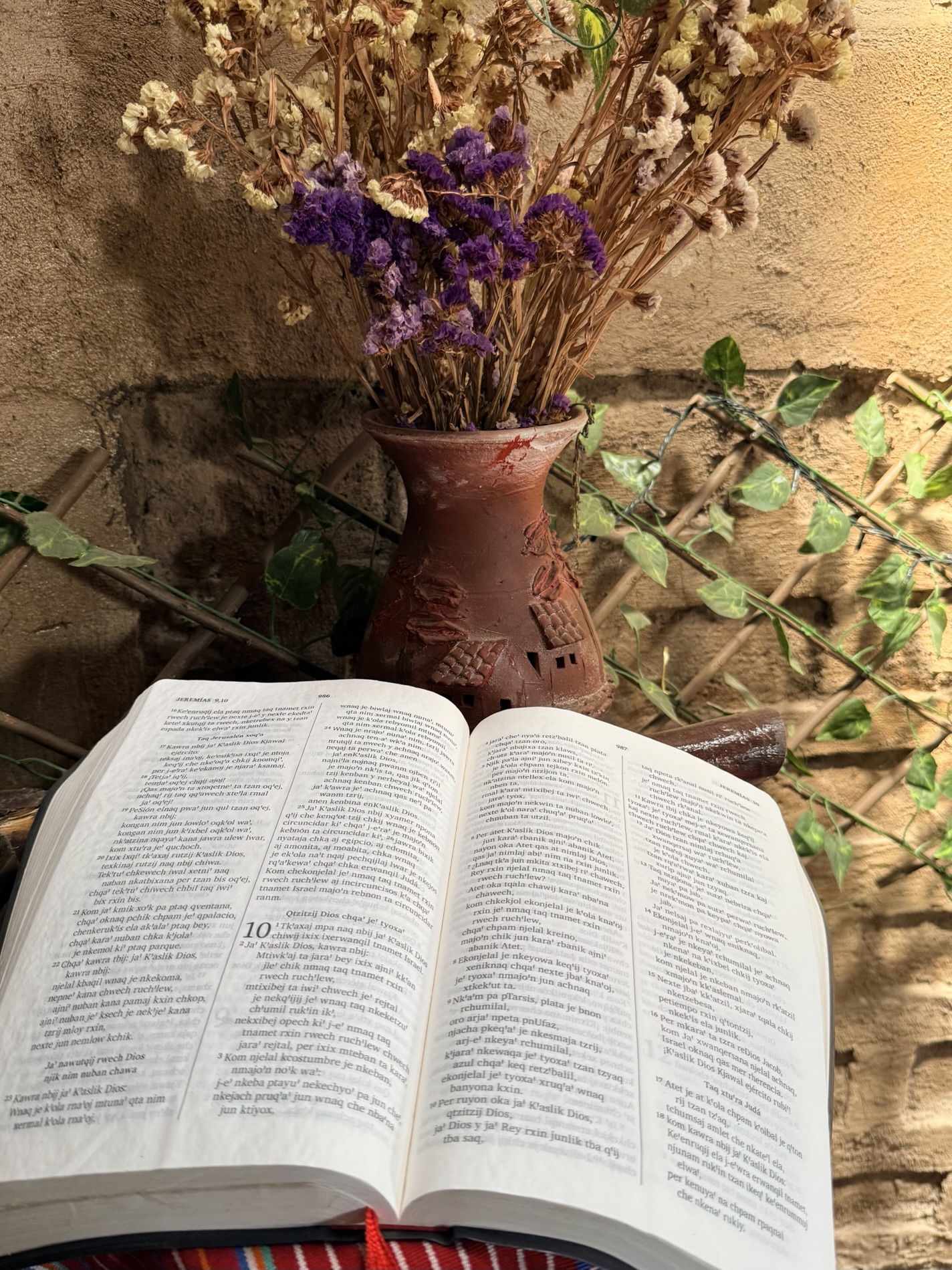
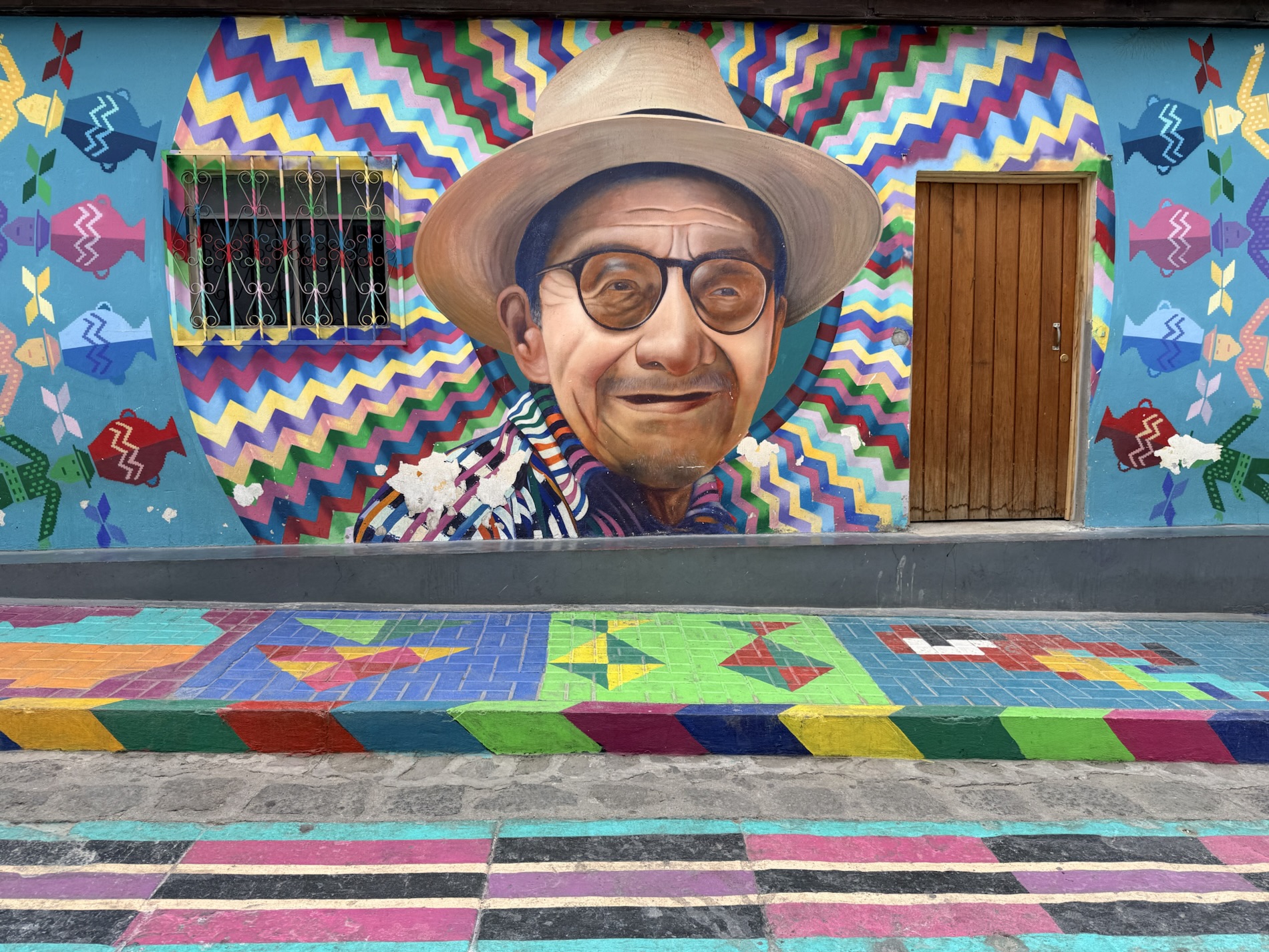
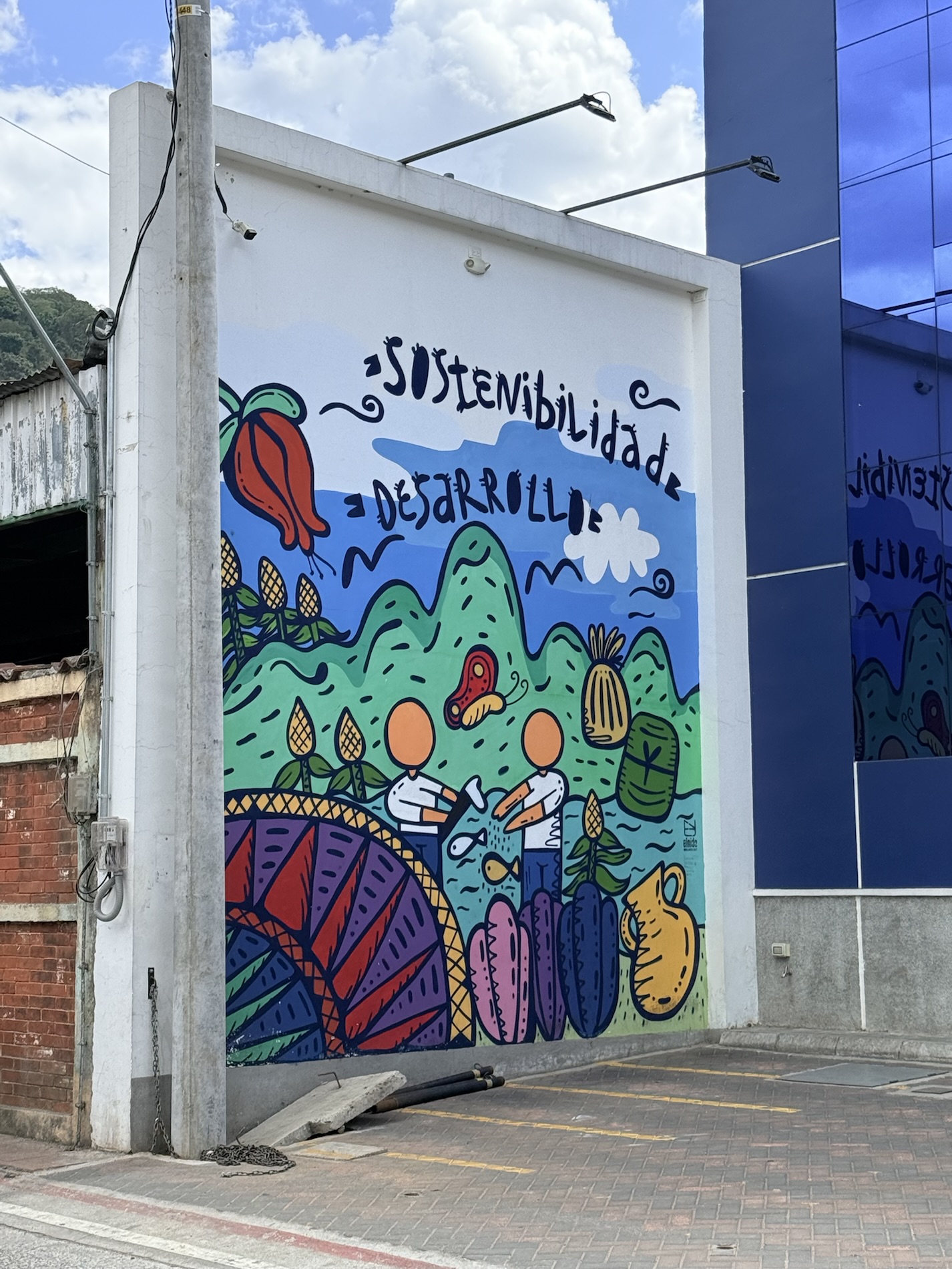
We ate lunch at Deleite Ancestral Experiencia Gastronomica Tz’utujil, which offered traditional Tz’utujil food. The town is awash with beautiful murals that symbolize Mayan tradition. For us, this was the most gorgeous of all the towns. Pavement is painted and two streets are covered in umbrellas and hats: Calle de las Sombrillas and Calle de los Sombreros.
Santa Catarina Palopó
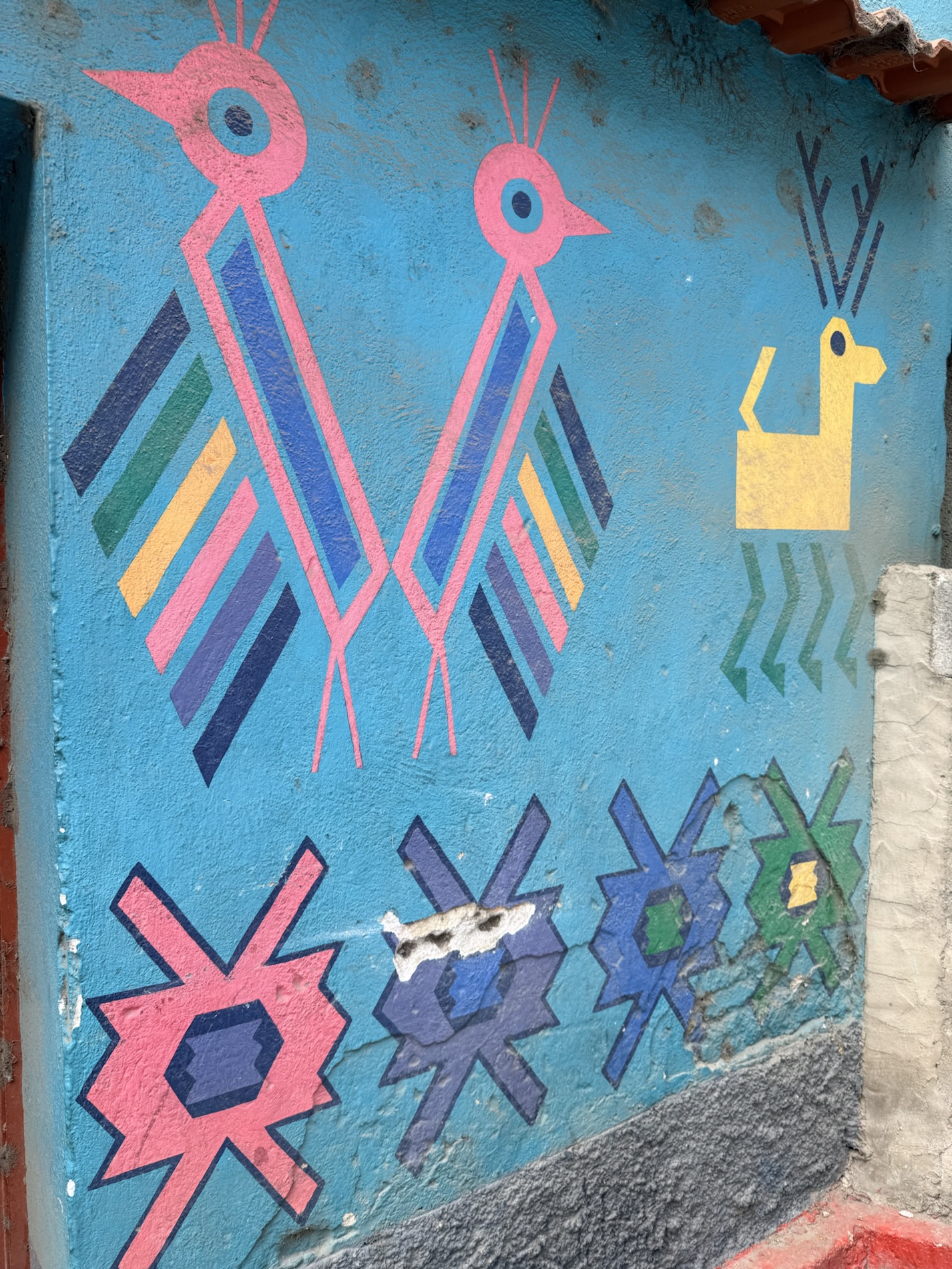
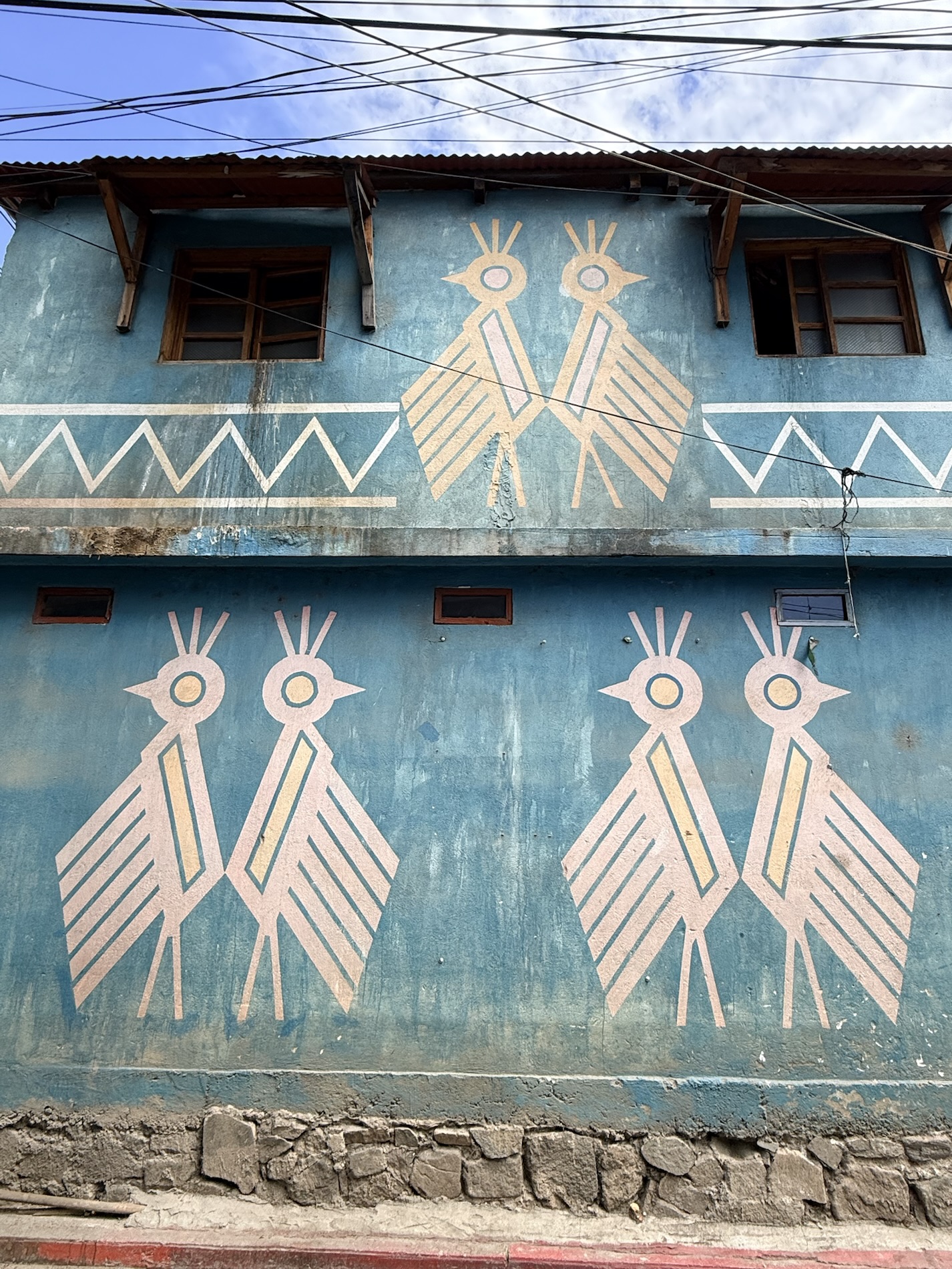
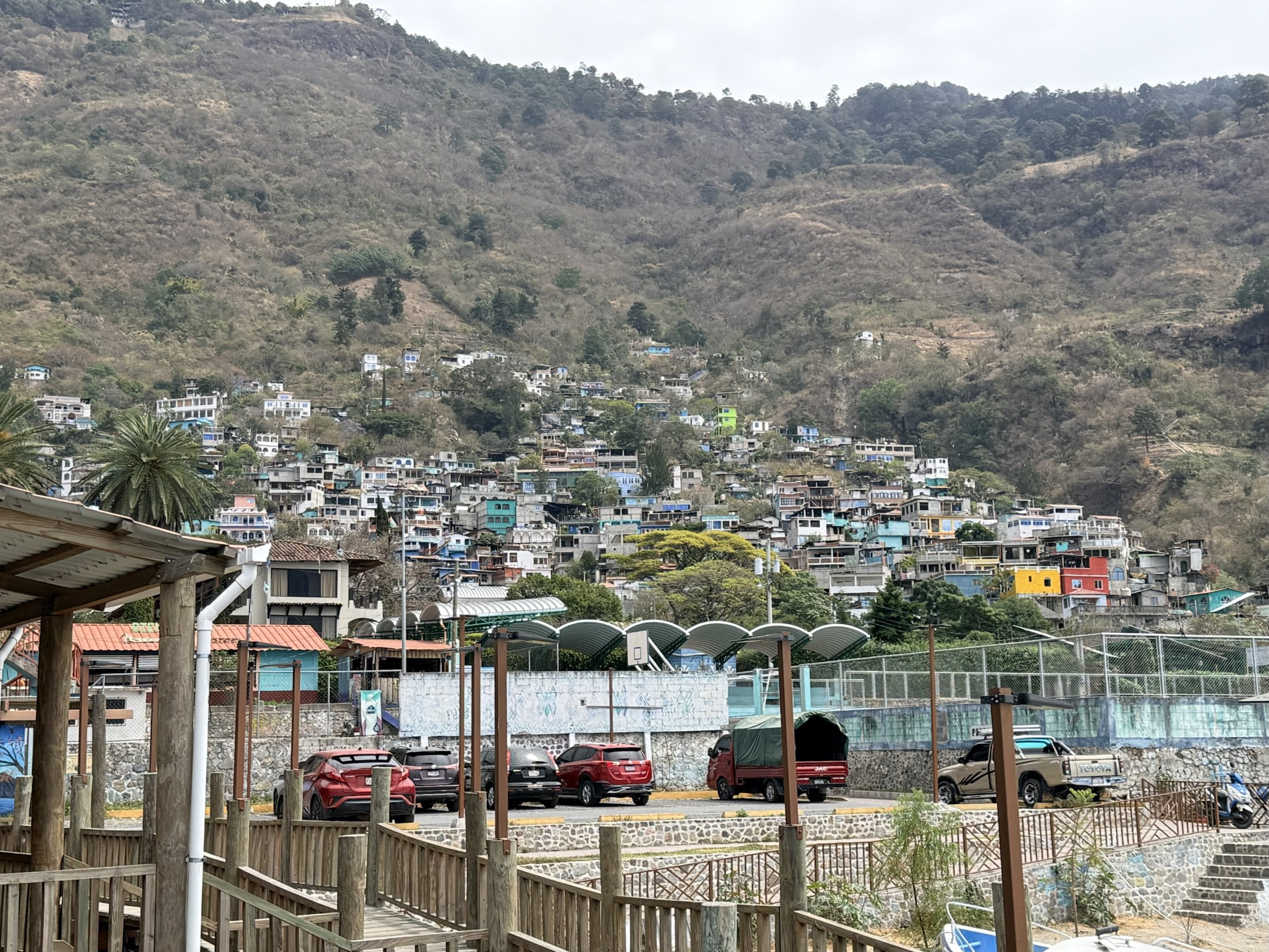
Santa Catarina Palopó is a town we could get to by tuk-tuk as it isn’t far from Panajachel. The town is painted in vibrant colors and Mayan symbols to encourage tourism, thanks to a local initiative Pintando el Cambio (Painting the Change). The project painted all 850 houses and buildings in the town. Local families choose the colors and traditional Mayan symbols they want on their houses. The town boasts great views of the volcanoes.

San Marcos la Laguna
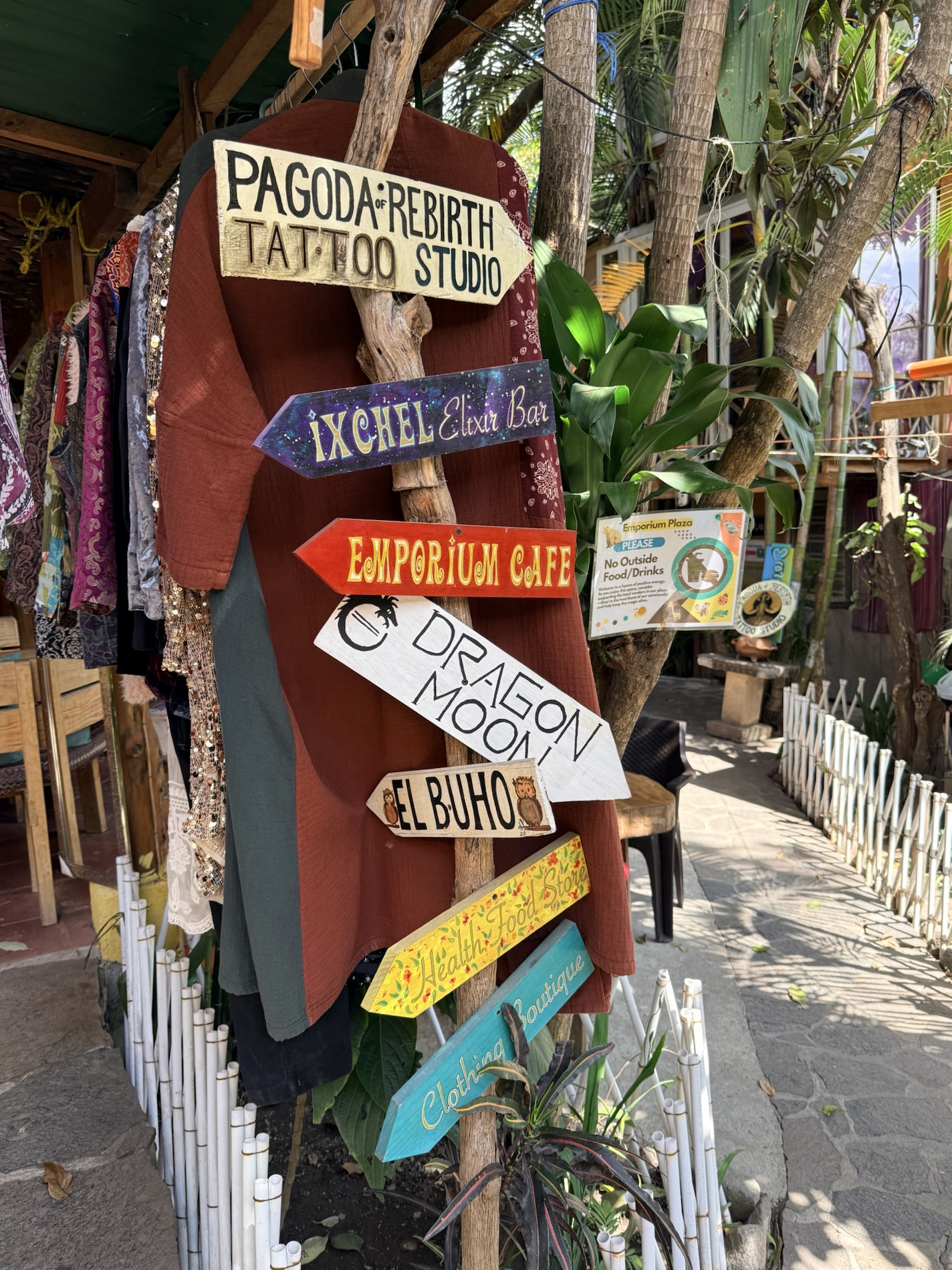
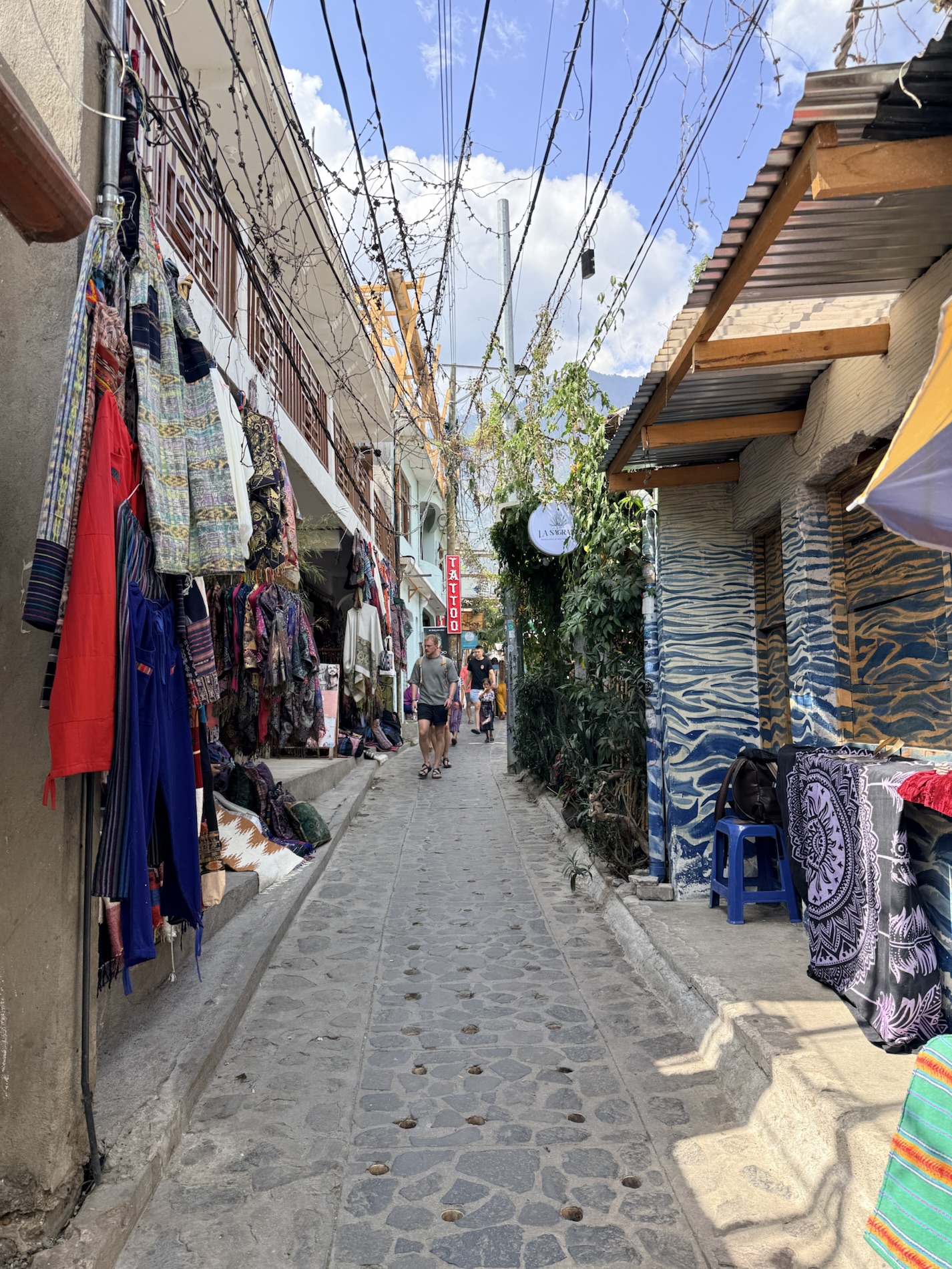
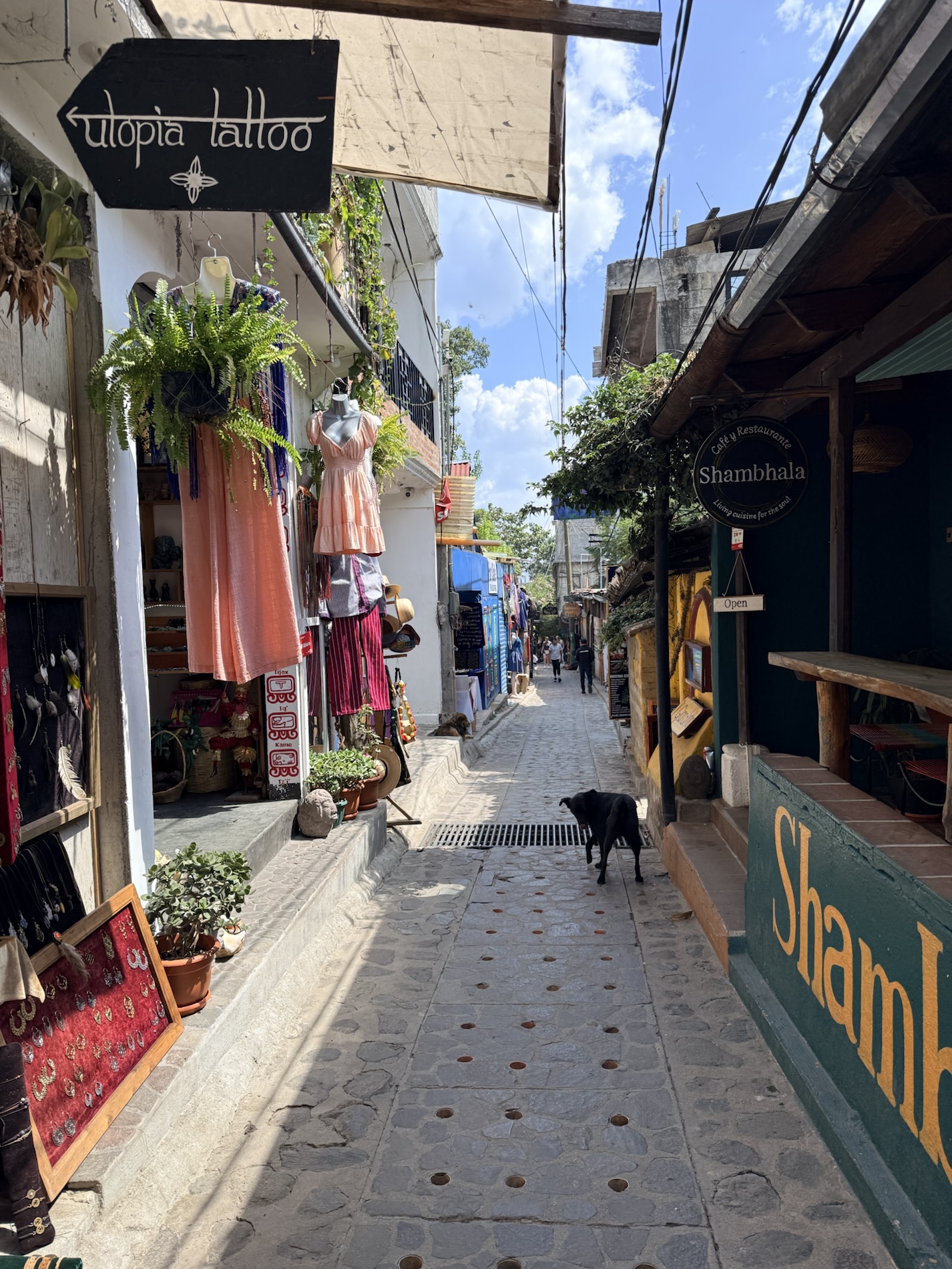
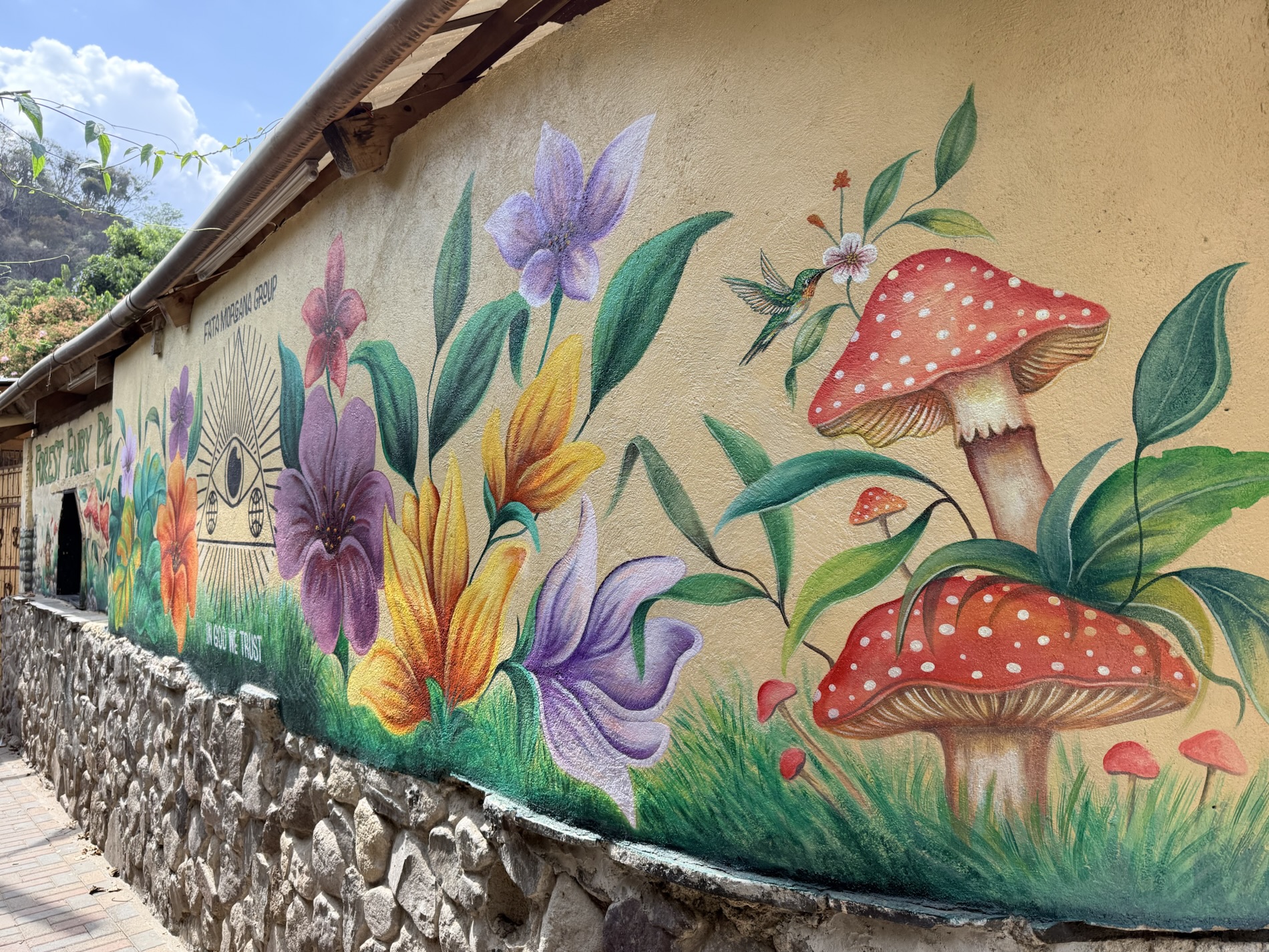
San Marcos la Laguna is NOT known for Mayan culture, but instead draws New Age and hippie types. It has murals, bohemian clothing shops, cafes and hostels. Offers for spiritual nurturing include yoga, mediation, tattoos, sound bathing, cacao ceremonies, reiki, chakra alignment, massage, and full moon dances.
Here’s a little video of Lago de Atitlán and Chichicastenango.
Other notes of interest:
- The population of Guatemala estimated in 2025 is 18,636,532, the most populous country in Central America. According to some sources, it is estimated that 43.75% of the people are of indigenous heritage belonging to the 22 Mayan peoples. Many others self-identify as indigenous, meaning that percentage estimate may be low.
- The Guatemalan genocide (aka the Maya genocide) was the mass killing of Maya indigenous people during the 36-year-long Guatemalan Civil War (1960-1996) by successive Guatemalan military governments that first took power during the CIA-instigated 1954 Guatemalan coup d’état. The perpetrators where U.S.-backed Guatemalan military governments and local militias. The motive was anti-Communism, anti-Mayan sentiment, and right wing terrorism.
- The yellow haze and piles of kindling throughout Guatemala is caused by the indigenous women spending 6-8 hours per day cooking on indoor open fires. The cook stoves expose families to toxic smoke and cause illnesses including respiratory problems, eye irritations, chronic cough, cancer, heart disease, asthma, and headaches. Children risk life-threatening burns. Deforestation has a devastating impact on the environment.
 ~ wander.essence ~
You must be logged in to post a comment.