Skip to content
  • Home
  • about ~ wander.essence ~
    • ~ the places i’ve been ~
    • ~ places i’ve been in the u.s.a. ~
  • Travel Destinations
    • America
      • Boston
      • Delaware
      • District of Columbia
        • Washington
      • Georgia
        • Atlanta
      • Maryland
      • New Jersey
        • Cape May
      • New York
        • Adirondacks
        • Buffalo
        • Niagara Falls
      • Pennsylvania
        • Pittsburgh
      • South Carolina
      • Tennessee
        • Nashville
      • Virginia
    • American Road Trips
      • Canyon & Cactus Road Trip
      • Florida Road Trip
        • Everglades
        • Fort Lauderdale
        • Florida Keys
        • Miami
        • St. Augustine
      • Four Corners Road Trip
        • Arizona
          • Monument Valley
          • Petrified Forest National Park
          • Sunset Crater National Monument
          • Walnut Canyon National Monument
          • Winslow
          • Wupatki National Monument
        • Colorado
          • Colorado National Monument
          • Colorado Towns
          • Great Sand Dunes National Park
          • Grand Junction
        • New Mexico
        • Utah
          • Arches National Park
          • Canyonlands
          • Navajo National Monument
          • Dead Horse Point State Park
          • Hovenweep National Monument
          • Moab
          • Valley of the Gods
          • Natural Bridges National Monument
      • Great Lakes Road Trip
        • Michigan
        • Minnesota
        • Wisconsin
      • Midwestern Triangle
        • Illinois
          • Carbondale
          • Murphysboro
        • Kentucky
          • Covington
          • Lexington
          • Louisville
        • Ohio
          • Cincinnati
      • Road Trip to Nowhere
        • Nebraska
        • North Dakota
        • South Dakota
      • Tex-New Mex Road Trip
        • Texas & New Mexico Road Trip
        • New Mexico
        • Texas
    • International Travel
      • Africa
        • african meanderings {& musings}
        • Egypt
          • Cairo
        • Ethiopia
        • Morocco
      • Asia
        • Cambodia
        • China
          • China Diaries
          • Guangxi Province
        • India
          • Rishikesh
          • Varanasi
        • Japan
          • Kyoto
        • Myanmar
        • Oman
          • a nomad in the land of nizwa
          • Nizwa
        • Singapore
        • South Korea
          • catbird in korea
        • Thailand
        • Turkey
          • Cappadocia
        • Vietnam
      • Central America
        • Costa Rica
        • El Salvador
        • Nicaragua
        • Panama
          • Bocas del Toro
          • Panama City
      • Europe
        • In Search of a Thousand Cafés
        • Croatia
          • Dalmatia
            • Istria
            • Dubrovnik
            • Plitvice Lakes National Park
            • Split
            • Zadar
            • Zagreb
        • Czech Republic
          • Český Krumlov
        • England
        • France
        • Greece
        • Hungary
          • Budapest
          • Esztergom
        • Iceland
        • Italy
          • Bergamo
          • Cinque Terre
          • The Dolomites
          • Florence
          • Rome
          • Tuscany
          • Venice
          • Verona
          • Via Francigena
        • Portugal
        • Spain
          • Camino de Santiago
            • packing list for el camino de santiago 2018
      • North America
        • Canada
          • The Maritimes
            • New Brunswick
            • Nova Scotia
            • Prince Edward Island
          • Ontario
        • Mexico
          • Guanajuato
          • Mexico City
            • Teotihuacán
          • Querétaro
          • San Miguel de Allende
      • South America
        • Colombia
        • Ecuador
          • Cuenca
          • Quito
    • how to make the most of a staycation
      • Coronavirus Coping
  • Imaginings
    • imaginings: the call to place
  • Travel Preparation
    • journeys: anticipation & preparation
  • Travel Creativity
    • on keeping a travel journal
    • on creating art from travels
      • Art Journaling
    • photography inspiration
      • Photography
    • writing prompts: prose
      • Prose
        • Fiction
        • Travel Essay
        • Travelogue
    • writing prompts: poetry
      • Poetry
  • On Journey
    • on journey: taking ourselves from here to there
  • Books & Movies
    • books | international a-z |
    • books & novels | u.s.a. |
    • books | history, spirituality, personal growth & lifestyle |
    • movies | international a-z |
    • movies | u.s.a. |
  • On Returning Home
    • on returning home
  • Annual recap
    • twenty-fifteen
    • twenty-eighteen
    • twenty-nineteen
    • twenty-twenty
    • twenty-twenty-one
    • twenty twenty-two
    • twenty twenty-three
    • twenty twenty-four
    • twenty twenty-five
  • Contact

Enter your email address to follow this blog and receive notifications of new posts by email.

Join 1,060 other subscribers
Follow ~ wander.essence ~ on WordPress.com
  • Home
  • about ~ wander.essence ~
    • ~ the places i’ve been ~
    • ~ places i’ve been in the u.s.a. ~
  • Travel Destinations
    • America
      • Boston
      • Delaware
      • District of Columbia
        • Washington
      • Georgia
        • Atlanta
      • Maryland
      • New Jersey
        • Cape May
      • New York
        • Adirondacks
        • Buffalo
        • Niagara Falls
      • Pennsylvania
        • Pittsburgh
      • South Carolina
      • Tennessee
        • Nashville
      • Virginia
    • American Road Trips
      • Canyon & Cactus Road Trip
      • Florida Road Trip
        • Everglades
        • Fort Lauderdale
        • Florida Keys
        • Miami
        • St. Augustine
      • Four Corners Road Trip
        • Arizona
          • Monument Valley
          • Petrified Forest National Park
          • Sunset Crater National Monument
          • Walnut Canyon National Monument
          • Winslow
          • Wupatki National Monument
        • Colorado
          • Colorado National Monument
          • Colorado Towns
          • Great Sand Dunes National Park
          • Grand Junction
        • New Mexico
        • Utah
          • Arches National Park
          • Canyonlands
          • Navajo National Monument
          • Dead Horse Point State Park
          • Hovenweep National Monument
          • Moab
          • Valley of the Gods
          • Natural Bridges National Monument
      • Great Lakes Road Trip
        • Michigan
        • Minnesota
        • Wisconsin
      • Midwestern Triangle
        • Illinois
          • Carbondale
          • Murphysboro
        • Kentucky
          • Covington
          • Lexington
          • Louisville
        • Ohio
          • Cincinnati
      • Road Trip to Nowhere
        • Nebraska
        • North Dakota
        • South Dakota
      • Tex-New Mex Road Trip
        • Texas & New Mexico Road Trip
        • New Mexico
        • Texas
    • International Travel
      • Africa
        • african meanderings {& musings}
        • Egypt
          • Cairo
        • Ethiopia
        • Morocco
      • Asia
        • Cambodia
        • China
          • China Diaries
          • Guangxi Province
        • India
          • Rishikesh
          • Varanasi
        • Japan
          • Kyoto
        • Myanmar
        • Oman
          • a nomad in the land of nizwa
          • Nizwa
        • Singapore
        • South Korea
          • catbird in korea
        • Thailand
        • Turkey
          • Cappadocia
        • Vietnam
      • Central America
        • Costa Rica
        • El Salvador
        • Nicaragua
        • Panama
          • Bocas del Toro
          • Panama City
      • Europe
        • In Search of a Thousand Cafés
        • Croatia
          • Dalmatia
            • Istria
            • Dubrovnik
            • Plitvice Lakes National Park
            • Split
            • Zadar
            • Zagreb
        • Czech Republic
          • Český Krumlov
        • England
        • France
        • Greece
        • Hungary
          • Budapest
          • Esztergom
        • Iceland
        • Italy
          • Bergamo
          • Cinque Terre
          • The Dolomites
          • Florence
          • Rome
          • Tuscany
          • Venice
          • Verona
          • Via Francigena
        • Portugal
        • Spain
          • Camino de Santiago
            • packing list for el camino de santiago 2018
      • North America
        • Canada
          • The Maritimes
            • New Brunswick
            • Nova Scotia
            • Prince Edward Island
          • Ontario
        • Mexico
          • Guanajuato
          • Mexico City
            • Teotihuacán
          • Querétaro
          • San Miguel de Allende
      • South America
        • Colombia
        • Ecuador
          • Cuenca
          • Quito
    • how to make the most of a staycation
      • Coronavirus Coping
  • Imaginings
    • imaginings: the call to place
  • Travel Preparation
    • journeys: anticipation & preparation
  • Travel Creativity
    • on keeping a travel journal
    • on creating art from travels
      • Art Journaling
    • photography inspiration
      • Photography
    • writing prompts: prose
      • Prose
        • Fiction
        • Travel Essay
        • Travelogue
    • writing prompts: poetry
      • Poetry
  • On Journey
    • on journey: taking ourselves from here to there
  • Books & Movies
    • books | international a-z |
    • books & novels | u.s.a. |
    • books | history, spirituality, personal growth & lifestyle |
    • movies | international a-z |
    • movies | u.s.a. |
  • On Returning Home
    • on returning home
  • Annual recap
    • twenty-fifteen
    • twenty-eighteen
    • twenty-nineteen
    • twenty-twenty
    • twenty-twenty-one
    • twenty twenty-two
    • twenty twenty-three
    • twenty twenty-four
    • twenty twenty-five
  • Contact

wander.essence

wander.essence

Home from Morocco & Italy

Home sweet home!May 10, 2019
I'm home from Morocco & Italy. :-)

Italy trip

Traveling to Italy from MoroccoApril 23, 2019
On my way to Italy!

Leaving for Morocco

Casablanca, here I come!April 4, 2019
I'm on my way to Casablanca. :-)

Home from our Midwestern Triangle Road Trip

Driving home from Lexington, KYMarch 6, 2019
Home sweet home from the Midwest. :-)

Leaving for my Midwestern Triangle Road Trip

Driving to IndianaFebruary 24, 2019
Driving to Indiana.

Returning home from Portugal

Home sweet home from Spain & Portugal!November 6, 2018
Home sweet home from Spain & Portugal!

Leaving Spain for Portugal

A rendezvous in BragaOctober 26, 2018
Rendezvous in Braga, Portgual after walking the Camino de Santiago. :-)

Leaving to walk the Camino de Santiago

Heading to Spain for the CaminoAugust 31, 2018
I'm on my way to walk 790 km across northern Spain on the Camino de Santiago.

Home from my Four Corners Road Trip

Home Sweet Home from the Four CornersMay 25, 2018
Home Sweet Home from the Four Corners. :-)

My Four Corners Road Trip!

Hitting the roadMay 1, 2018
I'm hitting the road today for my Four Corners Road Trip: CO, UT, AZ, & NM!

Recent Posts

  • bullet journals as a life respository: bits of mine from 2025 & 2026 January 4, 2026
  • twenty twenty-five: nicaragua {twice}, mexico & seven months in costa rica {with an excursion to panama} December 31, 2025
  • the december cocktail hour: mike’s surgery, a central highlands road trip & christmas in costa rica December 31, 2025
  • top ten books of 2025 December 28, 2025
  • the november cocktail hour: a trip to panama, a costa rican thanksgiving & a move to lake arenal condos December 1, 2025
  • panama: the caribbean archipelago of bocas del toro November 24, 2025
  • a trip to panama city: el cangrejo, casco viejo & the panama canal November 22, 2025
  • the october cocktail hour: a trip to virginia, a NO KINGS protest, two birthday celebrations, & a cattle auction October 31, 2025
  • the september cocktail hour: a nicoya peninsula getaway, a horseback ride to la piedra del indio waterfalls & a fall bingo card September 30, 2025
  • the august cocktail hour: local gatherings, la fortuna adventures, & a “desfile de caballistas”  September 1, 2025
  • the july cocktail hour: a trip to ometepe, nicaragua; a beach getaway to tamarindo; & homebody activities August 3, 2025
  • the june cocktail hour: our first month in costa rica June 30, 2025
  • a pura vida year in costa rica June 12, 2025

Archives

  • January 2026
  • December 2025
  • November 2025
  • October 2025
  • September 2025
  • August 2025
  • June 2025
  • May 2025
  • April 2025
  • March 2025
  • February 2025
  • January 2025
  • December 2024
  • November 2024
  • October 2024
  • September 2024
  • August 2024
  • July 2024
  • June 2024
  • May 2024
  • April 2024
  • March 2024
  • February 2024
  • January 2024
  • December 2023
  • November 2023
  • September 2023
  • August 2023
  • June 2023
  • May 2023
  • April 2023
  • March 2023
  • February 2023
  • January 2023
  • December 2022
  • November 2022
  • October 2022
  • September 2022
  • August 2022
  • June 2022
  • May 2022
  • April 2022
  • March 2022
  • February 2022
  • January 2022
  • December 2020
  • November 2020
  • October 2020
  • September 2020
  • August 2020
  • July 2020
  • June 2020
  • May 2020
  • April 2020
  • March 2020
  • February 2020
  • January 2020
  • December 2019
  • November 2019
  • October 2019
  • September 2019
  • August 2019
  • July 2019
  • June 2019
  • May 2019
  • April 2019
  • March 2019
  • February 2019
  • January 2019
  • December 2018
  • November 2018
  • October 2018
  • September 2018
  • August 2018
  • July 2018
  • June 2018
  • May 2018
  • April 2018
  • March 2018

Blog Stats

  • 122,261 hits
January 2026
M T W T F S S
 1234
567891011
12131415161718
19202122232425
262728293031  
« Dec    

Categories

  • Aït-Ben-Haddou (4)
  • Abingdon (1)
  • Abiquiu (1)
  • Acquapendente (2)
  • Adirondacks (3)
  • Africa (39)
  • Ainokura (2)
  • Alabama (1)
  • Alajuela (3)
  • Alamogordo (1)
  • Albuquerque (3)
  • Alexandria (1)
  • Alma (1)
  • Alpe di Siusi (1)
  • Alsace-Lorraine (1)
  • Alto Adige Wine Road (1)
  • Amarante (2)
  • America (69)
  • American Bison (1)
  • American books (22)
  • American Road Trips (255)
  • American Visionary Art Museum (1)
  • Americana (1)
  • Andrew Johnson National Historic Site (1)
  • Annapolis Valley (1)
  • Annual recap (10)
  • Anticipation (45)
  • Antietam National Battlefield (2)
  • Aramak Tour (1)
  • Arches National Park (8)
  • architecture (1)
  • Arena Stage (1)
  • Arizona (28)
  • Aroumd (2)
  • Art Journaling (9)
  • Asciano (1)
  • Asia (41)
  • Assisi (1)
  • Astorga (2)
  • Atapuerca (1)
  • Athens (1)
  • Atlanta (7)
  • Austin (2)
  • Aveiro (2)
  • Azofra (2)
  • Aztec Ruins National Monument (1)
  • óbidos (1)
  • Baños (2)
  • Badlands National Park (1)
  • Bagan (1)
  • Bagno Vignoni (2)
  • Bajos del Toro (1)
  • Balcony House (1)
  • Bali (9)
  • Baltimore (7)
  • Baltimore Museum of Art (1)
  • Bandelier National Monument (1)
  • Bangkok (2)
  • Bear Butte (1)
  • Beatrice (1)
  • Beihai (1)
  • Belize (2)
  • Beppu (1)
  • Bergamo (3)
  • Big Bend National Park (2)
  • Bijagua (2)
  • Bismarck (3)
  • Bismarck Art Alley (1)
  • Bitchu-Takahashi (1)
  • Blue Falls of Costa Rica (1)
  • Bluff (1)
  • Bluff Fort Historic Site (1)
  • Bocas del Toro (2)
  • Bocas Town (1)
  • Bogotá (4)
  • Bolsena (2)
  • Bolzano (2)
  • Bonanzaville (1)
  • Books (47)
  • Bosque de Chapultepec (1)
  • Boston (2)
  • Boulder (1)
  • Boys Town (1)
  • Braga (3)
  • Brookings (1)
  • Brunico/Bruneck (1)
  • Budapest (1)
  • Buffalo (9)
  • Bukit Peninsula (1)
  • Bullet journaling (1)
  • Buonconvento (2)
  • Burano (2)
  • Burgos (4)
  • Cañas (2)
  • Cabo da Roca (1)
  • Caddo Lake (2)
  • Cairo (3)
  • California (4)
  • Cambodia (4)
  • Cambridge (1)
  • Camino de Santiago (64)
  • Campagnano di Roma (2)
  • Canada (15)
  • Canyon & Cactus Road Trip (4)
  • Canyon de Chelly (3)
  • Canyonlands (3)
  • Cape May (7)
  • Cappadocia (2)
  • Capranica (1)
  • Carbondale (9)
  • Carlsbad (1)
  • Carlsbad Caverns National Park (2)
  • Cartagena (4)
  • Casablanca (9)
  • Casco Viejo (1)
  • Castellina in Chianti (1)
  • Catarata del Toro (1)
  • Catskill Mountains (1)
  • Cedar Creek & Belle Grove National Historical Park (1)
  • Central America (42)
  • Central Highlands (1)
  • Centro Histórico (1)
  • Chaco Culture National Historical Park (4)
  • challenge: a call to place (38)
  • Channel Islands National Park (3)
  • Chapel in the Hills (1)
  • Charles Pinckney National Historic Site (1)
  • Charleston (11)
  • Chefchaouen (5)
  • Cheyenne (2)
  • Cheyenne Depot Museum (1)
  • Cheyenne Frontier Days Old West Museum (1)
  • Chicago (3)
  • Chillicothe (2)
  • Chimayó (1)
  • Chimney Rock (1)
  • China (8)
  • Chinatown (1)
  • Christmas (5)
  • Churchill Downs (1)
  • Cihuatán (1)
  • Cincinnati (15)
  • Cincinnati Art Museum (1)
  • Cinque Terre (10)
  • Cinquera (1)
  • Civita di Bagnoregio (1)
  • Cloudcroft (1)
  • Cocktail Hour (22)
  • Cocoa Beach (2)
  • Coeur d'Alene (1)
  • Collalbo/Klobenstein (1)
  • Colle di Val d'Elsa (2)
  • Colombia (9)
  • Colorado (31)
  • Colorado National Monument (3)
  • Colorado Towns (6)
  • Colorful (1)
  • Condesa (1)
  • Connecticut (1)
  • Cordoba (1)
  • Coronavirus Coping (14)
  • Cortina d’Ampezzo (1)
  • Costa Nova (1)
  • Costa Rica (20)
  • Covington (7)
  • Cowgirls of the West (1)
  • Coyoacán (1)
  • Crazy Horse Memorial (1)
  • Crestone (1)
  • Crete (1)
  • Croatia (3)
  • Cuenca (3)
  • Curves (1)
  • Custer (1)
  • Custer State Park (1)
  • Czech Republic (1)
  • Dakota Dinosaur Museum (1)
  • Dali (1)
  • Dalmatia (1)
  • De Smet (1)
  • Dead Horse Point State Park (1)
  • Dead Sea (1)
  • Deadwood (3)
  • decay (1)
  • Delaware (9)
  • Delphi (1)
  • Denver (1)
  • destinations (44)
  • Devils Tower National Monument (2)
  • Diamante Eco Adventure Park (1)
  • Dickinson (1)
  • District of Columbia (22)
  • Dobbiaco/Toblach (1)
  • Dolores Hidalgo (1)
  • Drawing (7)
  • Dubrovnik (1)
  • Durango (1)
  • Dwight D. Eisenhower Memorial (1)
  • Ecuador (14)
  • Egypt (3)
  • El Cangrejo (1)
  • El Salvador (6)
  • El-Khorbat (1)
  • Embudo (1)
  • Enchanted Rock State Natural Area (1)
  • England (3)
  • Erg Chebbi (3)
  • Española (1)
  • Essaouira (4)
  • Esztergom (1)
  • Ethiopia (3)
  • Europe (121)
  • Evan Williams Bourbon Experience (1)
  • Everglades (3)
  • Evora (1)
  • Fargo (2)
  • Fès (3)
  • Fenghuang (1)
  • Fez (2)
  • Fiction (6)
  • Findlay Market (1)
  • Finisterre (2)
  • Finland (1)
  • Fira (1)
  • Fiumicino (2)
  • Flatirons Vista Trail (1)
  • Flight 93 National Memorial (1)
  • Florence (8)
  • Florida Keys (3)
  • Florida Road Trip (5)
  • Formello (1)
  • Fort Abraham Lincoln State Park (1)
  • Fort Atkinson State HIstorical Park (1)
  • Fort Calhoun (1)
  • Fort Collins (2)
  • Fort Lauderdale (2)
  • Fort Mandan (1)
  • Fort McHenry National Monument and Historic Shrine (1)
  • Fort Robinson State Park (1)
  • Fort Sumter and Fort Moultrie National Historical Park (1)
  • Fort Union Trading Post National Historic Site (1)
  • Four Corners Road Trip (74)
  • France (7)
  • Frazier Museum (1)
  • Fredericksburg (1)
  • Fucecchio (1)
  • Fundy National Park (1)
  • G Adventures Tour (10)
  • Gallina (2)
  • Gambassi Terme (2)
  • Gateway Arch National Park (1)
  • Gavin's Point Dam (1)
  • George Rogers Clark National Historical Park (2)
  • Georgia (7)
  • Gerald R. Ford Birthsite (1)
  • Germany (1)
  • Gettysburg National Military Park (1)
  • Goals (3)
  • Gothenburg (1)
  • Grand Junction (1)
  • Great Falls (2)
  • Great Lakes Road Trip (6)
  • Great Sand Dunes National Park (2)
  • Grecia (1)
  • Greece (3)
  • Greeneville (1)
  • Greenville (1)
  • Greve in Chianti (1)
  • Guadalupe Mountains National Park (1)
  • Guanacaste (10)
  • Guanajuato (5)
  • Guangxi Province (4)
  • Guatapé (5)
  • Guatemala (2)
  • Guilin (1)
  • Guimarães (2)
  • Halifax (3)
  • Halong Bay (1)
  • Hanoi (1)
  • Heidelberg (1)
  • Hida Furukawago (2)
  • High Road to Taos (1)
  • Hikes & Walks (202)
  • HISTORIC NAKASENDO TRAIL (1)
  • Hoa Lu (1)
  • Holbrook (1)
  • Holidays (6)
  • Hong Kong (1)
  • Hopewell Culture National Historical Park (2)
  • Hopewell Rocks Provincial Park (1)
  • Hotel Hacienda Guachipelin (1)
  • Hovenweep National Monument (1)
  • Hubbell Trading Post (1)
  • Hungary (1)
  • Iceland (1)
  • Idaho (1)
  • Illinois (17)
  • Imaginings (45)
  • Imlil (2)
  • India (7)
  • Indiana (6)
  • Indonesia (9)
  • Ingapirca (2)
  • Inle Lake (1)
  • Innichen/San Candido (1)
  • International Books (31)
  • International Peace Garden (1)
  • International Travel (334)
  • Iowa (1)
  • Isla Bastimentos (1)
  • Isla Carenero (1)
  • Isla Colón (1)
  • Istanbul (2)
  • Istria (1)
  • Italy (62)
  • Jamestown (1)
  • Japan (20)
  • Japan Alps (4)
  • Jefferson (1)
  • Jewel Cave National Monument (1)
  • Jimbaran (1)
  • Joachim Regional Museum & Prairie Outpost Park (1)
  • Johnstown Flood National Memorial (1)
  • Jordan (3)
  • Joseph N. Nicollet Tower and Interpretive Center (1)
  • Joshua Tree National Park (3)
  • Joslyn Art Museum (1)
  • Journaling (9)
  • Joya de Cerén (1)
  • Kansas (2)
  • Kathmandu (2)
  • Kentucky (17)
  • KMAC (1)
  • Knife River Indian Villages (2)
  • Kunming (1)
  • Kurashiki Bikan Historical Quarter (1)
  • Kyoto (5)
  • Kyushu (4)
  • La Fortuna (2)
  • La Giustiniana (2)
  • La Peñol (1)
  • La Romita (1)
  • La Spezia (6)
  • Lago d'Iseo (1)
  • Lago di Garda (1)
  • Lago di Garda (1)
  • Laguna de Apoyo (1)
  • Laguna Quilotoa (2)
  • Languedoc-Roussillon (1)
  • Latacunga (3)
  • laundry (1)
  • Lazio (6)
  • León (2)
  • León (2)
  • Leeds (1)
  • Lens-Artists (2)
  • Lewis & Clark Interpretive Center (2)
  • Lexington (8)
  • Lijiang (1)
  • Lincoln Boyhood Home National Memorial (2)
  • Lincoln City (3)
  • lines (1)
  • Lisbon (8)
  • Logroño (3)
  • Lombardy (3)
  • Longji Rice Terraces (1)
  • Longreads (6)
  • Looking ahead (3)
  • Lorca (2)
  • Lory State Park (1)
  • Los Alamos (3)
  • Los Angeles (3)
  • Louisiana (1)
  • Louisville (13)
  • Low Road to Taos (1)
  • Lucca (3)
  • Luckenbach (1)
  • Lunenburg (1)
  • Madison (1)
  • Madison County Historical Society Museum (1)
  • Magnolia Plantations & Gardens (1)
  • Magome-juku (1)
  • Mahone Bay (1)
  • Maine (1)
  • Managua (5)
  • Manarola (1)
  • Mandalay (1)
  • Mandan (1)
  • Manhattan Project National Historical Park (1)
  • Mapmaking (2)
  • Marfa (1)
  • Market towns near Cuenca (2)
  • markets (1)
  • Marrakech (7)
  • Maryland (11)
  • Massachusetts (2)
  • Matagalpa (2)
  • Mathews (1)
  • Meadowlark Botanical Gardens (4)
  • Medellín (5)
  • Medora (5)
  • Memoir (4)
  • Merzouga (5)
  • Mesa Verde National Park (4)
  • Meteora (1)
  • Mexico (11)
  • Mexico City (7)
  • Miami (3)
  • Michigan (4)
  • Middletown (1)
  • Midwestern Triangle (30)
  • Minas Basin (1)
  • Mine of Santa Brigida (1)
  • Mineral de Pozos (1)
  • Ministers Island (1)
  • Minnesota (1)
  • Minnesota (3)
  • Minot (1)
  • Minuteman Missile National Historic Site (1)
  • Mirador de Catarina (1)
  • Mississippi (1)
  • Missouri (4)
  • Missouri National Recreation River (1)
  • Missouri River Basin Lewis & Clark Center (2)
  • Mitchell (1)
  • Moab (2)
  • Montalcino (1)
  • Montana (1)
  • Montefiascone (1)
  • Montefioralle (1)
  • Montepulciano (1)
  • Monteriggioni (3)
  • Monteroni d'Arbia (1)
  • Monterosi (1)
  • Monterosso al Mare (2)
  • Monteverde (1)
  • Monthly recap (22)
  • Monument Valley (1)
  • Moorhead (1)
  • Morocco (37)
  • Mount Pleasant (1)
  • Mt. Rushmore National Memorial (1)
  • Mulberry Bend Overlook (1)
  • Murano (2)
  • Murphysboro (10)
  • Muruzabal (1)
  • Muscat (1)
  • Museum of the Shenandoah Valley (1)
  • Muxia (2)
  • Myanmar (2)
  • Nagoya (4)
  • Nagoya Castle (2)
  • Nanning (3)
  • Naoshima (1)
  • Narita (5)
  • Nashville (8)
  • National Gallery of Art (2)
  • natural bridges (1)
  • Natural Bridges National Monument (2)
  • Navajo National Monument (2)
  • Nebraska (21)
  • Nepal (4)
  • New Belgium Brewing (1)
  • New Brunswick (6)
  • New Castle (2)
  • New England Road Trip (2)
  • New Hampshire (2)
  • New Jersey (7)
  • New Mexico (12)
  • New Mexico (1)
  • New Mexico (12)
  • New York (16)
  • Newport (1)
  • Niagara Falls (7)
  • Nicaragua (24)
  • Nice (1)
  • Nicoya Peninsula (1)
  • Nizwa (3)
  • Norfolk (1)
  • Normandy (1)
  • North America (22)
  • North Dakota (26)
  • North Dakota Heritage Center (2)
  • North Platte (1)
  • Norway (1)
  • Nosara (1)
  • Nova Scotia (5)
  • Nuevo Arenal (1)
  • Nusa Dua (1)
  • Oakland (1)
  • Oakton (23)
  • Ogallala (1)
  • Ohio (17)
  • Ohkay Owingeh Pueblo (1)
  • Oia (1)
  • Okayama (4)
  • Oklahoma (1)
  • Oklahoma City (1)
  • Old Market (1)
  • Omaha (5)
  • Oman (4)
  • Ometepe (14)
  • On Journey (44)
  • On Returning Home (40)
  • On-a-Slant Village (1)
  • Ontario (4)
  • Orisson (2)
  • Ortesei/St. Ulrich (1)
  • Orvieto (1)
  • Otavalo (2)
  • Ouray (1)
  • Pagosa Springs (1)
  • Pamplona (2)
  • Panama (4)
  • Panama Canal (2)
  • Panama City (2)
  • Panchimalco (1)
  • Panzano in Chianti (1)
  • Paris (2)
  • Parque Nacional Cajas (2)
  • Parque Nacional Cotopaxi (2)
  • Parque Nacional Volcán Poás (1)
  • Parque Nacional Volcán Tenorio (2)
  • Parque Nactional Volcán Rincón de la Vieja (2)
  • pastels (1)
  • Patterns (3)
  • Peña de Bernal (1)
  • Pecos National Historical Park (1)
  • Peniche (1)
  • Pennsylvania (14)
  • Perugia (2)
  • Petrified Forest National Park (5)
  • petroglyphs (1)
  • Phnom Penh (3)
  • Photography (265)
  • Phuket (2)
  • Pilgrimage (75)
  • Ping'An (1)
  • Pisa (1)
  • Pittsburgh (11)
  • Playa Costa del Sol (1)
  • Playa Hermosa (3)
  • Plitvice Lakes National Park (1)
  • Poetry (33)
  • Pokhara (2)
  • Polanco (1)
  • Ponca State Park (1)
  • Ponte a Cappiano (1)
  • Porto (4)
  • Portovenere (1)
  • Portugal (25)
  • Prairie Homestead Historic Site (1)
  • Prince Edward Island (2)
  • Prose (206)
  • Puerta del Diablo (1)
  • Querétaro (4)
  • Quito (2)
  • Rapid City (6)
  • Red Cloud (1)
  • Redlin Art Center (1)
  • Regent (1)
  • Rehoboth (2)
  • Renon (1)
  • Renon/Ritten Plateau (1)
  • Reverse culture shock (2)
  • Richmond (7)
  • Riobamba (2)
  • Rishikesh (2)
  • Rittner Horn (1)
  • Riverbend Park (1)
  • Road Trip to Nowhere (63)
  • Rocky Mountain National Park (1)
  • Roma Norte (2)
  • Rome (16)
  • Roof Squares (1)
  • Route 66 (1)
  • Ruidoso (1)
  • Sackville (1)
  • Sahara (3)
  • Saint John (1)
  • Saint-Jean-Pied-de-Port (4)
  • San Ángel (1)
  • San Francisco (2)
  • San Gimignano (5)
  • San José (2)
  • San Juan del Sur (1)
  • San Juan Skyway Scenic Byway (3)
  • San Lorenzo Nuovo (1)
  • San Miguel de Allende (6)
  • San Miniato (1)
  • San Quirico d'Orcia (4)
  • San Salvador (5)
  • San Sebastián Bernal (1)
  • San Simeon (2)
  • Sant'Antimo (1)
  • Santa Barbara (2)
  • Santa Fe (5)
  • Santa Maddalena (1)
  • Santa Rosa de Lima (1)
  • Santiago (4)
  • Santo Domingo de la Calzada (2)
  • Santorini (1)
  • Sarchí (1)
  • Sámara (1)
  • Scandinavian Heritage Center (1)
  • Scotts Bluff National Monument (1)
  • Semarapura (2)
  • Shanghai (1)
  • Shenandoah National Park (1)
  • Shepherdstown (1)
  • Shibao Shan (2)
  • Shikoku 88-Temple Pilgrimage Route (4)
  • Shirakawa-go (2)
  • Shreveport (1)
  • Sidemen (1)
  • Siem Reap (3)
  • Siena (2)
  • Silverton (1)
  • Singapore (3)
  • Sintra (2)
  • Sioux Falls (2)
  • Sisseton (1)
  • Smithsonian American Art Museum (SAAM) (5)
  • Smithsonian National Museum of Asian Art (2)
  • South America (25)
  • South Carolina (12)
  • South Dakota (24)
  • South Dakota Art Museum (1)
  • South Korea (5)
  • Spain (68)
  • Spearfish (2)
  • Spello (1)
  • Spirit Mound Historic Prairie (1)
  • Split (1)
  • Springfield (3)
  • St. Andrews by-the-Sea (1)
  • St. Augustine (2)
  • St. Louis (2)
  • Stanton (1)
  • Staycation (8)
  • Stonewall (1)
  • Street Art (2)
  • Sturgis (2)
  • Suchitoto (1)
  • Sullivan's Island (2)
  • Sunset Crater National Monument (1)
  • Sunsets (1)
  • Supreme Court of the United States (2)
  • Sweden (1)
  • Swedish Heritage Center (1)
  • Takayama (3)
  • Tam Coc (1)
  • Tamarindo (1)
  • Tangier (3)
  • Taos (4)
  • Tejutepeque (2)
  • Telluride (2)
  • Tennessee (10)
  • Teotihuacán (1)
  • Terlingua (1)
  • Termas de Papallacta (2)
  • Tex-New Mex Road Trip (16)
  • Texas (8)
  • Texas & New Mexico Road Trip (20)
  • Thailand (3)
  • Thanksgiving (1)
  • The Battery (1)
  • The Dolomites (4)
  • The Enchanted Highway (1)
  • The Journey Museum (1)
  • The Maritimes (10)
  • The Veneto (5)
  • The Walters Art Museum (1)
  • Theodore Roosevelt National Park (4)
  • Tigua (2)
  • Tilarán (10)
  • Tinghir (2)
  • Toadstool Geologic Park (1)
  • Todra Gorge (1)
  • Tokushima (1)
  • Tokyo (6)
  • Topeka (1)
  • Torres del Rio (2)
  • Travel (656)
  • Travel Creativity (362)
  • Travel Essay (200)
  • Travel Inspiration (45)
  • Travel photography (244)
  • Travel Preparation (49)
  • Travel videos (48)
  • Travelogue (201)
  • Trentino & South Tyrol (5)
  • Trinidad & Tobago (2)
  • Tronadora (6)
  • Truchas (1)
  • Tsumago-juku (1)
  • Turkey (5)
  • Tuscany (31)
  • twenty twenty-five (1)
  • twenty twenty-four (1)
  • twenty twenty-three (1)
  • twenty twenty-two (1)
  • twenty twenty-two (2)
  • twenty-eighteen (1)
  • twenty-fifteen (1)
  • twenty-nineteen (1)
  • twenty-twenty (2)
  • twenty-twenty-one (1)
  • Ubud (1)
  • Uluwatu (1)
  • Ulysses S Grant National Historic Site (1)
  • Umbria (10)
  • Union Market (2)
  • United Arab Emirates (UAE) (2)
  • Utah (26)
  • Valley City (1)
  • Valley of the Gods (1)
  • Varanasi (2)
  • Vatican City (1)
  • Vatican Museums (1)
  • Venice (2)
  • Venice (5)
  • Ventosa (2)
  • Vermillion (1)
  • Vermont (2)
  • Vernazza (1)
  • Verona (2)
  • Vetralla (1)
  • Via Francigena (15)
  • Vicksburg (1)
  • Vienna (10)
  • Vietnam (4)
  • Villamayor de Monjardín (2)
  • Villamayor del Rio (1)
  • Vincennes (3)
  • Virginia (41)
  • Virginia Museum of Fine Arts (5)
  • Viterbo (2)
  • Volcán Chimborazo (2)
  • Volcán Cotopaxi (2)
  • Volterra (2)
  • Volubilis (1)
  • Wall (4)
  • Walnut Canyon National Monument (1)
  • Washburn (2)
  • Washington (20)
  • Watertown (2)
  • Watford City (1)
  • West Virginia (1)
  • White Sands National Park (2)
  • Wigwam Motel (1)
  • Wilber (1)
  • Wildlife (1)
  • Wildwood (3)
  • William Howard Taft National Historic Site (1)
  • Wilmington (3)
  • Winchester (1)
  • Wind Cave National Park (1)
  • Window Rock Navajo Tribal Park (1)
  • Winslow (3)
  • Wisconsin (2)
  • Writing (247)
  • Wupatki National Monument (2)
  • Wyoming (6)
  • Xi'an (1)
  • Yangon (1)
  • Yangshuo (1)
  • Yankton (1)
  • Yokohama (4)
  • Yorktown (2)
  • Yufuin (1)
  • Yunnan Province (2)
  • Zadar (1)
  • Zagreb (1)
  • Zarcero (1)
  • Zhangjiajie (1)
  • Ōsu Kannon Temple (2)
  • Český Krumlov (1)

Africa America American books American Road Trips Annual recap Anticipation Arches National Park Arizona Art Journaling Asia Bali Books Buffalo Camino de Santiago Canada Carbondale Casablanca Central America challenge: a call to place Charleston China Cincinnati Cinque Terre Cocktail Hour Colombia Colorado Coronavirus Coping Costa Rica Delaware destinations District of Columbia Ecuador Europe Four Corners Road Trip G Adventures Tour Guanacaste Hikes & Walks Illinois Imaginings Indonesia International Books International Travel Italy Japan Journaling Kentucky Louisville Maryland Mexico Midwestern Triangle Monthly recap Morocco Murphysboro Nashville Nebraska New Mexico New York Nicaragua North America North Dakota Oakton Ohio Ometepe On Journey On Returning Home Pennsylvania Photography Pilgrimage Pittsburgh Poetry Portugal Prose Road Trip to Nowhere Rome South America South Carolina South Dakota Spain Tennessee Tex-New Mex Road Trip Texas & New Mexico Road Trip The Maritimes Tilarán Travel Travel Creativity Travel Essay Travel Inspiration Travelogue Travel photography Travel Preparation Travel videos Tuscany Umbria Utah Via Francigena Vienna Virginia Washington Writing

Pages

  • about ~ wander.essence ~
  • books & novels | u.s.a. |
  • books | history, spirituality, personal growth & lifestyle |
  • books | international a-z |
  • how to make the most of a staycation
  • movies | international a-z |
  • movies | u.s.a. |
  • on creating art from travels
  • on keeping a travel journal
  • packing list for el camino de santiago 2018
  • photography inspiration
  • writing prompts: poetry
  • writing prompts: prose
  • ~ places i’ve been in the u.s.a. ~
  • ~ the places i’ve been ~
  • Contact

Translate

Goodreads

Blogs I Follow

Unknown's avatar
Unknown's avatar
Unknown's avatar
Unknown's avatar
Unknown's avatar
Unknown's avatar
Unknown's avatar
Unknown's avatar
Unknown's avatar
Unknown's avatar
Unknown's avatar
Unknown's avatar
Unknown's avatar
Unknown's avatar
Unknown's avatar
Unknown's avatar

Top Posts & Pages

  • bullet journals as a life respository: bits of mine from 2025 & 2026
  • baltimore: cross street market, federal hill, the inner harbor & fells point
  • coastal wanderings: peggy's cove, polly's cove & the halifax waterfront
  • morocco: aït-ben-haddou to imlil to aroumd
  • the epitome of kindness at boys town in omaha

wander.essence

wander.essence
  • Home
  • about ~ wander.essence ~
  • Travel Destinations
  • Imaginings
  • Travel Preparation
  • Travel Creativity
  • On Journey
  • Books & Movies
  • On Returning Home
  • Annual recap
  • Contact

~ wander.essence ~

where travel meets art

  • Home
  • about ~ wander.essence ~
    • ~ the places i’ve been ~
    • ~ places i’ve been in the u.s.a. ~
  • Travel Destinations
    • America
      • Boston
      • Delaware
      • District of Columbia
        • Washington
      • Georgia
        • Atlanta
      • Maryland
      • New Jersey
        • Cape May
      • New York
        • Adirondacks
        • Buffalo
        • Niagara Falls
      • Pennsylvania
        • Pittsburgh
      • South Carolina
      • Tennessee
        • Nashville
      • Virginia
    • American Road Trips
      • Canyon & Cactus Road Trip
      • Florida Road Trip
        • Everglades
        • Fort Lauderdale
        • Florida Keys
        • Miami
        • St. Augustine
      • Four Corners Road Trip
        • Arizona
          • Monument Valley
          • Petrified Forest National Park
          • Sunset Crater National Monument
          • Walnut Canyon National Monument
          • Winslow
          • Wupatki National Monument
        • Colorado
          • Colorado National Monument
          • Colorado Towns
          • Great Sand Dunes National Park
          • Grand Junction
        • New Mexico
        • Utah
          • Arches National Park
          • Canyonlands
          • Navajo National Monument
          • Dead Horse Point State Park
          • Hovenweep National Monument
          • Moab
          • Valley of the Gods
          • Natural Bridges National Monument
      • Great Lakes Road Trip
        • Michigan
        • Minnesota
        • Wisconsin
      • Midwestern Triangle
        • Illinois
          • Carbondale
          • Murphysboro
        • Kentucky
          • Covington
          • Lexington
          • Louisville
        • Ohio
          • Cincinnati
      • Road Trip to Nowhere
        • Nebraska
        • North Dakota
        • South Dakota
      • Tex-New Mex Road Trip
        • Texas & New Mexico Road Trip
        • New Mexico
        • Texas
    • International Travel
      • Africa
        • african meanderings {& musings}
        • Egypt
          • Cairo
        • Ethiopia
        • Morocco
      • Asia
        • Cambodia
        • China
          • China Diaries
          • Guangxi Province
        • India
          • Rishikesh
          • Varanasi
        • Japan
          • Kyoto
        • Myanmar
        • Oman
          • a nomad in the land of nizwa
          • Nizwa
        • Singapore
        • South Korea
          • catbird in korea
        • Thailand
        • Turkey
          • Cappadocia
        • Vietnam
      • Central America
        • Costa Rica
        • El Salvador
        • Nicaragua
        • Panama
          • Bocas del Toro
          • Panama City
      • Europe
        • In Search of a Thousand Cafés
        • Croatia
          • Dalmatia
            • Istria
            • Dubrovnik
            • Plitvice Lakes National Park
            • Split
            • Zadar
            • Zagreb
        • Czech Republic
          • Český Krumlov
        • England
        • France
        • Greece
        • Hungary
          • Budapest
          • Esztergom
        • Iceland
        • Italy
          • Bergamo
          • Cinque Terre
          • The Dolomites
          • Florence
          • Rome
          • Tuscany
          • Venice
          • Verona
          • Via Francigena
        • Portugal
        • Spain
          • Camino de Santiago
            • packing list for el camino de santiago 2018
      • North America
        • Canada
          • The Maritimes
            • New Brunswick
            • Nova Scotia
            • Prince Edward Island
          • Ontario
        • Mexico
          • Guanajuato
          • Mexico City
            • Teotihuacán
          • Querétaro
          • San Miguel de Allende
      • South America
        • Colombia
        • Ecuador
          • Cuenca
          • Quito
    • how to make the most of a staycation
      • Coronavirus Coping
  • Imaginings
    • imaginings: the call to place
  • Travel Preparation
    • journeys: anticipation & preparation
  • Travel Creativity
    • on keeping a travel journal
    • on creating art from travels
      • Art Journaling
    • photography inspiration
      • Photography
    • writing prompts: prose
      • Prose
        • Fiction
        • Travel Essay
        • Travelogue
    • writing prompts: poetry
      • Poetry
  • On Journey
    • on journey: taking ourselves from here to there
  • Books & Movies
    • books | international a-z |
    • books & novels | u.s.a. |
    • books | history, spirituality, personal growth & lifestyle |
    • movies | international a-z |
    • movies | u.s.a. |
  • On Returning Home
    • on returning home
  • Annual recap
    • twenty-fifteen
    • twenty-eighteen
    • twenty-nineteen
    • twenty-twenty
    • twenty-twenty-one
    • twenty twenty-two
    • twenty twenty-three
    • twenty twenty-four
    • twenty twenty-five
  • Contact
  • Camino de Santiago
  • Europe
  • Hikes & Walks

{camino day 42} sarria to portomarín & ruminations {week 6}

wanderessence1025's avatar wanderessence1025 November 10, 2019

I left my alberque at 7:30 but stopped at a cafe in Sarria for two fried eggs, bacon and cafe con leche. I felt quite heavy by the time I left at 8:00.  I walked past the 13th century Igrexa de San Salvador, or Church of Saint Savior, with its Romanesque tympanum over the main door.  Then I walked by the Mosteiro da Madalena, engulfed in darkness.  It was originally from the 13th century, later falling under Augustinian rule.

I crossed the río Celeiro over the medieval Ponte Áspera, or “Rough Bridge,” which describes its coarsely cut stone. Then the path carried us between a river and railway before crossing under a road viaduct to cross a stream.

Mosteiro da Madalena
pilgrim at Mosteiro da Madalena
Ponte Áspera
Ponte Áspera

We climbed through ancient woodland till we reached Barbadelo.  At Casa Barbadelo, I bought a colorful shell bracelet like Darina’s.

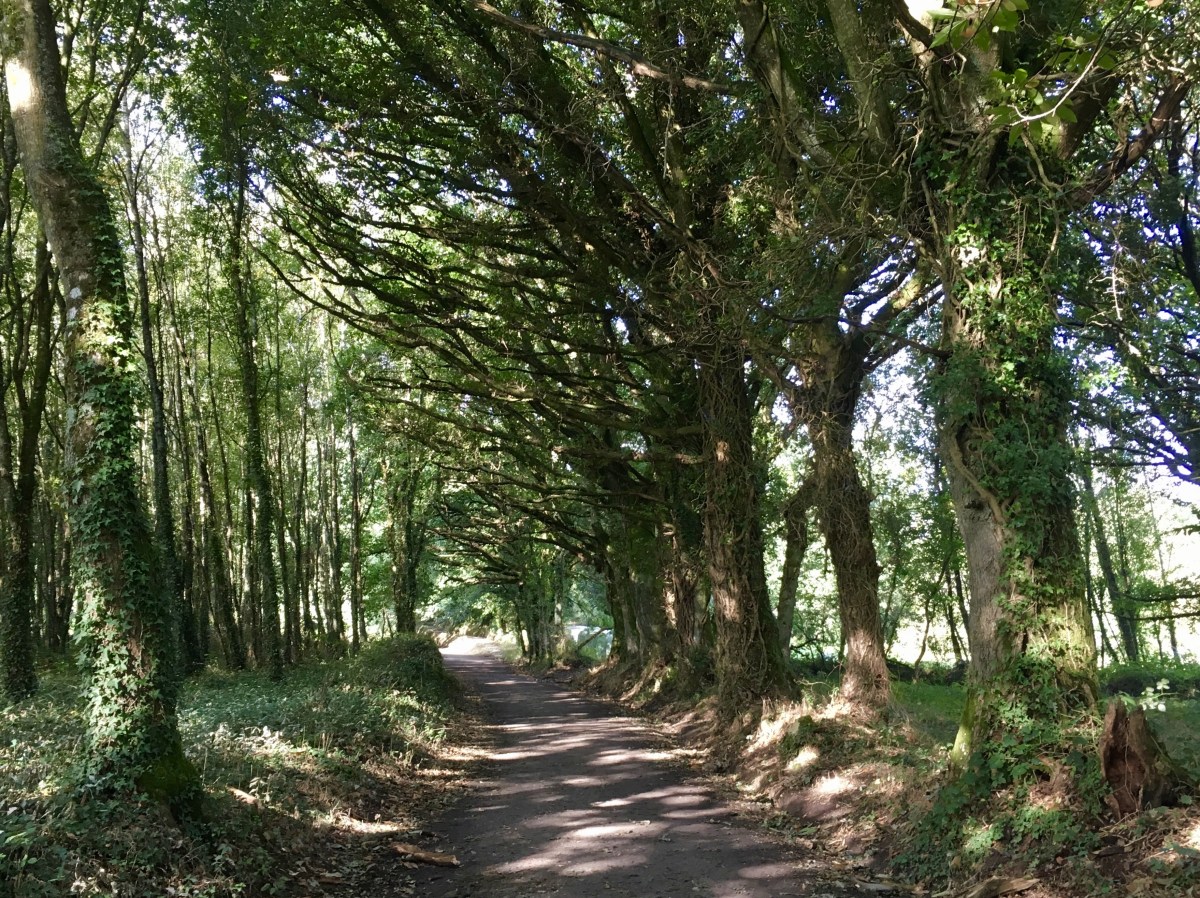
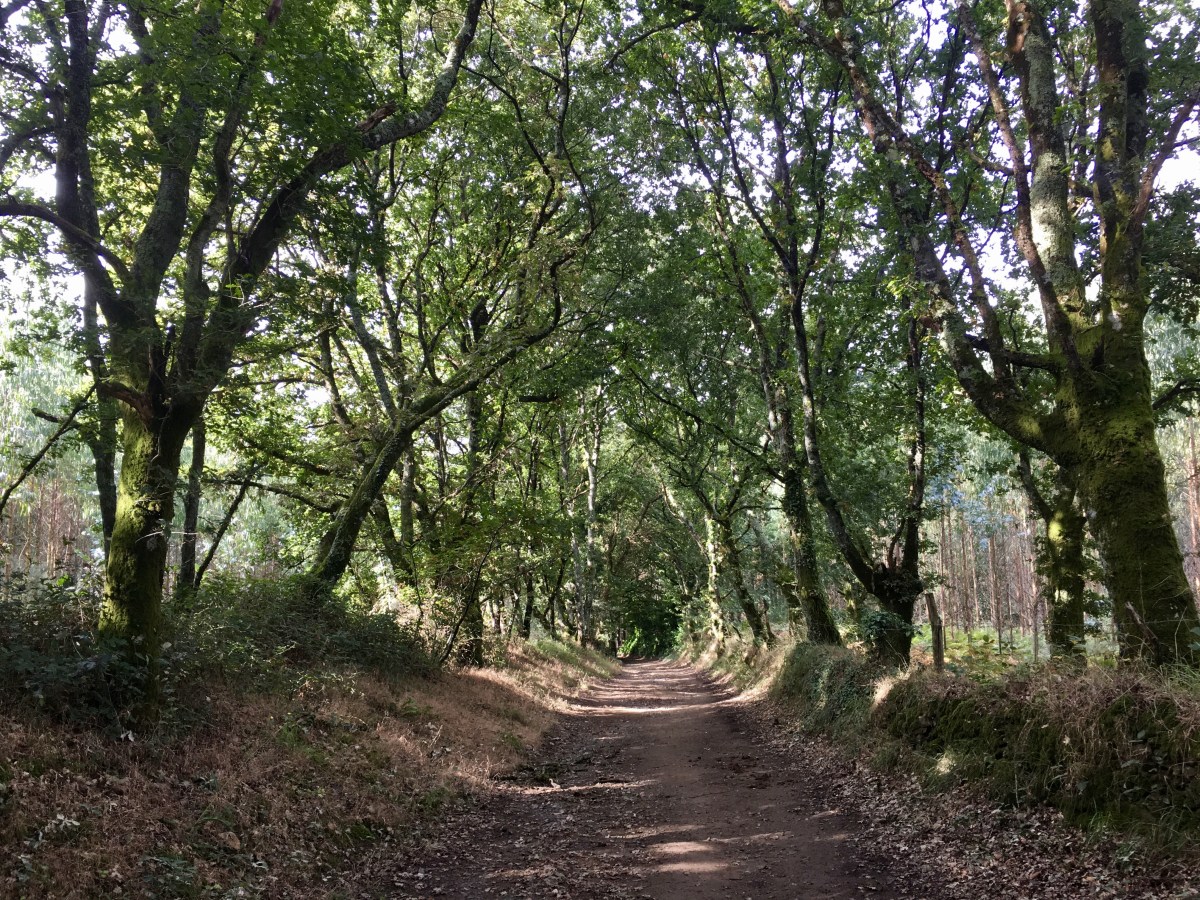
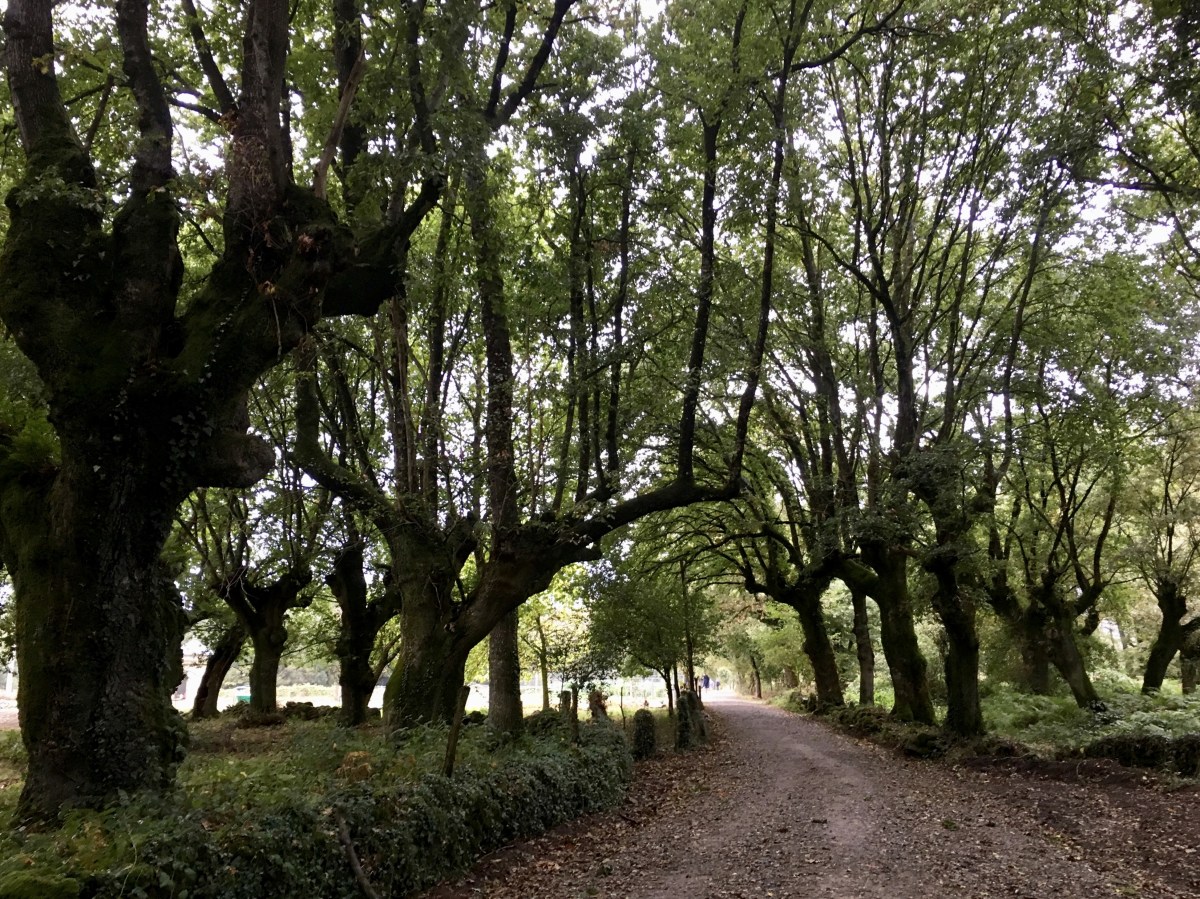
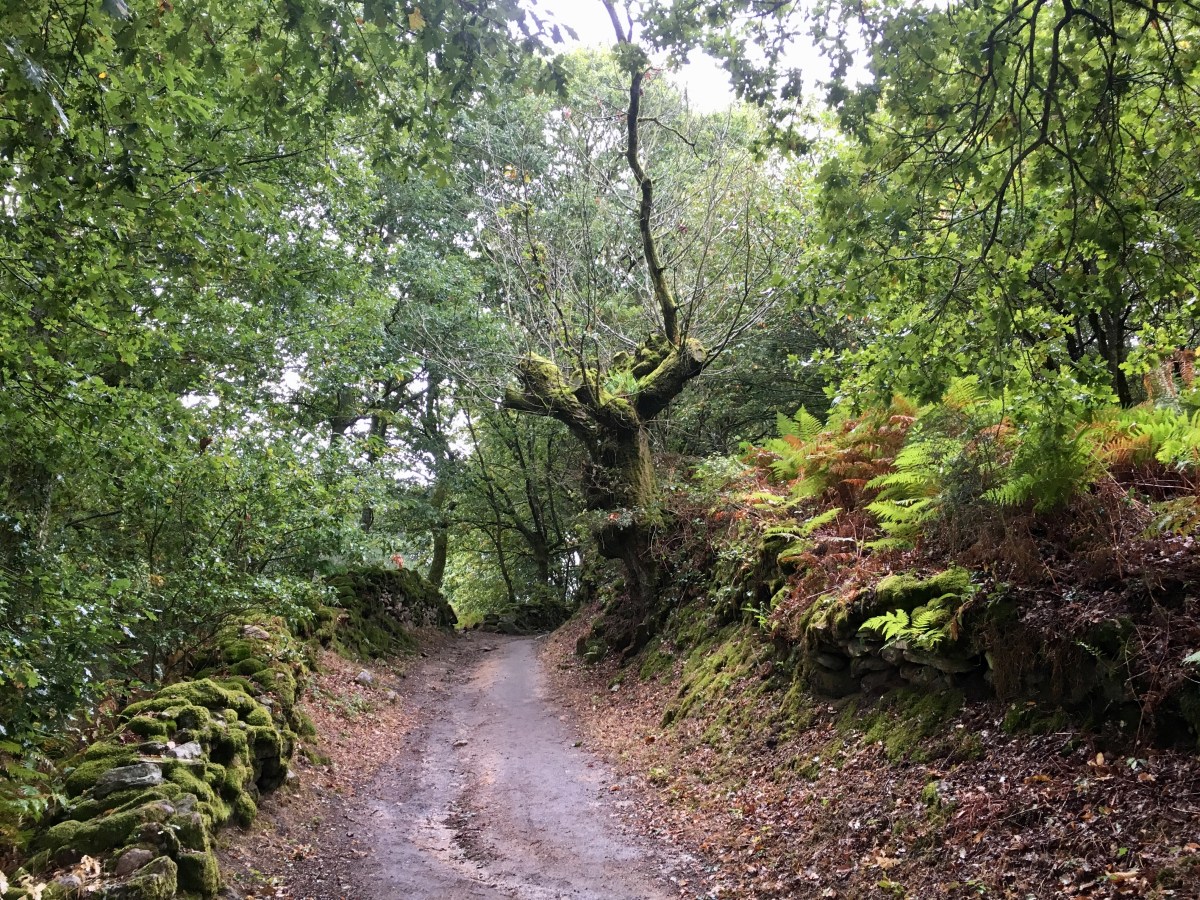
I walked in the rain again for much of the morning, mostly through forest paths lined with moss-covered stone walls.

Sarria to Barbadelo (Vilei) (3.6 km)

Camino arrow
Camino arrow
Sarria to Barbadelo
Sarria to Barbadelo
Sarria to Barbadelo
Sarria to Barbadelo
Sarria to Barbadelo
Sarria to Barbadelo

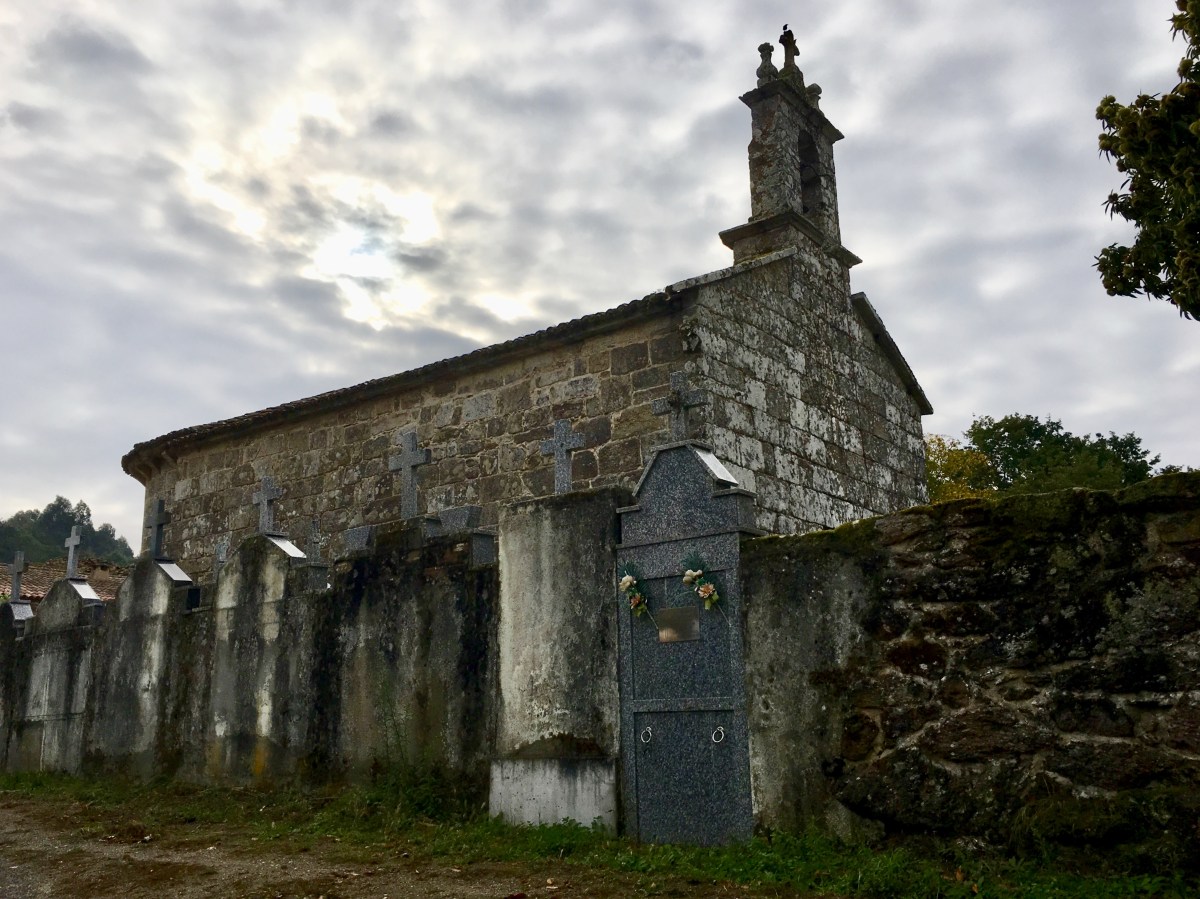
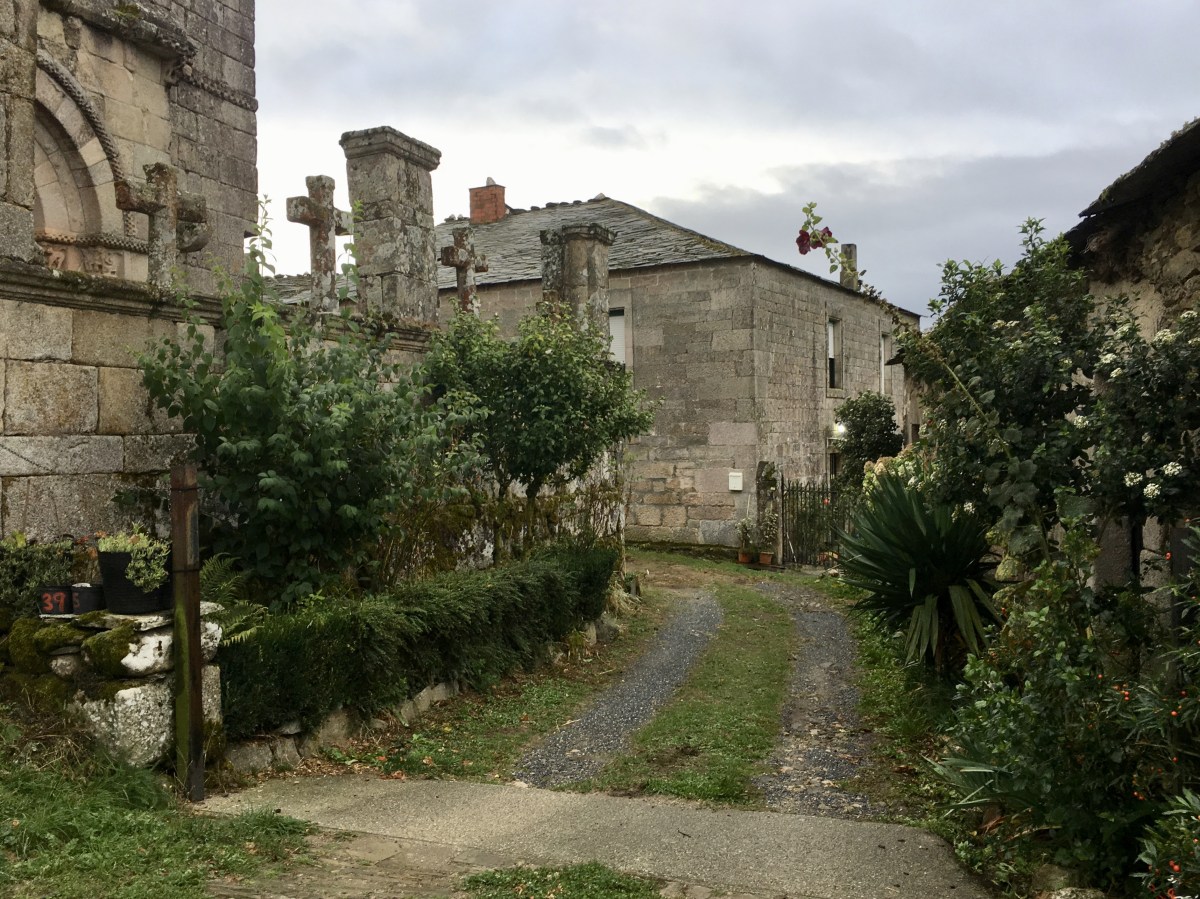
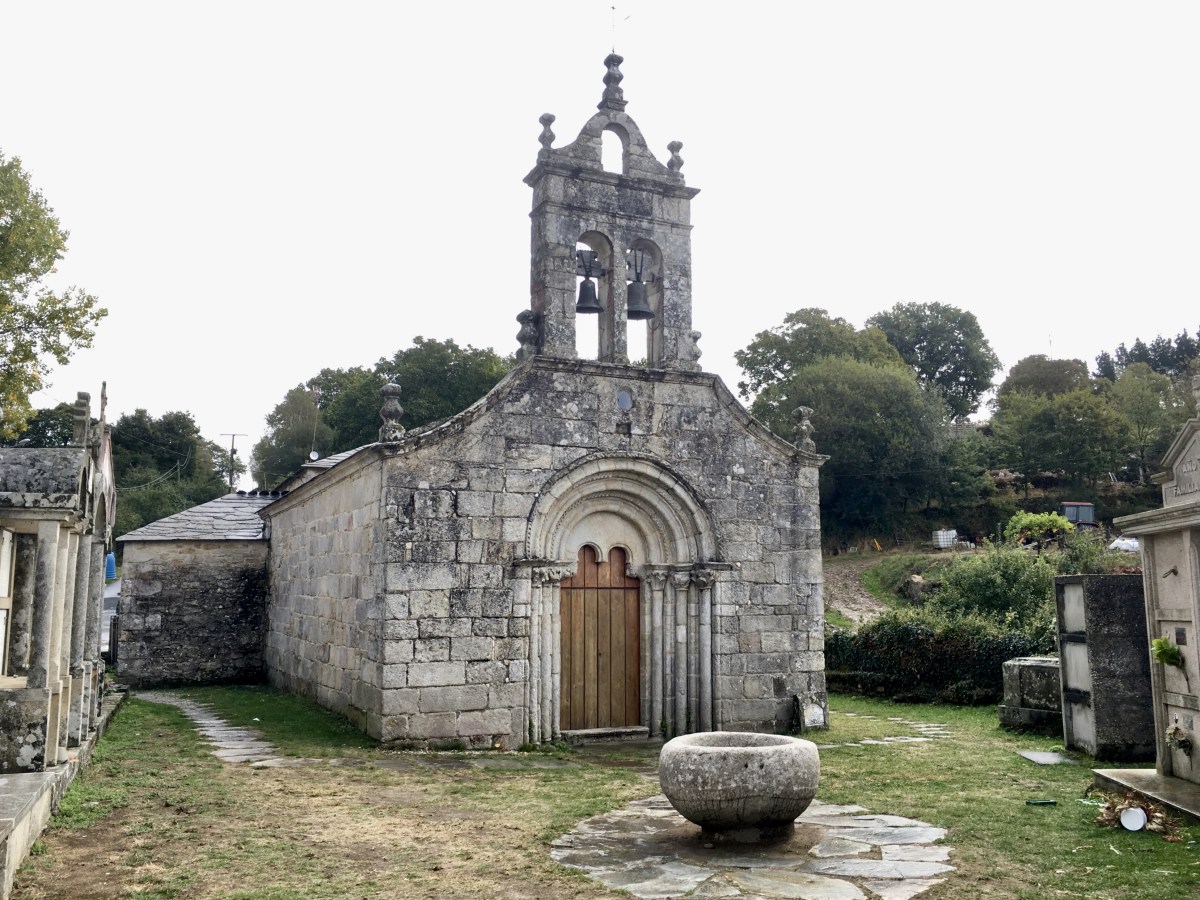
I stopped briefly at the Igrexa de Santiago de Barbadelo and its adjacent cemetery.  This 12th century Romanesque temple was once part of a monastery. The original monastery in 874 housed both monks and nuns. In 1009, it attached to the Monastery of Samos. By 1120, the monastery was for men only and supported a hospice.

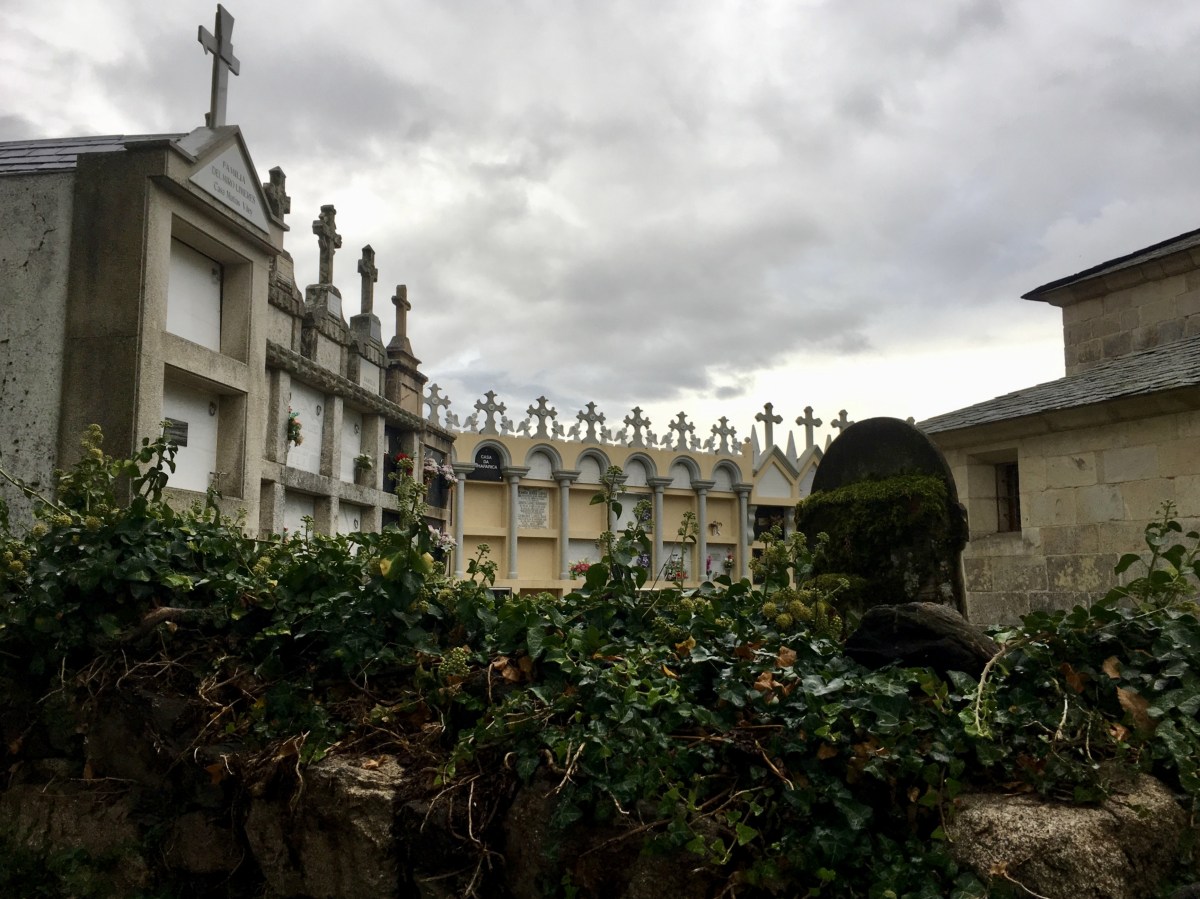
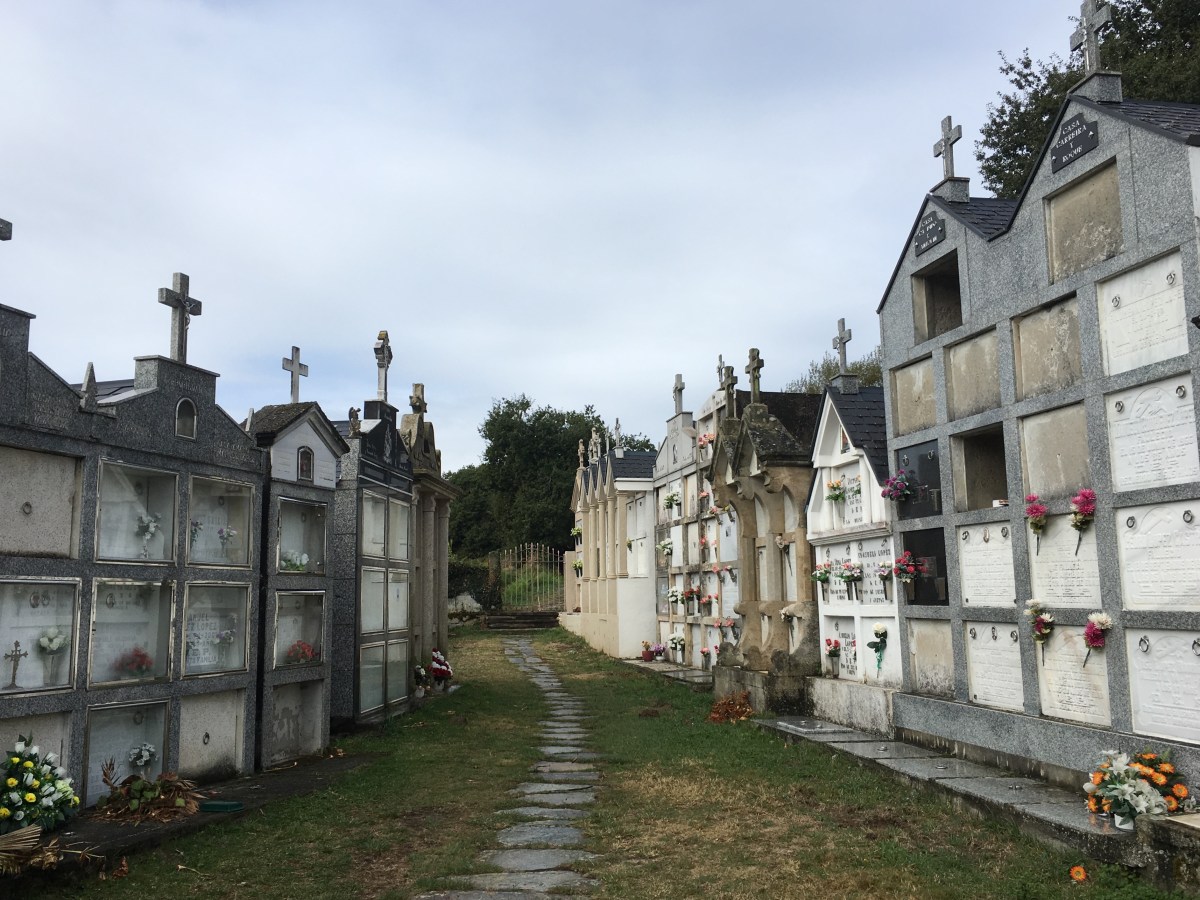
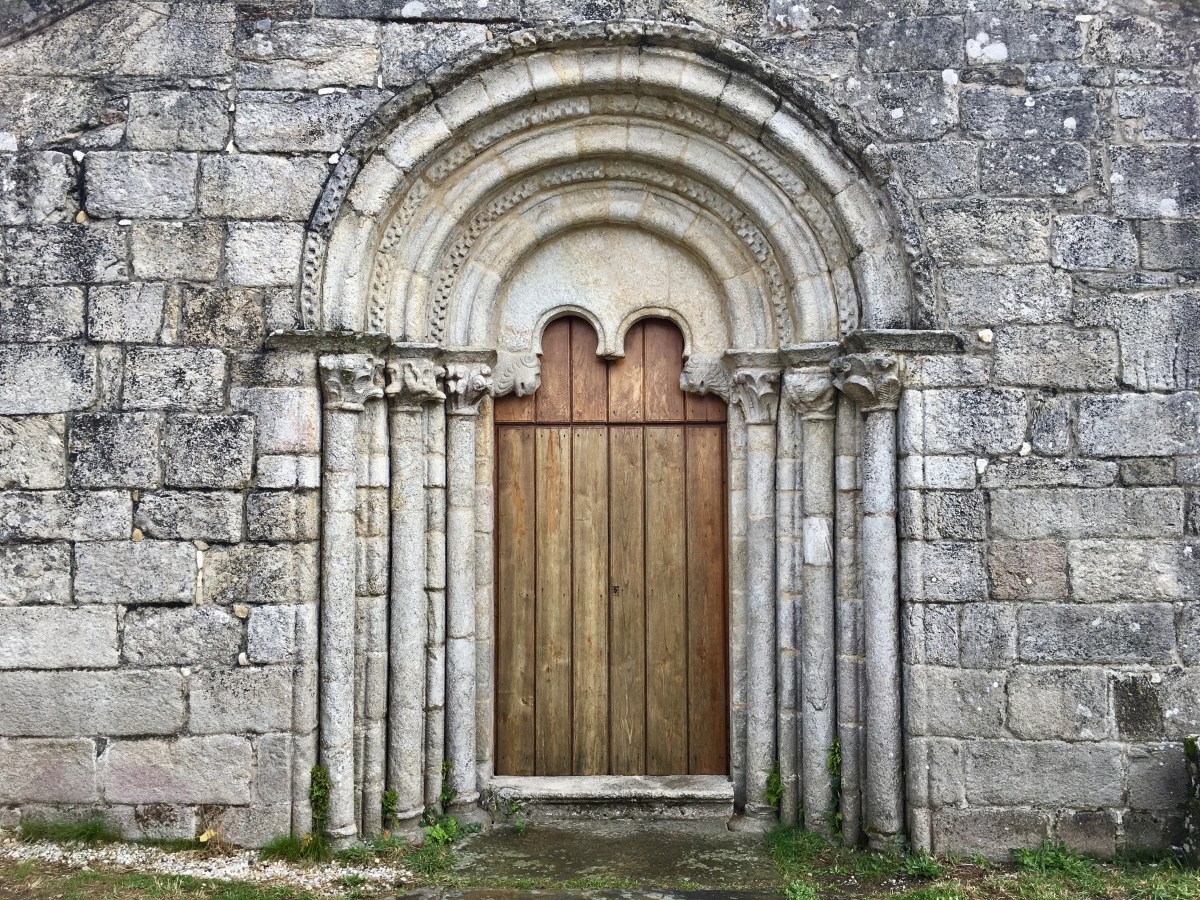
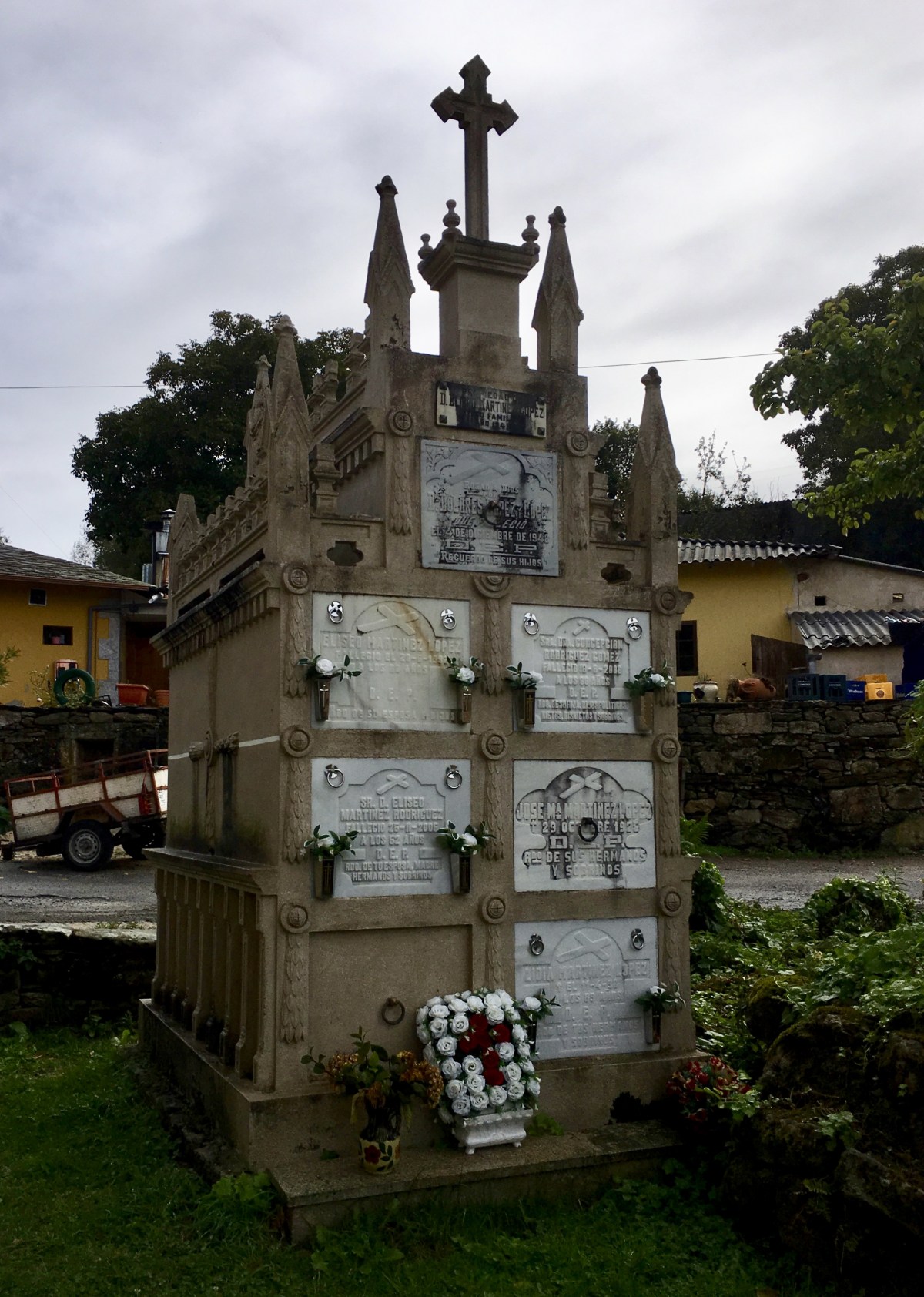
The capitals of the temple doorway were decorated with scenes from the Bible and of the daily lives of the people of Lugo during the Middle Ages.  The cemetery surrounding the Barbadelo church had 5-6 stories of rectangular burial niches, similar in construction to hórreos, that circled the church like a fortress wall.

fullsizeoutput_1af87

Igrexa de Santiago de Barbadelo

fullsizeoutput_1af89

Igrexa de Santiago de Barbadelo

fullsizeoutput_1af97

Igrexa de Santiago de Barbadelo

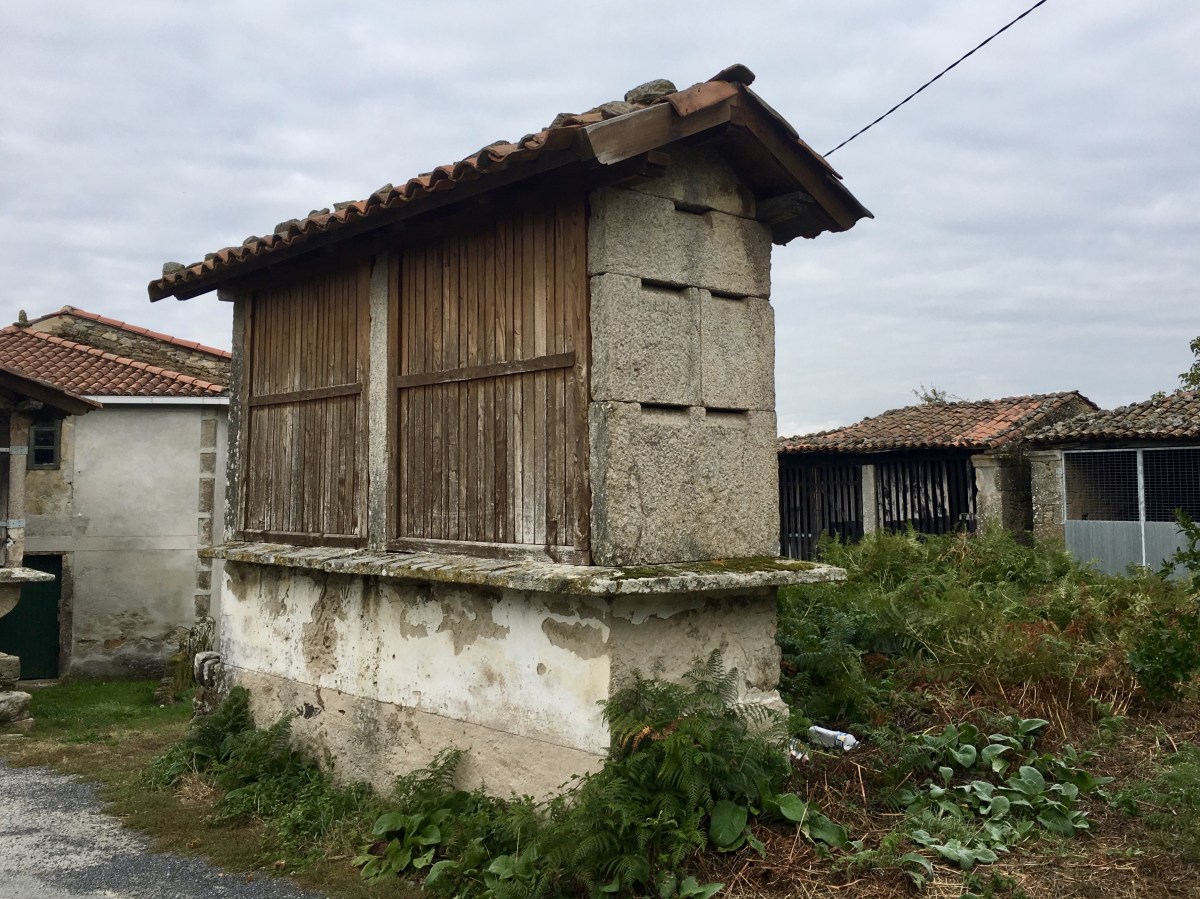
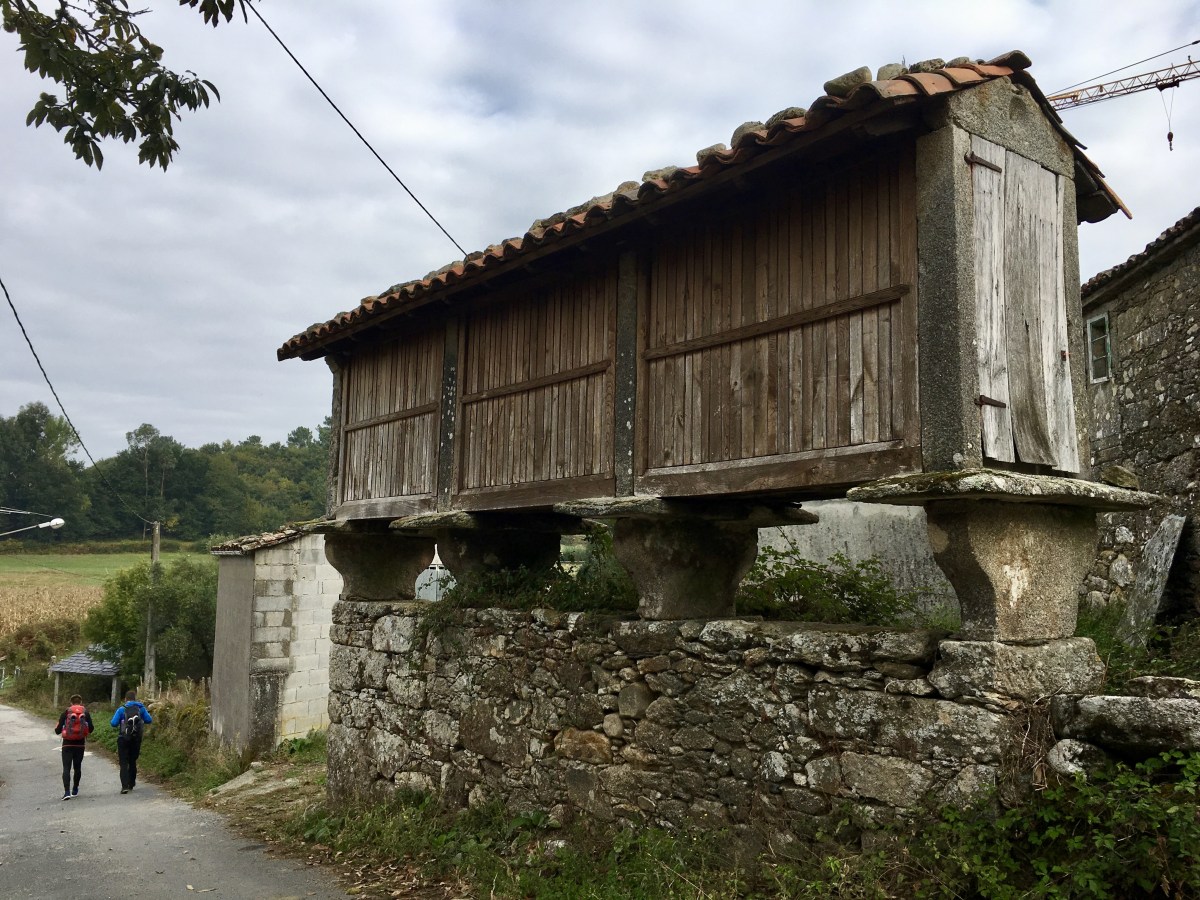
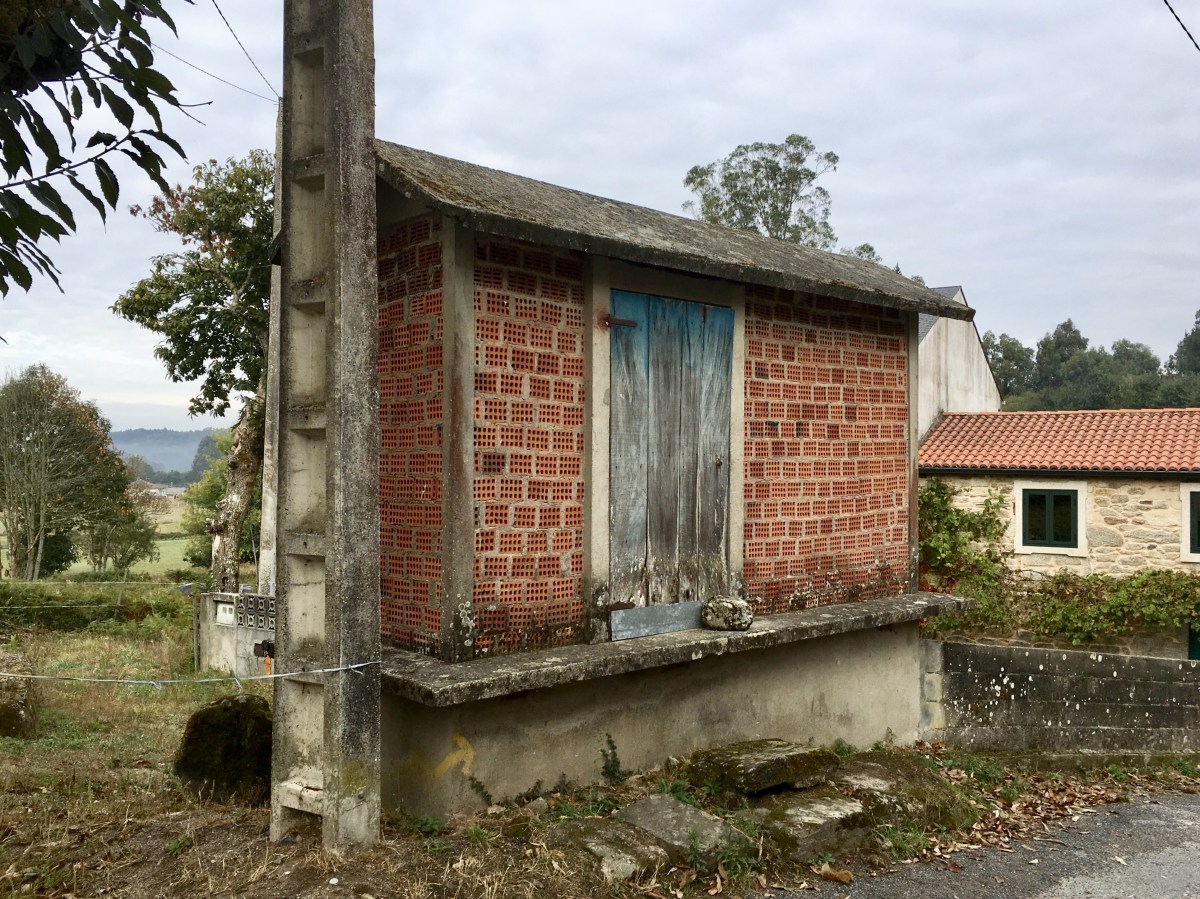
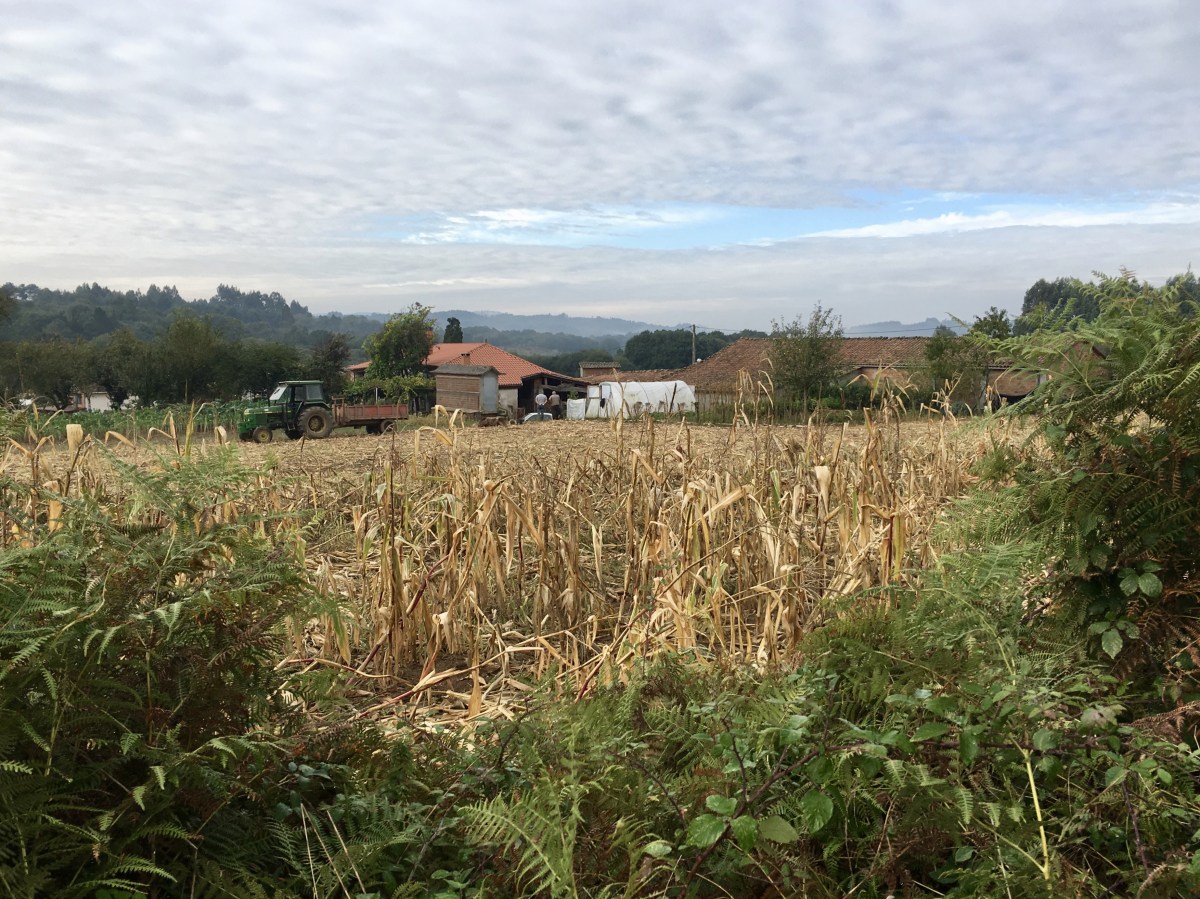
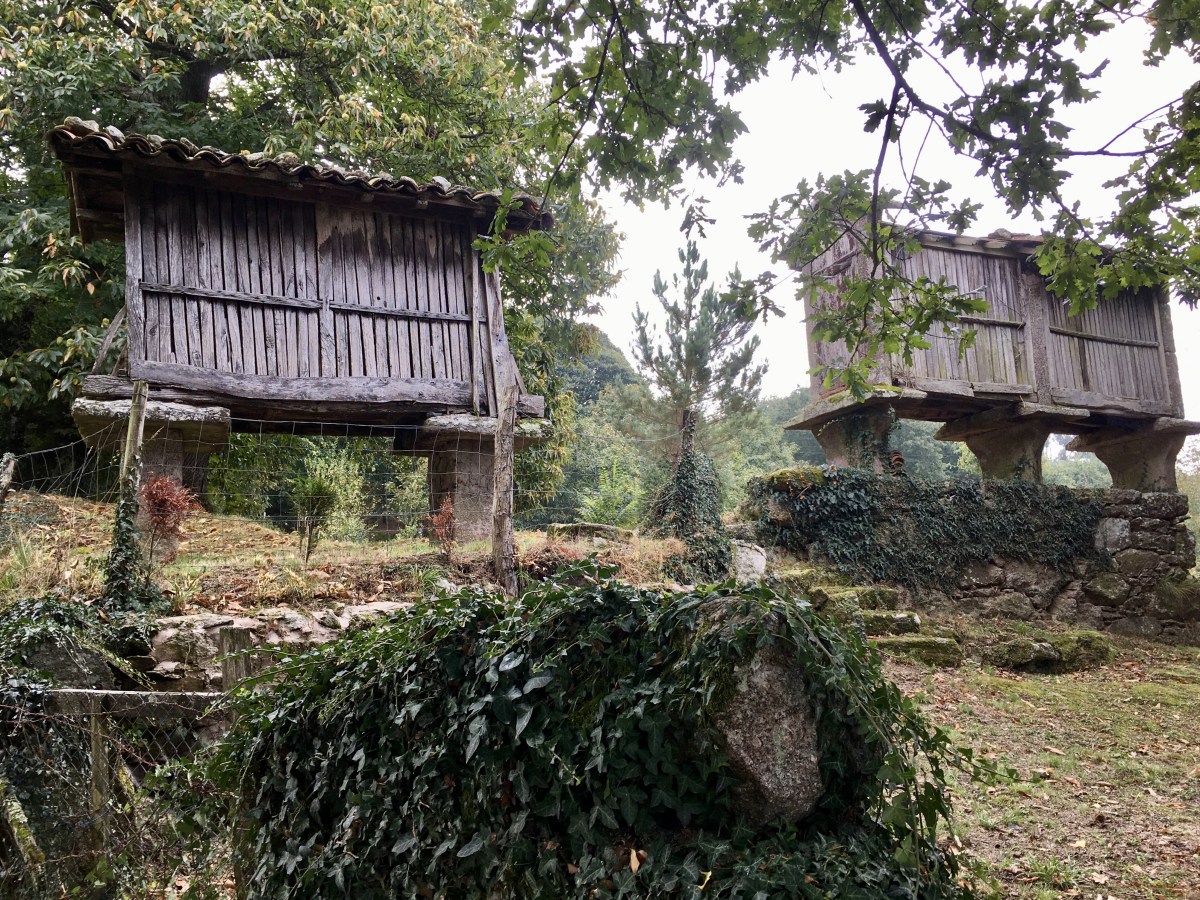
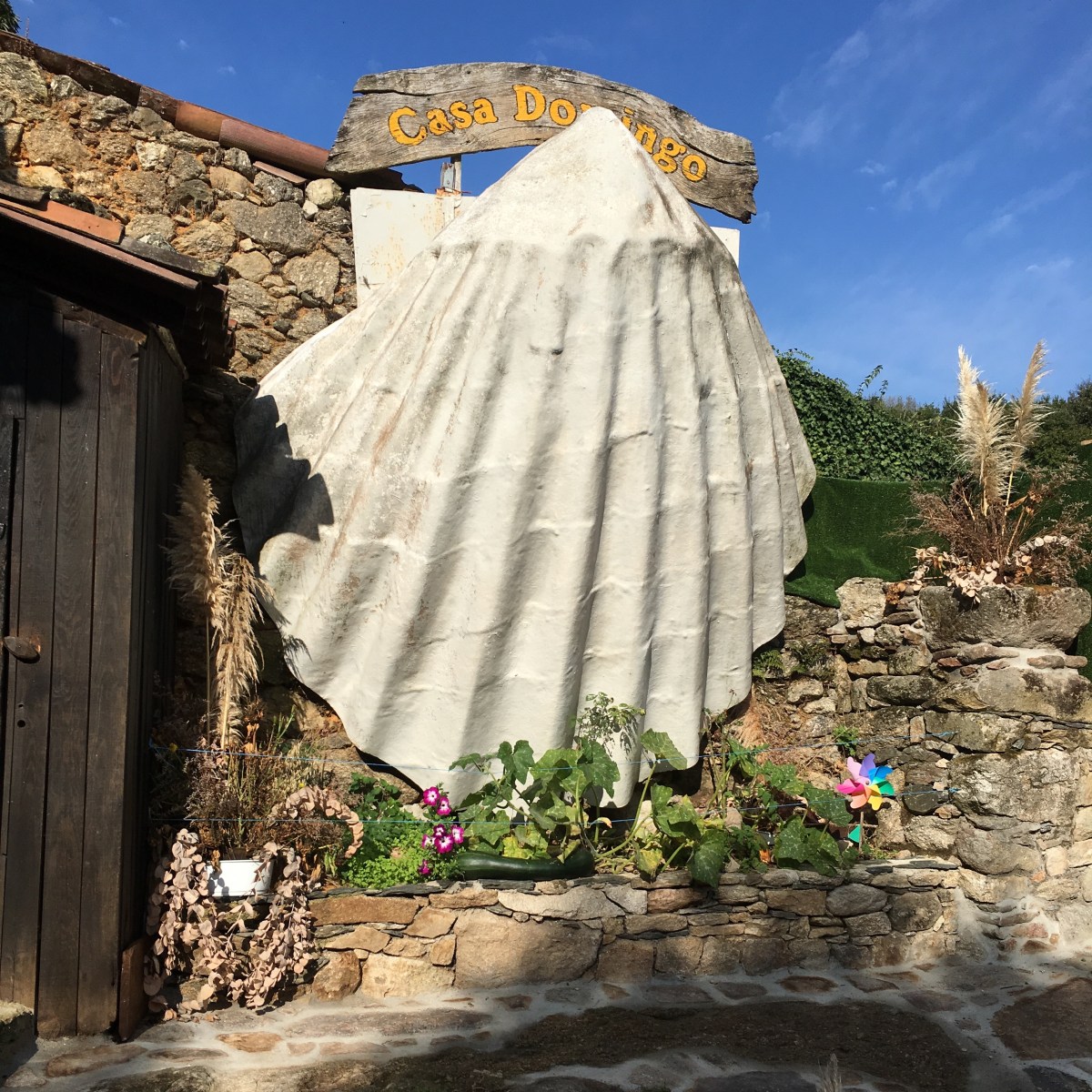
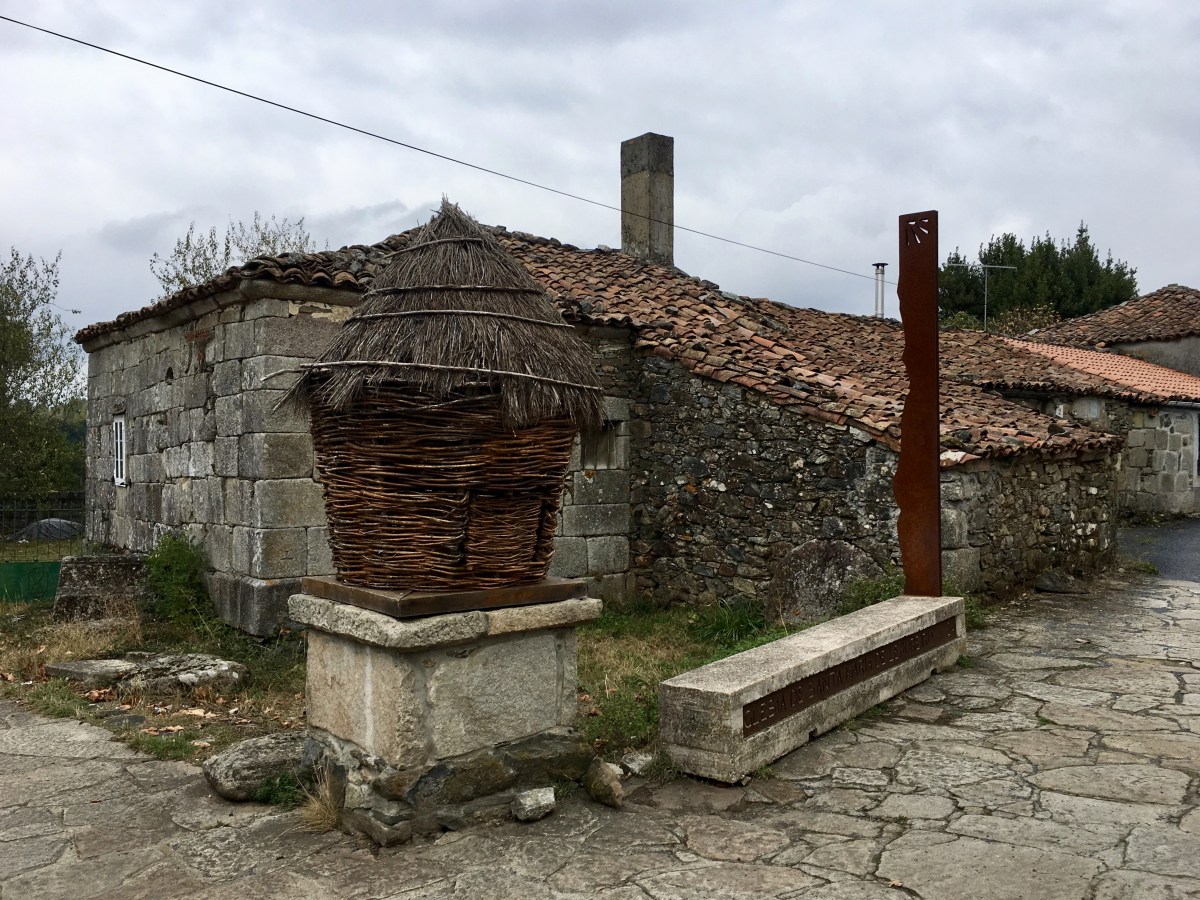
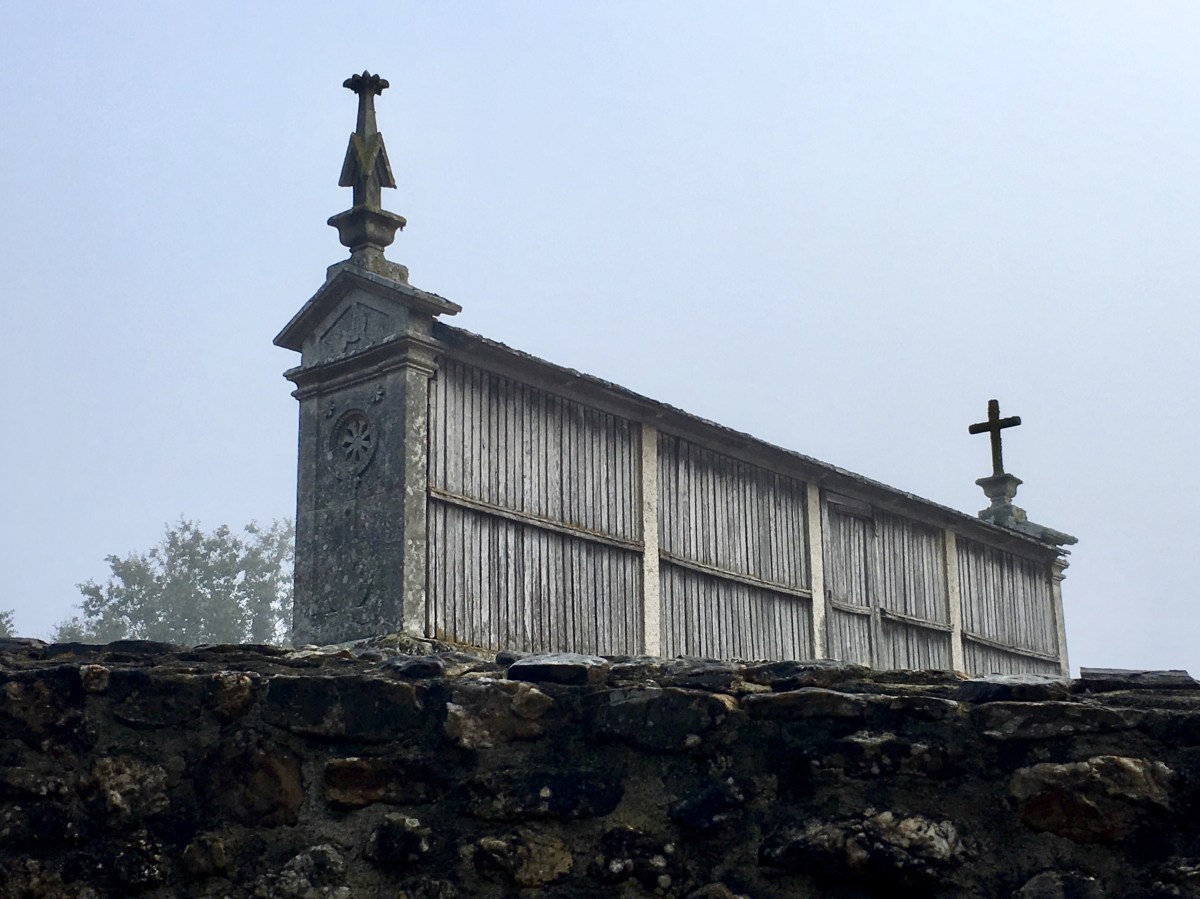
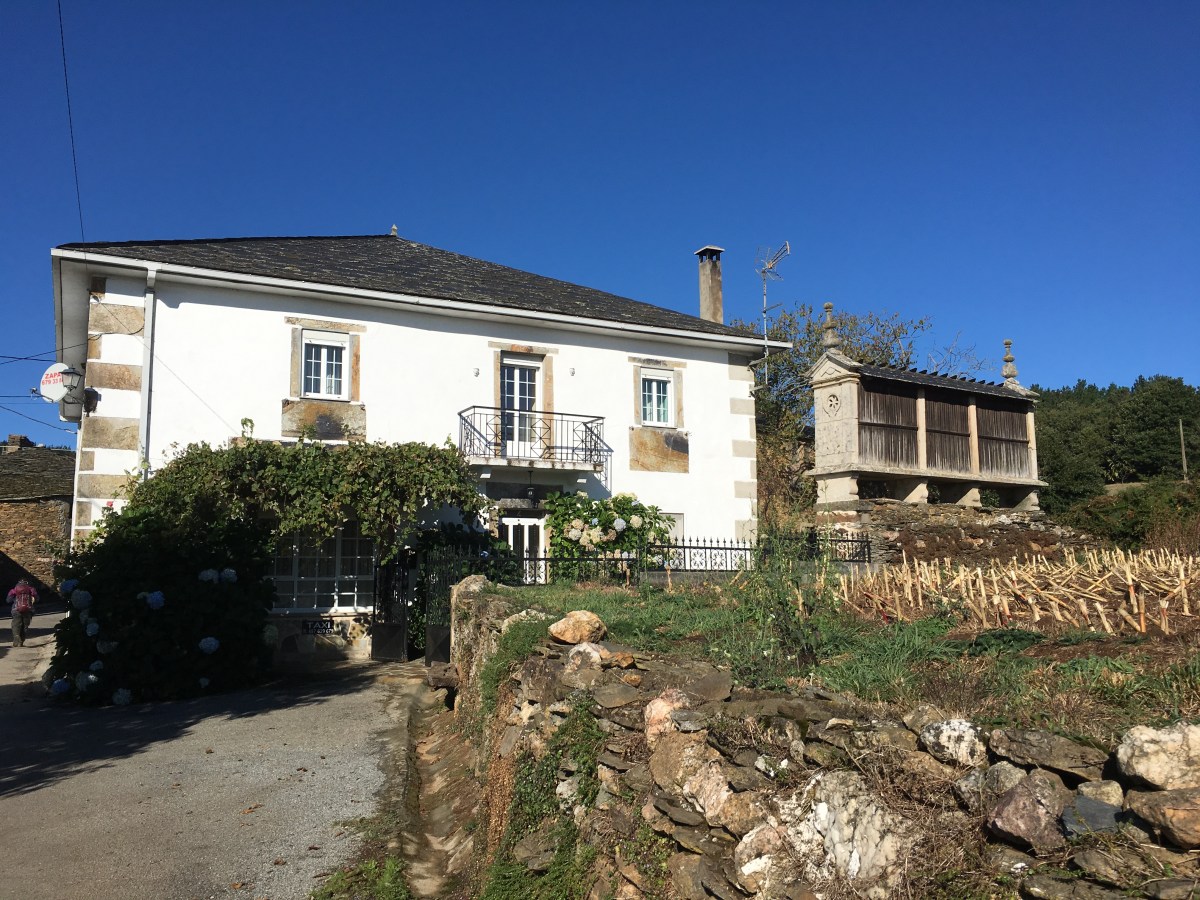
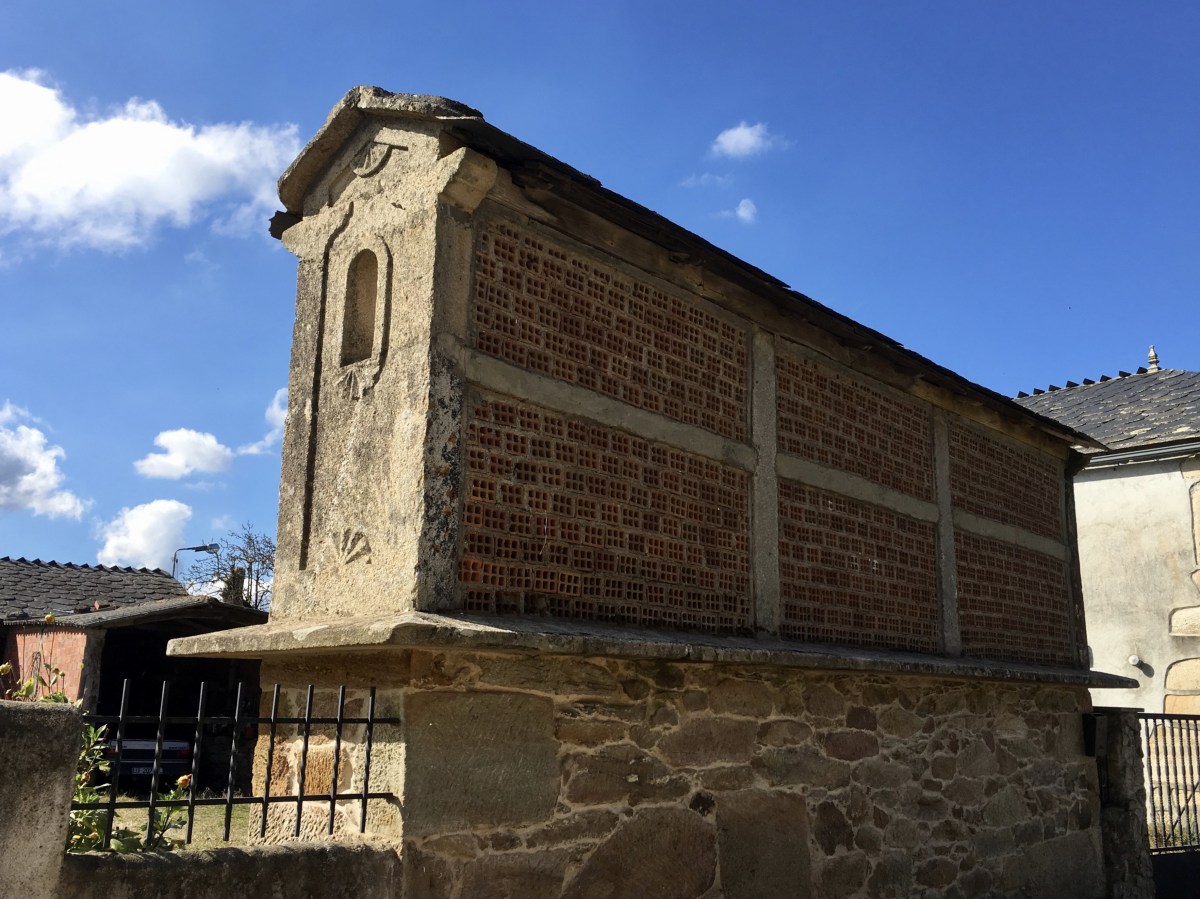
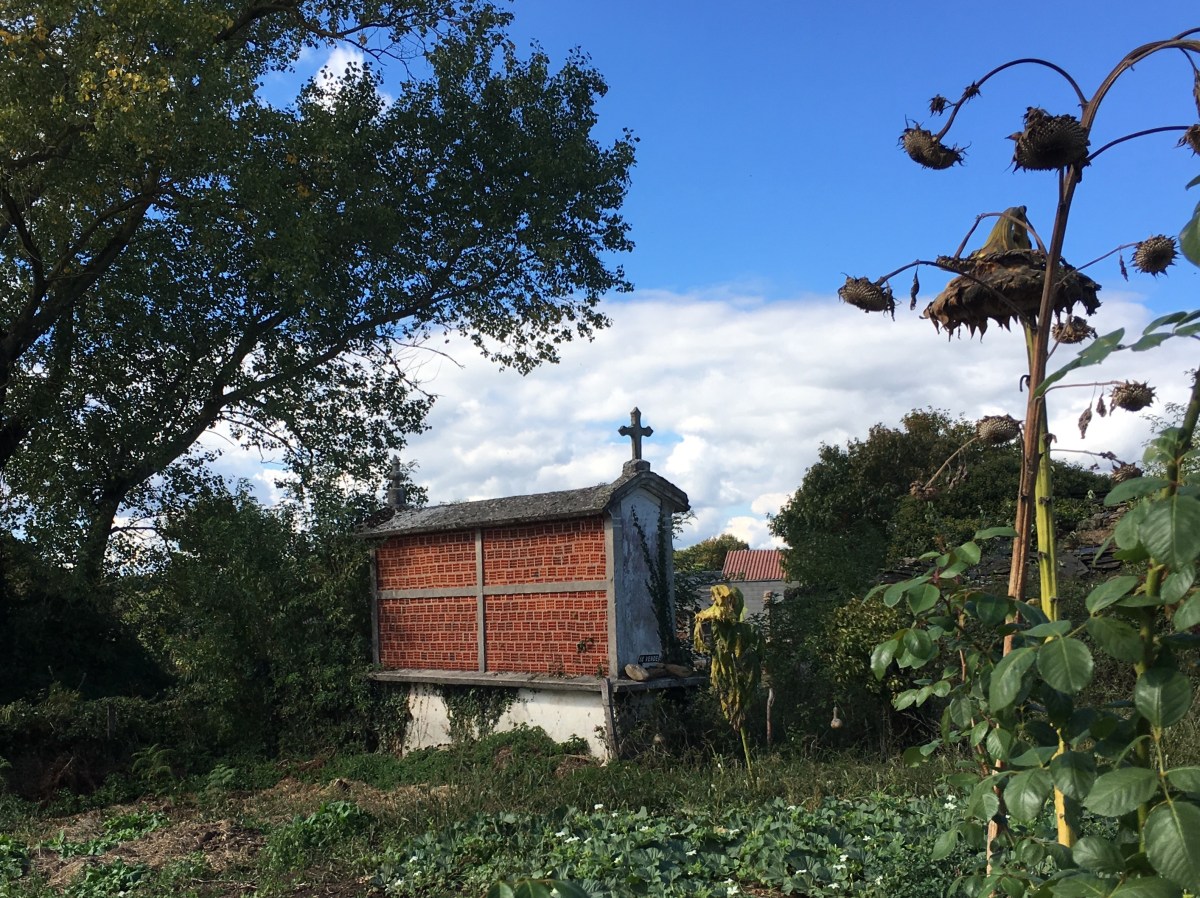
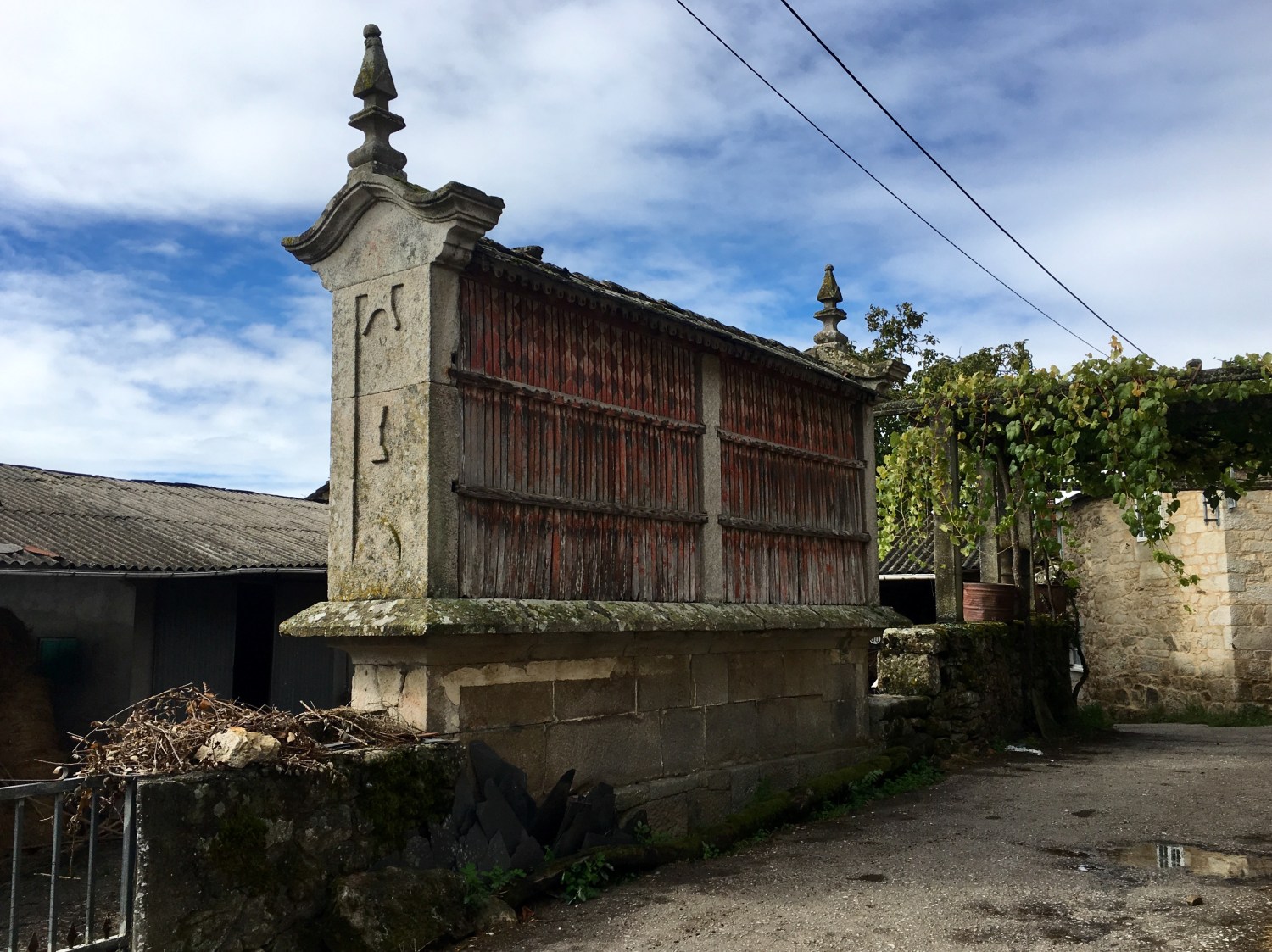
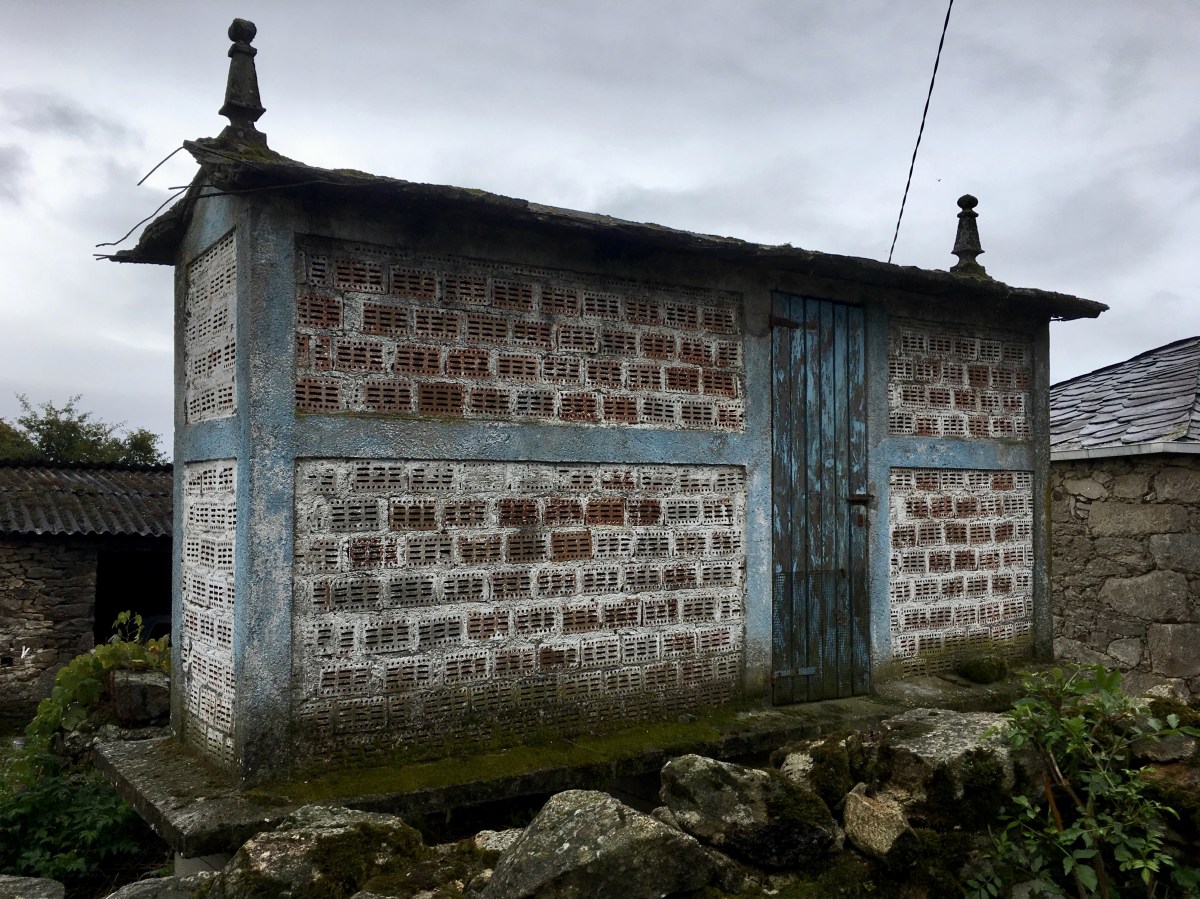
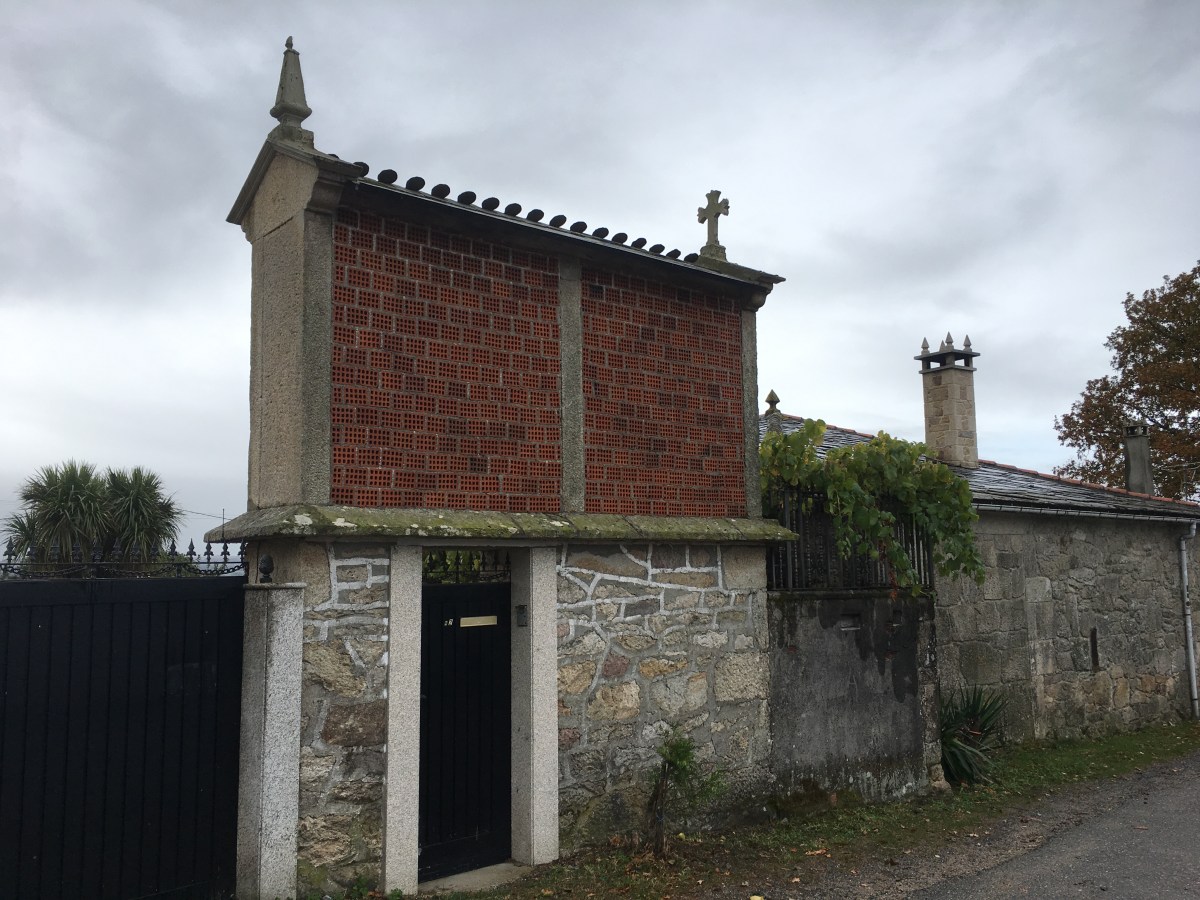
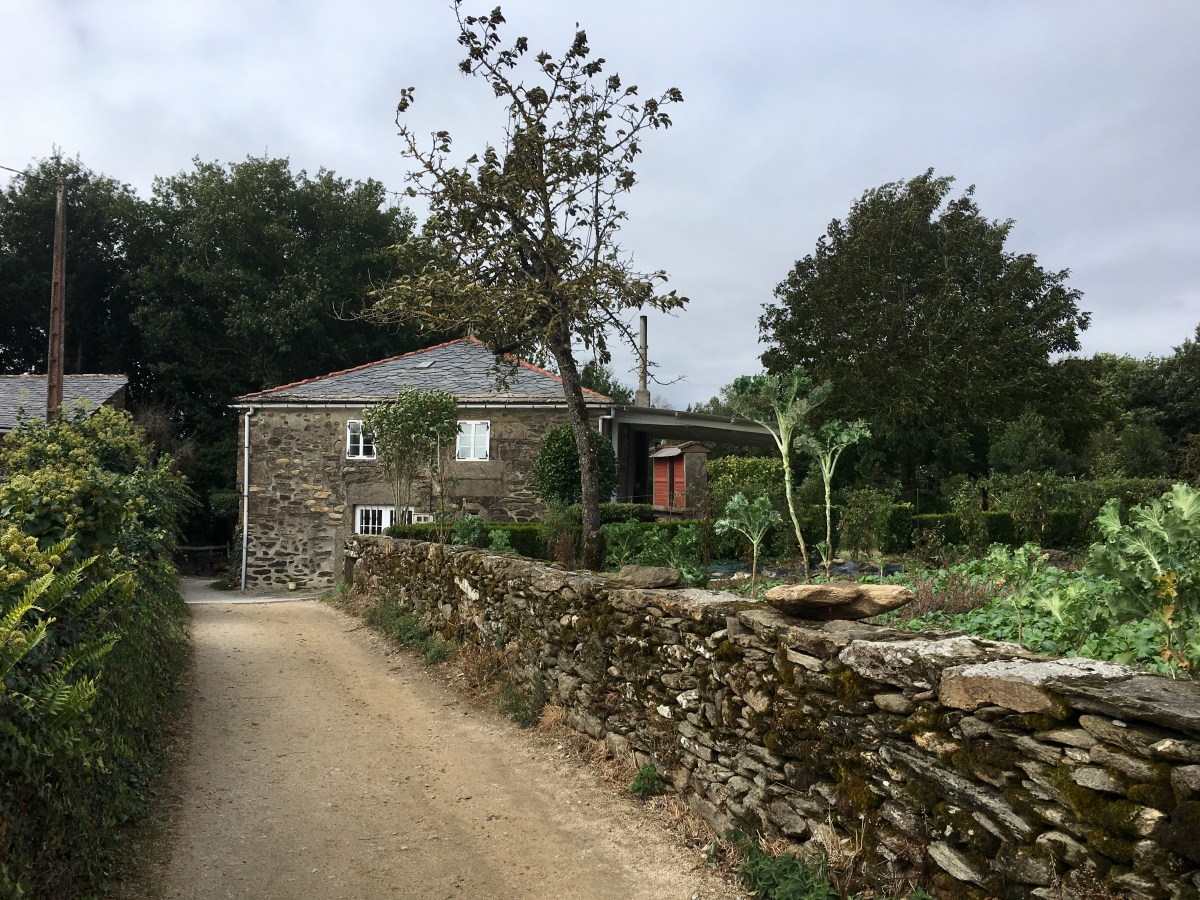
In the small “cow towns” along the way, I passed small herds of cattle and pastures, with birch, oak, and chestnut trees scattered here and there.  Small hamlets consisted of loose assemblages of rambling houses, often cobbled together with tractor sheds, hen houses or barns, and storage rooms. Next to every house was a garden of greens.  The smell of dirt, cow dung, grains, and chickens permeated the air.  Many houses had hórreos, or raised granaries, nearby. I was told many of them have ancient fertility symbols on top.

Barbadelo (Vilei) to Cruce (2.4 km) to Peruscallo (2.9 km)

fullsizeoutput_1af99

Barbadelo to Cruce

fullsizeoutput_1af9b

Barbadelo to Cruce

fullsizeoutput_1af9d

Barbadelo to Cruce

fullsizeoutput_1af9e

Barbadelo to Cruce

fullsizeoutput_1695f

Barbadelo to Cruce

fullsizeoutput_1afa0

Barbadelo to Cruce

fullsizeoutput_1afa2

Hórreo

IMG_9142

Hórreo

fullsizeoutput_1afaa

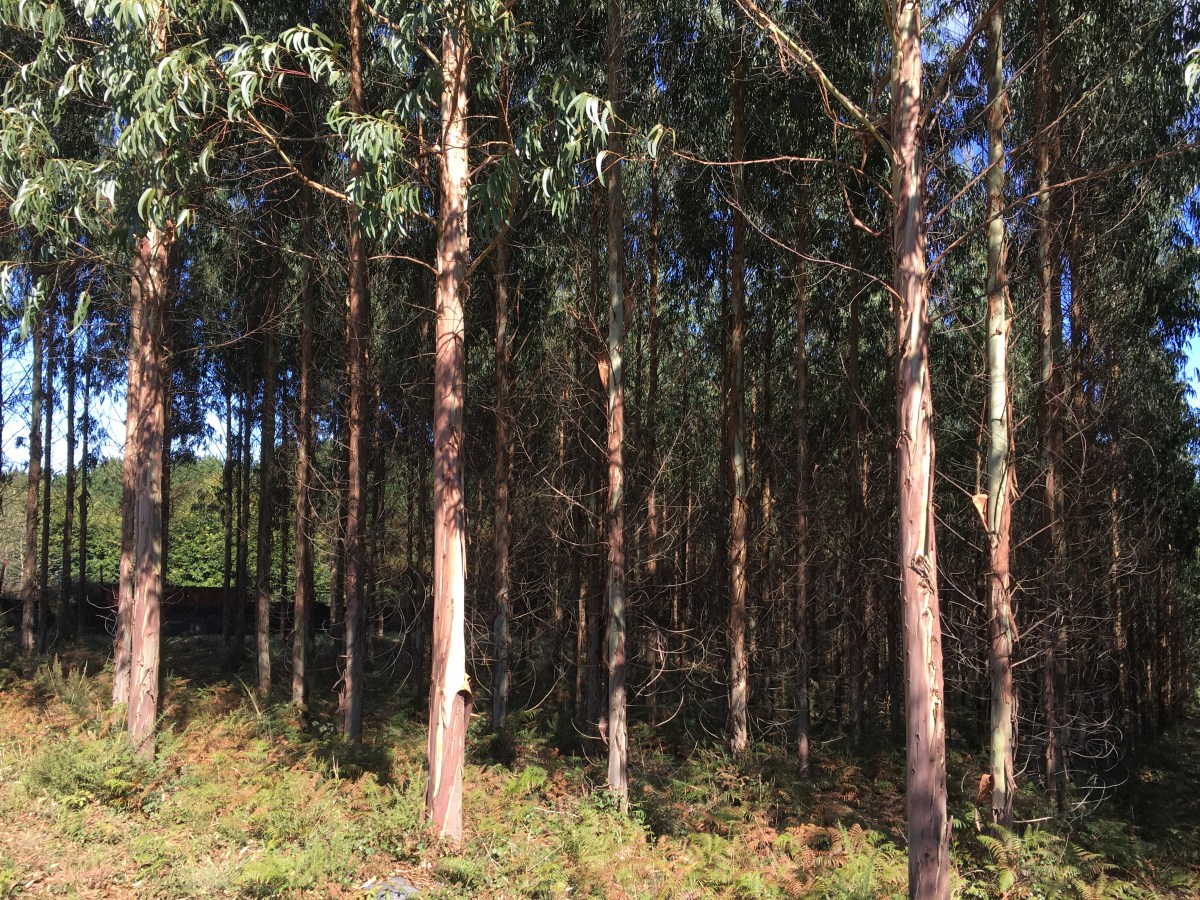
fern forest

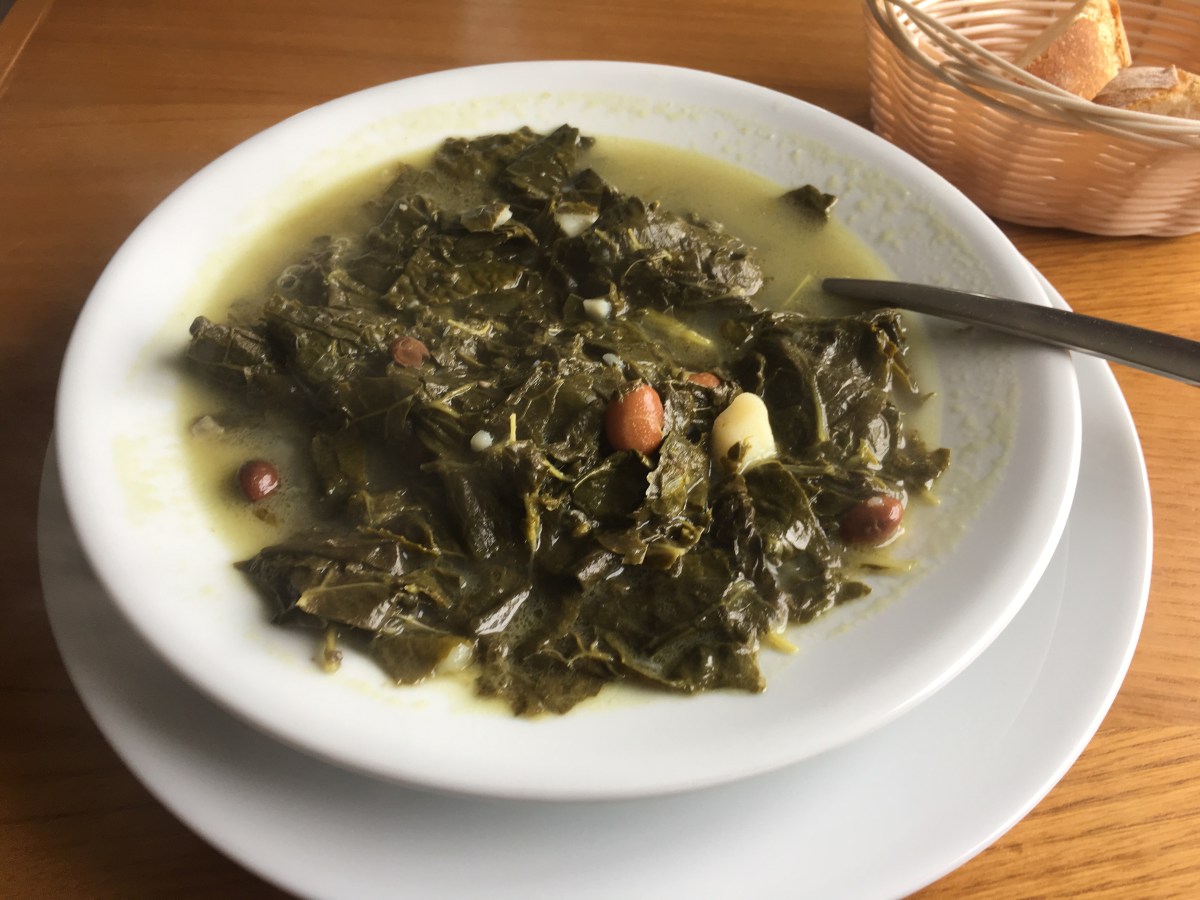
I stopped to warm up with some Galician soup at at a crowded cafe, Mirador da Brea, in the town of A Brea.  This time it was made with kale rather than cabbage.

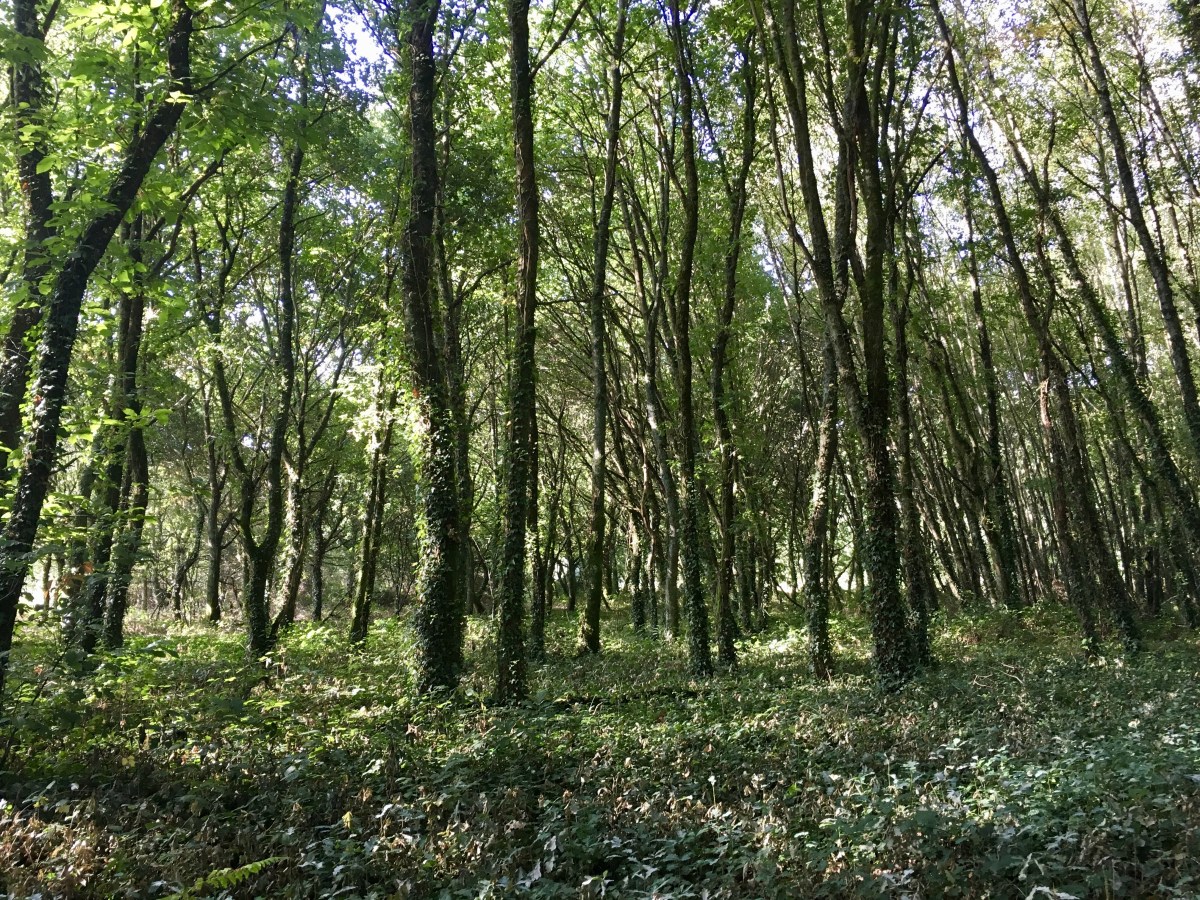
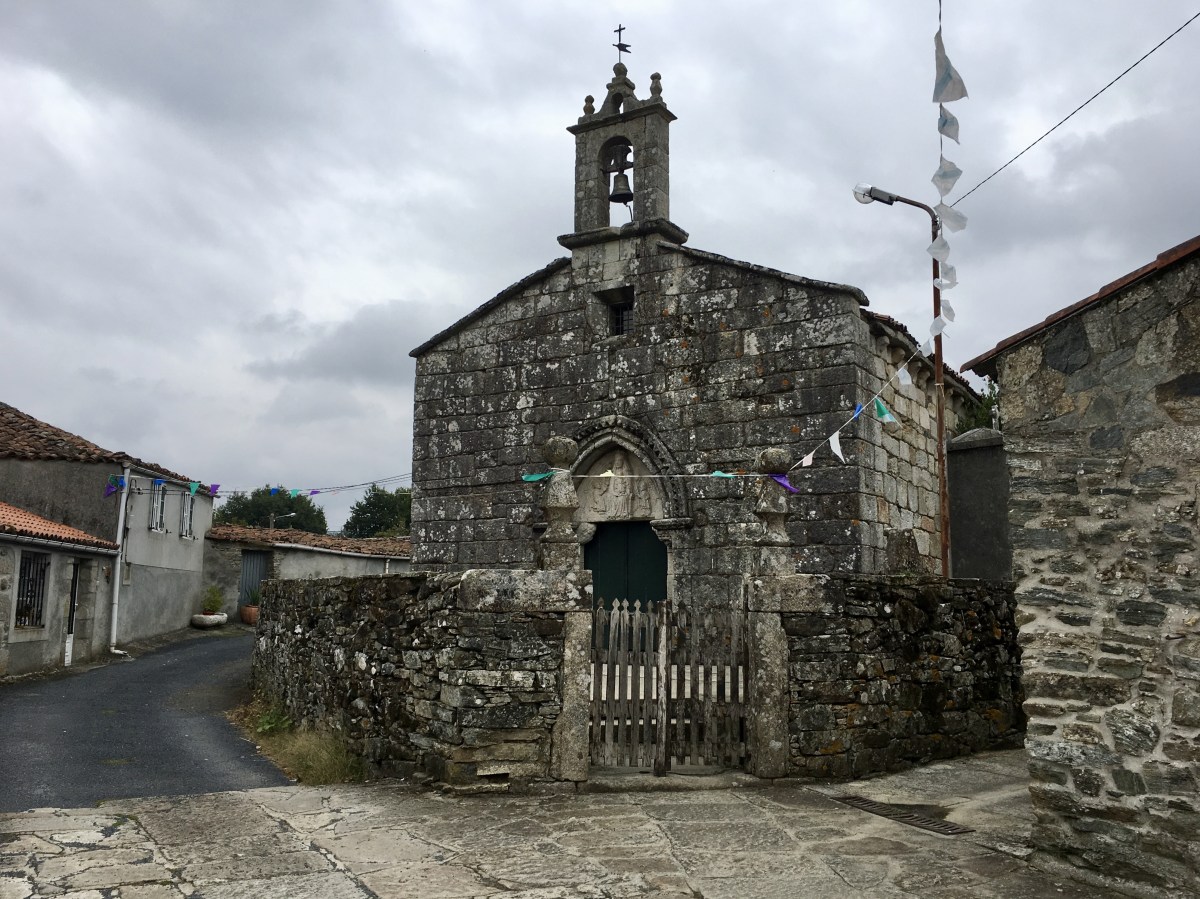
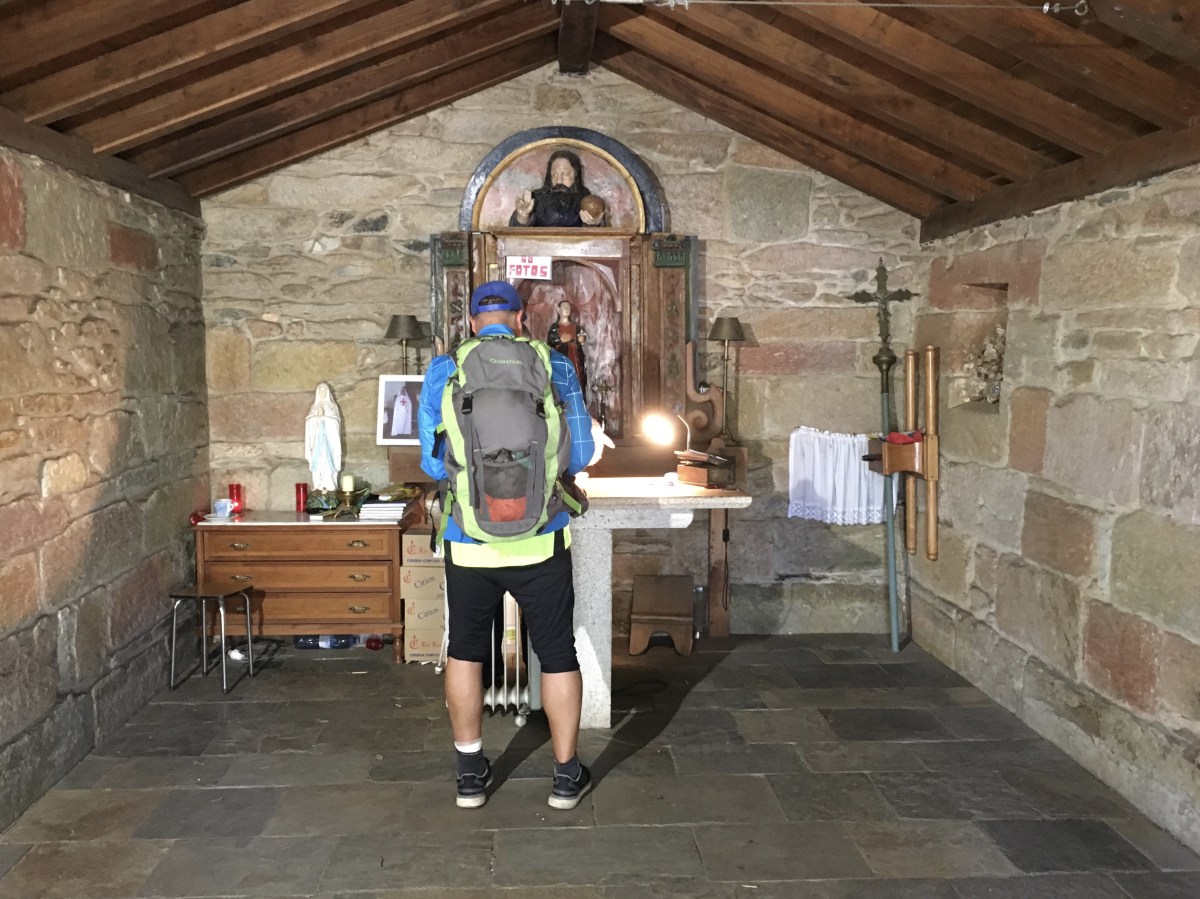
I continued through Morgade, past a stone chapel, and then down the track through the Ferreiros stream.  The earthy smell of cow dung hung in the air, and the ground was often wet underfoot.  It was a landscape of stone walls, moss and ancient trees.

Peruscallo to Morgade (3.1 km)

IMG_9146

Galician soup at Mirador da Brea

We climbed up narrow pathways with large granite slabs, laid so pilgrims could walk above the water level, up to Ferreiros, which means “blacksmiths.”

The Church of Santa María de Ferreiros has hints of Romanesque decoration and a double arched tympanum. The church once maintained a pilgrim hospice, which has since vanished.

Morgade to Ferreiros (1.4 km)

fullsizeoutput_1afac

Morgade to Ferreiros

fullsizeoutput_1afae

Morgade to Ferreiros

fullsizeoutput_16953

Church of Santa María in Ferreiros

fullsizeoutput_1afb0

Church of Santa María in Ferreiros

fullsizeoutput_1afb3

Church of Santa María in Ferreiros

fullsizeoutput_1afd7

Church of Santa María in Ferreiros

Finally, we began a descent into the río Miño Valley and into the tiny hamlet of Mercadoiro.  We found more moss-engulfed walls and emerald forests with wildly twisted trees. We ascended and descended several times over several kilometers, and then descended sharply until we reach a spot where the landscape opened up.  There, we found views of the valley along with the town of Portomarín.

Ferreiros to Mercadoiro (3.4 km)

fullsizeoutput_1693f

Hórreo

fullsizeoutput_1afb7

Ferreiros to Mercadoiro

fullsizeoutput_1afbb

Ferreiros to Mercadoiro

fullsizeoutput_16951

Ferreiros to Mercadoiro

I stopped for an orange soda and a bag of chips at Mercadoiro.  Some Gregorian chants and Loreena McKinnett-like music were playing there.  It was a beautiful setting but awfully crowded.

We passed a stone marker that showed we had 100km more to go to Santiago. Finally, around 1:00, the sun broke through and it warmed up as we made our way to Vilachá, a farming town.

There were a ton of pilgrims on the path today.  A lot of fresh faces and too many groups chatting away.  The most annoying were some Spanish high school students yapping and playing loud music.

Mercadoiro to Vilachá (3.1 km)

Mercadoiro to Vilachá

After that, I stopped at a little roadside shop with a lot of painted shells outside.  I bought a pair of earrings, shampoo and a Kit-Kat bar.

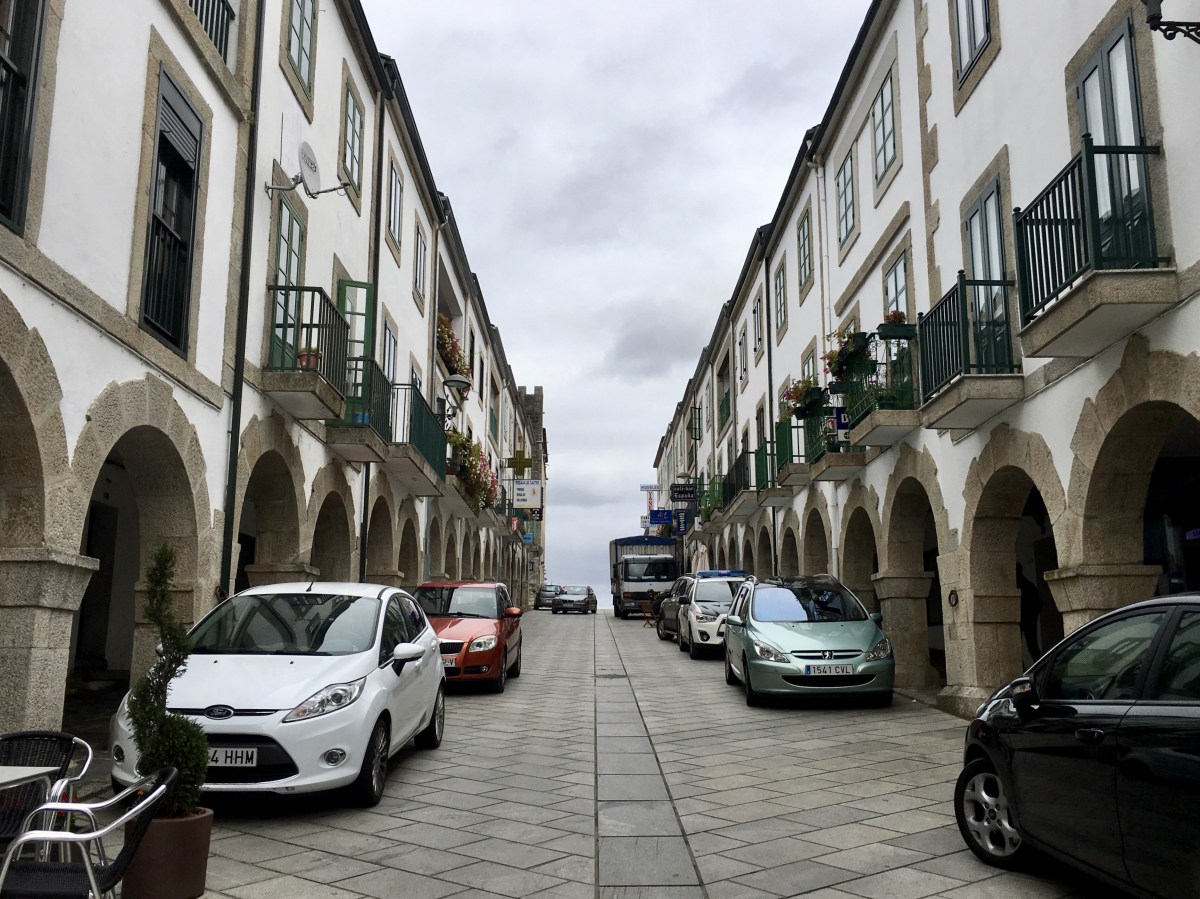
It was a half-hour from Vilachá to Portomarín, downhill and mostly on paved roads. To get into town, we crossed over a very high and long bridge over río Mino.  It looked like some ruins were beneath the bridge. We climbed a majestic flight of steps under an arch, into the pretty porticoed main street, rúa Xeral Franco, lined with shops and cafés and leading to the central square, Praza Conde de Fenosa, the lifeblood of the town.

Vilachá to Portomarín (2.2 km)

Portomarín once sat on both banks of the Miño River and was an important commercial and military center. During the Middle Ages, it sustained several pilgrim hospitals. The town withered in the 19th century with the rapid growth of nearby Lugo.  When the Embalse de Belesar Dam was built in 1956 to provide hydroelectricity for the region, major monuments in the town were removed and relocated to the west side of Miño gorge. The move was complete by 1962.

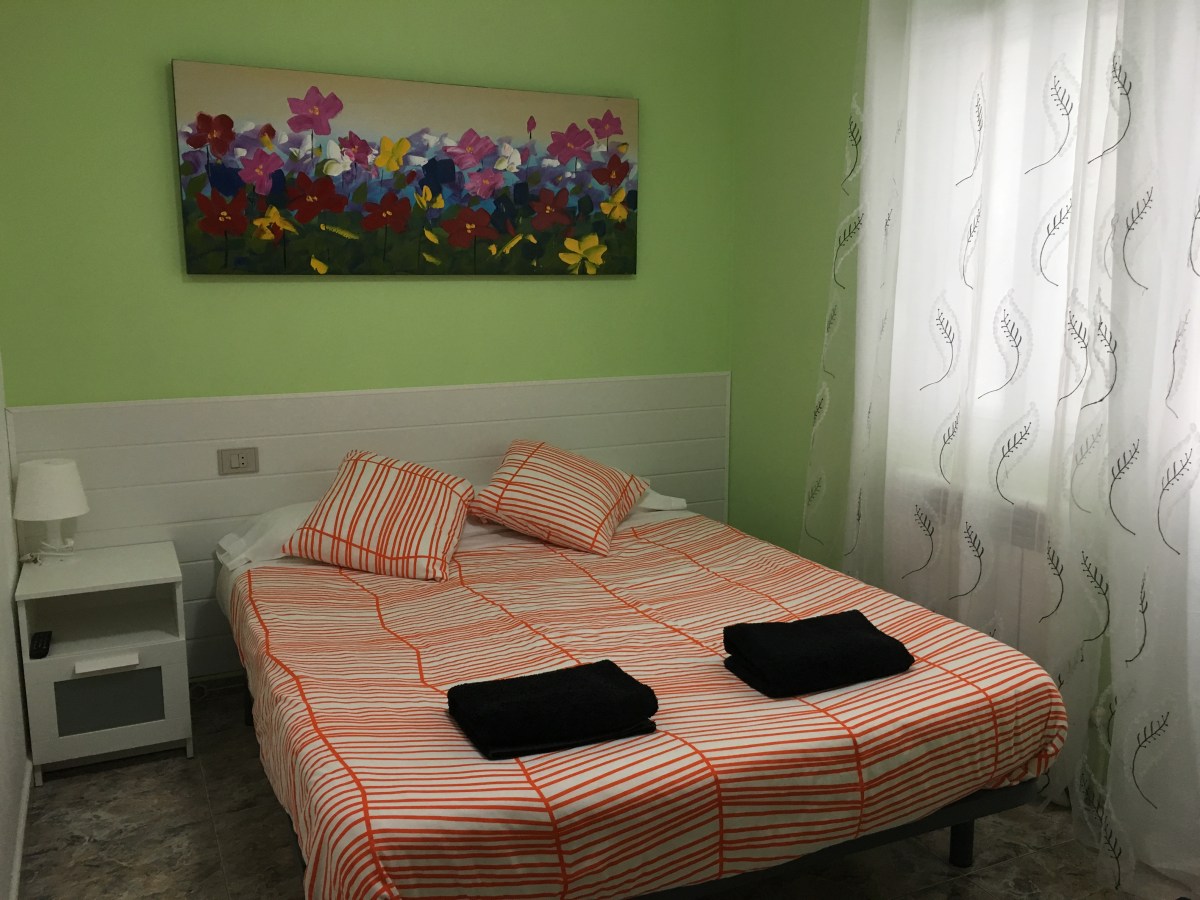
My arrival in Portomarín was at 4:30 – so late! I checked into Aqua Portomarín.  I had reserved a bed in the albergue, but I asked if they happened to have a private room.  They did!

fullsizeoutput_1afbf

Portomarín

fullsizeoutput_1afc2

Portomarín

IMG_9175

my private room at Aqua Portomarín

After showering and doing laundry, I met Darina at an Italian restaurant at 6:00. I enjoyed tortellini with spinach and cottage cheese, accompanied, as always, by wine.

While at dinner, Ricardo, who was rakishly handsome for a man of 69, with dyed black hair, gave everyone who would listen his advice about the Camino. He said he was born in Spain and lived in his grandmother’s house right beside Santiago Cathedral until he was four years old. He said the pilgrim mass is a big production with the butafumiero and is at 11:00 a.m. every day (It’s actually at noon, and they don’t swing the butafumiero at every pilgrim mass unless someone pays for it). He said he biked the Camino because walking it wasn’t good for your body.  He complained that everyone wears bad shoes and their feet turn in or turn out.  He said it was good for my body that I sent my pack ahead each day.  He was so full of advice!  And so knowledgeable since he lived in his grandmother’s house in Santiago up until he was 4 years old, some 65 years ago!

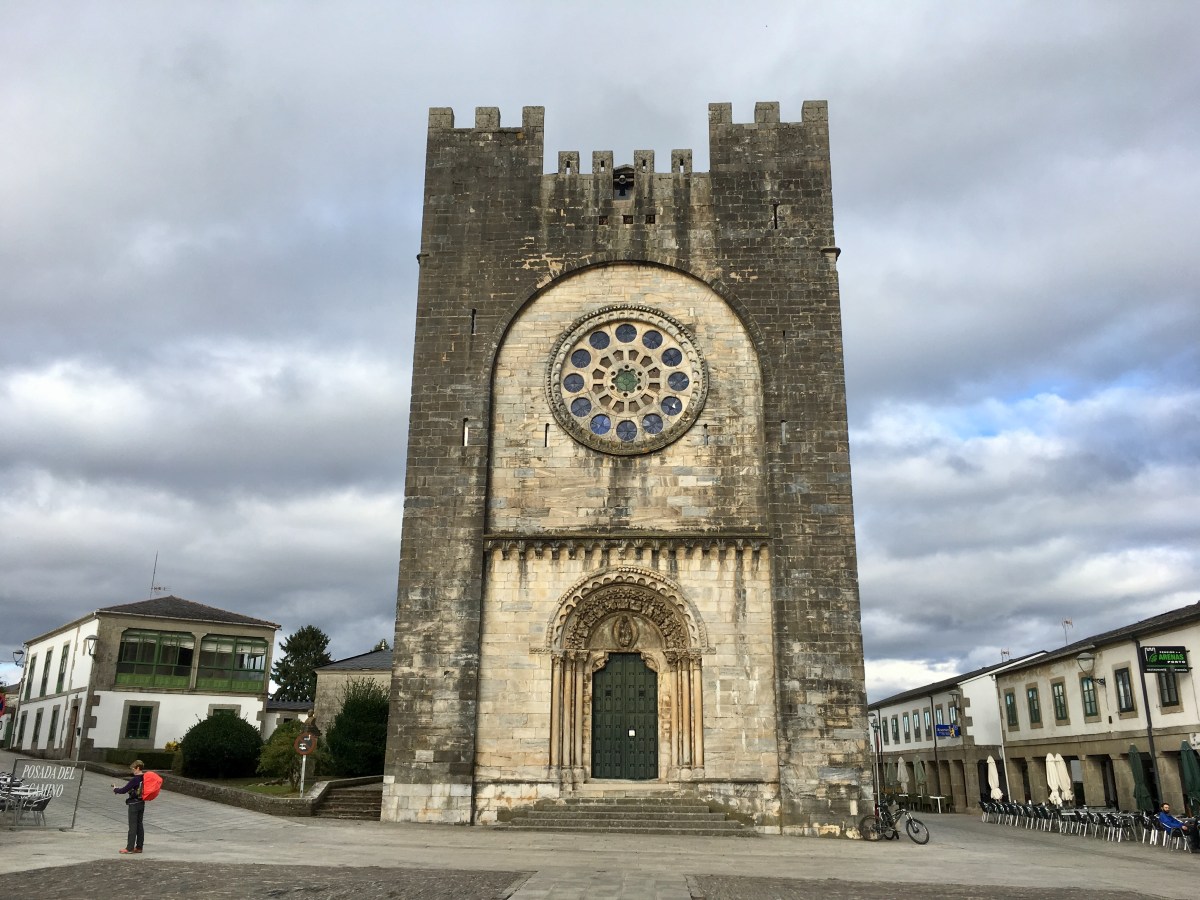
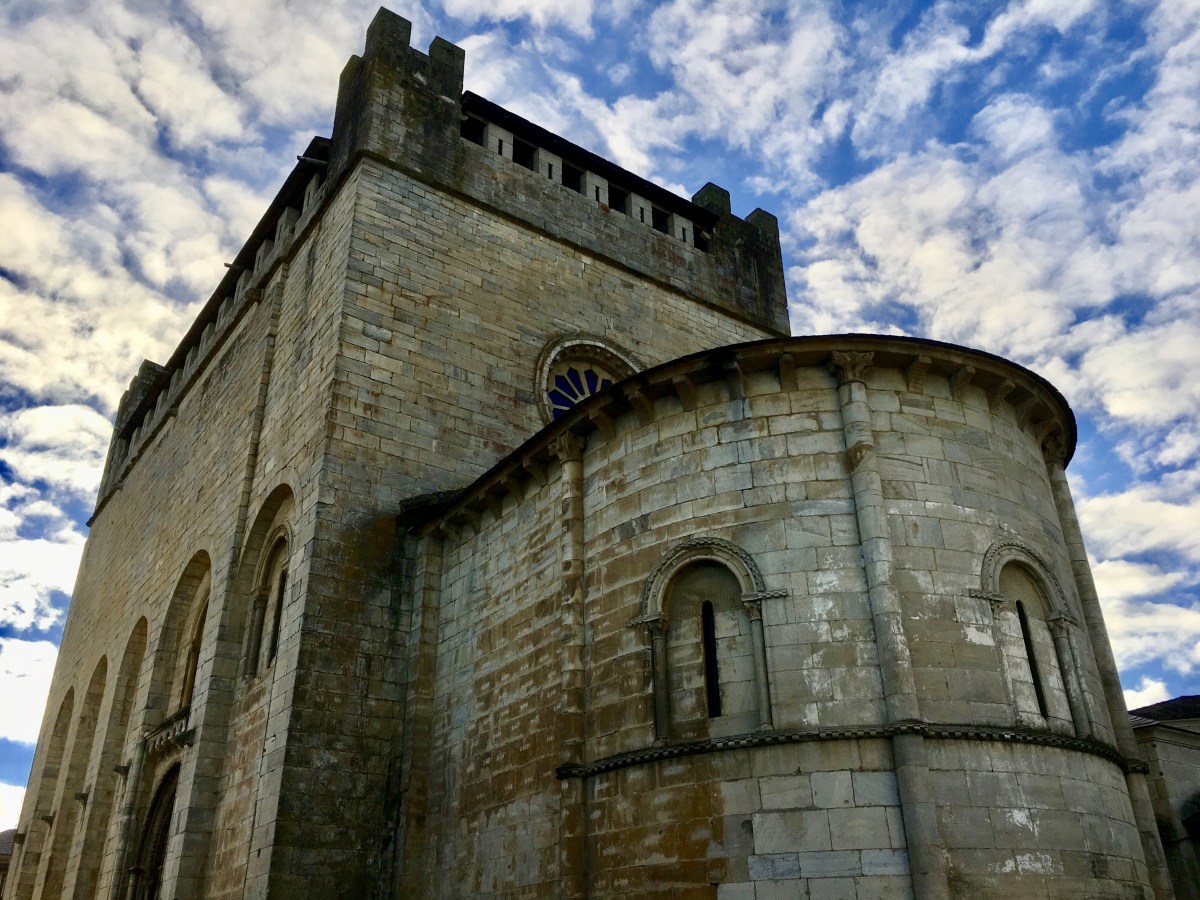
After dinner, Darina and I went to the pilgrim mass at 7:00 at the austere Romanesque church of Igrexa de San Juan / San Xoán (also Saint Nicholas).  This temple, known in the past as San Xoán Hospitalarios church, was moved when the Belesar reservoir was built and the old village was flooded. It is one of the most extraordinary Romanesque monuments on the Camino de Santiago.

The temple, founded in the 12th century by the Military Order of Santiago’s knights (Cabaleiros de Santiago), is crowned with four defensive towers and crenelated battlements, making it resemble a castle. A scene of the Annunciation is represented on the north side entrance tympanum, and the south wall entrance is richly ornamented.  The church has a single barrel vaulted nave and semicircular apse and prominent rose window.

It was a lovely mass and some of the school kids we’d seen earlier on the way (those I’d been annoyed by), sang several songs during the service and also did some of the readings. Their presence brought the service to life.  There were five priests in attendance, and I took Communion.  I felt bad that I’d been so annoyed by the students earlier.

fullsizeoutput_1694c

Igrexa de San Juan

fullsizeoutput_1afca

Igrexa de San Juan

fullsizeoutput_1afcc

inside Igrexa de San Juan

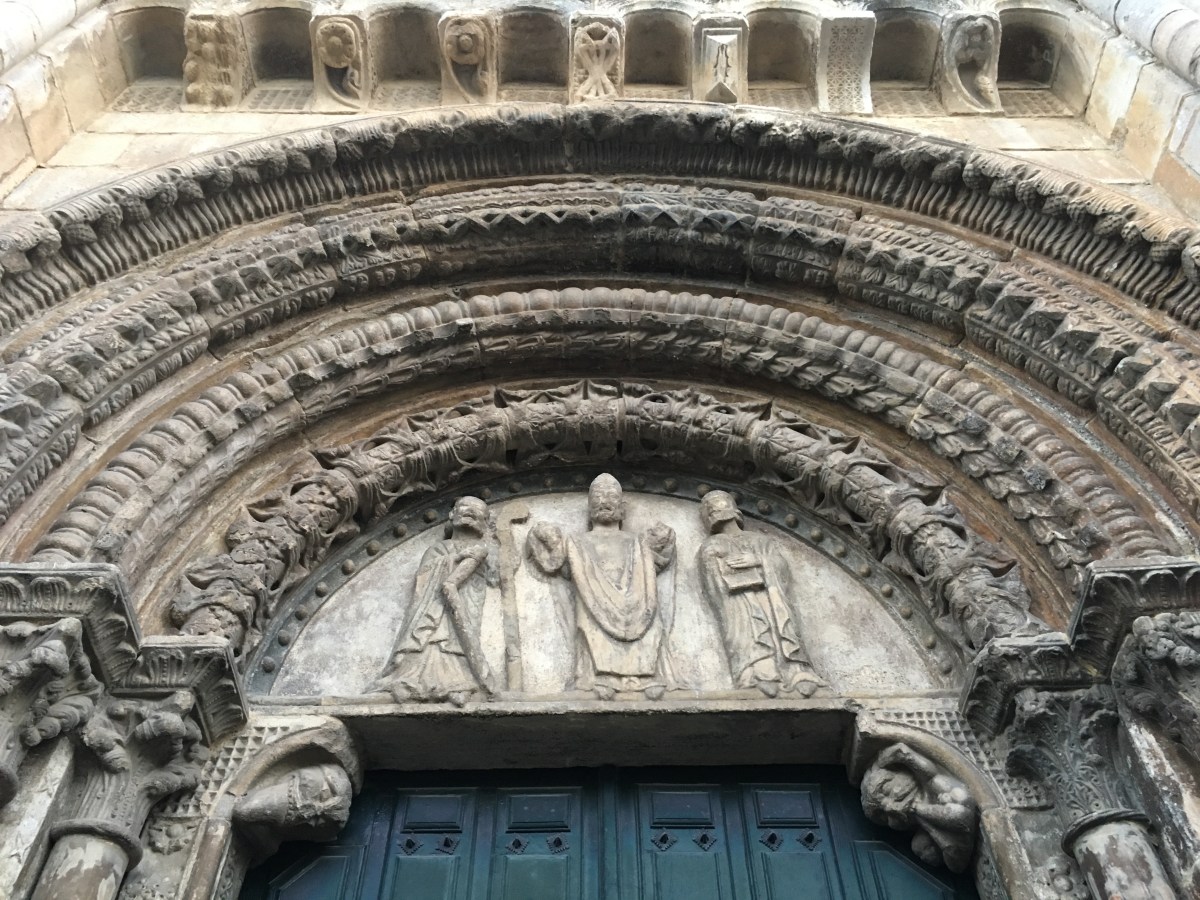
On the tympanum of the south door are two figures, one carrying a book and one a crozier, flanking San Nicolás.

IMG_9184

the south door of Igrexa de San Juan

fullsizeoutput_1afce

Igrexa de San Juan

After dinner, I ran into Janice from San Antonio and the three New Zealanders (mother & two daughters), and Ellen from Germany who informed me she was feeling better after having been sick several days.  Darina and I wandered around the town, doing some window shopping and exploring the few shops that were still open.

fullsizeoutput_1afd0

Portomarín

fullsizeoutput_1afd2

pilgrim statue in Portomarín

fullsizeoutput_1afd4

Portomarín

As of this day, I had five more days to walk – 94.7 km (58.8 miles) – to Santiago.

Ruminations {week six}

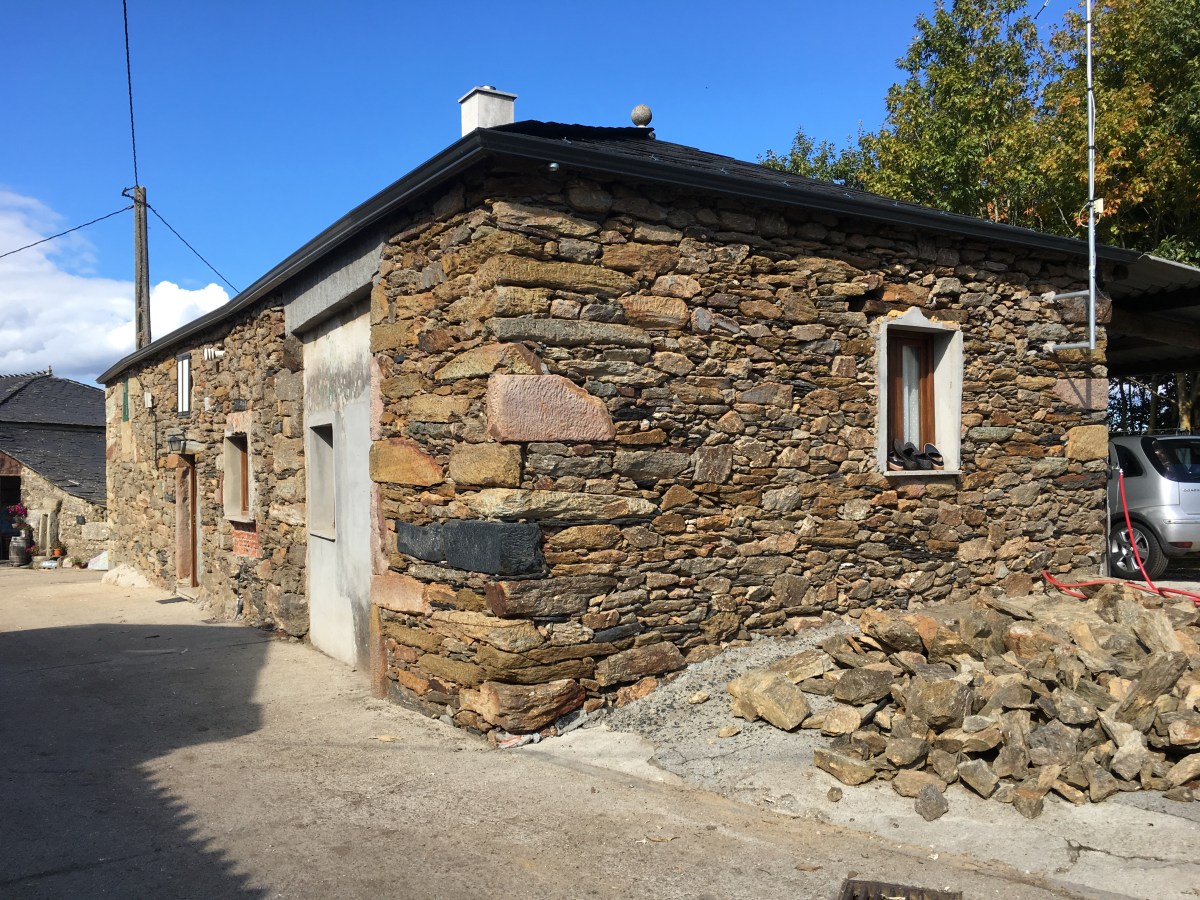
The walk: During my sixth week, I continued to descend from the highest elevation on the Camino at Cruz de Ferro into the El Bierzo region, a transition area between Castille and the green-forested Galicia. There were plenty of steep and gravelly climbs and descents for the next seven days, during which time I crossed into Galicia. The architecture was changing, with slate buildings replacing tile, and wooden overhanging balconies reflecting the timber-producing landscape. We passed through many forests: birch, oak, and sweet European Chestnut with spiky yellow balls.

I passed through a series of tiny towns I called “cow towns,” where small herds of cattle grazed in pastures.  Small hamlets consisted of loose assemblages of rambling houses, often cobbled together with tractor sheds, henhouses or barns, and storage rooms. Next to every house was a garden of greens.  The smell of dirt, cow dung, loamy grains, and chickens permeated the air.  Many houses had hórreos, or raised granaries, nearby. I was told many of them have ancient fertility symbols on top.

I explored the magnificent 12th century Templar Castle in Ponferrada, the capital of El Bierzo, where I found beautiful illustrated replicas of Templar and other religious texts and a fabulous exhibit about the Middle Ages.  When leaving Ponferrada, I got lost, which was disheartening. I kept thinking about my problems, so obviously I hadn’t left them behind at Cruz de Ferro. I walked through suburban landscapes with minimal charm. With 10 days left to walk, I felt deflated, exhausted and close to quitting. I guessed this was life in microcosm: sometimes you don’t feel like going on but then you must, so you do.  Of course I could have quit, but wouldn’t that have been foolish after making it so far?

One saving grace was a beautiful little church in Fuentes Nueva, La Iglesia de Nuestra Señora de la Asuncion.  There, I stopped to offer prayers and was bowled over by how pretty it was inside.

All over the Bierzo countryside were buzzing electric wires, as if some strange spirit was speaking from above. I was in a Zen frame of mind and kept putting one foot in front of the other.  The El Bierzo landscape was stunning, even in the rain, with its rolling hills covered in vineyards and white-washed houses surrounded by loblolly pines.

My friend Darina, who kept steadily one town ahead of me, recommended I take the alternative route out of Villafranca del Bierzo.  I lingered in town to charge my phone and see if the rain would let up. It did, so I climbed steeply up the scenic route, Camino de Pradela to Vista.  The whole alternate path turned out to be along the top of a mountain, and then, after a near eternity, a steep descent.

The views were stunning and it was exhilarating walking on a mountain path rather than the roadside route, which I could see below in the valley.  For 10 km, I didn’t see a soul in front of or behind me. A couple of times I worried I might be lost, but then magically the yellow Camino arrows appeared, easing my mind.

Soon, in every village, cows greeted us with a boisterous cacophony of mooing, lowing, and bell-ringing. We crossed officially into Galicia, leaving behind the autonomous region of Castilla y León. We walked through gorse and scrubland along a stone wall, with stunning and sweeping views of the mountains. Galicia is reminiscent of Celtic lands, with its lush pastures grazed by cattle, with sheep, pigs, geese and chickens foraging among them. It is known for rainshowers (chubascos), thunderstorms (tormentas) and thick mountain fog (niebla) due to its mountains being the first thing in 5,000 km that the Atlantic’s westerly winds hit.

We climbed steadily to O’Cebreiro, which sat at the top of a mountain where the wind howled and where I could see two valleys, the one I left behind and the one into which I would descend. The views were magnificent. The town was full of traditional mountain dwellings of pre-Roman origin called pallozas, built in circular or oval shapes, with granite or slate walls and thatched roofs.

Leaving O’Cebreiro, I walked under a painterly sunrise of rich corals; the whole sky was a rosy unfurling.  I was overwhelmed by the dramatic beauty along the ridge top, through a path bordered by Scotch broom and wild absinthe. Green pastures and small villages dotted the valley below.  I descended slowly through the “cow towns,” with lackadaisical cows grazing and mooing amidst heaps of cow pies.

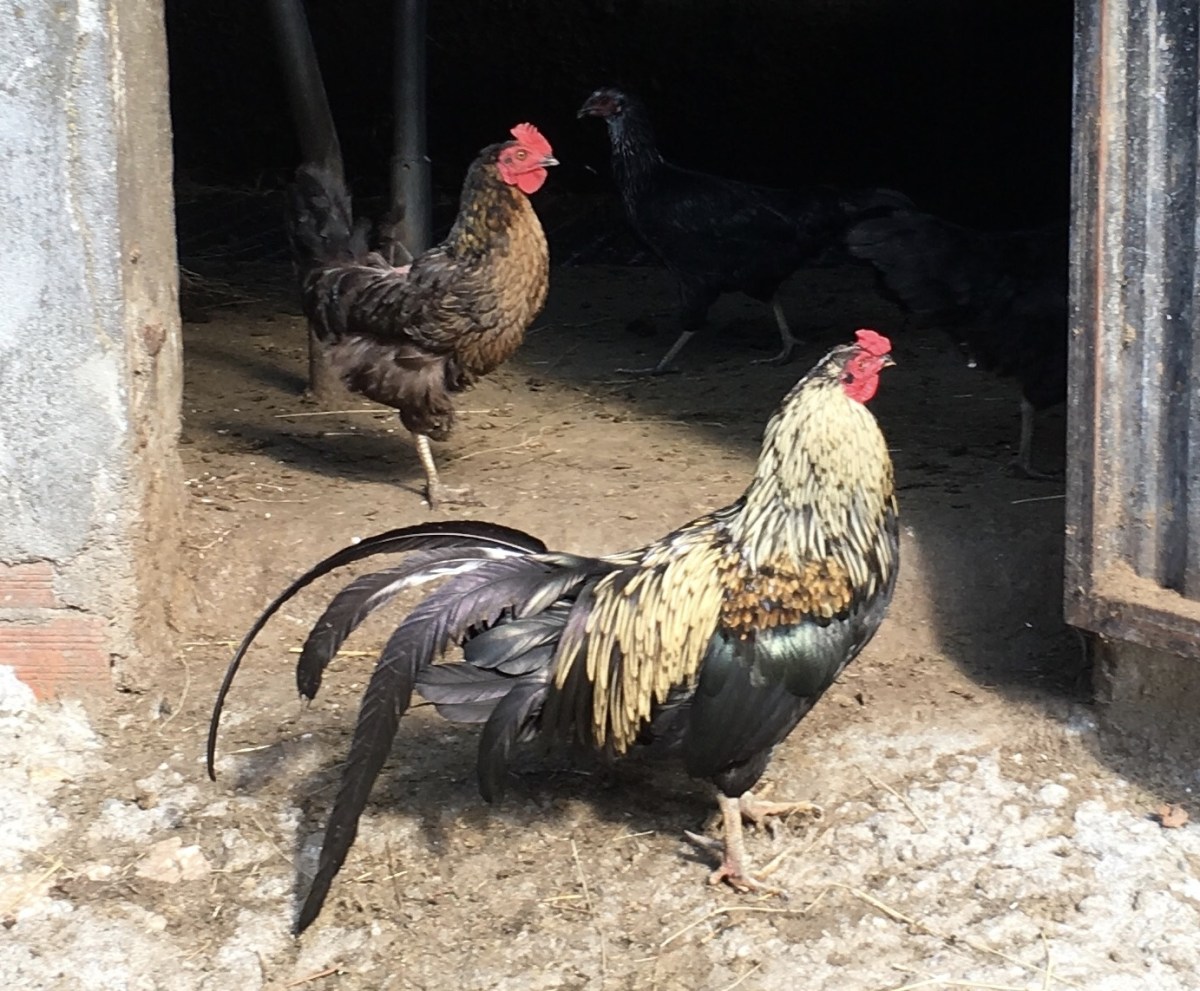
I encountered days that were alternately foggy, damp, drizzling, and outright raining. Through it all, it was cold. We were greeted by roosters cockadoodling and chickens clucking and pecking. The path often ran through deep, leafy chestnut forests and gullies with babbling streams. The constant fog, rain and mist carried intimations of sprites and witches, in which Galicians are said to believe.

I reached Sarria, a bustling modern town with a population of 13,500; the town has become a major starting point for pilgrims with limited time but who are anxious to get the pilgrim compostela. Starting in Sarria just covers the required 100km to the cathedral in Santiago. In Sarria, I expected to find the town bustling with new pilgrims, but at least in my walkabouts, it seemed like a ghost town; the melancholy pilgrim mural on the Igrexa de Santa Mariña wall magnified the town’s gloomy aura.

In Mercadoiro, I found Gregorian chants and beautiful music that hinted of Loreena McKinnett in a cafe.  After Sarria, the numbers of pilgrims on the path increased, stealing the quiet I’d enjoyed for so many days.  There were lot of fresh faces and too many groups chatting away.  The most annoying were some Spanish high school students yapping and playing loud music.

On that same night that I encountered the annoying Spanish students, I attended a mass in Portomarín with Darina. It was a lovely mass in which those same Spanish school kids sang songs and did some of the readings. Their presence brought the service to life.  There were five priests in attendance, and I took Communion.

Eating, drinking and shopping:  At a café in Ponferrada, I had lemon beer and mushrooms sauteed in garlic with bread to dip.  For dinner that same night, at La Taberna de Ra, I enjoyed grilled asparagus and Brie, which was delicious, along with some wine. Then I went to the same restaurant I’d been to earlier for avocado, tomato and smoked salmon tapenade, along with another glass of wine.  Nearby, I happened upon a souvenir shop, La Cueva de la Mora, where I bought three scarves. 🙂

When I went to dinner at a restaurant Darina had recommended in Trabadelo, Gastropub – El Puente Peregrino, I ran into Greg and Sean, who were staying in rooms at the restaurant.  I enjoyed vegetable curry with rice and goat cheese yogurt with honey and walnuts and we talked about the Camino.

In Vega del Valcarce, where I bought a rosary from Silvio’s Casa del Rosario.  He told me it was amethyst. I cut my finger and he taped it for me and wished me a Buen Camino.

In Ruitelán, a quaint hamlet where San Froilán had a hermitage, I took Darina’s advice and stopped at the first café for lentil soup with vegetables for an early lunch. I was surprised when they brought me an entire pot of soup, and I tried to eat as much as I could!

At one pilgrim meal, I had scrambled eggs with mushrooms and shrimp, green beans, mashed potatoes and chocolate flan. Of course, red wine accompanied the meal.

I enjoyed many a steaming bowl of traditional Galican soup, caldo gallego, with kale and potatoes, red wine, and crusty bread.

In Furela, I ate a cheese omelette (French-style) in an unheated open air garage.  It was utterly bone-chilling and miserable.  The cafe was the only place in town and was overflowing.

In Sarria, I had dinner with my friend Darina, having toast with goat cheese and sun-dried tomatoes, a caprese salad, and a vegetarian burger, which we split.  At an Italian restaurant in Portomarín, Darina and I enjoyed tortellini with spinach and cottage cheese, accompanied, as always, by wine.

People I met: On this section of the Camino, I met Greg and Sean, high school math teachers from British Columbia, Canada.  Later, I met Beth from Canberra.  She was the same Beth that Greg from British Columbia had told me he’d “really connected with.” Beth had interests of her own; she was to meet a British guy named Pat in Sarria.  She had met him earlier in the Camino and he’d had to leave for a portion of the Camino.  They planned to walk to Santiago together from Sarria and then travel to Portugal together.  She started her Camino on the same date as me, September 4.

Many times I encountered Daniella from Bulgaria, who lost her 5-year-old son to cerebral palsy, and her partner Sean from England.  They both lived at that time in Cyprus. Daniella always seemed full of energy, with her black and white striped shirts with patterns on the front and plastic flowers in her hair.

At Biduedo, I met Susan from Littleton, Colorado and Mike from Prince Edward Island, Canada.  Susan was a nurse practitioner and had never been married.  This was her third, and final, section of the Camino; she did the first two stages in 2016 and 2017.  She and Mike were having beers together.

I also met Janice from San Antonio, who worked in law enforcement and homeland security. She lost her husband six years ago; he had died in his sleep, unexpectedly. She was still grieving over him. After the pilgrim mass in Triacastela, Janice put a locket on a figure of Christ and took a picture.  The locket held some ashes from her best friend’s only daughter who was killed in a car accident at age 24.

In Furela, I chatted with Fatima from Switzerland, who only spoke French.  She and I had been passing each other for many days, but since we couldn’t speak a common language, we always said “Hola!” to each other.  Each time one of us bypassed the other, Fatima said, “Hasta luego!”  Seeing each other again and again came to be expected and cherished.  She had been walking since August 3 from Mont St. Michel to Bordeaux, where she took a train to St. Jean Pied-de-Port. She had been walking from there.

On the rainy walk into Sarria, I met Laurel from Boise, Idaho. She had recently quit her job as a social worker dealing with disabled people and was trying to figure out what to do next.

My friend Darina happened to make it to Sarria, as she had taken the detour route to Monasterio de Samos and had spent the night there. She had been walking steadily one town or so ahead of me since we’d last met, so I was happy to have our paths converge again.  While at dinner, we met three New Zealanders who were starting their Camino the next day.  Stella, the mother, was walking with her two daughters Emma and Laura.  They were all super friendly.

While at dinner in Portomarín, Ricardo, a rakishly handsome Spaniard of 69, was chock full of advice about the Camino,  And so knowledgeable since he lived in his grandmother’s house in Santiago up until he was 4 years old!

I continued to run into Sheryl from Seattle, and the husband and wife she was traveling with, Sharon and John.

What I loved: Several times, I was put in a room with four or five beds but no other roommates. These were some of the most surprising and welcome treats.  I loved meeting up with Darina again periodically.  I also loved taking the alternate route out of Villafranca del Bierzo over the mountains, with no one in sight for miles.

What I hated:  The municipal albergue in O’Cebreiro, Xunta, with its 104 beds, was disheartening: cold showers, an unwelcoming receptionist, people herded about like animals, beds crammed together.  It was the worst of the worst, as far as albergues.  I decided then and there, I would avoid any more municipals if I could help it.

On the home front. In Cacabelos, I was surprised by a call from my loved one.  It was a day when I had been thinking so much about him. He told me he loved living with his older brother, loved the house and yard, liked his job and the people, except for the time had to give up to be there, and how he was sorry (for what, he didn’t say).  He told me he loved me.  He wanted to take off four days to drive home from Colorado, so he could pick up a lot of his stuff like his pressure cooker, etc.  He wished me a good walk.  It was a very nice talk, and quite coincidental – just what I needed to cheer up.

My daughter wrote me a nice note of encouragement on Instagram: “I’m sorry you had a rough day Ma.  You’re doing great and I’m so proud of you.  Keep it up <3.”

**********

*Day 42: Monday, October 15, 2018*

*38,879 steps, or 16.48 miles: Sarria to Portomarín (22.7 km)*

You can find everything I’ve written so far on the Camino de Santiago here:

  • Camino de Santiago 2018

**************

On Sundays, I post about hikes or walks that I have taken in my travels; I may also post on other unrelated subjects. I will use these posts to participate in Jo’s Monday Walks or any other challenges that catch my fancy.

This post is in response to Jo’s Monday Walk: Sáo Brás de Alportel, Then and Now.


Share this:

  • Click to share on X (Opens in new window) X
  • Click to share on Facebook (Opens in new window) Facebook
  • More
  • Click to email a link to a friend (Opens in new window) Email
  • Click to print (Opens in new window) Print
  • Click to share on Pinterest (Opens in new window) Pinterest
Like Loading...
  • American Road Trips
  • Cincinnati
  • Cincinnati Art Museum

art discoveries in louisville & cincinnati

wanderessence1025's avatar wanderessence1025 November 7, 2019

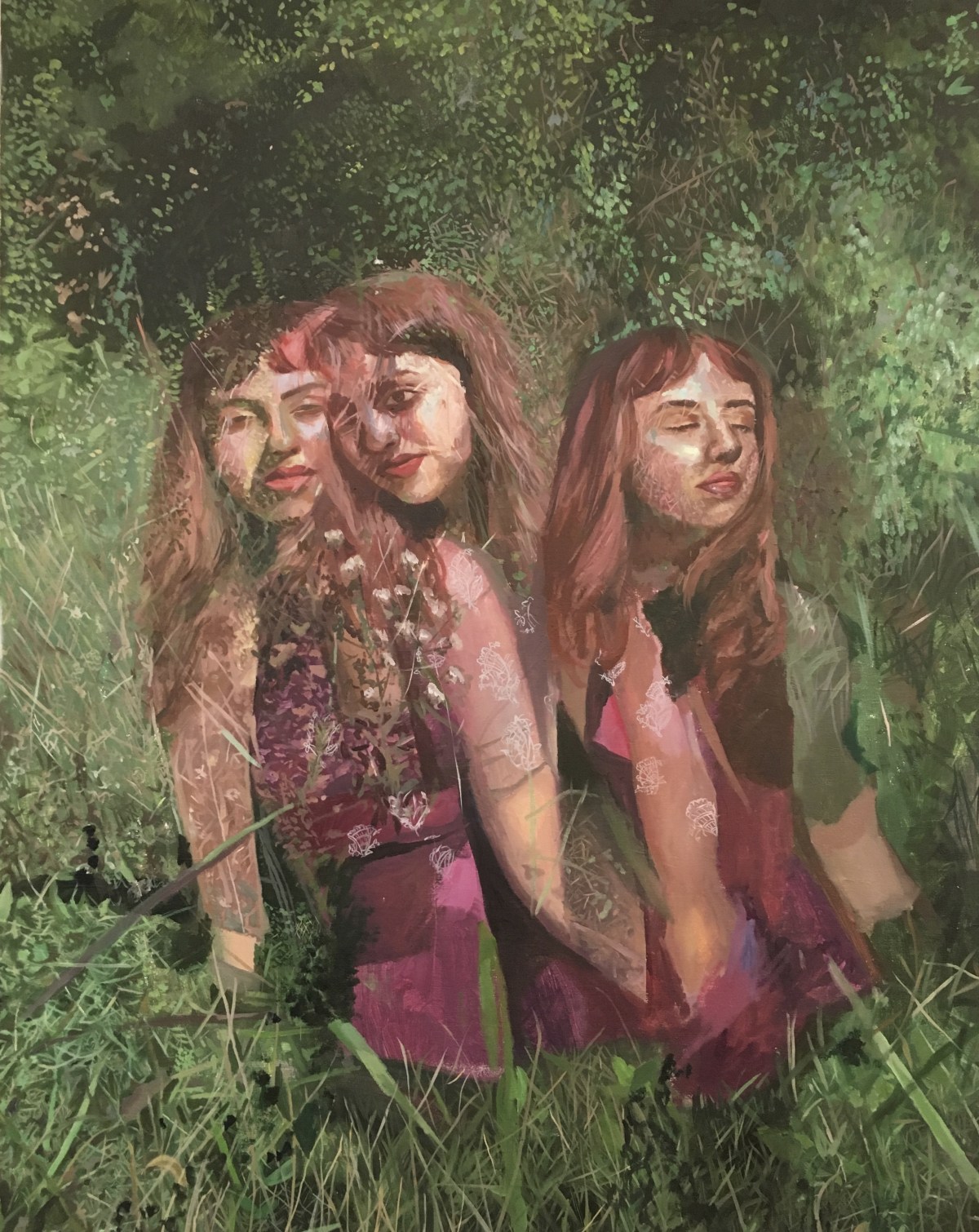
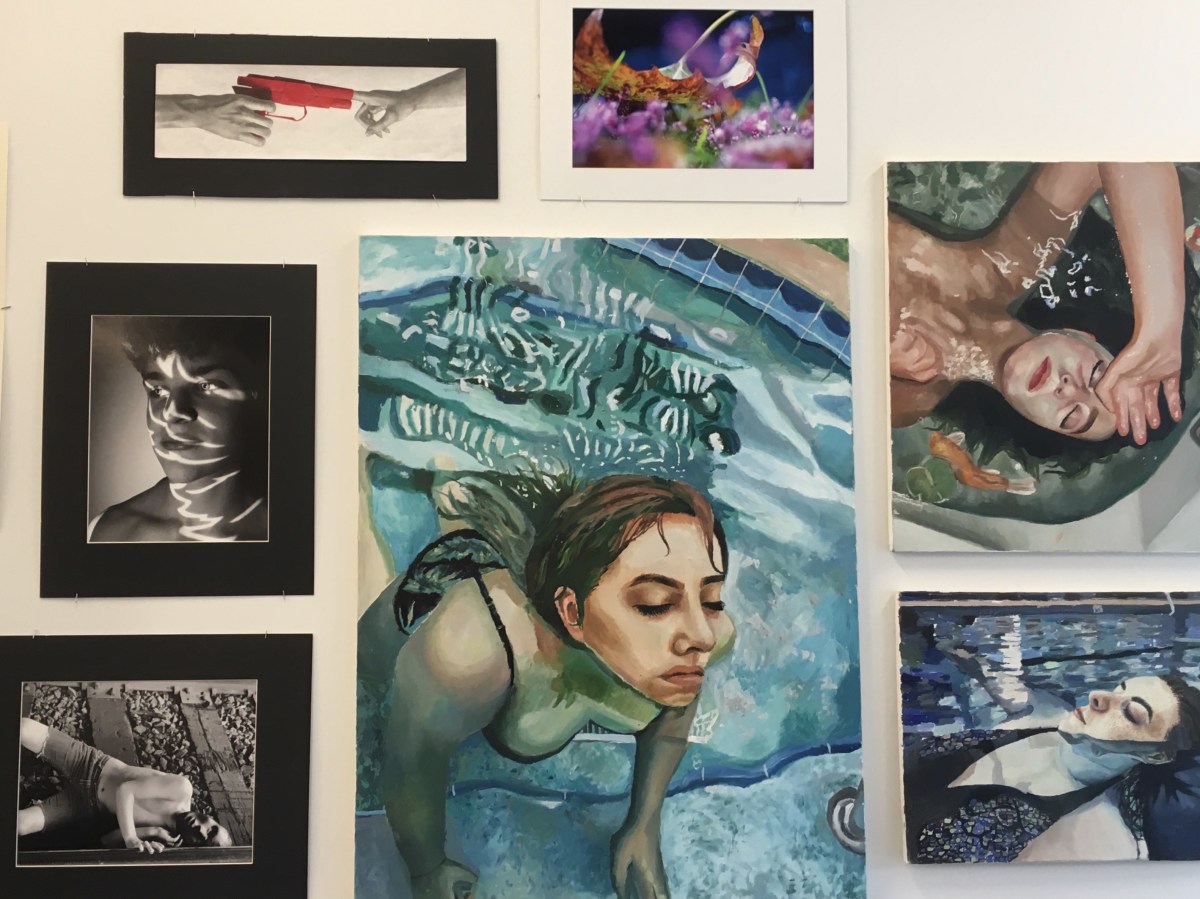
At Louisville’s KMAC Museum, I found a young girl in motion, pirouetting and dreaming in a field of flowers; I found women’s faces emerging from rippling water, shadows of blinds on faces, fingers in pistols.  These magical images were created by students from Jefferson County Public Schools.

This exhibition was the “Gold Key and American Visions Exhibition” of 2019 under the auspices of the Louisville Metropolitan Region of the National Scholastic Art Awards.  It was due to depart the museum soon after my visit.

fullsizeoutput_197d8

Gold Key and American Visions Exhibition 2019

fullsizeoutput_197e1

Gold Key and American Visions Exhibition 2019

Gold Key and American Visions Exhibition 2019

The KMAC Museum is a contemporary art museum that seeks to connect people to art and creative practice. The museum’s permanent collection is rich in regional art that  bridges ideas of traditional folk art with contemporary art. The collection reflects Kentucky’s geography and culture through themes of agriculture, domestic life, economy, class, religious belief, and pastimes influenced by a predominantly rural setting.

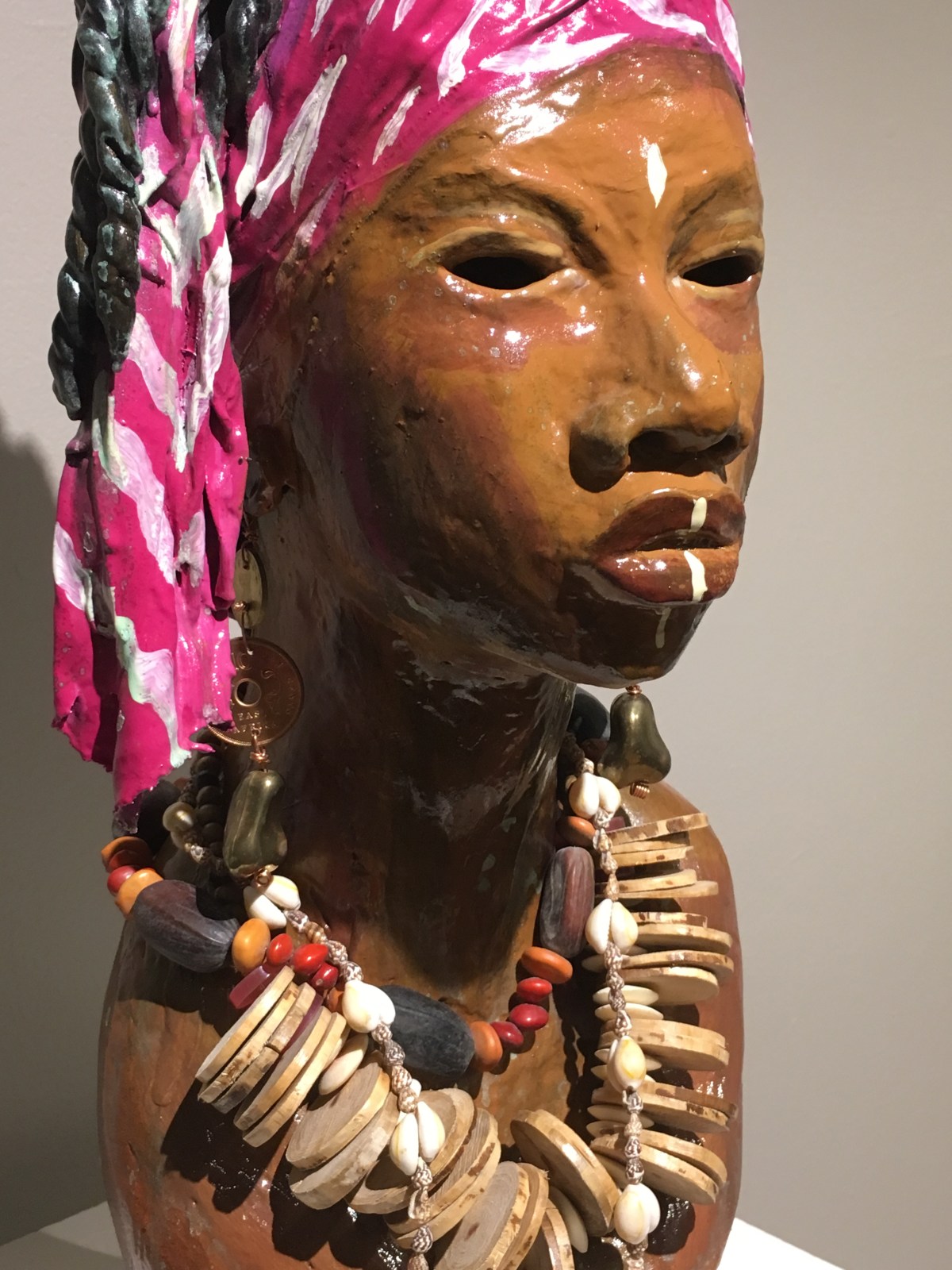
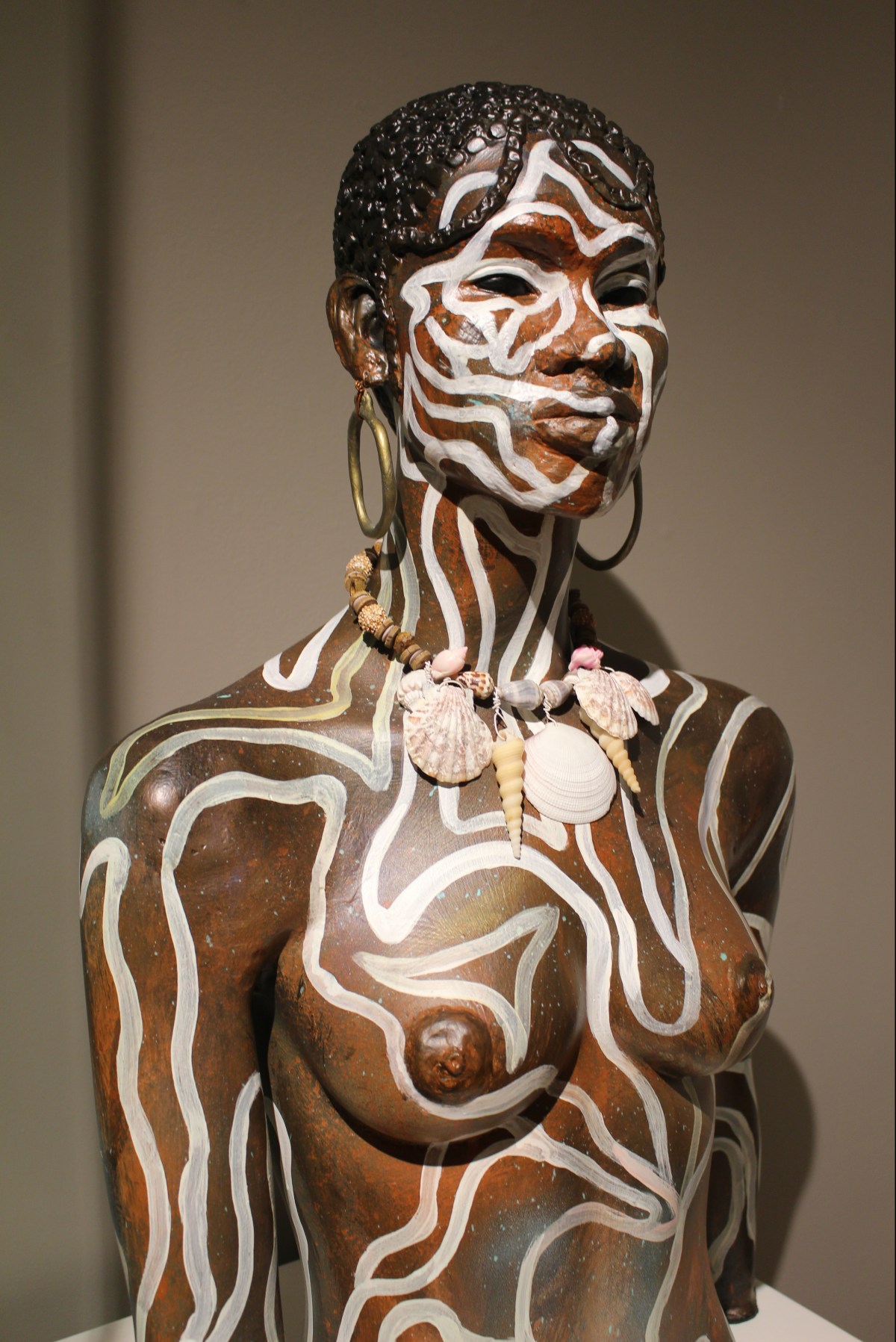
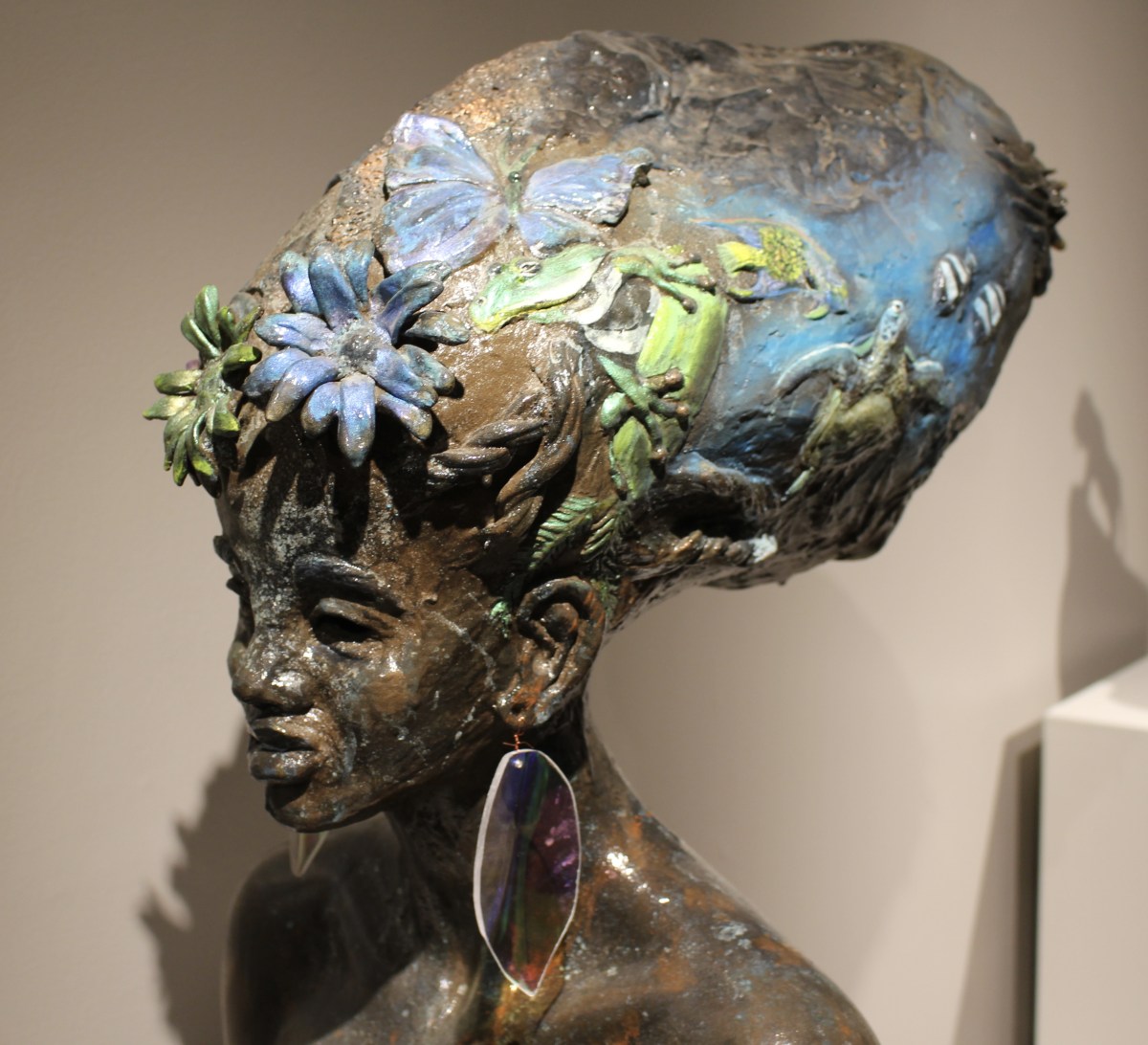
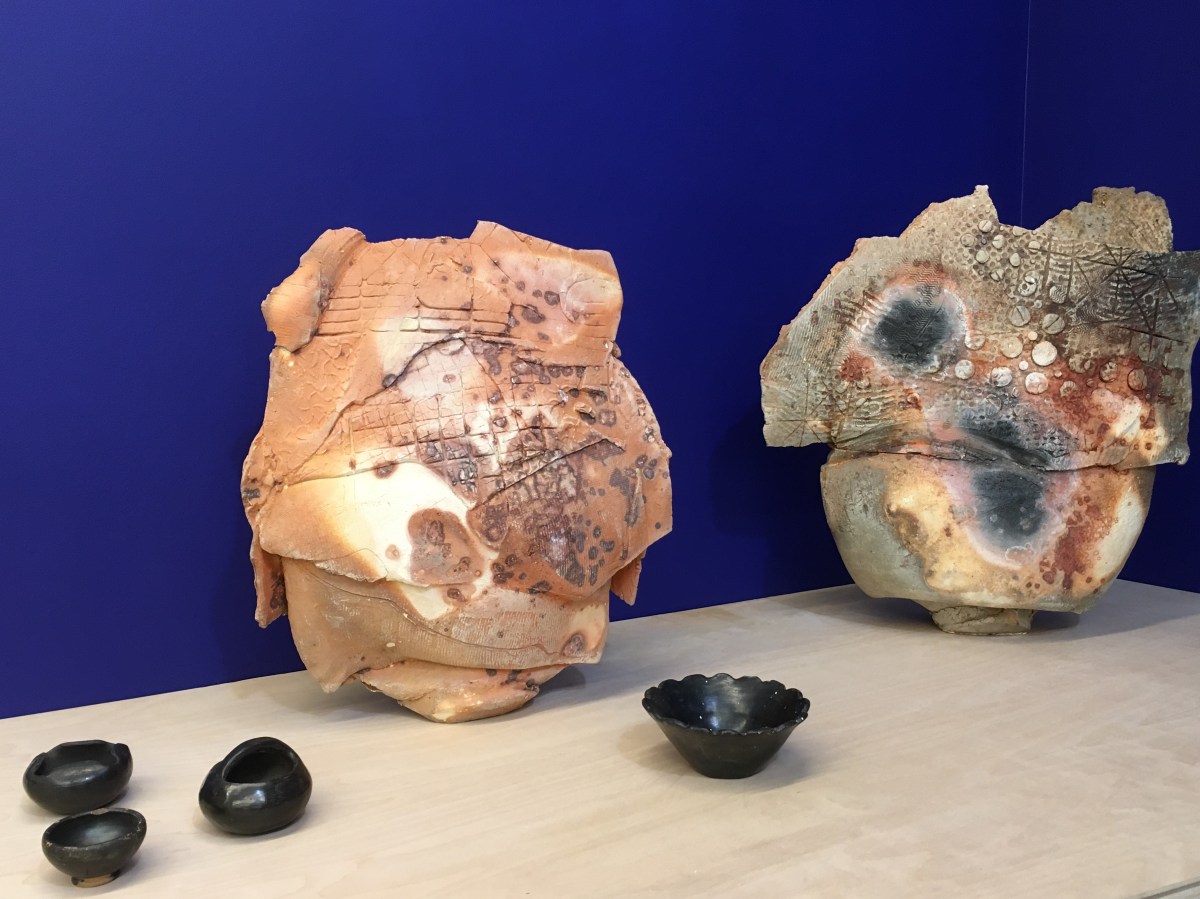
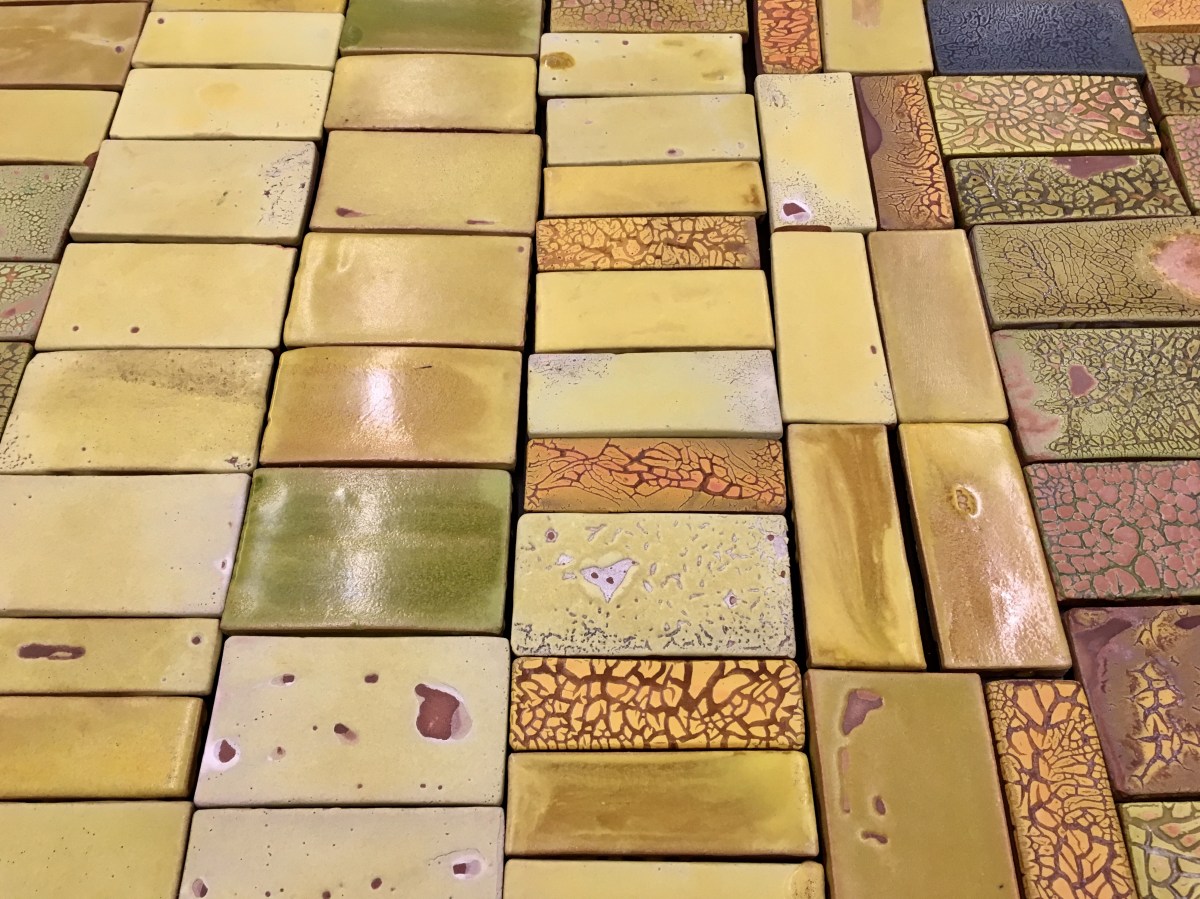
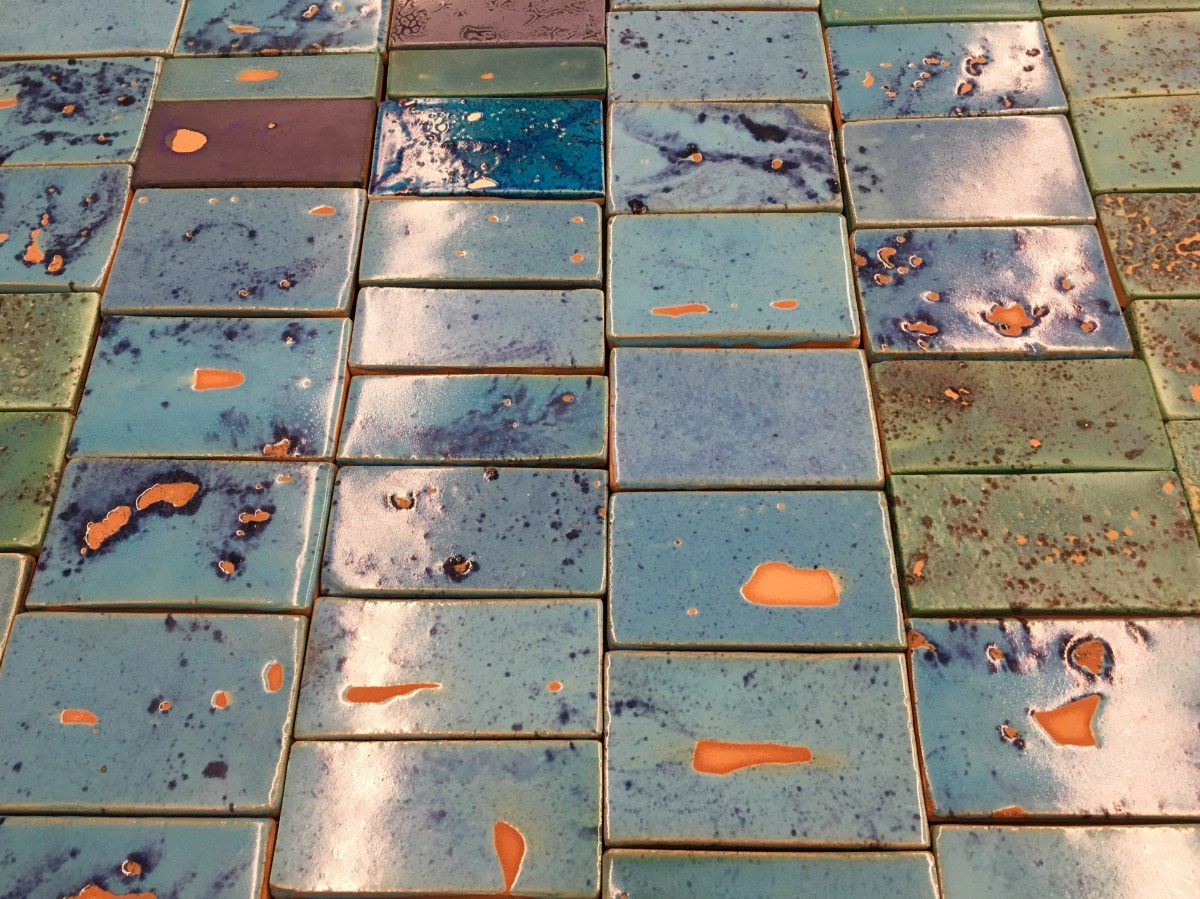
Another exhibit I encountered here was “Clay Bodies: Moving Through Ceramics” by Sarah Crowner. The ceramics are covered in contorted and fluid images of animals and people, tropical plants in mountainous settings, and birds on twisted tree branches.

The artist’s ceramic pieces were arranged “unscientifically and with a formal slant, as opposed to being arranged by geography or time period,” which is the usual way objects in museums are placed. The artist chose paint colors for the walls that reflected her own color palette.

Sarah Crowner was born in Philadelphia in 1974 and she lives and works in Brooklyn, NY.

IMG_2966

Clay Bodies by Sarah Crowner

fullsizeoutput_1911c

Clay Bodies by Sarah Crowner

fullsizeoutput_19106

Clay Bodies by Sarah Crowner

fullsizeoutput_190f1

Clay Bodies by Sarah Crowner

fullsizeoutput_19116

Clay Bodies by Sarah Crowner

fullsizeoutput_19123

Clay Bodies by Sarah Crowner

fullsizeoutput_19115

Clay Bodies by Sarah Crowner

Clay Bodies by Sarah Crowner

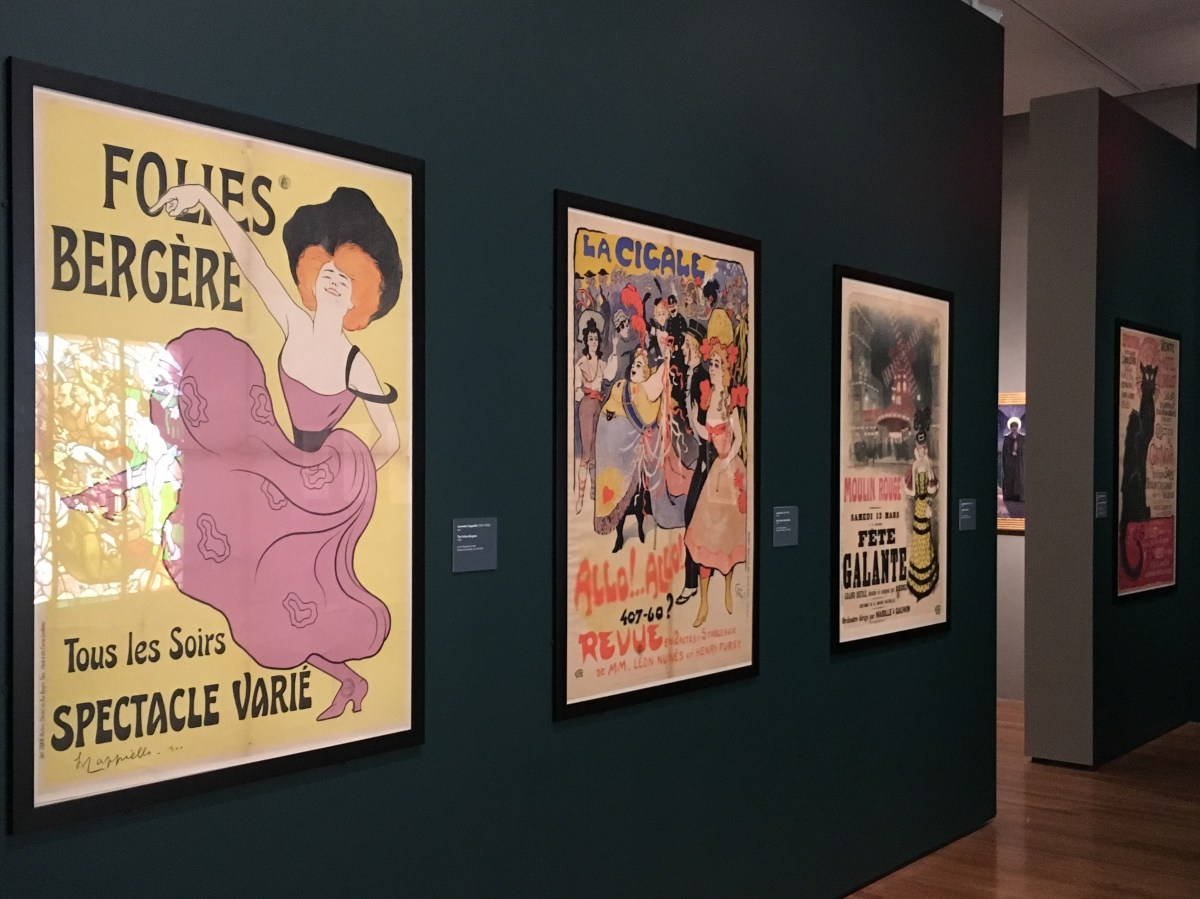
At the Cincinnati Art Museum, where we went to warm up on an icy winter day, we wandered through the special exhibit: Paris 1900: City of Entertainment. Over 200 works were presented that were made at the turn of the century in the vibrant and rapidly changing City of Light, a city that stood as a symbol of elegance, opulence and festivity.  In 1900, advances in art, technology, fashion and entertainment, along with three decades of peace under France’s Third Republic (1870-1940), established after the Franco-Prussian War of 1870, were showcased during the International Exposition.  This Exposition received 51 million visitors in six months; it was the culmination of large-scale building projects of mass transportation and modernized infrastructure, wide avenues, green spaces and public squares, and monuments such as Sacré-Cœur and the Eiffel Tower.

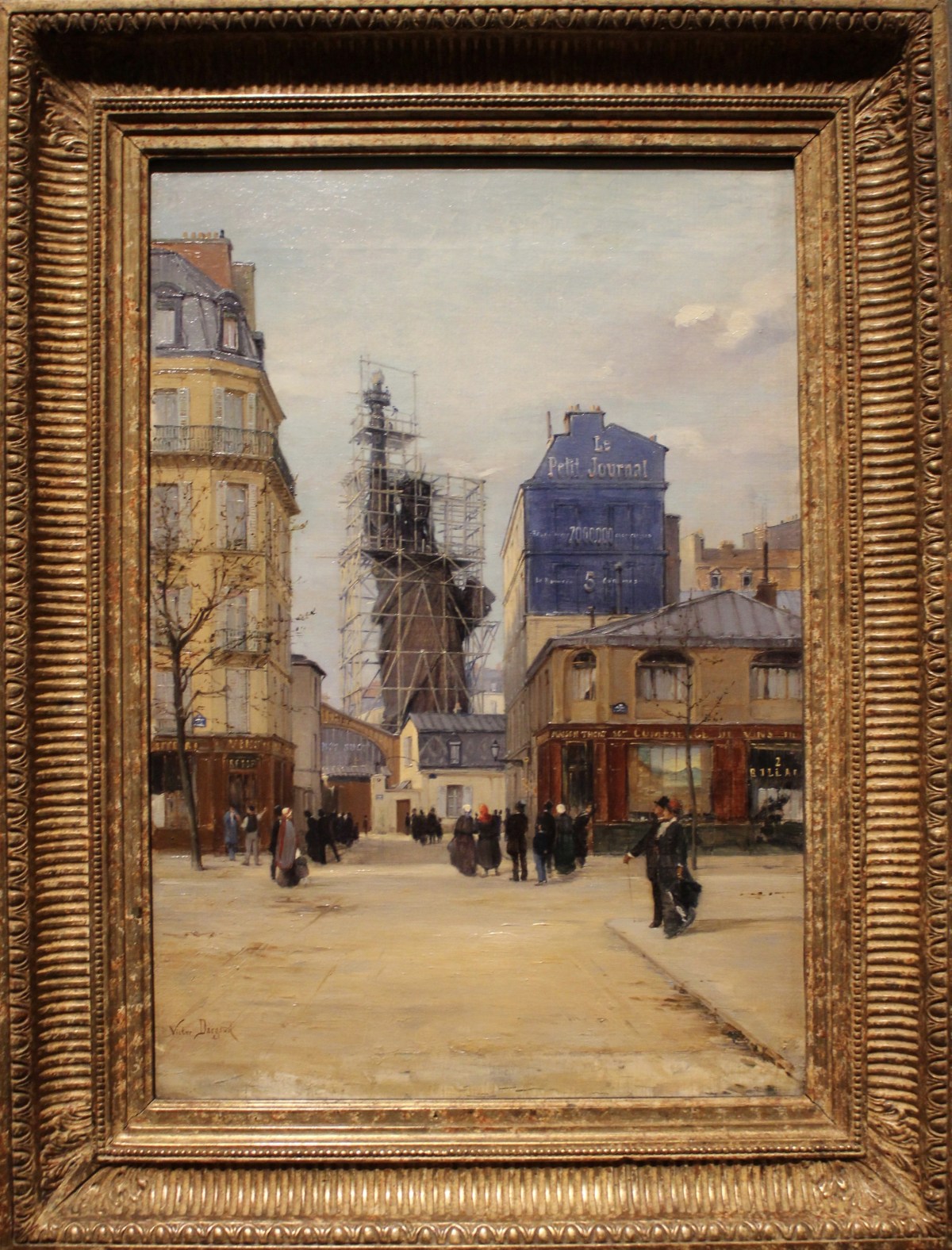
The painter Victor Dargaud depicted this view of the Rue de Chazelles, where the Gaget, Gauthier and Company foundry was located.  The enormous Statue of Liberty was assembled here.  When it was completed, throngs of people come to see it before it was disassembled and shipped to New York, where it was dedicated in 1886.

fullsizeoutput_1b04a

The Statue of Liberty by Bartholdi in the Workshop of the Gaget Foundry, rue de Chazelles (1884) by Victor Dargaud

Arranged in thematic sections including the International Exposition, Art Nouveau, the Parisian Woman and Paris by Night, each section explored a range of objects, paintings, sculptures, ceramics and posters to fashion, furniture, and souvenirs.  Notable featured artists included Pierre-Auguste Renoir, Camille Pissaro, Henri de Toulouse-Lautrec, Auguste Rodin, Antoine Bourdelle and Camille Claudel.

We enjoyed a whirlwind tour of turn-of-the-century Paris in the middle of a dreary winter Cincinnati day.

fullsizeoutput_17e02

Paris Exposition posters

Paris Exposition poster

The City of Light was most seductive at night, attracting bohemian aristocrats in search of forbidden pleasures, hedonists and thrill seekers, and artists and actors searching for inspiration. Evenings beckoned with offerings of opera, theater, cafés and cabarets.

The Divan Japonais was one of many cafés-concerts in Montmartre.  Jane Avril, a flaming redhead who was a favorite muse of Toulouse-Lautrec, is seated in the foreground, and the singer Yvette Guilbert, a celebrity of the cabaret scene, is shown headless with her signature long black gloves.

fullsizeoutput_1b076

Divan Japonais by Henri de Toulouse-Lautrec

fullsizeoutput_1b07a

Paris Exposition posters

fullsizeoutput_1b07d

Paris Exposition posters

Art played an important role in Parisian cultural life at the turn of the century. The artistic melting pot attracted young artists, with Scandinavians, Italians, Czechs, Spaniards and Americans among many who came to study at the École des Beaux-Arts or to train at one of many private acadamies.

fullsizeoutput_1b081

Portrait of My Mother in Her Salon (1897) by Charles Camoin

fullsizeoutput_1b086

Colored Landscape with Aquatic Birds (1907-8) by Jean Metzinger

fullsizeoutput_1b094

Fog on Guernsey (1883) by Pierre Auguste Renoir

fullsizeoutput_1b098

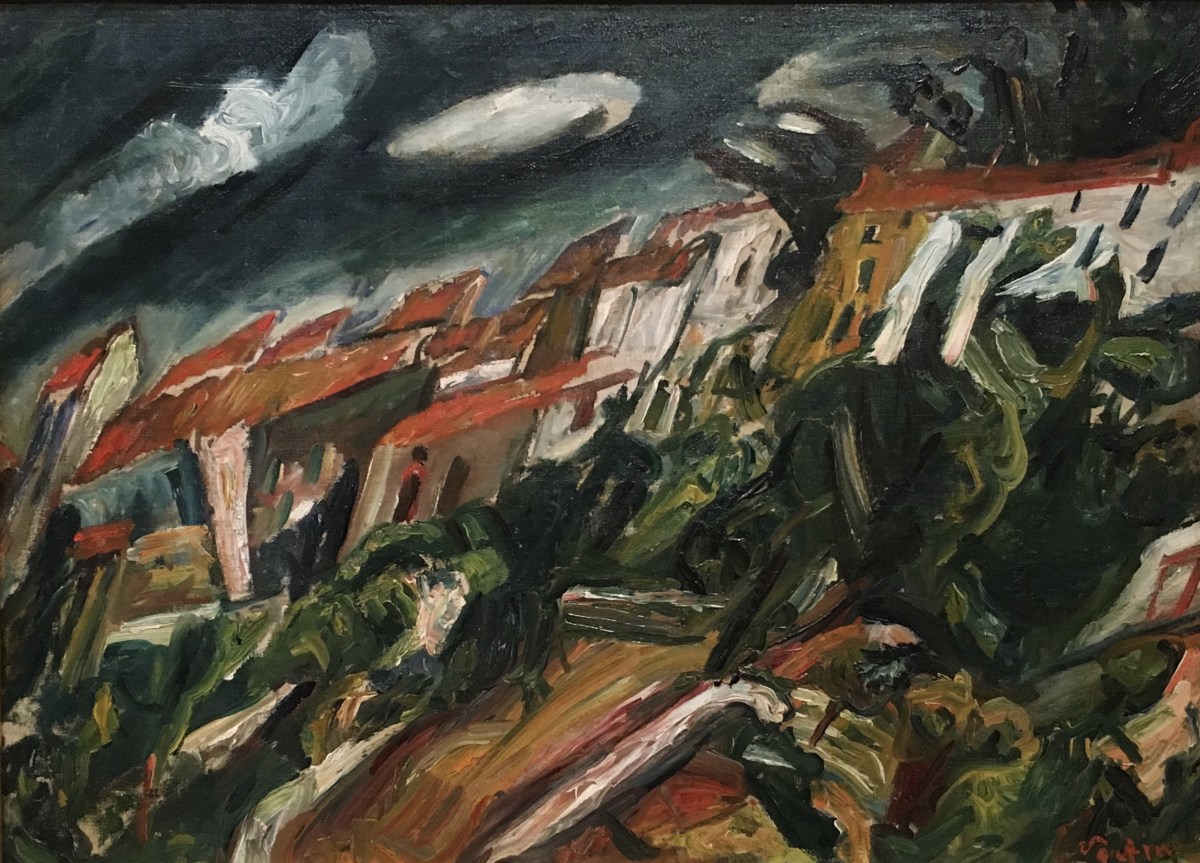
View of Céret (1920-21) by Chaim Soutine

fullsizeoutput_1b09a

The Moment of Truth (Mahana Ma’a) (1892) by Paul Gauguin

fullsizeoutput_1b09f

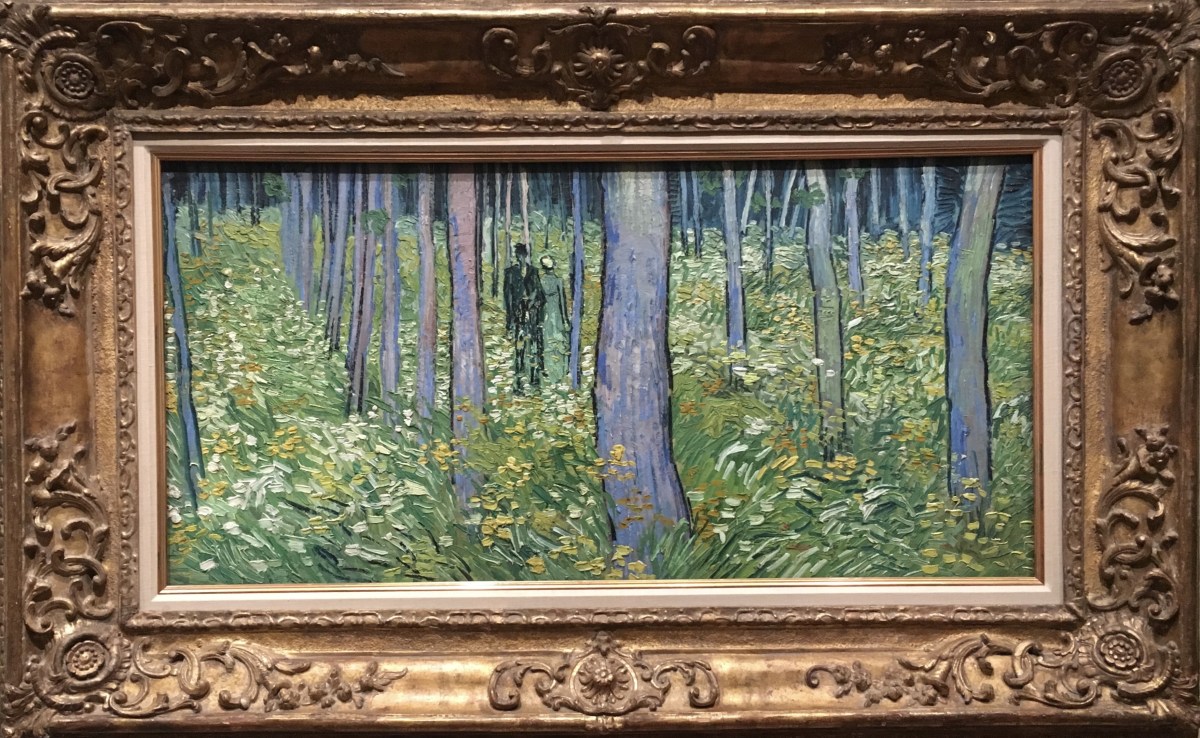
Undergrowth with Two Figures (1890) by Vincent van Gogh

In Belle Époque Paris, fellow artists were natural source material for painters and sculptors.  Students portrayed their teachers and vice versa. Artists portrayed their friends, their lovers and themselves.

fullsizeoutput_1b088

Young Girl in a Low-Cut Dress with a Flower in Her Hair (1893) by Berthe Morisot

fullsizeoutput_1b08a

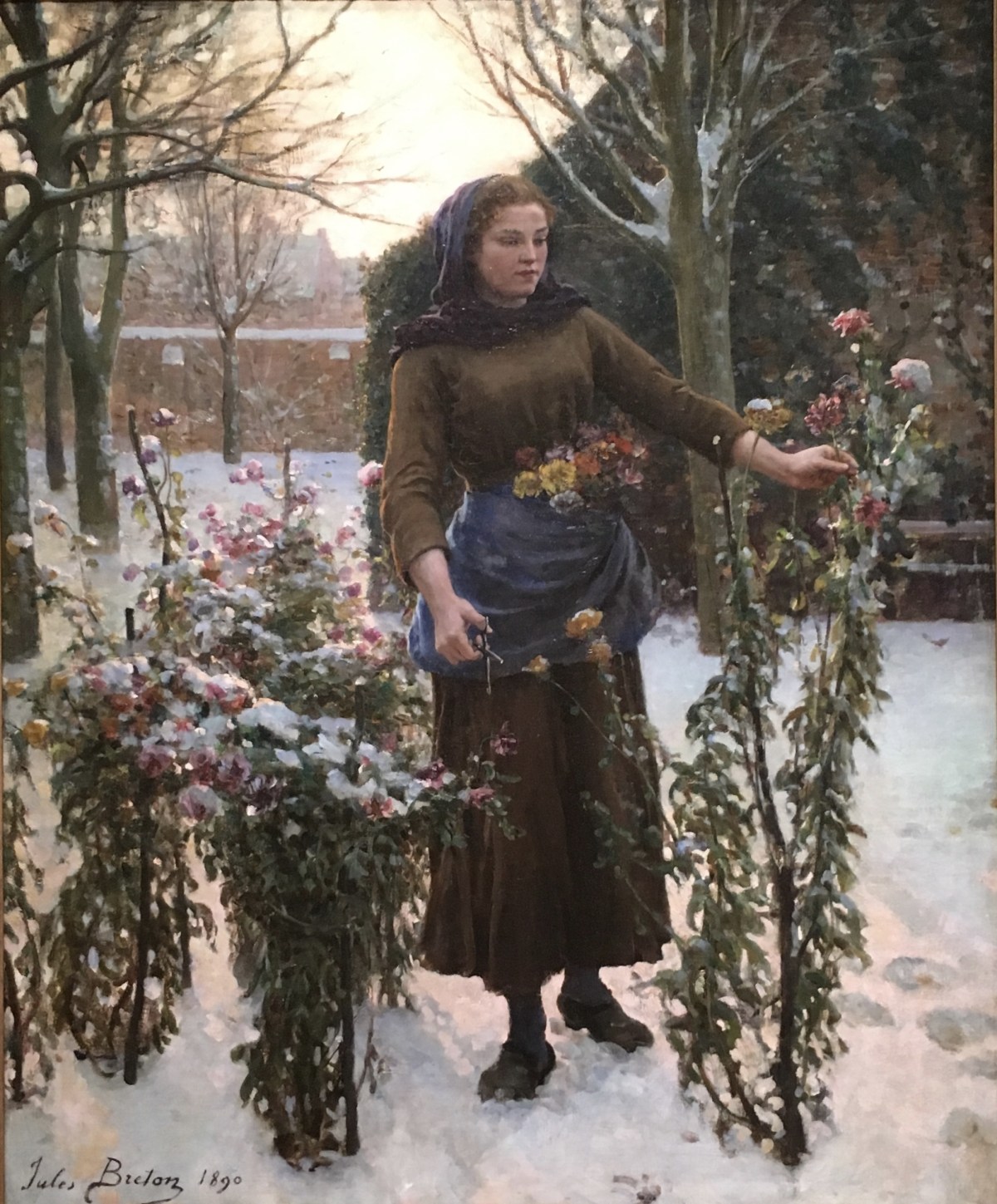
Last Flowers (1890) by Jules Breton

fullsizeoutput_1b08c

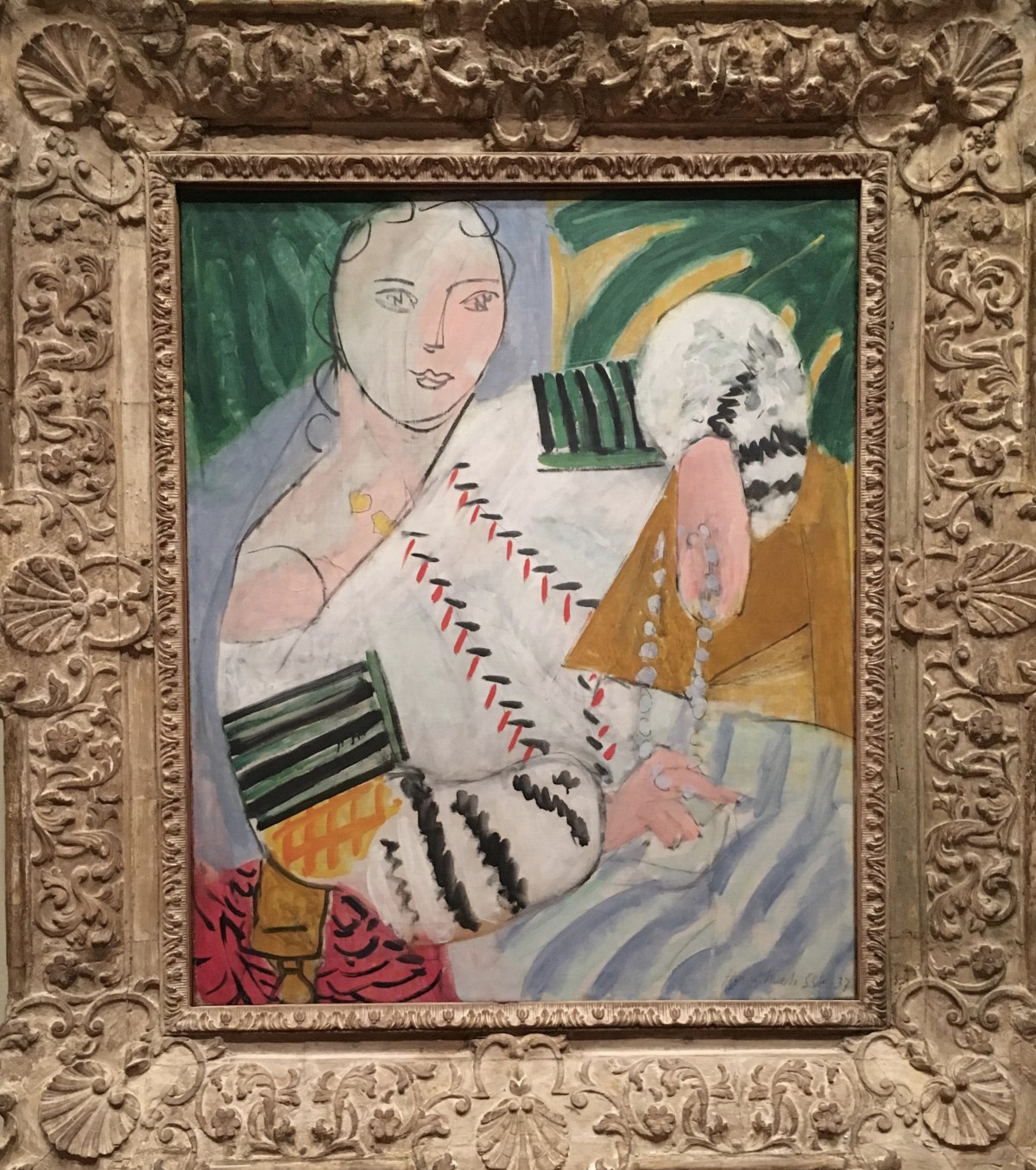
Romanian Blouse (1937) by Henri Matisse

fullsizeoutput_1b090

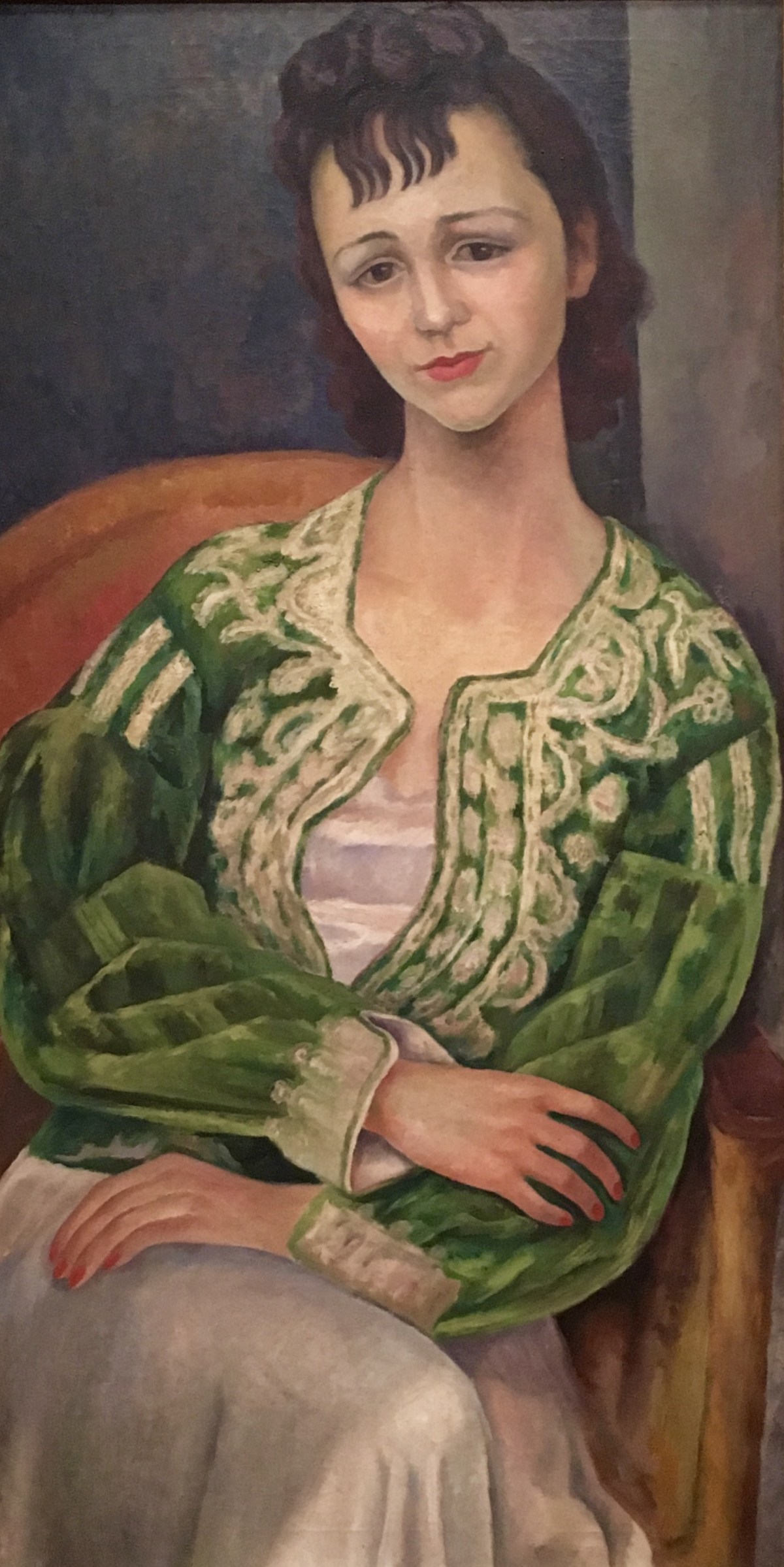
Portrait of Mary Joy Johnson (1939) by Diego Rivera

Art Nouveau furniture and ceramics glorified an aesthetic of curved lines, asymmetry, and ornamentation inspired by living forms.

Aristoloches Vase (1909) by Henri Husson
Art Nouveau ceramics
Art Nouveau vase
Art Nouveau vase
Art Nouveau furniture
Art Nouveau ceramics

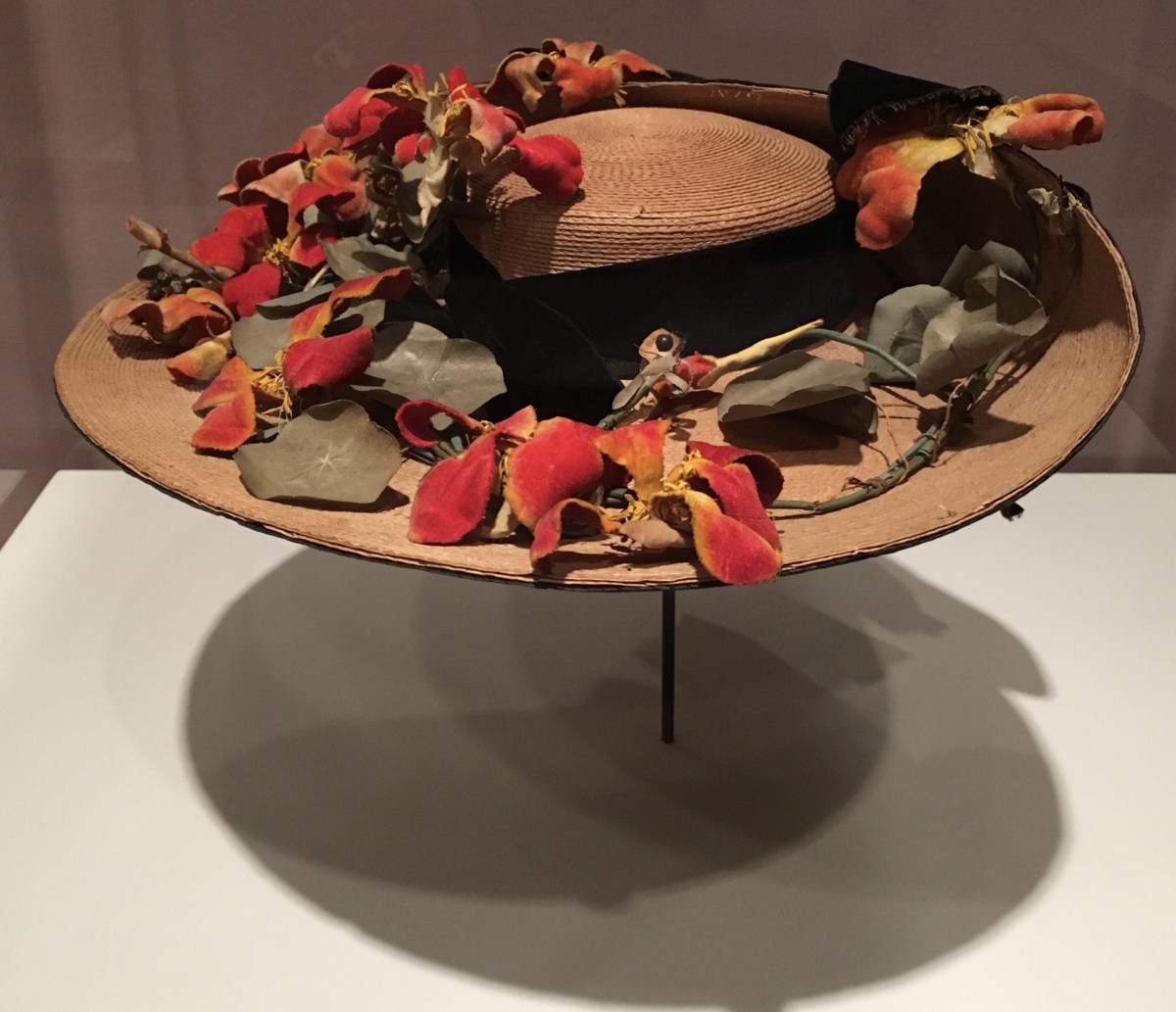
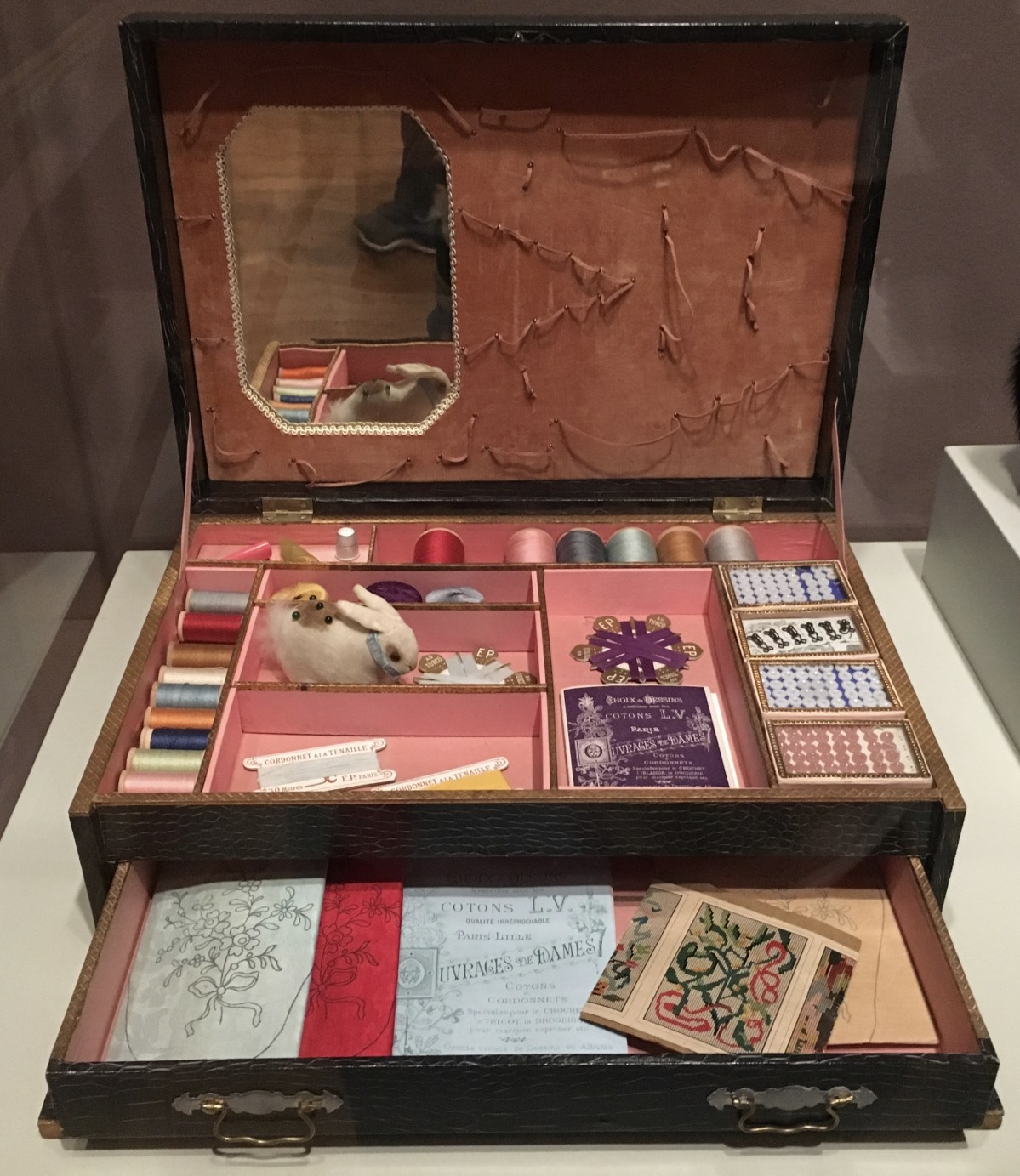
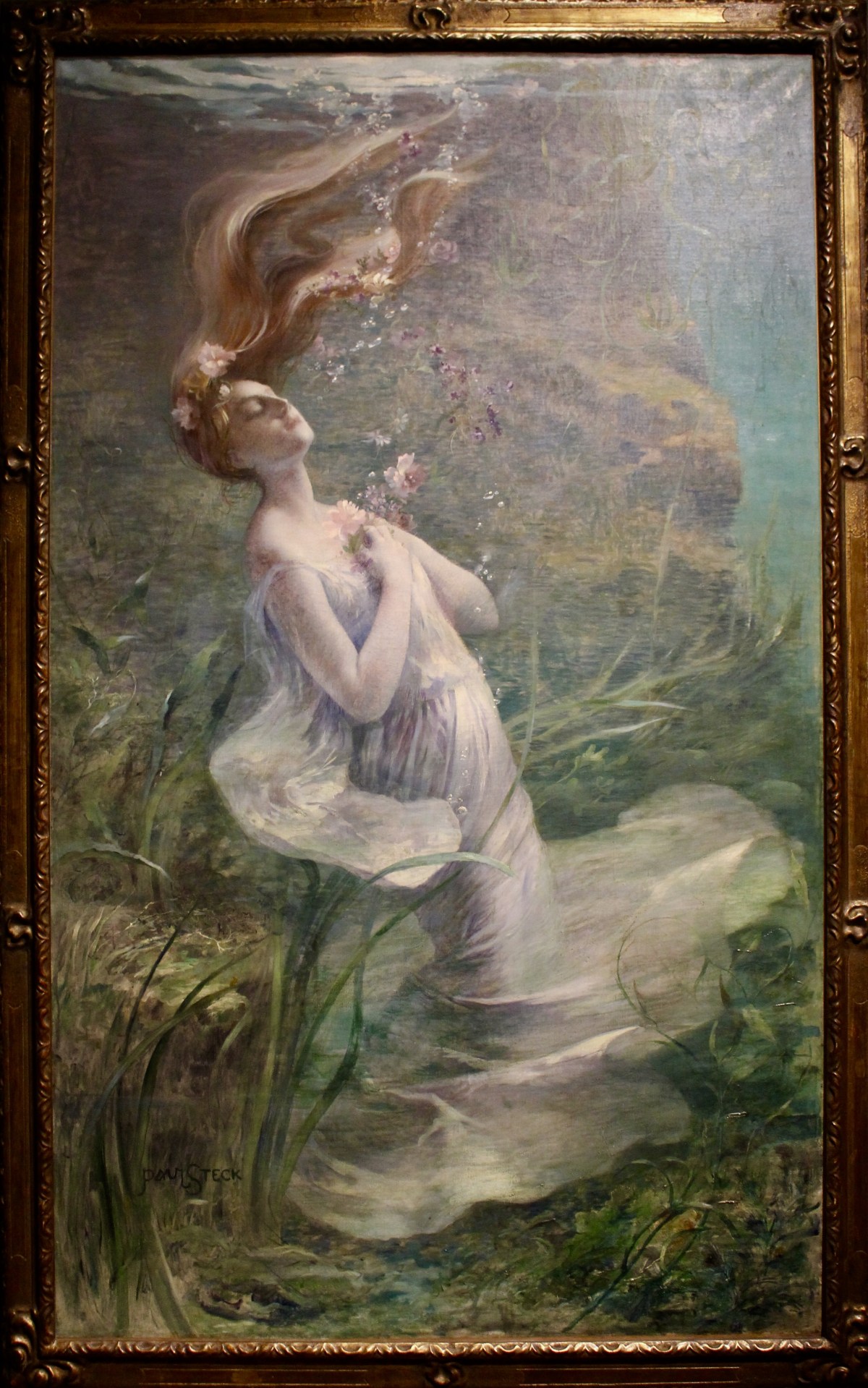
A section on Parisian women and fashion showed fancy hats, sewing kits, and paintings of women in sensual poses or doing common activities of the time.

fullsizeoutput_1b052

a woman’s hat

fullsizeoutput_1b050

sewing kit

fullsizeoutput_1b053

women at the turn of the century

fullsizeoutput_1b056

women depicted

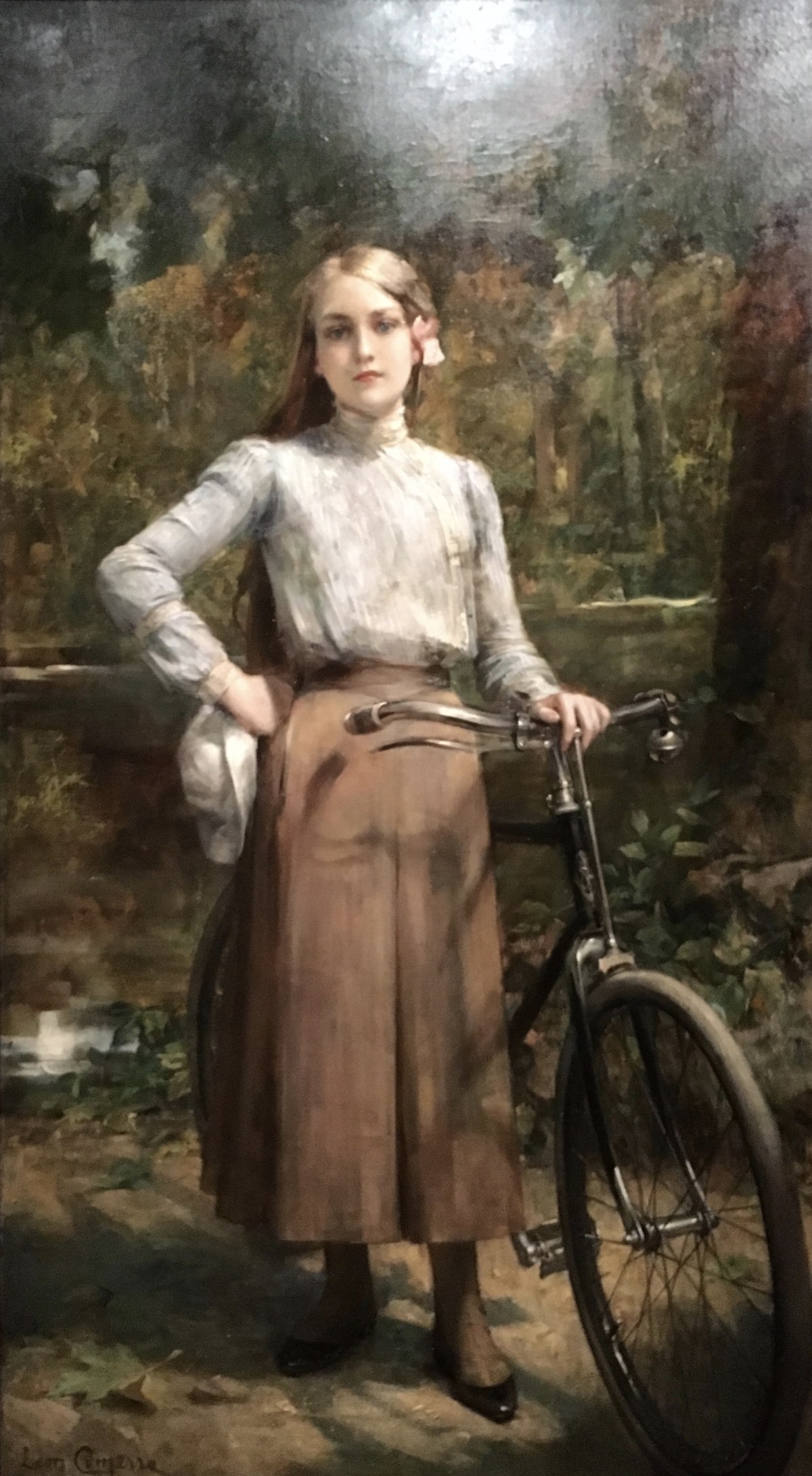
Bicycles were in fashion and high society girls were not shy about climbing on to vélocipèdes, as the predecessors to the modern bicycle were called. The girl in the painting is wearing a typical bicycling outfit of the period – a high-necked blouse with long sleeves, and an ankle-length split skirt that allows her to move her legs freely.

fullsizeoutput_1b05a

Bicycle in Vésinet (1903) by Léon-François Comerre

The Rookwood Pottery Company, an American ceramics company founded in 1880 and located in the Over-the-Rhine neighborhood of Cincinnati, was backed by the enormous wealth of founder Maria Longworth Nichols.  She had access to Louise McLaughlin’s “secret” technique for decorating under the glaze.  In 1880, it was likely that fewer than five potteries in the world could produce pottery decorated under the glaze. It won the Grand Prix at the 1900 Paris Exhibition and became the foremost art pottery in the world.  The company suffered three financial blows: the Stock Market Crash of 1929, the Great Depression, and a shortage of materials beginning with World War II. After numerous ownership changes, the company was eventually sold to Cincinnati investors who have revived Rookwood’s cereamics production.

Cincinnati became a foremost center for art pottery in America because the city’s location offered abundant wood for fuel, endless deposits of fine clay, and river transportation for distribution.

Vases - Rookwood Pottery Company
Vases – Rookwood Pottery Company
The Rookwood Pottery Company

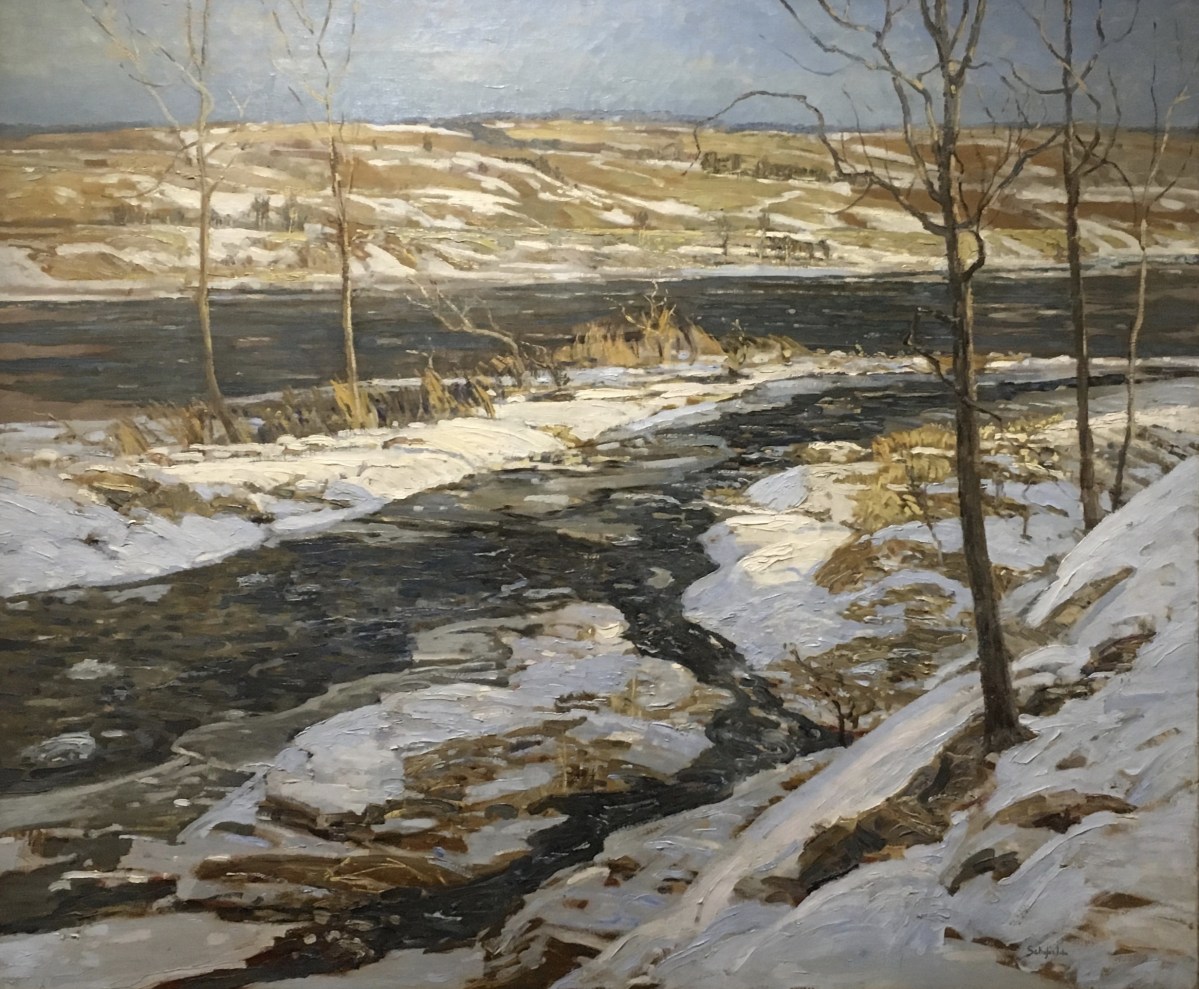
Inspired by French Impressionism, American Impressionism embraced works that featured glimpses into the artists’ surroundings without narrative.  The works favored brushwork over line, and explored innovative ways to showcase space and light. Artists sought to capture the vitality of modern city life and the refuge of the new suburbs. They also offered escapes to the countryside, the seashore and European locales.

fullsizeoutput_1b0a7

Winter in Cincinnati (c. 1920s) by John Ellsworth Weis

fullsizeoutput_1b0a9

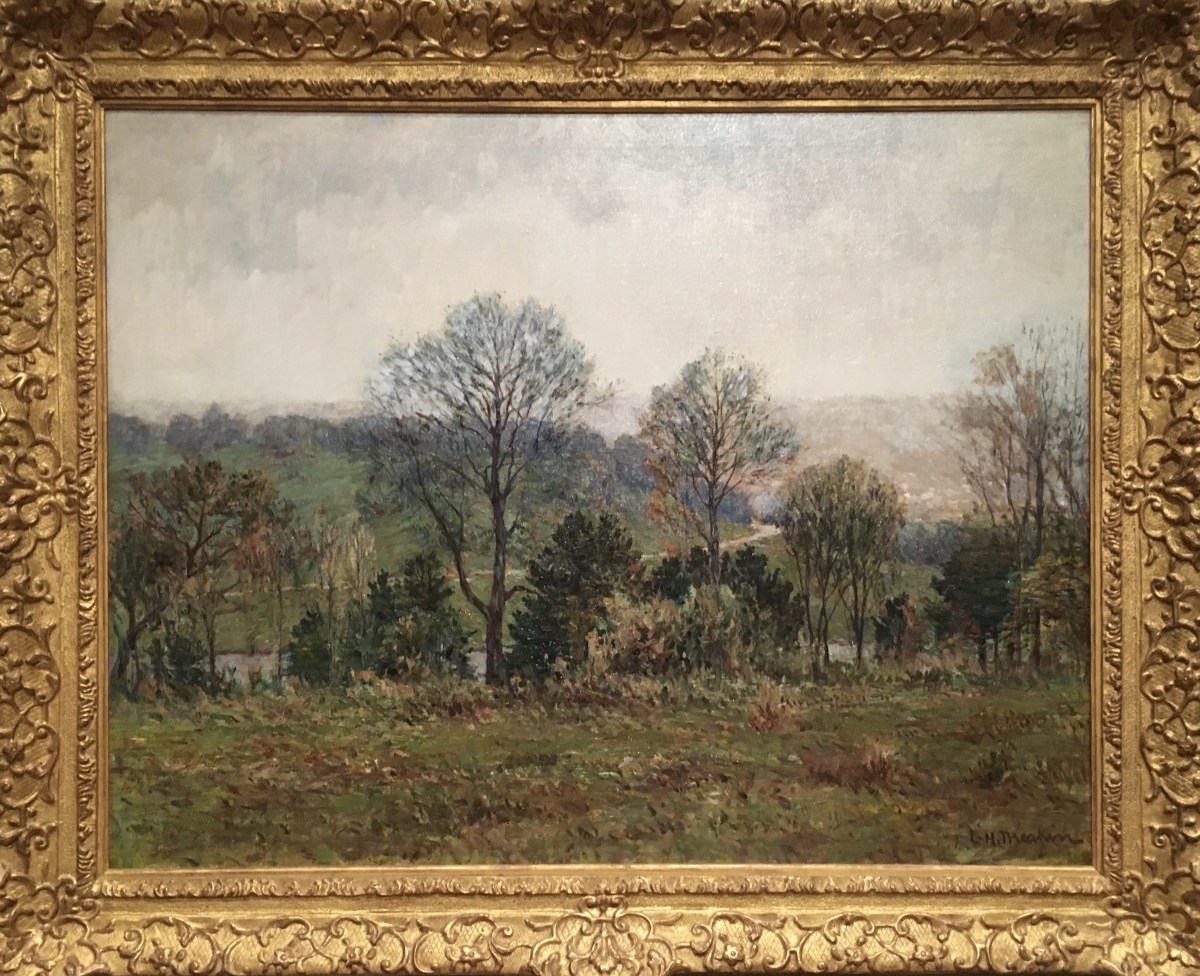
Eden Park (c. 1900) by Lewis Henry Meakin

In winter weather, what could be better than exploring art in fantastic and unusual museums?  I am always amazed by human creativity. 🙂

*Friday, March 1 & Sunday, March 3, 2019*

*********************

“PHOTOGRAPHY” INVITATION:  I invite you to create a photography intention and then create a blog post for a place you have visited. Alternately, you can post a thematic post about a place, photos of whatever you discovered that set your heart afire. You can also do a thematic post of something you have found throughout all your travels: churches, doors, people reading, people hiking, mountains, patterns, all black & white, whatever!

In my case, my intention was to look for thematic possibilities during my Midwestern Triangle Road Trip, and as we visited several art exhibits in both Louisville and Cincinnati, I thought I’d do a post about discovered art.

You probably have your own ideas about this, but in case you’d like some ideas, you can visit my page: photography inspiration.

I challenge you to post no more than 20-25 photos (I have more here!) and to write less than 1,500 words about any travel-related photography intention you set for yourself. Include the link in the comments below by Wednesday, November 13 at 1:00 p.m. EST.  When I write my post in response to this challenge on Thursday, November 14, I’ll include your links in that post.

This will be an ongoing invitation, every first, second, and third (& 5th, if there is one) Thursday of each month. Feel free to jump in at any time. 🙂

I hope you’ll join in our community. I look forward to reading your posts!
Share this:

  • Click to share on X (Opens in new window) X
  • Click to share on Facebook (Opens in new window) Facebook
  • More
  • Click to email a link to a friend (Opens in new window) Email
  • Click to print (Opens in new window) Print
  • Click to share on Pinterest (Opens in new window) Pinterest
Like Loading...
  • Europe
  • International Travel
  • Lisbon

on returning home from portugal in 2018

wanderessence1025's avatar wanderessence1025 November 4, 2019

As we got comfortable on our United Flight flight #65 leaving at 10:15 a.m. from Lisbon, Portugal on Tuesday, November 6, 2018, we were told by the pilot that our plane didn’t have the capacity to carry all passengers plus enough fuel to get us to Newark, New Jersey due to stronger than expected headwinds.  Our flight was scheduled nonstop to Newark, arriving at 1:50 p.m. As there are always headwinds flying west, and as the airline knew the plane was fully booked, we wondered why they had put us on this particular plane which was unable to get us to our destination!

We were scheduled to take a flight from Newark at 5:10 p.m., arriving at Washington-Dulles at 6:35 p.m. that same day.

Airline officials started going up and down the aisles telling various people they had to get off the flight.  It turned out these people were standby flyers.  Requiring them to disembark also meant that all luggage had to be taken off the plane and sorted through, in order to remove the luggage of the standby passengers.  This took a good hour or more. We were quite worried when it became clear that our safe arrival in Newark could only be guaranteed by a few people disembarking. That seemed a slim margin of error!

After all this was done, the pilot got back on the loudspeaker and told us that removing all the passengers and their luggage still didn’t reduce the plane’s weight enough to make it to Newark.  Thus they would have to find an airport that would allow the plane to make a fuel stop.  After quite some time, they announced that Gander International Airport,  located in Gander, Newfoundland and Labrador, Canada, would allow the plane to land there for a fuel stop.  That meant the pilot had to file a new flight plan, and since the computers were at that point not operational, we would have to wait a while for the computers to work again.

During this time, all the standby passengers were loaded back on to the plane along with their luggage.

By the time we left Lisbon, it was three hours after the flight was due to take off, about 1:15.  We then flew to Gander without incident, arriving around 3:30 p.m., equivalent to 5:00 p.m. Eastern Standard Time.  Our plane from Newark to Washington would be leaving in about 10 minutes, and we were up in the hinterlands of Canada!

fullsizeoutput_1abc0

Gander International Airport

As soon as we taxied into the Gander Airport our flight captain announced the good news that we had landed in Gander safely and would fill up with fuel.  The bad news, however, was that the flight crew’s allowed hours had timed out because they’d been sitting on the ground so long in Lisbon; thus, they were no longer able to fly.  We would have to wait at Gander until a new flight crew was flown in from New Jersey!

fullsizeoutput_1abbc

our stranded United plane at Gander International Airport

It didn’t become clear to us until we settled in that we’d be stuck in the middle of nowhere for the long haul.  It turned out we would be at Gander for five hours.  This small airport had no other air traffic while we were there, and when we arrived no concessions were open.  Saving the day, the airport officials called the local workers in to open the cafeteria; food choices were limited but at least we could have some food and drink.  We indulged in cold hamburgers and the famous Canadian dish, poutine: French fries and cheese curds topped with gravy.

fullsizeoutput_1776b

>> Washington to Lisbon / >> Lisbon to Gander to Newark to Washington – as shown on my polarsteps app

Gander may be in the middle of nowhere, but it is known for its hospitality. On September 11, 2001, with United States airspace closed because of the terrorist attacks, Gander International hosted 38 airliners, totaling 6,122 passengers and 473 crew, as part of Operation Yellow Ribbon, which was organized by Canada to handle the diversion of civilian airline flights on 9/11. Canada’s goal was to ensure that potentially destructive air traffic be removed from United States airspace as quickly as possible, and away from potential U.S. targets, and instead place these aircraft on the ground in Canada, at military and civilian airports in the Canadian provinces of Nova Scotia, Newfoundland and Labrador, and British Columbia. None of the aircraft proved to be a threat, and Canada and Canadians hosted thousands of passengers stranded in Canada until U.S. airspace was reopened.

Gander International received more flights than any other Canadian airport involved in the operation apart from Halifax.

fullsizeoutput_1abbd

inside Gander International Airport

There was little to no wi-fi in the airport during our stay.  Meal tickets were issued by the airline but only AFTER we’d already eaten, and no refunds for previously purchased food were issued.  It was a long and excruciatingly boring wait, and there was nothing to do but wait.  No flights came into or left Gander while we were there and thus we couldn’t book another flight.  There were no options for escape.

IMG_2313

waiting and waiting at Gander

We finally boarded our plane at 8:30 p.m. (7:00 p.m) EST, and landed in Newark at close to 11 p.m.

When it became evident that we would not make the last flight to Washington out of Newark, we decided we’d better take our fates into our own hands.  As soon as we got off the plane, we headed straight for car rentals, and rented a car to drive home.  By the time we started driving, it was close to midnight. We had been awake for about 24 hours at this point and were exhausted and irritable, but we had to drive another five hours to get home. Luckily at that time of night there was no traffic.

We finally collapsed in our beds at 5 a.m. on Wednesday morning, November 7.  My Camino and Portugal trip came to a difficult and painful end, but it was all worthwhile.  Mike rested for a couple of hours and went to work by noon.  It took him a whole week to recover.  We calculated we were either traveling in cabs, planes or cars, or waiting in airports for 28 hours straight.

As for Portugal…

I was less excited about my time in Portugal than I was when I went in 2013.  First, the weather was not optimal.  It was often cold and rainy in late October / early November. We had beautiful weather in Braga and our first day in Porto; otherwise it was mostly rainy, gloomy or cold.  Mike enjoyed himself everywhere other than Sintra, as it was his first time to Portugal and he had nothing else to compare it to.

My favorite parts of Portugal on this trip were: Braga, Guimarães, Amarante (except for the gloom), Óbidos and Peniche.

My favorite place in 2013, Sintra, was a real letdown because of heavy fog and huge crowds. Lisbon was cold, windy and cloudy, and there was really nothing new for me to see. I don’t feel a need to ever return there.

fullsizeoutput_1b03b

Camino and Portugal as shown on my polarsteps app

Here are posts that I wrote following my creative intentions:

  • on journey: launching my camino
  • braga, portugal: immersion
  • guimarães, portugal: occupation
  • porto, portugal: everywhere all at once
  • amarante, portugal: the village of love
  • portugal: aveiro & costa nova
  • portugal: the charming óbidos
  • the dramatic coast of peniche, portugal
  • portugal: a foggy & crowded sintra
  • portuguese laundry
  • portugal’s gritty street art
  • portuguese ceilings
  • decay & ruin in portugal
  • poetic journeys: óbidos stroll
  • portugal: cabo da roca to lisbon
  • lisbon: around & about bairro alto & alfama
  • portuguese azulejos
  • hopping on & hopping off through lisbon

I still have several more posts to write, including another list poem and a poem weaving together six things I encountered in my travels.  I have a couple more photo essays to compose: black & white photos, local people, boats & the sea, and colors & stripes, food, and enticing signs and shops.

If I ever do return to Portugal, I would go to the Algarve and the beaches, taking my cues from Jo of restlessjo.

*************************

“ON RETURNING HOME” INVITATION: I invite you to write a post on your own blog about returning home from one particular destination or, alternately, from a long journey encompassing many stops.  How do you linger over your wanderings and create something from them?  How have you changed? Did the place live up to its hype, or was it disappointing? Feel free to address any aspect of your journey and how it influences you upon your return. If you don’t have a blog, I invite you to write in the comments.

For some ideas on this, you can check out the original post about this subject: on returning home.

Include the link in the comments below by Sunday, December 1 at 1:00 p.m. EST.  When I write my post in response to this challenge on Monday, December 2, I’ll include your links in that post.

This will be an ongoing invitation on the first Monday of each month. Feel free to jump in at any time.

Share this:

  • Click to share on X (Opens in new window) X
  • Click to share on Facebook (Opens in new window) Facebook
  • More
  • Click to email a link to a friend (Opens in new window) Email
  • Click to print (Opens in new window) Print
  • Click to share on Pinterest (Opens in new window) Pinterest
Like Loading...
  • Camino de Santiago
  • Europe
  • Hikes & Walks

{camino day 41} triacastela to sarria

wanderessence1025's avatar wanderessence1025 November 3, 2019

Today was alternately foggy, damp, drizzling, and outright raining. Through it all, it was cold. We were greeted by roosters cockadoodling, chickens clucking and pecking, and lackadaisical cows grazing and lowing. The path often ran through deep, leafy chestnut forests and gullies with babbling streams. The constant fog, rain and mist carried intimations of sprites and witches, in which Galicians are said to believe.

Immediately upon leaving Triacastela, I had to decide whether to take the northern direct route via San Xil or the southern detour route via Samos.  For me, it was no question I’d keep to the San Xil route as it was shorter by 6.4 km. I would miss one of the oldest and largest monasteries in Spain, the Benedictine Monasterio de Samos, but I was determined to get to Santiago now that the end was in sight. The monastery was founded in the 6th century on the asceticism of the Desert Fathers, taking the Benedictine Rule in 960.

Triacastela to Opción (for detour route via Samos) (0.7 km)

From the detour option, I continued on and through the tiny hamlet of A Balsa, treading carefully between chickens and roosters.  I crossed a river and then walked past the tiny chapel dedicated to Our Lady of the Snows, ermita Nos Señora las Nieves, and up a steep woodland path to rejoin the road at a rest area with an unusual scallop shell motif. Then I passed San Xil, with a fog-enshrouded pumpkin patch and no facilities.

Opción to A Balsa (1.6 km)

fullsizeoutput_1aeed

Leaving Triacastela

fullsizeoutput_1aef0

Triacastela to A Balsa

fullsizeoutput_1698a

A Balsa

fullsizeoutput_1aef2

A Balsa

fullsizeoutput_1aef3

A Balsa to Alto do Riocabo

fullsizeoutput_1aef5

A Balsa to Alto do Riocabo

fullsizeoutput_1699f

A Balsa to Alto do Riocabo

fullsizeoutput_1aef7

A Balsa to Alto do Riocabo

fullsizeoutput_1aefb

ferns along the path

fullsizeoutput_1af35

rest area with unusual scallop shell

fullsizeoutput_1af37

pumpkin patch in San Xil

fullsizeoutput_1aefd

hydrangeas along the path near San Xil

We climbed up into a steep woodland path to Alto Riocabo, and then passed through the tiny hamlet of Fontearcuda.

A Balsa to Alto do Riocabo (3.5 km)

fullsizeoutput_16989

A Balsa to Alto do Riocabo

fullsizeoutput_1aefe

A Balsa to Alto do Riocabo

fullsizeoutput_1af01

A Balsa to Alto do Riocabo

IMG_9054

A Balsa to Alto do Riocabo

fullsizeoutput_1af03

Fontearcuda

fullsizeoutput_16981

A Balsa to Alto do Riocabo

fullsizeoutput_1af4f

Fontearcuda

After Alto do Riocabo, I descended steeply through feathery fern forests between moss-engulfed stone walls.  Finally, the landscape flattened out. The rain remained a steadfast companion.

We then crossed a road onto a stone path over a stream and then into Furela, where I ate a cheese omelette (French-style) in an unheated open air garage.  It was utterly bone-chilling and miserable.  The cafe was the only place in town and was overflowing.

Here, I chatted with Fatima from Switzerland, who only spoke French.  She and I had been passing each other for many days, but since we couldn’t speak a common language, we always said “Hola!” to each other.  Each time one of us bypassed the other, Fatima said, “Hasta luego!”  Seeing each other again and again came to be expected and cherished.

Somehow Fatima managed to communicate that she had been walking since August 3 from Mont St. Michel to Bordeaux, where she took a train to St. Jean Pied-de-Port. She had been walking from there. At least that was my understanding.

Alto do Riocabo to Furela (4.6 km)

IMG_9062

Alto do Riocabo to Furela

fullsizeoutput_16982

Alto do Riocabo to Furela

After leaving Furela, I talked for a long time to Laurel from Boise, Idaho. She wore a hat over her short platinum-streaked hair, a purple raincoat and and some soaked-through “waterproof” pants. She complained that the “waterproof” claim was false advertising.  She had recently quit her job as a social worker dealing with disabled people and was trying to figure out what to do next. Somehow, we got to talking about teaching English abroad, and she seemed very interested.

When I told her of my loved one and his problems, and how he blocked me on social media while I was in Burgos, she said, “They only do that to the one person they know is safe.”  She worked with disabled people who also suffered with mental health issues such as bipolar and schizophrenia disorders.

I never stopped in any more towns, but walked quickly through the straggling hamlets of Pintín, Aguiada, and Hospital, site of a former pilgrim hospital where pilgrims who come from the alternative route to Samos Monastery rejoin the path.  We walked through the outskirts of Sarria, a suburb called Vigo de Sarria.  By that time, it was alternatively pouring rain and drizzling.

Furela to Pintín (1.7 km) to Hospital (2.0 km) to Vigo de Sarria (3.6 km)

fullsizeoutput_1af07

Vigo de Sarria

fullsizeoutput_1af09

Vigo de Sarria

Sarria was a major medieval center for pilgrims, second in size only to Santiago within Galicia. A town of Celtic origins, it has several churches, chapels, monasteries and seven pilgrim hospitals. Sarria is now a bustling modern town with a population of 13,500. It has become a major starting point for pilgrims with limited time but who are anxious to get the pilgrim compostela. Starting in Sarria just covers the required 100km to the cathedral in Santiago.

Vigo de Sarria to Sarria Centro (1.0 km)

I checked into Albergue los Blasones where I got the bottom bunk in a long narrow room full of 24 beds.  I claimed the bed nearest the toasty wood burning stove.

After doing my laundry, I hung it in the courtyard out back, under a roof, but the air was so damp and cold, I thought it would probably never dry.

fullsizeoutput_1af32

Albergue los Blasones

After my regular routine, I went to a cafe where I had a brandy and two packages of Doritos!  Then I strolled around the town.

In Sarria, I expected to find the town bustling with new pilgrims, but at least in my walkabouts, it seemed like a ghost town.  Maybe it was too late in the year for pilgrims to be starting the last 100 km. The weather was quite miserable after all.

IMG_9076

the brandy cafe in Sarria

fullsizeoutput_1af0b

Sarria

fullsizeoutput_1af0f

Sarria

fullsizeoutput_1af13

Sarria

The Casa do Concello was built by the end of the 19th century.  It has been a town hall since 1920 and was renovated and expanded in 1998.  In addition to the administrative offices and local police office, there are also citizen and pilgrim information services.

fullsizeoutput_1af15

Casa do Concello

I admired the melancholy pilgrim mural on the church wall facing the street and then popped into the Igrexa de Santa Mariña, built in 1885 over a 12th century predecessor; here I got a sello for my pilgrim credenciale and said my usual prayers.

fullsizeoutput_1af0d

Igrexa Santa Mariña

The church was designed by Mr. Dominguez, an architect from Santiago de Compostela. The tower, topped by a pyramidal spire, hosts the public clock. Inside the church are images of Santa Mariña and San Xoán (both patron saints of the village), the crucified Christ, the sepulchre of Juan María Lopez and damaged paintings of the four Evangelists.

IMG_9070

Igrexa Santa Mariña

Igrexa Santa Mariña
Igrexa Santa Mariña
Igrexa Santa Mariña
Igrexa Santa Mariña
Igrexa Santa Mariña
Igrexa Santa Mariña

My friend Darina happened to make it to Sarria, as she had taken the detour route to Monasterio de Samos and had spent the night there. She had been walking steadily one town or so ahead of me since we’d last met, so I was happy to have our paths converge again.  We met for dinner at 6:00, having toast with goat cheese and sun-dried tomatoes, a caprese salad, and a vegetarian burger, which we split.

I told her about all the characters I’d met since I’d seen her last: Greg from B.C., who kept leaving his friend Sean behind while he hightailed it after Beth from Australia; Beth’s meeting Pat, a British firefighter, in a Camino romance; Mike from Prince Edward Island and Susan from Denver; Janice from San Antonio with her locket of ashes.  Darina told me all about the amazing monastery at Samos and how much she loved it.

While at dinner, we met three New Zealanders who were starting their Camino the next day.  Stella, the mother, was walking with her two daughters Emma and Laura.  They were all super friendly.

Darina went off to mass but I was tired and wanted to rest so I went back to my room.  I wished later that I had gone along.

At my albergue, the hospitaleros added wood chips to the toasty wood stove at around 10:00 p.m., but when I woke at 1:00 a.m., the stove was cold and so was the room. The rest of the night was quite miserable.

As of today, I had six more days to walk, 117.4 km, or 72.9 miles. 🙂

**********

*Day 41: Sunday, October 14, 2018*

*31,862 steps, or 13.5 miles: Triacastela to Sarria (18.7 km)*

You can find everything I’ve written so far on the Camino de Santiago here:

  • Camino de Santiago 2018

**************

On Sundays, I post about hikes or walks that I have taken in my travels; I may also post on other unrelated subjects. I will use these posts to participate in Jo’s Monday Walks or any other challenges that catch my fancy.

This post is in response to Jo’s Monday Walk: Morgado do Quintáo.

Share this:

  • Click to share on X (Opens in new window) X
  • Click to share on Facebook (Opens in new window) Facebook
  • More
  • Click to email a link to a friend (Opens in new window) Email
  • Click to print (Opens in new window) Print
  • Click to share on Pinterest (Opens in new window) Pinterest
Like Loading...
  • Aït-Ben-Haddou
  • Africa
  • International Travel

poetic journeys: aït-ben-haddou

wanderessence1025's avatar wanderessence1025 November 1, 2019

Aït-Ben-Haddou

This is I who stood
     on a scatter of carpets 
     in a mudbrick Moroccan home
     and studied a poster of our guide
     when he was an extra in Gladiator.

This is I who climbed
     between the ksar's mud walls
     hung with carpets and Berber
     jewelry, amidst silver teapots
     and parchment camels 
     painted with green tea, 
     indigo, saffron, 
     and sugar melted over a fire.

This is I who never played 
     a game of thrones 
     yet ascended to grand heights  
     and gazed over the realm 
     of kasbahs perched beside 
     a parched river,
     while a ferocious wind attacked
     with stinging darts of sand.

This is I who wandered with a Catholic
     priest through this Muslim village,
     a holy man in tourist clothes 
     who fingered textiles
     with rosewater-scented fingers
     and said mass each morning and night
     with his mini-wine bottles 
     and compact chalice.
     He was an aging bodybuilder 
     covered in tattoos, 
     a gladiator of sorts,
     enchanted by this film-set village, 
     this mocked-up Kingdom of Heaven.

*************************

“POETRY” Invitation: I invite you to write a poem of any poetic form on your own blog about a particular travel destination. Or you can write about travel in general. Concentrate on any intention you set for your poetry.

One of my poetry intentions for my trip to Morocco was to do a cluster diagram about a day of travel in a town:  From the cluster, write a poem starting with “This is I who…” using particular details of the culture and its food, natural settings or customs.  Use the power of perception to come up with a new perception. I found this prompt in Writing Personal Poetry by Sheila Bender, p. 119.

You can either set your own poetic intentions, or use one of the prompts I’ve listed on this page: writing prompts: poetry. (This page is a work in process). You can also include photos, of course.

Include the link in the comments below by Thursday, December 5 at 1:00 p.m. EST. When I write my post in response to this challenge on Friday, December 6, I’ll include your links in that post.

This will be an ongoing invitation, on the first Friday of each month. Feel free to jump in at any time. 🙂

I hope you’ll join in our community. I look forward to reading your posts!

the ~ wander.essence ~ community

I invite you all to settle in and read a few posts from our wandering community.  I promise, you’ll be inspired. 🙂

  • Jude, of Travel Words, tried her hand at an Erasure Poem and created a poignant moment between a mother and daughter.
    • October Squares | Day Thirty-One – Visiting Time

Thanks to all of you who wrote poetic posts following intentions you set for yourself.


Share this:

  • Click to share on X (Opens in new window) X
  • Click to share on Facebook (Opens in new window) Facebook
  • More
  • Click to email a link to a friend (Opens in new window) Email
  • Click to print (Opens in new window) Print
  • Click to share on Pinterest (Opens in new window) Pinterest
Like Loading...
  • American Road Trips
  • Evan Williams Bourbon Experience
  • Frazier Museum

imbibing in a bit of the bourbon trail in louisville

wanderessence1025's avatar wanderessence1025 October 31, 2019

I started my bourbon experience on the third floor of the Frazier Museum in Louisville, Kentucky.  I learned about why bourbon thrives in Kentucky, about limestone, wood barrels, farming, grains, crops and water.  I visited the bottle hall and a speakeasy, and I admired paintings of working people and bourbon barrels in an exhibit all about whiskey’s artistic side.

IMG_2917

The Kentucky Bourbon Trail Starts here: The Frazier Museum

It is said that The Bluegrass State, by nature’s hand or by pure chance, is perfectly suited to produce great Bourbon. When pioneers started settling in Kentucky over 200 years ago, they discovered what would be the Promised Land for distilling bourbon. From the limestone shelf that makes for the purest filtered water, to the fertile earth used as rich farmland for growing corn, to the ideal climate for aging barrels of whiskey, Kentucky is blessed.

fullsizeoutput_19773

America’s Native Spirit

fullsizeoutput_1976c

the Bottle Hall

Louisville, Kentucky is a river city, and thus quickly became a transport hub for trade. The steamboat Belle of Louisville originally launched in 1914. The Belle transported not only passengers and cargo, such as whiskey, but it even pushed oil barges down the Mississippi during World War II.

fullsizeoutput_1976e

Belle of Louisville

fullsizeoutput_19772

All about Bourbon in the Frazier Museum

Kentucky’s has an abundance of fertile farmland.  Native Americans, farming for over 1,000 years, grew corn, squash, soybeans and sunflowers.  In the 1770s, European settlers grew only enough to feed themselves and their livestock.  Corn sustained both people and livestock, so it was usually the first crop planted, but pioneers also grew wheat, oats, beans, squash, turnips, potatoes, and melons.  As transportation routes by land and water improved, Kentucky farmers began to grow cash crops such as tobacco and hemp.  They also started to grow more corn, which they sold as meal, fodder, and of course, whiskey.

IMG_4200

Fertile Farmland

The Scottish, Irish and German settlers in the late 1700s brought simple tools and basic necessities for starting a new life in the wilderness. By the 1800s, specialized tools for planting, harvesting and processing corn for meal, animal feed, and distilling began to appear, as corn production grew in scope and importance.

The pioneers brought distilling knowledge from their home countries in Europe, as well as rudimentary stills.  These stills distilled alcohol from grains or even fruit, and were common fixtures on farms. They helped prevent waste by converting surplus crops into whiskey and other spirits for personal use, trade or sale. Thrifty settlers even used the byproducts from the distilling process, known as spent mash, as food for their pigs and cows. This practice continues today.

The copper still below was unearthed during construction of the Woodford Reserve Distillery in Versailles, Kentucky.  Created between 1807 and 1862, this still was probably intentionally buried so it wouldn’t be confiscated and melted down for use in munitions during the Civil War.

fullsizeoutput_19770

All about Bourbon in the Frazier Museum

Each distillery combines grains to create their signature brands of bourbon.  These grains are milled into powder form, mixed with water, and then heated to create mash.  The proportions of grains that distillers used to make a mash is called a mash bill.

In order to be considered bourbon, a spirit must be made up of at least 51% corn, although corn usually makes up 60% or more of most mash bills. The remaining 49% of bourbon can be made of other grains, each of which gives a different quality to the finished product.  Rye gives bourbon a peppery spice, barley helps in the fermentation process and adds malted chocolate notes, and wheat can give the bourbon a smoother, sweeter taste.

fullsizeoutput_1977a

Bourbon at the Frazier

By law, Bourbon whiskey must be aged in new barrels built from white oak with a flame-charred interior. The white oak wood combined with the layer of char gives bourbon its distinctive flavors and color.  Bourbon stored in a white oak barrel is absorbed into the wood during warm weather and pushed out during cold, allowing it to pick up flavors from the wood and the char with each ageing season.

Kentucky farmers with surplus grain that was perishable and hard to transport turned it into whiskey, which was then put into barrels and transported downriver by flatboat.  Since wood was plentiful and shipping upriver expensive, the barrels were often not returned and the practice of using only new barrels began. Barrels, which can weigh over 500 pounds when full of whiskey, are easy to roll and are structurally strong and durable.

IMG_2888

Bourbon at the Frazier

Most bourbon distillers add another vital ingredient to the list: pure, limestone-filtered spring water.

Limestone is rich in minerals and extremely porous.   Spring water filters through naturally, picking up calcium while shedding impurities such as iron that ruin the taste of whisky.  Limestone-filtered water also has a high pH, which aids the fermentation process. Vast underground limestone caves are abundant throughout Kentucky.

IMG_2891

Bourbon at the Frazier

Kentucky’s weather provides a particularly good environment for making bourbon.  Corn and wheat grow well due to the area’s humid, subtropical climate and long growing season, as do the white oak trees needed to make bourbon barrels.  Kentucky also has four distinct seasons, an important factor for properly aging bourbon.

IMG_2893

Bourbon at the Frazier

The lifeblood of Kentucky is its waterways, a complex network of rivers and streams and flow through the countryside, each one feeding the Ohio River. Kentucky boasts roughly 90,000 miles of streams, along with the highest total of navigable waterways in the continental U.S., second only to Alaska.  Clear water and a healthy corn crop were all one needed to make bourbon, but Kentucky’s network of rivers offered the opportunity to sell it.

fullsizeoutput_1af33

Kentucky’s waterways

The pot still – basically a copper pot set over a fire – has been in use for centuries, originating among the rough agrarian countryside of Ireland and Scotland.  Many Scottish and Irish descendants migrated to North America and carried the pot still with them.  Corn replaced barley and the rest was history.

Back in Ireland, inventor Aeneas Coffey patented a column still in 1831.  It proceeded to revolutionize the industry.  Before long, it reached American shores, making consistent, large-scale whiskey production possible. Now there are variations of pot stills, column stills and hybrid stills.

fullsizeoutput_1977b

Bourbon at the Frazier

From 1945-47, Hiram Walker Distillery commissioned a group of paintings to use in their Imperial Whiskey ads. The artists could paint what they chose as long as their piece included Hiram Walker’s whiskey barrels.

The painters represent two of the most important American art movements that began in the 1930s as a response to the Great Depression: Regionalism and Social Realism.  The Regionalist movement depicted rural scenes and small-town life, especially in the South and Midwest.  Social Realist artists focused on the everyday lives of poor and middle class people living in industrialized urban environments.

These two movements came together as demand grew across the country and distilleries that began in small agricultural environments became more industrialized to meet this demand. Whiskey became the product of both agriculture and industry.

IMG_4255

Whiskey’s Artistic Side

IMG_4256

Whiskey’s Artistic Side

After leaving the Frazier Museum, I went on the Speakeasy Tour at Evan Williams Bourbon.  Since bourbon is one of Louisville’s claims to fame, I figured I ought to partake.

fullsizeoutput_197c7

Evan Williams Bourbon Experience

America’s Bourbon industry was born and came of age in Louisville on the banks of the Ohio River.  Distillers gravitated to the area because of transportation on the river and later because of railroads.

Evan Williams (1755-1810) was born in Wales and immigrated to America in the 1780s.  He made his way to Louisville which at that time was an outpost at the edge of the western frontier. He was twice elected  Town Trustee and appointed Wharfmaster.  In his time, the Wharfmaster was the toll collector, traffic manager, peacekeeper and general boss of the Louisville waterfront.

It was the long days in his distillery where he made his reputation and became Kentucky’s first commercial distiller.

fullsizeoutput_197c8

Evan Williams Bourbon Experience

In 1912, there were 42 liquor wholesalers and distillers located between Brook and 9th Streets in Louisville on the nine block stretch of Main Street that came to be known as Whiskey Row.

fullsizeoutput_197cb

Evan Williams Bourbon Experience

Everybody knows the word “speakeasy,” but these bars also had more colorful names. In Louisville, the Bide-a-wee Club and Abe’s White Doorknob were among the places to go.

On the Speakeasy Tour, we had to say a password to get into the “secret” establishment. When I downed my first glass, the bartender informed me I was supposed to “chew” it, or swish it back and forth in my mouth so I could get used to it. As it turned out, I do not seem to be a big fan of bourbon.

IMG_4343

speakeasy at Evan Williams

*********************

“PHOTOGRAPHY” INVITATION:  I invite you to create a photography intention and then create a blog post for a place you have visited. Alternately, you can post a thematic post about a place, photos of whatever you discovered that set your heart afire. You can also do a thematic post of something you have found throughout all your travels: churches, doors, people reading, people hiking, mountains, patterns, all black & white, whatever!

In my case, my intention was to look for thematic possibilities during my trip to Kentucky.  Bourbon plays a big role in Kentucky’s economy, so I thought I’d gather some photos about my bourbon experience.

You probably have your own ideas about this, but in case you’d like some ideas, you can visit my page: photography inspiration.

I challenge you to post no more than 20-25 photos (I have more here!) and to write less than 1,500 words about any travel-related photography intention you set for yourself. Include the link in the comments below by Wednesday, November 6 at 1:00 p.m. EST.  When I write my post in response to this challenge on Thursday, November 7, I’ll include your links in that post.

This will be an ongoing invitation, every first, second, and third (& 5th, if there is one) Thursday of each month. Feel free to jump in at any time. 🙂

I hope you’ll join in our community. I look forward to reading your posts!

the ~ wander.essence ~ community

I invite you all to settle in and read a few posts from our wandering community.  I promise, you’ll be inspired!

  • Tina, of Tina Stewart Brakebill, composed a quirky photo montage capturing Slovenia’s Ljubljana.
    • Ljubjana Street Love

Thanks to all of you who shared posts on the “photography” invitation.

Share this:

  • Click to share on X (Opens in new window) X
  • Click to share on Facebook (Opens in new window) Facebook
  • More
  • Click to email a link to a friend (Opens in new window) Email
  • Click to print (Opens in new window) Print
  • Click to share on Pinterest (Opens in new window) Pinterest
Like Loading...
  • Camino de Santiago
  • Europe
  • Hikes & Walks

{camino day 40} o’cebreiro to triacastela

wanderessence1025's avatar wanderessence1025 October 27, 2019

Before leaving O’Cebreiro, I took my backpack to Hotel O’Cebreiro because the municipal albergues don’t take or send ahead backpacks.  I left the town at 8 a.m. under a painterly sunrise of rich corals; the whole sky was a rosy unfurling.  I was overwhelmed by the dramatic beauty along the ridge top, through a path bordered by Scotch broom and wild absinthe.

The route out of O’Cebreiro was spectacular, with stunning views stretching for miles all around.  Green pastures and small villages dotted the valley below.

A forest track took us up and then down to Liñares, a small hamlet that once grew flax for the linen trade. We passed the 8th-century parish church of San Esteban, restored in 1963, and then headed up a holly tree-lined track to Alto de San Roque.

O’Cebreiro to Liñares (3.1 km)

IMG_8883

sunrise outside of O’Cebreiro

fullsizeoutput_1778f

sunrise outside of O’Cebreiro

O'Cebreiro to Liñares
O’Cebreiro to Liñares
O'Cebreiro to Liñares
O’Cebreiro to Liñares
O'Cebreiro to Liñares
O’Cebreiro to Liñares
fullsizeoutput_1ad07

San Esteban in Liñares

fullsizeoutput_1ad09

San Esteban in Liñares

fullsizeoutput_1ad0c

Liñares

At Alto de San Roque, a limestone ridge of 1,270 meters, a bronze medieval pilgrim leaned into the wind over Galicia’s vast expanse of mountains and valleys.  The path was lined with groves of ash trees interspersed with birch, holly and hazelnuts.

fullsizeoutput_1ad0e

Alto de San Roque

fullsizeoutput_1ad10

Alto de San Roque

fullsizeoutput_1ad12

Alto de San Roque

fullsizeoutput_1ad16

Alto de San Roque

We dipped down again into Hospital de la Condesa, which once held one of the earliest hospitals for Christian pilgrims. I paid homage to the 11th century pre-Romanesque Iglesia St. Juan (also dedicated to San Roque), reconstructed in 1963, with its unusual stone-roofed belfry and cross of Santiago.

Liñares to Hospital de la Condesa (2.5 km)

Liñares to Hospital de la Condesa
rooster in Hospital de la Condesa
Iglesia St. Juan in Hospital de la Condesa

Then it was another climb to the windy Alto do Poio, at an altitude of 1,310 meters. In medieval times, there was a hermitage at this pass, one of the highest on the Camino.  On the way up I met Beth from Canberra.  She was the same Beth that Greg from British Columbia had told me he’d “really connected with.” Beth had interests of her own; she was to meet a British guy named Pat in Sarria.  She had met him earlier in the Camino and he’d had to leave for a portion of the Camino.  They planned to walk to Santiago together from Sarria and then travel to Portugal together.  She started her Camino on the same date as me, September 4.

The wind careened across this high point, so we dropped into a bar with a welcoming fire in a fireplace.  I was warmed by an early lunch of Galician soup: cabbage, potatoes, rice and green beans.  At the cafe, I met Ingrid from Holland, but her friend Lorna was luckily nowhere in sight. Ingrid was renting a bicycle for the day to ride downhill to Samos. I also met a lady named Janice from San Antonio, Texas, who I’d encounter again later in the day.

Hospital de la Condesa to Alto do Poio (3.0 km)

fullsizeoutput_1ad22

Hospital de la Condesa to Alto do Poio

fullsizeoutput_1ad26

Hospital de la Condesa to Alto do Poio

fullsizeoutput_1ad2b

Hospital de la Condesa to Alto do Poio

fullsizeoutput_1ad2f

Hospital de la Condesa to Alto do Poio

At this point, I started a long slow descent through a series of towns I called “cow towns,” as they all had cows grazing and mooing, along with heaps of cow pies: Fonfría, Biduedo and Filloval.

Fonfría used to be home to the hospice of Santa Catalina, built in 1535 for poor pilgrims.  In a sorry state, it disappeared in the 19th century.

Alto do Poio to Fonfría (3.3 km)

IMG_8957

Alto do Poio to Fonfría

IMG_8959

Alto do Poio to Fonfría

fullsizeoutput_169b5

Alto do Poio to Fonfría

fullsizeoutput_1ad35

Alto do Poio to Fonfría

IMG_8967

Alto do Poio to Fonfría

fullsizeoutput_1778e

Alto do Poio to Fonfría

fullsizeoutput_169a4

Fonfría

fullsizeoutput_1ad38

Fonfría

The path moved slowly away from the road and into pastureland after Fonfría, although the road remained in sight.  I descended through ash groves in shaded gullies, as well as a forest of oak, pine and alder.  Thickets of broom and gorse are said to be home to wild boar, marten, weasel and ermine, usually not seen during daylight. The descent became steeper as I walked into Biduedo. 

At Biduedo, I met Susan from Littleton, Colorado and Mike from Prince Edward Island, Canada.  Susan was a nurse practitioner and had never been married.  This was her third, and final, section of the Camino; she did the first two stages in 2016 and 2017.  She and Mike were having beers together.

The church in Biduedo is supposedly the smallest on the whole Camino, but I didn’t take a photo of it.

Fonfría to Biduedo (2.4 km)

fullsizeoutput_169a2

Fonfría to Biduedo

IMG_8976

Fonfría to Biduedo

IMG_8982

Fonfría to Biduedo

IMG_8983

Fonfría to Biduedo

IMG_8985

Fonfría to Biduedo

After Biduedo, I enjoyed magnificent views of Galicia on the path. I passed Susan and Mike at Filloval, enjoying more beers together.  Darina had stayed in Filloval the night before. This hamlet was part of the Order of San Juan of Jerusalem, a medieval and early modern Catholic military order.

Anxious to get to Triacastela,, which lay before me on the floor of the valley, I continued on without stopping.

Biduedo to Filloval (3.1 km)

fullsizeoutput_1ad3c

Biduedo to Filloval

IMG_8991

Filloval

fullsizeoutput_1ad40

Filloval

After emerging from a wooded area, I came to the lowest point of today’s walk at Triacastela.

There were some steep gravely descents throughout today’s walk, but overall most of the declines were gradual.  The weather was fine, although windy and sometimes cold, and the views were stunning.

Filloval to Triacastela (3.3 km)

fullsizeoutput_16998

Filloval to Triacastela

fullsizeoutput_1ad44

Filloval to Triacastela

fullsizeoutput_1ad46

Triacastela

fullsizeoutput_1ad48

Triacastela

Triacastela was founded in the 9th century after the reconquest from the Muslims. It is the “town of the three castles” which dated from the early 10th century. None of the castles have survived. Today, Triacastela has a wide selection of bars, restaurants and hostels serving today’s growing numbers of pilgrims.

I checked into a private room in Complexo Xacobeo. After my shower and laundry, I went to look for a place to eat and ran into Janice from San Antonio, who I’d met at lunchtime. She worked in law enforcement and homeland security.  We went to eat a pilgrim meal.  I had scrambled eggs with mushrooms and shrimp, green beans, mashed potatoes and chocolate flan.  Of course, red wine accompanied the meal.

Janice lost her husband six years ago; he had died in his sleep, unexpectedly.  She was still grieving over him.  She came to Spain with two friends, a husband and wife, and she felt something strange was going on in their marriage.  The wife seemed upset her husband wasn’t paying enough attention to her.  Janice had been maid of honor at their wedding 36 years before, so she had known them a long time.  She separated from them a week ago because things were too awkward. She was wearing a beautiful scarf – blue, brown and rust – that she had bought in León; it was very stylish.  Admittedly, I had scarf envy.  She was also quite beautiful.

At dinner, Greg was eating and drinking with Beth at a nearby table.  He had barreled ahead to Triacastela and left his friend Sean behind because he wanted to catch up with Beth.  I thought he was smitten. 🙂 Sean stayed alone in Fonfría.  He had left from Las Herrerias that morning.

Janice and I went to the pilgrim mass that was held daily for everyone at 6:00 p.m.  She had a locket with some ashes from her best friend’s only daughter who was killed in a car accident at age 24.  She wanted to put the locket on something in the church and photograph it.  We waited until the priest left and she put it on a figure of Christ to take a picture.  I wondered if that might be frowned upon by the priest.

fullsizeoutput_1ad54

Igrexa de Santiago

The parish church of Igrexa de Santiago is dedicated to Santiago and has an unusual 18th century tower on which is carved a relief of the three castles.  They can barely be seen in the photo above, under the statue of the Virgin Mary. The church was built with limestone from nearby quarries.

fullsizeoutput_1ad4e

cemetery at Igrexa de Santiago

IMG_9004

inside Igrexa de Santiago

I felt disheartened that it was supposed to rain all the next day for my walk to Sarria (18.7 km).  As of today, I had 136.1 km, or 84.6 miles, to get to Santiago.  I’d be walking seven more days!

**********

*Day 40: Saturday, October 13, 2018*

*34,380 steps, or 14.57 miles: O’Cebreiro to Triacastela (20.7 km)*

You can find everything I’ve written so far on the Camino de Santiago here:

  • Camino de Santiago 2018

**************

On Sundays, I post about hikes or walks that I have taken in my travels; I may also post on other unrelated subjects. I will use these posts to participate in Jo’s Monday Walks or any other challenges that catch my fancy.

This post is in response to Jo’s Monday Walk: Along the Guadiana.

Share this:

  • Click to share on X (Opens in new window) X
  • Click to share on Facebook (Opens in new window) Facebook
  • More
  • Click to email a link to a friend (Opens in new window) Email
  • Click to print (Opens in new window) Print
  • Click to share on Pinterest (Opens in new window) Pinterest
Like Loading...
  • American books
  • American Road Trips
  • Anticipation

anticipation & preparation: charleston, south carolina

wanderessence1025's avatar wanderessence1025 October 25, 2019

Pinning down dates with my daughter, who works three jobs and has to secure a pet-sitter, was the toughest part of making our arrangements for our mother-daughter getaway to Charleston, South Carolina. Once we decided on November 11-15, we found and reserved an Airbnb cottage in Mt. Pleasant, across Charleston Harbor from Charleston.

I started my preparations by reading Moon Handbooks: Charleston (with Hilton Head & the Lowcountry) by Jim Morekis.

I always try to read novels, memoirs or travelogues set in my destination.  I read several books many years ago, the two listed by Pat Conroy that have star ratings and Goodreads links below, as well as The Secret Life of Bees by Sue Monk Kidd in 2011. The ones in bold green are books I own.  Two I am currently reading, but I probably won’t have time to read the others before I go; they’ll be on my post-travel reading list.

  • South Carolina
    1. Beach Music by Pat Conroy *****
    2. The Prince of Tides by Pat Conroy *****
    3. The Great Santini by Pat Conroy
    4. The Water is Wide by Pat Conroy
    5. The Lords of Discipline by Pat Conroy
    6. The Secret Life of Bees by Sue Monk Kidd ****
    7. The Invention of Wings by Sue Monk Kidd (currently reading)
    8. The Underground Railroad by Colson Whitehead
    9. Sullivan’s Island (Lowcountry Tales, #1) by Dorothea Benton Frank (currently reading)
    10. Isle of Palms (Lowcountry Tales, #3) by Dorothea Benton Frank
    11. Pawley’s Island (Lowcountry Tales, #5) by Dorothea Benton Frank
    12. Plantation by Dorothea Benton Frank
    13. All the Single Ladies by Dorothea Benton Frank
    14. The Notebook by Nicholas Sparks
    15. Dear John by Nicholas Sparks
    16. Some Sing, Some Cry by Ntozake Shange, Ifa Bayeza
    17. The Indigo Girl by Natasha Boyd
    18. Bastard Out of Carolina by Dorothy Allison
    19. The Last List of Miss Judith Kratt by Andrea Bobotis

I love to watch movies set in my destination as well.  I’ve already watched many movies set in South Carolina, shown below with star-ratings.  If I have time, I may try to watch some of the others on the list, either before or after travel.

  1. Conrack (1974)
  2. The Great Santini (1979) ****
  3. The Big Chill (1983) *****
  4. The Lords of Discipline (1983)
  5. Glory (1989)
  6. The Prince of Tides (1991) *****
  7. The Fugitive (1993)
  8. Forrest Gump (1994) *****
  9. Bastard Out of Carolina (1996)
  10. G.I. Jane (1997)
  11. The Legend of Bagger Vance (2000)
  12. The Patriot (2000)
  13. Rules of Engagement (2000)
  14. The Dangerous Lives of Altar Boys (2002)
  15. Cold Mountain (2003) ****
  16. Radio (2003)
  17. The Notebook (2004) ****
  18. The Secret Life of Bees (2008) ****
  19. Dear John (2010)
  20. Accidental Love (2015)

We’re leaving our itinerary as open as possible, but here are a few things we want to do:

  1. Charles Pinckney National Historic Site
  2. Fort Sumter National Monument, Sullivan’s Island
  3. Reconstruction Era National Historical Park
  4. Historic Charleston
  5. Rainbow Row
  6. Battery
  7. Waterfront
  8. Middleton Place – garden
  9. Magnolia Cemetery
  10. Aiken-Rhett House
  11. Unitarian Church (cemetery)
  12. Sullivan’s Island
  13. Charleston Tea Plantation
  14. Kiawah Island
  15. Eat at:
    1. FIG
    2. Chez Nous
    3. Husk

Here are my maps, books and journal.

IMG_2405

heading south on I-95 through Richmond and to North Carolina

fullsizeoutput_1ad8b

North Carolina on I-95

fullsizeoutput_1ad8a

South Carolina to Charleston


my journal
my journal
my journal
my journal

The following are my creative intentions for this trip.

fullsizeoutput_1ad69

travel intentions

************************

“ANTICIPATION & PREPARATION” INVITATION: I invite you to write a post on your own blog about anticipation & preparation for a particular destination (not journeys in general). If you don’t have a blog, I invite you to write in the comments. Include the link in the comments below by Thursday, November 21 at 1:00 p.m. EST.  When I write my post in response to this challenge on Friday, November 22, I’ll include your links in that post.

This will be an ongoing invitation, on the 4th Friday of each month. Feel free to jump in at any time. 🙂  If you’d like to read more about the topic, see: journeys: anticipation & preparation.

I hope you’ll join in our community. I look forward to reading your posts!


Share this:

  • Click to share on X (Opens in new window) X
  • Click to share on Facebook (Opens in new window) Facebook
  • More
  • Click to email a link to a friend (Opens in new window) Email
  • Click to print (Opens in new window) Print
  • Click to share on Pinterest (Opens in new window) Pinterest
Like Loading...
  • American Road Trips
  • challenge: a call to place
  • Charleston

call to place: charleston, south carolina

wanderessence1025's avatar wanderessence1025 October 24, 2019

My daughter, Sarah, and I are called to take little jaunt to Charleston, South Carolina in mid-November. Sarah, being what you might call a “food explorer,” wants to sample southern cuisine: gourmet takes on low-country dishes, fresh seafood, and classic comfort food.  I will enjoy the restaurant adventures as well, but I also want to see the historic city: The Battery, Rainbow Row, grand houses, and Reconstruction Era National Historic Park; I want to take the ferry to Fort Sumter, where the Civil War was ignited. I want to drive under trees draped with Spanish moss and walk through marshland, coastal beaches, and neighborhoods with porch-wrapped and candy-colored houses.

We picked Charleston as our destination as it is only a 6-hour drive from my daughter’s home in Richmond, Virginia, which is two hours south of me. We wanted a special mother-daughter bonding trip, as we haven’t traveled together since she was a child. We settled on a November trip, as Charleston is notoriously hot and humid in summer; we have hopes for cool and dry weather.

fullsizeoutput_1ad57

painting we bought in Beaufort, SC, near Charleston

I am a big fan of author Pat Conroy’s books, especially Beach Music and The Prince of Tides.  He’s written other books too, books that have been made into movies, including the two above as well as The Great Santini and The Water is Wide.  As a child of a military family, Conroy (1945-2016) grew up in numerous places, attending 11 schools by the time he was 15.  Born in Atlanta, Georgia, he didn’t have a real hometown until his family settled in Beaufort, South Carolina, where he finished high school.  He attended The Citadel, the Military College of South Carolina, which is in Charleston.

Conroy’s stories were heavily influenced by difficulties experienced with his own father, a US Marine Corps pilot, who was physically and emotionally abusive toward his children. His highly dysfunctional family is subject matter for most of his books.

Beaufort, South Carolina, the place Conroy finally called home, is about an hour and a half south of Charleston.

I’ve been to this quintessential southern city once before, for one day in August 2005, in the heat and humidity of summer.  We stayed for two nights – one full day – on our way to Hilton Head, S.C., about two hours further south.  We made frequent trips to Hilton Head in our early child-rearing days, as the beach was a great place for little boys to while away summer days building sand castles, boogie boarding, swimming and riding the waves.  On our one foray into Charleston, we took only two pictures, both of me, with my moisture-infused scrunched-up hair, sitting with a large verdigris frog in front of some shop.

me in Charleston 2005
Adam in Hilton Head 2005
Alex in Hilton Head 2005
Hilton Head, South Carolina 2005

I hope to explore Charleston more deeply this time around, as we’ll be there three full days.  I promise, I’ll take pictures. 🙂

********************

“THE CALL TO PLACE” INVITATION: I invite you to write a post on your own blog about what enticed you to choose a particular destination. If you don’t have a blog, I invite you to write in the comments.  If your destination is a place you love and keep returning to, feel free to write about that.  If you want to see the original post about the subject, you can check it out here: imaginings: the call to place.

Include the link in the comments below by Wednesday, November 27 at 1:00 p.m. EST.  My next “call to place” post is scheduled to post on Thursday, November 28.

If you’d like, you can use the hashtag #wanderessence.

This will be an ongoing invitation, on the fourth Thursday of each month. Feel free to jump in at any time.  🙂

I hope you’ll join in our community. I look forward to reading your posts!

the ~ wander.essence ~ community

I invite you all to settle in and read a few posts from our wandering community.  I promise, you’ll be inspired!

  • Jude, of Travel Words, wrote a brief family saga about how she was called to go to India.
    • Call to Place: India

Thanks to all of you who wrote posts about “the call to place.”

Share this:

  • Click to share on X (Opens in new window) X
  • Click to share on Facebook (Opens in new window) Facebook
  • More
  • Click to email a link to a friend (Opens in new window) Email
  • Click to print (Opens in new window) Print
  • Click to share on Pinterest (Opens in new window) Pinterest
Like Loading...
  • Europe
  • International Travel
  • Lisbon

hopping on & hopping off through lisbon

wanderessence1025's avatar wanderessence1025 October 22, 2019

Our last day in Lisbon was a day of morning rainbows and cold winds shoving aside the black clouds. It was a day of walking past Museu Sāo Roque and down the steep graffiti-lined hill, Calçada da Glória, dodging the clanking funicular Elevador da Glória.  It was a day of hopping on and hopping off the double-decker red City Sightseeing Portugal bus.

Huddled together against the wind on the upper deck, we drove past Praça do Marquês de Pombal, an important roundabout between Avenida da Liberdade and the Eduardo VII Park, where the Marquis of Pombal, a powerful prime-minister who ruled Portugal from 1750 to 1777, was planted grandly on a pedestal with a lion. The Marquês gazed toward the area of Lisbon that was rebuilt under his direction after the disastrous 1755 Lisbon earthquake, probably thinking about the destruction he had witnessed.

We drove past the Campo Pequeno Bullring, built in the neo-Mudéjar style, a Romantic style inspired by old Arab architecture from Iberia.  A woman told us over our earphones that the Portuguese don’t kill the bulls as they do in Spain.

We made it past Lisbon’s prison, Estabelecimento Prisional de Lisboa, without getting locked up.  It was hard to imagine what it would be like to be held captive for a lifetime. We then took a turn through the modern part of the city.

We moseyed past the azulejo-decorated Aqueduto das Águas Livres, or “Aqueduct of the Free Waters,” a 109-arch historic aqueduct in Lisbon. Built between 1728 and 1835 by order of Dom João V to bring Lisbon its first drinking water, it is a remarkable example of 18th-century Portuguese engineering.  It is also the site where 19th-century mass murderer Diogo Alves pushed victims over the edge.  The aqueduct was closed to the public soon after.

IMG_2118

view from Pensāo Londres

fullsizeoutput_1ab9c

view from Pensāo Londres

fullsizeoutput_17570

Museu Sāo Roque in Lisbon

Elevador da Glória
Elevador da Glória
Elevador da Glória
Elevador da Glória
fullsizeoutput_175aa

Praça do Marquês de Pombal

IMG_2148

colorful Lisbon

IMG_2149

Lisbon café

fullsizeoutput_175b9

Campo Pequeno Bullring

flower pants
flower pants
Lisbon building
Lisbon building
Portuguese flag
Portuguese flag
IMG_2170

Estabelecimento Prisional de Lisboa

fullsizeoutput_175b2

modern Lisbon

fullsizeoutput_1aba8

Aqueduto das Águas Livres

fullsizeoutput_175bd

Lisbon

We hopped off the bus near the UNESCO World Heritage-listed Manueline Mosteiro dos Jerónimos and the whimsical Torre de Belém.  Sadly we found the museums housed in the Mosteiro, the Museu Nacional de Arqueologia and the Museu da Marinha (Naval Museum), were closed on Mondays, as it seems so many European museums are.  We should have known! Mike didn’t want to stand in line for the Torre de Belém. That was fine by me, as I’d seen it on my first trip.

We walked around the Praça do Imperio, where we encountered a statue of horses and enjoyed the serenity of the botanical gardens.

We stopped to admire the 52-meter tall limestone Padrão dos Descobrimentos (Discoveries Monument) on the northern bank of the Tagus River estuary, where ships departed to explore and trade with India and the Orient.  The monument celebrates the Portuguese Age of Discovery (or Age of Exploration) during the 15th and 16th centuries.  It was built in 1960 to commemorate the 500th anniversary of the death of Prince Henry the Navigator. At its prow is Henry the Navigator, while behind him stand the greats of the day: Vasco da Gama, Diogo Cão, Fernão de Magalhães, and 29 others.

After our wanderings, we hopped back on the City Sightseeing bus.

fullsizeoutput_175bf

Mosteiro dos Jerónimos

fullsizeoutput_175c0

Mosteiro dos Jerónimos

fullsizeoutput_175c1

Mosteiro dos Jerónimos

fullsizeoutput_175c3

Museu da Marinha at Mosteiro dos Jerónimos

IMG_2201

statue of horses in Praça do Imperio

fullsizeoutput_175c4

Praça do Imperio and Mosteiro dos Jerónimos

fullsizeoutput_175c5

Padrão dos Descobrimentos

We hopped off in Lisbon proper, where we stopped for lunch at Adega Portuguesa, a pleasant little restaurant.  Over lunch, we debated whether to go to the seaside resort of Cascais, but ultimately, after dropping by the train station, we decided not to go.

Instead, we hopped back on the hop-on hop-off bus and continued the tour up through the waterfront Parque das Nações, with its modernistic edifices, public art installations, riverfront cafes, and gardens.

Surprisingly, I found myself coming full circle to where I started my Camino (on journey: launching my camino), at the Gare do Oriente, the space-age train station designed by Spanish architect Santiago Calatrava. Its slender columns fan out into a concertina roof to create a kind of glass forest.

I also came face to face, once again, with the Torre Vasco da Gama, a 145-meter high concrete and steel structure, shaped like the sail of Vasco da Gama’s caravel, a small, highly maneuverable sailing ship developed in the 15th century by the Portuguese to explore along the West African coast and into the Atlantic Ocean. The memorial to the famous explorer brought me home to my own adventurous spirit, the spirit that had brought me across the Atlantic to walk over 800km across northern Spain.

Coming back to the beginning of my journey proved the notion that life is a circle, that life offers many deaths and renewals, that the human spirit is born and dies, and something new arises in its place. Nature bursts forth with beauty, the beauty fades and is replaced with more beauty.  I felt that this was the journey of my Camino, and our subsequent trip to Portugal. I learned to appreciate that life has ups and downs, and that life is not a straight line but one of being born, dying and and being renewed.

The bus returned to Avenida da Liberdade, and finally deposited us back where we started our tour in the morning, again creating another circle within a circle.

City Sightseeing Portugal
Adega Portuguesa
Adega Portuguesa
fullsizeoutput_165a1

Lisbon trams

fullsizeoutput_1659c

colorful Lisbon

fullsizeoutput_175d4

street art on the way to Parque das Nações

IMG_2239

Gare do Oriente

fullsizeoutput_175d9

Torre Vasco da Gama

fullsizeoutput_1abb7

park along Avenida da Liberdade

We made our way back up to our neighborhood, stopping into a rather upscale cafe, where we enjoyed cake and Port and entertained ourselves with our reflections in the mirrors.

IMG_2252

Chiado

fullsizeoutput_175e7

Chiado

IMG_2255

park in Chiado

fullsizeoutput_175df

laundry in Chiado

fullsizeoutput_175ea

a fancy cafe in Chiado

chocolate muffin and checkerboard cake
a many-headed me
a many-headed me

Back in Principe Real, we stopped into my favorite shop, LostIn, where I did a little scarf shopping.

me in LostIn
me in LostIn
LostIn
LostIn
LostIn
LostIn

We topped off our day with a lovely dinner at LostIn, where we enjoyed our final glimpses of Lisbon’s city lights. My long journey had come to an end, but I wondered what new might arise from the long road I had walked.

me at dinner in LostIn
nighttime view of Lisbon from LostIn
Fish in LostIn
Fish in LostIn
dessert
dessert

*Monday, November 5, 2018*

*10,063 steps, or 4.26 miles*

**********************

“PROSE” INVITATION: I invite you to write up to a post on your own blog about a recently visited particular destination (not journeys in general). Concentrate on any intention you set for your prose.  One of my intentions was to use five random verbs in my travel essay each day: 1) prove, 2) plant, 3) think, 4) entertain, and 5) imagine. √

It doesn’t matter whether you write fiction or non-fiction for this invitation.  You can either set your own writing intentions, or use one of the prompts I’ve listed on this page: writing prompts: prose. (This page is a work in process.) You can also include photos, of course.

Include the link in the comments below by Monday, November 11 at 1:00 p.m. EST.  When I write my post in response to this invitation on Tuesday, November 12, I’ll include your links in that post.

This will be an ongoing invitation. Feel free to jump in at any time. 🙂

I hope you’ll join in our community. I look forward to reading your posts!
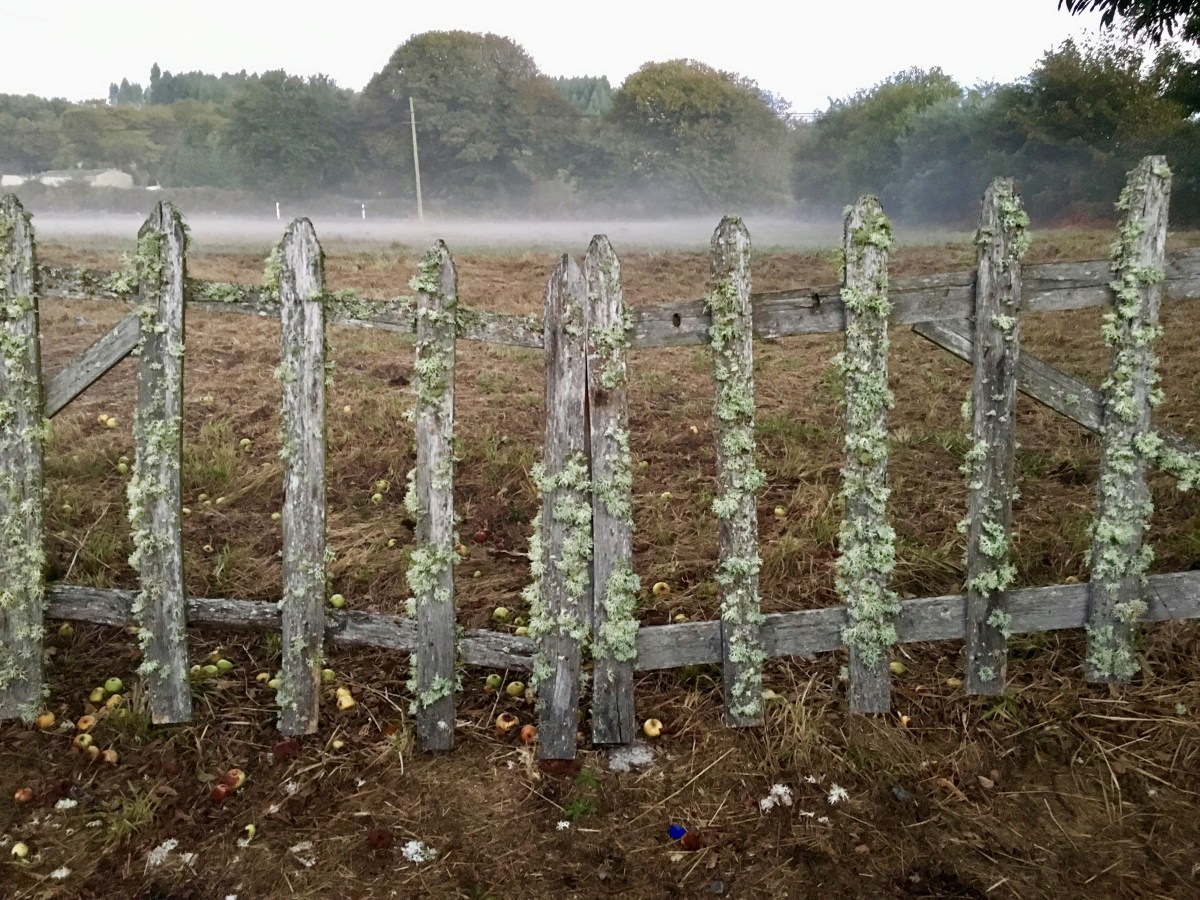
Share this:

  • Click to share on X (Opens in new window) X
  • Click to share on Facebook (Opens in new window) Facebook
  • More
  • Click to email a link to a friend (Opens in new window) Email
  • Click to print (Opens in new window) Print
  • Click to share on Pinterest (Opens in new window) Pinterest
Like Loading...

Posts pagination

Previous 1 … 39 40 41 … 67 Next
Blog at WordPress.com.
a pura vida year in costa rica

living abroad in Guanacaste

Lush Life Layers

Lake Garda Tourist

Susana Cabaço

Spiritual Insights & Personal Empowerment

Monkey's Tale

An Adventure Travel Blog

Journey with my Sketchbook

"My sketchbook is a witness of what I am experiencing, scribbling things whenever they happen." - Vincent Van Gogh

The Eternal Traveller

Remembering past journeys, recording current trips and planning for the next one!
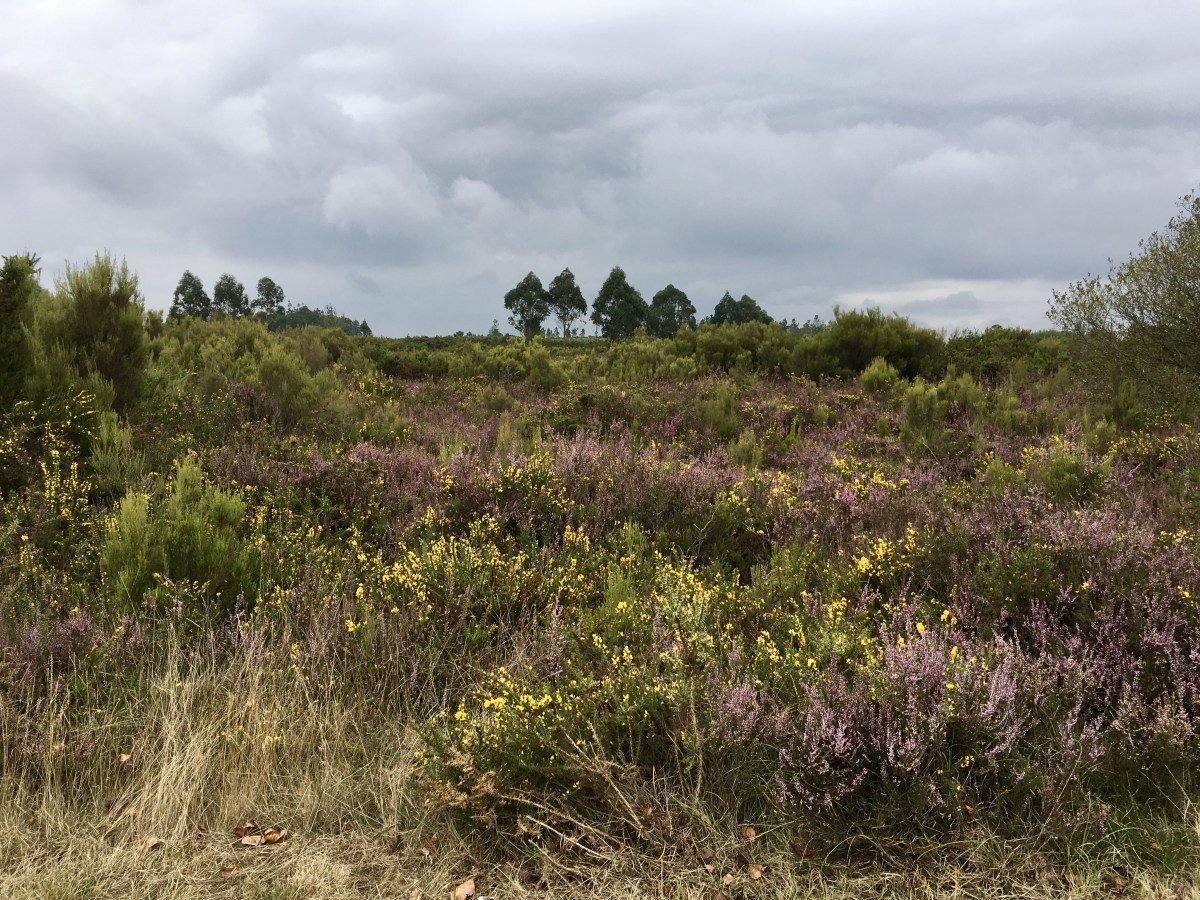
Lookoom

Put pictures on your travel dreams

Still Restlessjo

Roaming, at home and abroad

The Creative Life Adventure

Living a creative life

Inside My Sling Bag

Living, Loving, Laughing, Learning and (Being) Lucrative

Introvert Awakenings

My path less traveled. Rediscovering self after surviving the abuse that almost sunk me. Goal of strengthening and thriving on my adult legs. 👣🙏🏻 #recovery #forgiveness

Changcha Travel Tales

LightWriteLife

I love light, I love to write, I love life - I create my words and images to capture the light in my life.

the rak's sphere

Phosphene's Write

Live your life!! Life is beautiful!!
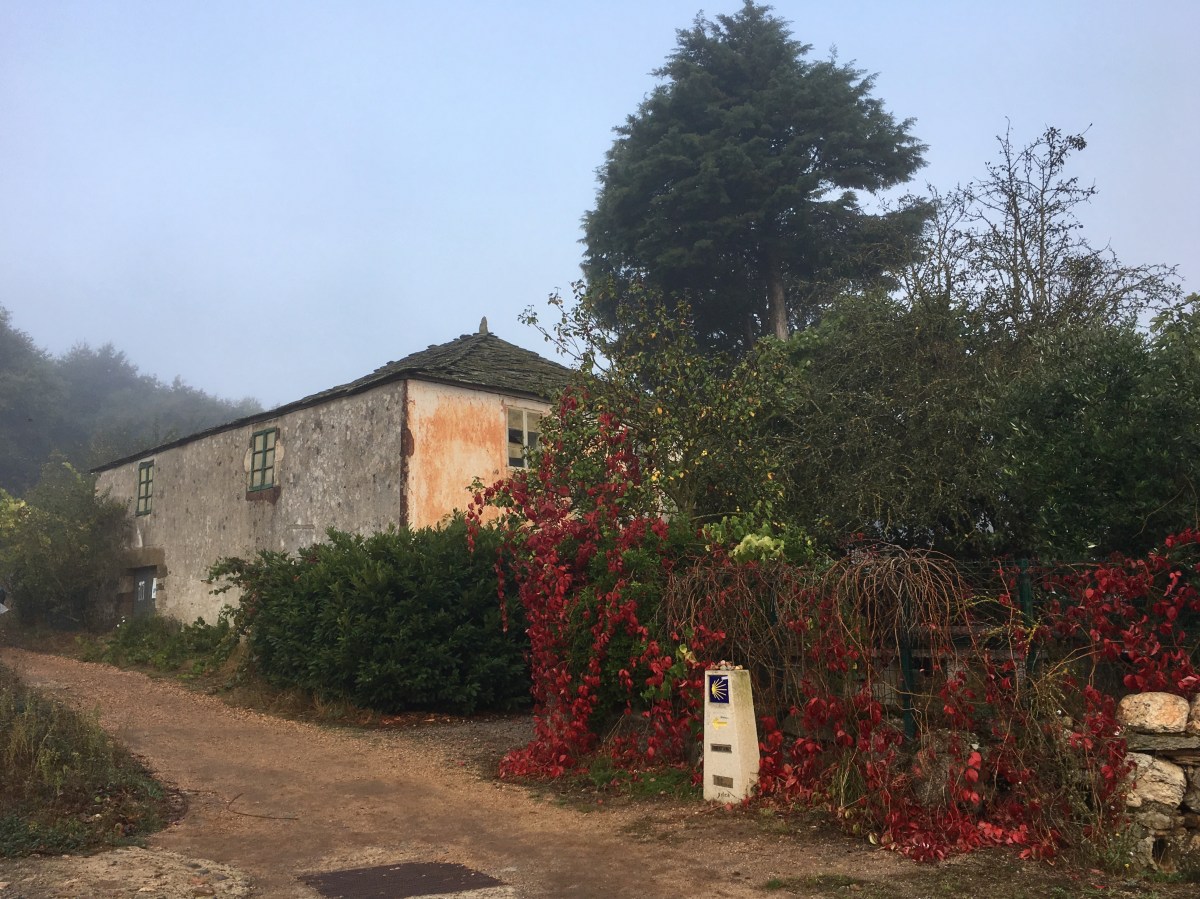
Image Earth Travel

Travel and Photography Site

Nanchi.blog

Lookoom

Mettez des images sur vos rêves de voyages

Retire In Branson

Old Bird Travels Solo!

THE MATURE ART OF TRAVELLING ALONE. MY NEW EMAIL IS: OldBirdTravels@proton.me PLEASE LIKE AND SHARE AT THE BOTTOM OF THE POST!

P e d r o L

storytelling the world

Welcome

RECYCLE YOUR PAIN

Motivation

Jim's Travel Culture and History Blog

World travel culture and history

Charlotte Digregorio's Writer's Blog

This blog is for those who wish to be creative, authors, people in the healing professions, business people, freelancers, journalists, poets, and teachers. You will learn about how to write well, and about getting published. Both beginning and experienced writers will profit from this blog and gain new creative perspectives. Become inspired from global writers, and find healing through the written word.

Musings of the Mind

Come journey with me as we navigate through this thing called life

robynsewsthisandthat

This is where I share my passions

Saania's diary - reflections, learnings, sparkles

Life is all about being curious, asking questions, and discovering your passion. And it can be fun!

The Wild Heart of Life

Creative Nonfiction & Poetry

deventuretime

Avid adventurer, travel blogger, and experience seeker. Starting each morning with a desire to see the world through a different lens.

Stu's Camino

The Frugal Foodies

Feeding an Empty Belly and Starving Mind

The Lost-o-graph

photographs

Our travels and thoughts through photographs. It does not matter, sunrise or sunset, just have fun in between.

My Serene Words

seeking solace in the horizon of life and beyond

HANNA'S WALK

Walks Stories and Nature

One Girl, Two Dogs & Two Thousand Miles

Brawnerology

Everything Family Travel: Work Hard, Play Hard

ROAD TO NARA

Culture and Communities at the Heart Of India

MEERYABLE

Explore, discover and experience the world through Meery's Eye. Off the beat budget traveler. Explore places, cultural and heritage. Sustainable trotter. shareable tales of Meery is Meeryable

Poetry 365

citysonnet.wordpress.com/

photography, poetry, paintings

Poetry collection

Work by Rain Alchemist

Eúnoia

Following my heart, Daring to dream, Living without regrets

VICENTE ROMERO - Paintings

Still Smiling

Smiling through the good times and the bad

flaviavinci

John Wreford Photographer

Words and Pictures from the Middle East

Lower the Bar for More Fun

Traveling the World, Expecting Less, and Experiencing More

~ wander.essence ~
Blog at WordPress.com.
  • Subscribe Subscribed
    • ~ wander.essence ~
    • Join 1,032 other subscribers
    • Already have a WordPress.com account? Log in now.
    • ~ wander.essence ~
    • Subscribe Subscribed
    • Sign up
    • Log in
    • Report this content
    • View site in Reader
    • Manage subscriptions
    • Collapse this bar
 

Loading Comments...
 

You must be logged in to post a comment.

    %d