Skip to content
  • Home
  • about ~ wander.essence ~
    • ~ the places i’ve been ~
    • ~ places i’ve been in the u.s.a. ~
  • Travel Destinations
    • America
      • Boston
      • Delaware
      • District of Columbia
        • Washington
      • Georgia
        • Atlanta
      • Maryland
      • New Jersey
        • Cape May
      • New York
        • Adirondacks
        • Buffalo
        • Niagara Falls
      • Pennsylvania
        • Pittsburgh
      • South Carolina
      • Tennessee
        • Nashville
      • Virginia
    • American Road Trips
      • Canyon & Cactus Road Trip
      • Florida Road Trip
        • Everglades
        • Fort Lauderdale
        • Florida Keys
        • Miami
        • St. Augustine
      • Four Corners Road Trip
        • Arizona
          • Monument Valley
          • Petrified Forest National Park
          • Sunset Crater National Monument
          • Walnut Canyon National Monument
          • Winslow
          • Wupatki National Monument
        • Colorado
          • Colorado National Monument
          • Colorado Towns
          • Great Sand Dunes National Park
          • Grand Junction
        • New Mexico
        • Utah
          • Arches National Park
          • Canyonlands
          • Navajo National Monument
          • Dead Horse Point State Park
          • Hovenweep National Monument
          • Moab
          • Valley of the Gods
          • Natural Bridges National Monument
      • Great Lakes Road Trip
        • Michigan
        • Minnesota
        • Wisconsin
      • Midwestern Triangle
        • Illinois
          • Carbondale
          • Murphysboro
        • Kentucky
          • Covington
          • Lexington
          • Louisville
        • Ohio
          • Cincinnati
      • Road Trip to Nowhere
        • Nebraska
        • North Dakota
        • South Dakota
      • Tex-New Mex Road Trip
        • Texas & New Mexico Road Trip
        • New Mexico
        • Texas
    • International Travel
      • Africa
        • african meanderings {& musings}
        • Egypt
          • Cairo
        • Ethiopia
        • Morocco
      • Asia
        • Cambodia
        • China
          • China Diaries
          • Guangxi Province
        • India
          • Rishikesh
          • Varanasi
        • Japan
          • Kyoto
        • Myanmar
        • Oman
          • a nomad in the land of nizwa
          • Nizwa
        • Singapore
        • South Korea
          • catbird in korea
        • Thailand
        • Turkey
          • Cappadocia
        • Vietnam
      • Central America
        • Costa Rica
        • El Salvador
        • Nicaragua
        • Panama
          • Bocas del Toro
          • Panama City
      • Europe
        • In Search of a Thousand Cafés
        • Croatia
          • Dalmatia
            • Istria
            • Dubrovnik
            • Plitvice Lakes National Park
            • Split
            • Zadar
            • Zagreb
        • Czech Republic
          • Český Krumlov
        • England
        • France
        • Greece
        • Hungary
          • Budapest
          • Esztergom
        • Iceland
        • Italy
          • Bergamo
          • Cinque Terre
          • The Dolomites
          • Florence
          • Rome
          • Tuscany
          • Venice
          • Verona
          • Via Francigena
        • Portugal
        • Spain
          • Camino de Santiago
            • packing list for el camino de santiago 2018
      • North America
        • Canada
          • The Maritimes
            • New Brunswick
            • Nova Scotia
            • Prince Edward Island
          • Ontario
        • Mexico
          • Guanajuato
          • Mexico City
            • Teotihuacán
          • Querétaro
          • San Miguel de Allende
      • South America
        • Colombia
        • Ecuador
          • Cuenca
          • Quito
    • how to make the most of a staycation
      • Coronavirus Coping
  • Imaginings
    • imaginings: the call to place
  • Travel Preparation
    • journeys: anticipation & preparation
  • Travel Creativity
    • on keeping a travel journal
    • on creating art from travels
      • Art Journaling
    • photography inspiration
      • Photography
    • writing prompts: prose
      • Prose
        • Fiction
        • Travel Essay
        • Travelogue
    • writing prompts: poetry
      • Poetry
  • On Journey
    • on journey: taking ourselves from here to there
  • Books & Movies
    • books | international a-z |
    • books & novels | u.s.a. |
    • books | history, spirituality, personal growth & lifestyle |
    • movies | international a-z |
    • movies | u.s.a. |
  • On Returning Home
    • on returning home
  • Annual recap
    • twenty-fifteen
    • twenty-eighteen
    • twenty-nineteen
    • twenty-twenty
    • twenty-twenty-one
    • twenty twenty-two
    • twenty twenty-three
    • twenty twenty-four
    • twenty twenty-five
  • Contact

Enter your email address to follow this blog and receive notifications of new posts by email.

Join 1,060 other subscribers
Follow ~ wander.essence ~ on WordPress.com
  • Home
  • about ~ wander.essence ~
    • ~ the places i’ve been ~
    • ~ places i’ve been in the u.s.a. ~
  • Travel Destinations
    • America
      • Boston
      • Delaware
      • District of Columbia
        • Washington
      • Georgia
        • Atlanta
      • Maryland
      • New Jersey
        • Cape May
      • New York
        • Adirondacks
        • Buffalo
        • Niagara Falls
      • Pennsylvania
        • Pittsburgh
      • South Carolina
      • Tennessee
        • Nashville
      • Virginia
    • American Road Trips
      • Canyon & Cactus Road Trip
      • Florida Road Trip
        • Everglades
        • Fort Lauderdale
        • Florida Keys
        • Miami
        • St. Augustine
      • Four Corners Road Trip
        • Arizona
          • Monument Valley
          • Petrified Forest National Park
          • Sunset Crater National Monument
          • Walnut Canyon National Monument
          • Winslow
          • Wupatki National Monument
        • Colorado
          • Colorado National Monument
          • Colorado Towns
          • Great Sand Dunes National Park
          • Grand Junction
        • New Mexico
        • Utah
          • Arches National Park
          • Canyonlands
          • Navajo National Monument
          • Dead Horse Point State Park
          • Hovenweep National Monument
          • Moab
          • Valley of the Gods
          • Natural Bridges National Monument
      • Great Lakes Road Trip
        • Michigan
        • Minnesota
        • Wisconsin
      • Midwestern Triangle
        • Illinois
          • Carbondale
          • Murphysboro
        • Kentucky
          • Covington
          • Lexington
          • Louisville
        • Ohio
          • Cincinnati
      • Road Trip to Nowhere
        • Nebraska
        • North Dakota
        • South Dakota
      • Tex-New Mex Road Trip
        • Texas & New Mexico Road Trip
        • New Mexico
        • Texas
    • International Travel
      • Africa
        • african meanderings {& musings}
        • Egypt
          • Cairo
        • Ethiopia
        • Morocco
      • Asia
        • Cambodia
        • China
          • China Diaries
          • Guangxi Province
        • India
          • Rishikesh
          • Varanasi
        • Japan
          • Kyoto
        • Myanmar
        • Oman
          • a nomad in the land of nizwa
          • Nizwa
        • Singapore
        • South Korea
          • catbird in korea
        • Thailand
        • Turkey
          • Cappadocia
        • Vietnam
      • Central America
        • Costa Rica
        • El Salvador
        • Nicaragua
        • Panama
          • Bocas del Toro
          • Panama City
      • Europe
        • In Search of a Thousand Cafés
        • Croatia
          • Dalmatia
            • Istria
            • Dubrovnik
            • Plitvice Lakes National Park
            • Split
            • Zadar
            • Zagreb
        • Czech Republic
          • Český Krumlov
        • England
        • France
        • Greece
        • Hungary
          • Budapest
          • Esztergom
        • Iceland
        • Italy
          • Bergamo
          • Cinque Terre
          • The Dolomites
          • Florence
          • Rome
          • Tuscany
          • Venice
          • Verona
          • Via Francigena
        • Portugal
        • Spain
          • Camino de Santiago
            • packing list for el camino de santiago 2018
      • North America
        • Canada
          • The Maritimes
            • New Brunswick
            • Nova Scotia
            • Prince Edward Island
          • Ontario
        • Mexico
          • Guanajuato
          • Mexico City
            • Teotihuacán
          • Querétaro
          • San Miguel de Allende
      • South America
        • Colombia
        • Ecuador
          • Cuenca
          • Quito
    • how to make the most of a staycation
      • Coronavirus Coping
  • Imaginings
    • imaginings: the call to place
  • Travel Preparation
    • journeys: anticipation & preparation
  • Travel Creativity
    • on keeping a travel journal
    • on creating art from travels
      • Art Journaling
    • photography inspiration
      • Photography
    • writing prompts: prose
      • Prose
        • Fiction
        • Travel Essay
        • Travelogue
    • writing prompts: poetry
      • Poetry
  • On Journey
    • on journey: taking ourselves from here to there
  • Books & Movies
    • books | international a-z |
    • books & novels | u.s.a. |
    • books | history, spirituality, personal growth & lifestyle |
    • movies | international a-z |
    • movies | u.s.a. |
  • On Returning Home
    • on returning home
  • Annual recap
    • twenty-fifteen
    • twenty-eighteen
    • twenty-nineteen
    • twenty-twenty
    • twenty-twenty-one
    • twenty twenty-two
    • twenty twenty-three
    • twenty twenty-four
    • twenty twenty-five
  • Contact

wander.essence

wander.essence

Home from Morocco & Italy

Home sweet home!May 10, 2019
I'm home from Morocco & Italy. :-)

Italy trip

Traveling to Italy from MoroccoApril 23, 2019
On my way to Italy!

Leaving for Morocco

Casablanca, here I come!April 4, 2019
I'm on my way to Casablanca. :-)

Home from our Midwestern Triangle Road Trip

Driving home from Lexington, KYMarch 6, 2019
Home sweet home from the Midwest. :-)

Leaving for my Midwestern Triangle Road Trip

Driving to IndianaFebruary 24, 2019
Driving to Indiana.

Returning home from Portugal

Home sweet home from Spain & Portugal!November 6, 2018
Home sweet home from Spain & Portugal!

Leaving Spain for Portugal

A rendezvous in BragaOctober 26, 2018
Rendezvous in Braga, Portgual after walking the Camino de Santiago. :-)

Leaving to walk the Camino de Santiago

Heading to Spain for the CaminoAugust 31, 2018
I'm on my way to walk 790 km across northern Spain on the Camino de Santiago.

Home from my Four Corners Road Trip

Home Sweet Home from the Four CornersMay 25, 2018
Home Sweet Home from the Four Corners. :-)

My Four Corners Road Trip!

Hitting the roadMay 1, 2018
I'm hitting the road today for my Four Corners Road Trip: CO, UT, AZ, & NM!

Recent Posts

  • the january cocktail hour: a belated nicaraguan christmas & a trip to costa rica’s central pacific coast February 3, 2026
  • bullet journals as a life repository: bits of mine from 2025 & 2026 January 4, 2026
  • twenty twenty-five: nicaragua {twice}, mexico & seven months in costa rica {with an excursion to panama} December 31, 2025
  • the december cocktail hour: mike’s surgery, a central highlands road trip & christmas in costa rica December 31, 2025
  • top ten books of 2025 December 28, 2025
  • the november cocktail hour: a trip to panama, a costa rican thanksgiving & a move to lake arenal condos December 1, 2025
  • panama: the caribbean archipelago of bocas del toro November 24, 2025
  • a trip to panama city: el cangrejo, casco viejo & the panama canal November 22, 2025
  • the october cocktail hour: a trip to virginia, a NO KINGS protest, two birthday celebrations, & a cattle auction October 31, 2025
  • the september cocktail hour: a nicoya peninsula getaway, a horseback ride to la piedra del indio waterfalls & a fall bingo card September 30, 2025
  • the august cocktail hour: local gatherings, la fortuna adventures, & a “desfile de caballistas”  September 1, 2025
  • the july cocktail hour: a trip to ometepe, nicaragua; a beach getaway to tamarindo; & homebody activities August 3, 2025
  • the june cocktail hour: our first month in costa rica June 30, 2025

Archives

  • February 2026
  • January 2026
  • December 2025
  • November 2025
  • October 2025
  • September 2025
  • August 2025
  • June 2025
  • May 2025
  • April 2025
  • March 2025
  • February 2025
  • January 2025
  • December 2024
  • November 2024
  • October 2024
  • September 2024
  • August 2024
  • July 2024
  • June 2024
  • May 2024
  • April 2024
  • March 2024
  • February 2024
  • January 2024
  • December 2023
  • November 2023
  • September 2023
  • August 2023
  • June 2023
  • May 2023
  • April 2023
  • March 2023
  • February 2023
  • January 2023
  • December 2022
  • November 2022
  • October 2022
  • September 2022
  • August 2022
  • June 2022
  • May 2022
  • April 2022
  • March 2022
  • February 2022
  • January 2022
  • December 2020
  • November 2020
  • October 2020
  • September 2020
  • August 2020
  • July 2020
  • June 2020
  • May 2020
  • April 2020
  • March 2020
  • February 2020
  • January 2020
  • December 2019
  • November 2019
  • October 2019
  • September 2019
  • August 2019
  • July 2019
  • June 2019
  • May 2019
  • April 2019
  • March 2019
  • February 2019
  • January 2019
  • December 2018
  • November 2018
  • October 2018
  • September 2018
  • August 2018
  • July 2018
  • June 2018
  • May 2018
  • April 2018
  • March 2018

Blog Stats

  • 126,416 hits
February 2026
M T W T F S S
 1
2345678
9101112131415
16171819202122
232425262728  
« Jan    

Categories

  • Aït-Ben-Haddou (4)
  • Abingdon (1)
  • Abiquiu (1)
  • Acquapendente (2)
  • Adirondacks (3)
  • Africa (39)
  • Ainokura (2)
  • Alabama (1)
  • Alajuela (3)
  • Alamogordo (1)
  • Albuquerque (3)
  • Alexandria (1)
  • Alma (1)
  • Alpe di Siusi (1)
  • Alsace-Lorraine (1)
  • Alto Adige Wine Road (1)
  • Amarante (2)
  • America (69)
  • American Bison (1)
  • American books (22)
  • American Road Trips (255)
  • American Visionary Art Museum (1)
  • Americana (1)
  • Andrew Johnson National Historic Site (1)
  • Annapolis Valley (1)
  • Annual recap (10)
  • Anticipation (45)
  • Antietam National Battlefield (2)
  • Aramak Tour (1)
  • Arches National Park (8)
  • architecture (1)
  • Arena Stage (1)
  • Arizona (28)
  • Aroumd (2)
  • Art Journaling (9)
  • Asciano (1)
  • Asia (41)
  • Assisi (1)
  • Astorga (2)
  • Atapuerca (1)
  • Athens (1)
  • Atlanta (7)
  • Austin (2)
  • Aveiro (2)
  • Azofra (2)
  • Aztec Ruins National Monument (1)
  • óbidos (1)
  • Baños (2)
  • Badlands National Park (1)
  • Bagan (1)
  • Bagno Vignoni (2)
  • Bajos del Toro (1)
  • Balcony House (1)
  • Bali (9)
  • Baltimore (7)
  • Baltimore Museum of Art (1)
  • Bandelier National Monument (1)
  • Bangkok (2)
  • Bear Butte (1)
  • Beatrice (1)
  • Beihai (1)
  • Belize (2)
  • Beppu (1)
  • Bergamo (3)
  • Big Bend National Park (2)
  • Bijagua (2)
  • Bismarck (3)
  • Bismarck Art Alley (1)
  • Bitchu-Takahashi (1)
  • Blue Falls of Costa Rica (1)
  • Bluff (1)
  • Bluff Fort Historic Site (1)
  • Bocas del Toro (2)
  • Bocas Town (1)
  • Bogotá (4)
  • Bolsena (2)
  • Bolzano (2)
  • Bonanzaville (1)
  • Books (47)
  • Bosque de Chapultepec (1)
  • Boston (2)
  • Boulder (1)
  • Boys Town (1)
  • Braga (3)
  • Brookings (1)
  • Brunico/Bruneck (1)
  • Budapest (1)
  • Buffalo (9)
  • Bukit Peninsula (1)
  • Bullet journaling (1)
  • Buonconvento (2)
  • Burano (2)
  • Burgos (4)
  • Cañas (2)
  • Cabo da Roca (1)
  • Caddo Lake (2)
  • Cairo (3)
  • California (4)
  • Cambodia (4)
  • Cambridge (1)
  • Camino de Santiago (64)
  • Campagnano di Roma (2)
  • Canada (15)
  • Canyon & Cactus Road Trip (4)
  • Canyon de Chelly (3)
  • Canyonlands (3)
  • Cape May (7)
  • Cappadocia (2)
  • Capranica (1)
  • Carbondale (9)
  • Carlsbad (1)
  • Carlsbad Caverns National Park (2)
  • Cartagena (4)
  • Casablanca (9)
  • Casco Viejo (1)
  • Castellina in Chianti (1)
  • Catarata del Toro (1)
  • Catskill Mountains (1)
  • Cedar Creek & Belle Grove National Historical Park (1)
  • Central America (43)
  • Central Highlands (1)
  • Centro Histórico (1)
  • Chaco Culture National Historical Park (4)
  • challenge: a call to place (38)
  • Channel Islands National Park (3)
  • Chapel in the Hills (1)
  • Charles Pinckney National Historic Site (1)
  • Charleston (11)
  • Chefchaouen (5)
  • Cheyenne (2)
  • Cheyenne Depot Museum (1)
  • Cheyenne Frontier Days Old West Museum (1)
  • Chicago (3)
  • Chillicothe (2)
  • Chimayó (1)
  • Chimney Rock (1)
  • China (8)
  • Chinatown (1)
  • Christmas (5)
  • Churchill Downs (1)
  • Cihuatán (1)
  • Cincinnati (15)
  • Cincinnati Art Museum (1)
  • Cinque Terre (10)
  • Cinquera (1)
  • Civita di Bagnoregio (1)
  • Cloudcroft (1)
  • Cocktail Hour (23)
  • Cocoa Beach (2)
  • Coeur d'Alene (1)
  • Collalbo/Klobenstein (1)
  • Colle di Val d'Elsa (2)
  • Colombia (9)
  • Colorado (31)
  • Colorado National Monument (3)
  • Colorado Towns (6)
  • Colorful (1)
  • Condesa (1)
  • Connecticut (1)
  • Cordoba (1)
  • Coronavirus Coping (14)
  • Cortina d’Ampezzo (1)
  • Costa Nova (1)
  • Costa Rica (21)
  • Covington (7)
  • Cowgirls of the West (1)
  • Coyoacán (1)
  • Crazy Horse Memorial (1)
  • Crestone (1)
  • Crete (1)
  • Croatia (3)
  • Cuenca (3)
  • Curves (1)
  • Custer (1)
  • Custer State Park (1)
  • Czech Republic (1)
  • Dakota Dinosaur Museum (1)
  • Dali (1)
  • Dalmatia (1)
  • De Smet (1)
  • Dead Horse Point State Park (1)
  • Dead Sea (1)
  • Deadwood (3)
  • decay (1)
  • Delaware (9)
  • Delphi (1)
  • Denver (1)
  • destinations (44)
  • Devils Tower National Monument (2)
  • Diamante Eco Adventure Park (1)
  • Dickinson (1)
  • District of Columbia (22)
  • Dobbiaco/Toblach (1)
  • Dolores Hidalgo (1)
  • Drawing (7)
  • Dubrovnik (1)
  • Durango (1)
  • Dwight D. Eisenhower Memorial (1)
  • Ecuador (14)
  • Egypt (3)
  • El Cangrejo (1)
  • El Salvador (6)
  • El-Khorbat (1)
  • Embudo (1)
  • Enchanted Rock State Natural Area (1)
  • England (3)
  • Erg Chebbi (3)
  • Española (1)
  • Essaouira (4)
  • Esztergom (1)
  • Ethiopia (3)
  • Europe (121)
  • Evan Williams Bourbon Experience (1)
  • Everglades (3)
  • Evora (1)
  • Fargo (2)
  • Fès (3)
  • Fenghuang (1)
  • Fez (2)
  • Fiction (6)
  • Findlay Market (1)
  • Finisterre (2)
  • Finland (1)
  • Fira (1)
  • Fiumicino (2)
  • Flatirons Vista Trail (1)
  • Flight 93 National Memorial (1)
  • Florence (8)
  • Florida Keys (3)
  • Florida Road Trip (5)
  • Formello (1)
  • Fort Abraham Lincoln State Park (1)
  • Fort Atkinson State HIstorical Park (1)
  • Fort Calhoun (1)
  • Fort Collins (2)
  • Fort Lauderdale (2)
  • Fort Mandan (1)
  • Fort McHenry National Monument and Historic Shrine (1)
  • Fort Robinson State Park (1)
  • Fort Sumter and Fort Moultrie National Historical Park (1)
  • Fort Union Trading Post National Historic Site (1)
  • Four Corners Road Trip (74)
  • France (7)
  • Frazier Museum (1)
  • Fredericksburg (1)
  • Fucecchio (1)
  • Fundy National Park (1)
  • G Adventures Tour (10)
  • Gallina (2)
  • Gambassi Terme (2)
  • Gateway Arch National Park (1)
  • Gavin's Point Dam (1)
  • George Rogers Clark National Historical Park (2)
  • Georgia (7)
  • Gerald R. Ford Birthsite (1)
  • Germany (1)
  • Gettysburg National Military Park (1)
  • Goals (3)
  • Gothenburg (1)
  • Grand Junction (1)
  • Great Falls (2)
  • Great Lakes Road Trip (6)
  • Great Sand Dunes National Park (2)
  • Grecia (1)
  • Greece (3)
  • Greeneville (1)
  • Greenville (1)
  • Greve in Chianti (1)
  • Guadalupe Mountains National Park (1)
  • Guanacaste (11)
  • Guanajuato (5)
  • Guangxi Province (4)
  • Guatapé (5)
  • Guatemala (2)
  • Guilin (1)
  • Guimarães (2)
  • Halifax (3)
  • Halong Bay (1)
  • Hanoi (1)
  • Heidelberg (1)
  • Hida Furukawago (2)
  • High Road to Taos (1)
  • Hikes & Walks (202)
  • HISTORIC NAKASENDO TRAIL (1)
  • Hoa Lu (1)
  • Holbrook (1)
  • Holidays (6)
  • Hong Kong (1)
  • Hopewell Culture National Historical Park (2)
  • Hopewell Rocks Provincial Park (1)
  • Hotel Hacienda Guachipelin (1)
  • Hovenweep National Monument (1)
  • Hubbell Trading Post (1)
  • Hungary (1)
  • Iceland (1)
  • Idaho (1)
  • Illinois (17)
  • Imaginings (45)
  • Imlil (2)
  • India (7)
  • Indiana (6)
  • Indonesia (9)
  • Ingapirca (2)
  • Inle Lake (1)
  • Innichen/San Candido (1)
  • International Books (31)
  • International Peace Garden (1)
  • International Travel (335)
  • Iowa (1)
  • Isla Bastimentos (1)
  • Isla Carenero (1)
  • Isla Colón (1)
  • Istanbul (2)
  • Istria (1)
  • Italy (62)
  • Jamestown (1)
  • Japan (20)
  • Japan Alps (4)
  • Jefferson (1)
  • Jewel Cave National Monument (1)
  • Jimbaran (1)
  • Joachim Regional Museum & Prairie Outpost Park (1)
  • Johnstown Flood National Memorial (1)
  • Jordan (3)
  • Joseph N. Nicollet Tower and Interpretive Center (1)
  • Joshua Tree National Park (3)
  • Joslyn Art Museum (1)
  • Journaling (9)
  • Joya de Cerén (1)
  • Kansas (2)
  • Kathmandu (2)
  • Kentucky (17)
  • KMAC (1)
  • Knife River Indian Villages (2)
  • Kunming (1)
  • Kurashiki Bikan Historical Quarter (1)
  • Kyoto (5)
  • Kyushu (4)
  • La Fortuna (2)
  • La Giustiniana (2)
  • La Peñol (1)
  • La Romita (1)
  • La Spezia (6)
  • Lago d'Iseo (1)
  • Lago di Garda (1)
  • Lago di Garda (1)
  • Laguna de Apoyo (1)
  • Laguna Quilotoa (2)
  • Languedoc-Roussillon (1)
  • Latacunga (3)
  • laundry (1)
  • Lazio (6)
  • León (2)
  • León (2)
  • Leeds (1)
  • Lens-Artists (2)
  • Lewis & Clark Interpretive Center (2)
  • Lexington (8)
  • Lijiang (1)
  • Lincoln Boyhood Home National Memorial (2)
  • Lincoln City (3)
  • lines (1)
  • Lisbon (8)
  • Logroño (3)
  • Lombardy (3)
  • Longji Rice Terraces (1)
  • Longreads (6)
  • Looking ahead (3)
  • Lorca (2)
  • Lory State Park (1)
  • Los Alamos (3)
  • Los Angeles (3)
  • Louisiana (1)
  • Louisville (13)
  • Low Road to Taos (1)
  • Lucca (3)
  • Luckenbach (1)
  • Lunenburg (1)
  • Madison (1)
  • Madison County Historical Society Museum (1)
  • Magnolia Plantations & Gardens (1)
  • Magome-juku (1)
  • Mahone Bay (1)
  • Maine (1)
  • Managua (5)
  • Manarola (1)
  • Mandalay (1)
  • Mandan (1)
  • Manhattan Project National Historical Park (1)
  • Mapmaking (2)
  • Marfa (1)
  • Market towns near Cuenca (2)
  • markets (1)
  • Marrakech (7)
  • Maryland (11)
  • Massachusetts (2)
  • Matagalpa (2)
  • Mathews (1)
  • Meadowlark Botanical Gardens (4)
  • Medellín (5)
  • Medora (5)
  • Memoir (4)
  • Merzouga (5)
  • Mesa Verde National Park (4)
  • Meteora (1)
  • Mexico (11)
  • Mexico City (7)
  • Miami (3)
  • Michigan (4)
  • Middletown (1)
  • Midwestern Triangle (30)
  • Minas Basin (1)
  • Mine of Santa Brigida (1)
  • Mineral de Pozos (1)
  • Ministers Island (1)
  • Minnesota (1)
  • Minnesota (3)
  • Minot (1)
  • Minuteman Missile National Historic Site (1)
  • Mirador de Catarina (1)
  • Mississippi (1)
  • Missouri (4)
  • Missouri National Recreation River (1)
  • Missouri River Basin Lewis & Clark Center (2)
  • Mitchell (1)
  • Moab (2)
  • Montalcino (1)
  • Montana (1)
  • Montefiascone (1)
  • Montefioralle (1)
  • Montepulciano (1)
  • Monteriggioni (3)
  • Monteroni d'Arbia (1)
  • Monterosi (1)
  • Monterosso al Mare (2)
  • Monteverde (1)
  • Monthly recap (23)
  • Monument Valley (1)
  • Moorhead (1)
  • Morocco (37)
  • Mount Pleasant (1)
  • Mt. Rushmore National Memorial (1)
  • Mulberry Bend Overlook (1)
  • Murano (2)
  • Murphysboro (10)
  • Muruzabal (1)
  • Muscat (1)
  • Museum of the Shenandoah Valley (1)
  • Muxia (2)
  • Myanmar (2)
  • Nagoya (4)
  • Nagoya Castle (2)
  • Nanning (3)
  • Naoshima (1)
  • Narita (5)
  • Nashville (8)
  • National Gallery of Art (2)
  • natural bridges (1)
  • Natural Bridges National Monument (2)
  • Navajo National Monument (2)
  • Nebraska (21)
  • Nepal (4)
  • New Belgium Brewing (1)
  • New Brunswick (6)
  • New Castle (2)
  • New England Road Trip (2)
  • New Hampshire (2)
  • New Jersey (7)
  • New Mexico (12)
  • New Mexico (1)
  • New Mexico (12)
  • New York (16)
  • Newport (1)
  • Niagara Falls (7)
  • Nicaragua (25)
  • Nice (1)
  • Nicoya Peninsula (1)
  • Nizwa (3)
  • Norfolk (1)
  • Normandy (1)
  • North America (22)
  • North Dakota (26)
  • North Dakota Heritage Center (2)
  • North Platte (1)
  • Norway (1)
  • Nosara (1)
  • Nova Scotia (5)
  • Nuevo Arenal (1)
  • Nusa Dua (1)
  • Oakland (1)
  • Oakton (23)
  • Ogallala (1)
  • Ohio (17)
  • Ohkay Owingeh Pueblo (1)
  • Oia (1)
  • Okayama (4)
  • Oklahoma (1)
  • Oklahoma City (1)
  • Old Market (1)
  • Omaha (5)
  • Oman (4)
  • Ometepe (15)
  • On Journey (44)
  • On Returning Home (40)
  • On-a-Slant Village (1)
  • Ontario (4)
  • Orisson (2)
  • Ortesei/St. Ulrich (1)
  • Orvieto (1)
  • Otavalo (2)
  • Ouray (1)
  • Pagosa Springs (1)
  • Pamplona (2)
  • Panama (4)
  • Panama Canal (2)
  • Panama City (2)
  • Panchimalco (1)
  • Panzano in Chianti (1)
  • Paris (2)
  • Parque Nacional Cajas (2)
  • Parque Nacional Cotopaxi (2)
  • Parque Nacional Volcán Poás (1)
  • Parque Nacional Volcán Tenorio (2)
  • Parque Nactional Volcán Rincón de la Vieja (2)
  • pastels (1)
  • Patterns (3)
  • Peña de Bernal (1)
  • Pecos National Historical Park (1)
  • Peniche (1)
  • Pennsylvania (14)
  • Perugia (2)
  • Petrified Forest National Park (5)
  • petroglyphs (1)
  • Phnom Penh (3)
  • Photography (266)
  • Phuket (2)
  • Pilgrimage (75)
  • Ping'An (1)
  • Pisa (1)
  • Pittsburgh (11)
  • Playa Costa del Sol (1)
  • Playa Hermosa (3)
  • Plitvice Lakes National Park (1)
  • Poetry (33)
  • Pokhara (2)
  • Polanco (1)
  • Ponca State Park (1)
  • Ponte a Cappiano (1)
  • Porto (4)
  • Portovenere (1)
  • Portugal (25)
  • Prairie Homestead Historic Site (1)
  • Prince Edward Island (2)
  • Prose (207)
  • Puerta del Diablo (1)
  • Querétaro (4)
  • Quito (2)
  • Rapid City (6)
  • Red Cloud (1)
  • Redlin Art Center (1)
  • Regent (1)
  • Rehoboth (2)
  • Renon (1)
  • Renon/Ritten Plateau (1)
  • Reverse culture shock (2)
  • Richmond (7)
  • Riobamba (2)
  • Rishikesh (2)
  • Rittner Horn (1)
  • Riverbend Park (1)
  • Road Trip to Nowhere (63)
  • Rocky Mountain National Park (1)
  • Roma Norte (2)
  • Rome (16)
  • Roof Squares (1)
  • Route 66 (1)
  • Ruidoso (1)
  • Sackville (1)
  • Sahara (3)
  • Saint John (1)
  • Saint-Jean-Pied-de-Port (4)
  • San Ángel (1)
  • San Francisco (2)
  • San Gimignano (5)
  • San José (2)
  • San Juan del Sur (2)
  • San Juan Skyway Scenic Byway (3)
  • San Lorenzo Nuovo (1)
  • San Miguel de Allende (6)
  • San Miniato (1)
  • San Quirico d'Orcia (4)
  • San Salvador (5)
  • San Sebastián Bernal (1)
  • San Simeon (2)
  • Sant'Antimo (1)
  • Santa Barbara (2)
  • Santa Fe (5)
  • Santa Maddalena (1)
  • Santa Rosa de Lima (1)
  • Santiago (4)
  • Santo Domingo de la Calzada (2)
  • Santorini (1)
  • Sarchí (1)
  • Sámara (1)
  • Scandinavian Heritage Center (1)
  • Scotts Bluff National Monument (1)
  • Semarapura (2)
  • Shanghai (1)
  • Shenandoah National Park (1)
  • Shepherdstown (1)
  • Shibao Shan (2)
  • Shikoku 88-Temple Pilgrimage Route (4)
  • Shirakawa-go (2)
  • Shreveport (1)
  • Sidemen (1)
  • Siem Reap (3)
  • Siena (2)
  • Silverton (1)
  • Singapore (3)
  • Sintra (2)
  • Sioux Falls (2)
  • Sisseton (1)
  • Smithsonian American Art Museum (SAAM) (5)
  • Smithsonian National Museum of Asian Art (2)
  • South America (25)
  • South Carolina (12)
  • South Dakota (24)
  • South Dakota Art Museum (1)
  • South Korea (5)
  • Spain (68)
  • Spearfish (2)
  • Spello (1)
  • Spirit Mound Historic Prairie (1)
  • Split (1)
  • Springfield (3)
  • St. Andrews by-the-Sea (1)
  • St. Augustine (2)
  • St. Louis (2)
  • Stanton (1)
  • Staycation (8)
  • Stonewall (1)
  • Street Art (2)
  • Sturgis (2)
  • Suchitoto (1)
  • Sullivan's Island (2)
  • Sunset Crater National Monument (1)
  • Sunsets (1)
  • Supreme Court of the United States (2)
  • Sweden (1)
  • Swedish Heritage Center (1)
  • Takayama (3)
  • Tam Coc (1)
  • Tamarindo (1)
  • Tangier (3)
  • Taos (4)
  • Tejutepeque (2)
  • Telluride (2)
  • Tennessee (10)
  • Teotihuacán (1)
  • Terlingua (1)
  • Termas de Papallacta (2)
  • Tex-New Mex Road Trip (16)
  • Texas (8)
  • Texas & New Mexico Road Trip (20)
  • Thailand (3)
  • Thanksgiving (1)
  • The Battery (1)
  • The Dolomites (4)
  • The Enchanted Highway (1)
  • The Journey Museum (1)
  • The Maritimes (10)
  • The Veneto (5)
  • The Walters Art Museum (1)
  • Theodore Roosevelt National Park (4)
  • Tigua (2)
  • Tilarán (11)
  • Tinghir (2)
  • Toadstool Geologic Park (1)
  • Todra Gorge (1)
  • Tokushima (1)
  • Tokyo (6)
  • Topeka (1)
  • Torres del Rio (2)
  • Travel (657)
  • Travel Creativity (363)
  • Travel Essay (201)
  • Travel Inspiration (45)
  • Travel photography (245)
  • Travel Preparation (49)
  • Travel videos (48)
  • Travelogue (202)
  • Trentino & South Tyrol (5)
  • Trinidad & Tobago (2)
  • Tronadora (7)
  • Truchas (1)
  • Tsumago-juku (1)
  • Turkey (5)
  • Tuscany (31)
  • twenty twenty-five (1)
  • twenty twenty-four (1)
  • twenty twenty-three (1)
  • twenty twenty-two (1)
  • twenty twenty-two (2)
  • twenty-eighteen (1)
  • twenty-fifteen (1)
  • twenty-nineteen (1)
  • twenty-twenty (2)
  • twenty-twenty-one (1)
  • Ubud (1)
  • Uluwatu (1)
  • Ulysses S Grant National Historic Site (1)
  • Umbria (10)
  • Union Market (2)
  • United Arab Emirates (UAE) (2)
  • Utah (26)
  • Valley City (1)
  • Valley of the Gods (1)
  • Varanasi (2)
  • Vatican City (1)
  • Vatican Museums (1)
  • Venice (2)
  • Venice (5)
  • Ventosa (2)
  • Vermillion (1)
  • Vermont (2)
  • Vernazza (1)
  • Verona (2)
  • Vetralla (1)
  • Via Francigena (15)
  • Vicksburg (1)
  • Vienna (10)
  • Vietnam (4)
  • Villamayor de Monjardín (2)
  • Villamayor del Rio (1)
  • Vincennes (3)
  • Virginia (41)
  • Virginia Museum of Fine Arts (5)
  • Viterbo (2)
  • Volcán Chimborazo (2)
  • Volcán Cotopaxi (2)
  • Volterra (2)
  • Volubilis (1)
  • Wall (4)
  • Walnut Canyon National Monument (1)
  • Washburn (2)
  • Washington (20)
  • Watertown (2)
  • Watford City (1)
  • West Virginia (1)
  • White Sands National Park (2)
  • Wigwam Motel (1)
  • Wilber (1)
  • Wildlife (1)
  • Wildwood (3)
  • William Howard Taft National Historic Site (1)
  • Wilmington (3)
  • Winchester (1)
  • Wind Cave National Park (1)
  • Window Rock Navajo Tribal Park (1)
  • Winslow (3)
  • Wisconsin (2)
  • Writing (248)
  • Wupatki National Monument (2)
  • Wyoming (6)
  • Xi'an (1)
  • Yangon (1)
  • Yangshuo (1)
  • Yankton (1)
  • Yokohama (4)
  • Yorktown (2)
  • Yufuin (1)
  • Yunnan Province (2)
  • Zadar (1)
  • Zagreb (1)
  • Zarcero (1)
  • Zhangjiajie (1)
  • Ōsu Kannon Temple (2)
  • Český Krumlov (1)

Africa America American books American Road Trips Annual recap Anticipation Arches National Park Arizona Art Journaling Asia Bali Books Buffalo Camino de Santiago Canada Carbondale Casablanca Central America challenge: a call to place Charleston China Cincinnati Cinque Terre Cocktail Hour Colombia Colorado Coronavirus Coping Costa Rica Delaware destinations District of Columbia Ecuador Europe Four Corners Road Trip G Adventures Tour Guanacaste Hikes & Walks Illinois Imaginings Indonesia International Books International Travel Italy Japan Journaling Kentucky Louisville Maryland Mexico Midwestern Triangle Monthly recap Morocco Murphysboro Nashville Nebraska New Mexico New York Nicaragua North America North Dakota Oakton Ohio Ometepe On Journey On Returning Home Pennsylvania Photography Pilgrimage Pittsburgh Poetry Portugal Prose Road Trip to Nowhere Rome South America South Carolina South Dakota Spain Tennessee Tex-New Mex Road Trip Texas & New Mexico Road Trip The Maritimes Tilarán Travel Travel Creativity Travel Essay Travel Inspiration Travelogue Travel photography Travel Preparation Travel videos Tuscany Umbria Utah Via Francigena Vienna Virginia Washington Writing

Pages

  • about ~ wander.essence ~
  • books & novels | u.s.a. |
  • books | history, spirituality, personal growth & lifestyle |
  • books | international a-z |
  • how to make the most of a staycation
  • movies | international a-z |
  • movies | u.s.a. |
  • on creating art from travels
  • on keeping a travel journal
  • packing list for el camino de santiago 2018
  • photography inspiration
  • writing prompts: poetry
  • writing prompts: prose
  • ~ places i’ve been in the u.s.a. ~
  • ~ the places i’ve been ~
  • Contact

Translate

Goodreads

Blogs I Follow

Unknown's avatar
Unknown's avatar
Unknown's avatar
Unknown's avatar
Unknown's avatar
Unknown's avatar
Unknown's avatar
Unknown's avatar
Unknown's avatar
Unknown's avatar
Unknown's avatar
Unknown's avatar
Unknown's avatar
Unknown's avatar
Unknown's avatar
Unknown's avatar

Top Posts & Pages

  • Contact
  • utah: points southwest
  • anticipation & preparation: jordan in 2011
  • norfolk, nebraska: childhood home of johnny carson
  • on returning home from china
  • on returning home from turkey
  • san gimignano: a city of medieval skyscrapers
  • *colorful* in niagara falls, ontario
  • call to place: ecuador
  • on returning home from a road trip to nowhere

wander.essence

wander.essence
  • Home
  • about ~ wander.essence ~
  • Travel Destinations
  • Imaginings
  • Travel Preparation
  • Travel Creativity
  • On Journey
  • Books & Movies
  • On Returning Home
  • Annual recap
  • Contact

~ wander.essence ~

where travel meets art

  • Home
  • about ~ wander.essence ~
    • ~ the places i’ve been ~
    • ~ places i’ve been in the u.s.a. ~
  • Travel Destinations
    • America
      • Boston
      • Delaware
      • District of Columbia
        • Washington
      • Georgia
        • Atlanta
      • Maryland
      • New Jersey
        • Cape May
      • New York
        • Adirondacks
        • Buffalo
        • Niagara Falls
      • Pennsylvania
        • Pittsburgh
      • South Carolina
      • Tennessee
        • Nashville
      • Virginia
    • American Road Trips
      • Canyon & Cactus Road Trip
      • Florida Road Trip
        • Everglades
        • Fort Lauderdale
        • Florida Keys
        • Miami
        • St. Augustine
      • Four Corners Road Trip
        • Arizona
          • Monument Valley
          • Petrified Forest National Park
          • Sunset Crater National Monument
          • Walnut Canyon National Monument
          • Winslow
          • Wupatki National Monument
        • Colorado
          • Colorado National Monument
          • Colorado Towns
          • Great Sand Dunes National Park
          • Grand Junction
        • New Mexico
        • Utah
          • Arches National Park
          • Canyonlands
          • Navajo National Monument
          • Dead Horse Point State Park
          • Hovenweep National Monument
          • Moab
          • Valley of the Gods
          • Natural Bridges National Monument
      • Great Lakes Road Trip
        • Michigan
        • Minnesota
        • Wisconsin
      • Midwestern Triangle
        • Illinois
          • Carbondale
          • Murphysboro
        • Kentucky
          • Covington
          • Lexington
          • Louisville
        • Ohio
          • Cincinnati
      • Road Trip to Nowhere
        • Nebraska
        • North Dakota
        • South Dakota
      • Tex-New Mex Road Trip
        • Texas & New Mexico Road Trip
        • New Mexico
        • Texas
    • International Travel
      • Africa
        • african meanderings {& musings}
        • Egypt
          • Cairo
        • Ethiopia
        • Morocco
      • Asia
        • Cambodia
        • China
          • China Diaries
          • Guangxi Province
        • India
          • Rishikesh
          • Varanasi
        • Japan
          • Kyoto
        • Myanmar
        • Oman
          • a nomad in the land of nizwa
          • Nizwa
        • Singapore
        • South Korea
          • catbird in korea
        • Thailand
        • Turkey
          • Cappadocia
        • Vietnam
      • Central America
        • Costa Rica
        • El Salvador
        • Nicaragua
        • Panama
          • Bocas del Toro
          • Panama City
      • Europe
        • In Search of a Thousand Cafés
        • Croatia
          • Dalmatia
            • Istria
            • Dubrovnik
            • Plitvice Lakes National Park
            • Split
            • Zadar
            • Zagreb
        • Czech Republic
          • Český Krumlov
        • England
        • France
        • Greece
        • Hungary
          • Budapest
          • Esztergom
        • Iceland
        • Italy
          • Bergamo
          • Cinque Terre
          • The Dolomites
          • Florence
          • Rome
          • Tuscany
          • Venice
          • Verona
          • Via Francigena
        • Portugal
        • Spain
          • Camino de Santiago
            • packing list for el camino de santiago 2018
      • North America
        • Canada
          • The Maritimes
            • New Brunswick
            • Nova Scotia
            • Prince Edward Island
          • Ontario
        • Mexico
          • Guanajuato
          • Mexico City
            • Teotihuacán
          • Querétaro
          • San Miguel de Allende
      • South America
        • Colombia
        • Ecuador
          • Cuenca
          • Quito
    • how to make the most of a staycation
      • Coronavirus Coping
  • Imaginings
    • imaginings: the call to place
  • Travel Preparation
    • journeys: anticipation & preparation
  • Travel Creativity
    • on keeping a travel journal
    • on creating art from travels
      • Art Journaling
    • photography inspiration
      • Photography
    • writing prompts: prose
      • Prose
        • Fiction
        • Travel Essay
        • Travelogue
    • writing prompts: poetry
      • Poetry
  • On Journey
    • on journey: taking ourselves from here to there
  • Books & Movies
    • books | international a-z |
    • books & novels | u.s.a. |
    • books | history, spirituality, personal growth & lifestyle |
    • movies | international a-z |
    • movies | u.s.a. |
  • On Returning Home
    • on returning home
  • Annual recap
    • twenty-fifteen
    • twenty-eighteen
    • twenty-nineteen
    • twenty-twenty
    • twenty-twenty-one
    • twenty twenty-two
    • twenty twenty-three
    • twenty twenty-four
    • twenty twenty-five
  • Contact
  • Poetry
  • Travel
  • Writing

poetic journeys: elusive words

wanderessence1025's avatar wanderessence1025 November 6, 2020
Silver rain falls
        in stinging skewers
                as I traipse

beneath street lamps.
        Their warm glow
                tosses haloes

over my head
        like ideas for poems.
                I hunch, cross my arms

over my Shetland wool
        sweater.  It's not that
                I'm against

the pyramid-slant
        of the watery slashes,
                the wrong words that splat

randomly on the empty page.
        I just wonder
                why the reams of water

in this cold air
        aren't snowflakes
                sprinkled like powdered sugar,

a smattering
        of white freckles
                on my florid cheeks,

pearl-like words
        on a blank
                blushing page.

*************************

“POETRY” Invitation: I invite you to write a poem of any poetic form on your own blog about a particular travel destination. Or you can write about travel in general. Concentrate on any intention you set for your poetry.

This poem is not necessarily related to travel, but it could be an expression of our journey through life and how we seek to capture it in words. To be honest, I ran out of time before I was scheduled to travel on my Canyon & Cactus Road trip, so I used a poem I wrote a long time ago. 🙂

snow

You can either set your own poetic intentions, or use one of the prompts I’ve listed on this page: writing prompts: poetry. (This page is a work in process). You can also include photos, of course.

Include the link in the comments below by Thursday, December 3 at 1:00 p.m. EST. When I write my post in response to this challenge on Friday, December 4, I’ll include your links in that post.

This will be an ongoing invitation, on the first Friday of each month. Feel free to jump in at any time. 🙂

I hope you’ll join in our community. I look forward to reading your posts!

Share this:

  • Share on X (Opens in new window) X
  • Share on Facebook (Opens in new window) Facebook
  • More
  • Email a link to a friend (Opens in new window) Email
  • Print (Opens in new window) Print
  • Share on Pinterest (Opens in new window) Pinterest
Like Loading...
  • American Road Trips
  • Photography
  • Rapid City

the journey museum in rapid city, south dakota

wanderessence1025's avatar wanderessence1025 November 5, 2020

To get to Interior, South Dakota, I had to go through a corner of the Badlands, so I stopped at the Visitor Center to get another cancellation stamp.  I saw someone with an R.pod RV trailer (Hood River Edition) that was very cute. Someday I’d like one of those for myself. 🙂

I reached Interior at 1:10 and loaded up on gas.  I got on 44W for the “scenic drive” to Rapid City.  I passed the Cheyenne River at 2:00; it was 85°F outside.

The landscape started greening and more trees cropped up.  I passed farmsteads along the road.  Green mountains were in the distance.

In Farmingdale were junkyards and shacks, mobile homes, rusted and wrecked cares.  The place was all ashambles.

I passed cornfields and sunflower fields and finally, more farms and civilization!  By 2:45, I arrived in Rapid City, got a car wash and vacuumed the front floor of the car.

I arrived at The Journey Museum at 3:00.

fullsizeoutput_1f2bb

The Journey Museum

I watched the video, “The Journey,” from the beginning of the universe to the age of the dinosaurs and on to the Native peoples and the pioneers who followed. A self-guided tour began with 1,000 points of light that represent the immense nature of a universe deep in space and time.  A timeline took us from the formation of the Black Hills billions of years ago to the present day.

Triceratops and T.Rex
Tyrannasaurus Rex
Tyrannasaurus Rex
Dinosaurs in South Dakota

Archeologists have learned that the first people in South Dakota, known as Paleo-Indians, were here approximately 11,500 years ago. They probably traveled in small bands camping frequently as they hunted the mammoth and bison.

The Jim Pitts Site was an archeological dig site that yielded everything from a Goshen point (10,000-11,000 years old) to a 1946 penny. It was at one time a Paleo-Indian campsite.

Paleo-Indians
Paleo-Indians
Jim Pitts Site
Jim Pitts Site
Mammoth hunters
Mammoth hunters
arrowheads
arrowheads

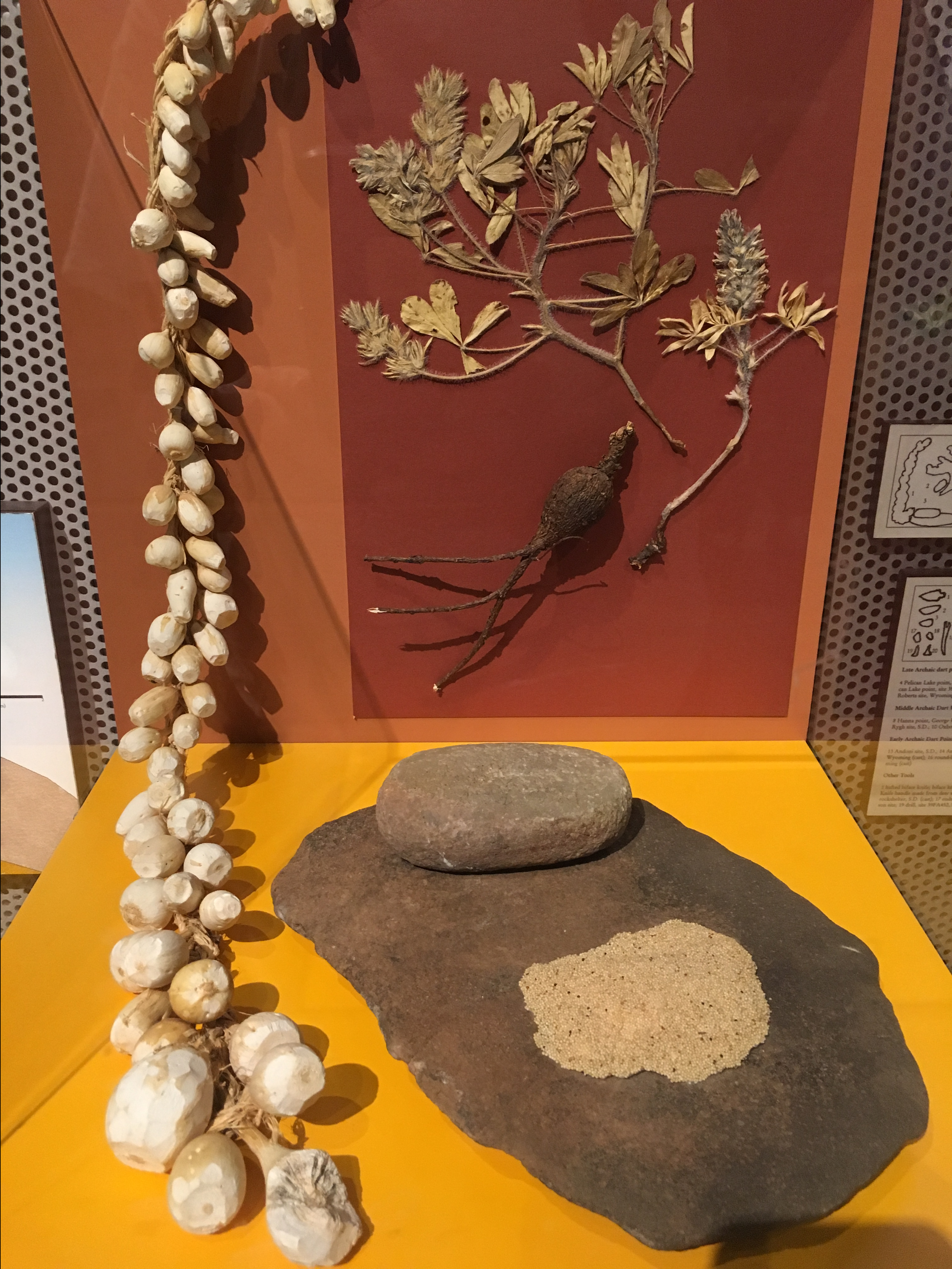
Approximately 7,500 years ago, an abrupt shift to a dry, hot climate brought an end to the Paleo-Indian big game-hunting lifestyle. The people of the Plains began to rely heavily on collecting and processing a wide variety of plant foods supplemented by hunting of various small and large game animals.  They lived in pit houses and early versions of the tipi.

Large quantities of prairie turnip roots were dug by nomadic tribes on the Northern Great Plains.  They were often braided into strands and dried for consumption during the winter and for use in trade.

img_2682.jpg

prairie turnip roots

The more sedentary lifestyle of the Plains Villagers led to the development of permanent dwellings called earthlodges. The typical Plains Village settlement was large and compact and often fortified by dry moats and palisades.

I learned about the meeting of whites and natives (Custer’s excursion into the Black Hills), Indians forced onto reservations and assimilation, Wounded Knee, and the idea of Dominion (Whites) vs. Harmony (Natives) over the land.

Custer’s Expedition to the Black Hills is the first fully documented visit by Euro-Americans to this area. Prior to this, Euro-American fur trappers and explorers had probably visited the Black Hills.

On July 2, 1874, the Black Hills Expedition departed from Ft. Lincoln, Dakota Territory, bound for the Black Hills some 300 miles distant.  Brevet General George Armstrong Custer had orders to explore and map this area, report on its geology and determine a possible site for a military post. Custer had a large force under his command: some 1,000 military and civilian personnel, including a corps of scientists, 75 Indian scouts, newspaper reporters, and a photographer. Some 110 covered wagons carried supplies, and there was even a 16-piece brass band to entertain the troops.

The expedition also included at least two prospectors.  Although the existence of gold in the Black Hills had long been suspected, it was not until its “discovery” during this expedition that the Black Hills gold rush began.  Since the region still belonged to the Lakota Sioux under terms of the 1868 Fort Laramie Treaty, signed by Lakota, Yanktonai, and Arapaho representatives, conflict between the Lakota, gold seekers and the U.S. military began almost immediately. The military did at first keep many of the would-be fortune hunters out of the Black Hills, and evicted many others. However, by 1876 its efforts had waned perhaps because it appeared the Sioux would not agree to the government proposal to buy the Hills. Consequently, open war between the Lakota Sioux and the United States broke out in 1876.

Following the Sioux Campaign of 1876 and the deaths of Custer and many of his troops at the Battle of Little Big Horn in Montana, the Black Hills were finally opened to non-Indian settlement by the controversial treaty of 1877. This forced the Sioux Indians onto reservations permanently. This marked the beginning ot a determined attack by the Office of Indian Affairs on the Sioux Indian tiyospaye (way of life). In 1883, the U.S. government adopted the “Code of Indian Offenses,” which outlawed behavior such as traditional dances and feasts, religious practices of medicine men, speaking tribal languages, and traditional funeral practices.

In order to receive the government supplied annuities promised to them, the Lakota had to send their children away to boarding schools or mission schools.  Humanitarians in Congress believed it was in the best interests of the Indian to become assimilated into the prevailing white, Christian culture; they feared without assimilation, the Lakota would surely face annihilation.  The government-run schools, as well as those run by Christian missionaries, did everything in their power to eradicate all Lakota traditions, language, and values, and convert the Indians into white, Christian citizens.

The Dawes Act of 1887 divided tribal lands into allotments of 160 acres for individual Indians. All “surplus” lands could then be sold.  This was an attempt to destroy the nomadic communal lifestyle of the Indians and force a sedentary agricultural lifestyle on the tribes. As a result of the Dawes Act, American Indian tribes lost 65% of their land between 1887 and 1934.

There came a time when the Lakota were in disarray, half-starving on reservations, dependent on the government’s rations.  Then came Wovoka, known to whites as Jack Wilson, who gave the Indians a new dream.  If they prepared and danced the Ghost Dance, this messiah promised a return of the former happy hunting life, with the white man gone.  As the Ghost Dance spread, so did the government’s concern.  Troops were sent in, and in rapid succession, Sitting Bull was arrested and killed, and Big Foot’s band surrendered, hoping to return to their agency.  On December 29, 1890, the military called in Colonel James W. Forsyth and the Seventh Cavalry, while Big Foot’s band camped peaceably at Wounded Knee under the protection of Colonel Whiteside. Tension was high, a shot was fired in the air, and tragedy struck.  When the dust settled, approximately 25 soldiers and hundreds of unsuspecting Indian men, women and children had been killed.

Many of these practices that began with the Dawes Act continued for the next 50 years, until they began to be reversed by the Indian Citizenship Act in 1924 and the Indian Reorganization Act in 1934. This culminated in 1968 with the Indian Civil Rights Act which extended the protections offered U.S. citizens under the Bill of Rights to Indians living on reservations.

In the museum, I saw Native American quillwork and beadwork, tipis, uses of feathers, horns and antlers, painted robes, and Lakota Sioux men’s and women’s roles.

Beadwork and quillwork
Native American horse
Native people
Native people
Native people
Native people
painted robe
painted robe
Native people
Native people
Native people
Native people

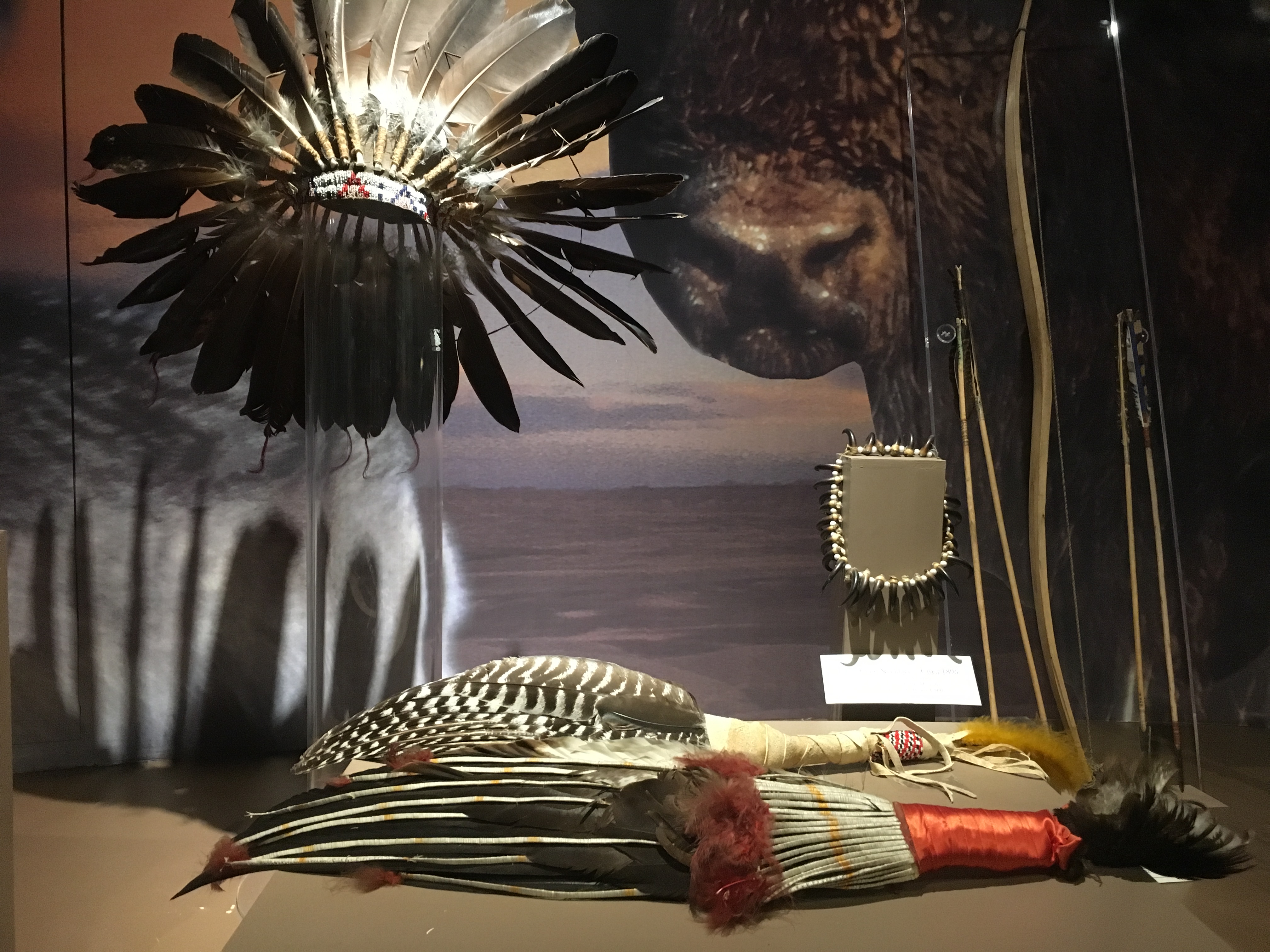
Feathers from birds of prey such as eagles (wambli), hawks (chetan), and owls (hihan) were valued for their spiritual importance.  They were used to make items such as war bonnets, ceremonial fans and arrows.

IMG_2692

feather decorations

The Wicoti lived a balanced life.  They provided for their families by hunting buffalo and other animal relatives, who gave themselves up for food.  They engaged in sacred ceremonies to renew the cycle of the days, the moons, the seasons, and the energy of the universe.

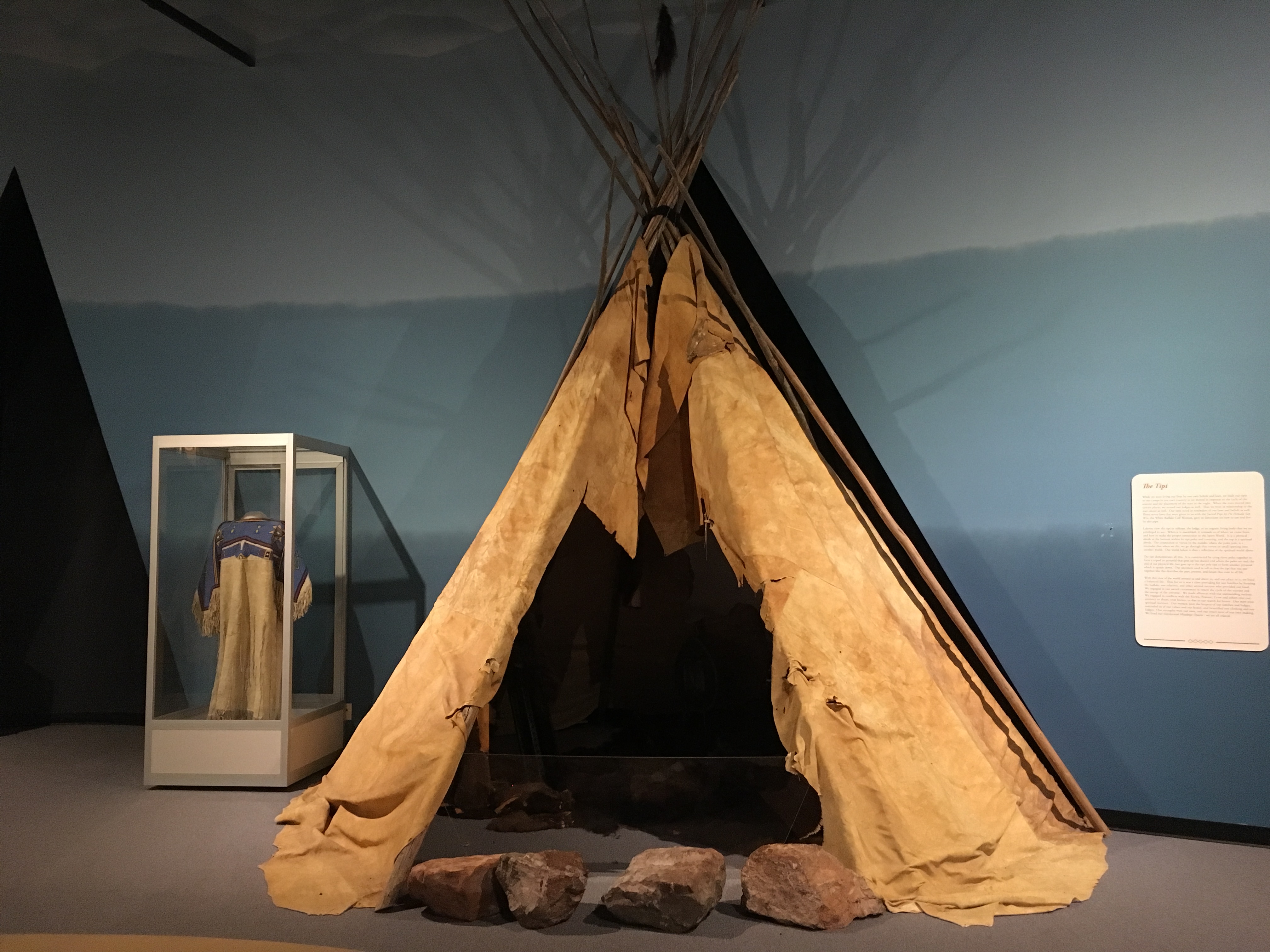
The Lakota viewed the tipi, or tiikeeya, the lodge, as an organic living body that they were privileged to use. It was a physical abode at the bottom within its tipi poles and covering, and the top was a spiritual abode. The connection or vortex in the middle, where the poles join, is a reminder that when they died, they went through that vortex or small opening into another world. The world below was thus a reflection of the spiritual world above.

IMG_2695

tipi, or tiikeeya

About settlers and pioneers, there were exhibits on the fur trade, medicines, toys, food, Duhamels Cowboy and Indian Trading Post, and ranching. There were informative exhibits on prairie homes, early watercolors of Rapid City, a great flood in town, Black Hills Forests then and now, and a special exhibit on the American Bison and how it became the National Mammal.

In February of 1876, a party of seven men intended to found a town they envisioned as “the next Denver” near what is now Cleghorn Springs, just four miles southwest of the current downtown Rapid City.  By August of that year, a series of unrelenting and often fatal attacks by the Lakota had reduced the population from 200 to 19 – primarily from desertions. By 1877, the conflict with the Lakota was largely ended and the town quickly grew, serviced by stage lines from Sidney, Nebraska and Ft. Pierre.

Settlement of Rapid City, South Dakota

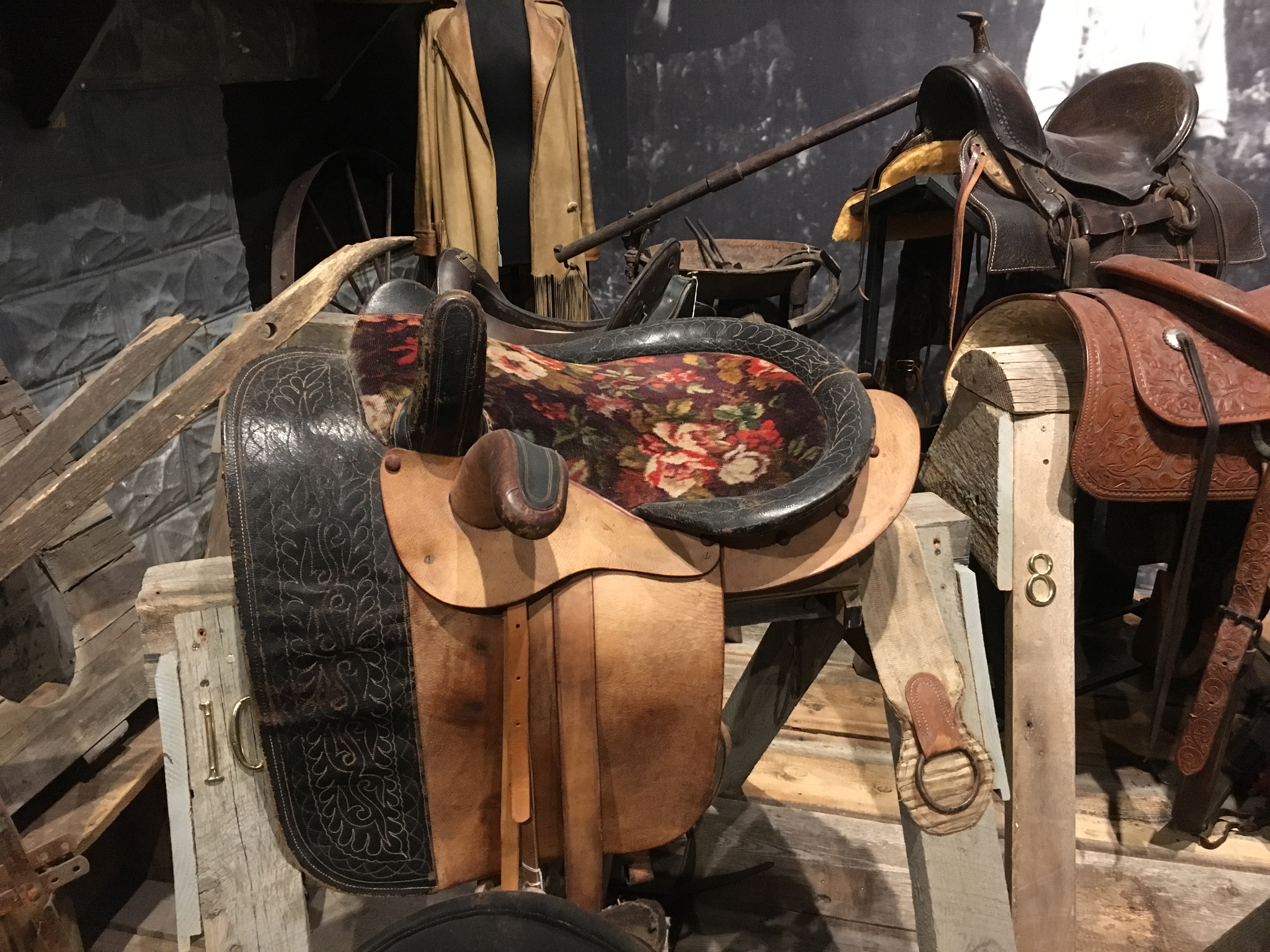
By the 1880s, western South Dakota, especially the rich grazing lands bordering the Black Hills. was home to thriving cattle ranches.  Today, independent and family stock growers continue the ranching tradition, contributing greatly to the economy of South Dakota. Every year during Stockmen’s Days, ranchers from all over came to Rapid City to conduct business, socialize, and enjoy the rough and tumble rodeo.

IMG_2731

Ranching

IMG_2741

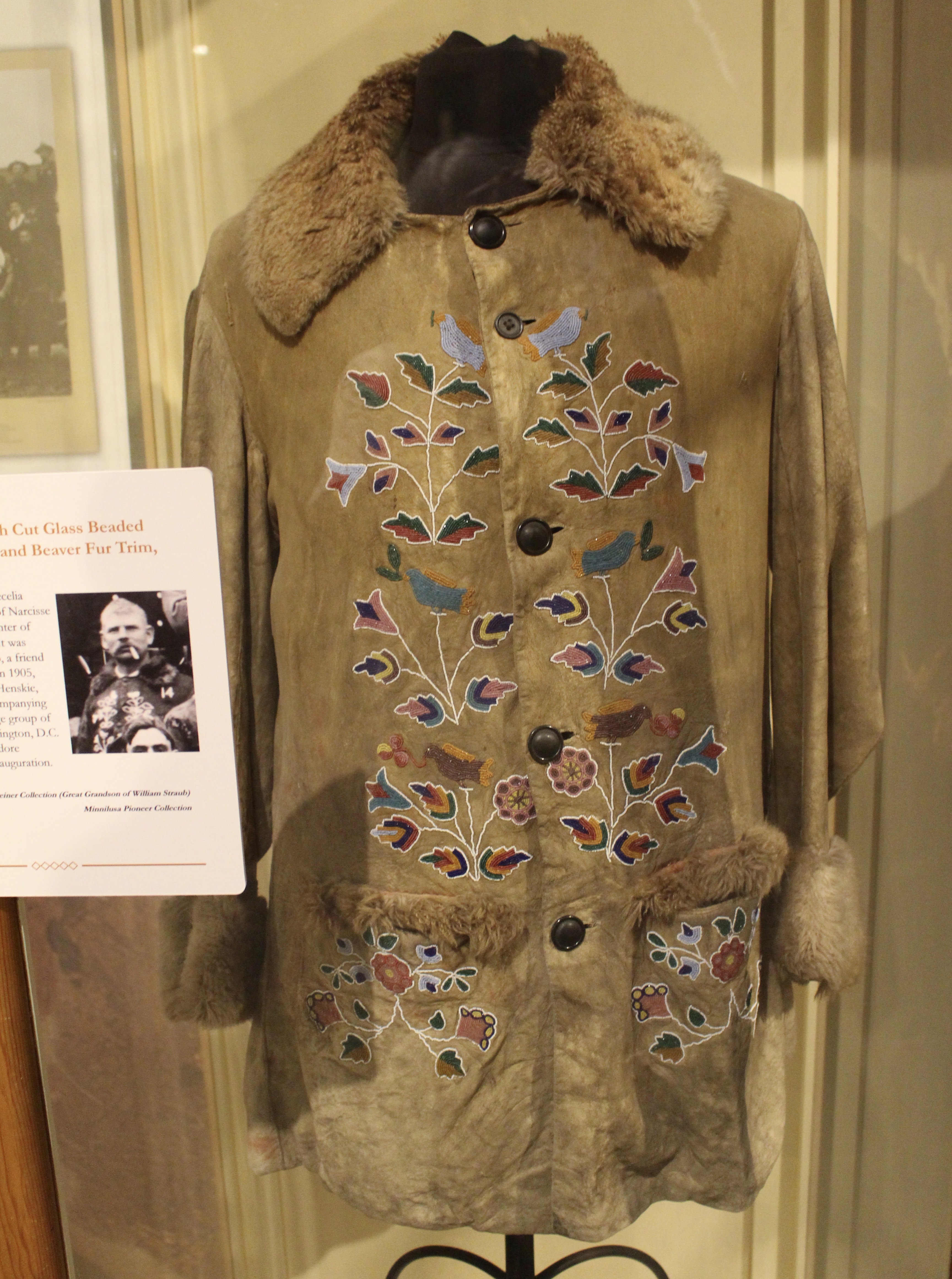
I found a Buckskin coat with cut glass beaded floral decoration and beaver fur trim from 1900. It was worn by one of a large group of cowboys who went to Washington, D.C. to participate in Theodore Roosevelt’s second inauguration.

fullsizeoutput_1f2c6

Buckskin coat with cut glass beaded floral decoration and beaver fur trim

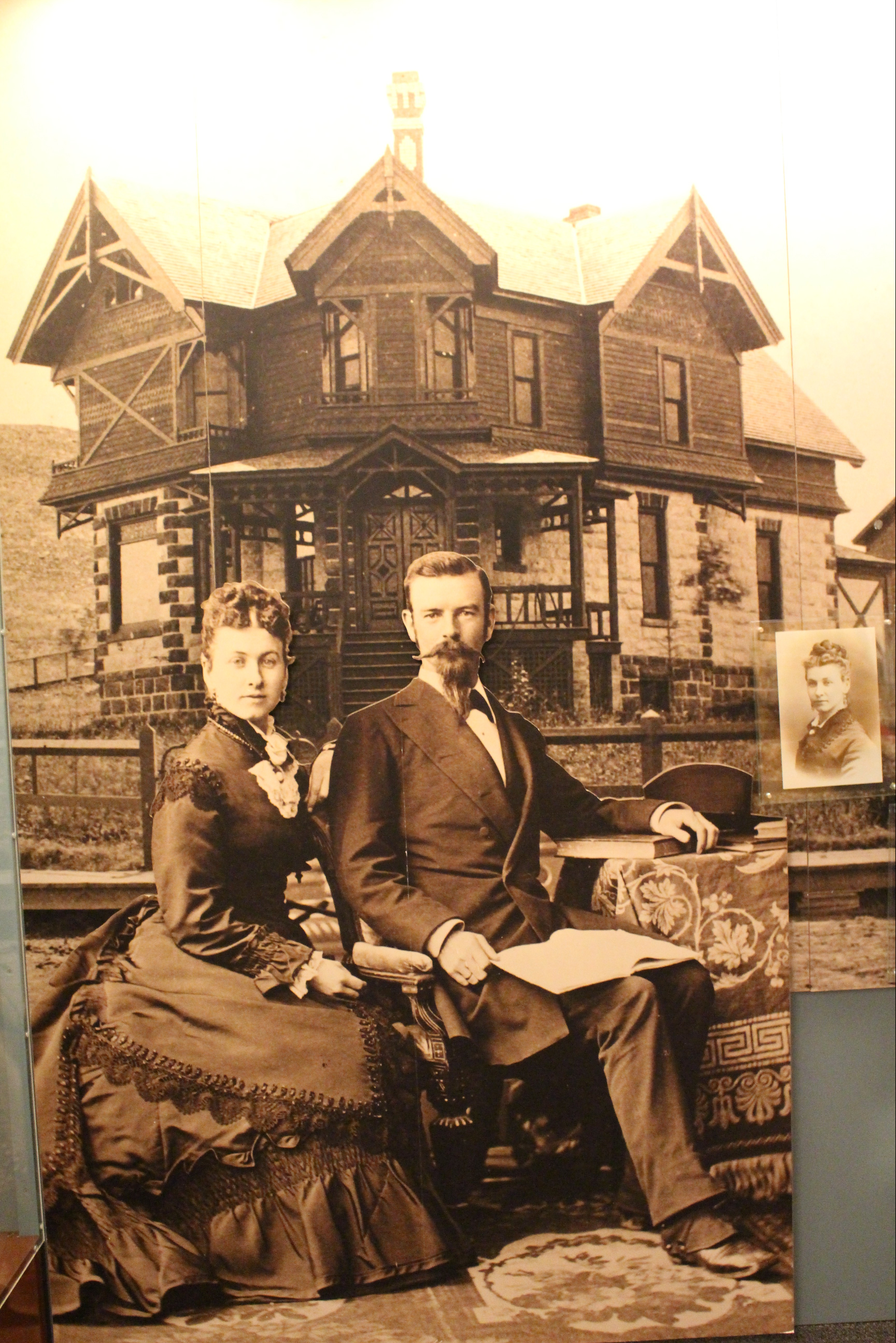
Valentine T. McGillycuddy (1849-1939) came to the Black Hills in 1875. He had a staggering variety of accomplishments including contract surgeon with the army, banker, educator, public health physician (influenza epidemic of 1918), and agent of Red Cloud Reservation from 1879-1886. He helped organize and build a plant for the Rapid City Light and Gas Company, and later was Mayor of Rapid City from 1897-1899.

He was on the scene of some of the most significant historical events of Dakota Territory in the late 1800s.  He tended the wounded, Indian and white, after the battles of Rosebud and Slim Buttes, accompanied General Crook on his “horsemeat march” to Deadwood, danced with Calamity Jane, administered morphine to a dying Crazy Horse, removed Red Cloud from power, and ministered to Wounded Knee survivors.

IMG_1319

Valentine T. McGillycuddy

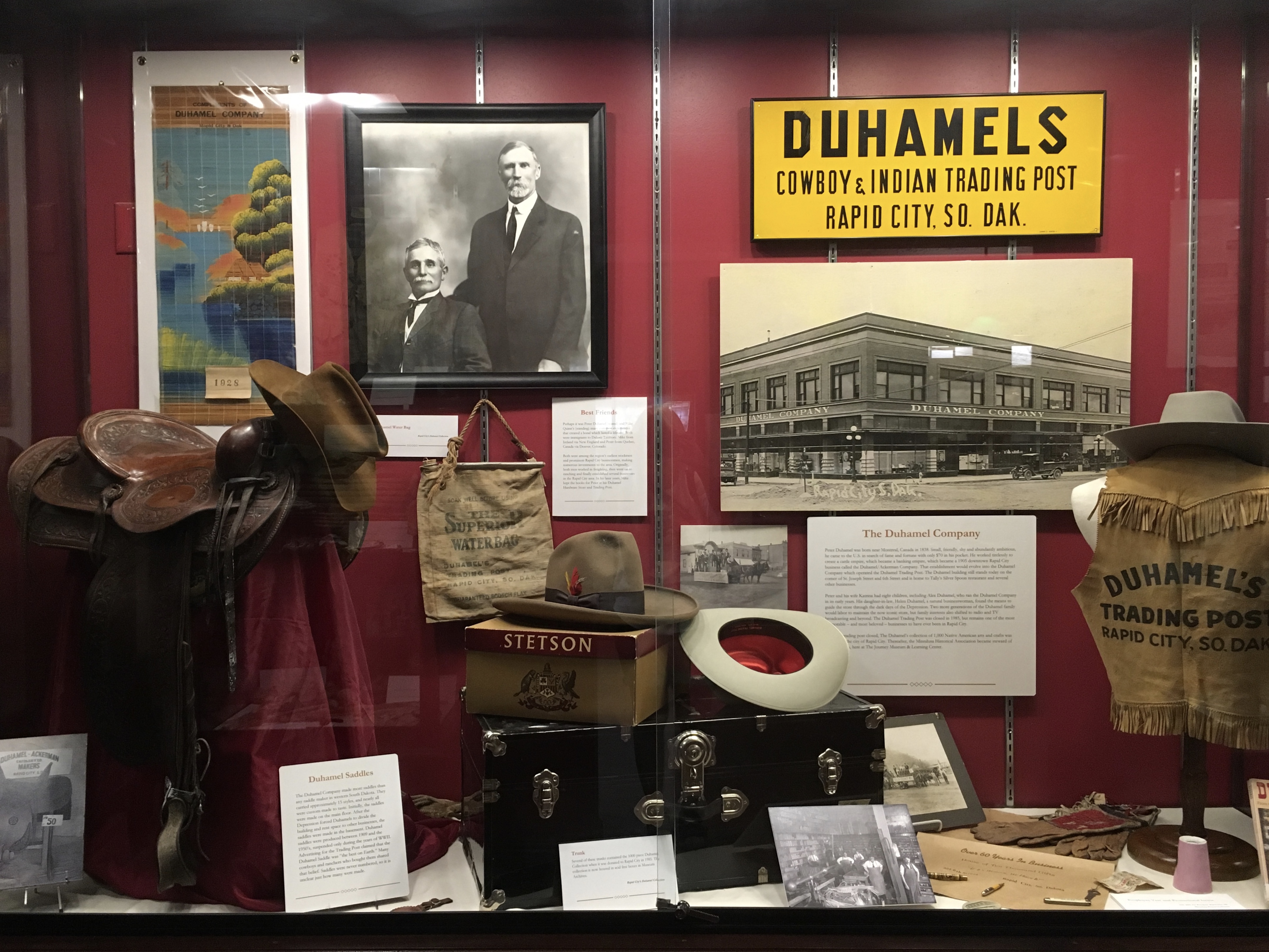
The Duhamel Company was founded by Peter Duhamel, who worked tirelessly to create a cattle empire, which became a banking empire, which became a 1905 downtown Rapid City business called the Duhamel/Ackerman Company.  It evolved into the Duhamel Company, which operated the Duhamels Cowboy & Indian Trading Post. Though it closed in 1985, it remains one of the most beloved businesses to have ever been in Rapid City.

fullsizeoutput_1f2d2

Duhamel Trading Post

Duhamel Trading Post

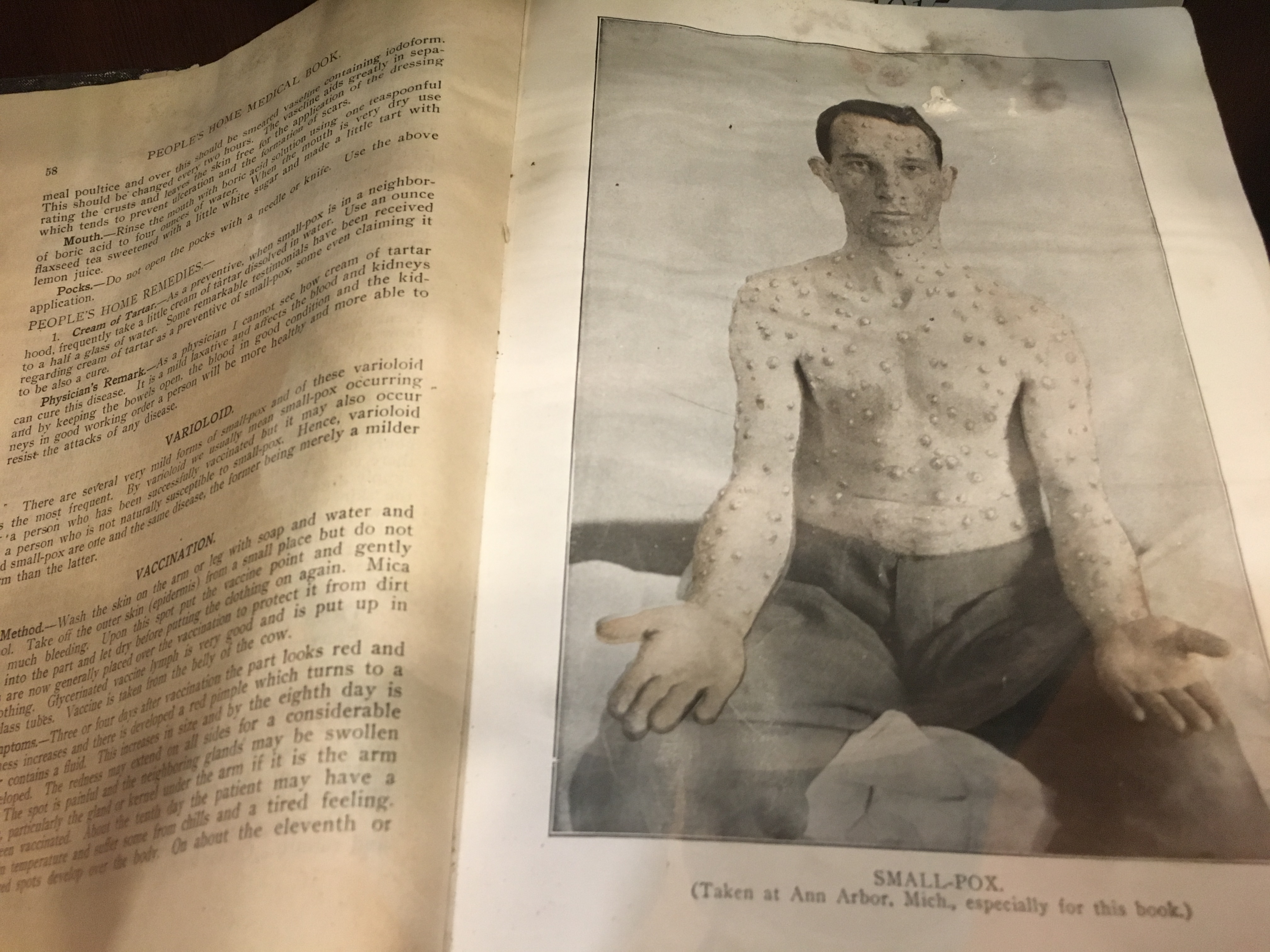
“The People’s Home Library” was essentially the People’s book, to which people contributed home remedies.

IMG_2725

small-pox in the People’s Home Library

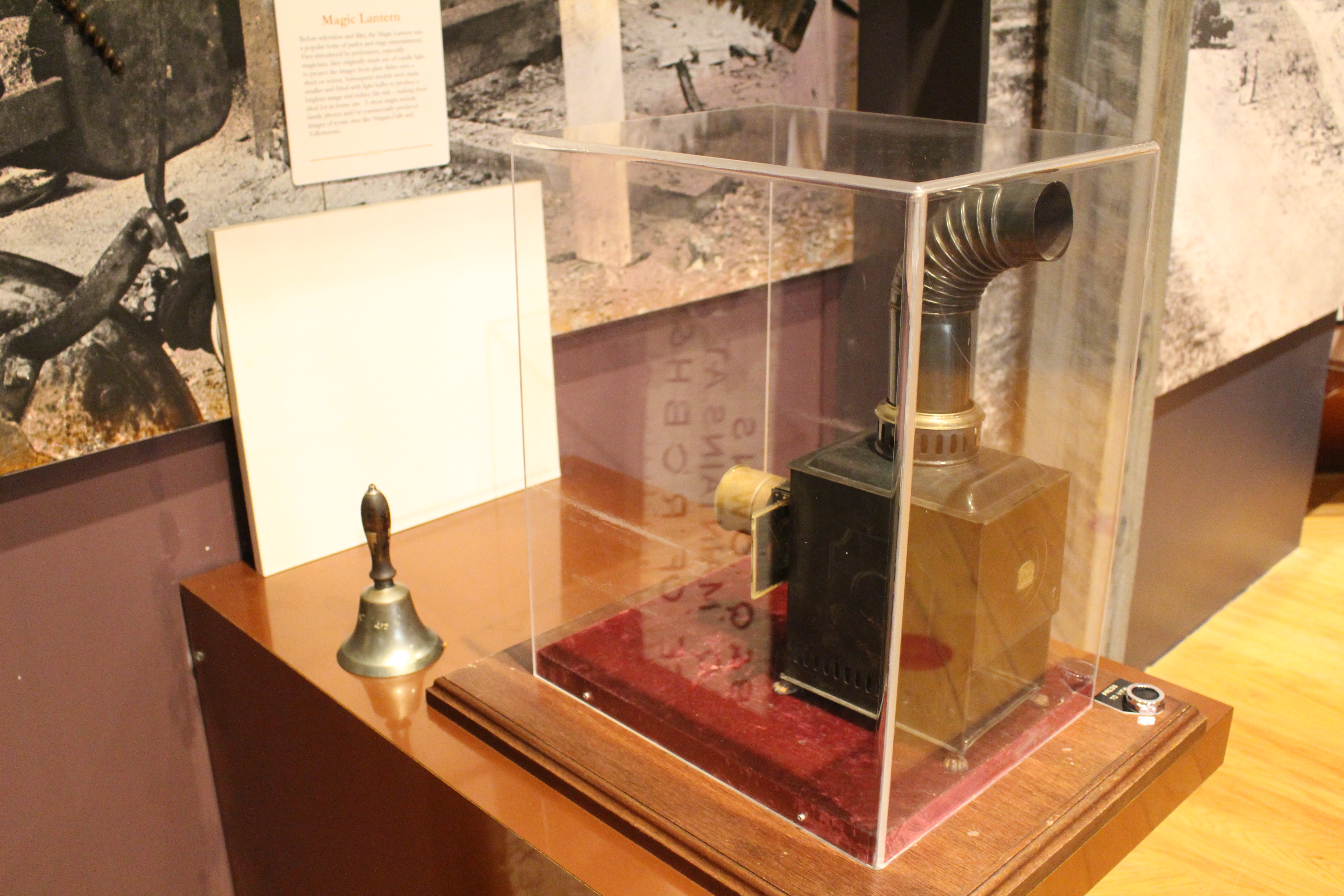
Before television and film, the Magic Lantern was a popular form of parlor and state entertainment.  They originally made use of candle light to project images from glass slides onto a sheet or screen. A show might include family photos and/or commercially produced images of iconic sites like Niagara Falls and Yellowstone.

IMG_1302

Magic Lantern

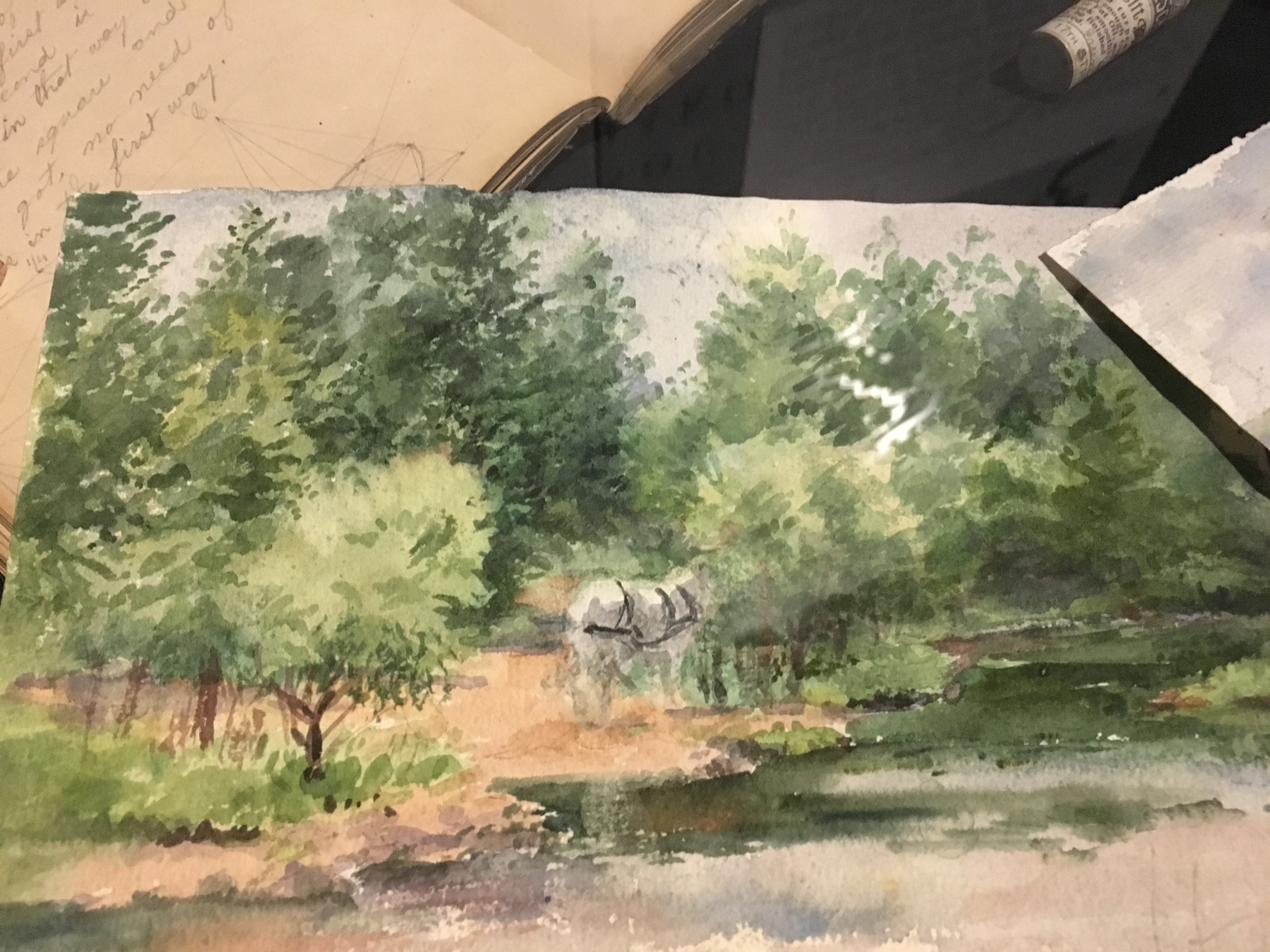
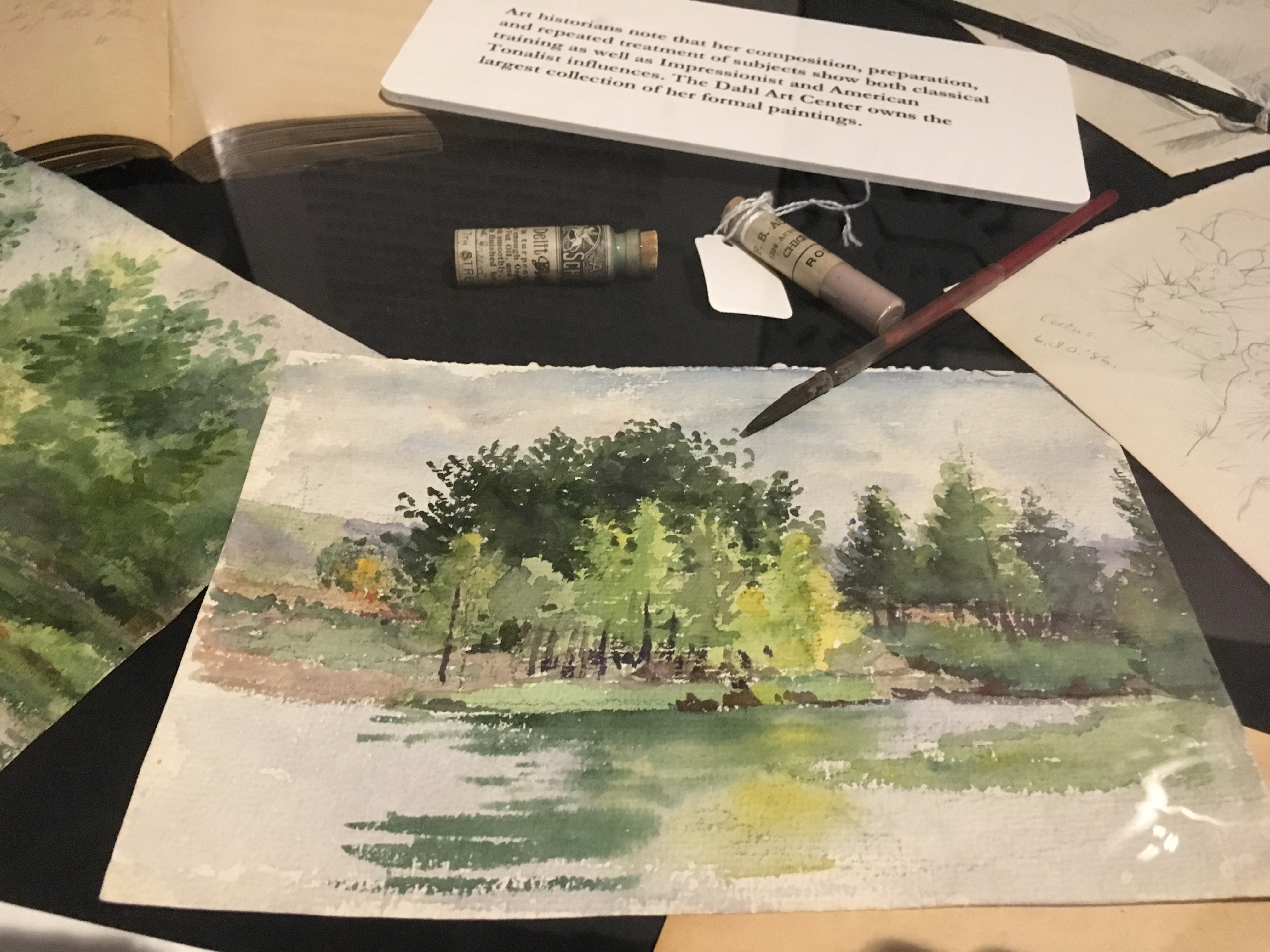
Informal watercolors and sketchbook drawings captured ordinary life in and near Rapid City.

IMG_2736

watercolors of the Black Hills

IMG_2738

watercolors of the Black Hills

Grizzly bears, black bears, and gray wolves once roamed throughout the Black Hills. They were major predators of the region, preying on a supply of elk, deer, and other small mammals.  During the gold rush years of the late 1870s, miners and settlers began over-hunting wildlife and competing with them for habitat.  By the early 1900s, all three predator species vanished from the region.

Black Hills Forests wildlife

Finally, there was a section on the American bison, the largest land mammal in North America. The animal is astonishingly agile; it can run nearly 40 mph in quarter-mile stretches.

Buffalo Pajaro Valley Apples
The Bison Family Tree

For thousands of years, American Indians recorded important tribal and family events by painting images on animal hides, cliff faces, or cave walls. Nomadic Plains cultures turned the decorated bison hide, or “buffalo robe” into a powerful symbol of their relationship with this sacred animal.

IMG_2767

buffalo hide

With the signature of President Barak Obama in 2016, the bison officially became the National Mammal of the United States. It is a symbol of strength and resilience.

fullsizeoutput_1f2dc

the Bison as American Icon

Although the North American bison population is often quoted as 500,000, figuring an accurate number is a complex undertaking.

IMG_2669

The Journey Museum

After checking in to Staybridge Suites, I went out to dinner at Pacific Rim Cafe.  Sadly no alcohol was served.  I had some rather cold shrimp dumplings and a broccoli and carrot with gravy and shrimp over rice as well as some sweet and sour soup.

*Thursday, September 19, 2019*

Share this:

  • Share on X (Opens in new window) X
  • Share on Facebook (Opens in new window) Facebook
  • More
  • Email a link to a friend (Opens in new window) Email
  • Print (Opens in new window) Print
  • Share on Pinterest (Opens in new window) Pinterest
Like Loading...
  • American Road Trips
  • Charleston
  • On Returning Home

on returning home from charleston, south carolina in 2019

wanderessence1025's avatar wanderessence1025 November 2, 2020

As Sarah and I drove the long haul back home from Charleston, I found out that my son had arranged with his massage therapy school to take a leave of absence. He had skipped class all week (while we were traveling), but had pretended to be at class every night, going out around 5:00 and returning home at 11:00 on Tuesday, and at 1:30 a.m. on Wednesday and Thursday.

He was only a month away from finishing and couldn’t stick with it for one more month.  I was furious. He said he’d arranged with the school manager to finish the clinical portion of the class starting in January and finishing in February.

fullsizeoutput_1b408

Fort Sumter in Charleston

I had never been so angry. He was lying to us once again, not meeting his obligation to himself and to us, and, on top of that, drinking again. I told Mike he should throw him out of our house immediately, but he said our soon wanted to finish the course and he wanted to give him the opportunity to do it. In my eyes, he was a liar and unreliable, and I thought he simply didn’t want to finish the course and actually have to work for a living. I believed he just wanted more time to laze round doing nothing and drinking.  I didn’t believe he would actually ever finish the course (I would prove to be right). I told Mike I was going to start looking for a job abroad, maybe Saudi Arabia, just so I could move out.  I said it would be either our son or me.

After hanging up the phone with Mike, Sarah and I still had a long drive ahead and I was boiling over the whole way home. We hardly said a word to each other.  She said she could see Mike’s side and my side. I said Mike keeps enabling our son and thus he has no burning desire to start taking responsibility for his life.

fullsizeoutput_1e123

King Street, Charleston

I didn’t want to take it out on Sarah, but I was so angry I couldn’t think about anything else.  I told Sarah I was cancelling our Thanksgiving plans, that I refused to do anything at all.

After dropping Sarah off in Richmond, I seriously considered getting a hotel in Fredericksburg and not going home at all.  I drove around in Fredericksburg for a while and then got on the phone with Mike.

I said it never mattered what I thought, that I had no voice or say in what happened. I didn’t want to live in the same house with our son anymore, so he would have to go, or I would. I said I was going to be utterly silent when I returned home.  I wasn’t going to speak to either of them until he was out of our house.

fullsizeoutput_1b17e

Rainbow Row, Charleston

I was yelling on the phone.  I hadn’t been so furious in years. Finally, I decided I’d go ahead home.  When I walked in the house, our son was out (likely drinking with friends) and Mike was sitting on the couch reading. I took all my stuff upstairs without speaking to him.  I stayed in my room the rest of the night and we never spoke.  I only asked Mike where our son was, and I said, “So you’re allowing him to be out drinking? It’s so ridiculous.”

I was so furious, I must have taken two Valium over the course of the night.  The tension in the house was thick and dark.  I tried to figure out how I could leave.

Mike had apparently told our son I wouldn’t be speaking to either of them. I didn’t have a voice in the house anyway, so what was the point?

Earlier, Mike had told him I was considering moving out.  Our son said he didn’t want me to move out or he just looked sad about it, I don’t remember which.

9nvpzgAaSH2EV%6GRUTmBw

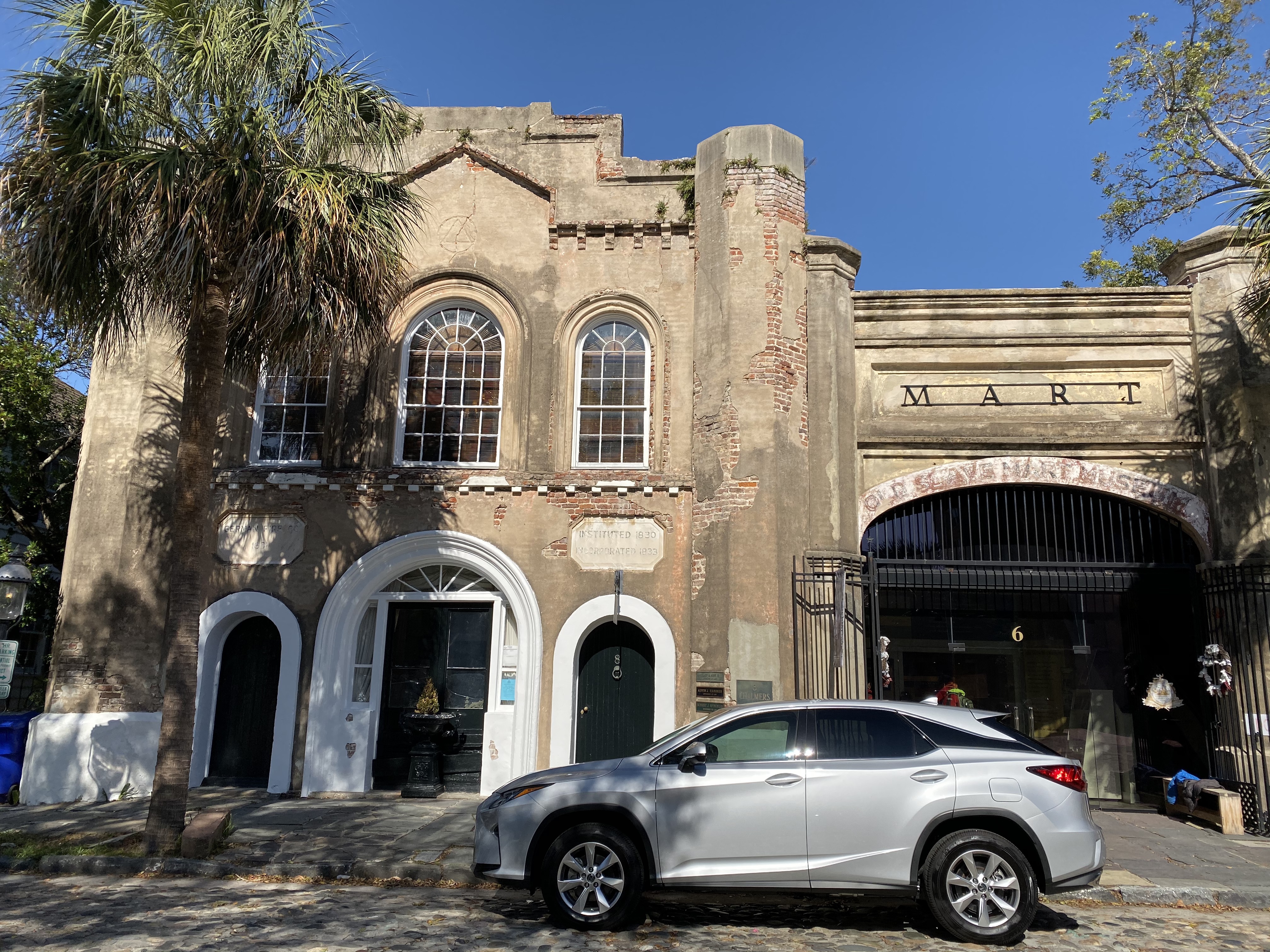
The Old Slave Mart Museum in Charleston

This week in Charleston, which was supposed to be a nice relaxing escape with my daughter, who I mistakenly thought enjoyed my company, turned out to be one of the darkest times in my entire life. I realized that not anyone in my family cared about me.  Sarah didn’t enjoy being with me.  Our son hated me and would always hate me and Mike didn’t give a shit what I thought about anything. He made unilateral decisions and didn’t care about how awful and miserable it was for me to be trapped in the house with our son day after day.  Nothing I felt meant anything to anyone. I felt withdrawn and isolated from everyone in the family.

It had been a long time since I’d had such a bleak outlook on life and felt so hopeless and disconnected.

fullsizeoutput_1b1c0

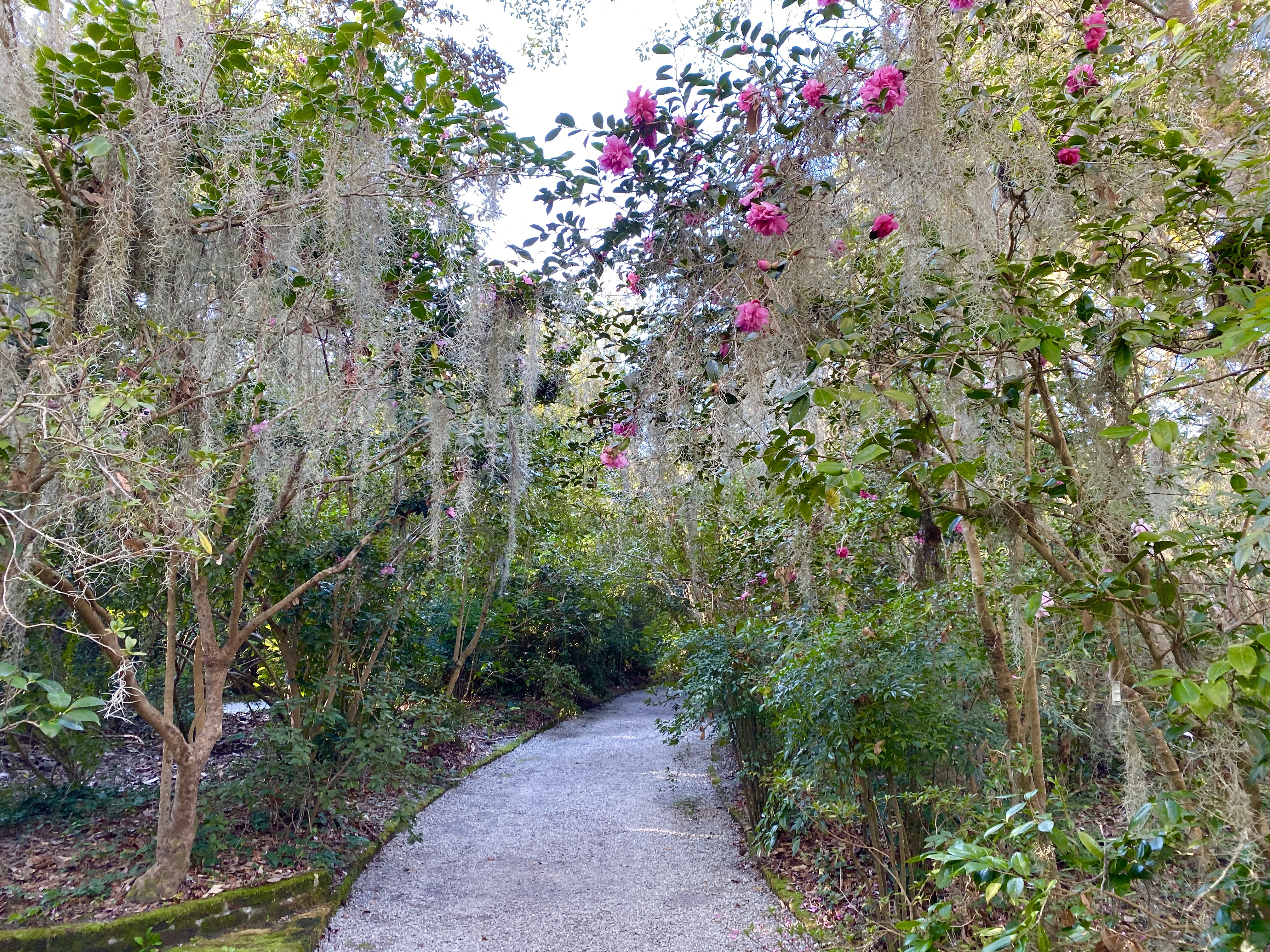
Magnolia Plantations, Charleston

On Sunday after I returned, I wrote to all by siblings: “Hi everyone. I know I threw out an invitation to host Thanksgiving this year.  I’m not sure anyone planned to come anyway, but I think it’s best if I cancel the invitation.  I’m sorry to say I just don’t have the heart for it this year.  I hope you all enjoy your holiday! Love you all!”

My sister wrote to ask what was up and I said “Problems with A.  What else?” As they asked for more, I said “The same old issues ad infinitum.  I don’t think they will ever end.”

What a miserable week.  I’ll forever think of Charleston as a dark and gloomy place, a microcosm of the misery of my life.

fullsizeoutput_1b1d1

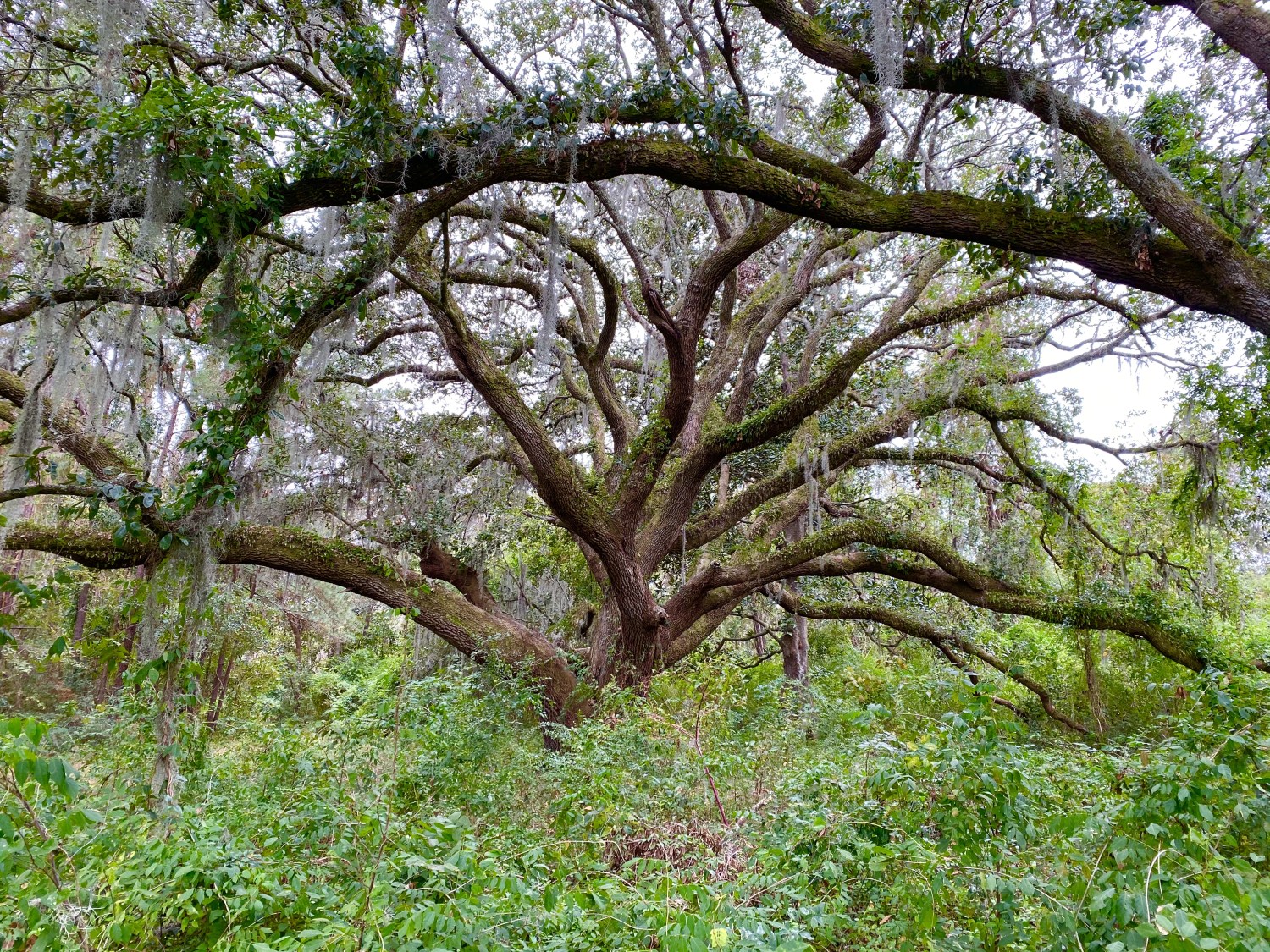
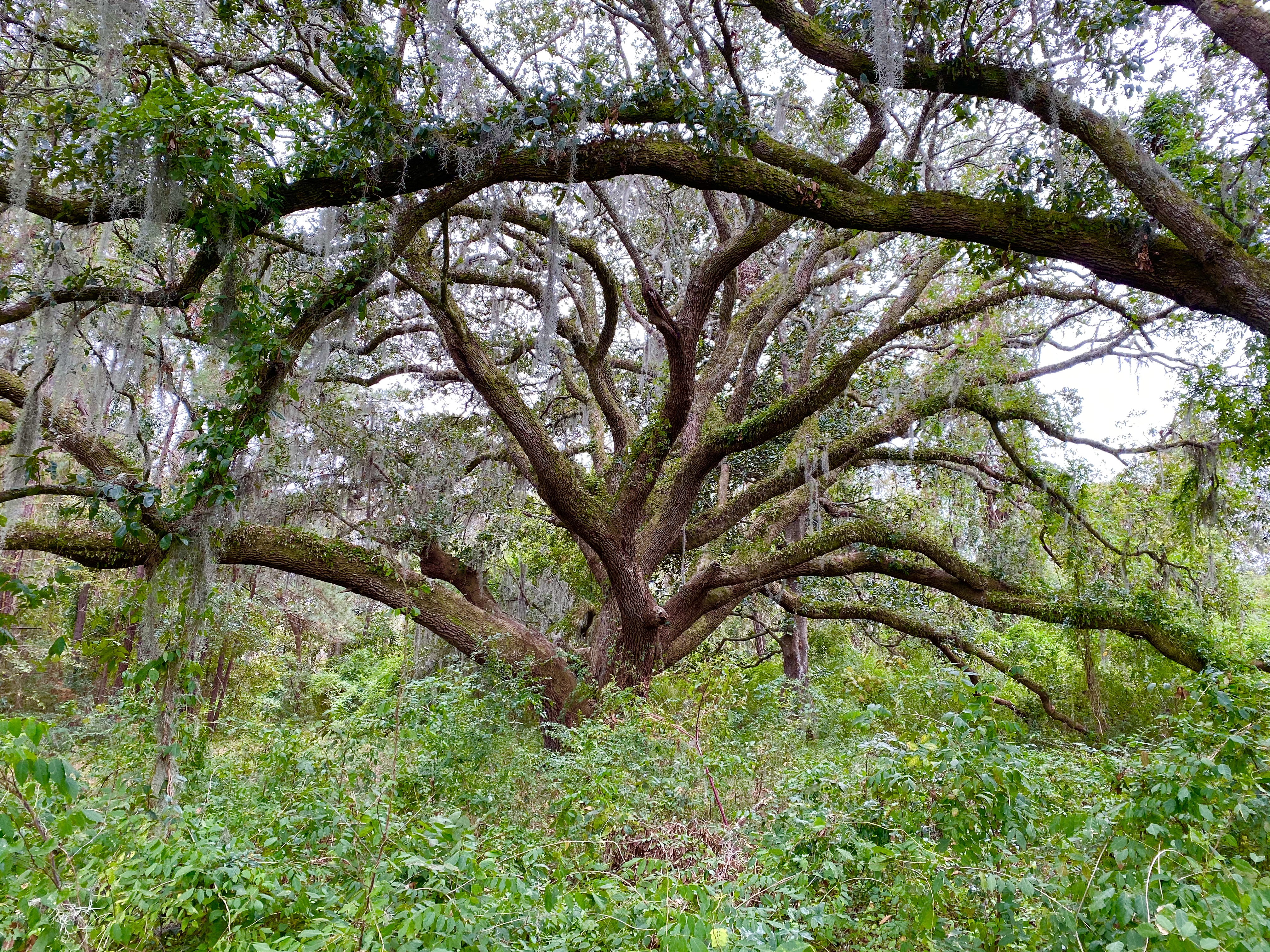
Spanish moss at Charles M. Pinckney National Historic Site

After I returned home from Charleston, South Carolina, I wrote a number of posts about my trip:

  • on journey: an encounter with edward hopper on the way to charleston
  • on journey: a drive from richmond to charleston
  • charleston: fort sumter & king street
  • charleston: the battery, the old slave mart museum, & magnolia plantations
  • charleston: the charles pinckney national historic site
  • charleston: fort moultrie, sullivan’s island, & a shopping spree on king street

This was one of the most miserable travel experiences of my life. Lately it seemed I couldn’t go anywhere without my son and his problems following me.

*Friday, November 15, 2019*

Share this:

  • Share on X (Opens in new window) X
  • Share on Facebook (Opens in new window) Facebook
  • More
  • Email a link to a friend (Opens in new window) Email
  • Print (Opens in new window) Print
  • Share on Pinterest (Opens in new window) Pinterest
Like Loading...
  • American Road Trips
  • Hikes & Walks
  • Minuteman Missile National Historic Site

south dakota: minuteman missile national historic site & prairie homestead historic site

wanderessence1025's avatar wanderessence1025 November 1, 2020

After a sausage, egg and canned mandarin orange breakfast, I ran back to Wall Drug to get the Montgomery Ward Catalog so I could used it for my art journals. By 9:07, I finally left Wall.

Wall Drug
Wall Drug
Wall Drug
Wall Drug

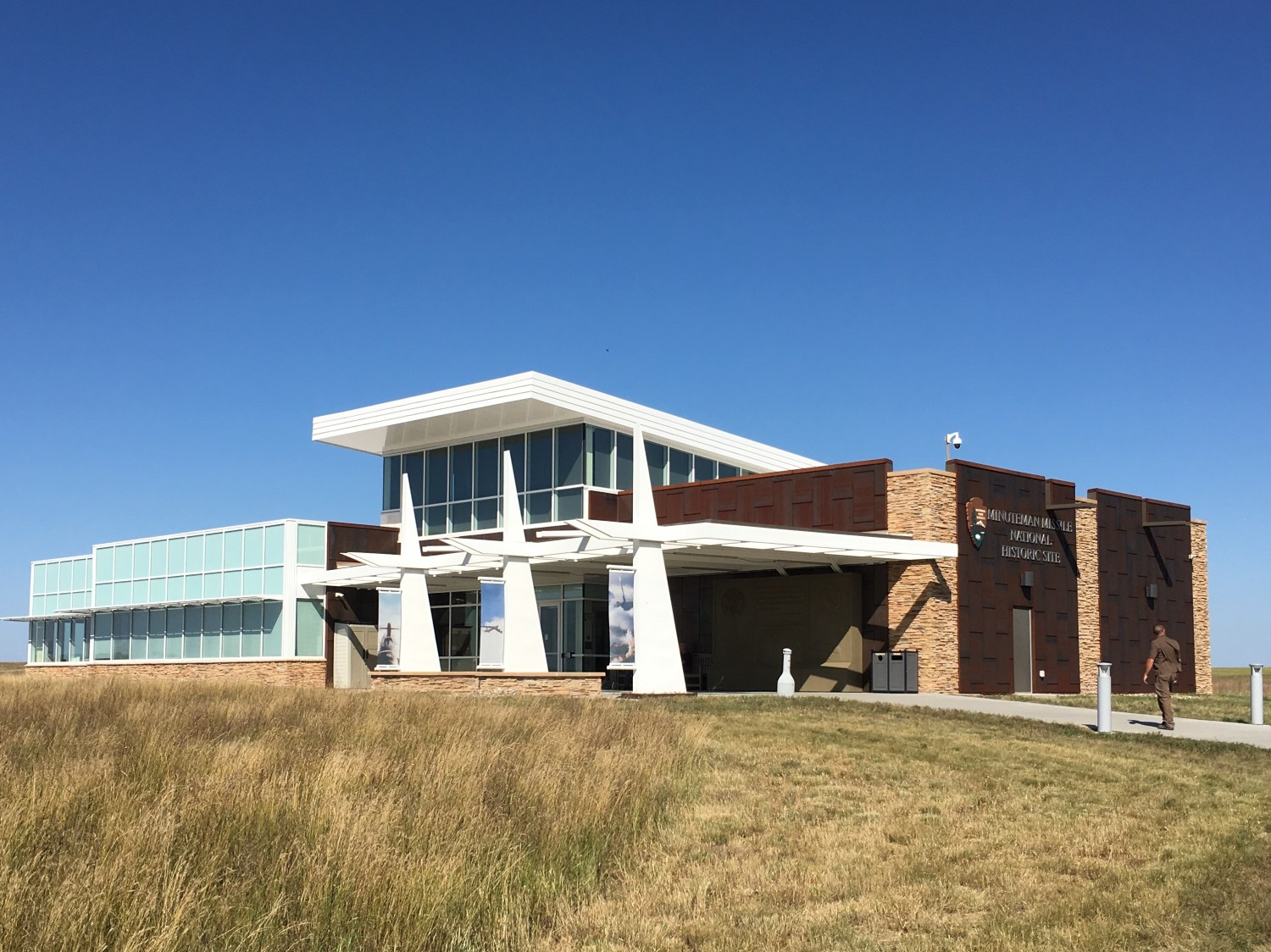
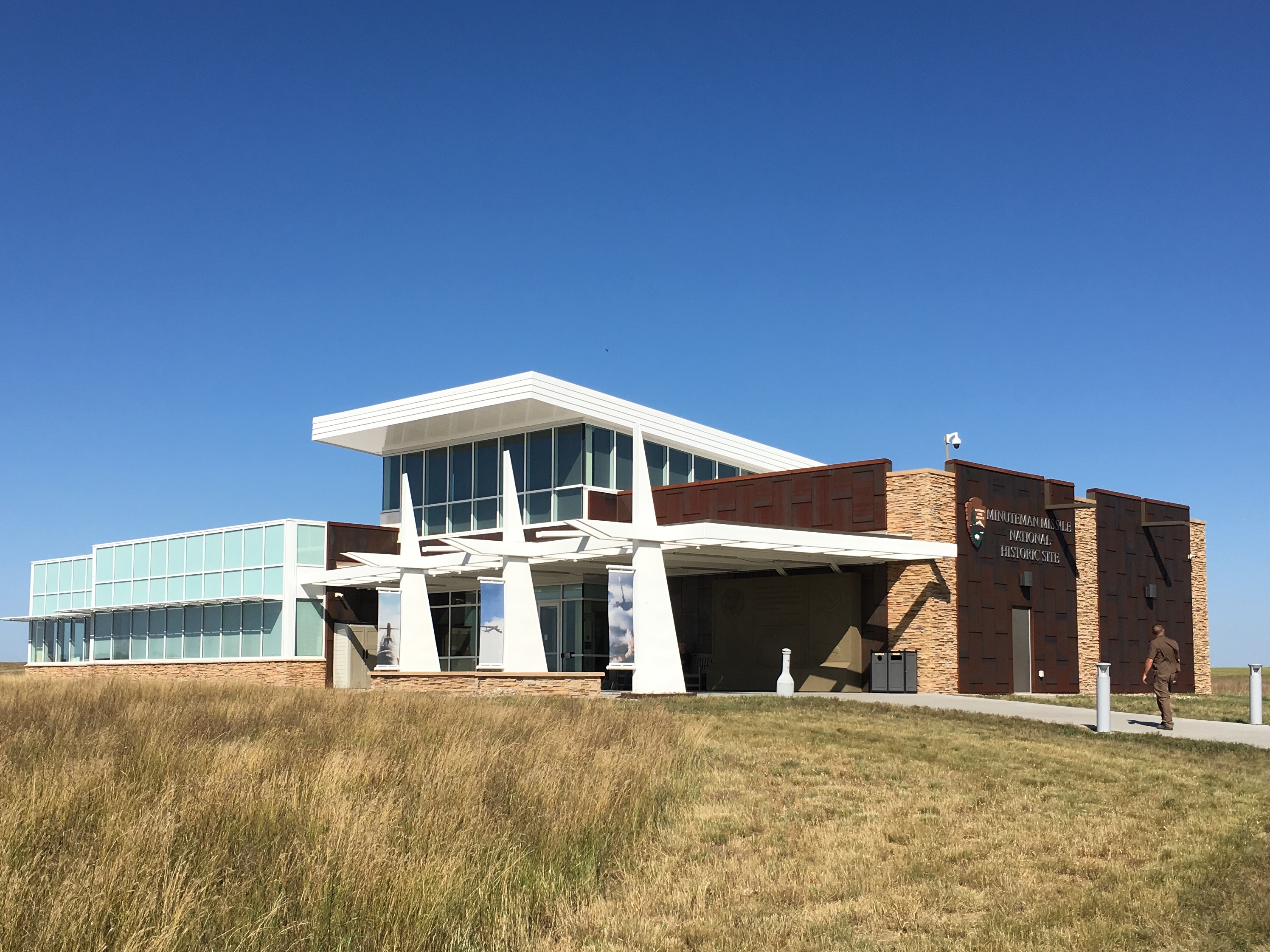
It was 66°F as I passed sprawling cattle spreads driving east on I-90. I arrived at the Minuteman Missile National Historic Site by 9:30. The site commemorates the perilous period of world history known as the Cold War and explores the choices a nation faces.  During this period, hundreds of Minuteman Missiles were hidden beneath the sunflowers and wheat, the cows and corn of America’s Great Plains.

When the United States dropped two atomic bombs on the Japanese cities of Hiroshima and Nagasaki in August, 1945, we became a “different country,”  in the words of nuclear physicist Robert Oppenheimer. These remain the only instances where nuclear weapons have been used in war. “Most of us felt like weeping,” a war correspondent wrote after he witnessed the aftermath of the nuclear attacks.  “We were revolted by this new and terrible form of destruction.”

American political and military leaders weighed the decision to use the atomic bomb in the context of ending a costly war.  A few months after President Harry S. Truman authorized the use of atomic bombs, he reflected: “It has fallen to my lot to assume the greatest burden any man ever had and I’m giving it all I have… You know that the most terrible decision a man ever had to make was made by me.”

For a few years after World War II, only the United States possessed nuclear weapons. But by 1949, the Soviet Union developed the atomic bomb, setting off an arms race that gripped the world for over 40 years.

While nuclear weapons remained an unused threat after World War II, all too real conventional wars erupted during the Cold War.  Korea and Vietnam became familiar place names, as US forces fought the Cold War on distant soil.  Angola and Afghanistan also became war zones as the US and USSR backed opposing forces within each country.

US and Soviet forces did not fight each other directly , but by ‘proxy’ — by supporting and supplying rival forces within other countries. 

IMG_1239

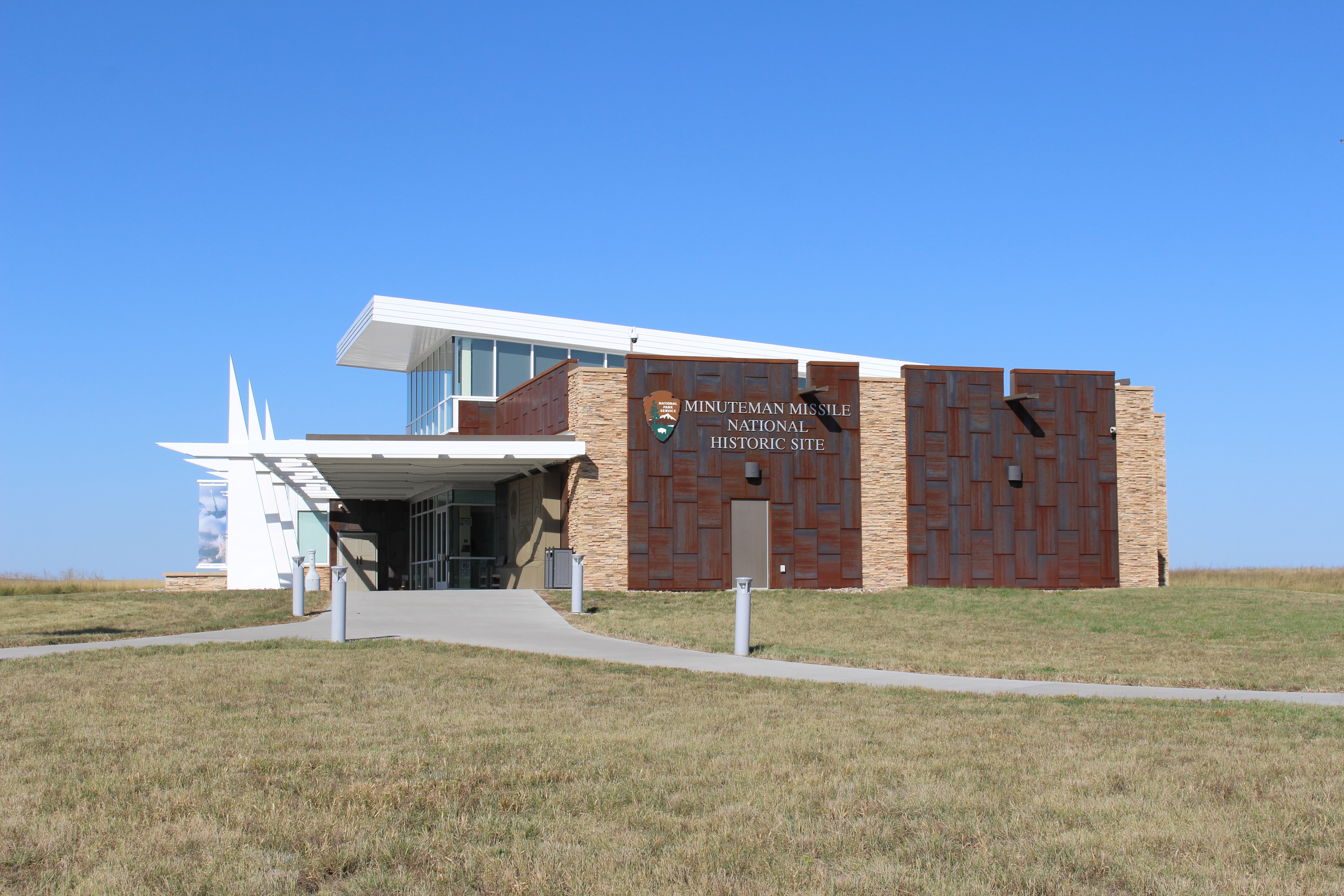
Minuteman Missile National Historic Site

From the 1960s to the 1990s, the United States and Soviet Union followed a strategy called MAD, or MUTUALLY ASSURED DESTRUCTION. Neither side would risk launching an attack because the other side would launch an equally destructive counterattack.

One “Little Boy” was dropped on Hiroshima during World War II. “Little Boy,” a World War II era atomic bomb, could have destroyed the center of Washington, D.C.  One Minuteman Missile II (with 1.2 megatons of TNT) was equal to 80 Little Boys. One Minuteman Missile could have taken out most of the city plus adjacent cities and towns. If that happened today, at least one million people would die. 

With 1,000 Minuteman missiles ready, the United States was ready to strike back if the Soviet Union struck first.  But how many Americans would have already died?  Each missile strike would create a crater 200 feet deep and 1,000 feet wide.  One such strike could kill as many as two million people, including people in civil defense shelters. Imagine how many would die if 100 missiles struck at once along the U.S. East Coast.

I watched the half-hour film about the Cold War and the Cuban Missile Crisis, the arms race, and the near misses and mistakes made that might have been the end of the world.

One example of a near miss was on September 26, 1983.  Soviet Lt. Col. Stanislav Petrov chose to ignore an alarm indicating a US nuclear attack was underway.  He reasoned the US would never launch just five ICBMs; it must be a false alarm.  He was right. Sunlight reflected from high altitude clouds had triggered a satellite detection system. The incident occurred during a period of extremely high tensions between the Soviet Union and the United States.  If Petrov had reported the alarm, Soviet leaders may well have initiated a retaliatory nuclear strike. The incident was not reported in the West until after the Cold War had ended.  Petrov was honored at a United Nations meeting in 2006.  He has been called “the man who saved the world.” Petrov visited Minuteman Missile National Historic Site in spring 2007.

The museum included a timeline of nuclear weapon growth, and discussed tensions between the US and USSR, the Cold War, “Duck and Cover” drills, backyard bomb shelters, Sputnik, 1970s SALT (Strategic Arms Limitation Talks) that led to the Anti Ballistic Missile Treaty.  Missiles in South Dakota were upgraded to Minuteman II. 

The United States relied on a triad of weapons – launched from air, land and sea – to deter Soviet aggression.  Nearby Ellsworth Air Force Base had two parts: strategic nuclear bombers and silos with long-range international ballistic missiles (ICBMs).

In the 1980s, a South Dakota rancher hosted a 10-day rally against nuclear weapons.

In the 2010s, fifty Minuteman Missiles were removed, leaving 400 beneath the Great Plains.  None are now in South Dakota.

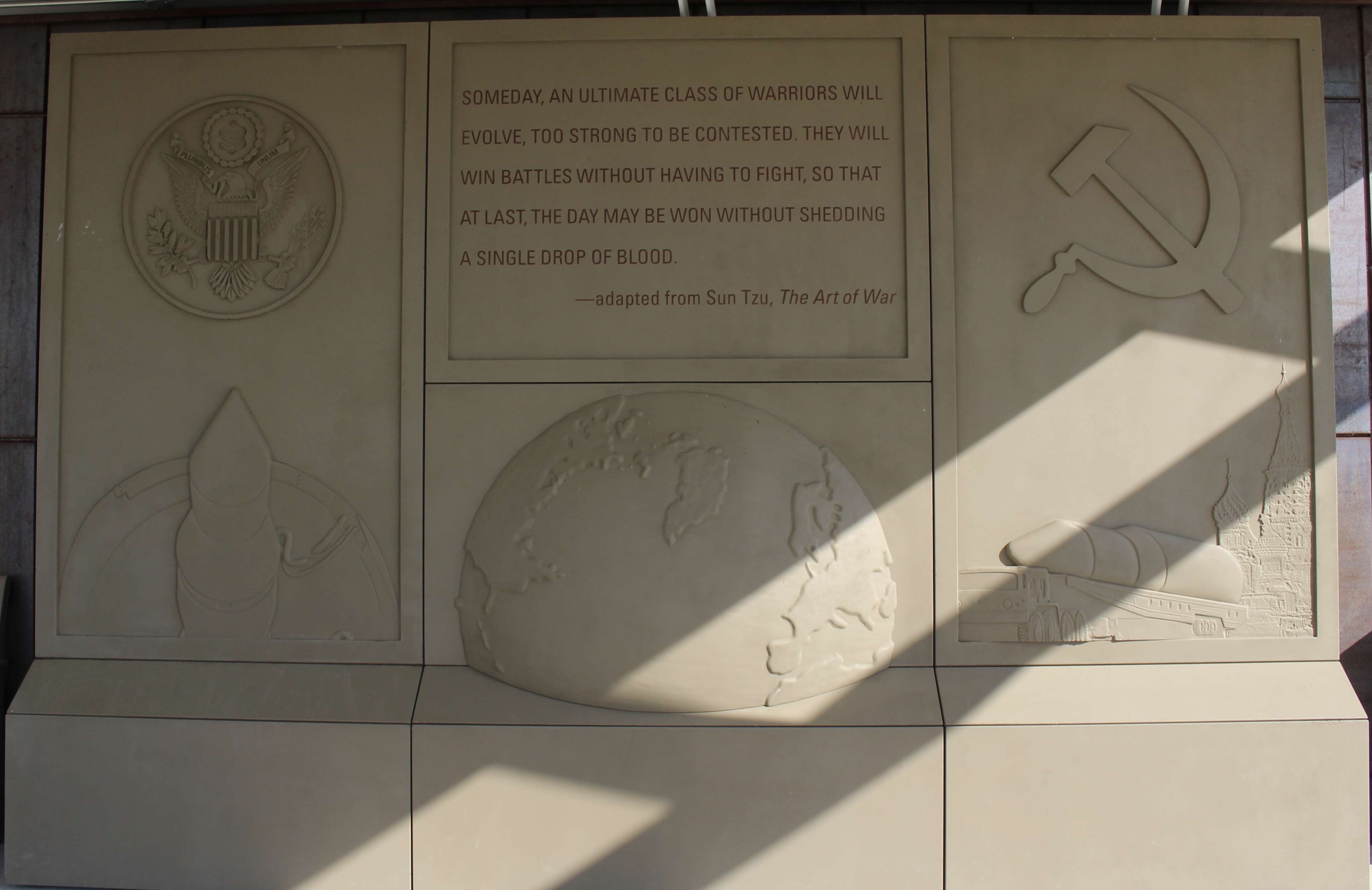
“Someday, an ultimate class of warriors will evolve, too strong to be contested. They will win battles without having to fight, so that at last, the day may be won without shedding a single drop of blood.” — adapted from Sun Tzu, The Art of War

fullsizeoutput_1f239

The Art of War

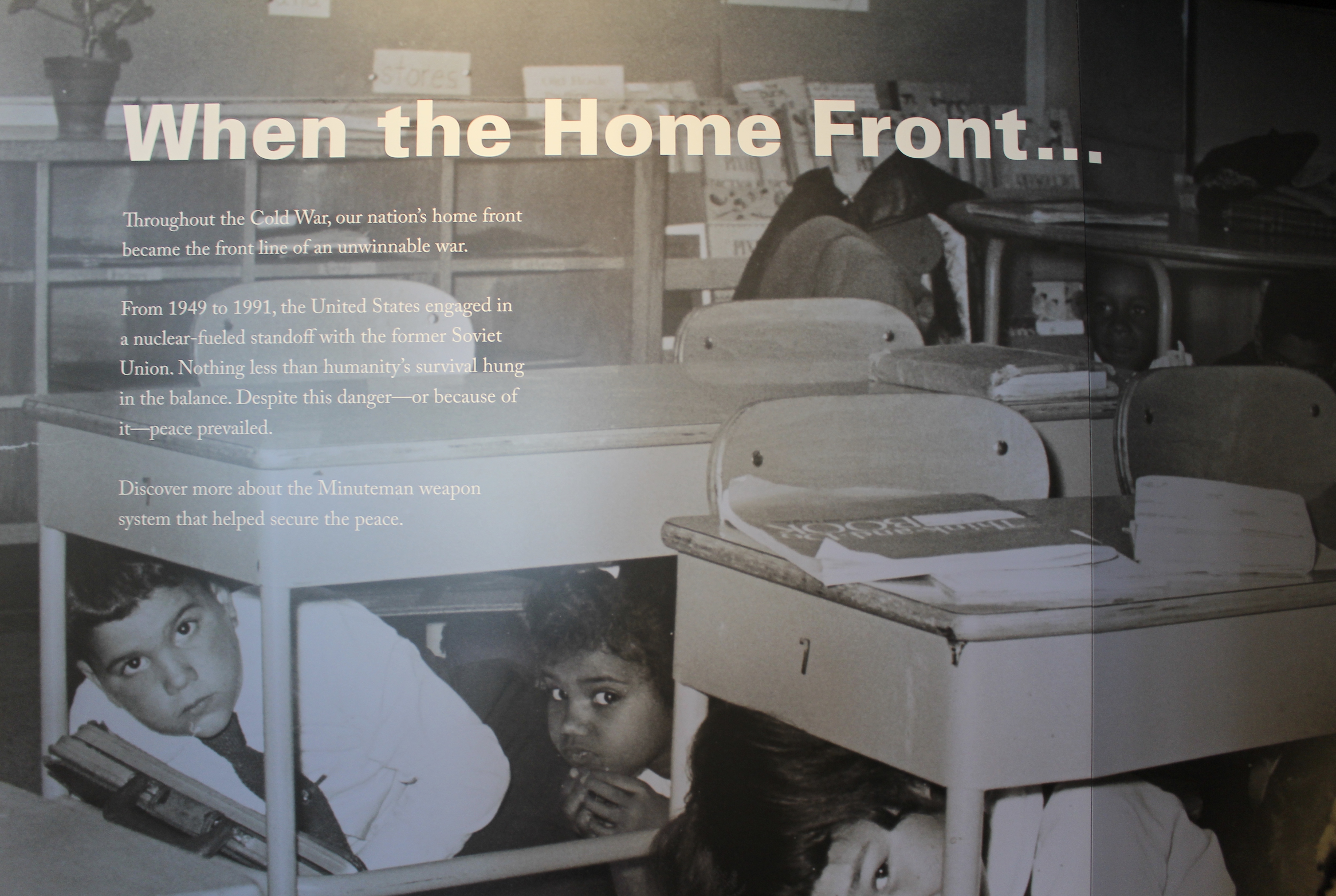
Throughout the Cold War, our nation’s home front became the front line of an unwinnable war.

From 1949 to 1991, the United States engaged in a nuclear-fueled standoff with the former Soviet Union. Nothing less than humanity’s survival hung in the balance.  Despite this danger — or because of it — peace prevailed.

fullsizeoutput_1f23a

When the Home Front


fullsizeoutput_1f23d

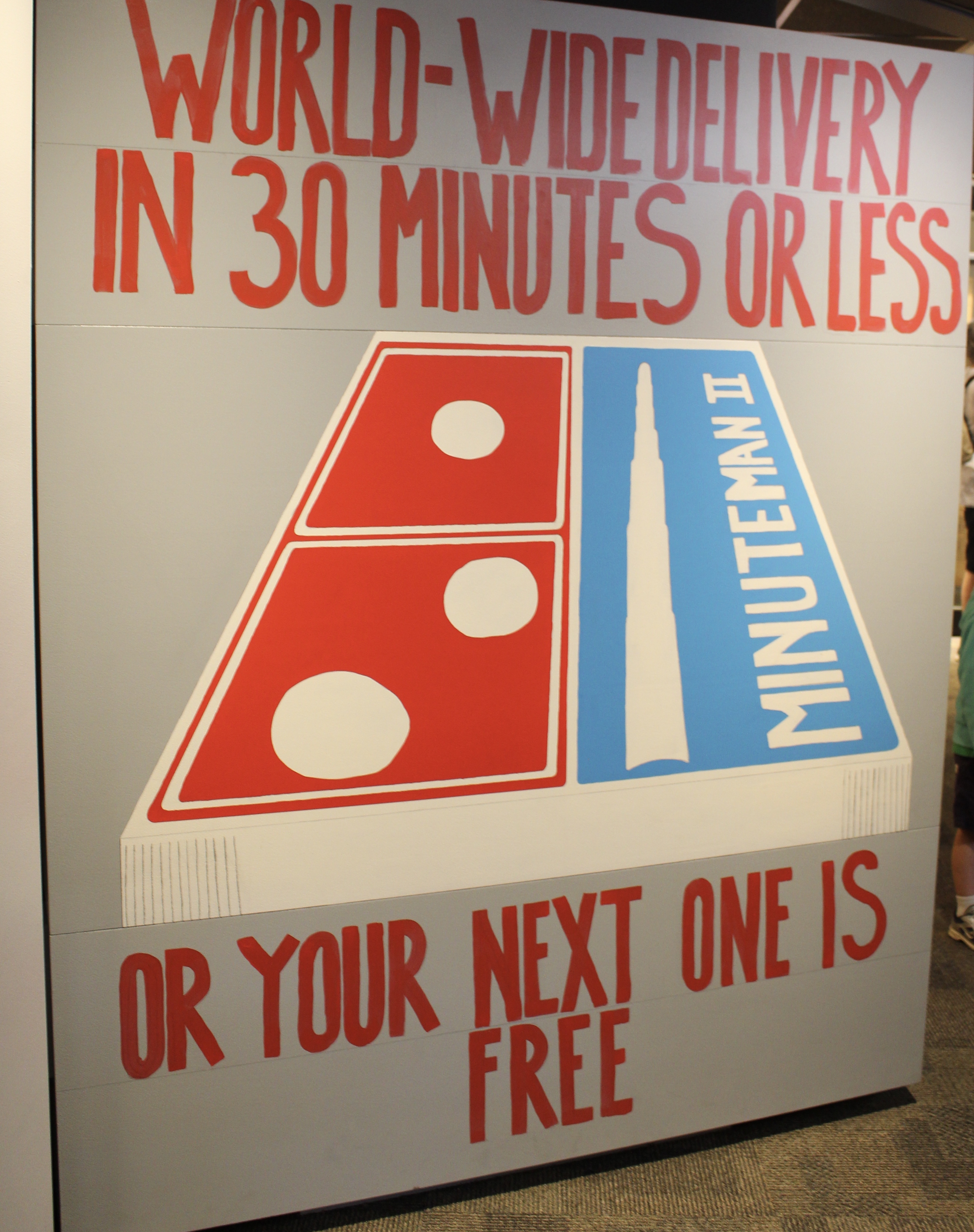
Minuteman II

When physicists first split the atom, they knew they unleashed unprecedented power.  The terrific energy released could be used for war or peace, for destruction or creation.

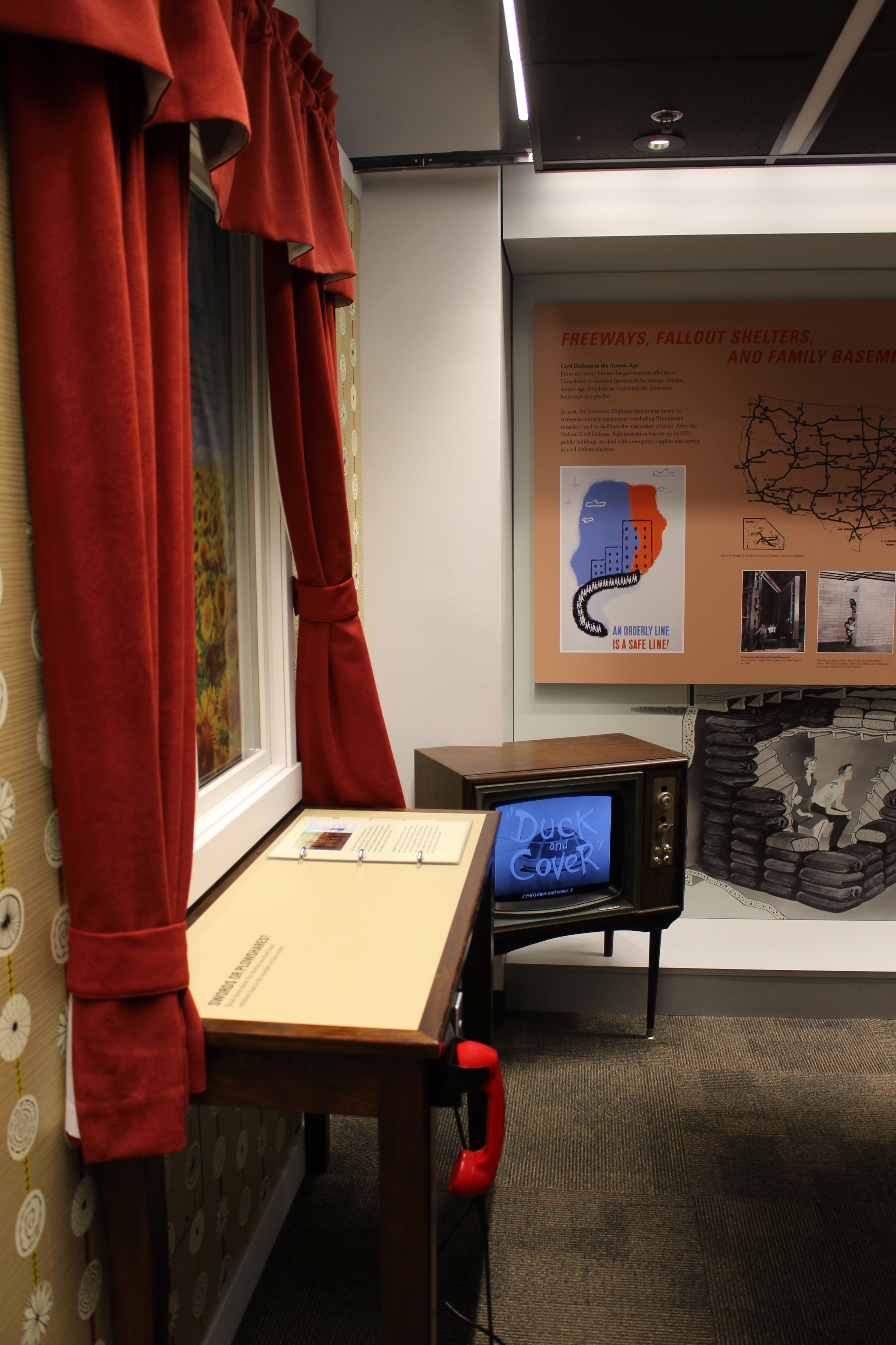
Cold War movies, fiction, cartoons, and political discourse revealed our fascination with the promise of the atomic age paired with fear of its peril.  Kids who practiced “duck and cover” drills at school could read comic books at home that either fueled or calmed their fears.

IMG_1253

Duck and cover

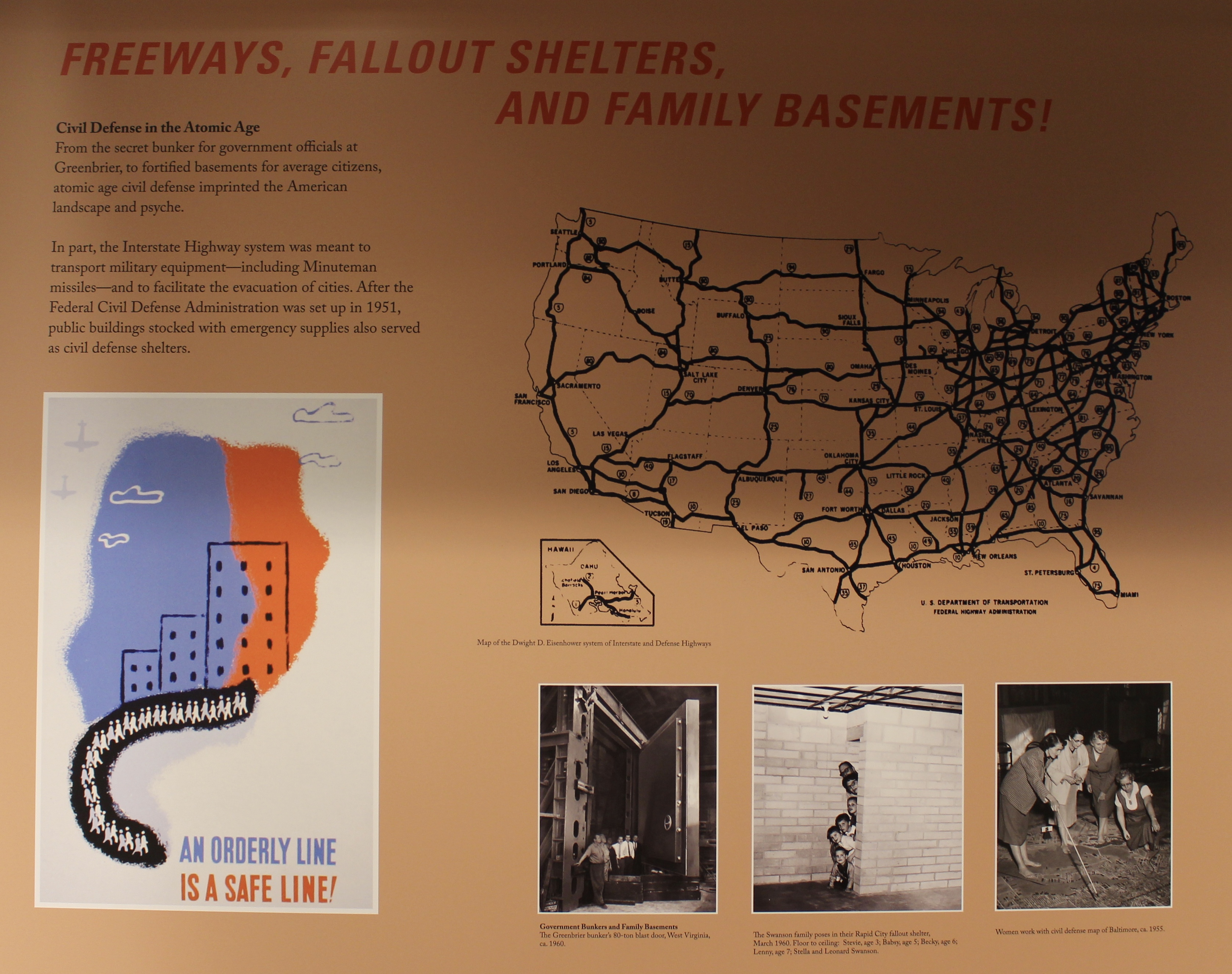
From the secret bunker for government officials at Greenbrier, to fortified basements for average citizens, atomic age civil defense imprinted the American landscape and psyche.

In part, the Interstate Highway system was meant to transport military equipment — including Minuteman missiles — and to facilitate the evacuation of cities. After the Federal Civil Defense Administration was set up in 1951, public buildings stocked with emergency supplies also served as civil defense shelters.

fullsizeoutput_1f23e

Freeways, Fallout Shelters and Family Basements


fullsizeoutput_1f23f

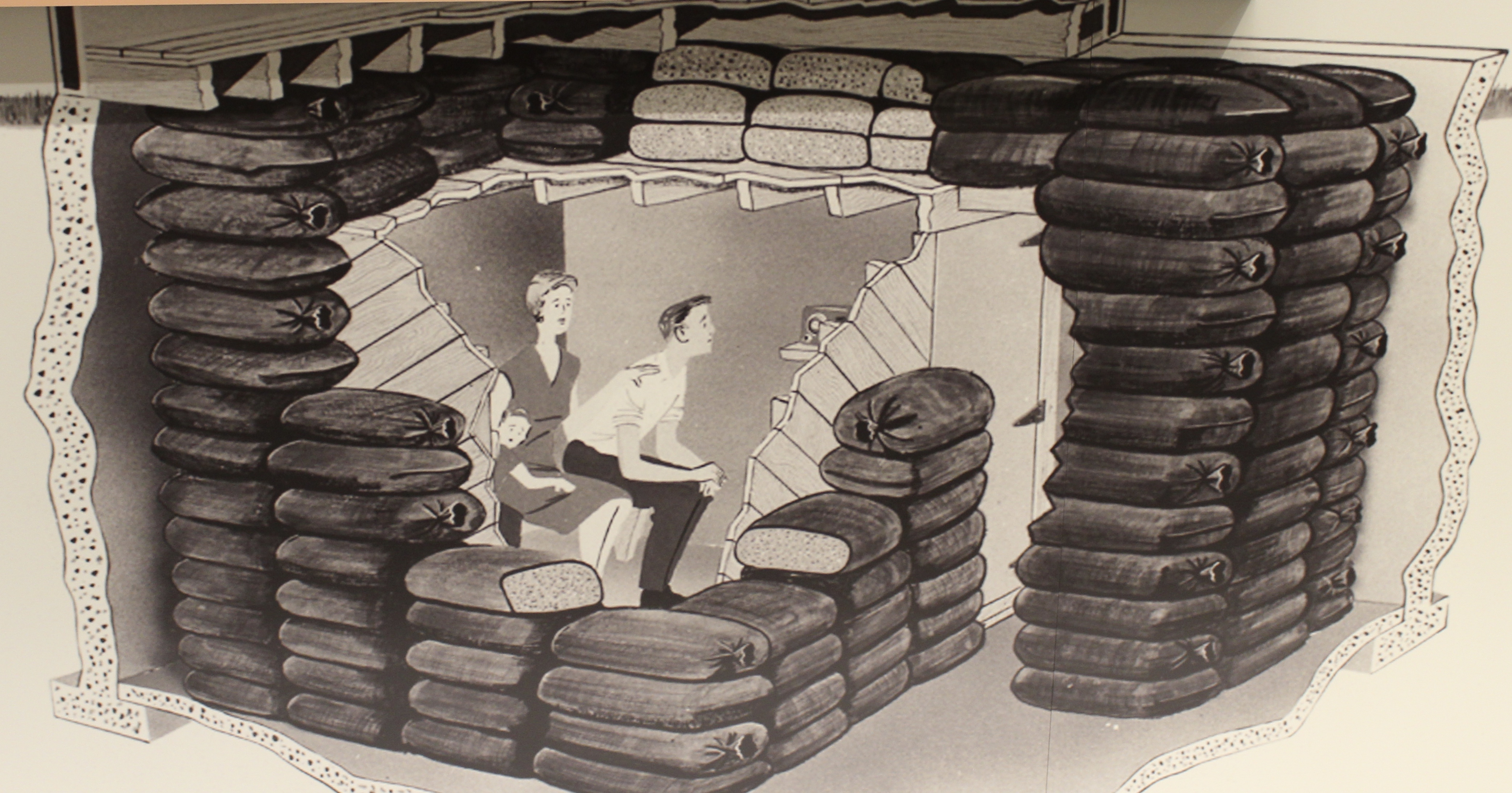
Fallout shelter


fullsizeoutput_1f240

Air Raid Protection


fullsizeoutput_1f241

Survival Supplies


fullsizeoutput_1f242

LIFE Magazine – The Danger of War


fullsizeoutput_1f243

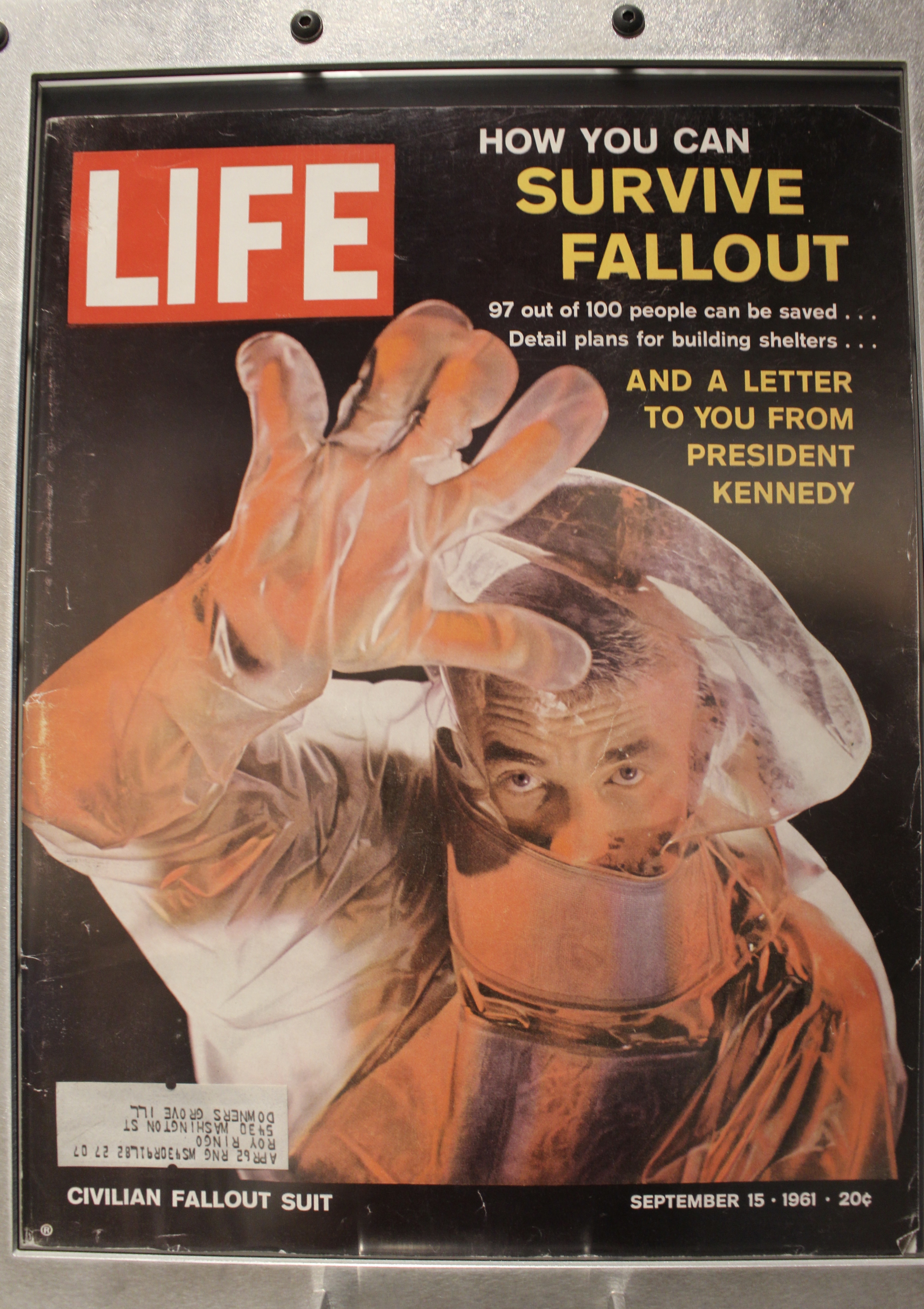
LIFE – How You Can Survive Fallout

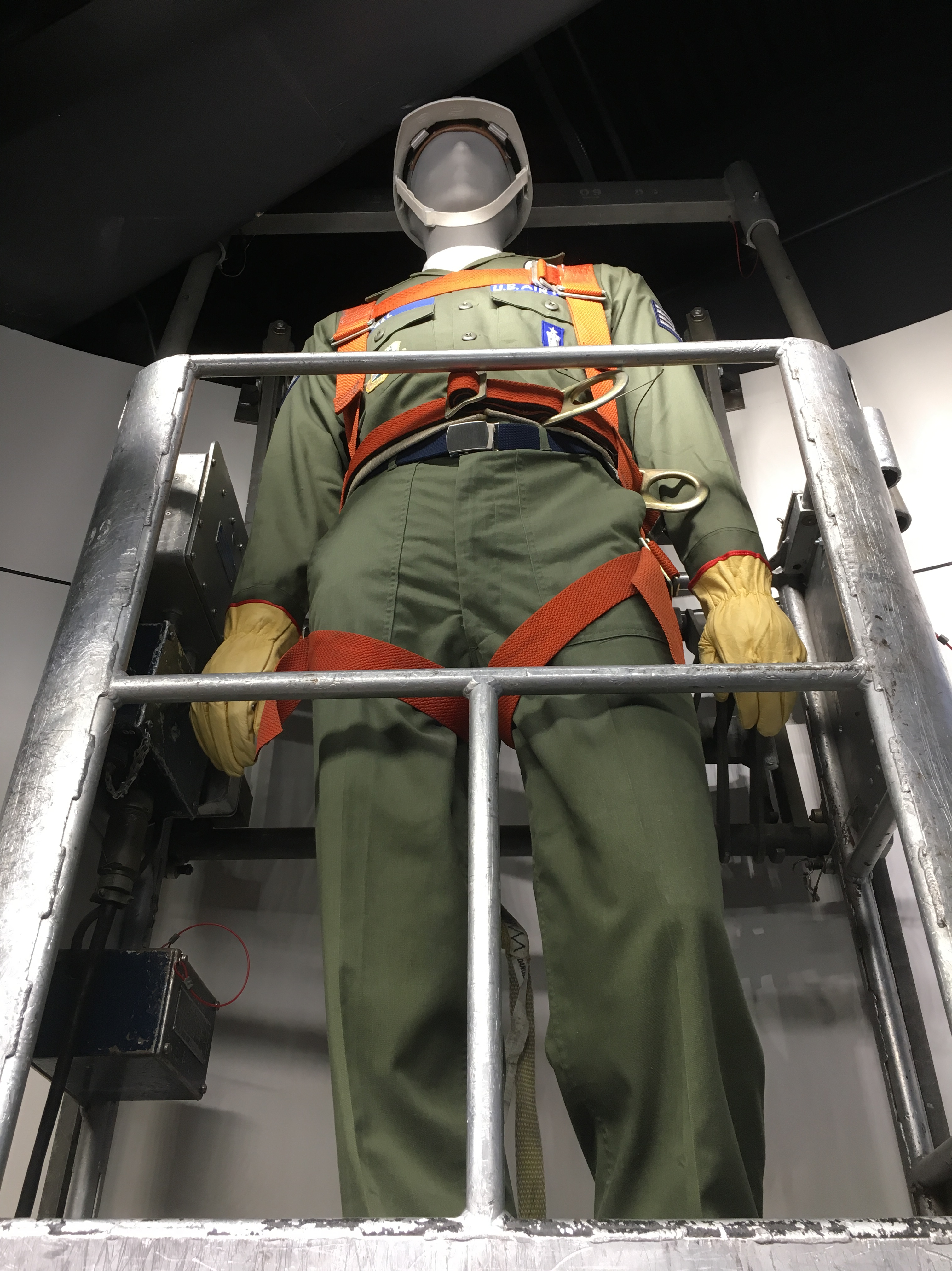
Launch control center crews worked 24 hours a day to manage the weapons systems below ground. Topside personnel braved blizzards and heat waves alike to perform routine maintenance checks and make repairs. Missileers were two people who worked 24-hour shifts in a control center designed to protect them from a nuclear blast.

Not everyone could become a missileer.  Candidates underwent psychological screening.  Active duty missileers were monitored by a protocol called the Personnel Reliability Program (PRP). Besides strict personal accountability, this also included their financial responsibility, types of medication prescribed while under a doctor’s care, and the conduct of their personal lives.

No single person could arm, disarm, repair, or launch a nuclear weapon.  Missile technicians working inside the silos observed a strict “no lone zone” policy. As for the capsule crew, two officers in one launch control center (LCC) needed to concur with two officers in another LCC in order to launch any missiles.

IMG_2562

Missileers

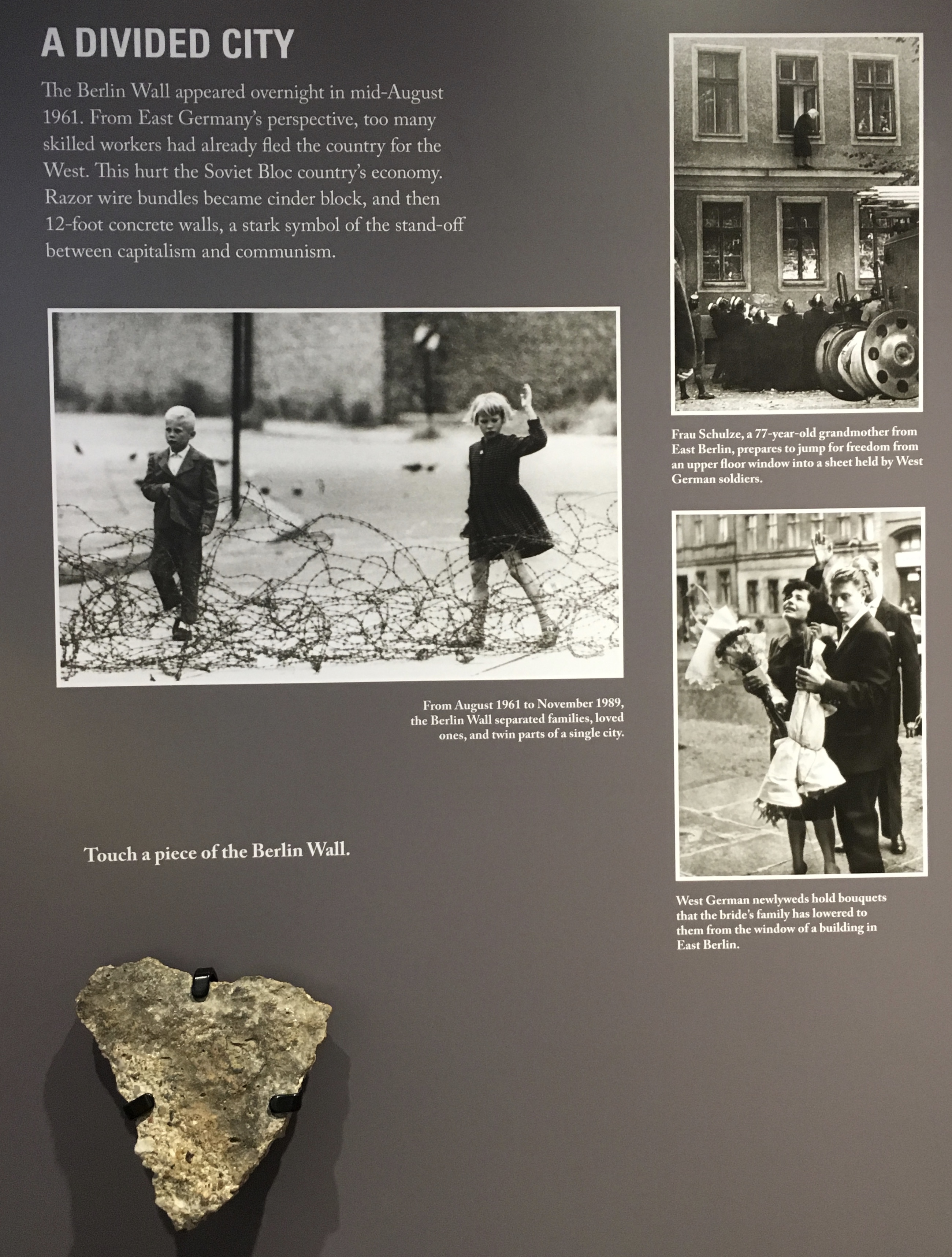
The Berlin Wall appeared overnight in mid-August 1961.  From East Germany’s perspective, too many skilled workers had already fled the country for the West. This hurt the Soviet Bloc country’s economy.  Razor wire bundles became cinder block, and then 12-foot concrete walls, a stark symbol of the stand-off between capitalism and communism.

In 1989, the Berlin Wall came down. In the 1990s, START 1, the Strategic Arms Reduction Treaty was signed. The USSR dissolved and the Cold War ended.

fullsizeoutput_1f245

The Berlin Wall


fullsizeoutput_1f247

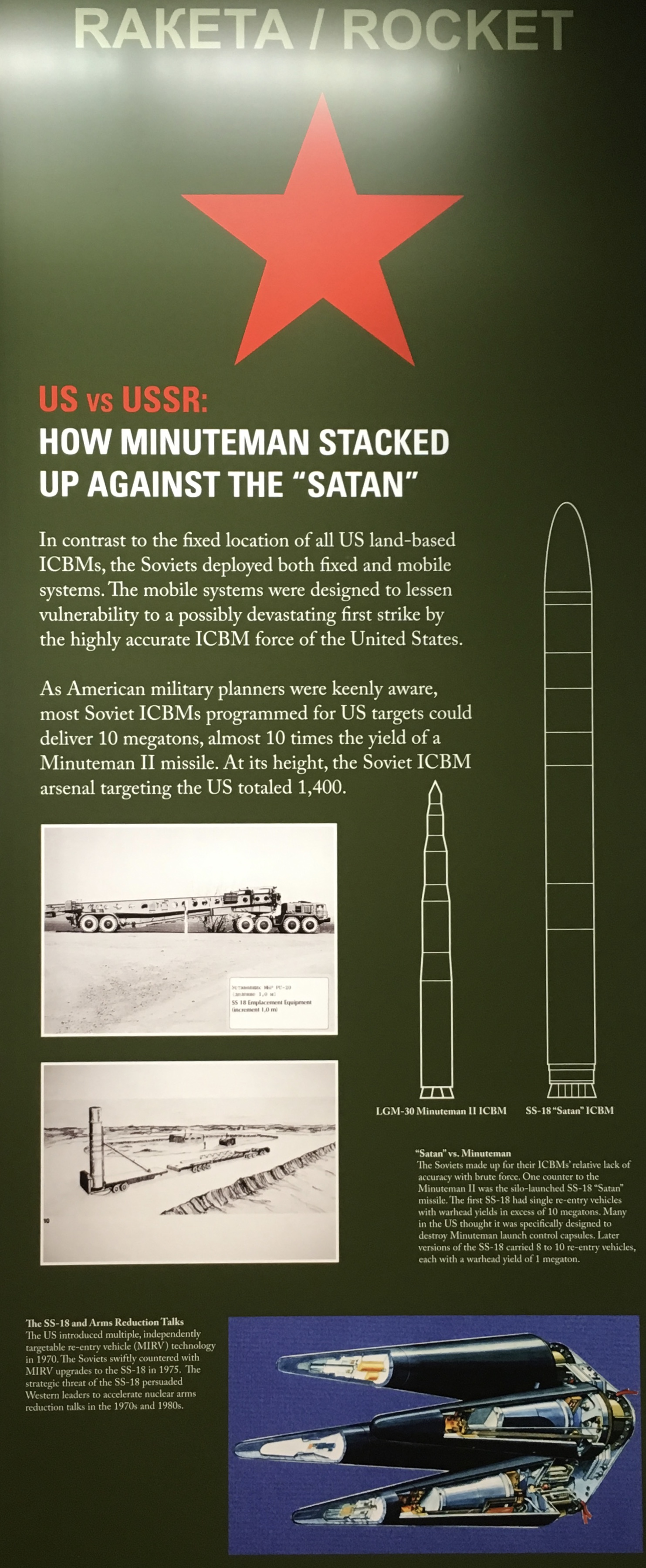
US vs. USSR

When Nikita Khruschchev told Western leaders, “we will bury you,” he meant that communism would inevitably prevail over capitalism. But many in the West thought he was talking about the arms race.  Indeed by 1986, Russia had far more nuclear weapons than any other country.

The same fears that fueled the US military build-up drove the USSR to set up extensive civil defense facilities and amass a vast arsenal of nuclear weapons.

fullsizeoutput_1f248

Soviet Civil Defense posters

In the event of a nuclear attack, every second counted.  With a 30-minute flight path between the US and USSR, the decision whether to launch a retaliatory strike had to be made — and communicated securely — within minutes.

The grave nature of the decision required that no one ever act alone.  From the White House to the missile fields, no one person could authorize, arm, or launch a nuclear weapons.

fullsizeoutput_1f255

Split-Second Decisions

At the end of World War II — the first and only wartime use of atomic bombs — the United States possessed only six nuclear weapons.  After the Soviet Union tested its first atomic bomb four years later, the arms race took off.  Within four decades, the global arsenal had multiplied to a peak of around 65,000 weapons.

Charting the world’s nuclear stockpile illustrates how the United States, its allies, and its enemies went to the brink and back during the Cold War.

World War I was touted as the “war to end all wars.”  So was World War II, which first introduced the weapons that could actually fulfill that vision.  As world powers sought to redefine warfare in the nuclear age, the global arsenal reached epic proportions.

In an increasingly polarized world — hawks vs. doves, capitalists vs. communists — a series of treaties gradually put the brakes on the arms race.  Leaders of both countries held fast to the conviction that only powerful deterrents, such as Minuteman missiles, could bring their opponents to the bargaining table.

Although the Cold War ended symbolically with the collapse of the Soviet Union and diplomatically with START II, the potential threat posed by nuclear weapons persists. Since the 1970s, Israel, India, Pakistan, and North Korea have become nuclear powers.

As of 2015, nine countries possessed about 15,700 nuclear weapons.

The Arms Race
The Arms Race
Scale of Destruction
The Arms Race
The Arms Race
the Arms Race
the Arms Race

On September 27, 1991, the order came: “Minuteman II Launch facilities are to be rendered non-launch capable… with safety being paramount.” After 30 years of standing ready — often on high alert — hundreds of Minuteman II missiles and their missileers stood down.

Guided by the START agreement, the US Air Force deactivated 450 Minuteman II missile silos and launch control centers, while the Soviets undertook a parallel effort. Each inspected and verified the other’s progress via satellite as well as in-person visits. As of 2015, 450 Minuteman III weapon systems remain operational on the Great Plains.

fullsizeoutput_1f256

Standing Down on the High Plains and Russian Steppes

After visiting the museum, I drove back west again (toward Wall) to see Delta-09 Launch Facility .

fullsizeoutput_1a3f0

Minuteman Missile NHS

Brett Dennen sang that he didn’t know why he said the things he said, but he said them anyway.

Heading back towards Wall were the ubiquitous Wall Drug signs. TRADERS CHAPEL: WALL DRUG; WESTERN WEAR: WALL DRUG.

********

At exit 116, I got off to visit Delta-09 while Eileen Jewel sang about messing around.

At Delta-09 Launch Facility, I saw a Minuteman II intercontinental ballistic missile in the silo.  Its solid fuel was stable enough to last decades while still enabling the missile to launch in minutes. A tall motion sensor alerted Launch Control of intruders day and night. During the Cold War, anyone or anything that crossed the fence was in serious trouble.  Standing orders meant the use of deadly force was authorized. The cone-shaped antenna communicated with airborne control centers.

A sign asked us to imagine one thousand ICBM silos like this, each roughly half the size of a football field, scattered widely across the American heartland. This was part of an enormous systems that kept the United States secure from a Soviet nuclear attack by threatening overwhelming destruction.

IMG_2604

Launch Facility Delta-09

fullsizeoutput_1a3f2

Launch Facility Delta-09

fullsizeoutput_1f244

Launch Facility Delta-09

fullsizeoutput_1a3f5

Launch Facility Delta-09

These missiles were located in the Great Plains because geographically this area was the closest to any point in the USSR. Missiles would have been launched over the North Pole.

Launch Facility Delta-09

Information about Minuteman Missile National Historic Site is from a pamphlet and plaques created by the National Park Service.

******

I drove back to exit 131 on I-90 and stopped at Prairie Homestead Historic Site.  This was a far cry from what I’d seen at the Minuteman Missile National Historic Site, the highest tech to the lowest tech. This site has one of the only original farm sod buildings on public display in South Dakota. It is furnished in the style of the original homesteaders, Ed and Alice Brown.  Letters and photos of the family and neighbors offer insights into hardships suffered.

I found Brown’s Original Grub Box, which kept all of the pioneer travelers’ kitchen supplies and equipment in it.  A typical grub box would contain cooking utensils, spices, and anything needed to prepare meals. The Browns used this grub box on their journey west in 1909 from Pierce, Nebraska to their new homestead in the badlands of South Dakota.  In later years, it was placed in the barn and was used by George Carr to store oats for his horses.

IMG_2627

Brown’s Original Grub Box

IMG_2628

Brown’s Original Grub Box

One of the homesteader’s problems was water.  This well was dug 30 feet deep by hand.  Many of the wells went dry.  In later years, this one furnished only a few buckets of water a day.

IMG_2631

Well

The Homestead Act of May 20, 1862, established that a person who had reached the age of 21 could file on 160 acres of land for $18.00.  The homesteader had to build a house, plow a small acreage for crops and establish a residence for five years in order to receive ownership or “prove up.”

A common remark by homesteaders was that “the government bet you 160 acres of land against $18.00 that you will starve to death before you live on the land 5 years.”

fullsizeoutput_1f2ab

Homestead Act

The pioneer home was built by Ed and Alice Brown in 1909 of dirt sod bricks and a dirt roof. They homesteaded these 160 acres in 1909. Mr. Brown used cottonwood logs (a native tree) for his homestead home. The log front is original.  The cave and chicken house were dug into the bank, as was the house. The cave served as a refrigerator in summer and as a place where food and milk wouldn’t freeze in winter.

Ed and Alice Brown passed the homestead to their son, Charles Brown.  He sold it to long time neighbors, Leslie and Jessie Crew. They sold the property to their son and daughter-in-law, Keith and Dorothy Crew.

64EDB510-FB34-4237-82ED-B3F77D81E4AB

Home of Mr. And Mrs. Ed Brown “1909”

There was an unending supply of building material for sod houses. The prairie buffalo grass sprouted from densely tangled roots, giving the top three inches of soil a tight consistency. The sodbuster shaved off a belt of roots and grass 12-18″ wide and 3″ deep.  The ribbon of sod was cut into 18-inch strips. He started the building by laying each block, with the grass side down, staggering the layers like brickwork.  Two rows were usually arranged parallel, making the finished walls about 24″ thick. Intersecting layers were lapped together at the corners with a pole used to hold the beams. As the sod house grew, spaces were left for windows.

A small portion of the furnishings are original; the rest typical of the sodbusters in this area.

car in the barn
car in the barn
Home of Mr. And Mrs. Ed Brown

Mr. Brown, or probably any homesteader, did not have all the machinery seen here. Usually the homesteader had a plow and maybe one or two other pieces of machinery. Whatever he was lacking, he had to borrow from a neighbor.

fullsizeoutput_1f2ac

wagon

The cave, or “root cellar,” was used mainly for food storage and safety from the occasional severe storm.

IMG_2652

root cellar

Equipment in this “outhouse” consisted of a Sears & Roebuck Catalog, used for toilet paper.

img_2658.jpg

outhouse

fullsizeoutput_1f2b2

farm equipment

The acreage here was the land that Mr. Brown farmed to “prove up” his homestead to acquire ownership.

IMG_2664

the homestead

Edgar Irwin Brown was born of French, Scotch, and Dutch ancestry in Iowa on October 27, 1854 and died April 2, 1920 here at the Prairie Homestead. He married Alice Alberta Story, born April 9, 1858 of English ancestry in New York, and died December 21, 1943 in Long Beach, California. Two children, a boy and a girl, were born to Ed and Alice Brown while they lived in Iowa.  In 1909, Mr. and Mrs. Brown and their son Charles moved to the Badlands of South Dakota and filed on a homestead.  They came here as many homesteaders did, with a team and a wagon. 

fullsizeoutput_1f2a9

Ed Brown & daughter

Prairie dogs, rodents related to ground squirrels, were early inhabitants of this area. When the homesteaders came to this area, the prairie dog towns spread over thousands of acres.

IMG_2634

prairie dog

The Prairie Homestead was placed on the National Register of Historic Places in 1974.

Prairie Homestead Historic Site

These pioneers played an important role in settling the Great Plains. This area of South Dakota was one of the last places to be homesteaded because western South Dakota was initially set aside as Indian reservation. An Indian treaty in 1890 was signed for the land between the White and Cheyenne Rivers to be homesteaded. This area was surveyed and settled by homesteaders between 1900 and 1913. 

The sodbuster in this area had a difficult time surviving poverty – and many of them did not. It has now been determined that 160 acres in this area will produce grazing enough for only eight cows.

Information about Prairie Homestead Historic Site is from a pamphlet and signs on the property.

After visiting this site, I headed toward Rapid City.

*Thursday, September 19, 2019*

Share this:

  • Share on X (Opens in new window) X
  • Share on Facebook (Opens in new window) Facebook
  • More
  • Email a link to a friend (Opens in new window) Email
  • Print (Opens in new window) Print
  • Share on Pinterest (Opens in new window) Pinterest
Like Loading...
  • American Road Trips
  • Badlands National Park
  • Road Trip to Nowhere

the badlands, south dakota

wanderessence1025's avatar wanderessence1025 October 29, 2020

At breakfast this morning in Wall, I chatted with two ladies from Raleigh, North Carolina who praised Custer State Park and insisted we’d love it — the bison herds and the Needles Highway.  One of them went to University of North Carolina, my husband’s alma mater.

As I drove to Badlands National Park, I passed signs for Prairie Homestead and the Minuteman Missile site, which I planned to visit the following day.  I passed the Badlands Trading Post and by 9:30 was at Badlands National Park Northeast Entrance. I drove on the Badlands Loop Road.

Badlands National Park is famous for its spectacular rock formations, with vivid colored bands that can be traced from pinnacle to pinnacle. The rocks were laid down by oozing mud, river floods, sands from an ancient sea, volcanic ash, and wind-blown dust for more than 70 million years.

IMG_2293

Badlands National Park Northeast Entrance

The Lakota Indians knew the Badlands as mako sica.  Early French trappers called the area les mauvaises terres à traverser.  Both mean “bad lands.”

 “Fancy yourself on the hottest day in summer in the hottest spot of such a place without water — without an animal and scarce an insect astir — without a single flower to speak pleasant things to you and you will have some idea of the utter loneliness of the Bad Lands.” ~ Paleontologist Thaddeus Culbertson

The Badlands is a landscape of extremes.  Summer may bring heat and violent lightning storms, along with an abundance of wildlife and wildflowers. Winter may bring cold and unfettered winds, as well as the beauty of moonlight on snow-dusted buttes.

There is a rich and varied plant landscape, including the largest mixed-grass prairie in the National Park System.  Wildlife abounds; coyotes, mule deer, butterflies, pronghorn (often called antelope), turtles, vultures, snakes, bluebirds, bison (often called buffalo), coyotes, bighorn sheep, and black-tailed prairie dogs all call the Badlands home.

By 9:40, I stopped at Big Badlands Overlook.

Big Badlands Overlook

Badlands prairie contains nearly 60 species of grass.  It is mixed grass prairie: tall-grass species such as big bluestem and prairie cordgrass, and short-grasses such as blue grama and buffalograss.  Hundreds of species of wildflowers and forbs (herbaceous flowering plants other than grass) grow here too, such as Upright Prairie Coneflower. Grasses are able to withstand high winds, longs spells of dry weather, and frequent fires. Over millennia, grazing animals flourished and grasses spread, overtaking ancient forests.

The prairie once sprawled across one-third of North America. Grasslands (prairies) occur in areas that are too dry to support trees, but too wet to be deserts.

The Badlands Wall constantly retreats north as it erodes and washes into the White River Valley below.  The Wall, an intricately carved cliff, divides the upper from the lower prairie.

The Wall is more than 60 miles long.  It is the geologic feature around which park boundaries were drawn. The Loop Road follows the Wall, sometimes dipping to the lower prairie, then climbing back to the rim.

The Wall rises above Badlands’ Prairie landscape in eerie grandeur.  Relatively recently in geographic time, erosion went to work on sedimentary rock layers that had accumulated in today’s park area over millions of years, creating fantastic landforms.  Erosion still is feverishly at work on the Wall, removing at least an inch from the escarpment’s rock surface every year.

I took the Door Trail, which was .75 miles round trip.  It included an accessible 1/4 mile boardwalk that led through a break in the Badlands Wall known as “The Door” and to a view of the Badlands. From there, the maintained trail ended. I went off trail a bit but lost sight of the yellow poles and was afraid of getting lost, so I didn’t venture too far.

Door Trail
Door Trail
Door Trail
Door Trail
Door Trail
Door Trail
Door Trail
Door Trail
Door Trail
Door Trail
Door Trail
Door Trail
Door Trail
Door Trail
Door Trail
Door Trail
Door Trail
Door Trail
Door Trail
Door Trail
Door Trail
Door Trail
Door Trail
Door Trail
Door Trail
Door Trail
Door Trail
Door Trail
Door Trail
Door Trail

I then took the adjacent 0.25 mile round trip Window Trail, a short trail that led to a natural window in the Badlands Wall with a view of an intricately eroded canyon.

Window Trail
Window Trail
Window Trail
Window Trail
Window Trail
Window Trail
Window Trail
Window Trail
Window Trail
Window Trail
Window Trail
Window Trail

I skipped the Notch Trail because it involved climbing a ladder.

fullsizeoutput_1f1ed

Along Badlands Loop Road

I then walked the moderate Cliff Shelf Trail, 0.5 miles round trip. This loop trail followed boardwalks and climbed stairs through a juniper forest perched along the Badlands Wall.  It climbed about 200 feet in elevation.  Signs warned: Beware Rattlesnakes!

IMG_2334

Beware! Rattlesnakes

Water is scarce in the Badlands, which gets less than 16 inches of precipitation per year.  The bowl-like Cliff Shelf provides more moisture than commonly found in this desolate land.

IMG_2337

Cliff Shelf Trail

IMG_2339

Cliff Shelf Trail

Cliff Shelf Trail
Cliff Shelf Trail
Cliff Shelf Trail
Cliff Shelf Trail
Cliff Shelf Trail
Cliff Shelf Trail
Cliff Shelf Trail
Cliff Shelf Trail
Cliff Shelf Trail
Cliff Shelf Trail
Cliff Shelf Trail
Cliff Shelf Trail
Cliff Shelf Trail
Cliff Shelf Trail

I continued driving to the Ben Reifel Visitor Center.

near the Ben Reifel Visitor Center

At the Ben Reifel Visitor Center, I saw a film about all the wildlife in the Badlands, including bighorn sheep, bison, burrowing owls, and prairie dogs. I looked through the exhibits about ancient life and the reintroduction of the black-footed ferret, who eats prairie dogs.

In 1981, black-footed ferrets, thought to be extinct since the last captive died in 1979, were discovered alive in the wilds of Wyoming. These relatives of weasels are among the rarest mammals on Earth. They depend on prairies as their prime habitat and prairie dogs as their food source. But shrinking prairie habitat, destruction of prairie dog colonies by humans, and spread of diseases left the ferrets close to extinction.

Soon after the ferrets were discovered, disease ran through the colony and by 1985, only 18 ferrets were still alive. The U.S. Fish and Wildlife Service and Wyoming authorities captured the ferrets and established seven breeding facilities, where the ferrets flourished and multiplied. In the fall of 1994, 36 black-footed ferrets were released into the park.  In 1995, two litters of ferrets were born in the wild, an important milestone. More captive-raised ferrets were released through 1999 with the goal of establishing a self-sustaining population. Today biologists are optimistic about the continued success of ferrets in the region.

There were also exhibits about life in the distant past.  About 75 million years ago, the Earth’s climate was warmer than it is now, and a shallow sea covered the area we now call the Great Plains. Once teeming with life, in today’s Badlands, the bottom of that sea appears as gray-black sedimentary rock called Pierre (peer) shale.  This is a rich source of invertebrate fossils: ancient fish, mosasaurs (giant marine lizards), pterosaurs (flying reptiles), Archelon (enormous sea turtles), and Hesperonis (a diving bird something like a modern loon). Rocks have yielded very few marine creatures with backbones, but scientists don’t know why.

As eons passed, land masses pushed upward, forming the ancestral Rocky Mountains, causing the sea to retreat and drain away. The climate at that time was humid and warm, with abundant rainfall. A dark and dense tropical forest developed on the land, flourishing for millions of years. Eventually the climate cooled and dried.  The forest gave way to savannah, then to grassland much like the present-day landscape.

The mosasaur, a giant marine lizard, is shown below in the shallow Late Cretaceous sea, propelled by its paddle-like flippers and long snaky tail. Growing to a length of 30 feet and equipped with sharp, curved teeth to grasp its kill, the mosasaur fed on smaller mosasaurs, sea turtles, fish, and ammonites, which resembled the modern nautilus.  Fossils of mosasaurs and their prey have all been found at Badlands National Park.

fullsizeoutput_1f1f2

Mosasaur

In the ancient forests, the titanothere shown below shoves aside undergrowth with its “horns” to get at the softest leaves and shoots.  Alligators prowl and tortoises bask in the sun.  A flock of oreodonts, sheep-like mammals, browses on the greenery, keeping a wary eye on two predators, Hesperocyon and the Hyaenodon, another large carnivore.

fullsizeoutput_1f204

titanothere

The Hyaenodon could probably tackle some of the largest animals that lived in the Badlands. Despite its name, it is not related to the hyena but has teeth that are similar. Archaeotherium was a large piglike animal that hunted small animals and also ate plant matter and carrion when available.  Some individuals grew as tall as five feet at the shoulder.

The Badlands played an integral part in the evolution of the horse. Mesohippus, a three-toed horse about the size of a collie, lived here 30 million years ago. Its teeth indicate that it ate tougher, grassier plants.

Hyaenodon
Hyaenodon
Archaeotherium
Archaeotherium
Mesohippus
Mesohippus

The Badlands seem inhospitable, but this land has supported humans for more than 11,000 years. The earliest people were mammoth hunters. Much later they were followed by nomadic tribes whose lives centered on hunting bison. They quarried useful minerals for tools and weapons, and collected plants for food and medicine. The Arikara was the first tribe known to have inhabited the White River area.  By the mid-18th century they were replaced by Sioux, or Lakota, who adopted the use of horses from Spaniards and came to dominate the area.

The Badlands were not home to any one tribe, but were used by many. The Lakota hunted bison with bow and arrow and spear from the backs of their horses and processed their kills in temporary camps that they moved to make use of game and plant resources.

In time, French fur trappers supplanted the Lakota.  They called it “bad land” because it lacked water and was difficult to traverse.  Trappers were followed by soldiers, miners, cattle farmers, and homesteaders, who followed the Fort Laramie Trail through the Badlands. In the early 20th century, two railway lines ran nearby.  Ghost towns, such as Conata, are found near the park. A few homesteads dot the White River Badlands, leaving behind overgrown buildings and stock ponds.

Oglala Lakota artistry
Lakota
Lakota

The park ranger at the Visitor Center suggested I do the Medicine Root Loop, which I did.  It was a moderate 4 miles round trip on a gently rolling spur trail.  I explored mixed grass prairie while enjoying views of the Badlands in the distance.

It was nice to be out walking, with a bit of a breeze, but it was also very hot in the sun. The path mostly featured dry cracked earth, sandy patches, and not-that-interesting rock formations. I met a couple from Minneapolis briefly.  One couple sitting in the shade said I’d see bighorn sheep ahead.  It’s amazing what your imagination can do as I thought I saw some on a large rock, but it was just people climbing around.

It was an especially long walk back along a grassland path, with grasses scratching my ankles. I felt like I was going to keel over from the heat, but I had plenty of water so I kept moving.  I kept an eye out for rattlesnakes, but I never saw any, thank goodness.  Telephone poles made me think a road was nearby and it was. I was so happy to see my car. 🙂

Medicine Root Loop
Medicine Root Loop
Medicine Root Loop
Medicine Root Loop
Medicine Root Loop
Medicine Root Loop
Medicine Root Loop
Medicine Root Loop
Medicine Root Loop
Medicine Root Loop
Medicine Root Loop
Medicine Root Loop
Medicine Root Loop
Medicine Root Loop
Medicine Root Loop
Medicine Root Loop
Medicine Root Loop
Medicine Root Loop
Medicine Root Loop
Medicine Root Loop
Medicine Root Loop
Medicine Root Loop
Medicine Root Loop
Medicine Root Loop
Medicine Root Loop
Medicine Root Loop
Medicine Root Loop
Medicine Root Loop
Medicine Root Loop
Medicine Root Loop
Medicine Root Loop
Medicine Root Loop
Medicine Root Loop
Medicine Root Loop
Medicine Root Loop
Medicine Root Loop
Medicine Root Loop
Medicine Root Loop
Medicine Root Loop
Medicine Root Loop
Medicine Root Loop
Medicine Root Loop
Medicine Root Loop
Medicine Root Loop
Medicine Root Loop
Medicine Root Loop
Medicine Root Loop
Medicine Root Loop
Medicine Root Loop
Medicine Root Loop
Medicine Root Loop
Medicine Root Loop
Medicine Root Loop
Medicine Root Loop
Medicine Root Loop
Medicine Root Loop
Medicine Root Loop
Medicine Root Loop
Medicine Root Loop
Medicine Root Loop
Medicine Root Loop
Medicine Root Loop
Medicine Root Loop
Medicine Root Loop
Medicine Root Loop
Medicine Root Loop
Medicine Root Loop
Medicine Root Loop

I stopped back at the Visitor Center for a restroom break.

Then I began the park drive, stopping at the .25 miles round-trip Fossil Exhibit Trail. It featured fossil replicas and exhibits of now extinct creatures that once roamed the area.

Fossil Exhibit Trail
Nimravid
Nimravid
Fossil Exhibit Trail
Alligator
Alligator
Titanothere
Titanothere

I stopped at various overlooks including the White River Valley Overlook and Panorama Overlook.

fullsizeoutput_1f223

White River Valley Overlook

IMG_2490

White River Valley Overlook

IMG_2494

Panorama Overlook

IMG_2497

Panorama Overlook

IMG_2501

Panorama Overlook

Sadly, I accidentally ran over  a prairie dog.  Ouch.

I went through Dillon pass and stopped at Yellow Mounds Overlook and Ancient Hunters Overlook.

IMG_2504

Yellow Mounds Overlook

IMG_2507

Yellow Mounds Overlook

IMG_2511

Ancient Hunters Overlook

IMG_2517

Ancient Hunters Overlook

fullsizeoutput_1f230

Ancient Hunters Overlook

fullsizeoutput_1f232

Ancient Hunters Overlook

At Pinnacles Overlook, the parking lot was crowded with tour buses.

Pinnacles Overlook
Pinnacles Overlook
Pinnacles Overlook
Pinnacles Overlook
Pinnacles Overlook
Pinnacles Overlook
Pinnacles Overlook
Pinnacles Overlook
Pinnacles Overlook
Pinnacles Overlook
cancellation stamp for Badlands National Park

I left Badlands at 4:17 at the Pinnacles Entrance. At Buffalo Gap National Grassland, I saw a “Bighorn Sheep Crossing” sign for the next three miles, but I never saw any of the animals.

“I had never seen anything which impressed so strongly on my mind a feeling of desolation…. The wind was high and bleak; the barren, arid country seemed as if it had been swept by fires, and in every direction the same dull ash colored hue derived from the formation met the eye… We left the place with pleasure.” ~ John C. Freemont, diary, 1842

Before traveling, I read a book that was set in the Badlands, The Personal History of Rachel Dupree. Here is my review of that book:

This is an engrossing story of an African-American family who took advantage of the Homestead Act to get 160 acres (x2) in the Badlands of South Dakota. Isaac DuPree, the son of a boarding house owner in Chicago, agrees to marry Rachel, hired help in the boarding house, if she files for ownership of 160 acres under the act before they marry. By marrying her, Isaac can double his acreage. They agree to remain married for only one year, but at the time the story begins, they’ve been married 14 years and have five children, with another on the way.

The story takes place in the early 1900s, when African-Americans were desperate to get out from under the thumbs of white people, and to escape the poverty to which they seemed destined. Isaac, who was once a soldier at Fort Robinson, is determined to be free of white suppression by becoming a self-made man. He is blindly ambitious about keeping his ranch at all costs, while also increasing his acreage. But when the family suffers through a horrible drought in 1917, Rachel has to decide whether she can continue to let her children suffer.

This story is full of quiet drama and tension. Rachel has to battle with her own ambitions: deeply smitten by Isaac, she was determined to have him at all costs; she also had great pride in the wooden house that Isaac had built for the family. But when the harsh realities of the Badlands wear her down, she begins to question her ambitions, as well as her husband’s. She remembers the little bits of sweetness she’d had in her younger years, and she begins to long for her children to also experience that bit of sweetness. She feels that everyone should have some sweet memory or experience to hang onto as they bear the hardships of pioneer life on the harsh prairie. Her love for Isaac and her home comes into conflict with her love for her children, and this conflict is the thread throughout the book.

An excellent read all around.

(All information about the Badlands comes from pamphlets and signs by the U.S. National Park Service.)

It was 8 miles to Wall on 240N.

More Wall signs greeted me:

WALL: THE FRIENDLY TOWN: HOME OF WALL DRUG.

COWBOY UP! BOOTS – BUCKLES – BELTS: WALL DRUG

Brett Dennen sang that love would set him free and if we keep building bombs, we’re going to drop them all in “Ain’t no Reason.”

YOUR WINDOW TO THE WEST: WALL HAS IT ALL

BLACK HILLS GOLD: WALL DRUG STORE

HOMEMADE BREAKFAST ROLLS: DONUTS, FUDGE & PIE: WALL DRUG.

I returned to my room and took a quick bath, then I went back to Wall Drug. There I posed on the Jackalope. I bought a black wool hat for $59.  The man there helped me figure out a size. I always have to buy men’s hats in large because my head is too big for women’s hats!

Wall Drug
Wall Drug
animal signs
animal signs
Animal Crackers at Wall Drug
Wall Drug
Wall Drug
Wall Drug
Wall Drug
Wall Drug
Wall Drug
I ride the jackalope at Wall Drug
I buy a hat at Wall Drug

I had dinner again at Badlands Saloon & Grille, where I sat at the bar.  I had a free Bud Light and a bison hot dog with a couple of fried onion rings and some baked beans. I felt like an old cow poke. 🙂

*Drove 67.4 miles; Steps 19,967, or 8.46 miles*

*Wednesday, September 18, 2019*

Share this:

  • Share on X (Opens in new window) X
  • Share on Facebook (Opens in new window) Facebook
  • More
  • Email a link to a friend (Opens in new window) Email
  • Print (Opens in new window) Print
  • Share on Pinterest (Opens in new window) Pinterest
Like Loading...
  • American Road Trips
  • Bear Butte
  • Prose

south dakota: sturgis, bear butte & wall

wanderessence1025's avatar wanderessence1025 October 27, 2020

After leaving Spearfish Canyon, I drove past DICK & JANE’S NAUGHTY SPOT, and signs saying “Imagine Being Evicted Because of Who You Love.” I arrived at the town of Sturgis at 12:30.

Sturgis is home to the legendary annual Sturgis Motorcycle Rally the first week in August, drawing close to 500,000 attendees. The rally attracts “weekend warriors and biker gangs such as the Bandidos.”  It also attracts celebrities such as Peter Fonda, Emilio Estevez, and heavy metal thunder.

This was the same town of Sturgis that held a big motorcycle rally on August 7-16, 2020, despite the pandemic (NPR: States Report Coronavirus Cases Linked to Sturgis, S.D., Motorcycle Rally).  The motorcycle rally is held every year at this time; I visited here in September of 2019, when the rally was over. The town was quite dead.

At the Sturgis Motorcycle Museum & Hall of Fame, I walked around the cool museum looking at examples of different motorcycles through history.  The museum blends motorcycle memorabilia, antique motorcycles, unique bikes, and rotating exhibits. Though I’ve never been a motorcyclist, there is an appealing sense of freedom to them.

IMG_2144

Sturgis Motorcycle Museum & Hall of Fame

After visiting the museum, I took a brief stroll around the town of Sturgis.

Sturgis
Sturgis
Sturgis
Sturgis
Sturgis
Sturgis
Sturgis
Sturgis
Sturgis
Sturgis
Sturgis
Sturgis

After leaving Sturgis, I ate the rest of my buffalo ravioli from the night before, though it never really warmed up on my dashboard. 😦  I drove along to my next destination, seeing an interesting buffalo-shaped sign.

fullsizeoutput_1a428

sign along the way

I drove to Bear Butte State Park, an interesting geological formation.  The Indians gave it the name “Mato paha” (Bear Mountain). This formation is a lone mountain, not a flat-topped “butte” as its name implies. It is one of the several intrusions of igneous rock that formed millions of years ago along the northern edge of the Black Hills. A small bison herd roams at the base of the mountain.

Artifacts from 10,000 years ago have been found here, and the volcanic laccolith is still used today by Native Americans for religious ceremonies and vision quests. Many see the mountain as a place where the Creator has chosen to communicate with them through visions and prayer. Notable leaders including Red Cloud, Crazy Horse and Sitting Bull have all visited Bear Butte. These visits culminated with an 1857 gathering of many Indian nations to discuss the advancement of white settlers into the Black Hills.

George Armstrong Custer, who led an expedition of 1,000 men into the region in 1874 and camped near the mountain, verified the rumors of gold in the Black Hills.  Bear Butte then served as a landmark that helped guide invading prospectors and settlers into the region.

fullsizeoutput_1f16f

Bear Butte State Park

fullsizeoutput_1f171

Bear Butte State Park

fullsizeoutput_1f173

Bear Butte State Park

I went into the little museum at the park to see some displays about Native Americans.

IMG_1071

painting of Native Americans at Bear Butte State Park

fullsizeoutput_1f157

painting of Native Americans at Bear Butte State Park

fullsizeoutput_1a430

farewell to Bear Butte State Park

I was too tired to attempt the steep summit trail, so I was on my way.

I approached Rapid City, South Dakota, passing Box Elder Creek and signs for Mount Rushmore.  A MicroMinnie trailer went past pulled by a jeep.  On the driver’s side door of the jeep read: “Not all who wander are lost.”

On I-90 E were numerous signs for Wall Drug.  Here is my journal page showing all of them.

fullsizeoutput_1e79e

signs on the way to Wall Drug

Lightning struck in the distance and I passed over the Cheyenne River.  I stopped at a rest area with a teepee structure and a Mount Rushmore relief sculpture.

South Dakota Rest Area

I arrived in Wall, South Dakota at 4:00 and went directly to the Wounded Knee Museum. It tells the horrible and heartbreaking details of the Wounded Knee Massacre through a film, vivid graphics, photographs and music. 

The Wounded Knee Massacre was a domestic massacre of several hundred Lakota Indians, mostly women and children, by soldiers of the U.S. Army on December 29, 1890, near Wounded Knee Creek on the Lakota Pine Ridge Indian Reservation, following a botched attempt to disarm the Lakota camp.

The massacre was related to the Ghost Dance, a religious movement incorporated into numerous Native American belief systems.  According to teachings of the Northern Paiute spiritual leader Wovoka, proper practice of the dance would reunite the living with spirits of the dead, bring the spirits to fight on their behalf, make the white colonists leave, and bring peace, prosperity, and unity to Native American peoples throughout the region.

Wounded Knee Museum
Wounded Knee Museum
Wounded Knee Museum
Wounded Knee Museum
Wounded Knee Museum
Wounded Knee Museum
Wounded Knee Museum
Wounded Knee Museum
Wounded Knee Museum
Wounded Knee Museum
Wounded Knee Museum
Wounded Knee Museum
Wounded Knee Museum
Wounded Knee Museum
Wounded Knee Museum
Wounded Knee Museum
Wounded Knee Museum
Wounded Knee Museum
Wounded Knee Museum
Wounded Knee Museum
Wounded Knee Museum
Wounded Knee Museum
Wounded Knee Museum
Wounded Knee Museum
Wounded Knee Museum
Wounded Knee Museum
Wounded Knee Museum
Wounded Knee Museum
Wounded Knee Museum
Wounded Knee Museum
Wounded Knee Museum
Wounded Knee Museum
Wounded Knee Museum
Wounded Knee Museum
Wounded Knee Museum
Wounded Knee Museum
Wounded Knee Museum
Wounded Knee Museum
Wounded Knee Museum
Wounded Knee Museum
Wounded Knee Museum
Wounded Knee Museum
Wounded Knee Museum
Wounded Knee Museum

I tried to mail a birthday card to my Dad from Wall. I thought I’d make it by the 5:00 closing, but it had closed at 4:00. 😦  I checked in at America’s Best Value – Wall for two nights.

After settling in, I went to Wall Drug Store.  Hyped up billboards along the highway lure tourists with free ice water after they leave the Badlands. The cafe still serves 5¢ coffee.  It is a cowboy-themed shopping mall: drug store, gift shop, restaurants, and various other stores, as well as an art gallery and a large brontosaurus sculpture. It was purchased in 1931 by Ted Hustead, a Nebraska native and pharmacist looking for a small town with a Catholic church to establish his business.

Hustead’s wife thought of advertising free ice water.  Wall Drug includes a Western Art Museum, a narrow chapel, western wear (boots, hats, clothes), jewelry, and western books.

fullsizeoutput_1f191

Wall Drug

Wall Drug
Wall Drug
Wall Drug
Wall Drug
Wall Drug
Wall Drug
Wall Drug
Wall Drug
Wall Drug
Wall Drug
Wall Drug
Wall Drug
Wall Drug
Wall Drug
Wall Drug
Wall Drug
Wall Drug
Wall Drug
Wall Drug
Wall Drug
U.S. Post Office
U.S. Post Office
Wall Drug
Wall Drug
Wall Drug
Wall Drug
Wall Drug
Wall Drug
Wall Drug
Wall Drug
Wall Drug
Wall Drug
Wall Drug
Wall Drug
Wall Drug
Wall Drug
Wall Drug
Wall Drug
Wall Drug
Wall Drug
Wall Drug
Wall Drug
Wall Drug
Wall Drug
Wall Drug
Wall Drug
boots at Wall Drug
boots at Wall Drug
boots at Wall Drug
boots at Wall Drug
boots at Wall Drug
boots at Wall Drug
Book Store at Wall Drug
Wall Drug
Wall Drug

I had dinner at Badlands Saloon and Grille: a Bud Light (free) and Cowboy Chicken Slop: a healthy helping of mashed potatoes topped with fried boneless chicken breasts, sweet corn, white gravy and cheddar cheese.

fullsizeoutput_1f197

Cowboy Chicken Slop

After dinner, I walked to the end of the Wall Drug Complex and captured a huge set of silos which I’d found to be very common on the Great Plains.

fullsizeoutput_1f1a0

silos at Wall Drug

Below is my journal spread for today.

fullsizeoutput_1e7a2

Tuesday, September 17, 2019 journal spread

 *Drove 162.7 miles (total trip 3,920.5 miles); Steps: 7,880; or 3.34 miles*

*Tuesday, September 17, 2019*


Share this:

  • Share on X (Opens in new window) X
  • Share on Facebook (Opens in new window) Facebook
  • More
  • Email a link to a friend (Opens in new window) Email
  • Print (Opens in new window) Print
  • Share on Pinterest (Opens in new window) Pinterest
Like Loading...
  • American Road Trips
  • Deadwood
  • Hikes & Walks

tatanka: story of the bison & spearfish canyon

wanderessence1025's avatar wanderessence1025 October 25, 2020

I chatted with two older men in the breakfast room at The Hotel by Gold Dust in Deadwood this morning. One was 84 and in the Army Guard during his career.  The other was a lineman in Ohio.  They were both headed to Devils Tower today and then to Yellowstone, going in the opposite direction as I was.

fullsizeoutput_1a436

Welcome to Deadwood: Where the Wild West Lives

I had to get gas, get ice, and organize the car. Though I planned to take the Spearfish Canyon Scenic Byway, I decided to finish up Deadwood by going to Tatanka: Story of the Bison. 

fullsizeoutput_1a43a

Tatanka: Story of the Bison

views from Tatanka: Story of the Bison

Here I saw the stunning larger-than-life bronze sculpture by local artist Peggy Detmers, featuring 14 bison being pursued by three Native American horseback riders over a cliff. This was a common way Native Americans hunted bison.

fullsizeoutput_1a438

Tatanka: Story of the Bison

The ancestors of American bison have been traced by their fossilized bones and are thought to have crossed on the “land bridge” between Siberia and Alaska some 400,000 years ago.

The ancient bison was much larger than the present-day animal.  At the peak of their population, the number of bison has been estimated at between 30 to 60 million.

The American bison is not a true buffalo in the scientific sense of the word, but most people use the word “buffalo” for the animal. Popular usage perpetuates the term “buffalo” even though “bison” is the scientific name. At Tatanka, both terms are used interchangeably, although Bison and American buffalo are not two separate species. True buffalo are indigenous only to Asia (water buffalo) and Africa (Cape buffalo).

In the Lakota language, this animal is Tatanka (male) or Pte (female).  In English, Tatanka translates to “the ones that we belong to” emphasizing the deep kinship between Lakota and buffalo.

Tatanka: Story of the Bison

Kevin Costner, who starred in and directed the 1990 movie Dances With Wolves, founded the attraction. In a film at the museum, Costner gave a moving speech about the atrocities white people have committed against Native Americans, and how we destroyed the bison in the process, hoping to force tribes off their land by taking away their food source. Costner felt strongly that we Americans gloss over our history with Native people, that we should be taught more deeply about our abominable treatment of them, and that we should learn the depth of our wrong action from an early age. I agree with him wholeheartedly.

Today, bison numbers are up to over 400,000 animals in North America, from fewer than 1,000 at the turn of the 20th century, when their population was at its lowest level. Conservationists had the foresight to understand that a species was close to extinction and had the initiative to do something about it.

Today’s bison are descended from those last remaining individuals.  There are a number of herds on public land – in National and State Parks and in wildlife refuges – and many more on private land.

It is not illegal to kill bison nowadays and thousands of ranches raise bison for their meat.  Bison meat is similar to beef, but a healthy alternative to other meats, with fewer calories and less fat than a skinless chicken breast.

Until the 1990s, the focus of bison ranching was breeding stock.  Since then, the focus has become marketing meat and by-products.  There are ranches in all 50 United States, in all Canadian Provinces, and in many countries across the world.

Native garb
Native garb
Today's buffalo
Today’s buffalo
Bison
Bison
"We did not ask you white men to come here."
“We did not ask you white men to come here.”
feather
feather

The bison is an important part of the prairie ecosystem and is well adapted to life on the prairie. It is said that they are the only animal on the plains that will stand facing into a blizzard. Not as fast as the pronghorn, bison can still run 30-40 miles per hour. Their instinct to form herds provides safety in numbers. 

Buffalo robes provided extraordinary insulation, as a buffalo hide is comprised of ten times the number of hairs per square inch as a cow hide.

Bison graze on prairie grasses all year round. In winter, with grass below the snow, bison are still able to feed.  A 1,000 lb. bison requires 30 lbs. of food a day.  They rarely browse on trees or shrubs, but do include many species of grasses in their diet. A main forage plant on the plains is “buffalo grass.” The 2 inch leaves die back each year, but the 8-foot deep roots remain alive to sprout the next spring, providing a consistent source of nutrition for the bison.

(Information about the bison comes from the film and signs at the attraction).

While I was in the restroom at Tatanka, I accidentally left my cell phone on top of the toilet paper holder.  It wasn’t until I was outside at the statue that I realized it was gone.  I frantically ran back to the bathroom and it was gone.  The woman manning the front desk said another woman had taken it outside to the tour bus to see if it belonged to anyone there.  Luckily I caught them before they took off with it.  This isn’t the first time I have left my phone in the bathroom! 😦

I headed next for the Spearfish Canyon National Scenic Byway on US 14A.  The 19-mile drive is on one of the prettiest, least crowded byways in the hills. Thousand-foot-high limestone palisades in shades of brown, pink and gray tower along the road as it twists through the gorge.

IMG_2055

Spearfish Canyon National Scenic Byway

IMG_2061

Spearfish Canyon National Scenic Byway

IMG_2062

Spearfish Canyon Scenic Byway

I passed through Lead, population 3,124.  I passed Java Joint, Homestake Mansion, and Lewie’s Saloon & Eatery.  I arrived at Spearfish Canyon by 10:30.  I went by Boar’s Nest and Powder House Pass and soon was at the Cheyenne Crossing Store. 

The road runs alongside Spearfish Creek. I drove by the Latchstring Restaurant and Spearfish Canyon Lodge.  At Iron Creek, a dog ran out barking his fool head off.

I was in the midst of the Black Hills National Forest.

Spearfish Canyon National Scenic Byway

At Devil’s Bathtub, I got a nosebleed, something I’m periodically prone to. I saw the red brick walls and large plate windows of the Maurice Hydro Power Plant, offering a reminder of the Homestake Gold Mine operation in Lead, just a few miles up the road. I thought of the miners who I’d overheard talking the night before in Deadwood.

fullsizeoutput_1f151

Homestake Mining Dam

IMG_2084

Spearfish Canyon National Scenic Byway

fullsizeoutput_1f153

Spearfish Canyon National Scenic Byway

IMG_2093

Spearfish Canyon National Scenic Byway

Spearfish Canyon was the location for several scenes in the movie epic, Dances With Wolves.

I left the Scenic Byway, passing the Canyon Gateway Motel and a “Welcome to Spearfish” sign.

I was heading to Sturgis.

*Tuesday, September 17, 2019*


Share this:

  • Share on X (Opens in new window) X
  • Share on Facebook (Opens in new window) Facebook
  • More
  • Email a link to a friend (Opens in new window) Email
  • Print (Opens in new window) Print
  • Share on Pinterest (Opens in new window) Pinterest
Like Loading...
  • American books
  • American Road Trips
  • Anticipation

anticipation & preparation: new hampshire & vermont in 2014

wanderessence1025's avatar wanderessence1025 October 23, 2020

Alex and I planned to stay at Lake Winnipesaukee in New Hampshire with Ron and his wife; Ron was the father of my colleague from Oman, Spencer.  We would drive the Kancamagus Highway, a 34.5 mile scenic drive along New Hampshire’s Rt. 112 in the White Mountains. We would stop at the Albany Covered Bridge that crosses the Swift River and at Sabbaday Falls. We’d visit the Flume Gorge, near the town of Lincoln, New Hampshire, and the Flume Covered Bridge.

New Hampshire
New Hampshire
New Hampshire
New Hampshire
New Hampshire
New Hampshire
New Hampshire
New Hampshire
Lake Winnipesaukee
Lake Winnipesaukee

After we left New Hampshire, we would drive through Woodstock, Vermont, then we’d head to Bennington, Vermont. In New York, we’d drive off the beaten track into the Catskill Mountains, where we’d try to hike to Kaaterskill Falls.

Bennington, Vermont
Bennington, Vermont
Catskills in New York

There are a number of books set in New Hampshire and Vermont, some of which I’d already read.

Books set in New Hampshire include:

    1. A Prayer for Owen Meany by John Irving *****
    2. The Cider House Rules by John Irving ****
    3. The Hotel New Hampshire by John Irving
    4. Sea Glass by Anita Shreve ****
    5. Fortune’s Rocks by Anita Shreve
    6. The Pilot’s Wife by Anita Shreve
    7. All He Ever Wanted by Anita Shreve
    8. The Weight of Water by Anita Shreve
    9. A Separate Peace by John Knowles
    10. Salem Falls by Jodi Picoult
    11. Edson by Bill Morrisey
    12. As We Are Now by May Sarton

Books set in Vermont include:

    1. Testimony by Anita Shreve ***
    2. breathing water by T. Greenwood
    3. Last Things by Jenny Offill (& Louisiana)
    4. The Sleepwalker by Chris Bohjalian
    5. Midwives by Chris Bohjalian
    6. Water Witches by Chris Bohjalian
    7. The Buffalo Soldier by Chris Bohjalian
    8. The Honey Wall by Karen Latuchie (& New York)
    9. Crossing to Safety by Wallace Stegner (& Wisconsin)
    10. The Late Bloomers’ Club by Louise Miller
    11. In the Fall by Jeffrey Lent
    12. The Secret History by Donna Tartt
    13. Songs in Ordinary Time by Mary McGarry Morris
    14. Second Glance by Jodi Picoult
    15. House Rules by Jodi Picoult
    16. A Stranger in the Kingdom by Howard Frank Mosher
    17. Where the Rivers Flow North by Howard Frank Mosher
    18. Disappearances by Howard Frank Mosher
    19. Points North by Howard Frank Mosher
    20. Wandering Home by Bill McKibben
    21. Witness by Karen Hesse
    22. Go With Me by Castle Freeman Jr.
    23. All the Best People by Sonja Yoerg
    24. Life Among the Savages by Shirley Jackson

Movies set in New Hampshire include:

  1. The Moon’s Our Home (1936)
  2. Our Town (1940)
  3. Northwest Passage (1940)
  4. The Devil & Daniel Webster (1941)
  5. The Whistle at Eaton Falls (1951)
  6. The Last Detail (1973)
  7. The Europeans (1979)
  8. On Golden Pond (1981) *****
  9. The Hotel New Hampshire (1984)
  10. The Good Son (1993)
  11. The War Room (1993)
  12. Affliction (1997)
  13. Mr. Deeds (2002)
  14. The Brown Bunny (2003)
  15. Live Free or Die (2006)
  16. The Sensation of Sight (2006)
  17. Disappearances (2006)
  18. What Goes Up (2009)
  19. Before I Sleep (2013)
  20. In Your Eyes (2014)
  21. Hedgehog (2017)

Movies set in Vermont include:

  1. Nothing Sacred (1937)
  2. The Trouble with Harry (1955)
  3. Those Calloways (1965)
  4. The Gift of Love: A Christmas Story (1983)
  5. September (1987)
  6. Baby Boom (1987) ****
  7. Sweet Hearts Dance (1988)
  8. The Wizard of Loneliness (1988)
  9. Funny Farm (1988)
  10. Johnny Tsunami (1999)
  11. What Lies Beneath (2000)
  12. State and Main (2000)
  13. Super Troopers (2001)
  14. Spinning Into Butter (2007)
  15. Northern Borders (2013)
  16. Ten Thousand Saints (2015)
  17. Moonlight in Vermont (2017)

It would be a short road trip for us.  We’d be on the road from July 10-15, 2014.

Share this:

  • Share on X (Opens in new window) X
  • Share on Facebook (Opens in new window) Facebook
  • More
  • Email a link to a friend (Opens in new window) Email
  • Print (Opens in new window) Print
  • Share on Pinterest (Opens in new window) Pinterest
Like Loading...
  • American Road Trips
  • challenge: a call to place
  • destinations

call to place: new hampshire & vermont in 2014

wanderessence1025's avatar wanderessence1025 October 22, 2020

I have met some of the nicest people through blogging.  I first got acquainted with Ron through his son Spencer, a young man I worked with at the University of Nizwa in Oman.  Ron wasn’t a blogger, but because I wrote my blog, a nomad in the land of nizwa, providing an insight into what Spencer’s life in Oman might be like, he followed my blog, often leaving encouraging comments.  At one point he mentioned he had a cottage on Lake Winnipesaukee in New Hampshire and said I should come up to visit in the summer.  At the end of June, he wrote: “The cottage is open and waiting for you.”

The Swift River along the Kancamagus Highway
Sabbaday Falls
Sabbaday Falls
green pool at Sabbaday Falls
Flume Gorge, New Hampshire

Needing a break from the stress of watching the decline of my mother-in-law, and knowing I wouldn’t have time later as I prepared to go to China, I responded by email to get the details about the cottage.  We planned that I’d come up right after my class on Thursday, July 10 and would stay through Monday, July 14.  As Mike and Adam were working and couldn’t take time off, Alex and I decided to take the long drive to New Hampshire on our own.

Lake Winnipesaukee
Lake Winnipesaukee
The Yankee Bookshop in Woodstock, Vermont
Bennington Moose
Bennington Moose
Kaaterskill Falls, New York

I would go to New Hampshire and Vermont from July 10-15, 2014.

Share this:

  • Share on X (Opens in new window) X
  • Share on Facebook (Opens in new window) Facebook
  • More
  • Email a link to a friend (Opens in new window) Email
  • Print (Opens in new window) Print
  • Share on Pinterest (Opens in new window) Pinterest
Like Loading...
  • American Road Trips
  • Deadwood
  • Devils Tower National Monument

on journey: medora to devils tower to deadwood, south dakota

wanderessence1025's avatar wanderessence1025 October 21, 2020

I was too slow getting going this morning because of a restless night’s sleep.  I had biscuits and gravy for breakfast after taking my sweet time getting ready.

From Medora, I had a long drive south with nothing much to see. It would be over three hours to Belle Fourche. I saw painted horses grazing in flat pastures.  A sign said SAVE THE BABIES: LIFE BEGINS AT CONCEPTION.  I bumped over a six mile stretch of road with loose gravel. A big butte loomed to the east, and White Lake and white chalky buttes were to the west.

The town of Amidon was established in 1913 and it looked like it was still stuck there. I passed Mo’s Bunker Bar and a bunch of silos.  At the National Grasslands, I saw the Mah Dah Hey trailhead. I passed more buttes amidst green and gold grasses.

Near Bowman County, cows were grazing around badland-like formations. I drove amidst sunflower fields and the Brooks Angus Ranch, Stuber Ranch, and more golden grasses. The landscape began to roll wide and gradually.  I was welcomed to Bowman and saw airplanes on metal poles.

Rilo Kiley sang about a silver lining.  The Sweetwater Golf Club passed outside the window.  I was on 85S the entire way today, greeted by brown cows with painted white bellies and scatters of buttes looming on the horizon.  Bruce Springsteen sang about the ghost of Tom Jones.

Finally the sign informed me: WELCOME TO SOUTH DAKOTA.  GREAT FACES. GREAT PLACES. A lone oil rig bobbed up and down in a desolate landscape. Sporadically, bright yellow grasses glowed alongside the road. To the west, buttes were marked with crenelations like a fortress.   I passed through the town of Buffalo, population 380.  Semis, campers and pickups were my road companions.  Sandy patches marred the land near the North Moreau River.  This was a landscape that put you to sleep, with some rocky rises here and there.  Otherwise, there were long gradual inclines and declines.

Redig was all delapidated wooden buildings. Finally, I reached the Crow Buttes Mercantile at 12:38. The Crow Buttes commemorates a battle between the Sioux and the Crow.  The Crow ran up on a butte and the Sioux surrounded them until the Crow all died of thirst.

IMG_1808

It was a cute Mercantile with friendly proprietors. They talked me into going to Devil’s Tower, which had been a longshot on my itinerary.  Roads stretched to infinity.

Crow Buttes Mercantile
bathroom in the Crow Buttes Mercantile

I saw two bicyclers today on 85S, some of the few that I’d seen in some 3,700 miles of driving.

Finally, I reached Belle Fourche, which was supposedly pronounced “Belle Foosh,” population 5,594. Mountains lay ahead.  I took 34W, a scenic highway past the Stone House Saloon.  Green buttes were dotted with pine trees.  Ranches abounded, one was the Santa Maria Ranch.  I wondered if the forested hills were the Black Hills.

Soon I crossed into Wyoming.

fullsizeoutput_1f0ef

Welcome to Wyoming

I saw the exit for Sundance and giant haystacks and hay bales.  There was a historical marker for the Custer Expedition and the Black Hills National Forest. My heart was leaping at this scenery, it was so beautiful. I saw pretty red rock cliffs and cattle.  In Alva, population 50, elevation 3,995, a bunch of mobile homes squatted. I was welcomed to 4H Country (or was it county?).  A dead deer lay along the roadside.

I crossed the Belle Fourche River.  When I first glimpsed Devils Tower I was surprised.  I didn’t imagine it would be so big.

At the Devils Tower National Monument, I went into the Visitor Center to get a sticker and cancellation stamp for my passport. It had a very small museum and no film. There were exhibits about the Tower’s history and geology.

Devils Tower, rising 867 feet from its base, is an excellent geologic example of an igneous intrusion, exposed by the erosion of sedimentary rock.  It stands 1,267 feet above the river and 5,112 feet above sea level. The area of its teardrop-shaped top is 1.5 acres. The diameter at the base is 1,000 feet.

Located on the banks of the Belle Fourche River in Wyoming, Devils Tower National Monument encompasses 1,346 acres and was established September 24, 1906 as our nation’s first national monument. It has special significance for traditional Northern Plains people.

The 1.3 mile paved Tower Trail offered close up Tower views.

IMG_1844

Devils Tower National Monument

IMG_0942

Devils Tower National Monument

IMG_0943

Devils Tower National Monument

Bear Lodge is one of many American Indian names for the Tower.  Colonel Richard Dodge named it Devils Tower in 1875.  He led the military expedition sent to confirm reports of gold in the Black Hills and to survey the area.  Scientists then thought Devils Tower was the core of an ancient volcano.  Recent data suggests it is an igneous intrusion.

The geological story is that about 50 million years ago molten magma was forced into sedimentary rocks above it and cooled underground. As it cooled, it contracted and fractured into columns.  An earlier flow formed Little Missouri Buttes.  Over millions of years, erosion of the sedimentary rock exposed Devils Tower and accentuated Little Missouri Buttes.

On July 4, 1893, William Rogers and Willard Ripley made the “first” ascent of Devils Tower, using a wooden ladder for the first 350 feet. However, since there was already a flag for hoisting Old Glory atop the tower, it seems the first ascent might have been a day earlier.

The Tower became a 4th of July meeting place for ranching families.  In 1895, Mrs. Rogers used her husband’s ladder, and became the first woman to reach the summit.

Some 5,000 climbers come every year from all over the world to climb the massive columns.  There are over 220 climbing routes.

I saw four climbers getting ready to rappel down today.

Devils Tower National Monument

Black Hills pine forests merged with rolling plains grasslands around the Tower.

IMG_0960

View from Devils Tower

IMG_0965

View from Devils Tower

IMG_1858

View from Devils Tower

fullsizeoutput_1f0ed

View from Devils Tower

fullsizeoutput_1f0ee

View from Devils Tower

IMG_1863

Devils Tower

In 1906, President Theodore Roosevelt proclaimed Devils Tower the first national monument under the new Antiquities Act.  His action made Wyoming the home of both our first national park – Yellowstone in 1872 – and our first national monument. He acted to protect the Tower from commercial exploitation.

Devils Tower is perhaps best remembered for the award-winning 1977 movie, Close Encounters of the Third Kind, which was filmed on-site and became a breakout hit for Steven Spielberg.

It was a beautiful day to walk around the Tower.

All information about Devils Tower is from a pamphlet and signs by the National Park Service.

Devils Tower National Monument
forests around Devils Tower
Devils Tower National Monument

I left Devils Tower at 4:45 and stopped briefly at the Devils Tower Trading Post, where I got a single scoop of butter pecan ice cream on a cake cone.

I stopped in Hulett, a cute park gateway town with a population of 383 and 3,755 feet in elevation. I took some pictures and bought a few postcards.

Wyoming Territory Trading Post
Bob's Rogues Gallery
Bob’s Rogues Gallery
Bob Coronado Antiques and Fine Arts
Bob's
Bob’s
antlers at Bob's
antlers at Bob’s
Bob's Rogues Gallery
Bob’s Rogues Gallery
Bob's Rogues Gallery
Bob’s Rogues Gallery
Wyoming Territory Trading Post
Deer Creek Taxidermy
Ponderosa Cafe and Saloon
Rodeo Bar
Rodeo Bar

One painting in Bob’s Rogues Gallery was of Russell Means, Lakota name: Oyate Wacinyapi (“Works for the People”). The painter, Bob Coronato, quotes Means: “An upside down flag is an international sign of distress… now we, the Indian nations, are in distress.  I will wear this flag upside down as long as my people are in distress.”

According to a write-up about the painting, Russell Means, part of the AIM, the American Indian Movement, “stood up for unfair racism, and abuses against Indians and made definitive stands against the [tierney] (tyranny?) of the cops, government, racist judges, and citizens who felt that Indians were second class.”

fullsizeoutput_1f0f6

Russel Means, Lakota name: Oyate Wacinyapi (“Works for the People”) by Bob Coronato

On the way back to South Dakota, I passed a historical marker for Custer’s 1874 Expedition: “During the summer of 1874, General George Armstrong Custer led the first official government expedition to the Black Hills, which the Sioux Indians claimed as their territory.  Although the United States Government officially sent this expedition of more than 1,000 men to scout for a new fort location, the presence of engineers, geologists and miners indicated that recording the topography, geography, and location of gold deposits were other important goals.

“The expedition’s discovery of gold had wide reaching effects on the area and its future. Miners rushed to the Black Hills, ultimately helping to open northeast Wyoming Territory to settlement. The encroachment of settlers on Native American territory broke the terms of the Fort Laramie Treaty of 1868. The Sioux turned to war to defend their lands and, in June 1876, they defeated General Custer at the Battle of the Little Bighorn in Montana.  However, they surrendered to General Terry by October of that same year.  In 1877, the United States officially confiscated the Black Hills lands from the Sioux, an action of which the legality is still being disputed in courts” (from the plaque at the site).

fullsizeoutput_1f0fb

Custer Expedition

At Aladdin (population 15), I saw a cute general store.  I stopped into the Aladdin General Store just to check it out.

IMG_1960

Aladdin General Store

Aladdin General Store

I was welcomed back to South Dakota.

IMG_1968

Welcome to South Dakota

IMG_1970

I passed the 2Y Ranch, Birkelands Ranch and many other gates signifying ranches. I reached Belle Fourche, population 5,594, at 5:19 and then had another 11 miles to Spearfish.  I passed the Branding Iron Steakhouse, Stagecoach Road, and then arrived in Spearfish  (pop. 10,494) and passed the High Prairie Lodge and red earth hills covered in pine trees.  A sign notified me I was in the Black Hills National Forest.

A sign welcomed me to “Deadwood: Where the Wild West Lives.”

I wondered what a “tin lizzie” was and found later it is a a small inexpensive early automobile; the term is especially used as a nickname for the Model T Ford.

I checked into The Hotel by Gold Dust in Deadwood.

Gold Dust Hotel in Deadwood

I walked up and down the streets of the historic town.  Deadwood is a gambler’s paradise, with slot machines in almost every establishment. People dress in cowboy garb and call people into their saloons. There are Wild West shootouts on the street, but I didn’t see any. It’s a bit hokey but cute at the same time.

Deadwood, South Dakota

I ate dinner at Deadwood Social Club on the 2nd floor above the famed Old Style Saloon No. 10.  I sat at a table next to about six men talking the whole time about mining.  They were apparently talking about Homestake Mining Co, which was founded in 1877; it was acquired by Barrick Gold in December 2001. It was one of the largest gold mining businesses in the U.S. and the owner of the Homestake Mine in Lead, South Dakota.  It was quite boring, their talk, so I tuned them out as best I could.  It was all technical stuff.

fullsizeoutput_1f101

Deadwood Social Club

I had a dirty vodka martini: Titos, dash of olive juice, olives.  For dinner, I had Buffalo Ravioli with brown butter and sage.  It was yummy, but so filling, I could only eat half.

Below is my journal spread for this day.

fullsizeoutput_1e797

Monday, September 16, 2019

fullsizeoutput_1e79b

*Drove 324.9 miles, making my total drive so far on this trip 3,757.8 miles*

*Steps: 9,870, or 4.18 miles*

*Monday, September 16, 2019*

Share this:

  • Share on X (Opens in new window) X
  • Share on Facebook (Opens in new window) Facebook
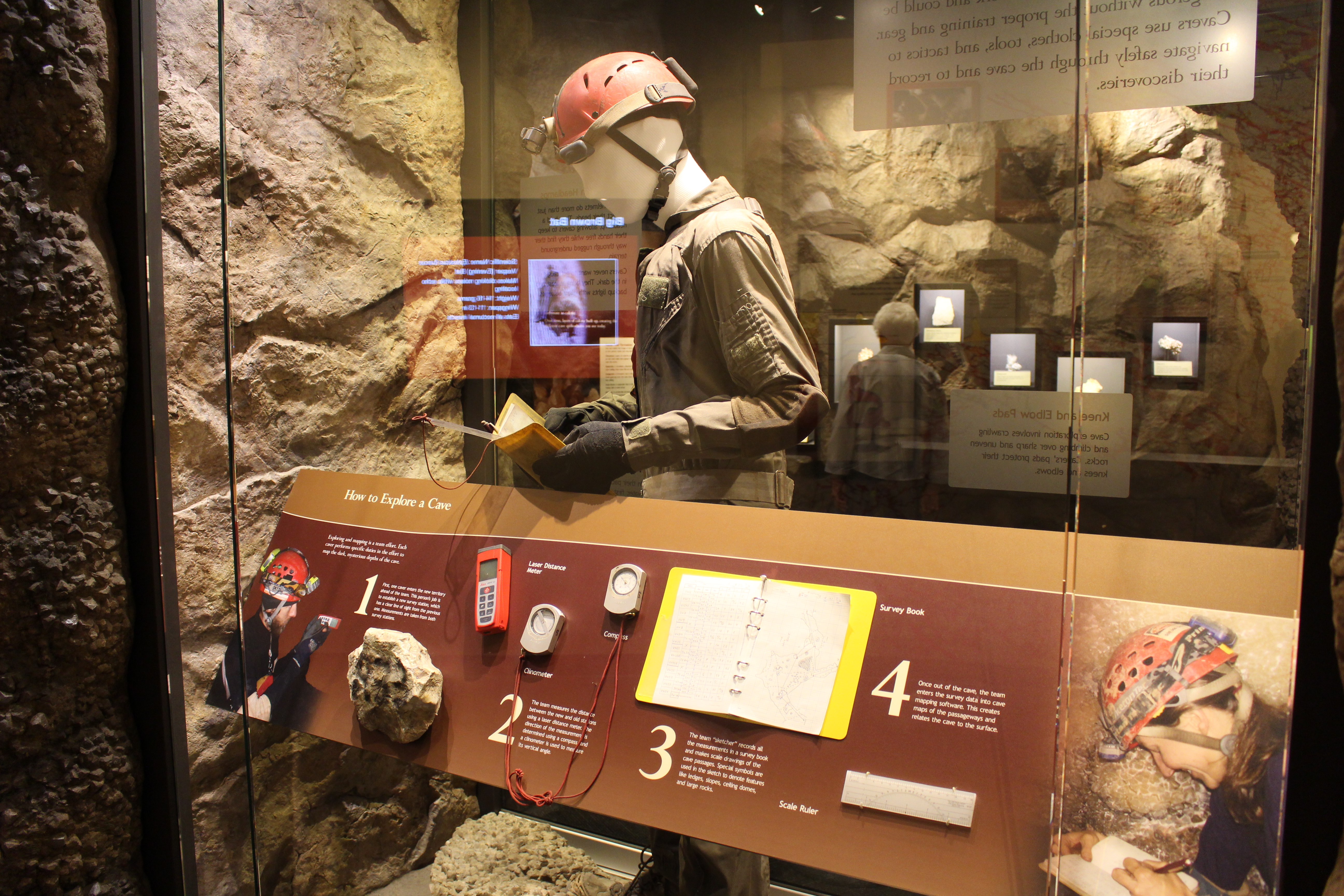
  • More
  • Email a link to a friend (Opens in new window) Email
  • Print (Opens in new window) Print
  • Share on Pinterest (Opens in new window) Pinterest
Like Loading...

Posts pagination

Previous 1 … 19 20 21 … 67 Next
Blog at WordPress.com.
a pura vida year in costa rica

living abroad in Guanacaste

Lush Life Layers

Lake Garda Tourist

Susana Cabaço

Spiritual Insights & Personal Empowerment

Monkey's Tale

An Adventure Travel Blog

Journey with my Sketchbook

"My sketchbook is a witness of what I am experiencing, scribbling things whenever they happen." - Vincent Van Gogh

The Eternal Traveller

Remembering past journeys, recording current trips and planning for the next one!

Lookoom

Put pictures on your travel dreams

Still Restlessjo

Roaming, at home and abroad

The Creative Life Adventure

Living a creative life

Inside My Sling Bag

Living, Loving, Laughing, Learning and (Being) Lucrative

Introvert Awakenings

My path less traveled. Rediscovering self after surviving the abuse that almost sunk me. Goal of strengthening and thriving on my adult legs. 👣🙏🏻 #recovery #forgiveness

Changcha Travel Tales

LightWriteLife

I love light, I love to write, I love life - I create my words and images to capture the light in my life.

the rak's sphere

Phosphene's Write

Live your life!! Life is beautiful!!

Image Earth Travel

Travel and Photography Site

Nanchi.blog

Lookoom

Mettez des images sur vos rêves de voyages

Retire In Branson

Old Bird Travels Solo!

THE MATURE ART OF TRAVELLING ALONE. MY NEW EMAIL IS: OldBirdTravels@proton.me PLEASE LIKE AND SHARE AT THE BOTTOM OF THE POST!

P e d r o L

storytelling the world

Welcome

RECYCLE YOUR PAIN

Motivation

Jim's Travel Culture and History Blog

World travel culture and history

Charlotte Digregorio's Writer's Blog

This blog is for those who wish to be creative, authors, people in the healing professions, business people, freelancers, journalists, poets, and teachers. You will learn about how to write well, and about getting published. Both beginning and experienced writers will profit from this blog and gain new creative perspectives. Become inspired from global writers, and find healing through the written word.

Musings of the Mind

Come journey with me as we navigate through this thing called life

robynsewsthisandthat

This is where I share my passions

Saania's diary - reflections, learnings, sparkles

Life is all about being curious, asking questions, and discovering your passion. And it can be fun!

The Wild Heart of Life

Creative Nonfiction & Poetry

deventuretime

Avid adventurer, travel blogger, and experience seeker. Starting each morning with a desire to see the world through a different lens.

Stu's Camino

The Frugal Foodies

Feeding an Empty Belly and Starving Mind

The Lost-o-graph

photographs

Our travels and thoughts through photographs. It does not matter, sunrise or sunset, just have fun in between.

My Serene Words

seeking solace in the horizon of life and beyond

HANNA'S WALK

Walks Stories and Nature

One Girl, Two Dogs & Two Thousand Miles

Brawnerology

Everything Family Travel: Work Hard, Play Hard

ROAD TO NARA

Culture and Communities at the Heart Of India

MEERYABLE

Explore, discover and experience the world through Meery's Eye. Off the beat budget traveler. Explore places, cultural and heritage. Sustainable trotter. shareable tales of Meery is Meeryable

Poetry 365

citysonnet.wordpress.com/

photography, poetry, paintings

Poetry collection

Work by Rain Alchemist

Eúnoia

Following my heart, Daring to dream, Living without regrets

VICENTE ROMERO - Paintings

Still Smiling

Smiling through the good times and the bad

flaviavinci

John Wreford Photographer

Words and Pictures from the Middle East

Lower the Bar for More Fun

Traveling the World, Expecting Less, and Experiencing More

~ wander.essence ~
Blog at WordPress.com.
  • Subscribe Subscribed
    • ~ wander.essence ~
    • Join 1,032 other subscribers
    • Already have a WordPress.com account? Log in now.
    • ~ wander.essence ~
    • Subscribe Subscribed
    • Sign up
    • Log in
    • Report this content
    • View site in Reader
    • Manage subscriptions
    • Collapse this bar
 

Loading Comments...
 

You must be logged in to post a comment.

    %d