Skip to content
  • Home
  • about ~ wander.essence ~
    • ~ the places i’ve been ~
    • ~ places i’ve been in the u.s.a. ~
  • Travel Destinations
    • America
      • Boston
      • Delaware
      • District of Columbia
        • Washington
      • Georgia
        • Atlanta
      • Maryland
      • New Jersey
        • Cape May
      • New York
        • Adirondacks
        • Buffalo
        • Niagara Falls
      • Pennsylvania
        • Pittsburgh
      • South Carolina
      • Tennessee
        • Nashville
      • Virginia
    • American Road Trips
      • Canyon & Cactus Road Trip
      • Florida Road Trip
        • Everglades
        • Fort Lauderdale
        • Florida Keys
        • Miami
        • St. Augustine
      • Four Corners Road Trip
        • Arizona
          • Monument Valley
          • Petrified Forest National Park
          • Sunset Crater National Monument
          • Walnut Canyon National Monument
          • Winslow
          • Wupatki National Monument
        • Colorado
          • Colorado National Monument
          • Colorado Towns
          • Great Sand Dunes National Park
          • Grand Junction
        • New Mexico
        • Utah
          • Arches National Park
          • Canyonlands
          • Navajo National Monument
          • Dead Horse Point State Park
          • Hovenweep National Monument
          • Moab
          • Valley of the Gods
          • Natural Bridges National Monument
      • Great Lakes Road Trip
        • Michigan
        • Minnesota
        • Wisconsin
      • Midwestern Triangle
        • Illinois
          • Carbondale
          • Murphysboro
        • Kentucky
          • Covington
          • Lexington
          • Louisville
        • Ohio
          • Cincinnati
      • Road Trip to Nowhere
        • Nebraska
        • North Dakota
        • South Dakota
      • Tex-New Mex Road Trip
        • Texas & New Mexico Road Trip
        • New Mexico
        • Texas
    • International Travel
      • Africa
        • african meanderings {& musings}
        • Egypt
          • Cairo
        • Ethiopia
        • Morocco
      • Asia
        • Cambodia
        • China
          • China Diaries
          • Guangxi Province
        • India
          • Rishikesh
          • Varanasi
        • Japan
          • Kyoto
        • Myanmar
        • Oman
          • a nomad in the land of nizwa
          • Nizwa
        • Singapore
        • South Korea
          • catbird in korea
        • Thailand
        • Turkey
          • Cappadocia
        • Vietnam
      • Central America
        • Costa Rica
        • El Salvador
        • Nicaragua
        • Panama
          • Bocas del Toro
          • Panama City
      • Europe
        • In Search of a Thousand Cafés
        • Croatia
          • Dalmatia
            • Istria
            • Dubrovnik
            • Plitvice Lakes National Park
            • Split
            • Zadar
            • Zagreb
        • Czech Republic
          • Český Krumlov
        • England
        • France
        • Greece
        • Hungary
          • Budapest
          • Esztergom
        • Iceland
        • Italy
          • Bergamo
          • Cinque Terre
          • The Dolomites
          • Florence
          • Rome
          • Tuscany
          • Venice
          • Verona
          • Via Francigena
        • Portugal
        • Spain
          • Camino de Santiago
            • packing list for el camino de santiago 2018
      • North America
        • Canada
          • The Maritimes
            • New Brunswick
            • Nova Scotia
            • Prince Edward Island
          • Ontario
        • Mexico
          • Guanajuato
          • Mexico City
            • Teotihuacán
          • Querétaro
          • San Miguel de Allende
      • South America
        • Colombia
        • Ecuador
          • Cuenca
          • Quito
    • how to make the most of a staycation
      • Coronavirus Coping
  • Imaginings
    • imaginings: the call to place
  • Travel Preparation
    • journeys: anticipation & preparation
  • Travel Creativity
    • on keeping a travel journal
    • on creating art from travels
      • Art Journaling
    • photography inspiration
      • Photography
    • writing prompts: prose
      • Prose
        • Fiction
        • Travel Essay
        • Travelogue
    • writing prompts: poetry
      • Poetry
  • On Journey
    • on journey: taking ourselves from here to there
  • Books & Movies
    • books | international a-z |
    • books & novels | u.s.a. |
    • books | history, spirituality, personal growth & lifestyle |
    • movies | international a-z |
    • movies | u.s.a. |
  • On Returning Home
    • on returning home
  • Annual recap
    • twenty-fifteen
    • twenty-eighteen
    • twenty-nineteen
    • twenty-twenty
    • twenty-twenty-one
    • twenty twenty-two
    • twenty twenty-three
    • twenty twenty-four
    • twenty twenty-five
  • Contact

Enter your email address to follow this blog and receive notifications of new posts by email.

Join 1,059 other subscribers
Follow ~ wander.essence ~ on WordPress.com
  • Home
  • about ~ wander.essence ~
    • ~ the places i’ve been ~
    • ~ places i’ve been in the u.s.a. ~
  • Travel Destinations
    • America
      • Boston
      • Delaware
      • District of Columbia
        • Washington
      • Georgia
        • Atlanta
      • Maryland
      • New Jersey
        • Cape May
      • New York
        • Adirondacks
        • Buffalo
        • Niagara Falls
      • Pennsylvania
        • Pittsburgh
      • South Carolina
      • Tennessee
        • Nashville
      • Virginia
    • American Road Trips
      • Canyon & Cactus Road Trip
      • Florida Road Trip
        • Everglades
        • Fort Lauderdale
        • Florida Keys
        • Miami
        • St. Augustine
      • Four Corners Road Trip
        • Arizona
          • Monument Valley
          • Petrified Forest National Park
          • Sunset Crater National Monument
          • Walnut Canyon National Monument
          • Winslow
          • Wupatki National Monument
        • Colorado
          • Colorado National Monument
          • Colorado Towns
          • Great Sand Dunes National Park
          • Grand Junction
        • New Mexico
        • Utah
          • Arches National Park
          • Canyonlands
          • Navajo National Monument
          • Dead Horse Point State Park
          • Hovenweep National Monument
          • Moab
          • Valley of the Gods
          • Natural Bridges National Monument
      • Great Lakes Road Trip
        • Michigan
        • Minnesota
        • Wisconsin
      • Midwestern Triangle
        • Illinois
          • Carbondale
          • Murphysboro
        • Kentucky
          • Covington
          • Lexington
          • Louisville
        • Ohio
          • Cincinnati
      • Road Trip to Nowhere
        • Nebraska
        • North Dakota
        • South Dakota
      • Tex-New Mex Road Trip
        • Texas & New Mexico Road Trip
        • New Mexico
        • Texas
    • International Travel
      • Africa
        • african meanderings {& musings}
        • Egypt
          • Cairo
        • Ethiopia
        • Morocco
      • Asia
        • Cambodia
        • China
          • China Diaries
          • Guangxi Province
        • India
          • Rishikesh
          • Varanasi
        • Japan
          • Kyoto
        • Myanmar
        • Oman
          • a nomad in the land of nizwa
          • Nizwa
        • Singapore
        • South Korea
          • catbird in korea
        • Thailand
        • Turkey
          • Cappadocia
        • Vietnam
      • Central America
        • Costa Rica
        • El Salvador
        • Nicaragua
        • Panama
          • Bocas del Toro
          • Panama City
      • Europe
        • In Search of a Thousand Cafés
        • Croatia
          • Dalmatia
            • Istria
            • Dubrovnik
            • Plitvice Lakes National Park
            • Split
            • Zadar
            • Zagreb
        • Czech Republic
          • Český Krumlov
        • England
        • France
        • Greece
        • Hungary
          • Budapest
          • Esztergom
        • Iceland
        • Italy
          • Bergamo
          • Cinque Terre
          • The Dolomites
          • Florence
          • Rome
          • Tuscany
          • Venice
          • Verona
          • Via Francigena
        • Portugal
        • Spain
          • Camino de Santiago
            • packing list for el camino de santiago 2018
      • North America
        • Canada
          • The Maritimes
            • New Brunswick
            • Nova Scotia
            • Prince Edward Island
          • Ontario
        • Mexico
          • Guanajuato
          • Mexico City
            • Teotihuacán
          • Querétaro
          • San Miguel de Allende
      • South America
        • Colombia
        • Ecuador
          • Cuenca
          • Quito
    • how to make the most of a staycation
      • Coronavirus Coping
  • Imaginings
    • imaginings: the call to place
  • Travel Preparation
    • journeys: anticipation & preparation
  • Travel Creativity
    • on keeping a travel journal
    • on creating art from travels
      • Art Journaling
    • photography inspiration
      • Photography
    • writing prompts: prose
      • Prose
        • Fiction
        • Travel Essay
        • Travelogue
    • writing prompts: poetry
      • Poetry
  • On Journey
    • on journey: taking ourselves from here to there
  • Books & Movies
    • books | international a-z |
    • books & novels | u.s.a. |
    • books | history, spirituality, personal growth & lifestyle |
    • movies | international a-z |
    • movies | u.s.a. |
  • On Returning Home
    • on returning home
  • Annual recap
    • twenty-fifteen
    • twenty-eighteen
    • twenty-nineteen
    • twenty-twenty
    • twenty-twenty-one
    • twenty twenty-two
    • twenty twenty-three
    • twenty twenty-four
    • twenty twenty-five
  • Contact

wander.essence

wander.essence

Home from Morocco & Italy

Home sweet home!May 10, 2019
I'm home from Morocco & Italy. :-)

Italy trip

Traveling to Italy from MoroccoApril 23, 2019
On my way to Italy!

Leaving for Morocco

Casablanca, here I come!April 4, 2019
I'm on my way to Casablanca. :-)

Home from our Midwestern Triangle Road Trip

Driving home from Lexington, KYMarch 6, 2019
Home sweet home from the Midwest. :-)

Leaving for my Midwestern Triangle Road Trip

Driving to IndianaFebruary 24, 2019
Driving to Indiana.

Returning home from Portugal

Home sweet home from Spain & Portugal!November 6, 2018
Home sweet home from Spain & Portugal!

Leaving Spain for Portugal

A rendezvous in BragaOctober 26, 2018
Rendezvous in Braga, Portgual after walking the Camino de Santiago. :-)

Leaving to walk the Camino de Santiago

Heading to Spain for the CaminoAugust 31, 2018
I'm on my way to walk 790 km across northern Spain on the Camino de Santiago.

Home from my Four Corners Road Trip

Home Sweet Home from the Four CornersMay 25, 2018
Home Sweet Home from the Four Corners. :-)

My Four Corners Road Trip!

Hitting the roadMay 1, 2018
I'm hitting the road today for my Four Corners Road Trip: CO, UT, AZ, & NM!

Recent Posts

  • call to place, anticipation & preparation: guatemala & belize March 3, 2026
  • the february cocktail hour: witnessing wedding vows, a visit from our daughter & mike’s birthday March 1, 2026
  • the january cocktail hour: a belated nicaraguan christmas & a trip to costa rica’s central pacific coast February 3, 2026
  • bullet journals as a life repository: bits of mine from 2025 & 2026 January 4, 2026
  • twenty twenty-five: nicaragua {twice}, mexico & seven months in costa rica {with an excursion to panama} December 31, 2025
  • the december cocktail hour: mike’s surgery, a central highlands road trip & christmas in costa rica December 31, 2025
  • top ten books of 2025 December 28, 2025
  • the november cocktail hour: a trip to panama, a costa rican thanksgiving & a move to lake arenal condos December 1, 2025
  • panama: the caribbean archipelago of bocas del toro November 24, 2025
  • a trip to panama city: el cangrejo, casco viejo & the panama canal November 22, 2025
  • the october cocktail hour: a trip to virginia, a NO KINGS protest, two birthday celebrations, & a cattle auction October 31, 2025
  • the september cocktail hour: a nicoya peninsula getaway, a horseback ride to la piedra del indio waterfalls & a fall bingo card September 30, 2025
  • the august cocktail hour: local gatherings, la fortuna adventures, & a “desfile de caballistas”  September 1, 2025

Archives

  • March 2026
  • February 2026
  • January 2026
  • December 2025
  • November 2025
  • October 2025
  • September 2025
  • August 2025
  • June 2025
  • May 2025
  • April 2025
  • March 2025
  • February 2025
  • January 2025
  • December 2024
  • November 2024
  • October 2024
  • September 2024
  • August 2024
  • July 2024
  • June 2024
  • May 2024
  • April 2024
  • March 2024
  • February 2024
  • January 2024
  • December 2023
  • November 2023
  • September 2023
  • August 2023
  • June 2023
  • May 2023
  • April 2023
  • March 2023
  • February 2023
  • January 2023
  • December 2022
  • November 2022
  • October 2022
  • September 2022
  • August 2022
  • June 2022
  • May 2022
  • April 2022
  • March 2022
  • February 2022
  • January 2022
  • December 2020
  • November 2020
  • October 2020
  • September 2020
  • August 2020
  • July 2020
  • June 2020
  • May 2020
  • April 2020
  • March 2020
  • February 2020
  • January 2020
  • December 2019
  • November 2019
  • October 2019
  • September 2019
  • August 2019
  • July 2019
  • June 2019
  • May 2019
  • April 2019
  • March 2019
  • February 2019
  • January 2019
  • December 2018
  • November 2018
  • October 2018
  • September 2018
  • August 2018
  • July 2018
  • June 2018
  • May 2018
  • April 2018
  • March 2018

Blog Stats

  • 127,900 hits
March 2026
M T W T F S S
 1
2345678
9101112131415
16171819202122
23242526272829
3031  
« Feb    

Categories

  • Aït-Ben-Haddou (4)
  • Abingdon (1)
  • Abiquiu (1)
  • Acquapendente (2)
  • Adirondacks (3)
  • Africa (39)
  • Ainokura (2)
  • Alabama (1)
  • Alajuela (3)
  • Alamogordo (1)
  • Albuquerque (3)
  • Alexandria (1)
  • Alma (1)
  • Alpe di Siusi (1)
  • Alsace-Lorraine (1)
  • Alto Adige Wine Road (1)
  • Amarante (2)
  • America (69)
  • American Bison (1)
  • American books (22)
  • American Road Trips (255)
  • American Visionary Art Museum (1)
  • Americana (1)
  • Andrew Johnson National Historic Site (1)
  • Annapolis Valley (1)
  • Annual recap (10)
  • Anticipation (46)
  • Antietam National Battlefield (2)
  • Antigua (1)
  • Aramak Tour (1)
  • Arches National Park (8)
  • architecture (1)
  • Arena Stage (1)
  • Arizona (28)
  • Aroumd (2)
  • Art Journaling (9)
  • Asciano (1)
  • Asia (41)
  • Assisi (1)
  • Astorga (2)
  • Atapuerca (1)
  • Athens (1)
  • Atlanta (7)
  • Austin (2)
  • Aveiro (2)
  • Azofra (2)
  • Aztec Ruins National Monument (1)
  • óbidos (1)
  • Baños (2)
  • Badlands National Park (1)
  • Bagan (1)
  • Bagno Vignoni (2)
  • Bajos del Toro (1)
  • Balcony House (1)
  • Bali (9)
  • Baltimore (7)
  • Baltimore Museum of Art (1)
  • Bandelier National Monument (1)
  • Bangkok (2)
  • Bear Butte (1)
  • Beatrice (1)
  • Beihai (1)
  • Belize (3)
  • Beppu (1)
  • Bergamo (3)
  • Big Bend National Park (2)
  • Bijagua (2)
  • Bismarck (3)
  • Bismarck Art Alley (1)
  • Bitchu-Takahashi (1)
  • Blue Falls of Costa Rica (1)
  • Bluff (1)
  • Bluff Fort Historic Site (1)
  • Bocas del Toro (2)
  • Bocas Town (1)
  • Bogotá (4)
  • Bolsena (2)
  • Bolzano (2)
  • Bonanzaville (1)
  • Books (48)
  • Bosque de Chapultepec (1)
  • Boston (2)
  • Boulder (1)
  • Boys Town (1)
  • Braga (3)
  • Brookings (1)
  • Brunico/Bruneck (1)
  • Budapest (1)
  • Buffalo (9)
  • Bukit Peninsula (1)
  • Bullet journaling (1)
  • Buonconvento (2)
  • Burano (2)
  • Burgos (4)
  • Cañas (2)
  • Cabo da Roca (1)
  • Caddo Lake (2)
  • Cairo (3)
  • California (4)
  • Cambodia (4)
  • Cambridge (1)
  • Camino de Santiago (64)
  • Campagnano di Roma (2)
  • Canada (15)
  • Canyon & Cactus Road Trip (4)
  • Canyon de Chelly (3)
  • Canyonlands (3)
  • Cape May (7)
  • Cappadocia (2)
  • Capranica (1)
  • Carbondale (9)
  • Carlsbad (1)
  • Carlsbad Caverns National Park (2)
  • Cartagena (4)
  • Casablanca (9)
  • Casco Viejo (1)
  • Castellina in Chianti (1)
  • Catarata del Toro (1)
  • Catskill Mountains (1)
  • Cedar Creek & Belle Grove National Historical Park (1)
  • Central America (45)
  • Central Highlands (1)
  • Centro Histórico (1)
  • Chaco Culture National Historical Park (4)
  • challenge: a call to place (39)
  • Channel Islands National Park (3)
  • Chapel in the Hills (1)
  • Charles Pinckney National Historic Site (1)
  • Charleston (11)
  • Chefchaouen (5)
  • Cheyenne (2)
  • Cheyenne Depot Museum (1)
  • Cheyenne Frontier Days Old West Museum (1)
  • Chicago (3)
  • Chillicothe (2)
  • Chimayó (1)
  • Chimney Rock (1)
  • China (8)
  • Chinatown (1)
  • Christmas (5)
  • Churchill Downs (1)
  • Cihuatán (1)
  • Cincinnati (15)
  • Cincinnati Art Museum (1)
  • Cinque Terre (10)
  • Cinquera (1)
  • Civita di Bagnoregio (1)
  • Cloudcroft (1)
  • Cocktail Hour (24)
  • Cocoa Beach (2)
  • Coeur d'Alene (1)
  • Collalbo/Klobenstein (1)
  • Colle di Val d'Elsa (2)
  • Colombia (9)
  • Colorado (31)
  • Colorado National Monument (3)
  • Colorado Towns (6)
  • Colorful (1)
  • Condesa (1)
  • Connecticut (1)
  • Cordoba (1)
  • Coronavirus Coping (14)
  • Cortina d’Ampezzo (1)
  • Costa Nova (1)
  • Costa Rica (23)
  • Covington (7)
  • Cowgirls of the West (1)
  • Coyoacán (1)
  • Crazy Horse Memorial (1)
  • Crestone (1)
  • Crete (1)
  • Croatia (3)
  • Cuenca (3)
  • Curves (1)
  • Custer (1)
  • Custer State Park (1)
  • Czech Republic (1)
  • Dakota Dinosaur Museum (1)
  • Dali (1)
  • Dalmatia (1)
  • De Smet (1)
  • Dead Horse Point State Park (1)
  • Dead Sea (1)
  • Deadwood (3)
  • decay (1)
  • Delaware (9)
  • Delphi (1)
  • Denver (1)
  • destinations (44)
  • Devils Tower National Monument (2)
  • Diamante Eco Adventure Park (1)
  • Dickinson (1)
  • District of Columbia (22)
  • Dobbiaco/Toblach (1)
  • Dolores Hidalgo (1)
  • Drawing (7)
  • Dubrovnik (1)
  • Durango (1)
  • Dwight D. Eisenhower Memorial (1)
  • Ecuador (14)
  • Egypt (3)
  • El Cangrejo (1)
  • El Salvador (6)
  • El-Khorbat (1)
  • Embudo (1)
  • Enchanted Rock State Natural Area (1)
  • England (3)
  • Erg Chebbi (3)
  • Española (1)
  • Essaouira (4)
  • Esztergom (1)
  • Ethiopia (3)
  • Europe (121)
  • Evan Williams Bourbon Experience (1)
  • Everglades (3)
  • Evora (1)
  • Fargo (2)
  • Fès (3)
  • Fenghuang (1)
  • Fez (2)
  • Fiction (6)
  • Findlay Market (1)
  • Finisterre (2)
  • Finland (1)
  • Fira (1)
  • Fiumicino (2)
  • Flatirons Vista Trail (1)
  • Flight 93 National Memorial (1)
  • Florence (8)
  • Flores (1)
  • Florida Keys (3)
  • Florida Road Trip (5)
  • Formello (1)
  • Fort Abraham Lincoln State Park (1)
  • Fort Atkinson State HIstorical Park (1)
  • Fort Calhoun (1)
  • Fort Collins (2)
  • Fort Lauderdale (2)
  • Fort Mandan (1)
  • Fort McHenry National Monument and Historic Shrine (1)
  • Fort Robinson State Park (1)
  • Fort Sumter and Fort Moultrie National Historical Park (1)
  • Fort Union Trading Post National Historic Site (1)
  • Four Corners Road Trip (74)
  • France (7)
  • Frazier Museum (1)
  • Fredericksburg (1)
  • Fucecchio (1)
  • Fundy National Park (1)
  • G Adventures Tour (10)
  • Gallina (2)
  • Gambassi Terme (2)
  • Gateway Arch National Park (1)
  • Gavin's Point Dam (1)
  • George Rogers Clark National Historical Park (2)
  • Georgia (7)
  • Gerald R. Ford Birthsite (1)
  • Germany (1)
  • Gettysburg National Military Park (1)
  • Goals (3)
  • Gothenburg (1)
  • Grand Junction (1)
  • Great Falls (2)
  • Great Lakes Road Trip (6)
  • Great Sand Dunes National Park (2)
  • Grecia (1)
  • Greece (3)
  • Greeneville (1)
  • Greenville (1)
  • Greve in Chianti (1)
  • Guadalupe Mountains National Park (1)
  • Guanacaste (12)
  • Guanajuato (5)
  • Guangxi Province (4)
  • Guatapé (5)
  • Guatemala (3)
  • Guatemala City (1)
  • Guilin (1)
  • Guimarães (2)
  • Halifax (3)
  • Halong Bay (1)
  • Hanoi (1)
  • Heidelberg (1)
  • Hida Furukawago (2)
  • High Road to Taos (1)
  • Hikes & Walks (202)
  • HISTORIC NAKASENDO TRAIL (1)
  • Hoa Lu (1)
  • Holbrook (1)
  • Holidays (6)
  • Hong Kong (1)
  • Hopewell Culture National Historical Park (2)
  • Hopewell Rocks Provincial Park (1)
  • Hotel Hacienda Guachipelin (1)
  • Hovenweep National Monument (1)
  • Hubbell Trading Post (1)
  • Hungary (1)
  • Iceland (1)
  • Idaho (1)
  • Illinois (17)
  • Imaginings (46)
  • Imlil (2)
  • India (7)
  • Indiana (6)
  • Indonesia (9)
  • Ingapirca (2)
  • Inle Lake (1)
  • Innichen/San Candido (1)
  • International Books (32)
  • International Peace Garden (1)
  • International Travel (337)
  • Iowa (1)
  • Isla Bastimentos (1)
  • Isla Carenero (1)
  • Isla Colón (1)
  • Istanbul (2)
  • Istria (1)
  • Italy (62)
  • Jamestown (1)
  • Japan (20)
  • Japan Alps (4)
  • Jefferson (1)
  • Jewel Cave National Monument (1)
  • Jimbaran (1)
  • Joachim Regional Museum & Prairie Outpost Park (1)
  • Johnstown Flood National Memorial (1)
  • Jordan (3)
  • Joseph N. Nicollet Tower and Interpretive Center (1)
  • Joshua Tree National Park (3)
  • Joslyn Art Museum (1)
  • Journaling (10)
  • Joya de Cerén (1)
  • Kansas (2)
  • Kathmandu (2)
  • Kentucky (17)
  • KMAC (1)
  • Knife River Indian Villages (2)
  • Kunming (1)
  • Kurashiki Bikan Historical Quarter (1)
  • Kyoto (5)
  • Kyushu (4)
  • La Fortuna (3)
  • La Giustiniana (2)
  • La Peñol (1)
  • La Romita (1)
  • La Spezia (6)
  • Lago d'Iseo (1)
  • Lago de Atitlán (1)
  • Lago di Garda (1)
  • Lago di Garda (1)
  • Laguna de Apoyo (1)
  • Laguna Quilotoa (2)
  • Languedoc-Roussillon (1)
  • Latacunga (3)
  • laundry (1)
  • Lazio (6)
  • León (2)
  • León (2)
  • Leeds (1)
  • Lens-Artists (2)
  • Lewis & Clark Interpretive Center (2)
  • Lexington (8)
  • Lijiang (1)
  • Lincoln Boyhood Home National Memorial (2)
  • Lincoln City (3)
  • lines (1)
  • Lisbon (8)
  • Logroño (3)
  • Lombardy (3)
  • Longji Rice Terraces (1)
  • Longreads (6)
  • Looking ahead (3)
  • Lorca (2)
  • Lory State Park (1)
  • Los Alamos (3)
  • Los Angeles (3)
  • Louisiana (1)
  • Louisville (13)
  • Low Road to Taos (1)
  • Lucca (3)
  • Luckenbach (1)
  • Lunenburg (1)
  • Madison (1)
  • Madison County Historical Society Museum (1)
  • Magnolia Plantations & Gardens (1)
  • Magome-juku (1)
  • Mahone Bay (1)
  • Maine (1)
  • Managua (5)
  • Manarola (1)
  • Mandalay (1)
  • Mandan (1)
  • Manhattan Project National Historical Park (1)
  • Mapmaking (2)
  • Marfa (1)
  • Market towns near Cuenca (2)
  • markets (1)
  • Marrakech (7)
  • Maryland (11)
  • Massachusetts (2)
  • Matagalpa (2)
  • Mathews (1)
  • Meadowlark Botanical Gardens (4)
  • Medellín (5)
  • Medora (5)
  • Memoir (4)
  • Merzouga (5)
  • Mesa Verde National Park (4)
  • Meteora (1)
  • Mexico (11)
  • Mexico City (7)
  • Miami (3)
  • Michigan (4)
  • Middletown (1)
  • Midwestern Triangle (30)
  • Minas Basin (1)
  • Mine of Santa Brigida (1)
  • Mineral de Pozos (1)
  • Ministers Island (1)
  • Minnesota (1)
  • Minnesota (3)
  • Minot (1)
  • Minuteman Missile National Historic Site (1)
  • Mirador de Catarina (1)
  • Mississippi (1)
  • Missouri (4)
  • Missouri National Recreation River (1)
  • Missouri River Basin Lewis & Clark Center (2)
  • Mitchell (1)
  • Moab (2)
  • Montalcino (1)
  • Montana (1)
  • Montefiascone (1)
  • Montefioralle (1)
  • Montepulciano (1)
  • Monteriggioni (3)
  • Monteroni d'Arbia (1)
  • Monterosi (1)
  • Monterosso al Mare (2)
  • Monteverde (1)
  • Monthly recap (24)
  • Monument Valley (1)
  • Moorhead (1)
  • Morocco (37)
  • Mount Pleasant (1)
  • Mt. Rushmore National Memorial (1)
  • Mulberry Bend Overlook (1)
  • Murano (2)
  • Murphysboro (10)
  • Muruzabal (1)
  • Muscat (1)
  • Museum of the Shenandoah Valley (1)
  • Muxia (2)
  • Myanmar (2)
  • Nagoya (4)
  • Nagoya Castle (2)
  • Nanning (3)
  • Naoshima (1)
  • Narita (5)
  • Nashville (8)
  • National Gallery of Art (2)
  • natural bridges (1)
  • Natural Bridges National Monument (2)
  • Navajo National Monument (2)
  • Nebraska (21)
  • Nepal (4)
  • New Belgium Brewing (1)
  • New Brunswick (6)
  • New Castle (2)
  • New England Road Trip (2)
  • New Hampshire (2)
  • New Jersey (7)
  • New Mexico (12)
  • New Mexico (1)
  • New Mexico (12)
  • New York (16)
  • Newport (1)
  • Niagara Falls (7)
  • Nicaragua (25)
  • Nice (1)
  • Nicoya Peninsula (1)
  • Nizwa (3)
  • Norfolk (1)
  • Normandy (1)
  • North America (22)
  • North Dakota (26)
  • North Dakota Heritage Center (2)
  • North Platte (1)
  • Norway (1)
  • Nosara (1)
  • Nova Scotia (5)
  • Nuevo Arenal (2)
  • Nusa Dua (1)
  • Oakland (1)
  • Oakton (23)
  • Ogallala (1)
  • Ohio (17)
  • Ohkay Owingeh Pueblo (1)
  • Oia (1)
  • Okayama (4)
  • Oklahoma (1)
  • Oklahoma City (1)
  • Old Market (1)
  • Omaha (5)
  • Oman (4)
  • Ometepe (15)
  • On Journey (44)
  • On Returning Home (40)
  • On-a-Slant Village (1)
  • Ontario (4)
  • Orisson (2)
  • Ortesei/St. Ulrich (1)
  • Orvieto (1)
  • Otavalo (2)
  • Ouray (1)
  • Pagosa Springs (1)
  • Pamplona (2)
  • Panama (4)
  • Panama Canal (2)
  • Panama City (2)
  • Panchimalco (1)
  • Panzano in Chianti (1)
  • Paris (2)
  • Parque Nacional Cajas (2)
  • Parque Nacional Cotopaxi (2)
  • Parque Nacional Volcán Poás (1)
  • Parque Nacional Volcán Tenorio (2)
  • Parque Nactional Volcán Rincón de la Vieja (2)
  • pastels (1)
  • Patterns (3)
  • Peña de Bernal (1)
  • Pecos National Historical Park (1)
  • Peniche (1)
  • Pennsylvania (14)
  • Perugia (2)
  • Petrified Forest National Park (5)
  • petroglyphs (1)
  • Phnom Penh (3)
  • Photography (267)
  • Phuket (2)
  • Pilgrimage (75)
  • Ping'An (1)
  • Pisa (1)
  • Pittsburgh (11)
  • Playa Costa del Sol (1)
  • Playa Hermosa (4)
  • Plitvice Lakes National Park (1)
  • Poetry (33)
  • Pokhara (2)
  • Polanco (1)
  • Ponca State Park (1)
  • Ponte a Cappiano (1)
  • Porto (4)
  • Portovenere (1)
  • Portugal (25)
  • Prairie Homestead Historic Site (1)
  • Prince Edward Island (2)
  • Prose (208)
  • Puerta del Diablo (1)
  • Querétaro (4)
  • Quito (2)
  • Rapid City (6)
  • Red Cloud (1)
  • Redlin Art Center (1)
  • Regent (1)
  • Rehoboth (2)
  • Renon (1)
  • Renon/Ritten Plateau (1)
  • Reverse culture shock (2)
  • Richmond (7)
  • Riobamba (2)
  • Rishikesh (2)
  • Rittner Horn (1)
  • Riverbend Park (1)
  • Road Trip to Nowhere (63)
  • Rocky Mountain National Park (1)
  • Roma Norte (2)
  • Rome (16)
  • Roof Squares (1)
  • Route 66 (1)
  • Ruidoso (1)
  • Sackville (1)
  • Sahara (3)
  • Saint John (1)
  • Saint-Jean-Pied-de-Port (4)
  • San Ángel (1)
  • San Francisco (2)
  • San Gimignano (5)
  • San Ignacio (1)
  • San José (3)
  • San Juan del Sur (2)
  • San Juan Skyway Scenic Byway (3)
  • San Lorenzo Nuovo (1)
  • San Miguel de Allende (6)
  • San Miniato (1)
  • San Quirico d'Orcia (4)
  • San Salvador (5)
  • San Sebastián Bernal (1)
  • San Simeon (2)
  • Sant'Antimo (1)
  • Santa Barbara (2)
  • Santa Fe (5)
  • Santa Maddalena (1)
  • Santa Rosa de Lima (1)
  • Santiago (4)
  • Santo Domingo de la Calzada (2)
  • Santorini (1)
  • Sarchí (1)
  • Sámara (1)
  • Scandinavian Heritage Center (1)
  • Scotts Bluff National Monument (1)
  • Semarapura (2)
  • Shanghai (1)
  • Shenandoah National Park (1)
  • Shepherdstown (1)
  • Shibao Shan (2)
  • Shikoku 88-Temple Pilgrimage Route (4)
  • Shirakawa-go (2)
  • Shreveport (1)
  • Sidemen (1)
  • Siem Reap (3)
  • Siena (2)
  • Silverton (1)
  • Singapore (3)
  • Sintra (2)
  • Sioux Falls (2)
  • Sisseton (1)
  • Smithsonian American Art Museum (SAAM) (5)
  • Smithsonian National Museum of Asian Art (2)
  • South America (25)
  • South Carolina (12)
  • South Dakota (24)
  • South Dakota Art Museum (1)
  • South Korea (5)
  • Spain (68)
  • Spearfish (2)
  • Spello (1)
  • Spirit Mound Historic Prairie (1)
  • Split (1)
  • Springfield (3)
  • St. Andrews by-the-Sea (1)
  • St. Augustine (2)
  • St. Louis (2)
  • Stanton (1)
  • Staycation (8)
  • Stonewall (1)
  • Street Art (2)
  • Sturgis (2)
  • Suchitoto (1)
  • Sullivan's Island (2)
  • Sunset Crater National Monument (1)
  • Sunsets (1)
  • Supreme Court of the United States (2)
  • Sweden (1)
  • Swedish Heritage Center (1)
  • Takayama (3)
  • Tam Coc (1)
  • Tamarindo (1)
  • Tangier (3)
  • Taos (4)
  • Tejutepeque (2)
  • Telluride (2)
  • Tennessee (10)
  • Teotihuacán (1)
  • Terlingua (1)
  • Termas de Papallacta (2)
  • Tex-New Mex Road Trip (16)
  • Texas (8)
  • Texas & New Mexico Road Trip (20)
  • Thailand (3)
  • Thanksgiving (1)
  • The Battery (1)
  • The Dolomites (4)
  • The Enchanted Highway (1)
  • The Journey Museum (1)
  • The Maritimes (10)
  • The Veneto (5)
  • The Walters Art Museum (1)
  • Theodore Roosevelt National Park (4)
  • Tigua (2)
  • Tikal (1)
  • Tilarán (12)
  • Tinghir (2)
  • Toadstool Geologic Park (1)
  • Todra Gorge (1)
  • Tokushima (1)
  • Tokyo (6)
  • Topeka (1)
  • Torres del Rio (2)
  • Travel (659)
  • Travel Creativity (364)
  • Travel Essay (202)
  • Travel Inspiration (46)
  • Travel photography (246)
  • Travel Preparation (50)
  • Travel videos (48)
  • Travelogue (203)
  • Trentino & South Tyrol (5)
  • Trinidad & Tobago (2)
  • Tronadora (8)
  • Truchas (1)
  • Tsumago-juku (1)
  • Turkey (5)
  • Tuscany (31)
  • twenty twenty-five (1)
  • twenty twenty-four (1)
  • twenty twenty-three (1)
  • twenty twenty-two (1)
  • twenty twenty-two (2)
  • twenty-eighteen (1)
  • twenty-fifteen (1)
  • twenty-nineteen (1)
  • twenty-twenty (2)
  • twenty-twenty-one (1)
  • Ubud (1)
  • Uluwatu (1)
  • Ulysses S Grant National Historic Site (1)
  • Umbria (10)
  • Union Market (2)
  • United Arab Emirates (UAE) (2)
  • Utah (26)
  • Valley City (1)
  • Valley of the Gods (1)
  • Varanasi (2)
  • Vatican City (1)
  • Vatican Museums (1)
  • Venice (2)
  • Venice (5)
  • Ventosa (2)
  • Vermillion (1)
  • Vermont (2)
  • Vernazza (1)
  • Verona (2)
  • Vetralla (1)
  • Via Francigena (15)
  • Vicksburg (1)
  • Vienna (10)
  • Vietnam (4)
  • Villamayor de Monjardín (2)
  • Villamayor del Rio (1)
  • Vincennes (3)
  • Virginia (41)
  • Virginia Museum of Fine Arts (5)
  • Viterbo (2)
  • Volcán Chimborazo (2)
  • Volcán Cotopaxi (2)
  • Volterra (2)
  • Volubilis (1)
  • Wall (4)
  • Walnut Canyon National Monument (1)
  • Washburn (2)
  • Washington (20)
  • Watertown (2)
  • Watford City (1)
  • West Virginia (1)
  • White Sands National Park (2)
  • Wigwam Motel (1)
  • Wilber (1)
  • Wildlife (1)
  • Wildwood (3)
  • William Howard Taft National Historic Site (1)
  • Wilmington (3)
  • Winchester (1)
  • Wind Cave National Park (1)
  • Window Rock Navajo Tribal Park (1)
  • Winslow (3)
  • Wisconsin (2)
  • Writing (249)
  • Wupatki National Monument (2)
  • Wyoming (6)
  • Xi'an (1)
  • Xunantunich (1)
  • Yangon (1)
  • Yangshuo (1)
  • Yankton (1)
  • Yokohama (4)
  • Yorktown (2)
  • Yufuin (1)
  • Yunnan Province (2)
  • Zadar (1)
  • Zagreb (1)
  • Zarcero (1)
  • Zhangjiajie (1)
  • Ōsu Kannon Temple (2)
  • Český Krumlov (1)

Africa America American books American Road Trips Annual recap Anticipation Arches National Park Arizona Art Journaling Asia Bali Books Buffalo Camino de Santiago Canada Carbondale Casablanca Central America challenge: a call to place Charleston China Cincinnati Cinque Terre Cocktail Hour Colombia Colorado Coronavirus Coping Costa Rica Delaware destinations District of Columbia Ecuador Europe Four Corners Road Trip G Adventures Tour Guanacaste Hikes & Walks Illinois Imaginings Indonesia International Books International Travel Italy Japan Journaling Kentucky Louisville Maryland Mexico Midwestern Triangle Monthly recap Morocco Murphysboro Nashville Nebraska New Mexico New York Nicaragua North America North Dakota Oakton Ohio Ometepe On Journey On Returning Home Pennsylvania Photography Pilgrimage Pittsburgh Poetry Portugal Prose Road Trip to Nowhere Rome South America South Carolina South Dakota Spain Tennessee Tex-New Mex Road Trip Texas & New Mexico Road Trip The Maritimes Tilarán Travel Travel Creativity Travel Essay Travel Inspiration Travelogue Travel photography Travel Preparation Travel videos Tuscany Umbria Utah Via Francigena Vienna Virginia Washington Writing

Pages

  • about ~ wander.essence ~
  • books & novels | u.s.a. |
  • books | history, spirituality, personal growth & lifestyle |
  • books | international a-z |
  • how to make the most of a staycation
  • movies | international a-z |
  • movies | u.s.a. |
  • on creating art from travels
  • on keeping a travel journal
  • packing list for el camino de santiago 2018
  • photography inspiration
  • writing prompts: poetry
  • writing prompts: prose
  • ~ places i’ve been in the u.s.a. ~
  • ~ the places i’ve been ~
  • Contact

Translate

Goodreads

Blogs I Follow

Unknown's avatar
Unknown's avatar
Unknown's avatar
Unknown's avatar
Unknown's avatar
Unknown's avatar
Unknown's avatar
Unknown's avatar
Unknown's avatar
Unknown's avatar
Unknown's avatar
Unknown's avatar
Unknown's avatar
Unknown's avatar
Unknown's avatar
Unknown's avatar
Unknown's avatar

Top Posts & Pages

  • writing prompts: prose
  • tower of the four winds & the desoto national wildlife refuge
  • christmas cheer!
  • call to place, anticipation & preparation: guatemala & belize
  • the lava flow trail at sunset crater national monument
  • portugal: aveiro & costa nova
  • the final may cocktail hour: hoping for lockdown relief
  • on keeping a travel journal
  • anticipation & preparation: the camino de santiago
  • petroglyphs in the four corners

wander.essence

wander.essence
  • Home
  • about ~ wander.essence ~
  • Travel Destinations
  • Imaginings
  • Travel Preparation
  • Travel Creativity
  • On Journey
  • Books & Movies
  • On Returning Home
  • Annual recap
  • Contact

~ wander.essence ~

where travel meets art

  • Home
  • about ~ wander.essence ~
    • ~ the places i’ve been ~
    • ~ places i’ve been in the u.s.a. ~
  • Travel Destinations
    • America
      • Boston
      • Delaware
      • District of Columbia
        • Washington
      • Georgia
        • Atlanta
      • Maryland
      • New Jersey
        • Cape May
      • New York
        • Adirondacks
        • Buffalo
        • Niagara Falls
      • Pennsylvania
        • Pittsburgh
      • South Carolina
      • Tennessee
        • Nashville
      • Virginia
    • American Road Trips
      • Canyon & Cactus Road Trip
      • Florida Road Trip
        • Everglades
        • Fort Lauderdale
        • Florida Keys
        • Miami
        • St. Augustine
      • Four Corners Road Trip
        • Arizona
          • Monument Valley
          • Petrified Forest National Park
          • Sunset Crater National Monument
          • Walnut Canyon National Monument
          • Winslow
          • Wupatki National Monument
        • Colorado
          • Colorado National Monument
          • Colorado Towns
          • Great Sand Dunes National Park
          • Grand Junction
        • New Mexico
        • Utah
          • Arches National Park
          • Canyonlands
          • Navajo National Monument
          • Dead Horse Point State Park
          • Hovenweep National Monument
          • Moab
          • Valley of the Gods
          • Natural Bridges National Monument
      • Great Lakes Road Trip
        • Michigan
        • Minnesota
        • Wisconsin
      • Midwestern Triangle
        • Illinois
          • Carbondale
          • Murphysboro
        • Kentucky
          • Covington
          • Lexington
          • Louisville
        • Ohio
          • Cincinnati
      • Road Trip to Nowhere
        • Nebraska
        • North Dakota
        • South Dakota
      • Tex-New Mex Road Trip
        • Texas & New Mexico Road Trip
        • New Mexico
        • Texas
    • International Travel
      • Africa
        • african meanderings {& musings}
        • Egypt
          • Cairo
        • Ethiopia
        • Morocco
      • Asia
        • Cambodia
        • China
          • China Diaries
          • Guangxi Province
        • India
          • Rishikesh
          • Varanasi
        • Japan
          • Kyoto
        • Myanmar
        • Oman
          • a nomad in the land of nizwa
          • Nizwa
        • Singapore
        • South Korea
          • catbird in korea
        • Thailand
        • Turkey
          • Cappadocia
        • Vietnam
      • Central America
        • Costa Rica
        • El Salvador
        • Nicaragua
        • Panama
          • Bocas del Toro
          • Panama City
      • Europe
        • In Search of a Thousand Cafés
        • Croatia
          • Dalmatia
            • Istria
            • Dubrovnik
            • Plitvice Lakes National Park
            • Split
            • Zadar
            • Zagreb
        • Czech Republic
          • Český Krumlov
        • England
        • France
        • Greece
        • Hungary
          • Budapest
          • Esztergom
        • Iceland
        • Italy
          • Bergamo
          • Cinque Terre
          • The Dolomites
          • Florence
          • Rome
          • Tuscany
          • Venice
          • Verona
          • Via Francigena
        • Portugal
        • Spain
          • Camino de Santiago
            • packing list for el camino de santiago 2018
      • North America
        • Canada
          • The Maritimes
            • New Brunswick
            • Nova Scotia
            • Prince Edward Island
          • Ontario
        • Mexico
          • Guanajuato
          • Mexico City
            • Teotihuacán
          • Querétaro
          • San Miguel de Allende
      • South America
        • Colombia
        • Ecuador
          • Cuenca
          • Quito
    • how to make the most of a staycation
      • Coronavirus Coping
  • Imaginings
    • imaginings: the call to place
  • Travel Preparation
    • journeys: anticipation & preparation
  • Travel Creativity
    • on keeping a travel journal
    • on creating art from travels
      • Art Journaling
    • photography inspiration
      • Photography
    • writing prompts: prose
      • Prose
        • Fiction
        • Travel Essay
        • Travelogue
    • writing prompts: poetry
      • Poetry
  • On Journey
    • on journey: taking ourselves from here to there
  • Books & Movies
    • books | international a-z |
    • books & novels | u.s.a. |
    • books | history, spirituality, personal growth & lifestyle |
    • movies | international a-z |
    • movies | u.s.a. |
  • On Returning Home
    • on returning home
  • Annual recap
    • twenty-fifteen
    • twenty-eighteen
    • twenty-nineteen
    • twenty-twenty
    • twenty-twenty-one
    • twenty twenty-two
    • twenty twenty-three
    • twenty twenty-four
    • twenty twenty-five
  • Contact
  • Camino de Santiago
  • Hikes & Walks
  • International Travel

{camino: day 3} espinal to zubiri

wanderessence1025's avatar wanderessence1025 January 22, 2019

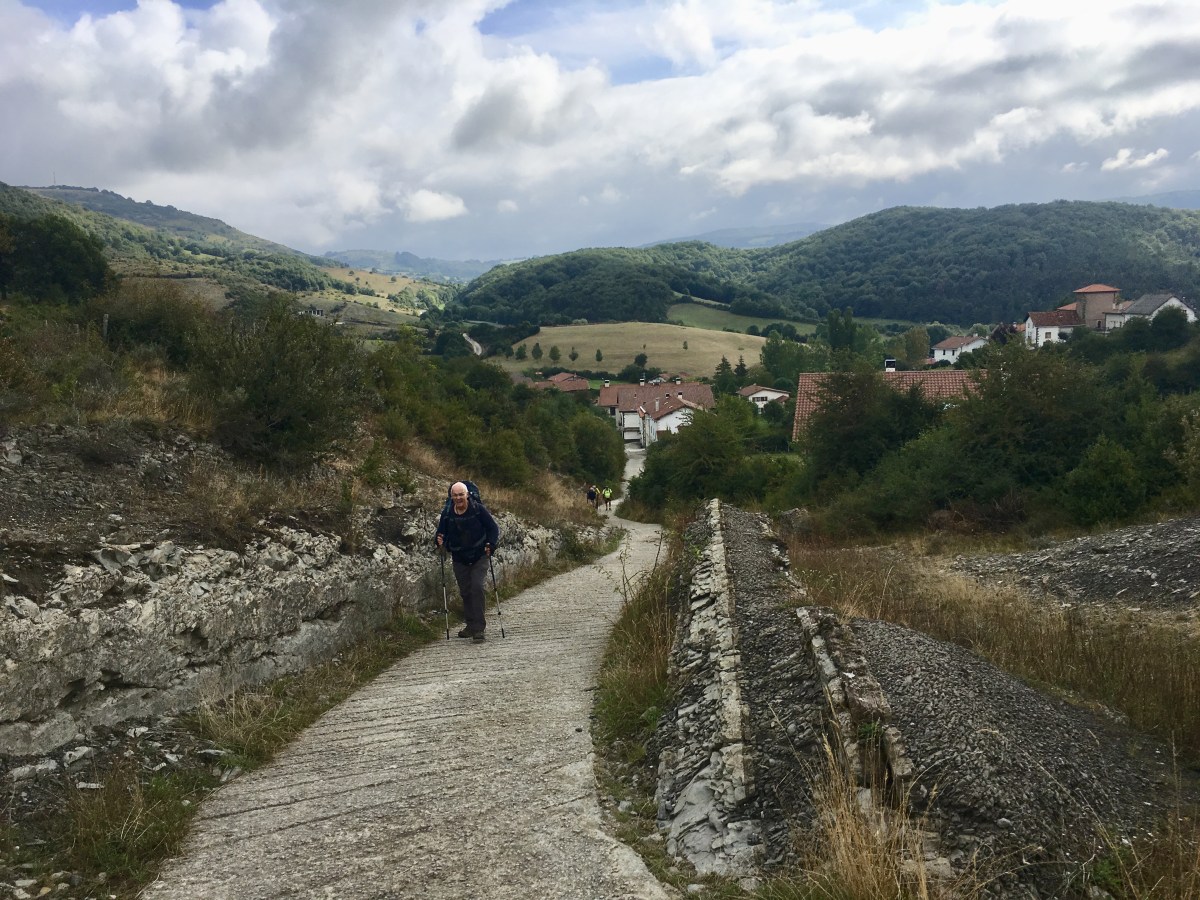
I skipped breakfast in Refuge Haizea and left Espinal directly at 8:00 a.m. I decided to carry my backpack today rather than sending it ahead; little did I know what a rough day it would be, with little payoff in regard to views and a major emotional upheaval. It would be one of the worst five days on my Camino.

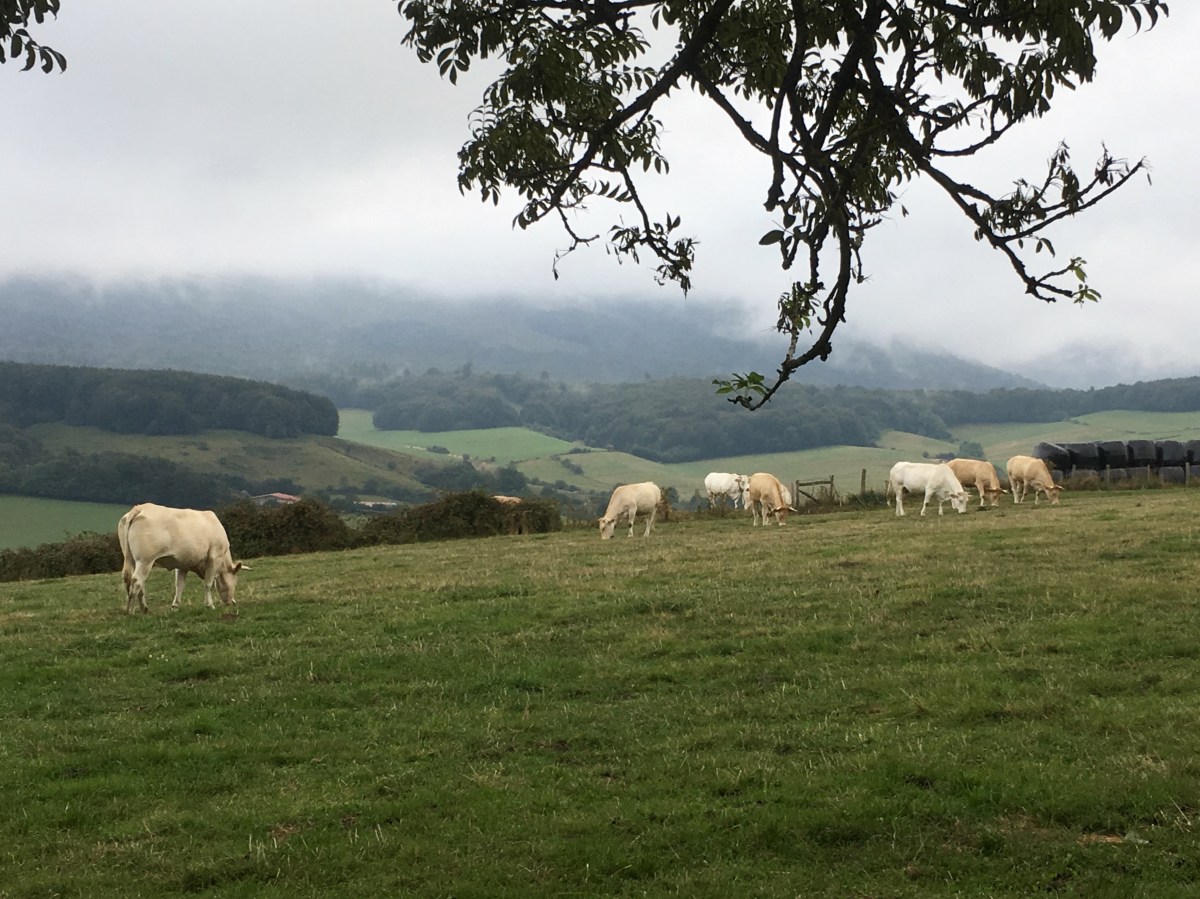
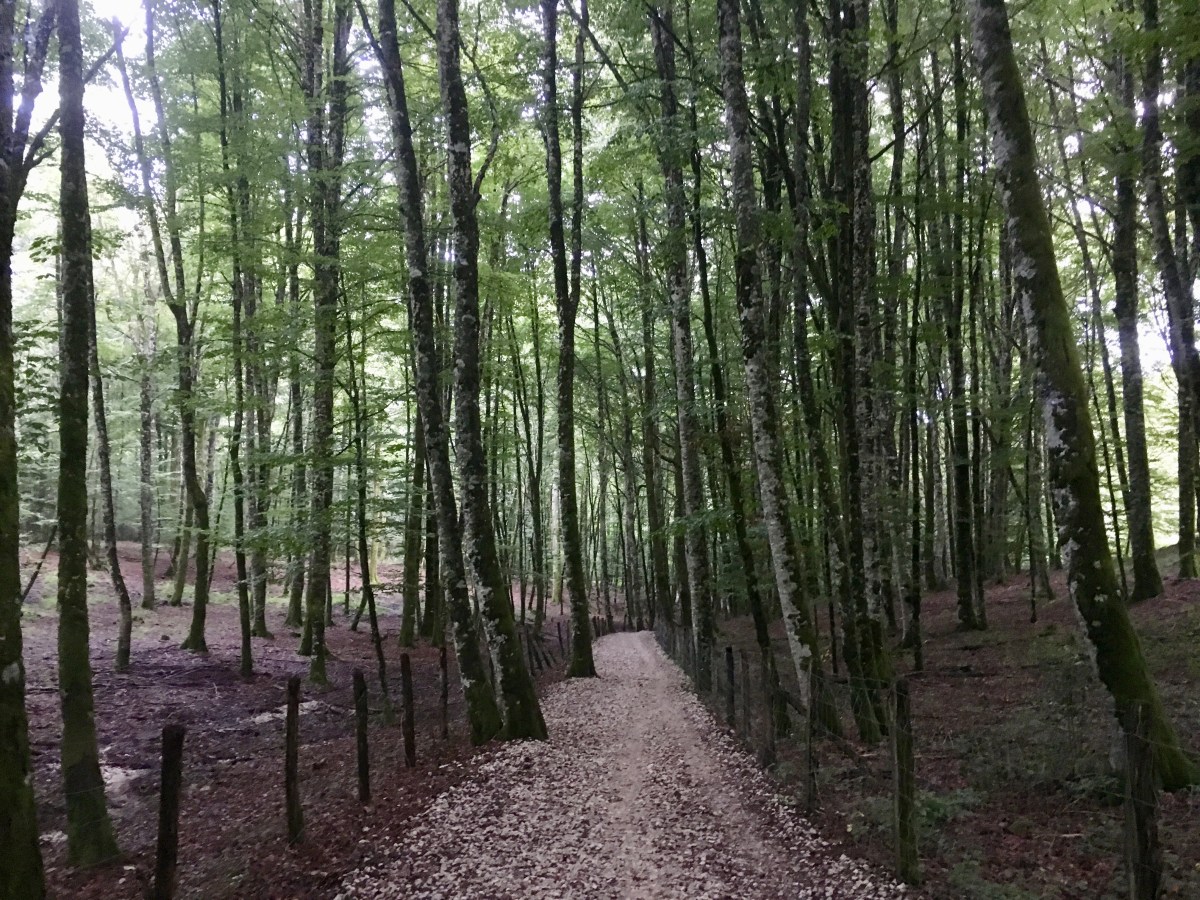
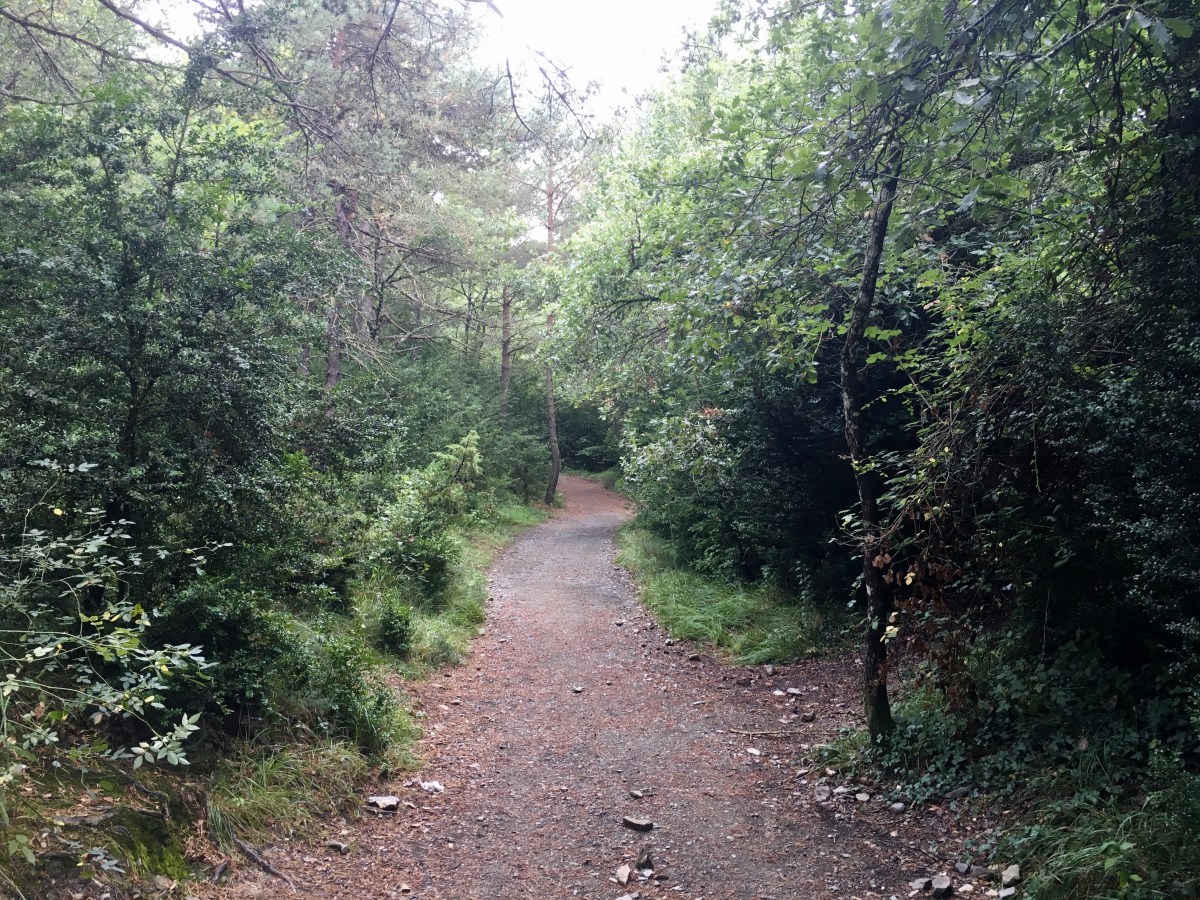
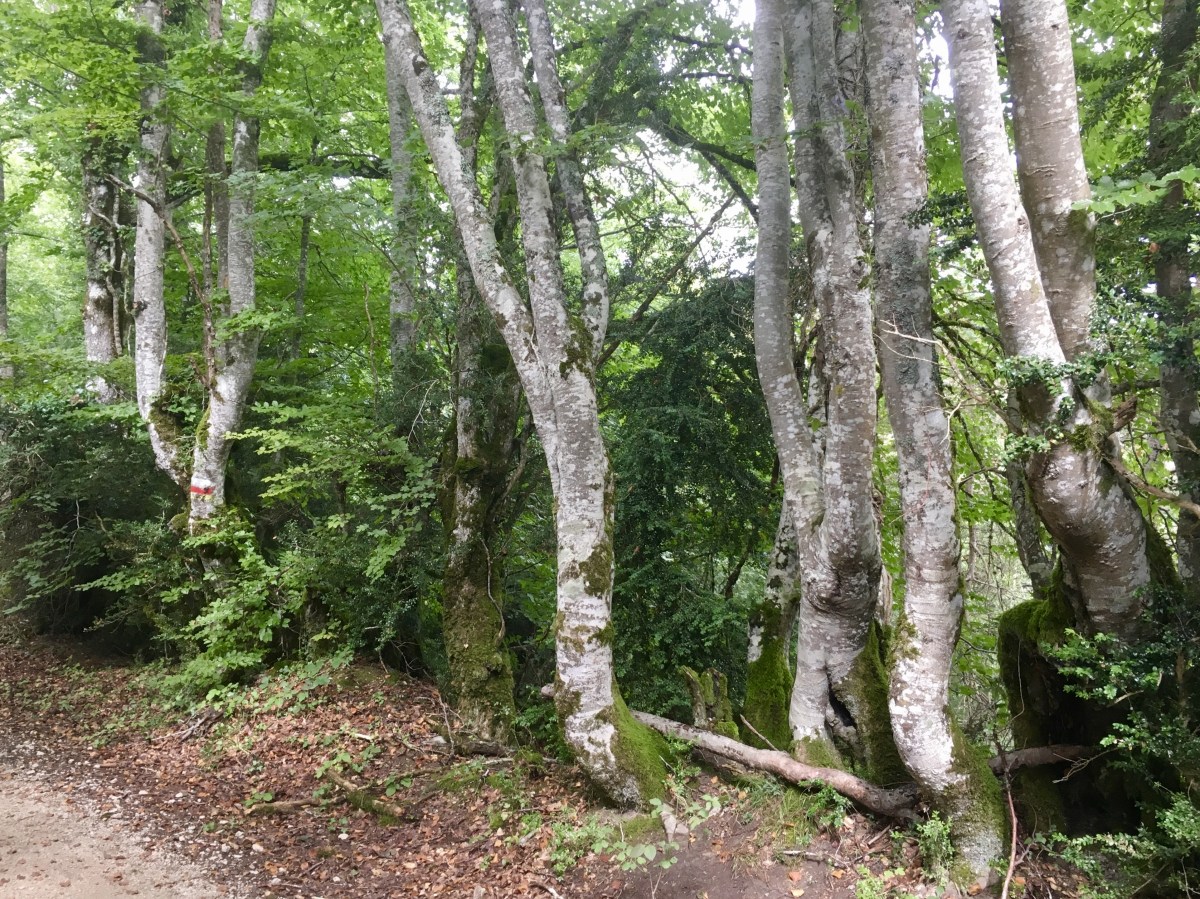
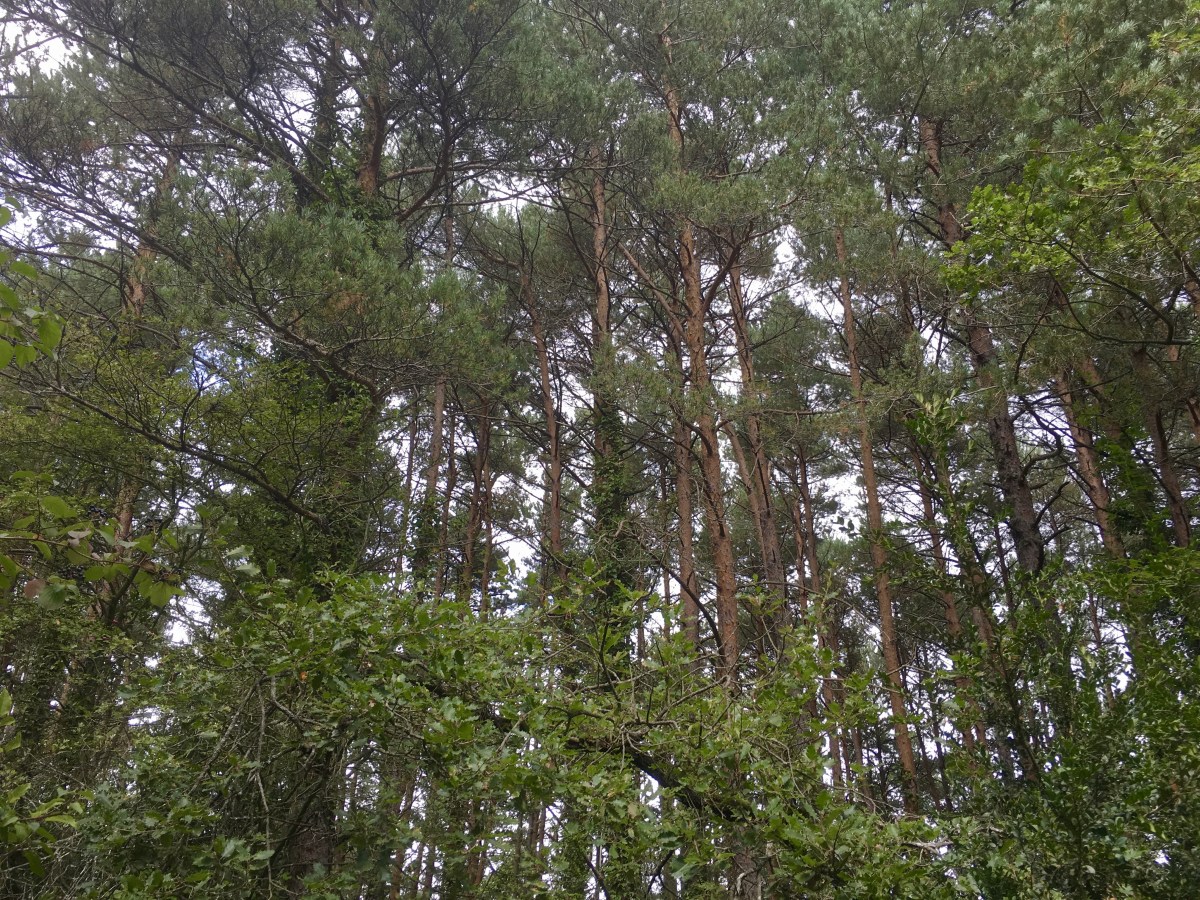
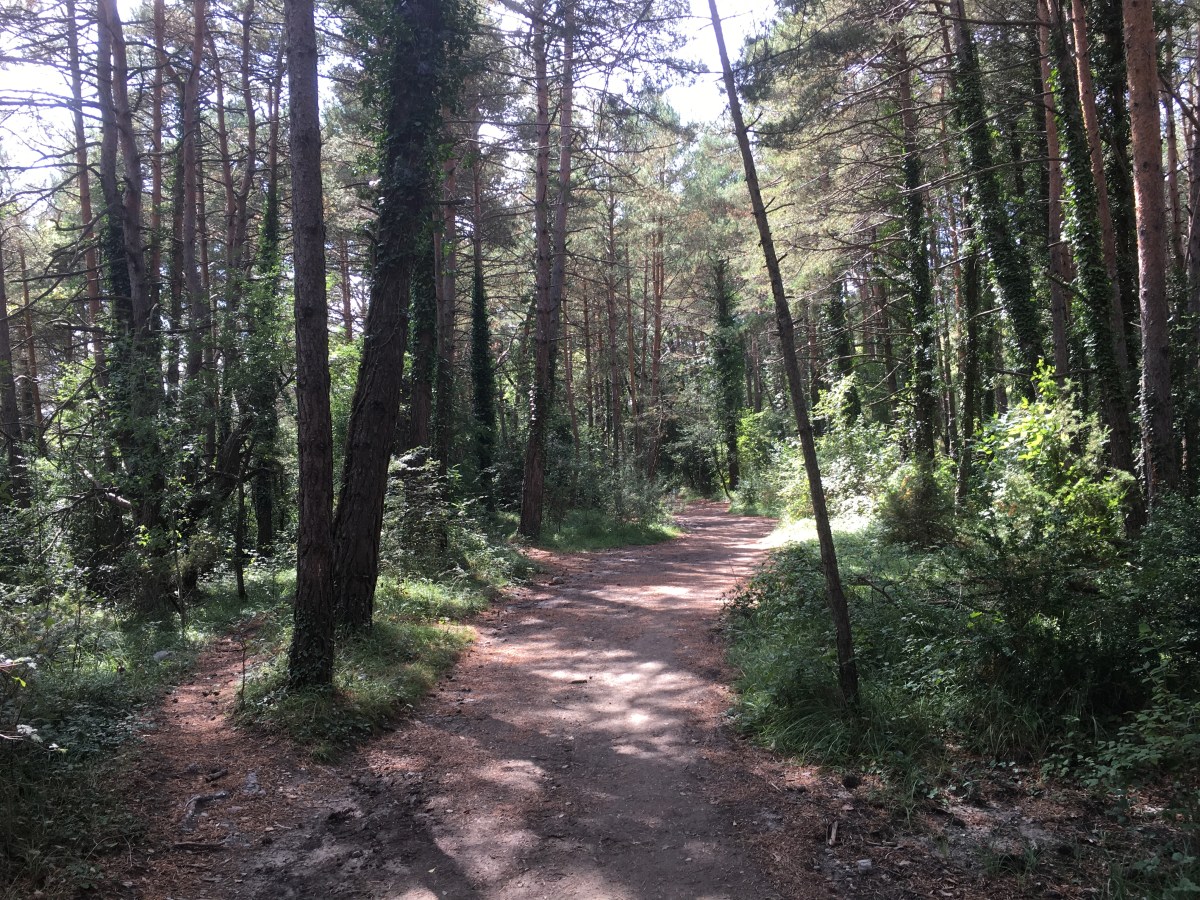
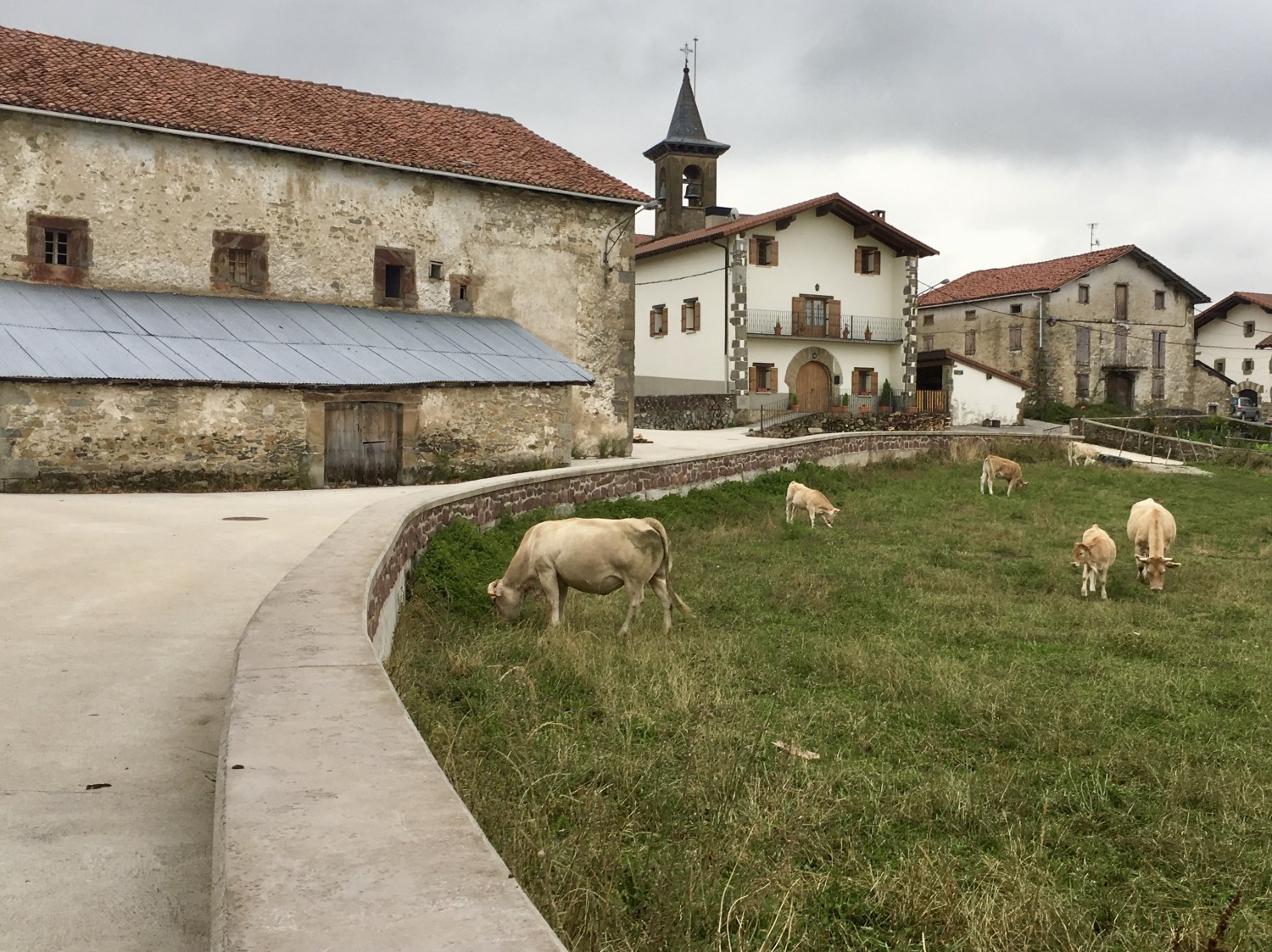
I walked on narrow paths between wire fences bordering sheep and cow pastures and under a heavy sky that threatened rain all day without delivering.  I walked on paths through mature beech and pine forests and crossed stepping-stones over the río Erro.  The landscape changed elevation numerous times, peaking at Alto Mezquiriz, dipping to the río Erro, rising and dipping and rising again.

At around 10:30 in Viskarreta, I stopped at a café for a potato tortilla, orange juice and café con leche; this breakfast would become standard fare for “second breakfasts” on my Camino, although this was my first today. I used the WC for the only time during the entire walk. I walked past an ancient-looking cemetery with a stone cross at the gate.  Today’s path was rough, covered in either gravel or large loose rocks, surfaced in cement patterns imitating paving stones, or paved in uneven or weird ways.

In the cute town of Linzoain, I sat on a stone wall and ate Havarti cheese and chocolate I’d bought at the supermarket in Viscaretta.  The wall bordered a pelota court (frontón). Pelota is a Basque or Spanish game played in a walled court with a ball and basket-like rackets fastened to the hand. A scruffy black dog came to visit, nudging us and begging for a petting.  Annette from Ireland, who Ingrid and I had met on the descent from the Pyrenees, sat with me on the wall and smoked an electric cigarette.  Several other pilgrims stopped to chat as well.  It was a nice break from my backpack, which was making my life miserable.

Back on the woodlands path, stony at first but eventually turning soft, I had a nice chat with Pather from Ireland.  We commiserated about Trump and all the nationalism in America, Europe, and throughout the world, beliefs seeking to divide us rather than build bridges.  He took off before long and I walked in shade scented with pines and boxwood.

I chatted a bit with a group from California who had been at Orisson: Anne-Marie, her husband Gary (who was walking after double hip and double knee replacements), their daughter Kaylee, and their friend Beth. Ingrid had connected with Anne-Marie at Orisson, while I’d felt disconnected.  This is often the story my life. I see people relating well to one another, and I’m standing on the outskirts, feeling baffled by my own aloofness.

At the last high point, Alto de Erro, I stopped for lemonade at the mobile cafe Kiosco. At an outdoor table, I chatted with Peter from Charlotte, NC, his daughter Beth, and her husband Matt; we had passed each other numerous times on the path.  Beth works as a fitness coach in Manhattan, coaching clients in all areas of fitness: spiritual, nutritional, and physical.  I shared with her that my oldest son had dallied with the idea of being a fitness coach but chose a butchery apprenticeship instead.

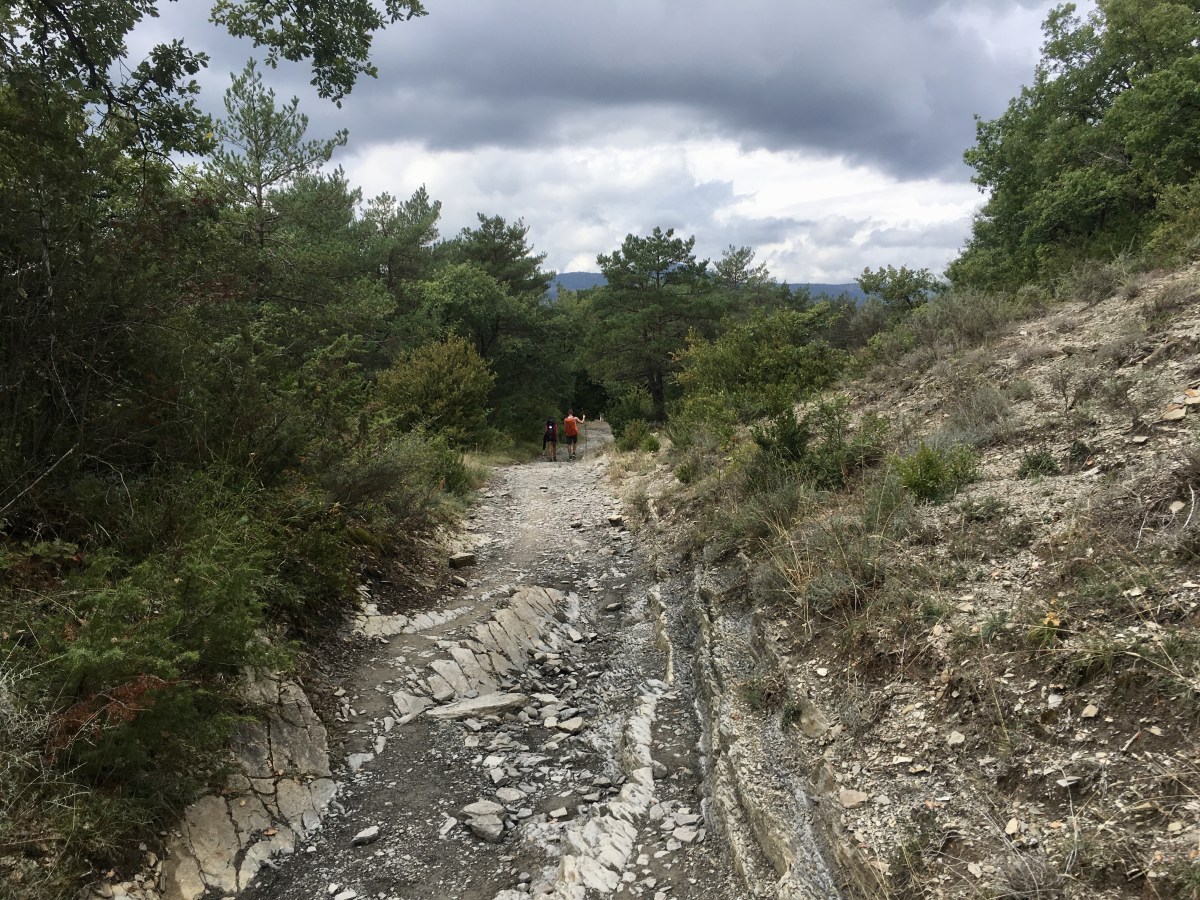
The worst part of the day was from the mobile cafe down a perilous and steep rocky path 3.5 km through woodlands to Zubiri.  I feared it would never end. It was a rough scree-covered descent, taxing and ponderous.  My knees and toes took a serious beating. I kept expecting to catch sight of Zubiri, but with a dense cover of trees crowding the mountainside, I saw the town only when I was right down on it.

Coming into Zubiri, I crossed the Puente de la Rabia, a medieval bridge over the Río Arga.  Legend had it that any animal led three times around the central arch would be protected from rabies. This is also the likely site of a former leprosarium.

Here, Joy from Orisson told me she’d walked with Ingrid, who had already checked into her place in Zubiri. “She missed you today,” she told me. I wondered how on earth Ingrid had passed me without me seeing her, as she’d started 4 miles behind me in Roncesvalles.

The place I had reserved in Zubiri was an oasis in an otherwise ugly town: Hostel Suseia, the pilgrim’s home. It was nearly a mile off the path, meaning I’d have to walk back to Zubiri’s entrance in the morning.  I was assigned a top bunk for the first time.  It was so crowded that one lady planned to sleep on the floor.  Four Australian ladies I’d met in Orisson couldn’t find a bed anywhere in town.  They had carried their packs for the first time today, as I did, and they were not happy. They decided to take a taxi to Pamplona, my destination for the next day.

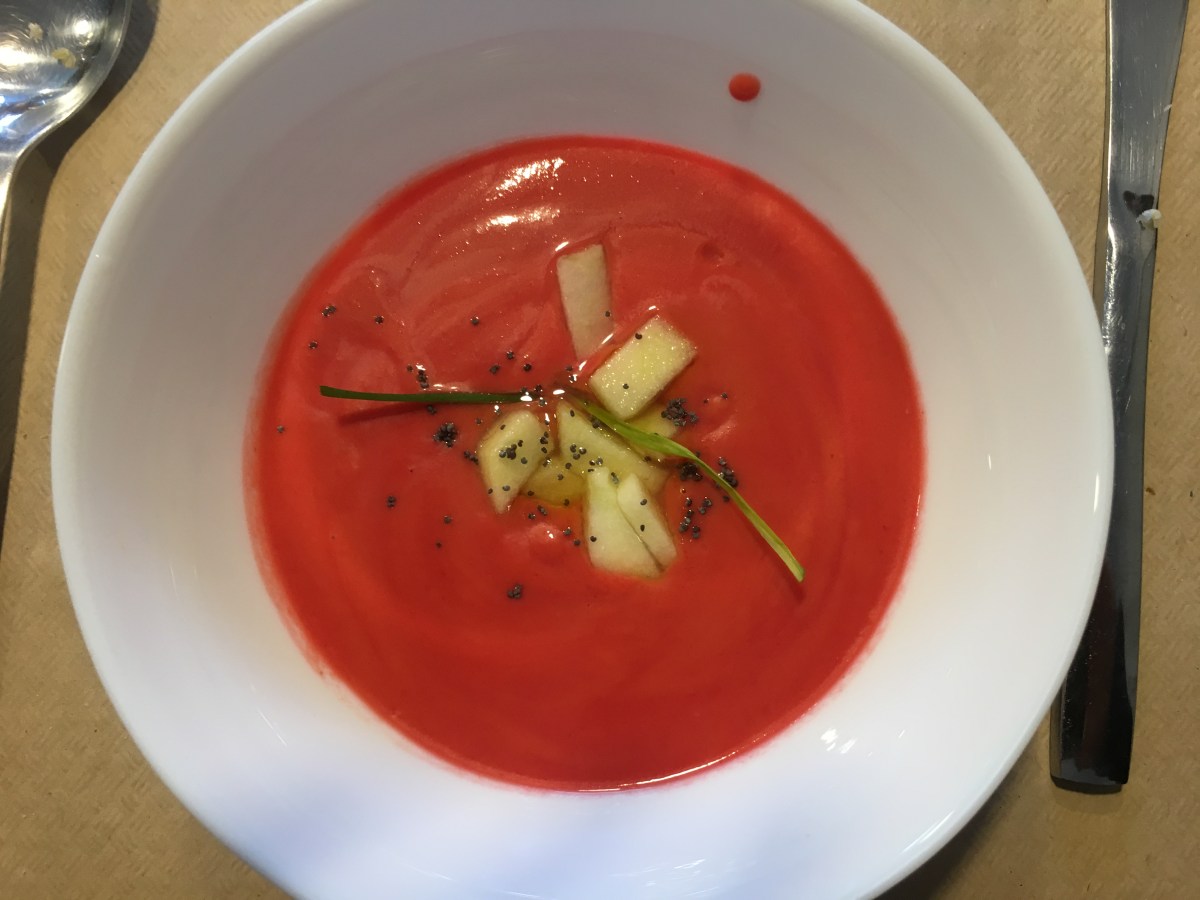
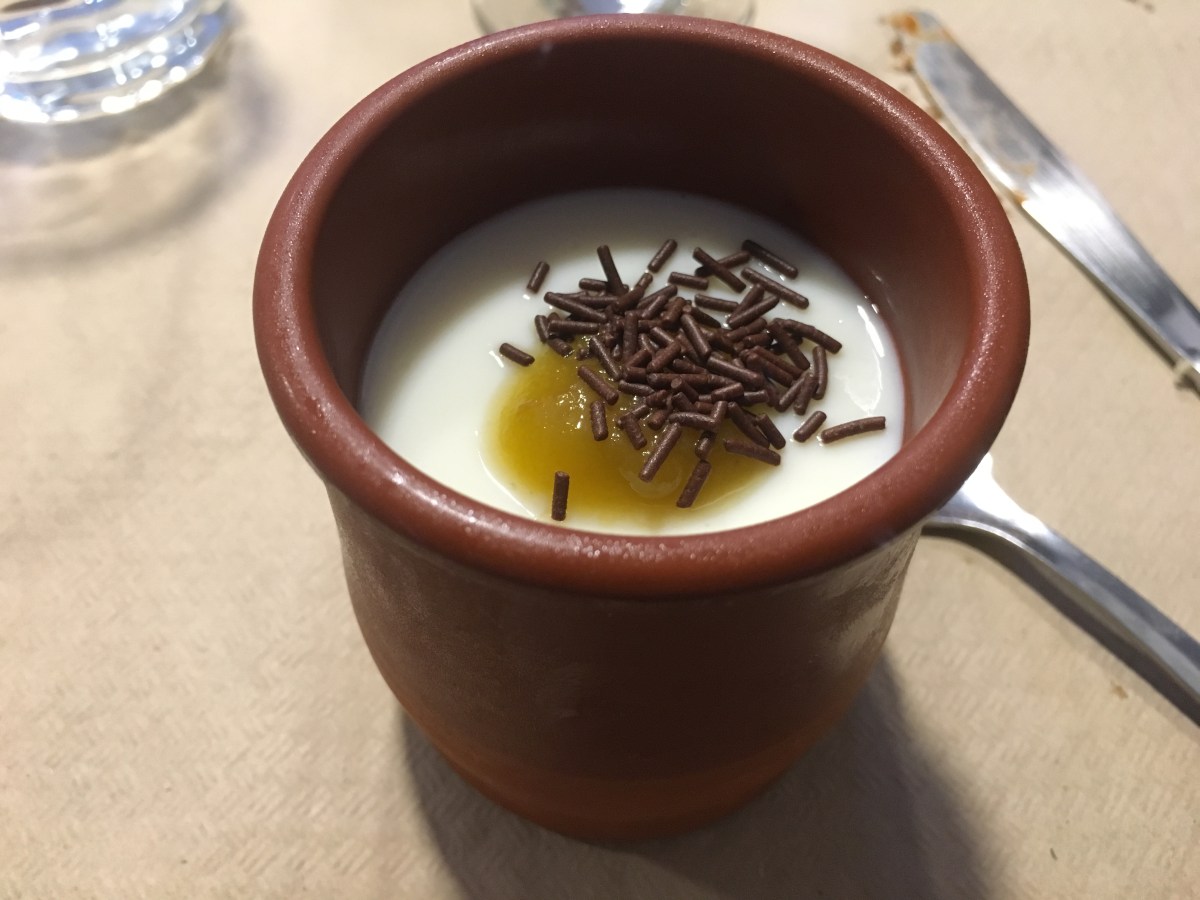
The pilgrim dinner at Suseia was a wonderful gourmet meal: a salad with pomegranates, quiñoa, greens, and tomatoes, followed by a cold tomato cream soup garnished with cucumber, bread with chorizo, and polenta in tomato sauce.  Desert was a refreshing chilled lime pudding.  The gentle and welcoming owner, Aya, served dinner with loving-kindness. I would encounter several fellow pilgrims I met at Suseia numerous times in the following days, especially the newlyweds Claire and Matt, and Lisa and her brother Josh.  I also met Pat from Seattle, who I’d meet time and again on the early part of the Camino.

After dinner, my husband called with distressing news.  Someone I dearly love, who lives a great distance from us, called feeling worthless. His money was gone, and he’d applied for a job at Subway (a chain sandwich shop) and was rejected. In desperation, he considered committing robbery, questioned the point of living, and ranted about the “system” and how the world needs to change, how he’s a shaman and hears the voices of angels. At one point in their conversation, my husband told him he was crazy, at which time our loved one hung up. Later, in follow-up phone call, my husband got so upset, he was the one to hang up.

I was devastated by news of this call, although we have heard our loved one express such bewildering thoughts on numerous occasions. As much as I have wanted to believe he is idealistic, gifted and possibly in tune with something in the universe to which most of us are oblivious, I was paralyzed by his description of “voices.” No elaboration was offered. I would have liked to ask, but it wasn’t my phone call and I would be too terrified to find the truth, What exactly are these voices? Are they the voices that a poet, an artist, a musician call inspiration, intuition? Voices that creative artists describe as speaking through them when they write or paint or compose? Or are they the “voices” used so often when diagnosing mental illness?

Suddenly, after this phone call, I found myself straddling a threshold between two worlds. One was the world of my all-too-real life, telescoping backwards to my childhood and currently to this ominous moment with my loved one and forward to a foreboding future: the childhood during which my mother believed people were out to get her, walked in front of a neighbor’s Volkswagen van, was committed to a mental institution and underwent electroshock therapy, drove herself into a tree, unsuccessfully attempted suicide other times, and sat for entire days at our kitchen table in a smoke-filled zombie-like state, drinking wine while on anti-psychotic medications; the present day with my brilliant and gifted loved one who continues to make decisions we don’t understand or feel are productive, who wants the world to change, utterly and completely, at this very minute, and who can’t seem to figure out how to get along in our deeply flawed society; and the unknowable future, where he could go on making self-destructive decisions, or worse, commit a desperate and devastating act.

The other world, on the other side of this threshold, was of course the Camino itself, a world removed from real life yet, at the same time, a reflection of it, a world where there was possibility and hope that if I kept putting one foot in front of the other, offering prayers and sharing with pilgrims, all could be righted in life.

I told my husband I would cut my Camino short and come home on the next plane if my loved one would check into a hospital for evaluation. I would remain helpless if his attitude stayed the same; he doesn’t believe in so-called “mental illness,” distrusts the “system,” and believes messages he receives are gifts. Unless he wanted to get help, there would be no reason for me to return.

So, I would continue walking, and praying.  My husband suggested maybe this was where I was meant to be during this trying time.  I would take my Camino one day at a time, and if I needed at any point to return home, I would.

Still, I was heartbroken, shattered. I wept in the dark entryway of the hostel among jumbled hiking shoes and poles hanging on pegs. Pilgrims came in and out; there was no space to be alone, so when some asked me what was wrong, I confided in them about what was going on.

I felt angry about the unfairness of it all.  Why should I have to suffer through this in childhood and again, now, as an adult?  Well. Of course. Life simply isn’t fair.

I can understand fears about being labeled and stigmatized, about the impreciseness of medications, about being shocked or locked up.  I can understand the fear of losing one’s essence on powerful drugs and treatments. I saw the effects of these on my mother. I had these fears myself throughout my teens and 20s, worried about the hereditary nature of her illness. Although I am not a firm believer in the remedies available, I feel at least some attempt could be made to try them, or at the very least, to talk to a professional.

Full of angst, I tossed and turned and couldn’t sleep, finally taking a Valium to calm myself down.  At about 3:00 a.m., I woke up, heart racing, and took another half Valium.

The problems with my loved one would become a near constant on my Camino and I often shared with other pilgrims my fears, worries, and even my hopes.  I would find consolation from many compassionate people, some of whom would share a related story that was highly personal, without offering unwanted advice. After a deep talk, they would often disappear on the horizon and I’d never see them again.

It was almost as if my fellow pilgrims were angels that dropped in to console me. For that I would be eternally grateful.

fullsizeoutput_1719c

Espinal

fullsizeoutput_1718f

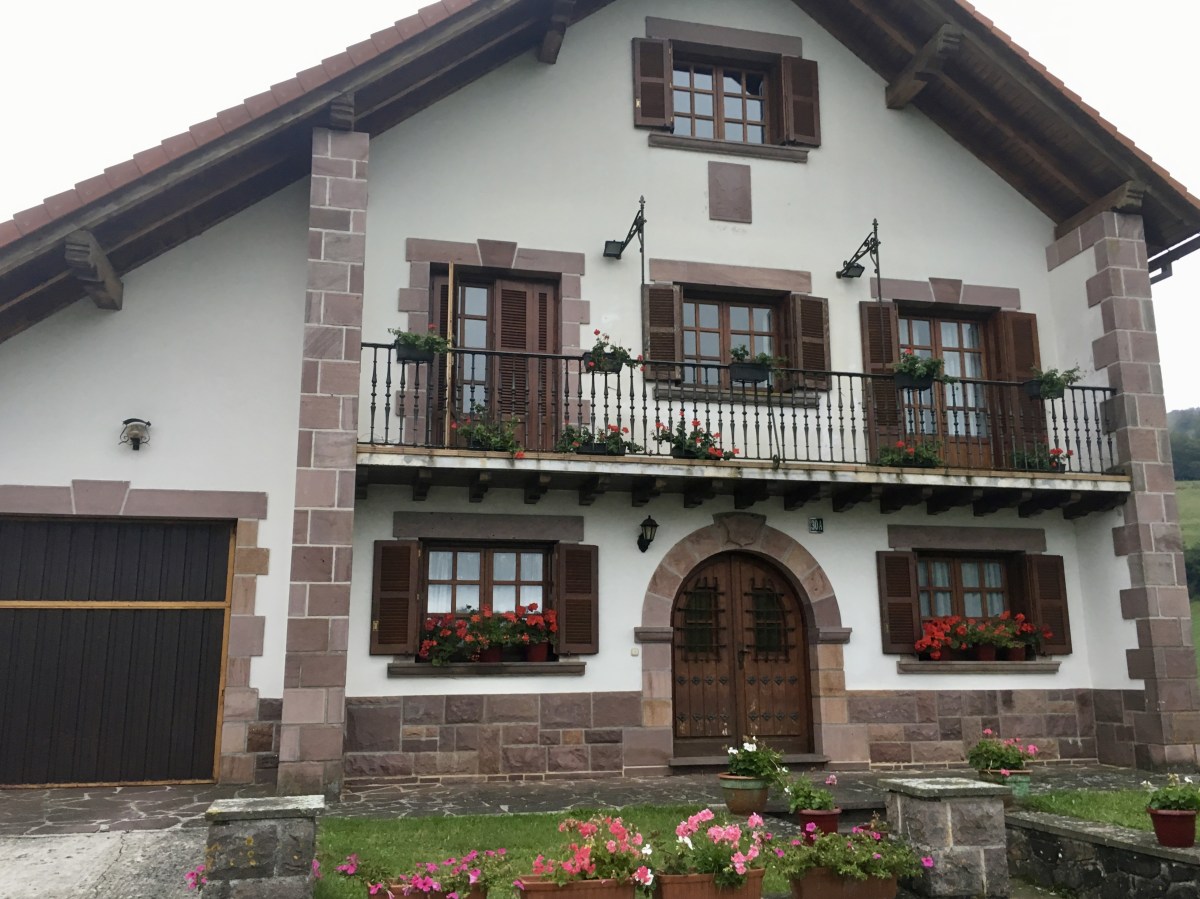
house in Espinal

fullsizeoutput_171a1

sheep

fullsizeoutput_1718a

cows

fullsizeoutput_17798

beech forest

fullsizeoutput_17194

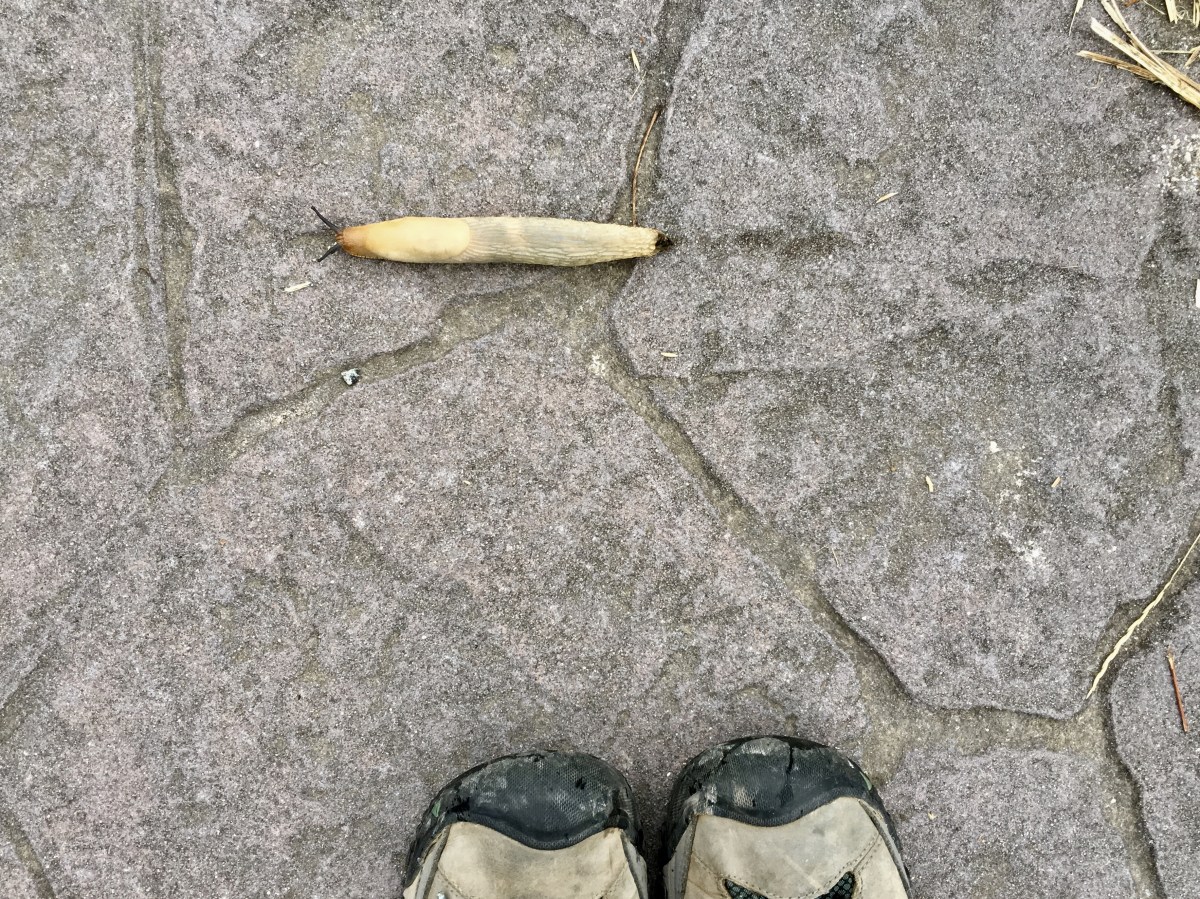
gargantuan slugs

fullsizeoutput_171a6

cafe in Viscarreta

img_4513

potato omelette and bread, OJ and café con leche
fullsizeoutput_171a3

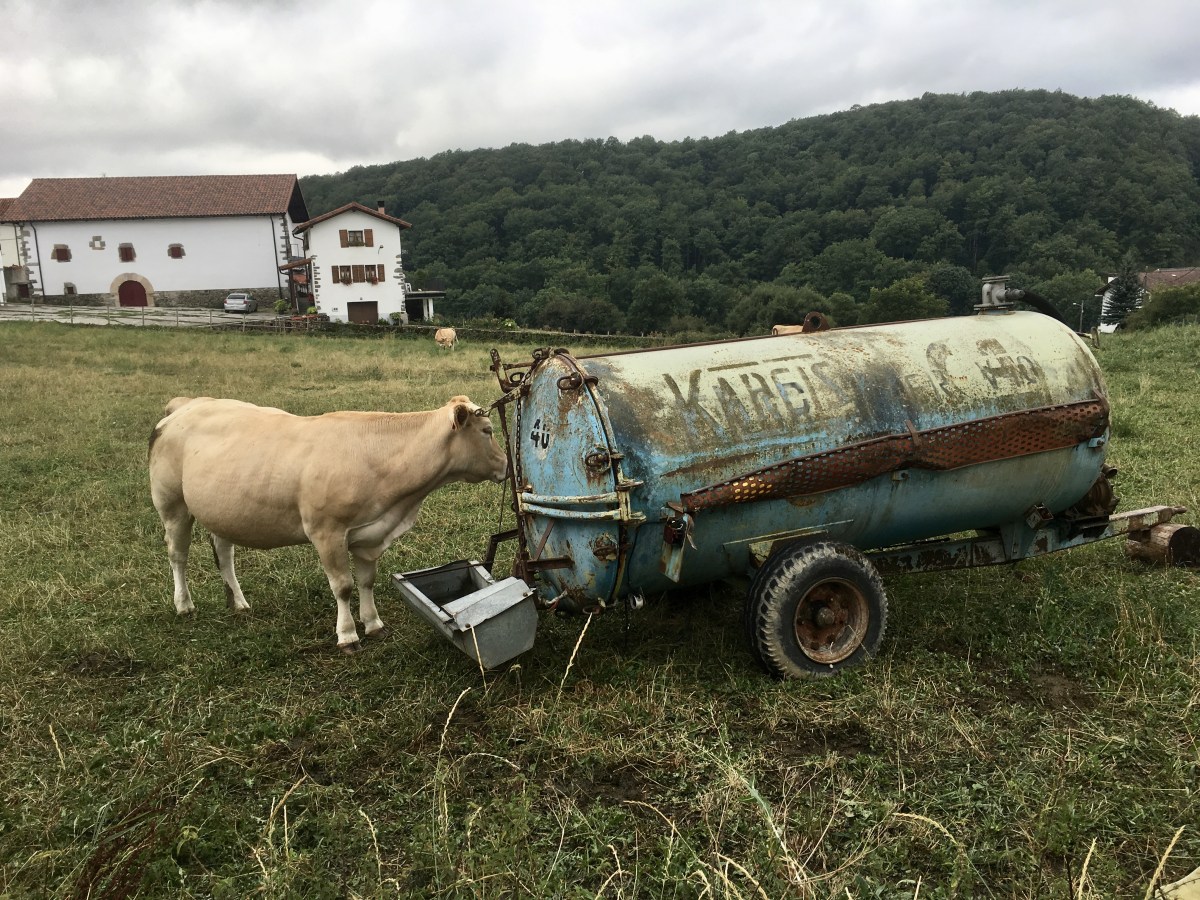
cow and machinery

fullsizeoutput_1779a

house in Viscaretta

fullsizeoutput_1779b

cemetery

img_4524

cemetery

fullsizeoutput_171a2

On the way to Linzoain

fullsizeoutput_1779c

dog in Linzoain

fullsizeoutput_1779d

leaving Linzoain

fullsizeoutput_1779e

woodlands

fullsizeoutput_1719a

mixed woodland

fullsizeoutput_1717b

steep rock outcrop to Zubiri

fullsizeoutput_17182

steep rock outcrop to Zubiri

fullsizeoutput_1779f

mixed forest

fullsizeoutput_177a0

forest

img_4549

path to Zubiri

img_4557

tomato cream cold soup garnished with cucumber
img_4558

lime pudding

fullsizeoutput_177a2

pilgrims at Suseia with newlyweds Claire and Matt at the left end of table, and Lisa front right and her brother Josh front left

*Day 3: Thursday, September 6, 2018*

*26,437 steps, or 11.2 miles: Espinal to Zubiri (15.3 km)*

You can find everything I’ve written so far on the Camino de Santiago here:

  • Camino de Santiago 2018

**********************

“PROSE” INVITATION: I invite you to write up to a post on your own blog about a recently visited particular destination (not journeys in general). Concentrate on any intention you set for your prose.  In this case, one of my intentions for my Camino was to write using all my senses to describe place and to capture snippets of meaningful conversations with other pilgrims.

It doesn’t matter whether you write fiction or non-fiction for this invitation.  You can either set your own writing intentions, or use one of the prompts I’ve listed on this page: writing prompts: prose. (This page is a work in process.) You can also include photos, of course.

Include the link in the comments below by Monday, February 11 at 1:00 p.m. EST.  When I write my post in response to this invitation on Tuesday, February 12, I’ll include your links in that post.

This will be an ongoing invitation. Feel free to jump in at any time. 🙂

I hope you’ll join in our community. I look forward to reading your posts!

the ~ wander.essence ~ community

I invite you all to settle in and read a few posts from our wandering community.  I promise, you’ll be inspired. 🙂

  • Jude, of Travel Words, wrote a follow-up piece about trying to get a crime report in Windhoek, Namibia, after she and her husband were mugged and robbed.
    • Room 202
  • Jude, from her other blog, Under a Cornish Sky, wrote a piece full of sights and sounds of summer in Cornwall, with a sketch from her journal as well.
    • Summertime Memories
  • Pauline, from Living in Paradise…, wrote about a day trip she took to visit a Buddhist temple full of curves.
    • Lens-Artists photo challenge: Curves in Buddhism…

Thanks to all of you who wrote prosaic posts following intentions you set for yourself. 🙂

Share this:

  • Share on X (Opens in new window) X
  • Share on Facebook (Opens in new window) Facebook
  • More
  • Email a link to a friend (Opens in new window) Email
  • Print (Opens in new window) Print
  • Share on Pinterest (Opens in new window) Pinterest
Like Loading...
  • American Road Trips
  • Balcony House
  • Colorado

balcony house at mesa verde

wanderessence1025's avatar wanderessence1025 January 20, 2019

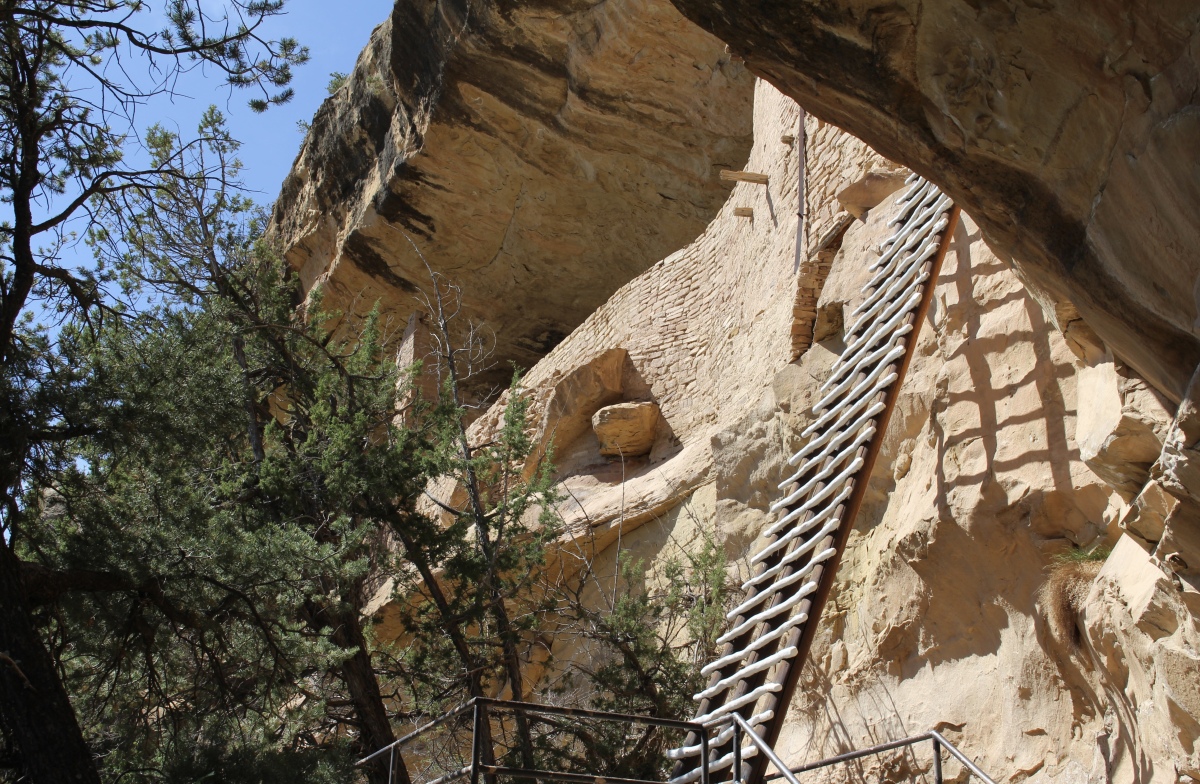
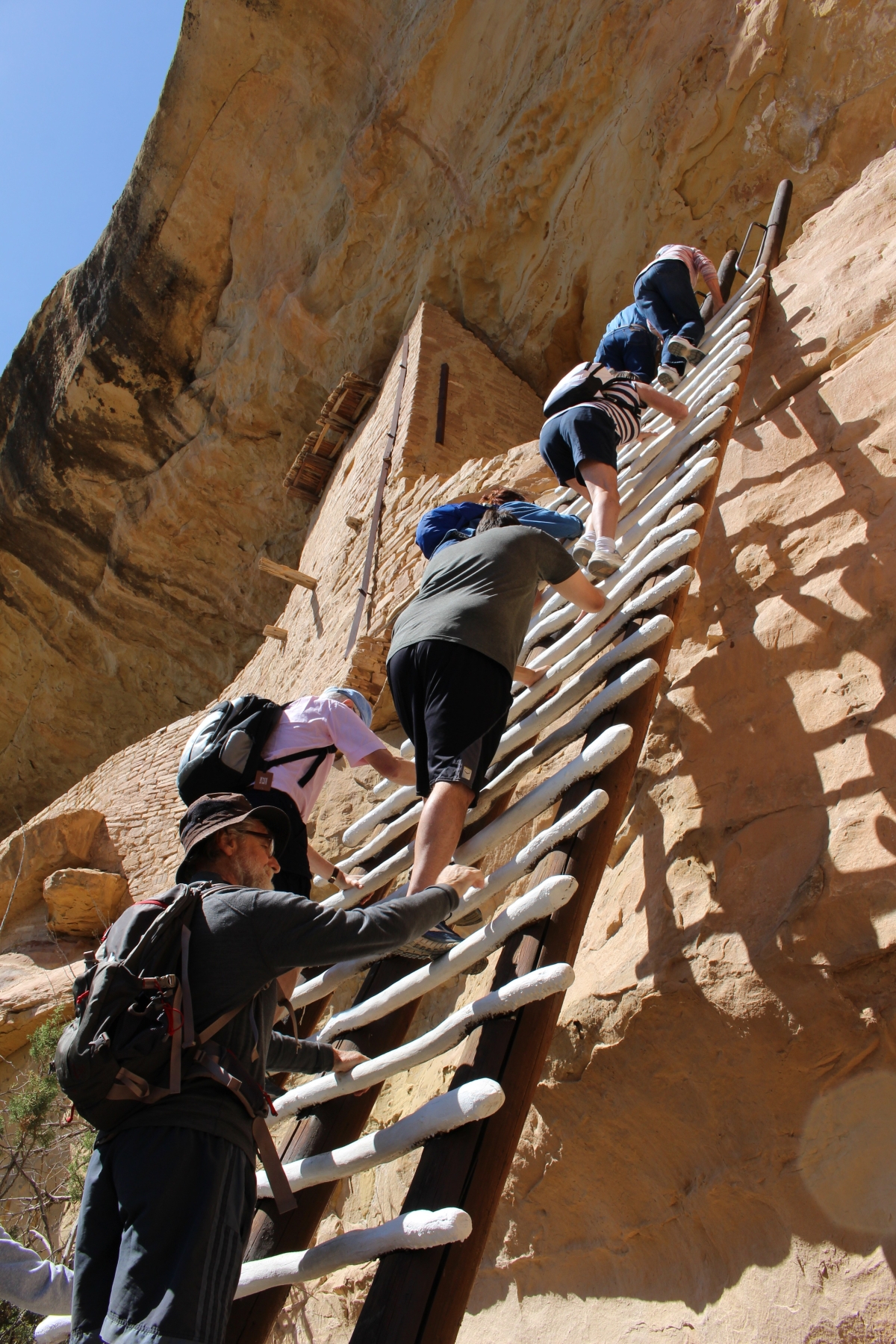
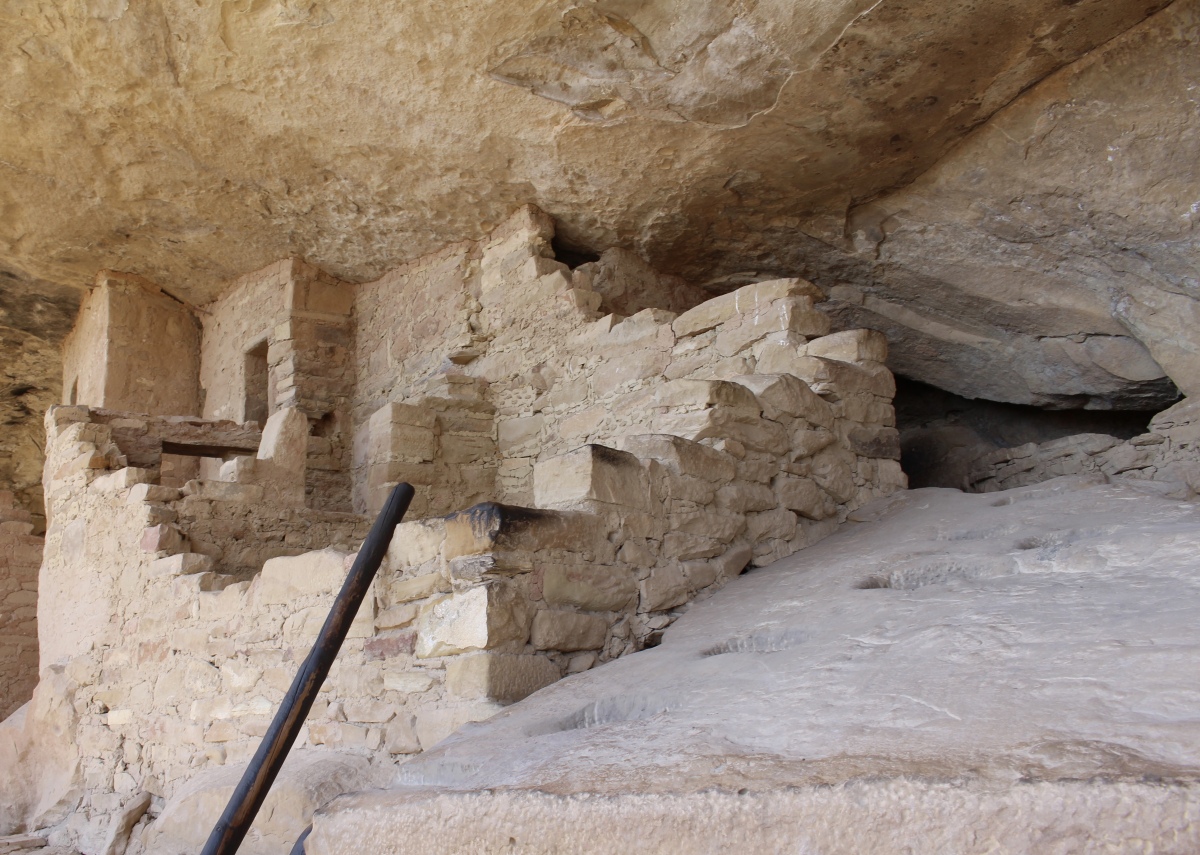
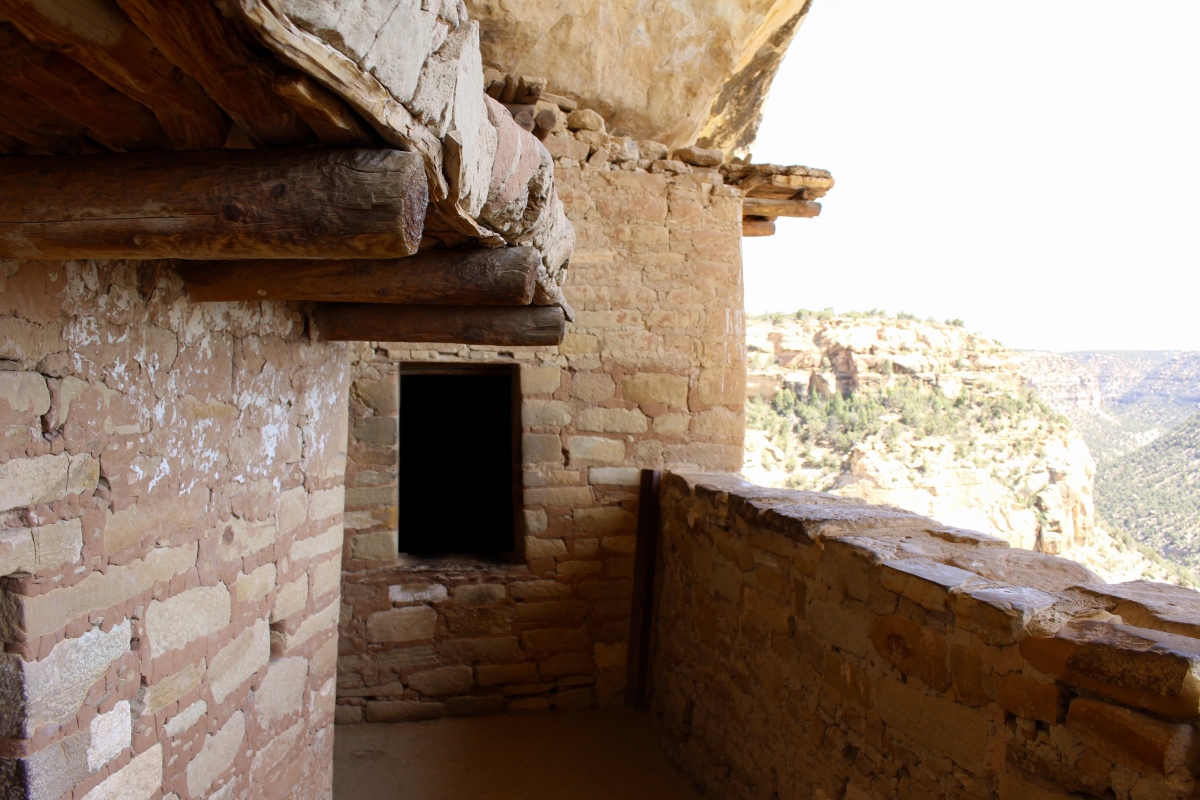
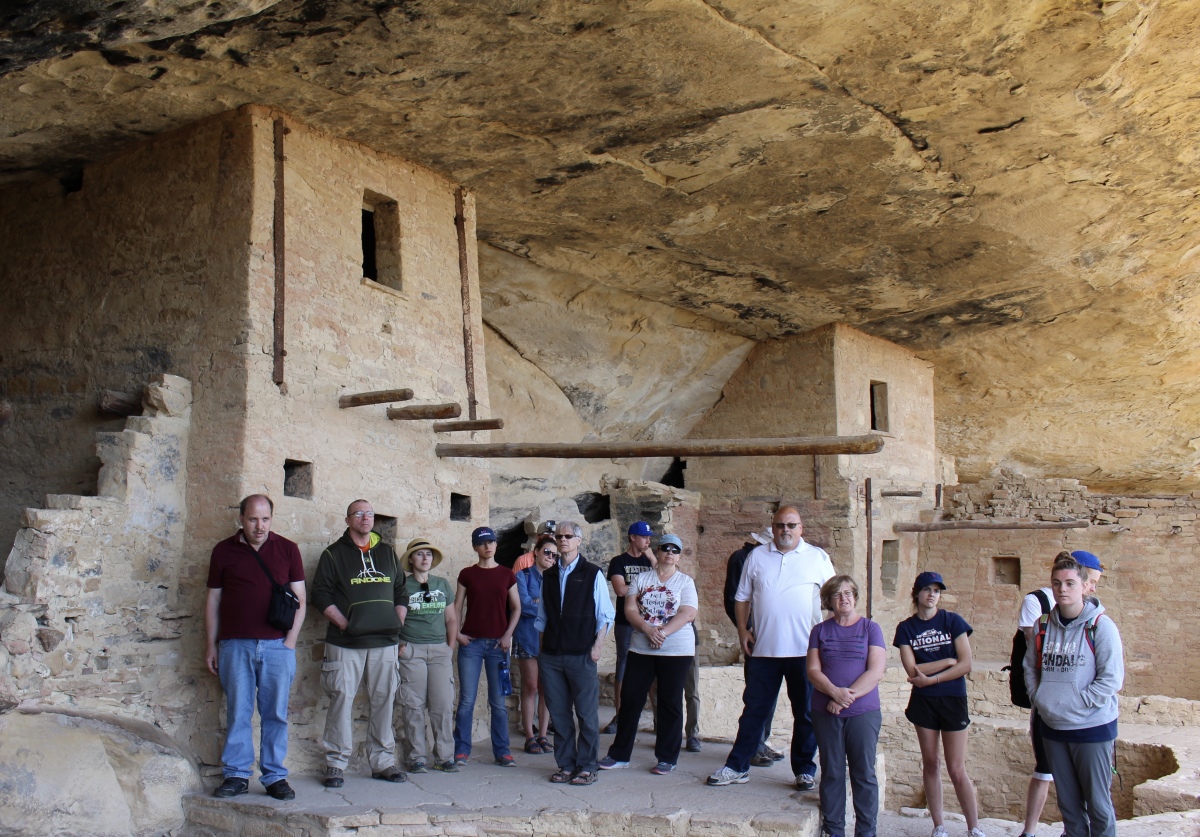
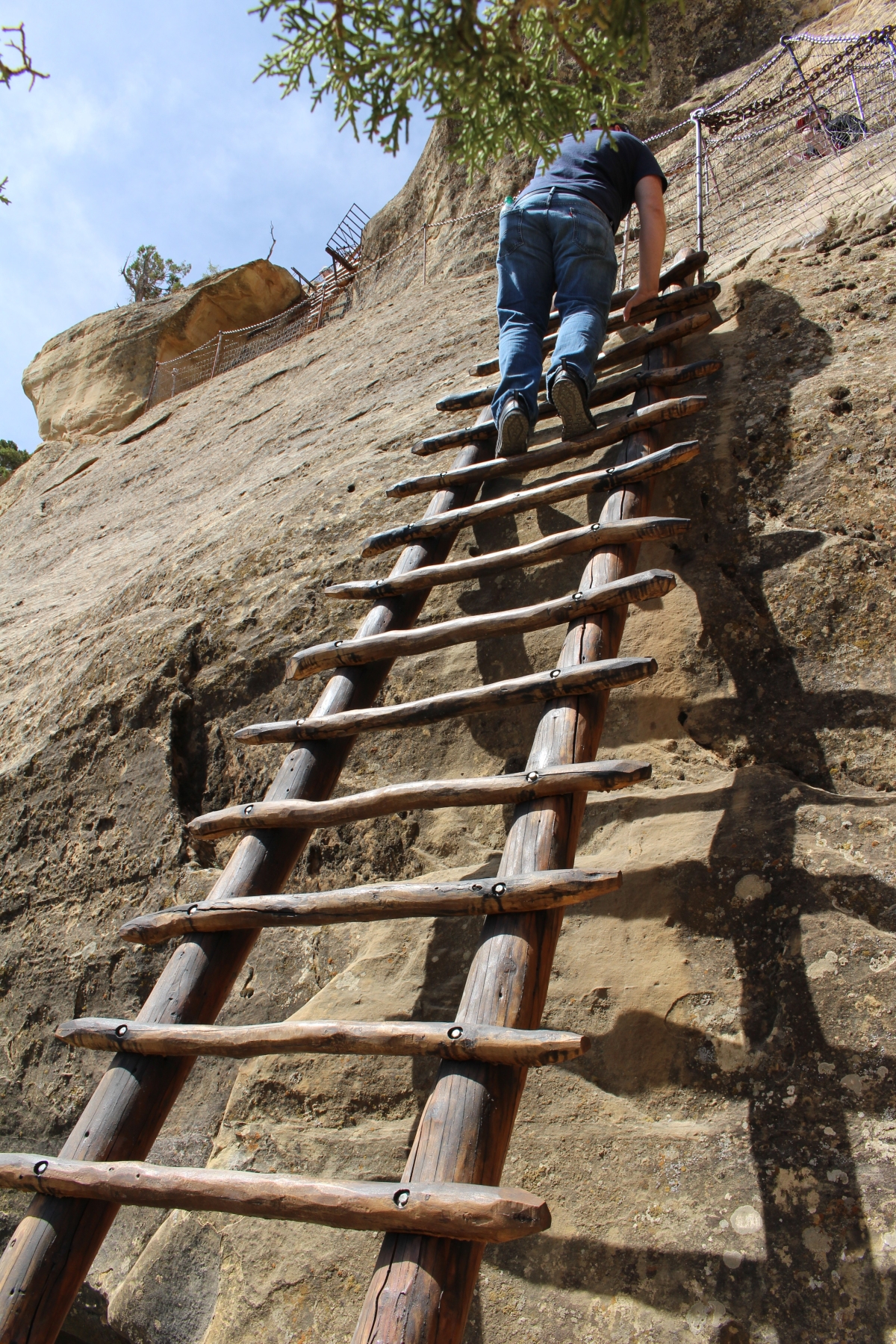
On my second day in Colorado’s Mesa Verde National Park, I went on the Balcony House Tour with a large group of other tourists. The only way you can visit Balcony House is on a ranger-guided tour, as it is strenuous, demanding, and quite a bit scary. The tour requires you to climb up three ladders on the side of a cliff, walk along a steep trail with some exposure on cliff faces, and crawl through a narrow 12-foot-long tunnel to a classic 13th-century cliff dwelling.  The cliff dwellings have drop-offs at the edges and deep kivas cut into the floor.  You have to pay attention to what you’re doing and you need a sense of adventure as well.

We walked down a staircase into the canyon at the north end of the site to a platform where we were faced with a sturdy 32-foot-long double ladder made of logs.  I was very nervous as we were standing at the edge of a sheer drop-off, but I gathered my courage and climbed side-by-side with another person, tensely gripping the rungs.

fullsizeoutput_15cb8

The first ladder at Balcony House

img_2673.jpg

Climbing the ladder

In the first small alcove, water played an important role.  A spring at the back of the alcove was probably the main water source for the residents.  They likely spent a lot of time in this cool, damp area judging by the amount of black fire soot on the alcove walls. The tunnel at Balcony House may have been built to protect this domestic water supply.

fullsizeoutput_15cba

masonry structure

We had to get on our hands and knees and crawl through two more tunnels, one of which was probably the only original access to Balcony House.

img_2678

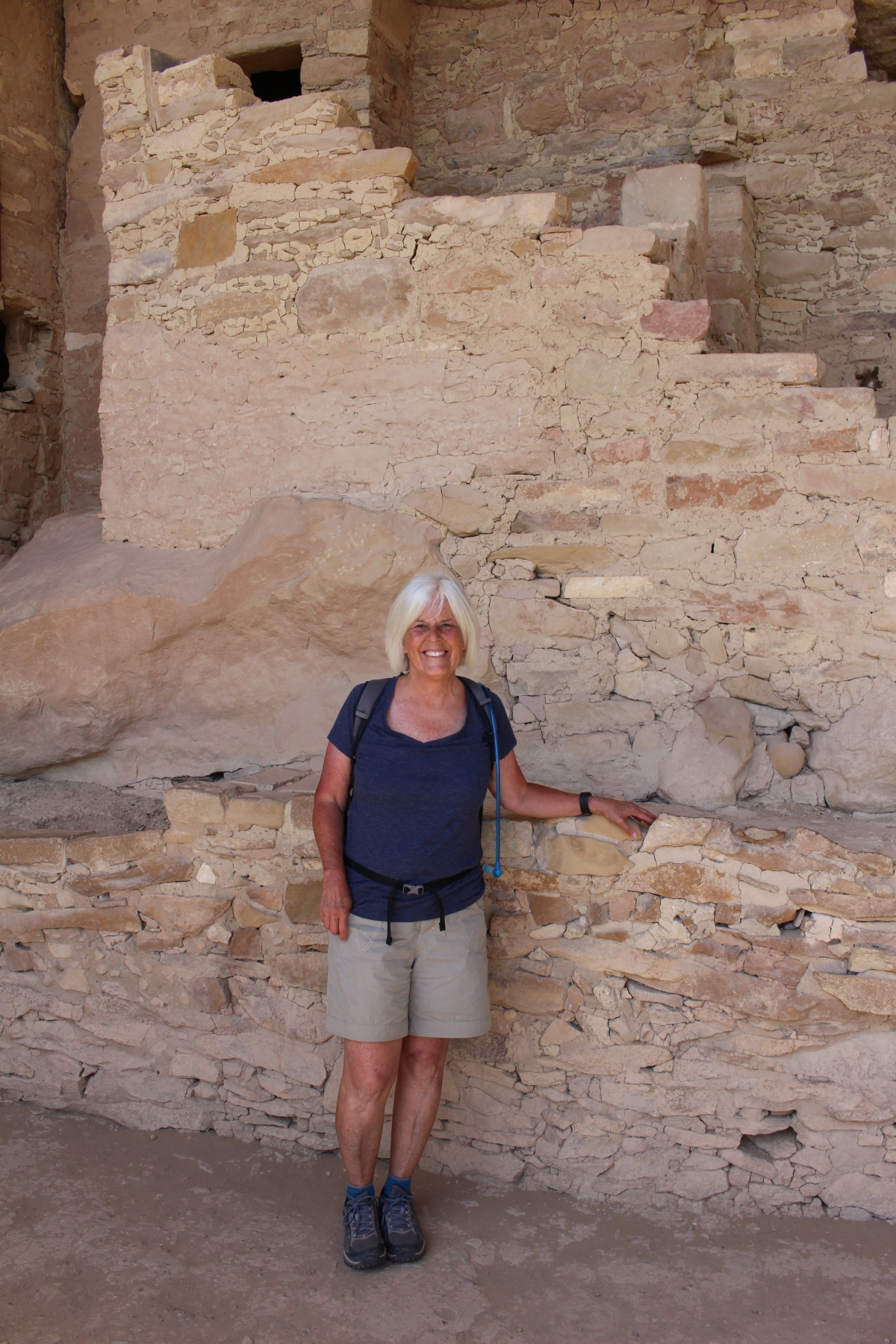
me at Balcony House

fullsizeoutput_15cbd

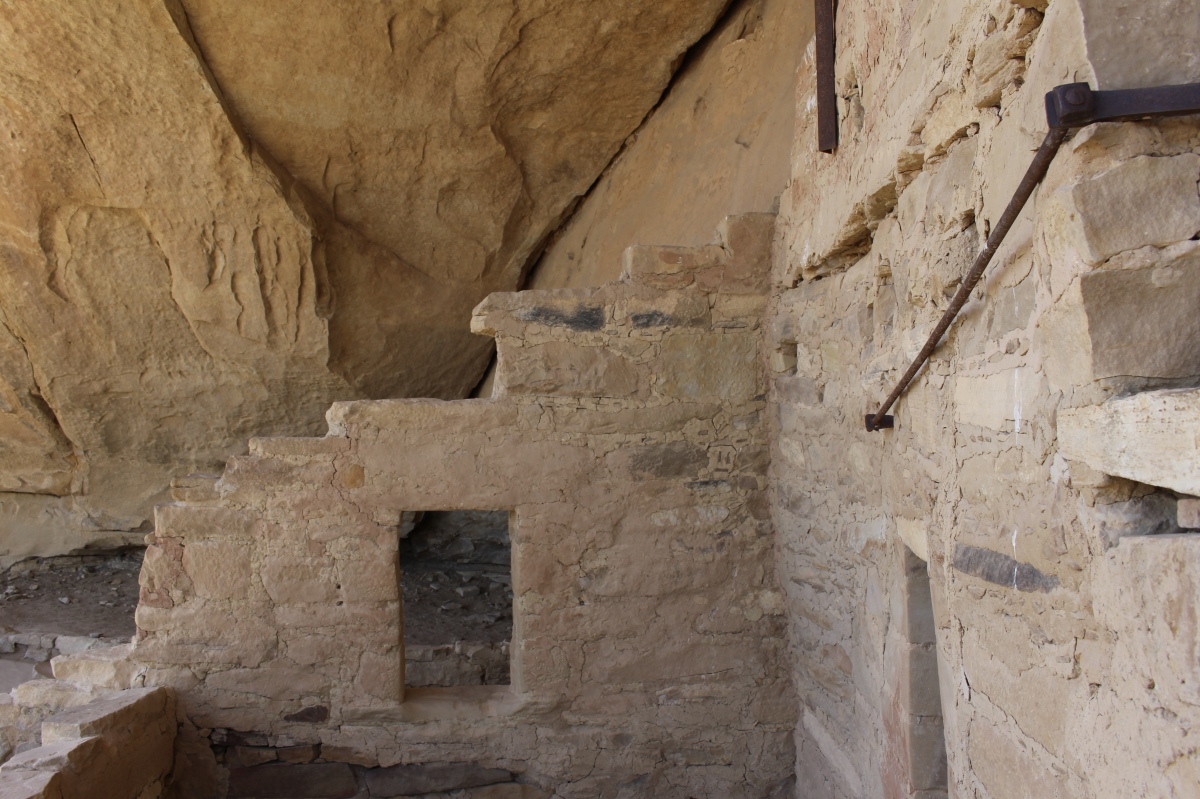
Masonry structure

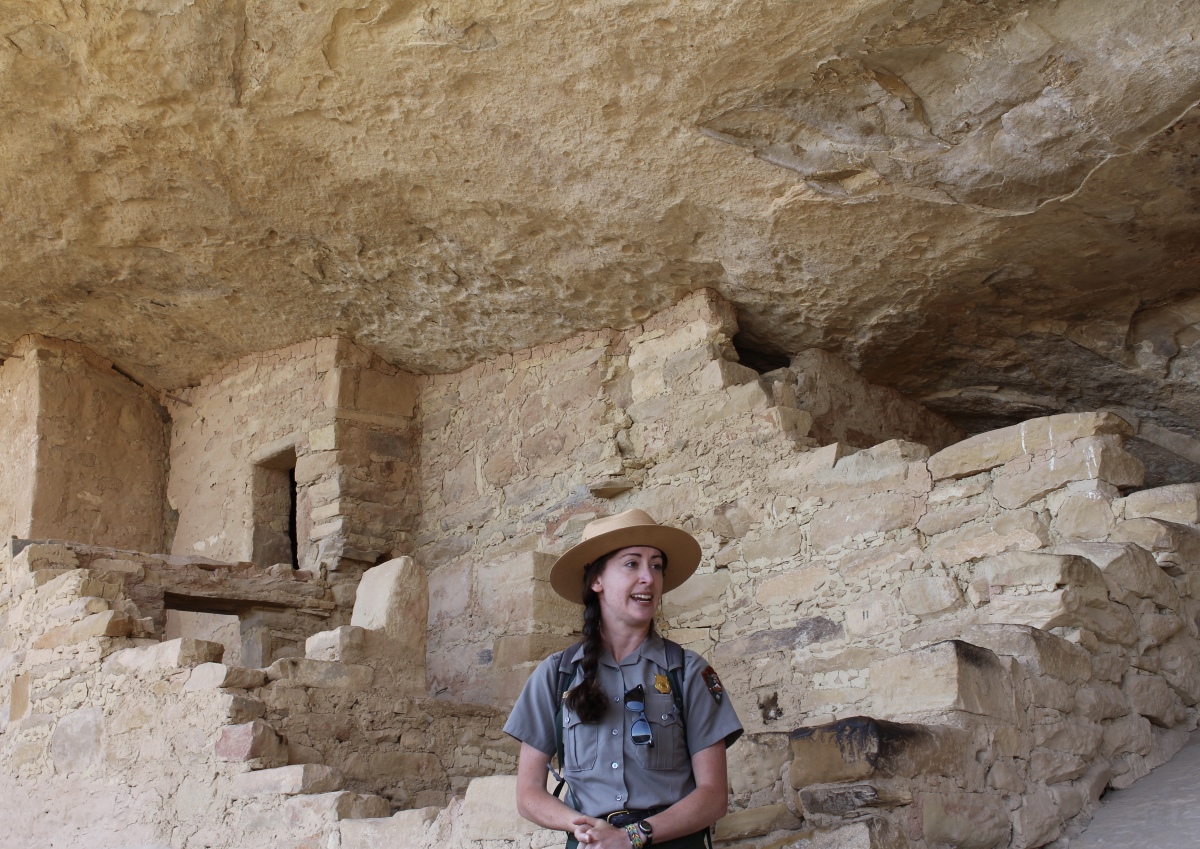
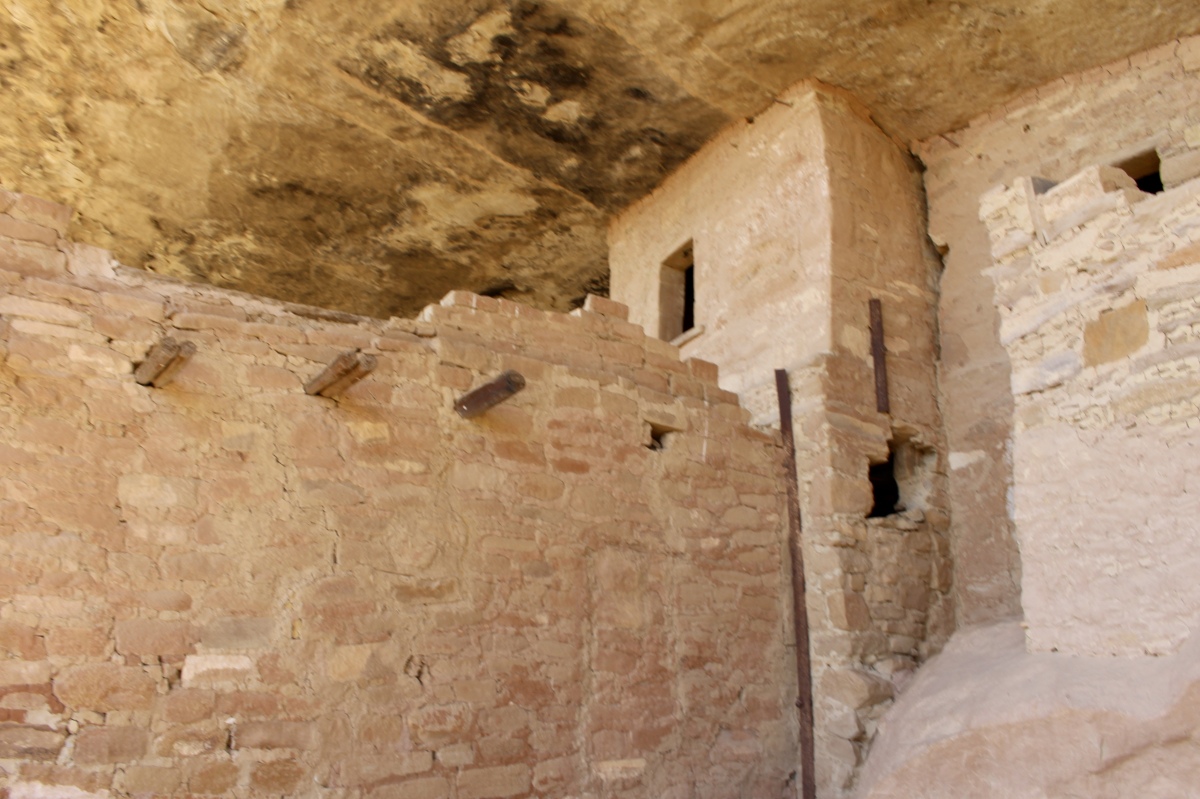
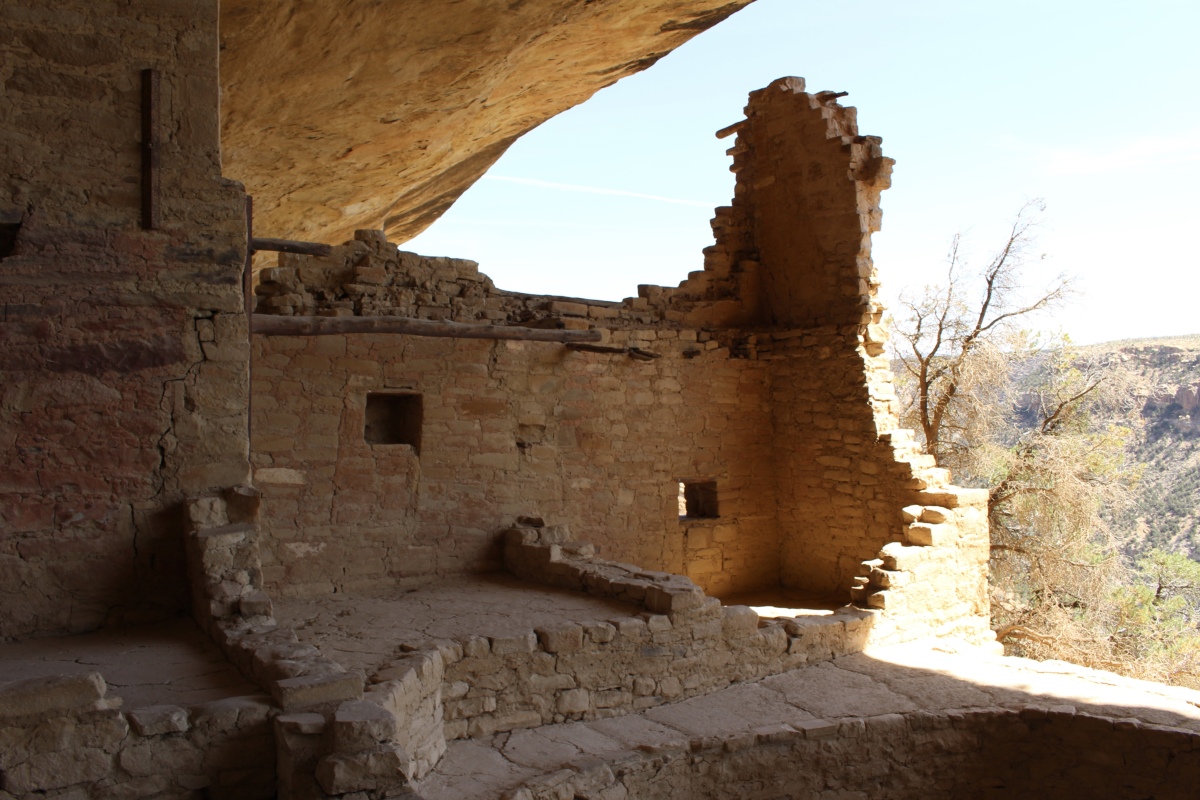
Park ranger Jeannette told us that Balcony House is a typical Mesa Verde cliff dwelling; it’s a medium two-story masonry structure built about the same time as other cliff dwellings at the park. Archeologists count 38 rooms and two kivas, and they divide the site into three plazas or courtyards: the Lower Plaza, the North Plaza and the Kiva Plaza.  The overall layout was likely determined by the size and shape of the rock alcove.

fullsizeoutput_15cc0

Ranger Jeanette

fullsizeoutput_15cc1

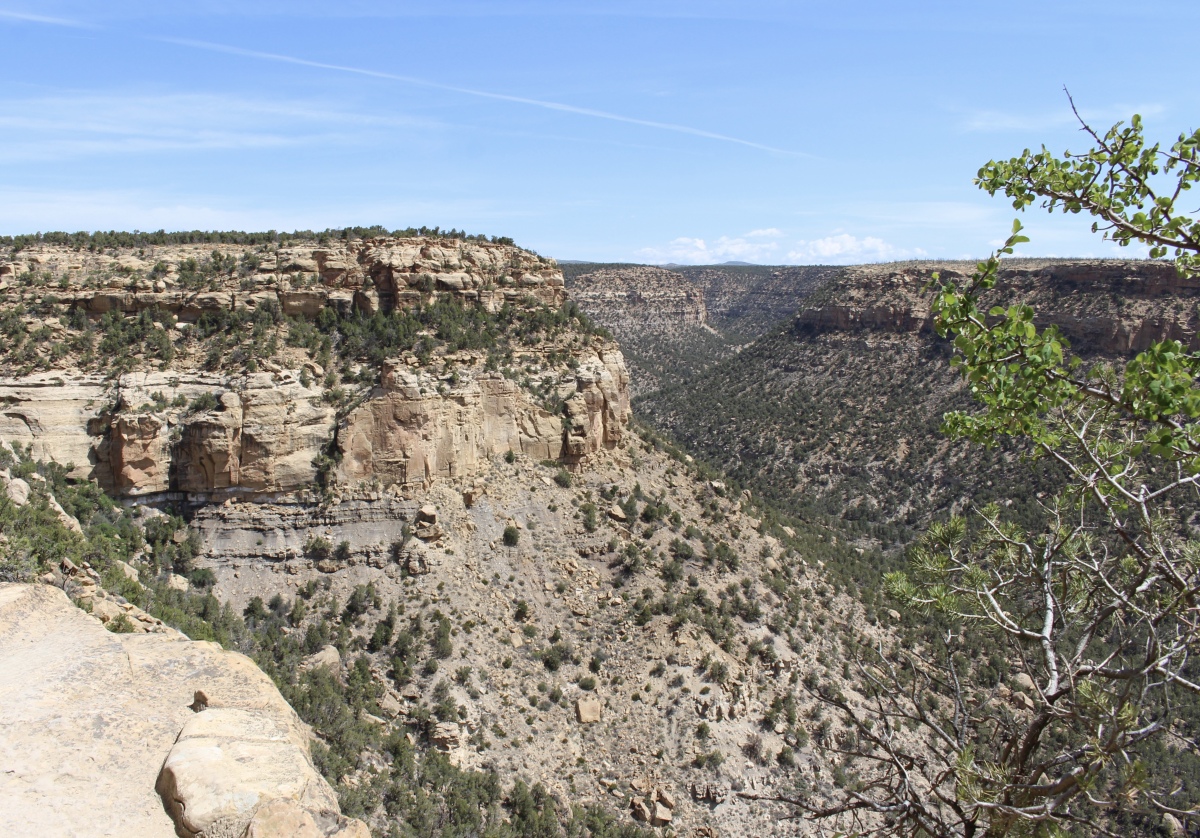
view of Soda Canyon

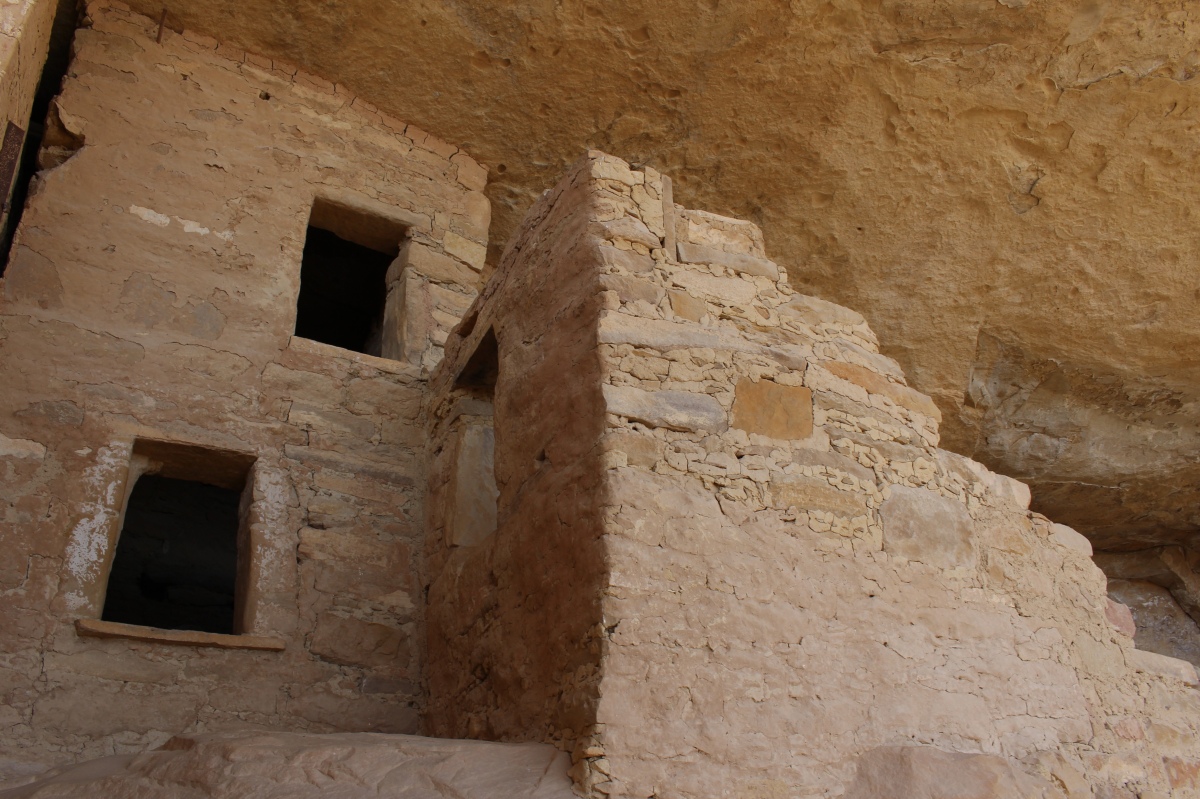
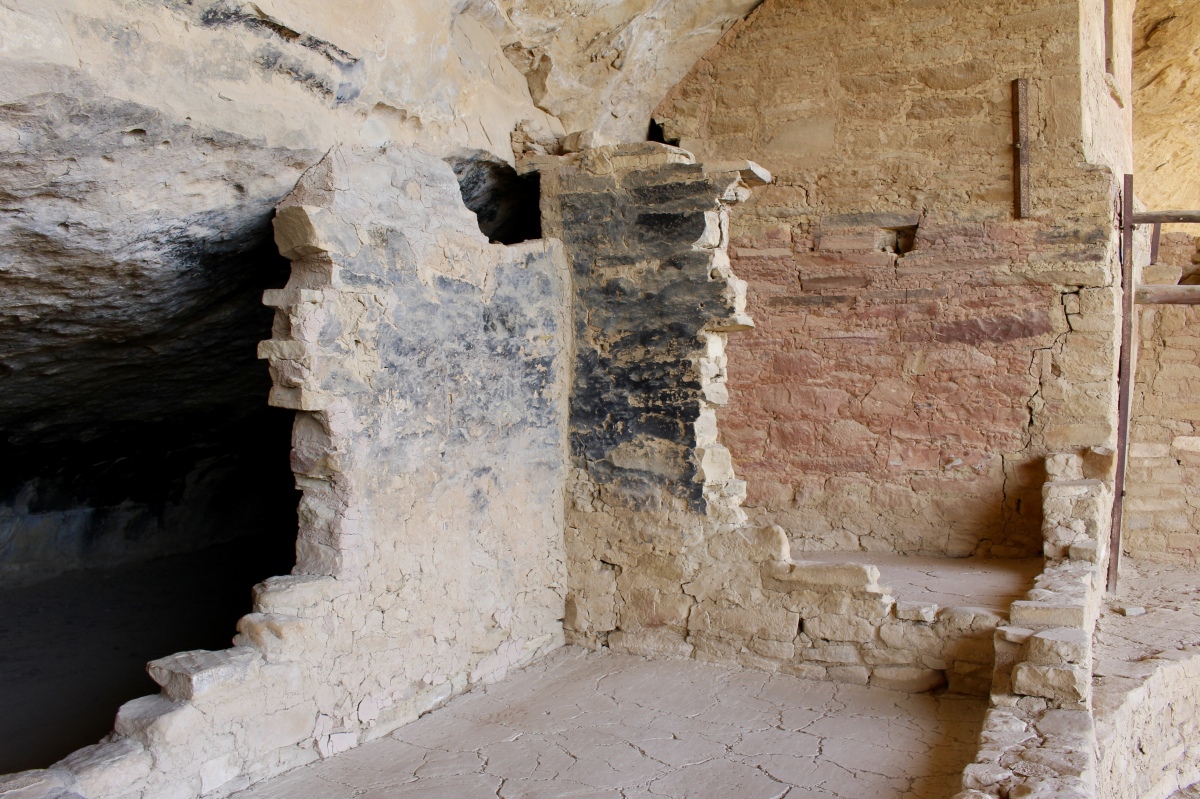
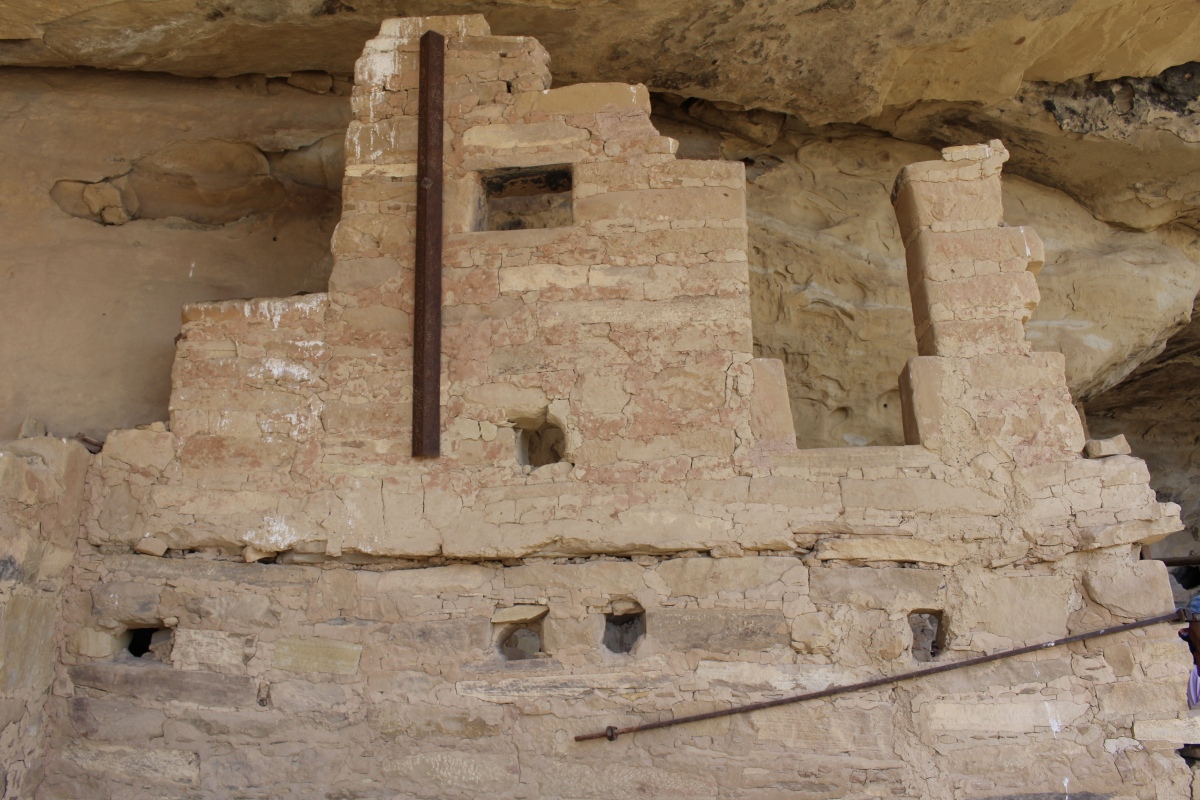
The builders used whatever local materials were at hand: sandstone, sometimes shaped into rectangular blocks and pecked on the surface.  The stones were set in wet mortar mixed from tan, sandy soils and smoothed by people’s hands. Smaller chinking stones were inserted into the mortar, and might have helped level walls and create tighter joints. Some parts of Balcony House show careful attention to craftsmanship, while other masonry is less meticulous and looks hastily done.  Once the walls were built, some surfaces were completely plastered over, hiding the fine rock work.  Original plaster, sometimes several layers thick, can still be seen in a few rooms.

fullsizeoutput_15cc3

masonry at Balcony House

The North Plaza has balconies for which the site was named.  One of the finest examples of balconies in an Ancestral Puebloan site, they remain intact between the first and second stories of the central rooms.  The residents used the balconies to move from one second story room to another, and they may have used them as work spaces. A retaining wall runs along the entire front of the alcove.

fullsizeoutput_15cc8

The North Plaza balcony

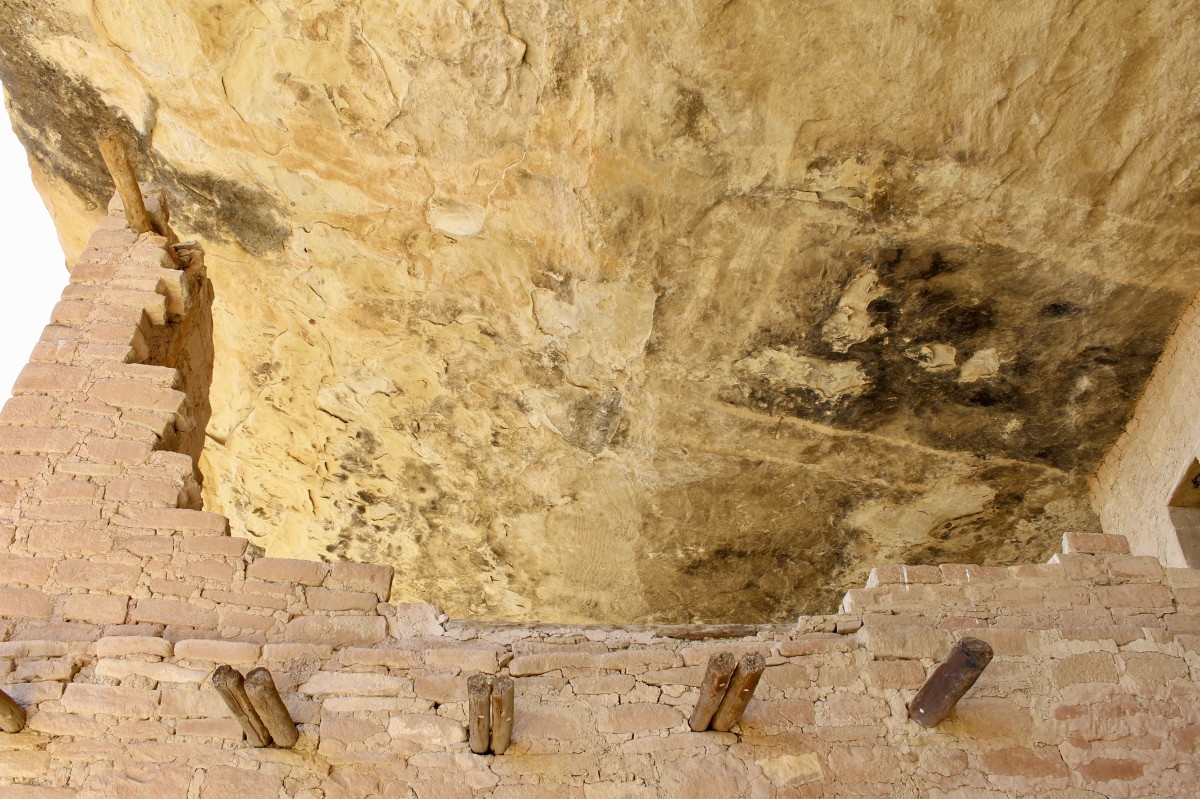
Roof beams and other supports were mostly juniper wood.  This wood provides construction dates for archeologists. Three construction periods were indicated: First from 1180-1220, residents built a block of rooms toward the back of the alcove and possibly a kiva. None of these still stand.

The next phase was in the 1240s, when more room blocks were added, likely replacing the earlier rooms, and the retaining wall and the pair of kivas seen today were constructed.  In the 1270s, the retaining wall was extended further north, rooms were added, the passageways were defined, and the north plaza parapet was built.  Four rooms were built in the central portion of the site, possibly marking off a ceremonial space.

fullsizeoutput_15cca

structures

fullsizeoutput_15ccb

beams and mortar

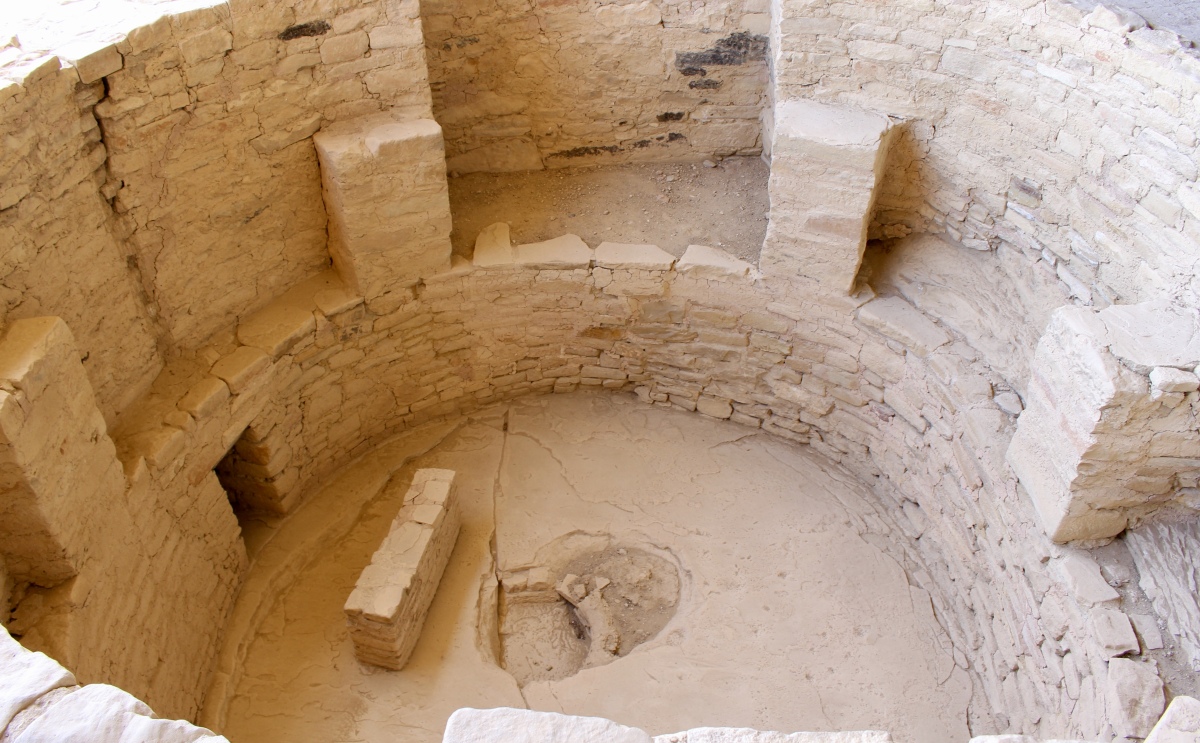
The Kiva Plaza has two deep kivas side by side in the center of the site.  Both kivas are examples of the signature Mesa Verde style kiva, identified by the ‘keyhole’ shape, six pilasters, a banquette or bench around the interior, a fireplace and ventilator shaft, and the sipapu (a Hopi word for a small hole or indentation) in the floor.  Originally the kivas were roofed and a ladder led down through a hole in the roof.

fullsizeoutput_15cce

Looking out from inside Balcony House

fullsizeoutput_15cd2

Kiva A

fullsizeoutput_15cd4

beams and structures

fullsizeoutput_15cd7

kiva

fullsizeoutput_15cdb

more walls

fullsizeoutput_15cde

walls at Balcony House

fullsizeoutput_15ce0

the tour group crowded around a kiva

fullsizeoutput_15ce2

building in the alcove

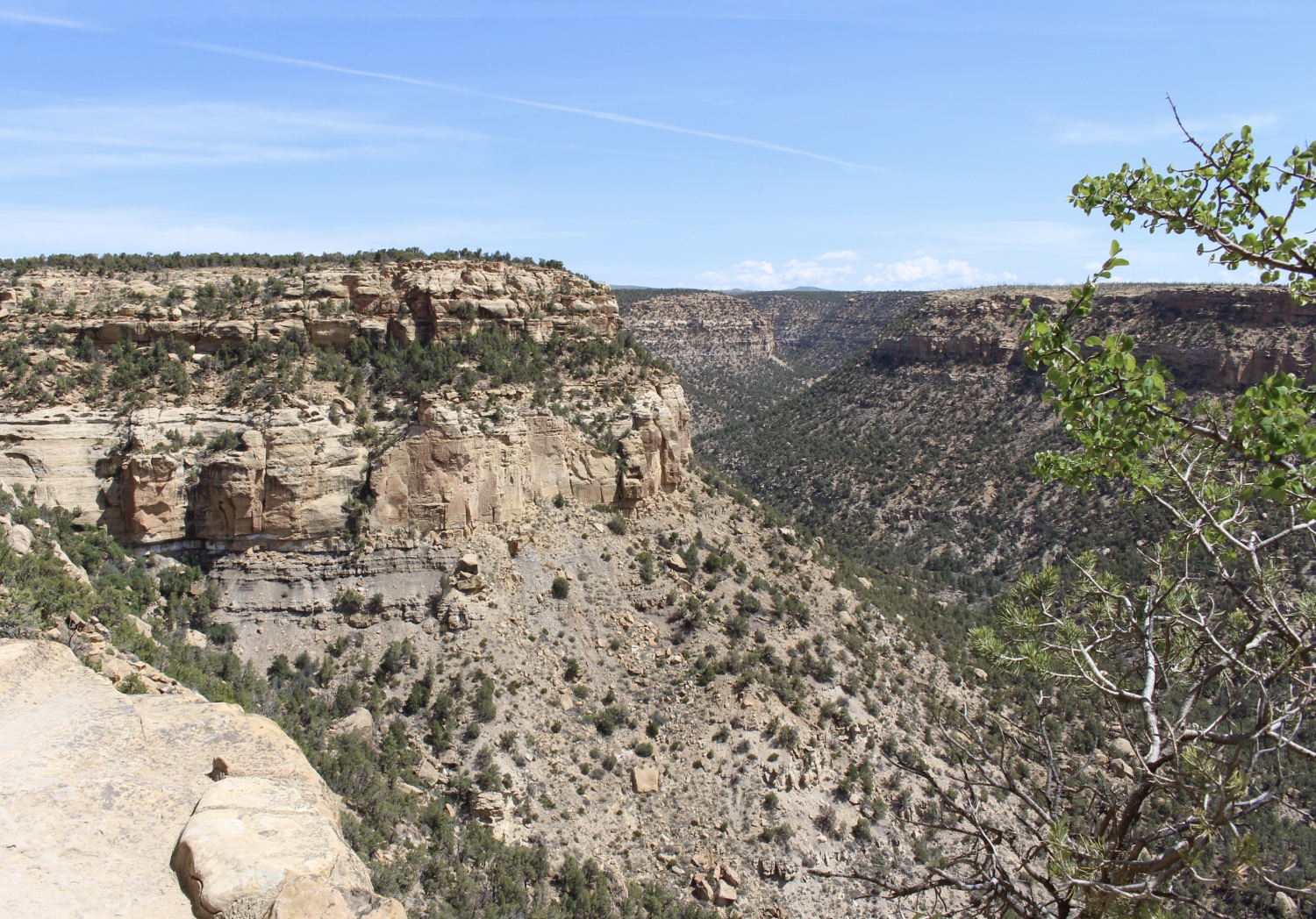
From Balcony House, we had a magnificent view down Soda Canyon.

fullsizeoutput_15ce6

Soda Canyon

We climbed two more steep ladders as we made our way from Balcony House to the top of the mesa.  The last one was nearly vertical and had only a narrow platform at the bottom and top, where only a chain fence kept us from toppling down into the canyon.

img_2724.jpg

the last, and steepest ladder back to the mesa top

By 1300, most of the people who had lived in Balcony House and neighboring villages had moved on.  Archeologists have proposed various reasons for their leaving.  The tree ring record shows a long drought at the end of the 1200s, which crops would have shriveled and springs would have dried up.  The numbers of sites and artifacts suggest that populations had been on the rise for generations.  Ancient trash middens implied that people were eating fewer large animals and more small animals. Some archeologists have found evidence that increasing social conflict may have resulted as environmental pressures grew.

By all evidence, the descendants of the people who once occupied these canyon dwellings are the modern pueblo people of the Hopi Villages in northern Arizona, and the people of Zuni, Acoma, Laguna, and the Rio Grande pueblos of New Mexico and Texas.

Information above came from various brochures created by the National Park Service.

**************

On Sundays, I post about hikes or walks that I have taken in my travels; I may also post on other unrelated subjects. I will use these posts to participate in Jo’s Monday Walks or any other challenges that catch my fancy.

This post is in response to Jo’s Monday Walk: Party Time in Ayamonte.

Share this:

  • Share on X (Opens in new window) X
  • Share on Facebook (Opens in new window) Facebook
  • More
  • Email a link to a friend (Opens in new window) Email
  • Print (Opens in new window) Print
  • Share on Pinterest (Opens in new window) Pinterest
Like Loading...
  • American Road Trips
  • Four Corners Road Trip
  • natural bridges

natural bridges, continued

wanderessence1025's avatar wanderessence1025 January 17, 2019

Three natural bridges, sculpted by water from stone, were discovered by prospector Cass Hite in 1883 when he wandered up White Canyon in search of gold. In 1908, four years after National Geographic Magazine publicized the bridges, President Theodore Roosevelt proclaimed Natural Bridges National Monument, creating Utah’s first National Park System area.

I wrote one post about the hike we took to Owachomo Bridge: the owachomo bridge trail at natural bridges national monument. This post features the other two natural bridges: Sipapu and Kachina.

The rock here is sandstone first formed by windblown sand.  The deep and curvaceous White and Armstrong Canyons and their three bridges were formed by water’s relentless action against the sandstone. Sipapu and Kachina straddle streams with long, winding curves.  Owachomo, straddling no stream now, apparently was cut by two streams.

When a stream forms a looping meander and almost circles back on itself, it can carve the thin rock wall in which a natural bridge forms. Flood waters erode both sides of the thin wall, and even at low water levels, percolation weakens the wall.

Over time, the river breaks through and takes the shorter course under the new bridge, abandoning the old meander. The river continues to wear down the rock, enlarging the hole by cutting itself deeper. A natural bridge is temporary as blocks fall from its underside, and its surfaces weather, wear and weaken.

Sipapu means “place of emergence,” the entryway by which the Hopi believe their ancestors came into the world. Sipapu is 220 feet high, 31 feet wide, and has a span of 268 feet.  It is 53 feet thick. Mature, highest and greatest in span, it endures very little stream erosion because its abutments stand far from the stream.

fullsizeoutput_15696

Siipapu Bridge

fullsizeoutput_1569e

White Canyon

Ancestors of modern Puebloan people moved onto the mesa tops to dry farm in 700 CE and later left as the natural environment changed.  Farmers returned about 300 years later, building homes both on the mesa tops and in alcoves in the cliffs. South facing caves provided passive solar heating and cooling. The farmers often chose sites near seep springs where water could be found.  From an overlook into White Canyon, we saw the Horse Collar Ruin built in one such alcove.

fullsizeoutput_156ab

Horse Collar Ruin Overlook

We couldn’t get a great view of Kachina Bridge without hiking down to it.  As we didn’t have time to do two hikes, we only were able to admire it from above.  Kachina is named for rock art symbols that resemble symbols commonly used on kachina dolls.

Kachina Bridge, the youngest bridge, is big and bulky.  White Canyon floodwaters still work on enlarging its span.  Kachina is 210 feet high, 44 feet wide, and has a 204 foot span. It is the thickest bridge at 93 feet.

fullsizeoutput_156bd

Kachina Bridge

Owachchomo, the oldest bridge, is no longer eroded by streams, but frost action and seeping moisture continue to continue to erode it.  The bridge may now have a fatal crack, or it may stand for centuries. Owachomo is 106 feet high, 27 feet wide, and has a span of 180 feet. It is only 9 feet thick, much thinner than the other two.

IMG_2841

Owachomo Bridge

Information above came from various brochures created by the National Park Service.

Here is a companion piece to this post that discusses the difference between arches and bridges: arches in the four corners.

*********************

“PHOTOGRAPHY” INVITATION:  I invite you to create a photography intention and then create a blog post for a place you have visited. Alternately, you can post a thematic post about a place, photos of whatever you discovered that set your heart afire. You can also do a thematic post of something you have found throughout all your travels: churches, doors, people reading, people hiking, mountains, patterns, all black & white, whatever!

You probably have your own ideas about this, but in case you’d like some ideas, you can visit my page: photography inspiration.

I challenge you to post no more than 20 photos and to write less than 500-800 words about any travel-related photography intention you set for yourself. Include the link in the comments below by Wednesday, January 30 at 1:00 p.m. EST.  When I write my post in response to this challenge on Thursday, January 31, I’ll include your links in that post.

This will be an ongoing invitation, every first and third (& 5th, if there is one) Thursday of each month. Feel free to jump in at any time. 🙂

I hope you’ll join in our community. I look forward to reading your posts!

the ~ wander.essence ~ community

I invite you all to settle in and read a few posts from our wandering community.  I promise, you’ll be inspired!

  • Lynn, of bluebrightly, posted a beautiful array of landscapes, close-ups, and middle distances from the Pacific Northwest.
    • The Long and Short of It

Thanks to all of you who shared posts on the “photography” invitation. 🙂

Share this:

  • Share on X (Opens in new window) X
  • Share on Facebook (Opens in new window) Facebook
  • More
  • Email a link to a friend (Opens in new window) Email
  • Print (Opens in new window) Print
  • Share on Pinterest (Opens in new window) Pinterest
Like Loading...
  • Camino de Santiago
  • International Travel
  • Muxia

on journey: santiago to muxía

wanderessence1025's avatar wanderessence1025 January 16, 2019

As soon as my Camino ended in Santiago de Compostela on October 20, my body collapsed; a cold came on with a vengeance — an irritating tickle in my throat, a dry and unproductive cough, a general exhaustion. My voice was raspy and disappearing fast.  My health worsened over the two days in Santiago, so when I headed to Muxía by bus on Monday the 22nd, I was feeling quite miserable.

At the bus station at 8:00 a.m., I ran into Sheryl, John and Sharon, a threesome I’d encountered many times along the Camino.  Theirs was a odd situation.  Sharon and John were married, and Sheryl had come along with them, although she didn’t know Sharon very well. Sharon had done the Camino 4-5 times before, and had arranged Sheryl’s trip for her, booking rooms in hotels that the three of them shared; they often transported their bags ahead.  Sheryl knew Sharon’s husband John when they both worked on ski patrol in the mountains of Washington State. I talked often to Sheryl, but the two of us never connected enough to share contact information.

On the bus, Sheryl and I talked to Brian, a slender handsome man with a bandana on his head, and Tyler, a young bald man wearing opaque sunglasses (at first I thought he might be blind!). Co-workers at a start-up tech company in Orlando, Florida, they had just completed one week on the Camino Portuguese. Brian was quite the talker.  From Detroit originally, he had no love of Florida, and we commiserated about our mutual dislike of it.  As we talked, Brian, who looked very young, revealed that he was 48, married, and had two sons, 23 and 21. His coworker Tyler, who had worked with him for two years, was shocked to discover all of this information.  Tyler, a mere 27, was under the impression Brian was in his 30s; he had no idea Brian had grown children, nor that he was married! Brian said he hated his job and would love nothing better to run a café along the Camino. We talked for a long time about his belief in natural remedies to health problems, and our mutual distaste for our current government.

The bus ride was a couple of hours through gently rolling hills and small whitewashed villages, but we were mostly too busy talking to notice. We spilled out of the bus at the “Don Quijote” bus stop in Muxía, which was just a sidewalk in front of the “Don Quijote” café.  A frigid blustery wind was blowing from the harbor into town, and I was anxious to get to my hotel, Habitat Cm Muxía. I had been having cramps on the bus, and that manifested itself in diarrhea as soon as I checked into my hotel. I was lucky I had made it without incident on the bus ride!

After a bit of a rest, I went to A Marina, which seemed to be the only bustling restaurant in a town that was quite deserted. There, joining Brian and Tyler, I had a lunch of croquettes with limon cerveza.  As we commiserated about our adult children, Brian said his wife was not very maternal; she had put up a big calendar in their house marking off the days when each her sons had to be out of the house. Brian said they didn’t give their kids any options.  They told them they had to be out of the house at 18 and go to college.  Listening to him, I felt admiration for his absent wife, who had opted to go on a holiday with a girlfriend rather than do the Camino; I have never been very maternal and have been judged harshly for it over the years.  What I loved was how he spoke of such fondness for her, with no judgment about this aspect of her.  I have often wondered if maybe I shouldn’t have had children, although of course I love them dearly and now couldn’t do without them.  I am simply not made for motherhood, but I hoped I could be.  I raised my children the best I could, but I never had much of a role model in my own mother, and I can’t say I was much of a success at it.  I am who I am, and I really appreciated Brian for supporting his wife being just the way she was.

Muxía is part of the Costa da Morte, the Coast of Death, named for the many shipwrecks along its rocky shore. On the way from the town to the sea, about a one mile walk, I passed the Igrexa Parroquial de Santa María and its charming cemetery. I could see windmills on a ridge across the bay, and on the point, the larger and more famous church of Santuario da Virxe da Barca, or The Virgin of the Boat, which stands on a rocky ridge above the surf. Legend has it Muxía was the landing place of the stone boat that carried the Virgin Mary when she arrived in Galicia to help Saint James convert the locals. Sadly the church was closed, but I was able to see inside through the barred door.

On the shore next to the church is the sculpture A Ferida, or The Wound, by Alberto Bañuelos.  It symbolizes the damage done to the sea by the spilling of 66,000 tons of oil when the Prestige tanker broke apart off the coast on November 13, 2002.  The sculpture is 11 meters high and weighs over 400 tons.

I walked up to Monte Corpiño, where I could see down to the church and the sculpture at the western point of the land, some ruins to the south, the playful sea, and the town and harbor of Muxía to the east.  The cold blustery weather didn’t do much to help my cough and cold, but the scenery was good for my spirit.

In the movie The Way, the main character Tom, played by Martin Sheen, and his cobbled-together group of pilgrims walk three days to “Finisterre” after arriving at Santiago de Compostela.  Except in the movie, the setting is not Finisterre but Muxía. At this spot, Tom scatters the remainder of his son’s ashes into the sea.

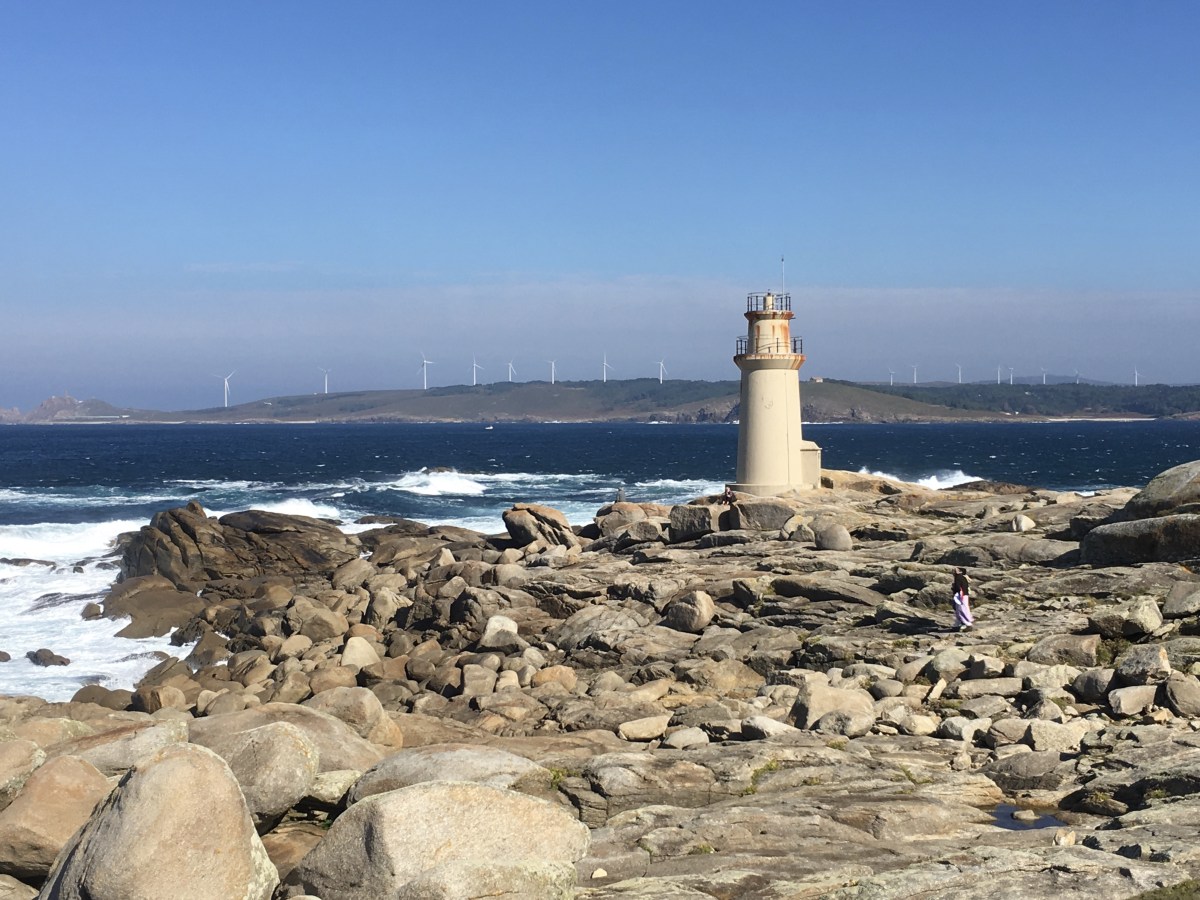
After I moseyed down from Monte Corpiño, I traipsed around on the famed rocks and watched the sea churning and dancing; I admired the lighthouse surrounded by lichen-covered boulders. I sat and lost myself in the antics of the sea and contemplated the end of my Camino. Well, almost the end.  I’d be going to the actual Finisterre by bus the following day.

After my walk and a long bath in a coveted bathtub, I headed back to A Marina, where I enjoyed a dinner of langostines (large prawns) with salad and bread, two glasses of vino tinto, and tiramasu for dessert.  I never again saw Brian, Tyler, Sheryl, Sharon or John.

fullsizeoutput_1687d

Igrexa Parroquial de Santa María

img_9848

Igrexa Parroquial de Santa María

fullsizeoutput_16866

cemetery at Igrexa Parroquial de Santa María

fullsizeoutput_16859

cemetery at Igrexa Parroquial de Santa María

fullsizeoutput_16869

“A Ferida” (The Wound)

fullsizeoutput_177be

Roman ruins

fullsizeoutput_1782e

Muxia from Monte Corpiño

fullsizeoutput_177c6

cross on Monte Corpiño

fullsizeoutput_177d5

“A Ferida” and Santuario da Virxe da Barca from Monte Corpiño

fullsizeoutput_177dc

view southwest from Monte Corpiño

fullsizeoutput_17809

Santuario da Virxe da Barca

fullsizeoutput_16847

inside of Santuario da Virxe da Barca

fullsizeoutput_177f5

lighthouse at Muxia

img_9957

lighthouse at Muxia

fullsizeoutput_17824

cross at Muxia with windmills in the background

fullsizeoutput_17827

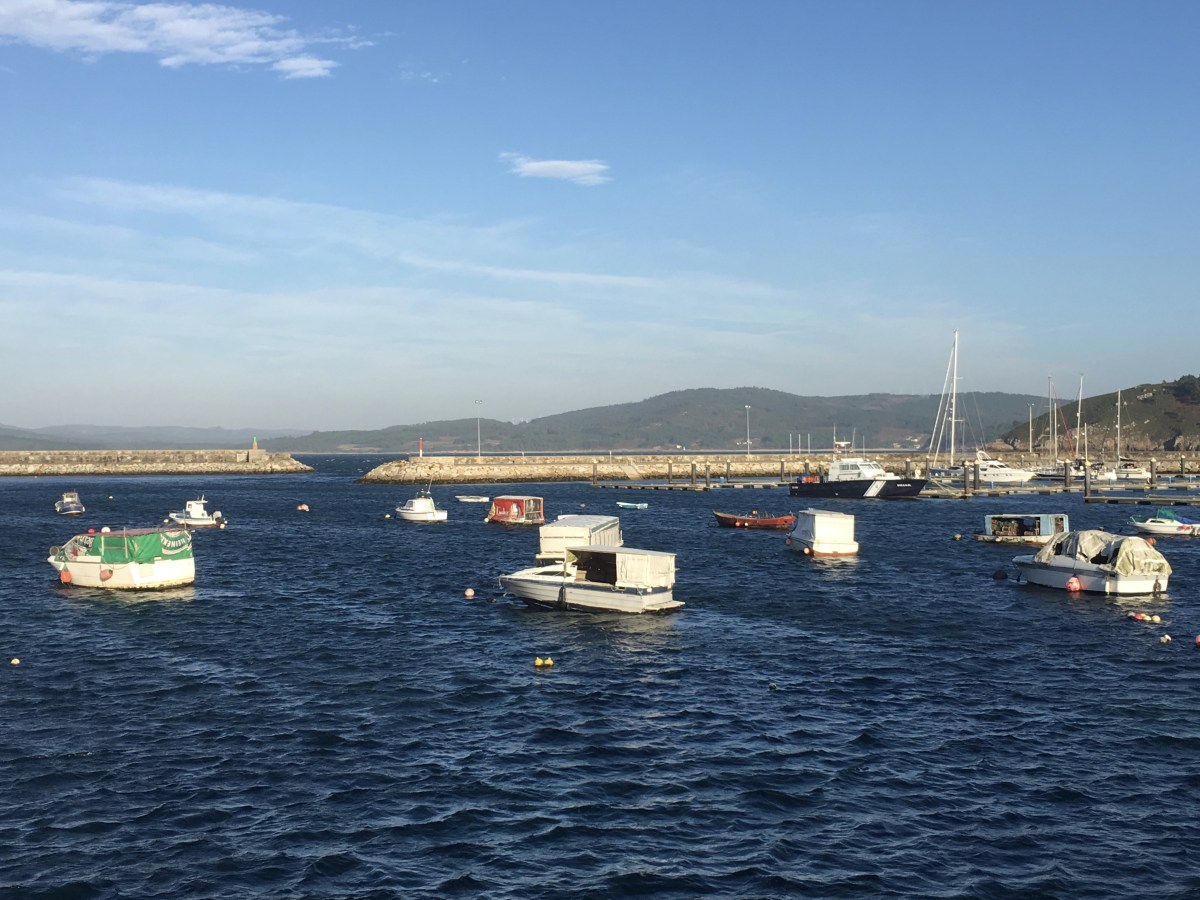
Muxia’s harbor

fullsizeoutput_17828

Langostines with salad and bread at A Marina

*Monday, October 22, 2018*

*Steps: 10,373 (4.4 miles)*

You can find everything I’ve written so far on the Camino de Santiago here:

  • Camino de Santiago 2018

**********************

“ON JOURNEY” INVITATION: I invite you to write a post on your own blog about the journey itself for a recently visited specific destination. You could write about the journey you hope to take in the year ahead.  If you don’t have a blog, I invite you to write in the comments.

Include the link in the comments below by Tuesday, February 19 at 1:00 p.m. EST.  When I write my post in response to this challenge on Wednesday, February 20, I’ll include your links in that post.

This will be an ongoing invitation, once on the third Wednesday of each month. Feel free to jump in at any time. 🙂

I hope you’ll join in our community. I look forward to reading your posts!

Share this:

  • Share on X (Opens in new window) X
  • Share on Facebook (Opens in new window) Facebook
  • More
  • Email a link to a friend (Opens in new window) Email
  • Print (Opens in new window) Print
  • Share on Pinterest (Opens in new window) Pinterest
Like Loading...
  • American Road Trips
  • Chaco Culture National Historical Park
  • Four Corners Road Trip

chaco culture: pueblo arroyo & the casa rinconada community

wanderessence1025's avatar wanderessence1025 January 13, 2019

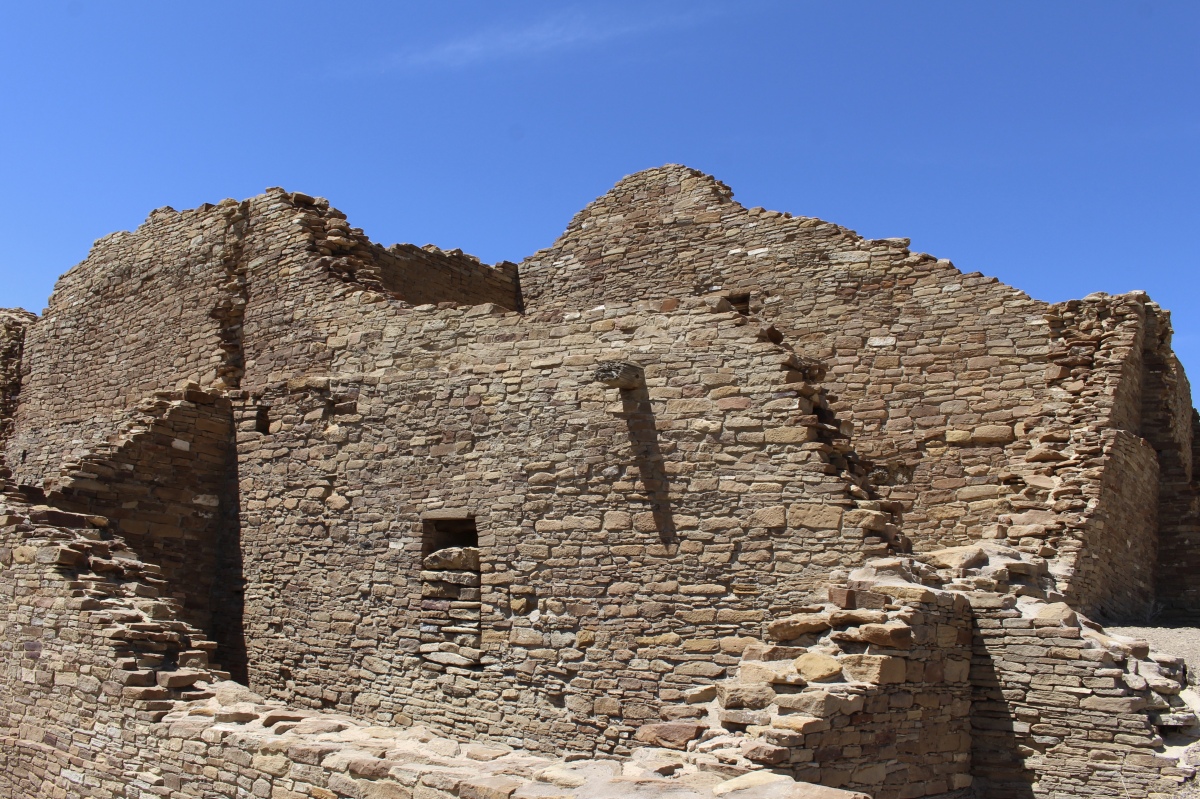
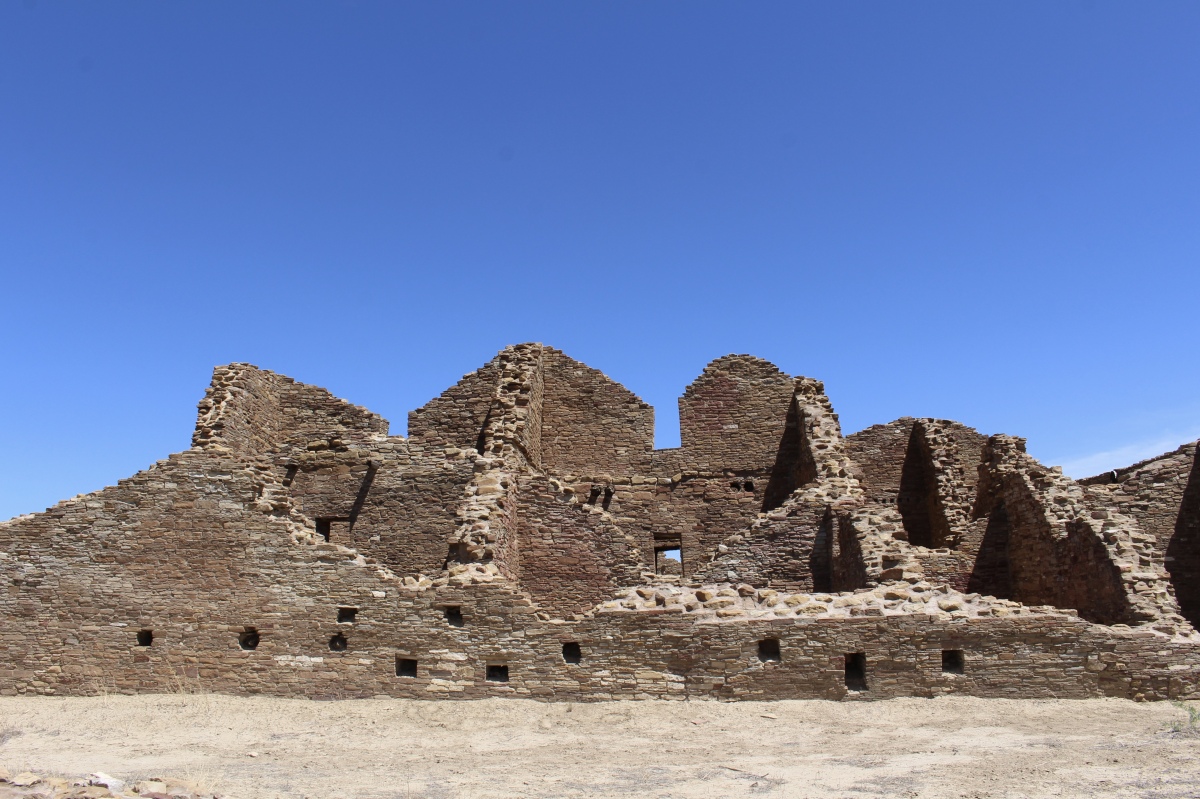
Pueblo Arroyo, Spanish for “village by the wash,” was built over a short time by Chacoans.  The round tri-wall structure on the west side of the building is rare in the Chaco Region. The building’s position gave an unobstructed view through South Gap, between West and South Mesas.

fullsizeoutput_15962

Pueblo Arroyo

fullsizeoutput_15966

Pueblo Arroyo

fullsizeoutput_1596a

Pueblo Arroyo

fullsizeoutput_1596c

Pueblo Arroyo

The trail through Casa Rinconada and nearby villages is about a half mile long.

All over the Southwest, I found these pink-tipped grasses, but I’m not sure what they are.

img_1789

pink tipped grasses

Distinctive masonry was developed at Chaco Canyon that added to the structure and stability of the large buildings. The trail through the Casa Rinconada Community showcases some of the diversity of architecture that existed within Chacoan culture.

On the canyon’s south side, Casa Rinconada is the largest excavated kiva in the park.  The trail to this great house passes a dozen “small house sites” contemporary with Casa Rinconada but different in construction and function.

The great kiva named Casa Rinconada was a massive ceremonial and community building.  Kivas are buildings used in Puebloan cultures for religious worship, similar to churches, mosques, and synagogues. Casa Rinconada is the largest excavated great kiva in Chaco Canyon and one of the largest in the entire Chacoan world.  The alignment of the kiva’s architectural features are set on a north-south axis.

The Casa Rinconada great kiva was built atop a natural hillside, within the community of small villages. Across the canyon, Pueblo Bonito, Chetro Ketl, Pueblo del Arroyo, and Pueblo Alto formed the core area of Chaco.

Casa Rinconda has an entryway through a north antechamber through which people entered.

fullsizeoutput_15978

Great Kiva at Casa Rinconada

Great kivas may have been partially or completely roofed. Circular masonry-lined pits housed four massive upright timbers that supported the roof.  Its actual configuration remains a mystery.

Great kivas commonly contained masonry benches, but it isn’t certain if they functioned as seating areas.  In Casa Rinconada, there are 34 wall niches set into the interior.  One of the niches seems to be a solstice, or astronomical, marker. At sunrise on summer solstice, sunlight passes through an opening in the eastern portion of the wall and shines on the interior western wall.  It is not certain if this was intentional as researchers believe the kiva once had rooms surrounding the outer wall which would have blocked the sunlight.

fullsizeoutput_1597f

Great Kiva at Casa Rinconada

Building sites at Chaco were chosen to allow great houses to communicate with one another by signal fires.  Great houses were connected to other public buildings by roads and earthen architecture.  Roads also connected the Chacoan world with mesas, lakes, and mountains within the sacred landscape.

fullsizeoutput_15982

The Casa Rinconada Community in Chaco Canyon

Of course, I collected my sticker and cancellation stamp for Chaco Culture National Historic Park.

fullsizeoutput_17795

Chaco Culture National Historical Park

I left Chaco Canyon at 4:00, taking the northern dirt road toward 550 N en route to Farmington, New Mexico.  For the first four miles, the road was very bumpy.  People were speeding and kicking up so much dust, I had to keep a good distance behind them.  Then, I drove over a 19-mile gravel road; this was worse than the southern approach as the car tires kept skidding out on the gravel whenever I took a corner too fast.  This exit out was much more heavily traveled than the southern route I took into the park.

I was relieved to finally reach the paved road.  I passed the defunct Blanco Trading Post and buttes scattered here and there on the horizon.  When I arrived in Farmington, New Mexico, I thought it looked as derelict as it did 39 years back, when my first husband and I dropped in to visit my Uncle Gibby, my mother’s brother.  He’s no longer living, so I checked into the Brentwood Inn and Suites, which seemed to be run by Native Americans.  There were some shady-looking characters about, but the room seemed fine.  At The Chile Pod, I enjoyed red wine and a Navajo taco: a sopapilla covered in beans, cheese, chilies, lettuce and tomato.

Information above came from various brochures created by the National Park Service.

*Thursday, May 17, 2018*

16,489 steps, or 6.99 miles.

***********************

On Sundays, I post about hikes or walks that I have taken in my travels; I may also post on other unrelated subjects. I will use these posts to participate in Jo’s Monday Walks or any other challenges that catch my fancy.

This post is in response to Jo’s Monday Walk: A Romp in El Rompido.

Share this:

  • Share on X (Opens in new window) X
  • Share on Facebook (Opens in new window) Facebook
  • More
  • Email a link to a friend (Opens in new window) Email
  • Print (Opens in new window) Print
  • Share on Pinterest (Opens in new window) Pinterest
Like Loading...
  • Camino de Santiago
  • France
  • Hikes & Walks

{camino: day 2} crossing the pyrenees

wanderessence1025's avatar wanderessence1025 January 8, 2019

Ingrid and I left Orisson at 7:30 a.m and began our trek over the Pyrenees.  It was a tough climb and an even tougher descent, 17km (10 miles) to Roncesvalles.  Because I had reserved a bed two towns past Roncesvalles since the monastery was said to be full, I had to walk an additional 6.7km (4.2 miles).

The walk over the Pyrenees was grueling but we were rewarded with bucolic scenes of green meadows and infinite peaks, spotted pigs, cows, long-haired sheep, black-faced sheep (churros), and horses wearing gently clanging bells. Less than 4km from Orisson, we stopped to admire the Virgin Mary statue, Vierge d’Orisson, set against a stunning backdrop of mountains and valleys.  We would find Marian shrines, a common sign of devotion, frequently along the Camino. The landscape reminded me a bit of England’s Lake District. 

Rain threatened all day, but we only put on our ponchos twice for a short time; when the rain stopped shortly after, we took them off promptly as they were cumbersome to wear.  Buzzards circled overhead and we heard that legend said not to lie down or they’d come after you.

Right before a wayside cross directing us off the road onto a rough grass track towards Mount Urkulu, a mobile vehicle for pilgrims offered drinks and snacks. I bought a hot chocolate, a welcome treat in the blustery cold.

As we continued our climb on the upland grass, giant black slugs dotted the path. We passed the primitive Santiago shelter, used in case of storms or bad weather. The Irish guy Cyril had told us yesterday at Orisson, where he hadn’t reserved a bed, that he planned to stay the night in the shelter, but we saw no sign of him at that hour of 10:30 a.m.  Later, after filling our water bottles at the Fontaine de Roland, we crossed a cattle grid at the border between France and Spain without fanfare.  At that point we were in Navarre.  In a clearing, Ingrid and I sat on boulders in the midst of heather and ate sandwiches we’d brought from Orisson, mine a delicious patê on a baguette.

Later, we walked through a beautiful beech forest, the trees gnarled and moss-covered.  They seemed in danger of toppling down the very steep hill to the river Arnéguy below.  As we emerged from the forest, we reached the high point of Col de Lepoeder at a height of 1,450 meters. At that point the path forked and we could take a direct and very steep (and dangerous) route through the woods down into Roncesvalles, or we could take a less steep, but longer, alternate route.  We chose the latter.

Purple, yellow and pink heather abounded as we made our descent on a paved road.  The endless climb up had been physically challenging, but coming down was hell on my knees, legs and feet. Ingrid and I were pretty miserable at this stage, but we just let gravity pull us down, sometimes faster than we would have liked. I didn’t get any blisters, surprisingly, but my feet were aching dreadfully and I wasn’t sure whether the green Superfeet arches in my Keen boots were a hindrance or help.

When we got to Roncesvalles, the line of pilgrims checking in was snaking down a long corridor in the monastery, and Ingrid joined the back of the line. She was preoccupied with checking in, so we didn’t really say a proper goodbye. I had heard that the monastery allowed bookings on only half of its 183 rooms and reserved the rest for pilgrims who walked in.  However, I could see by the line it would take quite some time to see if a bed was even available, and I had already reserved a room in Espinal anyway.  I was anxious to get going the last 4 miles as it was 3:00 and I didn’t know what kind of terrain to expect.

After Roncesvalles, I walked mostly alone on a wooded path on the way to the next town of Burgette.  I was wiped out after the Pyrenees, and wondered how I’d make it four more miles!  On the way, I sneaked off the path into the bushes to pee.  When I popped back out onto the path, I spooked an Irish lady named Mary and her English friend, who screeched at my sudden appearance out of the bush.  The English girl had a huge backpack full of camping gear as she’d planned to camp the whole way with her friend.  Her friend had abandoned her after the first day and took a plane back to England.  She was upset and not sure what she’d do about the rest of the Camino.

In Burgette, the three of us stopped for a break at an outdoor cafe, where I had a delicious slice of orange cake and a Coke. There I met a couple from Austin, Texas who were living the easy life, staying in nice hotels and sending their luggage ahead. I would meet them many times in the coming weeks.

We three ladies trudged on to Espinal, where I checked in at Hostal Rural Haiza at 5:00 p.m.  The English and Irish ladies stayed elsewhere. I had been walking for nearly 9 1/2 hours and wanted nothing more than to keel over.  My backpack, which I’d sent ahead, had arrived safely, much to my relief. Our room had 13 beds, some single and some bunkbeds, for both men and women.  Since the skies had opened up with thunder, lightning and a downpour almost immediately after I checked in, I relaxed for a while in my single bed. I chatted with two Italian girls, one studying to be a pediatric doctor and the other studying law; she wrote her thesis on copyright law for street artists.  In our room were also five bicyclists from Amsterdam.  One had gotten 5 stitches on his hand and wrist from an accident in a tunnel.  His cycling trip was over.

I didn’t feel like eating the pilgrim meal (I didn’t care for the second course in the meal); instead I enjoyed red wine and an omelette with cheese and green pepper in the noisy bar full of locals.

I was nervous overnight as I had determined not to send my backpack ahead the next day, but to carry it myself. It was raining much of the night, so I fretted about the next day’s weather.  I didn’t know if I’d run into Ingrid again, or if I’d see any of the people I’d already met.

fullsizeoutput_16418

me with Ingrid in Orisson

fullsizeoutput_171ae

view from Orisson

fullsizeoutput_1641b

spotted pigs

fullsizeoutput_171b3

horse

fullsizeoutput_171b2

friendly horse

sheep in the Pyrenees
horses on the hill
horses on the hill
more sheep
more sheep
Vierge d'Orisson Vierge de Biakorri
Vierge d’Orisson Vierge de Biakorri
A man with his dogs
A man with his dogs
the endless road up
the endless road up
long-haired sheep
long-haired sheep
long-haired sheep
long-haired sheep

Over the Pyrenees we had magnificent sweeping views.

img_0169

long-haired sheep

img_0174

horse in the Pyrenees

fullsizeoutput_17727

pretty horse

we get on the grassy track
black-faced sheep
black-faced sheep
Santiago shelter
Santiago shelter
woodland
woodland
heather
heather
heather
heather
beech forest
beech forest

Col de Lepoeder is the high point on the Pyrenees at 1450 meters.

img_0217

Me at Col de Lepoeder (1,450 meters) before descending to Roncesvalles

img_0218

the rooftops of Roncesvalles

img_0219

Roncesvalles

fullsizeoutput_1772f

Roncesvalles

fullsizeoutput_17730

790 km to Santiago – one of many confusing signs

Roncesvalles to Espinal

fullsizeoutput_17731

the wooded path to Burgette

fullsizeoutput_17732

mossy rocks

fullsizeoutput_17736

a garden in jeans near Espinal, Spain

Espinal

Mary and her English friend
Espinal
Espinal
Espinal
Espinal
Espinal - Iglesia de San Bartolemé
Espinal – Iglesia de San Bartolemé
Haizea
Haizea

*Day 2: Wednesday, September 5, 2018*

*40,066 steps, or 16.98 miles: Orisson to Espinal (24 km)*

You can find everything I’ve written so far on the Camino de Santiago here:

  • Camino de Santiago 2018

**********************

“PROSE” INVITATION: I invite you to write up to a post on your own blog about a recently visited particular destination (not journeys in general). Concentrate on any intention you set for your prose.  In this case, one of my intentions for my Camino was to write using all my senses to describe place and to capture snippets of meaningful conversations with other pilgrims.

It doesn’t matter whether you write fiction or non-fiction for this invitation.  You can either set your own writing intentions, or use one of the prompts I’ve listed on this page: writing prompts: prose. (This page is a work in process.) You can also include photos, of course.

Include the link in the comments below by Monday, January 21 at 1:00 p.m. EST.  When I write my post in response to this invitation on Tuesday, January 22, I’ll include your links in that post.

This will be an ongoing invitation. Feel free to jump in at any time. 🙂
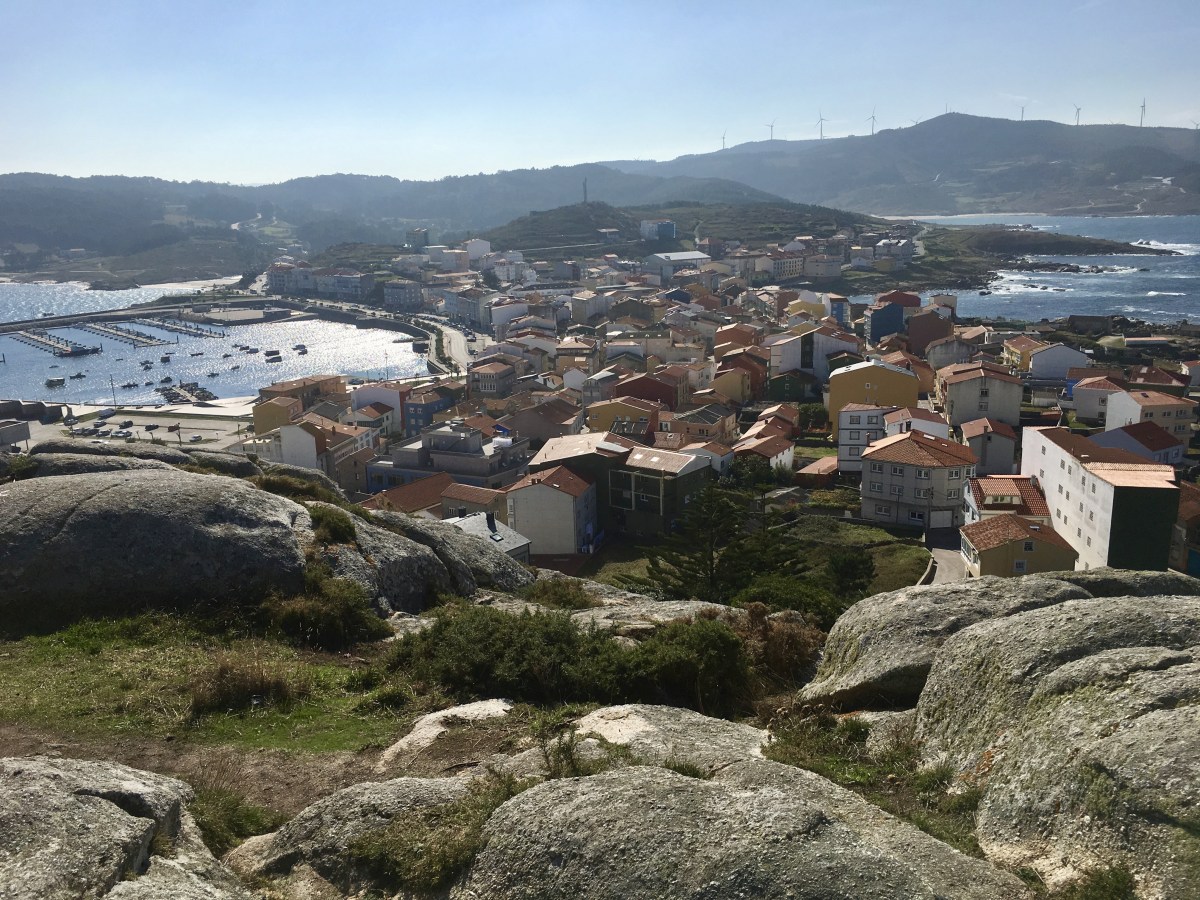
I hope you’ll join in our community. I look forward to reading your posts!

Share this:

  • Share on X (Opens in new window) X
  • Share on Facebook (Opens in new window) Facebook
  • More
  • Email a link to a friend (Opens in new window) Email
  • Print (Opens in new window) Print
  • Share on Pinterest (Opens in new window) Pinterest
Like Loading...
  • International Travel
  • Japan
  • On Returning Home

on returning home from japan

wanderessence1025's avatar wanderessence1025 January 7, 2019

I spent one semester teaching at Aoyama Gakuin University – Sagamihara campus with Westgate Corporation from March-August, 2017.  I taught 2nd year university students majoring in Global Studies and Collaboration who were preparing for a study abroad in Thailand or Malaysia.  I worked 9-hour days five days a week, and every weekend I went out exploring.  I believe I had about two days of rest the whole time I was there!

I loved so much about Japan: The absolute regularity of everything from store opening times to train schedules. The smooth speed and convenience of the Shinkansen. The ubiquitous vending machines and the excellent food options at  Seven & i Holdings, the parent company of the US-based 7-Eleven Inc. The dependable politeness of the Japanese — the kind greetings and the respectful bowing.  The amazing Japanese gardens, moss gardens, botanical gardens, outdoor sculpture gardens, cherry blossoms, hydrangeas, parasol-shaded peonies, lotus flowers, quirky Rakan statues, and torii gates.  The artistic displays of flowers, Japanese landscapes and calligraphy on sake barrels.  The ema, teahouses, dragon-painted ceilings, carp flags, Chinese gates and tales of shoguns. The sushi, ramen, shrimp tempura, fresh fish, sake and beer. The impeccable cleanliness of the Japanese — the absence of garbage anywhere and the cleansing of worshipers in temizuya before they bowed, clapped their hands, rang bells, made offerings and prayed at temples and shrines. The efficient and convenient Japanese postal system, which made appointments to deliver or pick up packages.  The tall bamboo at Hokokuji (the Bamboo Temple) in Kamakura.  The huge Guanyin Bodhisattva at Ofuna and the Great Buddha of Nara at Todai-ji Temple. The “floating” O-torii Gate at Itsukushima Shrine in Miyajima. The colorful folded paper cranes at Hiroshima’s Children’s Peace Monument.  The cheeky deer of Nara. The lively temples and devout Buddhist worshipers.  The women wearing kimono or yukata. The monks swishing along in long robes. The vegetarian meals at shukubo (temple lodgings) and beautiful pre-dawn Buddhist ceremonies at temples in Koyasan.

As in every culture, there were things I didn’t care for:  The constant work pressure and long hours. The students’ misbehavior and immaturity. The constant bustle and energy everywhere. The sheer size of the crowds at special bloom times, such as during hanami (cherry blossom viewing), at a wisteria festival at Kameido Tenjin, at the season of the rabbit-ear irises at the Nezu Museum, and at hydrangea walks in Kamakura.  The assault on the senses in hyper-commercial areas of Tokyo, such as Shinjuku, Shibuya, and Akihabara Electric Town.

Shibuya
Shibuya
ion on a bicycle at Golden Gai
Tokyo
Tokyo
Ofuna
Ofuna

When it came time to leave, on the morning of August 8, 2017, I took an early taxi from Narita to Narita Airport, where I had a 10:40 a.m. flight to Dallas/Fort Worth airport. However, we sat on the runway for over an hour because Alaska’s tiny Bogoslof volcano had erupted, sending an ash cloud about 6 miles into the sky. As a “red” aviation warning was issued, we couldn’t take off until a new flight path was charted.

We took off over an hour late, so I knew before we left the ground that it was unlikely I would catch my connecting flight home to Virginia.

After an 11 hour and 45 minute flight, I arrived in Dallas at 9:50 a.m. on the same day, August 8, earlier than I left. I always find this amusing when traveling home from Asia.

However, because of our late departure from Tokyo, by the time I disembarked from the plane in Dallas, I missed the boarding time for my connecting flight. It turned out I would get on a later flight to Dulles Airport, a more convenient airport to my Virginia home than BWI, where I was originally scheduled to land.

Because I had extra time to kill in Dallas, I enjoyed a Mexican lunch at the airport, as I wouldn’t arrive home until dinnertime.  Finally, after a three-hour and 12 minute flight, I was back home, and my Japan adventure had come to an end. It was a great adventure, a whirlwind really, and I felt a bit despondent when it was all over. 😦

Upon my return from Japan, I found out when I weighed myself for the first time in four months, that I lost 8 pounds while in Japan.  I guess it was a combination of the healthy diet there and all the walking I did. 🙂

My walks while home became sporadic, and I rarely hit 10,000 steps a day.  In Japan, I met my goal of 10,000 steps every day just by walking 30 minutes each way to work and being on my feet teaching.  On weekends, I often walked 10-20,000 steps.  Needless to say, the pounds started creeping back on since I wasn’t exercising as much at home.  It was frustrating because I get bored walking around in circles in the same old places without any destination.  My heart just wasn’t into walking, but I would have to get back to my regular exercise routine soon.

The first week after my return to Virginia, it was quite hot and humid, not much different from what I experienced in Japan.  But on Wednesday, the 23rd, the weather improved and dropped to temperatures of my liking, around 75 degrees Fahrenheit (23C). This is perfect weather; my mood lifts considerably when I can feel a hint of fall in the air. 🙂

Upon my return, I found my youngest son had boomeranged back home from Hawaii and had settled into our basement.  One of our agreements since he returned home was that he would hold a job, which he had done at that point.  He’d been working hard, so hard in fact that he ended up with some kind of flu.  He seemed to be doing well overall, and I was happy to have him stay temporarily as long as he was working.  He was saving money to take a trip to the land down under to see his Australian girlfriend Maddy, who he’d met in Hawaii. He planned to be gone for nearly a month beginning September 20. On my second night back from Japan, he and I enjoyed a nice dinner together at the Whole Foods Seafood Bar.

Things felt strange once I returned. I felt that I’d returned to a parallel universe, and one not much to my liking.  The very weekend after my return, I watched on TV a despicable white supremacy march in Charlottesville, about two hours from where I live in northern Virginia; in shock, I then had to listen to our “president” fanning the flames of hatred and arguing that there was moral equivalency between neo-Nazis, the KKK, and white supremacists and the “alt-left,” a made-up term lumping counter-protestors and Antifa, or anti-fascists, into one big boat. Granted, there should be no violence in protests, but the white supremacists marching openly with weapons in one of the most peaceful college towns in our state was a frightening display and one that almost begged violence from counter-protestors.  I was disheartened by what our country was coming to, and it was hard to be back after being in a culture where people greet each other with respect and bow to each other in nearly every interaction!

I didn’t watch any movies the whole time I was in Japan (I didn’t even know where any movie theaters were, except in downtown Tokyo).  In an effort to catch up, I went to several movies once I returned: The Big Sick and The Glass Castle, both of which I enjoyed. While I was in Japan, I watched three full seasons of The Good Wife, which I was hooked on.

The first weekend I was home, I took 4-hour naps each day as I tried to reverse my internal clock.  In Japan, nighttime was daytime here, and daytime was nighttime here, so no wonder my body was confused.  I didn’t get much of anything done. As a matter of fact, I felt somewhat paralyzed with indecision.  I never had a spare minute in Japan, and at home I seemed to have too much time on my hands.  I didn’t know how to focus my attention with so much time.  It would take me a while to become acclimated to this parallel universe.

On Wednesday morning, August 16, I found out my daughter Sarah had taken a fall the evening before while running on a muddy path in the woods.  She cut her knee wide open. She didn’t have her phone with her and had to walk with an open gaping wound until she found someone.  Using a stranger’s phone, she called for an ambulance and was admitted to the emergency room where she had to have 25 stitches across her knee. She was immobilized for quite some time.  As a waitress/bartender, she was losing valuable work time. I constantly worried about her, as a mother’s work as chief worrier is never over.

Adam took a course about podcasts and posted his first podcast on the same day I heard about Sarah, so there was a bit of good news as he had wanted to do this for some time.

On August 19, after I started to feel more like a human being, Mike and I went out to see the movie Wind River, which I enjoyed, and had dinner at Coyote Grill, where I had my favorite chili rellenos.

On Monday, August 21, I went at 2:00 to Kalypso’s at Lake Anne to watch the partial solar eclipse at 2:40 pm. It was a festive atmosphere, with people enjoying the beautiful day outdoors, drinking wine, wearing the funny eclipse glasses. I had seen a total eclipse in 1970 in southern Virginia, so I didn’t feel the need to travel a long distance to see the total eclipse, but Adam drove 10 hours to Tennessee, where he loved seeing a total eclipse for the first time in his life.

Mike and I began planning a holiday from September 22-October 7, 2017 to Budapest, Sopron, Vienna, Český Krumlov, and Prague. We spent many days plotting out our trip and making all our reservations. In preparation, I read guidebooks on Hungary, Austria and Czech Republic.

Alex came up from Richmond to visit and spent two days here. It was so nice to see him after my time in Japan. He, his dog Freya, and I took a walk on the Fairfax Cross County Trail on Wednesday, August 30. As we were walking, I felt a sting on my right wrist and looked down to see something small and black on my wrist. I didn’t have my glasses on so I couldn’t tell what it was, but I didn’t think it looked like a bee. I thought it might be a spider. Anyway, the second I felt the sting, I knocked the creature away with my left hand, and immediately felt a sting on my left middle finger. Whatever it was, it got me in two places, on both hands, and they hurt like hell! I watched as the sting areas reddened and spread into a hard and hot raised area up over my hand and around my wrist. The next day, I went to see the doctor, who advised me to take Benadryl and gave me an antibiotic.

It was a rough time coming back into this parallel universe, but overall I was glad to be home with my family, even though we all seemed to be falling apart due to nasty falls, stomach bugs, and spider bites.

Hiroshima
Hiroshima
Miyajima
Miyajima
Nara's Big Buddha
Nara’s Big Buddha
Koyasan
Koyasan
Narita
Narita

I spent a lot of time recording my time in Japan by editing my thousands of photos, and writing my blog about life in Japan. If you like, you can check out my Japan blog here: catbird in japan: the land of temples and what-nots.

************************

“ON RETURNING HOME” INVITATION: I invite you to write a post on your own blog about returning home from one particular destination or, alternately, from a long journey encompassing many stops.  How do you linger over your wanderings and create something from them?  How have you changed? Did the place live up to its hype, or was it disappointing? Feel free to address any aspect of your journey and how it influences you upon your return. If you don’t have a blog, I invite you to write in the comments.

For some ideas on this, you can check out the original post about this subject: on returning home.

Include the link in the comments below by Sunday, February 3 at 1:00 p.m. EST.  When I write my post in response to this challenge on Monday, February 4, I’ll include your links in that post.

This will be an ongoing invitation on the first Monday of each month. Feel free to jump in at any time. 🙂

I hope you’ll join in our community. I look forward to reading your posts!


Share this:

  • Share on X (Opens in new window) X
  • Share on Facebook (Opens in new window) Facebook
  • More
  • Email a link to a friend (Opens in new window) Email
  • Print (Opens in new window) Print
  • Share on Pinterest (Opens in new window) Pinterest
Like Loading...
  • American Road Trips
  • Chaco Culture National Historical Park
  • Four Corners Road Trip

chaco culture: chetro ketl & pueblo bonito

wanderessence1025's avatar wanderessence1025 January 6, 2019

Archeologists use the word “great house” to describe large sites such as Chetro Ketl and Pueblo Bonito.  They share many architectural features such as planned layouts, multi-storied construction, distinctive masonry, sprawling rooms, plazas and huge subterranean ceremonial chambers called “great kivas.”

Chetro Ketl is the second largest great house in Chaco Culture National Historical Park. It covers more than three acres and includes an immense elevated earthen plaza that stands 12 feet above the valley floor.  The trail here offers a unique view into the lower sections of the building and the construction of the great kiva.

fullsizeoutput_158b3

Chetro Ketl

Here, builders quarried rocks for construction, harvested timbers on distant mountains, and erected massive blocks of rooms during building episodes. The people built dams and canals, and engineered straight avenues and “roads” that crisscrossed the region and connected Chaco to distant communities.

fullsizeoutput_158b5

Chetro Ketl

All of these projects required complex planning, organization, and cooperation on a region-wide level.

IMG_1620

masonry at Chetro Ketl

fullsizeoutput_158b8

masonry at Chetro Ketl

fullsizeoutput_158b9

Chetro Ketl

fullsizeoutput_158fe

kiva at Chetro Ketl

IMG_1636

wall at Chetro Ketl

fullsizeoutput_15902

kiva at Chetro Ketl

fullsizeoutput_15908

Chetro Ketl

fullsizeoutput_15909

Chetro Ketl

fullsizeoutput_1590b

Chetro Ketl

IMG_1653

masonry at Chetro Ketl

fullsizeoutput_15914

Chetro Ketl

It was very hot and dry walking through these complexes, with no shade in sight, and I ran out of water quickly.  I could see my car the whole time, but I didn’t want to walk back to it and then have to retrace my steps. I should have gone back to the car, because in the heat of the canyon, I felt parched, sunburned, and slightly dizzy.  A sign in a pit toilet warned about heatstroke, and I wondered if I felt this way due to the power of suggestion, or if I were really dehydrated.

Walking on the path along the cliff from Chetro Ketl to Pueblo Bonito, I found a most unlikely character.

fullsizeoutput_15921

sea creature at Chaco Canyon

Pueblo Bonito is the core of the Chaco complex and the largest great house.  It is deeper into the canyon than Chetro Ketl.  Built in stages between the mid 800s and the early 1100s, Pueblo Bonito reached at least four stories with over 600 rooms and 40 kivas.  The building served many functions, including ceremony, administration, trading, storage, hospitality, communication, astronomy and burial of the honored dead.  Only a small portion seemed to serve as living quarters.

IMG_1689

Pueblo Bonito

The graveled trail through Pueblo Bonito is 0.73 miles roundtrip.

IMG_1692

Overlooking Pueblo Bonito

Researchers believe great houses were examples of public architecture, used only periodically when ceremonies, commerce or trading drew people together from other areas.  It is believed these great houses did not have large resident populations.

IMG_1701

Pueblo Bonito

Lt. James Simpson and his Mexican guide, Carravahal, gave Pueblo Bonito its name (“Beautiful Town” in Spanish) in 1849, during a military expedition into Navajo territory.  For the Hopi and the Pueblo people of New Mexico, this great house is an important part of their ancestral homeland — a special place where clans stopped and lived during their sacred migrations. Descendants of these groups continue to return to this place to honor the spirits of their ancestors.

Pueblo Bonito is the most thoroughly investigated, visited, and celebrated cultural site in Chaco Canyon.  This was the center of the Chacoan world, a world that eventually covered much of the present-day southwest, including the San Juan Basin in New Mexico and portions of Colorado, Arizona and Utah.

fullsizeoutput_15934

Pueblo Bonito

Great kivas are found in nearly every Chacoan culture built between 900-1200.  Often located within or near the plazas of great houses, they were central to communities.  They were probably used for ceremonial purposes and could have accommodated hundreds of people.

fullsizeoutput_1593a

kiva at Pueblo Bonito

fullsizeoutput_1593e

kiva at Pueblo Bonito

The building’s unique D-shaped geometry enclosed two plazas with dozens of ceremonial kivas.  Straight avenues linked the building with nearby and distant great houses.

fullsizeoutput_15942

Pueblo Bonito

fullsizeoutput_15948

wall at Pueblo Bonito

fullsizeoutput_1594c

Pueblo Bonito

fullsizeoutput_1594a

Pueblo Bonito

fullsizeoutput_15952

walls at Pueblo Bonito

Burials uncovered at Pueblo Bonito contained large quantities of worked shell, turquoise pendants and beads, conch-shell trumpets, painted flutes, and other items perhaps representing people of higher rank or status in the Chacoan society.

fullsizeoutput_15955

Pueblo Bonito

While great houses such as Pueblo Bonito and Chetro Ketl were being used, smaller, more typical villages throughout the canyon were also inhabited, suggesting that different groups of people, perhaps speaking different languages, lived side by side.

**************

On Sundays, I post about hikes or walks that I have taken in my travels; I may also post on other unrelated subjects. I will use these posts to participate in Jo’s Monday Walks or any other challenges that catch my fancy.

This post is in response to Jo’s Monday Walk: Canalside at Leeds in Christmas.

Share this:

  • Share on X (Opens in new window) X
  • Share on Facebook (Opens in new window) Facebook
  • More
  • Email a link to a friend (Opens in new window) Email
  • Print (Opens in new window) Print
  • Share on Pinterest (Opens in new window) Pinterest
Like Loading...
  • Camino de Santiago
  • Hikes & Walks
  • International Travel

poetic journeys: what i carried

wanderessence1025's avatar wanderessence1025 January 4, 2019

What I Carried

I carried “just in case” scenarios in my
hat, gloves, rain poncho, and extra layers –
to guard against infringements
by unruly weather.

I carried useless things: the camera I thought I’d need
in case my iPhone died. The waterproof
notepad tucked in my turquoise pouch,
where memories wouldn’t be washed away.

I carried my fears in the neon orange
whistle slung over my shoulder — fears
of vicious dogs and lurking men, fears
of losing myself or losing my voice.

I carried respect for my feet in the jar of Vaseline
and the tiny pocketknife with the tiniest of scissors
to cut tape for blisters. Respect for my knees
in a knee sleeve and athletic tape. Respect

for my parched body in the water, sloshing heavily in a bladder
in my day pack. I carried my aching shoulders and bone-tired legs,
my snoring and frequent bathroom breaks, only because
it was impossible to leave them behind.

I carried my flyaway thoughts, my fickle memory,
my mistrust of strangers in the journal I never let out of my sight,
those pages that held close the moments of my days:
joys and sorrows, resentments and frustrations.

I carried my longing and dogged determination in the
Brierley guidebook’s torn-out pages, with their crowded
words, main and alternate routes, elevation maps, kilometers,
pilgrim hostels, cafés, and practical and mystical paths.

I carried my losses: my deceased mother and brother,
my distant and judgmental father, my unreachable son.
I carried my love for them all. I carried my failures, my selfishness,
my anger, intolerance, annoyance and impatience.

I carried my worries in my pack, in my heart, in my mind,
in my insomnia. Even after I rubbed them into a rock and
placed them at the foot of Cruz de Ferro, they stole back in,
thieves of my serenity.

I carried my solitude, guarded it even,
until some stranger’s kindness penetrated it.
I held tightly to my aloofness, even
when it served no purpose.

I carried my awe of coral sunrises, of cows, pigs, sheep and shepherds,
of Vespers and priests that laid their hands on my bowed head.
I carried blessings from those priests and stories shared by fellow pilgrims,
of lives brimming with suffering and hope.

Into churches, I carried my meager faith, sent my prayers – for my adult
children, my friends, my country – into the vortex of pleas from all pilgrims
through a thousand years, converging from naves, aisles, and cloisters and
spiraling into a sky turbulent with prayers.

I carried possibilities: that I could finish, be safe, discover a sense of wonder.
That I could learn to trust that my pilgrim prayers,
given weight in their mingle with a million others, might grow wings,
and just might save me, might save us all.


A pilgrim's dreams
A pilgrim’s dreams
Inside Iglesia de Santiago at Carrión de los Condes
Cruz de Ferro
Cruz de Ferro
wooded path in Galicia

*************************

“POETRY” Invitation:  I invite you to write a poem of any poetic form on your own blog about a particular travel destination.  Or you can write about travel in general. Concentrate on any intention you set for your poetry.

In this case, my intention was to write a poem about the things I carried on my pilgrimage on the Camino de Santiago.

You can either set your own poetic intentions, or use one of the prompts I’ve listed on this page: writing prompts: poetry.  (This page is a work in process).  You can also include photos, of course.

Include the link in the comments below by Thursday, January 31 at 1:00 p.m. EST.  When I write my post in response to this challenge on Friday, February 1, I’ll include your links in that post.

This will be an ongoing invitation, on the first Friday of each month. Feel free to jump in at any time. 🙂

I hope you’ll join in our community. I look forward to reading your posts!

Share this:

  • Share on X (Opens in new window) X
  • Share on Facebook (Opens in new window) Facebook
  • More
  • Email a link to a friend (Opens in new window) Email
  • Print (Opens in new window) Print
  • Share on Pinterest (Opens in new window) Pinterest
Like Loading...
  • American Road Trips
  • Arizona
  • Four Corners Road Trip

the hubbell trading post & window rock, arizona

wanderessence1025's avatar wanderessence1025 January 3, 2019

In 1846, when the U.S. took possession of the southwestern territories after the war with Mexico, the Euro-American inhabitants were promised protection from “war-like” tribes such as the Navajo and Apache.  The U.S. built military posts to protect them.  The Navajo (Diné) resisted this intrusion into their sacred land.  When General James H. Carleton came to believe gold existed within Navajo country, he decided to establish a military post in the heart of the gold country. In 1863, Carleton ordered Colonel Christopher “Kit” Carlson to follow a “scorched earth” policy: to destroy Navajo subsistence by burning crops and killing livestock. The soldiers broke up family units and massacred men, women and children. Faced with starvation and loss, the Navajo surrendered during the winter of 1863-1864.

After surrendering, more than 9,000 Navajos were force to march in “The Long Walk,” over 300 miles to a flat, 40-square-mile wind-swept reservation in east-central New Mexico, known as Fort Sumner.

The reservation experiment was doomed from the start. The Navajo’s crops were destroyed by pests, drought and hail.  Irrigation water contained too much salt and destroyed the land’s productivity. Thousands died from diseases, starvation and exposure.

After General William Sherman arrived to investigate the Diné’s complaints, the two sides soon signed the Treaty of 1868.  The Diné could return to their homeland, but sadly their homesteads had been destroyed.  Because of the devastation, trading for food and products became vital.

John Lorenzo Hubbell, born in 1853 in Pajarito, New Mexico Territory, learned the life, customs, and language of the Navajo while working as a clerk and Spanish interpreter at forts and trading posts. Known as Don Lorenzo to Hispanics, and Naakaii Sani (Old Mexican) or Nak’ee sinili (Double Spectacles) to the Navajo, he began trading at Hubbell Trading Post in Ganado, Arizona as the Navajo struggled to adjust to reservation life after the brutal ordeal of The Long Walk.  Local tribes congregated at the post, where Hubbell was merchant and liaison to the outside world.  He translated and wrote letters, settled quarrels, and explained government policy.  He opened his house as a hospital in 1886 during a smallpox epidemic.

For 50 years, Hubbell was known for his kindness and friendship, honest business dealings, and wise counsel to American Indians. He often served as an intermediary between the Anglo-American and Navajo cultures, and sought to improve mutual understanding between them.  He died in 1930 and was buried on a hill overlooking the trading post.  Now preserved by the National Park Service as a national historic site, American Indians still bring handcrafted rugs, jewelry, pottery and baskets to the trader.  Locals buy groceries and share stories.

In 1965, Congress made Hubbell Trading Post a national historic site with the understanding that it would remain a business operation, a working trading post.

fullsizeoutput_152ae

Hubbell Trading Post National Historic Site

Inside the trading post, one can buy cowboy coffee, foodstuffs, dishware, cloth, blankets, utensils, pottery, Hopi baskets, handcrafted Navajo rugs, and turquoise jewelry. The room shown below is the bullpen, a cozy room to socialize and trade for staples.  It is little changed since 1876, with its creaky wooden floors, tall counters, high shelves, and iron stove.  Only the merchandise is new.  The prices are definitely modern-day and steep.  A pair of turquoise earrings I liked cost $250, and small Navajo rugs ran $450-$1,300.

IMG_1156

inside Hubbell Trading Post

When completed in 1900, the two-story barn on the grounds was the largest in northern Arizona. The corral outside was used for livestock.  Some held sheep by categories: ewes with lambs; yearlings; and rams, aged and market-ready. Other corrals held horses, mules, or milk cows.

IMG_1163

on the grounds of Hubbell Trading Post

It was a windy day when I visited, and the gate creaked as the wind blew it to and fro.

fullsizeoutput_15292

Hubbell Trading Post

Pale green leaves of white-barked silver poplars rustled in the breeze.  I was mesmerized by the sound and sight of them.  It was so breezy and pleasant here, I didn’t want to leave.

IMG_1186

trees

Heading to Window Rock and Gallup, I passed Fish Wash, Kinlichee, and Defiance Plateau.  Tall Ponderosa pines lined the road. Window Rock, Arizona is the capital of the Navajo Nation, a decent-sized town through which dust-coated pickup trucks drive.

Window Rock Navajo Tribal Park has a red stone arch for which the capital is named.  Navajo Nation government offices surround the park.  Recently, Navajos built a Veteran’s Memorial at the base of the rock to honor Navajos who served in the U.S. Military.  Code Talkers used their native language to create a code that was never broken by the enemy.  Historians credit Code Talkers for helping win WWII.  The park is meant to be a healing sanctuary for reflection and solitude.

IMG_1190

Window Rock Navajo Tribal Park

IMG_1191

Window Rock Navajo Tribal Park

fullsizeoutput_152a2

Window Rock

And of course, I got my stamp and cancellation stamp.

fullsizeoutput_17710

Hubbell Trading Post sticker and cancellation stamp

Information above came from various brochures created by the National Park Service.

*Tuesday, May 15, 2018*

12,975 steps (5.5 miles)

*********************

“PHOTOGRAPHY” INVITATION:  I invite you to create a photography intention and then create a blog post for a place you have visited. Alternately, you can post a thematic post about a place, photos of whatever you discovered that set your heart afire. You can also do a thematic post of something you have found throughout all your travels: churches, doors, people reading, people hiking, mountains, patterns, all black & white, whatever!

You probably have your own ideas about this, but in case you’d like some ideas, you can visit my page: photography inspiration.

I challenge you to post no more than 20 photos and to write less than 500-800 words about any travel-related photography intention you set for yourself. Include the link in the comments below by Wednesday, January 16 at 1:00 p.m. EST.  When I write my post in response to this challenge on Thursday, January 17, I’ll include your links in that post.

This will be an ongoing invitation, every first and third (& 5th, if there is one) Thursday of each month. Feel free to jump in at any time. 🙂

I hope you’ll join in our community. I look forward to reading your posts!


Share this:

  • Share on X (Opens in new window) X
  • Share on Facebook (Opens in new window) Facebook
  • More
  • Email a link to a friend (Opens in new window) Email
  • Print (Opens in new window) Print
  • Share on Pinterest (Opens in new window) Pinterest
Like Loading...

Posts pagination

Previous 1 … 53 54 55 … 68 Next
Blog at WordPress.com.
Let Me Bite That

Can I have a bite?

a pura vida year in costa rica

living abroad in Guanacaste

Lush Life Layers

Lake Garda Tourist

Susana Cabaço

Spiritual Insights & Personal Empowerment

Monkey's Tale

An Adventure Travel Blog

Journey with my Sketchbook

"My sketchbook is a witness of what I am experiencing, scribbling things whenever they happen." - Vincent Van Gogh

The Eternal Traveller

Remembering past journeys, recording current trips and planning for the next one!

Lookoom

Put pictures on your travel dreams

Still Restlessjo

Roaming, at home and abroad

The Creative Life Adventure

Living a creative life

Inside My Sling Bag

Living, Loving, Laughing, Learning and (Being) Lucrative

Introvert Awakenings

My path less traveled. Rediscovering self after surviving the abuse that almost sunk me. Goal of strengthening and thriving on my adult legs. 👣🙏🏻 #recovery #forgiveness

Changcha Travel Tales

LightWriteLife

I love light, I love to write, I love life - I create my words and images to capture the light in my life.

the rak's sphere

Phosphene's Write

Live your life!! Life is beautiful!!

Image Earth Travel

Independent Travel & Photography Stories

Nanchi.blog

Lookoom

Mettez des images sur vos rêves de voyages

Retire In Branson

Old Bird Travels Solo!

THE MATURE ART OF TRAVELLING ALONE. MY NEW EMAIL IS: OldBirdTravels@proton.me PLEASE LIKE AND SHARE AT THE BOTTOM OF THE POST!

P e d r o L

storytelling the world

Welcome

RECYCLE YOUR PAIN

Motivation

Jim's Travel Culture and History Blog

World travel culture and history

Charlotte Digregorio's Writer's Blog

This blog is for those who wish to be creative, authors, people in the healing professions, business people, freelancers, journalists, poets, and teachers. You will learn about how to write well, and about getting published. Both beginning and experienced writers will profit from this blog and gain new creative perspectives. Become inspired from global writers, and find healing through the written word.

Musings of the Mind

Come journey with me as we navigate through this thing called life

robynsewsthisandthat

This is where I share my passions

Saania's diary - reflections, learnings, sparkles

Life is all about being curious, asking questions, and discovering your passion. And it can be fun!

The Wild Heart of Life

Creative Nonfiction & Poetry

deventuretime

Avid adventurer, travel blogger, and experience seeker. Starting each morning with a desire to see the world through a different lens.

Stu's Camino

The Frugal Foodies

Feeding an Empty Belly and Starving Mind

The Lost-o-graph

photographs

Our travels and thoughts through photographs. It does not matter, sunrise or sunset, just have fun in between.

My Serene Words

seeking solace in the horizon of life and beyond

HANNA'S WALK

Walks Stories and Nature

One Girl, Two Dogs & Two Thousand Miles

Brawnerology

Everything Family Travel: Work Hard, Play Hard

ROAD TO NARA

Culture and Communities at the Heart Of India

MEERYABLE

Explore, discover and experience the world through Meery's Eye. Off the beat budget traveler. Explore places, cultural and heritage. Sustainable trotter. shareable tales of Meery is Meeryable

Poetry 365

citysonnet.wordpress.com/

photography, poetry, paintings

Poetry collection

Work by Rain Alchemist

Eúnoia

Following my heart, Daring to dream, Living without regrets

VICENTE ROMERO - Paintings

Still Smiling

Smiling through the good times and the bad

flaviavinci

John Wreford Photographer

Words and Pictures from the Middle East

~ wander.essence ~
Blog at WordPress.com.
  • Subscribe Subscribed
    • ~ wander.essence ~
    • Join 1,031 other subscribers
    • Already have a WordPress.com account? Log in now.
    • ~ wander.essence ~
    • Subscribe Subscribed
    • Sign up
    • Log in
    • Report this content
    • View site in Reader
    • Manage subscriptions
    • Collapse this bar
 

Loading Comments...
 

You must be logged in to post a comment.

    %d