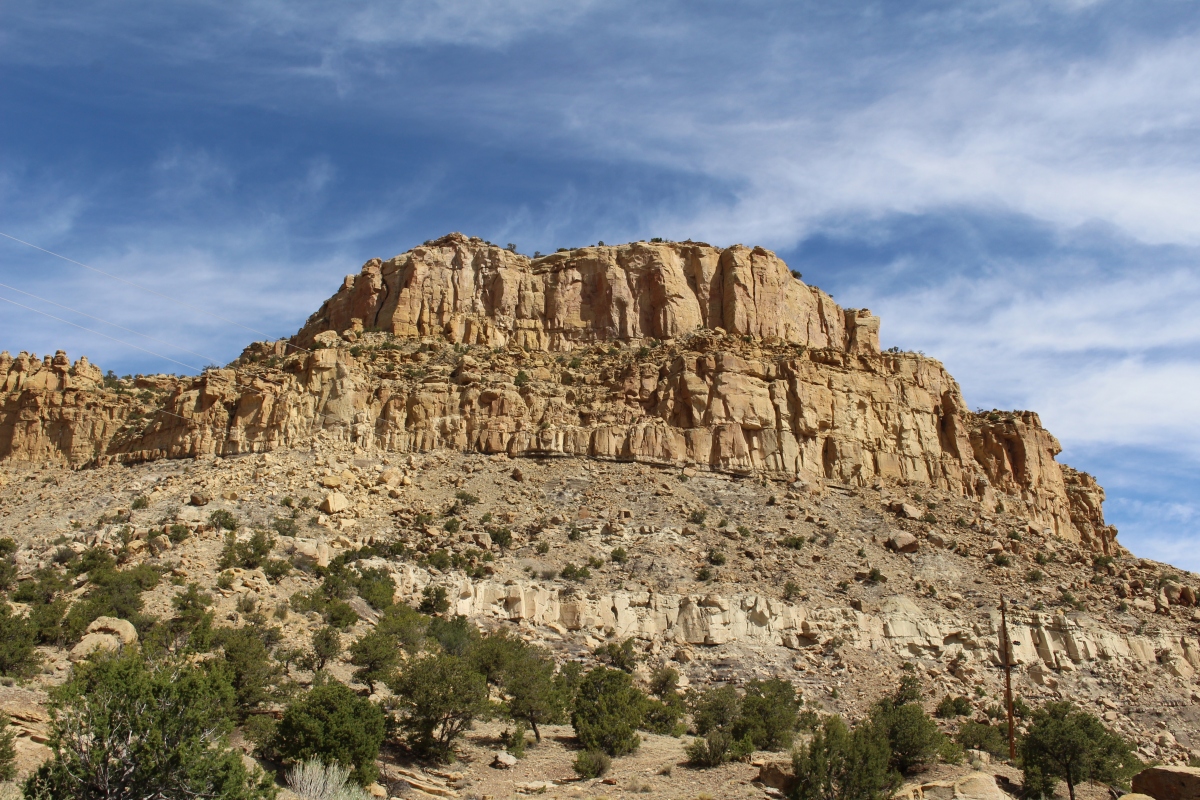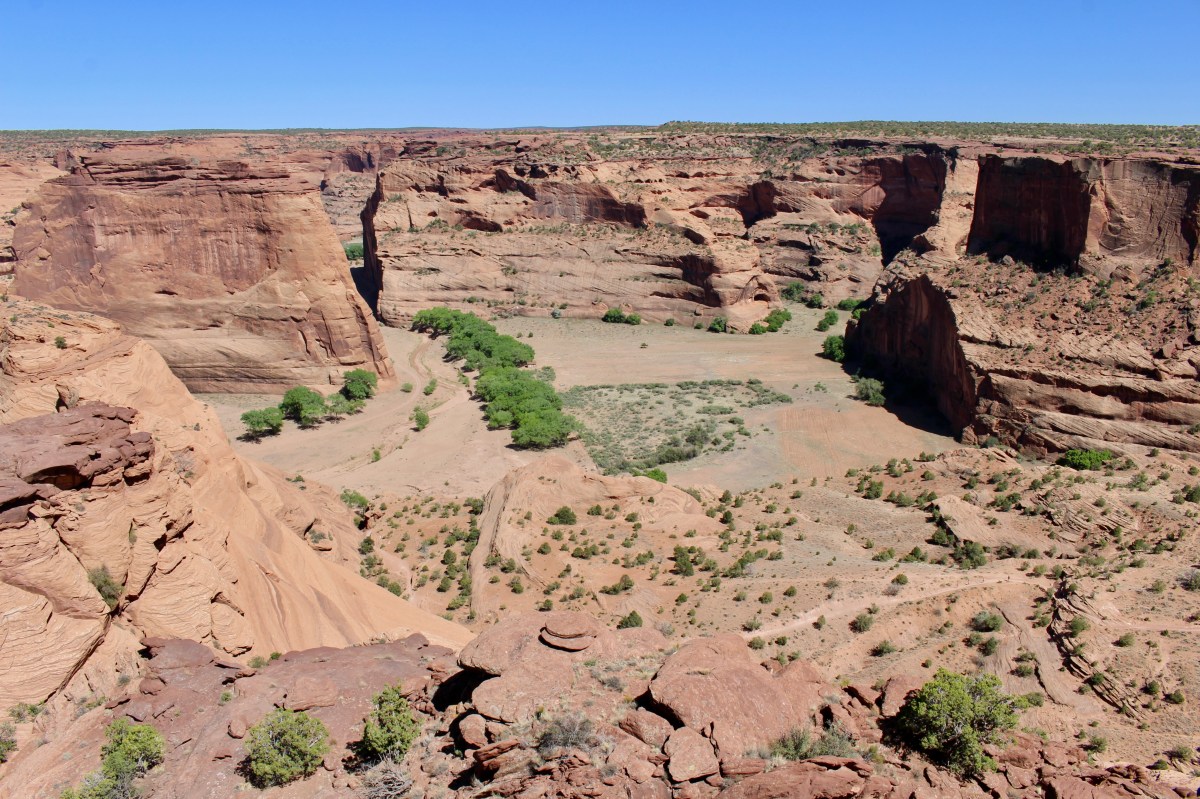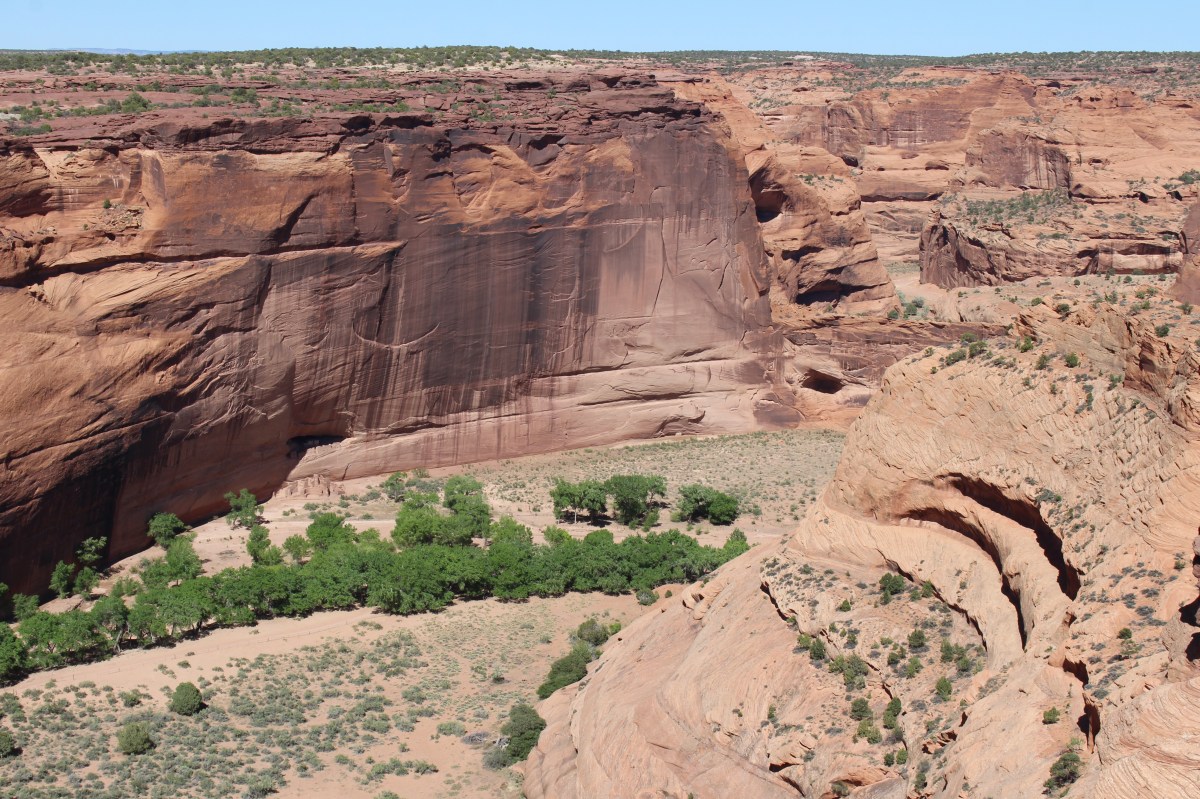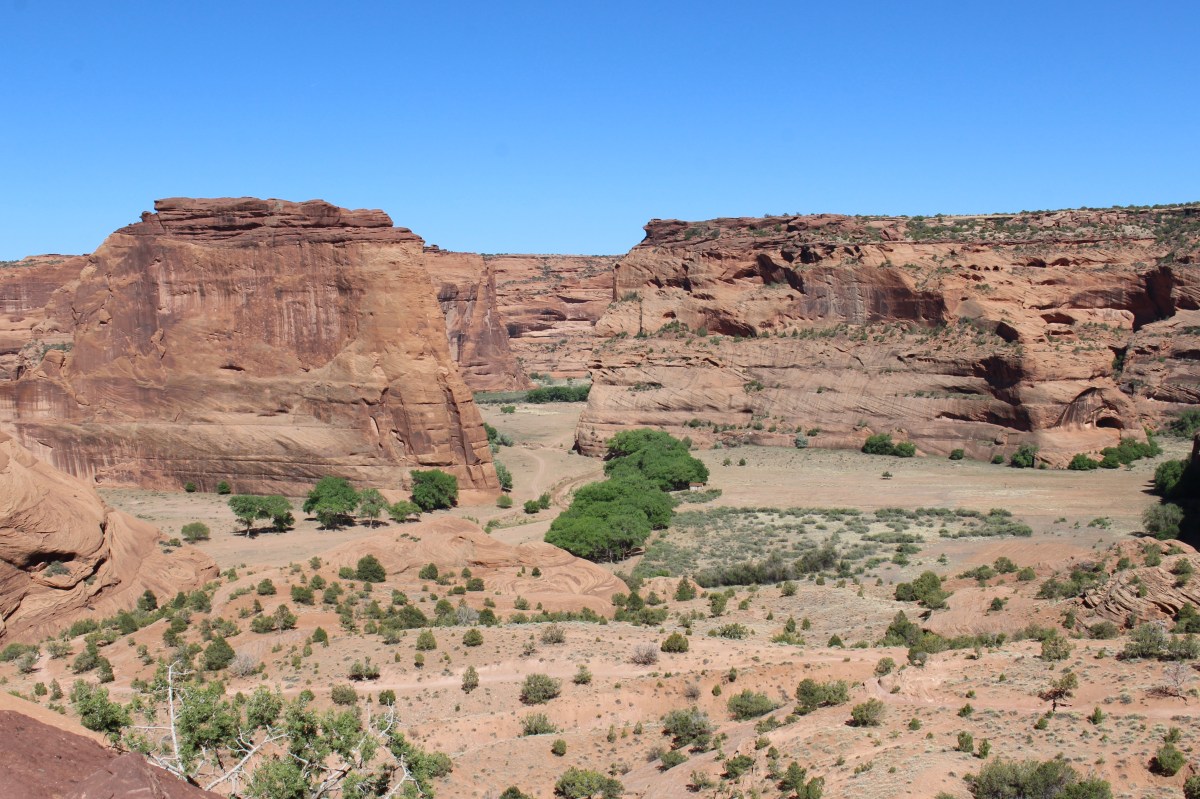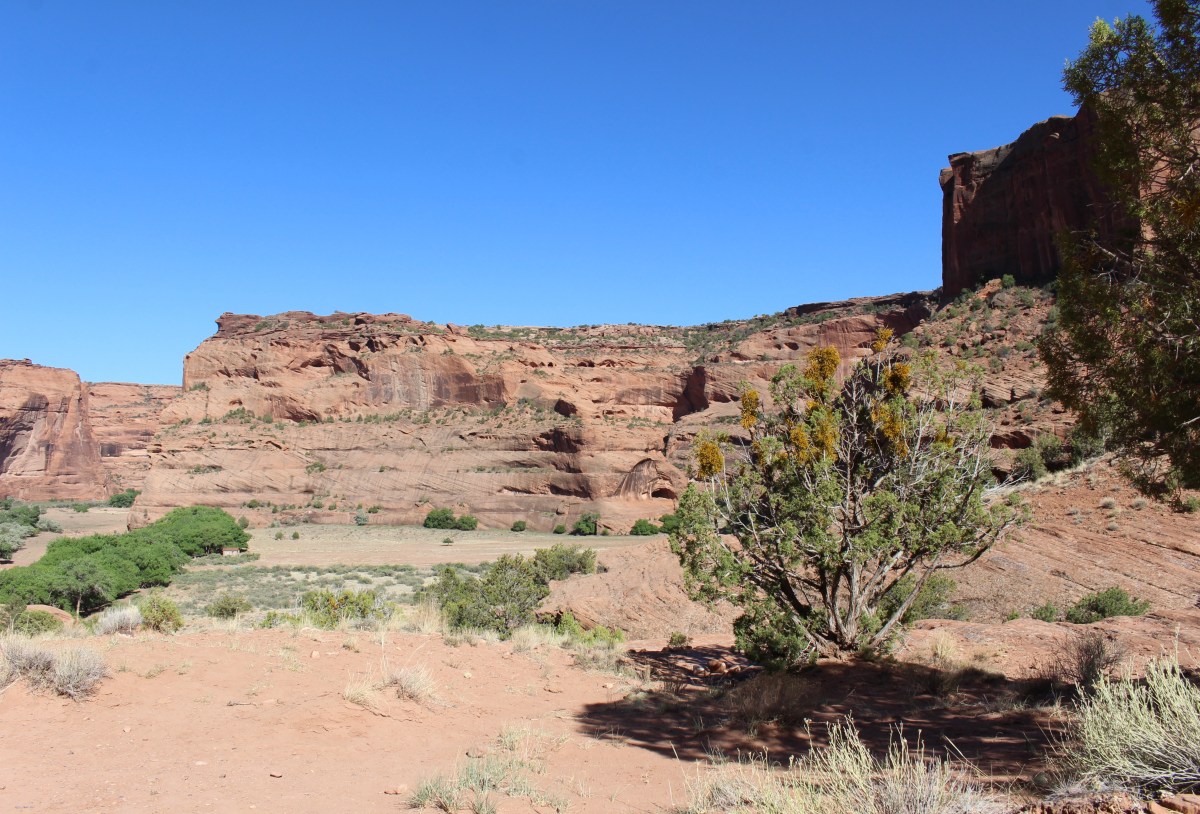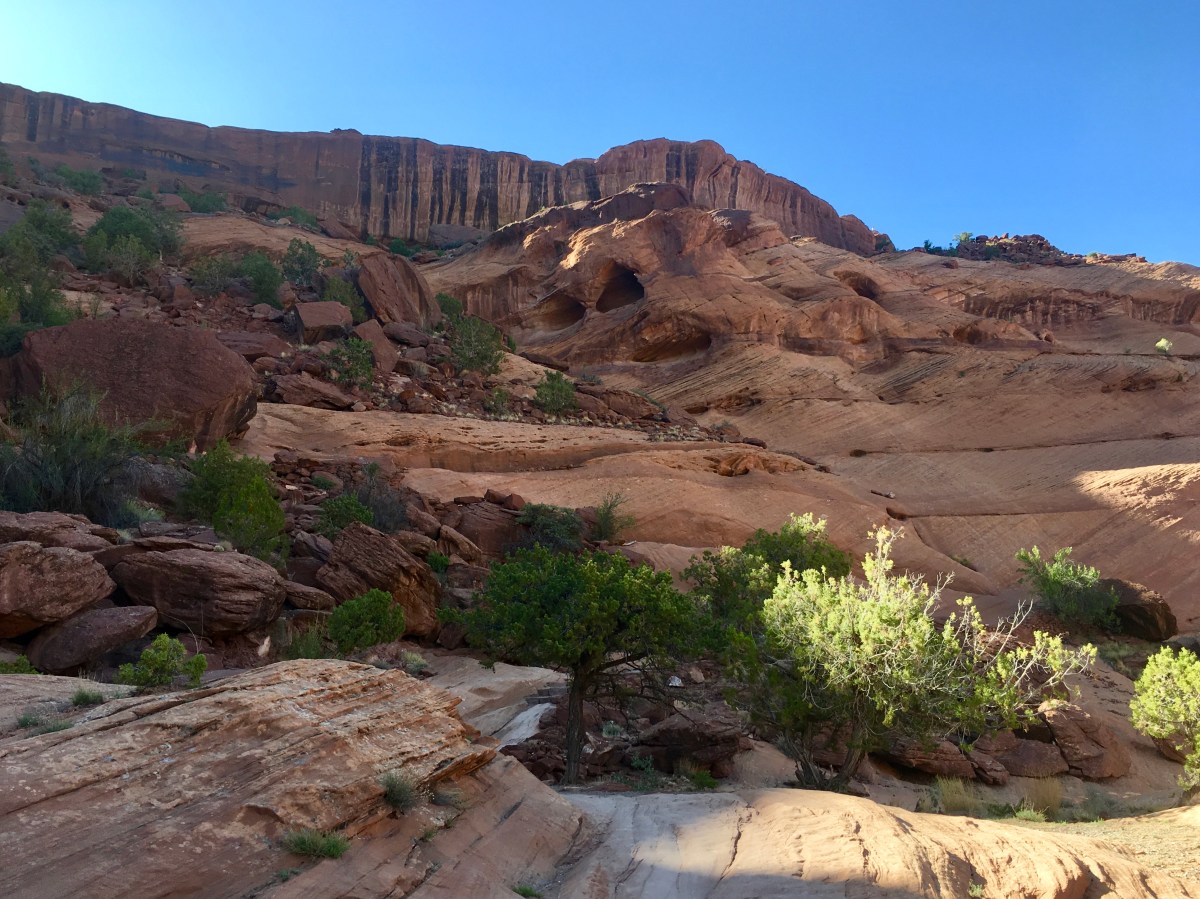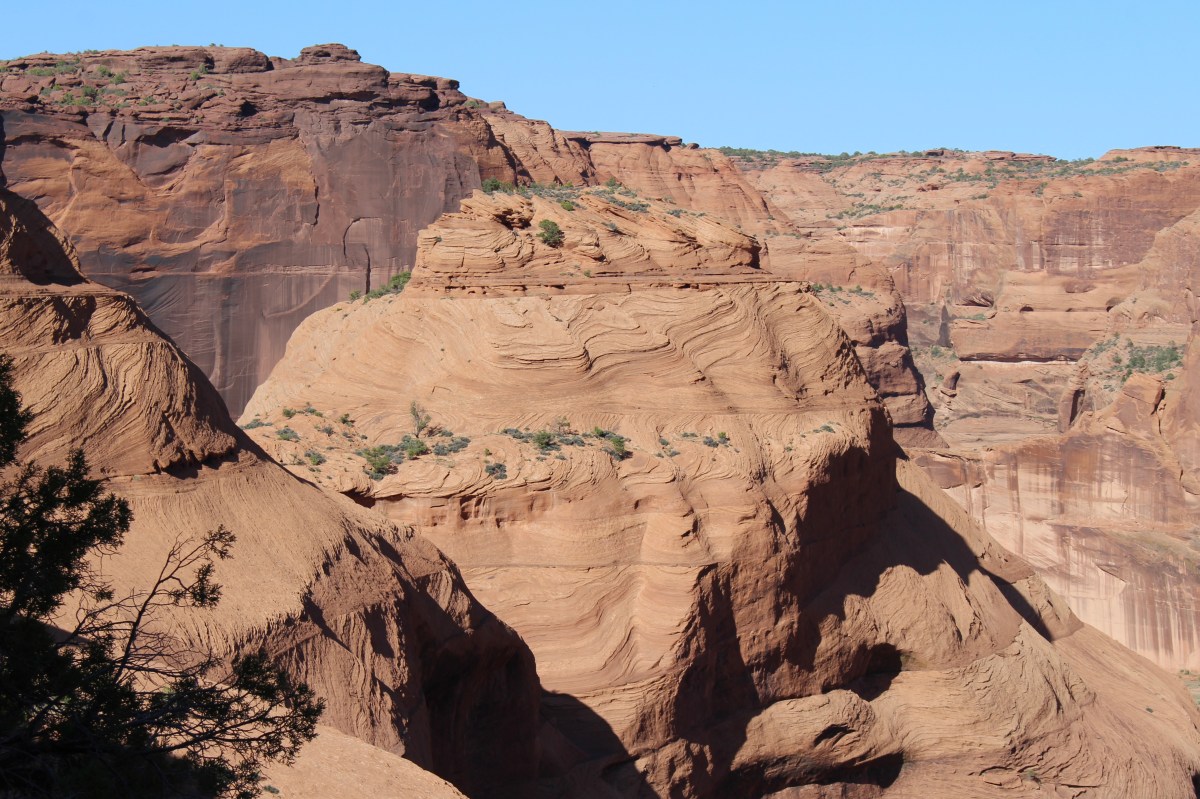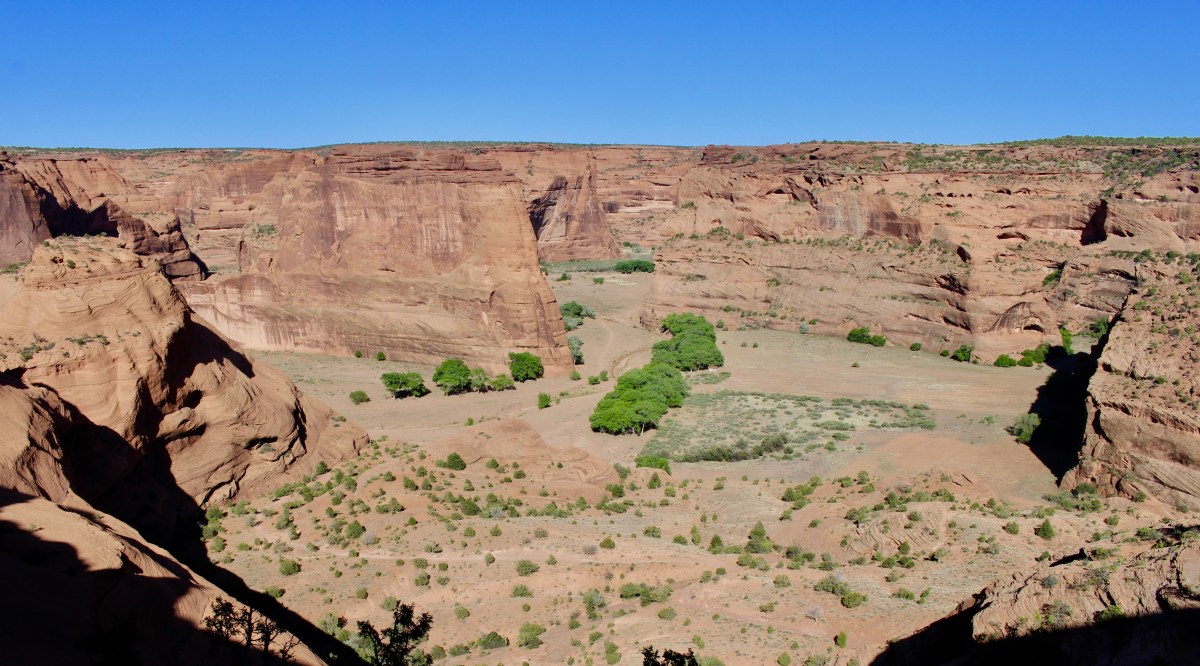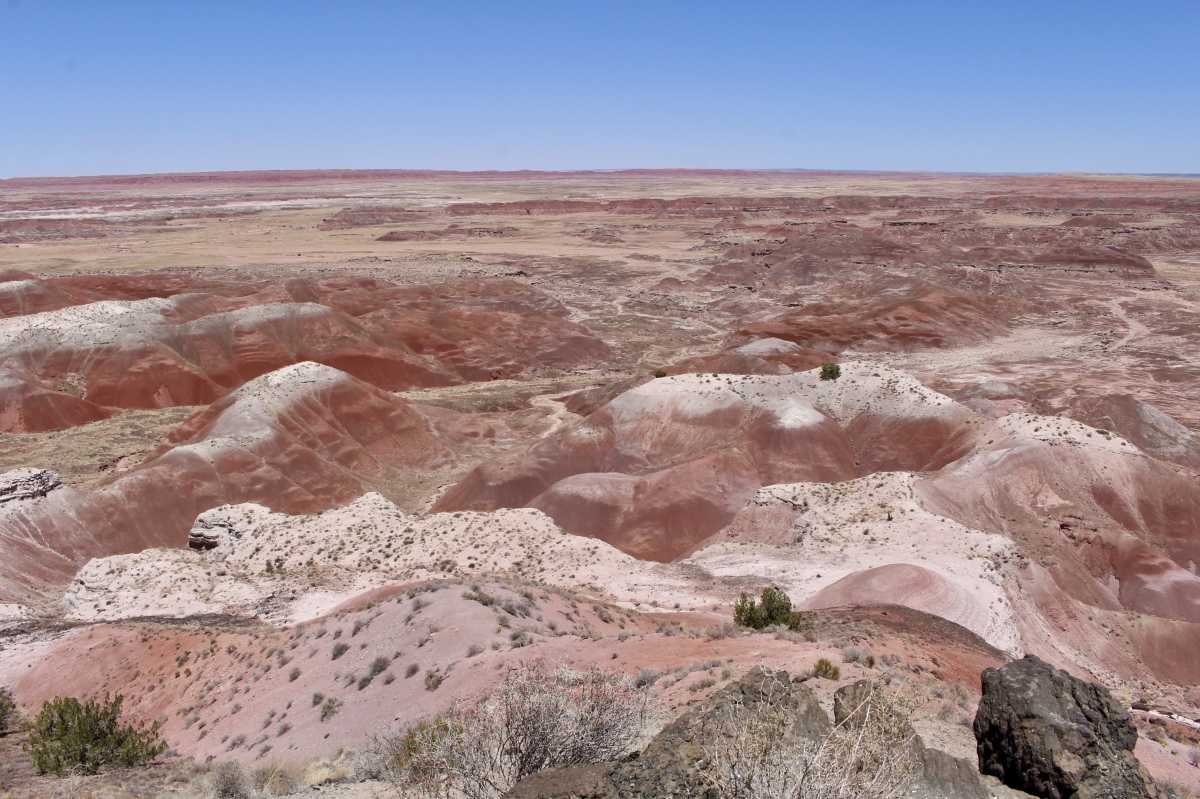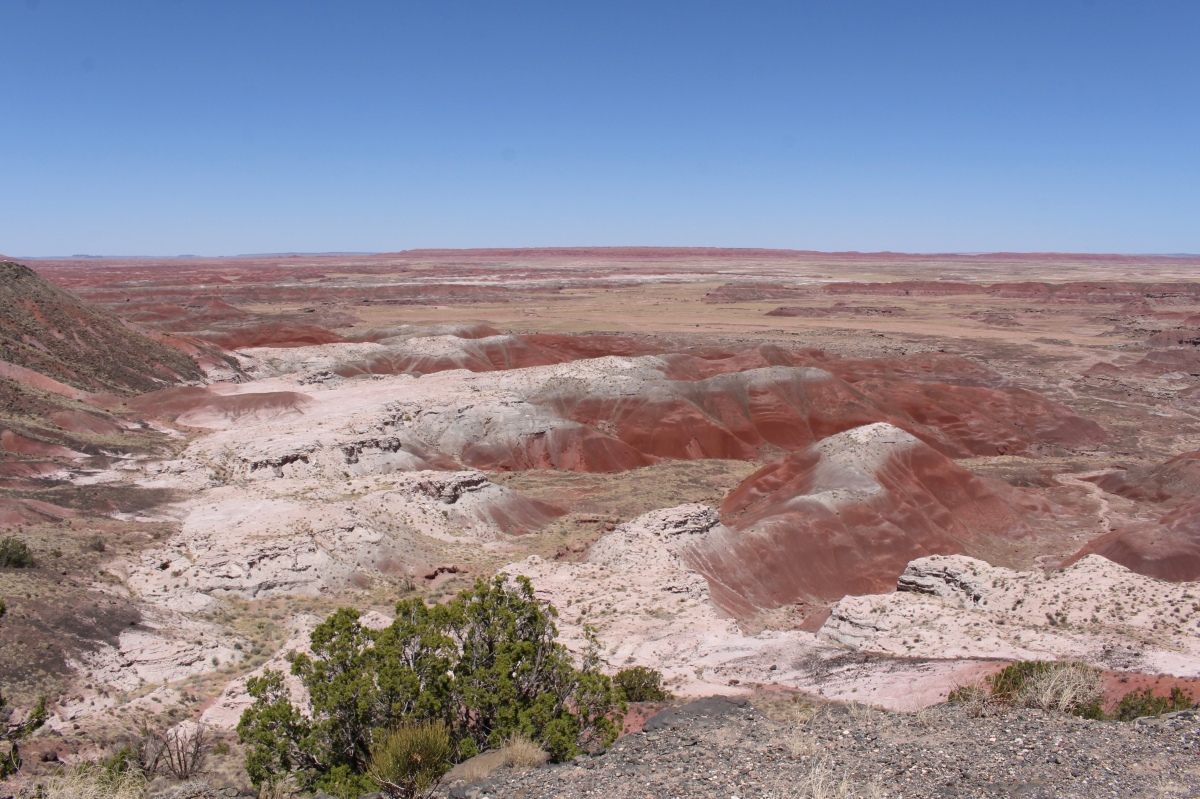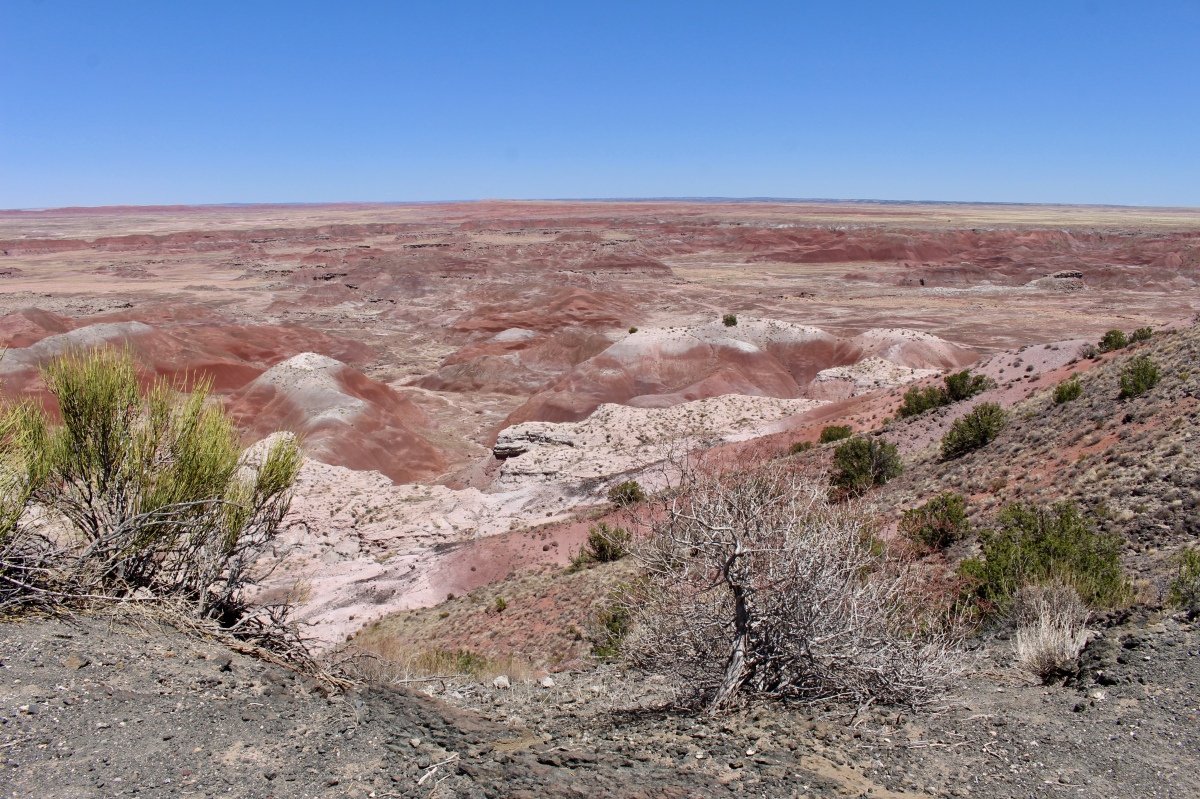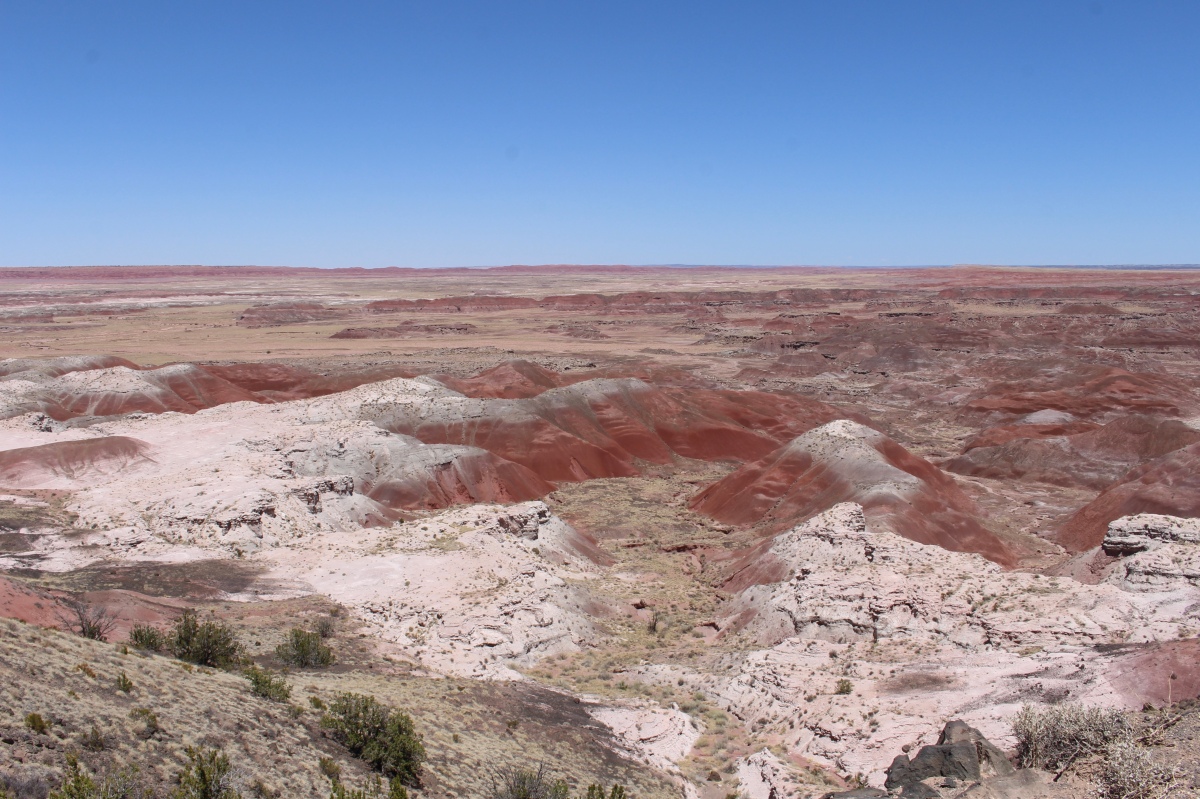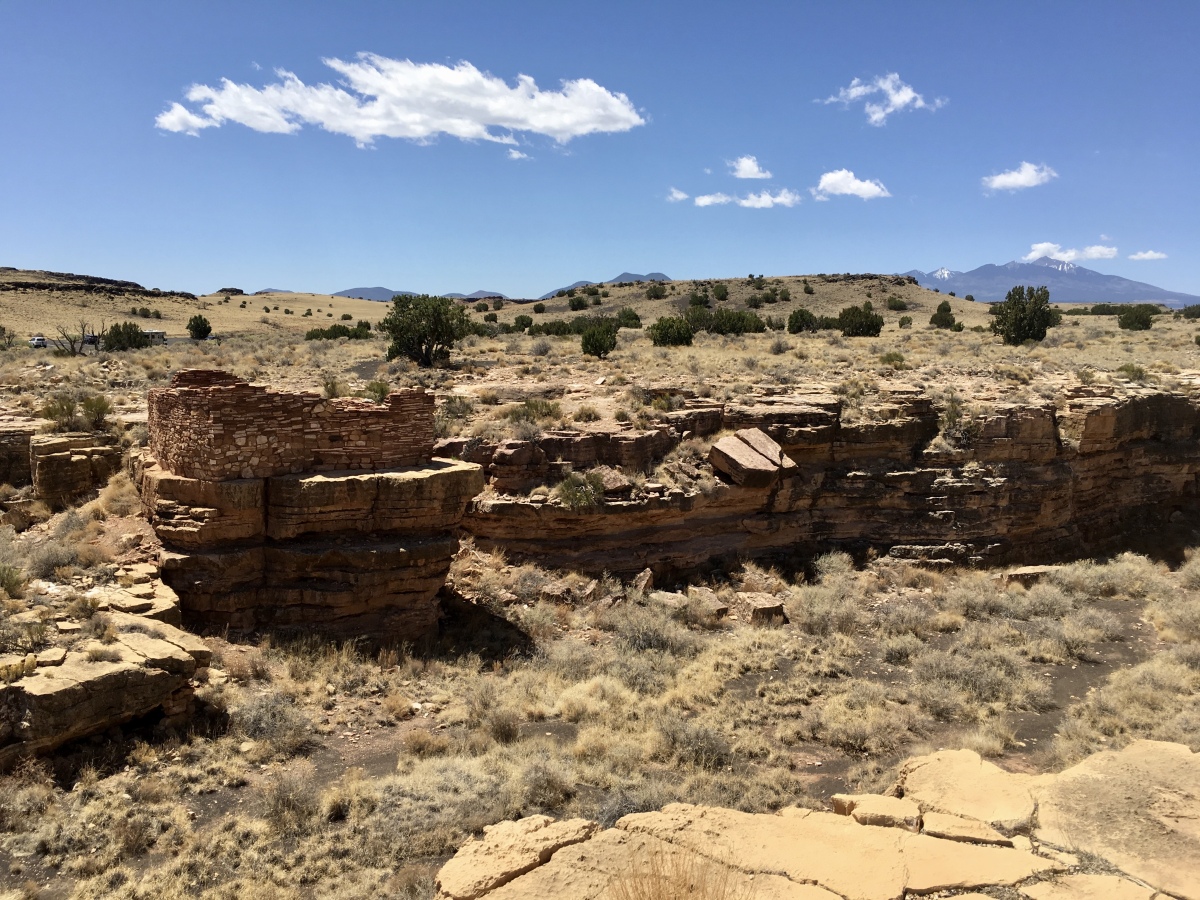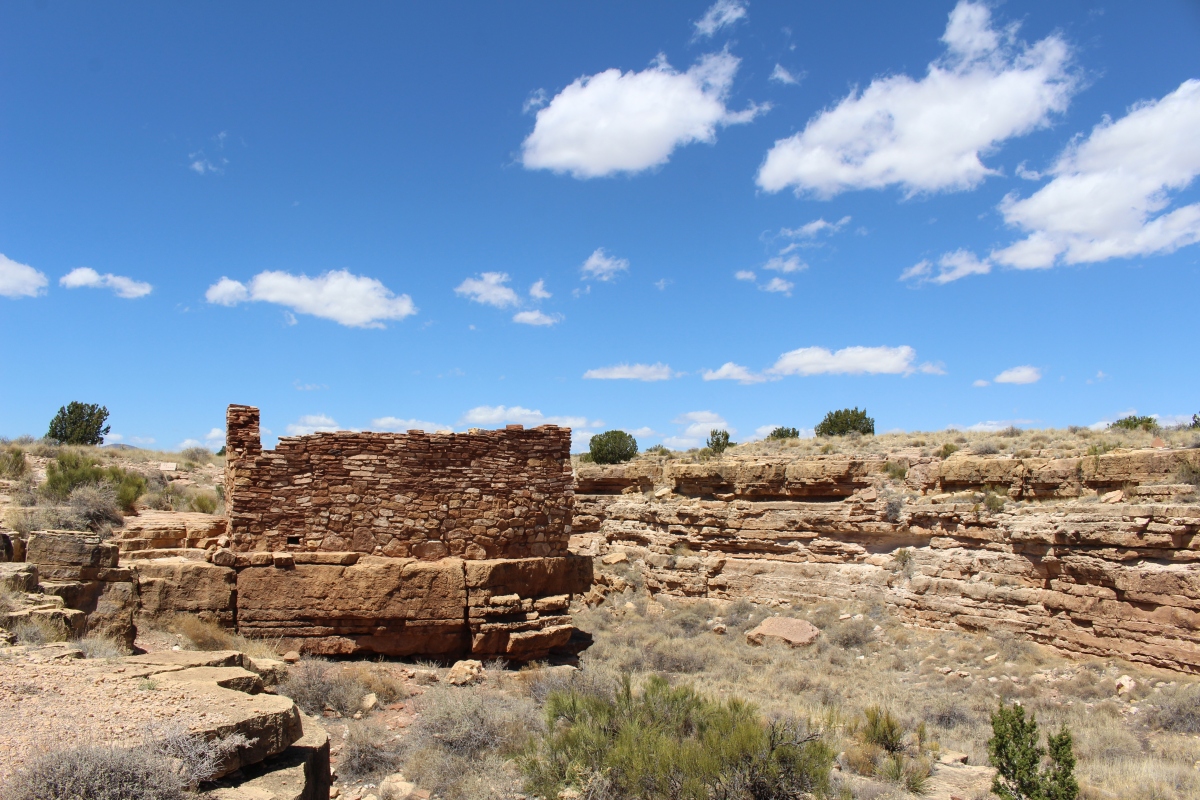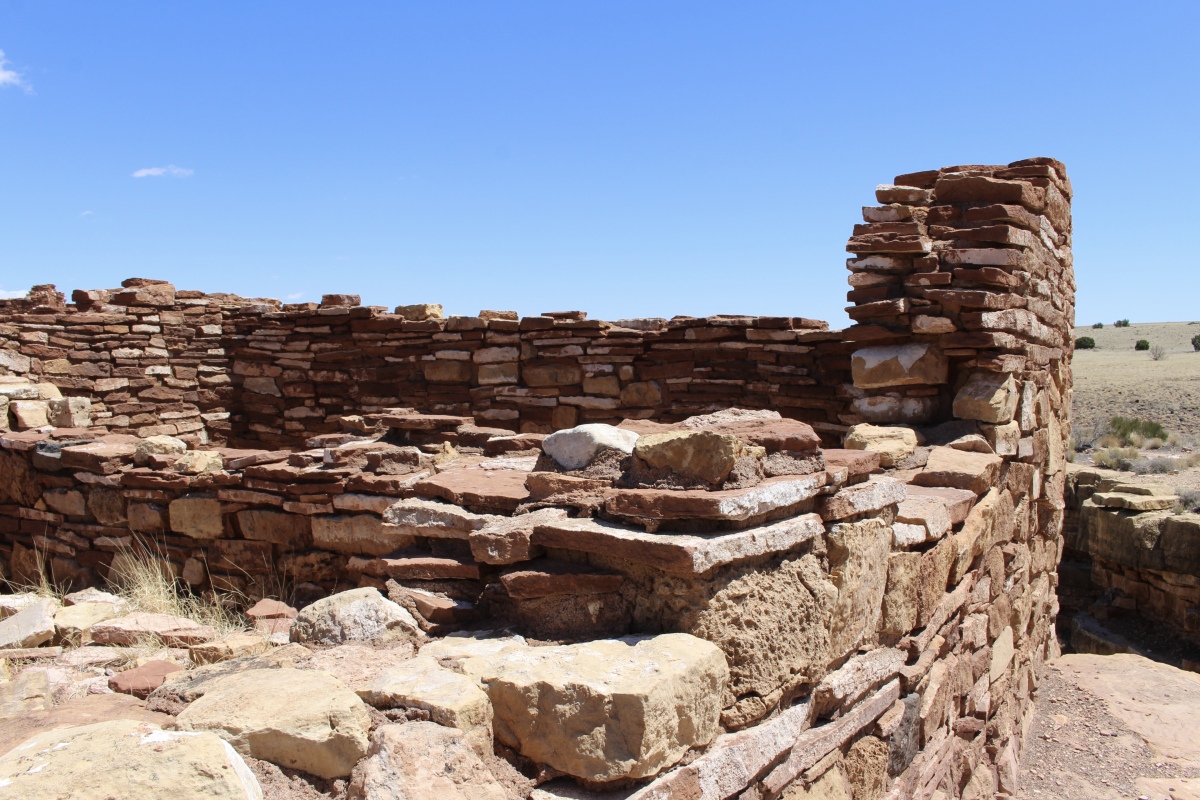
After leaving the Upheaval Dome and Whale Rock, we drive south through Canyonlands, stopping at several overlooks.
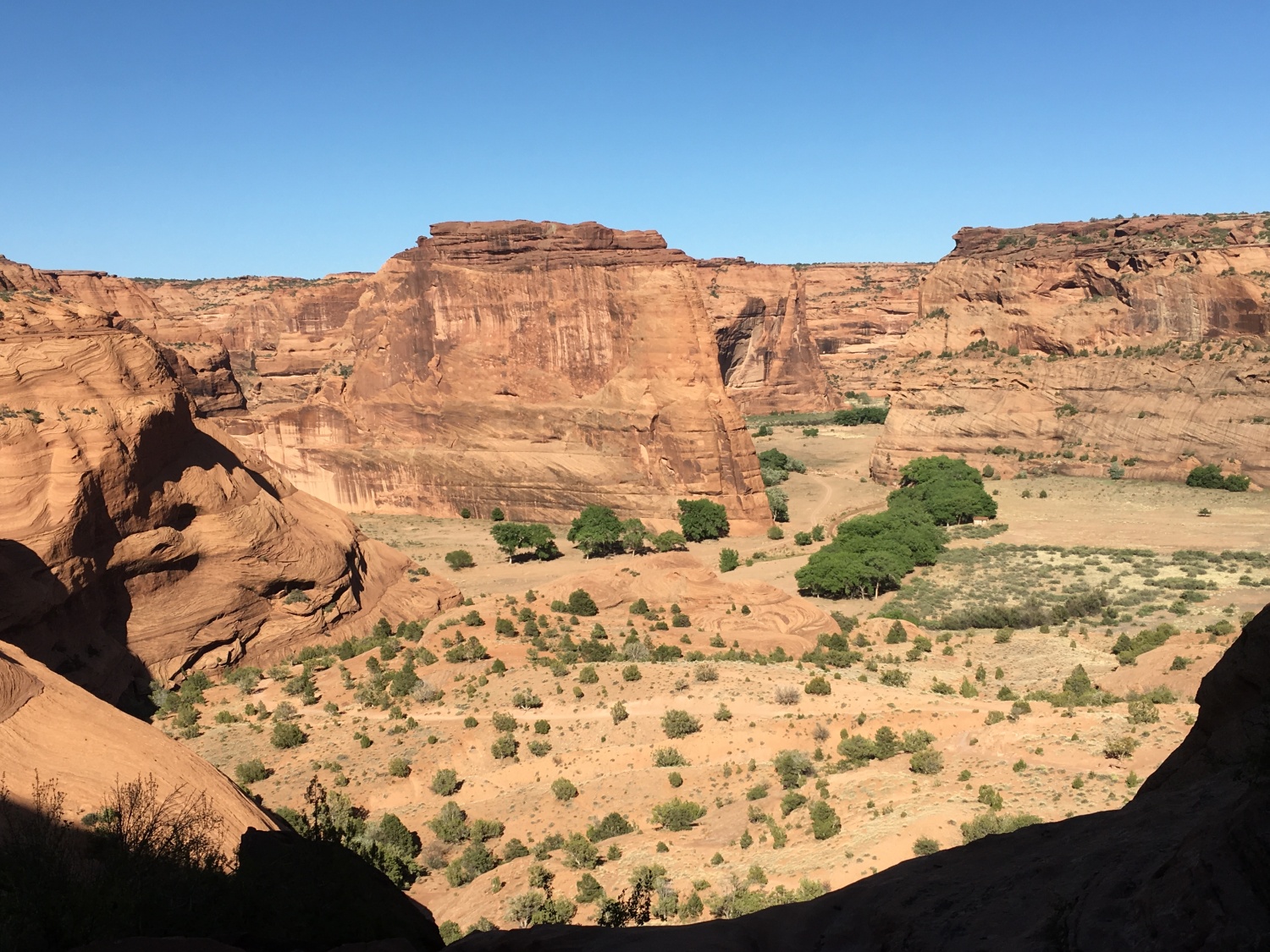
We make a quick stop at the Holman Spring Canyon Overlook.
Holman Spring Canyon Overlook
Island in the Sky sits atop a mesa overlooking two great rivers that come together, the Green River and the Colorado River. We stop at the Green River Overlook and look west over the Green River.
the trail to the Green River Overlook
Green River Overlook
We then stop for a view of the Colorado River to the east from the Buck Canyon Overlook.
Buck Canyon Overlook
The Buck Canyon Overlook also offers views of the La Sal Mountains in the distance.
Buck Canyon Overlook
Further south still, we stop briefly at the Orange Cliffs Overlook.
Orange Cliffs Overlook
me with Mike at the Orange Cliffs Overlook
Finally, we reach the southernmost point at Island in the Sky, Grand View Point Overlook. It is quite hot today, but we hike a mile out and a mile back along the top of the canyon edge. The Grand View encompasses the confluence of the Colorado and the Green Rivers in the distance; in the foreground, we see Meander Canyon and The Loop of the Colorado River.
Grand View Point Overlook
Mormon Tea at the Grand View Point Overlook
Grand View Point Overlook
The Grand View Point Overlook trail
On our way back from the end point of the trail, I change my lens, using a wide-angle to capture our last views of the canyon.
The Grand View Overlook trail
Grand View Point Overlook trail
All in all, we walk 2.19 miles over 1:16 hours.
*Thursday, May 10, 2018*
***********************
On Sundays, I plan to post various walks that I took on our Four Corners trip as well as hikes I take locally while training for the Camino de Santiago; I may also post on other unrelated subjects. I will use these posts to participate in Jo’s Monday Walks or any other challenges that catch my fancy.
Don’t overthink. Remember, it’s YOUR Camino. The Camino will provide. You will be fine! Buen Camino! This is some of the advice and encouragement I hear repeatedly from pilgrims who have completed the Camino de Santiago across northern Spain. On the various Facebook pages, books, and online Camino websites and forums, there seems a limitless amount of advice, often contradictory. So, if it’s to be MY Camino, I am picking and choosing which advice I will heed, and which I will toss out. What else is there to do? 🙂
I’m not good at following advice telling me not to overthink. My husband says if there is a bell curve of people planning to walk the Camino, I would be on the far extreme of over-preparation. Though he might be right in some regards, I don’t agree with him totally. Physically, I’m afraid I’m under-prepared.
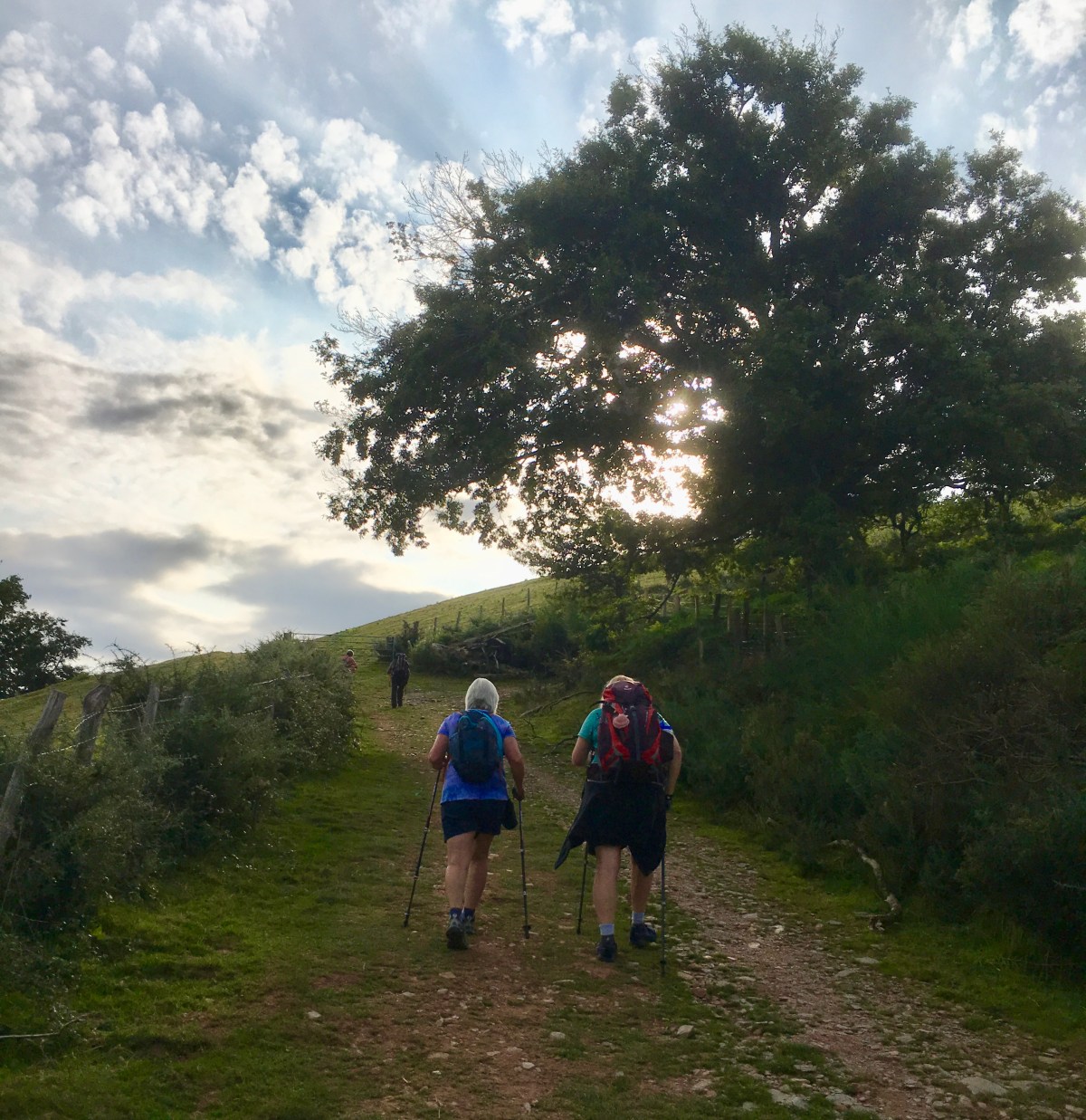
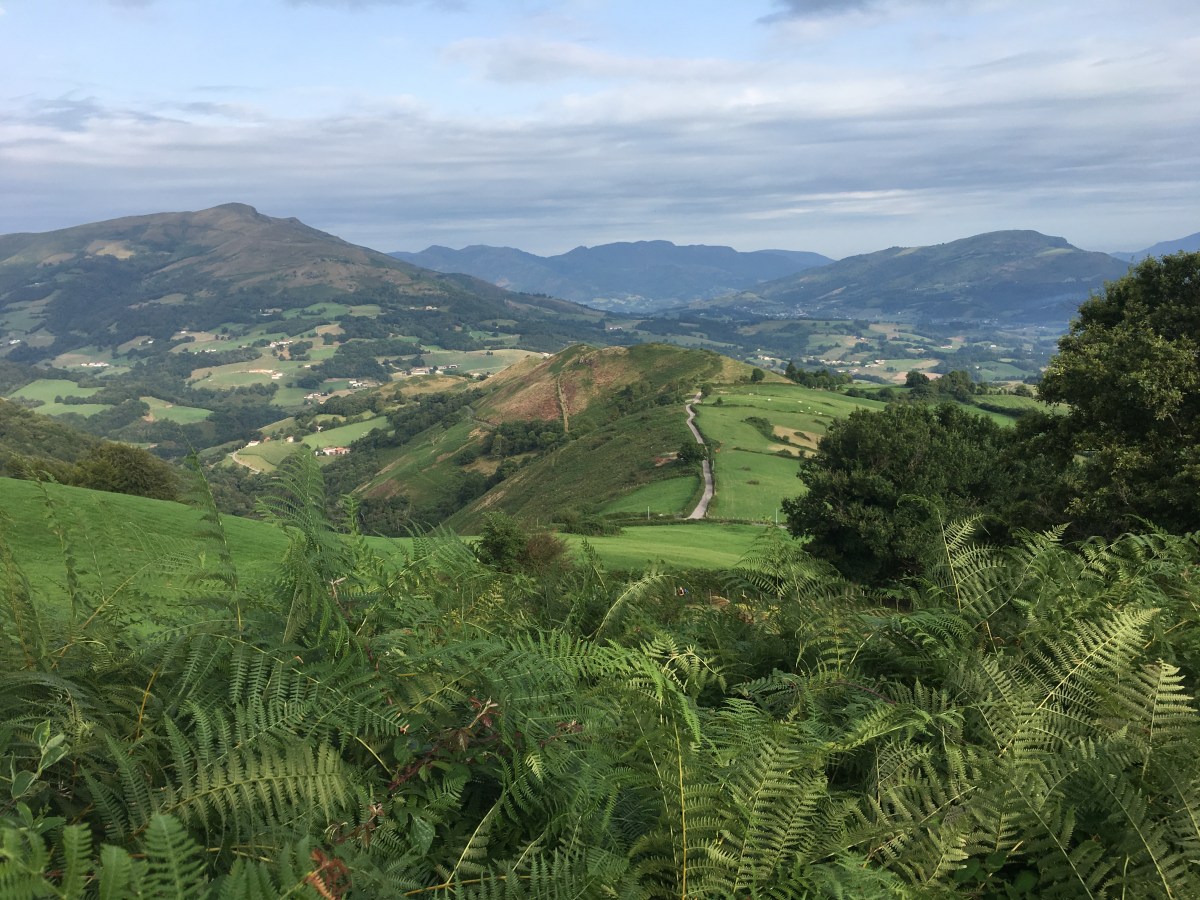
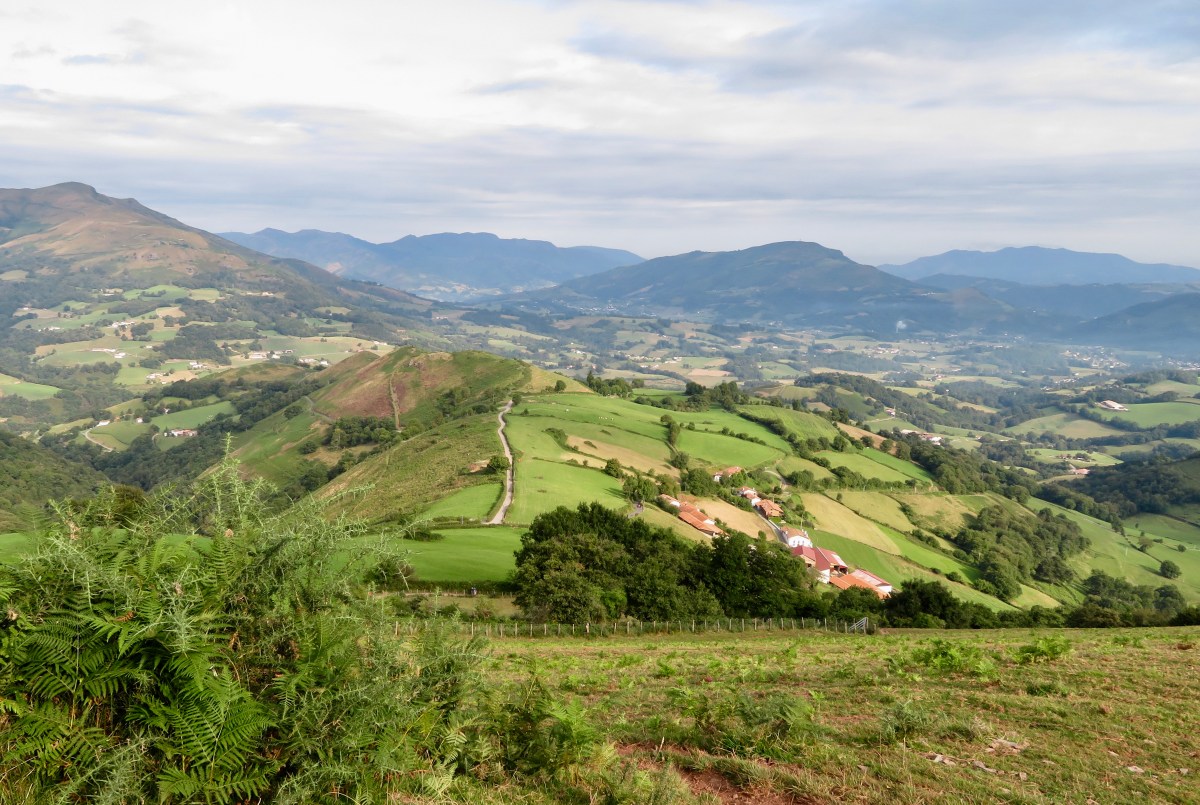
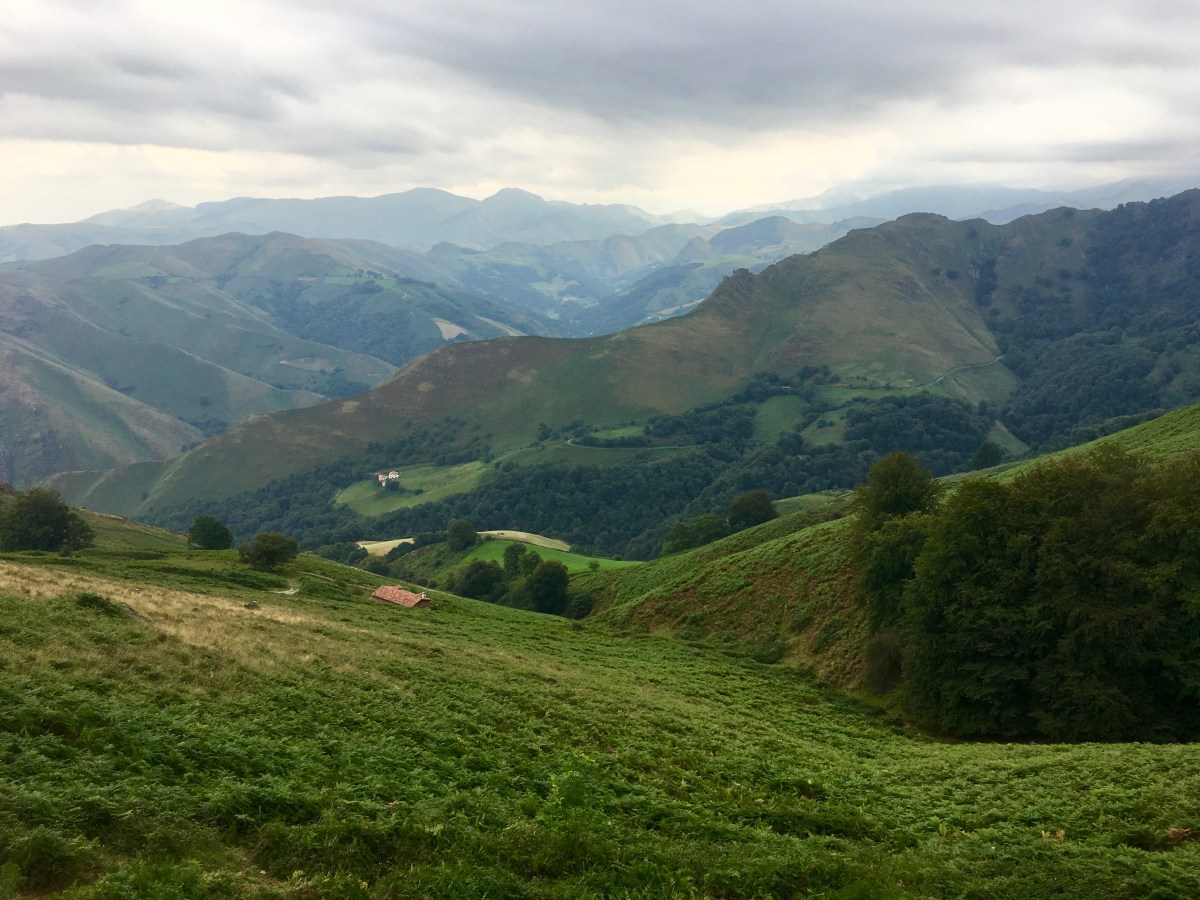
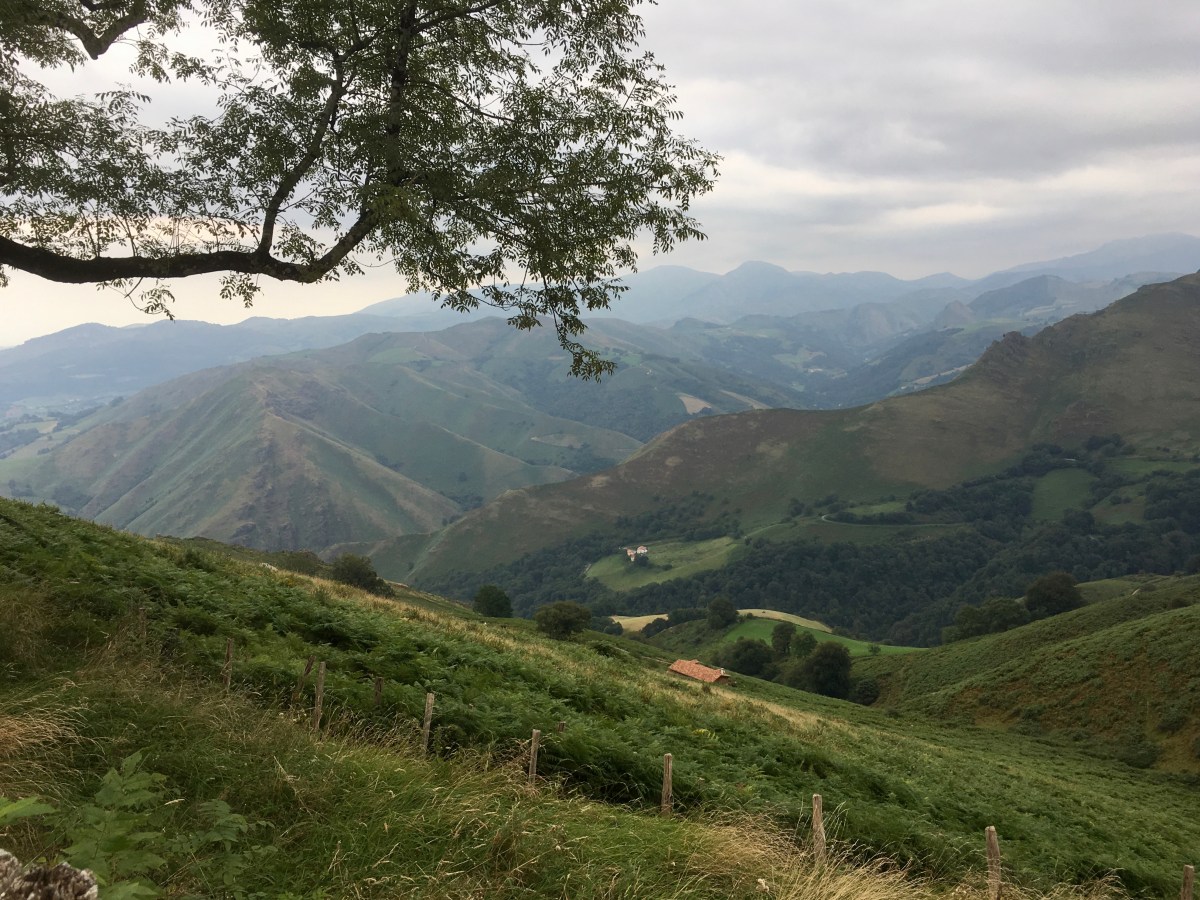
The Camino hasn’t been far from my mind over this entire year. In mid-July, I dreamed I was in St-Jean-Pied-de-Port and everywhere I looked were impossibly tall mountains, bursting with flowers and tropical trees. Paths wound their way up all of them. I was quite overwhelmed and wondered which of the paths I should follow. My first impulse was to pull out my camera to photograph the stunning scene. Suddenly I realized I had forgotten my camera, so I called my husband in a panic, asking him to mail it to me. Of course, it would take days to get to me. I was devastated to have forgotten my camera and berated myself mercilessly for my forgetfulness!
Resources
There are multitudes of books you can read about the Camino, either personal accounts, advice on packing, guidebooks, or history books. These are some that I have read or am in the process of reading. The Brierley guidebook I will take along with me, tearing out the pages for that day’s walk and disposing of them after walking, lightening my load each day. 🙂
Let the Camino train you.It’s just walking. Just put one foot in front of the other. Walk into your pack weight. Walk two days straight for 10-12 miles carrying your full pack. I’ve encountered this advice while preparing for the Camino.
In early December of 2017, on a 7.7 mile hike around Burke Lake, I met a great lady named Susan who walked the Camino. She introduced me to a group called the American Pilgrims on the Camino – Mid-Atlantic Chapter. The group is for anyone who has ever done the Camino or who wants to do the Camino. After I met her, I signed up immediately for newsletters from this group. Outside of the group, Susan and I have been in touch regularly and have walked together numerous times. She’s been one of my most valuable sources of information and encouragement.
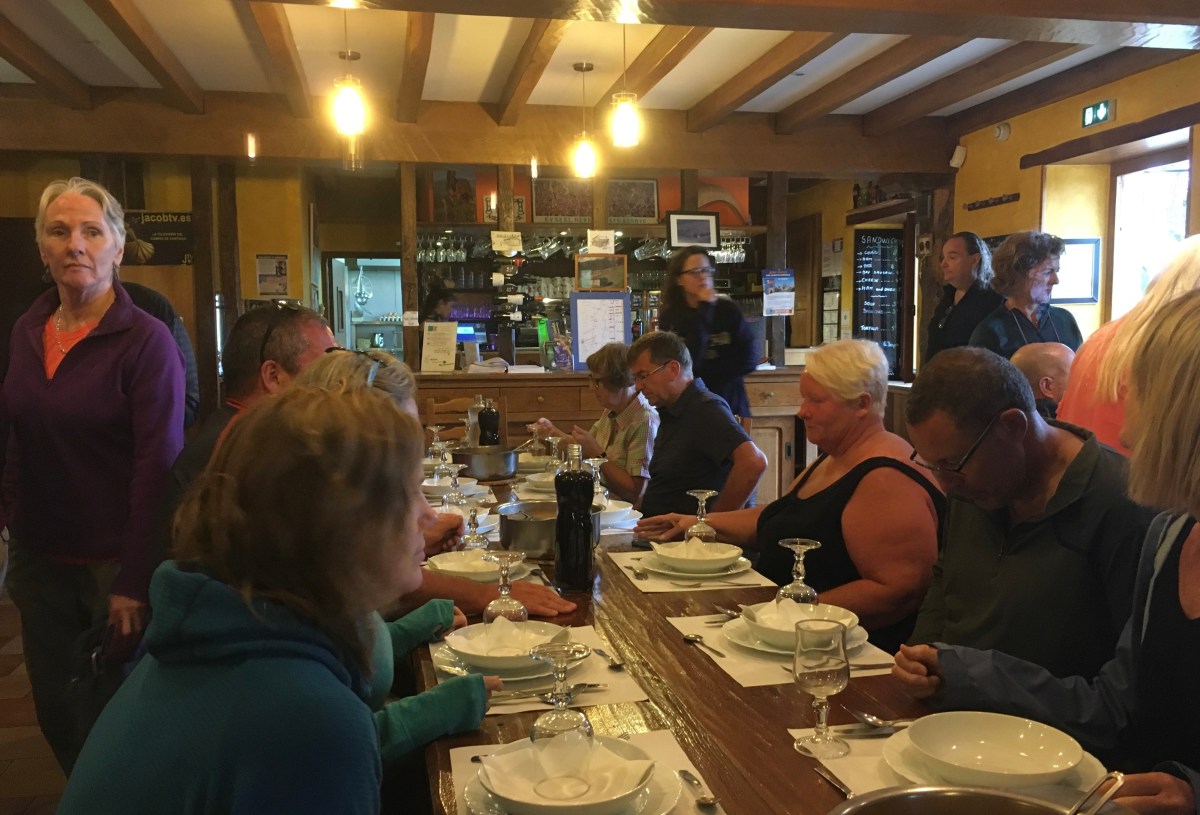
To immerse myself in the Camino experience, I shared Spanish tapas with pilgrims and wanna-be pilgrims at a potluck for American Pilgrims on the Camino in early February. I chatted with a lot of folks who were full of good advice.
I accompanied the Mid-Atlantic Pilgrims for a 10-mile walk in March starting from Arlington National Cemetery, past the Martin Luther King Memorial, up the National Mall and around the back of the U.S. Capitol, and then back down the Mall again to the Lincoln Memorial. I got a taste of what it’s like walking a long distance with other pilgrims walking at different paces. One man was especially helpful in telling me what a typical day on the Camino was like. Another lady told me, as I carried a 5-lb backpack, that I should be walking into my pack weight. In other words, I should carry the entire 15-lb from the beginning and then slowly increase my distance. I didn’t follow this advice, although it might have been a good thing to do.
Martin Luther King Memorial on our 10-mile walk in D.C.
On June 9, I attended a shell ceremony with the group, where the leader read aloud an inspirational piece about the Camino and then bestowed blessings on us pilgrims, placing shells around our necks to accompany us on our journey.
me with my shell 🙂
the group at the shell ceremony
Training: I was gung-ho in the early months. I wonder if I should have just decided to do the Camino two months before doing it, instead of spending so many months training. Below are some photos of walks I did in June and July.
Manassas National Battlefirst – First Manassas Trail
Manassas National Battlefirst – Second Manassas Trail
Turkey Run
Turkey Run
Burke Lake
The Fairfax Cross-County Trail
Below I’ve outlined my progress: “dedicated walking” means I went out for a purposeful walk aiming to cover a certain distance. Sometimes I carried an 11-lb pack; more often I didn’t. The FitBit simply measured distance by how many steps I took over the course of each day. At least once a week, sometimes twice, I went to the gym to do upper body and lower body weights, from February to April. You can see how my training has slacked off, mainly due to right knee pain, caused by bursitis and osteoarthritis, that curtailed my training:
Month“Dedicated” milesFitbit miles
February: 68 100
March: 103 139
April: 73 114
May: 71 157*
June: 67 123**
July: 62 103
August: 27 58
*In May, I was in the Four Corners where the GPS on MapMyWalk didn’t always work.
** In June, I often carried an 11 lb. backpack and my right knee started causing me pain.
Overall, I’ve walked 471 miles in “dedicated” walking since February. That’s less than the distance of the entire Camino’s 490 miles. My Fitbit miles are higher, at 793 miles. However, this walking is spread out over 7 months! That’s quite different than compacting that same distance into 52 days. As it turns out, I never did two days in a row of 10-12 miles carrying my full pack.
After I started having knee pain in June, I finally found a good orthopedic doctor in early August who administered a cortisone injection in my right knee, prescribed biweekly physical therapy sessions, and gave me the NSAID (non-steroidal anti-inflammatory drug) Diclofenac, which is just a heavy dose of time-released ibuprofen. Between all of this, my knee has been getting stronger, but I haven’t wanted to push it by training too much. I’d rather be pain-free to start out, and simply Let the Camino train me!
So, now I either walk 3-5 miles OR ride the indoor bike for 30 minutes OR go to physical therapy. I have to do sets of PT exercises 2x/day and ice 2x/day for 10 minutes. While I’m icing my knees for 10 minutes, I study a bit of Spanish using Spanish in 10 minutes a day by Kristine K. Kershul. Yo quiero un vaso de vino!
Butterfly at Manasssas National Battlefield – First Manassas Trail
Packing and gear
Packing and gear – my packing list is too long and complicated to list here, so I created a separate page: packing list for el camino 2018. I will revise it over the next week as I try to reduce my pack weight from 16 lb to 14 lb. The general rule of thumb is that pilgrims should carry no more than 10% of their body weight. When I return, I’ll update it, after I know what I didn’t use and what I wished I’d had.
Hair
As my hair is so often the bane of my existence, and since I’ve heard there are no hair dryers provided in albergues, or pilgrim hostels, I got my hair cut shorter and will have it straightened before I leave. It will still look like hell without a hair dryer, but I’m carrying a hat to mitigate the horrid mess it will be.
Travel Insurance
I don’t always buy trip insurance when I travel, but in this case, I figured it might be wise because of my knee and because of the daily physical exertion and strain. However, I hemmed and hawed and took my sweet time about it. When I finally decided to go for it, it was more than two weeks after I bought my plane ticket, and I had seen a doctor about my knee in the interim. I was told my knee is now considered a pre-existing condition and thus any knee-related problem would not be covered. It would have been okay if I’d bought it less than two weeks after my ticket. So after hemming and hawing some more, I went ahead, because it covers any medical emergency that isn’t related to my right knee – sickness, a broken bone, a death in the family, etc. Because of the duration of my trip, it was quite expensive: $289! This seemed like highway robbery, but the dirty deed is done now.
Getting to St. Jean-Pied-de-Port – It’s part of the journey…
Since Mike will meet me in Portugal on October 26 and we’ll fly back home together from Lisbon on November 6, it made sense for me to get a round trip ticket to Lisbon. This is not the usual starting point for most people doing the Camino Frances. I wasn’t sure how I would get from Lisbon to St. Jean Pied-de-Port (SJPP) in France, so I posted the question on the Facebook Camino page, an invaluable resource. A Portuguese man suggested I take the overnight train (with sleeping compartments) from Lisbon to Hendaye on the French border. Then, I’m to take another train to Bayonne, and then another to St. Jean. I’ve booked the TrenHotel from Lisbon, leaving at 9:30 pm on September 1; the man assured me I’d be able to get the next stage tickets at the Hendaye station. I hope he’s right. I have to trust that the Camino will provide! It will be a very long day for me in Lisbon, because I arrive at 10:30 a.m. and the train doesn’t leave until 9:30 p.m. I guess I won’t be able to sleep until I get on that train!
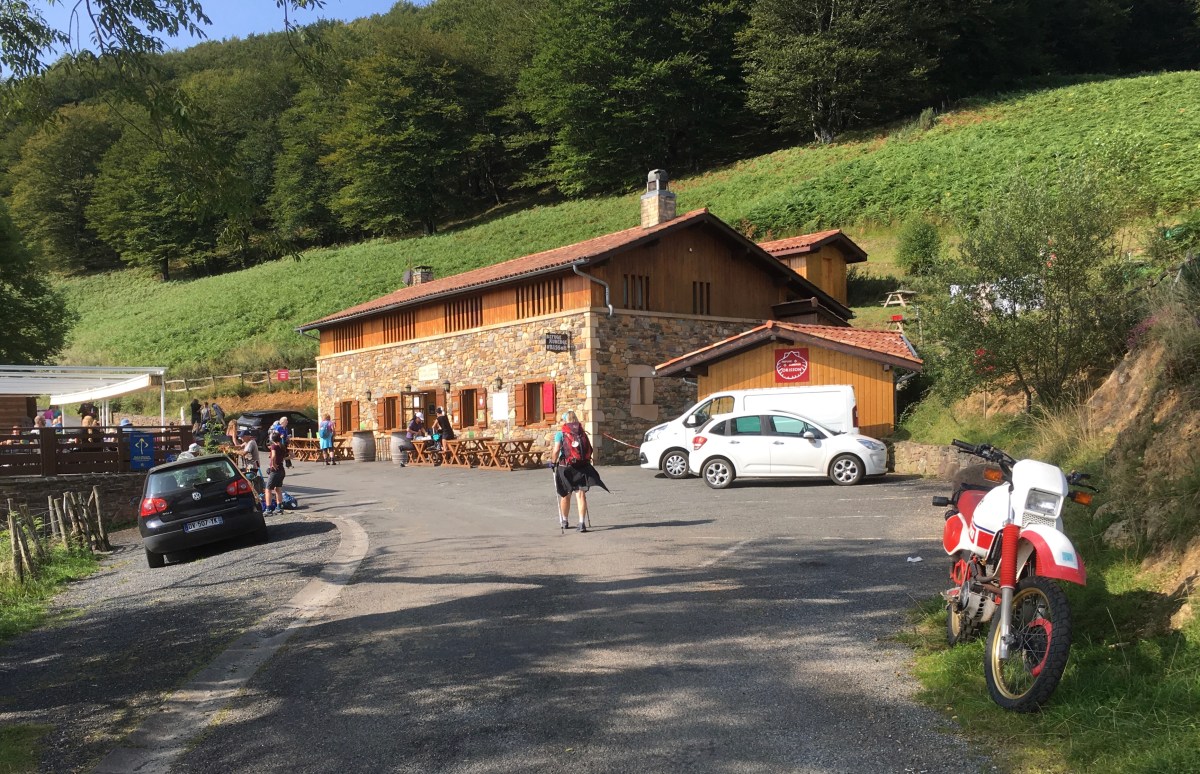
I’m booked to stay in Beilari when I finally reach SJPP on September 2. I’ll stay two nights and embark on my walk on September 4. I have reserved a bed at Refuge Orisson about 1/3 of the way over the Pyrenees for that night, so I have to wait that extra day in SJPP.
After that, until I meet Mike in Braga on October 26, nothing else is planned except walking, washing my clothes, eating, sleeping. Repeat, repeatedly. One step, one day at a time.
You carry your fears. It is said that the bigger your backpack, the more fears you are carrying. I admit I do have some fears. Since I’ve been reading so much, I’ve heard of so many things that can go wrong. Here are my biggest fears and how I hope to deal with them:
Dogs. I’m carrying a whistle and my hiking poles, and will try my best to remain calm if I encounter any vicious dogs.
Being a woman alone. Being harassed by anyone or being the victim of a crime. I’ve heard any problems are rare. I just need to be vigilant and pay attention. And I have my whistle.
Bed bugs. Spray my sleeping bag and backpack with Permethrin. Deal with them if I encounter them.
Thunderstorms with laser-sharp lightning strikes. Get down low and hope it passes quickly.
Not finding a bed at the end of the day. Hire a taxi and go to the next town.
Having an accident on the trail and being unable to get help. Be careful, slow and steady and pay attention.
Getting lost. Again, go slow and pay attention.
Flexibility & Faith
Overall, I must have faith that all will be okay. Flexibility is key. If I’m in pain or feel I need a rest day, I’ll take one. If I can’t complete the whole thing, I’ll complete what I can. If I’m close, but not quite able to complete it, I can always take a bus to Sarria and complete the last 100km to get the Compostela, or the certificate of completion.
Journal and intentions
I have no intention of writing any kind of memoir on my pilgrimage for two reasons:
There are already multitudes of personal pilgrimage accounts out there, so unless I have something truly inspirational or earth-shattering to share, I don’t plan to add my story.
I have too many other unfinished projects.
However, I have set some intentions for myself.
my creative intentions
Journal & guidebook
the Camino Frances
Instagram:
I won’t be blogging during my pilgrimage, but I aim to post photos and tidbits along the way on Instagram: cathybirdsong
************************
“ANTICIPATION & PREPARATION” INVITATION: I invite you to write a post on your own blog about anticipation & preparation for a particular destination (not journeys in general). If you don’t have a blog, I invite you to write in the comments.
Include the link in the comments below by Thursday, August 30 at 1:00 p.m. EST. If you link after August 30, I will not be able to include your link in my next post, so please feel free to add your link to that post as soon as it publishes (since I’m leaving for the Camino on August 31).
My next anticipation & preparation post is scheduled to post on Friday, September 28. If you’d like, you can use the hashtag #wanderessence.
This will be an ongoing invitation, on the 4th Friday of each month. Feel free to jump in at any time. 🙂 If you’d like to read more about the topic, see: journeys: anticipation & preparation.
I hope you’ll join in our community. I look forward to reading your posts!
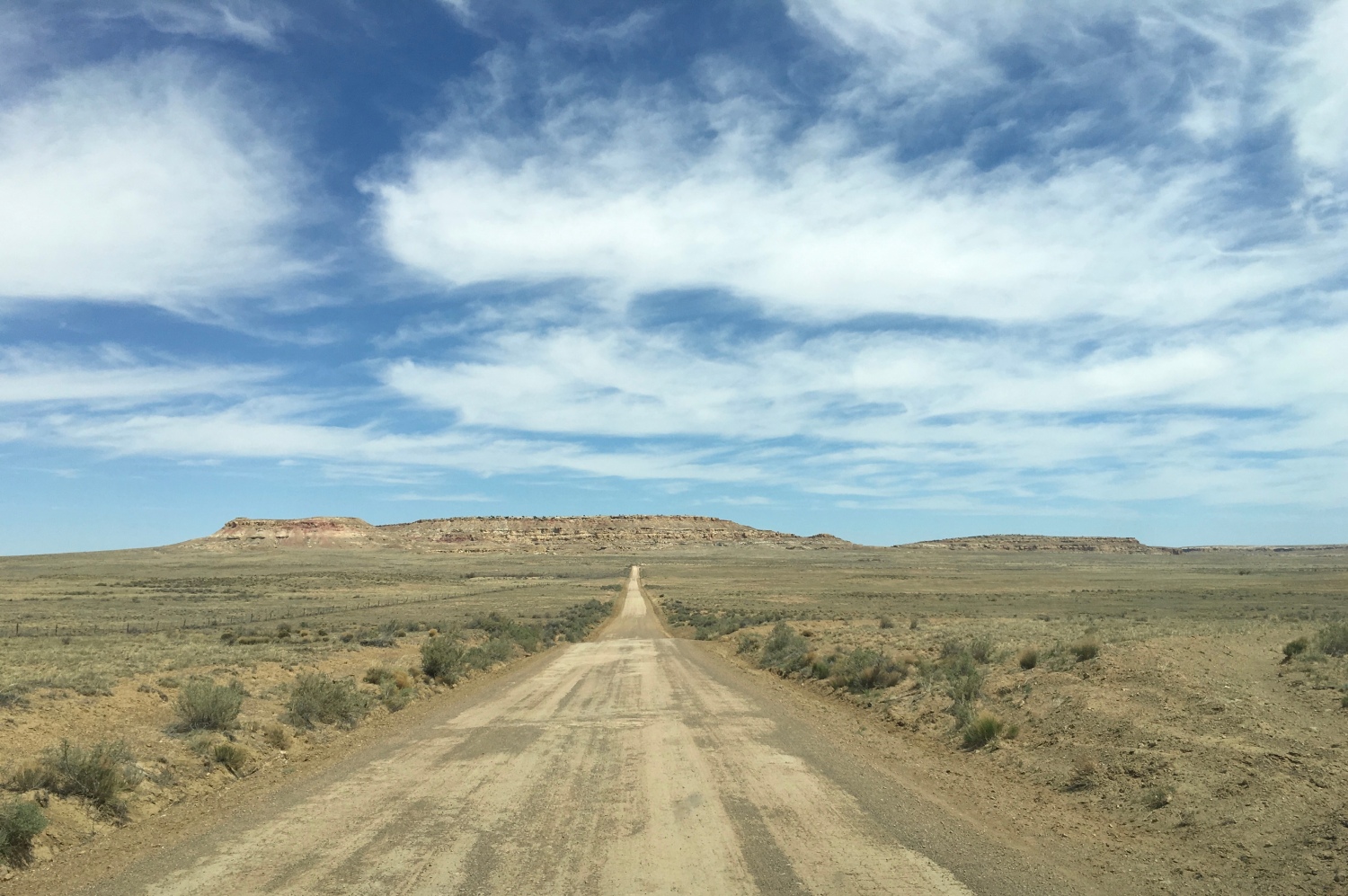
We left Arches National Park and drove north on US 191, where clouds trailed overhead into wispy cones that hinted of cyclones. Along the road, slickrock areas promised mountain bike adventures. We sped by Horse Thief Campground and Mineral Bottom Road.
Driving to Dead Horse Point State Park with view of La Sal Mountains
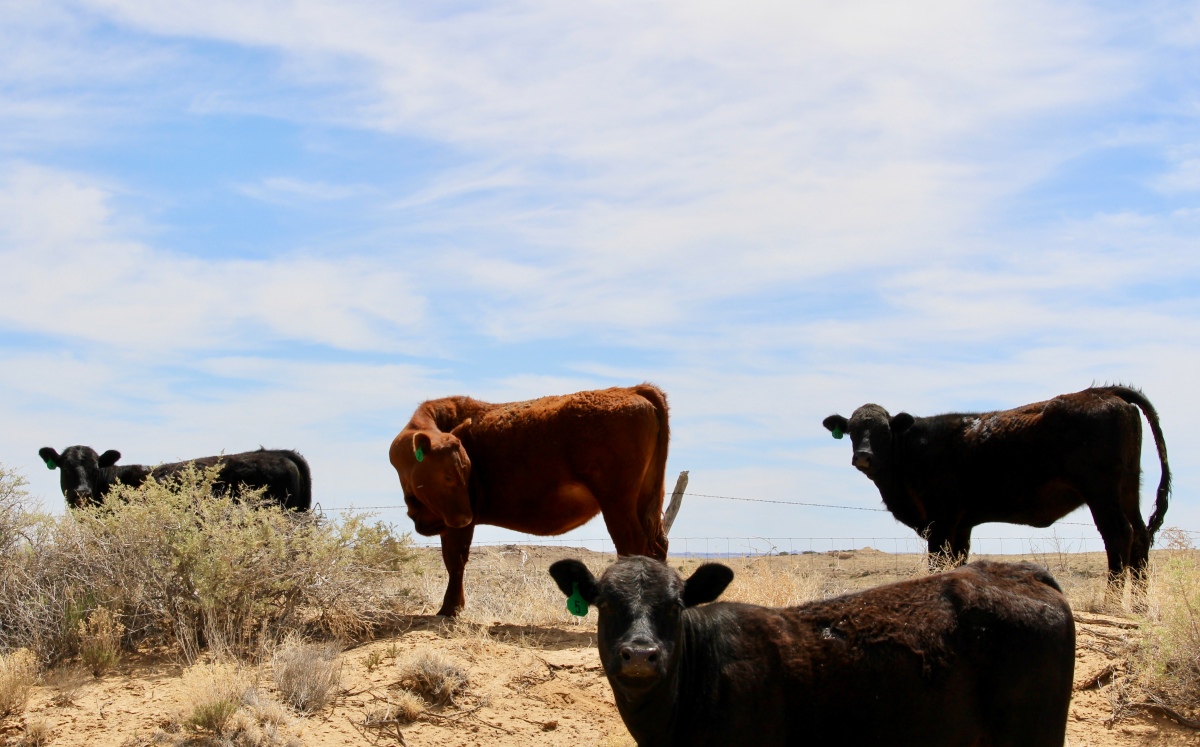
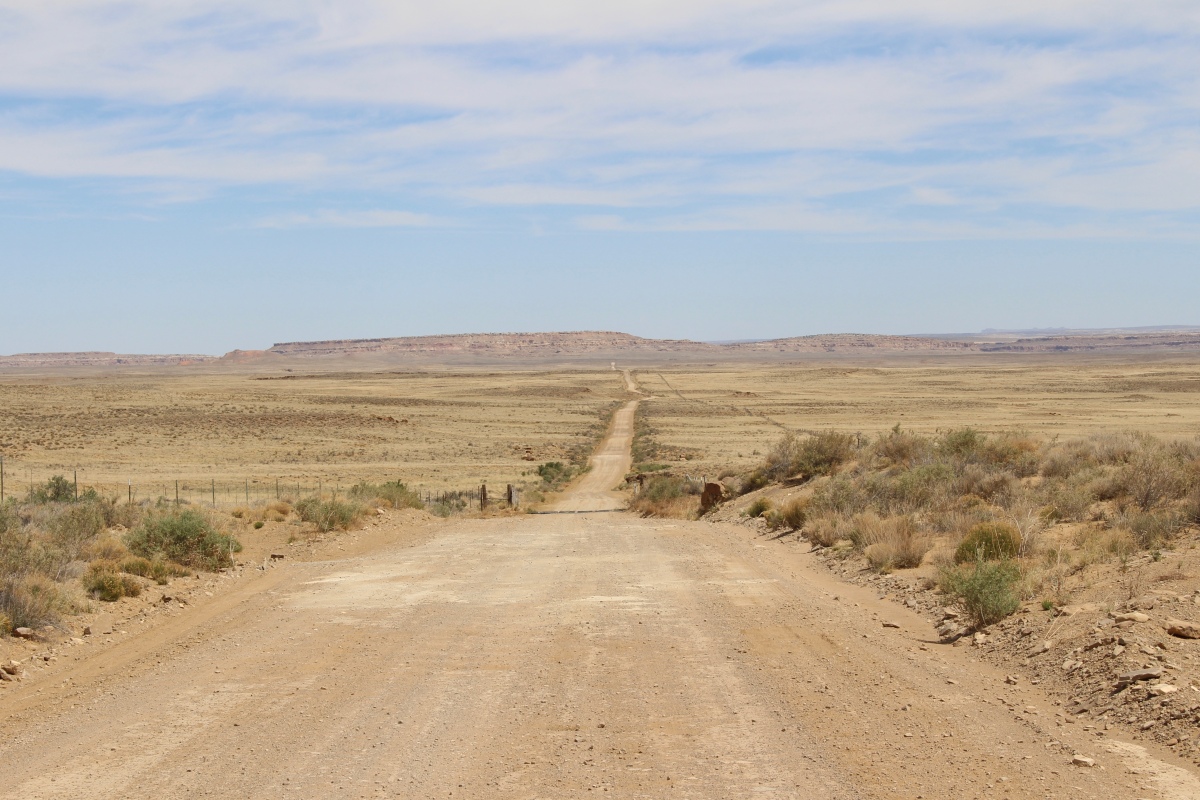
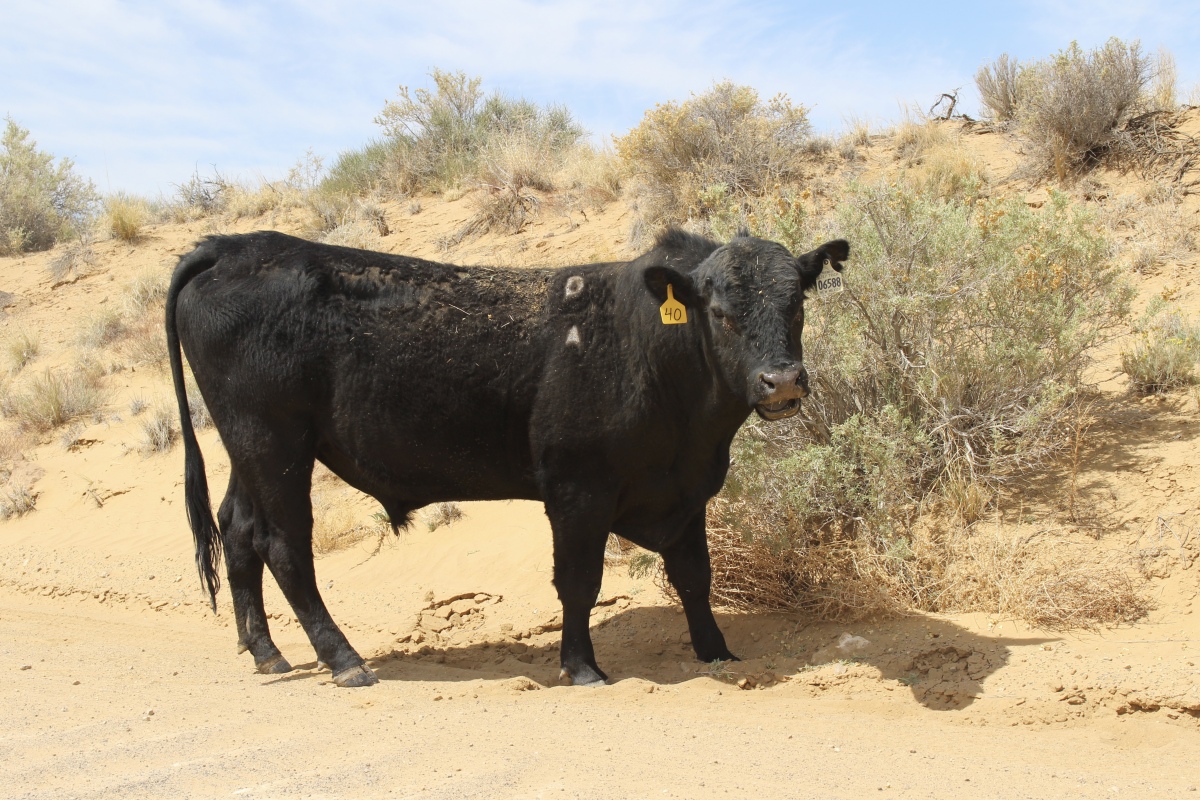
Heading south on SR 313, we crossed open range where calves frolicked and black cows wandered lazily across the road or grazed in the flat grassland. Under one lone tree, two cows huddled for shade. The fragrance of cliffrose danced through the air.
hoodoos and slickrock along the way
According to one legend, Dead Horse State Park was once used as a corral for wild mustangs roaming the mesa. Cowboys in the 1800s rounded up these horses, and herded them across the narrow neck of land and onto the point. The neck, which is only 30 yards wide, was then fenced off with branches and brush, creating a natural corral surrounded by precipitous cliffs. Cowboys then chose the horses they wanted and, for reasons unknown, left the other horses corralled on the parched point, where they died of thirst within view of the Colorado River, 2,000 feet below. The people who found the remains of the unfortunate horses gave this place its name.
Oh, the cruelty of humans.
Dead Horse Point State Park
We stopped first at Dead Horse Point Overlook, where we enjoyed grand views of the canyon and the Colorado River from the top of the mesa.
Dead Horse Point State Park
We soaked in the iconic view of the gooseneck in the Colorado River.
Dead Horse Point State Park
Mike stood at the Dead Horse Point Overlook to admire the views.
Mike at Dead Horse Point Overlook
Dead Horse Point State Park
From the East Rim Trail, we saw bright blues on the desert floor; these are solar evaporation ponds for a mine owned by Intrepid Potash, Inc. Potash is potassium chloride, a salt found in the Paradox Formation. Salt deposited from ancient seas made up this formation as it evaporated and was buried by other sediments.
Solar Evaporation Ponds
Water is pumped down into the formation to dissolve the salt. This salt water is then pumped into the shallow, vinyl-lined ponds seen below. A blue dye is added to speed up evaporation. The dry desert air and many sunny days make this a productive operation.
Twenty-ton scrapers, guided by lasers, harvest the dry salt. A local refinery transforms this concentrated form of potassium chloride into plant fertilizer.
solar evaporation ponds
The West Rim Trail offered the best views of the Colorado River, so we walked along the edges of the canyon.
Dead Horse Point State Park
tree at Dead Horse Point State Park
Dead Horse Point State Park
We stopped at the 30-yard-wide neck, where the wild horses were corralled off, according to legend.
the neck at Dead Horse Point State Park
Dead Horse Point State Park
On our way back to Moab, we stopped to admire The Monitor and the Merrimac Buttes. Towering 600 feet above their Navajo Sandstone base, they can be seen from many points along the highway. The Buttes were named after the Civil War ironclad ships of the same names. The shapes of the buttes mimic the actual shapes of those historic ships. The Merrimac, the large rock on the left, was the Confederate ship, called the “Virginia” by the southern forces. The Monitor, on the right, was the Union ship sent to destroy the Merrimac. The resulting sea battle changed maritime warfare forever. Long after both ships lie on the sea bottom, their rock counterparts remain locked in perpetual battle.
Monitor and Merrimac buttes
Minerals contribute to the painterly rock colors of The Colorado Plateau, seen clearly here. Reds and yellows come from iron, the black sheen is formed from manganese (known as “desert varnish”), and purples and greens are caused by clay minerals.
At this viewpoint, visitors have carefully constructed scores of cairns.
cairns at Monitor and Merrimac buttes
Underlying this view area is Navajo sandstone, deposited 200 million years ago and found throughout the Colorado plateau. At that time, the area was a vast desert system, complete with shifting sand dunes, much like today’s Sahara Desert. These sand dunes hardened over centuries. Erosion exposed the “petrified” sand millions of years later, creating the Navajo sandstone formations we see today.
Navajo sandstone often creates dramatic scenery such as cliffs and rounded domes.
Utah juniper
Although Dead Horse Point State Park is not a National Park, the Visitor Center had a sticker and a cancellation stamp, which I happily added to my National Park passport.
Cancellation stamp
Between our hikes today at Devils Garden in Arches and Dead Horse Point State Park, we walked 21,743 steps, or 9.21 miles.
*Wednesday, May 9, 2018*
***********************
On Sundays, I plan to post various walks that I took on our Four Corners trip as well as hikes I take locally while training for the Camino de Santiago; I may also post on other unrelated subjects. I will use these posts to participate in Jo’s Monday Walks or any other challenges that catch my fancy.
The Devils Garden Trail at the far end of Arches National Park offers routes of various difficulty and length, varying from 1.6-7.2 miles. The longest of the maintained trails in Arches National Park, Devils Garden Trail goes to seven impressive arches, with several more visible from the trail.
On our second morning, we took the hike to Landscape Arch and then climbed up further to Partition Arch and Navajo Arch. We had to hustle to keep ahead of the Chinese tourists who were disembarking from their tour bus.
The Landscape Arch Trail is easy and well-graded, providing a close look at one of the longest natural stone spans in the world.
For this hike, I used, for the first time, my new wide-angle lens (with the exception of the last two photos).
walking through a slot canyon into Devils Garden
Devils Garden Trail
Devils Garden Trail
Devils Garden Trail
Devils Garden Trail
Devils Garden Trail
Devils Garden Trail
Devils Garden Trail
Devils Garden Trail
cliffrose along Devils Garden Trail
Landscape Arch is slightly longer than a football field.
first glimpse of Landscape Arch
Around Landscape Arch
Landscape Arch
Devils Garden Trail
The path past Landscape Arch is more difficult, winding along the narrow tops of exposed sandstone fins, then up and over short, steep crevices where steps have been carved into the rock. This section is not recommended for hikers with a fear of heights.
We escaped the crowds at Landscape Arch with a plan to clamber our way up to Partition and Navajo Arch. The route looked scary — a steep climb up slickrock with slot-canyon drop-offs on either side — so I was hesitant to go up. While we stood looking at the climb, a woman from a canyon beneath us called up and asked if we’d seen her husband, and she went on to describe his T-shirt.
the slickrock way up to Partition Arch
The woman asked that, if we saw him, we inform him that she went up an alternate route, through this canyon. We stood debating for a while, and we finally decided to take the woman’s option up through the adjacent canyon. We climbed up only to realize that the path was blocked off with pieces of dead wood at the upper end – Closed. Oh well, we didn’t know, and it was easy enough to walk over the wood barriers! There was no way I was going to climb down that slickrock, so the sign wouldn’t deter us from coming back down that same route!
We continued on to Partition Arch.
Partition Arch
standing inside Partition Arch looking out over the mesa
Partition Arch
We then hiked to Navajo Arch, not quite as impressive.
inside Navajo Arch
view of Navajo Arch from outside
rock patterns near Navajo Arch
Finally, we worked out way back down and out, through our secret canyon, and past Landscape Arch once again.
Devils Garden Trail
Devils Garden Trail
our secret canyon
Devils Garden Trail
cow parsnip?
Adding Partition Arch and Navajo Arch to Landscape Arch made for a hike of 5.65 miles. It took us 2:52 hours at a pace of 30:32 minutes/mile. We were quite exhausted when it was said and done, but that didn’t stop us from making a few more detours before we returned to our car.
There is nothing like the dramatic landscape at Arches to make a person feel insignificant and overwhelmingly awed.
*Wednesday, May 9, 2018*
***********************
On Sundays, I plan to post various walks that I took on our Four Corners trip as well as hikes I take locally while training for the Camino de Santiago; I may also post on other unrelated subjects. I will use these posts to participate in Jo’s Monday Walks or any other challenges that catch my fancy.
After our hike at Delicate Arch, we drove to the far end of the park to see what else there was to see. We knew since we’d arrived at noon, we’d have to come back the next morning to do all we wanted to do. At the end, we stopped at Skyline Arch, walking about a half mile round trip.
Skyline Arch
Arches often form slowly, but quick and dramatic changes do occur. In 1940, a large boulder suddenly fell out of Skyline Arch, roughly doubling the size of the opening.
Skyline Arch
Skyline Arch
Skyline Arch
around Skyline Arch
around Skyline Arch
As we had to get to the Visitor’s Center for my cancellation stamp by 5:00, we made a quick stop at Fiery Furnace Viewpoint. Mike was disappointed that I wouldn’t do the Fiery Furnace Trail with him. To enter this area, you must accompany a ranger-guided hike or obtain a day-use permit at the visitor center. The Fiery Furnace is a labyrinth of narrow sandstone canyons that requires agility to explore. You must climb through narrow passages and it is easy to get lost.
We stopped to admire the rock formations and the view of the La Sal Mountains.
Fiery Furnace Viewpoint
Named for the warm glow seen on the rocks in the late afternoon, the Fiery Furnace is actually a maze of cool, shady canyons between towering sandstone walls. The chaos of fins, spires and canyons has been called “void, silent – and almost uncanny in its solitude.”
The many vertical rock walls – or fins – you see here and in the Devils Garden are the result of movement, eons ago, far beneath the earth’s surface. Over time, erosion has been shaping the Fiery Furnace. Rain, snow and ice deepened and widened the cracks, creating these towering fins.
Fiery Furnace Viewpoint
La Sal Mountains from the Fiery Furnace Viewpoint
Fiery Furnace Viewpoint
The La Sal Mountains
At the Courthouse Towers Viewpoint, we saw Three Gossips, Sheep Rock, Tower of Babel, the Organ, and other monoliths.
Courthouse Towers Viewpoint
In another direction, we could see the Courthouse Wash Canyon, the Colorado River Canyon, La Sal Mountains and the Moab Valley.
Courthouse Towers Viewpoint
We drove hurriedly down the switchbacks into the Moab Valley to the Visitor’s Center, where I got my cancellation stamp in the nick of time. Then we drove back up the switchbacks to The Park Avenue Trail.
The Park Avenue Trail is a moderate hike along a canyon floor, offering close-up views of massive fins, balanced rocks, and lofty monoliths. We descended 320 feet down into the canyon. It’s recommended that you walk one mile to Courthouse Towers and have a driver pick you up and return you to the trailhead, but we walked 2.11 miles round trip because we had no such chauffeur available.
Park Avenue Trail
Park Avenue Trail
On our Park Avenue walk, we were amazed by the looming fins, the balanced rocks, the cairns, the brittlebrush, yucca, yellow monkeyflower and Prince’s Plume, as well as the swirls of color on the rocks in the wash.
Park Avenue Trail
Park Avenue Trail
Park Avenue Trail
Park Avenue Trail
Brittlebrush along Park Avenue Trail
Yucca on the Park Avenue Trail
rock art on the Park Avenue Trail
Courthouse Towers
Park Avenue Trail
Three Gossips
the wash along Park Avenue Trail
Park Avenue Trail
Park Avenue Trail
Park Avenue Trail
Courthouse Towers
plants eke out a living along the Park Avenue Trail
Park Avenue Trail
Park Avenue Trail
Park Avenue Trail
Yellow monkeyflower and Prince’s Plume along the Park Avenue Trail
Today, between our hikes at Balanced Rock, Delicate Arch, Park Avenue, and various viewpoints, we walked 19,498 steps, or 8.26 miles. What a good way to get me in shape for the Camino! 🙂
*Tuesday, May 8, 2018*
***********************
On Sundays, I plan to post various walks that I took on our Four Corners trip as well as hikes I take locally while training for the Camino de Santiago; I may also post on other unrelated subjects. I will use these posts to participate in Jo’s Monday Walks or any other challenges that catch my fancy.
I have been anticipating returning to Portugal since I left there in 2013!
After I finish the Camino de Santiago, hopefully by my birthday on October 25, I’ll head to Braga, Portugal to meet my husband who will fly into Lisbon, rent a car, and drive to Braga. Our plan is to meet there on Friday, October 26. Hopefully, I will still be able to walk and will be energetic enough to explore Portugal with him!
We started plotting our journey in the north of Portugal by studying a map in Lonely Planet Portugal. We decided to start in Braga, as it’s partway between Porto and Santiago de Compostela. Porto would certainly be next on the itinerary. After our time in Porto, we would head south toward Sintra and Lisbon, with one overnight in either Coimbra or Óbidos (undecided as of yet). Though I’ve already been to Sintra and Lisbon, I have spoken of both places so fondly to my husband that he wants to visit them too.
planning for Portugal
My plans are always overambitious, but we will remain flexible and figure out what we can do comfortably along the way .
I created a spreadsheet, as always, and determined driving distances between towns by using Google Maps. Mike will drive a rental car from Lisbon to Braga. I will have to use public transportation to get from Santiago de Compostela to Braga. Looking at the website Rome2Rio, I’ve found there are two separate four-hour buses, which I can take, although driving would only take 2 hours. Google Maps tells me to take a train to Pontevedra and then an ALSA bus to Braga for 3 hours and 25 minutes. I suppose I’ll figure it out when I get there!
Here’s our itinerary so far:
Friday, August 31 – Saturday, September 1: I fly solo to Lisbon.
Saturday, Sept. 1- Sunday, September 2: Take the overnight sleeper train from Lisbon: Lisboa Oreinte at 21:34 arriving in Hendaye at 11:33 a.m. Sunday. Take two more trains to St. Jean-Pied-de-Port in France.
September 4-October 25: WALK THE CAMINO!
Thursday, October 25: Mike flies solo to Lisbon.
Friday, October 26 – Sunday, the 28th: Braga and surrounds, including Dom Jesus Do Monte. If we have time, we might visit Guimaraes or Parque Nacional da Peneda-Geres. (I’m sure this is overly ambitious, but whatever we see, we see!)
Sunday, Oct. 28 – Wednesday, the 31st: Porto and all around.
Wednesday, October 31 – Thursday, November 1: Either Coimbra or Obidos.
Thursday, November 1 – Saturday, the 3rd: Sintra.
Saturday, November 3 – Tuesday, the 6th (fly home in the morning): Lisbon.
I don’t know any Portuguese except obrigado for thank you, Olá for hello and por favor for please. I ordered a book, which I’ll try to study a bit: Portuguese in 10 minutes a day. As I’m also studying a similar book in Spanish, I probably won’t have time to learn much. I should have started long before now! Hopefully I can pick up a few phrases before going.
Before I travel to any country, I try to read novels, memoirs or travel essays set in my destination. Soon after I returned from my first trip to Portugal, I read The Painter of Birds. At this moment, I’m reading, and enjoying very much, 300 Days of Sun. I have Alentejo Blue on my Kindle, which I’m debating taking on the Camino, but it depends on my pack weight. I also bought and intended to read José Saramago‘s Journey to Portugal: In Pursuit of Portugal’s History and Culture but it’s not likely to happen. I am finding it too dense, and frankly, not that interesting.
Fado, journal, camera, guidebook, map and books
Here’s my suggested reading list for Portugal (the ones with stars *** are ones I’ve read or am currently reading):
The only movie I was able to find set in Portugal was Night Train to Lisbon (2013) in which a Swiss professor abandons his lectures and buttoned-down life to embark on a thrilling adventure that will take him on a journey to the very heart of himself. I enjoyed it, but it wasn’t one of my favorites.
more planning paraphernalia
Of course, I’ve been to Portugal before but only to the south: the Algarve, Evora, Lisbon and Sintra, which I wrote about here: in search of a thousand cafés: portugal. I looked over my old blog posts to remind myself which parts I liked most and where I should take Mike.
Lately, I’ve been preparing travel journals to keep when I embark on my journey. Here is a list of my creative intentions for this journey. I am always hoping to improve on keeping a travel journal.
Intentions for Portugal
When I was last in Portugal, I bought two CDs that came highly recommended by the owner of a small music shop in Lisbon: Ana Moura “Desfado” and Carminho “alma.” I have listened to them numerous times over the last several years. I also listened to fado when I was in Lisbon. In April of this year, Mike and I went to a local venue, the Barns of Wolftrap, to listen to Ana Moura in person, and we loved immersing ourselves in her sorrowful fado tunes. Fado is a distinctly Portuguese form of music characterized by mournful tunes and lyrics, often about the sea or the life of the poor, and infused with sentiments of resignation, fatefulness and melancholia. Listening to fado is an experience one shouldn’t miss while traveling in the country.
This time, I have made a playlist which includes these two Fado singers and others: Portuguese Dreams.
Ana Moura – A Case of You which includes the lines: “Oh I could drink a case of you, darling, and I would still be on my feet.” And this: “I’m a lonely painter, I live in a box of paint.” So sexy!!!
I love immersing myself in music while visiting different cultures.
In the end, there is the packing. As I can only take a few changes of clothes for the Camino, I will pack a bag that poor Mike will have to bring. I’m sure I will be ecstatic to wear something different after my two or three shirts and hiking pants on the Camino! He will have to lug along my extra suitcase to Braga, where I will take possession of it most happily. 🙂
the stuff of dreams
************************
“ANTICIPATION & PREPARATION” INVITATION: I invite you to write a 750-word (or less) post on your own blog about anticipation & preparation for a particular destination (not journeys in general). If you don’t have a blog, I invite you to write in the comments. Include the link in the comments below by Thursday, August 23 at 1:00 p.m. EST. When I write my post in response to this challenge on Friday, August 24, I’ll include your links in that post. My next post will be about preparations for the Camino de Santiago.
This will be an ongoing invitation, on the 4th Friday of each month. Feel free to jump in at any time. 🙂 If you’d like to read more about the topic, see: journeys: anticipation & preparation.
I hope you’ll join in our community. I look forward to reading your posts!
the ~ wander.essence ~ community
I invite you all to settle in and read posts from our wandering community. I promise, you’ll be inspired!
Gilly, of Lucid Gypsy, wrote about her anticipation and preparation to travel to Poland to meet two dear blogging friends, Meg and Jo. She was waylaid in an initial attempt, so when she heard whisperings of a later surprise trip by Meg, she put her plan in motion.
We entered Arches National Park just before noon, after having driven from Grand Junction and the scenic route along the Colorado River. After sitting in line at the park entrance for about 15 minutes, we climbed to the top of the mesa using switchbacks along a steep road. We didn’t spend any time at the Visitor’s Center because we were anxious to begin exploring, so I told Mike we’d have to come back down by 5:00 so I could get my cancellation stamp in my Passport book for the day. He agreed, but later wasn’t too pleased about it!
First, we came upon a group of monoliths including the Courthouse Towers Viewpoint, the Tower of Babel, Sheep Rock and the Three Gossips.
Courthouse Towers, with Tower of Babel behind
Three Gossips
Tower of Babel
Arches National Park
I love what is called the Petrified Dunes Viewpoint; the landscape of what looks like sand dunes is actually stone. In the distance we can see the snow-covered La Sal Mountains.
La Sal Mountains viewed from the Petrified Dunes Viewpoint
Petrified Dunes Viewpoint
La Sal Mountains viewed from the Petrified Dunes Viewpoint
At the 128-foot high Balanced Rock, the caprock of the hard Slick Rock Member of the Entrada Sandstone is perched upon a pedestal of mudstone. This softer Dewey Bridge Member of the Carmel Foundation weathers more quickly than the resistant rock above. Eventually, the faster-eroding Dewey Bridge will cause the collapse of Balanced Rock.
Balanced Rock
Cliffrose & Balanced Rock
Balanced Rock
Cliffrose
Near Balanced Rock
Balanced Rock
John Wesley Wolfe settled at the Wolfe Ranch in the late 1800s with his oldest son Fred. A nagging leg injury from the Civil War prompted John to move west from Ohio, looking for a drier climate. He chose this tract of more than 100 acres along Salt Wash for its water and grassland, enough for a few cattle.
Corral at Wolfe Ranch
The Wolfes built a one-room cabin, a corral, and a small dam across Salt Wash. For nearly a decade, they lived alone on the remote ranch.
Wolfe Ranch
In 1906, John’s daughter Flora Stanley, her husband and their children moved to the ranch. Shocked at the primitive conditions, Flora convinced her father to build a new cabin with a wood floor – the cabin that sits here today.
The reunited family weathered a few more years in Utah and in 1910 returned to Ohio. John Wolfe died on October 22, 1913, in Etna, Ohio, at the age of 84.
Wolfe Ranch
The strenuous Delicate Arch Trail begins at Wolfe Ranch, crosses a bridge near Salt Wash, and continues up a long stretch of open slickrock to Delicate Arch. The trail also winds through an area full of chert – a hard, shiny rock used by Native Americans for tools and weapons – and around a short ledge, hugging a steep cliff.
starting up the Delicate Arch Trail
slickrock on the Delicate Arch Trail
steps carved into the slickrock
looking back down on the parking lot
Mike on the Delicate Arch Trail
the Delicate Arch Trail looking down to the parking lot
Along the Delicate Arch Trail – the La Sal Mountains
gnarled juniper along the Delicate Arch trail
more gnarled juniper
After climbing what seems like an eternity up the slickrock, we now walk along a ledge with a steep drop-off. The ledge is to the right in the photo below.
The Delicate Arch Trail – the ledge we walked shown to the right
canyon below the ledge at Delicate Arch
Delicate Arch, an isolated remnant of a bygone fin, stands on the brink of a canyon, with the dramatic La Sal Mountains as a backdrop.
Delicate Arch
Delicate Arch
the carved out stone around Delicate Arch
Delicate Arch
the canyon below the ledge
me with my gnarled juniper
walking back down
close up of rock
salt flats
textured rock
The Delicate Arch Trail is considered a difficult trail, as it has no shade and some exposure to heights. Elevation change is 480 feet (146 meters). We followed rock cairns on the steep slickrock slope and the trail leveled out toward the top of the rock face. Just before you reach Delicate Arch, the trail traverses a rock ledge for about 200 yards (183 meters).
We actually walked 3.65 miles over 2 hours and we were quite exhausted after all of it. Some parts, especially along the ledge, were quite scary.
After the hike, we drove past several more viewpoints and then, before we could do our last hike at Park Avenue, I insisted that we drive back down to the Visitor’s Center to get my cancellation stamp for today!
my stamps in the National Parks passport
*Tuesday, May 8, 2018*
***********************
On Sundays, I plan to post various walks that I took on our Four Corners trip as well as hikes I take locally while training for the Camino de Santiago; I may also post on other unrelated subjects. I will use these posts to participate in Jo’s Monday Walks or any other challenges that catch my fancy.
While walking one day in early April with the Camino group, someone told me that Riverbend Park was a great place to walk because of the bluebells in bloom. Riverbend is a Fairfax County Park that sits beside the Potomac River upstream from Great Falls. On this beautiful spring day, we walked through the bluebells downriver to Great Falls and beyond, giving me a 5.38 mile hike.
bluebells along the Potomac
path through the bluebells
bluebells
bluebells
trees along the river
exposed roots
following the path
bluebells
gnarled trunk
Across the river, we saw some eagle nests. I wish we’d had binoculars.
eagle’s nest along the Potomac River
Honey locusts, native to Virginia, have multi-textured bark.
bark on the Honey Locust
Honey Locust tree
We continued on toward Great Falls, where we stopped at the overlook.
leaning tree
daffodils
Great Falls
trees along the path
trees
fungi
some erupting buds
*April 8, 2018*
***********************
On Sundays, I plan to post various walks that I took on our Four Corners trip as well as hikes I take locally while training for the Camino de Santiago; I may also post on other unrelated subjects. I will use these posts to participate in Jo’s Monday Walks or any other challenges that catch my fancy.
As we made our way back to the north entrance of the park, we stopped at Grand View, where we enjoyed a panorama including Independence Monument, Grand Valley, and the Book Cliffs.
Independence Monument from the Grand View
wildflowers at the Grand View
Monoliths seen at the Grand View
At the viewpoint, we could almost reach out and touch a 200-foot tall sandstone spire. The top layer of this spire is the Kayenta Formation, more resistant to erosion than other sedimentary rocks in the park. This formation was deposited by a high-energy braided river system similar to the Rio Grande River in New Mexico. The bottom layers are the Wingate Formation, a tan sandstone whose sweeping tilted layers tell us this rock was deposited in a desert environment where wind-swept sands accumulated and were buried. An environment like this can be found in the modern Sahara Desert of North Africa.
The Grand View
The cliffs and monoliths of the Monument are made primarily of sandstones over 200 million years old.
The Grand View
We took two more hikes at Colorado National Monument to wrap up our day. We stopped to walk on Otto’s Trail, a gently sloping trail of 0.95 miles, where we enjoyed dramatic views of many monoliths. We were walking in the footsteps of John Otto as we followed the route he used for his first ascent of the 450-foot high Independence Monument.
dead juniper on Otto’s Trail
John Otto’s climb on Independence Monument
Independence Monument from Otto’s Trail
On this late afternoon, we spotted some climbers atop Independence Monument. I don’t know if they were enjoying the view or too terrified to come down! Years ago, I climbed Pilot Rock in Oregon with my first husband and his best friend. Climbing up was fine, although a little scary, but when it was time to come down, I was so terrified I couldn’t do it. I cried, wept actually, and told them they were going to have to call a helicopter to rescue me. Finally, inch by inch, they encouraged me to climb down as they stood beneath me (as if they could really catch me if I fell!). I am careful now not to go up anything so steep that I’d be afraid to come down.
Rock climbers on Independence Monument
view from the end of Otto’s Trail
We stopped at the Balanced Rock View on our way out of the northern entrance. Balanced Rock is a snapshot in time that won’t last forever. Gravity will someday cause it to fall.
Balanced Rock view
We had to drive outside of the park and to the southeast entrance to do the Devils Kitchen Trail. It took us about an hour to hike to a natural rock room formed by huge upright boulders.
cacti along the Devils Kitchen Trail
Devils Kitchen Trail
I loved how the cottonwood trees glowed in the sunlight.
cottonwoods along the Devils Kitchen Trail
Devils Kitchen Trail
flora along the Devils Kitchen Trail
Devils Kitchen Trail
cacti along Devils Kitchen Trail
We crossed a wash and then climbed uphill on a slickrock bench to get to the Devils Kitchen. The trail was a bit confusing and we got on the wrong track several times.
Devils Kitchen Trail
Devils Kitchen is a natural rock room surrounded by Wingate Sandstone cliffs, and provides a bit of a resting spot after the steep ascent.
inside Devils Kitchen
I loved looking at the patterns on the towering rocks.
inside Devils Kitchen
Devils Kitchen Trail
Devils Kitchen
Devils Kitchen Trail
The Devil’s Kitchen hike was 2.7 miles and took us a 1:04 hours. Between getting out for the various viewpoints and the hikes we took, we walked 18,913 steps, or 8.01 miles, over the course of the day.
On the way out of the park, we passed by the Book Cliffs along the southern and western edge of the Tavaputs Plateau.
Book Cliffs
Book Cliffs
Book Cliffs
** Monday, May 7, 2018 **
***********************
On Sundays, I plan to post various walks that I took on our Four Corners trip as well as hikes I take locally while training for the Camino de Santiago; I may also post on other unrelated subjects. I will use these posts to participate in Jo’s Monday Walks or any other challenges that catch my fancy.
Entering Colorado National Monument, we curl our way up a winding road to the top of the 2,000-foot plateau, stopping at Redlands Overlook to check out the Grand Valley. Rocks on this northeast side of the park were displaced by the Redlands Fault some 70-40 million years ago, and later, flowing water eroded thousands of feet of rock that once rose above today’s monument and valley. Small earthquakes are still common today.
Redlands View
climbing ever upward
We stop to check out the Historic Trails View. Back in the day, ranchers herded cattle along a narrow driveway carved into the opposite canyon wall, from valley to mesa top.
Historic Trails View
We glimpse our first frosty blue berries of the Utah juniper in the pinyon-juniper forest at the Historic Trails View. We wander among curly-cup gumweed, pale evening primrose, creamtips and rubber rabbitbrush — all somehow taking root among the red and orange rocks. The fragrance of sage wafts through the dry air.
Utah Juniper
From the Fruita Canyon View we can see the fruit-growing Fruita region in the Grand Valley, as well as the road on which we came up. Opposite the valley, the Book Cliffs appear along the southern and western edge of the Tavaputs Plateau.
Fruita Canyon View
After visiting the Saddlehorn Visitor Center, we hike along the Canyon Rim Trail on ledges of Kayenta Sandstone; this trail hooks up with the Window Rock Trail. Atop the rim, we get our first glimpse of Wedding and Monument Canyons, with their pinyon-juniper forests and monoliths with names such as Praying Hands, Pipe Organ, Kissing Couple and Independence Monument.
Canyon Rim Trail
Mike on the Canyon Rim Trail
Wedding Canyon
Close up of formations
We even find some little lizard friends.
A lizard friend
Mike on the Canyon Rim Trail
Me on the Canyon Rim Trail
Wedding Canyon
Book Cliffs View
dead Utah junipers and other flora
Wedding Canyon
Window Rock is a hole carved out of a crack in a stone wall by thousands of years of relentless erosion.
Window Rock
gnarled junipers on the Canyon Rim Trail
Wedding Canyon
Wedding Canyon
John Otto is known for his endless quest for national recognition for the ancient canyons and monoliths of his adopted home. He organized fundraising campaigns, collected signatures for petitions, and wrote newspaper editorials and endless letters to Washington politicians.
On June 20, 1911, John Otto married Boston artist Beatrice Farnham in Wedding Canyon at the base of Independence Monument. The canyon gets its name from this ill-fated marriage ceremony. According to the National Park Service:
Unfortunately, John and Beatrice’s marriage was short-lived. Beatrice found the reality of John’s life to be far from her romantic ideal. A few weeks after the wedding, she left, never to return.
“I tried hard to live his way, but I could not do it, I could not live with a man to whom even a cabin was an encumbrance.” Beatrice Farnham Otto
John Otto
It was at Colorado National Monument that I first learned of the Passport to Your National Parks. I promptly bought the passport book and my first sticker for the monument. Then I put the stamp in my book. Even though I’d been to this park in 1979, that visit will go unrecorded. Now I’ve become addicted to these stickers & stamps.
Passport to Your National Parks
My sticker and stamp for Colorado National Monument
Although this particular hike was only 1.84 miles and took 1:01:37 hours, we did a number of hikes in this park totaling 18,913 steps, or 8.01 miles. I’ll write about some of our other hikes in upcoming posts. 🙂
** Monday, May 7, 2018 **
***********************
On Sundays, I plan to post various walks that I took on our Four Corners trip as well as hikes I take locally while training for the Camino de Santiago; I may also post on other unrelated subjects. I will use these posts to participate in Jo’s Monday Walks or any other challenges that catch my fancy.
My path less traveled. Rediscovering self after surviving the abuse that almost sunk me. Goal of strengthening and thriving on my adult legs. 👣🙏🏻 #recovery #forgiveness
This blog is for those who wish to be creative, authors, people in the healing professions, business people, freelancers, journalists, poets, and teachers. You will learn about how to write well, and about getting published. Both beginning and experienced writers will profit from this blog and gain new creative perspectives. Become inspired from global writers, and find healing through the written word.
Explore, discover and experience the world through Meery's Eye. Off the beat budget traveler. Explore places, cultural and heritage. Sustainable trotter.
shareable tales of Meery is Meeryable
You must be logged in to post a comment.