Skip to content
  • Home
  • about ~ wander.essence ~
    • ~ the places i’ve been ~
    • ~ places i’ve been in the u.s.a. ~
  • Travel Destinations
    • America
      • Boston
      • Delaware
      • District of Columbia
        • Washington
      • Georgia
        • Atlanta
      • Maryland
      • New Jersey
        • Cape May
      • New York
        • Adirondacks
        • Buffalo
        • Niagara Falls
      • Pennsylvania
        • Pittsburgh
      • South Carolina
      • Tennessee
        • Nashville
      • Virginia
    • American Road Trips
      • Canyon & Cactus Road Trip
      • Florida Road Trip
        • Everglades
        • Fort Lauderdale
        • Florida Keys
        • Miami
        • St. Augustine
      • Four Corners Road Trip
        • Arizona
          • Monument Valley
          • Petrified Forest National Park
          • Sunset Crater National Monument
          • Walnut Canyon National Monument
          • Winslow
          • Wupatki National Monument
        • Colorado
          • Colorado National Monument
          • Colorado Towns
          • Great Sand Dunes National Park
          • Grand Junction
        • New Mexico
        • Utah
          • Arches National Park
          • Canyonlands
          • Navajo National Monument
          • Dead Horse Point State Park
          • Hovenweep National Monument
          • Moab
          • Valley of the Gods
          • Natural Bridges National Monument
      • Great Lakes Road Trip
        • Michigan
        • Minnesota
        • Wisconsin
      • Midwestern Triangle
        • Illinois
          • Carbondale
          • Murphysboro
        • Kentucky
          • Covington
          • Lexington
          • Louisville
        • Ohio
          • Cincinnati
      • Road Trip to Nowhere
        • Nebraska
        • North Dakota
        • South Dakota
      • Tex-New Mex Road Trip
        • Texas & New Mexico Road Trip
        • New Mexico
        • Texas
    • International Travel
      • Africa
        • african meanderings {& musings}
        • Egypt
          • Cairo
        • Ethiopia
        • Morocco
      • Asia
        • Cambodia
        • China
          • China Diaries
          • Guangxi Province
        • India
          • Rishikesh
          • Varanasi
        • Japan
          • Kyoto
        • Myanmar
        • Oman
          • a nomad in the land of nizwa
          • Nizwa
        • Singapore
        • South Korea
          • catbird in korea
        • Thailand
        • Turkey
          • Cappadocia
        • Vietnam
      • Central America
        • Costa Rica
        • El Salvador
        • Nicaragua
        • Panama
          • Bocas del Toro
          • Panama City
      • Europe
        • In Search of a Thousand Cafés
        • Croatia
          • Dalmatia
            • Istria
            • Dubrovnik
            • Plitvice Lakes National Park
            • Split
            • Zadar
            • Zagreb
        • Czech Republic
          • Český Krumlov
        • England
        • France
        • Greece
        • Hungary
          • Budapest
          • Esztergom
        • Iceland
        • Italy
          • Bergamo
          • Cinque Terre
          • The Dolomites
          • Florence
          • Rome
          • Tuscany
          • Venice
          • Verona
          • Via Francigena
        • Portugal
        • Spain
          • Camino de Santiago
            • packing list for el camino de santiago 2018
      • North America
        • Canada
          • The Maritimes
            • New Brunswick
            • Nova Scotia
            • Prince Edward Island
          • Ontario
        • Mexico
          • Guanajuato
          • Mexico City
            • Teotihuacán
          • Querétaro
          • San Miguel de Allende
      • South America
        • Colombia
        • Ecuador
          • Cuenca
          • Quito
    • how to make the most of a staycation
      • Coronavirus Coping
  • Imaginings
    • imaginings: the call to place
  • Travel Preparation
    • journeys: anticipation & preparation
  • Travel Creativity
    • on keeping a travel journal
    • on creating art from travels
      • Art Journaling
    • photography inspiration
      • Photography
    • writing prompts: prose
      • Prose
        • Fiction
        • Travel Essay
        • Travelogue
    • writing prompts: poetry
      • Poetry
  • On Journey
    • on journey: taking ourselves from here to there
  • Books & Movies
    • books | international a-z |
    • books & novels | u.s.a. |
    • books | history, spirituality, personal growth & lifestyle |
    • movies | international a-z |
    • movies | u.s.a. |
  • On Returning Home
    • on returning home
  • Annual recap
    • twenty-fifteen
    • twenty-eighteen
    • twenty-nineteen
    • twenty-twenty
    • twenty-twenty-one
    • twenty twenty-two
    • twenty twenty-three
    • twenty twenty-four
    • twenty twenty-five
  • Contact

Enter your email address to follow this blog and receive notifications of new posts by email.

Join 1,059 other subscribers
Follow ~ wander.essence ~ on WordPress.com
  • Home
  • about ~ wander.essence ~
    • ~ the places i’ve been ~
    • ~ places i’ve been in the u.s.a. ~
  • Travel Destinations
    • America
      • Boston
      • Delaware
      • District of Columbia
        • Washington
      • Georgia
        • Atlanta
      • Maryland
      • New Jersey
        • Cape May
      • New York
        • Adirondacks
        • Buffalo
        • Niagara Falls
      • Pennsylvania
        • Pittsburgh
      • South Carolina
      • Tennessee
        • Nashville
      • Virginia
    • American Road Trips
      • Canyon & Cactus Road Trip
      • Florida Road Trip
        • Everglades
        • Fort Lauderdale
        • Florida Keys
        • Miami
        • St. Augustine
      • Four Corners Road Trip
        • Arizona
          • Monument Valley
          • Petrified Forest National Park
          • Sunset Crater National Monument
          • Walnut Canyon National Monument
          • Winslow
          • Wupatki National Monument
        • Colorado
          • Colorado National Monument
          • Colorado Towns
          • Great Sand Dunes National Park
          • Grand Junction
        • New Mexico
        • Utah
          • Arches National Park
          • Canyonlands
          • Navajo National Monument
          • Dead Horse Point State Park
          • Hovenweep National Monument
          • Moab
          • Valley of the Gods
          • Natural Bridges National Monument
      • Great Lakes Road Trip
        • Michigan
        • Minnesota
        • Wisconsin
      • Midwestern Triangle
        • Illinois
          • Carbondale
          • Murphysboro
        • Kentucky
          • Covington
          • Lexington
          • Louisville
        • Ohio
          • Cincinnati
      • Road Trip to Nowhere
        • Nebraska
        • North Dakota
        • South Dakota
      • Tex-New Mex Road Trip
        • Texas & New Mexico Road Trip
        • New Mexico
        • Texas
    • International Travel
      • Africa
        • african meanderings {& musings}
        • Egypt
          • Cairo
        • Ethiopia
        • Morocco
      • Asia
        • Cambodia
        • China
          • China Diaries
          • Guangxi Province
        • India
          • Rishikesh
          • Varanasi
        • Japan
          • Kyoto
        • Myanmar
        • Oman
          • a nomad in the land of nizwa
          • Nizwa
        • Singapore
        • South Korea
          • catbird in korea
        • Thailand
        • Turkey
          • Cappadocia
        • Vietnam
      • Central America
        • Costa Rica
        • El Salvador
        • Nicaragua
        • Panama
          • Bocas del Toro
          • Panama City
      • Europe
        • In Search of a Thousand Cafés
        • Croatia
          • Dalmatia
            • Istria
            • Dubrovnik
            • Plitvice Lakes National Park
            • Split
            • Zadar
            • Zagreb
        • Czech Republic
          • Český Krumlov
        • England
        • France
        • Greece
        • Hungary
          • Budapest
          • Esztergom
        • Iceland
        • Italy
          • Bergamo
          • Cinque Terre
          • The Dolomites
          • Florence
          • Rome
          • Tuscany
          • Venice
          • Verona
          • Via Francigena
        • Portugal
        • Spain
          • Camino de Santiago
            • packing list for el camino de santiago 2018
      • North America
        • Canada
          • The Maritimes
            • New Brunswick
            • Nova Scotia
            • Prince Edward Island
          • Ontario
        • Mexico
          • Guanajuato
          • Mexico City
            • Teotihuacán
          • Querétaro
          • San Miguel de Allende
      • South America
        • Colombia
        • Ecuador
          • Cuenca
          • Quito
    • how to make the most of a staycation
      • Coronavirus Coping
  • Imaginings
    • imaginings: the call to place
  • Travel Preparation
    • journeys: anticipation & preparation
  • Travel Creativity
    • on keeping a travel journal
    • on creating art from travels
      • Art Journaling
    • photography inspiration
      • Photography
    • writing prompts: prose
      • Prose
        • Fiction
        • Travel Essay
        • Travelogue
    • writing prompts: poetry
      • Poetry
  • On Journey
    • on journey: taking ourselves from here to there
  • Books & Movies
    • books | international a-z |
    • books & novels | u.s.a. |
    • books | history, spirituality, personal growth & lifestyle |
    • movies | international a-z |
    • movies | u.s.a. |
  • On Returning Home
    • on returning home
  • Annual recap
    • twenty-fifteen
    • twenty-eighteen
    • twenty-nineteen
    • twenty-twenty
    • twenty-twenty-one
    • twenty twenty-two
    • twenty twenty-three
    • twenty twenty-four
    • twenty twenty-five
  • Contact

wander.essence

wander.essence

Home from Morocco & Italy

Home sweet home!May 10, 2019
I'm home from Morocco & Italy. :-)

Italy trip

Traveling to Italy from MoroccoApril 23, 2019
On my way to Italy!

Leaving for Morocco

Casablanca, here I come!April 4, 2019
I'm on my way to Casablanca. :-)

Home from our Midwestern Triangle Road Trip

Driving home from Lexington, KYMarch 6, 2019
Home sweet home from the Midwest. :-)

Leaving for my Midwestern Triangle Road Trip

Driving to IndianaFebruary 24, 2019
Driving to Indiana.

Returning home from Portugal

Home sweet home from Spain & Portugal!November 6, 2018
Home sweet home from Spain & Portugal!

Leaving Spain for Portugal

A rendezvous in BragaOctober 26, 2018
Rendezvous in Braga, Portgual after walking the Camino de Santiago. :-)

Leaving to walk the Camino de Santiago

Heading to Spain for the CaminoAugust 31, 2018
I'm on my way to walk 790 km across northern Spain on the Camino de Santiago.

Home from my Four Corners Road Trip

Home Sweet Home from the Four CornersMay 25, 2018
Home Sweet Home from the Four Corners. :-)

My Four Corners Road Trip!

Hitting the roadMay 1, 2018
I'm hitting the road today for my Four Corners Road Trip: CO, UT, AZ, & NM!

Recent Posts

  • call to place, anticipation & preparation: guatemala & belize March 3, 2026
  • the february cocktail hour: witnessing wedding vows, a visit from our daughter & mike’s birthday March 1, 2026
  • the january cocktail hour: a belated nicaraguan christmas & a trip to costa rica’s central pacific coast February 3, 2026
  • bullet journals as a life repository: bits of mine from 2025 & 2026 January 4, 2026
  • twenty twenty-five: nicaragua {twice}, mexico & seven months in costa rica {with an excursion to panama} December 31, 2025
  • the december cocktail hour: mike’s surgery, a central highlands road trip & christmas in costa rica December 31, 2025
  • top ten books of 2025 December 28, 2025
  • the november cocktail hour: a trip to panama, a costa rican thanksgiving & a move to lake arenal condos December 1, 2025
  • panama: the caribbean archipelago of bocas del toro November 24, 2025
  • a trip to panama city: el cangrejo, casco viejo & the panama canal November 22, 2025
  • the october cocktail hour: a trip to virginia, a NO KINGS protest, two birthday celebrations, & a cattle auction October 31, 2025
  • the september cocktail hour: a nicoya peninsula getaway, a horseback ride to la piedra del indio waterfalls & a fall bingo card September 30, 2025
  • the august cocktail hour: local gatherings, la fortuna adventures, & a “desfile de caballistas”  September 1, 2025

Archives

  • March 2026
  • February 2026
  • January 2026
  • December 2025
  • November 2025
  • October 2025
  • September 2025
  • August 2025
  • June 2025
  • May 2025
  • April 2025
  • March 2025
  • February 2025
  • January 2025
  • December 2024
  • November 2024
  • October 2024
  • September 2024
  • August 2024
  • July 2024
  • June 2024
  • May 2024
  • April 2024
  • March 2024
  • February 2024
  • January 2024
  • December 2023
  • November 2023
  • September 2023
  • August 2023
  • June 2023
  • May 2023
  • April 2023
  • March 2023
  • February 2023
  • January 2023
  • December 2022
  • November 2022
  • October 2022
  • September 2022
  • August 2022
  • June 2022
  • May 2022
  • April 2022
  • March 2022
  • February 2022
  • January 2022
  • December 2020
  • November 2020
  • October 2020
  • September 2020
  • August 2020
  • July 2020
  • June 2020
  • May 2020
  • April 2020
  • March 2020
  • February 2020
  • January 2020
  • December 2019
  • November 2019
  • October 2019
  • September 2019
  • August 2019
  • July 2019
  • June 2019
  • May 2019
  • April 2019
  • March 2019
  • February 2019
  • January 2019
  • December 2018
  • November 2018
  • October 2018
  • September 2018
  • August 2018
  • July 2018
  • June 2018
  • May 2018
  • April 2018
  • March 2018

Blog Stats

  • 128,596 hits
March 2026
M T W T F S S
 1
2345678
9101112131415
16171819202122
23242526272829
3031  
« Feb    

Categories

  • Aït-Ben-Haddou (4)
  • Abingdon (1)
  • Abiquiu (1)
  • Acquapendente (2)
  • Adirondacks (3)
  • Africa (39)
  • Ainokura (2)
  • Alabama (1)
  • Alajuela (3)
  • Alamogordo (1)
  • Albuquerque (3)
  • Alexandria (1)
  • Alma (1)
  • Alpe di Siusi (1)
  • Alsace-Lorraine (1)
  • Alto Adige Wine Road (1)
  • Amarante (2)
  • America (69)
  • American Bison (1)
  • American books (22)
  • American Road Trips (255)
  • American Visionary Art Museum (1)
  • Americana (1)
  • Andrew Johnson National Historic Site (1)
  • Annapolis Valley (1)
  • Annual recap (10)
  • Anticipation (46)
  • Antietam National Battlefield (2)
  • Antigua (1)
  • Aramak Tour (1)
  • Arches National Park (8)
  • architecture (1)
  • Arena Stage (1)
  • Arizona (28)
  • Aroumd (2)
  • Art Journaling (9)
  • Asciano (1)
  • Asia (41)
  • Assisi (1)
  • Astorga (2)
  • Atapuerca (1)
  • Athens (1)
  • Atlanta (7)
  • Austin (2)
  • Aveiro (2)
  • Azofra (2)
  • Aztec Ruins National Monument (1)
  • óbidos (1)
  • Baños (2)
  • Badlands National Park (1)
  • Bagan (1)
  • Bagno Vignoni (2)
  • Bajos del Toro (1)
  • Balcony House (1)
  • Bali (9)
  • Baltimore (7)
  • Baltimore Museum of Art (1)
  • Bandelier National Monument (1)
  • Bangkok (2)
  • Bear Butte (1)
  • Beatrice (1)
  • Beihai (1)
  • Belize (3)
  • Beppu (1)
  • Bergamo (3)
  • Big Bend National Park (2)
  • Bijagua (2)
  • Bismarck (3)
  • Bismarck Art Alley (1)
  • Bitchu-Takahashi (1)
  • Blue Falls of Costa Rica (1)
  • Bluff (1)
  • Bluff Fort Historic Site (1)
  • Bocas del Toro (2)
  • Bocas Town (1)
  • Bogotá (4)
  • Bolsena (2)
  • Bolzano (2)
  • Bonanzaville (1)
  • Books (48)
  • Bosque de Chapultepec (1)
  • Boston (2)
  • Boulder (1)
  • Boys Town (1)
  • Braga (3)
  • Brookings (1)
  • Brunico/Bruneck (1)
  • Budapest (1)
  • Buffalo (9)
  • Bukit Peninsula (1)
  • Bullet journaling (1)
  • Buonconvento (2)
  • Burano (2)
  • Burgos (4)
  • Cañas (2)
  • Cabo da Roca (1)
  • Caddo Lake (2)
  • Cairo (3)
  • California (4)
  • Cambodia (4)
  • Cambridge (1)
  • Camino de Santiago (64)
  • Campagnano di Roma (2)
  • Canada (15)
  • Canyon & Cactus Road Trip (4)
  • Canyon de Chelly (3)
  • Canyonlands (3)
  • Cape May (7)
  • Cappadocia (2)
  • Capranica (1)
  • Carbondale (9)
  • Carlsbad (1)
  • Carlsbad Caverns National Park (2)
  • Cartagena (4)
  • Casablanca (9)
  • Casco Viejo (1)
  • Castellina in Chianti (1)
  • Catarata del Toro (1)
  • Catskill Mountains (1)
  • Cedar Creek & Belle Grove National Historical Park (1)
  • Central America (45)
  • Central Highlands (1)
  • Centro Histórico (1)
  • Chaco Culture National Historical Park (4)
  • challenge: a call to place (39)
  • Channel Islands National Park (3)
  • Chapel in the Hills (1)
  • Charles Pinckney National Historic Site (1)
  • Charleston (11)
  • Chefchaouen (5)
  • Cheyenne (2)
  • Cheyenne Depot Museum (1)
  • Cheyenne Frontier Days Old West Museum (1)
  • Chicago (3)
  • Chillicothe (2)
  • Chimayó (1)
  • Chimney Rock (1)
  • China (8)
  • Chinatown (1)
  • Christmas (5)
  • Churchill Downs (1)
  • Cihuatán (1)
  • Cincinnati (15)
  • Cincinnati Art Museum (1)
  • Cinque Terre (10)
  • Cinquera (1)
  • Civita di Bagnoregio (1)
  • Cloudcroft (1)
  • Cocktail Hour (24)
  • Cocoa Beach (2)
  • Coeur d'Alene (1)
  • Collalbo/Klobenstein (1)
  • Colle di Val d'Elsa (2)
  • Colombia (9)
  • Colorado (31)
  • Colorado National Monument (3)
  • Colorado Towns (6)
  • Colorful (1)
  • Condesa (1)
  • Connecticut (1)
  • Cordoba (1)
  • Coronavirus Coping (14)
  • Cortina d’Ampezzo (1)
  • Costa Nova (1)
  • Costa Rica (23)
  • Covington (7)
  • Cowgirls of the West (1)
  • Coyoacán (1)
  • Crazy Horse Memorial (1)
  • Crestone (1)
  • Crete (1)
  • Croatia (3)
  • Cuenca (3)
  • Curves (1)
  • Custer (1)
  • Custer State Park (1)
  • Czech Republic (1)
  • Dakota Dinosaur Museum (1)
  • Dali (1)
  • Dalmatia (1)
  • De Smet (1)
  • Dead Horse Point State Park (1)
  • Dead Sea (1)
  • Deadwood (3)
  • decay (1)
  • Delaware (9)
  • Delphi (1)
  • Denver (1)
  • destinations (44)
  • Devils Tower National Monument (2)
  • Diamante Eco Adventure Park (1)
  • Dickinson (1)
  • District of Columbia (22)
  • Dobbiaco/Toblach (1)
  • Dolores Hidalgo (1)
  • Drawing (7)
  • Dubrovnik (1)
  • Durango (1)
  • Dwight D. Eisenhower Memorial (1)
  • Ecuador (14)
  • Egypt (3)
  • El Cangrejo (1)
  • El Salvador (6)
  • El-Khorbat (1)
  • Embudo (1)
  • Enchanted Rock State Natural Area (1)
  • England (3)
  • Erg Chebbi (3)
  • Española (1)
  • Essaouira (4)
  • Esztergom (1)
  • Ethiopia (3)
  • Europe (121)
  • Evan Williams Bourbon Experience (1)
  • Everglades (3)
  • Evora (1)
  • Fargo (2)
  • Fès (3)
  • Fenghuang (1)
  • Fez (2)
  • Fiction (6)
  • Findlay Market (1)
  • Finisterre (2)
  • Finland (1)
  • Fira (1)
  • Fiumicino (2)
  • Flatirons Vista Trail (1)
  • Flight 93 National Memorial (1)
  • Florence (8)
  • Flores (1)
  • Florida Keys (3)
  • Florida Road Trip (5)
  • Formello (1)
  • Fort Abraham Lincoln State Park (1)
  • Fort Atkinson State HIstorical Park (1)
  • Fort Calhoun (1)
  • Fort Collins (2)
  • Fort Lauderdale (2)
  • Fort Mandan (1)
  • Fort McHenry National Monument and Historic Shrine (1)
  • Fort Robinson State Park (1)
  • Fort Sumter and Fort Moultrie National Historical Park (1)
  • Fort Union Trading Post National Historic Site (1)
  • Four Corners Road Trip (74)
  • France (7)
  • Frazier Museum (1)
  • Fredericksburg (1)
  • Fucecchio (1)
  • Fundy National Park (1)
  • G Adventures Tour (10)
  • Gallina (2)
  • Gambassi Terme (2)
  • Gateway Arch National Park (1)
  • Gavin's Point Dam (1)
  • George Rogers Clark National Historical Park (2)
  • Georgia (7)
  • Gerald R. Ford Birthsite (1)
  • Germany (1)
  • Gettysburg National Military Park (1)
  • Goals (3)
  • Gothenburg (1)
  • Grand Junction (1)
  • Great Falls (2)
  • Great Lakes Road Trip (6)
  • Great Sand Dunes National Park (2)
  • Grecia (1)
  • Greece (3)
  • Greeneville (1)
  • Greenville (1)
  • Greve in Chianti (1)
  • Guadalupe Mountains National Park (1)
  • Guanacaste (12)
  • Guanajuato (5)
  • Guangxi Province (4)
  • Guatapé (5)
  • Guatemala (3)
  • Guatemala City (1)
  • Guilin (1)
  • Guimarães (2)
  • Halifax (3)
  • Halong Bay (1)
  • Hanoi (1)
  • Heidelberg (1)
  • Hida Furukawago (2)
  • High Road to Taos (1)
  • Hikes & Walks (202)
  • HISTORIC NAKASENDO TRAIL (1)
  • Hoa Lu (1)
  • Holbrook (1)
  • Holidays (6)
  • Hong Kong (1)
  • Hopewell Culture National Historical Park (2)
  • Hopewell Rocks Provincial Park (1)
  • Hotel Hacienda Guachipelin (1)
  • Hovenweep National Monument (1)
  • Hubbell Trading Post (1)
  • Hungary (1)
  • Iceland (1)
  • Idaho (1)
  • Illinois (17)
  • Imaginings (46)
  • Imlil (2)
  • India (7)
  • Indiana (6)
  • Indonesia (9)
  • Ingapirca (2)
  • Inle Lake (1)
  • Innichen/San Candido (1)
  • International Books (32)
  • International Peace Garden (1)
  • International Travel (337)
  • Iowa (1)
  • Isla Bastimentos (1)
  • Isla Carenero (1)
  • Isla Colón (1)
  • Istanbul (2)
  • Istria (1)
  • Italy (62)
  • Jamestown (1)
  • Japan (20)
  • Japan Alps (4)
  • Jefferson (1)
  • Jewel Cave National Monument (1)
  • Jimbaran (1)
  • Joachim Regional Museum & Prairie Outpost Park (1)
  • Johnstown Flood National Memorial (1)
  • Jordan (3)
  • Joseph N. Nicollet Tower and Interpretive Center (1)
  • Joshua Tree National Park (3)
  • Joslyn Art Museum (1)
  • Journaling (10)
  • Joya de Cerén (1)
  • Kansas (2)
  • Kathmandu (2)
  • Kentucky (17)
  • KMAC (1)
  • Knife River Indian Villages (2)
  • Kunming (1)
  • Kurashiki Bikan Historical Quarter (1)
  • Kyoto (5)
  • Kyushu (4)
  • La Fortuna (3)
  • La Giustiniana (2)
  • La Peñol (1)
  • La Romita (1)
  • La Spezia (6)
  • Lago d'Iseo (1)
  • Lago de Atitlán (1)
  • Lago di Garda (1)
  • Lago di Garda (1)
  • Laguna de Apoyo (1)
  • Laguna Quilotoa (2)
  • Languedoc-Roussillon (1)
  • Latacunga (3)
  • laundry (1)
  • Lazio (6)
  • León (2)
  • León (2)
  • Leeds (1)
  • Lens-Artists (2)
  • Lewis & Clark Interpretive Center (2)
  • Lexington (8)
  • Lijiang (1)
  • Lincoln Boyhood Home National Memorial (2)
  • Lincoln City (3)
  • lines (1)
  • Lisbon (8)
  • Logroño (3)
  • Lombardy (3)
  • Longji Rice Terraces (1)
  • Longreads (6)
  • Looking ahead (3)
  • Lorca (2)
  • Lory State Park (1)
  • Los Alamos (3)
  • Los Angeles (3)
  • Louisiana (1)
  • Louisville (13)
  • Low Road to Taos (1)
  • Lucca (3)
  • Luckenbach (1)
  • Lunenburg (1)
  • Madison (1)
  • Madison County Historical Society Museum (1)
  • Magnolia Plantations & Gardens (1)
  • Magome-juku (1)
  • Mahone Bay (1)
  • Maine (1)
  • Managua (5)
  • Manarola (1)
  • Mandalay (1)
  • Mandan (1)
  • Manhattan Project National Historical Park (1)
  • Mapmaking (2)
  • Marfa (1)
  • Market towns near Cuenca (2)
  • markets (1)
  • Marrakech (7)
  • Maryland (11)
  • Massachusetts (2)
  • Matagalpa (2)
  • Mathews (1)
  • Meadowlark Botanical Gardens (4)
  • Medellín (5)
  • Medora (5)
  • Memoir (4)
  • Merzouga (5)
  • Mesa Verde National Park (4)
  • Meteora (1)
  • Mexico (11)
  • Mexico City (7)
  • Miami (3)
  • Michigan (4)
  • Middletown (1)
  • Midwestern Triangle (30)
  • Minas Basin (1)
  • Mine of Santa Brigida (1)
  • Mineral de Pozos (1)
  • Ministers Island (1)
  • Minnesota (1)
  • Minnesota (3)
  • Minot (1)
  • Minuteman Missile National Historic Site (1)
  • Mirador de Catarina (1)
  • Mississippi (1)
  • Missouri (4)
  • Missouri National Recreation River (1)
  • Missouri River Basin Lewis & Clark Center (2)
  • Mitchell (1)
  • Moab (2)
  • Montalcino (1)
  • Montana (1)
  • Montefiascone (1)
  • Montefioralle (1)
  • Montepulciano (1)
  • Monteriggioni (3)
  • Monteroni d'Arbia (1)
  • Monterosi (1)
  • Monterosso al Mare (2)
  • Monteverde (1)
  • Monthly recap (24)
  • Monument Valley (1)
  • Moorhead (1)
  • Morocco (37)
  • Mount Pleasant (1)
  • Mt. Rushmore National Memorial (1)
  • Mulberry Bend Overlook (1)
  • Murano (2)
  • Murphysboro (10)
  • Muruzabal (1)
  • Muscat (1)
  • Museum of the Shenandoah Valley (1)
  • Muxia (2)
  • Myanmar (2)
  • Nagoya (4)
  • Nagoya Castle (2)
  • Nanning (3)
  • Naoshima (1)
  • Narita (5)
  • Nashville (8)
  • National Gallery of Art (2)
  • natural bridges (1)
  • Natural Bridges National Monument (2)
  • Navajo National Monument (2)
  • Nebraska (21)
  • Nepal (4)
  • New Belgium Brewing (1)
  • New Brunswick (6)
  • New Castle (2)
  • New England Road Trip (2)
  • New Hampshire (2)
  • New Jersey (7)
  • New Mexico (12)
  • New Mexico (1)
  • New Mexico (12)
  • New York (16)
  • Newport (1)
  • Niagara Falls (7)
  • Nicaragua (25)
  • Nice (1)
  • Nicoya Peninsula (1)
  • Nizwa (3)
  • Norfolk (1)
  • Normandy (1)
  • North America (22)
  • North Dakota (26)
  • North Dakota Heritage Center (2)
  • North Platte (1)
  • Norway (1)
  • Nosara (1)
  • Nova Scotia (5)
  • Nuevo Arenal (2)
  • Nusa Dua (1)
  • Oakland (1)
  • Oakton (23)
  • Ogallala (1)
  • Ohio (17)
  • Ohkay Owingeh Pueblo (1)
  • Oia (1)
  • Okayama (4)
  • Oklahoma (1)
  • Oklahoma City (1)
  • Old Market (1)
  • Omaha (5)
  • Oman (4)
  • Ometepe (15)
  • On Journey (44)
  • On Returning Home (40)
  • On-a-Slant Village (1)
  • Ontario (4)
  • Orisson (2)
  • Ortesei/St. Ulrich (1)
  • Orvieto (1)
  • Otavalo (2)
  • Ouray (1)
  • Pagosa Springs (1)
  • Pamplona (2)
  • Panama (4)
  • Panama Canal (2)
  • Panama City (2)
  • Panchimalco (1)
  • Panzano in Chianti (1)
  • Paris (2)
  • Parque Nacional Cajas (2)
  • Parque Nacional Cotopaxi (2)
  • Parque Nacional Volcán Poás (1)
  • Parque Nacional Volcán Tenorio (2)
  • Parque Nactional Volcán Rincón de la Vieja (2)
  • pastels (1)
  • Patterns (3)
  • Peña de Bernal (1)
  • Pecos National Historical Park (1)
  • Peniche (1)
  • Pennsylvania (14)
  • Perugia (2)
  • Petrified Forest National Park (5)
  • petroglyphs (1)
  • Phnom Penh (3)
  • Photography (267)
  • Phuket (2)
  • Pilgrimage (75)
  • Ping'An (1)
  • Pisa (1)
  • Pittsburgh (11)
  • Playa Costa del Sol (1)
  • Playa Hermosa (4)
  • Plitvice Lakes National Park (1)
  • Poetry (33)
  • Pokhara (2)
  • Polanco (1)
  • Ponca State Park (1)
  • Ponte a Cappiano (1)
  • Porto (4)
  • Portovenere (1)
  • Portugal (25)
  • Prairie Homestead Historic Site (1)
  • Prince Edward Island (2)
  • Prose (208)
  • Puerta del Diablo (1)
  • Querétaro (4)
  • Quito (2)
  • Rapid City (6)
  • Red Cloud (1)
  • Redlin Art Center (1)
  • Regent (1)
  • Rehoboth (2)
  • Renon (1)
  • Renon/Ritten Plateau (1)
  • Reverse culture shock (2)
  • Richmond (7)
  • Riobamba (2)
  • Rishikesh (2)
  • Rittner Horn (1)
  • Riverbend Park (1)
  • Road Trip to Nowhere (63)
  • Rocky Mountain National Park (1)
  • Roma Norte (2)
  • Rome (16)
  • Roof Squares (1)
  • Route 66 (1)
  • Ruidoso (1)
  • Sackville (1)
  • Sahara (3)
  • Saint John (1)
  • Saint-Jean-Pied-de-Port (4)
  • San Ángel (1)
  • San Francisco (2)
  • San Gimignano (5)
  • San Ignacio (1)
  • San José (3)
  • San Juan del Sur (2)
  • San Juan Skyway Scenic Byway (3)
  • San Lorenzo Nuovo (1)
  • San Miguel de Allende (6)
  • San Miniato (1)
  • San Quirico d'Orcia (4)
  • San Salvador (5)
  • San Sebastián Bernal (1)
  • San Simeon (2)
  • Sant'Antimo (1)
  • Santa Barbara (2)
  • Santa Fe (5)
  • Santa Maddalena (1)
  • Santa Rosa de Lima (1)
  • Santiago (4)
  • Santo Domingo de la Calzada (2)
  • Santorini (1)
  • Sarchí (1)
  • Sámara (1)
  • Scandinavian Heritage Center (1)
  • Scotts Bluff National Monument (1)
  • Semarapura (2)
  • Shanghai (1)
  • Shenandoah National Park (1)
  • Shepherdstown (1)
  • Shibao Shan (2)
  • Shikoku 88-Temple Pilgrimage Route (4)
  • Shirakawa-go (2)
  • Shreveport (1)
  • Sidemen (1)
  • Siem Reap (3)
  • Siena (2)
  • Silverton (1)
  • Singapore (3)
  • Sintra (2)
  • Sioux Falls (2)
  • Sisseton (1)
  • Smithsonian American Art Museum (SAAM) (5)
  • Smithsonian National Museum of Asian Art (2)
  • South America (25)
  • South Carolina (12)
  • South Dakota (24)
  • South Dakota Art Museum (1)
  • South Korea (5)
  • Spain (68)
  • Spearfish (2)
  • Spello (1)
  • Spirit Mound Historic Prairie (1)
  • Split (1)
  • Springfield (3)
  • St. Andrews by-the-Sea (1)
  • St. Augustine (2)
  • St. Louis (2)
  • Stanton (1)
  • Staycation (8)
  • Stonewall (1)
  • Street Art (2)
  • Sturgis (2)
  • Suchitoto (1)
  • Sullivan's Island (2)
  • Sunset Crater National Monument (1)
  • Sunsets (1)
  • Supreme Court of the United States (2)
  • Sweden (1)
  • Swedish Heritage Center (1)
  • Takayama (3)
  • Tam Coc (1)
  • Tamarindo (1)
  • Tangier (3)
  • Taos (4)
  • Tejutepeque (2)
  • Telluride (2)
  • Tennessee (10)
  • Teotihuacán (1)
  • Terlingua (1)
  • Termas de Papallacta (2)
  • Tex-New Mex Road Trip (16)
  • Texas (8)
  • Texas & New Mexico Road Trip (20)
  • Thailand (3)
  • Thanksgiving (1)
  • The Battery (1)
  • The Dolomites (4)
  • The Enchanted Highway (1)
  • The Journey Museum (1)
  • The Maritimes (10)
  • The Veneto (5)
  • The Walters Art Museum (1)
  • Theodore Roosevelt National Park (4)
  • Tigua (2)
  • Tikal (1)
  • Tilarán (12)
  • Tinghir (2)
  • Toadstool Geologic Park (1)
  • Todra Gorge (1)
  • Tokushima (1)
  • Tokyo (6)
  • Topeka (1)
  • Torres del Rio (2)
  • Travel (659)
  • Travel Creativity (364)
  • Travel Essay (202)
  • Travel Inspiration (46)
  • Travel photography (246)
  • Travel Preparation (50)
  • Travel videos (48)
  • Travelogue (203)
  • Trentino & South Tyrol (5)
  • Trinidad & Tobago (2)
  • Tronadora (8)
  • Truchas (1)
  • Tsumago-juku (1)
  • Turkey (5)
  • Tuscany (31)
  • twenty twenty-five (1)
  • twenty twenty-four (1)
  • twenty twenty-three (1)
  • twenty twenty-two (1)
  • twenty twenty-two (2)
  • twenty-eighteen (1)
  • twenty-fifteen (1)
  • twenty-nineteen (1)
  • twenty-twenty (2)
  • twenty-twenty-one (1)
  • Ubud (1)
  • Uluwatu (1)
  • Ulysses S Grant National Historic Site (1)
  • Umbria (10)
  • Union Market (2)
  • United Arab Emirates (UAE) (2)
  • Utah (26)
  • Valley City (1)
  • Valley of the Gods (1)
  • Varanasi (2)
  • Vatican City (1)
  • Vatican Museums (1)
  • Venice (2)
  • Venice (5)
  • Ventosa (2)
  • Vermillion (1)
  • Vermont (2)
  • Vernazza (1)
  • Verona (2)
  • Vetralla (1)
  • Via Francigena (15)
  • Vicksburg (1)
  • Vienna (10)
  • Vietnam (4)
  • Villamayor de Monjardín (2)
  • Villamayor del Rio (1)
  • Vincennes (3)
  • Virginia (41)
  • Virginia Museum of Fine Arts (5)
  • Viterbo (2)
  • Volcán Chimborazo (2)
  • Volcán Cotopaxi (2)
  • Volterra (2)
  • Volubilis (1)
  • Wall (4)
  • Walnut Canyon National Monument (1)
  • Washburn (2)
  • Washington (20)
  • Watertown (2)
  • Watford City (1)
  • West Virginia (1)
  • White Sands National Park (2)
  • Wigwam Motel (1)
  • Wilber (1)
  • Wildlife (1)
  • Wildwood (3)
  • William Howard Taft National Historic Site (1)
  • Wilmington (3)
  • Winchester (1)
  • Wind Cave National Park (1)
  • Window Rock Navajo Tribal Park (1)
  • Winslow (3)
  • Wisconsin (2)
  • Writing (249)
  • Wupatki National Monument (2)
  • Wyoming (6)
  • Xi'an (1)
  • Xunantunich (1)
  • Yangon (1)
  • Yangshuo (1)
  • Yankton (1)
  • Yokohama (4)
  • Yorktown (2)
  • Yufuin (1)
  • Yunnan Province (2)
  • Zadar (1)
  • Zagreb (1)
  • Zarcero (1)
  • Zhangjiajie (1)
  • Ōsu Kannon Temple (2)
  • Český Krumlov (1)

Africa America American books American Road Trips Annual recap Anticipation Arches National Park Arizona Art Journaling Asia Bali Books Buffalo Camino de Santiago Canada Carbondale Casablanca Central America challenge: a call to place Charleston China Cincinnati Cinque Terre Cocktail Hour Colombia Colorado Coronavirus Coping Costa Rica Delaware destinations District of Columbia Ecuador Europe Four Corners Road Trip G Adventures Tour Guanacaste Hikes & Walks Illinois Imaginings Indonesia International Books International Travel Italy Japan Journaling Kentucky Louisville Maryland Mexico Midwestern Triangle Monthly recap Morocco Murphysboro Nashville Nebraska New Mexico New York Nicaragua North America North Dakota Oakton Ohio Ometepe On Journey On Returning Home Pennsylvania Photography Pilgrimage Pittsburgh Poetry Portugal Prose Road Trip to Nowhere Rome South America South Carolina South Dakota Spain Tennessee Tex-New Mex Road Trip Texas & New Mexico Road Trip The Maritimes Tilarán Travel Travel Creativity Travel Essay Travel Inspiration Travelogue Travel photography Travel Preparation Travel videos Tuscany Umbria Utah Via Francigena Vienna Virginia Washington Writing

Pages

  • about ~ wander.essence ~
  • books & novels | u.s.a. |
  • books | history, spirituality, personal growth & lifestyle |
  • books | international a-z |
  • how to make the most of a staycation
  • movies | international a-z |
  • movies | u.s.a. |
  • on creating art from travels
  • on keeping a travel journal
  • packing list for el camino de santiago 2018
  • photography inspiration
  • writing prompts: poetry
  • writing prompts: prose
  • ~ places i’ve been in the u.s.a. ~
  • ~ the places i’ve been ~
  • Contact

Translate

Goodreads

Blogs I Follow

Unknown's avatar
Unknown's avatar
Unknown's avatar
Unknown's avatar
Unknown's avatar
Unknown's avatar
Unknown's avatar
Unknown's avatar
Unknown's avatar
Unknown's avatar
Unknown's avatar
Unknown's avatar
Unknown's avatar
Unknown's avatar
Unknown's avatar
Unknown's avatar
Unknown's avatar

Top Posts & Pages

  • aztec ruins national monument
  • colorado towns: durango
  • anticipation & preparation: morocco
  • the call to place: the four corners area
  • 🎶 standing on a corner in winslow, arizona 🎶
  • {camino day 36} el acebo to ponferrada
  • on returning home
  • decay & ruin in portugal
  • portugal: cabo da roca to lisbon
  • upper ute canyon & the coke ovens trail at colorado national monument

wander.essence

wander.essence
  • Home
  • about ~ wander.essence ~
  • Travel Destinations
  • Imaginings
  • Travel Preparation
  • Travel Creativity
  • On Journey
  • Books & Movies
  • On Returning Home
  • Annual recap
  • Contact

~ wander.essence ~

where travel meets art

  • Home
  • about ~ wander.essence ~
    • ~ the places i’ve been ~
    • ~ places i’ve been in the u.s.a. ~
  • Travel Destinations
    • America
      • Boston
      • Delaware
      • District of Columbia
        • Washington
      • Georgia
        • Atlanta
      • Maryland
      • New Jersey
        • Cape May
      • New York
        • Adirondacks
        • Buffalo
        • Niagara Falls
      • Pennsylvania
        • Pittsburgh
      • South Carolina
      • Tennessee
        • Nashville
      • Virginia
    • American Road Trips
      • Canyon & Cactus Road Trip
      • Florida Road Trip
        • Everglades
        • Fort Lauderdale
        • Florida Keys
        • Miami
        • St. Augustine
      • Four Corners Road Trip
        • Arizona
          • Monument Valley
          • Petrified Forest National Park
          • Sunset Crater National Monument
          • Walnut Canyon National Monument
          • Winslow
          • Wupatki National Monument
        • Colorado
          • Colorado National Monument
          • Colorado Towns
          • Great Sand Dunes National Park
          • Grand Junction
        • New Mexico
        • Utah
          • Arches National Park
          • Canyonlands
          • Navajo National Monument
          • Dead Horse Point State Park
          • Hovenweep National Monument
          • Moab
          • Valley of the Gods
          • Natural Bridges National Monument
      • Great Lakes Road Trip
        • Michigan
        • Minnesota
        • Wisconsin
      • Midwestern Triangle
        • Illinois
          • Carbondale
          • Murphysboro
        • Kentucky
          • Covington
          • Lexington
          • Louisville
        • Ohio
          • Cincinnati
      • Road Trip to Nowhere
        • Nebraska
        • North Dakota
        • South Dakota
      • Tex-New Mex Road Trip
        • Texas & New Mexico Road Trip
        • New Mexico
        • Texas
    • International Travel
      • Africa
        • african meanderings {& musings}
        • Egypt
          • Cairo
        • Ethiopia
        • Morocco
      • Asia
        • Cambodia
        • China
          • China Diaries
          • Guangxi Province
        • India
          • Rishikesh
          • Varanasi
        • Japan
          • Kyoto
        • Myanmar
        • Oman
          • a nomad in the land of nizwa
          • Nizwa
        • Singapore
        • South Korea
          • catbird in korea
        • Thailand
        • Turkey
          • Cappadocia
        • Vietnam
      • Central America
        • Costa Rica
        • El Salvador
        • Nicaragua
        • Panama
          • Bocas del Toro
          • Panama City
      • Europe
        • In Search of a Thousand Cafés
        • Croatia
          • Dalmatia
            • Istria
            • Dubrovnik
            • Plitvice Lakes National Park
            • Split
            • Zadar
            • Zagreb
        • Czech Republic
          • Český Krumlov
        • England
        • France
        • Greece
        • Hungary
          • Budapest
          • Esztergom
        • Iceland
        • Italy
          • Bergamo
          • Cinque Terre
          • The Dolomites
          • Florence
          • Rome
          • Tuscany
          • Venice
          • Verona
          • Via Francigena
        • Portugal
        • Spain
          • Camino de Santiago
            • packing list for el camino de santiago 2018
      • North America
        • Canada
          • The Maritimes
            • New Brunswick
            • Nova Scotia
            • Prince Edward Island
          • Ontario
        • Mexico
          • Guanajuato
          • Mexico City
            • Teotihuacán
          • Querétaro
          • San Miguel de Allende
      • South America
        • Colombia
        • Ecuador
          • Cuenca
          • Quito
    • how to make the most of a staycation
      • Coronavirus Coping
  • Imaginings
    • imaginings: the call to place
  • Travel Preparation
    • journeys: anticipation & preparation
  • Travel Creativity
    • on keeping a travel journal
    • on creating art from travels
      • Art Journaling
    • photography inspiration
      • Photography
    • writing prompts: prose
      • Prose
        • Fiction
        • Travel Essay
        • Travelogue
    • writing prompts: poetry
      • Poetry
  • On Journey
    • on journey: taking ourselves from here to there
  • Books & Movies
    • books | international a-z |
    • books & novels | u.s.a. |
    • books | history, spirituality, personal growth & lifestyle |
    • movies | international a-z |
    • movies | u.s.a. |
  • On Returning Home
    • on returning home
  • Annual recap
    • twenty-fifteen
    • twenty-eighteen
    • twenty-nineteen
    • twenty-twenty
    • twenty-twenty-one
    • twenty twenty-two
    • twenty twenty-three
    • twenty twenty-four
    • twenty twenty-five
  • Contact
  • American Road Trips
  • Delaware
  • Poetry

poetic journeys: psychic at the beach

wanderessence1025's avatar wanderessence1025 December 6, 2019

Psychic at the Beach

The “Psychic at the Beach” had guessed her angst,
suggested that she didn’t have to BE her problems.
He assured her that the sun was made of honey
and summer spilled off cars like sparklers.

Unconvinced, she pedaled the orange bicycle amidst
shimmying grasses, fleeing from a business
of flies. She dipped under a bevy of birds
that hovered like fanciful notions overhead.

Sunlight burnished the marsh’s feathery plumes
and her freckled skin, glossed with tea tree oil to taunt
the insects. A black snake slithered across the road,
a dark meander of infinite misgivings.

In front of a Bible Church, a sign warned,
“Behold, I come quickly,” and she feared
for her soul and for that of the tiny fox, frightened and
lost along the path, despite the radiance all around.

my orange bicycle
my orange bicycle
Gordon's Pond Trail
Gordon’s Pond Trail
Biggs Museum of American Art
baby fox at Bombay Hook
Bear Swamp Pool at Bombay Hook National Wildlife Refuge

*************************

“POETRY” Invitation: I invite you to write a poem of any poetic form on your own blog about a particular travel destination. Or you can write about travel in general. Concentrate on any intention you set for your poetry.

One of my poetry intentions for my trip to Delaware was this:  Write a poem using assonance and alliteration.

  • Assonance: Assonance takes place when two or more words, close to one another, repeat the same vowel sound, but start with different consonant sounds.
  • Alliteration: Alliteration is a stylistic device in which a number of words, having the same first consonant sound, occur close together in a series. Remember that it is a repetition of sounds, not letters.

You can either set your own poetic intentions, or use one of the prompts I’ve listed on this page: writing prompts: poetry. (This page is a work in process). You can also include photos, of course.

Include the link in the comments below by Thursday, January 2 at 1:00 p.m. EST. When I write my post in response to this challenge on Friday, January 3, I’ll include your links in that post.

This will be an ongoing invitation, on the first Friday of each month. Feel free to jump in at any time. 🙂

I hope you’ll join in our community. I look forward to reading your posts!

Share this:

  • Share on X (Opens in new window) X
  • Share on Facebook (Opens in new window) Facebook
  • More
  • Email a link to a friend (Opens in new window) Email
  • Print (Opens in new window) Print
  • Share on Pinterest (Opens in new window) Pinterest
Like Loading...
  • American Road Trips
  • Delaware
  • Photography

delaware: nemours estate

wanderessence1025's avatar wanderessence1025 December 5, 2019

Nemours Estate is the 300-acre estate of the late industrialist, financier and philanthropist Alfred I. du Pont (1864-1935).  He rose to wealth and fame through his work in his family’s Delaware-based gunpowder manufacturing plant, at that time E.I. du Pont Nemours Co., formed in 1802 in Wilmington, Delaware.  Today, the company is commonly known as DuPont and was formed by the merger of Dow Chemical Company and DuPont on August 31, 2017.

Within 18 months of the merger the company was split into three publicly traded companies with focuses on agriculture, materials science, and specialty products. The merger has been reported to be worth an estimated $130 billion.

DuPont is depicted in the movie released in November of this year: Dark Waters.  The movie, according to NPR, follows the real-life legal battle by Robert Bilott (played by Mark Ruffalo) “against DuPont over the release of a toxic chemical into Parkersburg, West Virginia’s water supply, affecting 70,000 townspeople and hundreds of livestock.”

After an acrimonious departure from the family business and a brief decline in his personal fortunes, Alfred I. du Pont embarked on his own business: land investment and banking in Florida.

fullsizeoutput_1b307

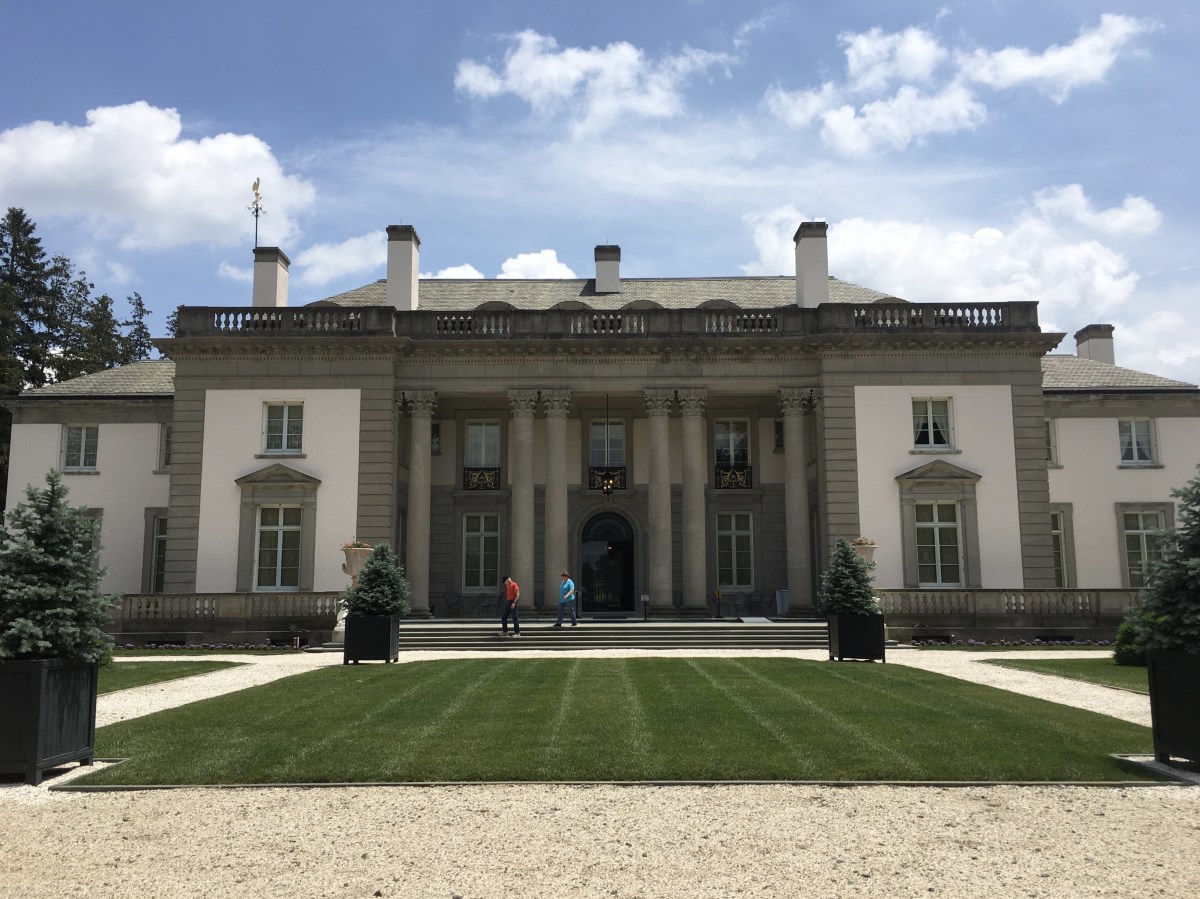
Nemours Estate

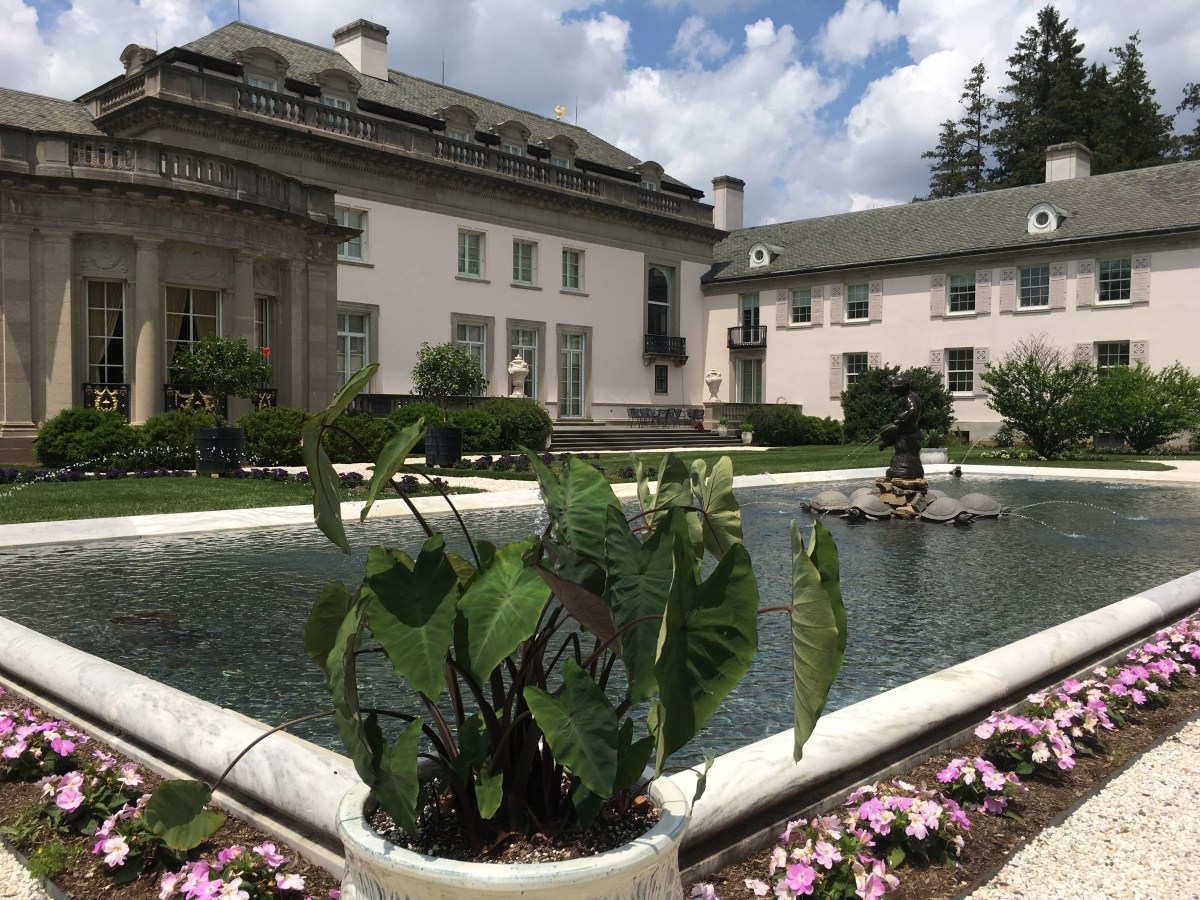
Alfred built the mansion on 3,000 acres in Wilmington for his second wife, Alicia, who he married in 1907.  Designed in the 18th-century French style, he named it Nemours after the French town that his great-great-grandfather represented in the French Estates General. The original mansion included the latest technology and many of Alfred’s own inventions; today it has 77 rooms.

Library
Library
Dining room
Dining room
decorative screen in the dining room
Conservatory
Conservatory
card game
card game
bird cage in the Conservatory
Drawing Room
Drawing Room
Morning Room
Morning Room
Reception Hall
Reception Hall
staircase
staircase
Mrs. duPont's Sitting Room
Mrs. duPont’s Sitting Room
view of gardens from the Master Bedroom
Master Bedroom
Master Bedroom
correspondence
correspondence
Venetian Room
Venetian Room
Green Room (for governess)
carpet in Green Room
Green Room
Green Room
Green Room
Green Room
Mr. duPont's bathroom
Mr. duPont’s bathroom
Gold Room (for guests)
guest bathroom
guest bathroom
Brocade Room (for guests)
North Front Bedroom (Guest Family Suite)
stuffed owl in North Front Bedroom
North Back Bedroom
North Back Bedroom

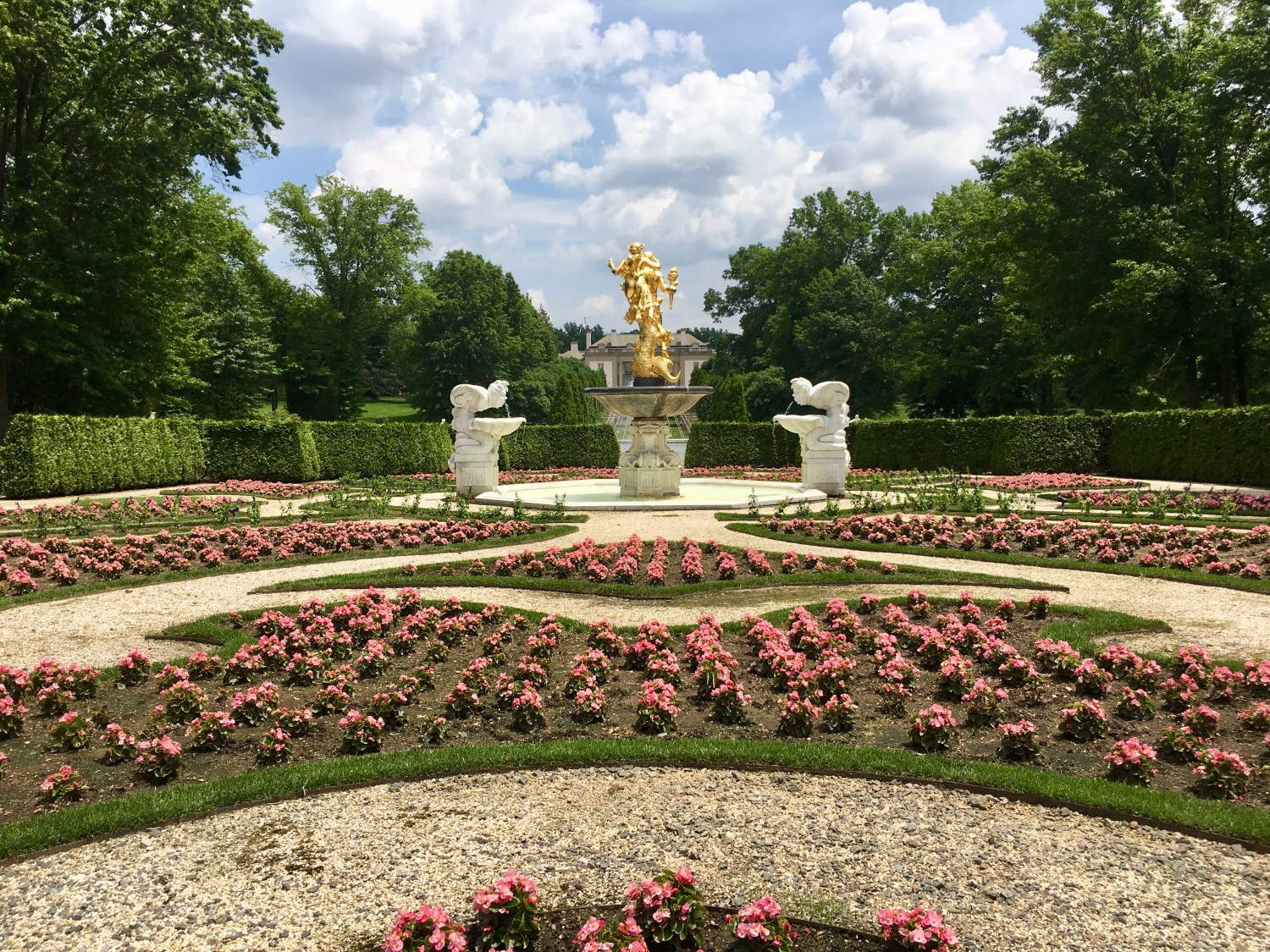
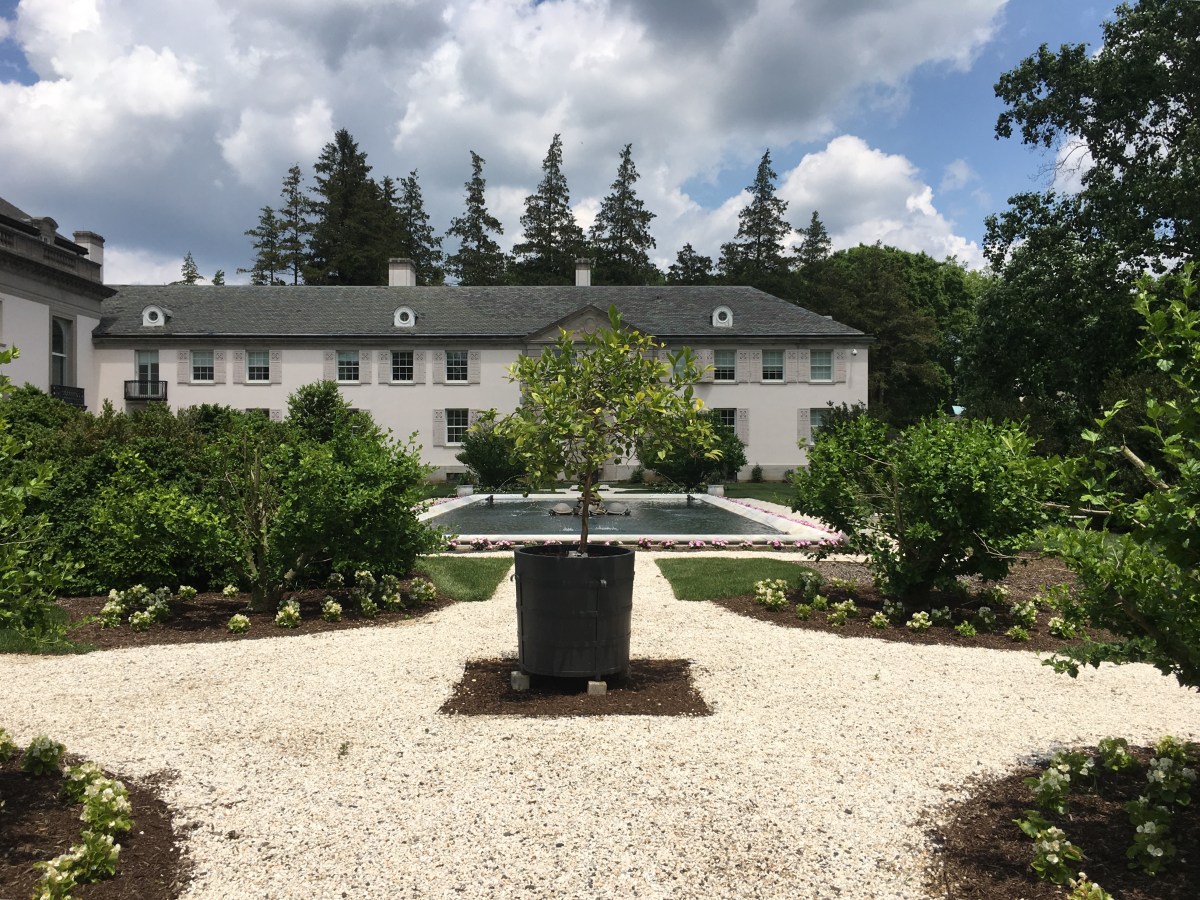
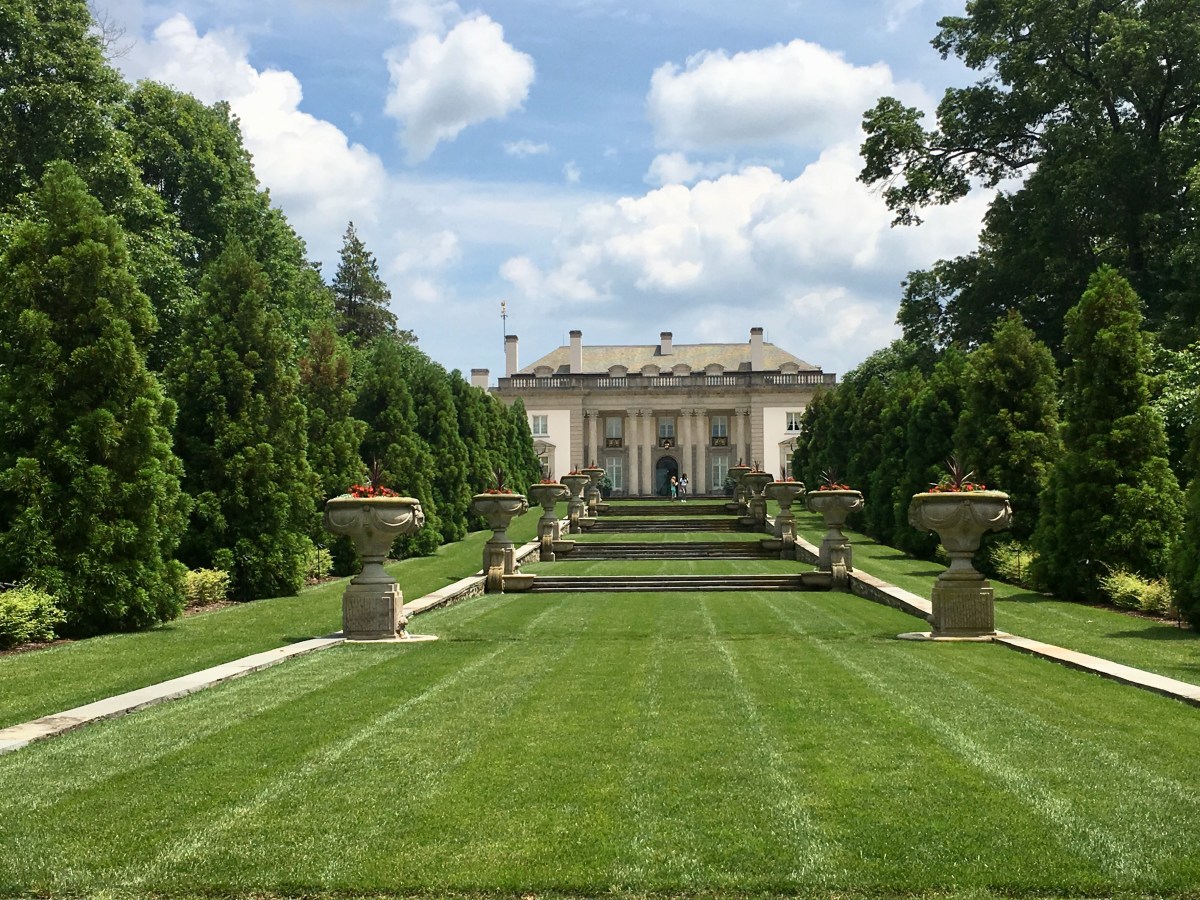
The grounds boast the largest formal French gardens in North America. I strolled around the 200 acres of scenic woodlands, meadows and lawns on a warm and sultry June day.

sculpture on the grounds
The Long Walk
The Long Walk
Nemours Estate
Nemours Estate
IMG_8022

gardens at Nemours Estate

fullsizeoutput_18cff

Nemours Estate

IMG_8028

Nemours Estate

IMG_8797

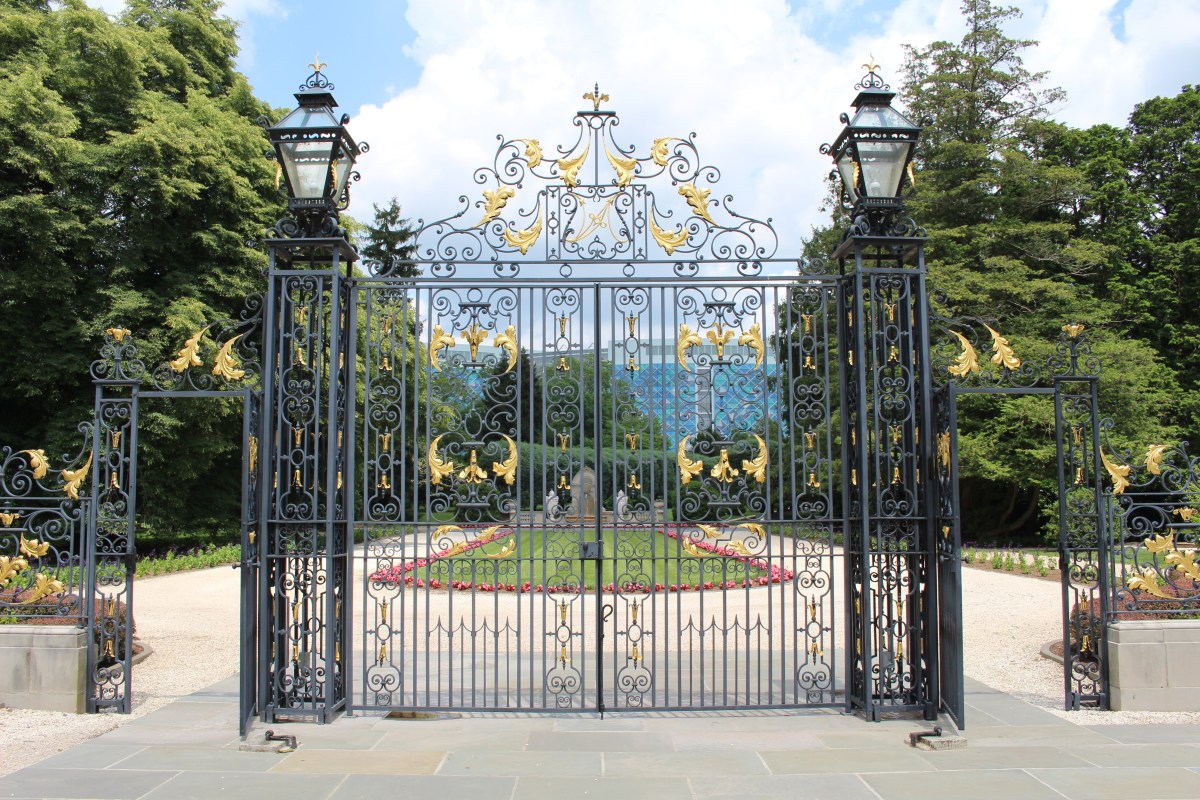
gate at Nemours Estate

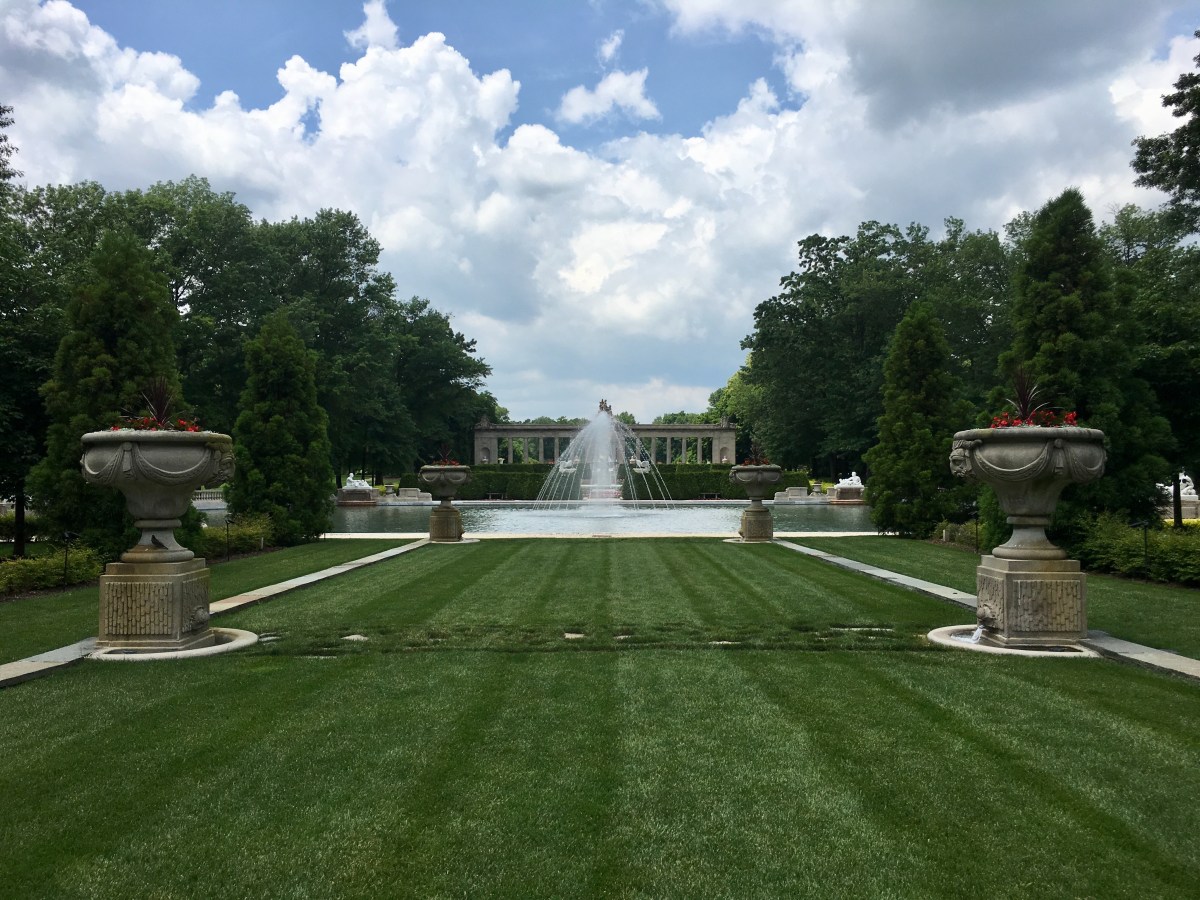
At the far end of the Long Walk, lined with Japanese cryptomeria, pink flowering horse chestnuts and pin oaks, I found a large reflecting pool. The pool holds 800,000 gallons of water and takes three days to fill.

fullsizeoutput_18d0d

The Long Walk at Nemours Estate

fullsizeoutput_18d05

Nemours Estate & The Long Walk

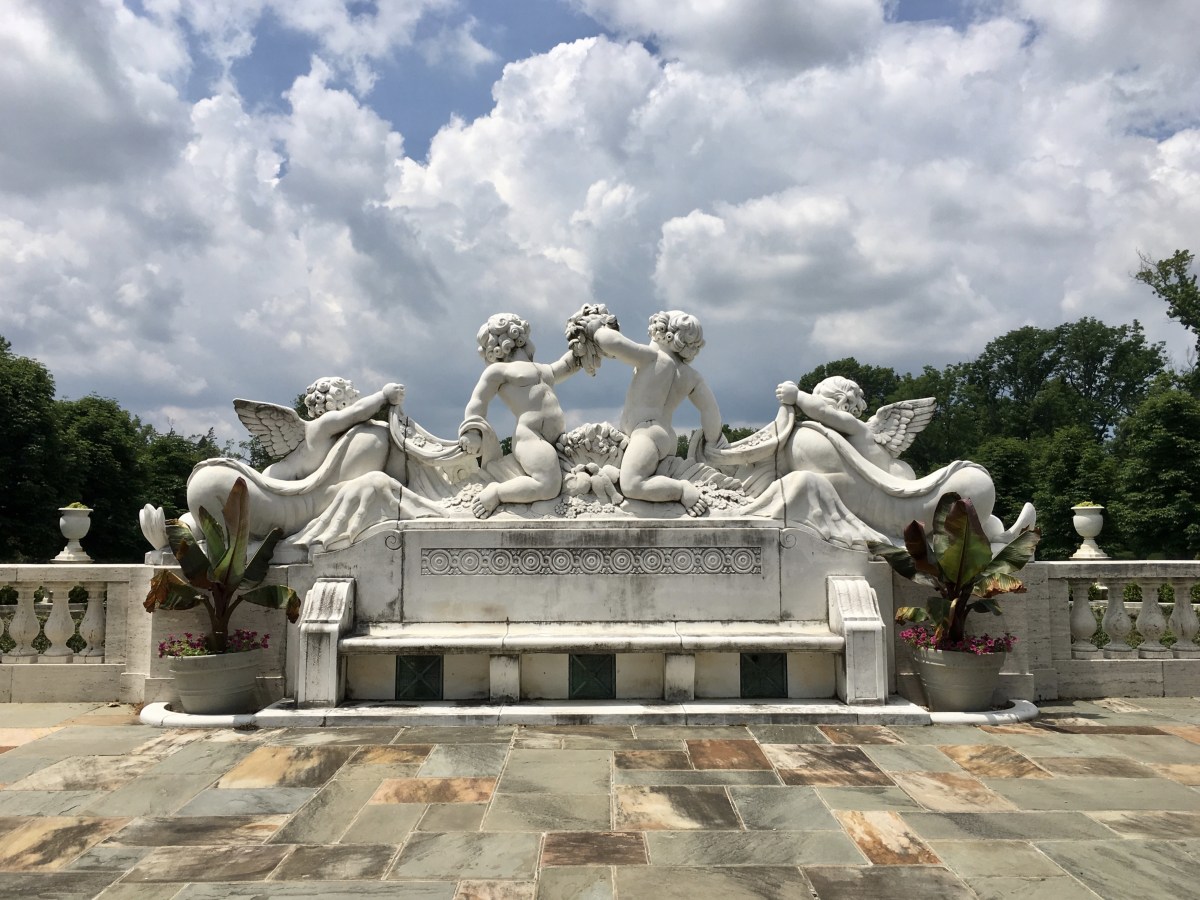
Around the pool are Art Nouveau-style classical mythological statues representing the Four Seasons.  They are by French-born American sculptor Henri Crenier (1873-1948).

fullsizeoutput_1b318

mythological statues

fullsizeoutput_1b319

fountain in the pool

fullsizeoutput_18d08

Nemours Mansion

fullsizeoutput_18d06

Nemours Mansion

fullsizeoutput_18d14

Nemours Mansion

fullsizeoutput_1b31d

Nemours Mansion

fullsizeoutput_18d10

Nemours Mansion

fullsizeoutput_1b327

Nemours Mansion

pavilion
pavilion
pavilion
pavilion
IMG_8805

Looking back up at Nemours Mansion

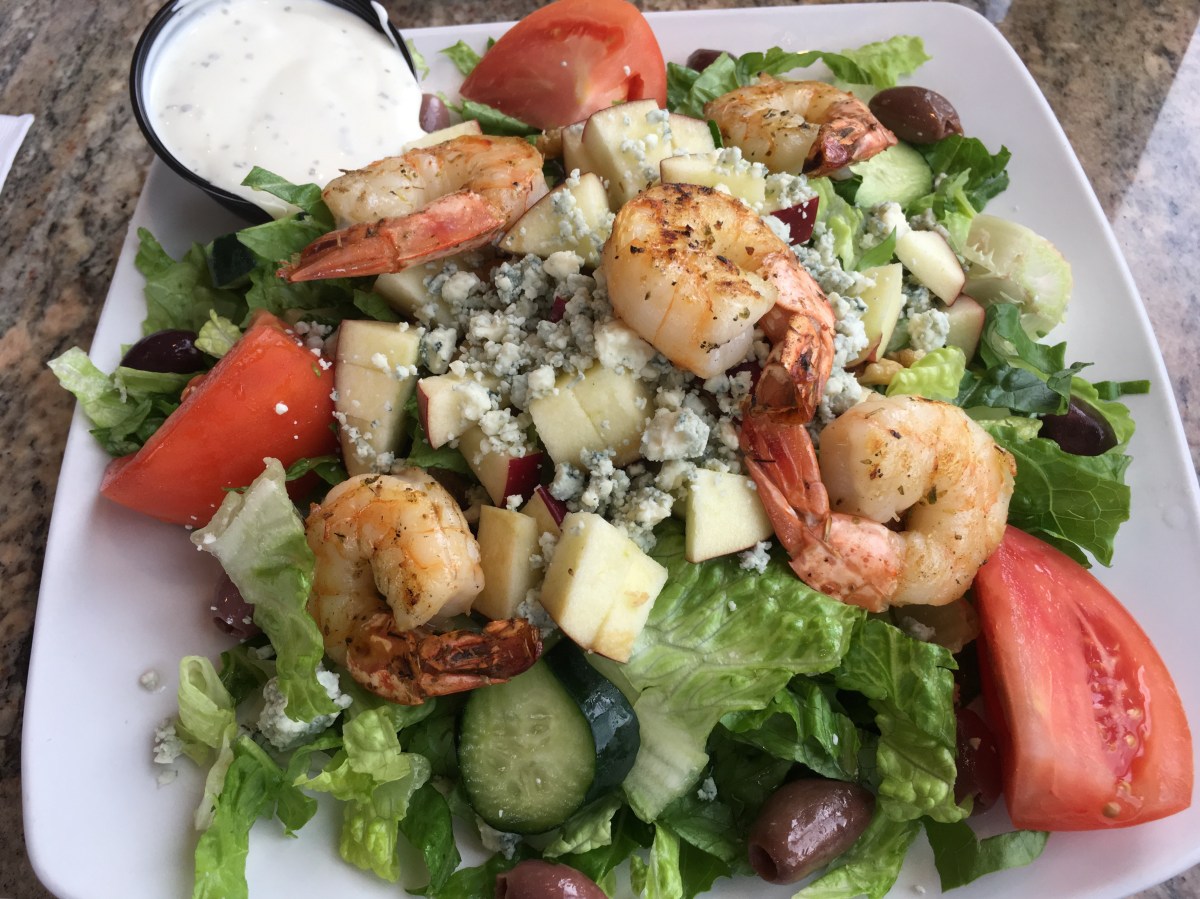
By the time I left Nemours Estate, it was after 2:00 and had started sprinkling.  I was famished, so I stopped at Hollywood Grill where I had an apple, walnut, romaine, tomato, cucumber, and blue cheese salad topped with shrimp.

fullsizeoutput_18d1a

Shrimp Salad at Hollywood Grill

After my late lunch, I began my drive back home, welcomed by Maryland at 3:30, driving past Rising Sun and Cecil College, over the Susquehanna River, past Gunpowder Falls and through the Baltimore Tunnel, while Bob Dylan serenaded me with “Ballad of a Thin Man.”  I didn’t cross back into Virginia until 5:40, exhausted from a full day of wandering through New Castle, Swede’s Church and Nemours Estate.

*Steps: 9,804, 4.15 miles*

*Thursday, June 6, 2019*

**********************

“PHOTOGRAPHY” INVITATION:  I invite you to create a photography intention and then create a blog post for a place you have visited. Alternately, you can post a thematic post about a place, photos of whatever you discovered that set your heart afire. You can also do a thematic post of something you have found throughout all your travels: churches, doors, people reading, people hiking, mountains, patterns, all black & white, whatever!

In my case, my intention was to look for thematic possibilities during my trip to Delaware.  As Nemours Estate is so beautiful both inside and out, I thought I’d focus on the grounds and interior.

You probably have your own ideas about this, but in case you’d like some ideas, you can visit my page: photography inspiration.

I challenge you to post as photos and to write less than 1,500 words about any travel-related photography intention you set for yourself. Include the link in the comments below by Wednesday, December 11 at 1:00 p.m. EST.  When I write my post in response to this challenge on Thursday, December 12, I’ll include your links in that post.

This will be an ongoing invitation, every first, second, and third (& 5th, if there is one) Thursday of each month. Feel free to jump in at any time. 🙂

I hope you’ll join in our community. I look forward to reading your posts!

the ~ wander.essence ~ community

I invite you all to settle in and read a few posts from our wandering community.  I promise, you’ll be inspired!

  • Jude, of life at the edge, takes us on a colorful stroll along the harbor quay in Cornwall.
    • cornwall in colours
  • Jo, of Restless Jo, posted some atmospheric photos of trees rising out of a mist and raindrops on berries.
    • Six Word Saturday: I like a bit of contrast!

Thanks to all of you who shared posts on the “photography” invitation.

Share this:

  • Share on X (Opens in new window) X
  • Share on Facebook (Opens in new window) Facebook
  • More
  • Email a link to a friend (Opens in new window) Email
  • Print (Opens in new window) Print
  • Share on Pinterest (Opens in new window) Pinterest
Like Loading...
  • Asia
  • India
  • International Travel

on returning home from india in 2011

wanderessence1025's avatar wanderessence1025 December 2, 2019

When I had asked a British couple I’d met in Hanoi about their favorite part of India, they had said, “The flight out. India is an endurance test.”  I thought they were just being negative and brushed them off.  However, after my three week trip around the northern part of India with my dear friend Jayne, I knew exactly how they felt.  Part of it was just the hardship of travel in India, the filth, the poverty that was so pervasive.  But the other part was our own fault.  We tried to do too much.  Had we lingered more and traveled less, we might have had a better and more rewarding experience.

There are things I would do differently next time around.  I would not travel to so many places on one trip.  I would spend at least 3 days in each destination. I would try to linger in town and chat with the locals. I would just BE present in each time and place and savor the ambiance.

MY 7 TOP EXPERIENCES in India:

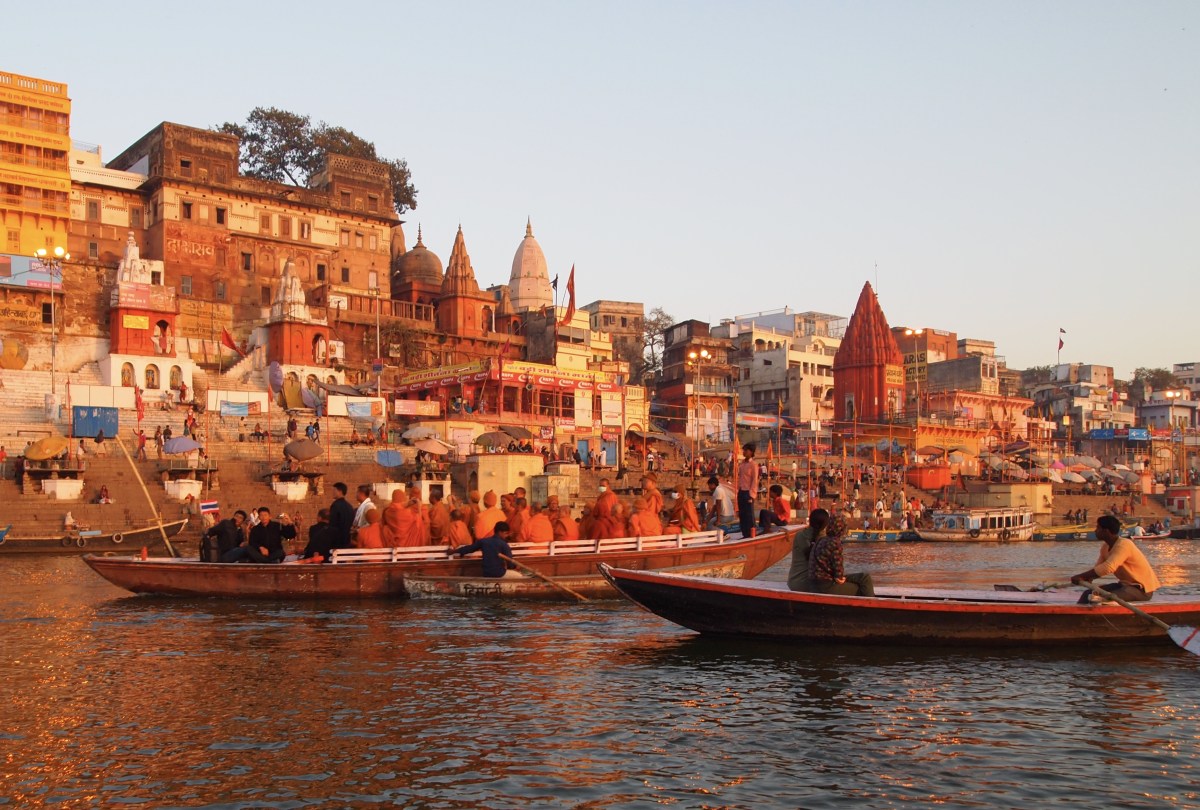
1) Sunrise boat ride on the Ganges in Varanasi:  The ghats and the buildings on land glowed like warm terra-cotta in the streetlights and the pre-dawn light, and people were out in droves bathing in the Ganges.  It was peaceful and gorgeous with this orange glow, the sound of oars slapping the surface of the river, the quiet boats full of orange-robed monks, photo-snapping Asian tourists, and other fellow nomads.  On the ghats, pilgrims offered puja, meaning offerings or prayers, to the rising sun.

We started at Dasaswamedh Ghat, the liveliest and most colorful ghat, with its flotilla of boats and its two pink towers painted with gaudy Hindu gods.   Along the shore we watched people washing clothes in the Ganges, students doing yoga and meditation and studying Sanskrit, women selling flowers, and people just hanging out.  We each lit candles with our deepest wishes and sent them floating down the river.

sunrise boat ride on the Ganges with Ajay
Dasaswamedh Ghat
Dasaswamedh Ghat
Jayne lights a candle
I light a candle
I light a candle
Jayne
Jayne
Jayne and I
Jayne and I
Dasaswamedh Ghat
Dasaswamedh Ghat
on the Ganges
on the Ganges
sunrise on the Ganges

2) A camel “safari” in Jaisalmer: As the sun started to set, we climbed on a camel directly outside the gates of our camp. Our white-robed guide led the camel by rope all around the dunes surrounding the camp.  We didn’t venture far, but it was lovely as a breeze started to cool us and the sun dropped, spilling pinks, lavenders and periwinkles across the horizon.  I took multitudes of pictures of the desert and the shadows we made on the sand as we rode our camel.  We enjoyed watching other native camel riders galloping across the dunes on the humpbacks of their steeds.  As the sun went down, the guide had the camel lie down in the sand and we climbed off and wandered around, checking out the other camels and the people running about.  It was lovely, but definitely NOT what I would consider a “safari!”

Camel "safari" in Jaisalmer
Camel “safari” in Jaisalmer
Camel "safari" in Jaisalmer
Camel “safari” in Jaisalmer
Camel "safari" in Jaisalmer
Camel “safari” in Jaisalmer
Camel "safari" in Jaisalmer
Camel “safari” in Jaisalmer
shadows
shadows
Camel "safari" in Jaisalmer
Camel “safari” in Jaisalmer
Camel "safari" in Jaisalmer
Camel “safari” in Jaisalmer
Camel "safari" in Jaisalmer
Camel “safari” in Jaisalmer

3) Massages.  We had numerous massages in India that left us relaxed and dripping in oil.

garden near massage spot in Varanasi
me after one of many massages

4) Tailor-made clothes:  We had salwar kameez made at Delhi Haat, a “craft cottage industries.”   Basically salwar kameez is a unisex dress worn in South and Central Asia similar to the shirt and pants worn by westerners.  We had a blast here!  The salesmen offered us large Kingfisher beers, and we had a grand time picking out fabrics, getting measured, buying scarves, and just general high jinx!  This turned out to be one of the most fun times we had in India.  Later that evening, we each had two new salwar kameez delivered and ready to wear on our trip through India.

fullsizeoutput_1b3c3

Having salwar kameez made at Delhi Haat

5) Shopping: India has a plethora of textiles, paintings, jewelry and other things to buy.  We always loved our shopping expeditions.

one of many shopping expeditions in India
shopping in Udaipur
shopping in Udaipur

6) Meetings with gurus: We met with two gurus, one in Varanasi and one in Rishikesh.  The one in Rishikesh seemed much more legitimate than the other, but it was funny that they both gave us similar readings. I wrote about them in my original blog posts about Varanasi and Rishikesh.

fullsizeoutput_15c12

me with our guru in Rishikesh

7) Boat ride in Udaipur: Udaipur is considered to be Rajasthan’s most romantic city.  We took a boat ride from the City Palace jetty (Bansai Ghat) and circled around Lake Pichola. From the boat we could see the other side of the City Palace, bathing and dhobi (clothes-washing) ghats, Sisarma village, and two islands.  The first, Jagniwas Island, or the Lake Palace Hotel island, was formerly the royal summer palace but was now covered in luxury hotels complete with shady courtyards, lotus ponds and a pool shaded by a mango tree.  We didn’t get to go on this island as it was private property.

We did make a stop at the palace on Jagmandir Island, which was built by Maharaja Karan Singh in 1620, and added to by Maharaja Jagat Singh (1628-52).  Surrounded by a row of enormous stone elephants, it had a chhatri carved from grey-blue stone.  It was lovely sitting on the island and looking out at the lake through the curtained marble arches.  It’s said the Mughal emperor Shah Jahan was partly inspired by this palace for his Taj Mahal, after he stayed here in 1623-24, while leading a revolt against his father, Jehangir.

fullsizeoutput_1b3ed

boat ride in Udaipur

fullsizeoutput_3dce

boat ride in Udaipur

fullsizeoutput_1b3ec

boat ride in Udaipur

523

boat ride in Udaipur

12 Places I Enjoyed:

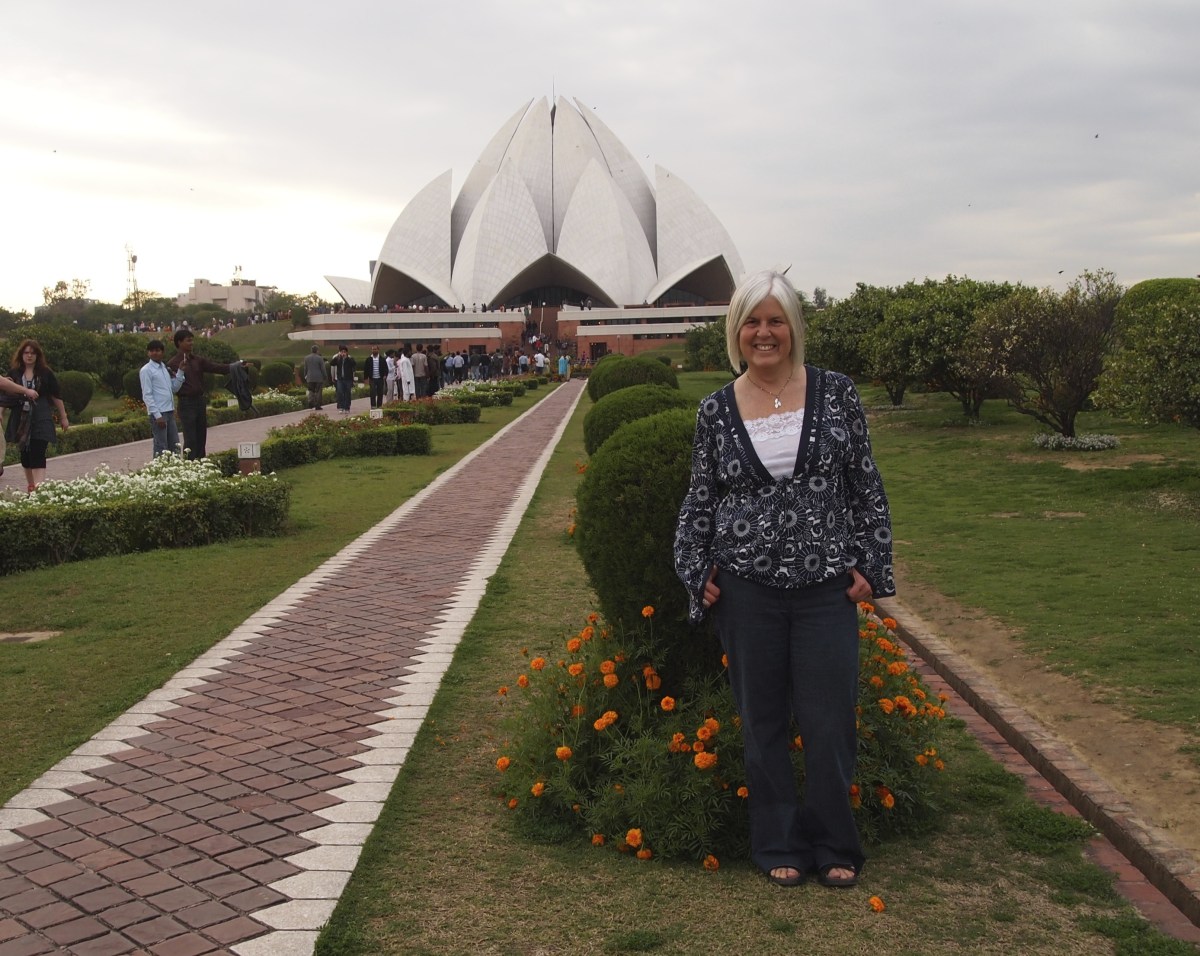
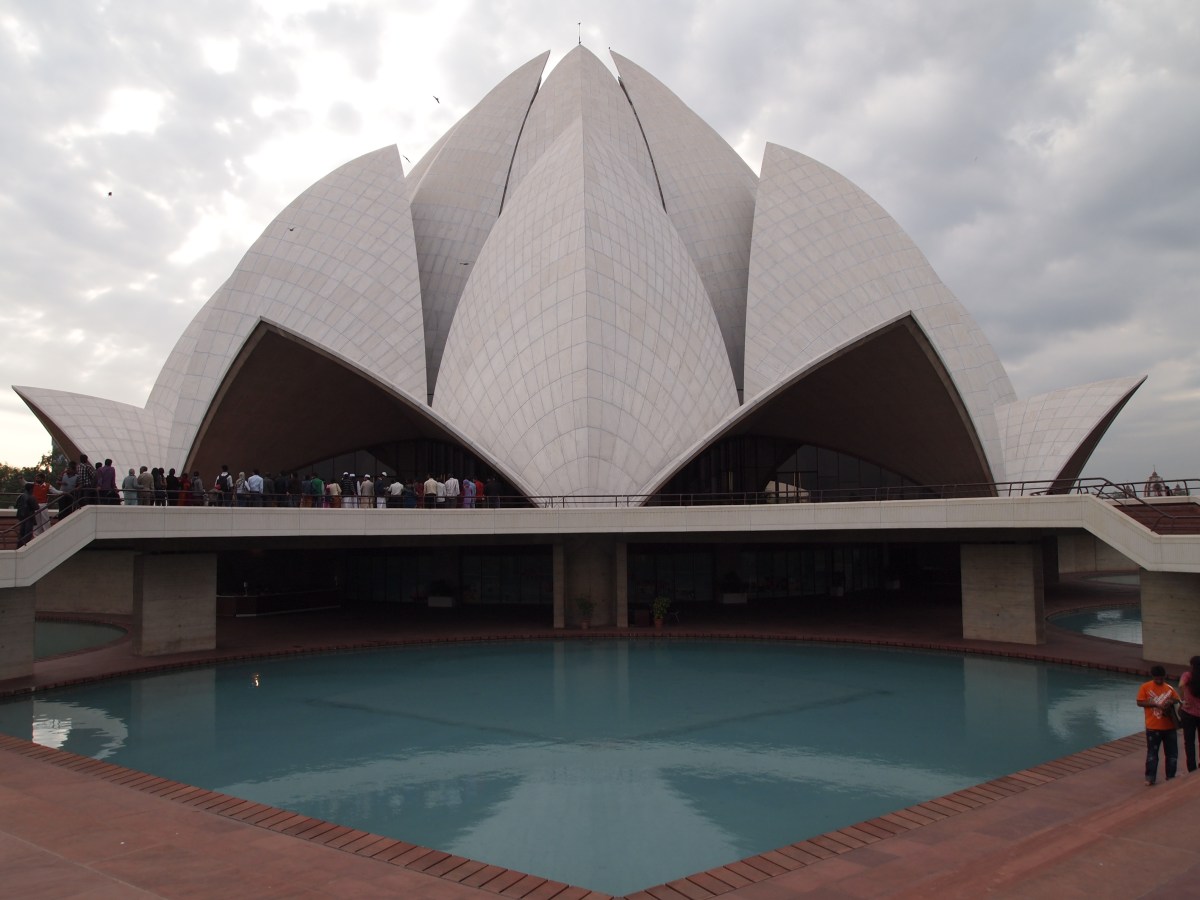
1) The Bahá’í House of Worship in Delhi is called the Lotus Temple because of its flower shape. The Bahá’í laws emphasize that the House of Worship should be a gathering place where people of all religions may worship God without denominational restrictions.  The leaflet they gave us explained that it is a “new, independent world religion whose purpose is to unite all the races and peoples of the world in one universal Cause and in one common Faith.”

The grounds of the Lotus Temple were serene and manicured, with gardens and emerald-green grass and flowers.  We dropped our shoes at an underground shoe-keeping operation, and walked around the temple and its surrounding pools of water.  It was lovely.
725

The Lotus Temple in Delhi

fullsizeoutput_772

me at the Lotus Temple

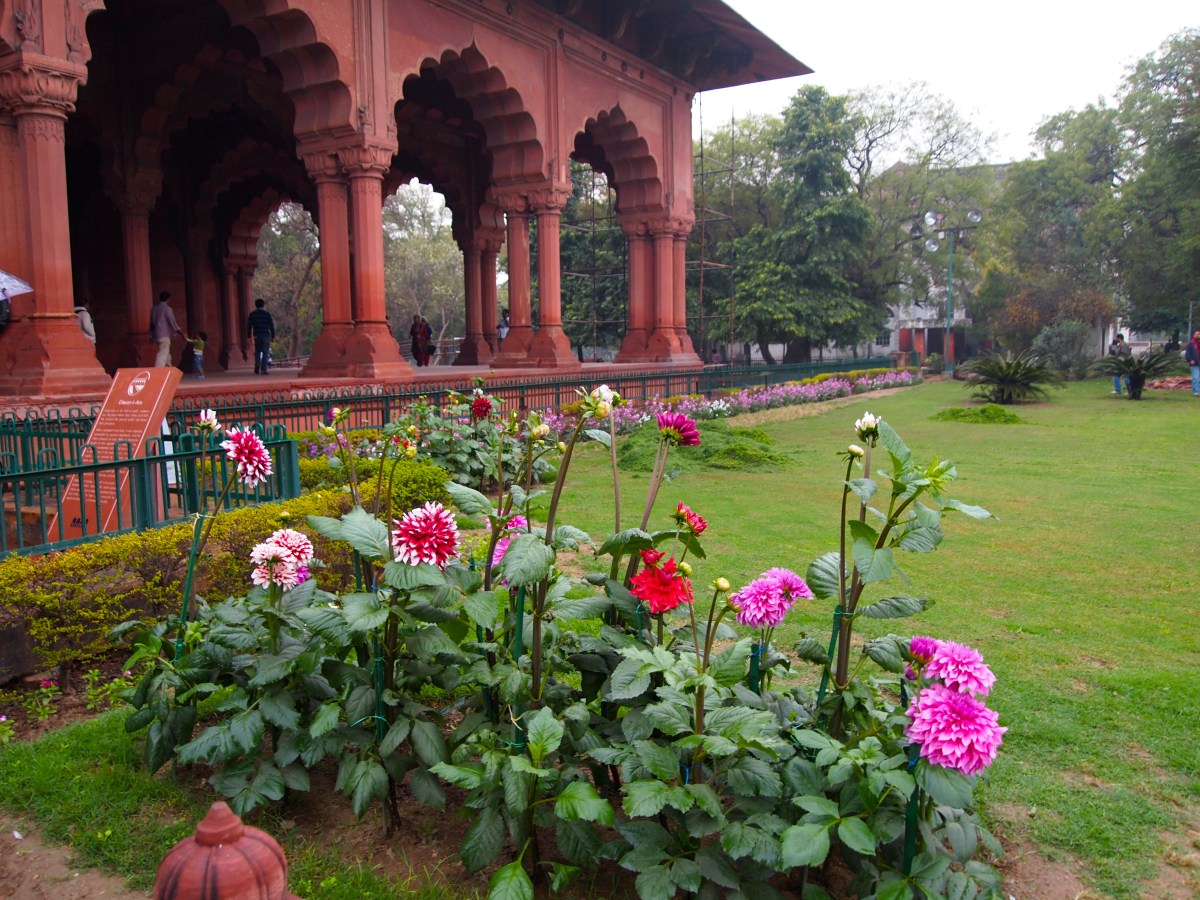
2) The Red Fort in Delhi dated from the peak of the Mughal dynasty.  This is another of Shah Jahan’s construction projects; he built it between 1638 and 1648. The grounds were nicely manicured and I loved the architectural style, a synthesis of Persian, European and Indian art elements.
fullsizeoutput_5c7

The Red Fort

3) Gandhi Smriti, the Mahatma Gandhi memorial in Delhi.  The museum was fascinating, filled as it was with photographs of Gandhi and his words of wisdom, dioramas of his life, and the footsteps that show the walk he took prior to his assassination on January 30, 1948.

We walked through the beautifully manicured grounds of the museum, alongside the path where actual concrete footsteps were attached to the sidewalk showing Gandhi’s final steps before he was killed by a fanatic Hindu assassin.  The spot where he died is marked by a small pavilion known as the Martyr’s Column.   Gandhi had been staying at this house as a guest for 144 days, and we saw the room where he slept on a mattress on the floor, along with his few meager possessions: a walking stick, spinning wheel, sandals and spectacles.  I loved the peaceful beauty of this place, especially situated as it was in the center of chaotic Delhi.

me with the Peace Gong
Gandhi Smriti
Gandhi Smriti
Gandhi Smriti
Gandhi Smriti

4) Humayun’s Tomb in Delhi was built in the mid-16th century by Haji Begum, the Persian-born senior wife of the second Mughal emperor Humayun.  The style is Persian, but the two-tone combination of red sandstone and white marble shows a merging of Indian and Persian cultures.  The grounds were lovely and I loved the architecture in India left behind by the Mughal rulers.  The highlight of our time at Humayun’s Tomb was being accosted by uniformed schoolboys and schoolgirls who begged us to take pictures with them.

Humayun’s Tomb
Humayun’s Tomb
Humayun’s Tomb
Humayun’s Tomb
Humayun’s Tomb
Humayun’s Tomb
schoolchildren at Humayun’s Tomb

5) Rishikesh – I loved all of it. This was the most chill place we encountered in India, my favorite stop of all. I wrote about my time in Rishikesh here: rishikesh, india: of snake charmers & gurus.

Rishikesh
Rishikesh
Rishikesh
Rishikesh
Rishikesh
Rishikesh
Rishikesh
Rishikesh
Rishikesh
Rishikesh

6) On the next leg of our trip leaving Agra, we stopped at Fatehpur Sikri, the short-term capital of the Mughal empire between 1571-1585.  Emperor Akbar came here to consult the Sufi saint Shaikh Salim Chishti, who predicted the birth of an heir to the Mughal throne.  When his prophecy came true, the Emperor built his capital here, with a mosque and three palaces for each of his favorite wives:  one a Christian, one a Muslim and one a Hindu. Because of water shortages in the area, the capital was abandoned shortly after Akbar’s death.

Fatehpur Sikri
Fatehpur Sikri
Fatehpur Sikri
Fatehpur Sikri

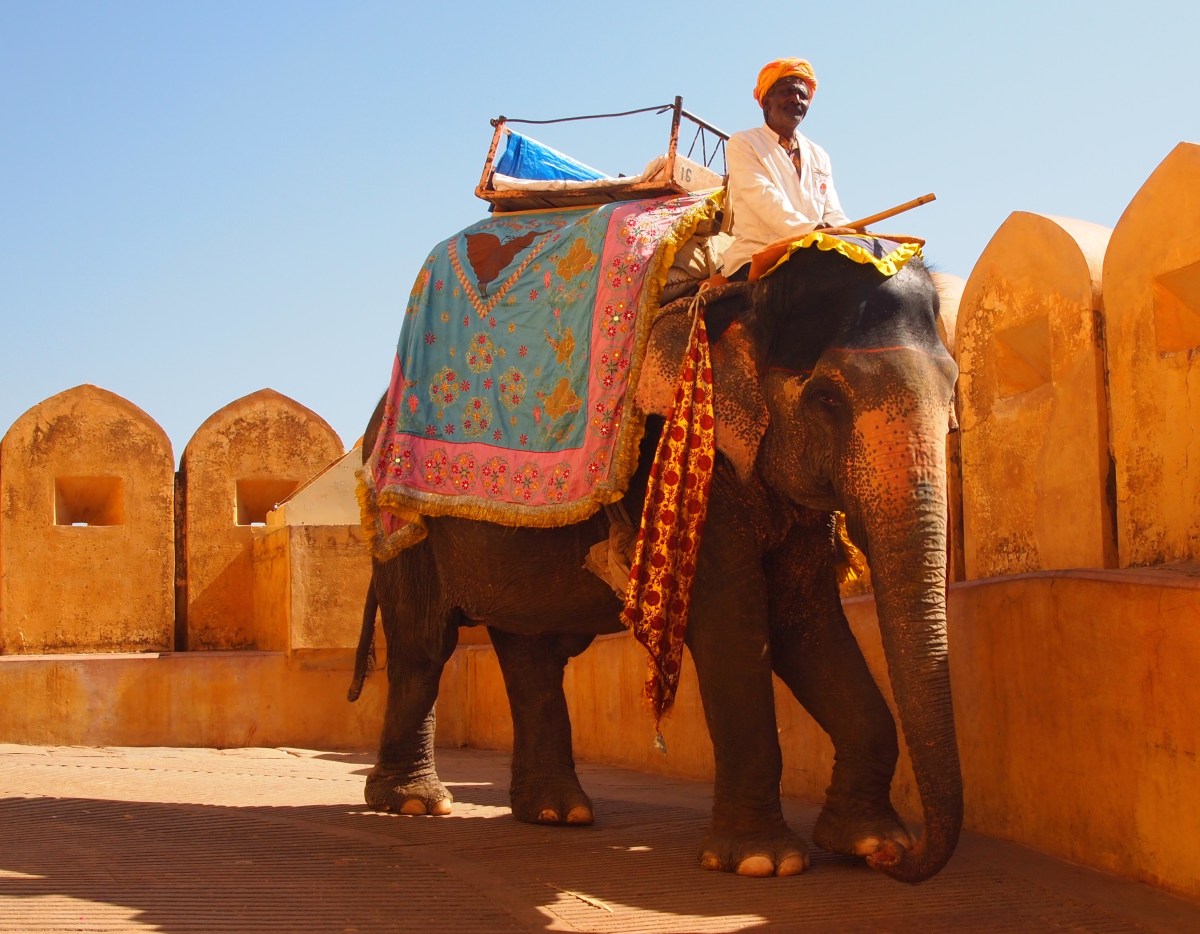
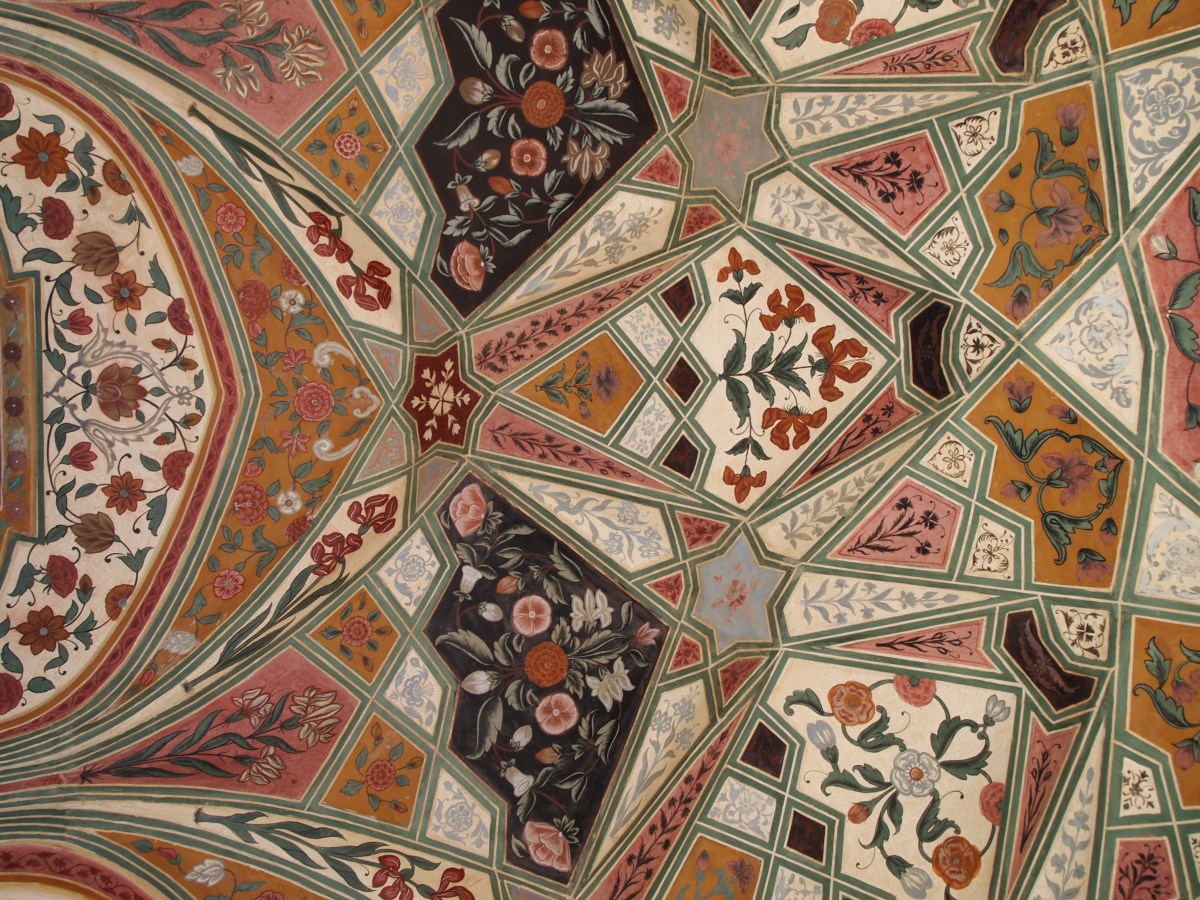
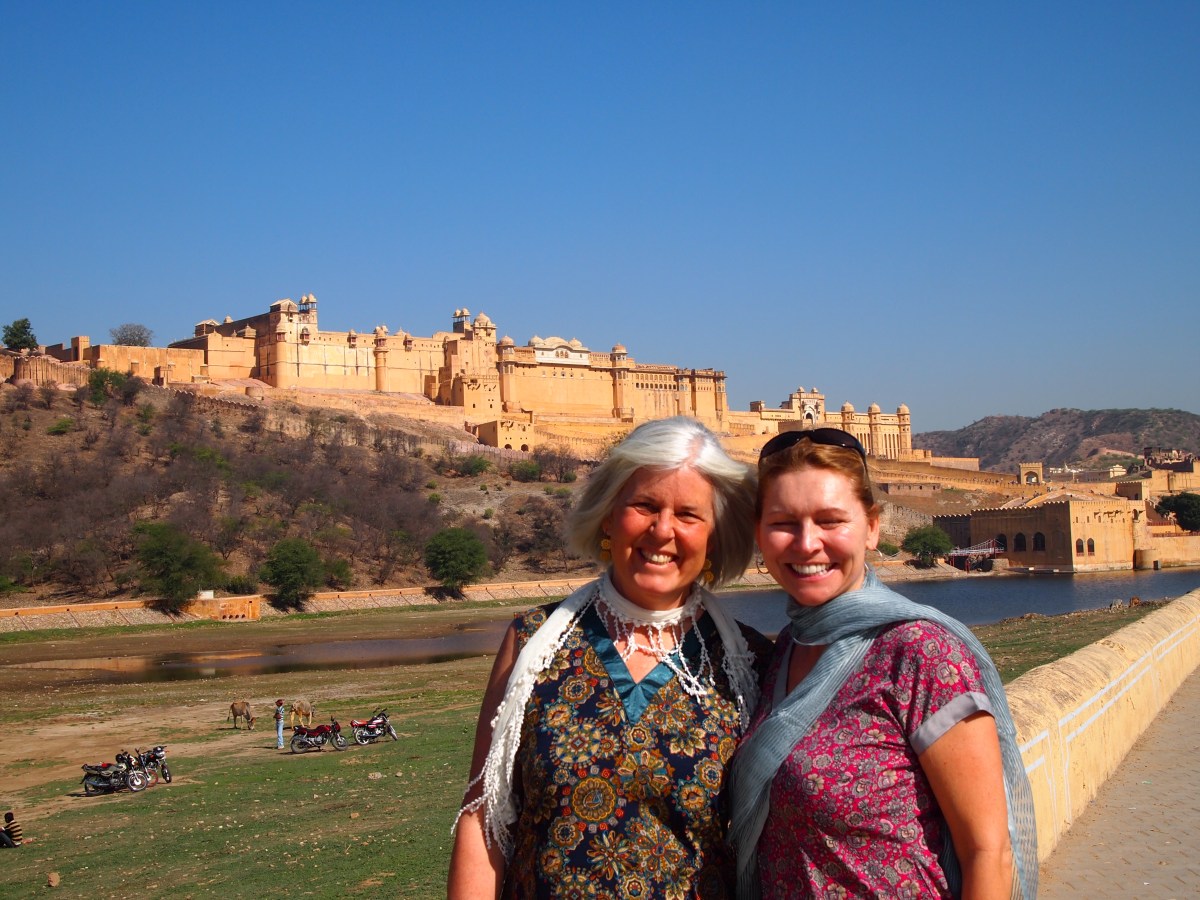
7) The Amber Fort (also known as Amer Fort) is 11 km north of Jaipur.  This honey-hued fort palace was the ancient capital of Jaipur state. Maharaja Man Singh began building the Amber Fort in 1592. It is known for its artistic style, blending both Hindu and Mughal elements. The fort with its large ramparts, series of gates and cobbled paths, overlooks the Maota Lake.  We climbeded up the fort from the road and on the way passed by caravans of brightly painted and decked-out elephants coming down the hill.  For long moments I was transported back to a time of majestic trade caravans and maharajas.  It was quite a romantic place, one of my favorite spots in India.
064

me with Jayne at Amber Fort

fullsizeoutput_1b1fd

Amber Fort

fullsizeoutput_2d7f

elephant at Amber Fort

fullsizeoutput_2343

Amber Fort

103

beautiful details

fullsizeoutput_1b3d1

Amber Fort

112

Amber Fort

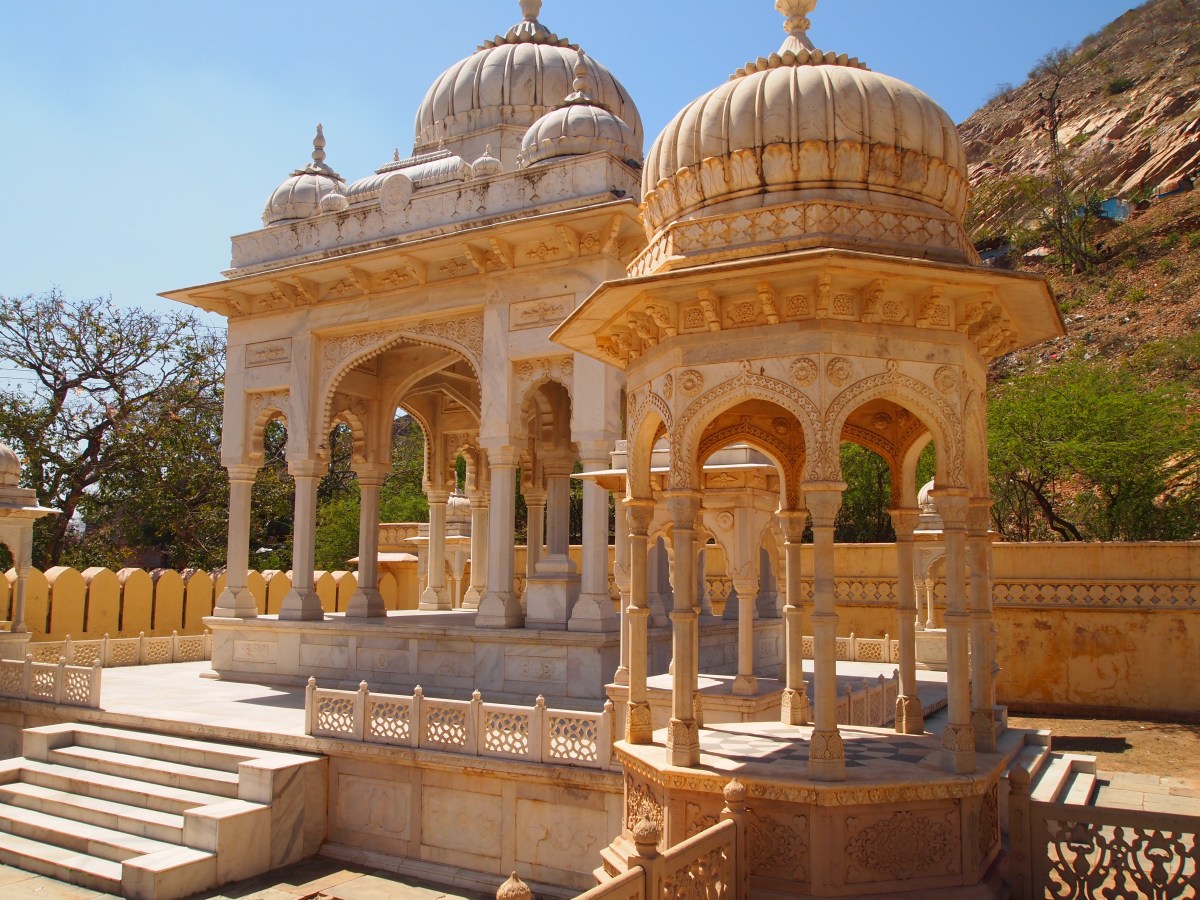
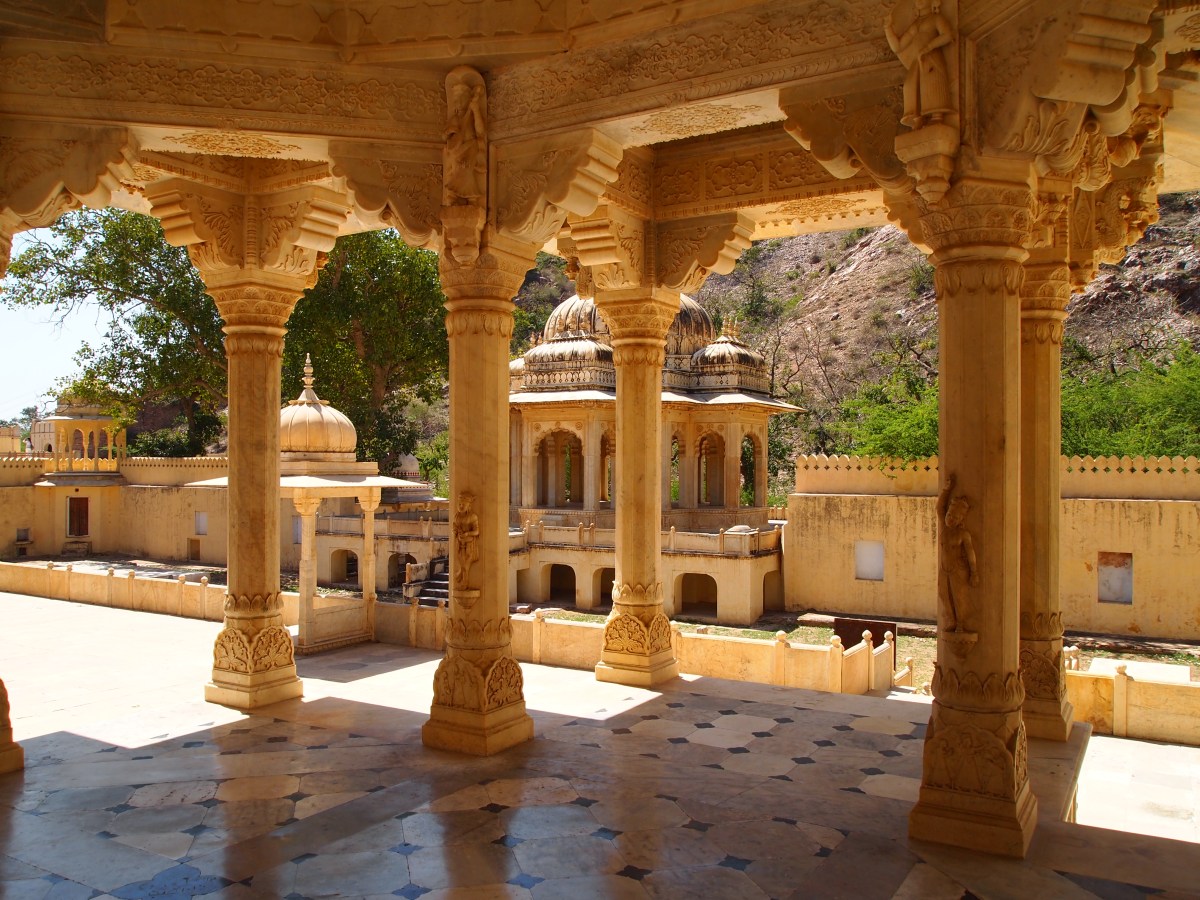
8) I loved Gatore Ki Chhatriyan, a site of the royal cenotaphs, also outside of Jaipur.  It was a beautiful and serene spot (rare in India), surrounded by a small village.  The monuments inside were intricately carved and the whole spot was quite elegant.  Small open air pavilions or gazebos were arranged in an artful pattern.  Each gazebo had exquisitely delicate columns holding up white domes. Peaceful and soothing, it was one of my favorite spots in Jaipur.

142

Gatore Ki Chhatriyan

143

Gatore Ki Chhatriyan

fullsizeoutput_1ad

Gatore Ki Chhatriyan

fullsizeoutput_1b3d7

Gatore Ki Chhatriyan

fullsizeoutput_1b3d8

Gatore Ki Chhatriyan

160

Gatore Ki Chhatriyan

9) Jaisalmer Fort was built in 1156 by the Rajput ruler, Jaisala, and reinforced by subsequent rulers.  The fort encloses narrow streets paved with sandstone, a maharaja’s palace, temples and havelis, and sits atop the Trikuta hill.  This place was one of my favorite forts because it was so much more than a tourist attraction; it was actually a living museum as a significant portion of the old city’s population resides within the fort walls.

332

haveli in Jaisalmer Fort

10) On the way to Mehrangarh Fort, outside of Jodhpur, we stopped at the lovely Jaswant Thada, a white marble memorial to Maharaja Jaswant Singh II.  It is a lovely memorial with its plethora of exquisitely carved and whimsical domes and jalis, or carved marble lattice screens.  The setting is lovely, with flower gardens abloom, and the view to the imposing Mehrangarh is impressive.  We wandered around the grounds and through the memorial, soaking up the beautiful surroundings.

fullsizeoutput_1b3de

me at Jaswant Thada

11) Our rickshaw driver took us further up the steep hill to the Mehrangarh Fort outside of Jodhpur.  This fort with its sheer soaring walls is run by the descendents of the Maharaja of Jodhpur.

The terra-cotta colored latticed palace complex and courtyards were like a maze.  Around every corner was a surprise.  In the extensive museum, we saw trappings of Indian royalty, including howdahs, the seats which transported royal family members on the backs of elephants.  We came across sumptuously decorated rooms with plush carpets, gold-filigreed columns, painted walls and ceilings and stained glass windows. We spent a long time wandering through the museum and the palace.  At one point, we watched a turban-wrapping demonstration in a small courtyard.  Later we climbed to the very top of the palace, where our view of Jodhpur was amazing.

Mehrangarh Fort
Mehrangarh Fort
Mehrangarh Fort
Mehrangarh Fort
view of Jodhpur from Mehrangarh Fort
me at Mehrangarh Fort

12) Mumbai, formerly known as Bombay, is the capital of the Indian state of Maharashtra and is an island connected by bridges to the mainland.  It’s the most populous city in India with 20.5 million people, and is also the 6th most populous in the world.  It is also the richest city in India and has the highest GDP of any city in South, West or Central Asia.  We regretted that we didn’t have more days here and we much preferred Mumbai to Delhi.  It was much cleaner and not so “in your face” with poverty, although we knew it had the world’s largest slum.  Luckily, we bypassed the “slum experience.” We wished we had spent more time here and omitted Aurangabad entirely from our trip.

Mumbai
Mumbai
Mumbai
Mumbai
me with Jayne in Mumbai

The Food: 

My passion for Indian food only increased during this trip.  And after the food in Korea, believe me, it was a welcome change.

We ate dinner at a very cool and modern restaurant at Delhi’s Connaught Place called Lido. Cool music was blaring loudly through the restaurant, and it had more the ambiance of a bar than a restaurant.  I ordered a red wine and Jayne ordered a super large Kingfisher beer (they only seem to come in super large sizes in India).  We shared delicious prawns curry, Parmesan and rosemary naan and a delicious vegetable jhalfrezi.  Jhalfrezi is the Indian version of Chinese stir-fry made with curry spices: turmeric, cayenne powder, cumin, coriander, dry mango powder, cinnamon and cloves.  These spices are mixed with bell peppers, onions, zucchini, tomatoes, cauliflower, and string beans.  A delicious dinner and ending to a crazy first day in Delhi.

At Nirula’s, India’s oldest fast-food restaurant chain, we feasted on Vegetable Deluxe Thali, a combination platter of Dal Makhani (boiled lentils), Paneer Makhani (Indian cottage cheese in rich tomato gravy), Mixed Vegetable Raita (cucumber, tomato, and onions with grated coconut, green chilies and mustard seeds), Zeera Rice, Pudina Parantha (a kind of bread), Moti Choor Laddu (a kind of sweet), Papad- Roasted, Sirka Onion, and mixed pickle.  It was delicious, cheap and quite a feast!  Perfect lunch!

In Rishikesh, at the Buddha German Bakery, Bob Marley sang “Buffalo Soldier” on the sound system. We ate Tibetan spinach cheese momos, ricotta cheese and spinach filled dumplings served with spiced sesame seed sauce.  A lovely breeze whispered through the restaurant as we lazily watched rafters negotiate the rapids on the river below.   I felt peaceful for the first time in India.
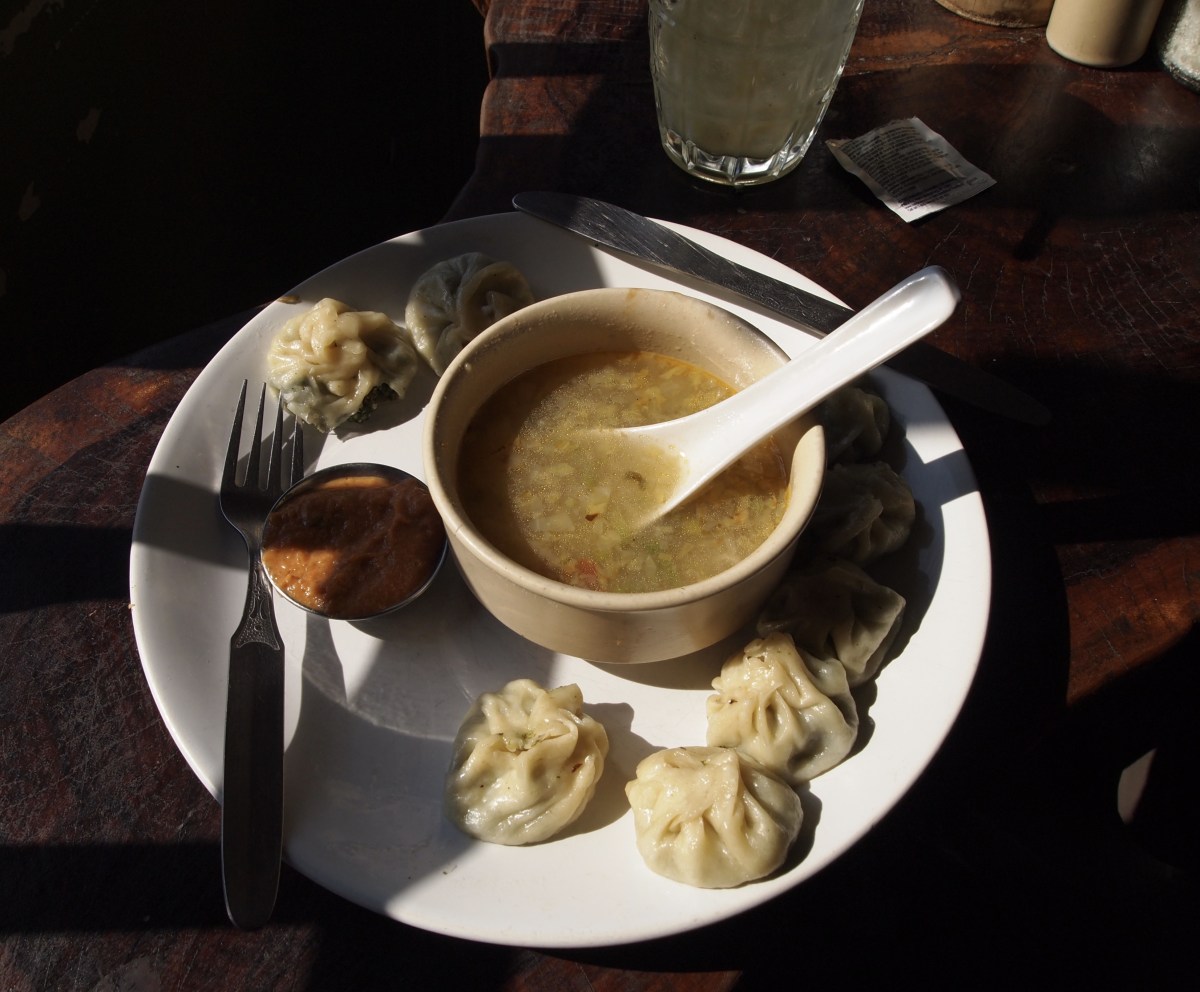
fullsizeoutput_15c18

dinner at the Buddha German Bakery in Rishikesh

We became interlopers at a nice hotel called Corbett Hideaway, where on a deck overlooking the Kosi River, we drank beers and ate mungfali nuts – roasted peanuts with fine chopped onion, green chili,  tomato, and coriander leaves.  We had so much fun because we hadn’t had a drink since Varanasi and these beers were exceedingly refreshing.
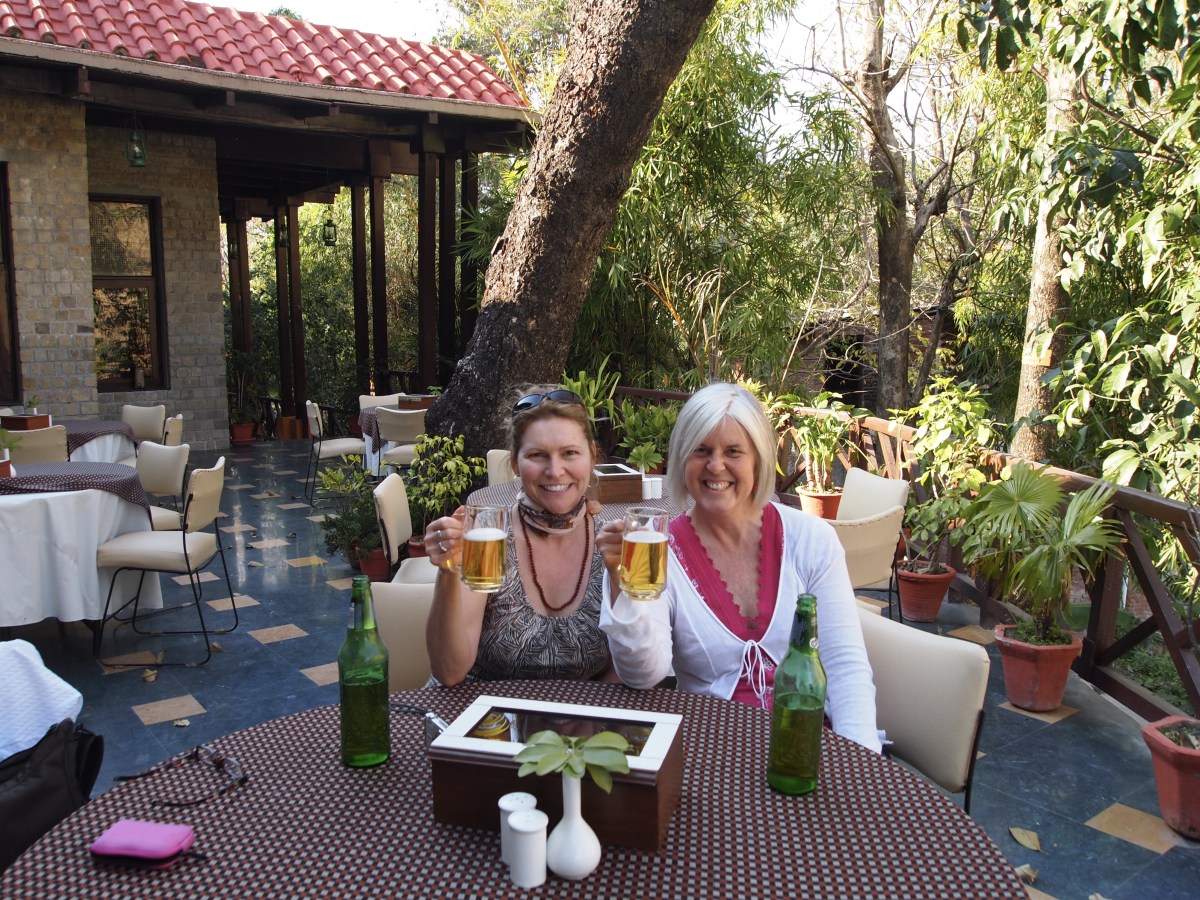
fullsizeoutput_1b3c9

having beers at Corbett Hideaway

In Agra, we at the vegetarian Lakshmi Vilas.  We had Idli, lentils and rice ground to paste and steamed in an oven with sambhar coconut chutney; Vada, or lentils ground to a paste and deep-fried, also served with sambhar and chutney.  We had Mysore Masala, or Dosai, which is a rice pancake made in butter served with sambhar and coconut chutney, and mixed vegetable uttapam, or thick rice pancakes.  All this topped off with fresh lime soda, an Indian specialty.

1267

dinner at Lakshmi Vilas in Agra

At the Palace Cafe, in Jaipur, we ate another fabulous Indian lunch: Dal Palak, yellow lentils cooked with shredded spinach and Indian spices; Tandoori Naan; Bharwan Aloo, scooped potato stuffed with cashew nuts, cottage cheese, raisins and green herbs soaked in tandoor; Kingfisher beers and lemon rice.  It was expensive but delicious and we were able to relax in the lovely cafe and listen to a bright-red costumed and turbaned guy playing an interesting oboe-like instrument.

At Saffron, on the rooftop of the Nanchana Haveli, overlooking Gandhi Chowk in Jaisalmer, we ate delicious Dum Aloo Kashmiri, or potato barrels filled with dry fruits and mashed vegetables; Vegetable Seekh Kebab, or assorted mashed vegetables with mild spices on a skewer cooked in a clay oven.

Some performers came up as the sun was setting.  They were really cute, banging on drums and playing flute-like instruments.  One of the young guys asked us our names and then proceeded to sing a funny wailing kind of personalized tune:  “Caaaattthyyy!  Jayyyynnnnniiiiieeee!” and waving his arm in a snake-dance way.  We laughed and laughed, carrying our laughter with us into the night and back to our hotel.

me at Saffron in Jaisalmer
the rooftop restaurant Saffron in Jaisalmer
inside at Saffron
inside at Saffron

At the Raj Palace Hotel, we found the Whistling Teal restaurant in Udaipur.  It was set back from the busy street in a garden courtyard and had a lovely atmosphere, despite the mosquitoes. There, we enjoyed a Kingfisher beer, fish tikka, and the most delectable masala peanuts, mixed with tomato, onion, cilantro, saffron, and lime juice.  The lovely setting only enhanced the treats we found in this place.
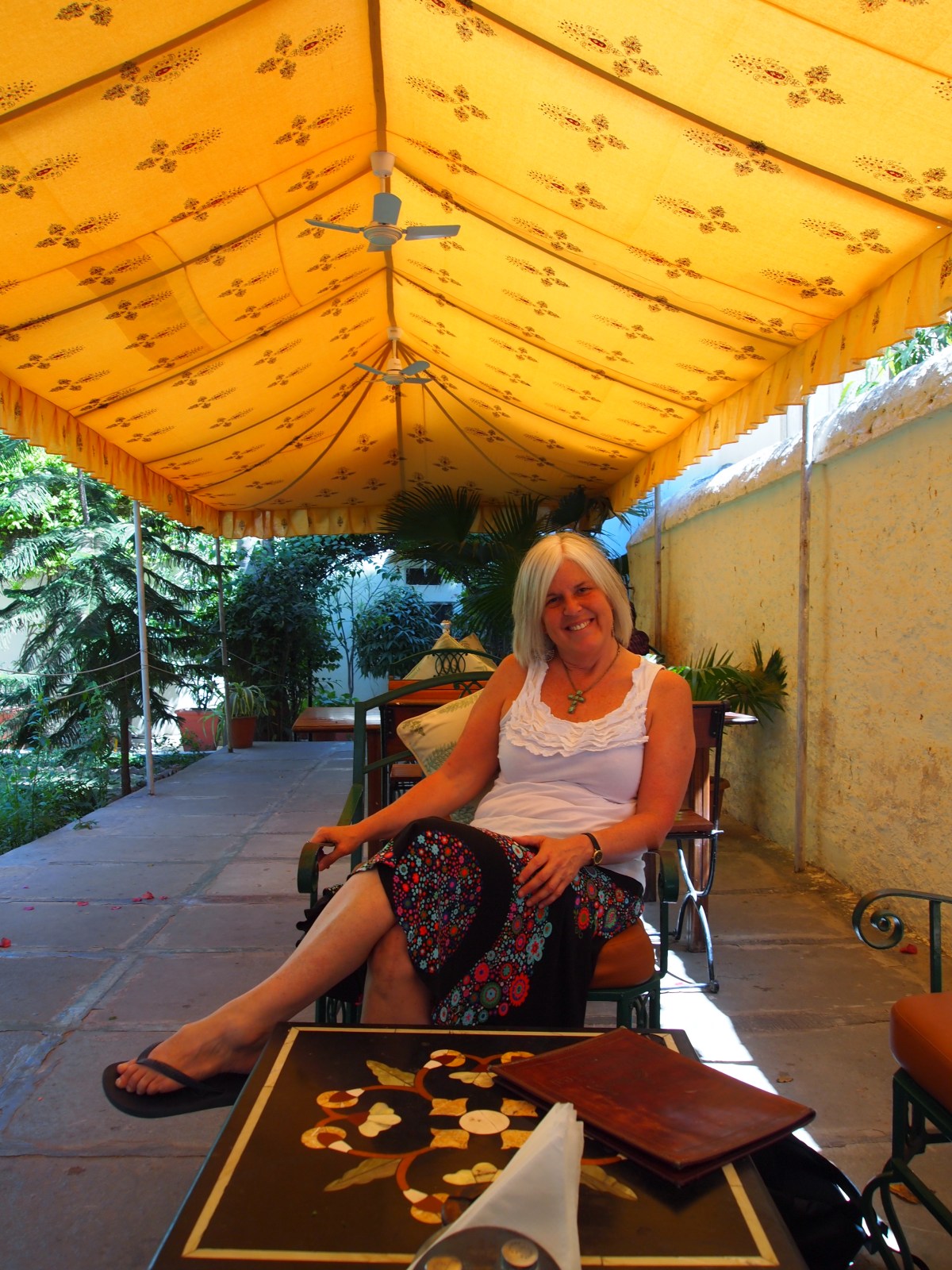
529

me at the Whistling Teal

What I loved and found annoying all at once:

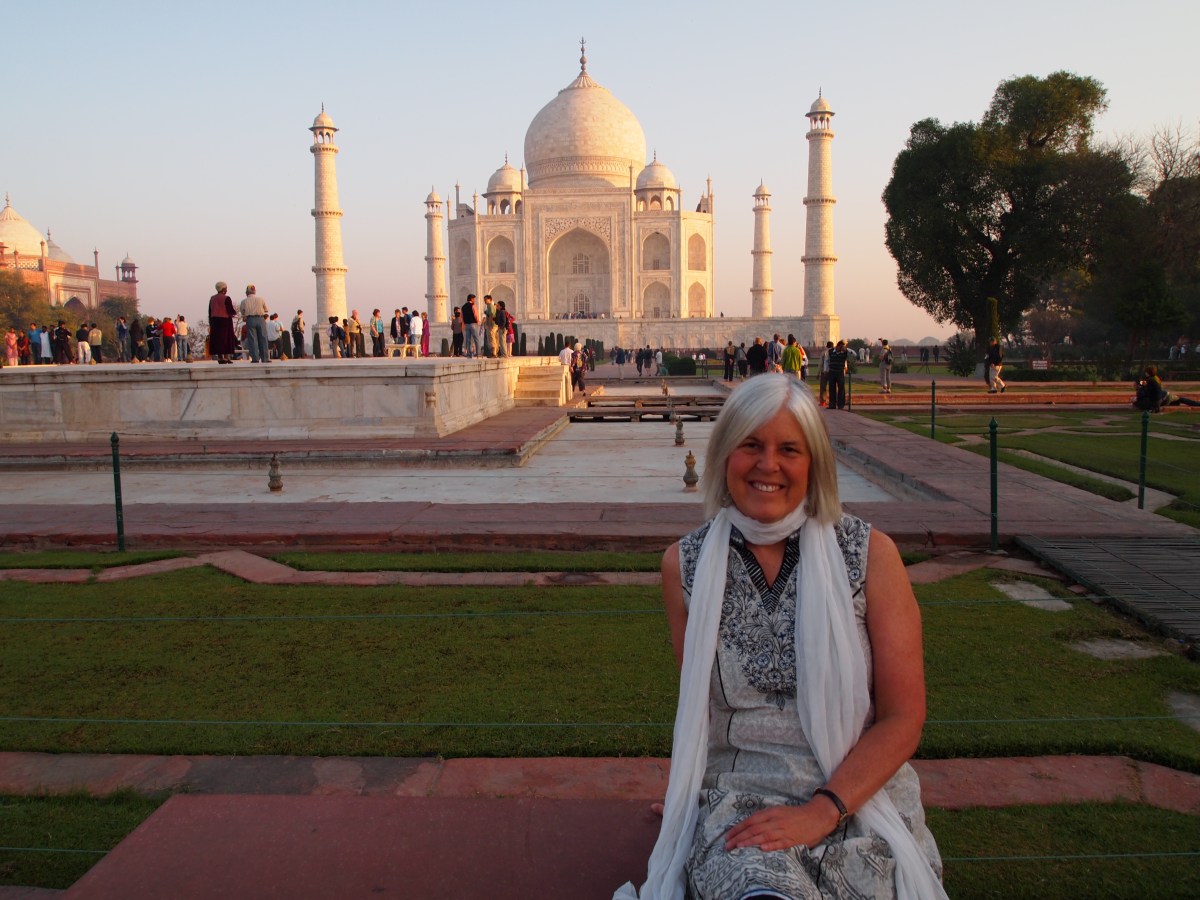
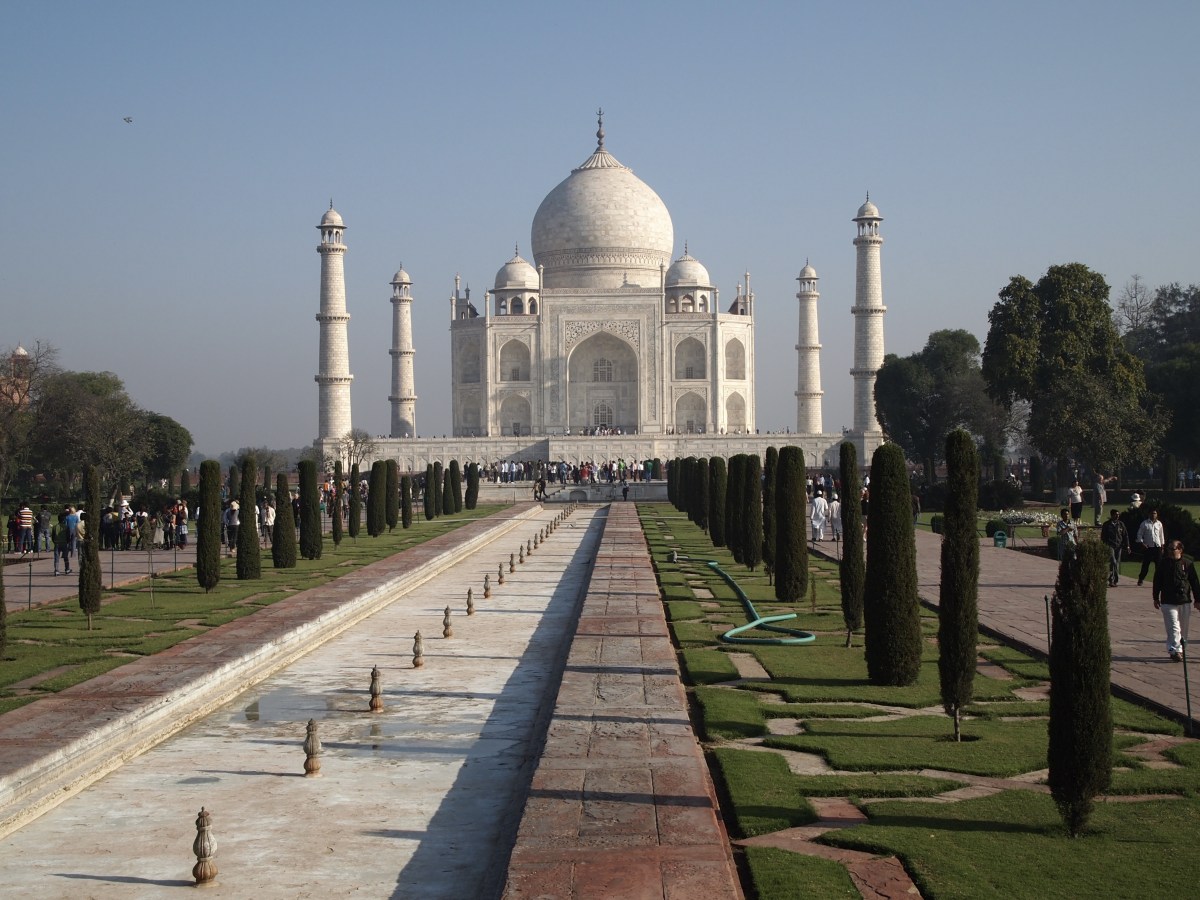
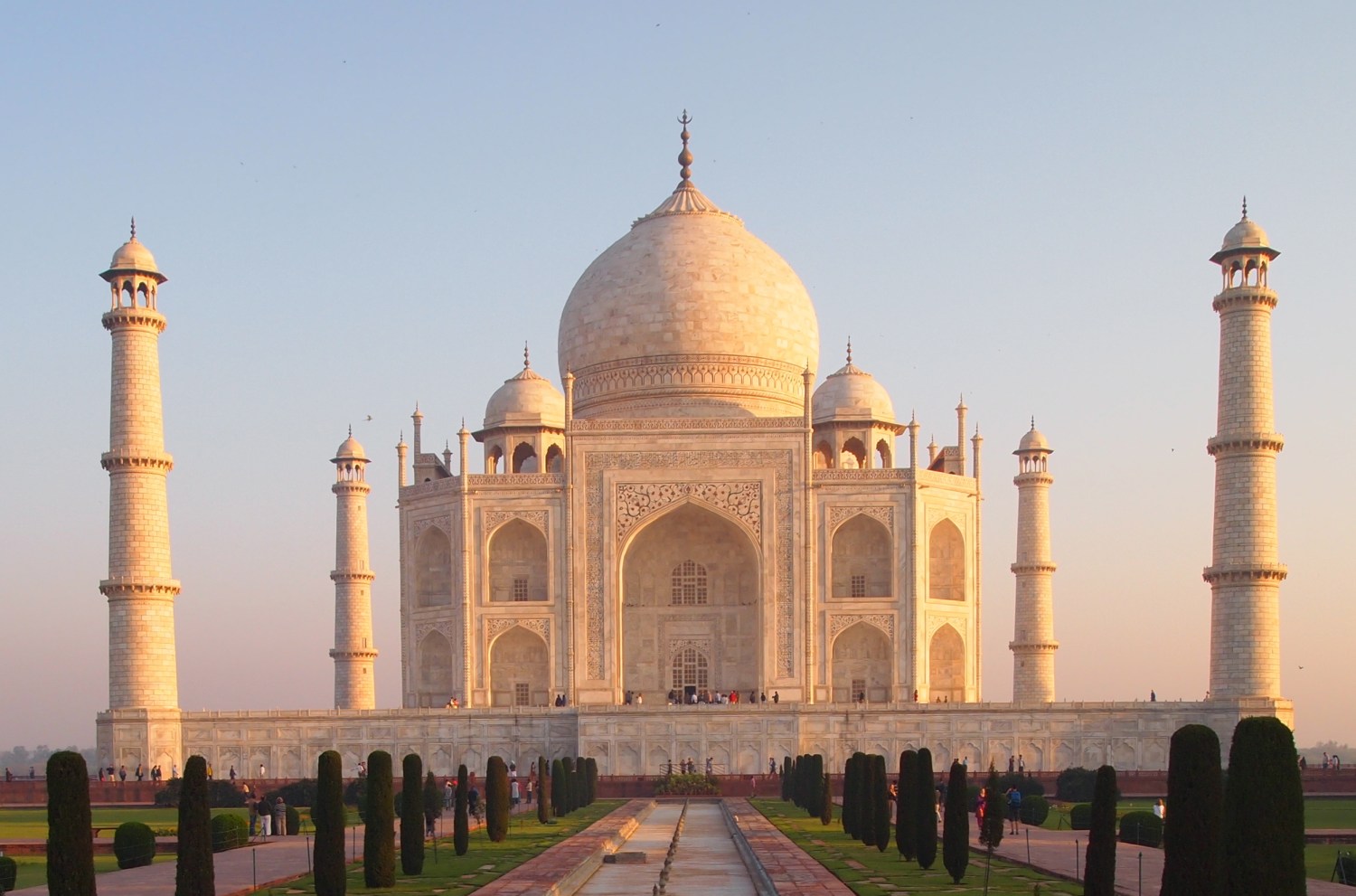
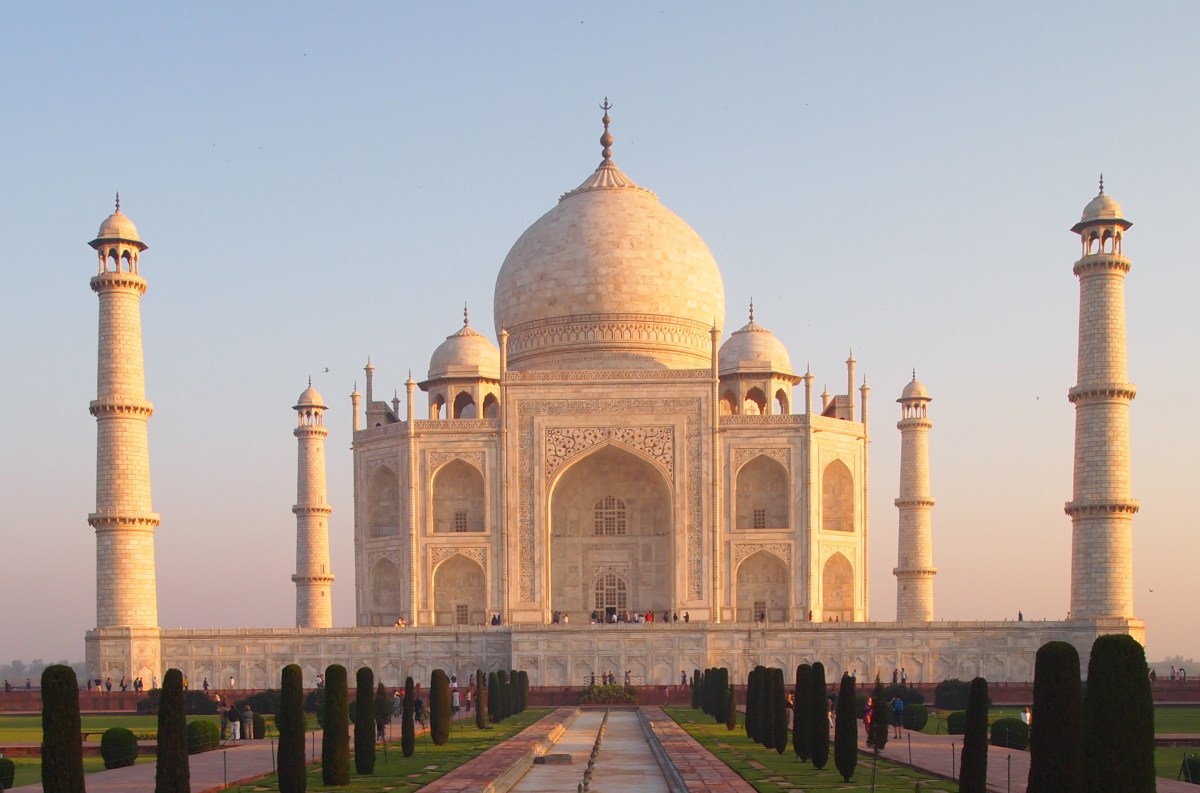
1) The Taj Mahal. We entered through the south gate, which is a 30-meter high red sandstone gateway inscribed with verses from the Quran.  Once we passed through the gate, we could see the Taj Mahal standing on a raised platform at the far end of the ornamental gardens, with the Yamuna River behind.  Because the river is behind and because it sits on a platform, its backdrop is simply the beautiful sky.  There are no unsightly buildings behind to detract from the vision.  Since we were here close to sunrise, the backdrop was brushstrokes of lavender, purple and coral.  It was stunning.

The ornamental gardens are designed in the style of formal Persian gardens, a square divided by watercourses, with an ornamental marble plinth at its center.  Usually, in pictures, I had seen the Taj beautifully reflected in the watercourses.  However, today, there was no water in the watercourses.  Why that was, I had no idea, but it was irritating.  Why couldn’t the Indian government keep anything properly maintained and running?  The Taj Mahal is arguably the most beautiful building in the world and is the biggest tourist attraction in India.  You would think that because of this, the monument would be sparkling and spiffy ALL THE TIME!  However, on this day, it looked like a poorly maintained tourist attraction.  People always say the Taj Mahal NEVER disappoints. It was still beautiful, but the dried up watercourses definitely detracted from the beauty.  Slightly, yes, it DID disappoint.

The building is lovely, with its white minarets at each corner of the raised marble platform.  The vaulted arches on its facade are embellished with Quran quotations in inlaid jasper calligraphy.  The central bulbous dome is surrounded by four small domes.  Inside the central chamber, light streams through finely cut marble screens.  We couldn’t view the tombs of Shah Jahan and Mumtaz Mahal, as they were in a locked basement beneath the main chamber.

It was lovely with its exquisite setting and its mournful story.  In a dream-state, we wandered and sat on benches, soaked up the atmosphere and watched the hordes of Indian families and tourists against the backdrop of the world’s most beautiful building.

On our way out of Agra, as we crawled out of the town, five boys squeezed onto one motorcycle rode along beside us and surprisingly threw a bunch of roses into the car.  Sweet!

1269

South Gate of the Taj Mahal

1275

me in salwar kameez at the Taj Mahal

fullsizeoutput_1b3c8

The Taj Mahal with no water in the watercourses
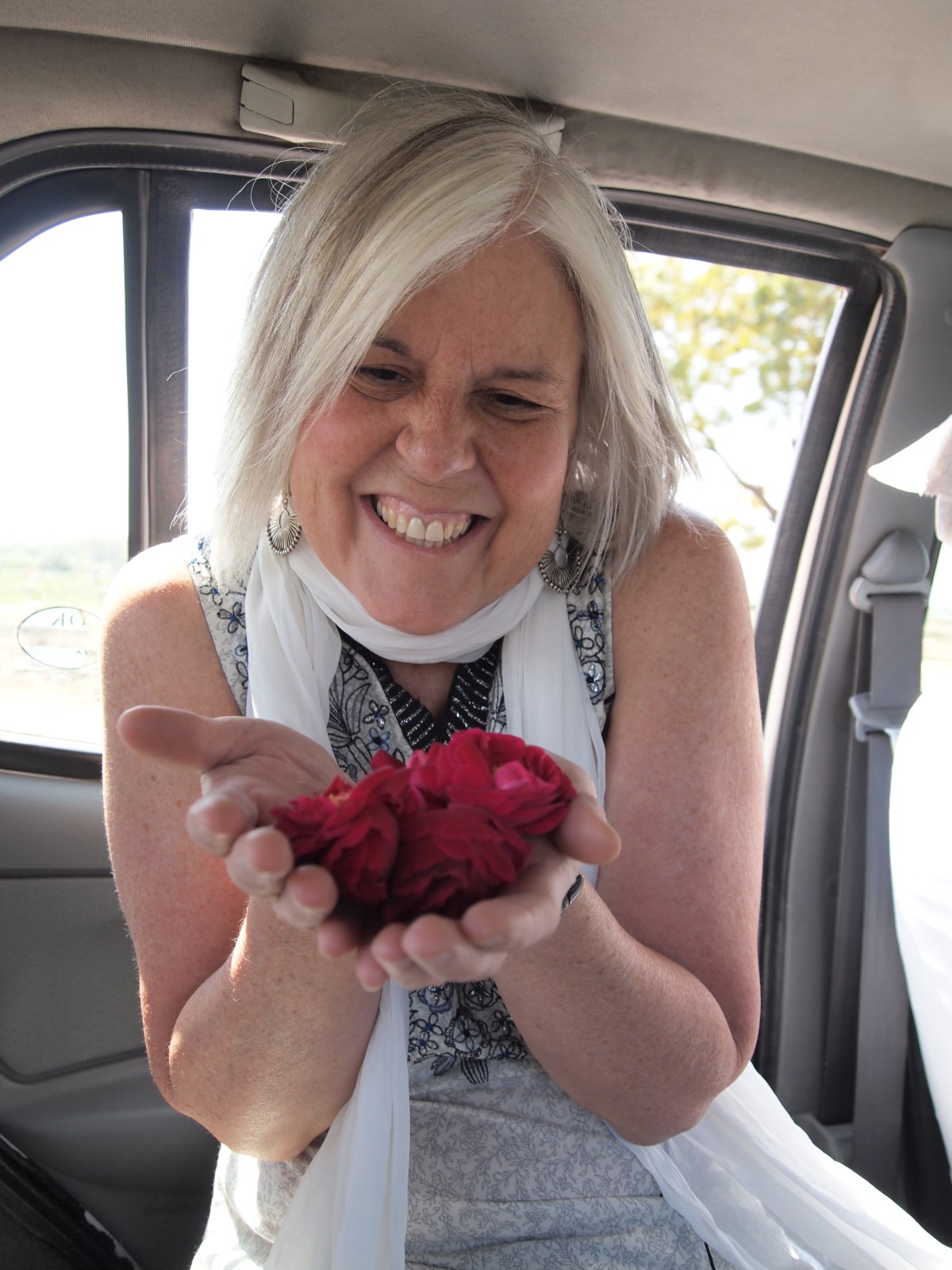
1325

roses from passers-by

2) Hotels: Some were fabulous, and others were real dumps.

fullsizeoutput_15c19

our hotel at Corbett Tiger Reserve

What I hated about India: 9 unsavory impressions.

1) In Delhi, the streets were teeming with auto-rickshaws, cycle rickshaws, cows, garbage, extremely poor people living right on the streets, dogs, more garbage, cow shit — basically utter chaos and frenzy.  Around us, in our faces, were motorcycles, ox carts, bicycles pulling carts loaded down with huge bundles of stuff. Tents fashioned out of blue tarpaulin sheets lined the streets.  Trash and debris were built into the landscape, a permanent marring of the scenery.

Driving around Delhi was an assault on the senses.  The roads in Delhi went around grassy circles in which poor men and women slept or ate or played cards.  Filthy children ran around with no pants on so they could poop or pee anywhere the urge hit them.  Thousands of people lived on the sides of the road either in the open air or under blue tarp tents, people with emaciated bodies, filthy faces and clothes.  They lived in animal-like ways under bridges and overpasses, making fires, and washing clothes and picking lice out of each others hair.  Men chewed paan, betel leaf filled with powdered tobacco with spices (although there are other variations without tobacco), and spit the red juices all over the place. Men everywhere pissed shamelessly against walls or trees or into bushes.

When caught in traffic in Delhi, people approached our car trying to sell magazines or long chains with colorful elephants on them, or any sort of thing you can imagine.  Then there were the people who I called the “black ghosts,” the really dark Indians who silently appeared at our car window, right in our faces, pressing their foreheads against the windows.  Most often, these were women in saris with rings in their noses, holding a baby and making gestures of feeding the baby.  Begging for money to feed their child.  Sometimes the “black ghost” was a young boy who had smeared his own spit under his eyes to look like he was crying, holding his empty fingers to his mouth, as if putting food in his mouth, but his fingers were empty.  This occured so many times throughout India that if I were to give $1 to every person who asked for money, I would need thousands or even millions of dollars.  It was incredibly sad and disturbing.

2) Ridiculous fees and requirements: I was happy to leave India’s largest mosque, Jama Masjid, as it was filthy and the market below was even worse.  One truly irritating thing was that we were forced to pay the shoe-minder for minding our shoes.  Another guy also tried to get us to pay for the cloth coverings they forced us to wear, even though we didn’t need them because we were wearing long sleeves and long pants.  We refused to pay him because we didn’t want the damn things anyway, and this was nothing we agreed to beforehand. This kind of thing became a constant irritation on this trip.  Everywhere, we were forced to pay for stupid things we didn’t even want to do.  I didn’t need anyone to “mind my shoes!!”  I could have cared less if anyone took them!! I also didn’t feel we should have to pay for having to wear a cloth covering, after the fact, that we didn’t even need!!

fullsizeoutput_1b3c4

me in the enforced covering at Jama Masjid

3) Varanasi is one of the world’s oldest continually inhabited cities and one of the holiest places in India.  It was unapologetically chaotic, insane, and edgy.  There was no way to prepare for the streets that were Varanasi:  narrow two-lane dirty roads where cows roamed and munched lazily on plastic bags and garbage.  They shat all over the place, adding to the generally all-encompassing piles of debris.  Cows ruled here, along with mangy skin-diseased dogs, small armies of pigs pushing up dirt with their snouts, goats, and more cows.

People’s clothes and faces and arms were covered in dirt and they lived alongside the cows and other animals, stepping over their piles of shit, accepting, even embracing, it as a permanent part of the landscape.  Women in saris sat on piles of rubble hand-mixing the profusion of shit with hay and forming it into little patties, which they then formed into larger igloo or beehive shapes to use as cooking fuel later.  Horns honked and screeched and played goofy little ditties, a cacophony of loud abrasive noise. Whole families burst at the seams of auto-rickshaws, hanging on for dear life and smiling as if they were having the happiest moments of their lives.  Between the bicycles, cycle rickshaws, auto-rickshaws, the cows, the animals, and the filthy people, there was not a space to breathe or rest.  Everyone and everything was in constant motion, and you had to go along with the flow or be swallowed whole.

Walking down the narrow alleys, we encountered a queue of cows bullying their way through; we had to push ourselves up against the wall to avoid getting underfoot or gored. Down another alley, cows were sleeping or just lounging on steps. Goats wandered along and a dirty puppy jumped up performing tricks for treats, of which we had none to give him. We passed vendors selling bags of sandalwood and spices and beautiful textiles.  Flies swarmed everywhere around the piles of cow shit on the streets.  I felt like dirt and filth were jumping off the alleyways, buildings and animals and clinging to my clothes and skin.

I wrote more about Varanasi here: varanasi, india: of ghats & gurus

cow in Varanasi
cow in Varanasi
rickshaws filled to capacity in Varanasi
chaos of Varanasi
chaos of Varanasi
me in Varanasi
me in Varanasi
drunken dancer at a wedding in Varanasi
Varanasi at night
Varanasi at night

4) Travel in India on roads and trains was an endurance test.  I have already written on this blog about our challenging time traveling from Varanasi to Rishikesh: on journey: chandigarh >> to delhi (???) >> to rishikesh….14 grueling hours.

On another road trip from Rishikesh to Jim Corbett National Park, we whizzed past whole families lounging on wooden horse-drawn flatbed carts.  Cows stood along the roadways munching greedily on plastic wrap and garbage.  Artfully arranged produce stands beckoned with their tantalizing but forbidden fruits.   Motorcycles congregated in unlikely places.  Buildings were in various states of decrepitude or half-completion.  Rusted pieces of scrap metal lay around haphazardly.  We passed multitudes of colorful Hindu temples and shrines and trucks piled high with sugar cane and bamboo stalks.  Roadside stands boasted colorful aluminum foil ribbons of breath fresheners.  Bicycle tire repair shops dotted the landscape.  Tire stores, piles of gravel, crumbling walls with half-ripped notices and posters: these decorated India’s roads.  Garbage was strewn everywhere, and countless men stood peeing against walls and into fields of debris or grass or just into the dirt.  The strange thing was that we never saw women squatting to pee along the road.  We wondered if there was some law that forbid women to pee in public, but allowed men to do so.

We saw the strangest things everywhere.  There were whole mini-“villages” of honeycomb-looking structures made of cow dung, some kinds of cow dung teepees.  They were too small to be houses.  But they were so neatly arranged they looked almost like something artistic.  Our driver told us they were used in construction to pack into holes in houses, thus keeping out the rain.  Or they were used as cooking fuel.

5) Corbett Tiger Reserve was a real letdown.  We never saw any tigers, and were treated to a safari with an uninformative and unfriendly guide, during which we only saw deer and chickens.

6) On the long road trip from Corbett Tiger Reserve to Agra, I grew to hate potatoes as we got stuck behind scores of huge trucks carrying potatoes to put in cold storage.  We couldn’t believe the numbers of these trucks, lined up along the roads, blocking our passage.  They slowed our trip considerably. We passed an overturned truck of potatoes.  Another potato truck had a flat tire and to change it, people stacked up tall columns of bricks which looked very unstable, like an exaggerated Jenga game. We passed a bus stuck in a ditch, its passengers sitting inside silently at an unnatural angle.  Other rickety buses were packed with grimy people, hanging out of windows and doors and sitting on the roofs.

Everywhere women in saris walked with bowls of cow dung paddies on their heads.  Horns on Indian vehicles made every sound imaginable from “Oooooaaawwwwoooo” to “balabla balabla” musical tunes to “squeeeeaaaallll”  and “eeeeeekkkkk” to “beep beep beep.”

The towns we passed along the way were clogged nightmares, where traffic tangled into muddles with no discernible rhyme or reason.  Each town was a chaotic knot of filthy people, cows, animals, carts, auto rickshaws, and anything else imaginable.  They swarmed all around our car, pressing hands and faces against the windows, begging for money.  We were totally surrounded and could only inch along.  There was no clear path in any direction.  We encountered this in every town along the way to Agra.  Along the sides of the road were hovels with disgusting fat men covered in red betel juice, snoozing on their sides with bellies hanging out of their shirts.

On this day, I understood what one billion people felt like.  And it hit me hard that India did not have the infrastructure or the will to take care of 1 billion people.  It was horribly sad and upsetting that so many people were living in such squalor and disarray.
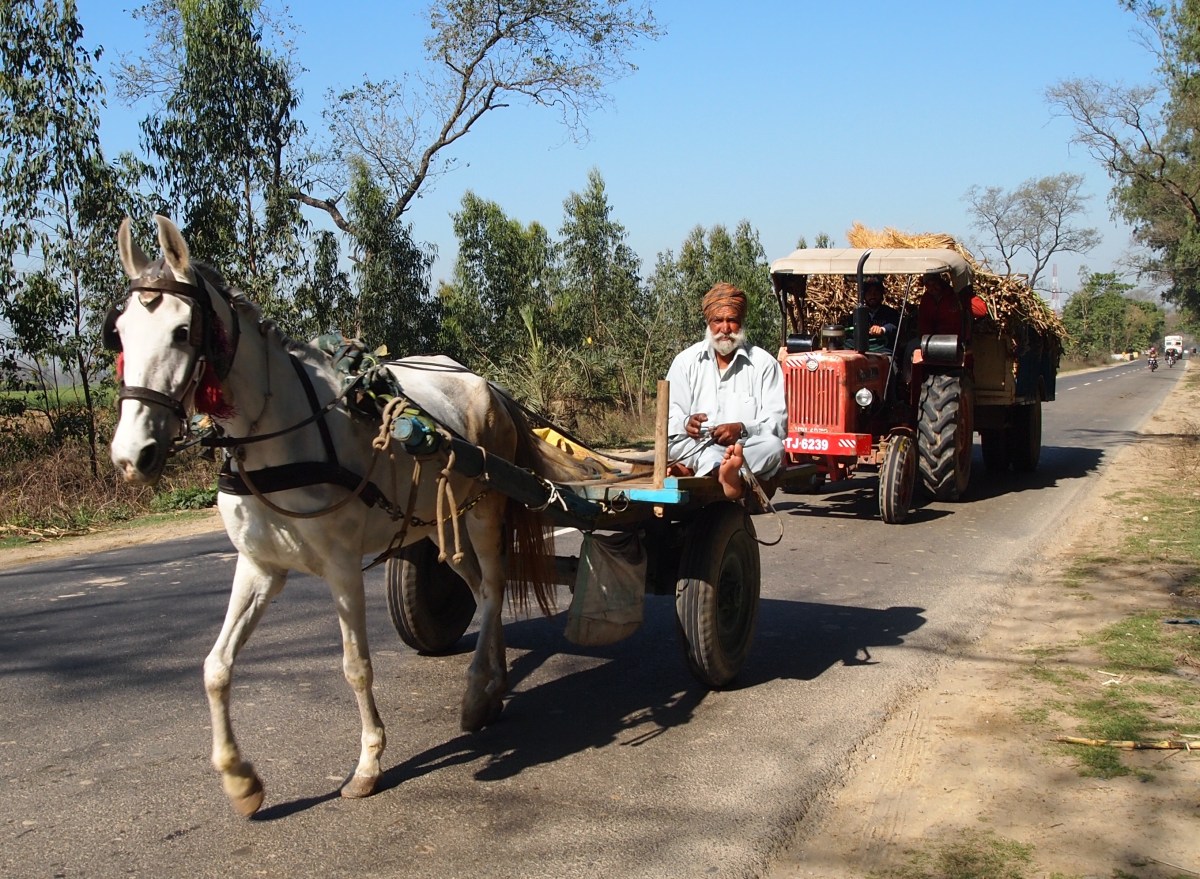
fullsizeoutput_cae

on the road from Chandigarh to Rishikesh in India

7) Train travel: A 12-hour train ride from Jaipur to Jaisalmer, beginning at midnight:  After midnight, on a blue train smothered in smutty blue light, we stuffed our suitcases in the space between our two bunks and settled in to try to sleep.  With great foresight, Jayne bought along two sheets that were like sleeping bags, sewn together on three sides, with just an opening for our heads.  This was the first time in our travels that we pulled these out and stuffed ourselves inside of them.  I was so happy to have this sheet-bag to sleep in, to put layers between myself and the filthy mattress and the tattered and scratchy wool blanket provided by the train.  The train was disgustingly dirty and I was afraid of bugs and other critters crawling over me in the night.

I got up several times to use the bathroom, which was a squat toilet that emptied directly onto the tracks.  I got grossed out when Jayne mentioned that she saw rats running around on the train tracks in the Jaipur station.  I imagined whole families of rats thriving along the rails, gorging themselves on people’s droppings from the trains.  It was disgusting.  So often in India, I was shocked by how people lived like animals. Yet.  Somehow, they went about their daily lives carefree and chipper, ignorant that anything better might be possible.

On a train ride from Jaisalmer to Jodhpur: I wasn’t able to relax knowing that the dreaded train lay before us that evening.  I read pages and pages of White Tiger by Aravind Adiga in the afternoon, which made me more uptight.  His bleak and dark descriptions of India only exacerbated the feeling of unease I had regarding the remainder of our trip and this train.  I hated so much the 12-hour trip from Jaipur; this would be another 6 hours of torture to Jodhpur.  Plus, because this was not an overnight train, I didn’t know what kind of compartment or seating to expect.  I frankly was experiencing a great deal of anxiety, between reading this book and fearing our journey that night.

8) The train station & streets of Jodhpur: When we arrived in Jodhpur, we stood outside in front of the station in the dark, where people were sleeping all over the concrete, like fallen dominoes.  One lady had her head on another lady’s stomach; a man had his feet on someone else’s chest.  Some had their heads propped on their baggage.  A fat orange-haired lady in a sari slept directly on the concrete while huge rats sniffed around her face.  Fluorescent lights cast an eerie glow over the whole scene. All these people were sleeping directly on the concrete, no sheets or blankets to shield them from the hordes of rats scurrying about.  Auto-rickshaws were lined up on the street, bathed in the sickly light.  Young men kept coming up and asking us where we are going.  They said, “Pal Haveli? Pal Haveli?”  We said, who are you here for?  We didn’t tell our names but insisted that they tell us who they were here to pick up.  Finally, after many phone calls, they told us a name that was not Jayne’s.  We said, no, you are not here for us.

Finally, after what seemed like an uncomfortable eternity, we were able to get someone to speak to the Pal Haveli, which sent a car for us.  They were able to tell us Jayne’s name, so we finally knew we had the right driver.
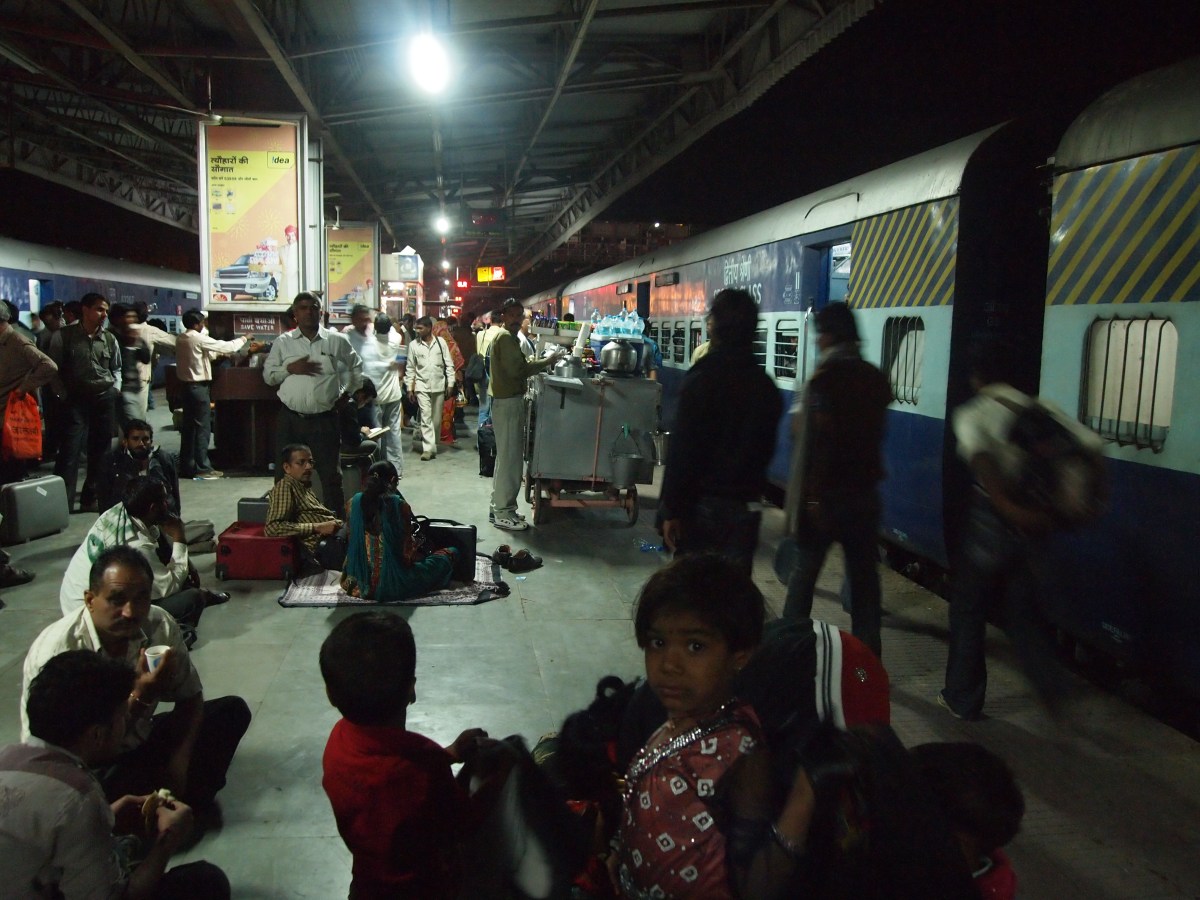
186

train station in India

On the way out of the madhouse city of Jodhpur, we saw the usual hordes of dirt-covered and poverty-stricken Indians trying to eke out a living.  Passing the clock tower and the Sardar Market, we were bombarded by vibrant sights and smells from the bazaars selling vegetables, spices, sweets, silver, textiles and handicrafts.  We passed one man on the street; half of his face looked to be melted, like drooping rubber.  We saw the usual people suffering with what seemed to be the common skin disease of vitiligo; their faces were splotchy with browns, pinks and whites, as if they’d been through an extreme chemical peel.  Vitiligo is a skin condition in which there is a loss of brown color (pigment) from areas of skin, resulting in irregular white patches that feel like normal skin.  It appears to occur when immune cells destroy the cells that produce brown pigment (melanocytes). This destruction is thought to be due to an autoimmune problem, but the cause is unknown. After reading White Tiger and the horrible state of health care in India, I guessed I shouldn’t have been surprised to see so much illness and deformity.  However, the pervasiveness was shocking… and horribly sad.

9) Paan:  All through India, we encountered multitudes of guys making paan.  Paan is a betel leaf, chewed as a palate cleanser and a breath freshener, and for digestive purposes. In urban areas, chewing paan is generally considered a nuisance because some chewers spit the paan out in public areas.  The red stain generated by the combination of ingredients when chewed make an unsightly stain on the ground. This is becoming an unwanted eyesore in Indian cities such as Mumbai, although many see it as an integral part of Indian culture. In our travels throughout India we saw the red stains everywhere and it was quite disgusting.  In the book White Tiger, the author describes entire rooms in buildings on which the bottom portions of walls are stained blood-red.

664

paan vendor in Mumbai

In sum: 

I was deeply moved by Gandhi’s words, posted beneath photographs of him on the walls of the Gandhi Smriti museum.  I’d read his philosophy before in different places, and his biography as well.  One quote that I found particularly inspiring was this:

“I shall work for an India in which the poorest shall feel that it is their country, in whose making they have an effective voice, an India in which there shall be no high class and low class of people; an India in which all communities shall live in perfect harmony.  There can be no room in such an India for the curse of untouchability, or the curse of intoxicating drinks and drugs.  Women will enjoy the same rights as men.  We shall be at peace with all the rest of the world. This is the India of my dreams.”  M. K. Gandhi

My thought was that, in the three weeks I spent in India, it was evident that Gandhi’s dream was far from being realized.  As I traveled throughout northern India, this thought was reinforced and amplified time and time again.  I felt sad that Gandhi’s vision, even under a “democratic” government in India, and despite India’s growth in the world economy, seemed so far from coming to fruition.  The country was not taking care of its own.  India, at least in 2011, did not have the infrastructure, neither did it seem to have the political will, to take care of its vast population of 1 billion people.  This fact was thrust in my face throughout my 21 days in India.

Camel carriage in Gadi Sagar
Aurangabad
Aurangabad

In retrospect, my three-week trip to India with my friend Jayne was overambitious.  We were both exhausted and more than ready to leave the country.  Because of all the challenges we had, our friendship was sorely tested.  We could hardly bear to speak to each other for nearly a month following our return home.

The country didn’t come close to attaining the gloss that is depicted in so many Bollywood movies.  It didn’t resemble the picture I’d painted in my imagination.  I guess I somehow expected it to be that version, with beautiful people dressed in exquisite textiles breaking out into song and dance amidst exotic architecture!

However, it was fun to watch The Best Exotic Marigold Hotel (2011) after returning home from India.  I thought the depiction of the hardships was fairly realistic, but maybe a little glossed over.

Finally, to capture my travels in words and photos, I wrote in great detail about my entire trip to India here: catbird in south asia: india.

*March 1-21, 2011*

*************************

“ON RETURNING HOME” INVITATION: I invite you to write a post on your own blog about returning home from one particular destination or, alternately, from a long journey encompassing many stops.  How do you linger over your wanderings and create something from them?  How have you changed? Did the place live up to its hype, or was it disappointing? Feel free to address any aspect of your journey and how it influences you upon your return. If you don’t have a blog, I invite you to write in the comments.

For some ideas on this, you can check out the original post about this subject: on returning home.

Include the link in the comments below by Sunday, January 5 at 1:00 p.m. EST.  When I write my post in response to this challenge on Monday, January 6, I’ll include your links in that post.

This will be an ongoing invitation on the first Monday of each month. Feel free to jump in at any time.
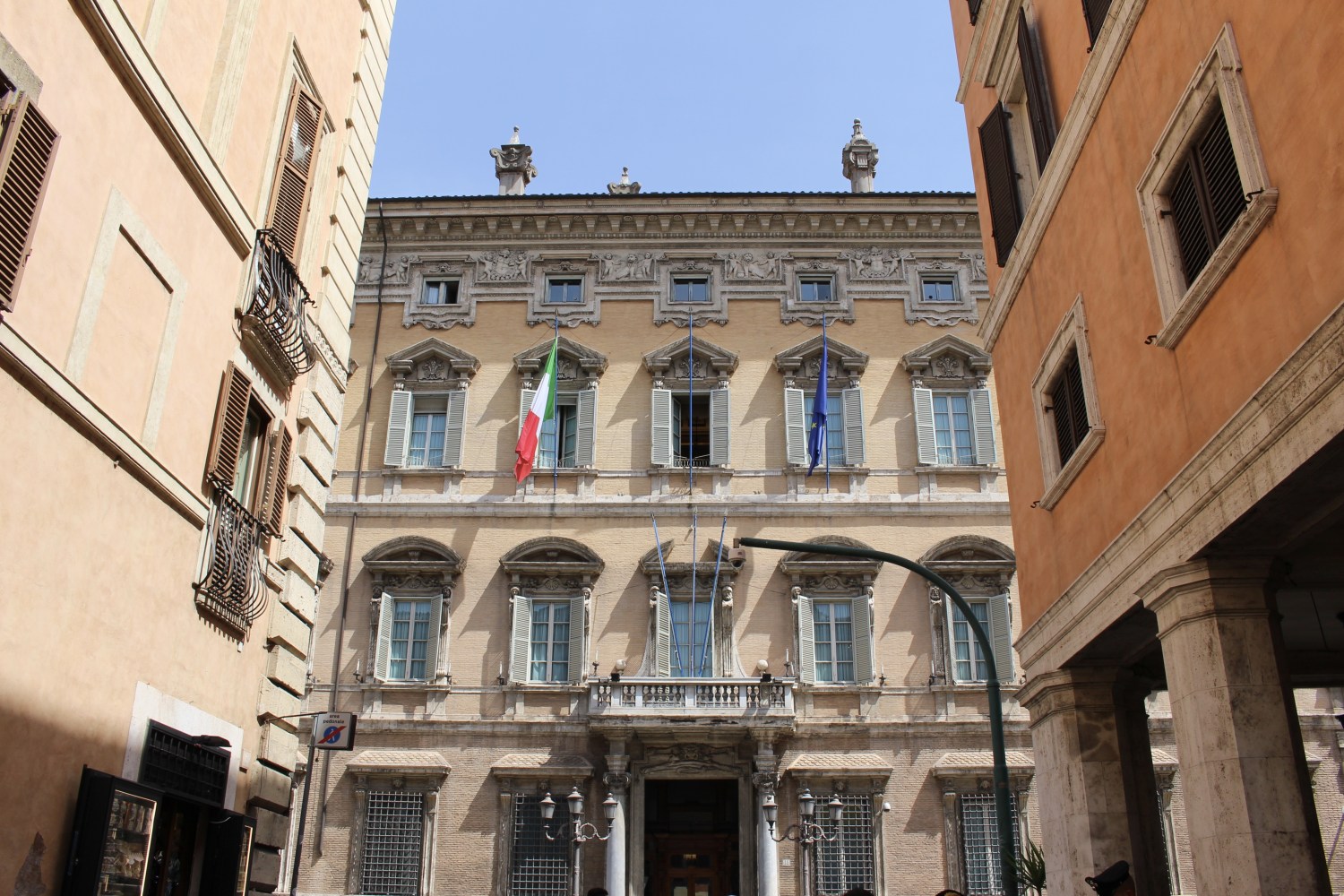
 

Share this:

  • Share on X (Opens in new window) X
  • Share on Facebook (Opens in new window) Facebook
  • More
  • Email a link to a friend (Opens in new window) Email
  • Print (Opens in new window) Print
  • Share on Pinterest (Opens in new window) Pinterest
Like Loading...
  • Camino de Santiago
  • Europe
  • Hikes & Walks

{camino day 45} melide to arzúa

wanderessence1025's avatar wanderessence1025 December 1, 2019

Today was a short hiking day. I left Melide in the dark at 8:04 a.m. and though it had rained all night, it had cleared by morning. I soon left the busyness of the city behind and made my way into a woodland of tall eucalyptus and broad oaks. I crossed the arroyo San Lázaro on a small stone causeway, then stopped briefly at El Pequeño Oasis, where I admired a cute pink Fiat. The walk was beautiful; the wind was gusting like espíritu santo urgently whispering mysterious secrets.

Today was a day of palleiros (haylofts for cattle), pallotes (straw-covered huts), brona (outdoor ovens for cooking cornbread), and ruined oxcarts.

Melide (Centro) to Puente río San Lázaro (2.5 km)

fullsizeoutput_1b36c

El Pequeño Oasis

fullsizeoutput_1b36d

a cute pink Fiat

The path snaked through shaded oak and chestnut forests, eventually giving way to pine and eucalyptus. I continued through Parabispo over the río Raído, passing Peroxa down to the N-547 into Boente.

In town, I met Fatima again; she mentioned she is from Corsier-sur-Vevey in Switzerland, where Charlie Chaplain was from.  We were still passing each other frequently.  She only spoke French with a few words of English, and I only spoke and understood a few words of French.  Somehow she told me that she started walking August 3, first from Mont St. Michel to Bordeaux in France, then by train to St-Jean-Pied-de-Port, where she started the Camino Frances.  Because we saw each other so often, she continued to holler out, “Hasta Luego!” and we both laughed.  She was always smiling.  Today we took photos of each other in Boente.  In the same town, I stopped into Igrexa Santiago de Boente, with its image of the seated Saint above the altar. Documented from the 8th-century, the current building is from the 20th-century.

Puente río San Lázaro to Boente (Cruce) (3.3 km)

fullsizeoutput_1b370

Peroxa

fullsizeoutput_1b374

Puente to Boente

fullsizeoutput_1b376

Puente to Boente

fullsizeoutput_1b378

Puente to Boente

fullsizeoutput_1b37a

Puente to Boente

IMG_9426

hórreo from Puente to Boente

IMG_9428

Fatima in Boente

fullsizeoutput_191df

Me in Boente

fullsizeoutput_1b37f

Igrexa Santiago

fullsizeoutput_1b382

Igrexa Santiago

fullsizeoutput_1b384

Boente

fullsizeoutput_191e2

Boente

I left the town and dipped into the Boente valley, with a shaded rest area alongside a river. It was sure nice to know I only had to walk 14 km, so I could take my time and linger.  The light was beautiful and the temperature perfect.  The walk was very hilly though.  I was so tired of climbing. I loved the cute Spanish houses and the hórreos, typical granaries from the northwest of the Iberian peninsula, mainly in Galicia, built in wood or stone, raised from the ground by pillars ending in flat staddle stones to prevent access by rodents. Ventilation was allowed by slits in the walls.

It was in Castañeda that pilgrims dropped limestone rocks they had brought from Triacastela to be fired for the lime used in building the Cathedral at Santiago.

Boente (Cruce) to Castañeda (2.2 km)

fullsizeoutput_1b386

Boente to Castañeda

fullsizeoutput_1b388

Boente to Castañeda

fullsizeoutput_1b38a

Boente to Castañeda

fullsizeoutput_1b38c

Boente to Castañeda

fullsizeoutput_191d4

Boente to Castañeda

fullsizeoutput_1b38e

Boente to Castañeda

IMG_9450

Boente to Castañeda

IMG_9452

Boente to Castañeda

fullsizeoutput_191d7

Boente to Castañeda

fullsizeoutput_1b391

Boente to Castañeda

The path took us  around a wooded hill, across a raised pass over the N-547, through a woodland, and into the idyllic village of Ribadiso de Baixo, sitting on the river Iso adjoining the medieval bridge. Here, I stopped for lentil soup, bread and Coke Zero.

Castañeda to Ribadiso da Baixo (3.1 km)

fullsizeoutput_1b395

Castañeda to Ribadiso da Baixo

fullsizeoutput_1b399

Castañeda to Ribadiso da Baixo

IMG_9462

Castañeda to Ribadiso da Baixo

fullsizeoutput_1b39b

Castañeda to Ribadiso da Baixo

fullsizeoutput_191cf

Castañeda to Ribadiso da Baixo

IMG_9467

Ribadiso da Baixo

IMG_9468

lentil soup in Ribadiso da Baixo

I climbed steeply uphill on tarmac to the city of Arzúa (population 6,300), the last major population center before Santiago.  The medieval core of the town is overshadowed by its modern side, making it not especially delightful. The town is known for its local cheese.

Ribadiso da Baixo to Arzúa (3.2 km)

fullsizeoutput_1b39f

Ribadiso da Baixo to Arzúa

fullsizeoutput_191c8

Ribadiso da Baixo to Arzúa

IMG_9476

Ribadiso da Baixo to Arzúa

fullsizeoutput_191c6

Ribadiso da Baixo to Arzúa

fullsizeoutput_1b3a1

Arzúa

My albergue, The Way Hostel Arzúa, was modern and clean.  I was in a room with seven single beds.  As this would be my last night in an albergue, it was a nice way to end. The only thing that wasn’t good was that my backpack had not yet arrived and all other packs seemed to have been delivered.  When I asked the receptionist to call the delivery service, they said they hadn’t picked it up.  We called my albergue from last night, O Candil in Melide, and found the pack was still sitting in the lobby where I’d left it. Luckily, they arranged to have it delivered to me as soon as possible.

In my room were two Brazilian young ladies, Maria (38 years old with 2 children, a boy of 19 and a girl of 11) and Rubia (no children).  Both left their husbands behind in Brazil.  It came out later that Maria was separated from her husband.  They were doing a portion of the Camino Primitivo route, which joins the Frances in Melide; they had also been in my Melide albergue last night.

A South-African lady, Marie-Helene, 77, was also in our room.  She came in complaining about the receptionist (“unhelpful and rude”) and that she needed to see a pharmacist about her feet. She had been doing whatever parts of the route pleased her, and doing the rest by bus.  She had met a Korean lady at a bus station who had been walking with her and looking out for her.  She was very emotional about it and about people who had taken care of her here and there.

IMG_9481

The Way Hostel Arzúa

IMG_9483

The Way Hostel Arzúa

Earlier today, I once again met Janet from Chicago (retired from law enforcement for the Federal Government) who was staying in a bunk bed at my hostel. After my regular routine of doing laundry and showering, Maria and Rubia and I went to a pizza place near our hostel for beers.  A guy named Jesse from New York joined in our conversation and then Janet came along and we all had a fun dinner together – beer, margarita pizza and vegetable pizza.  It was fun company and a surprise how it all came together.

IMG_9487

vegetable pizza

IMG_9488

Maria, me, Jesse, Janet and Rubia

Off the central square in Arzúa is the modern parish church dedicated to Saint James with an image of Santiago as both Moorslayer and pilgrim.  Just behind it is the original 14th century Augustinian Capilla de La Magdalena.

After dinner, Janet and I walked by the (closed) Capilla de La Magdalena and then to the parish church of Santiago, but we had just missed the pilgrim mass.

fullsizeoutput_168ef

colorful truck in Arzúa

IMG_9494

Capela da Madalena

IMG_9495

parish church of Santiago

fullsizeoutput_1b3a5

parish church of Santiago

fullsizeoutput_1b3ae

parish church of Santiago

fullsizeoutput_1b3aa

Janet in Arzúa

fullsizeoutput_1b3ac

Arzúa

I had two long days ahead to reach Santiago: 20.6 km Friday to O Pedrouzo and another 20km into Santiago on Saturday. We had all been wondering if we would have the Botafumeiro swinging at our pilgrim mass.  Many rumors were flying around about it.  The Cathedral only swings it on feast days (November 1 was the next one) or if a pilgrim group pays for it.  We were hopeful but not certain.

One rumor I’d heard from two different people was that they knew of a bishop who had informed them the Botafumeiro would be swung at a 4:00 mass on Saturday.  However, there was no mass regularly scheduled for Saturday at 4:00.  Maybe it would be a special mass for the school groups we had seen or for the German group I’d heard about from the Connecticut ladies.  It supposedly cost 450€ to swing it.  We would see what would happen, but I knew I’d be mighty disappointed if we didn’t have it.

fullsizeoutput_168f0

My Camino so far

**********

*Day 45: Thursday, October 18, 2018*

*23,262 steps, or 9.86 miles: Melide to Arzúa (14.2 km)*

You can find everything I’ve written so far on the Camino de Santiago here:

  • Camino de Santiago 2018

**************

On Sundays, I post about hikes or walks that I have taken in my travels; I may also post on other unrelated subjects. I will use these posts to participate in Jo’s Monday Walks or any other challenges that catch my fancy.

This post is in response to Jo’s Monday Walk: Back to Serenity (Monte Velho).

Share this:

  • Share on X (Opens in new window) X
  • Share on Facebook (Opens in new window) Facebook
  • More
  • Email a link to a friend (Opens in new window) Email
  • Print (Opens in new window) Print
  • Share on Pinterest (Opens in new window) Pinterest
Like Loading...
  • Asia
  • challenge: a call to place
  • destinations

call to place: india in 2011

wanderessence1025's avatar wanderessence1025 November 28, 2019

I wish I could remember the beginning of my fascination with India.  Was it reading the inspiring autobiography of Gandhi and his non-violent resistance to British colonialism?  Was it seeing the movie Mr. and Mrs. Iyer, the story of a Muslim man and a Hindu woman traveling together during a tense period of Hindu violence against Muslims?  Was it watching the intense and inspiring Slumdog Millionaire, about an impoverished boy in Mumbai?  Was it going one day a week for months to my friend Jennifer’s house when our boys were in kindergarten, watching bit-by-bit the marathon British mini-series The Jewel in the Crown?

fullsizeoutput_1a061

Varanasi 2011

I envisioned India as a Pandora’s box full of treasures and rubbish.  Whenever I thought India, I imagined a mélange of jewel-colored saris, a mad rush of all layers of society coming head to head in a jumbled mess.  I imagined prim British ladies in floppy hats, chiffon dresses and white gloves drinking tea in colonial mansions with Indian servants calling them memsahibs.  I imagined the tiny proud Gandhi with his huge ideas, ideas of peaceful resistance to bring about change.  I imagined Indian men and women dancing wildly in clothes the color of pomegranates and sapphires in Bollywood movies.  I imagined curries and garlic naan and tandoori and curried cauliflower and mango lassis.  I imagined crowds bathing in the polluted Ganges.  I imagined corpses being burned on burning ghats.

In early 2011, I went on a trip to Vietnam where I met two couples who had just been to India.  The young American couple said it was the most amazing experience of their lives, except for Delhi where the poverty was too much “in your face.”  They adored floating on a houseboat in Kerala in the south of India and going on a tiger safari.  When I asked the other couple, an older British couple who work for the postal service, what was their favorite part about India, they said, “The flight out!”  The man said, “India is a place to be endured, not enjoyed.”  They spent a month there and could find nothing to like about it.  This I found fascinating.  What kind of country is it that can repulse and inspire at the same time?  It intrigued me, this dual nature of India.

fullsizeoutput_15ac2

flower seller in Varanasi 2011

I had read so many books and seen so many movies about India that I couldn’t even begin to remember them all.  I remember reading the 2002  Gandhi’s Passion: The Life and Legacy of Mahatma Gandhi by Stanley Wolpert.  This book explores India’s independence movement after World War I and the violence that ultimately led to the partition of India and Pakistan in 1947.  It delves into Gandhi’s beliefs and his personal relationships and his strong will that led him to protest by starving himself.  One of the things I remember from this book is that Gandhi, who fought passionately against partition, said that if India and Pakistan split into two nations along religious lines, it would be one of the world’s greatest disasters.  I think possibly he will be proven right, if he hasn’t already.

I read the amazing Pulitzer prize-winning book of nine short stories by Jhumpa Lahiri in 2000, The Interpreter of Maladies.  Some of the stories take place in India and some in America, but most of the characters are of Indian descent.  In the title story, the main character works as an interpreter for a doctor who doesn’t speak his patients’ language.  He also takes tourists to special sites for visits and in one instance falls for one of his women customers,  the wife in a first-generation American couple of Indian descent.  Another story, “A Temporary Matter” explores the unraveling of a marriage after a couple gives birth to a stillborn child.

fullsizeoutput_15c02

snake charmer in Rishikesh

In February of 2011, just before traveling to India, I finished reading another of Lahiri’s books of short stories, Unaccustomed Earth, most of which involve Indians who live in America and their immigrant experience.  They are people who straddle two continents, wanting to preserve tradition but also wanting the American dream for their children.  The stories could be those of any immigrant, not only Indians, but the details are rich with Indian customs and foods and the clash between traditional Indian and contemporary American culture.  In one group of three loosely linked stories in particular, the first told from Hema’s point of view, the second from Kaushik’s, and the third in the third person, their relationship is first revealed through Hema’s child-eyes, when Kaushik’s family returns to America from India and lives for a while with Hema’s family.  The second part is told from Kaushik’s point of view as he sees his father remarry after his mother’s death; in the third story Hema and Kaushik have a random encounter in Rome in their late 30s. I love a story told this way, from different points of view, revealing the multiple layers of characters’ lives and relationships, and the different perspectives each person brings to any story.

You can tell I love Jhumpa Lahiri, because I also saw the movie The Namesake, about Gogol, a second-generation immigrant in America of Indian descent.  He too struggles with cultural identity.   He meets another Bengali woman who has dealt with her awkwardness in America by delving into all things French, finding a third and unrelated culture to lose herself in.

fullsizeoutput_1b204

Jodhpur

The list goes on.  Another Indian author I adore, Chitra Banerjee Divakaruni, wrote the mesmerizing Sister of My Heart, the story of two cousins born on the same day, their premature births brought on by a mysterious occurrence that claims the lives of both their fathers. Sudha is beautiful, but Anju is not.  Despite this, the girls love each other as sisters. When both are pushed into arranged marriages, however, each discovers a devastating secret that changes their relationship forever.  This is one of my favorite books of all time.  The writing is gorgeous!

There are multitudes of other books I’ve read about India.  I have also been inspired by movies about India.  When our sons were in kindergarten, my friend Jennifer and I spent months watching the amazing mega-mini-series The Jewel in the Crown.  We would gather at her house one morning a week and watch an hour or so at a time, drinking coffee and eating muffins or coffee cake and enjoying rare moments of freedom from our children.  This was a 1984 British mini-series set during the final days of the British Raj during World War II. The hero, Hari Kumar was educated in a British school and considers himself British rather than Indian.  He gets involved with an English woman, Daphne Manners.  One night, Daphne and Hari are attacked in the Bibighar Gardens by a group of unknown men and Daphne is raped.   A lower-middle class British police officer, Ronald Merrick, holds Hari responsible for the rape and puts him in prison where he tortures him, even though he knows him to be innocent.  The story is intense and becomes much more convoluted, all tied up as it is in the Indian independence movement and all the different forces at work.  Watching this mini-series with Jennifer was one of the highlights of my life as a mother of young children.

fullsizeoutput_76

Taj Mahal in Agra

One of my other three favorite Indian movies is Slumdog Millionaire, about Jamal, a poor Indian boy in Mumbai who gets the opportunity to compete in the Indian version of Who Wants to Be a Millionaire?  No one can believe he can possibly know the answers to the questions.  Desperate to prove his innocence to the authorities who question and torture him, Jamal tells the story of his life in the slum where he and his brother grew up, of their adventures together on the road, of vicious encounters with local gangs, and of Latika, the girl he loved and lost.  Each chapter of Jamal’s increasingly layered story reveals where he learned the answers to the show’s seemingly impossible quizzes.  I’ve seen this movie about 5 times, I loved it so much!  This movie shows the hardscrabble life of the poor youth in a growing and changing India.

Mr. and Mrs. Iyer is an amazing movie from 2002 about two characters, Meenakshi and Raja, and their harrowing bus trip.  Meenakshi is Hindu and has her baby with her.  Raja is a Muslim wildlife photographer who is asked by a mutual friend to watch over Meenakshi and her baby on the trip.  A curfew is imposed because Hindu mobs are rampaging against Muslims after a Hindu village was burned down in sectarian violence. During this time, the bus is held up and Hindus come on board looking for Muslims to kill. Raja reveals his Muslim identity to Meenakshi and they pretend to be a married couple, Mr. and Mrs. Iyer, to save Raja’s life.  I loved this movie.

Finally, I highly recommend the Bollywood movie, Jab We Met, a 2007 Hindu romantic comedy that’s an adorable love story.  The film tells the story of a feisty Punjabi girl who is sent off track when she bumps into a depressed Mumbai businessman on an overnight sleeper to Delhi. While attempting to get him back on board when he alights at a station stop, both are left stranded in the middle of nowhere. Having walked out of his high-pressure corporate job, the man has no destination in mind, until the girl forces him to accompany her back home and then on to elope with her secret boyfriend.  This movie is full of high-jinx and fun and great Indian music.

I was so excited to finally be embarking on this trip, and especially to be going with my dear friend Jayne.  I hoped we would have the adventure of a lifetime!!

*February 2011*

********************

“THE CALL TO PLACE” INVITATION: I invite you to write a post on your own blog about what enticed you to choose a particular destination. If you don’t have a blog, I invite you to write in the comments.  If your destination is a place you love and keep returning to, feel free to write about that.  If you want to see the original post about the subject, you can check it out here: imaginings: the call to place.

Include the link in the comments below by Wednesday, December 25 at 1:00 p.m. EST.  My next “call to place” post is scheduled to post on Thursday, December 26.

If you’d like, you can use the hashtag #wanderessence.

This will be an ongoing invitation, on the fourth Thursday of each month. Feel free to jump in at any time.  🙂
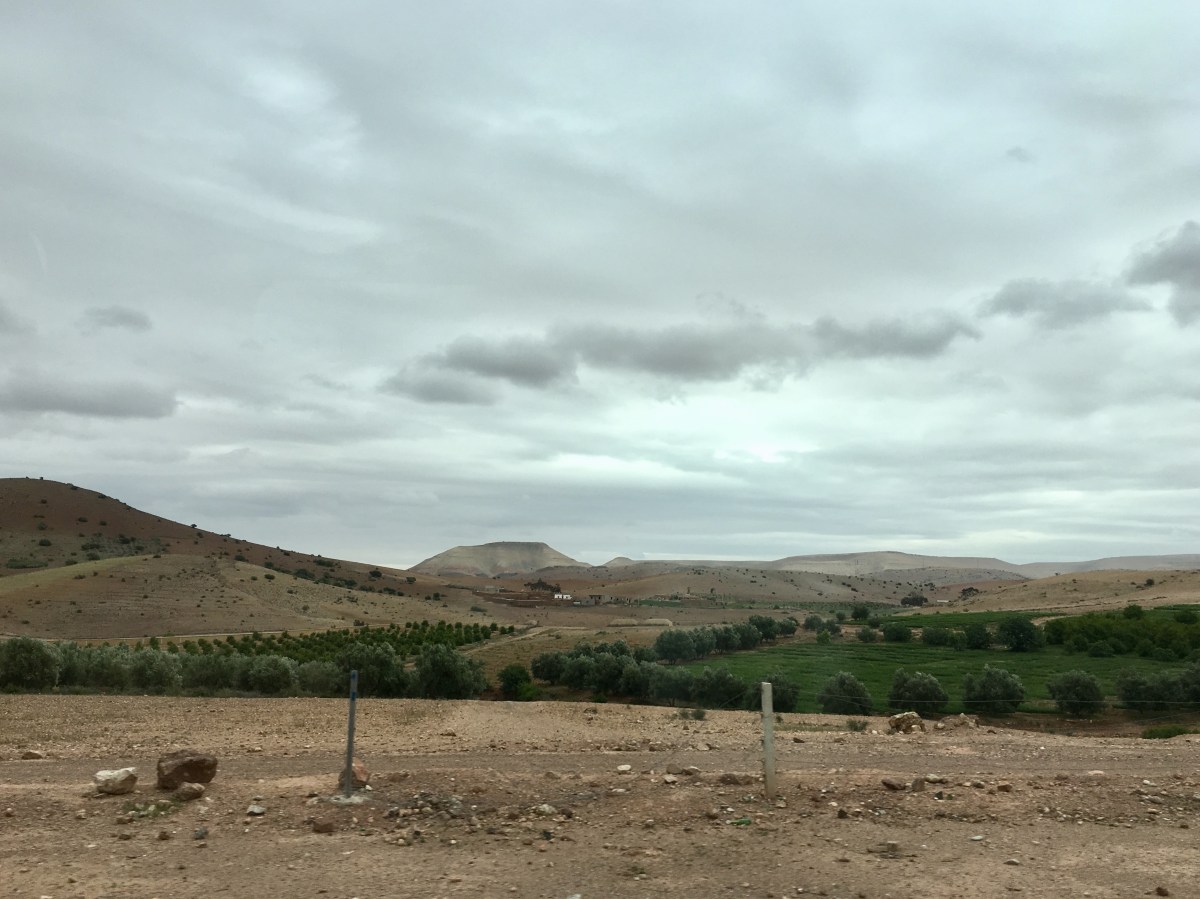
I hope you’ll join in our community. I look forward to reading your posts!

Share this:

  • Share on X (Opens in new window) X
  • Share on Facebook (Opens in new window) Facebook
  • More
  • Email a link to a friend (Opens in new window) Email
  • Print (Opens in new window) Print
  • Share on Pinterest (Opens in new window) Pinterest
Like Loading...
  • American Road Trips
  • Delaware
  • New Castle

delaware: new castle & old swedes church

wanderessence1025's avatar wanderessence1025 November 26, 2019

New Castle, Delaware arose from the conflict between three great powers – Netherlands, Sweden, and England. For 30 years, from 1651 to 1681, these nations vied for control of the Delaware Valley and the profitable trade in natural resources — beaver pelts, timber and tobacco — with the region’s American Indian inhabitants, the Lenni Lenape.  It was a kind of cultural imperialism, a struggle to create and maintain unequal relationships between civilizations, favoring the more powerful civilization.

IMG_8647

items of trade in the Delaware Valley

In 1638, the Swedes seized upon the lack of a Dutch presence in the Delaware Valley (most Dutch posts were further north) by constructing Fort Christina at present-day Wilmington, Delaware.

The three main characters in these ongoing campaigns were Peter Stuyvesant (Dutch), Captain Sven Skute (Swedish), and Sir Robert Carr (English).

Peter Stuyvesant (Dutch)
Captain Sven Skute (Swedish)
Sir Robert Carr (English)

The Dutch responded to this Swedish encroachment in 1651 by dispatching Peter Stuyvesant, the director-general of New Netherland, and his military force to build a new fortification, the timber and earthen Fort Casimir (1651-1654).  A short five-mile distance downriver in today’s New Castle, it served as a military stronghold, courthouse and jail.  Here, the Dutch sought to control shipping to the Swedish settlements upriver.

IMG_8635

diorama of Fort Casimir > Fort Trinity > Fort Amstel

Fort Casimir was taken by the Swedes on Trinity Sunday, 1654, when the Swedish warship, The Eagle, fired four canon shots at Fort Casimir. Poorly manned and outgunned, the Dutch surrendered the fort to a landing party of 20 Swedish musketeers under the command of Captain Sven Skute. The victorious Swedes changed the name of the stronghold to Fort Trinity.

The Swedish occupation of Fort Trinity and Skute’s command were short-lived. The following year, in 1655, the Dutch retook their former fort and settlement. That same year, the Dutch force then moved upriver and took Fort Christina, thus ending Swedish rule in the Delaware Valley.

Stuyvesant, despite his orders, exhibited a benevolent attitude; he treated the Swedish and Finnish settlers well and wouldn’t imprison or exile them if they gave their allegiance to the Dutch government – which many did. Back under Dutch control, the settlement prospered and was renamed Fort Amstel.

Stuyvesant laid out The Strand (riverfront), the first streets and lot arrangements, and The Green (market green), a public square that has since served as a place for public forums, fairs, weekly markets, and other town activities.  On this green stood the old jail and gallows. By 1659, New Amstel’s population had increased to 150 individuals and contained 110 structures including a brewery, bake house, forge and brick kiln.

fullsizeoutput_1b2b6

New Castle Visitor Center at the Arsenal

In the end, the English prevailed in the struggle for dominance. In August of 1664, Peter Stuyvesant surrendered, dooming the Dutch settlements in the Delaware Valley.  By October, two English warships with a force of 100 soldiers under the command of Sir Robert Carr approached New Amstel.

The English brought about a selection of changes and expanded the town, which they renamed New Castle. During this period, the town’s population increased. Its many historic houses are brick or frame and 2-3 stories; some have been in the same family for 3-4 generations.

New Castle
New Castle
New Castle
New Castle
New Castle
New Castle
New Castle
New Castle
New Castle
New Castle

The Duke of York’s Laws for the Government of the New York Colony were drafted in 1665 by the colonial governor, Richard Nicholls. This legal code aimed to bring a more uniform system of law to the territory, covering nearly every aspect of colonial life. It included things as diverse as the bounty to be paid on wolves, standards for weights and measures, restrictions on American Indians, social and domestic regulations, rules for the militia, and most lasting, the establishment of a court system including trial by jury.

The first recorded criminal jury trial under English law in Delaware took place in New Castle in December 1669. On trial was Marcus Jacobs, called “Long Finn” because he was unusually tall and spoke Finnish. He was charged for rebellion after he made a speech, making numerous false claims, calling for the overthrow of the English. He was arrested, tried and found guilty of rebellion by the jury. For his punishment, he was branded on the face with the letter “R” for rebellion and whipped in public. Ultimately, he was expelled from the colony and sold into slavery.

New Castle Common is part of a tract of one thousand acres set apart by William Penn in 1701 for the inhabitants of the town of New Castle. It was in 1682 that William Penn traveled to the New World landing in New Castle, exerting his Quaker influence on the town.

New Castle Common
New Castle Common
William Penn
William Penn

Immanuel Episcopal Church on the Green was established in 1689, and built in 1703.

fullsizeoutput_1b2b4

Immanuel Episcopal Church on the Green

fullsizeoutput_1b2ba

Immanuel Episcopal Church on the Green

IMG_7994

gravestone at Immanuel Episcopal Church

IMG_7997

Immanuel Episcopal Church on the Green

IMG_7999

Immanuel Episcopal Church on the Green

The military installments would eventually be lost to time.  New Castle became a melting pot of people from many nations and ethnic groups, including Africans and American Indians. This multi-cultural influence endures today.

The New Castle Courthouse

The New Castle Courthouse was built in 1732 and served as the meeting place for the state’s colonial assembly from 1732-1777. It is here where the Delaware Assembly voted on June 15, 1776 to separate from England and from Pennsylvania, creating the “State of Delaware.”

IMG_8621

New Castle Courthouse

fullsizeoutput_1b296

New Castle Courthouse

IMG_8624

New Castle Courthouse

fullsizeoutput_18ce8

New Castle Courthouse

The town was home to four signers of the Declaration of Independence on July 4, 1776 – George Read, Thomas McKean, George Ross, and Francis Hopkinson.

IMG_8629

The Declaration of Independence

One of the building’s most famous federal proceedings was a series of trials in 1848. Prominent abolitionists and Underground Railroad conductors Thomas Garrett, a close friend and ally of Harriet Tubman, and John Hunn were found guilty of violating the Fugitive Slave Act and were issued hefty fines.

The Courthouse continued to hold regular state and federal proceedings until 1888.

In 1857, New Castle County constructed a new prison complex on this site. The Sheriff’s House provided a roomy residence for the County Sheriff and his family. The prison (to its right) could house as many as 40 inmates. The whipping post and pillory in the New Castle Prison Yard were adjacent; the last whipping was in 1952, but the state didn’t outlaw the practice until 1972.

The county seat moved to Wilmington in 1881, but the Sheriff’s House and County Jail remained in service until 1902. The jail was torn down in 1912. The Sheriff’s House continued to be used, most notably as the home of New Castle Club, and finally, as the city police headquarters until 1997. The National Park Service now manages the Sheriff’s House as part of First State National Historical Park.

fullsizeoutput_1b2c2

Sheriff’s House

The Old Library Museum is a hexagonal, Victorian-style brick building built in 1892 that features historical society collections.

fullsizeoutput_1b2b2

The Old Library

Packet boats from Philadelphia met stagecoaches at Packet Alley bound for Frenchtown, Maryland, the chief line of communication from the North to Baltimore and the South. Andrew Jackson, David Crockett, Daniel Webster, Henry Clay, Louis Napoleon, Stonewall Jackson, and Indians (led by Osceola and Black Hawk) en route to visit “Great Father” in Washington – all passed this way.

fullsizeoutput_1b2ab

Packet Alley

George Read (1733-1798) was a Member of the Congress of the Revolution, the convention that framed the Constitution of the United States and of the first Senate under it; Judge of Admiralty, President and Chief Justice of Delaware, and a signer of the Declaration of Independence. His Federal Period house was destroyed by fire in April 1824.

IMG_8659

Site of Home of George Read

The townspeople rebuilt the home and the second owner, William Cooper and his family added a formal garden that stretched back to Second Street.   In the early 1900s, third owners, Philip and Lydia Laird, laid brick sidewalks throughout the garden and erected brick walls.

It was a pleasure to wander around these gardens on a warm summer day.

IMG_7987

Site of Home of George Read

IMG_7989

Site of Home of George Read

fullsizeoutput_1b2ae

Site of Home of George Read

Old Swedes Church

After leaving New Castle, I made my way to Wilmington, where I stopped at Old Swedes Church, known as “the nation’s oldest church building still used for worship as originally built.” Upon arrival from Sweden in 1697, Paster Eric Björk began his quest to build a stone church to replace the decaying log structure on the south bank of the Christina River that had served the Swedish Lutheran congregation. Helga Trefaldigher Kyrcka (Holy Trinity Church) was consecrated on Trinity Sunday, 1699. Over the years, it has become affectionately known as Old Swedes.

It is located in what was the New Sweden Colony before Delaware fell to the English in 1664. The Swedish Government supported the building of the church for the love and community of its people, despite the fact that it was no longer a Swedish Colony. The Church is made from local blue granite and precedes the burial ground that surrounds it; the cemetery holds remains of over 8,000 individuals, a number of whom were significant to the history of Delaware, including the humblest Swedish settler, a Secretary of State of the United States, and military personnel.

fullsizeoutput_1b2ce

Old Swedes Church

fullsizeoutput_1b2c9

Old Swedes Church

fullsizeoutput_1b2c3

Old Swedes Church

fullsizeoutput_1b2d3

Old Swedes Church

The “M.B.” Stone is probably one of the oldest still visible in the churchyard. It is not known who M.B. was or when he or she died. The stone is typical of the simple rough markers of the late 1600s and early 1700s.

fullsizeoutput_1b2d4

The “M.B.” stone

The Stidham Family was a prominent family in the early days of the New Sweden Colony and Old Swedes.  Dr. Tymen Stidham arrived on the fourth voyage of the Kalmar Nyckel. The first physician in this area, he strictly enforced sanitary measures, leading to a healthy New Sweden colony.

Rev. Joseph Stidham fought in the Revolutionary War. There are four Stidham Revolutionary War veterans buried at Old Swedes.

IMG_8708

The Stidham Family

fullsizeoutput_1b2da

Old Swedes Church

Reparations to celebrate the 300th anniversary of the consecration of Old Swedes in 1998 produced some surprising results.

Painters removed dozens of coats of paint from the south doors in preparation for painting. They found carved graffiti dating back almost 300 years. It was decided to leave the graffiti rather than paint over it as had been done in the past.  Much of the graffiti dates from the twelve year period the church was closed, 1830-1842. The earliest date found is 1711. In addition to the doors, some initials and dates have been carved into the portico stones.

fullsizeoutput_1b2d8

Graffiti door

Though the English were the apparent victors in the struggles for cultural imperialism in the Delaware Valley, the Swedes still managed to hang on to their community and cultural identity.

After leaving Old Swedes Church, I headed for the expansive and glamorous Nemours Estate, owned and developed by Alfred I. duPont (1864-1935).

*Thursday, June 6, 2019*

**********************

“PROSE” INVITATION: I invite you to write up to a post on your own blog about a recently visited particular destination (not journeys in general). Concentrate on any intention you set for your prose.  One of my intentions was to use five random nouns in my travel essay each day: 1) attitude, 2) campaign, 3) pleasure, 4) selection, and 5) distance. √  I also chose a theme for today: cultural imperialism.

It doesn’t matter whether you write fiction or non-fiction for this invitation.  You can either set your own writing intentions, or use one of the prompts I’ve listed on this page: writing prompts: prose. (This page is a work in process.) You can also include photos, of course.

Include the link in the comments below by Monday, December 9 at 1:00 p.m. EST.  When I write my post in response to this invitation on Tuesday, December 10, I’ll include your links in that post.

This will be an ongoing invitation. Feel free to jump in at any time. 🙂

I hope you’ll join in our community. I look forward to reading your posts!

Share this:

  • Share on X (Opens in new window) X
  • Share on Facebook (Opens in new window) Facebook
  • More
  • Email a link to a friend (Opens in new window) Email
  • Print (Opens in new window) Print
  • Share on Pinterest (Opens in new window) Pinterest
Like Loading...
  • Camino de Santiago
  • Europe
  • Hikes & Walks

{camino day 44} lestedo to melide

wanderessence1025's avatar wanderessence1025 November 24, 2019

I hated to leave my comfortable hotel on this cold and dark morning, but I had nearly 20km to walk.  After eating a hearty breakfast, I was on my way at 8:09.  Clouds were nestled into the folds of the mountains as I walked alone past the village cemetery and then through Os Valos Mamurria and on to A Brea.

A short woodland path at the back of Meson A Brea led uphill to Alto Rosairo.  In this spot, medieval pilgrims would begin to recite the rosary, thus the name. Before trees were planted here, views could be had to the peaks behind Santiago de Compostela.

I entered the suburbs of Palas de Rei.  This town straddles the camino and was a “compulsory” stop in the Codex Calixtinus, an anthology of background detail and advice for pilgrims, likely compiled from 1138-1145, following the Way of St. James to the cathedral of Santiago de Compostela.

It is said that the Visigothic king Witiza (701-9) constructed a palace here that gave the town its name. He was the last of the militant Arian heretics who held that Jesus was not human or divine, but supernatural, according to The Pilgrimage Road to Santiago.

Lestedo to A Brea (1.8 km) to Palas de Rei Pavillón (4.3 km) to Palas de Rei Centro (1.2 km)

Lestedo to A Brea
Lestedo to A Brea
Lestedo to A Brea
Lestedo to A Brea
Meson A Brea
Meson A Brea
fullsizeoutput_1b219

A Brea to Palas de Rei Pavillón

fullsizeoutput_1b21a

A Brea to Palas de Rei Pavillón

IMG_9317

Palas de Rei

fullsizeoutput_1691e

Palas de Rei

fullsizeoutput_1b21c

Palas de Rei

fullsizeoutput_1b21e

Palas de Rei

fullsizeoutput_1b21f

Palas de Rei

fullsizeoutput_1b220

Palas de Rei

fullsizeoutput_1b221

Palas de Rei

IMG_9326

Palas de Rei

I got misplaced in that town and ended up in a cute little shop with Laurel from Boise, with whom I’d talked while walking into Sarria. We went on a bit of a shopping spree for over an hour. I got a couple of necklaces, a bracelet, another buff, and a shirt. Laurel did more damage than I did.

In the shop, I also met two lovely ladies, Stephanie and Joann from Connecticut, who struck up a conversation.  They asked if I was Catholic and I said I was a fallen-away Catholic. They said they were practicing Catholics. As was so often the case with fellow pilgrims, we shared why we were walking the Camino. When I told them about my search for peace of mind over the struggles of my loved one, Stephanie promised to pray for him.

Someone high up in their Connecticut church knew of a Bishop in Germany who would be conducting a special mass for German pilgrims at 4:00 on Saturday; it would be a big mass and the group had paid 450€ for the Botafumeiro to be swung.  The Botafumeiro is a famous thurible, a metal censer suspended from chains, in which incense is burned during worship services in the Santiago de Compostela Cathedral.

I sent this information on to Darina by WhatsApp; we were confused because nothing on the Cathedral website said there would be a mass at 4:00 on Saturday.  I told Darina that I’d try to make it to Santiago before 4:00, that I’d try to leave O Pedrouzo by 6 a.m.!  I knew that the Cathedral didn’t swing the Botafumeiro at every mass, and being witness to that was one of my top desires for my Camino.

After leaving town, I crossed the N-547, and then the river Ruxián, and up into Carballal with its many raised granaries (horreos) back down to cross the N-547 again onto a eucalyptus-scented woodland path. Occasional cork oaks and thickets of bamboo hinted of the more temperate climate westward toward the Galician coast.

Finally, I crossed a marshy area into San Xulián, a classical Camino village with a tiny 12th-century church dedicated to Saint Julian.

Palas de Rei Centro to San Xulián (Xiao) do Camiño (3.4 km)

fullsizeoutput_1b223

Horreos on the path from Palas de Rei Centro to San Xulián do Camiño

fullsizeoutput_1b226

Horreos on the path from Palas de Rei Centro to San Xulián do Camiño

IMG_9331

Church of San Xulián

fullsizeoutput_1b228

Church of San Xulián

fullsizeoutput_1b282

Church of San Xulián

More granaries, more forest paths, more short ascents and descents as we dipped into a series of dry river beds.  The path continued down to the Rió Pambre, with birches, willows and narrow-leafed ash trees lining the banks; we crossed it at Ponte Campaña-Mato and stopped briefly at Casa Domingo for some cafe con leche. We climbed gently along the route through an ancient oak woods to Casonova.

San Xulián (Xiao) do Camiño to Casanova (2.3 km)

fullsizeoutput_1b230

Horreo

fullsizeoutput_1b233

Horreo

fullsizeoutput_1b234

San Xulián (Xiao) do Camiño to Casanova

fullsizeoutput_1b237

San Xulián (Xiao) do Camiño to Casanova

fullsizeoutput_1b23a

Horreos

fullsizeoutput_1b23f

curious cows

fullsizeoutput_1b241

Casa Domingo

fullsizeoutput_1b243

Casa Domingo

fullsizeoutput_16907

Casa Domingo

fullsizeoutput_1b247

ancient oak woods

fullsizeoutput_1b248

San Xulián (Xiao) do Camiño to Casanova

There wasn’t much in Casanova, so we entered into the quiet rural province of A Coruña, surrounded by woodland.  The Pass of the Oxen (Porto de Bois), the high point of today’s stage, was once the scene of a bloody battle between warring nobility. It was said that the stream ran red with blood all the way to the Ulla River.  We crossed over the provincial border at a scrap yard in Cornixa into O Coto.

Casanova to O Coto (2.7 km)

fullsizeoutput_1b249

Casanova to O Coto

IMG_9364

O Coto

I continued through O Coto and then through an undulating track through woods, crossing a medieval bridge into the camino village of Leboreiro (field of hares), with its paved street, thatched granary, and 13th-century Romanesque Santa María Church (rebuilt in the 18th century). It has a stone tympanum of Virgin and Child over the main door.  The town boomed from the 11th to the 13th centuries, offering important support for pilgrims.

We then crossed the medieval Magdalena Bridge over the río Seco into Disicabo. The path carried us upward to the main road and over a footbridge to join a stretch of senda (track) separating the N-547 from an industrial estate.  After passing that endless path between factories and sheds, I crossed the elegant medieval 4-arched Ponte Velha into Furelos and stopped at another church there, Igrexa San Juan. This village once belonged to the Hospitallers of San Juan.

O Coto to Furelos (Ponte Velha) (4.6 km)

fullsizeoutput_1b24b

Leboreiro

IMG_9366

Leboreiro

fullsizeoutput_1b24c

Leboreiro

fullsizeoutput_1b24e

thatched granary in Leboreiro

fullsizeoutput_1b24f

Romanesque Church of Santa María in Leboreiro

fullsizeoutput_1b286

Magdalena Bridge

fullsizeoutput_1b252

O Coto to Furelos

fullsizeoutput_1b253

O Coto to Furelos

fullsizeoutput_1b255

Ponte Velha

fullsizeoutput_1b258

Furelos

fullsizeoutput_1b259

Furelos

Igrexa San Juan
Igrexa San Juan
Igrexa San Juan
Igrexa San Juan

Through Furelos I went, and then through modern suburbs and the Romanesque church of San Pedro & San Roque beside a famous 14th century stone cross reputed to be the oldest in Galicia, Crucero do Melide, Christ in majesty and Christ crucified on the reverse.

Furelos
Furelos
Furelos
Furelos
Furelos
Furelos

I then made my way into Melide, with its declining population of 7,500, through a variety of pulperías and cafes.  The old part follows the typical medieval layout of narrow winding streets with shops, bars and restaurants serving the regional specialty, octopus, or pulpo.

The town was once an important market and transportation hub but curiously was largely defenseless.  In 1316, permission was granted to build a wall, but it was never finished. In medieval times, the Way was the town’s most important feature, with the town’s businesses and homes stretched in a long thin line along the highway. In 1575, many of the town’s 100 families were innkeepers.

Furelos (Ponte Velha) to Melide (Centro) (1.5 km)

fullsizeoutput_1b269

Melide

After checking into Albergue O Candil in Melide, I went in search of the regional specialty, pulpo, and found the cavernous Pulpería Garnacha. I was hesitant to try pulpo because I imagined it would have that chewy texture that makes me gag, but the little suction cups were surprisingly not too chewy. Besides, Darina had highly recommended it, and she was always full of good advice.  Still, I had to look at those things and make myself not think about what I was eating. They were good, but I doubt I’d ever seek them out again. Prawns always call my name when I’m looking for seafood.

fullsizeoutput_1b264

pulpo, or octopus

After dinner, the rain had let up so I walked through Plaza del Convento where I found the austere parish church, Iglesia de Sancti Spiritus, formerly a 14th-century Augustinian monastery.

fullsizeoutput_1b266

Plaza del Convento and Sancti Spiritus

fullsizeoutput_1b283

inside Sancti Spiritus

I was nearing the end at this point, with only three more days to walk. 🙂

**********

*Day 44: Wednesday, October 17, 2018*

*33,190 steps, or 14.07 miles: Lestedo to Melide (19.9 km)*

You can find everything I’ve written so far on the Camino de Santiago here:

  • Camino de Santiago 2018

**************

On Sundays, I post about hikes or walks that I have taken in my travels; I may also post on other unrelated subjects. I will use these posts to participate in Jo’s Monday Walks or any other challenges that catch my fancy.

This post is in response to Jo’s Monday Walk: Seville, Second Helpings.

Share this:

  • Share on X (Opens in new window) X
  • Share on Facebook (Opens in new window) Facebook
  • More
  • Email a link to a friend (Opens in new window) Email
  • Print (Opens in new window) Print
  • Share on Pinterest (Opens in new window) Pinterest
Like Loading...
  • Anticipation
  • Asia
  • Books

anticipation & preparation: india in 2011

wanderessence1025's avatar wanderessence1025 November 22, 2019

Upon leaving South Korea after a year of teaching English, at the end of February in 2011, I planned to meet my dear friend Jayne for a three week trip around the north of India beginning March 1.  Another teacher in Korea had given me the name of a travel planner, Umer Ullah of Incredible India Travel Services.  She had been pleased with him.  Finding it all so overwhelming, we enlisted Umer to arrange our travel.  I’m glad we did, because I think it would have been way too cumbersome to arrange ourselves.

fullsizeoutput_2c1e

Agra

I had already read a lot of books that took place in India. Below is a list of books that either take place in India or feature Indian characters.  The books I have read have star ratings (1-5) and links to Goodreads.  The ones in bold green are books I own but haven’t read.  The others are suggestions for future reading.

  1. The God of Small Things by  Arundhati Roy *****
  2. The Ministry of Utmost Happiness by Arundhati Roy
  3. Sister of My Heart by Chitra Banerjee Divakaruni *****
  4. Oleander Girl by Chitra Banerjee Divakaruni
  5. The Interpreter of Maladies by Jhumpa Lahiri *****
  6. The Namesake by Jhumpa Lahiri
  7. The Romantics by Pankaj Mishra ****
  8. A Passage to India by E.M. Forster *****
  9. The Color of Our Sky: A Novel by Amita Trasi ***
  10. The White Tiger by Aravind Adiga **
  11. Gandhi’s Passion: The Life and Legacy of Mahatma Gandhi by Stanley Wolpert ****
  12. behind the beautiful forevers by Katherine Boo
  13. The Caretaker by A.X. Ahmad
  14. The Inheritance of Loss by Kiran Desai
  15. Flash House by Aimee Liu
  16. Midnight’s Children by Salman Rushdie
  17. The Sleepwalker’s Guide to Dancing by Mira Jacob (& Seattle & New Mexico)
  18. The Jewel in the Crown by Paul Scott
  19. Nectar in a Sieve by Kamala Markandaya
  20. Sharmila’s Book by Bharti Kirchner
  21. Shiva Dancing by Bharti Kirchner
  22. The Far Field by Madhuri Vijay
  23. A State of Freedom by Neel Mukherjee
  24. Girls Burn Brighter by Shobha Rao
  25. As Sweet as Honey by Indira Ganesan
  26. Everything was Goodbye by Gurjinder Basran
  27. The Abundance by Amit Majmudar (also Midwest USA)
  28. The Storyteller’s Secret by Sejal Badani
  29. Varanasi
    1. Sister India by Peggy Payne ***

For lists of books from various international destinations, see: books | international a-z |

fullsizeoutput_1b202

Jaipur, Rajasthan, India

I’ve watched numerous movies and T.V. series set in India, and I was inspired by many Bollywood movies.  In fact, I often imagined Bollywood films would be manifested in my travels, with Indians in colorful clothing breaking out into song and dance.

  1. Deewaar (1975)
  2. Gandhi (1982) *****
  3. Octopussy (1983)
  4. The Jewel in the Crown (TV mini-series) (1984) *****
  5. A Passage to India (1984)
  6. City of Joy (1992)
  7. Bombay (1995)
  8. Monsoon Wedding (2001) ****
  9. Lagaan: Once Upon a Time in India (2001)
  10. Mr. and Mrs. Iyer (2002) *****
  11. Born into Brothels: Calcutta’s Red Light Kids (2004 documentary)
  12. The Namesake (2006)****
  13. Outsourced (2006) ****
  14. Rang De Basanti (2006)
  15. Jab We Met (2007) *****
  16. The Darjeeling Limited (2007)
  17. Slumdog Millionaire (2008) *****
  18. Jodhaa Akbar (2008)
  19. The Story of India (2009 documentary)
  20. Eat Pray Love (2010) *****
  21. The Best Exotic Marigold Hotel (2011) *****
  22. Tanu Weds Manu (2011) ***
  23. Delhi Belly (2011)
  24. Zindagi Na Milegi Dobara (2011)
  25. Barfi! (2012)
  26. Midnight’s Children (2012)
  27. Life of Pi (2012) ***
  28. The Lunchbox (2013) ****
  29. Learning to Drive (2014) (Sikh Indian character) ****
  30. Monsoon (2014 documentary)
  31. The Hundred-Foot Journey (2014) (Set in France but featuring an Indian family) *****
  32. Gunday (2014) *
  33. The Second Best Exotic Marigold Hotel (2015) ***
  34. Indian Summers (TV series) (2015-2016) ****
  35. Lion (2016) ****
  36. Victoria & Abdul (2017) (Indian character) *****
  37. Hotel Mumbai (2018)

For movies set in various international destinations, see: movies | international a-z |

Though the movie Gunday in the list above takes place in India, one of the songs in the movie was actually filmed in Oman. It’s quite romantic, although the movie itself was rather hokey.

Here’s one of my favorite Bollywood movies, Jab We Met.

331

Jaisalmer, Rajasthan, India

Our itinerary for India in March of 2011:

  • March 1: Cathy arrives in Delhi 1:35 a.m.
  • March 3: Jayne arrives in Delhi. Sightseeing tour of Delhi on March 3-4.
  • March 5: We fly to Varanasi.
  • March 7: Fly Varanasi to Delhi to Chandigarh.
  • March 8: Chandigarh to Rishikesh by car.
  • March 9: Rishikesh to Corbett National Park (Tiger safari) by car.
  • March 10: Corbett National Park to Agra by car.
  • March 11: Agra (Taj Mahal)/ Fatehpursikri/Jaipur (by car)
  • March 12: Jaipur (The Pink City)
  • March 13: Jaipur / Jaisalmer by overnight train.
  • March 14: Arrive Jaisalmer. Camel safari in desert. Overnight stay in hut.
  • March 15: Jaisalmer ~ sightseeing tour of city.
  • March 16: Jaisalmer/Jodphur by train (10-11 hours)
  • March 17: Jodphur / Udaipur by flight.
  • March 18: Udaipur
  • March 19: Udaipur/Aurangabad (by Flight)
  • March 20: Aurangabad (cave temples)
  • March 21: Aurangabad / Mumbai (by flight)
  • March 22: Depart for USA.
fullsizeoutput_1b203

Jaisalmer, Rajasthan, India

************************

“ANTICIPATION & PREPARATION” INVITATION: I invite you to write a post on your own blog about anticipation & preparation for a particular destination (not journeys in general). If you don’t have a blog, I invite you to write in the comments. Include the link in the comments below by Thursday, December 26 at 1:00 p.m. EST.  When I write my post in response to this challenge on Friday, December 27, I’ll include your links in that post.

This will be an ongoing invitation, on the 4th Friday of each month. Feel free to jump in at any time. 🙂  If you’d like to read more about the topic, see: journeys: anticipation & preparation.
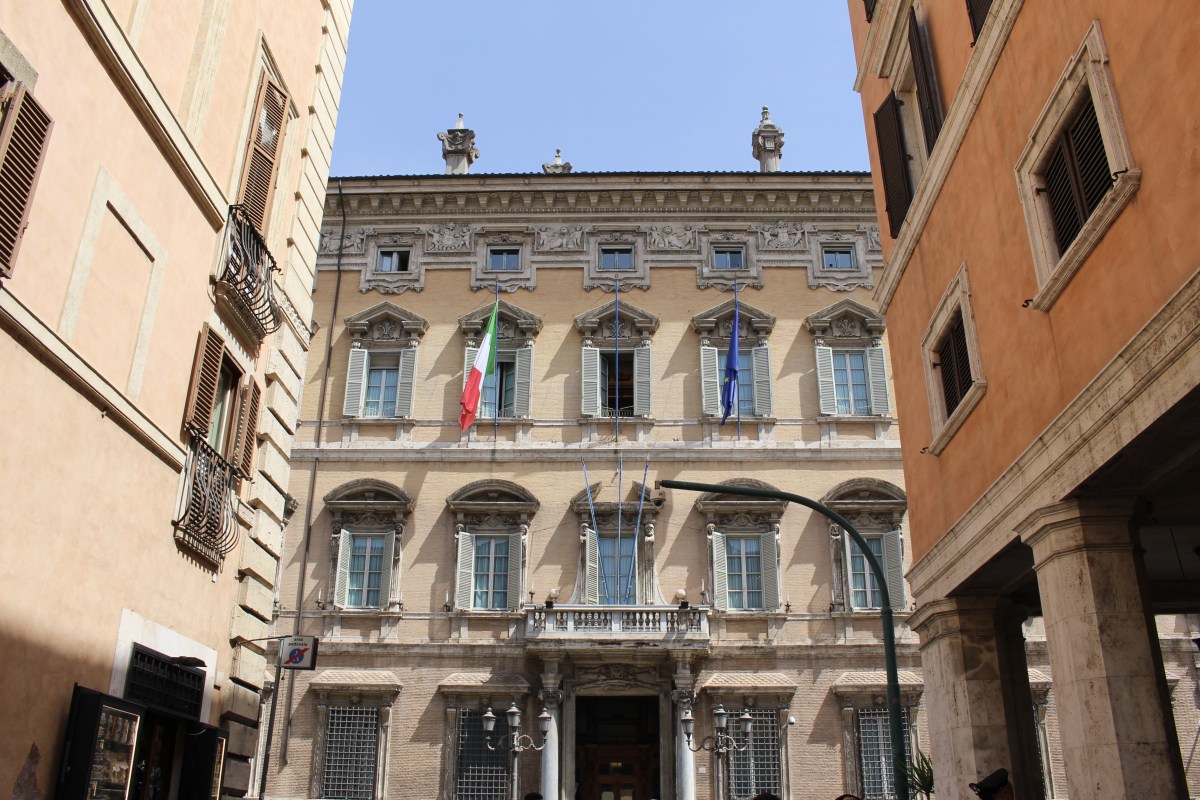
I hope you’ll join in our community. I look forward to reading your posts!

the ~ wander.essence ~ community

I invite you all to settle in and read posts from our wandering community. I hope you’ll be inspired!

  • Jude, of Travel Words, wrote about preparing for an adventure overland to India, and then onward to Asia and Australia.
    • Anticipation and Preparation: England to Australia (1973)

Thanks to all of you who wrote posts about anticipation and preparation.

Share this:

  • Share on X (Opens in new window) X
  • Share on Facebook (Opens in new window) Facebook
  • More
  • Email a link to a friend (Opens in new window) Email
  • Print (Opens in new window) Print
  • Share on Pinterest (Opens in new window) Pinterest
Like Loading...
  • Europe
  • International Travel
  • Photography

seafaring portugal: lisbon & points north

wanderessence1025's avatar wanderessence1025 November 21, 2019

The seafaring history of Portugal spanned a hundred years from 1415-1515. Known as the Age of the Discoveries, this period saw Portuguese navigators sail across uncharted seas to break out of the boundaries of Europe and discover the New World.

In my latest travels to Portugal, I found boats, the sea and promenades alongside it, rivers, and symbols of Portugal’s love of the sea.

fullsizeoutput_16543

Lisbon

fullsizeoutput_1b1fc

Torre Vasco da Gama

fullsizeoutput_1677b

Rio Douro & Ribeira in Porto

fullsizeoutput_16769

barcos rabelos, flat-bottom boats, on the Rio Douro

fullsizeoutput_17c19

barcos rabelos, flat-bottom boats, on the Rio Douro

fullsizeoutput_17c23

barcos rabelos, flat-bottom boats, on the Rio Douro

IMG_0808

barcos rabelos, flat-bottom boats, on the Rio Douro

fullsizeoutput_16695

high-prowed boats in Aveiro

fullsizeoutput_1885b

high-prowed boats in Aveiro

fullsizeoutput_1885f

high-prowed boats in Aveiro

fullsizeoutput_18865

high-prowed boats in Aveiro

fullsizeoutput_1886f

Aveiro

fullsizeoutput_16658

Costa Nova

fullsizeoutput_188ab

Costa Nova

fullsizeoutput_18d22

Peniche

fullsizeoutput_18d28

Peniche

fullsizeoutput_18d37

Peniche

fullsizeoutput_18d4e

Peniche

fullsizeoutput_18d52

Peniche

fullsizeoutput_18d54

Peniche

fullsizeoutput_1b1fa

Peniche

fullsizeoutput_18d57

Peniche

IMG_1525

Peniche

fullsizeoutput_17266

Peniche

fullsizeoutput_18d70

Peniche

fullsizeoutput_1b1fb

Peniche

fullsizeoutput_19dfd

Cabo da Roca

fullsizeoutput_19e1c

Cabo da Roca

fullsizeoutput_19e58

Lisbon

fullsizeoutput_175c5

Padrão dos Descobrimentos

fullsizeoutput_175d9

Torre Vasco da Gama

*October 26-November 6, 2018*

*********************

“PHOTOGRAPHY” INVITATION:  I invite you to create a photography intention and then create a blog post for a place you have visited. Alternately, you can post a thematic post about a place, photos of whatever you discovered that set your heart afire. You can also do a thematic post of something you have found throughout all your travels: churches, doors, people reading, people hiking, mountains, patterns, all black & white, whatever!

In my case, my intention was to look for thematic possibilities during my trip to Portugal.  As Portugal is a country with a long seafaring history, I thought I’d look to Portugal’s coasts, rivers and boats, as well as symbols of the country’s love affair with the sea.

You probably have your own ideas about this, but in case you’d like some ideas, you can visit my page: photography inspiration.

I challenge you to post no more than 20-25 photos (I have more here!) and to write less than 1,500 words about any travel-related photography intention you set for yourself. Include the link in the comments below by Wednesday, December 4 at 1:00 p.m. EST.  When I write my post in response to this challenge on Thursday, December 5, I’ll include your links in that post.

This will be an ongoing invitation, every first, second, and third (& 5th, if there is one) Thursday of each month. Feel free to jump in at any time. 🙂

I hope you’ll join in our community. I look forward to reading your posts!

Share this:

  • Share on X (Opens in new window) X
  • Share on Facebook (Opens in new window) Facebook
  • More
  • Email a link to a friend (Opens in new window) Email
  • Print (Opens in new window) Print
  • Share on Pinterest (Opens in new window) Pinterest
Like Loading...
  • Asia
  • Cambodia
  • International Travel

on journey: to, around and back from cambodia in 2011

wanderessence1025's avatar wanderessence1025 November 20, 2019

A Tuesday morning in January, and I’m on my way from Hanoi to Phnom Penh.  I have to be at the airport at 6:30 a.m. for an 8:30 flight on my favorite (not) airline:  China Southern. 😦

The Hotel Ngocmai calls a taxi for me, and through the dark, through the yellow haze we go.  I pay the hotel in advance for this taxi; I’m told the hotel pays the taxi directly.  When we get to the airport finally, the driver asks for his tip.  I look in my wallet and the smallest thing I have is a $10 bill.  I am all out of Vietnamese dong.  It’s not a problem here in Vietnam as they take dollars just as readily as dong.  I take out the $10 and ask the driver if he has change, in dollars.  He looks in his wallet and has only a few dong; not enough to give me change.   And no dollars.  I say, I’m sorry.  I can’t give you a tip unless you have change.  I am not about to give him $10 for a tip, when I’ve paid the hotel $15 already for the ride.  The taxi driver whines: My tip, my tip!  Where’s my tip?  I don’t know what to do, but I cannot afford to give him $10.  It’s mean, I know, but I tell him I’m sorry.  And then I walk away.

fullsizeoutput_1a196

Cambodia

This bothers me the rest of the day. It still bothers me today. Should I have just given him the full $10? That didn’t feel right to me. But it didn’t feel right to leave him in the lurch either. At the time I was worried about my flight and checking in on time, etc. But later, I think, I should have gone searching in the airport for change. I feel like I committed some petty crime. If I had done this one thing right, I probably would have saved money on the rest of my trip. Because from this point on, I find myself giving bigger tips to everyone else I meet along the way as recompense to that poor taxi driver in Vietnam.

Sometimes we can embarrass ourselves by own behavior.  Believe me, I have done this many times in my life.  I did something not good and it haunts me later.  There is no shaking it.  All I can do is to try to do better next time.  That’s all we, as humans, can do.

fullsizeoutput_40de

Buddha in Cambodia

The flight is uneventful until I get to my all-time favorite airport of Guangzhou in China at 10:55.  I’m worried because I only have one hour between my flights and I know they put you through unreasonable rigmarole at that airport.  I feel relieved when I get off the plane because a woman from the airline is holding a card with my name on it and “Phnom Penh.” I say, yes, that’s me, and she ushers me to a special desk where she issues my boarding pass.  I think, it’s going to be easy!  But when she’s done she sends me through immigration after all, where the serious Chinese officials spend a great deal of time inspecting my passport and then they take it away and tell me to have a seat.  I say, Where are you going with my passport?  Of course, no one can speak English so I am left waiting and worrying what on earth could be the problem.  After what seems like a long while, they finally return with my passport, and I go back into the cold basement of the airport to wait for my 11:55 flight to Phnom Penh.

Another cramped flight with bad food, and a lot of turbulence.  I don’t often worry much when I fly, but this flight is so rough, I’m doing a lot of praying.  Finally, I arrive in Phnom Penh at 1:50 pm, where a driver from my hotel, the Villa Langka, is standing in the airport with a sign.  I walk outside and am hit by a wave of heat.  Oh, it feels so good.  After being cold and getting sick in Vietnam, I’m thrilled to be warm.  In the van, I strip off my layers and check out the streets of Phnom Penh from the airport to the hotel.

It’s a much more sedate and classy version of Vietnam. There are motorbikes aplenty, but not nearly the numbers as in Hanoi. It’s bright, colorful, cheery, but also poor and scattered with rubbish. Not in-your-face rubbish, but rubbish nonetheless.

Phnom Penh to Siem Reap

After exploring Phnom Penh, two mornings later, I take the 8:30 Mekong Express Bus ($11) to Siem Reap.  It’s a 6-hour ride, and luckily it has a bathroom on board!  I have never encountered an on-board bathroom on any bus since I’ve been in Asia, so I’m relieved I don’t have to worry about this issue. 🙂

IR1406528

Mekong Express Limousine Bus

My bus mate is Richard, a 69-year-old Australian who was once a medical lawyer, then a nurse, and later an English teacher in Cambodia. He’s lived here on and off for years and adores Cambodia and the people. His wife Janet died of pancreatic cancer in 2009; they had been together for 5 years but only married right before she died, at her request.

Richard teaches me hello in Cambodian: sua s’dei (I hear it pronounced as sauce-a-day). Goodbye is lia suhn haoy (He tells me it’s just lee-high) and thank you is aw-kohn. He tells me that he has an apartment in Phnom Penh where he supports several Pakistani and Cambodian boys. He has put several Cambodians through college. He says he can afford it and he likes to know he’s helping to get some of them out of poverty.

Richard is a talker, so the 6 hour bus ride passes quickly. He tells me that one of the boys in the apartment is getting married. His wife, he says, is very superstitious. She thinks if she looks over the edge of a balcony, the building will collapse. Recently, she found a lump in her breast. When Richard insisted she go right away to see a doctor, she refused, saying that particular day wasn’t an auspicious one to see a doctor.

He tells how he just got a skin cancer removed from his forehead and now he’s numb on that side of his head.  He remembers that Janet used to stroke his head as he lay in her lap.  Ironically, Janet went and then the feeling in his head disappeared as well.

When I mention my upcoming trip to Kyoto in February, he tells me in great detail about a Japanese film called Departures, in which an unemployed cellist takes a job preparing the dead for funerals. He says it’s funny how the film made him weep, yet he never got emotional over Janet’s death.  He celebrates her life and feels they had an amazing love that ebbed and flowed between them.  He says Janet was the kind of person who either loved you or hated you.  There was no in-between, no neutrality with her.

As he flips through the newspaper, he reads me the local crime report which includes some burglaries and arson and destruction of property. He says the police reports in Phnom Penh very often report decapitations among the locals. He mentions that in Tunisia, protestors are demanding the ouster of the current government.

IR1419072

Mekong Express Limousine Bus

Later, we finally arrive in Siem Reap, where a young Cambodian guy picks me up in a van to take me to my hotel, Auberge Mont Royal.  In the van I meet a Cambodian couple who left for Montreal on a study-scholarship in 1971, so they luckily missed the Khmer Rouge years.  The man tells me since I’m an English teacher I should apply at the J. Prescott Academy, a school for Cambodian children in Siem Reap.

Sunday, January 23: Back to Korea 😦

I leave from the new Siem Reap airport around 7 pm, where they charge all foreigners a $25 exit fee (!).  I’m supposed to have a 10-hour layover in my favorite airport, Guangzhou, but I’ve made no arrangements for sleeping overnight in China.  As a matter of fact, I’m just planning to sleep in the miserable airport, in a test of my own mettle.  I want to prove I can be tough. 🙂  However, when I arrive in Guangzhou, after much miscommunication with immigration, who disappears with my passport for a long time with no explanation, and with more miscommunications with the airline, I’m finally made to understand that China Southern will put us up for the night in a hotel.  We drive in a bus for what seems like an eternity out into the mysterious city of Guangzhou, China, where I share a filthy, cold, miserable room with a Korean girl for about 3 hours of sleeping, only to get back on the bus again at an ungodly hour to catch the early flight to Seoul.

fullsizeoutput_1a190

Cambodian temple

I adored Cambodia. Vietnam was fascinating and edgy. But never, NEVER, will I fly China Southern Airlines again!

*Tuesday-Sunday, January 18-23, 2011*

**********************

“ON JOURNEY” INVITATION: I invite you to write a post on your own blog about the journey itself for a recently visited specific destination. You could write about the journey you hope to take in the year ahead.  If you don’t have a blog, I invite you to write in the comments.

Include the link in the comments below by Tuesday, December 17 at 1:00 p.m. EST.  When I write my post in response to this challenge on Wednesday, December 18, I’ll include your links in that post.

This will be an ongoing invitation, once on the third Wednesday of each month. Feel free to jump in at any time. 🙂

I hope you’ll join in our community. I look forward to reading your posts!

the ~ wander.essence ~ community

I invite you all to settle in and read a few posts from our wandering community.  I promise, you’ll be inspired. 🙂

  • Jude, of Travel Words, takes us along on her journey, sometimes hitchhiking, sometimes on ferries, lorries, and trains from London to Athens.
    • On Journey: Part One LONDON TO ATHENS

Many thanks to all of you who wrote posts about the journey. I’m inspired by all of you!


Share this:

  • Share on X (Opens in new window) X
  • Share on Facebook (Opens in new window) Facebook
  • More
  • Email a link to a friend (Opens in new window) Email
  • Print (Opens in new window) Print
  • Share on Pinterest (Opens in new window) Pinterest
Like Loading...

Posts pagination

Previous 1 … 38 39 40 … 68 Next
Blog at WordPress.com.
Let Me Bite That

Can I have a bite?

a pura vida year in costa rica

living abroad in Guanacaste

Lush Life Layers

Lake Garda Tourist

Susana Cabaço

Spiritual Insights & Personal Empowerment

Monkey's Tale

An Adventure Travel Blog

Journey with my Sketchbook

"My sketchbook is a witness of what I am experiencing, scribbling things whenever they happen." - Vincent Van Gogh

The Eternal Traveller

Remembering past journeys, recording current trips and planning for the next one!

Lookoom

Put pictures on your travel dreams

Still Restlessjo

Roaming, at home and abroad

The Creative Life Adventure

Living a creative life

Inside My Sling Bag

Living, Loving, Laughing, Learning and (Being) Lucrative

Introvert Awakenings

My path less traveled. Rediscovering self after surviving the abuse that almost sunk me. Goal of strengthening and thriving on my adult legs. 👣🙏🏻 #recovery #forgiveness

Changcha Travel Tales

LightWriteLife

I love light, I love to write, I love life - I create my words and images to capture the light in my life.
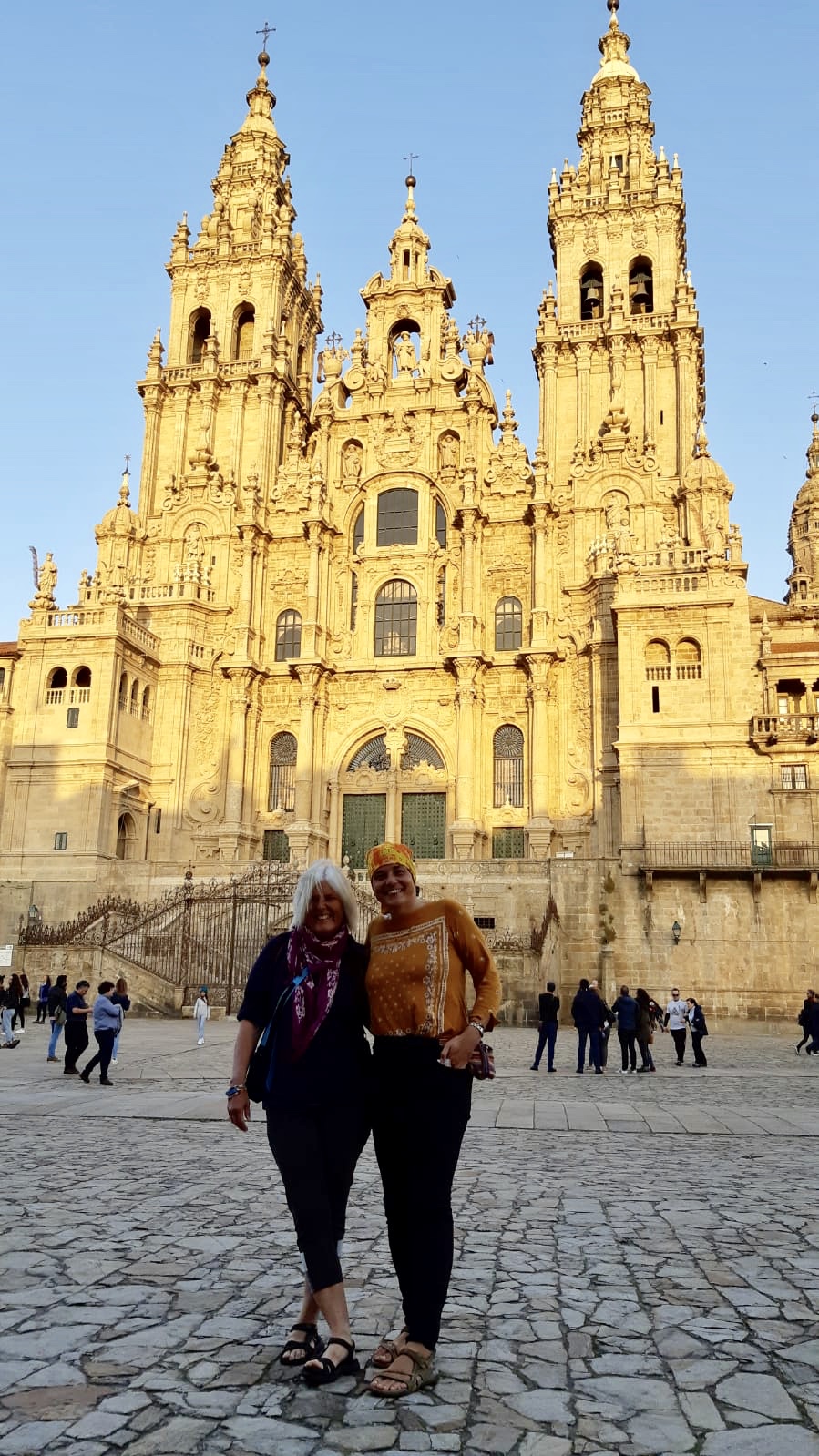
the rak's sphere

Phosphene's Write

Live your life!! Life is beautiful!!

Image Earth Travel

Independent Travel & Photography Stories

Nanchi.blog

Lookoom

Mettez des images sur vos rêves de voyages

Retire In Branson

Old Bird Travels Solo!

THE MATURE ART OF TRAVELLING ALONE. MY NEW EMAIL IS: OldBirdTravels@proton.me PLEASE LIKE AND SHARE AT THE BOTTOM OF THE POST!
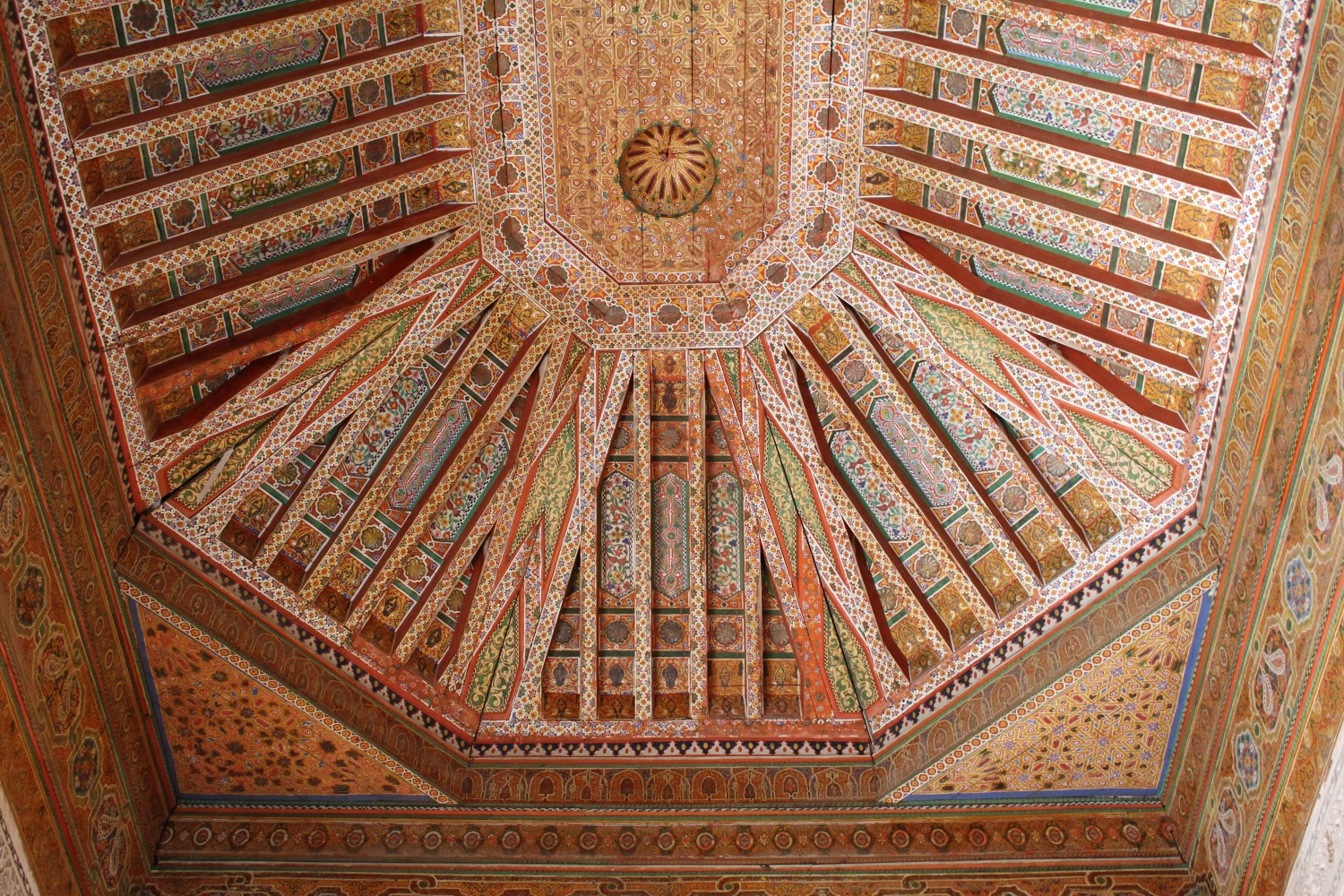
P e d r o L

storytelling the world

Welcome

RECYCLE YOUR PAIN

Motivation

Jim's Travel Culture and History Blog

World travel culture and history

Charlotte Digregorio's Writer's Blog

This blog is for those who wish to be creative, authors, people in the healing professions, business people, freelancers, journalists, poets, and teachers. You will learn about how to write well, and about getting published. Both beginning and experienced writers will profit from this blog and gain new creative perspectives. Become inspired from global writers, and find healing through the written word.

Musings of the Mind

Come journey with me as we navigate through this thing called life

robynsewsthisandthat

This is where I share my passions

Saania's diary - reflections, learnings, sparkles

Life is all about being curious, asking questions, and discovering your passion. And it can be fun!

The Wild Heart of Life

Creative Nonfiction & Poetry

deventuretime

Avid adventurer, travel blogger, and experience seeker. Starting each morning with a desire to see the world through a different lens.

Stu's Camino

The Frugal Foodies

Feeding an Empty Belly and Starving Mind

The Lost-o-graph

photographs

Our travels and thoughts through photographs. It does not matter, sunrise or sunset, just have fun in between.

My Serene Words

seeking solace in the horizon of life and beyond

HANNA'S WALK

Walks Stories and Nature

One Girl, Two Dogs & Two Thousand Miles

Brawnerology

Everything Family Travel: Work Hard, Play Hard

ROAD TO NARA

Culture and Communities at the Heart Of India

MEERYABLE

Explore, discover and experience the world through Meery's Eye. Off the beat budget traveler. Explore places, cultural and heritage. Sustainable trotter. shareable tales of Meery is Meeryable

Poetry 365

citysonnet.wordpress.com/

photography, poetry, paintings

Poetry collection

Work by Rain Alchemist

Eúnoia

Following my heart, Daring to dream, Living without regrets

VICENTE ROMERO - Paintings

Still Smiling

Smiling through the good times and the bad

flaviavinci

John Wreford Photographer

Words and Pictures from the Middle East

~ wander.essence ~
Blog at WordPress.com.
  • Subscribe Subscribed
    • ~ wander.essence ~
    • Join 1,031 other subscribers
    • Already have a WordPress.com account? Log in now.
    • ~ wander.essence ~
    • Subscribe Subscribed
    • Sign up
    • Log in
    • Report this content
    • View site in Reader
    • Manage subscriptions
    • Collapse this bar
 

Loading Comments...
 

You must be logged in to post a comment.

    %d