Skip to content
  • Home
  • about ~ wander.essence ~
    • ~ the places i’ve been ~
    • ~ places i’ve been in the u.s.a. ~
  • Travel Destinations
    • America
      • Boston
      • Delaware
      • District of Columbia
        • Washington
      • Georgia
        • Atlanta
      • Maryland
      • New Jersey
        • Cape May
      • New York
        • Adirondacks
        • Buffalo
        • Niagara Falls
      • Pennsylvania
        • Pittsburgh
      • South Carolina
      • Tennessee
        • Nashville
      • Virginia
    • American Road Trips
      • Canyon & Cactus Road Trip
      • Florida Road Trip
        • Everglades
        • Fort Lauderdale
        • Florida Keys
        • Miami
        • St. Augustine
      • Four Corners Road Trip
        • Arizona
          • Monument Valley
          • Petrified Forest National Park
          • Sunset Crater National Monument
          • Walnut Canyon National Monument
          • Winslow
          • Wupatki National Monument
        • Colorado
          • Colorado National Monument
          • Colorado Towns
          • Great Sand Dunes National Park
          • Grand Junction
        • New Mexico
        • Utah
          • Arches National Park
          • Canyonlands
          • Navajo National Monument
          • Dead Horse Point State Park
          • Hovenweep National Monument
          • Moab
          • Valley of the Gods
          • Natural Bridges National Monument
      • Great Lakes Road Trip
        • Michigan
        • Minnesota
        • Wisconsin
      • Midwestern Triangle
        • Illinois
          • Carbondale
          • Murphysboro
        • Kentucky
          • Covington
          • Lexington
          • Louisville
        • Ohio
          • Cincinnati
      • Road Trip to Nowhere
        • Nebraska
        • North Dakota
        • South Dakota
      • Tex-New Mex Road Trip
        • Texas & New Mexico Road Trip
        • New Mexico
        • Texas
    • International Travel
      • Africa
        • african meanderings {& musings}
        • Egypt
          • Cairo
        • Ethiopia
        • Morocco
      • Asia
        • Cambodia
        • China
          • China Diaries
          • Guangxi Province
        • India
          • Rishikesh
          • Varanasi
        • Japan
          • Kyoto
        • Myanmar
        • Oman
          • a nomad in the land of nizwa
          • Nizwa
        • Singapore
        • South Korea
          • catbird in korea
        • Thailand
        • Turkey
          • Cappadocia
        • Vietnam
      • Central America
        • Costa Rica
        • El Salvador
        • Nicaragua
        • Panama
          • Bocas del Toro
          • Panama City
      • Europe
        • In Search of a Thousand Cafés
        • Croatia
          • Dalmatia
            • Istria
            • Dubrovnik
            • Plitvice Lakes National Park
            • Split
            • Zadar
            • Zagreb
        • Czech Republic
          • Český Krumlov
        • England
        • France
        • Greece
        • Hungary
          • Budapest
          • Esztergom
        • Iceland
        • Italy
          • Bergamo
          • Cinque Terre
          • The Dolomites
          • Florence
          • Rome
          • Tuscany
          • Venice
          • Verona
          • Via Francigena
        • Portugal
        • Spain
          • Camino de Santiago
            • packing list for el camino de santiago 2018
      • North America
        • Canada
          • The Maritimes
            • New Brunswick
            • Nova Scotia
            • Prince Edward Island
          • Ontario
        • Mexico
          • Guanajuato
          • Mexico City
            • Teotihuacán
          • Querétaro
          • San Miguel de Allende
      • South America
        • Colombia
        • Ecuador
          • Cuenca
          • Quito
    • how to make the most of a staycation
      • Coronavirus Coping
  • Imaginings
    • imaginings: the call to place
  • Travel Preparation
    • journeys: anticipation & preparation
  • Travel Creativity
    • on keeping a travel journal
    • on creating art from travels
      • Art Journaling
    • photography inspiration
      • Photography
    • writing prompts: prose
      • Prose
        • Fiction
        • Travel Essay
        • Travelogue
    • writing prompts: poetry
      • Poetry
  • On Journey
    • on journey: taking ourselves from here to there
  • Books & Movies
    • books | international a-z |
    • books & novels | u.s.a. |
    • books | history, spirituality, personal growth & lifestyle |
    • movies | international a-z |
    • movies | u.s.a. |
  • On Returning Home
    • on returning home
  • Annual recap
    • twenty-fifteen
    • twenty-eighteen
    • twenty-nineteen
    • twenty-twenty
    • twenty-twenty-one
    • twenty twenty-two
    • twenty twenty-three
    • twenty twenty-four
    • twenty twenty-five
  • Contact

Enter your email address to follow this blog and receive notifications of new posts by email.

Join 1,060 other subscribers
Follow ~ wander.essence ~ on WordPress.com
  • Home
  • about ~ wander.essence ~
    • ~ the places i’ve been ~
    • ~ places i’ve been in the u.s.a. ~
  • Travel Destinations
    • America
      • Boston
      • Delaware
      • District of Columbia
        • Washington
      • Georgia
        • Atlanta
      • Maryland
      • New Jersey
        • Cape May
      • New York
        • Adirondacks
        • Buffalo
        • Niagara Falls
      • Pennsylvania
        • Pittsburgh
      • South Carolina
      • Tennessee
        • Nashville
      • Virginia
    • American Road Trips
      • Canyon & Cactus Road Trip
      • Florida Road Trip
        • Everglades
        • Fort Lauderdale
        • Florida Keys
        • Miami
        • St. Augustine
      • Four Corners Road Trip
        • Arizona
          • Monument Valley
          • Petrified Forest National Park
          • Sunset Crater National Monument
          • Walnut Canyon National Monument
          • Winslow
          • Wupatki National Monument
        • Colorado
          • Colorado National Monument
          • Colorado Towns
          • Great Sand Dunes National Park
          • Grand Junction
        • New Mexico
        • Utah
          • Arches National Park
          • Canyonlands
          • Navajo National Monument
          • Dead Horse Point State Park
          • Hovenweep National Monument
          • Moab
          • Valley of the Gods
          • Natural Bridges National Monument
      • Great Lakes Road Trip
        • Michigan
        • Minnesota
        • Wisconsin
      • Midwestern Triangle
        • Illinois
          • Carbondale
          • Murphysboro
        • Kentucky
          • Covington
          • Lexington
          • Louisville
        • Ohio
          • Cincinnati
      • Road Trip to Nowhere
        • Nebraska
        • North Dakota
        • South Dakota
      • Tex-New Mex Road Trip
        • Texas & New Mexico Road Trip
        • New Mexico
        • Texas
    • International Travel
      • Africa
        • african meanderings {& musings}
        • Egypt
          • Cairo
        • Ethiopia
        • Morocco
      • Asia
        • Cambodia
        • China
          • China Diaries
          • Guangxi Province
        • India
          • Rishikesh
          • Varanasi
        • Japan
          • Kyoto
        • Myanmar
        • Oman
          • a nomad in the land of nizwa
          • Nizwa
        • Singapore
        • South Korea
          • catbird in korea
        • Thailand
        • Turkey
          • Cappadocia
        • Vietnam
      • Central America
        • Costa Rica
        • El Salvador
        • Nicaragua
        • Panama
          • Bocas del Toro
          • Panama City
      • Europe
        • In Search of a Thousand Cafés
        • Croatia
          • Dalmatia
            • Istria
            • Dubrovnik
            • Plitvice Lakes National Park
            • Split
            • Zadar
            • Zagreb
        • Czech Republic
          • Český Krumlov
        • England
        • France
        • Greece
        • Hungary
          • Budapest
          • Esztergom
        • Iceland
        • Italy
          • Bergamo
          • Cinque Terre
          • The Dolomites
          • Florence
          • Rome
          • Tuscany
          • Venice
          • Verona
          • Via Francigena
        • Portugal
        • Spain
          • Camino de Santiago
            • packing list for el camino de santiago 2018
      • North America
        • Canada
          • The Maritimes
            • New Brunswick
            • Nova Scotia
            • Prince Edward Island
          • Ontario
        • Mexico
          • Guanajuato
          • Mexico City
            • Teotihuacán
          • Querétaro
          • San Miguel de Allende
      • South America
        • Colombia
        • Ecuador
          • Cuenca
          • Quito
    • how to make the most of a staycation
      • Coronavirus Coping
  • Imaginings
    • imaginings: the call to place
  • Travel Preparation
    • journeys: anticipation & preparation
  • Travel Creativity
    • on keeping a travel journal
    • on creating art from travels
      • Art Journaling
    • photography inspiration
      • Photography
    • writing prompts: prose
      • Prose
        • Fiction
        • Travel Essay
        • Travelogue
    • writing prompts: poetry
      • Poetry
  • On Journey
    • on journey: taking ourselves from here to there
  • Books & Movies
    • books | international a-z |
    • books & novels | u.s.a. |
    • books | history, spirituality, personal growth & lifestyle |
    • movies | international a-z |
    • movies | u.s.a. |
  • On Returning Home
    • on returning home
  • Annual recap
    • twenty-fifteen
    • twenty-eighteen
    • twenty-nineteen
    • twenty-twenty
    • twenty-twenty-one
    • twenty twenty-two
    • twenty twenty-three
    • twenty twenty-four
    • twenty twenty-five
  • Contact

wander.essence

wander.essence

Home from Morocco & Italy

Home sweet home!May 10, 2019
I'm home from Morocco & Italy. :-)

Italy trip

Traveling to Italy from MoroccoApril 23, 2019
On my way to Italy!

Leaving for Morocco

Casablanca, here I come!April 4, 2019
I'm on my way to Casablanca. :-)

Home from our Midwestern Triangle Road Trip

Driving home from Lexington, KYMarch 6, 2019
Home sweet home from the Midwest. :-)

Leaving for my Midwestern Triangle Road Trip

Driving to IndianaFebruary 24, 2019
Driving to Indiana.

Returning home from Portugal

Home sweet home from Spain & Portugal!November 6, 2018
Home sweet home from Spain & Portugal!

Leaving Spain for Portugal

A rendezvous in BragaOctober 26, 2018
Rendezvous in Braga, Portgual after walking the Camino de Santiago. :-)

Leaving to walk the Camino de Santiago

Heading to Spain for the CaminoAugust 31, 2018
I'm on my way to walk 790 km across northern Spain on the Camino de Santiago.

Home from my Four Corners Road Trip

Home Sweet Home from the Four CornersMay 25, 2018
Home Sweet Home from the Four Corners. :-)

My Four Corners Road Trip!

Hitting the roadMay 1, 2018
I'm hitting the road today for my Four Corners Road Trip: CO, UT, AZ, & NM!

Recent Posts

  • the january cocktail hour: a belated nicaraguan christmas & a trip to costa rica’s central pacific coast February 3, 2026
  • bullet journals as a life repository: bits of mine from 2025 & 2026 January 4, 2026
  • twenty twenty-five: nicaragua {twice}, mexico & seven months in costa rica {with an excursion to panama} December 31, 2025
  • the december cocktail hour: mike’s surgery, a central highlands road trip & christmas in costa rica December 31, 2025
  • top ten books of 2025 December 28, 2025
  • the november cocktail hour: a trip to panama, a costa rican thanksgiving & a move to lake arenal condos December 1, 2025
  • panama: the caribbean archipelago of bocas del toro November 24, 2025
  • a trip to panama city: el cangrejo, casco viejo & the panama canal November 22, 2025
  • the october cocktail hour: a trip to virginia, a NO KINGS protest, two birthday celebrations, & a cattle auction October 31, 2025
  • the september cocktail hour: a nicoya peninsula getaway, a horseback ride to la piedra del indio waterfalls & a fall bingo card September 30, 2025
  • the august cocktail hour: local gatherings, la fortuna adventures, & a “desfile de caballistas”  September 1, 2025
  • the july cocktail hour: a trip to ometepe, nicaragua; a beach getaway to tamarindo; & homebody activities August 3, 2025
  • the june cocktail hour: our first month in costa rica June 30, 2025

Archives

  • February 2026
  • January 2026
  • December 2025
  • November 2025
  • October 2025
  • September 2025
  • August 2025
  • June 2025
  • May 2025
  • April 2025
  • March 2025
  • February 2025
  • January 2025
  • December 2024
  • November 2024
  • October 2024
  • September 2024
  • August 2024
  • July 2024
  • June 2024
  • May 2024
  • April 2024
  • March 2024
  • February 2024
  • January 2024
  • December 2023
  • November 2023
  • September 2023
  • August 2023
  • June 2023
  • May 2023
  • April 2023
  • March 2023
  • February 2023
  • January 2023
  • December 2022
  • November 2022
  • October 2022
  • September 2022
  • August 2022
  • June 2022
  • May 2022
  • April 2022
  • March 2022
  • February 2022
  • January 2022
  • December 2020
  • November 2020
  • October 2020
  • September 2020
  • August 2020
  • July 2020
  • June 2020
  • May 2020
  • April 2020
  • March 2020
  • February 2020
  • January 2020
  • December 2019
  • November 2019
  • October 2019
  • September 2019
  • August 2019
  • July 2019
  • June 2019
  • May 2019
  • April 2019
  • March 2019
  • February 2019
  • January 2019
  • December 2018
  • November 2018
  • October 2018
  • September 2018
  • August 2018
  • July 2018
  • June 2018
  • May 2018
  • April 2018
  • March 2018

Blog Stats

  • 126,373 hits
February 2026
M T W T F S S
 1
2345678
9101112131415
16171819202122
232425262728  
« Jan    

Categories

  • Aït-Ben-Haddou (4)
  • Abingdon (1)
  • Abiquiu (1)
  • Acquapendente (2)
  • Adirondacks (3)
  • Africa (39)
  • Ainokura (2)
  • Alabama (1)
  • Alajuela (3)
  • Alamogordo (1)
  • Albuquerque (3)
  • Alexandria (1)
  • Alma (1)
  • Alpe di Siusi (1)
  • Alsace-Lorraine (1)
  • Alto Adige Wine Road (1)
  • Amarante (2)
  • America (69)
  • American Bison (1)
  • American books (22)
  • American Road Trips (255)
  • American Visionary Art Museum (1)
  • Americana (1)
  • Andrew Johnson National Historic Site (1)
  • Annapolis Valley (1)
  • Annual recap (10)
  • Anticipation (45)
  • Antietam National Battlefield (2)
  • Aramak Tour (1)
  • Arches National Park (8)
  • architecture (1)
  • Arena Stage (1)
  • Arizona (28)
  • Aroumd (2)
  • Art Journaling (9)
  • Asciano (1)
  • Asia (41)
  • Assisi (1)
  • Astorga (2)
  • Atapuerca (1)
  • Athens (1)
  • Atlanta (7)
  • Austin (2)
  • Aveiro (2)
  • Azofra (2)
  • Aztec Ruins National Monument (1)
  • óbidos (1)
  • Baños (2)
  • Badlands National Park (1)
  • Bagan (1)
  • Bagno Vignoni (2)
  • Bajos del Toro (1)
  • Balcony House (1)
  • Bali (9)
  • Baltimore (7)
  • Baltimore Museum of Art (1)
  • Bandelier National Monument (1)
  • Bangkok (2)
  • Bear Butte (1)
  • Beatrice (1)
  • Beihai (1)
  • Belize (2)
  • Beppu (1)
  • Bergamo (3)
  • Big Bend National Park (2)
  • Bijagua (2)
  • Bismarck (3)
  • Bismarck Art Alley (1)
  • Bitchu-Takahashi (1)
  • Blue Falls of Costa Rica (1)
  • Bluff (1)
  • Bluff Fort Historic Site (1)
  • Bocas del Toro (2)
  • Bocas Town (1)
  • Bogotá (4)
  • Bolsena (2)
  • Bolzano (2)
  • Bonanzaville (1)
  • Books (47)
  • Bosque de Chapultepec (1)
  • Boston (2)
  • Boulder (1)
  • Boys Town (1)
  • Braga (3)
  • Brookings (1)
  • Brunico/Bruneck (1)
  • Budapest (1)
  • Buffalo (9)
  • Bukit Peninsula (1)
  • Bullet journaling (1)
  • Buonconvento (2)
  • Burano (2)
  • Burgos (4)
  • Cañas (2)
  • Cabo da Roca (1)
  • Caddo Lake (2)
  • Cairo (3)
  • California (4)
  • Cambodia (4)
  • Cambridge (1)
  • Camino de Santiago (64)
  • Campagnano di Roma (2)
  • Canada (15)
  • Canyon & Cactus Road Trip (4)
  • Canyon de Chelly (3)
  • Canyonlands (3)
  • Cape May (7)
  • Cappadocia (2)
  • Capranica (1)
  • Carbondale (9)
  • Carlsbad (1)
  • Carlsbad Caverns National Park (2)
  • Cartagena (4)
  • Casablanca (9)
  • Casco Viejo (1)
  • Castellina in Chianti (1)
  • Catarata del Toro (1)
  • Catskill Mountains (1)
  • Cedar Creek & Belle Grove National Historical Park (1)
  • Central America (43)
  • Central Highlands (1)
  • Centro Histórico (1)
  • Chaco Culture National Historical Park (4)
  • challenge: a call to place (38)
  • Channel Islands National Park (3)
  • Chapel in the Hills (1)
  • Charles Pinckney National Historic Site (1)
  • Charleston (11)
  • Chefchaouen (5)
  • Cheyenne (2)
  • Cheyenne Depot Museum (1)
  • Cheyenne Frontier Days Old West Museum (1)
  • Chicago (3)
  • Chillicothe (2)
  • Chimayó (1)
  • Chimney Rock (1)
  • China (8)
  • Chinatown (1)
  • Christmas (5)
  • Churchill Downs (1)
  • Cihuatán (1)
  • Cincinnati (15)
  • Cincinnati Art Museum (1)
  • Cinque Terre (10)
  • Cinquera (1)
  • Civita di Bagnoregio (1)
  • Cloudcroft (1)
  • Cocktail Hour (23)
  • Cocoa Beach (2)
  • Coeur d'Alene (1)
  • Collalbo/Klobenstein (1)
  • Colle di Val d'Elsa (2)
  • Colombia (9)
  • Colorado (31)
  • Colorado National Monument (3)
  • Colorado Towns (6)
  • Colorful (1)
  • Condesa (1)
  • Connecticut (1)
  • Cordoba (1)
  • Coronavirus Coping (14)
  • Cortina d’Ampezzo (1)
  • Costa Nova (1)
  • Costa Rica (21)
  • Covington (7)
  • Cowgirls of the West (1)
  • Coyoacán (1)
  • Crazy Horse Memorial (1)
  • Crestone (1)
  • Crete (1)
  • Croatia (3)
  • Cuenca (3)
  • Curves (1)
  • Custer (1)
  • Custer State Park (1)
  • Czech Republic (1)
  • Dakota Dinosaur Museum (1)
  • Dali (1)
  • Dalmatia (1)
  • De Smet (1)
  • Dead Horse Point State Park (1)
  • Dead Sea (1)
  • Deadwood (3)
  • decay (1)
  • Delaware (9)
  • Delphi (1)
  • Denver (1)
  • destinations (44)
  • Devils Tower National Monument (2)
  • Diamante Eco Adventure Park (1)
  • Dickinson (1)
  • District of Columbia (22)
  • Dobbiaco/Toblach (1)
  • Dolores Hidalgo (1)
  • Drawing (7)
  • Dubrovnik (1)
  • Durango (1)
  • Dwight D. Eisenhower Memorial (1)
  • Ecuador (14)
  • Egypt (3)
  • El Cangrejo (1)
  • El Salvador (6)
  • El-Khorbat (1)
  • Embudo (1)
  • Enchanted Rock State Natural Area (1)
  • England (3)
  • Erg Chebbi (3)
  • Española (1)
  • Essaouira (4)
  • Esztergom (1)
  • Ethiopia (3)
  • Europe (121)
  • Evan Williams Bourbon Experience (1)
  • Everglades (3)
  • Evora (1)
  • Fargo (2)
  • Fès (3)
  • Fenghuang (1)
  • Fez (2)
  • Fiction (6)
  • Findlay Market (1)
  • Finisterre (2)
  • Finland (1)
  • Fira (1)
  • Fiumicino (2)
  • Flatirons Vista Trail (1)
  • Flight 93 National Memorial (1)
  • Florence (8)
  • Florida Keys (3)
  • Florida Road Trip (5)
  • Formello (1)
  • Fort Abraham Lincoln State Park (1)
  • Fort Atkinson State HIstorical Park (1)
  • Fort Calhoun (1)
  • Fort Collins (2)
  • Fort Lauderdale (2)
  • Fort Mandan (1)
  • Fort McHenry National Monument and Historic Shrine (1)
  • Fort Robinson State Park (1)
  • Fort Sumter and Fort Moultrie National Historical Park (1)
  • Fort Union Trading Post National Historic Site (1)
  • Four Corners Road Trip (74)
  • France (7)
  • Frazier Museum (1)
  • Fredericksburg (1)
  • Fucecchio (1)
  • Fundy National Park (1)
  • G Adventures Tour (10)
  • Gallina (2)
  • Gambassi Terme (2)
  • Gateway Arch National Park (1)
  • Gavin's Point Dam (1)
  • George Rogers Clark National Historical Park (2)
  • Georgia (7)
  • Gerald R. Ford Birthsite (1)
  • Germany (1)
  • Gettysburg National Military Park (1)
  • Goals (3)
  • Gothenburg (1)
  • Grand Junction (1)
  • Great Falls (2)
  • Great Lakes Road Trip (6)
  • Great Sand Dunes National Park (2)
  • Grecia (1)
  • Greece (3)
  • Greeneville (1)
  • Greenville (1)
  • Greve in Chianti (1)
  • Guadalupe Mountains National Park (1)
  • Guanacaste (11)
  • Guanajuato (5)
  • Guangxi Province (4)
  • Guatapé (5)
  • Guatemala (2)
  • Guilin (1)
  • Guimarães (2)
  • Halifax (3)
  • Halong Bay (1)
  • Hanoi (1)
  • Heidelberg (1)
  • Hida Furukawago (2)
  • High Road to Taos (1)
  • Hikes & Walks (202)
  • HISTORIC NAKASENDO TRAIL (1)
  • Hoa Lu (1)
  • Holbrook (1)
  • Holidays (6)
  • Hong Kong (1)
  • Hopewell Culture National Historical Park (2)
  • Hopewell Rocks Provincial Park (1)
  • Hotel Hacienda Guachipelin (1)
  • Hovenweep National Monument (1)
  • Hubbell Trading Post (1)
  • Hungary (1)
  • Iceland (1)
  • Idaho (1)
  • Illinois (17)
  • Imaginings (45)
  • Imlil (2)
  • India (7)
  • Indiana (6)
  • Indonesia (9)
  • Ingapirca (2)
  • Inle Lake (1)
  • Innichen/San Candido (1)
  • International Books (31)
  • International Peace Garden (1)
  • International Travel (335)
  • Iowa (1)
  • Isla Bastimentos (1)
  • Isla Carenero (1)
  • Isla Colón (1)
  • Istanbul (2)
  • Istria (1)
  • Italy (62)
  • Jamestown (1)
  • Japan (20)
  • Japan Alps (4)
  • Jefferson (1)
  • Jewel Cave National Monument (1)
  • Jimbaran (1)
  • Joachim Regional Museum & Prairie Outpost Park (1)
  • Johnstown Flood National Memorial (1)
  • Jordan (3)
  • Joseph N. Nicollet Tower and Interpretive Center (1)
  • Joshua Tree National Park (3)
  • Joslyn Art Museum (1)
  • Journaling (9)
  • Joya de Cerén (1)
  • Kansas (2)
  • Kathmandu (2)
  • Kentucky (17)
  • KMAC (1)
  • Knife River Indian Villages (2)
  • Kunming (1)
  • Kurashiki Bikan Historical Quarter (1)
  • Kyoto (5)
  • Kyushu (4)
  • La Fortuna (2)
  • La Giustiniana (2)
  • La Peñol (1)
  • La Romita (1)
  • La Spezia (6)
  • Lago d'Iseo (1)
  • Lago di Garda (1)
  • Lago di Garda (1)
  • Laguna de Apoyo (1)
  • Laguna Quilotoa (2)
  • Languedoc-Roussillon (1)
  • Latacunga (3)
  • laundry (1)
  • Lazio (6)
  • León (2)
  • León (2)
  • Leeds (1)
  • Lens-Artists (2)
  • Lewis & Clark Interpretive Center (2)
  • Lexington (8)
  • Lijiang (1)
  • Lincoln Boyhood Home National Memorial (2)
  • Lincoln City (3)
  • lines (1)
  • Lisbon (8)
  • Logroño (3)
  • Lombardy (3)
  • Longji Rice Terraces (1)
  • Longreads (6)
  • Looking ahead (3)
  • Lorca (2)
  • Lory State Park (1)
  • Los Alamos (3)
  • Los Angeles (3)
  • Louisiana (1)
  • Louisville (13)
  • Low Road to Taos (1)
  • Lucca (3)
  • Luckenbach (1)
  • Lunenburg (1)
  • Madison (1)
  • Madison County Historical Society Museum (1)
  • Magnolia Plantations & Gardens (1)
  • Magome-juku (1)
  • Mahone Bay (1)
  • Maine (1)
  • Managua (5)
  • Manarola (1)
  • Mandalay (1)
  • Mandan (1)
  • Manhattan Project National Historical Park (1)
  • Mapmaking (2)
  • Marfa (1)
  • Market towns near Cuenca (2)
  • markets (1)
  • Marrakech (7)
  • Maryland (11)
  • Massachusetts (2)
  • Matagalpa (2)
  • Mathews (1)
  • Meadowlark Botanical Gardens (4)
  • Medellín (5)
  • Medora (5)
  • Memoir (4)
  • Merzouga (5)
  • Mesa Verde National Park (4)
  • Meteora (1)
  • Mexico (11)
  • Mexico City (7)
  • Miami (3)
  • Michigan (4)
  • Middletown (1)
  • Midwestern Triangle (30)
  • Minas Basin (1)
  • Mine of Santa Brigida (1)
  • Mineral de Pozos (1)
  • Ministers Island (1)
  • Minnesota (1)
  • Minnesota (3)
  • Minot (1)
  • Minuteman Missile National Historic Site (1)
  • Mirador de Catarina (1)
  • Mississippi (1)
  • Missouri (4)
  • Missouri National Recreation River (1)
  • Missouri River Basin Lewis & Clark Center (2)
  • Mitchell (1)
  • Moab (2)
  • Montalcino (1)
  • Montana (1)
  • Montefiascone (1)
  • Montefioralle (1)
  • Montepulciano (1)
  • Monteriggioni (3)
  • Monteroni d'Arbia (1)
  • Monterosi (1)
  • Monterosso al Mare (2)
  • Monteverde (1)
  • Monthly recap (23)
  • Monument Valley (1)
  • Moorhead (1)
  • Morocco (37)
  • Mount Pleasant (1)
  • Mt. Rushmore National Memorial (1)
  • Mulberry Bend Overlook (1)
  • Murano (2)
  • Murphysboro (10)
  • Muruzabal (1)
  • Muscat (1)
  • Museum of the Shenandoah Valley (1)
  • Muxia (2)
  • Myanmar (2)
  • Nagoya (4)
  • Nagoya Castle (2)
  • Nanning (3)
  • Naoshima (1)
  • Narita (5)
  • Nashville (8)
  • National Gallery of Art (2)
  • natural bridges (1)
  • Natural Bridges National Monument (2)
  • Navajo National Monument (2)
  • Nebraska (21)
  • Nepal (4)
  • New Belgium Brewing (1)
  • New Brunswick (6)
  • New Castle (2)
  • New England Road Trip (2)
  • New Hampshire (2)
  • New Jersey (7)
  • New Mexico (12)
  • New Mexico (1)
  • New Mexico (12)
  • New York (16)
  • Newport (1)
  • Niagara Falls (7)
  • Nicaragua (25)
  • Nice (1)
  • Nicoya Peninsula (1)
  • Nizwa (3)
  • Norfolk (1)
  • Normandy (1)
  • North America (22)
  • North Dakota (26)
  • North Dakota Heritage Center (2)
  • North Platte (1)
  • Norway (1)
  • Nosara (1)
  • Nova Scotia (5)
  • Nuevo Arenal (1)
  • Nusa Dua (1)
  • Oakland (1)
  • Oakton (23)
  • Ogallala (1)
  • Ohio (17)
  • Ohkay Owingeh Pueblo (1)
  • Oia (1)
  • Okayama (4)
  • Oklahoma (1)
  • Oklahoma City (1)
  • Old Market (1)
  • Omaha (5)
  • Oman (4)
  • Ometepe (15)
  • On Journey (44)
  • On Returning Home (40)
  • On-a-Slant Village (1)
  • Ontario (4)
  • Orisson (2)
  • Ortesei/St. Ulrich (1)
  • Orvieto (1)
  • Otavalo (2)
  • Ouray (1)
  • Pagosa Springs (1)
  • Pamplona (2)
  • Panama (4)
  • Panama Canal (2)
  • Panama City (2)
  • Panchimalco (1)
  • Panzano in Chianti (1)
  • Paris (2)
  • Parque Nacional Cajas (2)
  • Parque Nacional Cotopaxi (2)
  • Parque Nacional Volcán Poás (1)
  • Parque Nacional Volcán Tenorio (2)
  • Parque Nactional Volcán Rincón de la Vieja (2)
  • pastels (1)
  • Patterns (3)
  • Peña de Bernal (1)
  • Pecos National Historical Park (1)
  • Peniche (1)
  • Pennsylvania (14)
  • Perugia (2)
  • Petrified Forest National Park (5)
  • petroglyphs (1)
  • Phnom Penh (3)
  • Photography (266)
  • Phuket (2)
  • Pilgrimage (75)
  • Ping'An (1)
  • Pisa (1)
  • Pittsburgh (11)
  • Playa Costa del Sol (1)
  • Playa Hermosa (3)
  • Plitvice Lakes National Park (1)
  • Poetry (33)
  • Pokhara (2)
  • Polanco (1)
  • Ponca State Park (1)
  • Ponte a Cappiano (1)
  • Porto (4)
  • Portovenere (1)
  • Portugal (25)
  • Prairie Homestead Historic Site (1)
  • Prince Edward Island (2)
  • Prose (207)
  • Puerta del Diablo (1)
  • Querétaro (4)
  • Quito (2)
  • Rapid City (6)
  • Red Cloud (1)
  • Redlin Art Center (1)
  • Regent (1)
  • Rehoboth (2)
  • Renon (1)
  • Renon/Ritten Plateau (1)
  • Reverse culture shock (2)
  • Richmond (7)
  • Riobamba (2)
  • Rishikesh (2)
  • Rittner Horn (1)
  • Riverbend Park (1)
  • Road Trip to Nowhere (63)
  • Rocky Mountain National Park (1)
  • Roma Norte (2)
  • Rome (16)
  • Roof Squares (1)
  • Route 66 (1)
  • Ruidoso (1)
  • Sackville (1)
  • Sahara (3)
  • Saint John (1)
  • Saint-Jean-Pied-de-Port (4)
  • San Ángel (1)
  • San Francisco (2)
  • San Gimignano (5)
  • San José (2)
  • San Juan del Sur (2)
  • San Juan Skyway Scenic Byway (3)
  • San Lorenzo Nuovo (1)
  • San Miguel de Allende (6)
  • San Miniato (1)
  • San Quirico d'Orcia (4)
  • San Salvador (5)
  • San Sebastián Bernal (1)
  • San Simeon (2)
  • Sant'Antimo (1)
  • Santa Barbara (2)
  • Santa Fe (5)
  • Santa Maddalena (1)
  • Santa Rosa de Lima (1)
  • Santiago (4)
  • Santo Domingo de la Calzada (2)
  • Santorini (1)
  • Sarchí (1)
  • Sámara (1)
  • Scandinavian Heritage Center (1)
  • Scotts Bluff National Monument (1)
  • Semarapura (2)
  • Shanghai (1)
  • Shenandoah National Park (1)
  • Shepherdstown (1)
  • Shibao Shan (2)
  • Shikoku 88-Temple Pilgrimage Route (4)
  • Shirakawa-go (2)
  • Shreveport (1)
  • Sidemen (1)
  • Siem Reap (3)
  • Siena (2)
  • Silverton (1)
  • Singapore (3)
  • Sintra (2)
  • Sioux Falls (2)
  • Sisseton (1)
  • Smithsonian American Art Museum (SAAM) (5)
  • Smithsonian National Museum of Asian Art (2)
  • South America (25)
  • South Carolina (12)
  • South Dakota (24)
  • South Dakota Art Museum (1)
  • South Korea (5)
  • Spain (68)
  • Spearfish (2)
  • Spello (1)
  • Spirit Mound Historic Prairie (1)
  • Split (1)
  • Springfield (3)
  • St. Andrews by-the-Sea (1)
  • St. Augustine (2)
  • St. Louis (2)
  • Stanton (1)
  • Staycation (8)
  • Stonewall (1)
  • Street Art (2)
  • Sturgis (2)
  • Suchitoto (1)
  • Sullivan's Island (2)
  • Sunset Crater National Monument (1)
  • Sunsets (1)
  • Supreme Court of the United States (2)
  • Sweden (1)
  • Swedish Heritage Center (1)
  • Takayama (3)
  • Tam Coc (1)
  • Tamarindo (1)
  • Tangier (3)
  • Taos (4)
  • Tejutepeque (2)
  • Telluride (2)
  • Tennessee (10)
  • Teotihuacán (1)
  • Terlingua (1)
  • Termas de Papallacta (2)
  • Tex-New Mex Road Trip (16)
  • Texas (8)
  • Texas & New Mexico Road Trip (20)
  • Thailand (3)
  • Thanksgiving (1)
  • The Battery (1)
  • The Dolomites (4)
  • The Enchanted Highway (1)
  • The Journey Museum (1)
  • The Maritimes (10)
  • The Veneto (5)
  • The Walters Art Museum (1)
  • Theodore Roosevelt National Park (4)
  • Tigua (2)
  • Tilarán (11)
  • Tinghir (2)
  • Toadstool Geologic Park (1)
  • Todra Gorge (1)
  • Tokushima (1)
  • Tokyo (6)
  • Topeka (1)
  • Torres del Rio (2)
  • Travel (657)
  • Travel Creativity (363)
  • Travel Essay (201)
  • Travel Inspiration (45)
  • Travel photography (245)
  • Travel Preparation (49)
  • Travel videos (48)
  • Travelogue (202)
  • Trentino & South Tyrol (5)
  • Trinidad & Tobago (2)
  • Tronadora (7)
  • Truchas (1)
  • Tsumago-juku (1)
  • Turkey (5)
  • Tuscany (31)
  • twenty twenty-five (1)
  • twenty twenty-four (1)
  • twenty twenty-three (1)
  • twenty twenty-two (1)
  • twenty twenty-two (2)
  • twenty-eighteen (1)
  • twenty-fifteen (1)
  • twenty-nineteen (1)
  • twenty-twenty (2)
  • twenty-twenty-one (1)
  • Ubud (1)
  • Uluwatu (1)
  • Ulysses S Grant National Historic Site (1)
  • Umbria (10)
  • Union Market (2)
  • United Arab Emirates (UAE) (2)
  • Utah (26)
  • Valley City (1)
  • Valley of the Gods (1)
  • Varanasi (2)
  • Vatican City (1)
  • Vatican Museums (1)
  • Venice (2)
  • Venice (5)
  • Ventosa (2)
  • Vermillion (1)
  • Vermont (2)
  • Vernazza (1)
  • Verona (2)
  • Vetralla (1)
  • Via Francigena (15)
  • Vicksburg (1)
  • Vienna (10)
  • Vietnam (4)
  • Villamayor de Monjardín (2)
  • Villamayor del Rio (1)
  • Vincennes (3)
  • Virginia (41)
  • Virginia Museum of Fine Arts (5)
  • Viterbo (2)
  • Volcán Chimborazo (2)
  • Volcán Cotopaxi (2)
  • Volterra (2)
  • Volubilis (1)
  • Wall (4)
  • Walnut Canyon National Monument (1)
  • Washburn (2)
  • Washington (20)
  • Watertown (2)
  • Watford City (1)
  • West Virginia (1)
  • White Sands National Park (2)
  • Wigwam Motel (1)
  • Wilber (1)
  • Wildlife (1)
  • Wildwood (3)
  • William Howard Taft National Historic Site (1)
  • Wilmington (3)
  • Winchester (1)
  • Wind Cave National Park (1)
  • Window Rock Navajo Tribal Park (1)
  • Winslow (3)
  • Wisconsin (2)
  • Writing (248)
  • Wupatki National Monument (2)
  • Wyoming (6)
  • Xi'an (1)
  • Yangon (1)
  • Yangshuo (1)
  • Yankton (1)
  • Yokohama (4)
  • Yorktown (2)
  • Yufuin (1)
  • Yunnan Province (2)
  • Zadar (1)
  • Zagreb (1)
  • Zarcero (1)
  • Zhangjiajie (1)
  • Ōsu Kannon Temple (2)
  • Český Krumlov (1)

Africa America American books American Road Trips Annual recap Anticipation Arches National Park Arizona Art Journaling Asia Bali Books Buffalo Camino de Santiago Canada Carbondale Casablanca Central America challenge: a call to place Charleston China Cincinnati Cinque Terre Cocktail Hour Colombia Colorado Coronavirus Coping Costa Rica Delaware destinations District of Columbia Ecuador Europe Four Corners Road Trip G Adventures Tour Guanacaste Hikes & Walks Illinois Imaginings Indonesia International Books International Travel Italy Japan Journaling Kentucky Louisville Maryland Mexico Midwestern Triangle Monthly recap Morocco Murphysboro Nashville Nebraska New Mexico New York Nicaragua North America North Dakota Oakton Ohio Ometepe On Journey On Returning Home Pennsylvania Photography Pilgrimage Pittsburgh Poetry Portugal Prose Road Trip to Nowhere Rome South America South Carolina South Dakota Spain Tennessee Tex-New Mex Road Trip Texas & New Mexico Road Trip The Maritimes Tilarán Travel Travel Creativity Travel Essay Travel Inspiration Travelogue Travel photography Travel Preparation Travel videos Tuscany Umbria Utah Via Francigena Vienna Virginia Washington Writing

Pages

  • about ~ wander.essence ~
  • books & novels | u.s.a. |
  • books | history, spirituality, personal growth & lifestyle |
  • books | international a-z |
  • how to make the most of a staycation
  • movies | international a-z |
  • movies | u.s.a. |
  • on creating art from travels
  • on keeping a travel journal
  • packing list for el camino de santiago 2018
  • photography inspiration
  • writing prompts: poetry
  • writing prompts: prose
  • ~ places i’ve been in the u.s.a. ~
  • ~ the places i’ve been ~
  • Contact

Translate

Goodreads

Blogs I Follow

Unknown's avatar
Unknown's avatar
Unknown's avatar
Unknown's avatar
Unknown's avatar
Unknown's avatar
Unknown's avatar
Unknown's avatar
Unknown's avatar
Unknown's avatar
Unknown's avatar
Unknown's avatar
Unknown's avatar
Unknown's avatar
Unknown's avatar
Unknown's avatar

Top Posts & Pages

  • the call to place: japan
  • Contact
  • poetic journeys: A R I Z O N A
  • hopping on & hopping off through lisbon
  • of hoodoos & badlands
  • norfolk, nebraska: childhood home of johnny carson
  • jude's photo challenge: being creative with depth of field
  • croatia: dalmatia
  • anticipation & preparation: chicago, illinois
  • utah: points southwest

wander.essence

wander.essence
  • Home
  • about ~ wander.essence ~
  • Travel Destinations
  • Imaginings
  • Travel Preparation
  • Travel Creativity
  • On Journey
  • Books & Movies
  • On Returning Home
  • Annual recap
  • Contact

~ wander.essence ~

where travel meets art

  • Home
  • about ~ wander.essence ~
    • ~ the places i’ve been ~
    • ~ places i’ve been in the u.s.a. ~
  • Travel Destinations
    • America
      • Boston
      • Delaware
      • District of Columbia
        • Washington
      • Georgia
        • Atlanta
      • Maryland
      • New Jersey
        • Cape May
      • New York
        • Adirondacks
        • Buffalo
        • Niagara Falls
      • Pennsylvania
        • Pittsburgh
      • South Carolina
      • Tennessee
        • Nashville
      • Virginia
    • American Road Trips
      • Canyon & Cactus Road Trip
      • Florida Road Trip
        • Everglades
        • Fort Lauderdale
        • Florida Keys
        • Miami
        • St. Augustine
      • Four Corners Road Trip
        • Arizona
          • Monument Valley
          • Petrified Forest National Park
          • Sunset Crater National Monument
          • Walnut Canyon National Monument
          • Winslow
          • Wupatki National Monument
        • Colorado
          • Colorado National Monument
          • Colorado Towns
          • Great Sand Dunes National Park
          • Grand Junction
        • New Mexico
        • Utah
          • Arches National Park
          • Canyonlands
          • Navajo National Monument
          • Dead Horse Point State Park
          • Hovenweep National Monument
          • Moab
          • Valley of the Gods
          • Natural Bridges National Monument
      • Great Lakes Road Trip
        • Michigan
        • Minnesota
        • Wisconsin
      • Midwestern Triangle
        • Illinois
          • Carbondale
          • Murphysboro
        • Kentucky
          • Covington
          • Lexington
          • Louisville
        • Ohio
          • Cincinnati
      • Road Trip to Nowhere
        • Nebraska
        • North Dakota
        • South Dakota
      • Tex-New Mex Road Trip
        • Texas & New Mexico Road Trip
        • New Mexico
        • Texas
    • International Travel
      • Africa
        • african meanderings {& musings}
        • Egypt
          • Cairo
        • Ethiopia
        • Morocco
      • Asia
        • Cambodia
        • China
          • China Diaries
          • Guangxi Province
        • India
          • Rishikesh
          • Varanasi
        • Japan
          • Kyoto
        • Myanmar
        • Oman
          • a nomad in the land of nizwa
          • Nizwa
        • Singapore
        • South Korea
          • catbird in korea
        • Thailand
        • Turkey
          • Cappadocia
        • Vietnam
      • Central America
        • Costa Rica
        • El Salvador
        • Nicaragua
        • Panama
          • Bocas del Toro
          • Panama City
      • Europe
        • In Search of a Thousand Cafés
        • Croatia
          • Dalmatia
            • Istria
            • Dubrovnik
            • Plitvice Lakes National Park
            • Split
            • Zadar
            • Zagreb
        • Czech Republic
          • Český Krumlov
        • England
        • France
        • Greece
        • Hungary
          • Budapest
          • Esztergom
        • Iceland
        • Italy
          • Bergamo
          • Cinque Terre
          • The Dolomites
          • Florence
          • Rome
          • Tuscany
          • Venice
          • Verona
          • Via Francigena
        • Portugal
        • Spain
          • Camino de Santiago
            • packing list for el camino de santiago 2018
      • North America
        • Canada
          • The Maritimes
            • New Brunswick
            • Nova Scotia
            • Prince Edward Island
          • Ontario
        • Mexico
          • Guanajuato
          • Mexico City
            • Teotihuacán
          • Querétaro
          • San Miguel de Allende
      • South America
        • Colombia
        • Ecuador
          • Cuenca
          • Quito
    • how to make the most of a staycation
      • Coronavirus Coping
  • Imaginings
    • imaginings: the call to place
  • Travel Preparation
    • journeys: anticipation & preparation
  • Travel Creativity
    • on keeping a travel journal
    • on creating art from travels
      • Art Journaling
    • photography inspiration
      • Photography
    • writing prompts: prose
      • Prose
        • Fiction
        • Travel Essay
        • Travelogue
    • writing prompts: poetry
      • Poetry
  • On Journey
    • on journey: taking ourselves from here to there
  • Books & Movies
    • books | international a-z |
    • books & novels | u.s.a. |
    • books | history, spirituality, personal growth & lifestyle |
    • movies | international a-z |
    • movies | u.s.a. |
  • On Returning Home
    • on returning home
  • Annual recap
    • twenty-fifteen
    • twenty-eighteen
    • twenty-nineteen
    • twenty-twenty
    • twenty-twenty-one
    • twenty twenty-two
    • twenty twenty-three
    • twenty twenty-four
    • twenty twenty-five
  • Contact
  • Central America
  • International Travel
  • Nicaragua

three nights in lovely granada

wanderessence1025's avatar wanderessence1025 March 29, 2023

Sunday, January 1:  After visiting the Mirador de Catarina on our way from León (nicaragua’s laguna de apoyo & a wasted trip to volcán masaya), we drove onward to Granada and met Erick to let us into our fabulous Airbnb apartment. It was an old colonial home with an open-air plan. There was only a gate locking in our car with about 5 locks on it. It had no real front door or windows, but was open in many spots to the sky. The kitchen was nice, and it had a comfortable living area, a swimming pool, two large bedrooms and 2 1/2 baths.

By far, it was the best placed we stayed in Nicaragua. Every other place had been too cramped for the four of us, but this place had plenty of space to spread out.

Our Granada Airbnb
Our Granada Airbnb
Our Granada Airbnb
Our Granada Airbnb
Our Granada Airbnb
Our Granada Airbnb
artwork in our Granada Airbnb
pictures in our Airbnb bathroom
Our Granada Airbnb
Our Granada Airbnb

After settling in, we all four walked a couple of blocks to Pan de Vida, where we ordered two pizzas, one vegetarian and one with meat. Mike asked a couple at a long picnic table if we could join them; it was a kind of communal dining place, it seemed. Adam was stressed out by us intruding on the couple and said he felt he was going to be sick any minute, so Alex ran back with him to the apartment. Alex returned to the apartment to join us after dropping Adam at the apartment. With all the locks, and only one set of keys, it was very difficult for one of us to leave without the others.

The restaurant had an open-air courtyard. I enjoyed watching the people with a glass of vino blanco. Mike and Alex had passionfruit juice.

Pan de Vida
Pan de Vida
Pan de Vida
Pan de Vida

Adam seemed to be better when we returned to the apartment. Alex said Adam was just stressed out and felt bad from drinking water from the faucet in Granada.

Steps: 4,347; Miles 1.84.

Monday, January 2, 2023:  This morning we took a stroll around the historical center of the Granada Department. With an estimated population of 104,980 in 2021, it is Nicaragua’s 9th most populous city. Granada is one of the country’s most important cities, both historically and politically. It has a rich colonial heritage as seen in its architecture and layout.

The city is also known as La Gran Sultana, reflecting its Moorish and Andalusian appearance, unlike its sister city and historical rival León, which displays its Castilian heritage.

Granada was founded in 1524 by Francisco Fernandez de Córdoba, making it one of the oldest cities in the New World. Because it sits on Lago de Nicaragua (Lake Nicaragua), which is navigable to the sea via the Rió San Juan, it was a trade center from its inception. The city became wealthy, but vulnerable. Pirates sacked the city three times between 1665-1670.

After independence from Spain, Granada challenged the colonial capital León for leadership of the new nation. Because of the challenges, León enlisted the services of mercenary William Walker and his band of “filibusterers.” Walker sacked Granada, declared himself president, and launched a conquest of Central America. After a number of embarrassing defeats, he fell into retreat, setting Granada on fire and leaving a sign in the ashes: “Here was Granada.” The city rebuilt and, though its power has waned, it has become an important tourist center.

In our wanderings, we saw the Cathedral, but would have to return another day when it was open. We walked around the interior of another church, Iglesia Merced, and tried to climb the tower, but it closed for siesta just as we got there.

We dipped into various hotels and cafés to see the lush interior courtyards. Colorful mosaics decorated the pedestrian streets. We enjoyed some fresh fruit juices on a shaded porch: pineapple, melon, papaya and watermelon. It was a relief to sit in the shade to escape Granada’s intense heat.

We wandered through a small market in the main square, Parque Central, which sold tee shirts and other souvenirs. We found colorful paintings, and were surprised by the paintings of young men and women sitting on toilets, which seemed to be everywhere.

A white obelisk at Plaza de la Independencia said: “A Las Glorias de 1821. Honor a los Heroes 1811.” It is dedicated to the heroes of the 1821 struggle for independence.

Capilla del Sagrado Corazón
Calle le Calzada
Calle le Calzada
Egyptian relief
Egyptian relief
inside a bar and courtyard
Calle le Calzada
Calle le Calzada
Calle le Calzada
Calle le Calzada
hotel along Calle le Calzada
inside the hotel
inside the hotel
all decked out for Christmas
hotel courtyard
hotel courtyard
Calle le Calzada
Calle le Calzada
Calle le Calzada
Calle le Calzada
Calle le Calzada
Calle le Calzada
Catedral de Granada
Catedral de Granada
Catedral de Granada
Catedral de Granada
hotel in Granada
hotel in Granada
market at Parque Central
Catedral de Granada
Catedral de Granada
obelisk at Plaza de la Independencia
fruit juices
fruit juices
Granada streets
Granada streets
Iglesia La Merced
Iglesia La Merced
interior of Iglesia La Merced
Granada's colorful buildings
Granada’s colorful buildings
Granada's colorful buildings
Granada’s colorful buildings
Granada's colorful buildings
Granada’s colorful buildings
me in Granada
me in Granada
me in Granada
me in Granada
Choco Museo

We enjoyed a great mini tour at a chocolate museum: Choco Museo. After teaching us everything about the process of chocolate-making, our guide had us do a little jig while we crushed coffee beans. We chanted: “Baté, baté, chocolate” (mix, mix, mix the chocolate), while scissoring our knees back and forth. We must be the most spastic, uncoordinated family in the world! It was so silly, and so much fun. 🙂

According to a dial, when chocolate was used for trading, as a type of currency, it cost 1,000 beans for a woman (mujer). A rabbit was 30 beans and a slave was 500.

The Mayas were the first to discover the delicious secrets of cacao around 2000 B.C. They cultivated trees in their own gardens for daily consumption. Everyone, regardless of status, could enjoy a chocolate drink. They invented the preparation.

We learned a lot about cacao:

  • The cacao tree grows in warm and humid tropical regions of the world. Its fruits, cacao pods, grow directly from its trunk.
  • Cacao leaves are very large. On the jungle floor, they keep the tree moist, key to its health, and feed it with essential nutrients.
  • The cacao flower is beautiful, attracting midges to pollinate it. It takes 3 months for a flower to turn into a ripe cacao pod.
  • The cacao pod is the fruit of the cacao tree. It is shaped like a football and its color may vary from yellow to red or green. Each pod contains an average of 40 beans.
  • The cacao bean is the seed of the cacao pod. Each cacao bean has a thin shell. The inside part, called “nibs” is the raw material of chocolate making.

We also learned about the process of making chocolate:

  • The harvest: When ripe, cacao pods are cut from the tree and kept together on the floor. Each pod is cut in half by machete, making sure not to cut any beans inside. The sweet white pulp and cacao beans inside the pod are separated in a plastic bag for the fermentation process. The shell of the pod is full of fiber but is usually used as fertilizer.
  • Fermentation lasts about six days. The white pulp and cacao beans are placed in wooden boxes and covered with banana leaves and jute bags to conserve rising temperatures (up to 50°C). The beans turn from purple to brown and the flavor of cacao develops in the seed.
  • The drying process takes generally five days, followed by a quality control process of cacao beans, using a guillotine.

Some interesting figures about chocolate:

  • One hectare of land > 1,000 cacao trees > 40,000 cacao pods > 1,000 kg of cacao > 10,000 chocolate bars

We had fun learning about the chocolate-making process and participating in the little jig.  Of course we also had to buy some products, including some cacao lotion for me and chocolate bars for all of us.

Choco Museum
Choco Museum
Choco Museum 2023
Choco Museum 2023
Choco Museum
Choco Museum
Choco Museum
Choco Museum
cacao pod at the Choco Museum
Choco Museum
Choco Museum
Choco Museum
Choco Museum
Choco Museum
Choco Museum
Choco Museum
Choco Museum
our guide at the Choco Museum
Choco Museum
Choco Museum
Choco Museum
Choco Museum
Choco Museum
Choco Museum
Choco Museum
Choco Museum

On our way back to our Airbnb, we popped into the Garden Cafe and determined we’d go there on Tuesday. After getting plenty hot walking around, we enjoyed lounging and swimming in the pool at our Airbnb.

walking back to the Airbnb
peeking inside the Garden Cafe
Garden Cafe
Garden Cafe
streets of Granada
streets of Granada
Danny’s Isletas Boat Tour

In the afternoon, we went on Danny’s Isletas Boat Tour. On the tour, with Victor as our tour guide and Guadalupe as our boat captain, we enjoyed the beautiful nature of the islands of Granada, visiting the ancient Fort of San Pablo on an islet, as well as the Monkey Island. We saw three types of monkeys: capuchinos, howler monkeys, and spider monkeys. It was breezy, cool and refreshing, a nice escape from Granada’s heat.

Many of the islets are occupied. Some are privately owned and hold homes or vacation houses. Hotels and shops are established on some of the islands and boating tours are available.

The Fort of San Pablo on one islet was built in order to protect the city of Granada from pirates in the 18th century.

We saw a whole flock of egrets in one tree.

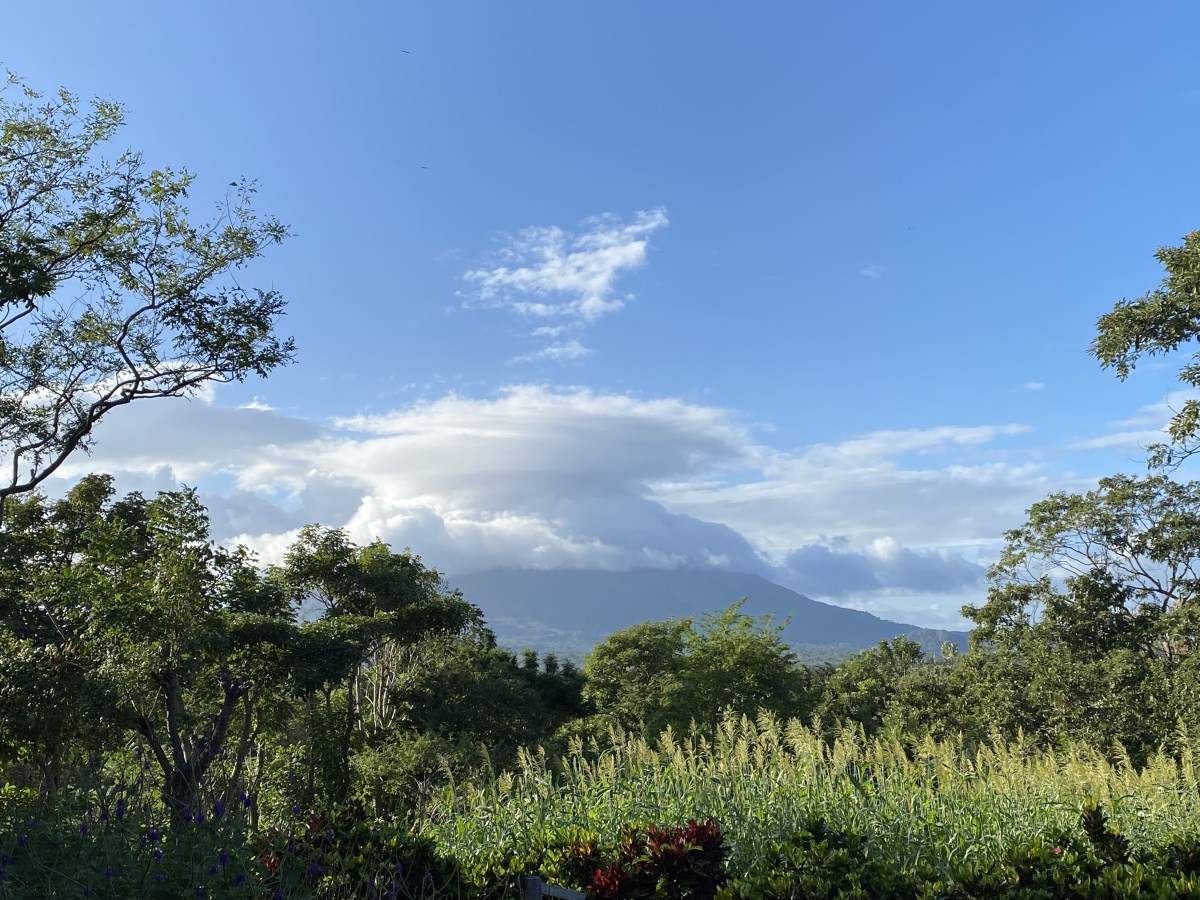
On the Isletas tour we could see Mombacho Volcano covered in cloud. Mombacho Volcano is 1345m and is the defining feature of Granada’s skyline. It is still active and puffs out smoke periodically.

We saw many of the homes and restaurants that occupy the islets. One spider monkey got very close to our boat and provided a good bit of entertainment. According to Victor: “Monkeys good in sex. Females mate 3 times a day for 8-25 minutes when in heat.” This comment got a lot of laughs.

Danny's Isletas Boat Tour
Danny’s Isletas Boat Tour
Mike, Adam and Alex on Danny's Isletas Boat Tour
Mike, Adam and Alex on Danny’s Isletas Boat Tour
Danny's Isletas Boat Tour 2023
Danny’s Isletas Boat Tour 2023
Danny's Isletas Boat Tour
Danny’s Isletas Boat Tour
Fort of San Pablo
Fort of San Pablo
Fort of San Pablo
Fort of San Pablo
view from Fort of San Pablo
me, Mike, Alex and Adam at Fort of San Pablo 2023
Alex and Adam at Fort of San Pablo
Adam at Fort of San Pablo
view from Fort of San Pablo
view from Fort of San Pablo 2023
view from Fort of San Pablo
view from Fort of San Pablo of Mombacho
Danny's Isletas Boat Tour
Danny’s Isletas Boat Tour
Danny's Isletas Boat Tour
Danny’s Isletas Boat Tour
Danny's Isletas Boat Tour
Danny’s Isletas Boat Tour
Danny's Isletas Boat Tour
Danny’s Isletas Boat Tour
Volcán Mombacho
Volcán Mombacho
Danny's Isletas Boat Tour
Danny’s Isletas Boat Tour
Danny's Isletas Boat Tour
Danny’s Isletas Boat Tour
Danny's Isletas Boat Tour
Danny’s Isletas Boat Tour
Danny's Isletas Boat Tour
Danny’s Isletas Boat Tour
Danny's Isletas Boat Tour
Danny’s Isletas Boat Tour
Back in Granada

When we returned to Granada, we went to Pita Pita, a Mediterranean restaurant, for dinner. It was packed, so service was very slow. I enjoyed the special watermelon mojito. We all shared a delectable fried cauliflower with a tahini dipping sauce that I couldn’t get enough of. I think I ate most of the entire plate. I also enjoyed homemade beef lasagna with a green salad, most of which I had to take back to our apartment because I ate so much of the cauliflower! 🙂

Pita Pita
Pita Pita
Watermelon mojito at Pita Pita
cauliflower and tahini at Pita Pita

Sadly, my FitBit was at the end of its life and quit charging, thus I could no longer measure my steps on our trip. 😦

Tuesday, January 3: We started our morning by going to the cool leather shop Soy Nica, where Alex bought a bag for his girlfriend Jandira and I bought a couple of bags for myself.

Soy Nica is a family-run business. Its leather goods are 100% handmade by local craftsmen using cow leather and skin. They never use plastic, carton, rubber, fabric, etc. Leathers come from Nicaraguan cows. I seem to remember the owner said he was from Denmark, and he, like Adam, never wants to return to Europe (America in Adam’s case). The designs are Scandinavian.

We dropped off our goods in the apartment and Mike and I went by ourselves to visit Granada Cathedral, which had been closed when we went by yesterday. Located right on the Central Plaza, the cathedral is a bright yellow neoclassical church originally built in 1583 and destroyed countless times since. This version was built in 1915.  The interior of the church features three naves and four chapels and extensive stained glass windows set into the dome. There were beautiful new-looking frescoes painted on the ceilings. We hoped to go up into the bell tower but we could never find an access point.

The Central Plaza was alive with activity, with vendors and live music. The Cathedral provides an iconic backdrop to the city’s cultural life.

inside Granada Cathedral

We were finally able to go up the bell tower at Iglesia La Merced. Built in 1534, La Merced is one of the oldest cathedrals in Central America. It was razed by pirates in 1655 and rebuilt with its current baroque facade between 1781-1783. It was one of the most important churches in Granada until its main tower was destroyed in 1854 by William Walker’s forces; it was restored with the current elaborate interior and the rebuilding of the tower in 1862. Today Catholics come to see the Virgen de Fatima. La Merced has three interior naves and is located two blocks west of the Central Plaza, where it sits on a small corner plaza surrounding by other fascinating colonial buildings.

From the bell tower, we enjoyed expansive views over the small town of Granada.

view from Iglesia La Merced
view of Granada Cathedral from Iglesia La Merced 2023
view from Iglesia La Merced

We walked further down the street to see the rather dilapidated yet attractive colonial Iglesia de Xalteva, which houses La Virgen de la Asunción. It was rebuilt in the 1890s after being heavily damaged by an earthquake.

We strolled through some of the side streets where we enjoyed the colorful homes and their cool doors and birdcage windows. We could also see Volcán Mombacho.

Iglesia de Xalteva
Iglesia de Xalteva
me with one of Granada's doors
me with one of Granada’s doors
streets of Granada
streets of Granada
Parque Central
Parque Central
hotel near Parque Central
birdcage houses
birdcage houses
Granada Cathedral
Granada Cathedral
view of Volcán Mombacho from Granada

We met Alex and Adam for lunch at the Garden Cafe, where we enjoyed fresh delicious fish tacos, sandwiches and limeade. I also bought a cute pair of earrings after browsing the cafe’s enticing shop.

Garden Cafe
Garden Cafe
Garden Cafe
Garden Cafe
Garden Cafe
Garden Cafe
Fish tacos at Garden Cafe
Garden Cafe
Garden Cafe
Garden Cafe
Garden Cafe
Garden Cafe
Garden Cafe
Garden Cafe
Garden Cafe

Finally, the boys returned to the Airbnb while Mike and I did a quick walk through the Centro Cultural Museos de Convento San Francisco. Not quite as nice as the museum we loved in León, it was a sprawling building with numerous courtyards and art for sale. I especially loved the Nicaraguan paintings in the museum. I wish we’d had more time there, but we’d made plans to visit Laguna de Apoyo for the afternoon with the guys.

Centro Cultural Museos de Convento San Francisco
layout of Granada
layout of Granada
Centro Cultural Museos de Convento San Francisco

For our afternoon trip back to Laguna de Apoyo, you can read my previous post: nicaragua’s laguna de apoyo & a wasted trip to volcán masaya.

After our afternoon at the lagoon, we returned to the Airbnb, where the guys cooked up some steaks they’d bought at a butcher shop. I ate my leftover lasagna from Pita Pita.

Here’s a video of our time in Granada.

We started packing up everything for an early departure in the morning. We’d reserved a spot on the 9:00 a.m. ferry to Ometepe Island. We’d been told to be there an hour early, which meant we had to leave Granada by 6:45 a.m.

Share this:

  • Share on X (Opens in new window) X
  • Share on Facebook (Opens in new window) Facebook
  • More
  • Email a link to a friend (Opens in new window) Email
  • Print (Opens in new window) Print
  • Share on Pinterest (Opens in new window) Pinterest
Like Loading...
  • Central America
  • International Travel
  • Laguna de Apoyo

nicaragua’s laguna de apoyo & a wasted trip to volcán masaya

wanderessence1025's avatar wanderessence1025 March 22, 2023

Sunday, January 1, 2003: We started the New Year by leaving León and driving a scenic route south of Managua. During our whole time in Nicaragua, we managed to miss the capital altogether, as planned. I had heard it is one of the ugliest capitals in the world. Adam, however told us that he loved Managua — the energy and the vibe. He loved riding his motorbike through the city and zigzagging in and out of traffic. Maybe we’ll have to check it out whenever we return.

We drove high on a mountain ridge with densely forested mountains all around us. After about two hours, as we approached Catarina, Adam pointed out the spot where he hit a dog on his motorbike and went skidding across the road during his first year in Nicaragua. He was in a daze and kindly Nicaraguans came out to help him. They called for help and got him to a hospital. He was terribly shaken and the love people showered on him was what made him fall in love with the country. He seemed very nostalgic about the whole experience.

Mirador de Catarina

We arrived at Catarina, a town close to Masaya. It is famous for its observation point over the Laguna de Apoyo (Apoyo Lagoon), as well as for its flower nurseries. The Catarina Mirador is one of the highest hills surrounding the Apoyo Lagoon and the view is superb. It has a bit of a circus atmosphere with scores of vendors selling every imaginable thing and musicians serenading people for money.

Mirador de Catarina
Mirador de Catarina
Mirador de Catarina
Mirador de Catarina

The Apoyo Lagoon Natural Reserve protects Laguna de Apoyo, a volcanic lake, and its drainage basin. Laguna de Apoyo is a type of  lake that normally retains water and allows no outflow to other external bodies of water, such as rivers or oceans; drainage converges instead into lakes or swamps, permanent or seasonal. It occupies the caldera of an extinct volcano. The lake is round with a diameter of 6.6km. It is 175m deep and occupies an area of 19.44 square kilometers.

We ate lunch at Rancho Esperanza, an open-air two-story restaurant with a bit of a view. I enjoyed grilled chicken with jalapeño sauce, tostones (smashed and refried plantains), and grilled onions & peppers, accompanied by a delicious salad.

tostones at at Rancho Esperanza
lunch at Rancho Esperanza

After lunch, we strolled along the mirador where people were promenading on horses. A young girl rode a virtual “unicorn” with a gold horn and a rainbow-colored mane.

The Catarina viewpoint is a popular place among Nicaraguans during weekends; families and friends gather to enjoy the view, nosh on snacks from street vendors or enjoy leisurely restaurant meals. Families were out in droves because it was a Sunday and New Year’s Day.

Mirador de Catarina
Mirador de Catarina
Laguna de Apoyo
Laguna de Apoyo
Mike, Alex and Adam at Laguna de Apoyo
Alex, me and Mike at Laguna de Apoyo
Mirador de Catarina
Mirador de Catarina
Adam at Mirador de Catarina
Alex at Mirador de Catarina
Laguna de Apoyo
Laguna de Apoyo
Laguna de Apoyo
Laguna de Apoyo
Laguna de Apoyo 2023
Laguna de Apoyo
Laguna de Apoyo

As we moseyed our way out of the congested mirador by car, I saw a vendor selling miniature paintings, so I hopped out of the car and quickly bought two paintings: one of the Nicaraguan national bird, the mot mot, and the other a volcano with storks at its base. Both cost me $8. The traffic was moving slowly, so I was able to hop back in easily. Souvenir shops and nurseries lined the path and Death personified strolled with his cane along the road.

leaving Mirador de Catarina
souvenir shops at Mirador de Catarina
souvenirs at Mirador de Catarina
death personified?
death personified?
nurseries at Mirador de Catarina

We then drove onward to Granada, where we would stay for three nights.

Posada Ecológica la Abuela

Tuesday, January 3: On a hot Tuesday afternoon while we were in Granada, we ventured again to Laguna de Apoyo, but this time to a different access point from where we stopped in Catarina. Adam had visited Posada Ecológica la Abuela before, and he convinced us to go there, although there are many such places around the lagoon that are equally enticing. It is a lively bit of paradise and on this day, it was filled to the brim with Nicaraguan families still celebrating the holidays. We relaxed, nibbled on snacks, drank Toñas, the Nicaraguan beer, and piña coladas, and swam in the lagoon. The boys went down a steep slide into the water and jumped off platforms.

img_4746

img_4746

Mike swam out toward the middle of the crater lake. Adam said he fears going out too far from shore; there is something about the deep dark water that unsettles him. While swimming, we could see colorful birds in the trees and monkeys hanging and jumping from tree branches.

It was nice to cool off for the afternoon, as Granada had been very hot that morning.

Posada Ecológica la Abuela
Nicaragua's bird: the mot mot
Nicaragua’s bird: the mot mot
Posada Ecológica la Abuela
Toña: a Nicaraguan beer
Posada Ecológica la Abuela at Laguna de Apoyo
Posada Ecológica la Abuela

It was a relaxing afternoon until we decided to go to Volcán Masaya to see the molten magma at nightfall. What a complete waste of time. The gatekeepers took $40 ($10/person) without mentioning a 30-car backup in the park; the cars were waiting for a very limited number of parking spots. They would only let in one car for each car that left; we weren’t moving at all. Alex and Adam got out and walked a long way up the line of cars and never found the front of the line. It would have taken hours to see it but we weren’t about to wait around that long.  We did a T-turn and went back to the gate and protested enough that the gatekeepers grudgingly returned our money. What an utter waste of time, because it had taken us a while to get there. I really hate tourist attractions that don’t have a system!

We headed back to our Airbnb in Granada for our last night there.

Share this:

  • Share on X (Opens in new window) X
  • Share on Facebook (Opens in new window) Facebook
  • More
  • Email a link to a friend (Opens in new window) Email
  • Print (Opens in new window) Print
  • Share on Pinterest (Opens in new window) Pinterest
Like Loading...
  • Central America
  • International Travel
  • León

welcoming the new year in león, nicaragua

wanderessence1025's avatar wanderessence1025 March 15, 2023

Friday, December 30, 2022: After our breakfast in Hotel San José in Matagalpa, we showered, packed and were on our way to León. I was disappointed because it seemed Mike had lost the Nicaragua guidebook and the nice map of Nicaragua I’d brought. There was a city walk in the guidebook for León, and now it seemed we wouldn’t be able to take that walk. We looked in all the suitcases and bags and in the car, but it was nowhere to be found.

As we drove, we passed acres of coffee beans drying along the road. People tending the beans were wrapped up in so much clothing that not an inch of their skin was exposed. Coffee production is obviously king around Matagalpa Department.

We also passed a large rice production area, cultivated and irrigated for year-round farming.

León

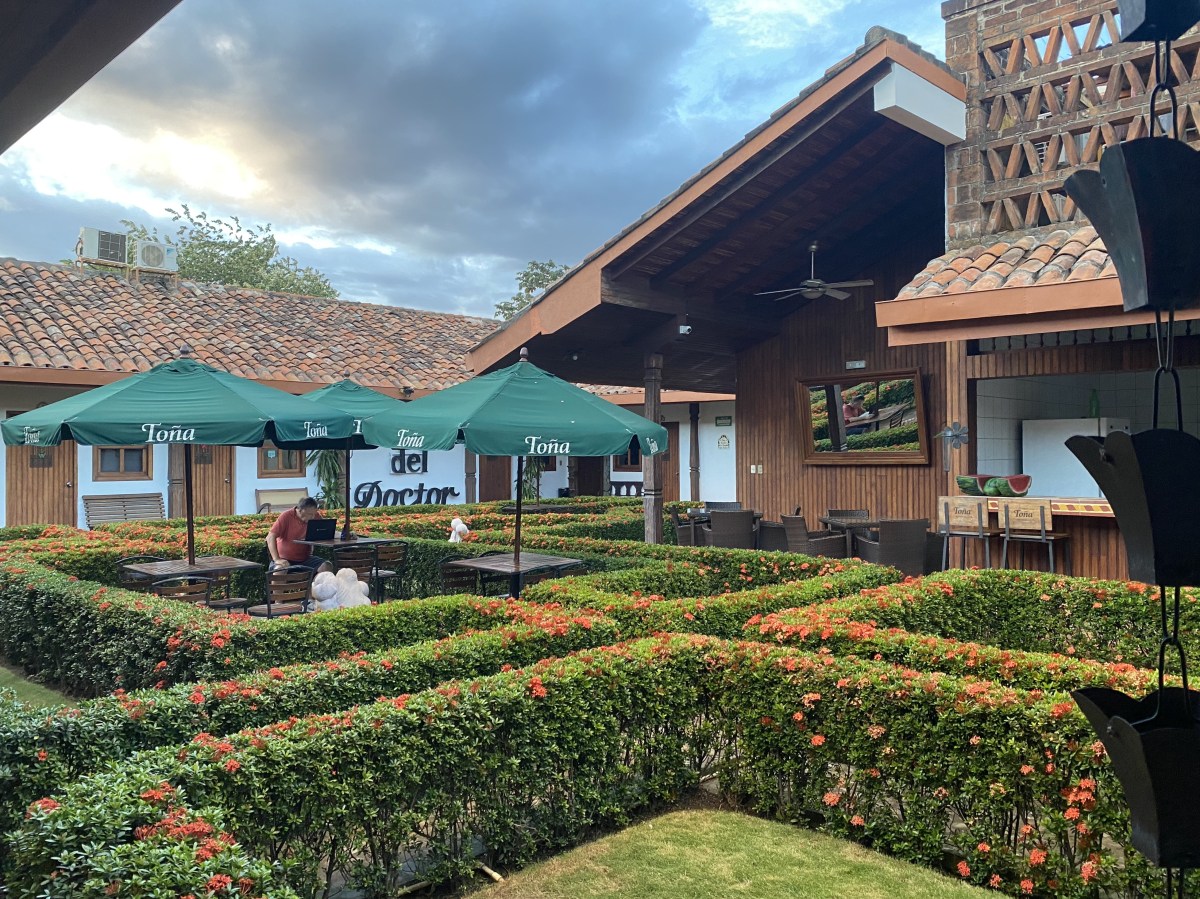
Overall, we drove an easy 2 1/2 hours from Matagalpa to León. We checked into our hotel, Hotel La Posada Del Doctor. The room was tiny, one double bed pushed up against a wall (I hate beds pushed up against walls!), and two single beds with a tiny and quite derelict-looking bathroom. The outdoor open courtyard was nice, however, as was the shaded seating area around the edges with comfortable chairs and pool tables.

Hotel La Posada Del Doctor
decor at Hotel La Posada Del Doctor

We promptly went out to walk around the city, sadly without that lost guidebook. It seemed our wanderings would be aimless, after all.

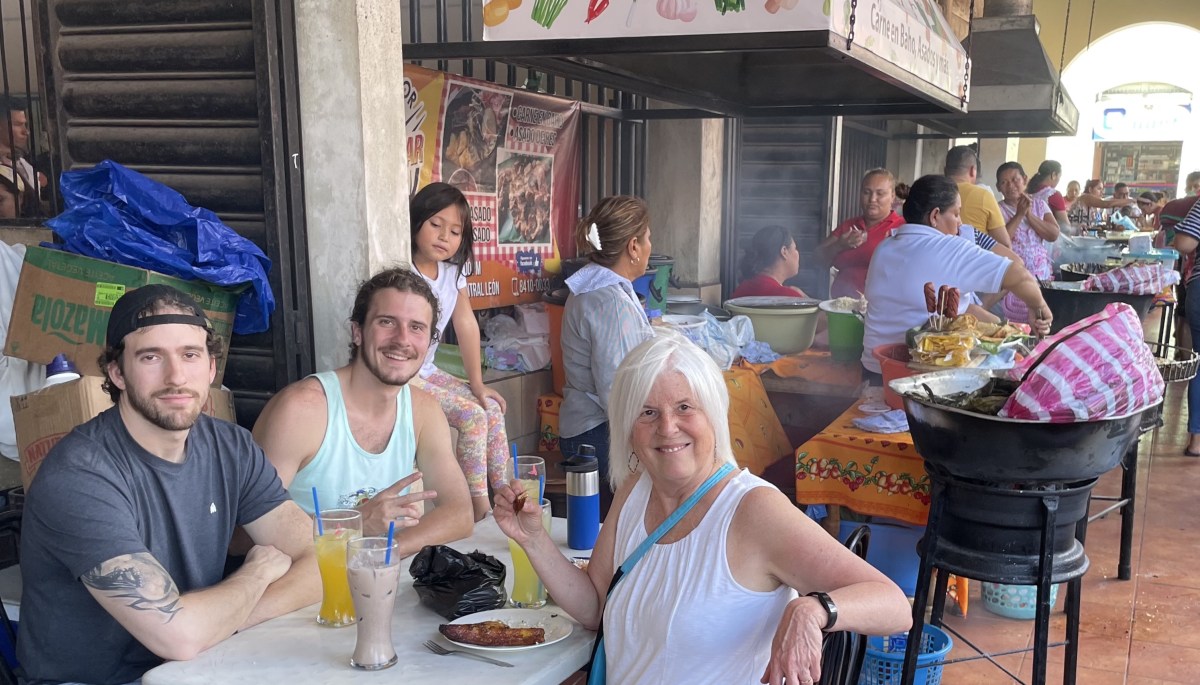
We headed first to León’s Cathedral, but as we were hungry we detoured around and behind it to the Mercado in search of lunch. My favorite thing was a Manuelita, a kind of crepe. I also had fried cheese and a plantain. While at lunch in the market, a guy started yelling at Adam, who told him, “Despacio (“slowly, slowly”).” The guy had been staring at us, Adam said. The woman who sold us our food told us the man was a regular there who suffered mental problems.

fullsizeoutput_25717

Alex, Adam and me at the Mercado

After lunch we went to the Catedral de León, also known as the Cathedral of the Assumption of Mary. It is a significantly important and historic landmark in León. The Cathedral was awarded World Heritage Site status by UNESCO.

The Cathedral’s construction lasted between 1747 and 1814, and it was consecrated by Pope Pius IX in 1860. It has maintained the status of being the largest cathedral in Central America and one of the best known in the Americas due to its distinct architecture and special cultural importance.

Catedral de León, officially the Basilica de la Asunción, is a pantheon of Nicaraguan culture. The tomb of Rubén Darío, Leon’s favorite son, is on one side of the altar, guarded by a sorrowful lion and the inscription: “Nicaragua is created of vigor and glory, Nicaragua is made for freedom.”

We also walked around inside and sat down for a moment of silence and to absorb the spiritual atmosphere. Of course, we admired another huge nativity scene.

We bought tickets to climb up the tower and walk around the rooftop. We didn’t have great views because of the heavy white concrete railing, but the domes on top were artistic and pleasingly arranged. The roof was a dazzling white; with the white domes and the blue sky, it brought back memories of Santorini, Greece. We did manage to enjoy some views of the flat plain around León and the cone-shaped volcanoes rising up in the distance.

Catedral de León, officially the Basilica de la Asunción
interior of Catedral de León
Nativity scene in Catedral de León
rooftop of Catedral de León
volcanoes in the distance
Catedral de León rooftop
Catedral de León rooftop 2023
Catedral de León rooftop
me on the Catedral de León rooftop
Alex on Catedral de León rooftop
Catedral de León rooftop

In front of the Cathedral was a large Christmas tree and saddled fake horses all lined up. Mike walked through a bunch of pigeons to see if they’d scatter, but they just ignored him. We found more brilliantly-hued nativity scenes.

After walking around the top of the cathedral, Alex, who was sadly still sick, returned to the hotel to rest and Adam walked around on his own to check out nearby gyms.

holiday decor at Catedral de León
ponies in front of Catedral de León
nativity scene in front of Catedral de León

We went to the Museo Histórico de la Revolución, which has seen better days. An eerie emptiness abounded: offices were bare, staircases were covered in dust and debris, walls were shedding hunks of paint amidst pigeon droppings. Tiny marks in the wall were bullet holes from intense fighting that once took place.

The guide explained about Nicaragua’s complicated past and who the major players were, especially Augusto César Sandino (May 18, 1895 – February 21, 1934), the Nicaraguan revolutionary and leader of a rebellion between 1927 and 1933 against the United States’ occupation of Nicaragua. Despite being referred to as a “bandit” by the U.S. government, his exploits made him a hero throughout much of Latin America, where he became a symbol of resistance to American Imperialism.

We also learned of Carlos Fonseca and others who fought for years to upend Anastasio Somoza Debayle’s dynasty. We got an overview of the Nicaraguan revolutionaries who stood up against the Somoza dictatorship. The museum traces the history from the devastating earthquake of 1972 to the Sandinista overthrow.

The Somoza family ruled for over 4 decades (1936-1979), with increasing dissatisfaction felt by Nicaragua’s citizens. The key turning point was in 1972 when a huge earthquake killed thousands and left huge populations homeless. Somoza’s National Guard embezzled much of the aid money, inciting citizens to fury and a slow-burning rebellion.

The guide then took us up on the rusted corrugated iron roof – the metal sheets were held down by rocks – for views over León. The roof had gaping holes and crudely-drawn yellow arrows pointing where we should walk. The museum, housed in a former Somoza government building, was a central location during the Sandinista revolution.  Abandoned and in decay since 1979, former Sandinista revolutionary fighters worked to turn it into a museum.

We clambered across, fearful of one of the metal sheets collapsing. Luckily, we found an amazing view of León’s churches and the landscape beyond that in the not-too-distant past had been so ravaged by war.

The building was very derelict and our guide worried for its future. She mentioned the Chinese wanted to buy it but for what purpose, she didn’t know.

Museo Histórico de la Revolución
Augusto César Sandino
Carlos Fonseca
Carlos Fonseca
the derelict Museo Histórico de la Revolución
rooftop of Museo Histórico de la Revolución
view of Catedral de León from the rooftop of Museo Histórico de la Revolución
Museo Histórico de la Revolución

Leaving the Museum of the Revolution, we found some street art that was revolutionary-themed.

revolutionary-themed street art
streets of León
streets of León

We also walked by an unknown church and the Iglesia La Recolección. The 1786 Iglesia de la Recolección is considered the city’s most beautiful church, a Mexican-style Baroque confection of swirling columns and bas-relief medallions that portray the life of Christ. The lavishly decorated facade is dyed a deep yellow accented with cream and peeling paint.

church in León
church in León
Iglesia La Recolección

Because we’d had such a big lunch, all we had for dinner were little nibbles.  The guys drank beers as they played pool on the borders of the courtyard.

fullsizeoutput_25762

pool tables were under the eaves along the edges

Steps: 8,670; Miles: 3.68.

Las Peñitas

Saturday, December 31, 2022:  NEW YEAR’S EVE: After out typical Nicaraguan breakfast (scrambled eggs, plantains, red beans and rice, toast and cheese), we drove out to Las Peñitas, a wide sandy Pacific beach fronted by a cluster of surfer hostels and boutique hotels. Smallish regular waves make for decent surfing, especially for beginners.

We cruised up and down looking for the most welcoming spot to spend the morning. We stopped at Playa Roca Hotel and were told we could park there as long as we bought something in the restaurant. We sat on an L-shaped wooden bench around a coffee table under a thatched roof. It was hot as it had been since we’d arrived in León, but we had on our bathing suits and were ready to beach it. Rough rocks formed a kind of headland on the left side of the crescent beach where waves were battering the rocks. Alex did his typical handstand atop one of the rocks. The guys went bodysurfing and got tossed about quite a bit. I went in myself and was promptly knocked over by a wave and had trouble regaining my footing.

Some of the other thatch roofed restaurants and hotels along the beach were gussied up with waving green palm trees. We saw hand-drawn signs for surfing classes and rooms for rent: “Rento habitacion.” American music played over a loudspeaker and crashing waves added an offbeat rhythm to the tunes.

After a while, I ate a shrimp taco, rice and beans and a Victoria Frost, while “You’re my angel” serenaded me. The guy who worked at the bar was super friendly.

Nica breakfast at the hotel
Playa Roca Hotel at Las Peñitas
Playa Roca
Playa Roca
Las Peñitas
Las Peñitas
Las Peñitas
Las Peñitas
Mike, Adam and Alex at Playa Roca
Las Peñitas
Las Peñitas
Playa Roca
Playa Roca
Playa Roca Hotel 2023
Playa Roca
Playa Roca
Playa Roca
Playa Roca
Playa Roca
Playa Roca
Las Peñitas
Las Peñitas
Las Peñitas
Las Peñitas
Las Peñitas
Las Peñitas
Las Peñitas
Las Peñitas
Las Peñitas
Las Peñitas
Las Peñitas
Las Peñitas
Las Peñitas 2023
Las Peñitas 2023
Las Peñitas
Las Peñitas
Las Peñitas
Las Peñitas
Las Peñitas
Las Peñitas
Adam singing
Adam singing
the friendly waiter at Playa Roca
my shrimp taco
my shrimp taco

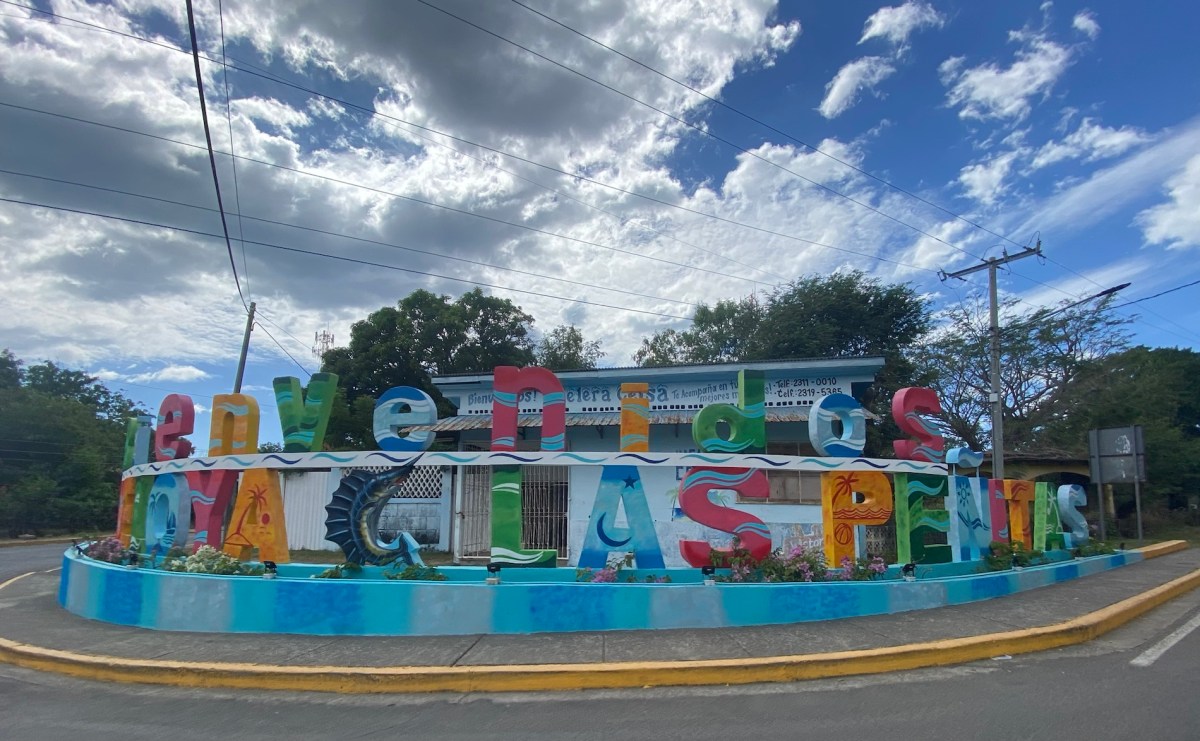
Next to Las Peñitas, following the same stretch of beach is Poneloya. The two villages are similar but Las Peñitas is a bit more geared toward backpackers and other foreign visitors.

img_3870

Bienvenidos Poneloya – Las Peñitas

León

Back in León, the four of us went to the street to find a rickshaw. A guy with a single bench seat insisted he could carry all four of us, but we knew it was impossible no matter what configuration we tried. Luckily we found another rickshaw and split up and took both to the museums.

Museo Rubén Darío

We headed first to the Museo Rubén Darío, with its pretty green courtyard. León is the home of the country’s most famous poet, Rubén Darío.

Félix Rubén García Sarmiento (January 18, 1867 – Febraury 6, 1916), known as Rubén Darío, was a Nicaraguan poet who initiated the Spanish-language literary movement known as modernismo (modernism) that flourished at the end of the 19th century. Darío had a great and lasting influence on 20th century Spanish-language literature and journalism.

This was the poet’s home and national museum. It was in the house where he lived the first 14 years of his life. He started writing poetry here at age 12. His first poem is on display here as are various personal effects. Everyday items provide a window into well-to-do Nicaraguan life in the late 1800s. Some highlights were handwritten manuscripts of Darío’s famous works, his Bible, the bed where he died “an agonizing death” and the fancy clothes he wore as the ambassador to Spain, and a library with curlicued wooden bookcases. His work was featured in Mundial magazines, a Peruvian weekly magazine that marked the birth of modern journalism in Peru, both for its graphic design and its content, when it appeared in Lima on April 28, 1920. It ran through 576 issues to 4 September 1931.

The house itself was very cool but all the information was in Spanish so we didn’t learn much about the poet from the museum. We had never read any of his poetry so Adam pulled up one of his poems online and read aloud the translated version of a verse.

Nicaragua is famous for its many poets, many of whom inspired the Revolution.

Museo Rubén Darío
Museo Rubén Darío
Museo Rubén Darío
Museo Rubén Darío
Museo Rubén Darío
Museo Rubén Darío
Museo Rubén Darío
Museo Rubén Darío
Museo Rubén Darío
Museo Rubén Darío
Museo Rubén Darío
Museo Rubén Darío
Museo Rubén Darío
Museo Rubén Darío
Rubén Darío poem
Rubén Darío poem
Museo Rubén Darío
Museo Rubén Darío
Museo Rubén Darío
Museo Rubén Darío
Rubén Darío at age 23
Museo Rubén Darío
Museo Rubén Darío

Centro de Arte Fundación Oriz-Gurdián

We then went to the Centro de Arte Fundación Oriz-Gurdián, founded in 2000. The museum is made of four colonial houses replete with ornate interior courtyards. The sprawling one-story buildings occupy at least two full city blocks. Much of the museum roof is open to the sky. It showcases a vast collection: early pre-Columbian and Spanish colonial religious artifacts to modern and contemporary artworks.

The Art Center was born on December 5, 2000 with the inauguration of the Norberto Ramirez house. In November of 2002, Derbyshire House opened. In 2006, the house Delgadillo opened and in 2013, the House Deshon followed. The four houses with large corridors, lounges and gardens, built between the 18th and 19th centuries, are examples of the most authentic León architecture of those times. They belonged to illustrious families of the city. They were acquired and restored from the year 1999 by the Ortiz-Gurdián family with the desire that they would house in the interior the collection of universal art and be enjoyed by their Nicaraguan compatriots and international visitors.

The houses showcase art as follows:

  1. The House Norberto Ramirez: the collection “from occidental art to Nicaraguan art.”
  2. House Derbyshire: exhibition of Latin American painting.
  3. House Delgadillo: the collection of “Integración and Grupo Praxis.”
  4. House Deshon: contemporary art collection from the Ortiz-Gurdián Foundation.

I loved this museum. This was definitely my favorite place in León. I loved not only the South American and Nicaraguan art, but the buildings themselves, which were works of art themselves with their numerous courtyards, bubbling fountains and fish ponds. There was even a section on European art (not as interesting to me) and modern art, including a Marilyn Monroe series by Andy Warhol. I found the Latin American art most intriguing.

Centro de Arte Fundación Oriz-Gurdián
Centro de Arte Fundación Oriz-Gurdián 2023
Centro de Arte Fundación Oriz-Gurdián
me at Centro de Arte Fundación Oriz-Gurdián
Centro de Arte Fundación Oriz-Gurdián
work by Oswaldo Guayasamin of Ecuador
Centro de Arte Fundación Oriz-Gurdián
Nicaraguan paintings
Nicaraguan paintings 2023
Nicaraguan paintings
Nicaraguan paintings 2023
Nicaraguan paintings
Centro de Arte Fundación Oriz-Gurdián

Strolling around town

As we strolled around town, we came upon a statue, “Los Motivos del Lobo” in front of Iglesia de San Francisco (Church of St. Francis). Its origins date to 1639. The statue shows the parable of St. Francis and the Wolf of Gubbio. St. Francis gained his reputation for having control over animals when he persuaded this man-eating wolf to convert to eating more conventional food and become a mascot for the town. Rubén Darío wrote: “Los Motivos del Lobo” (“The Motives of the Wolf”) which tells the story from the wolf’s perspective.

The 1639 Iglesia de San Francisco is one of the oldest churches in the city, a national heritage site with lots of gold, a gorgeous nave, and a rococo interior. Abandoned between 1830-1881, it was later refurbished with two elaborate altarpieces for San Antonio and Our Lady of Mercy.

"Los Motivos del Lobo" in front of Iglesia de San Francisco
“Los Motivos del Lobo” in front of Iglesia de San Francisco
Iglesia de San Francisco

On the street, Adam picked up a squishy Sopa de Leche, a milky flan or custard with brown sugar. Alex found he loved it.

After strolling around town a bit more, we returned to our hotel where Alex and Adam played pool for a while before we went to dinner at El Bodegón, a cozy and breezy courtyard restaurant with excellent food but not the greatest service. I welcomed in the New Year with a tarmindo mojito. I had Tostadas de Vegetales and Mike had Quesadillas de Lechón.

There was a large party (tour group) in the restaurant which caused us to have to wait a very long time for our food.

New Year's Eve dinner at El Bodegón
New Year’s Eve dinner at El Bodegón
Tamarindo Mojito
Tamarindo Mojito
Mike, Alex and Adam at El Bodegón
decor at El Bodegón
decor at El Bodegón
Tostadas de Vegetales

After dinner we wandered through the downtown, still freshly festooned and lit up for the holidays and watched entire families promenading in their finery.

another nativity
another nativity
the festooned town of León
a church along the way
a church we popped into

I was too tired to welcome in the New Year, so I went to bed while the rest of the family sat outdoors and played pool and talked to a couple with young children who lived part time in León.

Steps: 4,241; Miles: 1.8 (My FitBit was not working properly, nor was it charging. I had to give up on step-counting after today).

Sunday, January 1, 2023: HAPPY NEW YEAR!

We had breakfast one last time in the hotel courtyard: this time pancakes and scrambled eggs for Mike and me, the traditional Nica breakfast for the boys. We left the hotel after checking out the relief map of Nicaragua and the rotund doctor.

relief map of NIcaragua
rotund doctor
rotund doctor

We got packed up for our drive to Granada. As we packed the car, surprise, surprise, I found the Nicaragua guidebook and map under the seat in the trunk. A lot of good it did for the city walk I wanted to do in León.

On our way out of town, we drove by the Municipal Theater. It was the first theater in Nicaragua. Construction started in 1884 and the theater was inaugurated one year later. It was one of the cultural hot spots of Central America, visited by the rich who enjoyed piano concerts, opera, and other cultural presentations.

The facade of the building was remodeled in 1913 and years later the complete interior was remodeled. In 1956 a fire almost completely destroyed the building. The outer walls were the only parts left standing. Nowadays the theater provides a stage for cultural shows and presentations.

FAd1vFRFSJyXD6GcUGlLmg

Municipal Theater

Finally, we drove by “El Calvario” Church, one of Nicaragua’s most beautiful churches. It was built in the early 17th century. The church has a neoclassical facade, which together with its bright colors makes it stand out among the surrounding buildings at the end of Calle Real. Its design has both Spanish and French elements. It is notable for its symmetry of design. In the year 2000, a fence was added to protect the church.

wc8E7KFjR+euf7Xxkw1A%g

“El Calvario” Church

Here is a video of our time in León.

We left León and headed toward Granada.

Share this:

  • Share on X (Opens in new window) X
  • Share on Facebook (Opens in new window) Facebook
  • More
  • Email a link to a friend (Opens in new window) Email
  • Print (Opens in new window) Print
  • Share on Pinterest (Opens in new window) Pinterest
Like Loading...
  • Central America
  • Hikes & Walks
  • International Travel

travel to nicaragua & finding our way to matagalpa

wanderessence1025's avatar wanderessence1025 March 8, 2023
In Transit – from D.C. to Miami to Managua

Tuesday, December 27, 2022: We left home at the ungodly hour of 3:15 a.m., taking an Uber to Reagan International Airport. Our flight on American Airlines took off at 6:30 a.m. and landed us three hours later in Miami, 924 miles. The only refreshment was a Lotus Biscoff, a cardboard-like gingerbread cookie. Mike had tomato juice, which I never think of ordering but looked refreshing. Alex slept almost the entire flight, which I envied. We had a period of some turbulence, surprising because we weren’t in clouds but under sunny skies. 🙂

There was a nasty body odor smell throughout the cabin that made for unpleasantness. A curly-headed toddler was screaming his head off across the aisle from us before takeoff. It was so obnoxious. The only way the parents could calm him down was to show him either a video or a video game on the phone. What a brat!

Taking off from D.C.
In flight over the U.S. East Coast
coming in for a landing in Miami (South Beach below)

In Miami we walked a long way to Gate D7, then grabbed some lunch. I had a turkey and Swiss sandwich, Mike a tuna wrap, and Alex an egg, cheese and bacon empañada. I also got a Pure Green Cold Pressed Juice with apple, lemon and ginger (& kale, spinach, cucumber, celery, zucchini and romaine) that gave my stomach somersaults.

The plane loaded quickly in Miami but we took off an hour late because of seven planes ahead of us. The flight was 1,017 miles over 2:46 hours.

A guy behind us was talking about his female friend who got murdered and robbed of her purse and phone in Nicaragua. He was looking to adopt her 12-year-old daughter and had three children of his own.

I got stuck in the middle seat with Mike at the window and Alex in the aisle seat. Alex worked on Soduko and was reading Love & Math that he got for Christmas. Mike was chuckling over Nadine’s escapades in the book Happier Than a Billionaire.

Adam had been writing to say he was in Managua and planned to shop some before meeting us at the airport. I looked forward to seeing him after nearly three years.

landing in Managua - volcano below
landing in Managua – volcano below
Coming into Managua
Coming into Managua
Arrival in Nicaragua and onward to Matagalpa

We arrived in Managua at 12:35 p.m., but we had to pick up our luggage and go through customs; there, I had to stand in a separate line to have my carry-on bag searched. I had brought my Canon Power Shot, which I never use but carry only as a backup in case something happens to my phone; for some reason it showed on their scanner and they didn’t know what it was. Mike and Alex went ahead to get the rental car from Alamo, a Toyota Rush, and when I was finally released by customs, I gave Adam a big hug. I was so happy to see him! We thought he must have grown because he seemed super tall to us all.

Mike got the rental car and we piled all our luggage in the back and began our drive to Matagalpa. We were on the road, a decent 2-lane road shared with moto taxis and motorbikes. Mountains loomed before us.

6UfZ3WRQSNa4QVqVnTZQDg

Driving to Matagalpa

We stopped to use a bathroom and get some snacks. Adam wanted us to try Chicharrones con Sabor a limon. We also got a bag of Del Rancho Chicharrones. Both were different versions of fried pork skins. It has taken me a long time to get used to my once-vegan sons becoming fully carnivorous.

We drove ever so slowly behind lumbering overloaded trucks, moto taxis and horses pulling carts for 2 1/2 hours to Matagalpa.

Our hotel in Matagalpa, Hotel San José, had an interior courtyard with a colorful nativity scene. The back of the courtyard was bursting with tropical plants. We enjoyed cool beers in the hotel courtyard. It was wonderful to all be together again.

Hotel San José
Hotel San José
Hotel San José
Hotel San José
courtyard at Hotel San José
Mike, Adam, Alex and me at Hotel San José

Matagalpa is one of Nicaragua’s largest cities, but it is fairly provincial and laid back. Soaring mountains circle the city’s central neighborhoods. Coffee, which accounts for the city’s historic wealth, is produced in the hillsides. The city serves as a good urban base to explore the surrounding countryside of primary forest, gushing waterfalls and coffee plantations.

We went to dinner at Casa Blanca, where I enjoyed shrimp with garlic sauce, and then we wandered through a magical park, Darío Park, lit with Christmas lights and the biggest nativity scene I had ever seen. We found a statue in the park of Rubén Darío (1867-1916), a Nicaraguan poet who had a great and lasting influence on 20th century Spanish-language literature and journalism. He has been praised as the “Prince of Castilian Letters” and undisputed father of the modernismo literary movement.

Across from the park, we saw the pink San José Church, relevant in the architecture and history of the city. Formerly called the Church of Laborío or Dolores, in 1881 it served as a barracks for rebellious Indians. It’s an elegant construction with a colonial façade to which a bell tower with a clock was added. Large swaths of the pink paint were peeled off so it seemed rather sad and derelict.

We were all exhausted from our long day of travel, so we exchanged Christmas gifts in our long narrow 4-bedded room and zonked out early. Sadly, the shoes we gave Adam for Christmas were too small but he thought they’d stretch. I could have kicked myself for not buying pairs in two sizes just in case one didn’t fit. 😦

Alex and Adam at Casa Blanca
my shrimp dinner
my shrimp dinner
statue of Rubén Darío
Rubén Darío Park
Rubén Darío Park
Rubén Darío Park
Rubén Darío Park
Rubén Darío Park
Rubén Darío Park
San José Church
San José Church

Steps: 8,644; Miles: 3.64.

Reserva Natural Cerro Apante

Wednesday, December 28: Our breakfast at Hotel San José was served up at a private table; it was a meal we would eat frequently in both Nicaragua and Costa Rica: scrambled eggs with peppers and onions, fried plantain chips, a slice of soft cheese (like Feta), and rice and red beans.

We drove to the start of the hike at Reserva Natural Cerro Apante, a cloud forest reserve with a cool pleasant climate. The sign at the outset said:

  • Sendero El Roble
  • Distancia 3.2 kmts ± 3 horas
  • Dificultad: moderamente dificil
  • Parqueo C$ 30

The reserve has an area of 1,962 hectares. Its name means “hill of water” in Nahuatl, or “land of two waters.” It is named so for the numerous sources of water that originate here. The water is used by people in the urban and rural areas of Matagalpa.

breakfast at Hotel San José
sign at Reserva Natural Cerro Apante
our Toyota Rush
our Toyota Rush

It features a tropical cloud forest with 75 species of plants, including a mix of trees such as sweet gum and walnut which come from North America and whose southern limit of distribution is in Nicaragua. Several species of oak and pine also thrive here. In addition, eight registered orchid species are known. Giant tree ferns known as monkey’s tail are also abundant.

The route was very steep, rocky and root-tangled. We walked through tropical exuberance, around bamboo patches, and alongside streams. Alex and Adam sat in the branches of a fallen tree for a pose.

We found a waterfall where the guys swam. Adam jumped into a pool from a tall rock.

Reserva Natural Cerro Apante
Mike at Reserva Natural Cerro Apante
Adam at Reserva Natural Cerro Apante
Alex and Adam
Alex and Adam
me wtih Alex
me wtih Alex
Adam
Adam
Mike
Mike
Reserva Natural Cerro Apante

Then we continued climbing to the mirador overlooking the city of Matagalpa, La Cruz de Cerro Largo Viewpoint. We came up a long steep set of steps from behind a blue and white metallic cross. In front of the cross is the rather derelict mirador, where we could see the city of Matagalpa scattered across the valley. Cerro Apante is 1,442 meters above sea level. At its summit is the 33-meter-high La Cruz de la Paz (in memory of the years of Jesus Christ’s earthly life), the highest Catholic monument in Nicaragua. The statue is a carving of the Virgin Mary with a winged Christ child at her feet. It is part of the Montaña de la Paz project, meant to be a pilgrimage site where the Christian faithful can come to reflect, pray and make spiritual retreats.

The viewpoint and the huge statue were quite unusual, but we were happy to be rewarded with cacao bars Adam gave us as Christmas gifts, expansive views, and conversation in Spanish with some very friendly Nicaraguans.

another cross on the way to La Cruz de la Paz
La Cruz de la Paz
La Cruz de la Paz
La Cruz de la Paz
La Cruz de la Paz
La Cruz de la Paz
La Cruz de la Paz
view of Matagalpa
view of Matagalpa
Adam & Alex at La Cruz de la Paz
view of Matagalpa 2023
La Cruz de la Paz 2023
views of area surrounding Matagalpa
Mike and me at the viewpoint
Adam and Alex at the viewpoint

The route back took us on a loop so we could experience different views and flora. Coming down on steep gravelly surfaces is always challenging to me, but I took my time and tried to be patient, not an easy thing for me! We found a horse grazing freely.  Our hike was exhausting but in the end, the views were worth all the effort.

a grazing horse
a grazing horse
pretty butterfly
pretty butterfly
coming back down Reserva Natural Cerro Apante
interesting vegetation
crazy looking cacti
crazy looking cacti
more interesting vegetation
Spanish moss on trees
more Spanish moss
more Spanish moss
more interesting plant life
return to the beginning

Back in Matagalpa, we found a cute veterinarian office with a mural of cows, horses, pigs and oxen on the front. We dropped into a little restaurant in town, but the food was rather disappointing. I was okay with my cheese quesadilla, but the guys weren’t happy at all with the lack of meat in their dishes.

veterinarian office in Matagalpa
our disappointing lunch

We enjoyed a beer in the hotel courtyard, showered and relaxed for a while. Alex seemed to be feeling a bit under the weather and he took a nap while we relaxed before dinner.

Adam had walked around earlier, while we were resting, and scoped out a Mexican restaurant, Rincón Azteca, with a taco special. As we walked to go out to dinner, we stumbled across a blue car with four little white fuzzy heads looking out at us. The owner of the pups came out and tried to hand one over to me. Then we stopped into a festively decorated church where we found yet another richly arranged nativity scene.

We enjoyed various taco dishes and a chalupa poblano. Adam, who loves his sweets, downed two horchatas and we sipped on something like non-alcoholic margaritas. The colorful drinks were served in jars with handles, overlooked by festive snowmen.

The decor in the restaurant was cute and colorful with striped blankets and patterned pillows on orange couches and sombreros to try on for photos.

cute little pups
cute little pups
cute pups and their owner
nice church in Matagalpa
church in Matagalpa
church in Matagalpa
church in Matagalpa
church in Matagalpa
church in Matagalpa
church in Matagalpa
church in Matagalpa
church in Matagalpa
me at Rincón Azteca
me at Rincón Azteca
me with Mike at Rincón Azteca
Rincón Azteca
Rincón Azteca
tacos at Rincón Azteca
tacos
tacos
chalupa poblano at Rincón Azteca

Steps: 12,955; Miles: 5.49.

Selva Negra and a wander around Matagalpa

Thursday, December 29: Today we visited Selva Negra Mountain Resort and Coffee Estate, a historical coffee farm set up by German immigrants in 1891.

In the 1850s, when gold was discovered in California, many American and European passengers made their way to California crossing the Isthmus of Central America through Nicaragua. On one of these trips, a German couple, Ludwig Elster and Katharina Braun, from the region of Germany’s Black Forest (Selva Negra in Spanish), chose to stay in Nicaragua rather than continue to San Francisco. They were discouraged from their original intention of going to California for the gold rush because they were told it wasn’t a good environment for families and children. Instead of looking for gold, they planted the first coffee beans in this region. The coffee was of good quality, so many other Europeans and Americans chose to do the same. It was known then as “La Hammonia” Farm, strictly a coffee farm.

One hundred years later, Eddy Kühl and Mausi Hayn, descendants of the first settlers, decided to build a tourist resort, completed between 1975-1976.    They built 23 mountain bungalows, an additional building with 14 rooms, a youth hostel, bar and restaurant.

In addition to coffee production and the hotel, Selva Negra Ecolodge, alternative sources of production have been developed over the last 30 years, whether for in-house consumption or income generation. These include organic meat and milk products such as cheeses: Gouda, Manchego, Camembert, & Feta; vegetables and fruit crops; pork and sausages; laying hens and meat chickens, etc.

Activities are all eco-touristic: mountain hiking, horseback riding, bird watching, and coffee plantation tours.

We did the coffee plantation tour, where we were walked through the stages of the process. We were introduced to the machinery that sorts and washes the coffee beans. We tasted some of the defective coffee. Selva Negra sells coffee all over the world, mostly to the U.S. but also to Australia, Mexico and Czech Republic. One of their biggest customers is Whole Foods in the U.S.

We watched the raking and drying of the coffee beans. Depending on the type and quality of the beans, drying can take days to months.

There is much integration on the farm: leftover food from the restaurant feeds the pigs, the pigs’ waste generates methane gas used to fuel the kitchen that cooks the sausages made from the pigs. They also use multiple methane gas processes from coffee wastewater, animal manure and human waste.

driving to Selva Negra
Selva Negra
Selva Negra
Selva Negra
Selva Negra
Selva Negra
Selva Negra
Selva Negra
Selva Negra
machinery at Selva Negra
coffee beans at Selva Negra
coffee beans
coffee beans
coffee beans
coffee beans
machinery at Selva Negra
coffee beans
coffee beans
tasting defective coffee beans
machinery at Selva Negra
Sign for Selva Negra
more signs at Selva Negra
signs at Selva Negra
the owner's house in the middle of the operation
the owner’s house in the middle of the operation
German owner's house
German owner’s house
more signs
more signs
a little pond on the coffee plantation
coffee beans drying
coffee beans drying
coffee beans drying
coffee beans drying
coffee beans drying
coffee beans drying
coffee beans drying
coffee beans drying
coffee beans drying
coffee beans drying
Adam, Mike, me and Alex at Selva Negra
the coffee map
the coffee map
the coffee map
the coffee map
the youth hostel at Selva Negra
Selva Negra
Selva Negra

At Selva Negra, we took a 4WD down into the coffee plantation. We drove past the workers’ quarters. Deeper into the plantation, we saw giant lemons, which they let fall to the ground to make the soil more acidic. Cacao grows on the plantation as well. The coffee hacienda grows 100% organic shade coffee.

On the bumpy ride, there was only room inside the truck for Mike and me and two Nicaraguan women, one of whom wanted to set her daughter up with Adam. Adam and Alex had to sit in the truck bed, not comfortable because of a sudden smattering of rain and the bumpy ride.

workers' quarters at Selva Negra
workers’ quarters at Selva Negra
workers' quarters at Selva Negra
workers’ quarters at Selva Negra
workers' quarters at Selva Negra
workers’ quarters at Selva Negra
workers' quarters at Selva Negra
workers’ quarters at Selva Negra
workers' quarters at Selva Negra
workers’ quarters at Selva Negra
lemons on the plantation
cacao on the plantation
the shade-grown coffee
Coffee plants
Coffee plants
coffee beans
coffee beans
coffee beans
coffee beans
coffee beans
coffee beans
The two Nicaraguan ladies on our tour

We witnessed the lunchtime break for the workers on the coffee plantation. They work from 7-4 each day with a 10-minute lunch. The company brings the food down in a kind of chow-wagon (truck), and workers stand in line to get their food and gobble it down. They carry their bags of coffee beans down to lunch because they want to keep access to the beans they’ve picked; they’re paid by the box, about $2/box. Most workers pick 5-10 boxes/day. It’s very labor intensive and they’re not about to leave their bags behind during lunch.

workers head to lunchtime at Selva Negra
the chow wagon at Selva Negra

After our tour, we drank the free coffee we got as part of the tour and ate some cheese we bought at a table in the dining area, which overlooks a small lake.

When we got back to the hotel, Alex wasn’t feeling good, so he took a nap while Mike, Adam and I wandered around Matagalpa. Mike and Adam did a little dance to some music bursting from a storefront.

Adam and Hotel San José
Matagalpa mural
Matagalpa mural
Matagalpa mural
Matagalpa mural
Matagalpa wanderings

We strolled over to the Coffee Museum. It tells the story of how in 1852, Luis Elster (1814-1916) and his wife Katharina Braun (1830-1887) arrived with their two-year-old boy, Wilhelm. While awaiting a ship to California in San Juan del Sur, Nicaragua, they found two North Americans returning to New York. They were told conditions were bad for children in California. They were told to go north, close to Matagalpa, where there were gold mines. They went north in a wagon pulled by oxen to Matagalpa and then to San Ramon, where they bought land from indigenous people and founded their farm Ludwigwalk, or “La Lima.” Luis dug for gold, but didn’t find big quantities. Instead they planted coffee seeds and were surprised when the bushes yielded cherries bigger and more aromatic than those on the Pacific. (I believe this is the same couple referred to above at Selva Negra, but the names and dates don’t match exactly).

The Elsters dried the beans in the sun and after dried, they exported them to Germany to be dehusked. There were many problems, mainly that transporting them was too bulky and the taste was affected. They thought of a way to remove the dried shells using wood cylinders.

We saw a map of the coffee trajectory. European and North American immigrants received land from the government with the condition that they had to plant coffee (in Matagalpa and Jinotega). We learned of different types of coffee and different roasts.

the Coffee Museum in Matagalpa

We wandered past street markets where Adam introduced us to Nicaraguan street food: buñelos (yucca cheese sugarballs); respado (a snow cone with sweetened condensed milk and fruit syrups; atol (milk & grain sweetened); and unripe mangoes with salt, lime and chili.

It was quite busy in the streets with all kinds of commerce and blaring music and loudspeakers announcing various bargains.

Nicaraguan street food

We found a statue in Morazan Park of Carlos Fonseca and Comandante Tomas Borge Martinez, both drivers of the revolution.

Comandante Tomas Borge Martinez andCarlos Fonseca
me and Mike with the statue
another famous person

I wandered into the Matagalpa Cathedral, also known as Catedral de San Pedro, which still had a large nativity scene. It is the third largest cathedral in Nicaragua, built in 1874 as a parish church under the Jesuits. It reflects the opulence of Matagalpa in that age. It is built in a Baroque style with heavy bell towers set at both sides of an airy spacious interior. Dedicated to St. Peter the Apostle, it is the seat of the Roman Catholic Diocese in Matagalpa. It was finally completed and consecrated in 1897.

Matagalpa Cathedral
Matagalpa Cathedral
Matagalpa Cathedral
Matagalpa Cathedral
nativity scene at Matagalpa Cathedral
Matagalpa Cathedral
Matagalpa Cathedral

We also stopped at the Carlos Fonseca Museum, once the revolutionary leader’s childhood home. Carlos Fonseca Amador (23 June 1936 – 8 November 1976), was a Nicaraguan teacher, librarian and revolutionary who founded the Sandinista National Liberation Front (FSLN – Frente Sandinista de Liberación Nacional). He was killed in the mountains of the Zelaya Department, Nicaragaua, three years before the FSLN took power.

The small and simple house, made of taquezal (mud and wood), holds two exhibition rooms, one small office and a salon-turned-library. Photo exhibits of Fonseca, showing images of different stages of his life, as well as important people in his life, line the walls. On display are also information about his childhood and family, his revolutionary activism in different countries, guerilla partners and more. There were many faded old news clippings, including one about his death in the war against the Guardia Nacional (Somoza’s army), as well as personal artifacts.

Carlos Fonseca Museum
returning to our hotel

We returned to the hotel to find Alex well-rested, although he still didn’t feel good. We all went out to dinner for local Nica food at El Taquero, which made the guys happy but not me because too much meat was involved in every dish. Even the Chalupina I ordered because I thought it didn’t have meat, was full of fatty meat. 😦

El Taquero
El Taquero
Alex, Adam and me at El Taquero
dinner at El Taquero

Steps: 10,490; Miles: 4.45.

Below is a video of our time in Matagalpa.

The following day, Friday, we would be on our way to León, where we would stay to welcome in the New Year.

Share this:

  • Share on X (Opens in new window) X
  • Share on Facebook (Opens in new window) Facebook
  • More
  • Email a link to a friend (Opens in new window) Email
  • Print (Opens in new window) Print
  • Share on Pinterest (Opens in new window) Pinterest
Like Loading...
  • Canada
  • International Travel
  • North America

prince edward island: meeting an old friend and a beloved author

wanderessence1025's avatar wanderessence1025 March 1, 2023

Tuesday, October 4, 2022: We drove over the Confederation Bridge and headed to Summerside, Prince Edward Island. We had hoped to walk on a boardwalk there but we couldn’t find what was supposedly an appealing waterfront.

We looked for a restaurant and finally found G&T Book Cafe, a little Vietnamese restaurant/book store/gift shop. The proprietor was friendly and giggled a lot. I had a fried vermicelli with shrimp dish that was excellent. Mike had a big bowl of wonton soup. It took forever to get our meals.  While we waited I enjoyed an orange juice with cinnamon and browsed the little shop. They said they made everything from scratch, using only fresh ingredients.

It was a nice little stop although I didn’t find Summerside to be that appealing.

Summerside is the second largest city in PEI and supposedly has an attractive waterfront with a beach and boardwalk in the west end. Sadly we must not have gone far enough west because we never found it. At the turn of the 20th century, Summerside was the headquarters of a virtual gold rush based on silver-fox ranching. At that time, fox fur was the height of fashion and fox “farming” was a thriving Summerside industry. Today fishing and potato processing are more profitable endeavors. Lobster is plentiful in early July during the 10-day Summerside Lobster Festival.

We passed Malpeque Bay as we continued on our way to Lisa’s house.
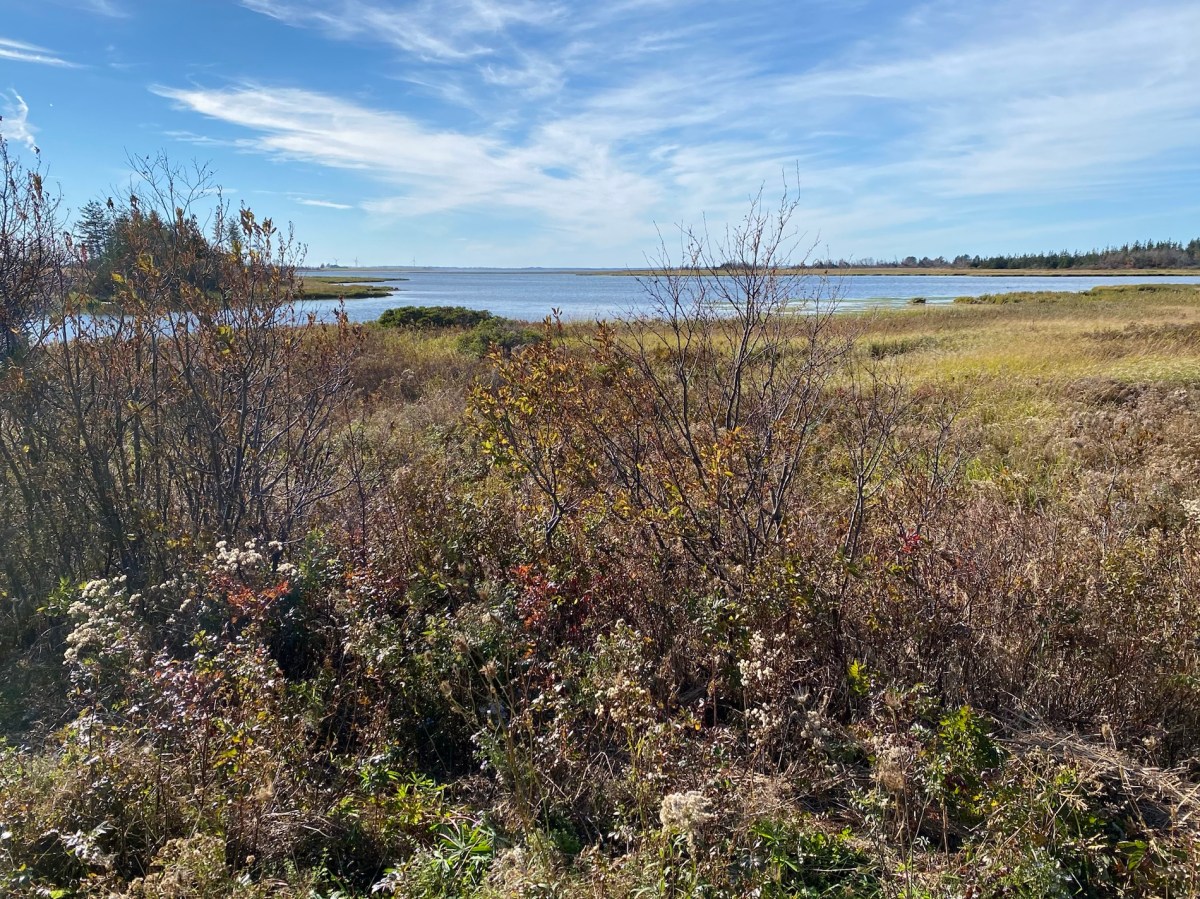
img_1350

Malpeque Bay

We were surprised to come across St. Mary’s Church, home to the Under the Spire Music Festival.  Of course, we were too late in the season to hear any of the music from this festival.

img_1352

St. Mary’s Church

Finally, after about 13 years, I was able to visit my friend Lisa, who studied Arabic in Egypt with me in July of 2007. I visited her in 2009 in Pennsylvania, but she now lives back-and-forth between PEI and Pennsylvania. The main reason I planned this trip to the Maritimes was to visit her.

When we arrived today, she took us in her big royal blue pickup truck to see some of her favorite people, Marjorie and Foulton. They used to be her neighbors when she rented a trailer next door to theirs. Foulton showed off his shed with two snow blowers and a riding lawn mower. Mike got a kick out of that because they only had a small rectangle of grass beside their trailer. Then Foulton took Mike into his tool shed where he regaled him with details about his huge collection of every tool known to man, all immaculate and well-organized. Marjorie wanted to know if we had kids or grandkids and how Lisa and I met, so we told her a bit about our time in Egypt.

After visiting her friends, Lisa took us to some of her favorite nearby places. One was Black Horse Corner. Lisa said the black horse is often dressed in clothes appropriate for the holidays or the seasons. Today the horse was naked! Lisa’s husband Mohammad apparently thinks it’s the most ridiculous thing ever, so Lisa insisted on taking selfies and sending them to him (he’s working as a traveling nurse in Pennsylvania and stays with Lisa’s 94-year-old mother). People often tell directions in PEI using this landmark: “Go left at Black Horse corner,” etc.

Black Horse Corner
Black Horse Corner
Lisa and me at Black Horse Corner
Lisa, me and Mike at Black Horse Corner

Lisa then took us to Park Corner Heritage Cemetery, a giant stone in a field “dedicated to the memory of the early settlers buried here from 1780 to 1865. May they rest in peace.” From that spot we had beautiful views of the surrounding cornfields and the Gulf of St. Lawrence. Houses perched prettily on the hillsides overlooking the sea.

We also drove to a viewpoint of the picturesque fishing village of French River.

Park Corner Heritage Cemetery
barn near Park Corner Heritage Cemetery
Park Corner Heritage Cemetery
view from Park Corner Heritage Cemetery
French Village
French Village
French Village
French Village
Mike, me and Lisa looking out over French Village
French Village up close

We went to the beach at Park Corner. We walked through a field to a lighthouse. I thought Lisa called it the Park Corner Lighthouse but I think it might be the New London Lighthouse, as it sits on New London Bay.

New London Lighthouse
New London beach
New London beach
New London beach
New London beach

We took a short walk on the red sand beach then went on to the Cape Tryon Lighthouse and the red cliffs of Cape Tryon. The unassuming wooden lighthouse, which stands 33.4m tall is perched near the edge of a gorgeous sandstone cliff on Cousins Shore.  The top of the lighthouse was lying on the ground and we couldn’t help but wonder if it was blown off by Hurricane Fiona.

The original lighthouse was put into operation in 1905, but decommissioned in 1969. The current lighthouse is still active to this day and is tucked away at the end of a narrow old farm road that rambles between two rolling hay fields.

Cape Tryon Lighthouse
Cape Tryon
Cape Tryon
Cape Tryon
Cape Tryon
Cape Tryon
Cape Tryon
Cape Tryon
Cape Tryon
Cape Tryon
Cape Tryon
Cape Tryon Lighthouse
Cape Tryon
Cape Tryon
Cape Tryon
Cape Tryon
Cape Tryon
Cape Tryon

Lisa insisted on chasing the beautiful sunset, looking for the perfect picture.

sunset near Sea View

After our drive about, Lisa fixed us a fabulous dinner of salmon, stuffing, fresh tomatoes and peppers from her garden, and homemade sourdough bread. It was delicious! But she was very critical of it, saying she was disappointed in the salmon.

Lisa had spent the day gleaning tomatoes from the garden and then reducing them to sauce in order to freeze them, besides getting the house ready for us. All of that plus cooking dinner. I felt bad putting her out so much, although she seemed to revel in having us as guests. She had driven 15 hours straight from Pottsville, PA with only 4 stops for bathroom breaks! She had her truck loaded with stuff and didn’t want to leave it outside a motel room overnight in case someone stashed drugs in there which she might unknowingly carry across the border.

Lisa insisted that Mike and I each have our own bedroom. The other two bedrooms (she has 4) were all packed with clutter still waiting to be unpacked from the truckload of things she’d brought up from Pennsylvania. She insisted on sleeping on an air mattress on the floor in the midst of all the piles of stuff, cuddled up with her cat Josephine. I felt so bad and protested that Mike and I were perfectly fine in the same room, but she would have none of it. I learned long ago that there is no use arguing with Lisa; she will always win.

Lisa collects all kinds of things from her travels and from Ebay. She had ceramic heads and sad clown pictures all over her house. Her latest obsession is with Coca-Cola decor and various sets of dishes in different motifs. She served every meal (four in all – two breakfasts and two dinners) on a different set of dishes. She and Mohammad had sold their house in Pottsville, PA and Lisa, without telling Mohammad, bought the house in PEI. He was not happy with that decision as he feels PEI is too isolated for his work. She will stay in her PEI house until spring of 2023 and then go back to Pennsylvania, and will bring Mohammad up in summer. She is content and keeps very busy with various house projects; she’s quite handy and never sits still!

Lisa's house
Lisa’s house
Lisa's house
Lisa’s house
Lisa's house
Lisa’s house
Lisa's house
Lisa’s house
Lisa's house
Lisa’s house

We sat up talking until midnight while Mike went to sleep earlier (in his own room!).

Steps: 10,905; Miles: 4.62. Drove 164 miles.

Wednesday, October 5: Lisa cooked us up a great breakfast of fried eggs and shredded potatoes, accompanied by her homemade sourdough bread. Yum! We had coffee and chatted and then we headed out for an early start to Charlottetown.

We made a stop at French Village to get some shots of the fishing village in the morning light.

French Village again
French Village
French Village

In Charlottetown, we went straight to Rising Tide Electric Bicycles on Queen Street and rented two e-bikes. It was our first time riding e-bikes and it was quite a surprise to have the bike burst forth in spurts whenever we upped the power. We rode all along Victoria Park and saw the Brighton Beach Lighthouse and got reprimanded by a resident for riding a short distance on the boardwalk. We had mainly put the bikes up on the boardwalk to take pictures and then just rode them a half block. We’d been told by the Rising Tide guy we weren’t allowed to ride on the boardwalks, but it was only a short distance. Oh well.

I was worried about riding the bikes with the traffic and the downed trees in town because of the sudden bursts of speed on the e-bike. I was afraid the bike would get away from me and crash into someone or something.

We made our way to the Confederation Trail but we rode quite a way never to escape the ugly commercial or industrial areas. I didn’t care for it and said it wasn’t what I had in mind. We decided to cross the bridge over to Stratford, first passing the Charlottetown sign with a large homeless encampment behind it.

biking in Charlottetown
Mike in Charlottetown
Brighton Beach Lighthouse

We zoomed over the bridge at what I thought was breakneck speed (4 out of 5), laughing at how silly it felt to be going so fast while hardly pedaling.

There wasn’t much to see on the other side of the bridge, and our time on the bikes (2 hours total) was winding down. We rode along the waterfront and saw the 2022 sign and another gate with stuffed lovers and lots of love locks.

2022 sign
2022 sign
stuffed lovers
stuffed lovers
love locks
love locks

We turned in our bikes and went to Water Prince Corner Shop for a lunch of steamed mussels, seafood chowder and some wonderful warm biscuits with butter. The whole time we chatted with another couple from Michigan who were sitting so close our elbows almost touched. They were on what seemed a whirlwind tour of the Maritimes. The man taught theology at a Catholic high school outside of Detroit and his wife was the vice principal. She was busy the whole time studying her phone and a map and trying to figure out their itinerary, so she wasn’t very talkative, but the man was. We weren’t that interested in continuing the conversation. First we’d thought, “Oh good, some liberal teachers to chat with,” but then we realized they were more likely conservatives and probably Trump supporters (and anti-abortion).

Water Prince Corner Shop
mussels at Water Prince Corner Shop

We wandered around the town and stopped into some shops and finally came across a bookstore, Bookmark, which was very cute and packed with all kinds of interesting things. I bought a bullet journal and another journal and two books by Canadian authors, one of whom, Olivia Robinson,  worked in the bookstore and autographed her book, The Blue Moth Motel. The other was Speak, Silence by Toronto author Kim Echlin, who also wrote The Disappeared (which I loved).

There were Halloween characters like scarecrows all over town, a bit early for Halloween, along with lots of fallen trees from Fiona, one and a half weeks after the storm.

Designated as the Island capital in 1765, Charlottetown is both PEI’s oldest and largest urban center. The whole “metropolitan” area has a population of about 65,000, so a small-town atmosphere prevails. Gingerbread homes, converted warehouses, striking churches and monumental government buildings dot the town.

The city hosted the conference that led to the formation of Canada and is proud of its role as “The Birthplace of Confederation.”

Charlottetown, PEI
Charlottetown, PEI
Charlottetown, PEI
Charlottetown, PEI
Charlottetown, PEI
Charlottetown, PEI

Leaving Charlottetown, we drove the north part of the Central Coastal Drive. We left via the Kings Byway toward Dalvay-by-the-Sea, but it was closed due to downed trees. We then tried to drive through Prince Edward Island National Park, but it too was closed. We were led from one detour to another. Attempting to get to Brackley Beach, we were blocked again. We drove past Cavendish and Green Gables, which we would visit the next day. Roads were blocked in every direction as we made our roundabout way back to Lisa’s house.

The entire Central Coastal Drive is 253km (157mi), but we never made it to the southside along the Northumberland Strait.
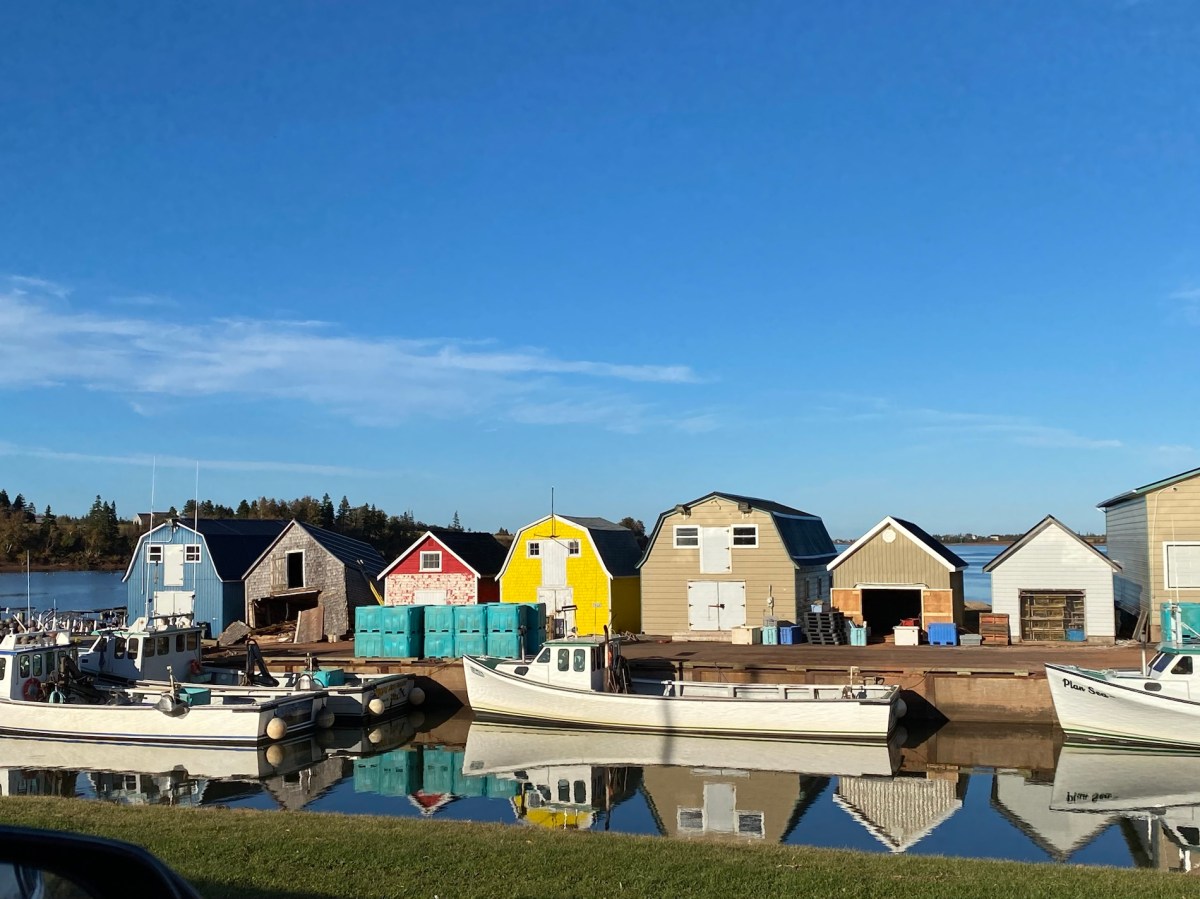
img_1507

another fishing village we passed on our way to Lisa’s

When we arrived at Lisa’s house, her kitchen was in chaos as she was cooking a Thanksgiving feast. Canadian Thanksgiving is the second Monday in October, which would be October 10. She was steaming a turkey; she also made a homemade green bean casserole, mashed potatoes, cranberry sauce, Stove Top stuffing, gravy, and of course her sourdough bread.

She wouldn’t allow us to help and instead insisted that we relax and watch TV. Mike made us drinks and I sat posting things on Instagram while Mike did his Duolingo.

Dinner was served, again on a different set of china. It was all delicious. As it started to get dark, Lisa excused herself in the middle of dinner and said she needed to go out and put her riding lawnmower in the shed. As we sat there, abandoned and still eating, Mike looked out the window and said, “She’s mowing the lawn.” Sure enough, she was, and as it got darker, all we could see were the headlights buzzing around the yard. It was so hilarious and just like Lisa!

Lisa's dishes for tonight
Lisa’s dishes for tonight
Lisa and me at her Thanksgiving feast
Lisa and me :-)
Lisa and me 🙂

Lisa is a big collector of vintage and retro items, anything that strikes her fancy. At one point, she said she had to show me something I wouldn’t believe. In her living room, she has a kind of folding backless stool with a rough fabric stretched between the edges; the cat uses it to claw. A sort of cat hammock, I guess. Showing it to me, she asked if I recognized it. I didn’t have a clue what it was. She said the seat was made from a bath towel I bought for our Egypt apartment 15 years ago. It was all shredded and pilled from the cat clawing at it. She was proud of herself for making use of something I so easily left behind.

We told her in the evening that we would leave the next day, a day earlier than we intended. Many things we had wanted to see were closed, not only for the season but also because of Fiona. She said, “I never got to tell you all my secrets! And you never got to see my shed and my garage!”

We were all tired from our day so we went to bed early and prepared for a long drive back home after our planned visit to Green Gables.

Steps: 8,920; Miles 3.75. We drove 104 miles.

Thursday, October 6: Lisa made us another fabulous breakfast, a wonderful egg and cheese casserole with broccoli. It was delicious as usual, and she gets a AAA rating for the best host ever.

I think Lisa was sad to see us leave earlier than expected, but we were anxious to get home once we realized how little there was to do at this time of year in PEI. Lisa had warned me that everything would be closed in PEI by late September/early October but I figured the National Park and hiking trails would be open. But Hurricane Fiona made Lisa more right than she even meant to be.

Lisa's egg casserole
Lisa’s egg casserole
Lisa and me
Lisa and me

The whole of PEI National Park and its hiking trails were closed due to huge numbers of fallen trees, so there went our planned day of hiking. Mike and I were both getting travel weary anyway because of having to rearrange our trip and encountering various closures, so we decided to leave PEI today.

We first made a quick stop at the L.M. Montgomery’s Birthplace, which was closed. The cottage-like white house with green trim overlooking New London Harbour is where the author was born in 1874. The interior has been furnished with antiques to conjure up that era.

L.M. Montgomery's Birthplace
L.M. Montgomery’s Birthplace
map of L.M. Montgomery places on PEI

Before leaving the island, we stopped at Green Gables, which luckily was open through the end of October.

Green Gables Heritage Place is a 19th century farm and literary landmark in Cavendish. Green Gables served as the setting for the Anne of Green Gables novels by Lucy Maud Montgomery. It is recognized as a Federal Historic Building  by the Government of Canada and is situated on the L.M. Montgomery’s Cavendish National Historic Site of Canada. The National Historic Site has been part of Prince Edward Island National Park since 1937.

Green Gables is the green-and-white 19th century farmhouse that served as the inspiration for the Cuthbert place in Anne of Green Gables. The house, outbuildings and grounds, all of which belonged to the author’s grandfather’s cousins, brother and sister David and Margaret Macneill, recreate some of the settings found in the book. The same goes for the short walking trails dubbed the Haunted Wood and Lovers Lane/Balsam Hollow.

Lucy Maud Montgomery (1874-1942) was born in New London, Prince Edward Island. Her mother died in 1876 of tuberculosis. She lived with her maternal grandparents in Cavendish until 1911, when she married and moved to Ontario.

While living in Cavendish, she wrote her first novel, Anne of Green Gables (1908), which won international praise. Anne was one of the most lovable children in English fiction.

In her early years (1874-1892), her literary gifts emerged early. She read and reread every poem, magazine and book she could find. She covered every writing surface with stories and verse. She published her first poem and essays at 15 while spending a year with her father in Prince Albert, Saskatchewan. Homesick for PEI, she returned and continued her studies.

From 1893-1898, L.M. Montgomery finished a two-year teaching program in one year at Prince of Wales College in Charlottetown. She later studied literature and other courses at Dalhousie University in Halifax, Nova Scotia. Back in PEI, she juggled a demanding schedule as a teacher, maintained a busy social calendar and worked to improve as a writer. When her grandfather died, she returned to Cavendish to care for her grandmother.

From 1899-1910, she continued to develop her writing while helping her aging grandmother run the post office in the Macneill Kitchen. She discretely sent out submissions and hundreds of her short stories and poems were published in the U.S. and Canada. In 1908, after several rejections, Anne of Green Gables, her first novel, was published to wide acclaim and became an instant best seller.

From 1911-1925, Lucy Montgomery was faced with a number of life challenges. When her grandmother died, she married Reverend Ewan Macdonald, a Presbyterian minister to whom she’d been secretly engaged for five years. They moved to Ontario, north of Toronto; she mothered her two sons and continued to write.

Deeply affected by the first World War, Montgomery also suffered personal tragedies, including a stillborn child, the death of her best friend Frede, and her husband’s struggle with mental illness. While battling two court cases and fulfilling her roles as minister’s wife and mother, she continued to satisfy her publisher’s demands, writing novel after best-selling novel.

From 1926-1934, the author’s fame grew. She won a major copyright lawsuit and continued to write and publish. Her husband’s bouts of paralyzing “religious melancholia” strained her health. The pressure to keep his mental illness hidden added to worries about her children and finances. She returned to PEI for visits, which gave her solace.

From 1935-1942, Montgomery and her family moved to a new home in Toronto which she named “Journey’s End.” Despite deteriorating physical and mental healthy, horror at another world war, and grief over family matters, she continued to write until her untimely death, at home, at age 67. Her final manuscript, The Blythes Are Quoted, was delivered to her publisher on the day she died.

Montgomery’s body lies in state at Green Gables, in Cavendish Cemetery, surrounded by her favorite places.

I love learning about authors’ lives, and I was fascinated to discover that Montgomery documented her experiences in journals, scrapbooks and photographs. Fashion plates gave her perpetual joy; she whiled away the hours choosing frocks she would have if she could. I too love to create journals and take photos, and I also love clothes and textiles.

L.M. Montgomery
L.M. Montgomery
L.M. Montgomery
L.M. Montgomery
Anne of Green Gables
L.M. Montgomery
L.M. Montgomery
L.M. Montgomery
L.M. Montgomery
L.M. Montgomery's typewriter
L.M. Montgomery’s typewriter
Writings
Writings
L.M. Montgomery's books
L.M. Montgomery’s books
the barn on the property

We walked through the Cavendish house and fictional Anne’s bedroom.

Cavendish house
Cavendish house
Cavendish house
Cavendish house
Cavendish house
Cavendish house
Cavendish house
Cavendish house
Cavendish house
Cavendish house
Cavendish house
Cavendish house
Cavendish house
Cavendish house
Cavendish house
Cavendish house
the fictional Anne's bedroom
the fictional Anne’s bedroom
Cavendish house
Cavendish house
Cavendish house
Cavendish house

We took a walk on Lover’s Lane, aka Sentier Balsam Hollow Trail. L.M. Montgomery discovered the tree-arched lane when she was 12. It became a sanctuary for her. She took dozens of photos of it and paid tribute to it in her writing. Today, we found many trees downed from Hurricane Fiona. The Haunted Wood, another beloved path of the author’s, was closed due to downed trees.

Mike and I on Lovers Lane
Lovers Lane
Lovers Lane
Lovers Lane
Lovers Lane
downed trees on Lovers Lane
Lovers Lane
Lovers Lane
more downed trees
more downed trees
me on Lovers Lane
me on Lovers Lane
Lovers Lane
Lovers Lane

After leaving Green Gables, we drove through part of Prince Edward Island National Park. The park encompasses 40km (25mi) of the north shore of the island. It’s a picturesque park defined by sea, sky and red sandstone cliffs. Marram grass is vital to the survival of the dunes. We stopped at Cavendish Beach, Gulf Shore Way West, MacNeill’s Brook Beach, Mackenzies Brook and Orby Head.

Prince Edward Island National Park
Mike at Prince Edward Island National Park
Prince Edward Island National Park

Finally, we stopped at The Village of North Rustico. A sign in town told us some facts:

  • Mi’kma’ki Indian camps have been found around Rustico Bay dating back 6,000 years.
  • Jacques Cartier sailed along this north shore in 1534.
  • Rene Rassicot fished off Rustico in 1729 and gave the area its name.
  • Acadians first settled North Rustico in 1790.
  • Most present day residents are direct descendants of the original Acadian settlers.

We stopped to admire the fishing shacks and lobster pots here, then bought a few groceries at a small store and were on our way.

North Rustico
North Rustico
North Rustico
North Rustico
North Rustico
North Rustico
North Rustico
North Rustico

We drove back over the Confederation Bridge then through New Brunswick (again), crossed the Canadian border at St. Stephens with no problems (except a 15 minute backup), then drove through Maine and Bangor to the Traveler’s Inn in Brunswick, Maine, where we spent the night.

Steps: 7,450; Miles: 3.14. Drove 501 miles.

Friday, October 7, 2022: Today was a day of pure torture driving home from Bunswick, Maine, as it was the Friday before the Columbus Day three-day weekend. We would have been better off staying another night with Lisa and driving home on Saturday.

Everything was fine through the rest of Maine and New Hampshire and even around Boston. Of course it was once we hit Connecticut where the backups began. Every time we hit a backup, we took a detour, which probably ended up being longer than if we’d just waiting through the backup. Going through New York and New Jersey was a special kind of hell with backups and heavy traffic; it was slow miserable going.

There was another backup showing on the GPS at the Delaware Bridge and in Baltimore, so we decided to go down 301 on the Eastern Shore to the Chesapeake Bay Bridge. We got snarled up in some small town where there was no escape and were stuck there for a good 30 minutes. Then we drove down 301 for what seemed an eternity.

We stopped at Royal Farms to get gas and use the restroom. We had parked next to a huge concrete cylinder (most of the ones there had signs or flags) and when Mike pulled out and then forward to make a wide turn, we hit that block hard. It felt like whiplash! I thought he’d either hit someone backing up or they’d hit us from behind. It was a big jolt but when we got out to look, the fender only had scratches on it. I was surprised the airbag didn’t deploy!
fullsizeoutput_2447e

This was what we hit at Royal Farms

We ran into another huge backup to go over the Bay Bridge.  By the time we finally got over the bridge, we were both in such bad spirits and Mike was so tense from driving all day that I insisted we stop in Annapolis at the Double T Diner for dinner. I told Mike he needed to calm down and that I’d drive home after dinner. After an Eggplant Parmesan and an omelet with spinach and cheese, we got back on the road, but Mike had calmed down and he insisted on driving the rest of the way home.

fullsizeoutput_24481

Double T Diner in Annapolis

We decided if we ever drive up north again, we must go through Scranton, PA and avoid New Jersey, New York and Connecticut at all costs.

The Capital Beltway was the last straw. Packed and fast-moving, I thought we would get killed for sure. I’m surprised that every day there isn’t some hundred car pileup on that roller coaster of a road.

We finally got home at 9:30 p.m (after nearly 14 hours of driving), and I was never so happy to get out of that damn car!

Steps: 3,122; Miles: 1.32. We drove 625 miles. 😦

Share this:

  • Share on X (Opens in new window) X
  • Share on Facebook (Opens in new window) Facebook
  • More
  • Email a link to a friend (Opens in new window) Email
  • Print (Opens in new window) Print
  • Share on Pinterest (Opens in new window) Pinterest
Like Loading...
  • Alma
  • Canada
  • Hopewell Rocks Provincial Park

the flowerpot rocks & the quaint town of alma

wanderessence1025's avatar wanderessence1025 February 22, 2023

Monday, October 3, 2022: This morning we checked out of our Airbnb in Saint John and headed for The Hopewell Rocks.

The Hopewell Rocks, also called the Flowerpot Rocks, or simply The Rocks, are rock formations known as sea stacks caused by tidal erosion. They are scattered on the shores of the upper reaches of the Bay of Fundy at the Hopewell Rocks Provincial Park in New Brunswick, Canada. Due to the extreme tidal range of the Bay of Fundy, the base of the formations are covered in water twice a day. It is possible to view the formations from ground level at low tide, which is what we did.

The Hopewell Rocks formations consist of red-brown sedimentary sandstone and minor mudstone rock. They stand 40-70 feet tall. After the retreat of the glaciers in the last Ice Age, surface water filtering through cracks in the cliffs eroded and separated the formations from the rest of the cliff face. Meanwhile, advancing and retreating tides and the associated waves have eroded the base of the rocks at a faster rate than the tops, resulting in their unusual shapes.

We went at low tide to explore the ocean floor around the rocks. We were lucky to have a beautiful day.

It was about a 15-minute walk from the visitor center to the rocks. As we walked, I started doing an exaggerated march, being my silly self. I was wearing my new fisherman hat. Mike said, “Oh, there goes Chairman Mao marching away!” We laughed so hard we were in convulsions. That hat is truly a Chairman Mao hat.:-)

High tide today was at 18:44 and low tide was at 12:43.  We arrived at 11:43, and wandered along the coastal floor from one end to the other. The rock formations looked like Clydesdale hooves with all the seaweed clinging to the bases. Our feet got quite muddy traipsing around but there was a fountain at the top to clean them off.

Hopewell Rocks
Hopewell Rocks
Hopewell Rocks
Hopewell Rocks
Hopewell Rocks
Hopewell Rocks
Hopewell Rocks as the tide is going out
Hopewell Rocks
Hopewell Rocks
Hopewell Rocks
Hopewell Rocks
Hopewell Rocks
Hopewell Rocks
Hopewell Rocks
Hopewell Rocks
Hopewell Rocks
Hopewell Rocks
Hopewell Rocks
Hopewell Rocks
Hopewell Rocks
Hopewell Rocks
Chairman Mao at Hopewell Rocks
Mike at Hopewell Rocks
Hopewell Rocks
Hopewell Rocks
Hopewell Rocks
Hopewell Rocks
Hopewell Rocks
Hopewell Rocks
Hopewell Rocks
Hopewell Rocks
Hopewell Rocks
Hopewell Rocks
Hopewell Rocks
Hopewell Rocks
Hopewell Rocks
Hopewell Rocks
Hopewell Rocks
Hopewell Rocks
Hopewell Rocks
Hopewell Rocks
Hopewell Rocks
Hopewell Rocks
Hopewell Rocks
Hopewell Rocks
Hopewell Rocks
Hopewell Rocks
Hopewell Rocks
Hopewell Rocks
Seaweed at Hopewell Rocks
me with seaweed piles
Hopewell Rocks
Hopewell Rocks
Hopewell Rocks
Hopewell Rocks
Hopewell Rocks
Hopewell Rocks
Hopewell Rocks
Hopewell Rocks
Hopewell Rocks
Hopewell Rocks
Hopewell Rocks
Hopewell Rocks
Hopewell Rocks
Hopewell Rocks
Hopewell Rocks
Hopewell Rocks
Hopewell Rocks
Hopewell Rocks
Hopewell Rocks
Hopewell Rocks
Mike at Hopewell Rocks
me at Hopewell Rocks
Hopewell Rocks
Hopewell Rocks

Back up near the Visitor Center we had a view of the mudflats, coastline and the Bay of Fundy itself at Daniels Flats, named for one of the area’s early settlers. The bay is about 2.5 miles wide at this point. Salt marshes form a green band around the Bay of Fundy.

Daniels Flats
Daniels Flats
Daniels Flats
Daniels Flats

Because the Bay of Fundy is funnel-shaped (wide/deep at one end and narrow/shallow at the other) tides are pushed increasingly higher as they move up the bay.The length of the bay also plays a factor by causing a natural sloshing effect called resonance. This sloshing amplifies the effect of the funnel.

Among the highest in the world, the tides reach up to 14 meters (46 feet) at Hopewell Cape and 17 meters (56 feet) in the upper reaches of the bay. Not only does the tide rise 46 feet (14 meters) vertically, it also recedes almost two football fields horizontally. In fact, 160 billion tons of water move in and out of the bay every 25 hours. Powered by the gravitational pull of the moon and sun, Fundy’s tides are among the highest in the world and vary daily with the changing positions of these celestial bodies.

The name Fundy is thought to be an English translation for the French word “fendu” meaning “split.” The bay has been navigated by western European fishermen since the 16th century.

Bay of Fundy
Bay of Fundy
formation of the flower pot rocks
Bay of Fundy
Bay of Fundy

I posed for a picture with my fisherman hat in the tiny S. S. Hopewell. So goofy. 🙂 Mike has endless names for me in my hat. Here, I’m Popeye the Sailor Man. 🙂

img_1069

me in the S.S. Hopewell

We left Hopewell Rocks and went by Cape Enrage. The 140-year-old lighthouse, which is still working, is perched on the end of the cape’s rocky promontory. Here, tides rise 16 vertical meters (53 feet). We stopped here but it was closed and locked so we couldn’t walk the beach trails.

Cape Enrage
Cape Enrage
Cape Enrage
Cape Enrage
Cape Enrage
Cape Enrage

On the way, we got out to wander a bit on a cairn-dotted rocky beach.

cairn-dotted rocky beach
marshlands near Cape Enrage

Back at Fundy National Park, we took a short (boring) hike to Point Wolfe Beach after checking out the cute red covered bridge.

The Point Wolfe River was once the center of a lumber operation. In the early 1800s, the lumber industry was booming on New Brunswick and mills sprung up on most rivers along the Bay. The Point Wolfe Mill was opened in 1826 and continued off and on for almost 100 years.

covered bridge in Fundy National Park
trail to Point Wolfe Beach
little pretties along the trail
Point Wolfe Beach
Point Wolfe Beach
Point Wolfe Beach
Point Wolfe Beach

We finally headed to Alma where we would stay the night. The small seaside village services Fundy National Park with restaurants and motels.

We showered and changed and wandered around town looking for a place to eat. I had it in my mind I wanted lobster. We found a lineup of colorful Adirondack chairs and boats tied to the wharf which made fetching reflections in the water.

Alma Lobster Shop beckoned. Mike had a lobster roll and chowder. I had a Lazy Lobster Dinner: Shucked lobster meat, cole slaw, drawn butter and roll. We sat on the open air porch, where annoying flies buzzed all around us. We bought two mugs and an Alma lobster shop onesie for the real-life Alma that Mike’s best friend’s son is trying to adopt.

Alma
Alma
Alma
Alma
Alma
Alma
Alma
Alma
Alma Lobster Shop
Alma Lobster Shop
Alma Lobster Shop
Alma Lobster Shop
Alma Lobster Shop
Alma Lobster Shop
Alma Lobster Shop
Alma Lobster Shop
Alma Lobster Shop
Alma Lobster Shop

As we walked  back to our tiny but cozy Airbnb, we saw fishing paraphernalia, colorful coils of rope and lobster pots.

We settled into our cozy Airbnb and watched the last episodes of Virgin River and read.

Alma fishing yard
Alma fishing yard
colorful ropes
colorful ropes
our tiny but cozy Airbnb

Steps: 16,779; Miles 7.09. Drove 160 miles.

Tuesday, October 4: This morning we left Alma and headed to Prince Edward Island to visit my friend Lisa. On the way, we returned to Hopewell Rocks. We were hoping to see the rocks at high tide, at which time all you can see are the tops of the rocks covered with vegetation and appearing as tiny islands. Alas, we arrived too late for high tide. We got there at 9:58 a.m., and high tide had been around 7:50 a.m., so we were two hours late. The water was definitely higher than when we were there yesterday, but it was low enough that we could have walked all the way to the beach at the far end.

The time span between low and high tide is 6 hours and 13 minutes. People have the chance to walk on the ocean’s floor from 3 hours before low tide until 3 hours after.

Today’s hours of operation in the park were 9:00 to 17:00, so there was no way we would have seen the morning’s high tide anyway.

We enjoyed some views of the Flower Pots nearest the stairs but they weren’t covered at all by water while we were there from 10:00 a.m. until 10:20 a.m.

Hopewell Rocks on Tuesday morning
the Tides on Tuesday morning
Hopewell Rocks as the tide is going out

We took off, heading for Prince Edward Island.  We made a stop in Moncton at Café Archibald, where we had coffees and an egg, bacon and cheese English muffin. The cafe was cute and the staff was busily preparing lunches for take-out.

We left after a bit and drove down Moncton’s main street. It was a charming town. People apparently spoke both French and English there. I was sad we didn’t have time to explore more.

Still in New Brunswick, we stopped at Cape Jourimain to take pictures of the Confederation Bridge leading to Prince Edward Island. It is a box-girder bridge carrying the Trans-Canada Highway across the Abegweit Passage of the Northumberland Strait, linking the province of Prince Edward Island with New Brunswick on the mainland. Opened May 31, 1997, the 12.9km (8.0mi) bridge is Canada’s longest bridge and the world’s largest bridge over ice-covered water.

Tolls only apply when leaving Prince Edward Island (traveling westbound). Toll rates since January 2022 are $50.25 for a two-axle auto. Motorcycles pay $20. Pedestrians and cyclists are not permitted to cross the bridge, but a shuttle service is available.

Cape Jourimain is an area comprising two islands and a section of mainland along the southwestern shore of the Northumberland Strait. The two islands, Jourimain and Trenholm, have been connected to the mainland since 1966 by an artificial causeway. It is host to the western end of the Confederation Bridge. In 1980, the two islands, including a section of mainland, were designated as a National Wildlife Area.

There were trails that looked enticing but we didn’t take them because we were due to be at Lisa’s house by 3:00-4:00.

We saw a lighthouse, the Cape Jourimain Lighthouse, built in 1870 after nearly 30 years of petitions. The 15.5m lighthouse was built to help sailors navigate the narrow strait. The lighthouse operated until 1997 when the Cape Tormentine Ferry service was decommissioned as a result of the opening of the Confederation Bridge.

Cape Jourimain
Cape Jourimain
me at Cape Jourimain with the Confederation Bridge behind me
The Confederation Bridge from Cape Jourimain
Cape Jourimain
Cape Jourimain
Cape Jourimain
Cape Jourimain

Here is a short video of our time at Hopewell Rocks and the rest of New Brunswick.

We crossed the Confederation Bridge to Prince Edward Island.

Share this:

  • Share on X (Opens in new window) X
  • Share on Facebook (Opens in new window) Facebook
  • More
  • Email a link to a friend (Opens in new window) Email
  • Print (Opens in new window) Print
  • Share on Pinterest (Opens in new window) Pinterest
Like Loading...
  • Canada
  • Fundy National Park
  • Hikes & Walks

saint john & the bay of fundy

wanderessence1025's avatar wanderessence1025 February 15, 2023

We spent four nights in Saint John, New Brunswick, from which we visited Fundy National Park, the Bay of Fundy, Ministers Island, and St. Andrews by-the-Sea, as well as exploring the city of Saint John.

Thursday, September 29, 2022: I wrote about our drive to Saint John and our visit to Sackville Waterfowl Park here: heading to saint john, new brunswick by way of sackville.

Fundy National Park

Friday, September 30: We got a relatively early start today since we had a longish drive to Fundy National Park. The park preserves unique wilderness on the shores of the Bay of Fundy. It has wilderness areas, as well as beaches, rocky headlands, sea caves and inlets, wildlife and stunning vistas.

This 206-square-km (80 sq. miles) park was New Brunswick’s first national park and serves as a microcosm of New Brunswick’s inland and coastal climates. It has been designated as a Dark Sky Preserve by the Royal Astronomical Society of Canada.

Among the most scenic of the park’s 100km of biking and hiking trails is Laverty Falls, a 2 1/2 km (1 1/2 mi) trail that descends through hardwood forests to Laverty Waterfall.

We made a quick stop at Wolfe Lake to see what maps we could get from the Visitor Center. The ranger told us she thought the dirt access road to the Laverty Falls Trail was closed due to fallen trees felled by Hurricane Fiona.

o1emP%mqQTaNkvWFsQphXQ

Hoping she was wrong, we drove there anywaw to find the crews had cleared all the trees and we were able to drive up the very long road. When we got to the parking lot, we were the only ones there.  It was quite cold, so I was all bundled up in layers, a fuzzy hat and gloves, but because the trail was a descent followed by an ascent, I had taken off most layers by the time we returned to the top.

I prefer to hike with wide open vistas, but the Laverty Falls hike was all in a forest. The forest seemed rather magical, however, with its golden ferns, spaced-out pine trees, moss-covered glades, and dappled light. Likely because of Fiona, there were downed trees and streams flowing down the middle of the path, so it made for some creative rock- and root-hopping. We had the trail almost to ourselves.

We ate bread and cheese on rocks near the beautiful Laverty Waterfall and then made our way back to the top.

Laverty Falls hike
Laverty Falls hike
Laverty Falls hike
Laverty Falls hike
Laverty Falls hike
Laverty Falls hike
Laverty Falls hike
Laverty Falls hike
Laverty Falls hike
Laverty Falls hike
Laverty Falls hike
Laverty Falls hike
Laverty Falls hike
Laverty Falls hike
Laverty Falls hike
Laverty Falls hike
Laverty Falls hike
Laverty Falls hike
a squirrel at Laverty Falls
Laverty Falls hike
Laverty Falls hike
Laverty Falls hike
Laverty Falls hike
Laverty Falls hike
Laverty Falls hike
Laverty Falls hike
Laverty Falls hike
Laverty Falls hike
Laverty Falls hike
Laverty Falls hike
Laverty Falls hike
Laverty Falls hike
Laverty Falls hike
Laverty Falls
Laverty Falls
Laverty Falls
Laverty Falls
Laverty Falls
Laverty Falls
Laverty Falls
Laverty Falls
Laverty Falls hike
Laverty Falls hike
Laverty Falls hike
Laverty Falls hike
Laverty Falls hike
Laverty Falls hike
Laverty Falls hike
Laverty Falls hike
Laverty Falls hike
Laverty Falls hike
Mike on the Laverty Falls hike
Laverty Falls hike
Laverty Falls hike
Me at the end of the hike

After the hike, we drove to the eastern end of Fundy National Park, the bayside, for a viewpoint or two and checked out the small town of Alma where we would stay for one night on our way to Prince Edward Island. To get back to Saint John, we drove through the park again.

view of the Bay of Fundy
Alma
Alma
view of the bay from Alma
boardwalk at Alma
boardwalk at Alma
Alma marina
Alma marina
marina at Alma
marina at Alma
entering back into the park

We had to stop to see the strange golf course at Fundy that Mike remembered playing as a 12- or 13-year-old when he visited with his parents. The tee for the first hole is at the top of a cliff.

The course, nestled in the Dickson Brook Valley, was designed by course architect Stanley Thompson. It has some tricky greens and some quite taxing elevations, but carts are available.

Td0rqsuuR8iOwLk+olzRIQ

first tee at the Fundy National Park golf course

The New Brunswick side of the Upper Bay of Fundy was designated by UNESCO in 2007 as a World Biosphere Reserve celebrating the area’s unique ecosystems, landscapes and cultures. Biosphere Reserves aim to improve the relationship between people and their environment by promoting the conservation of biodiversity and fostering sustainable development. Fundy National Park is the heart of this Fundy Biosphere Reserve.

Some interesting facts we learned:

  • Today many agricultural lands are a result of dykes built by the Acadians in the 18th century.
  • Salt marshes form in sheltered areas of tidal mud flats. They are very productive nursery habitats for many species of the Bay and adjacent land.
  • The Acadian Forest is made up of 32 species of trees which form a rich ecosystem that is home to people and a multitude of plant and animal life.
  • Arriving along the Fundy shores in late July from the Canadian Arctic, thousands of shorebirds fatten up on tiny mud shrimp in preparation for a non-stop flight to South America.
  • The Fisherman’s Clock is always changing. Fishing boats can only leave or dock at the wharf when the height of the tide permits. The night time could be morning, noon, or night!
Saint John

After our trip to Fundy National Park, we went out to dinner at Thandi (“East Meets West”) in Saint John. It’s an Asian fusion place but we had Indian food. I enjoyed Korma with shrimp: a mild creamy sauce combined with a mixture of cashews. Mike had Dal Makhani, an Indian lentil delicacy in rich cream sauce with onions, tomatoes, ginger, garlic and spices.

Mike and I must have been spending too much time together because I got quite annoyed with him after some comments he made about a book I’ve been reading (In the Field by Claire Tacon). I said I couldn’t wait to finish my book. He said, “Why, is it a mystery?” As if a person should only want to find out the ending to a mystery but not any other kind of book. I rarely read mysteries and I’d already told him a lot about this book, which is literary fiction and is set in Nova Scotia. Don’t we want to find out the ending to every genre of book we read? As an English major and an avid reader, I get impatient with his occasional confusion about genres of books and points of view. He said I was being condescending (which I was) and I said he was being condescending (which he was).

On top of that, the waiter kept addressing Mike directly and acting as if I didn’t exist. “Sir, what would you like?” “Sir, can I get you anything else?” It was so patriarchal and annoying. I said, “There are two of us here. And yes, I’m fine, thank you!” I don’t think the guy knew how to speak to women.

Thandi
Thandi
Thandi
Thandi
Korma with shrimp
Korma with shrimp
Dal Makhani
Dal Makhani

Finally, we both relaxed and decided to put it all behind us. We managed to get out of there without strangling each other and the waiter.

We meandered back to our Airbnb, stopping to admire the 1880 Trinity Anglican Church, a Gothic Revival stone church. It was designated a local Historic Place for its architecture and for being the first established congregation in the city.

The port town of Saint John is a much smaller and more industrial city than Halifax.  We saw one of two big cruise ships pulling out of port, a beautiful sunset over the harbor, and some cute shops along the streets.

sunset at Saint John waterfront
Trinity Anglican Church
Mike carrying our leftovers
Saint John, New Brunswick
cute shop in Saint John
me in our meanderings through Saint John
another cute shop in Saint John

Back in our Airbnb, we got cozy and watched several more episodes of Virgin River and then cuddled up for the night.

Steps: 19,119; Miles: 8.09.  Drove 176.3 miles.

Saturday, October 1: This morning Mike worked out on the exercise bike on our Airbnb apartment while I had a leisurely morning and a hot bath. Then we went out to explore and learn what we could about the city of Saint John.

Mike rides the exercise bike in our Airbnb
Our Airbnb is on the top floor

Natives of Saint John welcomed explorers Samuel de Champlain and Sieur de Monts when the Frenchmen landed here on St. John the Baptist Day in 1604. It was the first city to be incorporated in Canada in 1785. Nearly two centuries later, residents opened their rocky forested land to 3,000 British Loyalists fleeing the U.S. after the American Revolutionary War, and then an influx of Irish families, thousands who came after the Napoleonic Wars in 1815, and then later many thousands more during the Irish potato famine of 1845-1852.

Today cruise ships bring visitors (75 in 2018) that dock at its revitalized waterfront. Now the city has two cruise terminals.

Industry and the salt air combine to give Saint John a weather-beaten quality, but the town also has restored 19th-century wooden and red brick homes as well as modern office buildings, hotels and shops.

Reversing Falls Rapids

We went first thing to see the famous Reversing Falls Rapids in Saint John. The Reversing Falls gorge is the sole drainage outflow for 55,000 square kilometers of land mass in both New Brunswick and the state of Maine.

The strong Fundy tides rise higher than the water level of the Saint John River, so twice each day at the Reversing Falls Rapids, the tide water from the bay pushes the river some 90km (56mi) back upstream and the rapids appear to reverse themselves. We visited first at low tide, around 11:00 a.m. where we saw the rapids of the river flowing toward the bay. At low tide, the full flow of the 724.5km (450mi) Saint John River rolls and swirls through the narrow gorge between Falls View Park and the Irving Pulp & Paper Mill.

We visited again at 4:00 p.m. to see the higher water levels and the rapids going upstream on the river. It is a fascinating phenomenon and we tried many different viewpoints. Sadly, marring the view is that unsightly pulp plant.

Slack tide only lasts for about 20 minutes and happens when the Bay of Fundy waters begin to rise and slow the river’s flow, eventually stopping the flow completely. During the time between these contrary events, the water’s surface rests placidly at slack tide, allowing vessels to come and go through the 150-meter-wide gorge in relative safety. This is the only time that sailboats and pleasure crafts can sail between the Bay of Fundy and the Saint John River.

The Reversing Falls Rapids phenomenon is only about 3,000 years old. The phenomenon is blamed on the Bay of Fundy, a dynamic marine ecosystem known for producing the world’s most extreme tides.

Reversing Falls Rapids

Besides viewing the Reversing Falls twice during the day, we wandered around the town, first stopping for coffee at Catapult Coffee (pumpkin spice latte!). One thing we wanted to do today was to visit the New Brunswick Museum, which supposedly covered the history, geology, and culture of New Brunswick. Sadly it was closed because of “the stress on the artifacts due to large numbers of visitors.” They were looking to relocate it to a larger space elsewhere. That left us with not much to do except eat, drink, shop and see the Reversing Rapids.  I did however manage to buy two pairs of earrings and a bookmark at the New Brunswick Museum Gift Shop. 🙂

Catapult Coffee & Studio
Trinity Anglican Church
New Brunswick Museum

We wandered through the Saint John City Market (the oldest continuously operating farmer’s market in Canada, dating from 1876),with its offerings of mustards, honey, syrups, produce, boxes of La Croix sparking water, and take-out eateries (but no place to sit).

Saint John City Market

We ate plenty of greens at Marci’s Salads Reimagined, where I had a La Mixta salad and Mike a Sweet Root salad.

Of course I always manage to sniff out a clothing store. I discovered In Pursuit: The Uptown Boutique, where I tried on lots of clothes. Ever patient Mike rested in a “husband chair” while I perused the shop. I bought a black sweatshirt that says “EAST COAST” and a brown Fair Isle sweater.  I could have bought more if Mike hadn’t been there!

Marci's Salads Reimagined
Marci’s Salads Reimagined
Marci's Salads Reimagined
Marci’s Salads Reimagined
Marci's Salads Reimagined
Marci’s Salads Reimagined
alley behind Marci's Salads Reimagined
alley behind Marci’s Salads Reimagined
Mike in his "husband chair" at In Pursuit: The Uptown Boutique
Mike in his “husband chair” at In Pursuit: The Uptown Boutique

We found some cool murals in our wanderings, one with a giant colorful tortoise and another with an octopus.

Tortoise mural
Tortoise mural
ocotpus mural
ocotpus mural
marsh of dreams
marsh of dreams

Saint John doesn’t have much of a waterfront but plans are underway to re-imagine it. Currently they have a “Container Village” where the cruise ships dock. We wandered through the more than 60 colorful containers but the shops weren’t all that enticing. Calling something a “boutique” when it’s in a container is quite a stretch. Shops open were called Boatique, Beaver Tails, Cannabis NB, The Sugar Spider, and The Vagabond Studios. The village is designed to cater to music events and cruise passengers.

Container Village
Container Village
Container Village
Container Village
Container Village
Container Village
Container Village
Container Village
Container Village
Container Village
Container Village
Container Village

We wandered through the downtown and pretty neighborhoods back to our Airbnb.

downtown Saint John
downtown Saint John
neighborhoods of Saint John

We drove over to Reversing Falls Rapids at high tide, around 4:00 p.m. and saw the rapids going up the river.

SxtBREwYRUScExQ71%TadA

Reversing Falls at high tide

We stayed in this evening and ate our Thandi leftovers and watched several back-to-back episodes of Virgin River.

Here’s a video of the water in action around the Bay of Fundy.

Steps: 12,025; Miles: 5.09. Drove 14.7 miles.

Sunday, October 2: Today we took a day trip to Ministers Island and St. Andrews by-the-Sea, which I wrote about here: ministers island & st. andrews by-the-sea, new brunswick.

On Monday morning, we would make our way to Alma to see the famous Hopewell Rocks.

Share this:

  • Share on X (Opens in new window) X
  • Share on Facebook (Opens in new window) Facebook
  • More
  • Email a link to a friend (Opens in new window) Email
  • Print (Opens in new window) Print
  • Share on Pinterest (Opens in new window) Pinterest
Like Loading...
  • Canada
  • International Travel
  • Ministers Island

ministers island & st. andrews by-the-sea, new brunswick

wanderessence1025's avatar wanderessence1025 February 8, 2023

Sunday, October 2, 2022: This morning we drove to St. Andrews by-the-Sea in New Brunswick, almost to the U.S. border in Maine. But before we went into the town, we drove over a sand bar at low tide to Ministers Island.

Ministers Island

The Passamaquoddy people lived on this island, Qonasqamqi Monihkuk, for thousands of years. In 1790, Samuel Andrews, an Anglican minister and Loyalist, built a home here, hence the name. Around 1890, William Van Horne, visionary builder of the Canadian Pacific Railway, established his summer estate here.

The 490-acre Ministers Island stands several hundred meters offshore in New Brunswick’s Passamaquoddy Bay, immediately northeast of St. Andrews-by-the-Sea. It is a geographical oddity in that it is accessible at low tide only by the wide gravel bar suitable for vehicular travel.

It is possible to drive, walk, or bike to the island at low tide; we drove. We were adequately warned to make sure to leave the island before the tide came in or we would be stuck for another 6 hours. The sand bar that connects Ministers Island to the mainland is under at least 14 feet of water at high tide. Tide schedules change daily so it was essential to check the tide chart posted at either end of the bar before crossing. We were warned we should NOT attempt to cross on foot or by vehicle if there were water on the bar as the tide is swift and the water frigid.

Here we are crossing the sand bar to the island.

img_0616

img_0616

We drove across at 10:51 a.m. and on the island side, they told us we had to leave the island by 2:00 p.m. or we’d have to wait 6 hours to leave. The overall tide change is 16 feet, covering the sand bar “road” totally.

Ministers Island
Ministers Island
the sand bar to Ministers Island

This huge island estate, once completely self-sufficient, was the summer home of Sir William Van Horne (1843 – 1915), chairman of the Canadian Pacific Railway from 1899-1915. Today, Ministers Island is a Provincial and Federal Historic Site and is managed by the Van Horne Estate on Ministers Island, Inc. a community-based non-profit dedicated to preserving the nature and history of the island.

In 1891, construction began on the house named for Sir William Van Horne’s father, Cornelius Covenhoven Van Horne.  What started as a somewhat modest summer cottage, after as many as seven modifications, became the 50-room residence of today. It was supported by numerous outbuildings, including a windmill and gardener’s cottage.

By the time of Van Horne’s death in 1915, the island had been transformed into a small idyllic utopia, revolving around the sandstone mansion known as Covenhoven. It was furnished in a lavish late Edwardian manner, with manicured grounds, scenic roads, greenhouses turning out exotic fruits and vegetables as well as a breeding farm.

First, we came upon the large chateau-style barn, designed for Van Horne in 1898; it is one of the largest in The Maritimes, and it was often regarded as the most beautiful. The barn was used for breeding of Van Horne’s prizewinning Clydesdale horses and Dutch-belted cattle, one of the only such herds in North America.

The farm was also home to pigs, geese, ducks, chickens and turkeys. The produce of the farm and gardens was shipped to Montreal by night train during the winter months, providing the family with fresh food throughout the year. The barn was surrounded by several outbuildings, including a creamery, smaller barns and living quarters for the workers. Workers in the barn wore white lab coats. The story goes that, on a visit to the barn, Van Horne saw workers staring out the window. To ensure maximum productivity, he had the windows moved up above their sight lines.

Originally 23 buildings stood on this property, many of which were part of the farm operation. Milk produced by the Dutch Belted Cattle was piped from the barn to the Creamery.

the chateau-style barn
old car in the barn
old car in the barn
tractor
tractor
buggy
buggy
cattle pens
cattle pens
cattle pens
cattle pens
milking stations
milking stations
the high windows used to keep workers from staring out the window
sheep pens
sheep pens
sheep pens
sheep pens
the Creamery
the Creamery

We went on a tour through parts of Covenhoven, Sir William’s 50-room summer home, which has an old windmill sitting out back.

We were told that in the dining room, leading American and Canadian businessmen, railway barons, Japanese royalty, and well-known members of international society dined at the table, which could seat up to 24. Dinner for the men was followed by port, cigars and billiards. For the ladies, it was playing cards and relaxing by a roaring fire in the living room.

Here, Van Horne pursued his diverse interests from art to zoology. A talented amateur artist and collector, Van Horne used this island estate to encourage Canadian landscape painting.

After the tour, we were left to wander through on our own.  The cottage-turned-mansion was quite impressive.

windmill at Covenhoven
Covenhoven
Covenhoven
Living room at Covenhoven
kitchen at Covenhoven
Covenhoven
Covenhoven
Covenhoven
Covenhoven
Covenhoven
Covenhoven
Covenhoven
Covenhoven
Covenhoven
Covenhoven
Covenhoven
Covenhoven
Covenhoven
Covenhoven
Covenhoven
Covenhoven
Covenhoven
Covenhoven
Covenhoven
Covenhoven
Covenhoven
Covenhoven
Covenhoven
Covenhoven
Van Horne's artist supplies
Van Horne’s artist supplies
details at Covenhoven
Covenhoven
Covenhoven

In one part of the home, we learned about Van Horne’s efforts on behalf of national parks in Canada. In 1883, at Van Horne’s suggestion, the federal government began to consider the creation of national parks and in 1885 set aside land around the sulfur hot springs in Banff for public use. Legislation was passed in 1887 making it the first National Park in Canada. Today Parks Canada manages 168 national historic sites, serves as Canada’s representative at the United Nations World Heritage Committee and is responsible for the administration of 11 of Canada’s 17 World Heritage Sites.

The summer estate reflects Van Horne’s vision of the importance of tourism and agriculture in Canada’s development. The buildings are in the Shingles style, popular for resort architecture in Canada in the late-19th and early 20th centuries.

Ministers Island
Ministers Island
Canadian Pacific Railway
Banff
Banff

As we wandered outdoors on the grounds of the estate, we were confused by the time. Our cellphones kept picking up Maine time (the state is just across the water), which was one hour behind. The time on my phone was showing it to be one hour earlier than it was. So at 2:00, when we were supposed to leave the island, my phone could have been showing 1:00, thus giving us the mistaken impression we had an extra hour before we had to leave the island. If we had not realized what was happening, we might have been stuck on the island another 6 hours.

We walked to the southern tip of the island, where Van Horne had constructed a bathhouse from red sandstone blasted from the beach below; the perfectly round two-story building was completed in 1912. The upper level offered panoramic views of the bay while the lower level contained changing rooms and provided access to the beach via a circular walkway and the family’s in-ground tidal saltwater swimming pool. We walked on the rocky beach and were battered about by the icy wind.

walkway to the bathhouse
bathhouse
bathhouse
changing rooms in the bathhouse
Sandstone bathhouse
Sandstone bathhouse
the beach
the beach
me on the "beach"
me on the “beach”
beach
beach
beach
beach
bathhouse
bathhouse
bathhouse
bathhouse
kelp
kelp
bathhouse
bathhouse

Before leaving the island, we saw Cedar Lane, a cedar-lined foot and carriage trail to the Covenhoven estate. We left Ministers Island at 12:40, in plenty of time to avoid being trapped there for six hours, and headed to St. Andrews-by-the-Sea.

Cedar Lane
Cedar Lane
leaving across the sandbar

Here we are driving across the sand bar back to the mainland.

img_0770

img_0770

St. Andrews-by-the-Sea

We had a nice lunch at Niger Reef Tea House in St. Andrews. I enjoyed fish cakes with lemon dill aioli and Mike had Veggie burgers: mixed bean and roasted vegetables with sun-dried tomato pesto.

Niger Reef Tea House
Veggie burger
Veggie burger
fish cakes
fish cakes

St. Andrews-by-the-Sea, on Passamaquoddy Bay, was designated a National Historic District in 1998. It has long been a summer retreat of the affluent, and mansions ring the town. Of the town’s 550 buildings, 280 were erected before 1880, and 14 of those have survived from the 1700s. In 1777, Loyalists from the U.S. moved north to escape the Revolutionary War and settled in what is now St. Andrews in 1783.  Some Loyalists even brought their homes piece by piece across the bay from Castine, Maine.

We walked past the blockhouses built to defend the batteries that were meant to protect the harbor and river from privateering raids. Fort Tipperary, a modest fort, had been built in 1808 above the town, but citizens felt it didn’t protect the harbor sufficiently. During the American Revolution privateers attacked and robbed every port in the Maritimes except Halifax. In wartime, governments licensed private businesses and ships to seize enemy vessels and cargoes as “prizes.” This was frequent along the east coast during the War of 1812. Licensed American privateers were drawn to the ships for their valuable cargoes, or to the town to loot prosperous homes and businesses. Privateering was a common wartime practice until the mid-1800s.

block house in St. Andrews by-the-Sea
low tide
low tide
low tide
low tide
cannons in St. Andrews by-the-Sea
St. Andrews by-the-Sea

We strolled the streets of St. Andrews, stopping at various shops, including McGuire Chocolate Company for hot chocolate and pumpkin spice latte. Another shop, Kilt & Kaboodle, sold woolen sweaters, scarves and hats made in Killarney, Ireland. I bought a fisherman’s hat, which Mike enjoyed poking fun at, calling me “Roscoe” and other crazy names. He said I reminded him of Susie in The Marvelous Mrs. Maisel. That hat gave us lots of laughs throughout our trip.

Mike bought a nice plaid shirt in The Leather House and I bought a cool scarf in browns and creams. I also bought some earrings at Warm & Coasty Boutique.  I always enjoy our shopping time during our travels. 🙂

We walked out on the wharf and saw the low tide, the waterfront and people in life vests preparing to sail off on a cruise.

St. Andrews by-the-Sea
low tide at St. Andrews by-the-Sea
Q2f4vtT2TjyeH45E7+Qk7Q
St. Andrews by-the-Sea
Mike at McGuire Chocolate Company
me at McGuire Chocolate Company
St. Andrews by-the-Sea
me being goofy
me being goofy
Warm & Coasty
Warm & Coasty
Map of St. Andrews by-the-Sea & Ministers Island
cool murals in town
cool murals in town
cool murals in town
cool murals in town
the tide comes in at St. Andrews by-the-Sea
the tide rolls in
the tide rolls in
St. Andrews by-the-Sea

We also saw cool murals, The Kennedy Inn, and the Pendlebury Lighthouse, aka the St. Andrews North Point Lighthouse.  Built in 1833 at the tip of the peninsula, it was deactivated in 1938 and has since been restored and registered as a Canadian historic place.

Pendlebury Lighthouse
a beautiful house near the lighthouse

In 1840, the Charlotte County Court House was built and used continuously until 2016. Next to it was the Charlotte County Gaol, which operated between 1834-1979.  It accommodated the jailer and 17 prisoners. The Presbyterian Greenock Church, built in 1824, was the second church built in town.

Charlotte County Courthouse
Charlotte County Gaol
Greenock Church
Greenock Church

We had left Ministers Island at 12:40. While leaving St. Andrews at 4:00, we drove by again. It wasn’t yet high tide (which was at 5:30 p.m.) but at that time we could no longer see the sand bar.

the sandbar at 12:40
Ministers Island sign at 4:00
the sand bar is covered at 4:00
4:00 views of the covered sandbar
the covered sandbar at 4:00
Lepreau Falls

On our way to Saint John from St. Andrews, we stopped at a gas station where the young man behind the counter was quite friendly and garrulous. After complimenting my “shirt” (I had on a vest and shirt), he asked where I was from and wanted to know all about Virginia. He told me chunks of his life story, how he lived with his grandmother in Florida two months out of every year and how he had friends he wanted to visit in Virginia. He told us we should visit the nearby Lepreau Falls Provincial Park. Since it wasn’t too far out of the way, we stopped and had the waterfall to ourselves.

The name Lepreau Falls is of French origin and is a derivative of la pereau, for “little rabbit.” The contemporary spelling has prevailed since the mid-19th century.

The rapids above the main falls produce white caps and eddies which culminate with a roar over an 8-meter rocky ledge into the Bay of Fundy at its base. It is one of New Brunswick’s best “drive-by waterfalls.”

Of course Mike requested that Roscoe (the name he began calling me with my new fisherman’s hat) pose for a picture wearing the aforementioned hat.

Lepreau Falls Provincial Park
Mike at Lepreau Falls Provincial Park
Lepreau Falls Provincial Park
me as "Roscoe"
me as “Roscoe”
Lepreau Falls Provincial Park
Saint John

Back in Saint John, we went to dinner at Mashawi Zen Syrian Food. The door was locked though signs were outside on the sidewalk indicating it was open. We knocked on the door and the guy there grudgingly opened the door. He took his sweet time waiting on us and then revealed that they didn’t have any meat at all. We ordered the Aleppo Fava Beans plate, a very rich dish into which we dipped bread. Mike had a lentil soup, Mamounieh. All in all, it was very disappointing.

As we walked out, a guy walking by on the street said, “Did you like it?” We said, “They were out of everything!” Mike added, “…because it’s a Sunday.” The guy said, “Great to use ‘Sunday’ as an excuse!” He added, “It’s not my thing.”

Mashawi Zen Syrian Food

We went to our apartment where we got cozy, watched Virgin River, and prepared to move to Alma the next day.

Steps: 12,183; Miles: 5.16. Drove 144 miles. 🙂

Share this:

  • Share on X (Opens in new window) X
  • Share on Facebook (Opens in new window) Facebook
  • More
  • Email a link to a friend (Opens in new window) Email
  • Print (Opens in new window) Print
  • Share on Pinterest (Opens in new window) Pinterest
Like Loading...
  • Canada
  • Hikes & Walks
  • International Travel

heading to saint john, new brunswick by way of sackville

wanderessence1025's avatar wanderessence1025 February 1, 2023

Thursday, September 29: We checked out of our Airbnb in Halifax this morning which required quite a bit of packing and cleaning up.

We did a quick drive through Truro, known as “The Hub of Nova Scotia” because travelers go through it on the Trans-Canada Highway. It might have been an okay town to explore, but it wasn’t all that fetching from what we could tell.

Sackville, New Brunswick

Sackville was of interest to us because of the waitress from The Old Triangle Irish Alehouse in Halifax. Our waitress had gone to college in Sackville, an idyllic university town with stately homes and ivy-clad university buildings. Mount Allison University, founded in 1839, specializes in liberal arts education at the undergraduate level. It’s small, with a student population of about 2,400.

One of the things we learned in this small town is that when people cross crosswalks, they don’t bother to look to see if any cars are approaching. They just step boldly out into the crosswalk, deep in conversation with their friends, bringing cars driven by clueless Americans to a screeching halt. In the U.S. people generally try to catch a driver’s eye to make sure they’re seen before stepping out into a crosswalk.

We made it through the town without running over anyone and went directly for the Sackville Waterfowl Park.

Sackville Waterfowl Park

What could be better than all these things at once: a sprinkling of fall colors, a boardwalk over marshland, a breeze tickling the marsh grasses, and gleaming birch trees? We found all of these at the Sackville Waterfowl Park about halfway between Halifax, Nova Scotia and Saint John, New Brunswick.

The Sackville Waterfowl Park has more than 3km (2 mi) of boardwalk and trails through 55 acres of wetlands that are home to some 180 species of birds and 200 species of plants. Throughout the park, viewing areas and interpretive signs reveal the rare waterfowl species that rest here.

At the interpretive center we learned that this area, once part of a vast salt marsh, was dyked and drained by Acadian settlers in the late 1600s to secure land for agriculture. A century later, immigrants from Yorkshire, England expanded drainage to access more farmland.

The park stands at the edge of the upper Bay of Fundy marshes, the largest wetland in Atlantic Canada. Natural wetlands are important water reservoirs, natural purification systems and wildlife habitats. The park was impounded and flooded in 1988.

The trails had some cute names such as Quack Trail, The Birches, Loosestrife Lane, Redwing Way and Minnow Overpass.

marsh grasses at Sackville Waterfowl Park
Sackville Waterfowl Park
quirky trail names
quirky trail names
Sackville Waterfowl Park
me at Sackville Waterfowl Park
Sackville Waterfowl Park
Mike at Sackville Waterfowl Park
Sackville Waterfowl Park
birches at Sackville Waterfowl Park
Sackville Waterfowl Park
Mike
Mike
me at Sackville Waterfowl Park
Sackville Waterfowl Park
a covered bridge at Sackville Waterfowl Park
Sackville Waterfowl Park
winding boardwalks
winding boardwalks
Sackville Waterfowl Park

It was such a lovely day, it was hard to force ourselves to get in the car to drive another couple of hours to Saint John.

img_0173

img_0173

On our way out of town, we stopped at a cute bakery where we bought a few sweets and savories.

Saint John, New Brunswick

We arrived at our Airbnb in Saint John around 4:00. It was an airy and roomy place, the top floor of a large house within a short walk of the downtown. The host’s father rented the bottom floor.

The apartment was actually lived in part-time by the hosts and they efficiently put their stuff away into locked cupboards when guests came to stay.

We enjoyed drinks on the back porch. Then we drove around to look for a grocery store. At Sobey’s we bought some goods to hold us during our four night stay: eggs, grape tomatoes, Fold-it bread, and creamer.

We ate in tonight but I don’t remember what we had. After dinner, we settled in and watched a couple of episodes of Virgin River on their huge flat screen TV.

Mike on the porch of our Saint John Airbnb
kitchen in our Saint John Airbnb
dining area
dining area
one bedroom (of two)
stairs leading to the first floor
living room
living room
living room with exercise bikes

It was time for us to begin our explorations of the Bay of Fundy.

Steps: 11,198; miles 4.74. Drove 286 miles.

Share this:

  • Share on X (Opens in new window) X
  • Share on Facebook (Opens in new window) Facebook
  • More
  • Email a link to a friend (Opens in new window) Email
  • Print (Opens in new window) Print
  • Share on Pinterest (Opens in new window) Pinterest
Like Loading...
  • Canada
  • Halifax
  • International Travel

around & about halifax, nova scotia

wanderessence1025's avatar wanderessence1025 January 25, 2023

Halifax

Our first days staying in Halifax were spent wandering outside of the city because of the damage from Hurricane Fiona. I wrote about them here:

  • Friday, September 23 and Saturday, September 24: an unwelcome welcome from hurricane fiona: arriving in nova scotia.
  • Sunday, September 25: coastal wanderings: peggy’s cove, polly’s cove & the halifax waterfront.

Monday, September 26: Since our power was finally restored Sunday night and since it was raining Monday morning, we enjoyed a leisurely breakfast and morning in our Airbnb.

We finally went at noon into downtown Halifax, where we went straight to Dharma Sushi for lunch. We enjoyed our delicious sushi and miso soup. Mike got the Monday Special: 6 pieces of spicy salmon roll, chicken teriyaki and 3 pieces of gyoza. I got Shrimp Tempura rolls.

Dharma Sushi
Dharma Sushi
Dharma Sushi
Dharma Sushi
Dharma Sushi
Dharma Sushi
Dharma Sushi
Dharma Sushi

We wandered over to the Art Gallery of Nova Scotia, which was closed despite the website saying they were open. We have encountered so many annoyances due to the hurricane.  At least people should update their websites. Other people were also at the door, equally disappointed.

The Maritime Museum of the Atlantic

We spent a couple of hours at the Martime Museum of the Atlantic, which was luckily open and packed, since it was the only open place in town. The first thing we encountered was a large map of the 2022 Hurricane Season, with Fiona front and center. At that point, Ian hadn’t yet hit Florida.

Maritime Museum of the Atlantic
Atlantic Hurricanes This Year
Remembering Hurricane Juan

We saw a display of Theodore Tugboat and his friends in Halifax Harbour. Theodore Tugboat began in 1989 as a children’s TV series inspired by the Halifax waterfront.  All the boats had their own personalities and roles in the harbor community.

Theodore Tugboat
Theodore Tugboat
Theodore Tugboat
Theodore Tugboat

Halifax Harbor is very deep and never freezes. The world’s largest ships can visit even in winter.

We saw a model of a British 74 gunship made by a French sailor captured during the Napoleonic Wars in the 1790s and held at the prison on Melville Island on Halifax’s Northwest Arm. It is made of carved and polished beef and pork bones, likely saved from the prisoner’s own dinner plate.

img_9313

model of a British 74 gunship

A lifeboat or rescue boat was virtually unsinkable. It was self-bailing; the space beneath the deck was filled with cork in case the boat got holed or flooded. It was double ended to withstand rough surf. We saw small boats used around the coast and displays describing Nova Scotia’s proud sailing heritage.

boats in The Maritime Museum of the Atlantic

“Graveyard of the Atlantic”

East Southeast of Nova Scotia, far out to sea, a small golden arc called Sable Island breaks the blue Atlantic. It is shaped by storms. The same winds that threaten mariners create currents that build this island of sand. The shifting sands lie close to major sea routes in the North Atlantic. Fierce storms, treacherous currents, and obscuring fog have caused many ships to stray too close to its deadly shoals. For many sailors, this sandy island meant death and destruction. Since 1583, there have been over 250 recorded shipwrecks on Sable Island. The map shows locations of known wrecks.

Nova Scotia’s coastline has some of the highest concentrations of shipwrecks in North America. There are over 10,000 shipwrecks in Nova Scotian waters; some think the total may be as high as 25,000.

Sable Island
Sable Island
Graveyard of the Atlantic

The Halifax Explosion

On the morning of December 6, 1917, the French steamship Mont-Blanc, inbound from the Atlantic with a cargo of explosives, entered the Halifax Harbour Narrows. The Norwegian Imo steamed into the same confined channel. It was bound for New York to load food and clothing for relief of occupied Belgium.

In homes, schools and factories lining the Narrows’ steep shores, residents started a new day in a busy wartime port, lighting kitchen fires and making breakfast.

At 8:45 a.m., Imo‘s bow struck Mont-Blanc, tearing open the French ship’s hull and raising a shower of sparks. Fire broke out and spread quickly. Mont-Blanc‘s crew rowed hard in lifeboats for the Dartmouth Shore. A column of black smoke, with flames bursting through, attracted a crowd of spectators. The burning ship drifted towards Halifax, coming to rest at Pier 6.

Shortly before 9:05 a.m., Mont-Blanc exploded. In an instant, Mont-Blanc was transformed from a ship to a 3-kiloton bomb in a busy modern harbor. Adjacent areas of Halifax and Dartmouth were devastated. The shock front went through the town at great velocity. In the blast’s wake, fragments of Mont-Blanc from the size of a pebble to the size of a car mixed with rubble of wrecked ships, railways, houses, and personal belongings in the devastated zone. Windows shattered 100km (62 mi) away. People of all ages, genders, ethnicities, and social classes were affected in various degrees.

On December 7, the mortuary opened and thousands flocked to identify bodies. A blizzard dropped 40cm (16″) of snow.  Over 6,000 people lost homes in the blast. Many people were blinded and survivors wore prosthetic eyes throughout their lives.

This was the greatest man-made explosion before Hiroshima, leveling 2 square miles of the city and claiming nearly 2,000 lives. At the museum, newspaper accounts and quotes from survivors are paired with everyday objects recovered from the rubble.

The Halifax Explosion
prosthetic eyes needed by many after The Halifax Explosion
The Halifax Explosion

“The Age of Steam” led to an era of reliable transportation of cargo and revolutionized transatlantic travel. One Nova Scotian, Samuel Cunard, used his initial experiences in steam as a launching pad for greater success on the world stage.

The Age of Steam
The Age of Steam
The Age of Steam
The Age of Steam
The Age of Steam
The Age of Steam
The Age of Steam
The Age of Steam
The Age of Steam
The Age of Steam
The Age of Steam
The Age of Steam

Titanic

The most memorable exhibit was on the Titanic. When the “unsinkable” ship sank in 1912, Halifax was the closest major port and became the base for the rescue and recovery operations. One hundred fifty victims were ultimately buried in city cemeteries. Displays include the ship’s only surviving deck chair, a section of wall paneling, a balustrade molding and part of a Newell from the dual starving staircase. Finally a handwritten log kept by the wireless operator in Newfoundland on the night the ship sank was on display.

When Titanic departed Southampton on April 10, 1912, her registered size and tonnage made her, for a short time, the largest ship in the world, in fact, the largest moving object yet created.

The victims were mostly men of all classes and the crew, women and children in third class.

Titanic‘s engineers, none of whom survived, kept her lights working almost to the end. She sank at 2:20 a.m. on 15 April, 1912. There were over 2,200 people aboard and only 705 survived.

Carpathia, a small cargo and passenger liner owned by the Cunard line, came to the rescue. She was 58 miles away. She was too far away to save those in the water, but her rescue of Titanic’s 705 survivors from lifeboats and their delivery to New York won world-wide acclaim. Carpathia took survivors to New York, while the dead would come to Halifax.

The Titanic
The Titanic
The Titanic
The Titanic
The Titanic
The Titanic
The Titanic
The Titanic
The Titanic
The Titanic
The Titanic
The Titanic
The Titanic
The Titanic
log from Newfoundland
The Titanic
The Titanic

The Old Triangle

Since it was still raining when we left the Maritime Museum, and no other museums were open, we headed straight for The Old Triangle, an Irish Alehouse. There I had a beer and Mike a whiskey and we nibbled on a plate of poutine (French fries, beef gravy, and cheese curds). We sat for a long time, chatting with the friendly waitress. I bought an Old Triangle T-shirt.

The Old Triangle
The Old Triangle
The Old Triangle
The Old Triangle
me having a beer at The Old Triangle
Mike at The Old Triangle
Poutine at The Old Triangle

After strolling a bit more, we drove all over Halifax, looking at the downed trees and the damage done by Fiona. Things were slowly getting cleaned up but we passed through many places with trees still downed and without power.

We finally ate the chicken/mashed potato/stuffing meal I had bought on Friday at Sobey’s. It was a late meal because we were still stuffed from the poutine earlier.

We watched two hilarious comedians on Dry Bar Comedy. One was Karen Morgan, a 50+ year-old with 3 kids. The other was Bengt Washburn, who was born in Salt Lake City but grew up in a “large” Utah town of 1,200 people. He was the 5th child in a “small” Mormon family of 7 children. He was in his late 50s with brown hair at the top and gray hair at the back and sides.  He said, “Walking away I look like a grandfather and coming at you I look like a youngster.”  We also watched Episode 6 of Season 1 of Bitter Daisies, a crime series set in Galicia, Spain.

Steps: 5,704; miles 2.42. Drove 21.6 miles.

The Annapolis Valley

Tuesday, September 27: You can read about our day in the Annapolis Valley here: nova scotia’s minas basin & annapolis valley.

Halifax and surrounds

Crystal Crescent Beach Provincial Park

Wednesday, September 28: Our waitress at The Old Triangle Irish Alehouse gave us a list of things we should do since we extended our stay in Halifax, being forced to cancel our Cape Breton plans by Fiona. Besides Wolfville and the Annapolis Valley, she recommended the Pennant Point Trail at Crystal Crescent Beach.  It was just a little south of where we were staying in Spryfield. The provincial park is situated in Sambro Creek. It has three white-sand crescent beaches to enjoy with boardwalks to the first two beaches. The furthest of the three beaches on the trail, around a point, is a “naturist,” or nudist beach. Today was way too windy, foggy and gray for any naked folks, but the coastline was beautiful, from the natural debris like kelp and seaweed ribbons washed up on the shore to the ferns and vegetation to the waves crashing on the rocks. It was quite foggy when we started but by the time we returned the fog had lifted somewhat and the views became clearer. We loved this hike.

Crystal Crescent Beach

On the way back during the hike, I was getting warm so I took off my jacket in which I had kept my phone. I kept trying to put the phone in the side pocket of my leggings but I couldn’t find the pocket. I was baffled because I’d worn these pants many times and I knew they had pockets. Finally, I realized I had put my leggings on inside out!

img_9920

me with my inside-out leggings

We drove back from Crystal Crescent Beach and saw some nice little coves with colorful boats.

little coves near Halifax
Art Gallery of Nova Scotia

Maude Lewis

At our Airbnb, we showered and went into Halifax to see the museums that had been closed every day since Fiona.  We went to the Art Gallery of Nova Scotia where there was a special exhibit about Maude Lewis (1901-1970), a local Nova Scotian who painted local scenes she knew of her life in Nova Scotia. She is one of Canada’s most beloved folk artists. She spent her entire life in areas of Digby and Yarmouth and she captured the spirit of maritime life.

Born with congenital disorders, Maude was physically small and frail. Medical experts now think, based on photographs and descriptions of how her condition worsened, she was born with juvenile rheumatoid arthritis. At the turn of the 20th century, few understood the degenerative and extremely painful nature of this condition.

Maude used her own tiny home as a canvas for her art. The actual house she lived in, renovated extensively, was on display in the museum and showcased Maude’s talents. She painted the doors and windows and nearly every interior surface. There was no electricity or running water.  The large wood stove was used for cooking and was the only source of heat for the house.

The door to Maude’s house was always open, inviting travelers to stop to buy a painting, visit with Maude and her husband Everett, or snap a photo.

After her death in 1970 and Everett’s in 1979, the Maude Lewis Painted House Society of Digby took the initial steps to protect the Lewis home, but it quickly deteriorated. The Province of Nova Scotia purchased the badly decayed structure for the Art Gallery of Nova Scotia in 1984, and removed it from Marshalltown to save what remained of the structure and household items.

In the fall of 1996, the house was dismantled into 10 large sections and removed to a treatment site where initial conservation was completed. It was reassembled in the gallery and has been on exhibition since June 1998.

Maude Lewis developed a very particular vision of Nova Scotia, one that was nostalgic and optimistic. In a distinctive style, she consistently depicted her region.  The harbours reflect the Annapolis Basin, St. Mary’s Bay, and the Bay of Fundy, with the distinctive high wharves needed to deal with the extreme height differences between high and low tides. She painted her countryside with the trees, flowers and animals found in Digby County.  We see farmers and loggers in the familiar red woolen coats of rural Nova Scotia, and oxen with their distinctive Nova Scotian yokes.

She didn’t show parts of the province she didn’t intimately know herself. There are no scenes of Halifax, Cape Breton, or the villages and churches of the South Shores. She painted only the country she knew.

After Maude died, her husband Everett continued to paint his own scenes of Nova Scotia.

Art Gallery of Nova Scotia
Maude Lewis home
Maude Lewis home
Maude Lewis
Maude Lewis
Maude Lewis home
Maude Lewis home
Maude Lewis home
Maude Lewis home
photo of Maude Lewis home before it was renovated
painting by Maude Lewis

Hooked rugs of Deanne Fitzpatrick

Deanne Fitzpatrick is a fabric artist, rug hooker and writer based in Amherst, Nova Scotia. She is widely recognized as one of the world’s prominent modern rug hookers. Born in Placentia Bay, Newfoundland, she began making hooked rugs in 1990.

The 22 hooked rugs displayed were designed and created by the artist in 2016.  Each of the images features saltbox houses that sit between crashing waves and windy skies, and illustrate Fitzpatrick’s relationship with, and ideas about, the notion of home. They often depict maritime geography and architecture.

Rug hooking has remained one of Nova Scotia’s most prominent and widely practiced art forms for generations. Hooked rugs often kept out drafts and brought comfort to a bare wood floor. In the past, local women would use old clothing scraps to create the rugs, which they sold to tourists.

Deanne Fitzpatrick's hooked rugs
Deanne Fitzpatrick’s hooked rugs
Deanne Fitzpatrick's hooked rugs
Deanne Fitzpatrick’s hooked rugs
Deanne Fitzpatrick's hooked rugs
Deanne Fitzpatrick’s hooked rugs
Deanne Fitzpatrick's hooked rugs
Deanne Fitzpatrick’s hooked rugs
Deanne Fitzpatrick's hooked rugs
Deanne Fitzpatrick’s hooked rugs
Deanne Fitzpatrick's hooked rugs
Deanne Fitzpatrick’s hooked rugs
Deanne Fitzpatrick's hooked rugs
Deanne Fitzpatrick’s hooked rugs

Miss Chef’s Wet Dream by Kent Monkman (b. 1965)

The two boats depicted in the painting Miss Chef’s Wet Dream represent the point of collision between European settlers and Indigenous Nations; the contrast between worlds is stark.

On the failing raft, Jesus Christ, Queen Victoria, and Marie Antoinette stand beside dreary men of the church and pilgrims. The pale characters sit alongside rats, showing the great divide between social classes of their time.

In the canoe, the figures are at the peak of health and vitality.

Monkman is from Fish River Cree Nation in Manitoba and currently lives and works in Toronto, Ontario.  His work explores themes of colonization, sexuality, loss and resilience across a variety of mediums.

Miss Chef's Wet Dream by Kent Monkman
Miss Chef’s Wet Dream by Kent Monkman
Miss Chef's Wet Dream by Kent Monkman
Miss Chef’s Wet Dream by Kent Monkman
Miss Chef's Wet Dream by Kent Monkman
Miss Chef’s Wet Dream by Kent Monkman

Halifax Harbourfront

We intended to visit the Canadian Museum of Immigration at Pier 21, but we finished at the art gallery too late. Instead we strolled along the harbourfront boardwalk as the sun finally started to peek out of the clouds.

We saw the HMCS Sackville, Canada’s Naval Memorial, “The Last Corvette.”

A sailing ship floated by filled with passengers.

I enjoyed a Tidal Pool Wine at the Beer Garden, but it was pretty deserted, unlike on Sunday when it was packed and lively. Mike had a beer.

The sky was beautiful with blue skies punctuated by ponderous clouds.

Walking back up to the food street, we saw the Sailor Statue representing valiant young Canadians who served in both war and peace. It is symbolic of the thousands of sailors who were instrumental in the victory at sea and fitting acknowledgement to those who continue to maintain the peace.

Halifax Harbourfront
HMCS Sackville
HMCS Sackville
Halifax Harbourfront
Beer Garden
Beer Garden
me at the Beer Garden
Sailor Statue
Sailor Statue
pretty mural
pretty mural

We enjoyed a fabulous dinner on the patio at Antojo Tacos & Tequila.  I had Chiles Relleno, cornmeal tempura batter poblano pepper stuffed with roasted corn, black beans, jalapeños, jack and cream cheese, smoked salsa, cotija and cilantro. Mike had Pork Carnitas Tacos: pork confit, pickled onion, roasted jalapeño sauce, cilantro. We shared a Sopa de Lima: Yucatan-style lime soup, shredded chicken, avocado, red onion, crispy tortilla.  I was a bit disappointed in my chiles relleno so I insisted on ordering something else: Baja Fish Taco: Haddock in a crispy charcoal batter, crunch slaw, roasted red pepper sauce, citrus crema, and green onions. Delicious!

To top off our feast, we ordered a chocolate brownie dessert with dulce leche ice cream. 🙂

For my drink I had a Jon Like: jose curevo tradicional silver / hendrick’s gin lillet / cucumber / grapefruit / tonic. Yum! I have a real fondness for drinks with cucumber in them these days. Mike had a flight of 3 different tequilas.

It was an excellent ending to our time in Halifax.

Mike at Antojo Tacos & Tequila
Antojo Tacos & Tequila
my drink at Antojo Tacos & Tequila
Antojo Tacos & Tequila
Chile Rellenos
Chile Rellenos
Pork Carnitas Tacos
Pork Carnitas Tacos
Baja Fish Tacos
Baja Fish Tacos
Chocolate brownie dessert
Me with Mike at Antojo Tacos & Tequila

We headed back to the apartment where we watched Virgin River and prepared to move on the next morning to New Brunswick.

Here’s a video of some live action from the sea and Halifax.

Steps: 12,988; miles 5.51. Drove 42 miles.

Share this:

  • Share on X (Opens in new window) X
  • Share on Facebook (Opens in new window) Facebook
  • More
  • Email a link to a friend (Opens in new window) Email
  • Print (Opens in new window) Print
  • Share on Pinterest (Opens in new window) Pinterest
Like Loading...

Posts pagination

Previous 1 … 12 13 14 … 67 Next
Blog at WordPress.com.
a pura vida year in costa rica

living abroad in Guanacaste

Lush Life Layers

Lake Garda Tourist

Susana Cabaço

Spiritual Insights & Personal Empowerment

Monkey's Tale

An Adventure Travel Blog

Journey with my Sketchbook

"My sketchbook is a witness of what I am experiencing, scribbling things whenever they happen." - Vincent Van Gogh

The Eternal Traveller

Remembering past journeys, recording current trips and planning for the next one!

Lookoom

Put pictures on your travel dreams

Still Restlessjo

Roaming, at home and abroad

The Creative Life Adventure

Living a creative life

Inside My Sling Bag

Living, Loving, Laughing, Learning and (Being) Lucrative

Introvert Awakenings

My path less traveled. Rediscovering self after surviving the abuse that almost sunk me. Goal of strengthening and thriving on my adult legs. 👣🙏🏻 #recovery #forgiveness

Changcha Travel Tales

LightWriteLife

I love light, I love to write, I love life - I create my words and images to capture the light in my life.

the rak's sphere

Phosphene's Write

Live your life!! Life is beautiful!!

Image Earth Travel

Travel and Photography Site

Nanchi.blog

Lookoom

Mettez des images sur vos rêves de voyages

Retire In Branson

Old Bird Travels Solo!

THE MATURE ART OF TRAVELLING ALONE. MY NEW EMAIL IS: OldBirdTravels@proton.me PLEASE LIKE AND SHARE AT THE BOTTOM OF THE POST!

P e d r o L

storytelling the world

Welcome

RECYCLE YOUR PAIN

Motivation

Jim's Travel Culture and History Blog

World travel culture and history

Charlotte Digregorio's Writer's Blog

This blog is for those who wish to be creative, authors, people in the healing professions, business people, freelancers, journalists, poets, and teachers. You will learn about how to write well, and about getting published. Both beginning and experienced writers will profit from this blog and gain new creative perspectives. Become inspired from global writers, and find healing through the written word.

Musings of the Mind

Come journey with me as we navigate through this thing called life

robynsewsthisandthat

This is where I share my passions

Saania's diary - reflections, learnings, sparkles

Life is all about being curious, asking questions, and discovering your passion. And it can be fun!

The Wild Heart of Life

Creative Nonfiction & Poetry

deventuretime

Avid adventurer, travel blogger, and experience seeker. Starting each morning with a desire to see the world through a different lens.

Stu's Camino

The Frugal Foodies

Feeding an Empty Belly and Starving Mind

The Lost-o-graph

photographs

Our travels and thoughts through photographs. It does not matter, sunrise or sunset, just have fun in between.

My Serene Words

seeking solace in the horizon of life and beyond

HANNA'S WALK

Walks Stories and Nature

One Girl, Two Dogs & Two Thousand Miles

Brawnerology

Everything Family Travel: Work Hard, Play Hard

ROAD TO NARA

Culture and Communities at the Heart Of India

MEERYABLE

Explore, discover and experience the world through Meery's Eye. Off the beat budget traveler. Explore places, cultural and heritage. Sustainable trotter. shareable tales of Meery is Meeryable

Poetry 365

citysonnet.wordpress.com/

photography, poetry, paintings

Poetry collection

Work by Rain Alchemist

Eúnoia

Following my heart, Daring to dream, Living without regrets

VICENTE ROMERO - Paintings

Still Smiling

Smiling through the good times and the bad

flaviavinci

John Wreford Photographer

Words and Pictures from the Middle East

Lower the Bar for More Fun

Traveling the World, Expecting Less, and Experiencing More

~ wander.essence ~
Blog at WordPress.com.
  • Subscribe Subscribed
    • ~ wander.essence ~
    • Join 1,032 other subscribers
    • Already have a WordPress.com account? Log in now.
    • ~ wander.essence ~
    • Subscribe Subscribed
    • Sign up
    • Log in
    • Report this content
    • View site in Reader
    • Manage subscriptions
    • Collapse this bar
 

Loading Comments...
 

You must be logged in to post a comment.

    %d