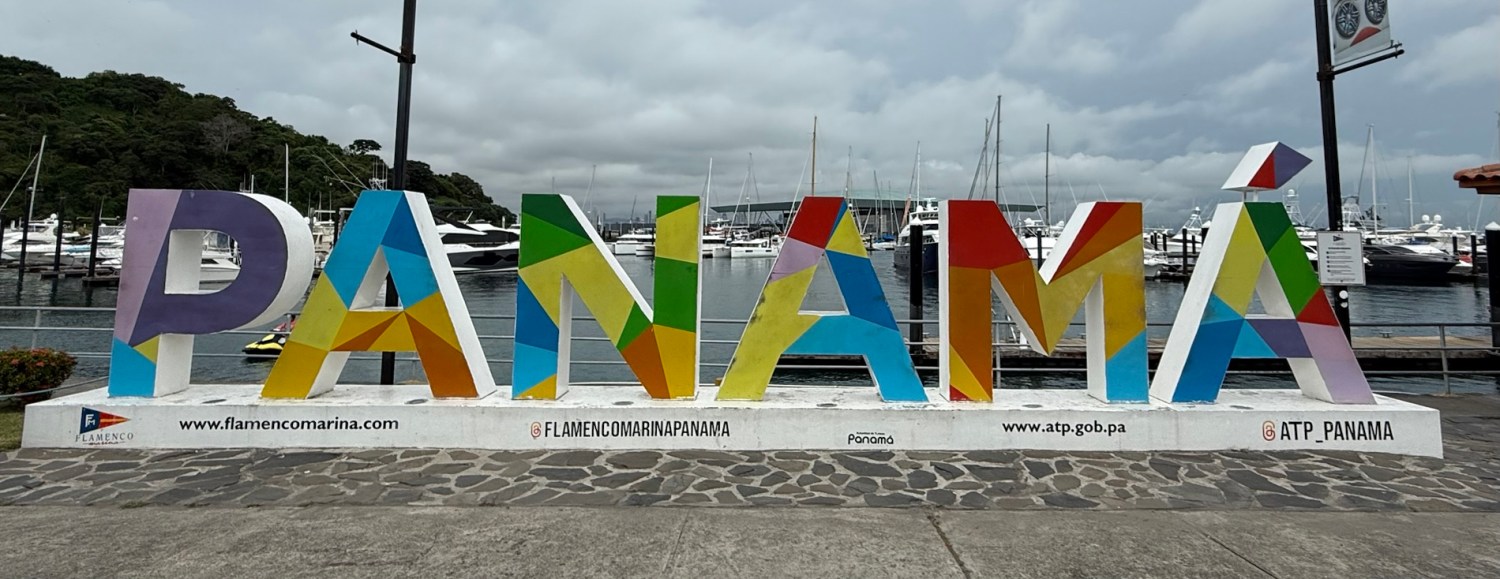

Monday, November 10, 2025: We arrived at the San José Airport (Juan Santamaría International Airport) and waited for our 10:05 a.m. Copa Airlines flight to Panama. The flight was about 1 1/2 hours and luckily without incident.
El Cangrejo
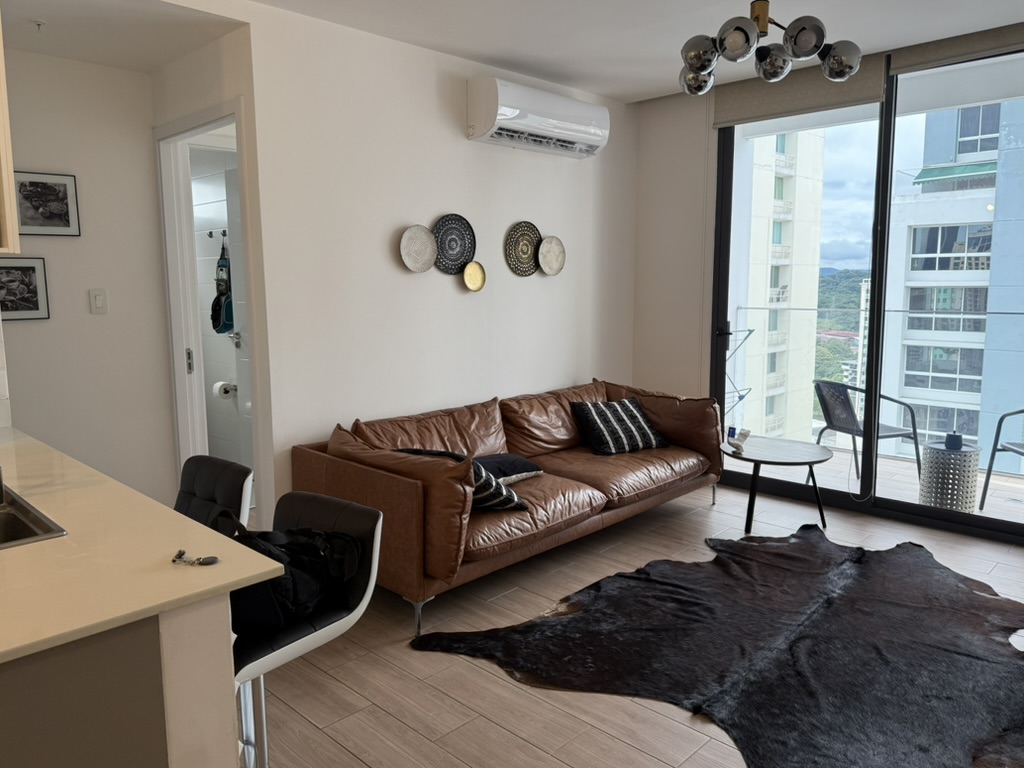
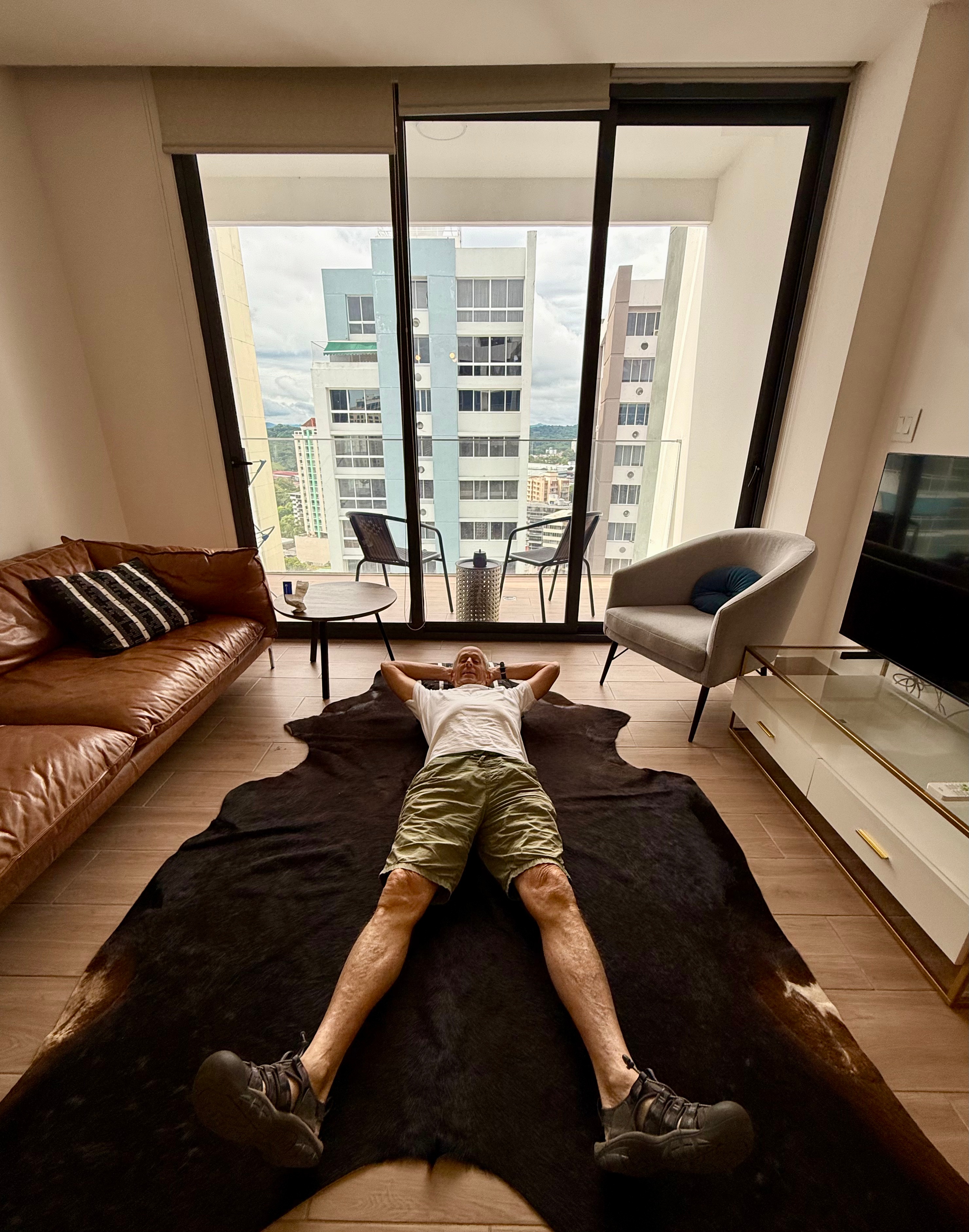
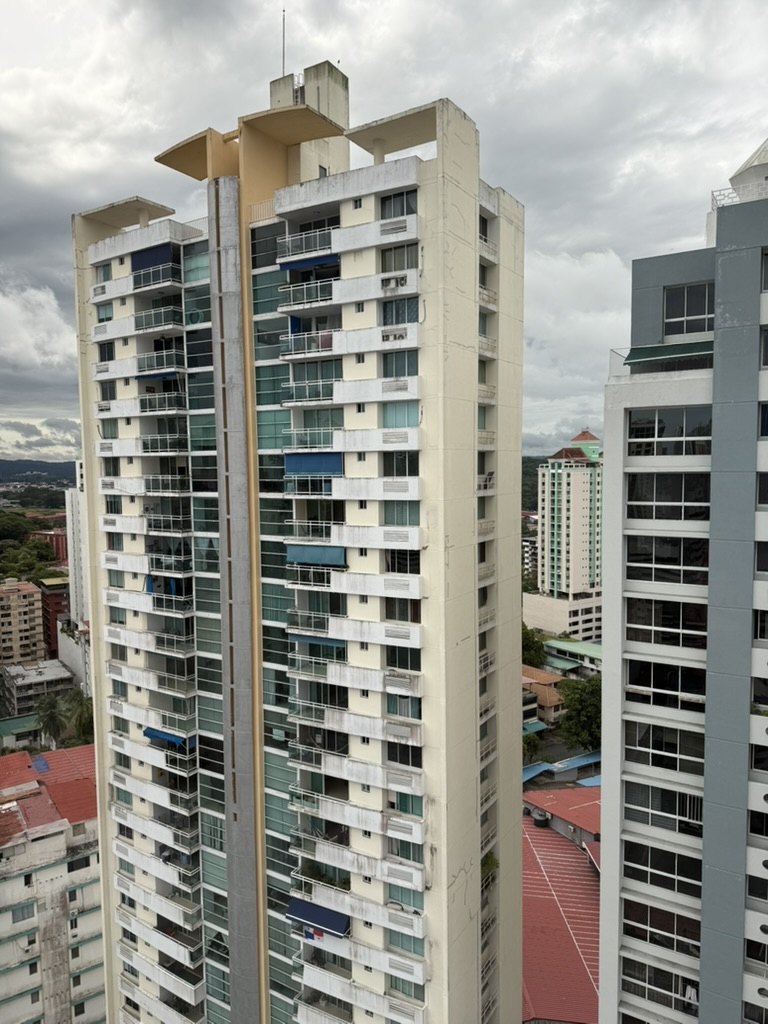
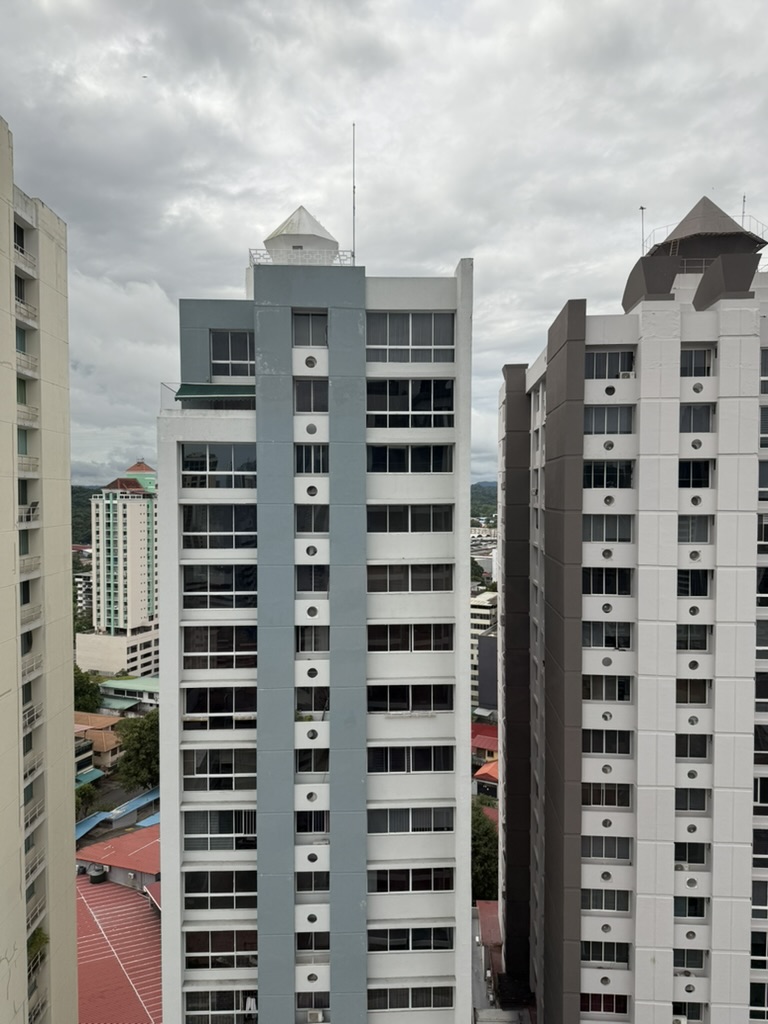
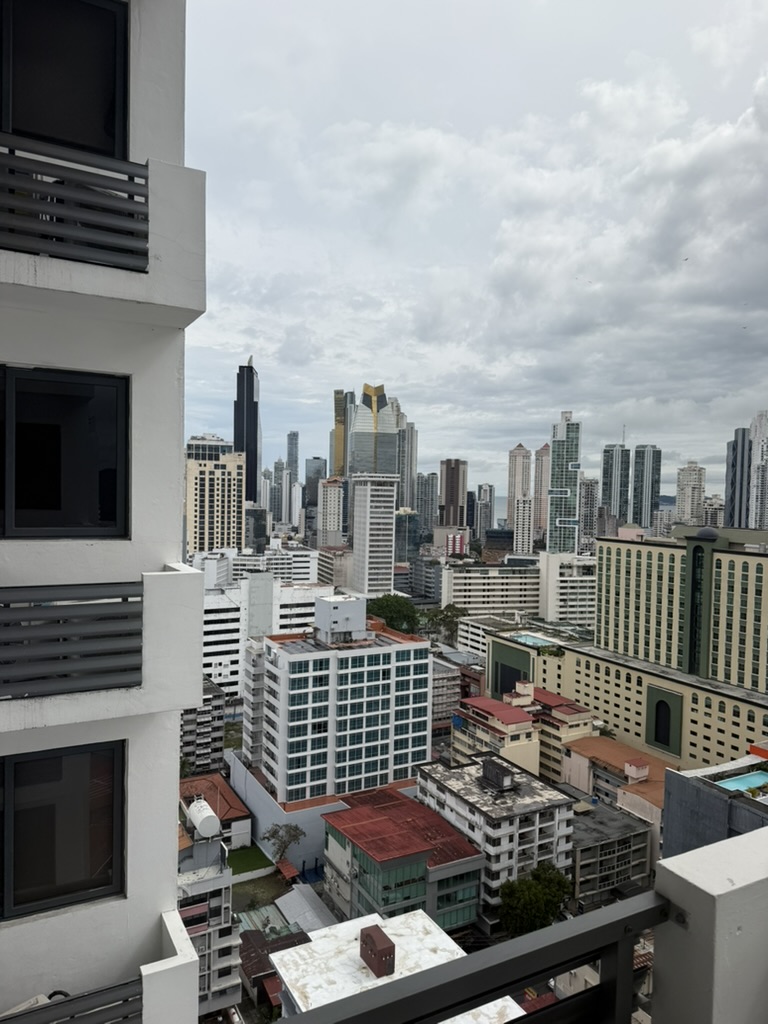
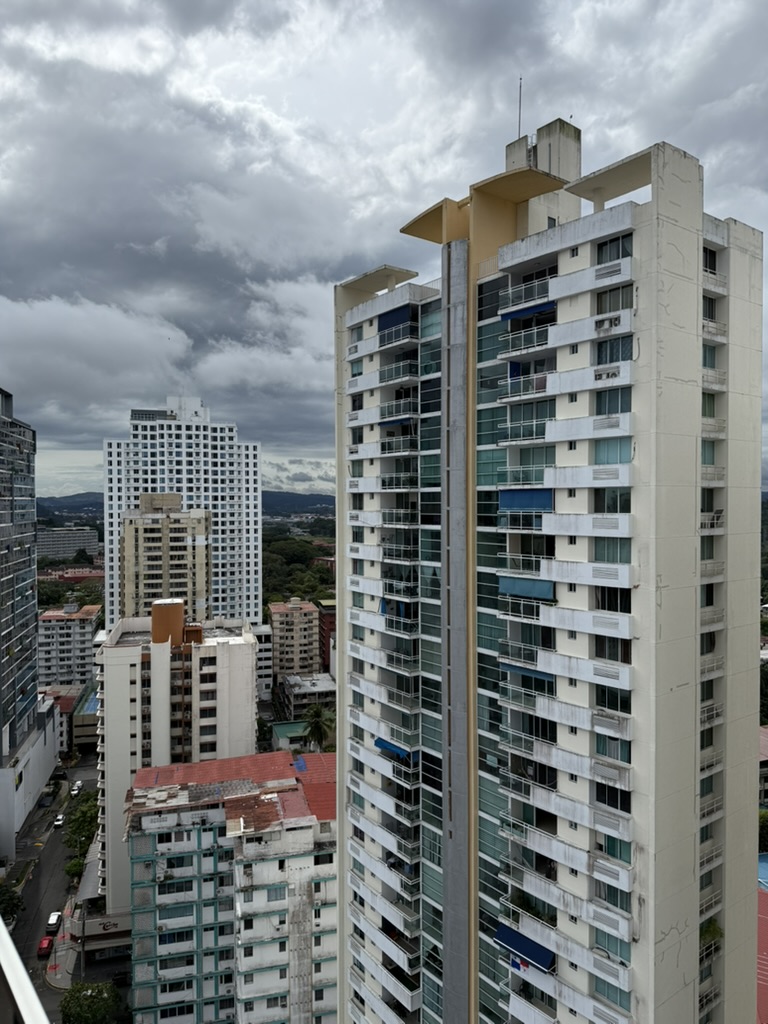
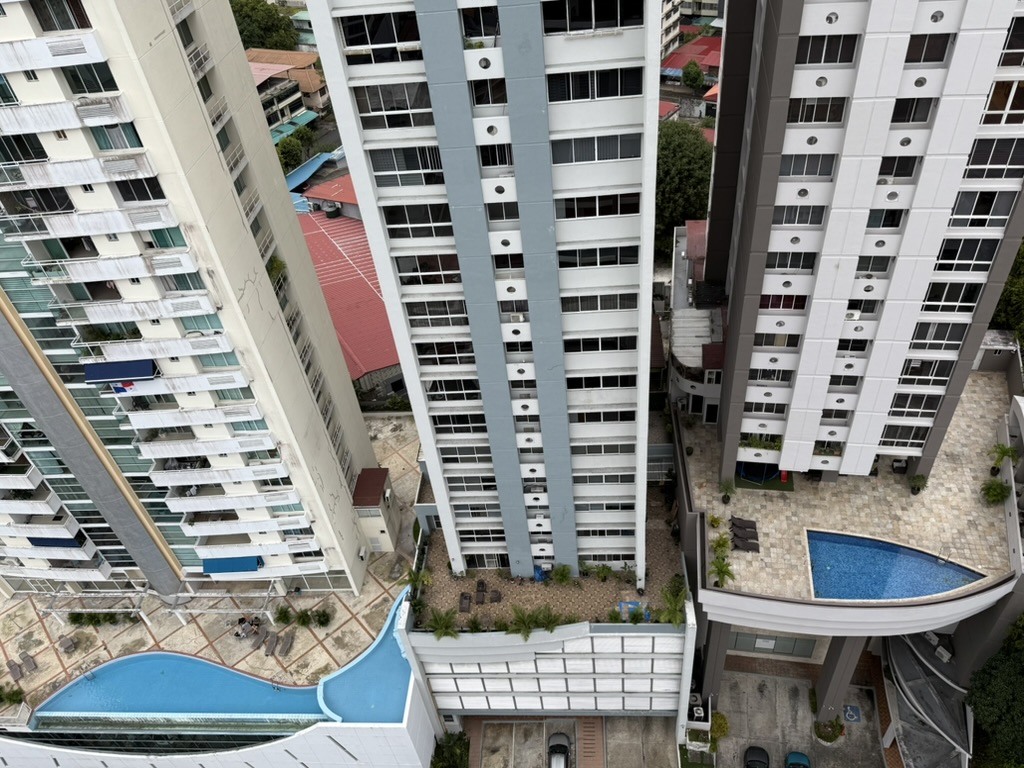
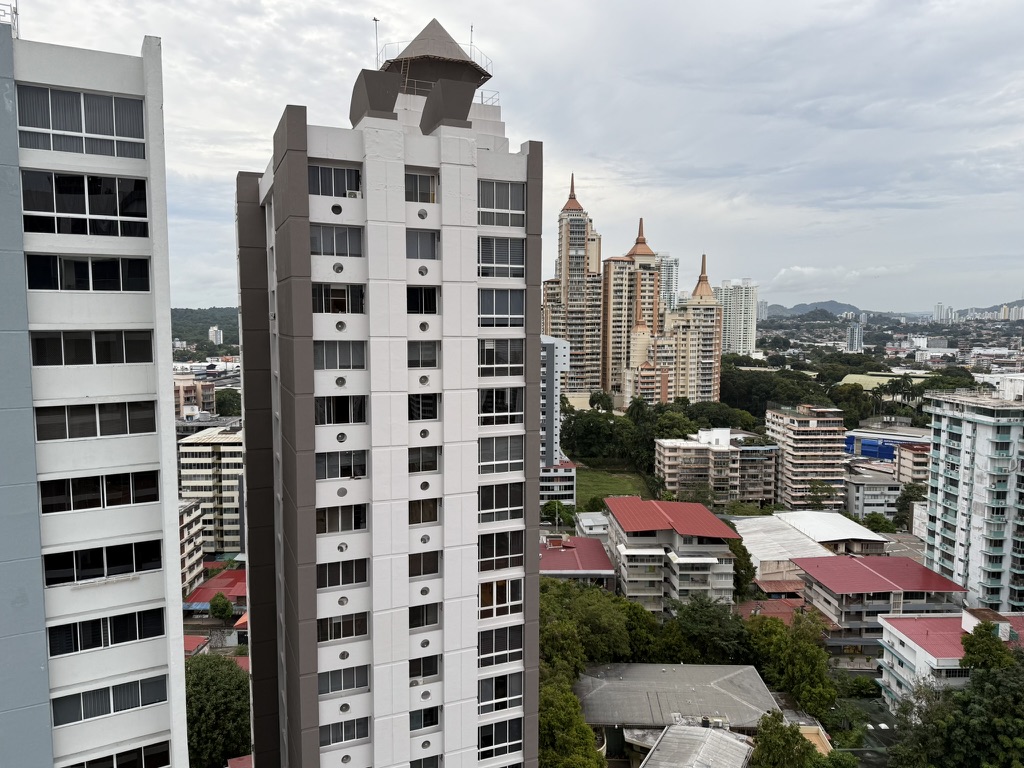
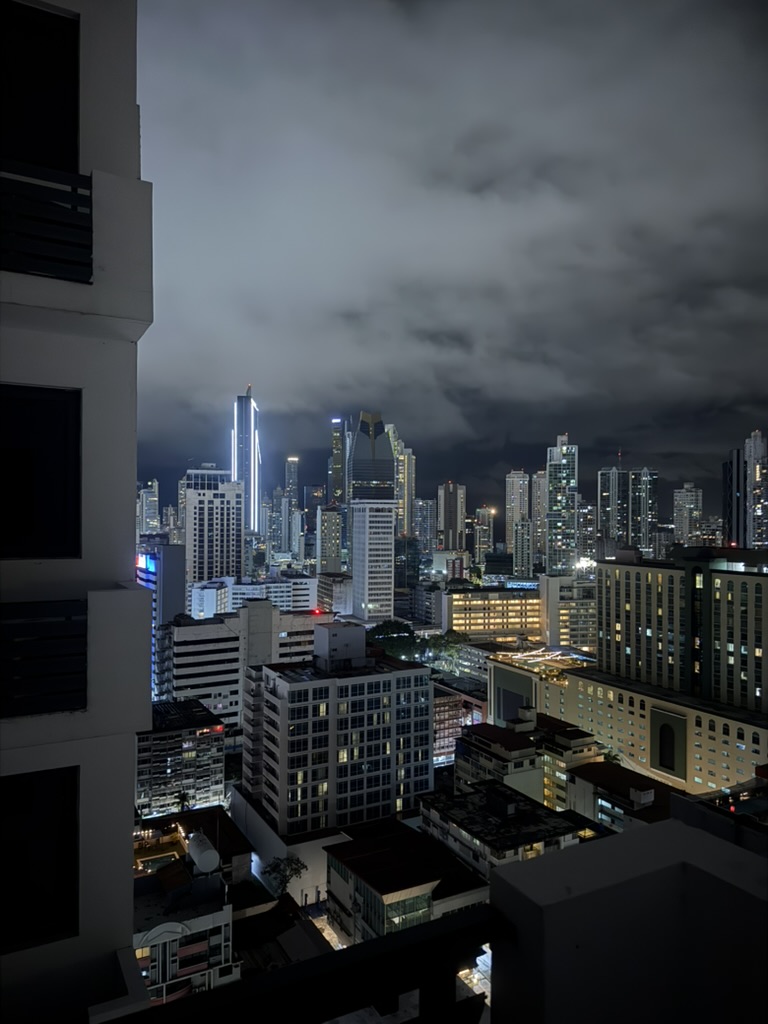
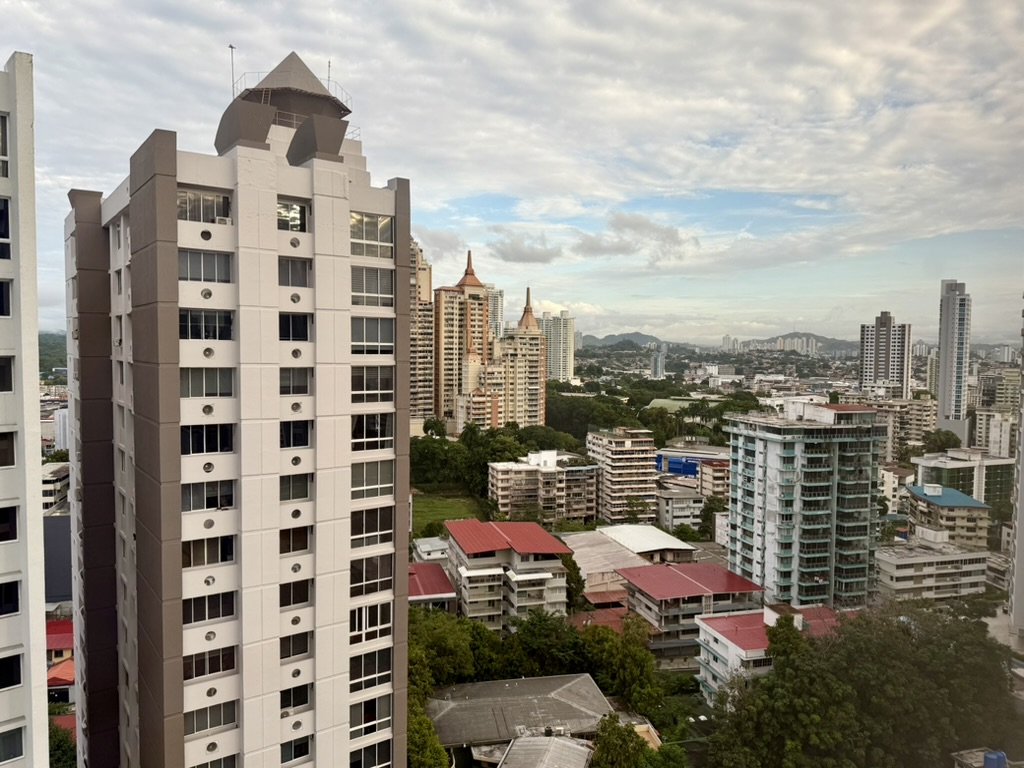
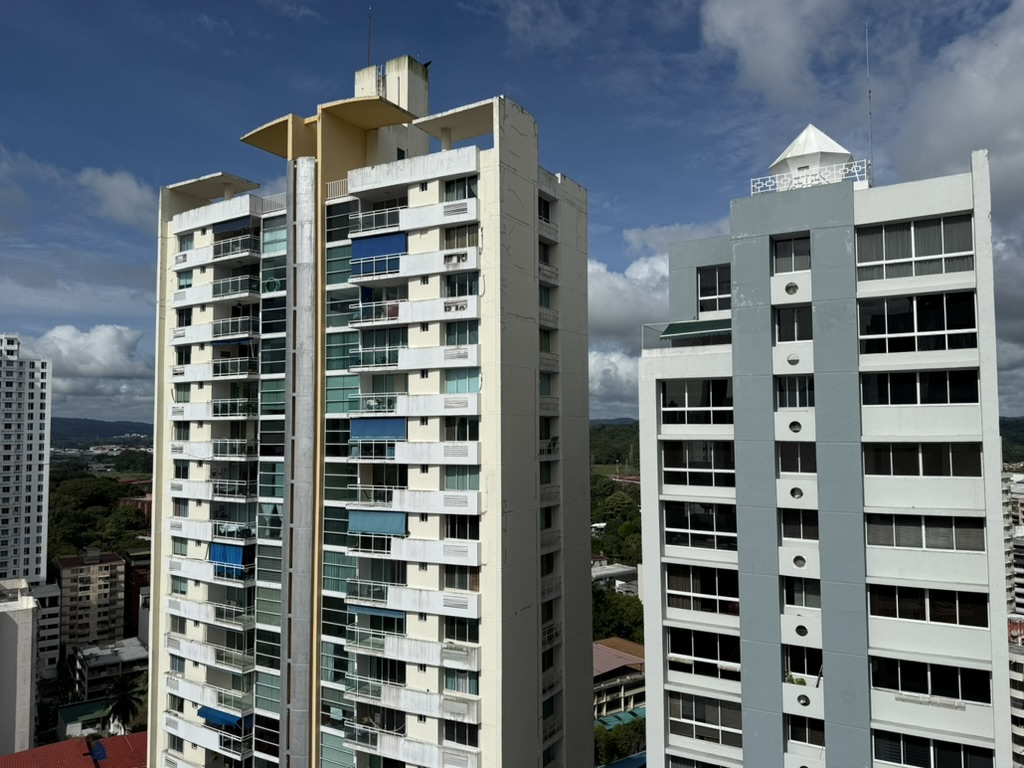
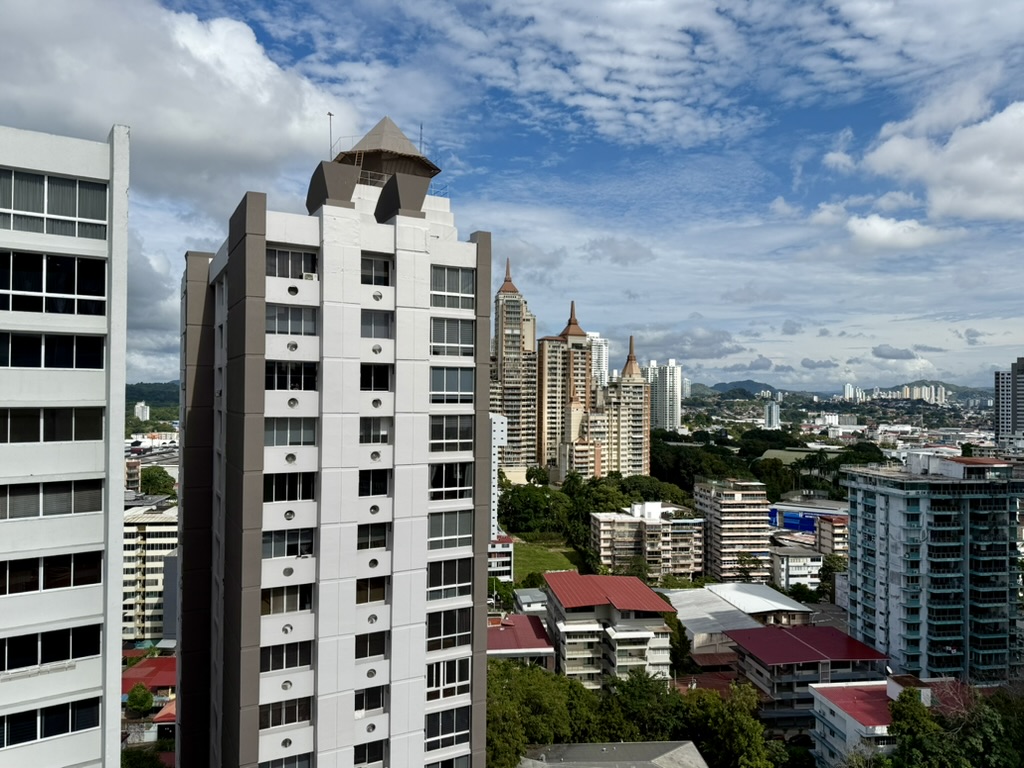
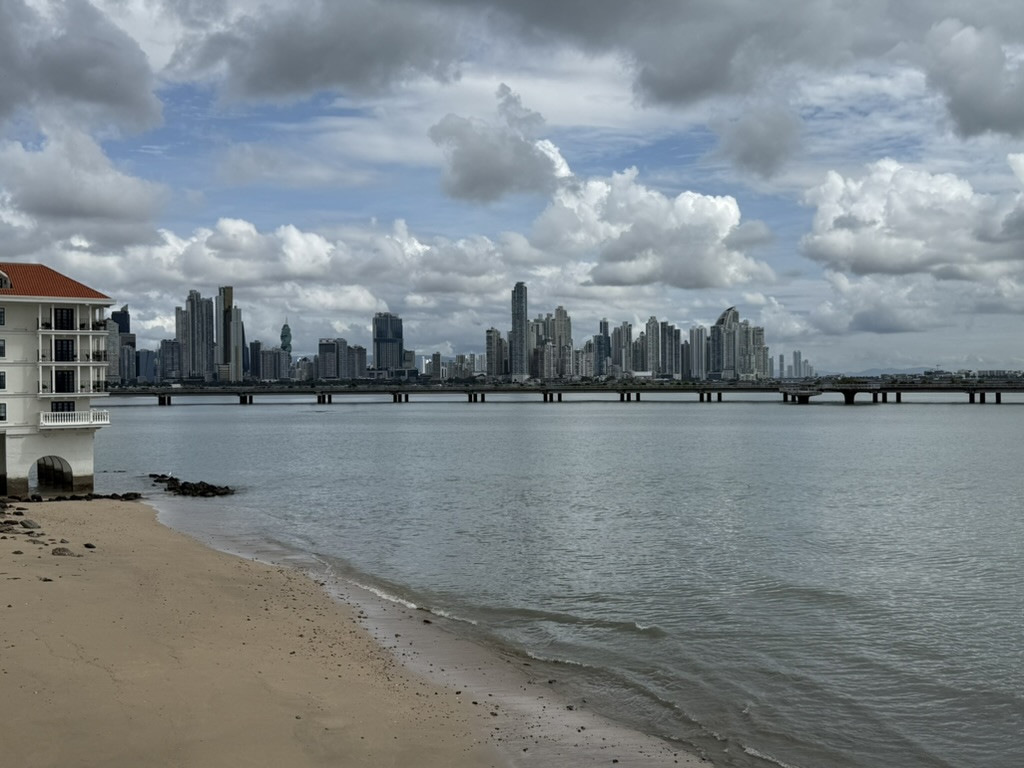
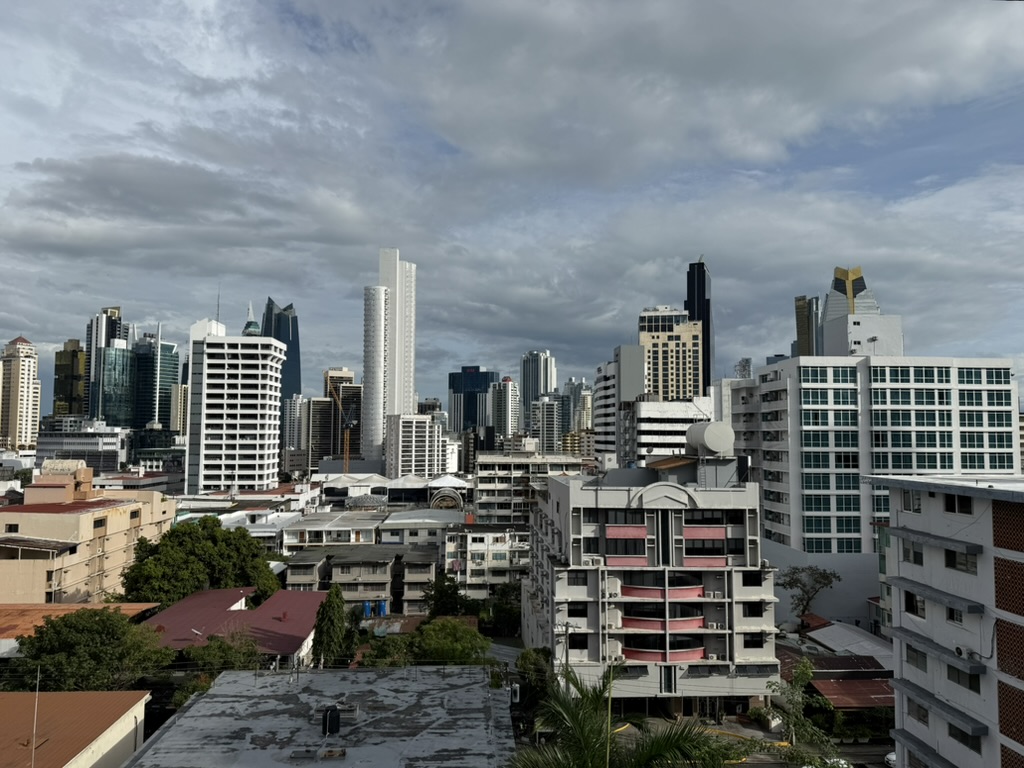
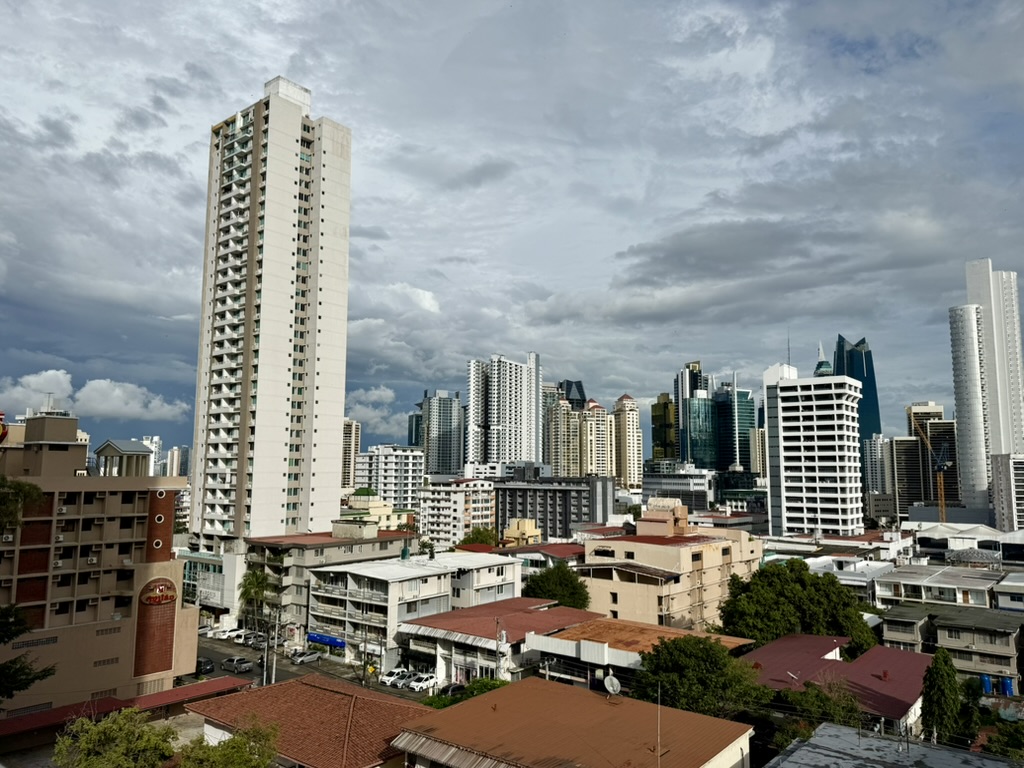
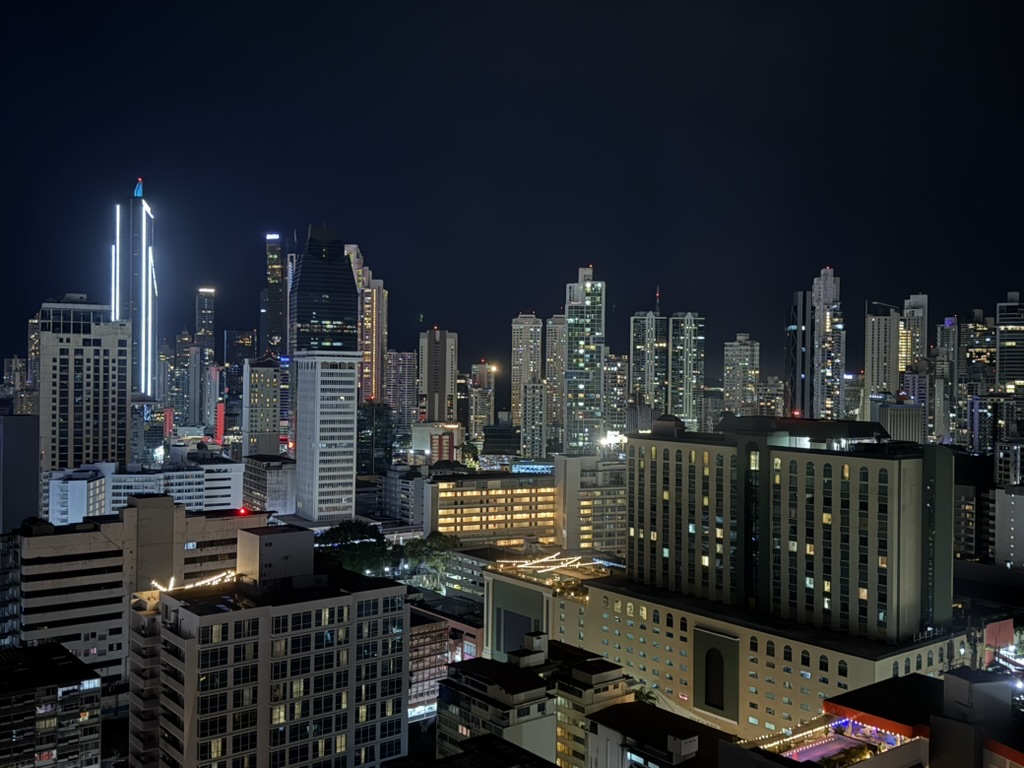
We arrived at our neighborhood of El Cangrejo in Panama City at PH Sky Swiss, an Airbnb apartment on the 19th floor of a condominium. There we found a bearskin rug, which Mike quickly commandeered, and magnificent views of the city’s skyline.




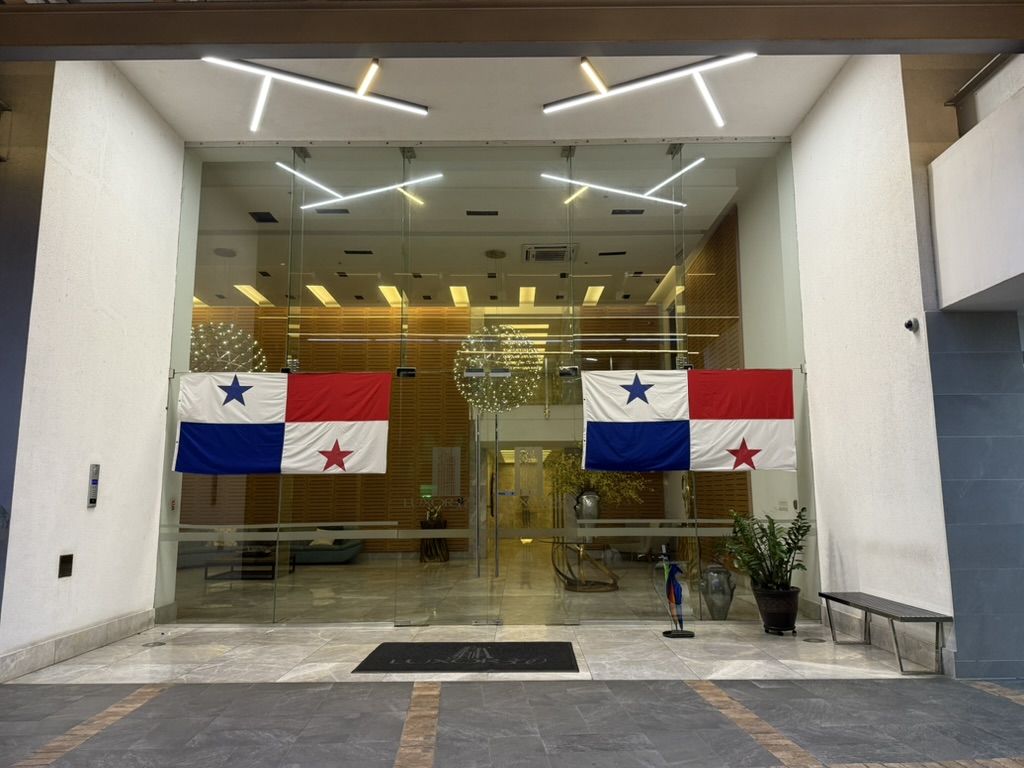
We went out for lunch at Uva Cafe next door to our building. Mike had a Smash Burger Cuarto de Libro and I had a Perrito Mejicano (a hot dog on a Brioche bun with jalapeños, salsa and cheddar). We saw the Panamanian flag everywhere and found out that day, November 10, was Los Santos Uprising Day in Panama. This public holiday commemorates the beginning of Panama’s struggle for independence from Spain in 1821.
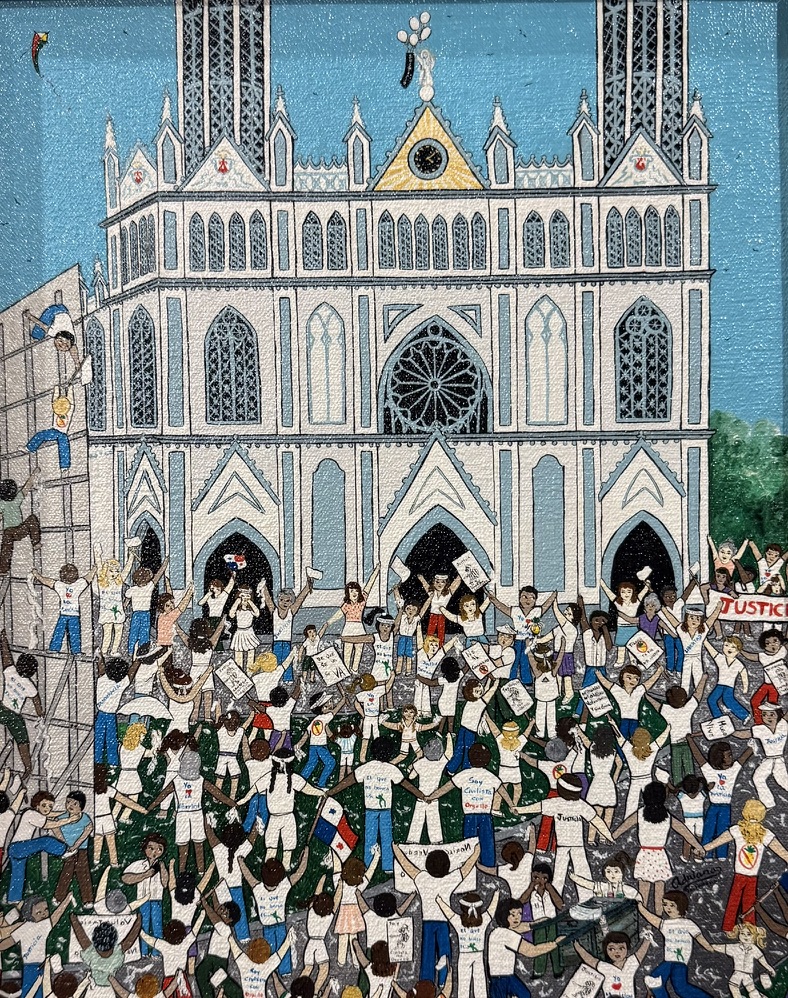
The event that sparked an anti-Spanish uprising in La Villa de los Santos is known as Grito de La Villa de los Santos or the Cry of Rufina Alfaro. Rufina Alfaro was a young woman who lived in a small village near Los Santos. On November 10, 1821 she led a group of Panamanians, shouting “Viva la Libertad” (Long Live Liberty). People armed with sticks and stones seized Spanish barracks without spilling a single drop of blood. Many claim that Rufina is a legend, although the uprising in Los Santos did occur.
After lunch we relaxed in the apartment after our two days of travel, enjoying the views and the air-conditioning.
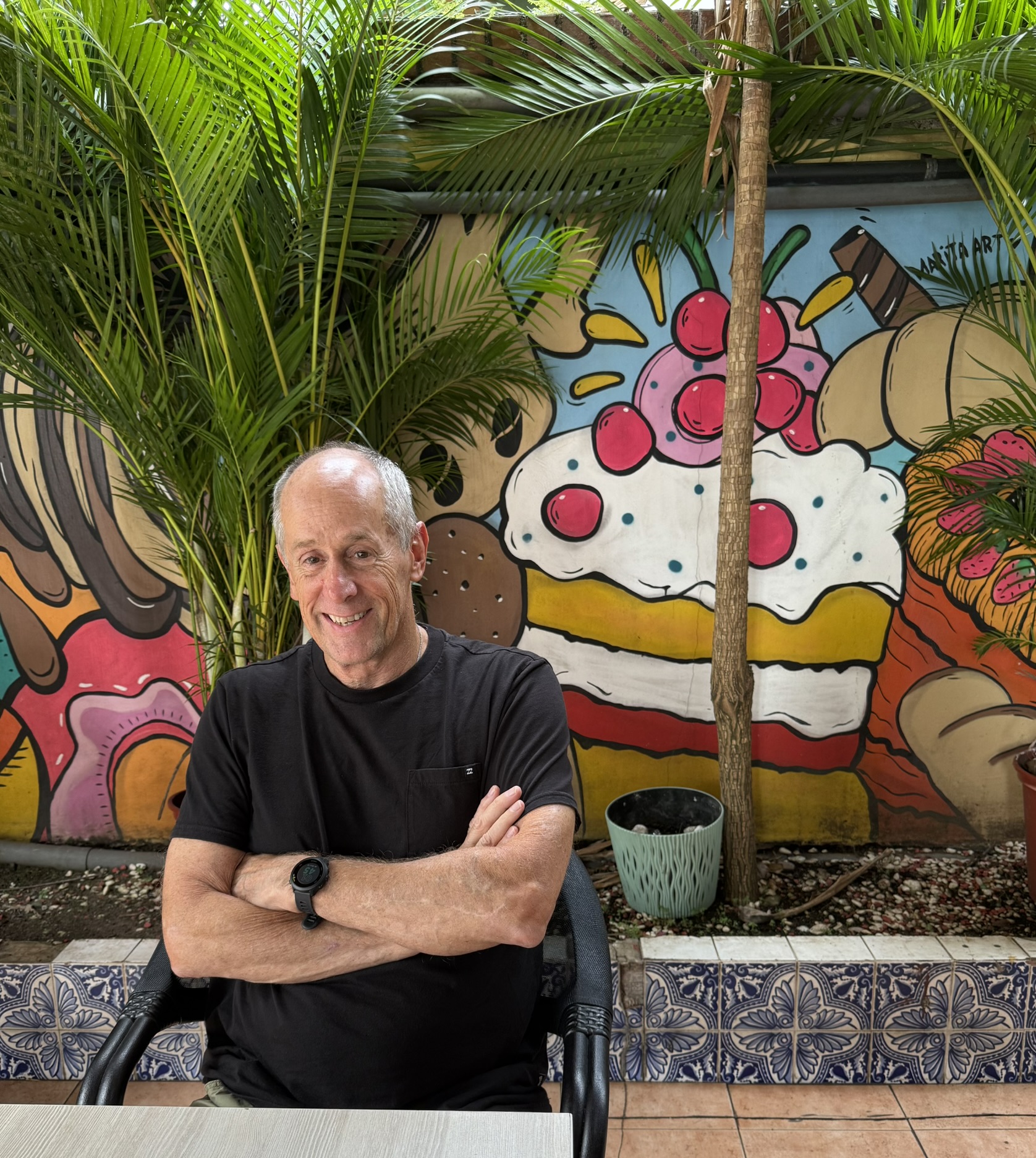


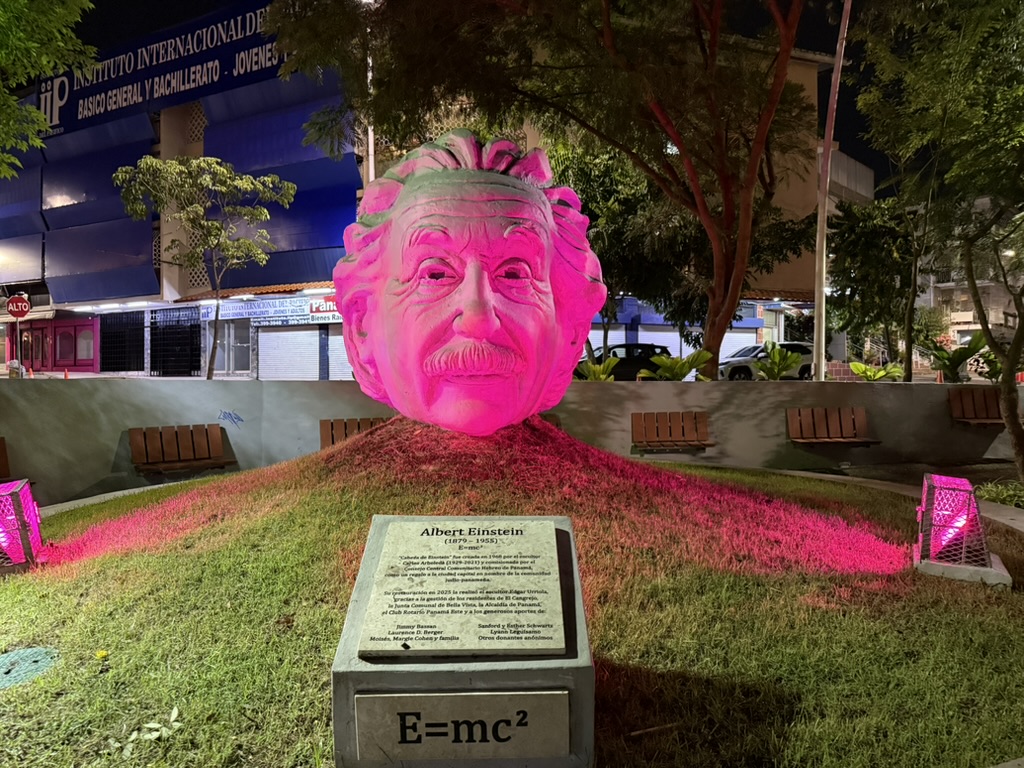
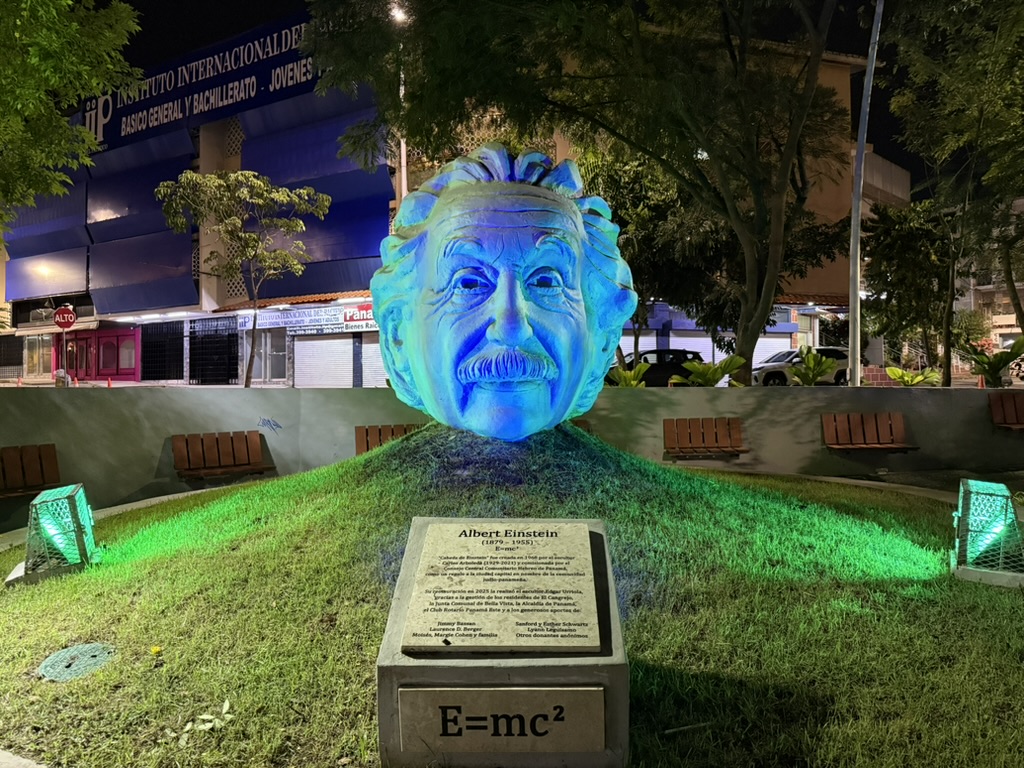
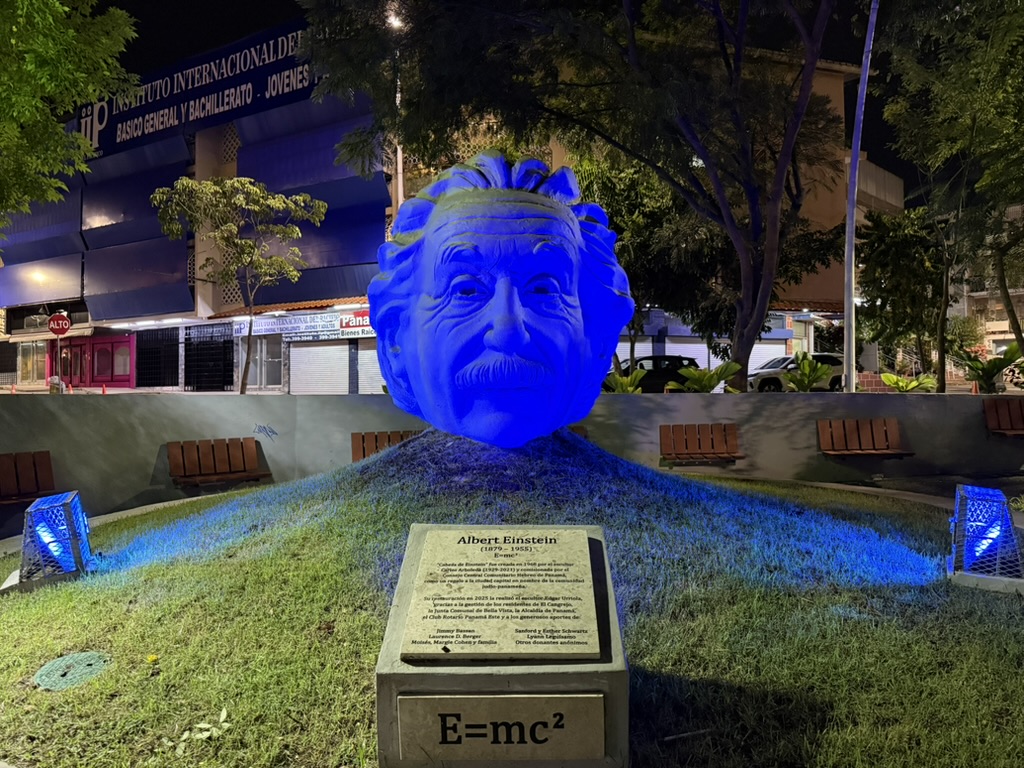
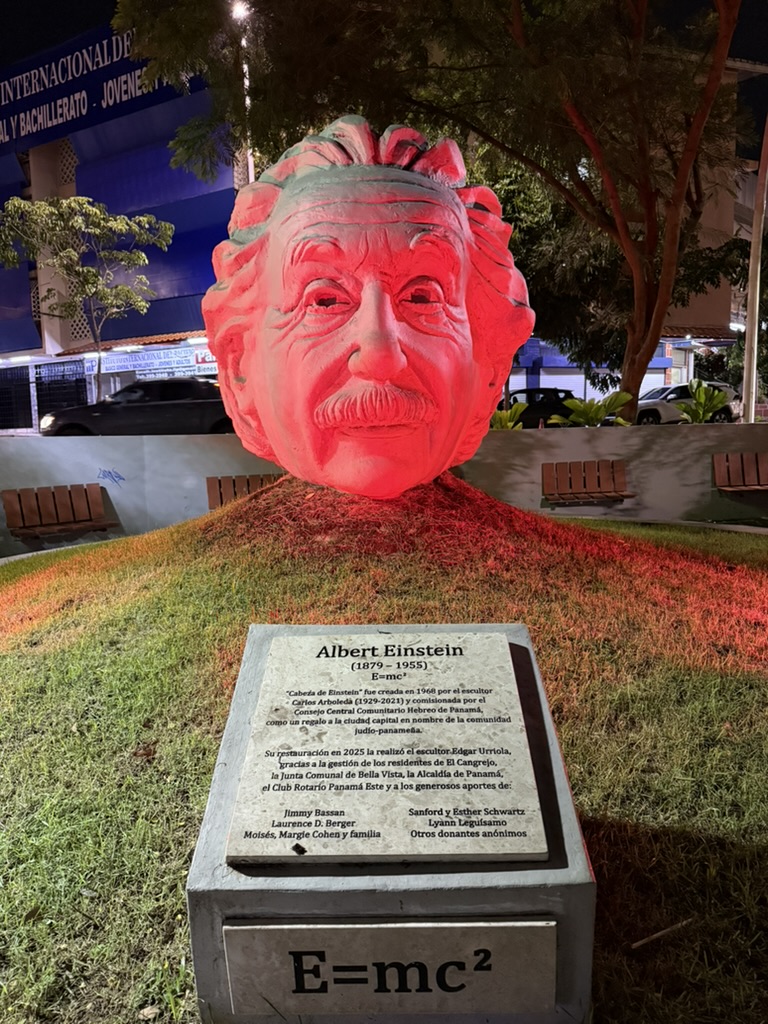
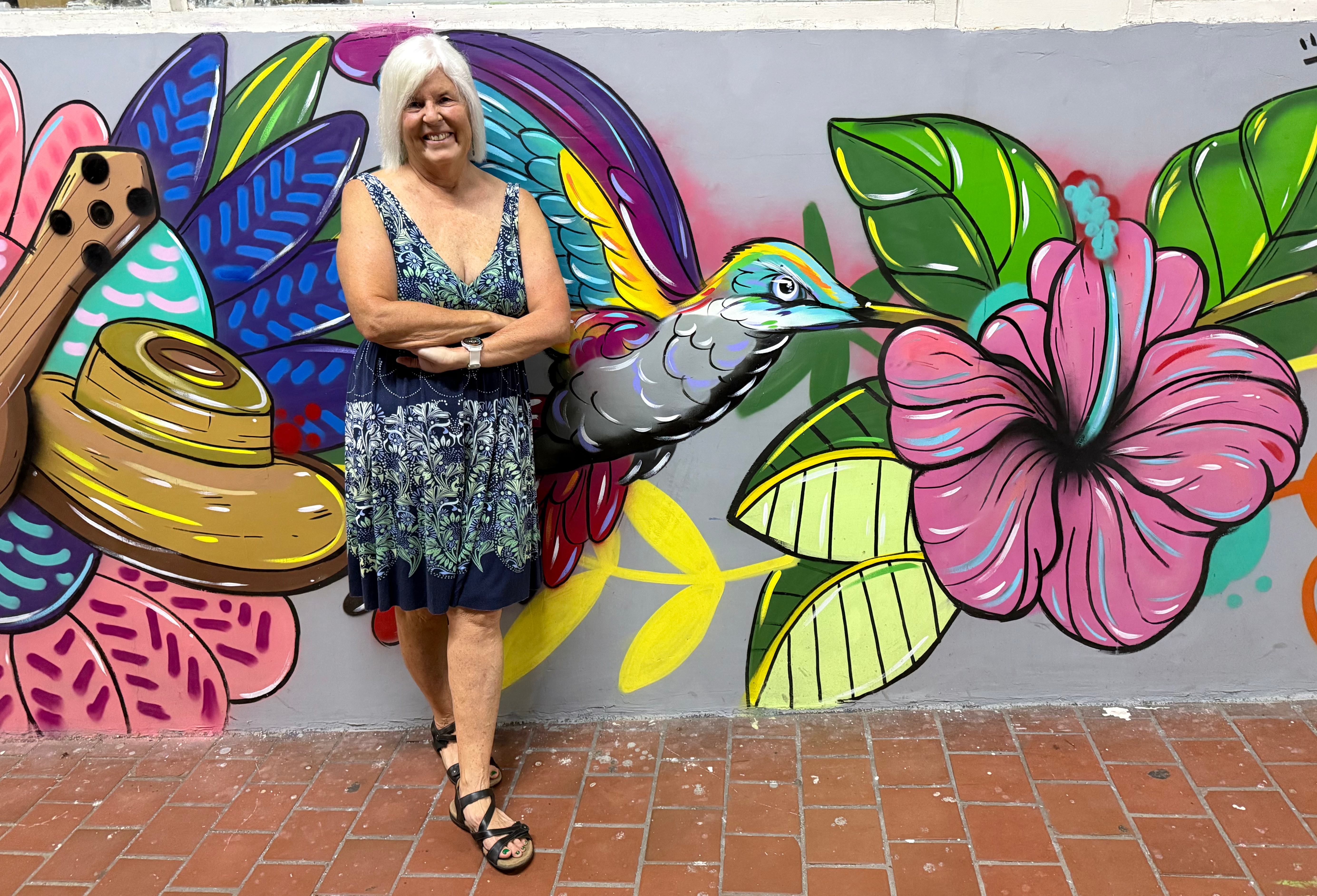
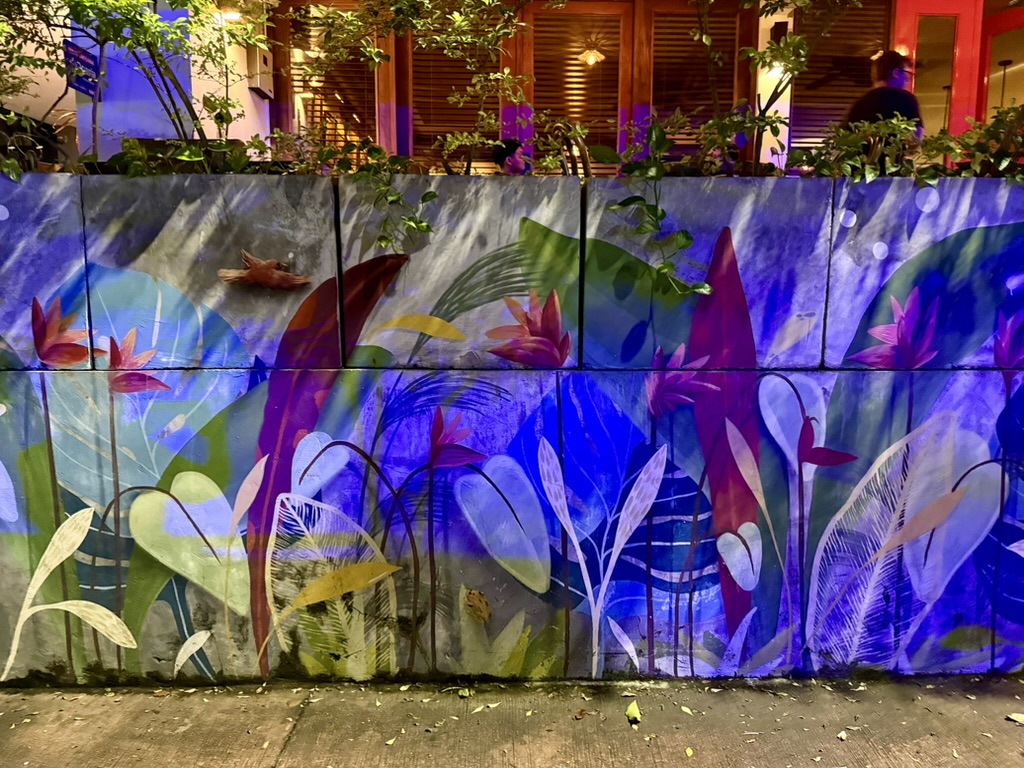
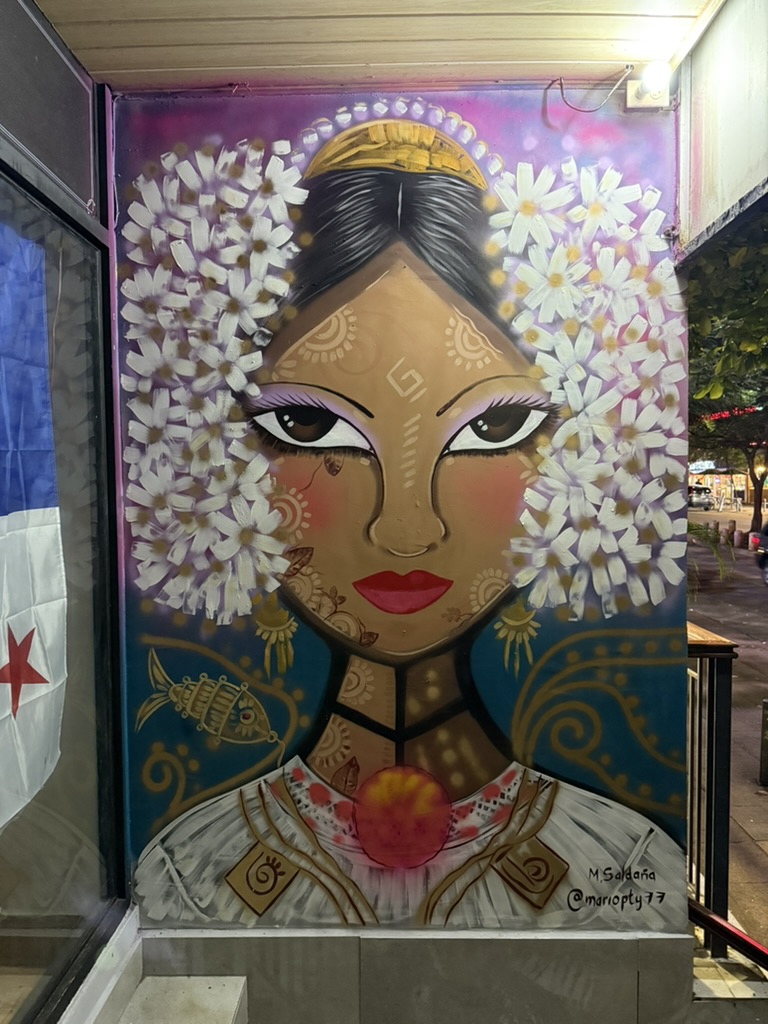
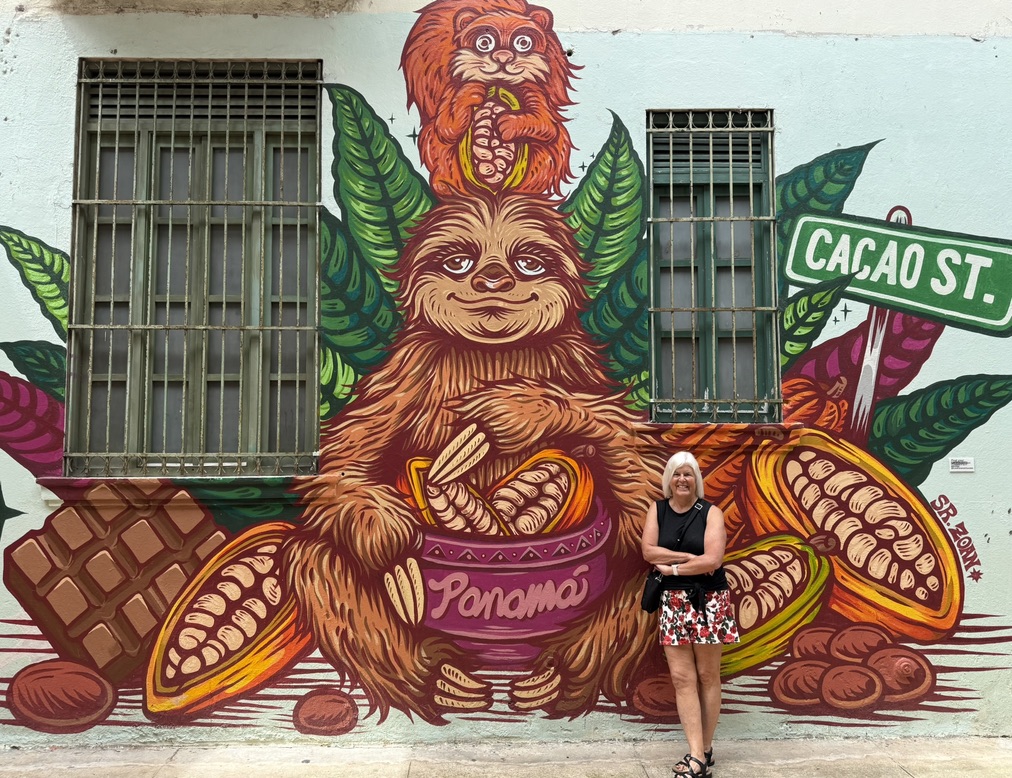
In the evening, we wandered around El Cangrejo finding some colorful murals on a dollar store and Einstein’s Head, also known as Cabeza de Einstein, a landmark located on a traffic island in the neighborhood. The bust that changes color at night was donated by the local Jewish community and designed by Panamanian artist Carlos Arboleda in 1968.
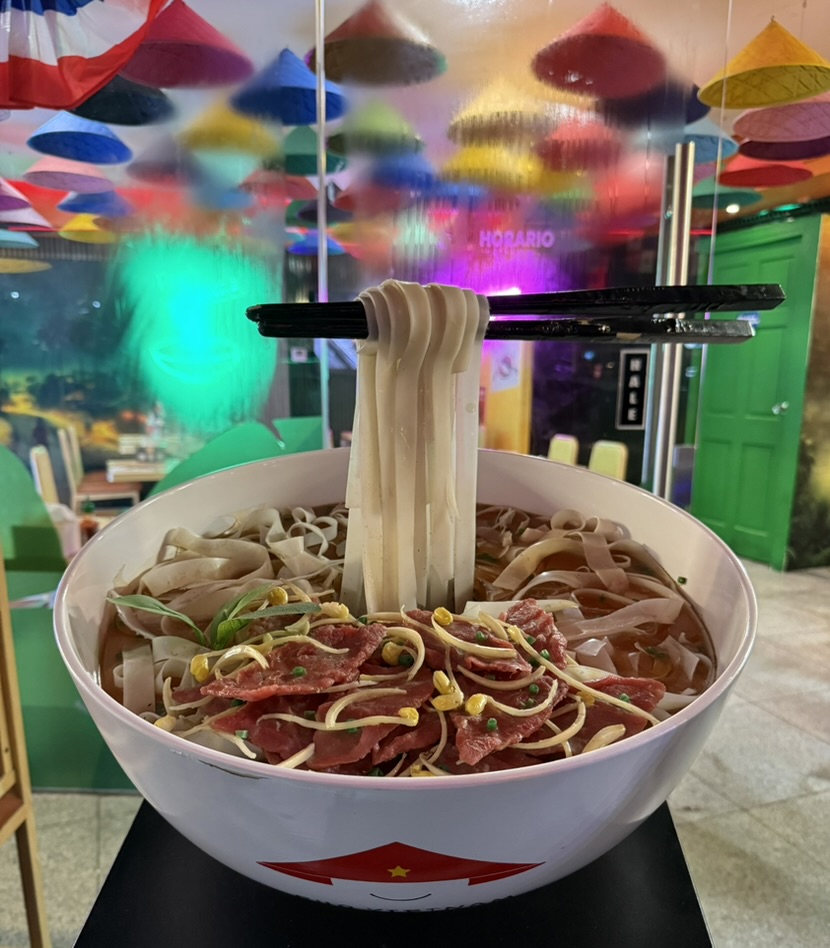
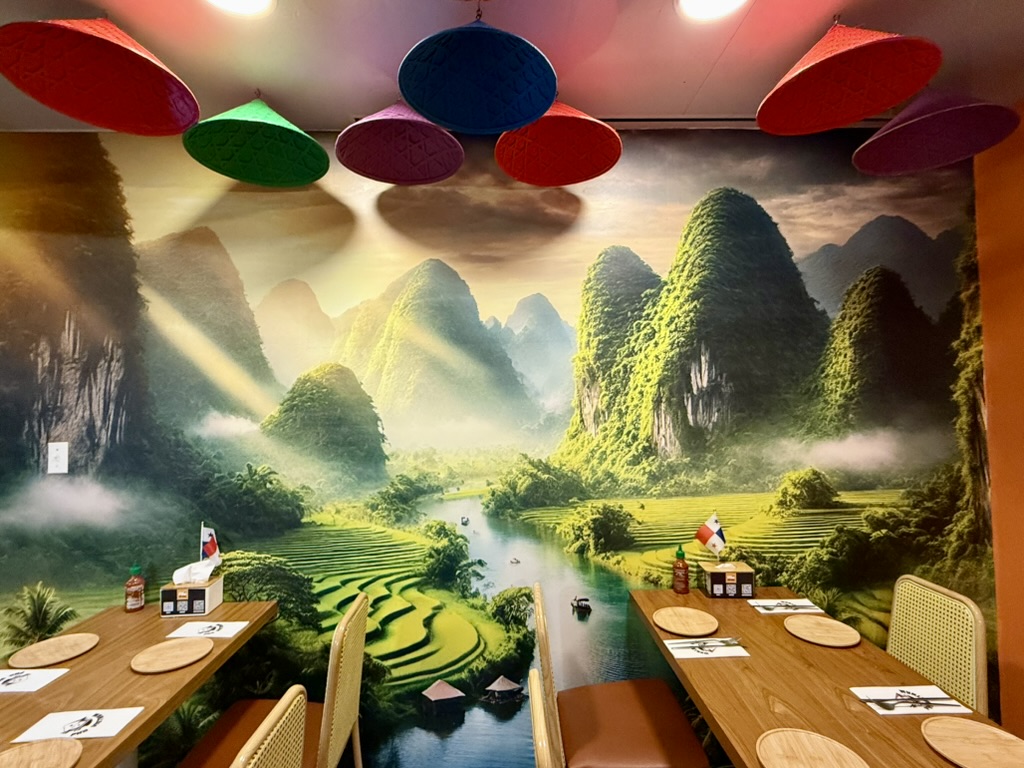
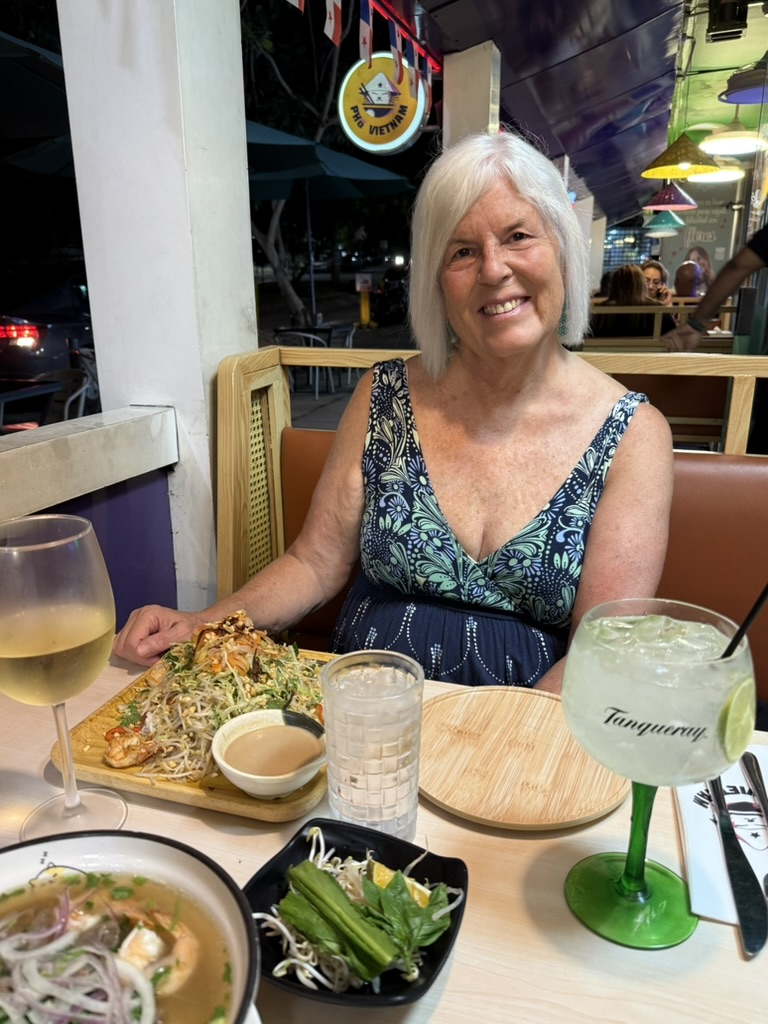
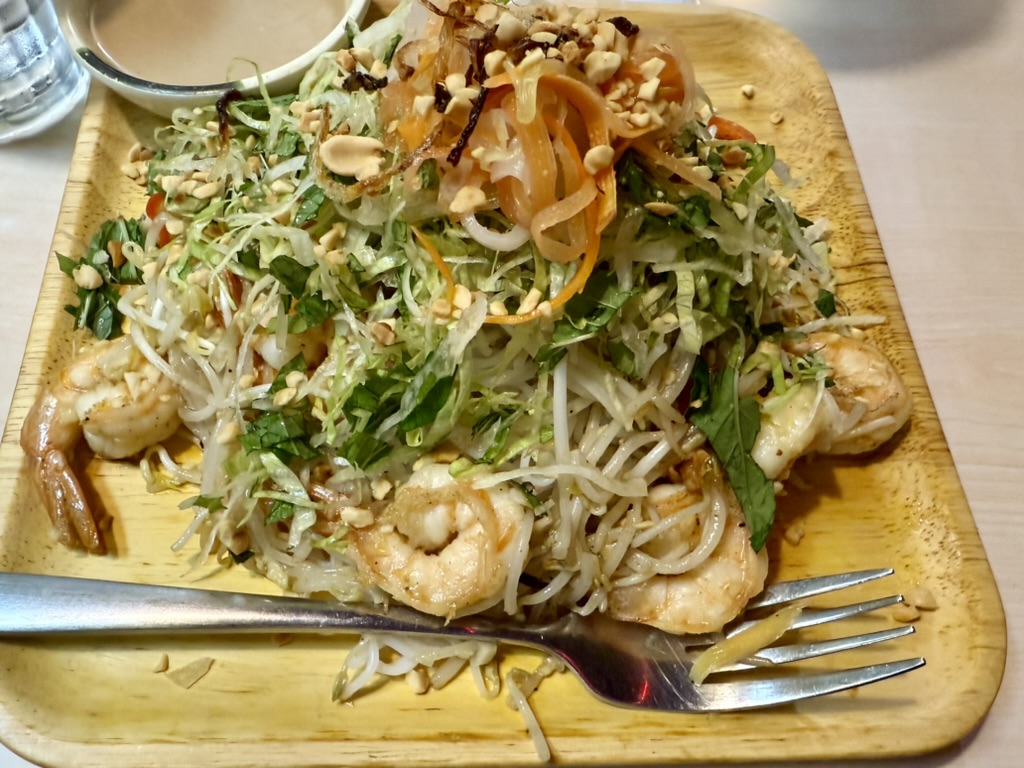
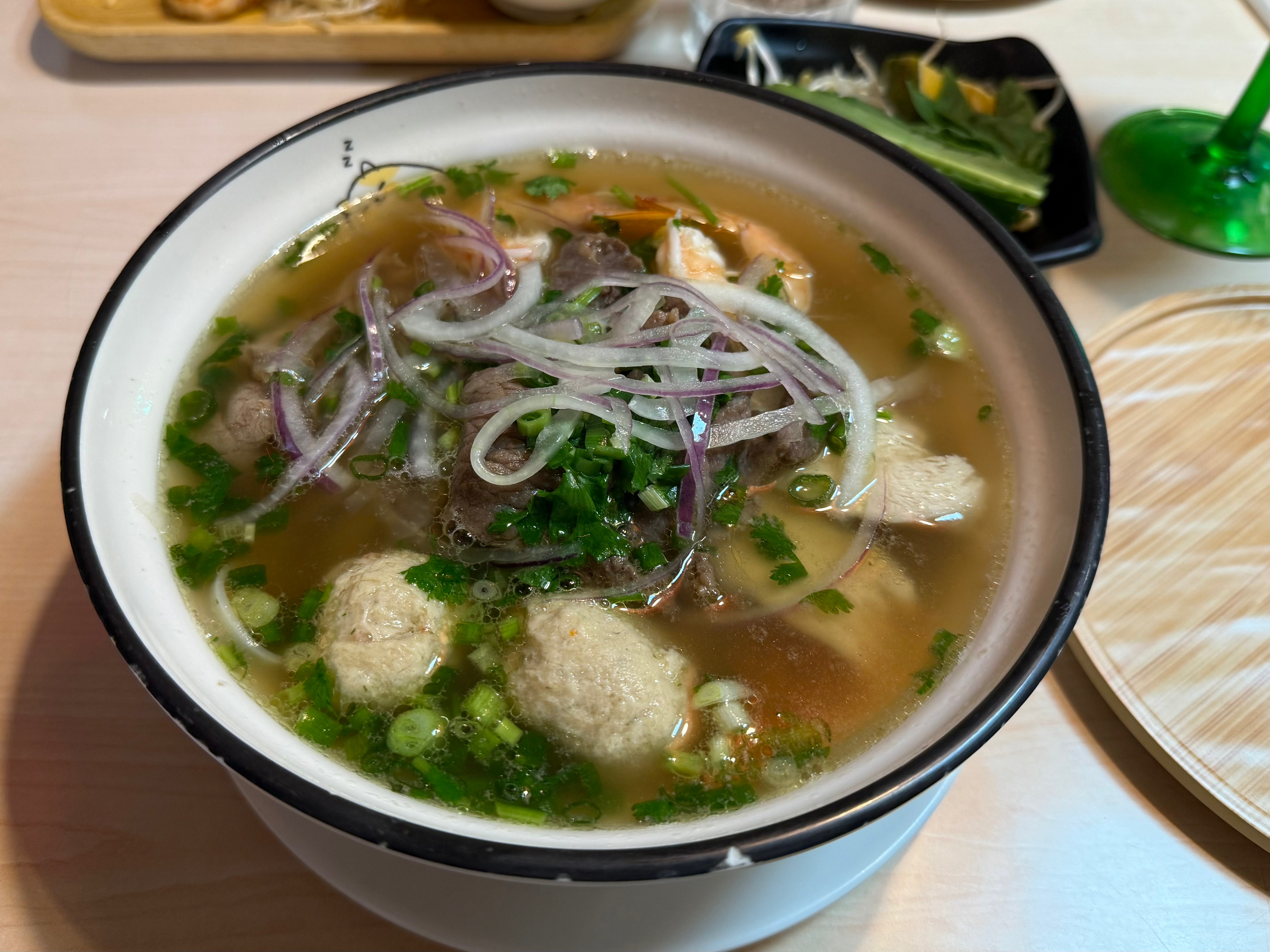
We enjoyed dinner at Pho Vietnam, which was colorfully decorated with umbrellas on the ceiling and a giant plastic bowl of Pho at the entry. I had Mixed Noodles with Shrimp and Mike had Combination Pho. We then strolled around the lively neighborhood after dinner.




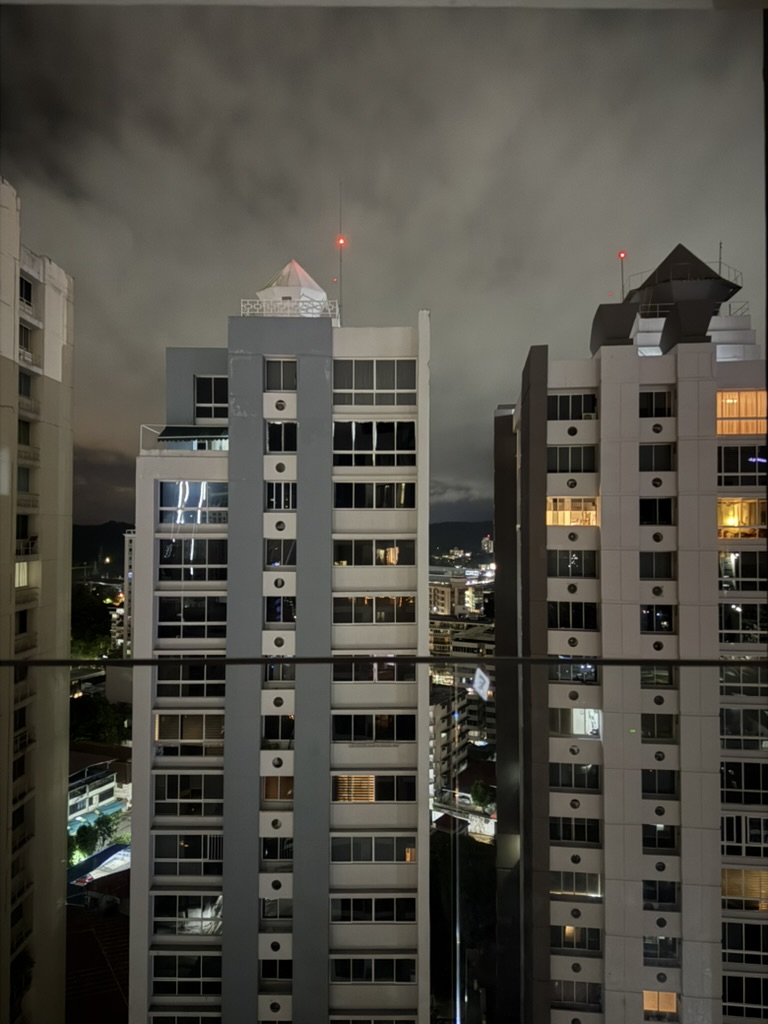
Tuesday, November 11: We enjoyed morning views from our apartment window, ate breakfast in, then went out to explore Casco Viejo, the Old Compound. We took Ubers everywhere we went in Panama City at a very reasonable cost.

Casco Viejo (Old Compound)
Following the destruction of the old city in 1671, the Spanish moved their city to a rocky peninsula at the foot of Cerro Ancón. The new location was easier to defend as the reefs prevented ships from approaching the city except at high tide. The massive wall surrounding it also helped with defense. Casco Viejo (Old Compound) got its name from this wall.
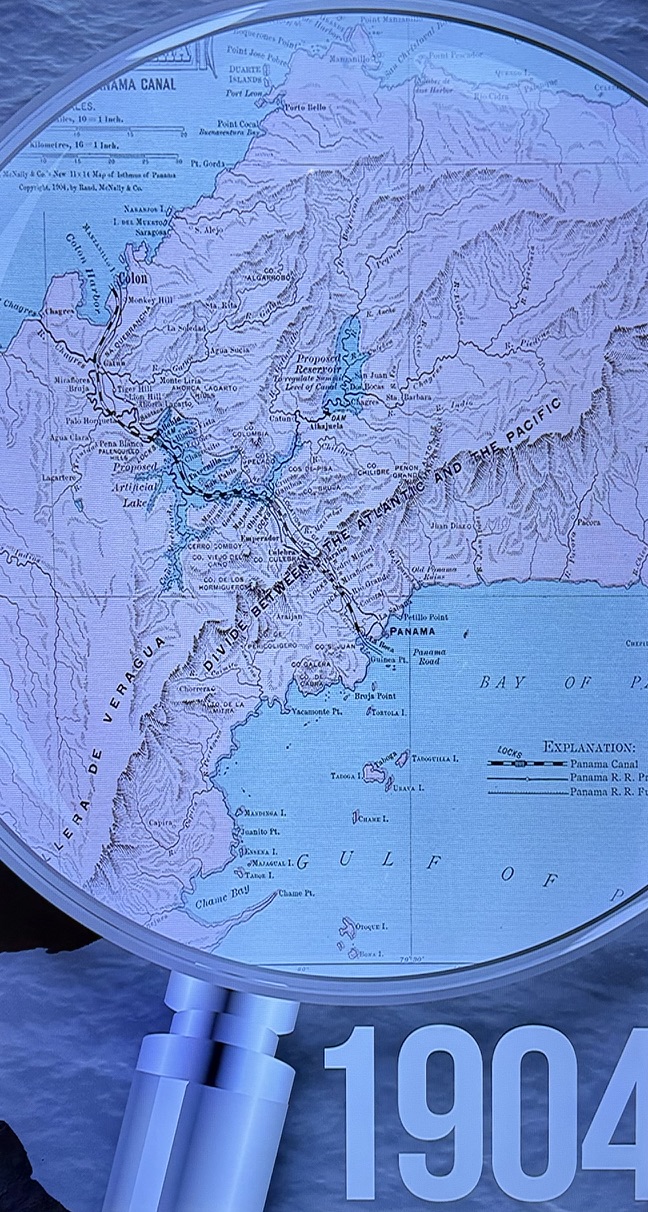
In 1904, when construction began on the Panama Canal, all of Panama City existed where Casco Viejo stands today. However, as population growth and urban expansion pushed the boundaries of Panama City further east, the city’s elite abandoned Casco Viejo and the neighborhood rapidly deteriorated into a slum.
Today Casco Viejo’s crumbling facades have been mostly replaced by immaculate renovations. Declared a UNESCO World Heritage Site in 2003, the restored architecture gives a glimpse of the old city’s magnificence.
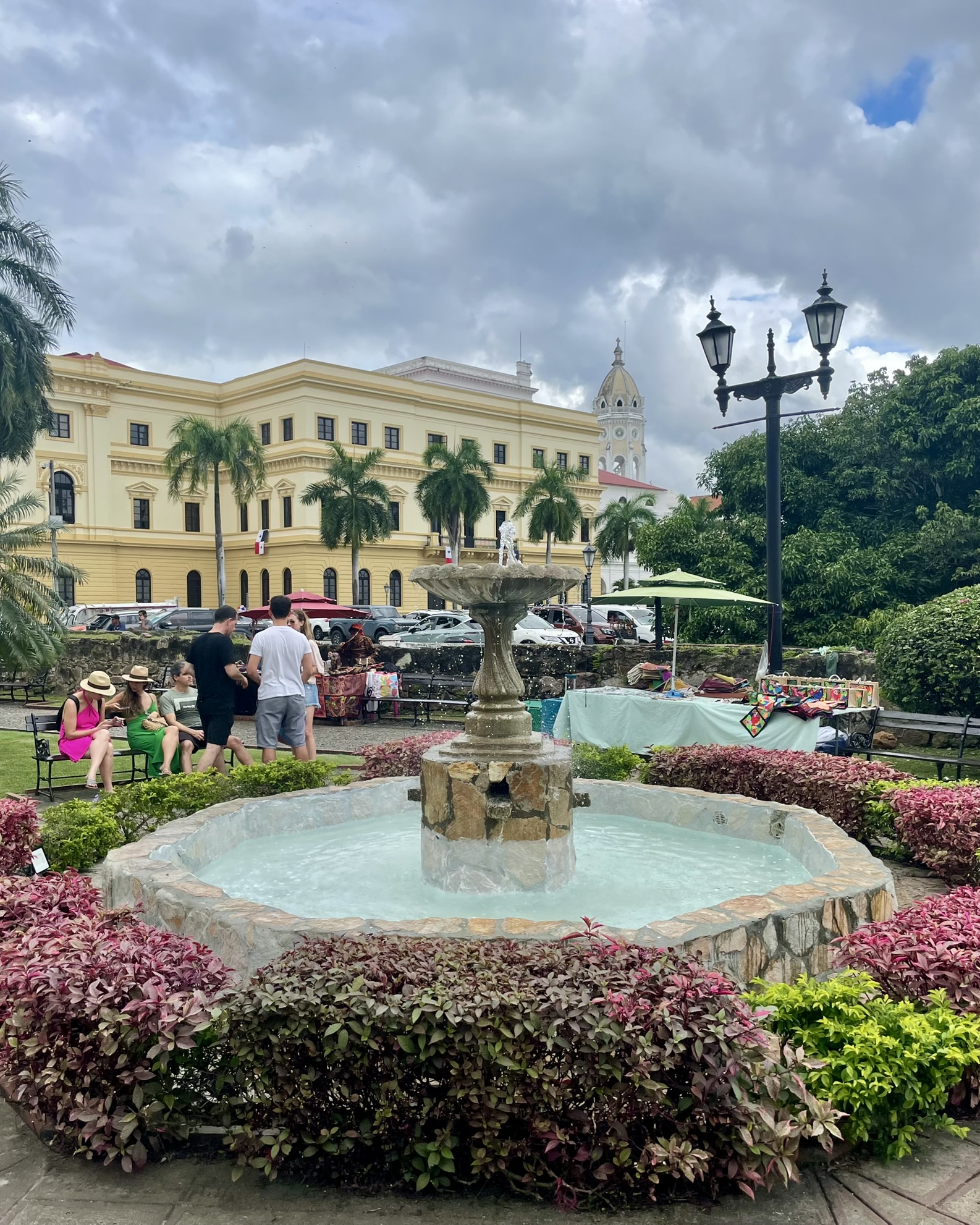
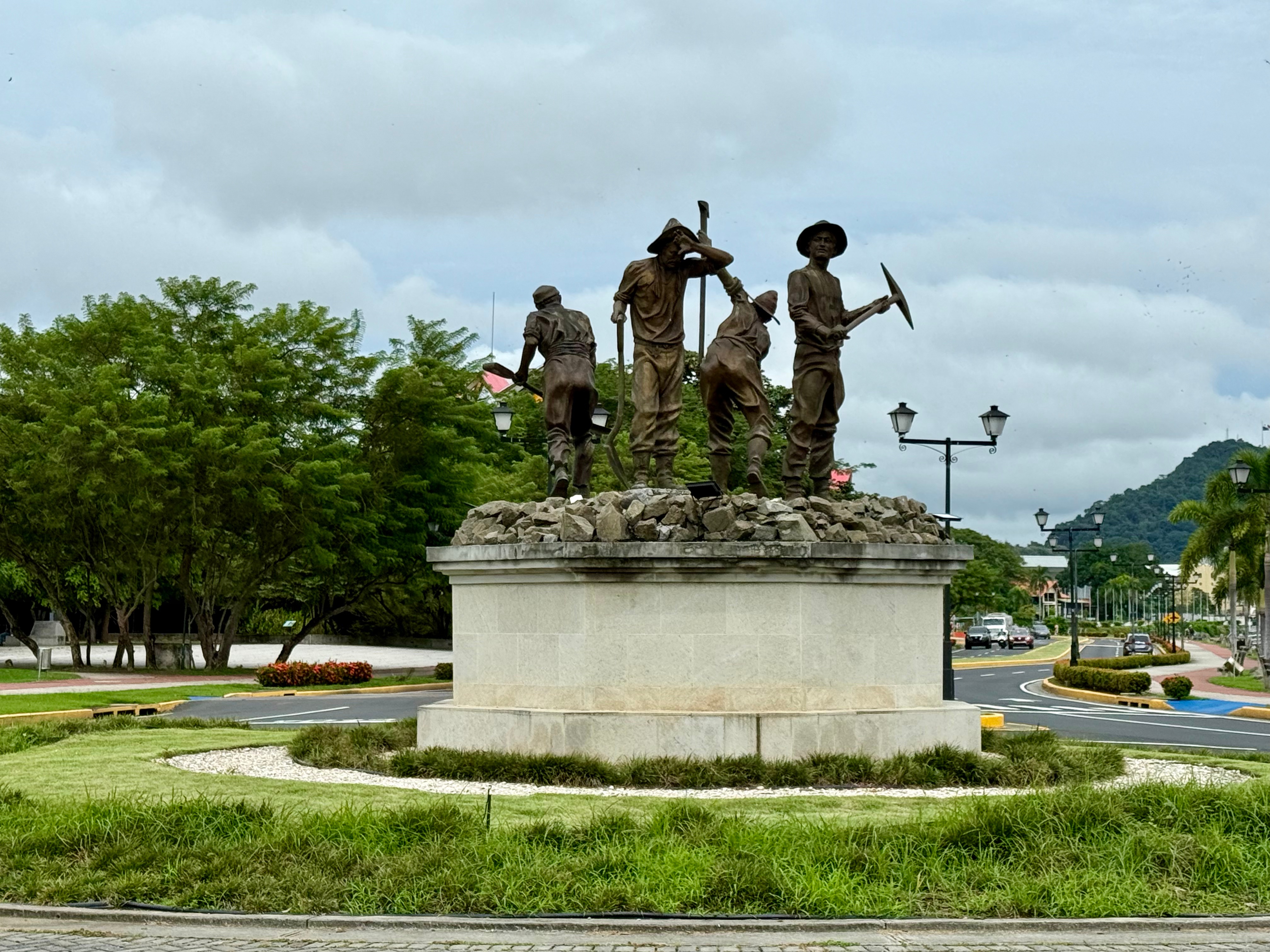
We started our exploration of the area Tuesday morning at Plaza Francia. At the tip of the southern point of Casco Viejo, this plaza pays respect to the French role in the construction of the canal. Its large stone tablets and statues are dedicated to the memory of the 22,000 workers who died trying to create the canal.
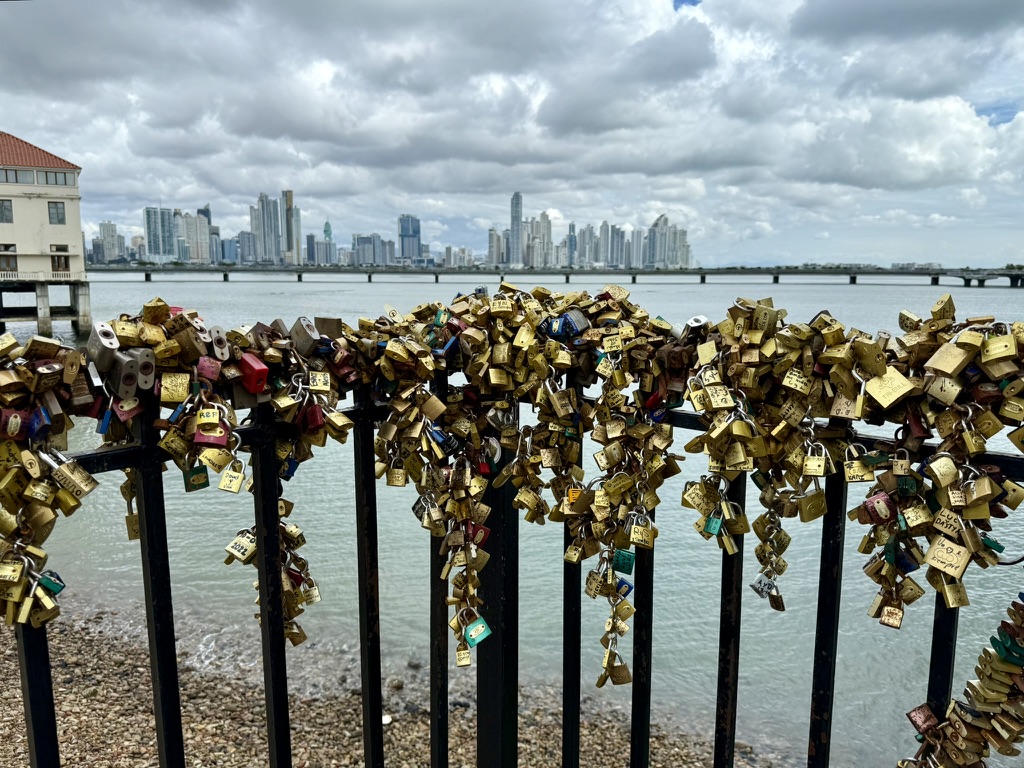
The Paseo las Bóvedas esplanade runs along the top of the sea wall built by the Spanish to protect the city. From here, we could see the Puente de las Américas arching over the waterway and the ships lining up to enter the canal.
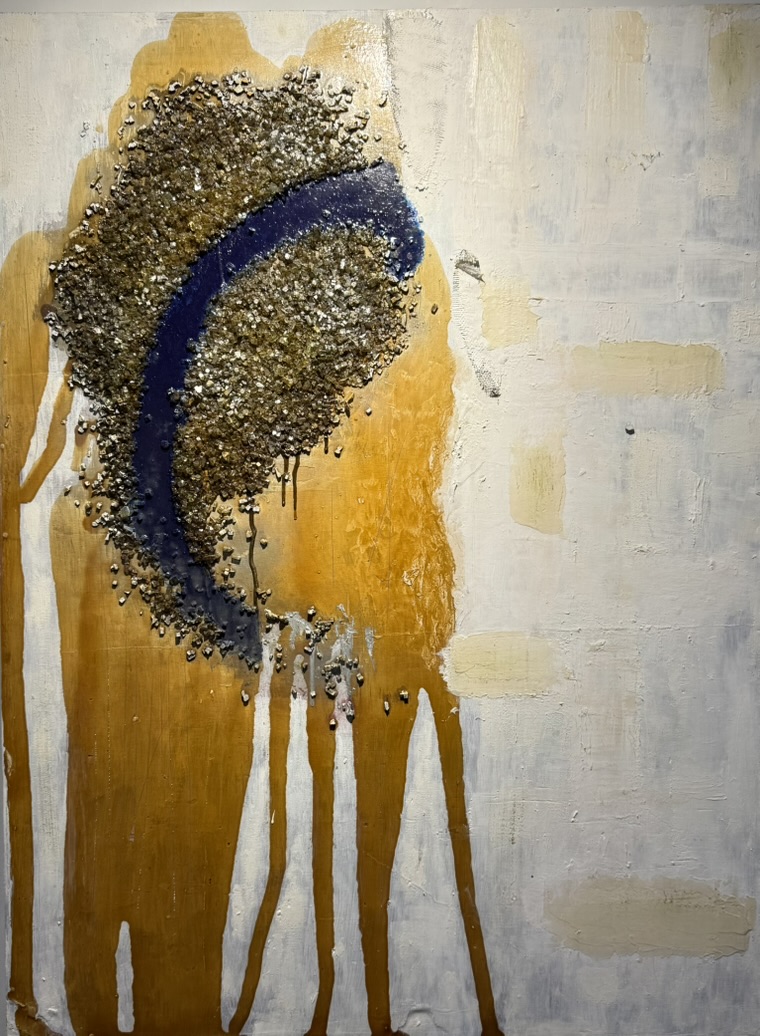
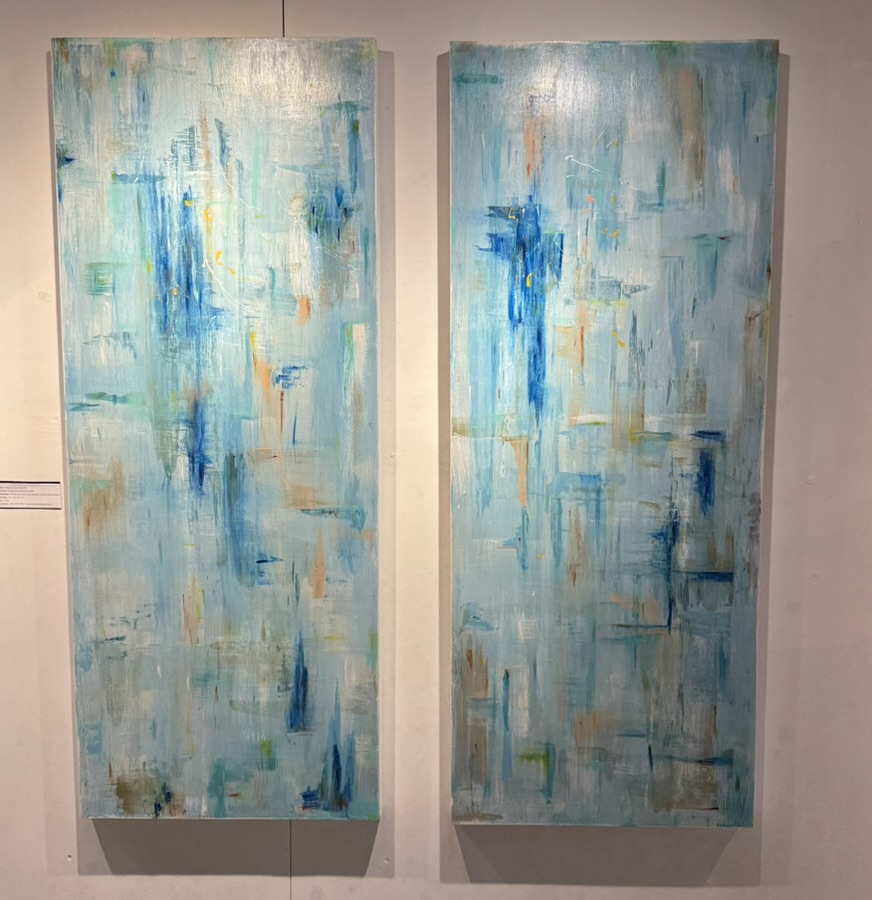
We dipped into an art gallery in Las Bóvedas (The Vaults) next to the Teatro Nacional, built in 1907.
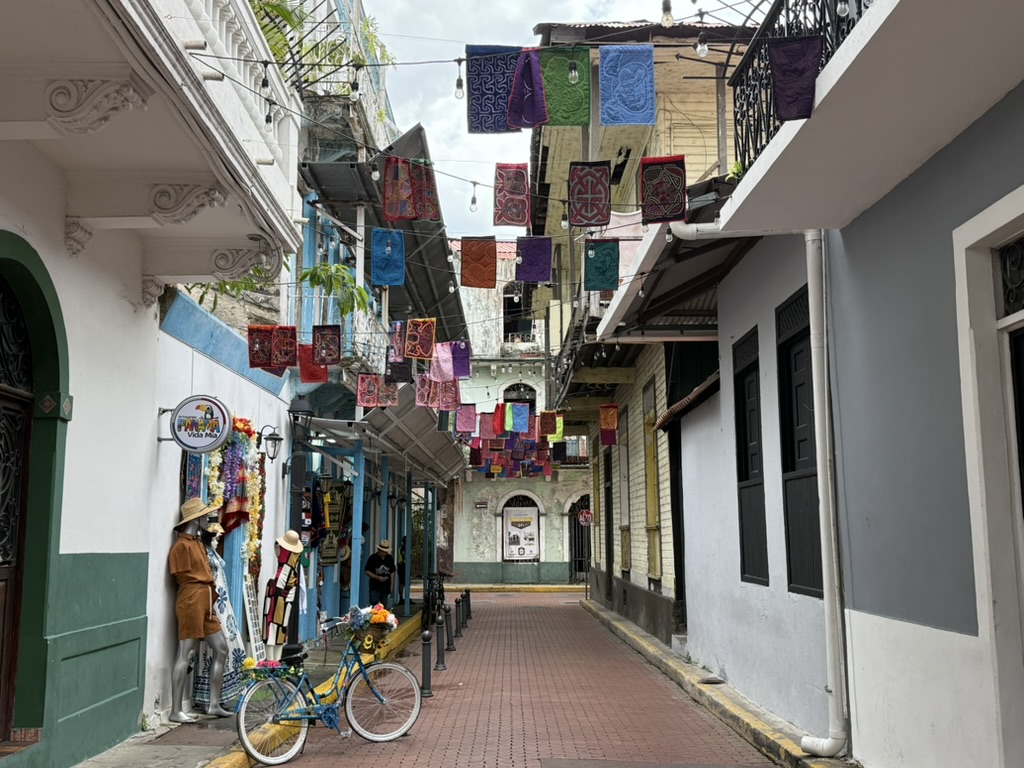
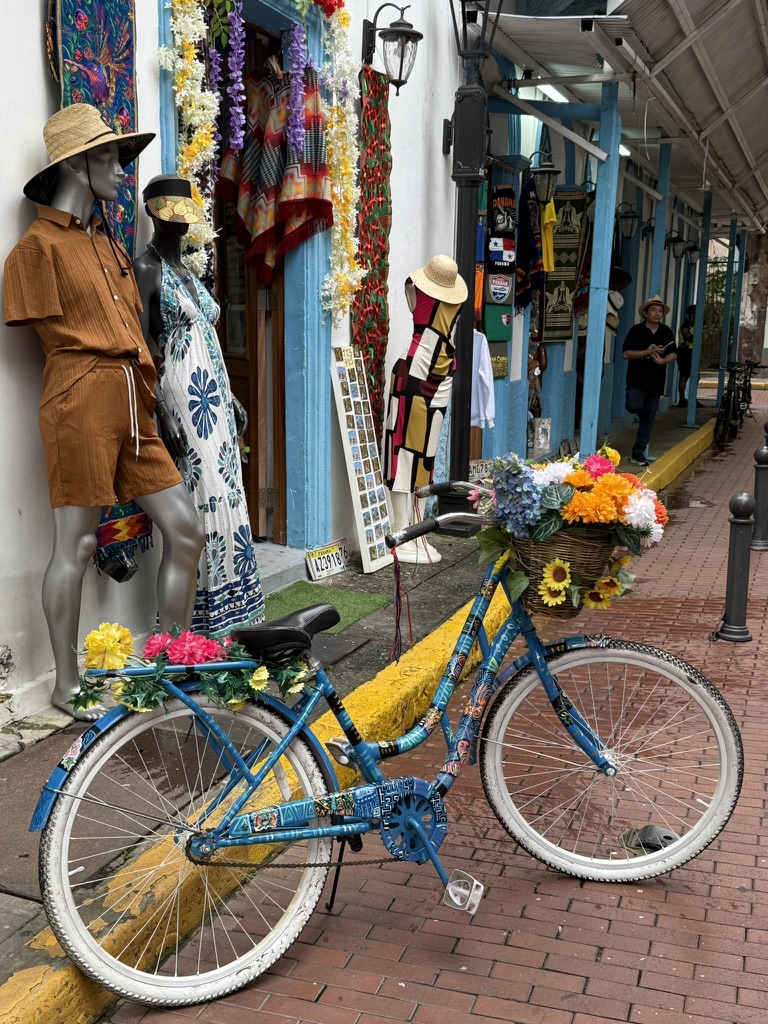
We walked along the sea wall on Paseo Esteban Huertas where we found indigenous Kuna women selling the embroidered molas (handmade textile panels) for which the country is famous.
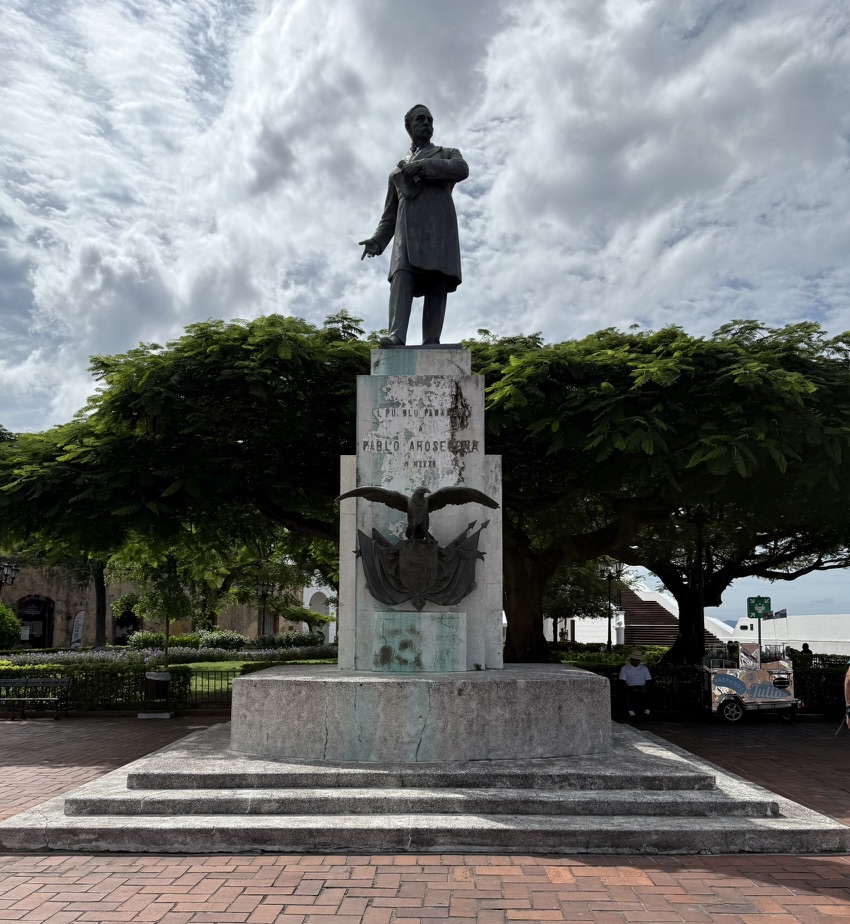
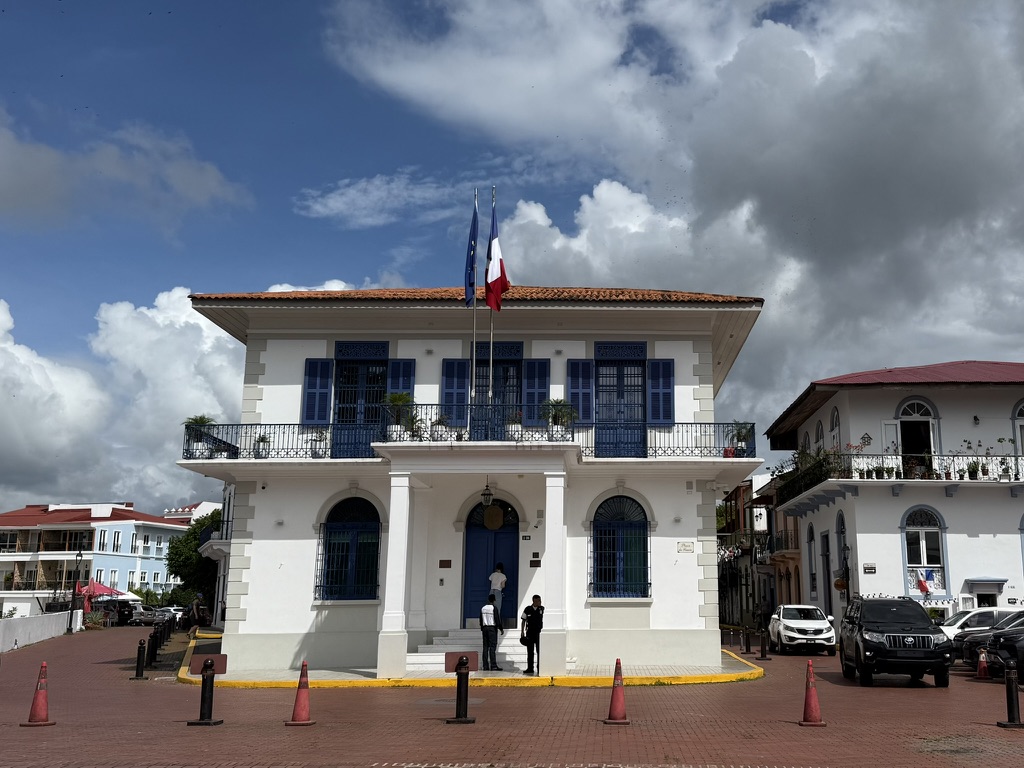
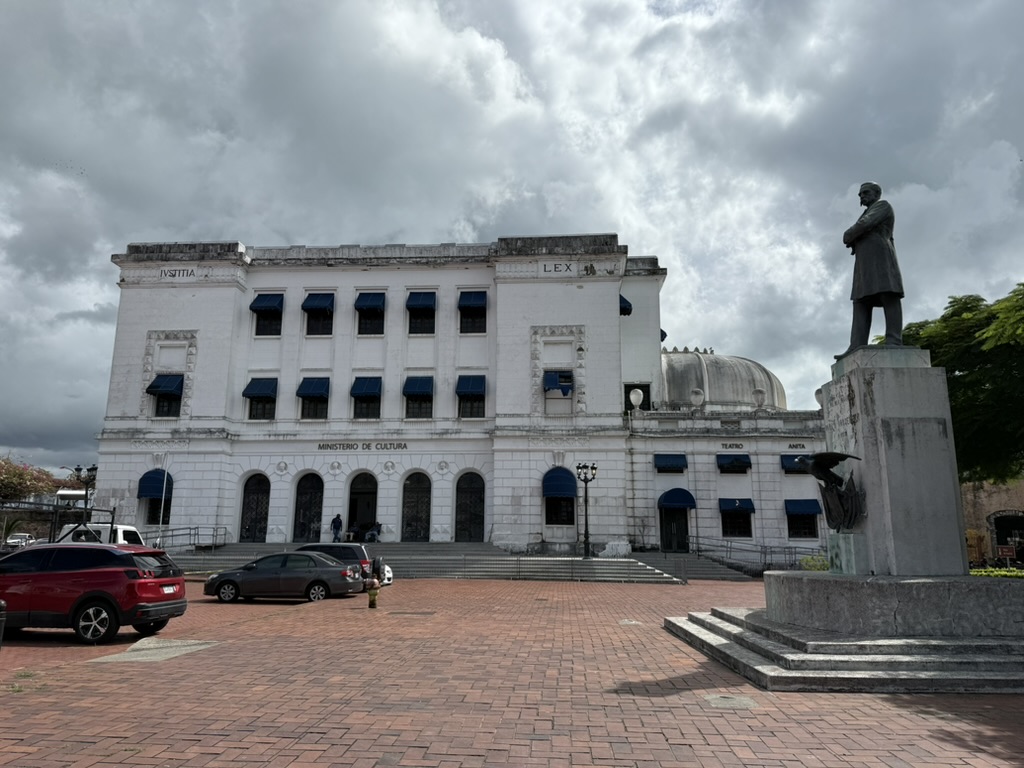
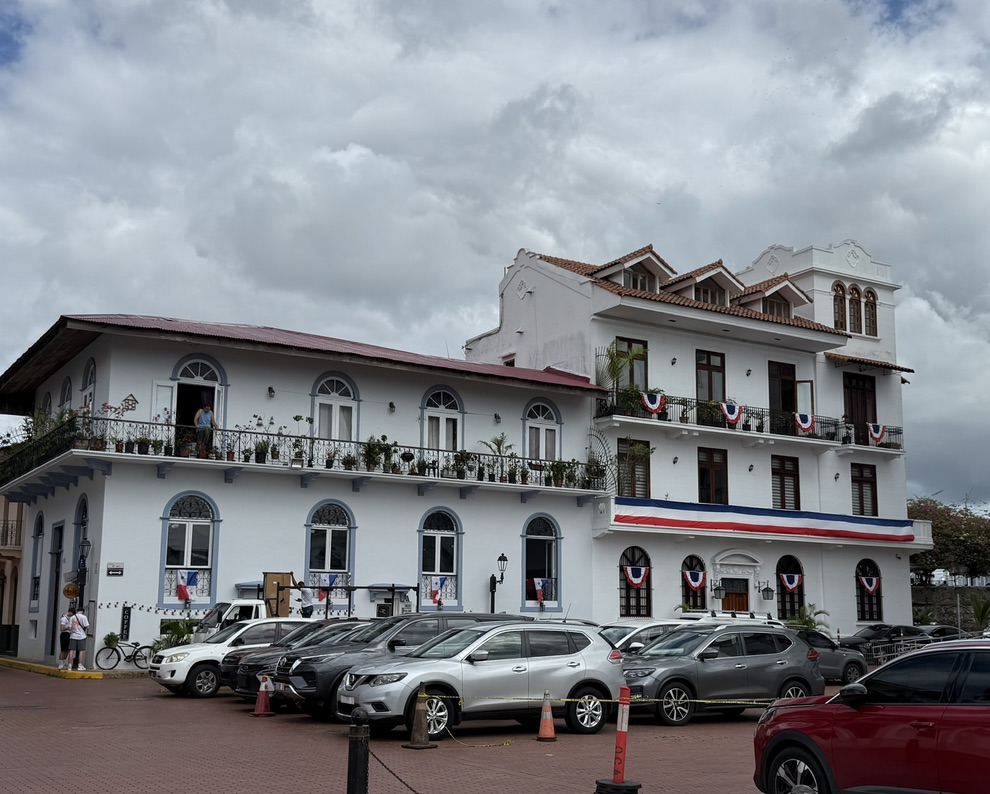
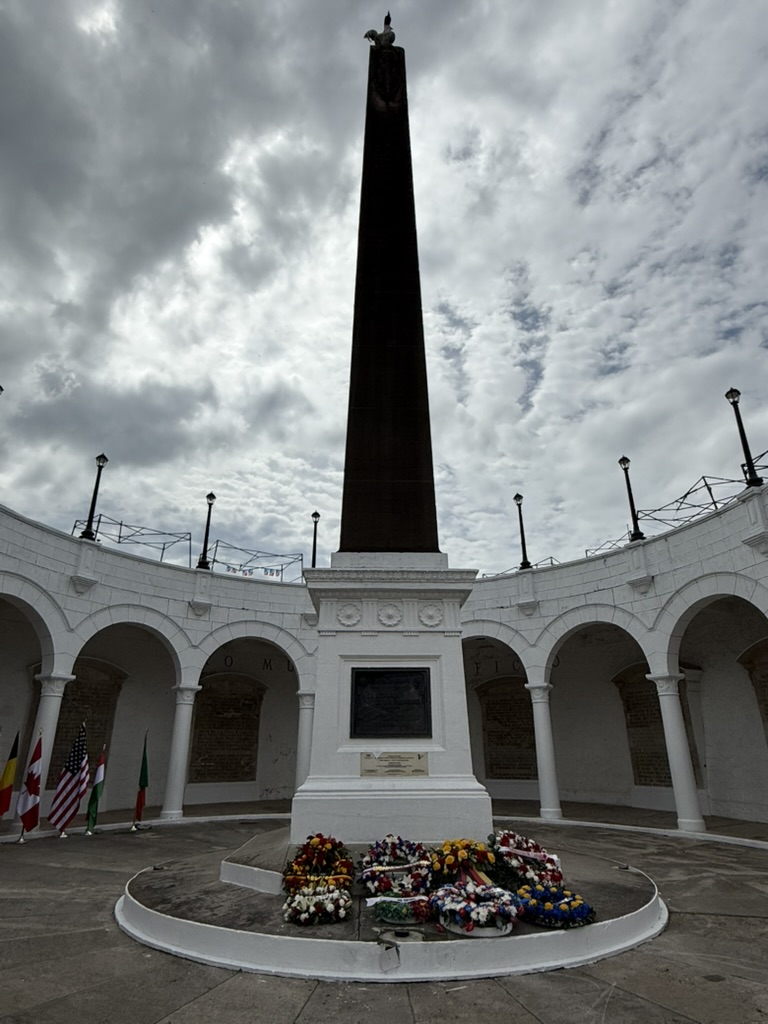
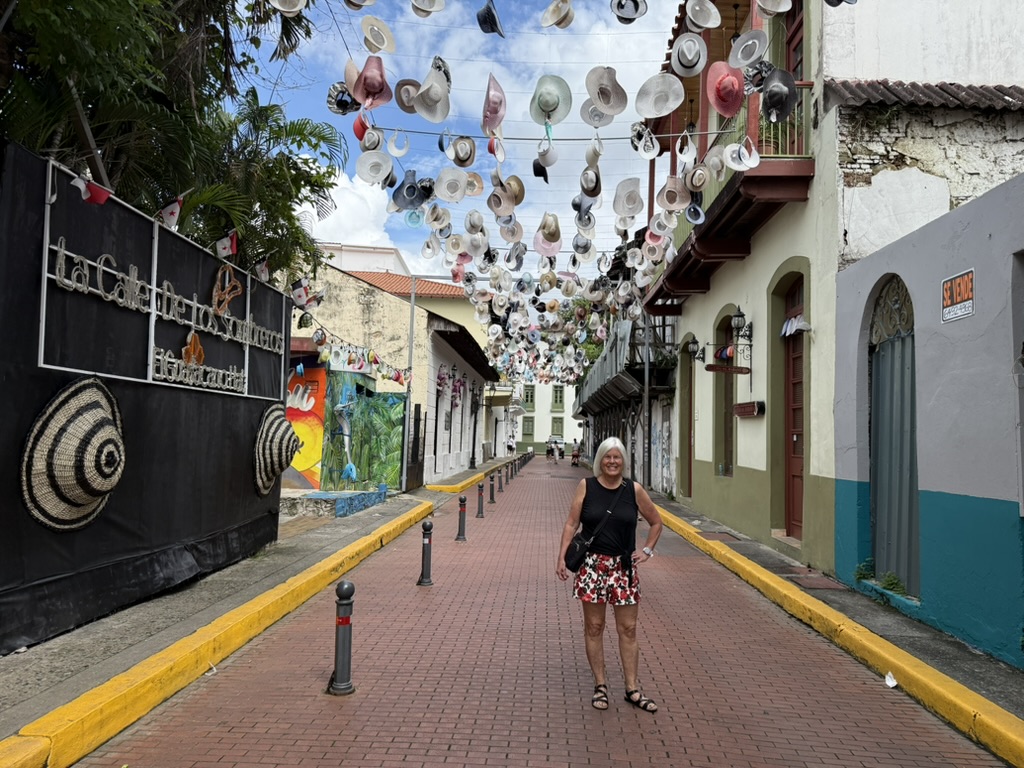
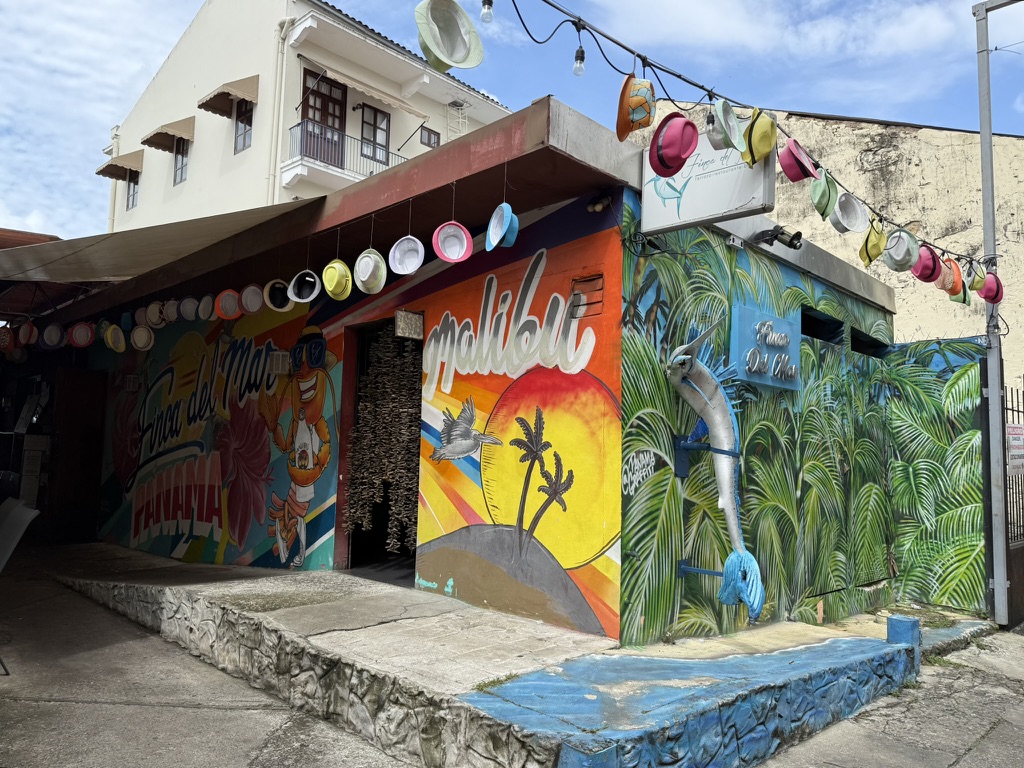
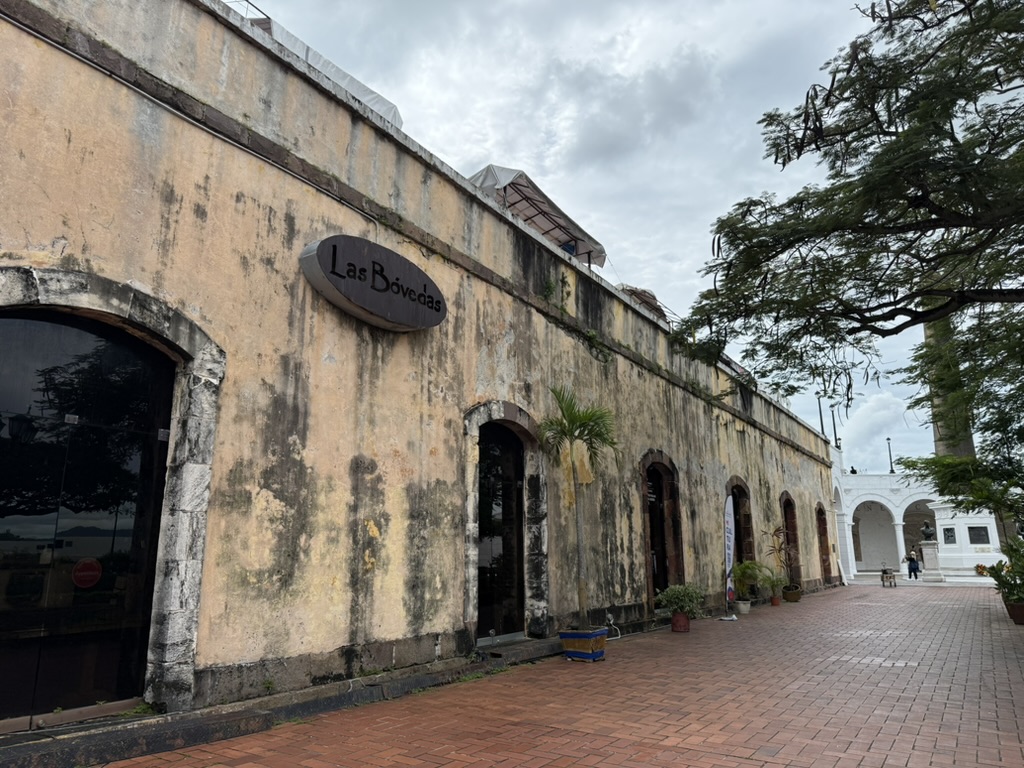
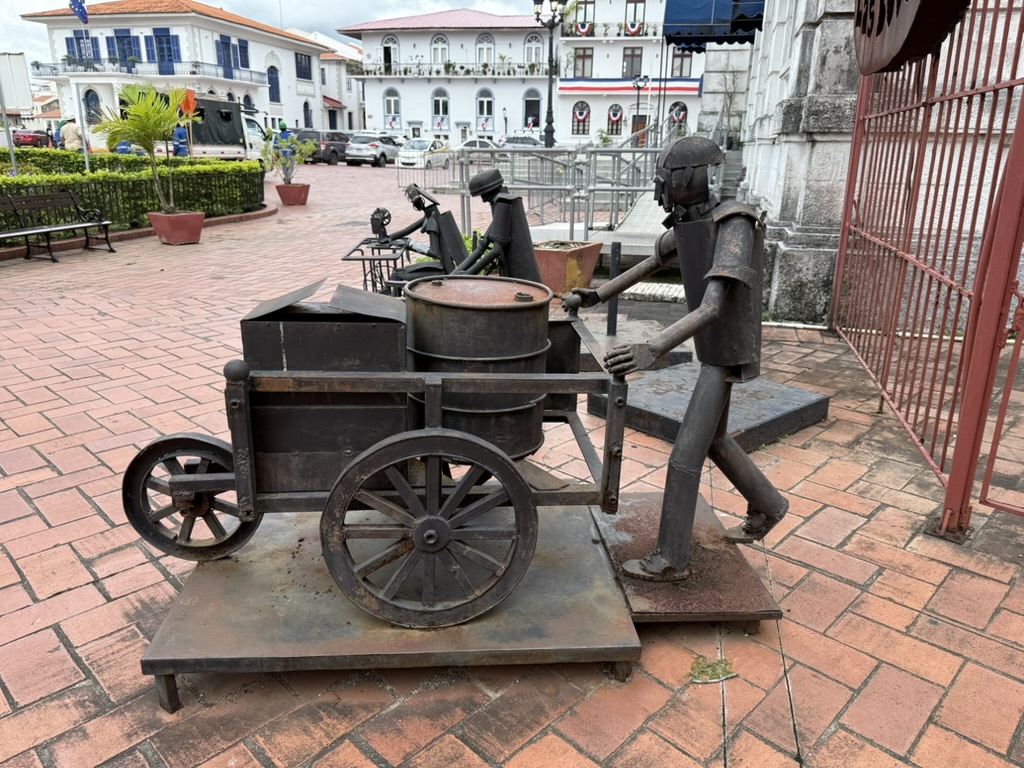
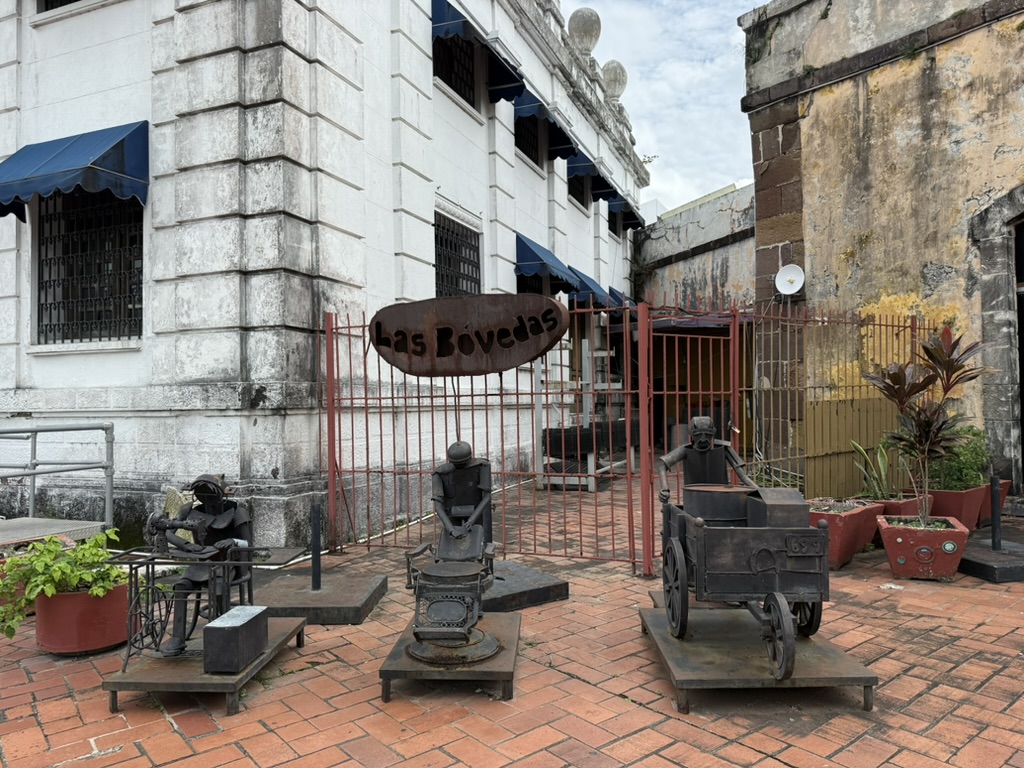



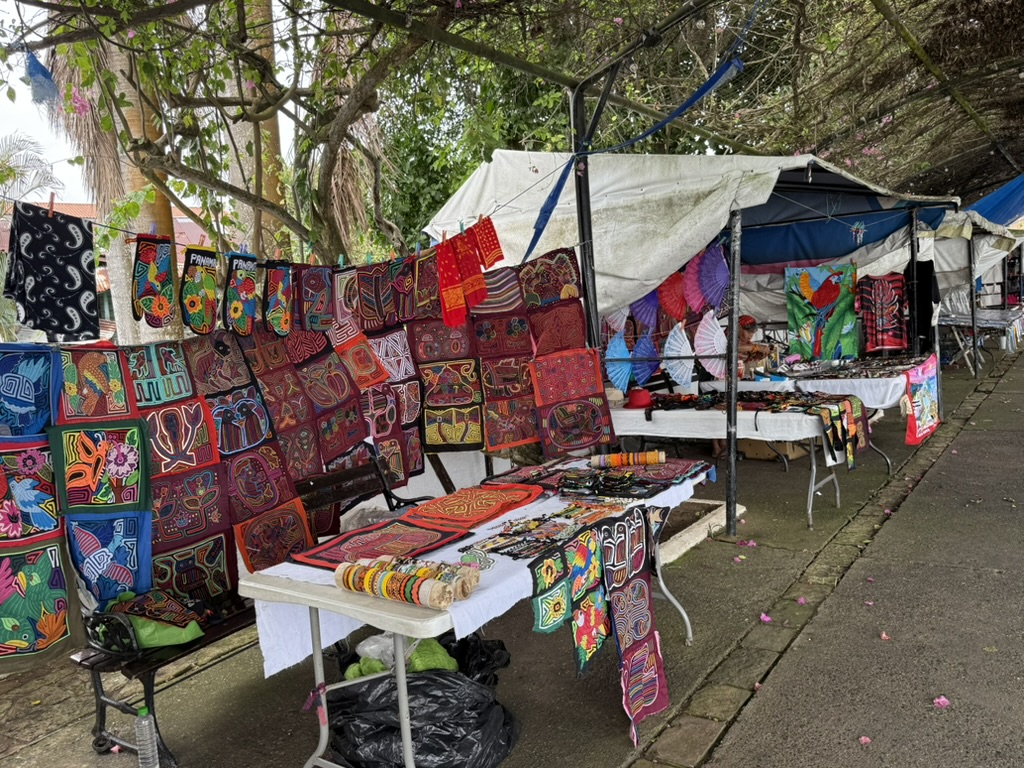
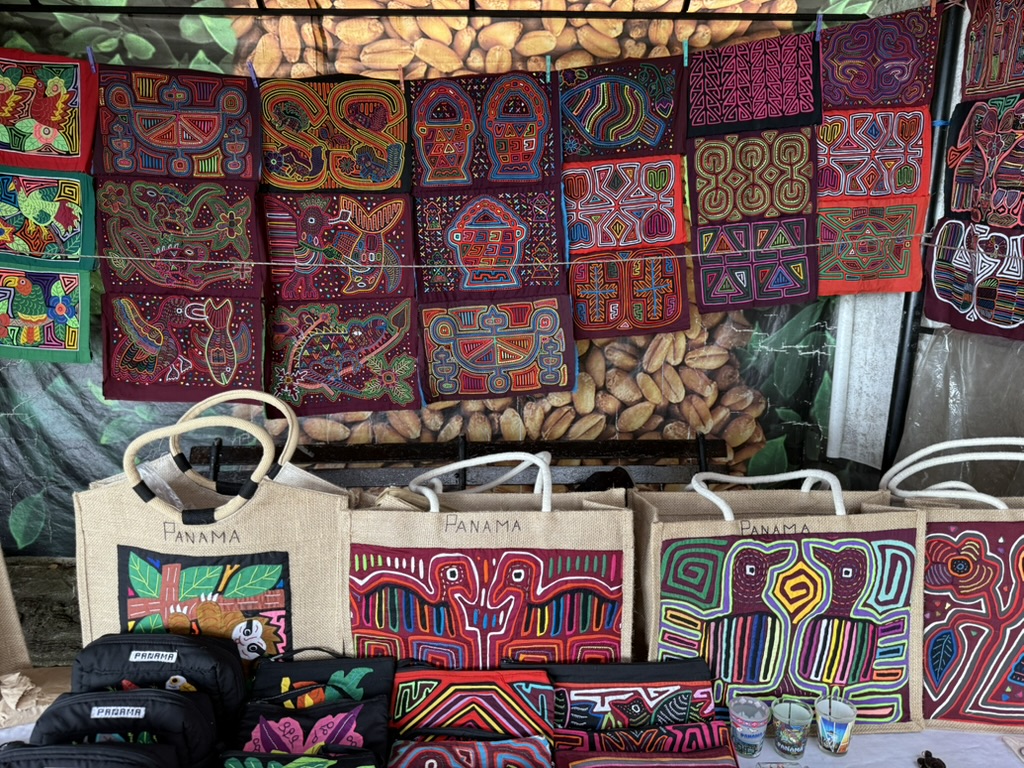
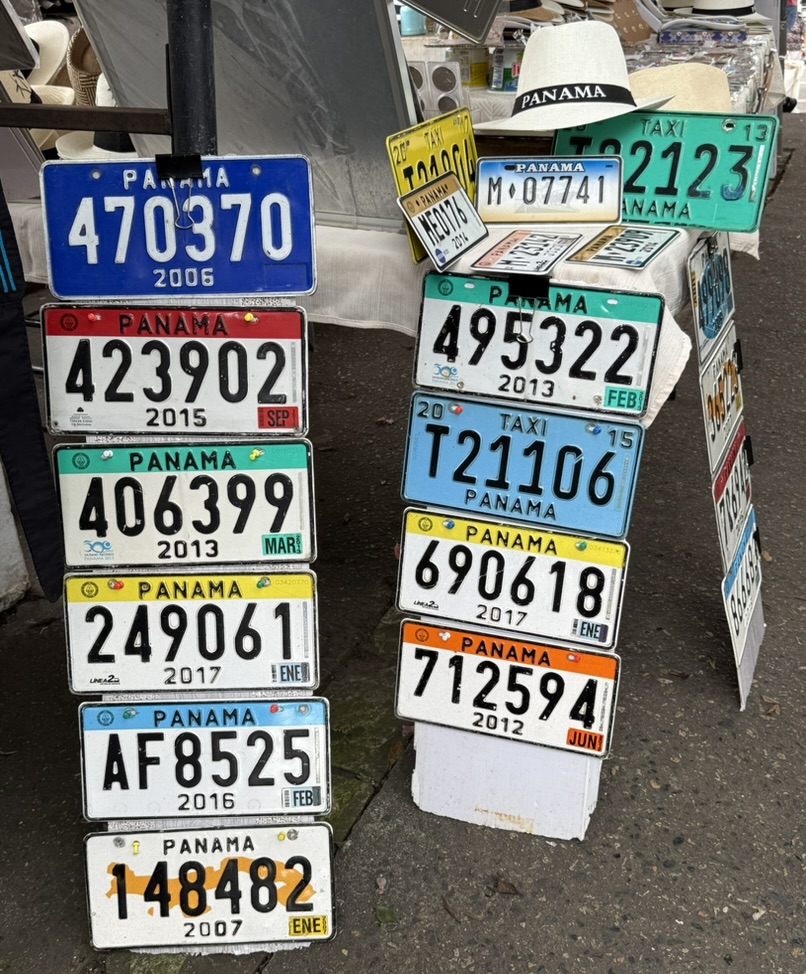
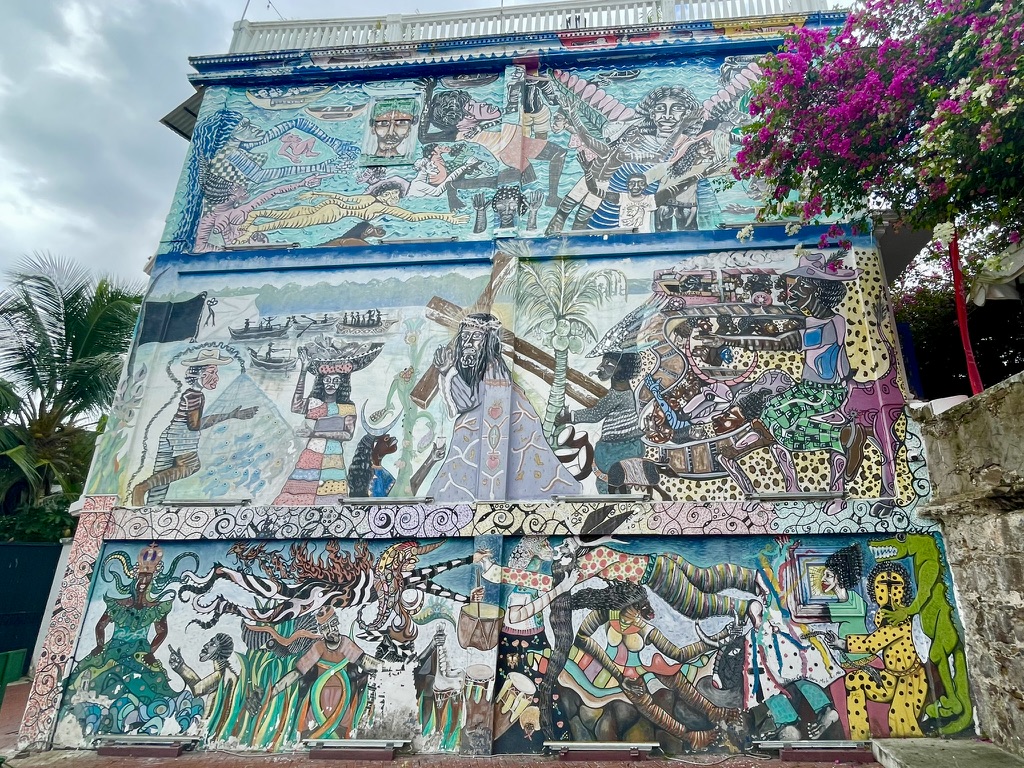
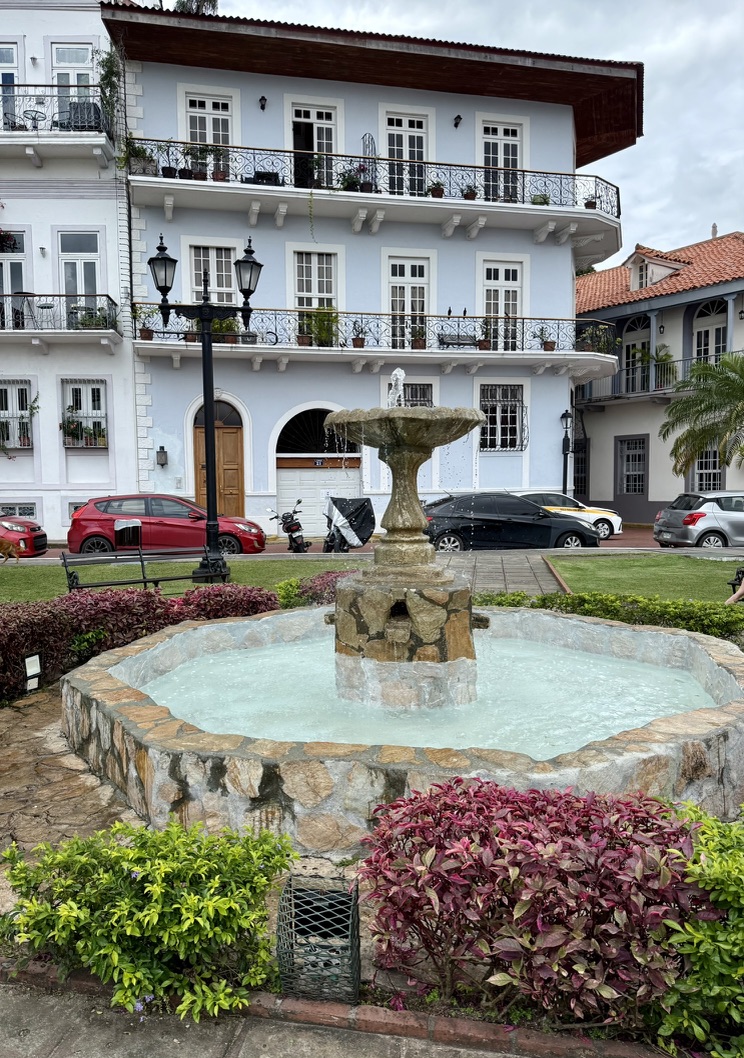
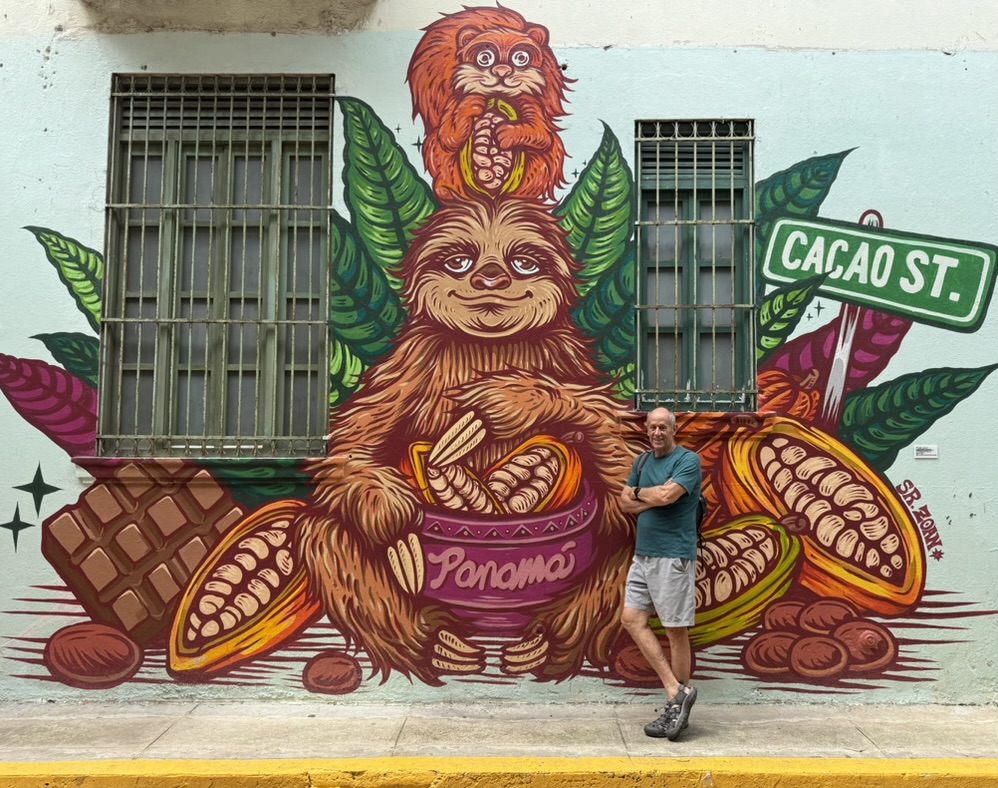
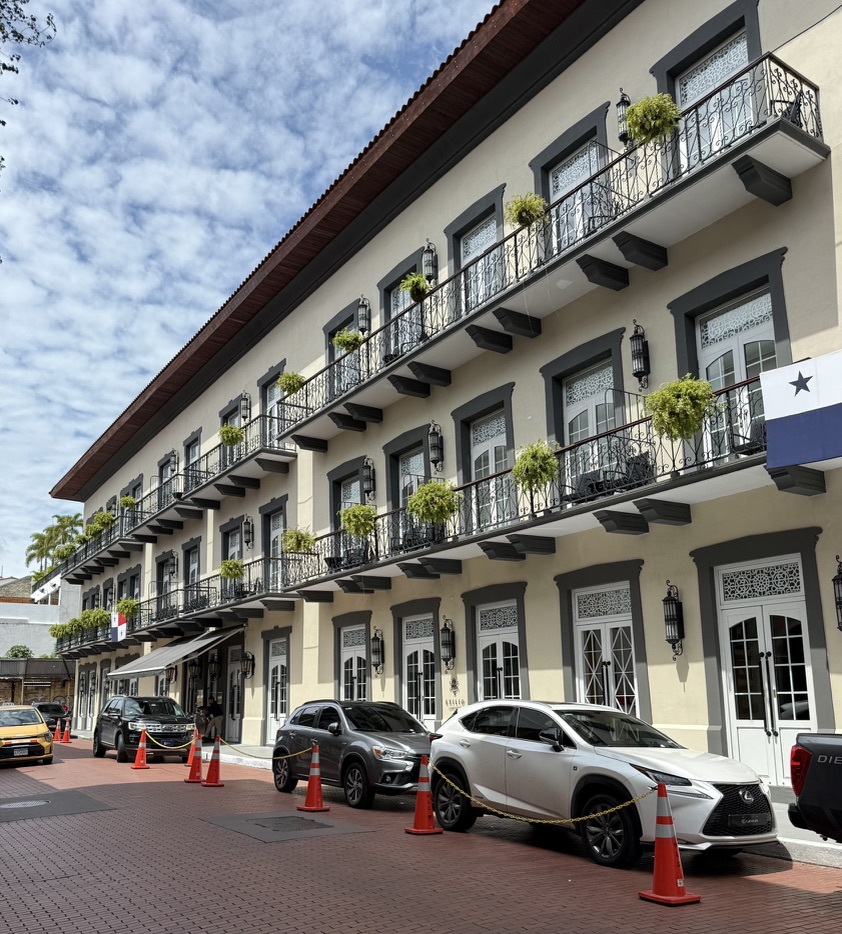
The compact Casco Viejo is a mix of restored neoclassical, rainbow-hued buildings with wrought-iron balconies; centuries-old churches; and narrow cobblestone streets.
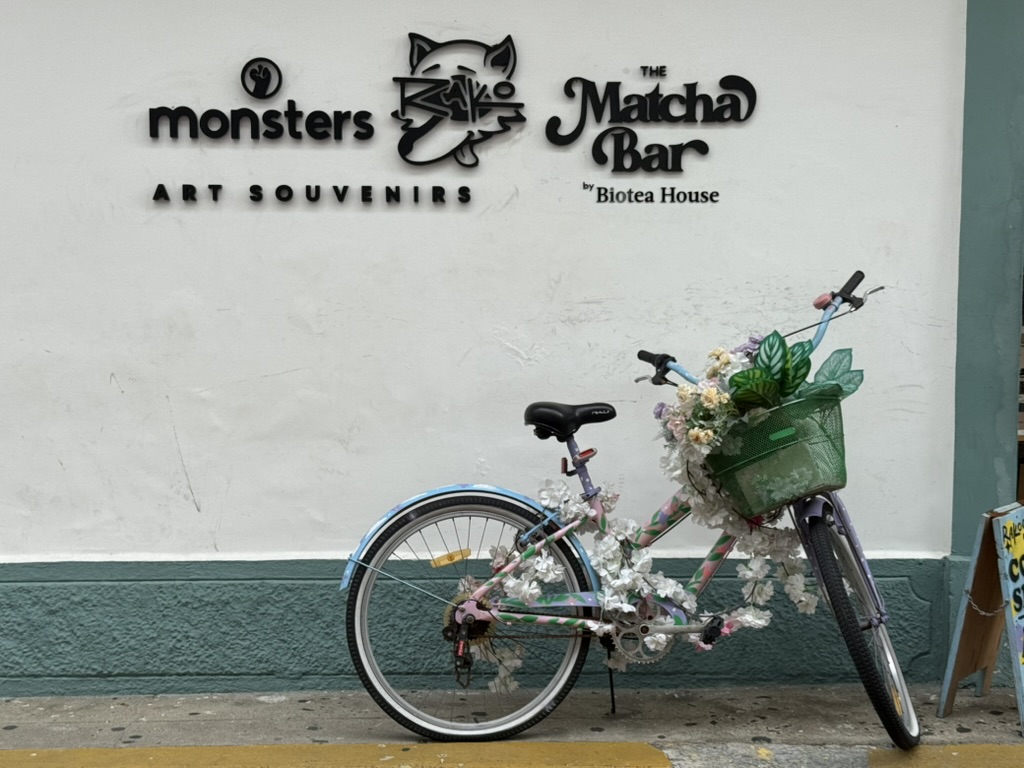
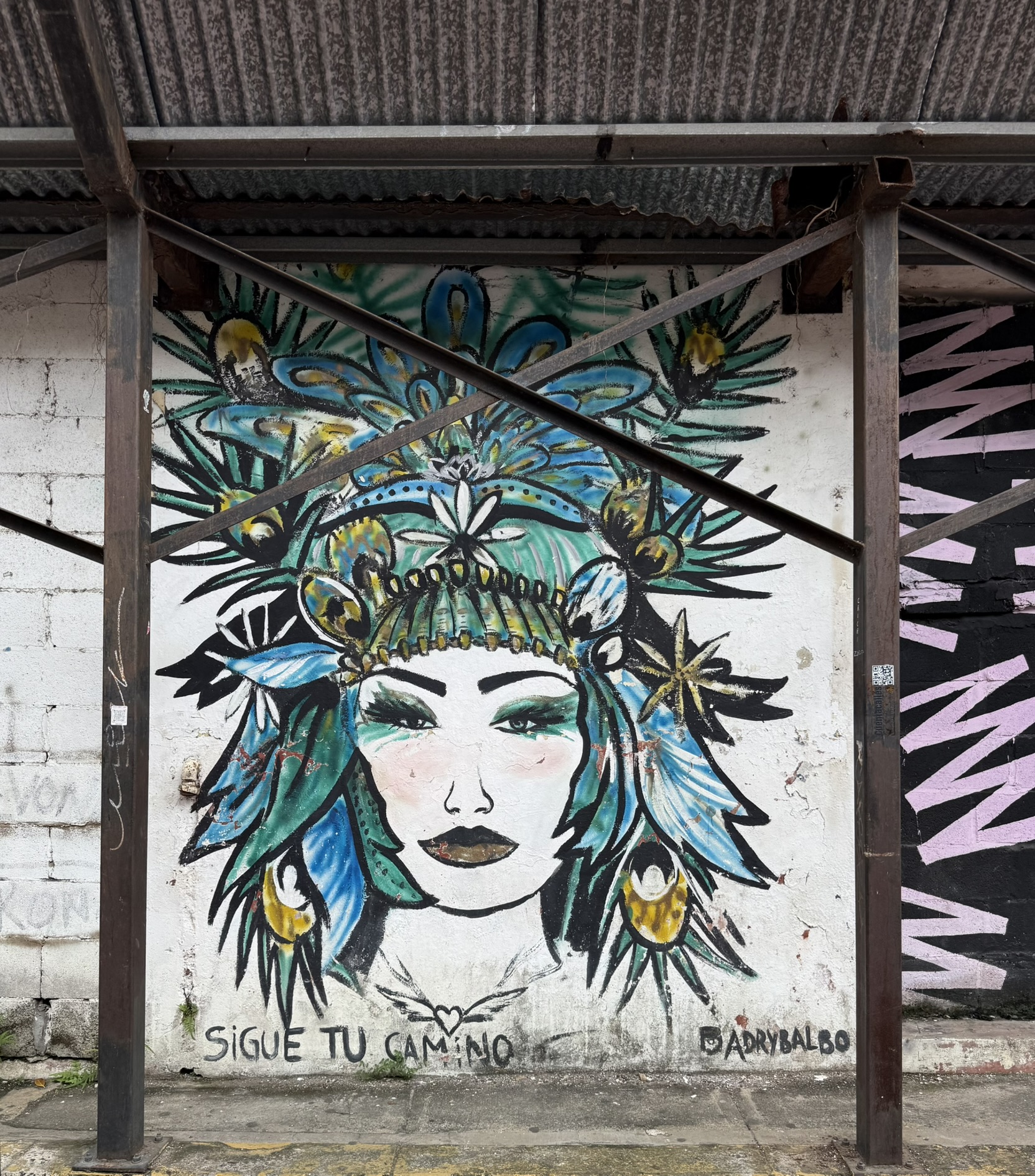
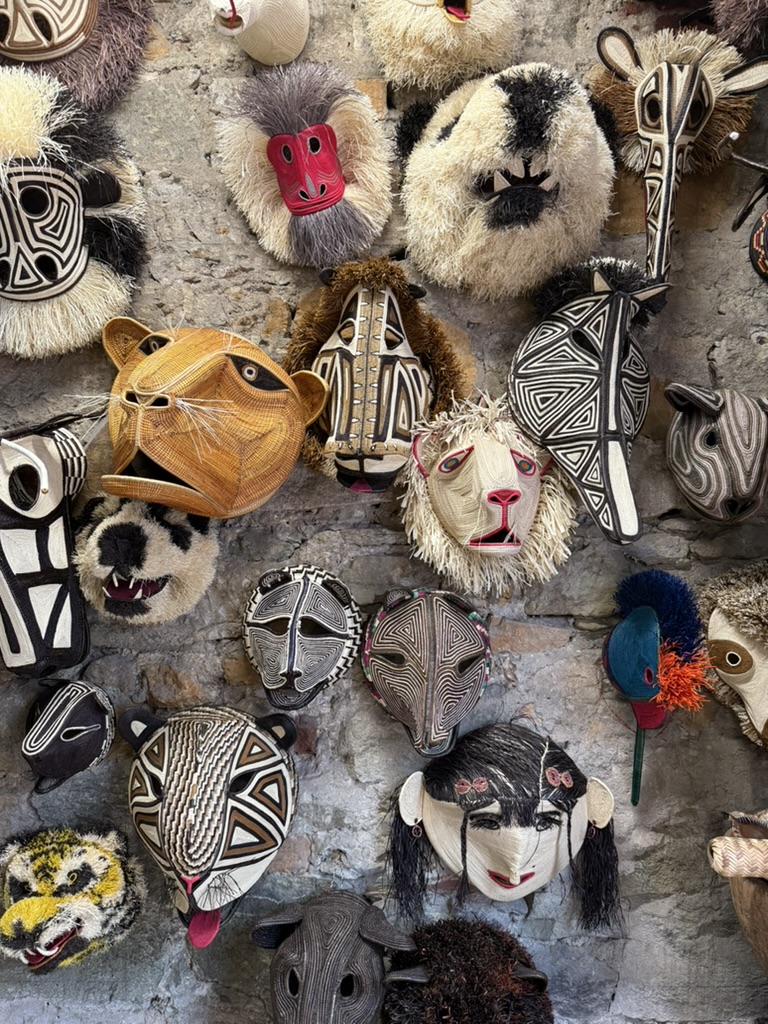
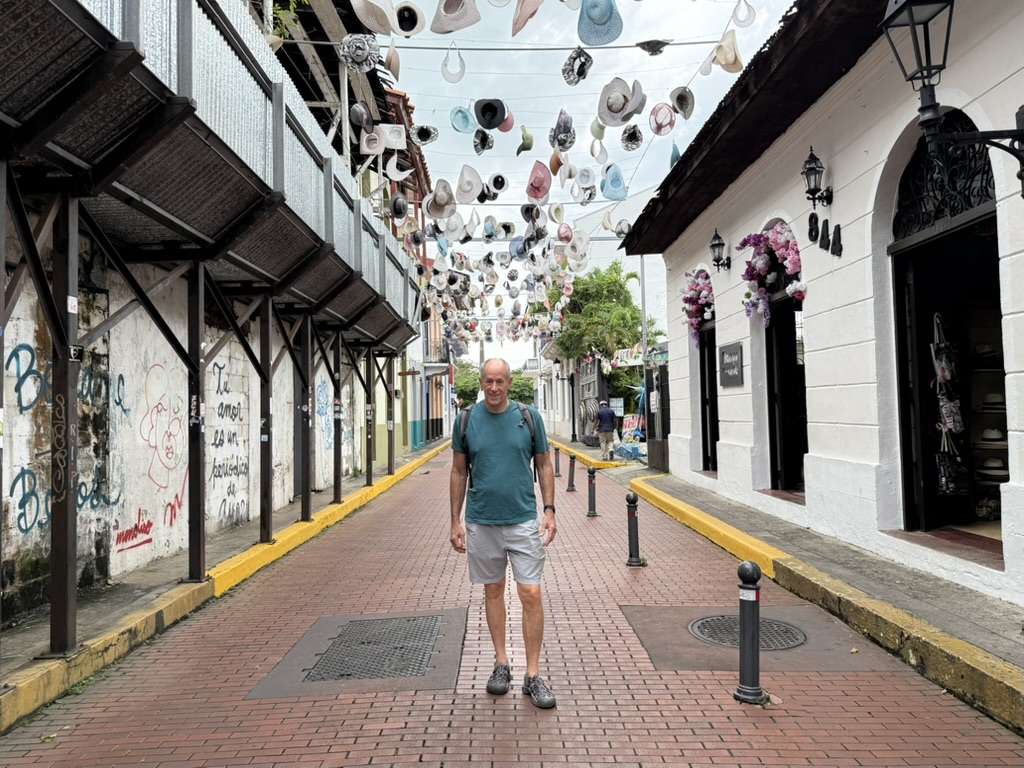

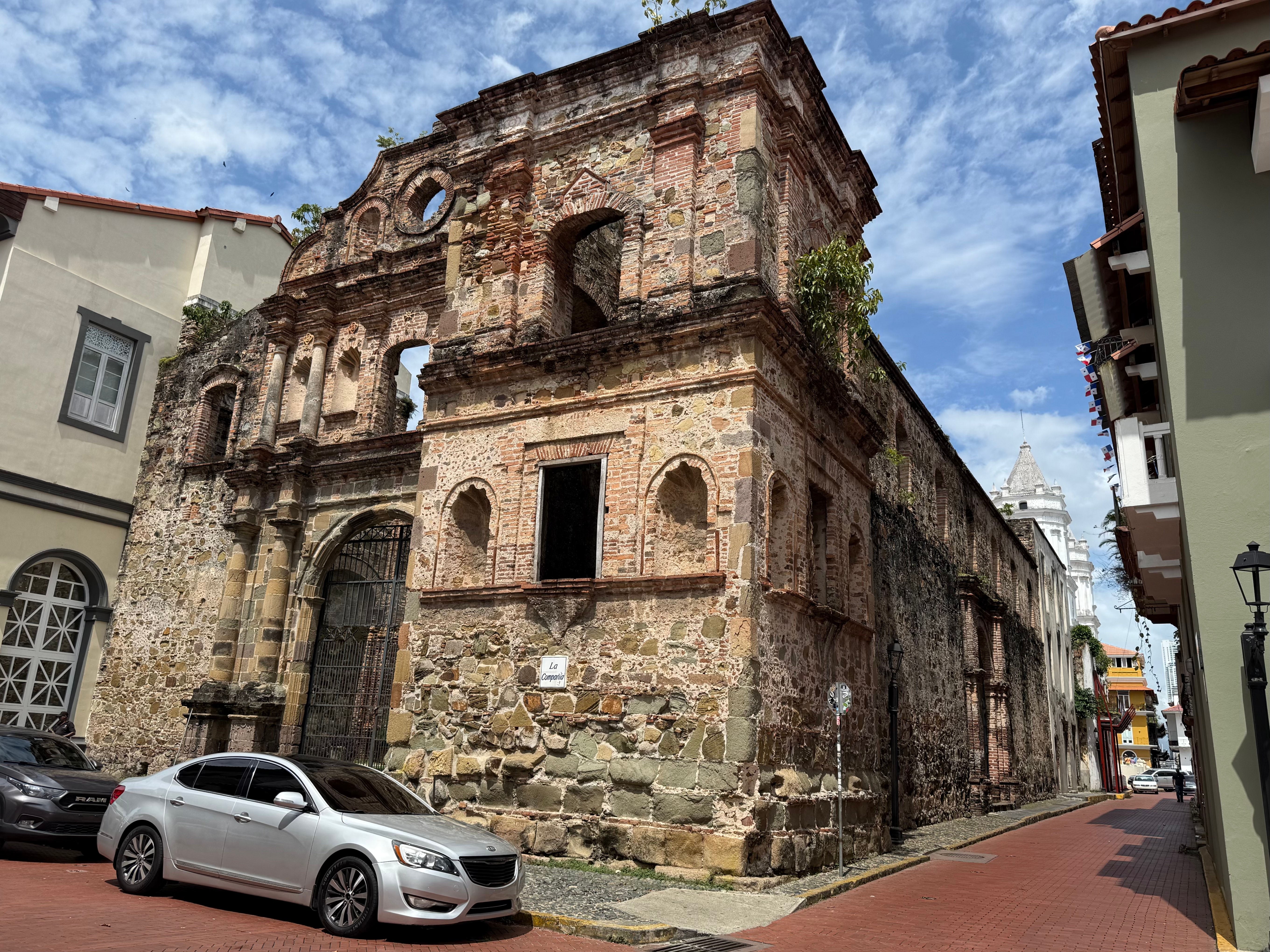

We came upon a large recessed brick arch known as Arco Chato (Flat Arch), about 15 meters long and 10 meters high, which supported the choir of Saint Dominic’s Church. It became a popular tourist attraction in the 19th century, despite being located among ruins. It was declared a national monument in 1941.
The flat Arch remained standing until 2003, when it collapsed unexpectedly. The current arch is a reconstruction lined with its original bricks.
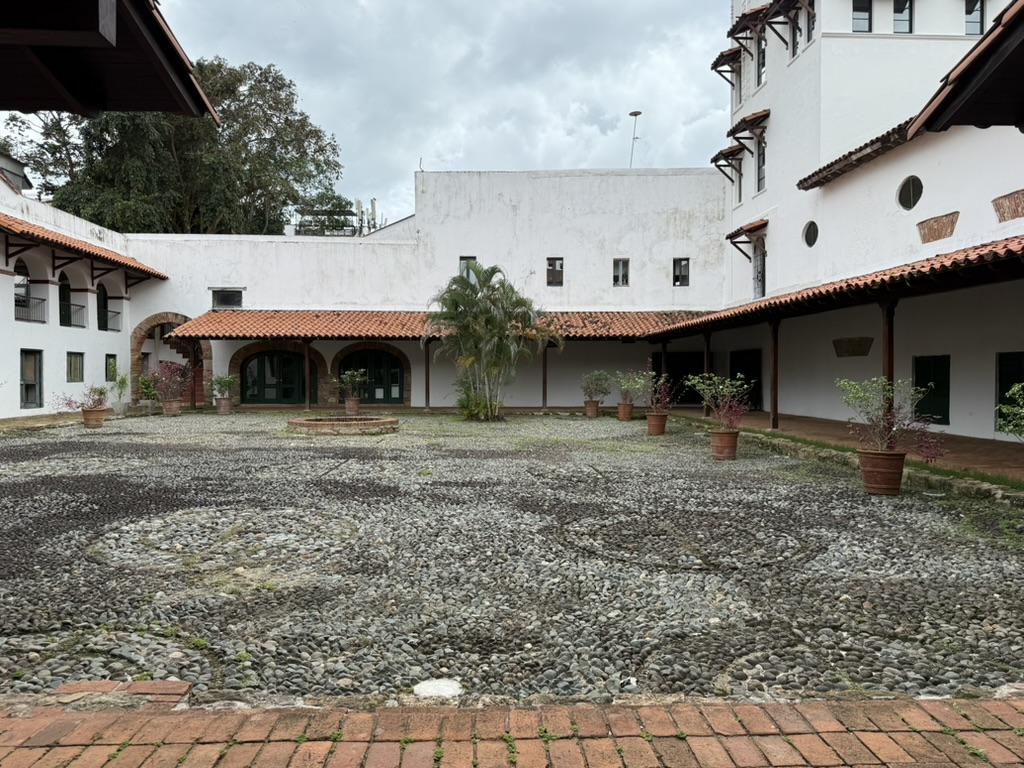
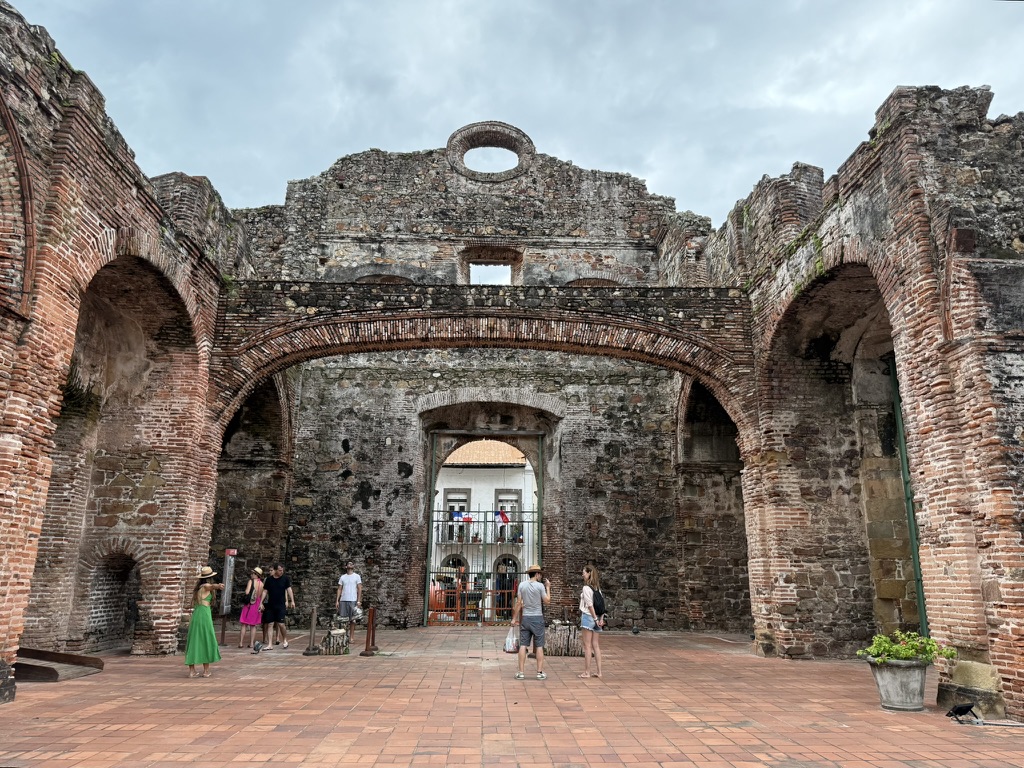
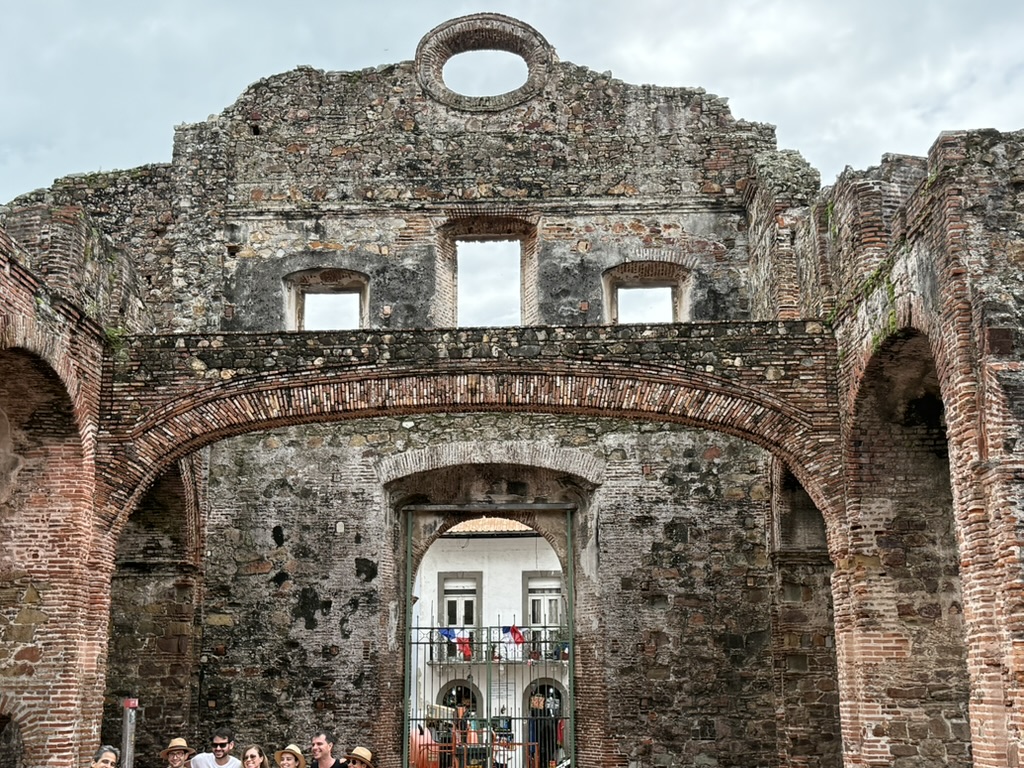
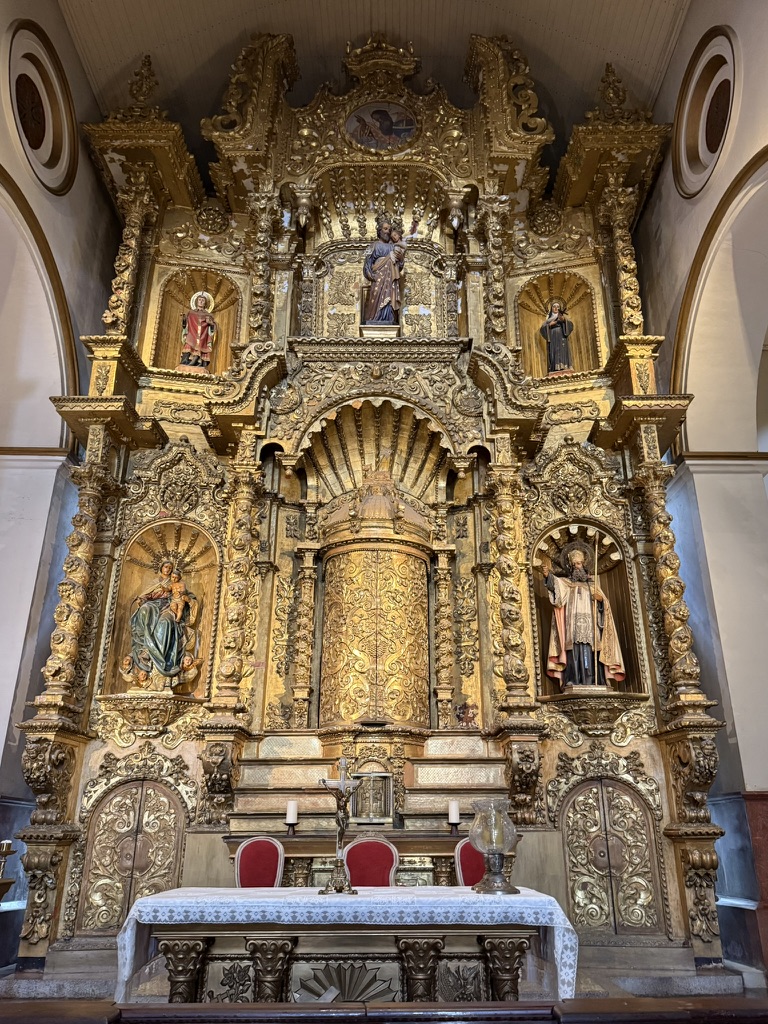
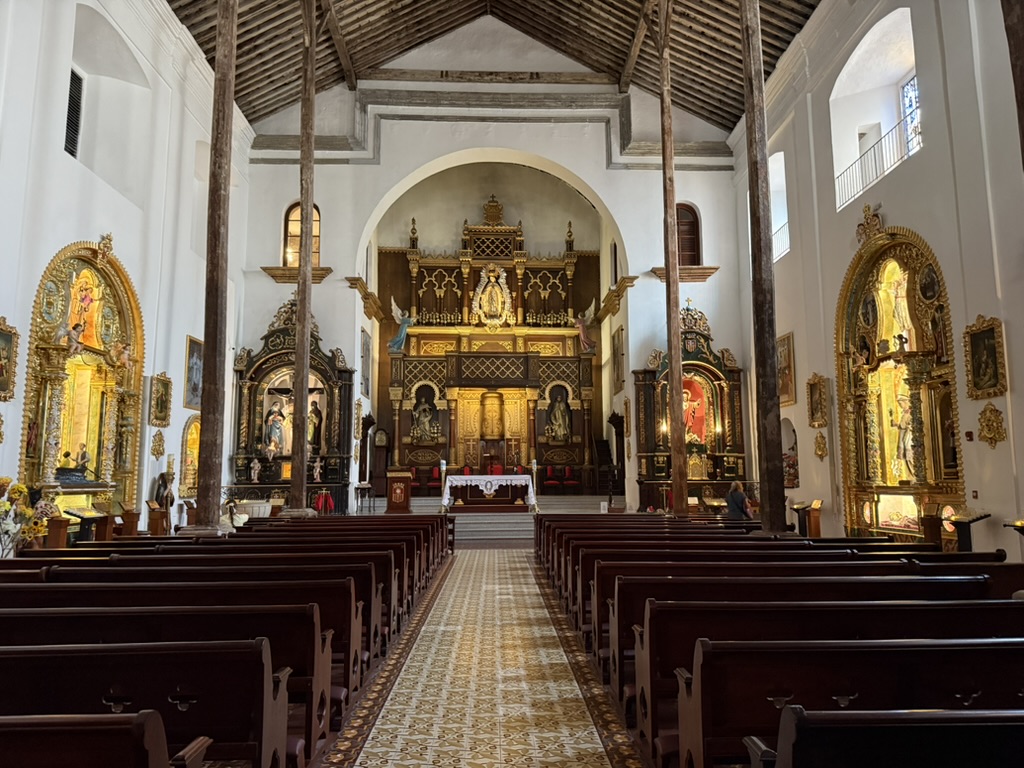
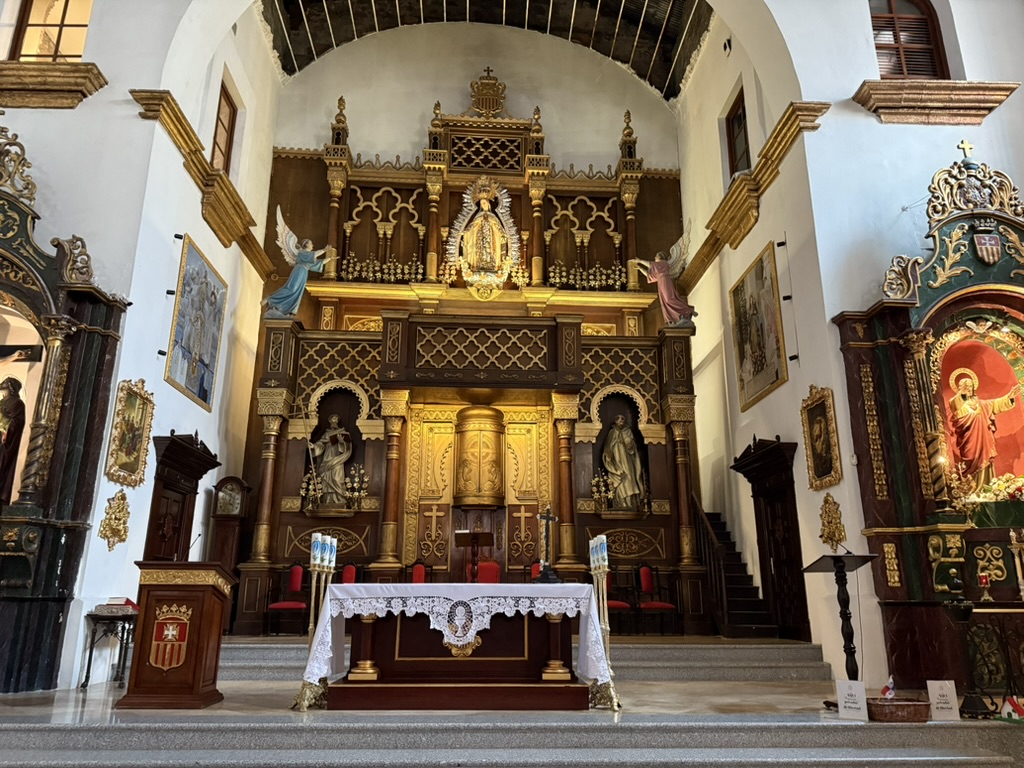
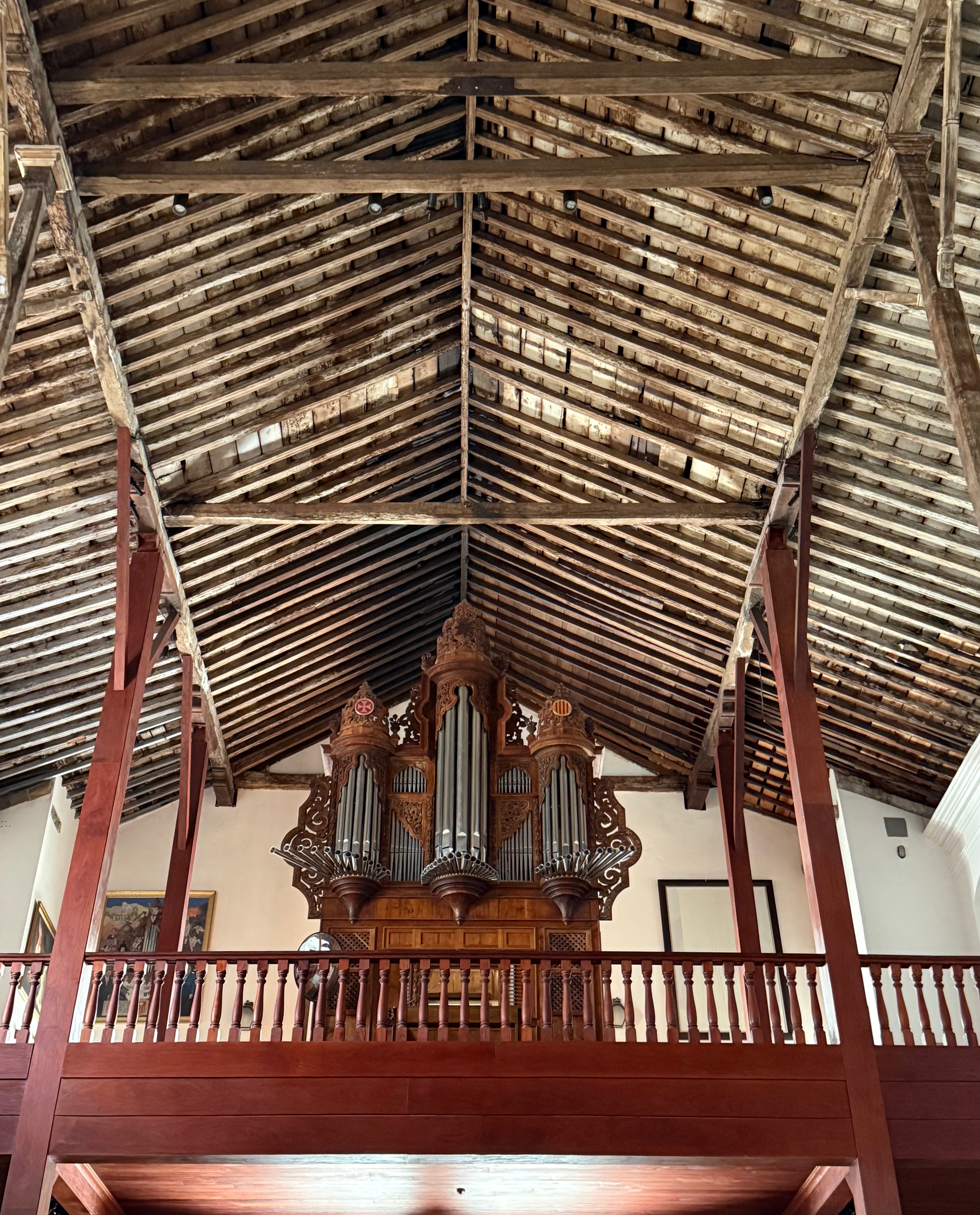
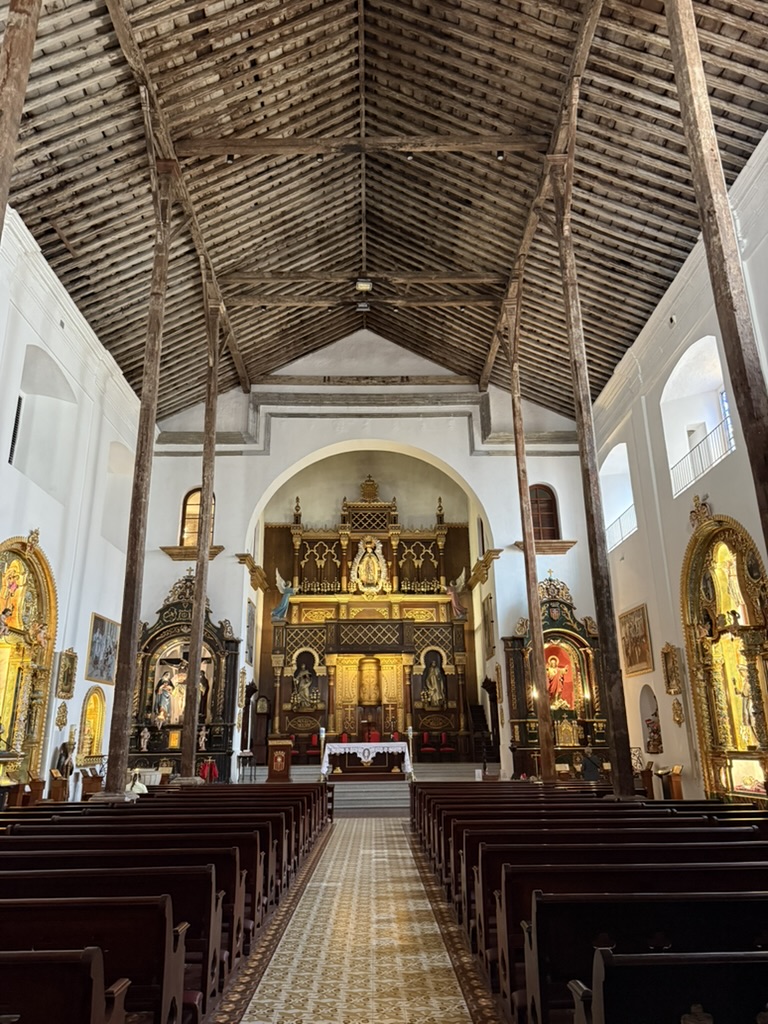
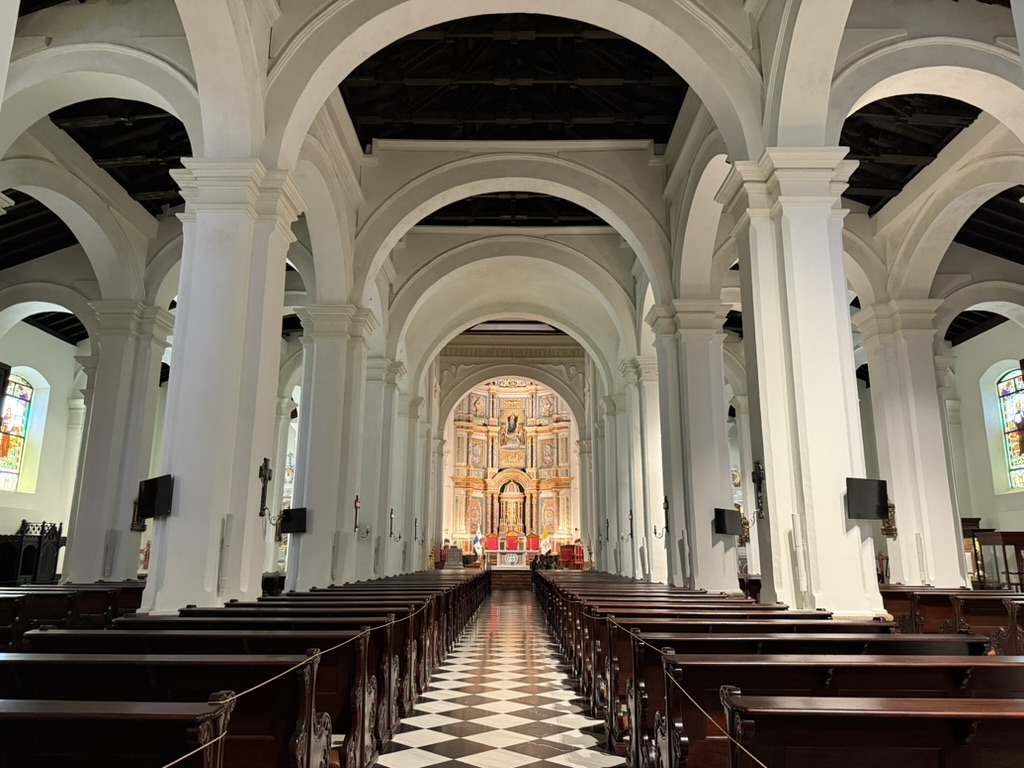
In the Augustinian Iglesia de San José (built 1671-1677), the extraordinary Altar de Oro (Golden Altar – a wooden altar covered in gold leaf) is a treasure – with a legend to match.
The story goes that when Welsh privateer Henry Morgan launched his 1671 attack on Panamá Viejo – which resulted in the destruction of the original Panama City – Jesuit priests painted the altarpiece black to disguise it, telling Morgan that another pirate had already stolen it.

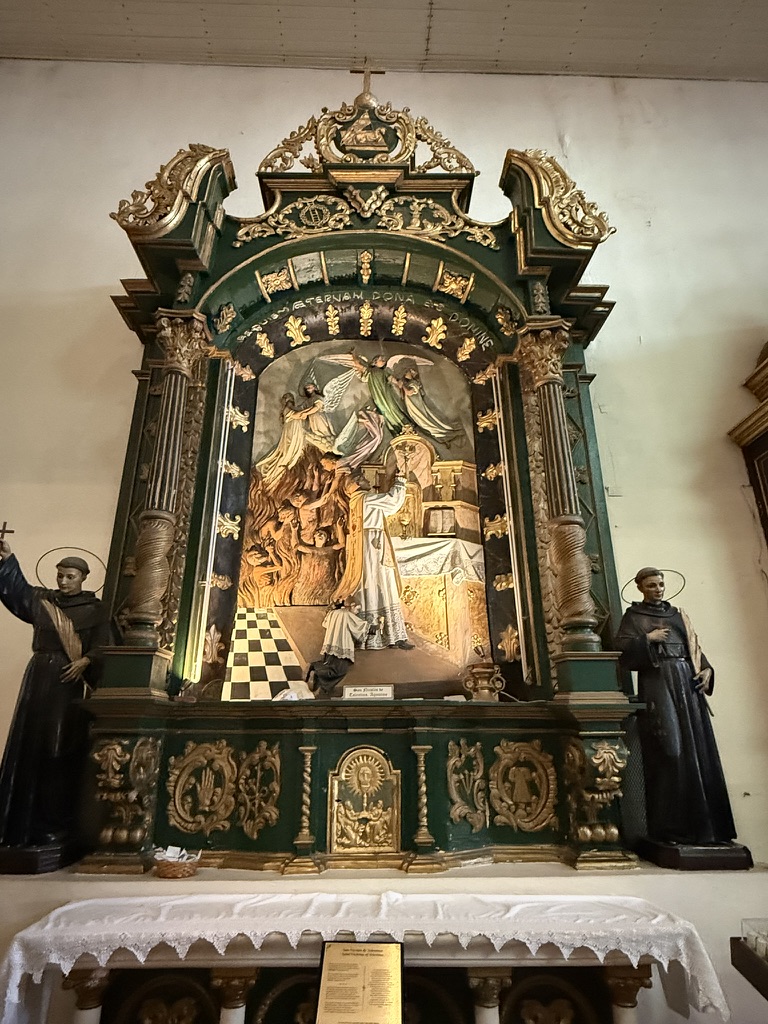
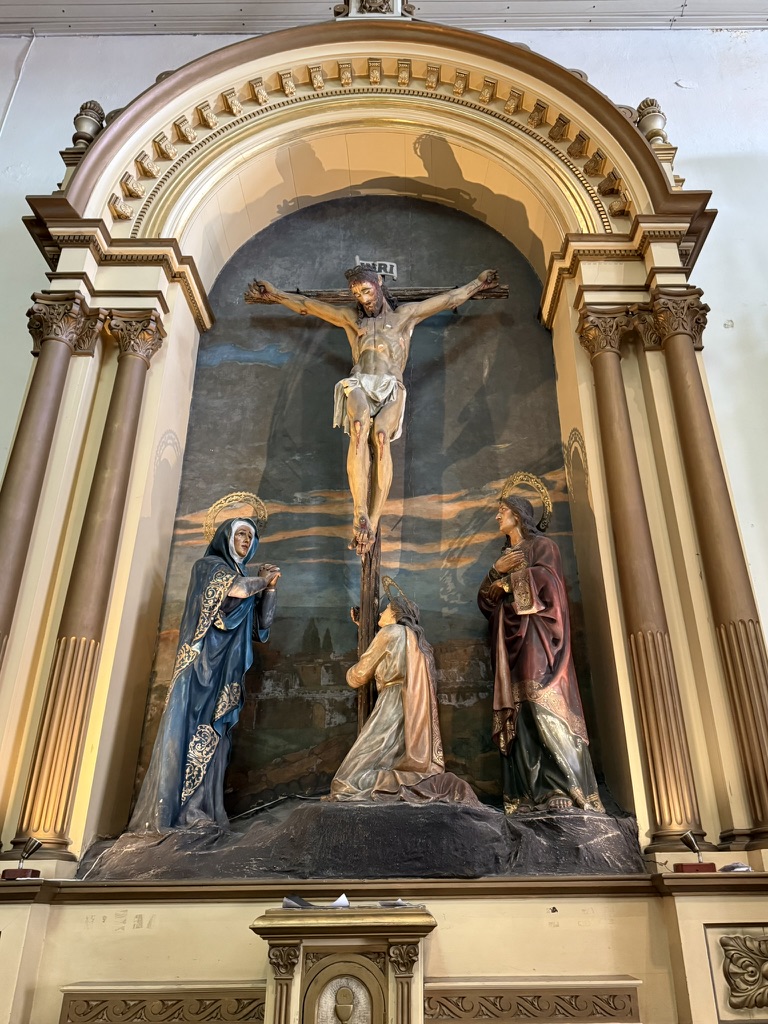
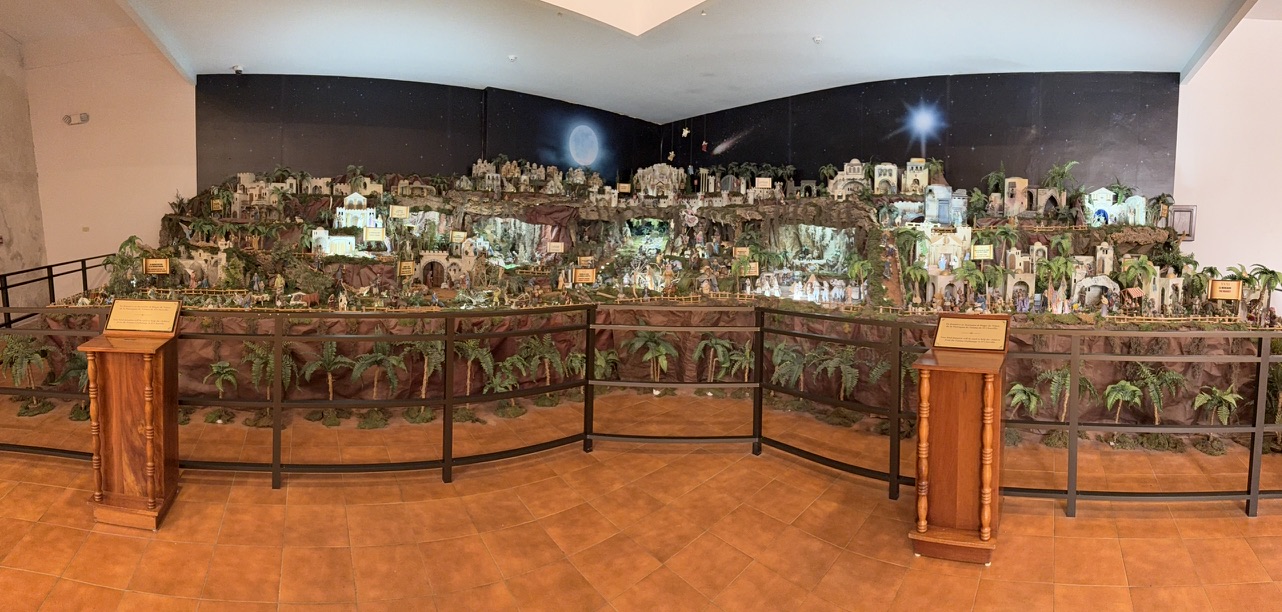
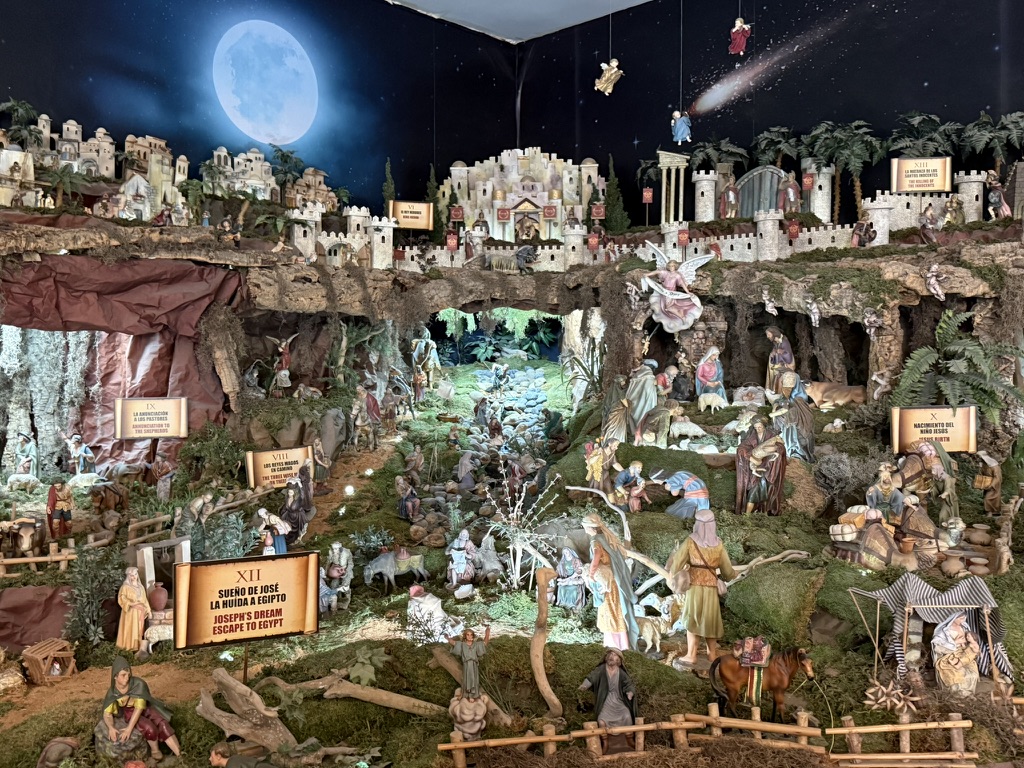
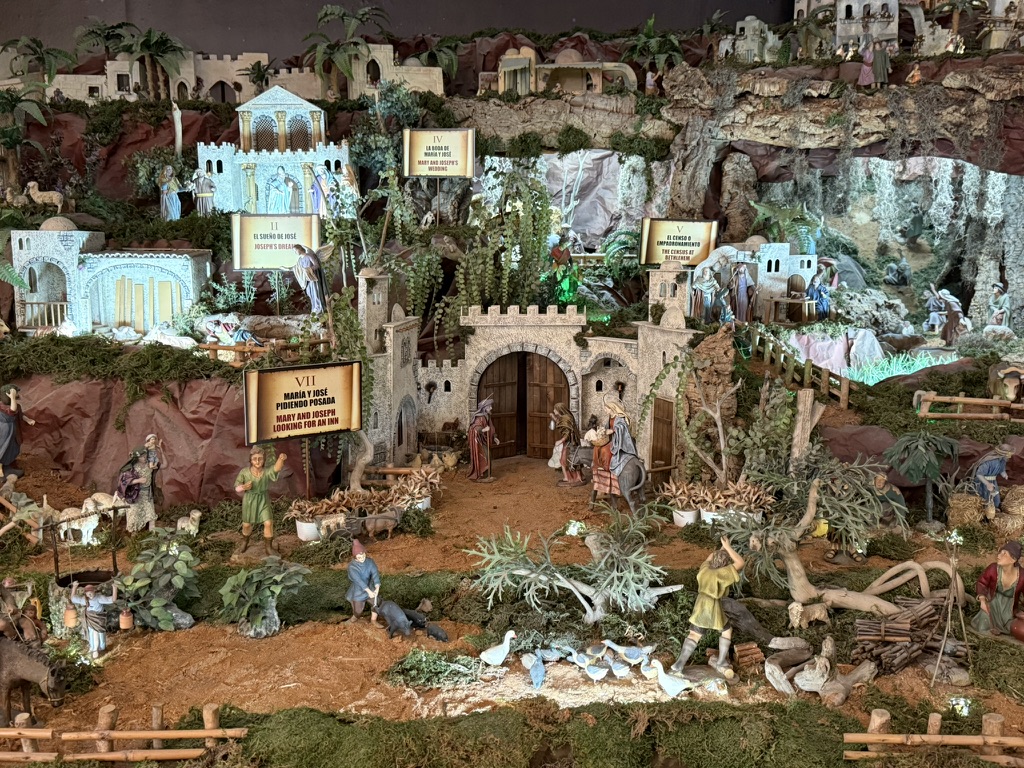
In a back room of the church was an expansive village diorama that told the story of Jesus, from Mary’s visit from the angels to everything before Christ’s resurrection. In the same room were wooden life-size figures of the 12 disciples, except for one that was missing.

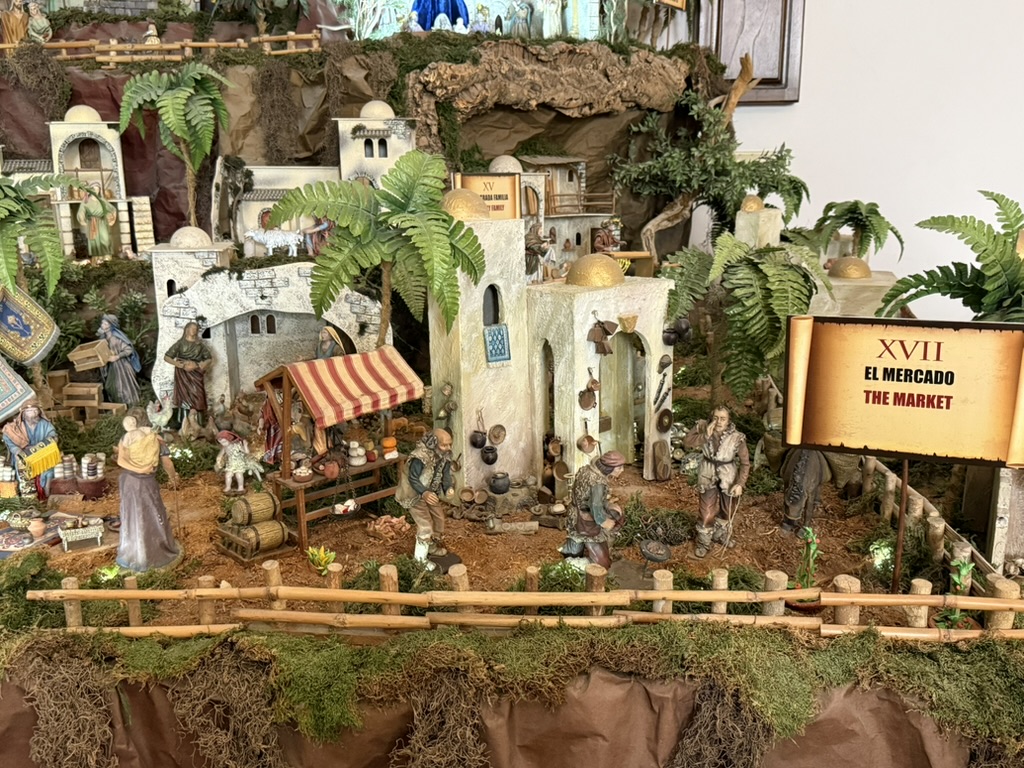
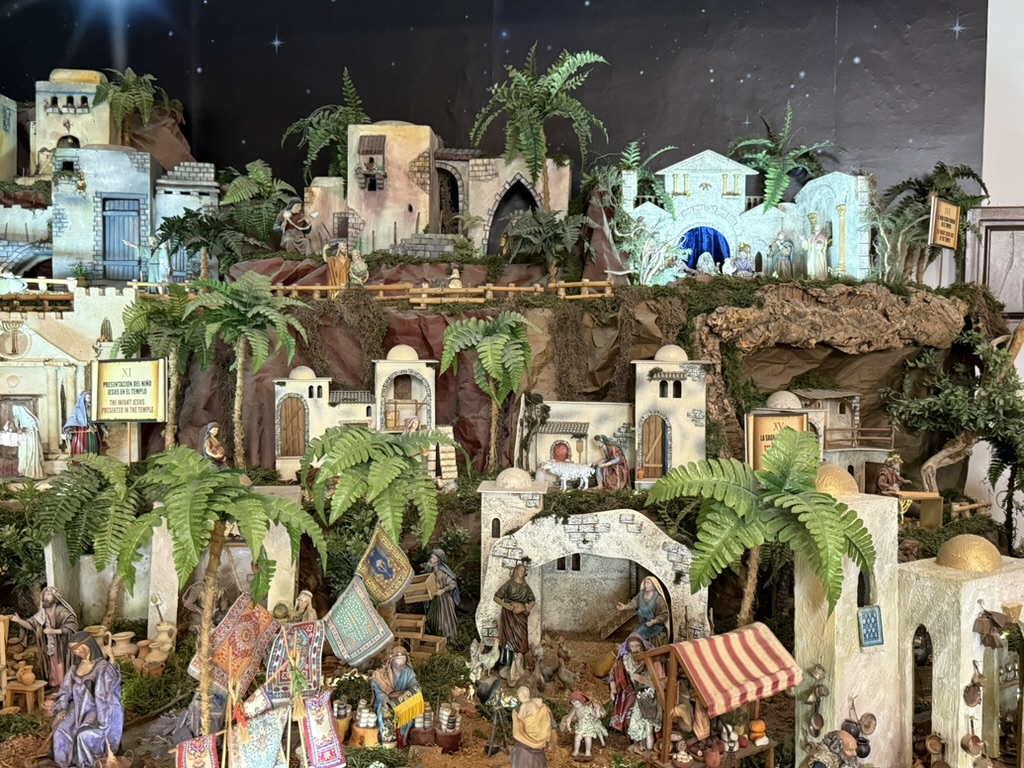
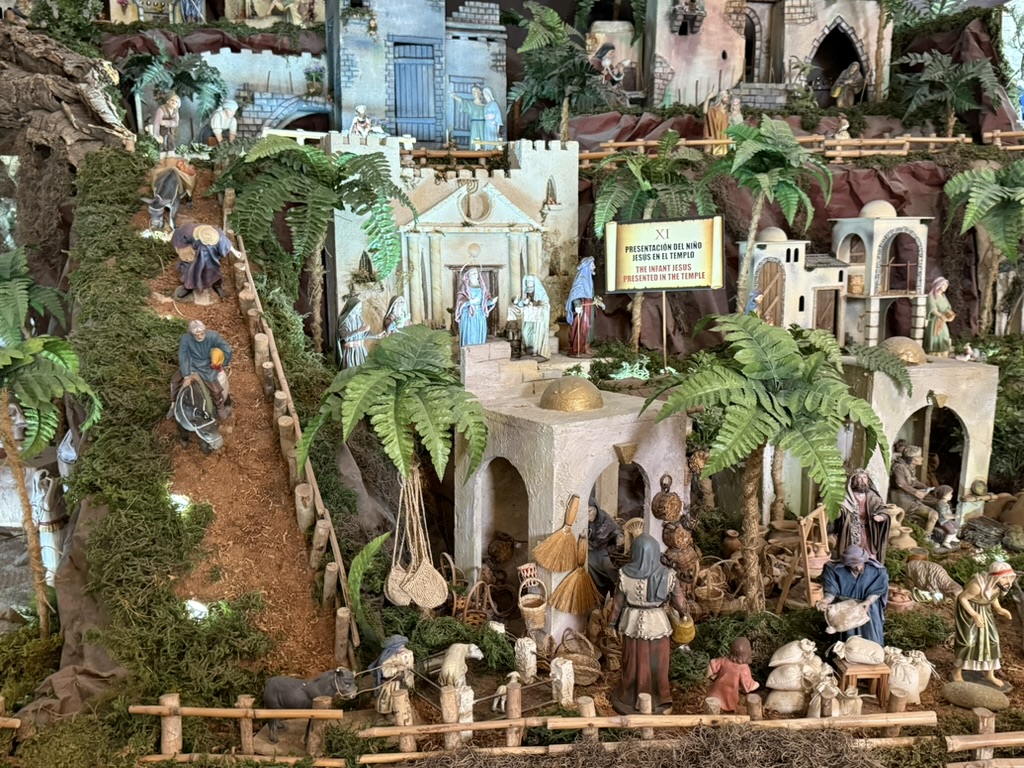
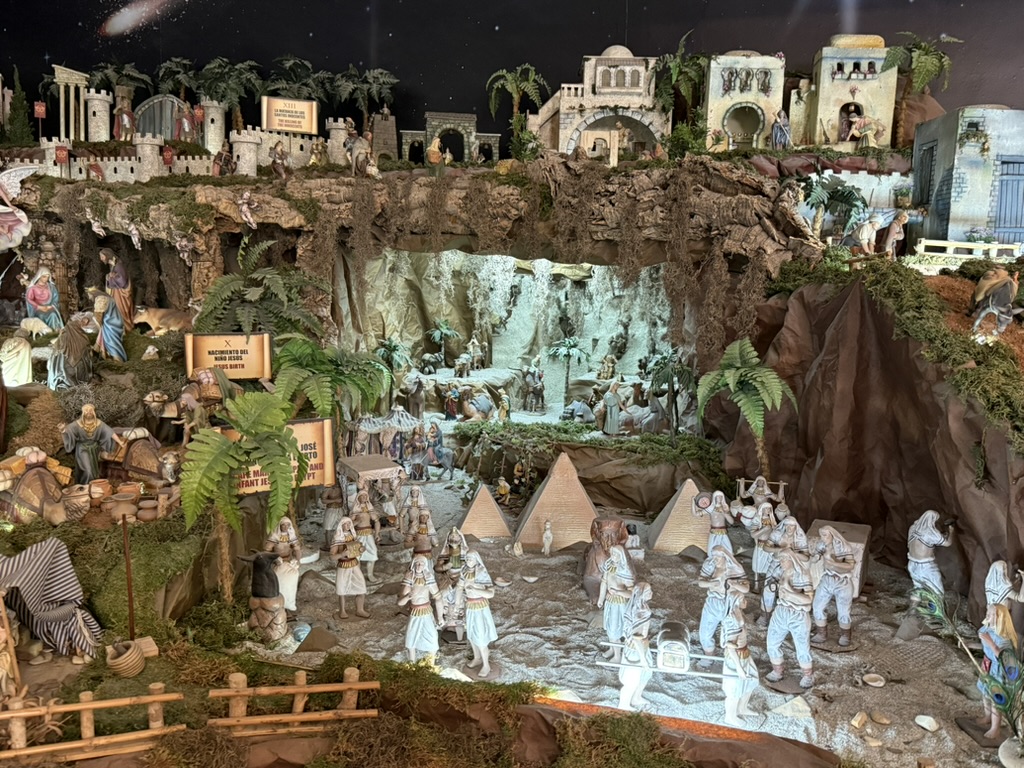


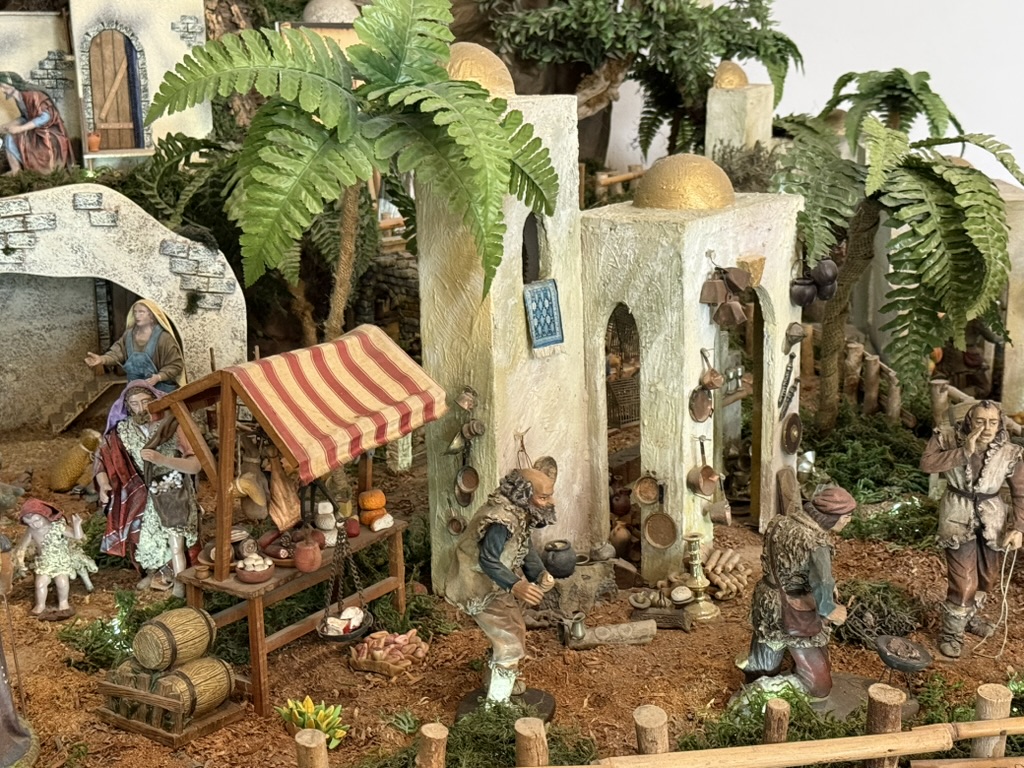


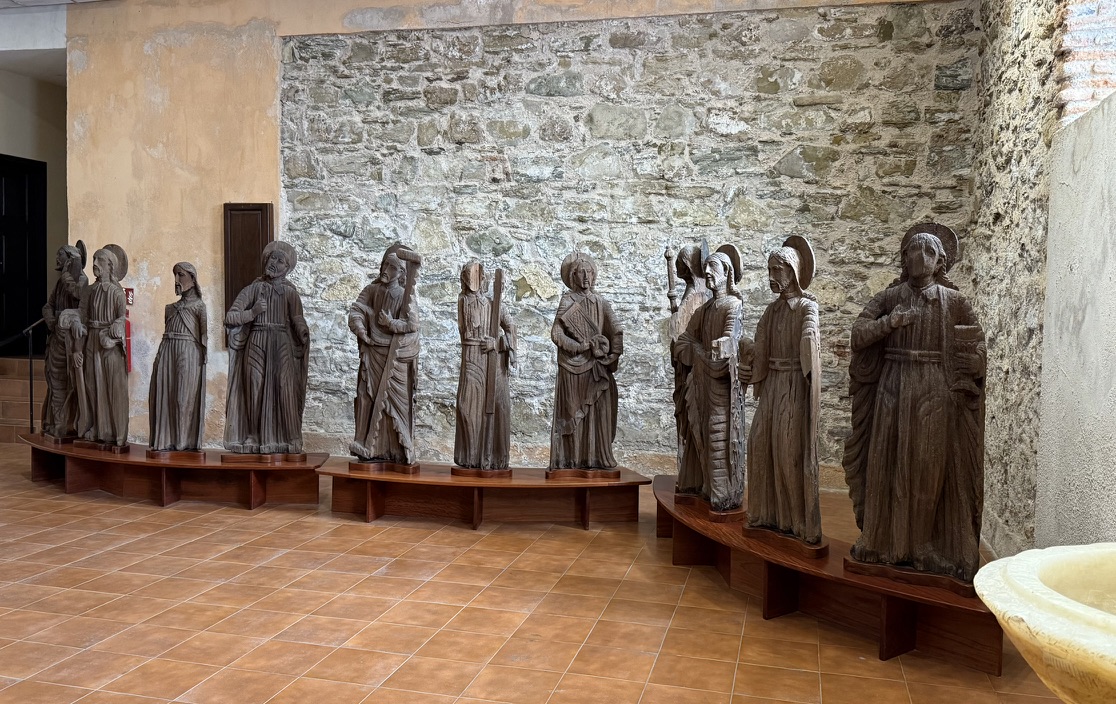
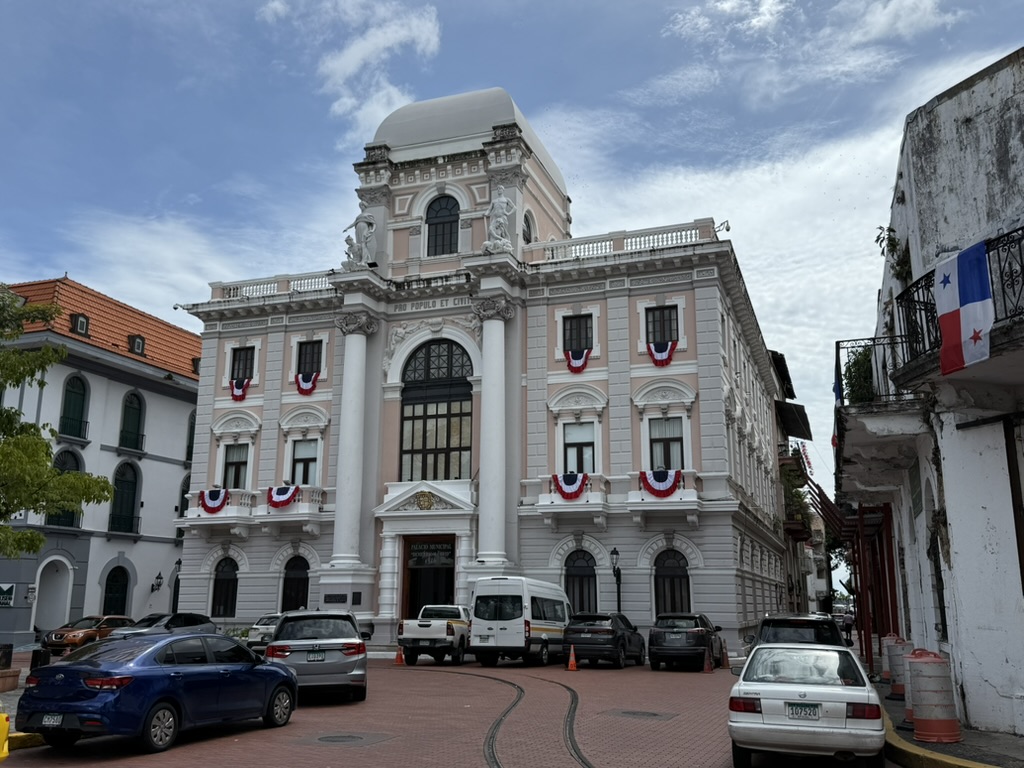
We continued our stroll through Casco Viejo: Plaza Herrera, government buildings, Church of the Mercy (a small church with a 1680 Baroque facade), Metropolitan Cathedral Basilica of Santa Maria the Ancient, and the Municipal Palace.
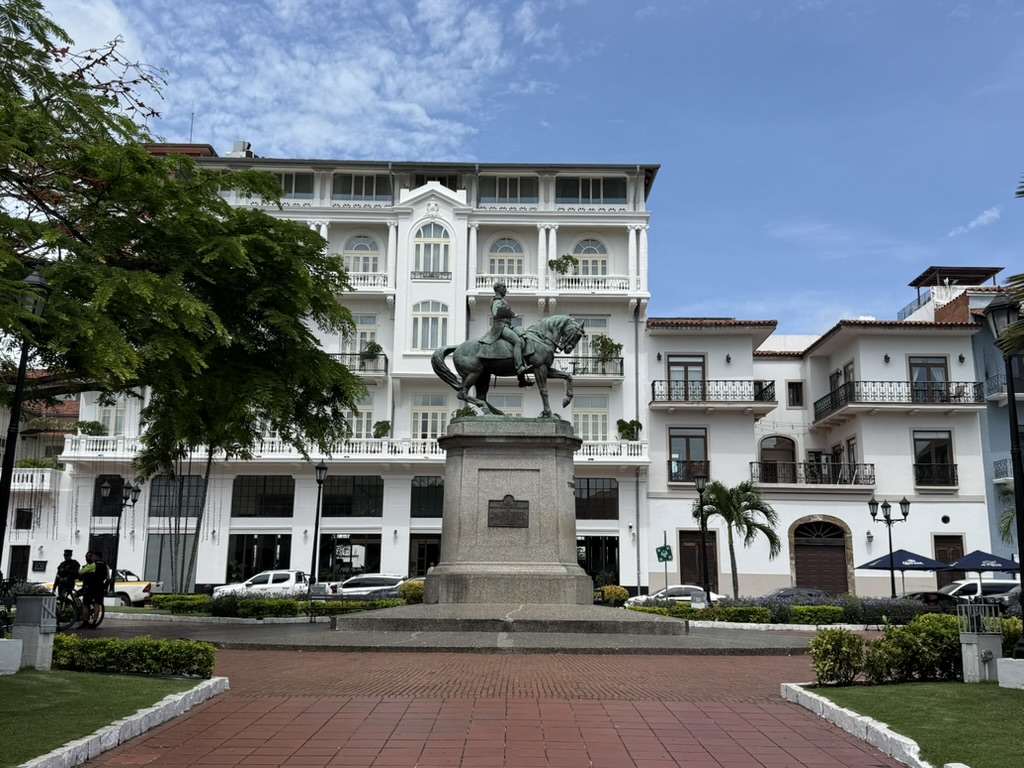

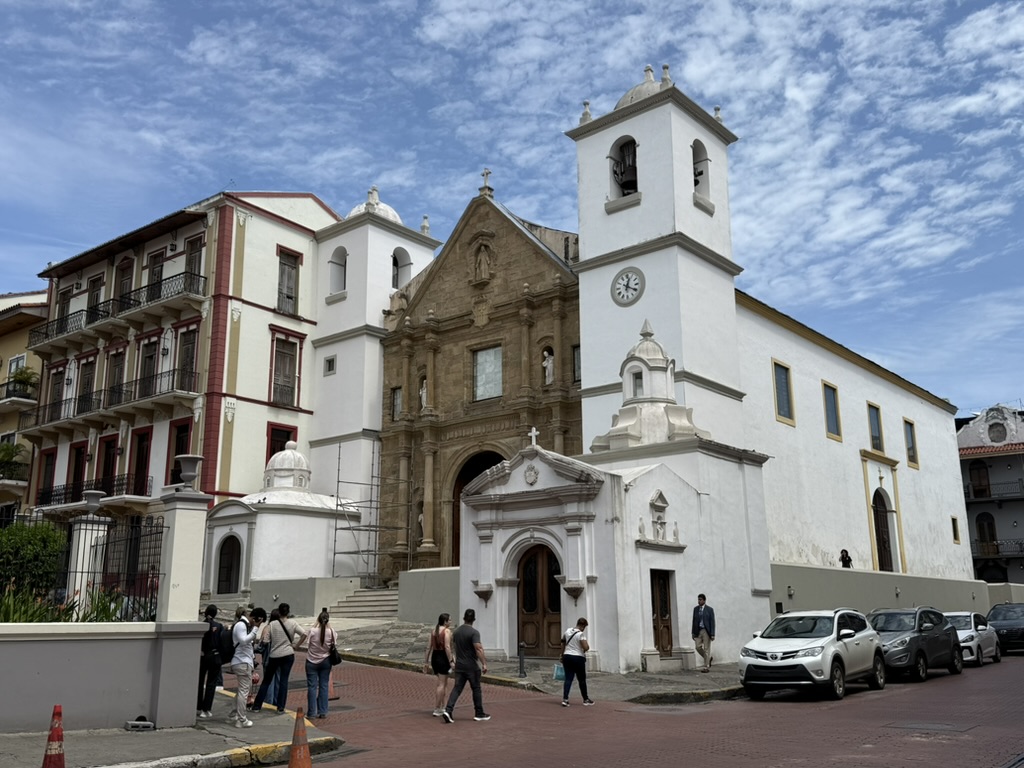

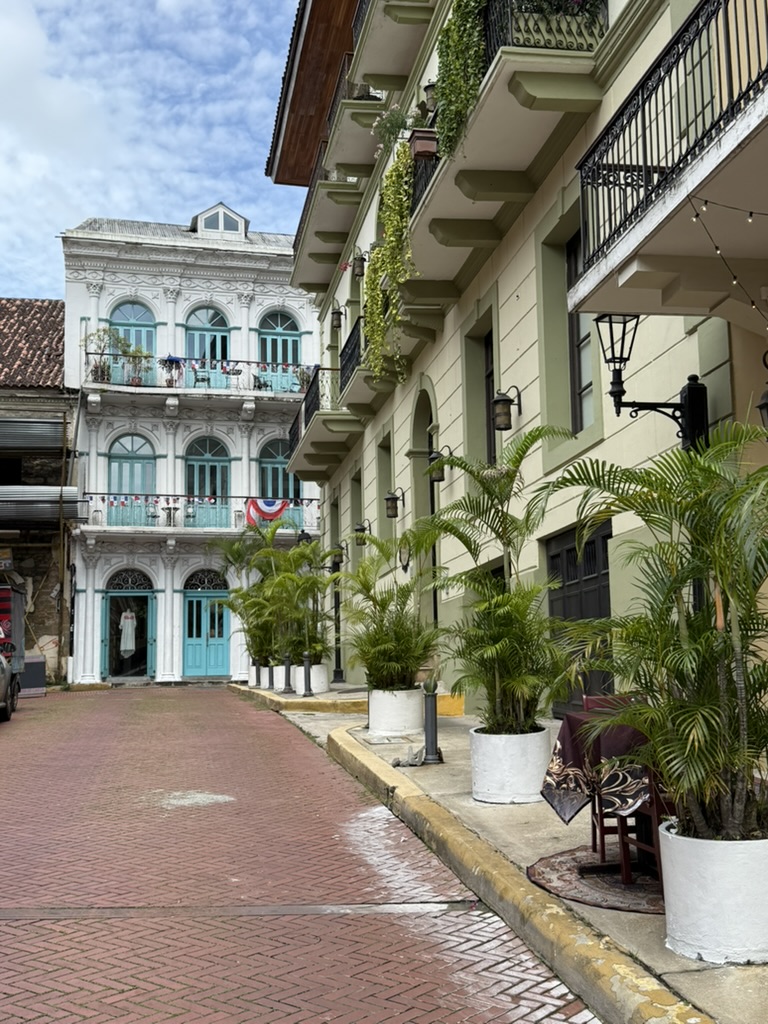
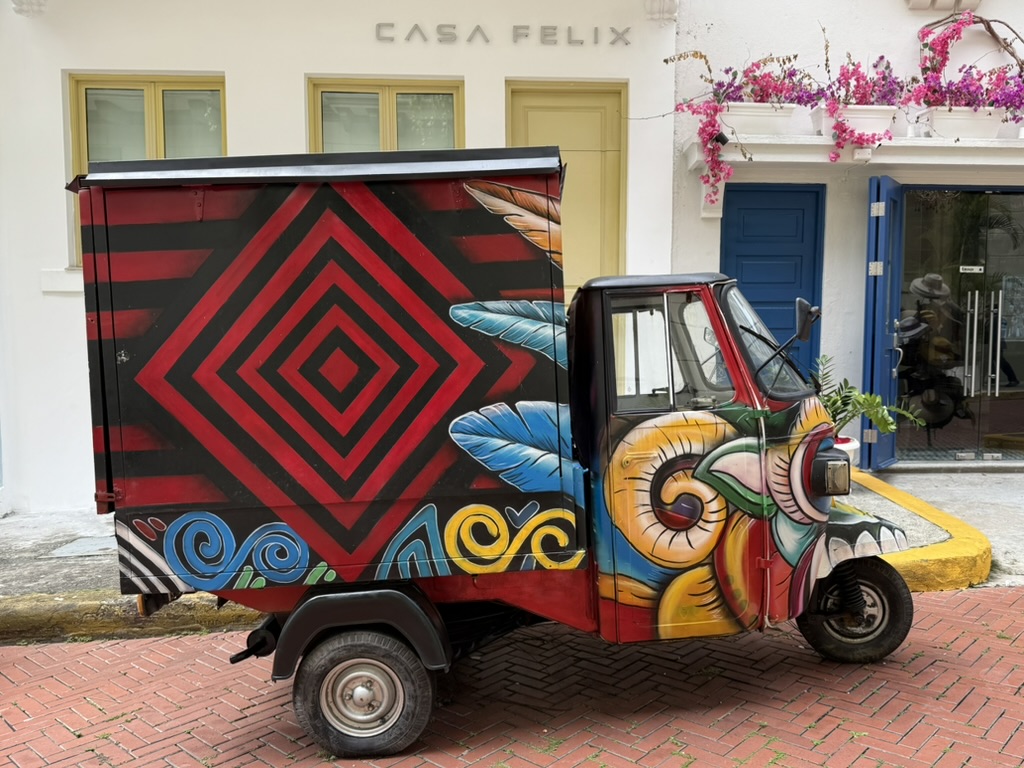
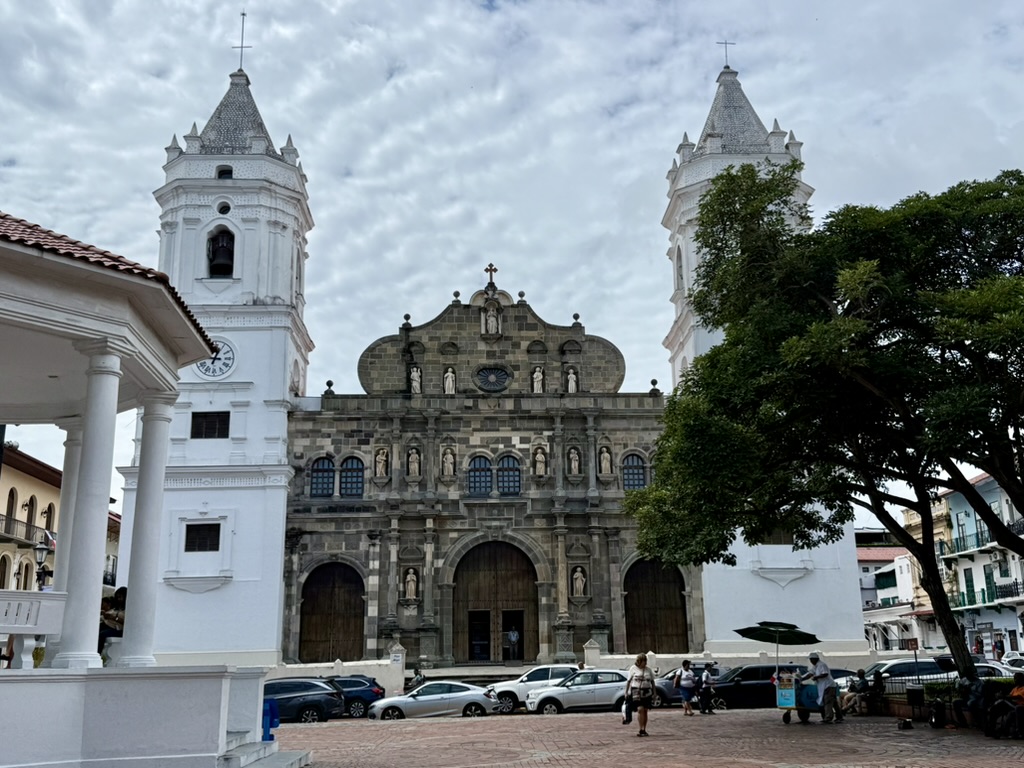
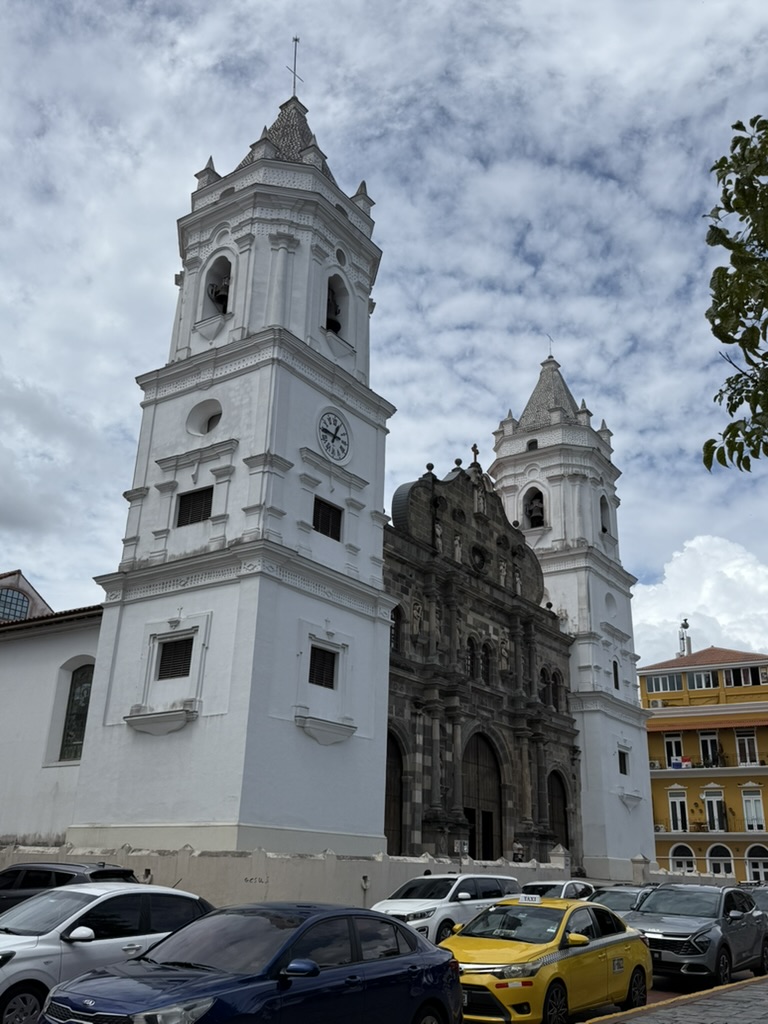

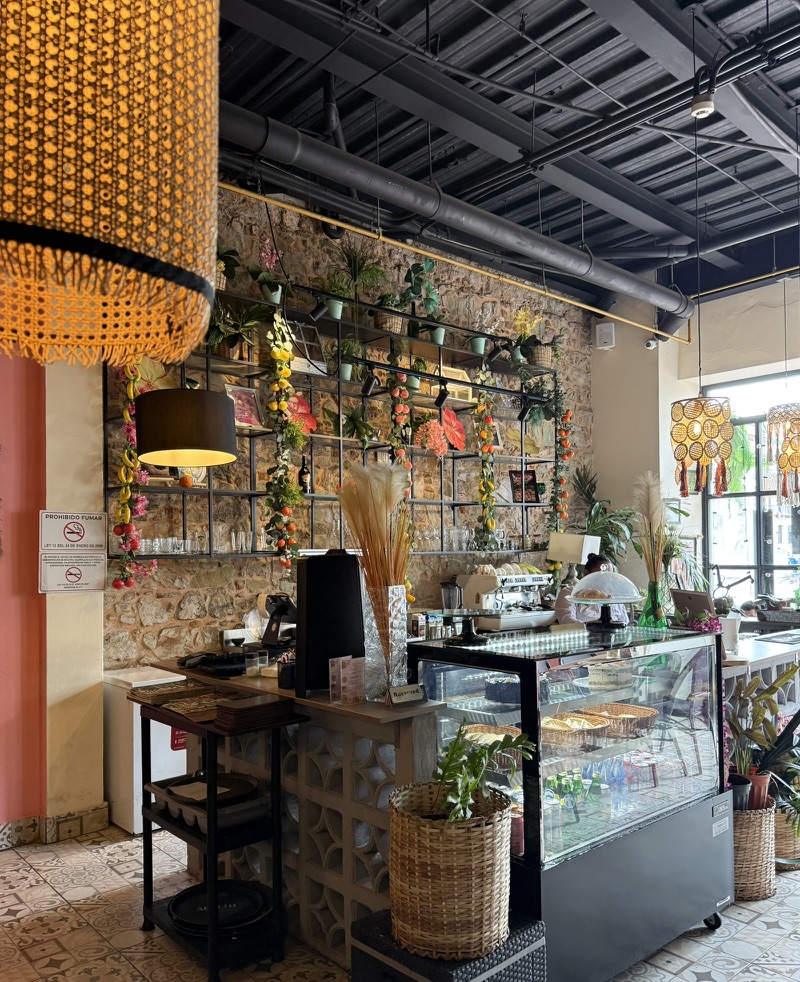
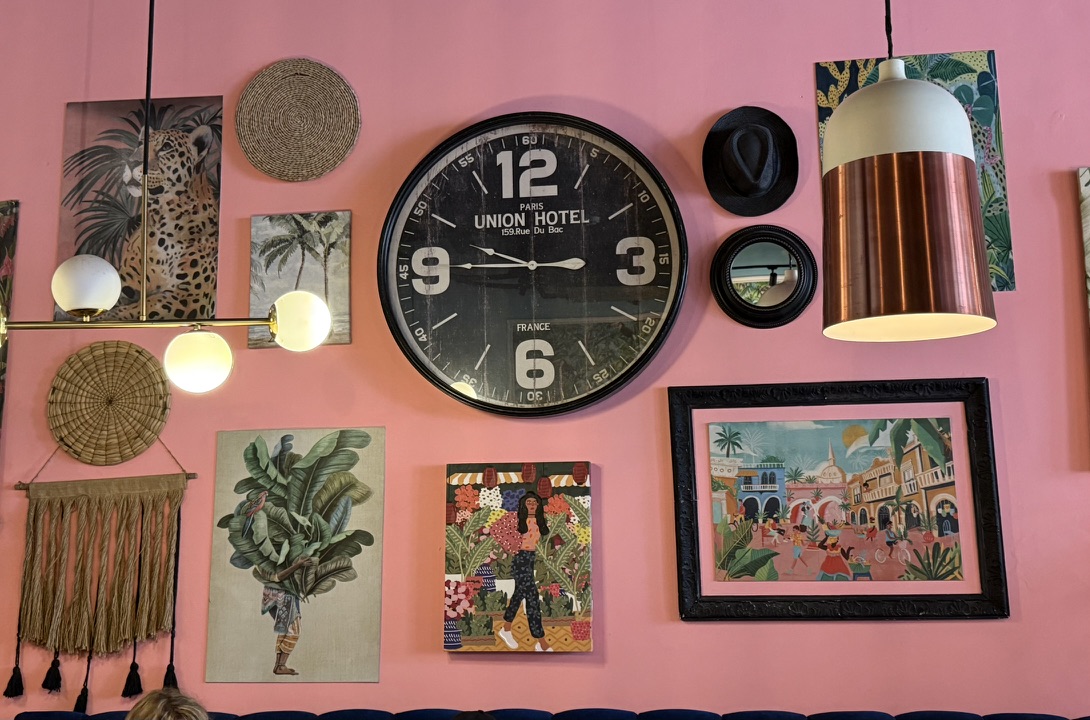
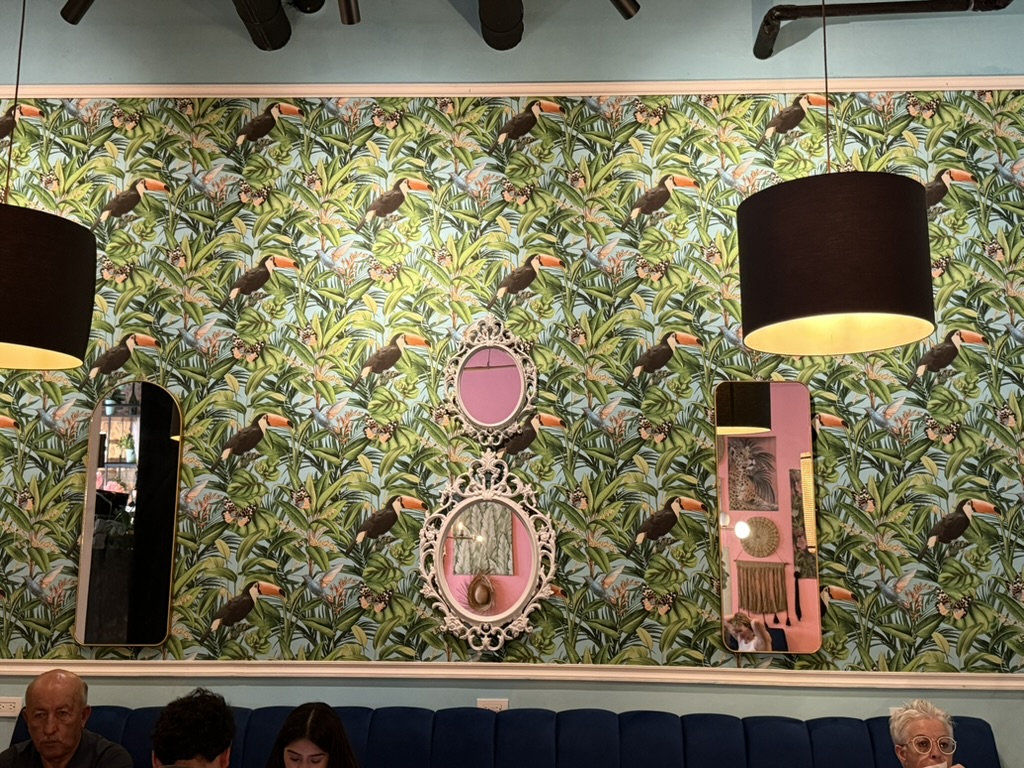
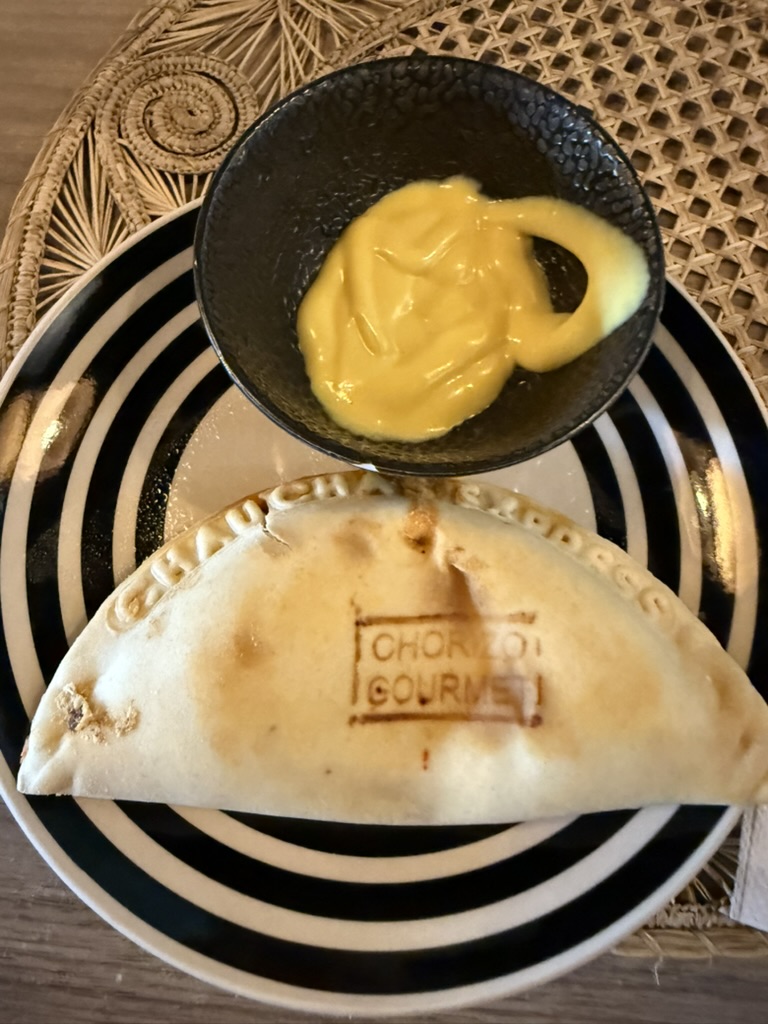
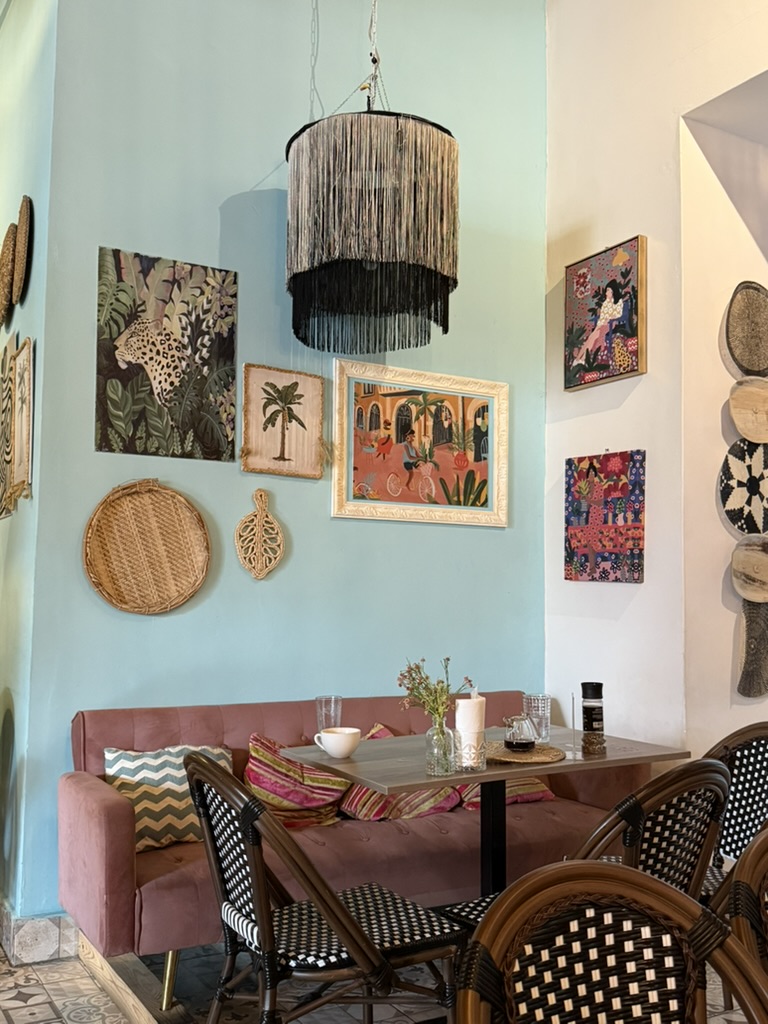
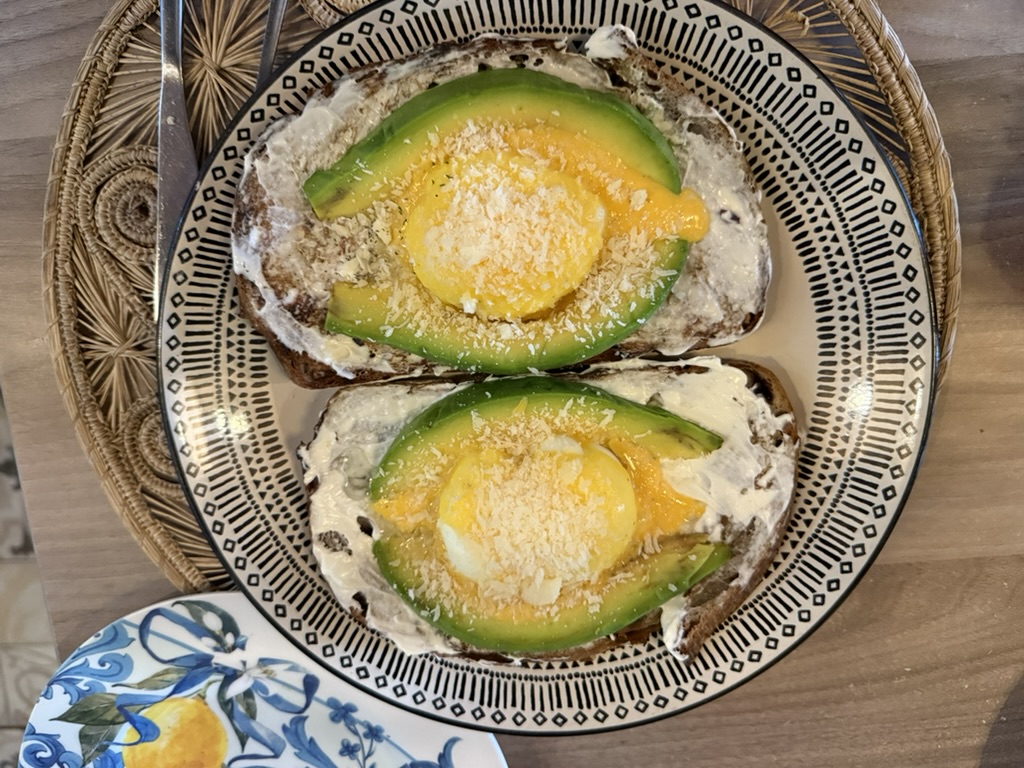
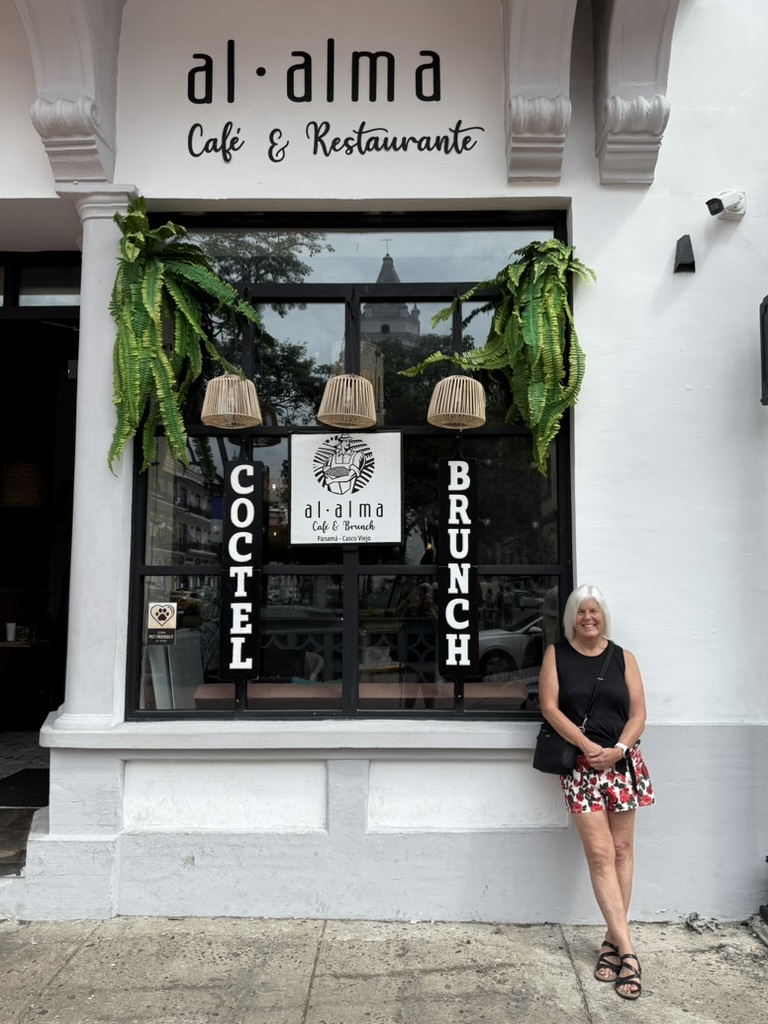
We enjoyed a nice lunch at Al Alma Cafe & Brunch, where we shared a chorizo empañada & Eggs Benedict with avocado & Parmesan. We had a great time chatting with Nicholas, our server from Medellin, Colombia, before heading over to the Panama Canal Museum.


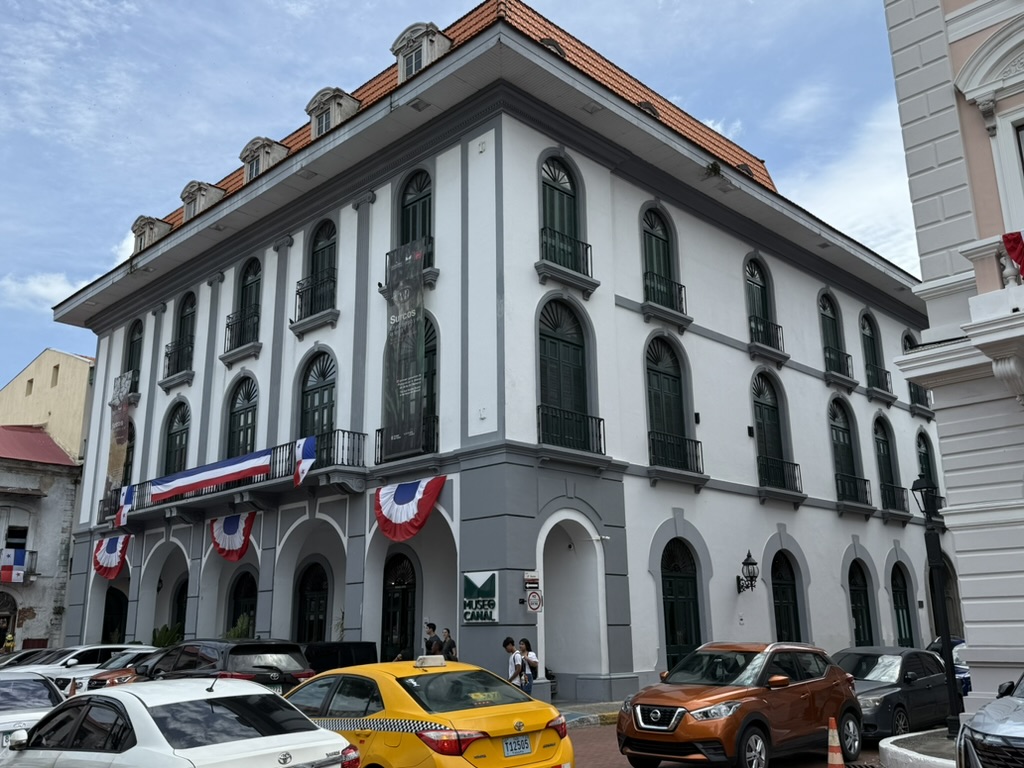
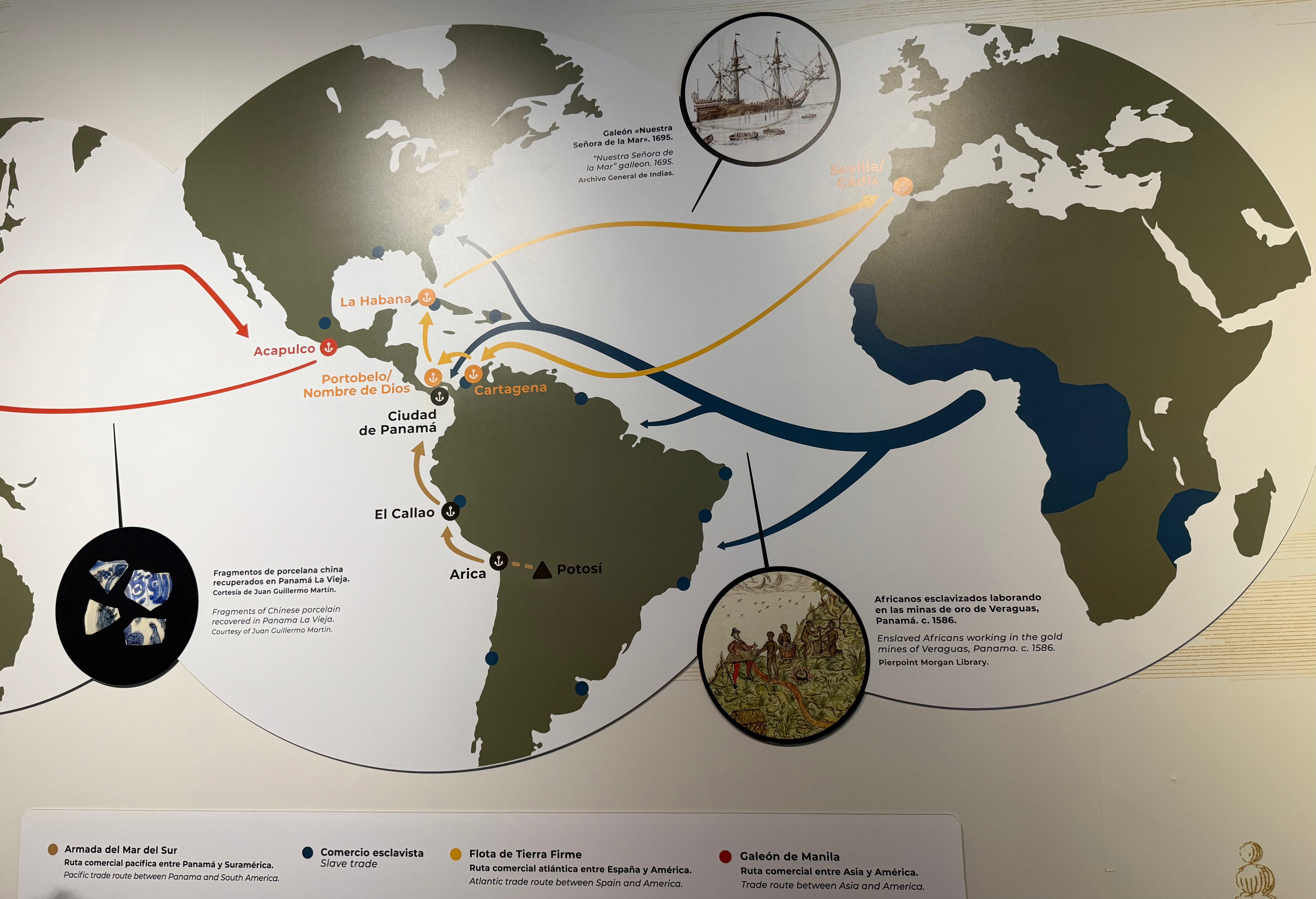
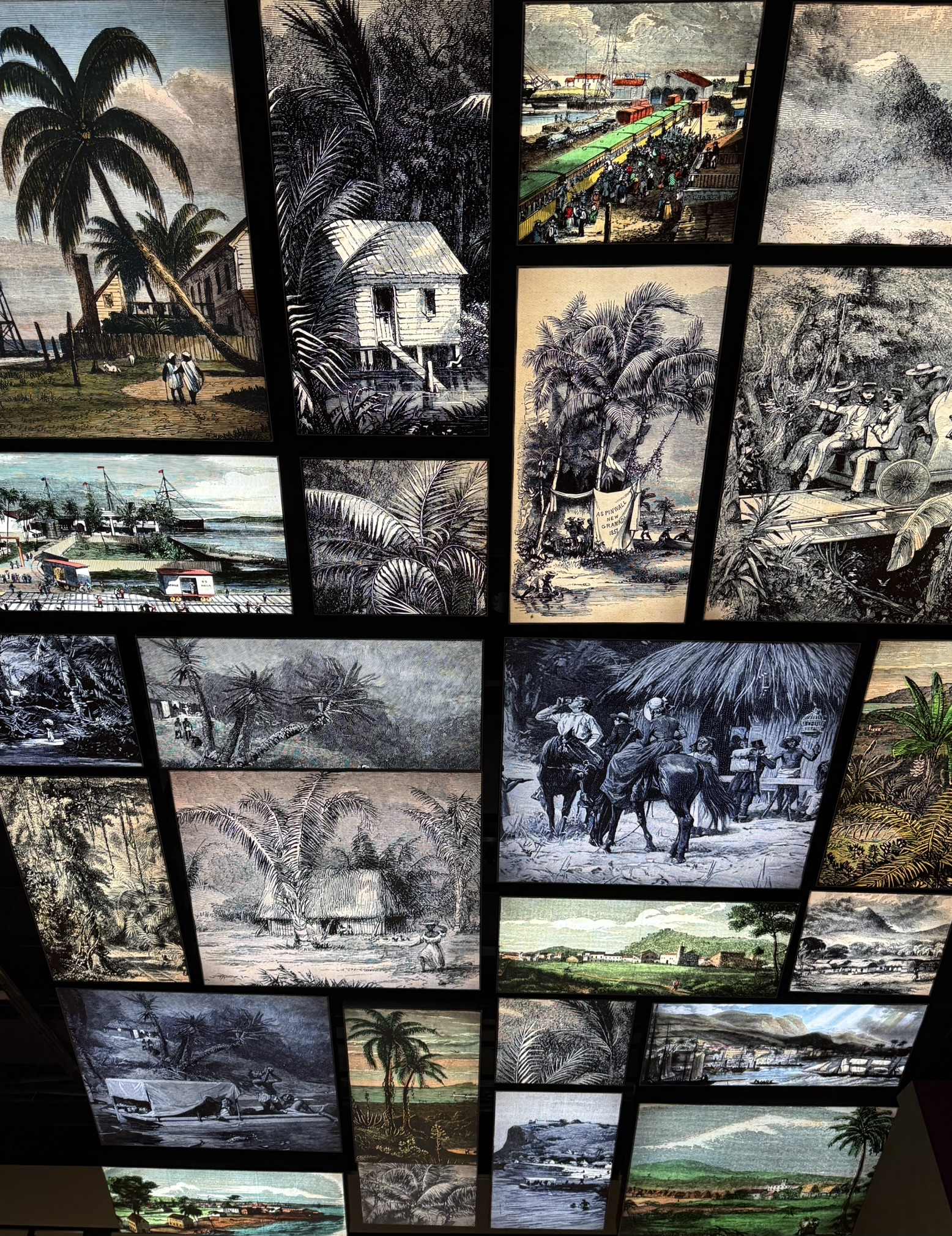
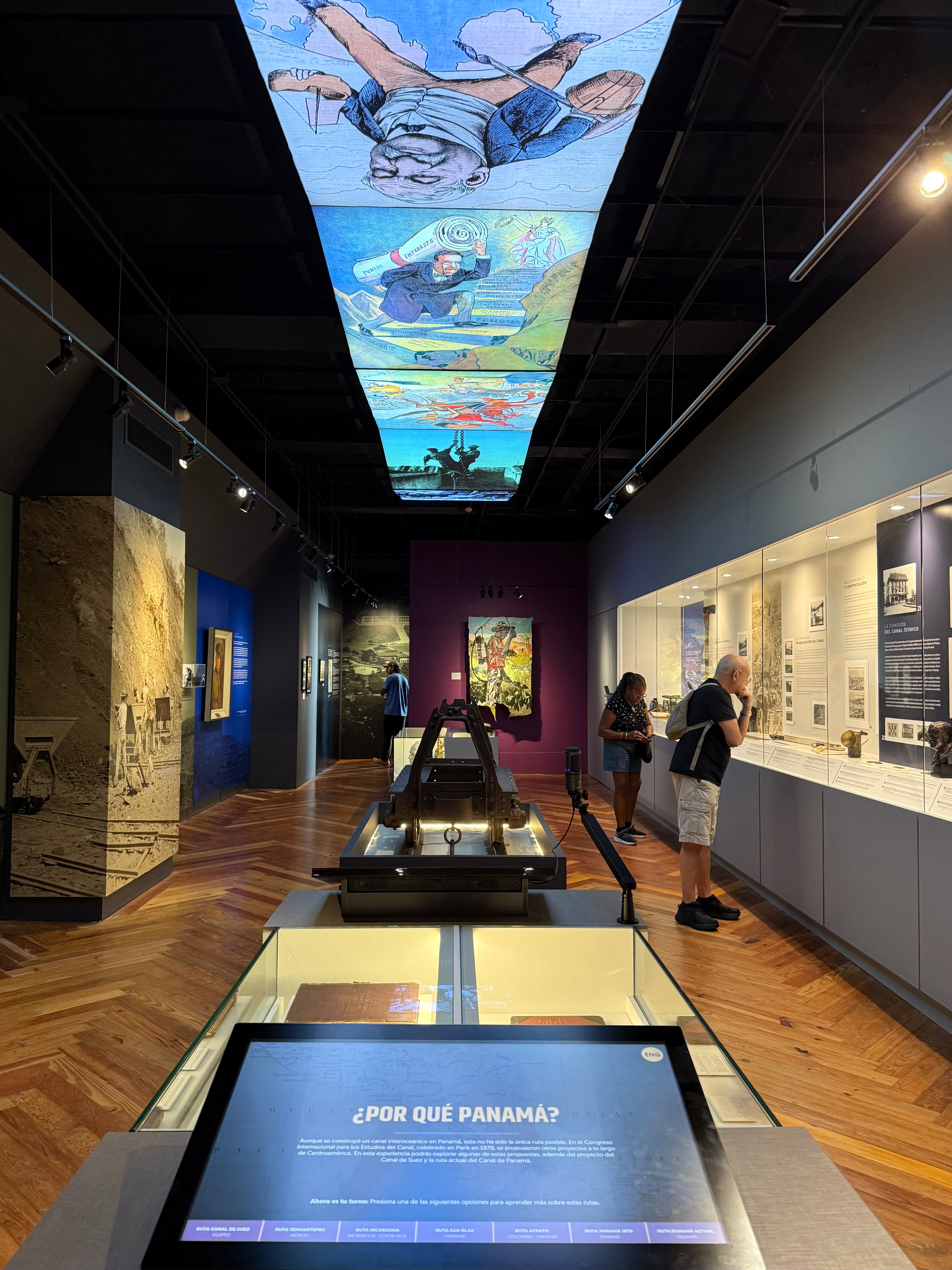
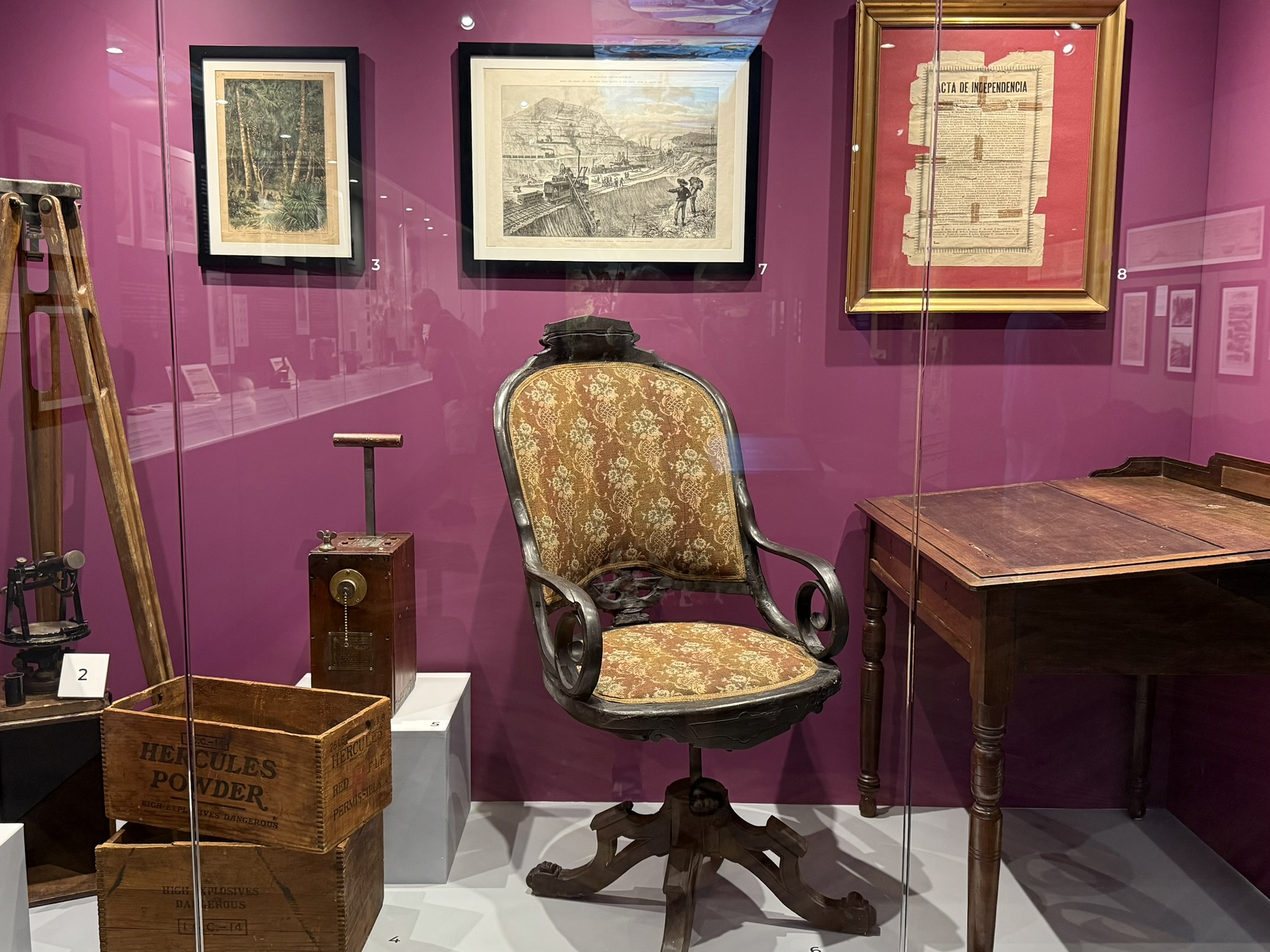
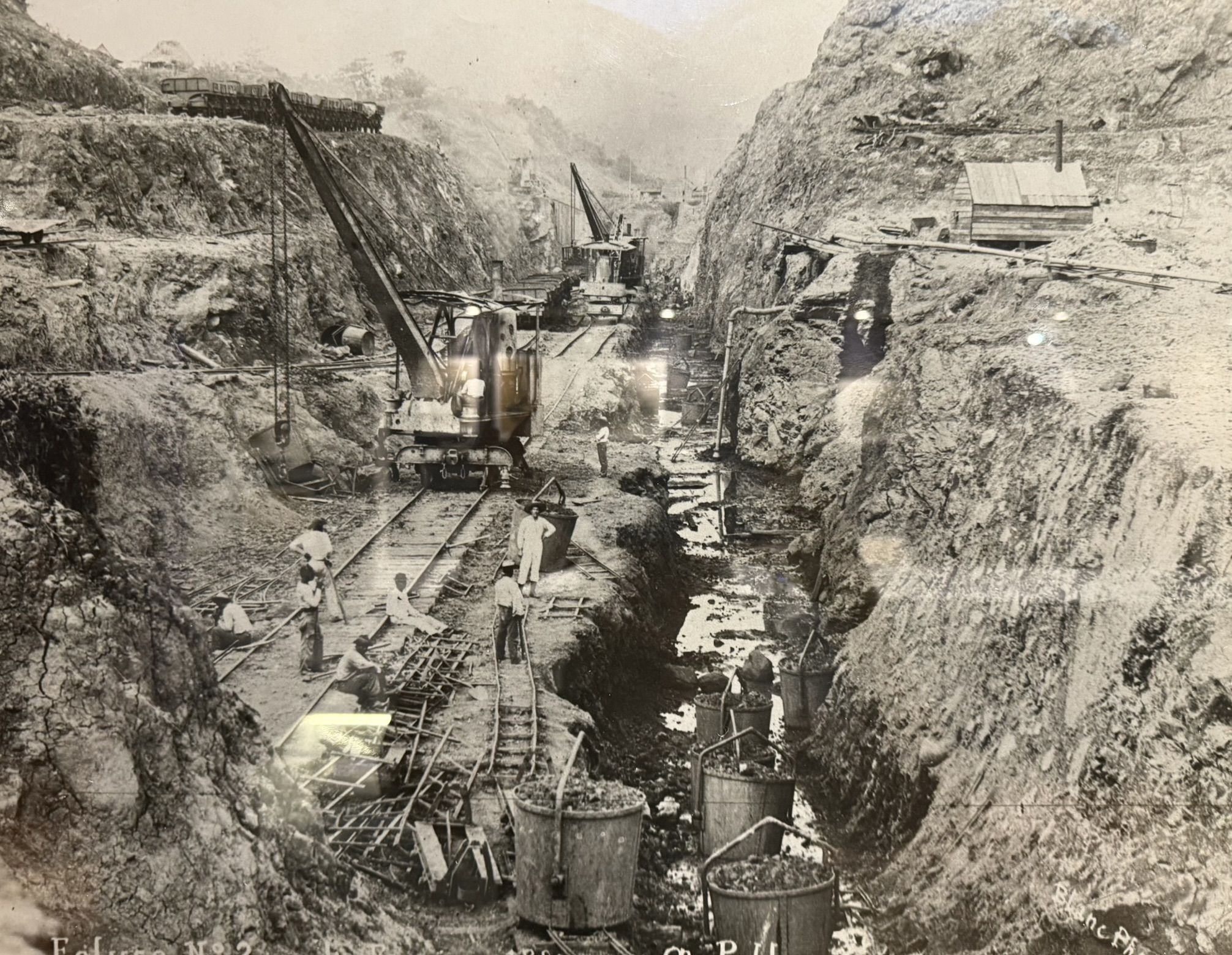
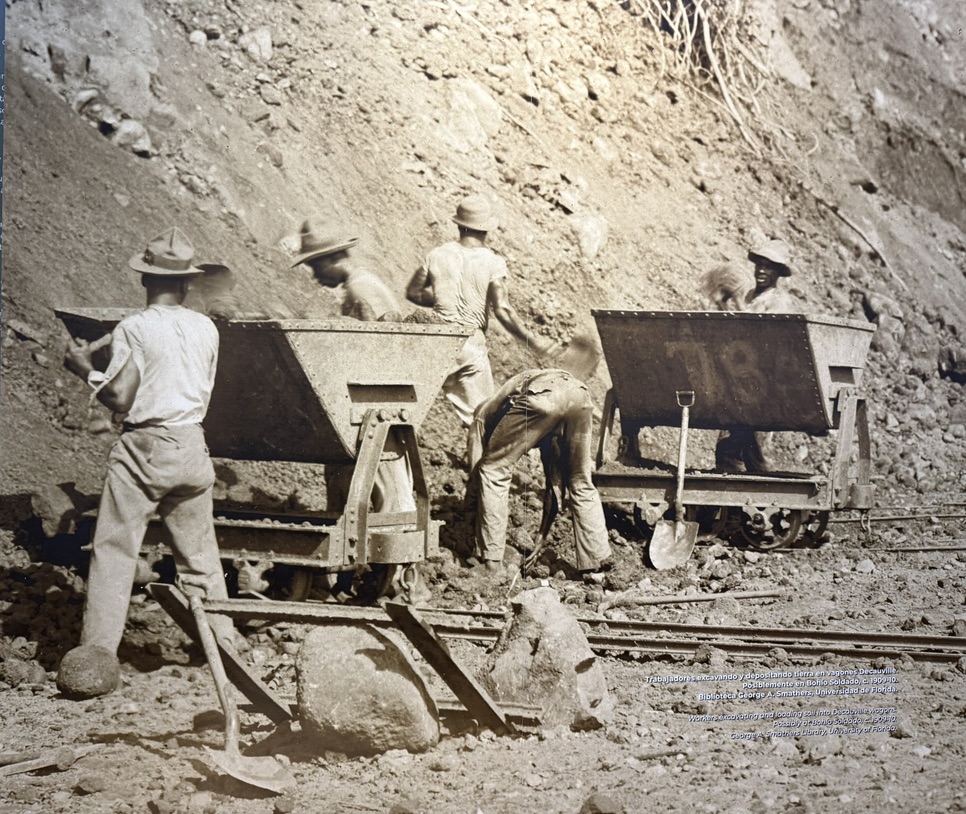
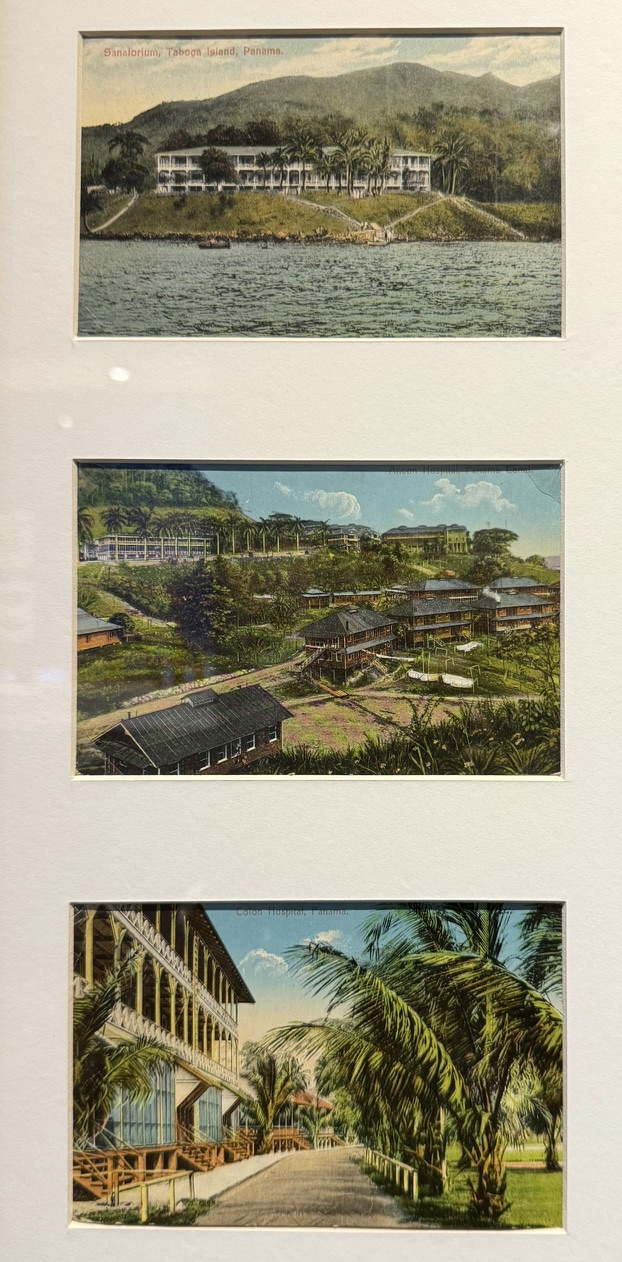
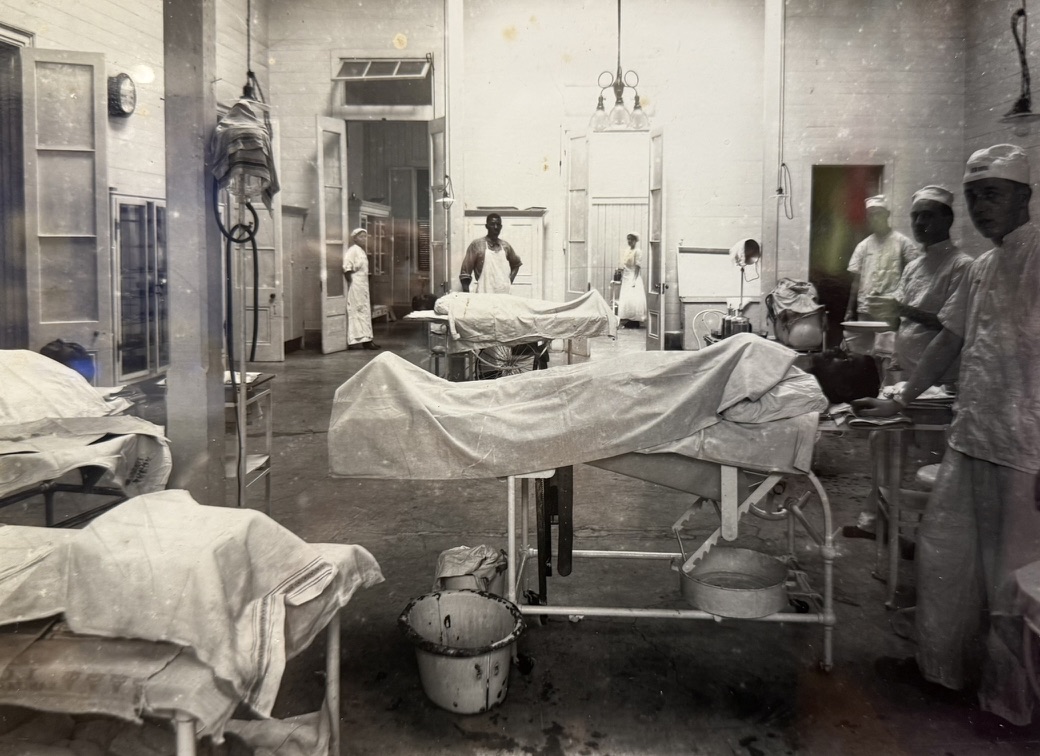
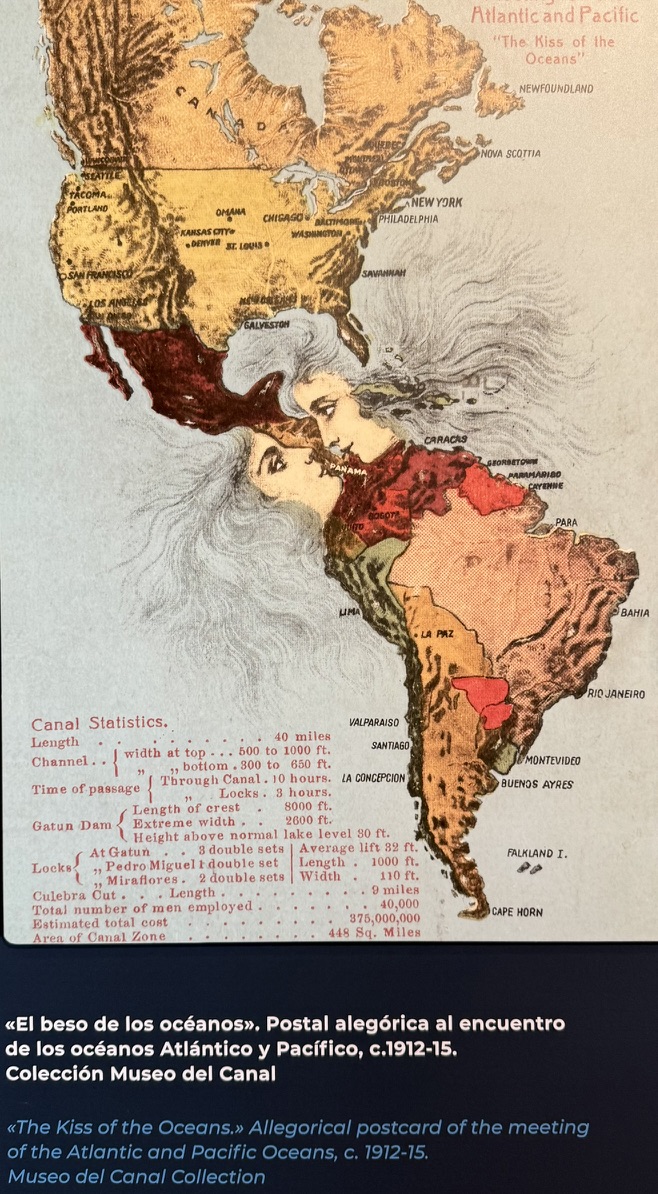
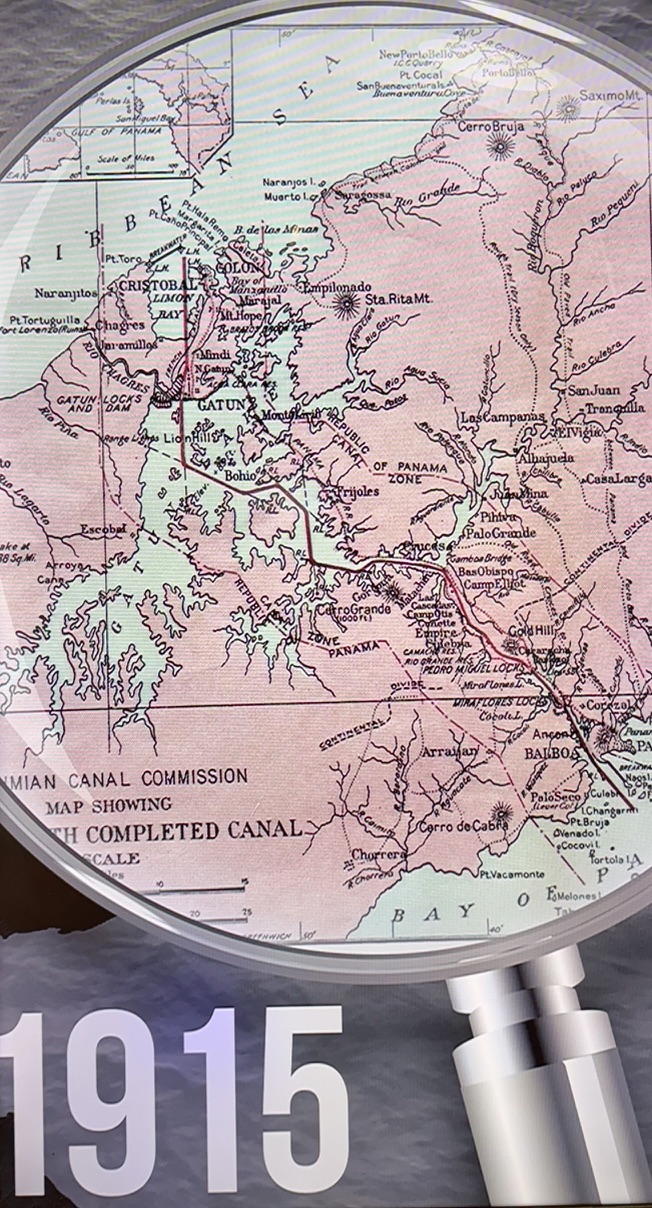
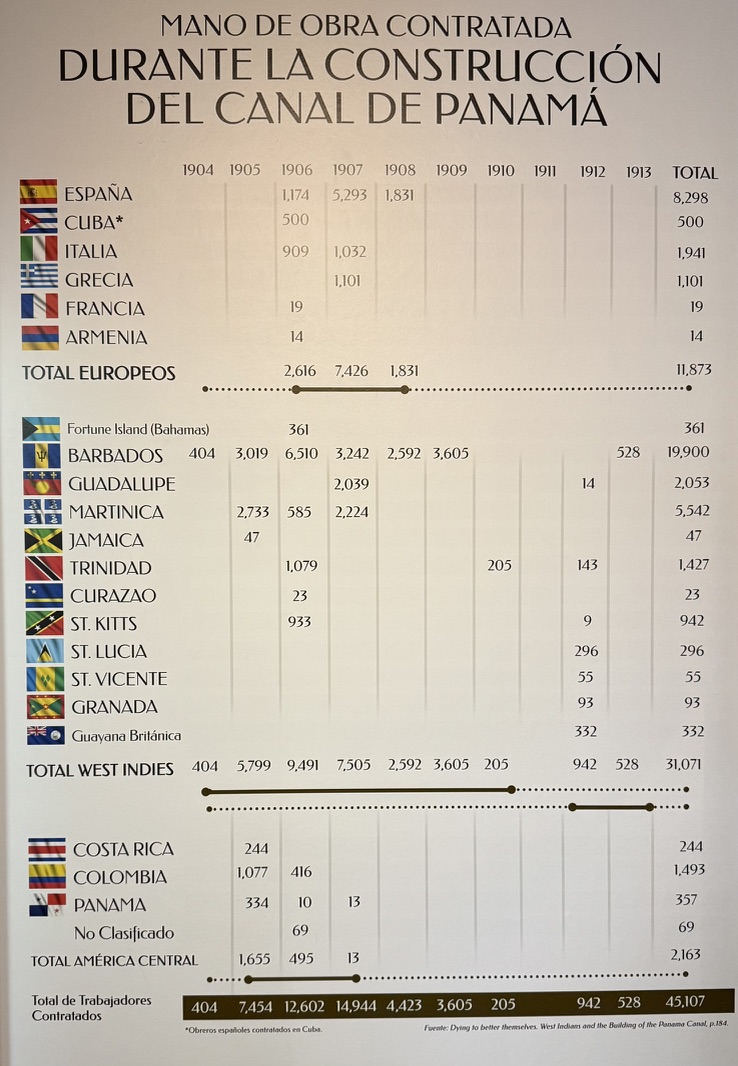
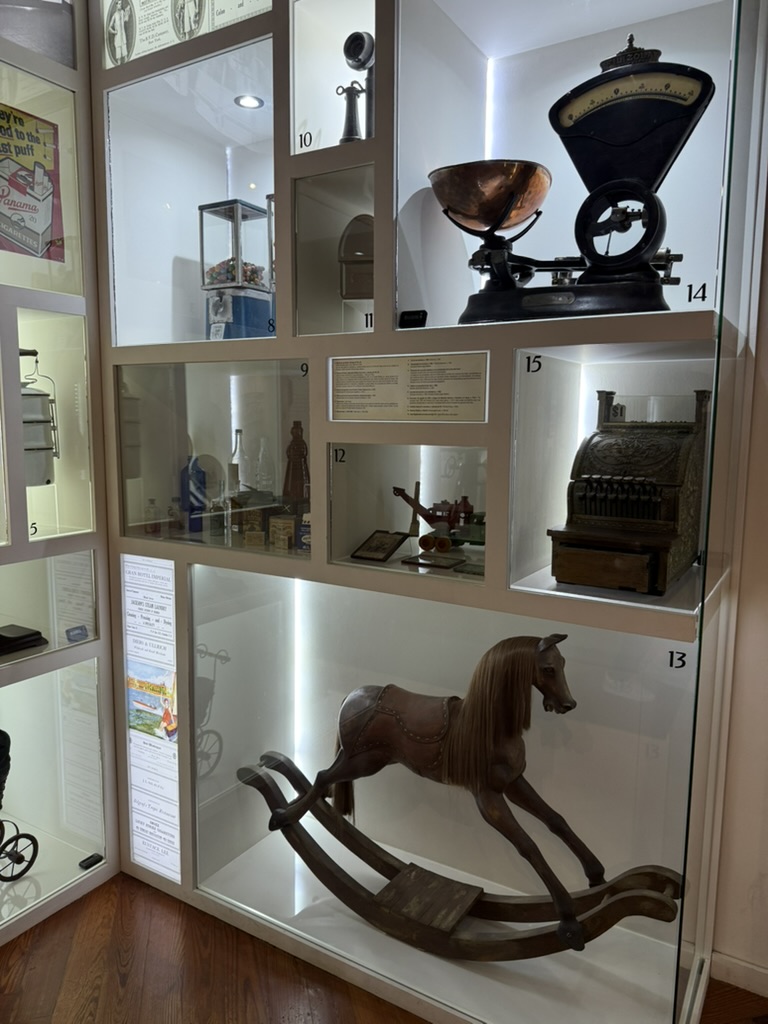
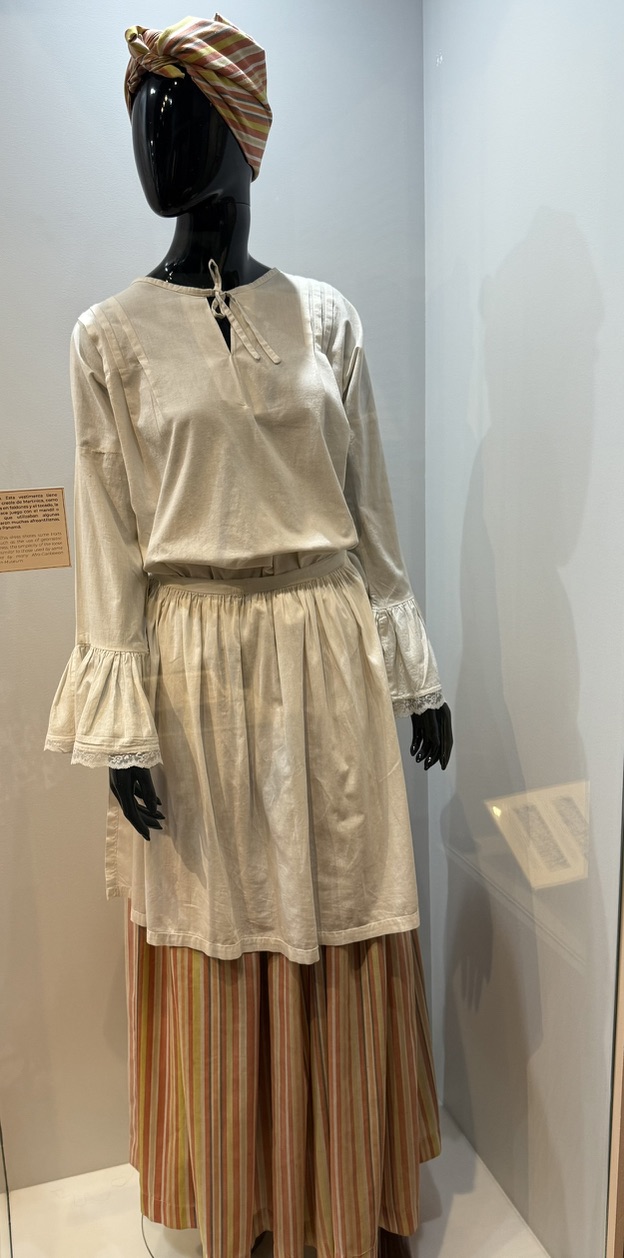
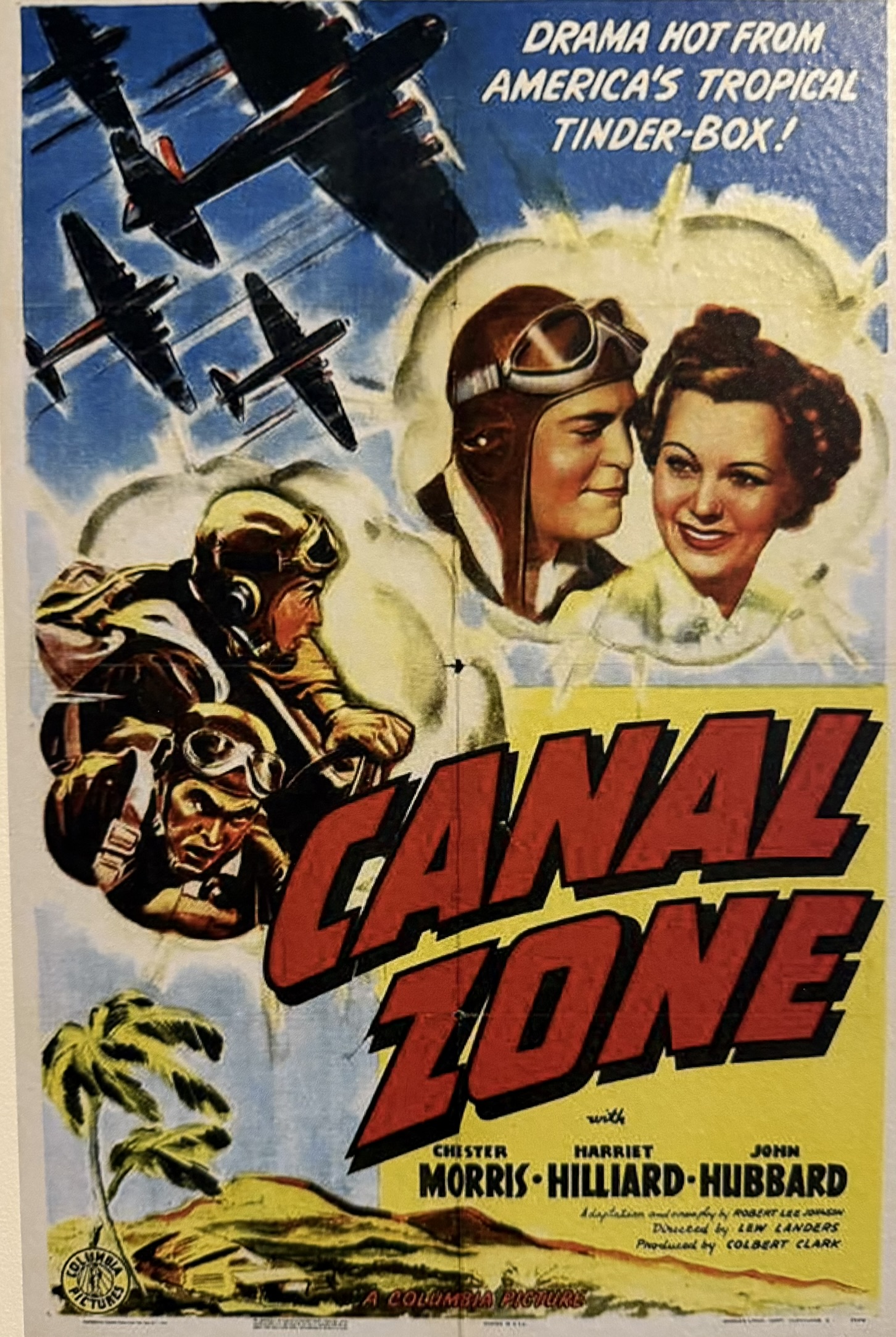
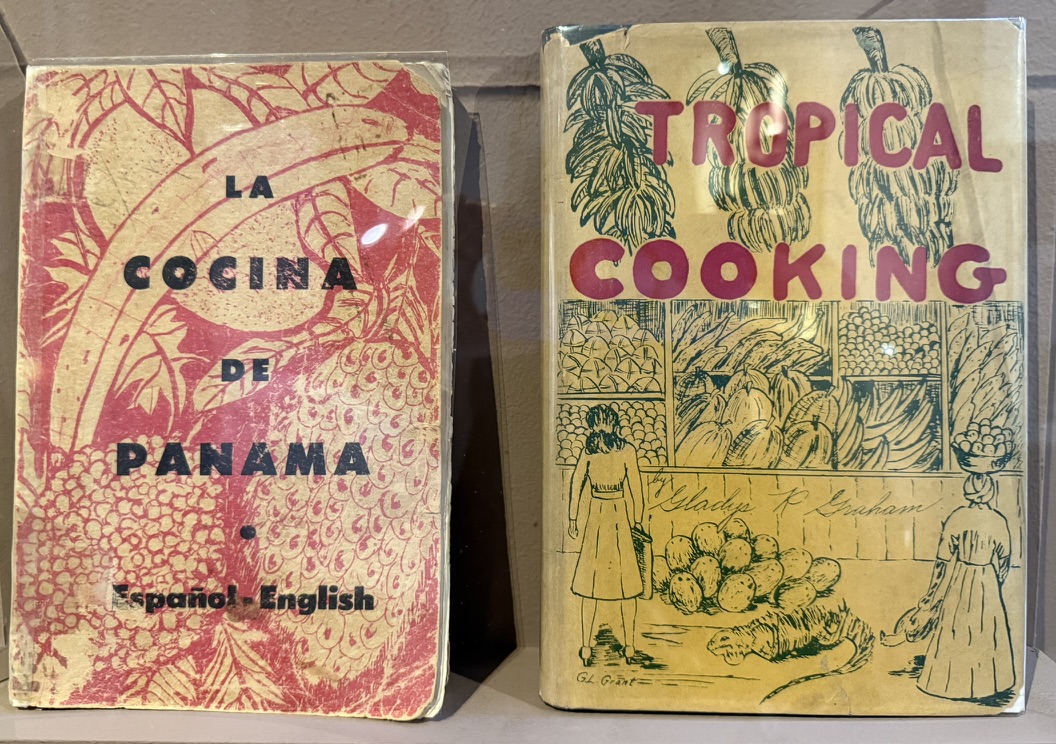
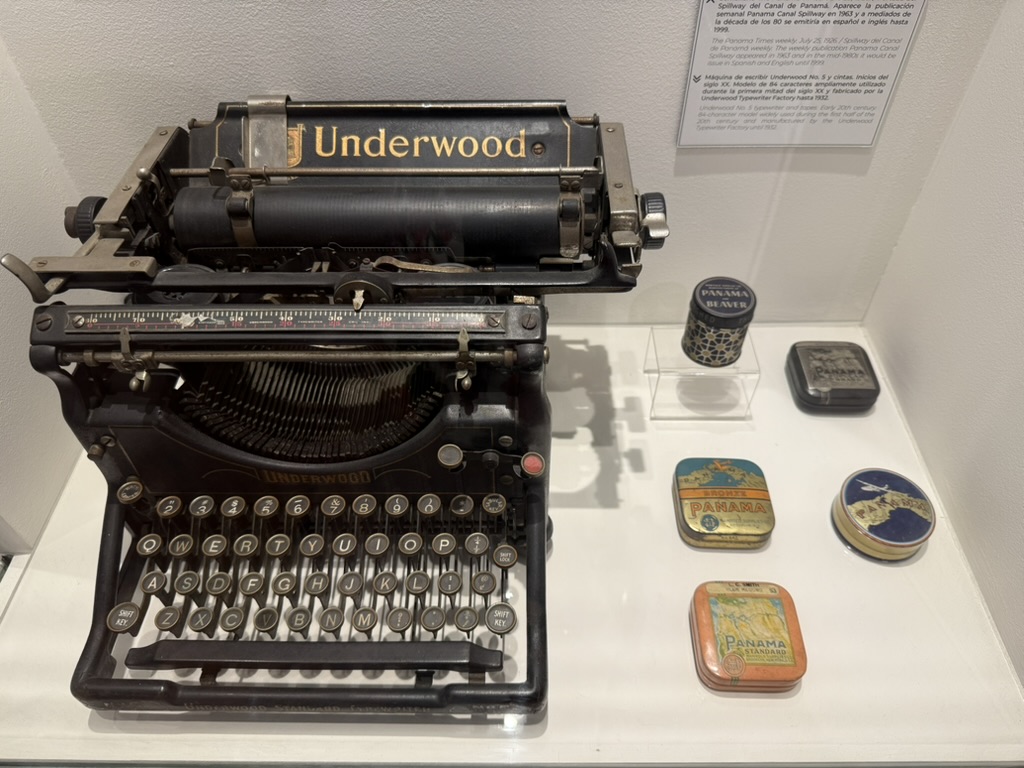
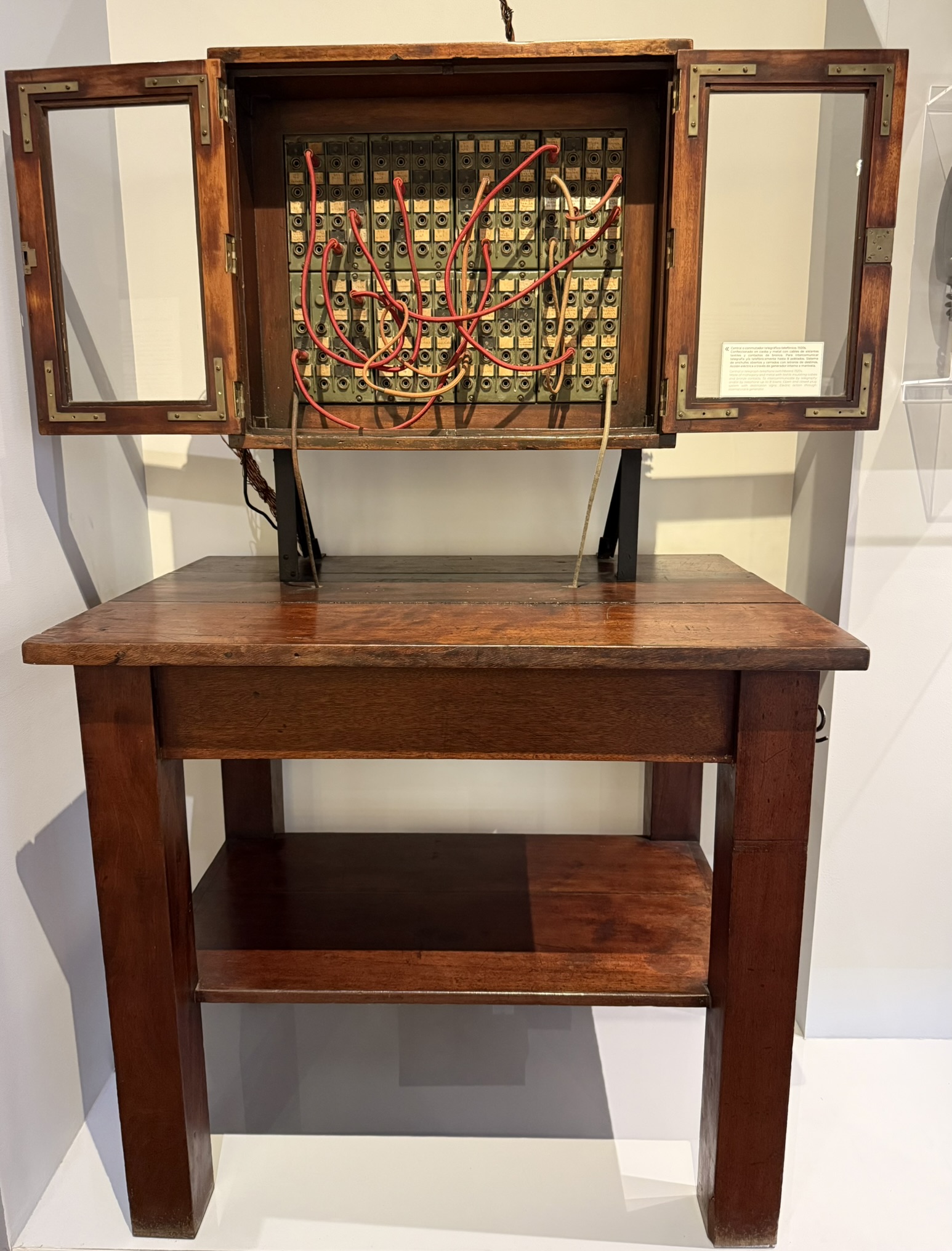
The Panama Canal Museum (Interoceanic Canal Museum) covers a lot of the complicated history of this massive project.
The Panama Canal is an artificial 82-kilometer (51-mile) waterway in Panama that connects the Caribbean Sea with the Pacific Ocean. It cuts across the narrowest point of the Isthmus of Panama, and is a conduit for maritime trade between the Atlantic Ocean and the Pacific Ocean.
France began work on the canal in 1881, but stopped in 1889 because of a lack of investors’ confidence due to engineering problems and a high worker mortality rate. The US took over the project in 1904 and opened the canal in 1914. The US continued to control the canal and the surrounding Panama Canal Zone until the Torrijos–Carter Treaties provided for its handover to Panama in 1977. After a period of joint American–Panamanian control, the Panamanian government took control in 1999. It is now managed and operated by the Panamanian government-owned Panama Canal Authority.
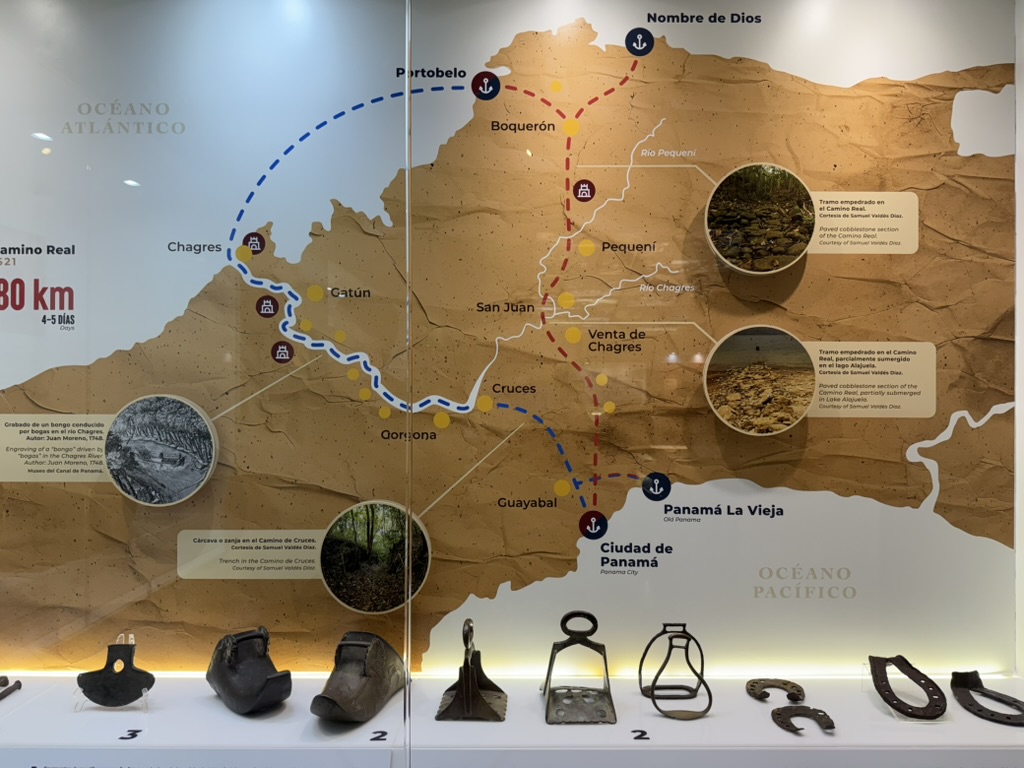
The history of the canal is long, complicated, and littered with lost lives. Mike just finished an excellent read about it by David MuCullough: The Path Between the Seas. If one took the time to read every placard in the museum, one might also gain a thorough understanding of the obstacles faced in the canal’s construction.


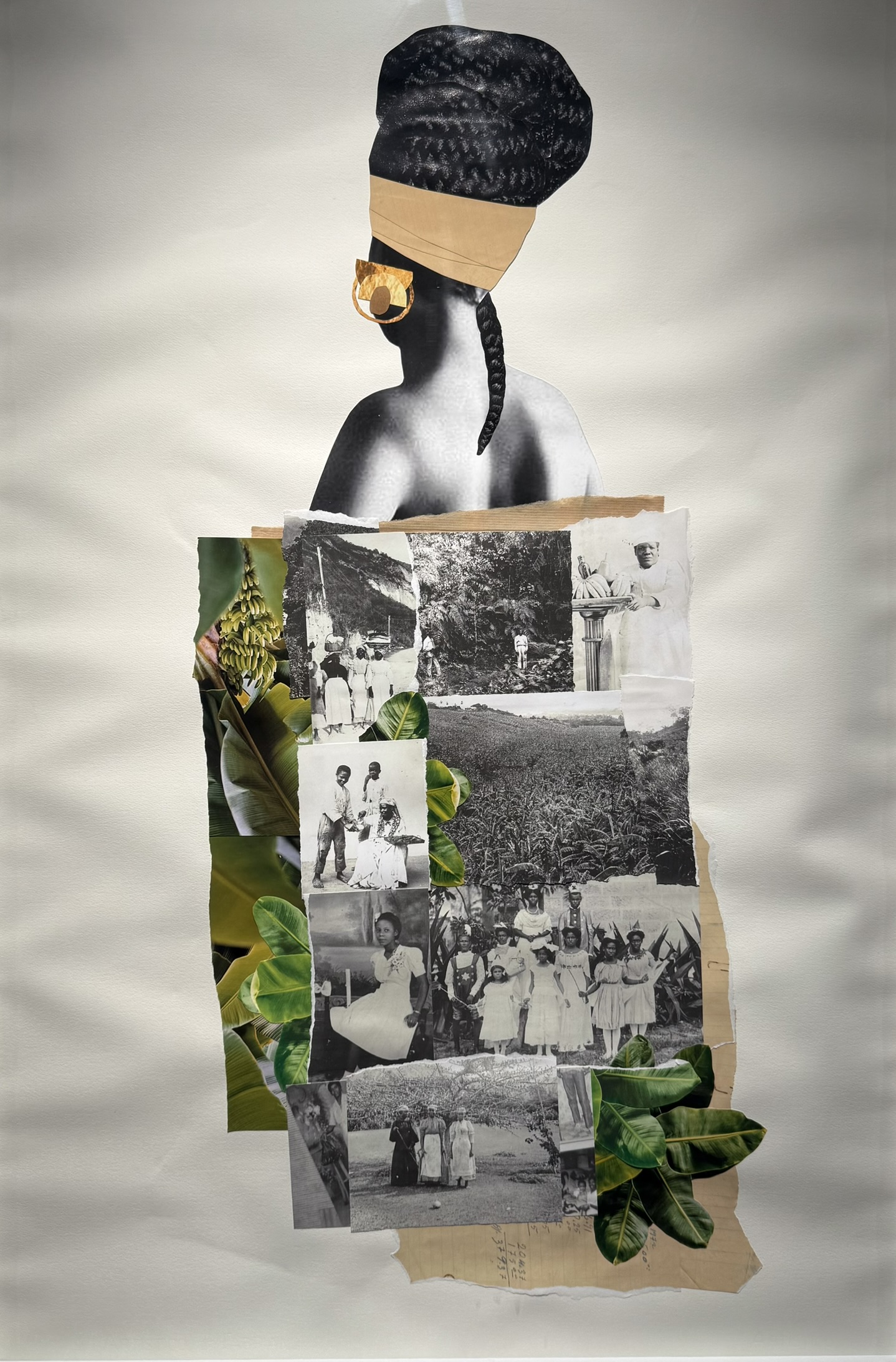





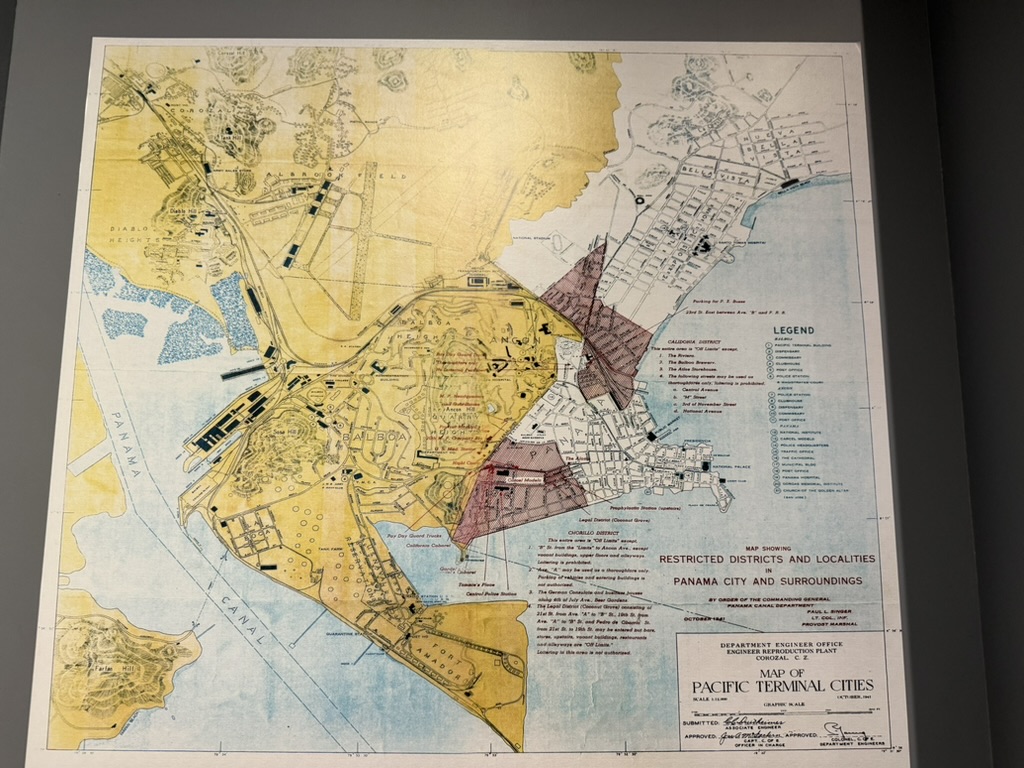
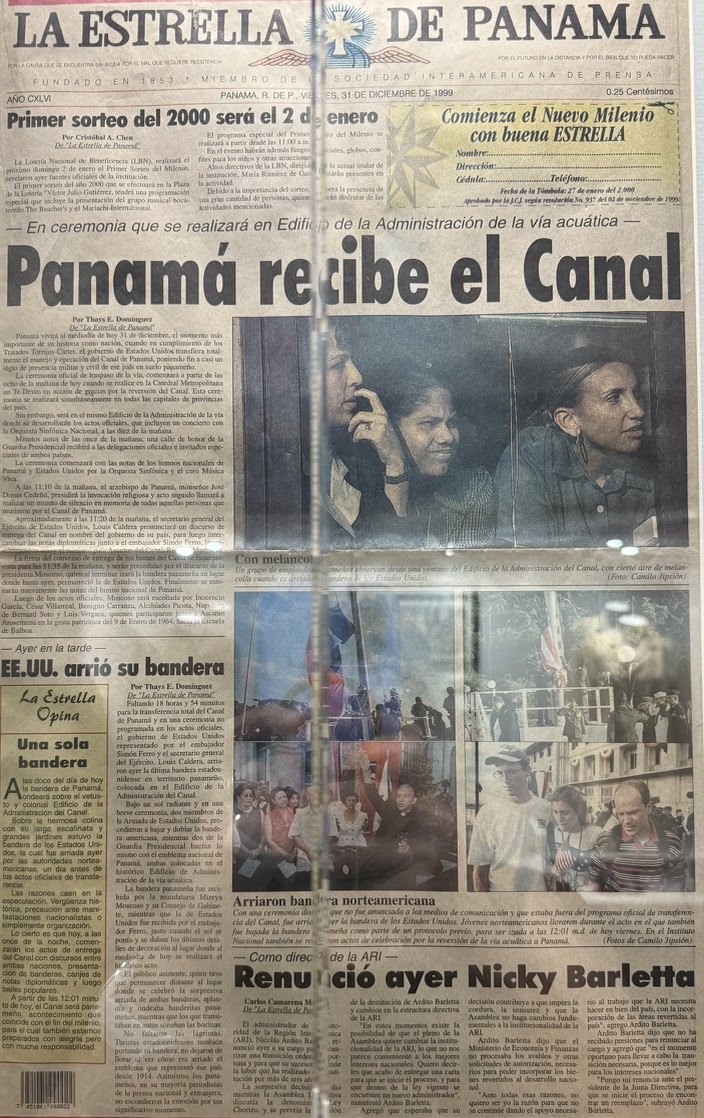
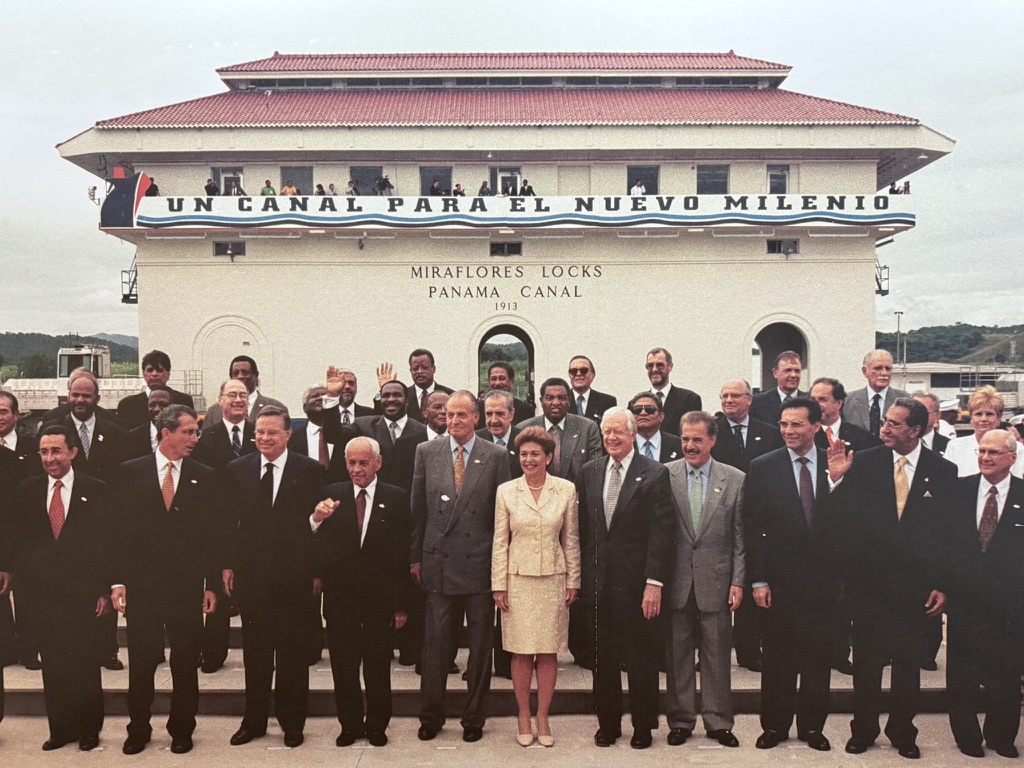


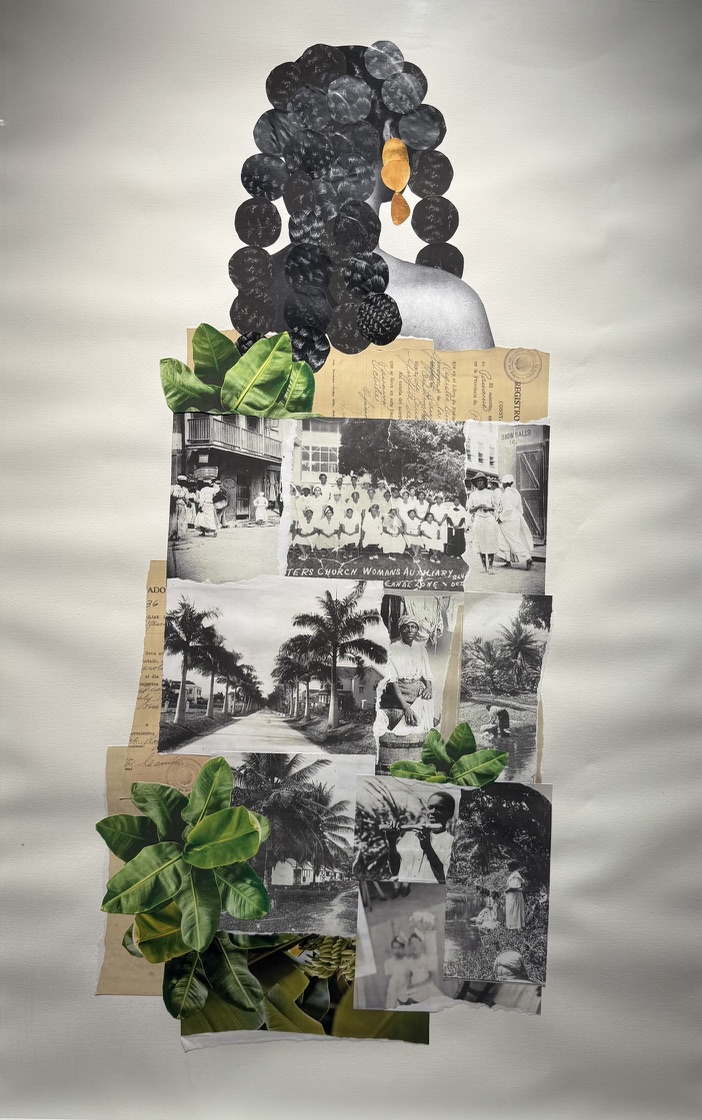
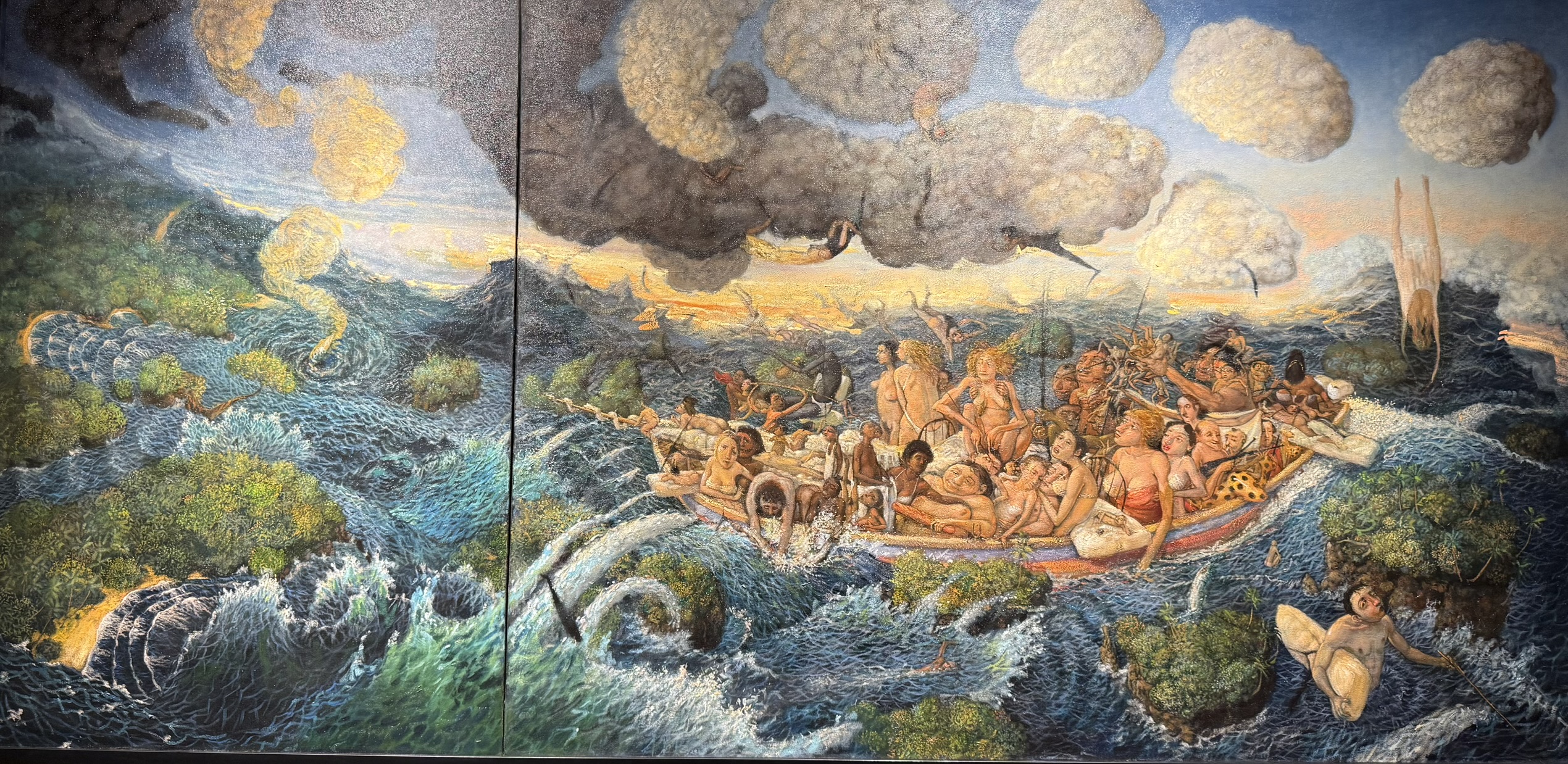
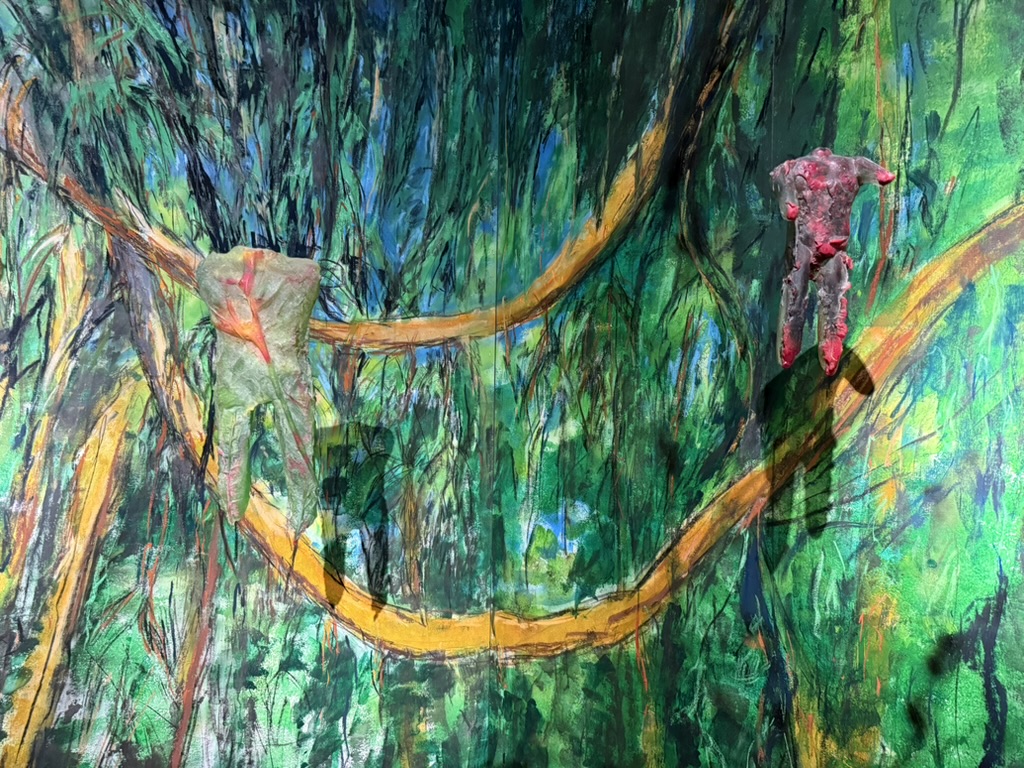
We also found an art exhibition about migration, especially through the Darien Gap between Colombia and Panama. According to the exhibit: “In recent years, the Darien rainforest has become one of the busiest and most dangerous migration routes in the world. Since 2016, more than one million people have crossed it, facing extreme conditions, violence, and exploitation. In 2023, the number of migrants reached a record 520,000, many of them seeking asylum after fleeing economic crises, conflicts, and persecution in their countries of origin.
“In 2025, the dynamic has changed dramatically. The recent closure of immigration centers in Panama and the mass deportations implemented in the United States have reduced transit through this route by 98%. These measures have forced many migrants to return to their countries, while others seek alternative, often more dangerous, routes.”
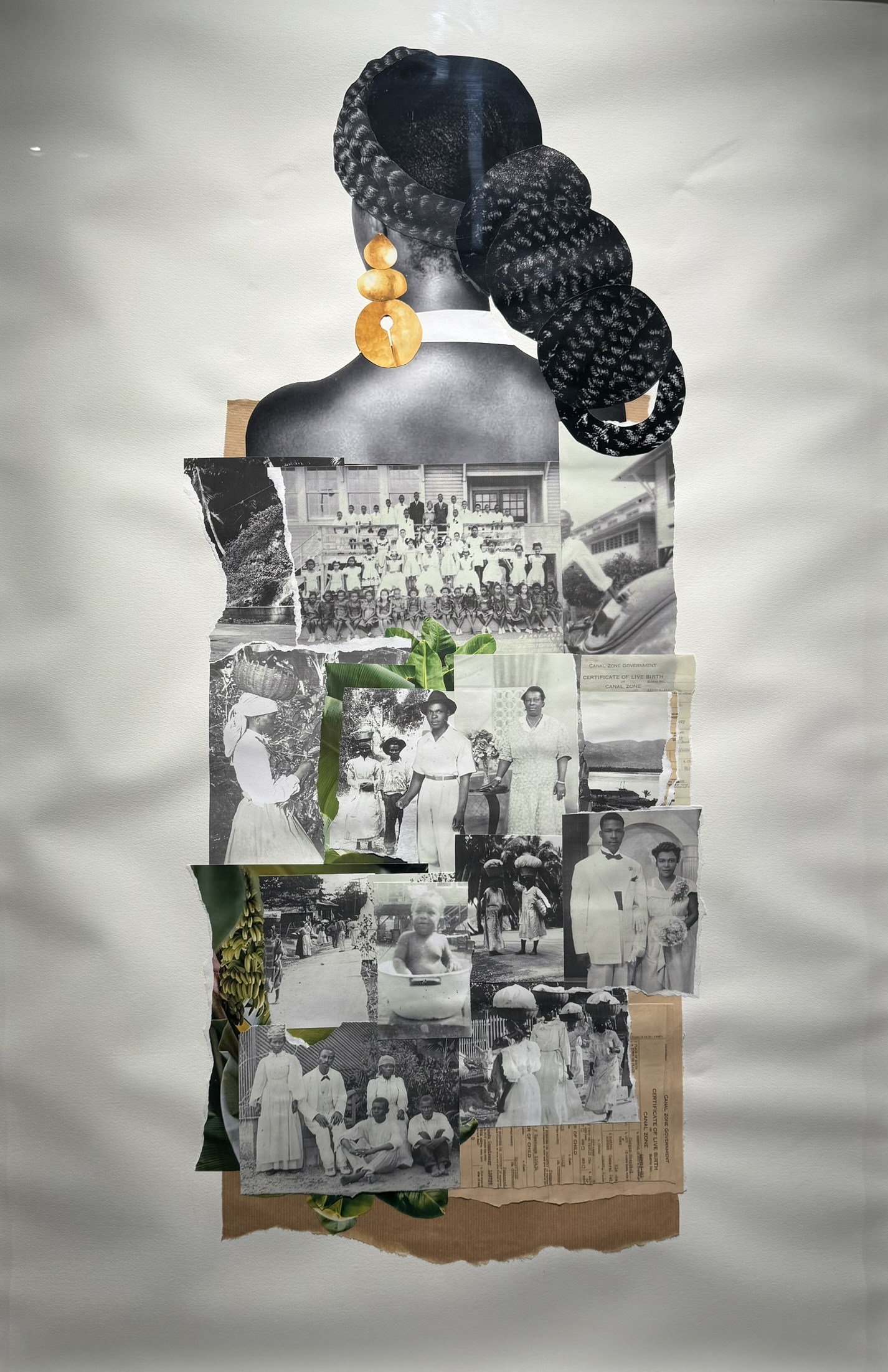
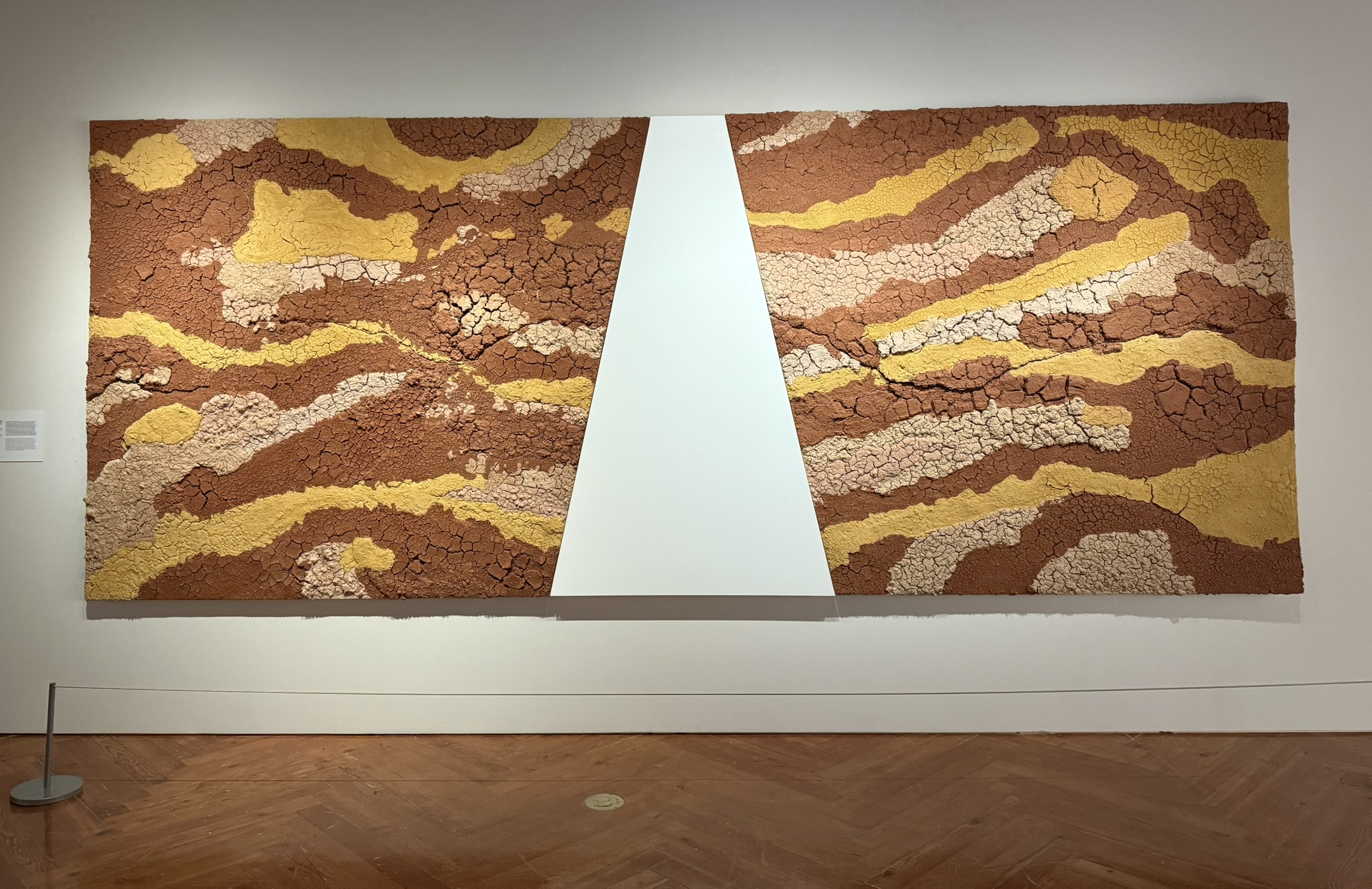

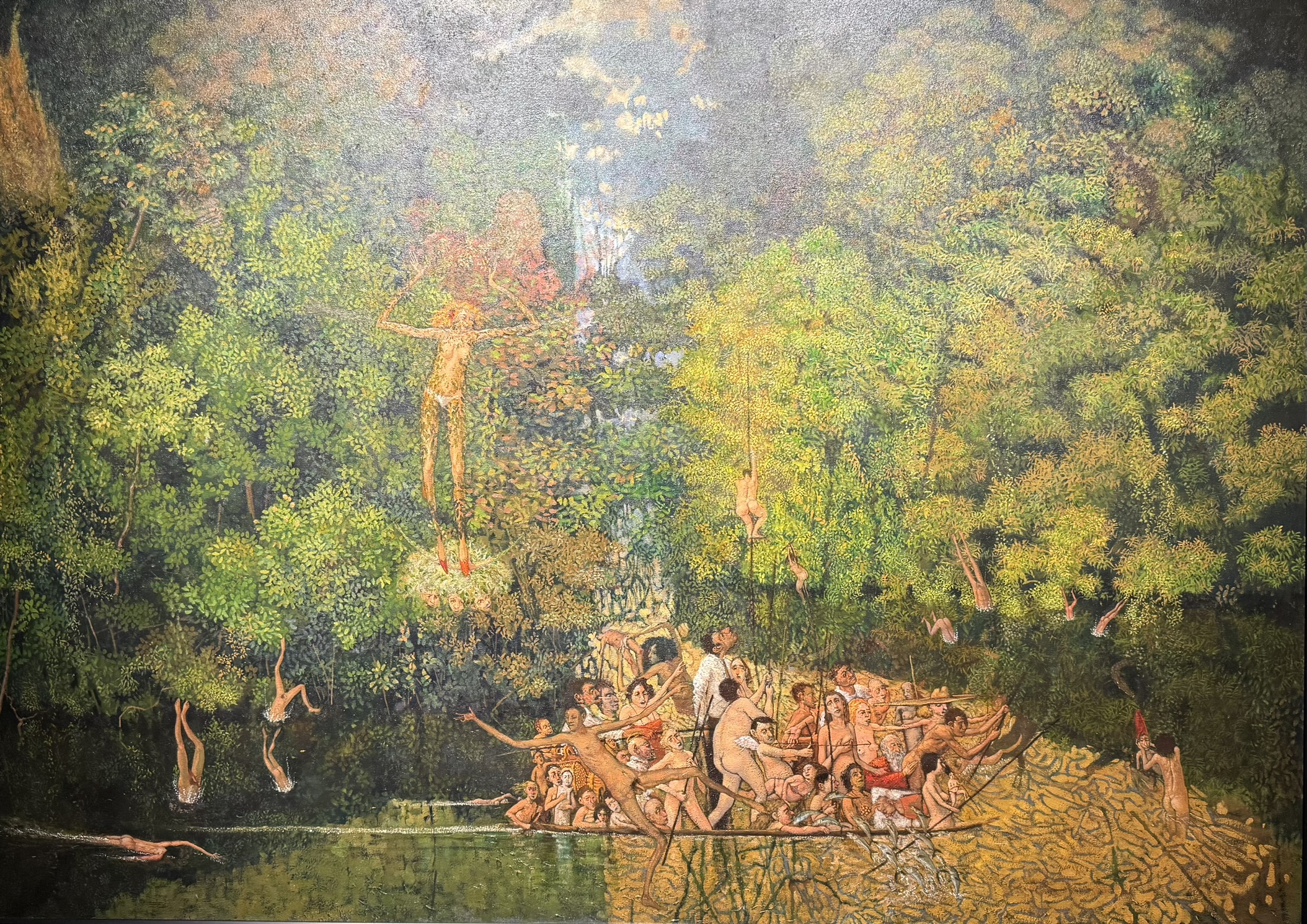
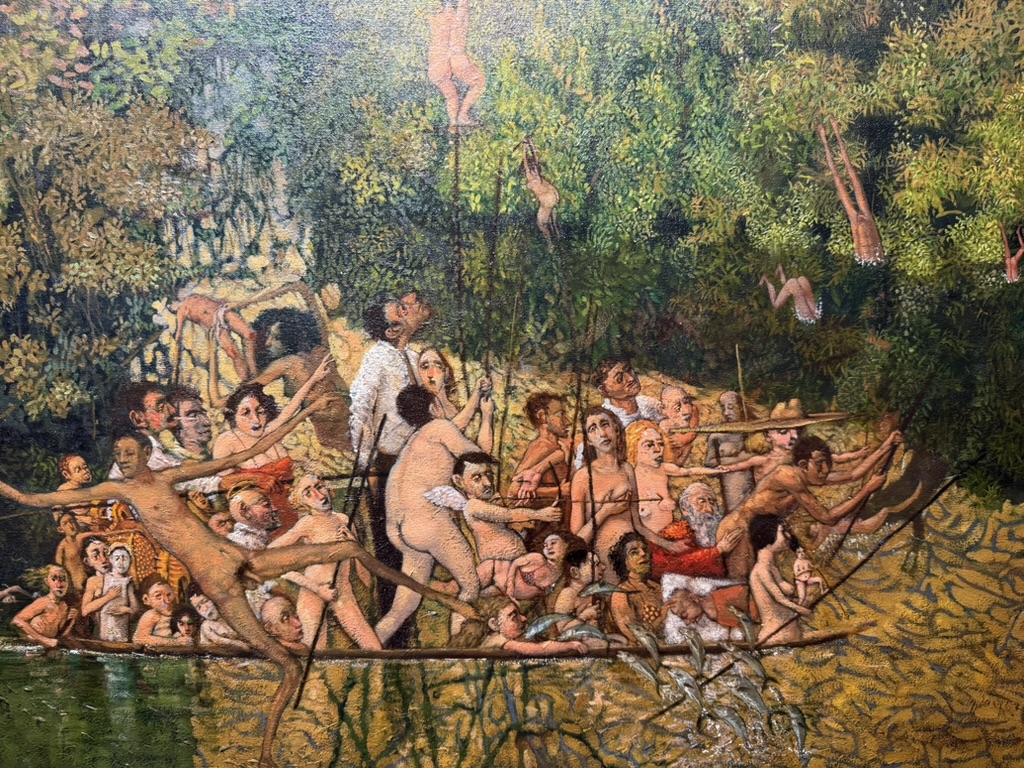



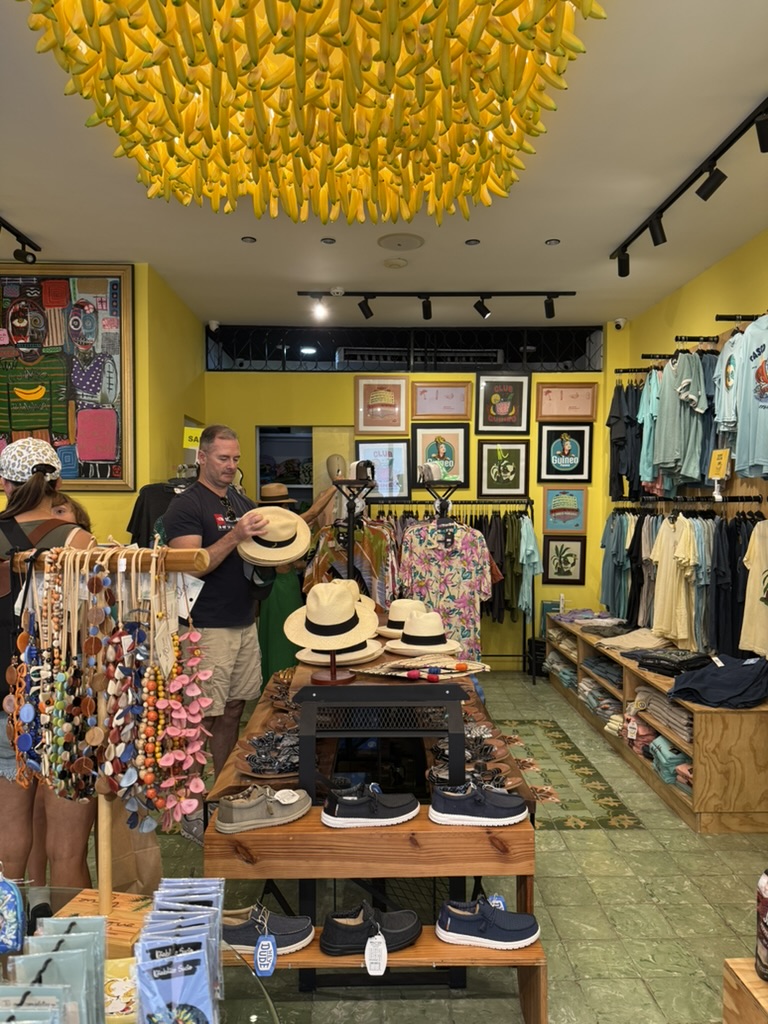
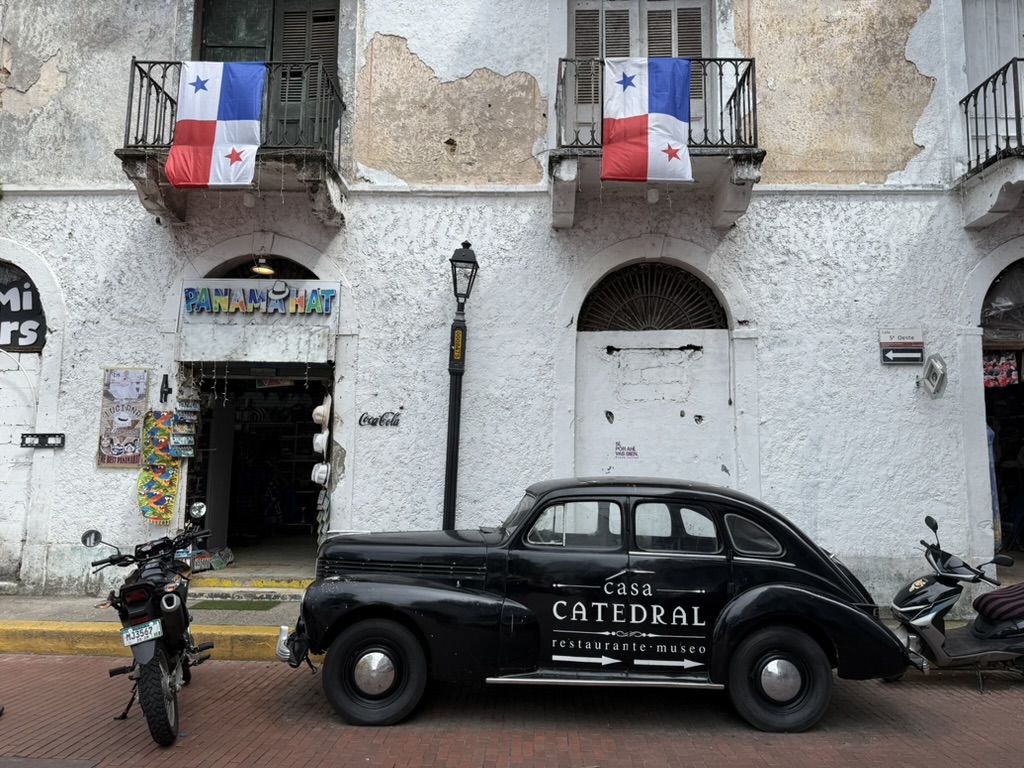
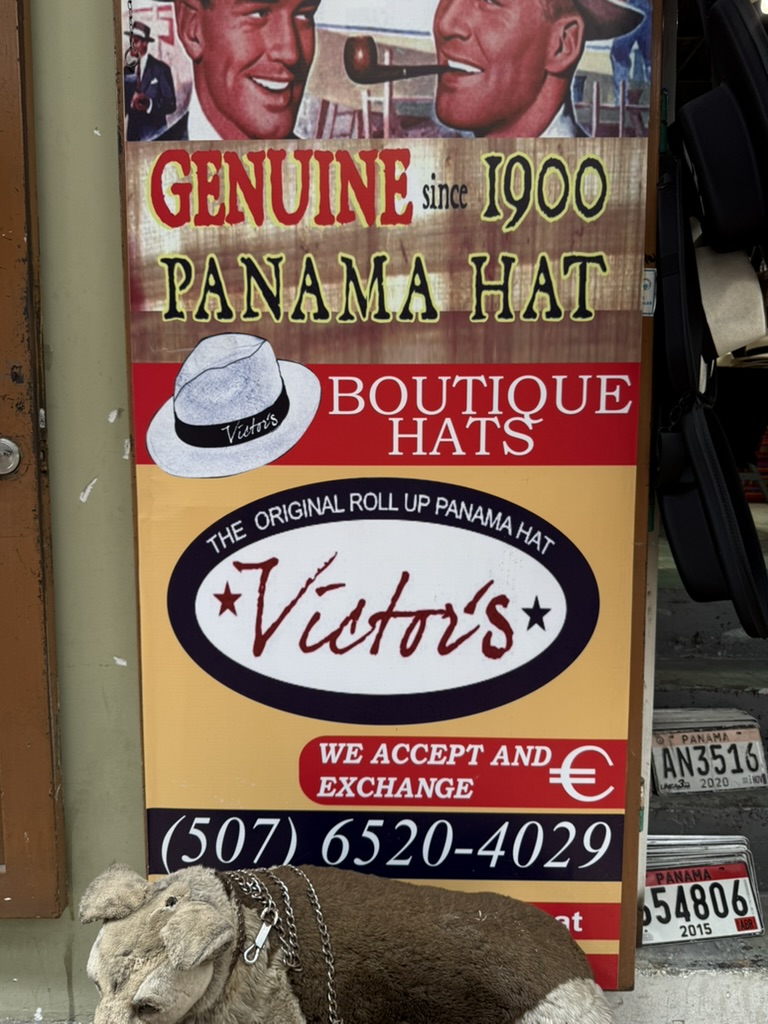
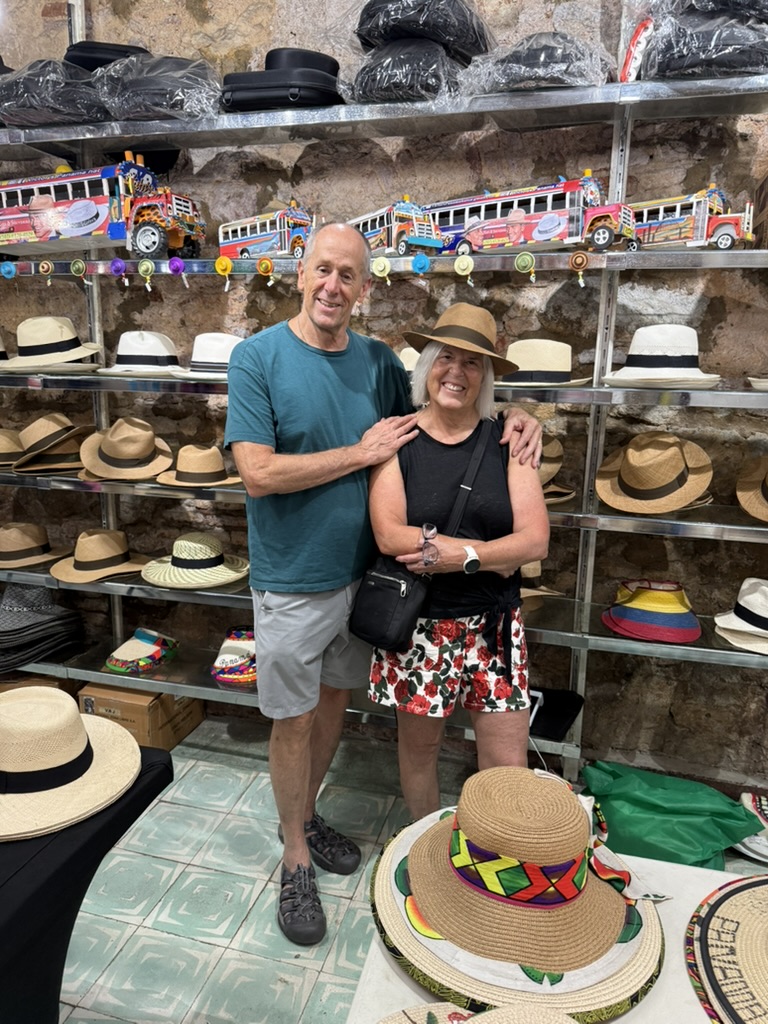
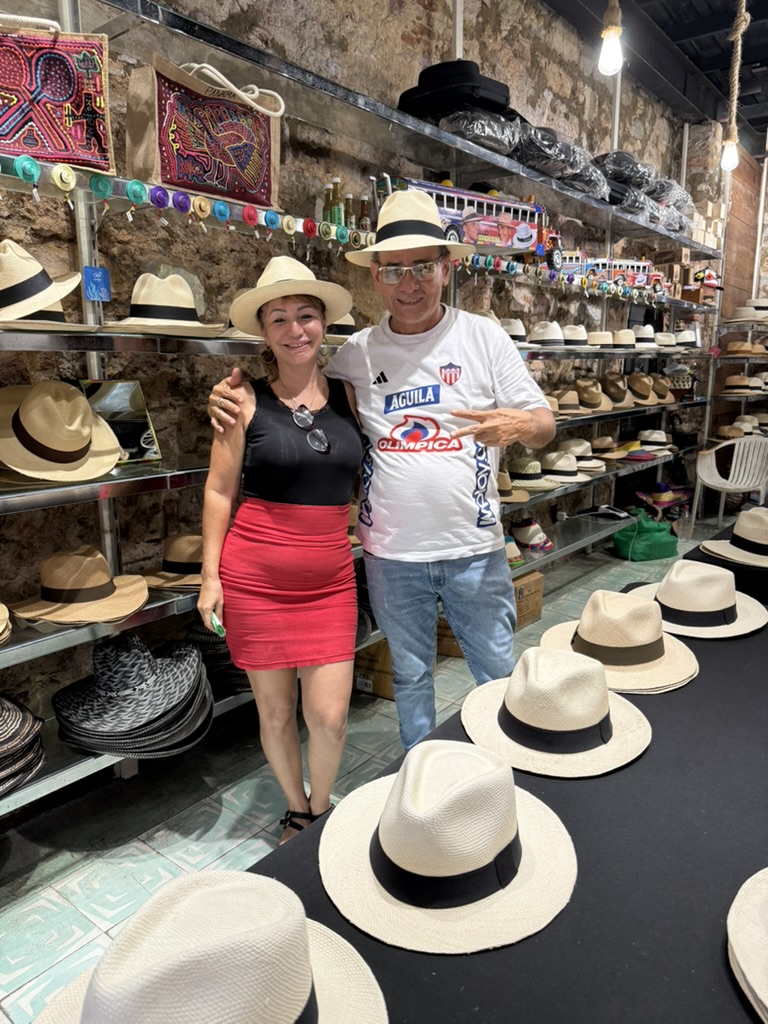
The last place we stopped in Casco Viejo, was Victor’s for a Panamanian “Panama hat.” Even though I bought several Panama hats in Ecuador, the true source of Panama hats, in 2022, I figured I should have one from its “Panama” namesake. The hats were misnamed because they were traded through Panama; they didn’t originate here. Still, a brown one was calling my name! 😂🤣🥹
El Cangrejo
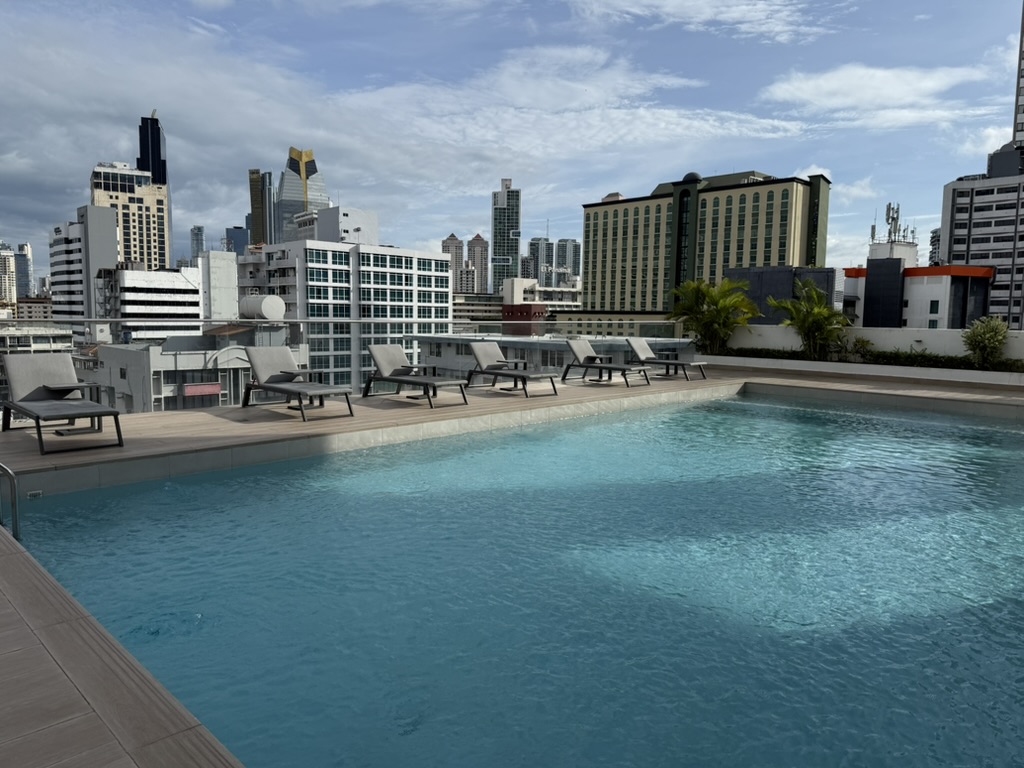
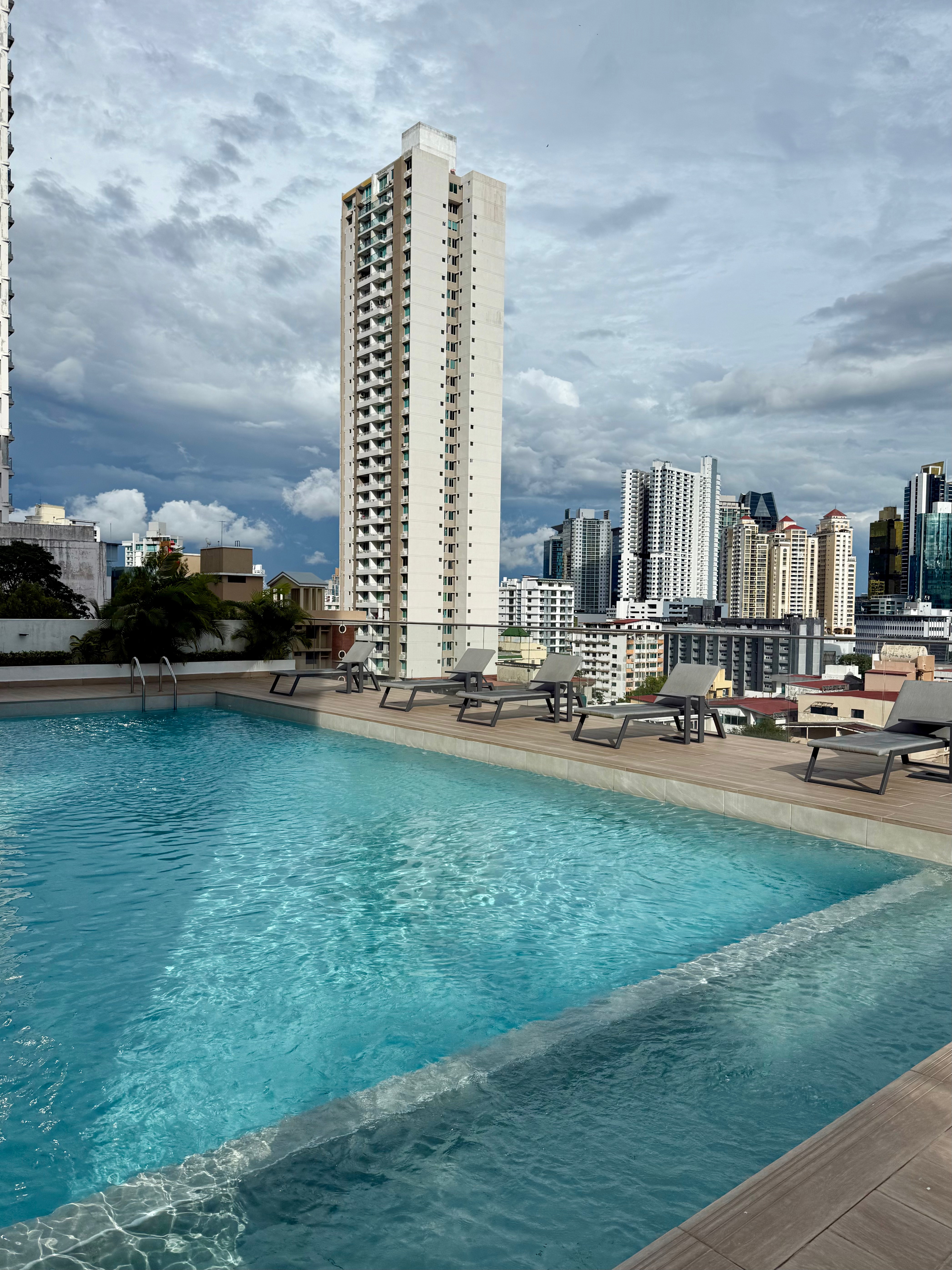
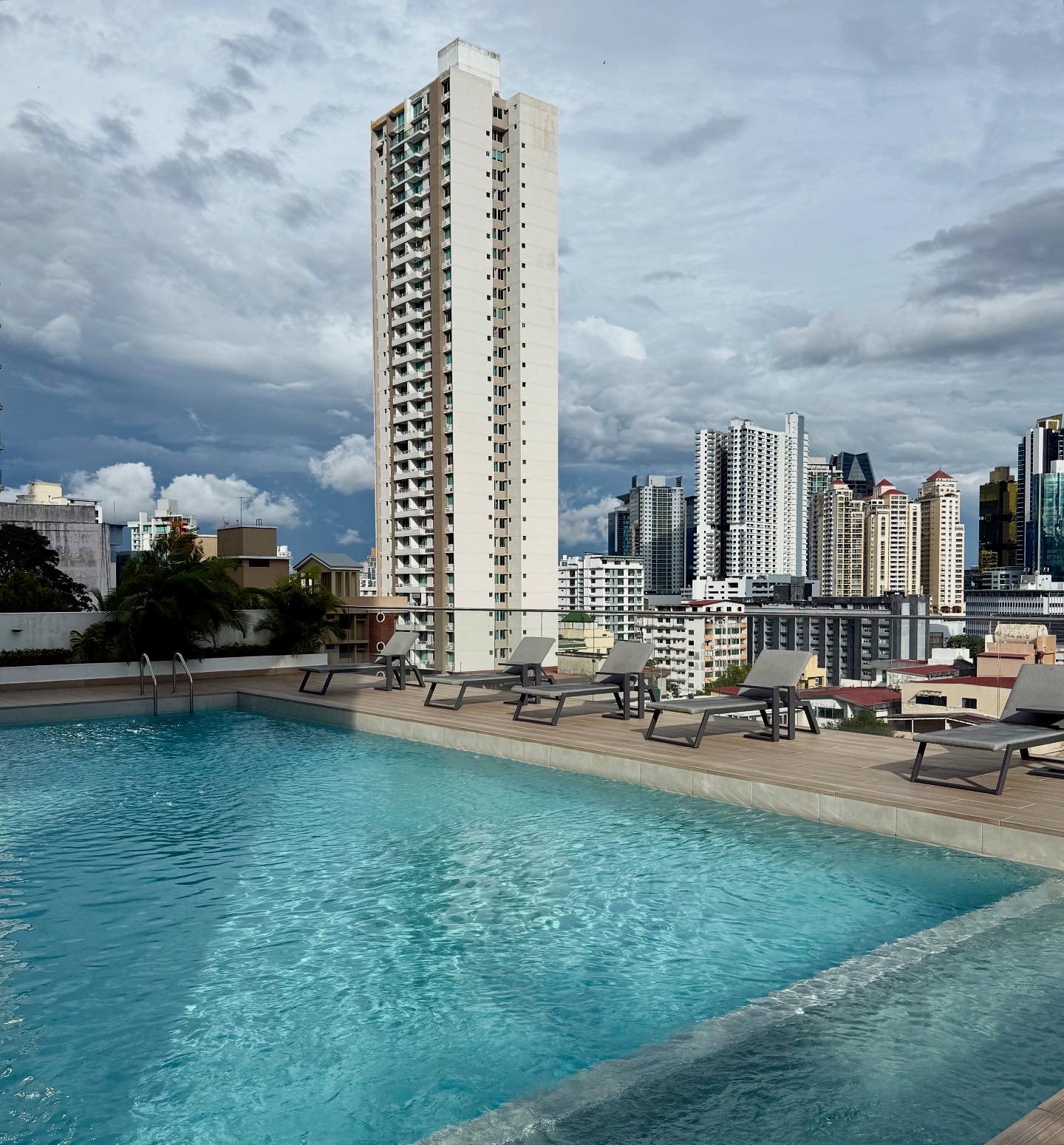
After our long hot day, we returned to our condo for a cool-off in the pool. It was way too hot & humid in Panama for me!



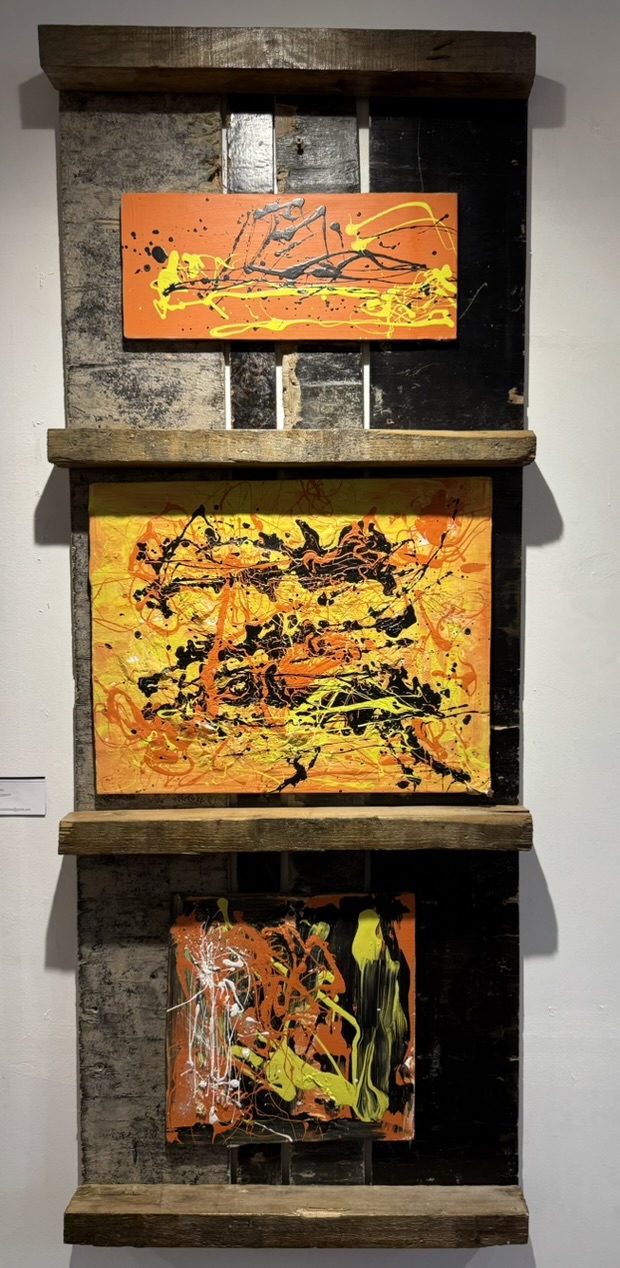
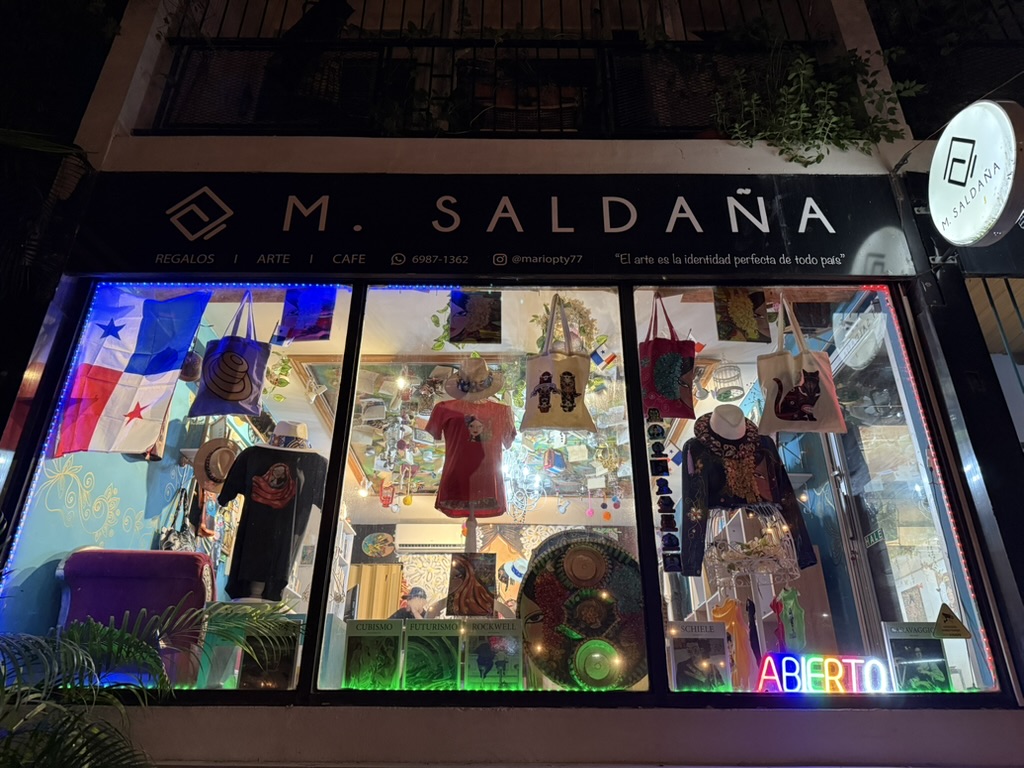
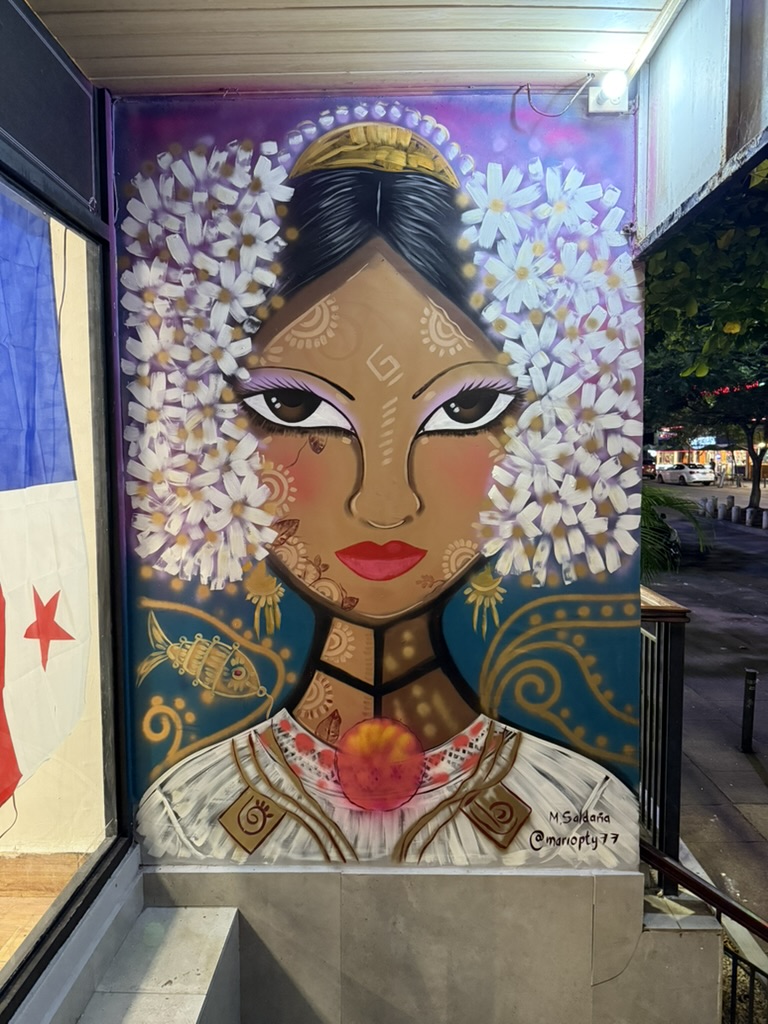
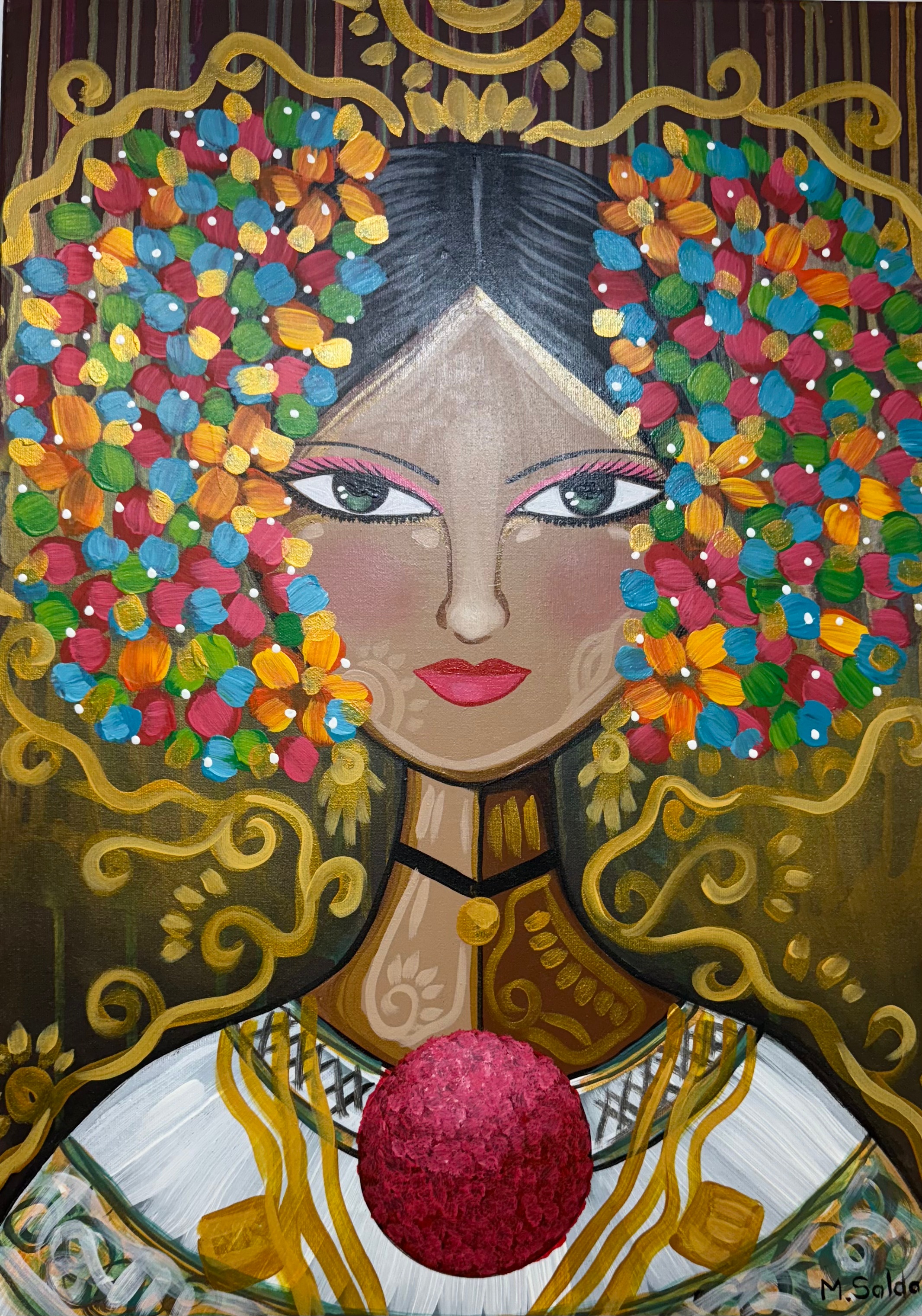
Tuesday evening we wandered into El Cangrejo, stopping at a cute shop, M. Saldaña, which sells paintings and other merchandise created by artist Mario Saldaña. Here, I bought a journal and a print. I loved these colorful paintings.

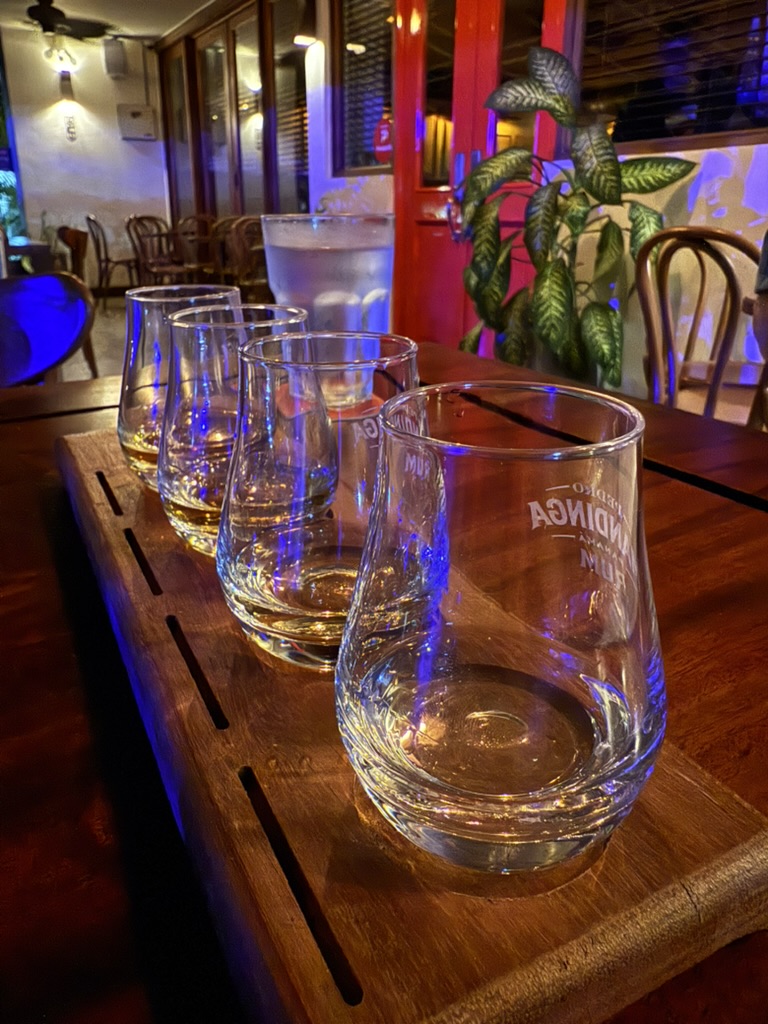
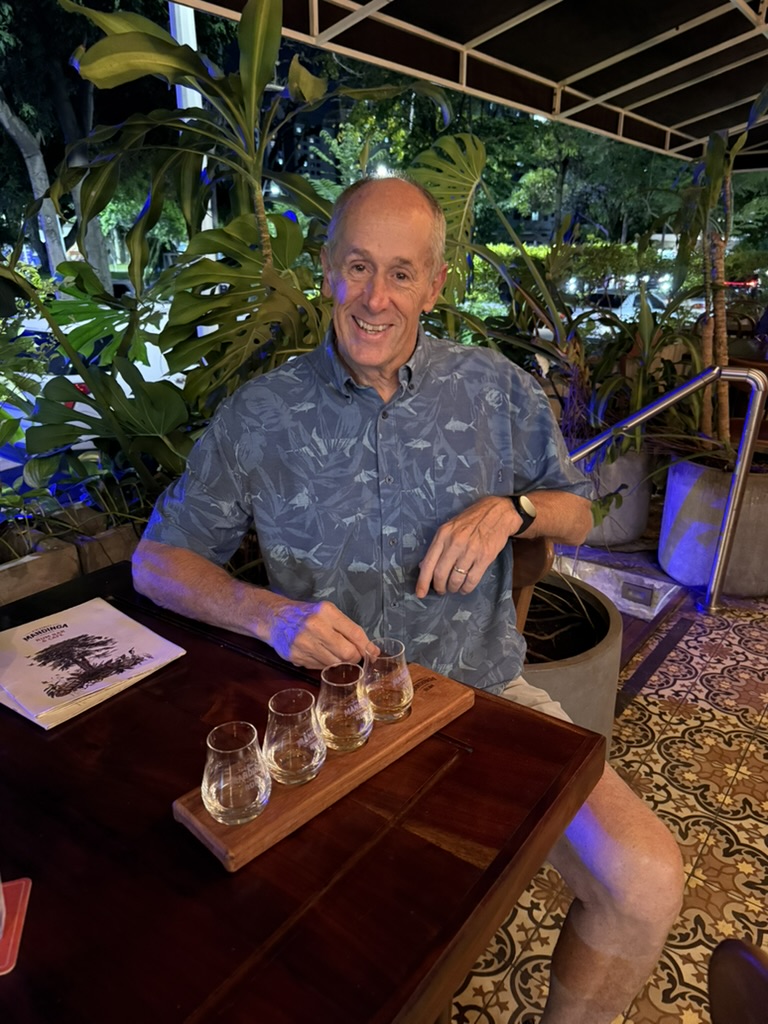
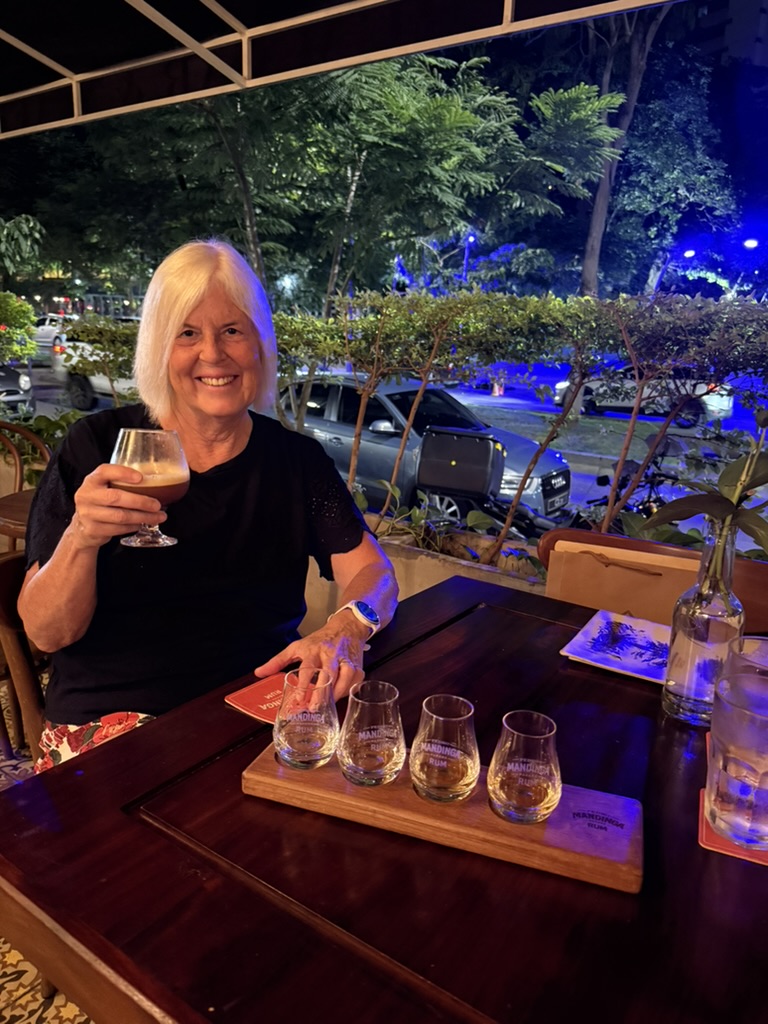
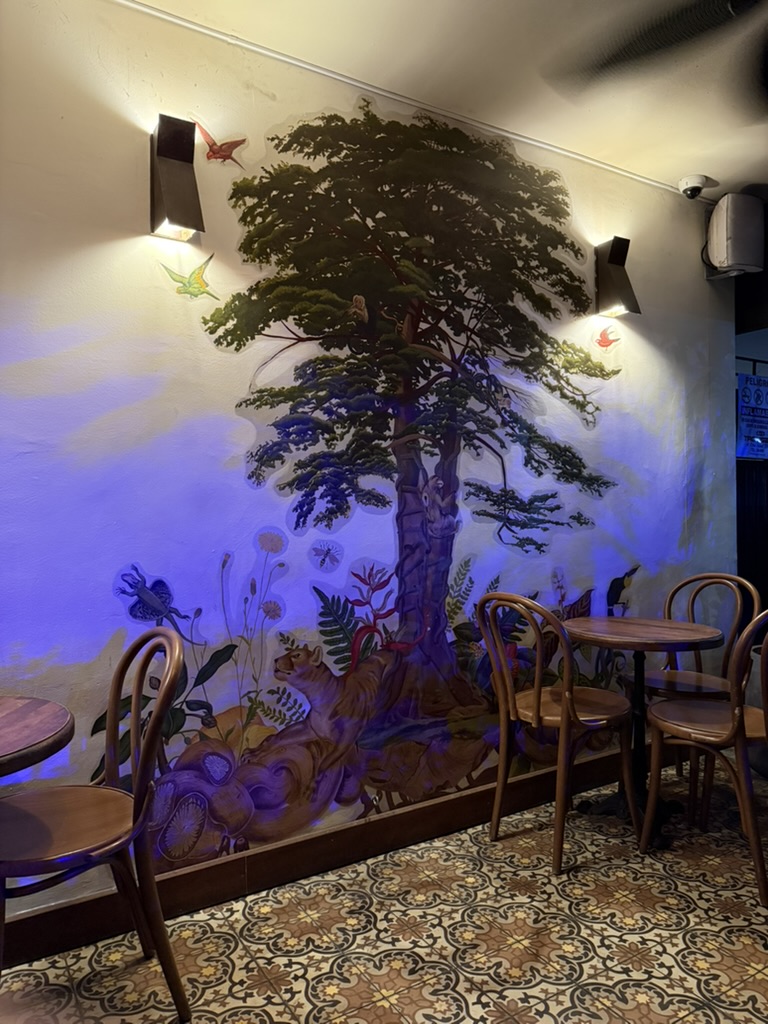
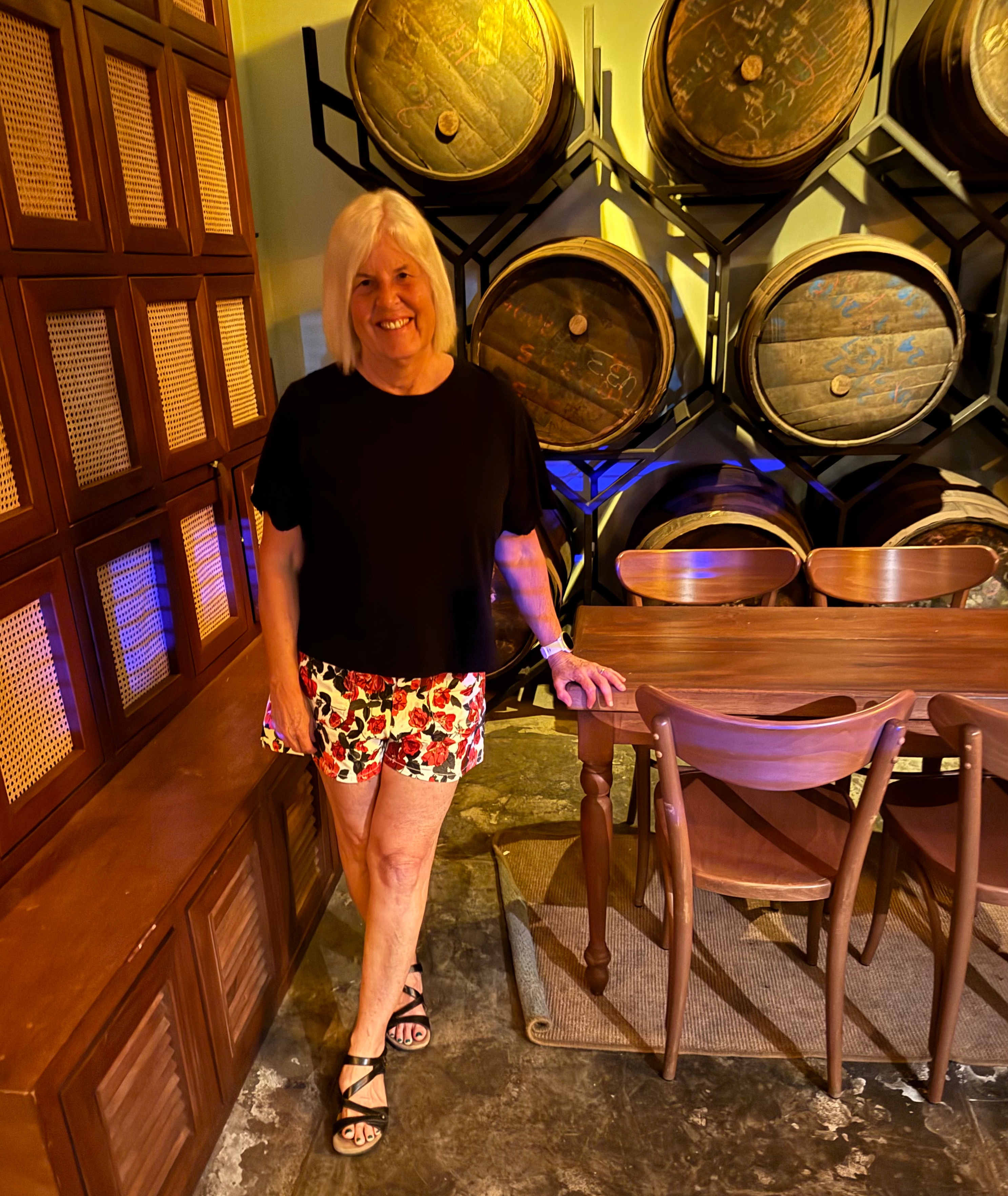
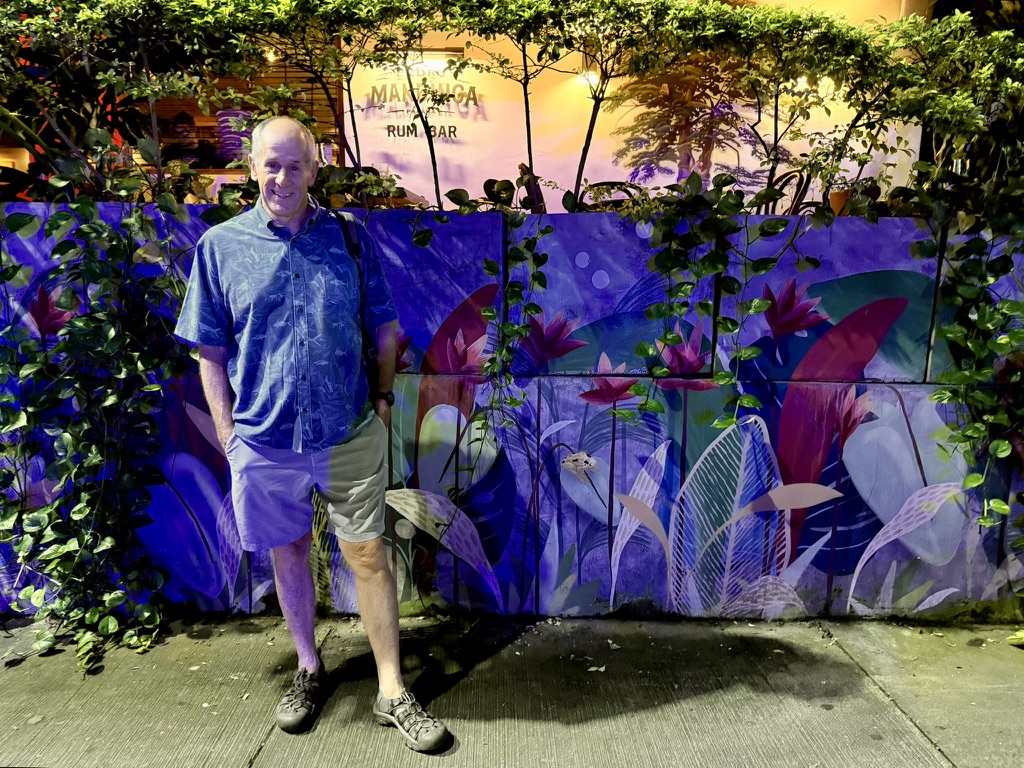
We spent a mellow evening at Pedro Mandinga Rum Bar. The name Ron Pedro Mandinga pays homage to the legend of Pedro Mandinga, a 16th-century Panamanian runaway slave who symbolizes courage and collaboration. His alliance with Sir Francis Drake, showcasing Panama’s rich multicultural heritage, inspires the essence of its Panamanian rum brand.
Ron Pedro Mandinga Panamá was born with the vision of creating an exceptional Panamanian artisanal rum, committed to quality and tradition. Unlike other rums, Pedro Mandinga’s secret lies in the use of artisanal raspadura, the “ancestral sugar” of sugarcane, sourced from the owners’ family farm in the fertile volcanic soils of Boquete.


Amador Causeway
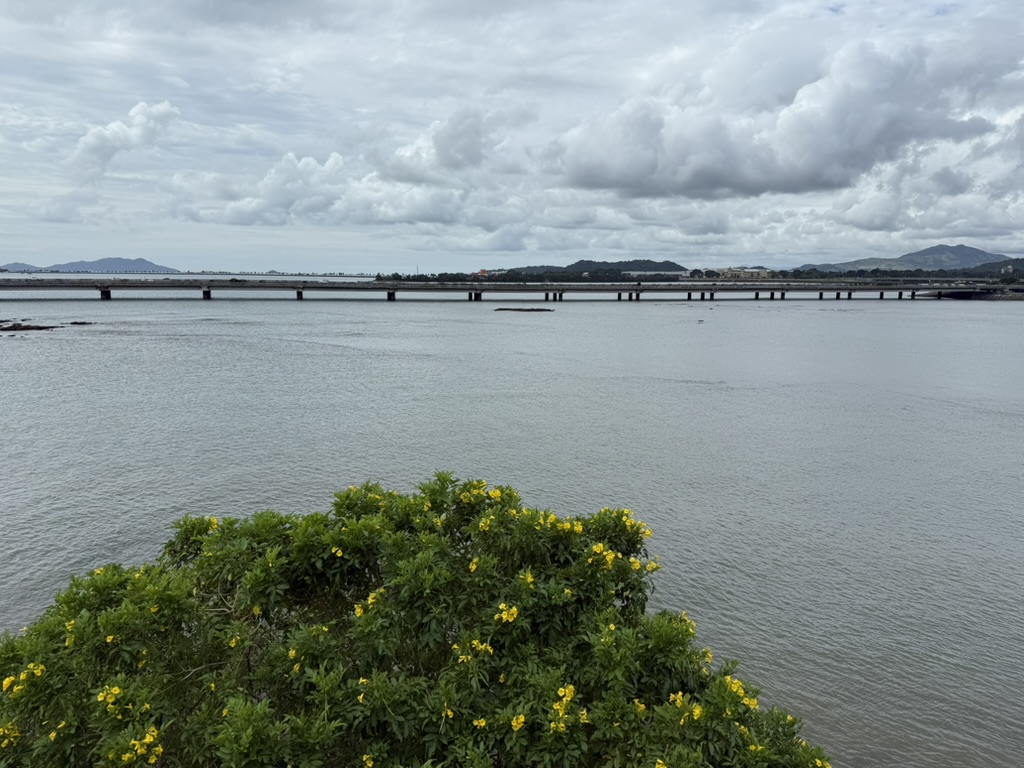
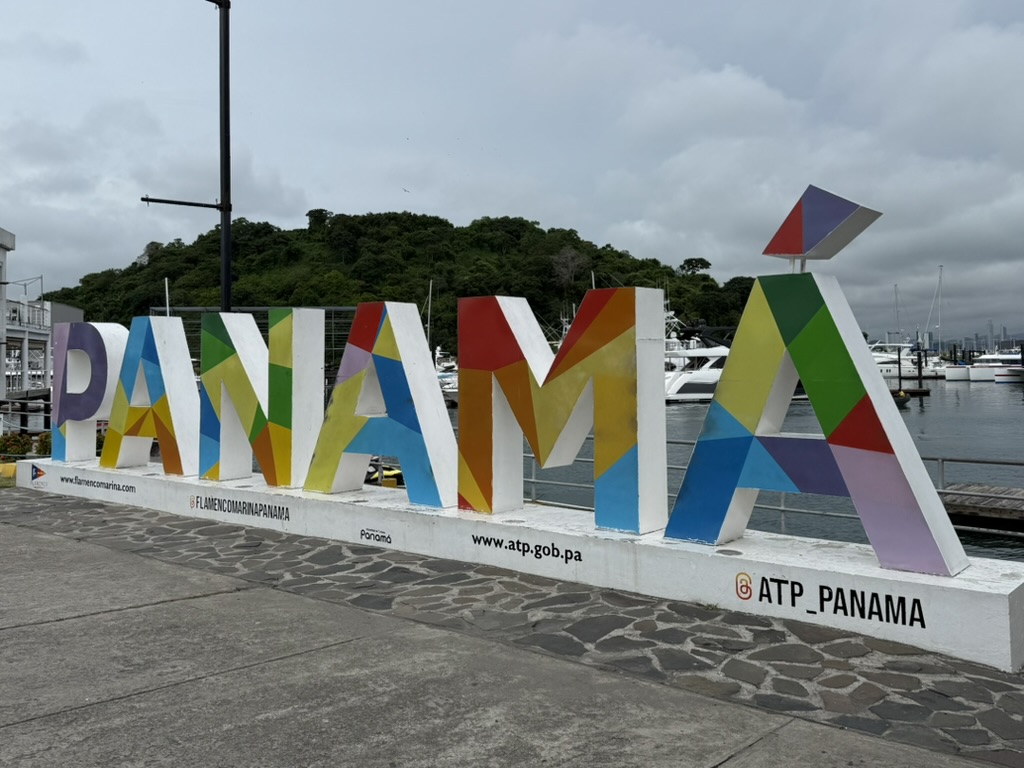
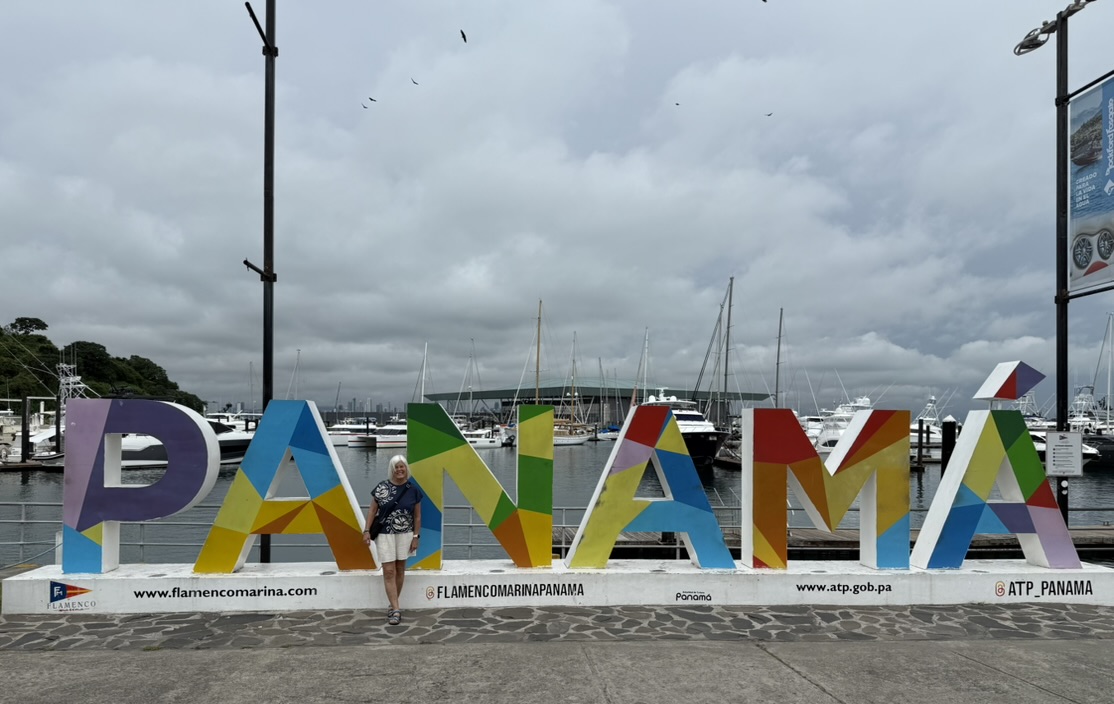
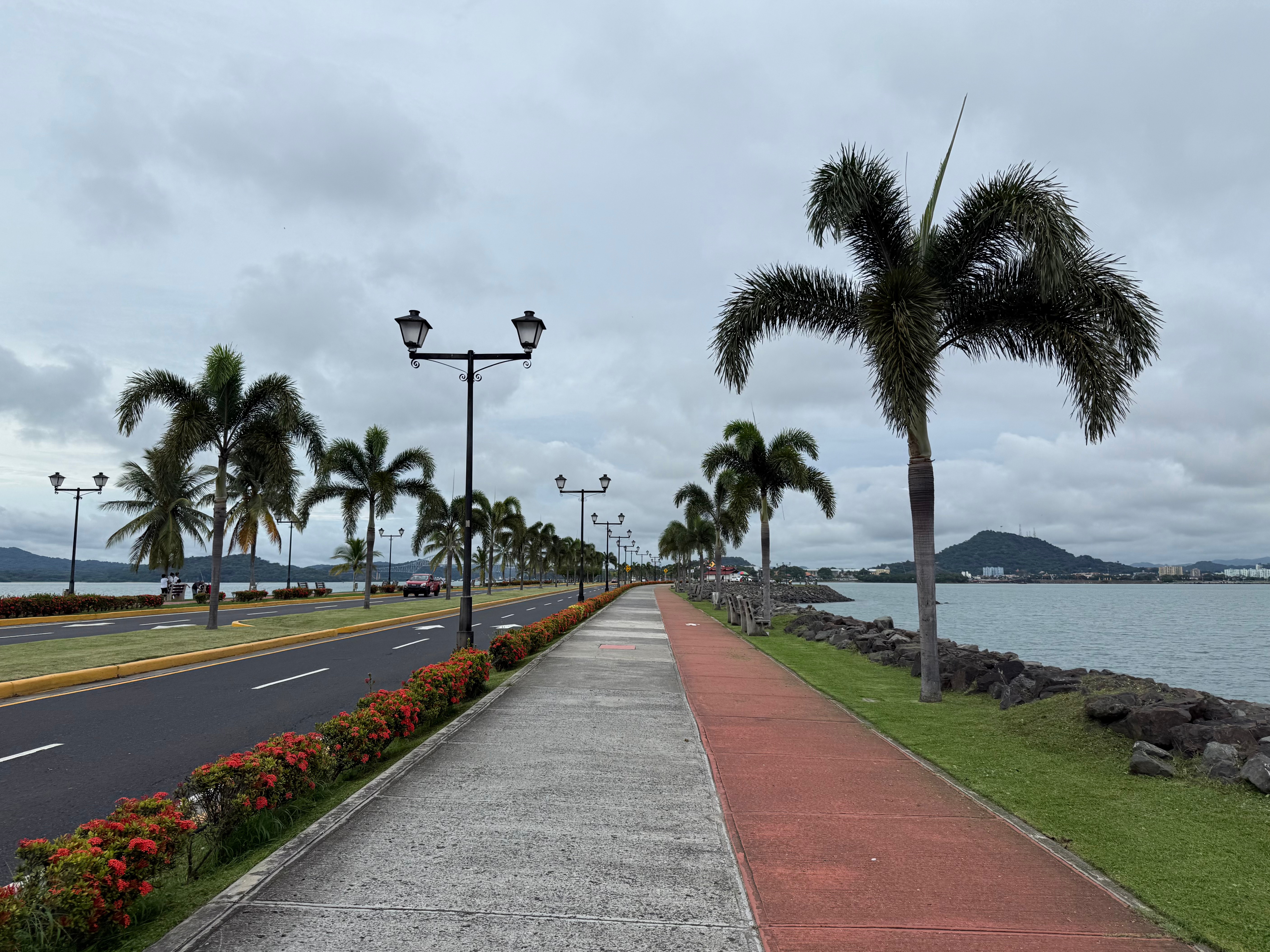
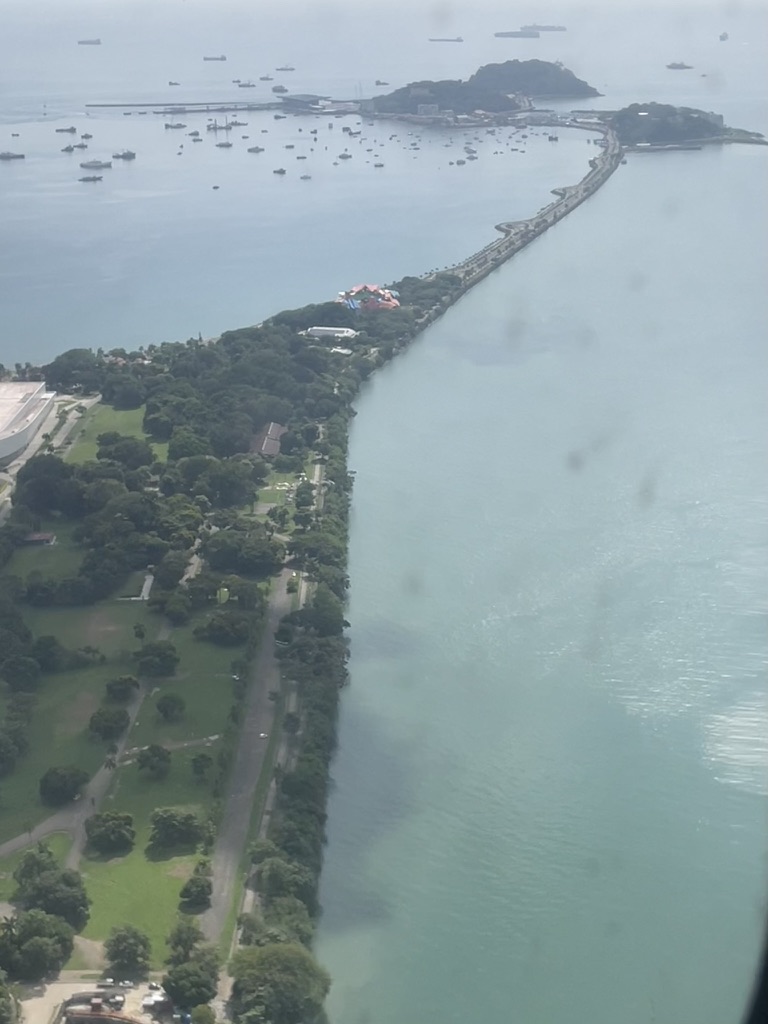
Wednesday, November 12: This morning we caught an Uber to Flamenco Island, the furthest point out on the Amador Causeway, a long and narrow man-made island extending out at the southernmost point of Panama City.
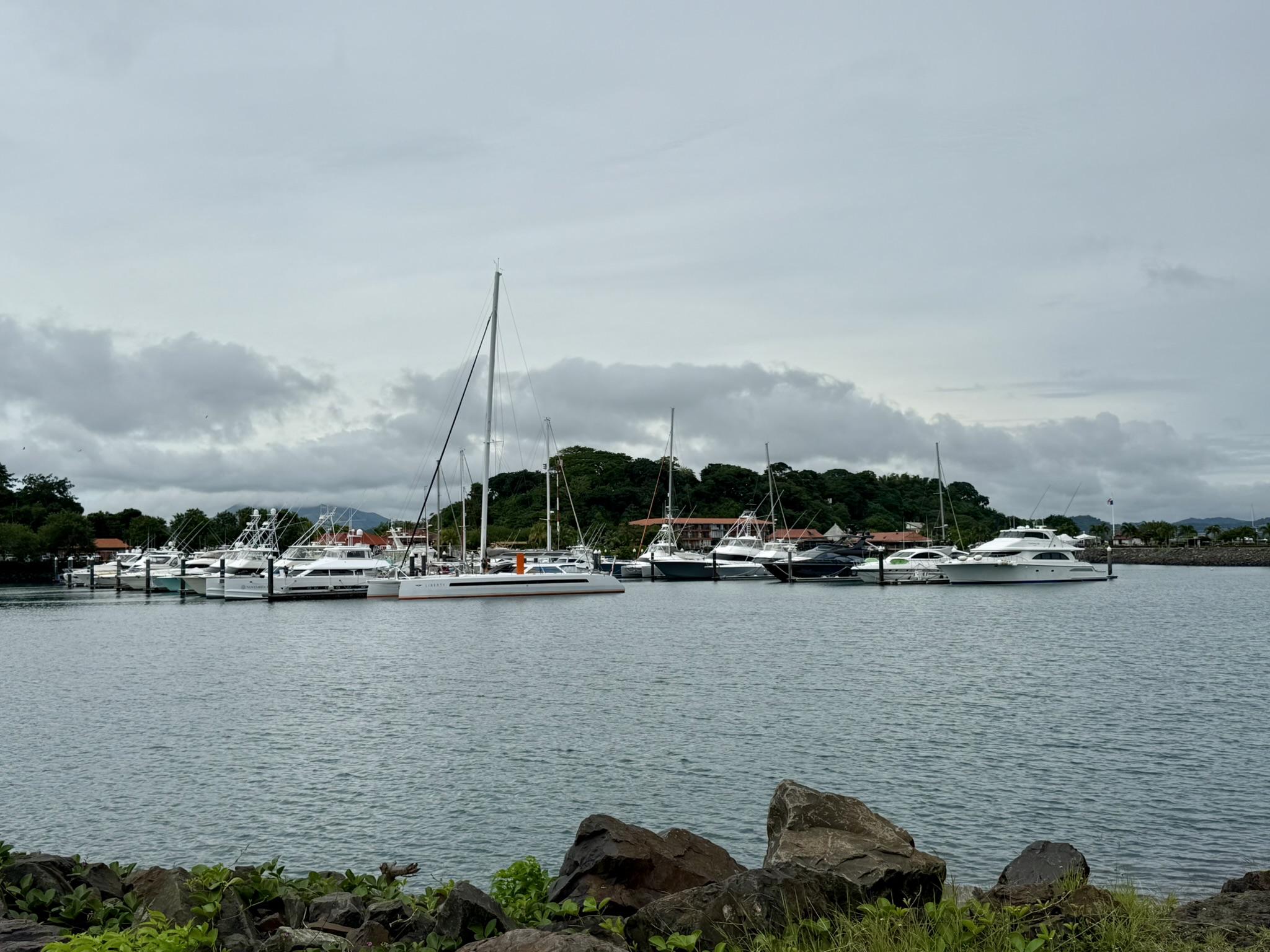
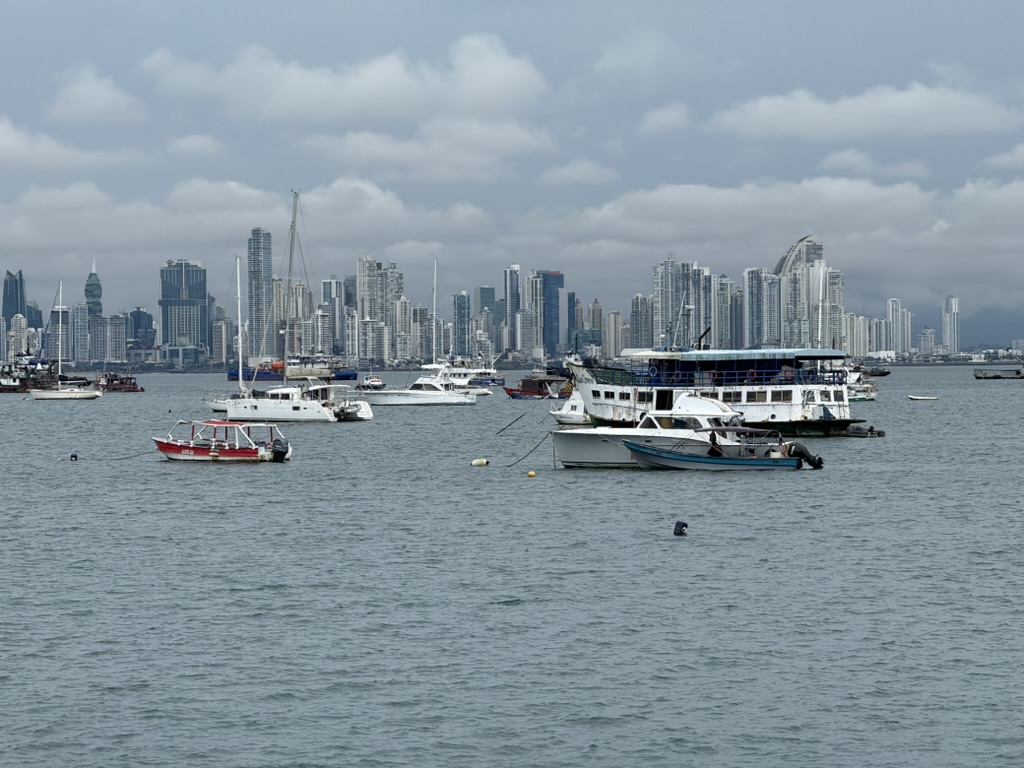
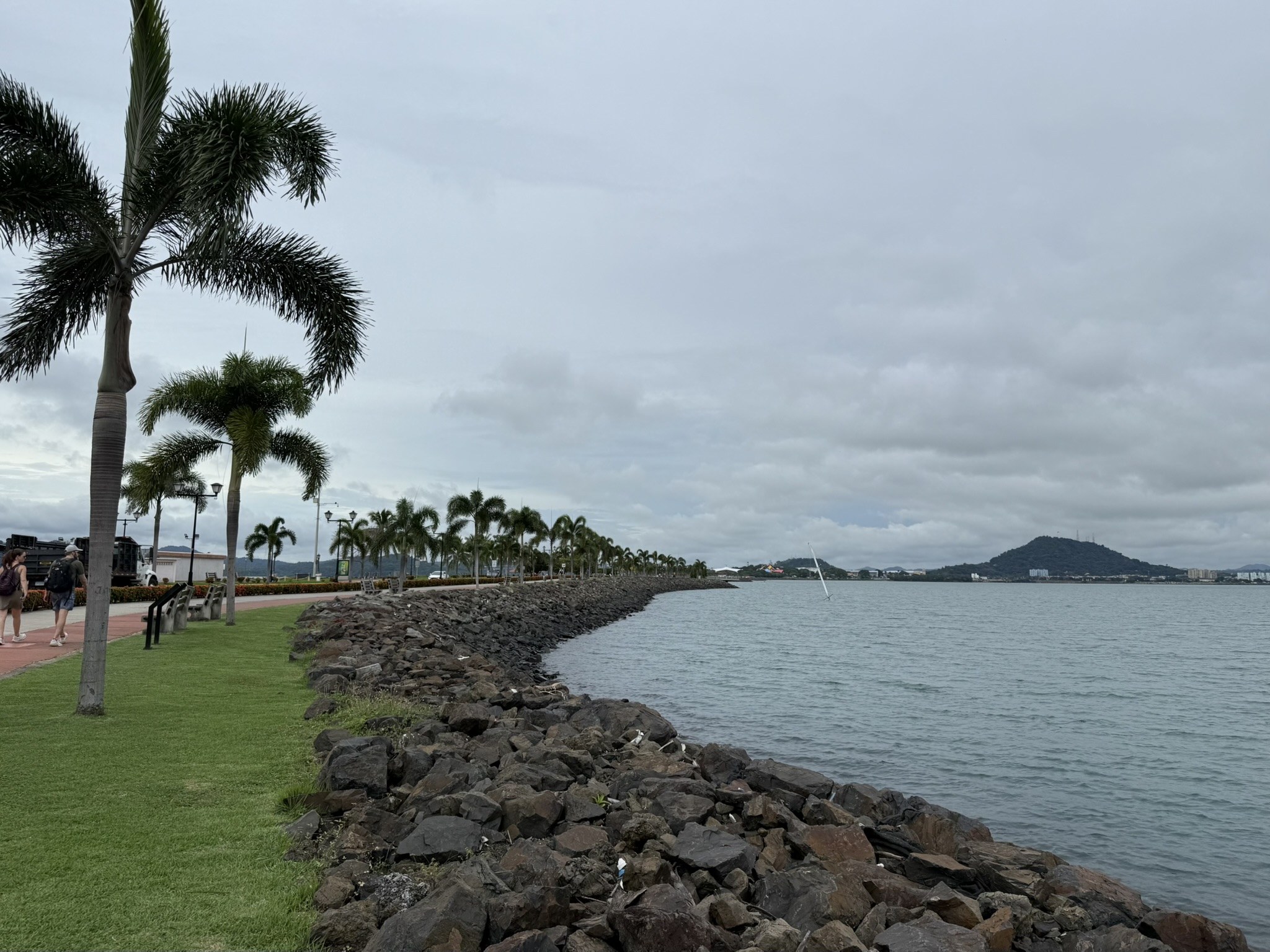
We had read it was a 2km walk to the BioMuseo, but it was actually 4km. We were soaked in sweat by the time we made it to the Biomuseo. We realized quickly that this wasn’t the best way to start our day, but nothing was to be done but to keep walking. We did enjoy views of the boats and the skyline of the city, but it really wasn’t worth doing anything but driving down it.







BioMuseo
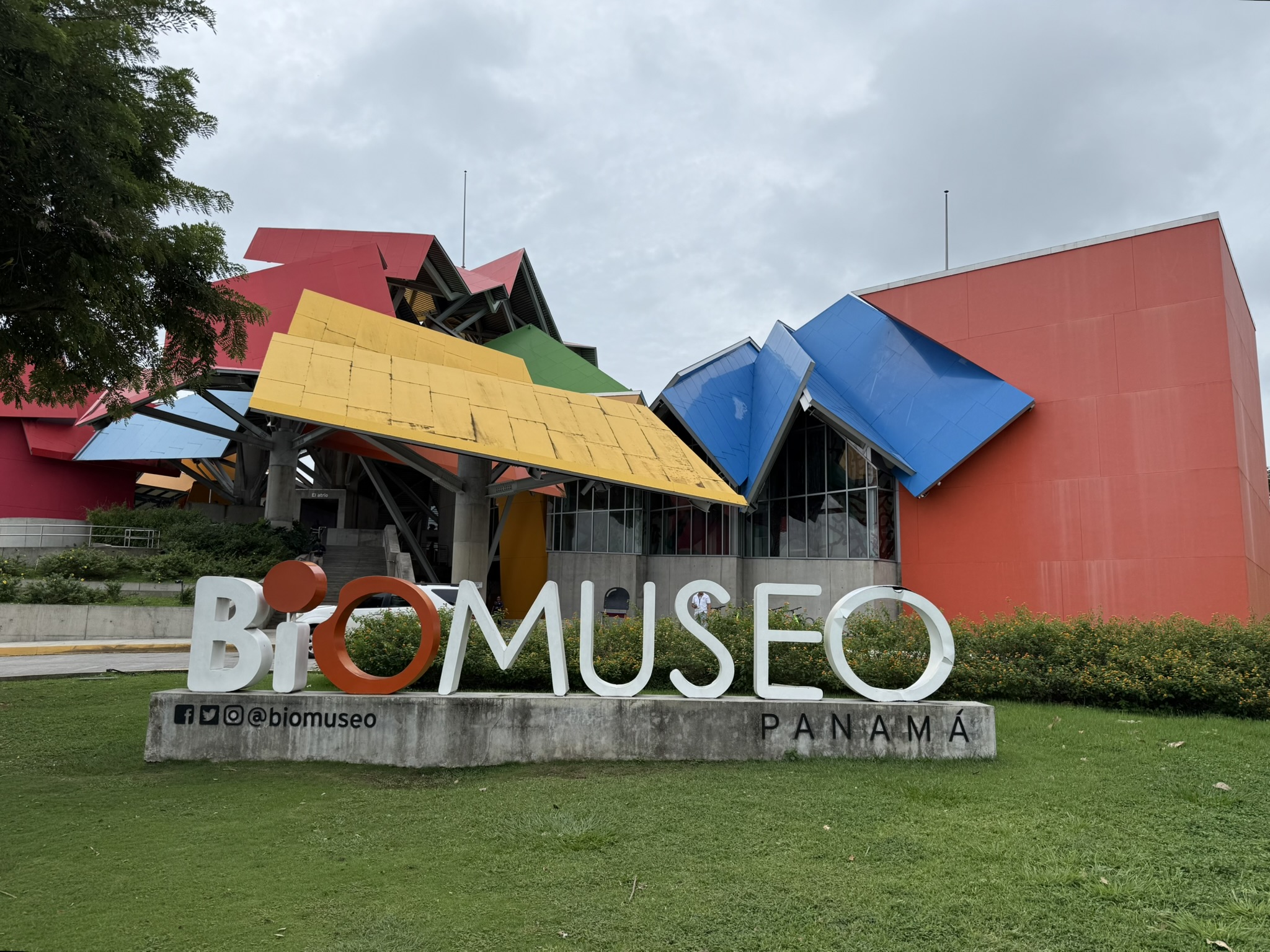
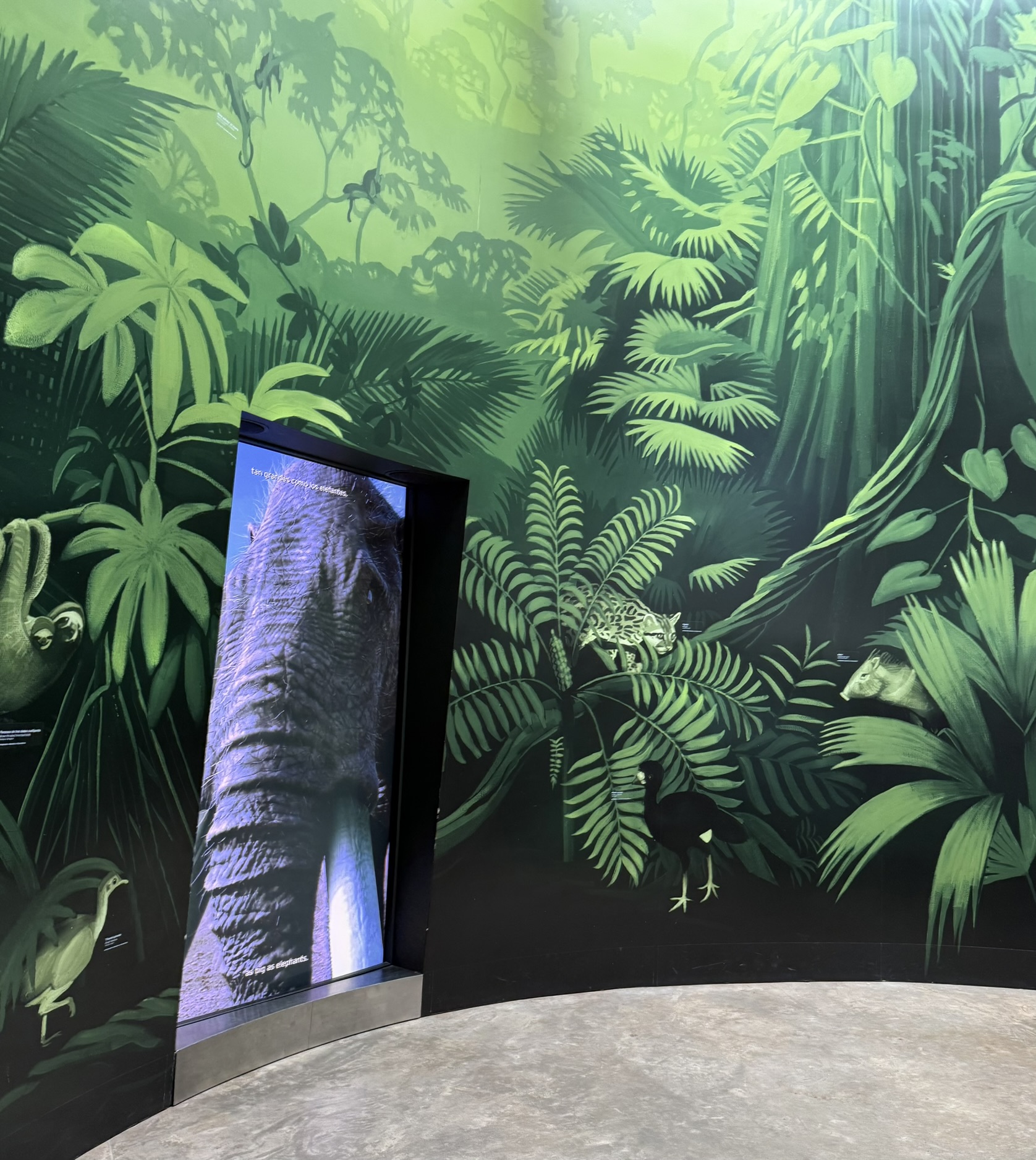
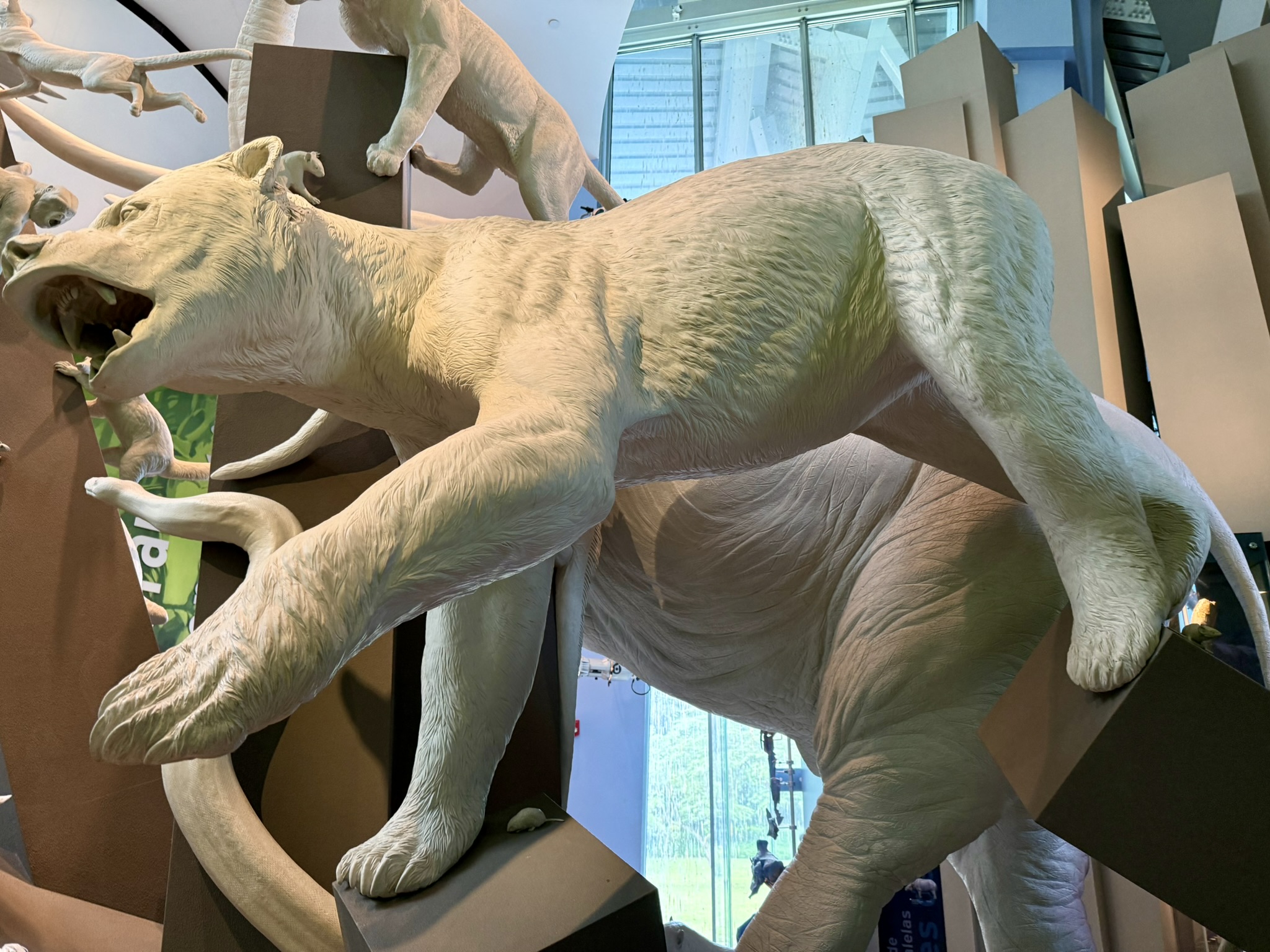
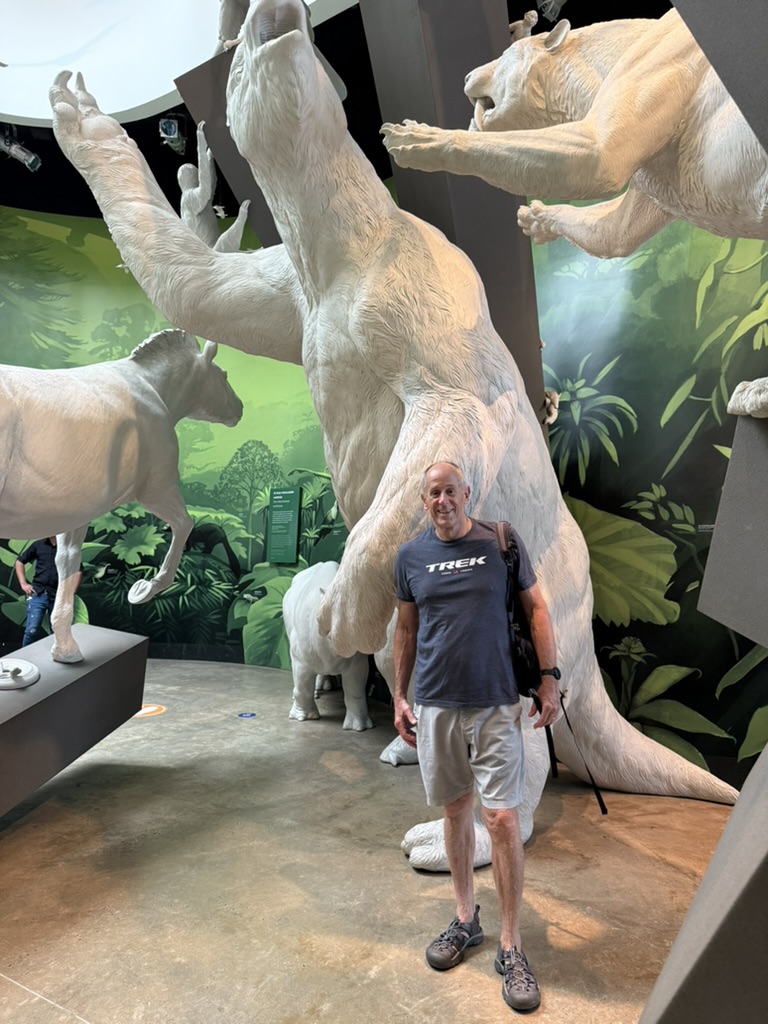
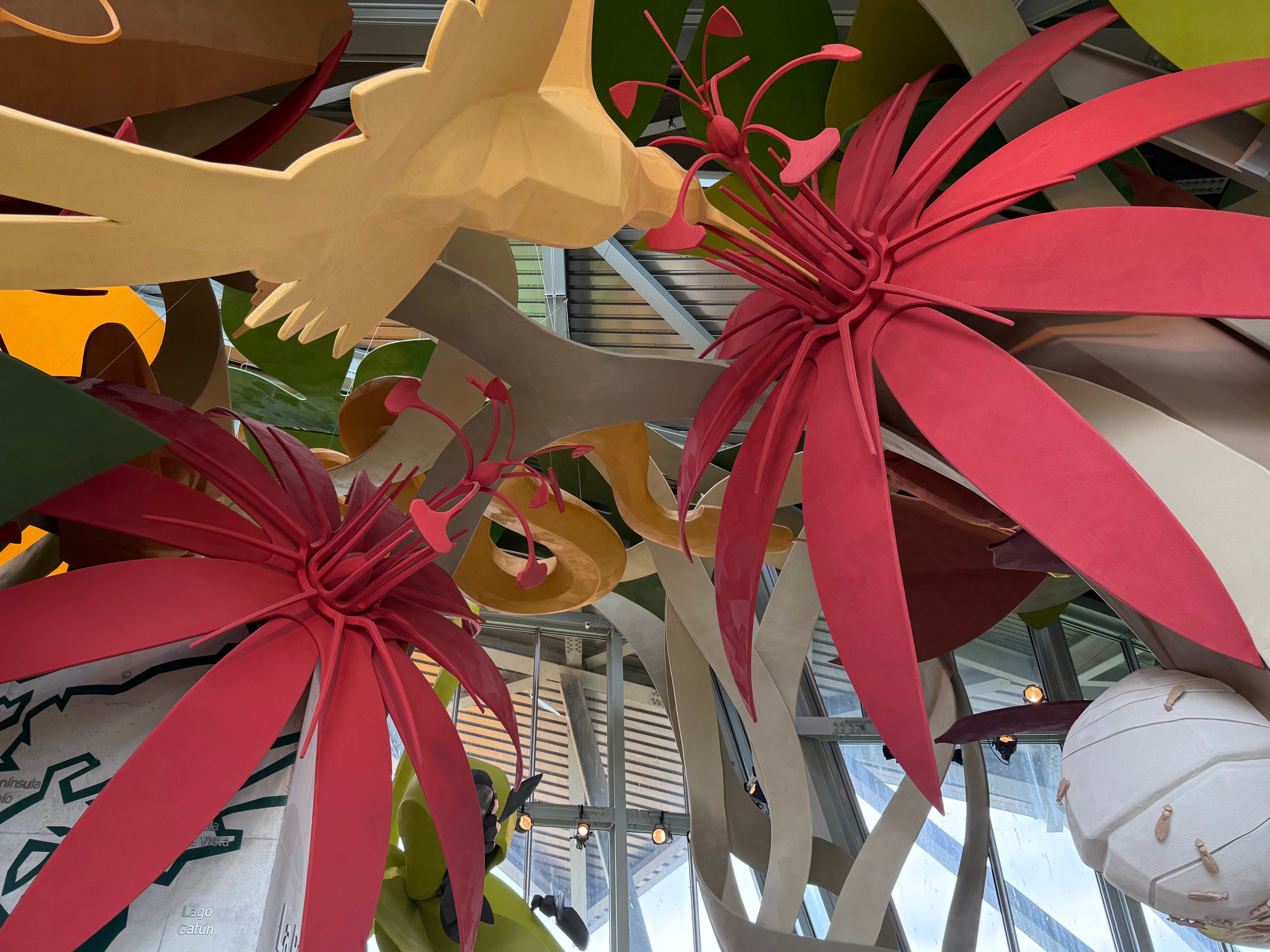
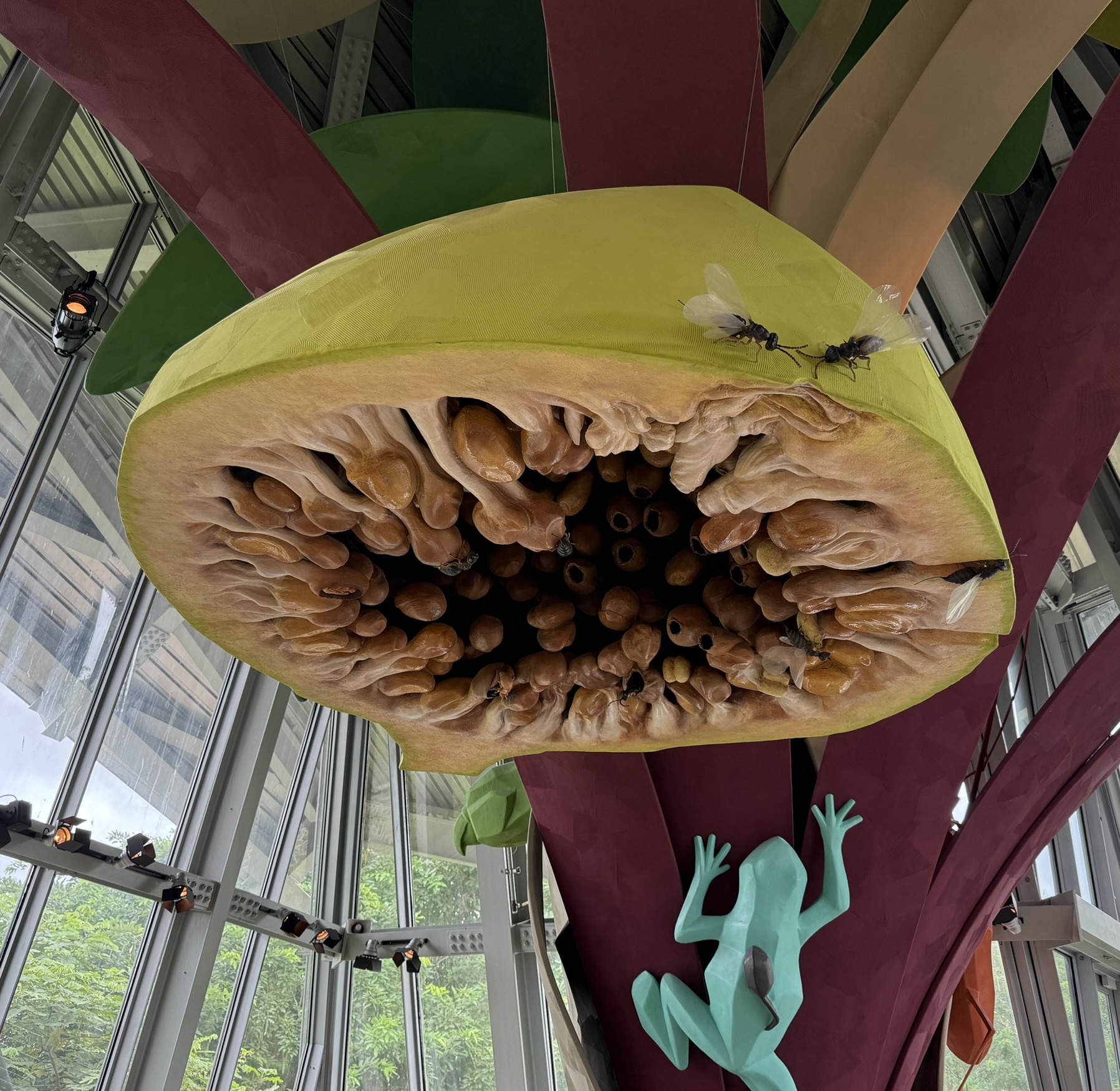
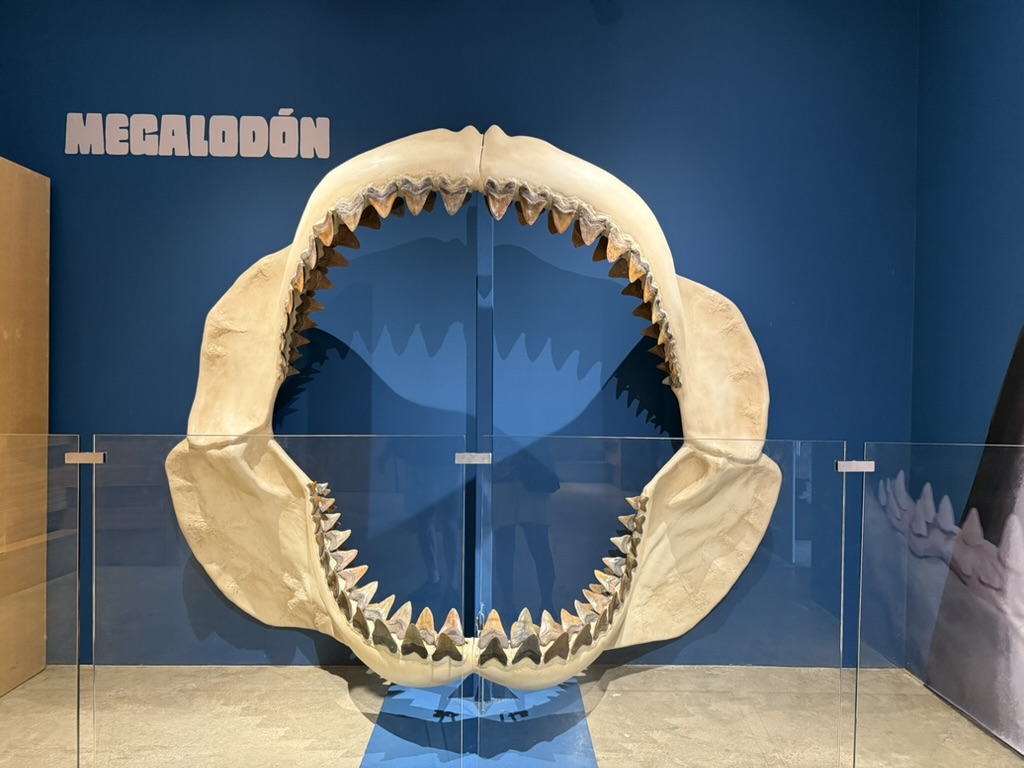
The BioMuseo in Panama City was designed by the famous American architect Frank Gehry, his first and only design in Latin America. The design was conceived in 1999 and the museum opened on 2 October 2014. The museum is focused on the natural history of Panama and how it reshaped the entire world.
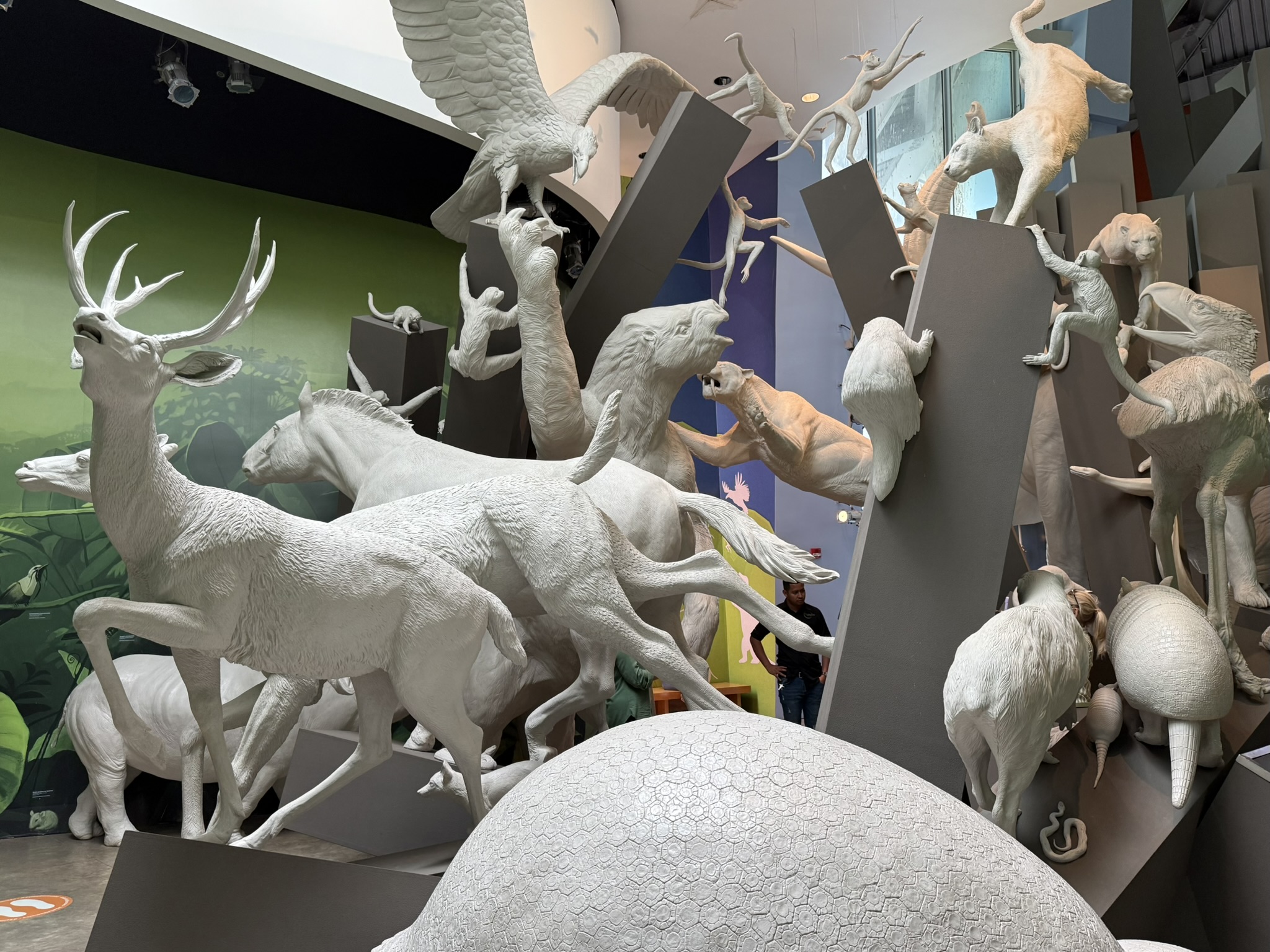
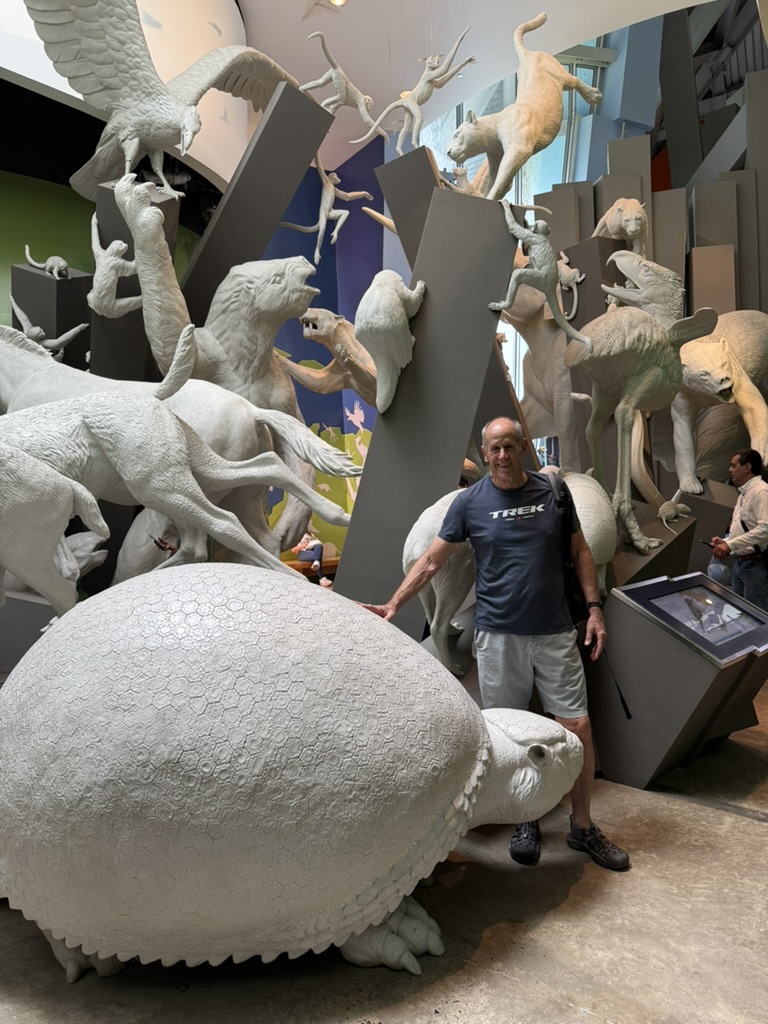
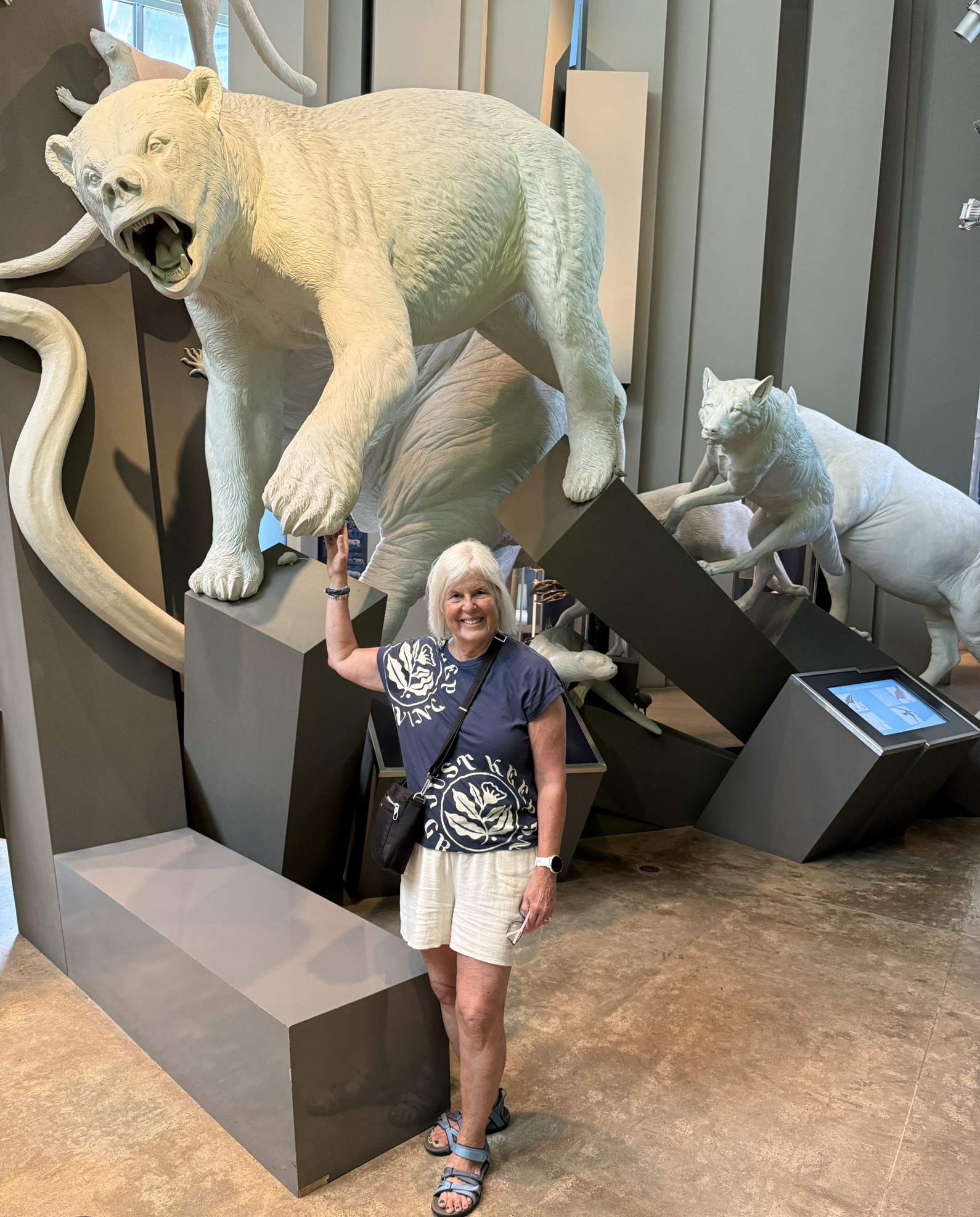
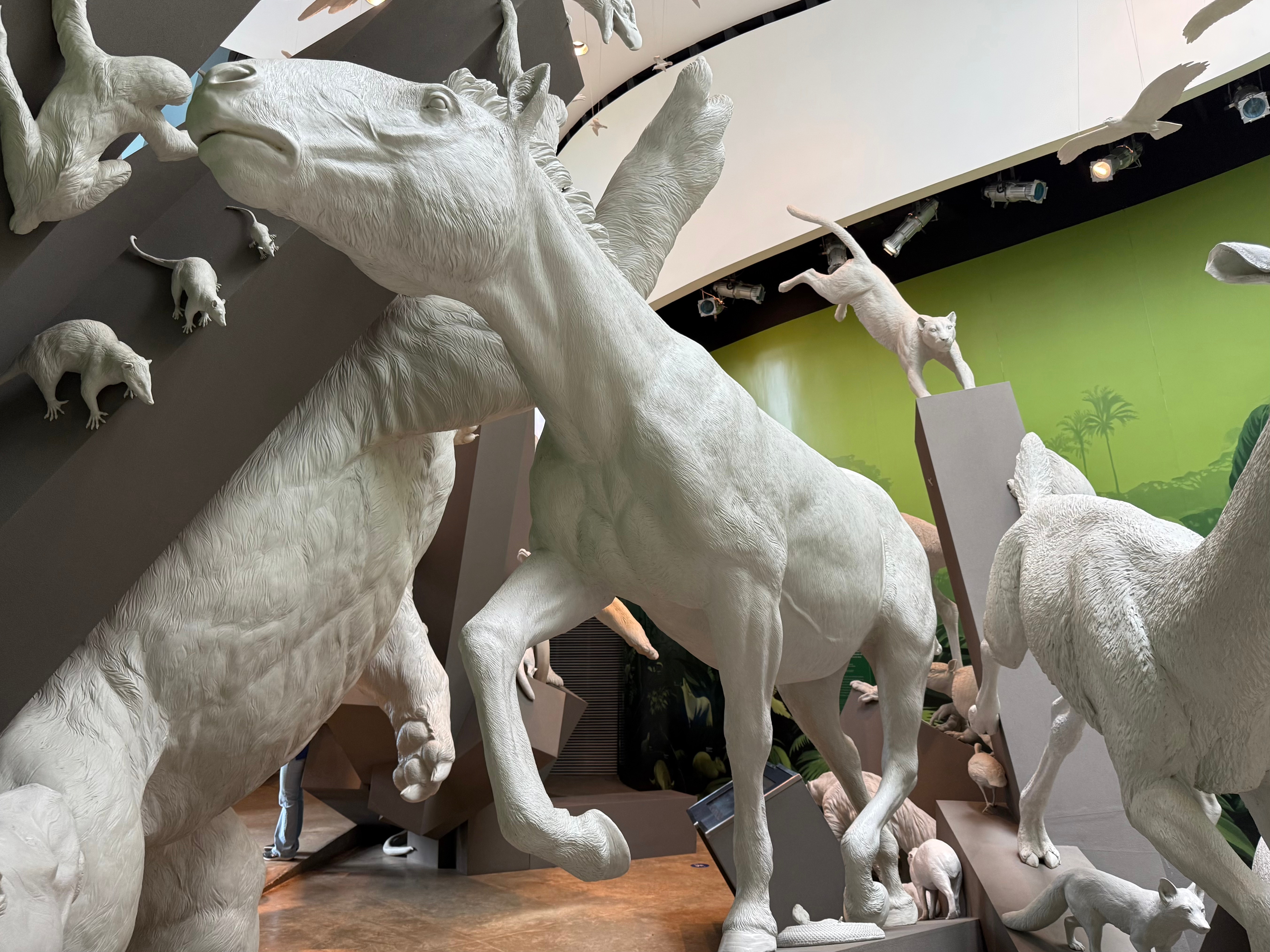
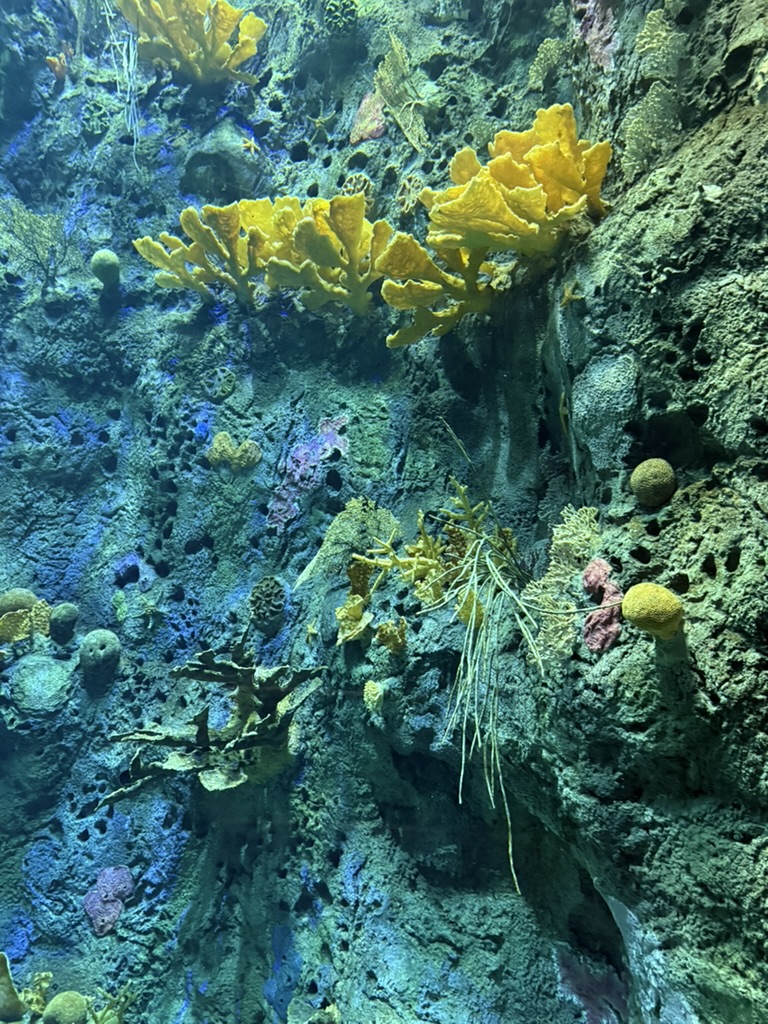
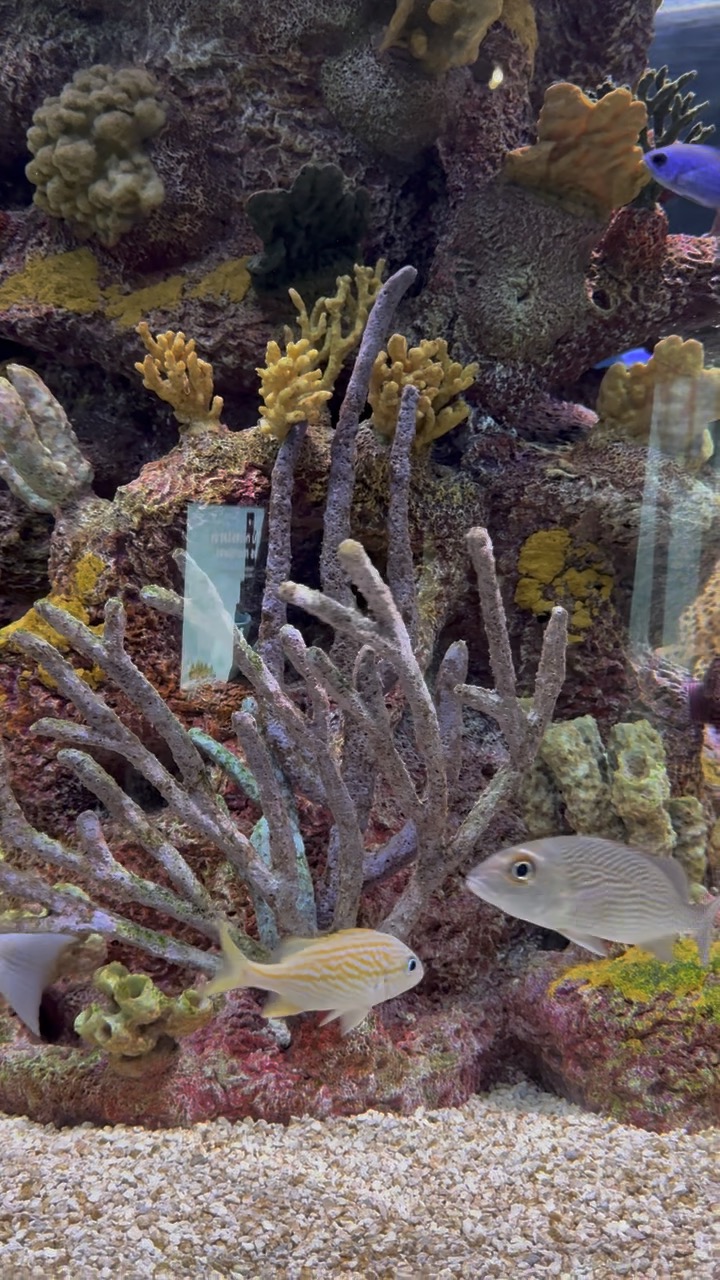
After our walk down the Amador Causeway, we explored the museum’s colorful galleries showcasing the biodiversity of Panama. Exhibits vary from audiovisuals & sculptures to an ocean gallery with multiple aquariums.
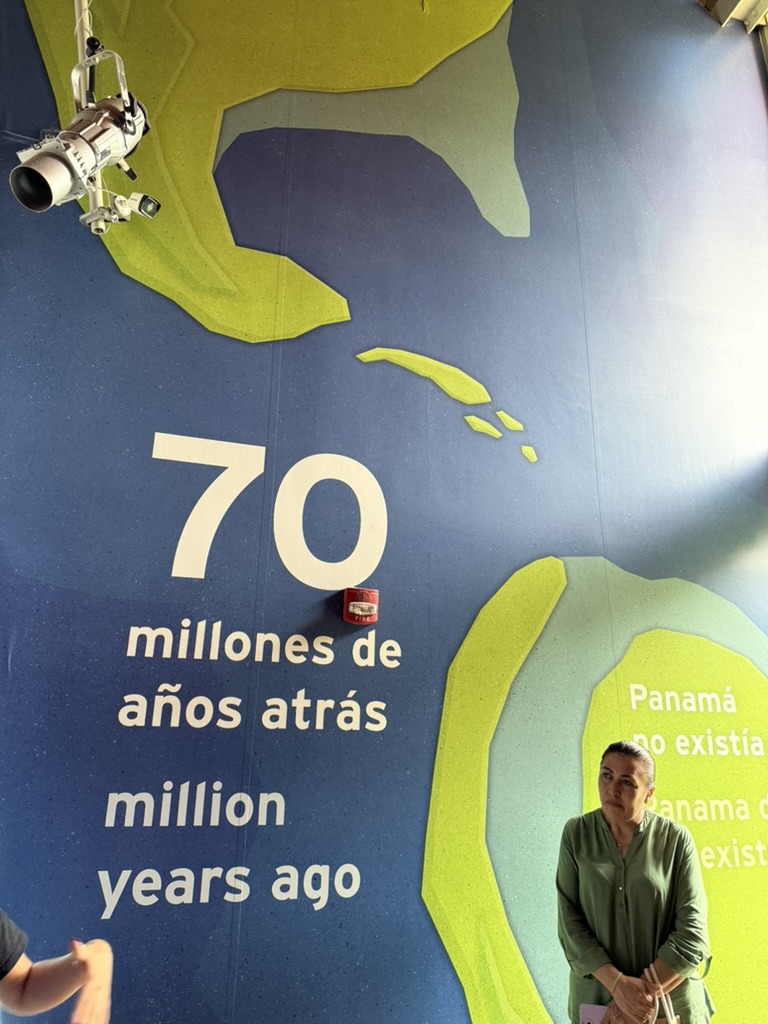
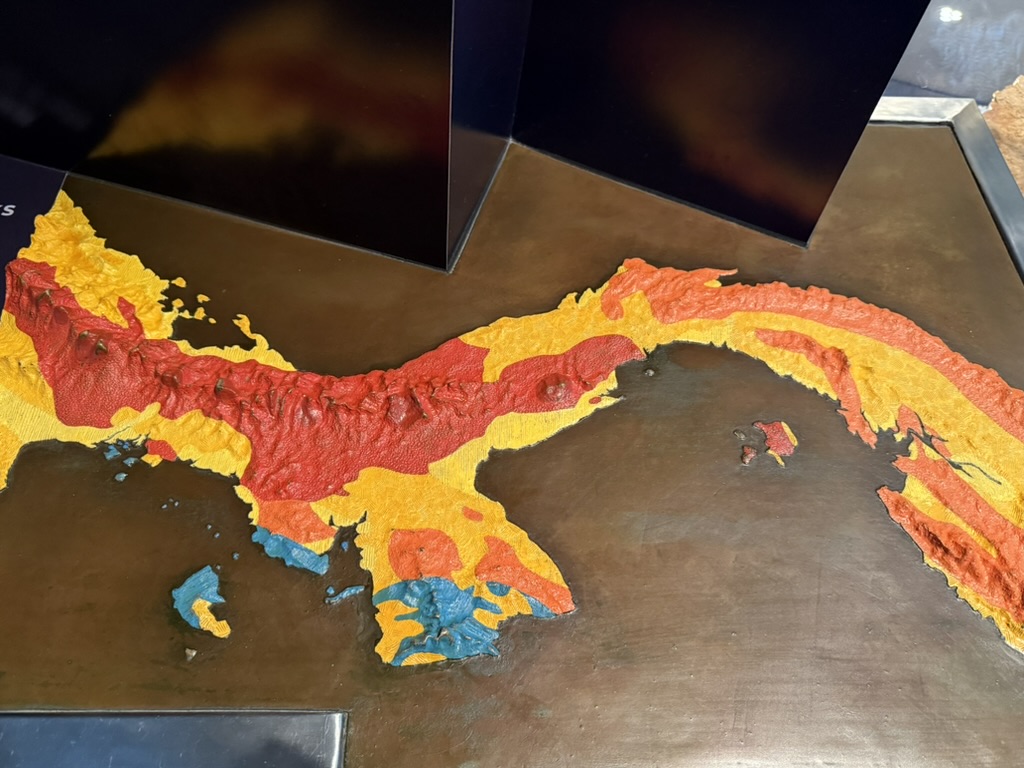
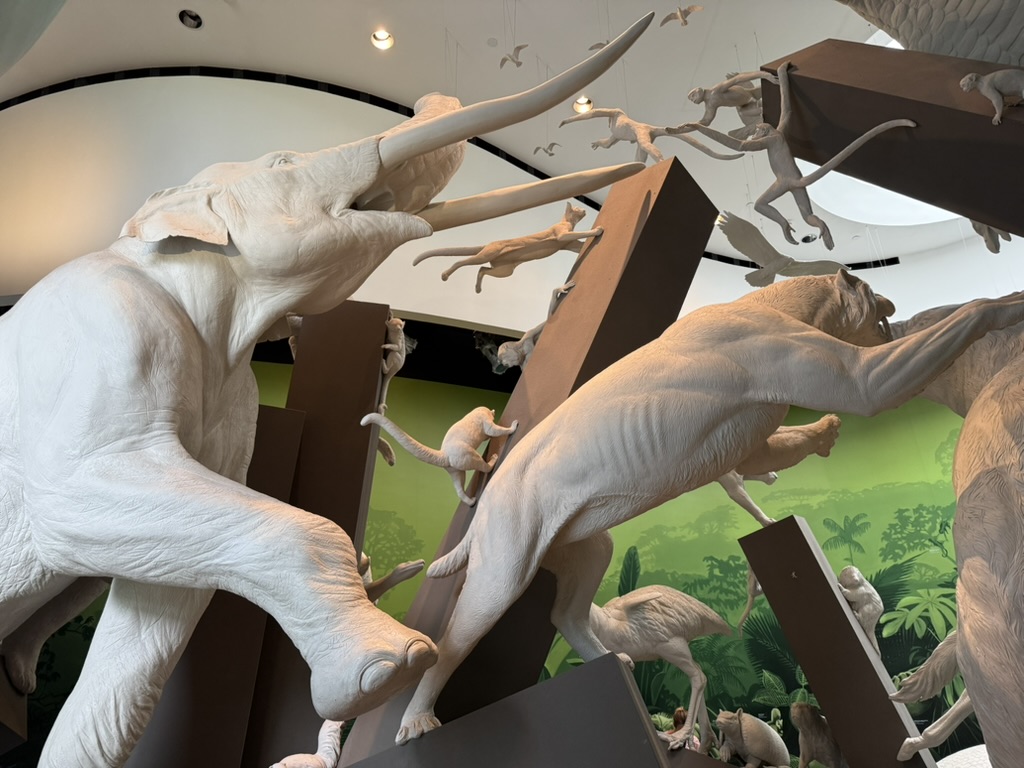
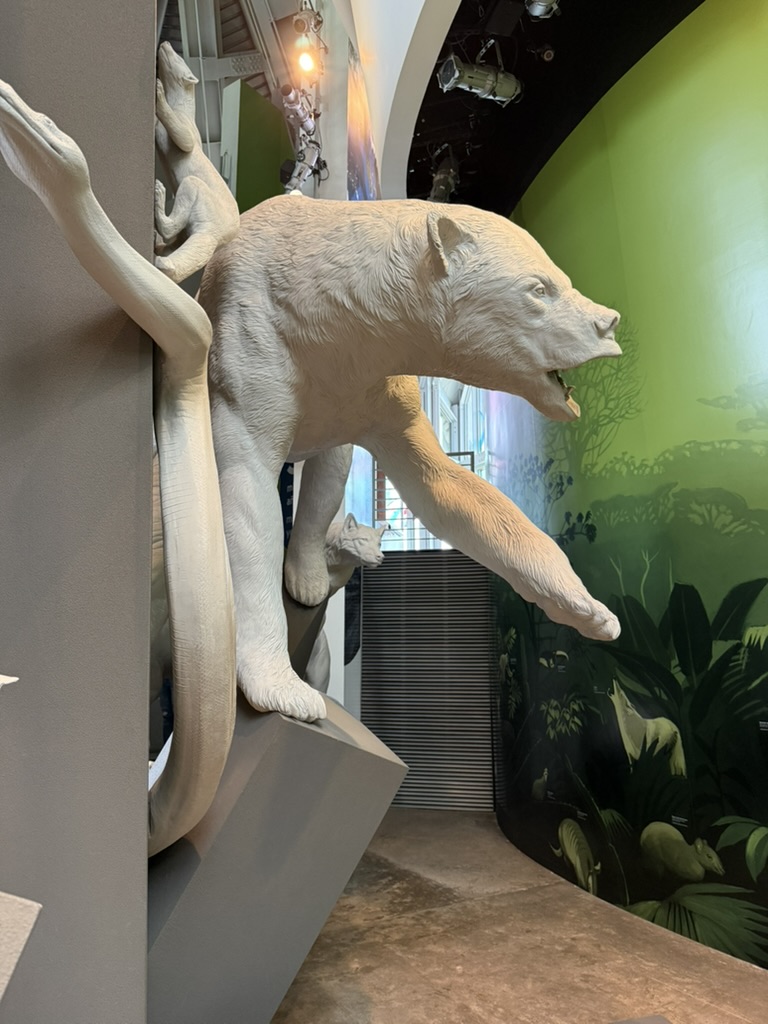
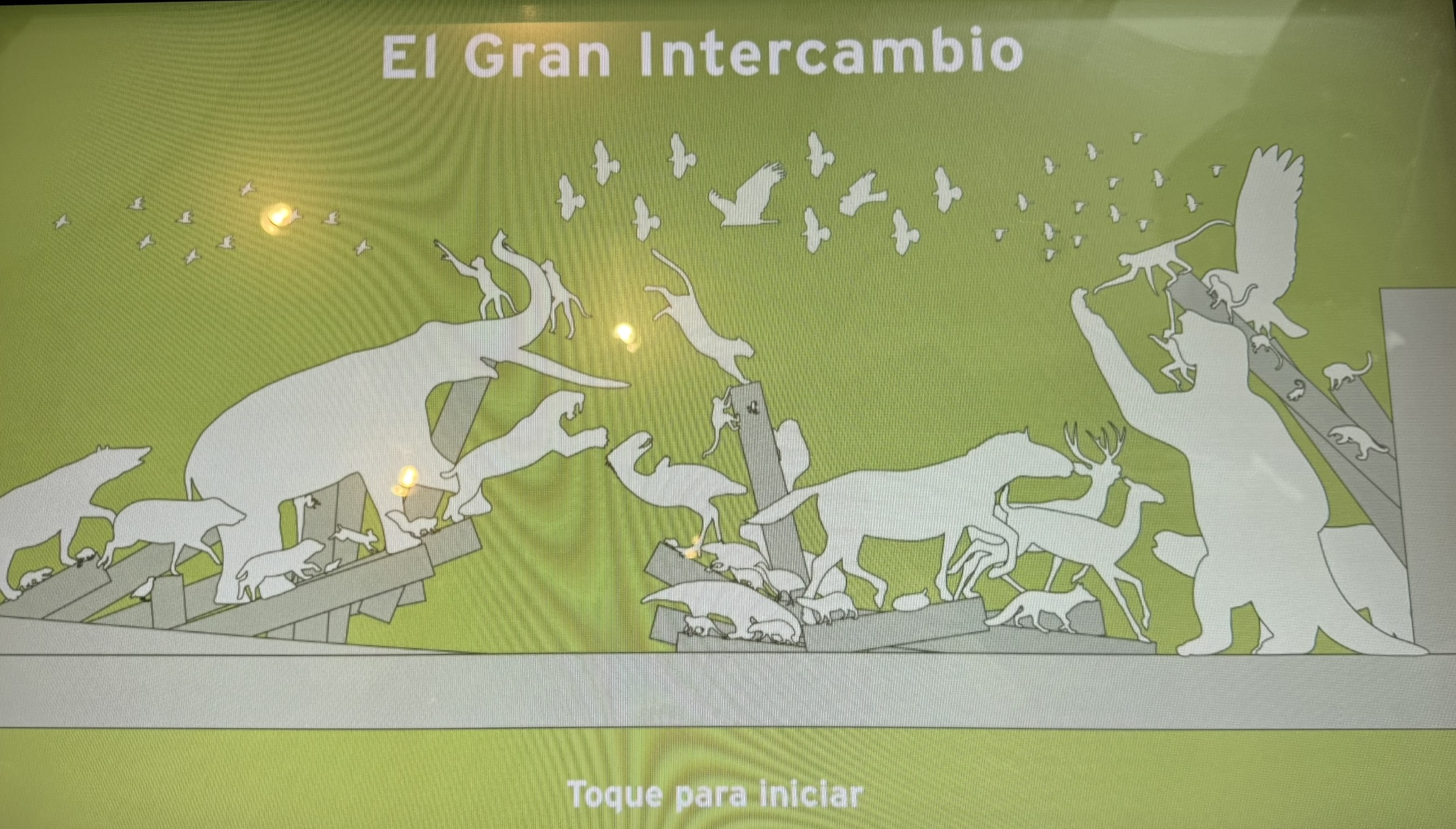
We learned that 70 million years ago, there was no isthmus that connected North and South America. Panama didn’t exist except as a number of underwater volcanoes 🌋 on the ocean floor. Once a land mass was formed above water this opened a corridor for a mass migrational interchange of animals from one continent to the other.
The Human Path, a space partially open to the outdoors, displays 16 columns providing information about human impact on the natural world.
The goal of the museum is to make visitors aware of their personal impact on biodiversity and to encourage them to protect and cherish it.




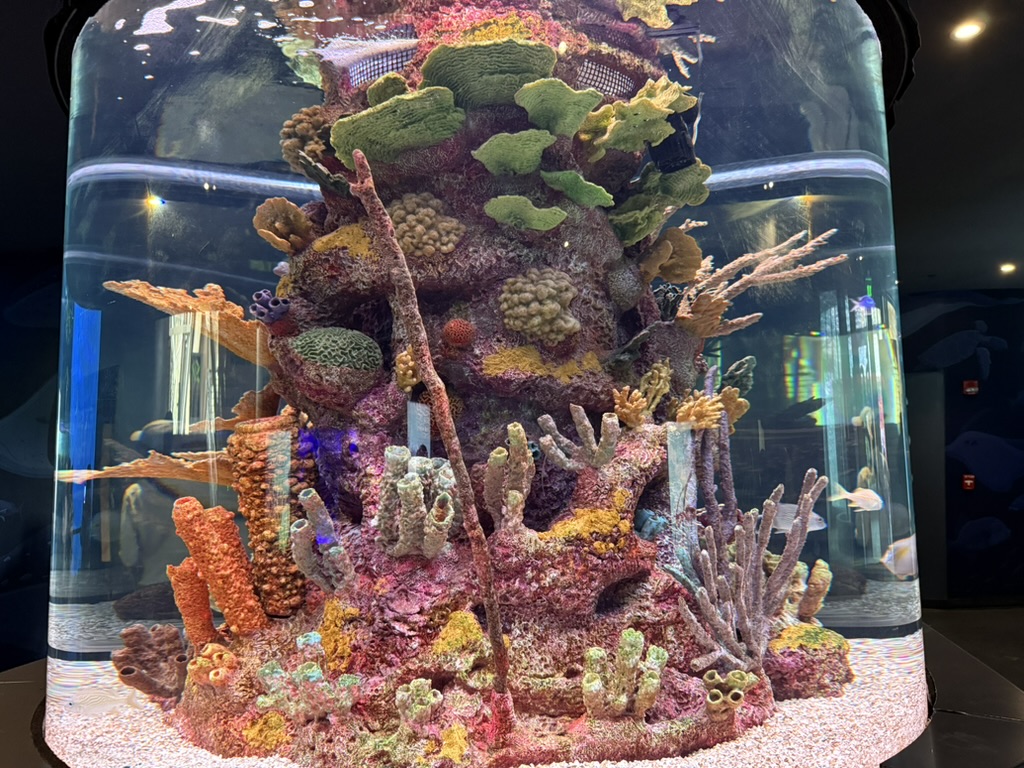
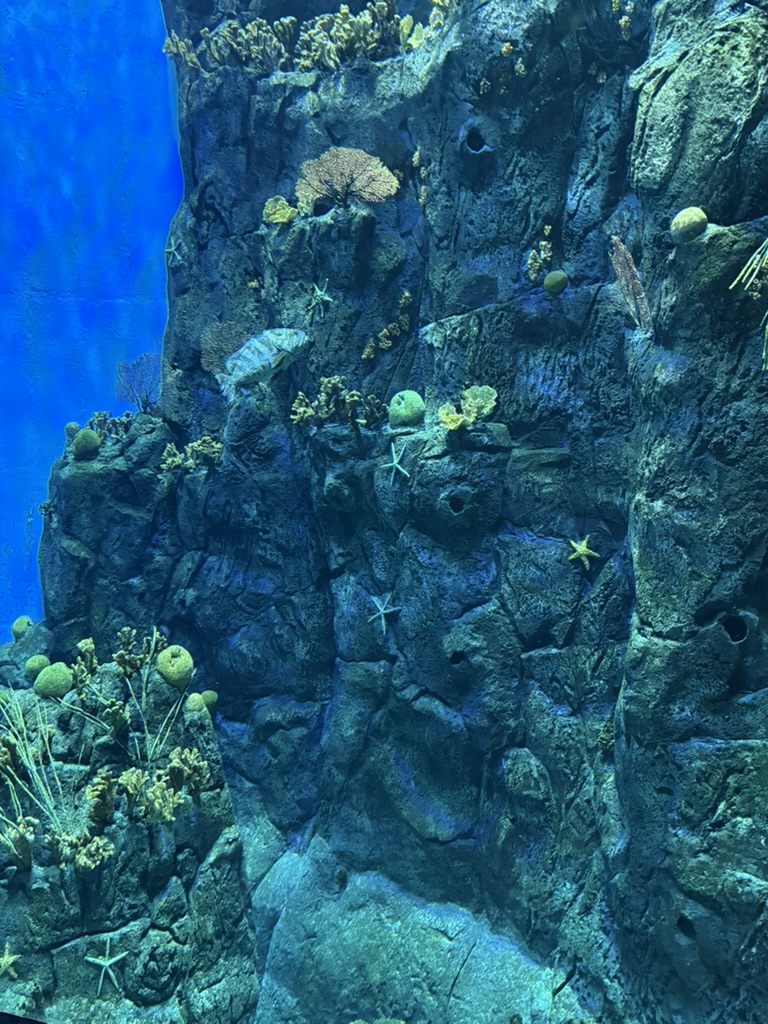
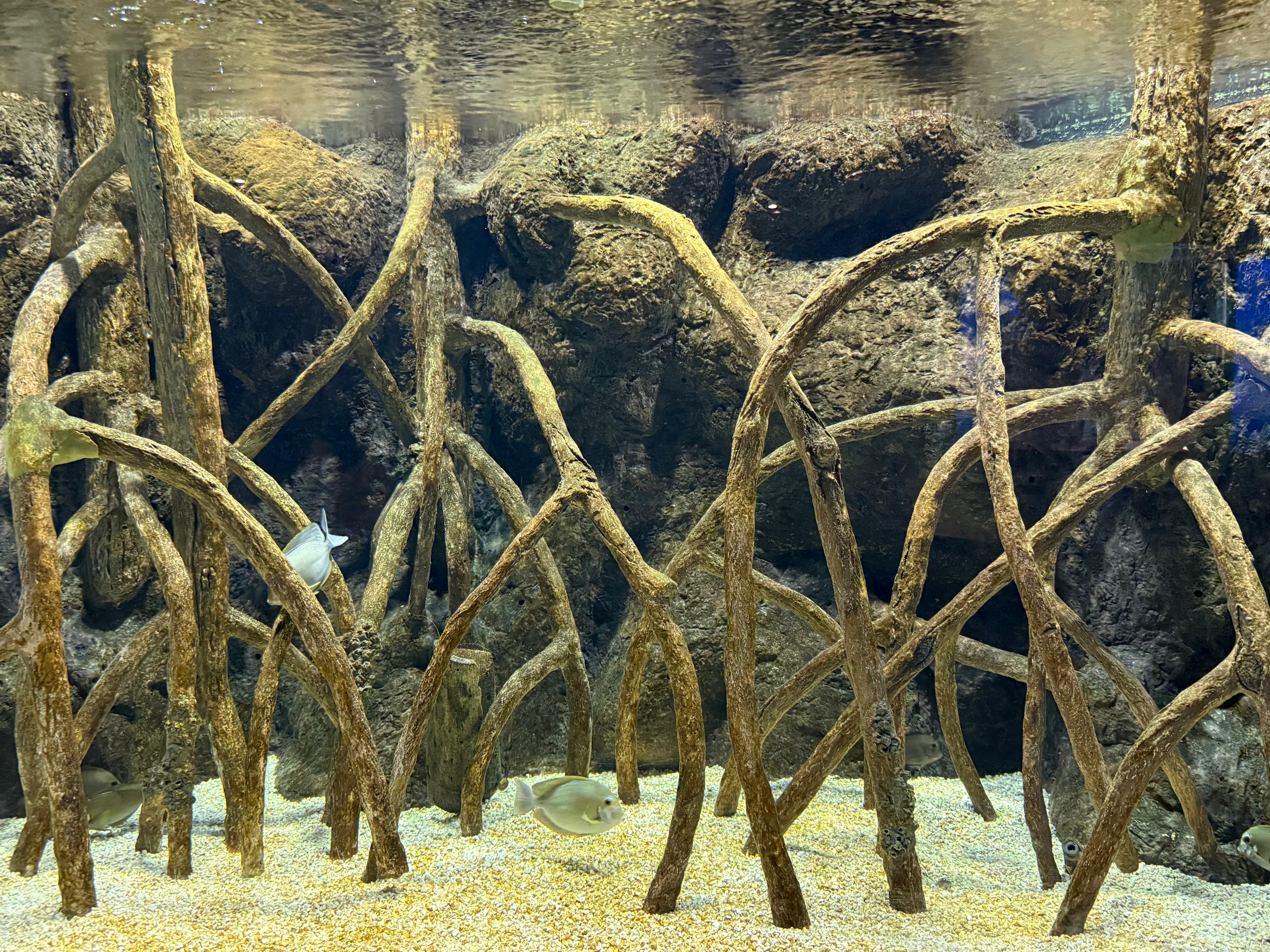
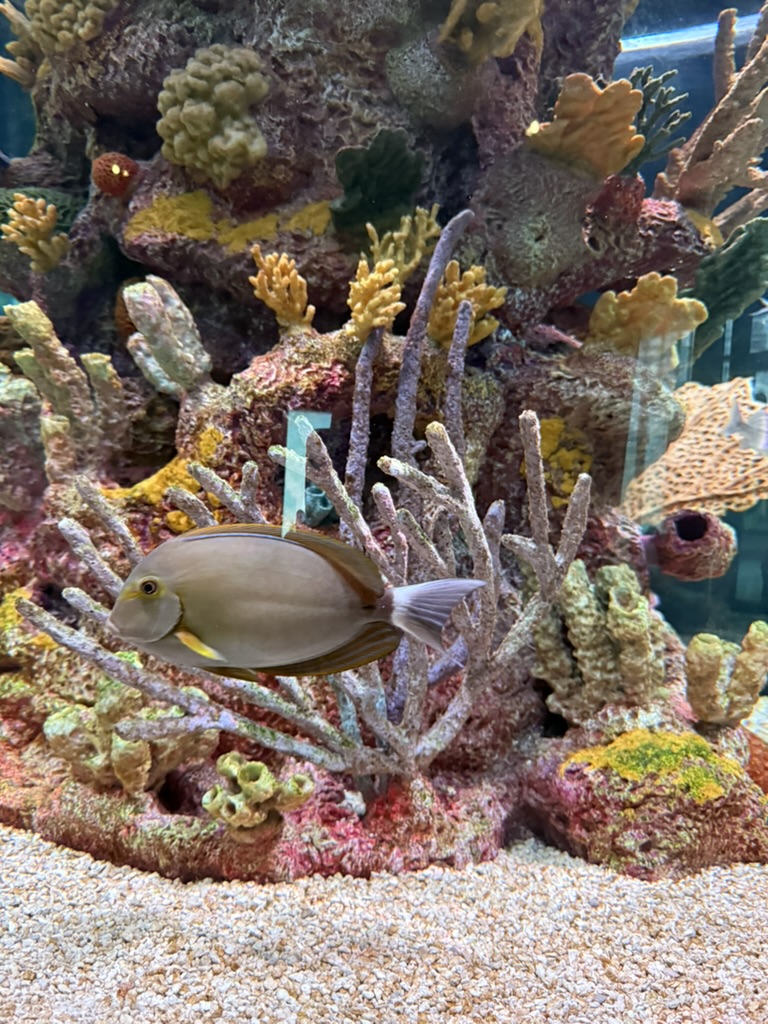


Mercado de Mariscos
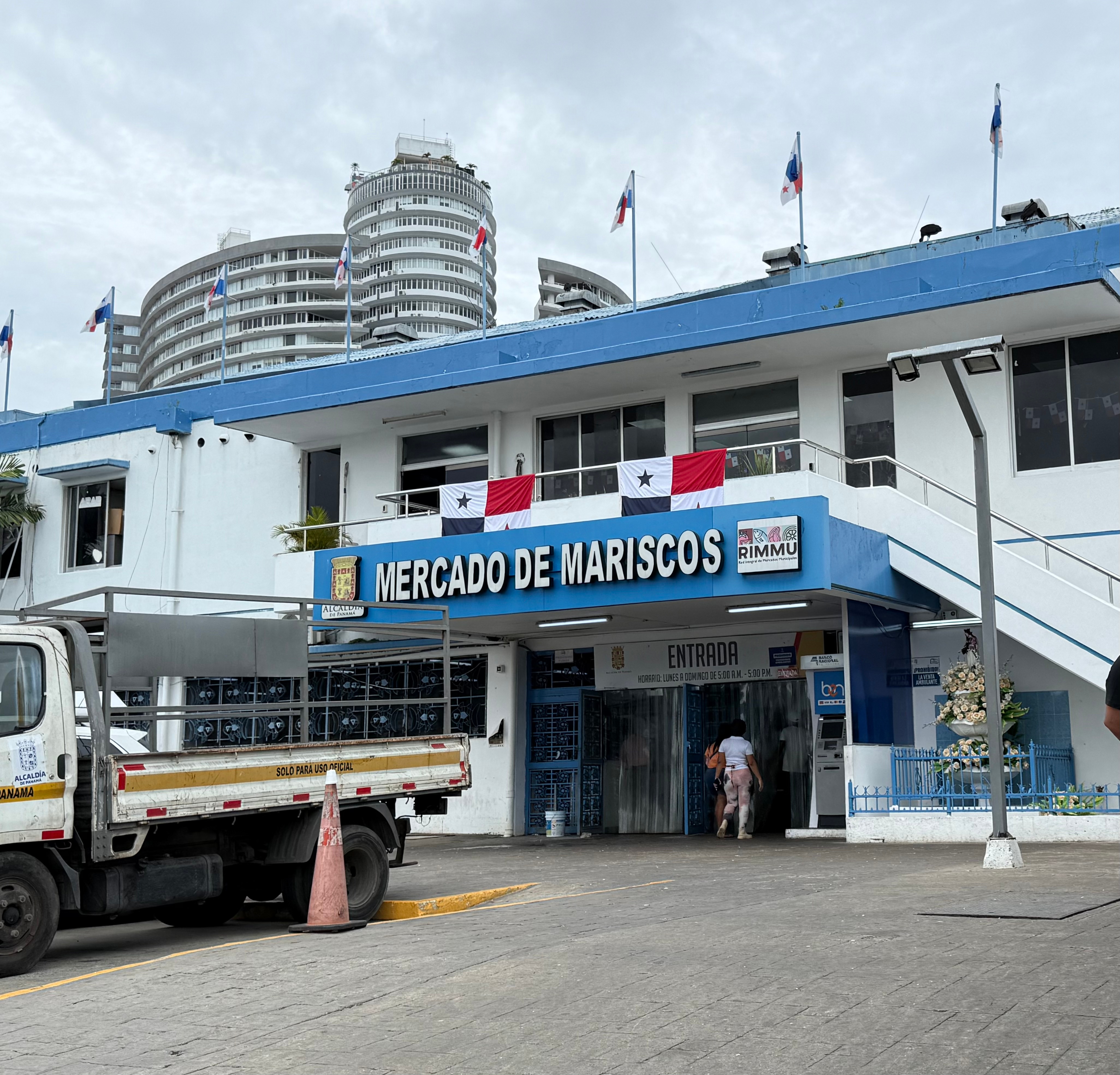
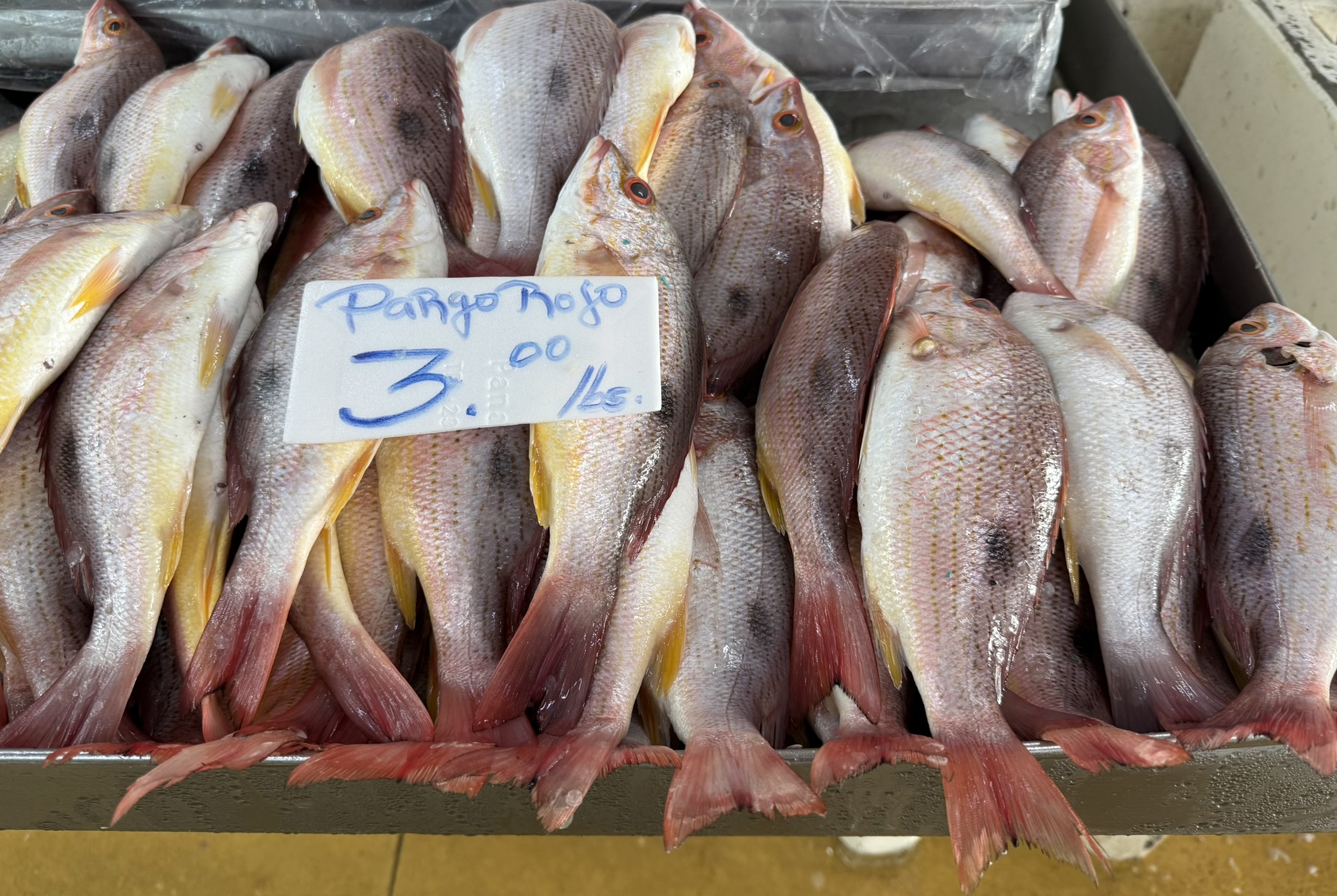
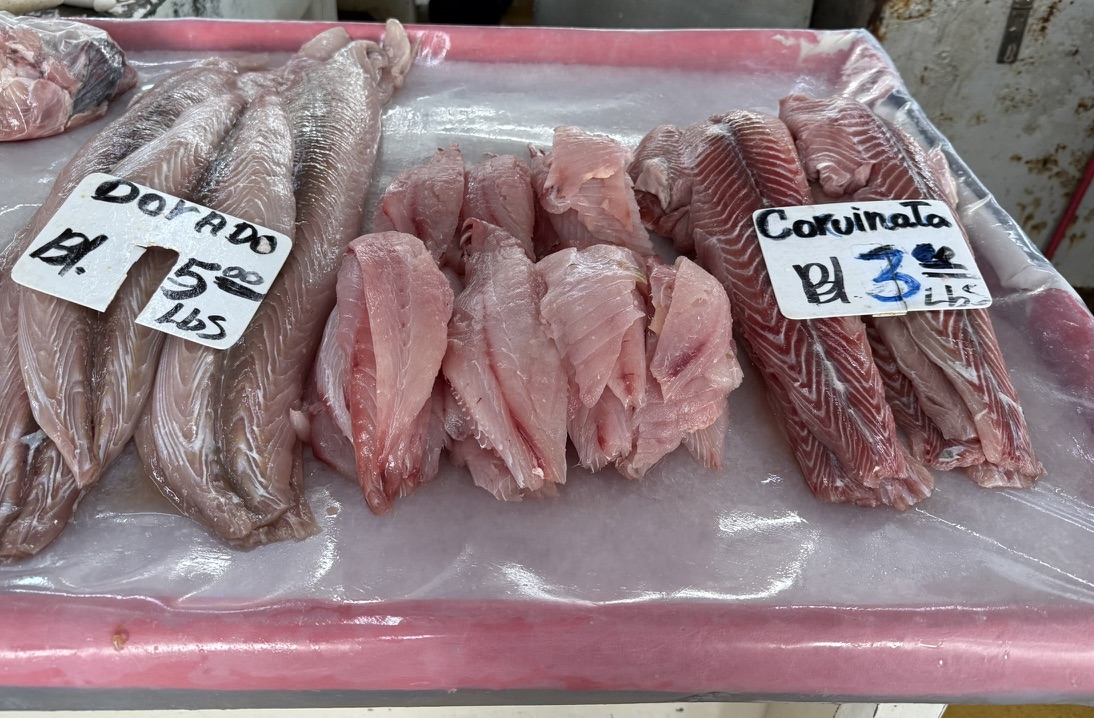
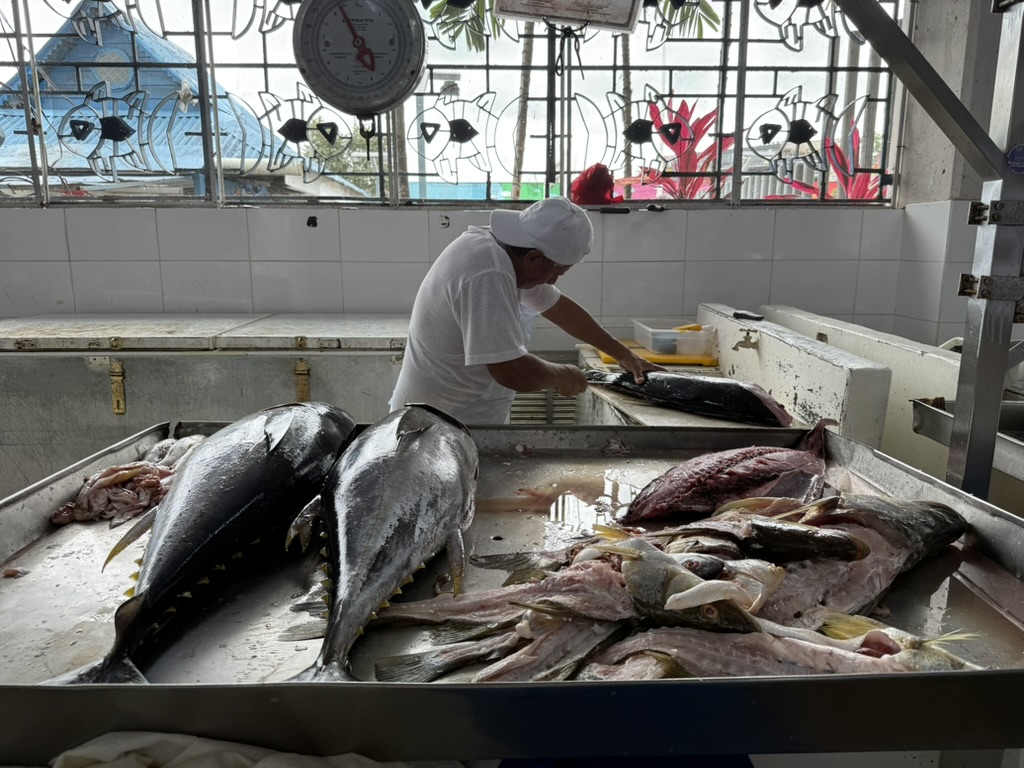
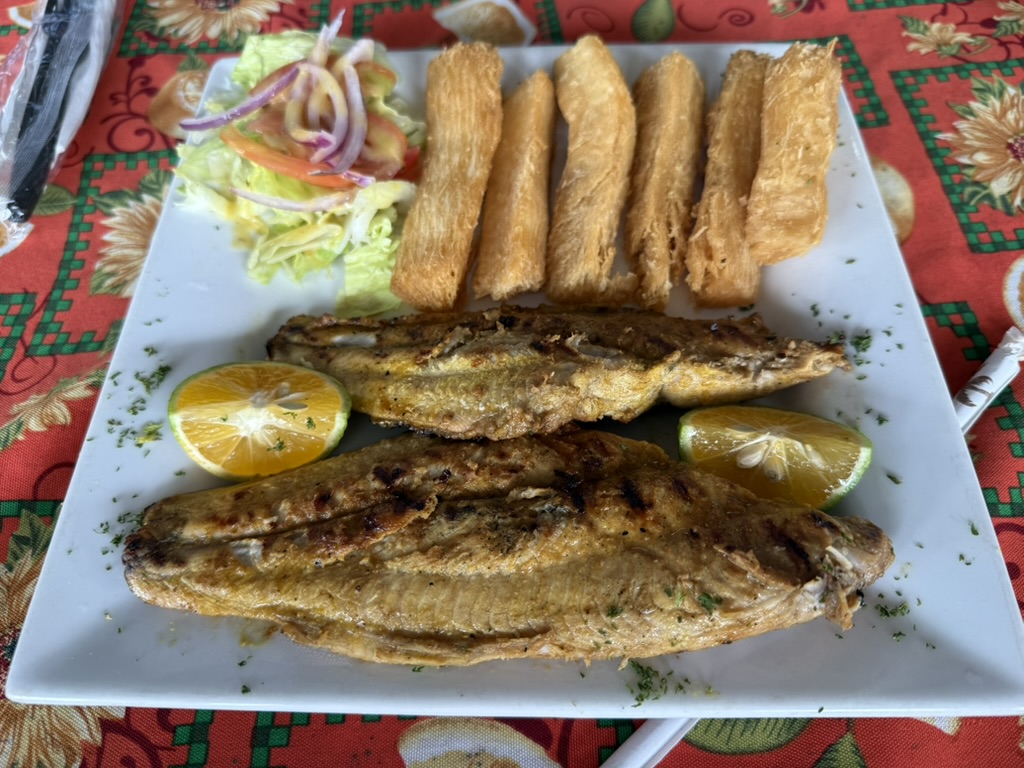
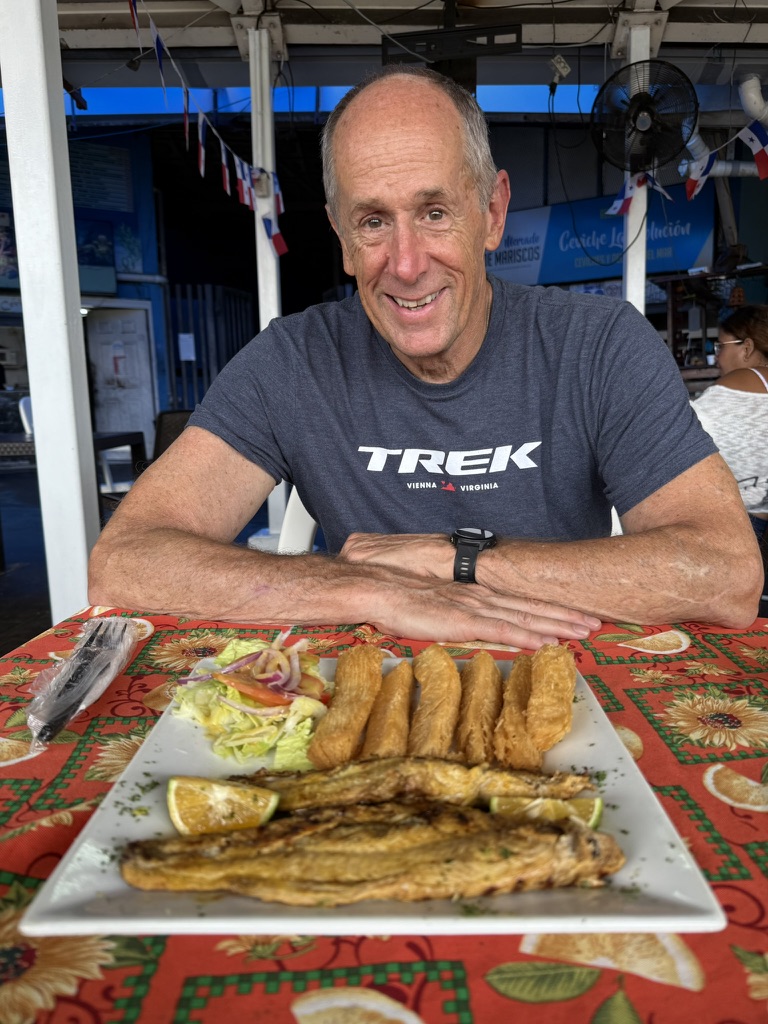
We stopped at the Mercado de Mariscos, the seafood market, where we strolled through the market and then ate a lunch of sea bass and yucca fries.


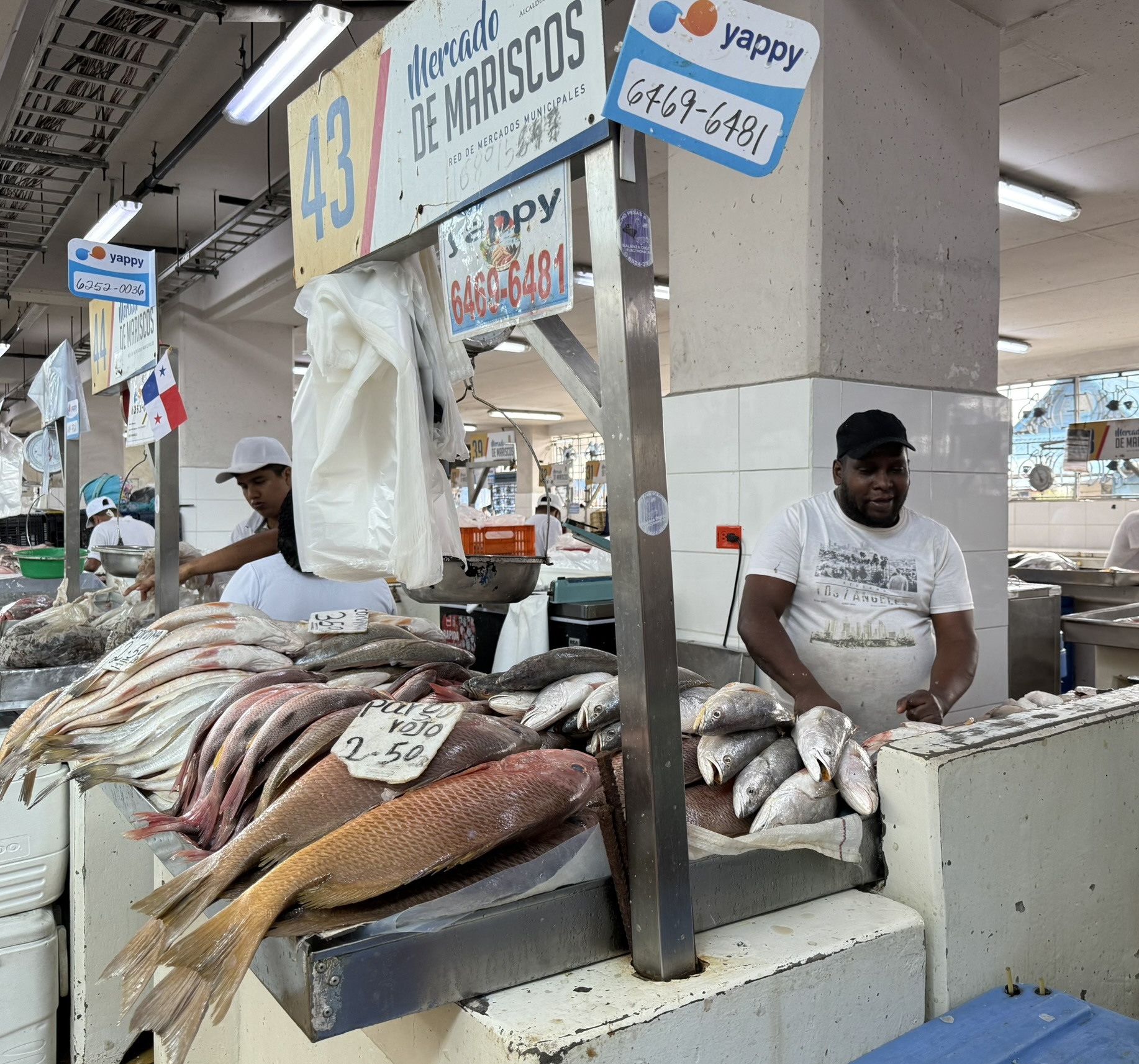
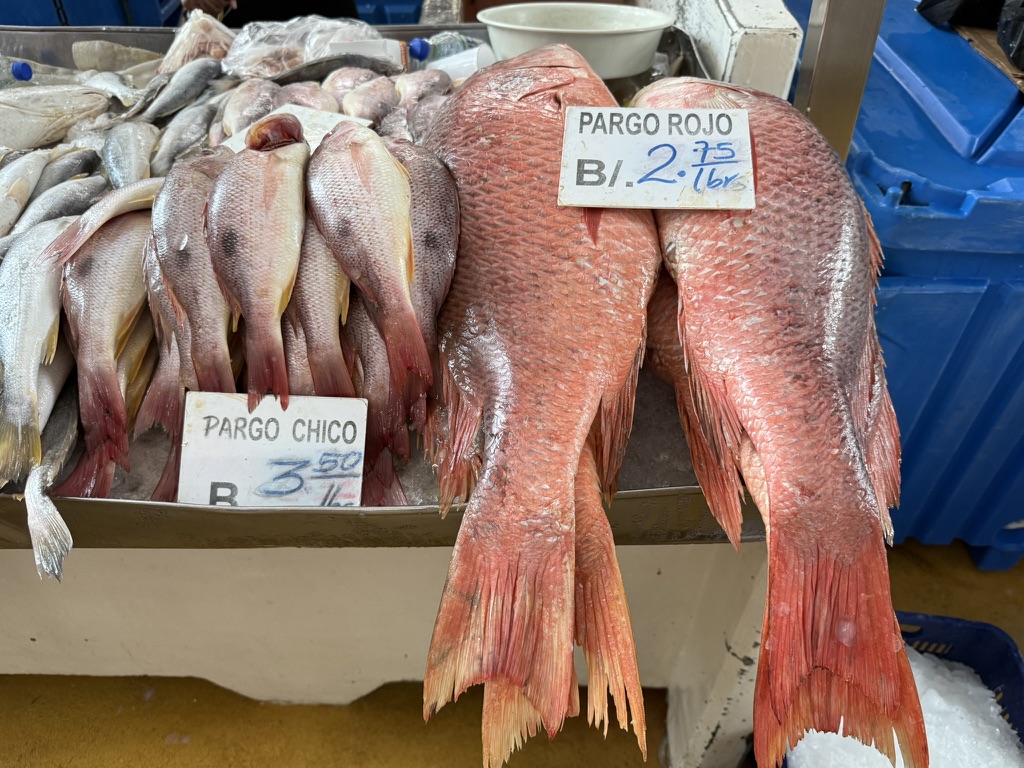

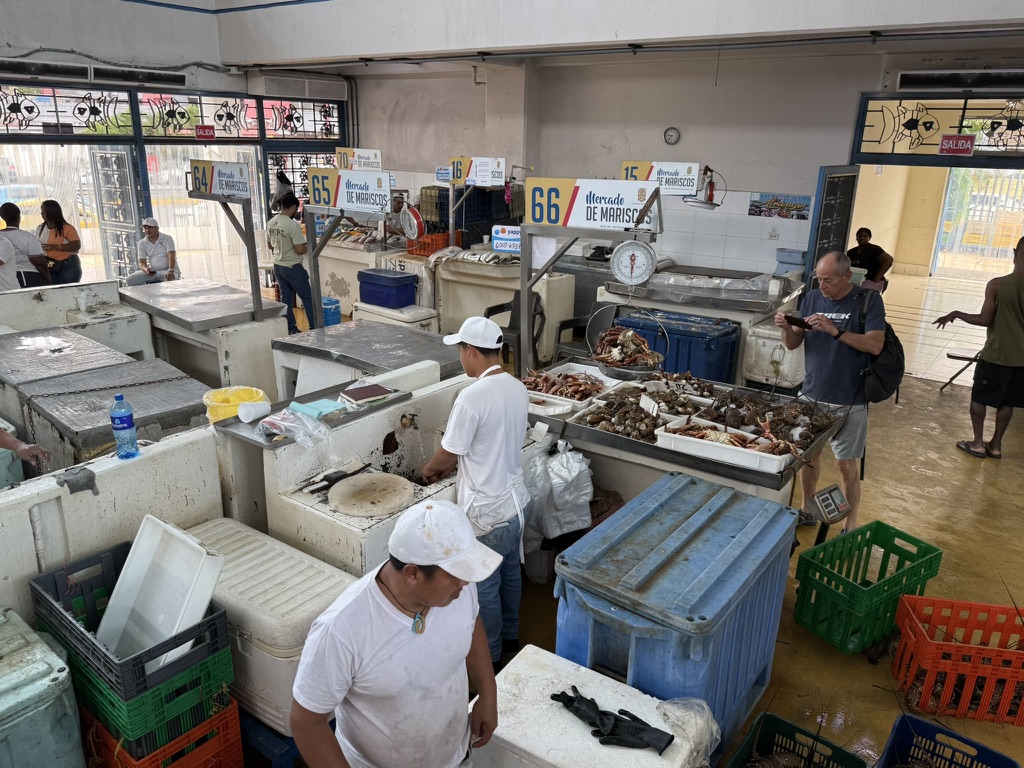
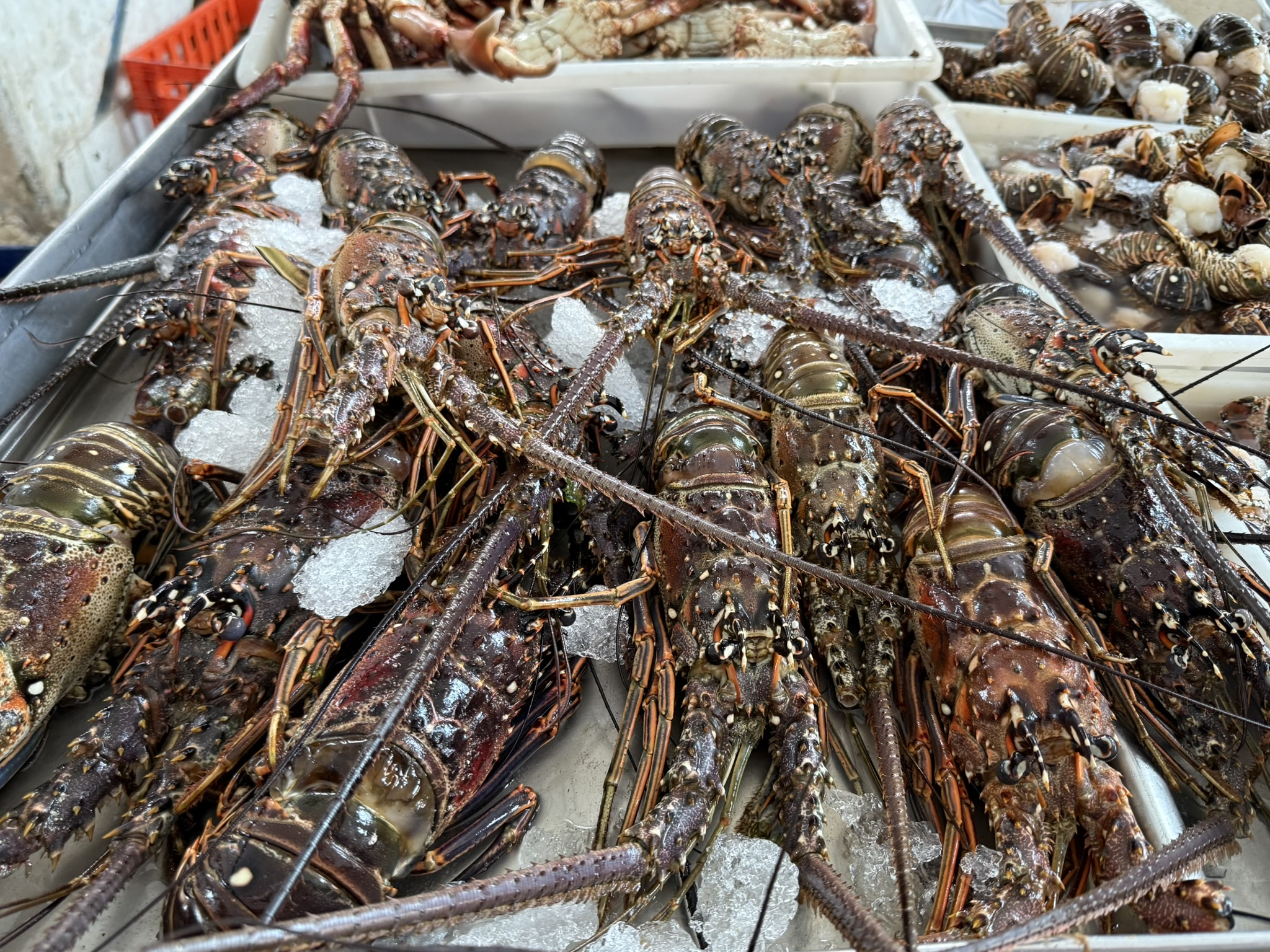
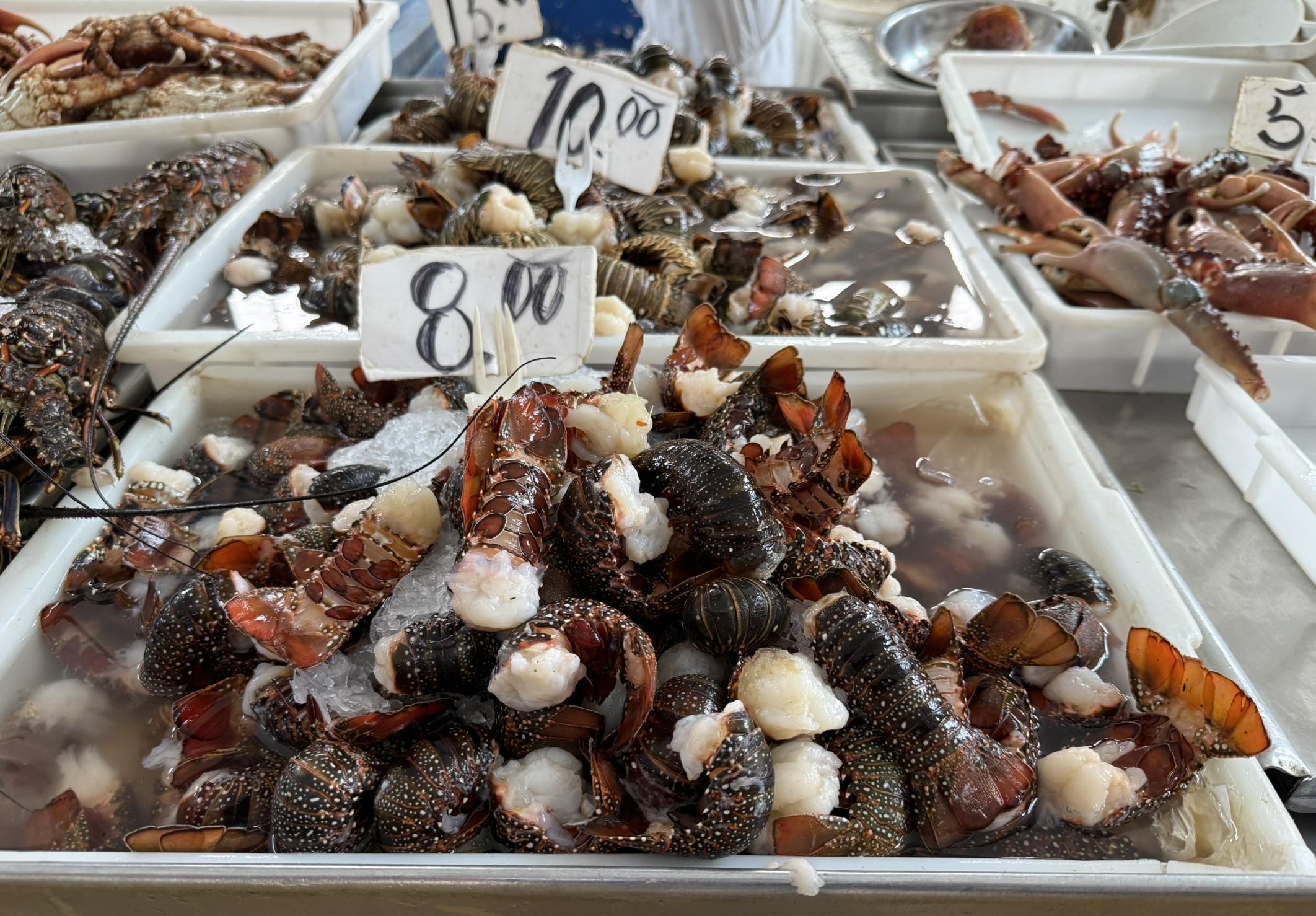
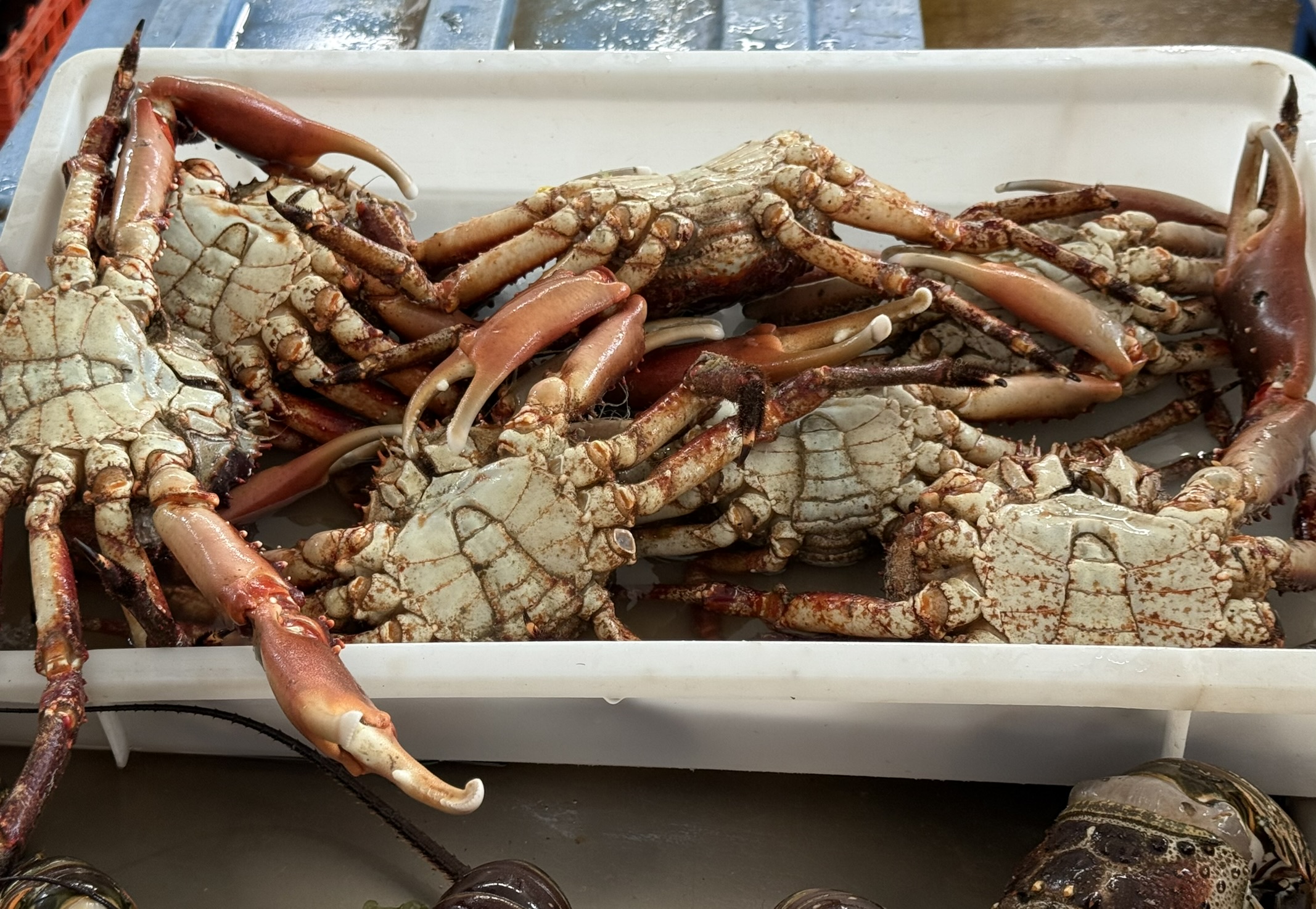
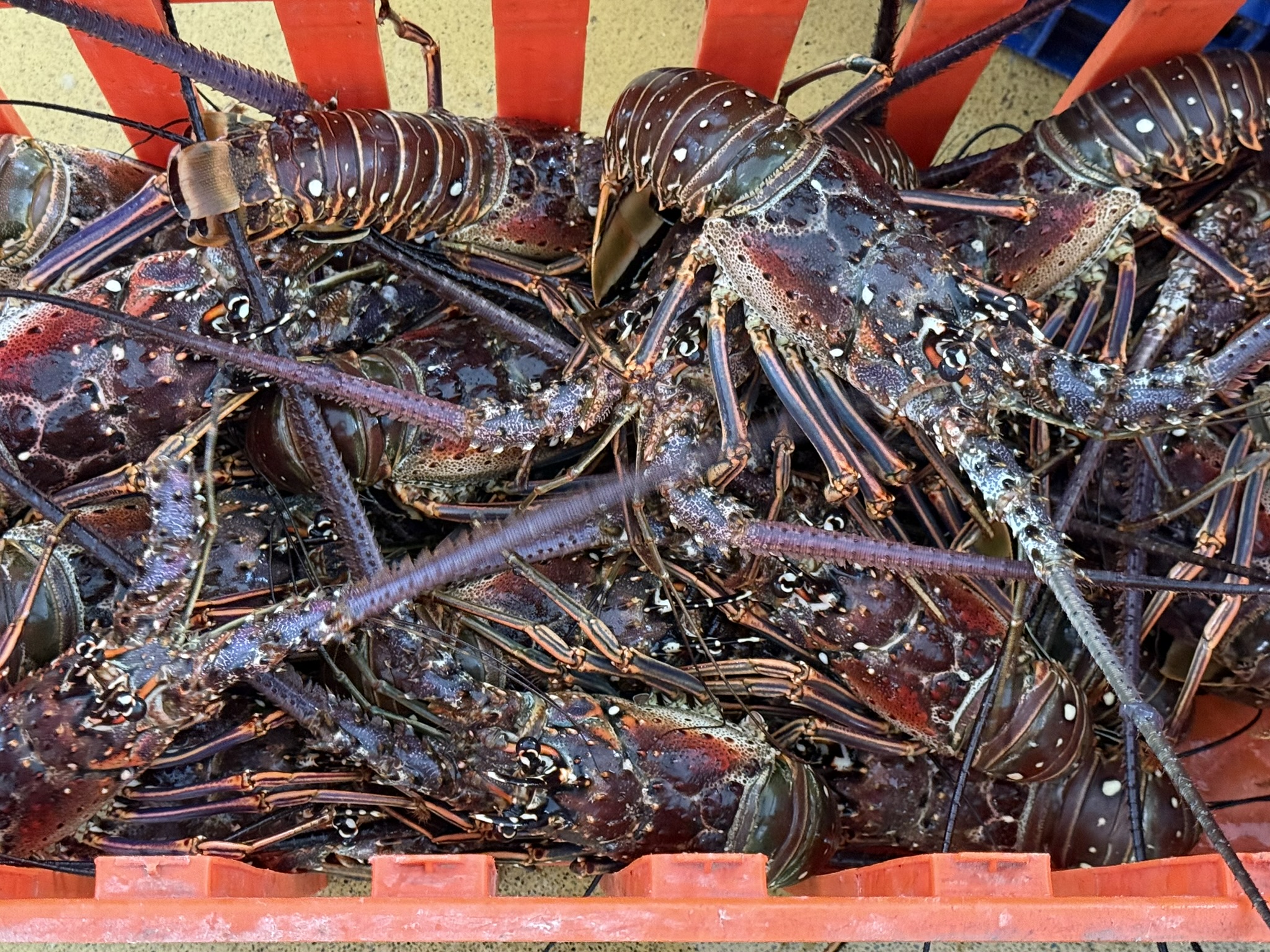
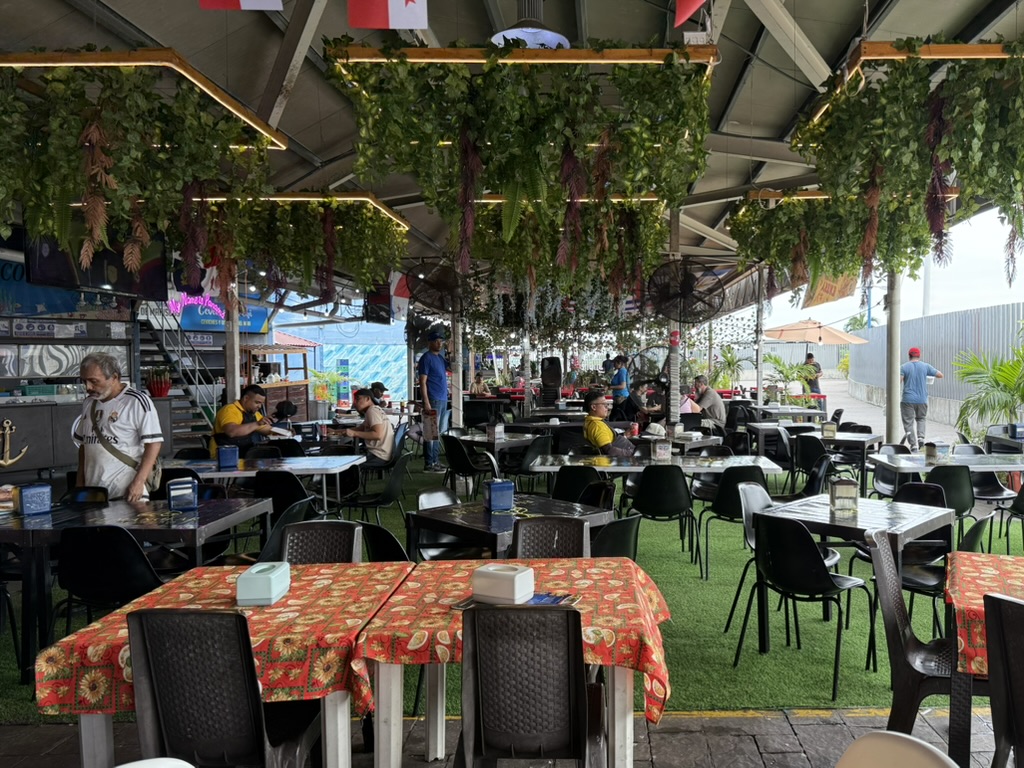
El Cangrejo
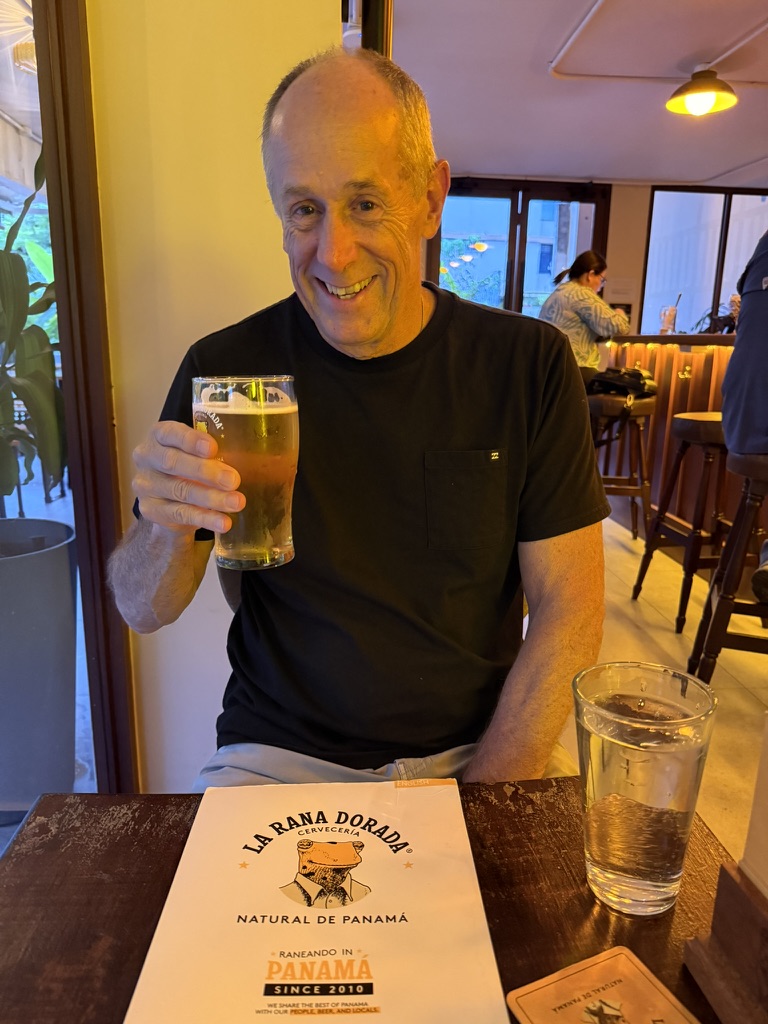
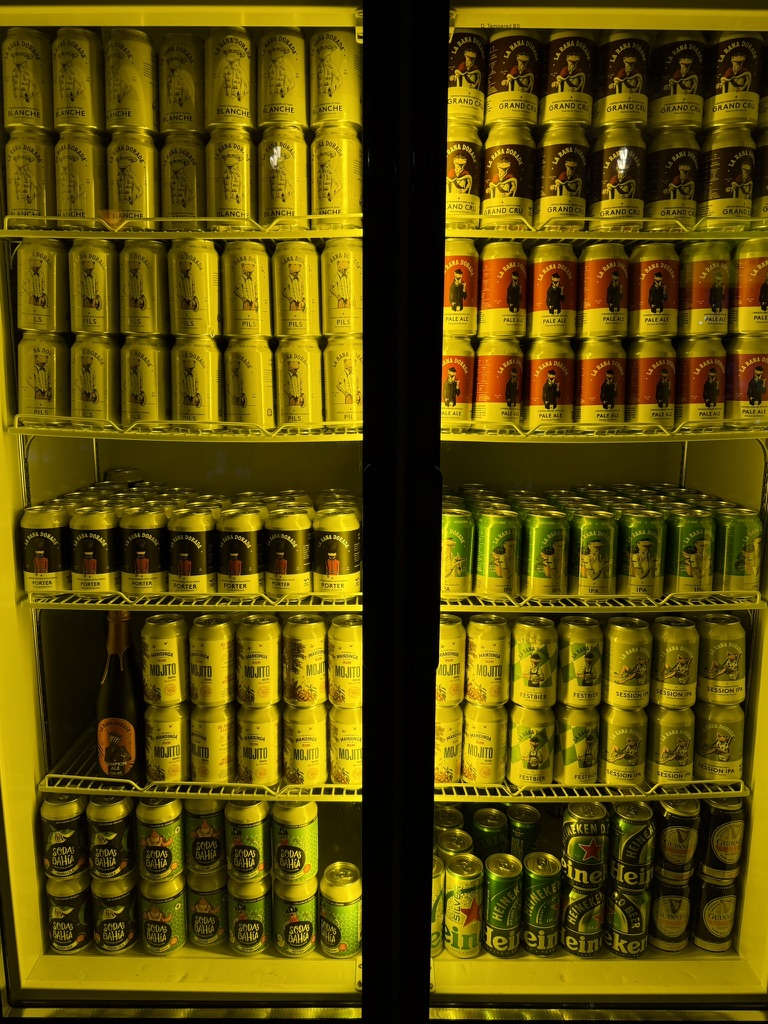
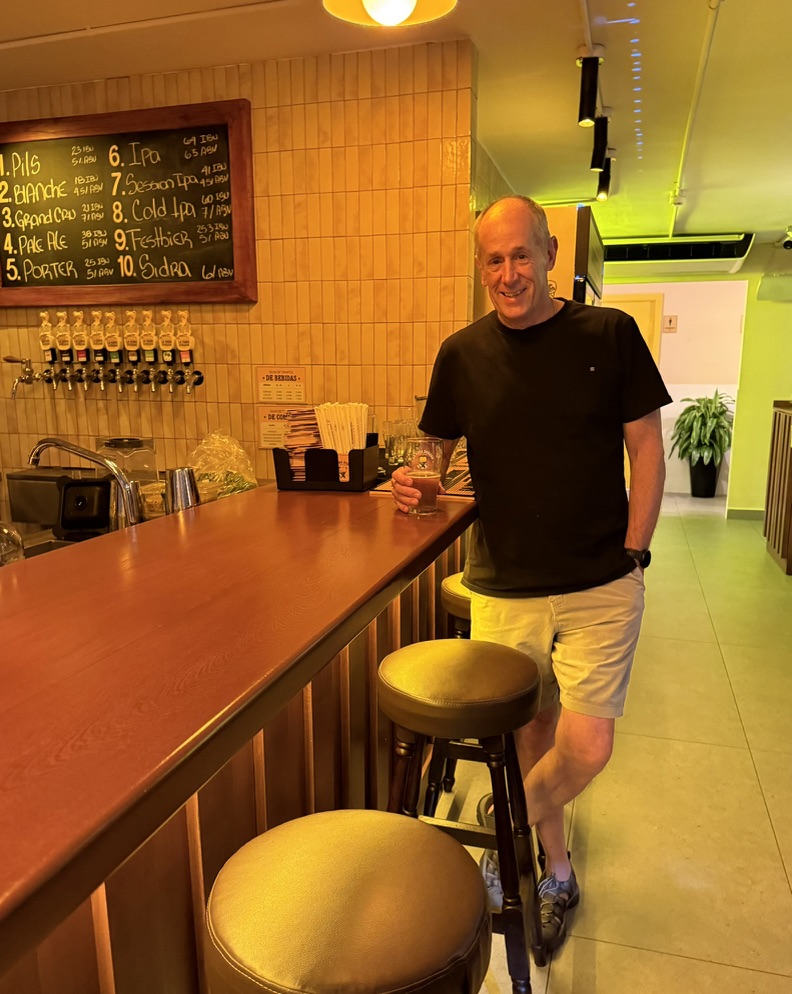
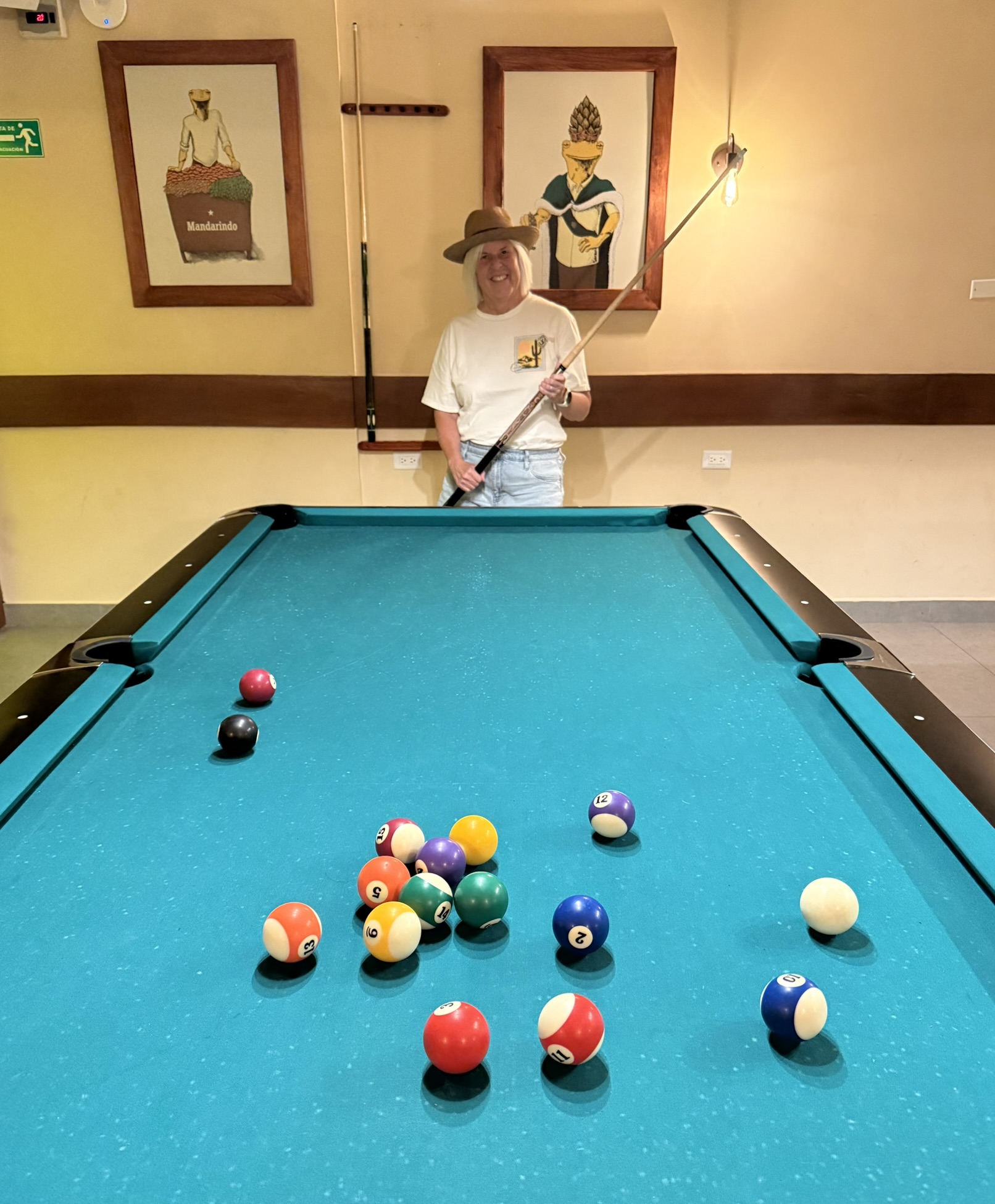
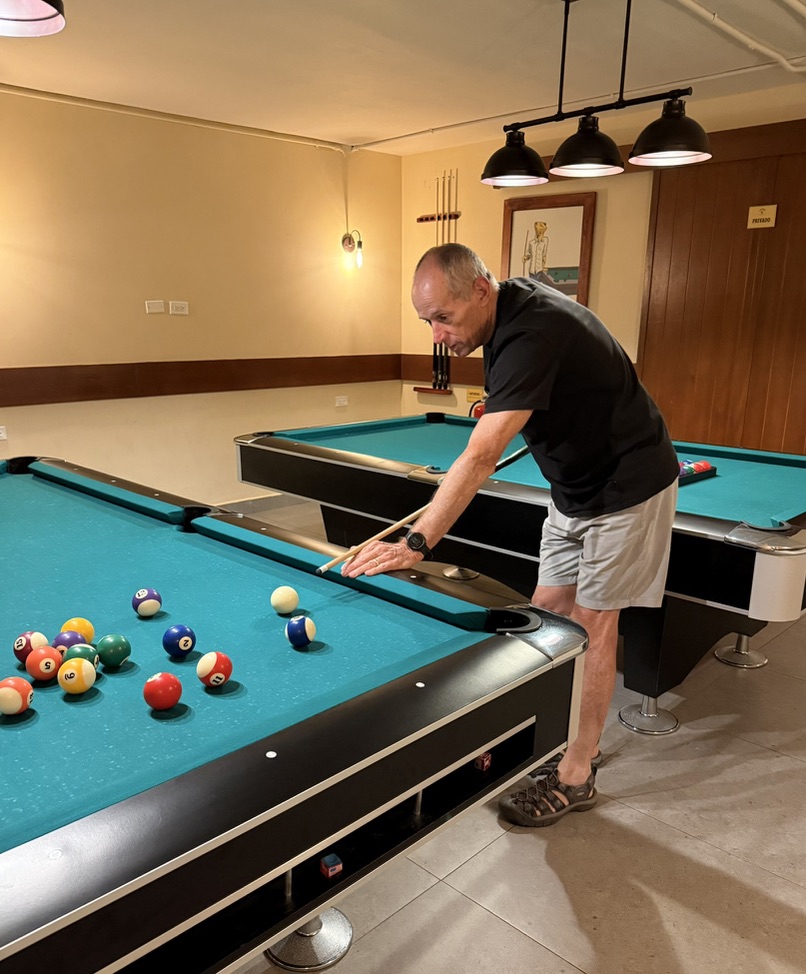
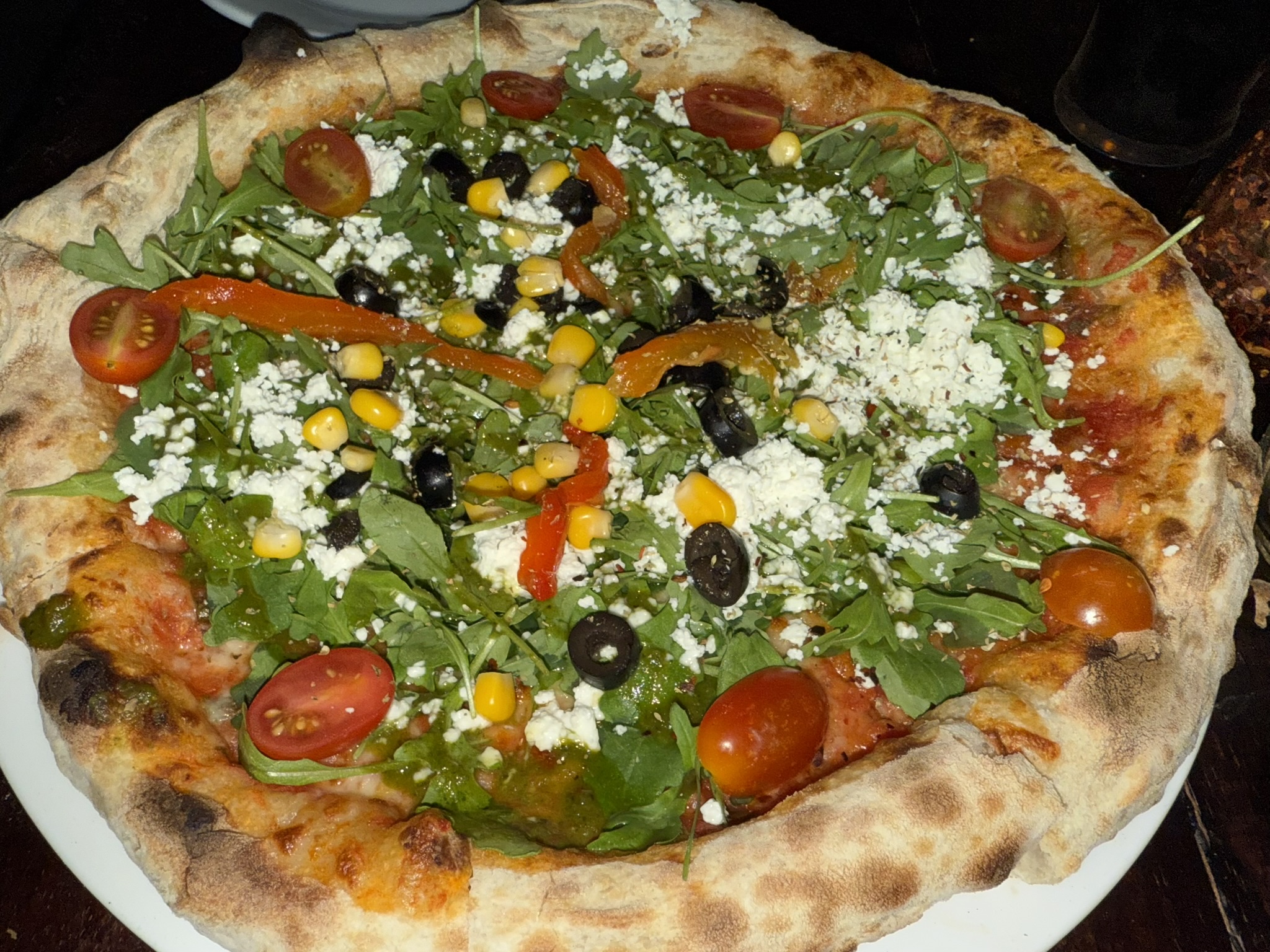
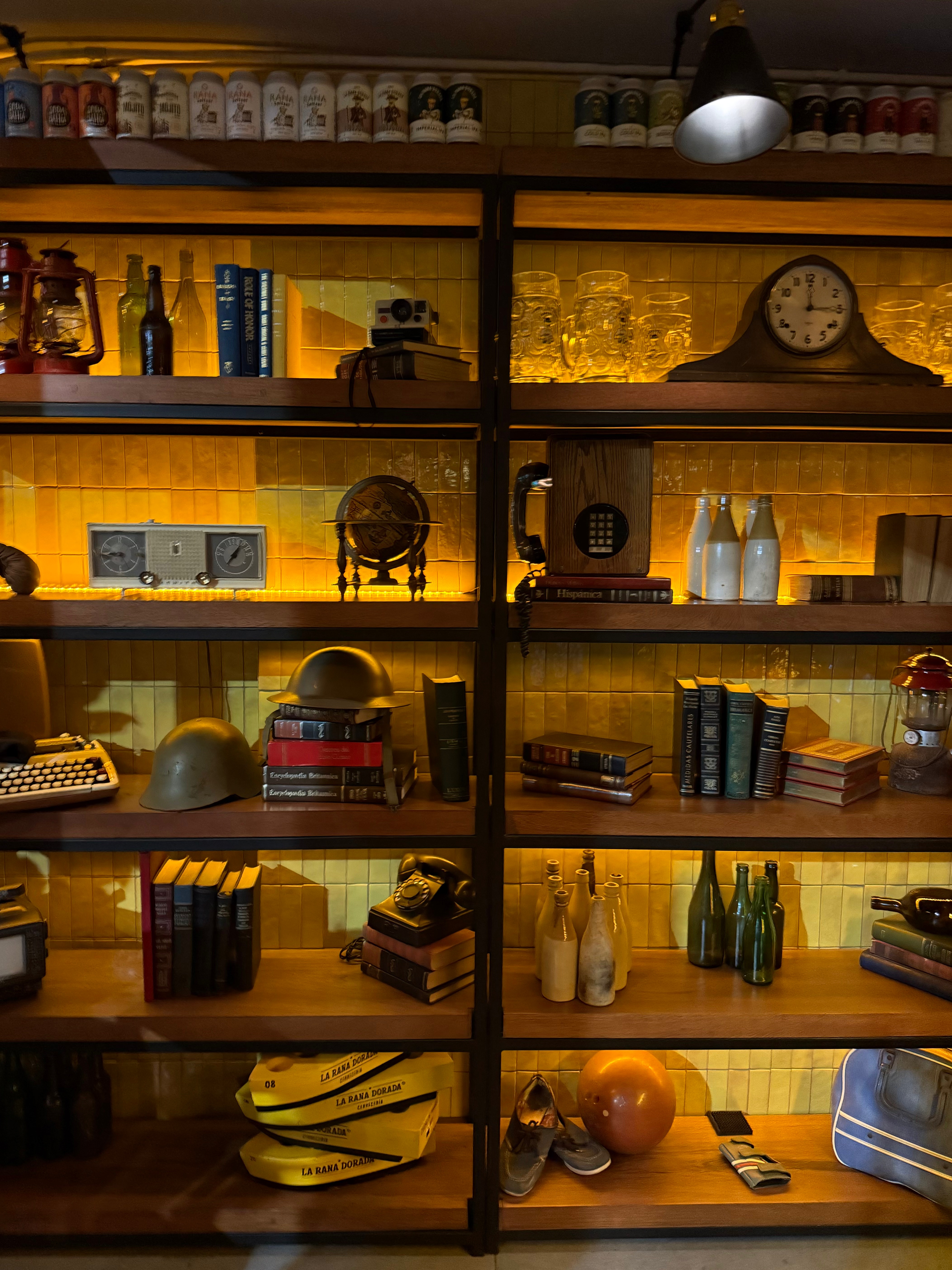
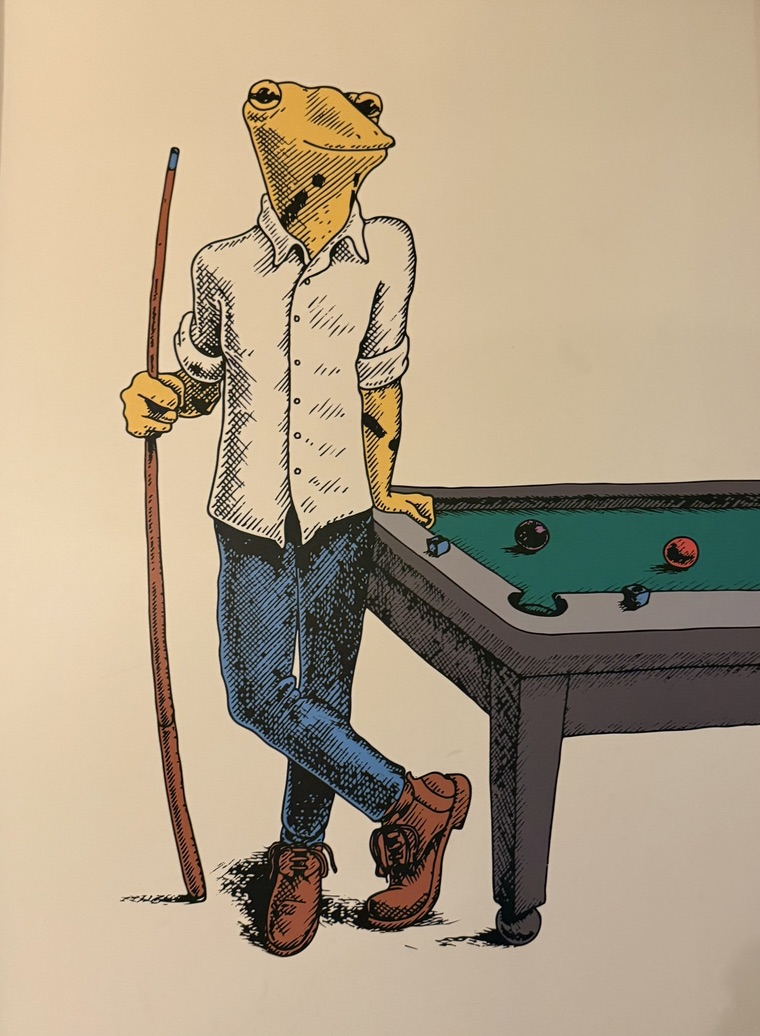
Wednesday night was a fun night out at La Rana Dorada Beer Garden, associated with the Pedro Mandinga Rum Co, where we went Tuesday night. We enjoyed drinking craft beers, playing pool & eating pizza. I won by default because Mike scratched going for the 8 ball. 🎱 . We were extremely rusty at pool! Still. A good time was had by all.
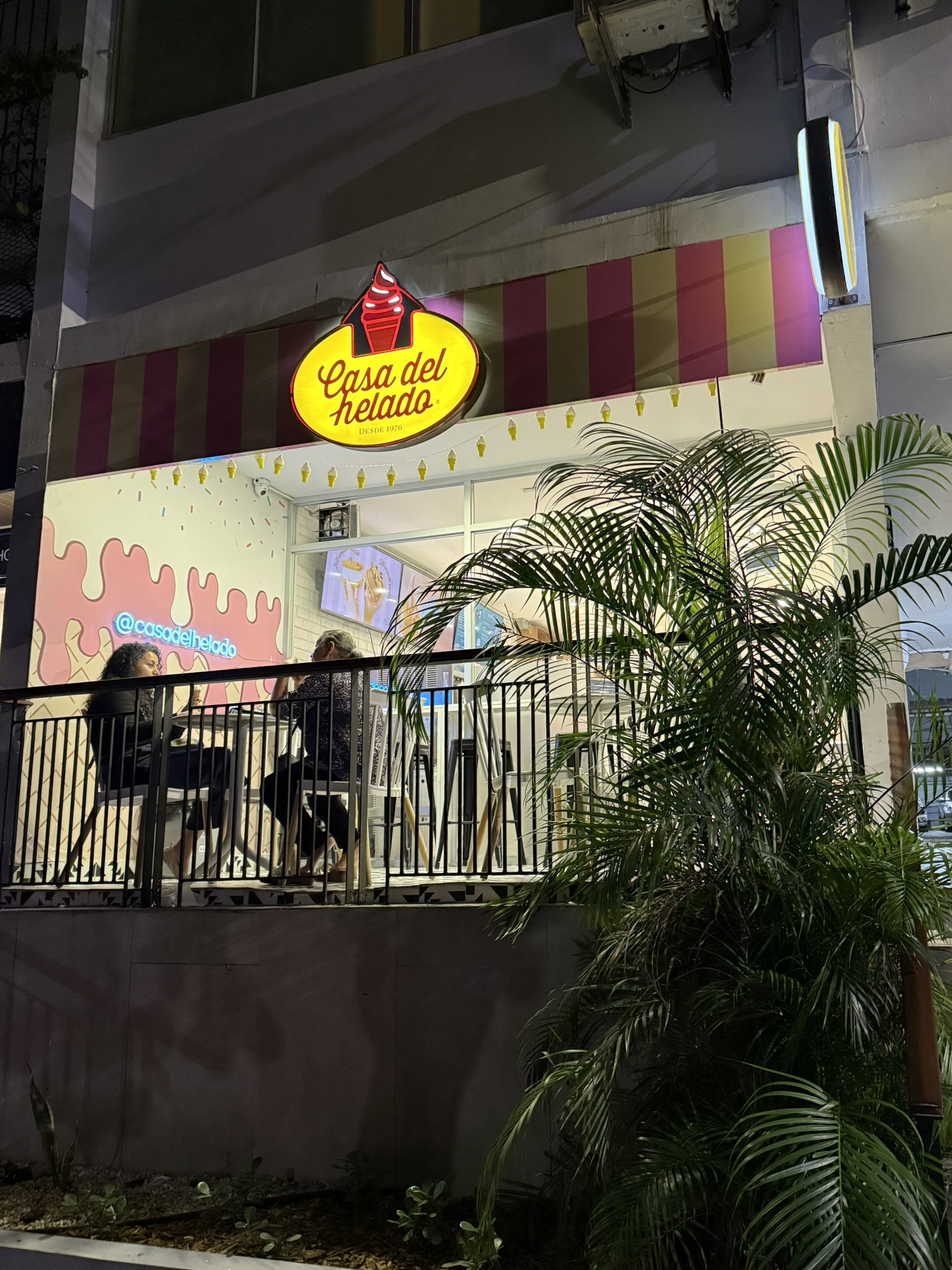
We topped the evening off with some ice cream.




Miraflores Visitor Center & the Panama Canal
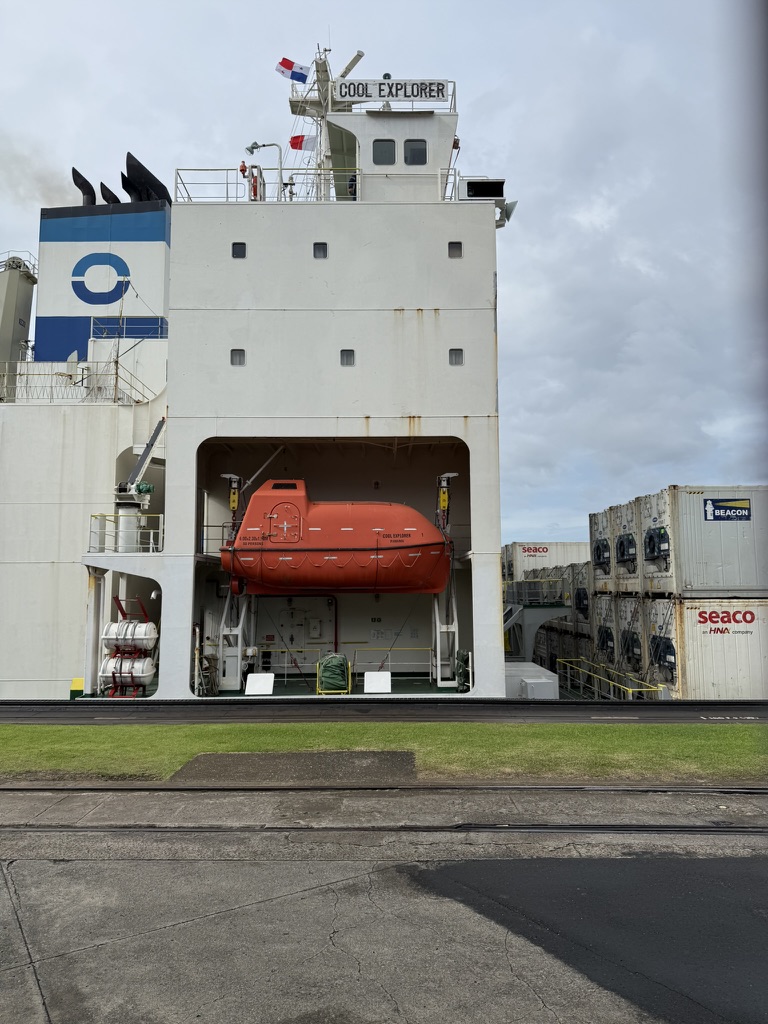
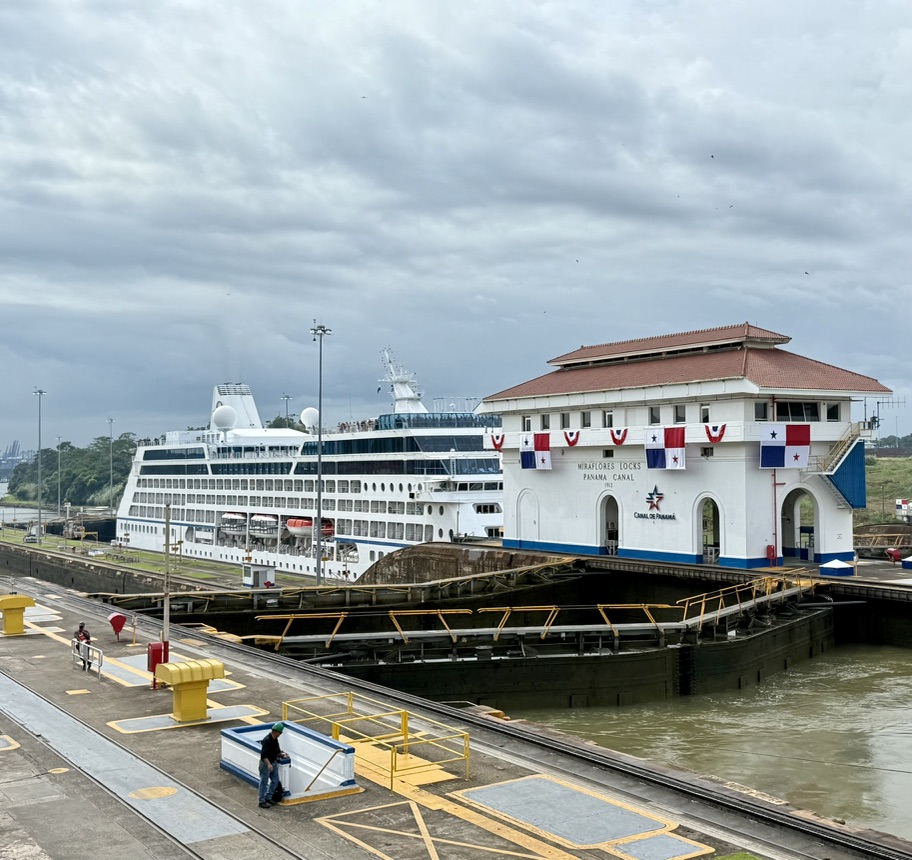
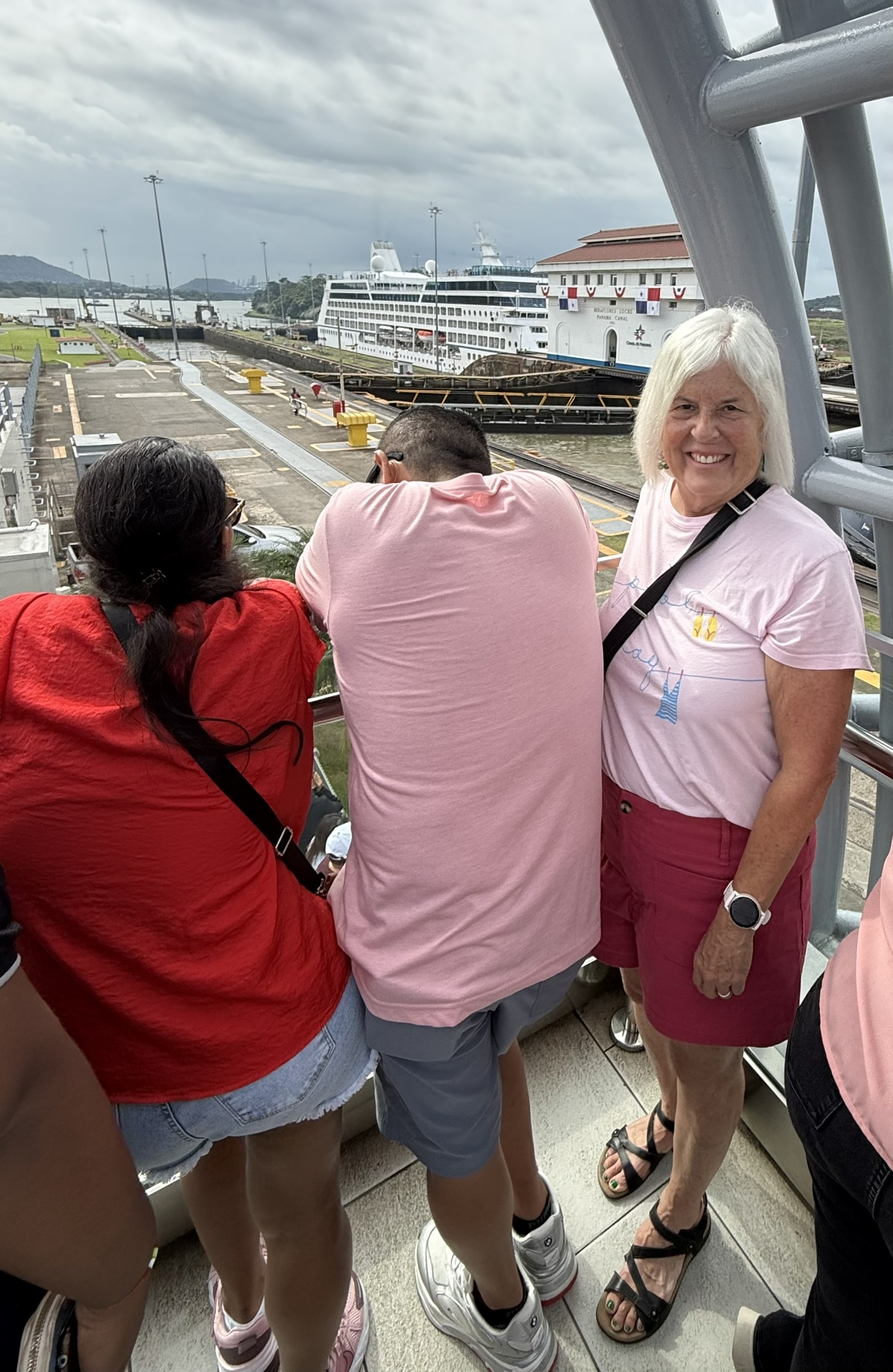
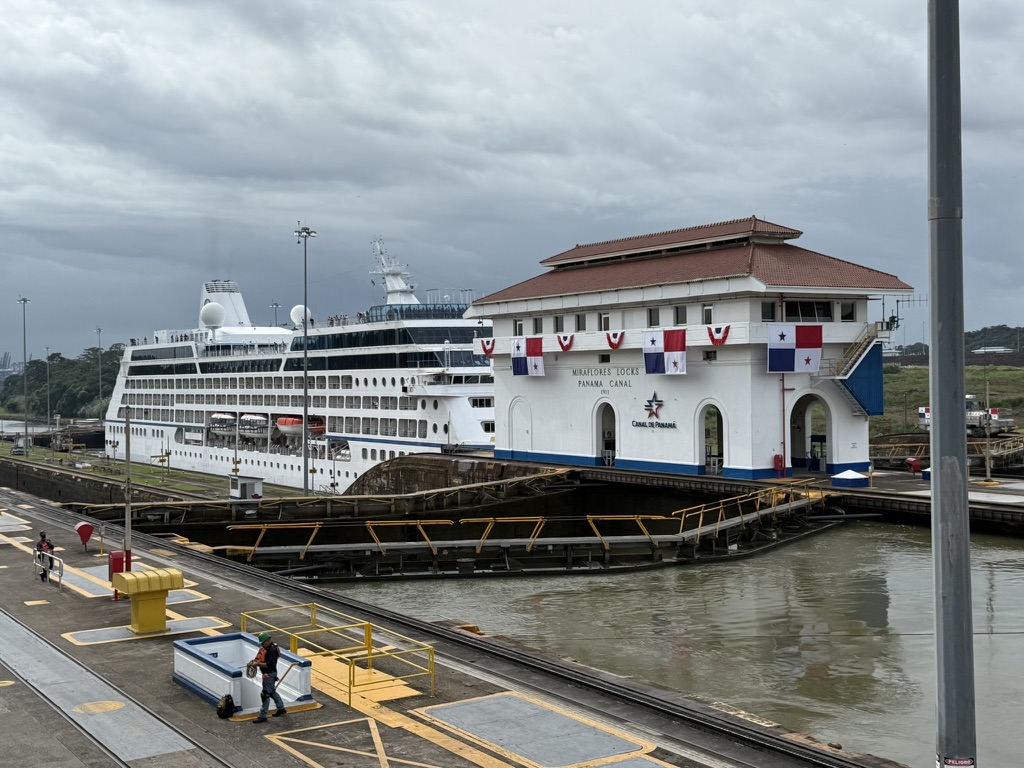
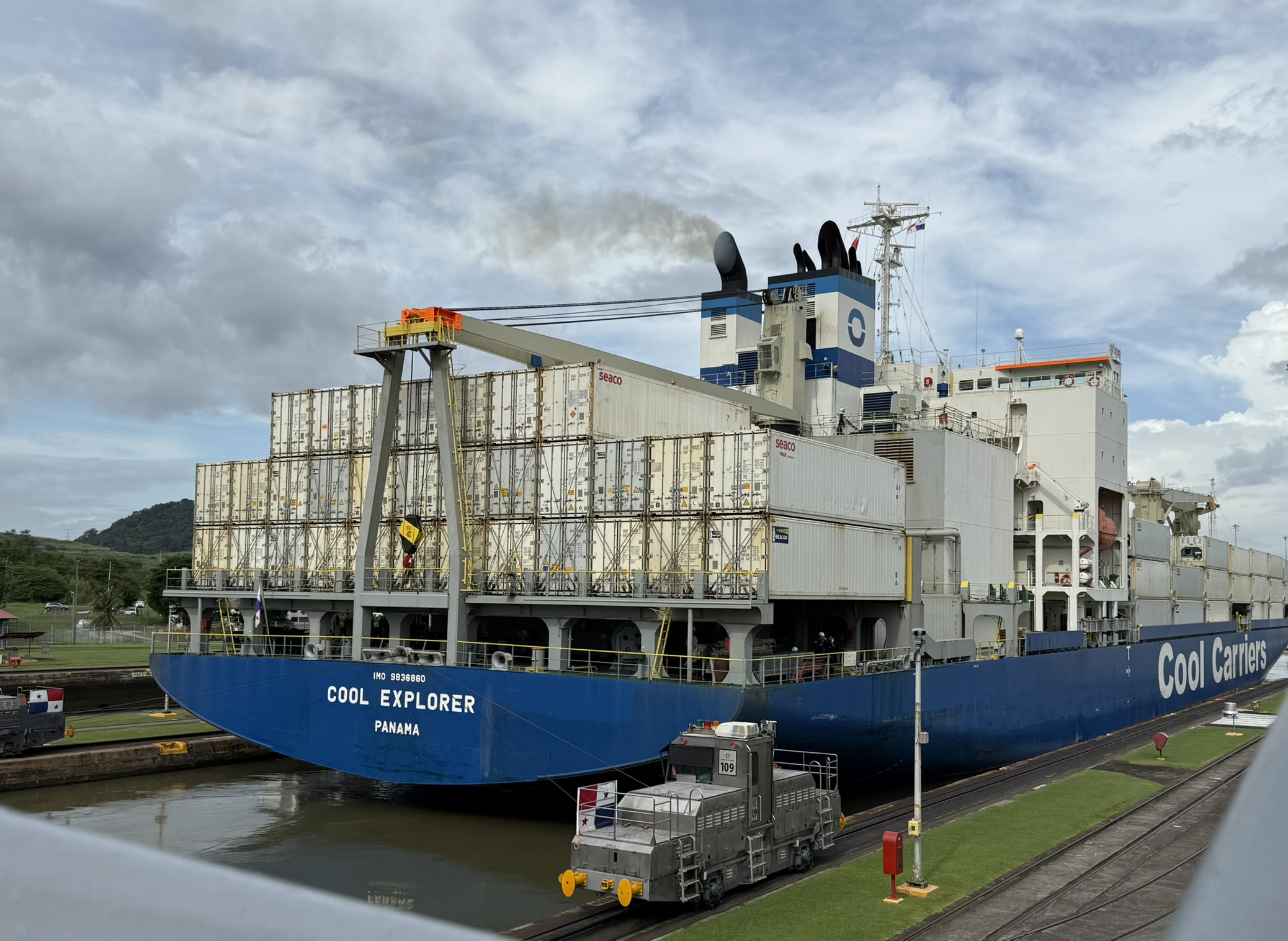
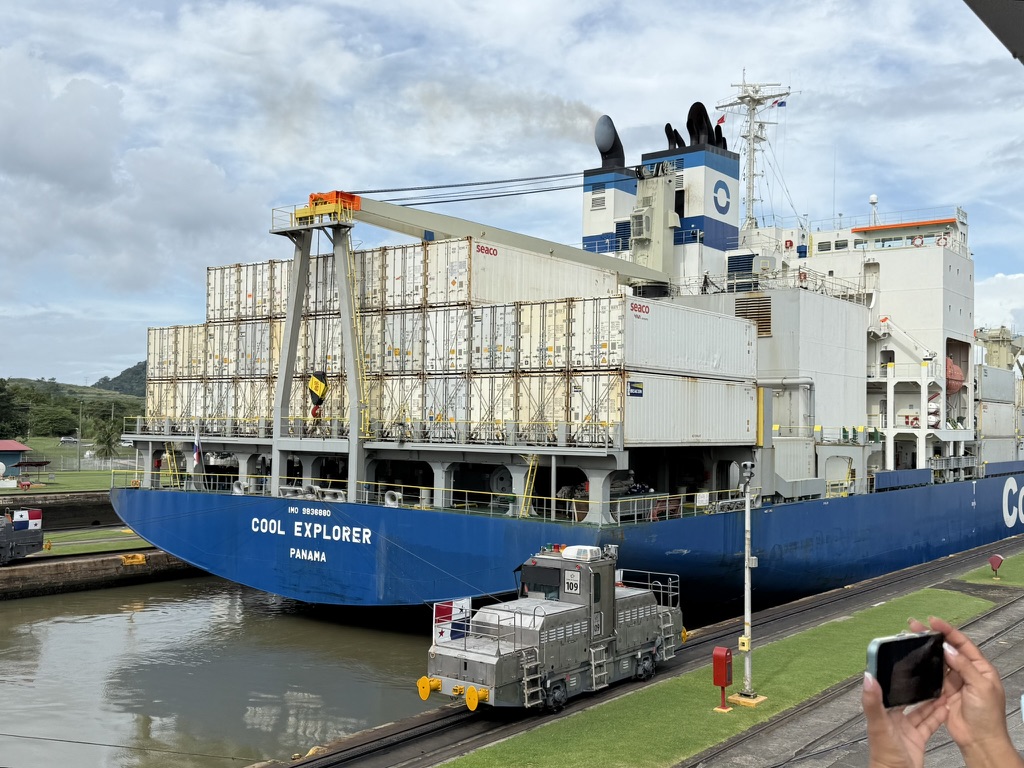
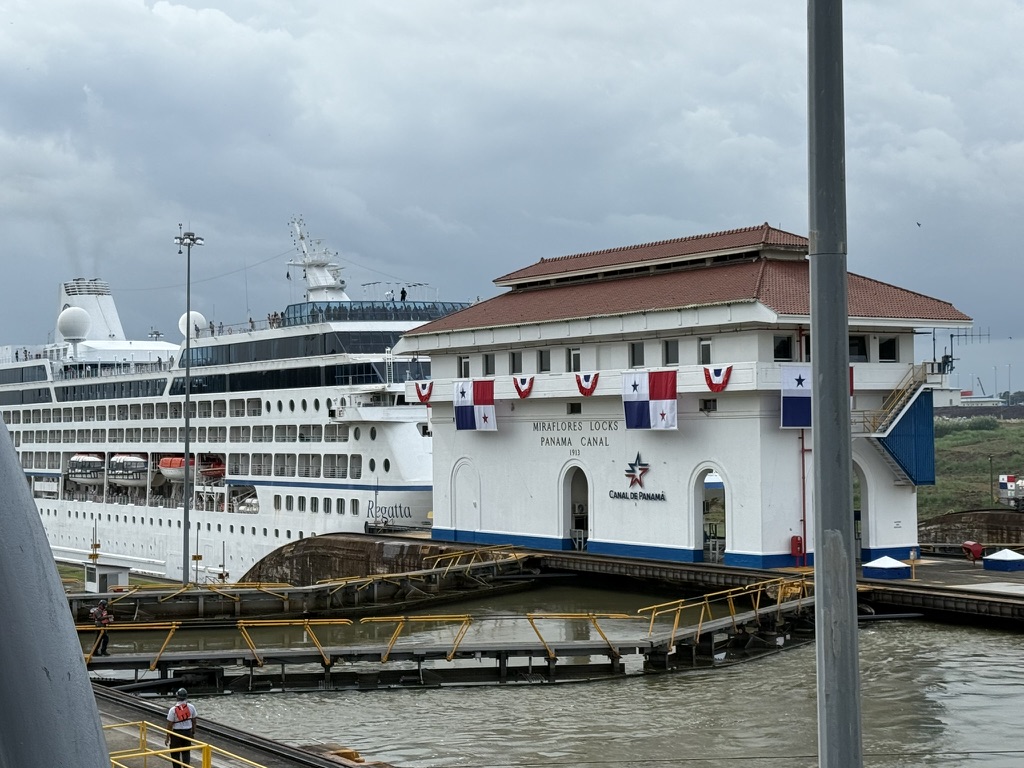
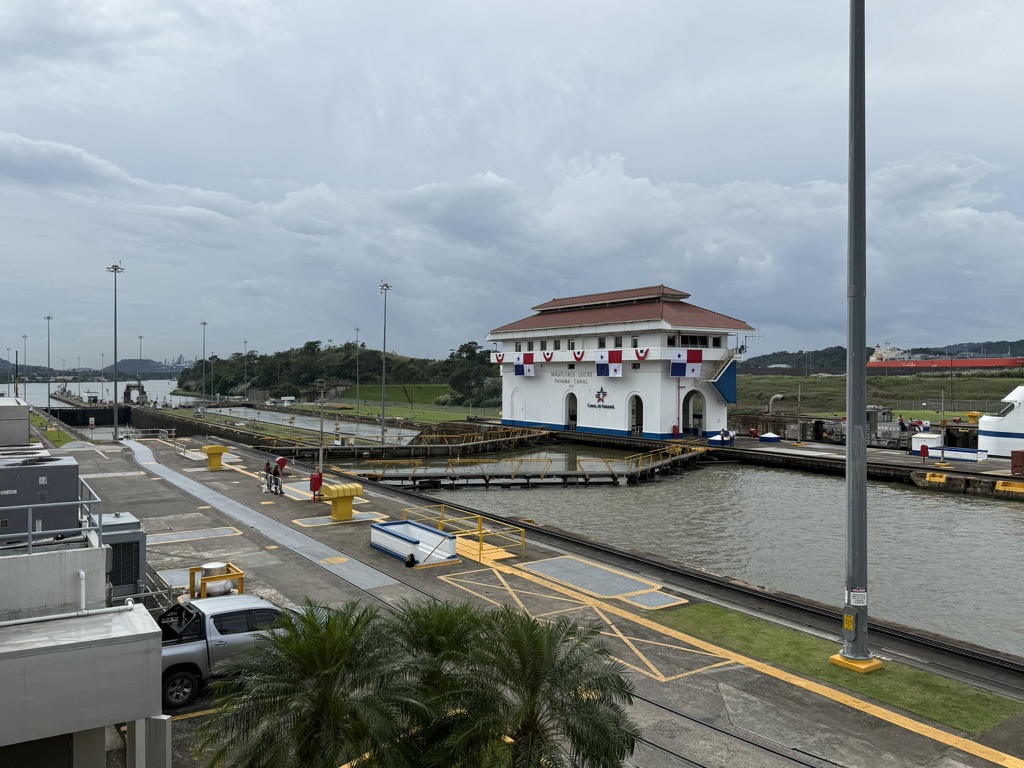
Thursday, November 13: Today, we made our way to the Miraflores Visitor Center to see the Panama Canal in action. We stood on the viewing platform with hundreds of other people vying for a spot at the front. It is said that about 30-40 ships go through here each day and we were lucky to see two, a container ship 🚢 and a cruise ship🛳️ . A special pilot from the Panama Authority boards each ship and pilots it through the locks. Only the pilot speaks, and is answered solely by boat horns.
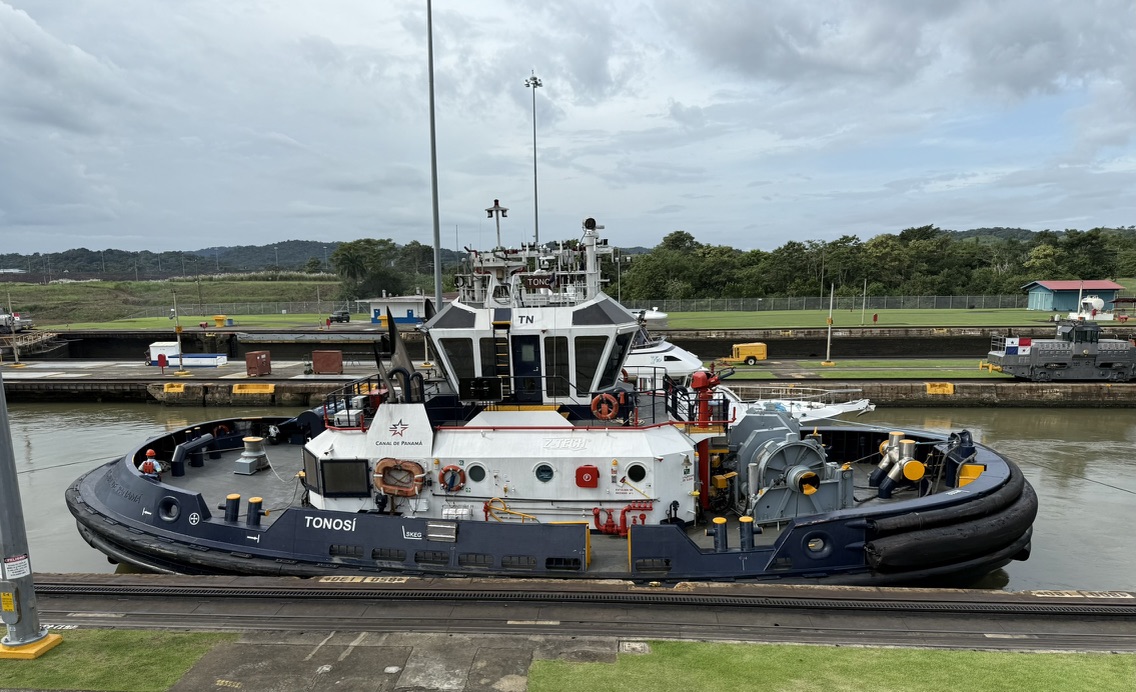
The container ship moved slowly into the lock, pulled by tiny but powerful locomotives on the edges on the locks. Once the lock gates were closed, water filled the chamber, raising the huge ship to the next level, enabling it to leave the lock on the other side. Water rushed in and out of the locks solely by gravity; no pumps were used.
It was a fascinating yet slow-moving spectacle to watch. I wish they had a higher and longer viewing platform as it was difficult jostling with the crowds to get decent views.
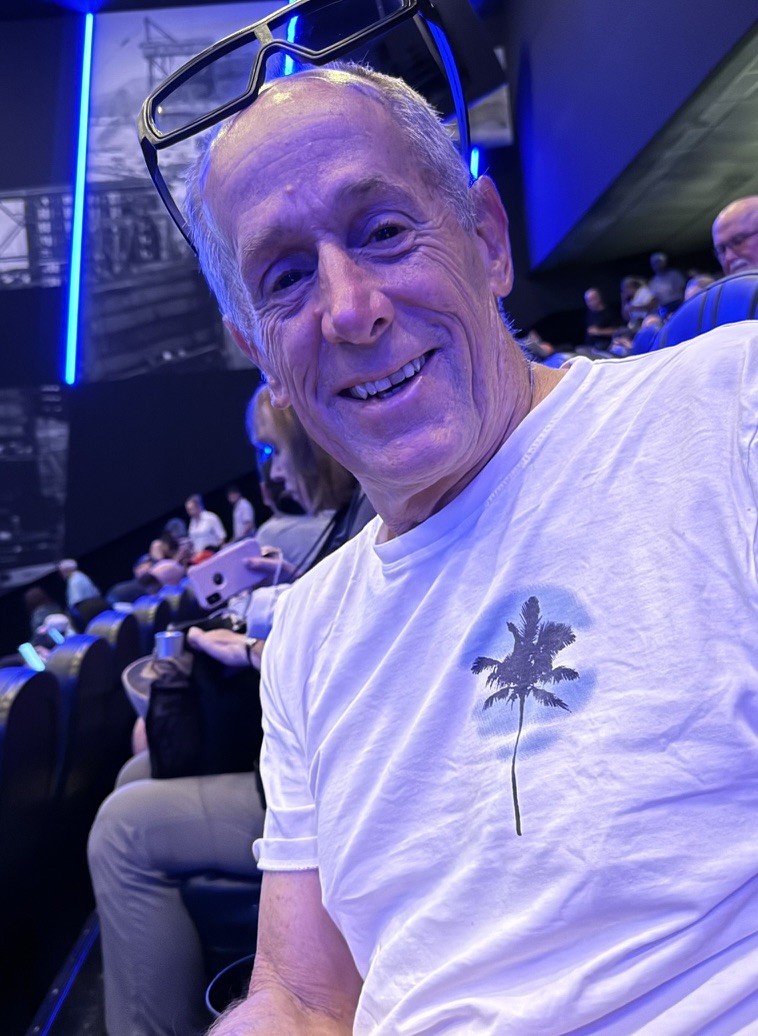
The 45-minute IMAX film was a dramatic rendering of the canal’s history; the modern expansion in 2016 which doubled the capacity of the canal and increased the width and depth of the lanes and locks, allowing larger and more ships to pass; and the modern-day operation of the canal.
We had seen the Soo Locks in Sault Ste. Marie, Michigan in 2021, and that was amazing to see as well. I cannot comprehend how these engineering marvels are conceived and built as I don’t have that kind of mind. But it is an amazing thing to behold.



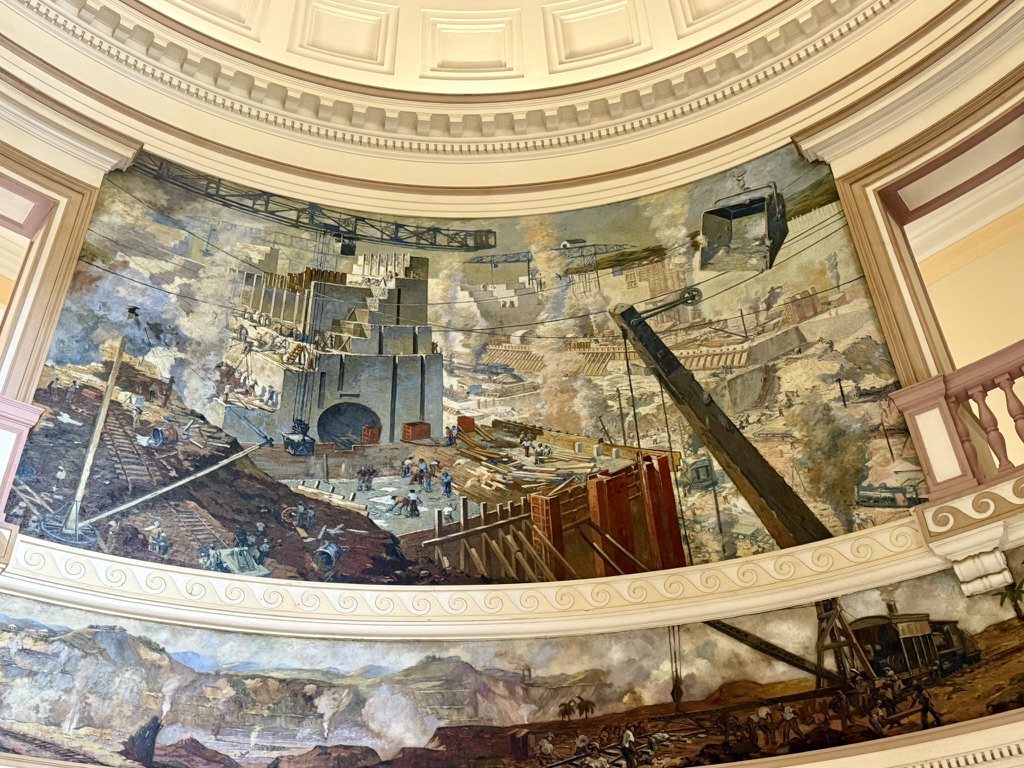
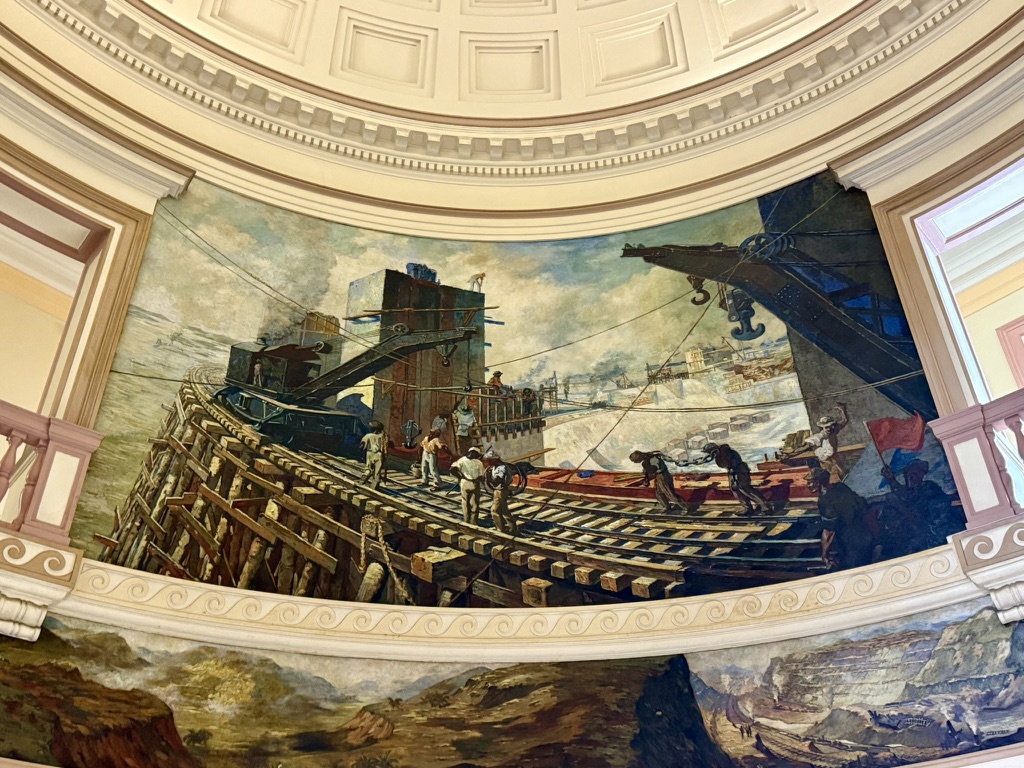
Panama Canal Murals at the Edificio de la Administración del Canal de Panama
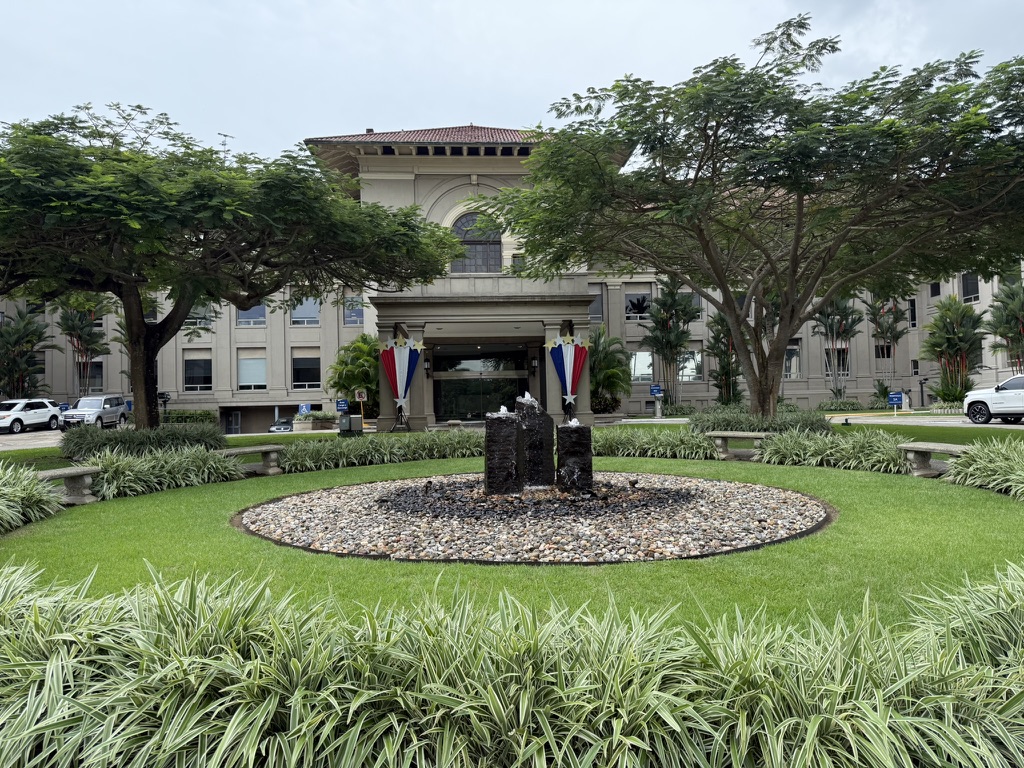
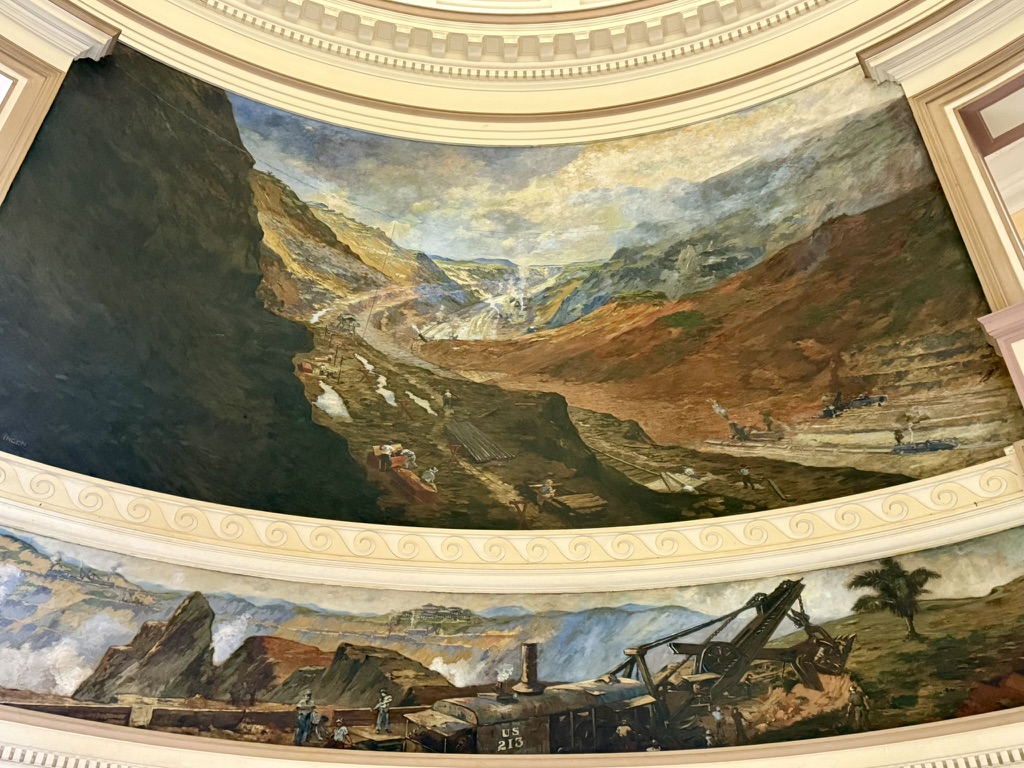
The story of the monumental effort to build the Panama Canal is depicted in murals by notable artist William B Van Ingen of New York. The murals are mounted in the rotunda of the Panama Canal Administration Building. The paintings have the distinction of being the largest group of murals by an American artist on display outside the USA.

Museum of Contemporary Art of Panama (Museo de Arte Contemporáneo de Panamá), or MAC Panama
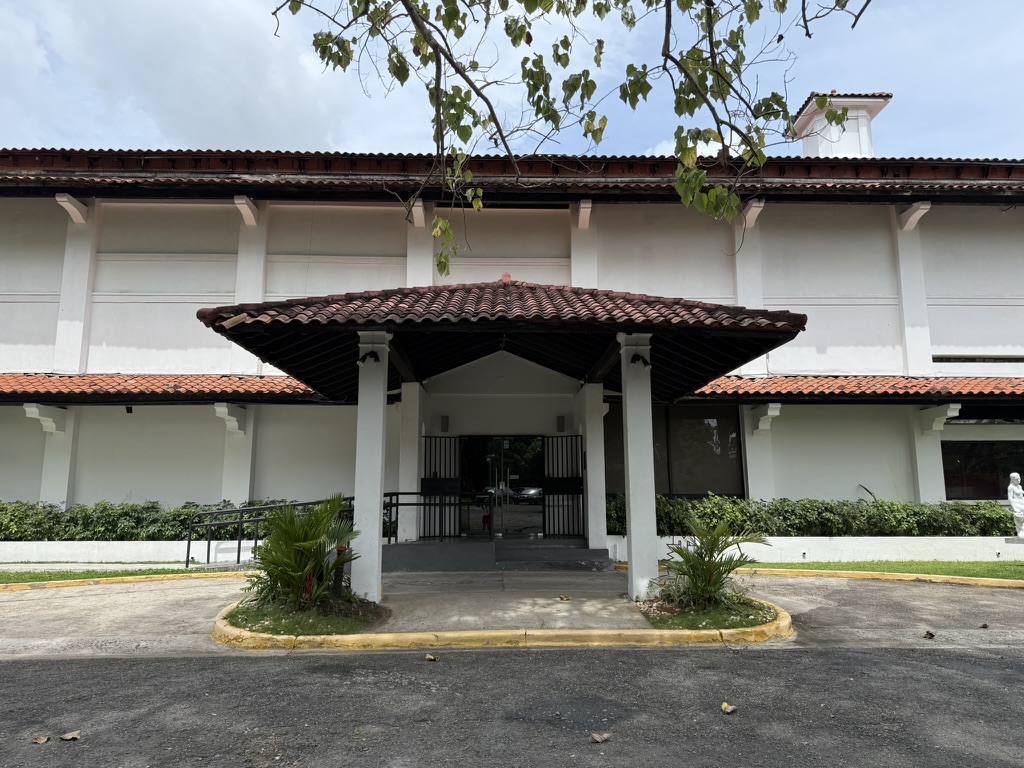
The Museum of Contemporary Art of Panama (Museo de Arte Contemporáneo de Panamá), popularly called MAC Panamá, is the only museum of contemporary art that exists in Panama. The institution was founded in 1962 as the Panamanian Institute of Art and in 1983 it became the current museum.
We watched a twenty-minute documentary of sorts called “Zone” by Simon Shim-Sutcliffe; “it reflects on how liquid infrastructure operates within the space of abandoned memory and the remnants of successive colonial empires. It offers a poetic and critical reflection on how water reshapes landscapes and histories, becoming a transformative agent of geography and collective memory,” according to the museum.
“Drawing on his family’s heritage as Chinese immigrants who worked on the Canal, Shim-Sutcliffe reflects on erased legacies and the reconstruction of forgotten images, demonstrating how fluid landscapes have been fundamental in guiding our collective fictions of progress. Zone uses archival material, aerial shots, 16mm film and digital, phone recordings, set design and collage to explore the political and cultural forces that have shaped the configuration of this contested site. Water in the work functions not only as a medium but as a character: an agent carving pathways through empires, trade, and memory.”
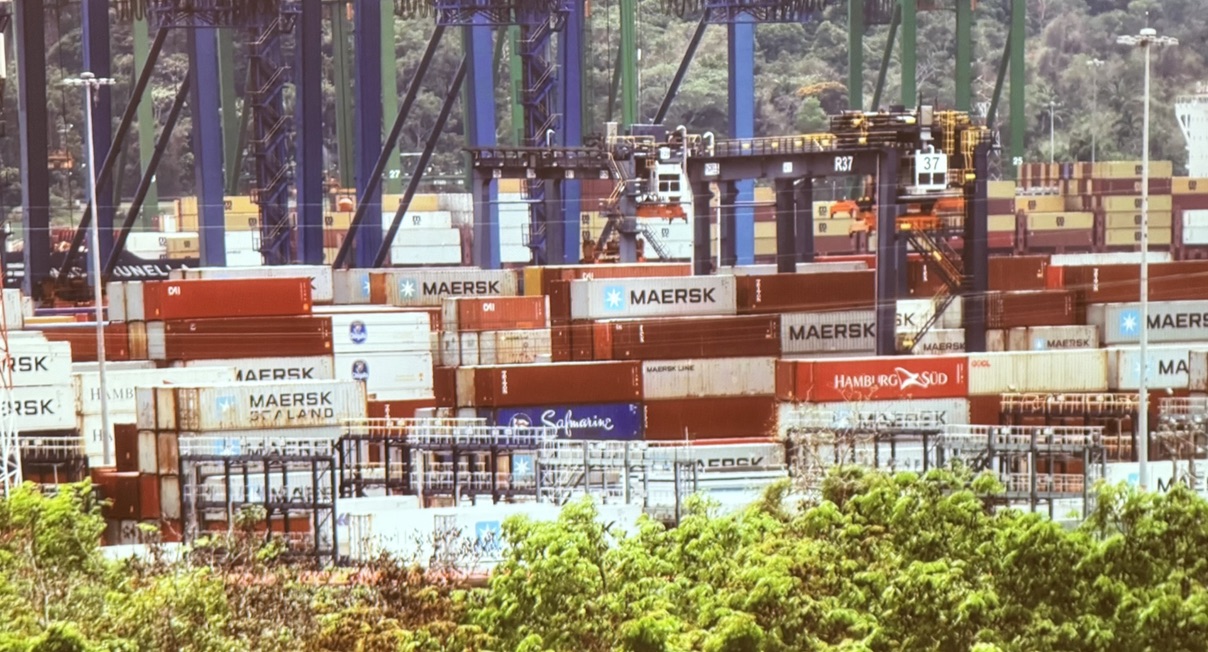
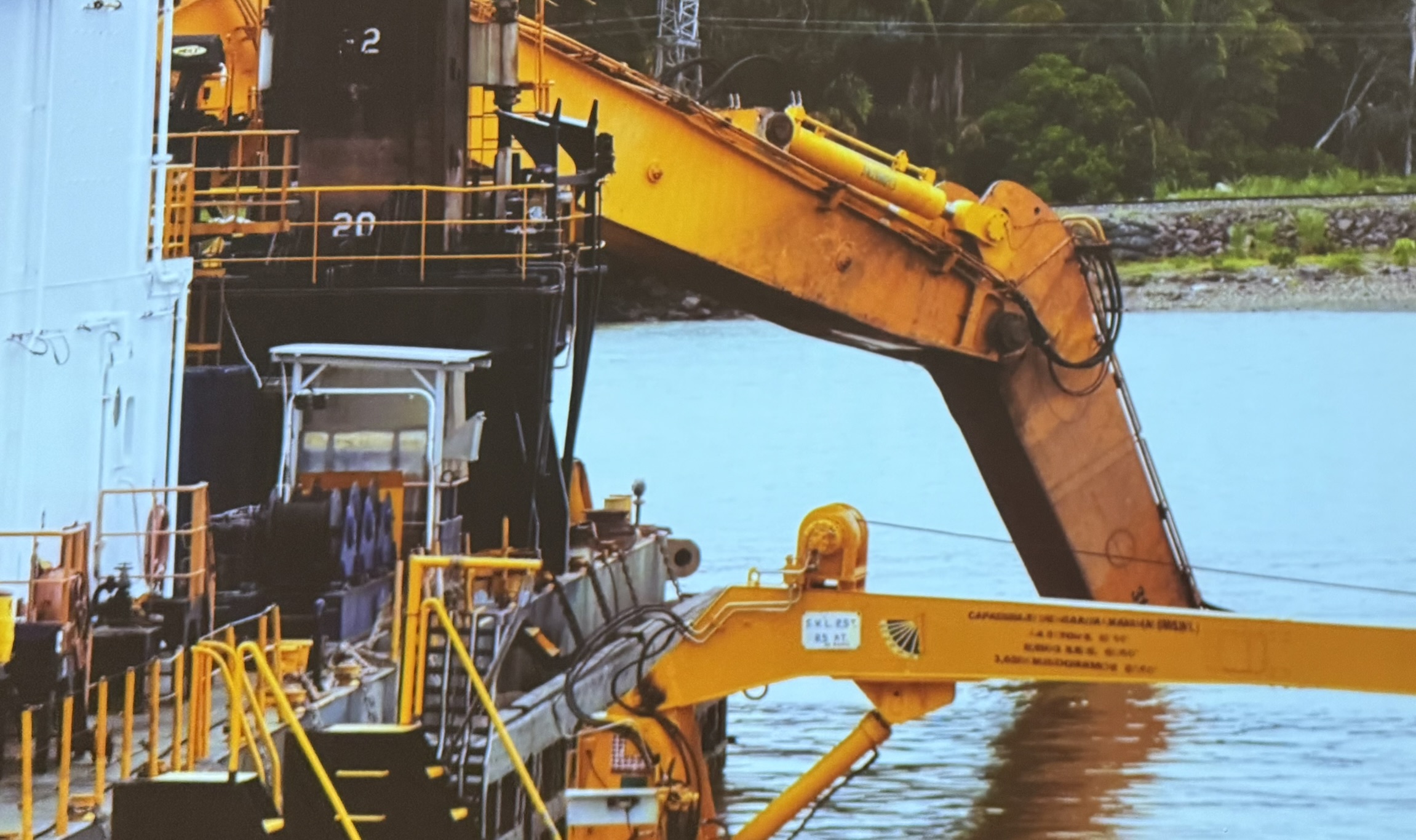
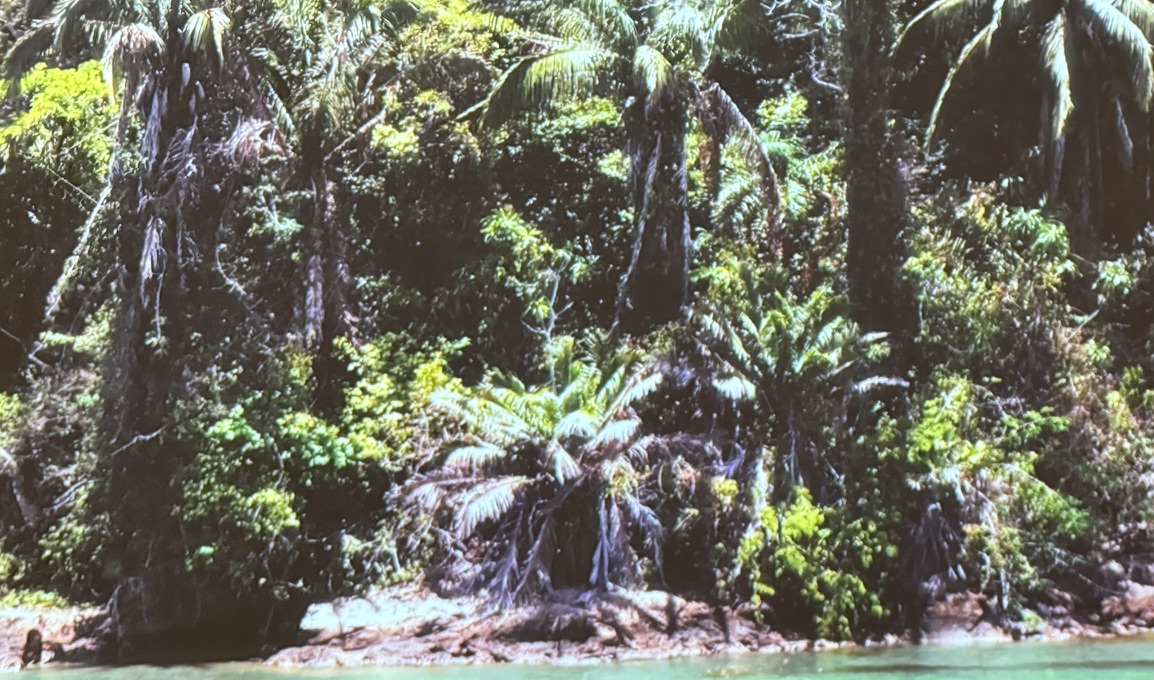

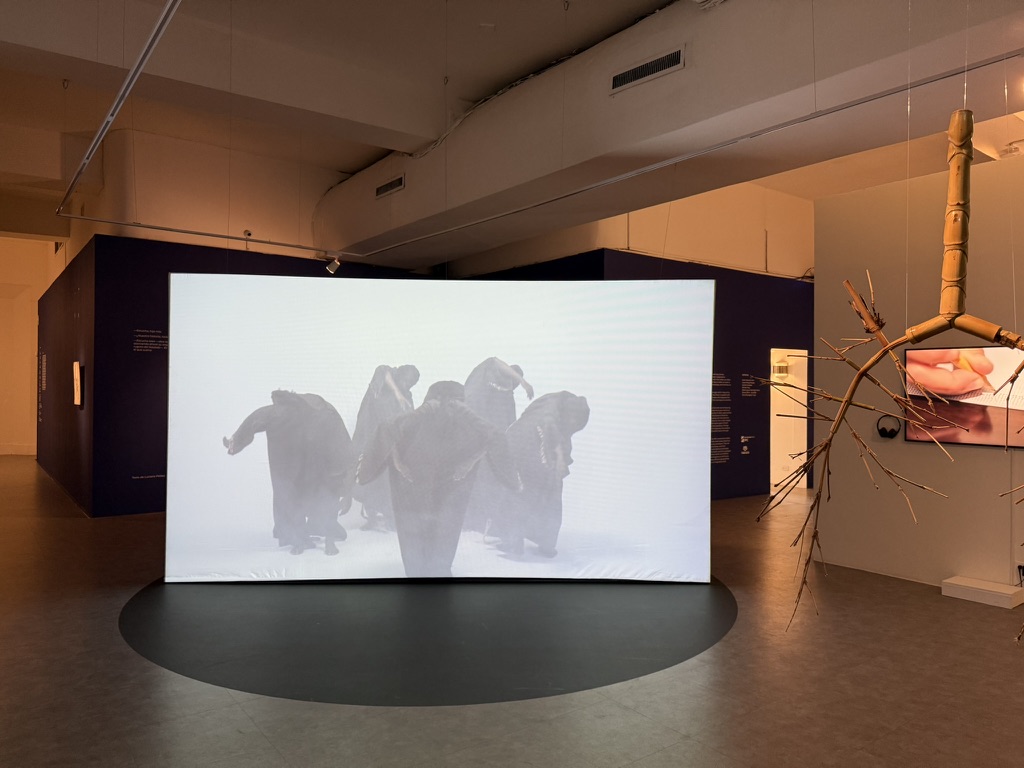
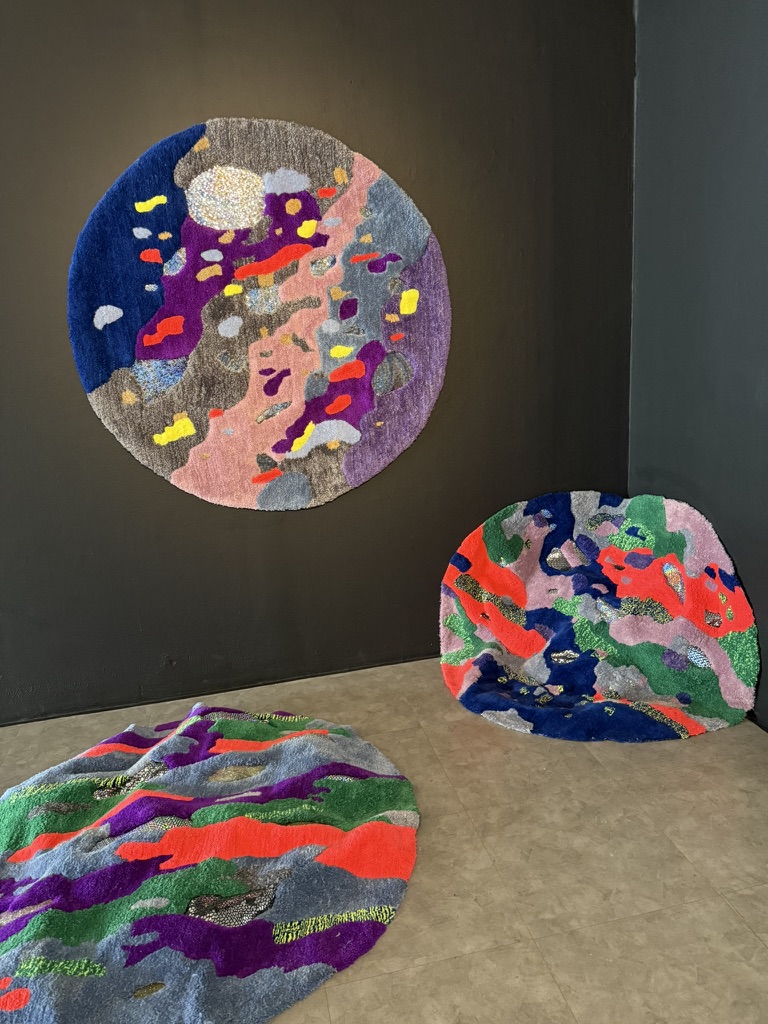
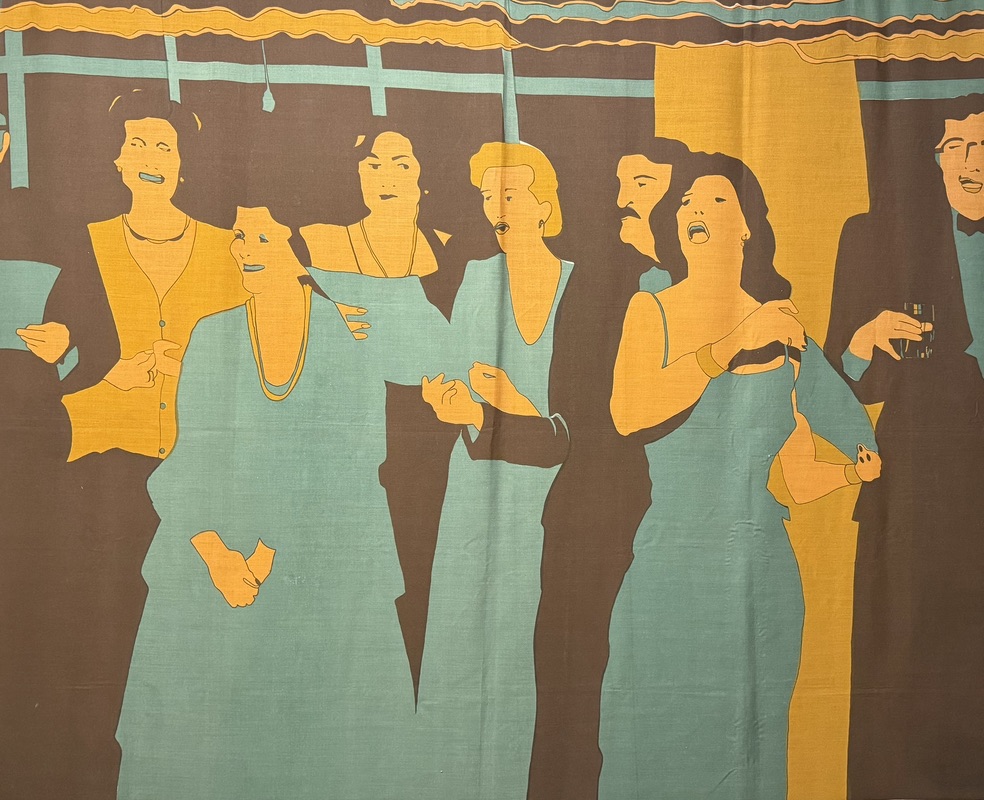
Another exhibit at MAC Panamá called “Musa” explored feminine universes and visions, interweaving, from diverse positions and perspectives, the specific identity of being a woman. Another brought together a series in which abstraction and formal experimentation articulated a space of spiritual inquiry where feminine subjectivity embraced the fantastic, the dreamlike, and the magical. Yet another brought together works that addressed the political memory and social critique of different historical moments.

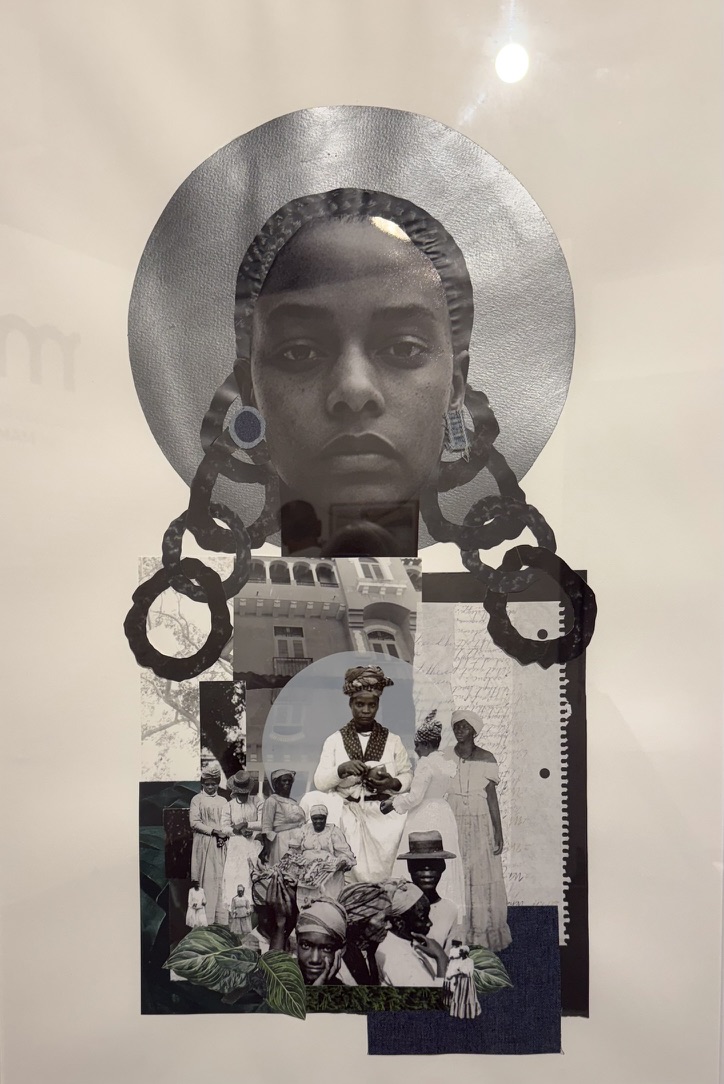

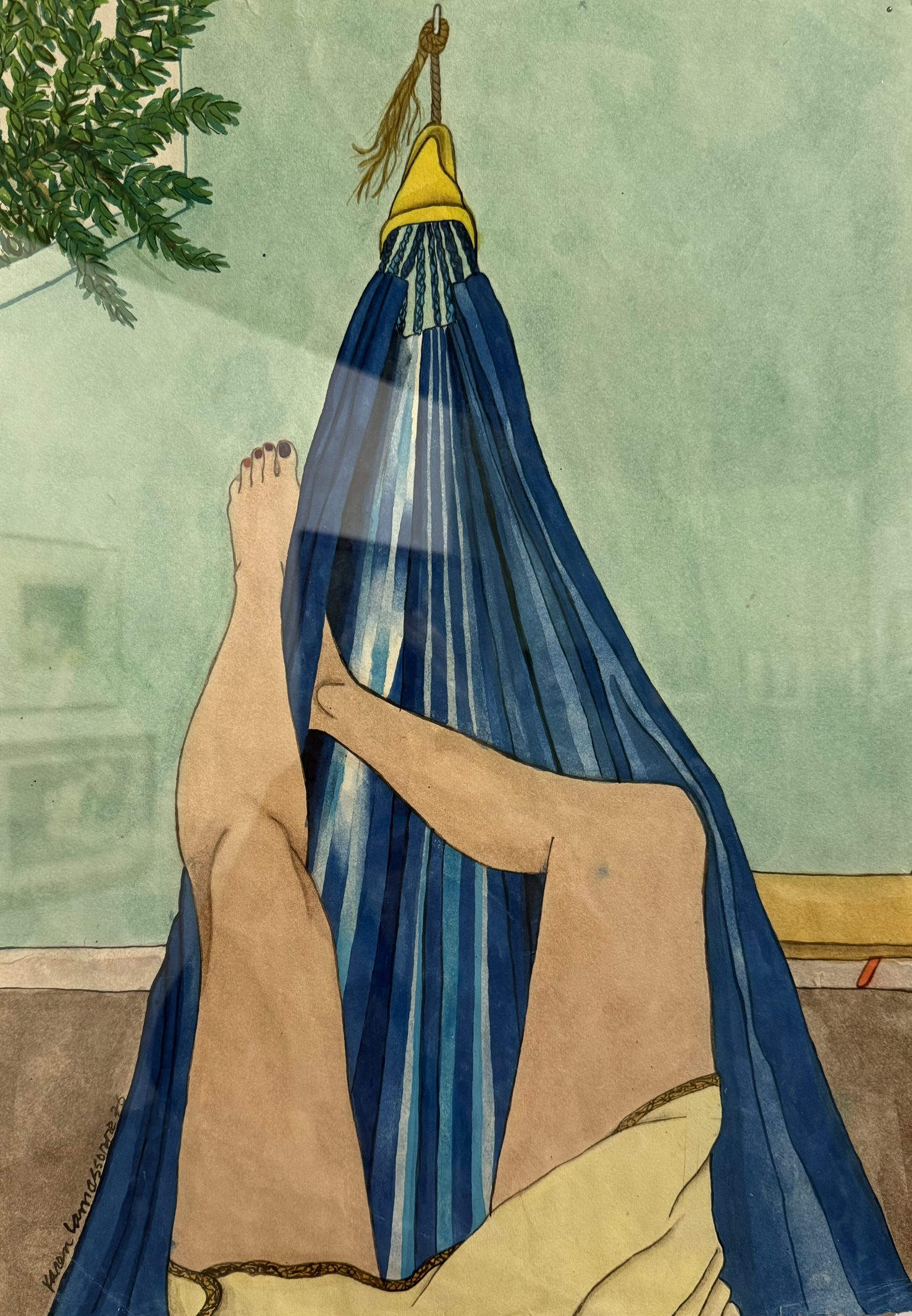
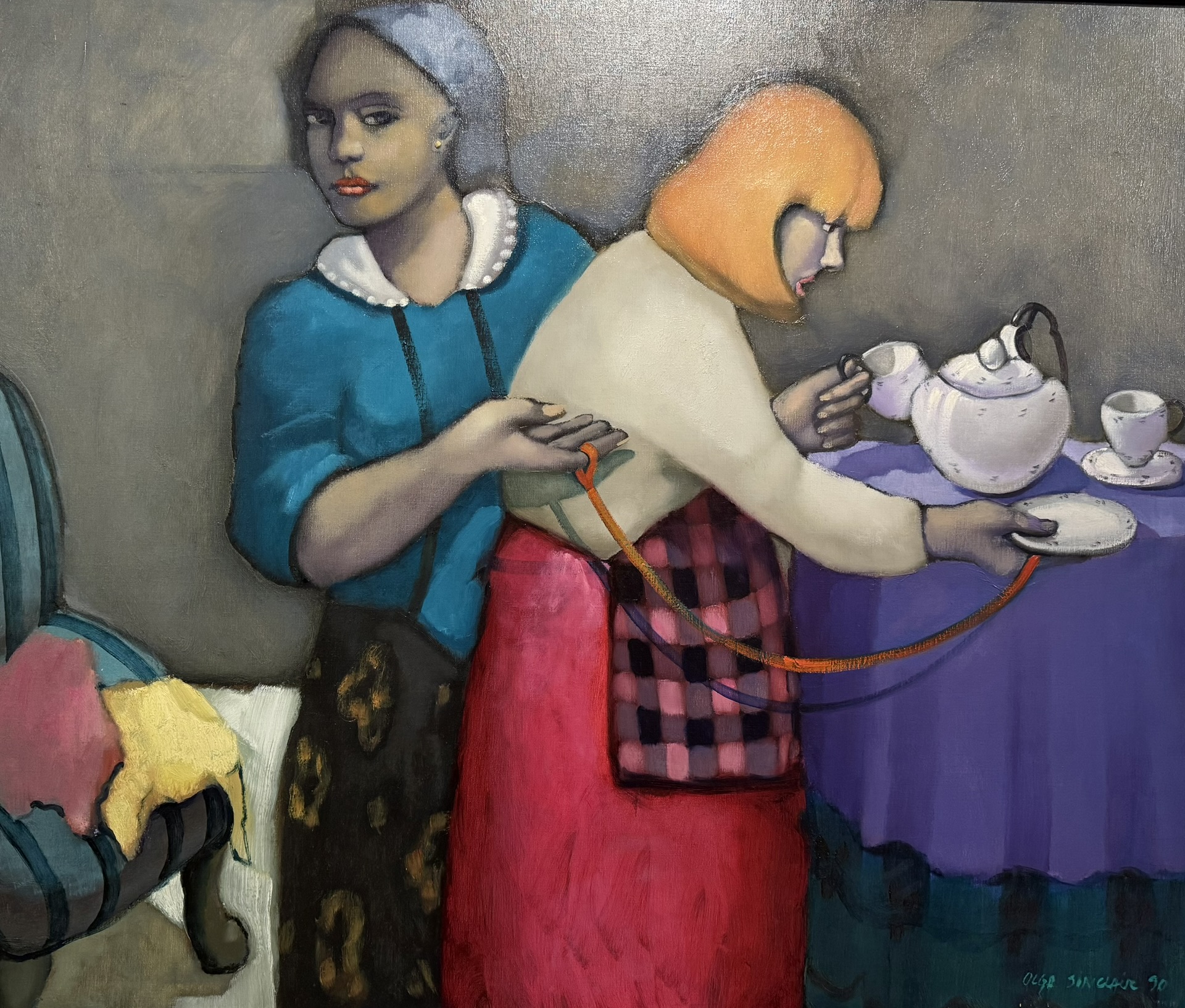
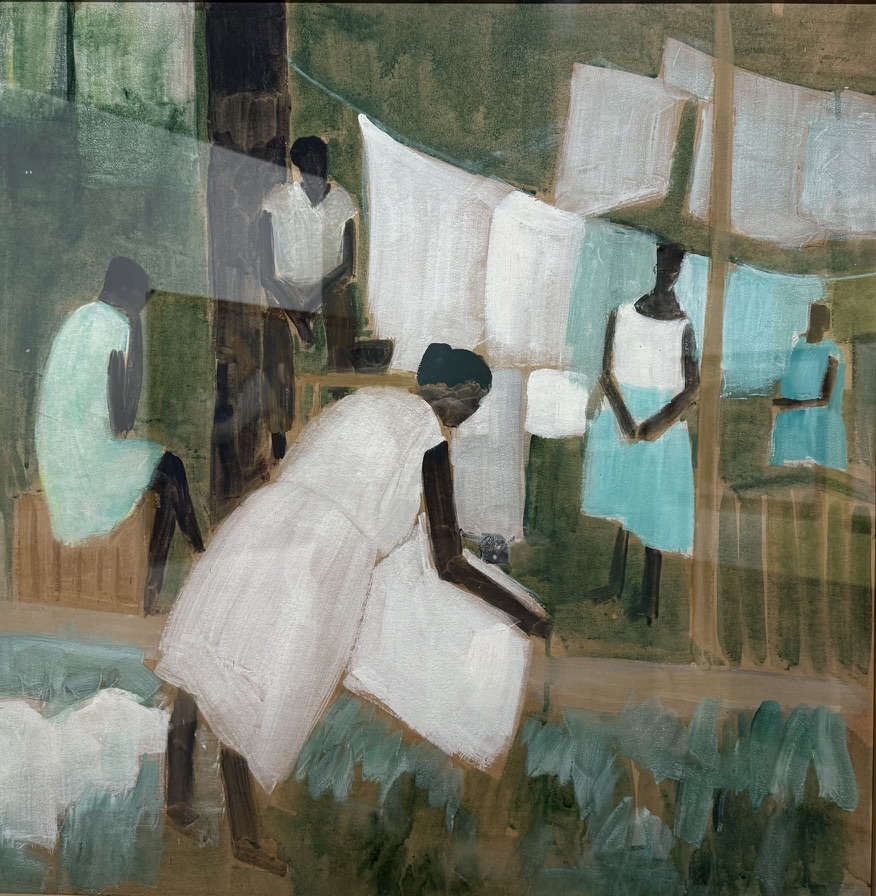
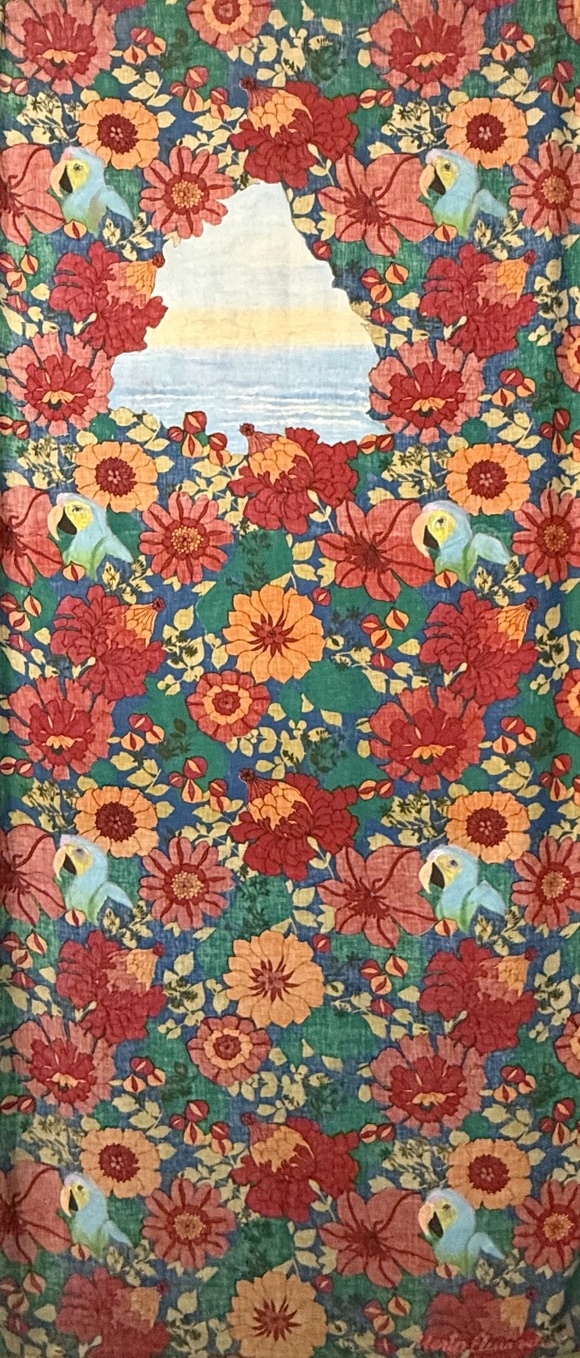

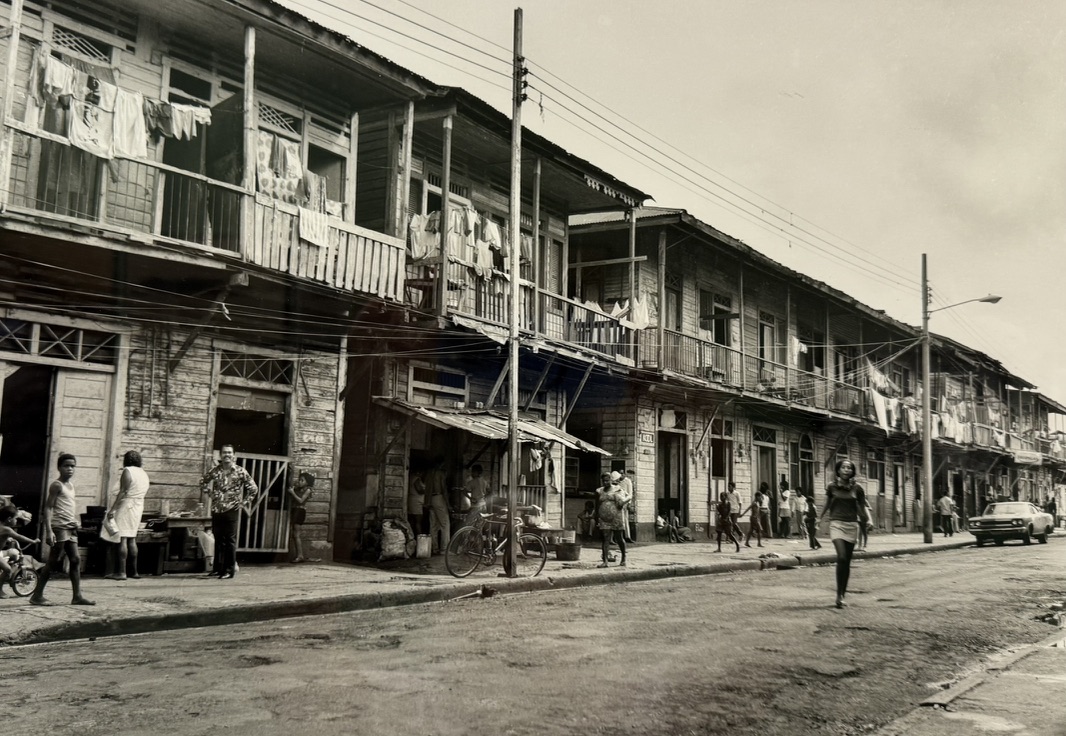
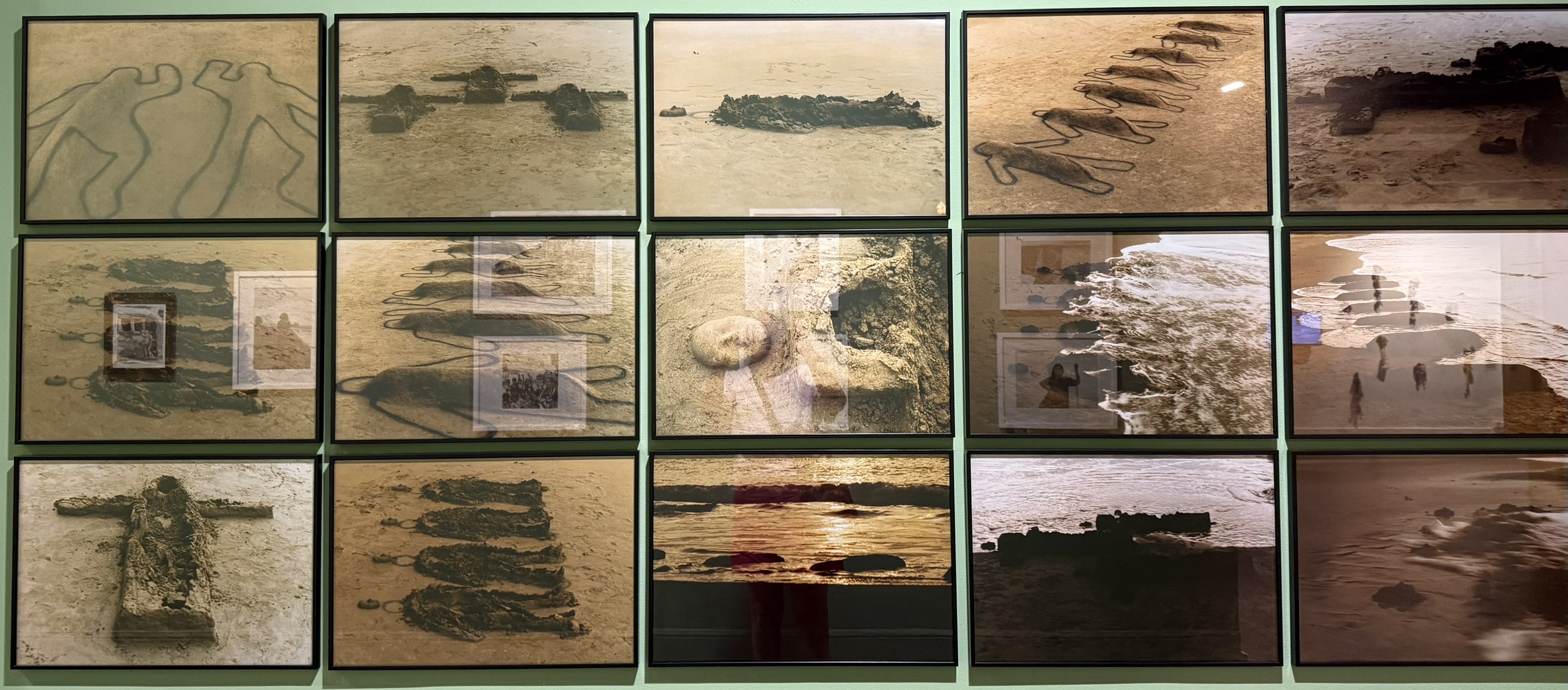
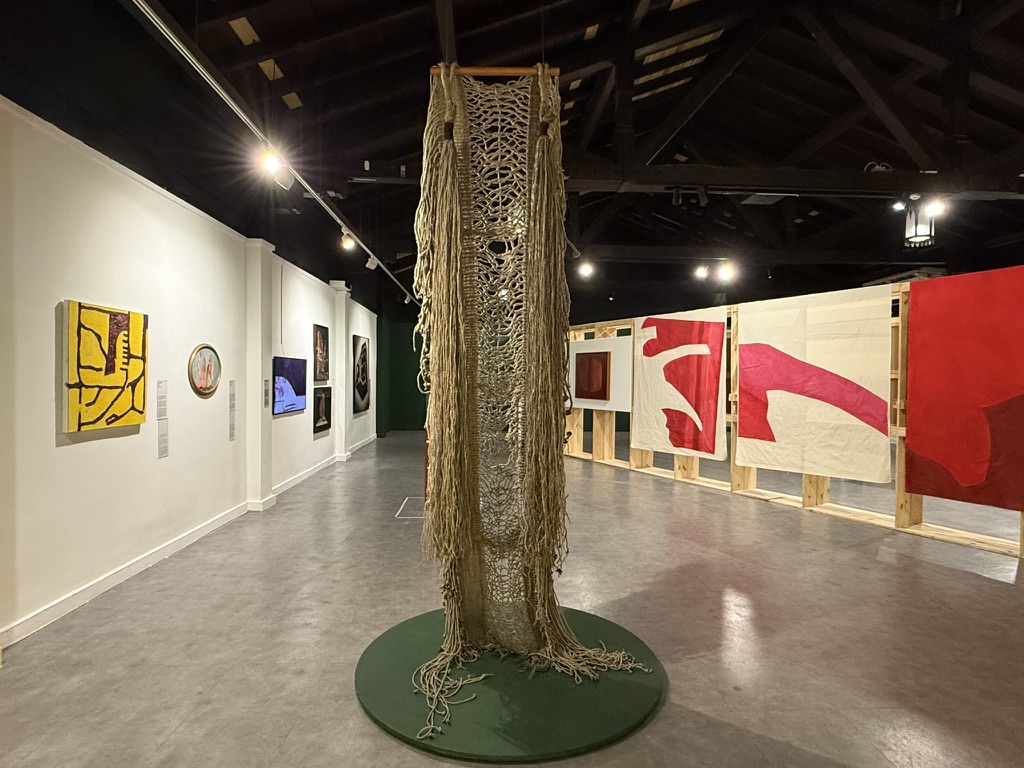
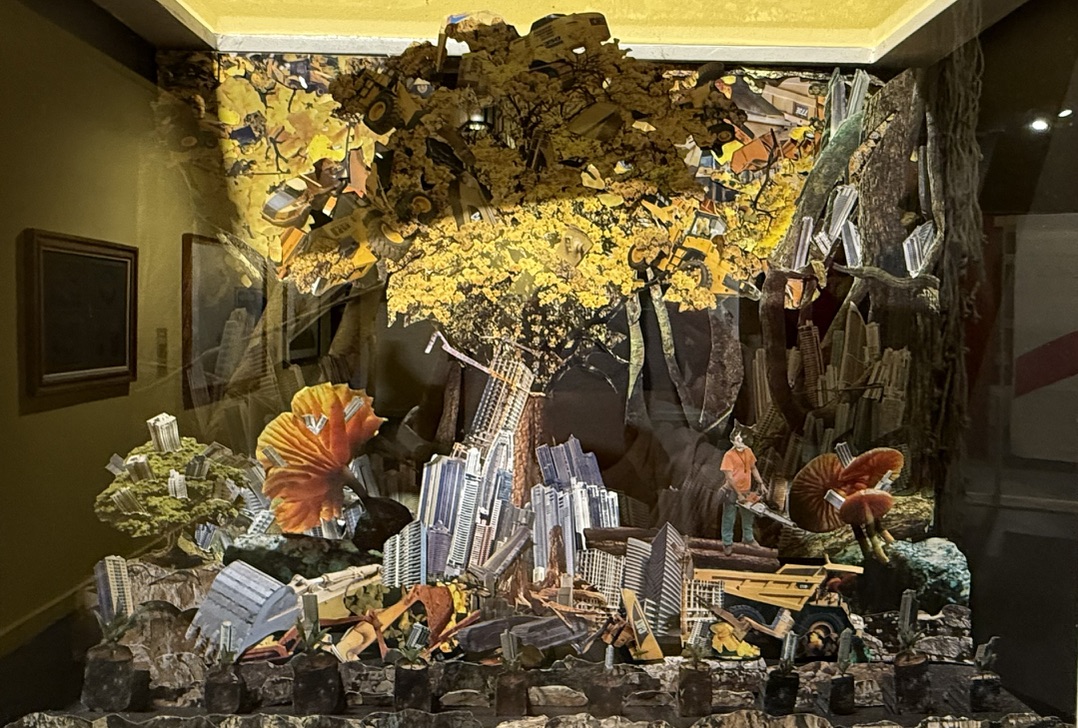
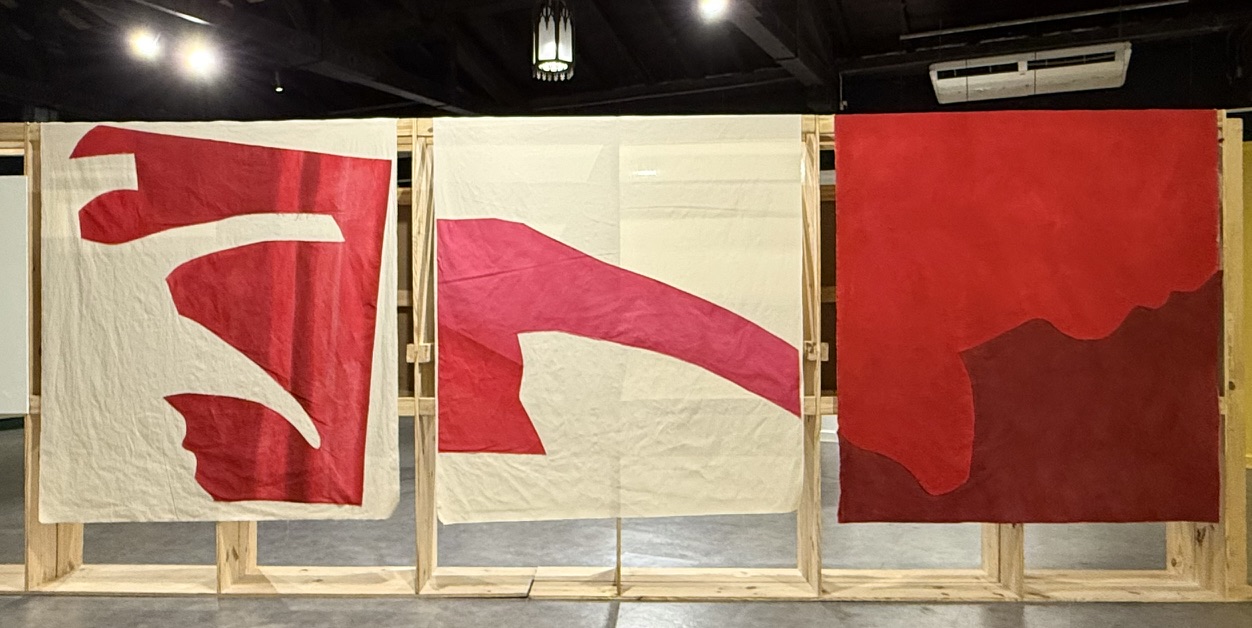
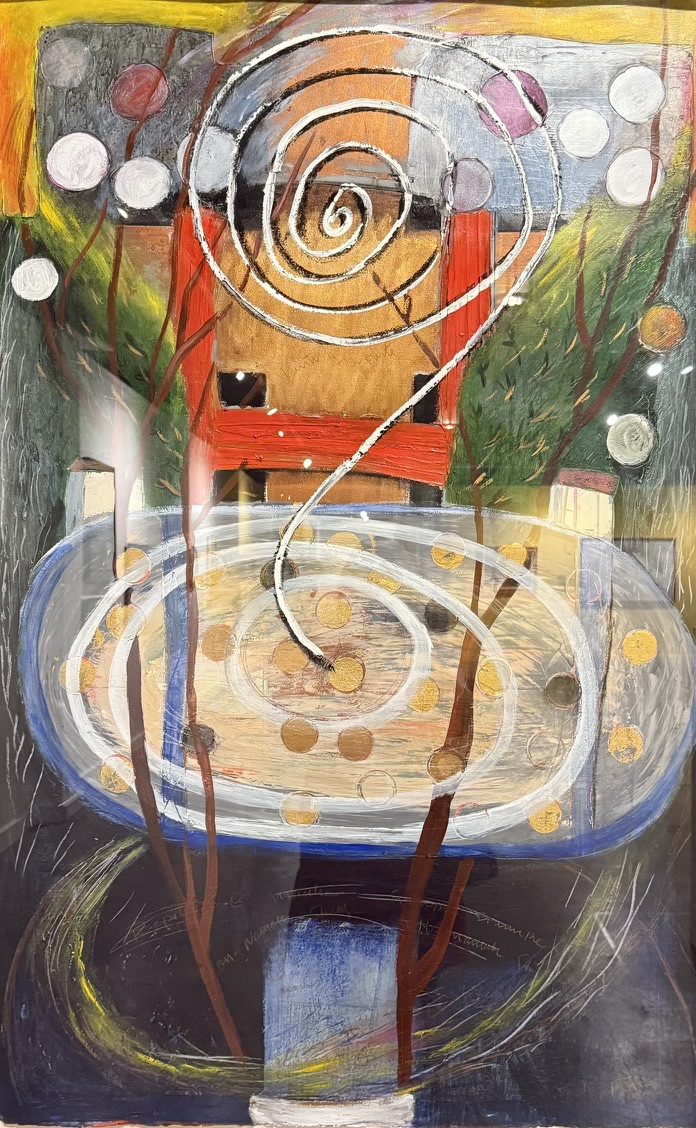
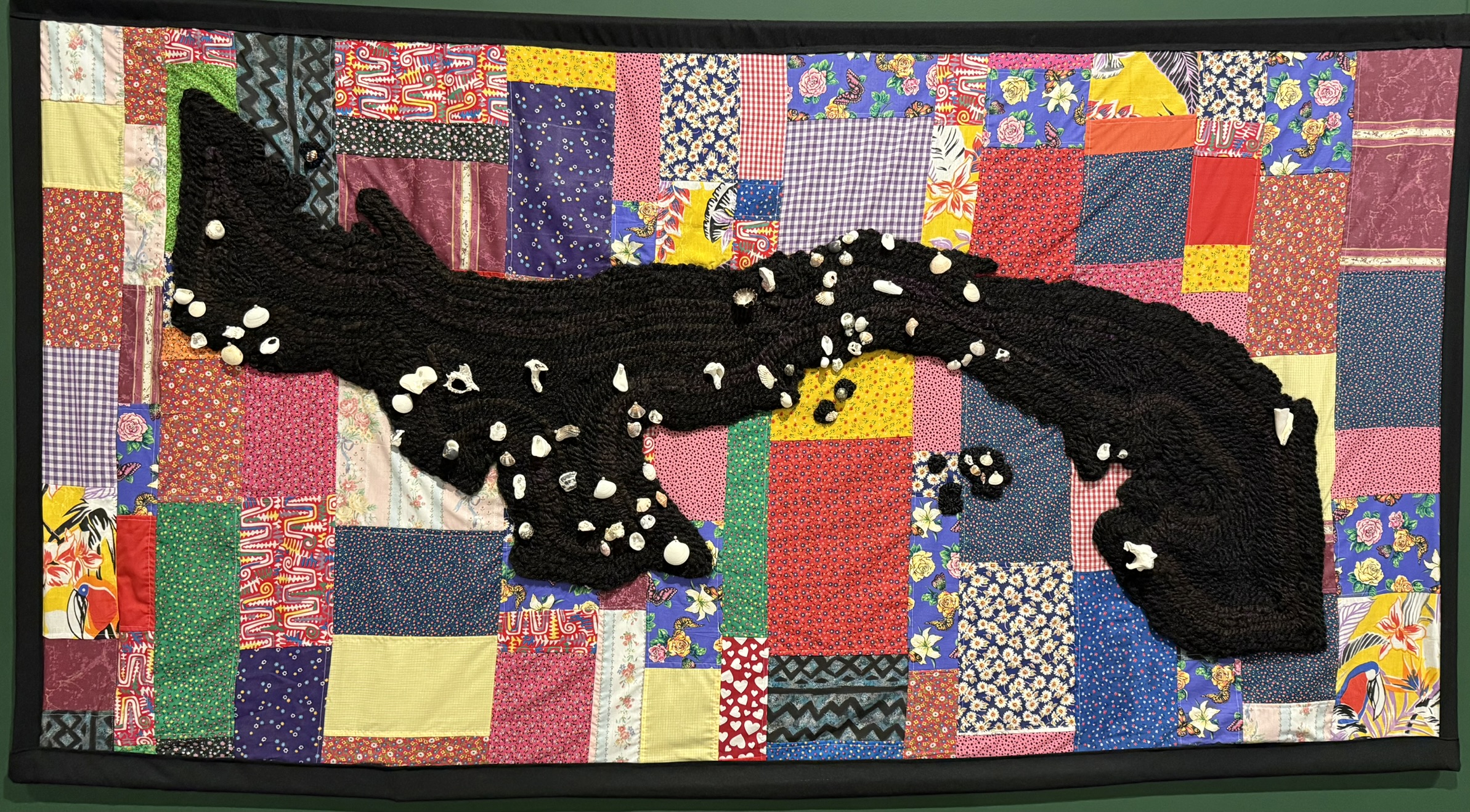


lunch in Curundú
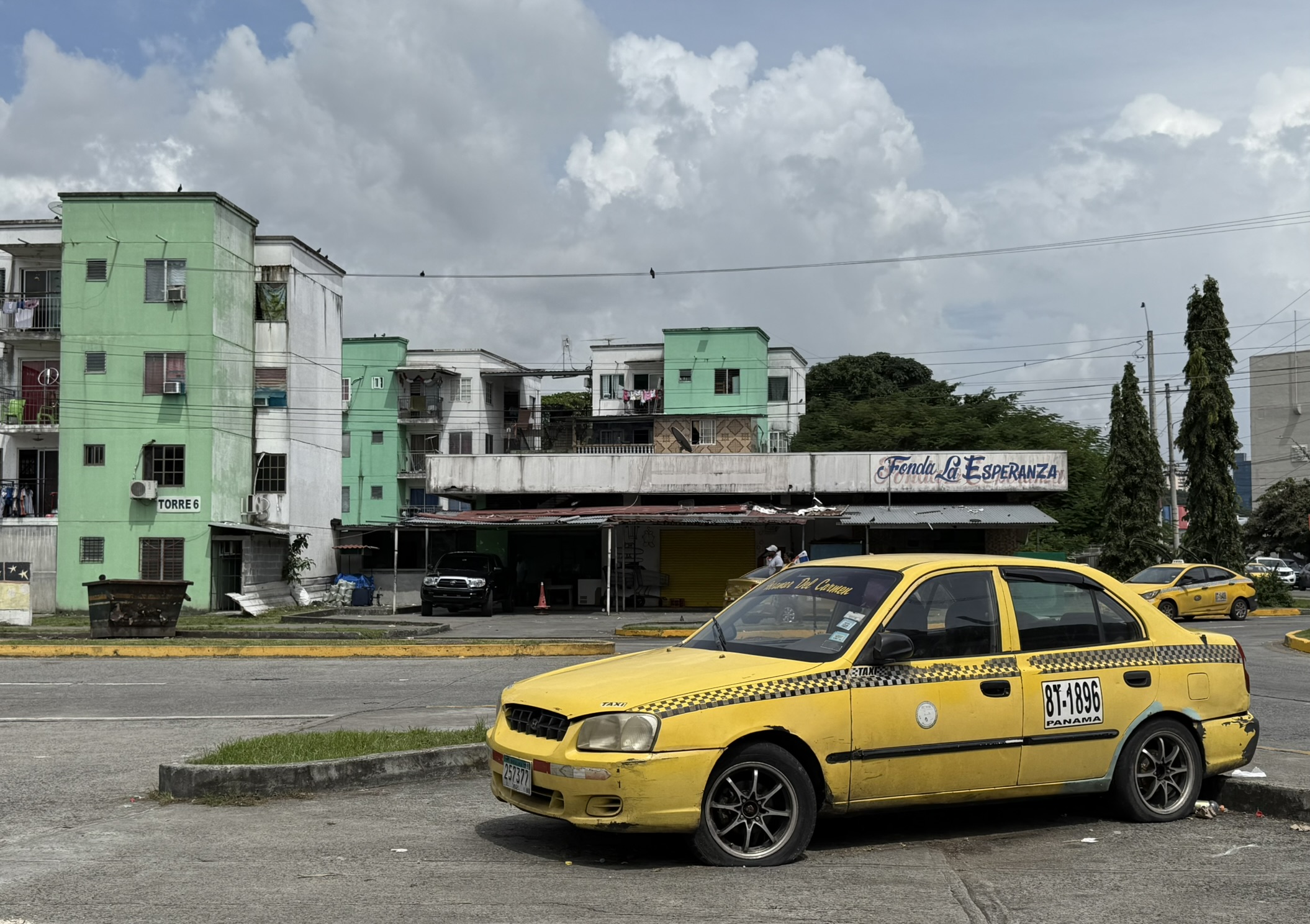
When we took an Uber to the neighborhood of Curundú in Panama City, the Uber driver was baffled as to why we were visiting the impoverished area.
The neighborhood is tucked in the heart of Panama City. In the very center of Curundú is the Estadio Juan Démostenes Arosemena, an imposing baseball stadium.
The neighborhood is a vibrant Afro-Panamanian community in one of the most racially and economically unequal countries of the world. It originated as a median between the United States Canal Zone and Panama City: informally planned, with a majority Black or Indigenous population, its culture is unique to its borders. Curundú has a tense relationship with the rest of Panama City and can’t shake off its stigma of poverty, racial stereotypes, and perceived crime.
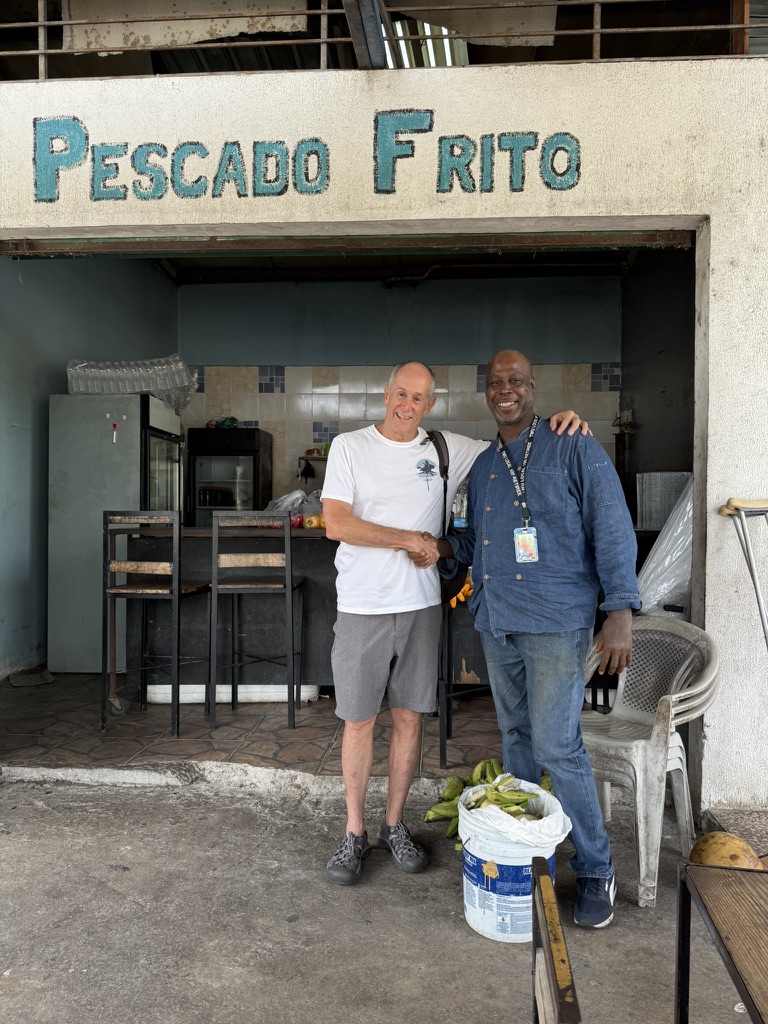
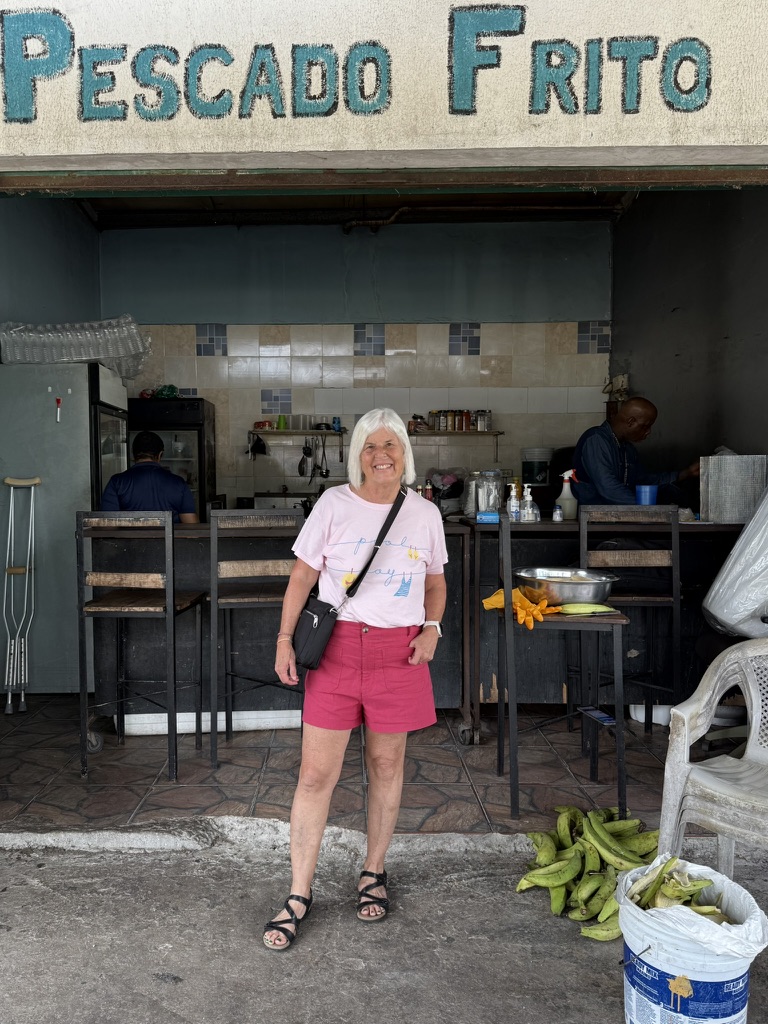
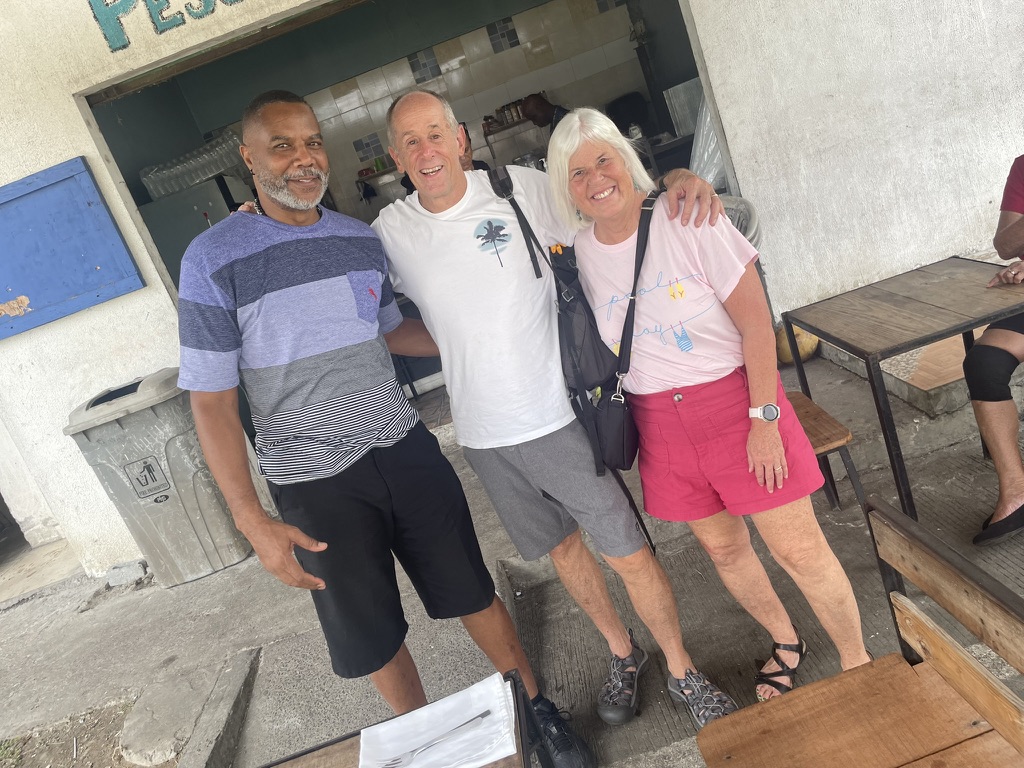
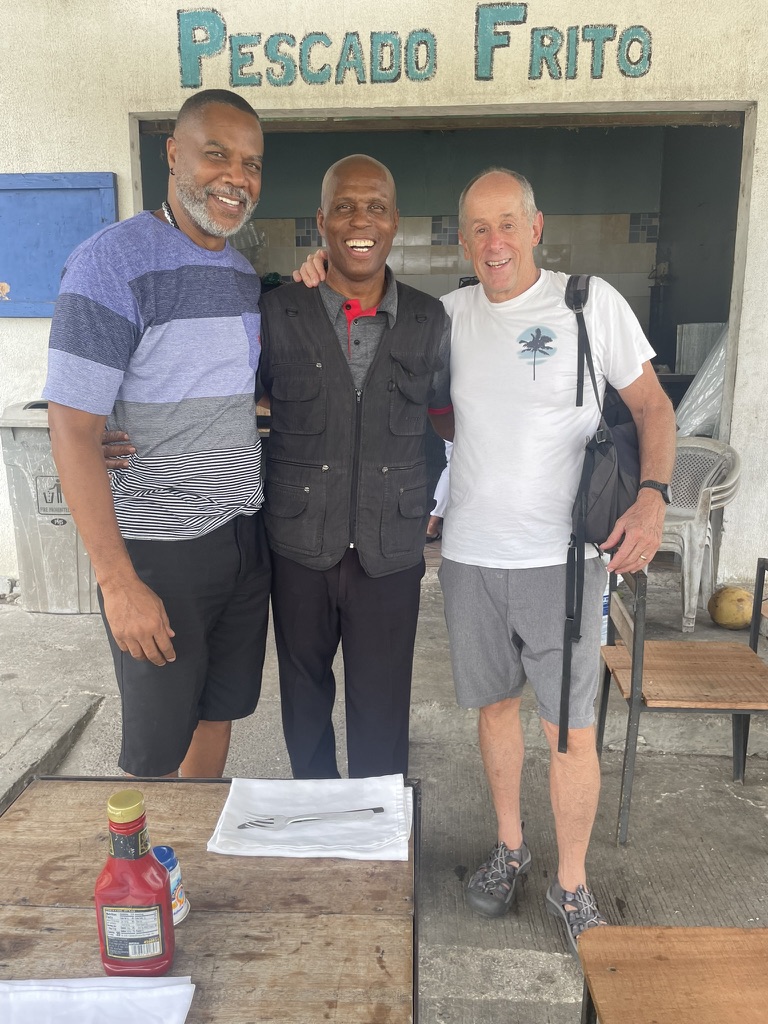
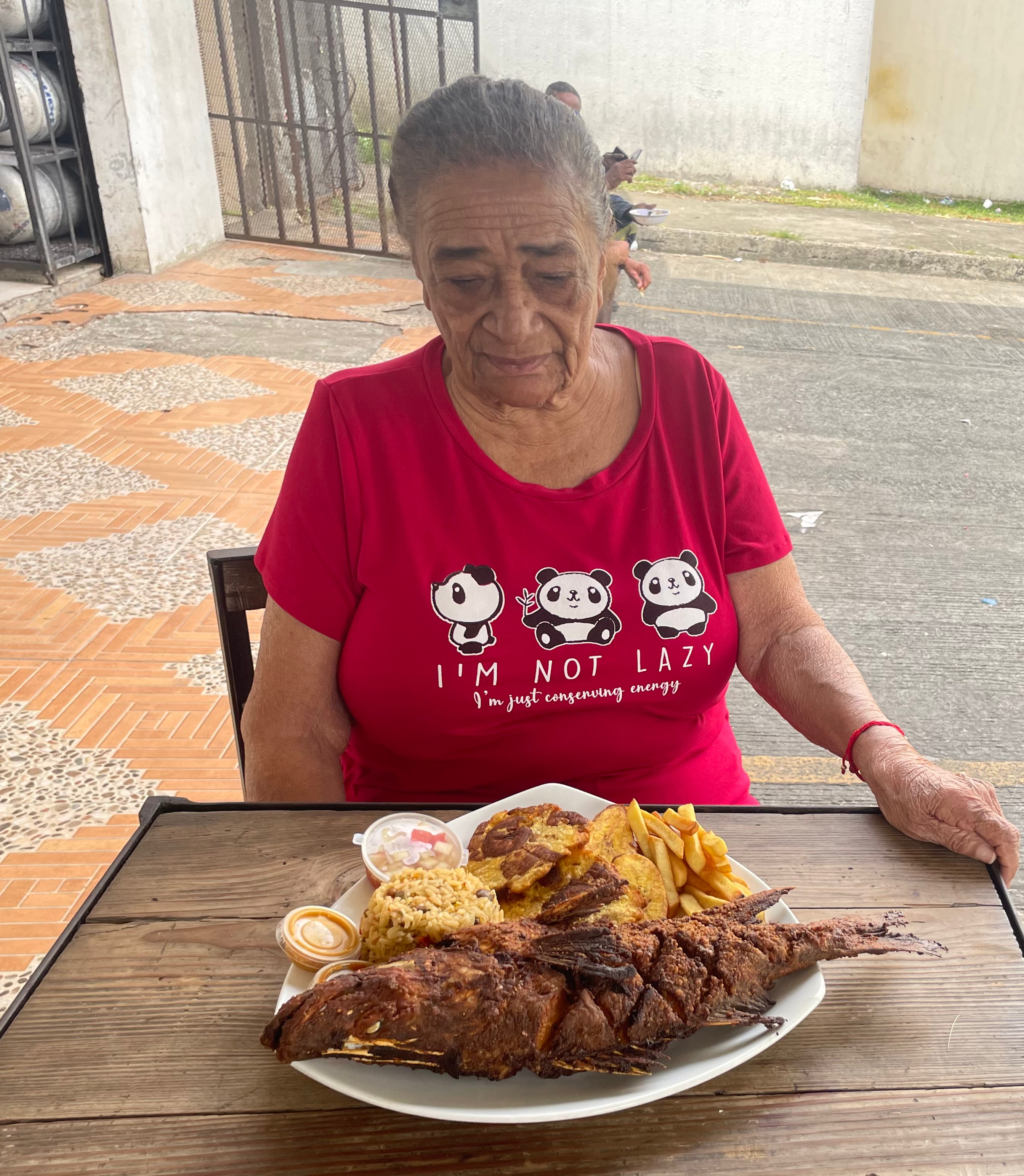
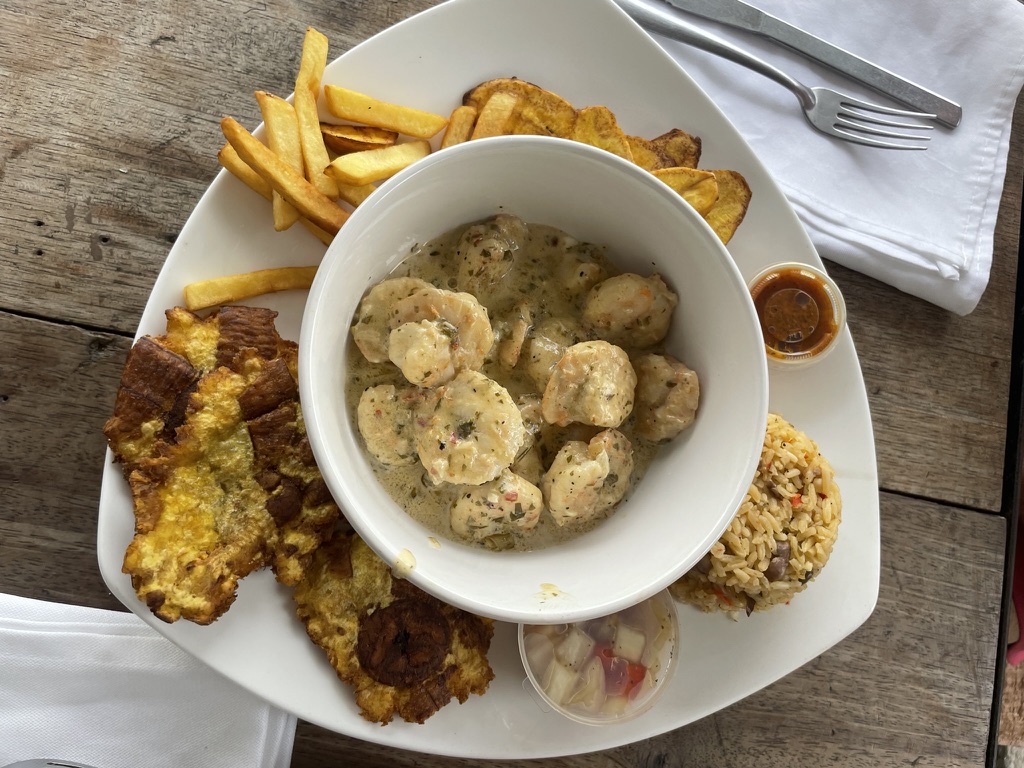
We were in search of a restaurant called Peach Fuzz International, owned by Danny, the father of a woman, Tae, who has worked with Mike at LMI since 2014. We introduced ourselves to Danny, who seemed upbeat and excited that we had taken the time to visit and bring messages from his daughter, who he hasn’t seen in two years. He advised us to try the shrimp with garlic sauce, which he then painstakingly began to prepare.
Danny’s brother Bryce showed up and we met him. Then Danny’s cousin, Marlin and his wife Diana, who were visiting from LA, showed up with Diana’s mother from Puerto Rico. They all ordered food and Diana said the shrimp with garlic was her favorite. It turned out to be an old family and friends’ gathering. Diana & Bryce said they come once a year to Panama and always visit Danny when they come. It was definitely a cultural immersion in one of Panama’s struggling communities.


El Cangrejo
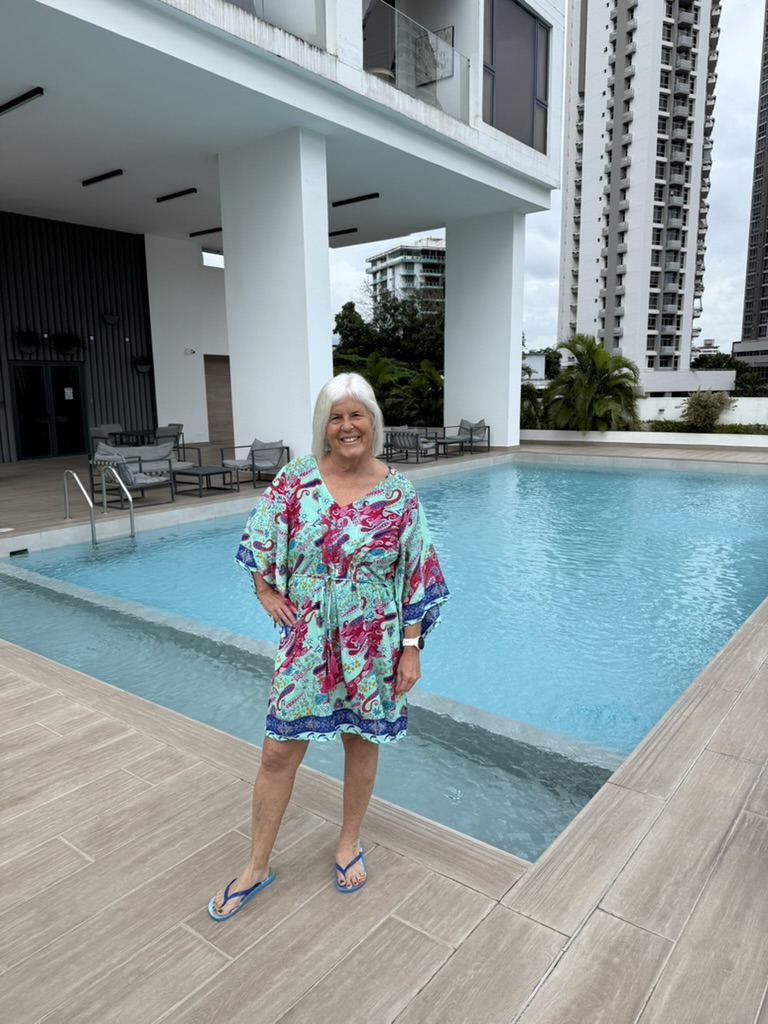
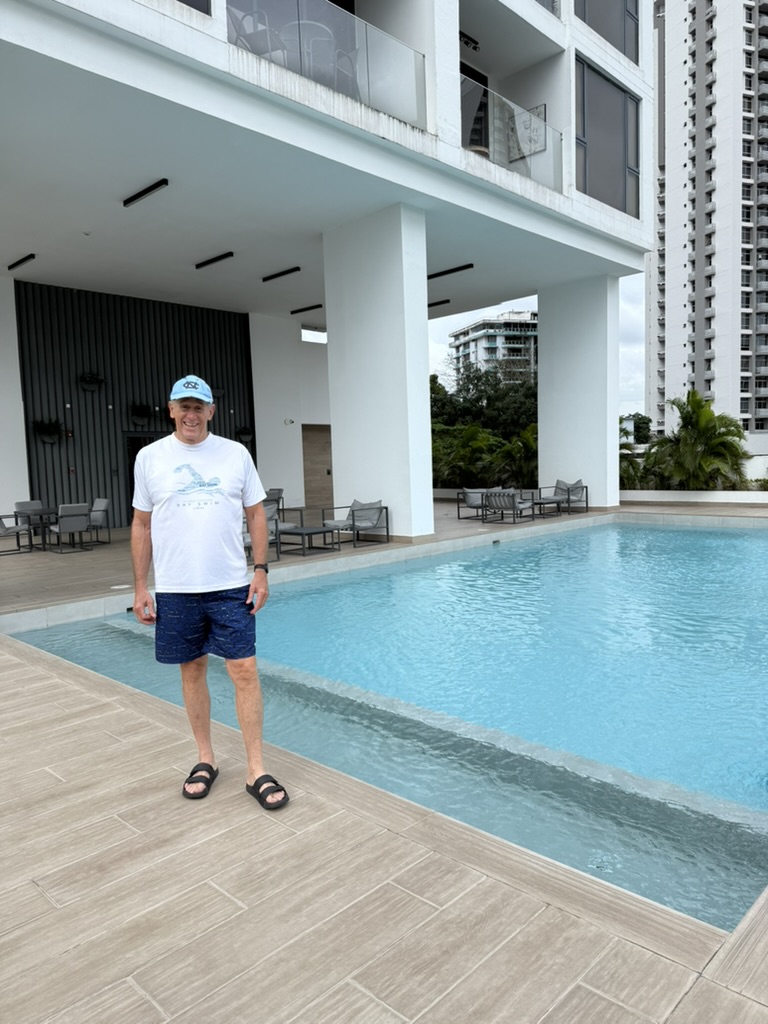
We spent the afternoon at the pool with Panama beers to cool off from our day out & about.

Celebrating our 37th anniversary at Marques
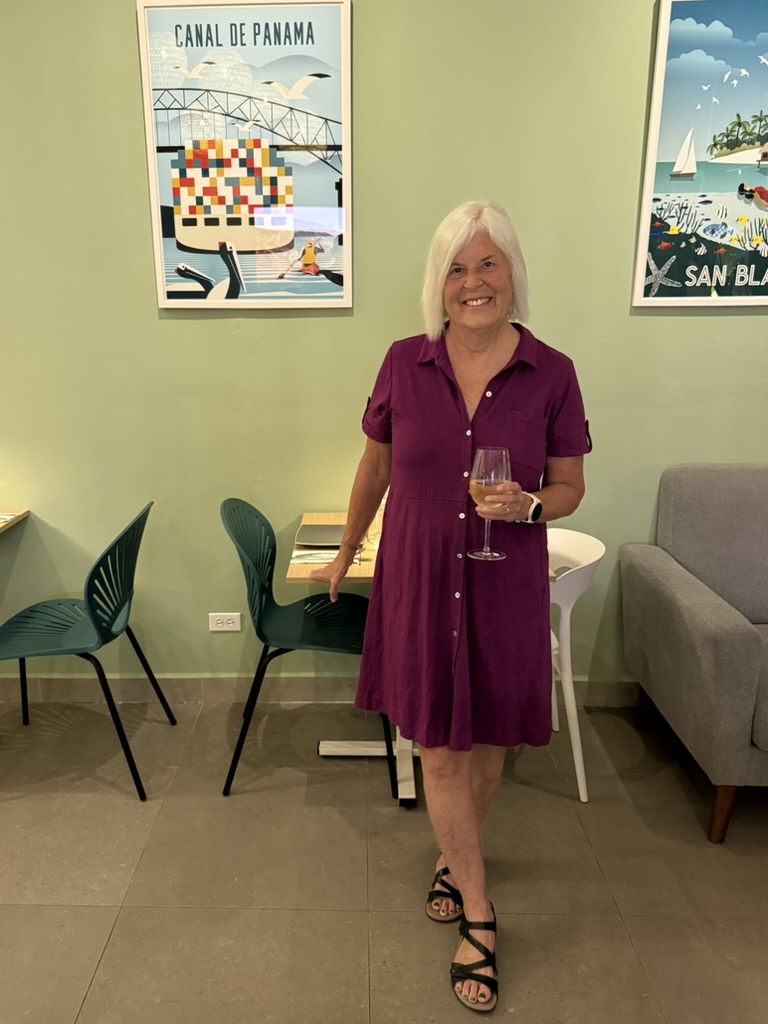
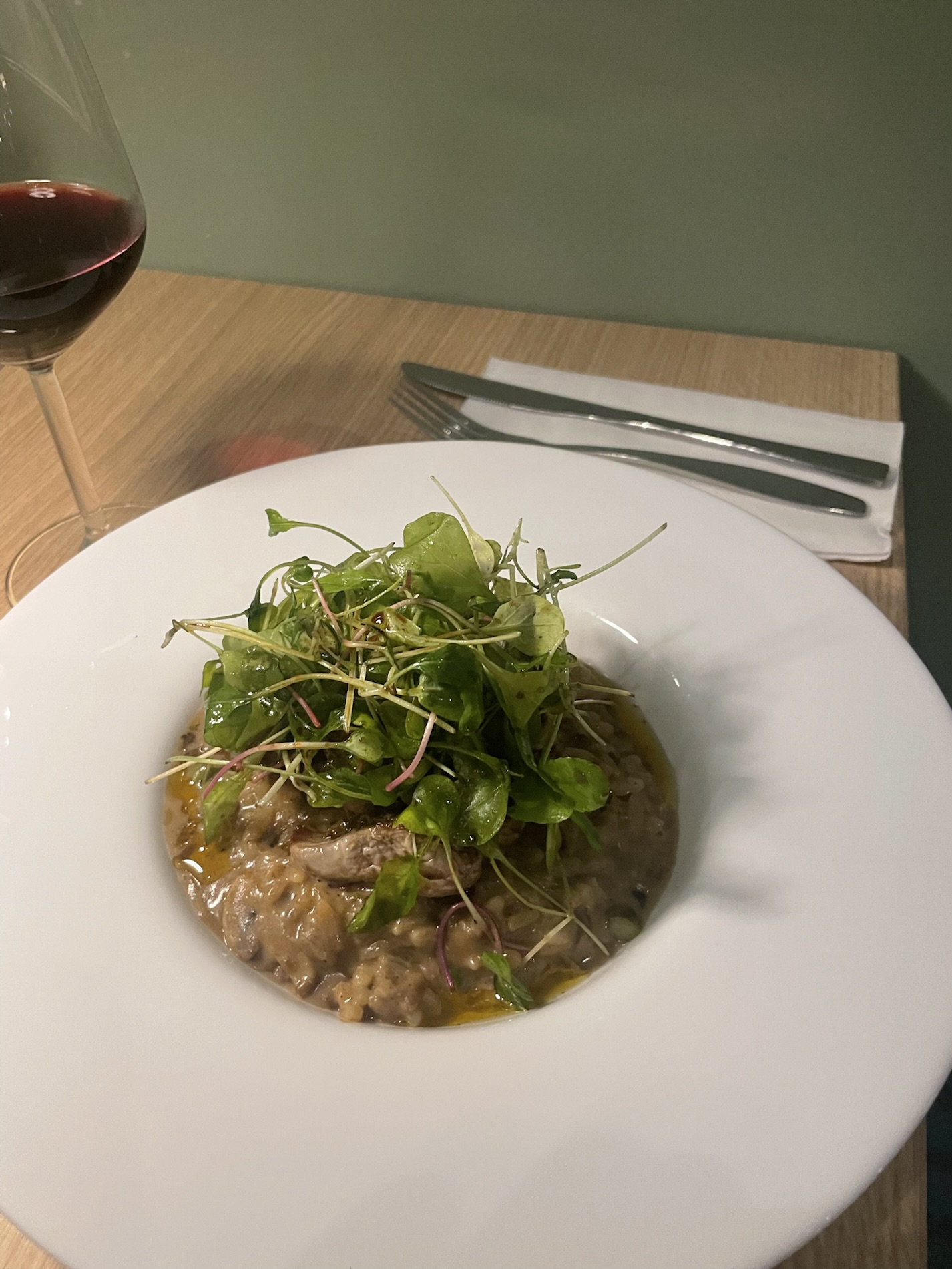
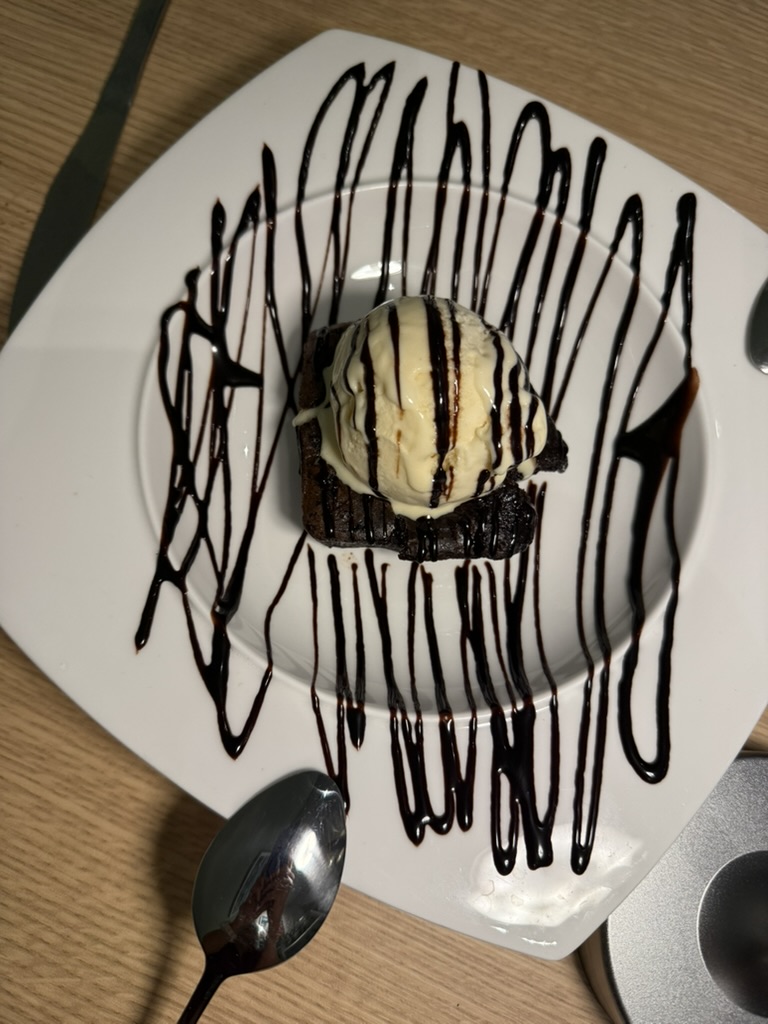
Our last night in Panama City happened to be our 37th anniversary (13 November), so we toasted our enduring marriage, the ups & downs, with wine & a special dinner out at Marques. I had catch of the day – sea bass fillet with pistachio crust, mussels in coconut milk with lemongrass, ying yang sauce, and blue curaçao. Mike got a Del Bosque: Risotto served with asparagus, mushrooms, and Parmesan with imported beef strips. We shared a brownie with ice cream for dessert. As we are early eaters, we had almost the entire restaurant to ourselves.




Leaving Panama City for Bocas del Toro via Panama Air at Albrook Gelabert Airport
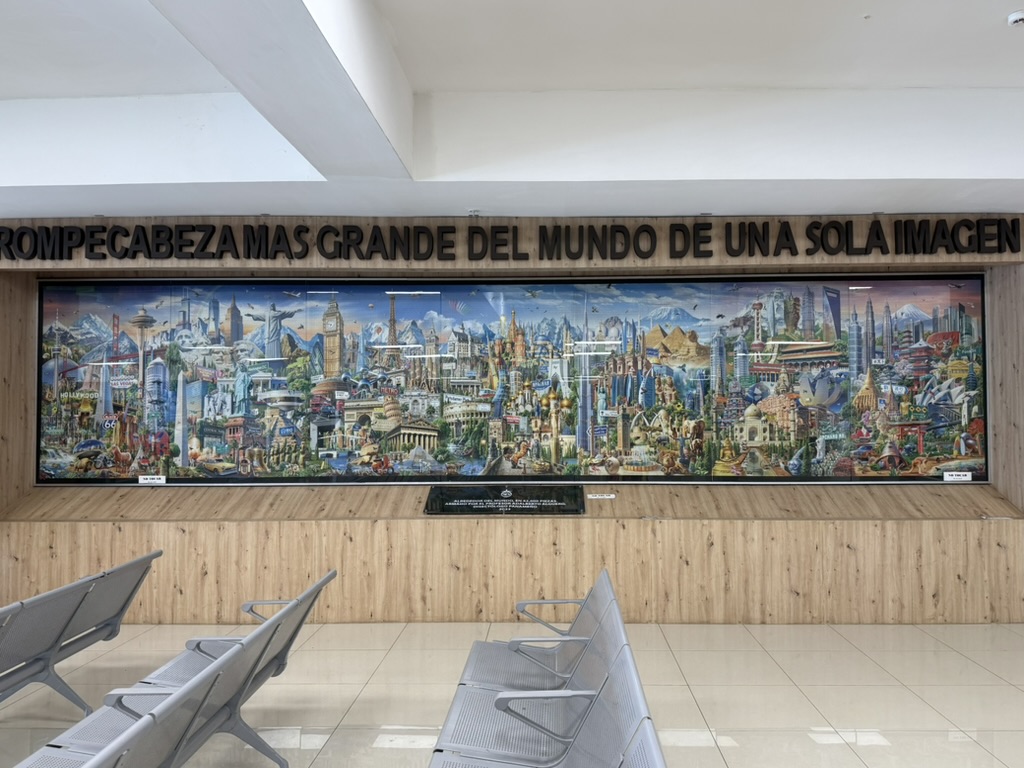
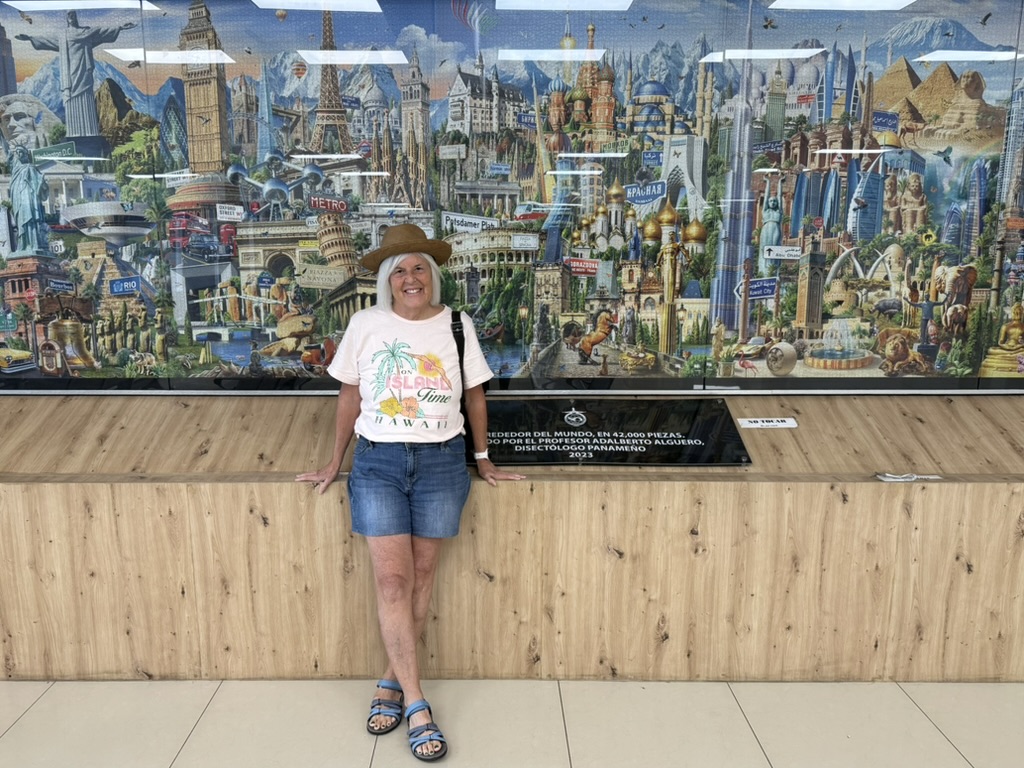
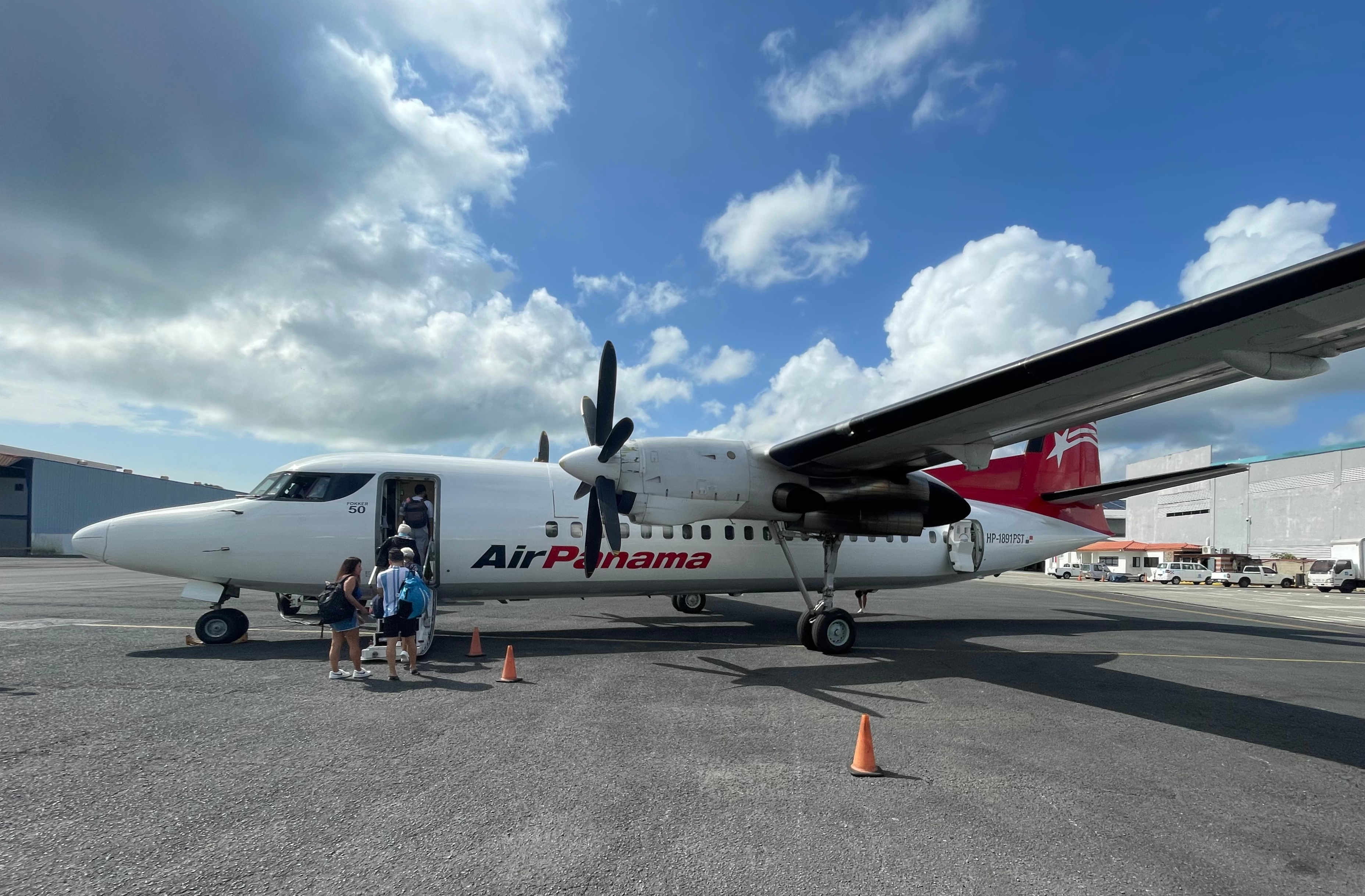
Friday, November 14: This morning we made our way to Albrook Gelabert Airport, Panama City’s domestic airport, to take our 50 minute flight on Air Panama to Bocas del Toro. We waited around a lot; there was really no need to arrive 2 hours early. We found a huge puzzle on the wall showing the whole of Panama City.

Here is a video of our time in Panama City, including the slow-moving ships going through the Panama Canal.
Discover more from ~ wander.essence ~
Subscribe to get the latest posts sent to your email.
 ~ wander.essence ~
You have a knack for finding nice places to stay. And what a great visit – so much to see and do.
LikeLike
We have been mostly lucky when choosing our places to stay, thank goodness. There have been some exceptions though. Panama City has a lot to do, but we were happy with our 3 1/2 days; it was enough and we even had time to relax by the pool. We have friends who stay at a hotel overlooking the canal and they said they could watch the ships go through for days. I didn’t think that would hold my interest for days on end. We prefer finding out what the good neighborhoods are and then basing ourselves there so we can easily walk to restaurants in the evenings. 🙂
LikeLiked by 1 person
We base our accommodation choices on how close everything is and if we can walk. On this most recent trip we could walk to all the major places in both Athens and Rome – 500 metres to the Acropolis! And there were plenty of amazing dining options.
LikeLike
[…] a trip to panama city: el cangrejo, casco viejo & the panama canal […]
LikeLike