

Travel from Kyoto to Tokushima on the island of Shikoku
Friday, October 4, 2024: Friday morning was another travel day for us. We took the Shinkansen from Kyoto to Okayama. There we switched to the Uzushio Line which took us directly from Okayama over the only rail connection to Shikoku Island, across the Inland Sea and onward to Tokushima.
The Seto Inland Sea (瀬戸内海, Seto Naikai), sometimes shortened to the Inland Sea, is the body of water separating Honshu, Shikoku, and Kyushu, three of the four main islands of Japan. It serves as a waterway connecting the Pacific Ocean to the Sea of Japan.
We arrived in Tokushima too early to check into our hotel, Hotel Clement Tokushima, so we left our luggage and went out to lunch at Yasubee Izakaya where Mike had yakatori and miso clam soup and I had shrimp & vegetable tempura with rice.


Preparing to walk a small part of the Shikoku 88-temple walk
The Shikoku pilgrimage is a 1,200km loop, so there is no beginning or end, unlike the Camino de Santiago. Statues of the famous Buddhist monk Kōbō Daishi are found in every temple along the way, but it’s not certain that he actually founded the pilgrimage. Kōbō Daishi was born in 774 near Temple 75 (Zentsuji) as a descendant of the noble Saeki family. Though the family was poor, Kōbō Daishi was able to study religion and philosophy in Kyoto. He spent a lot of time meditating in remote parts of Shikoku, where, in a cave near Temple 24, he is said to have found enlightenment. From then, in his mid-twenties, he called himself Kukai.
After traveling to and studying in China, Kukai founded Shingon Buddhism, today the largest sect in Japan. One major belief of this sect is that human beings have the opportunity to be enlightened in their current life through esoteric practice.
It took another 900 years until, in 1687, the pilgrimage path was described in a book, starting a pilgrimage movement among common people.
After checking in to our hotel, we went in search of the henro (pilgrim) store to get what we needed for our mini-pilgrimage for the next two days. The henro on the Shikoku 88-temple pilgrimage is usually decked out in white with a stole and a straw conical hat. We found that the Tourist Information office in Tokushima had most of what we needed. Since our goal was to walk the first 10 temples clustered around Tokushima, we opted only for the white vest (hakui) and a purple stole (wagesa). Mike got a stole as well, but when we got to the hotel, he found they had left it out of the bag. I got the pilgrimage book (nōkyōchō) so I could get stamps from each temple. We also got candles and incense sticks and little nameslips (osame-fuda) where each of us would write our name, address, date, and a wish. The nameslip is placed in the nameslip box at both the main hall and the Daishi hall. As well, it is given to those you receive gifts from.
Lance from Hawaii happened to be in the Tourist Information office and outlined the whole routine at each temple; I had already read about the routine but it was confusing to me nonetheless. We were grateful that Lance was there to explain it in English. We found quickly that people in Tokushima don’t speak much English, so he was a godsend.
According to Lance, proper etiquette at each temple includes:
- Stand to the left of the main gate and, putting hands together, bow once.
- Wash hands and mouth at the wash basin.
- Ring the bell at the bell tower once.
- At the Main hall, light one candle and three sticks of incense. Place the nameslip in the box. Place a donation in the offertory box, put your hands together, and recite the sutras.
- First recite the Heart Sutra (1x), then continue with Gohonzon Shingon mantra (3x), the Kōmyō mantra (3x), and Gohōgō (name of Kōbō Daishi) (3x) mantras. Finally, recite the Ekoumon sutra once, say “arigatō gozaimasu” (thank you) with hands together, and bow once. It is okay to pray silently.
- At the Daishi hall (where a statue of Kōbō Daishi is enshrined), worship again in the same way as at the main hall.
- At the Temple Office, receive the temple stamp in your pilgrimage book (300 yen per temple).
- Face the main gate and bow once before leaving.
The normal pilgrim attire includes a sedge hat, but we opted not to get one. The white clothing worn by the pilgrim represents purity and innocence, although in the past it meant a death shroud, symbolizing that the pilgrim was prepared to die at any time.
After getting our gear, we wandered through the basement of a department store and picked out items for dinner and breakfast since we’d already eaten a big lunch and didn’t feel like going out. Plus breakfast wasn’t included with our room.
The last two photos are the views of Tokushima from our hotel. It looked gloomy so we were hoping it didn’t rain on Saturday, when we’d begin our walk.

View from our hotel, Hotel Clement Tokushima
Steps: 6,569; Miles 2.78. Weather: Hi 77°, Lo 65°.
DAY 1: Making our way to Ryōzenji
Saturday, October 5: Saturday morning, Mike & I began our walk, intending to visit the first 5 temples on the Shikoku 88-temple pilgrimage walk. From Tokushima Station, we took the train to Bando, where we followed a green painted line on the road 0.8 km to the first temple: Ryōzenji.


Temple 1: Ryōzenji
Ryōzenji was founded by Gyōki (668-749), Japanese Buddhist priest of the Nara period. Kukai came later and prayed for the farmers who were suffering from natural disasters and the spread of sickness. The temple’s name translates to “Temple of the Vulture Peak” and its main deity is Shaka Nyorai, in English known as “the Buddha.”
When we reached Ryōzenji, we did the prescribed routine: bowed, washed hands and mouth, rang the bell, lit a candle at the Main Hall, and from that lit 3 sticks of incense. We each put a coin in to a drop box and dropped our osame-fuda (name slips where we wrote the date, country, name and a wish) into another box. We repeated all that at the Daisha hall. At both the Main hall and the Daisha hall, we recited the Heart Sutra, which was super long and all in Japanese so it went very slowly and painstakingly. Then we recited the other (shorter) mantras and sutras and I got the stamp and calligraphy for that temple in my pilgrimage book.

Temple #1: Ryōzenji


After all of that we began our 1.2km walk to temple #2, Gokurakuji. We walked mostly on narrow roads through suburban neighborhoods, admiring the shaped trees in people’s meticulously maintained gardens. Niwaki, the art of pruning trees the Japanese way, has a rich history that dates back centuries.


Temple 2: Gokurakuji
Temple 2, Gokurakuji, was founded by Gyōki; however Kukai carved the statue of Amida Nyorai, the deity of light. People come here to pray for a long life or an easy childbirth, among other things. The temple’s name means “Nirvana – or Paradise Temple” (Temple of the Pure Land).
At Gokurakuji, we did our routines and lingered because this was a particularly pretty temple, with a temple garden that creates an impression of Nirvana; it is considered one of the most beautiful gardens on the pilgrimage. On the grounds of Gokurakuji is a large cedar tree called “Chōmei-sugi,” which is said to give one a long life.
After finishing our routines, sutras and mantras, I got my pilgrim stamp and we were on our way to temple three.

Temple 2: Gokurakuji


The next temple was a 2.9km walk through more neat and tidy neighborhoods with many pretty houses and gardens.


Temple 3: Konzenji
We reached temple 3, Konzenji, another lovely temple founded by Gyōki on behalf of Emperor Shomu who lived in the Nara period and strongly supported Buddhism. The main deity here is Shaka Nyorai. Kukai later repaired the buildings and named the temple after a gold well he is said to have built. It sits beside the Daishi hall and its water ensures longevity.
The garden also includes a large stone that, according to legend, a servant of a samurai named Benkei (1159-1189) lifted in 1185.
We went through our routines and incense lighting and sutra reciting. I got my temple stamp and then we walked on, aiming for temple 4.

Mike at Temple 3: Konsenji


The walk to Temple 4, Dainichiji was to be 5.1 km with another 2 km to temple 5, Jizoji. It was getting quite hot by this time and we realized after a long slog through more quiet neighborhoods that we could veer south to temple #5 and skip #4 altogether.


Temple 5: Jizōji
We decided we were tuckered out and would do just that; we went directly to temple 5, Jizōji.
Jizōji’s main deity, Shogun Jizo Bosatsu, was carved by Kukai. Many military leaders before the 16th century prayed to the deity because they believed it would help them win battles. The temple is a simple one that sits around a square with a huge 800-year-old Gingko tree in its center. People pray here for a long life.
We had by this time walked close to 9 miles, including getting to and from train stations, so we called it quits for the day. Of course, we first did our temple routine: lighting our incense, submitting our nameslips, and saying our sutras. I got my temple stamp in my pilgrimage book and we headed for the nearest bus stop to get back to Tokushima.
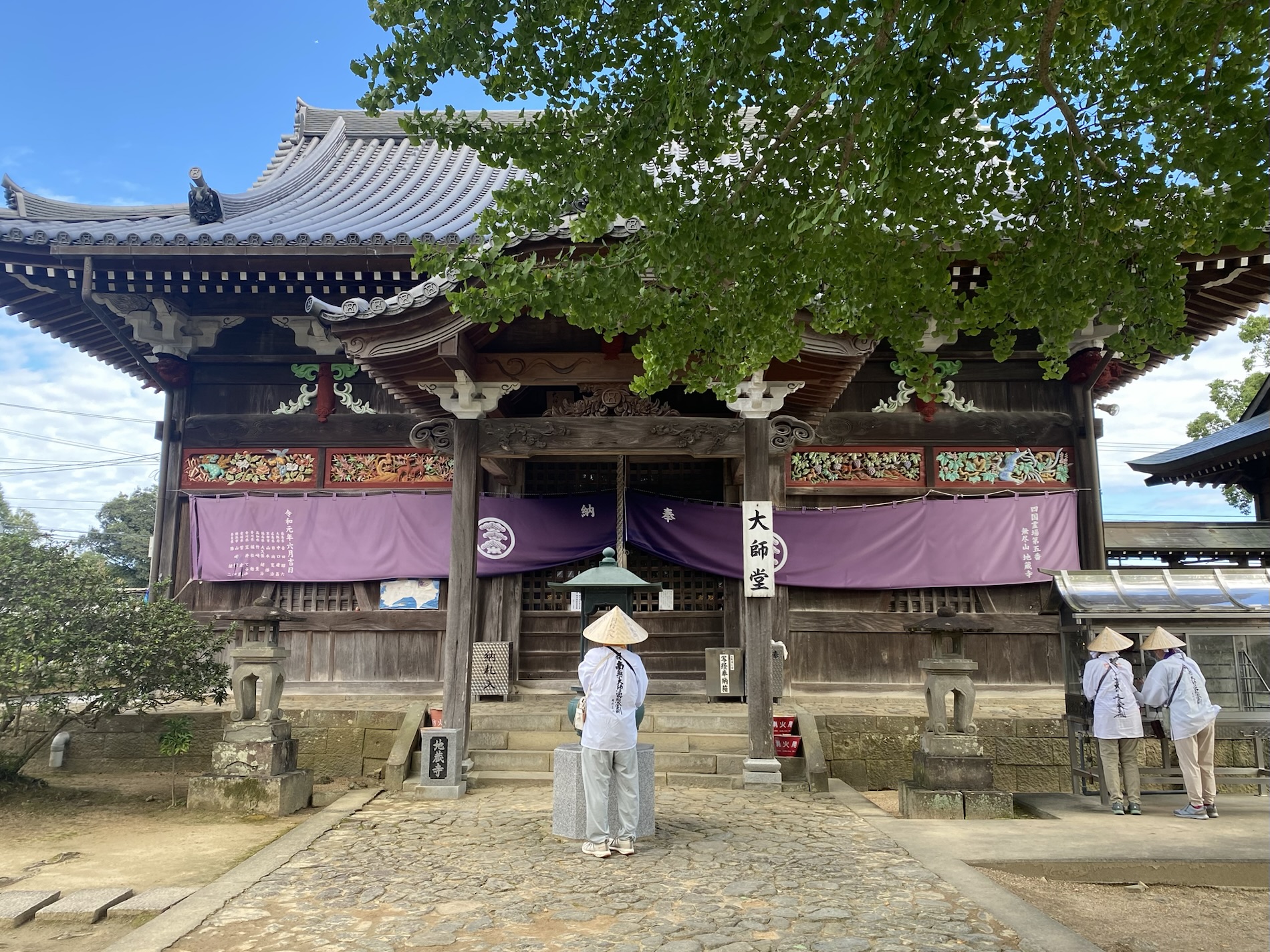
Temple 5: Jizōji


Return to Tokushima
Thus, we completed only 4 out of the 5 first temples on day one around Tokushima. We walked to a bus stop where we waited a while, caught a local bus with about 17 stops and made it to the Itano Station. From there we made it back to Tokushima where I soaked in a long hot bath and we went out to eat.


The ramen place we chose had an electronic screen outside where we had to place our order. It was all in Japanese so luckily a Japanese man behind us in line helped us figure it out. Then he and his wife joined us for dinner. He was a very lively fellow. Neither of them could speak much English but we managed to communicate through Google Translate.


Steps: 22,717; Miles 9.63. Weather: Hi 79°, Lo 65°.
DAY 2
Sunday, October 6: We were in a quandary about what to do for day 2 of our Shikoku 88-temple walk because, though the first 10 temples are clustered around Tokushima, numbers 8, 9, and 10 have no public transportation to them. Temple 11 is a 10 km walk from temple 10; we had no intention of walking as far as temple 11. Mike thought of renting a car and just driving to the remaining 5 temples but I didn’t want to give up on the walk so quickly. Many pilgrims on the Shikoku pilgrimage take cars and don’t walk at all. Many come in tour groups by the bus load.
Temple 10: Kirihataji
Finally I figured out that we could take the train from Tokushima to Kamojima, about a 30-minute walk from temple 11. We hoped the station would be big enough to have a taxi queue and we could hire a taxi to take us to temple 10 and then work backwards to 6 from there. We lucked out! We found a taxi driver at Kamojima who drove us up a very steep hill to number 10, Kirihataji. There we did our temple routine.
Kirihataji means “Temple of the Cut Cloth” and its main deity is Senju Kanon Bosatsu. When Kukai passed through this area, he asked for some old cloth. However, a young woman, who had been the mistress of a samurai and had fallen into disgrace, presented him with a new kimono. She told him she wanted to become a saint and save people, and when Kukai ordained her, she became enlightened. She left home and soon after changed into a Senju Kannon (Thousand-Armed Buddha of Mercy).
The two-story pagoda was brought from Sumiyoshi Taisha Shrine in Osaka in 1868 and took 10 years to erect.
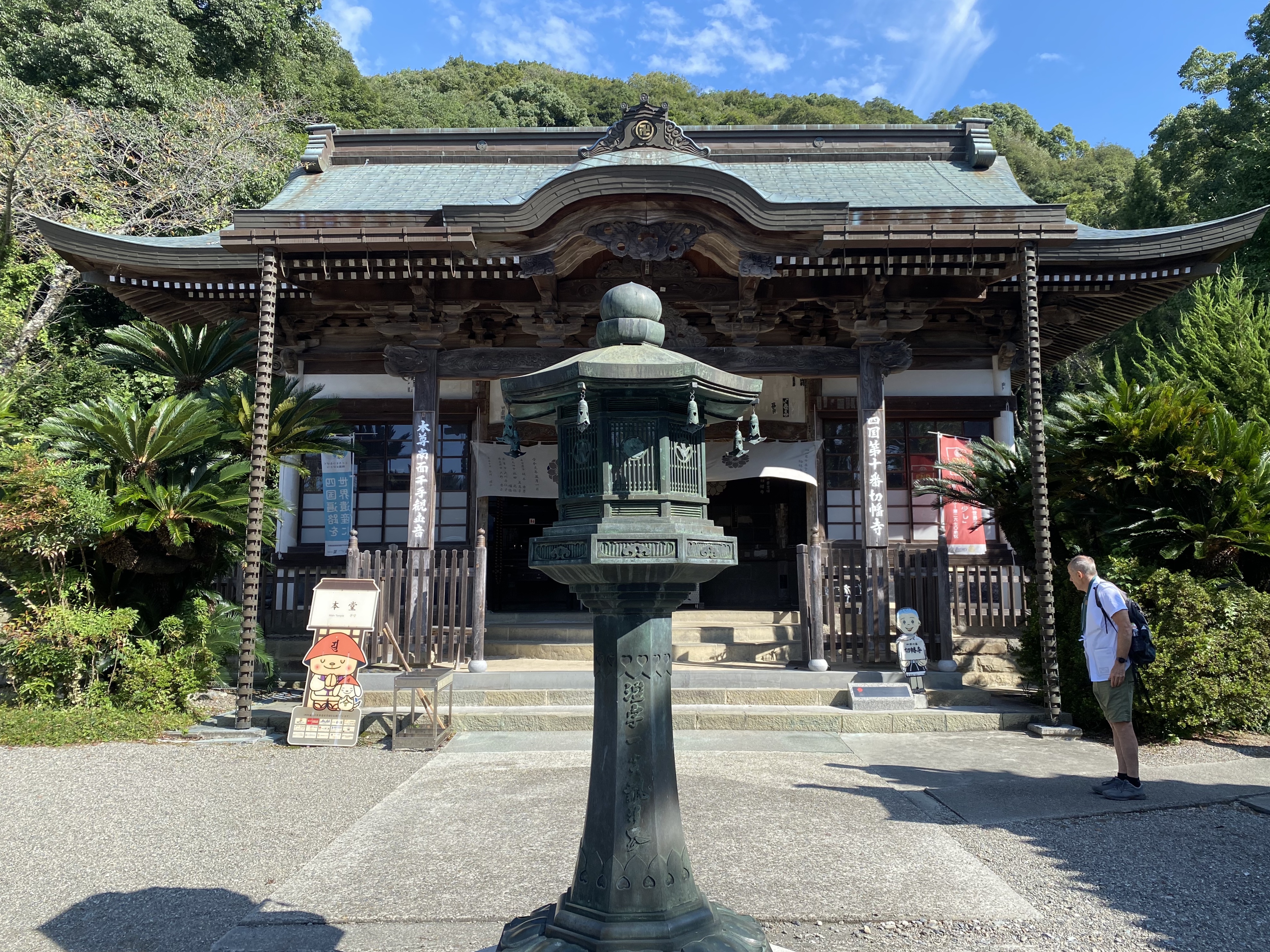
Temple 10: Kirihataji


We then began our 3.9 km walk to Temple 9, Horinji. I was feeling energetic on our walk from temple 10 to temple 9. It turned out the reason I felt energetic was because the walk was all slightly downhill.


Temple 9: Horinji
Horinji means Temple of the Dharma Wheel and its deity is Shaka Nyorai. The many straw sandals (waraji) are hung here by people wishing for the healing of leg ailments or walking disabilities.
At temple 9, Horinji, we did our routine.

Temple 9: Horinji


Then we began what should have been an easy 2.4 km walk to temple 8. It was lovely walking in rural Japan through farmland, small villages and beautifully coiffed houses and gardens. Soon though, it started getting hot and there was not a shred of shade to be found.
Despite the short distance from Temple 9 from temple 8, this stretch stressed Mike and I out. It was all in the hot sun and Mike noted that it was all a gradual uphill. Mike’s hip and leg were hurting him and I was zapped from the heat. About halfway there we started throwing out options. “We could call a taxi to take us to temple 7 and then walk the short distance to 6, then take the bus then the train back to Tokushima.” Or later, “We could call a taxi to take us to Itano Station and skip 6 & 7 altogether.” “Better yet we could call the taxi driver from that morning and have him take us right back to Kamojima Station, where he’d picked us up.”


Temple 8: Kumadaniji
Kumadaniji means “Temple of the Bear Valley” and its main deity is Senju Kannon Bosatsu. Kukai carved a large statue of the deity and placed smaller similar statues inside it. In the gardens there is a pine tree which looks like a dragon. The Tahoto treasure tower (2-story pagoda built in 1774) is a building inspired by Okunoin Temple in Koya-san, the mausoleum of Kobo Daishi (Kukai) and one of the most sacred places in Japan.
We dragged ourselves through the routine at temple 8, Kumadaniji, and went to the temple office to get what would be my final temple stamp. We asked the woman there to call the taxi driver (he’d given us his card that morning) and he said he’d be there momentarily. And he was, thank goodness. We were so happy to see his smiling face again.
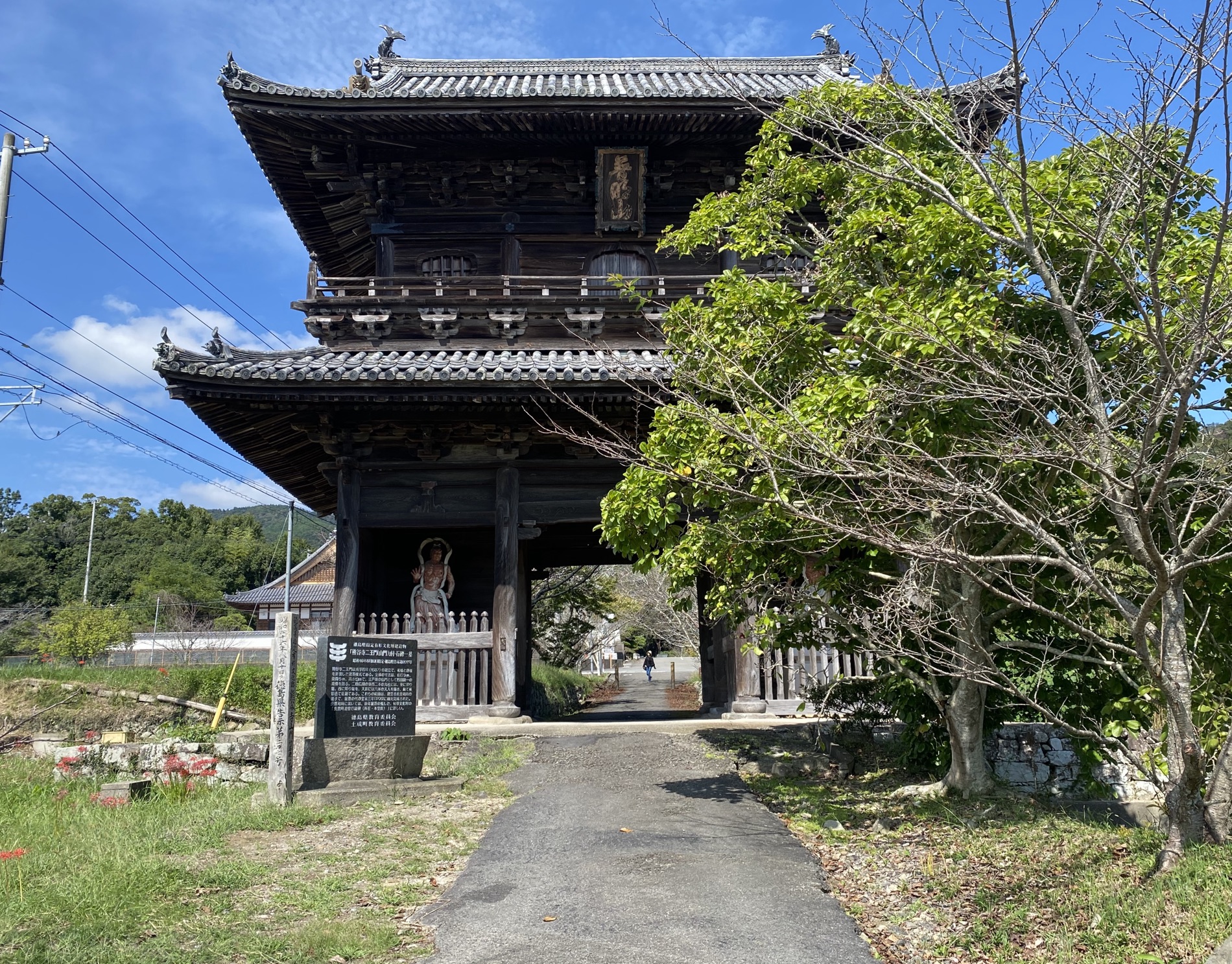
Temple 8: Kumadaniji


I had actually started feeling sick the day before coming to Tokushima but I was determined I wasn’t going to let my headcold deter me. I just kept pushing and pushing. At the beginning of the first day I felt not too horrible but by the end of that day, after walking 9.63 miles, I felt pretty bad. Sunday I was sicker. And by Sunday night, after walking 6.3 miles, I was pretty miserable. Mike was aching all over, especially his hip and leg.
After I walked the entire 790km of the Camino de Santiago in the fall of 2018, I decided foolishly to try a portion of the Via Francigena in Italy in July of 2023 with my Camino friend Darina. It was one of the hottest summers on record and I found I couldn’t hack carrying a heavy pack over all the Tuscan hills in the sweltering heat. I ended up taking public transportation for a sizeable portion of the walk.
I can’t believe I once thought I could do the entire Shikoku pilgrimage. I obviously have not been not accepting my age limitations! No more pilgrimages for me. Even though I love them in theory, in practice I no longer have the stamina to do them. 😨😱😰
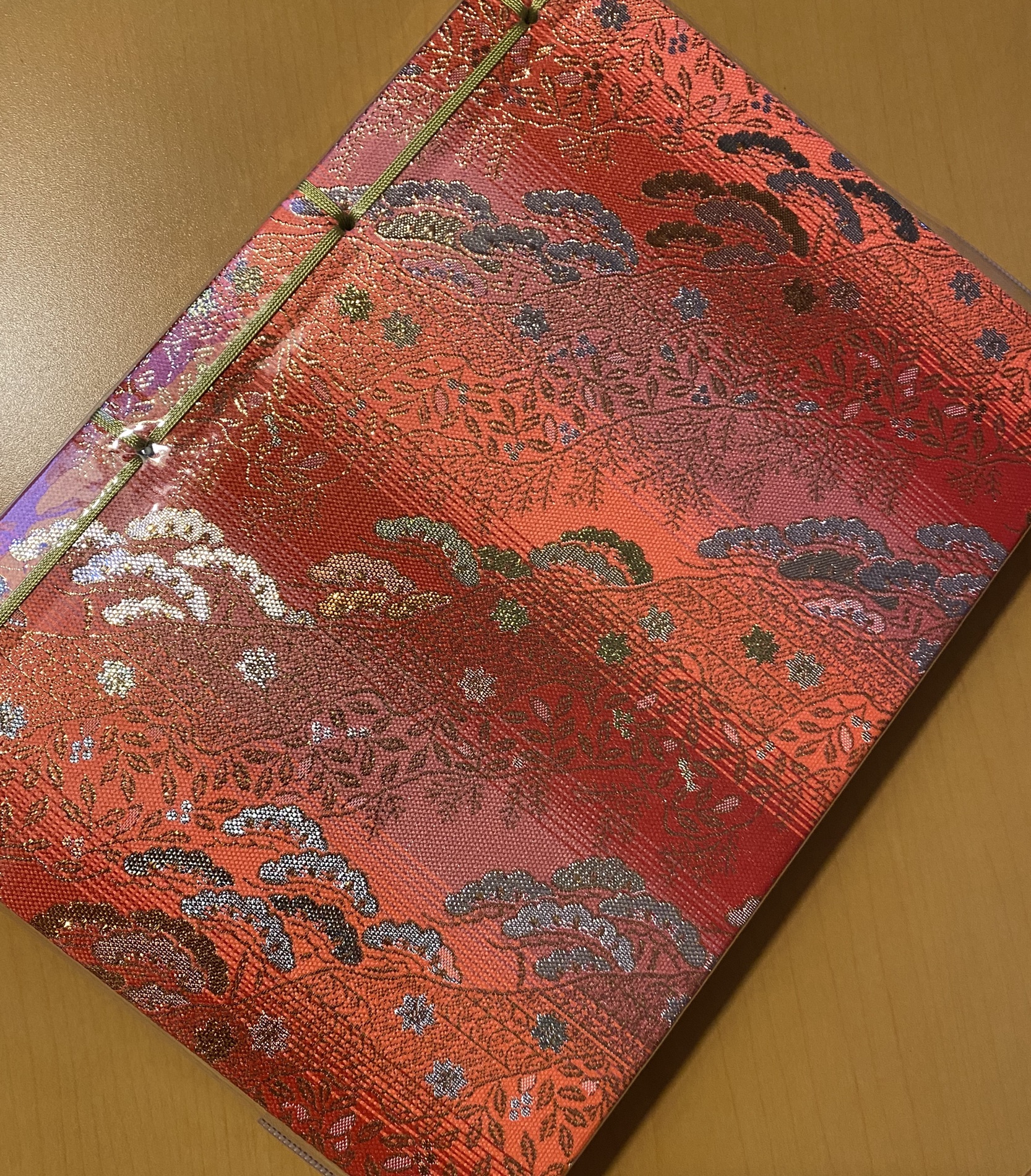
My pilgrimage book
Return to Tokushima
After the last day of our mini-pilgrimage Mike and I could barely drag ourselves out to eat dinner. We couldn’t get excited about Japanese food, so we found an Italian restaurant where we got a pizza with green apples, walnuts and Gorgonzola cheese. It was just okay, but I was happy to eat some different food. We crashed early because Monday morning we would leave to Okayama.


Steps: 15,090; Miles 6.39. Weather Hi 82°, Lo 70°. Sunny.
Leaving Tokushima for Okayama
Monday, October 7: On a rather gloomy and rainy Monday morning, we made our way by train from Tokushima to Takamatsu to Okayama. Despite the clouds, we found the landscape drifting past our train windows soothing and ebulliently green.


We would stay four nights in Okayama with day trips out to various areas each day.
 ~ wander.essence ~
You must be logged in to post a comment.