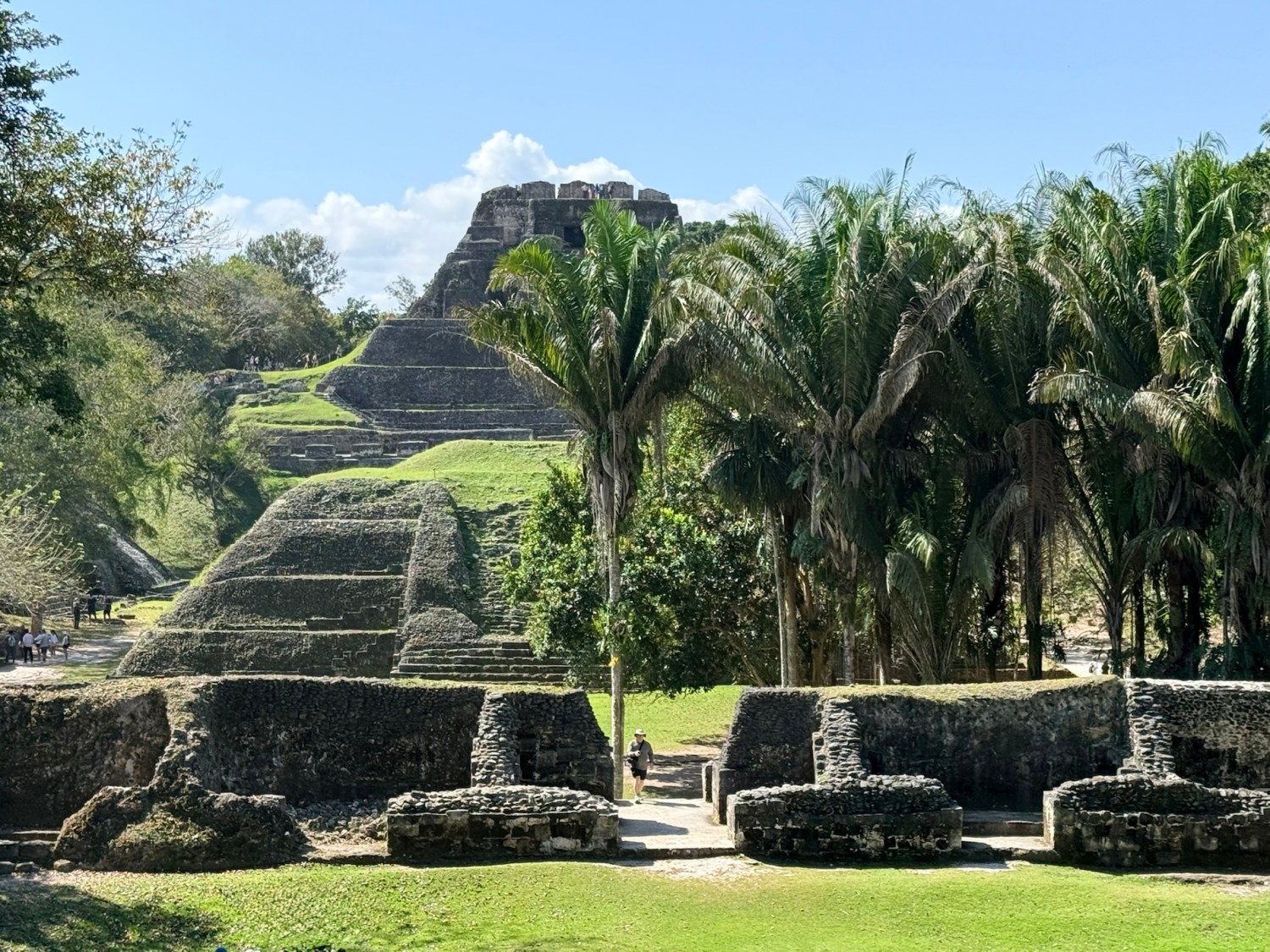

Saturday, March 14: We went to Belize in search of the exotic, but it took some digging to find it. Mostly, I came up empty-handed. I had included it on our itinerary because we would be so close to the country when we went to Tikal that it seemed a shame not to visit it and check off our last remaining Central American country (except Honduras, which we didn’t intend to visit).
What I didn’t know when I first conceived of the idea was that Belize was once known as British Honduras (from 1862-1973). It was a British Crown Colony before changing its name and gaining independence in 1981. The name was changed to Belize to establish a distinct identity and to declare its sovereignty. However, Belize’s official language remains English. We found in actuality that most Belizeans speak English, but feel more comfortable conversing in Spanish, their native language.
The history of the British involvement in British Honduras (now Belize) mostly revolved around the wood they could extract from the land. The first was a swamp-loving tree known as logwood, whose heartwood could be boiled down to a blue-black dye, an alternative to indigo. When demand for logwood died off, the British moved on to mahogany, spurred by demand from Chippendale’s high-end furniture. So, the British “came for the wood, and when they took the last tree, they left.” (The Last Flight of the Scarlet Macaw: One Woman’s Fight to Save the World’s Most Beautiful Bird” by Bruce Barcott).
We took an early morning shuttle to the Belize border, where we crossed easily and quickly. Then we were on to San Ignacio, a small town about 20 minutes from the border at Melchor de Mencos.
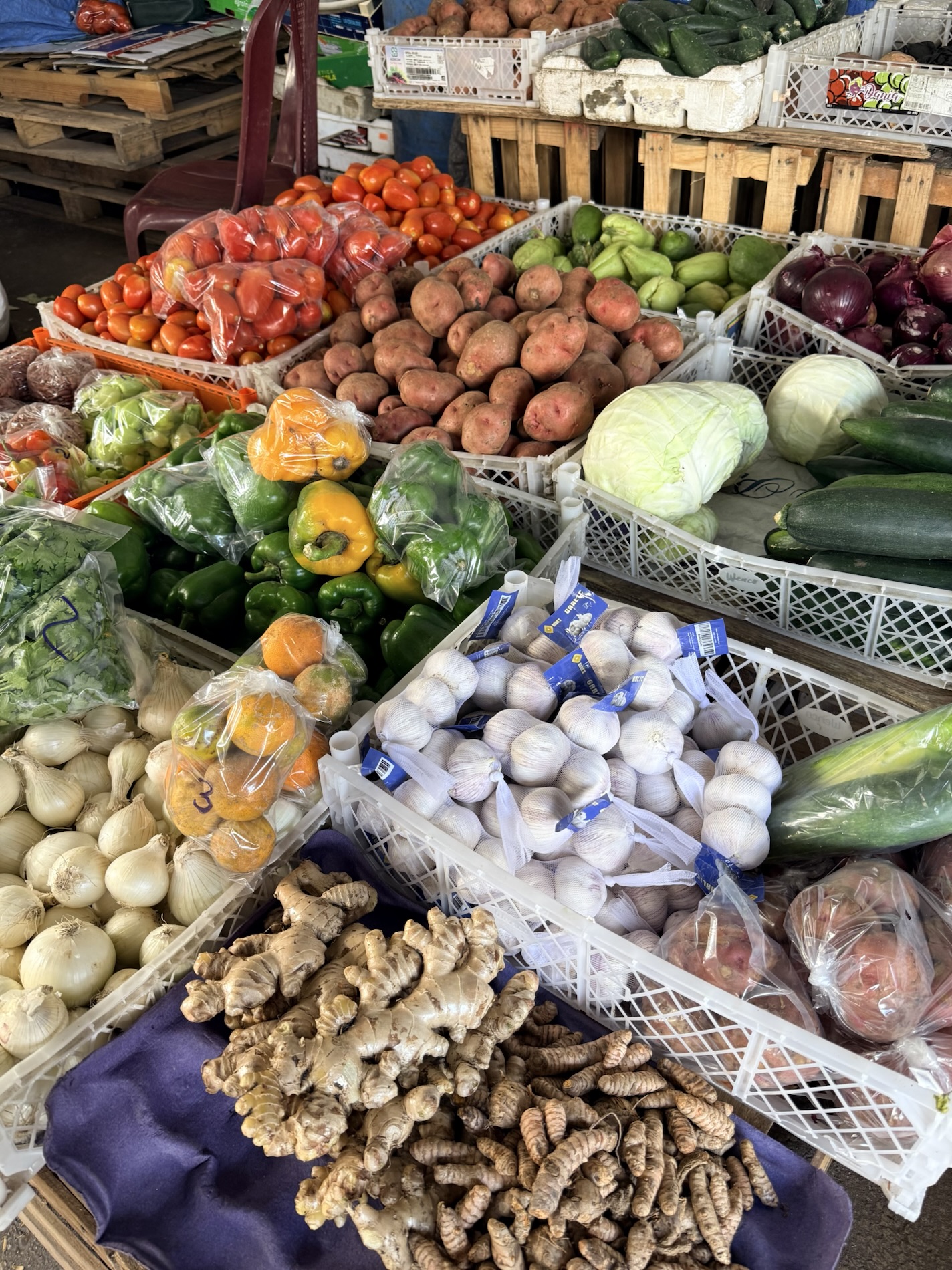
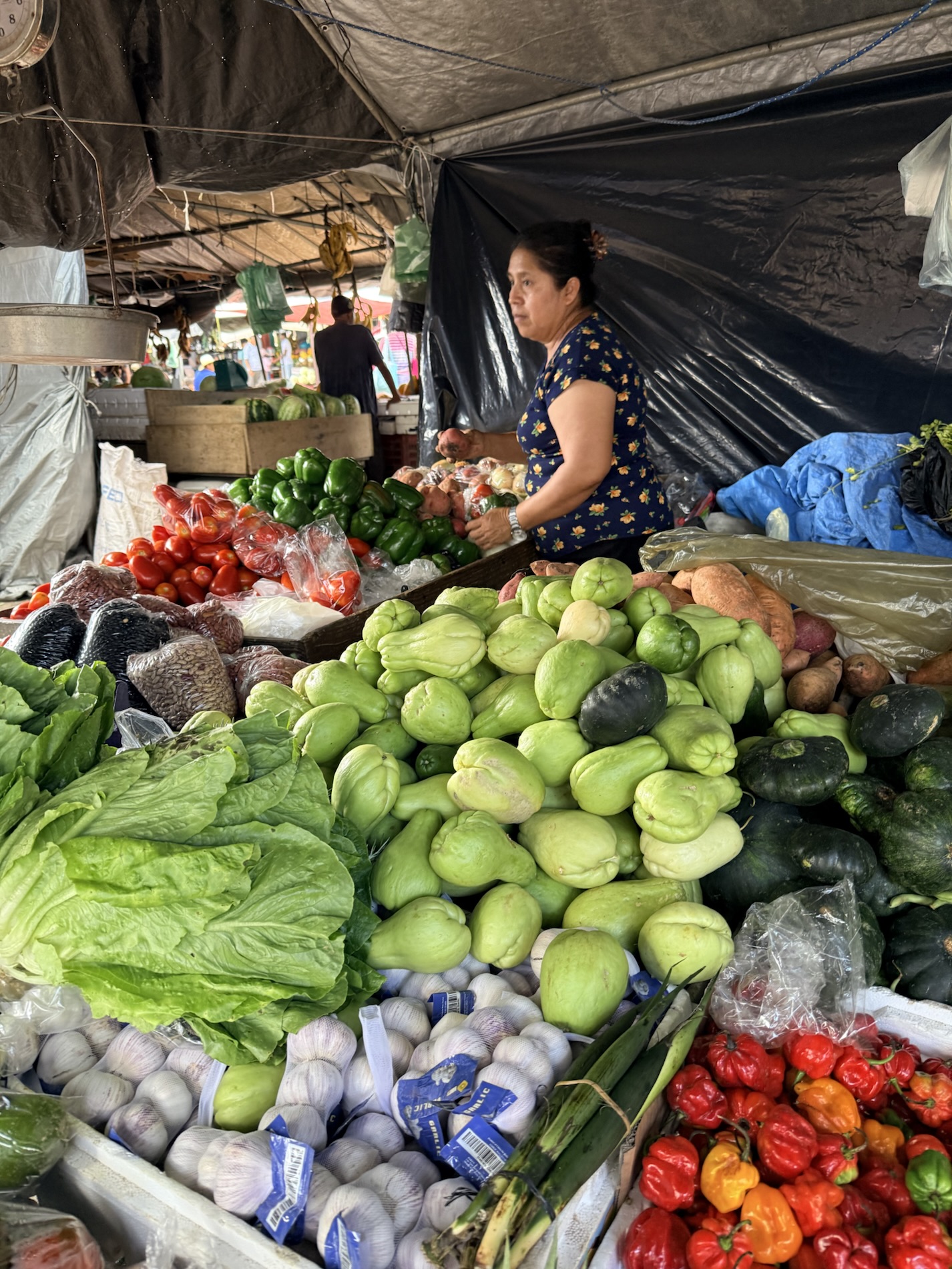
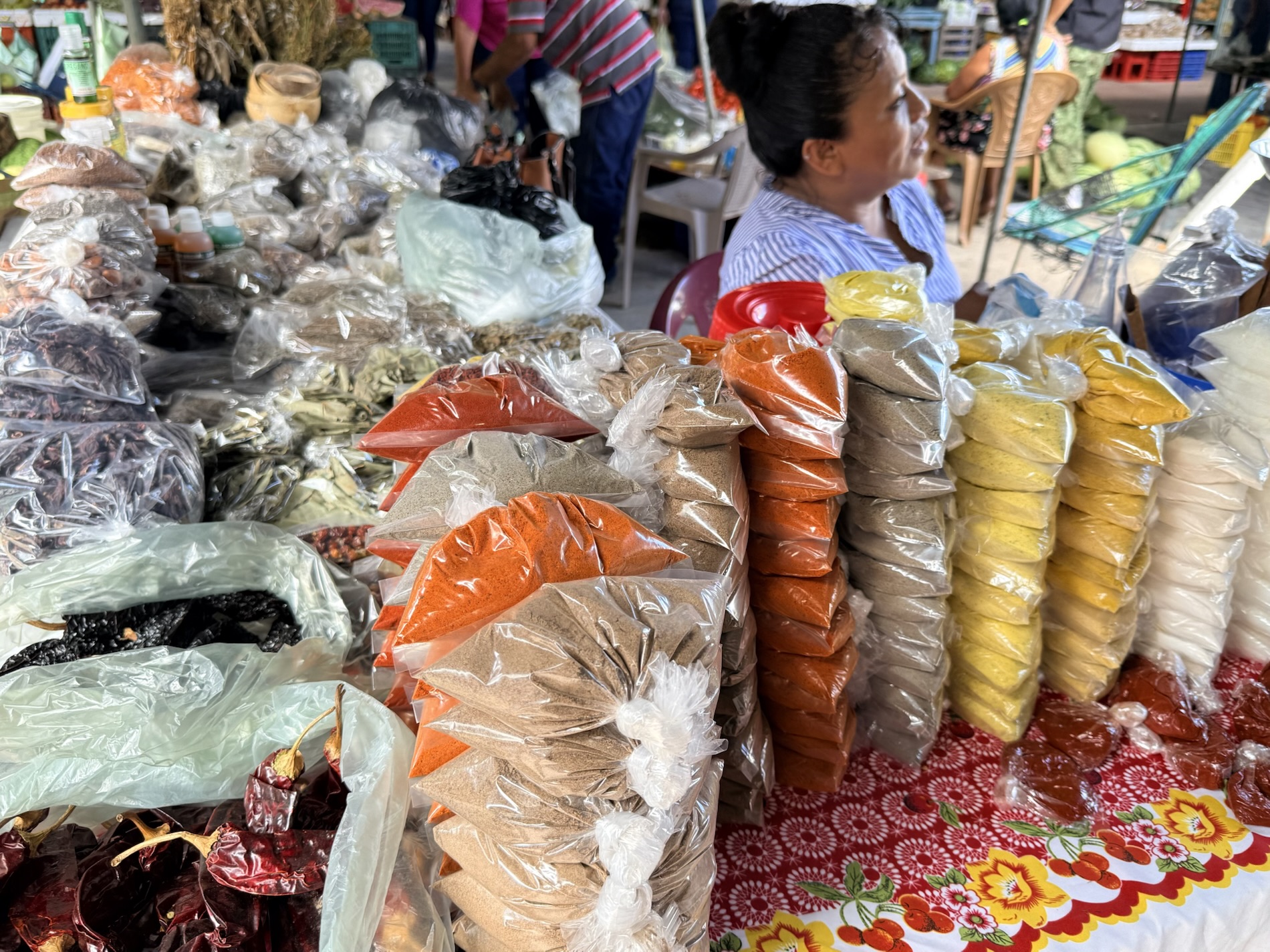
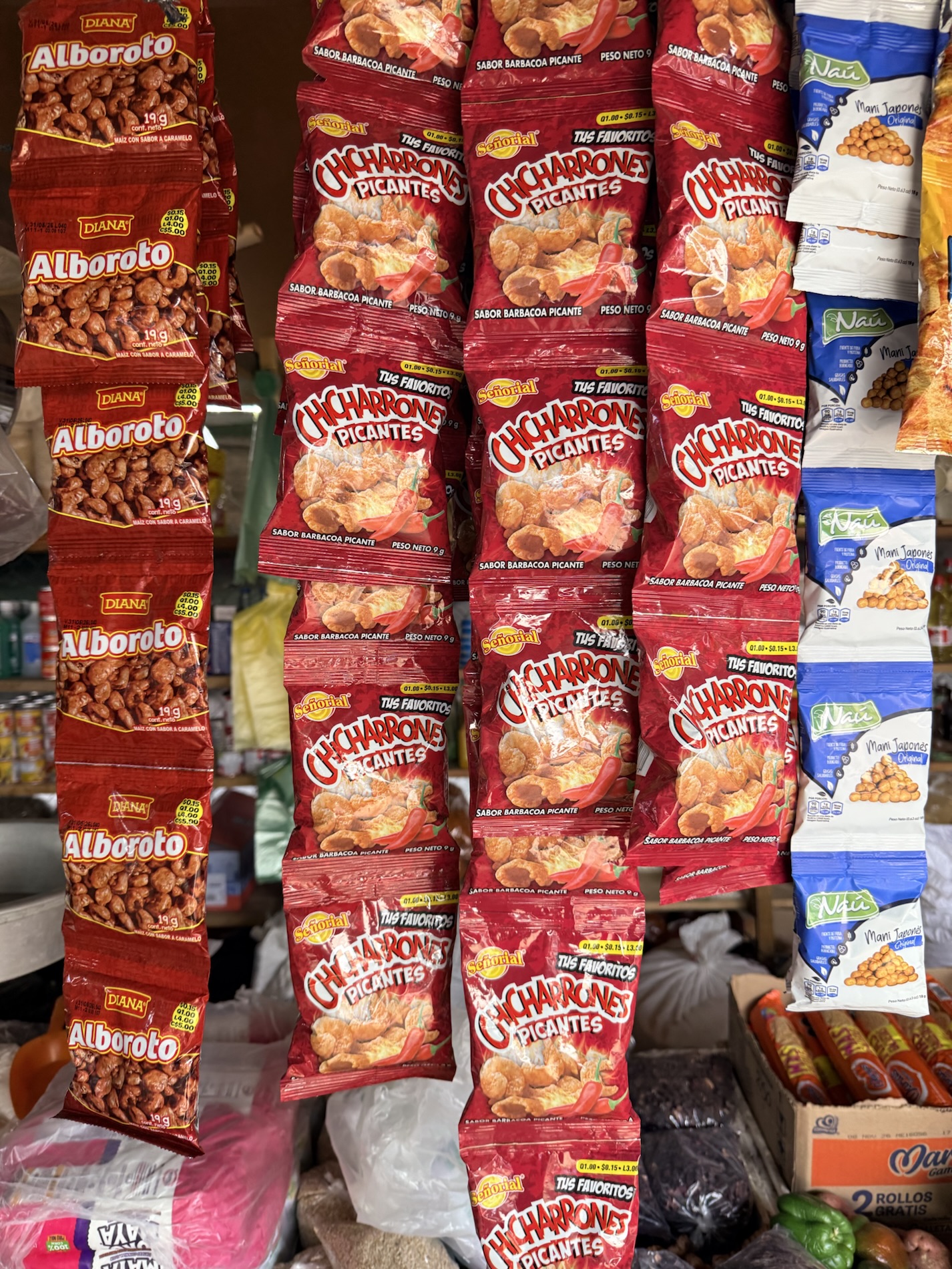
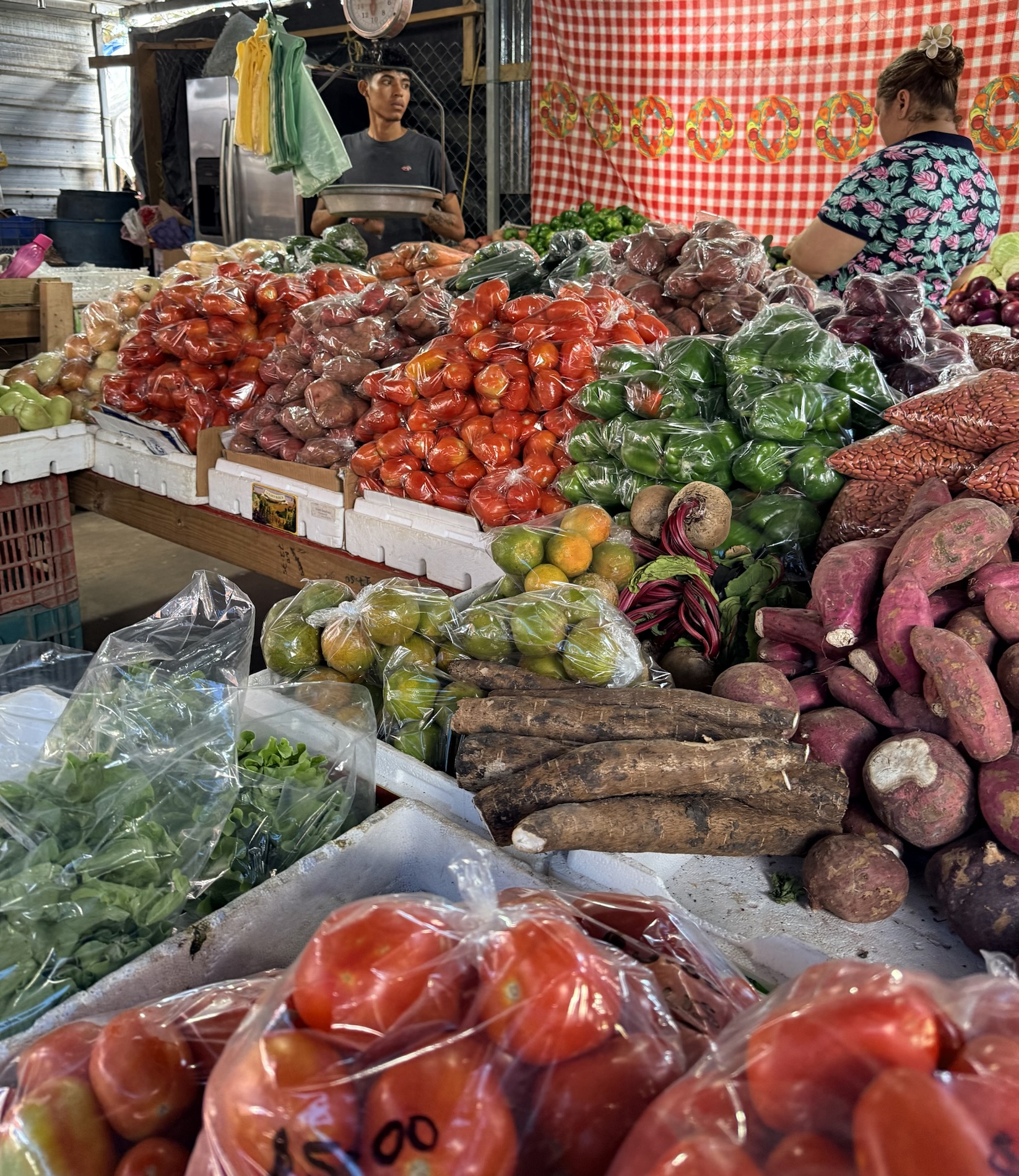
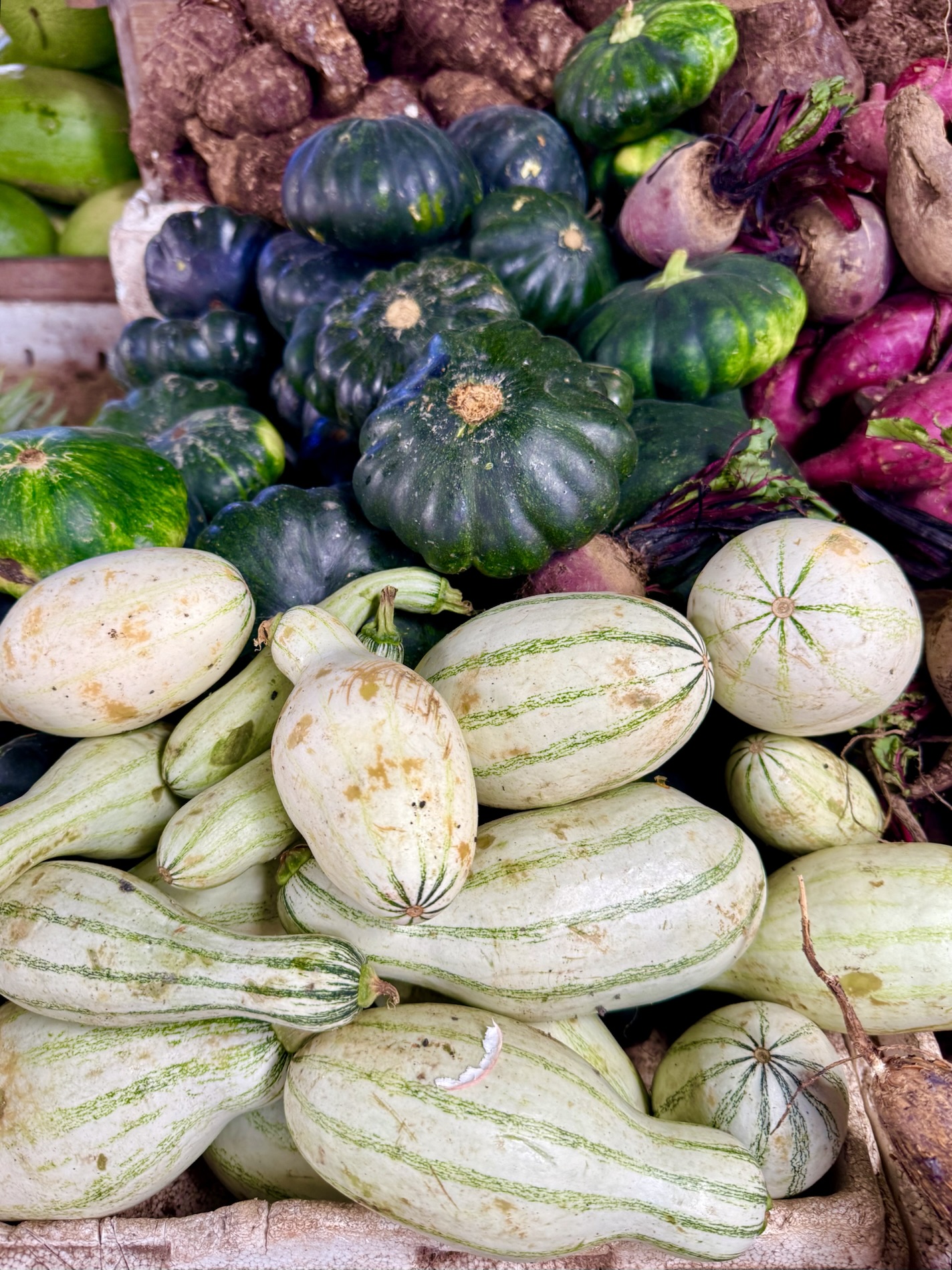
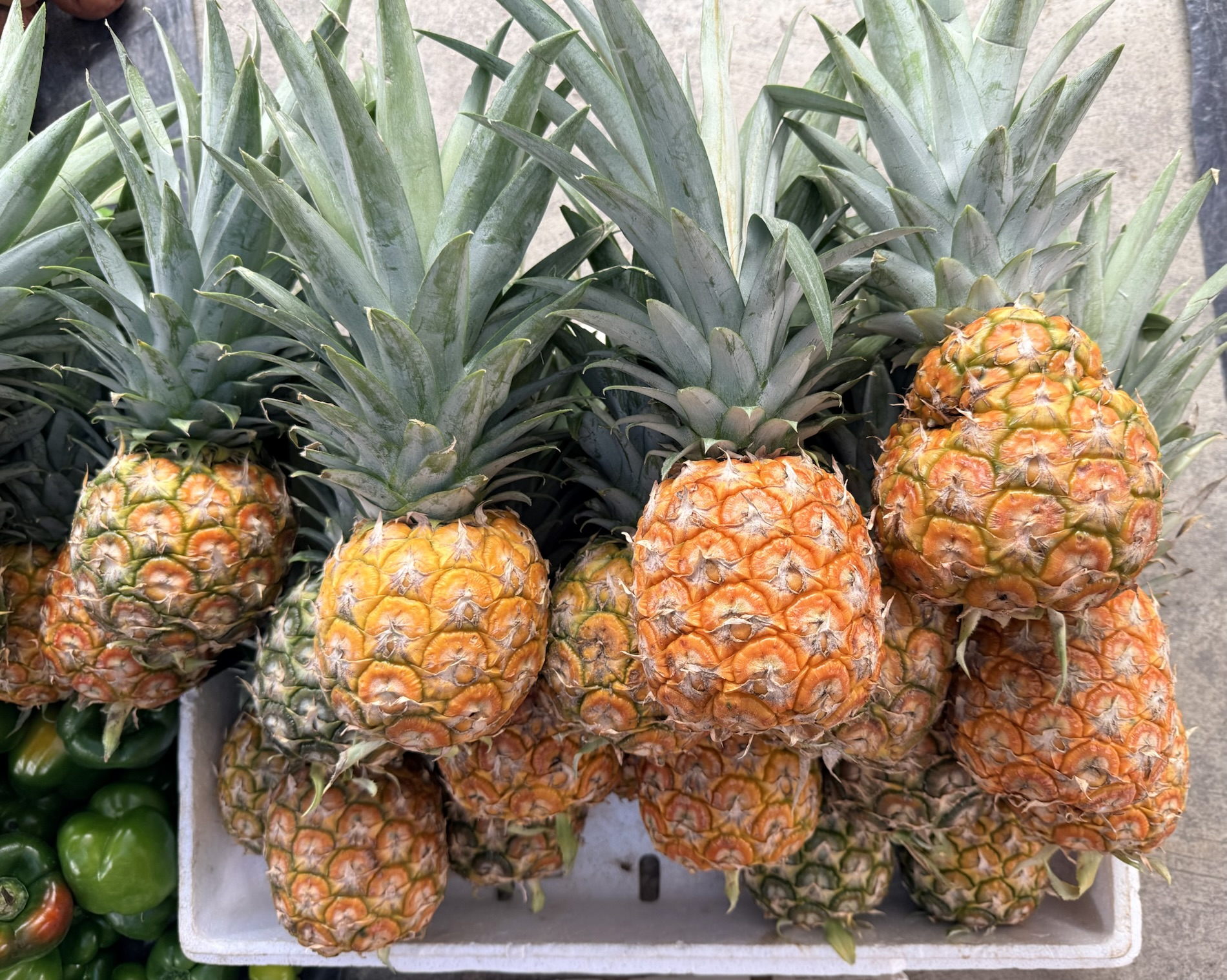
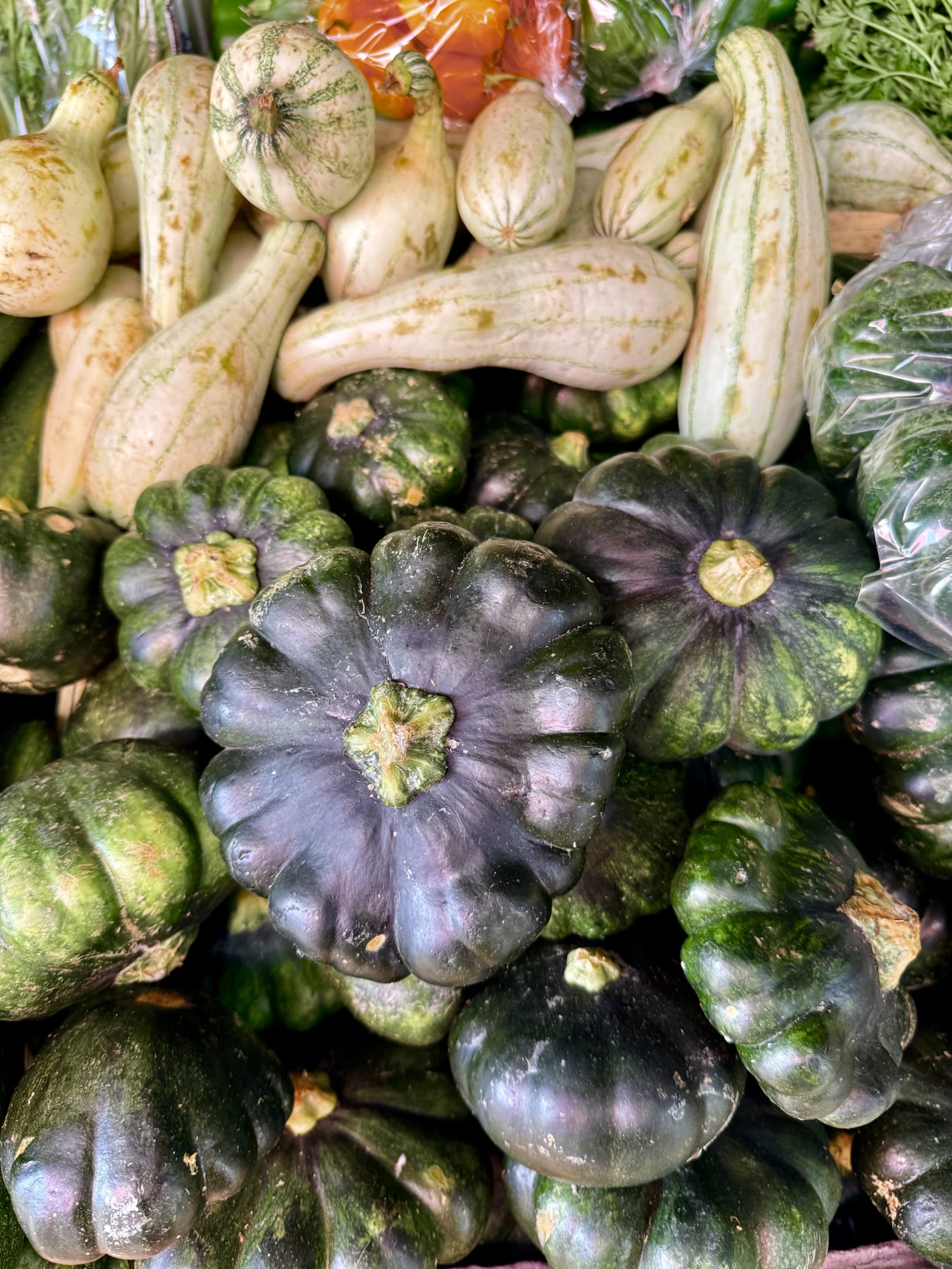
Saturday market in San Ignacio
Now that I was in my 43rd country, I could search out the exotic. What, I wondered, would delight me? What would the evidence be that I was elsewhere? Unlike Guatemala, there was no traditional dress like the women’s huipil (traditional blouse worn by indigenous women there). The colors were more muted. People wore regular Western clothes: jeans, shorts, t-shirts. I think of traditional dress I’ve found in other parts of the world: the sari, kalwar sameez, and kurta in India; the djellaba and kaftan in Morocco; the traditional kimono in Japan as contrasted with the black or navy suits and white shirts worn by almost every Japanese man and woman when going to work; the dishdasha and mussar for men and the burqa and colorful headscarves in Oman; the kebaya and sarong in Bali.
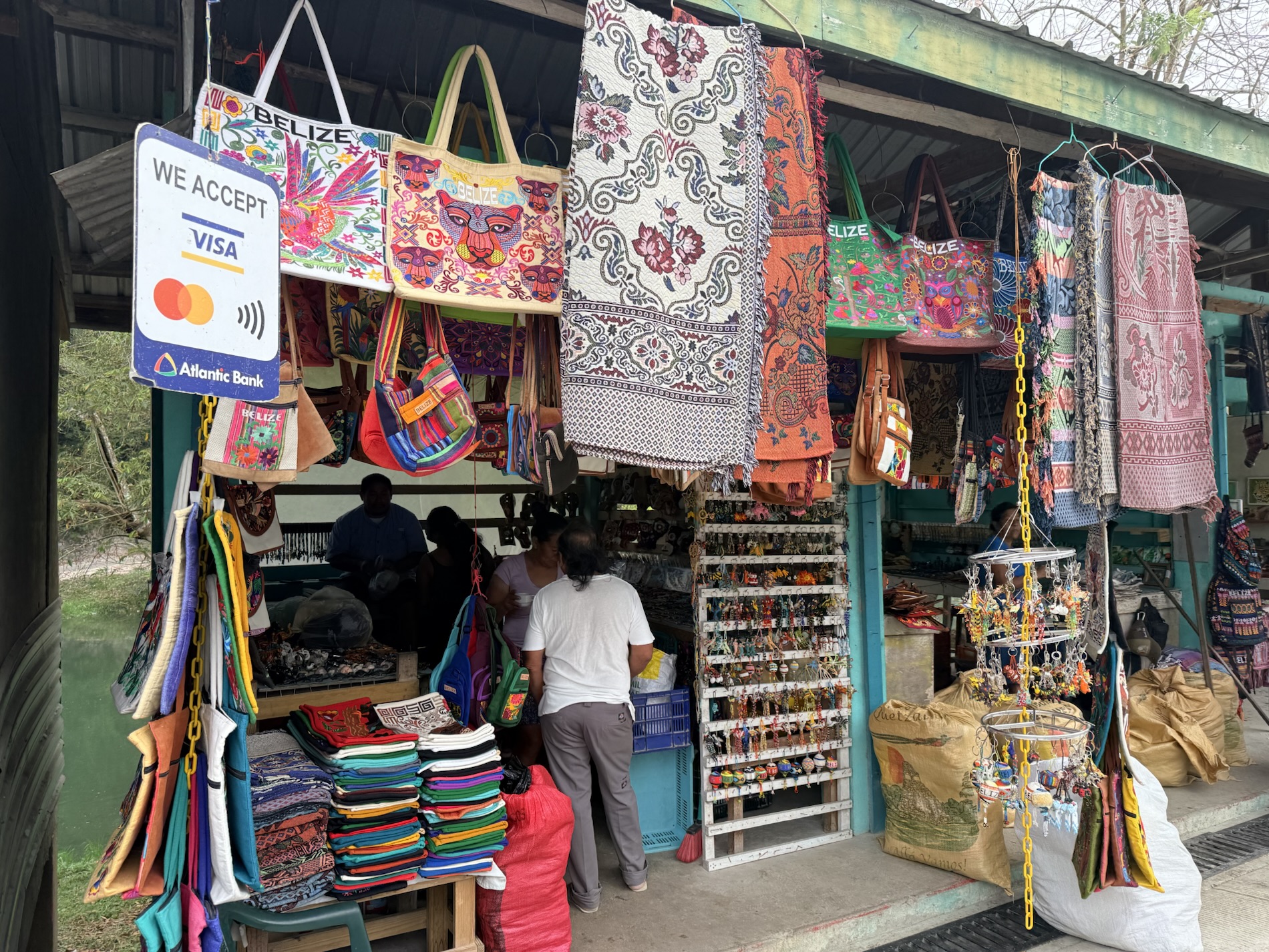
The first thing I noticed as we walked through the Saturday farmer’s market was that the people were more mixed than Guatemala’s indigenous Mayans. The country is mostly made up of Mestizos (53%) but 26% are Creole and 11% are Mayan. Garifuna and East Indians make up almost 10%. The Garifuna are an Afro-Indigenous people of mixed free African and Amerindian ancestry that originated in the Caribbean island of Saint Vincent and traditionally speak Garifun, an Arawakan language. Creole can refer to a diverse array of backgrounds, including Afro-Caribbean people who trace their full or partial ancestry to Sub-Saharan Africa. There were even a group of Mennonites at the market; apparently there is a large community. So, the people of Belize seeemed diverse.
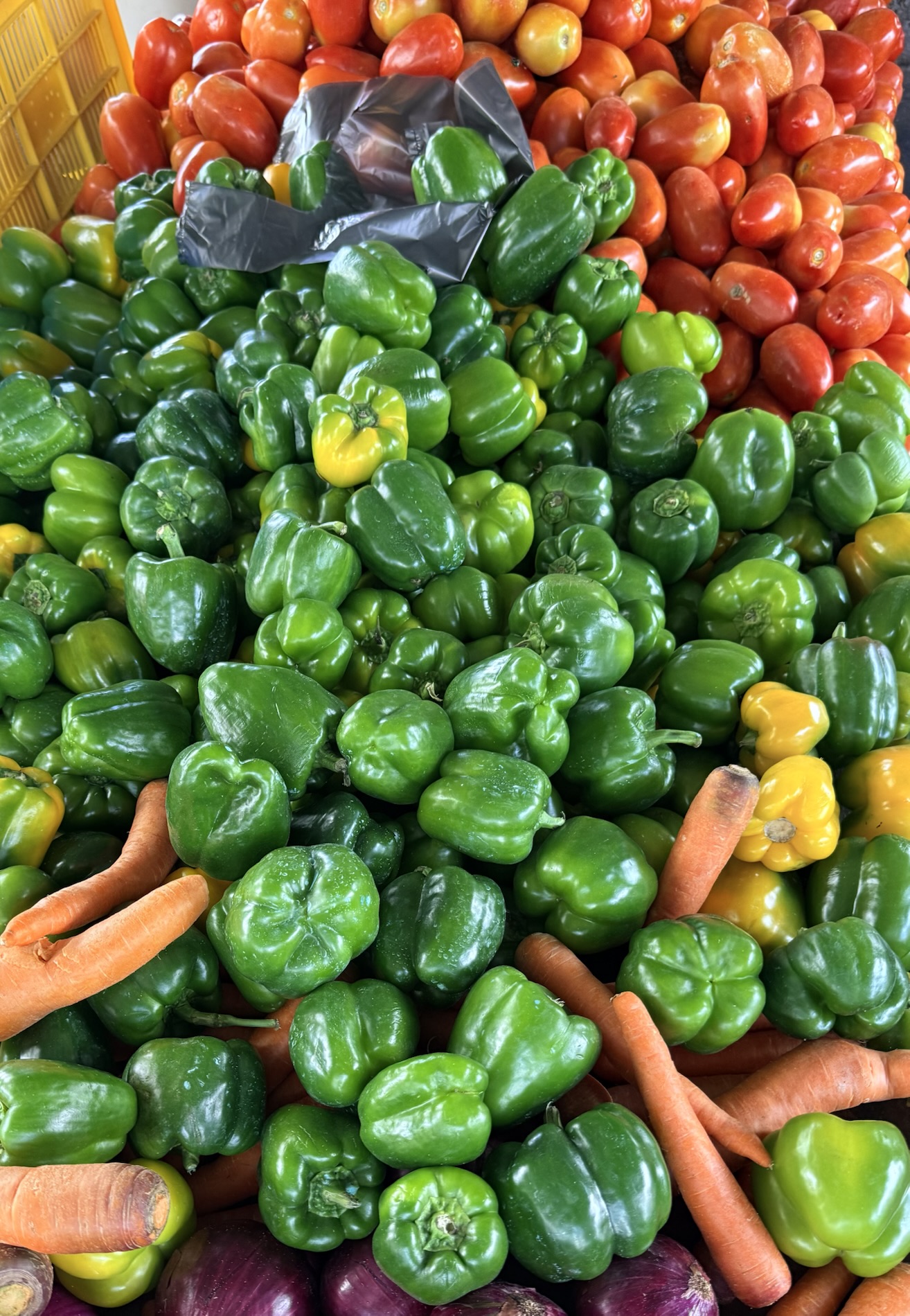
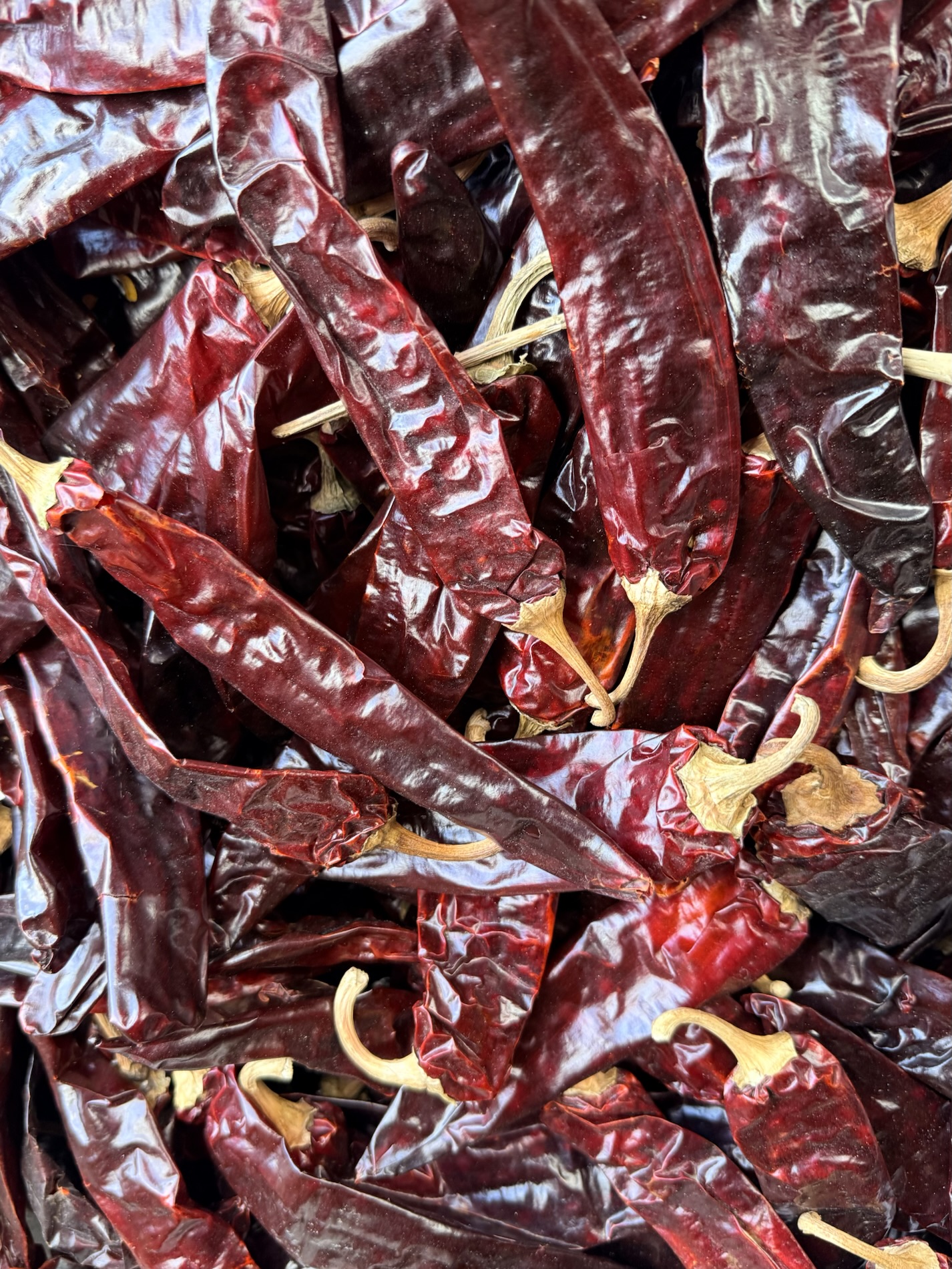
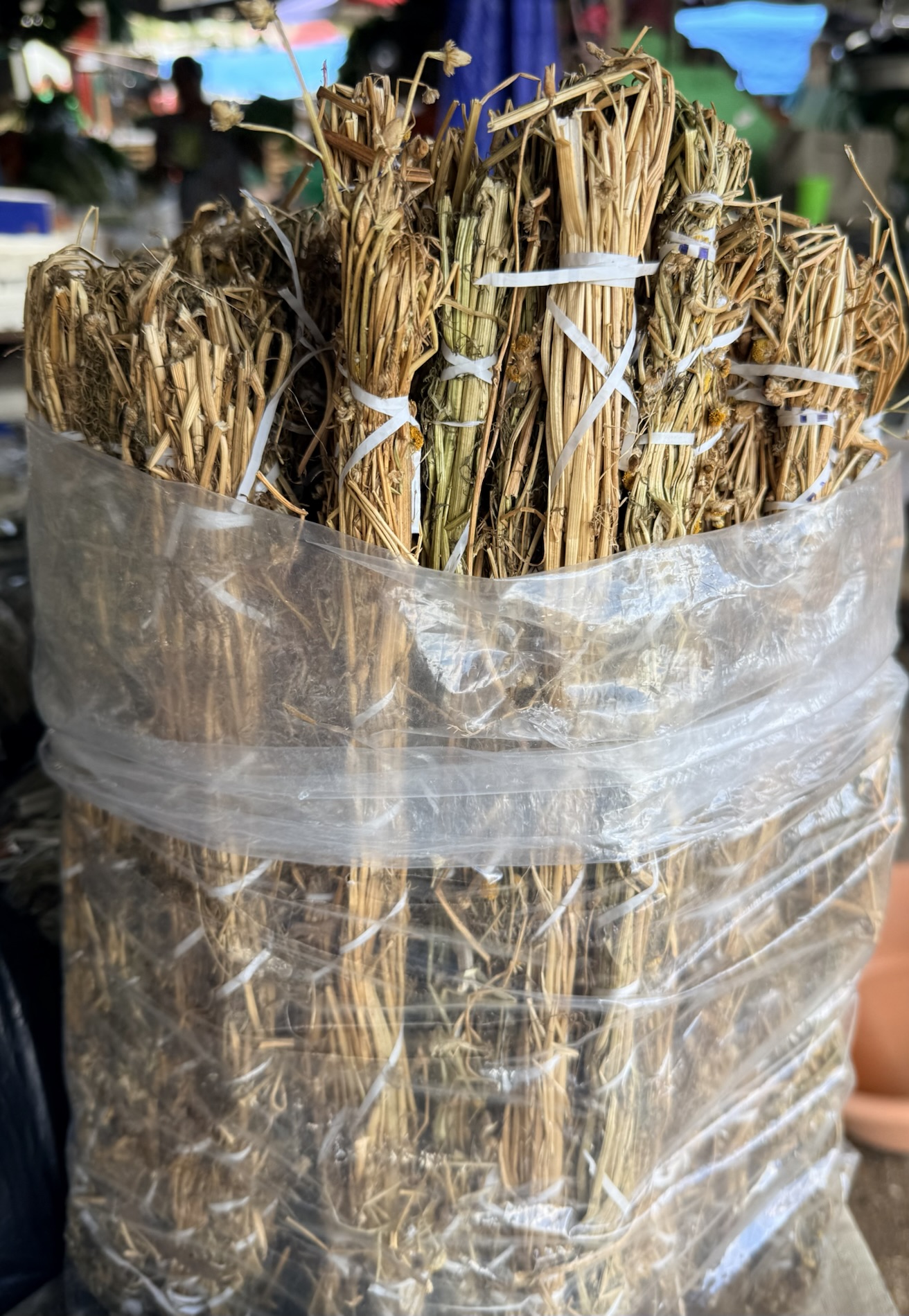
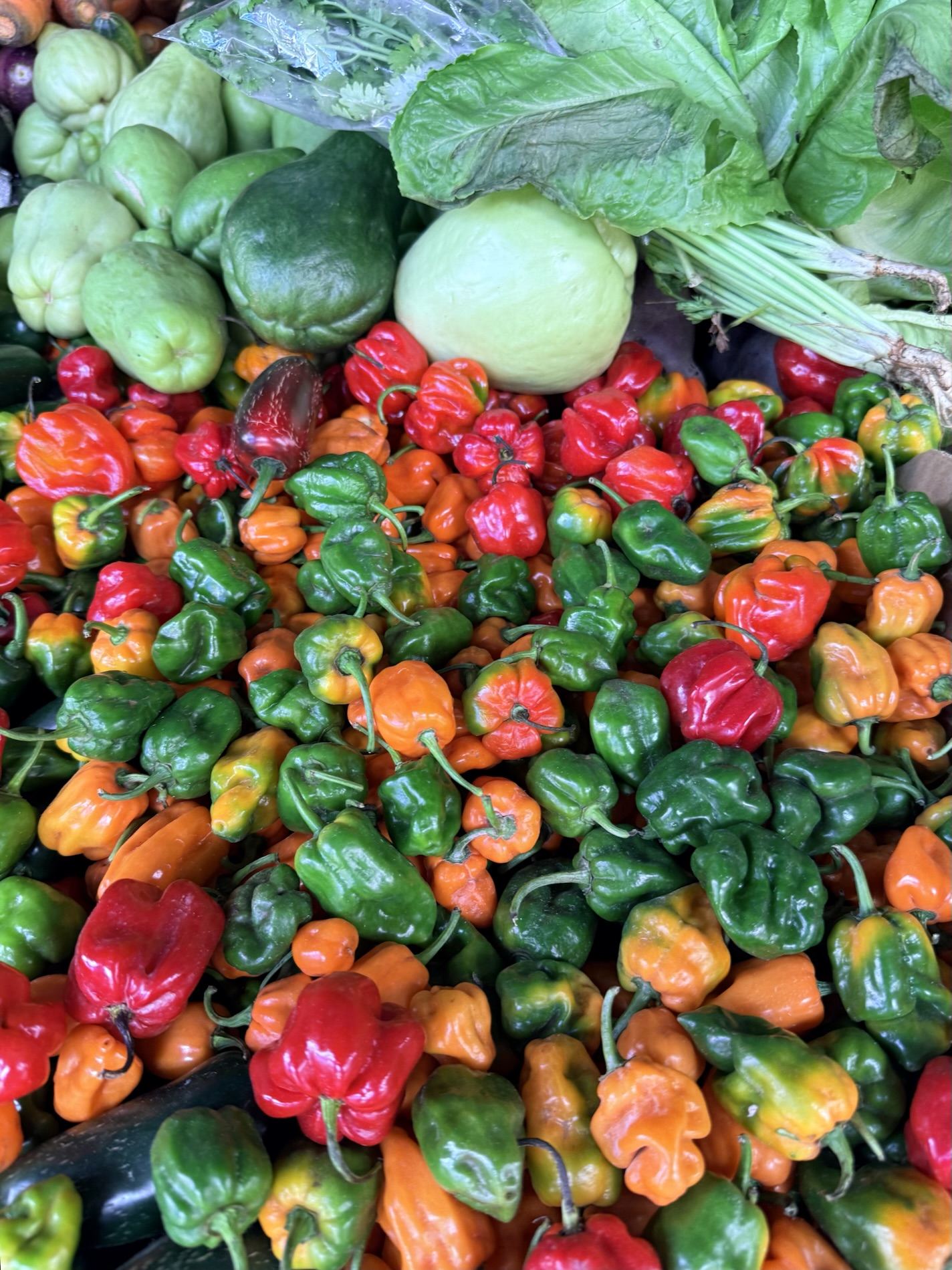
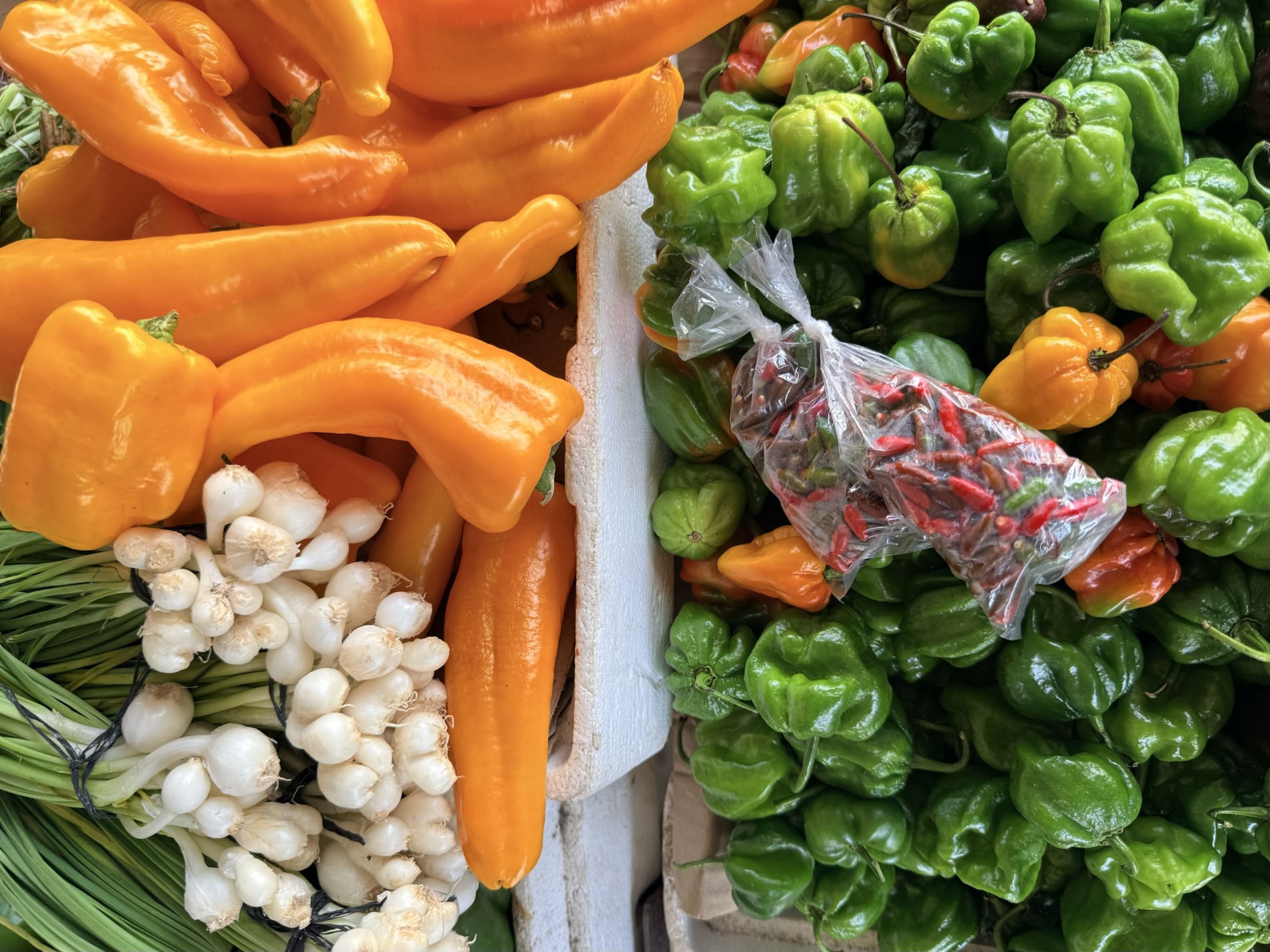
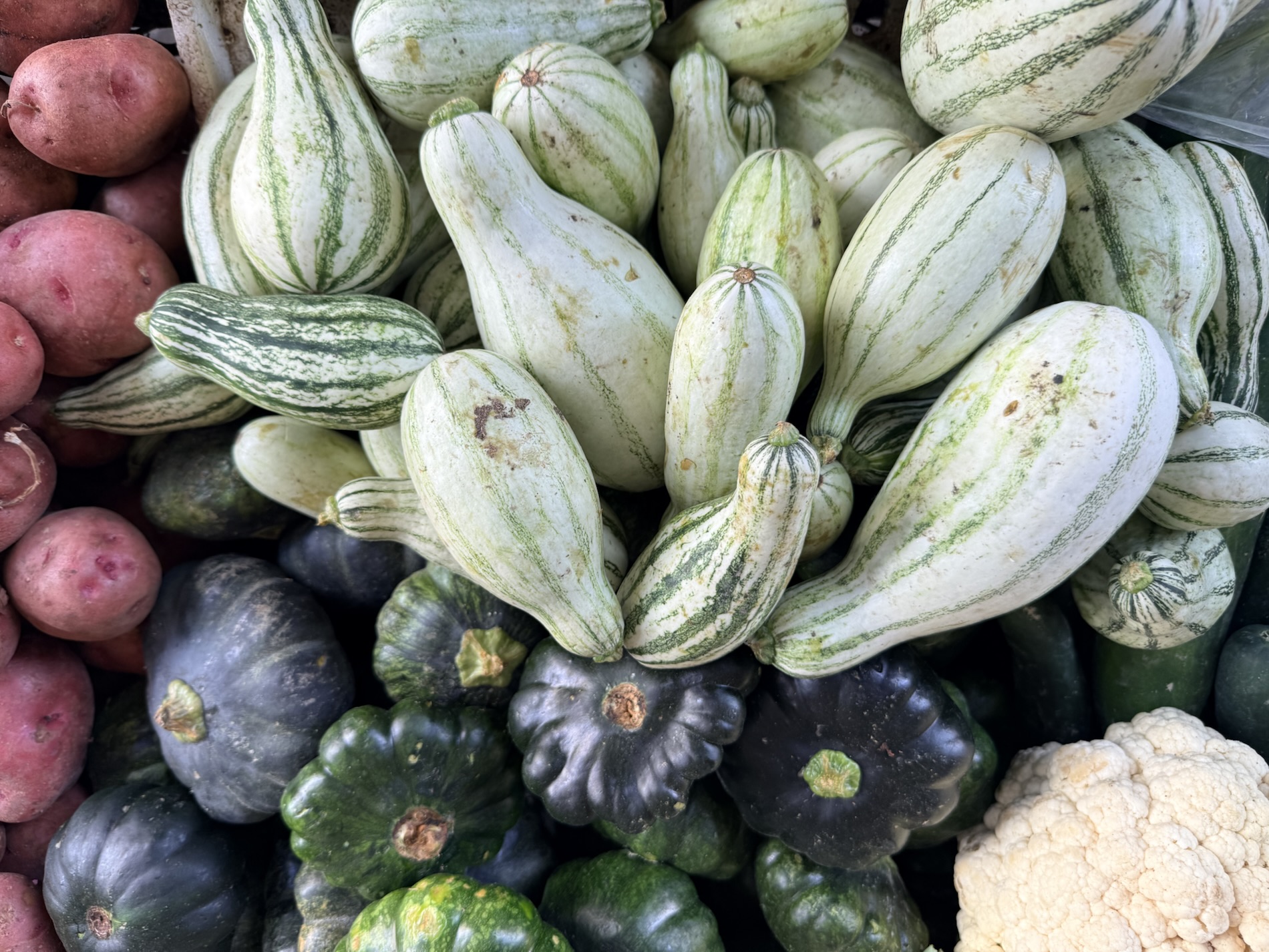
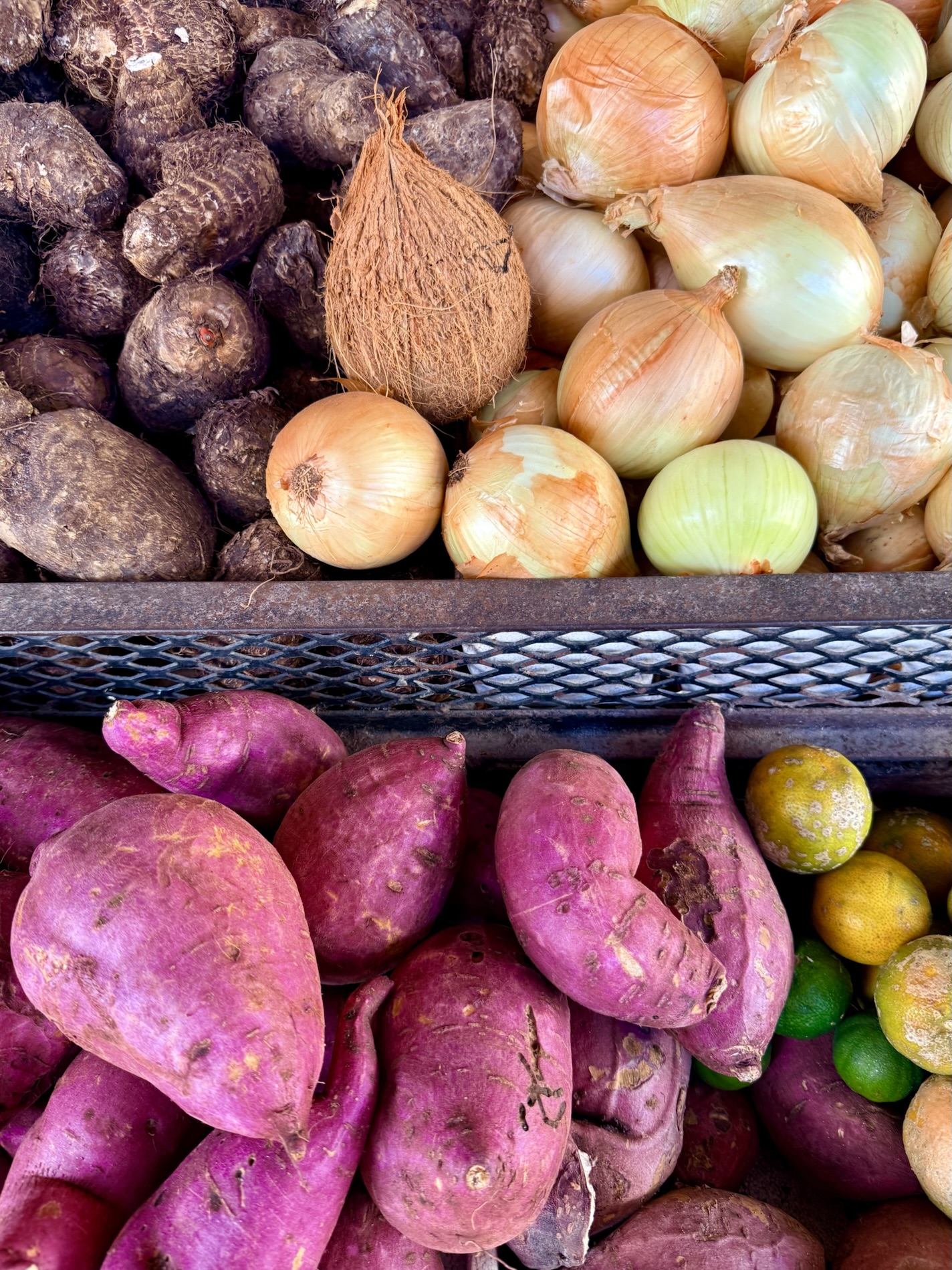
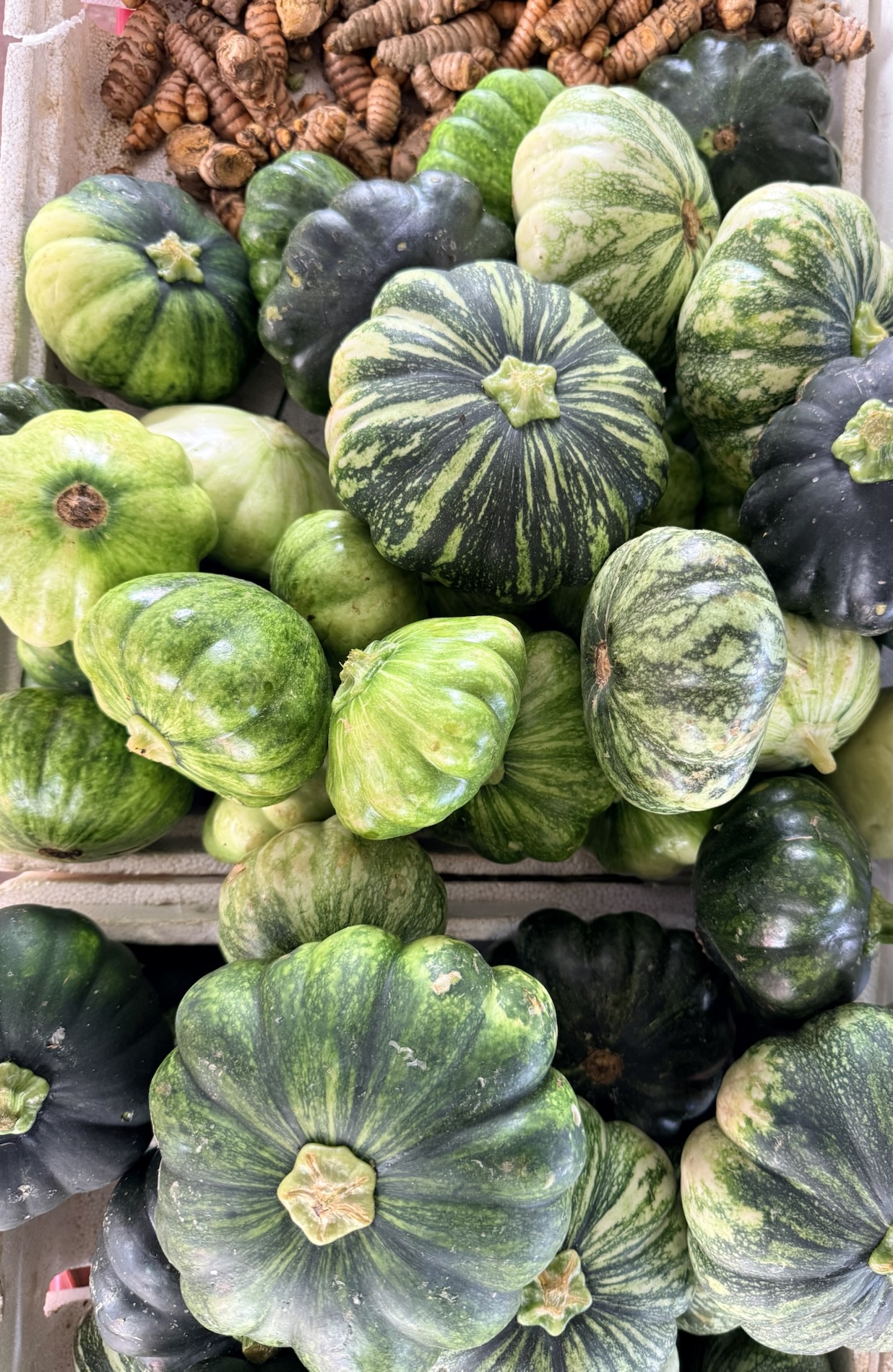
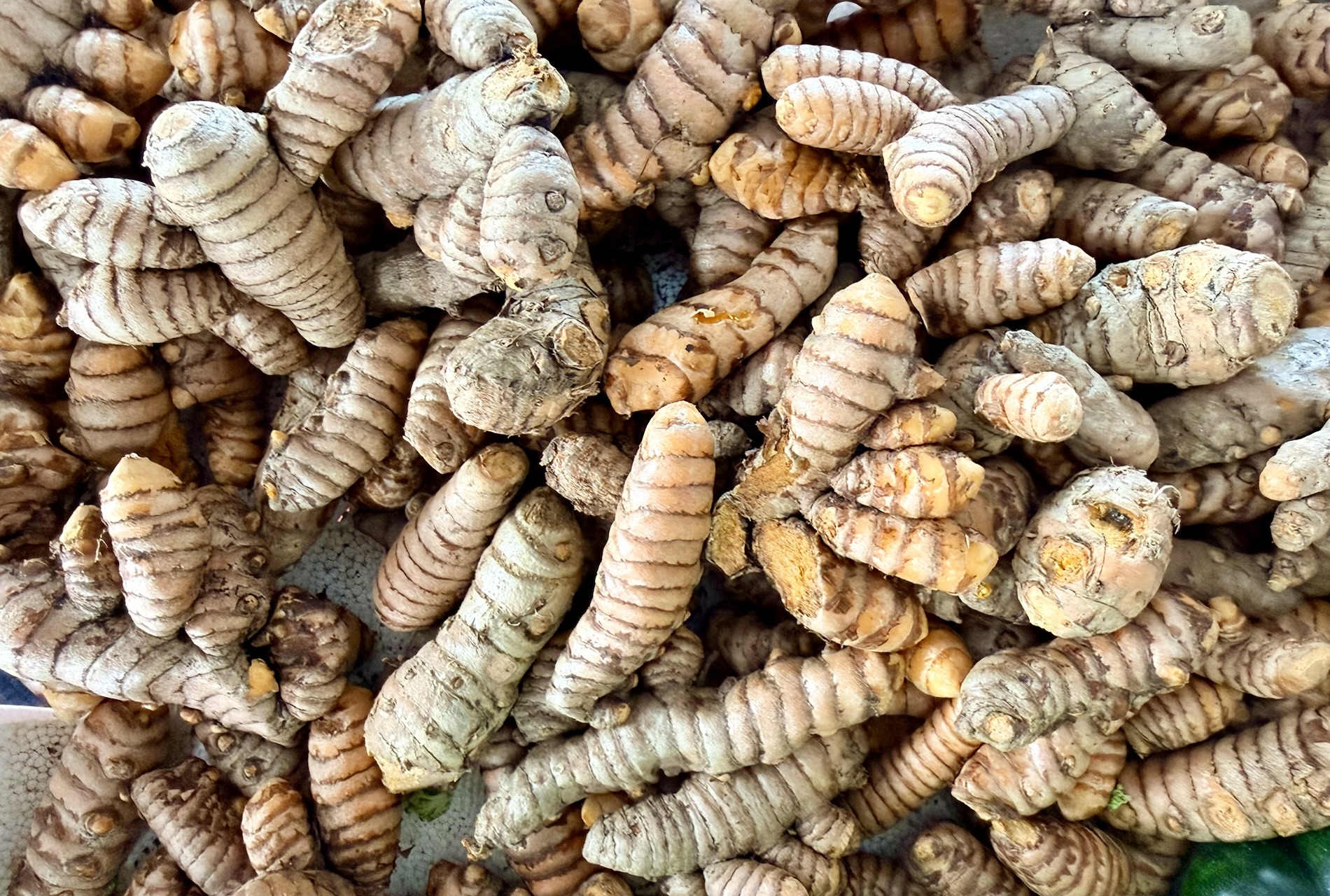
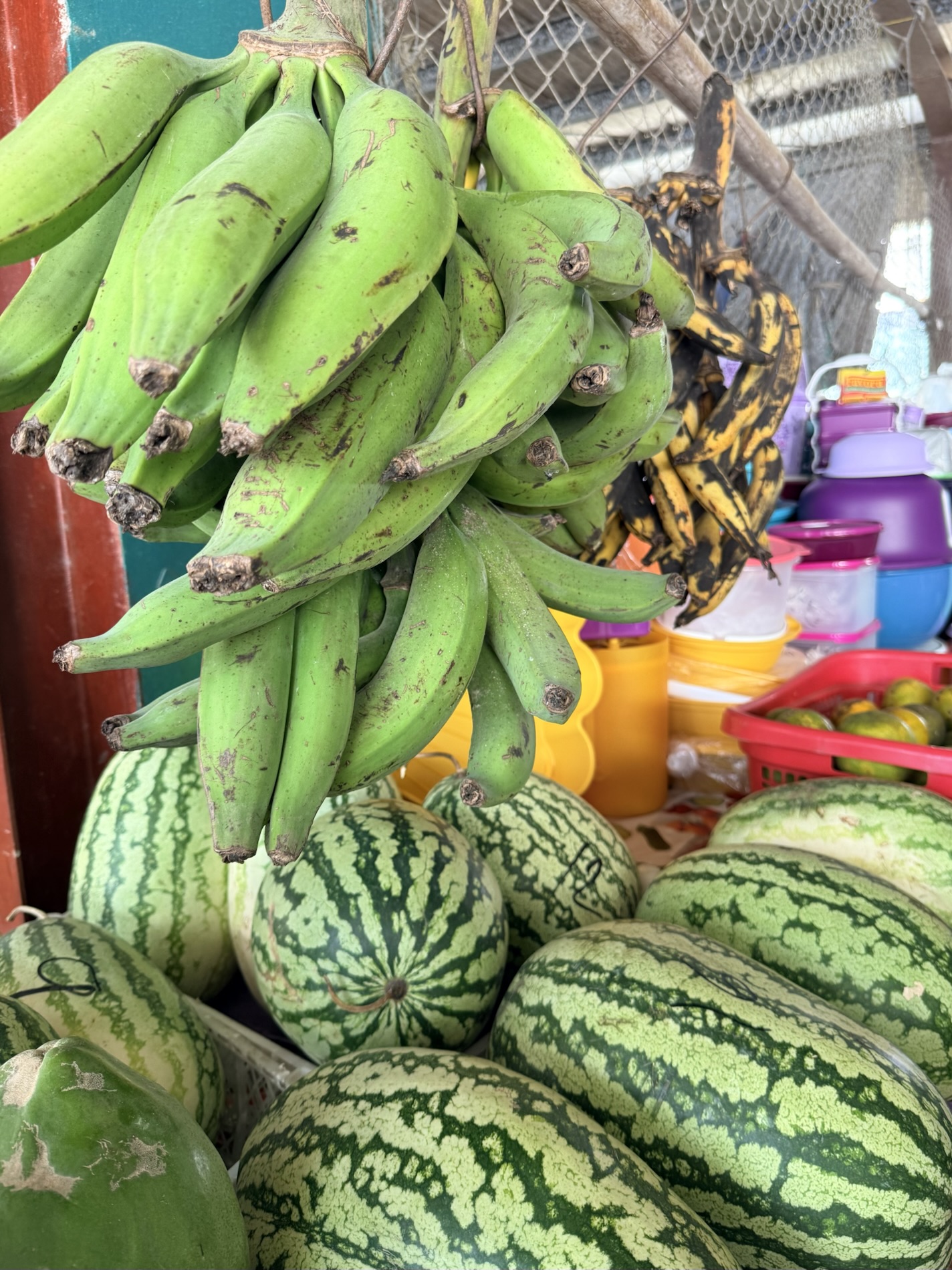
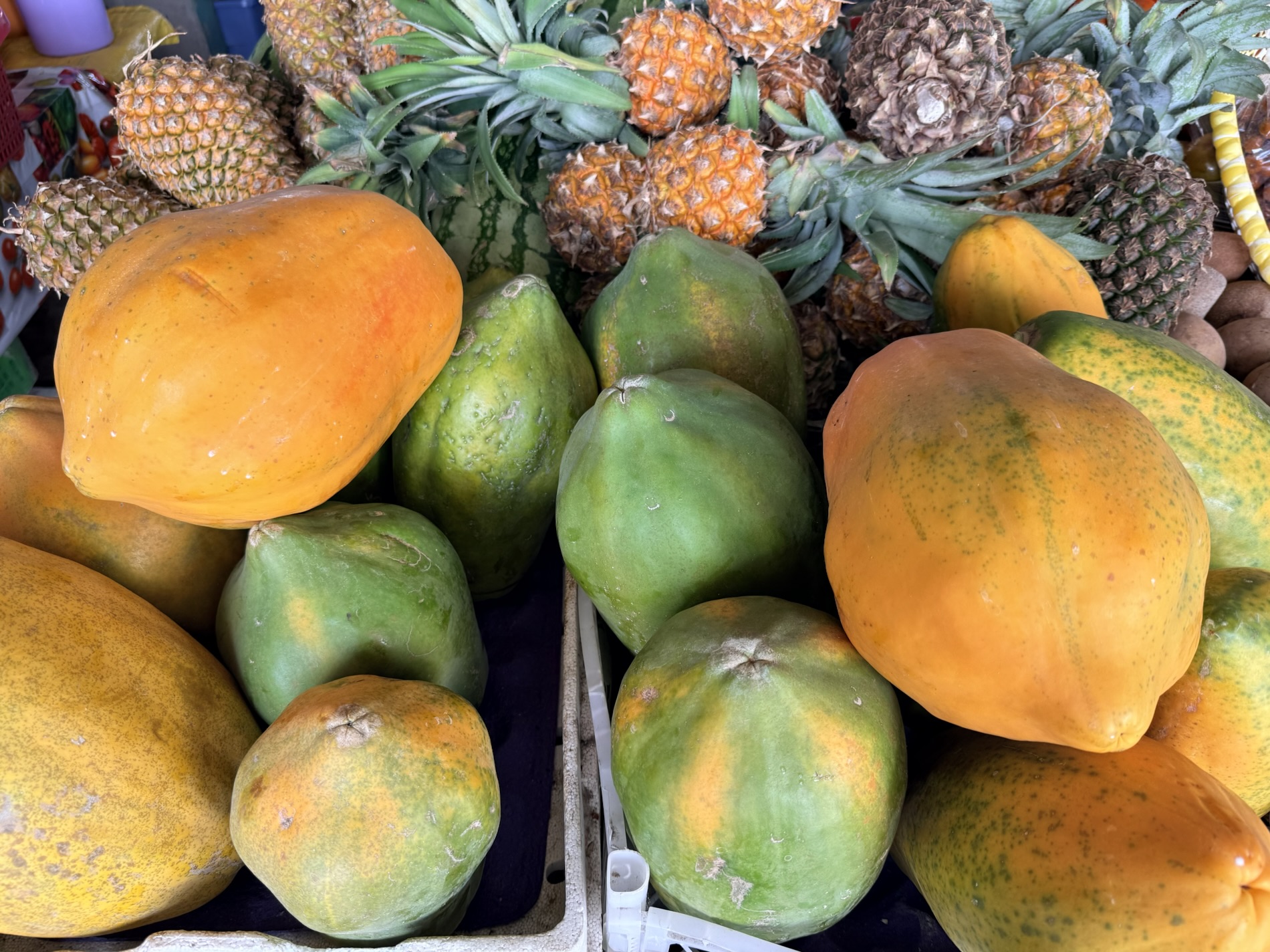
The fruit and vegetable offerings looked similar to those in many Central American markets: varieties of peppers and squash, potatoes, mangos, plantains, pineapples, watermelons, and turmeric. The market seemed rather tired and shabby. The prepared food stalls didn’t look appetizing and there were no souvenirs worth perusing. It lacked the color and vivaciousness of many of the world’s markets. I think of Barcelona’s amazing central market, and Moroccan, Thai, and Turkish markets, which offer huge arrays of exotic spices, foods, textiles, and beautiful items such as lanterns, ceramics, silver and gold jewelry, swords, and paintings.
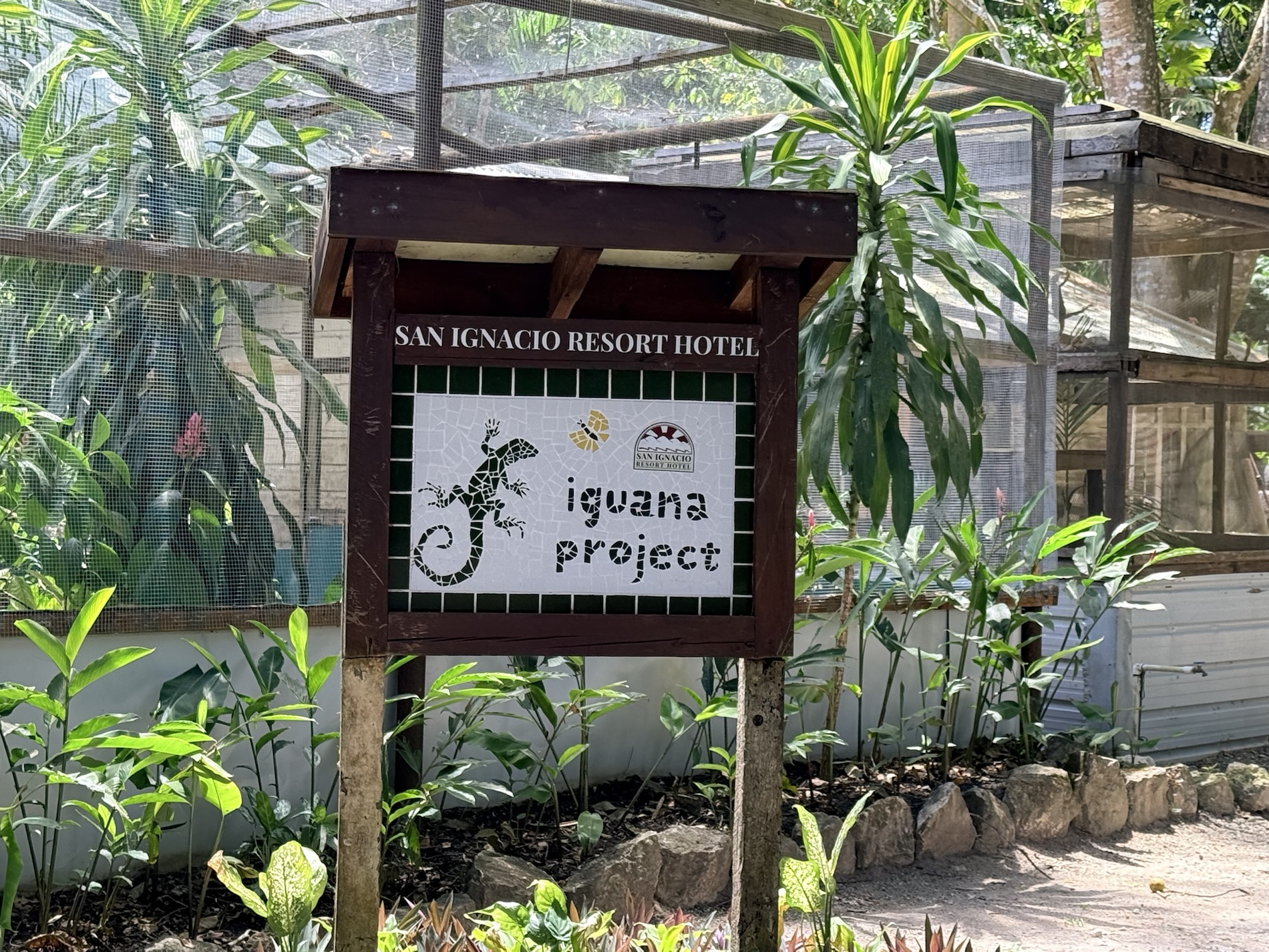
The Iguana Project at San Ignacio Resort Hotel
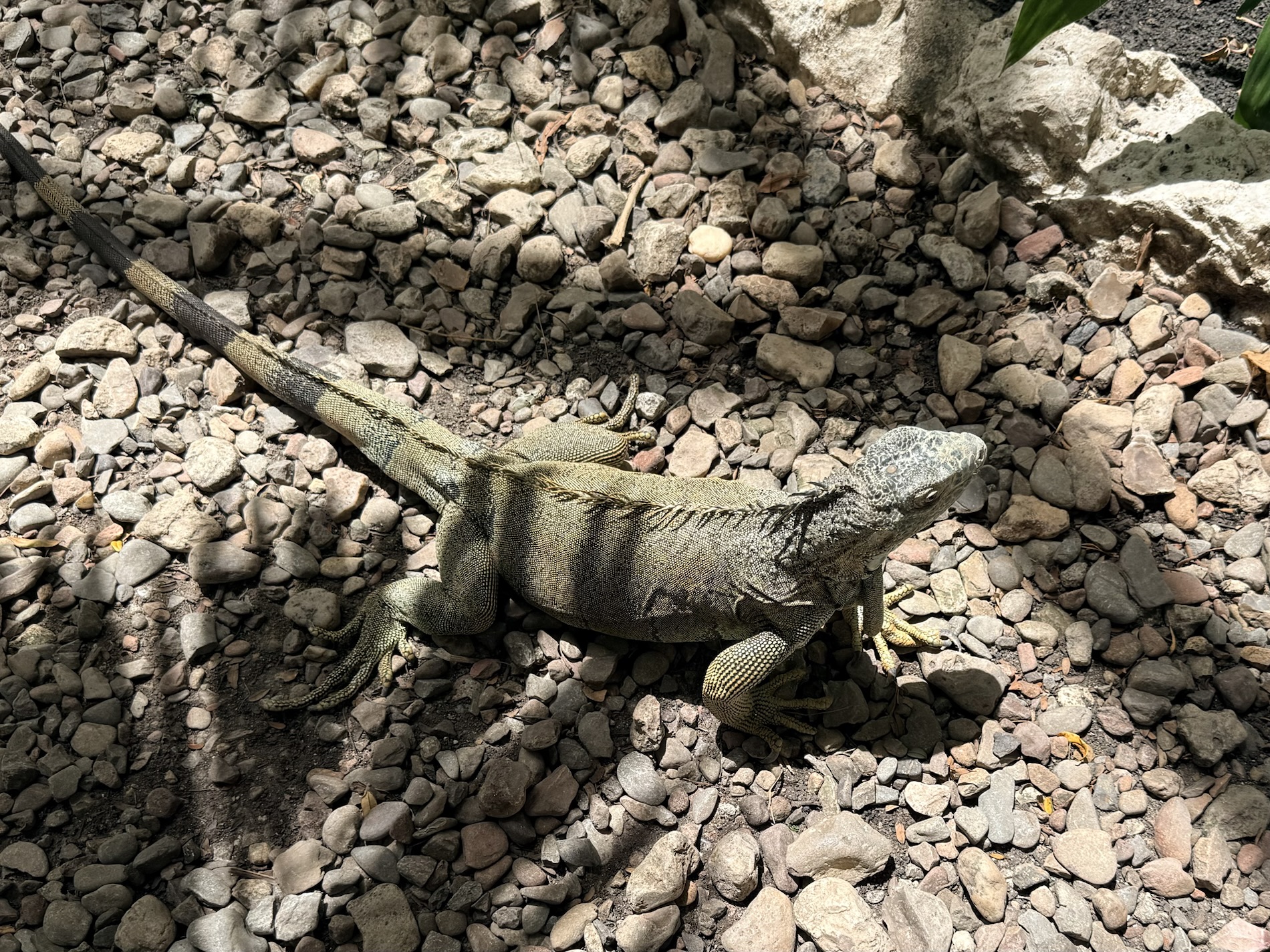
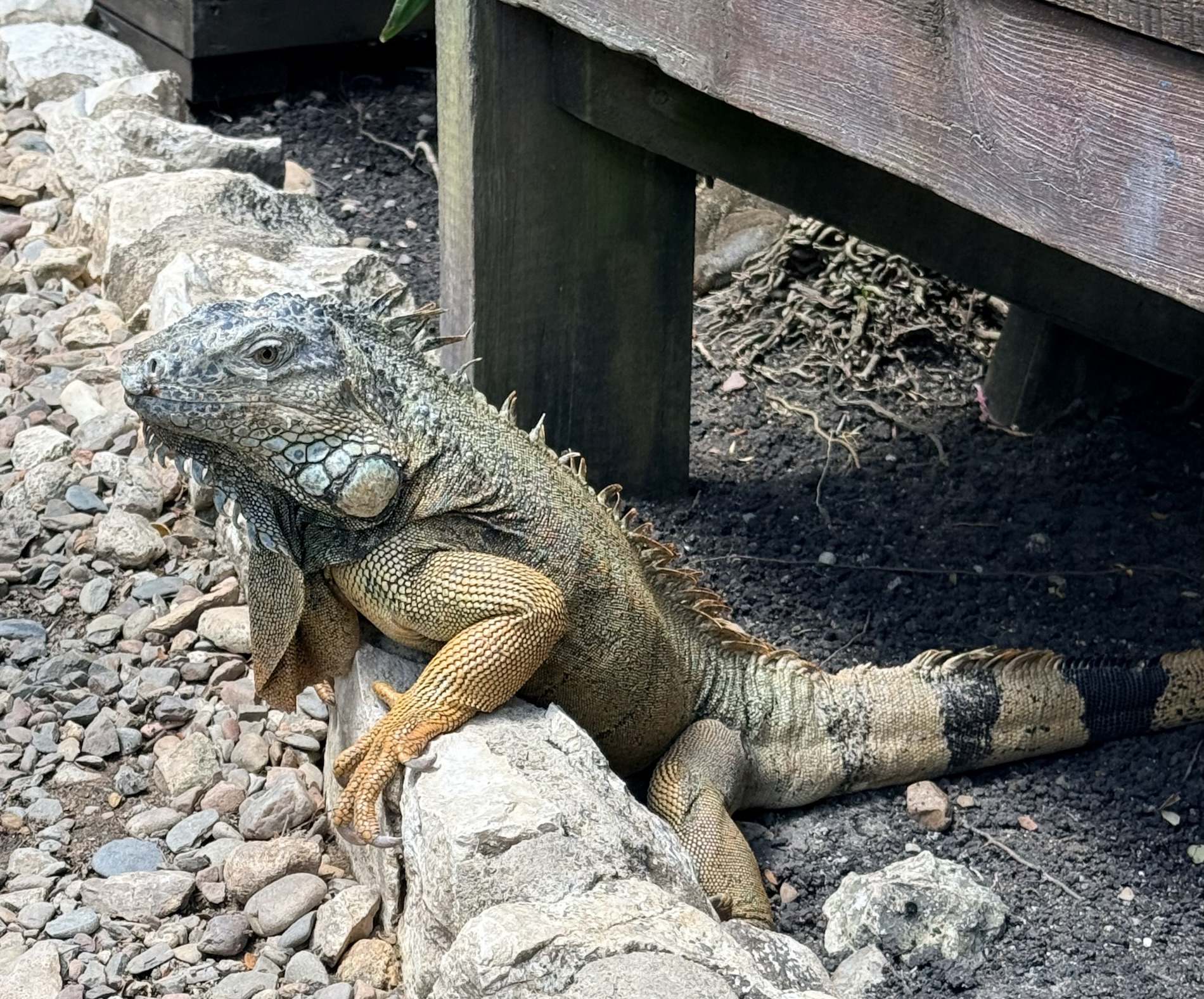
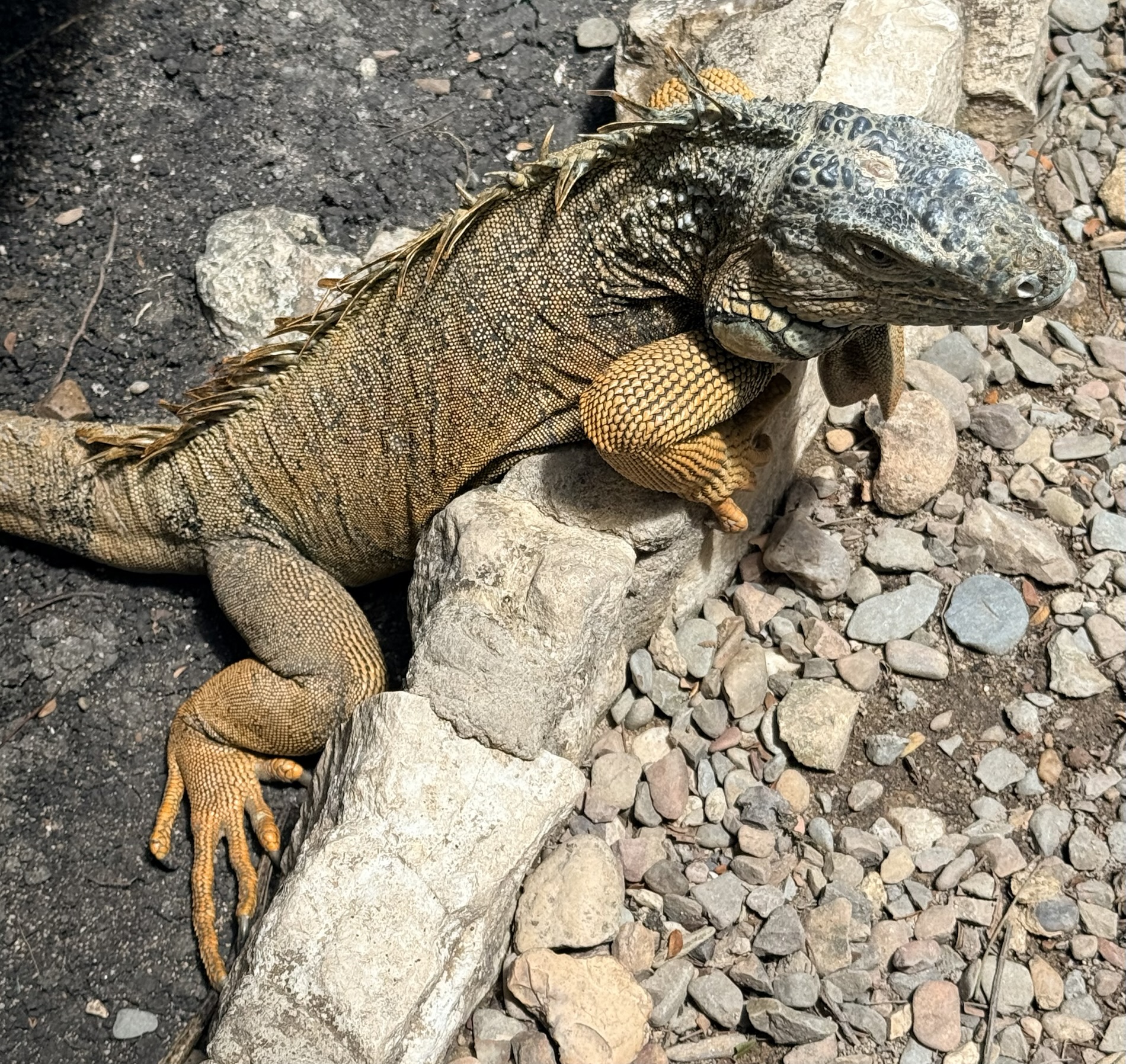
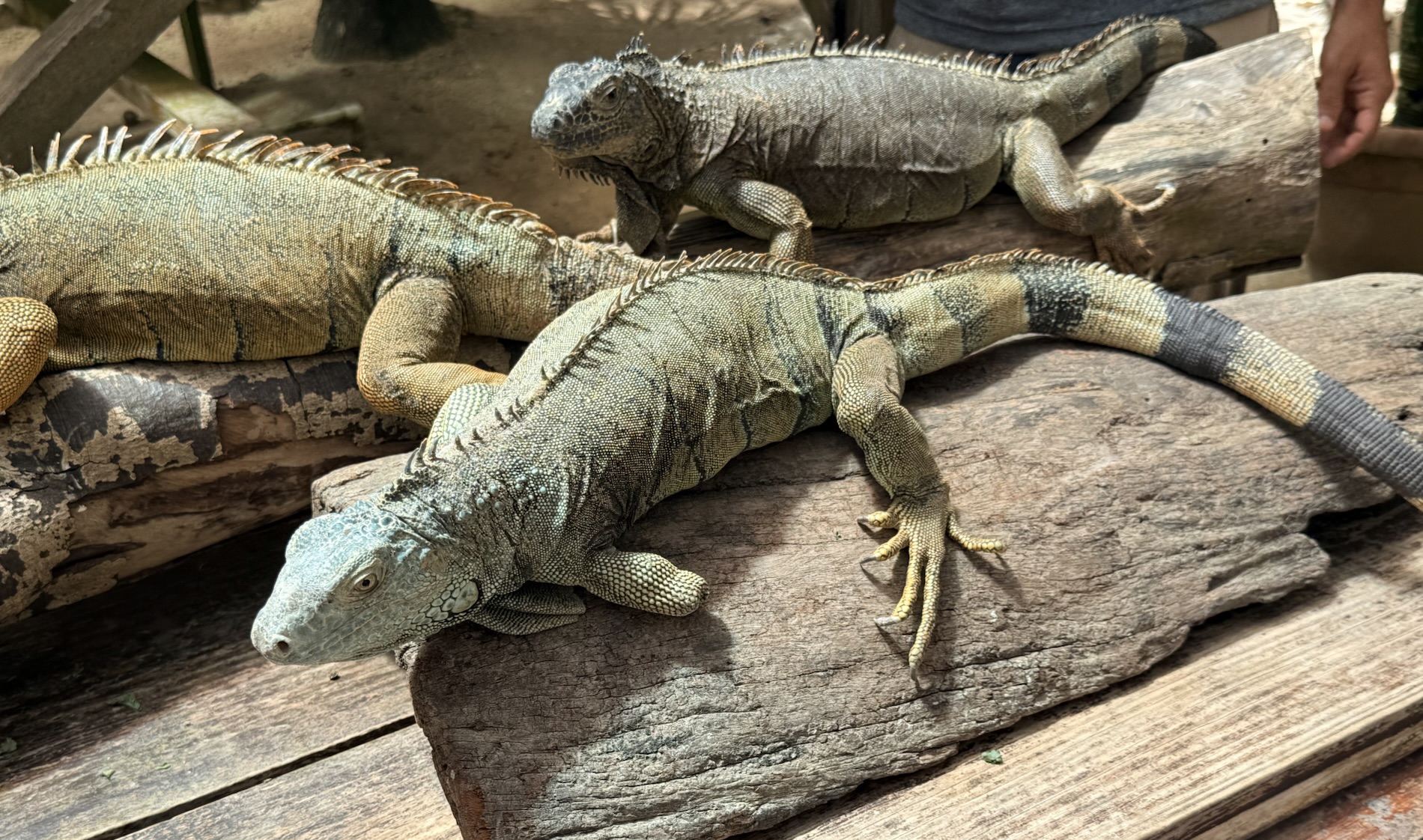
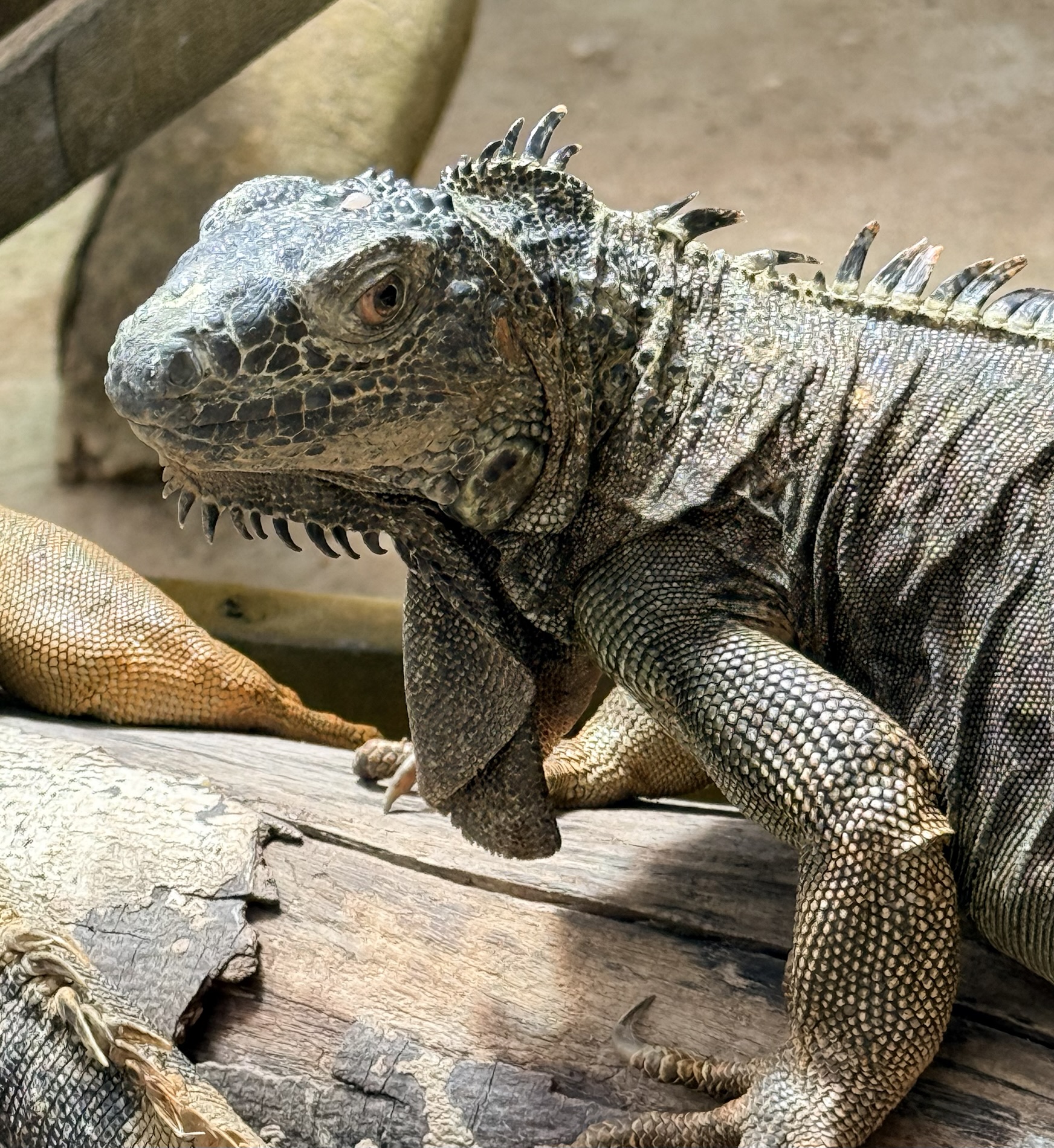
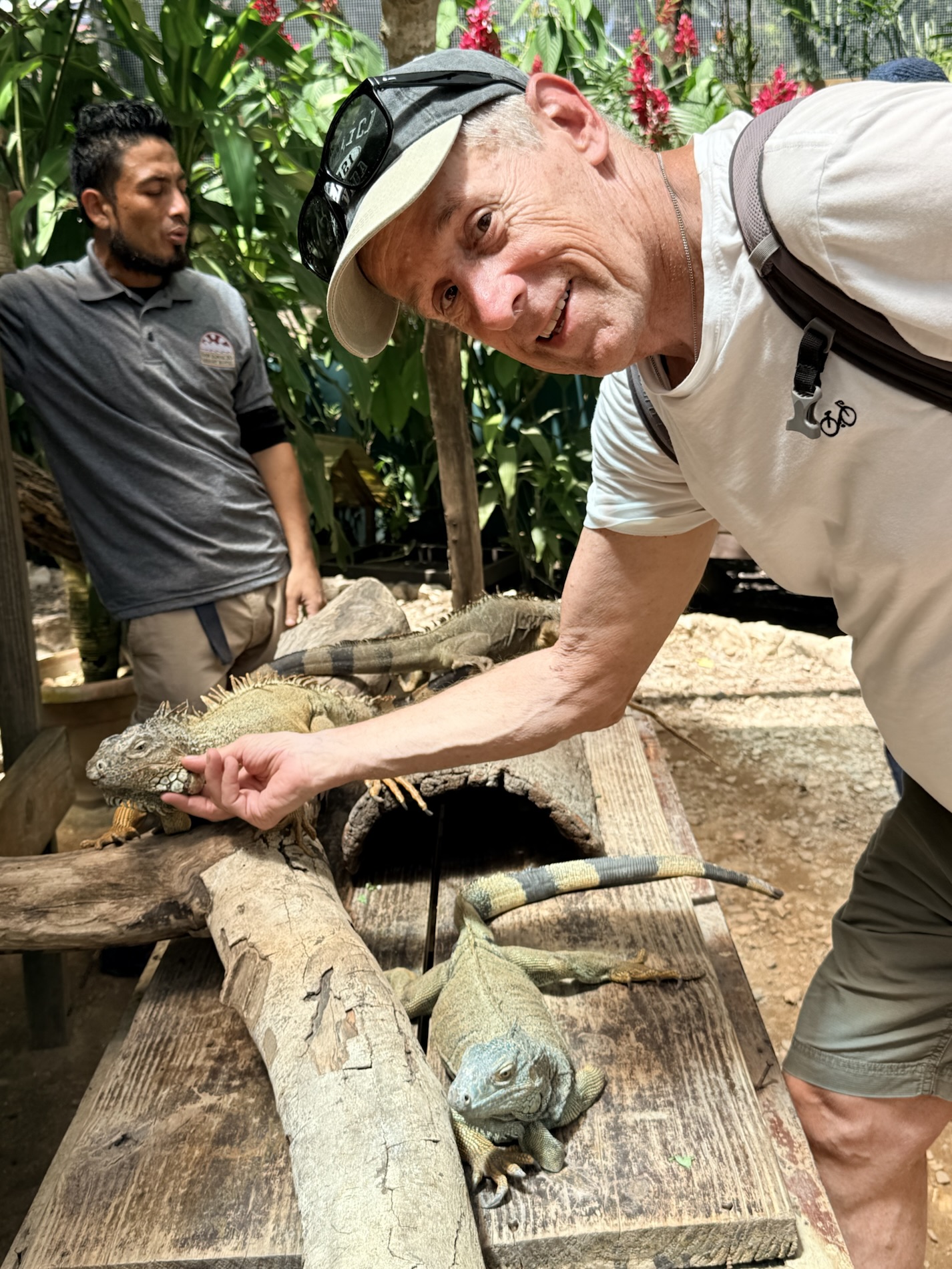
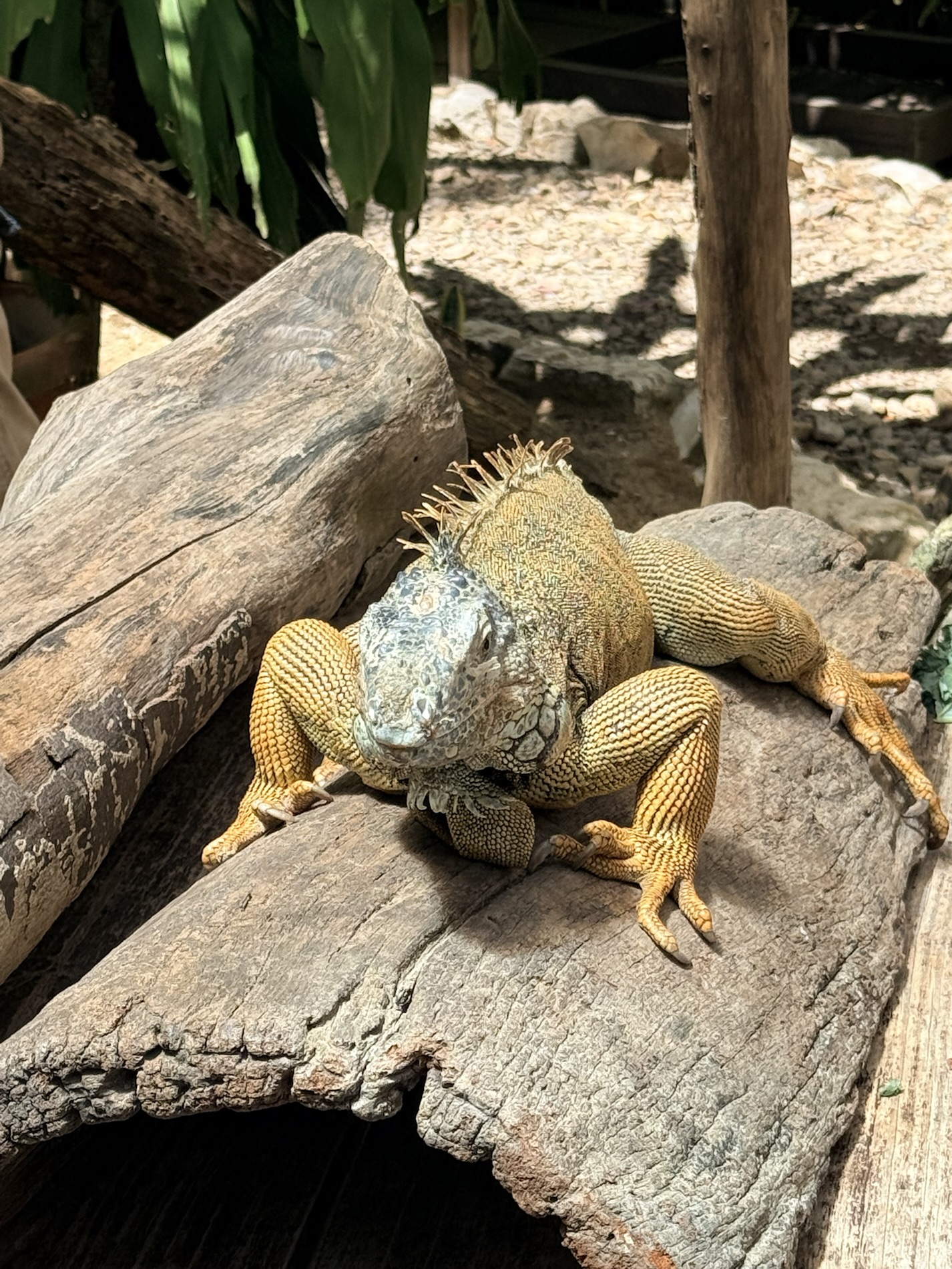
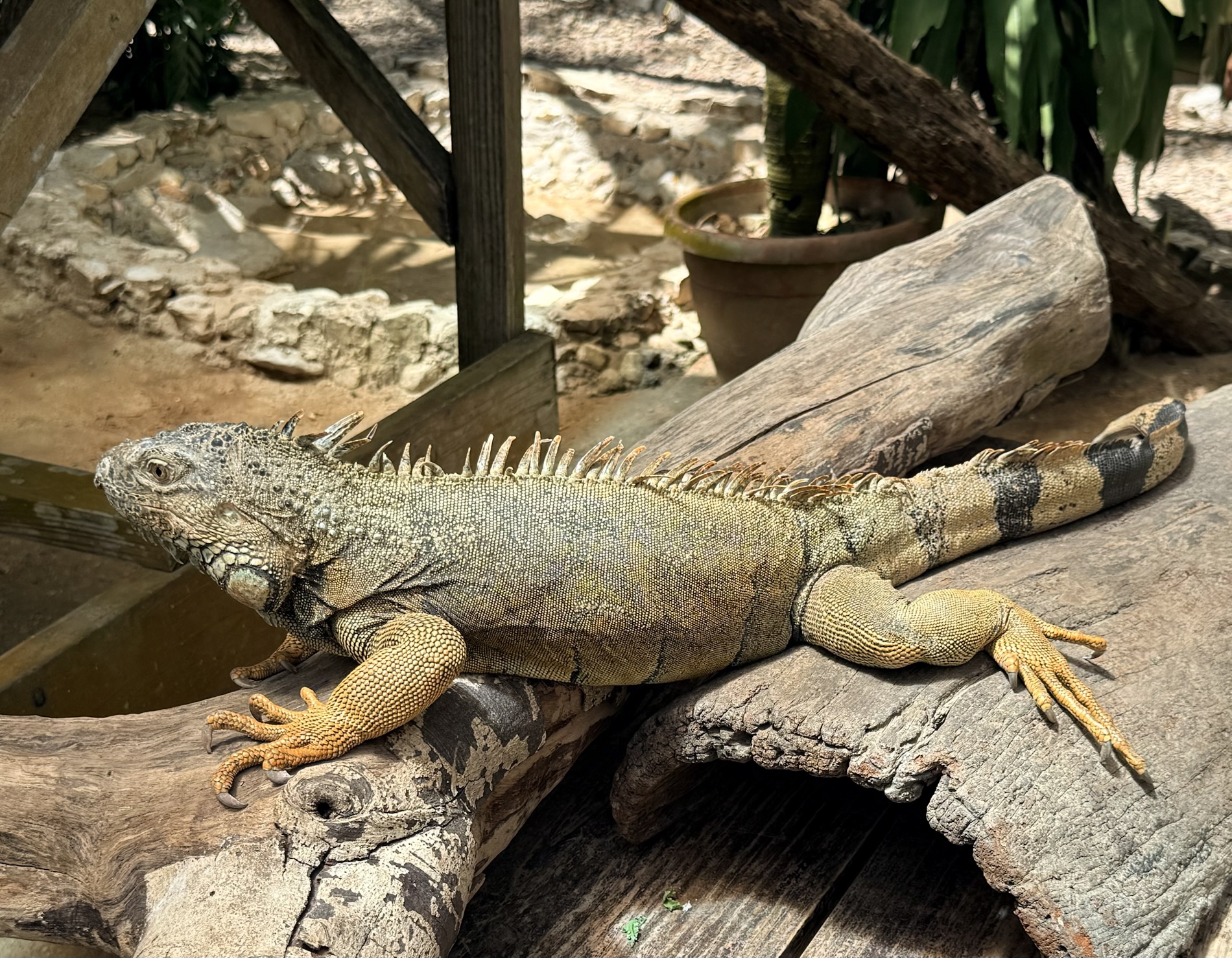
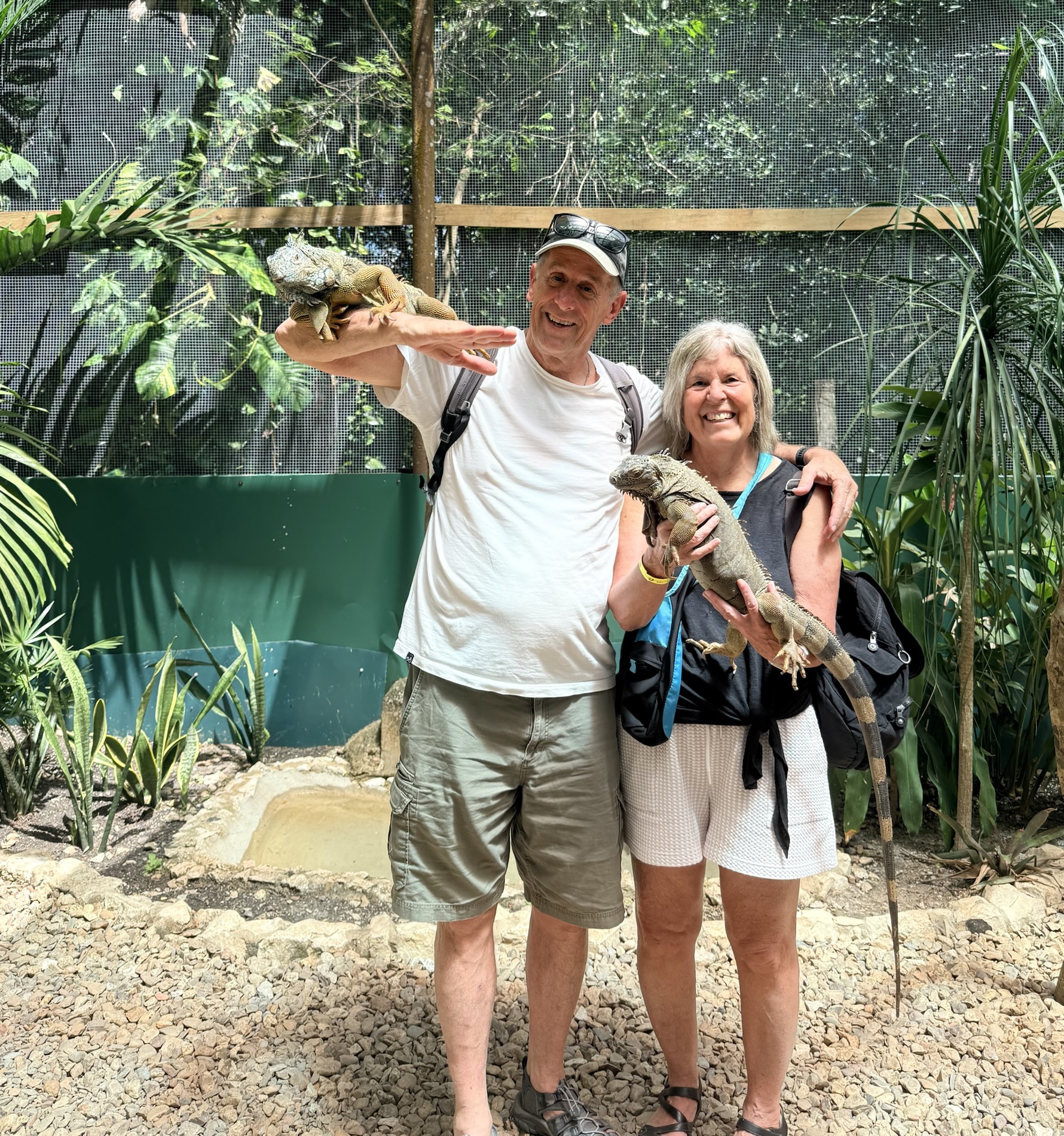
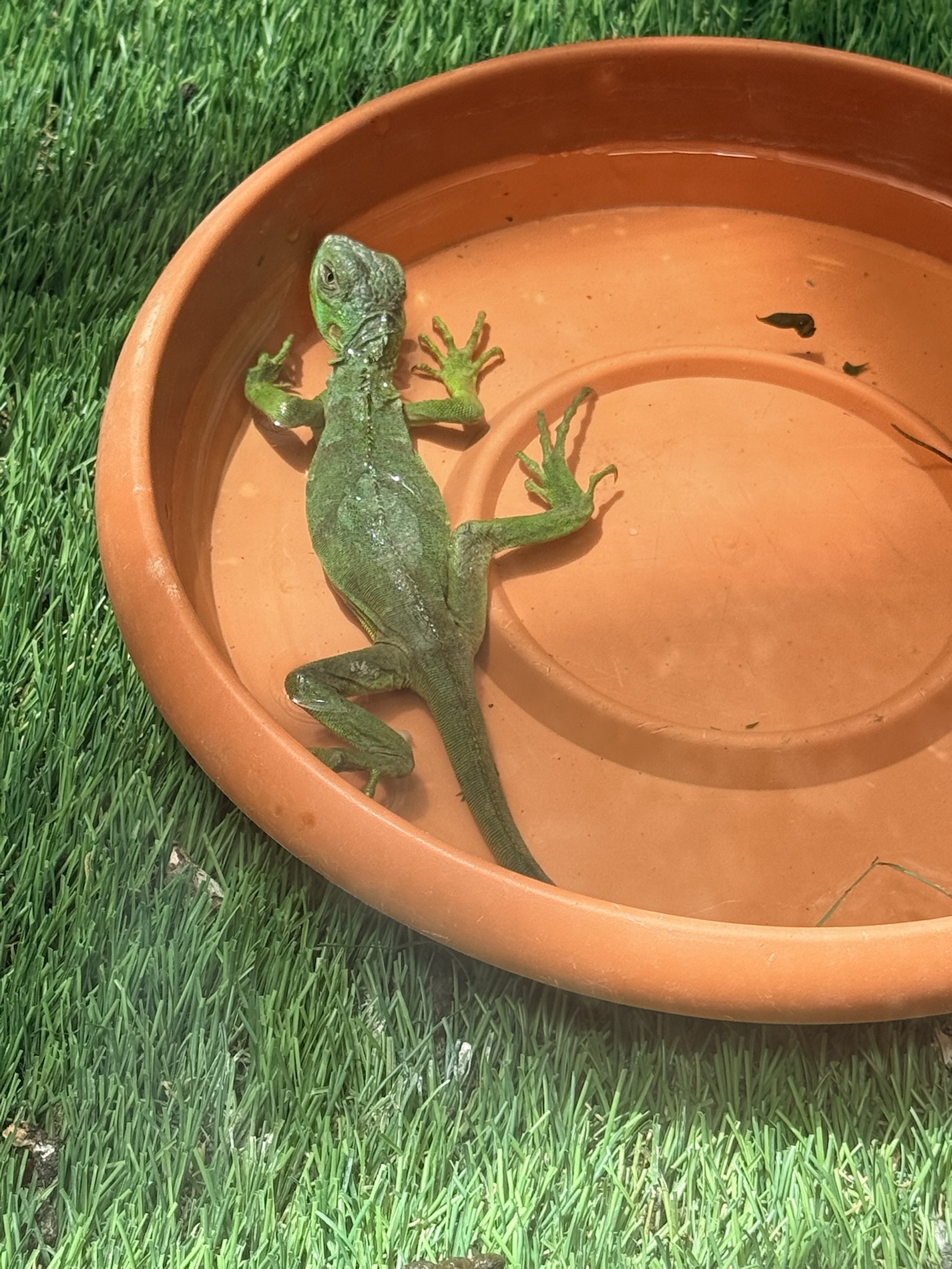
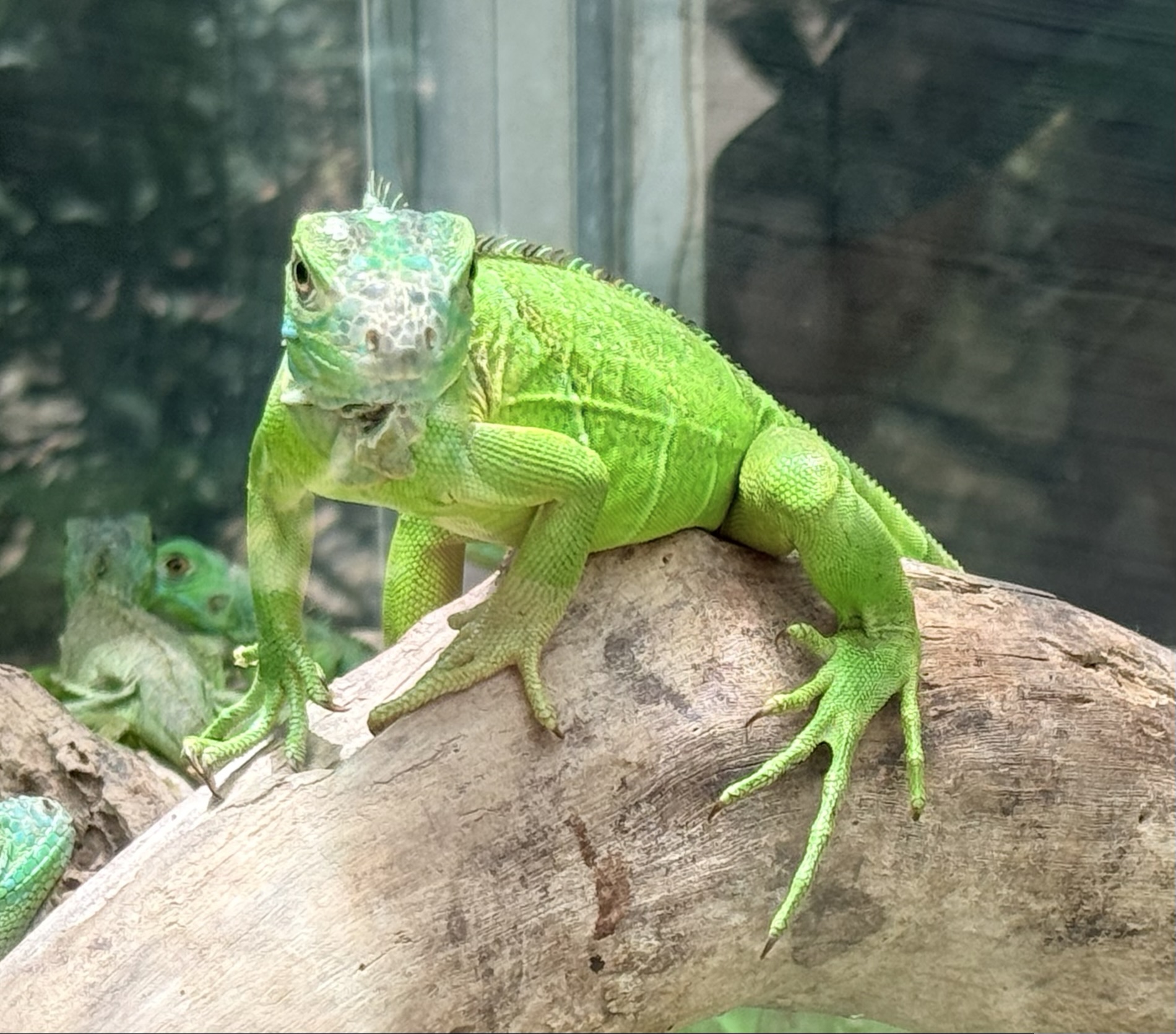
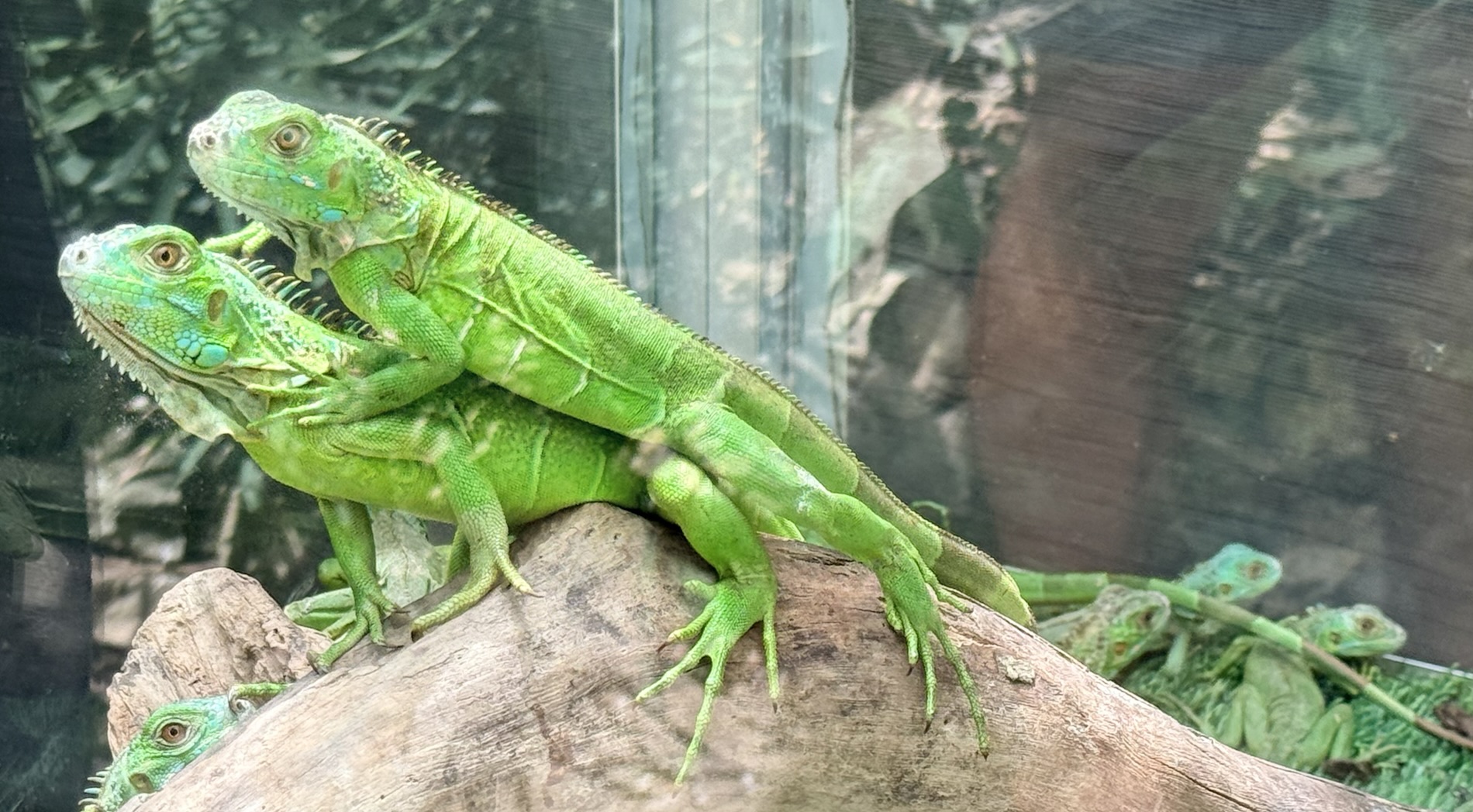
Someone on our shuttle told us of the Iguana Project at the San Ignacio Resort Hotel. Maybe we would find the exotic there. It was rather exotic to see iguanas up close, but we see many iguanas in Costa Rica, even on the driveway leading up to our condos on Lake Arenal. The exotic thing was being able to touch them and hold them, which I would never consider doing to one of the wild ones wandering around in Costa Rica. They felt scaly and these, who see humans every day while in captivity, didn’t shy away. In reality, they were not that exotic, considering they were for the most part domesticated. The iguanas we could pet and hold were Black Iguanas that couldn’t be released back into the wild because of injuries or other problems.
What we found most exotic were the facts that people told us or that we read about. Iguanas were called Itzamna by the ancient Mayans. The guide told us that all snakes in Belize are poisonous and that there is little serum to treat snakebites available in hospitals. That sounded scarily exotic. I knew I didn’t want to encounter any snakes.
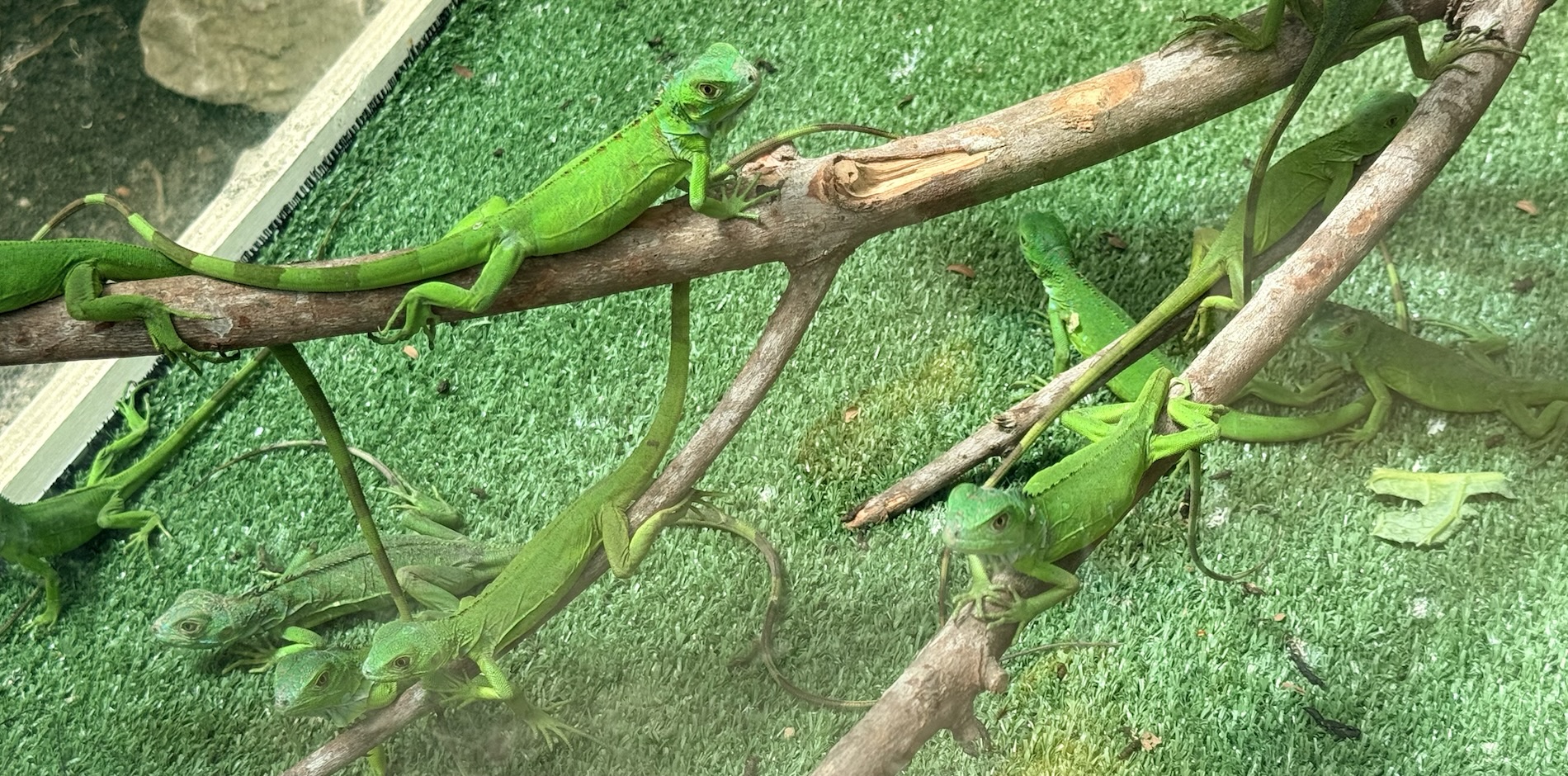
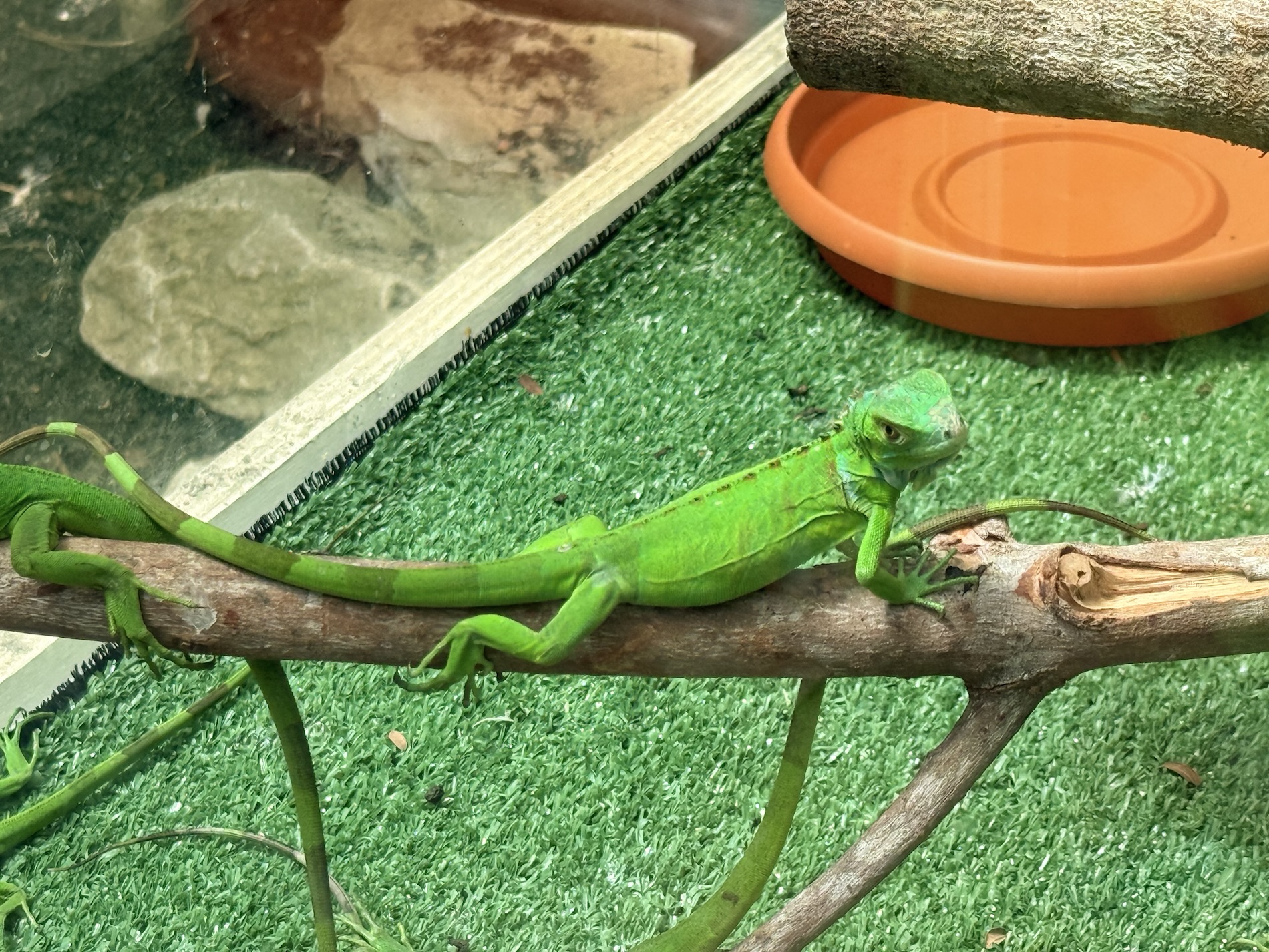
Two ecologists, Miriam Roberson and Daniel Velasquez, launched the Iguana Project in 1996 because they were concerned about the alarming decrease in the numbers of iguanas. The purpose is to conserve and look after the endangered Green Iguana species in Belize. Green iguanas are hunted in Belize but like all game species there is a closed season (February 1- July 1) to allow for breeding season and thus protect them from extinction. There is no faster way to bring a species to extinction than by killing pregnant females.
Maya Mountain Lodge
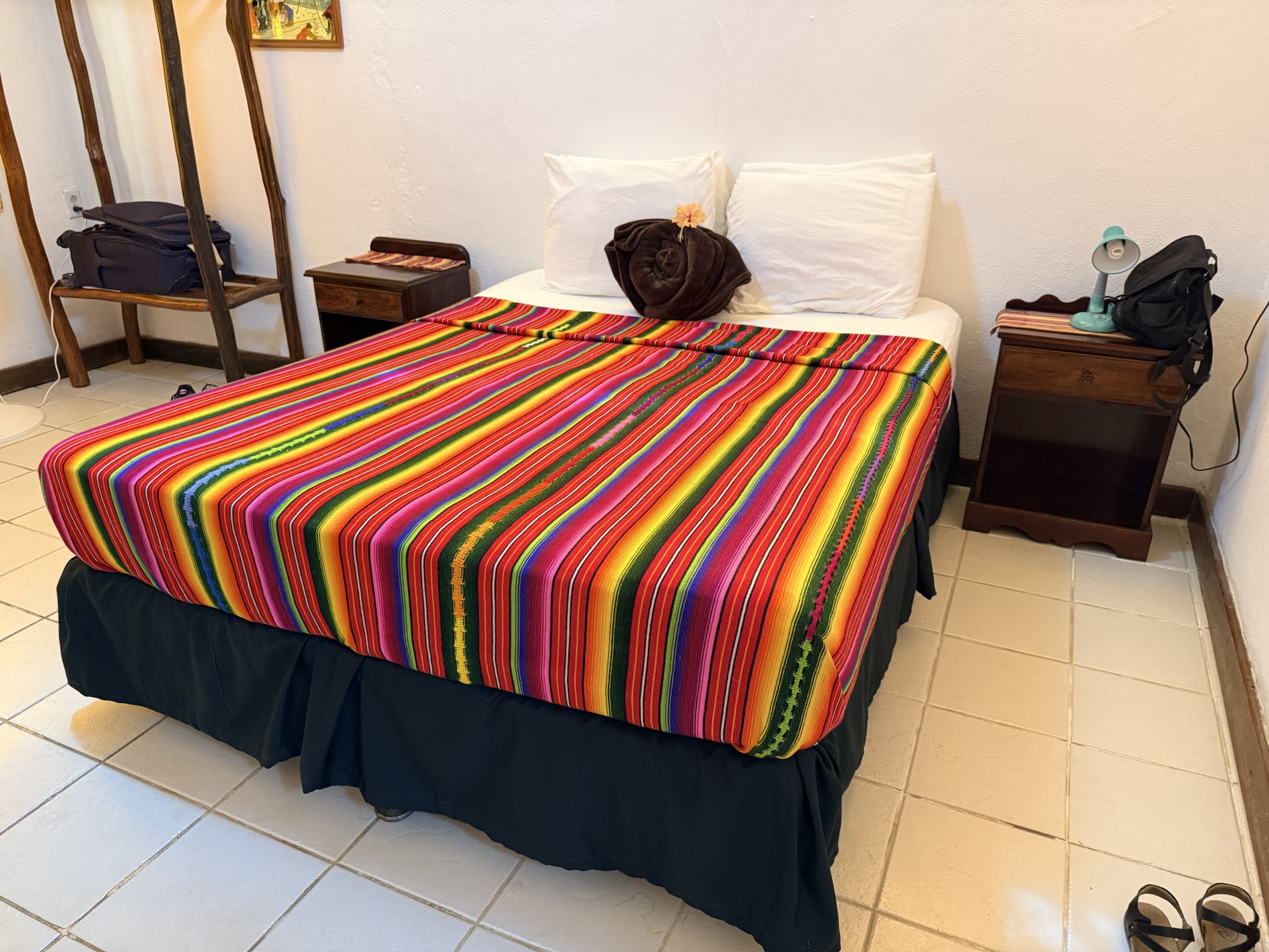
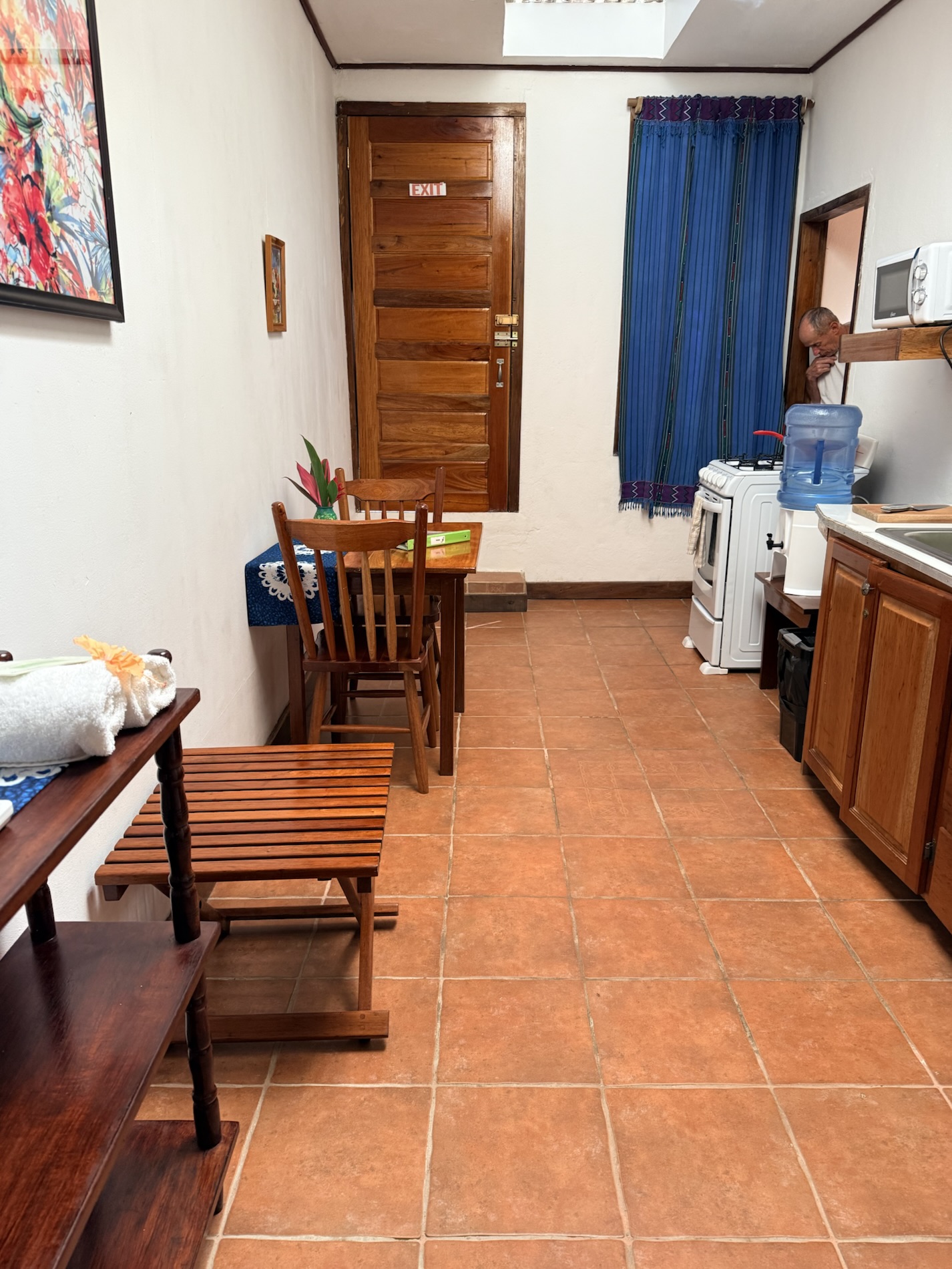
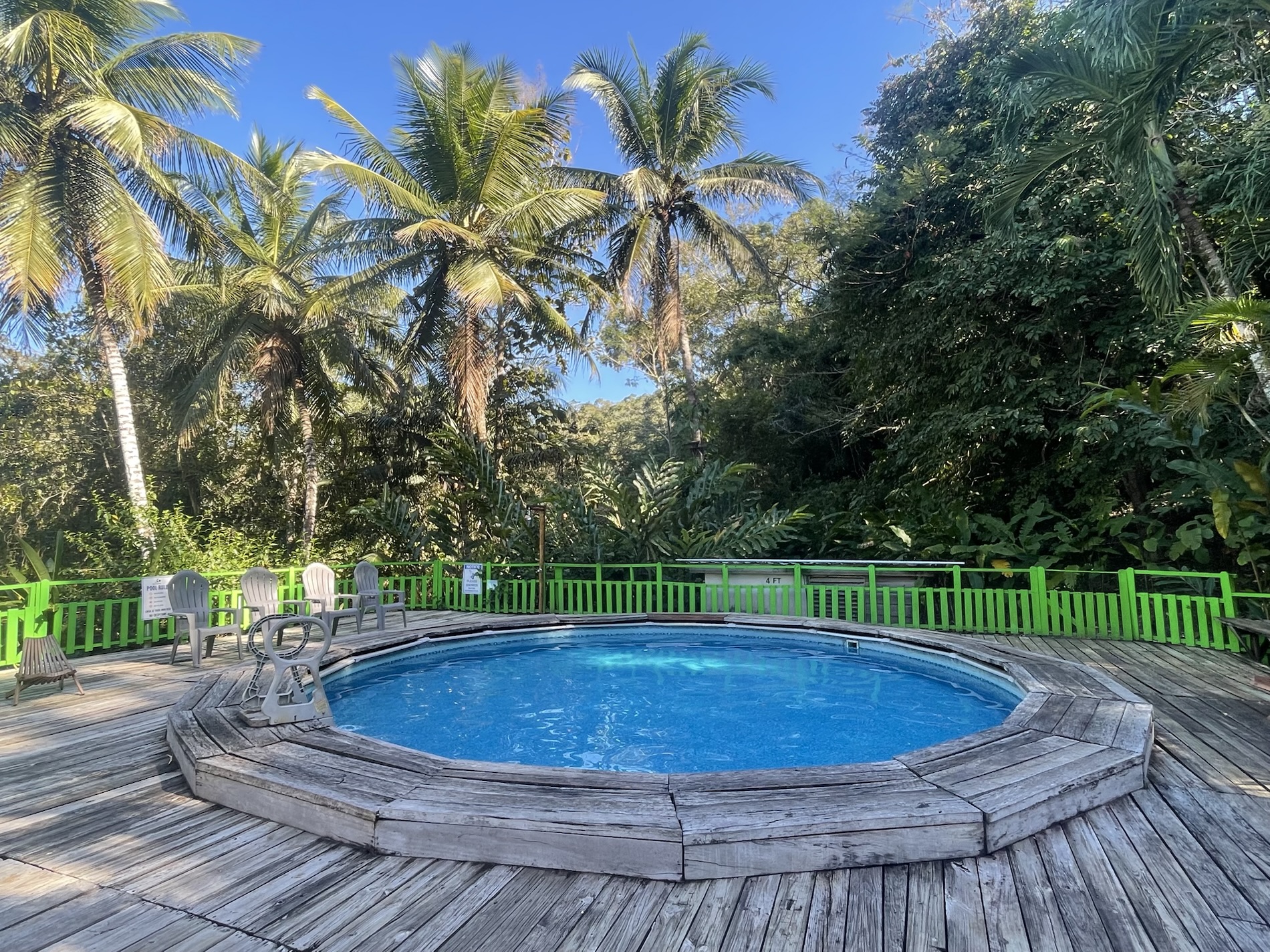
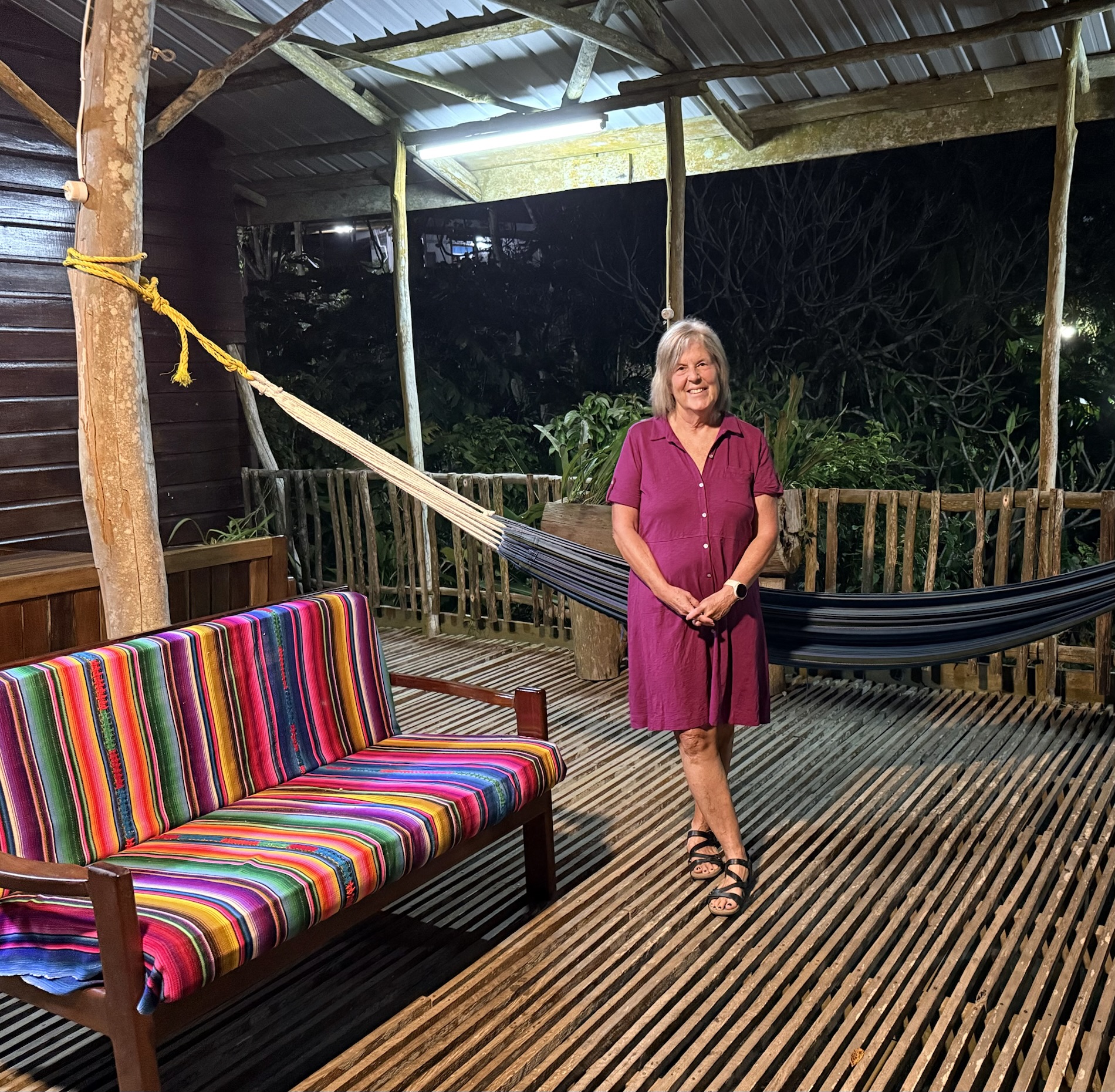
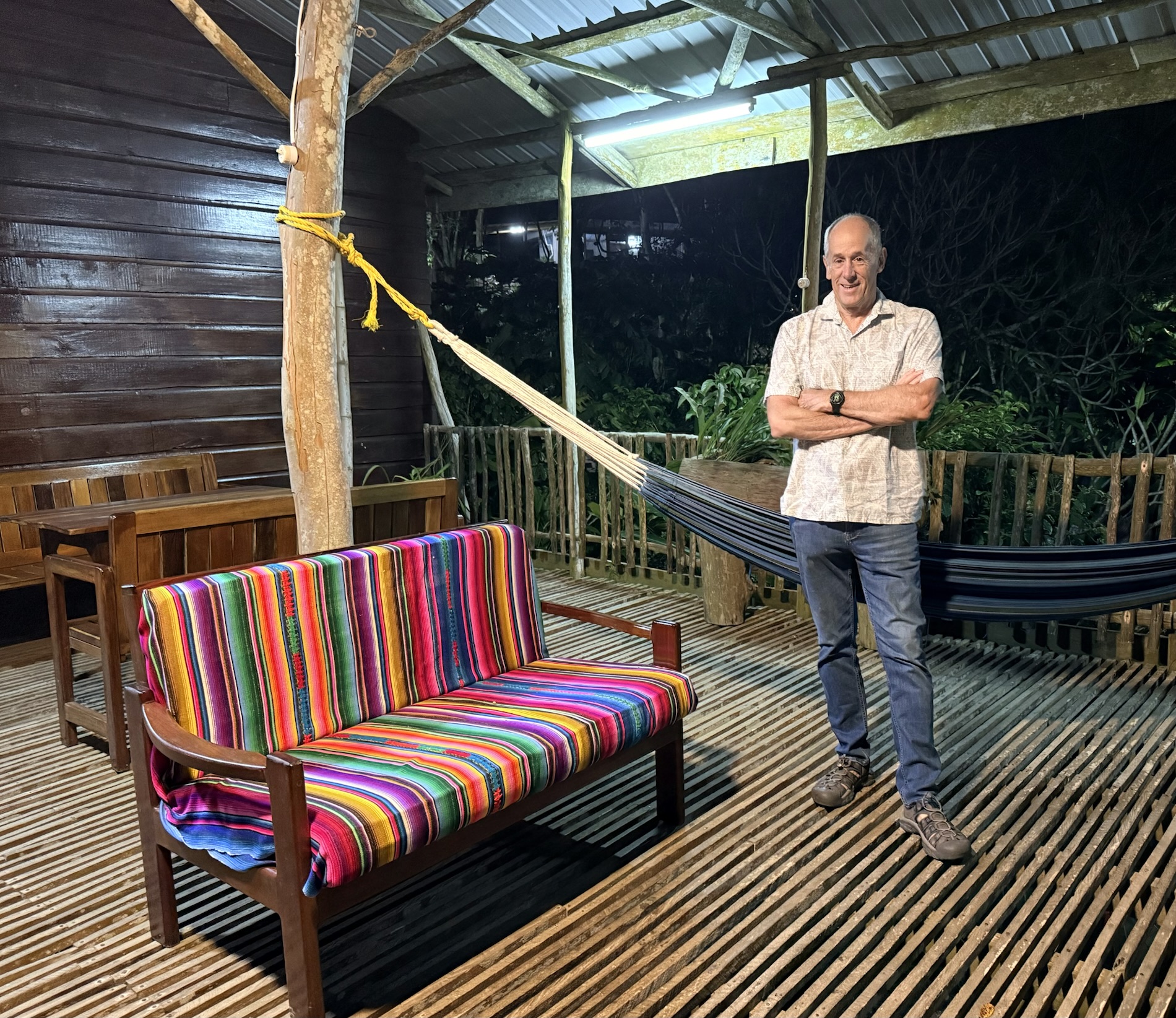
We were finally able to check into the Maya Mountain Lodge at 2:00. Our room was weathered but clean. Dark curtains covered the windows. There was no way to open them until Mike finally figured out on our last day that he could tie them in knots to let the sunshine in. We hung out by the pool in the afternoon, where we were able to commandeer the only two hammocks. Not many chairs were available and the few available weren’t lounge chairs, but uncomfortable slightly reclining plastic chairs. Mike had asked our last taxi driver to stop at a market where he bought some local beers: 501 Stout Break Loose, which we sipped while reading in our hammocks.
So far, I didn’t feel that we’d found anything super delightful or exotic. The only thing that caught me off guard was when the people spoke to us in English, which was always a surprise. And the price of taxis was outrageous. No Uber was available in the small town, and the taxis charged a whopping $8 for every trip, no matter how long or short. We paid an Uber driver about $5 to drive us in Guatemala City, sometimes for half-hour drives through heavy traffic. For such a small town this was outrageous. Exotic? Certainly not, but it was aggravating, especially since our hotel was not within walking distance of town.
Sunday, March 15: Maybe we would find the exotic as we explored the Mayan ruins of Xunantunich or Cahal Pech. Maybe we would find it in the food. We were open to any surprises that might await us.
Xunantunich
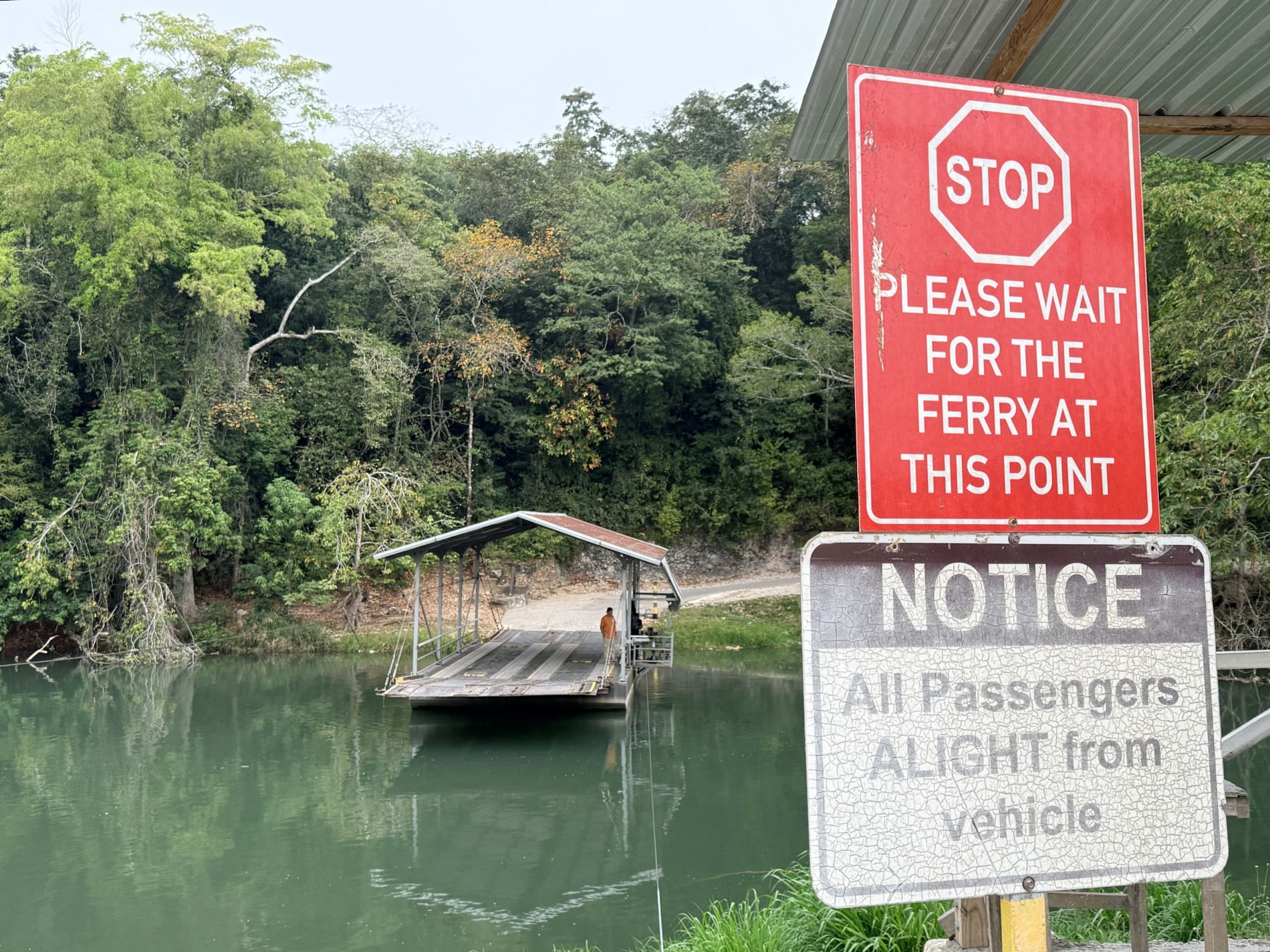
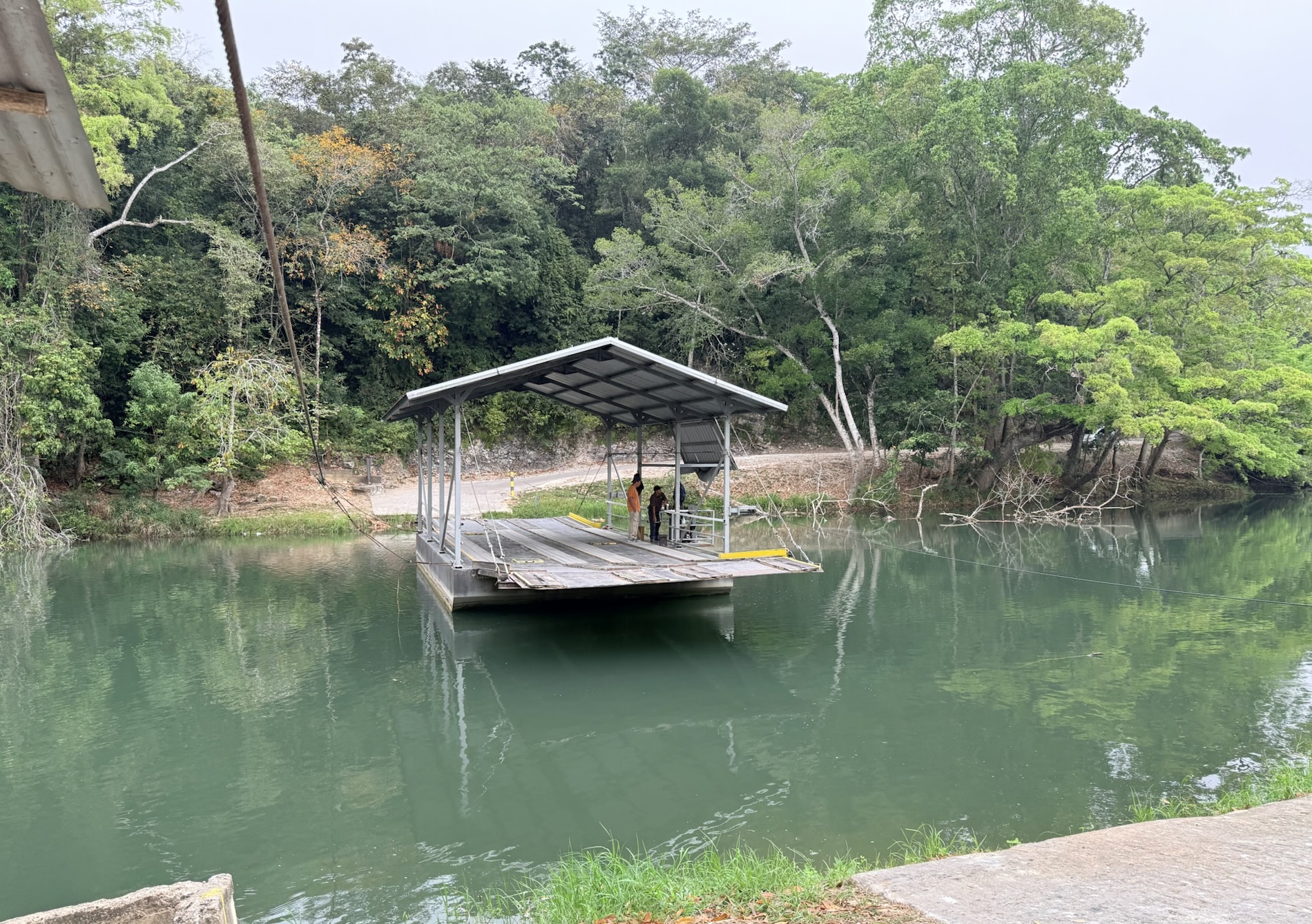
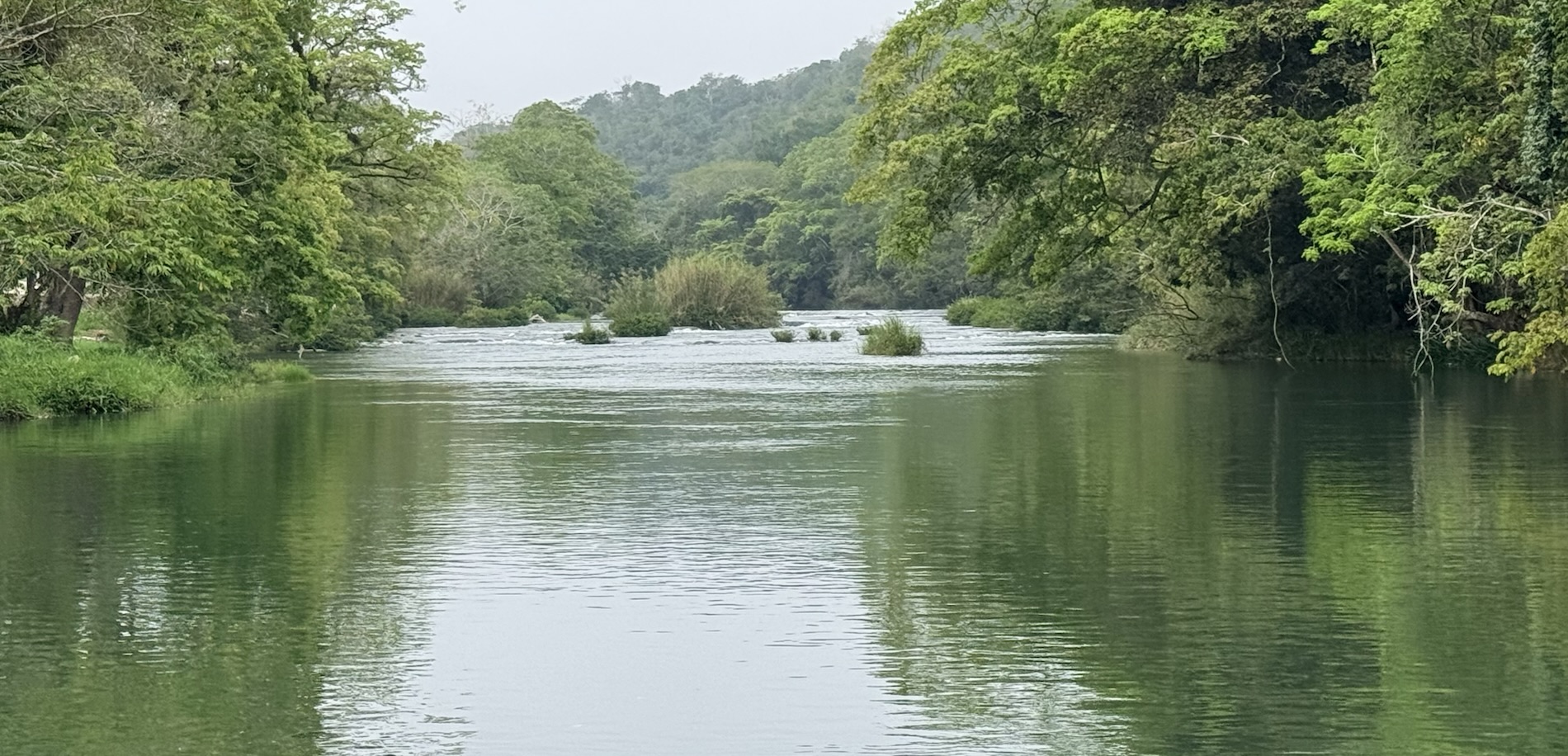
We arrived with a driver to the Mopan River, where we took the whimsical hand-cranked ferry across the river. We had to exit the car and walk on to the ferry while Rodolfo drove the car on to the ferry. It only took a few minutes to get across. Then Rodolfo drove us about a mile to the parking lot, where he would wait for us for two hours. I have to say, this cute little ferry was rather exotic.
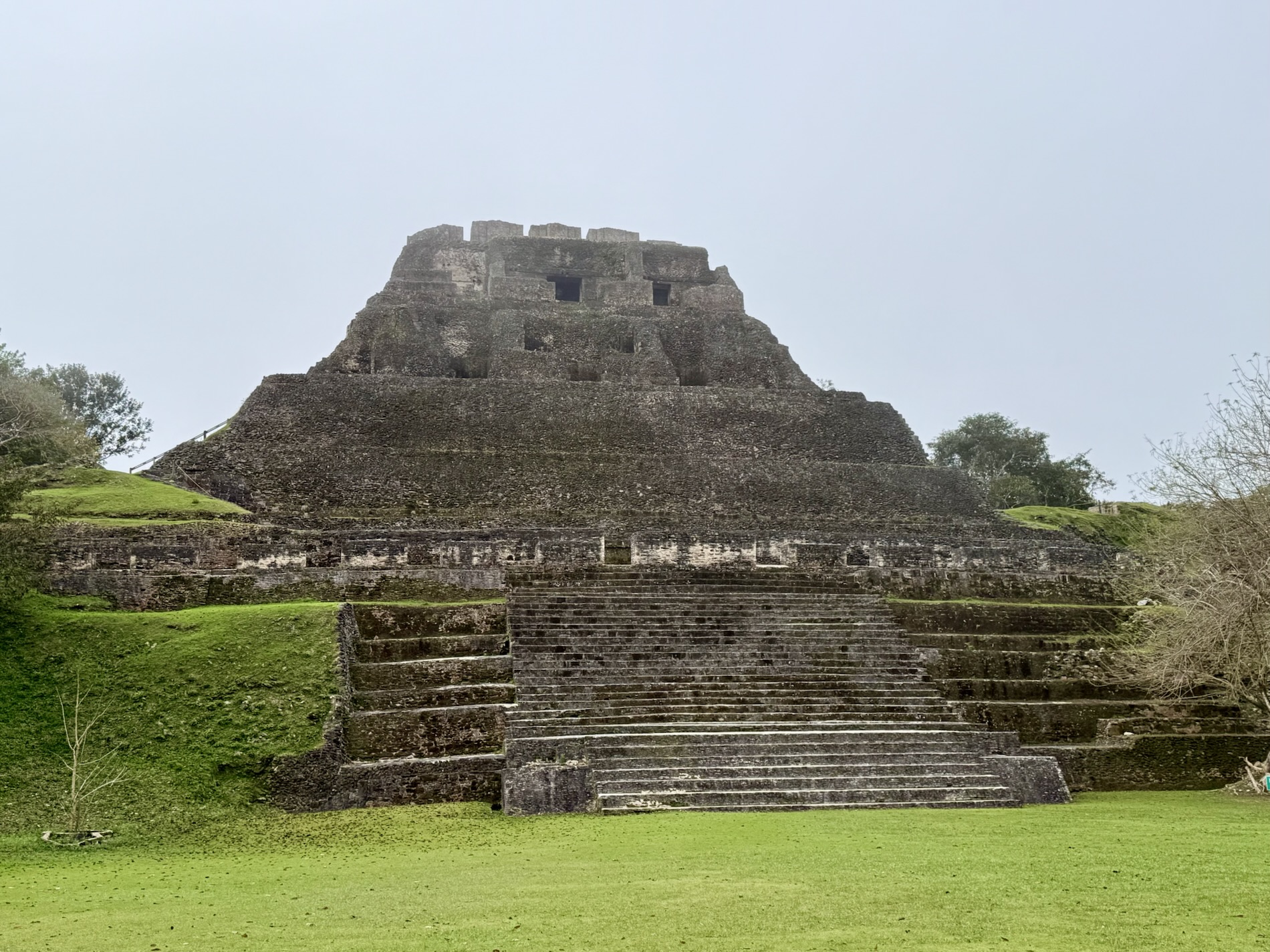
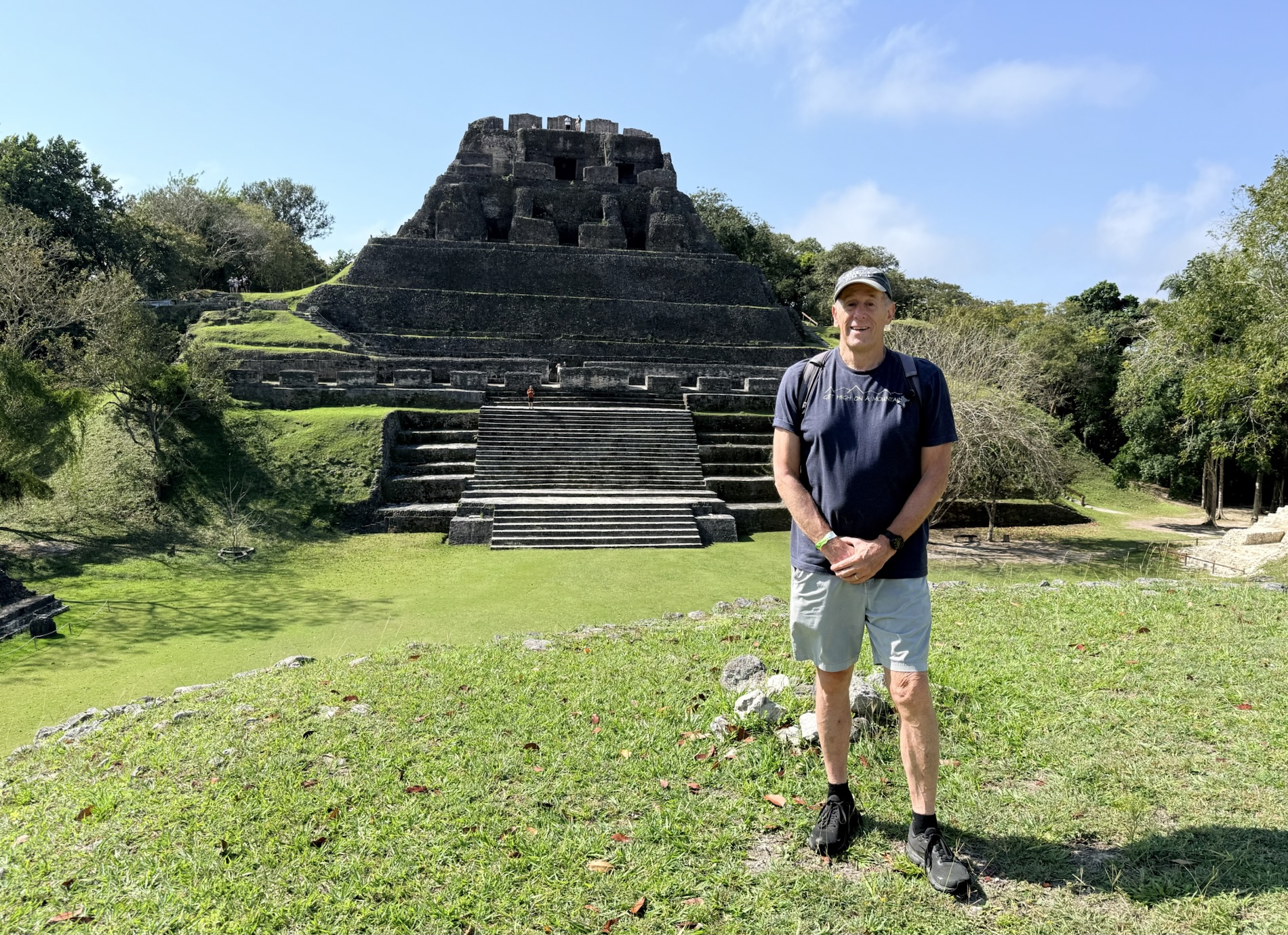
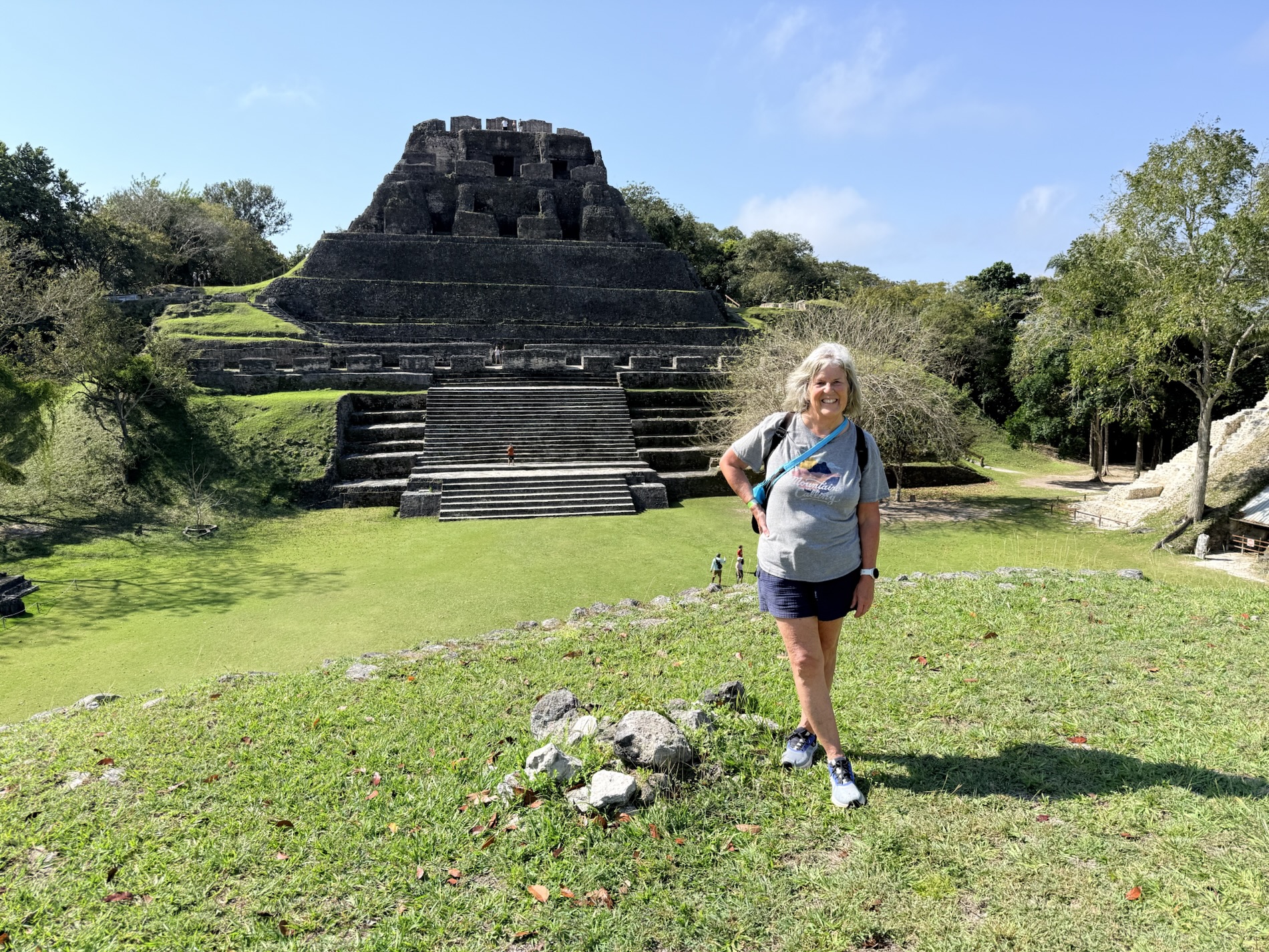
Xunantunich means “Maiden of the Rock” or “Stone Woman.” The “Stone Woman” refers to the ghost of a woman claimed by several people to inhabit the site, beginning in 1892. She was said to be dressed completely in white with fire-red glowing eyes. She most often appeared in front of “El Castillo,” ascended the stone stairs, and vanished into a stone wall.
The story seems exotic (if not the stuff of pure fantasy), and the site seems exotic, as most Mayan sites are. There are many more of such sites we could see, if we had endless time to travel — all through Honduras, Belize, Guatemala and southern Mexico. Of the three we saw, Tikal felt the most exotic because of the effusive jungle surrounds, and the pure scale of the site. For Xunantunich, the findings have been insubstantial to prove it was a site of importance.
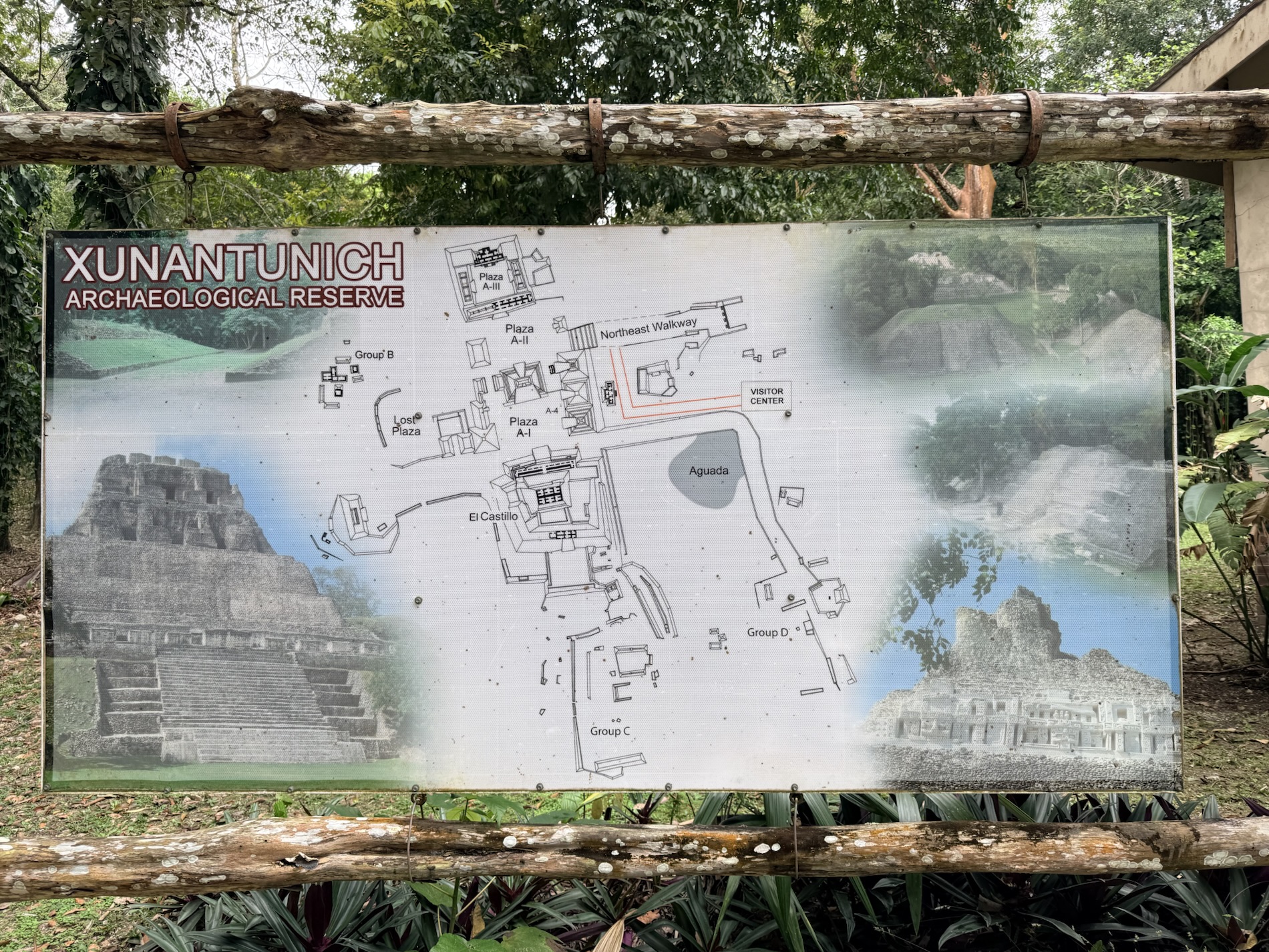
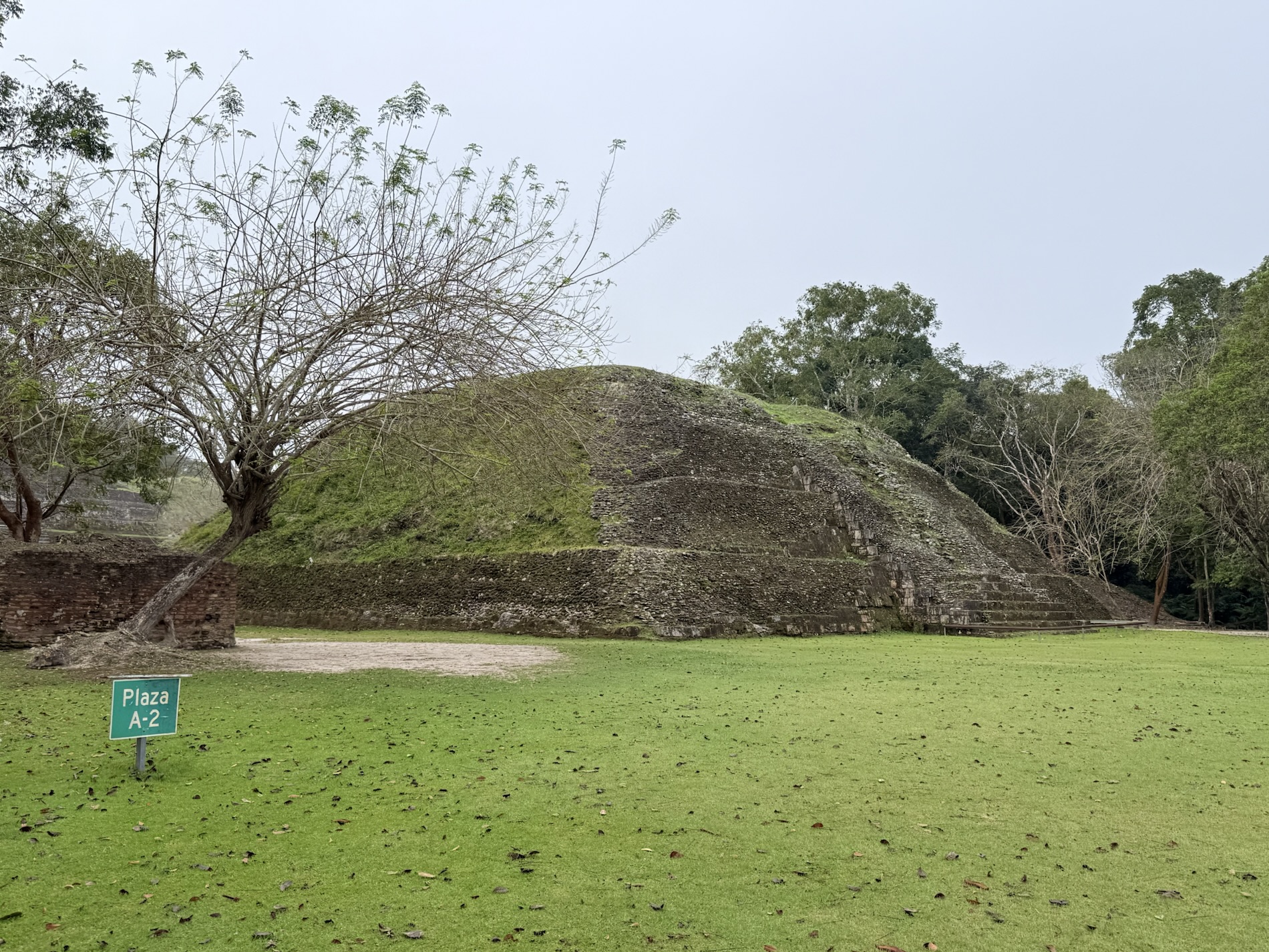
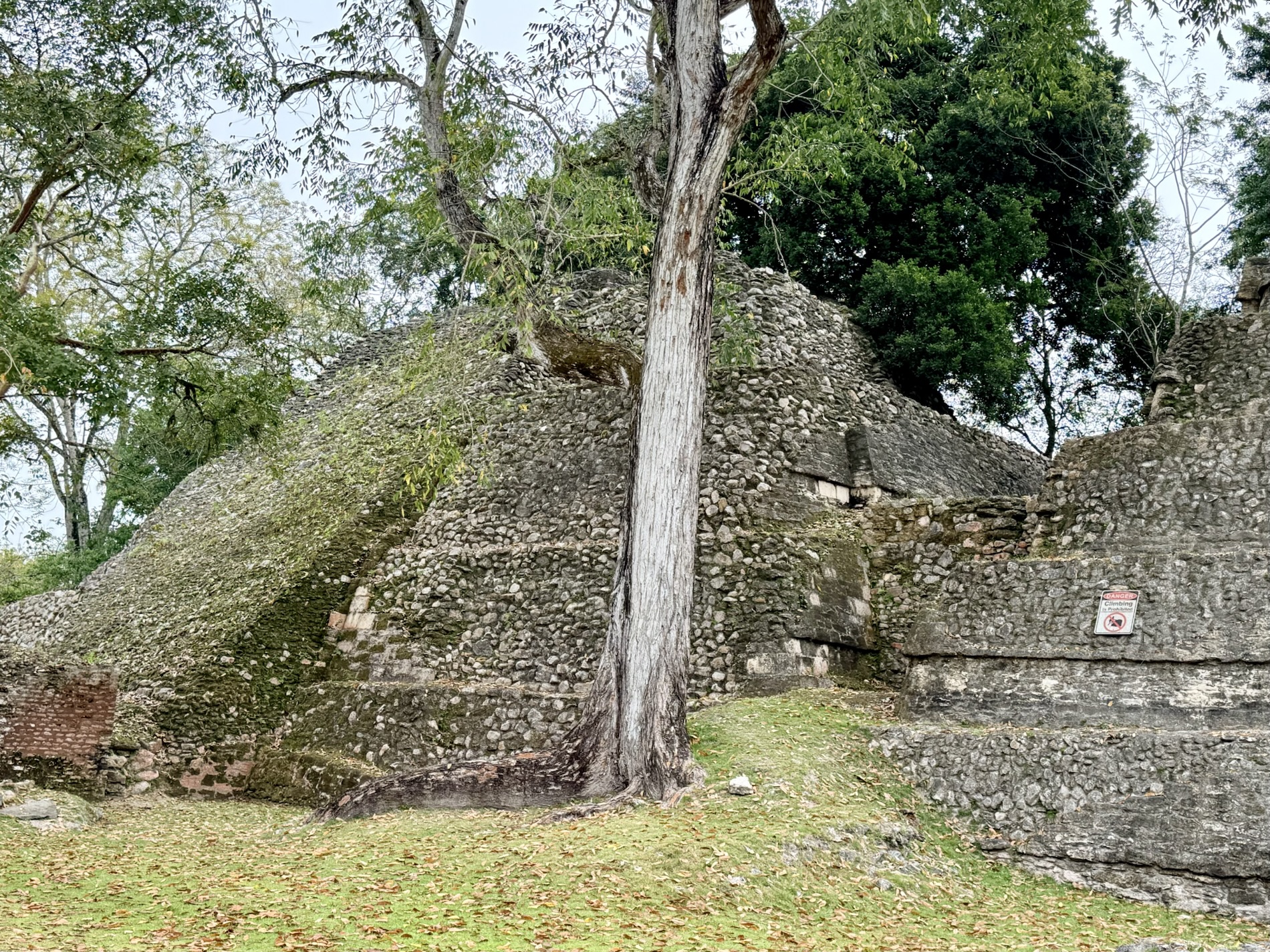
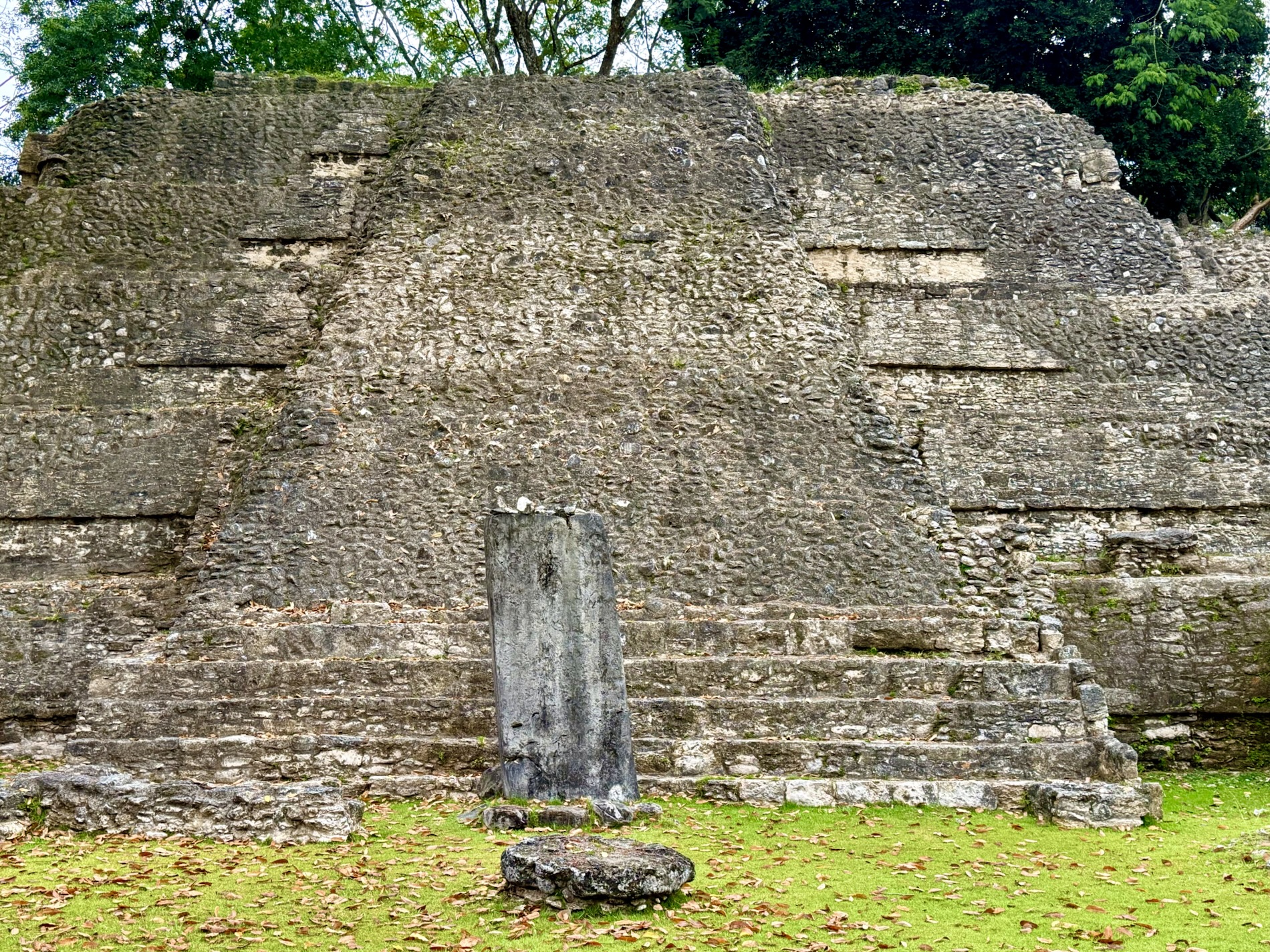
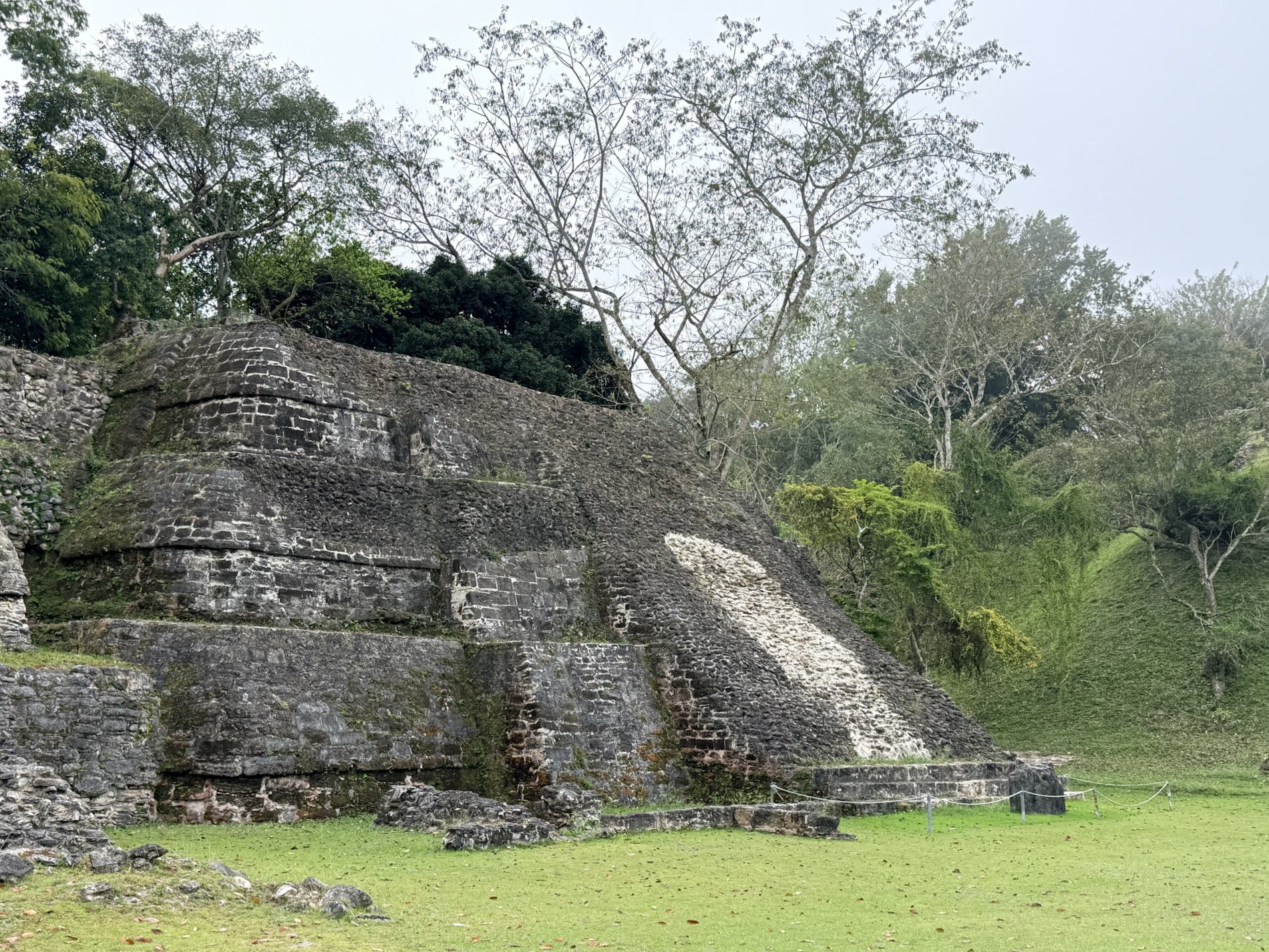
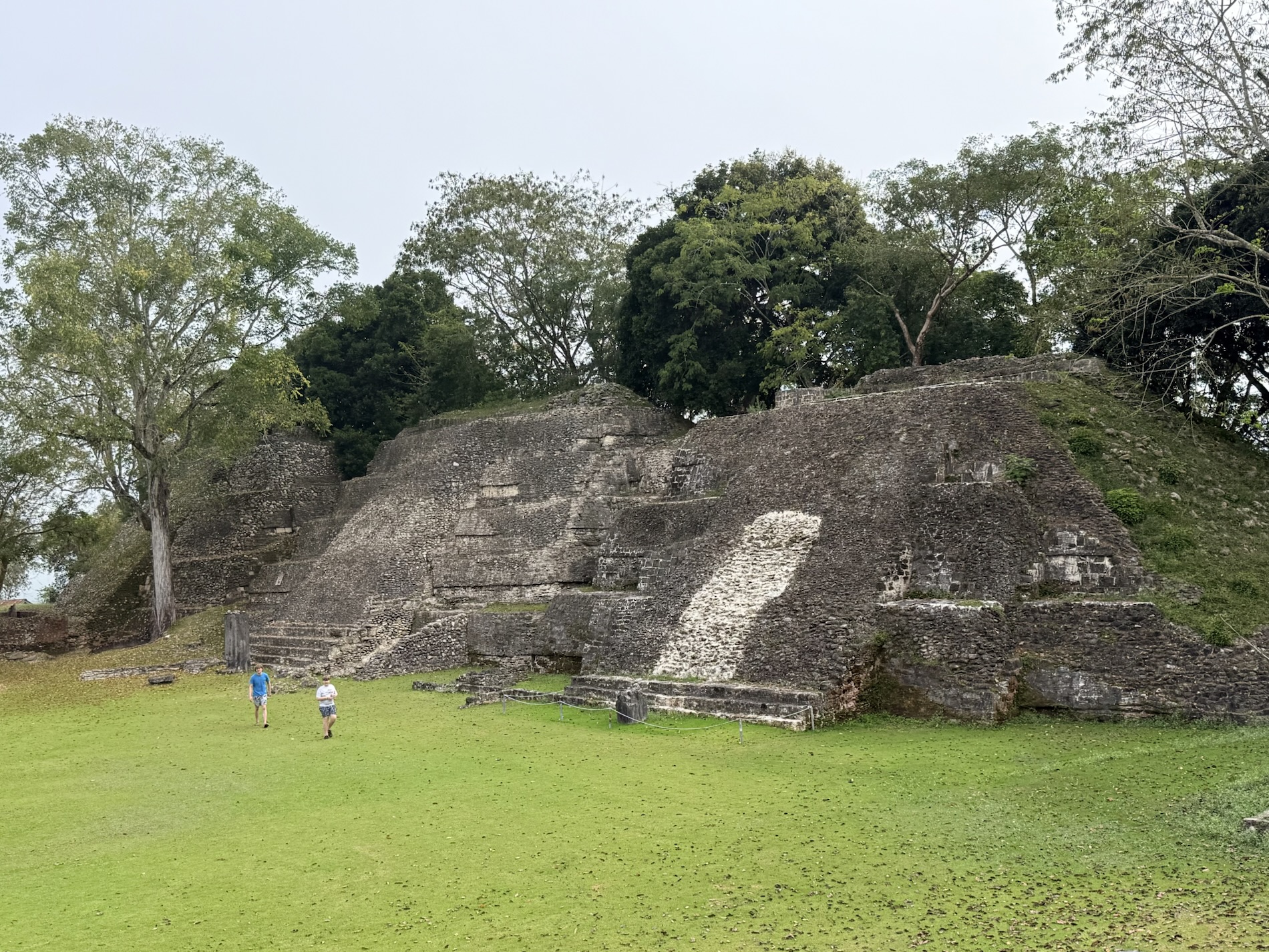
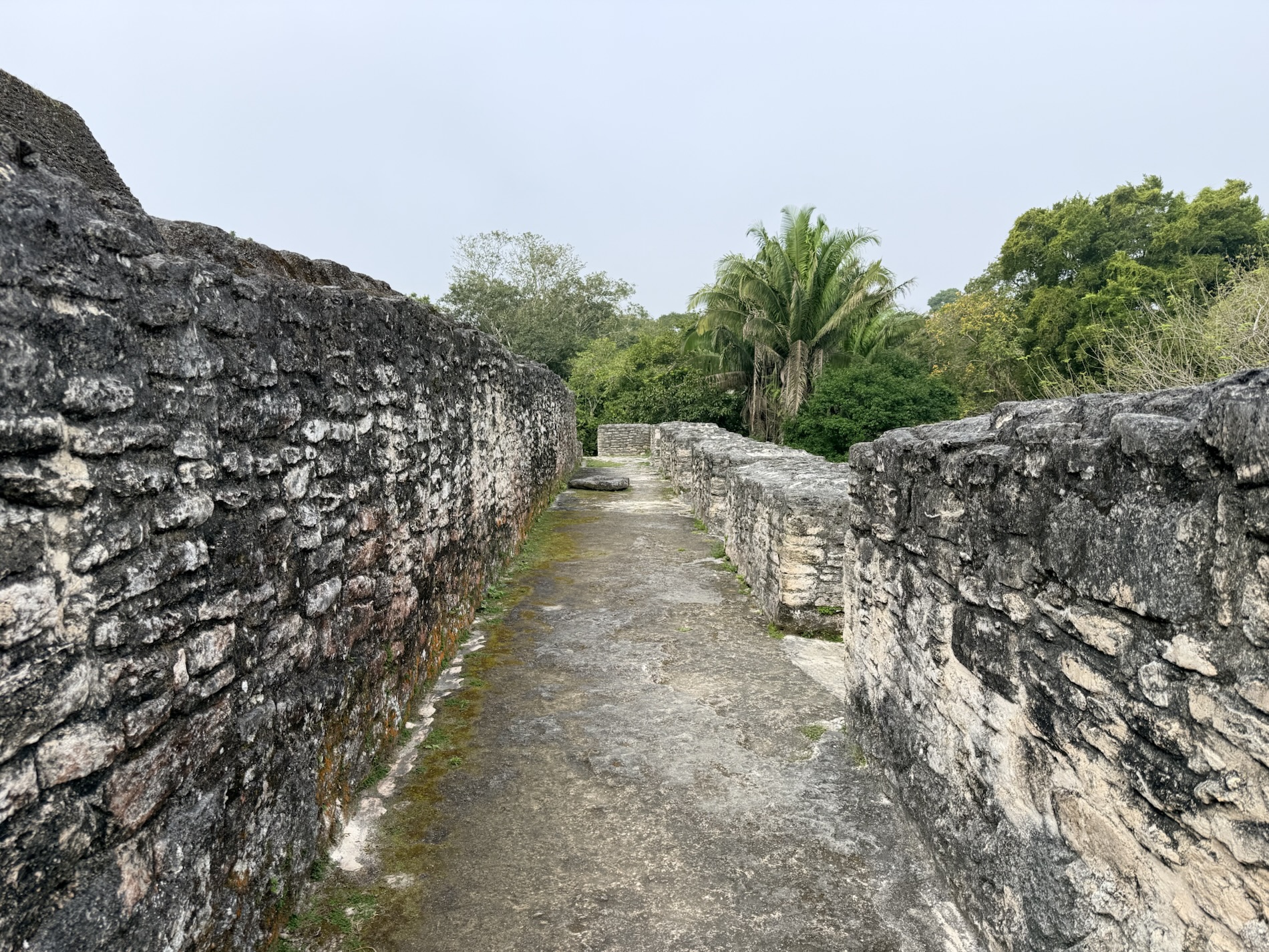
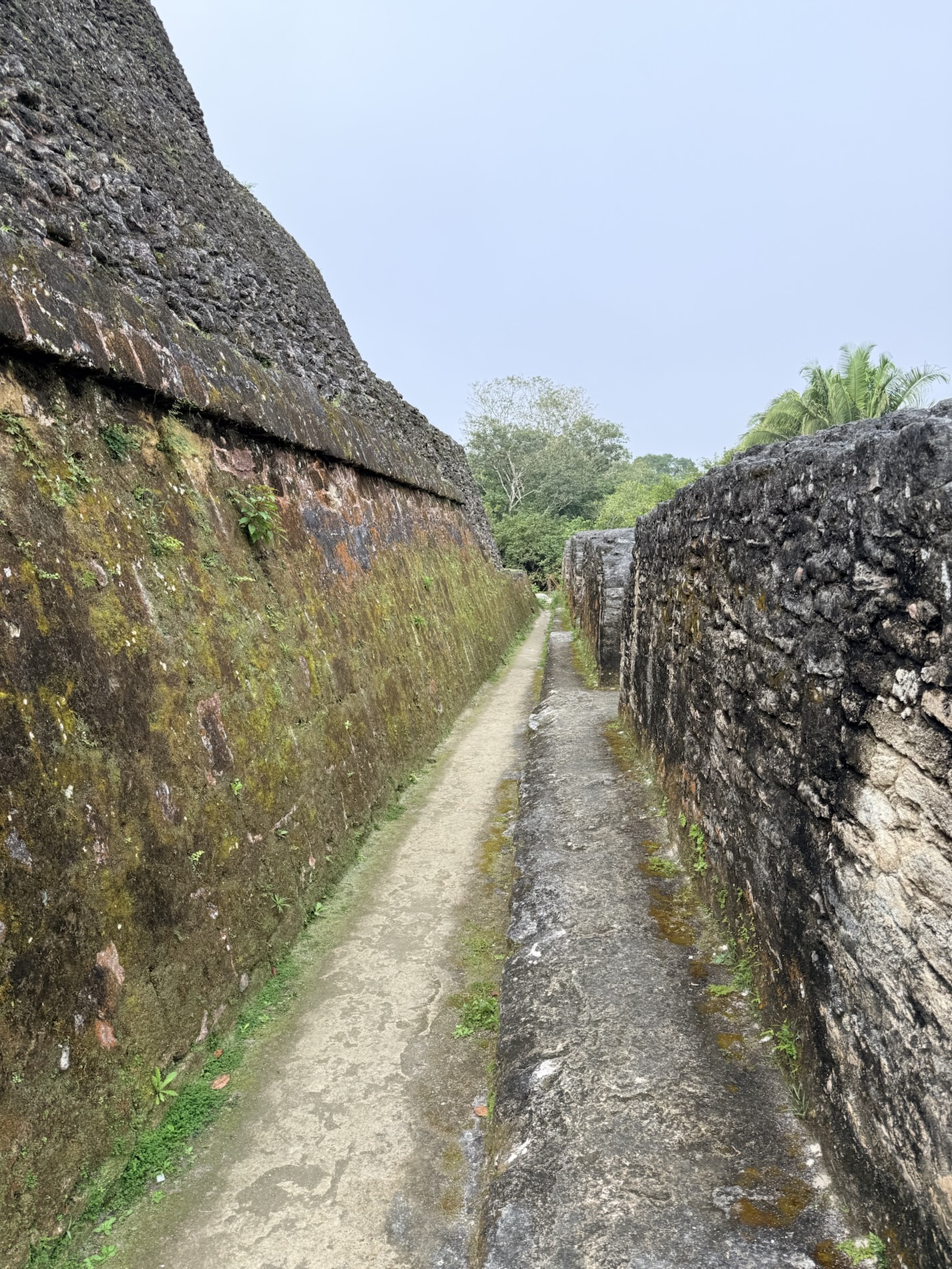
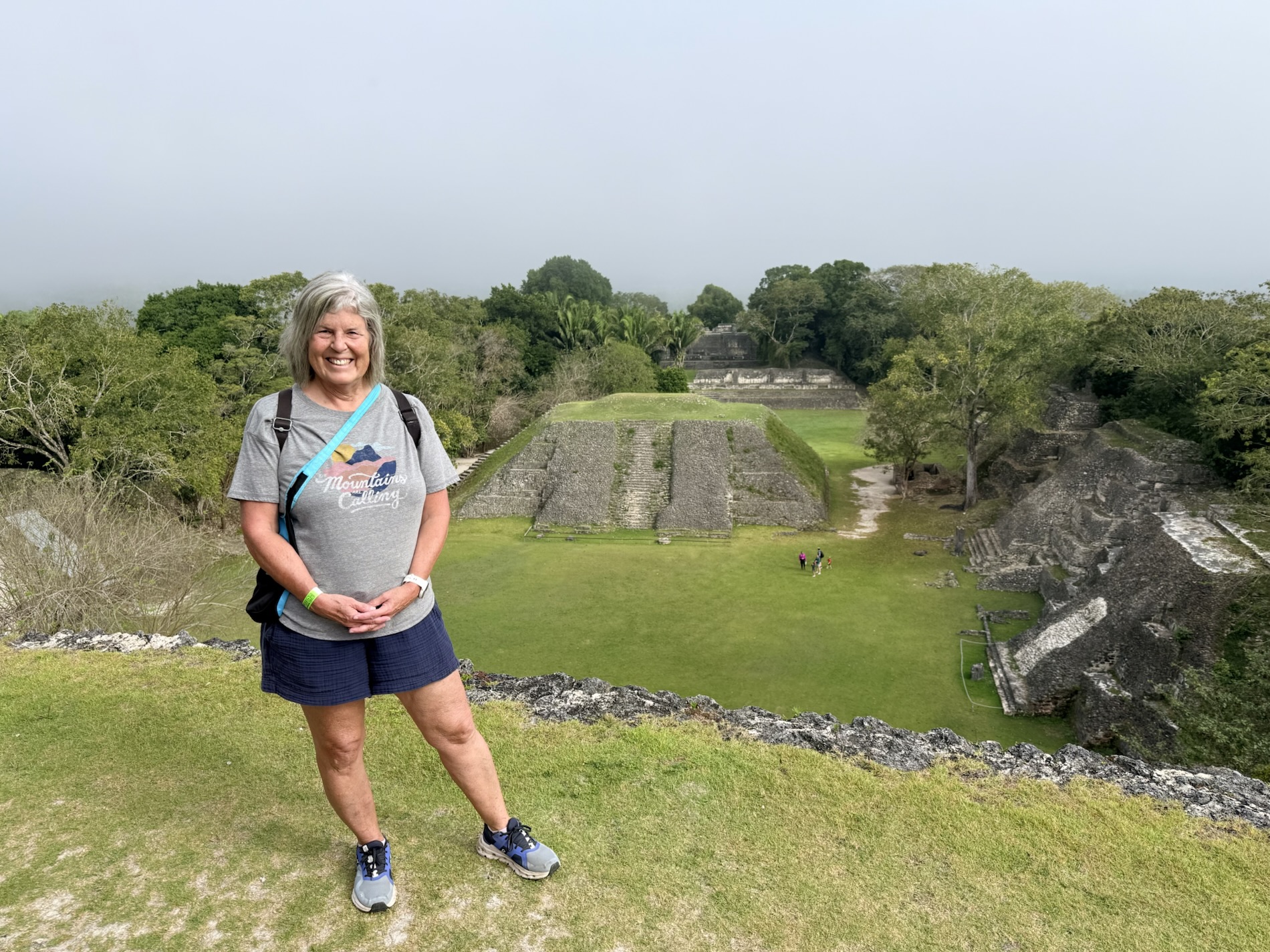
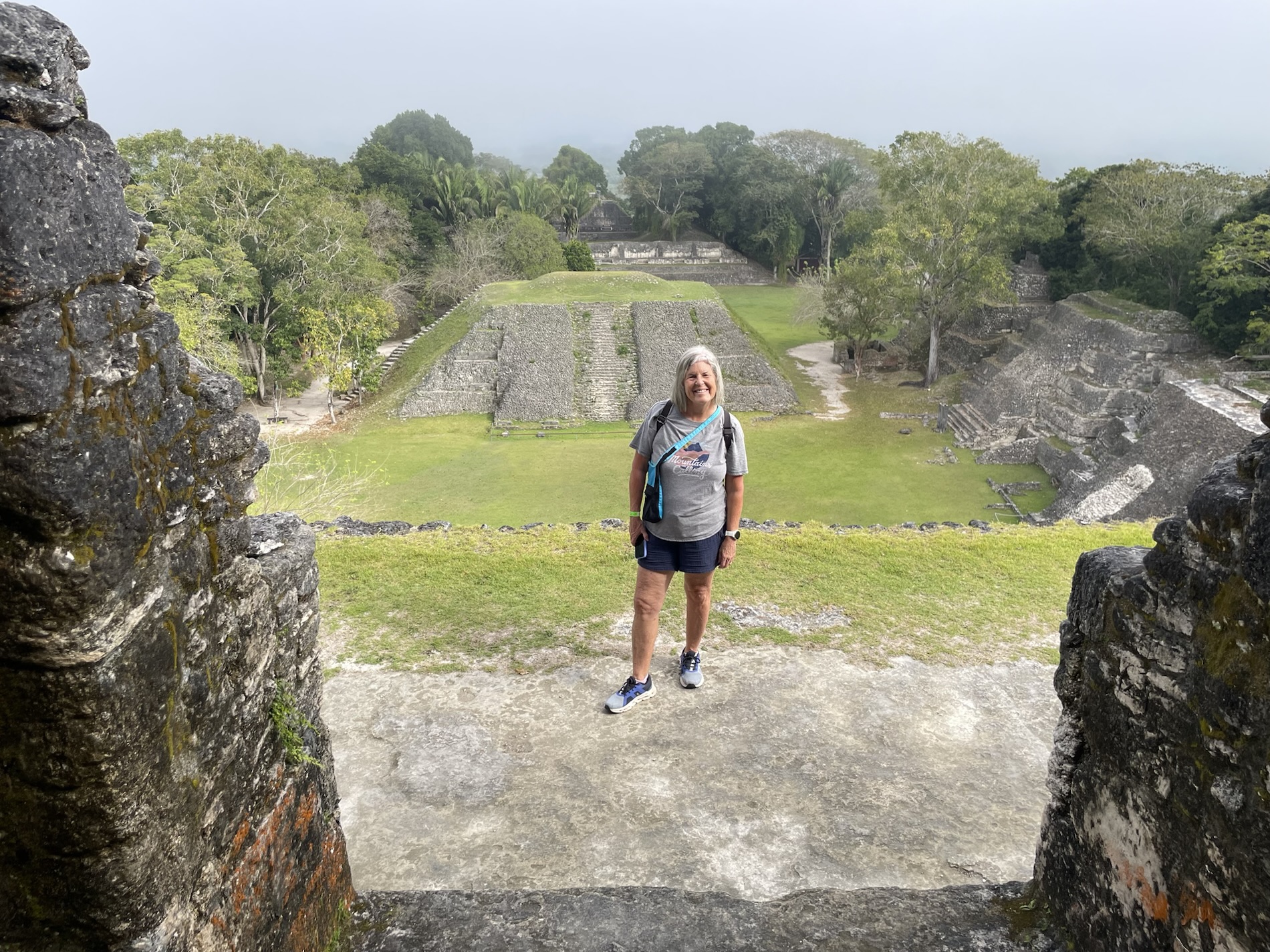
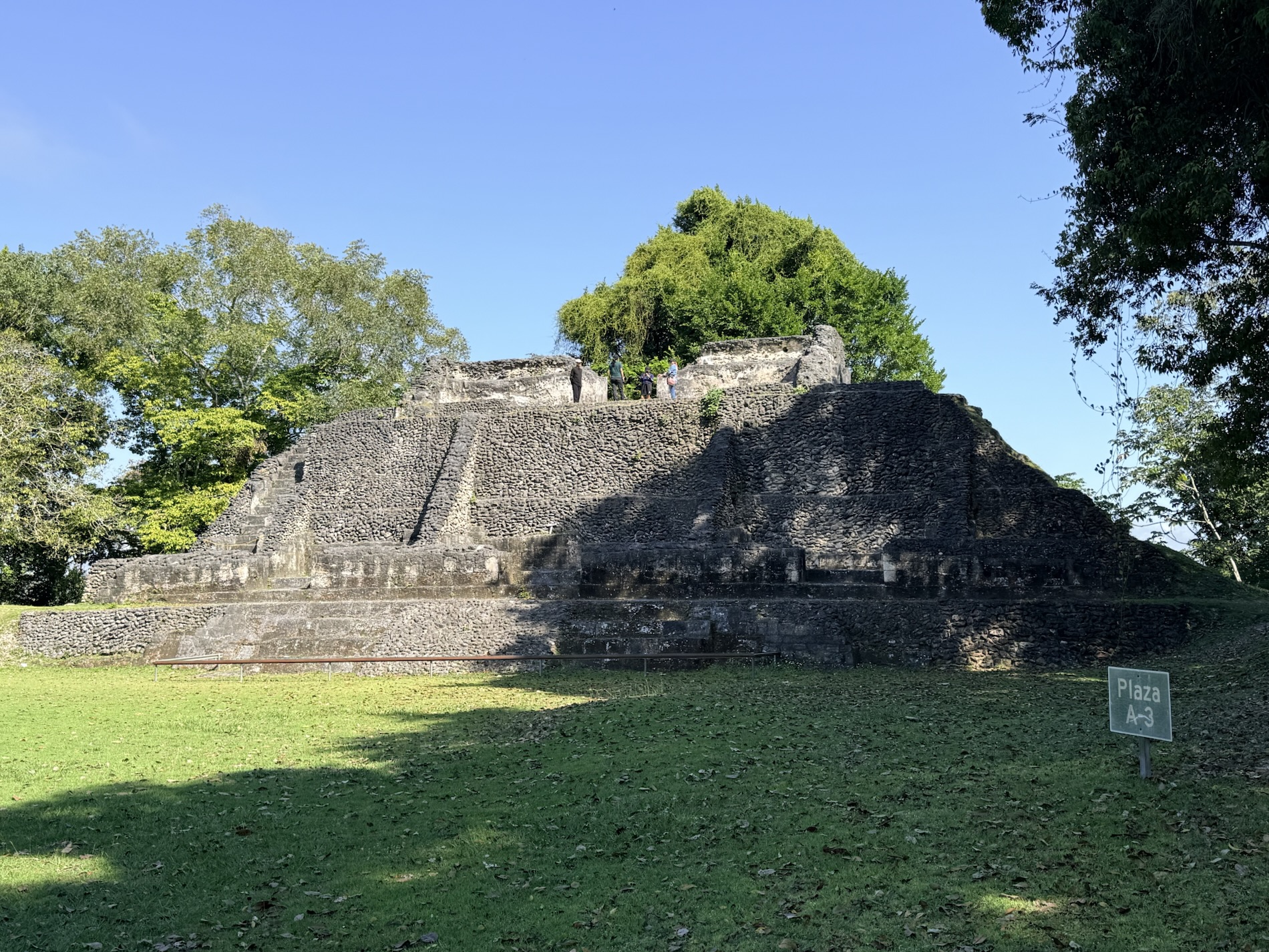
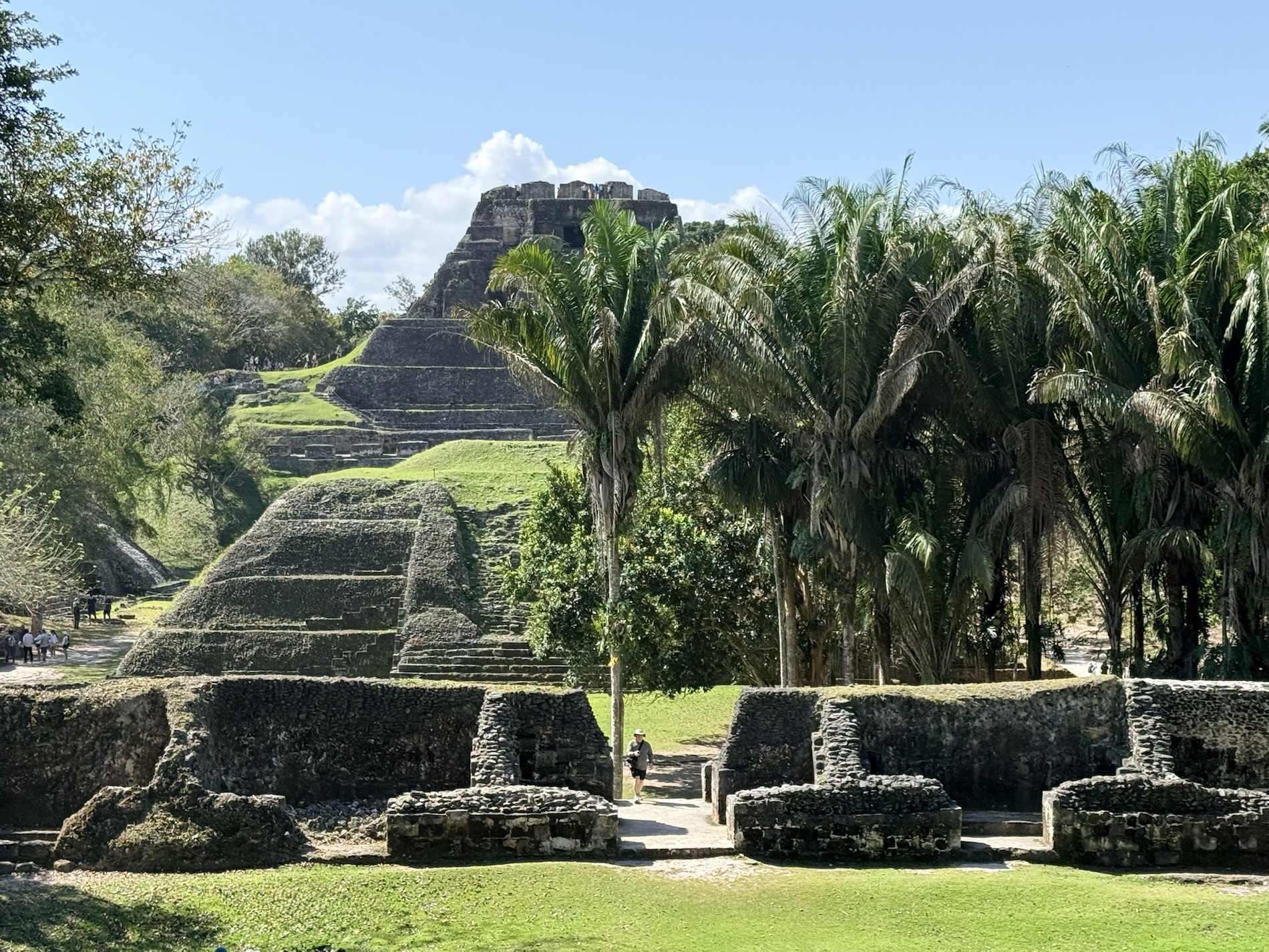
The ancient Mayan archeological site of Xunantunich sits in western Belize, right up against the border with Guatemala. The core of the city occupies about one square mile, with a series of six plazas surrounded by more than 26 temples and palaces. It sits 183 meters above sea level atop a ridge above the Mopan River. It served as a Maya civic ceremonial center to the Belize Valley region in the Late and Terminal Classic periods (c. 700-900 AD). At that time, when the region was at its peak, nearly 200,000 people lived in the Belize Valley. There is much evidence of trade and communication. Pine was a valuable commodity controlled by elites and rulers; it was used in ritualistic and building purposes for the upper class.
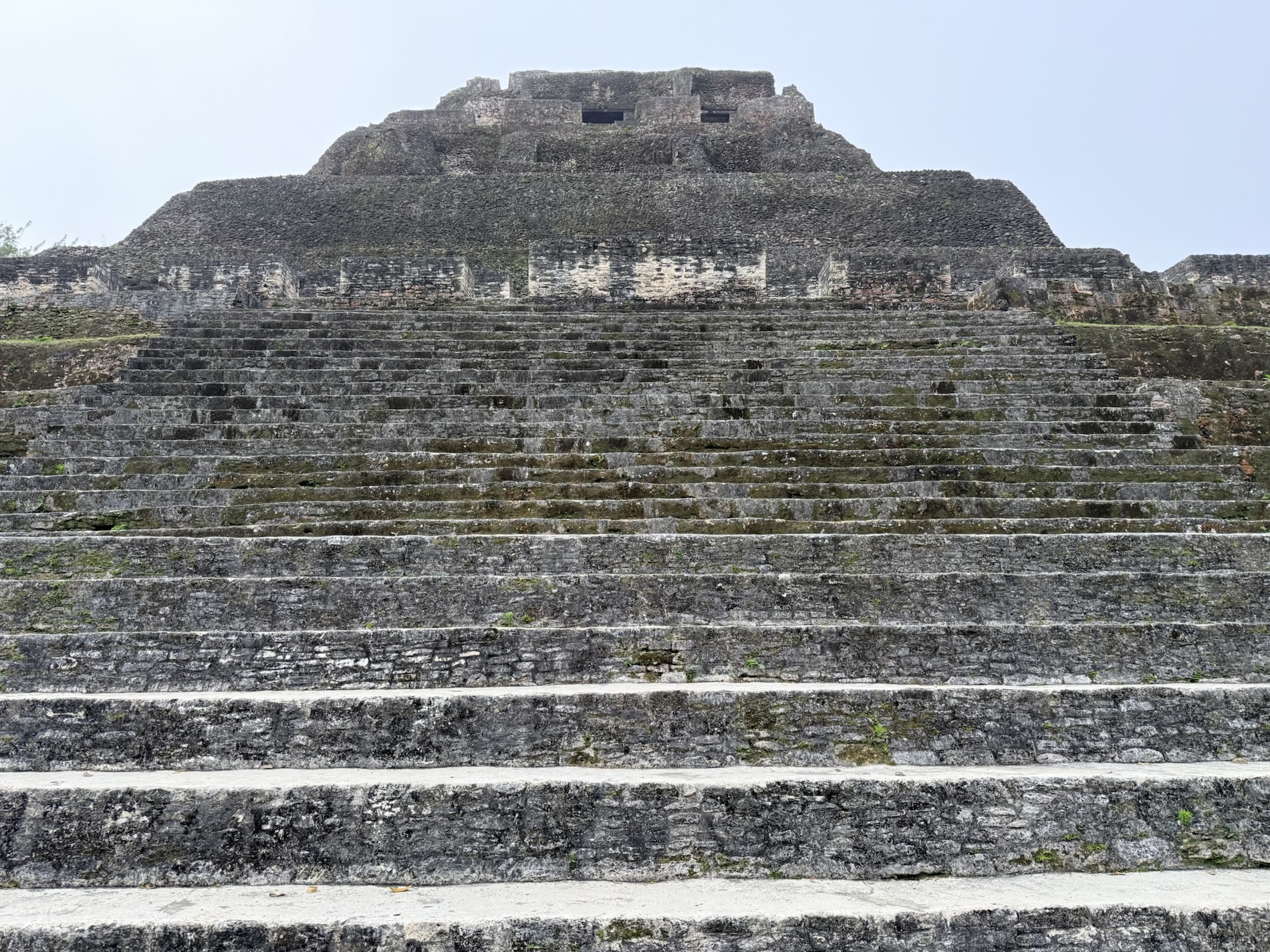
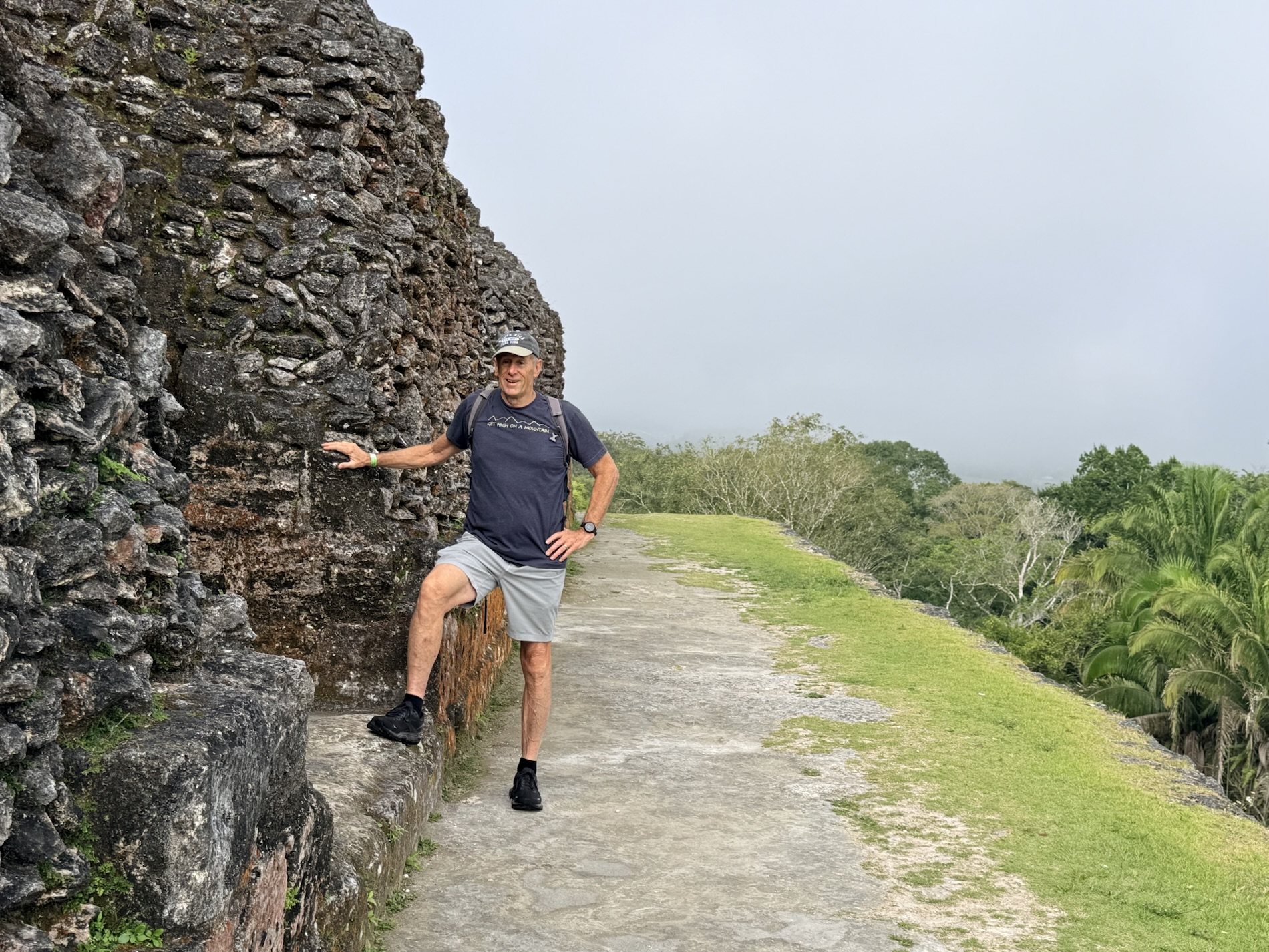
The pyramid “El Castillo” is one of the site’s better known structures. It is the second tallest structure in Belize (after the temple at Caracol) at some 40 meters (130 feet). It was actually a large multi-complex building that served as a dwelling, shrine, and administrative hub for the elite rulers of the center, rather than the primary temple. A series of terraces leads to a fine stucco “frieze” depicting the birth of a god associated with the royal family, gods of creation, as well as the tree of life (which extends from the underworld, the earth and the heavens).
We were able to climb El Castillo for magnificent views of the entire site, as well as the countryside extending into Guatemala. Because we were the first people to arrive, we had the place almost to ourselves.
In 750 AD, Xunantunich was left in a state of abandonment due to an unknown violent event. It did not reestablish itself as a strong presence until the Tsak’ phase in 780-890 AD.
Interestingly, while most Maya civilizations were crumbling, Xunantunich was expanding its city and power over other areas within the Valley. It lasted a century longer than most of the states within the region.
The site was first explored in the 1800s by a British medical officer, Dr. Thomas Gann. There have been continuous excavations and restorations since 1990 by the University of California (ULA).
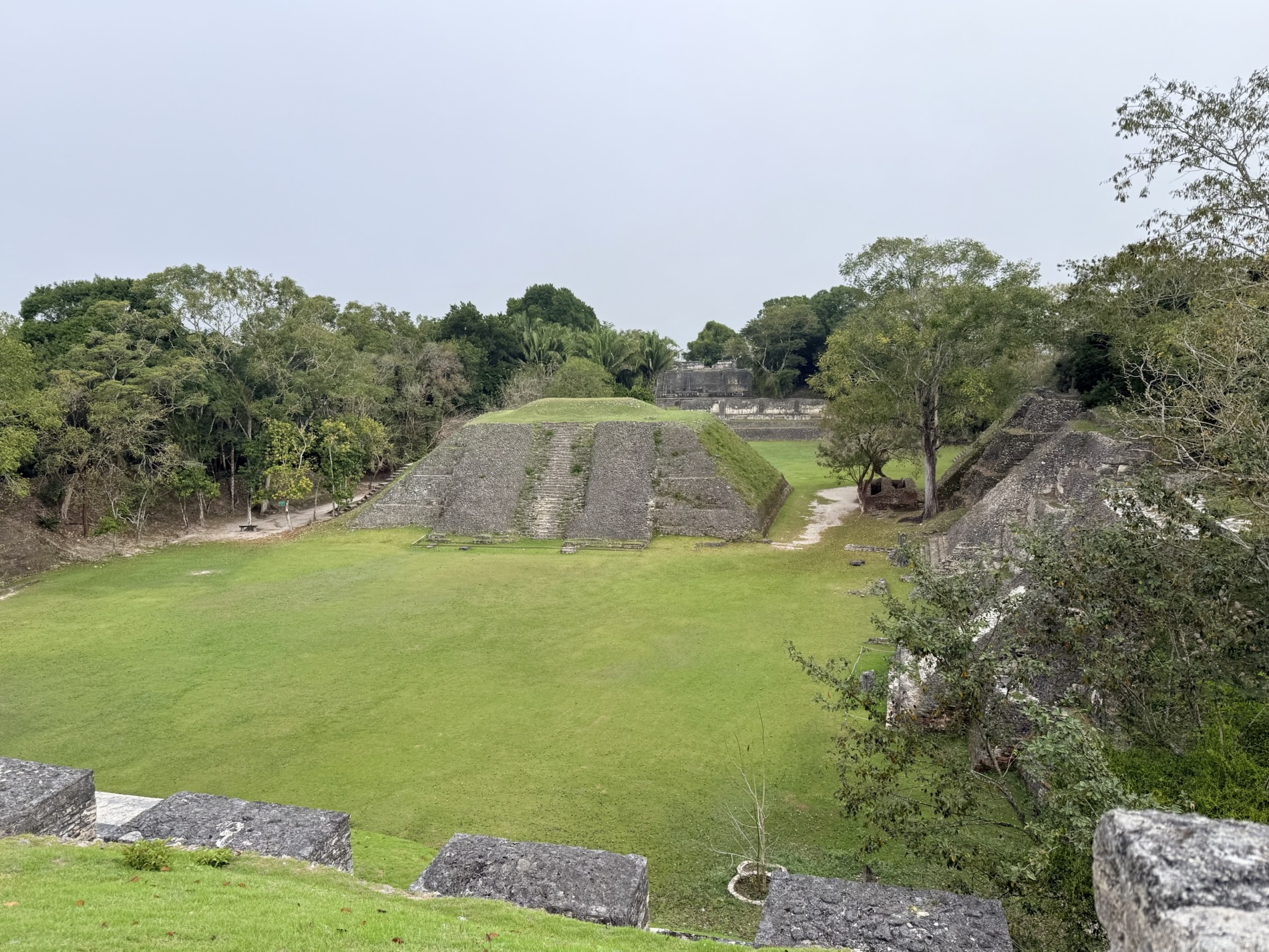
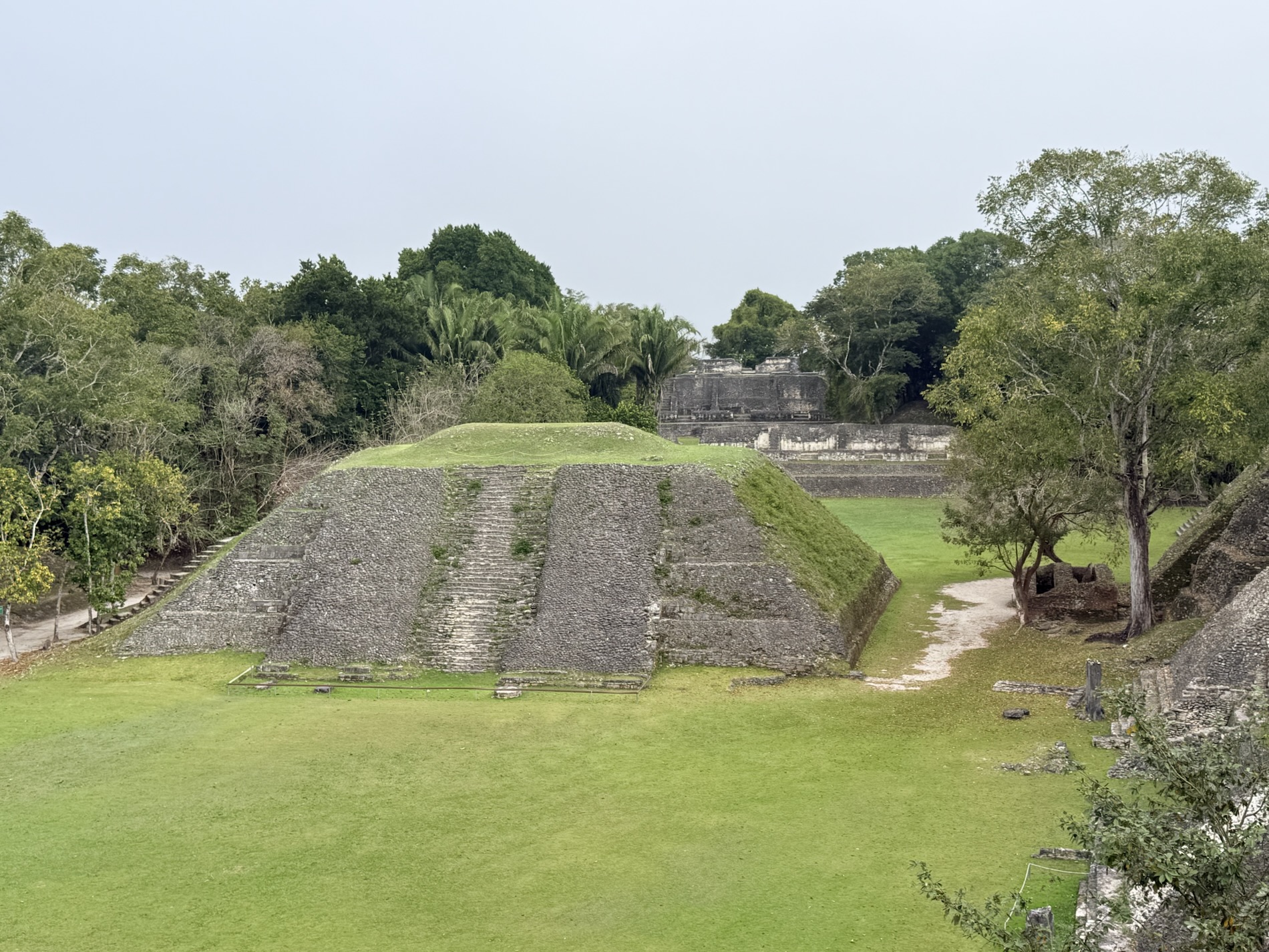
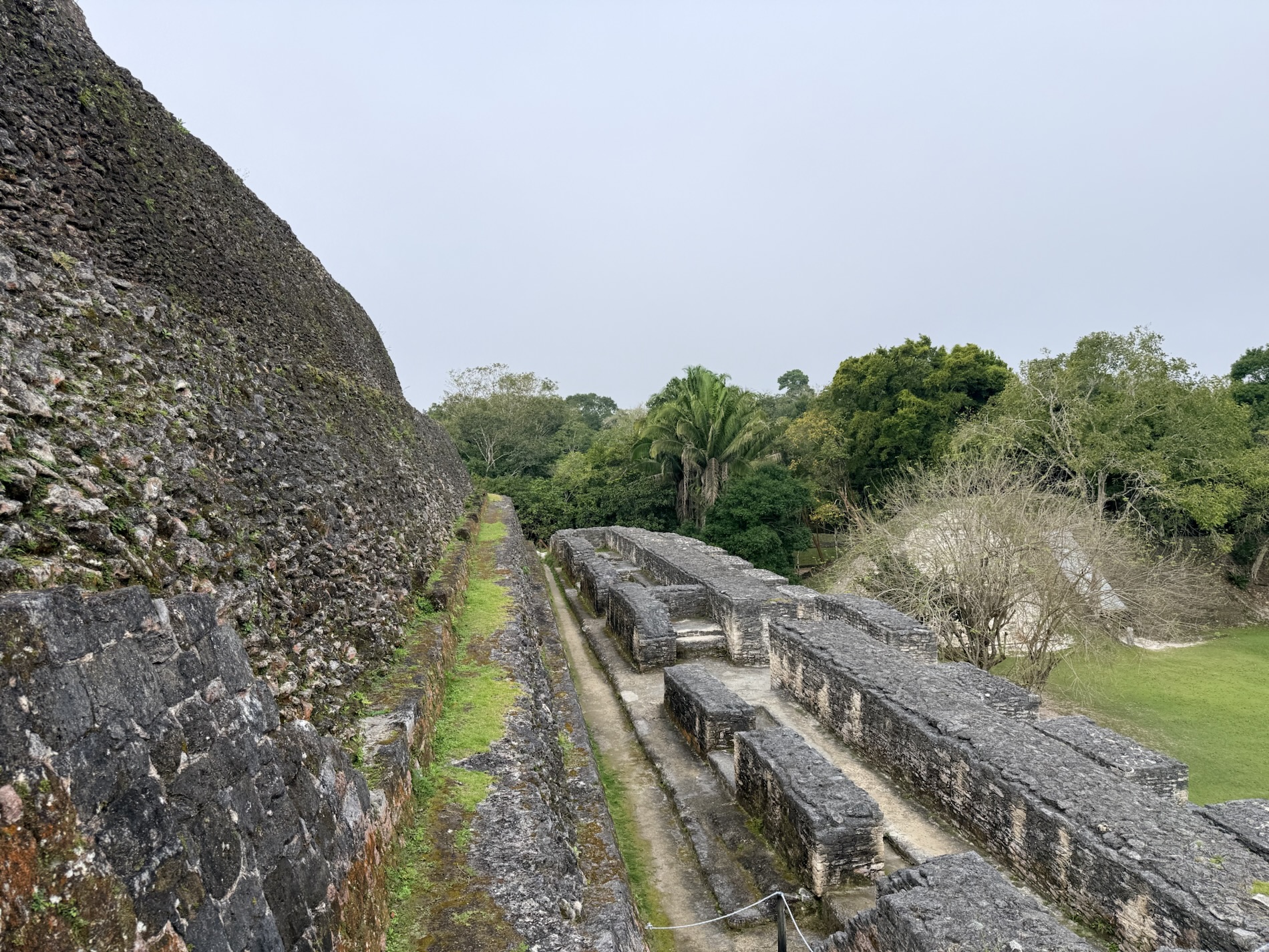
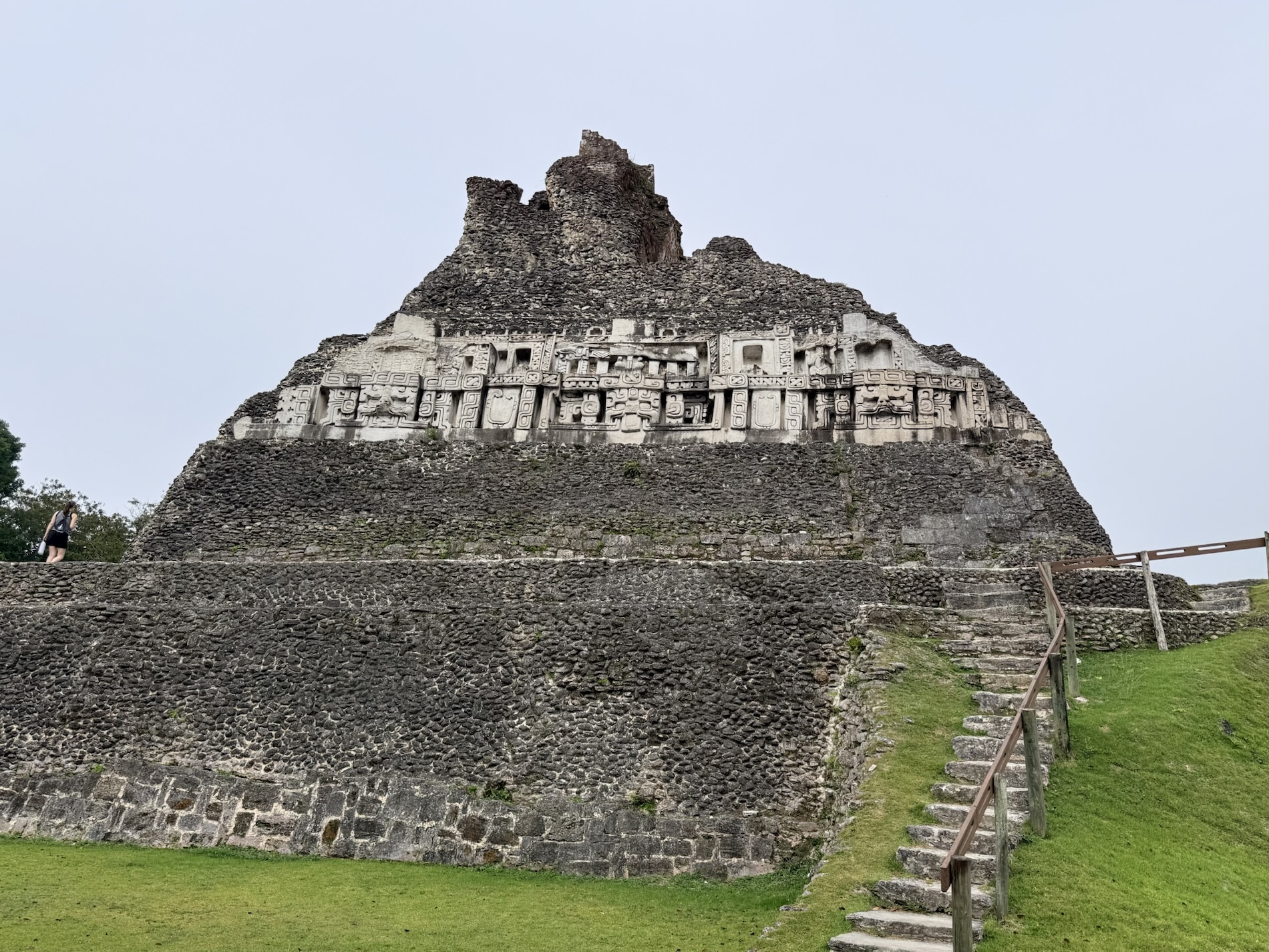
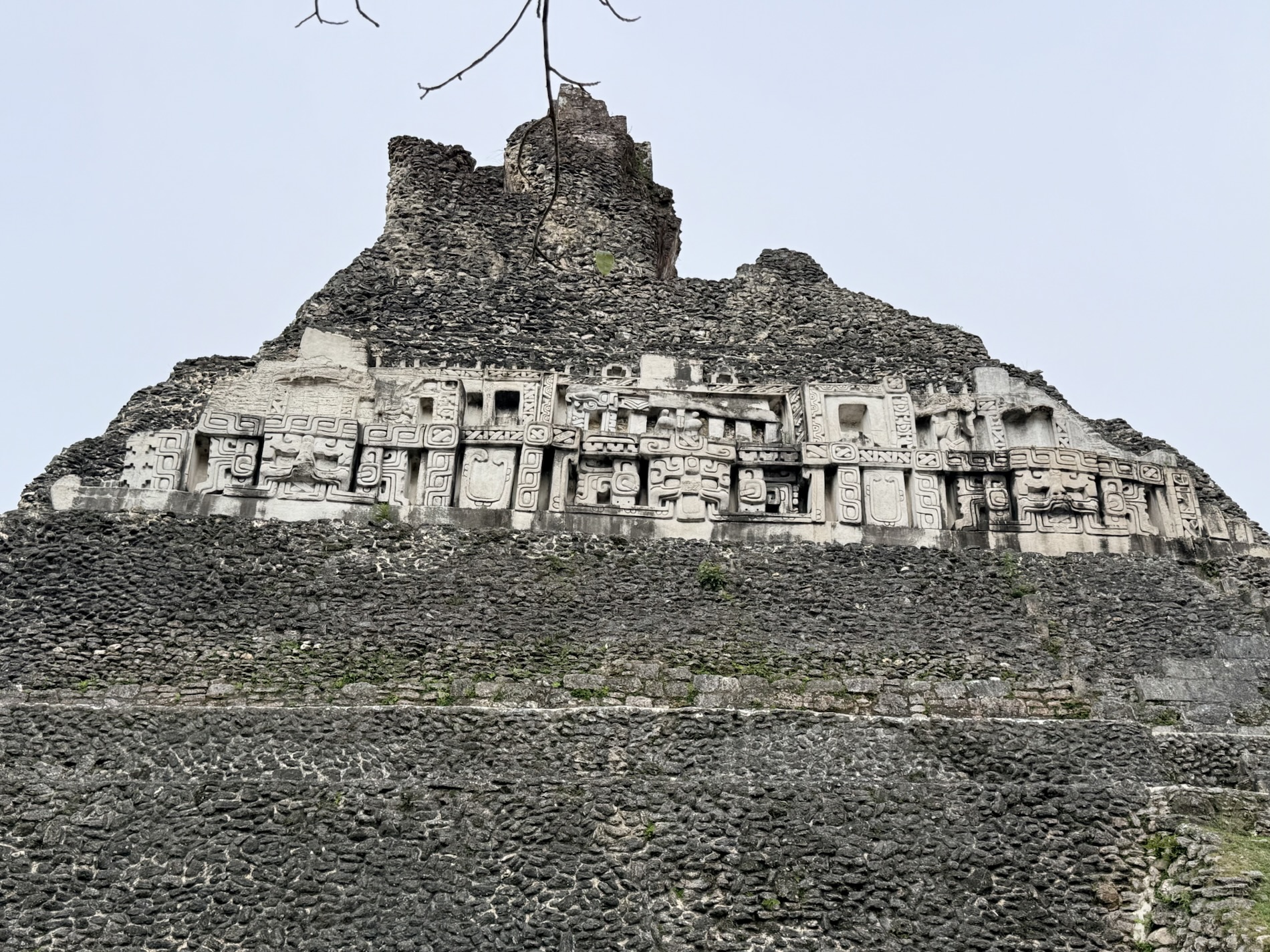
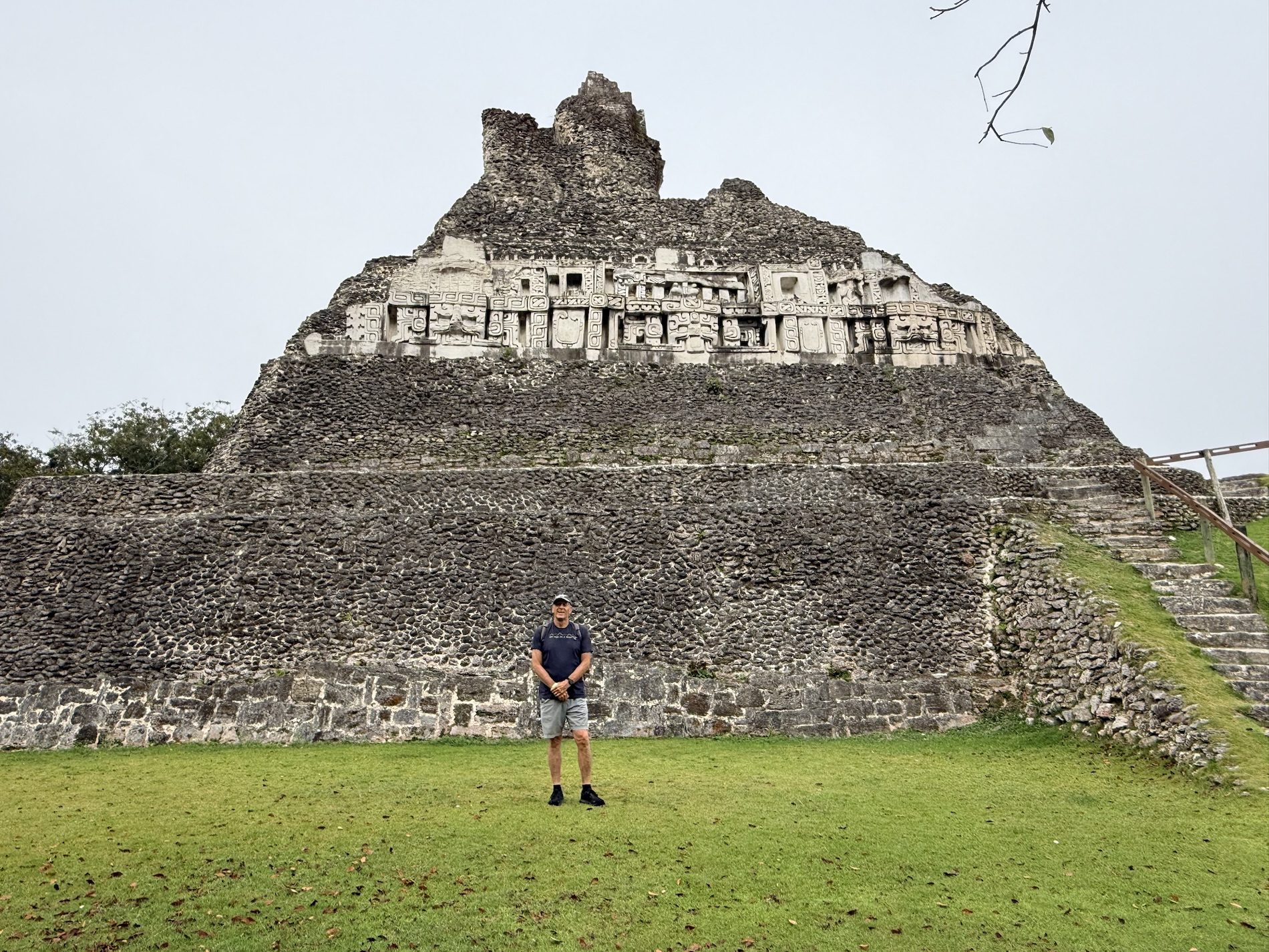
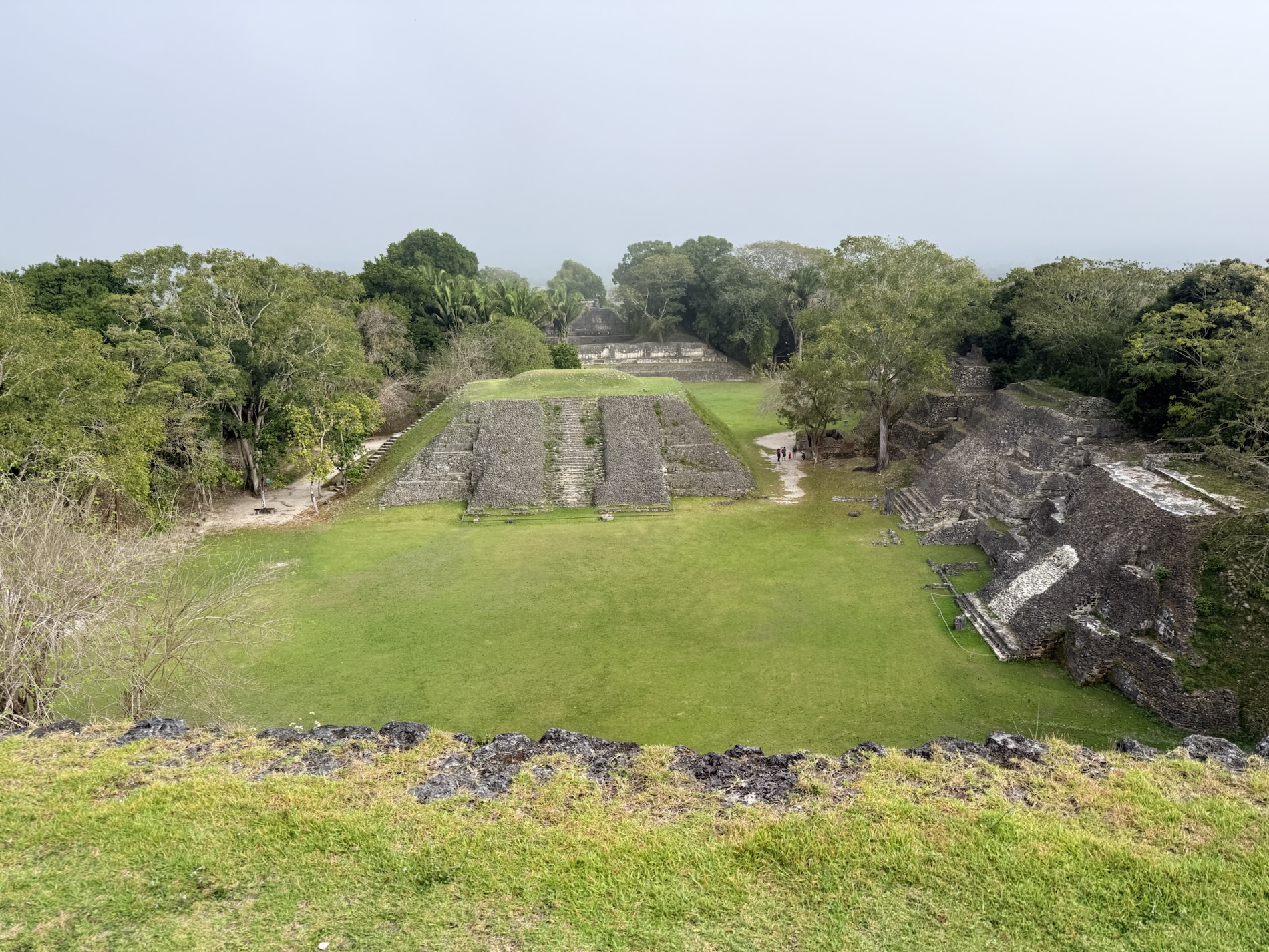
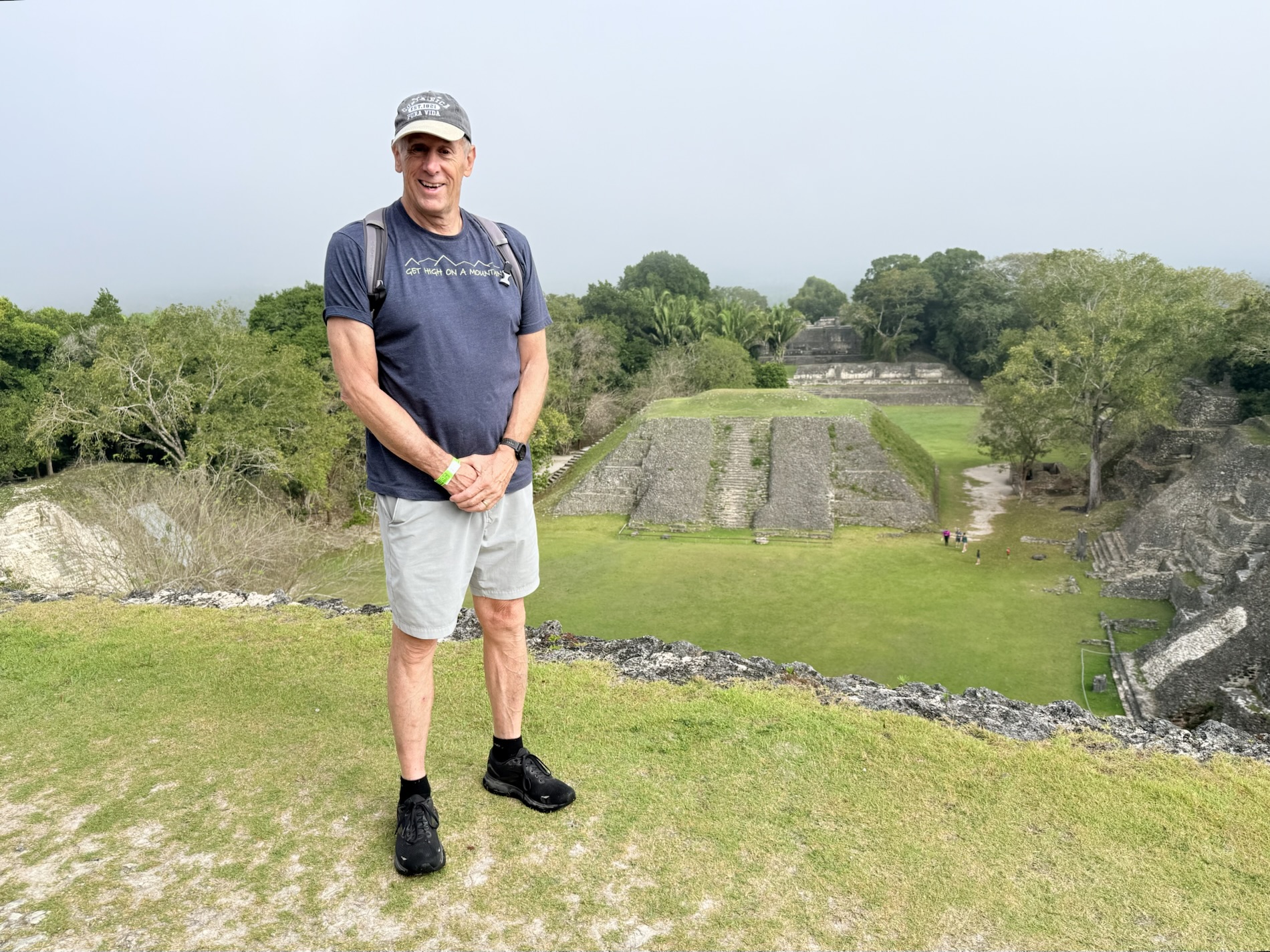
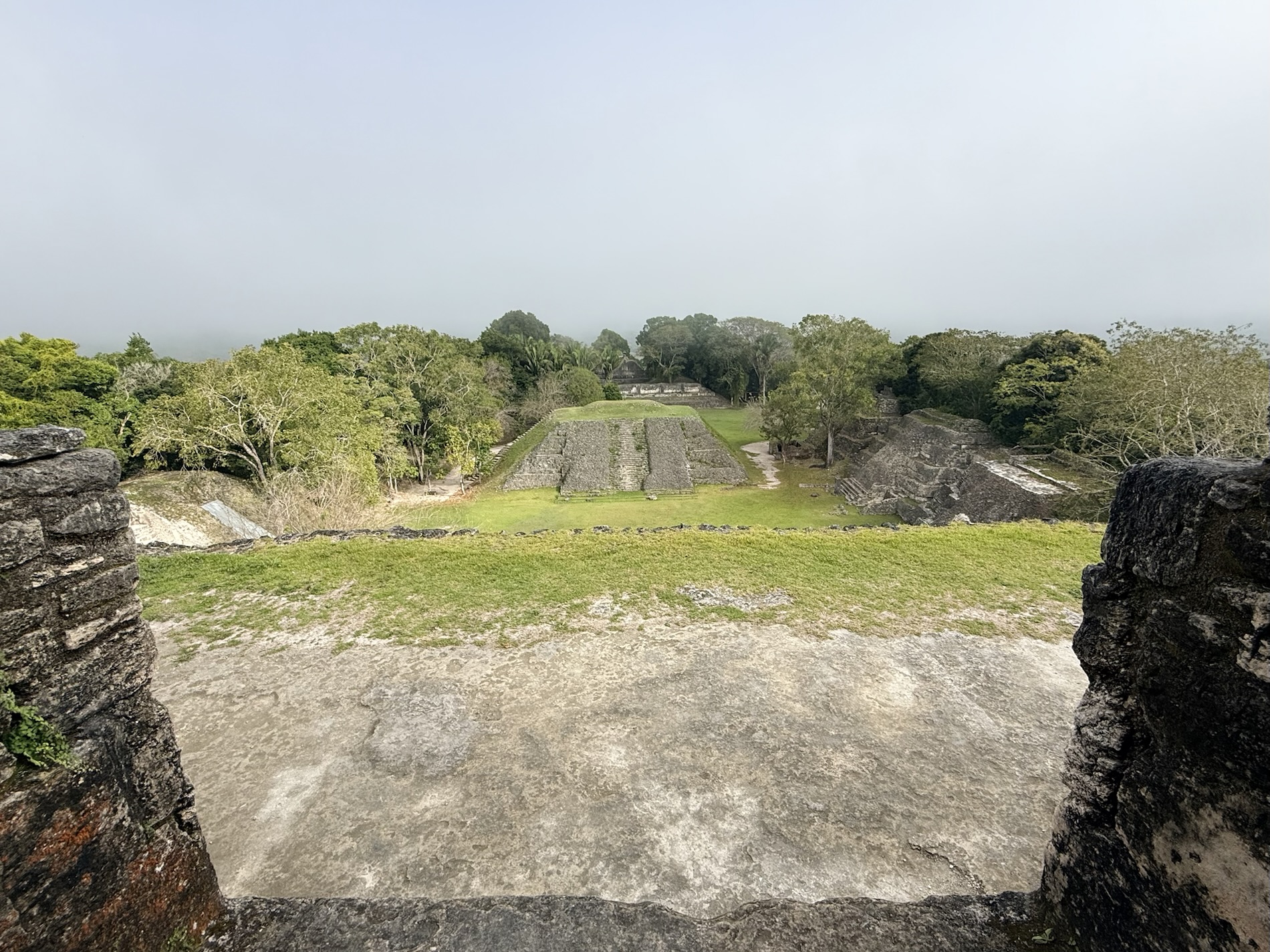
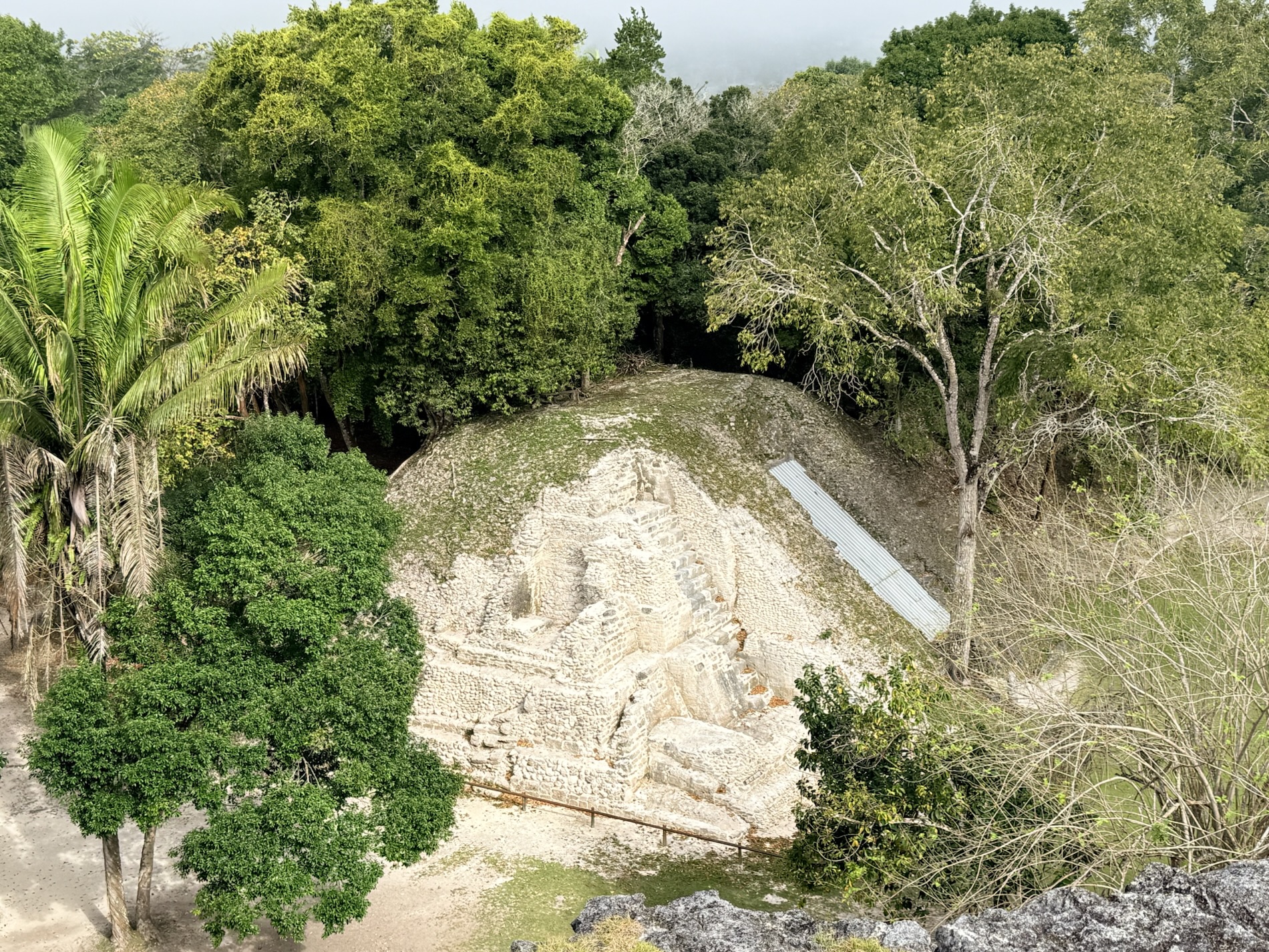
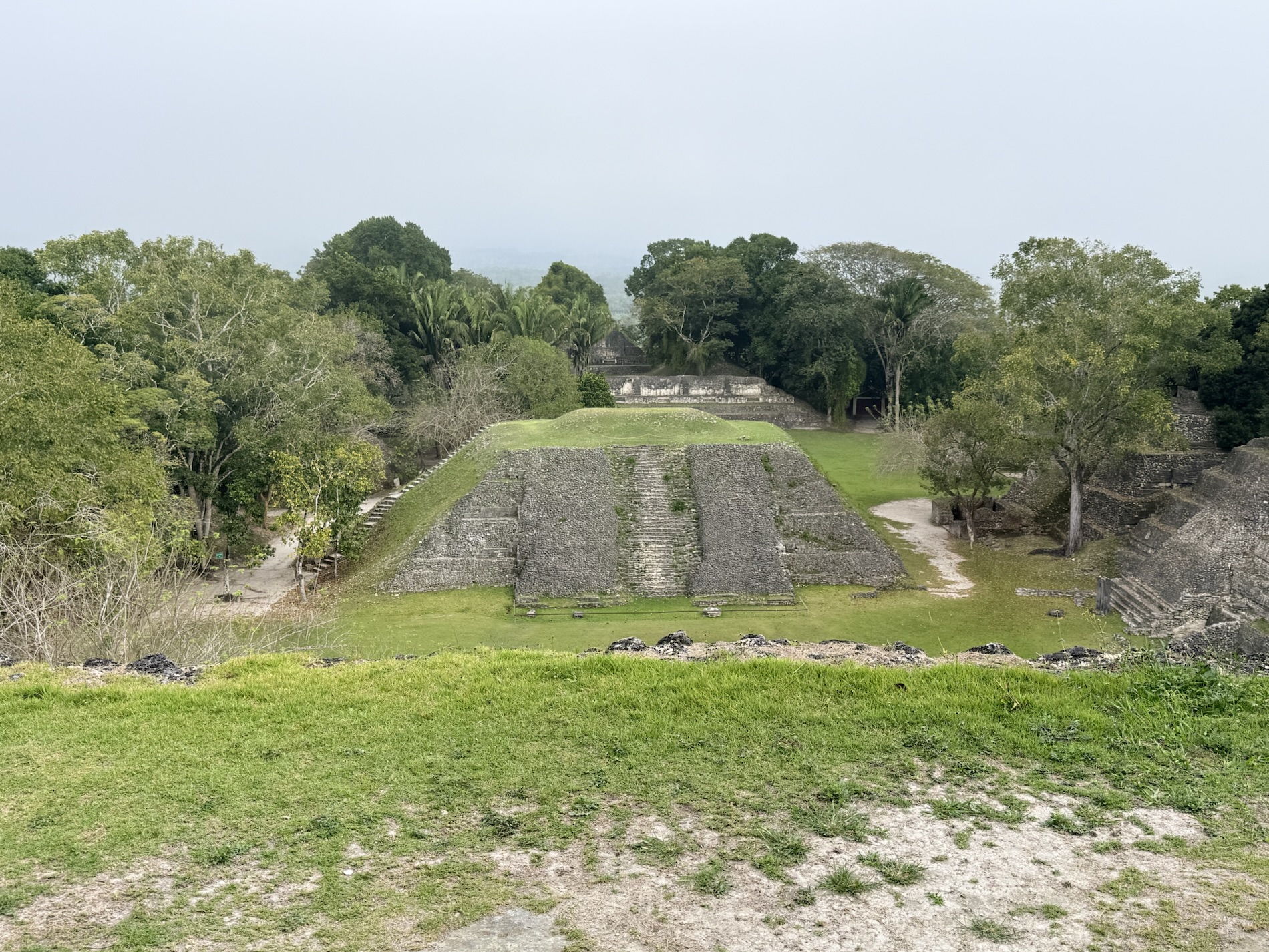
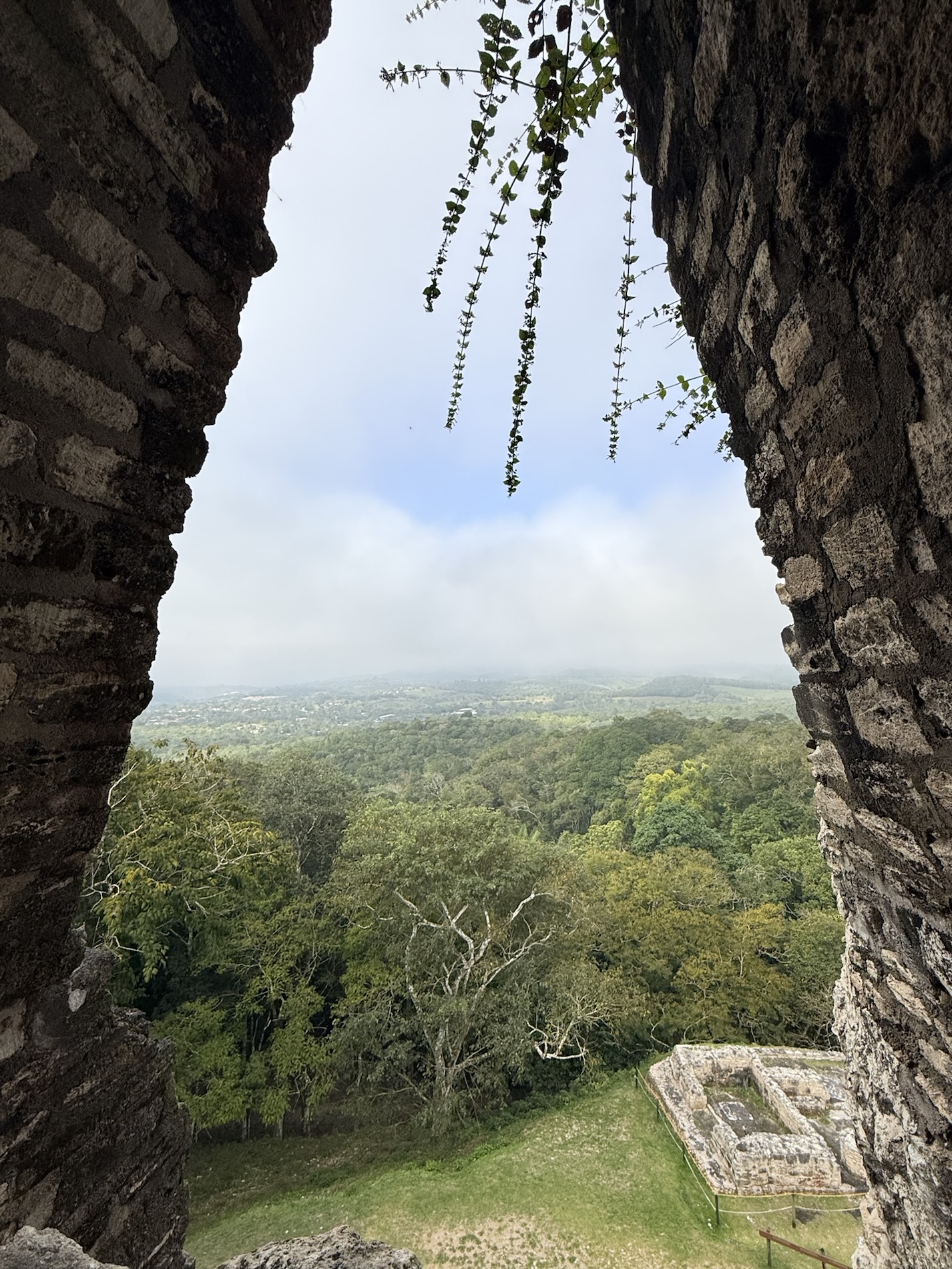
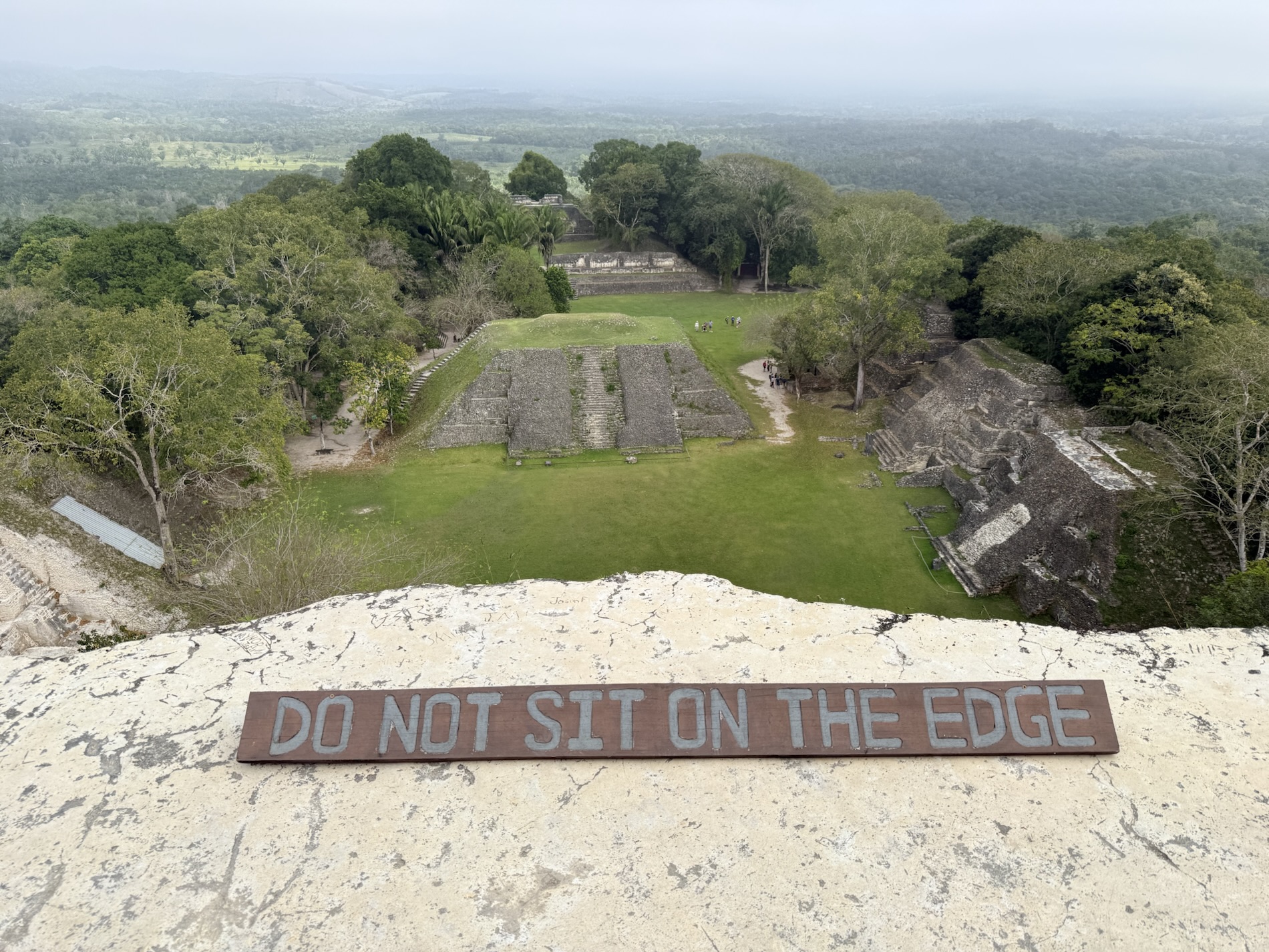
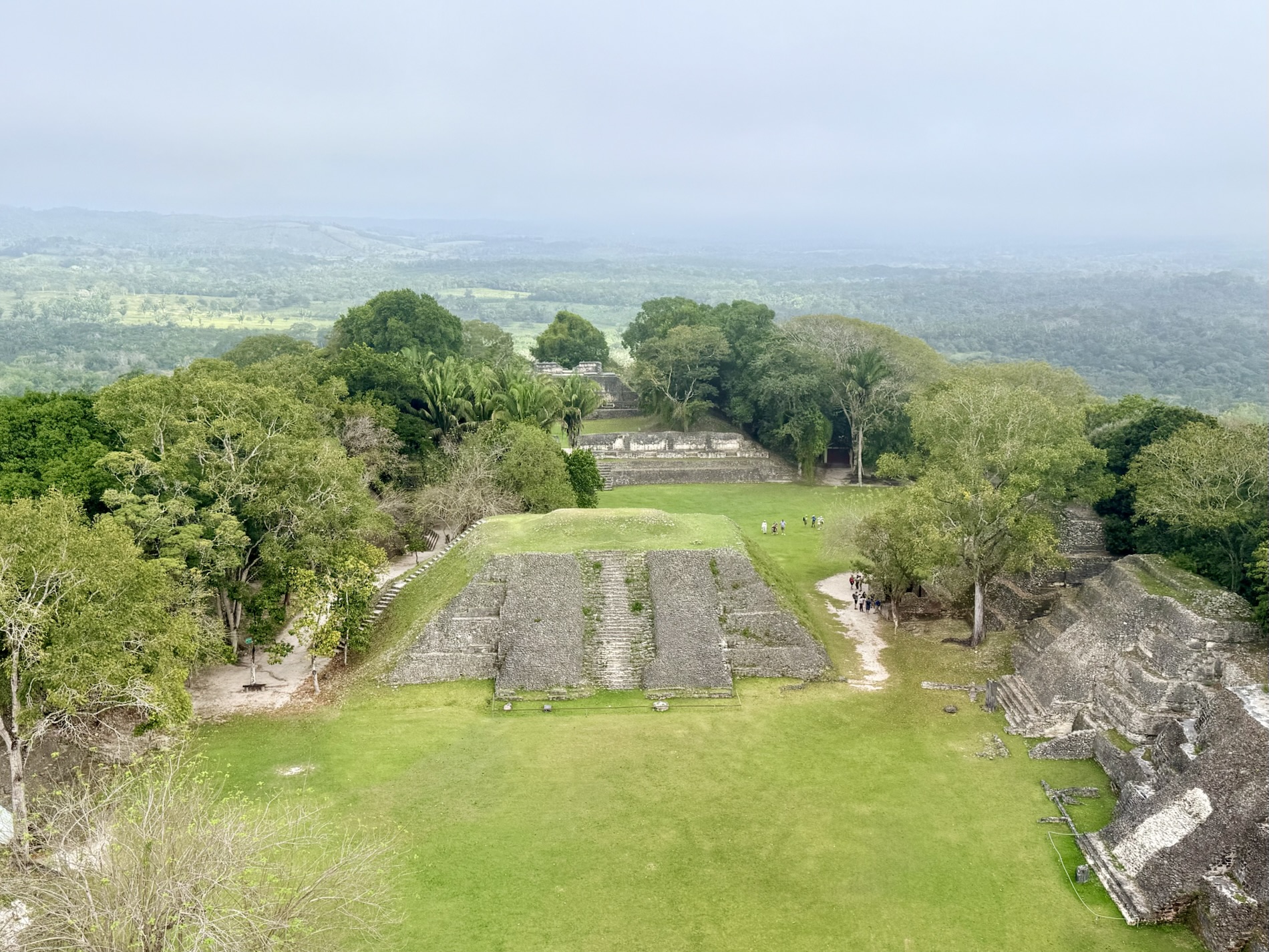
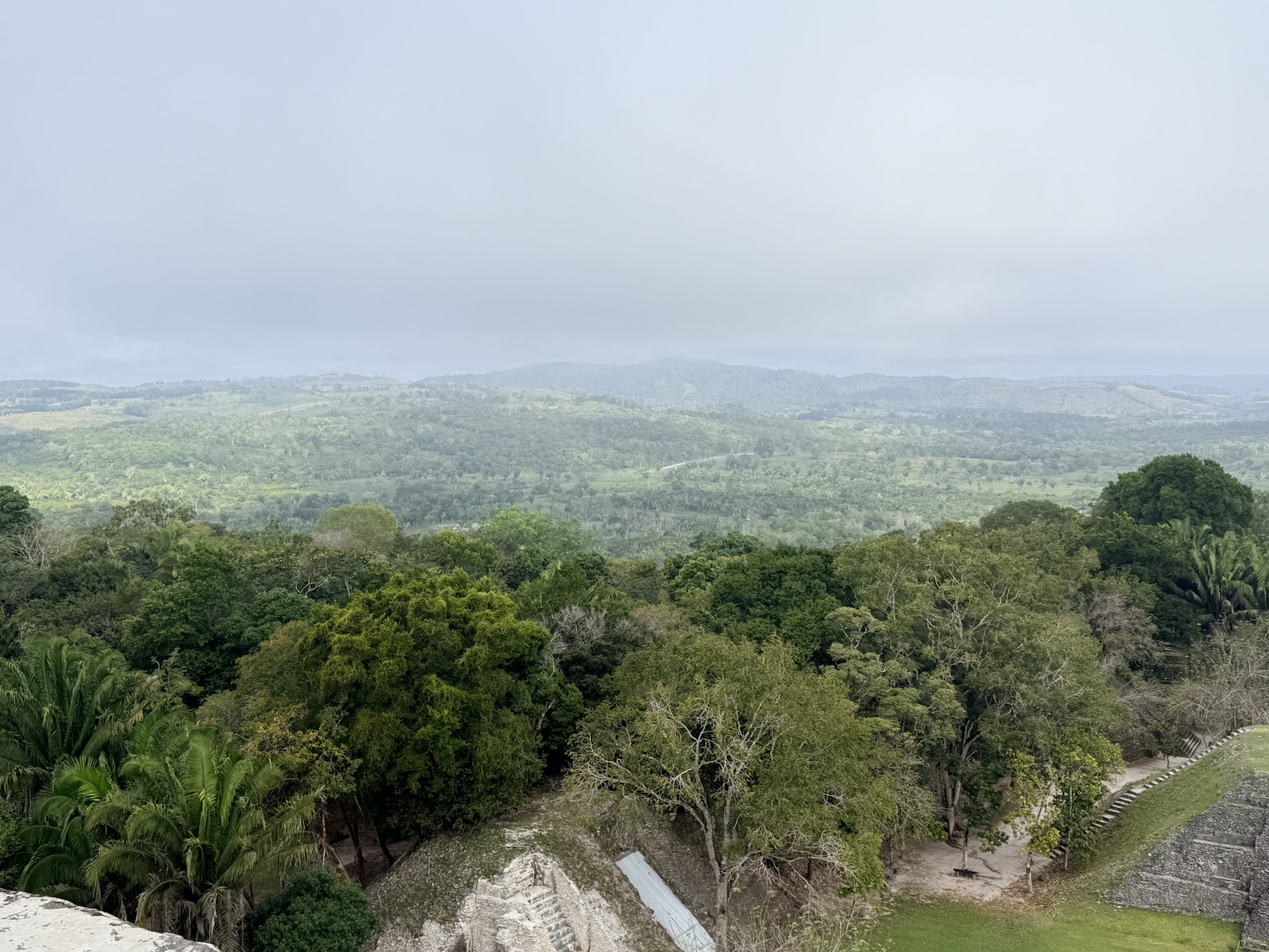
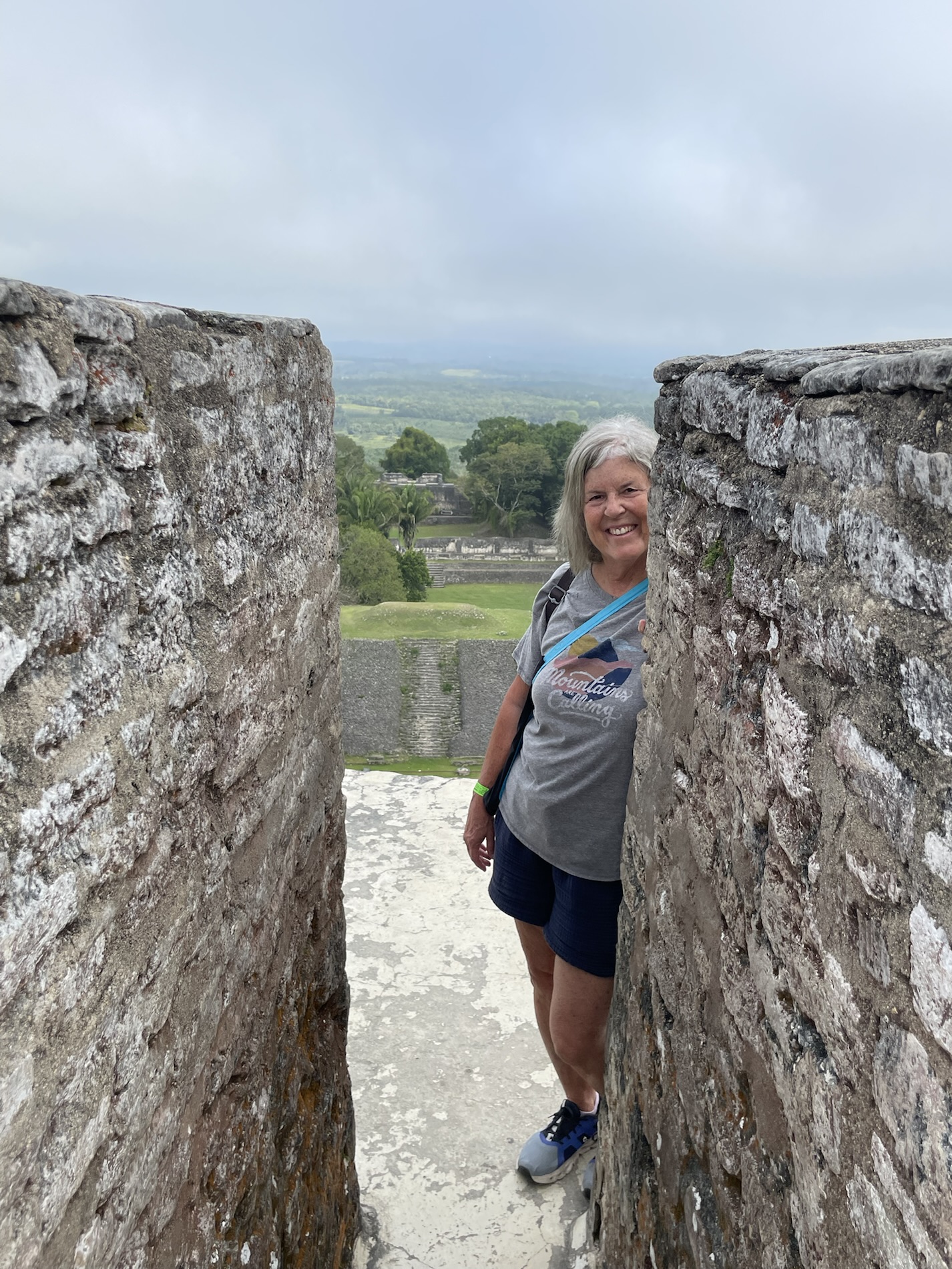
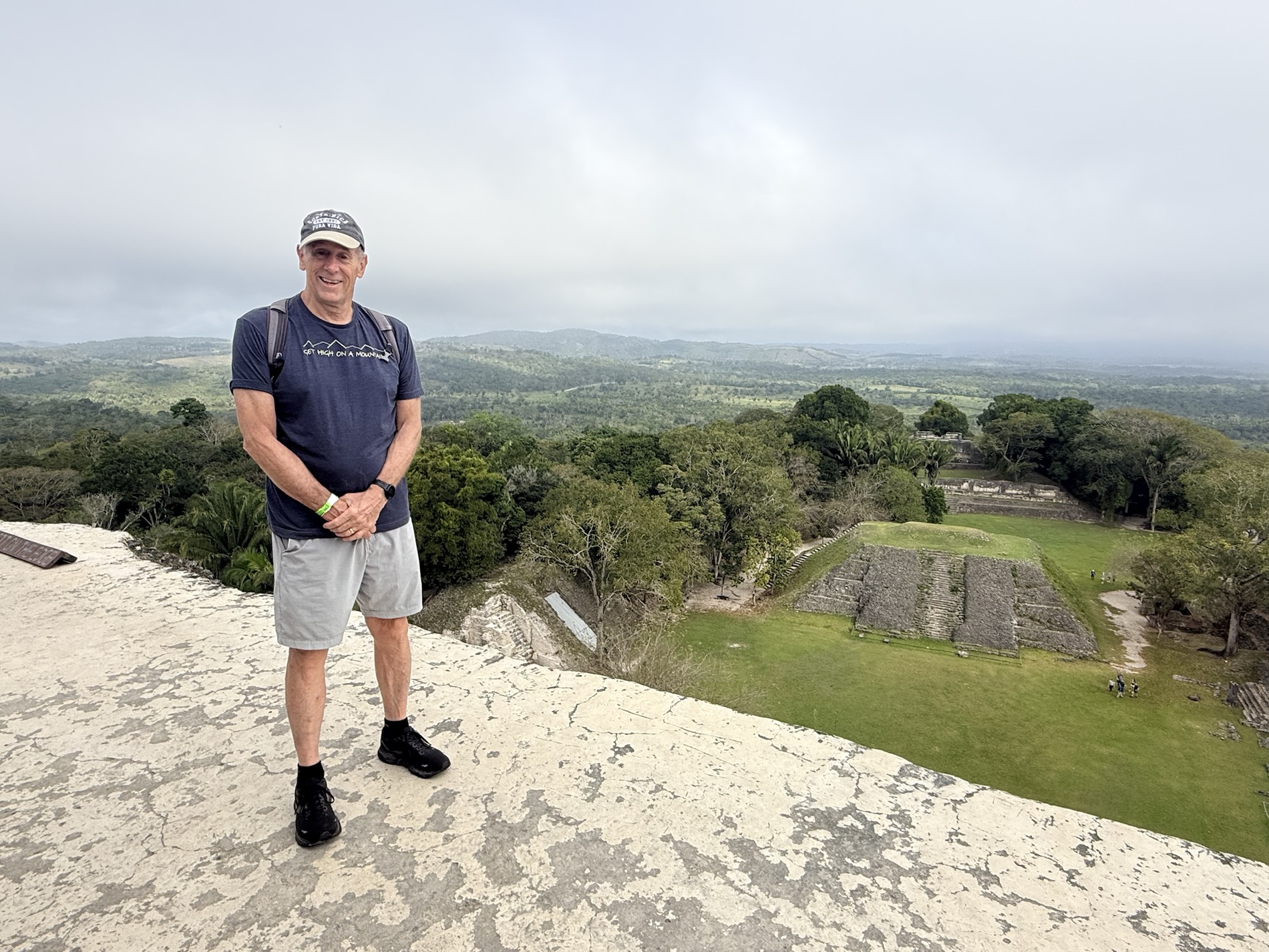
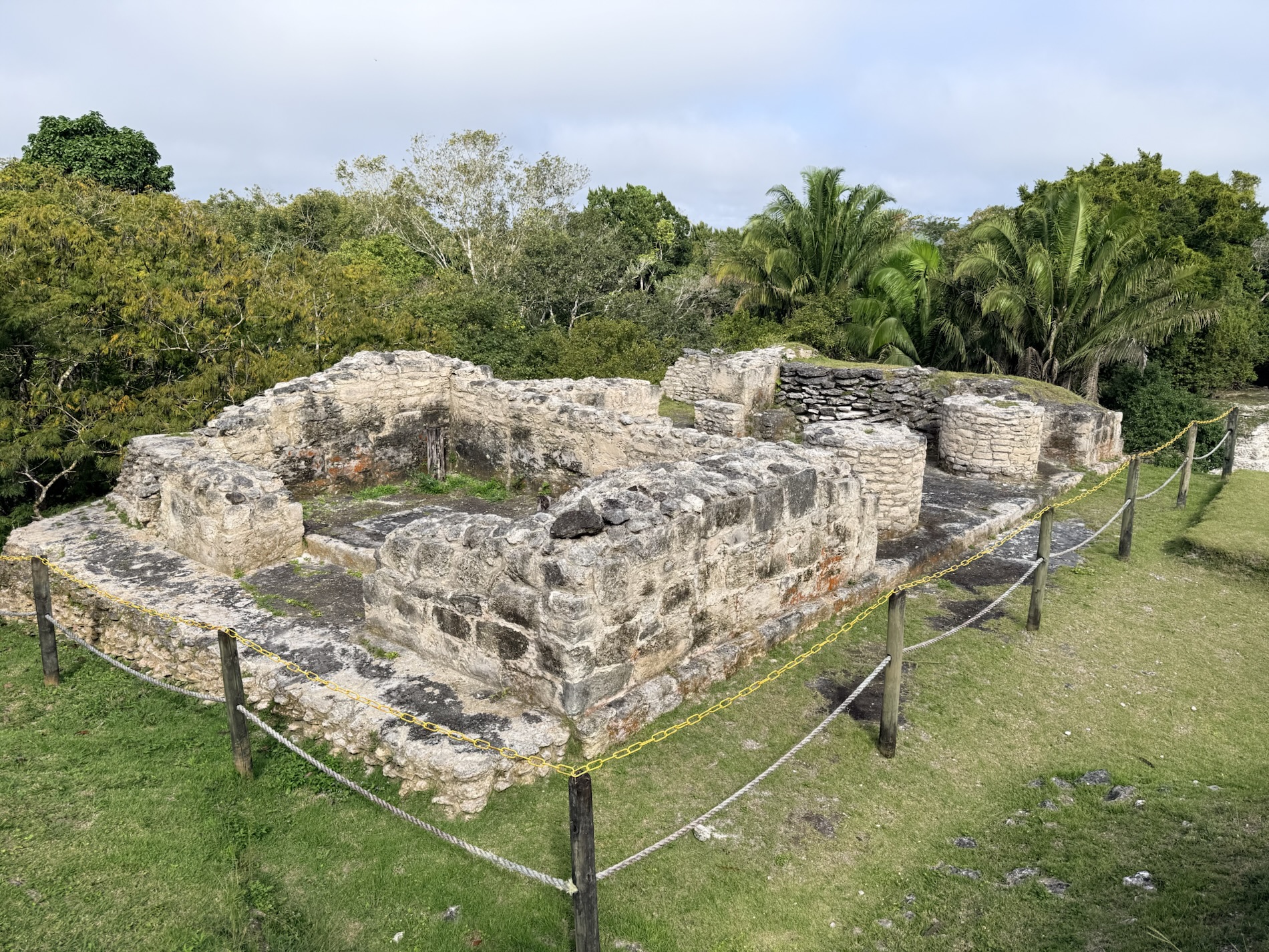
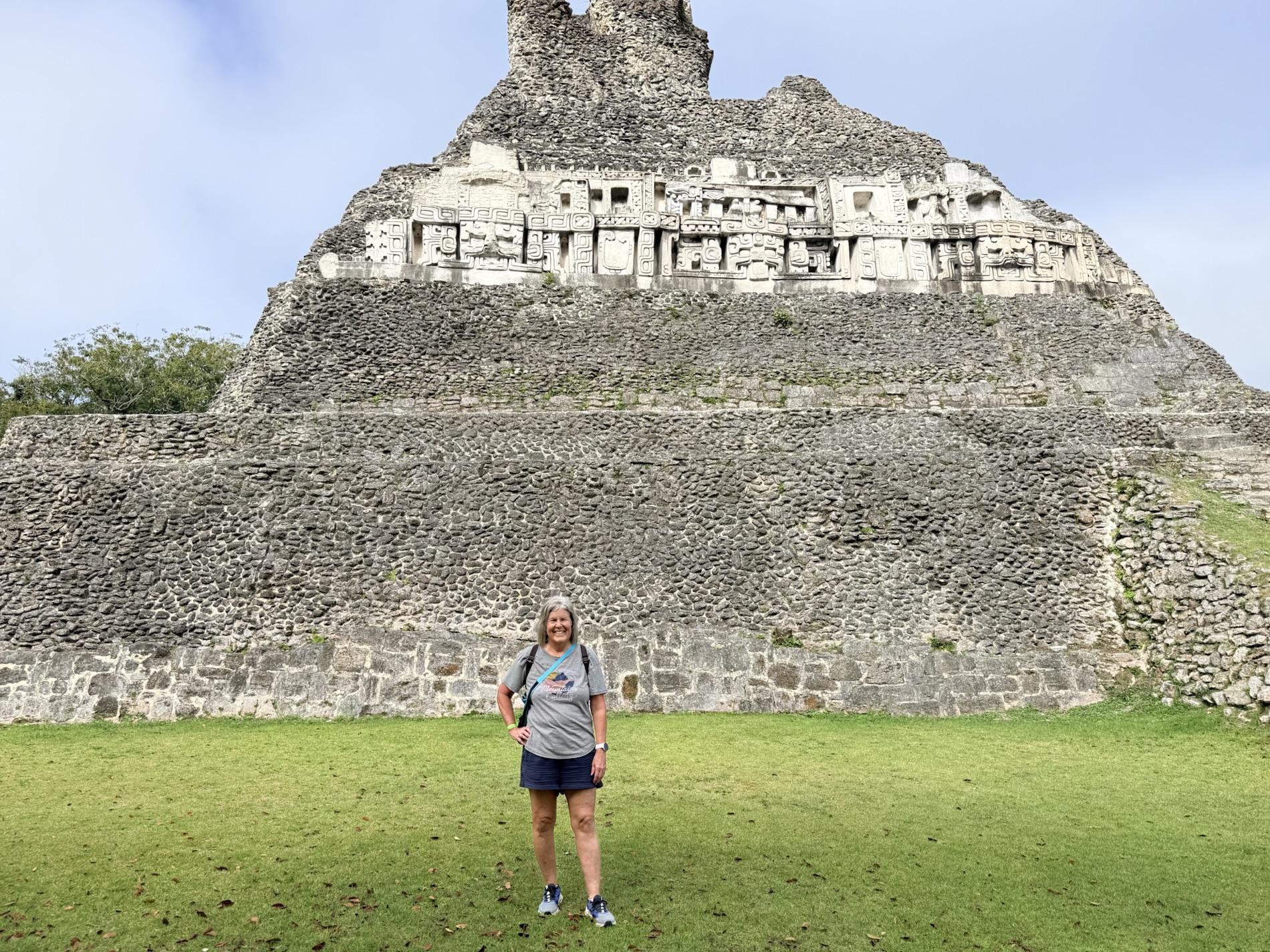
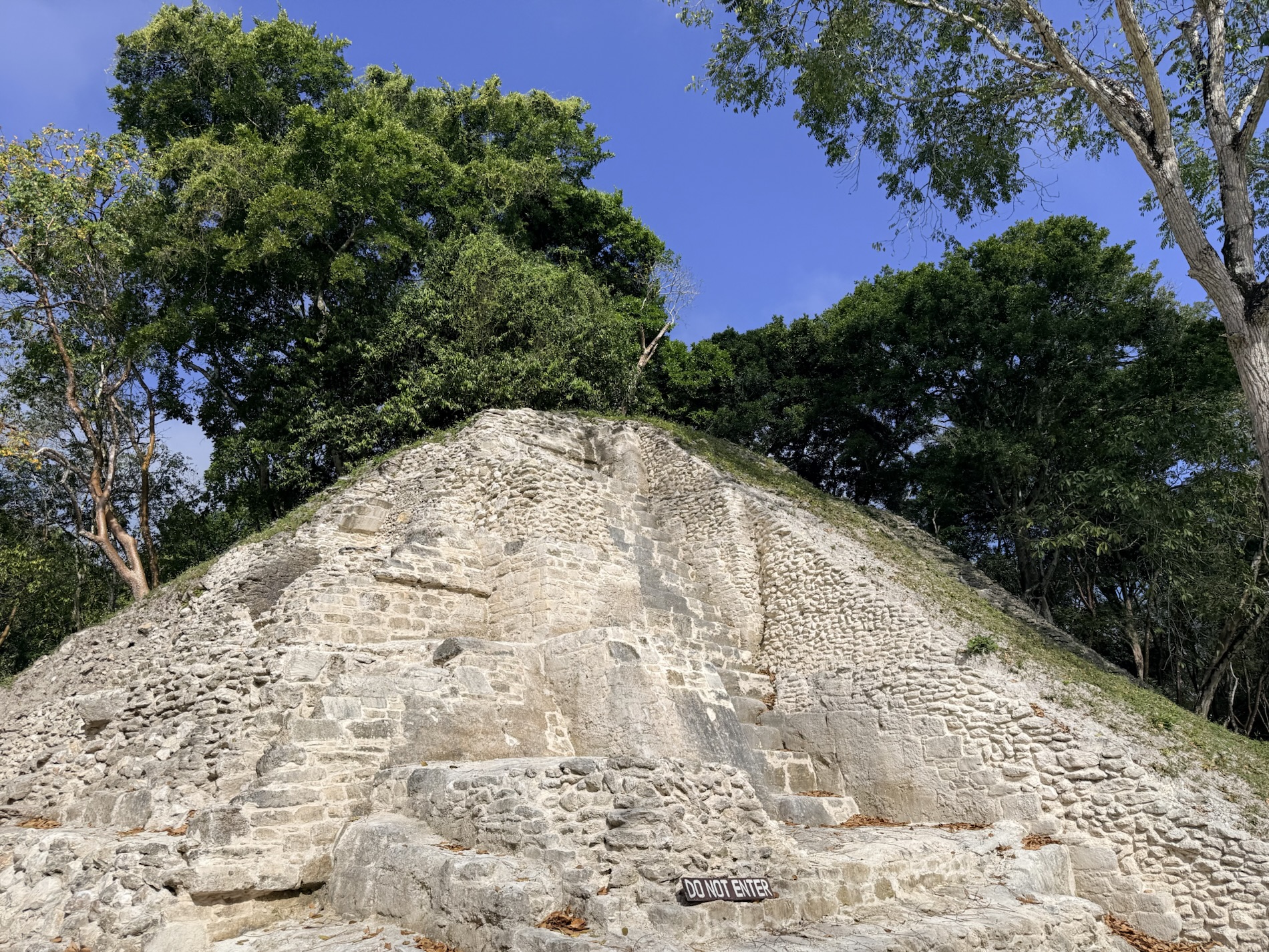
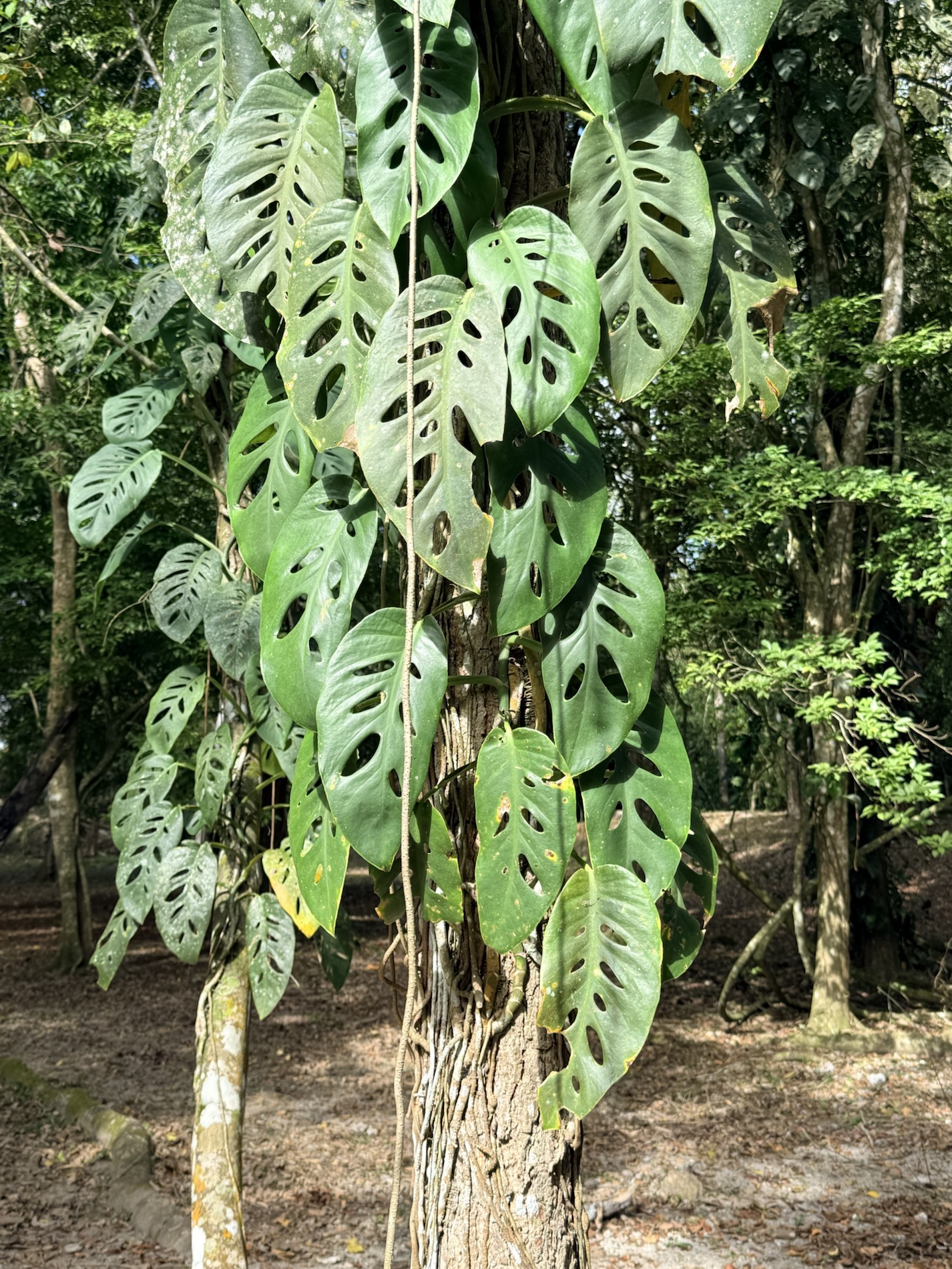
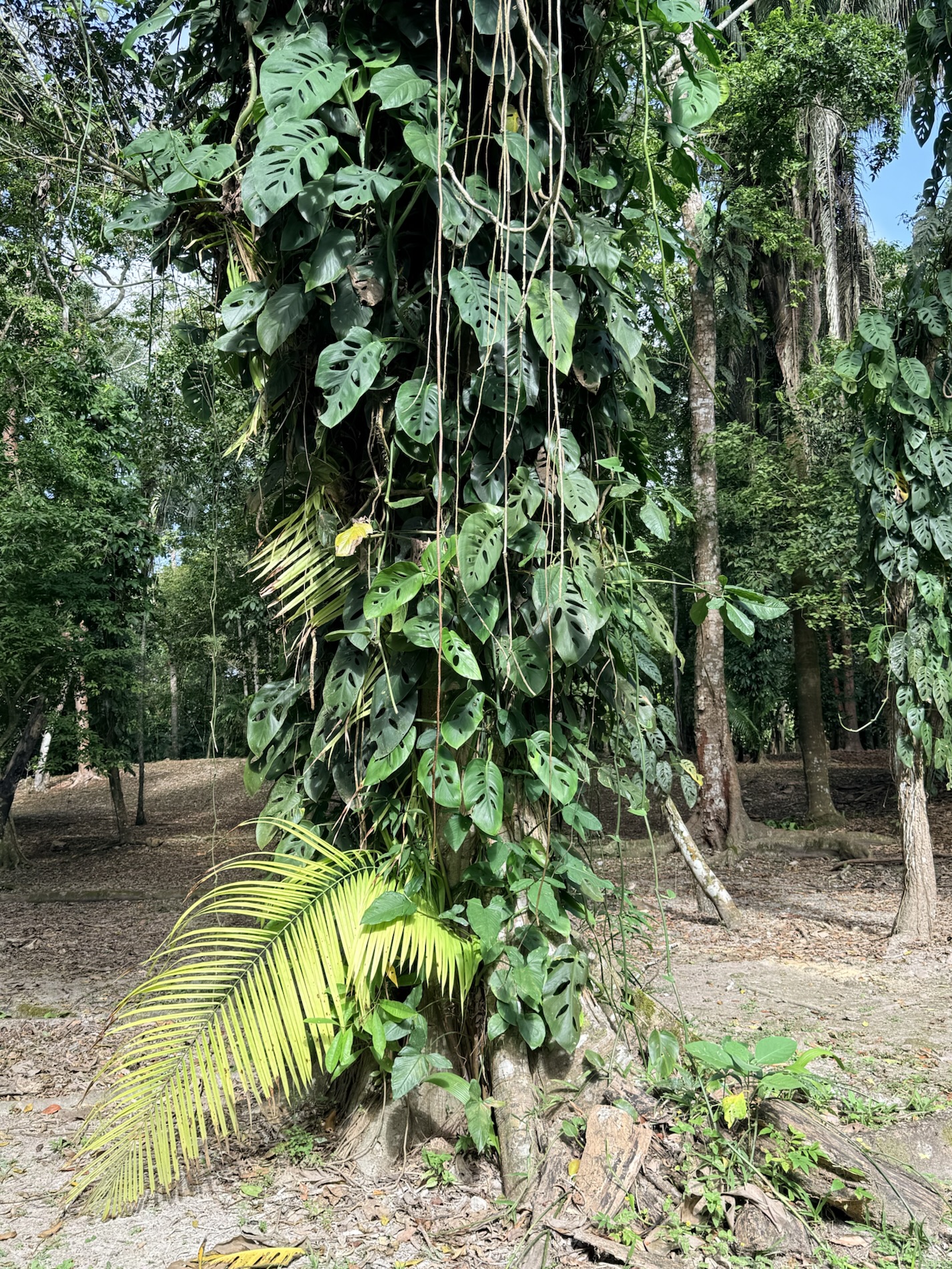
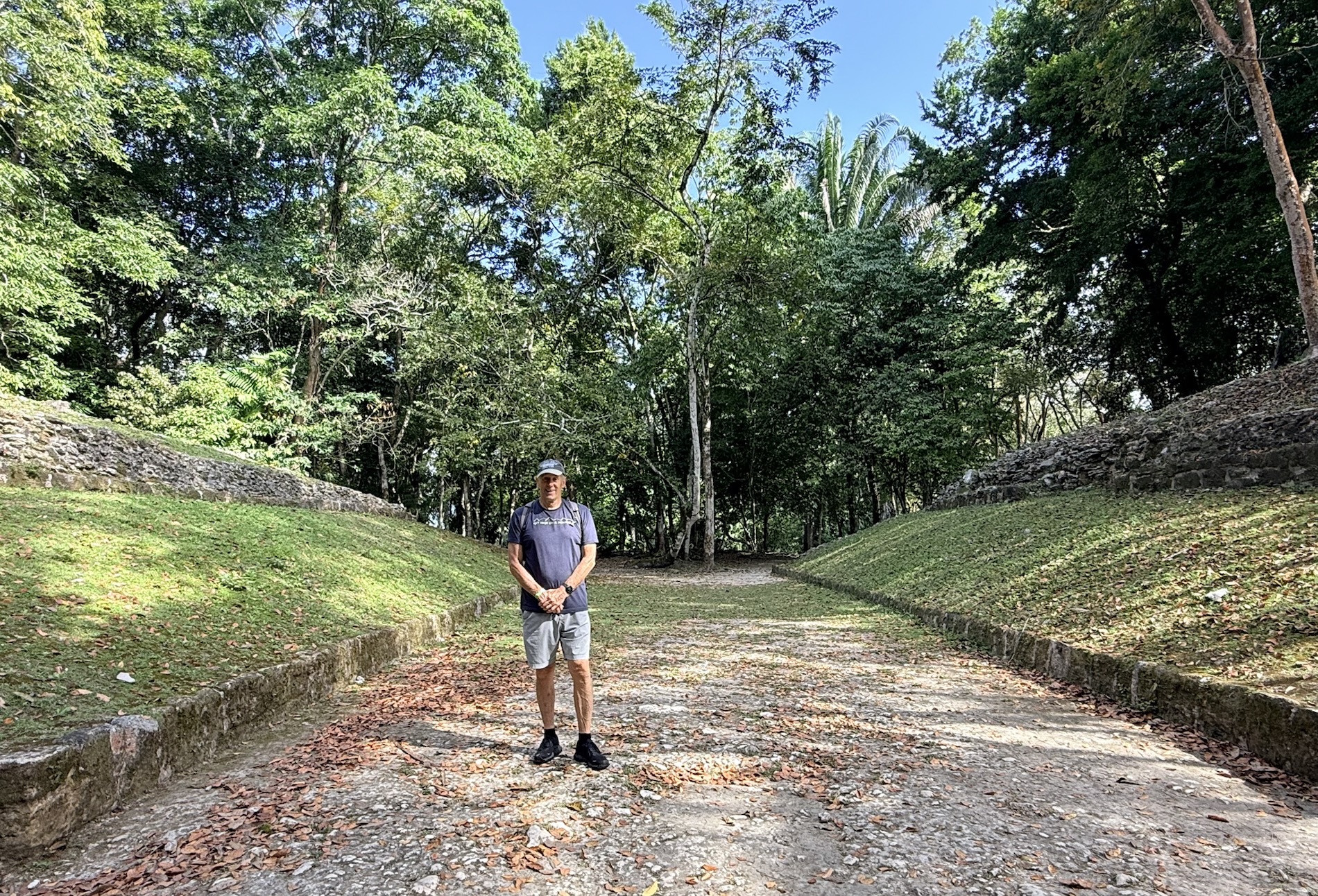
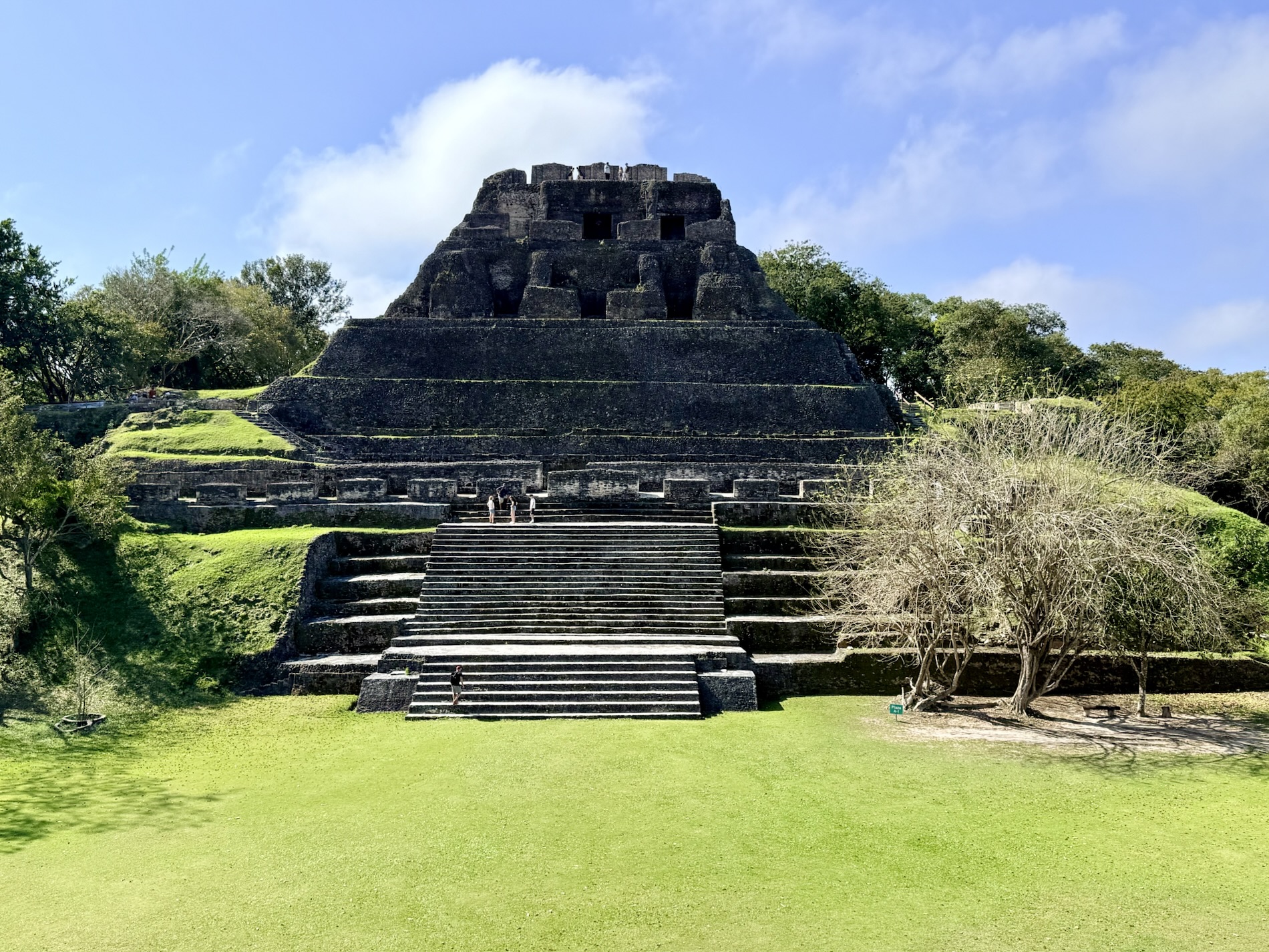
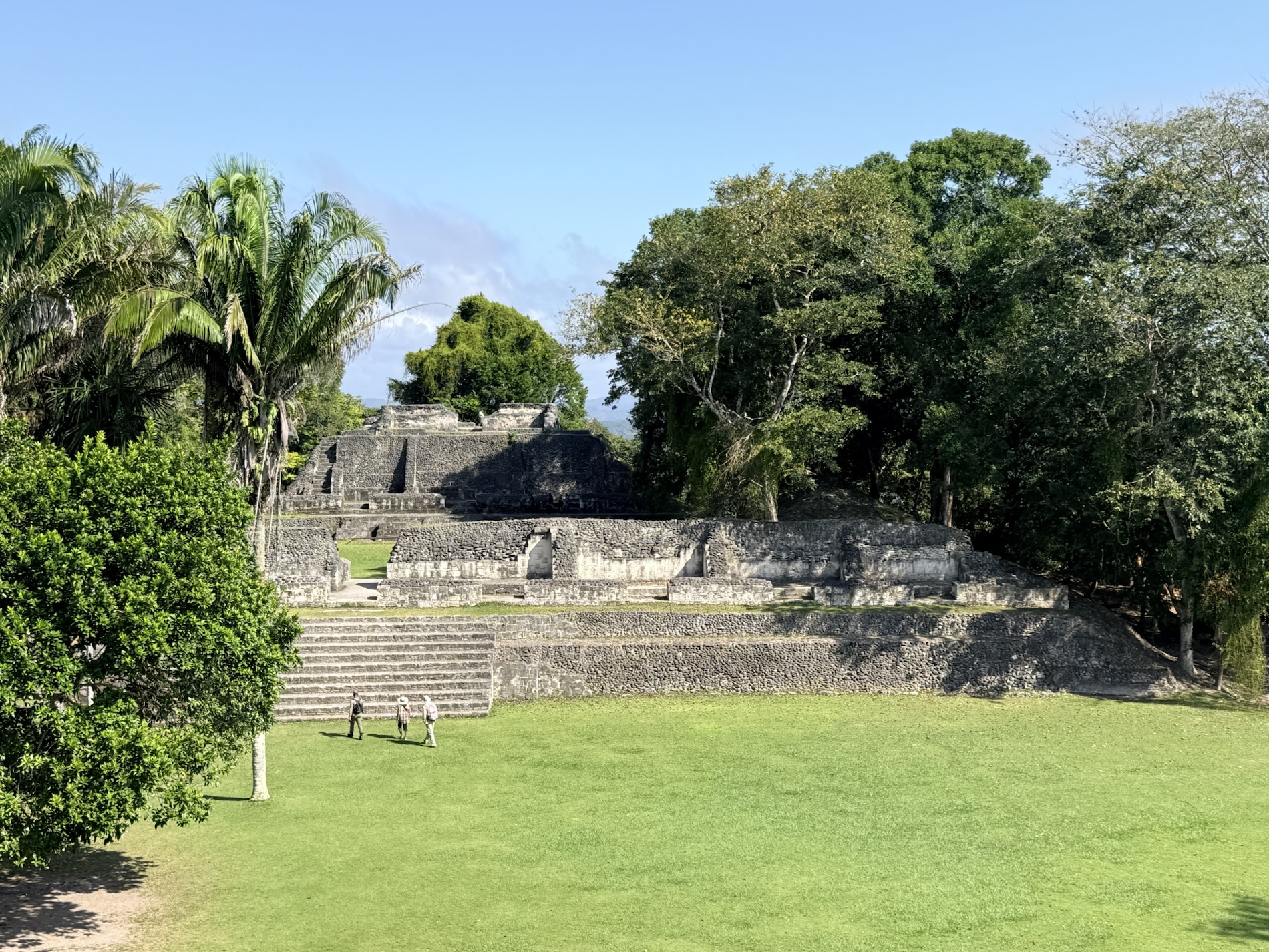
Here’s a short video of the view of Xunantunich from El Castillo.
Cahal Pech
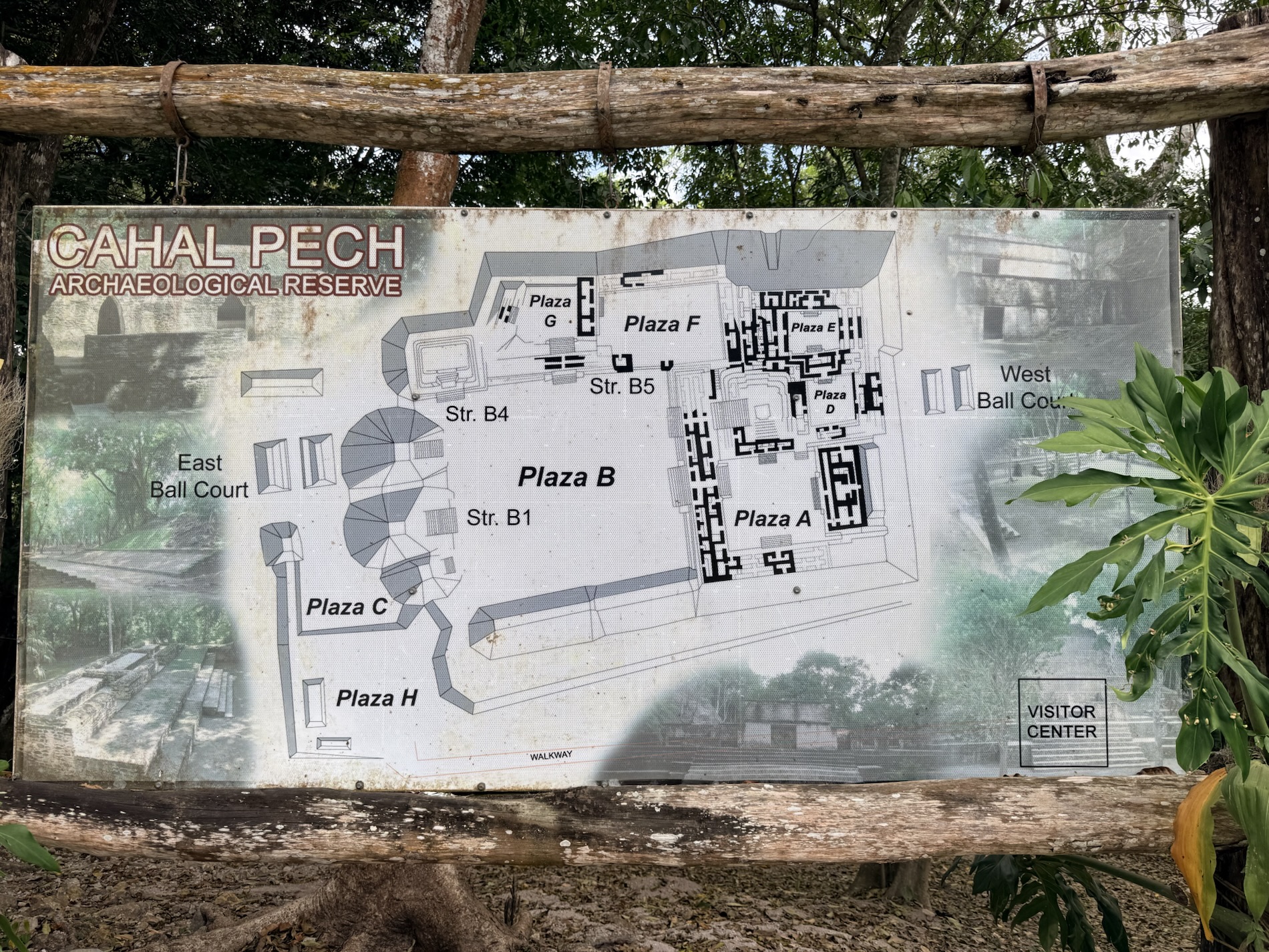
Cahal Pech is another Mayan site located within the city of San Ignacio. A rendering in the museum at the site looks like this:
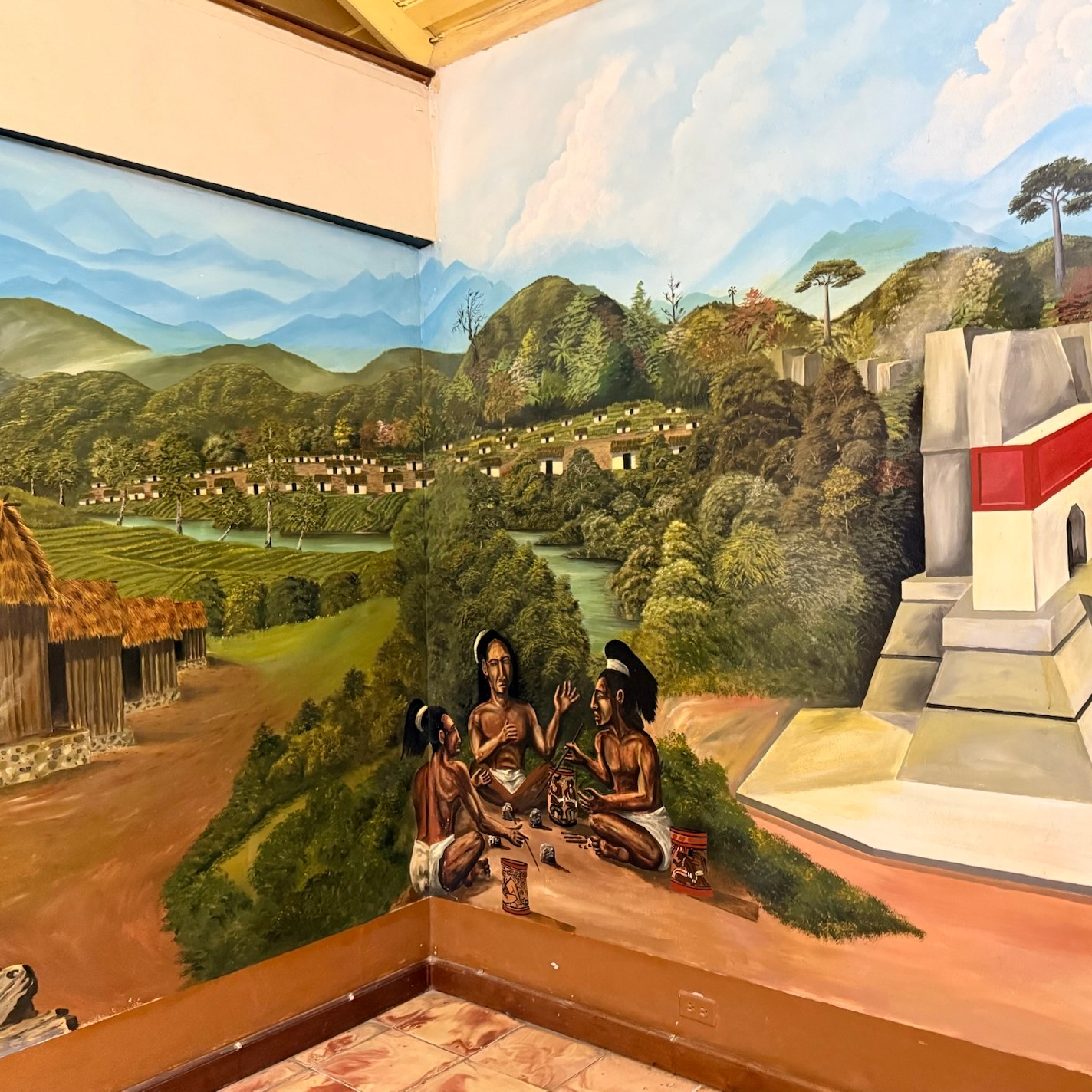
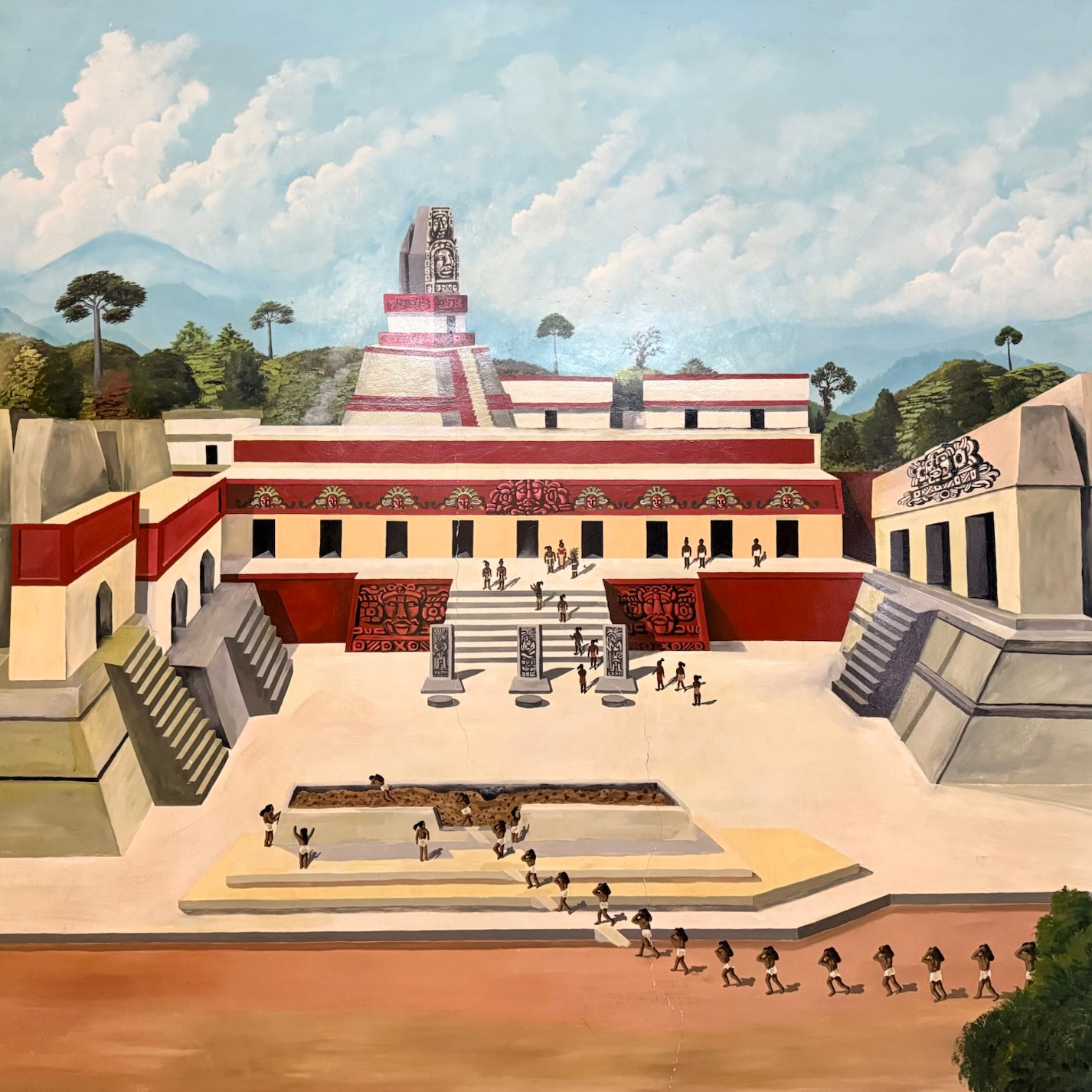
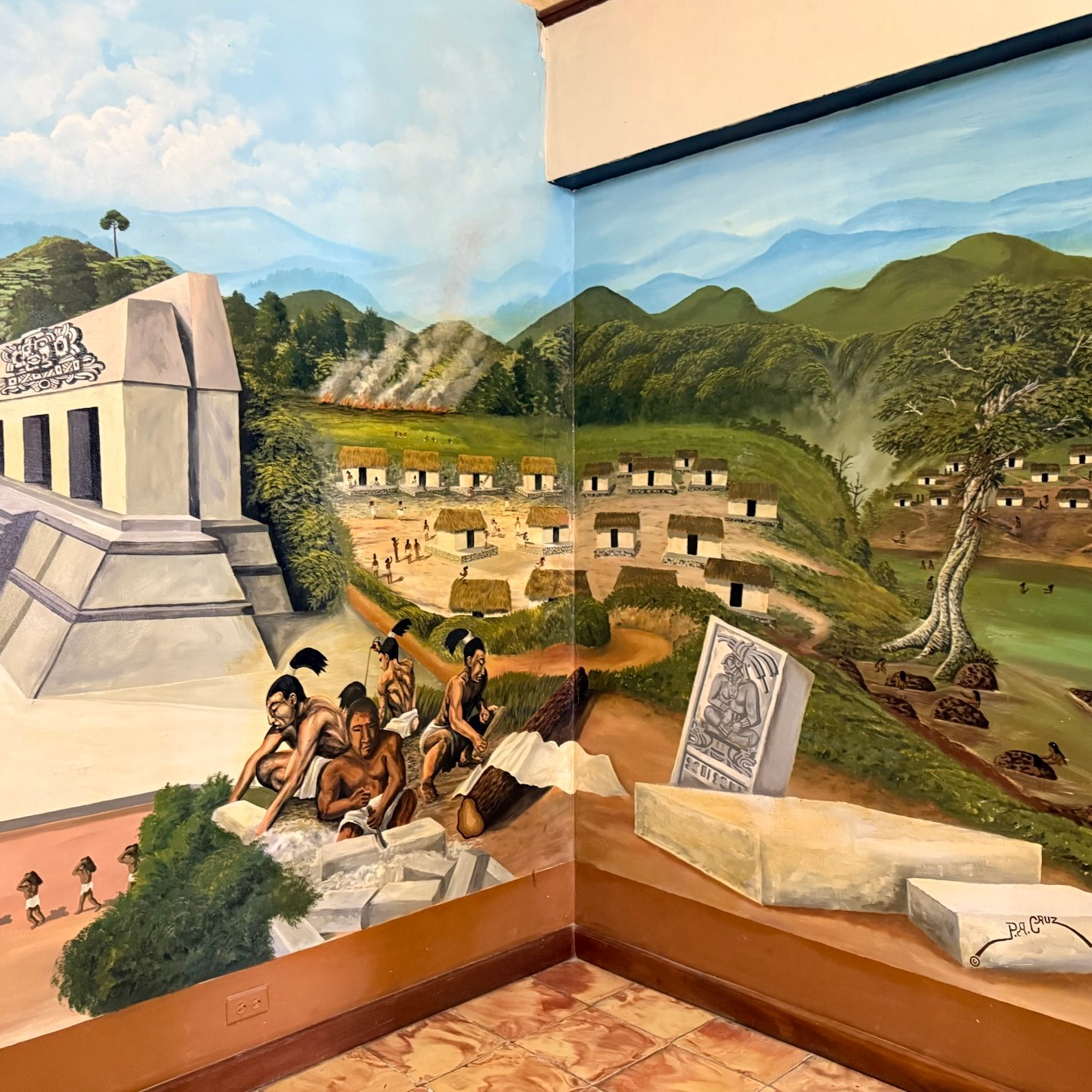
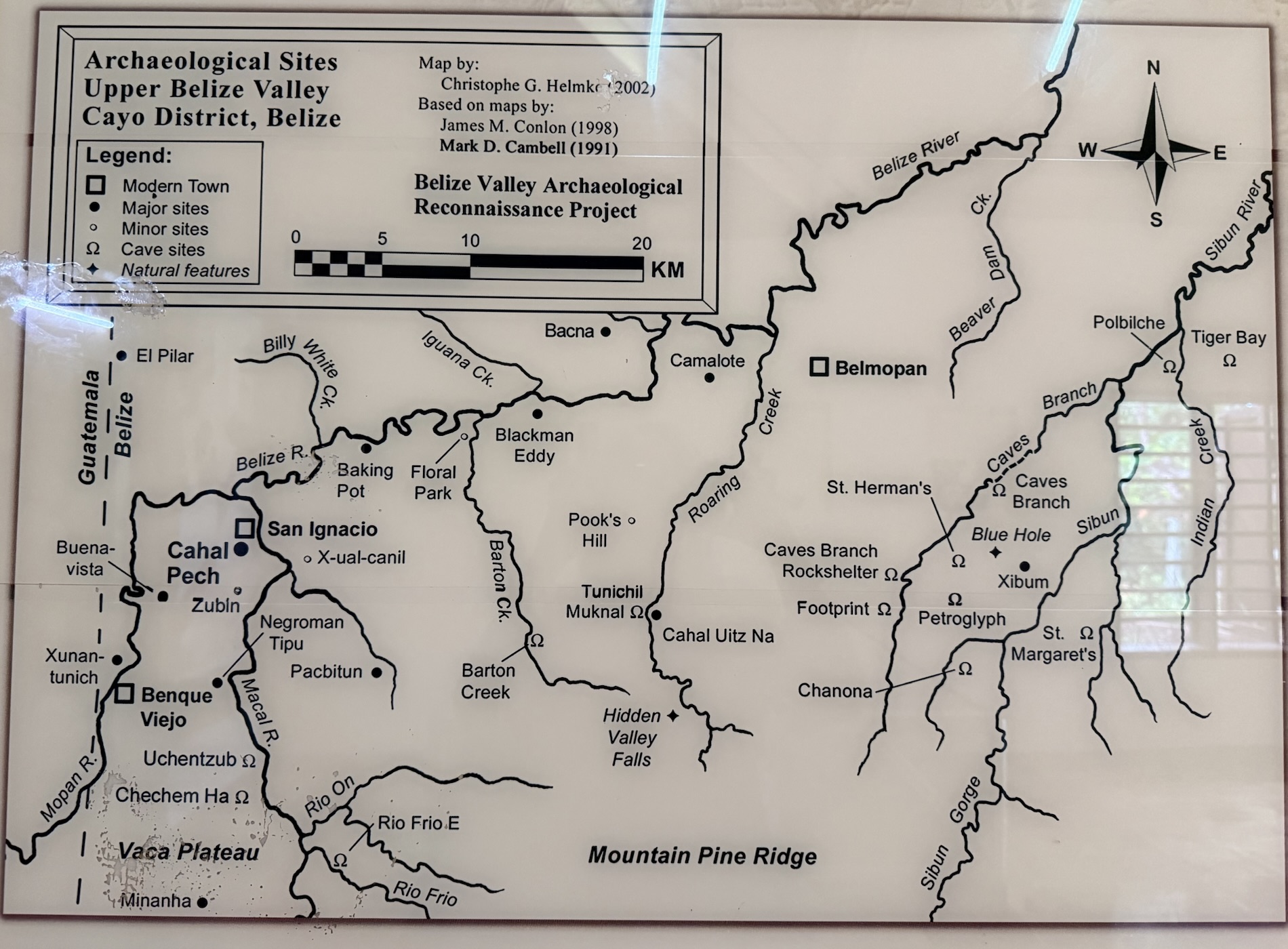
The Museum at Cahal Pech is chock-full of information about the Mayans, including a map of all the archeological sites in the Upper Belize Valley, a Chronology of the Mayan civilization, and summaries of all the developmental periods from Middle Preclassic to Post Classic and Colonial. The museum also had a useful map that showed where the Mayans lived in what are now numerous countries: Guatemala, Honduras, El Salvador, Belize and several states in Mexico.
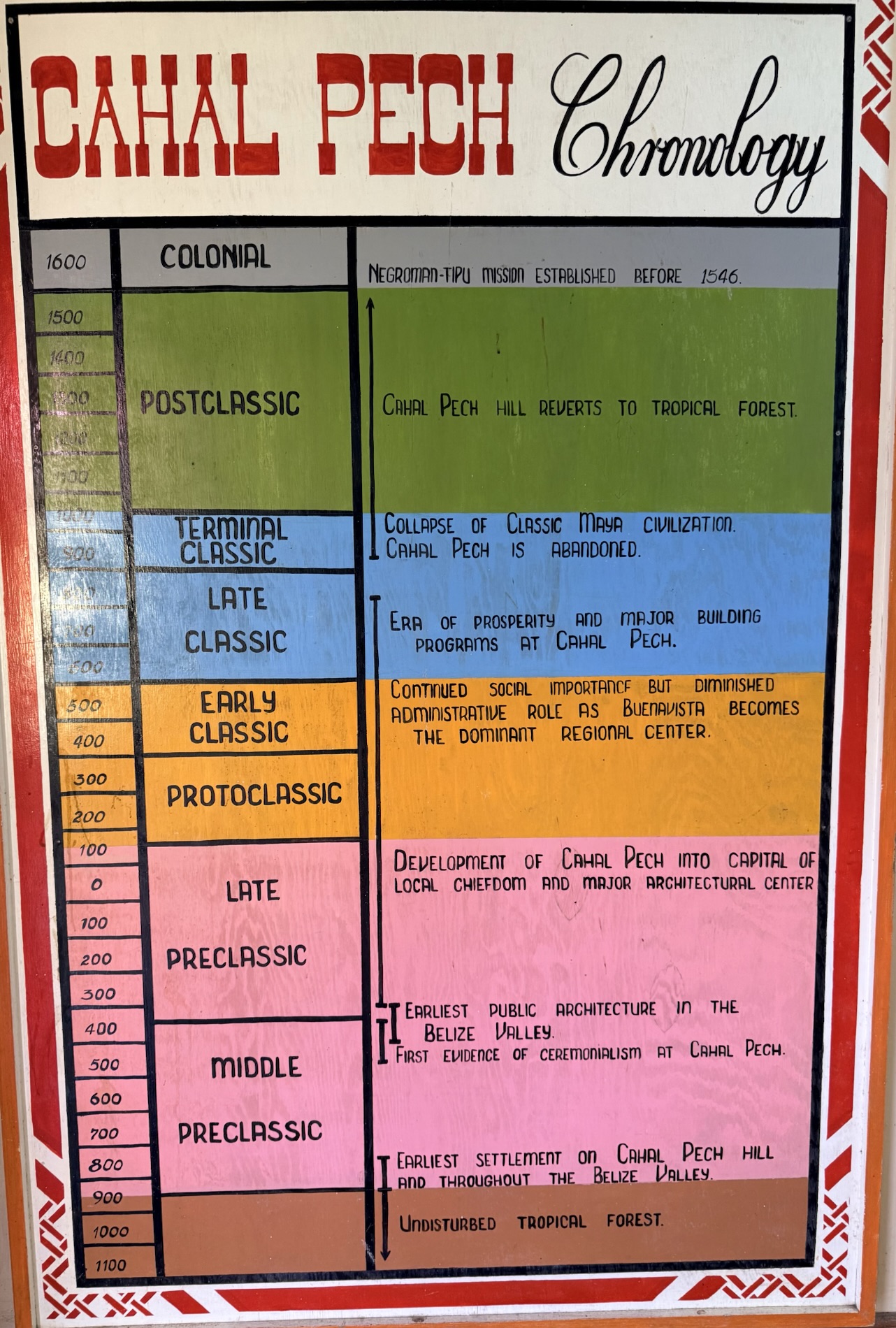
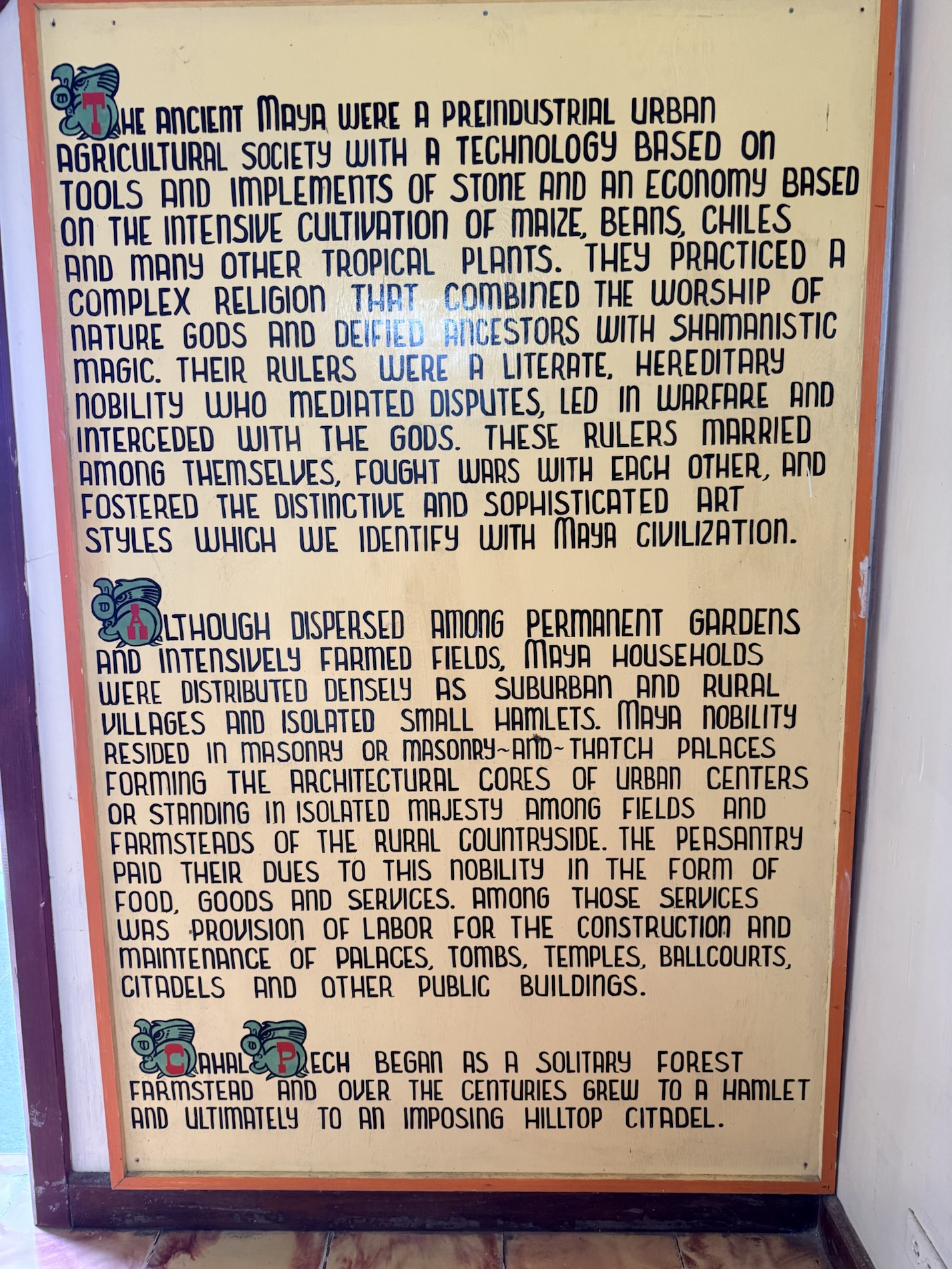
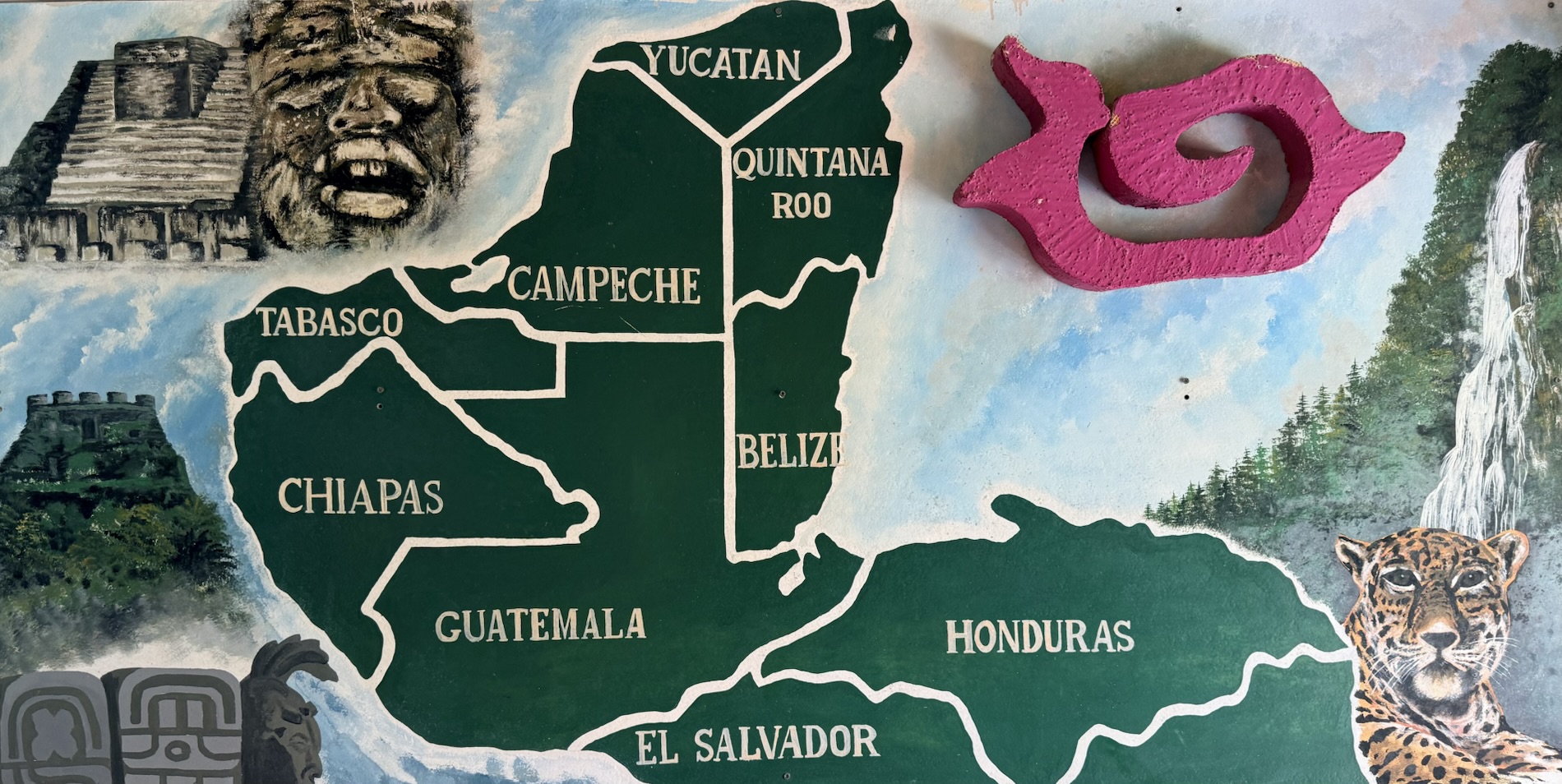
Cahal Pech is translated “Place or City” from the Yucatec and Mopan Maya. The name was coined in the 1950s when the reserve was still a cattle pasture.
Cahal Pech was first occupied in about 1200 BC, in the Preclassic Period, and is one of the earliest known Mayan villages. Houses were simple low platforms with tamped clay floors and thatch roofs. The people planted corn, beans, squash, and chili peppers in the rich alluvial soils. They also hunted local game, collected freshwater snails, and caught fish, iguanas and crocodiles in rivers. Contact with other groups was indicated by the presence of obsidian, jade acquired from Guatemala, and objects produced from coastal Caribbean shell.
In the Middle Preclassic period (900-300 BC), Cahal Pech increased in size and the people began to construct monumental architecture. Obvious differences in the social status emerged. Ceramics became more standardized due to communications with other communities. Structures were built for ritual use; five of these are found at Cahal Pech.
In the Late Preclassic (300 BC to AD 300) Cahal Pech became one of the primary centers in the Upper Belize River Valley. At this time, Maya civilization, with its hieroglyphic form of writing, solar calendar, base-20 numeral system of mathematics, complex art, and monumental architecture became fully established.
In the Classic Period (AD 300-900), Cahal Pech competed with other cities for local affluence. Many violent conflicts were recorded. Most of the site’s large temples and palaces were built between 600-800 AD. An estimated 10,000-20,000 people lived in Cahal Pech during the late Classic Period, with the majority being farmers on the periphery with elites in the site’s center.
Contact with other sites such as Caracol were evident. At Caracol, about 82 km south of Cahal Pech, a common ritual involved the offering of human fingers in small bowls. More than 200 of these finger bowls were discovered in a tomb at Cahal Pech.
Despite the Mayan’s accomplishments, the Maya system in the lowlands eventually failed and people began to abandon the once-thriving cities. Scientists believe the collapse was a combination of social and environmental stresses and the inability of the political and economic system to deal with the changes. At the end of the 9th century, Cahal Pech was gradually abandoned. Strangely, other sites in the area continued to prosper after the fall of Cahal Pech.
In the Postclassic period (AD 900-1500) Maya rulers no longer enjoyed the godly stature and power they once had. Carving of monuments and building of large scale architecture ceased. New communities were founded along coastal regions and maritime trade thrived, leading to a powerful and influential merchant class.
The Colonial Period (1500-1800 AD) saw the Spaniards dominate the Maya area. Spanish friars ventured into the interior to convert the Maya to Catholicism.
Scientists and researchers have suggested reasons that the Maya developed such an advanced civilization. Guesses include many far-fetched ideas such as the following: 1) the civilization was purely the result of external forces (Phoenicians, Carthaginians, people from Atlantis); 2) extra-terrestrials taught them their astronomy, mathematics and calendrics; 3) seafarers from China, Japan or North Africa brought them more advanced knowledge. Most archeologists believe that the development of the civilization was a gradual process that combined ecological adaptation, trade and interaction with other communities, the elite’s desire for exotic status symbols such as jade, quetzal feathers, and marine products, and their use of writing and calendrics for propaganda, along with a strong belief in the power of their gods and religion.
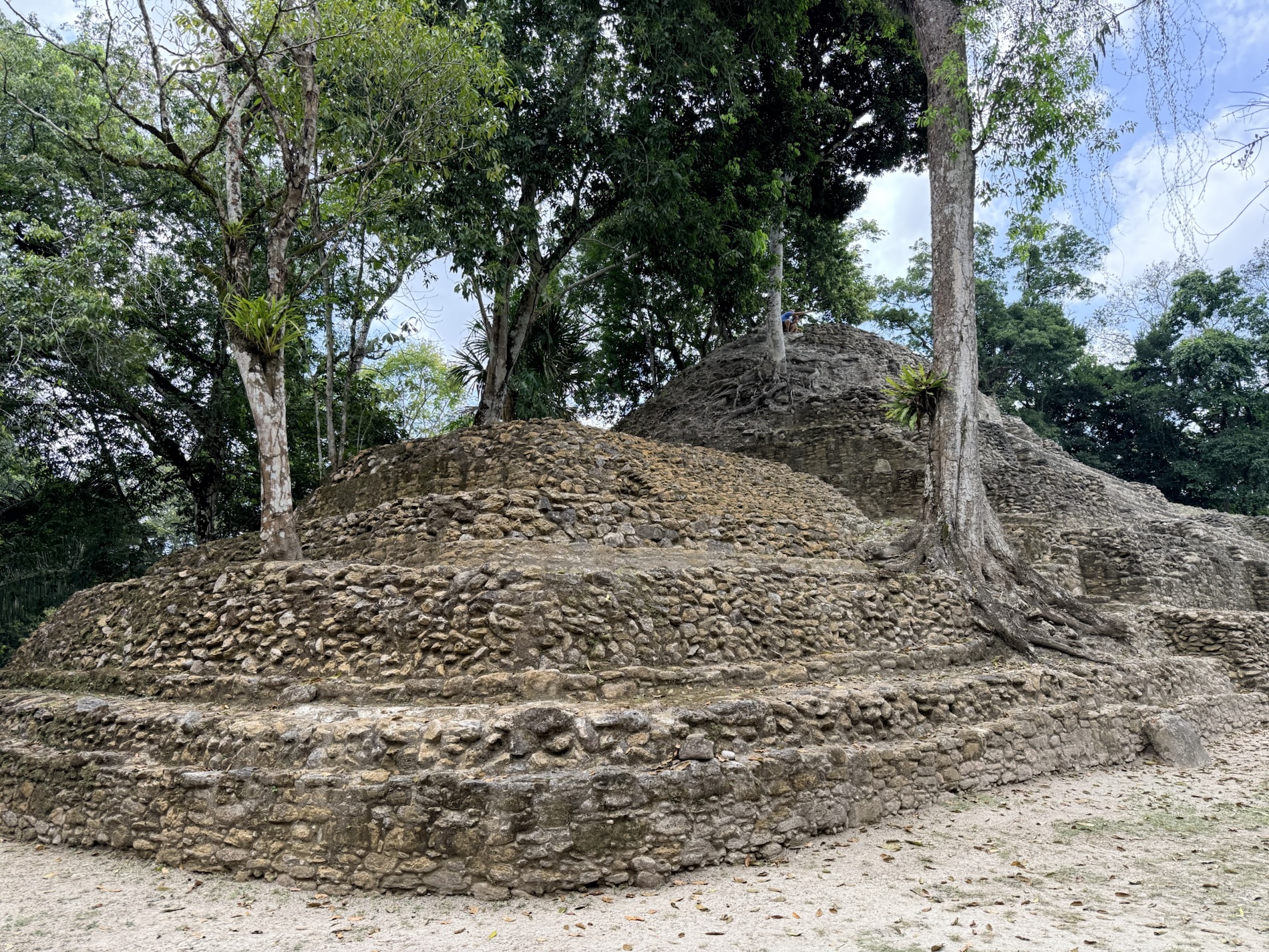
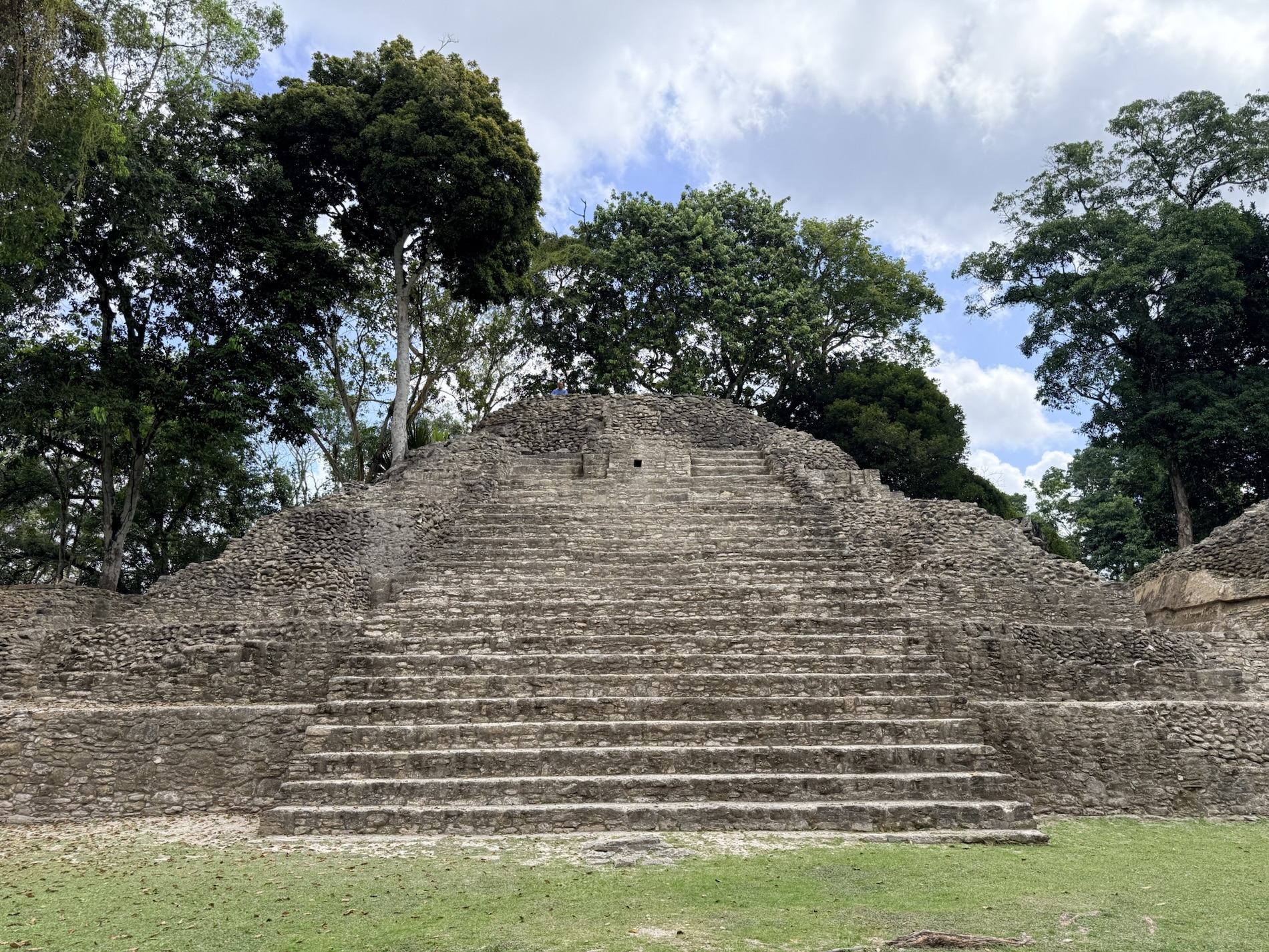
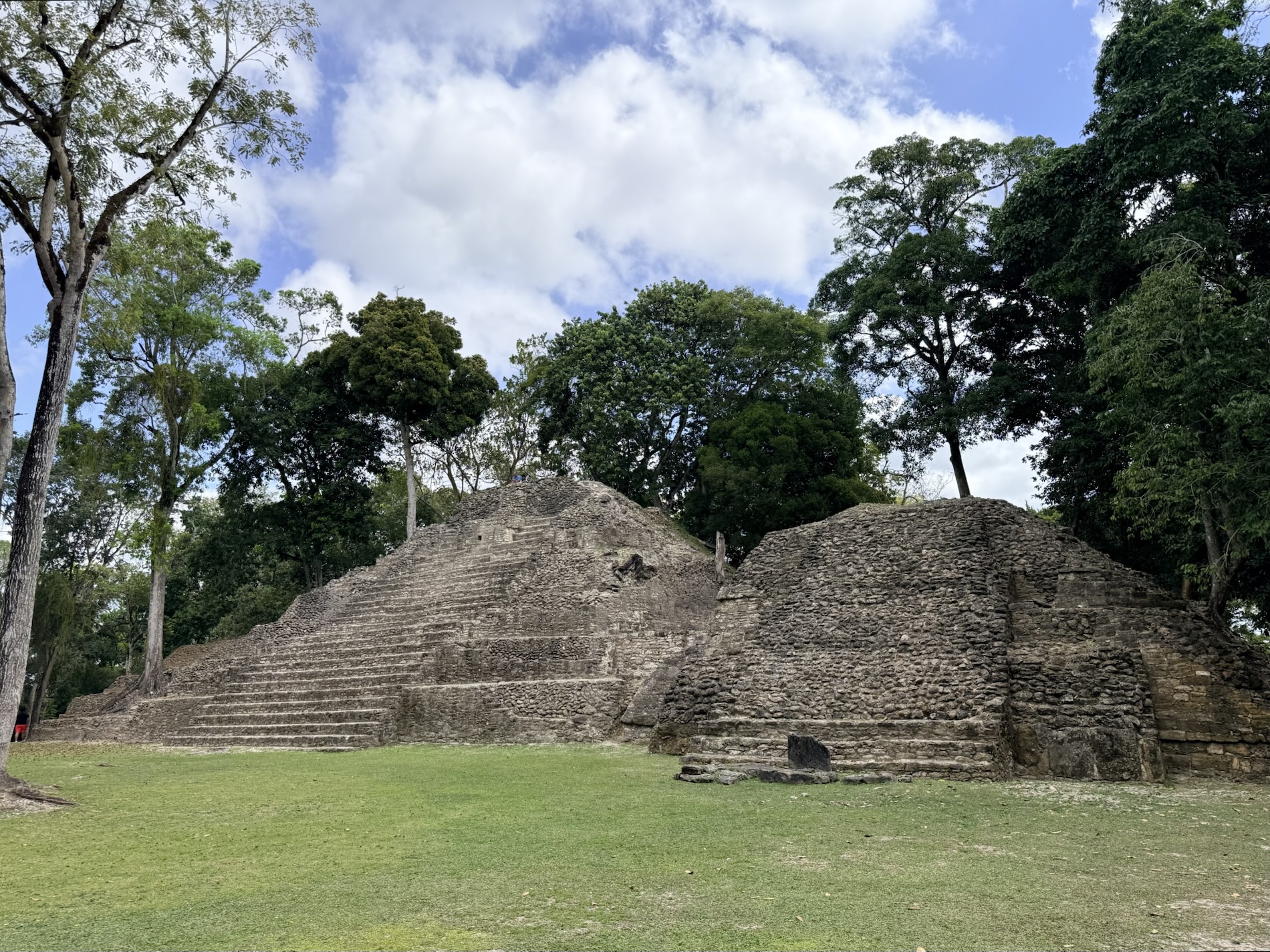
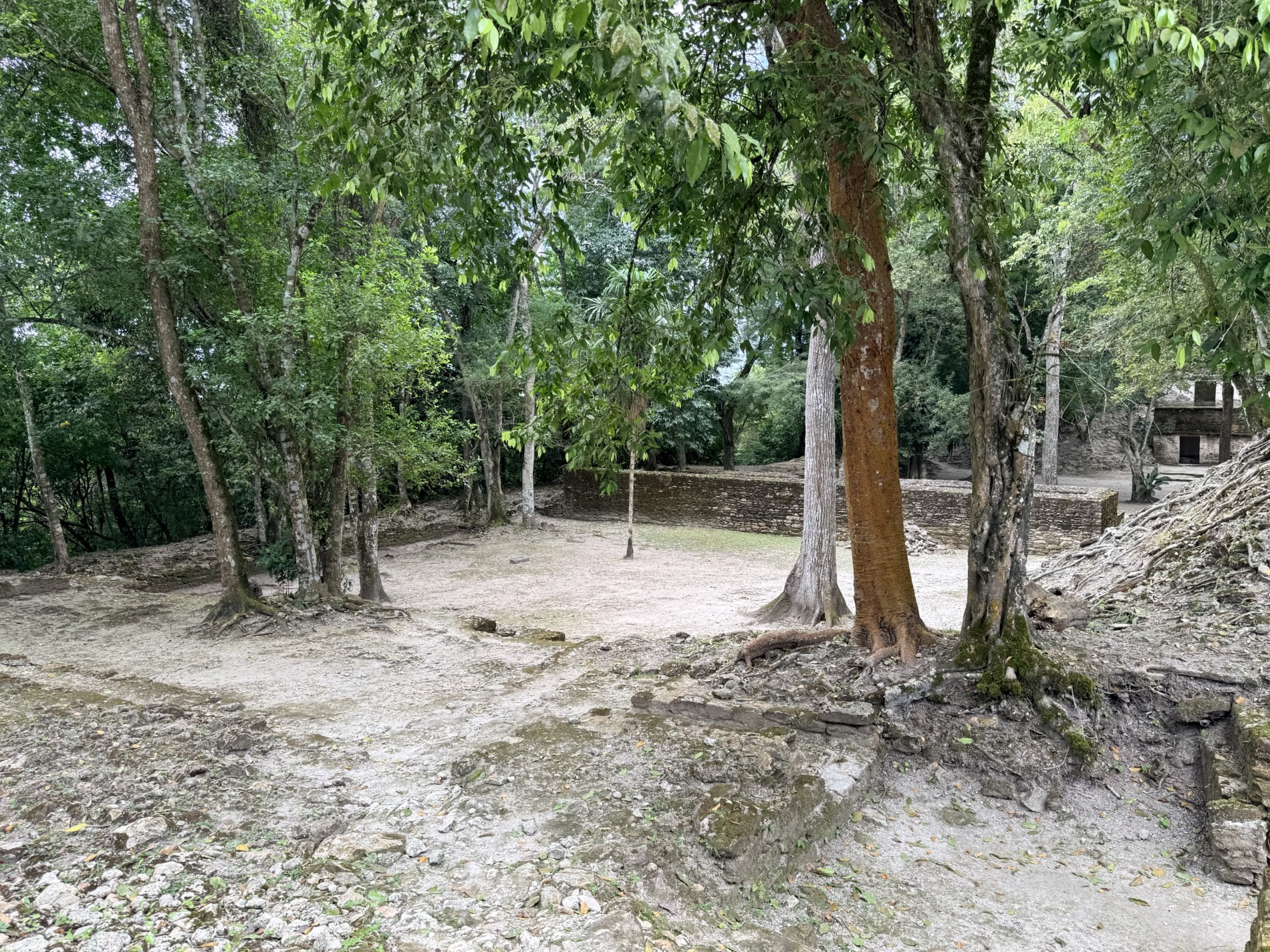
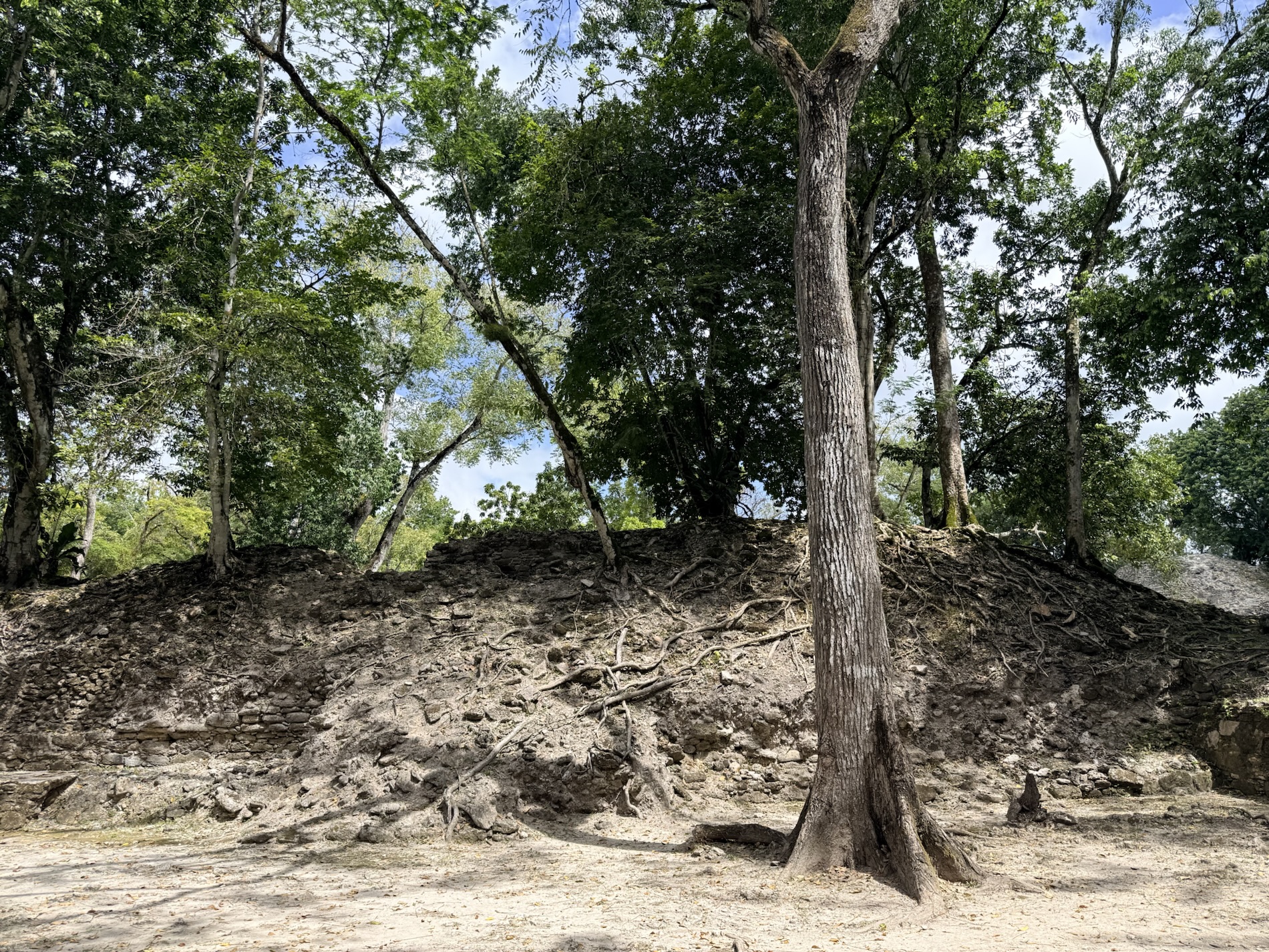
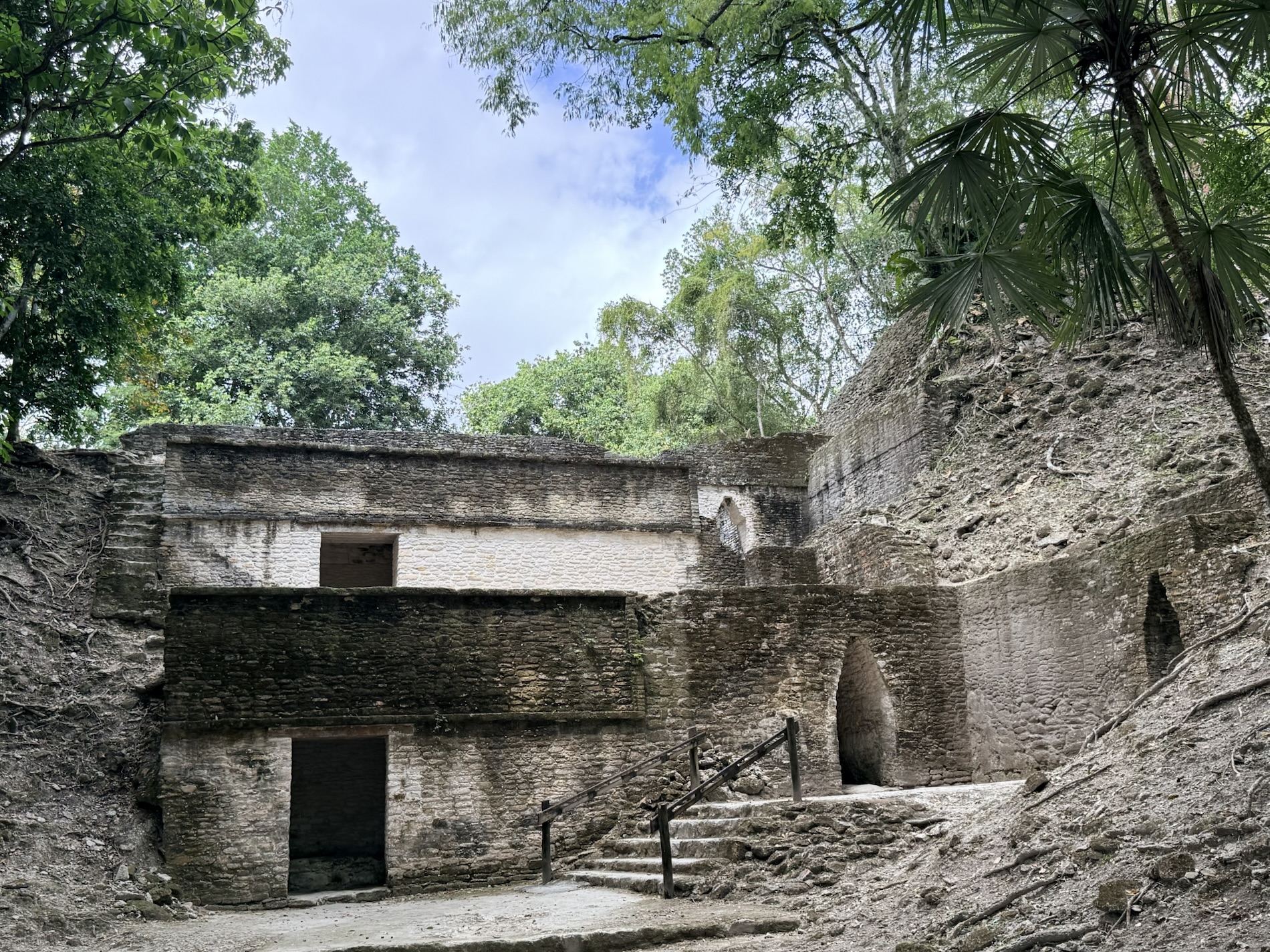
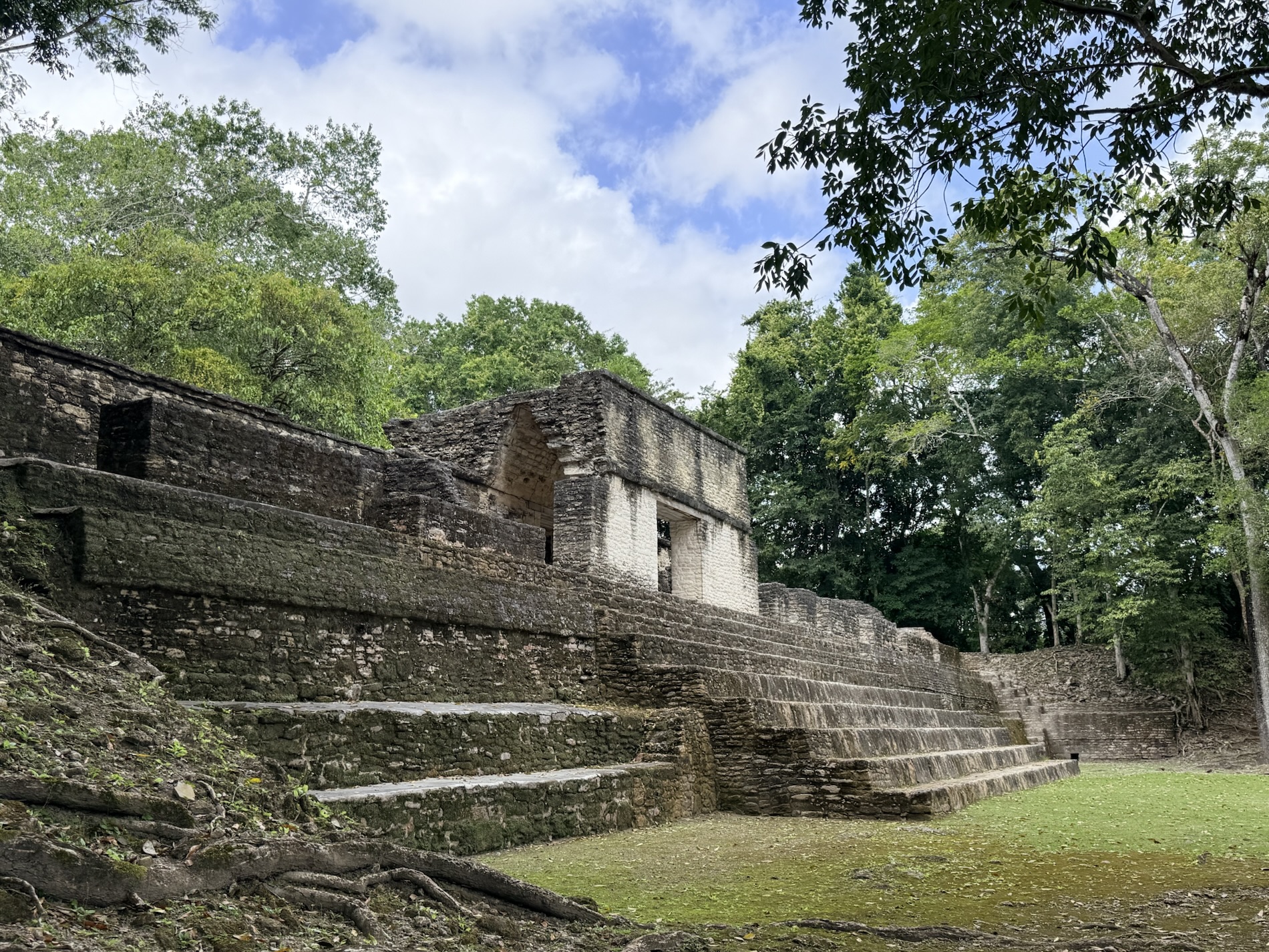
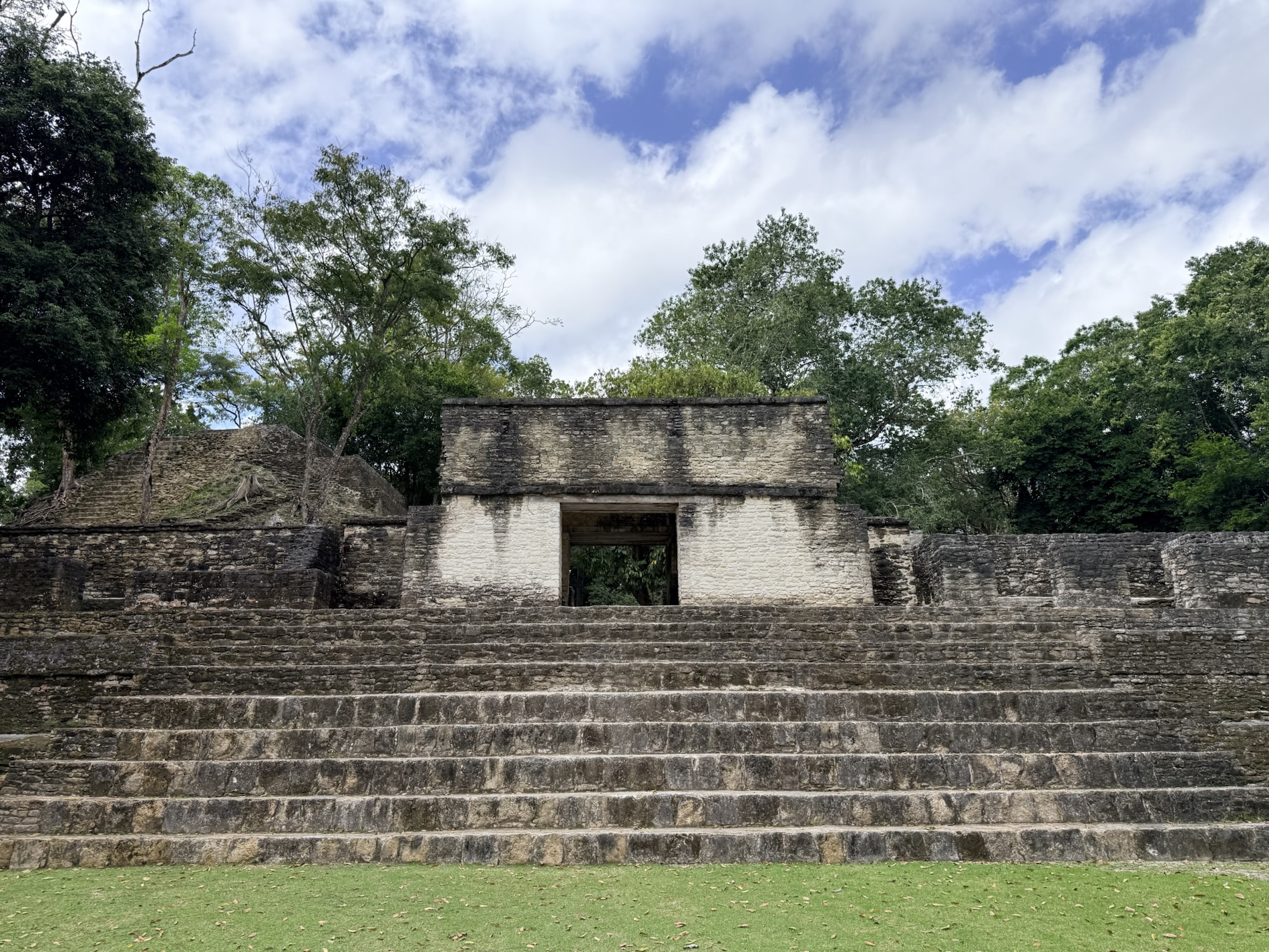
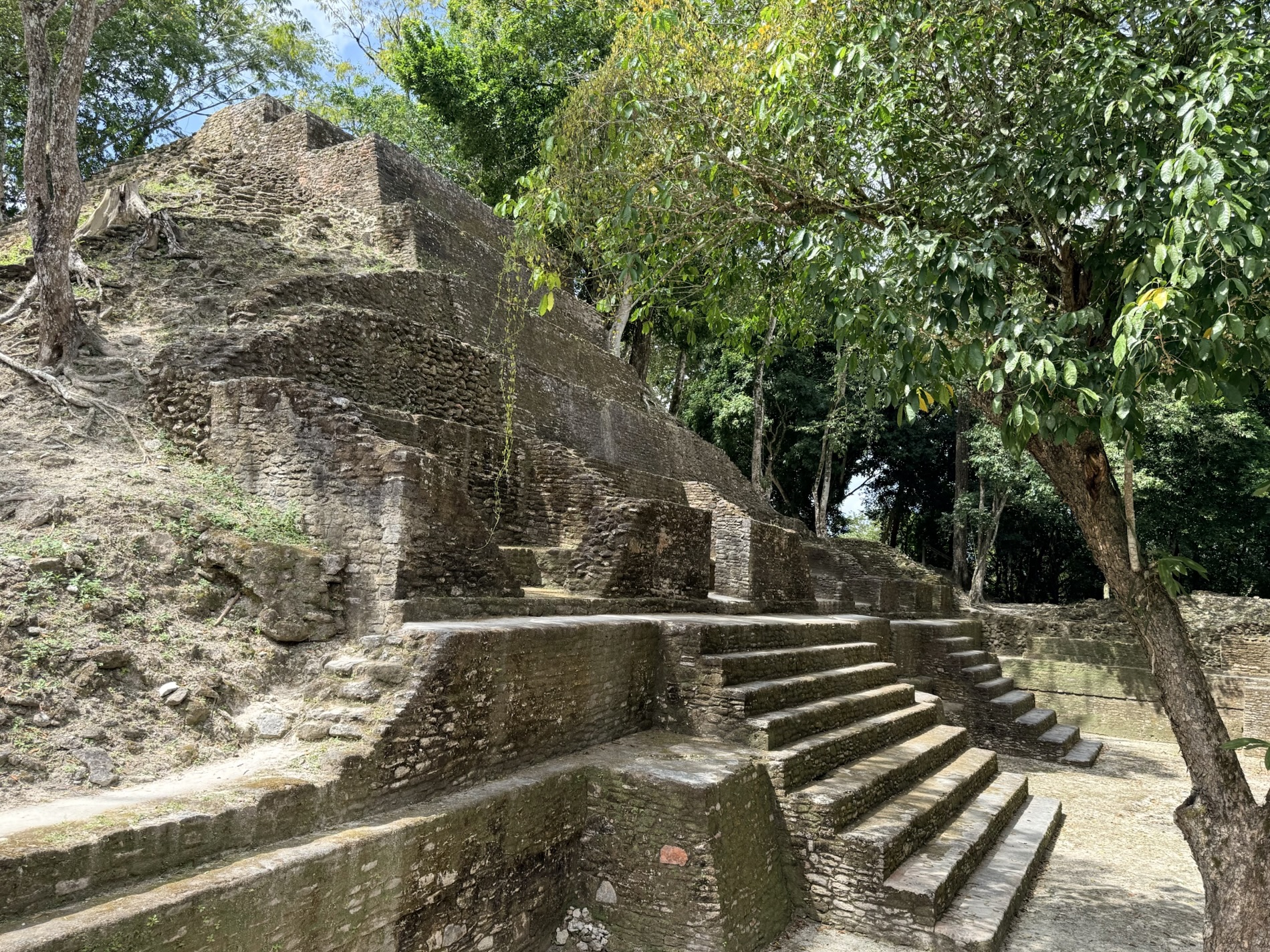
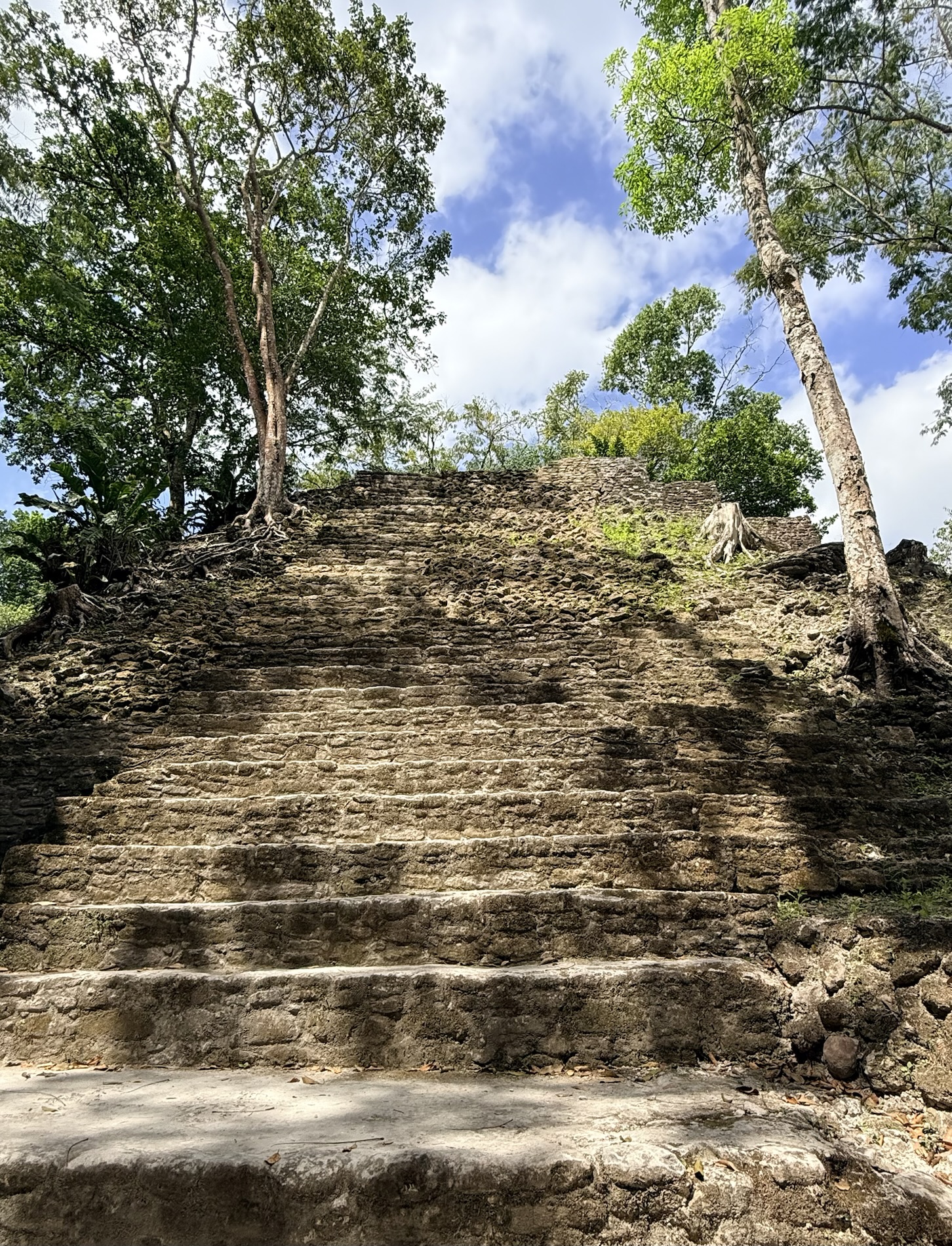
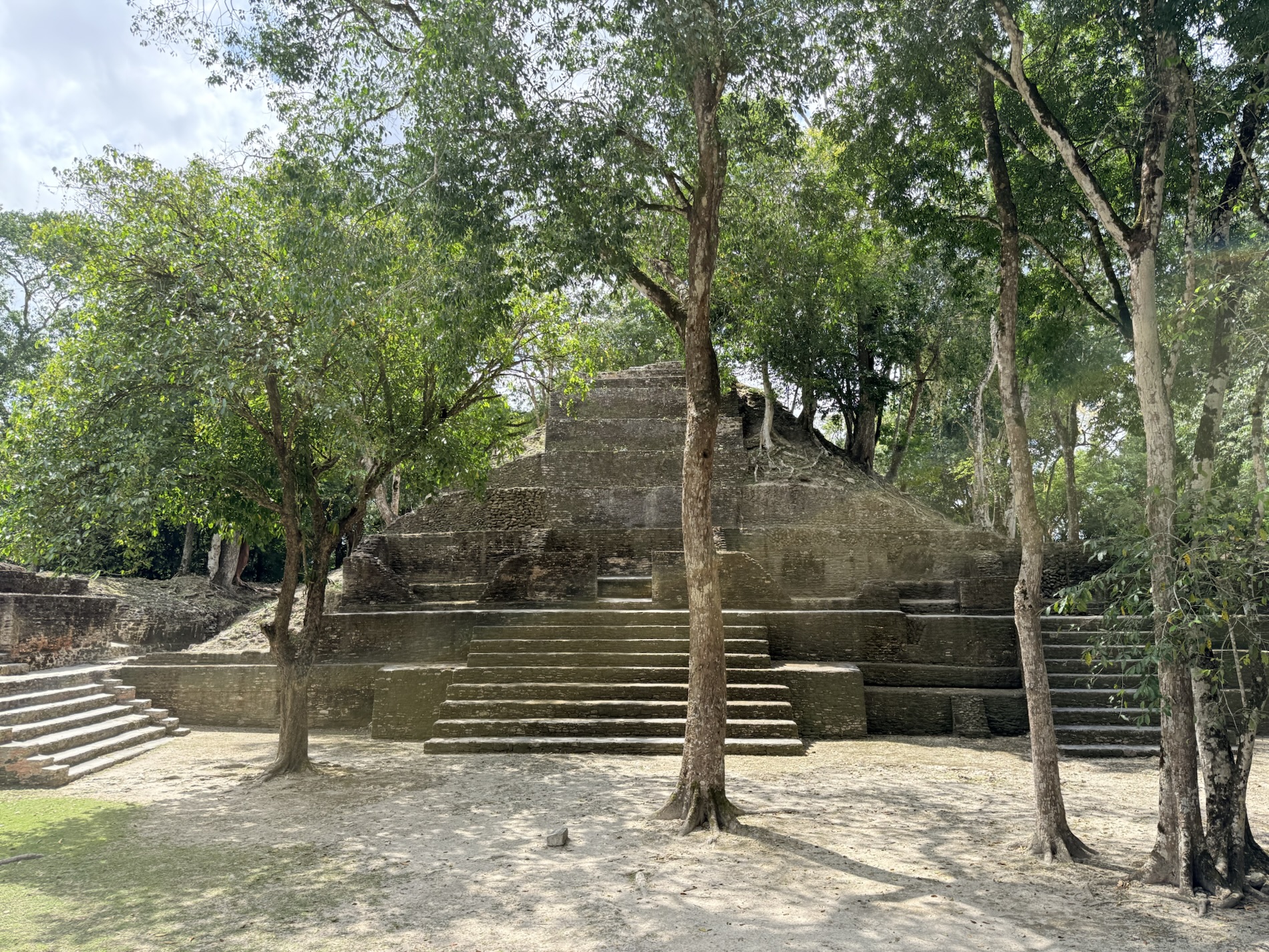
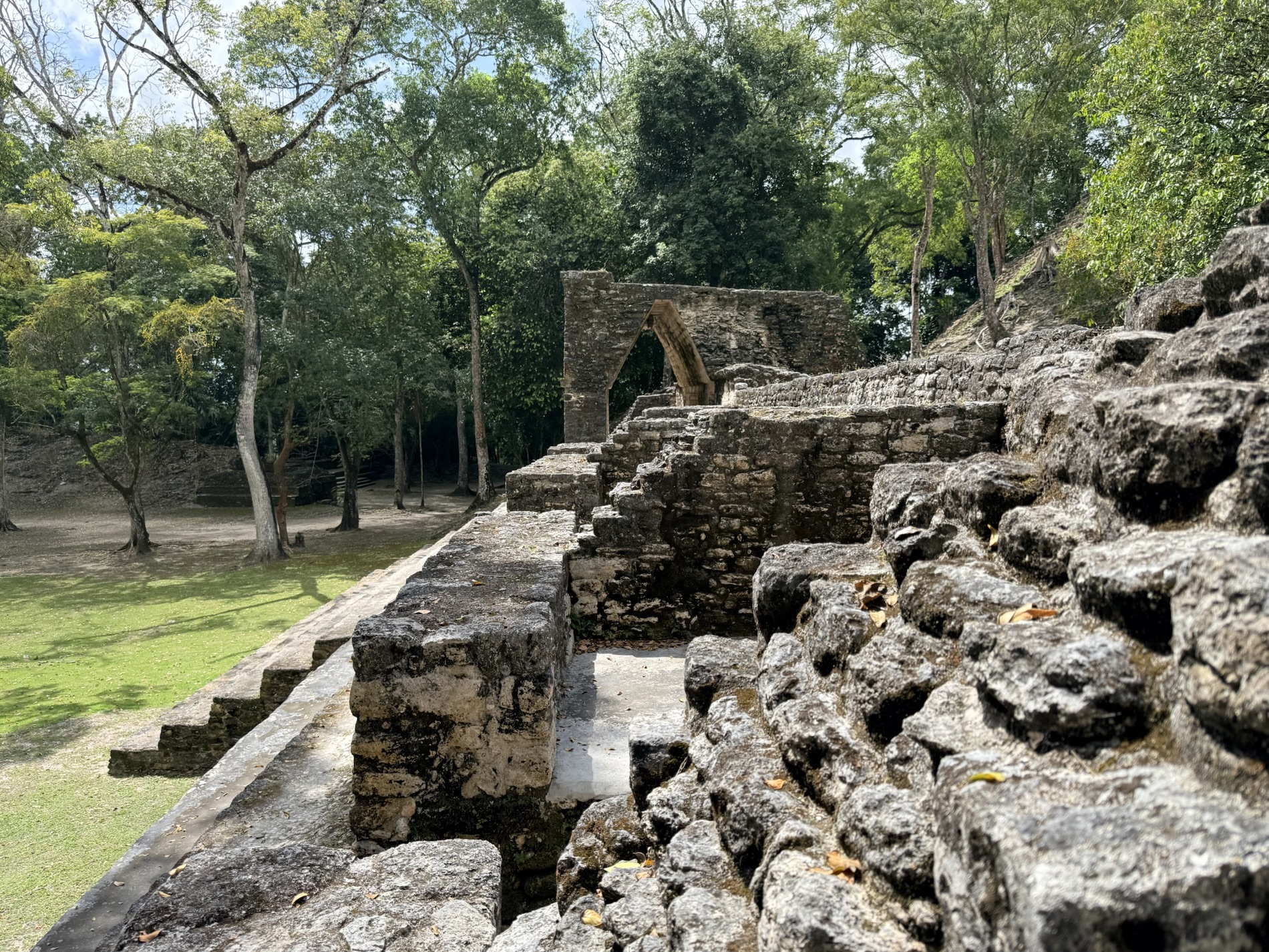
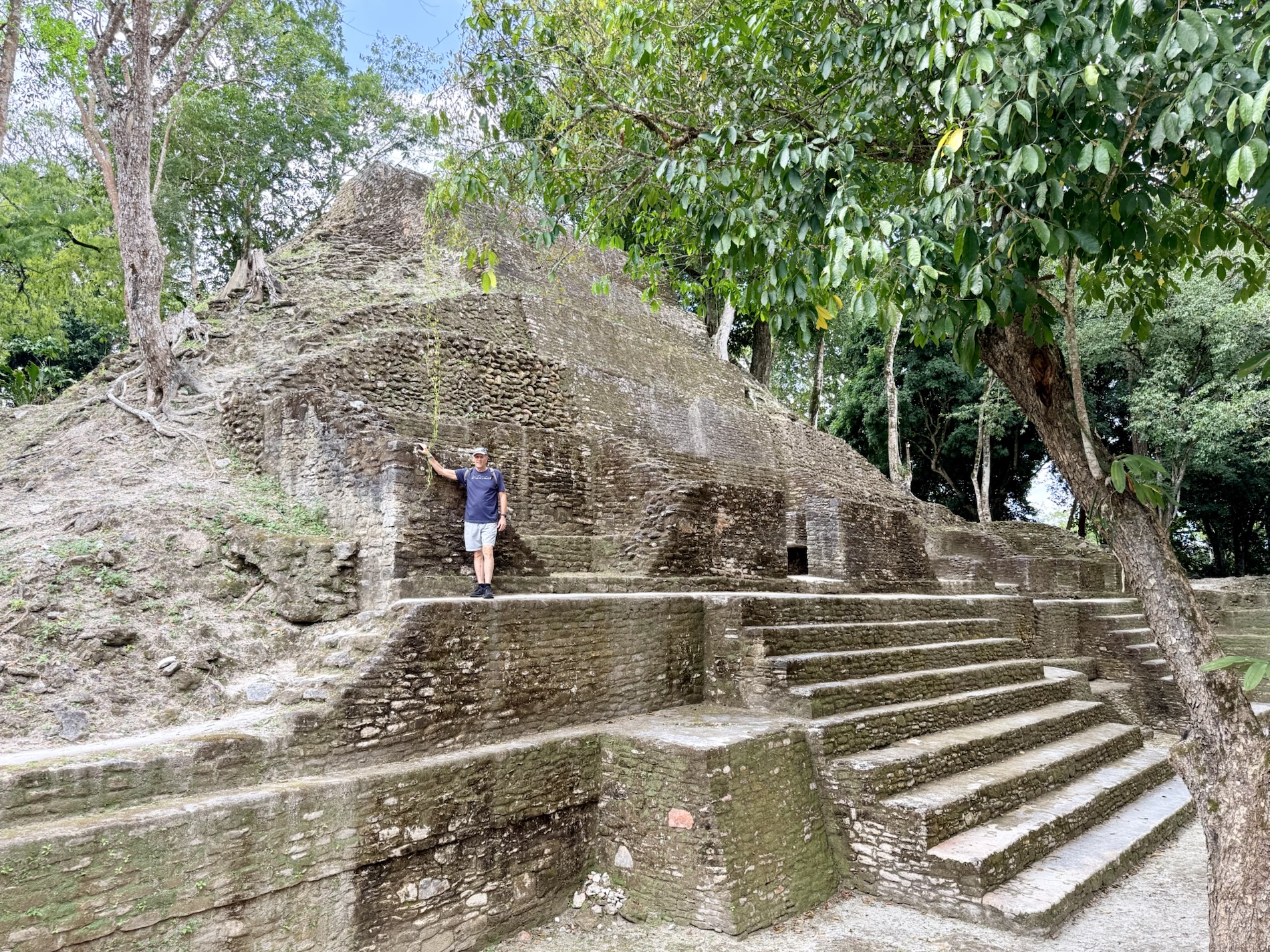
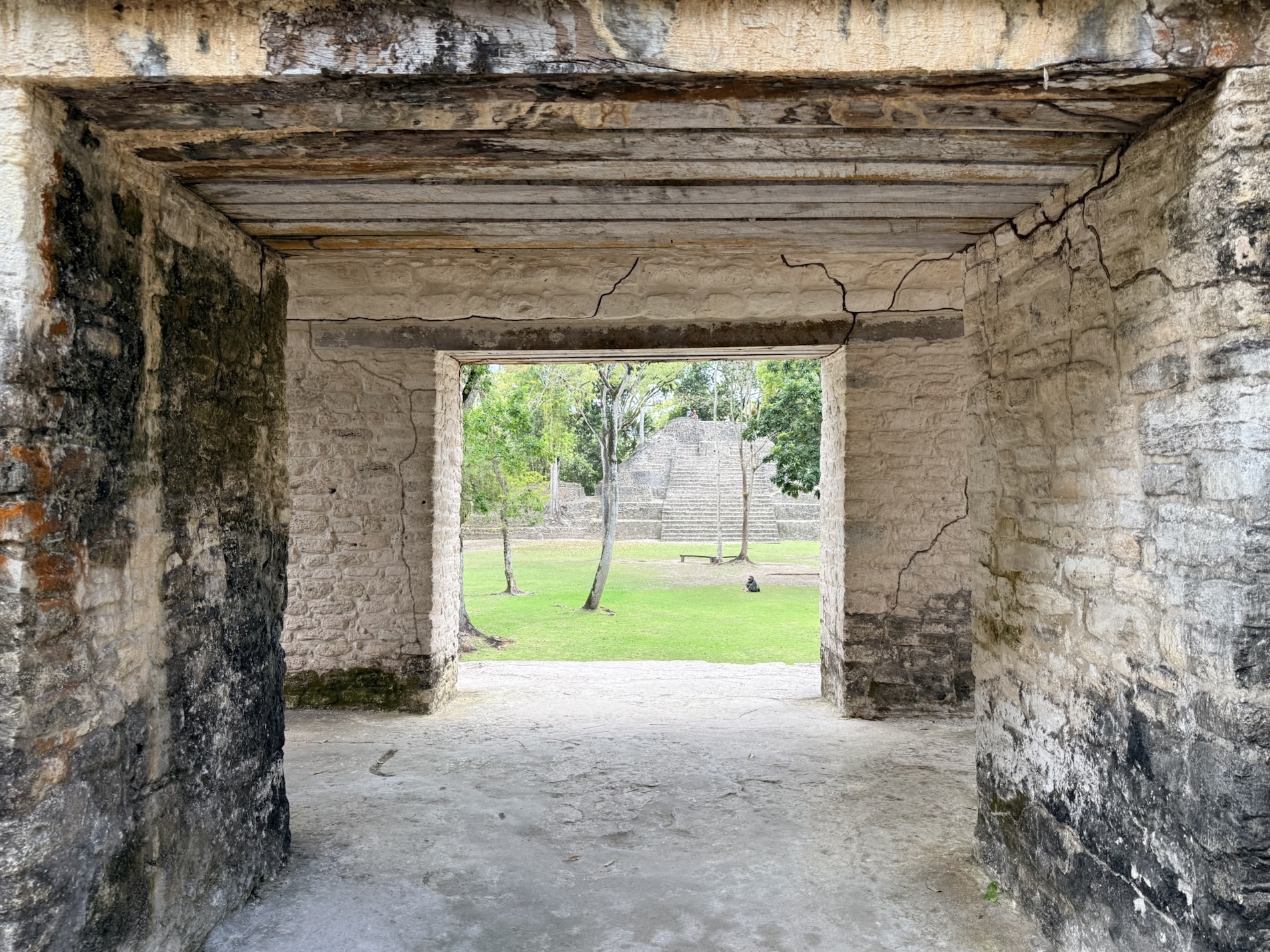
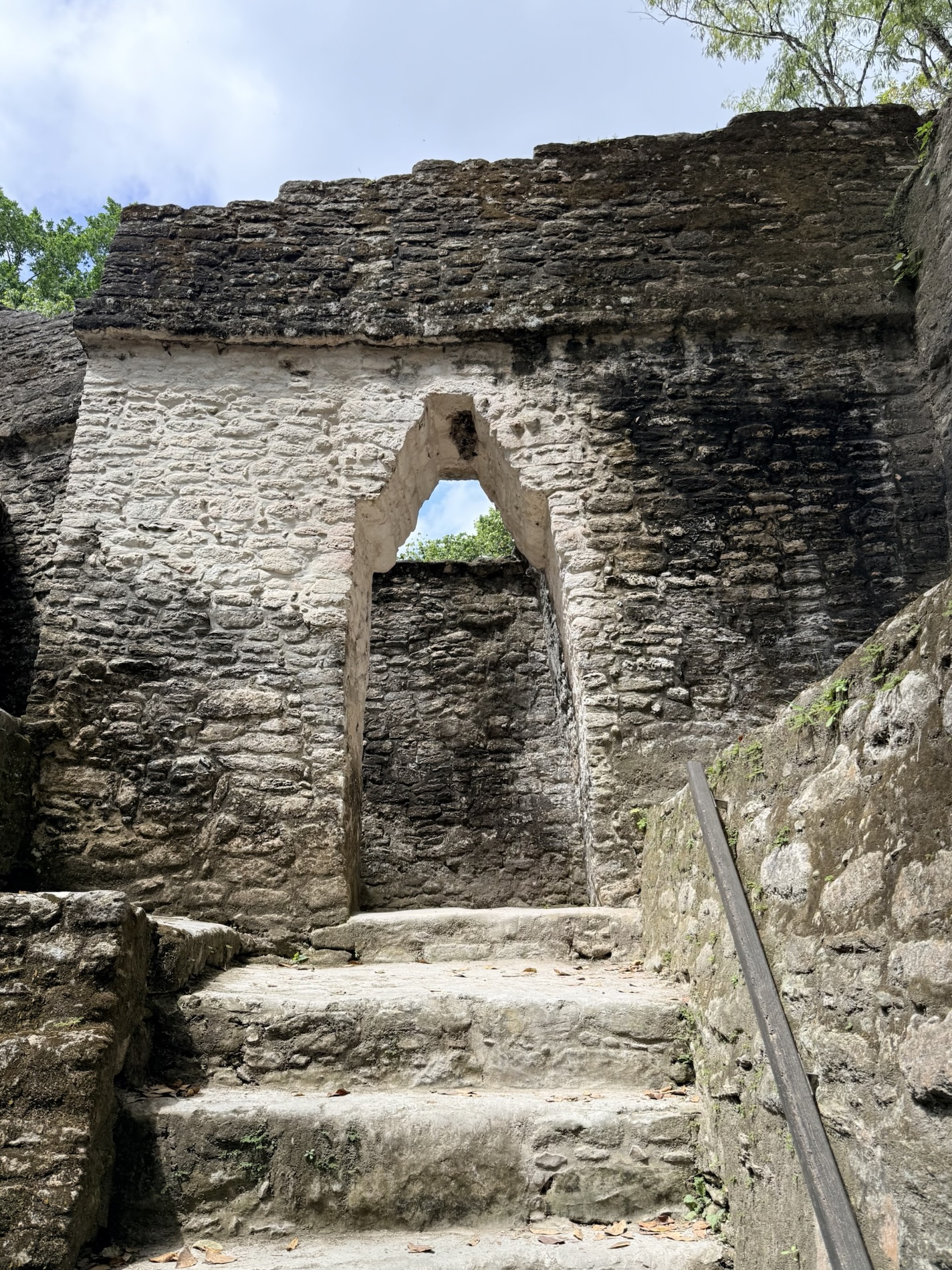
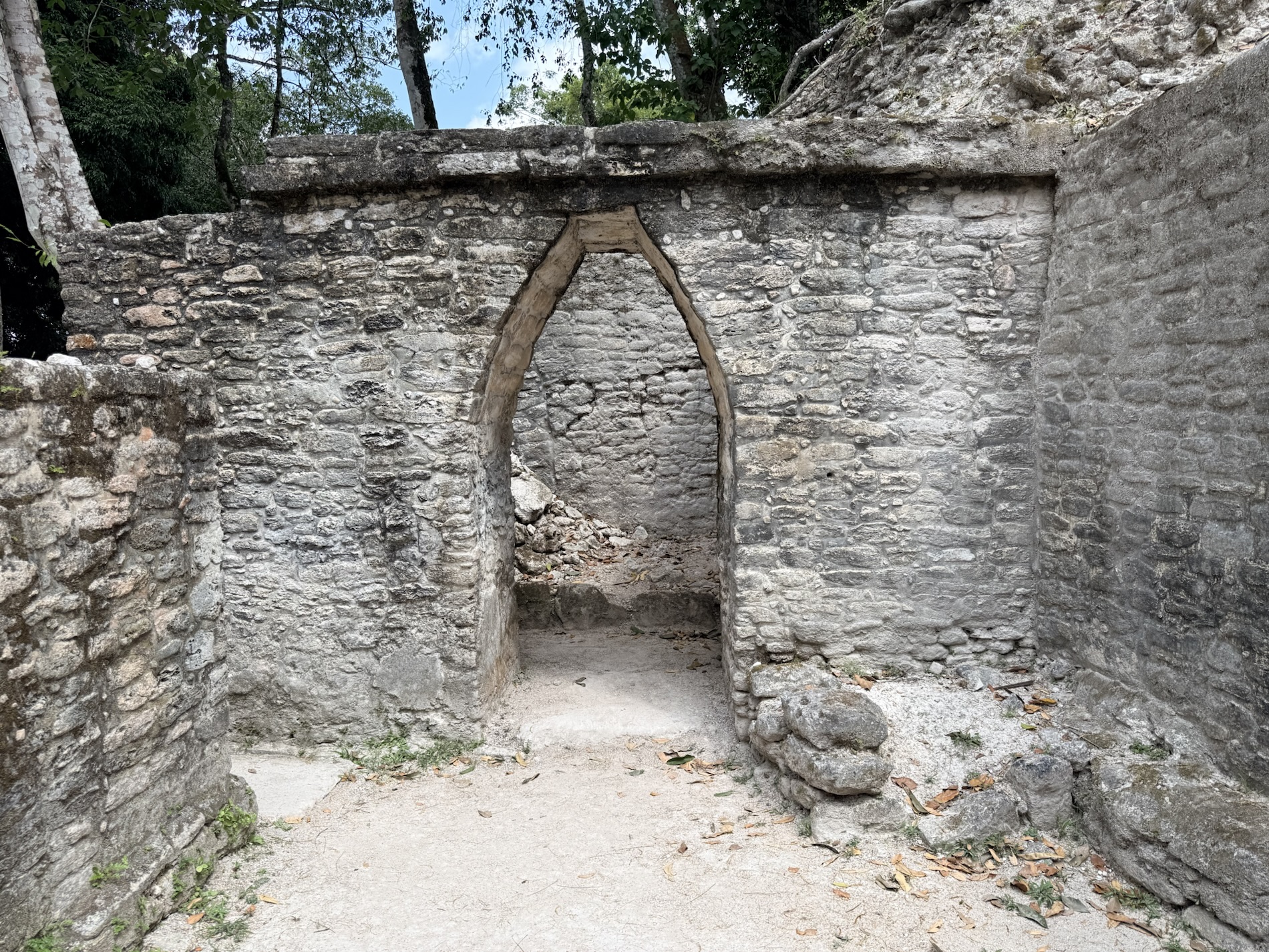
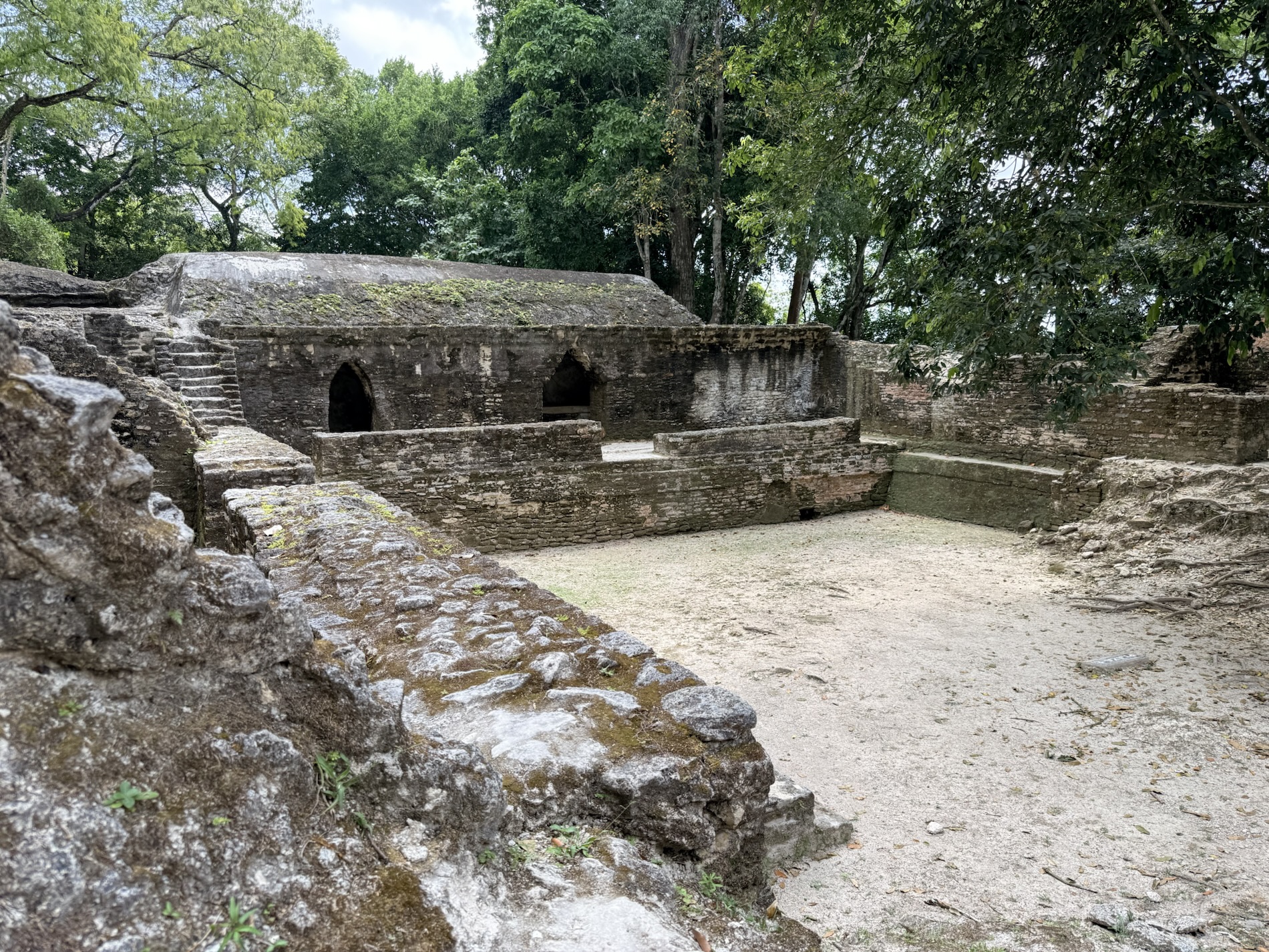
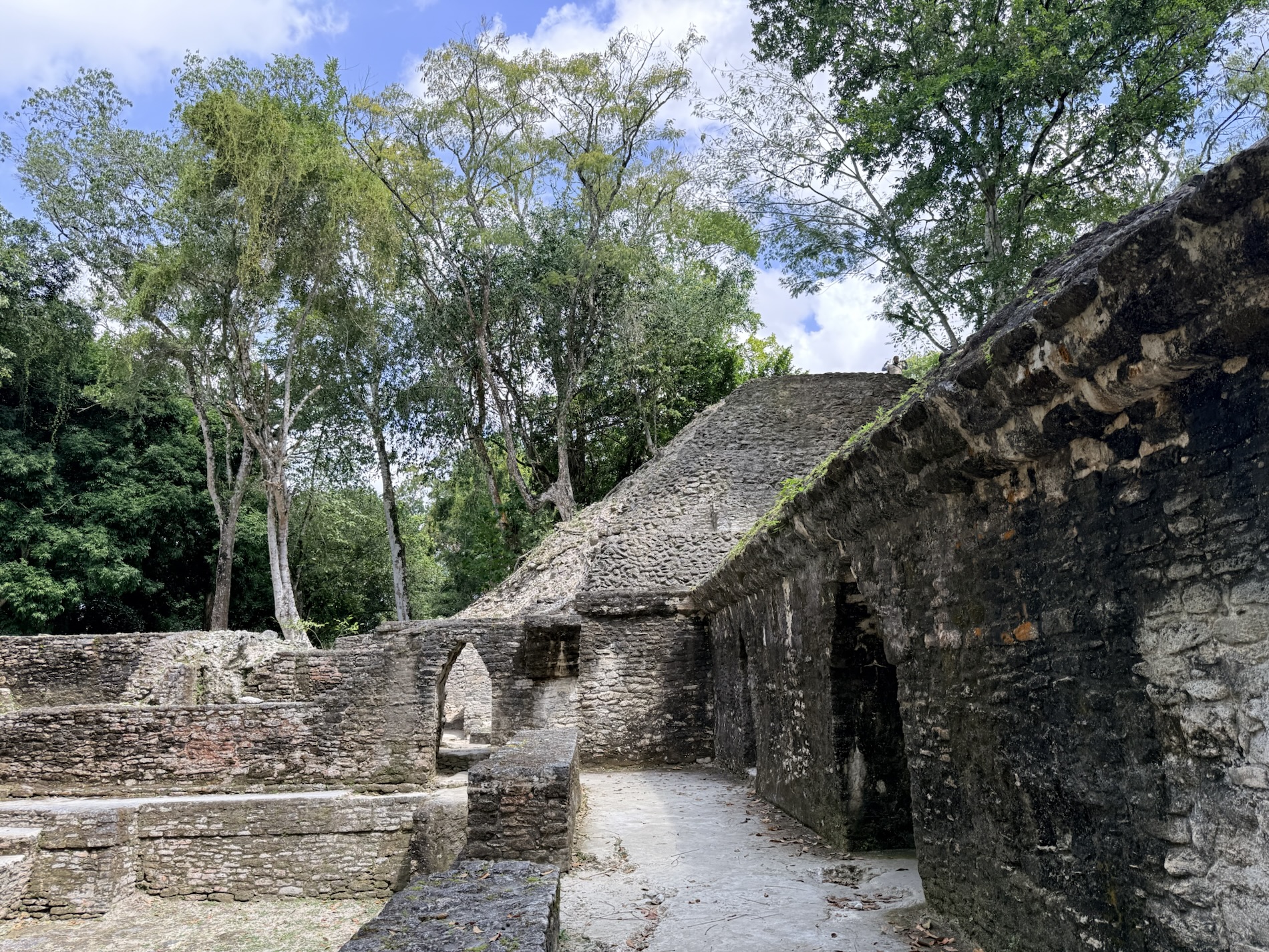
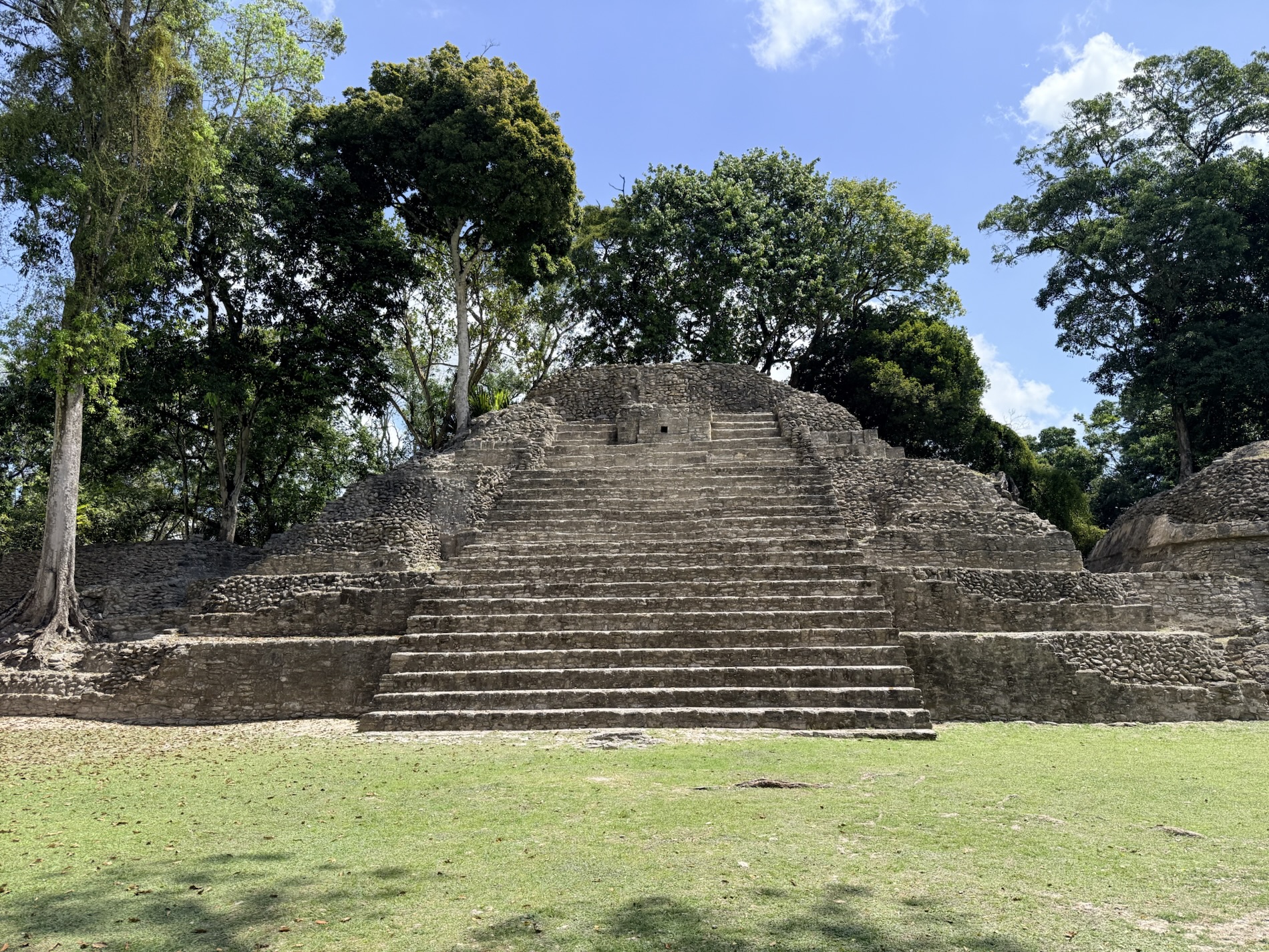
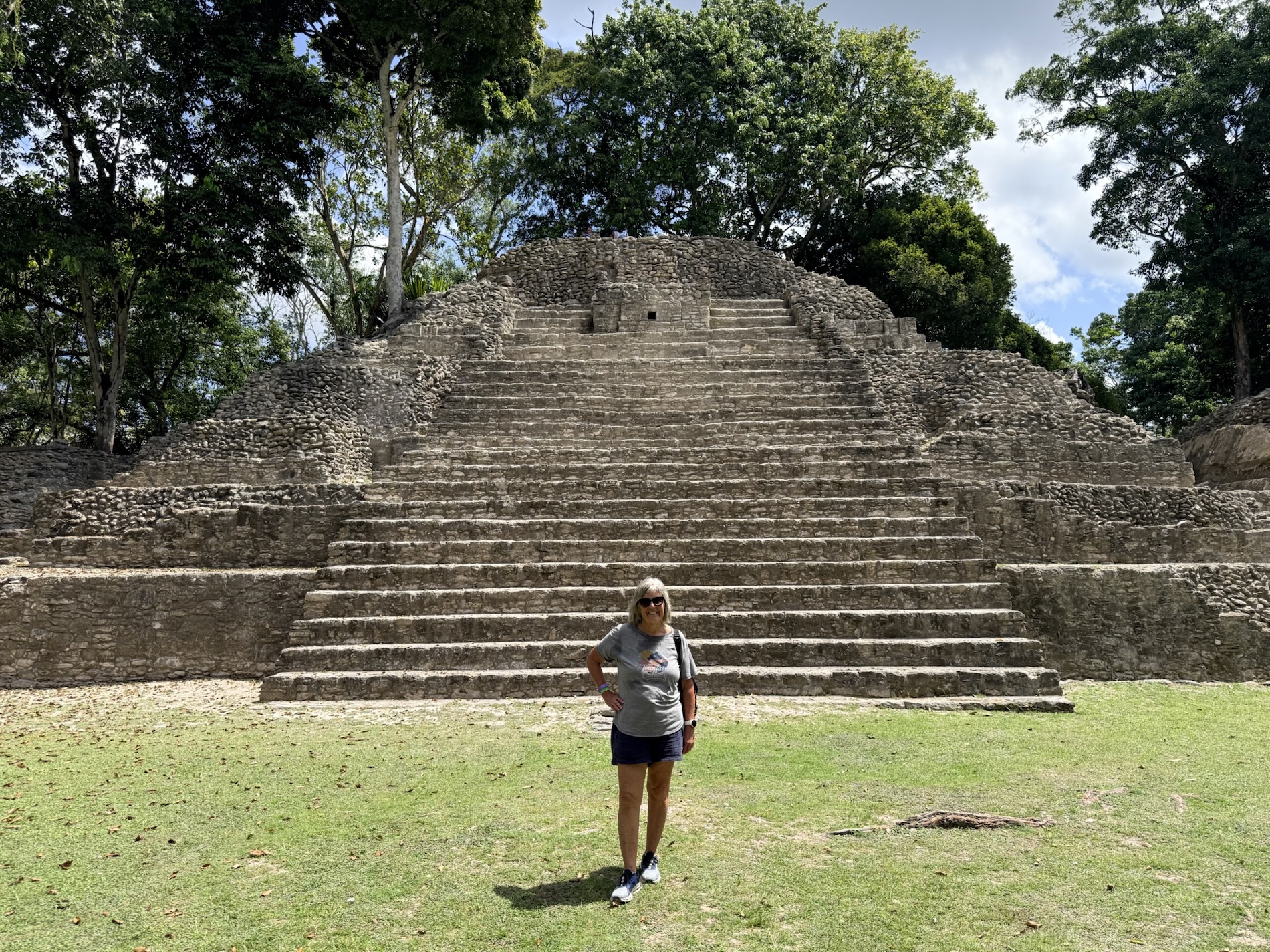
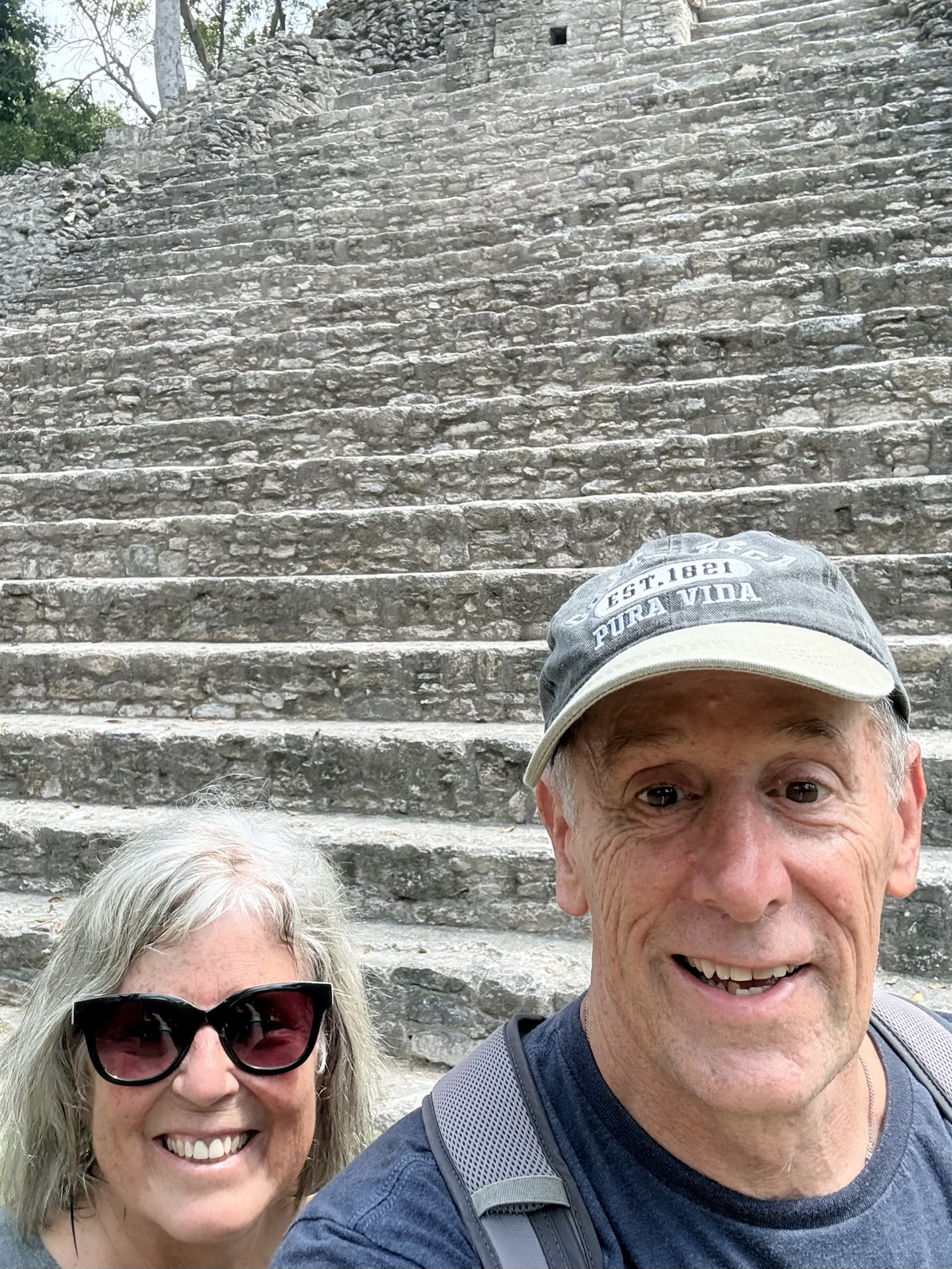
We enjoyed walking around Cahal Pech, which is more extensive than appears at first sight. The trees growing on the ruins reminded me of the Angkor Wat ruins in Cambodia, but less exotic-looking.
Food adventures in Belize
San Ignacio Resort Hotel & The Famous Marie Sharp’s Habanero Pepper Sauce
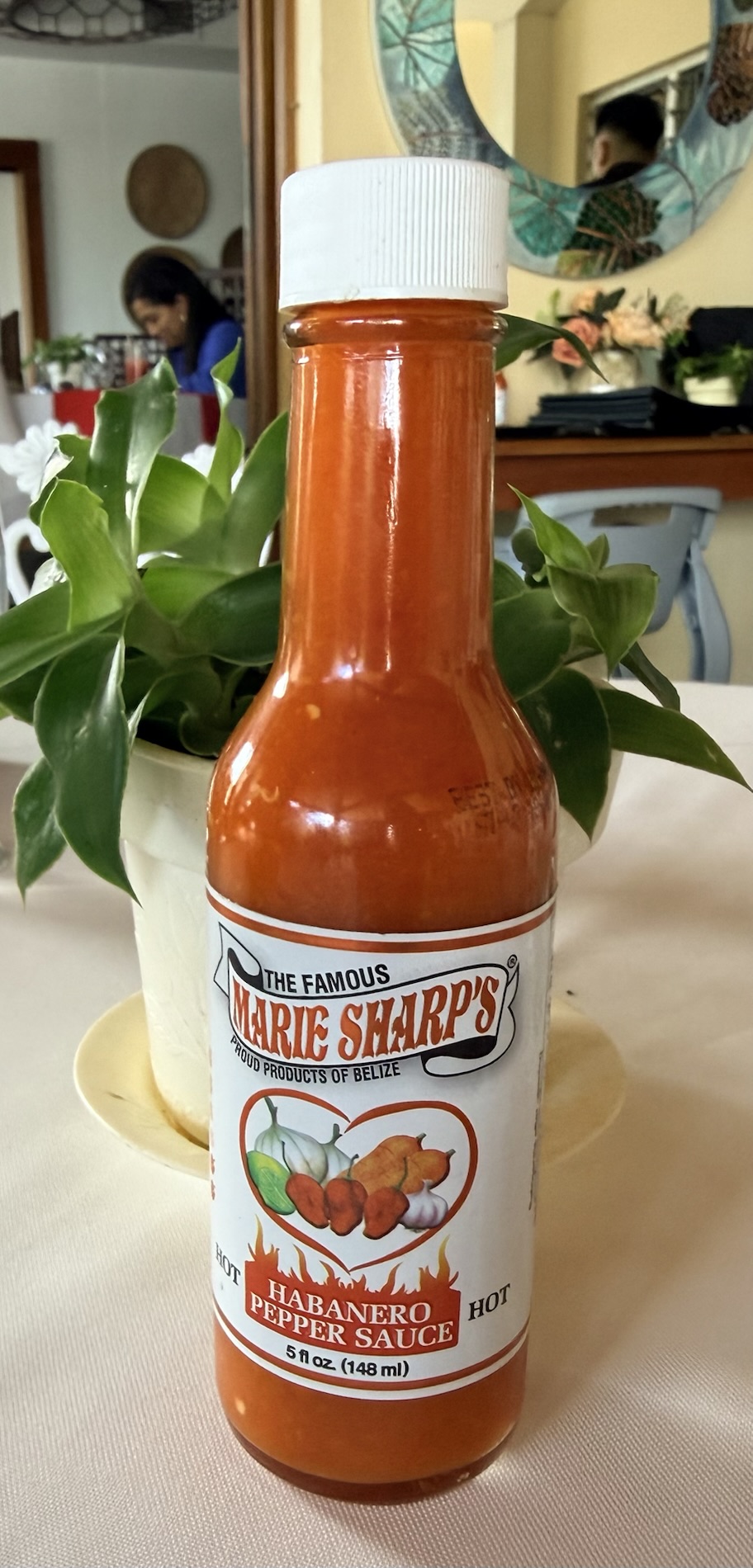
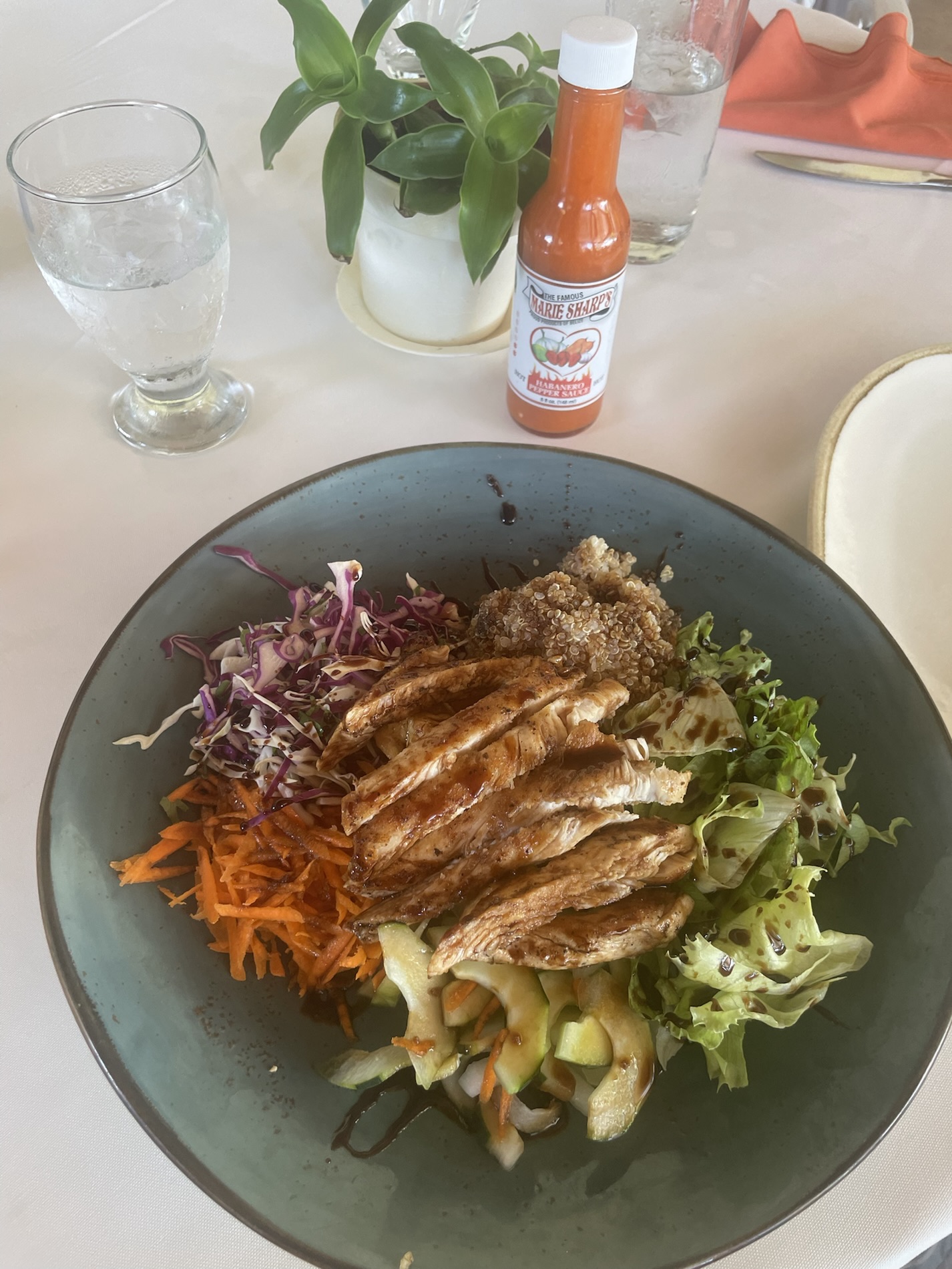
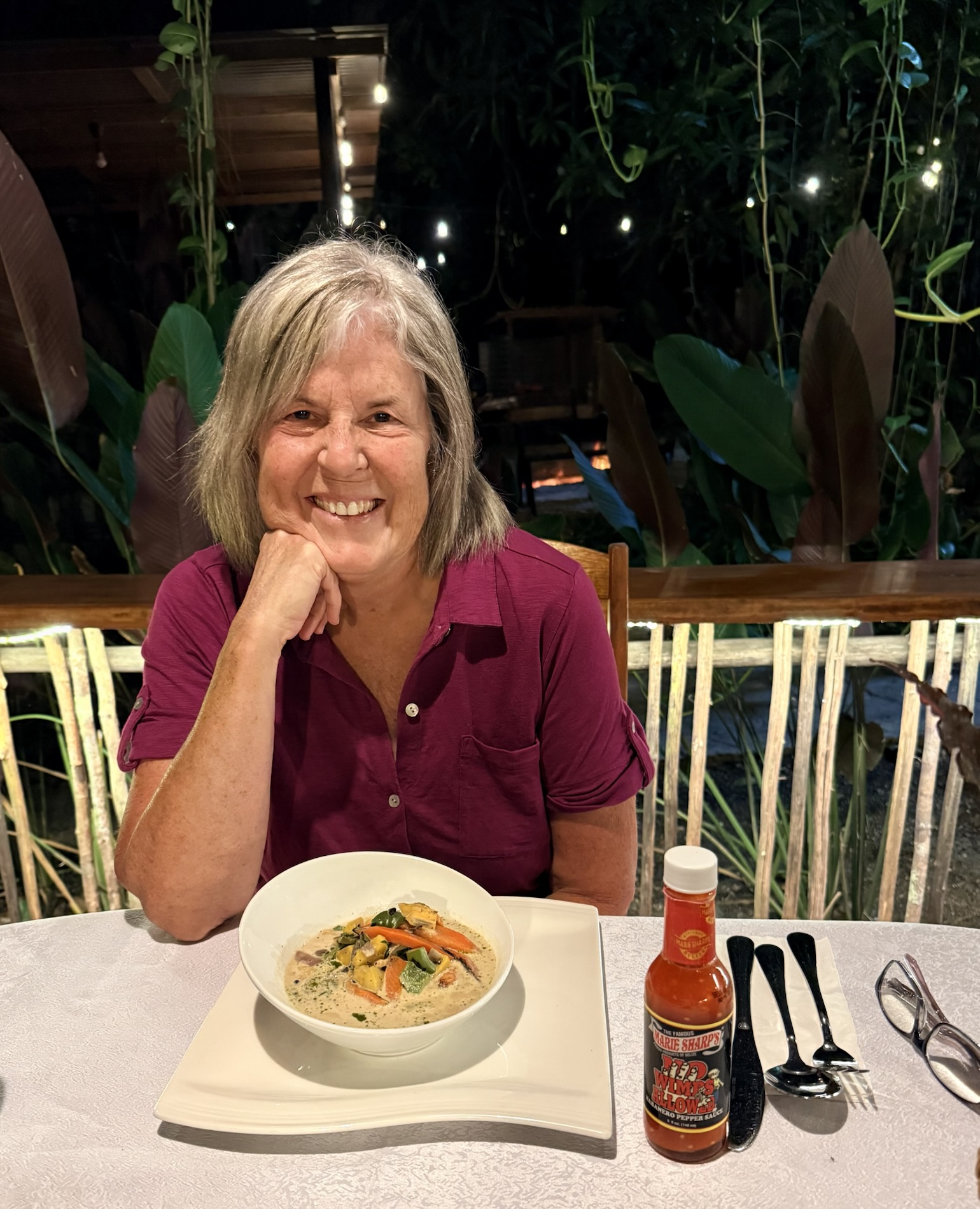
At the San Ignacio Resort Hotel, after visiting the Iguana Project, we found something exotic. While eating a lunch of chicken salad (decidedly NOT exotic), we found a bottle of “The Famous Marie Sharp’s Habanero Pepper Sauce.” According to the bottle: “Her secret homemade recipe utilizes the potent red habanero pepper. Produced in the fertile paradise of Belize, her red habanero is considered to be one of the hottest peppers known to man.” Her factory is based on Stann Creek Valley Road in Belize. Apparently it is one of the exotic things to be experienced in Belize. We sprinkled some on our chicken salad, but it didn’t burn our mouths as we feared it might.
KO-OX-HAN-NAH (Let’s Go Eat)
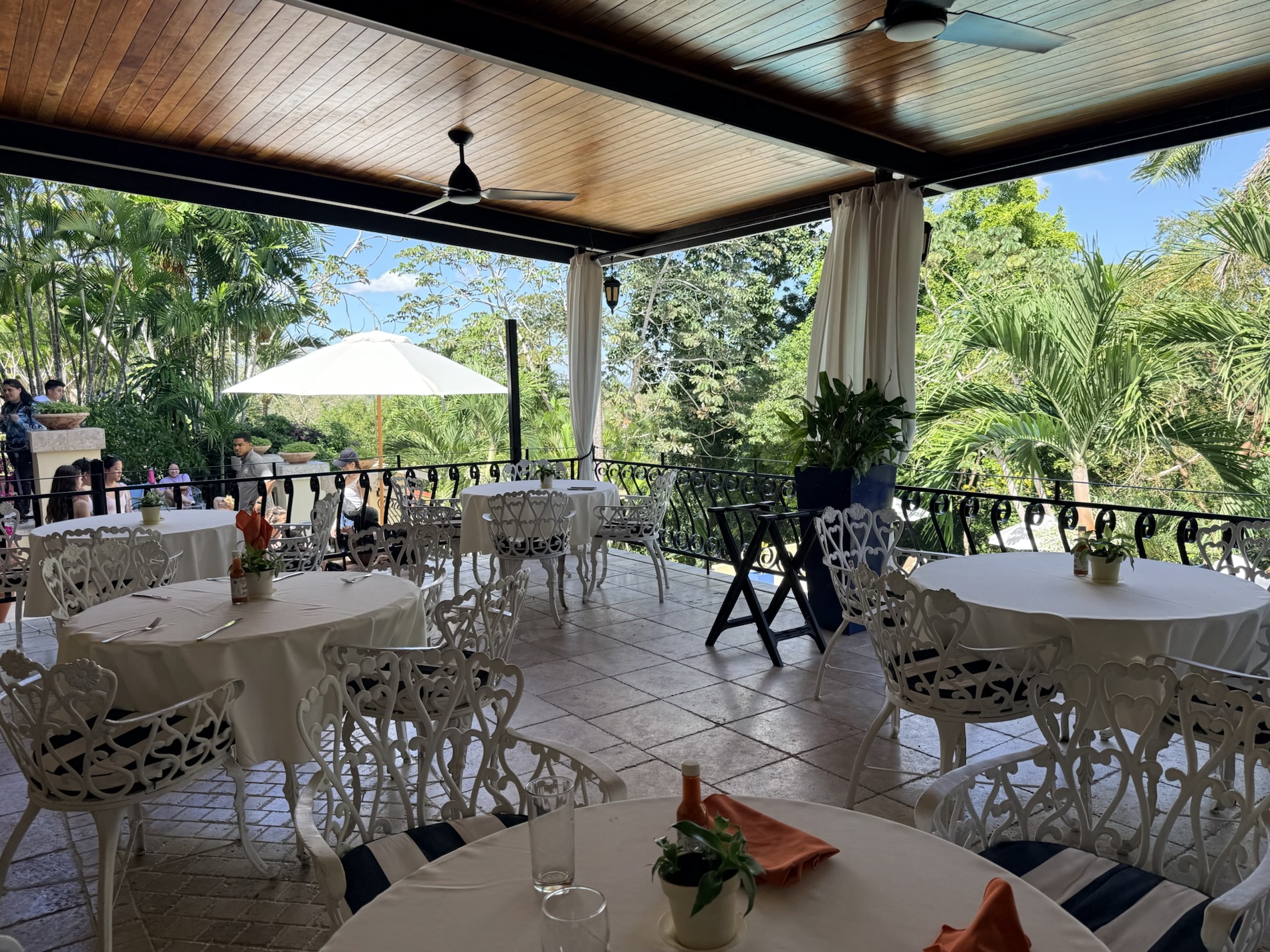
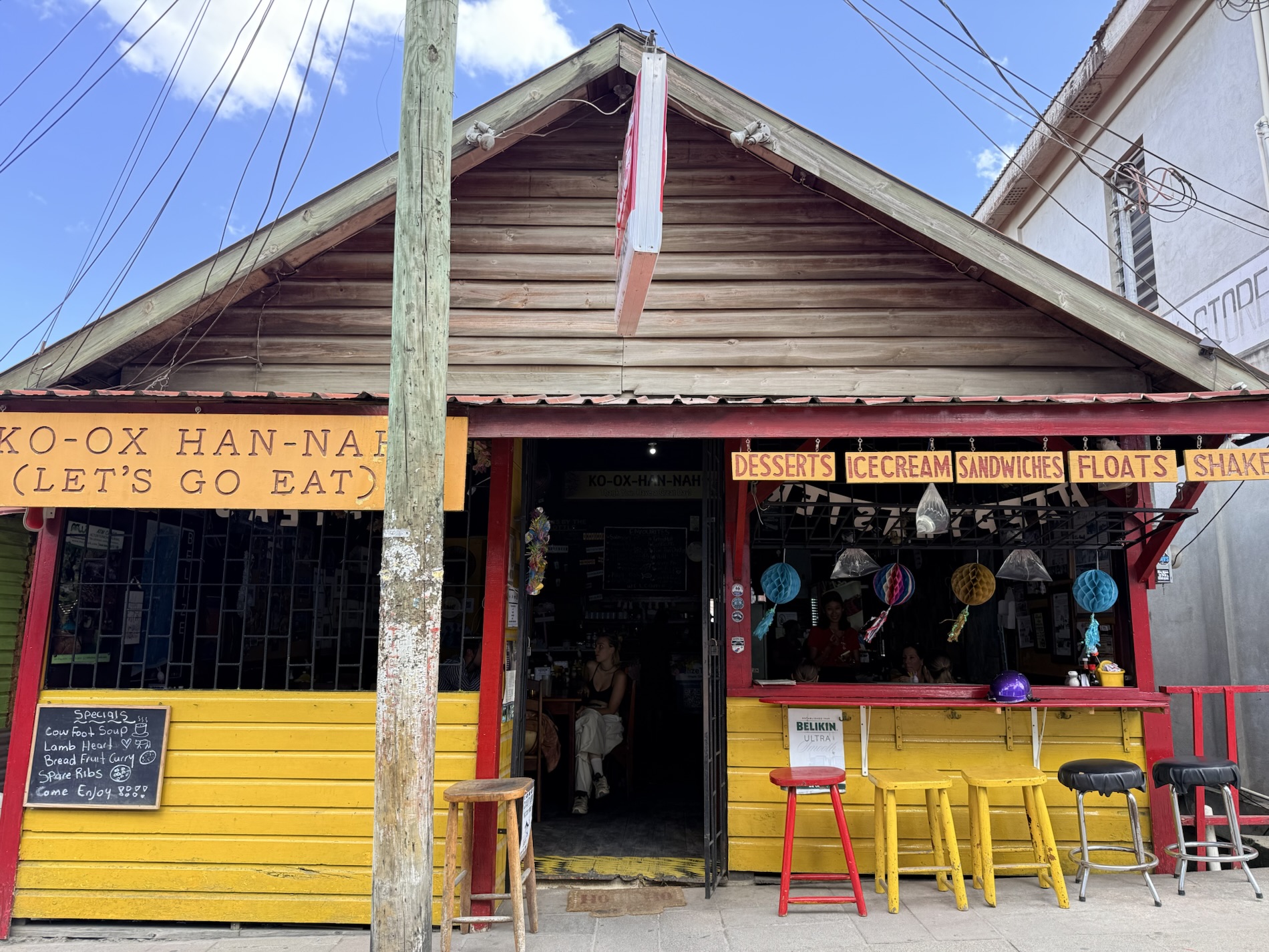
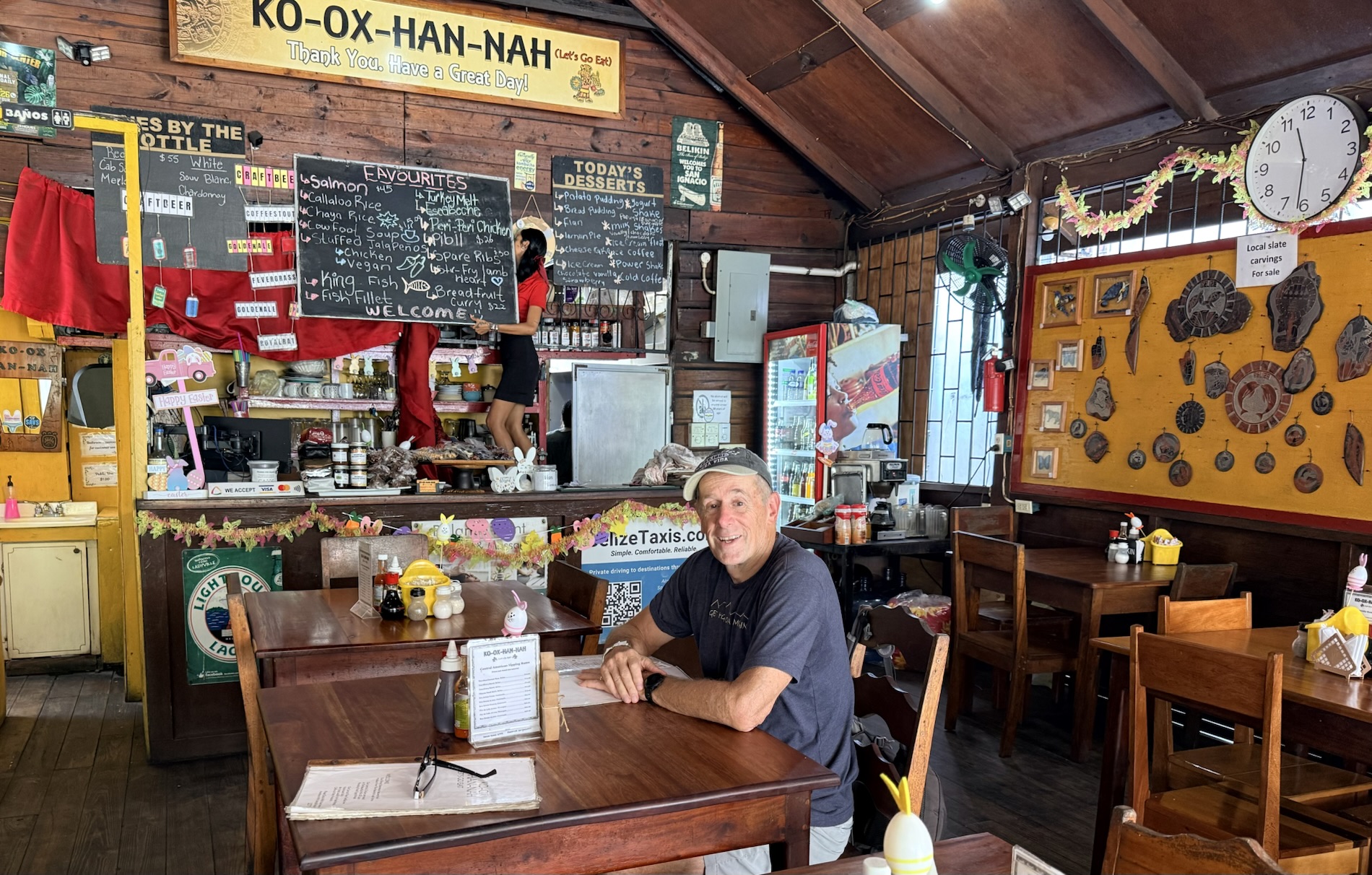
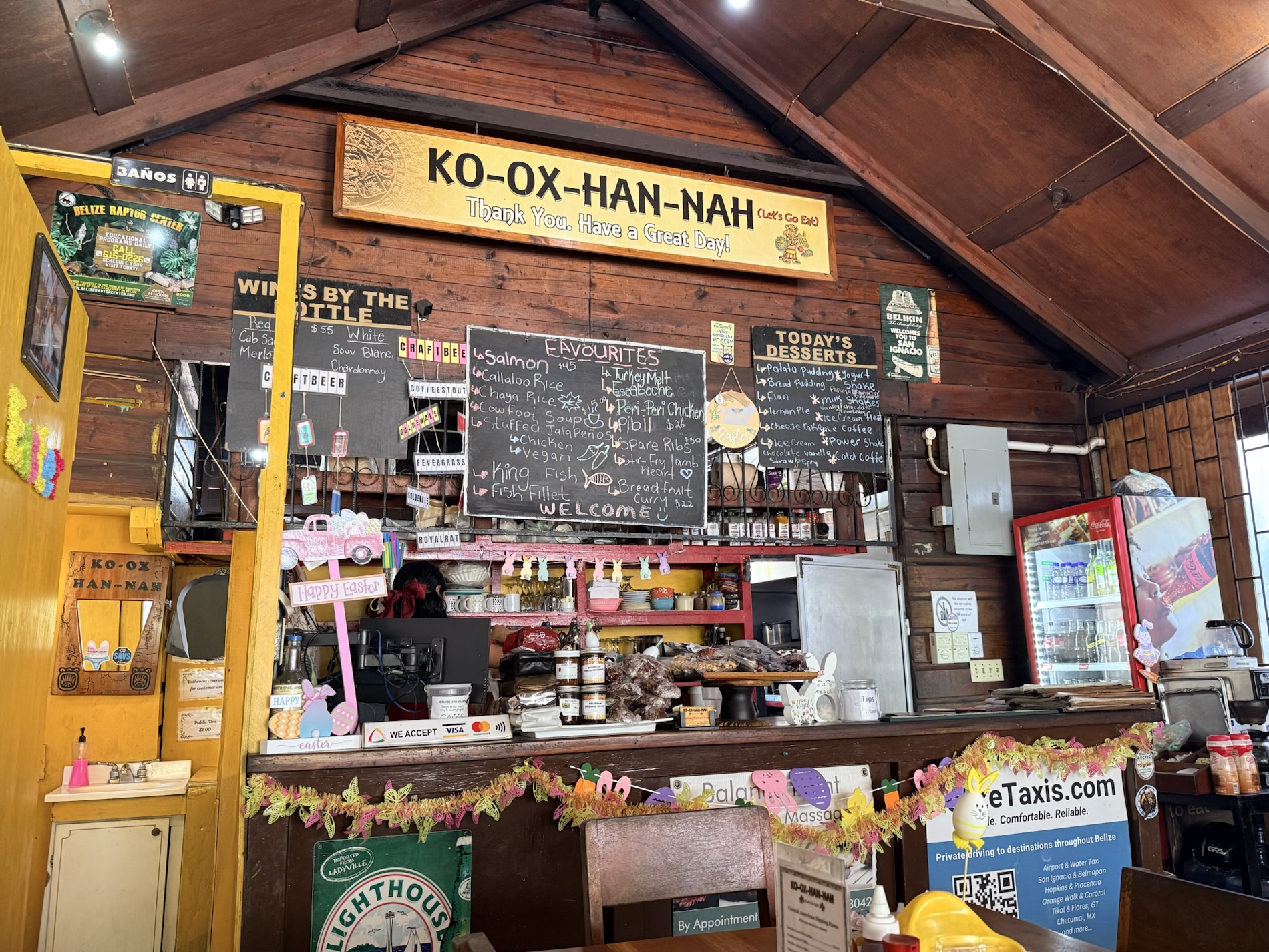
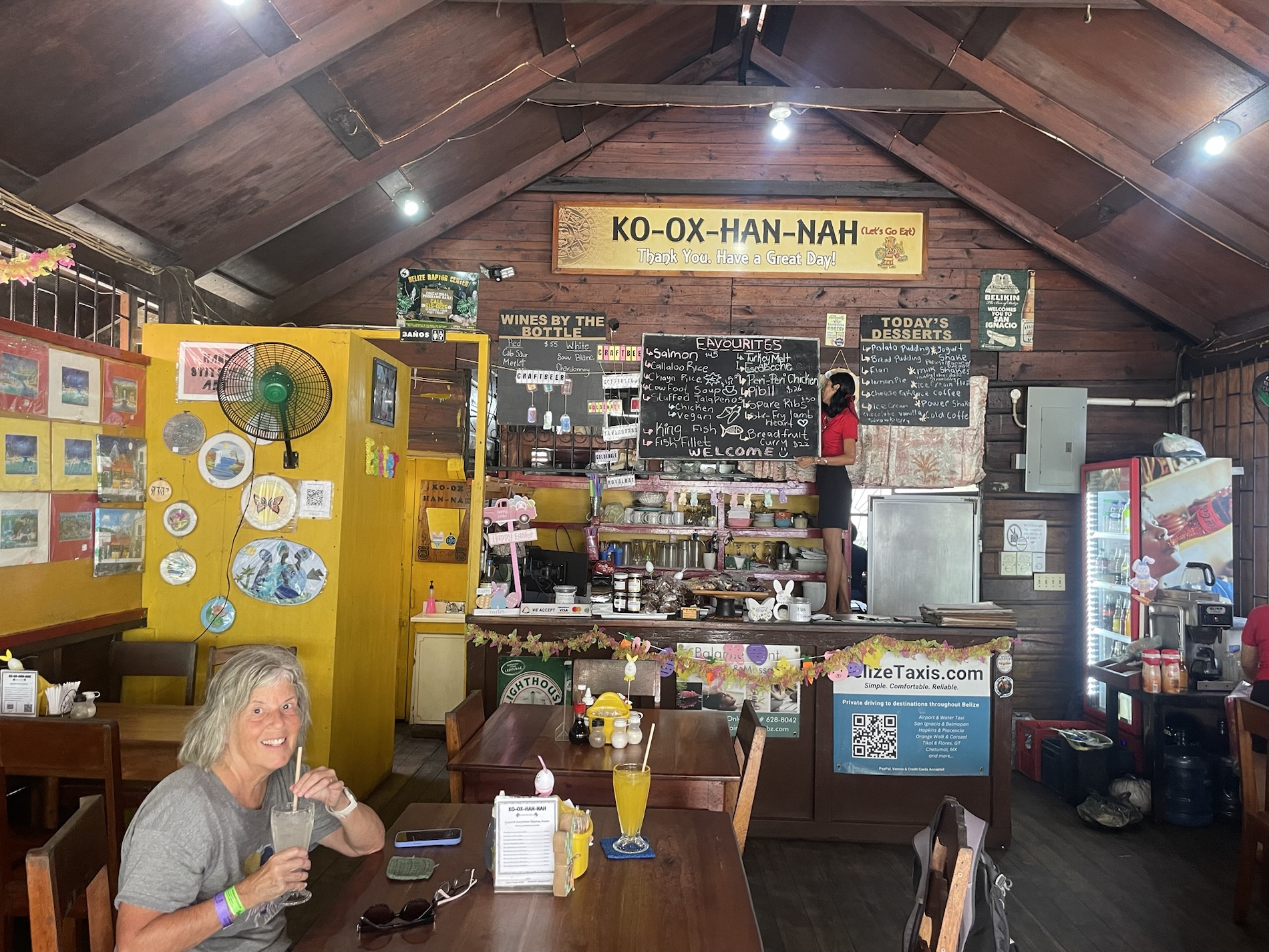
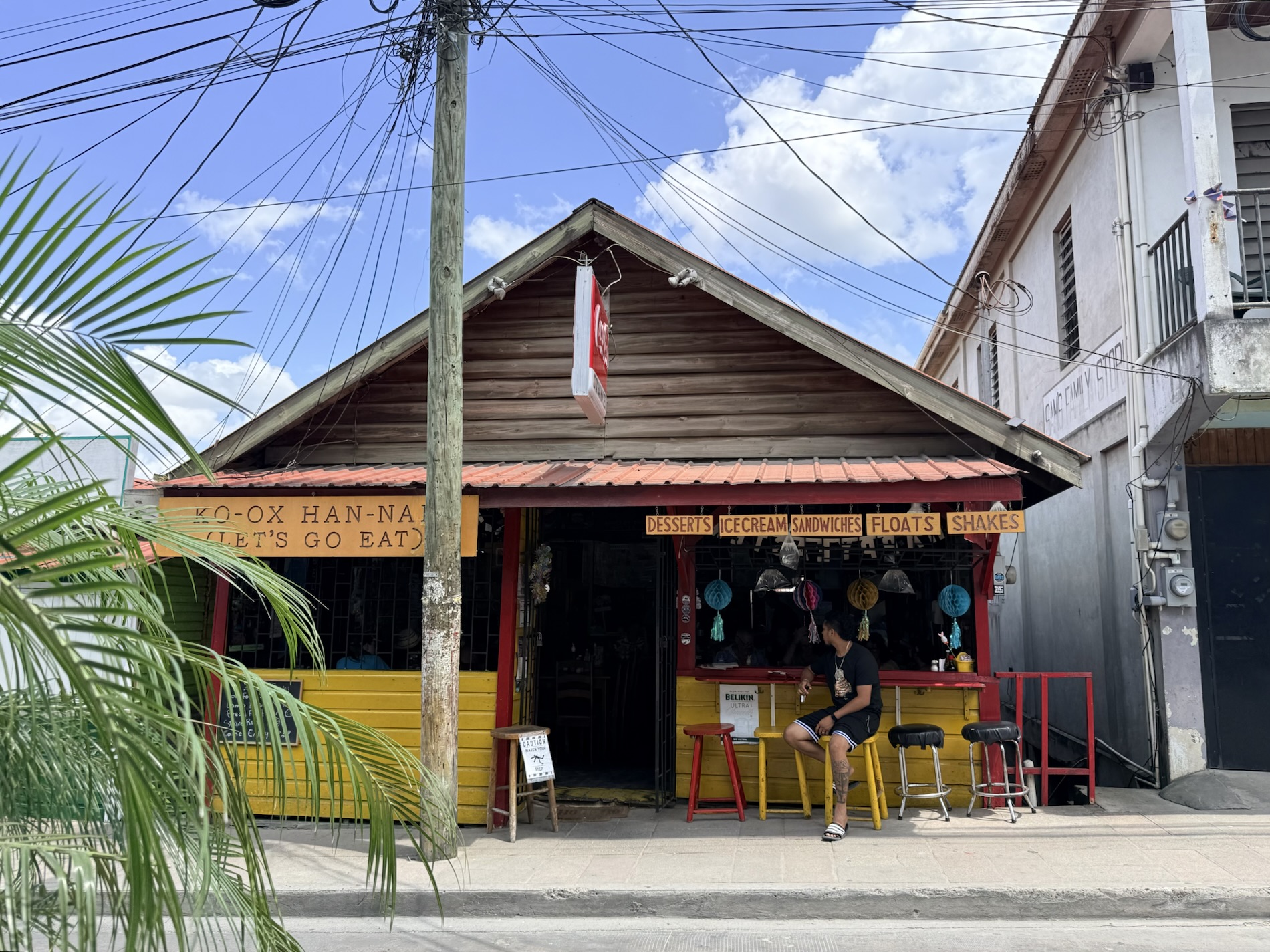
We stopped at the well-known KO-OX-HAN-NAH (Let’s Go Eat) after sweating away at both Xunantunich and Cahal Pech. I felt and looked like something the cat dragged in. However, we did enjoy the atmosphere and a common Belizean dish: Coconut Rice and Stew Beans with Chicken. It was delicious, especially the tender chicken with its delicious sauce. We also ordered some deep fried jalapeños stuffed with chicken that didn’t thrill me.
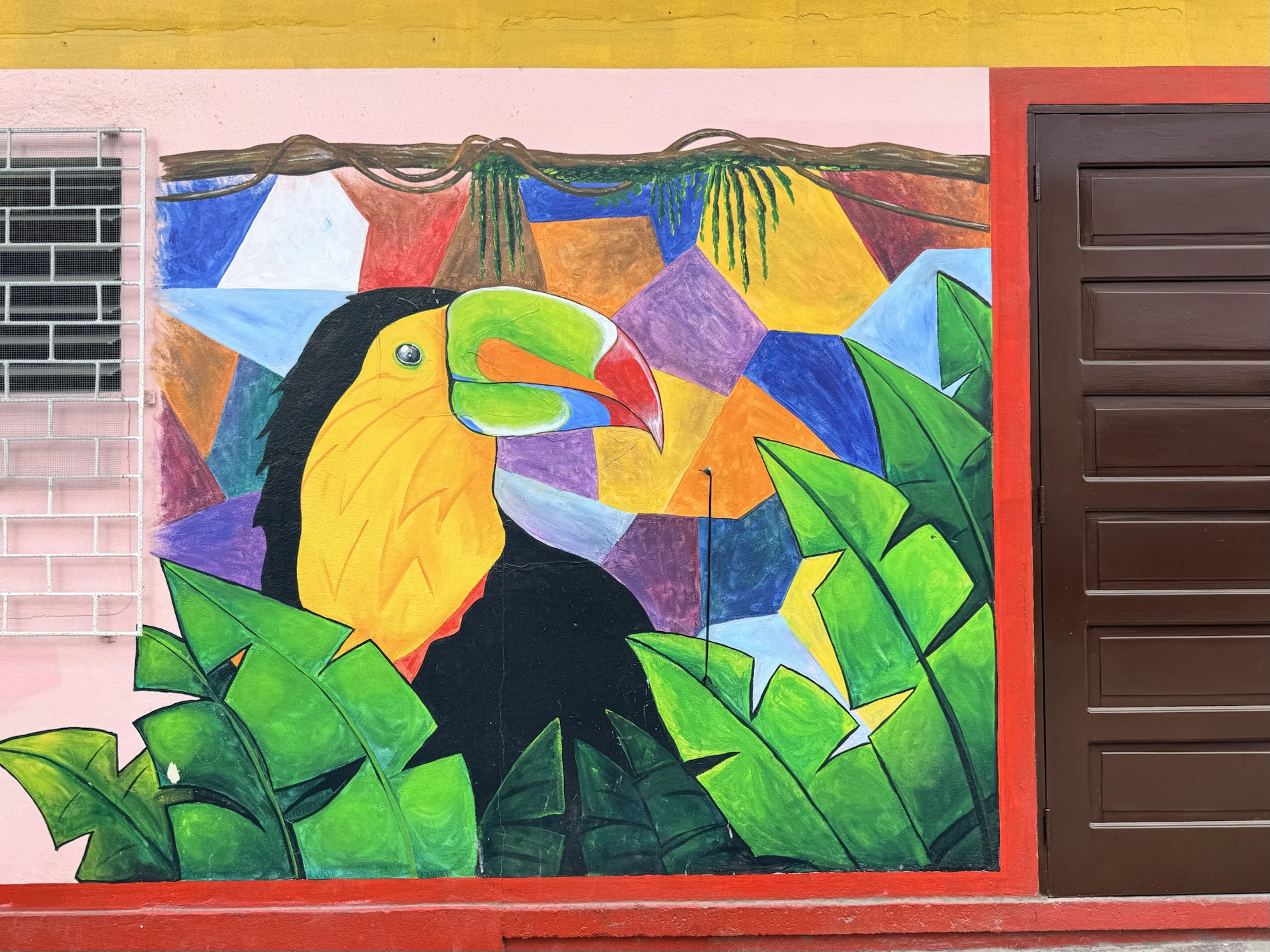
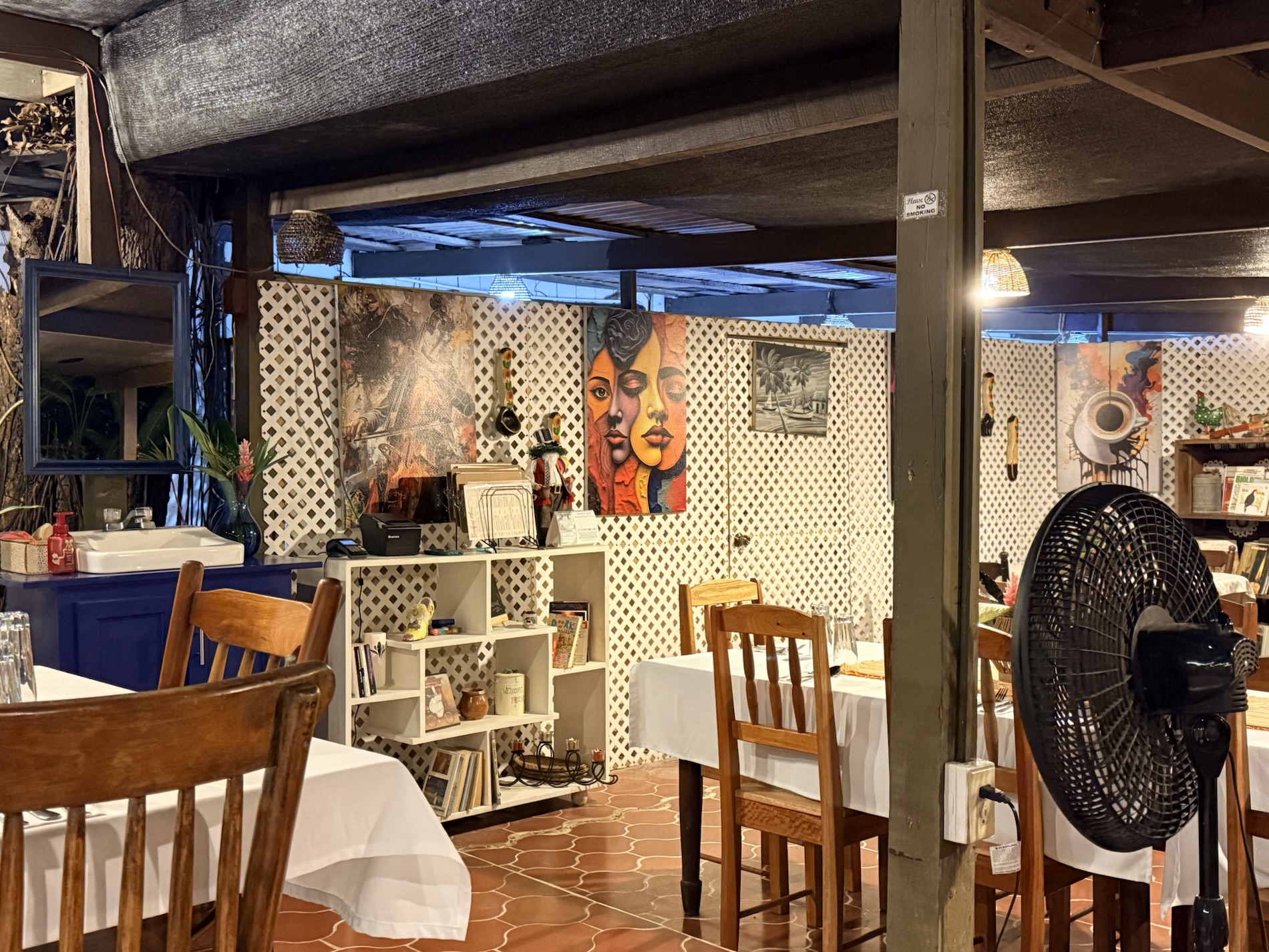
Fiona’s Cafe at Maya Mountain Lodge
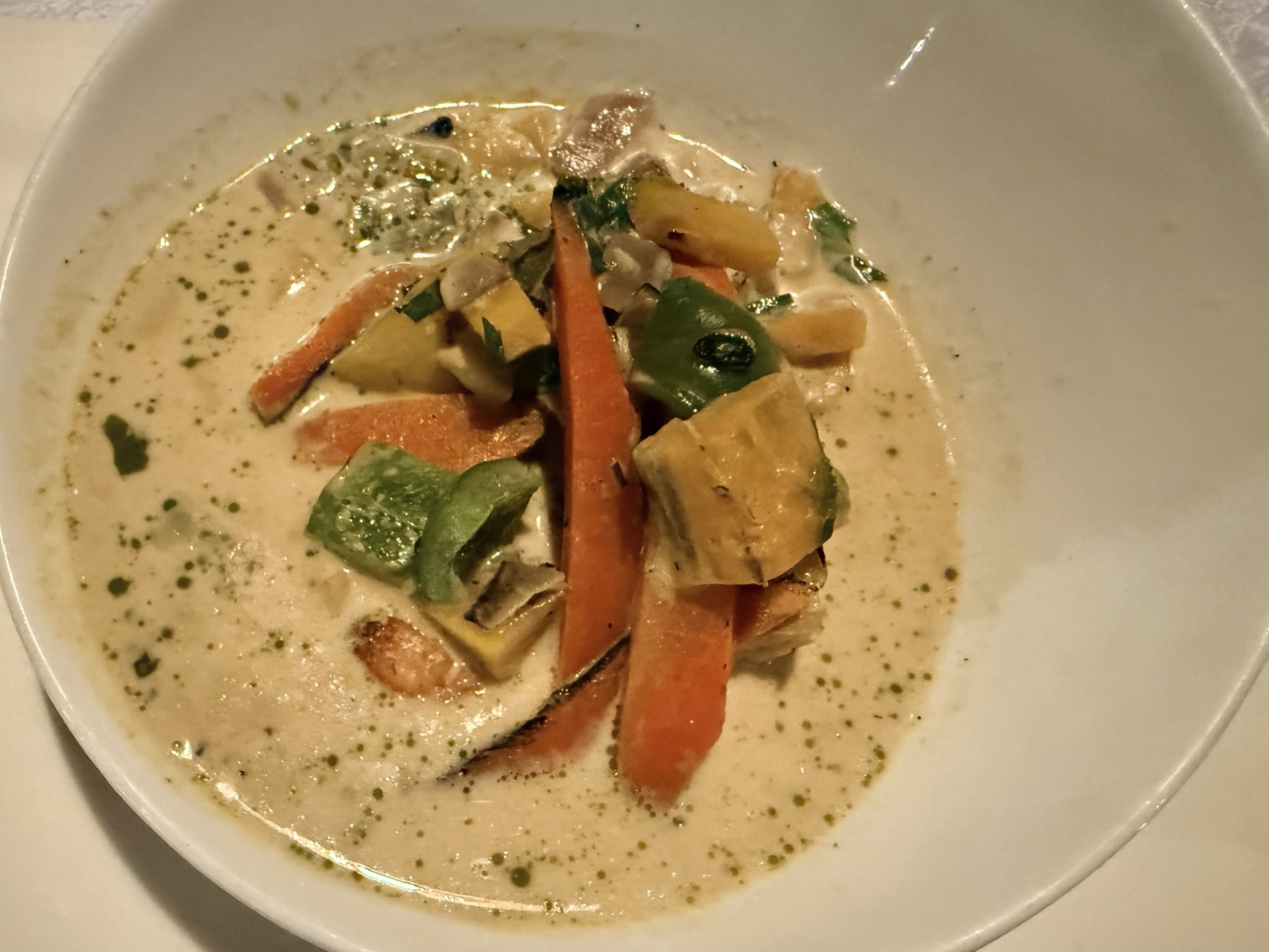
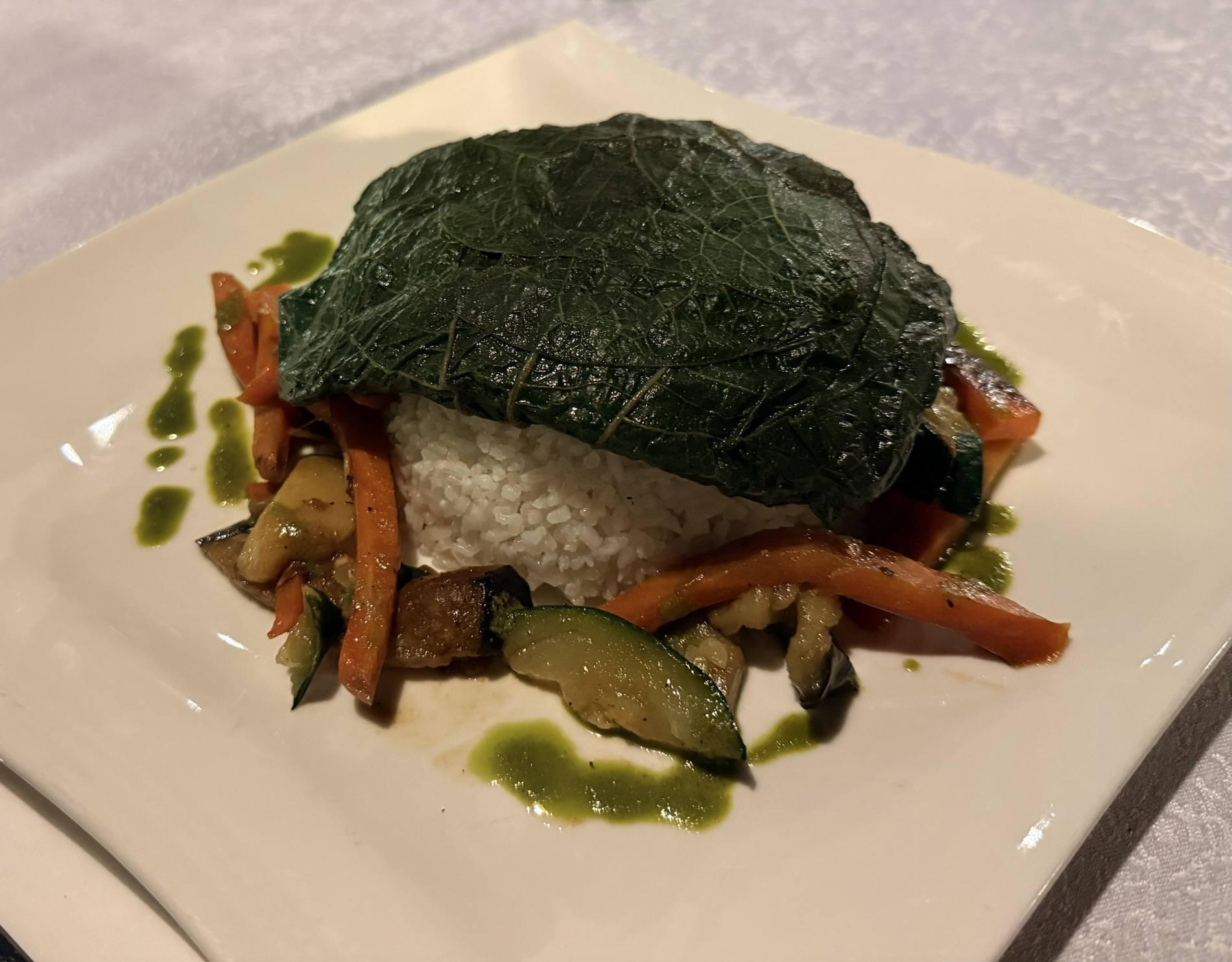
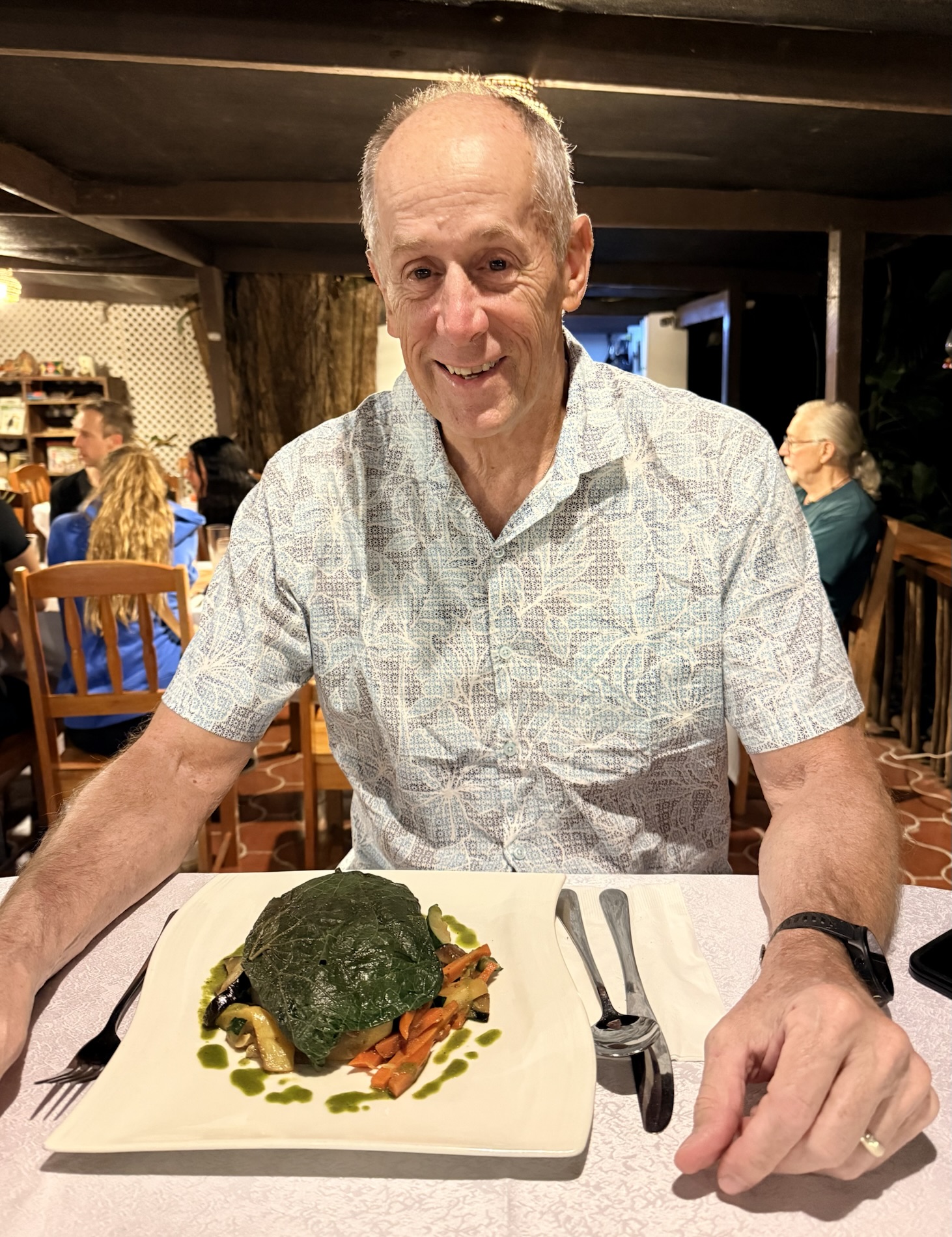
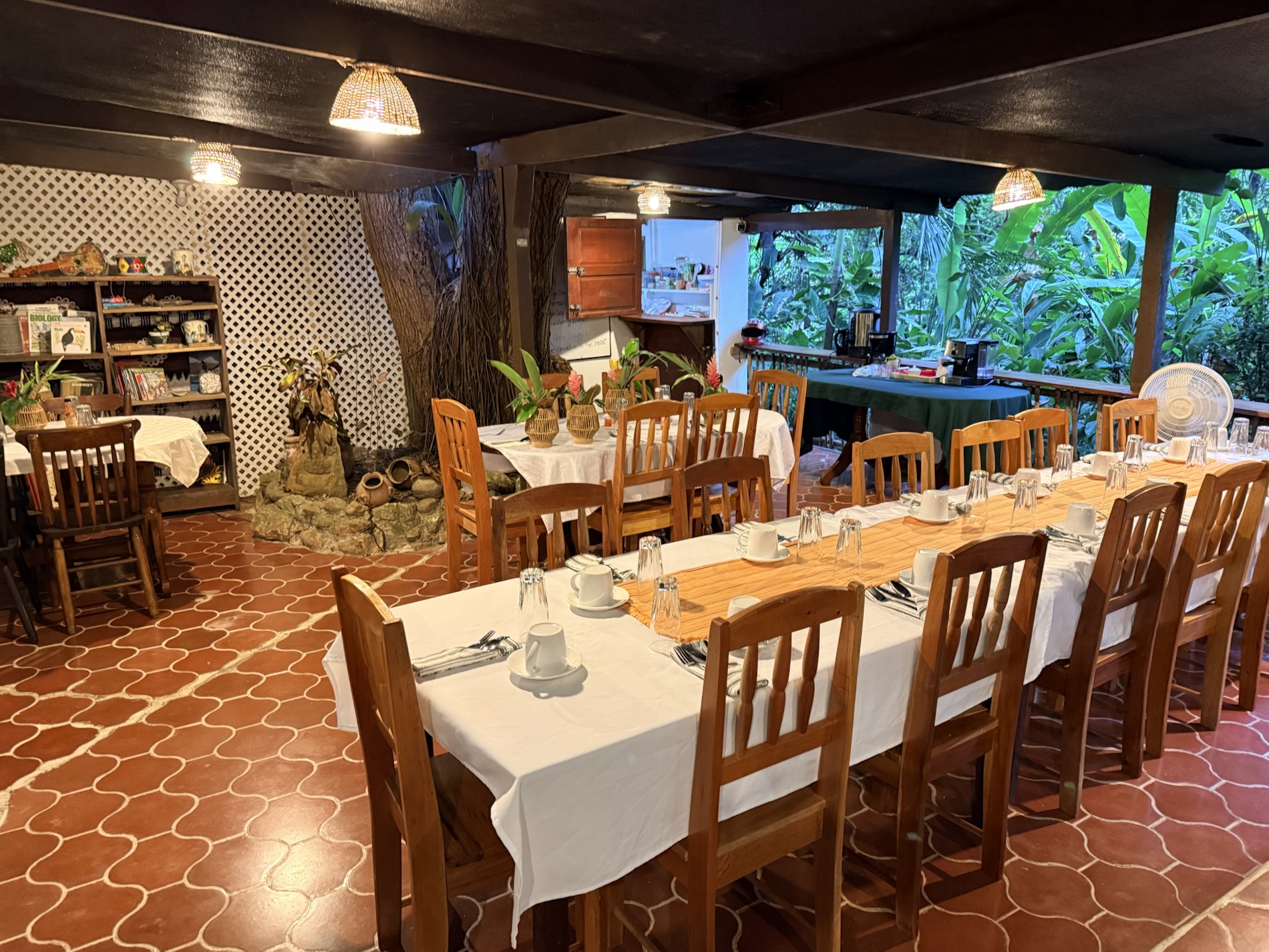
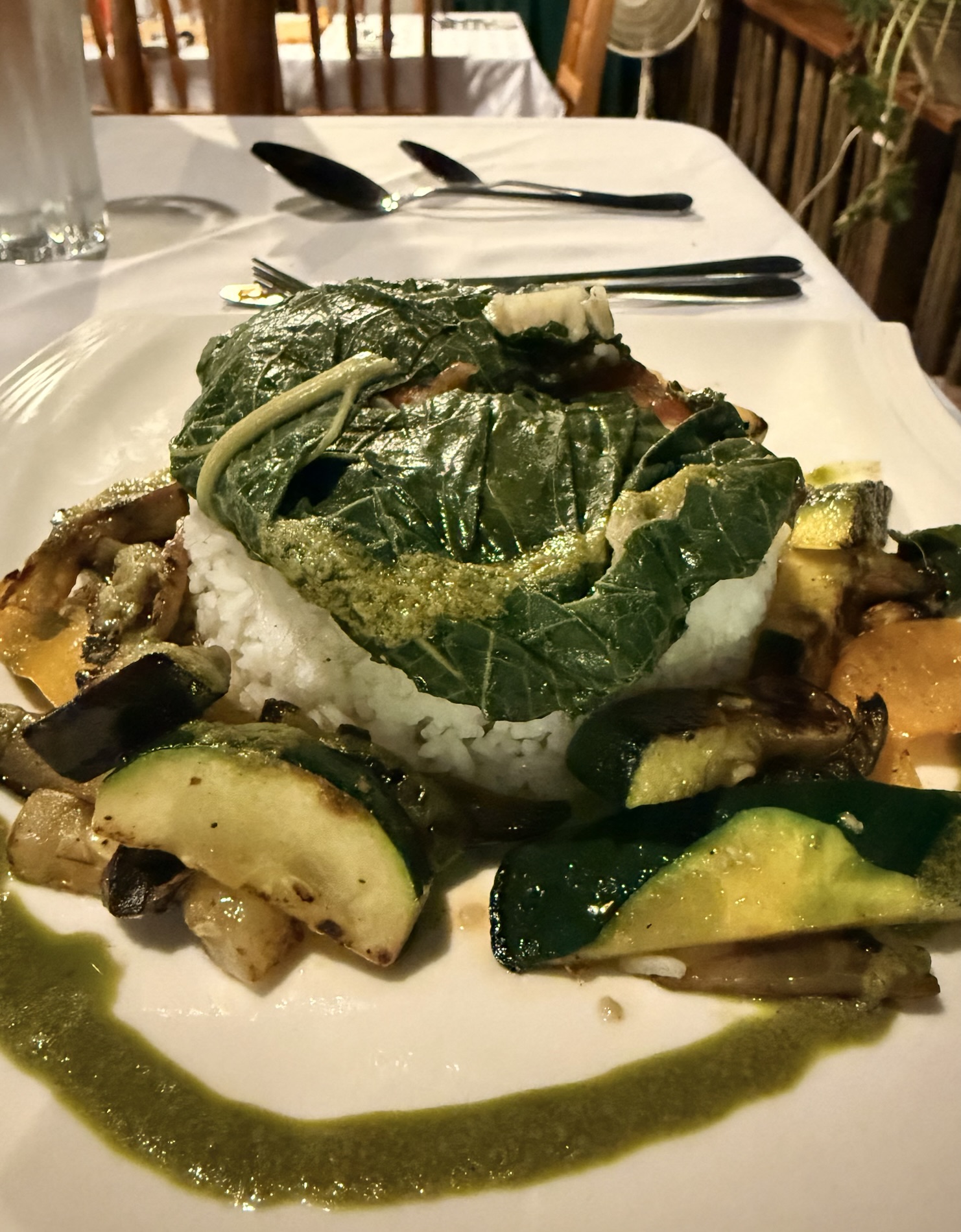
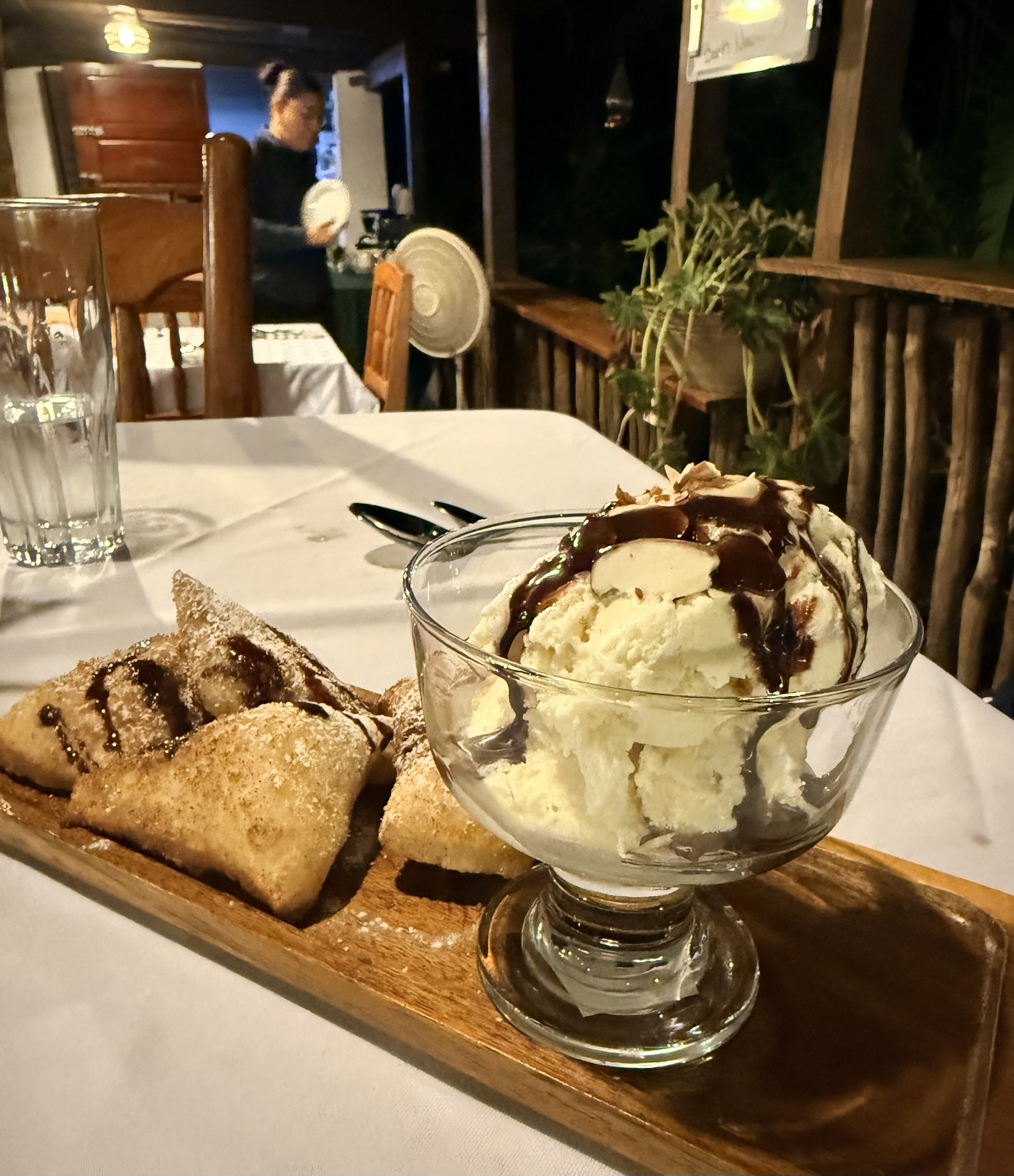
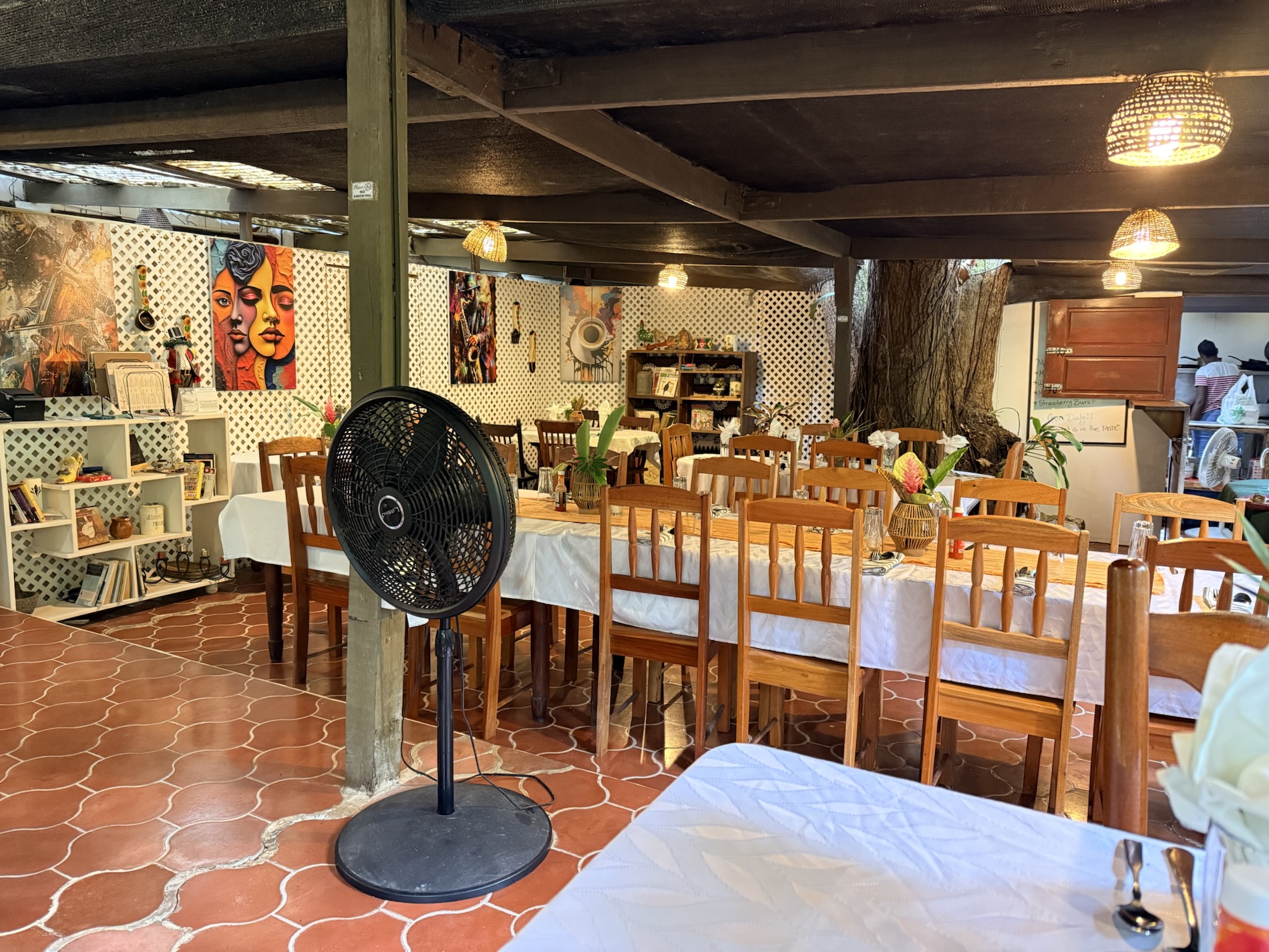
We were happy to find exotic food choices at the hotel’s onsite restaurant, Fiona’s Cafe. Our first night, I ordered Garifuna Sere: Coconut soup, prawn and snapper fillet with hints of cilantro and local yams. Served in an asymmetrical white bowl, it introduced me to delicious flavors that felt very exotic. Mike had a Maya Fish Fillet: red snapper with onion, tomatoes and bell peppers wrapped in an obel leaf (mint flavored leaf). It was very tasty indeed. Both were brimming with unusual flavors and textures. To top off our meal, we ordered Sweet Jacks for dessert: deep fried cinnamon fry jacks drizzled with golden plum jam on flavored ice cream. Fry jacks, a traditional dish in Belizean cuisine, are deep-fried dough pieces usually served for breakfast; they can be shaped as circles or triangles.
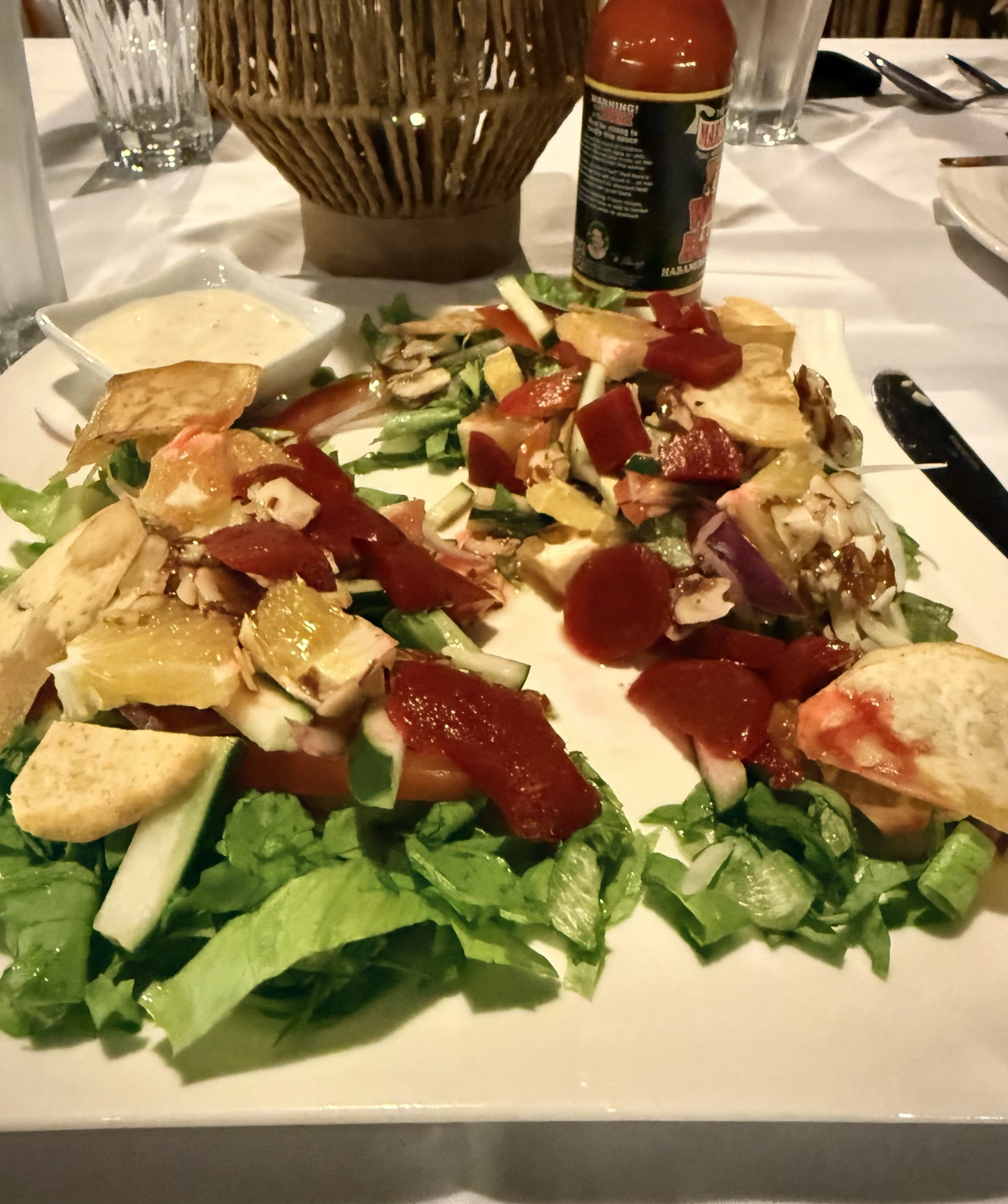
Our second night, we figured we would eat at Fiona’s again. After all, it would cost us $16 round trip to go into town. Plus, the food had been wonderful on the first night. We ordered the same Maya Fish dish to share but this time the fish wasn’t snapper. I can’t remember what it was. We also shared a Beet Root Salad: crispy greens, roasted beet root, carrots, cherry tomatoes, orange wedges, caramelized almonds, coco chips and citrus dressing. The beet salad was delectable but the Maya Fish somehow didn’t seem as good as on the first night. I don’t know if it was because the fish was different or the novelty had worn off.
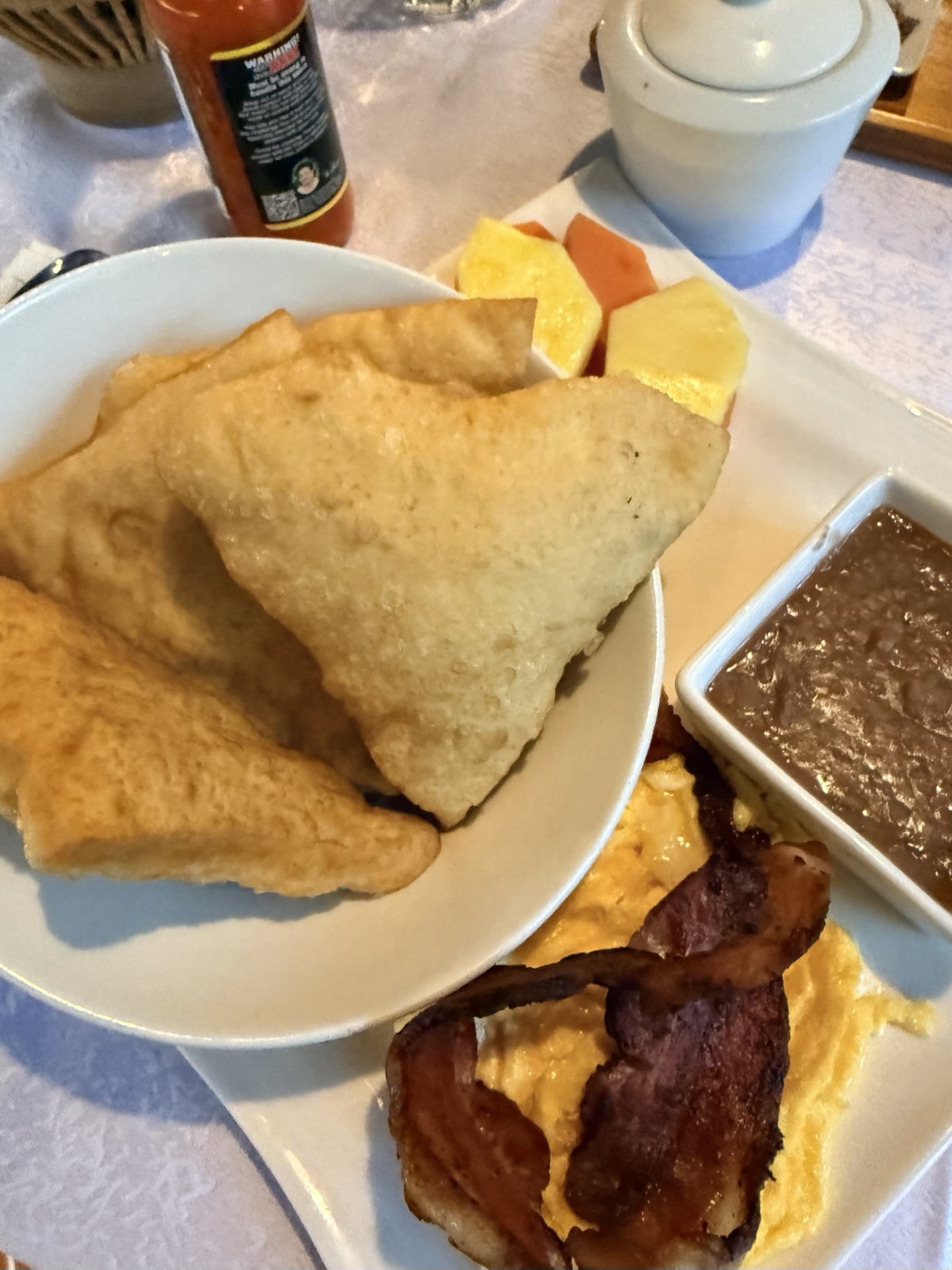
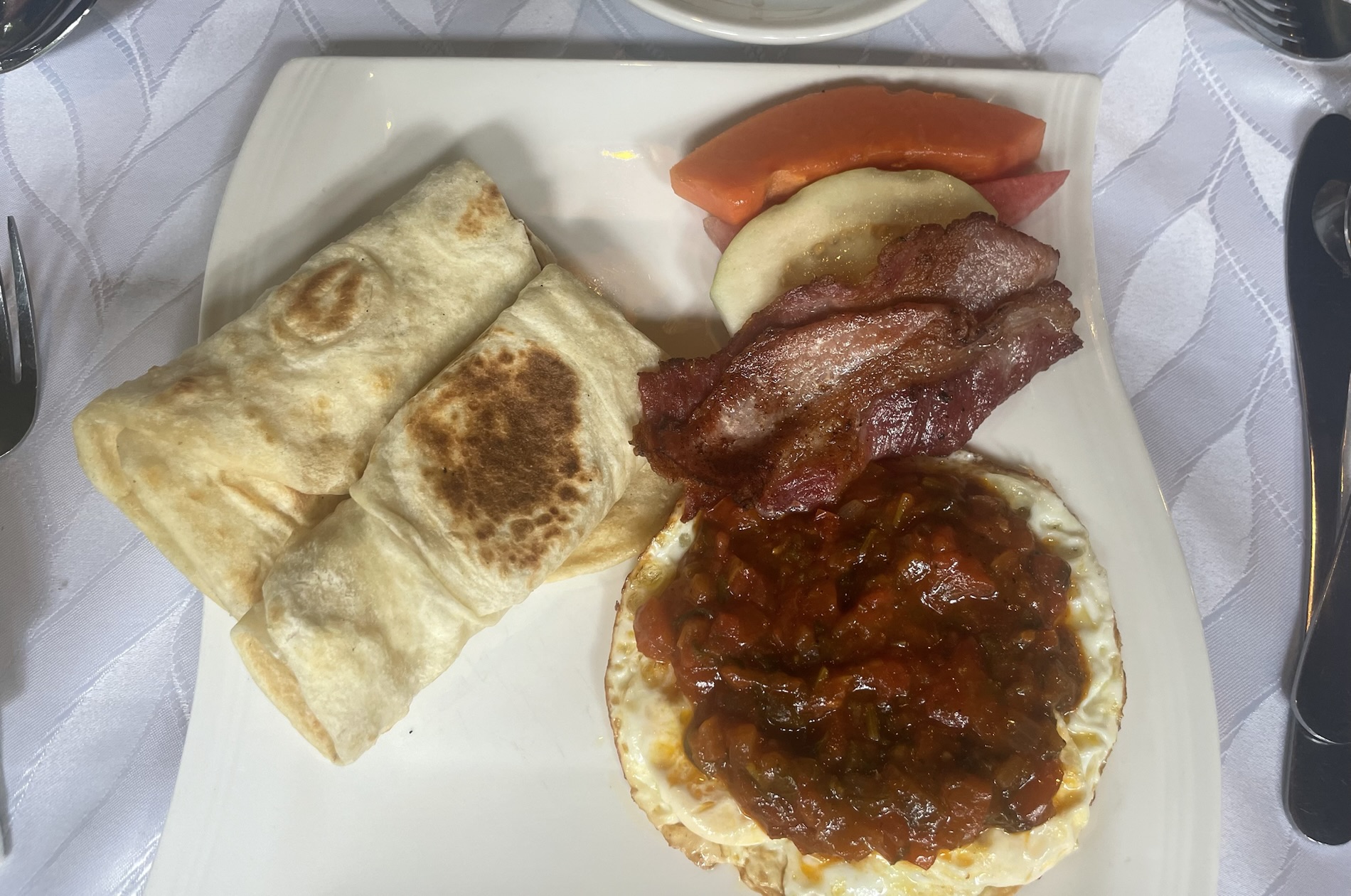
The two breakfasts at Fiona’s were not too exotic other than the fry jacks. The first day’s Belizean Breakfast was scrambled eggs, refried beans, bacon, fry jacks and a side of fruits.
Waiting for the shuttle and returning to Guatemala
Monday, March 16: Our last morning, we took our sweet time, lingering in the apartment in the morning and going for a late breakfast. We waited until the last possible moment to check out, 11 a.m., because our shuttle wouldn’t leave San Ignacio until 2:30 to cross the Belize border and return to Flores in Guatemala.
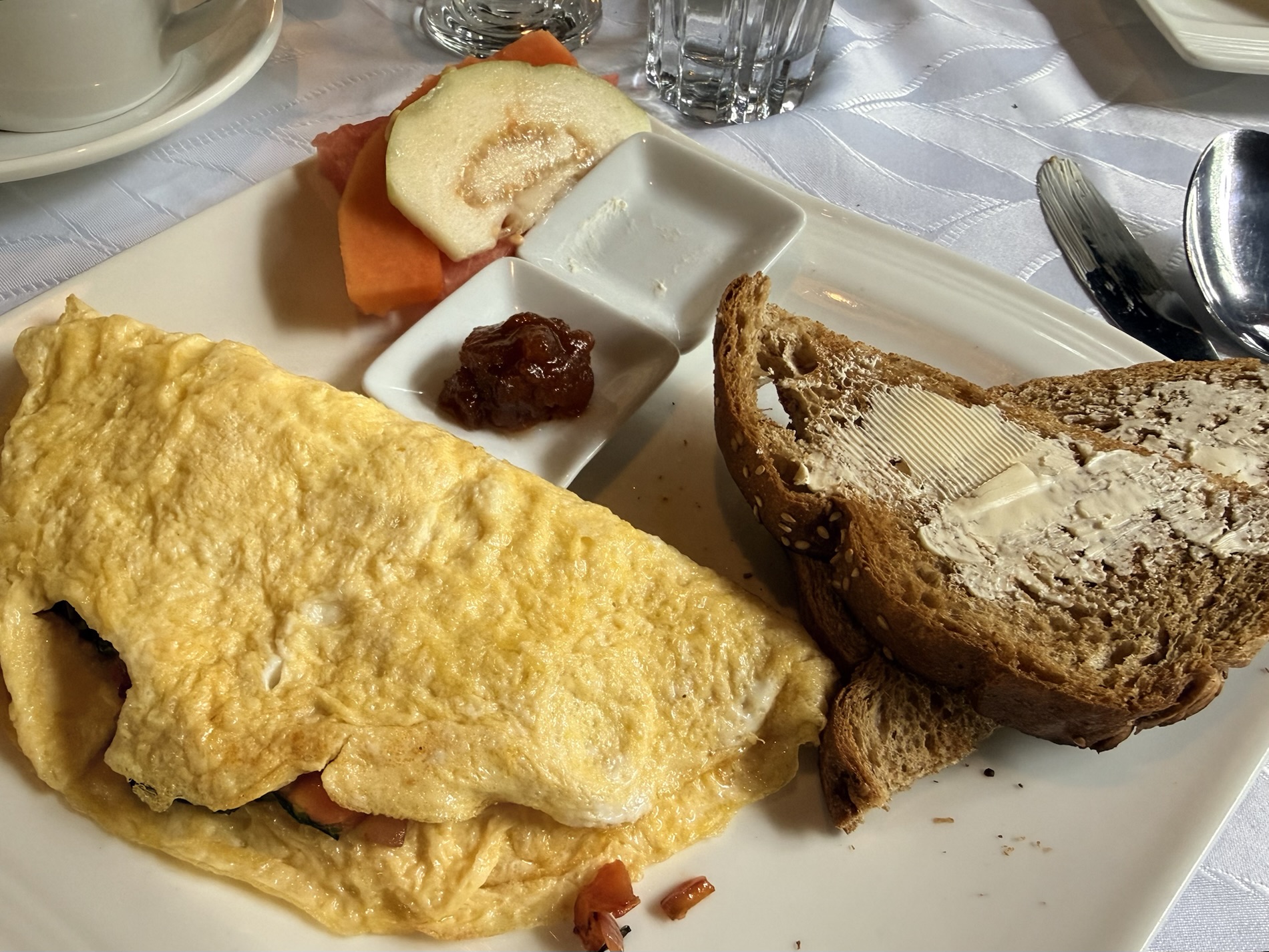
Mike had Huevos Rancheros and I had an “Omlet con todo.” During breakfast our last day we talked to a young Belizean man who led early morning birding walks at the hotel. He told us the national bird of Belize was the Keel Billed Toucan, which we see often in Costa Rica. Then he informed us that the National Bird of Costa Rica was the boring little brown clay-colored thrush, known locally as the yigüirro. We were surprised it wasn’t something more exotic since Costa Rica has an abundance of beautiful birds. But apparently the clay-colored thrush is one of Costa Rica’s most common birds and is found throughout every region. It was designated the National Bird in January of 1977. Discovering this fact about Costa Rica from a Belizean birder was surprising, and a bit exotic!
The waitress told us on our last morning that her daughter had been bitten by a poisonous snake the day before. She gushed about her brother, who always drops everything when she needs him, as he was on a quest to get some serum for her daughter. We of course don’t know the outcome, but we hoped the best for her daughter.
We hung out by the pool until our ride picked us up until 2:00. It was hot and rather boring, as waiting for anything usually is. The ride back to the Belize border was quick and the border crossing was easy. And then we returned to Flores, where our shuttle driver dropped us directly at Maya Mundo Airport in Flores for our 8:45 flight back to Guatemala City.
********
One of my intentions on this trip was to write about: What do you find exotic? What delights you? What is the evidence that you are elsewhere?
I did this above, though it was difficult since I didn’t find that much of the “exotic” in Belize.
 ~ wander.essence ~
You must be logged in to post a comment.