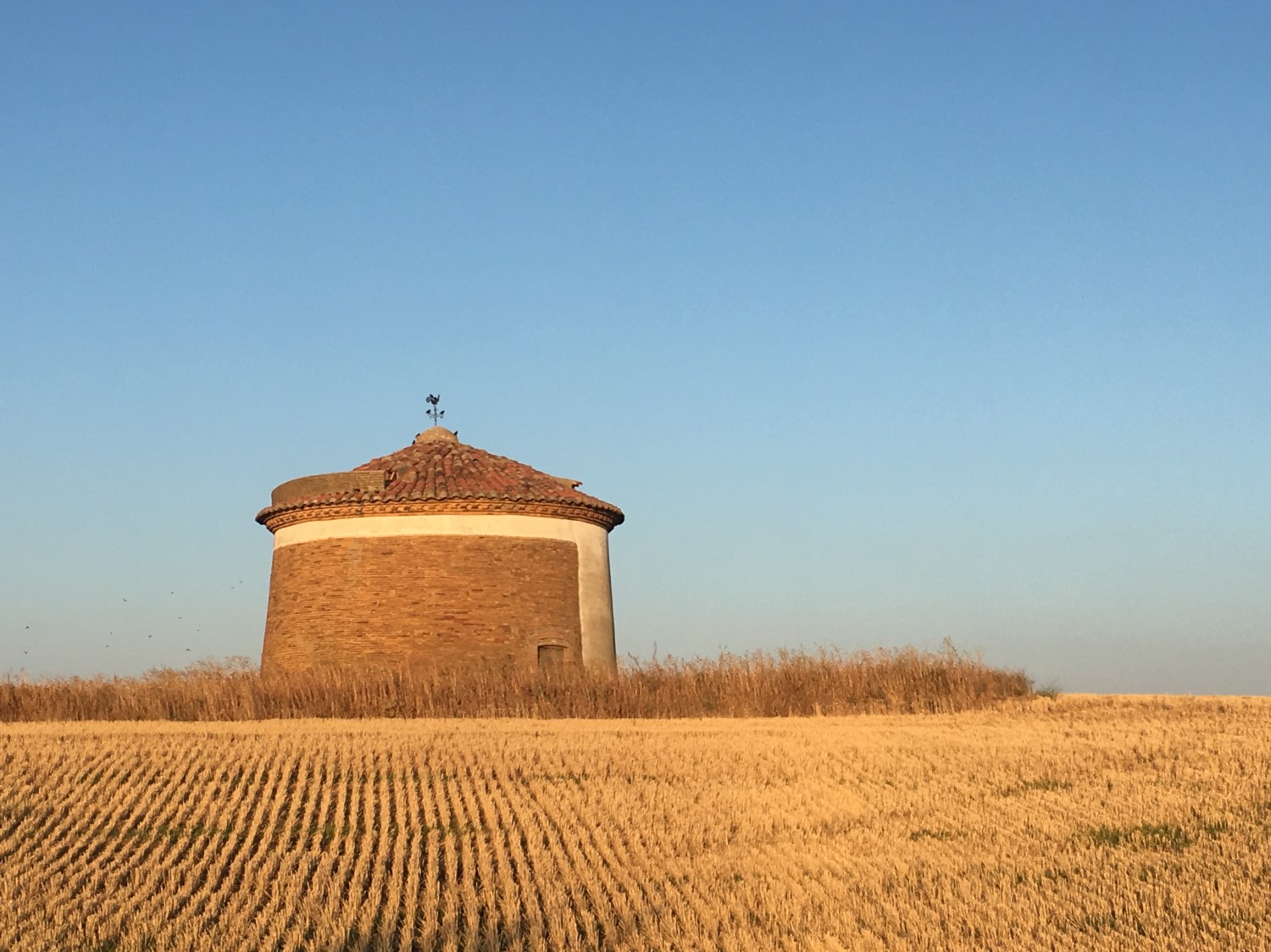

I had another stunning walk today of only 15.4km. The thing that makes me happiest when walking is a cool breeze, and I had just that from the moment I left at 6:50 a.m. until I arrived at tonight’s destination. Even after the sun rose, the pleasant breeze kept on giving.
As I shook off the dust of Calzadilla de la Cuenza from my feet in the dark, 30-year-old Anne-Charlotte from Lille, France appeared by my side and we shared our reasons for doing the Camino. I told her about my loved one and she told me of her boyfriend who has been suffering from trauma because he was accused of stealing at his last job, so he hadn’t been able to work since. She came from a family where everyone had a good job and they couldn’t understand why she was with him. She had been walking from Le Puy-en-Velay for two months and figured it was her Camino, not her family’s. It was a time for her to figure out her situation on her own without her family’s interference.
It was dark and we both had on headlamps so I barely saw her face. It was like that on the Camino – a person appeared beside you and you shared intimate details of your life and then you parted ways. In this case, after our lovely conversation, I had to take a nature break and she went on. These kinds of encounters happen so often on the Camino, pilgrims think of these appearances, or apparitions, as Camino angels. No advice was generally given; it was just simple sharing about life and our struggles. I was left to mull over thoughts that arose from the encounters. I’d had too many of these moments to count. It was one of many things that was magical about the Camino.
Calzadilla de la Cuenzato to Opción (1.0 km) to Ledigos (5.1 km)


The other joy was that I took an optional path off the main Camino, without a soul in front or behind me, between Ledigos and Terradillos de los Templarios. It was lovely rolling farmland dotted with rectangular and cylindrical hay bales. A stunning sky hovered overhead. A special gift. The Camino gave and kept on giving.
Since I took the optional path, I skirted the town of Terradillos de los Templarios, supposedly the halfway point of the Camino. According to the Brierley guidebook, this town “approximates to the halfway point between St. Jean Pied de Port and Santiago de Compostela.” I couldn’t believe I’d made it this far!
Optional path from Ledigos (2.8 km vs. 3.4 km) to Terradillos de los Templarios

dovecote at the optional path from Ledigos to Terradillos de los Templarios
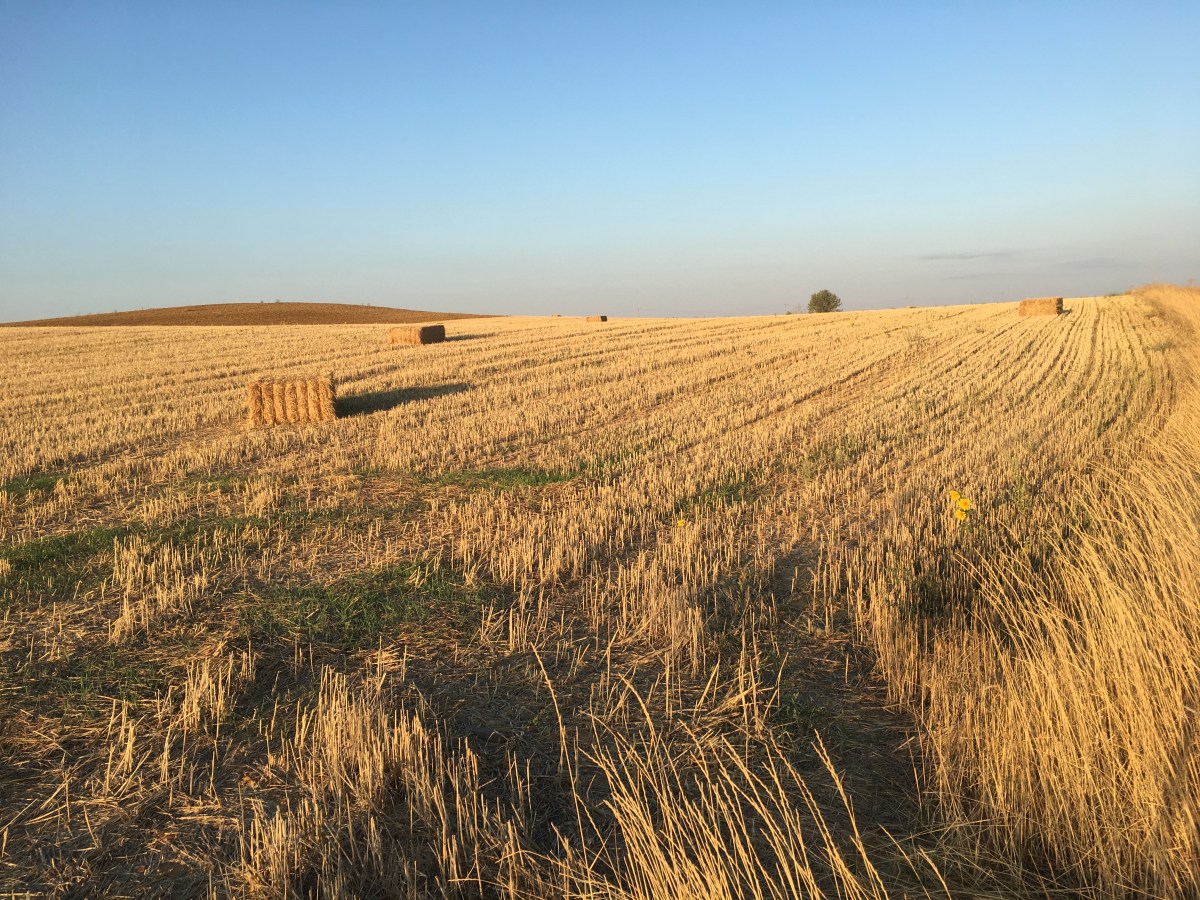
Optional path: Ledigos to Terradillos de los Templarios
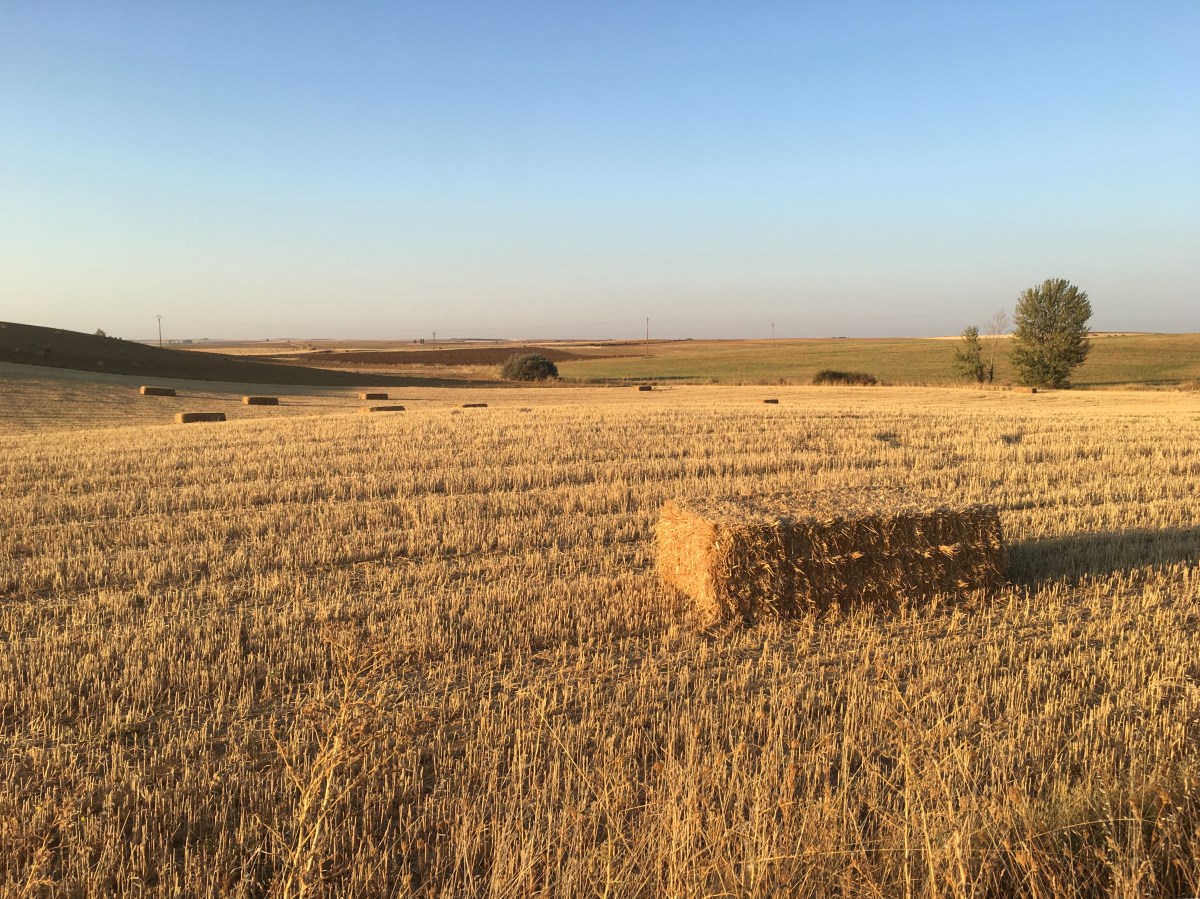
Optional path: Ledigos to Terradillos de los Templarios

Optional path: Ledigos to Terradillos de los Templarios

Optional path: Ledigos to Terradillos de los Templarios

Optional path: approaching Terradillos de los Templarios
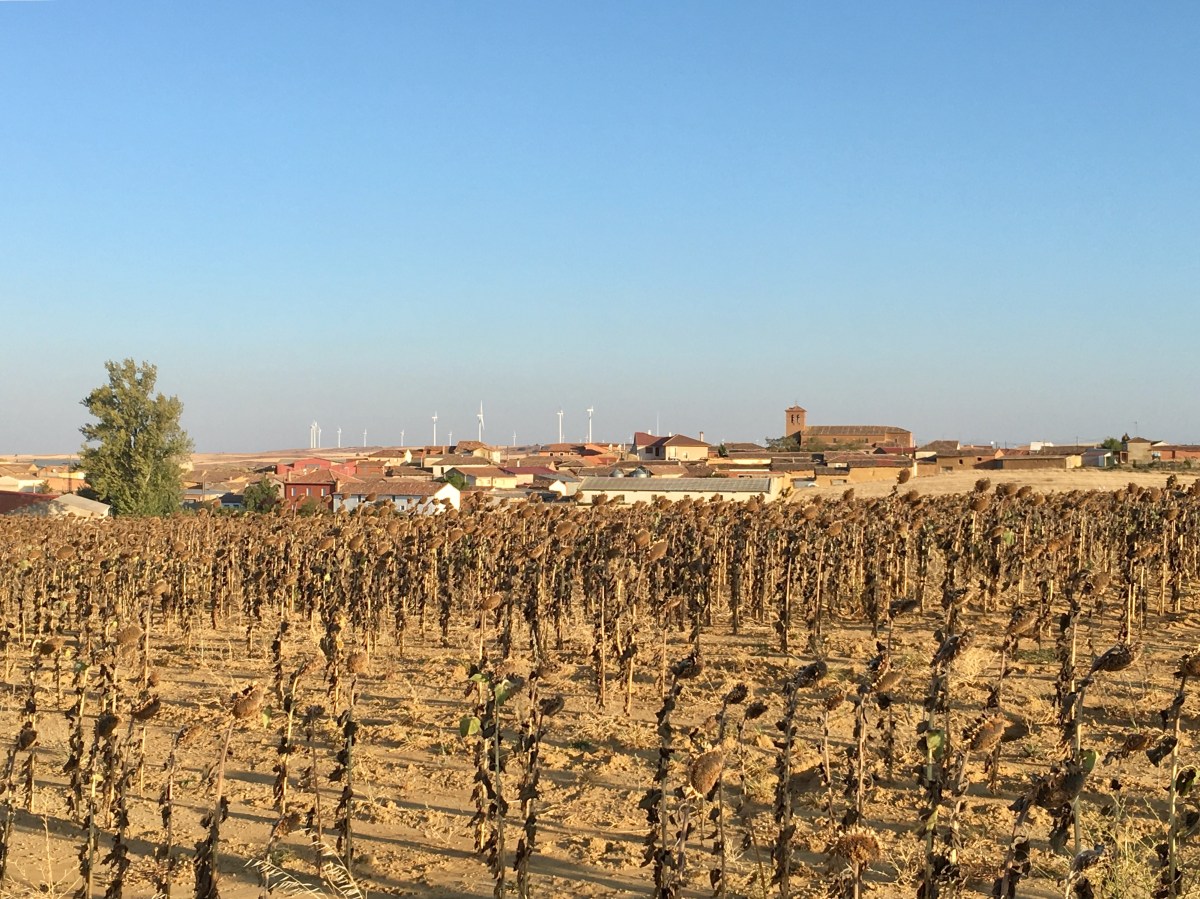
Optional path: approaching Terradillos de los Templarios
In the following town, Moratinos, I stopped for my second breakfast of “artisan cheese on bread drizzled with olive oil.” In the town was a big mound of dirt with doorways; these were bodegas, used for food storage and wine-making. A fellow pilgrim, John, pointed out a TV antenna coming out of the mound, indicating someone must have been living there.
A sign at Las Bodegas de Moratinos informed us that “No, the hobbits don’t live here!”
These little caves are “bodegas,” used in the past for food storage and wine-making. Moratinos is one of several hillside bodega groups visible along the Camino de Santiago trail, part of a wine culture that dates back 2,000 years to the Romans.
The fields around you once were covered in vines, and the caves were full of wine presses, barrels, massive clay vessels, and bottling vats. Each family made wine enough each year to meet their own needs for the months ahead.
Only two or three Moratinos families still make their own wine, but the caves their ancestors dug into this hillside are used occasionally to store cheese, hams, and vegetables. Other bodegas were abandoned when their owners moved away to work in the city.
No one can say how old these bodegas are, but the stories told about them, and equipment still stored inside, say some may be at least 500 years old. Legend says they were dug in wintertime, a pastime for children who could keep warm and occupied scooping out the soft clay. Once exposed to air, the earth hardened to a stony finish, strong enough to support the waste earth that was raised in buckets through the chimney ventilation-shaft and dumped out to form the roof of the present “Castillo.”
Nowadays bodegas are used for party rooms and storage cellars.
Terradillos de los Templarios to Moratinos (3.2 km)
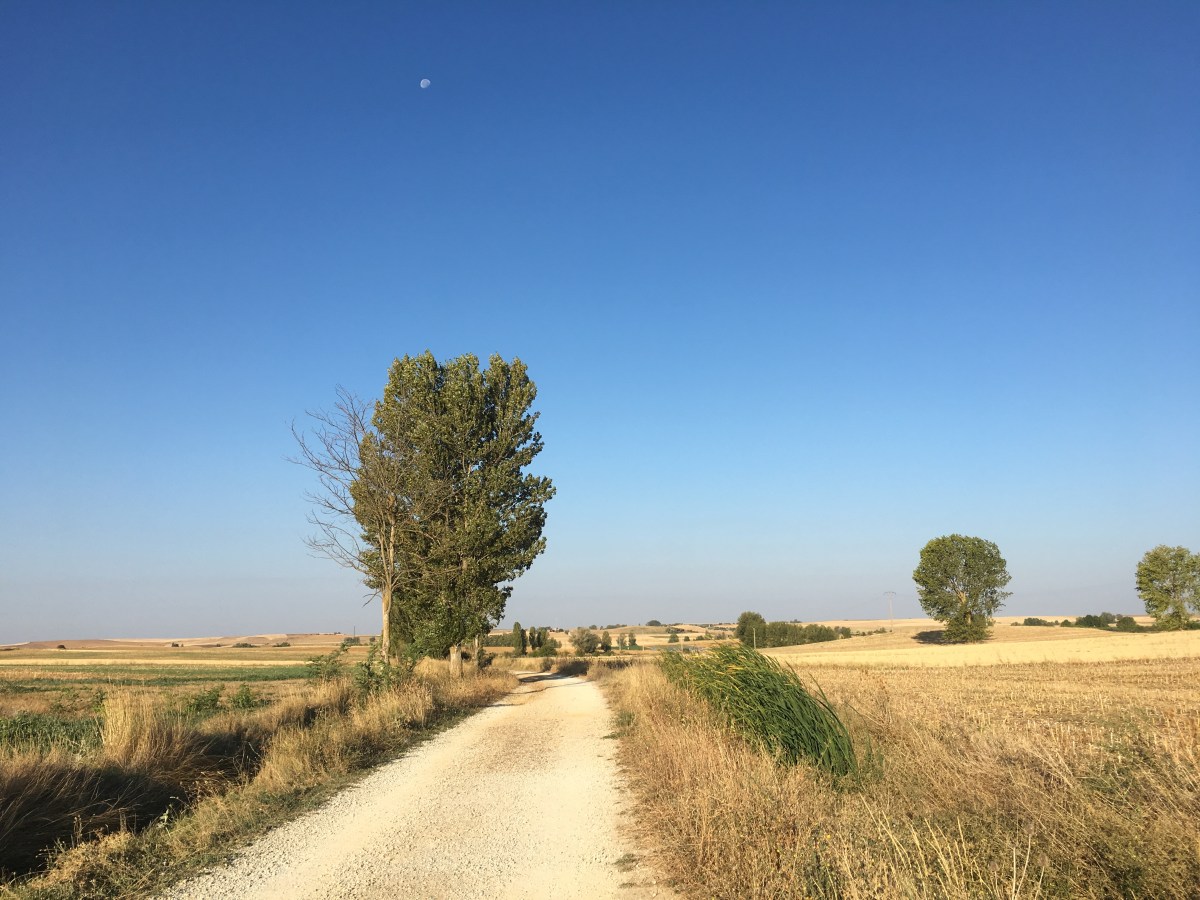
Terradillos de los Templarios to Moratinos

Hostel Moratinos
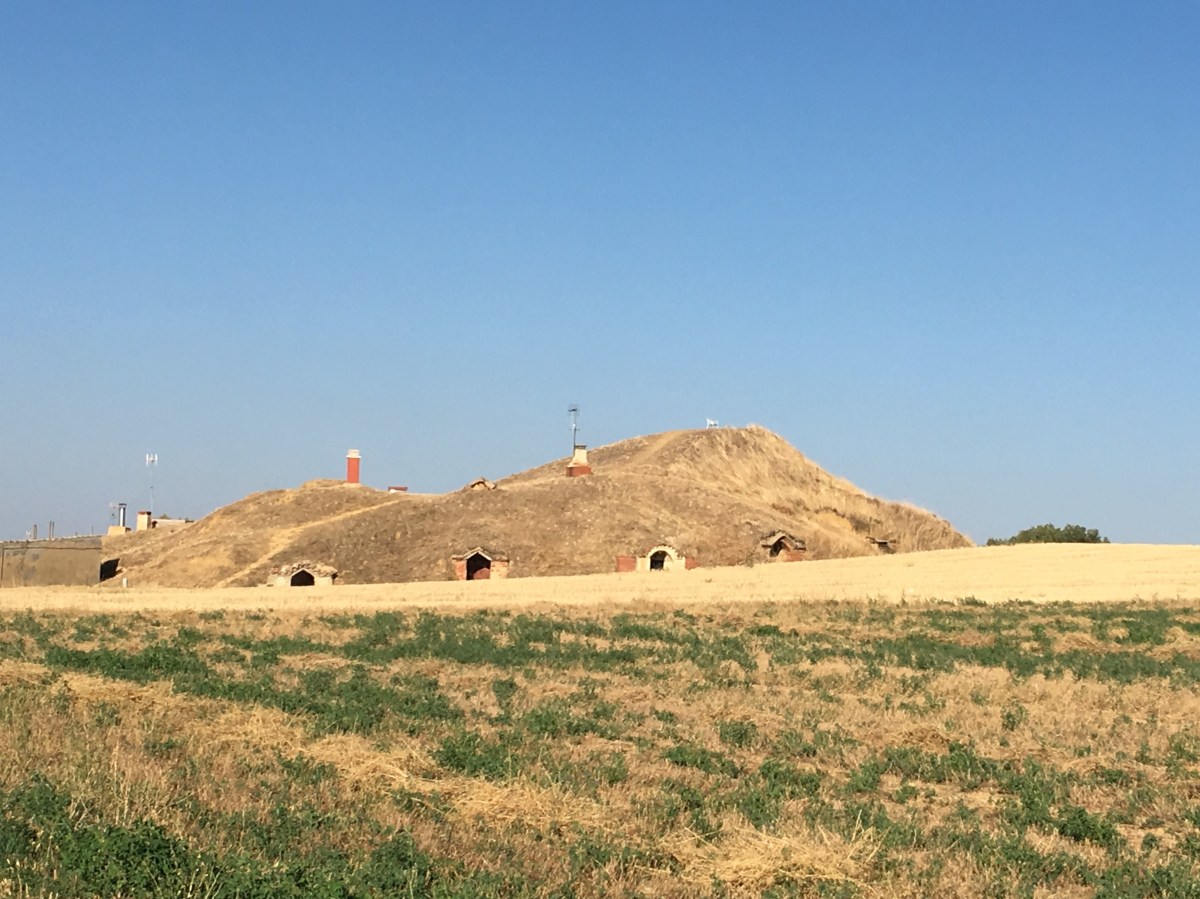
Las Bodegas de Moratinos


After leaving the bodegas, we came to the parish church dedicated to St. Thomas. The surrounding trees were wearing festive colorful sleeves. Soon, we were leaving the town of Moratinos.
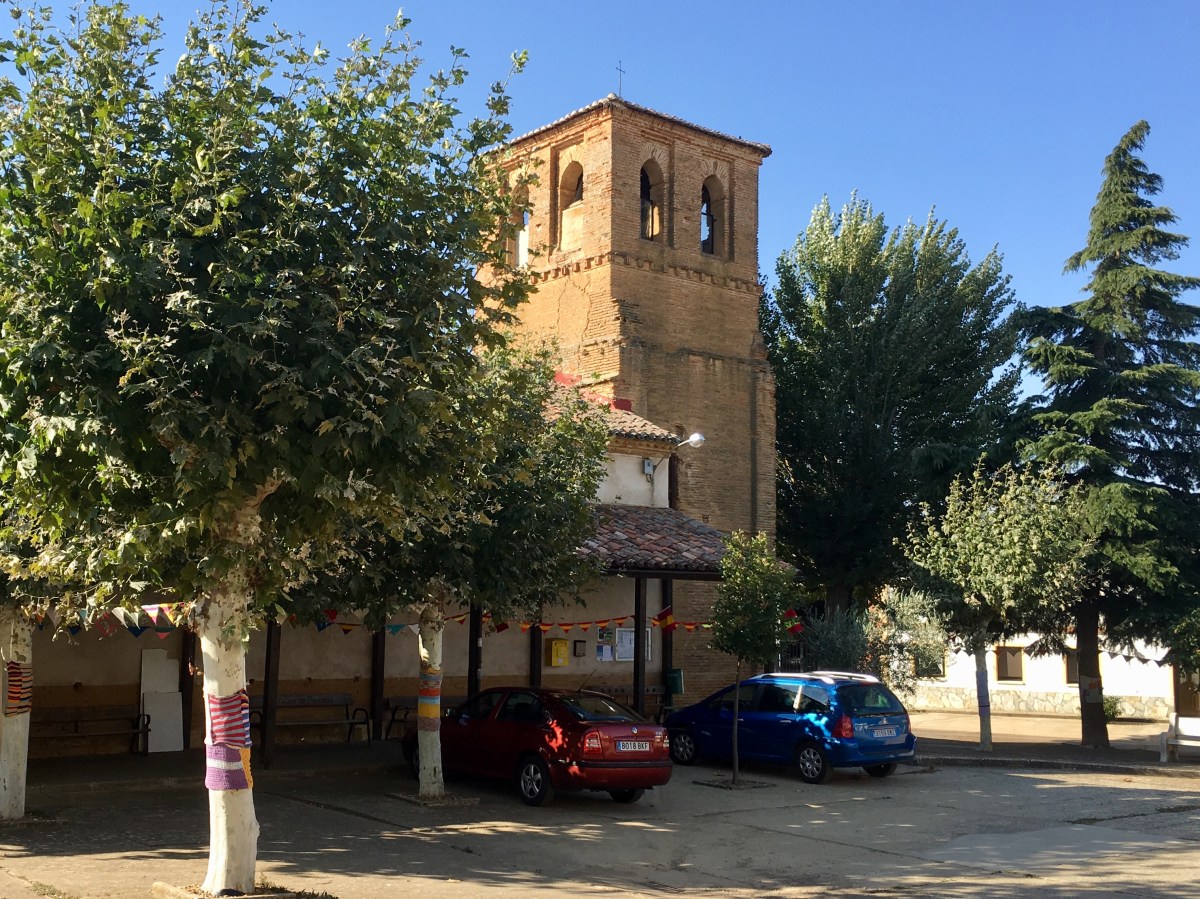
Moratinos with parish church dedicated to St. Thomas


After that, it was only a short distance to San Nicolás del Real Camino. Before town, I saw the sign: “I know that I know nothing… but the 2nd bar is “cool”!! Socrates. This refers to a problem faced by bar owners who are not located at the entrance to Camino towns. Usually, pilgrims have been walking quite a distance, and by the time they reach a town, they stop at the first bar in town. In many towns, if they don’t stop at the first bar, there is no other bar, so they’re out of luck. I know whenever I reached a town, I was ready to stop immediately at the first bar.
Moratinos (3.2 km) to San Nicolás del Real Camino (2.8 km)
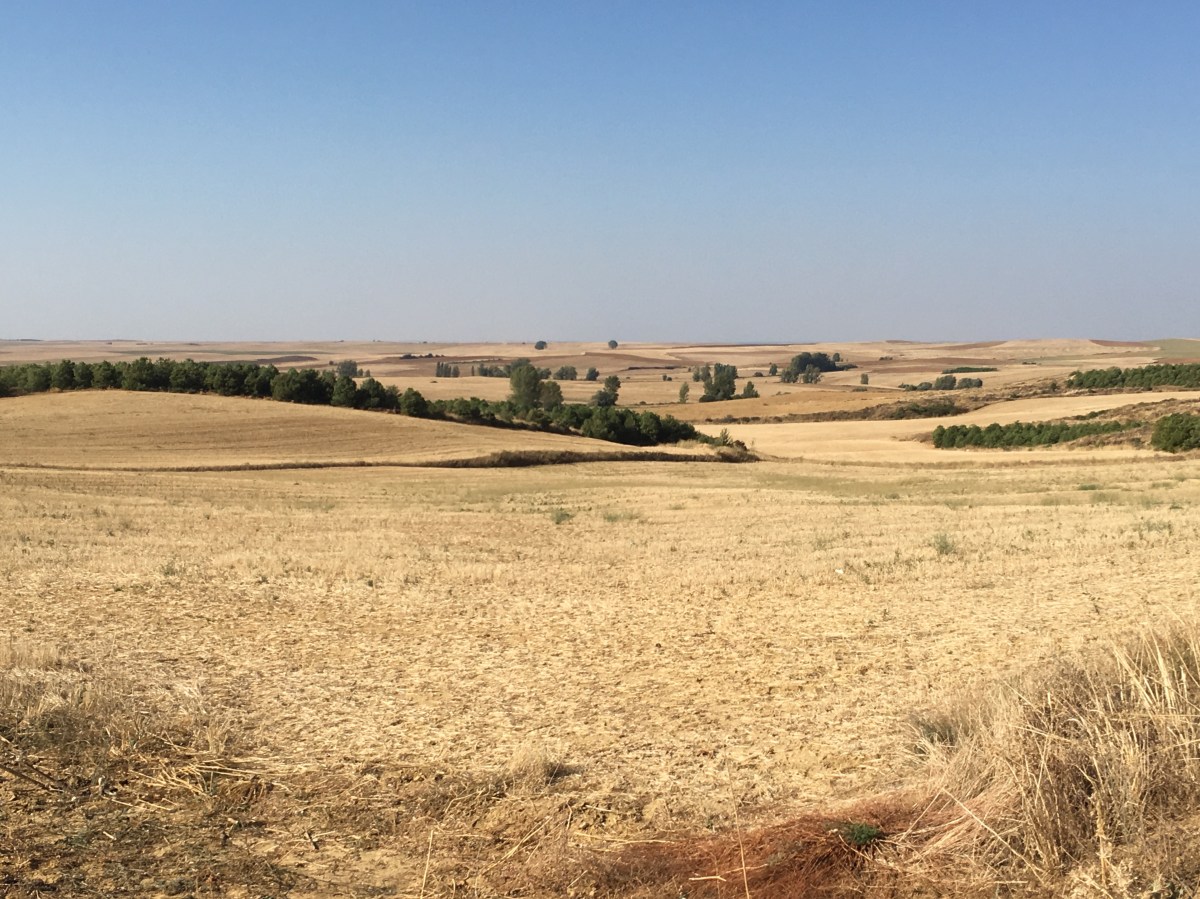
Moratinos to San Nicolás del Real Camino
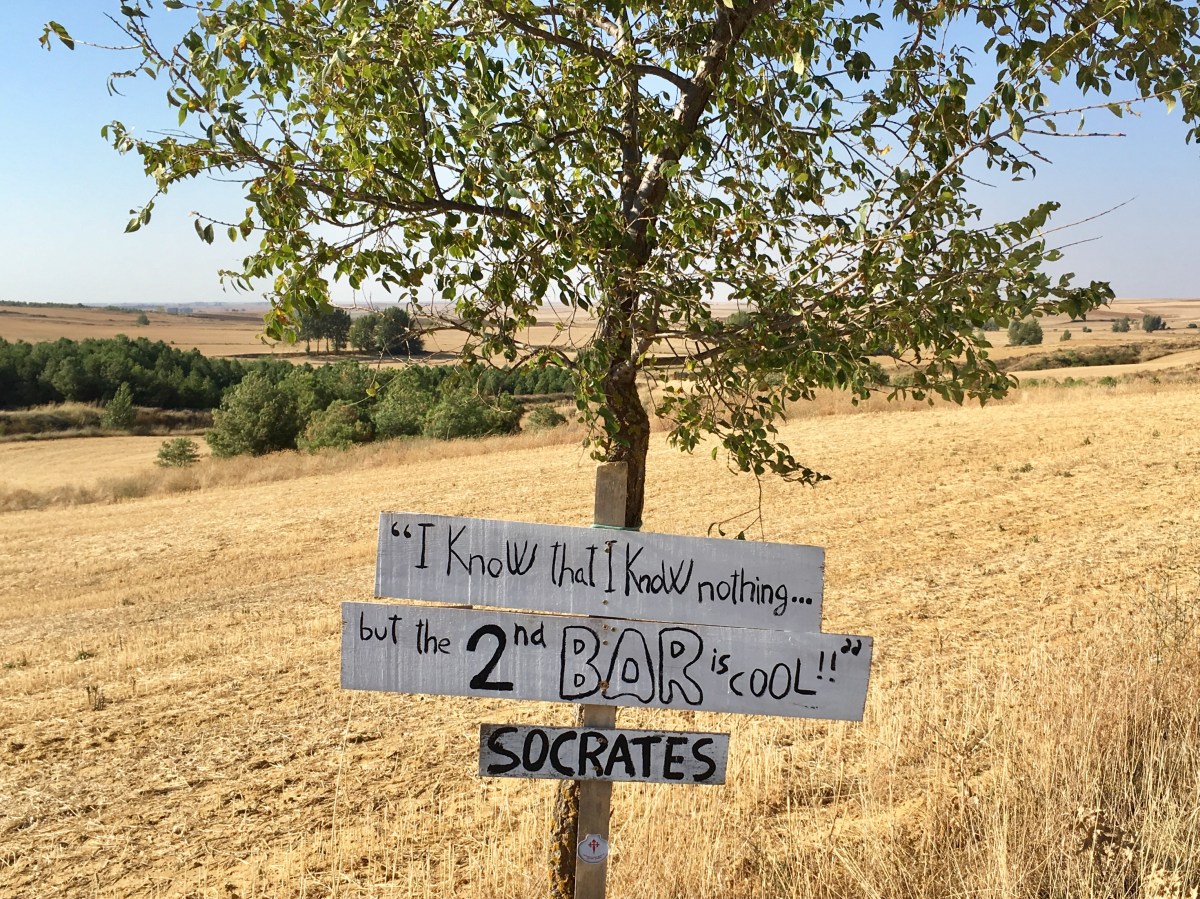
“I know that I know nothing… but the 2nd bar is “cool”!! Socrates

approaching San Nicolás del Real Camino

approaching San Nicolás del Real Camino
As I walked into San Nicolás del Real Camino, I saw Simon, Karen, and Tasmanians Bud and Adele, having snacks and a beer at the first bar in town, Casa Barrunta. I had reserved a bed at the second bar (the one referred to in the above sign), so I told them I’d go check in and then return to see if they were still there.
I checked in at Albergueria Laganares, a most charming place. When I walked in, romantic French music was softly playing. The owners were very friendly and welcoming.

Albergueria Laganares
After a shower and laundry, I returned to have a limon y cerveza at the first bar in town with Simon, Karen, Bud and Adele. We talked of the simplicity of the Camino and how we want to downsize when we return home. Karen said she looked forward to a shopping spree for new clothes. I agreed heartily with her as I was so sick of wearing the same clothes day after day. Karen was always so stylish and cute. Simon was super friendly and Bud and Adele were incredibly laid back.

Restaurante Casa Barrunta
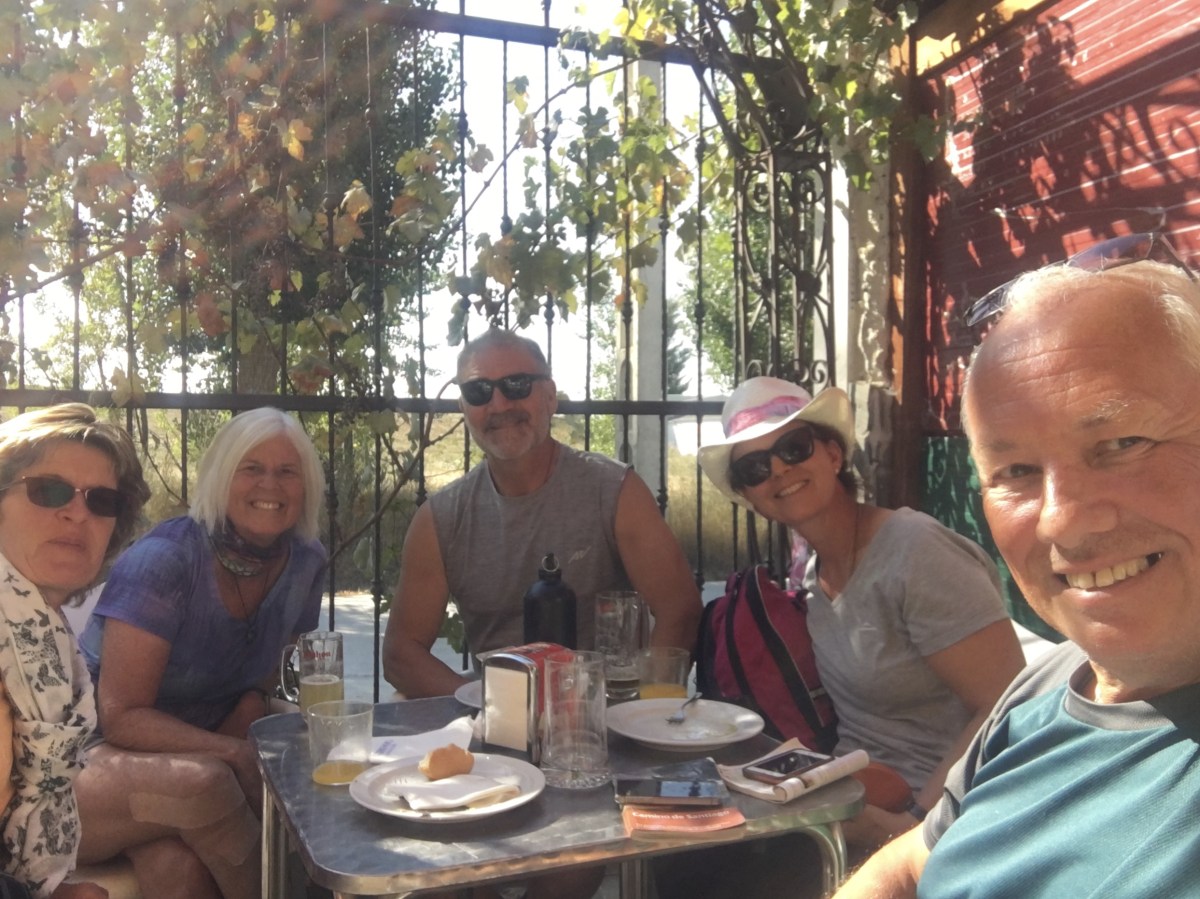
Karen, me, Bud, Adele and Simon
The town was smaller than Calzadilla de la Cuenza but exuded so much more charm.
My friends all moved on, heading for the night to Sahagún, another 6.2 km along; it was a major stopping point along this stage of the Camino.
I returned to Albergueria Laganares. Out back was a small green courtyard, brightened by abundant flower pots and window boxes, where pilgrims could do laundry. Not many people seemed to be staying here, probably because of Sahagún ahead.


There were only 20 beds at the albergue. Spanish and French music wafted through, creating a mellow and pleasant ambiance. I felt a bit angst-ridden for the husband-and-wife owners, as theirs was the second bar in town; it was awfully quiet all afternoon. They had fixed up the place so delightfully.
Out front was a shaded seating area in a square beside the parish church, Iglesia de San Nicolás Obispo. Sitting outside in the afternoon, I had crudites and hummus, accompanied by a glass of wine. I enjoyed watching the pilgrims walking past. There was another guy sitting out there; he didn’t say a word so I assumed he must be non-English speaking. However, it turned out he was Phil from Britain. He was not very talkative or friendly, and when I’d see him numerous times in the days ahead, he would continue to remain aloof.

wine, crudites and hummus

Iglesia de San Nicolás Obispo

the town of San Nicolás del Real Camino

the town of San Nicolás del Real Camino

Iglesia de San Nicolás Obispo
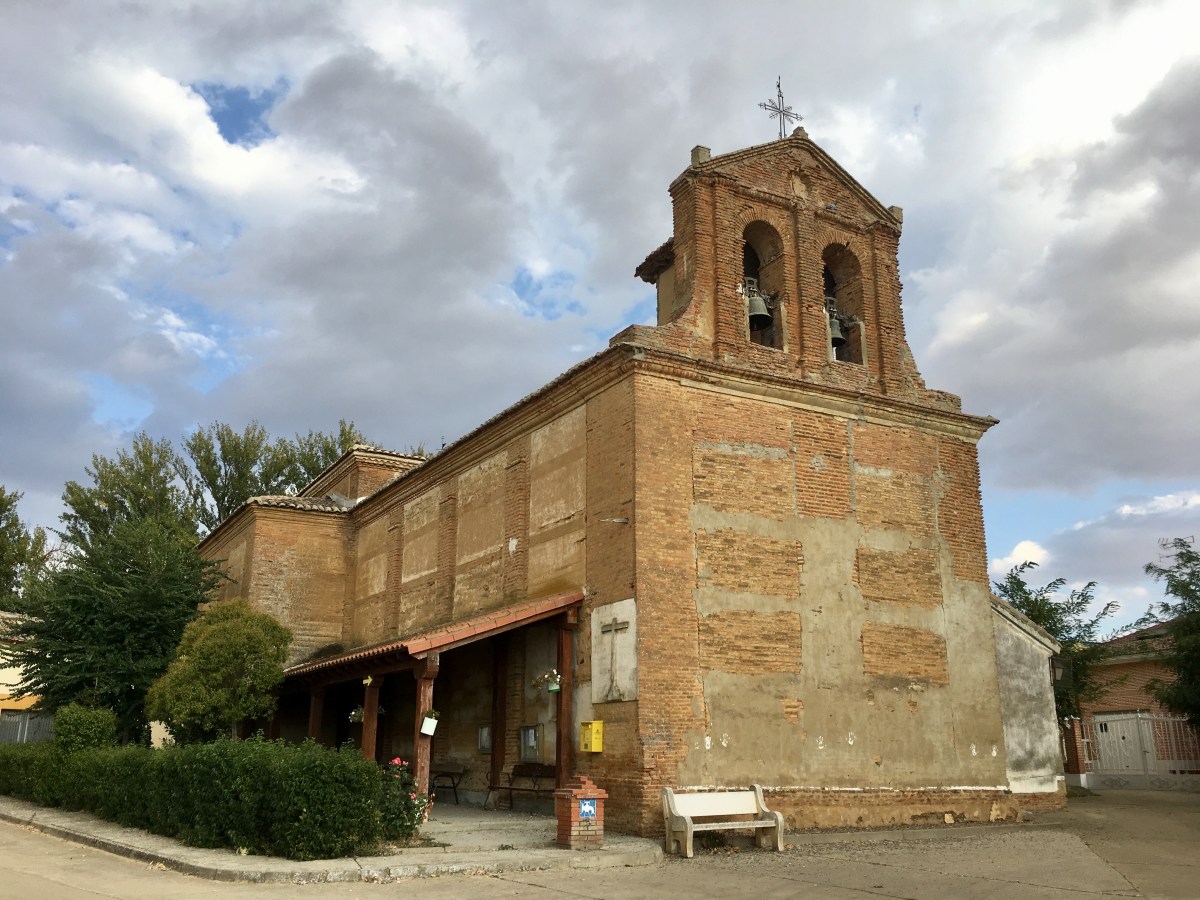
Iglesia de San Nicolás Obispo
In the late afternoon, I had a WhatsApp call with Mike. My sons were getting ready to sign a lease and move into a new apartment. I hoped it would work out for them to live together, although I had my doubts.
We had a lovely pilgrim meal in the albergue: lentil soup, albondigas with French fries, and pudding. I met Pierre from France, Marius and Simona from Lithuania, Irene, Chen and another person from Taiwan, Augusto from Spain, Phil from Britain, and 19-year-old Moritz from Germany who had been walking 40-45 km/day for over two months from Germany.
Simona told how she stayed in an albergue whose owner had done the Camino many times. This woman believed the Camino was a death walk: you shed who you were to make way for becoming someone new.
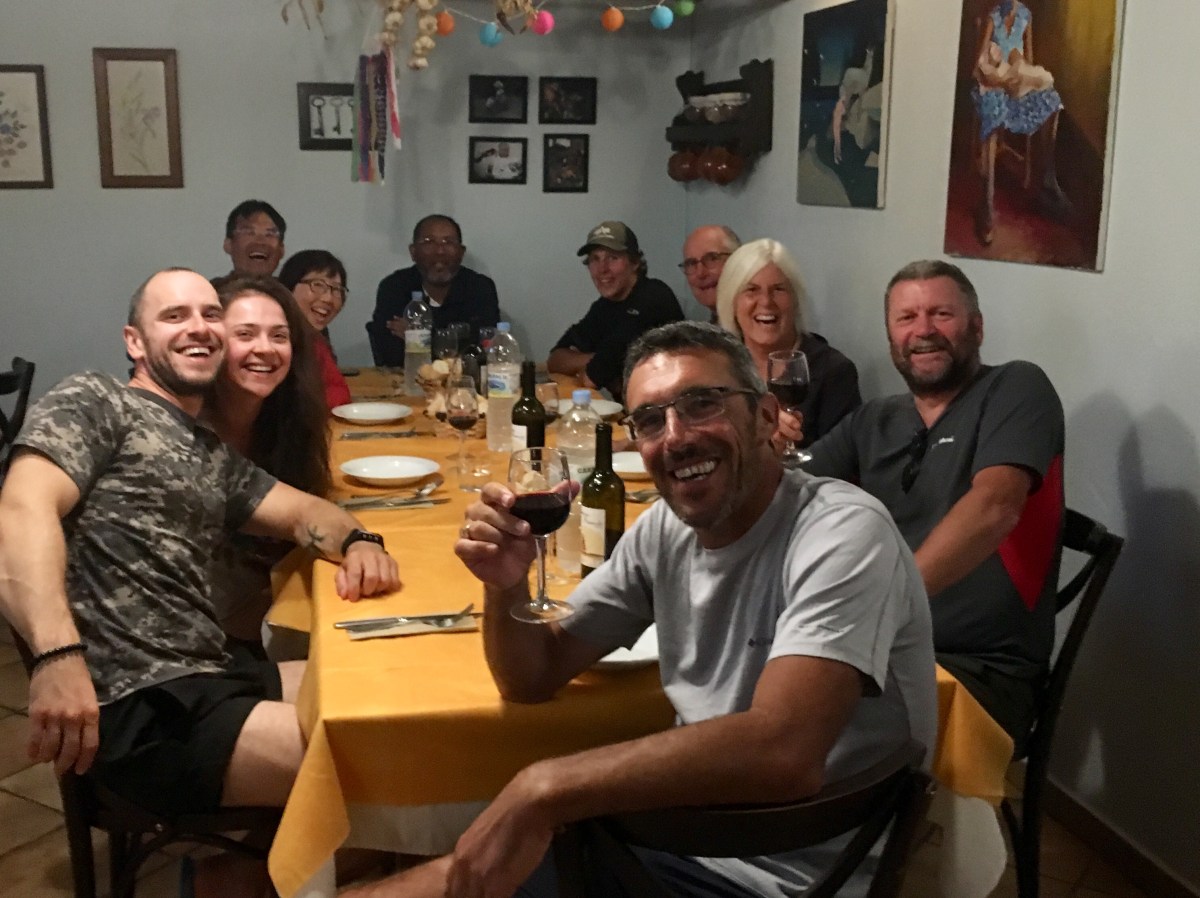
front: Pierre; L to R: Marius, Simona, Irene, Chen, unknown, Moritz, Augusto, me and Phil

Albondigas and French fries
In the albergue, only a young Korean girl shared the 10-bed room with me. She never said a word. She also sat alone upstairs on her phone while everyone else was at the pilgrim meal.
It was strange that I passed the halfway point in my Camino today. I got my last sello in my credenciale. Now I would have to use a new one for the second half of my journey.
**********
*Day 26: Saturday, September 29, 2018*
*24,542 steps, or 10.4 miles: Calzadilla de la Cueza to San Nicolás del Real Camino (15.4 km)*
You can find everything I’ve written so far on the Camino de Santiago here:
**************
On Sundays, I post about hikes or walks that I have taken in my travels; I may also post on other unrelated subjects. I will use these posts to participate in Jo’s Monday Walks or any other challenges that catch my fancy.
This post is in response to Jo’s Monday Walk: Porto Pim.
 ~ wander.essence ~
You must be logged in to post a comment.